# C&I Studios - Complete Content
> An Idea Agency
> Website: https://c-istudios.com
---
# Behind the Scenes of a Brand Photo Shoot
> Published: September 18, 2026
> Categories: Photography
> Source: https://c-istudios.com/brand-photo-shoot/
---
.cib{--paper:#1b1d1f;--ink:#fff;--body:#d5d7d9;--muted:#8b9096;--line:rgba(255,255,255,.12);--thumb:#2b2e31;--card:#212426;--accent:#c02b0a;--blue:#5B8FA8;--serif:'Playfair Display',Georgia,serif;--sans:'Poppins',-apple-system,sans-serif;--measure:900px;background:var(--paper);color:var(--body);font-family:var(--sans);line-height:1.6;position:relative;left:50%;transform:translateX(-50%);width:90vw;max-width:1920px} .cib *{box-sizing:border-box} .cib .kicker{max-width:var(--measure);margin:58px auto 0;padding:0 22px;font-size:12.5px;font-weight:700;letter-spacing:2.5px;text-transform:uppercase;color:var(--blue)} .cib h1.cibh1{font-family:var(--serif);font-weight:500;font-size:clamp(46px,6vw,72px);line-height:1.08;color:var(--ink);max-width:var(--measure);margin:18px auto 0;padding:0 22px;letter-spacing:-.5px;text-wrap:balance} .cib .metarow{max-width:var(--measure);margin:20px auto 0;padding:0 22px;color:var(--muted);font-size:14px} .cib .hero{position:relative;width:100%;height:0;padding-bottom:56.25%;overflow:hidden;margin:48px auto 0;border-top:1px solid var(--line);border-bottom:1px solid var(--line)} .cib .body{max-width:var(--measure);margin:12px auto 0;padding:52px 22px 6px} .cib .body.lead p:first-child{font-size:23px;line-height:1.62;color:var(--ink)} .cib .body p{font-size:18.5px;line-height:1.85;margin:0 0 30px;color:var(--body)} .cib .body h2{font-family:var(--serif);font-weight:500;font-size:clamp(32px,4vw,48px);line-height:1.22;color:var(--ink);margin:70px 0 20px;letter-spacing:-.3px;text-wrap:balance} .cib .body h3{font-family:var(--sans);font-weight:600;font-size:22px;color:var(--ink);margin:38px 0 8px;text-wrap:balance} .cib .body a{color:var(--ink);text-decoration:underline;text-decoration-color:rgba(255,255,255,.4);text-underline-offset:3px} .cib .body a:hover{text-decoration-color:var(--ink)} .cib .ctable{width:100%;border-collapse:collapse;margin:16px 0 30px;font-size:16px} .cib .ctable th{background:#000;color:#fff;text-align:left;padding:10px 12px;font-family:var(--sans)} .cib .ctable td{padding:10px 12px;border-bottom:1px solid var(--line);color:var(--body);vertical-align:top} .cib .inimg{position:relative;width:100%;height:0;padding-bottom:56.25%;overflow:hidden;margin:72px auto;border-top:1px solid var(--line);border-bottom:1px solid var(--line)} .cib .origpub{max-width:var(--measure);margin:60px auto 0;padding:26px 22px 76px;border-top:1px solid var(--line);color:var(--muted);font-size:13.5px} .cib img{margin:0!important;padding:0!important;display:block!important;vertical-align:top;max-width:100%} .cib .hero img,.cib .inimg img{position:absolute!important;top:0!important;left:0!important;width:100%!important;height:100%!important;object-fit:cover!important;margin:0!important;padding:0!important;border:0!important;display:block!important;aspect-ratio:auto!important} .cib .hero+.body{padding-top:36px} @media(max-width:760px){.cib .body h2{margin:52px 0 16px}.cib .body p{font-size:17.5px}.cib .inimg,.cib .hero{margin-top:44px}}
Photography
# Behind the Scenes of a Brand Photo Shoot
11 min read
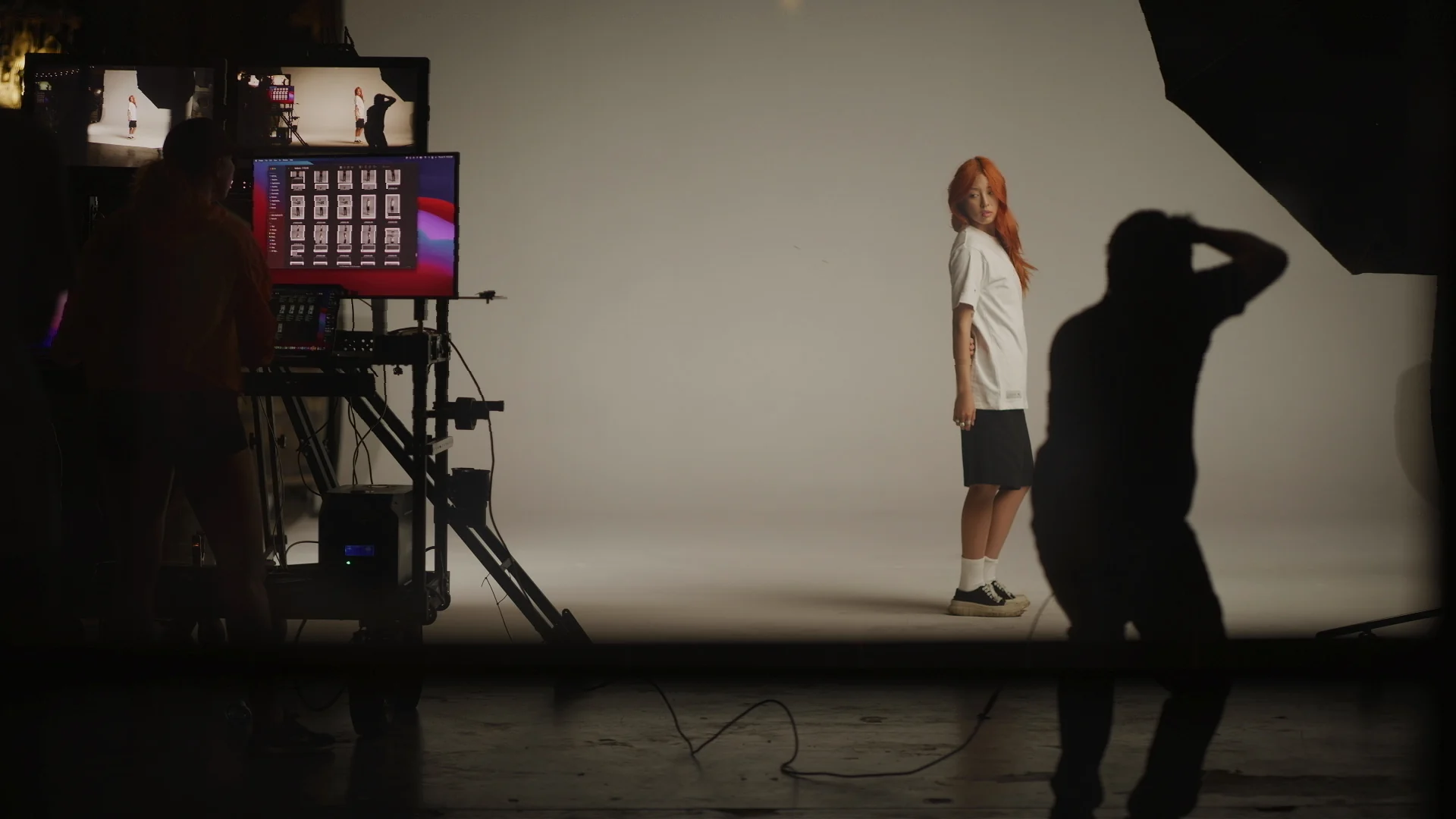
Most of what decides a brand photo shoot happens before anyone picks up a camera. By the time the first frame fires on the C&I Studios stage in Los Angeles, the products have been unboxed and inspected, the talent has been cast against a specific claim on the packaging, the surfaces are painted and the shot list has been argued over twice. The shoot day is the visible part. This is what the whole thing looks like from the inside, using the campaign work we produced for KISS across six of its brands as the working example.
## Two weeks out the brief turns into a shot list
A brief usually arrives as a deck of reference images and a list of products. It is a mood, not a plan. The first job is turning it into a shot list, and the shot list counts setups rather than frames. Each line names the product, the surface it sits on, whether there is talent in frame, the crops that have to come out of it, and the channel each crop is for. A retail tile wants a square. A story wants a vertical. A web banner wants something wide with room for copy. Writing those down in advance is the difference between a day that gets everything and a day that gets most of it.
A single line of the list looks like this.
Setup
Product
Surface
Talent
Crops
4
Falscara lash kit, hero unit A
Lilac painted cyc
Hands only
Square retail tile, vertical story, wide banner with copy space
5
Falscara applied, beauty close up
Warm neutral seamless
Model 2, baby's breath in hair
Square, vertical, tight eye detail
6
JOAH palette trio
Pink seamless, overhead rig
None
Square, wide, product only for 3D reference
Twelve to fifteen of those lines is a full day. The table is boring on purpose. It is what everyone on the stage is working from, and on the day it gets checked off line by line.
For KISS the list ran across imPRESS, KISS Colors and Care, JOAH Beauty, Falscara, KISS USA and KISS International. Retail teams in different countries needed to pull the same asset without arranging a local reshoot, so every hero product got shot once in a way that would survive every market. That decision was made at the shot list stage, not on the floor.
The list is also the schedule. A realistic commercial day is eight to fifteen finished setups for product work and four to eight for lifestyle with talent, wardrobe changes and background changes. A brief that says one day and then lists sixty required shots is not a one day shoot. We would rather have that conversation two weeks out than at four in the afternoon. Our breakdown of [what brand photography costs](https://c-istudios.com/brand-photography-cost/) covers how that arithmetic lands on the invoice.
## Casting is a product test before it is a look
We cast out of our own talent database, and for a brand photo shoot the casting call is written against the product, not against a general idea of who looks good on camera. On the KISS hair category the claims on the packaging only hold up if the hair on camera is doing what the packaging says it does. So the casting notes were about texture and length before they were about anything else. Press on nails need a nail bed the product sits on cleanly. Lashes need a lash line the applicator can work with.
Paperwork happens here too. Every person in frame signs a release before call time that names where the images will run and for how long, because a model booked for organic social and a model booked for national retail are not the same booking. The American Society of Media Photographers has a plain answer sheet on [what a model release actually covers](https://www.asmp.org/strictly-business-blog/model-releases-questions-answers/) that is worth reading before you sign one on either side.

## Surfaces and props are built on prep day
Product arrives the day before. Every unit gets counted and inspected, because packaging revisions and dented boxes show up in shipments more often than anyone expects. One perfect hero unit per product is set aside and labeled, with backups behind it, and that hero unit is the one that appears in every frame so the set stays consistent when a retail team lays the images side by side.
Then the surfaces get built. The KISS work was shot on painted color cycs in our facility, and the color of each one was matched to the brand it was carrying. Some setups needed props, so the JOAH palettes were laid out with macarons in the same tones and the Falscara beauty frames used baby's breath in the hair. None of that gets sourced on the morning. It is on a list, it is bought, and it is on the stage before anyone with a camera walks in.
The stage itself matters more on prep day than on shoot day. Ours is 30,000 square feet under 25 foot ceilings with a 2,000 square foot floor to ceiling seamless [cyc wall](https://c-istudios.com/studio-rentals/cyc-wall-rental/), a 300 amp three phase tie in and a lighting grid that blacks out, which means a lit product setup can be built the night before and shoot exactly the same at 7am as it does at 7pm. There is more on the practical specs in our guide to [the Los Angeles stage](https://c-istudios.com/how-to-rent-a-production-studio-in-los-angeles-complete-guide/) if you are deciding between studio and location.
## Call time and the first hour
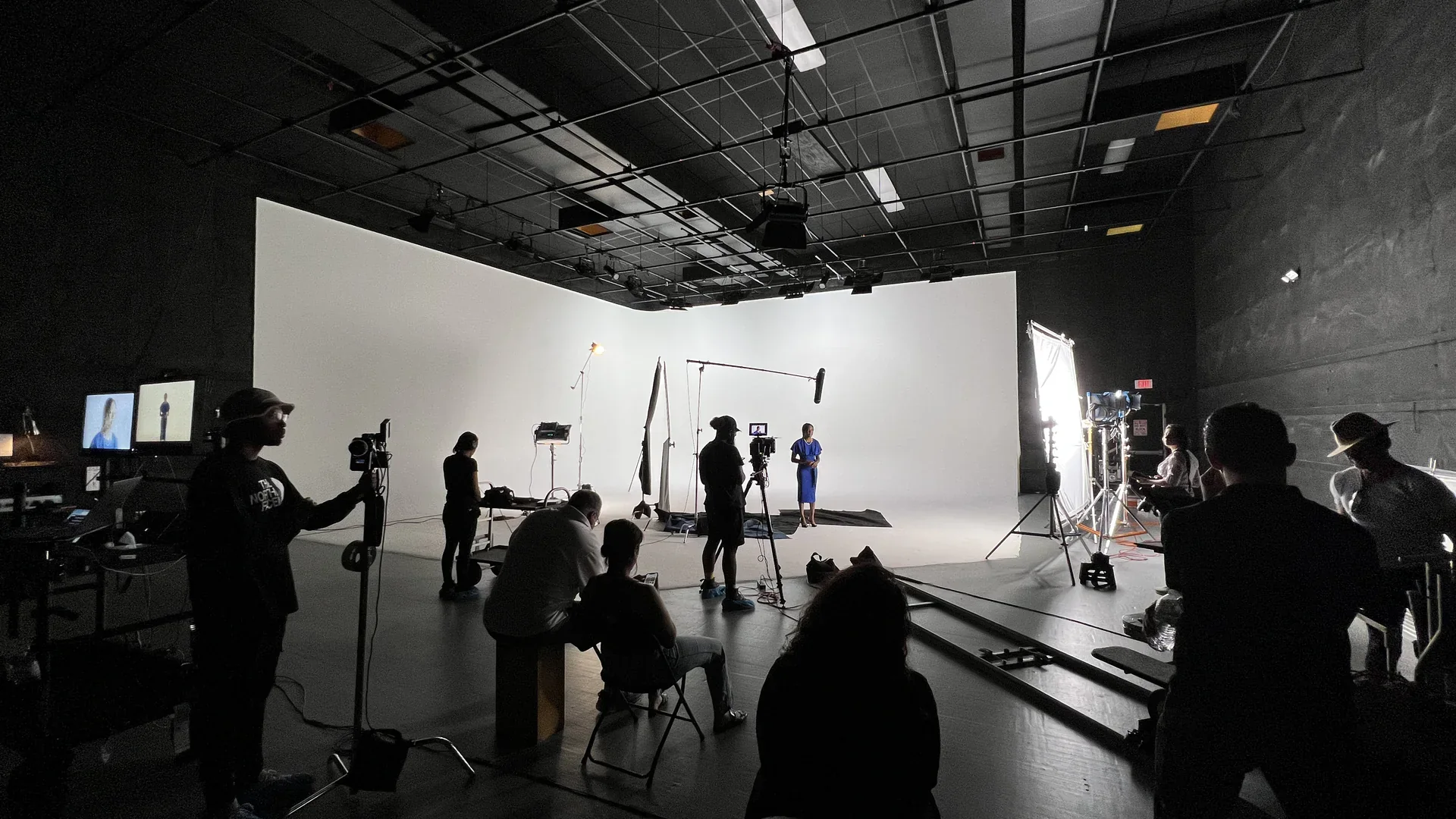
Crew is in first. Talent goes straight to hair and makeup. The first setup is lit on a stand in before anyone from the cast is anywhere near it, so the moment they walk on the frame is already working and the only thing left to solve is them.
The camera is tethered to a monitor on set from the first frame. A digital technician manages capture, checks focus at full size and keeps the color honest, and every setup opens with a color reference card in frame. We use a [ColorChecker Passport](https://calibrite.com/us/product/colorchecker-passport-photo-2/) for that, because a pink cyc under strobe and the same pink on a retail shelf are two different problems, and the card is what lets retouching solve the second one without guessing. White balance and exposure are locked per setup after that and nobody touches them until the setup strikes.
## What the day looks like from the client chair
The client sits at the monitor. That is the whole answer to whether you should be on set. Frames land on screen a second after they fire, and the person who owns the final decision marks favorites while the set is still standing. Each setup is approved on the monitor before it strikes, which is why a shoot run this way almost never needs a return visit.
It also means the cheapest content of the year gets made. Once lights are up and the talent is in position, the vertical crop, the copy space version and the tight detail frame cost minutes rather than money. We shoot them while everything is standing, because coming back for them later means paying for the whole day again.
The one thing that slows this part down is a committee. A brand photo shoot with one decision maker at the monitor moves. A shoot with four opinions on the monitor spends the afternoon on the setup that was already fine. Name the person who chooses before the day, not during.
## Product on set is its own discipline
Product photography and talent photography share a stage and almost nothing else. Product gets handled in gloves. Every unit gets dusted between frames. Packaging glare is controlled with a polarizer and with flags rather than fixed in post, because a reflection retouched out of a glossy box never looks quite right. Small objects like a lash pack or a nail kit are shot as a short focus stack so the whole product is sharp from front to back, and the overhead flat lay setups run on a dedicated rig so the camera position does not drift between products.
The rule that saves the most time is the hero unit. The same labeled unit appears in every frame of that product, in the same orientation, with the same face forward. When sixty products need to line up on an ecommerce page that consistency is the whole job, and it is far easier to hold on set than to manufacture in retouching. Our notes on [product on white photography](https://c-istudios.com/product-on-white-photography-tips-for-ecommerce-businesses/) go deeper on the ecommerce end of this.
## Stills and video share the same day
Every KISS media day carried video as well as photography, shot by the same team on the same setups. That is why the motion work cuts against the stills cleanly. The lighting, the cast, the surfaces and the styling are identical, so a six second product loop and the hero still sit next to each other on a retail page without a seam. Deliverables ran short form for social and longer cuts for retail and web.
It only works if it is planned that way. Strobe and continuous light do not behave the same, so a setup that has to serve both is designed in prep with that compromise already made. Bolting a video camera onto a stills setup at noon is how you get footage that looks like an afterthought. Our [video production services](https://c-istudios.com/video-production-services/) page covers how we run the two together.

## The beauty close up is the slowest setup of the day
The frame that looks simplest on the page is the one that takes the longest on set. A beauty close up is skin, lashes and eyes at a size where every decision shows. The light gets moved by inches rather than feet. Catchlights are placed on purpose. Hair and makeup touches up between nearly every frame, and the lash or the liner that the shot is actually selling gets checked at full size on the monitor before the setup is called done.
We budget the beauty setups at roughly double the time of a standard product setup, and we schedule them for the part of the day when the cast is fresh rather than the end. A tired face at 5pm shows in a macro frame in a way it never does in a full length portrait.
## Photographing products before they exist
A large share of the KISS work was never in front of a camera. We modeled the nail kits, lash products, applicators, mascara, tweezers, palettes and packaging from scratch in 3D, then built lighting and sets around the models. That let KISS put products in front of a camera before the products physically existed, and it let retail teams in different markets pull the same asset without a local reshoot.
The behind the scenes part of that is matching. A render that is going to sit beside a photograph has to be lit like the photograph, with the same softness, the same falloff and the same surface response, or the two read as two different campaigns. So the C&I Studios 3D team works from the same reference cards and the same setups the photographer used on the stage. Our comparison of [photography against 3D product rendering](https://c-istudios.com/traditional-photography-vs-3d-product-rendering-pros-and-cons/) covers when each one is the right call.
## How the day absorbs what goes wrong
Something always does. Samples arrive late. A packaging revision lands mid shoot and the hero unit is suddenly the wrong one. A product color that looked right on the shelf reads differently under strobe. Hair does not cooperate. Talent hits traffic. None of that is unusual, and none of it should cost a reshoot.
The day absorbs it because the shot list has buffer built into it, the stage blacks out so the clock does not matter, and the approval happens on the monitor so nothing gets discovered a week later. When the packaging changes we shoot the old unit and the new one, because a retail team somewhere is going to need both. When the color is off we fix it in the light and confirm it against the reference card rather than promising to sort it in post.
## Wrap and what happens to the frames
Cards are backed up to two drives on set before anyone leaves the building. Selects go to the client within a couple of days as a gallery, the client picks against the count that was agreed in the shot list, and only those frames go to retouching. Retouching is billed per image, so a clean selects round is where a brand photo shoot either stays on budget or quietly doubles. The [cost guide](https://c-istudios.com/brand-photography-cost/) has the numbers on that.
Retouching itself is mostly consistency. Skin, product surfaces, minor removals, and above all matching color across a set that was shot over several setups and several hours. Every product then ships in the crop set that was named on the shot list, one folder per channel, named so a retail team in another country can find the right file without asking. Our [post production services](https://c-istudios.com/post-production-services/) page describes how that pipeline is built.
## Questions we get asked about a brand photo shoot
### How long does a brand photo shoot take?
Plan on two weeks from brief to shoot, one or two days on the stage depending on the setup count, and one to two weeks after for selects and retouching. Compressing the front end is what costs money, because the crew and the styling you want are already booked.
### Do we need to be on set?
Someone with the authority to approve should be, either in the room or on a remote monitor feed. Approving on set is what removes the reshoot. Sending the whole team is what slows the day.
### How many products can we shoot in a day?
For catalog style product on a consistent setup, sixty is realistic across two days with a digital technician running the line. For styled hero product with props and surface changes, eight to fifteen setups a day. Count the setups, not the frames, and the estimate will hold up.
### Can we shoot video at the same time?
Yes, and it is far cheaper than a second production, as long as the setups are designed for both from prep. That is how the KISS motion work was made and it is how we would recommend any brand approach it.
## Plan your brand photo shoot with C&I Studios
We shoot brand campaigns out of our own stage in Los Angeles and on location anywhere in the country, and we run them the way this article describes, with the shot list written first, the casting done in house and the client at the monitor. The [KISS portfolio](https://c-istudios.com/portfolio/kiss/) shows the photography, the 3D and the video that came out of the days above. If you have a product line and a launch date, tell us what you are making through our [professional photography services](https://c-istudios.com/professional-photography-services/) page or [reach out for a quote](https://c-istudios.com/contact/), and if you are still deciding who to hire, our advice on [choosing a photography company](https://c-istudios.com/tips-when-hiring-a-photography-company/) and on [why stock imagery hurts a brand](https://c-istudios.com/original-photography-vs-stock-imagery/) are both worth ten minutes.
Originally published September 18, 2026
---
*This content is from [C&I Studios](https://c-istudios.com), a full-service production company.*
---
# What Managed Website Security Actually Protects Your Business From
> Published: September 16, 2026
> Categories: Web & Tech
> Source: https://c-istudios.com/managed-website-security/
---
.cib{--paper:#1b1d1f;--ink:#fff;--body:#d5d7d9;--muted:#8b9096;--line:rgba(255,255,255,.12);--thumb:#2b2e31;--card:#212426;--accent:#c02b0a;--blue:#5B8FA8;--serif:'Playfair Display',Georgia,serif;--sans:'Poppins',-apple-system,sans-serif;--measure:900px;background:var(--paper);color:var(--body);font-family:var(--sans);line-height:1.6;position:relative;left:50%;transform:translateX(-50%);width:90vw;max-width:1920px} .cib *{box-sizing:border-box} .cib .kicker{max-width:var(--measure);margin:58px auto 0;padding:0 22px;font-size:12.5px;font-weight:700;letter-spacing:2.5px;text-transform:uppercase;color:var(--blue)} .cib h1.cibh1{text-wrap:balance;font-family:var(--serif);font-weight:500;font-size:clamp(46px,6vw,72px);line-height:1.08;color:var(--ink);max-width:var(--measure);margin:18px auto 0;padding:0 22px;letter-spacing:-.5px} .cib .metarow{max-width:var(--measure);margin:20px auto 0;padding:0 22px;color:var(--muted);font-size:14px} .cib .hero{position:relative;width:100%;height:0;padding-bottom:56.25%;overflow:hidden;margin:48px auto 0;border-top:1px solid var(--line);border-bottom:1px solid var(--line)} .cib .hero .ph{width:100%;aspect-ratio:16/9;background:var(--thumb);border-top:1px solid var(--line);border-bottom:1px solid var(--line);display:flex;align-items:center;justify-content:center;color:#7d8288;font-size:13px;text-align:center;padding:0 20px} .cib .body{max-width:var(--measure);margin:12px auto 0;padding:52px 22px 6px} .cib .body.lead p:first-child{font-size:23px;line-height:1.62;color:var(--ink)} .cib .body p{font-size:18.5px;line-height:1.85;margin:0 0 30px;color:var(--body)} .cib .body h2{text-wrap:balance;font-family:var(--serif);font-weight:500;font-size:clamp(32px,4vw,48px);line-height:1.22;color:var(--ink);margin:70px 0 20px;letter-spacing:-.3px} .cib .body h3{text-wrap:balance;font-family:var(--sans);font-weight:600;font-size:22px;color:var(--ink);margin:38px 0 8px} .cib .body a{color:var(--ink);text-decoration:underline;text-decoration-color:rgba(255,255,255,.4);text-underline-offset:3px} .cib .body code{font-family:ui-monospace,Menlo,Consolas,monospace;font-size:.9em;color:var(--ink)!important;background:transparent!important;padding:0!important;border:0!important;border-radius:0!important;box-shadow:none!important;white-space:nowrap} .cib .body a:hover{text-decoration-color:var(--ink)} .cib .ctable{width:100%;border-collapse:collapse;margin:16px 0 30px;font-size:16px} .cib .ctable th{background:#000;color:#fff;text-align:left;padding:10px 12px;font-family:var(--sans)} .cib .ctable td{padding:10px 12px;border-bottom:1px solid var(--line);color:var(--body)} .cib .inimg{position:relative;width:100%;height:0;padding-bottom:56.25%;overflow:hidden;margin:72px auto;border-top:1px solid var(--line);border-bottom:1px solid var(--line)} .cib .inimg .ph{width:100%;aspect-ratio:16/9;background:var(--thumb);border-top:1px solid var(--line);border-bottom:1px solid var(--line);display:flex;align-items:center;justify-content:center;color:#7d8288;font-size:13px} .cib .origpub{max-width:var(--measure);margin:60px auto 0;padding:26px 22px 0;border-top:1px solid var(--line);color:var(--muted);font-size:13.5px} .cib img{margin:0!important;padding:0!important;display:block!important;vertical-align:top;max-width:100%} .cib .hero img,.cib .inimg img{position:absolute!important;top:0!important;left:0!important;width:100%!important;height:100%!important;object-fit:cover!important;margin:0!important;padding:0!important;border:0!important;display:block!important;aspect-ratio:auto!important} .cib .hero+.body{padding-top:36px} @media(max-width:760px){.cib .body h2{text-wrap:balance;margin:52px 0 16px}.cib .body p{font-size:17.5px}.cib .inimg,.cib .hero{margin-top:44px}}
Web & Tech
# What Managed Website Security Actually Protects Your Business From
11 min read

Most business owners buy managed website security the way they buy insurance. Someone says the word "hacked," a price gets quoted, and the check gets written without anyone asking what the money actually stops. This post answers that question with numbers from our own site, because we run the same protection on c-istudios.com that we sell to clients.
Short version. In the 30 days before this was written, one WordPress site (ours) blocked or throttled 13,813 requests from 714 different IP addresses. Nobody on our team noticed any of it, which is the whole point. Here is what those requests were trying to do, what happens when they succeed, and what a managed plan actually covers versus what it does not.
## What hit one website in the last 30 days
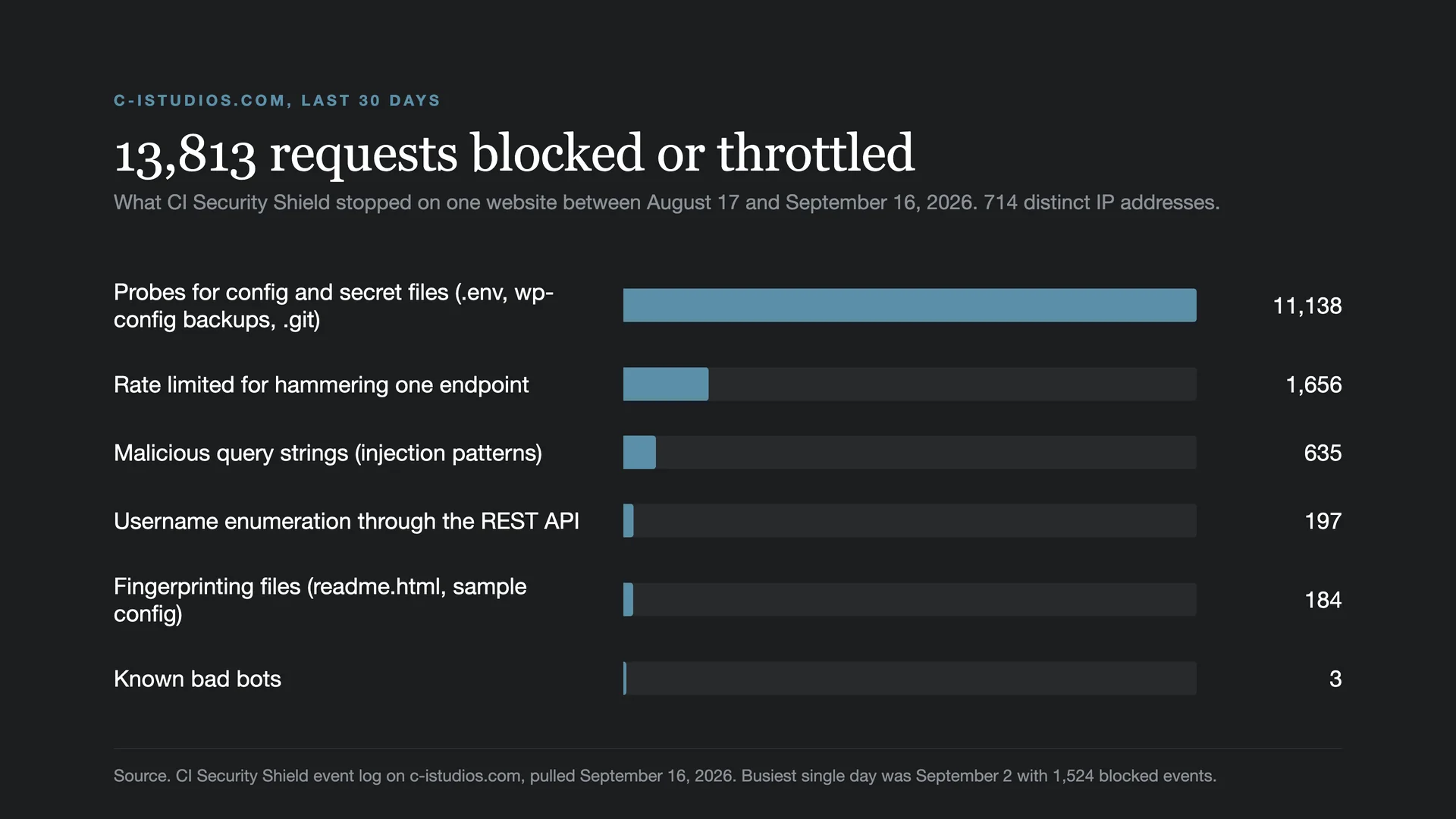
We pulled the event log from [CI Security Shield](https://shield.c-istudios.com/) on c-istudios.com on September 16, 2026. The log covers August 17 through September 16. This is a marketing site for a production company. It has no online store and no obvious reason for anyone to attack it. It still gets hit around 460 times a day.
What the request was doing
Blocked in 30 days
Probing for config and secret files (.env, wp-config backups, .git, .svn)
11,138
Rate limited for hammering one endpoint
1,656
Malicious query strings (injection patterns)
635
Username enumeration through the REST API
197
Fingerprinting files (readme.html, sample config)
184
Known bad bots
3
The busiest single day was September 2, with 1,524 blocked events. The same log shows only 6 failed logins in those 30 days. That surprises people. The login page is not where most of the traffic goes. Attackers are scanning for the files that give them the keys without needing a password.
## The .env file and the keys to everything
11,006 of those requests asked for one file. `/.env`. That file is where modern applications keep database passwords, API keys, and email credentials. WordPress does not use it, but plenty of sites have one sitting in the web root from a developer's tooling, a Laravel install next door, or a migration that copied more than it should have.
If the file is there and the server hands it over, the attacker has the database password. They do not need to break into WordPress at that point. They can read every user's hashed password, insert an admin account, and rewrite content directly. The same goes for the wp-config backups the scanners ask for next. `wp-config.old`, `wp-config.bak`, `wp-config.txt`. Someone edited the file, saved a copy "just in case," and now that copy is readable by the whole internet.
What managed website security does here is simple. It returns a 404 for those paths before WordPress even loads, whether or not the file exists, and it logs who asked. The [WordPress hardening guide](https://developer.wordpress.org/advanced-administration/security/hardening/) covers the file permissions side of this, but permissions only help if someone set them correctly and nobody has undone them since. A managed plan means someone checks. On our plans that check runs daily across every site we host.
## Stolen passwords are the usual way in
Verizon's [Data Breach Investigations Report](https://www.verizon.com/business/resources/reports/dbir/) has said the same thing for years. Stolen or guessed credentials are one of the most common ways in. Custom, sophisticated attacks are rare. Someone reusing the password from a breached shopping site on their WordPress login is not.
Our log shows why the login page looked quiet. The real login URL on c-istudios.com is hidden. `/wp-login.php` returns a 404 to anyone who is not already signed in. The 197 REST API blocks are the other half of that story. Attackers query `/wp/v2/users` to get a list of usernames, because a username plus a leaked password list is a working attack. We saw requests for specific user IDs too. Somebody was walking the list one ID at a time. Shield answered every one of them with a 403.
On top of hiding the door, the plugin adds progressive lockouts. Fail a few times and the wait gets longer each time. Our own team's office IPs are on an allow list so nobody gets locked out of their own site during a deadline. That last part matters more than it sounds. Security that locks out the people who run the business gets turned off within a week.
## Plugins are the soft spot
WordPress core is well maintained. The plugin ecosystem is where the vulnerabilities live. [Patchstack's vulnerability database](https://patchstack.com/database/) logs new plugin and theme vulnerabilities every week, and a large share of them sit in plugins with small teams and slow update cycles. A site with 30 plugins has 30 separate codebases written by 30 separate people, and every one of them needs to be current.
This is the part most business owners get wrong. They think of updates as a nuisance that occasionally breaks the layout, so they stop applying them. Then a slider plugin from 2019 becomes the way in. The 635 malicious query strings in our log were mostly automated tools trying known plugin exploits against every WordPress site they can find. They do not know or care what your site is. They know a plugin version number and a payload.
What a managed plan changes is who owns the update. On our [web maintenance plans](https://c-istudios.com/web-maintenance/), core, theme, and plugin updates are applied and tested by us. If an update breaks something, fixing it is part of the plan, not a new invoice. Shield's auto-update control lets us set per-plugin rules, so the one plugin that always breaks on update stays on manual while everything else stays current.

## What a compromise actually costs. Our own numbers
People picture a defaced homepage. That is the least common outcome, because it gets noticed and fixed the same day. The profitable attacks stay quiet.
We know because it happened to us. On or around March 11, 2025, c-istudios.com was hit with a stealth link injection. The attackers created roughly 1.7 million spam pages inside our site, pointing at their products. The homepage looked normal. Every page a visitor could click looked normal. The site stayed up, which is the entire strategy. They need your site running so their pages can rank on your domain's reputation.
Google saw 1.7 million junk pages and stopped trusting the domain. Our rankings disappeared over the spring and summer. Monthly traffic went from 7,535 users in January 2025 to 468 by September. Leads dried up and for months we could not work out why, because nothing on the site looked wrong. We found the injection in August 2025, five months after it started, during a six hour outage. The cleanup took until early October. The search recovery is still underway more than a year later.
That is the real cost of a quiet compromise. There was no ransom note. There was a year of lost search visibility for a business that depended on it, plus the cleanup, plus the time. CI Security Shield exists because of that year. We built it to harden and watch our own site first, then put it on every site we host.
The other quiet attacks work the same way. A modified checkout or a fake login form that collects what your visitors type, found when a customer's bank calls them. A site encrypted or wiped, and a backup that turns out never to have been tested. The defense for all of them is the same. Daily file integrity scans that compare WordPress core against the official manifest and watch the uploads folder for executables that should not be there, backups someone has actually restored from, and a human who gets the alert. Five months undetected does not happen when a scan runs every day.
## Downtime, and the backup nobody tested
Security is not only about attackers. An update that fails halfway, a server that fills its disk, an SSL certificate that quietly expires on a Saturday. Each one takes the site down and each one is a security problem in practice, because a business that cannot reach its own site cannot tell if it has been tampered with.
Every site on our [hosting plans](https://c-istudios.com/web-hosting/) has uptime monitoring. When a site stops answering, we know before the client does. Our maintenance plans add daily backups with fast restore, and we test restores. A backup nobody has restored from is untested, and untested backups fail when you need them. If you are on a host that charges to renew your SSL after the first year, that is another expiring thing to track, and it is one reason people [move their site to us](https://c-istudios.com/switch-from-godaddy/).
## What "managed" actually means
A security plugin is software. Managed website security is software plus a person who is responsible for the result. The difference shows up in the boring parts. Here is what our version covers.
### Hardening that verifies itself
Security headers set at the server level and tested daily against an independent scanner, with an A+ score as the target. WordPress version hidden. XML-RPC off. Author pages and the user endpoint blocked so usernames stay private. Login moved to a private URL. The full list is on the [Shield modules page](https://shield.c-istudios.com/features/), and none of it needs a settings meeting.
### A firewall that runs before WordPress
Injection patterns, path traversal, and known bad bots are caught before WordPress processes the request, which is also why they cost almost nothing in server time. It runs alongside Wordfence if you already pay for it. We built it that way because ripping out a client's existing setup on day one is how you break things.
### Updates applied by someone who tests them
We apply core, theme, and plugin updates on a schedule and check the site afterward. If an update breaks a layout or a form, we fix it as part of the plan. On Premium, WooCommerce break/fix is included too, because a broken checkout is lost revenue by the hour.
### Monitoring with a person on the other end
Uptime checks around the clock, daily file integrity scans, email alerts for anything critical, and a weekly digest for everything else. Every event is kept for 90 days and can be exported as a PDF if an insurer, a partner, or an auditor asks what happened and when.
### Backups you can actually use
Daily backups with fast restore on every maintenance plan. Database health checks so a bloated or corrupted table gets caught before it takes the site down.
### A monthly report in plain English
What was blocked, what was updated, what changed, and what we recommend. No dashboards to interpret. If you want to see the kind of data behind it, the [free site audit](https://shield.c-istudios.com/audit/) on the Shield site runs the header and exposure checks against any domain.
## What it does not protect you from
Being honest about the gaps is part of managing security, so here are ours.
Form spam. Shield inspects URLs and query strings, not the body of a submitted form. Contact form spam is handled at the form level with honeypots and filtering, which we set up on every site we build, but it is a separate layer.
Your own people. If a staff member reuses a password that was leaked elsewhere, or clicks a phishing link and types their WordPress login into a fake page, the lockouts and hidden URLs help but they cannot fully stop a valid login from a valid user. Unique passwords and two-factor login are on you.
Other companies' breaches. If your email provider, your payment processor, or your CRM gets breached, no plugin on your website can prevent it. It is one reason we keep [email hosting](https://c-istudios.com/email-hosting/) on infrastructure we control for clients who want that.
Traffic floods at network scale. A large DDoS attack is absorbed at the edge, by Cloudflare, which is included on every hosting plan. Shield's rate limiting handles the small stuff. The big stuff needs a network.
## How much managed website security costs
These are our current published prices. Every site is different, so maintenance plans get a custom quote after we take a look at yours, but the ranges hold.
Plan
Monthly
Annual
What is in it
CI Security Shield (plugin only)
$19
$149
All 12 modules, dashboard, daily scans, alerts, 90 day log. You run it.
Enterprise hosting
$149
$1,499
Dedicated server, daily backups, weekly WP updates, Cloudflare, Shield included
Maintenance, Essential
$199
$2,150
Break/fix, 24/7 uptime monitoring, updates applied and tested, daily backups, Shield, monthly report
Maintenance, Premium
$499
$5,390
Everything in Essential plus priority response, WooCommerce break/fix, more frequent monitoring
For context, a single cleanup after an SEO spam injection typically runs into four figures once you count the hours, the ranking loss, and the review wait. The Essential plan for a full year costs less than most single cleanups.
## Questions we get asked
### I already have Wordfence. Do I need this?
Wordfence is a good scanner and WAF, and Shield is built to run next to it without conflict. What Wordfence does not do is apply your updates, test them, restore your backups, or answer the phone. Managed means a person is responsible. The plugin is the tool they use.
### My site is small. Why would anyone attack it?
Nobody chose your site. Scanners hit every WordPress install they can find, and a small site with an old plugin is easier to use for spam pages or as a relay than a large one with a security team. Our site has no store and got 13,813 blocked requests in a month.
### Will security slow my site down?
Shield loads no JavaScript on your public pages and does not call home during page loads. Its checks run on the server's cron schedule. Most of the blocked requests in our log never reached WordPress at all, which is less work for the server, not more.
### Can you take over a site someone else built?
Yes. Migration to our hosting is free, and the first thing we run is a site analysis that flags plugin conflicts, caching problems, expired certificates, and file permission issues before anything is switched on. If you are choosing between agencies, our older post on [what to look for in a web design company](https://c-istudios.com/6-things-look-web-design-company/) still applies.
### What if I only want the plugin?
Then buy the plugin. The [Shield pricing page](https://shield.c-istudios.com/pricing/) has one price with every module included, a 14 day refund, and [setup docs](https://shield.c-istudios.com/docs/) that take about ten minutes to follow.
## Bring your website to C&I Studios
We build and host websites for the same clients we shoot for, and we keep them running after launch. If you want someone else to own the updates, the backups, and the 3am alerts, look at our [web maintenance plans](https://c-istudios.com/web-maintenance/), [request a quote](https://c-istudios.com/web-maintenance-request/) for your site, or start with a new build through our [web development services](https://c-istudios.com/web-development-services/). Questions first? [Get in touch](https://c-istudios.com/contact/) and we will tell you what your site is exposing right now.
Originally published September 16, 2026
---
*This content is from [C&I Studios](https://c-istudios.com), a full-service production company.*
---
# How Much Does Video Production Cost in New York?
> Published: September 14, 2026
> Categories: Commercial & Brand
> Source: https://c-istudios.com/video-production-cost-new-york/
---
.cib{--paper:#1b1d1f;--ink:#fff;--body:#d5d7d9;--muted:#8b9096;--line:rgba(255,255,255,.12);--thumb:#2b2e31;--card:#212426;--accent:#c02b0a;--blue:#5B8FA8;--serif:'Playfair Display',Georgia,serif;--sans:'Poppins',-apple-system,sans-serif;--measure:900px;background:var(--paper);color:var(--body);font-family:var(--sans);line-height:1.6;position:relative;left:50%;transform:translateX(-50%);width:90vw;max-width:1920px}.cib *{box-sizing:border-box}.cib .kicker{max-width:var(--measure);margin:58px auto 0;padding:0 22px;font-size:12.5px;font-weight:700;letter-spacing:2.5px;text-transform:uppercase;color:var(--blue)}.cib h1.cibh1{font-family:var(--serif);font-weight:500;font-size:clamp(46px,6vw,72px);line-height:1.08;color:var(--ink);max-width:var(--measure);margin:18px auto 0;padding:0 22px;letter-spacing:-.5px}.cib .metarow{max-width:var(--measure);margin:20px auto 0;padding:0 22px;color:var(--muted);font-size:14px}.cib .hero{position:relative;width:100%;height:0;padding-bottom:56.25%;overflow:hidden;margin:48px auto 0;border-top:1px solid var(--line);border-bottom:1px solid var(--line)}.cib .hero .ph{width:100%;aspect-ratio:16/9;background:var(--thumb);border-top:1px solid var(--line);border-bottom:1px solid var(--line);display:flex;align-items:center;justify-content:center;color:#7d8288;font-size:13px;text-align:center;padding:0 20px}.cib .body{max-width:var(--measure);margin:12px auto 0;padding:52px 22px 6px}.cib .body.lead p:first-child{font-size:23px;line-height:1.62;color:var(--ink)}.cib .body p{font-size:18.5px;line-height:1.85;margin:0 0 30px;color:var(--body)}.cib .body h2{font-family:var(--serif);font-weight:500;font-size:clamp(32px,4vw,48px);line-height:1.22;color:var(--ink);margin:70px 0 20px;letter-spacing:-.3px}.cib .body h3{font-family:var(--sans);font-weight:600;font-size:22px;color:var(--ink);margin:38px 0 8px}.cib .body a{color:var(--ink);text-decoration:underline;text-decoration-color:rgba(255,255,255,.4);text-underline-offset:3px}.cib .body a:hover{text-decoration-color:var(--ink)}.cib .ctable{width:100%;border-collapse:collapse;margin:16px 0 30px;font-size:16px}.cib .ctable th{background:#000;color:#fff;text-align:left;padding:10px 12px;font-family:var(--sans)}.cib .ctable td{padding:10px 12px;border-bottom:1px solid var(--line);color:var(--body)}.cib .inimg{position:relative;width:100%;height:0;padding-bottom:56.25%;overflow:hidden;margin:72px auto;border-top:1px solid var(--line);border-bottom:1px solid var(--line)}.cib .inimg .ph{width:100%;aspect-ratio:16/9;background:var(--thumb);border-top:1px solid var(--line);border-bottom:1px solid var(--line);display:flex;align-items:center;justify-content:center;color:#7d8288;font-size:13px}.cib .origpub{max-width:var(--measure);margin:60px auto 0;padding:26px 22px 0;border-top:1px solid var(--line);color:var(--muted);font-size:13.5px}.cib img{margin:0!important;padding:0!important;display:block!important;vertical-align:top;max-width:100%}.cib .hero img,.cib .inimg img{position:absolute!important;top:0!important;left:0!important;width:100%!important;height:100%!important;object-fit:cover!important;margin:0!important;padding:0!important;border:0!important;display:block!important;aspect-ratio:auto!important}.cib .hero+.body{padding-top:36px}@media(max-width:760px){.cib .body h2{margin:52px 0 16px}.cib .body p{font-size:17.5px}.cib .inimg,.cib .hero{margin-top:44px}}
Commercial & Brand
# How Much Does Video Production Cost in New York?
7 min read

Video production cost New York brands plan for usually falls between $3,000 and $75,000, and the spread is that wide because the city charges for things no other market charges for. A one day interview with a small crew sits at the bottom. A branded campaign with a full crew, several boroughs, and proper finishing sits at the top. What follows is where the money actually goes on a New York shoot, including the permit fees, insurance rules, and drone restrictions that quietly reshape a budget after the quote is signed.
## Video production cost New York ranges by project type
Every project gets scoped on its own, but these are the ranges a New York buyer should plan around in 2026. They match what we quote in this market and they hold across the five boroughs.
Type of project
Typical range
One day interview or social content
$3,000 to $8,000
Corporate or brand video with a full crew and finishing
$12,000 to $50,000
Commercial or premium brand campaign across multiple days
$75,000 and up
Stage day added to any of the above
$1,500 to $5,000 in Manhattan, $800 to $2,500 in Brooklyn or Queens
Treat these video production cost New York figures as a planning baseline rather than a quote. A number that comes in well under them is usually saving money in one of three places. Crew size, gear package, or post. Ask which one before you sign. Our [video production services](https://c-istudios.com/video-production-services/) get scoped to the goal of the project rather than to a fixed package, which is why the same brief can produce two very different numbers depending on what the video has to do.
## What the city adds to a production budget
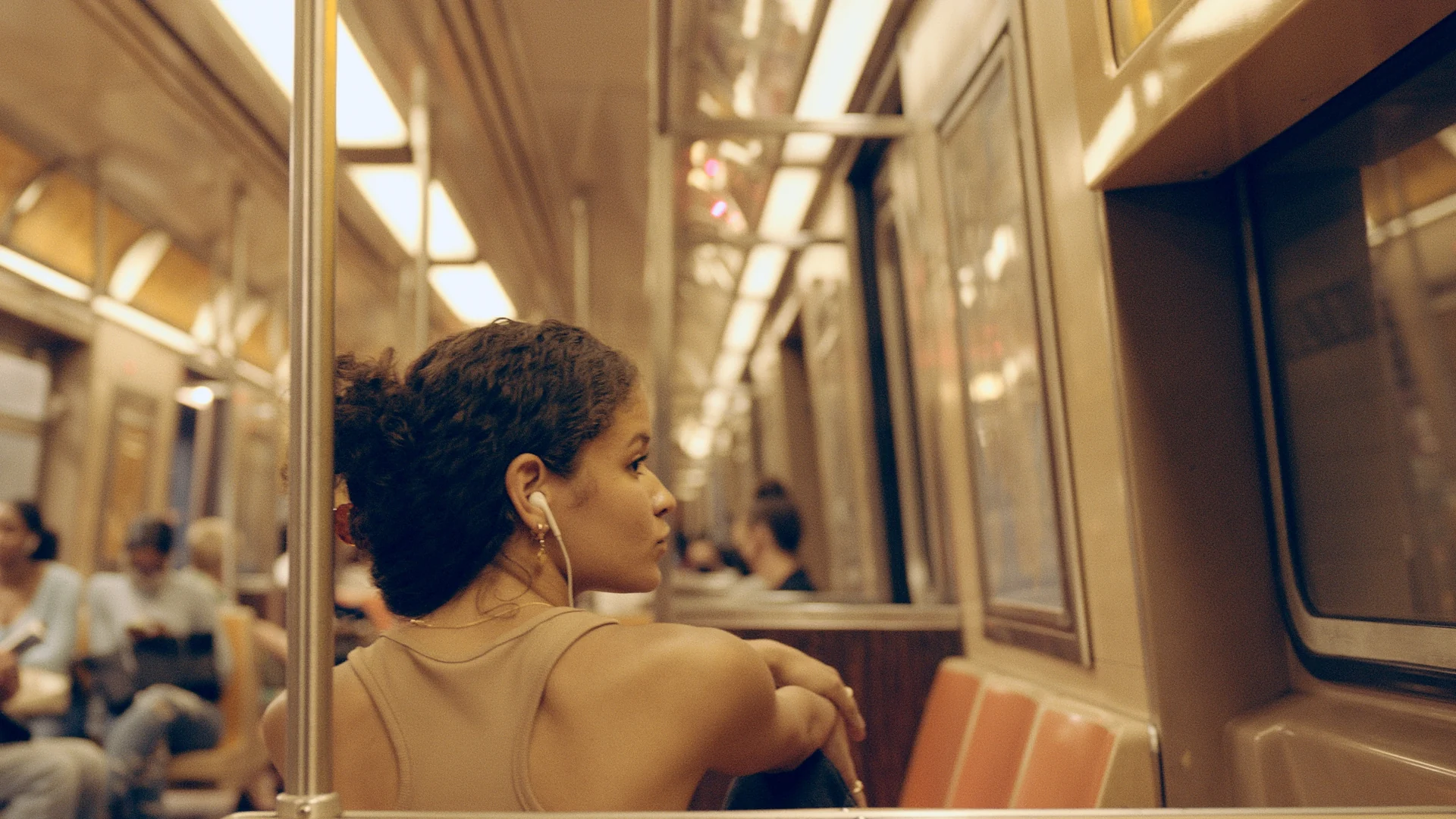
New York is a union town with a deep bench, and rates reflect it. That part is well understood. The part that surprises first time buyers is logistics. A truck needs somewhere to park. Gear needs a freight elevator with a reserved window. Twenty people need somewhere to stand between setups when it is 34 degrees on a February sidewalk. None of that shows up on screen and all of it shows up on the invoice.
Time of day matters more here too. A midtown exterior at 8am is a different shoot than the same exterior at 2pm, and the difference is measured in usable takes per hour. Scheduling around the city is the single cheapest way to protect a New York budget.
## Permits and insurance are a real line item
The common belief is that a New York film permit is free. It is not. The Mayor's Office of Media and Entertainment charges a non refundable fee of $500 for each consecutive 14 day period or portion of one, so a project that stretches across a few months carries several of those. Before you can even file, your broker has to send a certificate of insurance to the Film Office at least 48 hours ahead, showing commercial general liability of at least $1,000,000 per occurrence with the City of New York named as an additional insured.
What the permit buys back is worth having. Free police assistance, free parking privileges, and access to most exterior locations at no charge. On a shoot that needs a lane held or a sidewalk cleared, that is the difference between a scheduled day and an improvised one.
The bigger budget lever is knowing when you do not need one at all. Per the [Film Office guidance](https://www.nyc.gov/site/mome/permits/when-permit-required.page), a handheld camera or a camera on a tripod, with handheld props and equipment, does not require a permit as long as you are not claiming exclusive use of city property, using prop weapons or vehicles, or running stunts. A lean documentary approach can shoot legitimately in New York with no permit at all. The moment a grip truck and a lighting package arrive, that changes.

## Drone work costs more here than anywhere else
Aerials get quoted casually in most markets. In New York they are a scheduling decision, not a line item. Taking off or landing an unmanned aircraft anywhere in the city requires an NYPD permit, which carries a $150 fee and a 30 day lead time for a first time applicant. That drops to 14 days if the named operator has held a valid city permit in the previous 180 days. A Part 107 certificate and commercial liability naming the City are both required, and Manhattan approvals are the hardest to get.
Plan the alternative before the client asks for the skyline shot. Licensed aerial plates, a helicopter mount, or a rooftop position with a long lens will usually deliver the same beat without putting a 30 day dependency in the middle of a four week schedule. We fly drones on projects across the country. In New York we decide early whether the aerial is worth what it costs to make legal.
## The credit most brands never claim
New York runs a commercial specific incentive that sits separately from the film and television program. The [Empire State Commercial Production Tax Credit](https://esd.ny.gov/commercial-tax-credit-program) allocates up to $7 million a year, split into a $4 million downstate component and a $3 million upstate component. Downstate qualified spend earns 20 percent and upstate earns 30 percent. Applications for the current cycle close on April 1.
The catch is the definition. It covers advertisements produced in New York State for multi market distribution through television, radio, theaters, or the internet. A corporate explainer that lives on a company careers page does not qualify. A brand campaign that runs paid across platforms very often does, and nobody brings it up unless you ask. On a $150,000 downstate commercial that is real money left on the table.
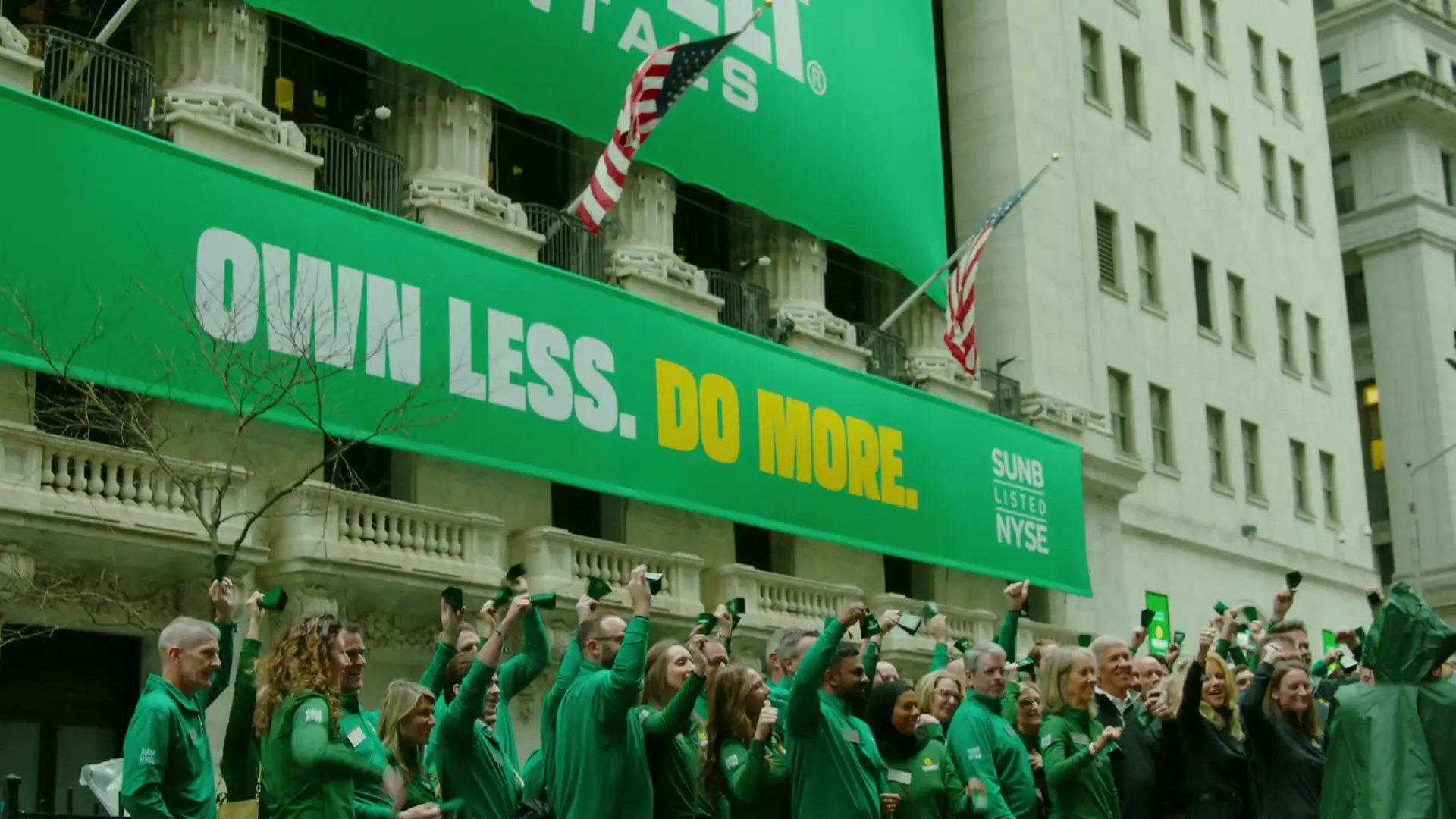
## How we scope a New York shoot
C&I Studios keeps an office in New York alongside Fort Lauderdale, and our only studio facility is a 30,000 square foot stage in Los Angeles. For a New York project that means we build the right crew on the ground here, bring the creative leads who own the look, and finish everything in our own color and post pipeline. Production, post, audio, and photography live in house, so the footage never gets handed to a stranger after wrap.
The clearest example of what that buys is the [Sunbelt Rentals](https://c-istudios.com/portfolio/sunbelt-rentals/) listing production. We covered the New York Stock Exchange trading floor on Wall Street and active construction sites around the city in the same project, which meant crew assembly, equipment logistics, location scouting, and scheduling across several high security environments where you get one attempt and no second setup. That is the part of a New York budget that is easy to underprice and expensive to get wrong.
We do not publish a rate card. A brand with $15,000 and a brand with $150,000 should hear two different recommendations, and we would rather say that on the first call. If the project is closer to a boardroom than a billboard, our [corporate video production](https://c-istudios.com/corporate-video-production/) approach is the better starting point, and if you want the same numbers for another market, we have written up [what a Chicago shoot costs](https://c-istudios.com/video-production-cost-chicago/) and [what commercial production costs nationally in 2026](https://c-istudios.com/how-much-does-commercial-video-production-cost-in-2026/).
## Frequently asked questions
### How much does video production cost in New York?
A one day interview or social shoot generally runs $3,000 to $8,000. A corporate or brand video with a full crew and finishing lands between $12,000 and $50,000. Commercial work climbs past $75,000. Crew, gear, shoot days, locations, and post set the final number.
### Is a New York film permit free?
No. The permit fee is $500 for each consecutive 14 day period, and you also need commercial general liability of at least $1,000,000 with the City named as an additional insured. Police assistance and parking privileges come with the permit at no extra charge.
### Can I shoot in New York without a permit?
Yes, in narrow circumstances. Handheld or tripod work with handheld equipment and no exclusive use of city property does not require one. Add a grip truck, prop vehicles, or stunts and it does.
### How long does a New York shoot take?
One day for a simple interview or social piece. Two to four shoot days for a branded campaign across multiple locations, plus pre production and post. Add 30 days to the front of the calendar if the project needs a drone permit.
### What does a sound stage cost in New York?
Roughly $1,500 to $5,000 a day in Manhattan and $800 to $2,500 in Brooklyn or Queens, before gear, power, and crew parking. Compare that against a [studio rental](https://c-istudios.com/studio-rentals/) in a market where the stage is not the constraint, because sometimes the answer is to move the controlled scenes and keep only the city exteriors here.
## Bring your New York shoot to C&I Studios
Tell us what you are making, where it runs, and what you have to spend, and we will tell you what that buys in this market before anyone writes a treatment. See how we work across the city on our [video production New York](https://c-istudios.com/video-production-new-york/) page, read the longer breakdown of [costs, studios, and what to expect](https://c-istudios.com/video-production-in-new-york-city-costs-studios-what-to-expect/), look through [our work](https://c-istudios.com/our-work/), or [start a conversation](https://c-istudios.com/contact/).
Originally published September 14, 2026
---
*This content is from [C&I Studios](https://c-istudios.com), a full-service production company.*
---
# How Much Does Brand Photography Cost?
> Published: September 7, 2026
> Categories: Photography
> Source: https://c-istudios.com/brand-photography-cost/
---
.cib{--paper:#1b1d1f;--ink:#fff;--body:#d5d7d9;--muted:#8b9096;--line:rgba(255,255,255,.12);--thumb:#2b2e31;--blue:#5B8FA8;--serif:'Playfair Display',Georgia,serif;--sans:'Poppins',-apple-system,sans-serif;--measure:900px;background:var(--paper);color:var(--body);font-family:var(--sans);line-height:1.6;position:relative;left:50%;transform:translateX(-50%);width:90vw;max-width:1920px} .cib *{box-sizing:border-box} .cib .kicker{max-width:var(--measure);margin:58px auto 0;padding:0 22px;font-size:12.5px;font-weight:700;letter-spacing:2.5px;text-transform:uppercase;color:var(--blue)} .cib h1.cibh1{font-family:var(--serif);font-weight:500;font-size:clamp(46px,6vw,72px);line-height:1.08;color:var(--ink);max-width:var(--measure);margin:18px auto 0;padding:0 22px;letter-spacing:-.5px;text-wrap:balance} .cib .metarow{max-width:var(--measure);margin:20px auto 0;padding:0 22px;color:var(--muted);font-size:14px} .cib .hero{position:relative;width:100%;height:0;padding-bottom:56.25%;overflow:hidden;margin:48px auto 0;border-top:1px solid var(--line);border-bottom:1px solid var(--line)} .cib .body{max-width:var(--measure);margin:12px auto 0;padding:52px 22px 6px} .cib .body.lead p:first-child{font-size:23px;line-height:1.62;color:var(--ink)} .cib .body p{font-size:18.5px;line-height:1.85;margin:0 0 30px;color:var(--body)} .cib .body h2{font-family:var(--serif);font-weight:500;font-size:clamp(32px,4vw,48px);line-height:1.22;color:var(--ink);margin:70px 0 20px;letter-spacing:-.3px;text-wrap:balance} .cib .body h3{font-family:var(--sans);font-weight:600;font-size:22px;color:var(--ink);margin:38px 0 8px;text-wrap:balance} .cib .body a{color:var(--ink);text-decoration:underline;text-decoration-color:rgba(255,255,255,.4);text-underline-offset:3px} .cib .body a:hover{text-decoration-color:var(--ink)} .cib .body ul{margin:0 0 30px;padding-left:22px} .cib .body li{font-size:18.5px;line-height:1.85;margin:0 0 10px} .cib .ctable{width:100%;border-collapse:collapse;margin:16px 0 30px;font-size:16px} .cib .ctable th{background:#000;color:#fff;text-align:left;padding:10px 12px;font-family:var(--sans)} .cib .ctable td{padding:10px 12px;border-bottom:1px solid var(--line);color:var(--body);vertical-align:top} .cib .inimg{position:relative;width:100%;height:0;padding-bottom:56.25%;overflow:hidden;margin:72px auto;border-top:1px solid var(--line);border-bottom:1px solid var(--line)} .cib .origpub{max-width:var(--measure);margin:60px auto 0;padding:26px 22px 76px;border-top:1px solid var(--line);color:var(--muted);font-size:13.5px} .cib img{margin:0!important;padding:0!important;display:block!important;vertical-align:top;max-width:100%} .cib .hero img,.cib .inimg img{position:absolute!important;top:0!important;left:0!important;width:100%!important;height:100%!important;object-fit:cover!important;margin:0!important;padding:0!important;border:0!important;display:block!important;aspect-ratio:auto!important} .cib .hero+.body{padding-top:36px} @media(max-width:760px){.cib .body h2{margin:52px 0 16px}.cib .body p,.cib .body li{font-size:17.5px}.cib .inimg,.cib .hero{margin-top:44px}}
Photography
# How Much Does Brand Photography Cost?
12 min read

Two photographers can quote the same brand shoot at four thousand dollars and sixteen thousand dollars, shoot the same number of frames on the same day, and both be quoting honestly. The gap is almost never the photography. It is what you are allowed to do with the pictures afterward. Brand photography cost is a licensing question wearing a production question's clothes, and reading a quote without knowing that is how marketing teams end up comparing numbers that were never comparable. Every number below is a US industry average for what American brands pay. None of it is a rate card, ours or anyone else's.
## A brand photography cost is three numbers, not one
A brand photography cost is priced differently from most creative work because the deliverable keeps having value after it is made. A finished photograph can run on a website for a year or on a billboard in twelve markets for three, and those two futures are worth wildly different amounts to the brand buying them. So a real quote splits into three parts that have almost nothing to do with each other.
Part of the quote
What it pays for
Share of a typical US brand shoot
Creative fee
The photographer's time, eye and direction on the day
25 to 40 percent
Production
Crew, studio, talent, styling, props, equipment, permits
30 to 50 percent
Licensing
Where the images run, for how long, and how exclusively
15 to 45 percent
Every figure on this page is a US market average drawn from what American brands pay across the industry rather than a price list. Any brand photography cost quoted as a flat number with no split is either bundling all three or has quietly assumed a license far narrower than you think you are buying. Ask for the breakdown before you compare anything.
## Usage rights are the half of the price nobody reads
This is the part that surprises people, and it is the single biggest swing factor in any brand photography cost. It is why two quotes for one shoot can read like quotes for two different jobs. A photographer is not selling you files. They are selling you a license to use those files in specified places for a specified time, and the price scales with how much of the world you want.
### What a license actually specifies
The [American Society of Media Photographers](https://www.asmp.org/) has published guidance on this for decades and it is the closest thing the trade has to a common vocabulary. Four variables do the work. Media is where the images can appear, so organic social and your own website sit at the bottom and paid advertising, print, out of home and packaging climb steeply from there. Territory is geographic, running from one city to one country to worldwide. Duration is how long, usually one, two or three years, occasionally in perpetuity. The underlying copyright stays with the photographer unless it is explicitly assigned, which the [US Copyright Office](https://www.copyright.gov/what-is-copyright/) sets out plainly and which surprises a lot of marketing teams the first time they read a contract properly. Exclusivity is whether the photographer can license the same frames to anyone else, and buying it out costs real money because it removes their ability to resell.
Those four multiply rather than add. Web only, US, one year, non exclusive is the cheap corner of the grid. Full media, worldwide, three years, exclusive is the expensive corner, and the same shoot day can sit at either end.
What you want to do with the images
Typical effect on the licensing line
Own website and organic social, 1 year
Baseline, often folded into the creative fee
Add paid social and digital ads, 1 year
Roughly 25 to 60 percent on top of the baseline
Add print, catalog and in store, 2 years
Roughly 50 to 150 percent on top
Add out of home, national, 2 to 3 years
Often doubles the licensing line or more
Packaging
Priced separately and usually the most expensive single use
Full buyout, worldwide, perpetuity
Commonly 2 to 4 times the base fee
Two practical points follow from this. First, buy the license you will actually use. Brands routinely pay for a worldwide three year buyout and then run the images on Instagram for eight months. Second, buy it once. Going back to extend a license after the shoot is always more expensive than including the use in the original negotiation, because you have lost the only leverage you had.
## What the shoot day itself costs
Strip licensing out and the rest of a brand photography cost behaves much more like any other shoot. It is driven by how many people are in the room and how long they are there.
### The photographer and the people assisting
A working commercial photographer's day rate across the US generally lands between $1,500 and $6,000, with editorial and portrait work at the lower end and advertising at the top. A first assistant runs $350 to $650 a day. On any shoot producing more than a handful of setups, a digital technician managing capture, tethering and color on set adds $500 to $900 and pays for itself the first time a file is not what everyone thought it was on the back of the camera.
### Everyone who is not holding a camera
This is where a brand photography cost separates from a headshot session. Hair and makeup runs $600 to $1,500 a day. A wardrobe stylist is $700 to $2,000 plus a kit fee and the cost of anything pulled. A prop stylist or food stylist sits in the same range and is the difference between a product photograph that looks considered and one that looks like inventory. A producer to run the schedule, the call sheet and the releases is $700 to $1,800.
Models are their own line. Non union talent for a brand shoot is roughly $500 to $2,500 a day, and like the photographer, their fee is tied to usage, so a model booked for social and a model booked for national out of home are not the same booking or the same price.
### The room
A studio day across the US runs $500 to $2,500 depending on size, cyc wall and grip package. Location work replaces that with scouting, permits, travel and the risk of weather, and it is usually more expensive than it looks on paper once you count the hours lost to moving. If you are deciding between the two, our comparison of [natural light against studio lighting](https://c-istudios.com/natural-lighting-vs-studio-lighting/) is a useful read first.

## Retouching is billed per image and it adds up fast
Almost every other line on a photography quote is billed by the day. Retouching is billed by the picture, which is why it is the line of a brand photography cost that most often doubles between the estimate and the invoice.
Basic color correction and clean up runs $25 to $75 an image. Standard commercial retouching, so skin, product surfaces, minor removals and consistency across a set, is $75 to $250 an image. High end beauty and product compositing, where several frames are combined or a surface is rebuilt, starts around $250 and climbs past $800 for a hero frame that will be blown up to poster size.
The arithmetic is what catches people. A shoot that produces forty selected images at $150 each is a $6,000 post budget attached to a $9,000 shoot day, and nobody discussed it because the conversation was about the day rate. Decide how many final images you actually need before you book anything. Our rundown of [photo editing practice](https://c-istudios.com/16-important-post-production-photo-editing-tips-from-a-professional-film-editor/) covers what that work involves.
## The shot count trap
Brands brief a shoot in days and receive it in images, and the mismatch between those two units drives more brand photography cost arguments than anything except licensing.
A realistic commercial day is eight to fifteen finished setups for product work and four to eight for lifestyle with talent, wardrobe changes and location moves. A brief that says a day and then lists sixty required shots is not a one day shoot, and everyone finds that out at four in the afternoon. Count the setups, not the frames. The camera fires thousands of times either way.
The corollary is the cheapest content you will buy all year. Once lights are up, talent is in the chair and the set is dressed, additional variations cost minutes rather than money. Shoot the vertical crop, the copy space version and the detail frame while everything is standing, because coming back for them later means paying for the whole day again.

## What moves the price with nothing to do with the pictures
Three things inflate a brand photography cost without adding a single frame to the shoot, and all three are avoidable.
The first is the approval chain. A shoot signed off by one marketing lead and a shoot signed off by a committee are the same production until the selects go out. Then one of them comes back with a decision and the other comes back with four opinions and a request to reshoot a setup that was fine. Name the person who chooses the final images before the shoot, not after.
The second is compression. A brief that lands on Monday for a Friday shoot pays a premium on every line, because the crew you want is booked, the studio you want is taken, and styling has to source from whatever is available rather than whatever is right. Two extra weeks of lead time is usually worth more to the finished pictures than two extra thousand dollars of budget.
The third is shooting without a shot list. It sounds like a small omission and it is the most expensive one on this page. Without a list, the day is spent discovering what the shoot is instead of executing it, half the setups get done properly and the rest get done at speed, and the reshoot that follows costs the whole day again. A shot list is free. Write it.
There is a fourth that is not avoidable and should be planned for anyway. Outdoor work needs a weather contingency, and the honest way to handle it is to agree the cost of a hold day in the contract rather than discover it in a phone call at six in the morning.
## Four brand photography budgets, line by line
Ranges help you plan and do nothing for you in a negotiation. These are four brand photography cost builds at four scales, in the proportions the US market tends to price them. They are industry averages rather than any one company's price list, so treat them as a shape to argue with.
### Around $4,500. A team headshot and culture refresh
Line
Cost
Photographer, one day
$2,000
Assistant and lighting package
$700
Hair and makeup
$800
Retouching, 25 images
$750
Web and social license, 2 years
$250
Twenty five people through a consistent setup, plus environmental frames of the office. This is the most common brand photography purchase there is and the one most often handed to whoever owns a good camera. The gap between that and a professional result is almost entirely lighting and direction.
### Around $12,000. A product catalog
Line
Cost
Photographer, two days
$5,000
Assistant plus digital technician
$2,000
Studio and grip
$1,600
Prop styling and surfaces
$1,200
Retouching, 60 images
$1,700
Ecommerce and paid social license, 2 years
$500
Sixty products on white plus a set of styled hero frames. Catalog work rewards planning more than any other kind of photography, because the shoot is essentially a production line and every minute saved per product multiplies by sixty. Our guide to [product photography for Shopify](https://c-istudios.com/product-photography-tips-for-shopify/) covers the ecommerce end of this.
### Around $34,000. A lifestyle campaign with talent
Line
Cost
Creative fee, two shoot days plus prep
$9,000
Crew, assistants, digital technician
$3,500
Two models plus casting
$5,000
Hair, makeup and wardrobe styling
$4,000
Location, permits and production
$3,500
Retouching, 35 selects
$5,000
Paid digital and print license, US, 2 years
$4,000
Here the photograph is designed rather than captured. There is a mood board, a cast, a wardrobe and a location, and the value sits in decisions made two weeks before anyone opens a case. This is the range most brand campaigns actually live in.
### Around $85,000. A national campaign with a buyout
Line
Cost
Creative fee, three shoot days plus prep
$18,000
Full crew and production
$12,000
Cast, casting and fittings
$12,000
Styling, props and set build
$10,000
Studio, location and travel
$8,000
High end retouching, 20 heroes
$10,000
Full media buyout, worldwide, 3 years
$15,000
Notice what happens at the top of the market. The license is the largest single line, larger than the photographer, larger than the cast. At this scale you are not buying a shoot. You are buying the right to put a specific image everywhere for three years, and the shoot is how that image gets made.
## What is not in the number
A brand photography cost is only as honest as the lines it leaves out, so comparing bids means comparing the things that sit outside the headline. These are the lines that most often arrive as a surprise.
Item
Typical add
When it applies
Overtime
1.5x crew rate after 10 hours
Any day that gains setups or starts late
License extension
Often more than buying it upfront
Adding media or years after the shoot
Extra retouching rounds
$40 to $150 per image
Beyond the rounds named in the quote
Product samples and returns
Shipping plus handling
Anything shipped to a studio
Permits and location fees
$200 to $2,500
Public property and many private venues
Archive and file delivery
$200 to $1,000 a year
Keeping raw files recoverable
## Brand photography cost questions we get asked
### Why will a photographer not just sell me the raw files?
Because the raw files are not the product and releasing them removes any control over how the work is presented. Some will license raws for a fee. Most will not, and the ones who hand them over without discussion are usually the ones whose finished work needed the least of them.
### Is a day rate or a per image price better?
Per image suits small, well defined jobs where the count is genuinely fixed, so ecommerce packshots are the obvious case. Day rate suits anything creative, because the moment the brief moves, per image pricing turns every good idea into a change order.
### Can we use the photos forever?
Only if you bought that. Most licenses run one to three years, and the images do not stop working on the last day, but continuing to run them past the term is a breach that a rights holder can act on. Diary the expiry when you sign.
### Do we need a photographer and a videographer, or one crew?
One crew, almost always, if the two are shot together from the start. Stills and motion share the lighting, the talent, the location and the styling, and capturing both on the same day is dramatically cheaper than booking two productions. It has to be planned that way though, because the lighting compromises are real and they are much easier to solve in prep than at noon. Our [video production services](https://c-istudios.com/video-production-services/) page covers how we combine the two.
### What makes a brand photography cost go up the fastest?
Licensing first, cast second, shot count third. Nothing else is close. A brand that trims those three thoughtfully and spends the savings on styling and retouching ends up with better pictures for the same money.
## Working out your own number
Answer four questions before you ask anyone for a price. Where will these images run and for how long. How many finished images do you actually need. Is there anyone in frame who has to be paid. Do you need a studio or a location. Those four get you within twenty percent of a real brand photography cost and turn a set of incomparable bids into a set of comparable ones.
We shoot brand campaigns at reasonable prices, out of our own [stage in Los Angeles](https://c-istudios.com/studio-rentals/) and on location, from beauty and product work like the [KISS](https://c-istudios.com/portfolio/kiss/) campaigns through to corporate and editorial portraiture. Every estimate we send is split into the three parts described above, so you can see what you are buying instead of a single number with nothing behind it. To find out what your own shoot would cost, [reach out for a quote on our photography services](https://c-istudios.com/quote/) or [tell us what you are making](https://c-istudios.com/contact/). Our [professional photography services](https://c-istudios.com/professional-photography-services/) page has the full scope, and if you are still deciding who to hire, our advice on [choosing a photographer](https://c-istudios.com/finding-your-perfect-photographer-tips-for-making-the-right-choice/) and on [why stock imagery hurts a brand](https://c-istudios.com/how-stock-photo-and-video-can-hurt-your-brand/) are both worth ten minutes.

## One last thing about cheap photography
The cheapest brand photography cost in a set of three quotes is usually cheap for a reason that is written down somewhere in it. A narrower license, fewer retouched selects, no stylist, no producer, a shorter day. None of those are dishonest and all of them are recoverable if you spot them before you sign. Read the three parts, ask what is missing, and pick on what you are actually getting rather than on the number at the bottom. Our piece on [what brand photography does for identity](https://c-istudios.com/building-brand-identity-the-power-of-corporate-photography/) is a good reminder of what is at stake when it goes wrong.
Originally published September 7, 2026
---
*This content is from [C&I Studios](https://c-istudios.com), a full-service production company.*
---
# How We Build a Video Production Crew Anywhere in the US
> Published: September 4, 2026
> Categories: Behind the Scenes
> Source: https://c-istudios.com/video-production-crew/
---
.cib{--paper:#1b1d1f;--ink:#fff;--body:#d5d7d9;--muted:#8b9096;--line:rgba(255,255,255,.12);--thumb:#2b2e31;--blue:#5B8FA8;--serif:'Playfair Display',Georgia,serif;--sans:'Poppins',-apple-system,sans-serif;--measure:900px;background:var(--paper);color:var(--body);font-family:var(--sans);line-height:1.6;position:relative;left:50%;transform:translateX(-50%);width:90vw;max-width:1920px} .cib *{box-sizing:border-box} .cib .kicker{max-width:var(--measure);margin:58px auto 0;padding:0 22px;font-size:12.5px;font-weight:700;letter-spacing:2.5px;text-transform:uppercase;color:var(--blue)} .cib h1.cibh1{font-family:var(--serif);font-weight:500;font-size:clamp(46px,6vw,72px);line-height:1.08;color:var(--ink);max-width:var(--measure);margin:18px auto 0;padding:0 22px;letter-spacing:-.5px;text-wrap:balance} .cib .metarow{max-width:var(--measure);margin:20px auto 0;padding:0 22px;color:var(--muted);font-size:14px} .cib .hero{position:relative;width:100%;height:0;padding-bottom:56.25%;overflow:hidden;margin:48px auto 0;border-top:1px solid var(--line);border-bottom:1px solid var(--line)} .cib .body{max-width:var(--measure);margin:12px auto 0;padding:52px 22px 6px} .cib .body.lead p:first-child{font-size:23px;line-height:1.62;color:var(--ink)} .cib .body p{font-size:18.5px;line-height:1.85;margin:0 0 30px;color:var(--body)} .cib .body h2{font-family:var(--serif);font-weight:500;font-size:clamp(32px,4vw,48px);line-height:1.22;color:var(--ink);margin:70px 0 20px;letter-spacing:-.3px;text-wrap:balance} .cib .body h3{font-family:var(--sans);font-weight:600;font-size:22px;color:var(--ink);margin:38px 0 8px;text-wrap:balance} .cib .body a{color:var(--ink);text-decoration:underline;text-decoration-color:rgba(255,255,255,.4);text-underline-offset:3px} .cib .body a:hover{text-decoration-color:var(--ink)} .cib .body ul{margin:0 0 30px;padding-left:22px} .cib .body li{font-size:18.5px;line-height:1.85;margin:0 0 10px} .cib .ctable{width:100%;border-collapse:collapse;margin:16px 0 30px;font-size:16px} .cib .ctable th{background:#000;color:#fff;text-align:left;padding:10px 12px;font-family:var(--sans)} .cib .ctable td{padding:10px 12px;border-bottom:1px solid var(--line);color:var(--body);vertical-align:top} .cib .inimg{position:relative;width:100%;height:0;padding-bottom:56.25%;overflow:hidden;margin:72px auto;border-top:1px solid var(--line);border-bottom:1px solid var(--line)} .cib .origpub{max-width:var(--measure);margin:60px auto 0;padding:26px 22px 76px;border-top:1px solid var(--line);color:var(--muted);font-size:13.5px} .cib img{margin:0!important;padding:0!important;display:block!important;vertical-align:top;max-width:100%} .cib .hero img,.cib .inimg img{position:absolute!important;top:0!important;left:0!important;width:100%!important;height:100%!important;object-fit:cover!important;margin:0!important;padding:0!important;border:0!important;display:block!important;aspect-ratio:auto!important} .cib .hero+.body{padding-top:36px} @media(max-width:760px){.cib .body h2{margin:52px 0 16px}.cib .body p,.cib .body li{font-size:17.5px}.cib .inimg,.cib .hero{margin-top:44px}}
Behind the Scenes
# How We Build a Video Production Crew Anywhere in the US
12 min read
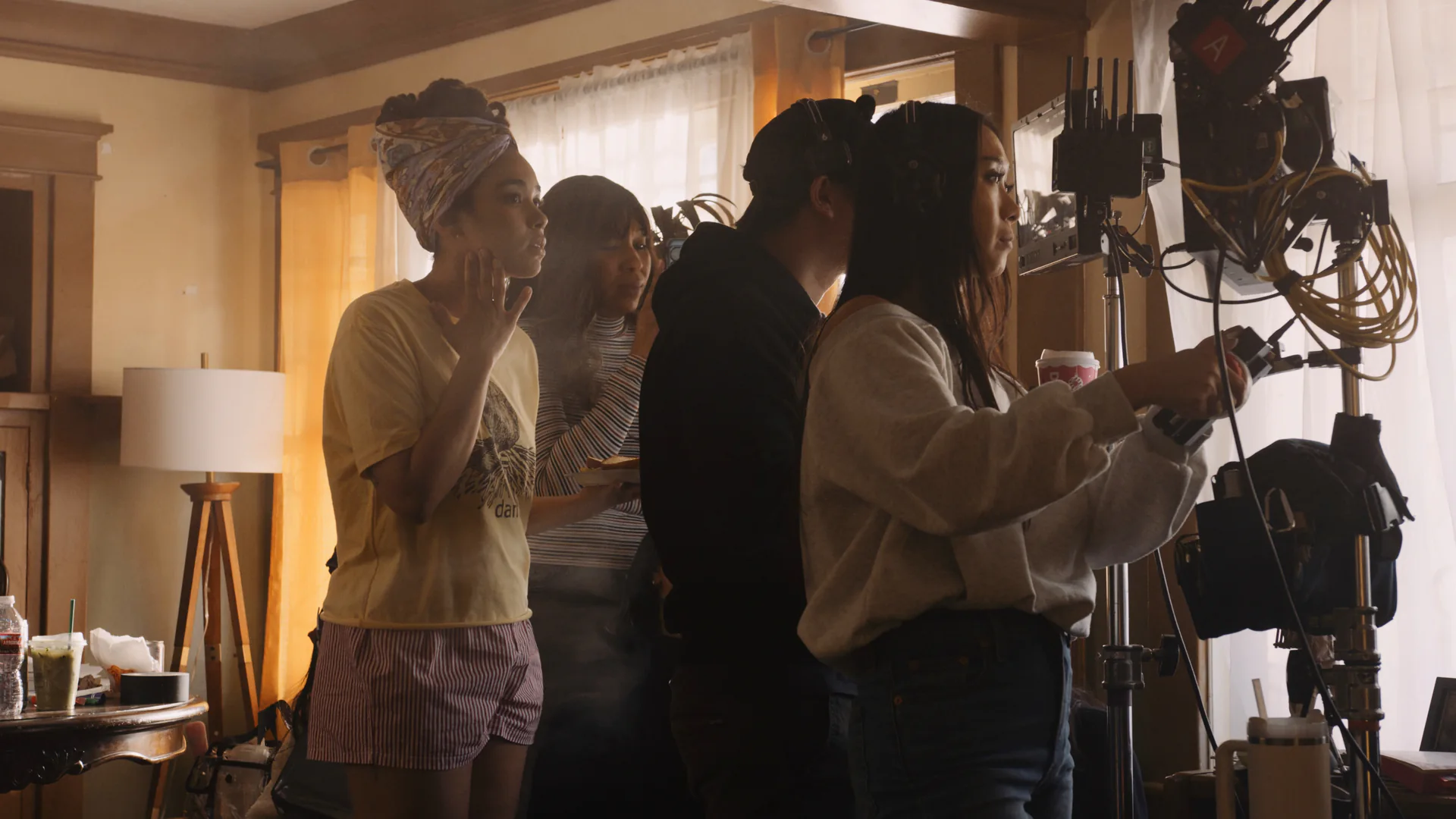
The hardest part of a shoot in an unfamiliar city is almost never the camera. It is the twenty decisions that happen before anyone touches one. Who is holding the boom. Which local gaffer knows the union rules in that building. Whether the freight elevator is booked. A video production crew is not a list of names you assemble on the morning of the shoot, and the difference between a good day and an expensive one is usually decided a week earlier.
We get asked how this works often enough that it is worth writing down. Our only stage is in Los Angeles. Fort Lauderdale and New York are offices, not facilities. Everything else we shoot happens in someone else's building, in a city where we are the visitors, and that has forced us to get specific about how a video production crew comes together. What follows is the actual process, not a sales version of it.
## What a video production crew actually looks like
We have a separate breakdown of [every role on a video production crew and what each one costs](https://c-istudios.com/what-is-a-video-production-crew-roles-costs-who-you-actually-need/). This piece is the other half of that. Not what the roles are, but how they actually get filled in a city we do not live in.
Most clients picture a crew as one number. Six people, or twelve, or thirty. In practice a video production crew is three groups that scale independently, and knowing which group a job stresses is how you avoid paying for the other two.
The first group is the camera department. An operator, a first AC pulling focus, sometimes a second AC handling media and slates, and a DIT if the day generates enough footage to need offloads while you are still rolling. On a single-camera interview day that is one or two people. On a multi-camera event it triples fast, because every additional body on a camera needs a body supporting it.
The second group is grip and electric. This is the department that clients most consistently under-budget and most consistently notice when it is missing. A gaffer designs the light. A key grip shapes and blocks it. If the location has bad windows, a low ceiling, or fluorescents you cannot switch off, this department is the reason the footage looks intentional instead of found.
The third group is production. A producer who owns the schedule and the client relationship, a coordinator working the logistics, a PA or two moving people and gear. On a two-day corporate shoot this feels like overhead until the moment a location falls through and someone has to solve it in fifteen minutes without stopping the day.
Sound sits across all three and gets treated as its own decision. A mixer with a boom operator is a different animal from a single mixer running lavs off a bag, and the choice is driven by the room, not the budget. We have never regretted spending on sound. We have regretted cheaply lit interviews we could not fix in the grade and bad audio we could not.
## The bench comes before the booking
The reason a shoot in a city we do not live in works at all is that the sourcing does not start when the job does. We maintain a contractor database organized by market and by role, and it is built from two directions. People submit themselves to us through our crew form, and we go looking through industry directories for the roles a market is thin on. Every entry has a verified contact, not a scraped one.
That database is the difference between hiring and guessing. When a job lands in Atlanta on a Thursday for the following Tuesday, nobody is posting in a Facebook group. We are calling a gaffer we have already worked with, and if that gaffer is out, they are the one recommending the replacement. Referral inside a market we already have a foothold in is the single most reliable crewing mechanism we have found, and it is only available to a company that has been putting names in a database for years.
The honest caveat is that depth varies by city. Los Angeles, New York, Atlanta and South Florida are deep in every department. A smaller market might have three people who can gaff at the level we need, and two of them will be booked. That constraint is real, and it changes the schedule rather than the standard. If the right key grip in a market is only available Wednesday, the shoot moves to Wednesday.
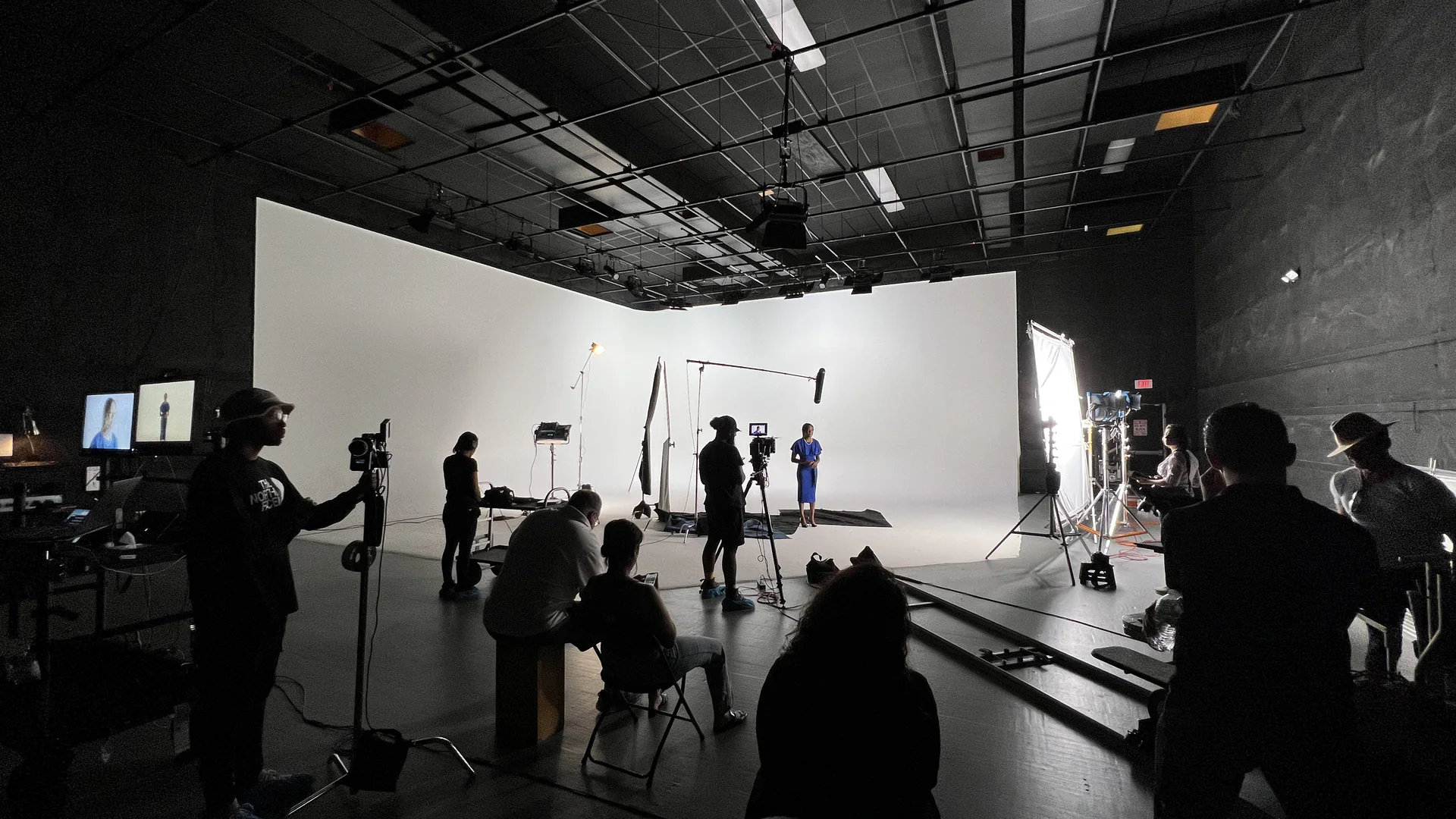
## How the market gets picked
Before crewing anything, there is a question worth asking out loud. Does this need to happen on location at all.
A controlled build belongs on a stage. If the brief is a product film, a set piece, a green screen, or anything where the background is a decision rather than a fact, the cheapest version of that shoot is a [studio rental](https://c-istudios.com/studio-rentals/) where the walls, the power and the parking are known quantities. We wrote about that tradeoff in more detail in [shooting on location versus shooting in a studio](https://c-istudios.com/shooting-on-location-vs-shooting-in-a-studio-rental-and-when-you-need-to-use-both/), and the short version is that location work buys you authenticity and costs you control.
When the location is the point, the market picks itself, and then the crewing question becomes local versus travelling. We keep sixteen city pages for the markets we work in most, including [Los Angeles](https://c-istudios.com/video-production-los-angeles/), [New York](https://c-istudios.com/video-production-new-york/), [Chicago](https://c-istudios.com/video-production-chicago/), [Atlanta](https://c-istudios.com/video-production-atlanta/) and [Miami](https://c-istudios.com/video-production-miami/), because those are the places where a client asking for a video production crew is asking a question we can answer the same day. The wider picture of how we operate across all of them is in our piece on being a [national video production company](https://c-istudios.com/national-video-production-company/).
## What travels and what gets sourced locally
The single biggest cost lever on an out of state shoot is the split between what flies with the team and what is hired in the market. Getting this wrong in either direction is expensive. Ship too much and you are paying freight and excess baggage on stands you could have rented for forty dollars. Ship too little and you spend the first two hours of a shoot day discovering that the local rental house substituted a lens.
Travels with the team
Sourced in the market
Camera bodies, lenses and the specific glass the look depends on
Lighting and grip packages, stands, flags, distro
Audio kit, mixer, lavs, the boom the mixer trusts
Trucks, vans and any vehicle that needs local plates and insurance
Media, drives and the offload station
Generators, cable runs and anything heavy per pound
Key creative roles, usually director, DP and producer
Gaffer, key grip, PAs, and additional operators
Monitors and any client-facing playback setup
Expendables, gels, tape, batteries for local gear
The pattern that has held up for us is that decision-making roles travel and muscle gets hired locally. The DP travels because the look is the reason the client called. The key grip is local because the key grip knows which rental house in that city actually delivers on time. Our post on [the real cost of on location shoots](https://c-istudios.com/the-real-cost-of-on-location-shoots-do-video-production-companies-travel/) goes deeper on the travel side of the arithmetic.
Travel cost itself is more predictable than most clients expect, because the federal government publishes the numbers. The [GSA per diem rate tables](https://www.gsa.gov/travel/plan-book/per-diem-rates) give a defensible lodging and meal figure for any US county, and using them instead of guessing is the fastest way to make a travel line item something a client can approve without a fight.

## The week before anything moves
Crewing is the visible half of pre-production. The invisible half is access, and access is where shoots actually die.
Permits vary so widely by city that the only safe assumption is that you do not know the rule. Some markets want a film permit for a tripod on a public sidewalk. Others do not care until you block a lane. Private buildings have their own layer on top, and a property manager who has never hosted a shoot will say yes on the phone and no when a case of stands comes through the lobby. We ask for the loading dock, the freight elevator hours and the certificate of insurance requirements in the first conversation, every time.
Anything in the air adds a licence requirement. Drone work in the US needs a remote pilot certificate under [FAA Part 107](https://www.faa.gov/uas/commercial_operators), plus airspace authorization if the location sits inside controlled airspace, which most downtown cores do. This is a yes or no gate, not a negotiation, and it needs to be checked at the scout rather than the shoot.
Union status is the last variable. In some markets and on some jobs the crew will be working under an [IATSE](https://iatse.net/) agreement, which sets the rules on turnaround, meal penalties and department minimums. Those rules are not obstacles. They are a schedule you can plan against, and a producer who knows them writes a call sheet that does not generate penalties.
### What a scout is actually for
A scout is not a look around. It is a list of measurements. Where the power is and how many amps it will hold. Where the sun sits at the hour you plan to shoot. What the room sounds like when the HVAC cycles. How far the walk is from the truck to the set, because that number multiplied by the number of trips is the real load-in time. When we cannot scout in person we scout by video call with someone standing in the room, and we ask them to be quiet for thirty seconds so we can hear it.
## What the day looks like on the ground
The clearest example we can point to is the film we made when [Sunbelt Rentals rang the bell at the New York Stock Exchange](https://c-istudios.com/sunbelt-rentals-nyse-listing-production/). Getting a camera onto that floor is not a permit you file. It is weeks of coordination upstream of the shoot, translating the exchange's requirements into a plan a crew can actually execute against.
Call time on Wall Street was early enough that the crew was staged and inside the building with time to build rigs, set audio and walk the floor for final blocking before the executive team arrived. That sequencing is the whole job. The bell itself is a handful of minutes, and it does not repeat. During those minutes the work of the video production crew is to be in the right positions, with the right lenses, at the right heights, in the right numbers, so that every angle in the plan is being captured at once.
We ran multiple camera units in parallel to make that possible, and one of them stayed mobile and worked the periphery, because the moments that reveal themselves are the ones a camera has to move toward. Post ran alongside production rather than after it, which is the only way same-day delivery on a two-location shoot is possible at all. That parallel structure is a [post production](https://c-istudios.com/post-production-services/) decision as much as a crewing one.
### The thing that goes wrong most often
Not weather. Not gear. Time. A schedule built on the assumption that a setup takes twenty minutes when it takes thirty-five will lose two hours across a day, and the two hours always come out of the last item on the list, which is usually the shot the client cared about. The fix is unglamorous. Build the schedule off the slowest realistic setup, not the fastest, and put the most important shot before lunch.
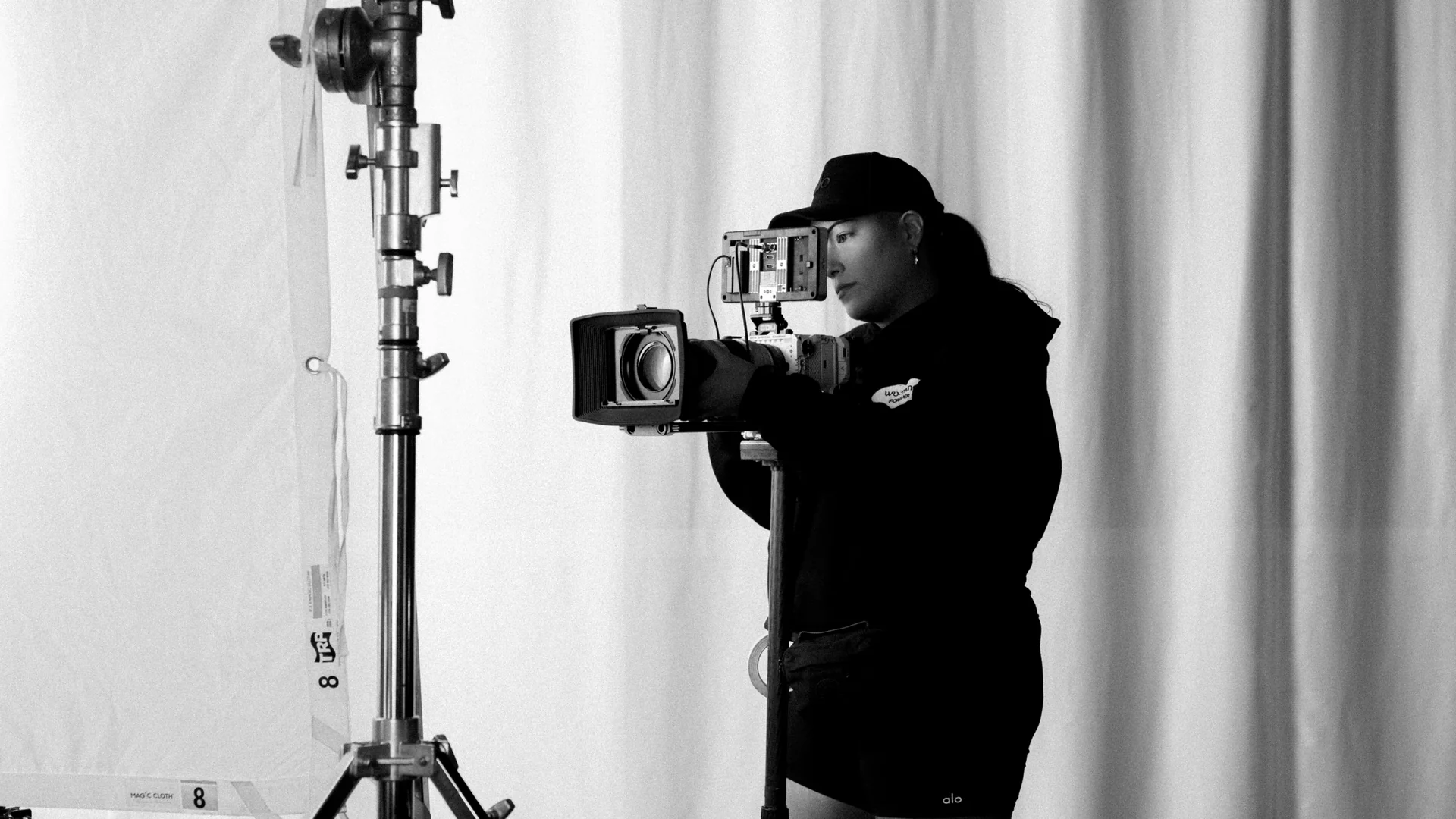
## Crewing a shoot that lasts three years
Not every job is a day. [Fund Black Tech](https://c-istudios.com/portfolio/fund-black-tech/) is a documentary we started shooting in March 2021 and were still picking up footage for in 2024. What came back fills close to 23 terabytes of RED raw across nineteen drives.
A production on that timescale inverts the crewing problem. On a one-day shoot you optimize for the best available crew on that date. On a multi-year documentary you optimize for continuity, because the person who lit the first interview needs to light the last one the same way, in a different city, three years later. The camera package gets locked early and stays locked, even when something better comes out, because matching footage matters more than the newest sensor.
The other thing a long production forces is discipline about media. Nineteen drives is only a manageable number if every card was offloaded with a consistent naming convention and verified checksums on the day it was shot. It becomes an unmanageable number the moment someone improvises a folder name on location. We wrote up the wider process in [how to produce a documentary](https://c-istudios.com/how-to-produce-a-documentary-that-engages-audiences/), and the media handling is the part most first-time producers underestimate.
## Where the money actually goes
Clients usually arrive with a crew size in mind and a budget that does not match it. It is more useful to work the other direction and decide what the day has to deliver, then let the crew size fall out of that.
What the day needs
What that costs you in crew
One interview, controlled room, single look
Small unit. Operator, gaffer, sound, producer
Interview plus b-roll of a working facility
Add a second operator and a PA, or accept a longer day
A live moment that does not repeat
Multiple camera units in parallel, one of them mobile
Multiple locations in one day
Two units, or a hard call on which location gets the good hours
Same-day or next-day delivery
An editor and a DIT working while the shoot is still running
The line item people try to cut first is the one that costs the most to cut. A day without a dedicated grip and electric department is a day where the camera department is also rigging light, which means every setup takes longer, which means you lose shots. The cheaper version of that day is not cheaper. It is shorter.
For a fuller cost picture with real market numbers, [what video production costs in Chicago](https://c-istudios.com/video-production-cost-chicago/) breaks down a single market end to end, and [how to hire a production crew](https://c-istudios.com/how-to-hire-production-crew/) covers the process from the client side of the table.
## Questions we get about crewing a shoot
### How much notice do you need for an out of state shoot
A straightforward single-location day in a market we work in regularly can come together in under a week. Anything involving a permit, a private building, drone work or a union agreement needs two to three weeks, and the constraint is almost never the crew. It is whoever has to sign off on access.
### Do you use local crew or bring your own people
Both, on nearly every job. Creative and decision-making roles travel so the work is consistent with what the client approved. Grip, electric, additional operators and PAs are hired in the market, because local crew knows the buildings, the rental houses and the parking, and that knowledge is worth more than familiarity with us.
### Can you shoot in a city that is not on your list
Yes. The city pages exist because those markets come up most often, not because they are a boundary. Sourcing a video production crew in a market we have not worked in before takes longer and starts with referrals from crew we trust in the nearest market we have.
### Who is responsible if a location falls through
We are. That is what a producer is for, and it is the reason we resist stripping the production department out of a budget. Backup locations get identified during the scout, not during the crisis.
### What is the smallest crew worth hiring
Two people, and only for a specific kind of job. An operator who can also handle sound, plus a producer running the room, works for a straightforward interview in a cooperative space. Below that you are asking one person to light, frame, record audio and manage the client at the same time, and one of those four will suffer visibly.
## Bring your next shoot to C&I Studios
If you have a location, a date and a rough idea of what the footage has to do, that is enough for us to build a plan around it. We will tell you where a stage is cheaper than a location, which roles need to travel and which should be hired in the market, and what the access constraints are before they become a problem on the day.
Start with our [video production services](https://c-istudios.com/video-production-services/) if you want the wider picture of what we handle, look through [Fund Black Tech](https://c-istudios.com/portfolio/fund-black-tech/) and the [Sunbelt Rentals NYSE film](https://c-istudios.com/sunbelt-rentals-nyse-listing-production/) to see how differently two productions can be crewed, and [get in touch](https://c-istudios.com/contact/) when you are ready to put a date on it.
Originally published September 4, 2026
---
*This content is from [C&I Studios](https://c-istudios.com), a full-service production company.*
---
# Corporate Video Production Cost. What You Actually Pay For
> Published: September 2, 2026
> Categories: Commercial & Brand
> Source: https://c-istudios.com/corporate-video-production-cost/
---
.cib{--paper:#1b1d1f;--ink:#fff;--body:#d5d7d9;--muted:#8b9096;--line:rgba(255,255,255,.12);--thumb:#2b2e31;--blue:#5B8FA8;--serif:'Playfair Display',Georgia,serif;--sans:'Poppins',-apple-system,sans-serif;--measure:900px;background:var(--paper);color:var(--body);font-family:var(--sans);line-height:1.6;position:relative;left:50%;transform:translateX(-50%);width:90vw;max-width:1920px} .cib *{box-sizing:border-box} .cib .kicker{max-width:var(--measure);margin:58px auto 0;padding:0 22px;font-size:12.5px;font-weight:700;letter-spacing:2.5px;text-transform:uppercase;color:var(--blue)} .cib h1.cibh1{font-family:var(--serif);font-weight:500;font-size:clamp(46px,6vw,72px);line-height:1.08;color:var(--ink);max-width:var(--measure);margin:18px auto 0;padding:0 22px;letter-spacing:-.5px;text-wrap:balance} .cib .metarow{max-width:var(--measure);margin:20px auto 0;padding:0 22px;color:var(--muted);font-size:14px} .cib .hero{position:relative;width:100%;height:0;padding-bottom:56.25%;overflow:hidden;margin:48px auto 0;border-top:1px solid var(--line);border-bottom:1px solid var(--line)} .cib .body{max-width:var(--measure);margin:12px auto 0;padding:52px 22px 6px} .cib .body.lead p:first-child{font-size:23px;line-height:1.62;color:var(--ink)} .cib .body p{font-size:18.5px;line-height:1.85;margin:0 0 30px;color:var(--body)} .cib .body h2{font-family:var(--serif);font-weight:500;font-size:clamp(32px,4vw,48px);line-height:1.22;color:var(--ink);margin:70px 0 20px;letter-spacing:-.3px;text-wrap:balance} .cib .body h3{font-family:var(--sans);font-weight:600;font-size:22px;color:var(--ink);margin:38px 0 8px;text-wrap:balance} .cib .body a{color:var(--ink);text-decoration:underline;text-decoration-color:rgba(255,255,255,.4);text-underline-offset:3px} .cib .body a:hover{text-decoration-color:var(--ink)} .cib .body ul{margin:0 0 30px;padding-left:22px} .cib .body li{font-size:18.5px;line-height:1.85;margin:0 0 10px} .cib .ctable{width:100%;border-collapse:collapse;margin:16px 0 30px;font-size:16px} .cib .ctable th{background:#000;color:#fff;text-align:left;padding:10px 12px;font-family:var(--sans)} .cib .ctable td{padding:10px 12px;border-bottom:1px solid var(--line);color:var(--body);vertical-align:top} .cib .inimg{position:relative;width:100%;height:0;padding-bottom:56.25%;overflow:hidden;margin:72px auto;border-top:1px solid var(--line);border-bottom:1px solid var(--line)} .cib .origpub{max-width:var(--measure);margin:60px auto 0;padding:26px 22px 76px;border-top:1px solid var(--line);color:var(--muted);font-size:13.5px} .cib img{margin:0!important;padding:0!important;display:block!important;vertical-align:top;max-width:100%} .cib .hero img,.cib .inimg img{position:absolute!important;top:0!important;left:0!important;width:100%!important;height:100%!important;object-fit:cover!important;margin:0!important;padding:0!important;border:0!important;display:block!important;aspect-ratio:auto!important} .cib .hero+.body{padding-top:36px} @media(max-width:760px){.cib .body h2{margin:52px 0 16px}.cib .body p,.cib .body li{font-size:17.5px}.cib .inimg,.cib .hero{margin-top:44px}}
Commercial & Brand
# Corporate Video Production Cost. What You Actually Pay For
13 min read

Corporate video production cost is the one line in a marketing budget that almost never survives first contact with a real quote. A company sets aside fifteen thousand dollars for a brand film, sends the brief to three companies, and gets back nine thousand, twenty six thousand and sixty one thousand.
## Corporate video production cost at a glance
Four shapes cover most of what companies actually commission. Find the row that matches the film in your head before you talk to anyone, because the gap between rows is where bids stop being comparable.
Shape of the job
Typical range
What that buys
One day, one location
$6,000 to $14,000
One or two speakers, a small crew, a hero cut plus vertical versions
Multi day or multi location
$14,000 to $40,000
Several speakers, b roll across sites, a hero cut and a set of shorts
Brand film with a creative build
$40,000 to $120,000
Scripted, directed, art department, cast talent, original music
Ongoing video program
$8,000 to $25,000 a month
A retained crew producing a steady volume across the year
These are US market ranges for production only, gathered from what companies across the country pay rather than from any one price list. Paid distribution is a separate budget and it behaves nothing like this one. If the film is going to run as advertising rather than sit on a careers page or an internal portal, read our breakdown of [what a 30 second commercial costs](https://c-istudios.com/30-second-commercial-cost/) alongside this, because media spend on a broadcast or connected TV buy routinely runs several times the cost of making the thing.
## Why corporate video is priced differently than a commercial
A commercial is a short, expensive, heavily controlled piece of film. Thirty seconds of finished picture can absorb a two day shoot, a director, a cast and a five figure grade, because it is going to be bought media against and it has to hold up next to everything else in the break.
Corporate video is the opposite trade. The runtime is longer, the control is lower, and the value is in access rather than polish. You are filming a real chief executive in a real building on a real Tuesday, working around a schedule nobody moves for a camera. That changes what drives the corporate video production cost. On a commercial the biggest variables are talent, art department and post. On a corporate shoot the biggest variables are how many humans have to be captured and how many places the crew has to set up in.
It is also why the same production company can quote a corporate film for a third of what it quotes a commercial of the same length. Less of the day goes into building a world and more of it goes into moving cleanly through a building. Our page on [corporate video production](https://c-istudios.com/corporate-video-production/) covers the formats this applies to, and the longer explainer on [what corporate video production is](https://c-istudios.com/what-is-corporate-video-production-full-definition-and-benefits-for-companies/) is the place to start if the category itself is new to you.
## Where the money actually goes
Every corporate video production cost you are quoted is three budgets stapled together. Read them separately and the differences between bids stop being mysterious.
### Pre production, roughly 10 to 20 percent
Pre production is scheduling, scripting or question design, location scout, releases, and the call sheet. On corporate work it is mostly logistics rather than creative, and it is the cheapest place in the whole process to fix a problem.
Pre production is the smallest slice of a corporate video production cost and the phase clients try hardest to skip, usually to save two or three thousand dollars. The saving is real and it is almost always spent twice on the shoot day, because nobody confirmed that the conference room with the good window is booked from eleven, or that the chief financial officer has a hard stop at two. A day that stalls for ninety minutes costs more than the entire prep line. If the film is scripted rather than interview led, our guide to [corporate video scriptwriting](https://c-istudios.com/corporate-video-scriptwriting-how-to-engage-audiences/) is worth reading before you brief anyone.
### The production day, roughly 45 to 60 percent
This is crew, gear, location and talent, and it is the single largest block in a corporate video production cost. Crew is the biggest part of it. A two or three person team covering a straightforward interview day runs $2,500 to $5,000. A standard corporate crew of five to eight, once you add a gaffer, a sound mixer, a second camera and a producer running the floor, runs $6,000 to $12,000 a day. Anything larger is usually being driven by a creative requirement rather than a coverage one.
Gear is smaller than most people assume, typically $800 to $4,000 a day for camera, lighting, grip and audio on a corporate package. The exception is anything that needs specialty support, so a technocrane, a drone operator with the right certification, or a full lighting build for a large space will each move that line meaningfully. Our breakdown of [what a video production crew costs and who you actually need](https://c-istudios.com/what-is-a-video-production-crew-roles-costs-who-you-actually-need/) goes position by position.
### Post production, roughly 25 to 40 percent
Post is where a corporate video production cost gets quietly rewritten, because clients think about it as one task and it is five. Editorial on a single corporate film is typically $2,000 to $8,000. Color is $600 to $2,500. A sound mix is $600 to $2,500. Motion graphics for titles, lower thirds and a logo end frame run $800 to $6,000 depending on whether you are placing text or animating a product. Subtitles, alternate language versions and platform specific exports add $300 to $2,000 more.
The number that surprises people is revisions. Two rounds is standard and quotable. Five rounds, spread across a committee that never sees the film at the same time, is a different job than the one that was quoted, and it is the most common reason a corporate video runs over. Our rundown of [what professional video editing services cost](https://c-istudios.com/how-much-do-professional-video-editing-services-cost-in-2026/) covers the editorial side in more detail, and our [post production services](https://c-istudios.com/post-production-services/) page lists what a full finish includes.

## The five things that move the number most
### How many people talk on camera
This is the largest single variable in any corporate video production cost and the one most briefs leave out. One speaker is an afternoon. Four speakers in the same room is a full day. Four speakers in four different buildings is a three day shoot with travel, and the film is not four times better for it.
The honest test is whether each person is saying something only they can say. If two of your four executives are making the same point in different words, cutting one of them out is worth several thousand dollars and it improves the film.
### How many locations
Every location resets the day, and geography is the fastest way to double a corporate video production cost. Load in, light, shoot, strike, drive, repeat. A second location in the same building costs an hour. A second location across town costs half a day. A second location in another city costs flights, hotels, per diems, a shipped or locally sourced gear package and a travel day on either side, which is why a national rollout is priced by geography before it is priced by content.
Where the creative allows it, bringing people to one controlled space is usually cheaper than sending a crew to them. That is part of why we run a 30,000 square foot stage in Los Angeles rather than only shooting on location. Details are on the [studio rentals](https://c-istudios.com/studio-rentals/) page. If you are staying on location, our guide to [choosing filming locations for a corporate video](https://c-istudios.com/how-to-choose-the-right-filming-locations-for-your-corporate-video/) covers what to check before you commit to a room.
### Whether anyone on camera is being paid
Employees and executives cost nothing beyond their time. The moment you cast actors, the budget changes shape. Non union talent runs roughly $500 to $2,000 a day. Union talent under a SAG-AFTRA agreement starts higher and, more importantly, carries usage terms, so the fee you pay in year one is not the total cost if the film is still running in year three. Industrial and non broadcast agreements are cheaper than commercial ones, but they are still agreements with a term on them.
A related trap is music. Library music is $50 to $500 and clears immediately. A recognizable track is a licensing negotiation with a number that has nothing to do with your production budget. Original composition sits between them at $1,500 to $8,000 and is often the right answer for a brand film that will run for years.
### How many cuts you need at the end
Companies brief one video and then need eleven. A three minute hero film, a sixty second cutdown, a thirty for paid, three vertical clips for social, a silent captioned version for a lobby screen, and a version with the legal disclaimer for the regulated market. Every one of those is real editorial work.
The fix is not to want fewer of them. It is to say all of them out loud before the shoot, because a crew that knows a vertical cut is coming shoots protective framing on the day and the vertical version costs a few hundred dollars instead of a reshoot. Deciding this after the edit has locked is how a $12,000 project becomes an $18,000 one. Our note on [how long a corporate video should be](https://c-istudios.com/decoding-the-ideal-length-a-guide-to-corporate-video-duration/) is a useful sanity check on the list.
### How fast you need it
A rush adds 20 to 30 percent to the corporate video production cost and it buys you nothing except the date. Crew gets booked at premium, gear comes from whoever has it rather than whoever has the right one, and post gets compressed into nights. Rush jobs are also where the most expensive mistakes happen, because the prep that would have caught them is the first thing cut.

## Four budget shapes, line by line
Ranges are useful for planning and useless for negotiating. These are four realistic builds at four scales, in the proportions the US market tends to price them. Treat them as a shape to argue with rather than a quote.
### Around $9,000. One executive, one day, one film
Line
Cost
Pre production, scheduling and question design
$1,000
Full day shoot, three person crew
$3,800
Camera, lighting and audio package
$1,000
Edit, color, mix, two revision rounds
$2,600
Library music and three platform exports
$600
This is the workhorse of corporate video and it is where most companies should start. One person, one clean setup, proper lighting and a real sound mix. It will not look like a commercial and it is not trying to. It will look like a company that takes itself seriously, which is the whole assignment.
### Around $22,000. A recruiting film across two offices
Line
Cost
Pre production, scouting, scheduling across two sites
$2,500
Two shoot days, five person crew
$11,000
Gear package plus travel and freight
$3,000
Edit, color, mix, motion graphics
$4,500
Licensed music, subtitles, six deliverables
$1,000
Six or seven employees on camera, b roll of both buildings, a two minute hero cut and a set of shorts for careers pages and social. This is the range where a corporate video production cost starts to look like a real production rather than a documentation exercise, and it is the range most recruiting and culture work lands in.
### Around $58,000. A brand film with a director and a cast
Line
Cost
Creative development, script, boards, casting
$8,000
Two day shoot, ten person crew, stage plus location
$22,000
Cast, wardrobe and art department
$9,000
Cinema camera package and specialty grip
$5,000
Full post finish including graphics
$10,000
Original music and eight deliverables
$4,000
Here the film is designed rather than captured. There is a script, a look, a cast and an art department, and the value sits in decisions made weeks before anyone turns a camera on. Budgets at this level survive scrutiny because every line traces back to something visible on screen.
### Around $150,000. A launch across markets
Line
Cost
Strategy, creative, scripting and boards
$18,000
Four shoot days across three cities
$62,000
Union cast and usage
$20,000
Production design, specialty gear, travel
$18,000
Post finish, VFX, grade, mix
$22,000
Score, localization, twenty plus deliverables
$10,000
At this scale the corporate video production cost is being driven by geography and rights rather than by craft. Four days of filming is not four times harder than one. Moving a crew and a cast through three cities on a fixed launch date is.
## What a day rate does not include
Comparing bids means comparing what sits outside the headline number, because a corporate video production cost is only as honest as the lines it excludes. These are the lines that most often appear as a surprise rather than a quote.
Item
Typical add
When it applies
Overtime
1.5x crew rate after 10 or 12 hours
Any day that starts late or gains a location
Travel and freight
$1,500 to $6,000 per city
Crew or gear leaving the home market
Permits and insurance riders
$300 to $3,000
Public property, some private campuses
Extra revision rounds
$400 to $1,500 each
Beyond the two rounds usually quoted
Additional deliverables
$150 to $900 each
Formats not named before the edit
Archive and long term storage
$300 to $1,500 a year
Keeping raw footage recoverable
## Where companies spend and get nothing back
Four patterns waste more corporate video production cost than anything else, and they come up often enough to name.
Buying a bigger crew than the format needs. A single interview does not improve because there are nine people in the room. It improves because the person on camera was prepared and the questions were good.
Paying for a location that is doing nothing. Executives sometimes want to film in an impressive space that has terrible acoustics, no power access and a hard out at four. The room reads as a room. The bad audio reads as amateurism to everyone who watches.
Skipping the sound budget. Audiences forgive soft focus and abandon bad audio within seconds. Sound is the cheapest quality signal in the entire process and it is the one most often cut.
Producing one video a year. A single expensive film has no compounding value. A steady program of smaller, cheaper, well made pieces builds a library, and the fourth one costs less than the first because the look, the graphics package and the workflow already exist. The annual industry surveys from [Wistia](https://wistia.com/learn/state-of-video) and [Wyzowl](https://www.wyzowl.com/video-marketing-statistics/) are the closest thing to a public benchmark on how much video companies are actually producing, and the direction has been one way for a decade.

## How to get more out of one shoot day
The crew, the gear and the location are booked for the day whether you use the day well or not. Almost all of the efficiency available in corporate video comes from that one fact.
Shoot every speaker you will need for the next six months in one sitting rather than booking a crew each time somebody has an announcement. Capture b roll of the building while the lights are already up. Ask each interviewee two extra questions that have nothing to do with this film, because those answers become next quarter's content and they cost you four minutes.
Name every deliverable before the shoot so framing protects for vertical. Agree the number of revision rounds in writing. And keep the whole chain with one company rather than splitting creative, production and post across three, because every handoff carries a margin and loses context. That is how we structured the healthcare work we produced with [Stinghouse](https://c-istudios.com/portfolio/stinghouse/), where a single interview program generated executive, clinician and patient stories from the same setups.
## Corporate video production cost questions we get asked
### Is there a minimum worth spending?
At the bottom of the corporate video production cost range, below roughly $5,000, you are buying a camera operator rather than a production. That is a legitimate purchase for internal documentation or event capture. It is not the right tool for anything a customer or a candidate will judge you on.
### Why do quotes for the same brief differ so much?
Usually crew size, revision rounds and deliverable count, in that order. Those three lines account for most of the spread in any corporate video production cost. Ask all three bidders to price the same crew, the same two revision rounds and the same list of exports and the spread will collapse. If one bid is still half the others, something is being left out and it is worth finding out what.
### Does a longer video cost more?
Barely, on the shoot. Almost all of the day is setup, and a five minute film and a ninety second film are usually cut from the same footage. Length affects editorial time and music licensing, not crew and gear. This is why shooting several lengths in one day is the cheapest content you will ever buy.
### Should we hire a company or build an in house team?
In house makes sense above roughly two finished pieces a month, and only if you are willing to buy gear, carry salaries through quiet months and keep the skills current. Below that, a retained arrangement with a production company is cheaper and the ceiling on quality is higher. We run retained programs at reasonable prices, so it is worth putting a real number next to an in house budget before you commit to either. Our [video production services](https://c-istudios.com/video-production-services/) page covers how retained programs are usually structured, and you can [get a quote for your project](https://c-istudios.com/quote/) to compare against.
### Are training videos priced the same way?
The shoot is, the post is not. Training content carries screen capture, animated diagrams, chaptering, quiz cards and platform packaging for whatever learning system it lives in, and that work often exceeds the filming budget. Our guide to [corporate training video production services](https://c-istudios.com/everything-you-need-to-know-about-corporate-training-video-production-services/) covers the differences.
## Working out your own number
Write down four things before you ask anyone for a price. How many people talk on camera. How many buildings the crew enters. Whether anybody on screen is being paid to be there. How many finished cuts you need. Those four answers get you within twenty percent of the real corporate video production cost, and they turn three incomparable bids into three comparable ones.
If you want that number for a specific film rather than a category, [get a quote for your project](https://c-istudios.com/quote/) and it comes back itemized so you can see what each decision is worth. We produce corporate work at reasonable prices out of our Los Angeles stage and on location at client sites, and the fastest way to find out what yours costs is to [tell us what you are making](https://c-istudios.com/contact/). It also helps to read [what commercial video production costs](https://c-istudios.com/how-much-does-commercial-video-production-cost-in-2026/) for the advertising side of the comparison, and [how to film a CEO interview](https://c-istudios.com/the-dos-and-donts-of-filming-ceo-interviews-for-corporate-videos/) if an executive is going to be the center of your film. We work nationally from our [Los Angeles](https://c-istudios.com/video-production-los-angeles/) and [New York](https://c-istudios.com/video-production-new-york/) bases, so travel is usually a smaller line than companies expect.
Originally published September 2, 2026
---
*This content is from [C&I Studios](https://c-istudios.com), a full-service production company.*
---
# The Cities We Shoot In and Why Brands Pick Each
> Published: August 28, 2026
> Categories: Commercial & Brand
> Source: https://c-istudios.com/national-video-production-company/
---
.cib{--paper:#1b1d1f;--ink:#fff;--body:#d5d7d9;--muted:#8b9096;--line:rgba(255,255,255,.12);--thumb:#2b2e31;--card:#212426;--accent:#c02b0a;--blue:#5B8FA8;--serif:'Playfair Display',Georgia,serif;--sans:'Poppins',-apple-system,sans-serif;--measure:900px;background:var(--paper);color:var(--body);font-family:var(--sans);line-height:1.6;position:relative;left:50%;transform:translateX(-50%);width:90vw;max-width:1920px}.cib *{box-sizing:border-box}.cib .kicker{max-width:var(--measure);margin:58px auto 0;padding:0 22px;font-size:12.5px;font-weight:700;letter-spacing:2.5px;text-transform:uppercase;color:var(--blue)}.cib h1.cibh1{font-family:var(--serif);font-weight:500;font-size:clamp(46px,6vw,72px);line-height:1.08;color:var(--ink);max-width:var(--measure);margin:18px auto 0;padding:0 22px;letter-spacing:-.5px;text-wrap:balance}.cib .metarow{max-width:var(--measure);margin:20px auto 0;padding:0 22px;color:var(--muted);font-size:14px}.cib .hero{position:relative;width:100%;height:0;padding-bottom:56.25%;overflow:hidden;margin:48px auto 0;border-top:1px solid var(--line);border-bottom:1px solid var(--line)}.cib .hero .ph{width:100%;aspect-ratio:16/9;background:var(--thumb);border-top:1px solid var(--line);border-bottom:1px solid var(--line);display:flex;align-items:center;justify-content:center;color:#7d8288;font-size:13px;text-align:center;padding:0 20px}.cib .body{max-width:var(--measure);margin:12px auto 0;padding:52px 22px 6px}.cib .body.lead p:first-child{font-size:23px;line-height:1.62;color:var(--ink)}.cib .body p{font-size:18.5px;line-height:1.85;margin:0 0 30px;color:var(--body)}.cib .body h2{font-family:var(--serif);font-weight:500;font-size:clamp(32px,4vw,48px);line-height:1.22;color:var(--ink);margin:70px 0 20px;letter-spacing:-.3px;text-wrap:balance}.cib .body h3{font-family:var(--sans);font-weight:600;font-size:22px;color:var(--ink);margin:38px 0 8px;text-wrap:balance}.cib .body a{color:var(--ink);text-decoration:underline;text-decoration-color:rgba(255,255,255,.4);text-underline-offset:3px}.cib .body a:hover{text-decoration-color:var(--ink)}.cib .ctable{width:100%;border-collapse:collapse;margin:16px 0 30px;font-size:16px}.cib .ctable th{background:#000;color:#fff;text-align:left;padding:10px 12px;font-family:var(--sans)}.cib .ctable td{padding:10px 12px;border-bottom:1px solid var(--line);color:var(--body)}.cib .inimg{position:relative;width:100%;height:0;padding-bottom:56.25%;overflow:hidden;margin:72px auto;border-top:1px solid var(--line);border-bottom:1px solid var(--line)}.cib .inimg .ph{width:100%;aspect-ratio:16/9;background:var(--thumb);border-top:1px solid var(--line);border-bottom:1px solid var(--line);display:flex;align-items:center;justify-content:center;color:#7d8288;font-size:13px}.cib .origpub{max-width:var(--measure);margin:60px auto 0;padding:26px 22px 0;border-top:1px solid var(--line);color:var(--muted);font-size:13.5px}.cib .related{max-width:1200px;margin:64px auto 0;padding:34px 22px 76px}.cib .related h3{font-family:var(--sans);font-size:12.5px;letter-spacing:2px;text-transform:uppercase;color:var(--ink);margin:0 0 24px}.cib .grid{display:grid;grid-template-columns:repeat(3,1fr);gap:28px}.cib .rc{background:var(--card);border:1px solid var(--line);display:block;text-decoration:none;color:inherit;transition:border-color .15s}.cib a.rc:hover{border-color:rgba(255,255,255,.5)}.cib .rc .thumb{position:relative;width:100%;height:0;padding-bottom:56.25%;background:var(--thumb);overflow:hidden}.cib .rc .thumb img{position:absolute!important;top:0!important;left:0!important;width:100%!important;height:100%!important;object-fit:cover!important;margin:0!important}.cib .rc .cc{padding:14px 15px 17px}.cib .rc .rt{font-family:var(--serif);font-weight:500;font-size:16px;line-height:1.3;color:var(--ink);margin:0 0 6px}.cib .rc .rm{font-size:11px;letter-spacing:1px;text-transform:uppercase;color:var(--muted)}.cib img{margin:0!important;padding:0!important;display:block!important;vertical-align:top;max-width:100%}.cib .hero img,.cib .inimg img{position:absolute!important;top:0!important;left:0!important;width:100%!important;height:100%!important;object-fit:cover!important;margin:0!important;padding:0!important;border:0!important;display:block!important;aspect-ratio:auto!important}.cib .hero+.body{padding-top:36px}@media(max-width:760px){.cib .grid{grid-template-columns:1fr}.cib .body h2{margin:52px 0 16px}.cib .body p{font-size:17.5px}.cib .inimg,.cib .hero{margin-top:44px}}
Commercial & Brand
# The Cities We Shoot In and Why Brands Pick Each
11 min read

Most brands ask a national video production company where they should shoot before they ask what it will cost. That is the right question in the wrong order, and it is also the more interesting one. The city almost never changes the creative. It changes which crew you can hire on a Tuesday, which permit you need to hold a sidewalk, what the light does in February, and whether a state rebate pays back a slice of the budget. Knowing which market gives a project the thing it actually needs, then being able to staff that market properly, is most of the job.
We keep one stage and a full gear inventory in Los Angeles, offices in New York and Fort Lauderdale, and working crews in every major production market in the country. Below is how we actually think about each one. What it is good at, what it costs you in friction, and the kind of job we would route there.
## What a national video production company actually gives you
The phrase gets used loosely. Plenty of companies calling themselves a national video production company really mean a directory. They take the job, then find somebody local and mark up the invoice. You end up managing a stranger through a producer who has never met them either.
What it should mean is narrower. One producer owns the project from the brief to delivery. The creative team, the director, and the post pipeline stay the same no matter which airport the crew flies into. Only the positions that genuinely benefit from being local get hired local. That is the gaffer who knows which stage has a working tie-in, the location manager who has already pulled a permit on that block, the PA who knows where the truck can legally sit for nine hours.
That split matters because it is where budgets get won and lost. Flying eight people to Dallas is expensive and usually unnecessary. Flying two and hiring six is how a national shoot lands at a sane number without the footage looking like somebody else made it. The rule we use is simple. Travel the people who protect the creative, hire the people who protect the day.

## Los Angeles has depth on every line item
Los Angeles is not the default because of palm trees. It is the default because it is the only market in the country where every department is deep enough that a last-minute replacement is a phone call instead of a crisis. Lose a first AC at 6am in most cities and you have a problem. Lose one in LA and you have a mild inconvenience.
It also means the ceiling on quality is higher. The best colorists, the best sound mixers, the specialty rental houses with the one lens you need. They are all here. Our [30,000 square foot stage](https://c-istudios.com/studio-rentals/) is in LA for exactly that reason, and a fair number of projects that start as location shoots elsewhere end up finishing here anyway.
The tradeoff is rate and permitting. Crew day rates run at the top of the national range, and location filming in the city runs through [FilmLA](https://www.filmla.com/), which is efficient but not fast if you decide on Friday that you want a street on Monday. California also runs a competitive incentive program through the [California Film Commission](https://film.ca.gov/), which matters more for scripted work than for a two day brand shoot.
Route work here when it has a heavy build, when it needs controlled stage conditions, when the talent is already in town, or when the post is as demanding as the shoot. Details on the market are on our [Los Angeles video production](https://c-istudios.com/video-production-los-angeles/) page.
## In New York density is the entire pitch
New York sells one thing better than anywhere else, and that is compression. You can shoot a rooftop, a subway platform, a boardroom, and a bodega inside a single day because they are four blocks apart. No other American city gives you that many distinct looks per mile.
The cost of that density is that everything is harder to move. Trucks do not park, elevators are booked, buildings have their own rules on top of the city's, and a crew that is one person too large stops fitting in the freight. The city's permit process runs through the [Mayor's Office of Media and Entertainment](https://www.nyc.gov/site/mome/permits/permits.page) and it is genuinely well run, but it rewards planning and punishes improvisation.
The other reason clients pick New York is proximity. Finance, fashion, publishing, and most agency decision makers are here, which means the people who approve the work can walk to set. That sounds minor until you have watched a two week approval cycle collapse into an afternoon because the CMO stopped by. Our [New York video production](https://c-istudios.com/video-production-new-york/) page covers the market in detail, and we wrote up a real example when we [shot the Knicks championship parade](https://c-istudios.com/knicks-championship-parade-new-york-video/), which is about as unforgiving as New York location work gets.
## In Washington DC access is the constraint
DC is a market where the hard part is almost never the camera. It is clearance. Federal property, monument grounds, secure buildings, and interview subjects whose schedules are set by other people's calendars all mean the production plan has to be built backward from what you are allowed to do and when.
Brands come here for credibility more than for scenery. Advocacy work, association and nonprofit campaigns, government adjacent contractors, policy explainers, and executive interviews that need to look like they happened where decisions get made. The city photographs beautifully at the margins of the day, and the monument core at night is one of the genuinely distinctive looks in the country.
What we tell clients is to budget more prep time than you think and less shoot time than you think. A DC day with the paperwork done is calm. A DC day without it does not happen. See the [Washington DC video production](https://c-istudios.com/video-production-washington-dc/) page for the specifics.
## Incentives built the Atlanta crew base
Georgia's transferable film tax credit pulled an enormous amount of scripted production into Atlanta, and the second order effect is the useful part for brand work. The crew base that grew to serve those shows is still there between seasons. You can hire a genuinely senior camera and grip department in Atlanta at rates below LA and New York, which is why so much national commercial and corporate work quietly happens there now.
Stage inventory is real too, not converted warehouse space. And the city gives you a wide range of backdrops inside a short drive. Downtown glass, older brick, suburban, rural, and forest, all within about an hour.
The catch is scheduling. When several series are up at once, the best crews are booked out months ahead and the honest answer is that your third choice gaffer in Atlanta is not the same as your third choice in LA. Book early or shoot in the gaps. Our [Atlanta video production](https://c-istudios.com/video-production-atlanta/) page has more.
## Chicago is the practical middle
Chicago is the market we recommend most often to brands that have been quoted a coastal number and flinched. Crew quality is high, the city is genuinely photogenic in a way that reads as American without reading as Los Angeles, and the logistics are simply easier. Trucks park, distances are short, and the union and non union paths are both workable.
Weather is the real variable and it is not a small one. A February exterior in Chicago is a different production than a September one, and pretending otherwise is how schedules break. We wrote a full breakdown of what a shoot there actually costs in [how much video production costs in Chicago](https://c-istudios.com/video-production-cost-chicago/), and the market overview lives on the [Chicago video production](https://c-istudios.com/video-production-chicago/) page.
## Miami and South Florida have a look you cannot fake
Light and water. That is the honest reason brands shoot in South Florida, and it is a good enough reason. The quality of light from roughly November to April is hard to match anywhere else in the country, and the coastline, art deco architecture, and Latin American cultural depth give you a visual register that reads as international without leaving the US.
It is also the most efficient bilingual production market in the country. If a campaign needs Spanish and English versions shot the same day with talent and crew who move naturally between both, Florida does that better than Los Angeles does.
Summer is the constraint. Heat and afternoon storms are near guaranteed from June through September, so exteriors get pushed into the first and last three hours of daylight. We keep an office in Fort Lauderdale, so this is a market we are in constantly rather than one we visit. See [Miami video production](https://c-istudios.com/video-production-miami/) and [South Florida video production](https://c-istudios.com/video-production-south-florida/).
## Texas is three markets that are not interchangeable
Clients say Texas and mean one of three very different places.
[Dallas](https://c-istudios.com/video-production-dallas/) is corporate. Headquarters, executive interviews, glass towers, and the deepest business to business client base in the state. If the deliverable is a brand film that has to look institutional and expensive, Dallas is the efficient answer.
[Austin](https://c-istudios.com/video-production-austin/) is younger and looser. Tech, music, food, and a crew culture that skews documentary. It is the Texas market for anything that needs to feel like it was not art directed to death.
[Houston](https://c-istudios.com/video-production-houston/) is industrial and technical. Energy, medical, aerospace, ports. Shooting there often means safety training, escorts, and site access protocols before anybody touches a camera, and crews who have done it before are worth the premium. [San Antonio](https://c-istudios.com/video-production-san-antonio/) rounds it out for historic and Hispanic market work.
Across all three, the same advantages hold. No state income tax pressure on rates, short flights from most of the country, and stage and gear inventory that has grown a lot in the last five years.
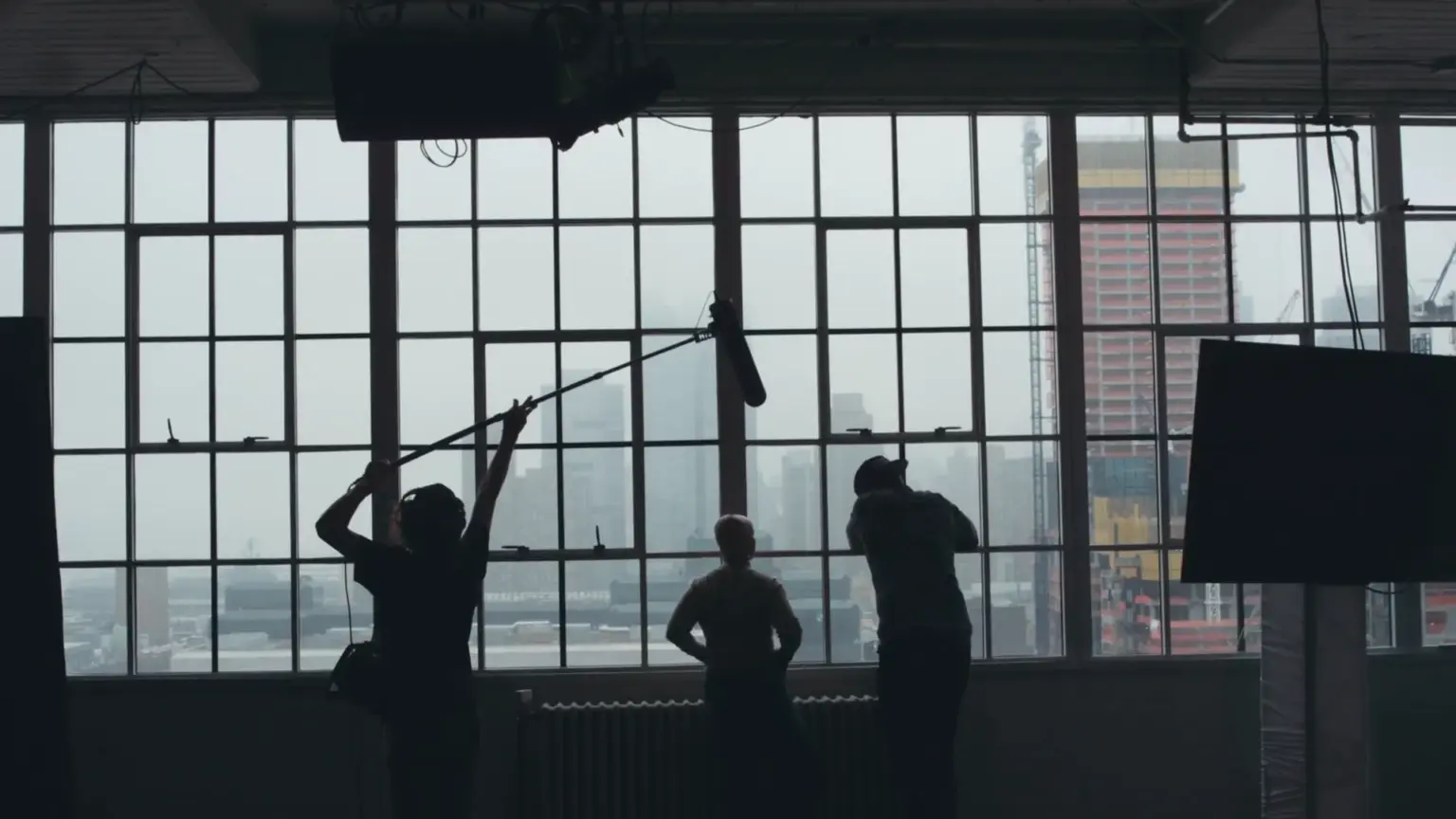
## The West and the desert
[San Francisco](https://c-istudios.com/video-production-san-francisco/) is where you go when the client is a technology company and the work needs to be shot where the product is actually built. It is expensive, crew is thinner than LA, and location access in the city is fussier than people expect. Go for authenticity, not for savings.
[San Diego](https://c-istudios.com/video-production-san-diego/) is the quiet efficiency play in California. Two hours from LA, so you can drive an LA crew and truck down, with better weather consistency, easier permitting, military and biotech client bases, and a coastline that does not look like Malibu.
[Seattle](https://c-istudios.com/video-production-seattle/) gives you water, evergreen, and grey, and the grey is the point. The soft overcast that frustrates tourists is a natural softbox for exteriors. Strong tech and outdoor apparel client base. Plan around the rain rather than against it.
[Las Vegas](https://c-istudios.com/video-production-las-vegas/) is the most misunderstood market on this list. Almost nobody shoots Vegas for Vegas. They shoot it because every major trade show in the country happens there, which means the executives, the product, and the customers are all in one building for three days. Conference capture, booth content, and executive interview blocks are what Vegas is genuinely best at, and the desert an hour outside town is a bonus.
## Boston and Nashville
[Boston](https://c-istudios.com/video-production-boston/) is education, healthcare, biotech, and financial services, plus the best concentration of academic and research institutions in the country. The work skews serious and interview heavy, and the historic architecture gives brand films a weight that new construction cannot.
[Nashville](https://c-istudios.com/video-production-nashville/) is a music town that turned into a general production town. The audio infrastructure is world class, which matters more than people assume for any project where sound carries the emotion, and the crew base has broadened well past music video work.
## A quick map
Market
What it is genuinely best at
The thing to plan around
Los Angeles
Stage builds and crew depth
Top of market rates
New York
Many looks per mile and client proximity
Access and parking
Washington DC
Institutional credibility
Clearance lead time
Atlanta
Senior crew at sane rates
Booked out during series season
Chicago
Coastal quality without coastal cost
Winter exteriors
Miami
Light and bilingual production
Summer heat and storms
Dallas
Corporate and executive work
Sprawl between locations
Austin
Documentary and tech culture
Festival weeks price everything up
Houston
Industrial and medical access
Site safety protocols
Las Vegas
Trade show and conference capture
Venue rules and union labor
Seattle
Soft natural light and outdoor brands
Rain schedule
Boston
Research and healthcare storytelling
Narrow streets and permits
## How we crew a city we are not sitting in
The process a national video production company runs is boring on purpose, because boring is what keeps quality identical across markets.
It starts with the creative, not the location. Once the brief is locked we know exactly which roles are creative critical and which are execution critical. Creative critical roles travel. Usually the director, the DP, and the producer. Execution critical roles get hired local from people we have actually worked with, not from a database.
Gear follows the same logic. Camera and lens packages travel when the look depends on them. Lighting, grip, and expendables get sourced locally every time, because shipping a grip truck across three states to save nothing is a decision people only make once.
Then we do the unglamorous part. A real tech scout, a call sheet that names every local hire and what they are responsible for, and a pre production call where the traveling team and the local team meet before the shoot day instead of in the parking lot at 6am. A shoot fails in the gap between two teams that have never spoken. Closing that gap is most of the job.
## What actually changes from city to city
Four things move, and they move independently.
### Rates
Crew day rates are the single biggest swing. Los Angeles and New York sit at the top, Chicago and Atlanta land meaningfully below them for comparable experience, and secondary markets go lower still. This is why the same creative can be a very different invoice depending on where it happens.
### Permits
Every city has a film office and every film office has its own lead time, insurance requirement, and tolerance for changes. The variance is not in difficulty, it is in speed. Some cities turn a permit in two days and some need two weeks, and the schedule has to be built around the slower number.
### Light and weather
Latitude decides your usable day. A December shoot in Seattle and a December shoot in Miami are not the same production even with the same call time. Northern markets in winter give you a short window and a lot of pressure on the schedule.
### Travel load
Every traveling person is flights, hotel, per diem, and ground for the length of the shoot plus a travel day on each end. Cutting the travel party by two people often saves more than any other line item on the budget, which is the whole argument for hiring locally where it does not cost you quality.
## How to actually choose
Start with the non negotiable. If the CEO can only give you Thursday, the shoot happens where the CEO is and everything else adapts. If the product lives in one facility, that facility is the location. Most projects have one fixed point and pretending otherwise wastes a week.
If nothing is fixed, ask what the footage has to communicate. Scale and polish push toward LA. Energy and density push toward New York. Institutional trust points at DC or Boston. Warmth and light point at Miami. Value without compromise points at Chicago or Atlanta.
Then check the calendar before anything else. Trade shows, festivals, and series production seasons will double your hotel cost and empty the local crew pool in the same week. Shifting a shoot by ten days has saved more budgets than any negotiation we have ever run.
## Frequently asked questions
### Does shooting in a cheaper city mean lower quality?
Not if the creative leadership travels. The gap between markets is depth, not ceiling. Atlanta and Chicago both have crews who are as good as anyone in LA. What LA has is more of them, which matters when something goes wrong. Bring the director and DP, hire the rest locally, and the footage will not tell on you.
### How far in advance should a multi city shoot be booked?
Four to six weeks is comfortable for a single market. Multi city needs eight or more, mostly because permits and crew availability have to line up in several places at once rather than because the work takes longer.
### Is it cheaper to hire a local company in each city?
It looks cheaper on the first invoice and rarely is by the last one. Hiring a different company in every market means different color pipelines, different audio standards, different file naming, and a post team stitching together footage that does not match. Consistency across markets is the reason to use a single national video production company rather than several local ones.
### Do state film incentives apply to commercial and brand work?
Sometimes, and the rules differ by state. Most programs were written for scripted film and television, and commercial work either qualifies under a separate category or does not qualify at all. It is worth checking before a market gets ruled out, but we would not build a schedule around it for a two day brand shoot.
### Can one project shoot in several cities at once?
Yes, and for national campaigns it is often the right answer. The requirement is a single creative brief, a single set of camera and lighting specs, and one post pipeline receiving everything. Run it that way and a five city shoot cuts together as one piece. Run it as five separate jobs and it will look like five separate jobs.

## Bring your project to C&I Studios
We built a national video production company that works this way on purpose. One team, one standard, and whichever city the work belongs in. If you know the market already we can staff it. If you do not, tell us what the footage has to do and we will tell you honestly where it should happen and what the tradeoff is, including when the answer is a city we would make less money on.
Start with our [video production services](https://c-istudios.com/video-production-services/), look at the [Los Angeles stage](https://c-istudios.com/studio-rentals/) if the project needs a controlled build, or read [what to look for when hiring a commercial filming company](https://c-istudios.com/hiring-commercial-filming-company/) before you brief anyone. When you are ready, [get in touch](https://c-istudios.com/contact/) and we will scope it properly.
Originally published August 28, 2026
---
*This content is from [C&I Studios](https://c-istudios.com), a full-service production company.*
---
# The Limitations of AI Video in Commercial Storytelling
> Published: August 26, 2026
> Categories: Commercial & Brand, Web & Tech
> Source: https://c-istudios.com/the-limitations-of-ai-video-in-commercial-storytelling/
---
.cib{--paper:#1b1d1f;--ink:#fff;--body:#d5d7d9;--muted:#8b9096;--line:rgba(255,255,255,.12);--thumb:#2b2e31;--card:#212426;--accent:#c02b0a;--blue:#5B8FA8;--serif:'Playfair Display',Georgia,serif;--sans:'Poppins',-apple-system,sans-serif;--measure:900px;background:var(--paper);color:var(--body);font-family:var(--sans);line-height:1.6;position:relative;left:50%;transform:translateX(-50%);width:90vw;max-width:1920px}
.cib *{box-sizing:border-box}
.cib .kicker{max-width:var(--measure);margin:58px auto 0;padding:0 22px;font-size:12.5px;font-weight:700;letter-spacing:2.5px;text-transform:uppercase;color:var(--blue)}
.cib h1.cibh1{text-wrap:balance;font-family:var(--serif);font-weight:500;font-size:clamp(46px,6vw,72px);line-height:1.08;color:var(--ink);max-width:var(--measure);margin:18px auto 0;padding:0 22px;letter-spacing:-.5px}
.cib .metarow{max-width:var(--measure);margin:20px auto 0;padding:0 22px;color:var(--muted);font-size:14px}
.cib .hero{position:relative;width:100%;height:0;padding-bottom:56.25%;overflow:hidden;margin:48px auto 0;border-top:1px solid var(--line);border-bottom:1px solid var(--line)}
.cib .hero .ph{width:100%;aspect-ratio:16/9;background:var(--thumb);border-top:1px solid var(--line);border-bottom:1px solid var(--line);display:flex;align-items:center;justify-content:center;color:#7d8288;font-size:13px;text-align:center;padding:0 20px}
.cib .body{max-width:var(--measure);margin:12px auto 0;padding:52px 22px 6px}
.cib .body.lead p:first-child{font-size:23px;line-height:1.62;color:var(--ink)}
.cib .body p{font-size:18.5px;line-height:1.85;margin:0 0 30px;color:var(--body)}
.cib .body h2{text-wrap:balance;font-family:var(--serif);font-weight:500;font-size:clamp(32px,4vw,48px);line-height:1.22;color:var(--ink);margin:70px 0 20px;letter-spacing:-.3px}
.cib .body h3{text-wrap:balance;font-family:var(--sans);font-weight:600;font-size:22px;color:var(--ink);margin:38px 0 8px}
.cib .body a{color:var(--ink);text-decoration:underline;text-decoration-color:rgba(255,255,255,.4);text-underline-offset:3px}
.cib .body a:hover{text-decoration-color:var(--ink)}
.cib .ctable{width:100%;border-collapse:collapse;margin:16px 0 30px;font-size:16px}
.cib .ctable th{background:#000;color:#fff;text-align:left;padding:10px 12px;font-family:var(--sans)}
.cib .ctable td{padding:10px 12px;border-bottom:1px solid var(--line);color:var(--body)}
.cib .inimg{position:relative;width:100%;height:0;padding-bottom:56.25%;overflow:hidden;margin:72px auto;border-top:1px solid var(--line);border-bottom:1px solid var(--line)}
.cib .inimg .ph{width:100%;aspect-ratio:16/9;background:var(--thumb);border-top:1px solid var(--line);border-bottom:1px solid var(--line);display:flex;align-items:center;justify-content:center;color:#7d8288;font-size:13px}
.cib .origpub{max-width:var(--measure);margin:60px auto 0;padding:26px 22px 0;border-top:1px solid var(--line);color:var(--muted);font-size:13.5px}
.cib .related{max-width:1200px;margin:64px auto 0;padding:34px 22px 76px}
.cib .related h3{font-family:var(--sans);font-size:12.5px;letter-spacing:2px;text-transform:uppercase;color:var(--ink);margin:0 0 24px}
.cib .grid{display:grid;grid-template-columns:repeat(3,1fr);gap:28px}
.cib .rc{background:var(--card);border:1px solid var(--line);display:block;text-decoration:none;color:inherit;transition:border-color .15s}
.cib a.rc:hover{border-color:rgba(255,255,255,.5)}
.cib .rc .thumb{position:relative;width:100%;height:0;padding-bottom:56.25%;background:var(--thumb);overflow:hidden}
.cib .rc .thumb img{position:absolute!important;top:0!important;left:0!important;width:100%!important;height:100%!important;object-fit:cover!important;margin:0!important}
.cib .rc .cc{padding:14px 15px 17px}
.cib .rc .rt{font-family:var(--serif);font-weight:500;font-size:16px;line-height:1.3;color:var(--ink);margin:0 0 6px}
.cib .rc .rm{font-size:11px;letter-spacing:1px;text-transform:uppercase;color:var(--muted)}
.cib img{margin:0!important;padding:0!important;display:block!important;vertical-align:top;max-width:100%}
.cib .hero img,.cib .inimg img{position:absolute!important;top:0!important;left:0!important;width:100%!important;height:100%!important;object-fit:cover!important;margin:0!important;padding:0!important;border:0!important;display:block!important;aspect-ratio:auto!important}
.cib .hero+.body{padding-top:36px}
@media(max-width:760px){.cib .grid{grid-template-columns:1fr}.cib .body h2{margin:52px 0 16px}.cib .body p{font-size:17.5px}.cib .inimg,.cib .hero{margin-top:44px}}
Web & Tech
# The Limitations of AI Video in Commercial Storytelling
14 min read

Artificial intelligence has rapidly transformed the way we think about video and content creation. From automating tedious editing tasks to generating full scripts and even virtual actors, AI promises a faster, cheaper path to visual storytelling. For many, it feels like a revolution, one that levels the playing field and removes barriers to entry. But as the novelty wears off, deeper questions begin to surface.
Can AI truly replace the creative decisions, emotional nuance, and strategic intent behind great commercial stories? As more brands experiment with AI video, the limitations are becoming just as visible as the possibilities.

## The rise of AI in video creation
Over the past few years, artificial intelligence has steadily made its way into every phase of the video creation process. What began as simple automation in editing software has evolved into full-fledged tools capable of writing scripts, generating lifelike animations, and even producing synthetic actors that mimic human behavior.
These AI-driven platforms are reshaping workflows in both amateur and professional environments, offering rapid output with minimal human input. Tasks that once required teams of specialists can now be executed with a few prompts and an algorithm.
One of the most noticeable impacts of AI is in short-form digital content. Brands now use AI tools to generate entire sequences for social media marketing, from auto-captioned reels to avatar-narrated explainer videos. Internal training departments are also turning to AI to deliver engaging, low-cost modules without needing actors, film crews, or locations. Startups and solo entrepreneurs, in particular, are leveraging AI for basic promotional assets, allowing them to build a multimedia presence without traditional **[video production gear](https://c-istudios.com/video-production-gear-list/)** or a full creative team.
What makes AI video so appealing is its promise of speed, affordability, and accessibility. Businesses that previously avoided video due to cost or complexity now have an entry point. With just a few lines of text, they can create narrated product showcases, looping animations, or synthetic dialogue for tutorials. It’s a paradigm shift, and in many ways, a democratization of content creation.
Today’s AI capabilities include an impressive toolkit: text-to-video engines that animate stories in real time, deepfake generators that mimic celebrity voices or familiar faces, and custom avatars that present information in nearly any language. Add in automated voiceovers and background music selection, and you have a streamlined system for mass-producing video assets at scale. Some platforms even integrate with video & audio live streaming workflows, allowing creators to blend pre-generated content with live interaction. Others are focused specifically on VFX compositing & animation, making it easier to insert effects, transitions, and 3D models with no prior design experience.
While these tools undoubtedly accelerate production, they also raise important questions about originality, quality, and storytelling depth, concerns that become more pressing in commercial environments where emotional engagement and brand identity are key.
## The missing human touch in storytelling
As AI becomes more involved in [video production](https://c-istudios.com/video-production-services/), many creators are discovering that something crucial is missing from the final result: human emotion. While AI tools can generate visuals, assemble timelines, and even create dialogue, they consistently fall short when it comes to conveying emotional depth, cultural context, and storytelling instinct, all of which are essential in film & [TV production](https://c-istudios.com/film-and-tv-production/).
In commercial storytelling, connection is everything. Audiences respond to content that feels real, personal, and emotionally intelligent. AI-generated videos, though technically impressive, often lack the subtle details that create that connection.
They follow templates and patterns, but they don’t understand when to pause for dramatic effect, when to slow the pace for reflection, or when to capture a fleeting facial expression that says more than words ever could. These are intuitive decisions, shaped by experience, taste, and intent, and they define the difference between automation and artistry.
Another major limitation is AI’s inability to grasp cultural and social nuance. Commercials and branded films don’t exist in a vacuum; they’re shaped by current events, regional values, and emotional context. A skilled creative team will adjust their tone and messaging to fit the moment.
AI, on the other hand, has no awareness of social undercurrents or shifting audience sentiment. This gap can result in tone-deaf content that alienates rather than engages. In contrast, human-led creative marketing is grounded in empathy, sensitivity, and cultural fluency, qualities that AI cannot replicate.
## Legal, ethical, and cultural concerns
As AI continues to gain traction in video production and content creation, a wave of legal, ethical, and cultural concerns has emerged, many of which are still unresolved. While AI tools offer incredible efficiency, they also introduce risks that traditional film & TV production teams have long worked to mitigate through human oversight, contracts, and creative discretion.
One of the most pressing concerns is intellectual property. AI-generated content often draws from vast databases of existing media, some of which may be copyrighted. Without proper attribution or licensing, the output could unknowingly infringe on the rights of photographers, musicians, voice actors, or filmmakers.
This puts brands at risk of legal action, especially when using AI-generated visuals, scripts, or music in large-scale commercial campaigns. Unlike human creators, AI systems don’t understand boundaries, they replicate patterns, not permissions.
There’s also the growing issue of consent, particularly in the use of deep fakes or synthetic actors. Brands exploring **[documentary film production](https://c-istudios.com/documentary-film-production/)** or realistic avatars must tread carefully. Using someone’s likeness or voice without explicit permission, even if technically reconstructed by AI, can lead to legal battles and public backlash. This is especially sensitive in political campaigns, where manipulated content can spread misinformation or sway public opinion without transparency.
Beyond legality, there’s the matter of ethics. AI systems are trained on massive datasets, but those datasets often reflect bias. If left unchecked, AI-generated content can perpetuate harmful stereotypes, exclude marginalized voices, or present a skewed view of reality.
Commercial storytelling is most powerful when it’s inclusive, nuanced, and intentional, qualities that current AI simply can’t guarantee. That’s why responsible brands still turn to human-led audio engineering and creative marketing teams to ensure authenticity and fairness.
Cultural sensitivity also plays a critical role. AI lacks the ability to understand regional values, historical context, or emotional triggers. A line of dialogue or a visual motif that works in one country could be deeply offensive in another. In global campaigns, this ignorance can lead to disastrous outcomes, from public relations crises to financial losses. Human creatives, on the other hand, apply cultural intelligence to every phase of feature film mastering & delivery, ensuring that the message aligns with the intended audience.
As AI continues to evolve, so too must our understanding of its limitations. Legal teams, ethicists, and creative directors need to work in tandem to set standards, because in storytelling, responsibility matters just as much as innovation.
## Where AI clashes with artistic vision
In the world of commercial storytelling, artistic vision is not just a creative choice, it’s a strategic necessity. Brands rely on storytelling that reflects their values, mission, and identity with precision. While AI tools can generate content based on inputs, they lack the ability to craft a cohesive vision across visuals, tone, pacing, and message. This disconnect becomes glaring in professional environments where storytelling must do more than just fill time, it must persuade, resonate, and convert.
One of the core issues is that AI tools are reactive, not visionary. They assemble based on existing data and trends, meaning their outputs are limited to what already exists. There is no originality, no innovation, no instinct to break convention or create something previously unseen. By contrast, human creatives build stories from the ground up, blending strategy, emotion, and concept development to deliver work that is bold, memorable, and tailored to the brand. This is especially important in high-stakes fields like **[branding & graphic design](https://c-istudios.com/branding-and-graphic-design-services/)**, where consistency and distinctiveness are critical.
In commercial video, the difference between algorithmic content and intentional storytelling is obvious. AI can structure scenes, but it cannot define a theme or voice. It can simulate a reaction, but it doesn’t understand the narrative arc behind that moment.
Real campaigns are rooted in purpose, a story of transformation, a customer’s journey, a product’s evolution, and these stories need a guiding vision to succeed. Without it, AI-generated videos often feel disjointed, generic, and lacking identity.
There's also the matter of risk-taking. Human creatives are capable of pushing boundaries, experimenting with style, tone, or structure to challenge norms and capture attention. This level of exploration is essential in campaigns for entertainment, fashion, activism, and art.
AI, however, plays it safe. It operates within the comfort zone of the data it’s trained on, avoiding complexity and controversy. But it’s the ability to handle complexity that makes human-led media marketing consult and artist management & media creation services so valuable in commercial contexts.
For brands looking to make a statement, generate buzz, or connect deeply with audiences, AI simply can’t match the power of a unified artistic vision. It can assist with tasks, but it cannot lead the creative process, because leadership in storytelling still requires a human at the helm.
## The technical ceiling of AI video
While AI video tools have made impressive strides in recent years, they still face a hard technical ceiling, one that becomes especially apparent in high-end **[video production](https://c-istudios.com/video-production-services/)**and film & TV production environments. Beneath the surface of sleek, automated workflows lies a series of constraints that limit both quality and creative control, making AI a helpful assistant, but far from a replacement for professional teams.
One of the most glaring limitations is realism. Despite advances in rendering, AI still struggles with facial expressions, lip-sync accuracy, and the subtleties of body language.
The uncanny valley effect, where visuals appear almost human but not quite, remains a persistent issue. This is a major drawback in emotionally driven storytelling, where authenticity is critical. Even with access to powerful video production gear, AI-generated scenes often lack the tactile realism that audiences intuitively expect.
Another technical gap lies in scene composition and cinematography. While AI can suggest or even assemble shots, it lacks the creative instinct to frame a scene with emotional purpose. Human cinematographers consider lighting, movement, depth, and atmosphere to evoke mood, elements that AI tends to approximate with pre-programmed styles. In commercial projects, where visual identity is everything, this difference is often the line between forgettable and unforgettable.
Multi-camera setups, dynamic action scenes, and real-world environments also pose a challenge. AI tools may excel at generating content in controlled digital spaces, but they fall short when it comes to complex, live-action needs. For example, producing a live product launch or a brand short film that integrates video & audio live streaming with custom animation requires human coordination, artistic oversight, and precise timing, things AI isn’t built to handle alone.
Even in the realm of post-production, AI’s capabilities are limited. While it can automate basic tasks like scene detection or voice transcription, it still struggles with more sophisticated editing decisions such as emotional pacing, nonlinear storytelling, or tone modulation. It also lacks the finesse required for professional VFX compositing & animation, which demand both creative direction and technical mastery.
In short, the promise of AI is speed and scalability, not depth, not vision, and certainly not emotional resonance. As brands aim higher with their storytelling, the technical ceiling of AI becomes an unavoidable barrier. Without the craftsmanship of trained professionals, these tools hit a wall, one that no algorithm has yet broken through.
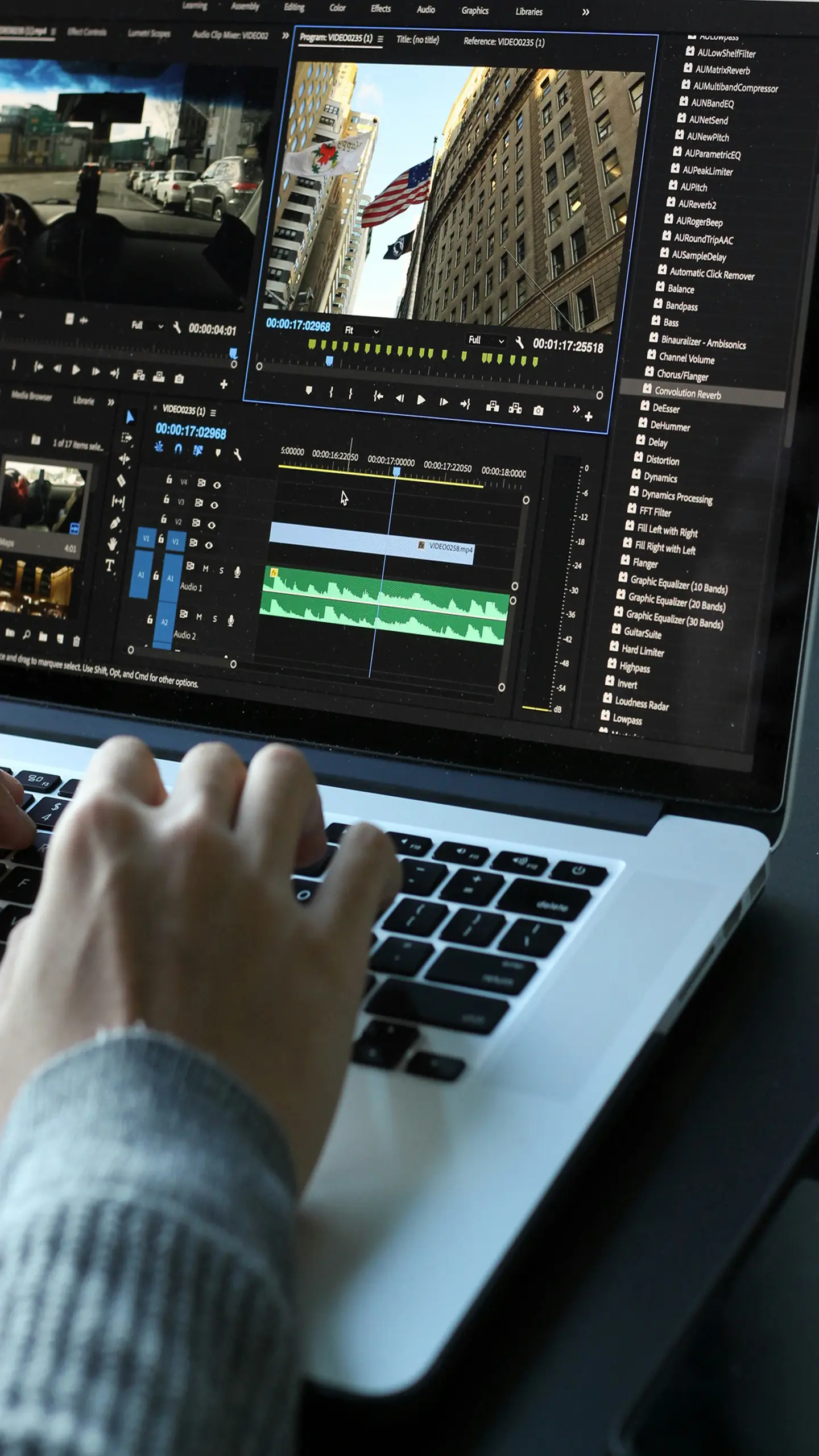
## Why human-directed commercials still win
Despite the growing presence of AI in video production, human-directed commercials continue to outperform their automated counterparts when it comes to engagement, impact, and brand alignment. The reason is simple: emotion, intention, and strategy are not programmable. Commercials that move people, that spark curiosity, laughter, or trust, are born from creative vision, not code.
At the heart of every memorable commercial is a team of creatives who understand how to translate a brand’s values into a compelling narrative. Directors, producers, writers, and editors collaborate to craft stories with nuance and structure, elements that AI still fails to replicate convincingly.
This collaborative approach allows for experimentation, feedback, and fine-tuning based on cultural awareness and emotional intelligence. The result is content that feels alive, relevant, and resonant.
One of the key advantages of human-led storytelling is adaptability. In the fast-moving world of creative marketing, it’s not just about producing visuals, it’s about interpreting trends, responding to audience reactions, and evolving ideas mid-process.
Human creators can pivot in real time, embracing spontaneity, improvisation, and innovation. These are the same instincts that lead to iconic campaign moments, the unscripted expressions, bold visual styles, and emotional arcs that stay with viewers long after the ad ends.
Even the technical aspects of storytelling benefit from human leadership. Editors know when to linger on a moment for dramatic effect or cut quickly to build momentum. Cinematographers use light, shadow, and camera angles to build mood.
These are not just mechanical tasks, they’re artistic decisions grounded in experience. That’s why high-end SEO copywriting, film & TV production, and even branding & graphic design still require human input, no matter how sophisticated AI tools become.
Real-world case studies confirm the edge that human direction brings. Brands that have invested in emotionally intelligent, story-driven commercials consistently report higher retention, stronger brand recall, and better conversion rates. Whether launching a new product, building community trust, or driving a call-to-action, these results stem from campaigns crafted with intentionality, not generated in bulk by algorithms.
While AI can support the production process, it cannot lead it. Commercials that succeed in today’s saturated media landscape must be crafted with care, emotion, and purpose. That’s why brands with serious goals still trust people, not programs, to tell their stories.
## Blending AI and human creativity
While AI struggles to replace human creativity outright, it can still play a valuable role when paired strategically with experienced creative teams. The most successful campaigns today don’t rely entirely on AI or entirely on humans, they blend both to optimize efficiency without compromising on storytelling quality. In fact, some of the most forward-thinking content creation workflows now treat AI as a creative assistant rather than a creative lead.
For example, AI can streamline the pre-production phase by helping draft rough scripts, generate visual references, or automate subtitle creation. These tasks, while important, don’t require high-level creativity or brand nuance, making them ideal candidates for automation.
This frees up time and budget for the human team to focus on what really matters: refining the narrative, shaping emotional beats, and creating work that truly connects. When used correctly, AI enhances rather than replaces.
AI can also support live-action production workflows by assisting with planning, data sorting, and even web development for campaigns that include a digital rollout. In commercial projects with tight deadlines or limited resources, teams often use AI to test visual styles or simulate edits before committing to a full shoot. This process improves collaboration and allows for more informed creative decisions, without handing over control to the machine.
In post-production, AI’s contributions are similarly useful but limited. Editors may use AI to organize footage, identify best takes, or automatically transcribe dialogue. However, the final cut, including timing, transitions, and emotional flow, is still best handled by a skilled human. Projects that require custom VFX compositing & animation, sound design, or precise motion control often demand a level of detail and artistry that AI hasn’t yet mastered.
From a marketing standpoint, blending AI and human input also enhances consistency. Human creators ensure the brand voice remains clear, while AI tools can help scale the message across platforms like websites, social media, and web hosting environments. Teams can also use AI insights to adapt content for A/B testing or personalize messaging, without compromising the story’s integrity.
Ultimately, the strongest approach isn’t about choosing between AI and humans. It’s about knowing when to automate, when to create, and when to collaborate. In a competitive landscape where authenticity matters, brands that use AI smartly, without losing their human edge, are the ones who stand out.
## Bring your commercial to life with C&I Studios
At C&I Studios, we believe AI has an exciting role to play in the future of content, but it’s not a replacement for human storytelling. Commercial productions need more than automation; they need emotion, strategy, and creative intent. That’s where we come in.
We blend cutting-edge technology with real artistic vision to deliver work that connects, converts, and lasts. From concept to delivery, our team brings the experience and insight AI can’t replicate.
Take a look at [our portfolio](https://c-istudios.com/our-work/) to see how we tell brand stories, explore our [video production services](https://c-istudios.com/video-production-services/), or see how we fold AI into a human led workflow with our [AI video services](https://c-istudios.com/ai-video-services/). When you are ready to build something that connects, [contact us](https://c-istudios.com/contact/).
Originally published August 26, 2026
---
*This content is from [C&I Studios](https://c-istudios.com), a full-service production company.*
---
# How Much Does Video Production Cost in Chicago?
> Published: August 24, 2026
> Categories: Commercial & Brand
> Source: https://c-istudios.com/video-production-cost-chicago/
---
.cib{--paper:#1b1d1f;--ink:#fff;--body:#d5d7d9;--muted:#8b9096;--line:rgba(255,255,255,.12);--thumb:#2b2e31;--card:#212426;--accent:#c02b0a;--blue:#5B8FA8;--serif:'Playfair Display',Georgia,serif;--sans:'Poppins',-apple-system,sans-serif;--measure:900px;background:var(--paper);color:var(--body);font-family:var(--sans);line-height:1.6;position:relative;left:50%;transform:translateX(-50%);width:90vw;max-width:1920px}.cib *{box-sizing:border-box}.cib .kicker{max-width:var(--measure);margin:58px auto 0;padding:0 22px;font-size:12.5px;font-weight:700;letter-spacing:2.5px;text-transform:uppercase;color:var(--blue)}.cib h1.cibh1{font-family:var(--serif);font-weight:500;font-size:clamp(46px,6vw,72px);line-height:1.08;color:var(--ink);max-width:var(--measure);margin:18px auto 0;padding:0 22px;letter-spacing:-.5px}.cib .metarow{max-width:var(--measure);margin:20px auto 0;padding:0 22px;color:var(--muted);font-size:14px}.cib .hero{position:relative;width:100%;height:0;padding-bottom:56.25%;overflow:hidden;margin:48px auto 0;border-top:1px solid var(--line);border-bottom:1px solid var(--line)}.cib .hero .ph{width:100%;aspect-ratio:16/9;background:var(--thumb);border-top:1px solid var(--line);border-bottom:1px solid var(--line);display:flex;align-items:center;justify-content:center;color:#7d8288;font-size:13px;text-align:center;padding:0 20px}.cib .body{max-width:var(--measure);margin:12px auto 0;padding:52px 22px 6px}.cib .body.lead p:first-child{font-size:23px;line-height:1.62;color:var(--ink)}.cib .body p{font-size:18.5px;line-height:1.85;margin:0 0 30px;color:var(--body)}.cib .body h2{font-family:var(--serif);font-weight:500;font-size:clamp(32px,4vw,48px);line-height:1.22;color:var(--ink);margin:70px 0 20px;letter-spacing:-.3px}.cib .body h3{font-family:var(--sans);font-weight:600;font-size:22px;color:var(--ink);margin:38px 0 8px}.cib .body a{color:var(--ink);text-decoration:underline;text-decoration-color:rgba(255,255,255,.4);text-underline-offset:3px}.cib .body a:hover{text-decoration-color:var(--ink)}.cib .ctable{width:100%;border-collapse:collapse;margin:16px 0 30px;font-size:16px}.cib .ctable th{background:#000;color:#fff;text-align:left;padding:10px 12px;font-family:var(--sans)}.cib .ctable td{padding:10px 12px;border-bottom:1px solid var(--line);color:var(--body)}.cib .inimg{position:relative;width:100%;height:0;padding-bottom:56.25%;overflow:hidden;margin:72px auto;border-top:1px solid var(--line);border-bottom:1px solid var(--line)}.cib .inimg .ph{width:100%;aspect-ratio:16/9;background:var(--thumb);border-top:1px solid var(--line);border-bottom:1px solid var(--line);display:flex;align-items:center;justify-content:center;color:#7d8288;font-size:13px}.cib .origpub{max-width:var(--measure);margin:60px auto 0;padding:26px 22px 0;border-top:1px solid var(--line);color:var(--muted);font-size:13.5px}.cib .related{max-width:1200px;margin:64px auto 0;padding:34px 22px 76px}.cib .related h3{font-family:var(--sans);font-size:12.5px;letter-spacing:2px;text-transform:uppercase;color:var(--ink);margin:0 0 24px}.cib .grid{display:grid;grid-template-columns:repeat(3,1fr);gap:28px}.cib .rc{background:var(--card);border:1px solid var(--line);display:block;text-decoration:none;color:inherit;transition:border-color .15s}.cib a.rc:hover{border-color:rgba(255,255,255,.5)}.cib .rc .thumb{position:relative;width:100%;height:0;padding-bottom:56.25%;background:var(--thumb);overflow:hidden}.cib .rc .thumb img{position:absolute!important;top:0!important;left:0!important;width:100%!important;height:100%!important;object-fit:cover!important;margin:0!important}.cib .rc .cc{padding:14px 15px 17px}.cib .rc .rt{font-family:var(--serif);font-weight:500;font-size:16px;line-height:1.3;color:var(--ink);margin:0 0 6px}.cib .rc .rm{font-size:11px;letter-spacing:1px;text-transform:uppercase;color:var(--muted)}.cib img{margin:0!important;padding:0!important;display:block!important;vertical-align:top;max-width:100%}.cib .hero img,.cib .inimg img{position:absolute!important;top:0!important;left:0!important;width:100%!important;height:100%!important;object-fit:cover!important;margin:0!important;padding:0!important;border:0!important;display:block!important;aspect-ratio:auto!important}.cib .hero+.body{padding-top:36px}@media(max-width:760px){.cib .grid{grid-template-columns:1fr}.cib .body h2{margin:52px 0 16px}.cib .body p{font-size:17.5px}.cib .inimg,.cib .hero{margin-top:44px}}
Commercial & Brand
# How Much Does Video Production Cost in Chicago?
8 min read

If you are planning video production in Chicago, the first question is almost always the same. What will it cost? The honest answer is a range. A single-day interview setup can run a few thousand dollars, while a multi-day branded campaign can reach six figures. The city itself is not what moves the number. Crew size, gear, shoot days, locations, and how much finishing the footage needs afterward are what set the price. Here is how those pieces add up in Chicago, and how a national production company scopes a shoot there so a brand gets the same standard it would expect on either coast.
## What actually drives the cost
Five things decide the budget on almost every Chicago project. Crew is the biggest line by far. A lean documentary crew is a director, a director of photography, and a sound operator, while a full commercial crew adds a gaffer, grip, camera assistant, producer, hair and makeup, and production assistants. Gear is next, and a cinema camera package with proper lighting is a different world from a mirrorless kit. Then come shoot days, locations and permits, and post-production, which often lands at 30 to 50 percent of the total.

## Typical Chicago cost ranges
Every project is scoped individually, but these are the market ranges most Chicago buyers should plan around.
Type of project
Typical range
Single-day interview or social content
$3,000 to $8,000
Corporate or brand video, 1 to 2 days with edit
$8,000 to $25,000
Commercial or high-end brand, multi-day with full finishing
$25,000 to $100,000 and up
If a quote comes in far below these numbers, look closely at crew, gear, and post. Those are usually where the corners get cut. Our [video production services](https://c-istudios.com/video-production-services/) are scoped to the goal of the project, not to a fixed package.
## What is specific to Chicago
Filming on public property in Chicago runs through the [Chicago Film Office](https://www.chicago.gov/city/en/depts/dca/provdrs/chicago_film_office.html), and many locations want a certificate of insurance on file, so build permit lead time into the schedule. Chicago is also a strong union market, and high-end commercial work often runs with IATSE crew. The payoff for shooting here is the look. The skyline, the Riverwalk, the L tracks, the Loop, and the lakefront are all instantly readable as Chicago. Just plan exteriors for late spring through fall, because the winters are real and any cold-season exterior needs a weather contingency.
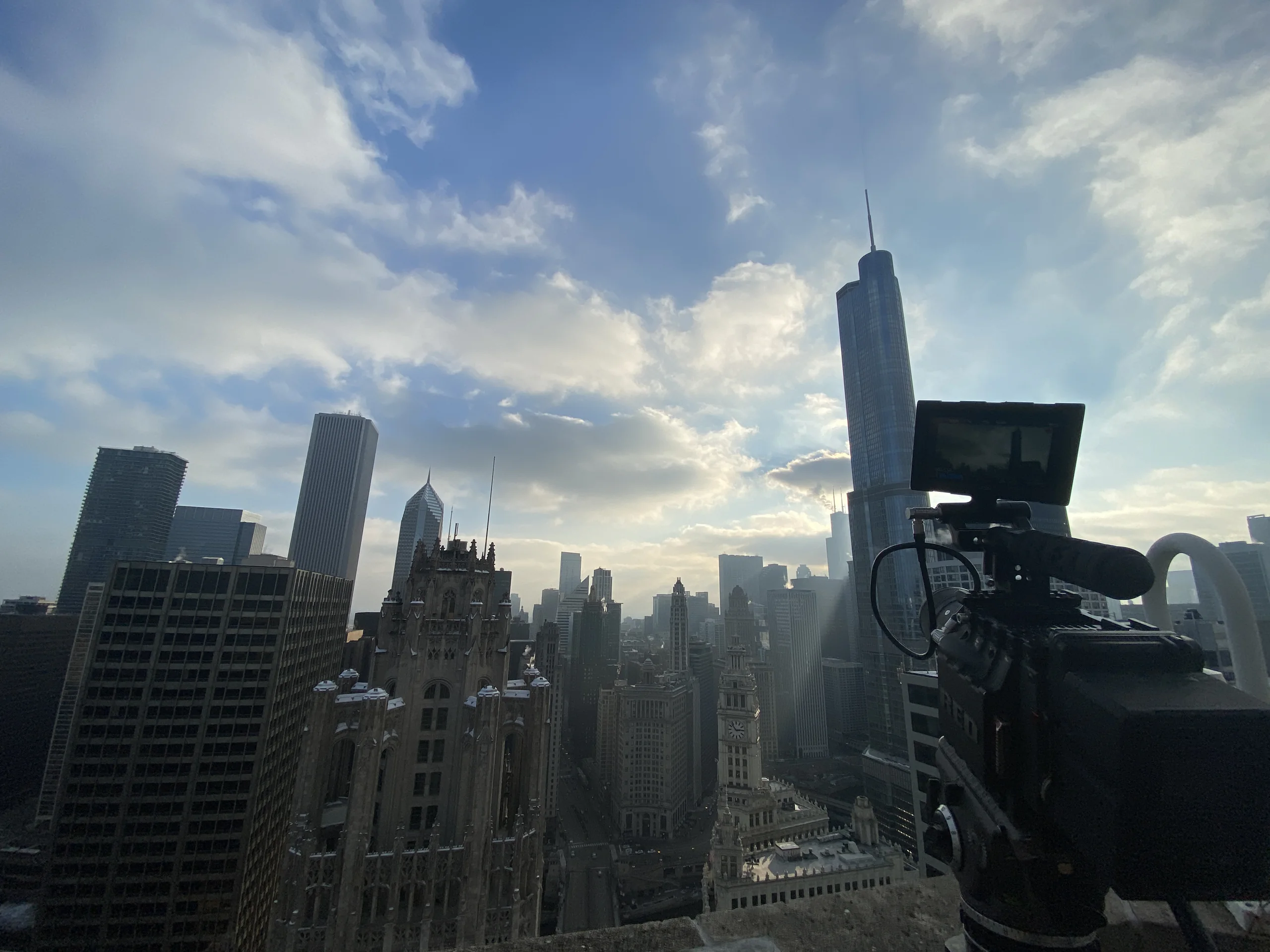
## How a national company runs a Chicago shoot
C&I Studios is headquartered in Los Angeles, where our only studio is a 30,000 square foot facility, with offices in New York and Fort Lauderdale. We produce anywhere in the country. For a Chicago project that means we build the right crew on the ground, bring the creative leads who own the look, and finish in our own color and post pipeline. Production, post, audio, and photography live under one roof, so the footage does not get handed off to a stranger after the shoot. We shoot on RED cinema cameras, fly drones for aerials, and grade in DaVinci Resolve.
That model is why the standard does not drop when a shoot leaves a coast. We have produced brand work for names like Celsius, Calvin Klein, and Procter and Gamble, a New York Stock Exchange listing production for Sunbelt Rentals, and a restaurant brand video for Hawaiian Bros in Las Vegas. The through line is one national crew and one finishing pipeline, wherever the shoot happens. See how we handle [video production in Chicago](https://c-istudios.com/video-production-chicago/), the same approach behind our [corporate video production](https://c-istudios.com/corporate-video-production/), and the same team you would book into our [Los Angeles studio](https://c-istudios.com/studio-rentals/).
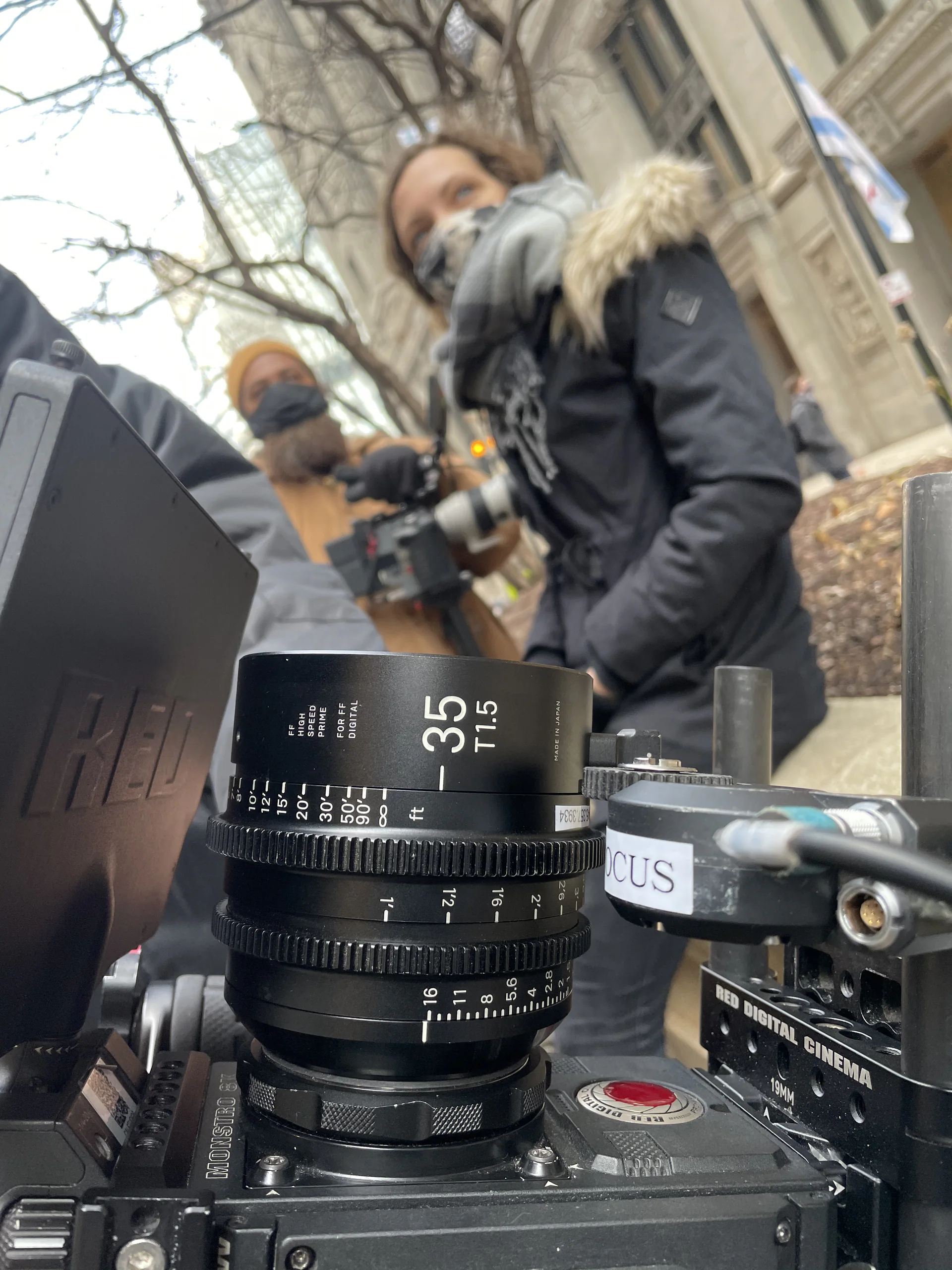
## Frequently asked questions
### How much does video production cost in Chicago?
Most projects fall between $3,000 for a single-day social shoot and $100,000 or more for a multi-day commercial. The final number depends on crew, gear, days, locations, and post.
### Do I need a permit to film in Chicago?
For most public locations, yes. Permits run through the [Chicago Film Office](https://www.chicago.gov/city/en/depts/dca/provdrs/chicago_film_office.html), and many sites also require proof of insurance.
### How long does a Chicago video shoot take?
A simple interview or social piece is often a single day. A branded campaign with multiple locations usually runs two to four shoot days, plus pre-production and post.
### Is it cheaper to hire a local crew or bring one in?
Building the right local crew and bringing only the key creative leads is usually the most efficient approach, and it is the one we use.
### What is the best time of year to shoot in Chicago?
Late spring through fall for exteriors. Winter shoots are possible but need a weather contingency.

## Bring your Chicago shoot to C&I Studios
When you are ready to shoot in Chicago, C&I Studios can crew, produce, and finish the project to a national standard. Our Chicago work includes brands like [Geneva Seal](https://c-istudios.com/portfolio/geneva-seal-chicago/), and we bring the same team and the same finishing pipeline here that we bring on either coast. See what [video production in Chicago](https://c-istudios.com/video-production-chicago/) looks like with us, or [start a conversation](https://c-istudios.com/contact/) about your project.
Originally published August 23, 2026
### Keep reading
[
How Much Does Commercial Video Production Cost in 2026?
Commercial & Brand](https://c-istudios.com/how-much-does-commercial-video-production-cost-in-2026/)[
The Real Cost of On-Location Shoots: Do Video Production Companies Travel?
Commercial & Brand](https://c-istudios.com/the-real-cost-of-on-location-shoots-do-video-production-companies-travel/)[
Video Production in New York City: Costs, Studios and What to Expect
Commercial & Brand](https://c-istudios.com/video-production-in-new-york-city-costs-studios-what-to-expect/)
---
*This content is from [C&I Studios](https://c-istudios.com), a full-service production company.*
---
# Why Upwork and Fiverr Stopped Making Sense
> Published: August 19, 2026
> Categories: Commercial & Brand
> Source: https://c-istudios.com/why-upwork-and-fiverr-stopped-making-sense/
---
.cib{--paper:#1b1d1f;--ink:#fff;--body:#d5d7d9;--muted:#8b9096;--line:rgba(255,255,255,.12);--thumb:#2b2e31;--card:#212426;--accent:#c02b0a;--blue:#5B8FA8;--serif:'Playfair Display',Georgia,serif;--sans:'Poppins',-apple-system,sans-serif;--measure:900px;background:var(--paper);color:var(--body);font-family:var(--sans);line-height:1.6;position:relative;left:50%;transform:translateX(-50%);width:90vw;max-width:1920px}
.cib *{box-sizing:border-box}
.cib .kicker{max-width:var(--measure);margin:58px auto 0;padding:0 22px;font-size:12.5px;font-weight:700;letter-spacing:2.5px;text-transform:uppercase;color:var(--blue)}
.cib h1.cibh1{text-wrap:balance;font-family:var(--serif);font-weight:500;font-size:clamp(46px,6vw,72px);line-height:1.08;color:var(--ink);max-width:var(--measure);margin:18px auto 0;padding:0 22px;letter-spacing:-.5px}
.cib .metarow{max-width:var(--measure);margin:20px auto 0;padding:0 22px;color:var(--muted);font-size:14px}
.cib .hero{position:relative;width:100%;height:0;padding-bottom:56.25%;overflow:hidden;margin:48px auto 0;border-top:1px solid var(--line);border-bottom:1px solid var(--line)}
.cib .hero .ph{width:100%;aspect-ratio:16/9;background:var(--thumb);border-top:1px solid var(--line);border-bottom:1px solid var(--line);display:flex;align-items:center;justify-content:center;color:#7d8288;font-size:13px;text-align:center;padding:0 20px}
.cib .body{max-width:var(--measure);margin:12px auto 0;padding:52px 22px 6px}
.cib .body.lead p:first-child{font-size:23px;line-height:1.62;color:var(--ink)}
.cib .body p{font-size:18.5px;line-height:1.85;margin:0 0 30px;color:var(--body)}
.cib .body h2{text-wrap:balance;font-family:var(--serif);font-weight:500;font-size:clamp(32px,4vw,48px);line-height:1.22;color:var(--ink);margin:70px 0 20px;letter-spacing:-.3px}
.cib .body h3{text-wrap:balance;font-family:var(--sans);font-weight:600;font-size:22px;color:var(--ink);margin:38px 0 8px}
.cib .body a{color:var(--ink);text-decoration:underline;text-decoration-color:rgba(255,255,255,.4);text-underline-offset:3px}
.cib .body a:hover{text-decoration-color:var(--ink)}
.cib .ctable{width:100%;border-collapse:collapse;margin:16px 0 30px;font-size:16px}
.cib .ctable th{background:#000;color:#fff;text-align:left;padding:10px 12px;font-family:var(--sans)}
.cib .ctable td{padding:10px 12px;border-bottom:1px solid var(--line);color:var(--body)}
.cib .inimg{position:relative;width:100%;height:0;padding-bottom:56.25%;overflow:hidden;margin:72px auto;border-top:1px solid var(--line);border-bottom:1px solid var(--line)}
.cib .inimg .ph{width:100%;aspect-ratio:16/9;background:var(--thumb);border-top:1px solid var(--line);border-bottom:1px solid var(--line);display:flex;align-items:center;justify-content:center;color:#7d8288;font-size:13px}
.cib .origpub{max-width:var(--measure);margin:60px auto 0;padding:26px 22px 0;border-top:1px solid var(--line);color:var(--muted);font-size:13.5px}
.cib .related{max-width:1200px;margin:64px auto 0;padding:34px 22px 76px}
.cib .related h3{font-family:var(--sans);font-size:12.5px;letter-spacing:2px;text-transform:uppercase;color:var(--ink);margin:0 0 24px}
.cib .grid{display:grid;grid-template-columns:repeat(3,1fr);gap:28px}
.cib .rc{background:var(--card);border:1px solid var(--line);display:block;text-decoration:none;color:inherit;transition:border-color .15s}
.cib a.rc:hover{border-color:rgba(255,255,255,.5)}
.cib .rc .thumb{position:relative;width:100%;height:0;padding-bottom:56.25%;background:var(--thumb);overflow:hidden}
.cib .rc .thumb img{position:absolute!important;top:0!important;left:0!important;width:100%!important;height:100%!important;object-fit:cover!important;margin:0!important}
.cib .rc .cc{padding:14px 15px 17px}
.cib .rc .rt{font-family:var(--serif);font-weight:500;font-size:16px;line-height:1.3;color:var(--ink);margin:0 0 6px}
.cib .rc .rm{font-size:11px;letter-spacing:1px;text-transform:uppercase;color:var(--muted)}
.cib img{margin:0!important;padding:0!important;display:block!important;vertical-align:top;max-width:100%}
.cib .hero img,.cib .inimg img{position:absolute!important;top:0!important;left:0!important;width:100%!important;height:100%!important;object-fit:cover!important;margin:0!important;padding:0!important;border:0!important;display:block!important;aspect-ratio:auto!important}
.cib .hero+.body{padding-top:36px}
@media(max-width:760px){.cib .grid{grid-template-columns:1fr}.cib .body h2{margin:52px 0 16px}.cib .body p{font-size:17.5px}.cib .inimg,.cib .hero{margin-top:44px}}
Commercial & Brand
# Why Upwork and Fiverr Stopped Making Sense
5 min read

You needed a logo or a video or a whole website, and Fiverr made it look like a solved problem. Twenty dollars for a design. Fifty for an edit. It felt like beating the system.
The catch shows up later. Cheap creative work almost always gets paid for twice. Once when you order it, and again when you redo it.
## The real problem with Upwork and Fiverr
Low prices are the whole product on those sites. They are the hook that gets you to click. But a rock bottom price is not a favor. It is a filter, and it filters for people whose only edge is being a little cheaper than the next few thousand sellers doing the identical thing.
When the entire pitch is lowest bid, nobody is building something they are proud of. They are closing the ticket and moving to the next one. That is the part that costs you, and it lands on your result, not just your invoice.
## Bare minimum is the business model
Pay the floor price and you get the floor amount of effort. The literal words of the order and nothing past them. Nobody asked whether the video actually sells anything, whether the site loads on a phone, or whether a single thing you paid for moves a number for your business.
Why would they. They were paid to deliver a file, not an outcome. The moment it lands they are gone, and you are the one figuring out why it falls flat. Read enough Fiverr reviews and it is the same story on repeat. Done on paper, dead in real life.
## You become the project manager
Then there is the day to day. You send a note and wait half a day because the person is asleep on the other side of the planet. You want a quick call and end up the one awake at 2am. You describe what you want across a language gap and a time gap and hope enough of it survives the trip.
That is not a partner. That is you managing a stranger who has no stake in how your project turns out. If you have ever gone hunting for Upwork alternatives at midnight, this is usually why.
## AI already ate the commodity work
Here is what actually changed. The throwaway work those platforms were cheap for is the exact work AI now does in seconds. Template swaps. Copy paste jobs. Filler. If fast and cheap is the whole ask, you do not need a marketplace of low bidders anymore. The software does that part for nothing.
What software cannot hand you is judgment. Taste. Someone who reads the brief and says this will not work before a dollar goes into building it. That is the part gig sites were never built for, and it is the only part still worth paying a person to do.
## What you actually get from an agency
Here is the part most people miss. The money you were about to hand a gig site usually buys you a real team instead. Sometimes for less.
At [C&I Studios](https://c-istudios.com/video-production-services/) you talk to a producer who works your hours and speaks your language. There is a crew behind them, gear in the building, and an edit suite down the hall. The same people who plan the shoot are the ones who color the final cut. Brands like Sunbelt Rentals, Celsius, and Chaumet did not hand that work to the lowest bidder, and you get the same team they do.
What matters
A cheap gig
C&I Studios
Who you deal with
A stranger behind a username
A producer and a full crew
When they reply
Whenever they wake up
Your hours, a US based team
What they optimize for
Closing the order
Whether the work performs
Revisions
Charged per change
Part of the process
After delivery
Gone
Still your team
Even on a small budget you are dealing with people who are invested in whether it works, and who are still there the week after delivery. That is the difference between renting a stranger and hiring a team that treats the project like it is theirs.
## Affordable is not the same as cheap
Upwork and Fiverr made sense in a world where disposable was the only affordable option. That world is gone. The commodity work got automated and the human work got easier to see. Paying a little for almost nothing was never a deal. It just wore the costume of one.
If you have been searching for an affordable video production company that will not vanish the moment the invoice clears, put the same money on people who care. See [our work](https://c-istudios.com/our-work/) and judge the difference for yourself.
## Frequently asked questions
### Is Fiverr or Upwork worth it for business work?
For simple one off tasks they can work. For anything that has to actually perform, like a marketing video, a brand, or a website that converts, you are usually better off with a real agency. Gig workers are paid to finish a contract, not to make the result work for you.
### What is a good alternative to Upwork and Fiverr?
Working directly with a creative agency or video production company like C&I Studios. You get a dedicated team, communication in your own time zone and language, and people who are invested in the outcome, often for the same budget or less.
### Is it cheaper to hire a freelancer or an agency?
A freelancer usually has a lower sticker price. Agencies often cost the same or less once you count the redone work, the wasted time, and the projects that fail to deliver. Cheap up front is not the same as cheaper overall.
### Why is Fiverr so cheap?
Because sellers compete globally on price and cut their rates to win the bid. Low prices pull in high volume and bare minimum effort, which is why quality and reliability are hit or miss.
### Can a small business afford a real creative agency?
Yes. C&I Studios works with smaller budgets and scales the project to fit. You still get real people, real communication, and work that is built to perform.
## Work with C&I Studios
If you are planning a project like this, our team can take it from concept to final delivery. Explore our [video production services](https://c-istudios.com/video-production-services/), browse [our work](https://c-istudios.com/our-work/) to see how we tell brand stories, and [get in touch](https://c-istudios.com/contact/) when you are ready to start.
Originally published August 19, 2026
### Keep reading
[
The Limitations of AI Video in Commercial Storytelling
Commercial & Brand](https://c-istudios.com/the-limitations-of-ai-video-in-commercial-storytelling/)
[
Hiring a Commercial Filming Company
Commercial & Brand](https://c-istudios.com/hiring-commercial-filming-company/)
[
How to Hire a Production Crew in 2026
Commercial & Brand](https://c-istudios.com/how-to-hire-production-crew/)
---
*This content is from [C&I Studios](https://c-istudios.com), a full-service production company.*
---
# 360 Video Production Ideas for Brands
> Published: July 3, 2026
> Categories: Commercial & Brand
> Source: https://c-istudios.com/360-video-production-ideas/
---
.cib{--paper:#1b1d1f;--ink:#fff;--body:#d5d7d9;--muted:#8b9096;--line:rgba(255,255,255,.12);--thumb:#2b2e31;--card:#212426;--accent:#c02b0a;--blue:#5B8FA8;--serif:'Playfair Display',Georgia,serif;--sans:'Poppins',-apple-system,sans-serif;--measure:900px;background:var(--paper);color:var(--body);font-family:var(--sans);line-height:1.6;position:relative;left:50%;transform:translateX(-50%);width:90vw;max-width:1920px}
.cib *{box-sizing:border-box}
.cib .kicker{max-width:var(--measure);margin:58px auto 0;padding:0 22px;font-size:12.5px;font-weight:700;letter-spacing:2.5px;text-transform:uppercase;color:var(--blue)}
.cib h1.cibh1{text-wrap:balance;font-family:var(--serif);font-weight:500;font-size:clamp(46px,6vw,72px);line-height:1.08;color:var(--ink);max-width:var(--measure);margin:18px auto 0;padding:0 22px;letter-spacing:-.5px}
.cib .metarow{max-width:var(--measure);margin:20px auto 0;padding:0 22px;color:var(--muted);font-size:14px}
.cib .hero{position:relative;width:100%;height:0;padding-bottom:56.25%;overflow:hidden;margin:48px auto 0;border-top:1px solid var(--line);border-bottom:1px solid var(--line)}
.cib .hero .ph{width:100%;aspect-ratio:16/9;background:var(--thumb);border-top:1px solid var(--line);border-bottom:1px solid var(--line);display:flex;align-items:center;justify-content:center;color:#7d8288;font-size:13px;text-align:center;padding:0 20px}
.cib .body{max-width:var(--measure);margin:12px auto 0;padding:52px 22px 6px}
.cib .body.lead p:first-child{font-size:23px;line-height:1.62;color:var(--ink)}
.cib .body p{font-size:18.5px;line-height:1.85;margin:0 0 30px;color:var(--body)}
.cib .body h2{text-wrap:balance;font-family:var(--serif);font-weight:500;font-size:clamp(32px,4vw,48px);line-height:1.22;color:var(--ink);margin:70px 0 20px;letter-spacing:-.3px}
.cib .body h3{text-wrap:balance;font-family:var(--sans);font-weight:600;font-size:22px;color:var(--ink);margin:38px 0 8px}
.cib .body a{color:var(--ink);text-decoration:underline;text-decoration-color:rgba(255,255,255,.4);text-underline-offset:3px}
.cib .body a:hover{text-decoration-color:var(--ink)}
.cib .ctable{width:100%;border-collapse:collapse;margin:16px 0 30px;font-size:16px}
.cib .ctable th{background:#000;color:#fff;text-align:left;padding:10px 12px;font-family:var(--sans)}
.cib .ctable td{padding:10px 12px;border-bottom:1px solid var(--line);color:var(--body)}
.cib .inimg{position:relative;width:100%;height:0;padding-bottom:56.25%;overflow:hidden;margin:72px auto;border-top:1px solid var(--line);border-bottom:1px solid var(--line)}
.cib .inimg .ph{width:100%;aspect-ratio:16/9;background:var(--thumb);border-top:1px solid var(--line);border-bottom:1px solid var(--line);display:flex;align-items:center;justify-content:center;color:#7d8288;font-size:13px}
.cib .origpub{max-width:var(--measure);margin:60px auto 0;padding:26px 22px 0;border-top:1px solid var(--line);color:var(--muted);font-size:13.5px}
.cib .related{max-width:1200px;margin:64px auto 0;padding:34px 22px 76px}
.cib .related h3{font-family:var(--sans);font-size:12.5px;letter-spacing:2px;text-transform:uppercase;color:var(--ink);margin:0 0 24px}
.cib .grid{display:grid;grid-template-columns:repeat(3,1fr);gap:28px}
.cib .rc{background:var(--card);border:1px solid var(--line);display:block;text-decoration:none;color:inherit;transition:border-color .15s}
.cib a.rc:hover{border-color:rgba(255,255,255,.5)}
.cib .rc .thumb{position:relative;width:100%;height:0;padding-bottom:56.25%;background:var(--thumb);overflow:hidden}
.cib .rc .thumb img{position:absolute!important;top:0!important;left:0!important;width:100%!important;height:100%!important;object-fit:cover!important;margin:0!important}
.cib .rc .cc{padding:14px 15px 17px}
.cib .rc .rt{font-family:var(--serif);font-weight:500;font-size:16px;line-height:1.3;color:var(--ink);margin:0 0 6px}
.cib .rc .rm{font-size:11px;letter-spacing:1px;text-transform:uppercase;color:var(--muted)}
.cib img{margin:0!important;padding:0!important;display:block!important;vertical-align:top;max-width:100%}
.cib .hero img,.cib .inimg img{position:absolute!important;top:0!important;left:0!important;width:100%!important;height:100%!important;object-fit:cover!important;margin:0!important;padding:0!important;border:0!important;display:block!important;aspect-ratio:auto!important}
.cib .hero+.body{padding-top:36px}
@media(max-width:760px){.cib .grid{grid-template-columns:1fr}.cib .body h2{margin:52px 0 16px}.cib .body p{font-size:17.5px}.cib .inimg,.cib .hero{margin-top:44px}}
Commercial & Brand
# 360 Video Production Ideas for Brands
16 min read

360 video production sits in a strange spot in most brand marketing plans. It shows up on the "we should try this" list, gets kicked to next quarter, then reappears when a competitor drops an immersive campaign that racks up two million views on YouTube. Spherical content has been part of production conversations since the first consumer 360 rigs entered working budgets, and the pattern across the industry is consistent: brands that treat 360 as a novelty get novelty results, and brands that treat it as a legitimate storytelling format get real returns.
This post walks through twelve 360 video production ideas that tend to work well for brands in comparable categories. Each item includes the practical considerations that separate a viable 360 concept from a nice-looking demo reel piece. If you are budgeting a campaign and 360 keeps floating to the top of the shortlist, this should give you a framework for deciding which format actually fits.
A quick note before we dig in. 360 video is not a shortcut around good storytelling. If anything, the format punishes weak scripts and rewards strong ones. Every idea below assumes you already have a story worth telling. Format decisions come after that.
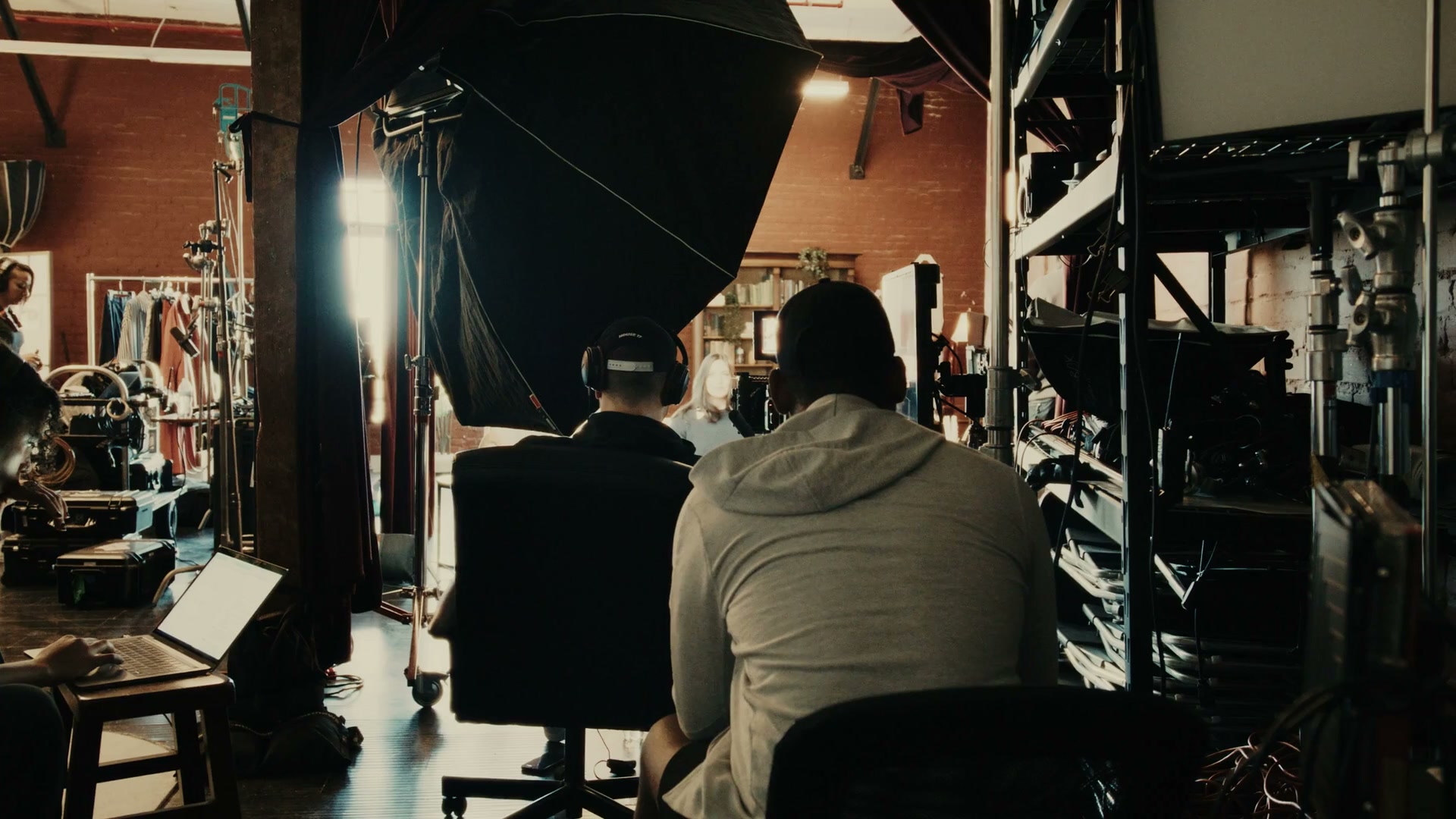
## What Is 360 Video Production and Why It Works Differently
360 video production, sometimes called spherical or immersive video, captures a scene from every angle at once. Rather than a single camera pointing at a subject, an array of synchronized lenses records the entire environment around the rig. Viewers then choose where to look, either by dragging on a mobile screen, moving their phone through space, or turning their head inside a VR headset. That control over perspective is the whole point.
The production workflow is not the same as traditional video. Every crew position that would normally sit behind the camera has to hide or be dressed into the scene. Lighting cannot be rigged in front of the lens because there is no "in front." Sound recording relies on ambisonic mics that capture directional audio to match wherever the viewer looks. Post production stitches multiple camera feeds into a single equirectangular file, corrects seams, then exports for whichever platform the client is targeting.
The technical shift changes how directors approach story. In flat video, the director controls what the audience sees at every frame. In 360, the director suggests where to look and trusts the viewer to follow. Blocking becomes choreography. Sound design becomes navigation. Editing becomes pacing rather than framing. If a production team treats 360 as flat video with a wider lens, the result feels like a fisheye tour. If they treat it as a distinct medium, the result feels like presence.
## Twelve 360 Video Production Ideas Worth Shooting This Year
The concepts below are ordered roughly by production complexity, not by which one you should try first. The right idea depends on your category, your audience, and what your creative team is already good at. Our recommendation is to pick one that maps to a specific business objective, not the one that looks most technically impressive.
### Immersive Product Launches
Product launches remain one of the strongest use cases for 360 video production. When a brand introduces something new, the audience wants to inspect it, and 360 gives them the closest thing to that experience without shipping units. Automotive launches were the early adopters, and the format has since moved into consumer electronics, luxury goods, and premium beverages.
The trick is to design the launch space around the camera position rather than dropping a 360 rig into a traditional set. The strongest launches build a circular set with the product on a rotating pedestal, control the lighting from below and above the sight line, and choreograph presenters or dancers to move around the product in ways that reward viewers who look in different directions. A well-planned launch can use a single continuous 360 shot with distinct chapters of choreography, and that one capture can feed months of paid social cutdowns. C&I Studios offers [video production services](https://c-istudios.com/video-production-services/) that can plan launches from concept through delivery, and 360 has become a standard option to consider in modern launch planning.
### Virtual Real Estate and Property Tours
Real estate was the earliest commercial category to embrace 360 video production, and for good reason. Buyers cannot visit every listing in person, and static photo galleries do not communicate the scale or flow of a property. A well-shot 360 walk-through solves both problems in ninety seconds.
The production choices matter more here than in most other categories. Cameras placed at eye level for a tall adult look wrong to a viewer who expects human perspective. Rigs placed too close to reflective surfaces produce ghosting that is difficult to fix in post. Ambient sound, ideally recorded on location with directional mics, sells the presence more than any narration does. C&I Studios provides [film production services](https://c-istudios.com/film-production-services/) capable of covering tours for both residential and commercial properties, and the pattern that predicts a good result is planning the camera path before shoot day rather than freestyling on set.
### Live Concert and Music Festival Coverage
Live music is where 360 video production really earns its budget. The energy of a crowd, the scale of a stage design, the intimacy of standing near a performer, none of that translates to a fixed rectangular frame. A 360 capture of a headline set gives fans who missed the show something closer to being there, and it gives sponsors a piece of content that lives well beyond the event weekend.
The main production challenge is rig placement. A single fixed 360 camera in a fixed spot gives one perspective for the entire show. Most concert 360 productions handled by a [music video production](https://c-istudios.com/music-video-production/) team use two or three synchronized rigs, one on stage right, one in the pit, and one in the crowd. Editing between those positions gives the viewer variety while preserving the immersive feel. Audio is captured with ambisonics on stage and stereo from the sound board, then mixed together in post.
### Behind-the-Scenes Studio Walk-Throughs
Behind-the-scenes content is one of the most reused categories on brand YouTube channels, and 360 video production turns it into something worth clicking. Viewers get to look around a working set, notice the crew hustling to reset a lighting rig, spot the client rep sitting in video village, and feel the actual pace of a shoot day. That transparency does more for a brand's creative credibility than any polished sizzle reel.
A large sound-treated studio like our Los Angeles stage is well suited to hosting these shoots. A large facility with multiple stages and sound treatment can give clients the option to include a 360 tour of the space as part of their case study package. A [studio rentals](https://c-istudios.com/studio-rentals/) operation can handle the logistics for productions that want to shoot both flat and 360 coverage on the same day, and the shared crew usually keeps the day rate reasonable.
### Automotive Showroom Experiences
Auto brands know that 360 video production sells cars for buyers who cannot walk into a dealership. Sitting in the driver's seat, walking around the exterior, looking at cabin materials up close, these are the moments that push a buyer from consideration to test drive. Manufacturers with premium models have been leaning into immersive content in their launch cycles for the last three years.
The challenge in automotive 360 is lighting. Cars are reflective, cabins are dark, and mixing daylight balance with tungsten trim lights produces color shifts that are hard to correct in post. Cars are typically best shot in controlled studio environments with color-corrected LED panels rather than on location. The cabin coverage is done separately with a smaller rig positioned in the driver's seat. Post stitching joins the exterior and interior into a single navigable experience.
### Corporate Campus and Office Tours
Corporate recruiting videos have moved past the montage of high-fives and standing desks. Candidates want to see the actual space, the actual teams, the actual pace of work. A 360 video production tour of a headquarters or a regional office answers those questions in ways that a talking head interview cannot. Recruiting teams that have added immersive tours report meaningful drops in candidate no-shows after adding immersive office tours to the application flow.
A [corporate video production](https://c-istudios.com/corporate-video-production/) team is well positioned to approach these projects as documentary work rather than promotional content. The tour follows a real employee through a real day, the camera captures the office as it actually looks, and the edit does not hide the awkward corners. That authenticity is what makes the format work for HR use cases, and it is worth resisting the urge to stage the tour to look busier than the office actually is.
### Fitness and Training Content
Fitness apps and connected equipment brands have adopted 360 video production for a specific reason: the format lets subscribers feel like they are in a class rather than watching one. Peloton and its competitors have experimented with 360 rides. Boutique studios have used the format to promote signature classes to remote members. The engagement lift on immersive fitness content, based on published platform data, is consistent enough to justify the added production cost.
Shooting fitness in 360 requires an instructor who can perform in the round. Traditional fitness videos have a clear front where the instructor faces the camera. In 360, the instructor is surrounded by potential viewer perspectives. The best fitness shoots rotate the instructor's orientation throughout the class so every viewer angle gets direct engagement at some point during the session.
### Sports and Stadium Immersion
Broadcast sports rights limit what most brands can do with league content, but the format opens up for stadium-level immersive experiences, minor league coverage, and youth sports. A 360 view from a pitcher's mound, a driver's cockpit, or a defensive lineman's stance is content that fans will click on every time. Sponsors get logo real estate that reads well from any viewer angle, which is a rare property in modern advertising formats.
Combat sports, motorsports, and youth basketball are all strong fits for the format. The rigs go on tripods for boxing, boom mounts for basketball, and helmet cameras for motorsports. Post production has to smooth out the motion for viewer comfort, because 360 content that induces nausea is content that gets closed within ten seconds. A careful post team stabilizes aggressively and tests every cut in a headset before delivery.
### Restaurant and Hospitality Tours
Restaurant marketing is a category where 360 video production has not been fully explored, and we think that gap is opportunity. Diners choosing a reservation want to see the room, the kitchen theater, the bar, and the outdoor space. A ninety-second 360 tour of a flagship location does more for booking rates than a Michelin-quality food photo. Hotel brands have been quicker to adopt the format for suite and amenity tours, and the results they report line up with what has been observed for restaurant brands.
The production requirements are lighter than most 360 categories. Restaurants and hotels have controlled lighting, no moving vehicles, and predictable acoustics. A full property tour can typically be shot in one day with a two-person crew, then delivered as both a 360 master and a set of flat cutdowns for social. It is an efficient use of a shoot day, and the delivery bundle covers most of the property's video needs for the following twelve months.
### Fashion Runway and Retail Coverage
Fashion houses have used 360 video production at runway shows for almost a decade, but the format has evolved past the front-row-view novelty. Contemporary fashion 360 content is shot from multiple positions around the runway, edited into a curated experience that gives the viewer both the model's perspective and the audience's. Backstage coverage in 360 has also grown, giving brand followers access to a space they used to be locked out of.
Retail 360 is a newer category. Flagship stores and pop-up activations are using immersive video to promote in-store experiences to shoppers who might not visit in person. For retail brands, a strong [creative services](https://c-istudios.com/creative-services/) approach starts with the space itself: the format works best when the store design has visual density worth exploring. Sparse, minimalist retail spaces do not photograph as interestingly in 360 as they do in flat coverage.
### Nonprofit and Cause Storytelling
Nonprofit fundraising leans on story, and 360 video production gives donors a level of presence in the field that flat video cannot match. A 360 tour of a refugee camp, a rural clinic, a disaster response site, or an environmental restoration project puts the donor inside the situation. The ethical considerations are real, and the production team must work with the nonprofit's field team on consent and dignity, but the fundraising impact when the format is used responsibly is significant.
Our [documentary film production](https://c-istudios.com/documentary-film-production/) group would approach nonprofit 360 content the same way we approach every documentary: story first. The story comes first, the format serves the story, and the production team stays out of the way. Nonprofits that have invested in the format report it becoming a permanent part of their annual campaign strategy, especially for major donor cultivation events where headsets can be handed out and used in the room.
### Trade Show and Conference Booth Experiences
Trade shows are expensive, and most attendees only visit a fraction of the exhibit floor. 360 video production gives exhibitors a way to extend the booth experience to buyers who could not attend, to media covering the show, and to internal stakeholders who need to see the activation. Sponsors have started asking for 360 capture as a standard part of trade show budgets, and vendors that can deliver both flat and immersive coverage on the same day have an advantage on the bid.
Booth 360 works best when the space is designed with the camera position in mind. Empty booths photograph as empty, so brands invest in demos, live product interactions, and staff who are trained to work in the round. An [event photography](https://c-istudios.com/event-photography/) team is well suited to handling the flat coverage on trade show shoots, and adding a 360 camera to the same crew is an efficient upgrade rather than a separate production line item.
## Production Approach. What Changes When You Shoot in 360
Every crew member on a 360 shoot has to unlearn habits. There is no boom position that stays out of frame. There is no video village on set. Lights cannot fly overhead unless they are dressed to fit the scene. The director has to work from a monitor tent placed off-camera, watching a rectangular preview of a spherical capture that only tells part of the story.
Rig selection matters more than gear enthusiasts admit. High resolution is important because 360 video is sliced by the viewer's field of view, so an 8K master delivers roughly 2K to whatever section the viewer is looking at. Frame rate matters for motion comfort, which is why 60fps has become standard for anything with movement. Stitching software has improved to the point that most modern rigs produce publish-ready files with minimal manual correction, but complex shoots still benefit from a stitcher on the post team.
Audio in 360 is where a lot of otherwise strong productions fall apart. Ambisonic microphones capture directional sound, so when the viewer looks left, the audio appears to come from the left. Skipping ambisonic capture in favor of a standard stereo mix breaks the illusion in a way that is hard to describe but easy to feel. Ambisonic mixing is specialist work; it draws on the same discipline that [audio engineering services](https://c-istudios.com/audio-engineering-services/) teams apply to broadcast projects, and the difference in viewer feedback is measurable.
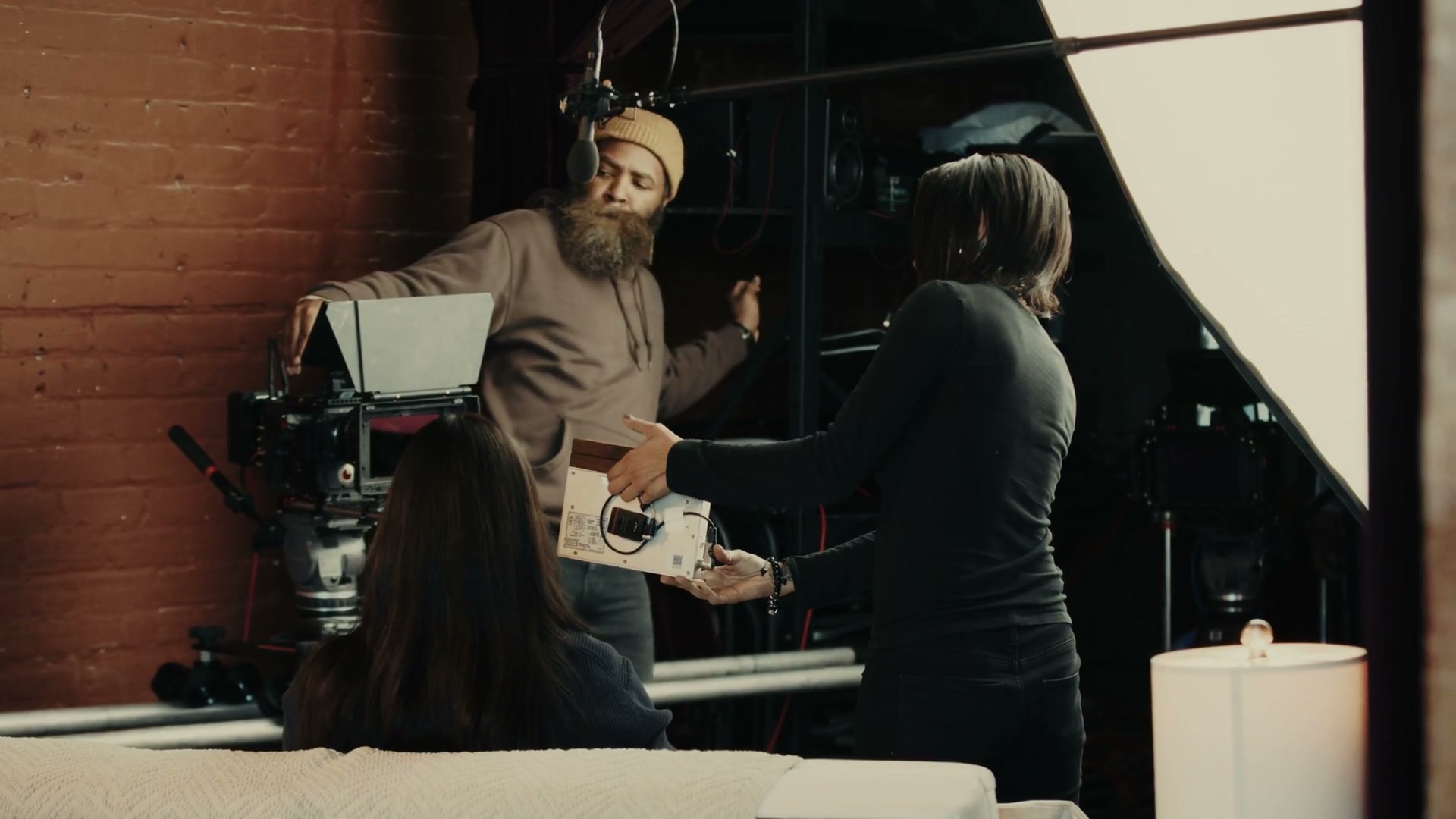
## Common 360 Video Production Mistakes
Stalled 360 projects tend to share the same failure patterns. First, brands assume that a wider capture solves a weak story. It does not. A boring 360 video production is more boring than a boring flat video, because the viewer has to do the work of looking around, and asking a viewer to work harder for a story that does not reward the effort is a fast way to lose them.
Second, brands underinvest in post production. Stitching, color correction, ambisonic mixing, headset testing, and delivery to multiple platforms takes real time. Cutting the post budget produces a video that stitches poorly on seams, has inconsistent color across the frame, and gives viewers motion sickness in the first thirty seconds. Budget roughly the same post hours for a 360 project as for a broadcast commercial; that is a reasonable ratio for [post production services](https://c-istudios.com/post-production-services/) on comparable finishing work, and cutting it is how seams, color shifts, and motion sickness make it to publish.
Third, brands publish 360 content without a distribution plan. A great 360 video that lives on a homepage that nobody visits is a waste. The format works when it is embedded in a campaign that drives traffic to the experience. The format earns its budget when paired with a social cutdown strategy, a paid media plan, and a retargeting flow that pulls viewers back for the full immersive experience after they engage with the flat version.
## How to Brief a 360 Video Production Team
The best 360 briefs answer three questions clearly. What is the viewer supposed to feel, what should they remember, and where will they see this content. Vague briefs produce vague videos, and the immersive format punishes vagueness more than flat video does. If a brief cannot answer those three questions in a single sentence each, the project is not ready to move into pre-production.
An in-person kickoff for 360 projects, when the client team is available, is worthwhile because the shorthand that develops in a working session shortens the feedback cycles later. The kickoff covers reference gathering, competitive review, technical spec confirmation, distribution plan, and shot list drafting. Remote clients get the same kickoff over video call with pre-sent reference decks, and the outcomes tend to be comparable.
The technical spec conversation catches problems early. Delivery to Meta Quest headsets requires different encoding than delivery to YouTube 360, which requires different encoding than delivery to a WebGL player embedded on a landing page. Getting those specs locked before the shoot avoids re-encoding delays later. A delivery-spec checklist walked through at kickoff, a standard practice that [content creation services](https://c-istudios.com/content-creation-services/) teams should apply on every project, is what prevents surprise post-production budgets.
## Measuring ROI on 360 Video Content
The measurement problem is what stops a lot of brands from investing more in 360 video production. Traditional video analytics were built for rectangular content. View counts, view-through rates, completion rates, and click-through rates all apply to 360 content, but they miss what makes the format valuable. If you measure a 360 video the same way you measure a fifteen-second pre-roll, the 360 video will always look like a worse investment on paper.
The metrics that matter for immersive content include heat maps of viewer attention, average look-around time, headset session duration, and brand recall lift measured through post-view surveys. YouTube surfaces some of this data in its analytics dashboard. Meta provides more detailed engagement metrics for Facebook and Instagram 360 content. Industry bodies such as the [Interactive Advertising Bureau](https://www.iab.com/) publish measurement guidance for immersive media that is worth referencing when building a measurement plan.
We recommend that clients treat 360 video production as a brand awareness and consideration lever rather than a direct response tool. The category performs on recall and preference metrics, not on immediate conversion, and setting the wrong KPI at the start of a campaign guarantees disappointment at the end. A capable [social media marketing services](https://c-istudios.com/social-media-marketing-services/) team can help brands build measurement frameworks that fit the format rather than forcing the format into a legacy attribution model.
## Work with C&I Studios
If you are planning a project like this, our team can take it from concept to final delivery. Explore our [video production services](https://c-istudios.com/video-production-services/), browse [our work](https://c-istudios.com/our-work/) to see how we tell brand stories, and [get in touch](https://c-istudios.com/contact/) when you are ready to start.
Originally published July 3, 2026
---
*This content is from [C&I Studios](https://c-istudios.com), a full-service production company.*
---
# Behind Sunbelt Rentals at the NYSE
> Published: July 1, 2026
> Categories: Behind the Scenes
> Source: https://c-istudios.com/sunbelt-rentals-nyse-listing-production/
---
.cib{--paper:#1b1d1f;--ink:#fff;--body:#d5d7d9;--muted:#8b9096;--line:rgba(255,255,255,.12);--thumb:#2b2e31;--card:#212426;--accent:#c02b0a;--blue:#5B8FA8;--serif:'Playfair Display',Georgia,serif;--sans:'Poppins',-apple-system,sans-serif;--measure:900px;background:var(--paper);color:var(--body);font-family:var(--sans);line-height:1.6;position:relative;left:50%;transform:translateX(-50%);width:90vw;max-width:1920px}
.cib *{box-sizing:border-box}
.cib .kicker{max-width:var(--measure);margin:58px auto 0;padding:0 22px;font-size:12.5px;font-weight:700;letter-spacing:2.5px;text-transform:uppercase;color:var(--blue)}
.cib h1.cibh1{text-wrap:balance;font-family:var(--serif);font-weight:500;font-size:clamp(46px,6vw,72px);line-height:1.08;color:var(--ink);max-width:var(--measure);margin:18px auto 0;padding:0 22px;letter-spacing:-.5px}
.cib .metarow{max-width:var(--measure);margin:20px auto 0;padding:0 22px;color:var(--muted);font-size:14px}
.cib .hero{position:relative;width:100%;height:0;padding-bottom:56.25%;overflow:hidden;margin:48px auto 0;border-top:1px solid var(--line);border-bottom:1px solid var(--line)}
.cib .hero .ph{width:100%;aspect-ratio:16/9;background:var(--thumb);border-top:1px solid var(--line);border-bottom:1px solid var(--line);display:flex;align-items:center;justify-content:center;color:#7d8288;font-size:13px;text-align:center;padding:0 20px}
.cib .body{max-width:var(--measure);margin:12px auto 0;padding:52px 22px 6px}
.cib .body.lead p:first-child{font-size:23px;line-height:1.62;color:var(--ink)}
.cib .body p{font-size:18.5px;line-height:1.85;margin:0 0 30px;color:var(--body)}
.cib .body h2{text-wrap:balance;font-family:var(--serif);font-weight:500;font-size:clamp(32px,4vw,48px);line-height:1.22;color:var(--ink);margin:70px 0 20px;letter-spacing:-.3px}
.cib .body h3{text-wrap:balance;font-family:var(--sans);font-weight:600;font-size:22px;color:var(--ink);margin:38px 0 8px}
.cib .body a{color:var(--ink);text-decoration:underline;text-decoration-color:rgba(255,255,255,.4);text-underline-offset:3px}
.cib .body a:hover{text-decoration-color:var(--ink)}
.cib .ctable{width:100%;border-collapse:collapse;margin:16px 0 30px;font-size:16px}
.cib .ctable th{background:#000;color:#fff;text-align:left;padding:10px 12px;font-family:var(--sans)}
.cib .ctable td{padding:10px 12px;border-bottom:1px solid var(--line);color:var(--body)}
.cib .inimg{position:relative;width:100%;height:0;padding-bottom:56.25%;overflow:hidden;margin:72px auto;border-top:1px solid var(--line);border-bottom:1px solid var(--line)}
.cib .inimg .ph{width:100%;aspect-ratio:16/9;background:var(--thumb);border-top:1px solid var(--line);border-bottom:1px solid var(--line);display:flex;align-items:center;justify-content:center;color:#7d8288;font-size:13px}
.cib .origpub{max-width:var(--measure);margin:60px auto 0;padding:26px 22px 0;border-top:1px solid var(--line);color:var(--muted);font-size:13.5px}
.cib .related{max-width:1200px;margin:64px auto 0;padding:34px 22px 76px}
.cib .related h3{font-family:var(--sans);font-size:12.5px;letter-spacing:2px;text-transform:uppercase;color:var(--ink);margin:0 0 24px}
.cib .grid{display:grid;grid-template-columns:repeat(3,1fr);gap:28px}
.cib .rc{background:var(--card);border:1px solid var(--line);display:block;text-decoration:none;color:inherit;transition:border-color .15s}
.cib a.rc:hover{border-color:rgba(255,255,255,.5)}
.cib .rc .thumb{position:relative;width:100%;height:0;padding-bottom:56.25%;background:var(--thumb);overflow:hidden}
.cib .rc .thumb img{position:absolute!important;top:0!important;left:0!important;width:100%!important;height:100%!important;object-fit:cover!important;margin:0!important}
.cib .rc .cc{padding:14px 15px 17px}
.cib .rc .rt{font-family:var(--serif);font-weight:500;font-size:16px;line-height:1.3;color:var(--ink);margin:0 0 6px}
.cib .rc .rm{font-size:11px;letter-spacing:1px;text-transform:uppercase;color:var(--muted)}
.cib img{margin:0!important;padding:0!important;display:block!important;vertical-align:top;max-width:100%}
.cib .hero img,.cib .inimg img{position:absolute!important;top:0!important;left:0!important;width:100%!important;height:100%!important;object-fit:cover!important;margin:0!important;padding:0!important;border:0!important;display:block!important;aspect-ratio:auto!important}
.cib .hero+.body{padding-top:36px}
@media(max-width:760px){.cib .grid{grid-template-columns:1fr}.cib .body h2{margin:52px 0 16px}.cib .body p{font-size:17.5px}.cib .inimg,.cib .hero{margin-top:44px}}
Behind the Scenes
# Behind Sunbelt Rentals at the NYSE
13 min read
Every so often a job comes across the desk that carries a particular kind of pressure. Not the pressure of a big budget or a demanding client, but the pressure of a moment in a company's history that will not repeat. Sunbelt Rentals re-listing on the New York Stock Exchange was that kind of job. A single day. Two entirely different worlds inside one city. One finished film, delivered before the day was over. This is a producer's account of how the work actually happened, from the first brief through the moment we handed over the cut.
## Interpreting the Brief
When Sunbelt Rentals came to us about documenting their re-listing on the New York Stock Exchange, the request on paper looked straightforward. They needed a film. They needed it fast. They needed the ceremony captured, and they wanted the identity of the company to come through in the coverage. The subtext, once we sat down with their team and walked through what the moment actually represented, was more layered than the ask suggested on the surface.
A re-listing is not a first listing. It is a return, and returns carry weight that first appearances do not. There is a sense of reclamation, a public acknowledgment that a business has arrived at a new chapter with a fuller version of itself. For Sunbelt, that chapter has been written over years of work on job sites the market rarely sees. Their brief did not spell that out. It did not have to. Our job, as we understood it, was to hear what the client was saying and also what they were not saying, and to hold both truths inside the same film.
We approached the initial conversations with a specific question in mind. What is this film for. Is it a keepsake for the executive team. Is it an internal piece for the wider organization. Is it external communication for the brand and the market. The honest answer, we discovered, was that it needed to work as all three at once. That framing shaped every decision downstream, from the size of the crew we deployed to the way we treated audio to how we thought about pacing in the edit. When a single deliverable needs to serve multiple audiences, the storytelling has to be simple enough to translate across all of them without losing its texture. Our role as a [corporate video production](https://c-istudios.com/corporate-video-production/) partner is often exactly this kind of translation work.
## The Creative Thesis
The idea that eventually anchored the entire film was one we arrived at during pre-production, and it stayed with us all the way through the final grade. The re-listing is not the story. The re-listing is the recognition of the story that was already being written out on job sites across the country. Everything we filmed, we filmed in service of that thesis.
What that meant in practice was that the Stock Exchange coverage, as important as the ceremonial moment was, could not be the entire film. If we treated Wall Street as the destination, we would be making a film about a financial event. If we treated Wall Street as the acknowledgment of ongoing work, we would be making a film about a company. Those are two different films. Sunbelt did not hire us to make the first one. The second one required that we go get the other half of the story before the day was over.
Once the thesis was clear, structural decisions began to make themselves. We would need active job site coverage on the same day as the bell. We would need the visual and auditory contrast between the two worlds to feel deliberate rather than accidental. We would need the interviews on the trading floor to speak in a register that could be intercut with equipment operators without one register mocking the other. And we would need to move fast enough on the day that the post team could still deliver by the close of business. The thesis, in other words, dictated the logistics.
## Pre-Production for a NYSE Shoot
Filming inside the New York Stock Exchange is not the same as filming in any other location in New York. It is a working financial exchange with security protocols, credentialing timelines, restricted physical zones, wardrobe requirements, and a strict choreography around the bell itself. Getting a camera onto the floor requires coordination that starts weeks before the shoot. Our team spent significant time upstream of the shoot working through the exchange's requirements and translating them into a plan our crew could actually execute against.
Credentials came first. Every person on the C&I team who would be inside the building needed to be listed, cleared, and confirmed well before the shoot day. Gear needed to be documented and pre-approved. We built a rig list that was intentionally conservative in size, because we knew that trying to move a large kit through the exchange's security process would create friction we did not need. Small, capable packages. No extra bodies. Clear assignments for each operator.
Shot list constraints were the next conversation. The exchange has zones where cameras can and cannot go, angles that are permitted and angles that are not, and specific windows around the bell where certain coverage is possible and other coverage is not. We built our shot list against those constraints from the beginning rather than treating them as edits to work around. That inversion matters. When you plan around real constraints, the shot list you end up with is a list of shots you can actually get. When you plan around what you want and then edit for constraints, you spend the shoot cutting your own ambitions.
The construction site side of pre-production required a different kind of legwork. We needed active job sites in New York City that would be operating during the same window as the bell ceremony. We needed operators who were briefed enough to work naturally on camera without breaking the rhythm of their actual jobs. We needed safety coordination with site supervisors. And we needed the timing to line up so that our second unit could be filming while our first unit was still on the trading floor. Our experience running [video production in New York](https://c-istudios.com/video-production-new-york/) made this easier than it would have been for a team new to the city, because location access and permit realities in New York are learned rather than looked up.
## The Morning of the Bell
Call time on Wall Street was early. Earlier than most shoots. The exchange has a rhythm that begins long before the bell rings, and if you arrive to that rhythm rather than ahead of it, you have already lost the morning. Our crew was staged and inside the building with time to build rigs, set audio, and walk the floor for final blocking before the executive team arrived.
The bell moment itself is deceptively short. From the podium fill to the bell strike to the first minute of open trading, the entire ceremonial sequence takes only a handful of minutes. Everything that happens during those minutes is unrepeatable. There is no second take. There is no do-over on the executive who happened to raise their hand at the exact right beat. There is no second version of the crowd reaction on the floor below. The job of the crew during those minutes is to be in the right positions, with the right lenses, at the right heights, in the right numbers, so that every angle we planned for is being captured simultaneously.
To make that possible we ran multiple camera units in parallel. One unit was on the podium capturing the executives, the bell, and the tight coverage of the ceremony itself. Another unit was positioned on the floor to capture reactions, ticker context, and the wider environmental sense of the exchange in operation. A third unit was mobile, working the periphery for the moments that reveal themselves only if a camera is willing to move toward them. Audio was captured independently, with lav mics on the key principals and additional coverage for ambient. We did not rely on any single point of failure.
Interviews on the trading floor happened in the window immediately after the bell. There is a specific quality to those interviews that we tried to preserve in the edit. The people we spoke with had just come off the podium. They were still inside the moment. If you push interview coverage too late in the day, that immediacy is gone, and what you get instead is reflection. Reflection is useful, but immediacy is not something you can recreate. We shot the interviews close to the bell for that reason.
## The Construction Sites
While the trading floor unit was working the bell, our second unit was already deployed across active Sunbelt Rentals job sites in New York City. Cranes were in operation. Aerial work platforms were in use. Ground equipment was moving. Operators were doing the actual work of their days. This coverage is the half of the film that most viewers would not expect from a NYSE re-listing story, and it is exactly the half that made the film mean something.
The visual language of a construction site is completely different from the visual language of a trading floor. Where the exchange is polished, gold-lit, formal, tightly framed, the job site is raw, weather-lit, loud, physical, wide, unpredictable. We did not try to soften either environment to make them meet in the middle. The contrast was the point. We shot the job sites with the same care and the same lens discipline as the trading floor, so that when the two worlds were cut together, they would feel like two chapters of the same book rather than footage borrowed from two different productions.
Editorially, the construction footage carries the argument of the film. Anyone can film a bell ringing. The bell is public. The bell is scheduled. The bell is the thing every news outlet in the city would capture in a wide two-shot and move on from. What no one else was going to capture on that day was the fact that while executives were on the podium in lower Manhattan, operators in other parts of the city were doing the work that made the podium possible. That parallel action is what turns a ceremony piece into a company piece. Delivering that kind of narrative reach across multiple locations is what we mean when we talk about full-scope [video production services](https://c-istudios.com/video-production-services/).
## Cutting Between Two Worlds
Post began before the shoot ended. Our editorial lead had been ingesting footage from both units in the background all morning, and by the time the second unit began wrapping their last job site, an assembly was already coming together. Same-day delivery on a film with two locations, multiple camera units, and formal client stakes is only possible if post is running in parallel with production. Waiting until the shoot is over to start editing is a schedule you cannot recover from.
The cutting logic we settled on was rhythmic rather than chronological. We did not want the film to say, first we went to the exchange, then we went to the job sites. That would have flattened the thesis. Instead, the cut moves between the two worlds throughout, letting the bell and the beams echo each other, letting the podium and the platform sit inside the same breath. When we tightened the edit, the pattern that worked was one where a formal moment on the trading floor would land, and then the film would move to a physical moment on a job site that carried the same emotional weight in a completely different visual register.
Sound design was a separate conversation. Exchange audio has a very specific quality. The bell, the announcements, the ambient hum of the floor. Construction audio has an entirely different palette. Diesel, hydraulics, radios, wind. We treated the sound of both environments as characters rather than backgrounds, and let each environment's sonic identity carry the emotional weight of its section of the cut. Interview audio sat above both, cleaned and prioritized, so that no matter which visual world the viewer was inside, the voices of the Sunbelt team remained the through-line.
## Same-Day Post
Delivering a finished piece the same day as the shoot is a discipline as much as a technical achievement. It requires that pre-production has already made most of the editorial decisions before the first frame is captured. The shot list, the interview outline, the run of show, the target duration, and the intended cutting pattern were all agreed before we ever set up on the floor. On the day, we were executing a plan, not discovering one. That is what allowed the edit to move as quickly as it did.
Our [post production](https://c-istudios.com/post-production-services/) team worked from a mobile setup that was already in position by mid-morning. As selects came in from both units, they were being logged, marked, and roughed in against the assembly. Interview transcription began during the shoot. Color and audio treatment happened on a compressed timeline that would have been unworkable without the preparation upstream. By late afternoon we were in final refinements. By evening we were delivering the film.
The reason to work this way is not the bragging rights of a same-day turnaround. The reason is that a moment like a NYSE re-listing has a window of relevance. The client wanted to share the film while the moment was still current, with their internal teams, their partners, and their audience. A finished piece the following week would have carried less weight. A finished piece the same day sat inside the moment it was documenting. That difference is worth the discipline it takes to deliver.
## What a Job Like This Teaches You
Every project leaves a lesson if you slow down enough to name it. What this one reinforced for our team was that logistics and creativity are not separate departments. The reason the film could tell the story it did was that the logistical planning had already built the space for the story to exist. Two locations in the same day was not a scheduling choice. It was an editorial choice, executed as a schedule. The multi-unit approach was not a production luxury. It was the only way to capture what we needed inside a window that would not repeat.
The other lesson was about listening to what a brief is actually asking for. Sunbelt did not ask us for a film that reframed their listing as an acknowledgment of ongoing work. They asked us to document a ceremony. We arrived at the reframing by paying attention to what they cared about when they talked about their company. The most useful thing a production partner can do at the beginning of a job is to hear the full weight of what the client is trying to communicate, including the parts they are not putting into the brief document. That is where the difference between a competent film and a meaningful film usually lives.
Finally, there is the lesson of trust. A shoot like this only works because a client is willing to hand over an unrepeatable day to a team they believe will handle it. Sunbelt gave us access to the trading floor, to their executives, to their active job sites, and to their story, on a day they could not run twice. Being trusted with a moment like that is not something we take casually, and the film we delivered was our answer to that trust. The full portfolio piece is available [here](https://c-istudios.com/portfolio/sunbelt-rentals/), and teams interested in working with us on projects of similar scale and stakes can reach the studio through our [contact page](https://c-istudios.com/contact/).
**Related:** [Sunbelt Rentals Portfolio](https://c-istudios.com/portfolio/sunbelt-rentals/) | [Corporate Video Production](https://c-istudios.com/corporate-video-production/) | [New York Video Production](https://c-istudios.com/video-production-new-york/)
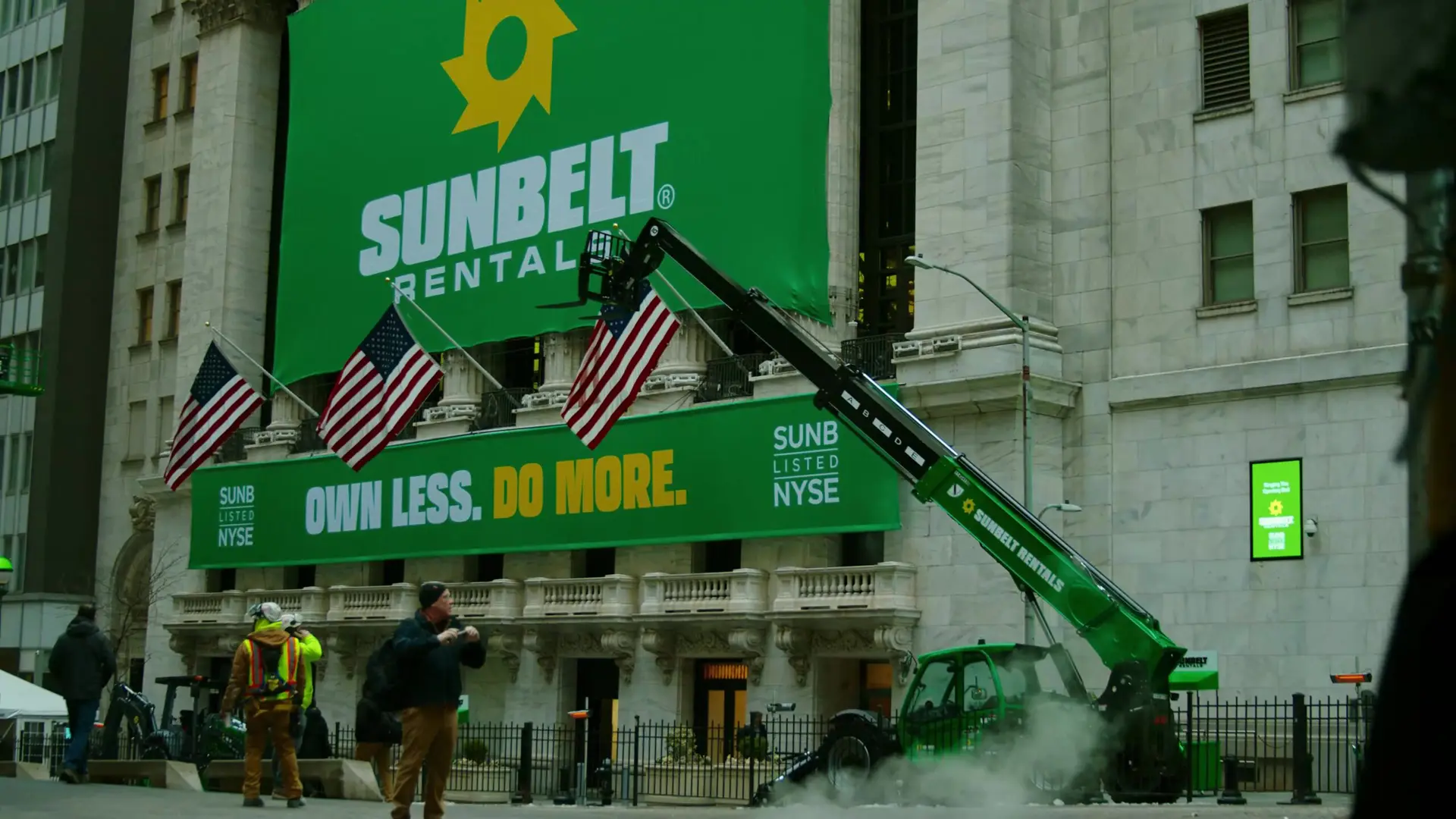
## Work with C&I Studios
If you are planning a project like this, our team can take it from concept to final delivery. Explore our [video production services](https://c-istudios.com/video-production-services/), browse [our work](https://c-istudios.com/our-work/) to see how we tell brand stories, and [get in touch](https://c-istudios.com/contact/) when you are ready to start.
Originally published July 1, 2026
---
*This content is from [C&I Studios](https://c-istudios.com), a full-service production company.*
---
# Best Lens for Filmmaking: Pro Picks
> Published: June 29, 2026
> Categories: Film & TV
> Source: https://c-istudios.com/best-lens-for-filmmaking/
---
.cib{--paper:#1b1d1f;--ink:#fff;--body:#d5d7d9;--muted:#8b9096;--line:rgba(255,255,255,.12);--thumb:#2b2e31;--card:#212426;--accent:#c02b0a;--blue:#5B8FA8;--serif:'Playfair Display',Georgia,serif;--sans:'Poppins',-apple-system,sans-serif;--measure:900px;background:var(--paper);color:var(--body);font-family:var(--sans);line-height:1.6;position:relative;left:50%;transform:translateX(-50%);width:90vw;max-width:1920px}
.cib *{box-sizing:border-box}
.cib .kicker{max-width:var(--measure);margin:58px auto 0;padding:0 22px;font-size:12.5px;font-weight:700;letter-spacing:2.5px;text-transform:uppercase;color:var(--blue)}
.cib h1.cibh1{text-wrap:balance;font-family:var(--serif);font-weight:500;font-size:clamp(46px,6vw,72px);line-height:1.08;color:var(--ink);max-width:var(--measure);margin:18px auto 0;padding:0 22px;letter-spacing:-.5px}
.cib .metarow{max-width:var(--measure);margin:20px auto 0;padding:0 22px;color:var(--muted);font-size:14px}
.cib .hero{position:relative;width:100%;height:0;padding-bottom:56.25%;overflow:hidden;margin:48px auto 0;border-top:1px solid var(--line);border-bottom:1px solid var(--line)}
.cib .hero .ph{width:100%;aspect-ratio:16/9;background:var(--thumb);border-top:1px solid var(--line);border-bottom:1px solid var(--line);display:flex;align-items:center;justify-content:center;color:#7d8288;font-size:13px;text-align:center;padding:0 20px}
.cib .body{max-width:var(--measure);margin:12px auto 0;padding:52px 22px 6px}
.cib .body.lead p:first-child{font-size:23px;line-height:1.62;color:var(--ink)}
.cib .body p{font-size:18.5px;line-height:1.85;margin:0 0 30px;color:var(--body)}
.cib .body h2{text-wrap:balance;font-family:var(--serif);font-weight:500;font-size:clamp(32px,4vw,48px);line-height:1.22;color:var(--ink);margin:70px 0 20px;letter-spacing:-.3px}
.cib .body h3{text-wrap:balance;font-family:var(--sans);font-weight:600;font-size:22px;color:var(--ink);margin:38px 0 8px}
.cib .body a{color:var(--ink);text-decoration:underline;text-decoration-color:rgba(255,255,255,.4);text-underline-offset:3px}
.cib .body a:hover{text-decoration-color:var(--ink)}
.cib .ctable{width:100%;border-collapse:collapse;margin:16px 0 30px;font-size:16px}
.cib .ctable th{background:#000;color:#fff;text-align:left;padding:10px 12px;font-family:var(--sans)}
.cib .ctable td{padding:10px 12px;border-bottom:1px solid var(--line);color:var(--body)}
.cib .inimg{position:relative;width:100%;height:0;padding-bottom:56.25%;overflow:hidden;margin:72px auto;border-top:1px solid var(--line);border-bottom:1px solid var(--line)}
.cib .inimg .ph{width:100%;aspect-ratio:16/9;background:var(--thumb);border-top:1px solid var(--line);border-bottom:1px solid var(--line);display:flex;align-items:center;justify-content:center;color:#7d8288;font-size:13px}
.cib .origpub{max-width:var(--measure);margin:60px auto 0;padding:26px 22px 0;border-top:1px solid var(--line);color:var(--muted);font-size:13.5px}
.cib .related{max-width:1200px;margin:64px auto 0;padding:34px 22px 76px}
.cib .related h3{font-family:var(--sans);font-size:12.5px;letter-spacing:2px;text-transform:uppercase;color:var(--ink);margin:0 0 24px}
.cib .grid{display:grid;grid-template-columns:repeat(3,1fr);gap:28px}
.cib .rc{background:var(--card);border:1px solid var(--line);display:block;text-decoration:none;color:inherit;transition:border-color .15s}
.cib a.rc:hover{border-color:rgba(255,255,255,.5)}
.cib .rc .thumb{position:relative;width:100%;height:0;padding-bottom:56.25%;background:var(--thumb);overflow:hidden}
.cib .rc .thumb img{position:absolute!important;top:0!important;left:0!important;width:100%!important;height:100%!important;object-fit:cover!important;margin:0!important}
.cib .rc .cc{padding:14px 15px 17px}
.cib .rc .rt{font-family:var(--serif);font-weight:500;font-size:16px;line-height:1.3;color:var(--ink);margin:0 0 6px}
.cib .rc .rm{font-size:11px;letter-spacing:1px;text-transform:uppercase;color:var(--muted)}
.cib img{margin:0!important;padding:0!important;display:block!important;vertical-align:top;max-width:100%}
.cib .hero img,.cib .inimg img{position:absolute!important;top:0!important;left:0!important;width:100%!important;height:100%!important;object-fit:cover!important;margin:0!important;padding:0!important;border:0!important;display:block!important;aspect-ratio:auto!important}
.cib .hero+.body{padding-top:36px}
@media(max-width:760px){.cib .grid{grid-template-columns:1fr}.cib .body h2{margin:52px 0 16px}.cib .body p{font-size:17.5px}.cib .inimg,.cib .hero{margin-top:44px}}
Film & TV
# Best Lens for Filmmaking. Pro Picks
15 min read

The body of work behind any film, whether it is a six figure commercial for a national brand or a music video for an emerging artist, lives or dies on optics. Choosing the best lens for filmmaking is not a hardware decision, it is a story decision. Every focal length, aperture, and piece of glass shapes how the audience reads emotion, geography, and pace. We have shot for Nike, Coca-Cola, the NFL, NBC, and H&M with everything from vintage primes pulled out of a Pelican case to full anamorphic sets that cost more than a luxury car. The lessons are consistent. The body matters less than people think. The glass in front of the sensor is what builds the look.
This guide is the working playbook our team uses when we plan shoots out of our Los Angeles headquarters, our 30,000 square foot facility in Fort Lauderdale, and our New York office. We will walk through the lens categories we actually rent and own, the ones we recommend for specific genres, and the ones we tell directors to avoid. If you are picking your first cinema set or upgrading from kit zooms, this is the same advice we hand clients who are spending real money on a production through our [video production services](https://c-istudios.com/video-production-services/).
## Why Lens Choice Carries More Weight Than the Camera
Camera bodies depreciate. Lenses outlive everything. A well-built piece of glass from the 1980s can still deliver a more cinematic frame than a brand new mirrorless body paired with a budget kit zoom. Sensor technology improves on a two year cycle. [Cooke S4 primes](https://www.cookeoptics.com/) have been on Oscar winning films for two decades and they are still in every major rental house catalog at roughly the same daily rate.
When clients ask us why we line item a lens package separately from the camera, this is the answer. The lens is the single most expressive tool on a set. Focal length compresses or stretches space. Aperture controls how much of the frame an audience focuses on. Coating choices determine how flares behave, how skin tones render, and how forgiving the optic is under bright stage lighting. We talk through all of this when we scope a project for [corporate video production](https://c-istudios.com/corporate-video-production/) or narrative work, because the lens conversation happens before any other gear gets locked.
That is also why the best lens for filmmaking is rarely the most expensive option in the case. It is the lens that fits the story, the budget, and the production schedule. We have shot multi million dollar campaigns on glass that cost less than a single day of stage rental. We have also rented sets of anamorphics that cost more than the talent fee. Both decisions made sense at the time.
## The Best Lens for Filmmaking, Broken Down by Category
There is no single best lens for filmmaking, and any guide that pretends otherwise is selling something. What matters is matching glass to story. A documentary crew chasing a subject through a market in Mumbai needs different optics than a fashion crew shooting a controlled studio commercial. We sort lenses into three working categories: primes, zooms, and dedicated cinema lenses. Each one has a job. Each one earns its place in the case for a reason.
Below are the lenses our team actually pulls when we are building a package for a real client. These picks come from years of running corporate shoots, narrative work, branded content, and music videos through our [film production services](https://c-istudios.com/film-production-services/) arm, plus thousands of hours on rental house tests we have run before signing off on a package.
## Best Prime Lenses for Filmmaking
Primes are fixed focal length lenses, and they remain the foundation of cinematic image making. They tend to be sharper, faster, and lighter than zooms. They force directors to think about composition because moving the camera, not the zoom ring, is the only way to reframe. For most narrative and branded work, we build around a prime set first and add zooms second.
### Sigma 18-35mm f/1.8 Art
It is technically a zoom, but the optical quality and consistency across the focal range puts it in prime territory. The 18-35mm f/1.8 on a Super 35 sensor covers roughly the 27 to 53 millimeter range in full frame terms, which is exactly the band where most narrative coverage lives. We carry one in every documentary kit. The autofocus is fine, the manual focus throw is short, but for under nine hundred dollars new it punches well above its weight on smaller corporate jobs and run and gun branded shoots.
### Sony G Master 24mm f/1.4
The Sony G Master line is the cleanest native full frame option for Sony shooters. The 24mm f/1.4 is wide enough for establishing shots, environmental portraits, and the immersive frames branded content has favored for the last three years. It is light, it focuses fast, and it holds up wide open, which matters when you are shooting handheld in available light. When we run mixed gimbal and handheld days on [branded content series](https://c-istudios.com/branded-content-series/) projects, this lens lives on the camera.
### Canon RF 50mm f/1.2 L
The Canon RF 50mm f/1.2 has a rendering that flatters skin in a way few modern lenses do. The fall off is creamy without going soft. The contrast holds even when you push into harsh stage light. If you are shooting interview heavy corporate work or music videos with a single hero subject, this is one of the easiest lenses to love. The catch is that autofocus on RF mount cinema bodies is still maturing, so we tend to use it for narrative coverage where a focus puller is on the wheels.
### Sigma 35mm f/1.4 Art
The Sigma 35 Art is the lens we recommend most often to filmmakers building their first prime kit. Optically it competes with lenses costing three to four times as much. The build is solid. The focus throw on the cine version is long enough for proper pulling. Pair this with a 50 and an 85 and you have a serviceable narrative kit for under three thousand dollars. We still run them on B cam coverage for clients who book our [music video production](https://c-istudios.com/music-video-production/) work.
### Zeiss CP.3 Set
If you are graduating from stills lenses to dedicated cine glass, the Zeiss CP.3 set is the entry point most rental houses point you toward. T2.1 across the range. Consistent color and contrast across every focal length. The CP.3 XD versions carry lens metadata that pulls into post for clean VFX work, which our [VFX and compositing](https://c-istudios.com/vfx-compositing-and-animation-services/) team appreciates on heavier projects. Not the most characterful glass on the market, but if you need clean and predictable, this is the safest bet.
## Best Zoom Lenses for Filmmaking
Zooms used to be a compromise. Today the best zooms compete with primes in everything except weight and maximum aperture. For documentary, event, and corporate shoots where the schedule does not allow for constant lens swaps, a quality zoom is often the difference between hitting the day and missing key coverage.
### Angenieux EZ-1 and EZ-2
The Angenieux EZ-1 (30-90mm) and EZ-2 (15-40mm) zooms are designed around interchangeable rear groups that let you cover either Super 35 or full frame with the same lens body. The price point sits well below full Angenieux Optimo territory while delivering close to the same look. For productions that need cine zooms without burning the entire gear budget, these are the lenses we recommend pricing into the package.
### Fujinon MK 18-55mm and 50-135mm
The Fujinon MK set is the most common indie cinema zoom on the market for good reason. T2.9 constant aperture, parfocal, designed for E mount and MFT, and priced where a serious indie filmmaker can actually own them. We have shot full corporate campaigns on the MK pair when the call sheet did not allow time for prime changes. The look is clean, neutral, and matches well to most modern primes.
### Canon CN-E 18-80mm
Canon's CN-E 18-80 is the workhorse zoom for ENG style coverage. Built in servo zoom, smooth iris control, designed for one operator who needs to cover both sticks and handheld work without help. If you are pricing out a corporate shoot or a docu series with limited crew, this is the lens that earns its rate on the first day. It runs all day on our [documentary film production](https://c-istudios.com/documentary-film-production/) jobs.
### Sony FE 24-70mm f/2.8 GM II
For Sony shooters who need a stills capable lens that crosses over to video, the GM II is the most usable hybrid zoom on the market. The autofocus motors are fast enough for gimbal work, the focus breathing is minimal compared to the original GM, and the new optical formula holds up at the wide open aperture. Not a true cine lens, but a perfectly viable B camera or run and gun A camera option.
## Best Cinema Lenses for Filmmaking
Cinema lenses sit at the top of the rental food chain for a reason. They are built for the demands of production: uniform front diameters, geared focus and iris rings, calibrated focus scales, minimal breathing, and color matching across the entire set. If your project has a focus puller, you want cinema glass.
### ARRI Signature Primes
The [ARRI Signature Prime](https://www.arri.com/en/camera-systems/cine-lenses) set is the lens system most A list cinematographers are gravitating toward right now. Built for full frame, T1.8 across the entire set, and rendered with a softness that flatters skin without losing detail. If you are shooting a premium commercial or a feature with a real lens budget, the Signature set is what most rental houses will push you toward. We have run them on several high end projects where the brand wanted a contemporary look without the harsher digital sharpness of older cine glass.
### Cooke S7/i Full Frame Plus
The Cooke look is a phrase that means something specific in the industry. Warm rendering of skin tones, a slight softness in the highlight roll off, and a fall off character that audiences have been trained to read as cinematic for fifty years. The S7/i set is the modern full frame version of that look. If you want your branded work to feel like a Netflix limited series, Cooke is the answer.
### Atlas Orion Anamorphics
Anamorphic lenses squeeze a wider image onto a standard sensor, delivering oval bokeh, horizontal flares, and the cinema scope aspect ratio that defines studio features. The Atlas Orion set brought anamorphic capability to the indie budget range and changed what is possible on smaller productions. We run them on music videos and commercial shoots where the brand wants a heavier cinematic feel. They are not the right choice for every project, but when they fit, nothing else looks the same.
### Zeiss Supreme Primes
The Zeiss Supreme set sits between the clinical sharpness of older Zeiss Master Primes and the warmer character of Cooke. T1.5 across the range. Full frame coverage. A consistent look across every focal length that makes editorial work clean. For projects where the script is dialogue heavy and the cut needs to feel invisible, Supremes are the safe call.
## Choosing Lenses by Sensor Format
Image circle matters. A lens designed for Super 35 will vignette on a full frame sensor. A lens built for full frame will work on Super 35 with a focal length crop. Micro Four Thirds is a separate world entirely. Before you spend money on glass, confirm that the lens covers the sensor on the body you plan to shoot.
Full frame is the dominant format for high end commercial work right now. Sony Venice 2, ARRI Alexa 35 in full frame mode, and the Red V-Raptor are all built around large format sensors. Super 35 still has a place in budget conscious narrative work and the Alexa Mini LF body crops to it for certain looks. Micro Four Thirds shows up on consumer cinema bodies and some specialty applications, but rarely on professional commercial productions out of our Los Angeles or [New York](https://c-istudios.com/video-production-new-york/) teams.
## Focal Length and How It Shapes a Story
Picking the best lens for filmmaking starts with understanding what each focal length does to the viewer. A 24mm pulls the audience into the world. A 50mm sits at a comfortable observational distance, which is why so many feature films cut between 35mm and 50mm coverage. An 85mm or 100mm flatters faces and isolates subjects from their environment, which is why interview and beauty shooters live there.
Anything wider than 18mm starts to distort. Anything longer than 135mm compresses to the point where the viewer feels like they are watching a long lens documentary. There are exceptions to all of this. Wes Anderson built an entire visual vocabulary on the wide. Late period Kubrick lived on the long. The rules exist so you can break them with intention, not by accident.
## T-Stops, F-Stops, and What Actually Matters on Set
A cinema lens is rated in T-stops. A stills lens is rated in f-stops. The difference is that T-stops measure actual light transmission through the optical formula, while f-stops measure the ratio of aperture to focal length. A stills lens rated f/2.8 might only transmit T3.2 worth of light because of how much the glass absorbs. On a multi camera shoot where you are matching exposure across bodies, this matters. A great deal.
This is why cinema lenses cost more. They are built to deliver a consistent T-stop across the entire focal length range. A zoom that holds T2.9 from 18mm to 55mm without breathing is significantly harder to engineer than a stills zoom that drops from f/2.8 to f/4 as you zoom in. When clients ask why our gear quotes look the way they do, the answer usually traces back to lens choice, lighting, and crew. We break this down in our [creative services](https://c-istudios.com/creative-services/) conversations during pre production.
## How We Choose Lenses for Client Projects
Our process starts with the script or the brief. Before any gear is locked, the director, the DP, and the producer sit in a room in Los Angeles and talk through what the project needs to feel like. A pharmaceutical commercial needs a clean, even, slightly soft look that flatters every demographic. A streetwear campaign for a brand like Calvin Klein needs harder contrast, more flare character, and tighter coverage to drive the energy. A live event broadcast for SiriusXM needs reach and speed, not character.
Once the look is defined, we move to the lens test. We pull two or three candidate sets from a local rental house in [Los Angeles](https://c-istudios.com/video-production-los-angeles/) or partner with our team running productions out of [South Florida](https://c-istudios.com/video-production-south-florida/) if the shoot is on the East Coast. We shoot the same talent, the same set, the same lighting, on each candidate. The director picks. The DP signs off. The producer adjusts the line item. Then the package is locked.
This sounds like overkill until you have been on a shoot where the lens did not match the look the client signed off on. Then it sounds like the cheapest insurance you can buy.
## Renting Versus Buying
Most filmmakers should rent the best lens for filmmaking on a per project basis until they know exactly what their visual language is. Lens preferences shift as you grow. The set that defined your work three years ago may not be the set that defines you now. Renting protects your capital and lets you match the lens to the project.
That said, owning a basic prime kit makes sense for working filmmakers who shoot weekly. A solid trio of 35mm, 50mm, and 85mm Sigma Art primes will cover ninety percent of personal projects and small jobs without forcing you into a rental house every week. For everything else, we book through our trusted rental partners and roll the cost into the production budget. When clients shoot at our [studio rentals](https://c-istudios.com/studio-rentals/) facility in Fort Lauderdale, lens packages can be coordinated as part of the stage booking.
## Common Mistakes Choosing the Best Lens for Filmmaking
The most common mistake is buying lenses before understanding your story. Filmmakers see a YouTube video about anamorphics, drop ten thousand dollars on a set, and then realize ninety percent of their actual work is corporate testimonials where anamorphic adds nothing but headaches. Buy the lenses you will use on real paying jobs first. Buy the lenses you dream about second.
The second common mistake is matching brands instead of matching looks. A Canon prime, a Sony zoom, and a Zeiss long lens can all live in the same case and deliver beautiful work if they have been color matched in post. The rendering does not need to be identical from manufacturer to manufacturer. It needs to be intentional. Our [post production services](https://c-istudios.com/post-production-services/) team can match almost any set in a grade as long as the lens choices were deliberate during the shoot.
The third mistake is ignoring weight. A six pound prime feels different on a gimbal than a two pound prime. A sixteen pound zoom changes the entire balance of a fluid head. Producers who do not consider how a lens lives on the rig end up paying overtime to a crew that cannot move fast enough.
## Working With Our Team
Choosing the best lens for filmmaking is a conversation, not a checklist. If you are scoping a commercial, a documentary, a brand film, or a music video and you want a team that thinks about glass the way the best directors of photography think about glass, we can help. We have built lens packages for shoots at our Los Angeles headquarters, our Fort Lauderdale facility, and on location across the country. We have shot Nike campaigns, NFL spots, Calvin Klein editorials, and SiriusXM live broadcasts with lens decisions made in the same way we describe above.
If you want to see what these lens choices look like in practice, browse [our work](https://c-istudios.com/our-work/) for examples across genres. If you are ready to start a conversation about a specific project, reach out through our [contact](https://c-istudios.com/contact/) page and our producers will walk you through what your shoot actually needs. The best lens for filmmaking is the one that serves your story. We can help you figure out which one that is.
## Work with C&I Studios
If you are planning a project like this, our team can take it from concept to final delivery. Explore our [film and TV production](https://c-istudios.com/film-and-tv-production/), browse [our work](https://c-istudios.com/our-work/) to see how we tell brand stories, and [get in touch](https://c-istudios.com/contact/) when you are ready to start.
Originally published June 29, 2026
---
*This content is from [C&I Studios](https://c-istudios.com), a full-service production company.*
---
# CBD Product Photography Trends 2026
> Published: June 26, 2026
> Categories: Commercial & Brand
> Source: https://c-istudios.com/cbd-product-photography-trends/
---
.cib{--paper:#1b1d1f;--ink:#fff;--body:#d5d7d9;--muted:#8b9096;--line:rgba(255,255,255,.12);--thumb:#2b2e31;--card:#212426;--accent:#c02b0a;--blue:#5B8FA8;--serif:'Playfair Display',Georgia,serif;--sans:'Poppins',-apple-system,sans-serif;--measure:900px;background:var(--paper);color:var(--body);font-family:var(--sans);line-height:1.6;position:relative;left:50%;transform:translateX(-50%);width:90vw;max-width:1920px}
.cib *{box-sizing:border-box}
.cib .kicker{max-width:var(--measure);margin:58px auto 0;padding:0 22px;font-size:12.5px;font-weight:700;letter-spacing:2.5px;text-transform:uppercase;color:var(--blue)}
.cib h1.cibh1{text-wrap:balance;font-family:var(--serif);font-weight:500;font-size:clamp(46px,6vw,72px);line-height:1.08;color:var(--ink);max-width:var(--measure);margin:18px auto 0;padding:0 22px;letter-spacing:-.5px}
.cib .metarow{max-width:var(--measure);margin:20px auto 0;padding:0 22px;color:var(--muted);font-size:14px}
.cib .hero{position:relative;width:100%;height:0;padding-bottom:56.25%;overflow:hidden;margin:48px auto 0;border-top:1px solid var(--line);border-bottom:1px solid var(--line)}
.cib .hero .ph{width:100%;aspect-ratio:16/9;background:var(--thumb);border-top:1px solid var(--line);border-bottom:1px solid var(--line);display:flex;align-items:center;justify-content:center;color:#7d8288;font-size:13px;text-align:center;padding:0 20px}
.cib .body{max-width:var(--measure);margin:12px auto 0;padding:52px 22px 6px}
.cib .body.lead p:first-child{font-size:23px;line-height:1.62;color:var(--ink)}
.cib .body p{font-size:18.5px;line-height:1.85;margin:0 0 30px;color:var(--body)}
.cib .body h2{text-wrap:balance;font-family:var(--serif);font-weight:500;font-size:clamp(32px,4vw,48px);line-height:1.22;color:var(--ink);margin:70px 0 20px;letter-spacing:-.3px}
.cib .body h3{text-wrap:balance;font-family:var(--sans);font-weight:600;font-size:22px;color:var(--ink);margin:38px 0 8px}
.cib .body a{color:var(--ink);text-decoration:underline;text-decoration-color:rgba(255,255,255,.4);text-underline-offset:3px}
.cib .body a:hover{text-decoration-color:var(--ink)}
.cib .ctable{width:100%;border-collapse:collapse;margin:16px 0 30px;font-size:16px}
.cib .ctable th{background:#000;color:#fff;text-align:left;padding:10px 12px;font-family:var(--sans)}
.cib .ctable td{padding:10px 12px;border-bottom:1px solid var(--line);color:var(--body)}
.cib .inimg{position:relative;width:100%;height:0;padding-bottom:56.25%;overflow:hidden;margin:72px auto;border-top:1px solid var(--line);border-bottom:1px solid var(--line)}
.cib .inimg .ph{width:100%;aspect-ratio:16/9;background:var(--thumb);border-top:1px solid var(--line);border-bottom:1px solid var(--line);display:flex;align-items:center;justify-content:center;color:#7d8288;font-size:13px}
.cib .origpub{max-width:var(--measure);margin:60px auto 0;padding:26px 22px 0;border-top:1px solid var(--line);color:var(--muted);font-size:13.5px}
.cib .related{max-width:1200px;margin:64px auto 0;padding:34px 22px 76px}
.cib .related h3{font-family:var(--sans);font-size:12.5px;letter-spacing:2px;text-transform:uppercase;color:var(--ink);margin:0 0 24px}
.cib .grid{display:grid;grid-template-columns:repeat(3,1fr);gap:28px}
.cib .rc{background:var(--card);border:1px solid var(--line);display:block;text-decoration:none;color:inherit;transition:border-color .15s}
.cib a.rc:hover{border-color:rgba(255,255,255,.5)}
.cib .rc .thumb{position:relative;width:100%;height:0;padding-bottom:56.25%;background:var(--thumb);overflow:hidden}
.cib .rc .thumb img{position:absolute!important;top:0!important;left:0!important;width:100%!important;height:100%!important;object-fit:cover!important;margin:0!important}
.cib .rc .cc{padding:14px 15px 17px}
.cib .rc .rt{font-family:var(--serif);font-weight:500;font-size:16px;line-height:1.3;color:var(--ink);margin:0 0 6px}
.cib .rc .rm{font-size:11px;letter-spacing:1px;text-transform:uppercase;color:var(--muted)}
.cib img{margin:0!important;padding:0!important;display:block!important;vertical-align:top;max-width:100%}
.cib .hero img,.cib .inimg img{position:absolute!important;top:0!important;left:0!important;width:100%!important;height:100%!important;object-fit:cover!important;margin:0!important;padding:0!important;border:0!important;display:block!important;aspect-ratio:auto!important}
.cib .hero+.body{padding-top:36px}
@media(max-width:760px){.cib .grid{grid-template-columns:1fr}.cib .body h2{margin:52px 0 16px}.cib .body p{font-size:17.5px}.cib .inimg,.cib .hero{margin-top:44px}}
Commercial & Brand
# CBD Product Photography Trends 2026
13 min read

CBD product photography has become one of the most complicated commercial briefs in our category, and the gap between what brands shot in 2022 and what they need to shoot in 2026 is wider than most categories ever experience in a four-year window. Compliance pressure, platform policy, retailer demands, and consumer expectations have all shifted at once, and the visual language is rebuilding itself in real time. Our team has photographed tincture brands, topicals, beverages, pet lines, and beauty crossovers long enough to watch the entire genre move from "look like a dispensary" to "look like a clean wellness brand," and the next jump is already underway.
This is not a trends roundup that catalogs every aesthetic on the moodboard. We want to lay out what is actually changing on set, in post, in retail pitches, and in paid media, because those four pressure points are what will determine whether a brand can scale or get throttled by the next round of platform updates. If you are planning a shoot for the back half of 2026 or for a 2027 launch, the calendar you used last year is the wrong starting point.
The shifts we are tracking are not stylistic preferences. They are responses to real economic and regulatory forces, and they are reshaping how we build every [professional photography](https://c-istudios.com/professional-photography-services/) brief that touches the category. Brand managers who treat this as an aesthetic question rather than a strategic one are going to spend money on imagery that cannot run where they need it to run.

## The Compliance-First Aesthetic Is Replacing Cannabis-Coded Imagery
The first thing changing in 2026 is what you cannot show. Cannabis leaves, smoke trails, hand-drawn 420 typography, and dispensary lighting cues are aging out of the briefs we receive, and the brands that still default to them are the ones struggling to break into mainstream retail. The reason is not just taste. It is that the FDA still has not federally legalized CBD as a dietary supplement or food additive, and retailers, banks, and ad platforms have built their own compliance frameworks in that vacuum. Cannabis-coded visuals raise flags at every gate.
What is replacing that look is what we call "compliance-first aesthetic." Muted neutral palettes. Editorial framing. Product treated like a serum or supplement, not a recreational good. Even the propping has changed: linen, ceramic, brushed metal, and natural stone instead of rolling trays and grinders. We talk through these decisions with brand teams during pre-production at our Los Angeles strategy sessions because once a campaign is shot, swapping out the symbol set in post is expensive and usually obvious.
Our [creative services team](https://c-istudios.com/creative-services/) has rebuilt several CBD brand visual systems over the past 18 months around this principle, and the pattern is consistent. The brands that lean into wellness conventions get into more stores and run on more ad surfaces. The brands that double down on cannabis iconography stay stuck in the same DTC channels, which is fine as a niche but limits growth. The shift in CBD product photography away from cannabis-coded cues is the single most important call most brand teams will make this year.
## Why CBD Product Photography Now Looks More Like Skincare Than Smoke Shop
The single biggest visual shift in CBD product photography is the wholesale import of beauty industry conventions. Macro detail of dropper tips and oil viscosity. Ingredient hero moments that isolate a hemp leaf or a botanical extract on glass. Soft gradient backgrounds in the dusty pinks, sages, and sand tones that have dominated skincare for the last five years. Reflective surfaces and high-key lighting that signal premium without screaming luxury.
This is not coincidental. The CBD shopper in 2026 overlaps heavily with the prestige skincare shopper, and retailers like Credo, Sephora, and Erewhon merchandise CBD next to facial oils and adaptogens, not next to vape pens. If the imagery on a product page does not match that retail context, it telegraphs the wrong category to the consumer before the copy even gets read.
For our team, that has meant rebuilding lighting setups and post workflows. We light CBD products closer to how we would light a moisturizer, with controlled bounce, soft tents, and macro lenses that reveal texture rather than hide it. Color grading has moved away from the orange-and-teal cinematic lean and into the warm neutral grade common in beauty editorial. The [content creation pipeline](https://c-istudios.com/content-creation-services/) we use for skincare clients now drops in cleanly for CBD work, which was not true even two years ago.
## Retail Premiumization Is Forcing A Higher Production Standard
Here is the trend that hits production budgets hardest: the retailers buying CBD now demand asset packages that look nothing like what early DTC brands shipped. Whole Foods, Erewhon, Foxtrot, and the better natural grocers all require multi-angle product photography, lifestyle imagery, ingredient callouts, and short-form video for shelf-talker programs and in-app placements. A single hero shot does not get a brand through the door anymore.
What this means in practice is that the average CBD shoot we book now produces between 40 and 120 final assets per SKU, depending on retail footprint. That includes white background packs for e-commerce, contextual lifestyle frames, vertical crops for mobile retailer apps, and looping motion for digital signage. Brands who walk in expecting the old "give me ten hero shots and call it done" workflow get sticker shock, and we usually spend the first call recalibrating the scope.
The upside is that one well-planned shoot, run out of our [Fort Lauderdale production facility](https://c-istudios.com/photography-services-fort-lauderdale/) with the right pre-light and shot list, can produce a full year of retailer-ready content. That is the leverage point we push hardest: stop scheduling small monthly shoots, and start running comprehensive batch sessions that fill the asset library in one swing.
## Platform Restrictions Reshape What Brands Can Even Shoot
You cannot talk about CBD product photography in 2026 without talking about Meta and Google. Both platforms have specific policies on cannabis-related products, and both rely on a mix of automated review and human appeal to enforce them. Brands have learned the hard way that an image which performs beautifully on Instagram organic can get a paid campaign restricted within hours when it is boosted with budget behind it.
What we are seeing brands do, and what we now build into every shoot list by default, is produce two parallel versions of the campaign imagery. One version uses the brand name, product imagery, and clear category cues that work in organic posts, owned email, and on the brand website. The second version is paid-eligible and strips out anything that auto-review systems may flag. That can mean no leaves visible, no green-cross iconography, no copy on the product that uses the word "CBD" prominently in frame, and lifestyle imagery that focuses on the result rather than the product itself.
This is more than a creative challenge. It is a production logistics question. The brands that get this right plan it into the shoot day rather than retrofit it in post. Our [social media team](https://c-istudios.com/social-media-marketing-services/) spends a lot of pre-production time reviewing the current state of [Meta advertising policy](https://transparency.meta.com/policies/ad-standards/unsafe-substances/) and equivalent Google ad rules because they shift more often than brand teams realize. What ran clean in Q1 may get flagged in Q3.
## The Rise Of Lab-Transparency Visuals
Trust is the bottleneck for CBD growth, and consumers have learned that the only real signal is a Certificate of Analysis from a third-party lab. That insight has started showing up in CBD product photography in a structural way. Brands are designing packaging that makes the QR code linking to the COA a hero element rather than a fine-print afterthought, and our shot lists now include explicit close-ups of those codes, lab batch numbers, and ingredient transparency callouts.
We have also seen a tasteful resurgence of lab-coat photography, but it does not look like the stock-image clinical shots from a decade ago. The current version is closer to a documentary frame: a real chemist in a real testing facility, shot on prime lenses with soft window light, with the product visible but not over-styled. It reads as proof rather than performance, which is exactly the register the category needs right now.
For brands that have invested in farm and lab infrastructure, we recommend pairing the product shoot with a short [documentary-style](https://c-istudios.com/documentary-film-production/) capture of the actual operation. Those frames feed into product page video, About pages, retailer pitch decks, and trade show booths. The marginal cost of adding a day for that capture is small relative to the trust dividend it pays back across every touchpoint.

## Lifestyle Imagery Beats The Clinical White-Box Shot
The white-background product shot is not going away, because Amazon and Shopify still require it for category compliance. What is changing is the weight of the asset mix. Five years ago a CBD brand might have shipped 80 percent white background and 20 percent lifestyle. The ratio we are now building toward in our briefs is closer to 40 and 60 in favor of lifestyle, because that is what feeds social, paid creative, and editorial PR.
Lifestyle imagery for CBD has its own conventions in 2026. The product sits on a bedside table next to a real book and a real glass of water. It lives on a yoga mat in soft morning light. It is held in a hand that does not look like a hand model's hand. The pet calming tincture is photographed next to an actual dog, not a hired one. Authenticity cues are doing a lot of work because the category is still fighting credibility battles, and any whiff of staged stock photography pulls trust down.
Casting has gotten more deliberate too. Talent in CBD lifestyle imagery now skews older than what we shoot for beauty, because the wellness CBD shopper is more often 35 to 65 than 18 to 30. Our [advertising team](https://c-istudios.com/advertising-services/) pushes back on briefs that default to younger casting, because the engagement data on social does not support it for this category.
## AI, Generative Tools, And The New Authenticity Premium
Generative imagery is now everywhere, and it is making real CBD product photography more valuable, not less. The flood of AI-generated product mockups across DTC has made shoppers and retail buyers more skeptical of imagery that looks too clean, too perfect, or too composited. CBD brands in particular cannot afford that suspicion, because the category already operates with thin consumer trust as a baseline.
What we are seeing is a counterintuitive shift: brands are deliberately leaving small imperfections in their final imagery. A tiny droplet on the dropper. A real fingerprint on the glass. Slightly uneven label placement. These are not mistakes. They are signals that the photography is real, the product is real, and the brand is comfortable showing it without correction. It is a niche aesthetic, but it is gaining ground in premium SKUs.
That said, generative tools are useful in the right places. The C&I Studios team uses them for moodboard development, set design exploration, and limited background extension in [post-production](https://c-istudios.com/post-production-services/). What we do not do is generate the product itself, the model itself, or any element a consumer might evaluate as a trust signal. The line we hold is straightforward: if a viewer would feel deceived knowing how the frame was made, it does not ship. That position is becoming more common across the industry, and we expect it to harden into formal disclosure norms within the next year or two.
## Sustainability And Source-Story Imagery
CBD shoppers have started asking about sourcing the way coffee shoppers started asking about origin a decade ago, and the visual language is catching up. Hemp field photography, harvest documentation, packaging material close-ups, and farmer portraits are now showing up in CBD brand imagery in a way that would have felt earnest and overdone five years ago and now feels essential. Buyers want to see where the plant came from.
This dovetails with packaging sustainability claims, which retailers are starting to verify rather than accept on faith. Brands are commissioning photography that documents the actual manufacturing process, the actual packaging materials, and the actual end-of-life path for the container. The [branded content series](https://c-istudios.com/branded-content-series/) format works well for this, because it lets a brand publish three or four episodic pieces around source, process, lab, and packaging instead of cramming everything into a single hero film.
According to [FDA guidance](https://www.fda.gov/news-events/public-health-focus/fda-regulation-cannabis-and-cannabis-derived-products-including-cannabidiol-cbd), CBD product claims remain tightly restricted, which makes source-story imagery one of the safer ways to communicate quality without making medical claims. You cannot say what the product does, but you can show the conditions under which it is made, and that visual storytelling does heavy lifting in a category that legally cannot lean on outcome promises.
## The Multi-Channel Content System Replacing The Single Hero Shot
Single-asset thinking is dead in CBD, and the brands still operating with a "we need one beautiful hero image" mindset are getting outrun by competitors building content systems. A modern CBD product photography shoot produces a structured asset bundle: hero frames in horizontal, vertical, and square. E-commerce grid shots from six angles. Ingredient and texture details. Lifestyle scenarios in three contexts. Motion clips in five-second, fifteen-second, and thirty-second cuts. Cinemagraphs. Behind-the-scenes capture for organic social. All from one production day.
This level of output requires real planning. We typically run CBD shoots out of our [studio facilities](https://c-istudios.com/studio-rentals/) with a parallel motion crew on set so we are not running two separate productions. The still photographer and the motion DP coordinate on lighting setups so the two formats stay visually consistent, and the post team builds an asset map before the shoot day so nothing falls through the cracks.
The brands that have moved to this approach report a sharp drop in their "we need a quick shoot for X" requests, because the asset library is deep enough that most needs can be served from existing inventory. That is the goal: build once, deploy across every channel for nine to twelve months, then refresh deliberately rather than reactively. Our [video production team](https://c-istudios.com/video-production-services/) integrates these stills and motion plans into one schedule so the brand gets a unified deliverable.
## What CBD Brands Should Build For Now
If you are planning a shoot in the next two quarters, the practical takeaways are straightforward. Plan for two creative tracks from the start, one organic-friendly and one paid-eligible. Build a comprehensive shot list that includes white background, multi-angle, lifestyle, ingredient detail, lab transparency callouts, and motion. Budget for at least one day of source-story capture if you have a farm or facility worth documenting. Cast for the actual buyer, not the buyer your agency thinks looks better on Instagram. And do not over-retouch.
For brands shooting on the East Coast, our [South Florida production capacity](https://c-istudios.com/video-production-south-florida/) handles CBD work regularly, with the lighting infrastructure and prop inventory that the category needs. Brands based on the West Coast typically work with our [Los Angeles team](https://c-istudios.com/video-production-los-angeles/) for both pre-production planning and on-set production. C&I Studios has shot CBD across both coasts and built a workflow that holds visual consistency across multi-city campaigns, which matters when the same SKU has to look identical in a Brooklyn corner store and a Venice wellness boutique.
The brands that figure CBD product photography out in 2026 will not be the ones with the biggest budgets. They will be the ones who treat photography as a strategic system rather than a one-off creative deliverable. If you want to talk through what that system looks like for your brand, get in touch with the C&I Studios team through the [contact page](https://c-istudios.com/contact/) and we can walk through current work and a plan that fits your retail and channel mix. The category is moving fast, and the visuals that read as current in Q2 will look dated by Q4. Get in front of it now.
## Work with C&I Studios
If you are planning a project like this, our team can take it from concept to final delivery. Explore our [video production services](https://c-istudios.com/video-production-services/), browse [our work](https://c-istudios.com/our-work/) to see how we tell brand stories, and [get in touch](https://c-istudios.com/contact/) when you are ready to start.
Originally published June 26, 2026
---
*This content is from [C&I Studios](https://c-istudios.com), a full-service production company.*
---
# Documentary Video Production Trends
> Published: June 25, 2026
> Categories: Film & TV
> Source: https://c-istudios.com/documentary-video-production-trends/
---
.cib{--paper:#1b1d1f;--ink:#fff;--body:#d5d7d9;--muted:#8b9096;--line:rgba(255,255,255,.12);--thumb:#2b2e31;--card:#212426;--accent:#c02b0a;--blue:#5B8FA8;--serif:'Playfair Display',Georgia,serif;--sans:'Poppins',-apple-system,sans-serif;--measure:900px;background:var(--paper);color:var(--body);font-family:var(--sans);line-height:1.6;position:relative;left:50%;transform:translateX(-50%);width:90vw;max-width:1920px}
.cib *{box-sizing:border-box}
.cib .kicker{max-width:var(--measure);margin:58px auto 0;padding:0 22px;font-size:12.5px;font-weight:700;letter-spacing:2.5px;text-transform:uppercase;color:var(--blue)}
.cib h1.cibh1{text-wrap:balance;font-family:var(--serif);font-weight:500;font-size:clamp(46px,6vw,72px);line-height:1.08;color:var(--ink);max-width:var(--measure);margin:18px auto 0;padding:0 22px;letter-spacing:-.5px}
.cib .metarow{max-width:var(--measure);margin:20px auto 0;padding:0 22px;color:var(--muted);font-size:14px}
.cib .hero{position:relative;width:100%;height:0;padding-bottom:56.25%;overflow:hidden;margin:48px auto 0;border-top:1px solid var(--line);border-bottom:1px solid var(--line)}
.cib .hero .ph{width:100%;aspect-ratio:16/9;background:var(--thumb);border-top:1px solid var(--line);border-bottom:1px solid var(--line);display:flex;align-items:center;justify-content:center;color:#7d8288;font-size:13px;text-align:center;padding:0 20px}
.cib .body{max-width:var(--measure);margin:12px auto 0;padding:52px 22px 6px}
.cib .body.lead p:first-child{font-size:23px;line-height:1.62;color:var(--ink)}
.cib .body p{font-size:18.5px;line-height:1.85;margin:0 0 30px;color:var(--body)}
.cib .body h2{text-wrap:balance;font-family:var(--serif);font-weight:500;font-size:clamp(32px,4vw,48px);line-height:1.22;color:var(--ink);margin:70px 0 20px;letter-spacing:-.3px}
.cib .body h3{text-wrap:balance;font-family:var(--sans);font-weight:600;font-size:22px;color:var(--ink);margin:38px 0 8px}
.cib .body a{color:var(--ink);text-decoration:underline;text-decoration-color:rgba(255,255,255,.4);text-underline-offset:3px}
.cib .body a:hover{text-decoration-color:var(--ink)}
.cib .ctable{width:100%;border-collapse:collapse;margin:16px 0 30px;font-size:16px}
.cib .ctable th{background:#000;color:#fff;text-align:left;padding:10px 12px;font-family:var(--sans)}
.cib .ctable td{padding:10px 12px;border-bottom:1px solid var(--line);color:var(--body)}
.cib .inimg{position:relative;width:100%;height:0;padding-bottom:56.25%;overflow:hidden;margin:72px auto;border-top:1px solid var(--line);border-bottom:1px solid var(--line)}
.cib .inimg .ph{width:100%;aspect-ratio:16/9;background:var(--thumb);border-top:1px solid var(--line);border-bottom:1px solid var(--line);display:flex;align-items:center;justify-content:center;color:#7d8288;font-size:13px}
.cib .origpub{max-width:var(--measure);margin:60px auto 0;padding:26px 22px 0;border-top:1px solid var(--line);color:var(--muted);font-size:13.5px}
.cib .related{max-width:1200px;margin:64px auto 0;padding:34px 22px 76px}
.cib .related h3{font-family:var(--sans);font-size:12.5px;letter-spacing:2px;text-transform:uppercase;color:var(--ink);margin:0 0 24px}
.cib .grid{display:grid;grid-template-columns:repeat(3,1fr);gap:28px}
.cib .rc{background:var(--card);border:1px solid var(--line);display:block;text-decoration:none;color:inherit;transition:border-color .15s}
.cib a.rc:hover{border-color:rgba(255,255,255,.5)}
.cib .rc .thumb{position:relative;width:100%;height:0;padding-bottom:56.25%;background:var(--thumb);overflow:hidden}
.cib .rc .thumb img{position:absolute!important;top:0!important;left:0!important;width:100%!important;height:100%!important;object-fit:cover!important;margin:0!important}
.cib .rc .cc{padding:14px 15px 17px}
.cib .rc .rt{font-family:var(--serif);font-weight:500;font-size:16px;line-height:1.3;color:var(--ink);margin:0 0 6px}
.cib .rc .rm{font-size:11px;letter-spacing:1px;text-transform:uppercase;color:var(--muted)}
.cib img{margin:0!important;padding:0!important;display:block!important;vertical-align:top;max-width:100%}
.cib .hero img,.cib .inimg img{position:absolute!important;top:0!important;left:0!important;width:100%!important;height:100%!important;object-fit:cover!important;margin:0!important;padding:0!important;border:0!important;display:block!important;aspect-ratio:auto!important}
.cib .hero+.body{padding-top:36px}
@media(max-width:760px){.cib .grid{grid-template-columns:1fr}.cib .body h2{margin:52px 0 16px}.cib .body p{font-size:17.5px}.cib .inimg,.cib .hero{margin-top:44px}}
Film & TV
# Documentary Video Production Trends
11 min read

Documentary video production is going through the biggest shift it has seen since streaming services started commissioning original nonfiction a decade ago. The numbers tell part of the story. Audience appetite for nonfiction storytelling keeps climbing, branded documentary spend is up across nearly every category our team tracks, and the platforms commissioning long-form work are rewriting their acquisition rules every quarter. The other part of the story is harder to see in a chart. The format itself is changing.
For producers, brands, and studios trying to plan budgets and pitches for the next eighteen months, the question is not whether to invest in documentary content. It is which formats, which platforms, and which production approaches will still be relevant when the work delivers. We have spent the last year producing [documentary film projects](https://c-istudios.com/documentary-film-production/) for clients ranging from sports brands to nonprofit organizations to consumer goods companies, and the patterns are clearer now than they were even six months ago.
This post walks through the documentary trends our team at C&I Studios is seeing reshape the industry, what the data is showing, and how to position a documentary video production budget for 2026 and beyond.
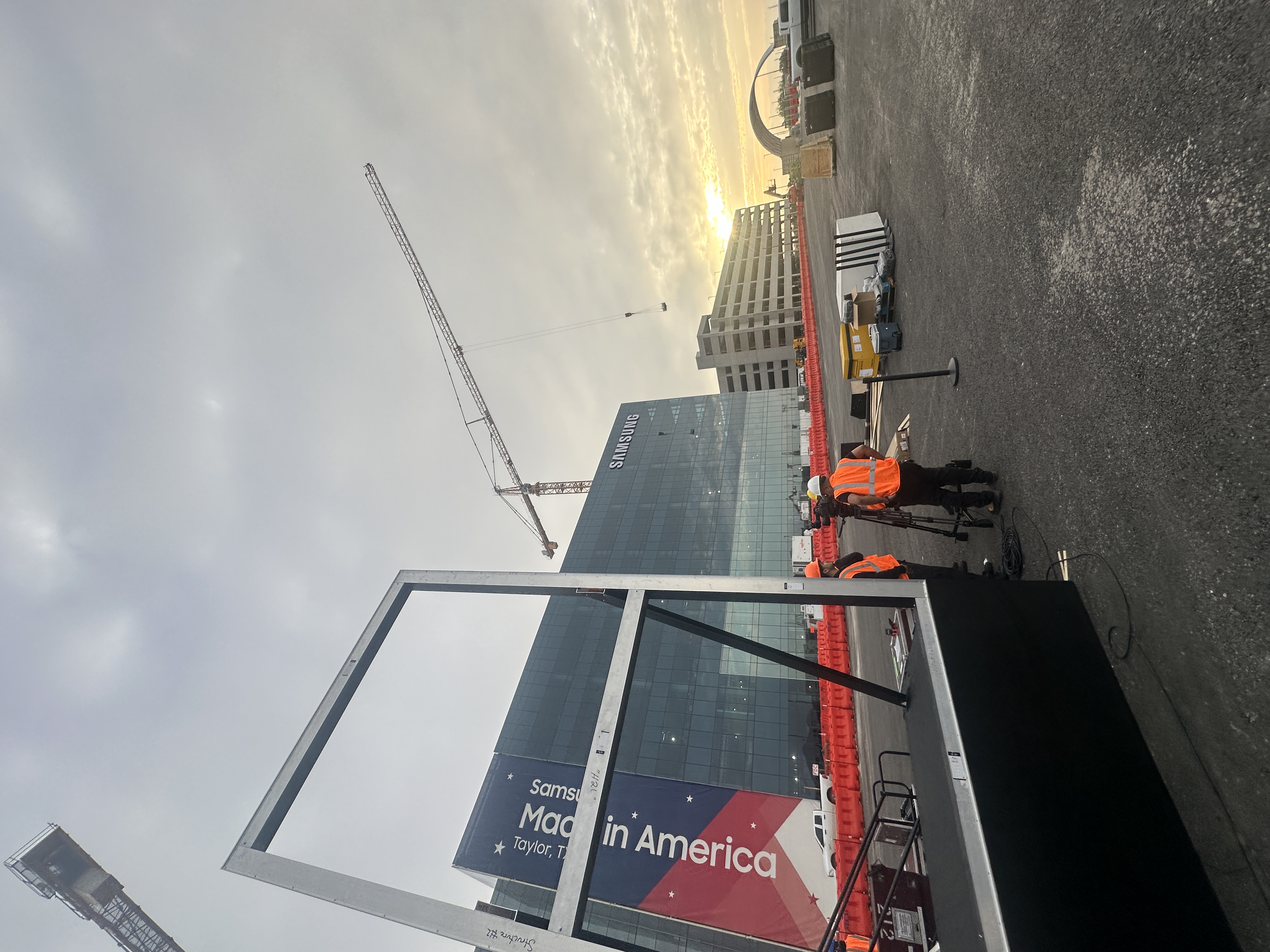
## Documentary Video Production Demand Is Outpacing Capacity in 2026
The first thing worth saying is that the demand side of documentary has never been stronger. Nonfiction viewership on the major streamers has held up better than scripted in nearly every quarter for the past two years. Branded documentary projects, which barely existed as a category a decade ago, now account for a meaningful share of mid-budget commissions. Documentary podcasts adapted into video have created an entirely new pipeline that did not exist in 2022.
The supply side, however, has not kept pace. Crews who can run a verite shoot, cut a feature-length doc, and deliver to broadcast technical standards are not plentiful, and the experienced ones are booked. Our team has seen client briefs that would have been routine in 2023 now require six to nine months of lead time to staff properly. The talent pool is being absorbed by streamer commissions, branded series, and the surge in sports documentaries that followed the success of the franchise-driven docuseries model.
For brands considering documentary work, the practical implication is that lead time matters more than it used to. The studios with capacity for ambitious projects in the second half of 2026 are already locked in. Anything pitched for delivery in the next twelve months needs to be in active development now.
## Branded Documentaries Are the New Brand Film
Five years ago, the typical corporate brand commission was a three-minute brand film. Polished, scripted, voiced by a celebrity, designed to live on a homepage. The format still exists and still has its place in [corporate video production](https://c-istudios.com/corporate-video-production/) work, but the energy has moved.
What brands are commissioning now is documentary. Real subjects, real stakes, real footage. The shift is partly an audience response. Viewers who grew up with social media can recognize a stagey brand spot within seconds and respond accordingly. What they will sit with is a story that feels earned. A founder who is willing to talk about the year the company almost folded. A factory worker explaining the craft. A community whose experience the brand wants to platform without controlling.
This is where [branded content series](https://c-istudios.com/branded-content-series/) work has taken off. Instead of a single short film, brands are commissioning three to eight episode series that can roll out across owned channels, social, and selectively to streaming partners. Production cost per minute drops as you scale up the shoot days, and the content library it produces feeds an entire year of marketing rather than a single launch. That is the approach C&I Studios has used with several brand clients this year, treating documentary work as an ongoing capability rather than a one-off project.
The brands that are doing this well are treating documentary commissions less like advertising and more like editorial. They are setting up the budget, defining the question, hiring a team that can do the work, and then letting that team find the story. The brands that are trying to manage the documentary the way they would manage an ad campaign are getting flat work that does not travel.
## Vertical and Short-Form Documentary Is a Real Category Now
A year ago we would not have written a section on vertical documentary as a trend. Today it is impossible to ignore. The TikTok and Instagram Reels documentary cuts, ninety seconds to three minutes long, edited specifically for the feed, are pulling view counts that traditional cuts of the same projects rarely see.
This is not just chopping a longer film into clips. The pieces that work in vertical are being shot and edited with the format in mind from day one. Title cards that read at thumb-scrolling speed. Punchier interview cuts. Subject framing that holds up at 9:16. Captions baked into the timeline rather than added on later. Our [social media production team](https://c-istudios.com/social-media-marketing-services/) has been adjusting on-set protocols throughout 2025 and 2026 to capture vertical-native coverage during principal photography rather than fixing it in post.
For documentary producers, the implication is twofold. First, the budget needs to account for two separate edits rather than treating short-form as a free byproduct. Second, the success metric for a documentary is no longer just the long-form completion rate. It is the share-through and watch-time on the vertical cut, which is what builds the audience that eventually finds the long form.
## AI in Documentary Production. What Is Useful, What Is Hype
The honest answer about where AI sits in documentary right now is that it is genuinely useful for some parts of the pipeline and not yet useful for the parts that matter most. We use AI tools daily for transcription, for first-pass selects review, for archival footage search, and for translation. These tasks used to absorb hundreds of post-production hours on a feature documentary. They no longer do.
Where AI is not delivering, at least not at a level that would survive editorial scrutiny, is in the parts of documentary that require judgment. Story structure. Tone calibration. Knowing when to hold on a face for two extra seconds. The role of an editor in a documentary is to make thousands of small decisions about meaning, and the current generation of models cannot reliably make those decisions in a way an experienced editor would approve.
The bigger trend question is what generative AI will do to documentary as a form. The conversation in the industry, including at [the International Documentary Association](https://www.documentary.org/) and at festivals throughout 2025, has been intense. Documentary depends on a viewer's trust that what they are seeing is real. That trust is fragile. Our team has taken the position that synthetic imagery has no place in our documentary work unless it is clearly disclosed as illustration, and we expect that position to harden across the industry over the next two years as more high-profile incidents test the line.
## Streaming Buyers Are Tightening Acquisition Standards
For producers who finance documentaries on the back of a streaming sale, the acquisition environment has gotten harder. The major buyers have all narrowed their slates over the past eighteen months. Budgets per title are smaller. Approval committees are larger. The window between a finished cut and a yes has gotten longer.
The buyers are still buying, but they are buying differently. The genres that are moving are true crime in specific subcategories, sports documentaries with access guarantees, music documentaries with rights cleared, and access-driven series with high-profile subjects. The genres that are stalling are the broader essayistic features that used to fill out the slates. Even prestigious festival winners are sitting unsold longer than they were two years ago.
For brands considering a documentary commission, this market shift actually creates leverage. Production budgets that would have been considered modest by streamer standards can produce work that lands. The brand becomes the financier, the platform strategy is owned channels first and streaming optional, and the project does not need to chase a sale to justify the cost.

## Hybrid Formats Are Replacing Pure Verite
Pure observational documentary, the long-running verite project where the camera follows the subject for months or years without intervention, is becoming rarer. The economics no longer support it for most commissions, and audiences raised on tighter narrative pacing are less patient with the form. What is taking its place is hybrid documentary, which blends verite footage with archival, with stylized interview formats, with motion design, and with carefully designed recreations.
Our team has been doing a significant amount of hybrid work this year. The [motion design](https://c-istudios.com/2d-animation-motion-design/) and [VFX](https://c-istudios.com/vfx-compositing-and-animation-services/) capabilities that used to live in advertising production have moved into documentary in a real way. Animated sequences that handle complex backstory in ninety seconds. Title sequences that establish tone before the first interview. Composited maps and timelines that make information land. These are not gimmicks. They are doing structural work that used to require ten minutes of expository interview to accomplish.
The implication for documentary budgets is that the post-production share is rising. Where a documentary five years ago might have spent twenty to thirty percent of the budget on [post-production](https://c-istudios.com/post-production-services/) and finishing, the hybrid projects we are producing in 2026 are routinely spending forty to fifty percent. That money buys the design work, the additional rounds of editorial, the score, and the sound mix that the hybrid form requires.
## Documentary as a Sales, Recruitment, and Investor Tool
One of the most interesting shifts our team has tracked is the use of documentary outside of the traditional audience-facing context. Companies are commissioning documentary projects as recruitment assets, as sales enablement material, and as investor communications. The output is documentary in form, but the audience is internal or commercial.
A recruitment documentary about the engineering team at a tech company plays in onboarding, at career fairs, and on the company's careers site. A founder documentary plays in a fundraising deck. A documentary about a manufacturing process plays in sales conversations with prospective customers who need to understand quality. The format is doing work that previously required a forty-page sales deck or a four-hour facility tour.
This is one of the categories where we expect the most growth over the next two years. The cost to produce a six to ten minute documentary that lives inside a sales process is small relative to the sales pipeline value it can unlock, and the brands that have figured this out are commissioning more of it. Our [content team](https://c-istudios.com/content-creation-services/) has been building out specific service tracks for this kind of work because it is genuinely different from a marketing documentary in how it is scoped, written, and approved.
## What Documentary Producers Should Plan For
If you are planning documentary video production work in 2026, here is the practical framing our team is using internally. Lead time is the single biggest variable. The studios with capacity to do good work are booking out months in advance. If the project is going to deliver in 2026, the conversations need to be happening now.
Budget is the second variable, and it is more flexible than it looks. The hybrid formats and short-form approaches we have described are letting brands produce documentary work at budget levels that would not have been viable five years ago. The mistake is assuming documentary is either prestige cinema or it is not worth doing. There is a productive middle that did not exist when the only documentary commissioners were broadcasters and streamers.
Distribution strategy needs to be defined before production starts. If the plan is owned channels first, the production approach is different than if the plan is a festival rollout and a streamer sale. Hybrid approaches that try to optimize for both rarely satisfy either. Pick the lane, design the production around it, and let the strategy drive the creative.
Rights and access also need to be negotiated earlier than they used to be. The streaming buyers tightening their slates have also tightened their rights requirements. Music clearances, archival licenses, and subject releases are scrutinized more closely than they were even two years ago. Building a clean rights chain into the production schedule is now table stakes for any project that might end up in a commercial distribution context.
The last variable is the team. Documentary is unforgiving of mismatched crews. A great commercial DP does not necessarily make a great documentary DP. A great narrative editor does not necessarily make a great documentary editor. The brands and producers getting the best results in 2026 are hiring teams with real documentary credits rather than asking their general production partners to bolt documentary capability onto an advertising workflow.
## Why Documentary Video Production Will Matter Even More in 2027
The forward-looking case for documentary is not subtle. The platforms that audiences live on reward authenticity. The advertising formats that worked a decade ago are getting diminishing returns. The cost of producing scripted content keeps climbing while the cost of producing strong documentary work has stayed roughly flat. The brands and platforms that are investing in documentary as a strategic capability rather than a one-off project are seeing returns that the standard ad calendar cannot match.
According to [Think with Google research](https://www.thinkwithgoogle.com/) on content marketing, audiences are increasingly drawn to longer-form, story-driven content from brands, particularly when the content delivers real expertise or perspective rather than promotional messaging. Documentary is the format that consistently delivers on that promise.
For C&I Studios, documentary has gone from being one of several formats we produce to being a category we expect to grow significantly over the next two years. Our facilities in [Los Angeles](https://c-istudios.com/video-production-los-angeles/), [South Florida](https://c-istudios.com/video-production-south-florida/), and New York give us the geographic flexibility documentary work demands. Our [audio engineering](https://c-istudios.com/audio-engineering-services/) and [film production](https://c-istudios.com/film-production-services/) capabilities support the technical demands of long-form work, and the breadth of [our portfolio](https://c-istudios.com/our-work/) reflects the range of documentary projects we have been trusted with.
## Work with C&I Studios
If you are planning a project like this, our team can take it from concept to final delivery. Explore our [film and TV production](https://c-istudios.com/film-and-tv-production/), browse [our work](https://c-istudios.com/our-work/) to see how we tell brand stories, and [get in touch](https://c-istudios.com/contact/) when you are ready to start.
Originally published June 25, 2026
---
*This content is from [C&I Studios](https://c-istudios.com), a full-service production company.*
---
# Campaign Strategy for Digital Marketing
> Published: June 24, 2026
> Categories: Commercial & Brand
> Source: https://c-istudios.com/campaign-strategy-digital-marketing/
---
.cib{--paper:#1b1d1f;--ink:#fff;--body:#d5d7d9;--muted:#8b9096;--line:rgba(255,255,255,.12);--thumb:#2b2e31;--card:#212426;--accent:#c02b0a;--blue:#5B8FA8;--serif:'Playfair Display',Georgia,serif;--sans:'Poppins',-apple-system,sans-serif;--measure:900px;background:var(--paper);color:var(--body);font-family:var(--sans);line-height:1.6;position:relative;left:50%;transform:translateX(-50%);width:90vw;max-width:1920px}
.cib *{box-sizing:border-box}
.cib .kicker{max-width:var(--measure);margin:58px auto 0;padding:0 22px;font-size:12.5px;font-weight:700;letter-spacing:2.5px;text-transform:uppercase;color:var(--blue)}
.cib h1.cibh1{text-wrap:balance;font-family:var(--serif);font-weight:500;font-size:clamp(46px,6vw,72px);line-height:1.08;color:var(--ink);max-width:var(--measure);margin:18px auto 0;padding:0 22px;letter-spacing:-.5px}
.cib .metarow{max-width:var(--measure);margin:20px auto 0;padding:0 22px;color:var(--muted);font-size:14px}
.cib .hero{position:relative;width:100%;height:0;padding-bottom:56.25%;overflow:hidden;margin:48px auto 0;border-top:1px solid var(--line);border-bottom:1px solid var(--line)}
.cib .hero .ph{width:100%;aspect-ratio:16/9;background:var(--thumb);border-top:1px solid var(--line);border-bottom:1px solid var(--line);display:flex;align-items:center;justify-content:center;color:#7d8288;font-size:13px;text-align:center;padding:0 20px}
.cib .body{max-width:var(--measure);margin:12px auto 0;padding:52px 22px 6px}
.cib .body.lead p:first-child{font-size:23px;line-height:1.62;color:var(--ink)}
.cib .body p{font-size:18.5px;line-height:1.85;margin:0 0 30px;color:var(--body)}
.cib .body h2{text-wrap:balance;font-family:var(--serif);font-weight:500;font-size:clamp(32px,4vw,48px);line-height:1.22;color:var(--ink);margin:70px 0 20px;letter-spacing:-.3px}
.cib .body h3{text-wrap:balance;font-family:var(--sans);font-weight:600;font-size:22px;color:var(--ink);margin:38px 0 8px}
.cib .body a{color:var(--ink);text-decoration:underline;text-decoration-color:rgba(255,255,255,.4);text-underline-offset:3px}
.cib .body a:hover{text-decoration-color:var(--ink)}
.cib .ctable{width:100%;border-collapse:collapse;margin:16px 0 30px;font-size:16px}
.cib .ctable th{background:#000;color:#fff;text-align:left;padding:10px 12px;font-family:var(--sans)}
.cib .ctable td{padding:10px 12px;border-bottom:1px solid var(--line);color:var(--body)}
.cib .inimg{position:relative;width:100%;height:0;padding-bottom:56.25%;overflow:hidden;margin:72px auto;border-top:1px solid var(--line);border-bottom:1px solid var(--line)}
.cib .inimg .ph{width:100%;aspect-ratio:16/9;background:var(--thumb);border-top:1px solid var(--line);border-bottom:1px solid var(--line);display:flex;align-items:center;justify-content:center;color:#7d8288;font-size:13px}
.cib .origpub{max-width:var(--measure);margin:60px auto 0;padding:26px 22px 0;border-top:1px solid var(--line);color:var(--muted);font-size:13.5px}
.cib .related{max-width:1200px;margin:64px auto 0;padding:34px 22px 76px}
.cib .related h3{font-family:var(--sans);font-size:12.5px;letter-spacing:2px;text-transform:uppercase;color:var(--ink);margin:0 0 24px}
.cib .grid{display:grid;grid-template-columns:repeat(3,1fr);gap:28px}
.cib .rc{background:var(--card);border:1px solid var(--line);display:block;text-decoration:none;color:inherit;transition:border-color .15s}
.cib a.rc:hover{border-color:rgba(255,255,255,.5)}
.cib .rc .thumb{position:relative;width:100%;height:0;padding-bottom:56.25%;background:var(--thumb);overflow:hidden}
.cib .rc .thumb img{position:absolute!important;top:0!important;left:0!important;width:100%!important;height:100%!important;object-fit:cover!important;margin:0!important}
.cib .rc .cc{padding:14px 15px 17px}
.cib .rc .rt{font-family:var(--serif);font-weight:500;font-size:16px;line-height:1.3;color:var(--ink);margin:0 0 6px}
.cib .rc .rm{font-size:11px;letter-spacing:1px;text-transform:uppercase;color:var(--muted)}
.cib img{margin:0!important;padding:0!important;display:block!important;vertical-align:top;max-width:100%}
.cib .hero img,.cib .inimg img{position:absolute!important;top:0!important;left:0!important;width:100%!important;height:100%!important;object-fit:cover!important;margin:0!important;padding:0!important;border:0!important;display:block!important;aspect-ratio:auto!important}
.cib .hero+.body{padding-top:36px}
@media(max-width:760px){.cib .grid{grid-template-columns:1fr}.cib .body h2{margin:52px 0 16px}.cib .body p{font-size:17.5px}.cib .inimg,.cib .hero{margin-top:44px}}
Commercial & Brand
# Campaign Strategy for Digital Marketing
15 min read

Most teams confuse campaign strategy with a content calendar. They build a list of posts, schedule them across channels, and call it a plan. That is execution, not strategy. Campaign strategy digital marketing work starts long before anyone opens an edit timeline or writes a single caption. It starts with a business outcome, a defined audience, and a clear sense of what success looks like in dollars or qualified leads.
We have produced campaigns for Nike, Coca-Cola, AT&T, the NFL, and dozens of smaller brands that wanted the same level of polish without the same budget. The pattern is consistent. The campaigns that perform are the ones with a strategy document that fits on two pages and a creative brief that does not change halfway through production. The campaigns that struggle are the ones where strategy was assumed and creative was built on vibes.
This guide walks through the process our team uses when planning a campaign for a client, from the first kickoff call to the post-campaign analysis. It is written for marketing leads, brand managers, and founders who have to make decisions about budget allocation, channel mix, and creative direction without a 40-person agency at their side. If you can follow the steps in order and resist the urge to skip the boring parts, you will end up with a campaign that has a real chance of producing revenue rather than just impressions.
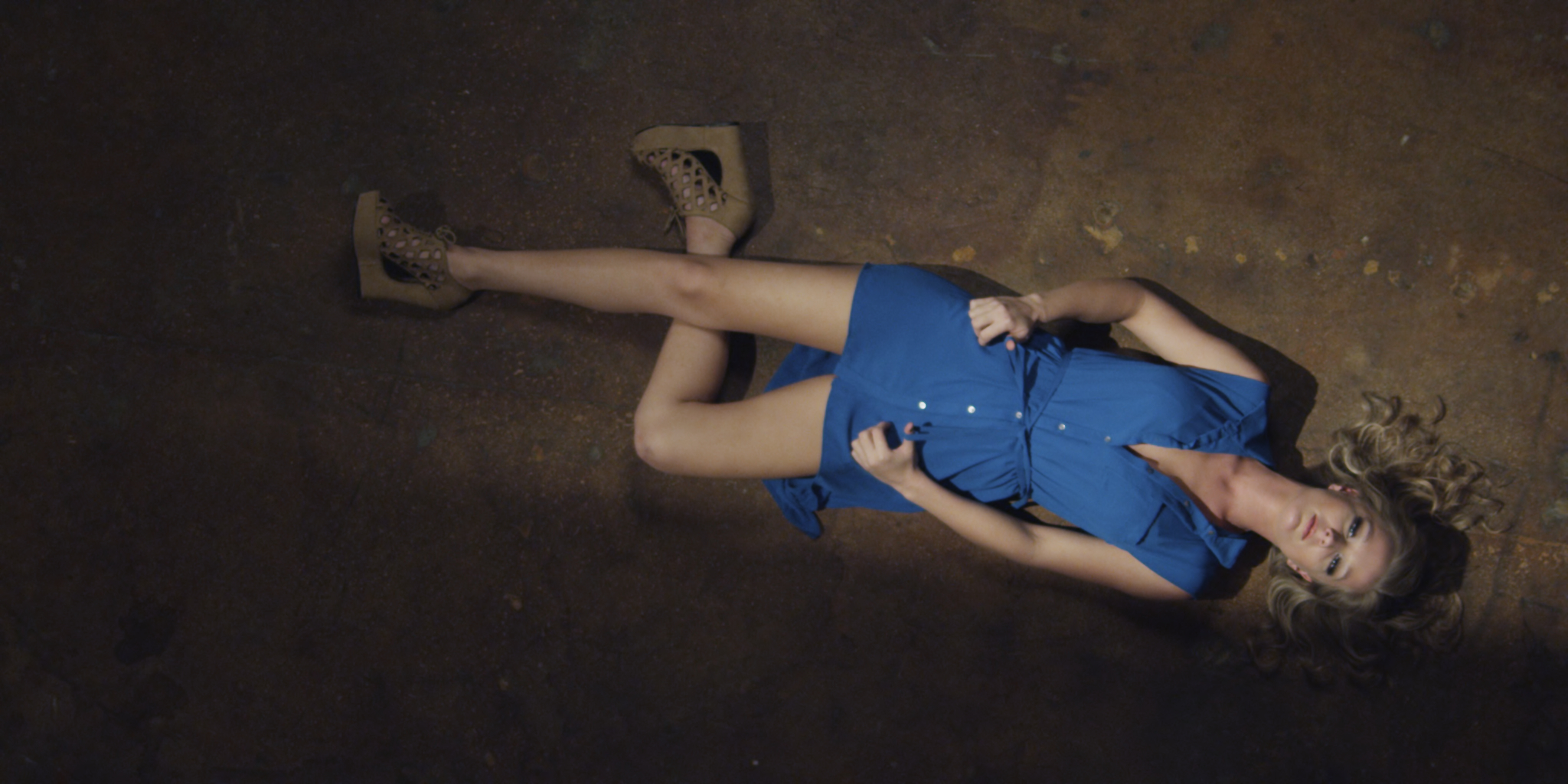
## What Campaign Strategy in Digital Marketing Actually Means
A campaign strategy is the connective tissue between a business goal and the work your team produces. It answers four questions in writing: who are we trying to reach, what do we want them to do, why should they listen to us right now, and how will we know whether the work succeeded. Everything else is execution.
Most marketers we talk to can answer the first two questions reasonably well. The third question is where briefs fall apart. Without a clear reason a buyer should pay attention this quarter rather than next, campaigns end up feeling generic. The fourth question is where finance teams check out. A campaign with no measurable outcome is a campaign that cannot be justified twelve months later when the next budget cycle starts.
C&I Studios has a simple rule on the production side: if the client cannot tell us what the campaign is supposed to do in one sentence, we do not start filming. The cost of pivoting in post-production is so much higher than the cost of an extra strategy call that it is almost always worth slowing down for a day before the cameras roll. The same principle applies whether you are commissioning a 30 second spot through our [video production services](https://c-istudios.com/video-production-services/) or a six month [branded content series](https://c-istudios.com/branded-content-series/) for a long form play.
## Start With the Business Outcome, Not the Tactic
The single biggest mistake in campaign planning is starting with a format. Someone in the room says we should do a TikTok series, or we need a podcast, or the founder wants a hero film, and the next ninety days get spent reverse-engineering a reason for that format to exist. Real strategy works the other way. It starts with the outcome the business needs and ends with the format that gets there most efficiently.
Outcomes worth chasing usually fall into one of four categories: net new customers, expansion revenue from existing customers, brand awareness inside a specific segment, or talent acquisition. Each one rewards a different campaign structure. A net new customer campaign needs strong proof points and a clear offer. An expansion campaign needs case studies that show how peer customers got more value over time. A brand campaign needs emotional resonance and reach. A talent campaign needs culture and behind the scenes content.
Once the outcome is locked, choose a single primary metric that maps directly to it. For lead generation, that might be cost per qualified lead. For ecommerce, it might be return on ad spend. For a hiring push, it might be qualified applications per dollar. The secondary metrics matter, but the primary one is what gets reported to the board and what determines whether the campaign gets a second flight.
## Define the Audience in Painful Detail
The phrase "our audience is everyone" has killed more campaigns than any creative misstep. If everyone is the target, no one is the target, and the resulting work tries to please too many people at once. Audience definition is uncomfortable because it requires saying out loud who you are choosing not to serve in this campaign.
The audience document for any serious campaign should include three layers. The first is demographic and firmographic context: age, geography, company size, role, income band, life stage. The second is behavioral context: what platforms they actually spend time on, what content they consume, what they search for during the buying process. The third is psychological context: what they are worried about, what they aspire to, what would make them feel smart for choosing your brand.
Most teams stop at the first layer because demographic data is the easiest to pull. The second and third layers are where the campaign actually gets built. A 38 year old marketing director in Chicago does not buy on demographic data. She buys because a piece of content named a problem she had been quietly struggling with and offered a credible path forward. The creative team cannot write that piece of content unless someone has done the work of mapping her concerns to the page. For broader B2C work, we often supplement first party data with research from [Think with Google](https://www.thinkwithgoogle.com/) and category-specific consumer studies.
## Map Each Stage of the Customer Journey
Every audience moves through a journey, and the content that works at the top of that journey is different from the content that closes a sale at the bottom. A common failure mode is producing a single hero film and expecting it to do everything. It will not. Hero content opens the door. The work that walks the customer through it is usually shorter, less polished, and built around answering a specific objection.
We typically map four stages: discovery, consideration, decision, and retention. Discovery content lives on social and addresses a problem the viewer may not have named yet. Consideration content lives on the website and in email and answers comparison questions, demonstrates capability, and introduces social proof. Decision content sits closer to the offer and shows the product or service in use, with pricing transparency where possible. Retention content keeps existing customers warm and turns them into referrals.
The format choice follows the stage, not the other way around. Discovery on TikTok and Instagram benefits from quick, native looking content that we can produce through our [social media marketing services](https://c-istudios.com/social-media-marketing-services/). Consideration tends to reward longer form video on YouTube and the website, often built through our [corporate video production](https://c-istudios.com/corporate-video-production/) workflow. Decision and retention sit best with case studies, customer spotlights, and event coverage produced by the [content creation services](https://c-istudios.com/content-creation-services/) team. Treat each stage as its own campaign within the campaign, with its own KPI.
## Set a Budget That Reflects Production Reality
Budget conversations are where strategy meets gravity. There is no way to plan a sophisticated multi channel campaign on a thousand dollar production budget, just as there is no way to justify a quarter million dollar hero film if the resulting audience is a hundred B2B buyers. The budget should reflect both the scale of the audience and the level of polish that audience expects from your category.
A reasonable framework: roughly forty to fifty percent on production, including pre-production, shoot days, and post. Twenty to thirty percent on paid media to push the content out. Ten to fifteen percent on talent, music licensing, and other creative inputs. Five to ten percent on measurement and analytics infrastructure. The remaining five to ten percent should sit as a contingency, because every campaign of any size encounters at least one surprise.
The production line item is the one most often underestimated. A polished commercial with location, talent, and a small crew rarely lands under fifteen thousand dollars when done correctly. A national broadcast level spot routinely runs six figures. Our pricing guide for a [30 second commercial](https://c-istudios.com/30-second-commercial-cost/) walks through the actual ranges by tier, and our [advertising services](https://c-istudios.com/advertising-services/) team builds full campaign budgets that include both production and media. If the budget cannot support the chosen format, change the format before you start cutting corners on the shoot.
## Write a Creative Brief Worth Following
A good creative brief saves more money than any other document in the campaign process. It locks the team into a shared definition of success before anyone spends a dollar on production. A bad brief, or no brief at all, creates round after round of revisions in post, drives up costs, and produces work that feels committee designed.
The brief should answer ten questions in plain language. What is the business goal. Who is the audience. What do we want them to feel. What do we want them to do. What is the one thing they should remember. What is the offer or call to action. Where will the content live. What is the tone and visual reference. What are the brand guardrails. What is the timeline and budget.
The visual reference section is where many briefs get sloppy. Pasting a moodboard of disconnected images is not a reference. A useful visual reference includes three or four pieces of existing work, ideally from outside your category, with notes explaining what specifically you want to borrow from each. Color palette from one, pacing from another, narrative structure from a third. Our [creative services](https://c-istudios.com/creative-services/) team treats the brief as a contract and refuses to start production until both sides have signed it.
## Choose Channels Based on Audience Behavior
Channel selection should follow the audience map, not channel trends. If your audience is forty year old finance executives, TikTok is probably not your best primary channel even if your competitors are experimenting there. If your audience is 24 year old gamers, LinkedIn is unlikely to move the needle. Pick channels based on where the audience actually spends time and what state of mind they are in on each platform.
Each major channel rewards a different content shape. Instagram and TikTok favor native, fast, character driven content. YouTube rewards longer form, search optimized video that earns ongoing organic traffic. LinkedIn rewards opinion, case studies, and founder content. Meta still moves direct response when paired with strong creative and tight targeting. Out of home and connected TV add brand weight to performance campaigns when the budget supports it.
The sequencing across channels matters as much as the channel selection. A typical sequence we run for a product launch starts with awareness on social and connected TV, follows with consideration content on YouTube and the website, retargets engaged viewers with decision content, and closes with email nurture. Each handoff is intentional. Reference work across categories sits in our [portfolio](https://c-istudios.com/our-work/) if you want to see how the sequencing plays out across different audiences.
## Plan the Production and Distribution Calendar
A campaign calendar is a forcing function. It converts the strategy into dates, owners, and dependencies. Without one, content slips, channels go dark for weeks at a time, and the team loses momentum. With one, everyone knows what is shipping and when, and missed deadlines become visible early enough to fix.
The minimum viable calendar covers three layers. The first is production milestones: kickoff, pre-production complete, shoot dates, rough cut, final delivery. The second is asset readiness: which versions of each piece of content go live on which platforms, in which aspect ratios, and with which captions. The third is media flight dates: when paid media starts, when it scales, when it pauses for testing, when it ends.
A common scheduling mistake is treating post-production as a buffer. It is not. Real [post-production services](https://c-istudios.com/post-production-services/) work, including color, sound, motion graphics, and revisions, takes time. A two week post window on a multi-asset campaign is usually unrealistic. Build the calendar backwards from launch and add a real buffer at the end, not in the middle. If the launch date is fixed, the production start date is fixed too, no matter how late the strategy gets approved.
## Measure What Actually Drives Revenue
Reporting is where most campaigns quietly fail. The dashboards look great. Impressions are up. Engagement is up. The CFO asks how it affected revenue and the team produces a slide with four asterisks and a footnote. The fix is to decide before the campaign launches which metrics are leading indicators and which one is the lagging revenue metric, then build the reporting around both.
For a paid campaign, that usually means tracking three layers. Top of funnel: reach, video completion rate, cost per thousand impressions. Mid funnel: click through rate, cost per click, cost per landing page view. Bottom of funnel: conversion rate, cost per acquisition, return on ad spend. The full picture lives across all three. A campaign with high top of funnel engagement but no bottom of funnel conversion is a creative or offer problem, not a media problem.
Source the data from the platforms when you must, but make the system of record your own analytics stack. Platform numbers tend to flatter the platform. A cross channel attribution view that uses your own conversion data is harder to set up and far more honest. Marketing automation platforms like [HubSpot](https://www.hubspot.com/) help knit channels together for B2B teams that do not have a dedicated analytics function. For larger programs, C&I Studios builds custom reporting layers tied to the actual campaign goal rather than the vendor default.
## Iterate Based on Data, Not Hunches
The first version of any campaign is rarely the best version. The biggest gains usually come from disciplined iteration, not from chasing a perfect launch. After the first two weeks of media, you should have enough data to identify which creative is working, which audiences are converting, and which channels deserve more budget.
The iteration cadence we recommend is weekly for the first month, biweekly after that. In each cycle, look at the leading indicators first. Which creative variants have the highest hold rate. Which audience segments have the lowest cost per qualified lead. Which placements are over delivering and which are dragging down the average. Make one significant change per cycle, not five. Five changes at once make it impossible to learn anything from the result.
Resist the temptation to kill creative too early. A piece of content that looks weak in the first 48 hours sometimes outperforms over a longer window as the algorithm finds the right audience. Give every variant at least seventy two hours of meaningful spend before drawing conclusions. The exception is anything with a brand safety issue, which should be paused immediately regardless of performance. Layering in [2D animation and motion design](https://c-istudios.com/2d-animation-motion-design/) variants is one of the cheaper ways to refresh creative without a full reshoot.
## Common Reasons Campaigns Underperform
Across the campaigns we have produced and watched in market, the failure patterns are remarkably consistent. The first is no clear primary audience. The second is no measurable primary outcome. The third is a creative that prioritizes craft over clarity, so the viewer admires the work but cannot recall what was being sold. The fourth is a media plan that spreads budget evenly across channels instead of concentrating it where the audience lives.
The fifth, and the one we see most often, is launching too late in the quarter and not leaving enough time to optimize. A campaign that runs for three weeks with no iteration is essentially a single experiment with no follow up. The same campaign run for ten weeks with weekly optimization tends to produce two or three times the result for the same total spend. Calendars matter more than people give them credit for.
The sixth pattern is letting the format dictate the strategy after the kickoff. Once the brief is signed, format changes should be rare and deliberate. If someone on the team suggests adding a podcast halfway through production, the right response is usually to plan it as a follow up campaign, not to bolt it onto the current one. Discipline at this stage is what separates campaigns that ship on time from campaigns that limp across the finish line.
## A Realistic Timeline From Kickoff to Launch
For a mid sized campaign with multi format video, a realistic timeline runs eight to twelve weeks from kickoff to first live media. Two weeks for strategy, audience definition, and brief approval. Two to three weeks for pre-production, including casting, location scouting, and storyboards. One to two weeks for the shoot, depending on the number of scenes and locations. Two to three weeks for post-production, including color, sound, and revisions. One week for final approvals, asset trafficking, and platform setup. That is the minimum that does not compromise quality.
Compressed timelines are possible, but they raise both cost and risk. A four week timeline can be done if the brief is tight, the format is simple, and the team is willing to make decisions quickly. It is not the right approach for a brand defining campaign. For ongoing work, the smartest move is to build a quarterly content rhythm with a [production team](https://c-istudios.com/video-production-los-angeles/) you trust, so each new campaign benefits from learnings rather than starting from zero.
If you are planning a campaign and want a second set of eyes on the strategy before you commit to a production budget, reach out through our [contact page](https://c-istudios.com/contact/). C&I Studios works out of Los Angeles, our largest production facility in Fort Lauderdale, and our office in New York, and the early strategy conversations are usually the highest leverage hour you will spend on any campaign.
## Work with C&I Studios
If you are planning a project like this, our team can take it from concept to final delivery. Explore our [video production services](https://c-istudios.com/video-production-services/), browse [our work](https://c-istudios.com/our-work/) to see how we tell brand stories, and [get in touch](https://c-istudios.com/contact/) when you are ready to start.
Originally published June 24, 2026
---
*This content is from [C&I Studios](https://c-istudios.com), a full-service production company.*
---
# New York Video Production: Inside the Knicks Parade
> Published: June 20, 2026
> Categories: Post & VFX
> Source: https://c-istudios.com/knicks-championship-parade-new-york-video/
---
.cib{--paper:#1b1d1f;--ink:#fff;--body:#d5d7d9;--muted:#8b9096;--line:rgba(255,255,255,.12);--thumb:#2b2e31;--card:#212426;--accent:#c02b0a;--blue:#5B8FA8;--serif:'Playfair Display',Georgia,serif;--sans:'Poppins',-apple-system,sans-serif;--measure:900px;background:var(--paper);color:var(--body);font-family:var(--sans);line-height:1.6;position:relative;left:50%;transform:translateX(-50%);width:90vw;max-width:1920px}
.cib *{box-sizing:border-box}
.cib .kicker{max-width:var(--measure);margin:58px auto 0;padding:0 22px;font-size:12.5px;font-weight:700;letter-spacing:2.5px;text-transform:uppercase;color:var(--blue)}
.cib h1.cibh1{text-wrap:balance;font-family:var(--serif);font-weight:500;font-size:clamp(46px,6vw,72px);line-height:1.08;color:var(--ink);max-width:var(--measure);margin:18px auto 0;padding:0 22px;letter-spacing:-.5px}
.cib .metarow{max-width:var(--measure);margin:20px auto 0;padding:0 22px;color:var(--muted);font-size:14px}
.cib .hero{position:relative;width:100%;height:0;padding-bottom:56.25%;overflow:hidden;margin:48px auto 0;border-top:1px solid var(--line);border-bottom:1px solid var(--line)}
.cib .hero .ph{width:100%;aspect-ratio:16/9;background:var(--thumb);border-top:1px solid var(--line);border-bottom:1px solid var(--line);display:flex;align-items:center;justify-content:center;color:#7d8288;font-size:13px;text-align:center;padding:0 20px}
.cib .body{max-width:var(--measure);margin:12px auto 0;padding:52px 22px 6px}
.cib .body.lead p:first-child{font-size:23px;line-height:1.62;color:var(--ink)}
.cib .body p{font-size:18.5px;line-height:1.85;margin:0 0 30px;color:var(--body)}
.cib .body h2{text-wrap:balance;font-family:var(--serif);font-weight:500;font-size:clamp(32px,4vw,48px);line-height:1.22;color:var(--ink);margin:70px 0 20px;letter-spacing:-.3px}
.cib .body h3{text-wrap:balance;font-family:var(--sans);font-weight:600;font-size:22px;color:var(--ink);margin:38px 0 8px}
.cib .body a{color:var(--ink);text-decoration:underline;text-decoration-color:rgba(255,255,255,.4);text-underline-offset:3px}
.cib .body a:hover{text-decoration-color:var(--ink)}
.cib .ctable{width:100%;border-collapse:collapse;margin:16px 0 30px;font-size:16px}
.cib .ctable th{background:#000;color:#fff;text-align:left;padding:10px 12px;font-family:var(--sans)}
.cib .ctable td{padding:10px 12px;border-bottom:1px solid var(--line);color:var(--body)}
.cib .inimg{position:relative;width:100%;height:0;padding-bottom:56.25%;overflow:hidden;margin:72px auto;border-top:1px solid var(--line);border-bottom:1px solid var(--line)}
.cib .inimg .ph{width:100%;aspect-ratio:16/9;background:var(--thumb);border-top:1px solid var(--line);border-bottom:1px solid var(--line);display:flex;align-items:center;justify-content:center;color:#7d8288;font-size:13px}
.cib .origpub{max-width:var(--measure);margin:60px auto 0;padding:26px 22px 0;border-top:1px solid var(--line);color:var(--muted);font-size:13.5px}
.cib .related{max-width:1200px;margin:64px auto 0;padding:34px 22px 76px}
.cib .related h3{font-family:var(--sans);font-size:12.5px;letter-spacing:2px;text-transform:uppercase;color:var(--ink);margin:0 0 24px}
.cib .grid{display:grid;grid-template-columns:repeat(3,1fr);gap:28px}
.cib .rc{background:var(--card);border:1px solid var(--line);display:block;text-decoration:none;color:inherit;transition:border-color .15s}
.cib a.rc:hover{border-color:rgba(255,255,255,.5)}
.cib .rc .thumb{position:relative;width:100%;height:0;padding-bottom:56.25%;background:var(--thumb);overflow:hidden}
.cib .rc .thumb img{position:absolute!important;top:0!important;left:0!important;width:100%!important;height:100%!important;object-fit:cover!important;margin:0!important}
.cib .rc .cc{padding:14px 15px 17px}
.cib .rc .rt{font-family:var(--serif);font-weight:500;font-size:16px;line-height:1.3;color:var(--ink);margin:0 0 6px}
.cib .rc .rm{font-size:11px;letter-spacing:1px;text-transform:uppercase;color:var(--muted)}
.cib img{margin:0!important;padding:0!important;display:block!important;vertical-align:top;max-width:100%}
.cib .hero img,.cib .inimg img{position:absolute!important;top:0!important;left:0!important;width:100%!important;height:100%!important;object-fit:cover!important;margin:0!important;padding:0!important;border:0!important;display:block!important;aspect-ratio:auto!important}
.cib .hero+.body{padding-top:36px}
@media(max-width:760px){.cib .grid{grid-template-columns:1fr}.cib .body h2{margin:52px 0 16px}.cib .body p{font-size:17.5px}.cib .inimg,.cib .hero{margin-top:44px}}
Post & VFX
# New York Video Production. Inside the Knicks Parade
10 min read
The Knicks won their first championship since 1973, and on June 18 the city threw them a parade up the Canyon of Heroes. Our lead editor, Mike Kruger, was there. Not on assignment. Mike lives in New York and he is a Knicks fan, so he went the same way a couple million other people went: for himself. He brought a camera because that is what he does, grabbed a few minutes of the day, and cut it together for fun.
What came back is a small, useful lesson in New York video production. Not because it is some grand statement, but because it shows what a professional editor does to ordinary footage even when nobody is paying for it. The clip is a social post. Two minutes, made for a feed. The reason it is worth a closer look is the instinct behind the cut, not the day it captured. We are putting it on the blog for the same reason we would walk a client through a rough cut: it is the clearest way to show what we actually do for a living.
Here is the post. Judge the footage against any other parade clip from that day, then notice what the edit is doing underneath it.
Your browser does not support the video tag.

## Personal Footage. Personal Instinct.
Let us be honest about what this is. Mike did not produce a documentary. He did not roll up with a crew, a permit, and a shot list. He stood in a crowd with one camera and shot what caught his eye, the way anyone with a phone did that morning. The footage is personal, not commissioned.
The difference shows up later, in the part nobody watching ever sees. Mike is a professional editor. He doesn't just switch off the way he approaches real work, so a personal parade video got the exact treatment a paying client gets: deliberate pacing, a real color grade, sound that was actually mixed instead of left raw. That is the whole story here. Same instinct, no brief. A trained editor cannot un-know how to build a cut, and that habit is the thing worth selling.
We could dress this up as a brand film and most people would not catch the difference. We are choosing not to, because the honest version is the more useful one. A studio that oversells a phone video is a studio that will oversell your project too. What actually happened is simpler and better: a professional spent an afternoon as a fan, then could not resist doing the job right. If you want to know how we treat the work you pay for, watch what we do with the work nobody asked us to make.
## The Edit Is the Job, the Camera Is Not
Most people think production is the camera. It is not. Anyone standing on Broadway that day captured the parade. Phones, point-and-shoots, a few thousand stories posted within the hour. The footage was everywhere and most of it was forgettable, because footage is raw material, not a finished thing.
The work happens after, in [post-production](https://c-istudios.com/what-a-post-production-company-does/), where a pile of clips becomes something with a shape. Mike came home with roughly 110 minutes of usable footage. The finished post runs about 110 seconds. That ratio, 60 to 1, is the job. Deciding what to throw away is harder and more valuable than deciding what to shoot, and it is exactly the skill that does not turn off when the shoot is personal.
## Why a Fan in the Crowd Got Shots a Crew Might Miss
There is a real production lesson buried in the fact that this was personal. A hired crew on a parade route spends half its attention on logistics: where to legally stand, how to move a million people deep, when to wrap. A fan who actually cares about the day is doing something a call sheet cannot buy. He is anticipating. Mike knew which way a Knicks crowd would surge, which corner would catch the falling ticker tape, and which kid climbing a subway railing was about to throw his arms up, because he felt the day the way the crowd felt it.
That instinct is the part of New York video production you cannot fake or fly in. We watch it play out on event work constantly. The shooters who catch the moment before the moment are the ones who understand the room, not the ones with the longest gear list. A parade has exactly one take. You either read it in real time or you go home with three hours of the back of someone's head. Proximity and genuine attention beat a bigger rig almost every time, and the footage in this post is the proof.
## What the C&I Treatment Actually Means
When we say Mike gave it the professional treatment, we mean a specific set of decisions, the same ones we make on brand work every week.
The cut was built in DaVinci Resolve, the same platform we finish client films on. The first pass threw out everything that was merely nice. A parade hands you endless pretty shots, and pretty is the enemy of a two minute piece. What survived was arranged so the energy climbs the way the day did, from the quiet of the side streets to the noise on Broadway. Pacing follows the crowd, not a metronome. When the sound builds, the cuts tighten. When the piece needs air, a shot holds a beat past comfortable so the next one lands.
Watch the first five seconds and the discipline is right there. A lazy edit opens on the biggest, loudest shot it has, spends its best moment immediately, and then has nowhere to go. Mike opens quiet and lets the day earn its volume, so by the time the color and the crowd arrive, you have somewhere to land. That restraint is learned. It is the difference between a clip that peaks in the thumbnail and a piece that holds for two full minutes, and it is the same call we make on every paid New York video production we finish.
The look is a deliberate [color grading](https://c-istudios.com/color-grading-services/) choice, not a filter. The cut moves between hard black and white and bursts of Knicks blue and orange. Black and white pulls a frame down to light, texture, and feeling. Color comes back only where it earns the moment, so the team colors hit harder for having been withheld. Then there is the [sound design](https://c-istudios.com/sound-design-for-video-production/), which does half the work nobody credits. The mix leans on the real audio of the day, horns and chants and the low roar of a crowd, shaped to rise and fall with the picture. An audience feels a cut with its ears before its eyes register it. None of that is luck, and none of it is visible. That invisible craft is the entire reason [post-production](https://c-istudios.com/what-is-post-production-everything-brands-need-to-know-after-the-shoot/) exists.
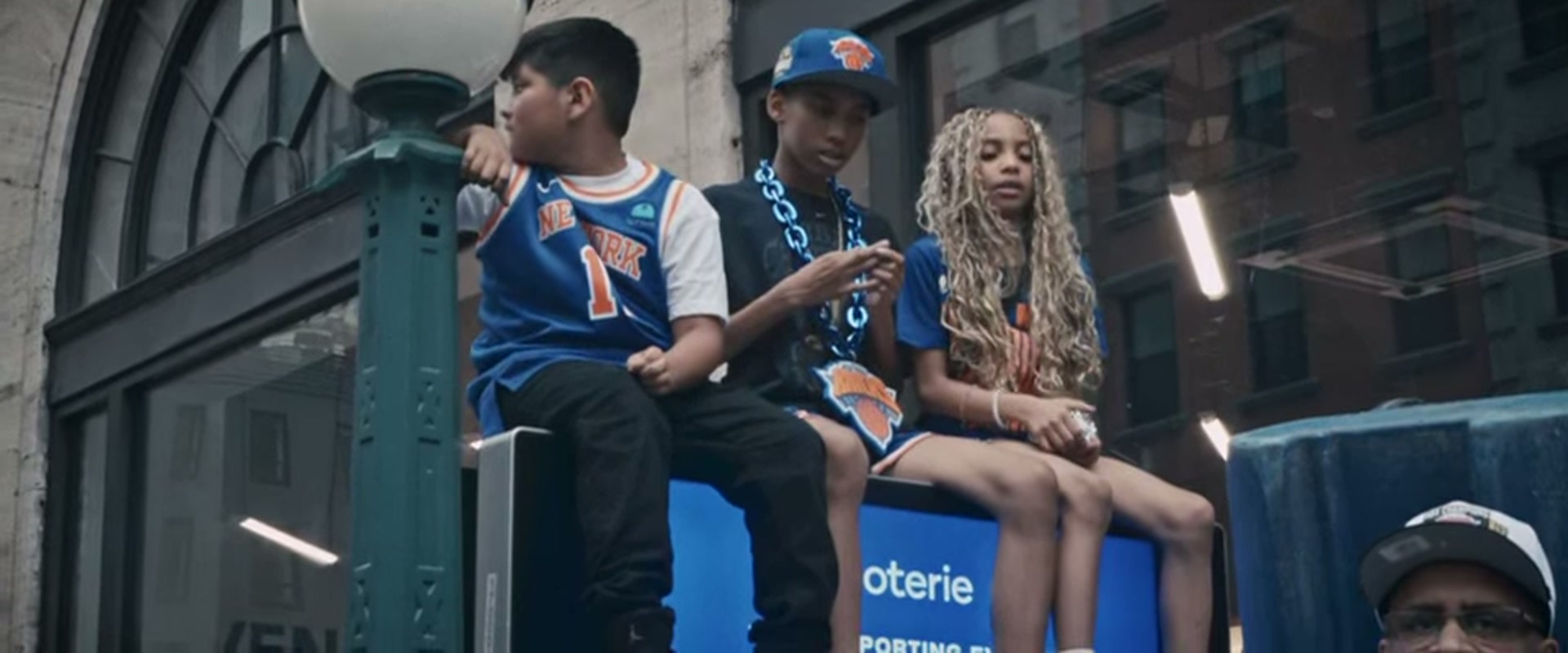
## Footage Versus a Finished Cut
If you take one thing from this, take this table. It is the difference between the clips on everyone's phone and the post Mike actually published.
Element
Raw footage
After the edit
Length
110 minutes
110 seconds
Structure
A pile of moments
A build with a payoff
Color
Mixed, inconsistent
Black and white with chosen color accents
Sound
Raw and peaky
Mixed to move with the picture
Result
Scrolled past
Watched to the end
Every row is a person making a decision. That is the work, whether the subject is a parade, a [commercial](https://c-istudios.com/commercial-production-company/), or a [documentary](https://c-istudios.com/documentary-production-company/).
None of this required a celebrity budget. It required someone who knew what to keep and what to throw away, plus the patience to grade and mix instead of exporting the first assembly and calling it done. That unglamorous middle is the part of New York video production that decides whether anyone finishes the video, and it is almost never the line a brand pays the most attention to on a quote. It should be. The shoot buys you raw material. The edit is what people actually watch, share, and remember, and it is the only stage where a mediocre day can still become a strong piece.
## The Same Discipline, Scaled to Client Work
Strip the Knicks out of it and you are looking at our actual process. We define the story and the deliverables first, because the edit should be designed before a single frame is shot. We capture against that target instead of hoping the coverage adds up later. Then the real value gets added in finishing: edit, color, sound, graphics, and delivery in every format a campaign needs, from a hero cut down to a feed of social pieces.
Mike got to skip the planning because he was a fan with a camera, not a producer on a clock. He could afford to shoot loose and find the story in the edit because the stakes were a fun post. On paid New York video production we do not gamble like that. We plan the cut so the camera only ever captures what the final piece actually needs, which is how a budget stays honest and a deadline stays real. The instinct that shaped a two minute parade clip is the same one that shapes a national campaign. The only thing that changes is the brief and the budget behind it.
## New York Video Production, On or Off the Clock
Mike shot this off the clock, but the instinct is the same one we sell. New York video production is a specific discipline. The city does not give you control, it gives you energy, and the trade only pays off if the person holding the camera and the person cutting it know what to do with both. Light changes block to block. Sound is never clean. Crowds, permits, and closures turn a simple move into a problem. Knowing how the city actually behaves is half the job, and it is not something you can brief into a stranger in a morning.
People ask what a piece like this costs. Off the clock it cost Mike an afternoon and a memory card. On the clock, the variables are crew size, shoot days, how much finishing the edit needs, and how many deliverables come out the other end. We break the real numbers down in our guide to [video production in New York City](https://c-istudios.com/video-production-in-new-york-city-costs-studios-what-to-expect/). What does not change is where the value sits. You can spend a fortune on a shoot and lose it in a weak edit, or shoot lean and win in [post-production](https://c-istudios.com/post-production-services/). For most of our clients, planning the edit before the shoot is the highest return decision in the budget. We also handle the [social media side](https://c-istudios.com/social-media-video-production-what-brands-need-to-know-in-2026/) so the same story shows up natively wherever the audience already is.
The Knicks post is the smallest possible version of all of it. One person, one camera, one afternoon, and a trained eye in the edit. Scale that up with a crew, a plan, and a real finishing schedule and you have what New York video production looks like when a brand is footing the bill. The instinct does not change. The production around it does.
## Frequently Asked Questions
**Was this a C&I production?**
No. Mike Kruger is our lead editor, he lives in New York, and he went to the parade as a fan on his own time. He shot it and cut it for fun. We are sharing it because it is a clean example of what professional editing instinct does to personal footage.
**Can you edit footage we already shot ourselves?**
Yes. A large share of our post-production work is client shot material that needs a real edit, color, and sound to become finished. We do not need to have been on the shoot to make it land.
**How long does a short cut like this take?**
A tight two minute piece from a single shoot usually takes a few days of finishing once the footage is logged. The length of the cut is not the length of the work. Color and sound are where the hours go.
**Do you only work in New York?**
No. We run New York video production out of our New York office and operate a studio in Los Angeles, and we produce on location anywhere a project calls for it.
**What does New York video production actually include?**
For us it is the whole arc: planning and pre-production, the shoot with the right crew and gear, and the finishing most people forget is even happening. A complete New York video production hands you delivery ready files in every format you need, not a drive of clips you now have to figure out yourself.
**Why black and white for a celebration?**
Black and white pushes emotion to the front and makes the returns of team color hit harder. It fit this story. The right look always follows the feeling you want the viewer to leave with.
Sources: [NBA.com parade coverage](https://www.nba.com/news/live-updates-new-york-knicks-parade-2026) and the [DaVinci Resolve](https://www.blackmagicdesign.com/products/davinciresolve) finishing platform.
## Work with C&I Studios
If you are planning a project like this, our team can take it from concept to final delivery. Explore our [post-production services](https://c-istudios.com/post-production-services/), browse [our work](https://c-istudios.com/our-work/) to see how we tell brand stories, and [get in touch](https://c-istudios.com/contact/) when you are ready to start.
Originally published June 20, 2026
---
*This content is from [C&I Studios](https://c-istudios.com), a full-service production company.*
---
# CGI Services for Film Production
> Published: June 19, 2026
> Categories: Post & VFX
> Source: https://c-istudios.com/cgi-services-for-film-production/
---
.cib{--paper:#1b1d1f;--ink:#fff;--body:#d5d7d9;--muted:#8b9096;--line:rgba(255,255,255,.12);--thumb:#2b2e31;--card:#212426;--accent:#c02b0a;--blue:#5B8FA8;--serif:'Playfair Display',Georgia,serif;--sans:'Poppins',-apple-system,sans-serif;--measure:900px;background:var(--paper);color:var(--body);font-family:var(--sans);line-height:1.6;position:relative;left:50%;transform:translateX(-50%);width:90vw;max-width:1920px}
.cib *{box-sizing:border-box}
.cib .kicker{max-width:var(--measure);margin:58px auto 0;padding:0 22px;font-size:12.5px;font-weight:700;letter-spacing:2.5px;text-transform:uppercase;color:var(--blue)}
.cib h1.cibh1{text-wrap:balance;font-family:var(--serif);font-weight:500;font-size:clamp(46px,6vw,72px);line-height:1.08;color:var(--ink);max-width:var(--measure);margin:18px auto 0;padding:0 22px;letter-spacing:-.5px}
.cib .metarow{max-width:var(--measure);margin:20px auto 0;padding:0 22px;color:var(--muted);font-size:14px}
.cib .hero{position:relative;width:100%;height:0;padding-bottom:56.25%;overflow:hidden;margin:48px auto 0;border-top:1px solid var(--line);border-bottom:1px solid var(--line)}
.cib .hero .ph{width:100%;aspect-ratio:16/9;background:var(--thumb);border-top:1px solid var(--line);border-bottom:1px solid var(--line);display:flex;align-items:center;justify-content:center;color:#7d8288;font-size:13px;text-align:center;padding:0 20px}
.cib .body{max-width:var(--measure);margin:12px auto 0;padding:52px 22px 6px}
.cib .body.lead p:first-child{font-size:23px;line-height:1.62;color:var(--ink)}
.cib .body p{font-size:18.5px;line-height:1.85;margin:0 0 30px;color:var(--body)}
.cib .body h2{text-wrap:balance;font-family:var(--serif);font-weight:500;font-size:clamp(32px,4vw,48px);line-height:1.22;color:var(--ink);margin:70px 0 20px;letter-spacing:-.3px}
.cib .body h3{text-wrap:balance;font-family:var(--sans);font-weight:600;font-size:22px;color:var(--ink);margin:38px 0 8px}
.cib .body a{color:var(--ink);text-decoration:underline;text-decoration-color:rgba(255,255,255,.4);text-underline-offset:3px}
.cib .body a:hover{text-decoration-color:var(--ink)}
.cib .ctable{width:100%;border-collapse:collapse;margin:16px 0 30px;font-size:16px}
.cib .ctable th{background:#000;color:#fff;text-align:left;padding:10px 12px;font-family:var(--sans)}
.cib .ctable td{padding:10px 12px;border-bottom:1px solid var(--line);color:var(--body)}
.cib .inimg{position:relative;width:100%;height:0;padding-bottom:56.25%;overflow:hidden;margin:72px auto;border-top:1px solid var(--line);border-bottom:1px solid var(--line)}
.cib .inimg .ph{width:100%;aspect-ratio:16/9;background:var(--thumb);border-top:1px solid var(--line);border-bottom:1px solid var(--line);display:flex;align-items:center;justify-content:center;color:#7d8288;font-size:13px}
.cib .origpub{max-width:var(--measure);margin:60px auto 0;padding:26px 22px 0;border-top:1px solid var(--line);color:var(--muted);font-size:13.5px}
.cib .related{max-width:1200px;margin:64px auto 0;padding:34px 22px 76px}
.cib .related h3{font-family:var(--sans);font-size:12.5px;letter-spacing:2px;text-transform:uppercase;color:var(--ink);margin:0 0 24px}
.cib .grid{display:grid;grid-template-columns:repeat(3,1fr);gap:28px}
.cib .rc{background:var(--card);border:1px solid var(--line);display:block;text-decoration:none;color:inherit;transition:border-color .15s}
.cib a.rc:hover{border-color:rgba(255,255,255,.5)}
.cib .rc .thumb{position:relative;width:100%;height:0;padding-bottom:56.25%;background:var(--thumb);overflow:hidden}
.cib .rc .thumb img{position:absolute!important;top:0!important;left:0!important;width:100%!important;height:100%!important;object-fit:cover!important;margin:0!important}
.cib .rc .cc{padding:14px 15px 17px}
.cib .rc .rt{font-family:var(--serif);font-weight:500;font-size:16px;line-height:1.3;color:var(--ink);margin:0 0 6px}
.cib .rc .rm{font-size:11px;letter-spacing:1px;text-transform:uppercase;color:var(--muted)}
.cib img{margin:0!important;padding:0!important;display:block!important;vertical-align:top;max-width:100%}
.cib .hero img,.cib .inimg img{position:absolute!important;top:0!important;left:0!important;width:100%!important;height:100%!important;object-fit:cover!important;margin:0!important;padding:0!important;border:0!important;display:block!important;aspect-ratio:auto!important}
.cib .hero+.body{padding-top:36px}
@media(max-width:760px){.cib .grid{grid-template-columns:1fr}.cib .body h2{margin:52px 0 16px}.cib .body p{font-size:17.5px}.cib .inimg,.cib .hero{margin-top:44px}}
Post & VFX
# CGI Services for Film Production
15 min read

Every film production team eventually hits a moment where the practical setup will not get you the shot. A car needs to flip in a way no stunt rig can guarantee. A creature has to share frame with an actor for ninety seconds. A 1972 skyline needs to reflect off a 2026 car door. That is where CGI services for film production move from a nice luxury to a budget line that protects the picture. We have spent years building visual effects pipelines on shows, indie features, and brand funded narratives where computer generated work had to feel like it belonged inside the camera lens, not next to it. The lesson is consistent: the choice of vendor changes the entire production schedule, and the choice should be made very early.
Cinema-grade CGI is not the same product as a real-time game cinematic or a fast turn social asset. The pipelines are different, the review cycles are longer, and the deliverables have to survive a finishing suite where a colorist will look at every pixel. When directors ask us how to build a CGI plan that does not derail the back half of post, the answer is almost always the same: bring the visual effects team in well before the first camera test. This guide walks through what cinema CGI actually covers, what it costs in 2026, how C&I Studios structures a project, and what to look for in a partner if you are still shopping.
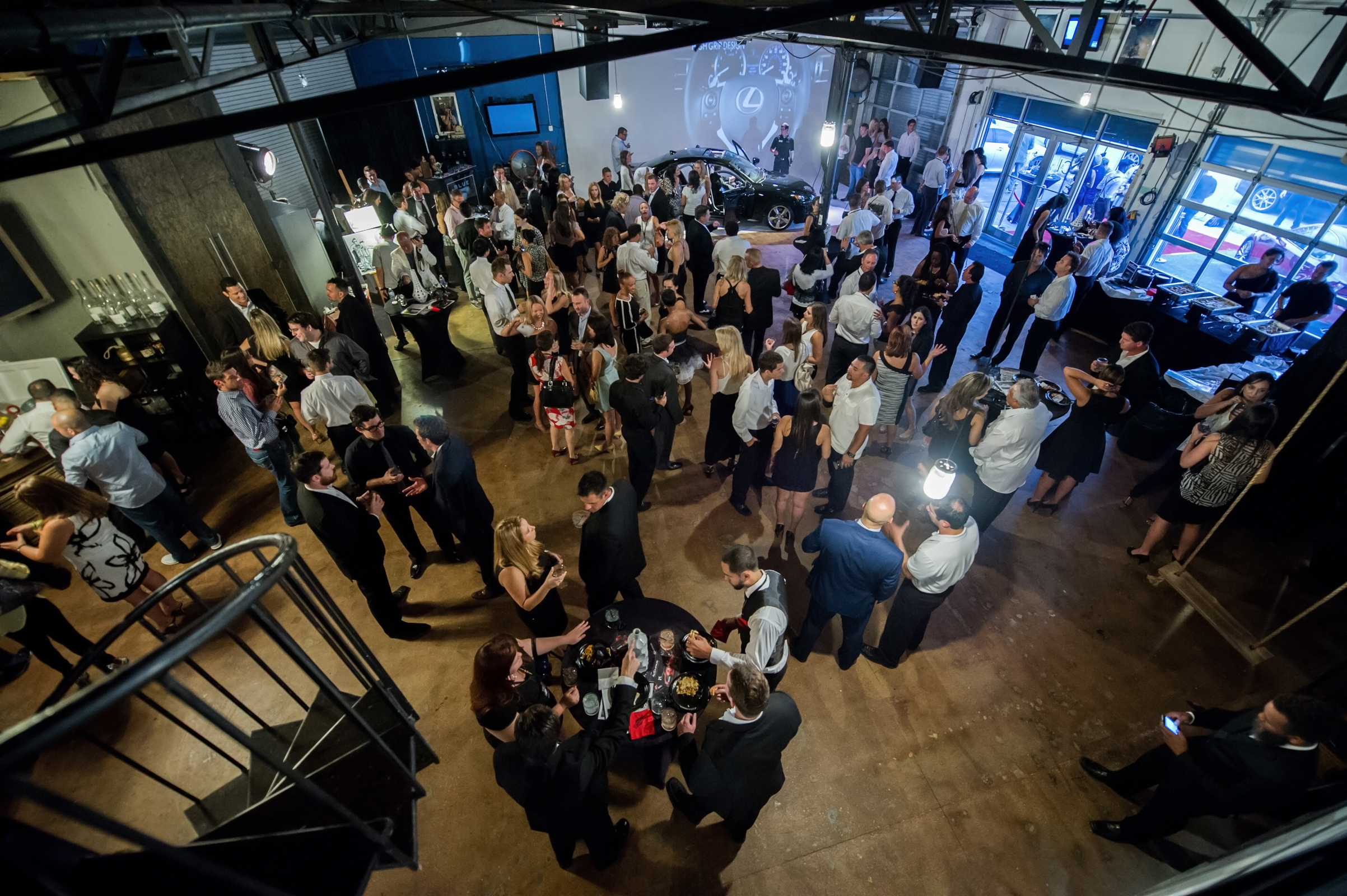
## What CGI Services for Film Production Actually Cover
CGI services for film production is a category that has stretched a great deal in the last decade. On a typical feature, the work breaks into a handful of buckets that often get bundled under one budget line.
The first bucket is environments. Set extensions, distant city skylines, planets, period locations, weather replacements, and full digital matte paintings. The director shoots the practical foreground, and the CGI team builds everything past the actors. We handle this work as part of our [VFX, compositing, and animation services](https://c-istudios.com/vfx-compositing-and-animation-services/), and it is usually the highest volume category on any film slate.
The second bucket is creatures and characters. Anything that breathes but is not a person. Animals, monsters, droids, photoreal stunt doubles, ghost work, and aged or de-aged faces. This bucket is the most expensive per second of any work the studio will commission.
The third bucket is vehicles, props, and rigid body simulation. Cars, planes, drones, ships, weapons, collapsing structures, debris fields. Almost every feature has at least one shot in this category, even if it is just a stunt double car that is too dangerous to crash on the day.
The fourth bucket is effects simulation. Fire, smoke, water, dust, magic, energy, and atmospherics. The simulation work that runs on render farms for hours per frame and looks expensive even when it is cheap to budget, because audiences are conditioned to see big spectacle in this category.
The fifth bucket is invisible CGI. Wire and rig removal, beauty cleanup, brand logo removal, set fixes, the digital head on stunt body shot. The audience never knows this work happened, which is the entire point. A surprising portion of a thirty million dollar feature budget can land here.
Add to those the supporting layers: previs, postvis, look development, 3D tracking, matchmove, and final compositing. A complete CGI services for film production scope of work usually includes some part of every category above, even on the smaller jobs.
## How Studios Use CGI to Solve On-Set Problems
Most of the calls we get fall into one of three patterns, and recognizing which one you are in helps a great deal with budgeting.
The first pattern is when a director wants something practical to look bigger. Maybe a real fire department is on standby, but the structure needs to look like it stretches another four stories. Maybe a real horse is on set, but the script asks for a herd. The practical work anchors realism, and the CGI extends scale. This is the cheapest type of CGI to commission, because the simulation has reference, the lighting has reference, and the compositor has a real foreground to hide seams behind.
The second pattern is when a stunt or hazard is genuinely impossible to capture in camera. Insurance flags, location restrictions, weather windows that closed, talent unavailability. Here CGI becomes a safety mechanism rather than an aesthetic one. We usually advise productions to keep a quiet line item for this in every contingency. The shot you assumed you could capture practically is the shot that will eventually go into the visual effects queue at the worst possible time.
The third pattern is when an entire sequence is conceived as CGI from the script stage. A space battle, a creature chase, a fully animated dream sequence. These shots get planned in [film production services](https://c-istudios.com/film-production-services/) meetings months ahead, with previs handled by our animation team and a clear deliverable shape locked in before anything is filmed live. These sequences are the most expensive per shot, but they are also the most predictable, because nothing about them depends on the day of the shoot.
If you do not know which pattern your project falls into, you are not ready to scope a CGI budget. We start every engagement by walking through the script with the director and producer and tagging shots in each bucket. That tagging exercise alone removes a meaningful percentage of cost overruns later.
## Pricing Bands for CGI Services in 2026
This is the question we get most often, and the honest answer is that ranges are wide because the work is fundamentally bespoke. That said, here is the framework we use when scoping CGI services for film production for clients in 2026.
Simple invisible work, rig removal, basic beauty cleanup, sky replacements, and brand removals, runs roughly $1,500 to $4,000 per shot at broadcast quality and $4,000 to $8,000 per shot at theatrical quality. The difference is render resolution, the time the compositor spends on the seams, and how robust the work has to be against a colorist pulling extreme contrast.
Set extensions and digital matte painting work runs $6,000 to $25,000 per shot at the lower end, and reaches $50,000 to $80,000 when full 3D environments have to camera move with a Steadicam or aerial plate. The variability is mostly camera move complexity and how much asset library reuse is possible across the sequence.
Vehicles and rigid body simulation depend on whether the asset already exists. A licensed digital double of a current model car can land in the $8,000 to $20,000 range per shot. A custom build of a period vehicle that has to deform in a collision can run $40,000 to $120,000 once asset build, rigging, and final destruction simulation are accounted for.
Creature work is the wildest range. A simple background animal that runs through frame and never holds focus can finish for $25,000. A hero creature that holds the screen for a full scene and interacts physically with talent will routinely cost $200,000 to $600,000 per scene once asset development, motion capture, look development, fur and skin work, and final lighting and compositing are added together. Hero photoreal humans, including high quality de-aging, typically start at $300,000 per shot and go up from there.
Sequences planned as fully CGI from the script stage are usually quoted as flat sequence rates rather than per shot. A two minute fully animated sequence with established assets and a moderate scope can fall in the $400,000 to $1.2 million range. A practical comparison: most prestige streaming dramas budget between 6 percent and 18 percent of total negative cost on visual effects, and most indie features land between 3 percent and 9 percent.
We share these ranges because the question of value cannot be answered without them. If a vendor is bidding 70 percent under the bottom of these ranges, they are either subcontracting offshore without telling you, or the work will not survive a finishing pass. Both outcomes hurt the picture.
## What to Look for in a CGI Vendor
Most CGI vendors will show you a strong reel. The harder question is whether the studio behind the reel can deliver work to your specific schedule and survive a finishing review. Here is the checklist we walk new producers through.
Look at how the vendor handles the awkward middle of a film, not the hero shots. Anyone can polish a single trailer shot. The harder skill is delivering 240 invisible cleanup shots on time, all of which have to color match the hero ones. Ask the vendor for an unreleased example, with permission, of a non-glamorous shot that they are proud of for a craft reason rather than a marketing one. The answer tells you whether they understand the work.
Look at their pipeline references. If they cannot speak in detail about the [Academy Color Encoding System](https://acescentral.com/) and how they handle ACES color transforms inside their compositing software, they are not equipped to deliver for a feature finishing pipeline. ACES is now a baseline expectation on serious work.
Look at how they handle review cycles. The right number of review rounds in a CGI bid is usually three to four per shot, with clear definitions of what each round is for. A vendor who promises unlimited revisions is mispricing the work, which means they will either run out of budget or push back on scope later.
Look at their bench depth. A studio that promises a senior compositor on every shot from day one and never names anyone is overpromising. A studio that names the supervisor, the lead, and the show structure in the bid is being honest about how the work will be done.
Look at where the work actually happens. Some boutique vendors take credit for work that an offshore team produced. That is not always a problem, but you should know about it before signing. We do not subcontract our core compositing or 3D work outside the studio.
We layer all of this into how we run CGI engagements through our [post-production services](https://c-istudios.com/post-production-services/) division, which has been the home of every meaningful visual effects job we have shipped in the last several years.
## Pre-Production. Where Great CGI Begins
The single highest leverage activity in any CGI services for film production engagement is previs. A clean previs of a CGI heavy sequence, locked with the director before the shoot, can save anywhere from 8 to 30 percent of the final visual effects budget. The reason is simple: previs locks camera language, blocking, and timing before any expensive asset gets built.
We use a fairly traditional previs pipeline. Block out the sequence in a real-time engine, run a few quick camera passes with the director, lock the timing, and convert that into a shot list with explicit duration, camera move, and asset complexity for each shot. That document is what the bid actually sits on, and it is also what the on-set visual effects supervisor uses to guide the camera operators and gaffers during principal photography.
Postvis follows the same shape but runs after the shoot. We composite very rough CGI elements over the actual plates to lock editorial before the final work begins. This is where the editor stops imagining what the missing creature looks like and starts cutting around what is actually going to be there.
The teams we work with most often in this phase sit inside our [creative services](https://c-istudios.com/creative-services/) and [2D animation and motion design](https://c-istudios.com/2d-animation-motion-design/) groups. The motion designers tend to be the strongest at previs, because they think in shot language and timing rather than in asset complexity.

## The Production Pipeline We Use
When principal photography starts, the CGI services team for a feature actually has a very busy job, even though no rendering is happening yet. On-set visual effects supervision is its own discipline, and on serious work it cannot be skipped.
The on-set team is responsible for tracking markers, lighting reference (the chrome ball, the gray ball, the Macbeth chart), HDRI captures, lens grids, camera reports, and witness camera coverage. The job is to make sure that when the plate gets to the visual effects studio later, the artists have everything they need to recreate the lighting and the lens.
This is the part most productions cut to save money, and it is usually the part that costs the most when something has to be fixed later in post. A clean on-set capture process can save weeks of look development time on a single sequence. We send a supervisor on every shoot where CGI services for film production are in the bid, and we treat that supervisor as a producer, not as a technician.
If the project is shooting in [Los Angeles](https://c-istudios.com/video-production-los-angeles/), our supervisors usually deploy from our soundstage rotation and gear inventory there. If you are shooting in New York, our [video production New York](https://c-istudios.com/video-production-new-york/) team handles supervision out of our office there. For East Coast features, we run on-set visual effects supervision out of our [Fort Lauderdale](https://c-istudios.com/video-production-fort-lauderdale/) facility, which is also where most of the practical builds and motion capture stage work happen.
## Post-Production and Finishing
After the shoot wraps, the CGI work begins in earnest. The asset build phase is first. Modeling, texturing, lookdev, rigging, and any motion capture cleanup. This phase usually runs four to twelve weeks depending on creature complexity and the number of new assets in the show.
Animation and simulation follow. This is where the hero performance gets dialed in for any creature work, and where the fluid, fire, and destruction work runs on the render farm. A single complex destruction shot can take a week of artist time and four days of render time. Hero creature shots can take six to ten weeks each.
Lighting and rendering finalize the shot. Every shot has to match the plate exactly, which means matching color, exposure, lens distortion, motion blur, and any practical artifacts in the original footage. We run our lighting and rendering through the same color pipeline our colorists use, which keeps shots consistent through the final grade.
Compositing is the last step. The compositor receives all the rendered passes, the original plate, the matte paintings, any practical elements, and assembles them into a final shot. A senior compositor on a feature usually finishes between two and five hero shots per week, depending on complexity.
Most of our final delivery work flows through the broader [video production services](https://c-istudios.com/video-production-services/) pipeline, where it sits alongside the live action edit, the sound mix, and the color grade. We do not consider visual effects a standalone deliverable. It only exists inside the finished picture.
## Common CGI Workflows by Genre
Action films lean heavily on the rigid body, vehicle, and stunt extension bucket. Most of the CGI cost on an action picture goes into making practical car flips look more violent, extending fight choreography that was unsafe to capture fully, and adding atmospheric effects like smoke, debris, and impact dust. The shots tend to be short and hide easily inside fast cuts.
Sci-fi and fantasy features are the most expensive category, because they often include hero creature work, full environment builds, and large scale simulation. They also tend to have the longest post schedules, often running 14 to 24 months from wrap to final delivery.
Thriller and drama features use CGI more invisibly. The work is often beauty cleanup, set fixes, weather replacement, period removal of modern signage, and quiet creature work like animals in a single scene. These pictures rarely advertise their visual effects, but they often have several hundred shots in the final cut.
Documentary work, including the [documentary film production](https://c-istudios.com/documentary-film-production/) work we produce for cause driven clients, often uses CGI for archival recreations, animated maps, infographics, and historical reconstruction. The budget per shot is much lower, but the volume can be high.
Branded films and [branded content series](https://c-istudios.com/branded-content-series/) work increasingly use cinema-grade CGI because the audience expectation has moved up. The same techniques that built a creature for a feature get scaled down to build a stylized product reveal or an animated brand mascot.
Music videos, television commercials, and prestige documentary all draw on the same CGI services for film production pipeline, just at different volumes. The pipeline is the same; the budget shape is different.
## Frequently Asked Questions
### How early should CGI services for film production be engaged on a feature?
Bring the visual effects supervisor into prep no later than eight weeks before principal photography. For any picture with hero creature work or significant simulation, twelve to sixteen weeks of prep is closer to the right number. The on-set capture protocols, the previs deliverables, and the bid all depend on that prep window.
### Can CGI be added in post if the shoot did not plan for it?
Yes, but the cost roughly doubles. Plates that were not shot with visual effects in mind require more compositing time, more tracking work, and more roto. Productions that try to add CGI after the fact usually wish they had budgeted a previs and a supervisor up front.
### What software does C&I Studios use?
Our compositing runs primarily in [Nuke](https://www.foundry.com/products/nuke-family) with some Flame work for finishing. 3D asset work flows through Maya and Houdini for simulation. Color is graded in DaVinci Resolve under ACES. The toolchain matters less than the pipeline discipline, but those are the tools.
### Will we own the assets at the end of the project?
Yes. Producers retain rights to all final shots and to the underlying assets unless the contract carves out a specific reuse clause. Asset libraries that get reused across sequels or campaigns can substantially reduce the cost of future work.
### How are revisions handled?
We bid three to four review rounds per shot, with the first focused on creative direction, the middle on technical accuracy, and the final on finishing polish. If a sequence needs more review than that, it is usually because the creative direction shifted, in which case the work is scoped as an additional round, not absorbed silently.
## Work with C&I Studios
If you are planning a project like this, our team can take it from concept to final delivery. Explore our [post-production services](https://c-istudios.com/post-production-services/), browse [our work](https://c-istudios.com/our-work/) to see how we tell brand stories, and [get in touch](https://c-istudios.com/contact/) when you are ready to start.
Originally published June 19, 2026
---
*This content is from [C&I Studios](https://c-istudios.com), a full-service production company.*
---
# Production and Distribution: A Case Study
> Published: June 15, 2026
> Categories: Commercial & Brand
> Source: https://c-istudios.com/production-and-distribution-case-study/
---
.cib{--paper:#1b1d1f;--ink:#fff;--body:#d5d7d9;--muted:#8b9096;--line:rgba(255,255,255,.12);--thumb:#2b2e31;--card:#212426;--accent:#c02b0a;--blue:#5B8FA8;--serif:'Playfair Display',Georgia,serif;--sans:'Poppins',-apple-system,sans-serif;--measure:900px;background:var(--paper);color:var(--body);font-family:var(--sans);line-height:1.6;position:relative;left:50%;transform:translateX(-50%);width:90vw;max-width:1920px}
.cib *{box-sizing:border-box}
.cib .kicker{max-width:var(--measure);margin:58px auto 0;padding:0 22px;font-size:12.5px;font-weight:700;letter-spacing:2.5px;text-transform:uppercase;color:var(--blue)}
.cib h1.cibh1{text-wrap:balance;font-family:var(--serif);font-weight:500;font-size:clamp(46px,6vw,72px);line-height:1.08;color:var(--ink);max-width:var(--measure);margin:18px auto 0;padding:0 22px;letter-spacing:-.5px}
.cib .metarow{max-width:var(--measure);margin:20px auto 0;padding:0 22px;color:var(--muted);font-size:14px}
.cib .hero{position:relative;width:100%;height:0;padding-bottom:56.25%;overflow:hidden;margin:48px auto 0;border-top:1px solid var(--line);border-bottom:1px solid var(--line)}
.cib .hero .ph{width:100%;aspect-ratio:16/9;background:var(--thumb);border-top:1px solid var(--line);border-bottom:1px solid var(--line);display:flex;align-items:center;justify-content:center;color:#7d8288;font-size:13px;text-align:center;padding:0 20px}
.cib .body{max-width:var(--measure);margin:12px auto 0;padding:52px 22px 6px}
.cib .body.lead p:first-child{font-size:23px;line-height:1.62;color:var(--ink)}
.cib .body p{font-size:18.5px;line-height:1.85;margin:0 0 30px;color:var(--body)}
.cib .body h2{text-wrap:balance;font-family:var(--serif);font-weight:500;font-size:clamp(32px,4vw,48px);line-height:1.22;color:var(--ink);margin:70px 0 20px;letter-spacing:-.3px}
.cib .body h3{text-wrap:balance;font-family:var(--sans);font-weight:600;font-size:22px;color:var(--ink);margin:38px 0 8px}
.cib .body a{color:var(--ink);text-decoration:underline;text-decoration-color:rgba(255,255,255,.4);text-underline-offset:3px}
.cib .body a:hover{text-decoration-color:var(--ink)}
.cib .ctable{width:100%;border-collapse:collapse;margin:16px 0 30px;font-size:16px}
.cib .ctable th{background:#000;color:#fff;text-align:left;padding:10px 12px;font-family:var(--sans)}
.cib .ctable td{padding:10px 12px;border-bottom:1px solid var(--line);color:var(--body)}
.cib .inimg{position:relative;width:100%;height:0;padding-bottom:56.25%;overflow:hidden;margin:72px auto;border-top:1px solid var(--line);border-bottom:1px solid var(--line)}
.cib .inimg .ph{width:100%;aspect-ratio:16/9;background:var(--thumb);border-top:1px solid var(--line);border-bottom:1px solid var(--line);display:flex;align-items:center;justify-content:center;color:#7d8288;font-size:13px}
.cib .origpub{max-width:var(--measure);margin:60px auto 0;padding:26px 22px 0;border-top:1px solid var(--line);color:var(--muted);font-size:13.5px}
.cib .related{max-width:1200px;margin:64px auto 0;padding:34px 22px 76px}
.cib .related h3{font-family:var(--sans);font-size:12.5px;letter-spacing:2px;text-transform:uppercase;color:var(--ink);margin:0 0 24px}
.cib .grid{display:grid;grid-template-columns:repeat(3,1fr);gap:28px}
.cib .rc{background:var(--card);border:1px solid var(--line);display:block;text-decoration:none;color:inherit;transition:border-color .15s}
.cib a.rc:hover{border-color:rgba(255,255,255,.5)}
.cib .rc .thumb{position:relative;width:100%;height:0;padding-bottom:56.25%;background:var(--thumb);overflow:hidden}
.cib .rc .thumb img{position:absolute!important;top:0!important;left:0!important;width:100%!important;height:100%!important;object-fit:cover!important;margin:0!important}
.cib .rc .cc{padding:14px 15px 17px}
.cib .rc .rt{font-family:var(--serif);font-weight:500;font-size:16px;line-height:1.3;color:var(--ink);margin:0 0 6px}
.cib .rc .rm{font-size:11px;letter-spacing:1px;text-transform:uppercase;color:var(--muted)}
.cib img{margin:0!important;padding:0!important;display:block!important;vertical-align:top;max-width:100%}
.cib .hero img,.cib .inimg img{position:absolute!important;top:0!important;left:0!important;width:100%!important;height:100%!important;object-fit:cover!important;margin:0!important;padding:0!important;border:0!important;display:block!important;aspect-ratio:auto!important}
.cib .hero+.body{padding-top:36px}
@media(max-width:760px){.cib .grid{grid-template-columns:1fr}.cib .body h2{margin:52px 0 16px}.cib .body p{font-size:17.5px}.cib .inimg,.cib .hero{margin-top:44px}}
Commercial & Brand
# Production and Distribution. A Case Study
15 min read

The phrase "production and distribution" gets thrown around a lot in our industry, but the gap between a polished hero film and a campaign that actually moves the needle is bigger than most clients realize. This case study walks through one of our recent end-to-end projects, a launch campaign for a consumer brand expanding into a new product category, and the choices our team made at every stage to make sure the content earned its budget back across paid, organic, and owned channels.
We are publishing this breakdown because the question we hear most often during discovery calls sounds something like, "Can you handle the whole thing, from concept through media?" The short answer is yes. The longer answer involves a lot of disciplined production planning, a careful post-production schedule, and a distribution rollout that treats each platform as its own beast. Here is how it worked on this project, told with the same level of detail we would share if you booked a call with C&I Studios tomorrow.

## The Client Brief and Why Production and Distribution Had to Live Under One Roof
The client came to us with a tight timeline. They had a Q4 launch window, a hero film they needed for a network TV buy, and a parallel need for cutdowns on YouTube, Meta, TikTok, connected TV, and out-of-home placements at three major airports. Their previous agency had quoted the production piece separately from the media piece, then handed off final masters to a distribution partner who could not turn around quick edits when the creative did not perform.
That handoff was the problem. By the time the media partner flagged that the 30-second cut was underperforming on TikTok, the production team had moved on to other clients and could not source a new edit for ten business days. The client lost a full month of paid spend, which on a national flight runs into the high six figures.
Our pitch was simple. Keep production and distribution under one roof, with the same producers on call through the entire campaign lifecycle. Our [video production services](https://c-istudios.com/video-production-services/) team partnered with our creative strategists and our paid media counterparts on day one, so that every shooting decision factored in how each asset would need to be cut for each platform. No more handoffs, no more wait time, no more lost spend when a cut underperforms.
The brand signed the engagement letter four days after our pitch. They had been burned once and were not interested in a second round of vendor coordination headaches.
## Pre-Production. Designing the Shoot for Multi-Platform Output
Pre-production for a campaign like this looks different than a one-off commercial. Our team built every shot list with three aspect ratios in mind, 16:9 for broadcast and YouTube, 9:16 for TikTok and Reels, and 1:1 for feed placements. The director of photography we brought on, a longtime collaborator who has shot for fashion clients like Calvin Klein with us in the past, walked through the boards twice with our creative director to make sure each setup could be reframed without losing the subject.
This sounds simple. It is not. A wide that looks great on a 65-inch TV often collapses when you crop to vertical, and a close-up that reads beautifully on a phone feels claustrophobic on a billboard. Our [creative services](https://c-istudios.com/creative-services/) team built a reference document that mapped every shot to every deliverable, then layered in pickups for safety. The document ran 47 pages.
We also locked in three external partners during this phase: a casting agency in Los Angeles, a location scout in our home market, and an animation studio for the lower-third and end-card treatments. All three signed off on the shot list before we touched a camera. The reason was simple. A campaign that splits production and distribution across vendors usually fails because pre-production decisions get reversed in post. We did not want that. Our [motion design](https://c-istudios.com/2d-animation-motion-design/) partners knew the exact frame counts they would need to deliver before the first slate clapped.
One of the underrated benefits of running production and distribution from the same studio is that pre-production becomes a budgeting exercise rather than a guessing game. When we know on day one that we need 18 deliverables across 5 platforms, we can build a shot list that earns each deliverable rather than scrambling for B-roll in the edit. Our brand strategy team in Los Angeles led that planning, with the production team in Fort Lauderdale dialing in feasibility against stage availability and gear inventory.
## Three Shoot Days, One Continuous Production Plan
The production block ran across three days at our [Fort Lauderdale production facility](https://c-istudios.com/video-production-fort-lauderdale/), which gave us 30,000 square feet of stage space, two color-correct grading suites, and an in-house wardrobe room. Day one was hero scene coverage. Day two was secondary scenes and product close-ups. Day three was pickups, social-first vertical content, and behind-the-scenes capture for the brand's owned channels.
We staffed each day with a slightly different crew. The hero day needed a Steadicam operator, a jib, and a focus puller who has worked with us on major sports and apparel campaigns. The vertical-content day needed a leaner crew, a gimbal, and a dedicated social producer who could write copy on the fly. Splitting the crew configurations let us match the production cost to the deliverable rather than paying for a full hero crew on a TikTok shoot.
On day two, we ran into a wardrobe issue that would have killed the schedule on a typical production. The hero color the client had approved did not photograph well under our LED panels. Our gaffer and our wardrobe lead spent an hour in the color suite testing alternatives while the talent was in makeup, and we shipped a corrected wardrobe pull from our nearby storage facility within ninety minutes. That kind of recovery only happens when production, post, and distribution are coordinated from the start.
Capture format was 6K RAW on the hero days and ProRes on the vertical days. We chose the higher bit depth on hero footage because we knew we would be pushing the color heavily in finishing and because we wanted the option to repurpose the master footage for future campaigns. That archival logic is part of the production and distribution philosophy we apply on every project.
## The Edit Bay. Building a Master Sequence and Eighteen Variants
Editorial began the morning after wrap. Our lead editor sat with the director and the brand strategist for a four-hour selects review, then built a 60-second master sequence as the foundation. From that master, we cut a 30, two 15s, a 6-second bumper, three vertical 15s, and a 90-second director's cut for the brand's YouTube channel. The math added up to 18 final deliverables once we factored in language localizations and platform-specific aspect ratios.
The discipline here is to build the master first and let every other cut descend from it. Editors who try to build each platform cut from scratch produce inconsistent storytelling and burn through hours that the budget cannot absorb. Our [post-production services](https://c-istudios.com/post-production-services/) team has refined this approach over hundreds of campaigns, and it is one of the reasons our turnaround times beat what most clients are used to.
We also built a live revision workflow with the client. Every cut went into a Frame.io review room with timestamped feedback. The brand's CMO could leave comments at 11pm and have a revised cut waiting by 8am the next morning. That speed only works when production and distribution share an editor pool. If the distribution team has to wait on a separate production vendor for revisions, you lose hours, sometimes days, sometimes weeks.
By the end of week two, all 18 final cuts were locked. The client signed off on hero versions before color and sound finishing began, which gave our finishing team a stable foundation to work from. That sequencing matters more than people realize. A finishing team that has to revise based on creative changes ends up doing the work twice.
## Sound Design, Color, and Finishing for Broadcast and Social
Color grading happened in two passes. The first pass established the master look on the hero 60. The second pass adapted that look for vertical, where lower bitrates and smaller screens require slightly punchier contrast and slightly warmer skin tones to read well at thumbnail size. We have learned over time that a color grade optimized for broadcast looks washed out on a phone, and a color grade optimized for a phone looks oversaturated on a 4K TV.
Sound was handled by our [audio engineering](https://c-istudios.com/audio-engineering-services/) team, who delivered three separate mixes. A broadcast mix at minus 24 LKFS for cable, a streaming mix at minus 16 LUFS for connected TV, and a mobile-optimized mix with the music slightly elevated and the sub frequencies rolled off. Every platform has its own loudness specs, and a mix that ignores those specs gets normalized into oblivion the moment it goes live.
We added captions on every cut. Closed captions on YouTube and connected TV, burned-in captions on TikTok and Reels. The captioning was done by a human transcriber on our team, not an automated tool, because the brand had specific terminology that automated captioning kept mangling. This is the unglamorous side of production and distribution work, but it is the difference between a campaign that runs cleanly and one that gets flagged for accessibility issues mid-flight.
Finishing wrapped on day 19 of the campaign timeline. The client had requested 25 days from kickoff to first asset delivered, so we were six days ahead of schedule. That cushion gave the media team room to test creative variants before the official launch.

## The Distribution Plan. Sequencing Channels for Maximum Lift
This is where most agencies hand off to a separate media partner. Our approach is to treat distribution as a creative discipline, not a logistics function. The media plan was built in parallel with the production plan, so by the time the assets were finished, every platform had a launch sequence, a creative rotation schedule, and a measurement framework already in place.
The launch sequence ran as follows. Day one, hero film goes live on the brand's YouTube channel and broadcast TV. Day two, vertical cutdowns activate on TikTok and Reels with paid spend. Day three, connected TV placements light up across Hulu, Roku, and Samsung. Day five, out-of-home airport placements begin a two-week run. Day seven, a behind-the-scenes mini-doc drops on the brand's LinkedIn and the agency case study runs on our [portfolio page](https://c-istudios.com/our-work/).
Each phase fed the next. Broadcast and YouTube built awareness. Vertical paid media drove consideration. Connected TV closed the loop with audiences who had already encountered the brand. The sequencing was designed around findings from [Think with Google](https://www.thinkwithgoogle.com/) research on cross-screen video sequencing, which has consistently shown that audiences exposed to a brand on multiple screens are more likely to convert than audiences who see the same creative repeated on a single channel.
## Paid Media. How Production Decisions Shaped Targeting
Paid media on this campaign ran across five platforms, each with its own creative requirements and targeting logic. Meta got 9:16 and 1:1 versions with three creative variants per audience segment. TikTok got native-feeling vertical content shot specifically for the platform, not repurposed broadcast cuts. YouTube got skippable and non-skippable variants with end-cards built by our [VFX and motion design](https://c-istudios.com/vfx-compositing-and-animation-services/) team.
Connected TV was the most interesting piece of the buy. CTV inventory has grown rapidly, but the creative supply has not kept pace. Most CTV ads are repurposed 30-second broadcast spots that ignore the platform's unique viewing context. We produced a CTV-specific 30 with slower pacing, larger on-screen text, and a stronger call-to-action overlay because we knew the viewer was sitting on a couch, not glancing at a phone.
Our [advertising services](https://c-istudios.com/advertising-services/) team built the targeting in lockstep with the production team. When we knew the hero spot would feature a particular wardrobe choice, we built lookalike audiences from people who had engaged with similar aesthetic content. When we knew the vertical cuts would lean into a specific cultural moment, we layered in interest targeting to match. Production decisions and targeting decisions reinforced each other, which is how production and distribution unlock compounding returns rather than additive ones.
A note on measurement. We use platform-native attribution as a baseline and overlay a multi-touch attribution model from a third-party partner. Single-touch attribution undercounts the role of upper-funnel video, and we have seen too many clients cut their best-performing creative because last-click data made it look weak. [The IAB](https://www.iab.com/) has published extensive guidance on cross-platform measurement that informs how we set up reporting on every C&I Studios campaign.
## Organic and Owned. The Quiet Engines Behind the Campaign
Paid media gets the budget headlines, but organic and owned channels often deliver the longest-tail value. On this campaign, our [social media marketing](https://c-istudios.com/social-media-marketing-services/) team built an organic content calendar that ran for 12 weeks beyond the paid flight, pulling clips and stills from the production to keep the brand's feeds active.
The behind-the-scenes mini-doc was the standout piece. We had two cameras rolling during every shoot day capturing the crew, the director's process, and the casting decisions. That footage cut into an 8-minute documentary that lived on the brand's YouTube and LinkedIn, where it generated more engagement per impression than the hero spot itself. Audiences want to see how the work gets made, and a production company that captures that footage during the shoot is delivering an asset that a media-only partner cannot.
We also produced a series of three short interviews with the brand's product team that ran on the brand's blog and newsletter. Our [content creation](https://c-istudios.com/content-creation-services/) team handled the writing, the shoot, and the edit. None of those assets were in the original brief, but once the production was rolling, the marginal cost to capture them was small relative to the long-term value they generated for organic search and email engagement.
Owned channels also gave the brand a place to direct traffic from paid campaigns. The hero film lived as a centerpiece on a custom landing page, with the vertical cuts embedded below as social proof. The landing page was built by the brand's web team but informed by our recommendations on which clips converted best in early testing. Live streaming components were handled by our [live streaming](https://c-istudios.com/video-audio-live-streaming/) producers for a launch event held two weeks into the flight.
## Measurement, Optimization, and Mid-Flight Edits
The reporting cadence on this campaign was weekly, with a daily standup between our production lead, the brand's media director, and our analytics partner. Three weeks into the paid flight, we noticed that one of the vertical cuts was significantly underperforming on TikTok. Click-through rate was less than half of what we projected, and the platform's algorithm was throttling delivery accordingly.
Because production and distribution lived under the same roof, we were able to diagnose the problem and ship a fix in 48 hours. The opening frame of the underperforming cut showed the product in close-up, which our analytics partner suggested was too commercial-looking for the platform's audience. We pulled the original master, recut with a softer opening that featured a person rather than a product, and pushed the new version live within two business days. Click-through rate on the new cut beat the platform benchmark within a week.
That kind of mid-flight responsiveness is the single biggest argument for keeping production and distribution under one roof. A media partner cannot ship new creative without going back to the production vendor, and a production vendor cannot prioritize a rush edit without disrupting other client work. When the same team owns both, the feedback loop closes in hours rather than weeks.
We applied similar optimization logic across the campaign. A 6-second YouTube bumper that was underperforming got a new end-card. A connected TV cut that was driving strong upper-funnel awareness but weak conversion got a new call-to-action overlay. Every optimization fed back into our measurement model, and the model in turn informed the next campaign's creative. That feedback loop is the long-term value of an integrated production and distribution engagement.
## What This Production and Distribution Model Means for Clients
The campaign delivered above the brand's benchmarks across every channel we measured. More importantly, the brand walked away with an asset library, a measurement framework, and a creative-to-media feedback loop that they have continued to use on subsequent launches. That outcome is the real product of an integrated production and distribution model. Hero films do not exist in isolation. They exist inside a media plan, and they perform or fail based on how well the plan and the creative were designed together.
C&I Studios is not the right partner for every project. Some brands have agency-of-record relationships that make sense to preserve, and we are happy to work in production-only or distribution-only configurations when the structure calls for it. But when a brand has a launch window, a complex multi-channel media plan, and a real need to optimize creative in flight, an integrated team usually delivers better outcomes per dollar than a chain of specialized vendors.
Our team in Los Angeles handles brand strategy and creative direction for most campaigns. Our [Los Angeles production team](https://c-istudios.com/video-production-los-angeles/) covers West Coast shoots, and our [New York office](https://c-istudios.com/video-production-new-york/) handles East Coast capture. The Fort Lauderdale facility is our largest stage and where most of the post and finishing work happens. The configuration lets us scale up or down to match the campaign without losing continuity, which is exactly what an integrated production and distribution engagement requires.
If you are scoping a project that needs both production and distribution to live under one roof, we would be glad to walk you through how we have structured similar engagements at C&I Studios. [Reach out](https://c-istudios.com/contact/) and our team will set up a discovery call. Production and distribution work best when they are designed together from the first phone call, not stitched together at the end.
## Work with C&I Studios
If you are planning a project like this, our team can take it from concept to final delivery. Explore our [video production services](https://c-istudios.com/video-production-services/), browse [our work](https://c-istudios.com/our-work/) to see how we tell brand stories, and [get in touch](https://c-istudios.com/contact/) when you are ready to start.
Originally published June 15, 2026
---
*This content is from [C&I Studios](https://c-istudios.com), a full-service production company.*
---
# Hiring a Commercial Filming Company
> Published: June 12, 2026
> Categories: Commercial & Brand
> Source: https://c-istudios.com/hiring-commercial-filming-company/
---
.cib{--paper:#1b1d1f;--ink:#fff;--body:#d5d7d9;--muted:#8b9096;--line:rgba(255,255,255,.12);--thumb:#2b2e31;--card:#212426;--accent:#c02b0a;--blue:#5B8FA8;--serif:'Playfair Display',Georgia,serif;--sans:'Poppins',-apple-system,sans-serif;--measure:900px;background:var(--paper);color:var(--body);font-family:var(--sans);line-height:1.6;position:relative;left:50%;transform:translateX(-50%);width:90vw;max-width:1920px}
.cib *{box-sizing:border-box}
.cib .kicker{max-width:var(--measure);margin:58px auto 0;padding:0 22px;font-size:12.5px;font-weight:700;letter-spacing:2.5px;text-transform:uppercase;color:var(--blue)}
.cib h1.cibh1{text-wrap:balance;font-family:var(--serif);font-weight:500;font-size:clamp(46px,6vw,72px);line-height:1.08;color:var(--ink);max-width:var(--measure);margin:18px auto 0;padding:0 22px;letter-spacing:-.5px}
.cib .metarow{max-width:var(--measure);margin:20px auto 0;padding:0 22px;color:var(--muted);font-size:14px}
.cib .hero{position:relative;width:100%;height:0;padding-bottom:56.25%;overflow:hidden;margin:48px auto 0;border-top:1px solid var(--line);border-bottom:1px solid var(--line)}
.cib .hero .ph{width:100%;aspect-ratio:16/9;background:var(--thumb);border-top:1px solid var(--line);border-bottom:1px solid var(--line);display:flex;align-items:center;justify-content:center;color:#7d8288;font-size:13px;text-align:center;padding:0 20px}
.cib .body{max-width:var(--measure);margin:12px auto 0;padding:52px 22px 6px}
.cib .body.lead p:first-child{font-size:23px;line-height:1.62;color:var(--ink)}
.cib .body p{font-size:18.5px;line-height:1.85;margin:0 0 30px;color:var(--body)}
.cib .body h2{text-wrap:balance;font-family:var(--serif);font-weight:500;font-size:clamp(32px,4vw,48px);line-height:1.22;color:var(--ink);margin:70px 0 20px;letter-spacing:-.3px}
.cib .body h3{text-wrap:balance;font-family:var(--sans);font-weight:600;font-size:22px;color:var(--ink);margin:38px 0 8px}
.cib .body a{color:var(--ink);text-decoration:underline;text-decoration-color:rgba(255,255,255,.4);text-underline-offset:3px}
.cib .body a:hover{text-decoration-color:var(--ink)}
.cib .ctable{width:100%;border-collapse:collapse;margin:16px 0 30px;font-size:16px}
.cib .ctable th{background:#000;color:#fff;text-align:left;padding:10px 12px;font-family:var(--sans)}
.cib .ctable td{padding:10px 12px;border-bottom:1px solid var(--line);color:var(--body)}
.cib .inimg{position:relative;width:100%;height:0;padding-bottom:56.25%;overflow:hidden;margin:72px auto;border-top:1px solid var(--line);border-bottom:1px solid var(--line)}
.cib .inimg .ph{width:100%;aspect-ratio:16/9;background:var(--thumb);border-top:1px solid var(--line);border-bottom:1px solid var(--line);display:flex;align-items:center;justify-content:center;color:#7d8288;font-size:13px}
.cib .origpub{max-width:var(--measure);margin:60px auto 0;padding:26px 22px 0;border-top:1px solid var(--line);color:var(--muted);font-size:13.5px}
.cib .related{max-width:1200px;margin:64px auto 0;padding:34px 22px 76px}
.cib .related h3{font-family:var(--sans);font-size:12.5px;letter-spacing:2px;text-transform:uppercase;color:var(--ink);margin:0 0 24px}
.cib .grid{display:grid;grid-template-columns:repeat(3,1fr);gap:28px}
.cib .rc{background:var(--card);border:1px solid var(--line);display:block;text-decoration:none;color:inherit;transition:border-color .15s}
.cib a.rc:hover{border-color:rgba(255,255,255,.5)}
.cib .rc .thumb{position:relative;width:100%;height:0;padding-bottom:56.25%;background:var(--thumb);overflow:hidden}
.cib .rc .thumb img{position:absolute!important;top:0!important;left:0!important;width:100%!important;height:100%!important;object-fit:cover!important;margin:0!important}
.cib .rc .cc{padding:14px 15px 17px}
.cib .rc .rt{font-family:var(--serif);font-weight:500;font-size:16px;line-height:1.3;color:var(--ink);margin:0 0 6px}
.cib .rc .rm{font-size:11px;letter-spacing:1px;text-transform:uppercase;color:var(--muted)}
.cib img{margin:0!important;padding:0!important;display:block!important;vertical-align:top;max-width:100%}
.cib .hero img,.cib .inimg img{position:absolute!important;top:0!important;left:0!important;width:100%!important;height:100%!important;object-fit:cover!important;margin:0!important;padding:0!important;border:0!important;display:block!important;aspect-ratio:auto!important}
.cib .hero+.body{padding-top:36px}
@media(max-width:760px){.cib .grid{grid-template-columns:1fr}.cib .body h2{margin:52px 0 16px}.cib .body p{font-size:17.5px}.cib .inimg,.cib .hero{margin-top:44px}}
Commercial & Brand
# Hiring a Commercial Filming Company
10 min read

Shopping for a commercial filming company is one of those purchases where the price spread is so wide that buyers reasonably ask if everyone is selling the same thing. They are not. The difference between a five-figure spot and a six-figure spot is rarely about camera bodies. It is about producers who chase permits before you ask, gaffers who do not need a second take, and editors who think in story instead of cuts. We have watched brand teams underestimate that gap for years, and we have watched the cost of getting it wrong show up in soft launch numbers six months later.
This guide is for the marketing director, brand manager, or founder who is about to issue an RFP and wants to choose well. We will cover what a commercial filming company actually delivers, how rates are built, the questions to ask before signing, and the red flags that should send you back to the bid list. Our team at C&I Studios has produced commercials for Nike, Coca-Cola, AT&T, NFL, NBC, H&M, Calvin Klein, and SiriusXM. The lessons below come from that work, not from a category overview deck.

## What a Commercial Filming Company Actually Delivers
A commercial filming company is not just a shoot crew. The shoot is roughly twenty percent of the engagement. The rest is pre-production strategy, casting and location scouting, post-production, sound design, color grading, motion graphics, and the delivery wrangling that ends with a 4K master, a vertical cutdown, and seventeen platform-specific exports that all open cleanly on the brand team's first try.
A full-service commercial filming company should be able to hand you, at minimum, the following:
- A creative director or executive producer who owns the brief from kickoff through final delivery
- Pre-production planning: treatment, shot list, storyboards, location scout decks, talent reels
- Production crew: director, DP, gaffer, key grip, sound mixer, production designer, makeup, wardrobe, and a producer running the day
- Equipment: cinema cameras, lighting, grip, audio, lens packages, stabilization, and specialty rigs when the script calls for them
- Post-production: editing, color, sound mix, motion graphics, VFX, and platform-ready exports
When a vendor cannot cover all five categories with in-house or trusted partner resources, the brand inherits the seams. The brand becomes the project manager who chases the colorist, the sound house, and the editor. That is fine if you have an in-house producer who has done it before. Most marketing teams do not.
This is where our [video production services](https://c-istudios.com/video-production-services/) approach is built differently. We staff the whole pipeline in-house, from pre-pro to final delivery, with one producer owning your project end to end. The same applies to our [corporate video production](https://c-istudios.com/corporate-video-production/) and [advertising services](https://c-istudios.com/advertising-services/) teams. You sign one contract, not seven.
## How to Tell a Real Commercial Filming Company From a Pretender
The industry barrier to entry is low. A camera body and a website can technically open a commercial filming company. Sorting the operators from the pretenders takes about ten minutes if you know where to look.
Start with reel diversity. A real commercial filming company has work across categories: automotive, apparel, beverage, tech, financial services, sports. If every piece on the reel is a wedding repurposed as a brand film, you are not looking at a commercial shop. You are looking at a videographer trying to scale up. Both are honest businesses. They are not the same business.
Next, look at named clients. Brands like Nike or Coca-Cola do not hire production companies that cannot deliver on schedule. Repeat work is the strongest signal. If a vendor has shot for the same brand more than twice, the brand has answered the question for you.
Then look at infrastructure. Owning or operating a studio is not strictly required, but it changes the math on reshoots, pickups, and weather contingencies. Our [Fort Lauderdale production facility](https://c-istudios.com/video-production-fort-lauderdale/) runs 30,000 square feet of stages, edit bays, and prop and wardrobe storage, which means a scheduled reshoot does not become a permit chase. Our [Los Angeles](https://c-istudios.com/video-production-los-angeles/) and [New York](https://c-istudios.com/video-production-new-york/) teams plug into that pipeline when a campaign demands market-specific production.
Finally, look at the team. A producer-led shop will list producers, directors, and DPs by name. A shop that hides the team behind a homepage video is often a sales front for a freelance roster they assemble on demand. Freelance assembly is not inherently bad. It is bad when the brand does not know that is what they are buying. Ask the question directly: who is on payroll versus who is on a 1099.
## What Commercial Filming Actually Costs
This is the question that closes more bid sheets than any other, and most commercial filming company websites will not answer it on the page. We will, because pretending pricing is a secret is part of why this industry has trust issues.
A reasonable national-quality commercial in the United States lives in the following ranges:
- **Low end, branded social spots (15 to 60 seconds):** $8,000 to $25,000
- **Mid-market TV or web commercials with talent (30 seconds):** $25,000 to $75,000
- **National broadcast commercials with name talent:** $150,000 to $500,000 and up
- **High-end automotive, beverage, or fragrance flagship campaigns:** $500,000 to several million
These ranges assume union or near-union crew rates, real location fees, proper insurance, and a colorist who does not also edit. Cheaper exists. It is rarely cheaper for the right reasons.
The variables that move the price most are talent (SAG-AFTRA day rates plus usage), locations and permits, equipment package, crew size, days on set, and post-production complexity. Animation and VFX move the budget faster than any of the others. So does original music. According to research published by [Think with Google](https://www.thinkwithgoogle.com/) on advertising effectiveness, creative quality drives roughly seventy percent of campaign performance. That is the single best argument against the cheapest bid.
When projects need a more flexible model than a single bid, our [content creation services](https://c-istudios.com/content-creation-services/) and [branded content series](https://c-istudios.com/branded-content-series/) teams build ongoing programs at fixed monthly rates instead of one-off campaigns. That structure is what most modern brands actually need, because one anchor commercial per year stopped being a complete media plan around 2018.
A red flag worth naming: a commercial filming company that quotes flat day rates with no scope is selling you a freelancer day, not a campaign. Ask for a line-item budget. Real producers have one ready before the first call ends.
## In-House vs. Outsourced Production
There is a recurring debate inside marketing departments about whether to build in-house capability or partner with an outside commercial filming company. The honest answer is that almost no brand should fully in-house production, and almost no brand should fully outsource it.
The math runs against full in-house for the same reason it runs against owning your own legal team for a single quarterly contract. Cinema cameras, grip trucks, color suites, and stages depreciate fast, and the salaried staff to run them must stay busy or the cost per finished asset becomes embarrassing. Even brands with deep content needs, Nike and Apple included, work with outside production partners for flagship campaigns.
What in-house teams do well is volume social content, behind-the-scenes capture, and rapid response. What outside production handles best is anchor campaigns, brand films, and anything that needs a real director, a real colorist, and a real sound mix.
The hybrid that actually works: a small in-house team that owns daily social and a roster of production partners for everything else. Our [social media marketing services](https://c-istudios.com/social-media-marketing-services/) group is often the bridge between those two modes, handling the always-on assets while our [creative services](https://c-istudios.com/creative-services/) team builds the flagship pieces in parallel.
The other thing worth flagging: not every campaign need is video. A launch with a strong visual identity needs stills, motion graphics, and often audio assets alongside the spot. Our [professional photography services](https://c-istudios.com/professional-photography-services/) team shoots stills on the same days the video crew shoots, which collapses one of the most common budget overruns into a single line item.
Some brands also source an [on-demand production team](https://ineedproduction.com/) through specialized platforms when timelines are tight.
## Industries We Film For
A commercial filming company that has worked across categories will produce better work than one that has only shot inside one vertical. Cross-industry experience teaches a director when to lean documentary and when to lean cinematic. Our team has cut commercials and brand films across most of the categories where commercial filming makes a measurable revenue difference:
- **Apparel and fashion:** Calvin Klein, H&M campaign work, lookbook films, runway capture
- **Sports and entertainment:** NFL, NBC, SiriusXM, league and broadcast partner work
- **Beverage and consumer goods:** Coca-Cola and category-adjacent brands
- **Telecom and tech:** AT&T and enterprise campaigns
- **Footwear and athleticwear:** Nike performance and lifestyle films
Each category has its own production grammar. Beverage spots live on slow motion and product hero shots, which means high-speed cameras and a product stylist who can keep a soda can dry under hot lights. Fashion lives on movement, talent presence, and a strong DP who can shoot for editorial-grade stills inside the same camera move. Sports lives on documentary instincts and a director who can call action without a rehearsal because the moment is not going to happen twice.
Brands in regulated categories, including financial services and healthcare, often work with our [documentary film production](https://c-istudios.com/documentary-film-production/) team when long-form brand storytelling is the right tool. For music-driven campaigns and artist collaborations, our [music video production](https://c-istudios.com/music-video-production/) team handles labels and independent artists with the same infrastructure that runs commercial work.
If you want to see how cross-category experience reads in practice, our [portfolio](https://c-istudios.com/our-work/) is the fastest way to compare reels by industry before you scope a brief.
## How a Real Production Workflow Should Run
Most brand teams have been through a shoot that felt chaotic. That feeling is almost always a workflow problem upstream. A commercial filming company that has produced at scale runs a tight, predictable cadence:
**Week 1, brief and treatment.** The producer and director read the brief, then come back with a creative treatment, reference reel, and proposed approach. The brand approves direction before any budget is finalized. Skipping this step is how a $40,000 spot becomes a $90,000 spot.
**Week 2, budget and pre-production.** Line-item budget, talent options, location scout decks, and crew list. The brand signs off on bids and budgets before contracts move.
**Weeks 3 to 4, casting, location lock, and shot list.** Casting sessions, callbacks, location confirmation, and a shot list that the brand approves before camera test day.
**Shoot week.** One to three production days, depending on script. A good producer protects the director from interruption, and the brand has a single point of contact on set rather than five.
**Weeks following the shoot, post-production.** Editorial cut, brand review rounds, color grade, sound design and mix, motion graphics, and final delivery. Our [post-production services](https://c-istudios.com/post-production-services/) team handles this stage in-house, with a colorist and editor working in the same building and the same project file. The [audio engineering services](https://c-istudios.com/audio-engineering-services/) team runs sound design, mix, and voiceover in the same room.
If you are producing a campaign that needs animation, motion design, or visual effects, that work runs in parallel rather than in sequence. Our [VFX and compositing](https://c-istudios.com/vfx-compositing-and-animation-services/) and [2D animation and motion design](https://c-istudios.com/2d-animation-motion-design/) teams begin asset development during pre-pro so the final delivery is not gated on a single artist finishing a heavy comp in the last week.
A workflow that does not have written deliverable dates on it is not a workflow. It is a wish.
## Questions to Ask Before You Sign
Vendor selection improves dramatically when the brand asks specific, hard questions. The following list is the one our own producers volunteer when they are talking to a brand for the first time, because they would rather answer them up front than have the wrong relationship start.
**Who is the producer of record on this project?** A producer name should be on every invoice and call sheet. If the answer is "we will assign one when we win," walk.
**What does a typical line-item budget look like for a project like ours?** A real commercial filming company has examples ready. The [IAB](https://www.iab.com/) publishes advertising spend benchmarks by category that good producers know well, and the budget should reflect category norms.
**Who owns the footage and the masters?** Standard answer: you own the final deliverables and a perpetual license to raw footage. Anything else is a red flag worth negotiating away before signing.
**What is your talent process?** A commercial filming company should walk you through SAG-AFTRA day rates, usage fees, and how casting agencies are handled. If those terms get vague answers, the producer has not booked union talent before.
**What is your insurance package?** General liability and production insurance are non-negotiable. Permits in most major cities require proof.
**What does revision policy look like?** A normal package is two rounds of editorial revision, one round of color, one round of audio. Unlimited revisions are a pricing trap. Limited revisions with hourly rates beyond are honest.
**Who handles platform deliverables?** A 16x9 master, 9x16 vertical, 1x1 square, and platform-spec exports for YouTube, Meta, and TikTok should all be included. If the vendor wants to bill for vertical resizes separately, they have not worked with a modern brand.
If a vendor gives weak or evasive answers to more than two of these, the conversation is over. The cost of choosing the wrong commercial filming company is not just the bill. It is the campaign quarter that gets reissued.
## Work with C&I Studios
If you are planning a project like this, our team can take it from concept to final delivery. Explore our [video production services](https://c-istudios.com/video-production-services/), browse [our work](https://c-istudios.com/our-work/) to see how we tell brand stories, and [get in touch](https://c-istudios.com/contact/) when you are ready to start.
Originally published June 12, 2026
---
*This content is from [C&I Studios](https://c-istudios.com), a full-service production company.*
---
# How to Hire a Production Crew in 2026 (Without the Hassle)
> Published: June 4, 2026
> Categories: Behind the Scenes
> Source: https://c-istudios.com/how-to-hire-production-crew/
---
.cib{--paper:#1b1d1f;--ink:#fff;--body:#d5d7d9;--muted:#8b9096;--line:rgba(255,255,255,.12);--thumb:#2b2e31;--card:#212426;--accent:#c02b0a;--blue:#5B8FA8;--serif:'Playfair Display',Georgia,serif;--sans:'Poppins',-apple-system,sans-serif;--measure:900px;background:var(--paper);color:var(--body);font-family:var(--sans);line-height:1.6;position:relative;left:50%;transform:translateX(-50%);width:90vw;max-width:1920px}
.cib *{box-sizing:border-box}
.cib .kicker{max-width:var(--measure);margin:58px auto 0;padding:0 22px;font-size:12.5px;font-weight:700;letter-spacing:2.5px;text-transform:uppercase;color:var(--blue)}
.cib h1.cibh1{text-wrap:balance;font-family:var(--serif);font-weight:500;font-size:clamp(46px,6vw,72px);line-height:1.08;color:var(--ink);max-width:var(--measure);margin:18px auto 0;padding:0 22px;letter-spacing:-.5px}
.cib .metarow{max-width:var(--measure);margin:20px auto 0;padding:0 22px;color:var(--muted);font-size:14px}
.cib .hero{position:relative;width:100%;height:0;padding-bottom:56.25%;overflow:hidden;margin:48px auto 0;border-top:1px solid var(--line);border-bottom:1px solid var(--line)}
.cib .hero .ph{width:100%;aspect-ratio:16/9;background:var(--thumb);border-top:1px solid var(--line);border-bottom:1px solid var(--line);display:flex;align-items:center;justify-content:center;color:#7d8288;font-size:13px;text-align:center;padding:0 20px}
.cib .body{max-width:var(--measure);margin:12px auto 0;padding:52px 22px 6px}
.cib .body.lead p:first-child{font-size:23px;line-height:1.62;color:var(--ink)}
.cib .body p{font-size:18.5px;line-height:1.85;margin:0 0 30px;color:var(--body)}
.cib .body h2{text-wrap:balance;font-family:var(--serif);font-weight:500;font-size:clamp(32px,4vw,48px);line-height:1.22;color:var(--ink);margin:70px 0 20px;letter-spacing:-.3px}
.cib .body h3{text-wrap:balance;font-family:var(--sans);font-weight:600;font-size:22px;color:var(--ink);margin:38px 0 8px}
.cib .body a{color:var(--ink);text-decoration:underline;text-decoration-color:rgba(255,255,255,.4);text-underline-offset:3px}
.cib .body a:hover{text-decoration-color:var(--ink)}
.cib .ctable{width:100%;border-collapse:collapse;margin:16px 0 30px;font-size:16px}
.cib .ctable th{background:#000;color:#fff;text-align:left;padding:10px 12px;font-family:var(--sans)}
.cib .ctable td{padding:10px 12px;border-bottom:1px solid var(--line);color:var(--body)}
.cib .inimg{position:relative;width:100%;height:0;padding-bottom:56.25%;overflow:hidden;margin:72px auto;border-top:1px solid var(--line);border-bottom:1px solid var(--line)}
.cib .inimg .ph{width:100%;aspect-ratio:16/9;background:var(--thumb);border-top:1px solid var(--line);border-bottom:1px solid var(--line);display:flex;align-items:center;justify-content:center;color:#7d8288;font-size:13px}
.cib .origpub{max-width:var(--measure);margin:60px auto 0;padding:26px 22px 0;border-top:1px solid var(--line);color:var(--muted);font-size:13.5px}
.cib .related{max-width:1200px;margin:64px auto 0;padding:34px 22px 76px}
.cib .related h3{font-family:var(--sans);font-size:12.5px;letter-spacing:2px;text-transform:uppercase;color:var(--ink);margin:0 0 24px}
.cib .grid{display:grid;grid-template-columns:repeat(3,1fr);gap:28px}
.cib .rc{background:var(--card);border:1px solid var(--line);display:block;text-decoration:none;color:inherit;transition:border-color .15s}
.cib a.rc:hover{border-color:rgba(255,255,255,.5)}
.cib .rc .thumb{position:relative;width:100%;height:0;padding-bottom:56.25%;background:var(--thumb);overflow:hidden}
.cib .rc .thumb img{position:absolute!important;top:0!important;left:0!important;width:100%!important;height:100%!important;object-fit:cover!important;margin:0!important}
.cib .rc .cc{padding:14px 15px 17px}
.cib .rc .rt{font-family:var(--serif);font-weight:500;font-size:16px;line-height:1.3;color:var(--ink);margin:0 0 6px}
.cib .rc .rm{font-size:11px;letter-spacing:1px;text-transform:uppercase;color:var(--muted)}
.cib img{margin:0!important;padding:0!important;display:block!important;vertical-align:top;max-width:100%}
.cib .hero img,.cib .inimg img{position:absolute!important;top:0!important;left:0!important;width:100%!important;height:100%!important;object-fit:cover!important;margin:0!important;padding:0!important;border:0!important;display:block!important;aspect-ratio:auto!important}
.cib .hero+.body{padding-top:36px}
@media(max-width:760px){.cib .grid{grid-template-columns:1fr}.cib .body h2{margin:52px 0 16px}.cib .body p{font-size:17.5px}.cib .inimg,.cib .hero{margin-top:44px}}
Behind the Scenes
# How to Hire a Production Crew in 2026 (Without the Hassle)
12 min read
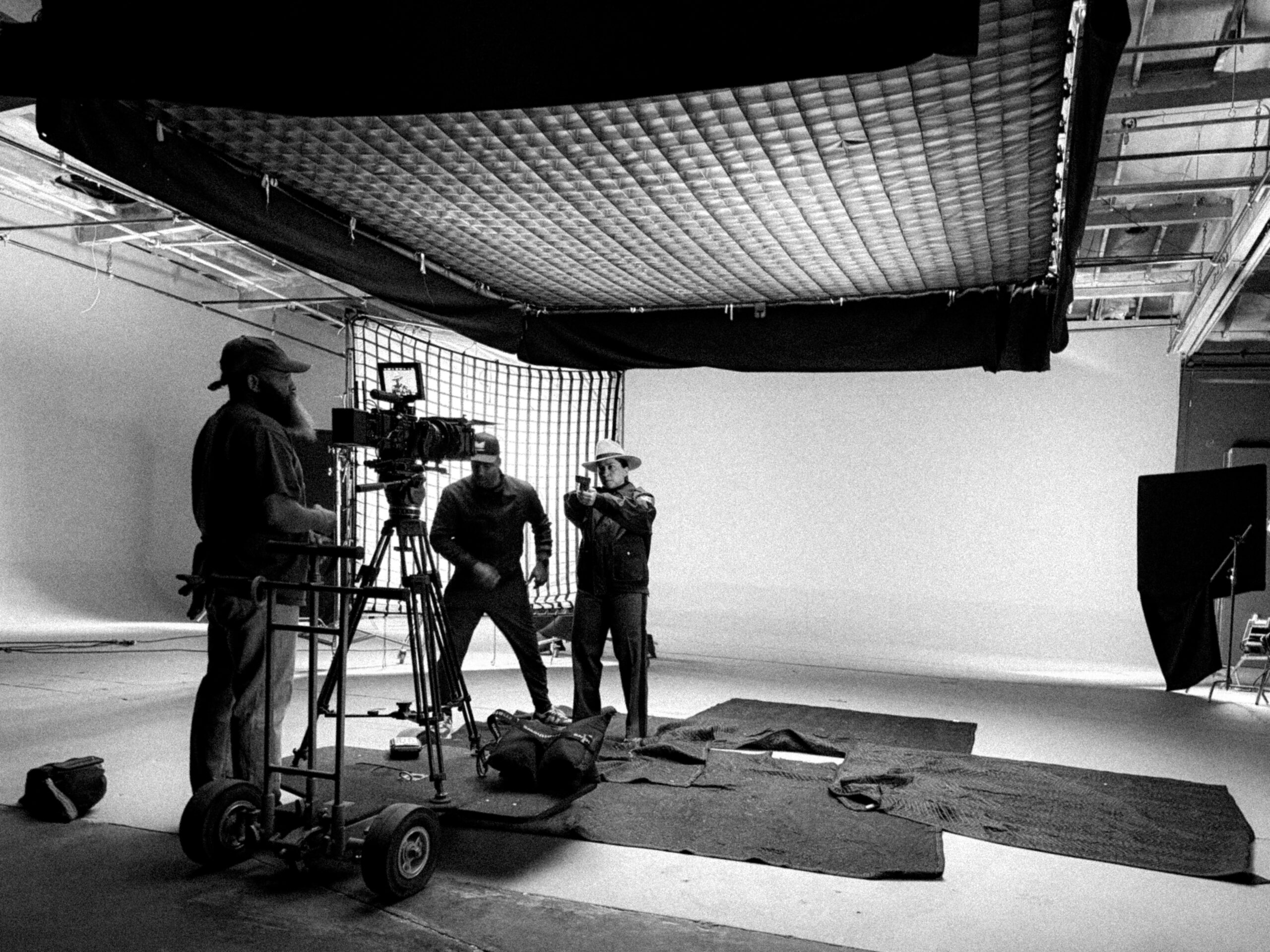
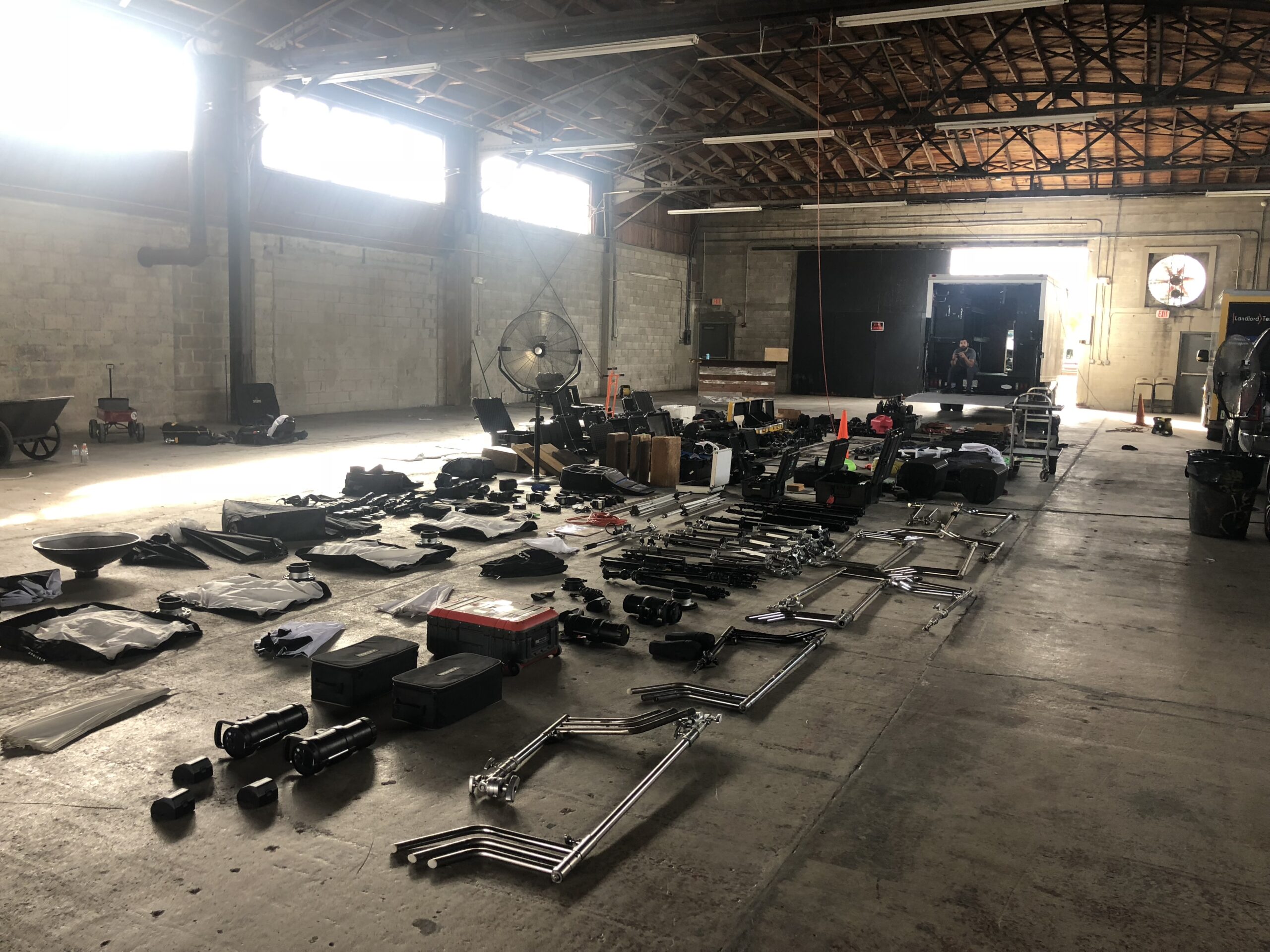
## The Crew Hiring Problem Nobody Talks About
Hiring a production crew should be straightforward. You need a camera operator in Dallas on Thursday. Or a full team for a three-day corporate shoot in Chicago. Or a sound mixer who can handle a live event in Miami next week.
But anyone who has actually tried to hire production crew knows the process is broken. You end up on a marketplace scrolling through hundreds of profiles, sending messages to people who never respond, and vetting strangers based on demo reels that may be five years old. You spend more time finding the crew than actually producing the project.
We have been on both sides of this problem for 20 years. We have hired thousands of freelancers. We have been the crew that clients found through platforms. And we have watched the same frustrations repeat themselves across every production we touch.
This guide covers every realistic way to hire a production crew in 2026, from the traditional methods that still work to the platforms that promise to simplify the process, to what we built when we got tired of the whole system.
## What Kind of Crew Are You Actually Looking For?
Before you start searching, get specific about what you need. "I need a video crew" is too vague. The type of production determines the crew structure, the budget, and where you should look.
### Single-role hires
You need one person: a [camera operator](https://c-istudios.com/video-production-services/), a sound mixer, a gaffer, a makeup artist. This is the most common hire and the easiest to mess up, because you are trusting one stranger to show up prepared and deliver. The vetting matters more here than on any other type of hire.
### Small crew packages
A DP plus a sound person plus a gaffer. Or a photographer plus an assistant plus a stylist. These hires require people who work well together, not just people who are individually competent. If you are assembling strangers from a directory, you are gambling on chemistry.
### Full production teams
Producer, director, DP, camera ops, sound, lighting, grip, art department, wardrobe, makeup, PAs. This is where most marketplace solutions fall apart completely. Managing 8-15 individual hires across different platforms, different rates, different availability windows is a full-time job in itself. This is the scenario where having a [production company](https://c-istudios.com/creative-services/) handle crew is worth every dollar.
### Specialized crew
Drone operators, Steadicam ops, underwater camera operators, livestream engineers, LED wall technicians. These are harder to find on general platforms. Most directories have a handful of profiles for niche roles, and half of them are outdated. You need a network, not a search engine.
## Method 1. Your Personal Network
The best crew comes from referrals. Someone you have worked with before, or someone a trusted colleague recommends. This is how most experienced producers hire, and there is a reason for it.
When you hire from your network, you already know the person's work ethic, their gear quality, their communication style, and whether they show up on time. You skip the entire vetting process. The shoot day runs smoother because there is trust on both sides.
The problem with relying solely on your network is geographic limitation. If you shoot in Los Angeles every week, you probably know 50 camera operators in LA. But when a client needs a crew in Nashville or Portland or Boise, your Rolodex goes silent. That is the gap that every other method on this list is trying to fill.
## Method 2. Crew Marketplaces and Directories
This is the category that most people land on when they Google "hire production crew." Platforms like ProductionHub, Mandy.com, StaffMeUp, and Crew Connection have been around for years, and they all follow roughly the same model.
### How they work
You create an account, search by role and location, browse profiles, and send messages to people whose reels look promising. Some platforms let you post a job listing and wait for applicants. Either way, you are the one doing the searching, the messaging, the vetting, and the coordinating.
### What they are good for
If you are a producer who enjoys the process of handpicking every crew member and you have the time to manage outreach, these platforms give you a large pool to search through. ProductionHub in particular has been around long enough that its directory is extensive in major markets.
### Where they fall short
The fundamental problem is that marketplaces put all the work on you. You are paying a subscription fee ($10-100/month depending on the platform) for the privilege of doing your own recruiting. Profiles are self-reported and often outdated. Response rates are unpredictable. There is no vetting beyond what the freelancer claims about themselves. And there is zero production oversight. If the camera operator you found on ProductionHub shows up with the wrong lens kit, that is your problem.
We have written a [detailed comparison of every major crew platform](https://ineedproduction.com/compare-crew-hiring-platforms/) if you want to see how they stack up feature by feature.
## Method 3. Staffing Agencies
Traditional staffing agencies for film and TV production exist, mostly in LA and New York. Companies like Production Staffing Inc. or EP Staffing specialize in placing crew on union productions, commercials, and studio shows.
### What they are good for
Large-scale union productions that need verified union crew with specific certifications. Feature films, network TV, major commercial shoots where the budget supports agency fees.
### Where they fall short
They are expensive. They are slow. They are concentrated in two cities. And they are built for the entertainment industry, not for the brand, corporate, and event production work that makes up the majority of crew hiring today. If you need a two-person crew for a corporate interview in Atlanta, a Hollywood staffing agency is not your solution.
## Method 4. Social Media and Facebook Groups
Every city has Facebook groups where producers post crew calls. "LA Film Crew," "NYC Production Crew," "Atlanta Filmmakers" and hundreds of variations. There are also subreddits, Discord servers, and Instagram DMs.
### What they are good for
Last-minute hires in major cities. If you need a PA tomorrow in LA, posting in a Facebook group will get you 20 responses in an hour. The price is usually right because the people responding are often newer crew members building their books.
### Where they fall short
Zero vetting. Zero accountability. You are hiring someone whose only qualification is that they saw your Facebook post and responded fast. For low-stakes shoots this can work. For anything where quality matters, it is a gamble. We have seen it go wrong more times than we can count: wrong gear, wrong attitude, no-shows. There is no recourse when a stranger from Facebook disappears the morning of your shoot.
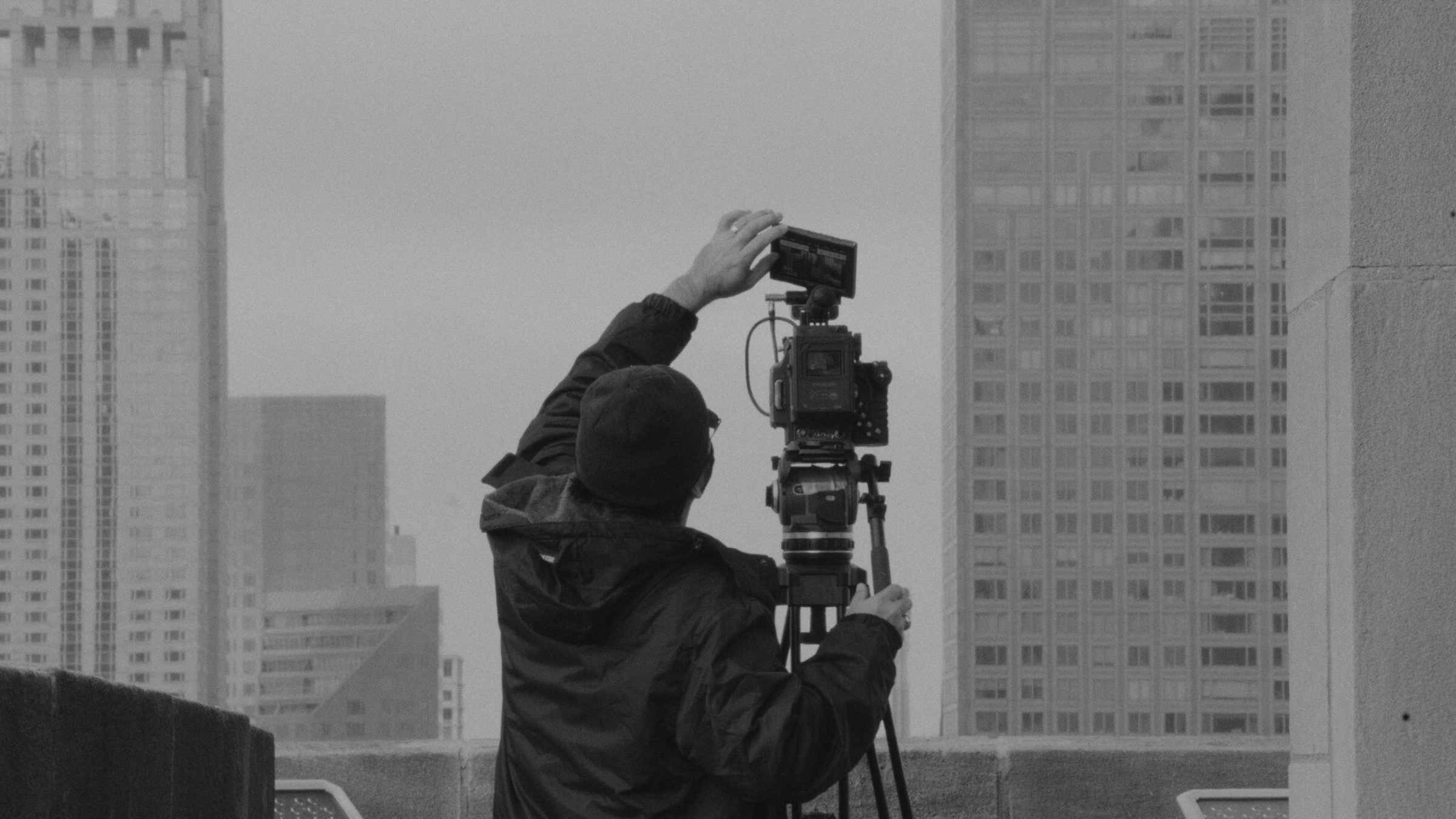
## Method 5. Production Companies
Instead of hiring individual crew members, you hire a [production company](https://c-istudios.com/our-work/) that provides the crew as part of the package. The company handles the hiring, vetting, and coordination. You get a producer as your single point of contact.
### What they are good for
Everything. That is the honest answer. A production company with a nationwide crew network can handle single-role hires and full production teams, union and non-union, corporate and creative, local and remote markets. The crew shows up vetted, briefed, and managed by someone who has done this thousands of times.
### Where they fall short
Historically, the barrier has been access and cost. Production companies are not always easy to find, especially for smaller projects. And the perception is that production companies are expensive, which is true if you are hiring a full-service company to produce your entire project. But some companies now offer crew-only services where you get the network and the vetting without paying for creative direction you do not need.
## Method 6. Full-Service Production Intake
This is the newest model, and it is the one we built. [iNeedProduction](https://ineedproduction.com/) is a full-service production intake backed by our 20 years of production experience. You submit your project, a producer picks it up within two hours, and you get vetted crew matched to your scope, location, and budget.
No account. No subscription. No browsing profiles. No bidding. You tell us what you need, we handle the rest.
### Why we built it
After two decades of [producing commercials](https://c-istudios.com/commercial-video-production/), documentaries, events, corporate content, and branded films for clients like Nike, Coca-Cola, AT&T, and the NFL, we had built a crew network spanning 300+ cities and 140+ vetted teams. We realized that the network itself was valuable, not just the productions that came through our front door.
The crew marketplace model asks producers to do the work. We thought that was backwards. Producers should produce. The crew logistics should be handled by someone who does it every day.
### How it compares to marketplaces
On a marketplace, you search, message, vet, and coordinate. That process takes hours or days. On iNeedProduction, you submit a form and a producer responds within two hours. The crew is studio-vetted, the logistics are handled, and you have a single point of contact for the entire engagement. No subscription fees, no account required. We wrote a [full breakdown of how it compares to ProductionHub](https://ineedproduction.com/productionhub-alternative/) specifically.
## How to Vet a Crew Member (No Matter How You Find Them)
Regardless of which method you use, if you are evaluating individual crew members yourself, here is what actually matters.
### Demo reel vs. actual credits
Reels are curated highlight packages. They tell you what someone's best work looks like under ideal conditions. What you actually need to know is what their average work looks like under real conditions. Ask for full project links, not just reels. Ask what their specific role was on each project. "I shot this" and "I was one of three camera operators on this" are very different statements.
### Gear ownership
Does the crew member own their gear, or are they renting? This matters for budgeting and for shoot-day reliability. A DP who owns a cinema camera package is a different proposition than one who needs to rent for every job. Neither is wrong, but you need to know before the shoot day.
### References from producers, not other crew
Crew members will give you references from other crew members they are friends with. What you want is references from producers or production managers who hired them. Those are the people who can tell you whether they showed up on time, handled problems professionally, and delivered what was promised.
### Insurance and liability
Does the freelancer carry their own liability insurance? For commercial and corporate video production work, this is not optional. If a light stand falls on a client's product display and the freelancer has no insurance, you are on the hook. Production companies carry blanket policies that cover their entire crew roster. Individual freelancers often do not.
### Communication test
Send them a detailed message about the project and see how they respond. Do they read the full brief and ask smart follow-up questions? Or do they reply with "sounds good, what's the rate?" The quality of their pre-production communication is the best predictor of their on-set professionalism.
## Red Flags When Hiring Crew
We have hired thousands of freelancers over 20 years. These are the patterns that consistently predict problems.
### Rate shopping before understanding the scope
If the first question is "what's the day rate?" before they know what the project involves, they are not evaluating whether they are the right fit. They are evaluating whether the money is worth showing up. Good crew members ask about the project first.
### Inflated titles
"Director of Photography" on a reel that shows run-and-gun event coverage with one camera. "Producer" on a project where they were a PA. Title inflation is rampant on crew marketplaces because there is no verification. Ask specific questions about their role on each credited project.
### No questions about logistics
Experienced crew members ask about parking, load-in times, power availability, nearest hospitals, meal plans. If someone accepts a booking without asking any logistical questions, they either have not thought it through or they do not care. Both are problems.
### Disappearing during pre-production
If they go dark for two days during the booking process, they will go dark during production too. Communication reliability does not improve after the contract is signed.
## What to Expect to Pay for Production Crew in 2026
Rates vary by market, experience level, and project type. These are realistic ranges for experienced, professional crew in US markets.
Role
Day Rate (10 hrs)
Notes
Camera Operator
$800 - $2,000
Depends on gear package included
Director of Photography
$1,500 - $5,000
Higher for commercial and narrative
Sound Mixer
$700 - $1,500
Usually includes basic kit
Gaffer
$700 - $1,500
Grip/electric gear rental extra
Production Assistant
$200 - $400
Entry level, general support
Photographer
$1,000 - $3,500
Commercial rates, not event
Makeup Artist
$600 - $1,200
Kit fee usually separate
These rates assume non-union crew in mid-to-large US markets. Union rates follow published rate cards and are generally 20-40% higher. Smaller markets (Boise, Omaha, etc.) tend to run 15-25% below these ranges. Premium markets like New York and San Francisco run 10-20% above.
When you hire through a production company, the crew rates are bundled into the project cost along with producer oversight, coordination, and vetting. You typically pay 15-30% more than the raw freelancer rate, but you eliminate the hours of searching and the risk of hiring someone unvetted.
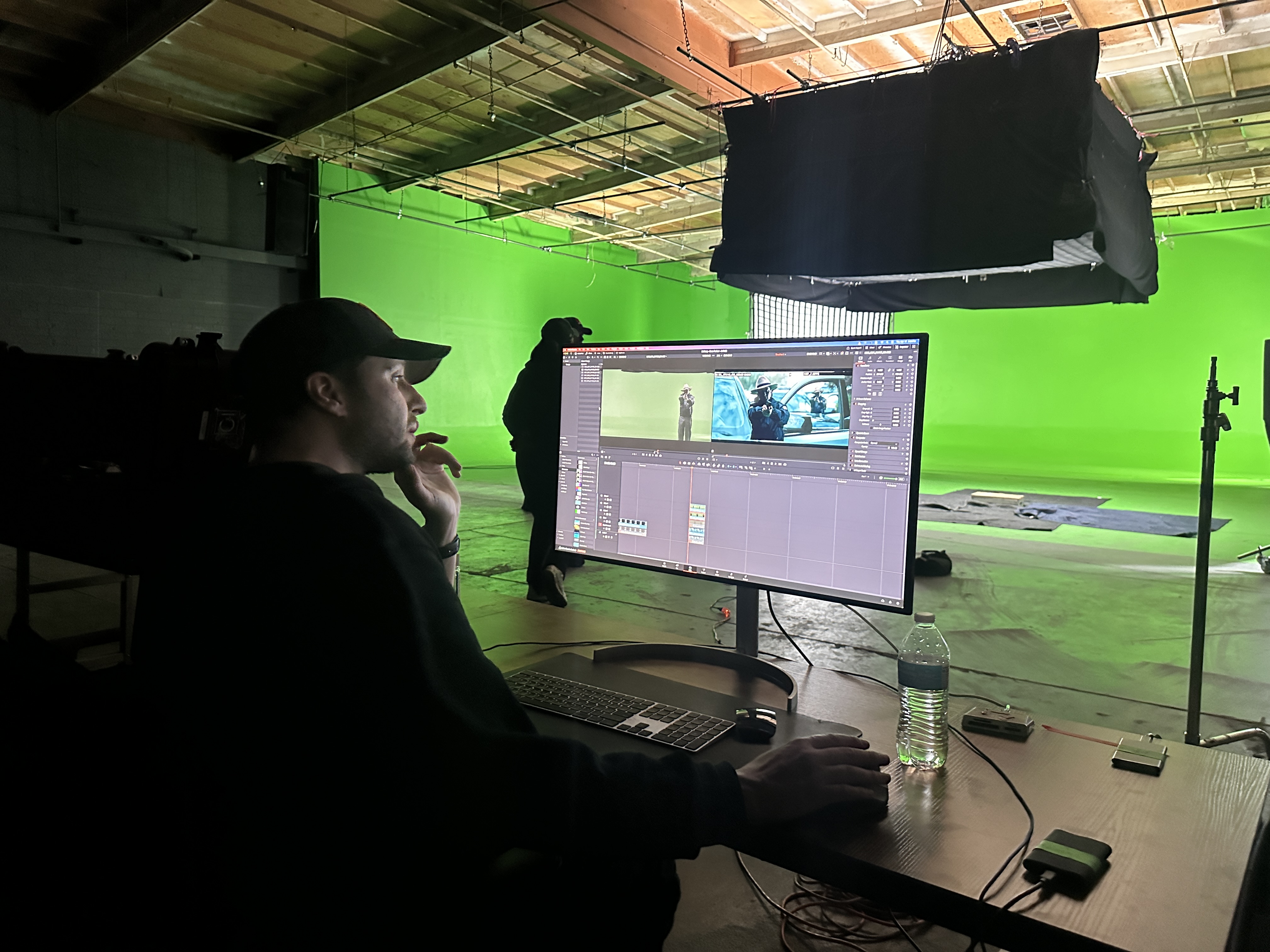
## How to Hire Production Crew Fast (The Checklist)
If you need crew and you need them soon, here is the decision tree:
**You have worked with someone before and they are available:** Book them. Nothing beats a known quantity.
**You need crew in your home market and have time to vet:** Tap your network first. Post in local crew groups second. Use a marketplace as a last resort.
**You need crew in an unfamiliar city:** Use a production company or a full-service intake like [iNeedProduction](https://ineedproduction.com/submit-your-job/). You do not have the local knowledge to vet strangers in a city you do not know.
**You need a full team (5+ crew):** Do not assemble a team from a marketplace. Use a production company. The coordination overhead of managing five individual freelancers you have never met is not worth the savings over paying someone to handle it for you.
**You need crew tomorrow:** Call a [production company with dispatch capability](https://c-istudios.com/contact/). Marketplaces are too slow for same-day needs. We offer same-day dispatch in 12 US markets.
## Frequently Asked Questions
### How far in advance should I book production crew?
For standard shoots, two to four weeks is ideal. One week is tight but workable in most markets. Same-day is possible through production companies with dispatch networks but limits your options. Major markets like LA and New York book up fast during peak production season (September through November), so plan further ahead during those months.
### Should I hire union or non-union crew?
It depends on the project. Union crew (IATSE, SAG-AFTRA) are required for certain types of productions and come with rate minimums, overtime rules, and benefit contributions. Non-union crew offer more flexibility on rates and scheduling. Many experienced professionals work non-union by choice. The project scope and budget should drive this decision, not a blanket preference.
### What is the difference between hiring a freelancer and hiring a production company?
When you hire a freelancer, you are the producer. You handle the booking, the logistics, the gear confirmation, the call sheets, and the problem-solving when something goes wrong on set. When you hire a [production company](https://c-istudios.com/our-work/), they handle all of that. You get a point of contact who manages the crew on your behalf.
### Can I hire production crew without a subscription or account?
Most crew marketplaces require an account and charge monthly subscription fees. [iNeedProduction](https://ineedproduction.com/) requires neither. You submit your project details through a form and a producer responds within two hours.
### How do I hire production crew in a city I have never worked in?
This is the hardest scenario for self-service hiring. You have no network, no local references, and no way to verify that the person on the other end of a marketplace profile is who they say they are. The safest approach is to use a production company with a national crew network. We cover 300+ US cities through our vetted crew roster.
### What happens if a freelancer no-shows on shoot day?
If you hired them directly, you are scrambling. You call everyone you know in that market, you post desperately in Facebook groups, and you hope someone is available at the last minute. If you hired through a production company, they handle the replacement from their bench of backup crew. This alone is worth the premium for high-stakes shoots.
## Work with C&I Studios
If you are planning a project like this, our team can take it from concept to final delivery. Explore our [video production services](https://c-istudios.com/video-production-services/), browse [our work](https://c-istudios.com/our-work/) to see how we tell brand stories, and [get in touch](https://c-istudios.com/contact/) when you are ready to start.
Originally published June 4, 2026
---
*This content is from [C&I Studios](https://c-istudios.com), a full-service production company.*
---
# How to Use AI in Business: A Production Company's Real Story
> Published: June 2, 2026
> Categories: Web & Tech
> Tags: Uncreative
> Source: https://c-istudios.com/how-to-use-ai-in-business/
---
.cib{--paper:#1b1d1f;--ink:#fff;--body:#d5d7d9;--muted:#8b9096;--line:rgba(255,255,255,.12);--thumb:#2b2e31;--card:#212426;--accent:#c02b0a;--blue:#5B8FA8;--serif:'Playfair Display',Georgia,serif;--sans:'Poppins',-apple-system,sans-serif;--measure:900px;background:var(--paper);color:var(--body);font-family:var(--sans);line-height:1.6;position:relative;left:50%;transform:translateX(-50%);width:90vw;max-width:1920px}
.cib *{box-sizing:border-box}
.cib .kicker{max-width:var(--measure);margin:58px auto 0;padding:0 22px;font-size:12.5px;font-weight:700;letter-spacing:2.5px;text-transform:uppercase;color:var(--blue)}
.cib h1.cibh1{text-wrap:balance;font-family:var(--serif);font-weight:500;font-size:clamp(46px,6vw,72px);line-height:1.08;color:var(--ink);max-width:var(--measure);margin:18px auto 0;padding:0 22px;letter-spacing:-.5px}
.cib .metarow{max-width:var(--measure);margin:20px auto 0;padding:0 22px;color:var(--muted);font-size:14px}
.cib .hero{position:relative;width:100%;height:0;padding-bottom:56.25%;overflow:hidden;margin:48px auto 0;border-top:1px solid var(--line);border-bottom:1px solid var(--line)}
.cib .hero .ph{width:100%;aspect-ratio:16/9;background:var(--thumb);border-top:1px solid var(--line);border-bottom:1px solid var(--line);display:flex;align-items:center;justify-content:center;color:#7d8288;font-size:13px;text-align:center;padding:0 20px}
.cib .body{max-width:var(--measure);margin:12px auto 0;padding:52px 22px 6px}
.cib .body.lead p:first-child{font-size:23px;line-height:1.62;color:var(--ink)}
.cib .body p{font-size:18.5px;line-height:1.85;margin:0 0 30px;color:var(--body)}
.cib .body h2{text-wrap:balance;font-family:var(--serif);font-weight:500;font-size:clamp(32px,4vw,48px);line-height:1.22;color:var(--ink);margin:70px 0 20px;letter-spacing:-.3px}
.cib .body h3{text-wrap:balance;font-family:var(--sans);font-weight:600;font-size:22px;color:var(--ink);margin:38px 0 8px}
.cib .body a{color:var(--ink);text-decoration:underline;text-decoration-color:rgba(255,255,255,.4);text-underline-offset:3px}
.cib .body a:hover{text-decoration-color:var(--ink)}
.cib .ctable{width:100%;border-collapse:collapse;margin:16px 0 30px;font-size:16px}
.cib .ctable th{background:#000;color:#fff;text-align:left;padding:10px 12px;font-family:var(--sans)}
.cib .ctable td{padding:10px 12px;border-bottom:1px solid var(--line);color:var(--body)}
.cib .inimg{position:relative;width:100%;height:0;padding-bottom:56.25%;overflow:hidden;margin:72px auto;border-top:1px solid var(--line);border-bottom:1px solid var(--line)}
.cib .inimg .ph{width:100%;aspect-ratio:16/9;background:var(--thumb);border-top:1px solid var(--line);border-bottom:1px solid var(--line);display:flex;align-items:center;justify-content:center;color:#7d8288;font-size:13px}
.cib .origpub{max-width:var(--measure);margin:60px auto 0;padding:26px 22px 0;border-top:1px solid var(--line);color:var(--muted);font-size:13.5px}
.cib .related{max-width:1200px;margin:64px auto 0;padding:34px 22px 76px}
.cib .related h3{font-family:var(--sans);font-size:12.5px;letter-spacing:2px;text-transform:uppercase;color:var(--ink);margin:0 0 24px}
.cib .grid{display:grid;grid-template-columns:repeat(3,1fr);gap:28px}
.cib .rc{background:var(--card);border:1px solid var(--line);display:block;text-decoration:none;color:inherit;transition:border-color .15s}
.cib a.rc:hover{border-color:rgba(255,255,255,.5)}
.cib .rc .thumb{position:relative;width:100%;height:0;padding-bottom:56.25%;background:var(--thumb);overflow:hidden}
.cib .rc .thumb img{position:absolute!important;top:0!important;left:0!important;width:100%!important;height:100%!important;object-fit:cover!important;margin:0!important}
.cib .rc .cc{padding:14px 15px 17px}
.cib .rc .rt{font-family:var(--serif);font-weight:500;font-size:16px;line-height:1.3;color:var(--ink);margin:0 0 6px}
.cib .rc .rm{font-size:11px;letter-spacing:1px;text-transform:uppercase;color:var(--muted)}
.cib img{margin:0!important;padding:0!important;display:block!important;vertical-align:top;max-width:100%}
.cib .hero img,.cib .inimg img{position:absolute!important;top:0!important;left:0!important;width:100%!important;height:100%!important;object-fit:cover!important;margin:0!important;padding:0!important;border:0!important;display:block!important;aspect-ratio:auto!important}
.cib .hero+.body{padding-top:36px}
@media(max-width:760px){.cib .grid{grid-template-columns:1fr}.cib .body h2{margin:52px 0 16px}.cib .body p{font-size:17.5px}.cib .inimg,.cib .hero{margin-top:44px}}
Web & Tech
# How to Use AI in Business. A Production Company's Real Story
11 min read
Alphabet just announced an $80 billion equity raise to fund AI infrastructure. Berkshire Hathaway is putting $10 billion into the deal. That is not hype money. That is Warren Buffett money. The biggest companies on earth are betting everything on AI transforming how business gets done. But here is the thing most people miss: you do not need $80 billion to know how to use AI in business. You do not even need a tech team. You just need to be a good thinker.
There is a version of this company that existed four months ago that I barely recognize anymore. Not because we changed what we do. We are still the same [full-service production company](https://c-istudios.com/about/) we have been for over 20 years. We still shoot, we still edit, we still build brands and tell stories. What changed is everything around the creative work. The admin. The reporting. The systems that kept us organized. The things nobody sees but everyone feels when they break down.
I want to tell you about that change because I think a lot of business owners are where we were: moving fast, working hard, not really moving the needle, and wondering if there is a better way.
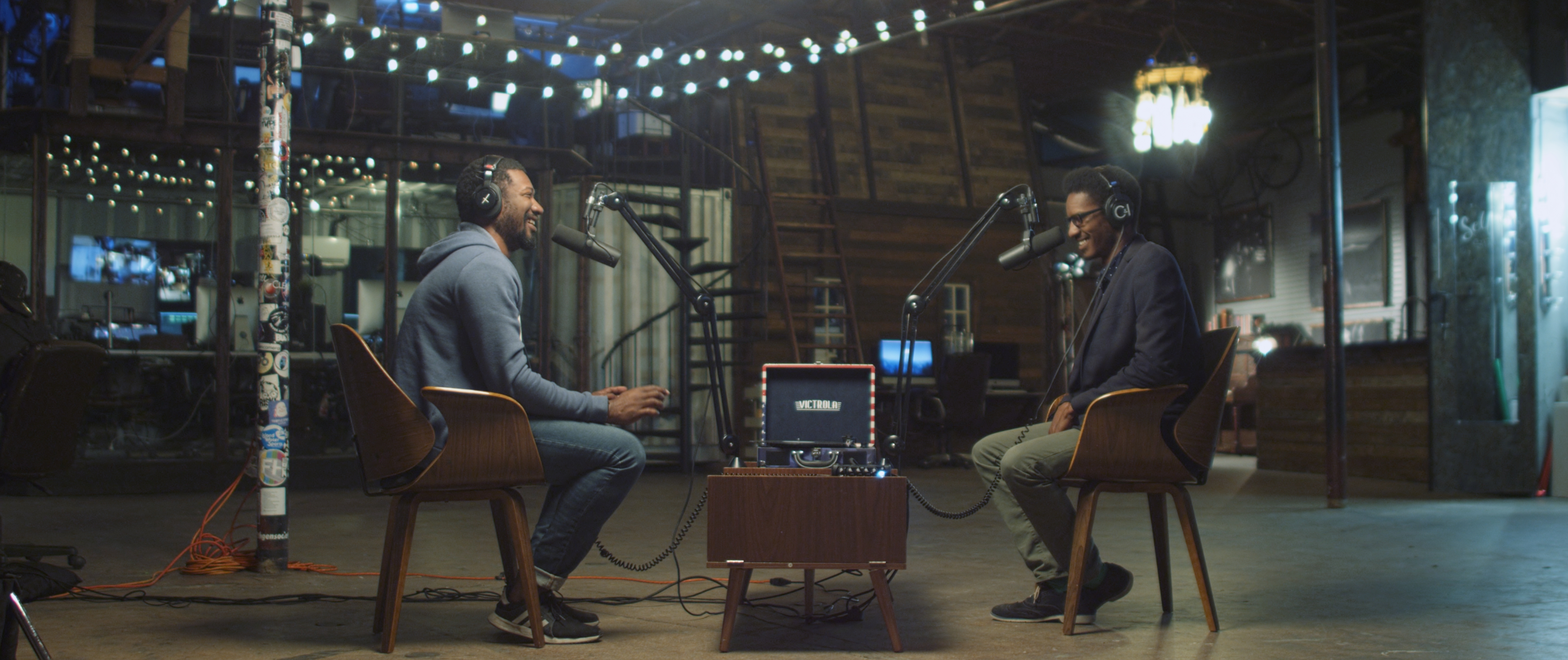
## The Way Things Were
Before AI, everything at C&I Studios was manual. And I mean everything.
We had some automation built into Podio, our project management platform, and we used various website plugins to handle bits and pieces. But every single one of those systems still required manual touch points. Sending contracts and quotes. Creating call sheets. Managing follow-ups and schedules. Auditing our website for broken links and outdated content. Building [web pages](https://c-istudios.com/web-development/) one at a time. Interpreting analytics. Compiling reports.
We tried everything to make it easier. We moved to Webflow to try to streamline how we built [portfolio](https://c-istudios.com/portfolio/) pages. We hired developers to create custom plugins. We brought in SEO agencies. We hired freelancers from Upwork and Fiverr for specific projects. Results varied. Some of it worked. A lot of it did not. And even the stuff that worked still needed us to manage it.
We are an in-house company. We do everything ourselves: [production](https://c-istudios.com/video-production/), [post-production](https://c-istudios.com/post-production/), web, marketing, sales, operations. That is our strength, but it also means the admin burden is enormous. We were moving at lightning speed, but that speed was capped by the amount of manual effort everything required. And the reporting? Horrible. Just horrible. Manually pulling data from five different places, trying to make sense of it, trying to figure out where we actually stood. We did that for years.
## The Spark
We had been using AI for a while, including ChatGPT and Claude, but like most people, we were just asking questions and getting answers. We managed to do some cool things with it, but nothing that really moved the needle. It was still pretty manual. You ask a question, you get an answer, you go do the thing yourself.
The turning point came about four months ago when we heard about ClawBot. We are Apple people, so we had seen the buzz about folks buying Mac Minis to run AI agents through OpenClaw. The concept was exciting, but we were cautious. We had heard the horror stories. AI running amuck, wrecking people's files and emails. We were not about to let that loose on our production machines with years of client work on them.
But we thought: what if we tried the Mac Mini idea on a fresh machine? One that does not have anything on it that could be messed up? So we bought one. But we did not go with OpenClaw. Too complicated, too many security concerns for our comfort level. Instead, we went with Claude Code, which was just beginning to offer what OpenClaw could do. Shortly after, Claude launched Cowork, and that was pretty much the end of the conversation. We were all in.
## The Learning Curve Was Shorter Than We Expected
There was a learning curve, sure. But here is the thing about us: we are critical thinkers. We have built this entire company from the ground up by thinking through problems. We can not write code from scratch. We are not software engineers. But we can think through just about anything, and it turns out that is the only skill you actually need.
We got it set up and started targeting the admin side of our business first. Every single thing we had in the pipeline to outsource, every Upwork job, every Fiverr gig, we did ourselves. The key insight was that AI does not need you to be technical. It needs you to be clear about what you want and willing to iterate until you get it. If you can describe a problem, you can solve it. That was a revelation for us.
## How We Use AI in Business, What Actually Changed
The list is long, but here is the picture. And this is real AI business automation. Not theory, not a pitch deck, not a pilot program. This is what we actually built and use every day.
**Reporting went from painful to instant.** We connected AI to our APIs in Google Search Console, Google Analytics, and Ahrefs. Now we get accurate, detailed SEO reports on our websites every single day, automatically. What used to be our most dreaded task, manually pulling data from five different platforms and trying to make sense of it, is now handled by AI reporting tools we built ourselves. The data just shows up. We know exactly where we stand, and more importantly, we can see trends early enough to actually do something about them.
**We replaced Webflow.** We trained AI on how we build our web pages and our design standards. Not only did it match what we were doing. It builds better-looking pages, faster. We describe what we want, it builds it, we tweak from there. What used to take days takes hours. Our portfolio pages, service pages, and landing pages all get built this way now.
**Broken links are a thing of the past.** We used to rely on a plugin that would find *some* of them and fix *none* of them. AI found and fixed all of them in seconds. Every page on our site, from [commercial video production](https://c-istudios.com/commercial-video-production/) to [photography](https://c-istudios.com/photography/) to [music video production](https://c-istudios.com/music-video-production/), stays clean and functional without us thinking about it.
**Sales and finance reporting actually works now.** The sales team set up AI with FreshBooks to build quotes faster and pull all of our sales data for better year-over-year reporting. Reports that used to be incredibly time-consuming to compile now take minutes. We went from guessing how a quarter was going to knowing exactly where every dollar stood, in real time.
**AI for project management changed how we operate.** We used to try to keep up with all the spinning plates ourselves. Now AI tells us what we need to do each day, who we need to respond to, what is going on with each project, what the next action is, and what is coming down the pipeline. It sends us text reminders for meetings, alerts us when our studio security cameras pick up activity, and checks our expenses for anomalies. All in one place. For a small business, this kind of AI workflow automation used to require enterprise software with enterprise price tags. We built ours for nothing.
**We built our own tools.** This is the one that surprises people the most. We built custom internal tools to replace services we were paying for. No more MailChimp. We built our own email planning system. No more RightSignature. We built our own digital signature tool. We gutted a handful of paid website plugins and built our own replacements. We even built a custom security plugin that does the work of five separate plugins. It worked so well that we [turned it into a product](https://shield.c-istudios.com/) and made it available for sale for other businesses that would rather have one great tool than five decent ones.
## AI Data Management at Scale, 1.83 Petabytes
Then there is the data. I just asked AI how much we are managing and it told me: 1.83 petabytes across all locations. For reference, one petabyte is over a million gigabytes.
Now imagine manually tracking and managing that much data. Where it is. What is on it. How full each drive is. Which projects live where. AI data management tools exist for enterprise companies with enterprise budgets, but for a mid-size production company? There is nothing off the shelf that works. So we built one.
It is a visual dashboard that shows us, to the letter, where our data is and how much of it sits on which drives and servers. I just clicked on our RAW 12 drive and I can instantly see that it is 98% full with 3.6 TB used, 0.1 TB free, 30 projects on it, one of which is Juicery Rx at 52 GB across 135 files. That specific. And I can do that for any drive or server we have.
We also built a cloud storage platform called Qubee that our team and clients use to store, share, and manage production files securely. It started as an internal need and grew into a standalone product. That is what happens when you remove the barrier between thinking up a solution and actually building it.
## AI Inventory Management for Production Gear
Gear inventory is its own beast. We have equipment stationed in different cities that travels all over the country and abroad for shoots. It is not just about knowing where the gear is. You have to track the condition, what needs repair, what needs replacing, what has been lost, what needs charging, what configuration it is in, and how much of it you have. These things directly impact our video production shoots and how ready we are. There is no worse feeling than arriving to set, opening a gear crate, and not seeing what you expected to see in there.
We built an AI inventory management tool that eliminates that uncertainty. It visually shows us where all of our gear is, down to the individual case, and what condition it is in. We even placed AirTags with the gear so we can pinpoint its geographical location on a map, which is handy when your equipment decides to take an unexpected detour during air transit. Every camera, every lens, every light kit, accounted for, in real time, across every location we operate out of.
## The Results
It has been just under three months since we started seriously integrating AI into our operations. In that time:
- We have **exponentially reduced our service expenses** by replacing paid tools and outsourced work with custom solutions built in-house.
- We have **greatly increased our output**: more pages built, more reports generated, more leads tracked, more data organized, faster turnaround on everything.
- And most importantly, and this is the big one, **we have retained all of our staff.** Every single person. We gave them access to the same tools so they could optimize and increase their own workflows. AI did not replace anyone. It made everyone faster.
That last point matters. There is a lot of fear around AI and jobs. We get it. But our experience has been the opposite. When you give your team AI productivity tools that handle the tedious parts of their work, they do not become redundant. They become more valuable. They focus on the work that actually requires a human brain. The creative work. The relationship work. The judgment calls that no algorithm can make.
## Why We Are Telling You This
We are not a tech company. We are a production company. We can not build software from scratch and we never pretended we could. But we have always been able to work with people who could, and the frustration was that it was either too costly or too slow or the results were not what we envisioned.
With AI, we have been able to build anything we can think up. And the things that were most front of mind were our pain points, the stuff we had been doing the hard way for years, the workflows we wished were better. Those got solved first. Then we moved on to our bigger ambitions. The "what ifs." The "would it not be cool if we could..." ideas.
Now we are at the forefront of AI in video production and creative services. We are not replacing the creative or the human element. We are removing the slack, reducing the time to execution, and moving at lightning speed, this time with the weighted vest off.
Alphabet is spending $80 billion because they see where this is going. We see it too. The difference is we are not waiting for someone else to build the tools. We are building them ourselves, for our business, right now. And if you are a small business wondering how to use AI in business without a massive budget or a tech team, that is exactly what we did. It is possible. You just have to start thinking.
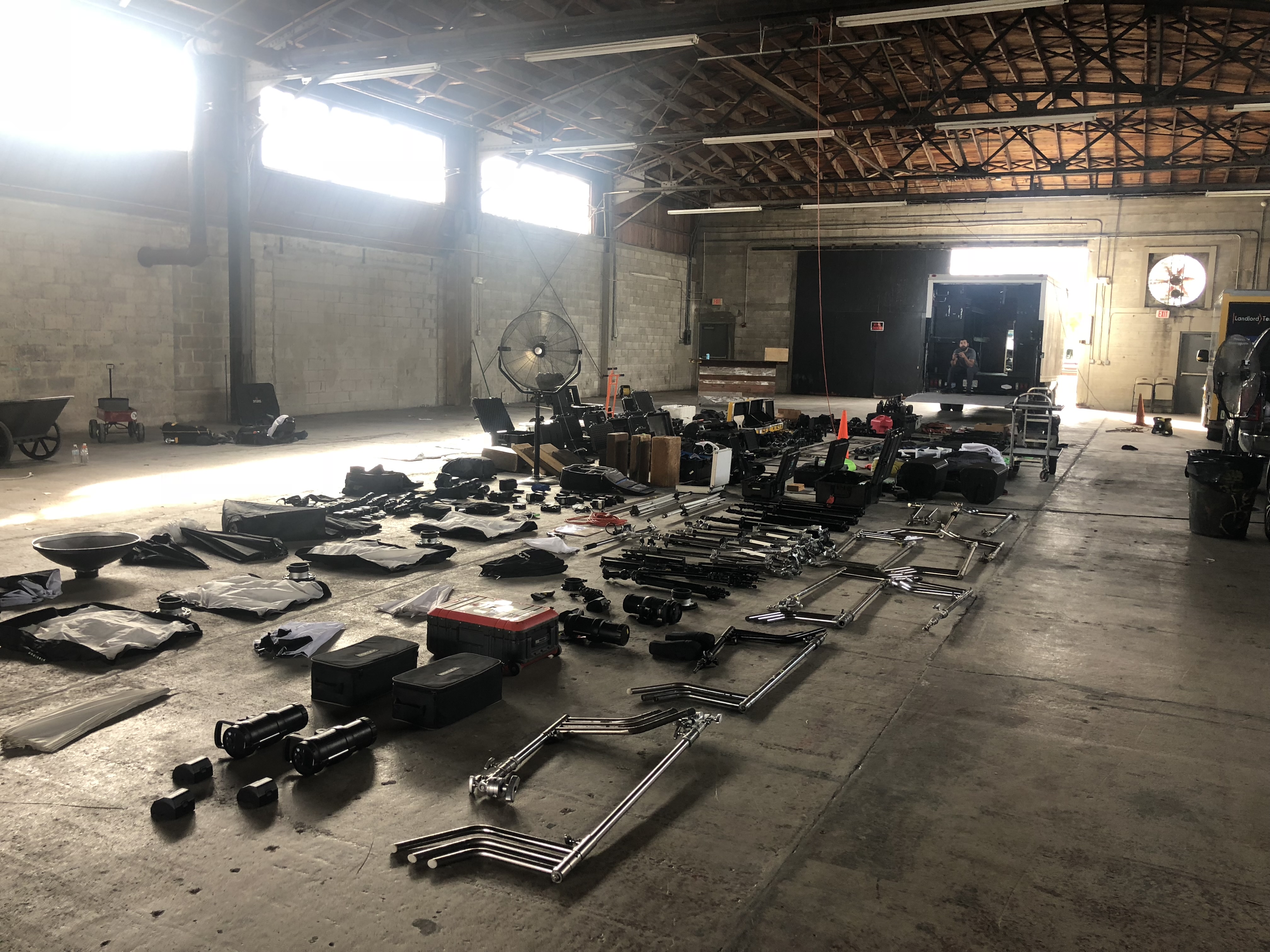
## What About You?
If you have been thinking about this AI stuff and wondering what to do with it or how to even start, maybe we can help. Yes, we are a production company. But the industry does not really matter when all you need to do is think. And we are excellent thinkers.
We offer corporate video production, commercial production, live streaming, social media content, and full web development, all powered by the same AI-enhanced workflows we have been building for ourselves. The tools we built to make us faster are the same tools that make your projects better.
[Get in touch](https://c-istudios.com/contact/) and let us talk about what AI could do for your business.
## Work with C&I Studios
If you are planning a project like this, our team can take it from concept to final delivery. Explore our [AI video services](https://c-istudios.com/ai-video-services/), browse [our work](https://c-istudios.com/our-work/) to see how we tell brand stories, and [get in touch](https://c-istudios.com/contact/) when you are ready to start.
Originally published June 2, 2026
---
*This content is from [C&I Studios](https://c-istudios.com), a full-service production company.*
---
# Inside a Video Production Case Study
> Published: May 25, 2026
> Categories: Commercial & Brand
> Source: https://c-istudios.com/video-production-case-study/
---
.cib{--paper:#1b1d1f;--ink:#fff;--body:#d5d7d9;--muted:#8b9096;--line:rgba(255,255,255,.12);--thumb:#2b2e31;--card:#212426;--accent:#c02b0a;--blue:#5B8FA8;--serif:'Playfair Display',Georgia,serif;--sans:'Poppins',-apple-system,sans-serif;--measure:900px;background:var(--paper);color:var(--body);font-family:var(--sans);line-height:1.6;position:relative;left:50%;transform:translateX(-50%);width:90vw;max-width:1920px}
.cib *{box-sizing:border-box}
.cib .kicker{max-width:var(--measure);margin:58px auto 0;padding:0 22px;font-size:12.5px;font-weight:700;letter-spacing:2.5px;text-transform:uppercase;color:var(--blue)}
.cib h1.cibh1{text-wrap:balance;font-family:var(--serif);font-weight:500;font-size:clamp(46px,6vw,72px);line-height:1.08;color:var(--ink);max-width:var(--measure);margin:18px auto 0;padding:0 22px;letter-spacing:-.5px}
.cib .metarow{max-width:var(--measure);margin:20px auto 0;padding:0 22px;color:var(--muted);font-size:14px}
.cib .hero{position:relative;width:100%;height:0;padding-bottom:56.25%;overflow:hidden;margin:48px auto 0;border-top:1px solid var(--line);border-bottom:1px solid var(--line)}
.cib .hero .ph{width:100%;aspect-ratio:16/9;background:var(--thumb);border-top:1px solid var(--line);border-bottom:1px solid var(--line);display:flex;align-items:center;justify-content:center;color:#7d8288;font-size:13px;text-align:center;padding:0 20px}
.cib .body{max-width:var(--measure);margin:12px auto 0;padding:52px 22px 6px}
.cib .body.lead p:first-child{font-size:23px;line-height:1.62;color:var(--ink)}
.cib .body p{font-size:18.5px;line-height:1.85;margin:0 0 30px;color:var(--body)}
.cib .body h2{text-wrap:balance;font-family:var(--serif);font-weight:500;font-size:clamp(32px,4vw,48px);line-height:1.22;color:var(--ink);margin:70px 0 20px;letter-spacing:-.3px}
.cib .body h3{text-wrap:balance;font-family:var(--sans);font-weight:600;font-size:22px;color:var(--ink);margin:38px 0 8px}
.cib .body a{color:var(--ink);text-decoration:underline;text-decoration-color:rgba(255,255,255,.4);text-underline-offset:3px}
.cib .body a:hover{text-decoration-color:var(--ink)}
.cib .ctable{width:100%;border-collapse:collapse;margin:16px 0 30px;font-size:16px}
.cib .ctable th{background:#000;color:#fff;text-align:left;padding:10px 12px;font-family:var(--sans)}
.cib .ctable td{padding:10px 12px;border-bottom:1px solid var(--line);color:var(--body)}
.cib .inimg{position:relative;width:100%;height:0;padding-bottom:56.25%;overflow:hidden;margin:72px auto;border-top:1px solid var(--line);border-bottom:1px solid var(--line)}
.cib .inimg .ph{width:100%;aspect-ratio:16/9;background:var(--thumb);border-top:1px solid var(--line);border-bottom:1px solid var(--line);display:flex;align-items:center;justify-content:center;color:#7d8288;font-size:13px}
.cib .origpub{max-width:var(--measure);margin:60px auto 0;padding:26px 22px 0;border-top:1px solid var(--line);color:var(--muted);font-size:13.5px}
.cib .related{max-width:1200px;margin:64px auto 0;padding:34px 22px 76px}
.cib .related h3{font-family:var(--sans);font-size:12.5px;letter-spacing:2px;text-transform:uppercase;color:var(--ink);margin:0 0 24px}
.cib .grid{display:grid;grid-template-columns:repeat(3,1fr);gap:28px}
.cib .rc{background:var(--card);border:1px solid var(--line);display:block;text-decoration:none;color:inherit;transition:border-color .15s}
.cib a.rc:hover{border-color:rgba(255,255,255,.5)}
.cib .rc .thumb{position:relative;width:100%;height:0;padding-bottom:56.25%;background:var(--thumb);overflow:hidden}
.cib .rc .thumb img{position:absolute!important;top:0!important;left:0!important;width:100%!important;height:100%!important;object-fit:cover!important;margin:0!important}
.cib .rc .cc{padding:14px 15px 17px}
.cib .rc .rt{font-family:var(--serif);font-weight:500;font-size:16px;line-height:1.3;color:var(--ink);margin:0 0 6px}
.cib .rc .rm{font-size:11px;letter-spacing:1px;text-transform:uppercase;color:var(--muted)}
.cib img{margin:0!important;padding:0!important;display:block!important;vertical-align:top;max-width:100%}
.cib .hero img,.cib .inimg img{position:absolute!important;top:0!important;left:0!important;width:100%!important;height:100%!important;object-fit:cover!important;margin:0!important;padding:0!important;border:0!important;display:block!important;aspect-ratio:auto!important}
.cib .hero+.body{padding-top:36px}
@media(max-width:760px){.cib .grid{grid-template-columns:1fr}.cib .body h2{margin:52px 0 16px}.cib .body p{font-size:17.5px}.cib .inimg,.cib .hero{margin-top:44px}}
Commercial & Brand
# Inside a Video Production Case Study
13 min read

The phrase "video production case study" gets typed into Google more often than you might expect, and almost always for the same reason: a marketing director, a brand manager, or a founder is trying to justify the budget for a campaign and wants proof that production spend actually drives revenue. We have lived inside that question for two decades, and the most honest answer we can give comes from walking through a real project the way it actually happened, with the rough edges intact.
This piece is a video production case study built from one of our recent multi-platform campaigns for a national consumer brand. We will not name the client (their contract restricts it), but the budget, the timeline, the creative decisions, and the performance numbers are all from a real engagement that wrapped earlier this year. If you are reviewing vendors or trying to map out your own production schedule, this is the kind of behind-the-curtain look that should help you set realistic expectations.

## The Brief. A National Launch With a Tight Window
The client came to us with a deceptively simple ask. They had a new product hitting retail shelves in 47 markets across the United States. They needed a hero spot for paid social, a sixty-second YouTube preroll, three cutdowns for connected TV, a vertical version for in-store digital signage, and a behind-the-scenes piece for organic social. All in eight weeks.
The brief was not unusual. The compressed timeline was. Most launches at this scale plan twelve to sixteen weeks of production runway. We had half of that, and the launch date was locked because retail planograms had already shipped to stores.
This is where most agencies tap out or pad the budget with a contingency line that quietly admits they cannot hit the date. We told the client we could do it, but we needed three things on day one: a locked creative brief by end of week one, single-point approval authority on their side (no committee notes), and a willingness to compress pre-production by shooting on a stage we already had standing.
They agreed. That conversation, more than the camera package or the talent, is what made this video production case study possible.
## Why a Video Production Case Study Matters More Than a Reel
When prospective clients ask to see our work, we point them to our [portfolio](https://c-istudios.com/our-work/) first. Reels are useful. They show range, craft, and pace. But a reel does not tell you what was on fire behind the scenes when the second unit lost light at golden hour, or how a colorist saved a hero shot that came back from camera with a soft focus pull.
A video production case study fills that gap. It is the document that explains why a project worked, not just that it looked good. For buyers comparing vendors, that distinction is the entire decision. Two companies can show similar reels and have wildly different operational depth. The case study reveals which one actually delivers on the brief when conditions move sideways.
For C&I, case studies also serve an internal purpose. Every wrap on a major project gets debriefed. The producer, director, DP, post supervisor, and account lead sit down for ninety minutes and walk through what worked, what cost us money, and what we would change. That postmortem becomes the spine of the public case study we eventually publish, sanitized for confidentiality but kept honest about the calls we made.
## Pre-Production. Where the Campaign Was Actually Won
We had eight weeks. Pre-production took eighteen days, which sounds tight but was the longest single phase of the project. Anyone in [corporate video production](https://c-istudios.com/corporate-video-production/) will tell you that the shoot itself is rarely where things go wrong. It is the planning that determines whether the shoot is a controlled execution or an improvised scramble.
Our pre-pro broke down like this:
The first five days were creative alignment. Our creative director and the client's CMO worked through three rounds of treatment revisions, with the strategy sessions held at our Los Angeles office. We came in with two distinct creative routes. They picked elements from both, which forced a fourth route that ultimately became the campaign. This is normal. Clients rarely pick a presented option whole. They pick pieces, and a good production company is the one that can synthesize the pieces into something coherent without losing the original strategic intent.
Days six through twelve were practical pre-production. Location scouting (we used three locations: a private home in the Hollywood Hills, a soundstage at our Fort Lauderdale facility, and a downtown Los Angeles rooftop), casting (we saw 84 actors across two days and called back nine), and the production schedule. Casting was outsourced to a specialty agency we have used for years, with our director making final selections.
Days thirteen through eighteen were technical. Camera tests on the Sony VENICE 2 with two lens packages (Cooke S7/i Full Frame Plus and a vintage Panavision Super Speed set the director wanted for one specific sequence). LUT development with our colorist. Wardrobe fittings. A full production design review for the rooftop set, which required custom builds. A [SAG-AFTRA](https://www.sagaftra.org/) paperwork sprint for union talent.
The thing that gets undersold in any [video production services](https://c-istudios.com/video-production-services/) breakdown is the sheer volume of administrative work in pre-pro. Insurance certificates. Permit applications (Los Angeles location permits alone took eleven business days). Vendor contracts. Talent agreements. Crew deal memos. Our line producer ran point on roughly 140 documents across the eighteen-day pre-pro window.
## Production. Three Days, Two Coasts, One Crew
We shot principal photography over three consecutive days. Day one was the home in the Hollywood Hills, day two was the downtown rooftop, day three was the Fort Lauderdale soundstage. Yes, that means we moved a hero crew across the country between day two and day three. We do this more often than you would expect. The math sometimes works because Florida production incentives and our owned facility in Fort Lauderdale offset the travel cost.
Day one ran 14 hours. We were chasing natural light and lost an hour to a wardrobe change the talent's stylist insisted on at the last minute. This is the kind of small disruption that, multiplied across three days, can wreck a schedule. Our first AD made the call to cut the third setup of the morning and combine it with an afternoon block. We got everything we needed but lost the buffer.
Day two on the rooftop was the easiest of the three. Weather held. Permits cleared. The DP got two hours of magic hour we had budgeted for. The hero shot of the campaign was captured between 5:47 PM and 6:14 PM that day. Twenty-seven minutes of usable light. The entire campaign hangs on those minutes.
Day three at our [Fort Lauderdale facility](https://c-istudios.com/video-production-fort-lauderdale/) was the most controlled. Soundstage shoots always are. We built a 30 by 40 foot interior set on Stage A, lit it with a mix of Aputure and ARRI Skypanel units, and shot for 11 hours straight with one meal break. The certainty of stage work is why so many [advertising](https://c-istudios.com/advertising-services/) campaigns budget for at least one stage day even when the script is mostly exterior.
## The Crew, the Gear, and the Money
A video production case study without budget context is essentially a vanity reel. So here are the numbers, in the rough proportions they typically land for a campaign of this scope:
Crew costs ran about 38 percent of the total budget. Talent (including SAG-AFTRA fringe and residuals reserves) was 14 percent. Equipment rental, including camera, lenses, grip, electric, and lighting, came in at 17 percent. Locations and permits were 9 percent. Production design, art department, and wardrobe accounted for 8 percent. Post-production (editorial, color, sound, VFX) was 11 percent. The remaining 3 percent went to insurance, contingency, and miscellaneous.
If you are comparing bids from production companies, those proportions are roughly what you should expect for a national broadcast-grade campaign. Wide swings in any single category are worth questioning. A bid where post-production is 4 percent of the total, for example, almost always means the post quality will not match the production value.
Our crew was 31 people on the largest day. Director, DP, two camera operators, first AC, second AC, DIT, gaffer, best boy electric, three lamp operators, key grip, best boy grip, three grips, dolly grip, sound mixer, boom op, utility sound, production designer, art director, two set dressers, props master, wardrobe stylist, hair, makeup, first AD, second AD, PA team of three, line producer, and producer. The director and DP have worked together on more than 40 projects for us over the past decade. That relationship is invisible to the client but determines whether the day runs smoothly or burns hours on miscommunication.
The director's camera package is itemized in our internal call sheet system. The client never sees that level of detail, but a careful prospect should ask for it during the bid stage. A line-item gear list reveals whether the production company is renting a camera at a fair markup or padding the equipment line. Honest production partners welcome the question.

## Post-Production. Where the Story Got Sharper
Post is where most projects either elevate the footage or merely deliver it. We ran a six-week post-production schedule that overlapped the final week of principal photography. The editor was cutting selects from day one footage while we were shooting day three.
The edit phase took twenty days across three editors working in parallel. Each editor took primary responsibility for a different deliverable: the sixty-second hero, the cutdowns, and the social-first content. Our [post-production team](https://c-istudios.com/post-production-services/) ran daily cross-reviews so the cuts stayed visually and rhythmically consistent across formats.
Color grading was nine days. The colorist worked on a DaVinci Resolve suite at our Los Angeles facility, with remote review sessions for the client's creative team. We delivered in three color spaces: Rec. 709 for broadcast and online, Rec. 2020 for HDR streaming, and a separate pass for the vertical in-store signage version (which had to compensate for ambient retail lighting).
Sound design and mix took eleven days. Our [audio engineering team](https://c-istudios.com/audio-engineering-services/) layered ADR for two lines that did not record cleanly on set, a custom score commissioned from a composer we have a long-standing relationship with, and a final mix in 5.1 surround for the broadcast cut plus a stereo down-mix for digital.
VFX was lighter than most campaigns of this scale, but still material. Three shots required cleanup: a logo on a building in the background, a brand-conflicting product in a shop window, and a continuity error in the rooftop sequence. Our [VFX and compositing team](https://c-istudios.com/vfx-compositing-and-animation-services/) turned those around in five working days.
The 2D motion design team built lower-thirds, end cards, and the campaign's brand-aligned typographic system. The same templates were repurposed for the client's organic social rollout. If you are running a campaign that will spawn dozens of derivative assets, building a [2D motion design](https://c-istudios.com/2d-animation-motion-design/) system upfront pays for itself within two weeks.
## Distribution. Where the Production Value Met Its Audience
A finished video does nothing sitting on a server. Distribution strategy was actually mapped during pre-production, not after delivery, which is a small but meaningful operational habit we have built into every campaign.
The hero sixty-second cut ran as YouTube preroll across 22 contextual placements. The 30-second cutdowns ran on connected TV through Hulu, Roku, and a programmatic CTV buy. The 15-second versions hit Instagram and TikTok with platform-native edits (our [social media team](https://c-istudios.com/social-media-marketing-services/) reformatted the masters for each platform's native aspect ratio and pacing expectations). The vertical version went to 1,200 in-store digital signage units. The behind-the-scenes piece anchored an organic social rollout that ran for six weeks post-launch.
The media buy was handled by the client's agency of record, not by us. We delivered final files on the agreed delivery date. The agency reported back on placement performance, which is where the results section of this case study comes from. Distribution measurement frameworks vary by channel, and the [Interactive Advertising Bureau](https://www.iab.com/) publishes standard definitions that we encourage clients to align with when comparing platform-level results.
## Results. What Actually Happened
Eight weeks after launch, the client shared performance data. Sell-through at retail exceeded forecast by 23 percent across the 47 launch markets. The hero YouTube spot pulled a view-through rate of 38 percent on the sixty-second cut, which is well above the consumer-goods benchmark of around 25 percent (per [Think with Google](https://www.thinkwithgoogle.com/) industry data). The connected TV placements drove a measured lift in branded search of 41 percent during the campaign flight, attributable through the agency's media mix model.
Internal to the client, the campaign was used in a board presentation as evidence that the brand could move fast on a national launch. They have since briefed us on three follow-on projects for next year.
We do not always get numbers back. Many clients keep performance data private. When we do get them, we add them to our internal case study library. They are how we calibrate future estimates, future creative bets, and future conversations with prospective clients who want to know if a campaign at a particular budget level can actually move the needle.
## What We Would Have Done Differently
A case study without a lessons-learned section is marketing, not analysis. Three things we would change next time:
We underbudgeted location scouting. The downtown rooftop was the third location we visited. It was the right one, but the first two cost us two and a half scout days. Next time, we will budget an additional scout day upfront rather than discovering it mid-process.
We pushed wardrobe approval too late. The stylist's day-one change was avoidable. Wardrobe should have been locked at the camera test, not on the call sheet for day one.
We should have started post-production sooner. The editor came on board the day before principal photography. Bringing editorial in during pre-production, even at a reduced day rate, would have given us a head start on the assembly and recovered three to four days on the back end. This is now a default move on every campaign brief that combines a tight timeline with multiple deliverable formats.
## What to Look For in a Production Partner
If you are reading this because you are evaluating vendors, the practical takeaways from a video production case study like this one are not the awards or the brand names. They are the operational signals.
Ask for a postmortem document, not a deck. Ask how the company handled a project that did not go as planned. Ask about the seniority of the line producer (this role is often the difference between a smooth shoot and an expensive one). Ask whether the company owns its own production infrastructure (our Fort Lauderdale stages and Los Angeles edit suites mean we are not paying retail markups on every project). Ask about post-production in-house versus subbed out.
We have offices in [Los Angeles](https://c-istudios.com/video-production-los-angeles/) and [New York](https://c-istudios.com/video-production-new-york/), plus the Fort Lauderdale production facility. For most national campaigns, we cast and shoot from whichever of those bases makes the most logistical sense for the script. The geography matters less than the operating discipline behind it.
If you are weighing whether to commission a campaign at all, the most honest framing we can offer is the one this case study tried to make concrete: production spend is not a line item that disappears into a bucket called "marketing." It is an investment with measurable returns, but only when the brief is sharp, the partner is disciplined, and the post-production work matches the production quality.
If you want to talk through your own project, [contact our team](https://c-istudios.com/contact/) and we will walk you through a tailored production plan with realistic timelines and an honest budget breakdown.
## Work with C&I Studios
If you are planning a project like this, our team can take it from concept to final delivery. Explore our [video production services](https://c-istudios.com/video-production-services/), browse [our work](https://c-istudios.com/our-work/) to see how we tell brand stories, and [get in touch](https://c-istudios.com/contact/) when you are ready to start.
Originally published May 25, 2026
---
*This content is from [C&I Studios](https://c-istudios.com), a full-service production company.*
---
# YouTube Channel Description Templates and Examples
> Published: May 14, 2026
> Categories: Commercial & Brand
> Source: https://c-istudios.com/youtube-channel-description-templates-examples/
---
.cib{--paper:#1b1d1f;--ink:#fff;--body:#d5d7d9;--muted:#8b9096;--line:rgba(255,255,255,.12);--thumb:#2b2e31;--card:#212426;--accent:#c02b0a;--blue:#5B8FA8;--serif:'Playfair Display',Georgia,serif;--sans:'Poppins',-apple-system,sans-serif;--measure:900px;background:var(--paper);color:var(--body);font-family:var(--sans);line-height:1.6;position:relative;left:50%;transform:translateX(-50%);width:90vw;max-width:1920px}
.cib *{box-sizing:border-box}
.cib .kicker{max-width:var(--measure);margin:58px auto 0;padding:0 22px;font-size:12.5px;font-weight:700;letter-spacing:2.5px;text-transform:uppercase;color:var(--blue)}
.cib h1.cibh1{text-wrap:balance;font-family:var(--serif);font-weight:500;font-size:clamp(46px,6vw,72px);line-height:1.08;color:var(--ink);max-width:var(--measure);margin:18px auto 0;padding:0 22px;letter-spacing:-.5px}
.cib .metarow{max-width:var(--measure);margin:20px auto 0;padding:0 22px;color:var(--muted);font-size:14px}
.cib .hero{position:relative;width:100%;height:0;padding-bottom:56.25%;overflow:hidden;margin:48px auto 0;border-top:1px solid var(--line);border-bottom:1px solid var(--line)}
.cib .hero .ph{width:100%;aspect-ratio:16/9;background:var(--thumb);border-top:1px solid var(--line);border-bottom:1px solid var(--line);display:flex;align-items:center;justify-content:center;color:#7d8288;font-size:13px;text-align:center;padding:0 20px}
.cib .body{max-width:var(--measure);margin:12px auto 0;padding:52px 22px 6px}
.cib .body.lead p:first-child{font-size:23px;line-height:1.62;color:var(--ink)}
.cib .body p{font-size:18.5px;line-height:1.85;margin:0 0 30px;color:var(--body)}
.cib .body h2{text-wrap:balance;font-family:var(--serif);font-weight:500;font-size:clamp(32px,4vw,48px);line-height:1.22;color:var(--ink);margin:70px 0 20px;letter-spacing:-.3px}
.cib .body h3{text-wrap:balance;font-family:var(--sans);font-weight:600;font-size:22px;color:var(--ink);margin:38px 0 8px}
.cib .body a{color:var(--ink);text-decoration:underline;text-decoration-color:rgba(255,255,255,.4);text-underline-offset:3px}
.cib .body a:hover{text-decoration-color:var(--ink)}
.cib .ctable{width:100%;border-collapse:collapse;margin:16px 0 30px;font-size:16px}
.cib .ctable th{background:#000;color:#fff;text-align:left;padding:10px 12px;font-family:var(--sans)}
.cib .ctable td{padding:10px 12px;border-bottom:1px solid var(--line);color:var(--body)}
.cib .inimg{position:relative;width:100%;height:0;padding-bottom:56.25%;overflow:hidden;margin:72px auto;border-top:1px solid var(--line);border-bottom:1px solid var(--line)}
.cib .inimg .ph{width:100%;aspect-ratio:16/9;background:var(--thumb);border-top:1px solid var(--line);border-bottom:1px solid var(--line);display:flex;align-items:center;justify-content:center;color:#7d8288;font-size:13px}
.cib .origpub{max-width:var(--measure);margin:60px auto 0;padding:26px 22px 0;border-top:1px solid var(--line);color:var(--muted);font-size:13.5px}
.cib .related{max-width:1200px;margin:64px auto 0;padding:34px 22px 76px}
.cib .related h3{font-family:var(--sans);font-size:12.5px;letter-spacing:2px;text-transform:uppercase;color:var(--ink);margin:0 0 24px}
.cib .grid{display:grid;grid-template-columns:repeat(3,1fr);gap:28px}
.cib .rc{background:var(--card);border:1px solid var(--line);display:block;text-decoration:none;color:inherit;transition:border-color .15s}
.cib a.rc:hover{border-color:rgba(255,255,255,.5)}
.cib .rc .thumb{position:relative;width:100%;height:0;padding-bottom:56.25%;background:var(--thumb);overflow:hidden}
.cib .rc .thumb img{position:absolute!important;top:0!important;left:0!important;width:100%!important;height:100%!important;object-fit:cover!important;margin:0!important}
.cib .rc .cc{padding:14px 15px 17px}
.cib .rc .rt{font-family:var(--serif);font-weight:500;font-size:16px;line-height:1.3;color:var(--ink);margin:0 0 6px}
.cib .rc .rm{font-size:11px;letter-spacing:1px;text-transform:uppercase;color:var(--muted)}
.cib img{margin:0!important;padding:0!important;display:block!important;vertical-align:top;max-width:100%}
.cib .hero img,.cib .inimg img{position:absolute!important;top:0!important;left:0!important;width:100%!important;height:100%!important;object-fit:cover!important;margin:0!important;padding:0!important;border:0!important;display:block!important;aspect-ratio:auto!important}
.cib .hero+.body{padding-top:36px}
@media(max-width:760px){.cib .grid{grid-template-columns:1fr}.cib .body h2{margin:52px 0 16px}.cib .body p{font-size:17.5px}.cib .inimg,.cib .hero{margin-top:44px}}
Commercial & Brand
# YouTube Channel Description Templates and Examples
14 min read

When a viewer lands on your channel page for the first time, they spend roughly seven seconds deciding whether to subscribe, browse a video, or click away. A strong description for youtube channel pages is the deciding factor in that micro-moment, and yet it is the single asset most creators copy from a free generator or leave half-written for months. We have produced channel content for major brands across broadcast, retail, and entertainment, and the channels that grow the fastest are the ones that treat the About section with the same intent as a homepage hero.
This guide walks through the templates, frameworks, and examples our team uses when we audit a client's channel before a new campaign goes live. It is built for marketers, founders, and creators who want to stop guessing and start writing copy that earns the click. By the end, you will have a fill-in-the-blank structure, five copy-and-paste templates for different channel types, and a checklist for keeping the description fresh as your content library grows.

## Why Your YouTube Channel Description Matters More Than You Think
The description for youtube channel pages does three jobs at once. It tells a brand-new visitor what the channel is about, it signals to YouTube's recommendation system what topics you cover, and it appears as the meta description in Google search results when someone searches your channel name. Skip any one of those, and you leave traffic on the table. We see this constantly in audits: a client will spend twenty thousand dollars on a launch video, then point viewers to a channel with a description that reads, "Welcome to our page, please subscribe."
The good news is that the About section is one of the few owned assets on YouTube that you can rewrite in two minutes. There is no algorithm penalty for editing it, no review queue, no risk of demonetization. That makes it the single highest-leverage piece of copy on the entire channel, especially for businesses that drive paid traffic to their [portfolio of branded content](https://c-istudios.com/our-work/) or that pair organic video with a paid campaign.
Internal data from a 2024 study by [Tubefilter](https://www.tubefilter.com/) showed that channels with structured, keyword-rich About sections saw discovery traffic increase by an average of 14 percent over six months compared to channels with minimal descriptions. The difference is not magic. YouTube indexes the description text, surfaces it inside the in-app search results, and uses it as a soft signal when deciding which channels to recommend on related sidebars.
## Where Your Description Actually Appears
Before you write a single word, you should understand the six places your description text shows up. We see writers optimize for one location and ignore the others, which produces copy that reads well in the About tab and falls apart everywhere else.
The first 100 to 125 characters appear under your channel name in YouTube's in-app search. Those characters also feed the channel preview card on mobile, the hover card on desktop, and the meta description that Google scrapes when your channel page is indexed. Below that, the full description sits inside the About tab, where viewers who click through to learn more will read it in full. The same copy is mirrored in third-party tools like Social Blade, NoxInfluencer, and a handful of brand-deal marketplaces that pull from YouTube's public API.
This matters because the opening line is doing the work of a meta description, a tagline, and a sales pitch simultaneously. If you bury the hook in paragraph three, no one in search ever sees it. We recommend treating the first sentence as a standalone unit, the way a journalist treats a lede.
## What Makes a Strong YouTube Channel Description
After auditing hundreds of channels across our client roster, we have identified five attributes that separate the descriptions that convert from the ones that do not. A great description for youtube channel pages is specific, scannable, search-aware, scheduled, and signed off with a clear next step. We call this the five-S framework internally, and we apply it whether we are working on a Fortune 500 corporate channel or a single-creator vertical built around a niche hobby.
Specific means naming the actual subject matter, not the general category. "We make videos about marketing" is a category. "We break down the paid social campaigns behind the top ten DTC launches each month" is a specific. Scannable means short paragraphs, line breaks, and at most one emoji per section if you use them at all. Search-aware means including the exact phrases your audience types into YouTube's search bar, which you can pull from [Google Trends](https://trends.google.com/trends/) or the autocomplete suggestions on YouTube itself. Scheduled means stating when new videos go up, because viewers who know what to expect are roughly twice as likely to subscribe. Signed off means ending with a single, unmistakable call to action.
## The Five-Part Framework We Use for Every Client
When our [content creation team](https://c-istudios.com/content-creation-services/) drafts a description for a new channel launch, we follow a five-part skeleton. You can write the entire thing in under thirty minutes once the inputs are in place, and it scales from a one-person consultancy to a multinational brand.
### Part 1. The Hook
The first sentence states the channel's value in plain language. No throat-clearing, no "Welcome to our channel." Lead with the audience, the topic, and the outcome. Example: "This channel helps independent dentists fill their schedule with new patients using short-form video." That sentence does more work in fourteen words than most full descriptions do in two paragraphs.
### Part 2. The Proof
The next two or three sentences establish credibility. For a brand, this is where you mention notable clients, years in business, or production scale. For a creator, it is where you reference your background, your following on other platforms, or a result you have produced. Proof is not bragging when it answers the silent question every new visitor is asking, which is "why should I trust you?"
### Part 3. The Promise
The promise section spells out what the viewer will get if they subscribe. Format it as a bulleted list if YouTube's formatting permits, or as a short paragraph with clear topic categories. We typically list three to five content pillars. If the channel covers [corporate video production](https://c-istudios.com/corporate-video-production/), the pillars might be case studies, behind-the-scenes breakdowns, gear reviews, and client interviews.
### Part 4. The Schedule
One sentence stating when new videos publish. "New episodes every Tuesday at 9am Eastern" is enough. Channels that publish on a consistent schedule see substantially higher subscriber retention, and stating the schedule in the description sets the expectation before the viewer even watches a video.
### Part 5. The Call to Action
End with one ask. Subscribe, visit a website, download a resource, or join a newsletter. Do not stack three calls to action on top of each other. Pick the single conversion that matters most for the channel's purpose. For a service business, that is almost always the website. For a creator, it is usually the email list or a community platform.
## Templates You Can Adapt Today
Below are five fill-in-the-blank templates that map to the most common channel types we work with. Each one follows the five-part framework above and can be customized in fifteen minutes. Copy the template, swap the bracketed placeholders for your specifics, and you have a serviceable description for youtube channel publishing the same day.
### Template 1. Corporate and B2B Channels
helps solve through . We have produced work for across years and . On this channel you will find:
- Case studies showing real results from real engagements
- Industry trend breakdowns published the first Monday of each month
- Founder and team interviews with subject-matter experts
- Tactical how-tos for
New videos publish every at . Ready to talk about your next project? Visit .
We use this structure for most of our [branded content series](https://c-istudios.com/branded-content-series/) clients, and it consistently outperforms the "mission statement" style description that most enterprise marketing teams default to.
### Template 2. Creator and Personal Brand Channels
I am, a who helps . After, I started this channel to share what actually works without the fluff. Expect:
- Honest tutorials with no sponsored fluff
- Weekly Q&A episodes built from your comments
- Behind-the-scenes looks at my
- Interviews with people I genuinely learn from
New videos every . Join the at if you want the deeper material that does not fit on YouTube.
### Template 3. Product and E-Commerce Channels
makes for . Our channel is where we show the product in real situations, answer the questions our support team gets every week, and feature the customers who put our gear through actual use. You will see:
- Unboxings and first-look reviews of new releases
- Setup and care tutorials for every product we sell
- Customer stories filmed on location
- Comparison videos against the alternatives
New videos every . Shop the full line at or find a retailer at .
### Template 4. Educational and Tutorial Channels
This channel teaches to . The lessons are structured, sequential, and free. If you are starting from zero, begin with the playlist. If you are advancing your skills, the series picks up where the basics leave off.
Topics covered:
-
-
-
-
New tutorials publish every at . For the downloadable workbooks and project files, visit .
### Template 5. Entertainment and Lifestyle Channels
Welcome to, where . We started this channel because . New episodes drop every at . Subscribe so you do not miss the next one, and check the description on every video for the gear, music, and locations we use.
These templates are intentionally plain. Personality goes into the voice and the specifics, not into the structure. We work with creators across [music video production](https://c-istudios.com/music-video-production/), lifestyle, and fashion verticals, and the most-watched channels in each category use a remarkably similar skeleton.

## Real Examples Worth Studying
Templates are a starting point. The channels that consistently grow take the framework and layer in voice, specificity, and proof that no competitor can copy. Here are three patterns from real channels that we recommend studying. We are not going to name the channels directly because the lesson is in the structure, not the brand.
The first example is a corporate channel run by a global beverage brand. Their description opens with a single sentence stating the brand's mission, follows with a numbered list of the three series the channel produces, and closes with a link to their careers page rather than the homepage. The careers angle is unusual and effective, because most viewers landing on a major brand's YouTube channel are job seekers or fans rather than customers.
The second example is a single-creator channel in the home improvement space. The description is exactly 137 words. It opens with the creator's name, his city, and his background as a third-generation builder. It then lists six specific project types he covers, names the day new videos publish, and ends with a link to his project plans store. There is no "welcome," no "thanks for stopping by," and no emoji clutter. The clarity is the differentiator.
The third example is a product channel run by a consumer electronics company. Their description is structured as a frequently-asked-questions list. Each line is a question a customer might ask, followed by a one-sentence answer and a link to the relevant playlist. This format works particularly well for product channels because it pre-empts the questions that would otherwise pull a viewer out of the channel and into Google. We have used variants of this structure for clients who run [paid advertising campaigns](https://c-istudios.com/advertising-services/) alongside their organic channel, where the description doubles as a landing page for cold traffic.
## SEO Inside a YouTube Channel Description
YouTube's internal search and Google's web search both index your channel description, which means the words you choose have direct discovery implications. We treat the description as an SEO surface, not just a brand asset. The goal is to include the search terms your audience actually uses without writing copy that reads like a keyword-stuffed disaster.
Start with a primary keyword phrase. For a channel about wedding videography in Miami, the primary phrase might be "wedding videographer Miami." That phrase belongs in the first sentence and in one other place lower in the description. Add three to five secondary phrases throughout, naturally, where they fit. Do not list keywords in a comma-separated dump at the bottom. YouTube has been ignoring that pattern for years, and Google treats it as a spam signal.
The most effective description for youtube channel SEO that we have seen does three things at once: it states the topic plainly in the first line, it names the geographic market if local relevance matters, and it lists the specific subtopics in the body. For a channel covering [video production in Los Angeles](https://c-istudios.com/video-production-los-angeles/), that means saying "Los Angeles" and "video production" in the first sentence and then breaking down the specific service categories below. The same pattern applies for [production work in New York](https://c-istudios.com/video-production-new-york/) and our home base in [Fort Lauderdale](https://c-istudios.com/video-production-fort-lauderdale/).
## Common Mistakes That Quietly Kill Conversions
We see the same mistakes again and again when auditing channels for new clients. None of them are catastrophic on their own, but stacked together they explain why some channels with strong video content still struggle to convert visitors into subscribers.
The first mistake is leading with the word "Welcome." Every visitor knows they have arrived on your channel. "Welcome to our page" is the digital equivalent of starting a cover letter with "Dear Sir or Madam." The second mistake is hiding the actual topic of the channel until paragraph two. If a new visitor cannot tell what the channel is about from the first line, you have lost them. The third mistake is listing every social media handle the company owns at the top of the description, which pushes the actual content description below the fold and gives viewers a dozen exits before they have given the channel a reason to stay.
Other recurring mistakes include using too many emojis, writing in all caps, repeating the company name in every sentence, and copying the website's About page verbatim. The About page on a website serves a different audience and a different intent. Pasting it into the YouTube description produces copy that feels off-key, because the reader on YouTube is in a different mode than the reader on the corporate site.
A subtler mistake is writing the description once and never updating it. Channels evolve. New series launch, old series end, the team grows, the focus narrows or broadens. If the description still references content the channel stopped producing eighteen months ago, the disconnect is visible to anyone paying attention. Our [social media marketing team](https://c-istudios.com/social-media-marketing-services/) reviews client channel descriptions on a quarterly cadence as part of a standard content audit.

## Updating, Testing, and Pairing Your Description With Strong Channel Content
A great description for youtube channel performance is not a one-time write. It is a living asset that you update as the channel grows. We recommend a quarterly review at minimum, with an immediate update whenever the channel adds a new series, changes its publishing schedule, or pivots in focus.
Testing the description is harder than testing a video thumbnail because YouTube does not offer native A/B testing for channel metadata. The workaround we use is a structured rotation. Write three versions of the description, publish each one for thirty days, and track the channel's subscriber-to-view ratio in YouTube Studio over that period. The version with the strongest ratio wins. This is a rough method, not a controlled experiment, but it produces directional signal that pure intuition does not.
The description does not exist in isolation. It pairs with the channel banner, the channel trailer, the featured video, and the first three rows of content displayed on the channel home page. When all five of those elements tell the same story, conversion rates climb. When they contradict each other, viewers bounce. Our [creative services team](https://c-istudios.com/creative-services/) handles the full package for clients who want the channel to function as a brand surface rather than a video dumping ground, and that integrated approach is where the description starts to compound in value.
If you produce long-form documentary or branded series content, the description should also signal production quality. Linking to a single flagship piece of work, especially one that demonstrates the scale and craft your team brings, sets expectations for the rest of the catalog. For brands that commission [documentary film production](https://c-istudios.com/documentary-film-production/) or premium series, this is where the channel page can carry the same weight as a portfolio site.
The final piece is making sure the description matches the platforms beyond YouTube where viewers will encounter it. If you cross-post to LinkedIn, Instagram, or TikTok, the bio copy should rhyme with the YouTube description without being identical. Consistency builds recognition, and recognition compounds across channels.
If you want help building a channel from the description up, including the production, distribution, and ongoing content strategy that turns the description's promise into reality, our team works with brands and creators in every market we serve. Get in touch through our [contact page](https://c-istudios.com/contact/) or browse our recent [video production services](https://c-istudios.com/video-production-services/) portfolio to see how we approach this work for clients of every size.
## Work with C&I Studios
If you are planning a project like this, our team can take it from concept to final delivery. Explore our [video production services](https://c-istudios.com/video-production-services/), browse [our work](https://c-istudios.com/our-work/) to see how we tell brand stories, and [get in touch](https://c-istudios.com/contact/) when you are ready to start.
Originally published May 14, 2026
---
*This content is from [C&I Studios](https://c-istudios.com), a full-service production company.*
---
# Video Marketing Statistics 2026
> Published: May 13, 2026
> Categories: Commercial & Brand
> Source: https://c-istudios.com/video-marketing-statistics-2026/
---
.cib{--paper:#1b1d1f;--ink:#fff;--body:#d5d7d9;--muted:#8b9096;--line:rgba(255,255,255,.12);--thumb:#2b2e31;--card:#212426;--accent:#c02b0a;--blue:#5B8FA8;--serif:'Playfair Display',Georgia,serif;--sans:'Poppins',-apple-system,sans-serif;--measure:900px;background:var(--paper);color:var(--body);font-family:var(--sans);line-height:1.6;position:relative;left:50%;transform:translateX(-50%);width:90vw;max-width:1920px}
.cib *{box-sizing:border-box}
.cib .kicker{max-width:var(--measure);margin:58px auto 0;padding:0 22px;font-size:12.5px;font-weight:700;letter-spacing:2.5px;text-transform:uppercase;color:var(--blue)}
.cib h1.cibh1{text-wrap:balance;font-family:var(--serif);font-weight:500;font-size:clamp(46px,6vw,72px);line-height:1.08;color:var(--ink);max-width:var(--measure);margin:18px auto 0;padding:0 22px;letter-spacing:-.5px}
.cib .metarow{max-width:var(--measure);margin:20px auto 0;padding:0 22px;color:var(--muted);font-size:14px}
.cib .hero{position:relative;width:100%;height:0;padding-bottom:56.25%;overflow:hidden;margin:48px auto 0;border-top:1px solid var(--line);border-bottom:1px solid var(--line)}
.cib .hero .ph{width:100%;aspect-ratio:16/9;background:var(--thumb);border-top:1px solid var(--line);border-bottom:1px solid var(--line);display:flex;align-items:center;justify-content:center;color:#7d8288;font-size:13px;text-align:center;padding:0 20px}
.cib .body{max-width:var(--measure);margin:12px auto 0;padding:52px 22px 6px}
.cib .body.lead p:first-child{font-size:23px;line-height:1.62;color:var(--ink)}
.cib .body p{font-size:18.5px;line-height:1.85;margin:0 0 30px;color:var(--body)}
.cib .body h2{text-wrap:balance;font-family:var(--serif);font-weight:500;font-size:clamp(32px,4vw,48px);line-height:1.22;color:var(--ink);margin:70px 0 20px;letter-spacing:-.3px}
.cib .body h3{text-wrap:balance;font-family:var(--sans);font-weight:600;font-size:22px;color:var(--ink);margin:38px 0 8px}
.cib .body a{color:var(--ink);text-decoration:underline;text-decoration-color:rgba(255,255,255,.4);text-underline-offset:3px}
.cib .body a:hover{text-decoration-color:var(--ink)}
.cib .ctable{width:100%;border-collapse:collapse;margin:16px 0 30px;font-size:16px}
.cib .ctable th{background:#000;color:#fff;text-align:left;padding:10px 12px;font-family:var(--sans)}
.cib .ctable td{padding:10px 12px;border-bottom:1px solid var(--line);color:var(--body)}
.cib .inimg{position:relative;width:100%;height:0;padding-bottom:56.25%;overflow:hidden;margin:72px auto;border-top:1px solid var(--line);border-bottom:1px solid var(--line)}
.cib .inimg .ph{width:100%;aspect-ratio:16/9;background:var(--thumb);border-top:1px solid var(--line);border-bottom:1px solid var(--line);display:flex;align-items:center;justify-content:center;color:#7d8288;font-size:13px}
.cib .origpub{max-width:var(--measure);margin:60px auto 0;padding:26px 22px 0;border-top:1px solid var(--line);color:var(--muted);font-size:13.5px}
.cib .related{max-width:1200px;margin:64px auto 0;padding:34px 22px 76px}
.cib .related h3{font-family:var(--sans);font-size:12.5px;letter-spacing:2px;text-transform:uppercase;color:var(--ink);margin:0 0 24px}
.cib .grid{display:grid;grid-template-columns:repeat(3,1fr);gap:28px}
.cib .rc{background:var(--card);border:1px solid var(--line);display:block;text-decoration:none;color:inherit;transition:border-color .15s}
.cib a.rc:hover{border-color:rgba(255,255,255,.5)}
.cib .rc .thumb{position:relative;width:100%;height:0;padding-bottom:56.25%;background:var(--thumb);overflow:hidden}
.cib .rc .thumb img{position:absolute!important;top:0!important;left:0!important;width:100%!important;height:100%!important;object-fit:cover!important;margin:0!important}
.cib .rc .cc{padding:14px 15px 17px}
.cib .rc .rt{font-family:var(--serif);font-weight:500;font-size:16px;line-height:1.3;color:var(--ink);margin:0 0 6px}
.cib .rc .rm{font-size:11px;letter-spacing:1px;text-transform:uppercase;color:var(--muted)}
.cib img{margin:0!important;padding:0!important;display:block!important;vertical-align:top;max-width:100%}
.cib .hero img,.cib .inimg img{position:absolute!important;top:0!important;left:0!important;width:100%!important;height:100%!important;object-fit:cover!important;margin:0!important;padding:0!important;border:0!important;display:block!important;aspect-ratio:auto!important}
.cib .hero+.body{padding-top:36px}
@media(max-width:760px){.cib .grid{grid-template-columns:1fr}.cib .body h2{margin:52px 0 16px}.cib .body p{font-size:17.5px}.cib .inimg,.cib .hero{margin-top:44px}}
.cib .vembed{max-width:var(--measure);margin:44px auto;padding:0 22px}.cib .vembed .vwrap{position:relative;width:100%;height:0;padding-bottom:56.25%}.cib .vembed .vwrap iframe{position:absolute;top:0;left:0;width:100%;height:100%;border:0}
Commercial & Brand
# Video Marketing Statistics 2026
12 min read
When we sit down with brand teams at our Los Angeles studio to plan the year ahead, the conversation almost always circles back to the same question: what do the latest **video marketing statistics** actually tell us about where audiences are spending their attention, and how should that reshape the work we ship? After more than a decade producing campaigns for Nike, Coca-Cola, AT&T, the NFL, NBC, H&M, Calvin Klein, and SiriusXM, our team has learned that raw numbers are noise without interpretation. The right data points, read correctly, can rewire an entire marketing calendar.
This is our 2026 working file: the figures we keep pinned to the wall in our edit suites, sorted by what they actually change about strategy. Some of these numbers will surprise you. Some will validate what you already suspected. Together, they paint a picture of an industry that has matured past the question of whether to invest in video and has moved into far more interesting territory, including where to publish, in what format, at what length, and for which audience.
We have organized everything below into ten categories. Skim what you need, then look at the section at the bottom where we translate the data into a working playbook our [video production services](https://c-istudios.com/video-production-services/) team is using right now.

## The State of Video Marketing in 2026
Video is no longer the experimental line item in a marketing budget. It is the line item. The figures below describe an industry that has gone fully mainstream and is now expanding into territory that even five years ago felt speculative.
### 91% of businesses use video as a marketing tool
According to [Wyzowl's annual State of Video Marketing report](https://www.wyzowl.com/video-marketing-statistics/), adoption has crossed a threshold that essentially makes video table stakes. The remaining nine percent is largely composed of niche B2B verticals and very early-stage startups. If you are still debating whether to invest, the debate is over. Your competitors already did.
### Global video advertising spend is on track to exceed $240 billion
Total worldwide spend on video advertising, including connected TV, social video, and digital display with video creative, continues to climb at roughly 11% year over year. That growth is not coming from net-new budget. It is coming from migration away from static display and audio-only formats.
### 96% of marketers say video is an important part of their strategy
This number has barely moved in three years, which actually tells us something important. We have reached saturation on the question of importance. The interesting differentiation in 2026 is no longer about whether to use video but how strategically each team deploys it across funnel stages.
### 89% of consumers want to see more video content from brands they support
Audience demand outpaces brand output in every category we track. When our team meets with clients about their [content creation services](https://c-istudios.com/content-creation-services/) needs, the gap between what audiences want and what brands publish is almost always the easiest opportunity to capture.
### Video marketing budgets grew 26% in the past 12 months
The average year-over-year budget increase reported by marketing leaders is the largest of any single content category. For context, written content budgets grew 7% and podcast budgets grew 14% over the same period.
### 78% of marketers plan to increase video spending in 2026
This forward-looking number is the one we pay attention to most when planning capacity for our facility. It means demand for production capacity is going to stay tight through the back half of the year, particularly for premium and connected TV formats.
## How People Actually Watch. Consumption Statistics
Strategy starts with viewing behavior, not platform features. The way audiences consume video has shifted dramatically since 2022, and the video marketing statistics in this section explain why so many brand playbooks need a refresh.
### The average person watches 17 hours of online video per week
That figure is up from 16 hours in 2024 and 10.5 hours in 2018. Video viewing is approaching the upper limit of available leisure time for many audience segments, which means brands are now competing for attention against entertainment, not other ads.
### 75% of all video views happen on mobile devices
Mobile-first is no longer a planning principle. It is a production constraint. We design vertical and square cuts as part of the original shoot plan, not as an afterthought in [post-production](https://c-istudios.com/post-production-services/).
### Consumers watch an average of 84 minutes of online video daily
Daily consumption has more than doubled since 2018. That sustained growth is the single strongest signal that connected TV, short-form, and creator content are still expanding their share of total media time.
### 92% of mobile video viewers watch with the sound off at least some of the time
Captions and visual storytelling are not accessibility nice-to-haves. They are the primary delivery channel for the majority of mobile viewing sessions. Every cut our team finishes goes through a sound-off review before approval.
### 50% of viewers decide whether to keep watching within the first six seconds
The six-second decision window is a hard constraint on opening shots, sound design, and on-screen text. The conventional cinematic build is a luxury that mobile attention does not give you.
### Average attention span on long-form online video has dropped to 1.7 minutes
Pure long-form is not dead, but the cadence has changed. Audiences will stay for 20 minutes if you earn each minute, but they will tap out at 90 seconds if the pacing feels lazy. We re-edit director's cuts aggressively for this reason.
## Video Marketing ROI and Conversion Statistics
Of all the video marketing statistics we share with new clients, the ROI numbers are the ones that actually unlock budget. Here are the conversion and revenue figures our team uses most often when scoping engagements.
### 87% of marketers report direct positive ROI from video
That figure is up from 33% in 2015, which is one of the most dramatic shifts in any marketing channel in the last decade. The improvement is partially due to better measurement, but more of it comes from production teams getting smarter about format-platform fit.
### Video on a landing page can increase conversions by up to 86%
The ceiling is high, but realized lift varies dramatically with the video's placement, length, and integration with the page's primary CTA. A 30-second hero video usually beats a 90-second one on a SaaS pricing page in our experience.
### Emails with the word "video" in the subject line have 19% higher open rates
Even the suggestion of video lifts engagement upstream of the actual click. The implication for nurture campaigns is that video thumbnails belong in your email program even when you are linking to a landing page rather than embedding inline.
### 90% of consumers say video helps them make purchase decisions
This is the figure we cite most often when explaining why product video belongs on the PDP, not buried on a separate page. Decision-stage video changes outcomes more reliably than awareness-stage video, despite getting a fraction of the budget at most brands.
### Product demo videos increase purchase intent by 97%
The lift on purchase intent from a well-produced product video is roughly equal to the lift you would get from cutting your price by 15 to 20 percent. Most marketing teams do not realize they have a cheaper lever sitting unused.
### Including video in a sales outreach email triples reply rates
For B2B teams, the personalized video reply is the single highest-leverage tactic we have seen in years. Cost per response drops dramatically even when production quality is intentionally rough.
## Video SEO and Search Statistics
Search behavior has shifted dramatically toward video, and not only on YouTube. The video marketing statistics below show why SEO teams now treat video as a core ranking surface rather than a supplementary asset.
### Pages with video are 53 times more likely to rank on Google's first page
The Searchmetrics figure that produced this multiplier is several years old now, but follow-on studies have continued to confirm the directional finding. Google's preference for multimodal results favors pages that combine text, image, and video.
### YouTube is the world's second-largest search engine
Roughly three billion searches happen on YouTube every month. For categories where users actively look for how-to, comparison, or review content, YouTube SEO often produces more qualified traffic than Google SEO at lower cost per visitor.
### Video can lift organic traffic from search engines by up to 157%
The lift is not automatic. It comes from properly tagged, transcribed, and structured video content that search engines can crawl and surface. Skip the metadata work and the lift evaporates.
### Video appears in 26% of high-volume Google search results
Video snippets have become a fixture of the SERP for product, how-to, and entertainment queries. Brands not producing video are not just losing a content channel. They are losing real estate inside the queries their customers run.
### 70% of YouTube watch time comes from algorithmic recommendations
YouTube SEO is increasingly an algorithmic discovery game, not a keyword game. Watch time, click-through rate, and audience retention on individual videos now matter more than title and description optimization in isolation.

## Live Streaming and Connected TV Statistics
Live and connected TV have absorbed budget from traditional broadcast at a pace that surprised even the most optimistic forecasts. The statistics here track that migration.
### Live video gets 6x more engagement than recorded video
Live streaming consistently outperforms pre-recorded video on engagement metrics. The format works particularly well for product launches, behind-the-scenes content, and Q&A sessions. Our [live streaming services](https://c-istudios.com/video-audio-live-streaming/) team has watched live event budgets nearly triple at enterprise clients since 2023.
### 80% of audiences prefer watching live video to reading a blog post
The substitution effect is real. Audiences who used to consume blog posts as their primary information source now default to live or recorded video for the same content, particularly for product education and category research.
### Connected TV ad spend reached $33 billion in 2025
Connected TV has effectively become the new primetime. Premium long-form video is now produced primarily for CTV distribution, with broadcast TV serving as a secondary outlet for most national brands.
### 67% of viewers are more likely to buy event tickets after watching a live stream
For event marketers, the live stream is not a competitor to in-person attendance. It is a marketing channel that drives future ticket sales. This is particularly true in the music and entertainment categories where our [music video production](https://c-istudios.com/music-video-production/) team works.
### US live commerce sales are projected to exceed $50 billion in 2026
Live shopping was the format that everyone predicted would explode in 2021 and then visibly underperformed for two years. It is finally catching on at scale, primarily on TikTok, Instagram, and Amazon Live.
## AI, Production, and Format Statistics
Production economics have shifted under our feet over the past 18 months. These video marketing statistics describe how AI, vertical video, and changing format preferences are reshaping the cost and structure of video programs.
### 75% of marketers experimented with AI video tools in the past year
The vast majority of brands are now actively testing AI generation, editing, or enhancement tools in their workflows. The productive use cases are narrower than the hype suggested, but they are real. We use AI heavily in storyboarding, rough cuts, and asset variation, less often in final delivery.
### AI-assisted production can reduce costs 40-60% for certain video formats
The cost savings are concentrated in specific categories: product variant videos, localization, social cutdowns, and B2B explainer content. Hero brand films and premium creative still require human craft from start to finish.
### 51% of consumers can identify AI-generated video content
The uncanny-valley problem has improved but not disappeared. Consumer skepticism toward fully AI-generated brand content is high enough that the safer creative strategy combines AI efficiency with human-shot footage and real on-screen talent.
### Vertical video has a 90% higher completion rate on mobile than horizontal
If you have not converted your mobile-targeted creative to native vertical, you are leaving most of your potential engagement on the table. The completion-rate difference is the single largest format variable in social video performance.
### Captioned video earns 12% more view time on average
Captions are no longer optional. We caption every cut by default in our [audio and post-production](https://c-istudios.com/audio-engineering-services/) workflow, regardless of platform. The engagement lift more than pays for the additional production step.
### 60% of brands plan to use vertical video as a primary format in 2026
The vertical-first shift is now planned, not reactive. Brands that built their 2024 and 2025 programs around horizontal hero content are restructuring their creative pipelines to lead with vertical, then derive horizontal cuts where needed.

## What These Video Marketing Statistics Mean for Your 2026 Strategy
Statistics describe the world. They do not change it. What follows is the working playbook our team uses to translate the figures above into actual production decisions, and the patterns we believe will define the next 18 months.
First, video is now a system, not a campaign. The brands posting the strongest growth in our portfolio are running continuous video programs that produce 80 to 200 assets per quarter rather than one or two hero films per year. That requires a different organizational structure, a different relationship with a production partner, and a different way of thinking about creative reuse. Brands looking to make that transition often start with a [branded content series](https://c-istudios.com/branded-content-series/) as the spine of their program, then build short-form derivatives off the master shoots.
Second, format-platform fit is the new creative brief. The single most consequential decision in any video brief is no longer the script or the visual treatment. It is the answer to a more boring question: which format goes where, in what aspect ratio, at what length, with what end card? Brands that answer this question in pre-production save twenty to forty percent in post and ship faster. Brands that figure it out in post pay the cost twice.
Third, the production stack has shifted. Modern video programs blend high-end studio production for hero work, location capture for documentary and authentic content, and AI-assisted variant generation for the long tail of social and personalization. Our facilities in Fort Lauderdale, Los Angeles, and New York are increasingly configured to handle all three workflows under one roof. Brands evaluating [video production in Los Angeles](https://c-istudios.com/video-production-los-angeles/), [video production in New York](https://c-istudios.com/video-production-new-york/), or [video production in Fort Lauderdale](https://c-istudios.com/video-production-fort-lauderdale/) are usually evaluating whether their partner can flex across these modes, not just deliver one of them well.
Fourth, the talent pool has reorganized around versatility. The most valuable producers, directors, and editors in 2026 are the ones who can move fluidly between cinematic long-form and platform-native short-form without losing craft. The siloed structures that defined creative agencies for thirty years have not held up well against this reality. Our hiring at C&I Studios has skewed heavily toward people with this versatility profile for the past three years.
Fifth, measurement has finally caught up to creative. The era of "video is impossible to attribute" is over. Between platform-native measurement, multi-touch attribution, and lift studies that are now affordable for mid-market brands, there is no excuse for treating video as a faith-based investment. Demand the same accountability from video that you demand from search and email. The video marketing statistics in this post would not exist without that shift, and the brands acting on those numbers are taking share from the ones who are not.
Sixth, and this is the most important pattern we see: brands that build long-term creative continuity outperform brands that chase trends. The TikTok trend cycle is real, but the dominant brands on TikTok are the ones whose voice is recognizable across every video, not the ones who jumped on the latest sound. Continuity of voice, character, and visual identity across hundreds of pieces of content is the new brand-building lever. It is harder, and it is the work that matters.
If your team is staring at these video marketing statistics and trying to figure out what comes next, the honest answer is usually some version of the same thing: more video, in more places, produced more consistently, with sharper format discipline. The good news is that the production economics have never been more favorable for brands willing to commit. The bad news is that the bar for what audiences consider acceptable has never been higher.
Our team is happy to talk through any of these statistics in more depth, and to share the proprietary benchmarks we maintain for the verticals we work in most heavily. If you want to compare your current program against the numbers in this post, or want to see the kind of work we ship for clients like the ones referenced above, [browse our recent projects](https://c-istudios.com/our-work/) or [reach out to the team](https://c-istudios.com/contact/).
## Work with C&I Studios
If you are planning a project like this, our team can take it from concept to final delivery. Explore our [video production services](https://c-istudios.com/video-production-services/), browse [our work](https://c-istudios.com/our-work/) to see how we tell brand stories, and [get in touch](https://c-istudios.com/contact/) when you are ready to start.
Originally published May 13, 2026
---
*This content is from [C&I Studios](https://c-istudios.com), a full-service production company.*
---
# 20 Brand Awareness Campaign Examples That Worked
> Published: May 11, 2026
> Categories: Commercial & Brand
> Source: https://c-istudios.com/brand-awareness-campaign-examples/
---
.cib{--paper:#1b1d1f;--ink:#fff;--body:#d5d7d9;--muted:#8b9096;--line:rgba(255,255,255,.12);--thumb:#2b2e31;--card:#212426;--accent:#c02b0a;--blue:#5B8FA8;--serif:'Playfair Display',Georgia,serif;--sans:'Poppins',-apple-system,sans-serif;--measure:900px;background:var(--paper);color:var(--body);font-family:var(--sans);line-height:1.6;position:relative;left:50%;transform:translateX(-50%);width:90vw;max-width:1920px}
.cib *{box-sizing:border-box}
.cib .kicker{max-width:var(--measure);margin:58px auto 0;padding:0 22px;font-size:12.5px;font-weight:700;letter-spacing:2.5px;text-transform:uppercase;color:var(--blue)}
.cib h1.cibh1{text-wrap:balance;font-family:var(--serif);font-weight:500;font-size:clamp(46px,6vw,72px);line-height:1.08;color:var(--ink);max-width:var(--measure);margin:18px auto 0;padding:0 22px;letter-spacing:-.5px}
.cib .metarow{max-width:var(--measure);margin:20px auto 0;padding:0 22px;color:var(--muted);font-size:14px}
.cib .hero{position:relative;width:100%;height:0;padding-bottom:56.25%;overflow:hidden;margin:48px auto 0;border-top:1px solid var(--line);border-bottom:1px solid var(--line)}
.cib .hero .ph{width:100%;aspect-ratio:16/9;background:var(--thumb);border-top:1px solid var(--line);border-bottom:1px solid var(--line);display:flex;align-items:center;justify-content:center;color:#7d8288;font-size:13px;text-align:center;padding:0 20px}
.cib .body{max-width:var(--measure);margin:12px auto 0;padding:52px 22px 6px}
.cib .body.lead p:first-child{font-size:23px;line-height:1.62;color:var(--ink)}
.cib .body p{font-size:18.5px;line-height:1.85;margin:0 0 30px;color:var(--body)}
.cib .body h2{text-wrap:balance;font-family:var(--serif);font-weight:500;font-size:clamp(32px,4vw,48px);line-height:1.22;color:var(--ink);margin:70px 0 20px;letter-spacing:-.3px}
.cib .body h3{text-wrap:balance;font-family:var(--sans);font-weight:600;font-size:22px;color:var(--ink);margin:38px 0 8px}
.cib .body a{color:var(--ink);text-decoration:underline;text-decoration-color:rgba(255,255,255,.4);text-underline-offset:3px}
.cib .body a:hover{text-decoration-color:var(--ink)}
.cib .ctable{width:100%;border-collapse:collapse;margin:16px 0 30px;font-size:16px}
.cib .ctable th{background:#000;color:#fff;text-align:left;padding:10px 12px;font-family:var(--sans)}
.cib .ctable td{padding:10px 12px;border-bottom:1px solid var(--line);color:var(--body)}
.cib .inimg{position:relative;width:100%;height:0;padding-bottom:56.25%;overflow:hidden;margin:72px auto;border-top:1px solid var(--line);border-bottom:1px solid var(--line)}
.cib .inimg .ph{width:100%;aspect-ratio:16/9;background:var(--thumb);border-top:1px solid var(--line);border-bottom:1px solid var(--line);display:flex;align-items:center;justify-content:center;color:#7d8288;font-size:13px}
.cib .origpub{max-width:var(--measure);margin:60px auto 0;padding:26px 22px 0;border-top:1px solid var(--line);color:var(--muted);font-size:13.5px}
.cib .related{max-width:1200px;margin:64px auto 0;padding:34px 22px 76px}
.cib .related h3{font-family:var(--sans);font-size:12.5px;letter-spacing:2px;text-transform:uppercase;color:var(--ink);margin:0 0 24px}
.cib .grid{display:grid;grid-template-columns:repeat(3,1fr);gap:28px}
.cib .rc{background:var(--card);border:1px solid var(--line);display:block;text-decoration:none;color:inherit;transition:border-color .15s}
.cib a.rc:hover{border-color:rgba(255,255,255,.5)}
.cib .rc .thumb{position:relative;width:100%;height:0;padding-bottom:56.25%;background:var(--thumb);overflow:hidden}
.cib .rc .thumb img{position:absolute!important;top:0!important;left:0!important;width:100%!important;height:100%!important;object-fit:cover!important;margin:0!important}
.cib .rc .cc{padding:14px 15px 17px}
.cib .rc .rt{font-family:var(--serif);font-weight:500;font-size:16px;line-height:1.3;color:var(--ink);margin:0 0 6px}
.cib .rc .rm{font-size:11px;letter-spacing:1px;text-transform:uppercase;color:var(--muted)}
.cib img{margin:0!important;padding:0!important;display:block!important;vertical-align:top;max-width:100%}
.cib .hero img,.cib .inimg img{position:absolute!important;top:0!important;left:0!important;width:100%!important;height:100%!important;object-fit:cover!important;margin:0!important;padding:0!important;border:0!important;display:block!important;aspect-ratio:auto!important}
.cib .hero+.body{padding-top:36px}
@media(max-width:760px){.cib .grid{grid-template-columns:1fr}.cib .body h2{margin:52px 0 16px}.cib .body p{font-size:17.5px}.cib .inimg,.cib .hero{margin-top:44px}}
.cib .vembed{max-width:var(--measure);margin:44px auto;padding:0 22px}.cib .vembed .vwrap{position:relative;width:100%;height:0;padding-bottom:56.25%}.cib .vembed .vwrap iframe{position:absolute;top:0;left:0;width:100%;height:100%;border:0}
Commercial & Brand
# 20 Brand Awareness Campaign Examples That Worked
10 min read
Every marketing director eventually faces the same problem: the brand is good, the product is solid, the team is talented, and yet most of the target market still cannot pick the company out of a lineup. That is the problem these campaigns are built to solve, and the best **brand awareness campaign examples** from the last two decades show how creative scale, sharp insight, and unforgettable execution can turn an unknown name into a household reference. We have worked on the production side of campaigns for global brands, regional challengers, and category disruptors, and the lessons across them are surprisingly consistent.
This article walks through twenty campaigns we keep coming back to as a reference, what made each one land, and what production teams and marketers can borrow from them. Some used massive budgets. Some used one studio, three lights, and a smart script. The common thread is not money. It is a clear point of view, an emotional payoff, and content built to be shared.

## Why Brand Awareness Still Drives Real Revenue
Performance marketing took over the budget conversation for most of the 2010s. Cost per acquisition, return on ad spend, last click attribution: the metrics rewarded direct response, and brand work got pushed to the margins. That trend reversed once marketers noticed that performance returns flatten when the brand itself does not pull weight. Les Binet and Peter Field made the academic case for it, and a generation of CMOs rediscovered what their predecessors already knew. People buy from brands they recognize and trust.
A strong brand awareness campaign does three things. It widens the pool of buyers who think of you when the category comes up. It lowers the cost of every future performance dollar. And it earns media coverage and word of mouth that paid budgets cannot purchase on their own. Look at any of the [WARC effectiveness award winners](https://www.warc.com/) from the last decade and you find this pattern repeatedly: long-term brand investment compounds.
That is why we still see strong demand for [corporate video production](https://c-istudios.com/corporate-video-production/) and [branded content series](https://c-istudios.com/branded-content-series/) work even from clients who spend most of their digital budget on performance. The two engines feed each other, and the brand engine is what creates pricing power over the long run.
## The Anatomy of a Brand Awareness Campaign That Sticks
Before we go through the brand awareness campaign examples themselves, it is worth naming the shared traits we look for when we sit down to design one for a client. The first is a clear emotional register. Whether the campaign is funny, defiant, sentimental, or absurd, it does not try to be everything at once. The second is repeatable visual or verbal craft. A campaign with a recognizable look, tone, or device travels further. The third is distribution discipline. The best ideas die when nobody sees them, and the worst ideas occasionally win because someone bought enough reach.
Production quality matters too, but probably less than people assume. Some of the campaigns below were shot on tight budgets. What separated them was the idea, the writing, and the willingness to commit to a single bold direction. Our [creative services team](https://c-istudios.com/creative-services/) spends most of its early-stage time on those choices rather than on equipment lists.
## Brand Awareness Campaign Examples From the Biggest Players
We will start with five campaigns from companies that already had global recognition before launching the work. The interesting question for a brand of that size is not how to get noticed but how to stay culturally relevant. These examples answered that question with clarity and nerve.
### Apple, Think Different
Released in 1997 as the company clawed back from near bankruptcy, Think Different was a one-minute black and white montage of Einstein, Gandhi, Dylan, Picasso, and other rule breakers, narrated by Richard Dreyfuss. There was no product. No specifications. No mention of computers at all. The ad was a declaration of identity, and it reset what the brand meant to a generation of buyers. Two decades later, advertising students still study it. The lesson is permission to subtract: when you trust the idea, you can leave almost everything out and the message gets stronger.
### Nike, Dream Crazy
Nike has produced more memorable brand work than almost any other company, and Dream Crazy featuring Colin Kaepernick may be the most discussed of the last ten years. The campaign generated immediate political backlash and even larger sales lift. It reportedly earned more than two billion dollars in earned media within days of launch. The brand stood for something specific, alienated a small segment, and deepened loyalty with the rest. That is the trade brand awareness work always asks marketers to consider.
### Coca-Cola, Share a Coke
Personalization at scale, executed through one simple substitution: replace the Coca-Cola logo on the can with the most common first names in each market. The campaign started in Australia in 2011 and rolled out to more than eighty countries. Sales reversed an eleven-year volume decline in the United States. The lesson is that brand awareness work does not always have to be a film. Sometimes it lives on the product itself, and the product becomes the medium.
### Dove, Real Beauty Sketches
A forensic sketch artist drew women based on their own self-descriptions, then drew the same women based on how strangers described them. The contrast was the point. The 2013 film became, for a stretch, the most viewed online ad of all time. Dove had been running its Real Beauty platform since 2004, and this single piece of work crystallized everything the brand stood for. Long-running brand platforms make individual campaigns work harder, because each new piece sits inside an established universe.
### Old Spice, The Man Your Man Could Smell Like
Wieden+Kennedy and Isaiah Mustafa took a brand most younger consumers associated with their grandfathers and turned it into the funniest thing on television. The first spot ran during the Super Bowl in 2010 and the brand followed up with a real-time response campaign on YouTube and Twitter that pushed two hundred personalized videos out in a single week. Sales of Old Spice body wash reportedly doubled. Comedy is the most underused weapon in brand awareness work, and this campaign showed how far it can carry a category.
## Brand Awareness Campaign Examples Built on Bold Video
The next five campaigns leaned heavily on film craft. Each one used the medium to do something a static ad or a social post could not have pulled off, and in every case the production choices were central to the result. These are the brand awareness campaign examples we cite most often when a client asks why investing in proper [video production services](https://c-istudios.com/video-production-services/) matters.
### Always, #LikeAGirl
Leo Burnett asked adults to throw like a girl and run like a girl on camera, then asked young girls the same questions. The contrast in interpretation was devastating. The film aired during the 2015 Super Bowl, sparked a global conversation, and reportedly shifted brand favorability among young women from low double digits to more than seventy percent. The campaign worked because the documentary technique gave the message its weight. Scripted dialogue could not have done that.
### Spotify Wrapped
Spotify turned listening data into an annual cultural event. Every December, users get a personalized highlight reel of their year in music, designed to be shared. The brand essentially gets users to run its end of year advertising for free, at massive scale. Wrapped is now a template that other companies imitate, and it shows how data and design can combine into a self-perpetuating awareness machine. Anyone building a [social media marketing](https://c-istudios.com/social-media-marketing-services/) strategy in 2026 should study how this campaign turns ordinary product usage into shareable content.
### Volvo Trucks, The Epic Split
Jean-Claude Van Damme performs a side split between two Volvo trucks driving backwards in reverse. The film cost less than half a million euros to produce and generated more than one hundred million views and a reported brand consideration lift that paid for itself many times over. The campaign was aimed at a B2B audience of commercial trucking buyers, which makes the result even more interesting. Even the most rational purchase decisions are influenced by brand feeling, and a single dramatic film can shift that feeling more than years of trade press.
### Red Bull, Stratos
Felix Baumgartner free-fell from the edge of space in October 2012, live on YouTube, with a Red Bull logo on his suit. Eight million people watched concurrently. The campaign was the culmination of years of brand investment in extreme sports content, and it set a new ceiling for what a brand could produce. Most companies cannot fund a space jump, but the underlying principle scales down: own a content territory that nobody else can credibly occupy. Our team uses this principle when we plan branded content series for clients who want to dominate a niche.
### Dollar Shave Club, Our Blades Are Great
Michael Dubin shot a ninety second launch video for around four thousand five hundred dollars in a single afternoon in 2012. The film generated twelve thousand orders within forty-eight hours, set the company on the path to a billion dollar Unilever acquisition, and rewrote the playbook for direct to consumer launches. The lesson is permanent. A single sharp idea, well written and well delivered, outperforms a slick production almost every time. We mention this campaign in nearly every kickoff meeting where a client worries about budget.
## How to Adapt These Brand Awareness Campaign Examples for Your Own Work
Most readers of this article are not running Nike's marketing department. The good news is that the principles behind these campaigns translate down to almost any budget level. Pick one emotional register and commit to it across a year of work. Develop a recognizable visual or verbal device, whether that is a color, a typographic treatment, a recurring character, or a phrase. Plan for distribution before you plan the creative, because reach is what converts a clever idea into a brand awareness asset.
If your audience is local, prioritize the channels where your community actually gathers. We see this constantly with our [Fort Lauderdale video production](https://c-istudios.com/video-production-fort-lauderdale/) work, where regional brands routinely outperform national competitors by owning local cultural moments. The same logic applies in our [Los Angeles](https://c-istudios.com/video-production-los-angeles/) and [New York](https://c-istudios.com/video-production-new-york/) markets, where the cultural fluency required to make work that feels native to the city is itself a competitive moat.
For brands moving into new categories or new geographies, documentary techniques have outsized impact. Real people, real stakes, and real footage carry credibility that polished spots cannot match. Our [documentary film production](https://c-istudios.com/documentary-film-production/) team has built campaigns for clients that used this exact insight to differentiate against larger, glossier competitors. According to [Google's research on video advertising](https://www.thinkwithgoogle.com/), the trust signal that comes from authentic storytelling outperforms higher production polish for most consideration metrics.
## Where C&I Studios Comes In
C&I Studios has worked on brand campaigns for Nike, Coca-Cola, AT&T, NFL, NBC, H&M, Calvin Klein, and SiriusXM, and we bring the same level of craft to challenger brands that may be looking at this list for inspiration. Our thirty thousand square foot Fort Lauderdale facility houses production stages, edit suites, audio rooms, and a creative team that handles strategy and writing alongside execution. If you want to see the work, our [portfolio](https://c-istudios.com/our-work/) covers everything from regional advertising to international branded content.
The first conversation usually starts with a brand audit and a single question: what do you want people to feel when they think about you. The rest of the work follows from that. When you are ready, you can reach our team through the [contact page](https://c-istudios.com/contact/) and we will set up a working session to map out what a campaign on the scale of the examples above could look like for your brand specifically.
The twenty brand awareness campaign examples above span thirty years of marketing history, but the underlying disciplines they share have not changed. Have a point of view. Commit to it. Make the work as good as you can. Put it where the audience is. Repeat for years. That is how brands get built, and that is the only formula we have ever seen actually work at scale.
## Work with C&I Studios
If you are planning a project like this, our team can take it from concept to final delivery. Explore our [video production services](https://c-istudios.com/video-production-services/), browse [our work](https://c-istudios.com/our-work/) to see how we tell brand stories, and [get in touch](https://c-istudios.com/contact/) when you are ready to start.
Originally published May 11, 2026
---
*This content is from [C&I Studios](https://c-istudios.com), a full-service production company.*
---
# Controversial Commercials: 30 Ads That Crossed the Line
> Published: May 8, 2026
> Categories: Commercial & Brand
> Source: https://c-istudios.com/controversial-commercials-ads-crossed-line/
---
.cib{--paper:#1b1d1f;--ink:#fff;--body:#d5d7d9;--muted:#8b9096;--line:rgba(255,255,255,.12);--thumb:#2b2e31;--card:#212426;--accent:#c02b0a;--blue:#5B8FA8;--serif:'Playfair Display',Georgia,serif;--sans:'Poppins',-apple-system,sans-serif;--measure:900px;background:var(--paper);color:var(--body);font-family:var(--sans);line-height:1.6;position:relative;left:50%;transform:translateX(-50%);width:90vw;max-width:1920px}
.cib *{box-sizing:border-box}
.cib .kicker{max-width:var(--measure);margin:58px auto 0;padding:0 22px;font-size:12.5px;font-weight:700;letter-spacing:2.5px;text-transform:uppercase;color:var(--blue)}
.cib h1.cibh1{text-wrap:balance;font-family:var(--serif);font-weight:500;font-size:clamp(46px,6vw,72px);line-height:1.08;color:var(--ink);max-width:var(--measure);margin:18px auto 0;padding:0 22px;letter-spacing:-.5px}
.cib .metarow{max-width:var(--measure);margin:20px auto 0;padding:0 22px;color:var(--muted);font-size:14px}
.cib .hero{position:relative;width:100%;height:0;padding-bottom:56.25%;overflow:hidden;margin:48px auto 0;border-top:1px solid var(--line);border-bottom:1px solid var(--line)}
.cib .hero .ph{width:100%;aspect-ratio:16/9;background:var(--thumb);border-top:1px solid var(--line);border-bottom:1px solid var(--line);display:flex;align-items:center;justify-content:center;color:#7d8288;font-size:13px;text-align:center;padding:0 20px}
.cib .body{max-width:var(--measure);margin:12px auto 0;padding:52px 22px 6px}
.cib .body.lead p:first-child{font-size:23px;line-height:1.62;color:var(--ink)}
.cib .body p{font-size:18.5px;line-height:1.85;margin:0 0 30px;color:var(--body)}
.cib .body h2{text-wrap:balance;font-family:var(--serif);font-weight:500;font-size:clamp(32px,4vw,48px);line-height:1.22;color:var(--ink);margin:70px 0 20px;letter-spacing:-.3px}
.cib .body h3{text-wrap:balance;font-family:var(--sans);font-weight:600;font-size:22px;color:var(--ink);margin:38px 0 8px}
.cib .body a{color:var(--ink);text-decoration:underline;text-decoration-color:rgba(255,255,255,.4);text-underline-offset:3px}
.cib .body a:hover{text-decoration-color:var(--ink)}
.cib .ctable{width:100%;border-collapse:collapse;margin:16px 0 30px;font-size:16px}
.cib .ctable th{background:#000;color:#fff;text-align:left;padding:10px 12px;font-family:var(--sans)}
.cib .ctable td{padding:10px 12px;border-bottom:1px solid var(--line);color:var(--body)}
.cib .inimg{position:relative;width:100%;height:0;padding-bottom:56.25%;overflow:hidden;margin:72px auto;border-top:1px solid var(--line);border-bottom:1px solid var(--line)}
.cib .inimg .ph{width:100%;aspect-ratio:16/9;background:var(--thumb);border-top:1px solid var(--line);border-bottom:1px solid var(--line);display:flex;align-items:center;justify-content:center;color:#7d8288;font-size:13px}
.cib .origpub{max-width:var(--measure);margin:60px auto 0;padding:26px 22px 0;border-top:1px solid var(--line);color:var(--muted);font-size:13.5px}
.cib .related{max-width:1200px;margin:64px auto 0;padding:34px 22px 76px}
.cib .related h3{font-family:var(--sans);font-size:12.5px;letter-spacing:2px;text-transform:uppercase;color:var(--ink);margin:0 0 24px}
.cib .grid{display:grid;grid-template-columns:repeat(3,1fr);gap:28px}
.cib .rc{background:var(--card);border:1px solid var(--line);display:block;text-decoration:none;color:inherit;transition:border-color .15s}
.cib a.rc:hover{border-color:rgba(255,255,255,.5)}
.cib .rc .thumb{position:relative;width:100%;height:0;padding-bottom:56.25%;background:var(--thumb);overflow:hidden}
.cib .rc .thumb img{position:absolute!important;top:0!important;left:0!important;width:100%!important;height:100%!important;object-fit:cover!important;margin:0!important}
.cib .rc .cc{padding:14px 15px 17px}
.cib .rc .rt{font-family:var(--serif);font-weight:500;font-size:16px;line-height:1.3;color:var(--ink);margin:0 0 6px}
.cib .rc .rm{font-size:11px;letter-spacing:1px;text-transform:uppercase;color:var(--muted)}
.cib img{margin:0!important;padding:0!important;display:block!important;vertical-align:top;max-width:100%}
.cib .hero img,.cib .inimg img{position:absolute!important;top:0!important;left:0!important;width:100%!important;height:100%!important;object-fit:cover!important;margin:0!important;padding:0!important;border:0!important;display:block!important;aspect-ratio:auto!important}
.cib .hero+.body{padding-top:36px}
@media(max-width:760px){.cib .grid{grid-template-columns:1fr}.cib .body h2{margin:52px 0 16px}.cib .body p{font-size:17.5px}.cib .inimg,.cib .hero{margin-top:44px}}
.cib .vembed{max-width:var(--measure);margin:44px auto;padding:0 22px}.cib .vembed .vwrap{position:relative;width:100%;height:0;padding-bottom:56.25%}.cib .vembed .vwrap iframe{position:absolute;top:0;left:0;width:100%;height:100%;border:0}
Commercial & Brand
# Controversial Commercials. 30 Ads That Crossed the Line
13 min read
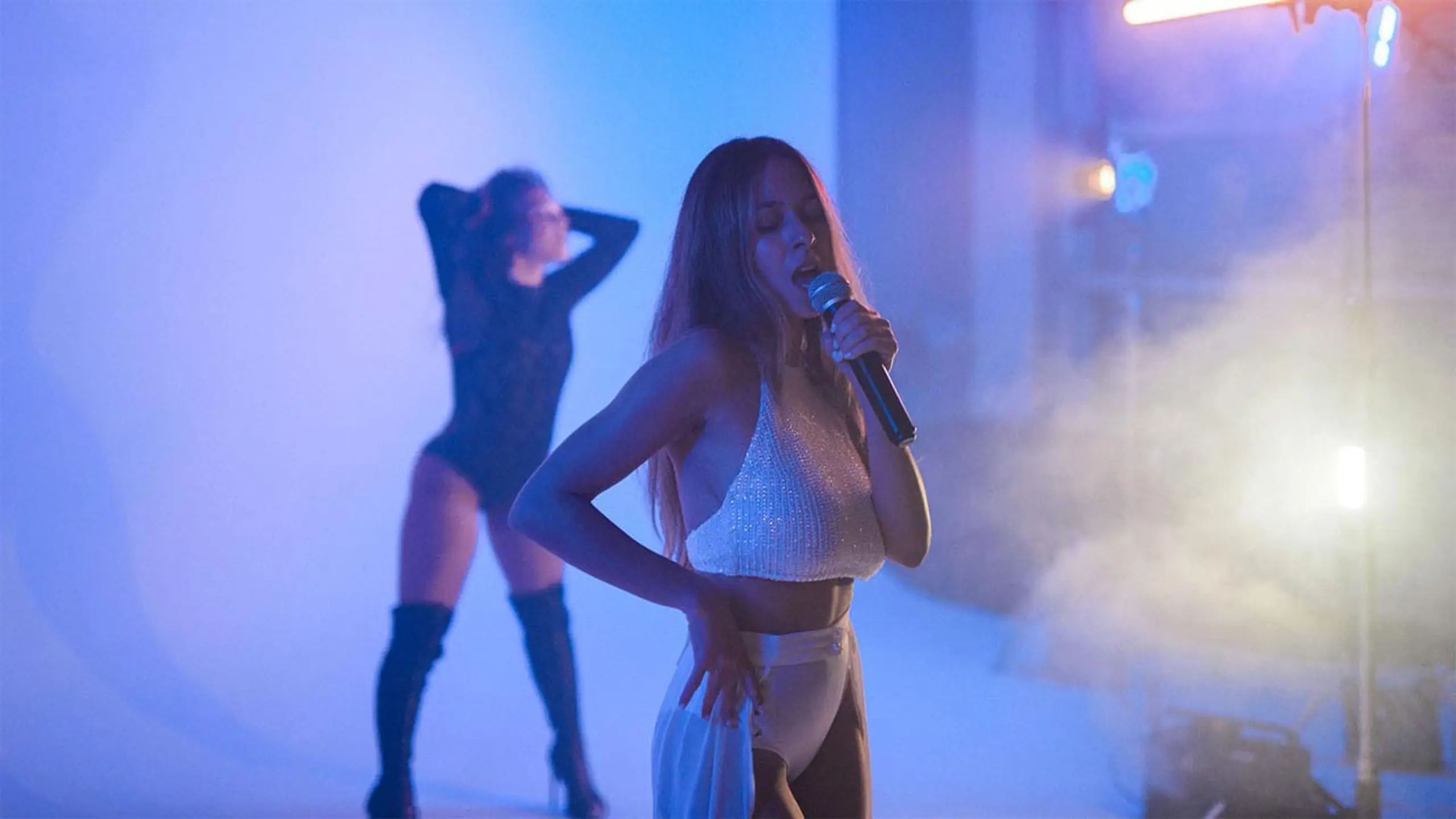
The history of controversial commercials reads like a study in what happens when ambition outruns judgment. We have watched billion-dollar brands torch their goodwill in thirty seconds, and we have watched scrappy challengers turn outrage into the most valuable free media on earth. Every year a new spot dominates timelines for the wrong reasons, and every year the same questions get asked in agency rooms across the country: was this courageous, was this calculated, or was this a creative lapse that nobody on the approval chain had the spine to flag. Our team has spent years working on [advertising](https://c-istudios.com/advertising-services/) at the level where these questions actually get litigated, and we have opinions about which of these ads were worth the heat and which were unforced errors. Below, we walk through thirty commercials that ignited boycotts, congressional letters, viral hashtags, and in a few cases lawsuits. Some are brilliant. A handful are catastrophic. All of them changed how brands now think about risk.
## The Strange Math Behind Controversial Commercials
A familiar cliche says any press is good press. The data does not support this. Brand-tracking firms have repeatedly shown that ads generating sustained negative sentiment correlate with measurable drops in purchase intent for four to six weeks after airing. The reason controversial commercials still get made is simpler and stranger: a small subset produce returns so extreme that they justify the risk for the next ten attempts that fail. Nike's Colin Kaepernick spot generated an estimated 163 million dollars in earned media within forty-eight hours of release. Bud Light's collaboration with Dylan Mulvaney cost Anheuser-Busch InBev an estimated 1.4 billion dollars in lost American sales and the top spot in domestic beer. Those two examples are why we tell every client at the start of a [creative services](https://c-istudios.com/creative-services/) engagement that controversy is not a strategy. It is a tax you pay for being interesting, and you should know the rate before you sign the check.
## Race, Representation, and Cultural Misfires
Few categories produce as much controversy as race and identity. The pattern is consistent: a creative team without sufficient diversity in the room signs off on imagery or copy that lands very differently outside that room. Inside C&I Studios, the only reliable safeguard we have found is structural, not stylistic, and we build it into every [branded content](https://c-istudios.com/branded-content-series/) production we run.
### Pepsi "Live for Now" with Kendall Jenner (2017)
The premise was almost laughably out of touch. Kendall Jenner abandons a glamorous photo shoot to join an unnamed protest, hands a can of Pepsi to a smiling police officer, and somehow resolves systemic tension with carbonation. The internet did not laugh. Bernice King posted a photo of her father with the caption "If only Daddy would have known about the power of Pepsi." The brand pulled the spot within twenty-four hours, apologized publicly, and the campaign became the textbook case study in how not to commodify protest imagery. Pepsi reportedly produced the work in-house at its content unit, which is part of why we generally recommend an outside creative review on any spot that touches an active social movement. It is the cleanest cautionary tale in the controversial commercials canon.
### H&M "Coolest Monkey in the Jungle" (2018)
The Swedish retailer published a product page featuring a young Black child wearing a hoodie with the slogan "Coolest Monkey in the Jungle." The image was online for less than a day before screenshots circulated globally. The Weeknd cut ties with the brand, LeBron James posted a corrected version, and stores in South Africa were vandalized in protest. H&M issued an apology and committed to hiring a global diversity leader. The failure was not the slogan in isolation. It was the chain of approvals from product photography to e-commerce upload to live publication, where presumably dozens of people looked at the image and nobody flagged it. Process gaps cause more controversial commercials than bad creative briefs ever do.
### Dove "Body Wash" Facebook Ad (2017)
A three-second GIF showed a Black woman removing her brown shirt to reveal a white woman underneath, who in turn revealed a woman of color. Out of context, on a fast-scrolling feed, the message looked like a Black woman became a white woman after using Dove. The campaign was meant to celebrate diverse skin types but read instantly as a racist trope with a long history in soap advertising. Unilever pulled the post and apologized within hours. We bring this one up in client meetings because it shows how a perfectly defensible storyboard can collapse on a single platform when the formatting strips the framing out. Channel-specific edits matter, which is why our [post production](https://c-istudios.com/post-production-services/) team builds platform variants from the master timeline rather than letting media buyers crop on the fly.
### Dolce & Gabbana "Eating With Chopsticks" (2018)
Three short videos showed a Chinese model attempting to eat Italian food with chopsticks while a male voiceover delivered patronizing instructions. Internal screenshots of co-founder Stefano Gabbana making racist comments in a private DM exchange leaked the same week. Chinese celebrities pulled out of the brand's Shanghai runway show, the event was canceled hours before showtime, and major Chinese e-commerce platforms removed Dolce & Gabbana products. Estimates pegged the China revenue impact at over 500 million dollars in the first year. The brand has not fully recovered in the market. The lesson is that founder behavior is now part of the brand's creative footprint, and crisis preparedness has to extend to the social channels of every executive on the masthead.
### Heineken "Sometimes, Lighter Is Better" (2018)
The spot showed a bottle of Heineken Light sliding down a bar, passing several Black patrons before reaching a lighter-skinned woman, with the tagline "Sometimes, lighter is better." Chance the Rapper posted that he found the ad "terribly racist," and the clip went viral within a day. Heineken pulled the work and acknowledged it had missed the mark. The strange part is that the agency had presumably tested the cut, but consumer testing in a homogenous focus group room is not the same as testing across the public internet. We talk about this often with brands launching multinational [social media campaigns](https://c-istudios.com/social-media-marketing-services/), where the geography of viewing is unpredictable and the response window is measured in hours.
## Sex, Sensuality, and the Provocation Playbook
The provocation playbook is older than television. Sex sells, sex shocks, and sex sometimes generates court orders. The trick is knowing the difference between provoking and pandering, and that line has moved with each generation.
### Calvin Klein with Brooke Shields (1980)
A fifteen-year-old Brooke Shields, lounging in jeans, looked at the camera and said, "You want to know what comes between me and my Calvins? Nothing." CBS, ABC, and NBC banned the spots in several markets. The campaign defined Calvin Klein as a label and pushed teen sexuality into mainstream advertising in a way that still informs every fashion shoot today. Looking back, what is striking is not the controversy but how casually the industry accepted minors in adult-coded contexts for the next twenty years. The cultural recalibration that came later is one reason every contemporary fashion [photography](https://c-istudios.com/professional-photography-services/) brief at our shop now includes age and consent clauses that simply did not exist in the eighties.
### Calvin Klein and the Heroin Chic Era (1995)
Kate Moss, Mark Wahlberg, and a string of pale, gaunt models defined the brand's mid-nineties aesthetic. President Bill Clinton publicly criticized the campaign, saying the imagery glamorized drug use and self-harm at a moment when heroin overdoses were rising in American cities. Calvin Klein pulled some of the executions but kept the broader visual style for years. The cultural conversation that followed reshaped fashion casting, and the term "heroin chic" entered the dictionary. We mention this one when clients ask whether style alone can drive controversy. It can. The aesthetic itself was the message, and no copy line was needed to deliver it.
### Carl's Jr. with Paris Hilton (2005)
Paris Hilton washing a Bentley while eating a Spicy BBQ Six Dollar Burger generated an estimated 1.5 billion media impressions and a Parents Television Council complaint that landed at the FCC. Carl's Jr. did not pull the ad. The brand owned the controversy and continued the same playbook for nearly a decade with a series of bikini-led commercials starring different celebrities. The campaign helped Carl's Jr. break out of a regional footprint and informed the brand's identity for the next ownership group. It also provoked years of organized boycott campaigns that sponsors of family programming continue to cite. The math worked for the brand, even when many viewers wished it had not.
### Reebok "Cheat on Your Girlfriend" (2012)
An out-of-home execution in Germany read, "Cheat on your girlfriend, not on your workout." The line trended within a day, and Reebok pulled the campaign and apologized to anyone offended. The agency had cleared the line internally, which is the part we find instructive. Tagline workshops that get done at speed in a small group will produce a winner that nobody around the table objects to and that everyone outside the room can object to instantly. Test outside the bubble. Our team builds [content](https://c-istudios.com/content-creation-services/) reviews with an explicit external panel before any global tagline goes to print or to digital.
### Burger King UK "Women Belong in the Kitchen" Tweet (2021)
The brand's UK account tweeted "Women belong in the kitchen" on International Women's Day, then followed it with a thread explaining a scholarship program for female chefs. The thread did not catch up to the screenshot. The first tweet was deleted within hours after a global backlash that included calls for an account audit. Burger King apologized and acknowledged the format was wrong even if the intent was sincere. We use this one to illustrate why platform-native copywriting needs to be tested as a still image, not as a thread. If the first frame cannot stand alone, the campaign cannot survive a screenshot.
## Politics, Identity, and the Brand Activism Era
The 2010s ushered in a wave of brand activism that ran on a simple thesis: take a stand and your audience will reward you. The thesis is partially true and partially false, and the difference is almost entirely about authenticity and follow-through.
### Nike "Dream Crazy" with Colin Kaepernick (2018)
"Believe in something, even if it means sacrificing everything." The spot ran during the NFL season opener and prompted a wave of viral videos of customers burning Nike shoes. The opposite reaction also happened. Nike's online sales spiked thirty-one percent in the days after, and the campaign won the Outstanding Commercial Emmy. Critics often point to Nike's overseas labor practices as the reason the activism rang hollow, and that critique is fair. The campaign worked anyway because Nike actually paid Kaepernick, kept him in the brand for years, and committed to follow-on social initiatives. Continuity is what separates real brand activism from marketing tourism. [The New York Times](https://www.nytimes.com/2018/09/05/sports/nike-colin-kaepernick.html) documented the early-week stock dip and rebound in detail.
### Bud Light with Dylan Mulvaney (2023)
A single Instagram post showing a custom Bud Light can sent to influencer Dylan Mulvaney sparked a months-long boycott that wiped out sales gains and cost the brand the title of America's best-selling beer. The crisis was not the partnership. It was the response. The brand's leadership distanced itself from the post under pressure, which alienated the LGBTQ audience the post was meant to court while failing to satisfy the customers organizing the boycott. By the end of the year, Anheuser-Busch InBev had reported losses in the billions and replaced senior marketing executives. The case is now taught in business schools as a study in what happens when a brand neither commits to a position nor retreats cleanly from it.
### Gillette "We Believe. The Best Men Can Be" (2019)
The spot retooled the iconic "Best a Man Can Get" tagline as a critique of toxic masculinity, with vignettes of bullying, harassment, and absent fathering. Procter & Gamble took a 5.24 billion dollar writedown on Gillette later that year, although executives publicly denied the campaign was a primary cause. Sales data showed mixed signals. The campaign retained loyalty among younger consumers and drove away an older male base the brand had spent decades cultivating. The takeaway, as we tell [corporate video production](https://c-istudios.com/corporate-video-production/) clients, is that a single sixty-second spot cannot carry a brand identity overhaul. Activism without a follow-up product story tends to read as opportunism.
### Audi "The Construction of a Star" China (2017)
An Audi spot in China featured a mother-in-law inspecting a bride at a wedding, checking her teeth and ears like a horse, before a voiceover recommended the same scrutiny when buying a used car. Comparing women to livestock did not land in the way the team must have hoped. Audi pulled the ad and apologized. The spot became a frequent reference in trade press articles about the danger of porting Western humor frames into a market where the implicit gender politics will read very differently. We work with brands launching China campaigns from our [Los Angeles](https://c-istudios.com/video-production-los-angeles/) studios and the first hour of every kickoff covers exactly this kind of cultural translation risk.
### Peloton "The Gift That Gives Back" (2019)
An ad for the connected exercise bike showed a husband gifting his already-fit wife a Peloton, followed by a year of vlogs as she documented her transformation. Critics read it as condescending, dystopian, or both. Peloton's stock dropped nine percent in a week, and the actress in the spot landed a viral cameo in a Ryan Reynolds Aviation Gin spot that played the same character as a free woman recovering with a martini. The Peloton ad probably was not as bad as the pile-on suggested. The Aviation Gin response is what cemented the controversy in cultural memory. Reactive comedy is the new boycott, and brands need [film production](https://c-istudios.com/film-production-services/) partners who can move at meme speed when an opening appears.
## Patterns We Notice in Every Controversial Commercial
After thirty examples, the patterns are obvious. Most controversial commercials are not failures of creativity. They are failures of process. A brief that gets approved without diverse input. A tagline that gets cleared in a small room. A founder DM that surfaces in the same week as a brand campaign. A platform-specific edit that strips the framing out of a perfectly defensible idea. These are operational gaps. The rare commercials that succeed despite controversy share three traits: the brand had a credible existing position, the creative was tied to a follow-on product or program, and leadership held the line under pressure. When any of those three legs breaks, the campaign collapses, regardless of how good the original spot was. C&I Studios has seen this pattern repeat across every category we work in, from sports to fashion to consumer packaged goods, and the operational interventions that prevent the collapse are surprisingly consistent.
## How Our Team Pushes Creative Boundaries Without Crossing Them
We work on plenty of bold campaigns. Pushing creative boundaries is a different discipline from courting controversy, and the difference is largely structural. Every brief that goes into production at C&I Studios runs through a creative review with at least three audience perspectives represented in the room, and high-stakes work goes through a separate red-team session before final approval. We build platform-specific cuts in [motion design](https://c-istudios.com/2d-animation-motion-design/) and live action so that a tweet-sized version reads correctly on its own, and we keep founder and executive social channels in scope on any campaign whose values position can be undermined by an off-brand post. None of this is glamorous. All of it has saved clients from learning the lessons in this article the hard way. If you want to talk through a campaign that is meant to provoke and you want to know whether the math works, our [production team](https://c-istudios.com/video-production-services/) is happy to read the brief. You can [reach out directly](https://c-istudios.com/contact/), and you can browse a sample of brand work we have shipped on our [portfolio page](https://c-istudios.com/our-work/). The right answer is sometimes to walk away from the idea. More often, the right answer is to ship the idea with the operational scaffolding that lets it survive contact with the public.
## Work with C&I Studios
If you are planning a project like this, our team can take it from concept to final delivery. Explore our [video production services](https://c-istudios.com/video-production-services/), browse [our work](https://c-istudios.com/our-work/) to see how we tell brand stories, and [get in touch](https://c-istudios.com/contact/) when you are ready to start.
Originally published May 8, 2026
---
*This content is from [C&I Studios](https://c-istudios.com), a full-service production company.*
---
# Best Animated Video Production Companies 2026
> Published: May 6, 2026
> Categories: Commercial & Brand
> Source: https://c-istudios.com/best-animated-video-production-companies-2026/
---
.cib{--paper:#1b1d1f;--ink:#fff;--body:#d5d7d9;--muted:#8b9096;--line:rgba(255,255,255,.12);--thumb:#2b2e31;--card:#212426;--accent:#c02b0a;--blue:#5B8FA8;--serif:'Playfair Display',Georgia,serif;--sans:'Poppins',-apple-system,sans-serif;--measure:900px;background:var(--paper);color:var(--body);font-family:var(--sans);line-height:1.6;position:relative;left:50%;transform:translateX(-50%);width:90vw;max-width:1920px}
.cib *{box-sizing:border-box}
.cib .kicker{max-width:var(--measure);margin:58px auto 0;padding:0 22px;font-size:12.5px;font-weight:700;letter-spacing:2.5px;text-transform:uppercase;color:var(--blue)}
.cib h1.cibh1{text-wrap:balance;font-family:var(--serif);font-weight:500;font-size:clamp(46px,6vw,72px);line-height:1.08;color:var(--ink);max-width:var(--measure);margin:18px auto 0;padding:0 22px;letter-spacing:-.5px}
.cib .metarow{max-width:var(--measure);margin:20px auto 0;padding:0 22px;color:var(--muted);font-size:14px}
.cib .hero{position:relative;width:100%;height:0;padding-bottom:56.25%;overflow:hidden;margin:48px auto 0;border-top:1px solid var(--line);border-bottom:1px solid var(--line)}
.cib .hero .ph{width:100%;aspect-ratio:16/9;background:var(--thumb);border-top:1px solid var(--line);border-bottom:1px solid var(--line);display:flex;align-items:center;justify-content:center;color:#7d8288;font-size:13px;text-align:center;padding:0 20px}
.cib .body{max-width:var(--measure);margin:12px auto 0;padding:52px 22px 6px}
.cib .body.lead p:first-child{font-size:23px;line-height:1.62;color:var(--ink)}
.cib .body p{font-size:18.5px;line-height:1.85;margin:0 0 30px;color:var(--body)}
.cib .body h2{text-wrap:balance;font-family:var(--serif);font-weight:500;font-size:clamp(32px,4vw,48px);line-height:1.22;color:var(--ink);margin:70px 0 20px;letter-spacing:-.3px}
.cib .body h3{text-wrap:balance;font-family:var(--sans);font-weight:600;font-size:22px;color:var(--ink);margin:38px 0 8px}
.cib .body a{color:var(--ink);text-decoration:underline;text-decoration-color:rgba(255,255,255,.4);text-underline-offset:3px}
.cib .body a:hover{text-decoration-color:var(--ink)}
.cib .ctable{width:100%;border-collapse:collapse;margin:16px 0 30px;font-size:16px}
.cib .ctable th{background:#000;color:#fff;text-align:left;padding:10px 12px;font-family:var(--sans)}
.cib .ctable td{padding:10px 12px;border-bottom:1px solid var(--line);color:var(--body)}
.cib .inimg{position:relative;width:100%;height:0;padding-bottom:56.25%;overflow:hidden;margin:72px auto;border-top:1px solid var(--line);border-bottom:1px solid var(--line)}
.cib .inimg .ph{width:100%;aspect-ratio:16/9;background:var(--thumb);border-top:1px solid var(--line);border-bottom:1px solid var(--line);display:flex;align-items:center;justify-content:center;color:#7d8288;font-size:13px}
.cib .origpub{max-width:var(--measure);margin:60px auto 0;padding:26px 22px 0;border-top:1px solid var(--line);color:var(--muted);font-size:13.5px}
.cib .related{max-width:1200px;margin:64px auto 0;padding:34px 22px 76px}
.cib .related h3{font-family:var(--sans);font-size:12.5px;letter-spacing:2px;text-transform:uppercase;color:var(--ink);margin:0 0 24px}
.cib .grid{display:grid;grid-template-columns:repeat(3,1fr);gap:28px}
.cib .rc{background:var(--card);border:1px solid var(--line);display:block;text-decoration:none;color:inherit;transition:border-color .15s}
.cib a.rc:hover{border-color:rgba(255,255,255,.5)}
.cib .rc .thumb{position:relative;width:100%;height:0;padding-bottom:56.25%;background:var(--thumb);overflow:hidden}
.cib .rc .thumb img{position:absolute!important;top:0!important;left:0!important;width:100%!important;height:100%!important;object-fit:cover!important;margin:0!important}
.cib .rc .cc{padding:14px 15px 17px}
.cib .rc .rt{font-family:var(--serif);font-weight:500;font-size:16px;line-height:1.3;color:var(--ink);margin:0 0 6px}
.cib .rc .rm{font-size:11px;letter-spacing:1px;text-transform:uppercase;color:var(--muted)}
.cib img{margin:0!important;padding:0!important;display:block!important;vertical-align:top;max-width:100%}
.cib .hero img,.cib .inimg img{position:absolute!important;top:0!important;left:0!important;width:100%!important;height:100%!important;object-fit:cover!important;margin:0!important;padding:0!important;border:0!important;display:block!important;aspect-ratio:auto!important}
.cib .hero+.body{padding-top:36px}
@media(max-width:760px){.cib .grid{grid-template-columns:1fr}.cib .body h2{margin:52px 0 16px}.cib .body p{font-size:17.5px}.cib .inimg,.cib .hero{margin-top:44px}}
.cib .vembed{max-width:var(--measure);margin:44px auto;padding:0 22px}.cib .vembed .vwrap{position:relative;width:100%;height:0;padding-bottom:56.25%}.cib .vembed .vwrap iframe{position:absolute;top:0;left:0;width:100%;height:100%;border:0}
Commercial & Brand
# Best Animated Video Production Companies 2026
15 min read

Picking from the long roster of **animated video production companies** has gotten harder, not easier, as the field has expanded. We have spent the last eighteen months reviewing portfolios, pricing models, and turnaround data across the studios our clients consider when they ask us for second opinions, and this guide reflects what we found. Some names you will recognize. A few are quieter shops that punch above their weight. The goal is not to crown a single winner, because animation is too fragmented for that. The goal is to help you match the right partner to the actual project on your desk.
Our team has produced animation for Nike, Coca-Cola, AT&T, the NFL, NBC, H&M, Calvin Klein, and SiriusXM, which means we sit on both sides of this conversation. We make animation in house, and we have also brought in specialists when a project demanded a particular visual style or pipeline we did not want to build twice. That perspective shapes the recommendations below. None of the studios listed paid to be here, and we did not exclude competitors. If a shop is on this list, we believe a smart marketing director could hire them and not regret it.

## Why Animation Is Eating Live-Action Budgets
Animation went from a niche line item to a core part of the brand video toolkit because the math finally tipped. A live-action shoot in a major market still costs what it cost five years ago, plus overage fees on talent, location permits, and grip rentals. A two minute animated piece can be produced for a fraction of that, scaled across formats, and revised after launch without summoning the original cast back to set. That structural advantage is why the best [2D animation and motion design](https://c-istudios.com/2d-animation-motion-design/) teams now run waitlists.
The shift is also creative. Audiences have stopped expecting stock-photo realism and started rewarding stylized, story-first work. According to [Wyzowl's annual video marketing report](https://www.wyzowl.com/video-marketing-statistics/), animated explainers and motion-driven social cuts now outperform live-action equivalents on completion rates in several B2B verticals. We see the same pattern in our analytics. A motion piece we produced for a fintech client converted at roughly twice the rate of the live-action testimonial it replaced, and the production timeline was cut almost in half.
The other quiet driver is iteration. When a brand wants to A/B test ten openings or localize for fifteen markets, animation is dramatically cheaper to fork than a film shoot. That is why our [creative services](https://c-istudios.com/creative-services/) team spends a growing share of its weeks on motion work, even for clients who originally hired us for documentary or commercial production. Animation has stopped being a workaround for budgets that cannot afford live action and has become the first choice for brands that want speed, control, and visual specificity.
## How We Ranked These Animated Video Production Companies
We weighted four factors when assembling this list. First, the consistency of the studio's portfolio, because a single hero piece tells you almost nothing about whether the team can repeat the trick. Second, range across animation disciplines: 2D character work, motion graphics, 3D, mixed media, and visual effects. Third, transparent pricing or at least a clear scoping process that does not require six discovery calls before a number appears. Fourth, post-launch behavior, which includes how the studio handles revisions, file delivery, and licensing of source files. The last factor is the one most buyers underweight and later regret.
None of the animated video production companies on this list are bad. The question is which one fits the project. A scrappy SaaS launch needs a different partner than a Super Bowl spot, and a documentary needs a different partner than a six-second pre-roll. Treat this list as a sorted shortlist, not a strict ranking from best to worst.
## The Best Animated Video Production Companies for 2026
The studios below cover a spectrum: full service shops that handle live action and animation under one roof, boutique animation specialists, and a handful of mid-sized studios known for specific styles. We have included our own team because excluding ourselves would be coy, and because clients deserve to see us evaluated on the same axes as everyone else.
### C&I Studios
We are a full-service production company with a 30,000 square foot facility in Fort Lauderdale and offices in Los Angeles and New York. Our animation work spans 2D explainer pieces, 3D product renders, motion graphics for broadcast, and VFX heavy hybrid shoots. Where we differ from pure animation shops is the live-action stack underneath. When a project needs animated lower thirds laid over an interview, or product animation cut into a documentary, the same team handles both ends without an external handoff. Recent animation work includes campaign assets for Nike, motion-driven social cuts for SiriusXM, and explainer suites for AT&T product launches. Pricing for a polished two minute animated piece typically lands between $15,000 and $80,000 depending on complexity. See more on our [VFX, compositing, and animation services](https://c-istudios.com/vfx-compositing-and-animation-services/) page or browse [our work](https://c-istudios.com/our-work/) for recent samples.
### Buck
Buck is the studio most often named when someone says "the best animation in the world right now," and the praise is earned. With offices in New York, Los Angeles, Amsterdam, and Sydney, Buck takes on flagship work for Apple, Google, Meta, and similar enterprise clients. Their 2D and 3D character work is widely imitated, rarely matched. The trade-off is access. Buck does not chase mid-market budgets, project timelines run long, and a single thirty second piece can climb past $250,000. If you are launching a global campaign and the brand can support that investment, Buck belongs on the shortlist. If you are launching a Series A SaaS product, look elsewhere.
### Demo Duck
Demo Duck has built a sturdy reputation in the explainer space with a clean, character-driven 2D style that fits well for software, healthcare, and finance brands. They are based in Chicago, run a tight project management process, and tend to deliver on schedule. Pricing typically ranges from $20,000 to $60,000 for a sixty to ninety second animated piece, which puts them squarely in the mid-market. The main critique we hear from clients who shopped them against other options is that their visual range can feel narrow once you have seen ten of their pieces in a row. If your brand has a strong art direction already, Demo Duck adapts well. If you are looking for the studio to invent a visual language for you, push them in scoping.
### Yans Media
Yans Media is one of the better remote-first animation studios working today. Based in Armenia with distributed staff, they produce 2D explainers, character animation, and whiteboard pieces at price points that look impossible until you remember the cost differential. Expect to pay $5,000 to $20,000 for a typical sixty second animated piece. The catch is communication overhead. Time zone gaps and asynchronous review cycles can stretch a four week project into six weeks if your internal review cadence is loose. For brands with a clear brief and a single empowered approver, Yans is a strong value play.
### Wyzowl
Wyzowl is a UK-based animation shop that has industrialized the explainer process. They run a near-formulaic intake, scripting, and storyboarding workflow that produces predictable output in predictable time, usually four to six weeks. Their style leans heavily on flat 2D characters and clean kinetic type. Pricing sits between $5,000 and $15,000 for short pieces, which makes them attractive for in-house marketing teams that need three or four pieces a quarter. They are not the studio you hire for a brand-defining piece. They are the studio you hire when you need volume and reliability.
### Explainify
Explainify is one of the longer-tenured animated video production companies focused exclusively on B2B explainers. They are particularly strong with abstract concepts: data flows, infrastructure, financial mechanics. Their team writes the script before they animate it, which sounds obvious but is rarer than it should be in this category. Pricing ranges from $20,000 to $50,000. We have referred technical clients their way when our own queue was full, and feedback has been consistently positive.
### Thinkmojo
Thinkmojo carved out a niche by working closely with product marketing teams at companies like Slack, Square, and Atlassian. Their work tends toward UI animation, screen-recording driven explainers, and product launch films that need to feel native to the brand. They charge premium rates, often $40,000 to $100,000 per project, and their availability fluctuates with their enterprise client load. If your brief involves animating an actual product interface in a way that feels alive rather than like a screen capture, Thinkmojo is on the shortlist.
### Sandwich Video
Sandwich is technically a hybrid studio, equally comfortable with live action, animation, and the seam between them. Founded by Adam Lisagor, they helped define the modern startup launch video aesthetic. Their animation alone is rarely the whole project, but their motion design within mixed-media pieces is among the best in the business. Pricing starts in the high five figures and climbs from there. Hire Sandwich when the project is a hero brand piece, not a recurring content stream.
### Studio Pigeon
Studio Pigeon is a Polish animation house known for character-driven 2D work with a distinctive illustrative voice. They have produced animated series, music videos, and brand films that consistently look like nothing else on the platform they are sitting on. Pricing varies widely, from $15,000 for short branded pieces to $100,000-plus for longer original work. Their queue is real. Plan for a two to three month lead time even on small projects.
### Vidico
Vidico is an Australia-based studio that has scaled into a credible global player over the last few years. They handle both live action and animation, but their animation portfolio is what gets them on this list. Strong art direction, fast iteration, fair pricing for the quality, typically $15,000 to $60,000 per project. Their main weakness is consistency at the highest end of the visual quality spectrum, where the very best [post production services](https://c-istudios.com/post-production-services/) teams still pull ahead.
### Epipheo
Epipheo built its reputation on the early explainer-video boom and has evolved its style alongside the market. They are particularly strong with thought-leadership pieces, internal communications, and anything that needs to convey a slightly more philosophical message than a feature walkthrough. Pricing typically ranges from $20,000 to $60,000. They are a safe choice for a corporate client who wants a polished result without surprises.
## What to Look For in an Animation Partner
The portfolio matters less than people think, and the process matters more. We have inherited cleanup work from clients who hired beautiful portfolios attached to broken project management, and the recovery cost was higher than the original quote. When you evaluate animated video production companies, ask the following questions in your first call.
How does the studio handle revisions? Most shops cap rounds at two or three, which is fine if the rounds are well structured. Ask what happens on round four. Studios that quote a flat hourly rate after the cap are honest. Studios that get vague are not. Second, who owns the source files at delivery? Default contracts in this industry vary wildly. Some studios ship layered Adobe After Effects files. Others ship only the final render. If you ever want to repurpose a piece, that distinction matters.
The first mistake is hiring on portfolio alone, without checking how the studio handles communication. A studio with a stunning reel and a Slack channel that goes silent for three days at a time will deliver late and over budget. The second mistake is approving the script too quickly. Animation is hard to change once production has started. Every word should earn its place before the storyboard begins. Studios that push you to lock the script before they animate are protecting both parties.
The third mistake is treating the brief as a list of requirements rather than a description of what success looks like. Telling the studio you want "a fun explainer with our brand colors" tells them nothing useful. Telling them the piece needs to drive a fifteen percent lift in demo bookings from a specific paid social campaign tells them everything. The best animated video production companies write better when the goal is sharper.
The fourth mistake is skipping audio. We see brands spend $50,000 on stunning visuals and then drop a stock music track on top because the timeline ran long. The animation reads as cheap, even though the visuals were not. Budget for original or licensed music and intentional sound design from the start.
The fifth mistake is forgetting about distribution. An animated piece designed for fifteen second TikTok pre-roll has different pacing, framing, and end-card requirements than a ninety second YouTube hero piece. Studios that ask about distribution upfront save you the cost of producing the piece twice. Our [advertising services](https://c-istudios.com/advertising-services/) team often joins the kickoff call specifically to define distribution before the script is written.
## How to Brief an Animation Studio Without Wasting Six Weeks
The brief is where most animation projects either accelerate or stall. A good brief is roughly two pages long and answers eight questions: what the piece is for, who watches it, where it runs, what they should think or do after watching, what the brand voice is, what visual references the team likes, what visual references the team has explicitly rejected in the past, and what the budget and timeline are.
The negative references matter as much as the positive ones. Saying "we want it to feel like the Apple AirPods Pro launch film" is helpful. Saying "we do not want it to feel like the Mailchimp explainer style that has been everywhere for five years" is more helpful still. Studios that have to guess what you do not want will guess wrong at least once, and revisions are expensive.
Budget transparency saves the most time of all. Studios that know your budget at intake can scope the project to fit, propose creative solutions within constraints, or honestly tell you they are not the right fit. Studios that have to guess your budget will pad estimates, propose oversized scopes, and waste two weeks of your timeline before the real conversation happens. Tell us your budget. We will tell you what is possible inside it.
## City Coverage and Production Hubs
Animation is largely remote-friendly, which means a studio in Warsaw can serve a client in Atlanta without anyone losing sleep. The exception is hybrid work that requires live-action production, which is where geography matters again. We maintain crews and studio space in three major US production markets. If your project blends animation with on-camera work, the partner's physical presence in the city of the shoot is non-trivial.
We service the Los Angeles market through our [video production Los Angeles](https://c-istudios.com/video-production-los-angeles/) team, which handles a large share of our entertainment-industry animation work. We service the New York market through our [video production New York](https://c-istudios.com/video-production-new-york/) team, which weights heavily toward financial services and editorial clients. And we service the Florida and broader Southeast market from our [video production Fort Lauderdale](https://c-istudios.com/video-production-fort-lauderdale/) studio, which is also our largest facility and houses our motion graphics suites. Most of our animation clients work with whichever office is closest to them, but the production talent is shared across all three.
## Frequently Asked Questions About Animated Video Production Companies
**How long does an animated video production project take?** A standard sixty to ninety second 2D explainer takes six to ten weeks from kickoff to final delivery. Faster timelines are possible if the script and brand assets are already locked. 3D and hybrid pieces typically run ten to sixteen weeks. Studios that promise a finished piece in two weeks are either using templates, charging a rush premium, or both.
**What software do top animation studios use?** Most professional 2D work happens in Adobe After Effects, with character animation often handled in Toon Boom Harmony or Cavalry. 3D work is split across Cinema 4D, Blender, Maya, and Houdini depending on the studio. The software matters less than the senior talent operating it. Per [Think with Google](https://www.thinkwithgoogle.com/) data, audience engagement on animated content correlates with creative quality far more than with any specific tool.
**Should we hire a freelancer or a studio?** A senior freelance animator can produce excellent work at lower cost, but you are the project manager. A studio handles producing, art direction, animation, sound, and revisions under one contract. For projects under $5,000, a freelancer often makes sense. Above that, a studio almost always pays for itself in saved hours.
**How many revisions are normal?** Two to three rounds of revisions are standard at the storyboard, animatic, and final animation stages. More than five rounds at any stage is a red flag that the brief was unclear or the studio is not steering the project well.
**Do animated video production companies offer scripting?** Most do, and you should generally take them up on it. A studio that animates a script written by your in-house team will follow the script literally, even when a small rewrite would make the animation work harder. Studios that own the script can shape it for the medium.
**What is the difference between motion graphics and animation?** Motion graphics typically refers to type, shapes, and graphic elements in motion. Animation more often refers to character or environment work where things move with weight, timing, and personality. Most animated video production companies handle both, but a few specialize in one or the other.
## The Shortlist. Where to Go From Here
If your project is a flagship brand piece with global reach, talk to Buck or a comparable top-tier studio. If your project is a recurring series with predictable scope, talk to a mid-market shop like Demo Duck, Vidico, or Explainify. If your project blends animation with live action or sits inside a larger video program, talk to a full-service team that handles both, which is where C&I Studios fits in the landscape. Animation is one of several disciplines we run inside our broader [video production services](https://c-istudios.com/video-production-services/), and the integration is what most pure animation shops cannot offer.
The studios on this list are all credible. The wrong move is hiring on reputation alone without testing fit. The right move is shortlisting two or three, briefing them with the same document, and reading carefully how each one responds. The studio that asks the sharpest questions in the first call is usually the studio that delivers the sharpest piece. If we can help, our team is reachable through the [contact](https://c-istudios.com/contact/) page, and we are happy to weigh in even if you ultimately hire someone else. Animation is a long enough game that good referrals tend to come back around.
## Work with C&I Studios
If you are planning a project like this, our team can take it from concept to final delivery. Explore our [video production services](https://c-istudios.com/video-production-services/), browse [our work](https://c-istudios.com/our-work/) to see how we tell brand stories, and [get in touch](https://c-istudios.com/contact/) when you are ready to start.
Originally published May 6, 2026
---
*This content is from [C&I Studios](https://c-istudios.com), a full-service production company.*
---
# Roth and Co Video Production Compared
> Published: May 3, 2026
> Categories: Commercial & Brand
> Source: https://c-istudios.com/roth-and-co-video-production/
---
.cib{--paper:#1b1d1f;--ink:#fff;--body:#d5d7d9;--muted:#8b9096;--line:rgba(255,255,255,.12);--thumb:#2b2e31;--card:#212426;--accent:#c02b0a;--blue:#5B8FA8;--serif:'Playfair Display',Georgia,serif;--sans:'Poppins',-apple-system,sans-serif;--measure:900px;background:var(--paper);color:var(--body);font-family:var(--sans);line-height:1.6;position:relative;left:50%;transform:translateX(-50%);width:90vw;max-width:1920px}
.cib *{box-sizing:border-box}
.cib .kicker{max-width:var(--measure);margin:58px auto 0;padding:0 22px;font-size:12.5px;font-weight:700;letter-spacing:2.5px;text-transform:uppercase;color:var(--blue)}
.cib h1.cibh1{text-wrap:balance;font-family:var(--serif);font-weight:500;font-size:clamp(46px,6vw,72px);line-height:1.08;color:var(--ink);max-width:var(--measure);margin:18px auto 0;padding:0 22px;letter-spacing:-.5px}
.cib .metarow{max-width:var(--measure);margin:20px auto 0;padding:0 22px;color:var(--muted);font-size:14px}
.cib .hero{position:relative;width:100%;height:0;padding-bottom:56.25%;overflow:hidden;margin:48px auto 0;border-top:1px solid var(--line);border-bottom:1px solid var(--line)}
.cib .hero .ph{width:100%;aspect-ratio:16/9;background:var(--thumb);border-top:1px solid var(--line);border-bottom:1px solid var(--line);display:flex;align-items:center;justify-content:center;color:#7d8288;font-size:13px;text-align:center;padding:0 20px}
.cib .body{max-width:var(--measure);margin:12px auto 0;padding:52px 22px 6px}
.cib .body.lead p:first-child{font-size:23px;line-height:1.62;color:var(--ink)}
.cib .body p{font-size:18.5px;line-height:1.85;margin:0 0 30px;color:var(--body)}
.cib .body h2{text-wrap:balance;font-family:var(--serif);font-weight:500;font-size:clamp(32px,4vw,48px);line-height:1.22;color:var(--ink);margin:70px 0 20px;letter-spacing:-.3px}
.cib .body h3{text-wrap:balance;font-family:var(--sans);font-weight:600;font-size:22px;color:var(--ink);margin:38px 0 8px}
.cib .body a{color:var(--ink);text-decoration:underline;text-decoration-color:rgba(255,255,255,.4);text-underline-offset:3px}
.cib .body a:hover{text-decoration-color:var(--ink)}
.cib .ctable{width:100%;border-collapse:collapse;margin:16px 0 30px;font-size:16px}
.cib .ctable th{background:#000;color:#fff;text-align:left;padding:10px 12px;font-family:var(--sans)}
.cib .ctable td{padding:10px 12px;border-bottom:1px solid var(--line);color:var(--body)}
.cib .inimg{position:relative;width:100%;height:0;padding-bottom:56.25%;overflow:hidden;margin:72px auto;border-top:1px solid var(--line);border-bottom:1px solid var(--line)}
.cib .inimg .ph{width:100%;aspect-ratio:16/9;background:var(--thumb);border-top:1px solid var(--line);border-bottom:1px solid var(--line);display:flex;align-items:center;justify-content:center;color:#7d8288;font-size:13px}
.cib .origpub{max-width:var(--measure);margin:60px auto 0;padding:26px 22px 0;border-top:1px solid var(--line);color:var(--muted);font-size:13.5px}
.cib .related{max-width:1200px;margin:64px auto 0;padding:34px 22px 76px}
.cib .related h3{font-family:var(--sans);font-size:12.5px;letter-spacing:2px;text-transform:uppercase;color:var(--ink);margin:0 0 24px}
.cib .grid{display:grid;grid-template-columns:repeat(3,1fr);gap:28px}
.cib .rc{background:var(--card);border:1px solid var(--line);display:block;text-decoration:none;color:inherit;transition:border-color .15s}
.cib a.rc:hover{border-color:rgba(255,255,255,.5)}
.cib .rc .thumb{position:relative;width:100%;height:0;padding-bottom:56.25%;background:var(--thumb);overflow:hidden}
.cib .rc .thumb img{position:absolute!important;top:0!important;left:0!important;width:100%!important;height:100%!important;object-fit:cover!important;margin:0!important}
.cib .rc .cc{padding:14px 15px 17px}
.cib .rc .rt{font-family:var(--serif);font-weight:500;font-size:16px;line-height:1.3;color:var(--ink);margin:0 0 6px}
.cib .rc .rm{font-size:11px;letter-spacing:1px;text-transform:uppercase;color:var(--muted)}
.cib img{margin:0!important;padding:0!important;display:block!important;vertical-align:top;max-width:100%}
.cib .hero img,.cib .inimg img{position:absolute!important;top:0!important;left:0!important;width:100%!important;height:100%!important;object-fit:cover!important;margin:0!important;padding:0!important;border:0!important;display:block!important;aspect-ratio:auto!important}
.cib .hero+.body{padding-top:36px}
@media(max-width:760px){.cib .grid{grid-template-columns:1fr}.cib .body h2{margin:52px 0 16px}.cib .body p{font-size:17.5px}.cib .inimg,.cib .hero{margin-top:44px}}
.cib .vembed{max-width:var(--measure);margin:44px auto;padding:0 22px}.cib .vembed .vwrap{position:relative;width:100%;height:0;padding-bottom:56.25%}.cib .vembed .vwrap iframe{position:absolute;top:0;left:0;width:100%;height:100%;border:0}
Commercial & Brand
# Roth and Co Video Production Compared
14 min read

When a brand searches for "roth and co video production," it is usually because the project is already greenlit and the team is sourcing partners. The brief exists. The launch date exists. What is left is choosing the production company that can actually deliver on both. That last decision is where campaigns either gain momentum or quietly fall behind, and it is the reason we wrote this comparison.
We are a senior production team at C&I Studios. We are not going to spend this article tearing down another studio. Roth and Co has built a real business and serves real clients well. What we will do is walk you through how to evaluate any video production partner, including them, with the same rigor you would apply to a creative agency or a media buyer. If you finish this piece and decide we are the right fit, our [contact team](https://c-istudios.com/contact/) is one click away. If you decide Roth and Co is the right fit, that is also a clean outcome. The wrong outcome is signing a contract you did not pressure test.
## Who Roth and Co Video Production Serves
Roth and Co (you can find their work at [rothandco.com](https://www.rothandco.com/)) is a New York based production company. Their reel leans into commercial work, branded content, and a healthy mix of agency partnerships. They are a recognizable name in the metro New York market and the type of shop a brand might pick when the brief is clean, the deliverable is well defined, and the timeline allows for a structured production process.
If your project lives entirely inside Manhattan, Brooklyn, or the surrounding boroughs, and you have an agency partner who is already coordinating creative, Roth and Co is a reasonable candidate to evaluate. They have the local crew network, the relationships with stage and equipment vendors, and the post-production resources that you would expect from a New York shop with their tenure.
Where the conversation gets more interesting is when the brief stretches beyond a single market, when the deliverable list grows past one or two formats, or when the brand wants to consolidate creative, production, and post-production under one roof. Those are the briefs we tend to win, and they are also the briefs where roth and co video production is often weighed against full service alternatives.
## The C&I Approach to Production
We treat every project as if the client will judge us on the second one, not the first. That sounds like marketing speak, so let us unpack what it actually means in practice. Most clients do not call back because the first project came in on budget. They call back because the producer answered the phone on a Saturday, the editor turned a revision in two hours instead of two days, and the colorist remembered the brand LUT from the previous campaign without being asked.
Our team is structured around continuity. The producer who scopes your [video production project](https://c-istudios.com/video-production-services/) stays with it through delivery. The director who shoots the spot is in the bay during the offline. The audio engineer who mixed last quarter's campaign already has your brand sound profile loaded. We hold this together because we own a 30,000 square foot facility in Fort Lauderdale and we run our own crews. We are not stitching together a vendor chain on every job.
That continuity matters most when something goes wrong, which is when most production relationships either prove their worth or fall apart. A power outage on a shoot day, a talent cancellation 48 hours before the call sheet, a brand legal review that comes back with new compliance requirements after picture lock. Those are the moments where having one team that owns the whole pipeline becomes the difference between a missed launch and a small story you tell at the wrap dinner.
## Studio Footprint and In-House Capacity
Production capacity is the single most underweighted factor in vendor selection. Brands compare reels and pricing, and they forget to ask whether the studio actually controls the resources required to deliver the project on schedule. We have written about this dynamic before in our [corporate video production](https://c-istudios.com/corporate-video-production/) work, where the difference between a studio that owns its space and one that rents is usually the difference between a clean shoot day and a day that runs into overtime.
Our Fort Lauderdale headquarters includes multiple shooting stages, a fully built green screen volume, edit suites, color suites, and a dedicated audio mix room. We also operate satellite teams in Los Angeles and New York, which means we can pull crew, gear, and creative into a project regardless of which market the production lives in. If you want to see how that translates to actual deliverables, our [portfolio page](https://c-istudios.com/our-work/) shows the range across commercial, documentary, branded series, and music video work.
Roth and Co operates with a different studio model, one that is common among New York city based shops. They lean into the strong New York vendor ecosystem rather than carrying a large owned facility. Neither model is right or wrong on paper. The question is which model fits your project, and that is a question worth asking on the very first call with any partner you are evaluating.
## Comparing Service Breadth
Here is where vendor lists tend to get sloppy. A reel that looks great on a single high budget commercial does not automatically translate to a studio that can deliver a 12 episode [branded content series](https://c-istudios.com/branded-content-series/), a documentary, a music video, an event activation, and a quarterly social cut down. Most shops specialize. The question is whether your brand needs specialization or breadth.
Our service stack is intentionally wide. We deliver [film production](https://c-istudios.com/film-production-services/), [music videos](https://c-istudios.com/music-video-production/), [documentary work](https://c-istudios.com/documentary-film-production/), [content creation](https://c-istudios.com/content-creation-services/), and [live streaming](https://c-istudios.com/video-audio-live-streaming/) under the same roof. We also run a full [post-production pipeline](https://c-istudios.com/post-production-services/) with editorial, color, sound design, and VFX. When a brand needs to launch a campaign that will live across television, social, OTT, and in-store, we are usually the one studio in the room that can scope all of those deliverables without subcontracting.
Roth and Co has a tighter focus. They lean into their core strengths and they execute well within that lane. If your brief sits cleanly inside their lane, that focus can be a strength. If your brief crosses into music video, documentary, or branded series work, you will likely need to add vendors, and adding vendors means adding coordination overhead that nobody on your team is going to volunteer to manage.
## Industries and Client Profiles
Industry experience matters more than reels suggest. The reel shows the finished work. It does not show the producer who has navigated regulated industry compliance reviews, the editor who knows which kinds of legal disclaimer placements survive social cropping, or the director who has shot pharmaceutical talent without violating consent requirements.
We have worked with Nike, Coca-Cola, AT&T, the NFL, NBC, H&M, Calvin Klein, and SiriusXM. Each of those relationships taught us something specific about how that industry buys video. Apparel and fashion clients (H&M, Calvin Klein) want a fast handoff and aggressive social adaptations. Sports clients (Nike, NFL) want an editorial sensibility that respects the athlete and a turnaround time that can match a game cycle. Telecom and broadcast clients (AT&T, NBC, SiriusXM) want compliance discipline, brand consistency across hundreds of deliverables, and the operational stability to staff long campaigns.
Roth and Co has its own client roster, which they are happy to walk you through during a pitch. The right question to ask is not whether they have famous logos. It is whether they have produced work in your specific industry, in your specific format, recently enough that the lessons are still institutional knowledge. A logo on a reel from four years ago is a credit. A producer who shipped three campaigns in your category last quarter is a partner.
## How Pricing Actually Works
Production pricing is not a quote, it is a negotiation framework. Any studio that gives you a hard number on the first call without scoping the actual deliverables is either undershooting to win the job (and will renegotiate later) or overshooting to protect a margin (and will appear expensive when the next bidder comes in).
Our pricing model on a typical mid-market campaign breaks into four lines. First is creative and pre-production, which covers concepting, treatment, scripting, location scouting, casting, and the production schedule. Second is principal photography, which covers crew, gear, talent, locations, and any specialty equipment. Third is post-production, which covers editorial, color, sound, graphics, and VFX. Fourth is delivery, which covers all of the format adaptations, captions, and platform-specific cuts.
For a single broadcast spot with social cut downs, that total typically lands somewhere between 75,000 and 250,000 dollars. For a multi-episode [branded series](https://c-istudios.com/branded-content-series/), the number scales with episode count and shoot days. For a music video, the range is wider because budget is driven by talent and concept ambition more than by the production days themselves. For a corporate or executive shoot day, the number is more contained, and we have a faster path through pre-production because the brief is usually well defined before the call.
Roth and Co operates in the same broad market range. The thing to compare is not the bottom line number, it is what is bundled into each line. A studio that includes audio post in their post-production line is usually cheaper in total than a studio that quotes audio post as a separate line item. A studio that includes a brand kit and style guide handoff in their delivery line is usually cheaper in the long run than one that does not, because you will pay for those assets eventually, just in revisions. Pricing comparisons that ignore line item composition are how brands end up surprised at month three.
## Post-Production and Finishing
Finishing is where projects either become campaigns or stay drafts. We see this constantly. A client books a great shoot day, the dailies look beautiful, and then the project drags through three rounds of editorial revisions, two color passes, and a sound mix that nobody is happy with. By the time it ships, the launch window has slipped and the team is already burned out.
Our [post-production team](https://c-istudios.com/post-production-services/) is built to shorten that cycle. Editors and producers sit on the same floor. Color suites are integrated with editorial, so a colorist can pull a frame mid-edit without a file transfer. The [audio engineering](https://c-istudios.com/audio-engineering-services/) team mixes in a dedicated room with current generation monitoring, which removes the round of "the mix sounds different in my office" notes that plague remote workflows. We also run a full [2D animation and motion design](https://c-istudios.com/2d-animation-motion-design/) team and a [VFX compositing](https://c-istudios.com/vfx-compositing-and-animation-services/) group, both of which sit inside the same building as the editorial team.
When you are evaluating Roth and Co or any other production company, ask whether their post-production lives in the same physical space as their production. If it does, your turnaround will be shorter. If it does not, you will pay for the gap somewhere, either in time, in revisions, or in coordination overhead. The shops that hide the post-production handoff are the shops that surprise you with delivery dates.
## Multi-City and Out-of-Town Production
A meaningful number of campaigns now require shoots in more than one city. A retail brand might shoot store fronts in Miami, Manhattan, and Los Angeles in the same week. A sports brand might capture talent across three different training facilities. A tech client might document customer stories in five regional offices.
Our teams in [Los Angeles](https://c-istudios.com/video-production-los-angeles/), [New York](https://c-istudios.com/video-production-new-york/), and [Fort Lauderdale](https://c-istudios.com/video-production-fort-lauderdale/) are all in-house, which means a multi-city shoot is one production with three local crews, not three separate productions stitched together. We also field work in [Atlanta](https://c-istudios.com/video-production-atlanta/) for clients who want a Southeast production base. Our [photography services](https://c-istudios.com/photography-services-fort-lauderdale/) follow the same staffing model, and our [event photography](https://c-istudios.com/event-photography/) teams travel under the same producer who scoped the broader campaign.
If your project is single market and that market is New York, Roth and Co's local depth is an asset. If your project is multi market or includes regions outside the Northeast, you should specifically ask any New York based studio how they staff and bill out-of-town work, because the answer can swing the total budget by 15 to 30 percent. The travel day rate, the per diem policy, and the local crew sourcing approach are the three numbers that hide most of the variance.
## Roth and Co Video Production vs C&I. When Each Makes Sense
Let us put this in plain terms. Roth and Co is likely the right fit if your project is a tightly scoped New York commercial, you have an agency partner already managing creative, your deliverable list is contained to one or two formats, and you do not need post-production, music, or VFX consolidated under the same vendor.
We are likely the right fit if your project crosses multiple markets, requires more than one service line (production plus post, or production plus social adaptation, or branded content plus event capture), needs a producer who will own the relationship long term, or benefits from creative and production sitting under the same roof. Our [creative services](https://c-istudios.com/creative-services/) team can scope concept and treatment work alongside production, which is useful when the brief is still soft. We also handle [advertising services](https://c-istudios.com/advertising-services/) and [social media marketing](https://c-istudios.com/social-media-marketing-services/) for brands that want a single partner from concept through campaign distribution.
Some clients use both. They run a New York commercial through a local shop and a multi-format campaign through a full-service partner. That is a fine model if you have the internal program management to run two vendors in parallel. If you do not, consolidating into one partner is almost always cheaper in total time, even if the line item bid looks higher. Time spent on vendor coordination is the most expensive line item nobody puts in their budget.
## Questions to Ask Any Production Partner
Before you sign with Roth and Co, with us, or with any other production company, run the same five question filter. We use this internally when we evaluate post-production vendors for overflow work, and it works just as well for brand side teams comparing roth and co video production against full service shops or boutique alternatives.
First, who specifically will produce my project, and what else are they on this quarter. The answer should name a person and indicate that they have capacity. If the answer is vague, your project will be deprioritized the moment a bigger one walks in.
Second, what is included in your post-production line. The answer should cover editorial, color, sound, graphics, captioning, and format adaptation by default. Anything pulled out of that line is a future change order.
Third, where does my footage live during and after the project. The answer should describe a clear handoff. If they cannot tell you where the masters will sit in 18 months, you will not own your own footage in 18 months.
Fourth, how do you handle revisions outside of the included rounds. The answer should be a transparent rate card, not a "we will work with you" hand wave. The hand wave is how budgets blow up.
Fifth, can I talk to a recent client in my industry. Real production companies will say yes immediately. Studios that hesitate are usually hiding either a churned client base or a lack of recent work in your category.
If a studio answers all five questions clearly, they are probably worth a contract conversation. If they hesitate on any of them, slow down. The cost of slowing down is a week. The cost of a bad production partnership is a quarter.
## Working With Us
If you are reading this and you are still on the Roth and Co tab, that is fine. Talk to them, get their pitch, ask the five questions above. If you would also like to see what a full-service alternative looks like, our [team is ready to scope](https://c-istudios.com/contact/) your project. We will send you a real producer on the first call, not a sales lead, and we will walk you through how we would resource the project in detail before any contract conversation.
You can also browse our [portfolio](https://c-istudios.com/our-work/) to get a sense of the range. Every project on that page came out of the same Fort Lauderdale facility, with the same producers, the same edit teams, and the same post-production pipeline that would handle yours. C&I Studios is built around the idea that the best production decisions are made early, when the brief is fresh and the partner has time to push back on it before the schedule locks. The vendor selection conversation is part of that early window. Use it well, regardless of which way you go.
For a wider read on how production companies are evolving as a category, the [SHOOT Online](https://www.shootonline.com/) trade press is a useful reference, as is the [Variety Artisans](https://variety.com/c/artisans/) coverage of production craft. Both publications cover the operational side of production, which is the side that actually determines whether a project ships on time and on budget.
## Work with C&I Studios
If you are planning a project like this, our team can take it from concept to final delivery. Explore our [video production services](https://c-istudios.com/video-production-services/), browse [our work](https://c-istudios.com/our-work/) to see how we tell brand stories, and [get in touch](https://c-istudios.com/contact/) when you are ready to start.
Originally published May 3, 2026
---
*This content is from [C&I Studios](https://c-istudios.com), a full-service production company.*
---
# Brozac Video Production Ideas
> Published: May 2, 2026
> Categories: Commercial & Brand
> Source: https://c-istudios.com/brozac-video-production-ideas/
---
.cib{--paper:#1b1d1f;--ink:#fff;--body:#d5d7d9;--muted:#8b9096;--line:rgba(255,255,255,.12);--thumb:#2b2e31;--card:#212426;--accent:#c02b0a;--blue:#5B8FA8;--serif:'Playfair Display',Georgia,serif;--sans:'Poppins',-apple-system,sans-serif;--measure:900px;background:var(--paper);color:var(--body);font-family:var(--sans);line-height:1.6;position:relative;left:50%;transform:translateX(-50%);width:90vw;max-width:1920px}
.cib *{box-sizing:border-box}
.cib .kicker{max-width:var(--measure);margin:58px auto 0;padding:0 22px;font-size:12.5px;font-weight:700;letter-spacing:2.5px;text-transform:uppercase;color:var(--blue)}
.cib h1.cibh1{text-wrap:balance;font-family:var(--serif);font-weight:500;font-size:clamp(46px,6vw,72px);line-height:1.08;color:var(--ink);max-width:var(--measure);margin:18px auto 0;padding:0 22px;letter-spacing:-.5px}
.cib .metarow{max-width:var(--measure);margin:20px auto 0;padding:0 22px;color:var(--muted);font-size:14px}
.cib .hero{position:relative;width:100%;height:0;padding-bottom:56.25%;overflow:hidden;margin:48px auto 0;border-top:1px solid var(--line);border-bottom:1px solid var(--line)}
.cib .hero .ph{width:100%;aspect-ratio:16/9;background:var(--thumb);border-top:1px solid var(--line);border-bottom:1px solid var(--line);display:flex;align-items:center;justify-content:center;color:#7d8288;font-size:13px;text-align:center;padding:0 20px}
.cib .body{max-width:var(--measure);margin:12px auto 0;padding:52px 22px 6px}
.cib .body.lead p:first-child{font-size:23px;line-height:1.62;color:var(--ink)}
.cib .body p{font-size:18.5px;line-height:1.85;margin:0 0 30px;color:var(--body)}
.cib .body h2{text-wrap:balance;font-family:var(--serif);font-weight:500;font-size:clamp(32px,4vw,48px);line-height:1.22;color:var(--ink);margin:70px 0 20px;letter-spacing:-.3px}
.cib .body h3{text-wrap:balance;font-family:var(--sans);font-weight:600;font-size:22px;color:var(--ink);margin:38px 0 8px}
.cib .body a{color:var(--ink);text-decoration:underline;text-decoration-color:rgba(255,255,255,.4);text-underline-offset:3px}
.cib .body a:hover{text-decoration-color:var(--ink)}
.cib .ctable{width:100%;border-collapse:collapse;margin:16px 0 30px;font-size:16px}
.cib .ctable th{background:#000;color:#fff;text-align:left;padding:10px 12px;font-family:var(--sans)}
.cib .ctable td{padding:10px 12px;border-bottom:1px solid var(--line);color:var(--body)}
.cib .inimg{position:relative;width:100%;height:0;padding-bottom:56.25%;overflow:hidden;margin:72px auto;border-top:1px solid var(--line);border-bottom:1px solid var(--line)}
.cib .inimg .ph{width:100%;aspect-ratio:16/9;background:var(--thumb);border-top:1px solid var(--line);border-bottom:1px solid var(--line);display:flex;align-items:center;justify-content:center;color:#7d8288;font-size:13px}
.cib .origpub{max-width:var(--measure);margin:60px auto 0;padding:26px 22px 0;border-top:1px solid var(--line);color:var(--muted);font-size:13.5px}
.cib .related{max-width:1200px;margin:64px auto 0;padding:34px 22px 76px}
.cib .related h3{font-family:var(--sans);font-size:12.5px;letter-spacing:2px;text-transform:uppercase;color:var(--ink);margin:0 0 24px}
.cib .grid{display:grid;grid-template-columns:repeat(3,1fr);gap:28px}
.cib .rc{background:var(--card);border:1px solid var(--line);display:block;text-decoration:none;color:inherit;transition:border-color .15s}
.cib a.rc:hover{border-color:rgba(255,255,255,.5)}
.cib .rc .thumb{position:relative;width:100%;height:0;padding-bottom:56.25%;background:var(--thumb);overflow:hidden}
.cib .rc .thumb img{position:absolute!important;top:0!important;left:0!important;width:100%!important;height:100%!important;object-fit:cover!important;margin:0!important}
.cib .rc .cc{padding:14px 15px 17px}
.cib .rc .rt{font-family:var(--serif);font-weight:500;font-size:16px;line-height:1.3;color:var(--ink);margin:0 0 6px}
.cib .rc .rm{font-size:11px;letter-spacing:1px;text-transform:uppercase;color:var(--muted)}
.cib img{margin:0!important;padding:0!important;display:block!important;vertical-align:top;max-width:100%}
.cib .hero img,.cib .inimg img{position:absolute!important;top:0!important;left:0!important;width:100%!important;height:100%!important;object-fit:cover!important;margin:0!important;padding:0!important;border:0!important;display:block!important;aspect-ratio:auto!important}
.cib .hero+.body{padding-top:36px}
@media(max-width:760px){.cib .grid{grid-template-columns:1fr}.cib .body h2{margin:52px 0 16px}.cib .body p{font-size:17.5px}.cib .inimg,.cib .hero{margin-top:44px}}
.cib .vembed{max-width:var(--measure);margin:44px auto;padding:0 22px}.cib .vembed .vwrap{position:relative;width:100%;height:0;padding-bottom:56.25%}.cib .vembed .vwrap iframe{position:absolute;top:0;left:0;width:100%;height:100%;border:0}
Commercial & Brand
# Brozac Video Production Ideas
17 min read

The phrase "brozac video production" pops up more often than you might expect when brands start searching for a look that feels both polished and unfiltered, both cinematic and street. We have spent enough time watching the same questions land in our inbox to know what people actually mean when they type it. They want production that does not feel like a stock corporate spot. They want a crew that can shoot a CEO interview in the morning and a music video on a rooftop the same night. They want bold framing, intentional grain, real performances, and a story that holds attention past the first three seconds.
That is the territory we cover. Our team at C&I has been producing work for Nike, Coca-Cola, AT&T, the NFL, NBC, H&M, Calvin Klein, and SiriusXM out of a 30,000 square foot facility in Fort Lauderdale, with active offices in Los Angeles and New York. The reason brands keep returning is not because we own the most cameras. It is because we treat every project as a creative problem with a production answer.
Below is a working playbook of twelve project ideas that capture what people are really asking for when they search for brozac video production, plus the operational details our producers wish more clients understood before kickoff. Read it as a menu, a checklist, or just a way to sharpen the brief before you call your next vendor.
## Defining Brozac Video Production
The label itself is loose. We treat brozac video production as shorthand for work that prioritizes attitude over polish for polish sake, that sits comfortably between commercial gloss and editorial grit, and that uses cinematic tools in service of a brand voice rather than the other way around. Think of the music video that doubles as a campaign launch. Think of the founder profile that runs ten minutes on YouTube and gets cut into fifteen-second TikTok teasers without losing its shape.
Several signals show up across this kind of work: anamorphic lenses with practical flares, contrasty color grades that lean toward film stocks, naturalistic sound design, in-camera rig moves rather than stabilized drone abstractions, and casting that favors real faces over models when the project allows. Our team builds projects around those instincts when the brief calls for them. When it does not, we adjust. The point is to match style to intent, not to apply a single look to every job.
For a broader survey of how we approach this kind of work, our [video production services](https://c-istudios.com/video-production-services/) page maps out the full service stack we draw from on each project, from prelight through final delivery.
## Why This Style Resonates Right Now
Three forces are pushing brands toward this aesthetic. First, the audience has been trained by a decade of social video to notice when something looks corporate, and they scroll past it. Second, the cost of pretending to be premium has gone up, while the cost of being honest about who you are has gone down. Audiences reward specificity. Third, distribution channels reward different cuts of the same story, and a brozac-leaning approach gives editors raw material that can flex from a sixty-second hero film to a twelve-second vertical hook without feeling stitched together after the fact.
We have watched this play out on real campaigns. A footwear launch we shot last year ran the same anamorphic interview footage as a long-form YouTube cut, a fifteen-second pre-roll, and a static photo carousel using stills pulled from the same camera negatives. The unified look kept the brand cohesive across a fragmented media plan. That kind of efficiency is becoming the rule, not the exception, particularly for mid-market brands that cannot afford to shoot fresh content for every channel.
If your team is rebuilding a content calendar around this reality, our [content creation services](https://c-istudios.com/content-creation-services/) page is a sensible starting point. It outlines how we plan shoots specifically to feed multiple platforms from a single production day, which is the only way the math works on most modern budgets.
## 12 Brozac Video Production Ideas to Steal
Each idea below is a concept we have produced or actively pitch to brands looking for this kind of work. The order is not a ranking; it is the rough sequence we walk clients through when scoping a campaign. Pick two or three that match your goals, and use them as the spine of your next quarter.
### Cinematic Brand Anthems
The brand anthem is the modern equivalent of the sixty-second Super Bowl spot, except it lives on YouTube, plays in cinemas during pre-roll buys, and gets re-cut into hero placements across owned channels. We treat the anthem as the keystone of a brozac campaign because it sets the visual grammar that every other deliverable inherits. A typical anthem runs between sixty and ninety seconds, shoots over two production days, and uses a hybrid crew of cinematographer, focus puller, gaffer, key grip, sound mixer, and producer.
What separates a strong anthem from a forgettable one is restraint. Too many anthems try to say everything in a minute. The good ones pick one feeling and stay there. We have shot these on ARRI Alexa Mini LF, RED Komodo, and Sony Venice depending on the look the director is chasing, with anamorphic glass when the budget supports it. For the broader frame of how these projects fit into a marketing calendar, see our [advertising services](https://c-istudios.com/advertising-services/) outline.
### Founder and Origin-Story Documentaries
Founder pieces have become a quiet workhorse for brands trying to explain why they exist without sounding like a press release. The brozac version skips the talking-head-in-front-of-bookshelves trope. Instead, we follow the founder through a representative day: a workshop walk-through, a customer call, a long drive between meetings. The interview audio runs as voice-over, and the visuals do most of the storytelling.
These films usually run six to twelve minutes for a long form cut and trim down to ninety-second sales videos for the website homepage. We treat them as evergreen assets, which means we shoot enough coverage that a smart editor can pull two or three years of social cutdowns out of the same negatives. Our [documentary film production](https://c-istudios.com/documentary-film-production/) team handles these end to end, including archival research and original score commissioning when the story warrants it.
### Music Video Crossover Campaigns
Some of the most interesting brand work of the past three years has been campaigns that look and behave exactly like music videos. The format gives brands permission to be expressive in ways a traditional spot does not. We have produced these for fashion clients, footwear brands, and beverage companies, often pairing an emerging artist with a creative director on the brand side to write a track that doubles as a campaign anchor.
The production scale lives between a real music video and a commercial. Crews are larger than a typical brand shoot because of the choreographed performance elements, and post involves both picture finishing and music mix and master. Our [music video production](https://c-istudios.com/music-video-production/) capability and our [audio engineering services](https://c-istudios.com/audio-engineering-services/) share the same building, which makes the handoff between picture lock and final mix dramatically faster than the typical agency workflow.
### Athlete and Performer Profiles
The athlete profile is one of the cleanest brozac formats. There is a real person, a real discipline, and a real arc. We approach these like short documentaries with a sponsorship layer rather than the other way around. The brand mark shows up on equipment and apparel, the spoken content stays focused on the craft, and the cut earns trust by being honest about the work.
Sports clients we have produced for, including campaigns connected to NFL and NBC programming, tend to want both a hero edit for broadcast and a series of short cutdowns optimized for vertical playback. We plan capture days around that dual delivery from the start. The same approach works for performers in music, theater, and dance, where our [branded content series](https://c-istudios.com/branded-content-series/) framework lets us extend a single profile into an episodic format if the talent has the runway.
### Vertical-Native Hero Films
Most brands still shoot horizontal first and crop down for vertical placements, which is why their TikTok and Reels content looks awkward. Vertical-native production starts in nine-by-sixteen, blocks performance and camera movement specifically for that frame, and treats the sixteen-by-nine version as the secondary deliverable. The result is social content that does not feel like a leftover.
We have produced vertical-first work for retail launches, app campaigns, and live event activations. The rig changes too: more handheld, more gimbal, more wider-angle prime lenses to keep faces and product readable in tighter portrait crops. Our [social media marketing services](https://c-istudios.com/social-media-marketing-services/) team partners with production on these so the creative brief reflects how the final cut will actually be served on the platform algorithm.
### Behind-the-Scenes Mini Docs
Behind-the-scenes content is one of the highest return uses of a production day. While the main unit is shooting the hero spot, a smaller team of one operator and one sound recordist captures the making-of in real time. The output is usually a three to five minute mini-doc plus a stack of vertical clips for social, all delivered within two weeks of the shoot.
We treat the BTS unit as a planned line item in the budget rather than an afterthought. A skilled BTS operator can disappear into the crew, capture genuine reactions, and pull interviews during natural breaks without slowing the main unit. For brands launching a campaign with a layered media plan, the BTS asset often outperforms the polished spot in social engagement, particularly on platforms that reward authenticity. Our [creative services](https://c-istudios.com/creative-services/) group plans these layered shoot days end to end.
### Stylized Motion and 2D Animation Pieces
Not every brozac video needs to be live action. Some of the most distinctive work in this lane mixes practical footage with stylized 2D animation, kinetic typography, or rotoscoped sequences. We use these techniques when the message benefits from abstraction, when the brand has a strong illustration system already, or when budget realities make a fully live-action treatment impractical.
A common build is a sixty-second piece that opens with a stylized animated sequence to set the world, drops into live action for the emotional core, and returns to animation for the call to action. Our [2D animation and motion design](https://c-istudios.com/2d-animation-motion-design/) team works directly with the live-action production unit so the transitions feel intentional rather than bolted on. For projects that need illustrated brand worlds rather than literal product shots, this is often the most efficient path to a distinctive look.
### VFX-Driven Concept Films
When the concept calls for the impossible, visual effects do the heavy lifting. The brozac version of VFX work is restrained. Instead of leaning on chrome and particle systems, the strongest projects use compositing to extend practical sets, paint out modern intrusions in period work, or build subtle environmental shifts that audiences feel rather than notice consciously.
We have produced concept films that involved set extensions, sky replacements, complex object removal, and stylized motion graphics integrations. The trick is planning VFX into the shoot rather than fixing problems in post. Tracking markers, clean plates, and lens metadata captured on set save weeks in finishing. Our [VFX, compositing, and animation services](https://c-istudios.com/vfx-compositing-and-animation-services/) team sits with the on-set crew during prep so every shot has a clear post recipe before the camera rolls.
### Multicam Live Performance Captures
Live performance capture sits at the intersection of broadcast and brand video. The deliverables can include a polished concert film, performance cuts for streaming, and short edits for social use. The production stack is closer to live broadcast than to traditional film: multiple cameras, switchable program feeds, isolated camera records, and front-of-house audio mixed simultaneously.
We run these out of our facility for studio sessions and on location for festival and venue captures. The deliverables can also feed real-time audiences through streaming partners, particularly for brand activations that want to reach beyond the in-room crowd. Our [video, audio, and live streaming](https://c-istudios.com/video-audio-live-streaming/) capability covers everything from single-source webcasts to fully produced multicam broadcasts with replay packages.
### Episodic Branded Series
The episodic branded series rewards brands that have something genuinely interesting to say and the patience to release it across weeks rather than days. Think of a six-part interview series with industry figures, a behind-the-scenes seasonal show that follows a product from concept to shelf, or a documentary series tied to a cause the brand supports.
What makes the format work is treating each episode like a real piece of programming rather than a marketing unit. Strong cold opens, recurring visual motifs, and consistent music cues turn a series into something audiences anticipate. Our experience producing branded series for clients in fashion, sports, and entertainment has taught us that the audience builds slowly and then sticks. For more on the format, our [branded content series](https://c-istudios.com/branded-content-series/) page outlines the workflow and typical investment levels in detail.
### Cause-Driven Campaign Films
Cause-driven work is the part of brozac video production where intent matters most. Campaigns connected to social impact, environmental work, or community programs require a different kind of producing. We start with the people the cause serves, not with the brand mark. The brand earns its place in the story by demonstrating real commitment, which means production timelines are longer because we need to follow real events as they unfold.
The deliverables are usually a hero short film of five to eight minutes, a one-minute campaign cut, and a social rollout that extends over a quarter or longer. The aesthetic leans documentary because that is what the material demands. We pair our [film production services](https://c-istudios.com/film-production-services/) with embedded story producers who can identify the moments that matter and capture them without staging.
### Hybrid Photo and Video Day Shoots
The hybrid shoot is a practical answer to the modern campaign reality. Brands need both still photography and motion content for any given launch, and shooting them on separate days doubles the cost. We routinely run shoots that capture both deliverables in the same window using a combined crew structure: motion DP and stills photographer working off the same setups, with art direction managing both surfaces simultaneously.
The savings are not just budgetary. Continuity between the still campaign and the moving picture is naturally tighter when both come from the same lighting, the same wardrobe, and the same talent across the same hours. Our [professional photography services](https://c-istudios.com/professional-photography-services/) team works inside our production days when projects call for this hybrid model, and many of our retail and fashion clients now book this way by default.
## Production Process We Recommend
Most issues that derail a brozac video production trace back to the prep stage. Strong creative briefs solve more problems than expensive cameras. Our typical preproduction window runs three to six weeks for a single hero film and longer for series work. Inside that window we cover concepting, treatment writing, casting, location scouting, wardrobe, art direction, shot listing, scheduling, and crew booking. We also build a contingency layer into every schedule because weather and talent realities are not optional considerations in this work.
Production days follow a clear rhythm: blocking and lighting in the morning, principal coverage through midday, performance and reaction work in the afternoon, and pickups before wrap. Sound recording is treated as a primary discipline rather than an afterthought, which is the kind of detail that distinguishes work that holds up in cinema-grade playback from work that only sounds acceptable on phone speakers. The American Society of Cinematographers maintains a useful body of [technical standards and craft writing](https://theasc.com/) that informs how our DPs approach exposure, color, and lens choice on these projects.
Postproduction is where a great shoot becomes a great film. We run our own edit suites, color bays, sound mix rooms, and finishing pipeline in house. Cuts move from offline edit through color and sound mix to final delivery without the friction of vendor handoffs that costs other shops time and money. Our [post-production services](https://c-istudios.com/post-production-services/) page covers the end-to-end finishing stack we use on every project.
## Cameras, Crews, and Locations
The camera question comes up early in every brozac video production conversation. Our standard packages include ARRI Alexa Mini LF, ARRI Amira, RED Komodo and V-Raptor, and Sony Venice. The choice depends on the look, the deliverables, and the post pipeline. Anamorphic lenses including Cooke, Atlas, and Hawk options live in our rental stock for projects that want the wider frame and oval bokeh those glasses produce. ARRI publishes detailed [technical references](https://www.arri.com/) for the camera bodies and lighting systems we run, which is useful background reading for clients who want to understand the craft choices behind the bid.
Crews scale to the brief. A small documentary unit might run three to five people. A music video shoot can run twenty-five to forty depending on the choreography, locations, and rigging. A commercial campaign with multiple talent and locations can push past sixty across multiple units. Our crew base is deepest in our home market of Fort Lauderdale, with full crew availability in our [Los Angeles](https://c-istudios.com/video-production-los-angeles/) and [New York](https://c-istudios.com/video-production-new-york/) offices. For shoots based in our home market, our [Fort Lauderdale video production](https://c-istudios.com/video-production-fort-lauderdale/) team handles permitting, location scouting, and crew booking from inside the building.
Locations are a creative choice as much as a logistical one. We maintain relationships with a deep bench of practical locations across South Florida, including industrial spaces, residential properties, beachfront, and stylized commercial environments, plus our own 30,000 square foot facility with multiple shooting stages and prep spaces.
## Budget Ranges and Realistic Timelines
Pricing a brozac video production accurately requires honesty about what the project actually needs. We share rough ranges below for orientation rather than as fixed quotes. A short brand film with a single talent, one location, one shoot day, and standard finishing typically lands in the twenty to forty thousand dollar range. A full hero anthem with multiple locations, principal talent, two shoot days, and cinematic finishing climbs into the seventy-five to one hundred fifty thousand dollar range. A music video production at brand scale runs from forty thousand for a stripped performance piece to several hundred thousand for narrative work with significant production design.
Episodic series and documentary projects price by season rather than by minute. A six-episode branded series with original music, motion graphics, and full finishing typically sits between two hundred fifty thousand and seven hundred fifty thousand dollars depending on travel, talent, and archival requirements. Cause-driven campaigns vary widely because the production calendar tracks real-world events that we cannot control.
Timelines are equally project-dependent. A short brand film delivered in six weeks from creative kickoff to final master is realistic for a focused project. Anthem campaigns typically run eight to twelve weeks. Series work runs three to six months from greenlight to first episode delivery. The honest version of the timeline conversation is that compressing those windows is possible but expensive, and we will tell you the true cost of a rush before we accept the schedule.
## Distribution Strategy That Multiplies Reach
Production without a distribution plan is a prestige exercise. Every project we accept is briefed against a clear answer to the question of where the work will live and who will see it. The platform plan shapes the deliverable list, which shapes the shot list, which shapes the budget. Working backwards from media is not glamorous, but it is the discipline that makes brozac video production deliver returns rather than just compliments at the agency holiday party.
We help clients map deliverables to placements: hero film for owned channels and YouTube pre-roll, sixty-second cut for paid social, fifteen-second hooks for TikTok and Reels, vertical six-second bumpers for YouTube Shorts, six to ten still images pulled from motion negatives for Instagram and the website, audio-only edits for podcast pre-roll where relevant, and behind-the-scenes content for owned social. Our [corporate video production](https://c-istudios.com/corporate-video-production/) framework includes this multi-output planning as a default rather than an extra.
For brands running events alongside the campaign, we layer in [event photography](https://c-istudios.com/event-photography/) and live capture so the activation generates fresh assets in addition to the planned production deliverables. The same unified brand grammar carries across both planned and reactive content, which is what keeps a campaign feeling like a campaign rather than a string of disconnected posts.
## Work with C&I Studios
If you are planning a project like this, our team can take it from concept to final delivery. Explore our [video production services](https://c-istudios.com/video-production-services/), browse [our work](https://c-istudios.com/our-work/) to see how we tell brand stories, and [get in touch](https://c-istudios.com/contact/) when you are ready to start.
Originally published May 2, 2026
---
*This content is from [C&I Studios](https://c-istudios.com), a full-service production company.*
---
# Crayola Video Production Trends Reshaping Kids Media
> Published: April 30, 2026
> Categories: Commercial & Brand
> Source: https://c-istudios.com/crayola-video-production/
---
.cib{--paper:#1b1d1f;--ink:#fff;--body:#d5d7d9;--muted:#8b9096;--line:rgba(255,255,255,.12);--thumb:#2b2e31;--card:#212426;--accent:#c02b0a;--blue:#5B8FA8;--serif:'Playfair Display',Georgia,serif;--sans:'Poppins',-apple-system,sans-serif;--measure:900px;background:var(--paper);color:var(--body);font-family:var(--sans);line-height:1.6;position:relative;left:50%;transform:translateX(-50%);width:90vw;max-width:1920px}
.cib *{box-sizing:border-box}
.cib .kicker{max-width:var(--measure);margin:58px auto 0;padding:0 22px;font-size:12.5px;font-weight:700;letter-spacing:2.5px;text-transform:uppercase;color:var(--blue)}
.cib h1.cibh1{text-wrap:balance;font-family:var(--serif);font-weight:500;font-size:clamp(46px,6vw,72px);line-height:1.08;color:var(--ink);max-width:var(--measure);margin:18px auto 0;padding:0 22px;letter-spacing:-.5px}
.cib .metarow{max-width:var(--measure);margin:20px auto 0;padding:0 22px;color:var(--muted);font-size:14px}
.cib .hero{position:relative;width:100%;height:0;padding-bottom:56.25%;overflow:hidden;margin:48px auto 0;border-top:1px solid var(--line);border-bottom:1px solid var(--line)}
.cib .hero .ph{width:100%;aspect-ratio:16/9;background:var(--thumb);border-top:1px solid var(--line);border-bottom:1px solid var(--line);display:flex;align-items:center;justify-content:center;color:#7d8288;font-size:13px;text-align:center;padding:0 20px}
.cib .body{max-width:var(--measure);margin:12px auto 0;padding:52px 22px 6px}
.cib .body.lead p:first-child{font-size:23px;line-height:1.62;color:var(--ink)}
.cib .body p{font-size:18.5px;line-height:1.85;margin:0 0 30px;color:var(--body)}
.cib .body h2{text-wrap:balance;font-family:var(--serif);font-weight:500;font-size:clamp(32px,4vw,48px);line-height:1.22;color:var(--ink);margin:70px 0 20px;letter-spacing:-.3px}
.cib .body h3{text-wrap:balance;font-family:var(--sans);font-weight:600;font-size:22px;color:var(--ink);margin:38px 0 8px}
.cib .body a{color:var(--ink);text-decoration:underline;text-decoration-color:rgba(255,255,255,.4);text-underline-offset:3px}
.cib .body a:hover{text-decoration-color:var(--ink)}
.cib .ctable{width:100%;border-collapse:collapse;margin:16px 0 30px;font-size:16px}
.cib .ctable th{background:#000;color:#fff;text-align:left;padding:10px 12px;font-family:var(--sans)}
.cib .ctable td{padding:10px 12px;border-bottom:1px solid var(--line);color:var(--body)}
.cib .inimg{position:relative;width:100%;height:0;padding-bottom:56.25%;overflow:hidden;margin:72px auto;border-top:1px solid var(--line);border-bottom:1px solid var(--line)}
.cib .inimg .ph{width:100%;aspect-ratio:16/9;background:var(--thumb);border-top:1px solid var(--line);border-bottom:1px solid var(--line);display:flex;align-items:center;justify-content:center;color:#7d8288;font-size:13px}
.cib .origpub{max-width:var(--measure);margin:60px auto 0;padding:26px 22px 0;border-top:1px solid var(--line);color:var(--muted);font-size:13.5px}
.cib .related{max-width:1200px;margin:64px auto 0;padding:34px 22px 76px}
.cib .related h3{font-family:var(--sans);font-size:12.5px;letter-spacing:2px;text-transform:uppercase;color:var(--ink);margin:0 0 24px}
.cib .grid{display:grid;grid-template-columns:repeat(3,1fr);gap:28px}
.cib .rc{background:var(--card);border:1px solid var(--line);display:block;text-decoration:none;color:inherit;transition:border-color .15s}
.cib a.rc:hover{border-color:rgba(255,255,255,.5)}
.cib .rc .thumb{position:relative;width:100%;height:0;padding-bottom:56.25%;background:var(--thumb);overflow:hidden}
.cib .rc .thumb img{position:absolute!important;top:0!important;left:0!important;width:100%!important;height:100%!important;object-fit:cover!important;margin:0!important}
.cib .rc .cc{padding:14px 15px 17px}
.cib .rc .rt{font-family:var(--serif);font-weight:500;font-size:16px;line-height:1.3;color:var(--ink);margin:0 0 6px}
.cib .rc .rm{font-size:11px;letter-spacing:1px;text-transform:uppercase;color:var(--muted)}
.cib img{margin:0!important;padding:0!important;display:block!important;vertical-align:top;max-width:100%}
.cib .hero img,.cib .inimg img{position:absolute!important;top:0!important;left:0!important;width:100%!important;height:100%!important;object-fit:cover!important;margin:0!important;padding:0!important;border:0!important;display:block!important;aspect-ratio:auto!important}
.cib .hero+.body{padding-top:36px}
@media(max-width:760px){.cib .grid{grid-template-columns:1fr}.cib .body h2{margin:52px 0 16px}.cib .body p{font-size:17.5px}.cib .inimg,.cib .hero{margin-top:44px}}
.cib .vembed{max-width:var(--measure);margin:44px auto;padding:0 22px}.cib .vembed .vwrap{position:relative;width:100%;height:0;padding-bottom:56.25%}.cib .vembed .vwrap iframe{position:absolute;top:0;left:0;width:100%;height:100%;border:0}
Commercial & Brand
# Crayola Video Production Trends Reshaping Kids Media
13 min read


## Why Crayola Video Production Signals a Bigger Shift in Branded Kids Content
Few brands carry the generational weight that Crayola does. When a company that has been putting crayons in children's hands since 1903 decides to invest heavily in original video content, the rest of the industry should pay attention. **Crayola video production** is not just a marketing play for one legacy brand; it is a bellwether for how family-focused companies are rethinking content strategy in an era where attention spans are fractured and traditional advertising no longer works the way it used to.
We have been watching this evolution closely at C&I Studios. Our team works across [video production services](https://c-istudios.com/video-production-services/), branded series, and animation pipelines for clients ranging from Nike to NBC, and the patterns emerging in the children's media space are ones every content strategist should understand. What Crayola is doing, and what brands like it will increasingly do, represents a fundamental change in how products become experiences through video.
This is not a profile of one company. It is an examination of where the industry is heading, using Crayola's approach as the lens.
## The Evolution from Toy Commercials to Content Ecosystems
Twenty years ago, the playbook for brands like Crayola was straightforward: produce a 30-second TV spot, air it during Saturday morning cartoons, and watch sales climb. That model started cracking around 2010 when tablet adoption among young children exploded. By 2015, YouTube had become the de facto children's television network, and brands found themselves competing not with other commercials but with an infinite scroll of content created by everyone from professional studios to bedroom vloggers.
Crayola recognized this shift earlier than most. Rather than simply buying ad placements on YouTube Kids or sponsoring existing shows, the company began developing its own content universe. Crayola video production efforts now span animated series, DIY tutorial videos, influencer collaborations, and long-form documentary-style content about creativity and education. The brand essentially became a media company that happens to sell art supplies.
This is the same trajectory we have seen with other forward-thinking brands we work with through our [branded content series](https://c-istudios.com/branded-content-series/) division. The companies winning in 2024 and beyond are those that stopped thinking of video as an advertisement and started treating it as a product in its own right.
## What Makes Crayola's Approach Different from Generic Kids Content
There is a reason Crayola's video strategy resonates while countless other brand-funded children's content falls flat. It comes down to three principles that any production team working in this space should internalize.
**First, authenticity over salesmanship.** Crayola's videos rarely feel like extended commercials. The best ones teach children how to create art projects, explore color theory in age-appropriate ways, or tell stories that happen to feature characters using Crayola products. The product placement is organic because the product is genuinely relevant to the content's purpose. This is a stark contrast to brands that try to force their products into narrative contexts where they do not belong.
**Second, production value matters even for kids.** There is a persistent myth in the industry that children do not notice or care about production quality. That is simply wrong. Research from [Common Sense Media](https://www.commonsensemedia.org/) consistently shows that children engage longer with well-produced content, and parents, who are the actual gatekeepers, strongly prefer polished content for their kids. Crayola video production reflects this understanding with clean animation, professional sound design, and thoughtful pacing.
**Third, the dual-audience problem is treated as an opportunity.** Every piece of children's content must satisfy two audiences simultaneously: the child watching and the parent allowing it. Crayola threads this needle by creating content that is genuinely educational, giving parents a reason to feel good about screen time, while keeping it entertaining enough that kids actively seek it out.
## The Technology Stack Behind Modern Crayola Video Production
Understanding the creative philosophy is important, but the technical infrastructure powering this kind of content is equally fascinating. The crayola video production pipeline, and similar pipelines for other children's media brands, has become remarkably sophisticated.
Modern children's branded content typically relies on a hybrid production model. Live-action segments are shot in controlled studio environments, then composited with animated elements using tools that have become dramatically more accessible. At C&I, our [VFX compositing and animation services](https://c-istudios.com/vfx-compositing-and-animation-services/) team regularly builds these hybrid worlds for clients. The technical demands are actually higher than many people assume because children's content requires brighter color spaces, more precise audio mixing for younger ears, and frame rates optimized for the platforms where kids actually consume media.
Animation, specifically, has become the backbone of Crayola's content strategy. Their animated series and shorts use a combination of 2D and 3D techniques that would have required a major studio budget a decade ago. Today, with tools like Blender, Toon Boom, and After Effects integrated into streamlined pipelines, a well-organized production company can deliver broadcast-quality [2D animation and motion design](https://c-istudios.com/2d-animation-motion-design/) at budgets that make sense for branded content rather than theatrical releases.
The audio side deserves mention too. Children's content lives or dies on its sound design and music. A child watching a Crayola tutorial on a tablet in the back seat of a car needs to hear clear dialogue over road noise, catchy music that does not irritate the parent driving, and sound effects that maintain engagement during craft segments. This is precision [audio engineering](https://c-istudios.com/audio-engineering-services/), not an afterthought.
## Platform Strategy. Where Crayola Video Lives and Why It Matters
One of the most significant industry trends in children's branded content is the shift toward platform-native production. Crayola does not create one video and distribute it everywhere. The brand produces content specifically designed for the platform where it will live, and this distinction is critical.
YouTube remains the dominant channel for children's video content, with YouTube Kids providing a curated environment that parents trust more than the open platform. Crayola's YouTube strategy favors longer-form content: 8-to-15-minute episodes, tutorial series with recurring hosts, and seasonal specials. These videos are optimized for the YouTube algorithm's preference for watch time, and they are structured to encourage binge-watching through playlists and end-screen recommendations.
On TikTok and Instagram Reels, the approach shifts entirely. Short-form Crayola content tends to be 15-to-60-second clips showing satisfying art processes, color reveals, or quick craft hacks. These are produced with vertical framing, punchy editing, and trending audio, all the hallmarks of effective [social media marketing](https://c-istudios.com/social-media-marketing-services/). The target audience here skews slightly older, hitting tweens and nostalgic adults who grew up with the brand.
Streaming platforms represent the newest frontier. Crayola has explored partnerships with services like Peacock and Amazon Freevee, where longer-form series can live alongside other children's programming. This is where the production requirements jump significantly, approaching the standards we typically associate with [film production services](https://c-istudios.com/film-production-services/) rather than web content.
The lesson for brands watching Crayola's strategy: platform-specific production is no longer optional. The days of cutting a 30-second spot from a 60-second spot and calling it a day are over.
## Industry Trends Accelerating the Children's Branded Content Space
Crayola is not operating in a vacuum. Several macro trends are converging to make children's branded video production one of the most dynamic sectors in the industry right now.
### The COPPA Evolution and Privacy-First Content
The Children's Online Privacy Protection Act has been tightening, and the [FTC's ongoing COPPA updates](https://www.ftc.gov/legal-library/browse/rules/childrens-online-privacy-protection-rule) mean that targeted advertising to children is becoming increasingly restricted. This is actually a tailwind for branded content production. When you cannot rely on programmatic advertising to reach kids, you need to become the content they choose to watch. Crayola video production is essentially an end-run around advertising restrictions by making the brand synonymous with the entertainment itself.
### The Rise of Edutainment as a Category
Parents are more intentional about their children's media consumption than ever before. The pandemic accelerated this, as millions of families suddenly needed educational content that could function as both learning tool and entertainment. Brands that can credibly claim an educational component to their video content have a massive advantage. Crayola, with its natural connection to art education, creativity development, and fine motor skill building, is perfectly positioned here.
### AI-Assisted Production Scaling
This is the trend that nobody in children's media can afford to ignore. AI tools are dramatically reducing the cost and timeline for animation, voice processing, localization, and content variation. A Crayola tutorial that once required a full production day can now be partially automated with AI-driven editing tools, allowing the brand to produce more content at higher frequency without proportionally scaling its budget.
At C&I Studios, we are integrating AI tools into our [post-production services](https://c-istudios.com/post-production-services/) workflow while maintaining the human creative oversight that keeps content from feeling sterile. The brands that will win in this space are those that use AI to handle repetitive production tasks while reserving human creativity for storytelling and emotional resonance.
### Direct-to-Consumer Content Funnels
Perhaps the most consequential trend is the use of video content as the top of a direct-to-consumer funnel. Crayola's videos do not just build brand awareness; they drive viewers toward subscription boxes, app downloads, and direct purchases. Every tutorial that shows a child creating something cool with a specific product set is, functionally, a conversion tool disguised as entertainment. This model is being replicated across dozens of children's brands, and it requires a production partner that understands both creative storytelling and conversion optimization.
## What We Have Learned Working on Similar Projects
Our team has produced branded content, animated series, and educational video for clients whose audiences include families and younger demographics. The insights we have gathered directly inform how we think about the crayola video production model and the broader children's content landscape.
One lesson that keeps proving itself: pre-production is disproportionately important in children's content. The scripting phase for a kids' branded series takes roughly 40% longer than equivalent adult content because every word, visual, and concept must be evaluated through multiple lenses. Is it age-appropriate? Does it align with current educational standards? Will it pass platform review for children's content designation? Does it satisfy the brand's messaging requirements without feeling forced? These are questions that must be answered before a camera rolls or an animator opens their software.
Our [creative services](https://c-istudios.com/creative-services/) team has developed specific workflows for this kind of content. Concept development includes educational consultants in the review process. Color palettes are tested for accessibility and developmental appropriateness. Scripts go through compliance review before creative approval. This is not bureaucracy; it is the infrastructure required to produce children's content that actually performs.
Another critical insight: shooting in a controlled studio environment makes an enormous difference for children's content. Our 30,000-square-foot facility in [Fort Lauderdale](https://c-istudios.com/video-production-fort-lauderdale/) gives us the space to build sets that are vibrant, safe for young talent, and optimized for the lighting requirements that children's content demands. Bright, even lighting with minimal harsh shadows is essential. Natural-looking but controlled environments keep the focus on the activity or story rather than distracting backgrounds.
## The Economics of Children's Branded Video Production
Let us talk numbers, because the financial model behind content like Crayola's is genuinely interesting from an industry perspective.
Traditional children's TV advertising costs roughly $15-25 CPM (cost per thousand impressions). A well-produced branded content series on YouTube, once you factor in organic reach, can drive that effective CPM below $5. But the math gets even more compelling when you consider that branded content has a significantly longer shelf life than a paid ad placement. A Crayola tutorial video published in 2022 continues generating views, engagement, and product interest in 2025. Try getting that kind of longevity from a pre-roll ad.
The production investment for a children's branded content series varies widely. A basic tutorial series with a single host, shot on a standing set, might cost $5,000-15,000 per episode depending on production quality and location. A fully animated series with original characters, professional voice talent, and music composition can range from $30,000 to $150,000 per episode. The higher end of that range approaches what you would see in traditional children's television production.
For brands evaluating whether to enter this space, the calculation should not be cost-per-video but rather cost-per-engaged-minute-of-audience-attention over the content's lifetime. By that metric, the investment in original video content almost always outperforms traditional advertising, especially as ad-blocking and platform restrictions continue to erode the effectiveness of conventional approaches.
## How Other Brands Are Following Crayola's Lead
Crayola may be one of the most visible examples, but a wave of brands are adopting similar strategies. LEGO has been producing original video content for years and now operates what is essentially an in-house media company. Mattel has invested heavily in content production through Mattel Television. Hasbro's entertainment division produces series that serve as both standalone content and product marketing.
What is notable about the current moment is that this approach is expanding beyond toy and art supply companies into adjacent categories. Food brands are creating cooking content for kids. Outdoor gear companies are producing adventure series. Even financial services brands are developing educational content for young audiences as a long-term brand-building strategy.
The production requirements for all of these efforts share common DNA. They need [content creation services](https://c-istudios.com/content-creation-services/) that understand both entertainment production and brand strategy. They need teams capable of working across multiple formats and platforms. And they increasingly need the ability to produce at scale without sacrificing quality.
This is where having a production partner with real infrastructure matters. A crayola video production effort, or anything similar in scope, cannot be effectively managed by a freelance crew and a rented space. It requires standing sets, specialized equipment, post-production pipelines, and teams who understand the specific technical and creative requirements of children's content.
## The Future. Interactive, Immersive, and AI-Personalized
Looking ahead, the next evolution of children's branded content is already taking shape, and it is more ambitious than anything Crayola or its peers have attempted so far.
**Interactive video** is the most immediate frontier. YouTube and other platforms are building infrastructure for choose-your-own-adventure style content. Imagine a Crayola video where a child selects which colors to use in a project, and the video adapts to show the result of their choices. The production complexity is significant, requiring multiple branching paths to be shot and edited, but the engagement potential is extraordinary.
**AR and mixed reality integration** is another direction gaining traction. Content that bridges the gap between the screen and the physical world is particularly powerful for a brand like Crayola, where the end goal is getting children to create with physical products. A video that teaches a drawing technique and then uses AR to overlay guidance onto the child's actual paper is not science fiction; it is technically feasible today.
**AI-personalized content** is perhaps the most transformative possibility. Using AI to dynamically adjust content based on a child's age, skill level, and interests could allow a single production to function as thousands of unique viewing experiences. The ethical considerations around AI and children are significant and must be navigated carefully, but the creative potential is undeniable.
For production companies, these trends mean investing in new capabilities. Our teams across [Los Angeles](https://c-istudios.com/video-production-los-angeles/) and [New York](https://c-istudios.com/video-production-new-york/) are actively exploring these technologies, building proof-of-concept projects, and developing production methodologies that can scale as the platforms mature.
## Why This Matters Beyond Children's Content
Here is the part that most industry analyses miss: the principles driving crayola video production success are not unique to children's media. They are the principles that will define all branded content production in the coming years.
The idea that brands should create content people actually want to watch, rather than interrupting content they are already watching, is not new. But the children's space is where this philosophy has been most rigorously tested and proven. Kids are the most honest audience on earth. They will not sit through content that bores them out of politeness or habit. If a piece of branded content holds a child's attention for ten minutes, it has earned that attention through genuine quality and relevance.
Adult audiences are moving in the same direction. Ad fatigue is real. Ad blocking is widespread. The brands that will thrive are those that invest in content worth watching, produced at a level that competes with pure entertainment rather than settling for the conventions of advertising.
This is exactly the philosophy we bring to every project at C&I Studios, whether we are producing a [corporate video](https://c-istudios.com/corporate-video-production/) for a Fortune 500 client, a [documentary](https://c-istudios.com/documentary-film-production/) for a nonprofit, or a branded series for a consumer brand entering the content game. The production values, storytelling rigor, and strategic thinking that go into children's content should be the baseline for everything.
## Work with C&I Studios
If you are planning a project like this, our team can take it from concept to final delivery. Explore our [video production services](https://c-istudios.com/video-production-services/), browse [our work](https://c-istudios.com/our-work/) to see how we tell brand stories, and [get in touch](https://c-istudios.com/contact/) when you are ready to start.
Originally published April 30, 2026
---
*This content is from [C&I Studios](https://c-istudios.com), a full-service production company.*
---
# Advertising Agency Services Every Brand Needs
> Published: April 29, 2026
> Categories: Commercial & Brand
> Source: https://c-istudios.com/advertising-agency-services/
---
.cib{--paper:#1b1d1f;--ink:#fff;--body:#d5d7d9;--muted:#8b9096;--line:rgba(255,255,255,.12);--thumb:#2b2e31;--card:#212426;--accent:#c02b0a;--blue:#5B8FA8;--serif:'Playfair Display',Georgia,serif;--sans:'Poppins',-apple-system,sans-serif;--measure:900px;background:var(--paper);color:var(--body);font-family:var(--sans);line-height:1.6;position:relative;left:50%;transform:translateX(-50%);width:90vw;max-width:1920px}
.cib *{box-sizing:border-box}
.cib .kicker{max-width:var(--measure);margin:58px auto 0;padding:0 22px;font-size:12.5px;font-weight:700;letter-spacing:2.5px;text-transform:uppercase;color:var(--blue)}
.cib h1.cibh1{text-wrap:balance;font-family:var(--serif);font-weight:500;font-size:clamp(46px,6vw,72px);line-height:1.08;color:var(--ink);max-width:var(--measure);margin:18px auto 0;padding:0 22px;letter-spacing:-.5px}
.cib .metarow{max-width:var(--measure);margin:20px auto 0;padding:0 22px;color:var(--muted);font-size:14px}
.cib .hero{position:relative;width:100%;height:0;padding-bottom:56.25%;overflow:hidden;margin:48px auto 0;border-top:1px solid var(--line);border-bottom:1px solid var(--line)}
.cib .hero .ph{width:100%;aspect-ratio:16/9;background:var(--thumb);border-top:1px solid var(--line);border-bottom:1px solid var(--line);display:flex;align-items:center;justify-content:center;color:#7d8288;font-size:13px;text-align:center;padding:0 20px}
.cib .body{max-width:var(--measure);margin:12px auto 0;padding:52px 22px 6px}
.cib .body.lead p:first-child{font-size:23px;line-height:1.62;color:var(--ink)}
.cib .body p{font-size:18.5px;line-height:1.85;margin:0 0 30px;color:var(--body)}
.cib .body h2{text-wrap:balance;font-family:var(--serif);font-weight:500;font-size:clamp(32px,4vw,48px);line-height:1.22;color:var(--ink);margin:70px 0 20px;letter-spacing:-.3px}
.cib .body h3{text-wrap:balance;font-family:var(--sans);font-weight:600;font-size:22px;color:var(--ink);margin:38px 0 8px}
.cib .body a{color:var(--ink);text-decoration:underline;text-decoration-color:rgba(255,255,255,.4);text-underline-offset:3px}
.cib .body a:hover{text-decoration-color:var(--ink)}
.cib .ctable{width:100%;border-collapse:collapse;margin:16px 0 30px;font-size:16px}
.cib .ctable th{background:#000;color:#fff;text-align:left;padding:10px 12px;font-family:var(--sans)}
.cib .ctable td{padding:10px 12px;border-bottom:1px solid var(--line);color:var(--body)}
.cib .inimg{position:relative;width:100%;height:0;padding-bottom:56.25%;overflow:hidden;margin:72px auto;border-top:1px solid var(--line);border-bottom:1px solid var(--line)}
.cib .inimg .ph{width:100%;aspect-ratio:16/9;background:var(--thumb);border-top:1px solid var(--line);border-bottom:1px solid var(--line);display:flex;align-items:center;justify-content:center;color:#7d8288;font-size:13px}
.cib .origpub{max-width:var(--measure);margin:60px auto 0;padding:26px 22px 0;border-top:1px solid var(--line);color:var(--muted);font-size:13.5px}
.cib .related{max-width:1200px;margin:64px auto 0;padding:34px 22px 76px}
.cib .related h3{font-family:var(--sans);font-size:12.5px;letter-spacing:2px;text-transform:uppercase;color:var(--ink);margin:0 0 24px}
.cib .grid{display:grid;grid-template-columns:repeat(3,1fr);gap:28px}
.cib .rc{background:var(--card);border:1px solid var(--line);display:block;text-decoration:none;color:inherit;transition:border-color .15s}
.cib a.rc:hover{border-color:rgba(255,255,255,.5)}
.cib .rc .thumb{position:relative;width:100%;height:0;padding-bottom:56.25%;background:var(--thumb);overflow:hidden}
.cib .rc .thumb img{position:absolute!important;top:0!important;left:0!important;width:100%!important;height:100%!important;object-fit:cover!important;margin:0!important}
.cib .rc .cc{padding:14px 15px 17px}
.cib .rc .rt{font-family:var(--serif);font-weight:500;font-size:16px;line-height:1.3;color:var(--ink);margin:0 0 6px}
.cib .rc .rm{font-size:11px;letter-spacing:1px;text-transform:uppercase;color:var(--muted)}
.cib img{margin:0!important;padding:0!important;display:block!important;vertical-align:top;max-width:100%}
.cib .hero img,.cib .inimg img{position:absolute!important;top:0!important;left:0!important;width:100%!important;height:100%!important;object-fit:cover!important;margin:0!important;padding:0!important;border:0!important;display:block!important;aspect-ratio:auto!important}
.cib .hero+.body{padding-top:36px}
@media(max-width:760px){.cib .grid{grid-template-columns:1fr}.cib .body h2{margin:52px 0 16px}.cib .body p{font-size:17.5px}.cib .inimg,.cib .hero{margin-top:44px}}
.cib .vembed{max-width:var(--measure);margin:44px auto;padding:0 22px}.cib .vembed .vwrap{position:relative;width:100%;height:0;padding-bottom:56.25%}.cib .vembed .vwrap iframe{position:absolute;top:0;left:0;width:100%;height:100%;border:0}
Commercial & Brand
# Advertising Agency Services Every Brand Needs
19 min read
Choosing an advertising agency is one of the most consequential decisions a brand makes, and most brands get it wrong. Not because they hire bad people, but because they hire specialists when they need generalists. A single-discipline shop can execute one service with precision and hand you the output. A full-service advertising agency builds everything your brand needs, coordinates it across every format, and delivers it as a coherent whole. The difference in outcomes is not incremental.
We run a full-service operation at C&I Studios with a 30,000 sq ft production facility in Fort Lauderdale, offices in Los Angeles and New York, and nearly two decades of work for brands including Nike, Coca-Cola, AT&T, NFL, NBC, H&M, Calvin Klein, and SiriusXM. What we have learned across that client list is that brands win when their agency can execute, not just recommend. Below are the 14 services a real advertising agency should deliver, and why each one matters to your brand's growth.

## What Does an Advertising Agency Actually Do?
The term gets used loosely. Some companies call themselves an advertising agency when they run Google Ads. Others use the label to mean they design logos. A real advertising agency builds brand presence across every touchpoint: the television spot, the social cutdown, the event activation, the landing page video, and every format in between. The scope is wide, and executing it well requires deep production infrastructure, not just a strategy team with vendor relationships.
At its core, a great advertising agency does three things: it develops a clear brand communication strategy, it produces high-quality content across every required format, and it distributes that content to the audience most likely to become customers. Every service listed below serves one of those three functions. The agencies that execute all three in-house, without a subcontractor network, are the ones that produce consistent, high-performing results.
A strong agency also acts as a long-term brand partner, not a project vendor. The relationship should produce institutional knowledge about the brand's voice, audience, competitive positioning, and production history that compounds over time. One-off vendors restart from zero on every engagement. A real agency partner builds equity with every project.
## Core Production Services
### Commercial Video Production
Commercial video production is the cornerstone of any full-service advertising agency. A broadcast-quality television commercial represents the highest standard of production discipline, and every other format either meets that standard or falls short of it. Producing commercials at scale requires real infrastructure: stage space large enough to support full set builds, broadcast camera systems, professional lighting packages, and a crew with genuine experience executing under real production pressure.
For national brands, the commercial is the primary vehicle for brand communication. The spot needs to hold up on a 65-inch television in a living room and a 5-inch phone screen on a subway platform simultaneously. That requires production decisions made deliberately from the start of pre-production, not patched together in post when the problem becomes obvious.
Our [video production services](https://c-istudios.com/video-production-services/) cover every phase of commercial production, from initial treatment development through final delivery across all required broadcast and digital formats. We have produced spots for national and global brands since 2006, and we build every project with broadcast standards as the baseline regardless of whether the final destination is network television or a social feed.
### Corporate Video Production
Corporate video is one of the most underestimated categories in brand communication. Investor relations content, executive messaging videos, internal training programs, product launch films, and company culture pieces all require the same production discipline as consumer advertising. The audience is different, but the standards cannot be lower. A poorly produced corporate video signals to clients, partners, and employees that the brand does not take itself seriously.
The best corporate content does real business work. A well-produced CEO address builds internal confidence during organizational change. A strong product launch film gives the sales team content that moves deals forward faster than a deck. A company culture video attracts executive-level talent that would otherwise never see the pitch. None of that happens with a two-camera event recording and auto-corrected audio.
Our [corporate video production](https://c-istudios.com/corporate-video-production/) work spans executive address videos, multi-day summit documentation, product launch films, and internal communications for Fortune 500 clients. We apply the same creative rigor to corporate content as we do to consumer campaigns because the stakes are equally real.
### Social Media Content Creation
Posting volume is not the same as social media performance. Every platform has different native formats, different audience behavior patterns, and different algorithmic preferences. Content designed for television will not perform on Instagram. Content shot for TikTok will fail in a LinkedIn feed. A real advertising agency produces content purpose-built for each platform, not re-cut adaptations of a single master deliverable designed for something else entirely.
The brands winning on social media right now are producing at volume with native format discipline. That means short-form vertical content with platform-specific hooks, a visual identity consistent enough to be recognizable but native enough to feel organic within each feed. Executing at that level requires a production infrastructure built for speed without sacrificing the quality a brand audience expects.
Our [content creation services](https://c-istudios.com/content-creation-services/) include platform-specific production for Instagram Reels, TikTok, YouTube, and LinkedIn. We have produced social content for H&M and SiriusXM campaigns designed to perform within each platform's specific creative dynamics, not simply to exist on them.
### Brand Strategy and Creative Direction
Production quality without strategic direction produces beautiful content that generates zero business results. A great advertising agency brings a clear point of view to every project before a camera is ever turned on. What is the brand actually trying to communicate? Who is the real target audience beyond the demographic placeholder in a brief? What does the competitive environment look like, and how does this campaign differentiate from everything else competing for the same attention?
Strategy should inform every production decision: talent casting, location selection, color palette, music choices, editorial pacing. Agencies that separate strategy from production create inherent disconnects between what the strategists intended and what the camera captured. When strategy and production live under the same roof, the work stays coherent from the brief through the final deliverable.
Our [creative services](https://c-istudios.com/creative-services/) team works upstream of every production engagement. We develop the campaign brief, the treatment, the visual reference library, and the content strategy before production begins. The strategy does not just inform the production; it drives it.
### 2D Animation and Motion Design
Not every campaign lives in live action, and not every message is best communicated through real footage. Motion graphics, 2D animation, explainer videos, and animated brand elements are essential components of a modern advertising mix. Animated content can demonstrate product features that a camera cannot physically capture, simplify complex information for a general audience, and maintain brand visual consistency across international markets where live production is logistically difficult.
The best advertising agencies produce animation in-house rather than subcontracting to a motion design shop that has never worked with the brand. When animation is produced by the same team that creates the live-action content, the visual language stays consistent across formats. Turnaround is faster because the animator does not need to be briefed from scratch on brand standards that everyone else on the team already knows.
Our [2D animation and motion design](https://c-istudios.com/2d-animation-motion-design/) studio handles everything from logo animations and broadcast lower thirds to full-length explainer films and title sequences for network television. We have produced animated content for national brand campaigns and live broadcast productions across multiple genres.
### Professional Photography
Still photography remains one of the highest-ROI production investments a brand can make. Product photography, lifestyle imagery, executive portraits, and campaign stills simultaneously fuel websites, social feeds, email campaigns, paid media units, press materials, and retail displays. A strong library of brand photography has a shelf life measured in years, not months, and it eliminates the constant scramble for visual assets that every understaffed marketing team recognizes immediately.
Photography sessions need to be produced with the same discipline as a video shoot. Proper location scouting, professional lighting design, art direction throughout the session, and post-processing that aligns with the brand's established visual identity. Stock photography shortcuts are immediately visible to audiences who have seen enough content to know the difference, and they erode brand credibility at precisely the moment the marketing dollar is supposed to be building it.
Our [professional photography services](https://c-istudios.com/professional-photography-services/) cover product, lifestyle, editorial, event, and campaign photography. Our Southeast operations are detailed at [photography services Fort Lauderdale](https://c-istudios.com/photography-services-fort-lauderdale/) for brands in that market who need local crew and studio access.
## Specialized Production Capabilities
### Music Video Production
Music video production sits at the intersection of entertainment content and brand communication. For record labels and artists, the music video is the primary promotional vehicle for a release. For brands, the intersection of music and visual storytelling creates some of the most shareable, highest-reach content in any format. Branded music content and artist partnership projects can reach audiences that traditional advertising formats simply cannot penetrate.
Producing a music video at a commercial level requires genuine creative vision beyond technical camera operation. The visual treatment needs to enhance and interpret the music, not illustrate it literally. That means decisions about color treatment, choreography, location, casting, and editorial rhythm that go beyond standard production discipline into something more cinematic. The audience for music content is visually sophisticated and has very low tolerance for anything that looks budget-constrained.
Our [music video production](https://c-istudios.com/music-video-production/) team has produced for artists across multiple genres, working with labels and independent acts who need broadcast-quality visual content delivered on a release schedule. We bring cinematic production standards to every music project.
### Post-Production Services
Post-production is where most advertising agencies reveal whether they are genuinely full-service or simply a production company with a larger scope pitch. Real post-production capability means a complete editorial pipeline: offline editing, online finishing, color grading, visual effects integration, motion graphics, sound design, and final delivery in every technical specification required for every distribution channel the campaign will use.
Controlling post-production in-house gives an advertising agency speed and flexibility that outsourced post cannot match. Revision cycles that take a week through a third-party editor take a day when the editor works alongside the producer who shot the footage. Color grading decisions can be made with the creative director present in the room. That proximity produces better work and faster iteration, which matters enormously when a campaign is operating against a hard launch date.
Our [post-production services](https://c-istudios.com/post-production-services/) include full offline and online editing, color grading, VFX compositing, motion graphics, and multi-format delivery. Every project that originates in our production facility is finished in our post pipeline by the same team that produced it.
### Audio Engineering and Sound Design
Audio is the most consistently overlooked element of video advertising, and it is the first thing audiences register when something is wrong. Poorly mixed dialogue, generic royalty-free music beds, and uneven sound design signal low production value immediately. The reverse is equally true: content with modest visuals feels significantly more professional when the audio is clean, intentionally designed, and properly mixed for the delivery format.
Full-service advertising agencies handle audio entirely in-house: original music composition, sound design for branded content, voiceover recording and direction, and final mix optimized for broadcast or digital delivery specifications. Outsourcing audio to a separate facility adds time, adds cost, and adds the communication overhead of briefing a third vendor on a project's creative intent that they had no role in building.
Our [audio engineering services](https://c-istudios.com/audio-engineering-services/) include professional voiceover recording, original music composition, sound design, and broadcast-quality final mix. Our Fort Lauderdale facility includes dedicated audio suites built specifically for this work, fully integrated with our editorial pipeline.
## Event and Live Content Services
### Event Coverage and Live Streaming
Events generate the most authentic, high-credibility content a brand can capture, and most of it disappears because no one was properly equipped to capture it. A product launch, a brand activation, a corporate summit, or a live performance creates content that can fuel months of social and marketing materials if it is shot correctly. Event documentation is not a single-camera job. It requires multi-angle coverage, dedicated audio capture for every spoken element, a B-roll team working simultaneously with the main coverage unit, and a post team ready to turn content around within hours of the event ending.
Live streaming has become a standard expectation for any event reaching a distributed audience. The technical requirements are real: broadcast-quality encoding hardware, reliable connectivity solutions that do not collapse under load, professional graphics packages with real-time lower-third capability, and a director who can make production decisions in real time for a live audience that has no pause button and no second chance.
Our [video and audio live streaming](https://c-istudios.com/video-audio-live-streaming/) services and [event photography](https://c-istudios.com/event-photography/) capabilities cover multi-camera production, live broadcast, and same-day content delivery for brands that need to move at the speed of the news cycle.
### Documentary Film Production
Long-form documentary content has become one of the most powerful brand storytelling formats available, and it is still underutilized by most brands. A brand documentary does what a 30-second commercial cannot: it builds genuine emotional investment in the people, values, and mission behind a company. For brands with compelling origin stories, meaningful social impact programs, or notable client relationships, a documentary creates earned media coverage and audience loyalty that paid advertising cannot replicate at any budget level.
Documentary production requires a fundamentally different approach than commercial production. The story emerges from research, interviews, and observational shooting rather than a predetermined script. The best documentary work captures something real, not a polished performance for the camera. That requires a production team with the patience, editorial judgment, and narrative instinct to find the actual story inside the raw material, not just the version the subject wants to tell.
Our [documentary film production](https://c-istudios.com/documentary-film-production/) team has produced long-form content for brands, non-profit organizations, and independent subjects. We apply the same craft standards to documentary work as to narrative and commercial production, because the audience for this format is discerning and knows the difference.
### VFX and Visual Effects Compositing
Visual effects are no longer exclusive to Hollywood productions with eight-figure budgets. Digital compositing, green screen integration, environment replacement, product visualization, and on-screen interactive graphics are now standard elements of competitive advertising at every market level. Brands that work with agencies lacking real VFX capability end up with deliverables that look incomplete next to competitors who invested in visual effects, even when the live-action production quality is otherwise strong.
Effective VFX work requires both technical skill and creative judgment. A compositor who can technically key a green screen but cannot make the result look convincingly real has delivered half the service. The best visual effects work is invisible: it serves the story without drawing attention to the technique behind it. That standard requires experienced artists who have made the mistakes and developed the judgment to avoid them.
Our [VFX compositing and animation services](https://c-istudios.com/vfx-compositing-and-animation-services/) handle everything from simple graphic overlays to complex multi-layer composites for broadcast campaigns. We have executed visual effects work for national television spots and feature-length productions with demanding technical specifications.
## Content Strategy and Distribution Services
### Branded Content and Series Production
Branded content occupies the most valuable territory in modern advertising: the space between advertising and entertainment. It is content that audiences choose to watch because it delivers genuine entertainment or informational value, not content that interrupts something they actually wanted to see. The best branded content does not feel like advertising at all. It is an ongoing series, a documentary short, a behind-the-scenes narrative, a character-driven story that happens to involve a brand in a way that feels organic rather than forced.
Producing branded content that earns organic attention requires real production quality, credible on-screen talent, and a distribution strategy that puts the content where the audience already exists. Brands that publish branded content through their own channels without a distribution plan are producing content for their existing followers and no one else. The production investment needs a distribution strategy behind it to generate reach beyond the base.
Our [branded content series](https://c-istudios.com/branded-content-series/) work covers concept development, full production, post-production, and distribution strategy. We have produced branded content for clients who needed their story to compete with editorial content, not just with advertising, because their target audience had stopped responding to traditional formats.
### Social Media Marketing and Distribution
Producing great content is a necessary condition for advertising success. It is not a sufficient one. An advertising agency that stops at content delivery and leaves distribution to the client is completing half the engagement and taking credit for all of it. The platform management, the paid amplification strategy, the audience targeting, the creative testing methodology, and the performance reporting that connects content spend to actual business outcomes are all part of what a complete service offering looks like.
Social media marketing for brands at scale requires understanding platform algorithms as they actually operate, not as they were documented six months ago. It requires audience segmentation that reflects real purchase behavior. It requires a creative testing framework that generates actionable insights, not vanity metrics that look good in a slide deck but do not connect to revenue. Impressions and follower counts are not results. Engagement, click-through, conversion, and cost-per-acquisition are results.
Our [social media marketing services](https://c-istudios.com/social-media-marketing-services/) extend production work into active distribution management. We build content strategies, manage platform cadences, run paid amplification across Meta and Google, and report on performance metrics that reflect actual business impact rather than content views.
## What to Look for When Choosing an Advertising Agency
The list above describes what a complete advertising agency delivers. The harder practical question is how to evaluate whether the specific agency in front of you can actually execute it. These are the criteria that matter most in any agency evaluation:
**Physical production infrastructure.** A real full-service advertising agency owns its production environment. Studio stage space, professional lighting systems, broadcast camera packages, professional audio suites, and dedicated editorial bays. If an agency produces everything on location using rented gear from a third-party house, they are a production company with a broader scope pitch, not a full-service operation with genuine infrastructure.
**A reel, not case studies.** Anyone can write a case study claiming impressive outcomes. A production reel shows exactly what the work looks like. Watch it critically. Does the production quality match what they are promising in the sales conversation? Is there genuine range across formats and client types, or does every piece look like a variation on a single visual style?
**A client list that matches your scale.** An agency whose entire portfolio is local small business content is not equipped for the production complexity of a national campaign. Look for demonstrated work at the level of complexity your project requires. The C&I Studios portfolio includes work for Nike, NFL, Coca-Cola, NBC, and AT&T, which is directly relevant for brands operating at that tier and need an agency that has been there before.
**Integrated teams, not vendor networks.** The strongest work happens when strategists and producers work in the same building. Integrated teams produce creative coherence and eliminate the communication failures that lead to expensive reshoots and missed briefs. An agency coordinating seven vendors is delivering project management, not integrated services. The distinction matters enormously when a campaign is under time pressure.
You can review examples across every service category at [our work page](https://c-istudios.com/our-work/). Browse by service or client type to find work relevant to your specific brief.
## Why Location Matters for an Advertising Agency
Agency location carries more production significance than most brands consider during their evaluation. For campaigns requiring specific location permits, particular talent pools, regional distribution relationships, or production infrastructure that is not universally available, where your agency operates has direct implications for what you can produce and at what cost and timeline.
Los Angeles remains the primary market for entertainment-adjacent advertising production. Access to SAG-AFTRA talent, an established film commission infrastructure, and the deepest concentration of experienced crew in the country make LA the default for premium brand content. Our [video production Los Angeles](https://c-istudios.com/video-production-los-angeles/) operation serves brands that need LA talent and permit access without the complexity of navigating it independently.
New York offers the highest concentration of fashion, finance, media, and corporate clients in the country, along with a crew market that excels in fast-paced, urban, and editorial production styles. Our [video production New York](https://c-istudios.com/video-production-new-york/) capabilities serve brands throughout the northeast corridor.
Fort Lauderdale and South Florida have become legitimate major production markets with year-round shooting weather, competitive crew rates relative to Los Angeles and New York, and a rapidly growing roster of brand clients relocating regional headquarters to the Southeast. Our main facility is based here, and our [video production Fort Lauderdale](https://c-istudios.com/video-production-fort-lauderdale/) operation is the largest and most fully equipped. We cover Georgia and the broader Southeast through our [video production Atlanta](https://c-istudios.com/video-production-atlanta/) network.
## How C&I Studios Operates as a Full-Service Advertising Agency
C&I Studios was founded in 2006 and has spent nearly two decades building the infrastructure, the crew depth, and the client relationships that allow us to operate at the highest tier of the market. Our 30,000 sq ft Fort Lauderdale production facility is one of the largest privately owned production operations in the Southeast. We run production simultaneously across multiple stages while post-production handles deliverables from earlier shoots in the same week. The operation is built for volume without compromising the attention any individual project requires.
We work across every format a modern advertising agency needs to deliver: broadcast television, streaming content, social media at scale, live events, music, documentary, corporate communications, and branded content series. Our [film production services](https://c-istudios.com/film-production-services/) extend into narrative work as well, giving our team experience with storytelling craft that most production companies never develop. When a brand brings us a multi-format campaign spanning broadcast, social, and event content, we do not assemble a vendor network and manage them. We execute the full scope from a single integrated team.
For brands evaluating advertising agency options, the relevant question is not which agency has the most polished pitch. It is which agency can produce everything your brand needs at the level it needs to be produced, consistently, on schedule, and without the coordination overhead of managing multiple production relationships simultaneously. That is the standard we have operated against since 2006, and our client roster reflects it.
For additional context on industry standards and agency evaluation frameworks, the [American Association of Advertising Agencies (4A's)](https://www.aaaa.org/) publishes useful benchmarks on agency structure, service scope, and compensation models. The [Interactive Advertising Bureau (IAB)](https://www.iab.com/) maintains digital advertising standards that apply to any agency producing digital content at scale, and reviewing their guidelines is worth the time before any agency evaluation conversation.
If you are ready to talk through what a real advertising agency engagement looks like for your brand, [reach out to our team](https://c-istudios.com/contact/). We start with the brief and the business objective, not the budget ceiling.
## Work with C&I Studios
If you are planning a project like this, our team can take it from concept to final delivery. Explore our [video production services](https://c-istudios.com/video-production-services/), browse [our work](https://c-istudios.com/our-work/) to see how we tell brand stories, and [get in touch](https://c-istudios.com/contact/) when you are ready to start.
Originally published April 29, 2026
---
*This content is from [C&I Studios](https://c-istudios.com), a full-service production company.*
---
# Sound Design for Video Production in Action
> Published: April 28, 2026
> Categories: Post & VFX
> Source: https://c-istudios.com/sound-design-for-video-production/
---
.cib{--paper:#1b1d1f;--ink:#fff;--body:#d5d7d9;--muted:#8b9096;--line:rgba(255,255,255,.12);--thumb:#2b2e31;--card:#212426;--accent:#c02b0a;--blue:#5B8FA8;--serif:'Playfair Display',Georgia,serif;--sans:'Poppins',-apple-system,sans-serif;--measure:900px;background:var(--paper);color:var(--body);font-family:var(--sans);line-height:1.6;position:relative;left:50%;transform:translateX(-50%);width:90vw;max-width:1920px}
.cib *{box-sizing:border-box}
.cib .kicker{max-width:var(--measure);margin:58px auto 0;padding:0 22px;font-size:12.5px;font-weight:700;letter-spacing:2.5px;text-transform:uppercase;color:var(--blue)}
.cib h1.cibh1{text-wrap:balance;font-family:var(--serif);font-weight:500;font-size:clamp(46px,6vw,72px);line-height:1.08;color:var(--ink);max-width:var(--measure);margin:18px auto 0;padding:0 22px;letter-spacing:-.5px}
.cib .metarow{max-width:var(--measure);margin:20px auto 0;padding:0 22px;color:var(--muted);font-size:14px}
.cib .hero{position:relative;width:100%;height:0;padding-bottom:56.25%;overflow:hidden;margin:48px auto 0;border-top:1px solid var(--line);border-bottom:1px solid var(--line)}
.cib .hero .ph{width:100%;aspect-ratio:16/9;background:var(--thumb);border-top:1px solid var(--line);border-bottom:1px solid var(--line);display:flex;align-items:center;justify-content:center;color:#7d8288;font-size:13px;text-align:center;padding:0 20px}
.cib .body{max-width:var(--measure);margin:12px auto 0;padding:52px 22px 6px}
.cib .body.lead p:first-child{font-size:23px;line-height:1.62;color:var(--ink)}
.cib .body p{font-size:18.5px;line-height:1.85;margin:0 0 30px;color:var(--body)}
.cib .body h2{text-wrap:balance;font-family:var(--serif);font-weight:500;font-size:clamp(32px,4vw,48px);line-height:1.22;color:var(--ink);margin:70px 0 20px;letter-spacing:-.3px}
.cib .body h3{text-wrap:balance;font-family:var(--sans);font-weight:600;font-size:22px;color:var(--ink);margin:38px 0 8px}
.cib .body a{color:var(--ink);text-decoration:underline;text-decoration-color:rgba(255,255,255,.4);text-underline-offset:3px}
.cib .body a:hover{text-decoration-color:var(--ink)}
.cib .ctable{width:100%;border-collapse:collapse;margin:16px 0 30px;font-size:16px}
.cib .ctable th{background:#000;color:#fff;text-align:left;padding:10px 12px;font-family:var(--sans)}
.cib .ctable td{padding:10px 12px;border-bottom:1px solid var(--line);color:var(--body)}
.cib .inimg{position:relative;width:100%;height:0;padding-bottom:56.25%;overflow:hidden;margin:72px auto;border-top:1px solid var(--line);border-bottom:1px solid var(--line)}
.cib .inimg .ph{width:100%;aspect-ratio:16/9;background:var(--thumb);border-top:1px solid var(--line);border-bottom:1px solid var(--line);display:flex;align-items:center;justify-content:center;color:#7d8288;font-size:13px}
.cib .origpub{max-width:var(--measure);margin:60px auto 0;padding:26px 22px 0;border-top:1px solid var(--line);color:var(--muted);font-size:13.5px}
.cib .related{max-width:1200px;margin:64px auto 0;padding:34px 22px 76px}
.cib .related h3{font-family:var(--sans);font-size:12.5px;letter-spacing:2px;text-transform:uppercase;color:var(--ink);margin:0 0 24px}
.cib .grid{display:grid;grid-template-columns:repeat(3,1fr);gap:28px}
.cib .rc{background:var(--card);border:1px solid var(--line);display:block;text-decoration:none;color:inherit;transition:border-color .15s}
.cib a.rc:hover{border-color:rgba(255,255,255,.5)}
.cib .rc .thumb{position:relative;width:100%;height:0;padding-bottom:56.25%;background:var(--thumb);overflow:hidden}
.cib .rc .thumb img{position:absolute!important;top:0!important;left:0!important;width:100%!important;height:100%!important;object-fit:cover!important;margin:0!important}
.cib .rc .cc{padding:14px 15px 17px}
.cib .rc .rt{font-family:var(--serif);font-weight:500;font-size:16px;line-height:1.3;color:var(--ink);margin:0 0 6px}
.cib .rc .rm{font-size:11px;letter-spacing:1px;text-transform:uppercase;color:var(--muted)}
.cib img{margin:0!important;padding:0!important;display:block!important;vertical-align:top;max-width:100%}
.cib .hero img,.cib .inimg img{position:absolute!important;top:0!important;left:0!important;width:100%!important;height:100%!important;object-fit:cover!important;margin:0!important;padding:0!important;border:0!important;display:block!important;aspect-ratio:auto!important}
.cib .hero+.body{padding-top:36px}
@media(max-width:760px){.cib .grid{grid-template-columns:1fr}.cib .body h2{margin:52px 0 16px}.cib .body p{font-size:17.5px}.cib .inimg,.cib .hero{margin-top:44px}}
Post & VFX
# Sound Design for Video Production in Action
13 min read
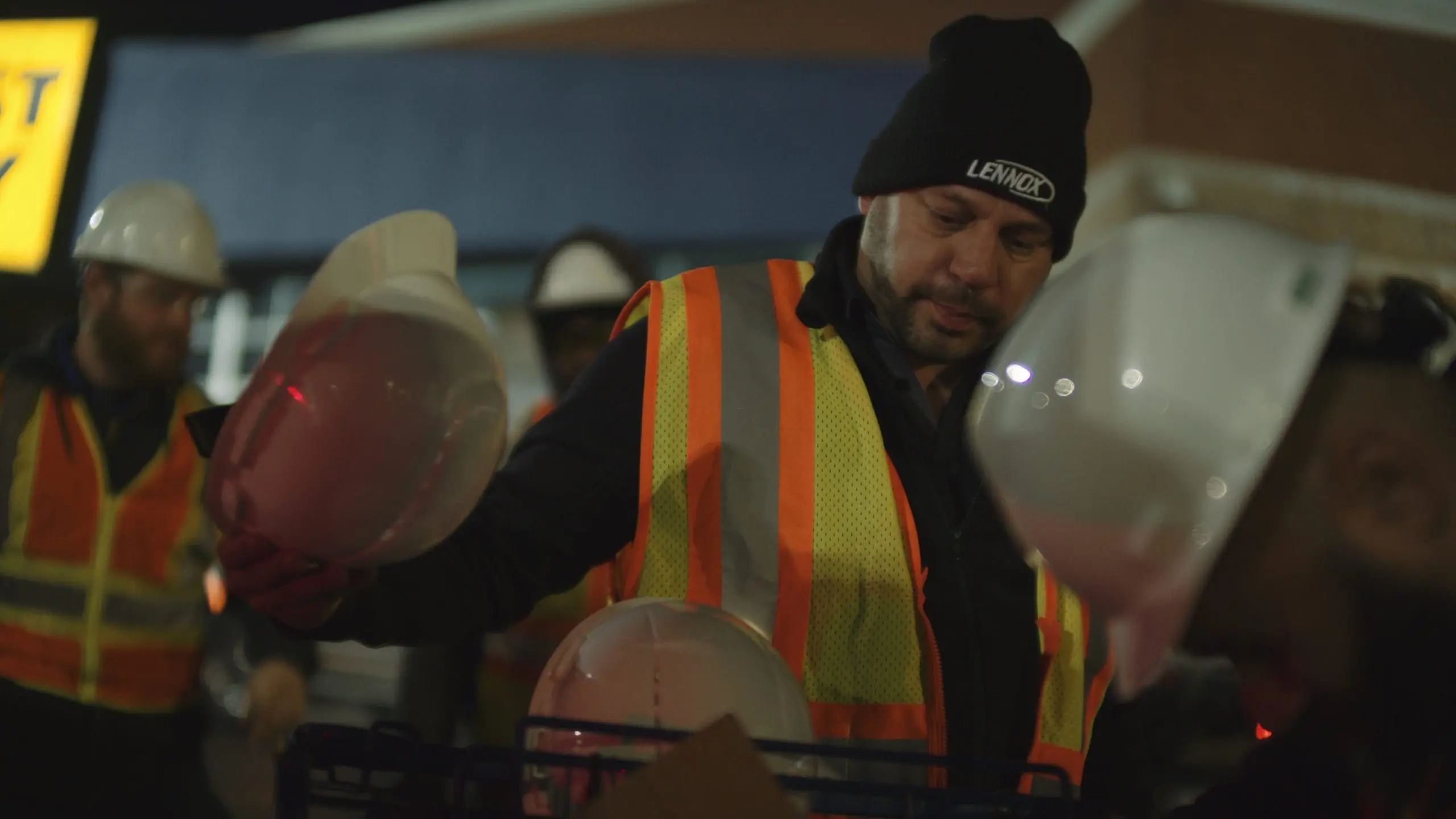
Most production companies treat sound and camera work as separate departments that meet in post. That approach falls apart the moment a project demands real intensity. Sound design, action sequences, and technical precision all have to lock together from the very first day of pre-production, or the final product feels disconnected. We learned this the hard way on a high-energy branded campaign shoot at our 30,000 square foot facility in Fort Lauderdale, and the lessons from that project changed how we approach every action-driven production that comes through our doors.
This case study breaks down the technical workflow, creative decisions, and production challenges behind one of the most demanding shoots C&I Studios has tackled. The project required synchronized stunt choreography, multi-camera coverage, and a soundtrack that was not simply added later but composed and integrated into the shoot itself. What follows is an honest look at what worked, what nearly failed, and why the fusion of sound and cinematography in action content is now central to our production philosophy.

## What Integrated Sound Design Actually Means in Practice
The concept is practical even if the terminology varies by shop. Integrated sound design refers to the deliberate synchronization of musical composition, sound design, and camera movement so that each element informs the others during production, not just in the editing bay. Traditional workflows record visuals first, then hand footage to a composer or sound designer who scores to picture. That linear process works fine for interviews and corporate content. It does not work for action sequences where every cut, whip pan, and impact needs to land with visceral precision.
In our approach, the composer and the director of photography sit in the same room during pre-production. They review storyboards together. The composer sketches tempo maps that align with planned camera moves. The DP adjusts shot durations to match musical phrases. By the time the crew arrives on set, every department has a shared rhythmic framework. The result is footage that feels musical before a single note is laid in post.
This is not a theoretical exercise. On the project we are about to walk through, a branded action spot for a fitness apparel company, the client specifically asked for content that "hits like a music video but sells like a commercial." That brief forced us to merge disciplines that most shops keep siloed. Our [creative services](https://c-istudios.com/creative-services/) team spent two weeks in pre-production developing a unified vision where sound and image were inseparable.
## The Brief and the Challenge
The client needed a 90-second hero spot plus a suite of 15-second cutdowns for social media. The concept centered on three athletes performing increasingly intense training sequences, building to a climactic slow-motion sequence that would serve as the brand reveal. They wanted the spot to feel cinematic, aggressive, and rhythmically tight. They also wanted it delivered in three weeks from green light to final master.
Three weeks is aggressive for any production with stunts and original music. The typical timeline for a project of this scope is six to eight weeks. We knew immediately that a traditional linear workflow, where picture locks before sound work begins, would blow the deadline. The only way to deliver was to run sound and picture in parallel, which meant the soundtrack had to be composed before the footage existed, and the footage had to be shot to match a track that was still evolving.
This chicken-and-egg problem is exactly where integrated sound design lives. It requires trust between departments, a shared timing document, and the willingness to make creative decisions early and commit to them. Our [film production](https://c-istudios.com/film-production-services/) pipeline had to be restructured from the ground up for this single project.
## Pre-Production. Building the Tempo Map
The first step was creating what we call a tempo map, a document that defines the BPM, time signature, and emotional arc of the piece before a single frame is captured. Our [audio engineering](https://c-istudios.com/audio-engineering-services/) team composed a rough demo track at 140 BPM in 4/4 time with three distinct movements: a low, building intro (0 to 30 seconds), an aggressive middle section with percussion hits on every downbeat (30 to 70 seconds), and a half-time breakdown for the slow-motion brand reveal (70 to 90 seconds).
The DP then translated that tempo map into a shot list. Each shot was assigned a duration in beats, not seconds. A four-beat shot at 140 BPM lasts roughly 1.7 seconds. An eight-beat shot lasts about 3.4 seconds. This beat-based shot list meant every camera move, every dolly push, every whip pan was designed to resolve on a musical accent. According to research published by the [Society of Motion Picture and Television Engineers](https://www.smpte.org/), synchronization between audio and visual elements within 20 milliseconds is perceived as simultaneous by human viewers. Our goal was to stay well within that threshold.
The stunt coordinator received the same tempo map. Athlete movements, jumps, catches, impacts, were choreographed to land on beats. We ran three full rehearsals with the demo track playing on set monitors before cameras ever rolled. By rehearsal three, the athletes had internalized the rhythm. Their movements were not just athletic; they were musical.
## Technical Camera Setup for Rhythmic Shooting
Shooting action sequences that align with a pre-composed soundtrack requires camera infrastructure that most commercial shoots do not bother with. We deployed five cameras: two ARRI ALEXA Mini LFs on dollies for the primary coverage, one handheld RED V-RAPTOR for dynamic close-ups, and two high-speed Phantom Flex4K units locked off for the slow-motion sequences.
The critical technical decision was frame rate management. The main cameras ran at 24fps for the standard-speed sections. The Phantoms ran at 1,000fps for the hero slow-motion shots. Here is where the math gets interesting. A 1,000fps shot played back at 24fps creates roughly a 42x slowdown. That means a half-second real-time action, an athlete slamming a battle rope, stretches to approximately 21 seconds on screen. The soundtrack had to account for this temporal distortion. Our composer wrote the breakdown section knowing exactly how long the slow-motion sequence would last in screen time, because we calculated it before the shoot.
Every camera operator wore an earpiece playing the demo track on a loop. This is not standard practice. Most commercial shoots use a click track only for the director. We wanted every operator moving to the same internal clock. The result was coverage that cut together with almost no timing adjustments needed. Our [video production](https://c-istudios.com/video-production-services/) methodology has since adopted this earpiece approach for any project where sound and picture synchronization is critical.
## Sound Design on Set, Not Just in Post
One of the more unusual decisions we made was placing a dedicated sound designer on set during the shoot. In most productions, sound design happens entirely in post-production. The sound designer works with the edited picture and builds layers of effects, foley, and ambience. We flipped that. Our sound designer recorded live impacts, breath, rope slaps, and shoe squeaks on set with a close-mic rig specifically so those textures could be integrated into the final track as rhythmic elements.
The reason is simple. Synthesized or library sound effects never quite match the acoustic signature of the actual environment. Our facility has a specific room tone, a specific reverb character. Recording the real sounds of the athletes in that space gave the final mix an authenticity that library pulls cannot replicate. The [Audio Engineering Society](https://www.aes.org/) has published extensive research on how acoustic authenticity affects viewer engagement, and our own experience confirms it. Audiences may not consciously notice the difference, but they feel it.
Those on-set recordings were handed to the composer the same evening. By the next morning, percussion hits in the track had been replaced with actual impact sounds from the shoot. The track was no longer a separate musical element; it was woven from the DNA of the footage itself. This is integrated sound design at its most literal: the soundtrack and the cinematography sharing source material.

## Lighting for Rhythm. The Overlooked Variable
Most discussions about action cinematography focus on camera movement and frame rate. Lighting rarely enters the conversation about rhythm. On this project, our gaffer proposed something we had not tried before: programming the LED lighting rig to shift color temperature in sync with the tempo map. During the aggressive middle section, the key light shifted from 5600K to 4200K on every other downbeat, creating a subtle warm pulse that the viewer feels more than sees.
This required precise DMX programming tied to a timecode feed from the audio playback system. The technical setup took half a day, and the gaffer nearly scrapped the idea twice when sync drift caused visible flicker in test footage. The fix came from locking the DMX controller to the same master clock that fed the audio playback, eliminating the drift entirely. The final effect is subtle on a conscious level, but when we showed the client two versions, one with the rhythmic lighting shift and one without, they chose the pulsing version unanimously. Our [VFX and compositing](https://c-istudios.com/vfx-compositing-and-animation-services/) team later enhanced the effect slightly in the grade, but 90 percent of what you see was done in-camera.
This kind of cross-departmental synchronization is what separates competent action content from content that genuinely moves people. It is also what makes sound design, action sequences, and technical precision so interdependent. You cannot achieve this level of integration by handing footage to a colorist and saying "make it feel energetic." It has to be planned, executed, and refined as a unified system.
## The Edit. Where Preparation Pays Off
Post-production on this project was, by far, the smoothest part of the process. That is not typical. Action edits usually involve weeks of trial and error, finding the right cut points, adjusting timing, wrestling with pacing. Because every shot was designed around the tempo map, and the soundtrack was built from on-set recordings, the assembly edit came together in a single day.
Our editor reported that roughly 85 percent of the cuts in the assembly landed within two frames of the musical accent. The remaining 15 percent needed minor slip adjustments of one to three frames. For context, a typical action edit might require timing adjustments on 60 to 70 percent of cuts. The preparation we invested in pre-production saved us an estimated four to five days in the edit suite.
The [post-production](https://c-istudios.com/post-production-services/) workflow also benefited from having the sound design already partially complete. Instead of editing picture, then waiting for sound, then revising picture to accommodate sound notes, everything moved forward together. The composer delivered the final mastered track two days after picture lock. Color grading through our [content creation](https://c-istudios.com/content-creation-services/) pipeline took another day. Total post-production time: six days, compared to the 12 to 15 days we would normally allocate.
## Social Cutdowns and the Platform Problem
The 90-second hero spot was only half the deliverable. The client also needed 15-second cutdowns for Instagram, TikTok, and YouTube Shorts. Cutting a rhythmically integrated piece down to 15 seconds without losing the synchronization is harder than it sounds. You cannot simply grab any 15-second window, because the musical phrasing and visual pacing are calibrated to the full 90-second arc.
Our solution was to compose separate 15-second micro-tracks that used the same melodic and percussive elements as the hero track but were structured as self-contained musical phrases. Each micro-track had its own build and resolve. The editor then selected shots from the hero footage that matched the micro-track rhythms. The result: cutdowns that feel like they were shot specifically for short-form platforms, not extracted from a longer piece.
This approach added about a day of composer time but saved significant editing time and, more importantly, produced cutdowns that actually perform on social platforms. Our [social media marketing](https://c-istudios.com/social-media-marketing-services/) team tracked the campaign performance for 60 days after launch. The rhythmically integrated cutdowns outperformed the client's previous campaign cutdowns by 34 percent in average watch time and 22 percent in engagement rate on Instagram Reels.
## Lessons Learned and What We Would Change
No case study is complete without honest reflection on what did not go perfectly. Three things stand out from this project.
First, the tempo map was locked too early. We committed to 140 BPM before fully choreographing the stunt sequences. One of the athlete combinations, a complex box jump to medicine ball slam, naturally wanted to land at 130 BPM. Forcing it to 140 BPM made the movement look slightly rushed. In future projects, we now run a full choreography pass before finalizing the tempo. The tempo serves the movement, not the other way around.
Second, five cameras were too many for the crew size. We had 18 people on set, and managing five camera positions meant the first AD was stretched thin. Two of the cameras, specifically the handheld RED and one of the Phantoms, could have been consolidated into a single high-speed handheld unit. We over-covered and created more footage than the edit could use, which slowed down the assembly review.
Third, the rhythmic lighting effect, while beautiful, created continuity challenges for the cutdowns. When you extract a four-second clip from a sequence where the lighting pulses on a two-beat cycle, you might catch the light in an unflattering position. We had to grade around this in several cutdowns. Our [Fort Lauderdale production](https://c-istudios.com/video-production-fort-lauderdale/) team now applies rhythmic lighting only to sections designated for the hero cut, not to coverage intended for shorter extractions.
## Why This Approach Matters for Branded Content
Brands are spending more on action-driven content than ever. Fitness, automotive, sportswear, energy drinks: these categories demand content that feels visceral, immediate, and cinematic. The problem is that most of this content relies on post-production tricks to create the feeling of synchronization. Fast cuts, bass drops timed to impacts, speed ramps that suggest rhythmic intention without actually being rhythmically designed.
Audiences can feel the difference. A spot where the sound and picture were truly designed together has a coherence that editing tricks cannot fake. The viewer does not need to understand integrated sound design to respond to it. They just feel that the content is more polished, more intentional, more worthy of their attention. In a feed full of content competing for the same three seconds of consideration, that feeling is a competitive advantage.
Our [branded content](https://c-istudios.com/branded-content-series/) division has since applied elements of this workflow to projects for clients across fitness, fashion, and entertainment. Not every project needs the full five-camera, live-sound-design treatment. But the core principle, that sound and picture should inform each other from pre-production forward, applies universally. Even a simple [corporate video](https://c-istudios.com/corporate-video-production/) benefits from choosing music before finalizing the shot list.
## The Technical Takeaway
For production teams considering this integrated sound design approach, here is the minimum technical infrastructure we recommend based on this project and subsequent iterations.
You need a shared master clock. Audio playback, camera timecode, and any DMX or lighting automation must derive timing from a single source. We use an Ambient Lockit system that distributes timecode via RF to all devices on set. Without a shared clock, sync drift will destroy the rhythmic alignment you worked so hard to plan.
You need a composer willing to work iteratively and fast. The traditional model of delivering a finished score weeks after picture lock does not apply here. Your composer needs to produce workable demos in hours, accept feedback from both the director and the DP, and revise in near-real-time. Our [music video production](https://c-istudios.com/music-video-production/) experience gave us relationships with composers who thrive in this kind of rapid, collaborative environment.
You need rehearsal time with the actual talent. Choreography to a tempo map only works if the performers can internalize the rhythm. Budget for at least two rehearsal sessions before the shoot day. If the talent cannot feel the beat, no amount of technical infrastructure will save the synchronization.
And you need a post team that understands frame-level precision. Your editor must be comfortable working in sub-frame increments and understanding the relationship between BPM, frame rate, and cut timing. This is not standard commercial editing. It is closer to music video editing, which is why having a [Los Angeles](https://c-istudios.com/video-production-los-angeles/) or [New York](https://c-istudios.com/video-production-new-york/) team with music industry experience is a genuine asset.
## Work with C&I Studios
If you are planning a project like this, our team can take it from concept to final delivery. Explore our [post-production services](https://c-istudios.com/post-production-services/), browse [our work](https://c-istudios.com/our-work/) to see how we tell brand stories, and [get in touch](https://c-istudios.com/contact/) when you are ready to start.
Originally published April 28, 2026
---
*This content is from [C&I Studios](https://c-istudios.com), a full-service production company.*
---
# Encouraging User Stories for Brand Testimonials
> Published: April 27, 2026
> Categories: Commercial & Brand
> Source: https://c-istudios.com/encouraging-user-stories-for-brand-testimonials/
---
.cib{--paper:#1b1d1f;--ink:#fff;--body:#d5d7d9;--muted:#8b9096;--line:rgba(255,255,255,.12);--thumb:#2b2e31;--card:#212426;--accent:#c02b0a;--blue:#5B8FA8;--serif:'Playfair Display',Georgia,serif;--sans:'Poppins',-apple-system,sans-serif;--measure:900px;background:var(--paper);color:var(--body);font-family:var(--sans);line-height:1.6;position:relative;left:50%;transform:translateX(-50%);width:90vw;max-width:1920px}
.cib *{box-sizing:border-box}
.cib .kicker{max-width:var(--measure);margin:58px auto 0;padding:0 22px;font-size:12.5px;font-weight:700;letter-spacing:2.5px;text-transform:uppercase;color:var(--blue)}
.cib h1.cibh1{text-wrap:balance;font-family:var(--serif);font-weight:500;font-size:clamp(46px,6vw,72px);line-height:1.08;color:var(--ink);max-width:var(--measure);margin:18px auto 0;padding:0 22px;letter-spacing:-.5px}
.cib .metarow{max-width:var(--measure);margin:20px auto 0;padding:0 22px;color:var(--muted);font-size:14px}
.cib .hero{position:relative;width:100%;height:0;padding-bottom:56.25%;overflow:hidden;margin:48px auto 0;border-top:1px solid var(--line);border-bottom:1px solid var(--line)}
.cib .hero .ph{width:100%;aspect-ratio:16/9;background:var(--thumb);border-top:1px solid var(--line);border-bottom:1px solid var(--line);display:flex;align-items:center;justify-content:center;color:#7d8288;font-size:13px;text-align:center;padding:0 20px}
.cib .body{max-width:var(--measure);margin:12px auto 0;padding:52px 22px 6px}
.cib .body.lead p:first-child{font-size:23px;line-height:1.62;color:var(--ink)}
.cib .body p{font-size:18.5px;line-height:1.85;margin:0 0 30px;color:var(--body)}
.cib .body h2{text-wrap:balance;font-family:var(--serif);font-weight:500;font-size:clamp(32px,4vw,48px);line-height:1.22;color:var(--ink);margin:70px 0 20px;letter-spacing:-.3px}
.cib .body h3{text-wrap:balance;font-family:var(--sans);font-weight:600;font-size:22px;color:var(--ink);margin:38px 0 8px}
.cib .body a{color:var(--ink);text-decoration:underline;text-decoration-color:rgba(255,255,255,.4);text-underline-offset:3px}
.cib .body a:hover{text-decoration-color:var(--ink)}
.cib .ctable{width:100%;border-collapse:collapse;margin:16px 0 30px;font-size:16px}
.cib .ctable th{background:#000;color:#fff;text-align:left;padding:10px 12px;font-family:var(--sans)}
.cib .ctable td{padding:10px 12px;border-bottom:1px solid var(--line);color:var(--body)}
.cib .inimg{position:relative;width:100%;height:0;padding-bottom:56.25%;overflow:hidden;margin:72px auto;border-top:1px solid var(--line);border-bottom:1px solid var(--line)}
.cib .inimg .ph{width:100%;aspect-ratio:16/9;background:var(--thumb);border-top:1px solid var(--line);border-bottom:1px solid var(--line);display:flex;align-items:center;justify-content:center;color:#7d8288;font-size:13px}
.cib .origpub{max-width:var(--measure);margin:60px auto 0;padding:26px 22px 0;border-top:1px solid var(--line);color:var(--muted);font-size:13.5px}
.cib .related{max-width:1200px;margin:64px auto 0;padding:34px 22px 76px}
.cib .related h3{font-family:var(--sans);font-size:12.5px;letter-spacing:2px;text-transform:uppercase;color:var(--ink);margin:0 0 24px}
.cib .grid{display:grid;grid-template-columns:repeat(3,1fr);gap:28px}
.cib .rc{background:var(--card);border:1px solid var(--line);display:block;text-decoration:none;color:inherit;transition:border-color .15s}
.cib a.rc:hover{border-color:rgba(255,255,255,.5)}
.cib .rc .thumb{position:relative;width:100%;height:0;padding-bottom:56.25%;background:var(--thumb);overflow:hidden}
.cib .rc .thumb img{position:absolute!important;top:0!important;left:0!important;width:100%!important;height:100%!important;object-fit:cover!important;margin:0!important}
.cib .rc .cc{padding:14px 15px 17px}
.cib .rc .rt{font-family:var(--serif);font-weight:500;font-size:16px;line-height:1.3;color:var(--ink);margin:0 0 6px}
.cib .rc .rm{font-size:11px;letter-spacing:1px;text-transform:uppercase;color:var(--muted)}
.cib img{margin:0!important;padding:0!important;display:block!important;vertical-align:top;max-width:100%}
.cib .hero img,.cib .inimg img{position:absolute!important;top:0!important;left:0!important;width:100%!important;height:100%!important;object-fit:cover!important;margin:0!important;padding:0!important;border:0!important;display:block!important;aspect-ratio:auto!important}
.cib .hero+.body{padding-top:36px}
@media(max-width:760px){.cib .grid{grid-template-columns:1fr}.cib .body h2{margin:52px 0 16px}.cib .body p{font-size:17.5px}.cib .inimg,.cib .hero{margin-top:44px}}
.cib .vembed{max-width:var(--measure);margin:44px auto;padding:0 22px}.cib .vembed .vwrap{position:relative;width:100%;height:0;padding-bottom:56.25%}.cib .vembed .vwrap iframe{position:absolute;top:0;left:0;width:100%;height:100%;border:0}
Commercial & Brand
# Encouraging User Stories for Brand Testimonials
11 min read

The era of stiff, scripted customer quotes on a webpage is fading fast. Encouraging user stories for brand testimonials has become one of the most significant shifts in how companies build trust, and the brands that figure this out first are pulling ahead in every metric that matters. We have seen it firsthand across dozens of productions: when real people tell real stories, audiences pay attention in ways that polished ad copy simply cannot replicate.
This is not a minor tactical adjustment. It is a fundamental change in how testimonial content gets created, distributed, and measured. For brands investing in [video production services](https://c-istudios.com/video-production-services/), understanding this shift is the difference between content that converts and content that gets scrolled past.

## Why Traditional Testimonials Are Losing Ground
For years, the standard testimonial formula looked the same: a headshot, a name, a job title, and two sentences about how great the product or service was. These worked when consumers had fewer choices and less access to peer reviews. That world no longer exists.
According to a [2024 BrightLocal survey](https://www.brightlocal.com/research/local-consumer-review-survey/), 87% of consumers read online reviews before making a purchase decision, and the majority can distinguish between authentic and manufactured endorsements within seconds. The problem with traditional testimonials is not that they are dishonest. The problem is that they feel transactional. A two-sentence blurb next to a stock headshot does not tell a story. It tells the audience that someone was asked to say something nice, and they complied.
Brands working with our [content creation team](https://c-istudios.com/content-creation-services/) have noticed the same pattern: testimonial pages with generic quotes see declining engagement year over year, while pages built around narrative-driven customer stories hold attention three to five times longer.
The shift is clear. Audiences want context, emotion, and specificity. They want to hear about the problem someone faced, the moment of hesitation, the decision, and the outcome. That is a story, not a testimonial. And that distinction changes everything about how brands should be approaching this content.
## Encouraging User Stories for Brand Testimonials. What Changed
Several forces converged to make encouraging user stories for brand testimonials not just a nice idea but a competitive necessity.
First, social proof has matured. Consumers no longer just want to know that other people bought something. They want to understand the full journey. Platforms like TikTok and Instagram Reels normalized everyday people sharing detailed personal experiences on camera. That set a new baseline for what authentic endorsement looks like.
Second, search behavior shifted. People are not just typing "best video production company" anymore. They search for phrases like "real experience working with " or "honest review of ." Google increasingly rewards first-person narrative content because it satisfies [E-E-A-T signals](https://developers.google.com/search/docs/fundamentals/creating-helpful-content) (experience, expertise, authoritativeness, trust) that generic testimonial pages cannot match.
Third, the production tools caught up. Five years ago, capturing a high-quality customer story required a full crew, a half-day shoot, and weeks of post-production. Today, brands can blend professional footage with user-submitted content in ways that feel cohesive rather than cobbled together. Our [post-production team](https://c-istudios.com/post-production-services/) regularly integrates phone-shot footage into polished testimonial edits, and the results outperform fully studio-produced versions in engagement metrics.
## The Difference Between a Testimonial and a User Story
This distinction matters more than most marketing teams realize. A testimonial is a statement of satisfaction. A user story is a narrative arc. Both have value, but they serve different functions and perform differently across channels.
A testimonial says: "C&I Studios delivered our commercial on time and the quality was outstanding." That is useful. It provides social proof and reassurance.
A user story says: "We had three weeks to launch a national campaign and our previous production partner fell through. We called C&I on a Monday, had a creative brief locked by Wednesday, shot on Friday, and the final edit was in our hands the following Tuesday. The spot ended up being the highest-performing creative in the campaign." That is a story. It has stakes, a timeline, tension, and resolution. It makes the reader feel something.
When we produce [branded content series](https://c-istudios.com/branded-content-series/) for clients, we always push for the story version. The testimonial version might get a nod. The story version gets shared.
## How Leading Brands Are Collecting User Stories
Encouraging user stories for brand testimonials requires more than sending a follow-up email that says "Would you like to leave a review?" The brands doing this well have built systems that make storytelling easy, natural, and rewarding for their customers.
### Structured Interview Frameworks
The most effective approach we have seen is replacing open-ended requests with guided interview frameworks. Instead of asking "Can you tell us about your experience?" (which produces vague responses), smart brands ask a sequence of specific questions:
- What was the situation before you started working with us?
- What made you hesitant or worried?
- What was the turning point?
- What specific result surprised you?
These questions follow a classic story structure (situation, complication, resolution, result) and they work whether the response is captured on video or in writing. Our [documentary production](https://c-istudios.com/documentary-film-production/) approach uses a similar framework: start with the human context, let the tension build, then arrive at the resolution naturally.
### Hybrid Capture Models
Some brands fly customers to a studio for a professionally produced testimonial shoot. Others rely entirely on self-recorded phone videos. The most effective model in 2026 sits between these extremes.
A hybrid capture model gives the customer a simple prompt kit (questions, lighting tips, framing guidance) and lets them record on their own device. Then a professional team edits, color-corrects, adds graphics, and integrates the footage into a brand-consistent package. The raw authenticity of self-shot footage combined with professional polish is the sweet spot. It is the approach we use for many of our [social media marketing](https://c-istudios.com/social-media-marketing-services/) clients who need high volumes of testimonial content without the budget for repeated full-crew shoots.
### Community-Driven Story Programs
Brands with large customer bases are building ongoing story submission programs rather than one-off collection efforts. These programs treat user stories as a continuous content pipeline. Customers submit stories through a dedicated portal, the best ones get selected for professional production, and the storytellers receive recognition, credits, or early access to new products.
This turns testimonial collection from an awkward ask into an engagement strategy. Customers feel valued, and the brand gets a steady stream of authentic narrative content.
## Video vs. Written. Where Each Format Wins
Written testimonials are not dead, but video user stories consistently outperform them in nearly every measurable way. The data is hard to argue with:
- Video testimonials on landing pages increase conversion rates by 34% on average (Wyzowl, 2024)
- User story videos shared on social media receive 2.5 times more engagement than static quote graphics
- Pages with embedded video testimonials see 80% longer average session duration
That said, written stories still serve critical functions. They are indexable by search engines, making them valuable for SEO. They load instantly on slow connections. And they are easier for customers to provide, which means higher participation rates.
The smart play is not choosing one over the other. It is capturing the story once and repurposing it across formats. A single 10-minute customer interview can yield a 90-second hero video, a 15-second social clip, a 500-word written case study, pull quotes for the website, and audio snippets for [podcast or audio content](https://c-istudios.com/audio-engineering-services/). We build this kind of multi-format extraction into every testimonial project we produce through our [creative services](https://c-istudios.com/creative-services/) division.

## Platforms Reshaping How Stories Get Told
The platforms where testimonial content lives are evolving rapidly, and that evolution is changing what "good" looks like.
Short-form video platforms (TikTok, Instagram Reels, YouTube Shorts) have trained audiences to expect raw, unfiltered content. A perfectly lit, teleprompter-read testimonial feels out of place in a Reels feed. But a customer talking directly to their phone camera about a genuine experience? That fits naturally.
LinkedIn has become a surprisingly powerful channel for B2B testimonial stories. Long-form text posts from real customers describing their experience with a vendor routinely generate hundreds of thousands of impressions. These posts succeed because they do not feel like marketing. They feel like one professional sharing an honest account with their network.
YouTube remains the strongest platform for longer testimonial narratives. A well-produced three to five minute customer story on YouTube continues generating views and leads for years. We have clients whose testimonial videos from two or three years ago still drive monthly inbound inquiries. For brands investing in [video production in Fort Lauderdale](https://c-istudios.com/video-production-fort-lauderdale/) or any of our locations, YouTube testimonial content consistently delivers the highest long-term ROI.
## Common Mistakes That Kill Authenticity
Even brands that understand the value of user stories frequently undermine their own efforts with avoidable mistakes.
### Over-Scripting the Story
The instinct to control the narrative is understandable but counterproductive. When a brand hands a customer a script or heavily coaches their responses, the result feels manufactured. Audiences detect this immediately. The best user stories come from guided conversations, not scripts. Give the customer questions and themes, not lines to recite.
### Cherry-Picking Only Perfect Experiences
Stories that acknowledge a challenge, a learning curve, or an initial concern are more believable than stories where everything was flawless from day one. Perfection triggers skepticism. A customer who says "I was honestly nervous about the budget at first, but the ROI made it clear within two months" is far more convincing than one who says "Everything was perfect from start to finish."
### Ignoring Production Quality Entirely
There is a difference between "authentic" and "unwatchable." A phone-shot video can feel genuine while still having decent audio, stable framing, and adequate lighting. Brands that accept any submission regardless of technical quality end up with content that reflects poorly on them. The solution is providing customers with basic production guidance or investing in light [video and audio production](https://c-istudios.com/video-audio-live-streaming/) support during the capture phase.
### Burying Stories on a Testimonials Page
Most brands collect testimonials and park them on a single dedicated page that receives minimal traffic. The highest-performing brands weave user stories throughout their entire digital presence: on service pages, in blog content, within email sequences, across social channels, and even in [advertising campaigns](https://c-istudios.com/advertising-services/). A user story is a content asset, not a webpage decoration.
## Measuring What Matters
Traditional testimonial metrics ("we have 500 reviews with a 4.8 average") are table stakes. Brands that are serious about encouraging user stories for brand testimonials track deeper signals:
- **Story completion rate:** What percentage of people who start watching or reading a user story finish it? This tells you whether your stories are actually compelling.
- **Downstream conversion:** Do visitors who engage with user story content convert at a higher rate than those who do not? If the answer is not a clear yes, the stories need work.
- **Organic reach:** Are user stories being shared without paid promotion? Organic sharing is the ultimate signal of authentic, resonant content.
- **Submission velocity:** How many new stories are customers submitting per month? A declining rate suggests the collection program needs attention.
- **Search visibility:** Are user story pages ranking for long-tail keywords related to your brand and industry?
We track these metrics across every testimonial project we manage, and they consistently provide more actionable insights than simple star ratings or review counts. Teams working on [corporate video production](https://c-istudios.com/corporate-video-production/) campaigns often use these same data points to refine their testimonial strategy over time.
## What the Next 12 Months Look Like
Several trends are converging that will make user stories even more central to brand marketing over the next year.
**AI-assisted story capture is accelerating.** Tools that conduct asynchronous video interviews (asking customers questions one at a time and recording their responses) are making it possible to collect high-quality stories at scale without scheduling conflicts or production logistics. This does not replace professional production for hero content, but it dramatically expands the volume of raw material brands can work with.
**Search engines are prioritizing first-person experience content.** Google's helpful content updates continue to favor content written or presented by people with direct experience. User stories are, by definition, the purest form of experience content. Brands that build libraries of indexed customer stories will have a structural SEO advantage.
**B2B buyers are behaving more like B2C consumers.** The expectation for authentic, story-driven proof is no longer limited to consumer brands. Enterprise buyers want to see and hear from peers at similar companies who faced similar challenges. The production value expectations are higher in B2B (nobody wants a grainy phone video in a board presentation), which creates an opportunity for brands that invest in professional [film production](https://c-istudios.com/film-production-services/) quality for their customer stories.
**User-generated content and testimonials are merging.** The line between UGC and testimonials is disappearing. A customer who posts an unboxing video, a behind-the-scenes look at a service experience, or a candid reaction to results is creating testimonial content whether the brand asked for it or not. Smart brands are building systems to identify, curate, and amplify this organic content rather than relying solely on solicited stories.
## Building Your User Story Strategy
If your brand has not yet invested in systematically encouraging user stories for brand testimonials, the playbook is straightforward.
Start by auditing your existing testimonial content. How much of it is narrative-driven versus generic praise? If most of your testimonials are two-sentence quotes, you have significant room to upgrade.
Next, identify 10 to 15 customers who had particularly compelling journeys with your brand. Reach out with a simple ask: "We would love to tell your story." Most customers are flattered, not burdened, by this request. The key is framing it as their story, not your advertisement.
Invest in at least a few professionally produced video stories. These become your flagship content, the pieces that anchor your website, keynote presentations, and major campaigns. Then complement them with lighter-touch stories captured through guided self-recording, written interviews, or social media curation. Check out our [portfolio](https://c-istudios.com/our-work/) for examples of how professional storytelling elevates testimonial content.
Finally, distribute relentlessly. A great user story sitting on a buried testimonials page is wasted potential. Integrate stories into service pages, embed them in email nurture sequences, cut them for social, and use them in paid campaigns. The story should meet the prospect wherever they are in the buying journey.
C&I Studios has spent nearly two decades helping brands tell stories that move audiences. The shift toward user-driven testimonial content is one of the most exciting developments we have seen because it aligns what works for the brand with what audiences actually want to watch and read. If you are ready to build a testimonial strategy that goes beyond star ratings and pull quotes, [reach out to our team](https://c-istudios.com/contact/) and let us help you capture the stories your customers are already living.
## Work with C&I Studios
If you are planning a project like this, our team can take it from concept to final delivery. Explore our [video production services](https://c-istudios.com/video-production-services/), browse [our work](https://c-istudios.com/our-work/) to see how we tell brand stories, and [get in touch](https://c-istudios.com/contact/) when you are ready to start.
Originally published April 27, 2026
---
*This content is from [C&I Studios](https://c-istudios.com), a full-service production company.*
---
# Photography Studio Near Me: What to Look For
> Published: April 27, 2026
> Categories: Photography
> Source: https://c-istudios.com/photography-studio-near-me/
---
.cib{--paper:#1b1d1f;--ink:#fff;--body:#d5d7d9;--muted:#8b9096;--line:rgba(255,255,255,.12);--thumb:#2b2e31;--card:#212426;--accent:#c02b0a;--blue:#5B8FA8;--serif:'Playfair Display',Georgia,serif;--sans:'Poppins',-apple-system,sans-serif;--measure:900px;background:var(--paper);color:var(--body);font-family:var(--sans);line-height:1.6;position:relative;left:50%;transform:translateX(-50%);width:90vw;max-width:1920px}
.cib *{box-sizing:border-box}
.cib .kicker{max-width:var(--measure);margin:58px auto 0;padding:0 22px;font-size:12.5px;font-weight:700;letter-spacing:2.5px;text-transform:uppercase;color:var(--blue)}
.cib h1.cibh1{text-wrap:balance;font-family:var(--serif);font-weight:500;font-size:clamp(46px,6vw,72px);line-height:1.08;color:var(--ink);max-width:var(--measure);margin:18px auto 0;padding:0 22px;letter-spacing:-.5px}
.cib .metarow{max-width:var(--measure);margin:20px auto 0;padding:0 22px;color:var(--muted);font-size:14px}
.cib .hero{position:relative;width:100%;height:0;padding-bottom:56.25%;overflow:hidden;margin:48px auto 0;border-top:1px solid var(--line);border-bottom:1px solid var(--line)}
.cib .hero .ph{width:100%;aspect-ratio:16/9;background:var(--thumb);border-top:1px solid var(--line);border-bottom:1px solid var(--line);display:flex;align-items:center;justify-content:center;color:#7d8288;font-size:13px;text-align:center;padding:0 20px}
.cib .body{max-width:var(--measure);margin:12px auto 0;padding:52px 22px 6px}
.cib .body.lead p:first-child{font-size:23px;line-height:1.62;color:var(--ink)}
.cib .body p{font-size:18.5px;line-height:1.85;margin:0 0 30px;color:var(--body)}
.cib .body h2{text-wrap:balance;font-family:var(--serif);font-weight:500;font-size:clamp(32px,4vw,48px);line-height:1.22;color:var(--ink);margin:70px 0 20px;letter-spacing:-.3px}
.cib .body h3{text-wrap:balance;font-family:var(--sans);font-weight:600;font-size:22px;color:var(--ink);margin:38px 0 8px}
.cib .body a{color:var(--ink);text-decoration:underline;text-decoration-color:rgba(255,255,255,.4);text-underline-offset:3px}
.cib .body a:hover{text-decoration-color:var(--ink)}
.cib .ctable{width:100%;border-collapse:collapse;margin:16px 0 30px;font-size:16px}
.cib .ctable th{background:#000;color:#fff;text-align:left;padding:10px 12px;font-family:var(--sans)}
.cib .ctable td{padding:10px 12px;border-bottom:1px solid var(--line);color:var(--body)}
.cib .inimg{position:relative;width:100%;height:0;padding-bottom:56.25%;overflow:hidden;margin:72px auto;border-top:1px solid var(--line);border-bottom:1px solid var(--line)}
.cib .inimg .ph{width:100%;aspect-ratio:16/9;background:var(--thumb);border-top:1px solid var(--line);border-bottom:1px solid var(--line);display:flex;align-items:center;justify-content:center;color:#7d8288;font-size:13px}
.cib .origpub{max-width:var(--measure);margin:60px auto 0;padding:26px 22px 0;border-top:1px solid var(--line);color:var(--muted);font-size:13.5px}
.cib .related{max-width:1200px;margin:64px auto 0;padding:34px 22px 76px}
.cib .related h3{font-family:var(--sans);font-size:12.5px;letter-spacing:2px;text-transform:uppercase;color:var(--ink);margin:0 0 24px}
.cib .grid{display:grid;grid-template-columns:repeat(3,1fr);gap:28px}
.cib .rc{background:var(--card);border:1px solid var(--line);display:block;text-decoration:none;color:inherit;transition:border-color .15s}
.cib a.rc:hover{border-color:rgba(255,255,255,.5)}
.cib .rc .thumb{position:relative;width:100%;height:0;padding-bottom:56.25%;background:var(--thumb);overflow:hidden}
.cib .rc .thumb img{position:absolute!important;top:0!important;left:0!important;width:100%!important;height:100%!important;object-fit:cover!important;margin:0!important}
.cib .rc .cc{padding:14px 15px 17px}
.cib .rc .rt{font-family:var(--serif);font-weight:500;font-size:16px;line-height:1.3;color:var(--ink);margin:0 0 6px}
.cib .rc .rm{font-size:11px;letter-spacing:1px;text-transform:uppercase;color:var(--muted)}
.cib img{margin:0!important;padding:0!important;display:block!important;vertical-align:top;max-width:100%}
.cib .hero img,.cib .inimg img{position:absolute!important;top:0!important;left:0!important;width:100%!important;height:100%!important;object-fit:cover!important;margin:0!important;padding:0!important;border:0!important;display:block!important;aspect-ratio:auto!important}
.cib .hero+.body{padding-top:36px}
@media(max-width:760px){.cib .grid{grid-template-columns:1fr}.cib .body h2{margin:52px 0 16px}.cib .body p{font-size:17.5px}.cib .inimg,.cib .hero{margin-top:44px}}
Photography
# Photography Studio Near Me. What to Look For
11 min read

Searching for a **photography studio near me** sounds simple until you realize how wide the gap is between studios that show up in local search results and studios that actually deliver work at a professional level. We have seen brands come to us after wasting budgets on under-equipped spaces, inexperienced photographers, and studios that simply could not handle the scope of a real commercial shoot. This guide is written for buyers: marketing directors, creative leads, brand managers, and entrepreneurs who need to make a smart decision fast and cannot afford to get it wrong.
We will walk you through what a legitimate commercial photography studio looks like, how pricing actually works, what questions to ask before you book, and why location is only one small piece of a much larger puzzle.
## Why the "Near Me" Search Often Leads You Astray
Local SEO rewards proximity, not quality. When you search for a photography studio near your office or shoot location, the top results are usually the businesses that have invested most in Google Business Profile optimization, not necessarily the ones with the best work or infrastructure.
We are not saying local studios are bad. Some are excellent. But a few realities are worth understanding before you commit:
- Most small studios operate out of spaces under 2,000 square feet, which limits set builds, lighting rigs, and the number of concurrent setups you can run.
- Many photographers moonlight as studio owners, meaning they may be talented as individuals but stretched thin managing bookings, equipment, post-production, and client communication simultaneously.
- Pricing transparency is rare. You often have to call, get on a discovery call, and receive a custom quote before you understand the real cost structure.
Understanding this upfront helps you ask better questions and evaluate options more accurately, whether you end up booking a studio two blocks away or one that is worth the commute.
## What a Professional Photography Studio Actually Needs
Not all studios are built the same. Here is what separates a professional commercial photography studio from a rented loft with a couple of strobes.
### Adequate Square Footage for the Work
Square footage dictates what is physically possible. A product shoot for a small e-commerce brand can work in a tight space. A fashion editorial for a major retailer, a multi-talent campaign for a consumer brand, or a full lifestyle shoot with set builds cannot. Our facility in Fort Lauderdale runs 30,000 square feet, which means we can run multiple productions simultaneously without anyone bumping into each other. That scale is not common at the local level.
### Professional Lighting Infrastructure
A real studio has professional-grade continuous and strobe lighting systems built into the space, not just portable kits that a photographer brings in a rolling bag. Dedicated power circuits, ceiling rigs, softboxes, beauty dishes, and cyc walls all matter when you are shooting high-end commercial content. Ask any studio you are considering what their in-house lighting inventory looks like before you book.
### A Cyclorama (Cyc) Wall
A cyc wall is a curved, seamless wall-to-floor transition that creates an infinite white (or colored) background. It is standard in any serious commercial photography environment. If a studio does not have one, your options for clean product or portrait photography are significantly limited.
### Hair, Makeup, and Wardrobe Support
Production-ready studios have dedicated prep areas for talent, including hair and makeup stations, wardrobe racks, and green rooms. Shoots that involve models, executives, or on-camera talent need this infrastructure to run on schedule. Without it, you are losing time and money.
### Post-Production Capabilities On-Site
The shoot is half the job. A studio that can also handle retouching, color grading, and final delivery in-house gives you a faster, more consistent pipeline. Our [post-production services](https://c-istudios.com/post-production-services/) are built into the same facility, which means there is no file handoff, no interpretation gaps, and no waiting on a third-party editor to finish your images.
### Equipment Depth and Redundancy
Professional shoots do not stop because a camera body goes down. Studios that handle serious commercial work carry redundant gear: multiple camera bodies, backup lenses, extra memory cards, and spare lighting units. Ask specifically about equipment redundancy when you are evaluating a studio for a high-stakes campaign.
## Photography Studio Pricing. What to Expect in 2024
This is the section most buyers want to skip to, and for good reason. Pricing is opaque in this industry. Here is a realistic breakdown of what you will encounter.
### Hourly Studio Rental Rates
Renting studio time without a photographer typically runs between $75 and $300 per hour depending on the market, the size of the space, and what is included in the rate. Markets like New York and Los Angeles sit at the top of that range. Fort Lauderdale and other secondary markets tend to be more competitive on price without sacrificing quality, which is part of why our [photography services in Fort Lauderdale](https://c-istudios.com/photography-services-fort-lauderdale/) attract clients from across the country.
### Full-Day Rates
Most commercial photography is priced as a full-day or half-day rate rather than hourly. A half-day is typically four hours; a full day is eight. Expect full-day studio rental to range from $600 to $2,500 depending on location and included amenities. When a photographer is bundled in, the range moves significantly higher.
### Photographer Day Rates
A professional commercial photographer charges a day rate separate from (or inclusive of) the studio fee. Entry-level commercial photographers may charge $500 to $1,500 per day. Mid-level professionals with a strong editorial or advertising portfolio typically run $2,000 to $5,000 per day. Photographers who have shot for major national brands regularly command $7,500 to $20,000 per day or more, not including usage fees.
### Usage and Licensing Fees
This catches a lot of buyers off guard. Photography is licensed, not sold outright. When you hire a photographer, you are purchasing specific usage rights: a particular medium (print, digital, social), a territory (regional, national, global), and a time period (one year, three years, in perpetuity). Broader usage rights cost more, and rightfully so. National advertising campaigns with broad usage rights can add 50 to 200 percent of the day rate in licensing fees on top of the base cost.
The [American Society of Media Photographers (ASMP)](https://www.asmp.org/) has published extensive guidance on licensing structures that is worth reviewing if you are new to commissioning commercial photography.
### Retouching and Post-Production Costs
Budget $50 to $300 per final image for professional retouching depending on complexity. A clean product shot on white requires less work than a lifestyle image with multiple subjects, complex backgrounds, or compositing. Retouching is often sold as a per-image line item in commercial photography quotes.
### Total Project Cost Ranges
To give you a practical benchmark: a one-day commercial shoot with a mid-level photographer, studio rental, a small crew, hair and makeup, and basic retouching on 20 to 30 final images typically runs between $5,000 and $15,000 for a regional brand. National campaigns with top-tier talent, broad usage rights, and extensive post-production can easily reach $50,000 to $150,000 or beyond.
## The Questions You Should Ask Any Studio Before Booking
Once you have a shortlist of studios, the discovery process matters. Here are the questions that actually separate serious studios from everyone else.
### Can I See Your Portfolio?
This should be non-negotiable. A studio should have a robust body of commercial work available for review. Look specifically for work that matches the scale and style of what you need. Our [portfolio](https://c-istudios.com/our-work/) includes work for clients like H&M, Chaumet, Calvin Klein, and Sunbelt Rentals, which gives you a concrete sense of what we produce at the highest level.
### Who Will Be Shooting?
Some studios are booking agencies in disguise. They take your project and assign it to a freelancer from their roster rather than a staff photographer you can vet. Ask specifically who will be on-set leading your shoot and request examples of their individual work.
### What Is Included in the Quote?
Itemize everything. Does the quote include studio time, lighting, grip equipment, backdrops, props, hair and makeup, a first assistant, digital tech services, file delivery, and retouching? Or are those add-ons? A low base quote with significant add-ons is a common source of budget surprises.
### What Is Your Post-Production Timeline?
Some photographers deliver edited images in 48 hours. Others take three to six weeks. If you are on a campaign deadline, this matters as much as the shoot itself. Studios with in-house post-production workflows, like the integrated approach we use across [our professional photography services](https://c-istudios.com/professional-photography-services/), can often move faster because there is no handoff delay.
### Do You Have Insurance and Model Releases?
A professional studio carries general liability insurance and errors and omissions coverage as a baseline. Any studio working with talent should also have a clear model release process. If you are using images for advertising, you need signed releases before the shoot, not after.
### Have You Shot in This Category Before?
A studio that primarily shoots weddings and headshots is a different animal from one that shoots national advertising campaigns. Category experience matters because different product types, brand standards, and output requirements demand different skill sets. A jewelry campaign needs macro lighting expertise. A food shoot needs a stylist and prop department. Ask about relevant category experience specifically.
## Photography Studio Services. Beyond the Basics
The best studios are not just spaces for rent. They are production partners. Here is what full-service studio capabilities look like in practice.
### Commercial and Advertising Photography
This is the core offering for brands running paid media, print campaigns, or retail marketing. It requires a photographer who understands brand standards, art direction, and the technical requirements of various ad formats. Our [advertising services](https://c-istudios.com/advertising-services/) integrate photography directly into broader campaign production, so you are not managing separate vendors for creative strategy, photography, and media placement.
### Product Photography
Clean, consistent product photography is the backbone of e-commerce and retail. Volume, speed, and consistency are as important as aesthetics here. Studios that specialize in product photography often have dedicated tabletop setups and a streamlined workflow for shooting large SKU counts efficiently.
### Lifestyle and Branded Content Photography
Lifestyle photography places products or brands in authentic-feeling real-world contexts. It requires location scouting, talent casting, wardrobe, and a director with a strong visual point of view. Our [branded content](https://c-istudios.com/branded-content-series/) work incorporates lifestyle photography as part of integrated content strategies that span both still and motion.
### Event Photography
Corporate events, product launches, conferences, and activations all require a photographer who can shoot quickly, unobtrusively, and deliver strong images under variable conditions. Our [event photography](https://c-istudios.com/event-photography/) team handles everything from intimate brand activations to large-scale conference coverage.
### Executive and Corporate Portraits
Headshots and executive portraits are a consistent need for brands across every industry. A studio that handles this well understands how to make talent look natural and confident on camera in a short period of time, because executives rarely have hours to spend in front of a lens.
## Photography as Part of a Larger Content Strategy
One of the biggest inefficiencies we see in commercial photography is treating it as a completely isolated deliverable. Brands commission a photography shoot, receive a folder of images, and then wonder why the results feel disconnected from the rest of their visual identity.
Photography works best when it is planned as part of a broader content ecosystem. That might mean shooting video and stills simultaneously from the same production setup (a practice we use regularly to maximize efficiency on set). It might mean ensuring that the visual language of your photography aligns with your [motion graphics and animation work](https://c-istudios.com/2d-animation-motion-design/). It might mean that the assets you shoot today are optimized for specific placements across your [social media marketing](https://c-istudios.com/social-media-marketing-services/) strategy.
Our [content creation services](https://c-istudios.com/content-creation-services/) are built around this integrated philosophy. Rather than producing photography in isolation, we think about where every asset lives, how it performs, and how it connects to the larger story a brand is telling across channels.
According to research from the [Content Marketing Institute](https://www.contentmarketinginstitute.com/), brands that operate with a documented content strategy consistently outperform those that commission content on a project-by-project basis without a unifying framework. Photography is no exception to that principle.
## When Video and Photography Work Together
More brands are discovering that running a photography shoot and a video production concurrently is not only possible but cost-effective. You have the same talent, the same location, the same crew infrastructure, and the same creative brief. Adding a video component to a photography day (or vice versa) often adds 20 to 40 percent to the budget while doubling the output you receive.
Our [video production services](https://c-istudios.com/video-production-services/) and photography capabilities are designed to work together seamlessly. The same production management system, the same crew communication protocols, and the same post-production pipeline handle both. If your brand needs a product launch campaign with both a :30 video spot and a suite of static images, we can execute that as a single unified production rather than two separate projects with two separate vendors.
For brands that do documentary or long-form work, our [documentary film production](https://c-istudios.com/documentary-film-production/) team also incorporates high-end still photography into their productions, capturing editorial imagery alongside the moving picture work.
## Red Flags to Watch For When Evaluating Studios
Not every studio is what it presents itself to be. Here are specific warning signs we see regularly in this industry.
### No Portfolio or Vague Portfolio
If a studio cannot show you a clear body of commercial work that is relevant to your needs, that is a problem. Stock images in a portfolio, heavily watermarked images without client attribution, or a portfolio that consists entirely of personal projects rather than client work should all raise questions.
### Unusually Low Quotes Without Explanation
If a quote comes in significantly below what comparable studios are charging and no one can explain why, you are likely looking at hidden costs, inexperienced talent, or a studio that is underpricing to win work it is not qualified to execute. Get full itemization on any quote before you accept it.
### Poor Communication in the Sales Process
A studio that is slow to respond, vague in its answers, or disorganized in how it presents proposals will be worse on set. The discovery and booking process is a preview of the production experience. Take it seriously as a signal.
### No Pre-Production Planning Process
Any shoot that does not involve a formal pre-production process, including a shot list, call sheet, talent and prop confirmation, and technical brief, is a shoot running on improvisation. That produces inconsistent results. Our [creative services team](https://c-istudios.com/creative-services/) builds out comprehensive pre-production for every photography project before a camera is lifted.
### Limited or No Retouching Capabilities
A photographer who delivers raw or lightly processed images and expects you to handle retouching separately is passing a significant cost and coordination burden onto you. Full-service studios include or clearly price retouching as part of the deliverable.
## Work with C&I Studios
If you are planning a project like this, our team can take it from concept to final delivery. Explore our [photography services](https://c-istudios.com/photography-services-fort-lauderdale/), browse [our work](https://c-istudios.com/our-work/) to see how we tell brand stories, and [get in touch](https://c-istudios.com/contact/) when you are ready to start.
Originally published April 27, 2026
---
*This content is from [C&I Studios](https://c-istudios.com), a full-service production company.*
---
# Visual Effects Integration: A Production Guide
> Published: April 26, 2026
> Categories: Post & VFX
> Source: https://c-istudios.com/visual-effects-integration-guide/
---
.cib{--paper:#1b1d1f;--ink:#fff;--body:#d5d7d9;--muted:#8b9096;--line:rgba(255,255,255,.12);--thumb:#2b2e31;--card:#212426;--accent:#c02b0a;--blue:#5B8FA8;--serif:'Playfair Display',Georgia,serif;--sans:'Poppins',-apple-system,sans-serif;--measure:900px;background:var(--paper);color:var(--body);font-family:var(--sans);line-height:1.6;position:relative;left:50%;transform:translateX(-50%);width:90vw;max-width:1920px}
.cib *{box-sizing:border-box}
.cib .kicker{max-width:var(--measure);margin:58px auto 0;padding:0 22px;font-size:12.5px;font-weight:700;letter-spacing:2.5px;text-transform:uppercase;color:var(--blue)}
.cib h1.cibh1{text-wrap:balance;font-family:var(--serif);font-weight:500;font-size:clamp(46px,6vw,72px);line-height:1.08;color:var(--ink);max-width:var(--measure);margin:18px auto 0;padding:0 22px;letter-spacing:-.5px}
.cib .metarow{max-width:var(--measure);margin:20px auto 0;padding:0 22px;color:var(--muted);font-size:14px}
.cib .hero{position:relative;width:100%;height:0;padding-bottom:56.25%;overflow:hidden;margin:48px auto 0;border-top:1px solid var(--line);border-bottom:1px solid var(--line)}
.cib .hero .ph{width:100%;aspect-ratio:16/9;background:var(--thumb);border-top:1px solid var(--line);border-bottom:1px solid var(--line);display:flex;align-items:center;justify-content:center;color:#7d8288;font-size:13px;text-align:center;padding:0 20px}
.cib .body{max-width:var(--measure);margin:12px auto 0;padding:52px 22px 6px}
.cib .body.lead p:first-child{font-size:23px;line-height:1.62;color:var(--ink)}
.cib .body p{font-size:18.5px;line-height:1.85;margin:0 0 30px;color:var(--body)}
.cib .body h2{text-wrap:balance;font-family:var(--serif);font-weight:500;font-size:clamp(32px,4vw,48px);line-height:1.22;color:var(--ink);margin:70px 0 20px;letter-spacing:-.3px}
.cib .body h3{text-wrap:balance;font-family:var(--sans);font-weight:600;font-size:22px;color:var(--ink);margin:38px 0 8px}
.cib .body a{color:var(--ink);text-decoration:underline;text-decoration-color:rgba(255,255,255,.4);text-underline-offset:3px}
.cib .body a:hover{text-decoration-color:var(--ink)}
.cib .ctable{width:100%;border-collapse:collapse;margin:16px 0 30px;font-size:16px}
.cib .ctable th{background:#000;color:#fff;text-align:left;padding:10px 12px;font-family:var(--sans)}
.cib .ctable td{padding:10px 12px;border-bottom:1px solid var(--line);color:var(--body)}
.cib .inimg{position:relative;width:100%;height:0;padding-bottom:56.25%;overflow:hidden;margin:72px auto;border-top:1px solid var(--line);border-bottom:1px solid var(--line)}
.cib .inimg .ph{width:100%;aspect-ratio:16/9;background:var(--thumb);border-top:1px solid var(--line);border-bottom:1px solid var(--line);display:flex;align-items:center;justify-content:center;color:#7d8288;font-size:13px}
.cib .origpub{max-width:var(--measure);margin:60px auto 0;padding:26px 22px 0;border-top:1px solid var(--line);color:var(--muted);font-size:13.5px}
.cib .related{max-width:1200px;margin:64px auto 0;padding:34px 22px 76px}
.cib .related h3{font-family:var(--sans);font-size:12.5px;letter-spacing:2px;text-transform:uppercase;color:var(--ink);margin:0 0 24px}
.cib .grid{display:grid;grid-template-columns:repeat(3,1fr);gap:28px}
.cib .rc{background:var(--card);border:1px solid var(--line);display:block;text-decoration:none;color:inherit;transition:border-color .15s}
.cib a.rc:hover{border-color:rgba(255,255,255,.5)}
.cib .rc .thumb{position:relative;width:100%;height:0;padding-bottom:56.25%;background:var(--thumb);overflow:hidden}
.cib .rc .thumb img{position:absolute!important;top:0!important;left:0!important;width:100%!important;height:100%!important;object-fit:cover!important;margin:0!important}
.cib .rc .cc{padding:14px 15px 17px}
.cib .rc .rt{font-family:var(--serif);font-weight:500;font-size:16px;line-height:1.3;color:var(--ink);margin:0 0 6px}
.cib .rc .rm{font-size:11px;letter-spacing:1px;text-transform:uppercase;color:var(--muted)}
.cib img{margin:0!important;padding:0!important;display:block!important;vertical-align:top;max-width:100%}
.cib .hero img,.cib .inimg img{position:absolute!important;top:0!important;left:0!important;width:100%!important;height:100%!important;object-fit:cover!important;margin:0!important;padding:0!important;border:0!important;display:block!important;aspect-ratio:auto!important}
.cib .hero+.body{padding-top:36px}
@media(max-width:760px){.cib .grid{grid-template-columns:1fr}.cib .body h2{margin:52px 0 16px}.cib .body p{font-size:17.5px}.cib .inimg,.cib .hero{margin-top:44px}}
.cib .vembed{max-width:var(--measure);margin:44px auto;padding:0 22px}.cib .vembed .vwrap{position:relative;width:100%;height:0;padding-bottom:56.25%}.cib .vembed .vwrap iframe{position:absolute;top:0;left:0;width:100%;height:100%;border:0}
Post & VFX
# Visual Effects Integration. A Production Guide
12 min read
Visual effects integration is one of the most misunderstood phases in modern video production. Clients often assume VFX gets sprinkled on at the end like seasoning. In reality, the best visual effects work starts before the camera ever rolls, runs through the entire shoot, and demands a tight, disciplined pipeline all the way to final delivery. When it is done right, you never notice it. When it is done wrong, every viewer in the room notices immediately.
We have run VFX-integrated productions for major brands, and the single biggest factor separating clean results from expensive disasters is planning. This guide walks through every stage of the process so you understand what actually goes into getting digital elements to live convincingly inside real-world footage.
## What Visual Effects Integration Actually Means
The term gets used loosely, so let us define it clearly. Visual effects integration is the process of combining computer-generated imagery, motion graphics, or digitally altered elements with live-action footage so the result reads as a seamless, unified image. This is different from animation produced entirely in software. Integration specifically refers to the handshake between the physical world captured on camera and the digital world built in a workstation.
That handshake requires both environments to agree on lighting, perspective, color, grain, motion blur, and a dozen other physical properties. Miss any of them and the composite falls apart. The eye is extraordinarily good at detecting inconsistency, even when the viewer cannot articulate exactly what is wrong.
Our [VFX compositing and animation services](https://c-istudios.com/vfx-compositing-and-animation-services/) cover the full pipeline described in this guide. But whether you are working with us or building an in-house workflow, the steps below apply universally.
## Step 1. Pre-Production Planning for VFX Shots
Every VFX shot that succeeds in post was won or lost in pre-production. Before a single light is set up on a stage, the production team, VFX supervisor, and director need to agree on exactly what each shot will contain, what will be shot practically, and what will be added digitally.
This involves creating a detailed VFX breakdown, sometimes called a VFX bid document, that lists every shot requiring digital work, categorizes it by complexity, and flags the on-set requirements needed to support the composite. A shot that adds a digital product replacement is very different from a shot that erases an entire background and replaces it with a photoreal environment. Both need documentation.
Key decisions made at this stage include:
- Which elements will be shot practically versus generated digitally
- What tracking markers or reference data will be captured on set
- What camera and lens data needs to be logged
- Whether a green screen or blue screen environment is required
- What HDR lighting reference photographs need to be captured for 3D lighting
- What the deliverable resolution and color space will be
Our [film production services](https://c-istudios.com/film-production-services/) team works with a dedicated VFX supervisor on any project that involves significant integration work. That supervision role exists specifically to bridge pre-production decisions with on-set execution and post-production needs.
## Step 2. Storyboarding and Previs
Storyboarding is standard on any scripted production, but for VFX-heavy sequences it needs to go a level deeper. Previsualiation, commonly called previs, is a rough 3D animation of a sequence created before production begins. Think of it as a moving storyboard that lets the director, DP, and VFX team explore camera angles, timing, and the interaction between digital and live-action elements before committing to a shoot day.
Previs is not a luxury. On complex sequences it saves significant money by revealing problems that would otherwise surface during the shoot or, worse, deep into compositing. If a digital character needs to interact with a physical actor, previs determines exactly where the actor needs to stand, where eyeline is, and how the camera needs to move to maintain the illusion.
Our [2D animation and motion design](https://c-istudios.com/2d-animation-motion-design/) team often collaborates on previs alongside the VFX pipeline, especially when motion graphics will be integrated into live footage. The early-stage conversation between departments makes the downstream work dramatically more efficient.
## Step 3. On-Set Supervision and Data Capture
The shoot is where the raw material for visual effects integration is created, and it is also where the most critical mistakes are made. A VFX supervisor on set is not optional for complex work. That person is responsible for capturing everything the compositing team will need later.
Here is what proper on-set VFX data capture looks like in practice:
### Tracking Markers
Small dots, crosses, or textured reference points are placed in frame to give the tracking software something to lock onto in post. Their positions in 3D space are often measured and logged so the composite can be geometrically accurate. The placement requires thought; markers need to be well-distributed, visible, and not obstructed by the action.
### Camera and Lens Data Logging
Every focal length, focus distance, T-stop, and camera height used in a VFX shot gets logged. This data feeds directly into the 3D match-move process. If the camera data is wrong, the 3D element will not sit correctly in the environment regardless of how well it is modeled or lit.
### HDR Lighting Reference
A chrome ball and gray ball are photographed in the actual lighting conditions of each VFX shot. The chrome ball captures a 360-degree reflection of the environment, which is used to create an image-based lighting setup in the 3D software. This is how digital objects pick up the same light as the physical set. It is one of the most important and most overlooked steps in professional visual effects integration.
### Photographic Reference
Still photography of the set from every angle, including the areas that will be extended or replaced in post, provides the texture artists and environment builders with real-world reference. Our [professional photography services](https://c-istudios.com/professional-photography-services/) team contributes to this reference capture on productions that require it.
### Clean Plates
A clean plate is a photograph or video frame of the set or location with no actors, equipment, or markers present. It gives the compositor a clear background to work with when removing elements or blending digital additions. Clean plates are easy to capture on set and extremely difficult to recreate later.
## Step 4. Footage Organization and Handoff to Post
After the shoot wraps, the footage and data captured on set gets organized and transferred to the post-production team. This handoff is more consequential than most productions treat it. Disorganized handoffs waste hours and introduce errors that compound downstream.
A proper VFX handoff package includes:
- Original camera files in the highest available quality
- A shot list that cross-references each VFX shot with its data notes
- All tracking marker data and measurements
- HDR reference images and clean plates
- Camera and lens logs
- Any set survey data (LIDAR scans are increasingly common on large productions)
Our [post-production services](https://c-istudios.com/post-production-services/) team at our Fort Lauderdale facility receives this package and builds a project structure that keeps every asset traceable. Naming conventions, folder structures, and version control matter enormously when a single project might involve hundreds of VFX shots across multiple compositors.
## Step 5. Tracking and Match-Moving
Match-moving is the process of reconstructing the movement of the camera used on set as a 3D virtual camera. Software like SynthEyes or PFTrack analyzes the footage frame by frame, using the tracking markers and naturally occurring texture in the image to calculate the camera path through space.
The output is a 3D scene that contains the virtual camera and a point cloud representing the geometry of the real environment. When a 3D element is placed into this scene, it inherits the exact perspective and motion of the real camera. This is what makes digital additions feel anchored to the real world rather than floating on top of it.
A clean track is foundational. If the track drifts, everything built on top of it drifts too. Difficult tracks happen when footage is shot without sufficient contrast for the software to find reliable feature points, when the camera moves too fast, or when large portions of the frame are textureless. These are all problems pre-production planning prevents.

## Step 6. Rotoscoping and Keying
Once the track is locked, the compositing team begins the process of separating foreground elements from the background. There are two primary methods: keying and rotoscoping.
Keying works on footage shot against a green screen or blue screen. Software identifies the key color and removes it, leaving a transparent alpha channel around the foreground subject. A clean key depends on even lighting on the screen, separation between the subject and the screen, and proper exposure. Wrinkled screens, uneven lighting, and green spill on the subject all complicate the key and add labor to compositing.
Rotoscoping is the frame-by-frame manual isolation of a subject shot without a key color background. It is labor-intensive and rate-limited by the complexity of the subject's edges and how fast they move. For a slow-moving product shot, rotoscoping is manageable. For a fast-moving athlete with hair and motion blur, it is a significant time commitment.
Many productions use a combination: green screen for primary subjects and rotoscoping for secondary elements or foreground objects that cross in front of the digital additions. According to the [Visual Effects Society](https://www.vfxsociety.org/), the industry continues to develop AI-assisted rotoscoping tools that accelerate the process, though skilled artists still supervise and refine the results.
## Step 7. 3D Integration and Lighting
This is where the digital elements, whether product models, environments, characters, or abstract graphic forms, get placed into the scene and lit to match the real-world conditions captured on set.
The 3D artist imports the match-moved camera and point cloud from the tracking stage and uses the HDR reference images to create an image-based lighting environment. The physical properties of the digital surface, its roughness, reflectivity, and translucency, are tuned until the object responds to light in a way consistent with the real footage.
Render quality matters here. The 3D elements are rendered in layers: beauty passes, shadow passes, reflection passes, ambient occlusion passes, and others. This layered approach gives the compositor control over how each physical property integrates with the live footage. Rendering a single flat image gives almost no flexibility. Rendering in passes gives the compositor a full toolkit.
Our team works in industry-standard 3D software and uses the same layered render approach used by major VFX houses. It is a more involved pipeline, but the compositing flexibility it creates is essential for achieving high-quality visual effects integration on demanding commercial and broadcast work.
## Step 8. Compositing
Compositing is the stage where all the pieces come together: the live footage, the keyed or rotoscoped foreground elements, the 3D renders, and any 2D graphic elements. The compositor's job is to make every layer feel like it was captured by the same camera under the same light at the same moment.
Node-based compositing software like Nuke is the industry standard for complex integration work. Layer-based tools like After Effects are well-suited to motion graphics and simpler composites. The choice depends on the complexity of the shot and the pipeline it needs to fit into.
Key compositing tasks include:
- Integrating the foreground key or roto into the background plate
- Adding shadow and reflection passes from the 3D render
- Matching the grain and noise structure of the digital elements to the camera footage
- Color-matching all elements to a unified look
- Adding lens effects: bloom, chromatic aberration, lens distortion
- Ensuring motion blur consistency between digital and practical elements
The grain step is one that separates professional results from amateur ones. Digital renders are clean and noiseless. Camera footage has inherent sensor noise. When a clean digital element is placed over noisy footage, the eye immediately reads the inconsistency. Adding matching grain to the digital element closes that perceptual gap.
Our [compositing team](https://c-istudios.com/vfx-compositing-and-animation-services/) treats color science as seriously as visual design. Color-managed pipelines using ACES or similar frameworks keep color consistent from camera through to final output, which is critical when footage originates from multiple cameras or when digital renders need to match physical materials precisely.
## Step 9. Color Grading and Final Integration
Color grading is often treated as a purely aesthetic step, but in the context of visual effects integration it is also a technical one. After compositing is complete, the entire sequence goes through final color grading in DaVinci Resolve or a comparable platform. The colorist makes a final pass that unifies all elements under a consistent look and resolves any remaining discrepancies between digital and practical elements.
This is also when the overall grade for the project, whether cinematic, clean and commercial, or stylized, gets applied consistently across all shots. VFX shots that were technically solid but slightly off in color temperature or saturation get their final adjustment here.
Good communication between the compositor and the colorist is essential. The colorist needs to understand what has been done digitally in each shot so they do not inadvertently break the composite with an aggressive grade. On our productions, VFX and color work in direct dialogue throughout post.
For branded content and commercial work, where color is tied directly to brand standards, this final stage is where we ensure the product, environment, and visual tone all align with what the client has approved. Our [branded content series](https://c-istudios.com/branded-content-series/) work demands that level of precision on every delivery.
## Step 10. Review, Iteration, and Delivery
No VFX shot is approved on the first pass. The review and iteration cycle is a normal, built-in part of the pipeline. Clients review composites, provide notes, and the team addresses them. The number of revision rounds is usually defined in the production agreement, but the structure of that process matters as much as the number.
Effective review workflows use frame-accurate annotation tools that let clients mark specific frames with specific notes rather than describing timecodes verbally over a call. Tools like [Frame.io](https://www.frameio.com/) have become standard in professional post-production pipelines for exactly this reason. Clear notes lead to faster, more accurate revisions.
Final delivery formats vary by use case. Broadcast deliveries have specific technical requirements around codec, frame rate, color space, and audio. Digital platform deliveries, particularly for social media, have their own specifications. VFX-heavy content destined for large-scale screens like LED installations or cinema may require significantly higher resolution outputs than a standard 4K master. Our team confirms all technical specifications before post-production begins so delivery does not become a last-minute scramble.
## Common Visual Effects Integration Mistakes and How to Avoid Them
After working on VFX-integrated productions across commercial, broadcast, and branded content, a few failure patterns come up consistently. Awareness of them is the first step toward avoiding them.
### Leaving VFX Planning to Post
This is the most expensive mistake. When a director decides after the fact that they want a digital sky replacement or a product swap, the post team has to work without tracking markers, clean plates, or HDR reference. The result is more labor, more time, and typically a lower-quality composite. Plan every VFX shot before production begins.
### Underestimating Rotoscoping Time
Rotoscoping is priced by the hour for a reason. Complex edges, fast motion, and hair or fabric are time-intensive to isolate. If a budget does not account for rotoscoping labor accurately, the schedule suffers. When green screen is available and practical, using it correctly saves significant post time.
### Ignoring Color Science
Shooting in a color-managed pipeline and handing LOG or RAW footage to the VFX team is the right approach. Handing baked-in footage with heavy in-camera processing limits the compositor's ability to match digital elements to the plate and limits the colorist's ability to make final adjustments without breaking the composite.
### Skipping On-Set HDR Reference
It takes ten minutes to photograph chrome balls and gray balls in each unique lighting setup on set. Skipping this step means 3D artists have to guess at the lighting environment, which costs far more than ten minutes in additional render iterations and lighting tweaks.
### Poor Communication Between Departments
VFX integration fails when production, VFX, and post operate in silos. The DP needs to know what the compositor will need. The compositor needs to know what color decisions the colorist will make. The colorist needs to know what is digital and what is practical. Integrated, communicating teams produce better work than siloed specialists operating independently.
## Work with C&I Studios
If you are planning a project like this, our team can take it from concept to final delivery. Explore our [post-production services](https://c-istudios.com/post-production-services/), browse [our work](https://c-istudios.com/our-work/) to see how we tell brand stories, and [get in touch](https://c-istudios.com/contact/) when you are ready to start.
Originally published April 26, 2026
---
*This content is from [C&I Studios](https://c-istudios.com), a full-service production company.*
---
# Cinematic Production Services That Convert
> Published: April 25, 2026
> Categories: Film & TV
> Source: https://c-istudios.com/cinematic-production-services/
---
.cib{--paper:#1b1d1f;--ink:#fff;--body:#d5d7d9;--muted:#8b9096;--line:rgba(255,255,255,.12);--thumb:#2b2e31;--card:#212426;--accent:#c02b0a;--blue:#5B8FA8;--serif:'Playfair Display',Georgia,serif;--sans:'Poppins',-apple-system,sans-serif;--measure:900px;background:var(--paper);color:var(--body);font-family:var(--sans);line-height:1.6;position:relative;left:50%;transform:translateX(-50%);width:90vw;max-width:1920px}
.cib *{box-sizing:border-box}
.cib .kicker{max-width:var(--measure);margin:58px auto 0;padding:0 22px;font-size:12.5px;font-weight:700;letter-spacing:2.5px;text-transform:uppercase;color:var(--blue)}
.cib h1.cibh1{text-wrap:balance;font-family:var(--serif);font-weight:500;font-size:clamp(46px,6vw,72px);line-height:1.08;color:var(--ink);max-width:var(--measure);margin:18px auto 0;padding:0 22px;letter-spacing:-.5px}
.cib .metarow{max-width:var(--measure);margin:20px auto 0;padding:0 22px;color:var(--muted);font-size:14px}
.cib .hero{position:relative;width:100%;height:0;padding-bottom:56.25%;overflow:hidden;margin:48px auto 0;border-top:1px solid var(--line);border-bottom:1px solid var(--line)}
.cib .hero .ph{width:100%;aspect-ratio:16/9;background:var(--thumb);border-top:1px solid var(--line);border-bottom:1px solid var(--line);display:flex;align-items:center;justify-content:center;color:#7d8288;font-size:13px;text-align:center;padding:0 20px}
.cib .body{max-width:var(--measure);margin:12px auto 0;padding:52px 22px 6px}
.cib .body.lead p:first-child{font-size:23px;line-height:1.62;color:var(--ink)}
.cib .body p{font-size:18.5px;line-height:1.85;margin:0 0 30px;color:var(--body)}
.cib .body h2{text-wrap:balance;font-family:var(--serif);font-weight:500;font-size:clamp(32px,4vw,48px);line-height:1.22;color:var(--ink);margin:70px 0 20px;letter-spacing:-.3px}
.cib .body h3{text-wrap:balance;font-family:var(--sans);font-weight:600;font-size:22px;color:var(--ink);margin:38px 0 8px}
.cib .body a{color:var(--ink);text-decoration:underline;text-decoration-color:rgba(255,255,255,.4);text-underline-offset:3px}
.cib .body a:hover{text-decoration-color:var(--ink)}
.cib .ctable{width:100%;border-collapse:collapse;margin:16px 0 30px;font-size:16px}
.cib .ctable th{background:#000;color:#fff;text-align:left;padding:10px 12px;font-family:var(--sans)}
.cib .ctable td{padding:10px 12px;border-bottom:1px solid var(--line);color:var(--body)}
.cib .inimg{position:relative;width:100%;height:0;padding-bottom:56.25%;overflow:hidden;margin:72px auto;border-top:1px solid var(--line);border-bottom:1px solid var(--line)}
.cib .inimg .ph{width:100%;aspect-ratio:16/9;background:var(--thumb);border-top:1px solid var(--line);border-bottom:1px solid var(--line);display:flex;align-items:center;justify-content:center;color:#7d8288;font-size:13px}
.cib .origpub{max-width:var(--measure);margin:60px auto 0;padding:26px 22px 0;border-top:1px solid var(--line);color:var(--muted);font-size:13.5px}
.cib .related{max-width:1200px;margin:64px auto 0;padding:34px 22px 76px}
.cib .related h3{font-family:var(--sans);font-size:12.5px;letter-spacing:2px;text-transform:uppercase;color:var(--ink);margin:0 0 24px}
.cib .grid{display:grid;grid-template-columns:repeat(3,1fr);gap:28px}
.cib .rc{background:var(--card);border:1px solid var(--line);display:block;text-decoration:none;color:inherit;transition:border-color .15s}
.cib a.rc:hover{border-color:rgba(255,255,255,.5)}
.cib .rc .thumb{position:relative;width:100%;height:0;padding-bottom:56.25%;background:var(--thumb);overflow:hidden}
.cib .rc .thumb img{position:absolute!important;top:0!important;left:0!important;width:100%!important;height:100%!important;object-fit:cover!important;margin:0!important}
.cib .rc .cc{padding:14px 15px 17px}
.cib .rc .rt{font-family:var(--serif);font-weight:500;font-size:16px;line-height:1.3;color:var(--ink);margin:0 0 6px}
.cib .rc .rm{font-size:11px;letter-spacing:1px;text-transform:uppercase;color:var(--muted)}
.cib img{margin:0!important;padding:0!important;display:block!important;vertical-align:top;max-width:100%}
.cib .hero img,.cib .inimg img{position:absolute!important;top:0!important;left:0!important;width:100%!important;height:100%!important;object-fit:cover!important;margin:0!important;padding:0!important;border:0!important;display:block!important;aspect-ratio:auto!important}
.cib .hero+.body{padding-top:36px}
@media(max-width:760px){.cib .grid{grid-template-columns:1fr}.cib .body h2{margin:52px 0 16px}.cib .body p{font-size:17.5px}.cib .inimg,.cib .hero{margin-top:44px}}
Film & TV
# Cinematic Production Services That Convert
10 min read

If you are shopping for **cinematic production services**, you already know the difference between a video that looks like it was shot on a phone and one that stops a viewer cold. The gap between those two outcomes is not just equipment; it is crew depth, creative vision, facility infrastructure, and post-production discipline. This guide breaks down what professional cinematic production actually costs, what separates vendors, and how to evaluate whether a studio is truly built to deliver broadcast-quality results or just talking a good game.

## What Cinematic Production Services Actually Include
Most brands come to us after a disappointing experience elsewhere, and the first question is always some version of: "What exactly should I have been paying for?" Fair question. Cinematic production is not a single service; it is a stack of disciplines that work together. When any one layer is weak, the finished product suffers visibly.
At the foundation, you have pre-production: concept development, scripting, storyboarding, location scouting, casting, and logistics. This phase is where the money is either protected or wasted. Skip it, and you pay for it on set. Then comes the actual production day or days, where a full crew handles camera, lighting, grip, sound, art direction, and talent management simultaneously. Finally, post-production layers on editing, color grading, sound design, visual effects, and delivery in whatever formats your distribution channels require.
Our [video production services](https://c-istudios.com/video-production-services/) cover all three phases under one roof, which matters more than most clients initially realize. Handoffs between separate pre-production agencies, production companies, and post houses create version-control problems, communication gaps, and cost overruns. A fully integrated studio eliminates that friction.
## The Real Pricing Landscape for Cinematic Production
Pricing for cinematic production services varies enormously, and vendors rarely publish rate cards. Here is a realistic breakdown based on what the market actually supports in 2024 and 2025.
### Entry-Level Cinematic Packages. $5,000 to $25,000
At this tier, you are typically getting a small crew (director, one or two camera operators, a sound recordist), basic lighting packages, and a streamlined edit. This works for internal training videos, simple testimonials, or social content where the bar is authenticity over spectacle. The results can look genuinely good, but do not expect extensive VFX, custom music, or multi-day shoots. Many regional production companies operate exclusively in this range.
### Mid-Tier Commercial Production. $25,000 to $150,000
This is where most brand campaigns live. A mid-tier cinematic production budget buys a full department structure: a director of photography with a dedicated camera team, a gaffer and grip crew, a production designer, on-set sound, and a dedicated post-production team. Color grading happens on a calibrated suite. Audio gets proper mixing and mastering. This tier is appropriate for broadcast television spots, streaming pre-roll campaigns, corporate brand films, and music videos for artists with real distribution.
Our [corporate video production](https://c-istudios.com/corporate-video-production/) work for clients like AT&T and the NFL typically lands in this range, depending on scope and shoot days. A single-day brand film with a three-day post schedule sits closer to $40,000. A multi-location campaign with motion graphics and a full sound design pass can reach $120,000 or more before talent fees.
### High-End and Agency-Level Production. $150,000 and Above
At the top of the market, budgets expand to accommodate A-list directors, celebrity talent, specialized camera systems (IMAX, high-speed, drone units), elaborate set builds, advanced VFX pipelines, and global distribution deliverables. This is the territory of Super Bowl spots and major streaming content. Our [film production services](https://c-istudios.com/film-production-services/) scale to this level when the project demands it, and our 30,000 square foot facility in Fort Lauderdale gives us staging and infrastructure that most production companies cannot match.
## How to Compare Cinematic Production Studios
Budget ranges only tell part of the story. Two studios quoting the same number can deliver wildly different results. Here is what to actually evaluate when comparing vendors.
### Facility Infrastructure
A studio without a real facility is renting space on your budget. When a production company owns or controls its stages, that cost does not flow through to you as a markup. Our Fort Lauderdale campus includes multiple sound stages, a dedicated [audio engineering](https://c-istudios.com/audio-engineering-services/) suite, and full post-production infrastructure. That is a structural cost advantage for clients, not just a talking point.
### Portfolio Depth Across Formats
Any studio worth hiring should have a portfolio that demonstrates range. A company that has only ever produced talking-head interviews is not equipped to handle a narrative brand film. Look for work across [music video production](https://c-istudios.com/music-video-production/), documentary storytelling, commercial spots, and branded content. If the portfolio is thin or suspiciously generic, that is a signal worth heeding. You can review our work directly at our [portfolio](https://c-istudios.com/our-work/) to see the variety of formats and industries we have covered.
### In-House Post vs. Outsourced
Post-production is where cinematic quality is either realized or lost. Color grading, in particular, is a craft that requires both technical expertise and artistic discipline. Studios that outsource their post work to freelancers introduce quality variability and timeline risk. Our [post-production services](https://c-istudios.com/post-production-services/) are handled internally by colorists, editors, and sound designers who have worked together long enough to have a shared aesthetic language. That matters when you are trying to maintain visual consistency across a campaign.
### Geographic Reach
National campaigns often require production in multiple markets. A studio anchored in a single city will either subcontract crews in other locations (introducing quality variability) or ask you to cover significant travel costs. C&I Studios maintains active operations in three major markets: [Fort Lauderdale](https://c-istudios.com/video-production-fort-lauderdale/), [Los Angeles](https://c-istudios.com/video-production-los-angeles/), and [New York](https://c-istudios.com/video-production-new-york/). That structure means consistent quality across markets without the overhead of flying an entire crew across the country for every shoot.
### Creative Services Integration
The best cinematic production vendors are not just execution shops. They bring creative strategy into the process early, shaping the concept before a single camera is rented. Our [creative services](https://c-istudios.com/creative-services/) team works alongside production from the first briefing call, which tends to produce more coherent creative work and fewer expensive pivots on set.
## The Formats That Require Truly Cinematic Production
Not every video project needs the full cinematic treatment. But certain formats genuinely require it, and trying to cut corners on those is a false economy.
### Brand Films and Documentaries
A brand film is designed to carry emotional weight over a runtime of two to ten minutes. The visual quality has to sustain attention across that length, which means lighting that holds up under scrutiny, sound that is not distracting, and editing that has genuine rhythm. Our [documentary film production](https://c-istudios.com/documentary-film-production/) work applies the same rigor to long-form branded content that traditional documentarians apply to theatrical releases.
### Broadcast Television Commercials
Broadcast has technical specifications that are non-negotiable. Deliverables must meet loudness standards, colorimetry requirements, and frame rate specifications that vary by network. Trying to hit these specs with a crew that has only ever delivered for web is a recipe for costly reshoots or rejection at the network level. This is territory where experience in broadcast delivery is not optional.
### Music Videos
Music videos live or die by their visual invention. The format rewards risk-taking and punishes generic execution. The artists and labels we work with through our [music video production](https://c-istudios.com/music-video-production/) services consistently come back because the work actually looks distinctive rather than like every other video in rotation.
### Streaming and OTT Content
Platforms like Netflix, Hulu, and Amazon have their own technical delivery requirements, and the audience expectation for production quality on those platforms is calibrated to what they see from premium content. A branded series that looks cheap compared to the programming surrounding it will underperform regardless of how good the script is. Our [branded content series](https://c-istudios.com/branded-content-series/) work is produced to streaming-quality standards because that is what the placement demands.
## Animation and VFX as Part of Cinematic Production
Modern cinematic production services increasingly involve animation and visual effects, even in projects that are primarily live-action. A product shot that needs a CG extension, a title sequence with motion design, or a fully animated explainer that has to match the visual language of a live-action campaign: all of these require VFX and animation capabilities that most production companies do not have in-house.
Our [VFX compositing and animation services](https://c-istudios.com/vfx-compositing-and-animation-services/) and [2D animation and motion design](https://c-istudios.com/2d-animation-motion-design/) capabilities sit inside the same production pipeline as our live-action work. That means the colorist who grades the live footage is coordinating with the compositor who is integrating the CG elements, and both of them are talking to the editor. This level of pipeline integration is genuinely rare outside of large agency environments, and it shows in the finished work.
According to [Statista](https://www.statista.com/statistics/1137929/media-entertainment-industry-revenue/), global media and entertainment industry revenue continues to grow year over year, with streaming and digital content driving the largest share of new investment. Brands that invest in cinematic-quality content are positioning themselves to compete in that environment rather than being left behind by it.
## Content Distribution and Why It Should Inform Production
One of the most common mistakes in cinematic production is treating distribution as an afterthought. Where the content will live determines how it should be shot, formatted, and delivered. A piece shot in a 2.39:1 cinematic ratio cannot be cropped for vertical social media without losing critical visual information. Audio mixed for theatrical playback will sound wrong on a smartphone speaker.
Our [content creation services](https://c-istudios.com/content-creation-services/) always start with a distribution conversation. If a campaign needs to perform across broadcast, streaming, and social simultaneously, we plan for that in pre-production. Different aspect ratios, different sound mixes, different compression specs: all of that gets mapped before we roll camera, not after.
For brands with significant social media programs, our [social media marketing services](https://c-istudios.com/social-media-marketing-services/) connect the production work directly to distribution strategy, so the creative decisions made on set are aligned with platform best practices rather than fighting against them in post.
## Live Events and Photography Within a Cinematic Production Context
Cinematic production does not always mean a scripted shoot on a controlled set. Many brands need to capture live events with the same visual quality they expect from a studio production. That requires a different kind of crew discipline: the ability to work quickly in uncontrolled environments, adapt to changing light and sound conditions, and still produce footage that looks intentional rather than documentary-rough.
Our [live streaming and live video](https://c-istudios.com/video-audio-live-streaming/) capabilities extend cinematic production values into real-time contexts, and our [event photography](https://c-istudios.com/event-photography/) team captures stills with the same compositional and lighting standards we apply to scripted shoots. For brands that need consistent visual identity across both produced and live content, that consistency matters enormously.
On the photography side, our [professional photography services](https://c-istudios.com/professional-photography-services/) and [Fort Lauderdale photography services](https://c-istudios.com/photography-services-fort-lauderdale/) cover everything from product photography to talent portraiture, all within the same creative framework that governs our video work. Brands should not have to manage two different visual identities because their photo vendor and video vendor have different aesthetics.
## What Separates Good Cinematic Production from Great
There is an honest answer to this question that most studios will not give you: the difference between good and great is almost never equipment. The camera package matters far less than most people think. What actually separates great cinematic production is the quality of the directing, the precision of the lighting design, the intelligence of the edit, and the rigor of the color grade.
A skilled director of photography can make a $5,000 camera look expensive. An unskilled one can make a $100,000 camera package look cheap. This is why portfolio review is so much more informative than equipment lists when evaluating cinematic production vendors. We are direct about this with prospective clients because it leads to better creative conversations and, ultimately, better work.
The [Production Directory](https://www.productiondirectory.com/) is one resource that brands use to vet production companies by market and specialty, but firsthand portfolio review and reference calls remain the most reliable evaluation method available.
Our [advertising services](https://c-istudios.com/advertising-services/) team often steps in at the intersection of creative direction and production, ensuring that the visual decisions made on set are anchored to a strategic brief rather than just aesthetic preference. That alignment between strategy and execution is what makes content perform rather than just look good.
## Work with C&I Studios
If you are planning a project like this, our team can take it from concept to final delivery. Explore our [film and TV production](https://c-istudios.com/film-and-tv-production/), browse [our work](https://c-istudios.com/our-work/) to see how we tell brand stories, and [get in touch](https://c-istudios.com/contact/) when you are ready to start.
Originally published April 25, 2026
---
*This content is from [C&I Studios](https://c-istudios.com), a full-service production company.*
---
# Top Do's and Don'ts of Social Media Marketing
> Published: April 24, 2026
> Categories: Commercial & Brand
> Source: https://c-istudios.com/top-dos-and-donts-of-social-media-marketing/
---
.cib{--paper:#1b1d1f;--ink:#fff;--body:#d5d7d9;--muted:#8b9096;--line:rgba(255,255,255,.12);--thumb:#2b2e31;--card:#212426;--accent:#c02b0a;--blue:#5B8FA8;--serif:'Playfair Display',Georgia,serif;--sans:'Poppins',-apple-system,sans-serif;--measure:900px;background:var(--paper);color:var(--body);font-family:var(--sans);line-height:1.6;position:relative;left:50%;transform:translateX(-50%);width:90vw;max-width:1920px}
.cib *{box-sizing:border-box}
.cib .kicker{max-width:var(--measure);margin:58px auto 0;padding:0 22px;font-size:12.5px;font-weight:700;letter-spacing:2.5px;text-transform:uppercase;color:var(--blue)}
.cib h1.cibh1{text-wrap:balance;font-family:var(--serif);font-weight:500;font-size:clamp(46px,6vw,72px);line-height:1.08;color:var(--ink);max-width:var(--measure);margin:18px auto 0;padding:0 22px;letter-spacing:-.5px}
.cib .metarow{max-width:var(--measure);margin:20px auto 0;padding:0 22px;color:var(--muted);font-size:14px}
.cib .hero{position:relative;width:100%;height:0;padding-bottom:56.25%;overflow:hidden;margin:48px auto 0;border-top:1px solid var(--line);border-bottom:1px solid var(--line)}
.cib .hero .ph{width:100%;aspect-ratio:16/9;background:var(--thumb);border-top:1px solid var(--line);border-bottom:1px solid var(--line);display:flex;align-items:center;justify-content:center;color:#7d8288;font-size:13px;text-align:center;padding:0 20px}
.cib .body{max-width:var(--measure);margin:12px auto 0;padding:52px 22px 6px}
.cib .body.lead p:first-child{font-size:23px;line-height:1.62;color:var(--ink)}
.cib .body p{font-size:18.5px;line-height:1.85;margin:0 0 30px;color:var(--body)}
.cib .body h2{text-wrap:balance;font-family:var(--serif);font-weight:500;font-size:clamp(32px,4vw,48px);line-height:1.22;color:var(--ink);margin:70px 0 20px;letter-spacing:-.3px}
.cib .body h3{text-wrap:balance;font-family:var(--sans);font-weight:600;font-size:22px;color:var(--ink);margin:38px 0 8px}
.cib .body a{color:var(--ink);text-decoration:underline;text-decoration-color:rgba(255,255,255,.4);text-underline-offset:3px}
.cib .body a:hover{text-decoration-color:var(--ink)}
.cib .ctable{width:100%;border-collapse:collapse;margin:16px 0 30px;font-size:16px}
.cib .ctable th{background:#000;color:#fff;text-align:left;padding:10px 12px;font-family:var(--sans)}
.cib .ctable td{padding:10px 12px;border-bottom:1px solid var(--line);color:var(--body)}
.cib .inimg{position:relative;width:100%;height:0;padding-bottom:56.25%;overflow:hidden;margin:72px auto;border-top:1px solid var(--line);border-bottom:1px solid var(--line)}
.cib .inimg .ph{width:100%;aspect-ratio:16/9;background:var(--thumb);border-top:1px solid var(--line);border-bottom:1px solid var(--line);display:flex;align-items:center;justify-content:center;color:#7d8288;font-size:13px}
.cib .origpub{max-width:var(--measure);margin:60px auto 0;padding:26px 22px 0;border-top:1px solid var(--line);color:var(--muted);font-size:13.5px}
.cib .related{max-width:1200px;margin:64px auto 0;padding:34px 22px 76px}
.cib .related h3{font-family:var(--sans);font-size:12.5px;letter-spacing:2px;text-transform:uppercase;color:var(--ink);margin:0 0 24px}
.cib .grid{display:grid;grid-template-columns:repeat(3,1fr);gap:28px}
.cib .rc{background:var(--card);border:1px solid var(--line);display:block;text-decoration:none;color:inherit;transition:border-color .15s}
.cib a.rc:hover{border-color:rgba(255,255,255,.5)}
.cib .rc .thumb{position:relative;width:100%;height:0;padding-bottom:56.25%;background:var(--thumb);overflow:hidden}
.cib .rc .thumb img{position:absolute!important;top:0!important;left:0!important;width:100%!important;height:100%!important;object-fit:cover!important;margin:0!important}
.cib .rc .cc{padding:14px 15px 17px}
.cib .rc .rt{font-family:var(--serif);font-weight:500;font-size:16px;line-height:1.3;color:var(--ink);margin:0 0 6px}
.cib .rc .rm{font-size:11px;letter-spacing:1px;text-transform:uppercase;color:var(--muted)}
.cib img{margin:0!important;padding:0!important;display:block!important;vertical-align:top;max-width:100%}
.cib .hero img,.cib .inimg img{position:absolute!important;top:0!important;left:0!important;width:100%!important;height:100%!important;object-fit:cover!important;margin:0!important;padding:0!important;border:0!important;display:block!important;aspect-ratio:auto!important}
.cib .hero+.body{padding-top:36px}
@media(max-width:760px){.cib .grid{grid-template-columns:1fr}.cib .body h2{margin:52px 0 16px}.cib .body p{font-size:17.5px}.cib .inimg,.cib .hero{margin-top:44px}}
.cib .vembed{max-width:var(--measure);margin:44px auto;padding:0 22px}.cib .vembed .vwrap{position:relative;width:100%;height:0;padding-bottom:56.25%}.cib .vembed .vwrap iframe{position:absolute;top:0;left:0;width:100%;height:100%;border:0}
Commercial & Brand
# Top Do's and Don'ts of Social Media Marketing
13 min read

If you have spent any time managing brand accounts online, you already know that the top do's and don'ts of social media marketing are not always obvious. Algorithms shift constantly, audience behavior changes faster than most brands can adapt, and what worked eighteen months ago can actively hurt your reach today. We have worked alongside major brands across consumer goods, sports, and entertainment, helping them produce video content and creative assets that perform across every major platform. What we have observed from the inside is that success rarely comes from chasing every trend. It comes from disciplined strategy, quality production, and an honest understanding of what social audiences actually want. This post lays out the most important rules we have seen separate thriving brand accounts from stagnant ones.

## The Do's. What Actually Moves the Needle on Social Media
### Do. Invest in High-Quality Video Content
Video is the dominant content format across every major platform. According to [Wyzowl's annual video marketing report](https://www.wyzowl.com/video-marketing-statistics/), 91 percent of businesses now use video as a marketing tool, and 87 percent report a direct increase in sales from video content. Those numbers have climbed every single year. The brands that treat video as an afterthought, shooting quick phone clips with no plan, are leaving significant engagement on the table.
Quality does not mean every post needs a Hollywood budget. It means intentional framing, clean audio, proper lighting, and a clear message. Our [video production services](https://c-istudios.com/video-production-services/) cover everything from short-form social content to full commercial campaigns, and we have seen firsthand how the gap between polished and sloppy content translates directly into watch time, shares, and conversions. When H&M or Calvin Klein publish a social campaign, every frame reinforces brand equity. That does not happen by accident.
### Do. Build a Consistent Brand Voice Across Every Platform
Consistency is not about posting the same thing everywhere. It is about showing up with a recognizable tone, visual language, and set of values whether you are on Instagram, LinkedIn, TikTok, or YouTube. Audiences build relationships with brands the same way they build relationships with people: through repeated, reliable interactions.
This means your caption writing, your visual palette, your music choices, and even your response style in comments should feel like they come from the same source. Brands that sound confident on Instagram and then robotic on LinkedIn create cognitive dissonance. Our [creative services](https://c-istudios.com/creative-services/) team spends a significant amount of time in pre-production helping clients define exactly what that voice looks and sounds like before a single piece of content goes live.
### Do. Post with a Purpose-Driven Content Calendar
Sporadic posting is one of the most common mistakes we see from mid-size brands. They post three times in one week, disappear for two weeks, then come back with an apology post. Algorithms on every major platform reward consistency. More importantly, audiences do too.
A content calendar forces you to plan ahead, balance content types (educational, promotional, entertaining, behind-the-scenes), and align your social output with broader marketing campaigns. It also reveals gaps in your creative pipeline before they become emergencies. Our [content creation services](https://c-istudios.com/content-creation-services/) help brands build that pipeline with enough variety and volume to stay visible without burning out their team.
### Do. Leverage Short-Form Video for Discovery and Long-Form for Depth
Not all video serves the same purpose. Reels, TikToks, and YouTube Shorts are discovery engines. They introduce your brand to people who have never heard of you. Long-form content on YouTube, branded series, and documentary-style pieces build loyalty and trust with people who already know you exist.
Smart brands use both. A fifteen-second teaser might hook someone on TikTok, and a ten-minute brand documentary on YouTube converts that curiosity into genuine affinity. Our [branded content series](https://c-istudios.com/branded-content-series/) work is built exactly around this principle. We help clients create content ecosystems rather than isolated posts, and the difference in long-term audience growth is measurable.
### Do. Use Data to Inform Creative Decisions
Gut feeling has its place in creative work, but social media is one of the few marketing channels that gives you near-real-time feedback on what is and is not resonating. Engagement rate, save rate, share rate, watch completion, click-through rate: these metrics are telling you something specific. The brands that grow are the ones that actually listen.
We encourage clients to do a monthly audit of their top and bottom performing content, look for patterns, and let those patterns inform the next month's production brief. This is not about chasing vanity metrics. It is about understanding what your specific audience values and giving them more of it. Pair that discipline with strong production from a team like ours, and you have a compounding advantage over competitors who are guessing.
### Do. Collaborate with Creators Who Actually Fit Your Brand
Influencer marketing still works, but the era of paying anyone with a large following is over. Audiences have become extremely good at detecting inauthentic partnerships, and a misaligned collaboration can damage brand perception more than it helps. The most effective creator partnerships are ones where the creator genuinely uses or believes in what they are promoting.
Beyond influencers, think about collaboration at the production level. Working with directors, photographers, and editors who understand your brand aesthetics elevates the entire output. Our team has collaborated on projects across our [Los Angeles](https://c-istudios.com/video-production-los-angeles/), [New York](https://c-istudios.com/video-production-new-york/), and [Fort Lauderdale](https://c-istudios.com/video-production-fort-lauderdale/) locations, bringing in creative talent that fits the specific needs of each campaign.
### Do. Treat Social Media as a Two-Way Conversation
The brands that treat social media as a broadcast channel, pushing content out without engaging with responses, consistently underperform. Comments, DMs, and reactions are not noise. They are signals. They tell you what your audience cares about, what questions they have, and what friction exists between them and a purchase decision.
Responding to comments, asking follow-up questions, reposting user-generated content, and acknowledging feedback publicly builds community. SiriusXM, one of our longtime clients, does this particularly well: their social team treats the comment section as part of the product experience. That mentality creates loyal advocates, not just passive followers.
## The Don'ts. What Quietly Kills Social Media Performance
### Don't. Sacrifice Audio Quality for Speed
We say this more than almost anything else: bad audio kills good video. You can get away with imperfect lighting or slightly shaky footage in certain contexts, but muddy, distorted, or wind-blown audio causes people to immediately swipe away. This is especially punishing on platforms like YouTube and Instagram Reels, where watch time directly determines algorithmic distribution.
Whether you are recording a talking-head brand video, a product showcase, or a behind-the-scenes clip, audio needs attention. Our [audio engineering services](https://c-istudios.com/audio-engineering-services/) extend beyond music production into the kind of clean, professional sound that keeps viewers watching. It is one of the highest-leverage investments a brand can make in its content quality.
### Don't. Ignore the Power of Animated and Motion Content
Brands frequently default to live-action footage and miss an entire category of content that performs exceptionally well on social: animation and motion graphics. Animated explainers, kinetic typography, logo animations, and motion-designed data visualizations stop thumbs in a way that static graphics simply cannot.
Our [2D animation and motion design](https://c-istudios.com/2d-animation-motion-design/) team creates social-first content for brands that want to stand out without always requiring a full production shoot. It is also significantly more scalable for volume-heavy content strategies. If you need thirty pieces of content for a product launch, animation gives you creative flexibility that live-action alone does not.
### Don't. Post Without Captions or Accessibility Features
Eighty-five percent of Facebook videos are watched without sound, according to research from Verizon Media. The number is similarly high on Instagram and LinkedIn. If your video content does not have captions, you are communicating nothing to the majority of people who see it. This is not a minor oversight. It is a fundamental failure of the content strategy.
Beyond engagement, accessibility is the right thing to do. Captions serve viewers who are deaf or hard of hearing, non-native speakers, and anyone watching in a loud or quiet environment. Our [post-production services](https://c-istudios.com/post-production-services/) include caption and subtitle work as a standard part of our delivery process, because we consider it non-negotiable at this point.
### Don't. Treat Every Platform Identically
A 16:9 YouTube video reformatted to 9:16 with no other changes is not a TikTok. A LinkedIn article copy-pasted into an Instagram caption is not Instagram content. Each platform has its own native language, its own content rhythms, and its own audience expectations. Ignoring those differences signals to audiences and algorithms alike that you do not really understand the platform you are on.
Vertical video for Stories and Reels, square crops for feed posts, horizontal for YouTube, long captions for LinkedIn, short punchy text for Twitter/X: these are not arbitrary aesthetic preferences. They reflect how people actually consume content on each platform. The brands that adapt their content for each channel consistently outperform those that repurpose without adjusting.
### Don't. Launch a Campaign Without a Production Strategy Behind It
One of the most expensive mistakes in social media marketing is generating demand for content your team cannot actually produce. A campaign concept might be brilliant, but if your production pipeline cannot deliver the volume and quality needed to sustain it over several weeks, the campaign will lose momentum before it reaches its potential.
Before committing to a campaign timeline, map out the exact assets you will need: videos, photography, graphics, copy, and supplementary content. Our team regularly helps clients at the [planning stage](https://c-istudios.com/contact/) assess whether their production resources match their content ambitions. It is far better to scale down a campaign and execute it flawlessly than to launch big and deliver inconsistently.
### Don't. Overlook Photography as a Social Asset
In the era of video-first thinking, brands frequently underprioritize photography. This is a mistake. Strong photography remains one of the most versatile content formats for social media: it works natively on Instagram, LinkedIn, Pinterest, and Twitter/X, and it provides the visual raw material for graphic overlays, thumbnails, and advertising assets.
Our [professional photography services](https://c-istudios.com/professional-photography-services/) and [event photography](https://c-istudios.com/event-photography/) teams work alongside our video crews to ensure brands walk away from any production day with a full library of usable assets, not just footage. That photography library extends the life of every production investment significantly.
### Don't. Run Paid Social Without a Strong Organic Foundation
Paid social amplifies what you already have. If what you have is mediocre content and an underdeveloped brand identity, paid promotion will simply show your mediocrity to more people at scale. The most effective paid social campaigns are built on top of organic content that has already demonstrated resonance with an audience.
We see brands allocate significant budgets to paid social while their organic content quality is still catching up. The smarter sequence is to build strong organic content first, identify what resonates, and then put paid spend behind proven performers. Our [advertising services](https://c-istudios.com/advertising-services/) and [social media marketing services](https://c-istudios.com/social-media-marketing-services/) teams work in tandem to make sure paid and organic strategy reinforce each other rather than operate in silos.

## Advanced Considerations for Brands Serious About Growth
### Do. Think About Social Content in Series Format
One-off posts have a shelf life measured in hours. Content series have shelf lives measured in months and years. When you commit to a recurring format, whether it is a weekly educational series, a monthly brand story feature, or a seasonal campaign, you train your audience to expect and look forward to your content. That anticipation is enormously valuable.
Serialized content also has compound production efficiency. You build workflows, set templates, and develop a rhythm that makes each subsequent piece faster and cheaper to produce than the last. Our [branded content series](https://c-istudios.com/branded-content-series/) work is some of the most strategically impactful we do, precisely because the format forces clients to commit to a sustained creative vision rather than one-time executions.
### Don't. Neglect Live and Real-Time Content Opportunities
Live video consistently generates more engagement than pre-recorded content on platforms like Instagram, YouTube, and LinkedIn. The reason is simple: real-time interaction creates a sense of presence and accountability that pre-produced content cannot replicate. Audiences feel more connected to a brand during a live event than during a polished, edited replay.
Events, product launches, behind-the-scenes studio access, Q&A sessions: these are all strong candidates for live social content. Our [video and audio live streaming](https://c-istudios.com/video-audio-live-streaming/) services support everything from intimate brand broadcasts to large-scale live productions, and we have seen how well-executed live content anchors entire campaign cycles for major brands.
### Do. Use VFX and Visual Effects Selectively for Maximum Impact
Visual effects are no longer exclusively the domain of film and television. Forward-thinking brands use subtle VFX in their social content to create moments of surprise and delight that organic, unenhanced content simply cannot achieve. A product that transforms on screen, a location that shifts in a single seamless shot, a brand identity element that comes to life visually: these are the details that make content shareable.
The key word is selectively. Heavy-handed VFX in a social context can feel gimmicky and dated quickly. Used thoughtfully, they create signature brand moments. Our [VFX compositing and animation services](https://c-istudios.com/vfx-compositing-and-animation-services/) team brings that kind of visual sophistication to social content for clients who want to push the creative envelope without losing authenticity.
### Don't. Ignore the Role of Corporate and B2B Content on Social
Not every brand is a consumer product. For companies in professional services, technology, healthcare, and finance, LinkedIn and YouTube are often more valuable than Instagram or TikTok. Corporate social content has its own set of best practices: thought leadership, case study storytelling, behind-the-scenes culture content, and executive visibility all drive meaningful business outcomes in B2B contexts.
Our [corporate video production](https://c-istudios.com/corporate-video-production/) work has expanded significantly into social-first content for B2B brands, because the line between "corporate video" and "social content" has essentially disappeared. A well-produced CEO interview belongs on LinkedIn. A compelling client success story belongs on YouTube. The format may be corporate, but the distribution is social.
### Do. Document Real Stories Through Documentary-Style Content
Audiences are deeply fatigued by overly polished, scripted brand content. What cuts through in the current social environment is authenticity, and nothing communicates authenticity more effectively than documentary-style storytelling. Real people, real challenges, real outcomes: this format builds the kind of emotional connection that drives long-term brand loyalty.
According to [Content Marketing Institute's annual research](https://contentmarketinginstitute.com/articles/b2c-content-marketing-research/), authentic storytelling consistently ranks as the top priority for content marketing leaders at enterprise brands. Our [documentary film production](https://c-istudios.com/documentary-film-production/) team has brought this sensibility to social content for clients across multiple industries, proving that the craft of documentary filmmaking translates powerfully to shorter formats.
### Don't. Underestimate the Value of Local and Regional Content
National brands often overlook the performance advantage of locally relevant content. Geo-targeted social posts, regional campaign activations, and city-specific storytelling consistently outperform generic national content in terms of engagement rate. Audiences respond to content that feels made for their specific world.
C&I Studios operates across major markets, and our teams in [Fort Lauderdale](https://c-istudios.com/video-production-fort-lauderdale/), [Los Angeles](https://c-istudios.com/video-production-los-angeles/), [New York](https://c-istudios.com/video-production-new-york/), and [Atlanta](https://c-istudios.com/video-production-atlanta/) give clients the ability to produce regionally relevant content at scale without sacrificing production quality. That geographic flexibility is genuinely rare in the production world, and it pays dividends in social performance for brands with national reach and regional ambitions.
## Putting It All Together
The top do's and don'ts of social media marketing ultimately come back to one central principle: respect your audience enough to give them something genuinely worth their time. That means investing in quality production, developing a coherent brand voice, planning ahead, and adapting your strategy based on what the data actually tells you.
The brands that struggle on social are almost always the ones treating it as an obligation rather than an opportunity. They post because they feel like they have to, not because they have something meaningful to say. The brands that thrive, the ones with growing communities, high engagement rates, and measurable revenue impact from social, treat content as a core expression of who they are.
We have built our production capabilities at C&I Studios specifically to support that kind of serious, sustained social content strategy. From our 30,000 square foot facility in Fort Lauderdale to our offices in Los Angeles and New York, our team exists to help brands show up at the highest possible level. If you are ready to approach social media with the discipline and production quality it deserves, take a look at what we have done for clients through our [portfolio](https://c-istudios.com/our-work/) or reach out to start a conversation.
## Work with C&I Studios
If you are planning a project like this, our team can take it from concept to final delivery. Explore our [video production services](https://c-istudios.com/video-production-services/), browse [our work](https://c-istudios.com/our-work/) to see how we tell brand stories, and [get in touch](https://c-istudios.com/contact/) when you are ready to start.
Originally published April 24, 2026
---
*This content is from [C&I Studios](https://c-istudios.com), a full-service production company.*
---
# Casting for Specific Roles: A C&I Case Study
> Published: April 23, 2026
> Categories: Commercial & Brand
> Source: https://c-istudios.com/casting-for-specific-roles-characters/
---
.cib{--paper:#1b1d1f;--ink:#fff;--body:#d5d7d9;--muted:#8b9096;--line:rgba(255,255,255,.12);--thumb:#2b2e31;--card:#212426;--accent:#c02b0a;--blue:#5B8FA8;--serif:'Playfair Display',Georgia,serif;--sans:'Poppins',-apple-system,sans-serif;--measure:900px;background:var(--paper);color:var(--body);font-family:var(--sans);line-height:1.6;position:relative;left:50%;transform:translateX(-50%);width:90vw;max-width:1920px}
.cib *{box-sizing:border-box}
.cib .kicker{max-width:var(--measure);margin:58px auto 0;padding:0 22px;font-size:12.5px;font-weight:700;letter-spacing:2.5px;text-transform:uppercase;color:var(--blue)}
.cib h1.cibh1{text-wrap:balance;font-family:var(--serif);font-weight:500;font-size:clamp(46px,6vw,72px);line-height:1.08;color:var(--ink);max-width:var(--measure);margin:18px auto 0;padding:0 22px;letter-spacing:-.5px}
.cib .metarow{max-width:var(--measure);margin:20px auto 0;padding:0 22px;color:var(--muted);font-size:14px}
.cib .hero{position:relative;width:100%;height:0;padding-bottom:56.25%;overflow:hidden;margin:48px auto 0;border-top:1px solid var(--line);border-bottom:1px solid var(--line)}
.cib .hero .ph{width:100%;aspect-ratio:16/9;background:var(--thumb);border-top:1px solid var(--line);border-bottom:1px solid var(--line);display:flex;align-items:center;justify-content:center;color:#7d8288;font-size:13px;text-align:center;padding:0 20px}
.cib .body{max-width:var(--measure);margin:12px auto 0;padding:52px 22px 6px}
.cib .body.lead p:first-child{font-size:23px;line-height:1.62;color:var(--ink)}
.cib .body p{font-size:18.5px;line-height:1.85;margin:0 0 30px;color:var(--body)}
.cib .body h2{text-wrap:balance;font-family:var(--serif);font-weight:500;font-size:clamp(32px,4vw,48px);line-height:1.22;color:var(--ink);margin:70px 0 20px;letter-spacing:-.3px}
.cib .body h3{text-wrap:balance;font-family:var(--sans);font-weight:600;font-size:22px;color:var(--ink);margin:38px 0 8px}
.cib .body a{color:var(--ink);text-decoration:underline;text-decoration-color:rgba(255,255,255,.4);text-underline-offset:3px}
.cib .body a:hover{text-decoration-color:var(--ink)}
.cib .ctable{width:100%;border-collapse:collapse;margin:16px 0 30px;font-size:16px}
.cib .ctable th{background:#000;color:#fff;text-align:left;padding:10px 12px;font-family:var(--sans)}
.cib .ctable td{padding:10px 12px;border-bottom:1px solid var(--line);color:var(--body)}
.cib .inimg{position:relative;width:100%;height:0;padding-bottom:56.25%;overflow:hidden;margin:72px auto;border-top:1px solid var(--line);border-bottom:1px solid var(--line)}
.cib .inimg .ph{width:100%;aspect-ratio:16/9;background:var(--thumb);border-top:1px solid var(--line);border-bottom:1px solid var(--line);display:flex;align-items:center;justify-content:center;color:#7d8288;font-size:13px}
.cib .origpub{max-width:var(--measure);margin:60px auto 0;padding:26px 22px 0;border-top:1px solid var(--line);color:var(--muted);font-size:13.5px}
.cib .related{max-width:1200px;margin:64px auto 0;padding:34px 22px 76px}
.cib .related h3{font-family:var(--sans);font-size:12.5px;letter-spacing:2px;text-transform:uppercase;color:var(--ink);margin:0 0 24px}
.cib .grid{display:grid;grid-template-columns:repeat(3,1fr);gap:28px}
.cib .rc{background:var(--card);border:1px solid var(--line);display:block;text-decoration:none;color:inherit;transition:border-color .15s}
.cib a.rc:hover{border-color:rgba(255,255,255,.5)}
.cib .rc .thumb{position:relative;width:100%;height:0;padding-bottom:56.25%;background:var(--thumb);overflow:hidden}
.cib .rc .thumb img{position:absolute!important;top:0!important;left:0!important;width:100%!important;height:100%!important;object-fit:cover!important;margin:0!important}
.cib .rc .cc{padding:14px 15px 17px}
.cib .rc .rt{font-family:var(--serif);font-weight:500;font-size:16px;line-height:1.3;color:var(--ink);margin:0 0 6px}
.cib .rc .rm{font-size:11px;letter-spacing:1px;text-transform:uppercase;color:var(--muted)}
.cib img{margin:0!important;padding:0!important;display:block!important;vertical-align:top;max-width:100%}
.cib .hero img,.cib .inimg img{position:absolute!important;top:0!important;left:0!important;width:100%!important;height:100%!important;object-fit:cover!important;margin:0!important;padding:0!important;border:0!important;display:block!important;aspect-ratio:auto!important}
.cib .hero+.body{padding-top:36px}
@media(max-width:760px){.cib .grid{grid-template-columns:1fr}.cib .body h2{margin:52px 0 16px}.cib .body p{font-size:17.5px}.cib .inimg,.cib .hero{margin-top:44px}}
.cib .vembed{max-width:var(--measure);margin:44px auto;padding:0 22px}.cib .vembed .vwrap{position:relative;width:100%;height:0;padding-bottom:56.25%}.cib .vembed .vwrap iframe{position:absolute;top:0;left:0;width:100%;height:100%;border:0}
Commercial & Brand
# Casting for Specific Roles. A C&I Case Study
12 min read
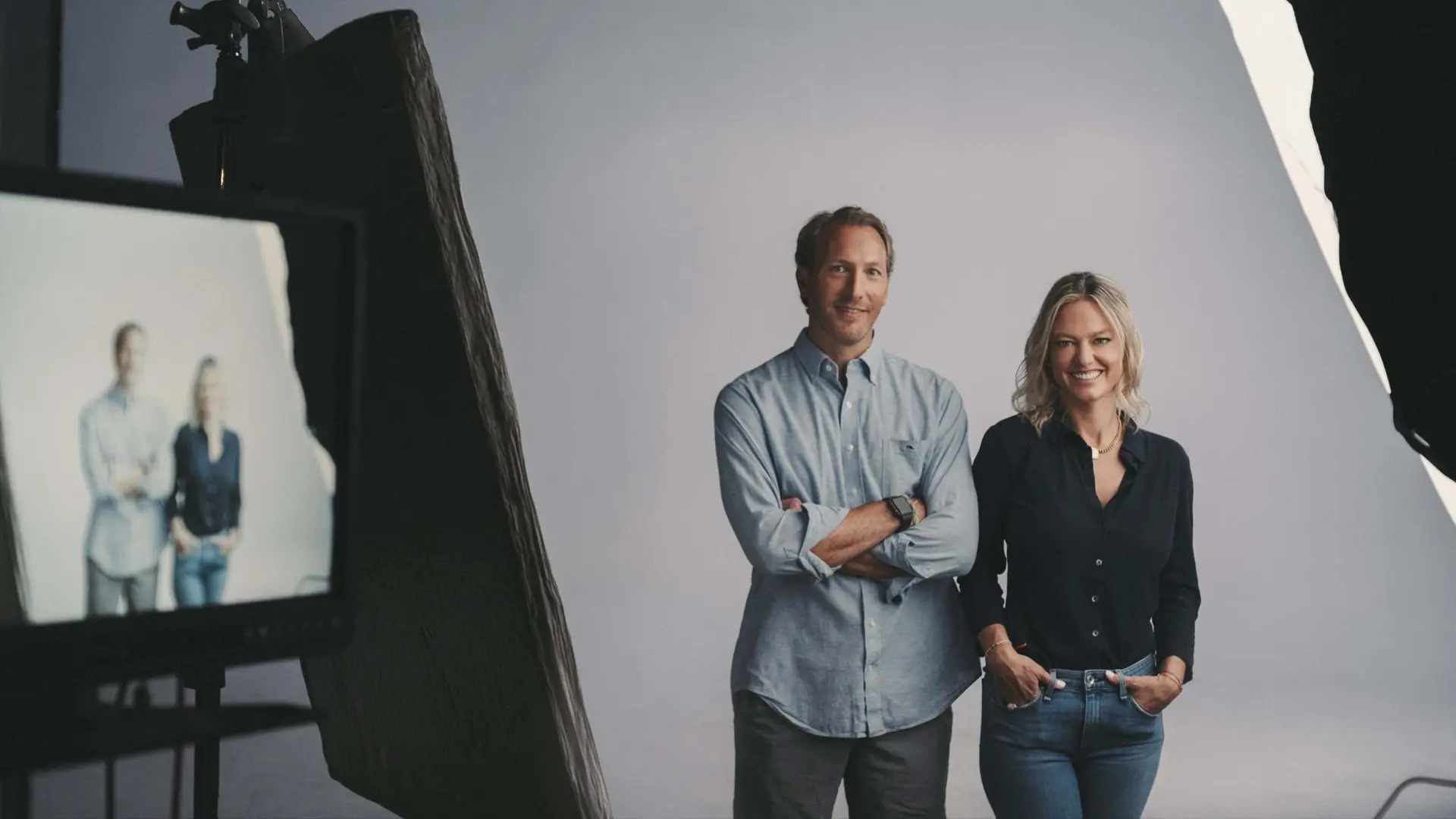
Casting for specific roles and characters is one of those production decisions that either elevates a project or quietly destroys it. You can have a flawless script, a world-class director of photography, and a 30,000-square-foot facility packed with the best gear money can buy. None of that matters if the wrong face is delivering the right line. We learned this lesson early, and it shaped how we approach talent selection across every project that comes through our doors, from national brand campaigns to documentary-driven branded series.
This post walks through a real production challenge we faced on a luxury lifestyle campaign and explains exactly how our team navigated casting from the initial client brief all the way to the final performance on set. If you are a brand, agency, or production partner trying to understand how casting decisions actually work inside a professional shop, this one is for you.

## The Client Brief and the Casting Problem
The project came through our [Fort Lauderdale production hub](https://c-istudios.com/video-production-fort-lauderdale/), tied to a luxury maritime brand with a very specific vision. The campaign needed to feel aspirational without feeling unattainable, and the talent had to carry that balance almost entirely on their own. The script was lean by design. There was minimal dialogue. The camera would do the talking, but only if the person in frame had the kind of natural presence that reads as authentic rather than performed.
The brand had one word for the character they needed: "effortless." That is both the most useful and most frustrating casting note a client can give you. It rules out a lot of talent quickly. It also opens the search wide in ways that are difficult to narrow without a structured process. Our team knew from the start that casting for this specific role would require more than pulling from a standard commercial talent database.
## How We Define "Specific" in Casting for Specific Roles
Before we ever open a casting call or contact an agency, we build what our team calls a character architecture document. This is not a standard character breakdown. It goes deeper. We are looking at physical presence, yes, but more importantly we are mapping out psychological texture: how should this person move, what emotional register are they operating in, what is the unspoken story they carry into every frame?
For the maritime campaign, the character architecture included details like: the talent should read as someone who has worked hard but does not need to prove it, someone comfortable with silence, someone whose body language suggests ease rather than effort. That kind of specificity is what separates a great casting brief from a generic one. It gives talent agents, casting directors, and our own internal scouts something real to work with.
This process feeds directly into how we structure the wider [creative services](https://c-istudios.com/creative-services/) side of any production. Casting is not an afterthought. It happens in parallel with location scouting, shot list development, and art direction. When those elements talk to each other early, the final product has coherence that audiences feel even if they cannot name it.
## The Casting Process. From Search to Selects
We work with a mix of established talent agencies and independent scouts, and for a project like this, we also conduct direct outreach to non-traditional talent pools. Luxury lifestyle content often performs better with real people who have genuine experience in the world the brand represents. For a maritime campaign, that might mean someone who actually spends time on the water, not just someone who looks good near it. That authenticity registers on camera in ways that are nearly impossible to fake.
Here is how our casting process typically unfolds on a character-driven branded project:
**Phase 1: Brief Distribution.** We send our character architecture document to two or three agencies we trust, along with a clear usage brief covering territories, media types, and timeline. Transparency at this stage saves everyone time later.
**Phase 2: Initial Submissions.** We review video submissions, not just headshots. A headshot tells you almost nothing about how someone moves or holds stillness. We ask for a short self-tape, sometimes with a specific prompt, sometimes open-ended depending on what we are trying to assess.
**Phase 3: Chemistry Reads.** For campaigns where multiple characters appear together, we run chemistry reads before we lock talent. Two people can each be individually strong and completely wrong next to each other. Chemistry reads are non-negotiable on any project where the relationship between characters carries narrative weight.
**Phase 4: Client Selects.** We present a curated shortlist, usually five to eight candidates, with annotated notes explaining our reasoning for each. We never just send a grid of faces. Context matters, and our job is to guide the client through the decision, not dump options on them.
## What Went Wrong First (and Why That Was Useful)
Here is the part of the case study that most agencies leave out. Our first round of selects did not land. The client responded positively to the visual types we presented but felt that none of the initial candidates had the specific quality they were looking for. Rather than cycling through more of the same pool, we paused and asked a different question: were we searching in the right places?
The answer was no. We had leaned too heavily on commercial talent rosters, which skew toward a particular kind of polished readiness. The character this campaign needed was someone who did not look like they had been cast. That distinction sounds abstract until you see it on a monitor. Then it is obvious.
We expanded the search to include talent with backgrounds in editorial fashion, independent film, and even non-acting fields where the person had a strong visual identity built through years of actually living a certain kind of life. This is an approach we have refined through years of [film production](https://c-istudios.com/film-production-services/) work, where character authenticity is often the difference between a scene that lands and one that disappears.
According to a [Production Daily](https://www.productiondaily.com) survey on commercial casting practices, nearly 60 percent of creative directors report that their best casting decisions came from outside traditional agency submissions. That tracks with our experience. The talent databases are useful starting points, but they are not the whole picture.
## Finding the Right Talent. The Non-Traditional Path
Once we opened the search beyond standard commercial pools, things moved quickly. Our team identified three candidates with real maritime backgrounds, two of whom had significant editorial work in their portfolios. The third was a first-time talent with no on-camera credits but an unmistakable presence in the self-tape we received through a direct referral.
That third candidate became the face of the campaign.
She had spent years working in yacht management, which meant every moment she spent on set felt lived-in. The way she stood at the bow, the way she handled equipment, the way she looked at the horizon: none of it required direction. Our director gave her very little blocking because she already knew how to occupy that world. The camera simply followed her.
This kind of discovery is only possible when casting for specific roles is treated as a research problem, not a logistics problem. We were not filling a slot. We were looking for a specific human being. That distinction drives every decision in the process.
The production itself ran through our full [video production services](https://c-istudios.com/video-production-services/) pipeline, with pre-production, principal photography, and post all handled in-house. Having casting feed directly into our production workflow meant that by the time we were on set, every department already knew who they were working with and had adjusted their approach accordingly. Lighting design, camera movement, wardrobe pulls: all of it was calibrated around her specific look and energy.

## On-Set Dynamics. Directing Talent Cast for Character
One of the things that changes when you cast for character rather than type is the nature of the director-talent relationship on set. When someone is cast primarily for their look, the director is often working to extract a performance. When someone is cast because they genuinely inhabit the character, the director's job shifts toward protecting and capturing rather than constructing.
Our director on this project described it as "getting out of the way." That sounds simple. It is not. It requires a high level of trust in the casting decision and the ability to read when spontaneous moments are worth interrupting a shot plan for. Some of the strongest frames from this campaign came from moments that were not scripted, not blocked, and not anticipated. They happened because the talent was real and our team was watching.
This approach connects directly to how we think about [branded content series](https://c-istudios.com/branded-content-series/) more broadly. The best branded content does not look like advertising. It looks like a window into a life. Casting for specific roles and characters is the foundation of that illusion, if you can even call it an illusion when the talent is genuinely that person.
Industry research published by the [American Marketing Association](https://www.ama.org) consistently shows that authentic talent in branded content drives higher viewer retention and stronger brand association than polished but generic performances. The data supports what our team has observed intuitively for years: audiences are extraordinarily good at detecting inauthenticity, even when they cannot articulate why something feels off.
## Post-Production and the Casting Payoff
Here is where casting decisions either prove themselves or expose their weaknesses. In the edit room, great talent gives you options. Every cut has something to work with. Every reaction shot has depth. The footage breathes. Bad casting, by contrast, forces the editor to perform a kind of triage, working around flat moments and hoping the music carries what the performance could not.
On this campaign, our [post-production team](https://c-istudios.com/post-production-services/) had the opposite problem in the best possible way. There was too much good material. The cut came together with unusual speed because the raw footage was consistently strong. Our colorist noted that the talent's natural skin tones and the maritime light interacted in ways that required almost no corrective work, which is a function of real experience outdoors rather than studio lighting familiarity.
The sound design and [audio engineering](https://c-istudios.com/audio-engineering-services/) team built the campaign's sonic identity around the natural sounds of the water environment, reinforcing the authenticity that the casting had established visually. When every element of a production is working in the same direction, the result has an integrity that is difficult to quantify but immediately felt.
The final deliverables included a sixty-second hero film, a series of fifteen-second social cuts, and a set of stills captured during principal photography by our [professional photography team](https://c-istudios.com/professional-photography-services/). All of it worked because the center of it, the character, was right.
## What Brands Get Wrong About Casting
The most common mistake brands make is conflating casting with cosmetics. They focus on demographic checkboxes, physical type, and surface-level diversity metrics without asking whether the person they are casting can carry the specific emotional and narrative weight the project requires. Those are different questions, and conflating them produces mediocre content.
We also see a lot of briefs where the casting specifications are contradictory, usually because different stakeholders within the brand have different visions that were never reconciled. The brief that asks for someone "young but sophisticated, casual but premium, relatable but aspirational" without further definition is a red flag. Our team's job in those situations is to help the client clarify what they actually mean before we ever open a casting call.
This kind of strategic pre-production thinking is built into our [corporate video production](https://c-istudios.com/corporate-video-production/) process and our work with brands on [advertising campaigns](https://c-istudios.com/advertising-services/). The creative clarity we establish before casting begins directly determines the quality of what we can find.
## How Casting Connects to Distribution Strategy
Casting decisions have downstream effects that brands often do not consider until it is too late. The platforms where content will live should influence how talent is cast. A campaign living primarily on social media platforms rewards a different kind of presence than one designed for broadcast. Talent who performs beautifully in a sixty-second film may not translate to the compressed energy required for a six-second pre-roll. These are not interchangeable skill sets.
Our team thinks about casting in the context of where the content is going from the very beginning. If the campaign includes a social media component, we factor that into the casting brief and look for talent with range across formats. The [social media marketing](https://c-istudios.com/social-media-marketing-services/) team is often in the room during casting conversations for this reason, not just the production and creative teams.
For campaigns with a live or event component, we bring in our [live streaming and event](https://c-istudios.com/video-audio-live-streaming/) specialists early so that talent expectations around performance context are set correctly from the start. Nothing derails a live activation faster than talent who was cast for a controlled studio environment suddenly needing to perform in a dynamic, unpredictable live setting.
## Lessons from the Maritime Campaign
If we had to distill the most useful takeaways from this production for brands and agency partners thinking about casting for specific roles and characters, they would be these:
**Specificity in the brief is a gift, not a constraint.** The more precisely you can define the character, the more efficiently the search goes. Vague briefs produce vague talent pools.
**Non-traditional sourcing is often where the best talent lives.** Commercial rosters are a starting point. Your best casting discovery will probably come from somewhere else.
**Chemistry reads are not optional on character-driven work.** Two strong individual performances can cancel each other out. Test the relationships before you commit.
**Trust the process when the first round does not work.** The wrong initial selects are information. They tell you something about where the search needs to go. Cycling through more of the same pool is rarely the answer.
**Casting and post-production are connected.** Great casting gives the edit room options. Poor casting forces the edit room into damage control. The investment you make in finding the right person pays dividends in every downstream phase.
If you are working on a project that requires precise, character-driven casting and a full production team that understands how to build around the right talent, our team would love to talk through what that process looks like for your specific brief. You can explore our work across the full [project portfolio](https://c-istudios.com/our-work/) or learn about our capabilities across [Los Angeles](https://c-istudios.com/video-production-los-angeles/), [New York](https://c-istudios.com/video-production-new-york/), and [Fort Lauderdale](https://c-istudios.com/video-production-fort-lauderdale/). Reach out through our [contact page](https://c-istudios.com/contact/) and let us build something real together.
## Work with C&I Studios
If you are planning a project like this, our team can take it from concept to final delivery. Explore our [video production services](https://c-istudios.com/video-production-services/), browse [our work](https://c-istudios.com/our-work/) to see how we tell brand stories, and [get in touch](https://c-istudios.com/contact/) when you are ready to start.
Originally published April 23, 2026
---
*This content is from [C&I Studios](https://c-istudios.com), a full-service production company.*
---
# Fortune Magazine Video Production Services
> Published: April 22, 2026
> Categories: Commercial & Brand
> Source: https://c-istudios.com/fortune-magazine-video-production/
---
.cib{--paper:#1b1d1f;--ink:#fff;--body:#d5d7d9;--muted:#8b9096;--line:rgba(255,255,255,.12);--thumb:#2b2e31;--card:#212426;--accent:#c02b0a;--blue:#5B8FA8;--serif:'Playfair Display',Georgia,serif;--sans:'Poppins',-apple-system,sans-serif;--measure:900px;background:var(--paper);color:var(--body);font-family:var(--sans);line-height:1.6;position:relative;left:50%;transform:translateX(-50%);width:90vw;max-width:1920px}
.cib *{box-sizing:border-box}
.cib .kicker{max-width:var(--measure);margin:58px auto 0;padding:0 22px;font-size:12.5px;font-weight:700;letter-spacing:2.5px;text-transform:uppercase;color:var(--blue)}
.cib h1.cibh1{text-wrap:balance;font-family:var(--serif);font-weight:500;font-size:clamp(46px,6vw,72px);line-height:1.08;color:var(--ink);max-width:var(--measure);margin:18px auto 0;padding:0 22px;letter-spacing:-.5px}
.cib .metarow{max-width:var(--measure);margin:20px auto 0;padding:0 22px;color:var(--muted);font-size:14px}
.cib .hero{position:relative;width:100%;height:0;padding-bottom:56.25%;overflow:hidden;margin:48px auto 0;border-top:1px solid var(--line);border-bottom:1px solid var(--line)}
.cib .hero .ph{width:100%;aspect-ratio:16/9;background:var(--thumb);border-top:1px solid var(--line);border-bottom:1px solid var(--line);display:flex;align-items:center;justify-content:center;color:#7d8288;font-size:13px;text-align:center;padding:0 20px}
.cib .body{max-width:var(--measure);margin:12px auto 0;padding:52px 22px 6px}
.cib .body.lead p:first-child{font-size:23px;line-height:1.62;color:var(--ink)}
.cib .body p{font-size:18.5px;line-height:1.85;margin:0 0 30px;color:var(--body)}
.cib .body h2{text-wrap:balance;font-family:var(--serif);font-weight:500;font-size:clamp(32px,4vw,48px);line-height:1.22;color:var(--ink);margin:70px 0 20px;letter-spacing:-.3px}
.cib .body h3{text-wrap:balance;font-family:var(--sans);font-weight:600;font-size:22px;color:var(--ink);margin:38px 0 8px}
.cib .body a{color:var(--ink);text-decoration:underline;text-decoration-color:rgba(255,255,255,.4);text-underline-offset:3px}
.cib .body a:hover{text-decoration-color:var(--ink)}
.cib .ctable{width:100%;border-collapse:collapse;margin:16px 0 30px;font-size:16px}
.cib .ctable th{background:#000;color:#fff;text-align:left;padding:10px 12px;font-family:var(--sans)}
.cib .ctable td{padding:10px 12px;border-bottom:1px solid var(--line);color:var(--body)}
.cib .inimg{position:relative;width:100%;height:0;padding-bottom:56.25%;overflow:hidden;margin:72px auto;border-top:1px solid var(--line);border-bottom:1px solid var(--line)}
.cib .inimg .ph{width:100%;aspect-ratio:16/9;background:var(--thumb);border-top:1px solid var(--line);border-bottom:1px solid var(--line);display:flex;align-items:center;justify-content:center;color:#7d8288;font-size:13px}
.cib .origpub{max-width:var(--measure);margin:60px auto 0;padding:26px 22px 0;border-top:1px solid var(--line);color:var(--muted);font-size:13.5px}
.cib .related{max-width:1200px;margin:64px auto 0;padding:34px 22px 76px}
.cib .related h3{font-family:var(--sans);font-size:12.5px;letter-spacing:2px;text-transform:uppercase;color:var(--ink);margin:0 0 24px}
.cib .grid{display:grid;grid-template-columns:repeat(3,1fr);gap:28px}
.cib .rc{background:var(--card);border:1px solid var(--line);display:block;text-decoration:none;color:inherit;transition:border-color .15s}
.cib a.rc:hover{border-color:rgba(255,255,255,.5)}
.cib .rc .thumb{position:relative;width:100%;height:0;padding-bottom:56.25%;background:var(--thumb);overflow:hidden}
.cib .rc .thumb img{position:absolute!important;top:0!important;left:0!important;width:100%!important;height:100%!important;object-fit:cover!important;margin:0!important}
.cib .rc .cc{padding:14px 15px 17px}
.cib .rc .rt{font-family:var(--serif);font-weight:500;font-size:16px;line-height:1.3;color:var(--ink);margin:0 0 6px}
.cib .rc .rm{font-size:11px;letter-spacing:1px;text-transform:uppercase;color:var(--muted)}
.cib img{margin:0!important;padding:0!important;display:block!important;vertical-align:top;max-width:100%}
.cib .hero img,.cib .inimg img{position:absolute!important;top:0!important;left:0!important;width:100%!important;height:100%!important;object-fit:cover!important;margin:0!important;padding:0!important;border:0!important;display:block!important;aspect-ratio:auto!important}
.cib .hero+.body{padding-top:36px}
@media(max-width:760px){.cib .grid{grid-template-columns:1fr}.cib .body h2{margin:52px 0 16px}.cib .body p{font-size:17.5px}.cib .inimg,.cib .hero{margin-top:44px}}
.cib .vembed{max-width:var(--measure);margin:44px auto;padding:0 22px}.cib .vembed .vwrap{position:relative;width:100%;height:0;padding-bottom:56.25%}.cib .vembed .vwrap iframe{position:absolute;top:0;left:0;width:100%;height:100%;border:0}
Commercial & Brand
# Fortune Magazine Video Production Services
11 min read
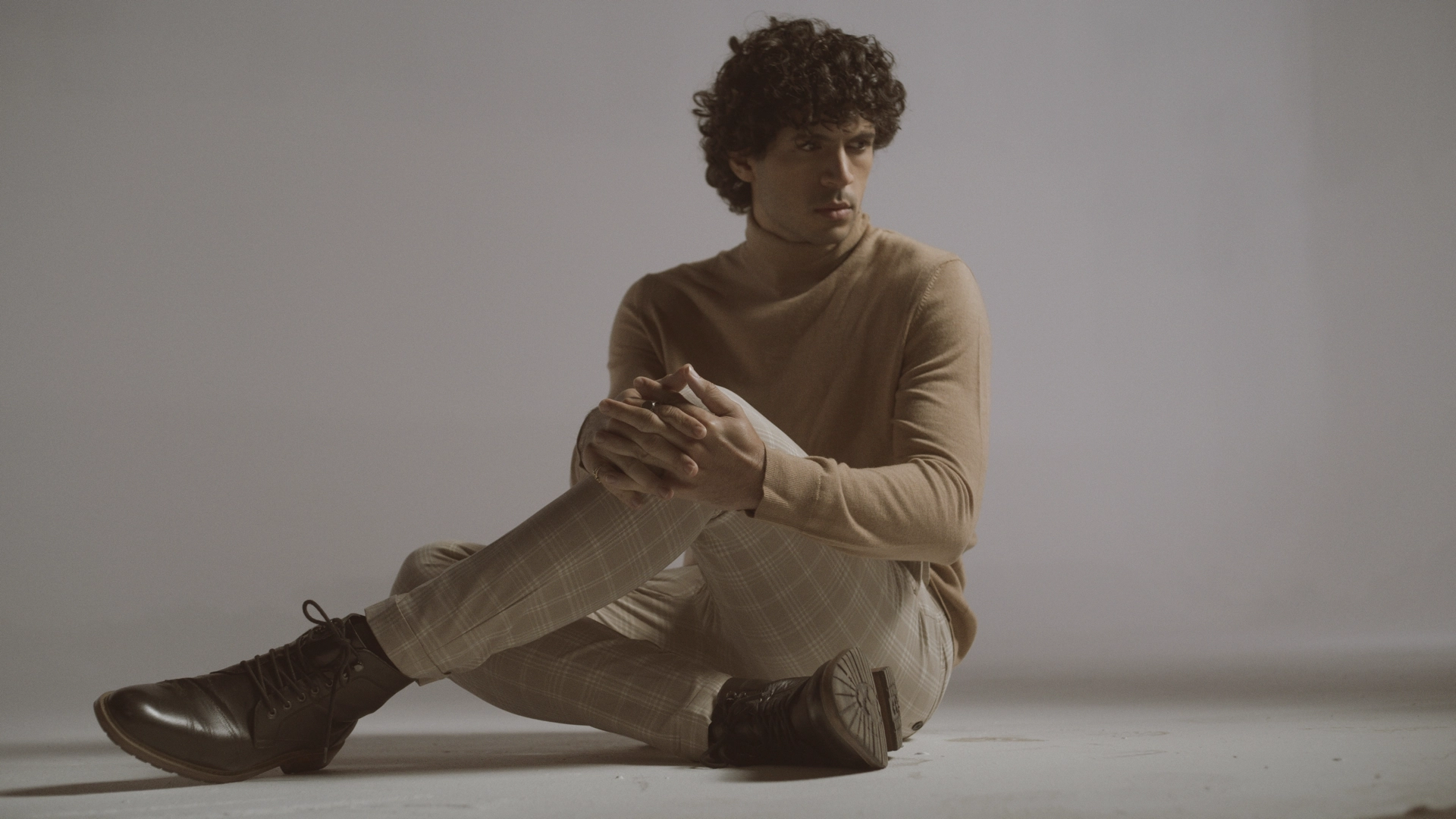
When brands and publishers talk about **Fortune magazine video production**, they are describing a very specific tier of content: polished, authoritative, visually commanding video that reflects the credibility of one of the world's most recognized business media brands. Whether you are a Fortune 500 company trying to match that editorial standard, or a media company commissioning video content for a major publication, the bar is high. Our team at C&I has spent years producing at exactly that level, and this post breaks down what goes into that caliber of work, what it costs, how studios compare, and why the right production partner changes everything.

## What Fortune Magazine Video Production Actually Means
The phrase gets used loosely, so let us be precise. Fortune-level video production refers to the kind of video content that runs alongside or in support of a major business publication. Think executive interview series, CEO profile films, conference highlight reels for events like the Fortune Global Forum, documentary-style company profiles, and short-form branded content built for a sophisticated, high-net-worth audience.
This is not the same as a standard corporate talking-head video. The production values are different. The storytelling discipline is different. The post-production workflow is different. A Fortune-caliber piece needs to hold its own next to world-class editorial photography and writing, and that demands a crew and facility that can operate at that level without hesitation.
Publications like Fortune, Forbes, Bloomberg Businessweek, and the Wall Street Journal have all invested heavily in video over the last decade. According to [Pew Research Center's journalism data](https://www.pewresearch.org/journalism/), digital video consumption from news and business media brands has grown consistently year over year, pushing editorial outlets to treat video as a first-class content format rather than an afterthought. That shift means the production standard for business video content has risen considerably.
## The Core Components of a High-End Business Video
If you are commissioning video content aimed at a Fortune-level audience or publication, here is what the production actually involves at the component level.
### Pre-Production Strategy and Script Development
Most video projects fail in pre-production, not on set. For editorial and corporate work at this level, the script or interview framework needs to be built around a genuine editorial point of view. That means story research, subject prep, question development for interviews, and a clear creative treatment document. Our [creative services](https://c-istudios.com/creative-services/) team spends significant time here, and for good reason. A CEO who has been properly prepped delivers a completely different performance than one who walks cold onto a set.
### Location Scouting and Production Design
Business video for major publications needs to look intentional, not accidental. That means location scouting that finds spaces with depth, texture, and natural light opportunities, or it means building a controlled environment in studio. Our 30,000 sq ft facility in Fort Lauderdale gives us the flexibility to construct sets that serve the story rather than default to a generic conference room. Production design is not optional at this level; it is what separates forgettable from memorable.
### Cinematography and Camera Package
The camera package and lens selection matter enormously for editorial work. We typically shoot on cinema-grade cameras with anamorphic or high-quality spherical glass to achieve the depth-of-field and tonal range that distinguishes editorial video from run-of-the-mill corporate content. The lighting approach matters just as much. Interview lighting for a senior executive should feel sophisticated and directional, not flat and fluorescent. This is where our [film production services](https://c-istudios.com/film-production-services/) expertise feeds directly into corporate and editorial work.
### Direction and Subject Handling
Getting a genuine, compelling performance from a non-actor executive is a skill that most production companies underestimate. Business leaders are articulate in boardrooms but often stiffen on camera. Our directors have worked with executives from Nike, Coca-Cola, AT&T, and the NFL, among others, and have developed a specific methodology for drawing out authentic, quotable moments. This cannot be faked in post-production.
### Sound Design and Audio Engineering
Business media audiences are sophisticated. They will notice poor audio immediately. Lapel mic placement, boom coverage, room treatment, and clean audio capture on set feed directly into the quality of the finished piece. Our [audio engineering services](https://c-istudios.com/audio-engineering-services/) extend from on-set capture through post-production mix, ensuring the final piece sounds as good as it looks.
### Post-Production and Color Grading
Color grading is where the visual tone of a piece gets locked in. For Fortune-caliber work, the color science needs to be clean, authoritative, and consistent. We work in DaVinci Resolve with professional colorists who understand how to treat business and editorial content differently from entertainment or music video work. Our [post-production services](https://c-istudios.com/post-production-services/) cover everything from offline edit through final delivery in multiple formats and aspect ratios.
### Motion Design and Lower Thirds
Titles, lower thirds, and motion graphic elements need to match the visual language of the publication or brand. For a Fortune-aligned project, that typically means clean, typography-forward design with restrained animation. Our [2D animation and motion design](https://c-istudios.com/2d-animation-motion-design/) team handles these elements so they feel like a natural extension of the editorial brand rather than an afterthought.
## Fortune Magazine Video Production Pricing. What to Expect
One of the most common questions we field is straightforward: what does this level of production cost? The honest answer is that it depends on scope, but there are useful ranges to understand.
A single executive interview with full pre-production, a one-day shoot, and a polished post-production package typically lands between $15,000 and $40,000 depending on location, crew size, and edit complexity. A short documentary-style company profile, the kind that might run on a publication's website alongside a feature article, generally ranges from $40,000 to $120,000. Multi-video editorial series with recurring production and consistent branding can run from $100,000 upward on a retainer or project basis.
These numbers reflect real production costs for crew, equipment, facility, and post-production talent at a professional level. Budget-range production shops can deliver lower quotes, but the gap in quality is visible. Publications like Fortune and their advertising partners know the difference, and audiences do too.
For brands commissioning video content to accompany or align with major business publications, the investment is also a positioning decision. The video you produce reflects your brand's place in the market. Cutting budget at this level is a false economy.
## Location and What It Means for Your Production
Fortune-level editorial video gets produced across the country, with the heaviest concentration in New York, Los Angeles, and major conference cities. Our offices and production teams in multiple markets let us cover these needs without the complexity and cost overhead of flying in a full out-of-market crew.
Our [video production in New York](https://c-istudios.com/video-production-new-york/) team handles everything from executive interviews in Midtown offices to studio builds for product campaigns. Our [video production in Los Angeles](https://c-istudios.com/video-production-los-angeles/) operation covers the West Coast market, where a significant portion of Fortune 500 creative and marketing work originates. And our [Fort Lauderdale facility](https://c-istudios.com/video-production-fort-lauderdale/) serves as the production backbone, with 30,000 square feet of stage, studio, and post-production space available for projects that need a controlled environment or require extended post schedules.
For brands headquartered or operating in the Southeast, we also maintain a presence in [Atlanta](https://c-istudios.com/video-production-atlanta/), a market that has grown significantly as a hub for major brand and media production over the last several years.
## Branded Content and Editorial Video. Understanding the Difference
A critical distinction in Fortune-level video production is the difference between pure editorial content and branded content. Both require high production values, but they serve different purposes and operate under different constraints.
Editorial video is journalistic at its core. It follows a story, features interview subjects with genuine expertise or authority, and is distributed by the publication. Branded content is funded by a sponsor or advertiser but is produced to feel editorial in tone and quality. Fortune, like most major business publications, has a branded content studio and regularly produces sponsor-funded video series that are distributed alongside editorial content.
Our [branded content series](https://c-istudios.com/branded-content-series/) production experience is directly relevant here. We understand how to produce content that carries a brand message while maintaining the editorial credibility that makes it worth placing in a prestigious publication context. This balance is harder than it looks, and it requires a production team that understands both the commercial and editorial sides of the equation.
According to [the Interactive Advertising Bureau (IAB)](https://www.iab.com/), branded content continues to outperform traditional pre-roll advertising on key metrics including brand recall and purchase intent, which is why major publications have invested so heavily in developing video formats that serve advertiser needs without compromising audience trust.

## Conference and Live Event Video Production for Business Media
Fortune is also well known for its major conferences: the Fortune 500 CEO Initiative, the Fortune Global Forum, Fortune Brainstorm Tech. These events require a full production infrastructure that goes well beyond standard event coverage.
Our [video and audio live streaming](https://c-istudios.com/video-audio-live-streaming/) capabilities cover multi-camera conference production, live switching, real-time graphics, and simultaneous streaming to remote audiences. The complexity of these productions, multiple stages, dozens of speakers, tight scheduling, live broadcast standards, is significant. It requires a production company with both the technical infrastructure and the logistical experience to execute without visible error in front of an elite audience.
Beyond live streaming, conferences of this caliber also require post-event highlight reels, individual session edits, speaker profile clips, and social-ready cuts for publication distribution. Our team plans for all of these outputs from day one so that post-production on a multi-day event does not turn into a crisis.
## The Role of Photography in Fortune-Level Production
Video and photography are almost always produced together for major editorial and brand campaigns. A Fortune profile of a CEO will typically include a video interview and a photography session. Separating these into different vendor relationships creates inconsistency in lighting approach, subject direction, and visual tone.
Our integrated approach through [professional photography services](https://c-istudios.com/professional-photography-services/) means we can cover both disciplines on the same production day, with a unified creative direction that ensures the video and stills feel like they belong together. For Fort Lauderdale-based clients, our [photography services in Fort Lauderdale](https://c-istudios.com/photography-services-fort-lauderdale/) are available as standalone or integrated with video production at our facility.
## Social Media Distribution. Making the Most of Your Investment
A Fortune-level video production represents a significant investment. That investment works harder when the content is formatted and distributed intelligently across multiple channels. A ten-minute documentary-style profile can be cut into a two-minute version for YouTube, a sixty-second version for LinkedIn, a thirty-second version for Instagram, and a fifteen-second teaser for Twitter or TikTok.
Our [social media marketing services](https://c-istudios.com/social-media-marketing-services/) complement the production side by planning these format deliverables in advance and distributing content in ways that extend reach beyond the primary publication placement. For brands investing at this level, social distribution is not a nice-to-have. It is a core part of the content strategy.
Our [content creation services](https://c-istudios.com/content-creation-services/) also include ongoing support for brands that want to maintain a consistent editorial video presence rather than treating each project as a one-off.
## VFX and Animation in Business Video
Not all Fortune-level video is interview-based. Data visualization, product animation, process explanation, and brand storytelling often require motion graphics and visual effects that go beyond standard editing. For technology companies, financial services brands, and healthcare organizations featured in business media, the ability to visualize complex information clearly and elegantly is a production requirement.
Our [VFX compositing and animation services](https://c-istudios.com/vfx-compositing-and-animation-services/) handle everything from subtle compositing work in executive profiles to full data visualization sequences for investor relations content. This capability sits in-house, which means revisions happen faster and the quality standard stays consistent with the rest of the production.
## What to Ask a Production Company Before You Hire
If you are evaluating production partners for Fortune-level work, here are the questions that actually matter.
### What is your experience with editorial and business media content?
A company that primarily produces music videos or commercials may not have the specific sensibility for editorial work. Ask to see examples of executive interviews, corporate profiles, and publication-placed content specifically.
### Who will actually direct my project?
At many production companies, the senior creative who pitches the work is not the person who shows up on set. Know who your director is before you sign a contract, and review their specific reel rather than a general company reel.
### What is your post-production timeline and revision process?
Editorial video often has publication deadlines that are non-negotiable. A production company needs to be transparent about its post-production capacity, revision turnaround, and what happens if a deadline is at risk.
### Can you handle multi-format deliverables from a single shoot?
If you are investing in a full production day, you should be leaving with a long-form piece, multiple short-form cuts, and social-ready content. Confirm that the production company plans for this from the start rather than retrofitting it after the fact.
### Do you have references from comparable projects?
Client references for work of a similar scope and caliber are a basic due diligence requirement. Any reputable production company should be able to provide them.
## Why This Work Matters Beyond the Video
Fortune magazine video production is ultimately about brand positioning at the highest level of business media. When a company produces a video that runs in Fortune's context, or that matches the visual and editorial standard Fortune represents, it is making a statement about where it belongs in the business landscape.
That statement reaches investors, partners, potential employees, and customers simultaneously. The production quality is not just an aesthetic choice; it is a signal. And signals at this level have real business consequences.
Our team has built a track record specifically because we understand that this work is not just video production. It is brand infrastructure. You can explore a broader range of what we have built by visiting our [portfolio](https://c-istudios.com/our-work/), or if you are ready to discuss a specific project, reach out through our [contact page](https://c-istudios.com/contact/).
The full scope of what we offer across [video production services](https://c-istudios.com/video-production-services/), advertising, and creative content is available through our [advertising services](https://c-istudios.com/advertising-services/) overview as well. Whether the project is a single executive profile or a multi-format editorial series, the process starts with a conversation about what you are trying to accomplish and who you need to reach.
Fortune-level work is not out of reach. It requires the right partner, a clear creative vision, and a realistic understanding of what the investment buys. C&I Studios is built for exactly this category of work, and we are ready to show you what that looks like in practice.
## Work with C&I Studios
If you are planning a project like this, our team can take it from concept to final delivery. Explore our [video production services](https://c-istudios.com/video-production-services/), browse [our work](https://c-istudios.com/our-work/) to see how we tell brand stories, and [get in touch](https://c-istudios.com/contact/) when you are ready to start.
Originally published April 22, 2026
---
*This content is from [C&I Studios](https://c-istudios.com), a full-service production company.*
---
# AI-Driven Commercial Production: What's Changing
> Published: April 21, 2026
> Categories: Commercial & Brand
> Source: https://c-istudios.com/ai-driven-commercial-production/
---
.cib{--paper:#1b1d1f;--ink:#fff;--body:#d5d7d9;--muted:#8b9096;--line:rgba(255,255,255,.12);--thumb:#2b2e31;--card:#212426;--accent:#c02b0a;--blue:#5B8FA8;--serif:'Playfair Display',Georgia,serif;--sans:'Poppins',-apple-system,sans-serif;--measure:900px;background:var(--paper);color:var(--body);font-family:var(--sans);line-height:1.6;position:relative;left:50%;transform:translateX(-50%);width:90vw;max-width:1920px}
.cib *{box-sizing:border-box}
.cib .kicker{max-width:var(--measure);margin:58px auto 0;padding:0 22px;font-size:12.5px;font-weight:700;letter-spacing:2.5px;text-transform:uppercase;color:var(--blue)}
.cib h1.cibh1{text-wrap:balance;font-family:var(--serif);font-weight:500;font-size:clamp(46px,6vw,72px);line-height:1.08;color:var(--ink);max-width:var(--measure);margin:18px auto 0;padding:0 22px;letter-spacing:-.5px}
.cib .metarow{max-width:var(--measure);margin:20px auto 0;padding:0 22px;color:var(--muted);font-size:14px}
.cib .hero{position:relative;width:100%;height:0;padding-bottom:56.25%;overflow:hidden;margin:48px auto 0;border-top:1px solid var(--line);border-bottom:1px solid var(--line)}
.cib .hero .ph{width:100%;aspect-ratio:16/9;background:var(--thumb);border-top:1px solid var(--line);border-bottom:1px solid var(--line);display:flex;align-items:center;justify-content:center;color:#7d8288;font-size:13px;text-align:center;padding:0 20px}
.cib .body{max-width:var(--measure);margin:12px auto 0;padding:52px 22px 6px}
.cib .body.lead p:first-child{font-size:23px;line-height:1.62;color:var(--ink)}
.cib .body p{font-size:18.5px;line-height:1.85;margin:0 0 30px;color:var(--body)}
.cib .body h2{text-wrap:balance;font-family:var(--serif);font-weight:500;font-size:clamp(32px,4vw,48px);line-height:1.22;color:var(--ink);margin:70px 0 20px;letter-spacing:-.3px}
.cib .body h3{text-wrap:balance;font-family:var(--sans);font-weight:600;font-size:22px;color:var(--ink);margin:38px 0 8px}
.cib .body a{color:var(--ink);text-decoration:underline;text-decoration-color:rgba(255,255,255,.4);text-underline-offset:3px}
.cib .body a:hover{text-decoration-color:var(--ink)}
.cib .ctable{width:100%;border-collapse:collapse;margin:16px 0 30px;font-size:16px}
.cib .ctable th{background:#000;color:#fff;text-align:left;padding:10px 12px;font-family:var(--sans)}
.cib .ctable td{padding:10px 12px;border-bottom:1px solid var(--line);color:var(--body)}
.cib .inimg{position:relative;width:100%;height:0;padding-bottom:56.25%;overflow:hidden;margin:72px auto;border-top:1px solid var(--line);border-bottom:1px solid var(--line)}
.cib .inimg .ph{width:100%;aspect-ratio:16/9;background:var(--thumb);border-top:1px solid var(--line);border-bottom:1px solid var(--line);display:flex;align-items:center;justify-content:center;color:#7d8288;font-size:13px}
.cib .origpub{max-width:var(--measure);margin:60px auto 0;padding:26px 22px 0;border-top:1px solid var(--line);color:var(--muted);font-size:13.5px}
.cib .related{max-width:1200px;margin:64px auto 0;padding:34px 22px 76px}
.cib .related h3{font-family:var(--sans);font-size:12.5px;letter-spacing:2px;text-transform:uppercase;color:var(--ink);margin:0 0 24px}
.cib .grid{display:grid;grid-template-columns:repeat(3,1fr);gap:28px}
.cib .rc{background:var(--card);border:1px solid var(--line);display:block;text-decoration:none;color:inherit;transition:border-color .15s}
.cib a.rc:hover{border-color:rgba(255,255,255,.5)}
.cib .rc .thumb{position:relative;width:100%;height:0;padding-bottom:56.25%;background:var(--thumb);overflow:hidden}
.cib .rc .thumb img{position:absolute!important;top:0!important;left:0!important;width:100%!important;height:100%!important;object-fit:cover!important;margin:0!important}
.cib .rc .cc{padding:14px 15px 17px}
.cib .rc .rt{font-family:var(--serif);font-weight:500;font-size:16px;line-height:1.3;color:var(--ink);margin:0 0 6px}
.cib .rc .rm{font-size:11px;letter-spacing:1px;text-transform:uppercase;color:var(--muted)}
.cib img{margin:0!important;padding:0!important;display:block!important;vertical-align:top;max-width:100%}
.cib .hero img,.cib .inimg img{position:absolute!important;top:0!important;left:0!important;width:100%!important;height:100%!important;object-fit:cover!important;margin:0!important;padding:0!important;border:0!important;display:block!important;aspect-ratio:auto!important}
.cib .hero+.body{padding-top:36px}
@media(max-width:760px){.cib .grid{grid-template-columns:1fr}.cib .body h2{margin:52px 0 16px}.cib .body p{font-size:17.5px}.cib .inimg,.cib .hero{margin-top:44px}}
.cib .vembed{max-width:var(--measure);margin:44px auto;padding:0 22px}.cib .vembed .vwrap{position:relative;width:100%;height:0;padding-bottom:56.25%}.cib .vembed .vwrap iframe{position:absolute;top:0;left:0;width:100%;height:100%;border:0}
Commercial & Brand
# AI-Driven Commercial Production. What's Changing
12 min read
The conversation around **ai-driven commercial production** has moved well past hype. Brands that once debated whether artificial intelligence had any real role in professional video are now actively integrating it into pre-production planning, on-set workflows, and post-production pipelines. The shift is not theoretical anymore. It is happening on real projects, with real budgets, at real studios, including ours. What matters now is understanding which parts of the process AI genuinely improves, which parts it cannot replace, and what the next three to five years look like for the commercial production industry as a whole.
This post is our honest take on where things stand. We work across commercial, narrative, documentary, and branded content formats every day. We have seen the tools evolve quickly enough to make some production processes faster and cheaper, while also watching certain AI-generated outputs fail spectacularly when placed in high-stakes brand contexts. Both things are true at the same time, and that tension is exactly what makes this moment interesting.

## What AI Is Actually Doing Inside Production Studios Right Now
Let us be specific, because the general conversation about AI and video production tends to collapse into either breathless optimism or defensive dismissal. Neither is useful. What we are seeing in practice, across our own projects and across the wider industry, is that AI is earning its place in very specific workflow stages rather than replacing the creative process wholesale.
On the pre-production side, AI-assisted scriptwriting tools are being used for first-draft generation and iteration speed. A copywriter who once spent two days exploring variations on a brand script can now generate twelve concept directions in a morning and spend the rest of the week deepening the ones that actually resonate. That is a genuine productivity gain. Similarly, AI-powered mood board generation, shot list automation, and location scouting tools are compressing planning timelines in meaningful ways.
In post-production, the impact is even more visible. AI-driven color matching, automated rough cut assembly, dialogue cleanup, and voice-over sync tools are changing the economics of editing. Our [post-production services](https://c-istudios.com/post-production-services/) team has integrated several of these tools into standard workflows, not to reduce the role of skilled editors, but to eliminate the low-value labor that was eating into creative time. When an editor is not spending four hours manually syncing audio, they are spending those four hours on the decisions that actually shape the story.
On set, AI is beginning to influence camera tracking, teleprompter automation, and even real-time color grading previews. These are incremental gains rather than wholesale transformation, but incremental gains compound quickly in a production environment where time is literally money.
## The Economics of AI-Driven Commercial Production
Here is where the conversation gets genuinely complicated. The promise of AI in commercial production is partly about speed, but it is more fundamentally about cost compression. And for brands operating at scale, that is an enormous draw.
Consider the math on a mid-level national commercial. A traditional production with a dedicated crew, full casting process, location permits, set construction, multi-day shoot, and a complete post-production pass might run anywhere from $150,000 to $500,000 depending on scope. AI tools have made it theoretically possible to compress certain categories of that spend. Synthetic backgrounds reduce location costs. AI voice synthesis can replace certain voice-over sessions. Automated editing tools can accelerate post timelines.
But here is what the tools cannot compress: the strategic thinking, the creative direction, the relationship between a director and a performer that produces a genuine moment on camera. According to research published by the [Production Guild](https://www.productionguild.com), the most expensive component of commercial production is rarely the technology. It is the human judgment that ensures the technology is used correctly. That dynamic has not changed. AI has made certain tasks cheaper; it has not made wisdom cheaper.
For brands working with our [advertising services](https://c-istudios.com/advertising-services/) team, the practical implication is that AI tools are helping us deliver more value within the same budget range, not dramatically undercutting what professional production costs. A budget that once bought three deliverables might now buy five. A timeline that ran twelve weeks might now run eight. That is meaningful. It is not magic.
## Where Human Expertise Remains Non-Negotiable
We want to be direct about this because there is a real temptation, particularly among brands looking to cut costs, to over-index on AI capabilities in ways that produce weak creative output. The cases where AI-driven commercial production fails are almost always cases where the human creative layer was removed too early or too completely.
Casting is one example. AI can analyze casting tape data, match demographic profiles, and flag candidates who fit a brief on paper. What it cannot do is tell you that a particular actor has an unexpected quality on camera that makes your product feel aspirational in a way the brief never captured. That recognition is a human skill built from years of watching performances and understanding how audiences respond emotionally.
Direction is another. The conversation between a director and a talent in the moment before a take, the adjustment to blocking that changes everything, the instinct to push one more take when the first three were technically fine but emotionally flat: none of that has been automated. Our [film production services](https://c-istudios.com/film-production-services/) are built around directors who understand how to shape a story in real time. That remains irreplaceable.
Brand stewardship is perhaps the most overlooked category. When a brand places their identity in a commercial, they are trusting that every creative decision reflects their values accurately. AI systems trained on broad datasets do not inherently understand brand equity. They do not know why a particular shade of red matters to a brand, or why a certain tone of voice would feel off for a given campaign. Human creative directors carry that knowledge. It is earned through relationship and experience, not generated from a prompt.
## How C&I Studios Is Integrating AI Without Losing the Creative Core
Our approach has been deliberate and, frankly, a little skeptical at points. We are not interested in integrating AI tools because they generate press attention. We are interested in them when they demonstrably improve outcomes for our clients or create efficiency that allows our team to do better work.
The first area where we found real value was in [audio engineering](https://c-istudios.com/audio-engineering-services/). AI-assisted noise reduction, dialogue isolation, and mix balancing have cut certain audio post timelines significantly. The quality ceiling has also risen, because our engineers are working on creative EQ and mix decisions rather than cleaning up technical problems by hand.
The second area is social content scaling. When a brand produces a hero commercial, they typically need that asset adapted into ten to twenty social formats across different aspect ratios, durations, and platform specifications. AI-assisted reformatting tools have made this process faster without sacrificing the quality control that our [social media marketing services](https://c-istudios.com/social-media-marketing-services/) team applies to every deliverable.
The third area is pre-visualization. AI tools that can generate rough visual approximations of shot sequences have made our pre-production conversations with clients more concrete. Instead of describing a shot verbally, we can show a rough analog and iterate before a single crew member is booked. This has reduced miscommunication on complex projects considerably.
What we have not done is use AI to replace creative concepting, replace on-camera talent, or reduce the size of our production crew on shoots that require skilled technicians. Our 30,000 square foot facility in Fort Lauderdale is built around the reality that certain production values can only be achieved with real space, real light, and real people making real-time decisions.

## The Synthetic Media Question. When AI-Generated Video Makes Sense
Fully synthetic AI-generated video, where no human performer or real location appears on screen, is a real and growing category. Text-to-video tools from companies like Sora and Runway have produced results that would have seemed impossible two years ago. The question is not whether this technology works. It increasingly does. The question is when it is the right choice for a commercial project.
Our honest assessment: fully synthetic AI video works best in contexts where the brand is communicating abstract concepts, where photorealism is not critical, or where the content will be consumed in environments where production value is less scrutinized. Certain social ad formats, animated explainers, and B-roll supplementation are reasonable use cases.
It works poorly for brand campaigns where human connection is the point, where a real performer carrying real emotion is what makes the spot land. It also struggles with brand consistency at scale. Generating fifty AI clips that all feel tonally unified and visually coherent with a brand system is harder than it sounds. Drift accumulates. Quality becomes inconsistent in ways that are difficult to catch without experienced eyes reviewing every frame.
According to [Think with Google](https://www.thinkwithgoogle.com), video ads featuring real human faces and emotional narratives consistently outperform abstract or animated formats across purchase intent and brand recall metrics. That data point is worth keeping in mind when evaluating where synthetic video fits in a production strategy.
For brands considering our [video production services](https://c-istudios.com/video-production-services/), the conversation about AI-generated content is always contextual. The format, the platform, the audience, the brand equity at stake: all of these determine whether synthetic media is an appropriate tool or a shortcut that costs more than it saves.
## What AI-Driven Production Means for Different Market Segments
The impact of ai-driven commercial production is not uniform across the market. It plays out very differently depending on whether we are talking about enterprise brands, mid-market companies, or smaller regional advertisers.
For enterprise brands, the primary opportunity is not cost reduction. It is speed and personalization at scale. A brand running a campaign across twelve regional markets can use AI tools to localize copy, adapt visuals, and generate platform-specific variants faster than any traditional production workflow allows. The creative foundation still requires serious investment, but the distribution of that creative across markets becomes dramatically more efficient.
For mid-market brands, the opportunity is access. Production quality that once required a budget only large companies could justify is becoming accessible at lower price points because AI tools are compressing certain cost categories. A regional retailer can now produce content that feels closer to national-level quality, assuming they are working with a production partner who knows how to deploy those tools without sacrificing craft.
For smaller brands and local advertisers, the picture is mixed. AI video tools have lowered the barrier to entry for basic content production, which is genuinely democratizing. But the gap between AI-generated content and professionally produced commercial video is still significant enough that brands in competitive categories who rely entirely on AI-generated content tend to be outcompeted visually by those who invest in real production.
Our teams across our [Fort Lauderdale](https://c-istudios.com/video-production-fort-lauderdale/), [Los Angeles](https://c-istudios.com/video-production-los-angeles/), and [New York City](https://c-istudios.com/video-production-new-york/) offices are navigating this constantly. The question we hear most often from new clients is some version of: how much of this can AI do, and how much do we need to produce for real? Our answer is always specific to the project, not a general rule.
## The Ethical and Legal Landscape Nobody Is Talking About Enough
There are serious questions emerging around AI-driven commercial production that the industry has not fully resolved, and brands and production companies both need to be paying attention.
The first is talent rights. AI voice synthesis and AI-generated likenesses are creating real legal exposure for brands that use them without proper clearances or in ways that conflict with union agreements. SAG-AFTRA agreements now include specific provisions around AI use, and productions that ignore those provisions are taking on liability. This is not a theoretical risk. Cases have already moved through arbitration.
The second is transparency. Consumers and regulators are beginning to ask whether AI-generated commercial content should be disclosed. The Federal Trade Commission has signaled interest in this space, particularly around AI-generated testimonials and endorsements. Brands that get ahead of disclosure norms will be better positioned than those who wait for regulation to force the issue.
The third is training data provenance. AI tools trained on unlicensed creative work are creating potential intellectual property exposure for the companies using them commercially. This is an evolving area of law, but it is one that sophisticated brands are already asking their production partners about. It is worth knowing what tools are in use and what their data sourcing looks like.
We think about these issues seriously at C&I Studios because our clients include brands with significant legal and compliance infrastructure. These are organizations with legal teams that ask pointed questions. Being able to answer those questions accurately is part of what it means to be a responsible production partner in this environment.
## What the Next Three Years Look Like for Commercial Production
Forecasting is inherently uncertain, but some trajectories seem clear enough to bet on directionally.
AI-driven commercial production will continue to compress timelines and certain cost categories. The brands that figure out how to leverage that compression while maintaining creative quality will gain competitive advantage over those still running traditional workflows without modification.
The role of the director, the cinematographer, the editor, and the creative producer will not disappear. But the shape of those roles will shift. Technical skills that were once gatekeeping will become more automated. The premium will shift even further toward creative judgment, strategic thinking, and the ability to extract genuine human performance from real talent in front of a camera.
Personalization at scale will become a standard expectation rather than a premium offering. Brands will expect that a single commercial shoot produces not just one hero spot but a matrix of variants, localized and personalized, deployed dynamically across platforms. AI tools make that technically feasible. Production companies that build workflows around that reality will lead the market.
Documentary and long-form branded content will become more important, not less, as consumers grow more sophisticated about detecting synthetic or low-effort AI-generated video. The storytelling formats that feel most human will carry more premium value. Our [documentary film production](https://c-istudios.com/documentary-film-production/) work is an area where we expect demand to grow precisely because it is the format hardest to replicate with AI.
C&I Studios is investing in the team, tools, and workflows that position us for this shift. That means training our team on AI tools that genuinely improve outcomes, building production pipelines flexible enough to incorporate new technology as it matures, and maintaining the craft standards that separate commercial production worth watching from content that simply fills a feed.
## Work with C&I Studios
If you are planning a project like this, our team can take it from concept to final delivery. Explore our [video production services](https://c-istudios.com/video-production-services/), browse [our work](https://c-istudios.com/our-work/) to see how we tell brand stories, and [get in touch](https://c-istudios.com/contact/) when you are ready to start.
Originally published April 21, 2026
---
*This content is from [C&I Studios](https://c-istudios.com), a full-service production company.*
---
# Pierce Promotions and the New Era of Brand Activation
> Published: April 20, 2026
> Categories: Commercial & Brand
> Source: https://c-istudios.com/pierce-promotions-brand-activation-trends/
---
.cib{--paper:#1b1d1f;--ink:#fff;--body:#d5d7d9;--muted:#8b9096;--line:rgba(255,255,255,.12);--thumb:#2b2e31;--card:#212426;--accent:#c02b0a;--blue:#5B8FA8;--serif:'Playfair Display',Georgia,serif;--sans:'Poppins',-apple-system,sans-serif;--measure:900px;background:var(--paper);color:var(--body);font-family:var(--sans);line-height:1.6;position:relative;left:50%;transform:translateX(-50%);width:90vw;max-width:1920px}
.cib *{box-sizing:border-box}
.cib .kicker{max-width:var(--measure);margin:58px auto 0;padding:0 22px;font-size:12.5px;font-weight:700;letter-spacing:2.5px;text-transform:uppercase;color:var(--blue)}
.cib h1.cibh1{text-wrap:balance;font-family:var(--serif);font-weight:500;font-size:clamp(46px,6vw,72px);line-height:1.08;color:var(--ink);max-width:var(--measure);margin:18px auto 0;padding:0 22px;letter-spacing:-.5px}
.cib .metarow{max-width:var(--measure);margin:20px auto 0;padding:0 22px;color:var(--muted);font-size:14px}
.cib .hero{position:relative;width:100%;height:0;padding-bottom:56.25%;overflow:hidden;margin:48px auto 0;border-top:1px solid var(--line);border-bottom:1px solid var(--line)}
.cib .hero .ph{width:100%;aspect-ratio:16/9;background:var(--thumb);border-top:1px solid var(--line);border-bottom:1px solid var(--line);display:flex;align-items:center;justify-content:center;color:#7d8288;font-size:13px;text-align:center;padding:0 20px}
.cib .body{max-width:var(--measure);margin:12px auto 0;padding:52px 22px 6px}
.cib .body.lead p:first-child{font-size:23px;line-height:1.62;color:var(--ink)}
.cib .body p{font-size:18.5px;line-height:1.85;margin:0 0 30px;color:var(--body)}
.cib .body h2{text-wrap:balance;font-family:var(--serif);font-weight:500;font-size:clamp(32px,4vw,48px);line-height:1.22;color:var(--ink);margin:70px 0 20px;letter-spacing:-.3px}
.cib .body h3{text-wrap:balance;font-family:var(--sans);font-weight:600;font-size:22px;color:var(--ink);margin:38px 0 8px}
.cib .body a{color:var(--ink);text-decoration:underline;text-decoration-color:rgba(255,255,255,.4);text-underline-offset:3px}
.cib .body a:hover{text-decoration-color:var(--ink)}
.cib .ctable{width:100%;border-collapse:collapse;margin:16px 0 30px;font-size:16px}
.cib .ctable th{background:#000;color:#fff;text-align:left;padding:10px 12px;font-family:var(--sans)}
.cib .ctable td{padding:10px 12px;border-bottom:1px solid var(--line);color:var(--body)}
.cib .inimg{position:relative;width:100%;height:0;padding-bottom:56.25%;overflow:hidden;margin:72px auto;border-top:1px solid var(--line);border-bottom:1px solid var(--line)}
.cib .inimg .ph{width:100%;aspect-ratio:16/9;background:var(--thumb);border-top:1px solid var(--line);border-bottom:1px solid var(--line);display:flex;align-items:center;justify-content:center;color:#7d8288;font-size:13px}
.cib .origpub{max-width:var(--measure);margin:60px auto 0;padding:26px 22px 0;border-top:1px solid var(--line);color:var(--muted);font-size:13.5px}
.cib .related{max-width:1200px;margin:64px auto 0;padding:34px 22px 76px}
.cib .related h3{font-family:var(--sans);font-size:12.5px;letter-spacing:2px;text-transform:uppercase;color:var(--ink);margin:0 0 24px}
.cib .grid{display:grid;grid-template-columns:repeat(3,1fr);gap:28px}
.cib .rc{background:var(--card);border:1px solid var(--line);display:block;text-decoration:none;color:inherit;transition:border-color .15s}
.cib a.rc:hover{border-color:rgba(255,255,255,.5)}
.cib .rc .thumb{position:relative;width:100%;height:0;padding-bottom:56.25%;background:var(--thumb);overflow:hidden}
.cib .rc .thumb img{position:absolute!important;top:0!important;left:0!important;width:100%!important;height:100%!important;object-fit:cover!important;margin:0!important}
.cib .rc .cc{padding:14px 15px 17px}
.cib .rc .rt{font-family:var(--serif);font-weight:500;font-size:16px;line-height:1.3;color:var(--ink);margin:0 0 6px}
.cib .rc .rm{font-size:11px;letter-spacing:1px;text-transform:uppercase;color:var(--muted)}
.cib img{margin:0!important;padding:0!important;display:block!important;vertical-align:top;max-width:100%}
.cib .hero img,.cib .inimg img{position:absolute!important;top:0!important;left:0!important;width:100%!important;height:100%!important;object-fit:cover!important;margin:0!important;padding:0!important;border:0!important;display:block!important;aspect-ratio:auto!important}
.cib .hero+.body{padding-top:36px}
@media(max-width:760px){.cib .grid{grid-template-columns:1fr}.cib .body h2{margin:52px 0 16px}.cib .body p{font-size:17.5px}.cib .inimg,.cib .hero{margin-top:44px}}
.cib .vembed{max-width:var(--measure);margin:44px auto;padding:0 22px}.cib .vembed .vwrap{position:relative;width:100%;height:0;padding-bottom:56.25%}.cib .vembed .vwrap iframe{position:absolute;top:0;left:0;width:100%;height:100%;border:0}
Commercial & Brand
# Pierce Promotions and the New Era of Brand Activation
12 min read

The world of pierce promotions has changed dramatically over the last three years. What used to be a straightforward mix of street teams, sampling events, and print handouts has transformed into something far more layered, more data-driven, and more visually ambitious than most brand managers anticipated. We have watched this shift happen in real time through the campaigns we produce at our facility in Fort Lauderdale and through the conversations we have with clients from Nike to the NFL who are rethinking how they break through to audiences that have developed almost allergic reactions to traditional advertising.
The core idea behind pierce promotions has not changed. You want to cut through the noise and land directly in a consumer's awareness, not drift through their peripheral vision. But the methods, the media, and the expectations attached to that goal are almost unrecognizable compared to a decade ago. This post is about where things are heading, what is working right now, and why the production quality of your promotional content is now the deciding variable between campaigns that pierce and campaigns that bounce off.

## What Pierce Promotions Actually Mean in 2024
The term gets used loosely. Some people use it to describe aggressive guerrilla marketing. Others use it as a catchall for any promotional push that prioritizes interruption over permission. In our experience working across industries, the most useful definition is this: pierce promotions are any marketing effort specifically designed to break through audience inertia and create immediate, conscious brand recall rather than passive familiarity.
That definition matters because it changes how you evaluate success. A pierce promotion is not trying to build slow brand equity over months. It is trying to create a moment. And moments, in 2024, are almost entirely visual.
According to [HubSpot's marketing research](https://www.hubspot.com/marketing-statistics), video content generates 1,200% more shares than text and image content combined. That statistic is not new, but what is new is how it maps onto promotional strategy. The brands that are winning at pierce promotions right now are treating video not as a deliverable at the end of a campaign but as the architecture of the campaign itself. Everything else, including social posts, paid media placements, and live events, is built around the video content rather than the other way around.
## How the Production Bar Has Risen (And Why It Matters)
Five years ago, a mid-tier promotional video could hold audience attention if the concept was strong. Production quality was a differentiator but not always a dealbreaker. That is no longer true. Consumer exposure to premium content on streaming platforms, social media, and branded entertainment has recalibrated expectations in a way that is genuinely difficult to overstate.
We see this directly in the briefs we receive through our [video production services](https://c-istudios.com/video-production-services/) division. Clients who two years ago were fine with a single-camera talking head piece are now asking for cinematic-grade content with color grading, original sound design, and multi-platform formatting. They are not asking for this because their budgets have exploded. Many budgets have actually tightened. They are asking for it because they have watched competitors deploy high-production promotional content and understand the gap it creates in perception.
The good news is that the tools and workflows available to production companies have made premium quality more accessible than ever. Our 30,000 square foot facility in Fort Lauderdale was designed specifically to handle the kind of multi-format, high-volume content that modern pierce promotions demand. From broadcast-ready commercials to short-form social content produced in parallel, the infrastructure exists to deliver at scale without sacrificing craft.
## The Shift Toward Experience-First Promotion
One of the most significant trend lines we are watching is the migration of promotional energy toward live experiences that are explicitly designed to be filmed. This is not a subtle shift. Brands like H&M and AT&T have built entire activation concepts around the idea that the event itself is a content production opportunity, and the footage captured at that event becomes the promotional asset that drives the actual campaign reach.
This changes the production planning conversation considerably. When we work on experiential campaigns through our [advertising services](https://c-istudios.com/advertising-services/) team, the conversation now starts with the question: what does this look like on camera, and how does it perform in a 15-second cut on Instagram Reels versus a 90-second documentary-style recap on YouTube? Those are fundamentally different creative and technical problems, and they need to be solved before the event, not after.
Brands that plan their pierce promotions this way consistently outperform those that treat documentation as an afterthought. The reason is simple: the physical attendees at any live event are a fraction of the audience. The filmed version of that event is what actually does the piercing at scale.
## Social Platforms Are Changing the Pierce Promotion Formula
Platform algorithms in 2024 are rewarding original, high-quality video content with reach that would have required significant paid media spend just a few years ago. TikTok, Instagram, and YouTube Shorts have created environments where a well-executed promotional video from a brand with a modest following can outperform a heavily boosted mediocre piece. This is genuinely significant for how pierce promotions are structured.
The implication is that organic quality is now a budget strategy. Investing more heavily in production and concept development, then deploying the content into platforms where algorithmic amplification is available, can deliver better cost-per-impression than buying that reach through paid placements. We have seen this play out repeatedly with clients who came to us through our [social media marketing services](https://c-istudios.com/social-media-marketing-services/) after watching competitors gain outsized reach through content-first approaches.
That said, the organic and paid approaches are not mutually exclusive. The smartest pierce promotion strategies we see are using high-production organic content as their base, identifying which pieces are gaining traction naturally, and then amplifying specifically those pieces with paid spend. This approach, sometimes called the test-and-scale model, consistently delivers stronger results than pre-committing an entire paid budget to content that has not been proven in the wild.
## Pierce Promotions and the Documentary Storytelling Trend
Something interesting has happened in brand content over the last two years. The most effective pierce promotions are increasingly resembling documentaries rather than commercials. This is partly a response to ad fatigue. Consumers have developed sophisticated pattern recognition for promotional intent, and traditional commercial formats trigger that recognition almost instantly, causing audiences to tune out before the message lands.
Documentary-style content bypasses that filter. When a brand tells a genuine story about the people behind a product, the community a service supports, or the problem an organization is trying to solve, audiences engage differently. The promotion still happens, but it happens through narrative investment rather than interruption.
Our [documentary film production](https://c-istudios.com/documentary-film-production/) work has grown significantly as brands have recognized this dynamic. What used to be a format reserved for corporate communications or internal training has become a front-line tool for pierce promotions targeting consumers who actively distrust traditional advertising. The NFL, for example, has been particularly sophisticated about using documentary content to deepen fan engagement in ways that raw promotional content never could.
The production requirements for documentary-style promotional content are meaningfully different from standard commercial production. You need crews that can work in uncontrolled environments, capture authentic moments without staging them into artificiality, and then shape raw footage into narratives that serve both the story and the promotional objective. That balance is genuinely difficult, and it is where experienced production teams earn their fees.

## The Role of Post-Production in Making Promotions Pierce
Production quality on set is only half the equation. The other half, and arguably the more consequential half for the final audience experience, happens in post. Color grading, sound design, motion graphics, and editing rhythm are the tools that determine whether content feels premium or generic, and that distinction is something audiences register instantly even when they cannot articulate it.
We put significant emphasis on this through our [post-production services](https://c-istudios.com/post-production-services/), specifically because we have seen too many well-shot campaigns lose their effectiveness in a post pipeline that treated finishing as a box-checking exercise rather than a creative contribution. The sound design on a promotional video, for instance, communicates brand personality in ways that visuals alone cannot carry. Our [audio engineering services](https://c-istudios.com/audio-engineering-services/) are integrated directly into post workflows for exactly this reason.
The trend we are watching in post-production for pierce promotions is the increasing sophistication of platform-specific finishing. A piece of content that is optimized for a cinema display and one that is optimized for a phone screen held vertically on a subway platform are genuinely different editorial and color decisions. Production companies that are treating multi-platform delivery as a single-render problem are leaving effectiveness on the table for their clients.
## Geographic Reach and Why Local Markets Matter More Than Ever
Global campaigns get the industry attention, but some of the most effective pierce promotions we have seen in recent years have been locally or regionally focused with very high production values. The logic is straightforward: local audiences recognize local contexts, local talent, and local environments in ways that create immediate personal relevance, which is one of the most powerful variables in getting a message to actually pierce.
Our presence in multiple markets through our [Fort Lauderdale production hub](https://c-istudios.com/video-production-fort-lauderdale/), our [Los Angeles office](https://c-istudios.com/video-production-los-angeles/), and our [New York City team](https://c-istudios.com/video-production-new-york/) gives us a perspective on how differently the same campaign concept lands in different geographic contexts. A pierce promotion that works in Miami may need significant creative adjustment to land with the same force in Los Angeles, not because the underlying idea is wrong but because the cultural and visual references that create resonance are genuinely different.
Brands that are willing to invest in market-specific production, rather than forcing a single national asset to do all the work, are seeing measurable engagement lifts. This is a trend that has accelerated as social platforms have gotten better at delivering localized content to relevant audiences, making locally-specific pierce promotions more viable from a distribution standpoint than they were five years ago.
## Data, Measurement, and the Feedback Loop That Changes Everything
The measurement infrastructure around pierce promotions has matured to a point where brands can now get real-time feedback on what is piercing and what is not in ways that simply were not available a decade ago. View duration, completion rates, share velocity, and comment sentiment are all legible signals that can inform creative decisions within the active window of a campaign.
This creates a feedback loop that changes how production teams need to approach promotional content. Rather than delivering a single polished asset and waiting for campaign results, the most sophisticated approaches we work on through our [film production services](https://c-istudios.com/film-production-services/) involve built-in variations designed to be tested against each other, with the winning variables identified and scaled during the campaign rather than after it.
According to [McKinsey's research on data-driven marketing](https://www.mckinsey.com/capabilities/growth-marketing-and-sales/our-insights/the-data-driven-marketing-revolution), companies that make decisions based on real-time marketing data outperform peers by 20% in revenue growth. In the context of pierce promotions, that gap is almost entirely attributable to the feedback loop. Brands that can read the signal and adjust mid-campaign will consistently outperform those running fixed creative against fixed schedules.
The production implication is that flexibility has become a premium service attribute. Clients are not just paying for the initial content delivery. They are paying for a production partner who can respond quickly to what the data is showing, produce revision variants without blowing timelines, and help interpret the measurement signal in creative rather than purely analytical terms.
## What the Best Pierce Promotions Have in Common Right Now
After working on promotional campaigns across consumer goods, sports, entertainment, retail, and telecommunications, we have developed a clear picture of the common denominators among the campaigns that consistently pierce versus those that do not land despite strong intent.
The first is specificity over reach. The temptation in promotion is always to cast the widest possible net. But the campaigns we have seen pierce most effectively in the current environment are those that are extremely specific about who they are trying to reach and are willing to be genuinely irrelevant to everyone else. Specificity creates the feeling of being spoken to directly, which is the core mechanic of any successful pierce.
The second is production integrity at every touchpoint. When the hero video is cinematic and the social cutdowns look like afterthoughts, audiences register the inconsistency as a brand quality signal. The pierce happens or it does not happen based on the weakest link in the content chain, not the strongest. This is one of the reasons our team builds all platform variants in parallel rather than treating the primary deliverable as finished before the secondary formats are considered.
The third is narrative tension. Promotional content that has a genuine story structure, including a problem, a journey, and a resolution, holds attention longer and creates stronger recall than content that goes straight to the brand benefit. This sounds obvious, but the pressure to get to the message quickly causes many brands to strip out the narrative elements that actually make the message land. The brands we work with that resist that pressure consistently see better performance on their pierce promotions.
The fourth is sound. We cannot emphasize this enough. Campaigns designed for social environments where many users are watching without audio, or conversely, experiences designed for settings where audio quality is the primary sensory input, require completely different production approaches. The most effective pierce promotions we produce are ones where the audio strategy was considered from the earliest creative discussions, not reverse-engineered from a finished visual cut.
## Looking Ahead. The Next Phase of Pierce Promotions
The trajectory of pierce promotions over the next two to three years points in a few clear directions. Interactive content, including shoppable video, choose-your-path narratives, and live-format promotional events, is becoming technically accessible to a much wider range of brands. AI-assisted personalization is beginning to make mass-customized promotional content viable at scales that would have required enormous production budgets even recently.
But the underlying truth that has driven effective pierce promotions throughout every technological cycle remains unchanged. Audiences give their attention to content that respects the intelligence, reflects the real experiences, and creates genuine emotional responses. The brands that understand this, and invest in the production quality to execute against it, are the ones that will continue to pierce in whatever media environment emerges.
We are genuinely excited about where this is heading. The complexity of modern promotional production is the thing that makes deep expertise matter more, not less. If you are rethinking how your next pierce promotion campaign should be built, we would encourage you to look at what we have done for clients across industries through our [portfolio](https://c-istudios.com/our-work/) and reach out through our [contact page](https://c-istudios.com/contact/) to start a conversation about what the right production approach looks like for your specific objectives.
The brands that are winning right now are not doing so because they found a smarter media buy or a more aggressive promotional cadence. They are winning because they made content worth stopping for. That is what pierce promotions, at their core, have always been about. The tools to do it better than ever before are available. The question is whether brands are willing to invest in the craft to use them well.
## Work with C&I Studios
If you are planning a project like this, our team can take it from concept to final delivery. Explore our [video production services](https://c-istudios.com/video-production-services/), browse [our work](https://c-istudios.com/our-work/) to see how we tell brand stories, and [get in touch](https://c-istudios.com/contact/) when you are ready to start.
Originally published April 20, 2026
---
*This content is from [C&I Studios](https://c-istudios.com), a full-service production company.*
---
# Coca-Cola Video Production: What's Changing
> Published: April 19, 2026
> Categories: Commercial & Brand
> Source: https://c-istudios.com/coca-cola-video-production/
---
.cib{--paper:#1b1d1f;--ink:#fff;--body:#d5d7d9;--muted:#8b9096;--line:rgba(255,255,255,.12);--thumb:#2b2e31;--card:#212426;--accent:#c02b0a;--blue:#5B8FA8;--serif:'Playfair Display',Georgia,serif;--sans:'Poppins',-apple-system,sans-serif;--measure:900px;background:var(--paper);color:var(--body);font-family:var(--sans);line-height:1.6;position:relative;left:50%;transform:translateX(-50%);width:90vw;max-width:1920px}
.cib *{box-sizing:border-box}
.cib .kicker{max-width:var(--measure);margin:58px auto 0;padding:0 22px;font-size:12.5px;font-weight:700;letter-spacing:2.5px;text-transform:uppercase;color:var(--blue)}
.cib h1.cibh1{text-wrap:balance;font-family:var(--serif);font-weight:500;font-size:clamp(46px,6vw,72px);line-height:1.08;color:var(--ink);max-width:var(--measure);margin:18px auto 0;padding:0 22px;letter-spacing:-.5px}
.cib .metarow{max-width:var(--measure);margin:20px auto 0;padding:0 22px;color:var(--muted);font-size:14px}
.cib .hero{position:relative;width:100%;height:0;padding-bottom:56.25%;overflow:hidden;margin:48px auto 0;border-top:1px solid var(--line);border-bottom:1px solid var(--line)}
.cib .hero .ph{width:100%;aspect-ratio:16/9;background:var(--thumb);border-top:1px solid var(--line);border-bottom:1px solid var(--line);display:flex;align-items:center;justify-content:center;color:#7d8288;font-size:13px;text-align:center;padding:0 20px}
.cib .body{max-width:var(--measure);margin:12px auto 0;padding:52px 22px 6px}
.cib .body.lead p:first-child{font-size:23px;line-height:1.62;color:var(--ink)}
.cib .body p{font-size:18.5px;line-height:1.85;margin:0 0 30px;color:var(--body)}
.cib .body h2{text-wrap:balance;font-family:var(--serif);font-weight:500;font-size:clamp(32px,4vw,48px);line-height:1.22;color:var(--ink);margin:70px 0 20px;letter-spacing:-.3px}
.cib .body h3{text-wrap:balance;font-family:var(--sans);font-weight:600;font-size:22px;color:var(--ink);margin:38px 0 8px}
.cib .body a{color:var(--ink);text-decoration:underline;text-decoration-color:rgba(255,255,255,.4);text-underline-offset:3px}
.cib .body a:hover{text-decoration-color:var(--ink)}
.cib .ctable{width:100%;border-collapse:collapse;margin:16px 0 30px;font-size:16px}
.cib .ctable th{background:#000;color:#fff;text-align:left;padding:10px 12px;font-family:var(--sans)}
.cib .ctable td{padding:10px 12px;border-bottom:1px solid var(--line);color:var(--body)}
.cib .inimg{position:relative;width:100%;height:0;padding-bottom:56.25%;overflow:hidden;margin:72px auto;border-top:1px solid var(--line);border-bottom:1px solid var(--line)}
.cib .inimg .ph{width:100%;aspect-ratio:16/9;background:var(--thumb);border-top:1px solid var(--line);border-bottom:1px solid var(--line);display:flex;align-items:center;justify-content:center;color:#7d8288;font-size:13px}
.cib .origpub{max-width:var(--measure);margin:60px auto 0;padding:26px 22px 0;border-top:1px solid var(--line);color:var(--muted);font-size:13.5px}
.cib .related{max-width:1200px;margin:64px auto 0;padding:34px 22px 76px}
.cib .related h3{font-family:var(--sans);font-size:12.5px;letter-spacing:2px;text-transform:uppercase;color:var(--ink);margin:0 0 24px}
.cib .grid{display:grid;grid-template-columns:repeat(3,1fr);gap:28px}
.cib .rc{background:var(--card);border:1px solid var(--line);display:block;text-decoration:none;color:inherit;transition:border-color .15s}
.cib a.rc:hover{border-color:rgba(255,255,255,.5)}
.cib .rc .thumb{position:relative;width:100%;height:0;padding-bottom:56.25%;background:var(--thumb);overflow:hidden}
.cib .rc .thumb img{position:absolute!important;top:0!important;left:0!important;width:100%!important;height:100%!important;object-fit:cover!important;margin:0!important}
.cib .rc .cc{padding:14px 15px 17px}
.cib .rc .rt{font-family:var(--serif);font-weight:500;font-size:16px;line-height:1.3;color:var(--ink);margin:0 0 6px}
.cib .rc .rm{font-size:11px;letter-spacing:1px;text-transform:uppercase;color:var(--muted)}
.cib img{margin:0!important;padding:0!important;display:block!important;vertical-align:top;max-width:100%}
.cib .hero img,.cib .inimg img{position:absolute!important;top:0!important;left:0!important;width:100%!important;height:100%!important;object-fit:cover!important;margin:0!important;padding:0!important;border:0!important;display:block!important;aspect-ratio:auto!important}
.cib .hero+.body{padding-top:36px}
@media(max-width:760px){.cib .grid{grid-template-columns:1fr}.cib .body h2{margin:52px 0 16px}.cib .body p{font-size:17.5px}.cib .inimg,.cib .hero{margin-top:44px}}
.cib .vembed{max-width:var(--measure);margin:44px auto;padding:0 22px}.cib .vembed .vwrap{position:relative;width:100%;height:0;padding-bottom:56.25%}.cib .vembed .vwrap iframe{position:absolute;top:0;left:0;width:100%;height:100%;border:0}
Commercial & Brand
# Coca-Cola Video Production. What's Changing
14 min read
When people study **Coca-Cola video production**, they are not just studying one brand. They are studying the entire arc of commercial storytelling. Coca-Cola has been at the center of advertising innovation for well over a century, and its video output continues to shape how agencies, production companies, and in-house creative teams think about what a brand film can accomplish. We follow this space closely because the decisions Coca-Cola makes ripple outward across the entire industry. What they prioritize today, mid-market brands will be doing in 18 months.
This post is not a retrospective. It is a forward-looking look at where Coca-Cola's approach to video is heading, what structural and technological shifts are driving those changes, and what any ambitious brand can take away from watching one of the most well-resourced creative operations in the world evolve in real time.
## Why Coca-Cola's Video Strategy Is Worth Watching Right Now
Most major brands are navigating a genuine inflection point. The distribution channels that defined advertising from 2010 to 2022 are fracturing. Linear television is shrinking. Short-form social has matured and is becoming crowded. Connected TV is rising but still fragmented. Influencer content is being held to higher authenticity standards than ever before.
Coca-Cola sits at the center of all of this simultaneously. Their annual media spend puts them in a position to experiment at scale, which means they are effectively running live stress tests on formats that smaller brands will eventually adopt. When Coca-Cola commits significant resources to, say, AI-assisted content personalization or co-created brand films with creators from specific regions, that is a signal worth paying attention to.
Our team watches brand video strategy the way some people watch financial markets. Coca-Cola is a bellwether. The company's creative direction under their current marketing leadership has been deliberately more culturally embedded, less product-forward, and more emotionally complex than the simple happiness messaging that defined their output for decades. That shift in creative philosophy has enormous implications for how [video production services](https://c-istudios.com/video-production-services/) need to evolve to serve brands of this ambition.
## The Shift from Campaign Thinking to Content System Thinking
One of the most important changes in how Coca-Cola approaches video production is the move away from discrete campaign cycles toward something closer to a content system. Rather than producing a hero TV spot and then building assets around it, the approach increasingly starts with a broader content architecture that includes long-form, short-form, social-native, experiential, and even user-generated components simultaneously.
This is a fundamental production challenge. You cannot run a content system off the same linear production model that was built for quarterly campaigns. You need modular workflows, flexible crew structures, and post-production pipelines that can produce assets at different specifications without rebuilding from scratch every time.
For example, a single shoot day might need to yield a 60-second broadcast spot, three 15-second pre-roll variants, a series of vertical edits for Instagram and TikTok, a behind-the-scenes cut for YouTube, and a set of still frames for OOH. That is not a campaign. That is a content operation. The [post-production services](https://c-istudios.com/post-production-services/) required to support that kind of output need to be genuinely integrated into pre-production planning, not bolted on afterward.
We have been building toward this model for years across our Fort Lauderdale facility and our offices in Los Angeles and New York. The brands that call us for large-scale work are increasingly thinking this way, and the conversation has shifted from "what is the deliverable" to "what is the system."
## AI Integration in Beverage Brand Video Production
No conversation about where Coca-Cola video production is heading can avoid the subject of artificial intelligence. Coca-Cola has been unusually public about their AI experiments, including a widely discussed holiday campaign that used generative AI tools to reimagine their classic 1995 holiday truck commercial. That project generated enormous coverage and no shortage of industry debate.
The response from creative professionals was divided. Some viewed it as a cost-cutting exercise dressed up as innovation. Others saw it as a legitimate creative experiment from a brand willing to take a public risk. Both readings contain some truth. But the more important takeaway is structural: Coca-Cola used that project to surface real questions about what AI-assisted production can and cannot do at scale, and to signal to the industry that they are willing to integrate these tools into their workflow even at the risk of mixed public reception.
What AI is genuinely good at right now in a production context includes localization at scale, asset variation, preliminary storyboarding and animatic work, and certain categories of motion graphics. What it is not good at is replacing the judgment, taste, and relational intelligence that drives great creative decisions. The [advertising services](https://c-istudios.com/advertising-services/) that will win in this environment are the ones that integrate AI tools intelligently without mistaking automation for creativity.
Coca-Cola's AI experiments are less a template to follow and more a pressure test that the entire industry is now processing. Brands that watched that holiday campaign controversy will be making more deliberate, more considered decisions about where and how they use these tools.
## Localization as a Core Production Discipline
One of the areas where Coca-Cola video production has become genuinely sophisticated is localization. The brand operates in over 200 countries, and their content strategy has moved decisively away from the "global master with local subtitles" model. What they are producing now involves genuine creative adaptation at the regional level, with local directors, local talent, and local cultural references that go well beyond language.
This is a significant production investment. True localization requires more than translation. It requires culturally specific casting, location work, music licensing in local markets, color grading adjustments for different display environments, and often entirely different narrative structures that reflect how stories are told in a given culture. The [film production services](https://c-istudios.com/film-production-services/) infrastructure required to support this at scale is considerable.
For brands below Coca-Cola's scale, the lesson is not to replicate this globally but to take localization seriously within whatever geographic scope is relevant to them. A regional beverage brand expanding from the Southeast to the West Coast faces a real localization challenge. What works visually and tonally in Miami may read very differently in Los Angeles. We see this constantly in our own work across our [Fort Lauderdale](https://c-istudios.com/video-production-fort-lauderdale/), [Los Angeles](https://c-istudios.com/video-production-los-angeles/), and [New York City](https://c-istudios.com/video-production-new-york/) operations. The cultural register of a spot that plays perfectly in South Florida often needs genuine reworking for a New York audience, and vice versa.
## The Rise of Long-Form Brand Documentary Content
Something interesting is happening at the intersection of brand content and documentary filmmaking, and Coca-Cola is among the brands that have leaned into it. Long-form content, in the 10 to 40-minute range, produced with genuine documentary craft, has become a legitimate part of major brand content strategies. This is not branded entertainment in the traditional sense. It is closer to actual documentary filmmaking with brand sponsorship embedded in a transparent, non-interruptive way.
The viewing data supports this. Audiences are spending more time with long-form video on YouTube, streaming platforms, and social channels than the short-attention-span narrative suggested they would. When a brand funds a genuine documentary about a community, a cultural moment, or a person of significance, the production values and storytelling standards need to match what documentary audiences expect. That is not a job for a commercial production crew thinking in 30-second increments.
C&I Studios has a dedicated practice in [documentary film production](https://c-istudios.com/documentary-film-production/), and we have seen growing demand from brands that want the credibility and depth that real documentary storytelling provides. The challenge is that genuine documentary work requires a different mindset, different production rhythms, and different editorial standards than traditional advertising. Brands that try to shortcut this end up with something that looks like an advertisement pretending to be a documentary, which audiences detect immediately.
According to a [Think with Google study on video consumption trends](https://www.thinkwithgoogle.com/consumer-insights/consumer-trends/video-trends-2024/), viewers who engage with long-form brand content show significantly higher brand recall and purchase intent than those exposed only to traditional pre-roll formats. This is the data point that is quietly reshaping how brands like Coca-Cola allocate their content production budgets.
## Sound Design and Audio as Brand Infrastructure
Coca-Cola understands sonic identity in a way that most brands do not. The sound of a Coke bottle opening is one of the most recognized audio cues in the world. That is not an accident. It is the product of decades of deliberate attention to audio as a brand asset. What is changing now is how that sonic intelligence is being applied to video content across platforms.
As more video consumption happens without sound, and as more audio consumption happens without a screen, brands need to think about how their video content functions in both modes simultaneously. A well-produced brand video should be meaningful in silence and equally meaningful through audio alone. That requires a level of intentionality in both the visual and audio layers that is genuinely difficult to execute.
Our [audio engineering services](https://c-istudios.com/audio-engineering-services/) are integrated directly into our production workflow precisely because we believe sound is not a post-production afterthought. The decisions made in pre-production about music, voiceover, ambient sound, and sonic branding need to be made alongside visual decisions, not after them. Brands that treat audio as a finishing detail consistently produce video content that underperforms against content where sound was a primary consideration from day one.
Coca-Cola's investment in sonic branding, including their long-running work with audio identity firms, reflects an understanding that brand recognition is not just visual. Any brand that is serious about video production at scale should be asking hard questions about their sonic identity and how it translates across the formats their content lives in.
## Social-Native Production and Platform-First Thinking
One of the clearest trends in Coca-Cola video production is the growing commitment to content that is designed for specific platforms rather than adapted from a primary format. This distinction matters enormously in production terms. A vertical video designed for TikTok from the ground up is a fundamentally different production than a horizontal broadcast spot cropped to vertical. The framing, pacing, text placement, hook structure, and audio design are all different.
Coca-Cola has invested in building creator partnerships that produce genuinely platform-native content, particularly on TikTok and Instagram Reels. Some of this content is produced by the brand's in-house team. Some of it comes from creator partnerships. Some of it is produced by agency partners and production companies. The mix reflects a real understanding that different content goals require different production models.
The implication for production companies is significant. We need to staff and equip for vertical formats with the same professionalism we bring to broadcast. That means camera configurations, monitor setups, and editorial workflows that are genuinely optimized for vertical output, not just capable of producing it as a secondary deliverable. Our [social media marketing services](https://c-istudios.com/social-media-marketing-services/) are built around this platform-first production philosophy, and we are seeing more brands arrive at this understanding organically as they analyze their engagement data.
The brands that still treat social video as a repurposing exercise, where a broadcast spot gets cut down and reformatted for social, are consistently underperforming against brands that invest in platform-native production. The data on this is not ambiguous.
## Sustainability Messaging and the Production Ethics Question
Coca-Cola has faced significant scrutiny around sustainability, and their video content increasingly has to navigate a landscape where audiences are sophisticated about the difference between genuine environmental commitment and greenwashing. This is a creative and strategic challenge that has real production implications.
How you shoot a sustainability narrative matters. The locations you choose, the talent you cast, the claims you make, and the visual language you deploy all communicate something about authenticity. A sustainability brand film shot with diesel generators in a location that required flying a crew across the country undermines itself before it is even edited. The most credible sustainability content tends to be produced with genuine attention to production footprint, local crew hiring, and honest rather than aspirational claims.
This is an area where the industry is still working out norms. According to the [Interactive Advertising Bureau's sustainability research](https://www.iab.com/news/iab-releases-sustainability-in-advertising-report/), consumer skepticism about environmental claims in advertising has increased significantly over the past three years, with younger audiences showing particularly high sensitivity to authenticity gaps. Brands like Coca-Cola are navigating this in real time, and the video production choices they make are inseparable from the credibility of the message.
We think about this in our own production work. Sustainable production practices are not just a marketing point for us. They affect real decisions about crew travel, location selection, energy use on set, and post-production workflows. Brands that want to communicate genuine environmental values need production partners who take the same values seriously on set.
## What Mid-Size Brands Can Take From Coca-Cola's Approach
It is tempting to look at Coca-Cola's production scale and conclude that none of it applies to brands working with more modest budgets. That is the wrong conclusion. The principles that drive Coca-Cola's evolving approach to video are not primarily about budget. They are about philosophy, process, and priorities.
A regional food and beverage brand, a direct-to-consumer lifestyle brand, or a growing service company can adopt content system thinking without Coca-Cola's resources. They can commit to genuine localization within their geographic footprint. They can invest in platform-native production rather than repurposing. They can treat sound design as a strategic asset. They can pursue long-form storytelling where it serves their audience.
The difference is intentionality. Coca-Cola's video production is effective not because of its scale but because of the deliberateness with which creative, strategic, and production decisions are made. That deliberateness is available to any brand willing to work with partners who share it.
C&I Studios works with brands across a wide spectrum of scale and industry. Some of our clients have budgets that rival major consumer goods companies. Others are building something from the ground up. What the best projects at every level share is a clarity of purpose and a willingness to make production decisions that serve the creative goal rather than the path of least resistance. You can see examples of what that looks like across our [portfolio](https://c-istudios.com/our-work/).
## The Production Infrastructure Question
Producing video content at the level Coca-Cola operates requires serious infrastructure. Our 30,000 square foot facility in Fort Lauderdale exists because serious production work requires serious physical capacity: sound stages, control rooms, dedicated post-production suites, equipment that does not need to be rented and assembled from scratch for every project. When a brand needs to produce at volume across multiple formats simultaneously, that infrastructure is not optional. It is the difference between a production that runs smoothly and one that is constantly fighting logistics.
The brands that have studied Coca-Cola's production model carefully understand that the efficiency and consistency of their output is partly a function of the production infrastructure they have access to. For most brands, that means choosing production partners with the right physical and technical capacity rather than trying to build it themselves.
Regardless of whether you are producing a single brand film or building a full content system, the quality of the facility and equipment your production partner brings to the work is visible in the final product. It affects everything from lighting flexibility to color grading precision to the acoustic quality of dialogue recording. These are not technical footnotes. They are creative inputs.
If you are thinking seriously about elevating your brand's video production, whether you are inspired by what Coca-Cola is doing or simply ready to take your content to the next level, we would welcome the conversation. [Reach out to our team](https://c-istudios.com/contact/) and let us talk about what the right production approach looks like for where your brand is headed.
## Looking Ahead. Where Coca-Cola Video Production Points
The trajectory is clear. Coca-Cola video production is moving toward greater cultural specificity, greater platform intentionality, more sophisticated integration of AI tools in specific workflow stages, and a deeper commitment to long-form storytelling alongside high-volume short-form content. The brand is investing in production models that are genuinely modular and scalable, with post-production pipelines that can serve a global content system without rebuilding for every market or format.
For the broader industry, these shifts represent both a challenge and an opportunity. The challenge is that the bar for what constitutes quality brand video is rising across every format and platform. The opportunity is that brands willing to invest in genuine creative and production excellence are more differentiated than ever in an environment full of forgettable content.
We are optimistic about where this goes. The brands that are thinking seriously about video production right now, that are asking hard questions about their content systems, their sonic identity, their localization strategy, and their platform-native capabilities, are building something that will compound over time. The ones that are still treating video as a commodity task to be executed at minimum cost are going to find themselves increasingly invisible.
Coca-Cola is not perfect, and their experiments do not always land. But they are asking the right questions, and they are willing to do it publicly. That matters. The industry learns when major brands take risks in public, and the current period of Coca-Cola video production is full of lessons worth studying closely.
## Work with C&I Studios
If you are planning a project like this, our team can take it from concept to final delivery. Explore our [video production services](https://c-istudios.com/video-production-services/), browse [our work](https://c-istudios.com/our-work/) to see how we tell brand stories, and [get in touch](https://c-istudios.com/contact/) when you are ready to start.
Originally published April 19, 2026
---
*This content is from [C&I Studios](https://c-istudios.com), a full-service production company.*
---
# Sunbelt Rentals Video Production Ideas
> Published: April 18, 2026
> Categories: Commercial & Brand
> Source: https://c-istudios.com/sunbelt-rentals-video-production/
---
.cib{--paper:#1b1d1f;--ink:#fff;--body:#d5d7d9;--muted:#8b9096;--line:rgba(255,255,255,.12);--thumb:#2b2e31;--card:#212426;--accent:#c02b0a;--blue:#5B8FA8;--serif:'Playfair Display',Georgia,serif;--sans:'Poppins',-apple-system,sans-serif;--measure:900px;background:var(--paper);color:var(--body);font-family:var(--sans);line-height:1.6;position:relative;left:50%;transform:translateX(-50%);width:90vw;max-width:1920px}
.cib *{box-sizing:border-box}
.cib .kicker{max-width:var(--measure);margin:58px auto 0;padding:0 22px;font-size:12.5px;font-weight:700;letter-spacing:2.5px;text-transform:uppercase;color:var(--blue)}
.cib h1.cibh1{text-wrap:balance;font-family:var(--serif);font-weight:500;font-size:clamp(46px,6vw,72px);line-height:1.08;color:var(--ink);max-width:var(--measure);margin:18px auto 0;padding:0 22px;letter-spacing:-.5px}
.cib .metarow{max-width:var(--measure);margin:20px auto 0;padding:0 22px;color:var(--muted);font-size:14px}
.cib .hero{position:relative;width:100%;height:0;padding-bottom:56.25%;overflow:hidden;margin:48px auto 0;border-top:1px solid var(--line);border-bottom:1px solid var(--line)}
.cib .hero .ph{width:100%;aspect-ratio:16/9;background:var(--thumb);border-top:1px solid var(--line);border-bottom:1px solid var(--line);display:flex;align-items:center;justify-content:center;color:#7d8288;font-size:13px;text-align:center;padding:0 20px}
.cib .body{max-width:var(--measure);margin:12px auto 0;padding:52px 22px 6px}
.cib .body.lead p:first-child{font-size:23px;line-height:1.62;color:var(--ink)}
.cib .body p{font-size:18.5px;line-height:1.85;margin:0 0 30px;color:var(--body)}
.cib .body h2{text-wrap:balance;font-family:var(--serif);font-weight:500;font-size:clamp(32px,4vw,48px);line-height:1.22;color:var(--ink);margin:70px 0 20px;letter-spacing:-.3px}
.cib .body h3{text-wrap:balance;font-family:var(--sans);font-weight:600;font-size:22px;color:var(--ink);margin:38px 0 8px}
.cib .body a{color:var(--ink);text-decoration:underline;text-decoration-color:rgba(255,255,255,.4);text-underline-offset:3px}
.cib .body a:hover{text-decoration-color:var(--ink)}
.cib .ctable{width:100%;border-collapse:collapse;margin:16px 0 30px;font-size:16px}
.cib .ctable th{background:#000;color:#fff;text-align:left;padding:10px 12px;font-family:var(--sans)}
.cib .ctable td{padding:10px 12px;border-bottom:1px solid var(--line);color:var(--body)}
.cib .inimg{position:relative;width:100%;height:0;padding-bottom:56.25%;overflow:hidden;margin:72px auto;border-top:1px solid var(--line);border-bottom:1px solid var(--line)}
.cib .inimg .ph{width:100%;aspect-ratio:16/9;background:var(--thumb);border-top:1px solid var(--line);border-bottom:1px solid var(--line);display:flex;align-items:center;justify-content:center;color:#7d8288;font-size:13px}
.cib .origpub{max-width:var(--measure);margin:60px auto 0;padding:26px 22px 0;border-top:1px solid var(--line);color:var(--muted);font-size:13.5px}
.cib .related{max-width:1200px;margin:64px auto 0;padding:34px 22px 76px}
.cib .related h3{font-family:var(--sans);font-size:12.5px;letter-spacing:2px;text-transform:uppercase;color:var(--ink);margin:0 0 24px}
.cib .grid{display:grid;grid-template-columns:repeat(3,1fr);gap:28px}
.cib .rc{background:var(--card);border:1px solid var(--line);display:block;text-decoration:none;color:inherit;transition:border-color .15s}
.cib a.rc:hover{border-color:rgba(255,255,255,.5)}
.cib .rc .thumb{position:relative;width:100%;height:0;padding-bottom:56.25%;background:var(--thumb);overflow:hidden}
.cib .rc .thumb img{position:absolute!important;top:0!important;left:0!important;width:100%!important;height:100%!important;object-fit:cover!important;margin:0!important}
.cib .rc .cc{padding:14px 15px 17px}
.cib .rc .rt{font-family:var(--serif);font-weight:500;font-size:16px;line-height:1.3;color:var(--ink);margin:0 0 6px}
.cib .rc .rm{font-size:11px;letter-spacing:1px;text-transform:uppercase;color:var(--muted)}
.cib img{margin:0!important;padding:0!important;display:block!important;vertical-align:top;max-width:100%}
.cib .hero img,.cib .inimg img{position:absolute!important;top:0!important;left:0!important;width:100%!important;height:100%!important;object-fit:cover!important;margin:0!important;padding:0!important;border:0!important;display:block!important;aspect-ratio:auto!important}
.cib .hero+.body{padding-top:36px}
@media(max-width:760px){.cib .grid{grid-template-columns:1fr}.cib .body h2{margin:52px 0 16px}.cib .body p{font-size:17.5px}.cib .inimg,.cib .hero{margin-top:44px}}
.cib .vembed{max-width:var(--measure);margin:44px auto;padding:0 22px}.cib .vembed .vwrap{position:relative;width:100%;height:0;padding-bottom:56.25%}.cib .vembed .vwrap iframe{position:absolute;top:0;left:0;width:100%;height:100%;border:0}
Commercial & Brand
# Sunbelt Rentals Video Production Ideas
13 min read

Sunbelt rentals video production sits at a fascinating intersection: heavy equipment, large-scale logistics, nationwide brand recognition, and a workforce that needs clear, compelling communication at every level. Whether you are a marketing director at an equipment rental company, a corporate communications lead, or a production partner trying to crack what makes industrial video content actually work, this post is built for you. We have produced content for brands across construction, retail, athletics, and media, and the strategies that drive results in those sectors translate directly into the equipment and industrial rental space. Let us walk through 12 ideas that make sunbelt rentals video production not just functional, but genuinely effective.

## Why Video Works for Equipment Rental Brands
Equipment rental is a trust business. A contractor renting a boom lift or a fleet manager sourcing heavy machinery needs confidence in the brand before they ever sign a rental agreement. Video accelerates that trust faster than any brochure or spec sheet ever could. It shows the equipment in action, humanizes the team behind the counter, and communicates scale in a way static content simply cannot match.
According to [Wyzowl's 2024 State of Video Marketing report](https://wyzowl.com/video-marketing-statistics/), 89% of consumers say watching a video convinced them to buy a product or service. In the B2B equipment rental space, that persuasion translates into longer contracts, higher average order values, and stronger brand loyalty. The numbers are compelling, but the creative execution is where most industrial brands fall short. That is where a [full-service video production team](https://c-istudios.com/video-production-services/) changes the outcome.
## What Makes Great Sunbelt Rentals Video Production
Before we get into specific ideas, it helps to understand the principles that govern great industrial video content. Production quality matters enormously in this sector because the equipment itself is the star. Dirty lenses, shaky footage, and washed-out color grading undermine the premium positioning that rental brands work hard to build. Audiences in the construction, energy, and events industries are sophisticated. They notice when production looks cheap, and they associate that cheapness with the brand.
Great sunbelt rentals video production combines authentic location footage with clean studio work, precise audio engineering, and post-production that makes heavy machinery look as compelling as a luxury car commercial. Our team has worked on projects across industries, and that same level of visual discipline applies directly to industrial and equipment rental content. The commitment to craft is non-negotiable regardless of industry.
## 12 Ideas for Sunbelt Rentals Video Production
Each of the following ideas represents a distinct content category. Some are internal-facing, some are customer-facing, and several serve double duty. The most effective sunbelt rentals video production programs pull from multiple categories and build a library of content that works across the full customer journey.
### Equipment Demonstration Videos
The most fundamental content type for any equipment rental brand is the product demo. These videos show the equipment operating in real conditions, highlight key features, and give potential renters the confidence they need to book. A well-produced boom lift demo, for example, should show the machine moving through its full range of motion, include a brief operator walkthrough, and capture the environment where the equipment would typically be used. Drone footage adds a layer of scale that ground-level cameras simply cannot achieve.
We shoot demo content on location and in controlled environments depending on the equipment and the intended audience. For web and social, shorter 60-to-90-second cuts perform best. For sales teams and trade show presentations, longer two-to-three-minute versions with deeper technical detail are worth the investment. Both formats should come from the same production shoot to maximize budget efficiency.
### Safety Training and Compliance Videos
OSHA compliance and operator safety are non-negotiable in the equipment rental industry. Safety training video production is one of the highest-ROI investments a company like Sunbelt Rentals can make, because the alternative is costly incidents, liability exposure, and regulatory penalties. A well-produced safety video series replaces inconsistent in-person training with a standardized, repeatable format that every employee and customer can access on demand.
The key to effective safety content is balancing clarity with engagement. Nobody watches a dry, narrator-only safety video attentively. Our approach uses real operators, actual equipment, and scenario-based storytelling to demonstrate both the right and wrong way to handle a machine. This format is proven to improve retention compared to traditional training materials. Pairing this content with an [expert audio engineering](https://c-istudios.com/audio-engineering-services/) pass ensures narration is crystal clear even when played back in noisy job site environments.
### Brand Story and Corporate Overview Films
Sunbelt Rentals operates across North America with thousands of locations and a workforce that represents a genuine cross-section of industrial America. That story is worth telling. A corporate overview film is not just for investor relations; it serves recruiting, partnership development, and customer acquisition simultaneously. When a potential enterprise client is evaluating whether to consolidate their equipment rental spend with one national vendor, a well-crafted brand film can be the deciding factor.
These films work best when they lead with people, not products. Interview footage of branch managers, field technicians, and long-tenured operators humanizes the brand in a way that a product catalog never could. Our [documentary film production](https://c-istudios.com/documentary-film-production/) approach brings authenticity to corporate storytelling, drawing out genuine voices rather than scripted talking points. The result feels earned rather than manufactured.
### Customer Testimonial and Case Study Videos
Social proof is the most persuasive content type in any B2B purchasing cycle. When a general contractor sees a peer on camera explaining how Sunbelt Rentals delivered the right equipment on a tight timeline for a complex project, that testimony carries more weight than any marketing claim. Customer testimonial videos and case study films translate real relationships into scalable sales tools.
The production approach matters here. Testimonials shot on a phone or in a cluttered office communicate the wrong thing about the brand. Bringing the same production quality to testimonial content that you bring to a commercial shoot signals respect for the customer and confidence in the story being told. We have produced testimonial content for major brands across retail, sports, and media, and the formula is consistent: great location, great lighting, great audio, and a genuine conversation rather than a rehearsed script. The [C&I Studios portfolio](https://c-istudios.com/our-work/) shows what this looks like at scale.
### Recruitment and Employer Brand Videos
The construction and equipment industry faces a persistent skilled labor shortage. Companies competing for qualified operators, mechanics, and branch managers need recruitment content that makes the job, the culture, and the career path genuinely appealing. Recruitment video is one of the fastest-growing categories in corporate video production, and for good reason: job postings with video receive significantly more applications than those without.
An effective employer brand video for a company like Sunbelt Rentals would showcase the variety of roles available, highlight training and advancement programs, and feature real employees talking about why they chose to build a career there. Shooting across multiple branch locations and regional headquarters adds geographic credibility. This type of content also performs well as paid social advertising targeting specific trade school graduates and military veterans transitioning to civilian careers.
### Trade Show and Event Recap Videos
Equipment rental brands invest heavily in trade show presence at events like CONEXPO-CON/AGG, the International Rental Conference, and regional industry expos. That investment deserves a content return beyond the event itself. A professional event recap video, produced with a dedicated crew at the show, gives the brand months of shareable content and a way to communicate brand momentum to audiences who were not on the floor.
Our event video production captures the energy of a live show, including keynote moments, booth activations, product demonstrations, and candid industry conversations. A tight two-minute highlight reel, paired with a longer cut for internal distribution and investor communications, maximizes the content value of a single event. This approach fits naturally within a broader [social media marketing strategy](https://c-istudios.com/social-media-marketing-services/) designed to extend reach well beyond the trade show calendar.
### Equipment Maintenance and How-To Content
One of the most underutilized content opportunities for equipment rental brands is the instructional or how-to format. Customers who know how to properly inspect, operate, and return equipment have better experiences and generate fewer damage claims. That makes maintenance and how-to video content genuinely good for business, not just nice to have.
This content category also performs well in organic search. Specific queries like "how to operate a scissor lift" or "boom lift pre-operation checklist" have real search volume, and a brand that answers those questions with high-quality video content earns both traffic and trust. Short-form instructional videos with clear narration, close-up demonstration shots, and on-screen text annotations are the format to prioritize here. Our [post-production team](https://c-istudios.com/post-production-services/) handles the graphics, text overlays, and motion design that make instructional content easy to follow and visually polished.
### Product Launch and New Fleet Announcement Videos
When Sunbelt Rentals adds new equipment categories to its fleet, whether that is electric scissor lifts, hybrid generators, or autonomous compaction equipment, that news deserves more than a press release. A product launch video builds anticipation, communicates the technical value of the new offering, and positions the brand as an innovator within the rental industry.
The most effective product launch videos in industrial categories borrow visual language from the automotive and technology sectors. Controlled studio environments, dramatic lighting, slow-motion detail shots, and cinematic sound design make even utility equipment look compelling. Our Fort Lauderdale facility spans 30,000 square feet with full studio infrastructure, which means we can control every element of a product reveal shoot from the ground up. Brands that have invested in this level of production quality for new product announcements consistently outperform those that rely on spec sheets and trade publication placements alone.
### Community and CSR Impact Videos
Equipment rental companies play a real role in disaster response, infrastructure development, and community building. When Sunbelt Rentals deploys equipment to hurricane recovery zones or supports local construction projects in underserved communities, that story is worth capturing on camera. Corporate social responsibility content humanizes a large organization and resonates with both customers and prospective employees who want to align with brands that share their values.
CSR video content works best when it avoids feeling self-congratulatory. The focus should be on the community, the impact, and the people being served, with the brand present as an enabler rather than the hero of the story. Our [documentary production approach](https://c-istudios.com/documentary-film-production/) is particularly well-suited to this format, because it prioritizes authentic storytelling over polished messaging. The result is content that feels genuinely meaningful rather than like a PR exercise.
### Digital Advertising and Social Media Campaigns
Short-form video content for paid digital channels and organic social feeds is now a core requirement for any B2B brand with a significant marketing budget. Sunbelt rentals video production for advertising purposes requires a different creative approach than long-form corporate content. The first three seconds must capture attention, the message must be immediately clear without audio, and the call to action needs to be direct and compelling.
Platform-specific formats matter. LinkedIn video performs differently than YouTube pre-roll, which performs differently than Instagram Reels. Our [advertising production services](https://c-istudios.com/advertising-services/) account for these distinctions at the scripting and production planning stage, not as an afterthought in post. We have produced advertising content for brands including AT&T, H&M, and Calvin Klein, and those campaigns require the same strategic discipline that an industrial brand needs to cut through the noise in a competitive digital environment.
### Internal Communications and Leadership Videos
Large organizations with distributed workforces rely on video to communicate culture, strategy, and change management in ways that email and intranet posts cannot match. A CEO address, a safety culture campaign, or an announcement about a major operational change lands very differently as a well-produced video than as a written memo. Internal video content is an underappreciated driver of employee engagement and organizational alignment.
The production requirements for internal communications video are intentionally more modest than external-facing content, but they should never look amateurish. A clean corporate interview setup with proper lighting, a good lens, and professional audio engineering communicates leadership confidence and organizational credibility. Our [Fort Lauderdale production team](https://c-istudios.com/video-production-fort-lauderdale/) handles internal communications video regularly for enterprise clients, and we also support regional shoots through our [Los Angeles](https://c-istudios.com/video-production-los-angeles/) and [New York City](https://c-istudios.com/video-production-new-york/) offices.
### Partnership and Co-Marketing Videos
Equipment rental companies work alongside contractors, developers, event producers, municipalities, and energy companies. Those relationships represent a natural opportunity for co-marketing video content that benefits both parties. A joint case study video featuring Sunbelt Rentals and a major construction firm, for example, tells a compelling project story while extending the reach of both brands simultaneously.
Partnership content also signals market positioning. When an equipment rental brand is seen working alongside respected names in construction, real estate development, or live events, that association strengthens brand equity across the board. According to the [Content Marketing Institute's B2B research](https://contentmarketinginstitute.com/articles/b2b-content-marketing-research/), video continues to rank among the top three content formats driving measurable results for B2B marketers. Partnership video is one of the smartest ways to leverage that format because the content cost is shared while the reach multiplies.

## Planning a Sunbelt Rentals Video Production Program
A single video rarely moves the needle on its own. The brands that get the most out of video investment build content programs with a clear strategy, a defined production calendar, and a distribution plan that matches content type to channel. Here is how we approach program planning for large industrial clients.
Start with the audience. For an equipment rental brand, the core audiences are typically contractors and project managers, procurement and fleet managers, branch-level employees, and C-suite stakeholders. Each group needs different content at different moments in their relationship with the brand. Mapping content types to audience segments and funnel stages creates a production roadmap that feels purposeful rather than reactive.
Next, prioritize by ROI potential. Safety training and recruitment content often deliver the fastest measurable return because they replace cost-center activities with scalable assets. Advertising and social content reaches the broadest audience fastest. Brand storytelling and case study content have longer shelf lives and compound in value over time. A well-structured program invests across all three categories rather than concentrating entirely in one.
Production efficiency matters enormously at scale. When we plan a multi-day production shoot for a large industrial client, we design content batches that maximize the value of each shoot day. A single location visit to a branch facility can yield safety training footage, testimonial interviews, equipment demonstrations, and b-roll for advertising campaigns simultaneously. Our [film production services](https://c-istudios.com/film-production-services/) team is experienced in this kind of high-output, multi-format planning.
## Measuring Success in Equipment Rental Video Content
Every video program should be evaluated against clear metrics tied to business goals. For sunbelt rentals video production, relevant metrics vary by content type. Advertising video should be measured on reach, click-through rate, cost per lead, and conversion rate. Training video success is measured by completion rates, knowledge retention assessments, and incident reduction data. Recruitment video ROI shows up in application volume, cost per hire, and offer acceptance rates. Brand storytelling content is harder to attribute directly but contributes to organic search rankings, earned media mentions, and brand sentiment over time.
C&I Studios approaches every project with this measurement framework in mind from the pre-production stage. We help clients define success metrics before cameras roll, because that discipline shapes creative decisions in ways that improve outcomes. A testimonial video produced with SEO intent, for example, is structured and transcribed differently than one produced purely for trade show use. Those distinctions matter and they are worth the conversation early in the process.
If you are ready to build a video content program for an equipment rental brand or explore how our production capabilities map to your specific goals, our [contact page](https://c-istudios.com/contact/) is the right starting point. Our team is happy to walk through portfolio examples, production workflows, and budget frameworks tailored to industrial and B2B clients.
## Work with C&I Studios
If you are planning a project like this, our team can take it from concept to final delivery. Explore our [video production services](https://c-istudios.com/video-production-services/), browse [our work](https://c-istudios.com/our-work/) to see how we tell brand stories, and [get in touch](https://c-istudios.com/contact/) when you are ready to start.
Originally published April 18, 2026
---
*This content is from [C&I Studios](https://c-istudios.com), a full-service production company.*
---
# Beatriz Corbett Model Profile Video Production
> Published: April 17, 2026
> Categories: Commercial & Brand
> Source: https://c-istudios.com/beatriz-corbett-model-profile-video-production/
---
.cib{--paper:#1b1d1f;--ink:#fff;--body:#d5d7d9;--muted:#8b9096;--line:rgba(255,255,255,.12);--thumb:#2b2e31;--card:#212426;--accent:#c02b0a;--blue:#5B8FA8;--serif:'Playfair Display',Georgia,serif;--sans:'Poppins',-apple-system,sans-serif;--measure:900px;background:var(--paper);color:var(--body);font-family:var(--sans);line-height:1.6;position:relative;left:50%;transform:translateX(-50%);width:90vw;max-width:1920px}
.cib *{box-sizing:border-box}
.cib .kicker{max-width:var(--measure);margin:58px auto 0;padding:0 22px;font-size:12.5px;font-weight:700;letter-spacing:2.5px;text-transform:uppercase;color:var(--blue)}
.cib h1.cibh1{text-wrap:balance;font-family:var(--serif);font-weight:500;font-size:clamp(46px,6vw,72px);line-height:1.08;color:var(--ink);max-width:var(--measure);margin:18px auto 0;padding:0 22px;letter-spacing:-.5px}
.cib .metarow{max-width:var(--measure);margin:20px auto 0;padding:0 22px;color:var(--muted);font-size:14px}
.cib .hero{position:relative;width:100%;height:0;padding-bottom:56.25%;overflow:hidden;margin:48px auto 0;border-top:1px solid var(--line);border-bottom:1px solid var(--line)}
.cib .hero .ph{width:100%;aspect-ratio:16/9;background:var(--thumb);border-top:1px solid var(--line);border-bottom:1px solid var(--line);display:flex;align-items:center;justify-content:center;color:#7d8288;font-size:13px;text-align:center;padding:0 20px}
.cib .body{max-width:var(--measure);margin:12px auto 0;padding:52px 22px 6px}
.cib .body.lead p:first-child{font-size:23px;line-height:1.62;color:var(--ink)}
.cib .body p{font-size:18.5px;line-height:1.85;margin:0 0 30px;color:var(--body)}
.cib .body h2{text-wrap:balance;font-family:var(--serif);font-weight:500;font-size:clamp(32px,4vw,48px);line-height:1.22;color:var(--ink);margin:70px 0 20px;letter-spacing:-.3px}
.cib .body h3{text-wrap:balance;font-family:var(--sans);font-weight:600;font-size:22px;color:var(--ink);margin:38px 0 8px}
.cib .body a{color:var(--ink);text-decoration:underline;text-decoration-color:rgba(255,255,255,.4);text-underline-offset:3px}
.cib .body a:hover{text-decoration-color:var(--ink)}
.cib .ctable{width:100%;border-collapse:collapse;margin:16px 0 30px;font-size:16px}
.cib .ctable th{background:#000;color:#fff;text-align:left;padding:10px 12px;font-family:var(--sans)}
.cib .ctable td{padding:10px 12px;border-bottom:1px solid var(--line);color:var(--body)}
.cib .inimg{position:relative;width:100%;height:0;padding-bottom:56.25%;overflow:hidden;margin:72px auto;border-top:1px solid var(--line);border-bottom:1px solid var(--line)}
.cib .inimg .ph{width:100%;aspect-ratio:16/9;background:var(--thumb);border-top:1px solid var(--line);border-bottom:1px solid var(--line);display:flex;align-items:center;justify-content:center;color:#7d8288;font-size:13px}
.cib .origpub{max-width:var(--measure);margin:60px auto 0;padding:26px 22px 0;border-top:1px solid var(--line);color:var(--muted);font-size:13.5px}
.cib .related{max-width:1200px;margin:64px auto 0;padding:34px 22px 76px}
.cib .related h3{font-family:var(--sans);font-size:12.5px;letter-spacing:2px;text-transform:uppercase;color:var(--ink);margin:0 0 24px}
.cib .grid{display:grid;grid-template-columns:repeat(3,1fr);gap:28px}
.cib .rc{background:var(--card);border:1px solid var(--line);display:block;text-decoration:none;color:inherit;transition:border-color .15s}
.cib a.rc:hover{border-color:rgba(255,255,255,.5)}
.cib .rc .thumb{position:relative;width:100%;height:0;padding-bottom:56.25%;background:var(--thumb);overflow:hidden}
.cib .rc .thumb img{position:absolute!important;top:0!important;left:0!important;width:100%!important;height:100%!important;object-fit:cover!important;margin:0!important}
.cib .rc .cc{padding:14px 15px 17px}
.cib .rc .rt{font-family:var(--serif);font-weight:500;font-size:16px;line-height:1.3;color:var(--ink);margin:0 0 6px}
.cib .rc .rm{font-size:11px;letter-spacing:1px;text-transform:uppercase;color:var(--muted)}
.cib img{margin:0!important;padding:0!important;display:block!important;vertical-align:top;max-width:100%}
.cib .hero img,.cib .inimg img{position:absolute!important;top:0!important;left:0!important;width:100%!important;height:100%!important;object-fit:cover!important;margin:0!important;padding:0!important;border:0!important;display:block!important;aspect-ratio:auto!important}
.cib .hero+.body{padding-top:36px}
@media(max-width:760px){.cib .grid{grid-template-columns:1fr}.cib .body h2{margin:52px 0 16px}.cib .body p{font-size:17.5px}.cib .inimg,.cib .hero{margin-top:44px}}
.cib .vembed{max-width:var(--measure);margin:44px auto;padding:0 22px}.cib .vembed .vwrap{position:relative;width:100%;height:0;padding-bottom:56.25%}.cib .vembed .vwrap iframe{position:absolute;top:0;left:0;width:100%;height:100%;border:0}
Commercial & Brand
# Beatriz Corbett Model Profile Video Production
11 min read


## How We Produced the Beatriz Corbett Model Profile Video
The Beatriz Corbett model profile video production is a project we come back to when explaining what separates a professional model profile from a basic test shoot. Beatriz is a Miss Brazil USA 2018 runner-up with years of editorial and commercial experience, the kind of talent who understands how to work a camera without being told what to do. But raw talent does not produce a finished product. What turns a good subject into a great video is a production team that builds every technical and creative decision around the specific outcome the content needs to achieve.
If you are a model, talent manager, or agency looking at Beatriz Corbett's work and wondering how to get this level of production for your own talent, this is exactly the kind of project we produce at C&I Studios. Our [video production services](https://c-istudios.com/video-production-services/) have supported fashion and talent content across all three of our offices, and the Beatriz Corbett project demonstrates that experience at its most creative.
## The Concept. Motorcycle Culture Meets High Fashion
Most model profile videos follow a predictable formula: clean studio, neutral wardrobe, walk and turn, close-up, done. They are functional but forgettable. For Beatriz Corbett, we wanted something that would stop a casting director mid-scroll and make an agency booker watch the whole thing twice.
We titled the project The Delorean for its retro-futuristic visual language. The concept centered on a [Triumph Scrambler](https://www.triumphmotorcycles.com/motorcycles/classic/scrambler-1200) motorcycle as both a prop and a character in the frame. Beatriz was not just posing near a bike. She was interacting with it, owning the space the way a rider owns a road. That distinction matters because it gives the footage a narrative quality that static posing never achieves.
The creative direction came from a series of conversations with Beatriz about what she wanted the content to communicate. She had done traditional profile work before and wanted something that showed her range beyond the expected. A motorcycle, a helmet, dramatic lighting, and haze gave us the tools to build something with genuine editorial impact while still serving the practical needs of agency submissions and casting platforms.
## Building the Set and Lighting Design
We built the entire environment in our 30,000 sq ft [Fort Lauderdale production facility](https://c-istudios.com/video-production-fort-lauderdale/). The Triumph Scrambler was positioned as the centerpiece, and everything else, lighting, camera positions, haze distribution, was designed around the relationship between Beatriz and the motorcycle.
The lighting setup was deliberately unconventional for model profile work. We used a blue key light from camera left and a red fill positioned behind the motorcycle, creating a dual-temperature color palette that shifts depending on where Beatriz moves within the frame. A haze machine ran continuously throughout the shoot, catching both light sources and creating volumetric depth that gives every frame a cinematic quality you do not get from flat studio lighting.
The motorcycle headlight was used as a practical light source in several setups. Rather than flagging it off or treating it as a problem to solve, our DP leaned into the flares and rim lighting it created. Those imperfections are what give the footage its texture and energy. Controlled chaos looks better on screen than controlled perfection, especially for talent content where personality needs to come through.
## Cinematography and Camera Work
We shot on large-format cinema cameras with longer primes in the 85mm to 135mm range for the close portrait work and a wider lens for the full-body motorcycle interaction sequences. The depth separation you get from a large sensor at those focal lengths is what gives fashion content its characteristic look, that creamy background fall-off that keeps the viewer's eye locked on the subject.
Our DP made a deliberate choice to keep the camera stable during Beatriz's movement sequences and reserve camera motion for the still portrait moments. Moving the camera when the subject is still creates visual energy without chaos. Keeping it locked when the subject moves lets the talent's physicality drive the frame. That counterintuitive approach is something our team has refined across hundreds of talent productions, and it shows in the final cut.
We also ran the [photography](https://c-istudios.com/professional-photography-services/) team simultaneously, capturing stills between video takes to maximize the single shoot day. The photography stills received matching color grades to ensure visual consistency across the entire deliverable package. For models, having video and photography from the same shoot with the same visual language is significantly more valuable than two separate sessions with different looks.
## Post-Production and Color Grading
The edit was built around the principle that model profile videos need to establish energy fast, demonstrate range through the middle, and close on presence. Casting directors and agency bookers do not watch the whole video unless the first five seconds earn their attention. We structured the cut to front-load the most visually striking footage while building toward the quieter, more editorial moments that communicate Beatriz's range.
Color grading was where this project really came alive. The dual-temperature lighting setup, blue key and red fill, required careful handling in [post-production](https://c-istudios.com/post-production-services/) to maintain separation between the cool and warm tones without muddying the midtones. Our colorist pushed the palette further in the graded version, creating a look that reads as boldly cinematic on social media while preserving skin detail and texture for the agency cut. We delivered both versions because they serve different audiences.
We also produced a version that preserved the natural warmth of the practical lighting without the stylized grade. This version works better for agency submissions where casting directors want to see accurate skin tones and natural movement without heavy post-production treatment. Having multiple grade options from a single shoot is a service we offer on every model profile production because the same footage serves different purposes depending on where it lands.

## What Models and Agencies Should Know About Profile Video Production
The Beatriz Corbett project is a reference for what professional model profile video production looks like when every department is working toward the same outcome. But not every model needs a motorcycle and a haze machine. The principles transfer: intentional creative direction, lighting designed for the subject, camera work that serves the content's commercial purpose, and post-production that extends value rather than just polishing footage.
If you are a model building your video portfolio, here is what to look for in a production partner:
**Pre-production planning.** Any company that wants to shoot the same day you call is not doing the work that makes the difference. Mood boards, shot lists, wardrobe coordination, and a clear understanding of where the content will be used are not optional steps. They are the work.
**Multi-format delivery.** Your profile video will be watched on agency laptops, phone screens, and casting platforms. If the production was only framed for 16:9, the vertical and square cuts will be compromised. According to [The Business of Fashion](https://www.businessoffashion.com), video content is now the primary driver of model bookings, and platform-specific formatting is what separates content that performs from content that exists.
**Photography included.** A well-planned video shoot generates still frame captures and dedicated photography that share the same visual language. Getting both from a single production day is significantly more cost-effective and visually consistent than two separate sessions.
**Post-production flexibility.** One grade does not fit all platforms. Agency submissions, social media, and editorial use each benefit from different color and pacing treatments. Insist on multiple deliverable options.
## Why Beatriz Corbett Chose C&I Studios
We had worked with Beatriz Corbett on several previous productions before The Delorean project came together. Each shoot pushed the creative boundaries further, and by the time we planned this one, there was a shared understanding between our crew and Beatriz about what was possible. That trust matters. A model who knows what a production team is capable of will take creative risks that a model working with strangers will not. And those risks are what produce the images and footage that stop people from scrolling past.
Beatriz Corbett brought more than just modeling experience to this project. As a Miss Brazil USA 2018 runner-up, she carries a level of professionalism and energy on set that elevates everyone around her. She follows direction precisely when the shot requires it and improvises naturally when the camera needs something unscripted. That combination is rare, and our director recognized it immediately. Several of the strongest frames in the final edit came from moments between setups when Beatriz was interacting with the motorcycle instinctively rather than following a shot list.
For models considering C&I Studios for their profile content, that collaborative relationship is what we build toward with every client. We are not a factory that runs models through a standard setup. We develop creative concepts around the talent's strengths and the commercial goals of the content. That is why our work looks different from project to project while maintaining consistent production quality.
## The Value of Concept-Driven Model Profiles
Standard model profile videos have their place. Clean studio, neutral background, walk and turn, close-up. They serve the basic functional purpose of showing what a model looks like on camera. But in a market where every agency is producing video content and every model has a reel, functional is not enough to differentiate.
Concept-driven profiles like the Beatriz Corbett project communicate something beyond physical appearance. They demonstrate that the model can inhabit a character, work with props and environmental elements, and maintain presence across dramatically different lighting and tonal conditions. Those capabilities are exactly what commercial clients and editorial teams need to see before they book. A model who can hold the frame against a Triumph Scrambler under theatrical lighting is a model who can hold the frame on a commercial set with real stakes.
The investment in a concept-driven profile pays for itself in booking rate. According to [Model Management](https://www.modelmanagement.com), models with professionally produced video portfolios that include environmental and concept work receive significantly more booking inquiries than those with studio-only profiles. The reason is straightforward: clients can see what the model brings to a production environment, not just what they look like standing still.
## What Your Model Profile Production Looks Like With Us
Every model profile production at C&I Studios follows a process that we have developed and refined over years of fashion and talent work. Here is what to expect:
**Discovery call.** We learn who you are, what the video needs to accomplish, and where it will be distributed. Profile videos for agency submissions have different requirements than content built for social media growth. Both can come from the same shoot, but the priorities shape the creative direction.
**Creative development.** Mood boards, wardrobe direction, location or studio planning, and multi-format framing strategy. This is where the concept takes shape. For the Beatriz Corbett project, this phase produced The Delorean concept. For your project, it will produce something built around your specific strengths and goals.
**Production day.** Full crew, professional lighting, cinema-grade cameras, and a director who knows how to draw out performance without over-directing. We shoot at our [Fort Lauderdale facility](https://c-istudios.com/video-production-fort-lauderdale/) or on location anywhere in the US through our [Los Angeles](https://c-istudios.com/video-production-company-in-los-angeles/) and [New York City](https://c-istudios.com/video-production-company-in-new-york-city/) offices.
**Post-production.** Offline edit, color grade with multiple options, [audio design](https://c-istudios.com/audio-engineering-services/), and delivery in every format you need. 16:9 for websites and agency submissions, 1:1 for Instagram and email, 9:16 for Stories and vertical platforms. Our [post-production team](https://c-istudios.com/post-production-services/) handles everything in-house.
**Photography.** Every video production day includes coordinated [photography](https://c-istudios.com/professional-photography-services/) with matching color grades, giving you a complete visual package from a single session.
If you are a model or agency ready to produce content at the level of the Beatriz Corbett project, [contact our team](https://c-istudios.com/contact/) to start the conversation. We will scope a production that matches your goals and build something worth watching.
## Extending the Value of a Single Production Day
One of the most common mistakes models and agencies make when budgeting for profile content is thinking of the shoot as producing a single video. A well-planned production day at C&I Studios generates far more than one deliverable. The Beatriz Corbett project produced the primary model profile video in multiple color grades, a photography package with matching visual treatment, behind-the-scenes footage suitable for organic social content, and frame captures that function as standalone editorial images.
That asset multiplication is not an accident. It is planned from the first pre-production meeting. Our director of photography frames every shot knowing that it will be extracted for both 16:9 and 9:16 delivery. Our [social media team](https://c-istudios.com/social-media-marketing-services/) advises on content structure that performs across Instagram, TikTok, and agency platforms. And our [advertising services](https://c-istudios.com/advertising-services/) can amplify the finished content to reach the specific audience that matters for booking inquiries.
For models and agencies evaluating the cost of professional profile video production, the comparison should not be one video versus the price. The comparison should be the total package of deliverables, the shelf life of concept-driven content versus generic studio work, and the booking rate difference between content that was made with intention and content that was simply captured. When you measure it that way, the investment in a Beatriz Corbett-level production makes straightforward commercial sense.
Our [film production](https://c-istudios.com/film-production-services/) and [documentary](https://c-istudios.com/documentary-film-production/) capabilities mean we can scale from a half-day model profile shoot to a multi-day branded content series without changing vendors. Whatever the scope, the craft stays the same. That consistency is what keeps models and agencies coming back to C&I Studios, and it is what turned a motorcycle, some haze, and a talented model named Beatriz Corbett into one of the most visually distinctive model profile videos in our portfolio.
## Work with C&I Studios
If you are planning a project like this, our team can take it from concept to final delivery. Explore our [video production services](https://c-istudios.com/video-production-services/), browse [our work](https://c-istudios.com/our-work/) to see how we tell brand stories, and [get in touch](https://c-istudios.com/contact/) when you are ready to start.
Originally published April 17, 2026
---
*This content is from [C&I Studios](https://c-istudios.com), a full-service production company.*
---
# Inessa Chimato Model Profile Video Production
> Published: April 16, 2026
> Categories: Film & TV
> Source: https://c-istudios.com/inessa-chimato-model-profile-video-production/
---
.cib{--paper:#1b1d1f;--ink:#fff;--body:#d5d7d9;--muted:#8b9096;--line:rgba(255,255,255,.12);--thumb:#2b2e31;--card:#212426;--accent:#c02b0a;--blue:#5B8FA8;--serif:'Playfair Display',Georgia,serif;--sans:'Poppins',-apple-system,sans-serif;--measure:900px;background:var(--paper);color:var(--body);font-family:var(--sans);line-height:1.6;position:relative;left:50%;transform:translateX(-50%);width:90vw;max-width:1920px}
.cib *{box-sizing:border-box}
.cib .kicker{max-width:var(--measure);margin:58px auto 0;padding:0 22px;font-size:12.5px;font-weight:700;letter-spacing:2.5px;text-transform:uppercase;color:var(--blue)}
.cib h1.cibh1{text-wrap:balance;font-family:var(--serif);font-weight:500;font-size:clamp(46px,6vw,72px);line-height:1.08;color:var(--ink);max-width:var(--measure);margin:18px auto 0;padding:0 22px;letter-spacing:-.5px}
.cib .metarow{max-width:var(--measure);margin:20px auto 0;padding:0 22px;color:var(--muted);font-size:14px}
.cib .hero{position:relative;width:100%;height:0;padding-bottom:56.25%;overflow:hidden;margin:48px auto 0;border-top:1px solid var(--line);border-bottom:1px solid var(--line)}
.cib .hero .ph{width:100%;aspect-ratio:16/9;background:var(--thumb);border-top:1px solid var(--line);border-bottom:1px solid var(--line);display:flex;align-items:center;justify-content:center;color:#7d8288;font-size:13px;text-align:center;padding:0 20px}
.cib .body{max-width:var(--measure);margin:12px auto 0;padding:52px 22px 6px}
.cib .body.lead p:first-child{font-size:23px;line-height:1.62;color:var(--ink)}
.cib .body p{font-size:18.5px;line-height:1.85;margin:0 0 30px;color:var(--body)}
.cib .body h2{text-wrap:balance;font-family:var(--serif);font-weight:500;font-size:clamp(32px,4vw,48px);line-height:1.22;color:var(--ink);margin:70px 0 20px;letter-spacing:-.3px}
.cib .body h3{text-wrap:balance;font-family:var(--sans);font-weight:600;font-size:22px;color:var(--ink);margin:38px 0 8px}
.cib .body a{color:var(--ink);text-decoration:underline;text-decoration-color:rgba(255,255,255,.4);text-underline-offset:3px}
.cib .body a:hover{text-decoration-color:var(--ink)}
.cib .ctable{width:100%;border-collapse:collapse;margin:16px 0 30px;font-size:16px}
.cib .ctable th{background:#000;color:#fff;text-align:left;padding:10px 12px;font-family:var(--sans)}
.cib .ctable td{padding:10px 12px;border-bottom:1px solid var(--line);color:var(--body)}
.cib .inimg{position:relative;width:100%;height:0;padding-bottom:56.25%;overflow:hidden;margin:72px auto;border-top:1px solid var(--line);border-bottom:1px solid var(--line)}
.cib .inimg .ph{width:100%;aspect-ratio:16/9;background:var(--thumb);border-top:1px solid var(--line);border-bottom:1px solid var(--line);display:flex;align-items:center;justify-content:center;color:#7d8288;font-size:13px}
.cib .origpub{max-width:var(--measure);margin:60px auto 0;padding:26px 22px 0;border-top:1px solid var(--line);color:var(--muted);font-size:13.5px}
.cib .related{max-width:1200px;margin:64px auto 0;padding:34px 22px 76px}
.cib .related h3{font-family:var(--sans);font-size:12.5px;letter-spacing:2px;text-transform:uppercase;color:var(--ink);margin:0 0 24px}
.cib .grid{display:grid;grid-template-columns:repeat(3,1fr);gap:28px}
.cib .rc{background:var(--card);border:1px solid var(--line);display:block;text-decoration:none;color:inherit;transition:border-color .15s}
.cib a.rc:hover{border-color:rgba(255,255,255,.5)}
.cib .rc .thumb{position:relative;width:100%;height:0;padding-bottom:56.25%;background:var(--thumb);overflow:hidden}
.cib .rc .thumb img{position:absolute!important;top:0!important;left:0!important;width:100%!important;height:100%!important;object-fit:cover!important;margin:0!important}
.cib .rc .cc{padding:14px 15px 17px}
.cib .rc .rt{font-family:var(--serif);font-weight:500;font-size:16px;line-height:1.3;color:var(--ink);margin:0 0 6px}
.cib .rc .rm{font-size:11px;letter-spacing:1px;text-transform:uppercase;color:var(--muted)}
.cib img{margin:0!important;padding:0!important;display:block!important;vertical-align:top;max-width:100%}
.cib .hero img,.cib .inimg img{position:absolute!important;top:0!important;left:0!important;width:100%!important;height:100%!important;object-fit:cover!important;margin:0!important;padding:0!important;border:0!important;display:block!important;aspect-ratio:auto!important}
.cib .hero+.body{padding-top:36px}
@media(max-width:760px){.cib .grid{grid-template-columns:1fr}.cib .body h2{margin:52px 0 16px}.cib .body p{font-size:17.5px}.cib .inimg,.cib .hero{margin-top:44px}}
Film & TV
# Inessa Chimato Model Profile Video Production
11 min read
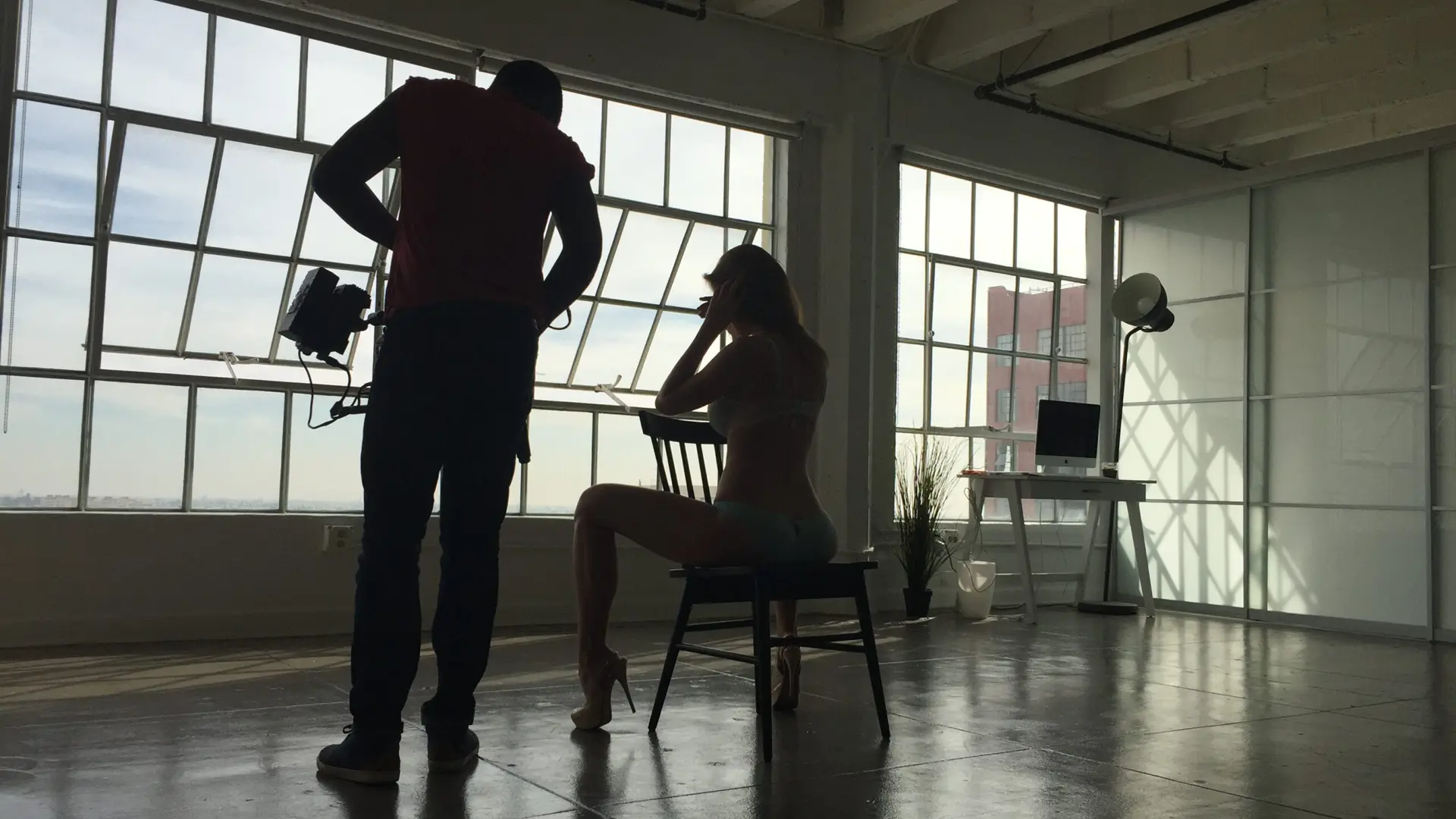
## How We Produced the Inessa Chimato Model Profile Video
The Inessa Chimato model profile video production is one of our favorite examples of what happens when a production company understands fashion content from the inside out. Inessa is a model with genuine range, presence that holds on camera, and the kind of physicality that makes a cinematographer's job easier. But a strong subject alone does not make a strong video. What turns raw footage into a booking tool is a production team that knows how to plan, shoot, light, and edit specifically for the fashion and talent market. That is the work we do at C&I Studios, and this project shows exactly how we do it.
If you are a model, talent manager, or agency looking for a production partner who can build content that actually gets your talent booked, this is the kind of work we produce every day. Our [video production services](https://c-istudios.com/video-production-services/) have supported fashion and talent content for years across our three offices, and the Inessa Chimato project is a clean example of that experience in action.
## Why Model Profile Videos Matter for Bookings
Model profile videos occupy a specific and often underestimated corner of the fashion content world. Agencies need them. Casting directors watch them. But more importantly, clients commission them because they communicate something that a still image simply cannot: movement, energy, personality, and professionalism under pressure. A comp card shows what a model looks like. A profile video shows what a model feels like in motion, and that distinction is what separates models who get shortlisted from models who get booked.
The benchmark has shifted in the last few years. What agencies expected from a profile video five years ago, a clean walk, some close-ups, competent editing, is now the floor, not the ceiling. According to research from [WWD](https://wwd.com), fashion brands and agencies are producing more video content than at any point in the industry's history, but engagement rates have not kept pace with volume. The implication is clear: quantity is not the competitive advantage it once was. Craft, intention, and relevance are.
If you are a model or agency still relying on a phone-shot walk and turn in a white studio, you are leaving bookings on the table. Our team produces profile videos designed to win in agency submissions, website embeds, and social media feeds simultaneously.
## Pre-Production. How We Planned the Shoot
Pre-production is where most fashion video projects either gain traction or lose it. The productions that feel effortless on screen are almost always the ones that were ruthlessly over-planned before anyone picked up a camera. For the Inessa Chimato model profile video production, we approached pre-production in three distinct phases: discovery, creative development, and technical prep.
Discovery involved sitting with the agency and Inessa's representation to understand what the video needed to accomplish commercially. Who would be watching it? At what stage of the booking process? On what devices? Those answers shaped everything from the opening shot selection to the audio design. Agencies often screen model profile videos on laptops in well-lit offices, which means you cannot rely on cinematic darkness or whisper-quiet audio to carry emotional weight. Contrast, clarity, and movement need to communicate even on a small screen in a noisy room.
Creative development came next. Our team built a mood board pulling from fashion editorial aesthetics, specifically the kind of restrained luxury visual language that works across European and American markets without feeling dated within 18 months. We avoided trend-chasing and focused instead on timeless compositional choices: longer focal lengths, deliberate use of negative space, and a color palette anchored in warm neutrals with controlled contrast.
Technical prep centered on our 30,000 sq ft [Fort Lauderdale production facility](https://c-istudios.com/video-production-fort-lauderdale/), which gave us access to multiple controlled studio configurations without the logistical overhead of a remote location shoot. We built two primary set environments: a clean high-key studio setup for movement and walk sequences, and a more textured, lower-contrast environment for close editorial work. Having both available on the same day meant we captured significant tonal variety without the cost of two separate shoot days.
## Cinematography and Lighting Choices
Cinematography for model profile videos sits at the intersection of fashion photography instinct and motion picture technique. Still photographers who cross over into video often struggle here because the rules shift in ways that are not immediately obvious. A composition that reads beautifully as a frame can feel static and lifeless when asked to hold for four seconds of real time.
For Inessa's video, our director of photography made a deliberate choice to keep the camera largely stable during full-body walk sequences and reserve movement for close portrait work. This counterintuitive approach, moving the camera when the subject is still, keeping it still when the subject moves, creates a visual rhythm that feels dynamic without being chaotic. It also gives the editor more genuine choices in post rather than a mountain of footage where everything is trying to do the same thing.
We shot on a large-format sensor camera package to achieve the depth separation that gives fashion content its characteristic look. Longer primes in the 85mm to 135mm range handled most of the portrait work, while a wider lens came in for the environmental and full-body sequences. Lighting was a three-source setup with a large soft key, a controlled fill kept slightly cool to maintain skin texture clarity, and a separation light that kept Inessa distinct from the background even in the lower-contrast set.
Good cinematography does not just look good on the day. It creates downstream value by making color grading and editing faster and more precise. When the raw image is well-exposed and well-lit, [post-production](https://c-istudios.com/post-production-services/) is refinement rather than rescue. That is a principle we apply to every project, not just fashion content.
## Direction and Performance on Set
Directing a model for a profile video is different from directing an actor and different again from directing a model for a still shoot. The subject needs to deliver performance that reads as natural and unconstructed while hitting precise technical marks for focus, light position, and frame composition. It is a more demanding discipline than either of the related fields because it requires spontaneity that is actually highly controlled.
Our director worked with Inessa through a series of movement exercises before the camera rolled. This is a technique we use consistently on talent-focused productions. The goal is to help the subject move through the space in ways that feel genuinely inhabited rather than performed. By the time we started recording, Inessa had walked the set, understood where the light changed, and had a felt sense of the spatial boundaries of each frame. That preparation shows in the footage. Her movement has the quality of someone who belongs in the space rather than someone navigating it.
We also built in deliberate quiet moments, close framings where Inessa held still and the camera held with her. These sections serve a specific strategic function: they allow agencies and casting directors to read her face without distraction, which is what a significant portion of the profile video audience needs to do. Movement sequences communicate energy and range. The still moments communicate presence. Both are necessary, and knowing when to use each is something our directors have refined over hundreds of talent productions.
## Audio Design That Elevates the Visuals
Audio is the element of model profile videos that gets the least attention in creative discussions and has the most impact on perceived quality. A technically strong visual cut can be undermined immediately by music that does not fit the pacing. Our [audio engineering team](https://c-istudios.com/audio-engineering-services/) was involved from the pre-production phase, which is not always the case in fashion video work but made a significant difference here.
The music brief was specific: something that communicates elevated contemporary fashion without relying on the electronic minimalism that has become ubiquitous in the category over the last five years. We wanted warmth and texture, an acoustic underpinning that would support the longer focal length visual aesthetic without fighting it. We landed on an original composition incorporating soft piano elements with a restrained percussion layer and minimal ambient texture. It runs at a tempo that supports rather than dictates the edit rhythm.
Sound design beyond the score included careful attention to room tone and natural ambient sound. We kept a small amount of natural audio from the shoot beneath the score to give the video a grounded, physical quality that fully produced music-only cuts sometimes lack. It is a subtle detail that most viewers will not consciously notice but that contributes to the overall sense that the video was made with care and intention.
## Post-Production. Edit, Color, and Multi-Format Delivery
The edit was built around a straightforward structural principle: establish energy early, develop range through the middle, and close on presence. That three-part arc maps well to the decision-making process of the people who will actually watch the video. The opening captures attention. The middle demonstrates versatility. The close leaves an impression that persists after the screen goes dark.
Color grading was designed to maintain the warmth of the practical lighting environment while extending the tonal range slightly in the shadows for a more cinematic quality. Skin tones were handled with particular care. Inessa's complexion has a warm richness that we wanted to preserve rather than flatten with over-correction. The final grade reads as fashion-forward without being aggressively stylized.
The final deliverables included a primary 16:9 cut for agency and website use, a 1:1 square cut for Instagram and email, and a 9:16 vertical cut for Stories and short-form platforms. Delivering across three aspect ratios from a single shoot requires thinking about framing in pre-production. If the director of photography has not considered where the 9:16 safe zone sits within the 16:9 frame, the vertical cut will be compromised. Our teams coordinate on this from the first scout, and it is one of the details that separates professional multi-platform delivery from a crop job after the fact.
## What This Means for Your Next Model Profile Video
The Inessa Chimato model profile video production is a reference point for what separates competent fashion video work from genuinely effective fashion video work. The difference is rarely about equipment. It is about integration, the degree to which every department's decisions are coordinated toward the same creative and commercial outcome.
If you are a model looking to upgrade your video portfolio, an agency looking for a production partner who understands how casting directors actually consume content, or a talent manager who wants to give your roster a competitive edge, we build this kind of work every week. We are not a generalist shop that occasionally does fashion content. We are a full-service production company with deep experience in the fashion and talent space.
Here is what working with us looks like for a model profile video production:
**Discovery call:** We learn who the video is for, where it will be used, and what needs to happen after someone watches it. A profile for agency submissions has different requirements than one built for social media presence. The two can overlap, but the priorities differ in ways that affect creative decisions from the first frame.
**Pre-production:** Mood boards, shot lists, location or studio planning, wardrobe coordination, and multi-format framing strategy. This is where the real creative work happens. Projects that skip pre-production always pay for it in post.
**Production day:** Full crew, professional lighting, cinema-grade cameras, and a director who knows how to bring out performance without forcing it. We shoot in our Fort Lauderdale facility or on location through our [Los Angeles](https://c-istudios.com/video-production-los-angeles/) and [New York City](https://c-istudios.com/video-production-new-york/) offices.
**Post-production:** Offline edit, color grade, original or licensed audio, and delivery in every format you need: 16:9, 1:1, 9:16, agency specs, social specs. Our [post-production services](https://c-istudios.com/post-production-services/) handle everything in-house.
**Beyond the primary cut:** A well-produced shoot generates more than one video. Frame captures that read as editorial photography, short-form clips for social media, behind-the-scenes sequences for organic content. We plan for asset extension from day one so you get maximum value from a single production day.
## Extending Your Investment with Social and Advertising
A well-produced model profile video does not have to serve a single purpose. The Inessa Chimato footage generated usable assets beyond the primary profile cut: still frame captures that read as editorial photography, short-form clips suitable for social media introduction posts, and a behind-the-scenes sequence that Inessa's representation used for organic social content.
Our [social media marketing services](https://c-istudios.com/social-media-marketing-services/) and [advertising services](https://c-istudios.com/advertising-services/) are available to clients who want support distributing and amplifying content after production wraps. For model profile content, targeted placement across the platforms where agency bookers and casting directors actually spend time can make a meaningful difference in the commercial performance of an otherwise excellent video.
According to [Model Management](https://www.modelmanagement.com), model profile videos that are actively promoted through agency channels and social platforms generate significantly more booking inquiries than videos that are simply uploaded and left. Production quality matters, but distribution strategy is what converts quality into commercial results. We handle both.
## Work with C&I Studios
If you are planning a project like this, our team can take it from concept to final delivery. Explore our [film and TV production](https://c-istudios.com/film-and-tv-production/), browse [our work](https://c-istudios.com/our-work/) to see how we tell brand stories, and [get in touch](https://c-istudios.com/contact/) when you are ready to start.
Originally published April 16, 2026
---
*This content is from [C&I Studios](https://c-istudios.com), a full-service production company.*
---
# Creative Marketing Concepts for Nike Sneaker Videos
> Published: April 16, 2026
> Categories: Commercial & Brand
> Source: https://c-istudios.com/creative-marketing-concept-for-nike-sneakers-video-production/
---
.cib{--paper:#1b1d1f;--ink:#fff;--body:#d5d7d9;--muted:#8b9096;--line:rgba(255,255,255,.12);--thumb:#2b2e31;--card:#212426;--accent:#c02b0a;--blue:#5B8FA8;--serif:'Playfair Display',Georgia,serif;--sans:'Poppins',-apple-system,sans-serif;--measure:900px;background:var(--paper);color:var(--body);font-family:var(--sans);line-height:1.6;position:relative;left:50%;transform:translateX(-50%);width:90vw;max-width:1920px}
.cib *{box-sizing:border-box}
.cib .kicker{max-width:var(--measure);margin:58px auto 0;padding:0 22px;font-size:12.5px;font-weight:700;letter-spacing:2.5px;text-transform:uppercase;color:var(--blue)}
.cib h1.cibh1{text-wrap:balance;font-family:var(--serif);font-weight:500;font-size:clamp(46px,6vw,72px);line-height:1.08;color:var(--ink);max-width:var(--measure);margin:18px auto 0;padding:0 22px;letter-spacing:-.5px}
.cib .metarow{max-width:var(--measure);margin:20px auto 0;padding:0 22px;color:var(--muted);font-size:14px}
.cib .hero{position:relative;width:100%;height:0;padding-bottom:56.25%;overflow:hidden;margin:48px auto 0;border-top:1px solid var(--line);border-bottom:1px solid var(--line)}
.cib .hero .ph{width:100%;aspect-ratio:16/9;background:var(--thumb);border-top:1px solid var(--line);border-bottom:1px solid var(--line);display:flex;align-items:center;justify-content:center;color:#7d8288;font-size:13px;text-align:center;padding:0 20px}
.cib .body{max-width:var(--measure);margin:12px auto 0;padding:52px 22px 6px}
.cib .body.lead p:first-child{font-size:23px;line-height:1.62;color:var(--ink)}
.cib .body p{font-size:18.5px;line-height:1.85;margin:0 0 30px;color:var(--body)}
.cib .body h2{text-wrap:balance;font-family:var(--serif);font-weight:500;font-size:clamp(32px,4vw,48px);line-height:1.22;color:var(--ink);margin:70px 0 20px;letter-spacing:-.3px}
.cib .body h3{text-wrap:balance;font-family:var(--sans);font-weight:600;font-size:22px;color:var(--ink);margin:38px 0 8px}
.cib .body a{color:var(--ink);text-decoration:underline;text-decoration-color:rgba(255,255,255,.4);text-underline-offset:3px}
.cib .body a:hover{text-decoration-color:var(--ink)}
.cib .ctable{width:100%;border-collapse:collapse;margin:16px 0 30px;font-size:16px}
.cib .ctable th{background:#000;color:#fff;text-align:left;padding:10px 12px;font-family:var(--sans)}
.cib .ctable td{padding:10px 12px;border-bottom:1px solid var(--line);color:var(--body)}
.cib .inimg{position:relative;width:100%;height:0;padding-bottom:56.25%;overflow:hidden;margin:72px auto;border-top:1px solid var(--line);border-bottom:1px solid var(--line)}
.cib .inimg .ph{width:100%;aspect-ratio:16/9;background:var(--thumb);border-top:1px solid var(--line);border-bottom:1px solid var(--line);display:flex;align-items:center;justify-content:center;color:#7d8288;font-size:13px}
.cib .origpub{max-width:var(--measure);margin:60px auto 0;padding:26px 22px 0;border-top:1px solid var(--line);color:var(--muted);font-size:13.5px}
.cib .related{max-width:1200px;margin:64px auto 0;padding:34px 22px 76px}
.cib .related h3{font-family:var(--sans);font-size:12.5px;letter-spacing:2px;text-transform:uppercase;color:var(--ink);margin:0 0 24px}
.cib .grid{display:grid;grid-template-columns:repeat(3,1fr);gap:28px}
.cib .rc{background:var(--card);border:1px solid var(--line);display:block;text-decoration:none;color:inherit;transition:border-color .15s}
.cib a.rc:hover{border-color:rgba(255,255,255,.5)}
.cib .rc .thumb{position:relative;width:100%;height:0;padding-bottom:56.25%;background:var(--thumb);overflow:hidden}
.cib .rc .thumb img{position:absolute!important;top:0!important;left:0!important;width:100%!important;height:100%!important;object-fit:cover!important;margin:0!important}
.cib .rc .cc{padding:14px 15px 17px}
.cib .rc .rt{font-family:var(--serif);font-weight:500;font-size:16px;line-height:1.3;color:var(--ink);margin:0 0 6px}
.cib .rc .rm{font-size:11px;letter-spacing:1px;text-transform:uppercase;color:var(--muted)}
.cib img{margin:0!important;padding:0!important;display:block!important;vertical-align:top;max-width:100%}
.cib .hero img,.cib .inimg img{position:absolute!important;top:0!important;left:0!important;width:100%!important;height:100%!important;object-fit:cover!important;margin:0!important;padding:0!important;border:0!important;display:block!important;aspect-ratio:auto!important}
.cib .hero+.body{padding-top:36px}
@media(max-width:760px){.cib .grid{grid-template-columns:1fr}.cib .body h2{margin:52px 0 16px}.cib .body p{font-size:17.5px}.cib .inimg,.cib .hero{margin-top:44px}}
.cib .vembed{max-width:var(--measure);margin:44px auto;padding:0 22px}.cib .vembed .vwrap{position:relative;width:100%;height:0;padding-bottom:56.25%}.cib .vembed .vwrap iframe{position:absolute;top:0;left:0;width:100%;height:100%;border:0}
Commercial & Brand
# Creative Marketing Concepts for Nike Sneaker Videos
16 min read

When brands like Nike invest in video, they are not just making content - they are building culture. The right **creative marketing concept for Nike sneakers video production** can turn a 60-second spot into a cultural moment, a social share, a sell-out launch. We have worked with Nike and other global athletic and fashion brands long enough to know that the gap between a forgettable product video and a campaign that moves units comes down almost entirely to concept. Execution matters, but without a bold creative foundation, even the most technically flawless video disappears into the feed.
This post breaks down the creative frameworks, production strategies, and conceptual approaches that actually work for sneaker video marketing in 2024 and beyond. Whether you are a brand manager evaluating production partners or a creative director mapping out your next campaign, this is the inside view of how elite production teams think about Nike-level sneaker content.

## Why Sneaker Video Marketing Demands a Distinct Creative Approach
Sneakers occupy a unique space in consumer culture. They are simultaneously athletic equipment, fashion statements, collectible art objects, and identity markers. Nike understands this better than almost any brand on earth. Their most iconic campaigns - from *Just Do It* to the Colin Kaepernick spot to the recent "What the Future Looks Like" series - succeed because they treat the sneaker not as a product to be sold but as a symbol to be activated.
That distinction drives every creative decision we make when developing a sneaker video concept. A pair of Air Max 90s is not just a shoe. It is a provocation, a memory, a signal. Your video has to understand that before the camera rolls.
The sneaker audience is also among the most discerning and media-literate consumer groups on the planet. Hypebeast culture, StockX, SNKRS drops, collector communities on Reddit and Discord - these audiences can spot inauthenticity in seconds. Generic lifestyle footage with a trending song does not cut it. The concept has to be sharp, specific, and earn its place in that ecosystem.
Our [video production services](https://c-istudios.com/video-production-services/) are built around exactly this kind of strategic creative thinking, not just camera crews and edit bays. The concept work is where the value lives.
## The Core Creative Marketing Concepts That Drive Nike Sneaker Campaigns
Let us walk through the conceptual frameworks our team uses and that Nike has deployed most effectively across their own work. These are not templates - they are lenses. A great sneaker video concept usually pulls from two or three of these simultaneously.
### The Athlete Origin Story
Nike built its entire brand identity on this one. The idea is simple: find a compelling human at the intersection of struggle and greatness, and let the shoe be the artifact of that journey. The shoe does not dominate the frame - it punctuates the story.
Execution requires genuine storytelling craft. This is where short-form documentary technique, cinematic interviews, and real location shoots become essential. You cannot fake the authenticity of a real athlete's environment. We shoot origin stories in gyms, courts, streets, locker rooms - wherever the truth of the subject lives.
For sneaker launches specifically, the origin story concept works best when the shoe itself has a narrative connection to the athlete or cultural moment it references. The LeBron XX launch content that tied James's career arc to the design language of the shoe is a masterclass in this approach. The product becomes inseparable from the person.
Our [documentary film production](https://c-istudios.com/documentary-film-production/) team handles exactly this kind of work - character-driven, location-rich, emotionally grounded content that does not feel like advertising even when it clearly is.
### The Kinetic Product Study
This is pure visual poetry. The concept strips away narrative entirely and focuses on the object itself - its texture, geometry, motion, and materiality - through high-speed cinematography, macro lenses, and inventive lighting design. Think of the tabletop sequences in Nike's product reveal campaigns: water droplets on mesh, the compression of a foam midsole in extreme slow motion, sole patterns rotating against stark backgrounds.
The kinetic product study works because it transforms the shoe into something almost abstract and universally beautiful. It appeals to the collector mentality - the person who appreciates the object for its own sake, not just its function.
This concept demands serious technical infrastructure. Phantom cameras, motion control rigs, precision lighting, and an experienced [film production](https://c-istudios.com/film-production-services/) team that can make a sneaker look like a sculpture. Our Fort Lauderdale facility includes the controlled environment, lighting systems, and equipment inventory to execute this at the highest level without the logistical complexity of renting out a different studio for every shoot.
### The Cultural Moment Anchor
Some of Nike's most effective sneaker marketing connects a product drop to a specific cultural event, movement, or milestone. The shoe becomes a time stamp. When Nike released the "Space Hippie" line during the sustainability conversation surge of 2020, their video content explicitly anchored the product to that cultural moment - recycled materials, future-of-the-planet urgency, a specific visual language borrowed from climate activism.
The cultural moment concept requires real intelligence and timing. You have to identify the right moment early enough to build the content before it peaks, and you have to engage with it authentically rather than opportunistically. Audiences - especially sneaker audiences - are expert at detecting brands that are chasing relevance versus embodying it.
Our [advertising services](https://c-istudios.com/advertising-services/) team works with brands on exactly this kind of strategic timing, helping identify which cultural currents align with their product DNA rather than just which hashtags are trending.
### The Community Portrait
Instead of centering the individual athlete or the product itself, the community portrait concept zooms out to the subculture. Show the sneakerheads waiting in line at 3am. Show the pickup game where the colorway of the shoe matches the graffiti on the court behind it. Show the collector whose entire bedroom wall is a grid of box-fresh Air Forces.
Nike has used this approach brilliantly in markets outside the US, particularly in their European and Asian market activations. The community portrait validates the culture that already loves the brand while signaling to aspirational buyers that this is a world worth entering.
From a production standpoint, this concept requires flexibility, run-and-gun capability, and a director with genuine cultural fluency. It is less controlled than a studio shoot and more dependent on the richness of the real locations and real people involved. Our teams in [Los Angeles](https://c-istudios.com/video-production-los-angeles/) and [New York City](https://c-istudios.com/video-production-new-york/) are embedded in the sneaker and streetwear communities that make this concept executable without it feeling manufactured.
### The Performance Proof
Not every Nike sneaker video needs to be poetic or culturally coded. Sometimes the most powerful concept is the most direct one: show what the shoe does under real athletic stress. Biomechanical breakdowns, athlete performance data overlaid on high-speed footage, side-by-side comparisons of movement efficiency - the performance proof concept speaks directly to the serious athlete who wants to know the gear will deliver.
Nike uses this framework most consistently with their running and training lines, where performance differentiation is a genuine purchase driver. The Vaporfly controversy and the surrounding content that Nike produced - including the [Runner's World deep dive](https://www.runnersworld.com/gear/a20843012/nike-vaporfly-4-percent-review/) on the 4% performance improvement claim - illustrates how performance proof content can generate media coverage that extends far beyond paid distribution.
Executing this concept well requires sports videography expertise, motion capture capability, and the ability to work alongside athletes in genuine training environments. It is technically demanding content that rewards investment.
### The Nostalgia Reframe
Nike has been making iconic shoes for over five decades. The retro and heritage market for classic silhouettes - Air Jordan 1, Dunk Low, Air Force 1, Air Max 97 - is enormous and growing. The nostalgia reframe concept takes a classic silhouette and recontextualizes it through contemporary culture, creating a bridge between the original cultural moment and the current one.
This is sophisticated conceptual work because it has to honor the original without being a museum piece. The best nostalgia reframe videos feel simultaneously vintage and current - the visual grammar might reference the era the shoe was born in while the execution is unmistakably modern.
Think of the documentary-style content Nike produced around the Air Jordan 1 that interviewed the designers, the athletes, and the collectors who were there at the beginning, intercut with contemporary footage of the shoe in current streetwear contexts. That structural approach - past and present in dialogue - is a repeatable and powerful concept framework.
### The Collaborative World-Building
Nike's collaboration business - with Off-White, Travis Scott, Sacai, Comme des Garçons, and dozens of others - generates some of the most creative video content in the sneaker space precisely because collaborations come with built-in creative tension. Two distinct visual languages collide. Two audiences merge. The video concept has to honor both creative identities while producing something genuinely unified.
World-building is the operative concept here. The best collab videos do not just show the shoe - they establish the fictional universe or aesthetic reality in which the shoe exists. Virgil Abloh's Off-White x Nike content essentially created a visual language (the quotation marks, the construction tape, the deconstructed materials) that became its own cultural artifact independent of any single shoe.
Our [post-production services](https://c-istudios.com/post-production-services/) team is deeply experienced in the kind of visual world-building that collab content requires - color grading that establishes a distinct palette, motion graphics that carry a conceptual weight, sound design that reflects the sonic identity of both collaborators.
### The Social-First Serialized Drop
Single-video campaigns are increasingly giving way to serialized content strategies built for social platforms. Rather than one hero film, the concept is a series of interconnected pieces - teasers, behind-the-scenes, countdown content, reaction captures, and post-launch analysis - that create a sustained narrative arc across weeks.
This approach treats the sneaker launch as a television event rather than a commercial break. Each piece of content is designed to drive engagement with the next, building anticipation that culminates in the drop itself. The SNKRS app ecosystem has made this approach even more powerful because the distribution mechanism (limited drops, location-based releases, exclusive access) is itself a content driver.
From a production perspective, this requires planning for volume without sacrificing quality. Our [social media marketing services](https://c-istudios.com/social-media-marketing-services/) integrate with our production team to ensure that every piece in a serialized campaign is optimized for its specific platform and moment in the sequence, not just repurposed from the hero film.
## Production Infrastructure. What Separates Concept from Execution
Having a brilliant concept is the beginning, not the end. The brands that consistently produce exceptional sneaker video content - and Nike is the benchmark - invest in production infrastructure that can realize ambitious ideas without compromise. Let us be direct about what that infrastructure looks like and why it matters.
### Controlled Studio Environments for Product Mastery
The kinetic product study and performance proof concepts both demand controlled environments where lighting, motion, and camera position can be precisely managed. Our 30,000 square foot facility in Fort Lauderdale is built for this. We can create the isolation a product shoot requires, rig overhead camera systems for top-down sole reveals, or build a cyclorama backdrop for the clean, contextless product aesthetic that premium sneaker content often uses.
Many production companies rent studio space for individual projects, which means logistical complexity and time costs every time. Owning and operating a facility of this scale means we can move faster, iterate more freely, and give brands the creative flexibility to try ideas that might not work - which is essential for innovative concept development.
Our [Fort Lauderdale production company](https://c-istudios.com/video-production-fort-lauderdale/) infrastructure is one of the largest in the Southeast, and we use it as a genuine creative asset rather than just a logistics solution.
### Location Capability Across Key Markets
The community portrait, cultural moment anchor, and athlete origin story concepts all require authentic location work. Sneaker culture is deeply place-specific - New York street culture looks and feels fundamentally different from Los Angeles sneaker culture, which differs again from Chicago or Atlanta or London.
Our presence across multiple major markets is not just a business convenience - it is a creative capability. We can shoot in the actual Bronx basketball court, the actual Fairfax Avenue sneaker row, the actual Miami Art Basel context where limited drops create their own events. That geographic authenticity matters enormously when the concept depends on cultural specificity.
### Post-Production as Creative Amplification
Raw footage from even the best concept and the best shoot is only potential. The color grade, the sound design, the motion graphics, the editorial rhythm - these are where the concept either coheres into something powerful or dissipates into competent footage. C&I Studios treats post-production as creative work, not finishing work.
For sneaker content specifically, color grading often carries as much conceptual weight as the lighting design did on set. A muted, film-grain grade reads as nostalgic and authentic. A hyper-saturated, high-contrast grade reads as contemporary and aggressive. The choice has to serve the concept, and the team making it has to understand both the technical and creative dimensions simultaneously.
Our [audio engineering services](https://c-istudios.com/audio-engineering-services/) bring the same intentionality to sound. The sonic texture of a sneaker video - whether it leans into the squeak of a basketball court, the crunch of gravel on a trail run, or an original score that reflects the collab partner's musical identity - is a creative decision that shapes how the audience experiences the concept.
## Budget Realities. What Nike-Level Sneaker Video Production Costs
We believe in being straightforward about production economics because it helps brands make better decisions and build better partnerships. The range for sneaker video content is genuinely enormous, and understanding what drives cost is essential for scoping projects intelligently.
At the entry level - a single-location product study or a brief social-first clip with one or two talent - production costs typically range from $15,000 to $40,000. This is sufficient for clean, professional content that serves specific platform needs.
Mid-range campaigns - athlete-anchored origin stories, community portraits with multiple locations, serialized social content packages - typically run $50,000 to $150,000 depending on talent, locations, and deliverable count. This is where most serious brand marketing campaigns live, and where thoughtful concept development pays the biggest dividends.
Nike's national and global campaigns operate at a completely different scale - $500,000 to several million dollars for the major hero films. These budgets fund the Phantom cameras, the A-list athletes, the international locations, the weeks of post-production, and the creative teams that make those culturally defining moments possible.
The critical insight is that concept quality does not scale linearly with budget. A $60,000 production with a genuinely sharp creative concept will consistently outperform a $200,000 production built on a generic brief. Our job as a production partner is to help brands find the concept that maximizes their specific budget rather than defaulting to the most expensive option.
According to [Statista's Nike brand analysis](https://www.statista.com/topics/1549/nike/), Nike spent approximately $4.1 billion on demand creation (including advertising and marketing) in fiscal year 2023. Even a fraction of that represents massive creative investment, and the brands competing for sneaker market share - from New Balance to Adidas to emerging players - need to deploy their budgets with precision to compete.

## How C&I Develops a Creative Marketing Concept for Sneaker Brands
Our process is not a template - it is a conversation. But there is a structure to how we develop creative concepts for sneaker video campaigns that we have refined over years of working with Nike and comparable global brands.
It starts with a creative brief that goes deeper than most brands expect. We want to understand the specific silhouette's design story, the target audience segment (not just demographics but psychographics and sneaker culture positioning), the distribution strategy (where will this content live and when), the competitive context (what has the brand done before and what are competitors doing), and the success metrics (is this a brand awareness play, a launch driver, a community engagement piece).
From that brief, our creative development team generates multiple concept directions - typically three to five distinct approaches that each have a strong internal logic. We present these with mood boards, reference films, and structural outlines that allow the brand to evaluate creative direction before committing to a production plan.
Once a concept direction is selected, we develop the full production plan: locations, talent, equipment, crew, schedule, and deliverable specifications. This is where the concept gets stress-tested against real-world logistics and budget, and where we often find the creative refinements that make a good idea genuinely great.
To see examples of how we have brought this process to life for major brands, our [portfolio](https://c-istudios.com/our-work/) documents work across athletic, fashion, and lifestyle categories that parallel the sneaker market directly.
## Maximizing Distribution. Where Sneaker Video Content Performs Best
A brilliant concept executed flawlessly and never seen is a creative and commercial failure. Distribution strategy has to be built into the concept from the beginning, not bolted on afterward.
The sneaker video content landscape in 2024 operates across several distinct environments, each with its own aesthetic expectations and engagement patterns. YouTube remains the home of long-form sneaker content - detailed reviews, documentary pieces, collab world-building films. It rewards depth and rewards brands that treat their YouTube presence as a genuine editorial channel rather than an advertising upload.
Instagram and TikTok operate on entirely different creative logic. The first three seconds are more important than the next three minutes. The concept has to front-load its most visually compelling element and create immediate curiosity. The kinetic product study and the cultural moment anchor both translate exceptionally well to these platforms when edited with that in mind.
The SNKRS app ecosystem and Nike's owned channels have built audience expectations around a specific visual language and drop-culture narrative rhythm. Content that understands that ecosystem - and that is built to feed anticipation rather than simply announce - performs dramatically better than generic advertising.
Our [social media marketing services](https://c-istudios.com/social-media-marketing-services/) team works alongside our production team to ensure that distribution intelligence is embedded in the creative concept from day one, not treated as an afterthought in the delivery phase.
## Why Your Production Partner Choice Determines Campaign Success
This is the part of the conversation that most brands do not have explicitly enough with prospective production partners. The choice of who makes your sneaker video content is not primarily a question of equipment or logistics - it is a question of creative intelligence, cultural fluency, and strategic alignment.
Nike does not work with every production company that has a Phantom camera and a color suite. They work with teams that understand their brand at a cellular level, that can bring genuine creative ideas to the brief rather than just execute instructions, and that have the infrastructure to deliver on ambitious concepts without the logistical failures that kill timelines and budgets.
C&I Studios has worked with Nike, Coca-Cola, AT&T, the NFL, NBC, H&M, Calvin Klein, and SiriusXM not because we are the only option in any of those markets, but because we consistently bring a combination of creative depth, production infrastructure, and strategic intelligence that moves the needle for those brands.
When you are evaluating a production partner for a Nike sneaker video campaign - or any high-stakes athletic and lifestyle content - the questions to ask are: Do they understand sneaker culture from the inside? Can they develop a concept that would not embarrass the brand in front of its most discerning audience? Do they have the infrastructure to execute without compromise? And can they connect creative output to business outcomes?
We believe we can answer yes to all of those questions, and we are willing to demonstrate that through the concept development process before you commit to a production budget.
## Work with C&I Studios
If you are planning a project like this, our team can take it from concept to final delivery. Explore our [video production services](https://c-istudios.com/video-production-services/), browse [our work](https://c-istudios.com/our-work/) to see how we tell brand stories, and [get in touch](https://c-istudios.com/contact/) when you are ready to start.
Originally published April 16, 2026
---
*This content is from [C&I Studios](https://c-istudios.com), a full-service production company.*
---
# Video Production South Florida: What's Changing
> Published: April 14, 2026
> Categories: Commercial & Brand
> Source: https://c-istudios.com/video-production-south-florida-trends/
---
.cib{--paper:#1b1d1f;--ink:#fff;--body:#d5d7d9;--muted:#8b9096;--line:rgba(255,255,255,.12);--thumb:#2b2e31;--card:#212426;--accent:#c02b0a;--blue:#5B8FA8;--serif:'Playfair Display',Georgia,serif;--sans:'Poppins',-apple-system,sans-serif;--measure:900px;background:var(--paper);color:var(--body);font-family:var(--sans);line-height:1.6;position:relative;left:50%;transform:translateX(-50%);width:90vw;max-width:1920px}
.cib *{box-sizing:border-box}
.cib .kicker{max-width:var(--measure);margin:58px auto 0;padding:0 22px;font-size:12.5px;font-weight:700;letter-spacing:2.5px;text-transform:uppercase;color:var(--blue)}
.cib h1.cibh1{text-wrap:balance;font-family:var(--serif);font-weight:500;font-size:clamp(46px,6vw,72px);line-height:1.08;color:var(--ink);max-width:var(--measure);margin:18px auto 0;padding:0 22px;letter-spacing:-.5px}
.cib .metarow{max-width:var(--measure);margin:20px auto 0;padding:0 22px;color:var(--muted);font-size:14px}
.cib .hero{position:relative;width:100%;height:0;padding-bottom:56.25%;overflow:hidden;margin:48px auto 0;border-top:1px solid var(--line);border-bottom:1px solid var(--line)}
.cib .hero .ph{width:100%;aspect-ratio:16/9;background:var(--thumb);border-top:1px solid var(--line);border-bottom:1px solid var(--line);display:flex;align-items:center;justify-content:center;color:#7d8288;font-size:13px;text-align:center;padding:0 20px}
.cib .body{max-width:var(--measure);margin:12px auto 0;padding:52px 22px 6px}
.cib .body.lead p:first-child{font-size:23px;line-height:1.62;color:var(--ink)}
.cib .body p{font-size:18.5px;line-height:1.85;margin:0 0 30px;color:var(--body)}
.cib .body h2{text-wrap:balance;font-family:var(--serif);font-weight:500;font-size:clamp(32px,4vw,48px);line-height:1.22;color:var(--ink);margin:70px 0 20px;letter-spacing:-.3px}
.cib .body h3{text-wrap:balance;font-family:var(--sans);font-weight:600;font-size:22px;color:var(--ink);margin:38px 0 8px}
.cib .body a{color:var(--ink);text-decoration:underline;text-decoration-color:rgba(255,255,255,.4);text-underline-offset:3px}
.cib .body a:hover{text-decoration-color:var(--ink)}
.cib .ctable{width:100%;border-collapse:collapse;margin:16px 0 30px;font-size:16px}
.cib .ctable th{background:#000;color:#fff;text-align:left;padding:10px 12px;font-family:var(--sans)}
.cib .ctable td{padding:10px 12px;border-bottom:1px solid var(--line);color:var(--body)}
.cib .inimg{position:relative;width:100%;height:0;padding-bottom:56.25%;overflow:hidden;margin:72px auto;border-top:1px solid var(--line);border-bottom:1px solid var(--line)}
.cib .inimg .ph{width:100%;aspect-ratio:16/9;background:var(--thumb);border-top:1px solid var(--line);border-bottom:1px solid var(--line);display:flex;align-items:center;justify-content:center;color:#7d8288;font-size:13px}
.cib .origpub{max-width:var(--measure);margin:60px auto 0;padding:26px 22px 0;border-top:1px solid var(--line);color:var(--muted);font-size:13.5px}
.cib .related{max-width:1200px;margin:64px auto 0;padding:34px 22px 76px}
.cib .related h3{font-family:var(--sans);font-size:12.5px;letter-spacing:2px;text-transform:uppercase;color:var(--ink);margin:0 0 24px}
.cib .grid{display:grid;grid-template-columns:repeat(3,1fr);gap:28px}
.cib .rc{background:var(--card);border:1px solid var(--line);display:block;text-decoration:none;color:inherit;transition:border-color .15s}
.cib a.rc:hover{border-color:rgba(255,255,255,.5)}
.cib .rc .thumb{position:relative;width:100%;height:0;padding-bottom:56.25%;background:var(--thumb);overflow:hidden}
.cib .rc .thumb img{position:absolute!important;top:0!important;left:0!important;width:100%!important;height:100%!important;object-fit:cover!important;margin:0!important}
.cib .rc .cc{padding:14px 15px 17px}
.cib .rc .rt{font-family:var(--serif);font-weight:500;font-size:16px;line-height:1.3;color:var(--ink);margin:0 0 6px}
.cib .rc .rm{font-size:11px;letter-spacing:1px;text-transform:uppercase;color:var(--muted)}
.cib img{margin:0!important;padding:0!important;display:block!important;vertical-align:top;max-width:100%}
.cib .hero img,.cib .inimg img{position:absolute!important;top:0!important;left:0!important;width:100%!important;height:100%!important;object-fit:cover!important;margin:0!important;padding:0!important;border:0!important;display:block!important;aspect-ratio:auto!important}
.cib .hero+.body{padding-top:36px}
@media(max-width:760px){.cib .grid{grid-template-columns:1fr}.cib .body h2{margin:52px 0 16px}.cib .body p{font-size:17.5px}.cib .inimg,.cib .hero{margin-top:44px}}
.cib .vembed{max-width:var(--measure);margin:44px auto;padding:0 22px}.cib .vembed .vwrap{position:relative;width:100%;height:0;padding-bottom:56.25%}.cib .vembed .vwrap iframe{position:absolute;top:0;left:0;width:100%;height:100%;border:0}
Commercial & Brand
# Video Production South Florida. What's Changing
14 min read

The landscape of **video production in South Florida** is shifting faster than most brands realize. What worked three years ago - a standard shoot-and-deliver model, linear TV formats, crew sizes built for broadcast - is being replaced by something leaner, faster, and considerably more strategic. We have watched this evolution accelerate from our facility in Fort Lauderdale, and the changes are not cosmetic. They are structural. The region is developing into a genuine production hub, and the brands, agencies, and creators that understand what is happening right now will be the ones holding the strongest content libraries heading into 2026 and beyond.
This is not a post about gear specs or location scouting tips. This is about the forces reshaping how video gets made, distributed, and measured in South Florida - and what those forces mean for anyone buying or producing content in this market.

## South Florida Is No Longer a Secondary Market
For years, Miami and the surrounding region were treated as a satellite destination - a place where agencies from New York or Los Angeles would fly crews in for a lifestyle shoot, spend four days on the beach, then fly everything back north for post. The creative decisions happened elsewhere. The editorial control lived elsewhere. South Florida was the backdrop, not the engine.
That dynamic has changed materially. A combination of migration patterns, tax incentives, and infrastructure investment has turned South Florida into a legitimate production center. According to the [Film Florida](https://www.filmflorida.org/) industry group, production activity in the state has grown steadily as studios, streamers, and brands seek alternatives to the cost and congestion of legacy markets. Broward County in particular - where our 30,000 square foot facility sits - has become a hub for mid-to-large-scale production work that previously would have defaulted to LA or NYC.
This matters because it changes the talent pool, the vendor ecosystem, and the expectations of clients. When a market matures, production quality rises, turnaround times compress, and specialized services become locally available rather than flown in at a premium. We are squarely in that maturation phase right now.
Our [Fort Lauderdale video production](https://c-istudios.com/video-production-fort-lauderdale/) operations sit at the intersection of this regional growth and the national clients - Nike, the NFL, Coca-Cola, NBC - who demand the same quality standards they would expect anywhere in the world. That combination forces a kind of constant upward pressure on craft and capability that benefits every project that comes through the facility.
## The Streaming Economy Has Permanently Altered Volume Requirements
One of the most consequential shifts in video production right now - in South Florida and everywhere else - is the sheer volume demand created by streaming platforms, connected TV, and social media ecosystems running on algorithmic content appetite. Brands no longer produce a campaign. They produce a content system.
Consider what has changed at the brief level. Five years ago, a brand might commission a 30-second TV spot and a 15-second digital cut. Today, that same campaign might require a 60-second hero film, a 30-second version, two 15-second versions optimized for different aspect ratios, six social cutdowns in both 9:16 and 1:1, a behind-the-scenes piece for YouTube, and a 6-second bumper for pre-roll. That is not a guess. That is a standard deliverable list for mid-market brands working with our team.
The implications for production infrastructure are significant. Studios and crews that were built around single-output thinking cannot efficiently serve this model. You need [post-production workflows](https://c-istudios.com/post-production-services/) designed from the ground up to handle multi-format delivery without proportionally multiplying cost. You need editors who think in systems, colorists who can maintain brand consistency across 14 different cuts, and audio engineers who understand the different loudness standards across platforms.
This is a genuine competitive advantage for full-service facilities. The South Florida market has historically been dominated by smaller boutique operations that do excellent work but are not structured for this kind of throughput. The demand is outpacing their capacity, and brands are noticing.
## AI Is Changing Workflows, Not Replacing Craft
No conversation about where video production is heading in 2025 and 2026 can avoid artificial intelligence. But the framing matters enormously. The narrative that AI is coming to replace videographers, editors, and directors is both overstated and a distraction from what is actually happening on production floors right now.
What AI is genuinely doing - and doing well - is compressing the mechanical parts of post-production. AI-assisted transcription and rough-cut assembly, automated color matching across a multi-camera shoot, noise reduction tools that used to take a dedicated audio session, background removal and cleanup for composite work - these are all becoming faster and more reliable. For a [full-service video production](https://c-istudios.com/video-production-services/) operation, that means the hours that used to disappear into technical busywork can be redirected toward creative judgment.
Our team has been testing and integrating these tools selectively. The key word is selectively. AI color matching is useful for consistency across a long-form documentary series. It is not a substitute for a skilled colorist doing a cinematic grade on a brand film where every frame needs to feel intentional. The distinction between using AI to handle repetitive technical tasks and using it as a replacement for creative decision-making is where thoughtful studios are drawing the line.
What this means for South Florida specifically is that production companies here have an opportunity to close the perceived gap with larger markets. Technology that previously required significant capital investment - high-end color suites, Atmos mixing rooms, motion capture infrastructure - is becoming more accessible. The studios that invest in both the technology and the human talent to use it well are the ones that will define what professional production looks like in this region over the next five years.
It is also worth noting that AI is changing the front end of production, not just post. Pre-visualization tools, AI-assisted location scouting, and script-to-storyboard automation are compressing the development phase in ways that allow clients to see and adjust creative direction before a single crew member is hired. For brands that have historically been cautious about video investment because of uncertainty in the development phase, this is genuinely significant.
## Documentary and Long-Form Content Is Having a Real Moment
The explosion of streaming platforms has created sustained demand for long-form content that goes well beyond scripted series. Documentary content, brand documentaries, docuseries, and long-form branded entertainment are all growing categories - and South Florida is well-positioned to produce them.
The region offers something that is genuinely difficult to replicate: extraordinary subject matter density. Miami's cultural complexity, the Caribbean and Latin American diaspora communities, the intersection of finance, technology, and nightlife, the environmental stories unfolding along the coastline - all of it represents rich documentary territory. For brands interested in purpose-driven content that goes beyond a product ad, South Florida is not just a location. It is a source of stories.
Our [documentary film production](https://c-istudios.com/documentary-film-production/) work reflects this. We have seen a meaningful increase in brands approaching us not for a traditional campaign but for a story - something with depth, characters, and a narrative arc that holds an audience for 20 minutes rather than 30 seconds. The production skillset required for that kind of work is different. It demands patience, the ability to build trust with subjects on camera, a sensitivity to real-world complexity that scripted work does not require.
The trend also reflects a broader shift in how audiences relate to branded content. Consumers, particularly those under 40, have developed sophisticated filters for advertising. They can identify and disengage from promotional content almost instantly. But they will watch a compelling story. They will share it, discuss it, and associate the brand behind it with a kind of cultural credibility that no 30-second spot can manufacture.
For [film production](https://c-istudios.com/film-production-services/) teams operating in South Florida, this trend is an opportunity to do work that is genuinely meaningful. It also requires the right infrastructure - the kind of post-production depth, the sound design capabilities, and the editorial experience that can take raw documentary footage and shape it into something an audience wants to stay with.

## Social Video Has Matured Into a Standalone Discipline
There was a period, not long ago, when social video was treated as an afterthought - a truncated version of a TV spot, usually cut by a junior editor the day before the campaign launched. That era is definitively over. Social video is now a primary format, with its own creative logic, its own technical requirements, and its own professional standards.
In South Florida, where a large percentage of the population actively creates and consumes content across TikTok, Instagram, and YouTube, the expectations for social video quality have risen sharply. Audiences here are sophisticated. They watch a lot of content. They know when something looks cheap, and they associate it with the brand behind it.
The production requirements for social video done well are not trivial. Vertical framing changes how you light, how you block talent, and how you structure a story. Sound design for mobile playback - often without headphones, often in noisy environments - requires different choices than broadcast audio. Pacing for social platforms that reward initial watch time is a craft in itself.
Our [social media marketing services](https://c-istudios.com/social-media-marketing-services/) have evolved to reflect this reality. We approach social video production with the same rigor we bring to broadcast work, while adapting every technical and creative decision to the specific demands of the platform. That means understanding that what performs on TikTok behaves differently than what performs on YouTube Shorts, even if both are vertical formats. It means building shot lists that anticipate the edit, not retrofitting a horizontal production into vertical frames.
Brands in South Florida that are still treating social video as a budget afterthought are leaving significant audience engagement on the table. The data is unambiguous: well-produced, platform-native social content consistently outperforms repurposed broadcast content on every meaningful metric. According to [Sprout Social's research](https://sproutsocial.com/insights/social-media-statistics/), video posts generate significantly higher engagement across platforms compared to static content, and native video specifically outperforms shared or cross-posted formats.
## The Advertising Model in South Florida Is Evolving
Traditional advertising in South Florida has always had a distinct character - a blend of national brand standards applied to a uniquely diverse, multilingual, culturally specific market. What is changing now is the distribution of that advertising across channels, and the production models required to serve it.
Connected TV advertising - pre-roll and mid-roll on streaming services - has become a major budget category for South Florida brands and agencies. The creative requirements for CTV are closer to broadcast than to social, but the targeting precision means that the same campaign can be versioned for dramatically different audience segments. A campaign running across the South Florida DMA might need English, Spanish, and Creole versions, each culturally tuned rather than simply translated. That is a production and localization challenge that requires genuine expertise.
Our [advertising services](https://c-istudios.com/advertising-services/) are structured to handle this kind of complexity. Working with clients like AT&T and H&M on national campaigns gives us the process discipline to manage versioning at scale. Applying that discipline to the specific cultural texture of South Florida is where our regional roots matter. We are not a national agency parachuting into a market we do not understand. We are based here.
The other significant shift in the advertising model is the convergence of paid and earned media strategies. Brands are increasingly expecting their video production partners to understand not just how to make the content but how it will perform across paid, organic, and influencer distribution simultaneously. That requires production companies to think upstream into strategy and downstream into analytics - a broader mandate than the traditional scope of a production house.
## Infrastructure Investment Is Raising the Regional Standard
The physical infrastructure of video production in South Florida has improved significantly over the past five years. Stage space, grip and lighting inventory, post-production facilities, sound stages - all of it has expanded, both at dedicated production companies and through independent facility rentals. This matters because it means fewer projects require expensive logistics from out-of-market vendors.
Our Fort Lauderdale facility - 30,000 square feet purpose-built for full-service production - is part of this infrastructure story. When a national brand comes to South Florida, they should not have to make quality compromises relative to what they would expect in Los Angeles or New York. That parity is increasingly real, and it is driving more production work to stay in the region rather than being treated as a remote location shoot.
The talent infrastructure has grown alongside the physical. Skilled directors, cinematographers, production designers, casting directors, and post-production artists are increasingly based in South Florida rather than commuting from larger markets. The region's quality of life and cost structure are attracting serious creative professionals who, in an earlier era, would have relocated to LA or NYC as their careers developed. That local talent depth is the foundation everything else depends on.
For clients considering where to produce, this is not an abstract point. Local talent with genuine craft ability, working in a well-equipped facility, without the per-diem and logistics overhead of an out-of-town shoot, represents real savings and real quality. It is why we have seen clients with national production budgets actively choose Fort Lauderdale as a base of operations rather than a fallback option.
Our teams in [Los Angeles](https://c-istudios.com/video-production-los-angeles/) and [New York City](https://c-istudios.com/video-production-new-york/) give us the ability to serve clients across every major market, and the cross-pollination of standards across those three offices keeps our South Florida work calibrated against the most demanding markets in the country.
## Audio Engineering Has Become a Differentiator
This point does not get enough attention in conversations about video production quality. Audio is the element that most immediately signals production value to an audience - and simultaneously the element most often underinvested in South Florida production. Bad audio in a well-shot piece does not just feel substandard. It actively undermines the credibility of everything else on screen.
The shift toward streaming and high-fidelity playback devices has raised the bar for what audiences expect. At the same time, the variety of playback contexts - from home theater systems to phone speakers to earbuds to in-car audio - means that mixing for a single target environment is no longer sufficient. Sophisticated [audio engineering](https://c-istudios.com/audio-engineering-services/) requires understanding the full spectrum of where content will be heard and making deliberate choices about how to balance those competing demands.
For documentary and long-form work, audio design becomes even more critical. The texture of a space, the layering of ambient sound, the emotional weight of music - these are not decorative elements. They are structural. They determine whether an audience stays emotionally engaged through a 30-minute piece or gradually disengages without quite knowing why.
As South Florida production continues to mature, audio infrastructure will be one of the clearest markers of which operations are genuinely full-service and which are primarily camera-and-crew operations with downstream limitations.
## What This Means for Brands and Agencies in 2025
The direction of travel for video production in South Florida is clear: toward higher volume, greater format diversity, more sophisticated distribution strategy, and stronger creative ambition. Brands that position themselves to take advantage of the region's growing production infrastructure - rather than defaulting to expensive out-of-market crews - will have a meaningful cost and quality advantage.
For agencies, the implication is that their South Florida production partners need to be more than execution vendors. They need to be genuine creative collaborators who understand the full content ecosystem, from a streaming documentary to a six-second pre-roll bumper to a bilingual social campaign. The traditional agency-production company relationship, where the agency holds all the creative authority and the production company simply fulfills a brief, is giving way to something more integrated.
C&I Studios has been building toward exactly this model. Our work across [brands and categories](https://c-istudios.com/our-work/) reflects the range and depth required to be a true production partner, not just a crew-for-hire. That means having opinions about creative direction. It means flagging when a brief is going to produce content that underperforms. It means bringing strategic intelligence to production decisions, not just technical competence.
The brands that recognize this shift early - and find production partners equipped to operate this way - are going to produce better content, at better value, with stronger distribution performance. That is the real story of where video production in South Florida is heading.
If you want to understand what this looks like in practice, or explore what a content partnership built for the current landscape might look like for your brand, the place to start is a conversation. Our team is available to talk through what you are building and where production strategy can add the most value. Reach out through our [contact page](https://c-istudios.com/contact/) and we will take it from there.
## Work with C&I Studios
If you are planning a project like this, our team can take it from concept to final delivery. Explore our [video production services](https://c-istudios.com/video-production-services/), browse [our work](https://c-istudios.com/our-work/) to see how we tell brand stories, and [get in touch](https://c-istudios.com/contact/) when you are ready to start.
Originally published April 14, 2026
---
*This content is from [C&I Studios](https://c-istudios.com), a full-service production company.*
---
# Video Production Miami: 12 Project Ideas
> Published: April 13, 2026
> Categories: Commercial & Brand
> Source: https://c-istudios.com/video-production-miami-project-ideas/
---
.cib{--paper:#1b1d1f;--ink:#fff;--body:#d5d7d9;--muted:#8b9096;--line:rgba(255,255,255,.12);--thumb:#2b2e31;--card:#212426;--accent:#c02b0a;--blue:#5B8FA8;--serif:'Playfair Display',Georgia,serif;--sans:'Poppins',-apple-system,sans-serif;--measure:900px;background:var(--paper);color:var(--body);font-family:var(--sans);line-height:1.6;position:relative;left:50%;transform:translateX(-50%);width:90vw;max-width:1920px}
.cib *{box-sizing:border-box}
.cib .kicker{max-width:var(--measure);margin:58px auto 0;padding:0 22px;font-size:12.5px;font-weight:700;letter-spacing:2.5px;text-transform:uppercase;color:var(--blue)}
.cib h1.cibh1{text-wrap:balance;font-family:var(--serif);font-weight:500;font-size:clamp(46px,6vw,72px);line-height:1.08;color:var(--ink);max-width:var(--measure);margin:18px auto 0;padding:0 22px;letter-spacing:-.5px}
.cib .metarow{max-width:var(--measure);margin:20px auto 0;padding:0 22px;color:var(--muted);font-size:14px}
.cib .hero{position:relative;width:100%;height:0;padding-bottom:56.25%;overflow:hidden;margin:48px auto 0;border-top:1px solid var(--line);border-bottom:1px solid var(--line)}
.cib .hero .ph{width:100%;aspect-ratio:16/9;background:var(--thumb);border-top:1px solid var(--line);border-bottom:1px solid var(--line);display:flex;align-items:center;justify-content:center;color:#7d8288;font-size:13px;text-align:center;padding:0 20px}
.cib .body{max-width:var(--measure);margin:12px auto 0;padding:52px 22px 6px}
.cib .body.lead p:first-child{font-size:23px;line-height:1.62;color:var(--ink)}
.cib .body p{font-size:18.5px;line-height:1.85;margin:0 0 30px;color:var(--body)}
.cib .body h2{text-wrap:balance;font-family:var(--serif);font-weight:500;font-size:clamp(32px,4vw,48px);line-height:1.22;color:var(--ink);margin:70px 0 20px;letter-spacing:-.3px}
.cib .body h3{text-wrap:balance;font-family:var(--sans);font-weight:600;font-size:22px;color:var(--ink);margin:38px 0 8px}
.cib .body a{color:var(--ink);text-decoration:underline;text-decoration-color:rgba(255,255,255,.4);text-underline-offset:3px}
.cib .body a:hover{text-decoration-color:var(--ink)}
.cib .ctable{width:100%;border-collapse:collapse;margin:16px 0 30px;font-size:16px}
.cib .ctable th{background:#000;color:#fff;text-align:left;padding:10px 12px;font-family:var(--sans)}
.cib .ctable td{padding:10px 12px;border-bottom:1px solid var(--line);color:var(--body)}
.cib .inimg{position:relative;width:100%;height:0;padding-bottom:56.25%;overflow:hidden;margin:72px auto;border-top:1px solid var(--line);border-bottom:1px solid var(--line)}
.cib .inimg .ph{width:100%;aspect-ratio:16/9;background:var(--thumb);border-top:1px solid var(--line);border-bottom:1px solid var(--line);display:flex;align-items:center;justify-content:center;color:#7d8288;font-size:13px}
.cib .origpub{max-width:var(--measure);margin:60px auto 0;padding:26px 22px 0;border-top:1px solid var(--line);color:var(--muted);font-size:13.5px}
.cib .related{max-width:1200px;margin:64px auto 0;padding:34px 22px 76px}
.cib .related h3{font-family:var(--sans);font-size:12.5px;letter-spacing:2px;text-transform:uppercase;color:var(--ink);margin:0 0 24px}
.cib .grid{display:grid;grid-template-columns:repeat(3,1fr);gap:28px}
.cib .rc{background:var(--card);border:1px solid var(--line);display:block;text-decoration:none;color:inherit;transition:border-color .15s}
.cib a.rc:hover{border-color:rgba(255,255,255,.5)}
.cib .rc .thumb{position:relative;width:100%;height:0;padding-bottom:56.25%;background:var(--thumb);overflow:hidden}
.cib .rc .thumb img{position:absolute!important;top:0!important;left:0!important;width:100%!important;height:100%!important;object-fit:cover!important;margin:0!important}
.cib .rc .cc{padding:14px 15px 17px}
.cib .rc .rt{font-family:var(--serif);font-weight:500;font-size:16px;line-height:1.3;color:var(--ink);margin:0 0 6px}
.cib .rc .rm{font-size:11px;letter-spacing:1px;text-transform:uppercase;color:var(--muted)}
.cib img{margin:0!important;padding:0!important;display:block!important;vertical-align:top;max-width:100%}
.cib .hero img,.cib .inimg img{position:absolute!important;top:0!important;left:0!important;width:100%!important;height:100%!important;object-fit:cover!important;margin:0!important;padding:0!important;border:0!important;display:block!important;aspect-ratio:auto!important}
.cib .hero+.body{padding-top:36px}
@media(max-width:760px){.cib .grid{grid-template-columns:1fr}.cib .body h2{margin:52px 0 16px}.cib .body p{font-size:17.5px}.cib .inimg,.cib .hero{margin-top:44px}}
.cib .vembed{max-width:var(--measure);margin:44px auto;padding:0 22px}.cib .vembed .vwrap{position:relative;width:100%;height:0;padding-bottom:56.25%}.cib .vembed .vwrap iframe{position:absolute;top:0;left:0;width:100%;height:100%;border:0}
Commercial & Brand
# Video Production Miami. 12 Project Ideas
12 min read

Miami is one of the most visually dynamic cities in the country - and brands operating here know that video production miami-style means something specific: bold color, multicultural energy, architecture that ranges from Art Deco to ultra-modern, and a consumer base that responds to authenticity more than polish. Whether you are a local startup launching your first campaign or a national brand activating in South Florida, the question is not whether you need video. It is what kind of video will actually move the needle.
Our team at C&I has produced content across Miami, Fort Lauderdale, and the broader South Florida corridor for years. We have shot on the beaches, inside high-rise penthouses, in Little Havana, inside arena venues, and everywhere in between. The region has a visual identity unlike anywhere else in the U.S., and getting it right requires a crew that understands both the technical demands and the cultural context.
Below are 12 of the most impactful video project types for brands operating in the Miami market - complete with context, examples, and honest notes on what makes each format work (and what kills it).
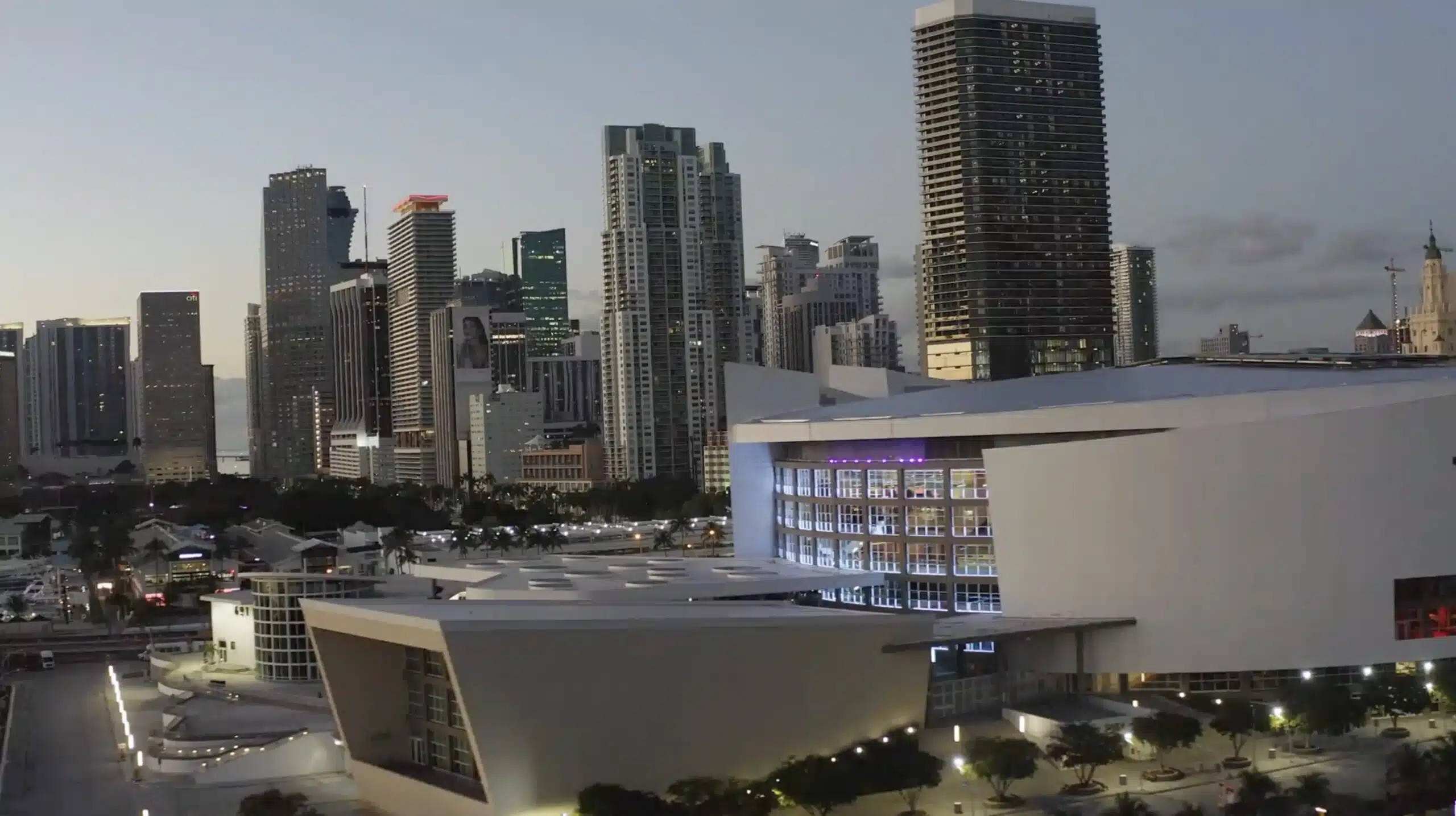
## Brand Commercials and Broadcast Spots
### Lifestyle Brand Commercials
Miami is a lifestyle city. Fashion, hospitality, fitness, food - these categories dominate the local economy and the cultural conversation. A well-executed lifestyle commercial shot in Miami carries instant visual credibility that you simply cannot replicate on a green screen in a suburb of Atlanta.
The key with lifestyle spots is contrast and texture. Miami gives you both. You can open on a humid, golden-hour street in Wynwood, cut to a sleek rooftop pool in Brickell, and close on a sunset over Biscayne Bay - and that sequence alone tells a story about aspiration and accessibility that resonates deeply with South Florida audiences. We have executed this kind of multi-location, single-day shoot efficiently because we plan obsessively. Location scouting, permit coordination, and local crew relationships are what separate a polished final product from a logistical nightmare.
Our [advertising services](https://c-istudios.com/advertising-services/) team handles everything from concept to final delivery, including media placement strategy if needed.
### Broadcast TV Spots for Local and Regional Markets
Local broadcast is far from dead. South Florida has a massive Spanish-language television audience, a robust local news ecosystem, and regional cable buys that can be extremely cost-effective compared to national rates. A 30-second or 60-second spot produced to broadcast standards - meaning proper frame rates, color space, audio loudness standards, and legal clearances - opens doors that digital-only content cannot.
We produce broadcast-ready spots regularly for clients across industries. The difference between a spot that gets approved by a network and one that gets rejected or looks degraded on a 65-inch screen is almost always in the production and [post-production](https://c-istudios.com/post-production-services/) quality. Compression artifacts, inconsistent audio, and improper color mastering are the most common culprits.
## Social Media and Digital Content
### Short-Form Social Content for Instagram and TikTok
Miami is one of the top social media markets in the United States by engagement rate per capita, particularly in fashion, food, and travel verticals. According to [Statista](https://www.statista.com/topics/1164/social-networks/), short-form video now accounts for over 60 percent of all social media engagement globally - and Miami-based brands are among the fastest to adopt new formats.
Short-form content shot in Miami works best when it leans into what the city does naturally: energy, color, movement, and personality. The worst short-form content looks like it was produced in a vacuum - no sense of place, no cultural context, no reason to stop scrolling. Our [social media marketing services](https://c-istudios.com/social-media-marketing-services/) team thinks about performance at the content creation stage, not as an afterthought.
For Miami brands, we typically build short-form packages that include 3:1 repurposing ratios - meaning one primary shoot day yields a 60-second hero video plus multiple 15-second and 30-second cuts optimized for different placements. This is how you get real value from a single production budget.
### Influencer Collaboration Videos
Miami has one of the densest concentrations of content creators and influencers in the country. The influencer economy here is not just about follower counts - it is about authentic community ties in specific neighborhoods, cultural niches, and language groups. Brands that understand this produce content with creators rather than simply hiring them as walking billboards.
The best influencer collaboration videos feel like genuine discovery. They have natural dialogue, real reactions, and production quality that is elevated enough to feel intentional but relaxed enough to feel unscripted. This is a very specific tone to achieve, and it requires a crew that knows when to put the camera down and when to push in. Our video production team handles this balance well because we have done it across enough markets - Miami, New York, and Los Angeles - to know what reads as authentic versus what reads as manufactured.
## Corporate and B2B Video Content
### Corporate Brand Films
Miami is increasingly a hub for finance, tech, and international business. The city's corporate landscape has expanded dramatically since 2020, with major firms relocating headquarters from New York and Chicago to South Florida. These companies need video content that communicates sophistication, stability, and vision - the same things a brand film does for a consumer company, but filtered through a B2B lens.
A strong corporate brand film is not a two-minute version of your About Us page. It is a cinematic argument for why your company exists and what you believe. The best ones we have produced involve real employees speaking candidly, not reading teleprompters. They involve architecture and environment that reflect company culture. And they involve a post-production pass that elevates the footage from documentary-style to genuinely cinematic. Our [video production services](https://c-istudios.com/video-production-services/) include full end-to-end corporate brand film production for companies of all sizes.
### Testimonial and Case Study Videos
In B2B sales cycles, nothing closes faster than a credible client testimonial delivered on camera. Miami's business community is relationship-driven - deals are often made based on trust and social proof, not spec sheets. A well-produced testimonial video that captures a real client speaking honestly about results is one of the highest-ROI assets a B2B brand can own.
The production quality matters more than most brands realize. A grainy, poorly lit testimonial shot on a webcam signals low production values by extension - which is exactly the signal you do not want when asking enterprise clients to trust you with their money. We shoot testimonial packages with proper three-point lighting, broadcast-quality audio, and b-roll coverage that contextualizes the story being told. The [audio engineering](https://c-istudios.com/audio-engineering-services/) side of this is often underestimated - bad audio kills credibility faster than bad video.
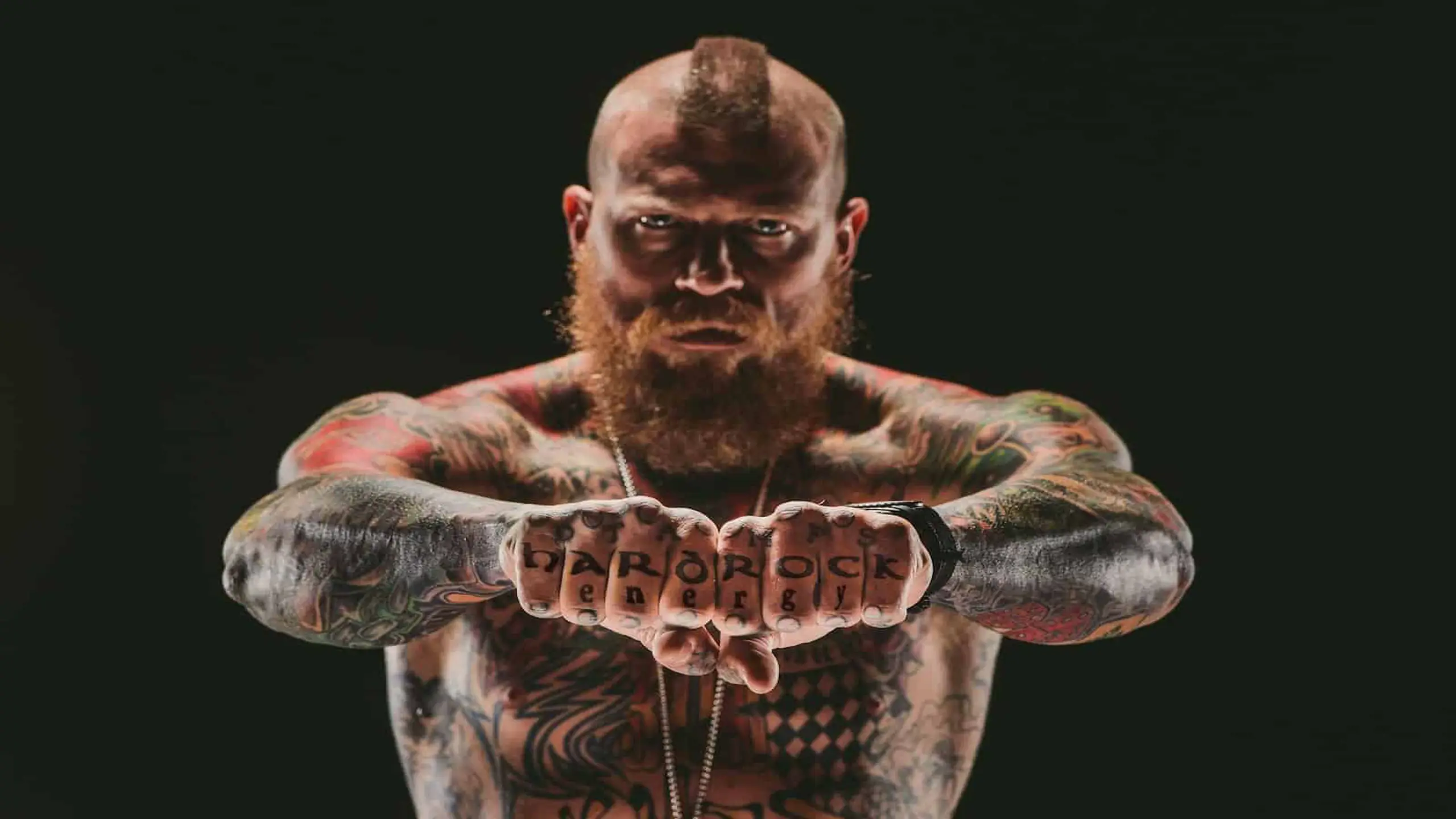
## Documentary and Long-Form Content
### Brand Documentaries and Mini-Docs
The mini-documentary format has exploded in brand marketing over the last five years, and Miami is a city with enough cultural depth to fuel this format extremely well. From the history of Little Havana to the emergence of Miami's tech corridor to the story of how a local restaurant family has fed the community for three generations - there is no shortage of compelling narratives here.
Brand documentaries work because they create emotional investment in a way that advertising cannot. When a viewer spends 8-12 minutes with a story they care about, the brand association that results is qualitatively different from a 30-second ad impression. Our [documentary film production](https://c-istudios.com/documentary-film-production/) team has extensive experience building these narratives with proper research, pre-interviews, and a production approach that gives subjects the space to be genuinely compelling on camera.
For Miami specifically, we think there is significant untapped opportunity for brands in real estate, hospitality, and food to use the mini-doc format as a content marketing engine. The city's story is still being written, and brands that help tell it earn a kind of loyalty that paid media cannot buy.
### Event Coverage and Live Production
Miami's event calendar is one of the most packed in the country. Art Basel, Miami Open, Miami Grand Prix, Ultra Music Festival, South Beach Wine and Food Festival - the list of marquee events is almost absurd. For brands activating at or around these events, professional video coverage is not optional. It is the proof of presence that justifies the activation spend.
Event video production at this level requires multi-camera setups, experienced operators who can work in crowd conditions, and a fast-turnaround post-production workflow that gets same-day or next-day content out to social channels while the event is still trending. Our team has the crew depth and the operational infrastructure to handle this. We also work across markets - our [New York City](https://c-istudios.com/video-production-new-york/) and [Los Angeles](https://c-istudios.com/video-production-los-angeles/) offices mean we can mobilize across multiple simultaneous event locations when needed.
## Specialized Production Formats
### Real Estate and Architecture Videos
South Florida's real estate market is one of the most competitive in the world. Luxury condominiums, commercial developments, resort properties - the inventory is staggering, and the competition for buyer attention is fierce. In this environment, video is not a differentiator. It is a baseline expectation.
But there is a significant range between baseline and extraordinary. The best real estate videos in Miami go beyond drone flyovers and room walkthroughs. They tell a story about lifestyle - what it feels like to wake up in that penthouse, to entertain on that terrace, to live at that intersection of design and geography. The cinematography needs to match the property's price point. Cheap-looking video attached to a $5 million listing is a trust-destroying mismatch. Our [film production services](https://c-istudios.com/film-production-services/) team approaches real estate and architecture video with the same cinematic standards we apply to narrative content.
### Music Videos and Entertainment Content
Miami has always been a music city. From the Latin pop and reggaeton scenes centered in Miami-Dade to the electronic music culture that pulses through Miami Beach, the entertainment content needs here are substantial and ongoing. [Music video production](https://c-istudios.com/video-production-services/music-video-production/) in Miami benefits enormously from the city's visual vocabulary - the neon, the water, the architecture, the fashion - but executing it at a professional level requires more than access to a good location.
Proper music video production involves pre-production planning that maps visuals to song structure, a lighting and camera package appropriate to the treatment, wardrobe and art direction, and a post-production pipeline that includes color grading, VFX if needed, and mastering for both streaming platforms and broadcast. C&I Studios has produced music videos for artists across genres, and the production infrastructure we maintain - 30,000 square feet of facility space in Fort Lauderdale - means we can handle complex builds, controlled lighting environments, and large cast shoots without the logistical constraints that limit smaller operations.
According to [Billboard](https://www.billboard.com/), music video views on YouTube consistently drive streaming numbers for both new and catalog releases, making high-quality visuals a genuine commercial asset for artists at every level.
### Product Launch and Demo Videos
Miami's consumer market skews younger, more brand-conscious, and more visually sophisticated than many other major U.S. markets. Product launch videos produced here need to meet that audience where they are - which means production values, pacing, and aesthetic choices that feel current rather than corporate.
A product launch video has one primary job: make the viewer want the product. Everything else - the specs, the features, the comparisons - is secondary to desire. The best product videos we have produced achieve this through a combination of macro photography, kinetic camera movement, precise color grading, and sound design that creates tactile associations with the product on screen. The [post-production](https://c-istudios.com/post-production-services/) phase is where product videos are won or lost - the difference between a grade that makes the product glow and one that makes it look flat is entirely a color science question.
### Training and Internal Communications Videos
This one does not get enough attention in conversations about video production, but for Miami's large hospitality, healthcare, and retail sectors, internal video is one of the highest-utility content categories available. Onboarding videos, safety training, compliance communications, internal brand culture content - these assets save time, reduce HR overhead, and create consistency across large workforces spread across multiple locations.
The production standards for internal video do not need to match a broadcast commercial, but they do need to be good enough to hold attention and communicate clearly. Bad audio, talking-head footage without b-roll, and scripting that sounds like it was written by a compliance lawyer are the three fastest ways to guarantee that nobody watches your training video. Our team scripts, shoots, and delivers internal communications content that employees actually engage with - which is the only metric that matters for this format.
Our [Fort Lauderdale production facility](https://c-istudios.com/video-production-fort-lauderdale/) is ideally positioned to serve Miami-area corporate clients for exactly this kind of recurring content need. The drive from Miami to our facility is straightforward, and for companies with large campuses or distributed teams, we also bring full production capability to your location.
## What to Ask Before You Hire Any Video Production Company in Miami
Before you sign a contract with any production company for a Miami-based project, ask these questions. The answers will tell you more than any reel or rate card:
**Who owns the footage?** Some production companies retain raw footage ownership. You should own your raw files. Full stop.
**What is included in post-production?** Color grading, audio mixing, motion graphics, revisions - find out what is included versus what triggers additional billing. Vague scope definitions in post are where budgets blow up.
**Do you have local permits and location relationships in Miami?** Shooting on public property in Miami-Dade County requires permits. Shooting at private venues requires relationships. A production company that has never worked in South Florida before will learn these things on your dime.
**Can you see past work in the same format and budget range?** A company that only shows you their most expensive, high-profile work is not demonstrating what you will actually receive at your budget level. Ask to see work that is comparable to your project scope.
Video production Miami is a competitive and visually demanding market. The brands that succeed here invest in content that matches the city's standards - and they choose production partners with the track record and infrastructure to deliver it. Our team has both. If you are ready to move a project forward, let us talk about what it will take to make it exceptional.
Ready to put one of these ideas into production? Our [Miami video production team](https://c-istudios.com/video-production-miami/) shoots across Miami-Dade with full crews, 8K RED cinema cameras, and in-house post — flat per-project quotes, no day-rate surprises.
## Work with C&I Studios
If you are planning a project like this, our team can take it from concept to final delivery. Explore our [video production services](https://c-istudios.com/video-production-services/), browse [our work](https://c-istudios.com/our-work/) to see how we tell brand stories, and [get in touch](https://c-istudios.com/contact/) when you are ready to start.
Originally published April 13, 2026
---
*This content is from [C&I Studios](https://c-istudios.com), a full-service production company.*
---
# Branded Entertainment That Actually Works
> Published: April 11, 2026
> Categories: Commercial & Brand
> Source: https://c-istudios.com/branded-entertainment-case-study/
---
.cib{--paper:#1b1d1f;--ink:#fff;--body:#d5d7d9;--muted:#8b9096;--line:rgba(255,255,255,.12);--thumb:#2b2e31;--card:#212426;--accent:#c02b0a;--blue:#5B8FA8;--serif:'Playfair Display',Georgia,serif;--sans:'Poppins',-apple-system,sans-serif;--measure:900px;background:var(--paper);color:var(--body);font-family:var(--sans);line-height:1.6;position:relative;left:50%;transform:translateX(-50%);width:90vw;max-width:1920px}
.cib *{box-sizing:border-box}
.cib .kicker{max-width:var(--measure);margin:58px auto 0;padding:0 22px;font-size:12.5px;font-weight:700;letter-spacing:2.5px;text-transform:uppercase;color:var(--blue)}
.cib h1.cibh1{text-wrap:balance;font-family:var(--serif);font-weight:500;font-size:clamp(46px,6vw,72px);line-height:1.08;color:var(--ink);max-width:var(--measure);margin:18px auto 0;padding:0 22px;letter-spacing:-.5px}
.cib .metarow{max-width:var(--measure);margin:20px auto 0;padding:0 22px;color:var(--muted);font-size:14px}
.cib .hero{position:relative;width:100%;height:0;padding-bottom:56.25%;overflow:hidden;margin:48px auto 0;border-top:1px solid var(--line);border-bottom:1px solid var(--line)}
.cib .hero .ph{width:100%;aspect-ratio:16/9;background:var(--thumb);border-top:1px solid var(--line);border-bottom:1px solid var(--line);display:flex;align-items:center;justify-content:center;color:#7d8288;font-size:13px;text-align:center;padding:0 20px}
.cib .body{max-width:var(--measure);margin:12px auto 0;padding:52px 22px 6px}
.cib .body.lead p:first-child{font-size:23px;line-height:1.62;color:var(--ink)}
.cib .body p{font-size:18.5px;line-height:1.85;margin:0 0 30px;color:var(--body)}
.cib .body h2{text-wrap:balance;font-family:var(--serif);font-weight:500;font-size:clamp(32px,4vw,48px);line-height:1.22;color:var(--ink);margin:70px 0 20px;letter-spacing:-.3px}
.cib .body h3{text-wrap:balance;font-family:var(--sans);font-weight:600;font-size:22px;color:var(--ink);margin:38px 0 8px}
.cib .body a{color:var(--ink);text-decoration:underline;text-decoration-color:rgba(255,255,255,.4);text-underline-offset:3px}
.cib .body a:hover{text-decoration-color:var(--ink)}
.cib .ctable{width:100%;border-collapse:collapse;margin:16px 0 30px;font-size:16px}
.cib .ctable th{background:#000;color:#fff;text-align:left;padding:10px 12px;font-family:var(--sans)}
.cib .ctable td{padding:10px 12px;border-bottom:1px solid var(--line);color:var(--body)}
.cib .inimg{position:relative;width:100%;height:0;padding-bottom:56.25%;overflow:hidden;margin:72px auto;border-top:1px solid var(--line);border-bottom:1px solid var(--line)}
.cib .inimg .ph{width:100%;aspect-ratio:16/9;background:var(--thumb);border-top:1px solid var(--line);border-bottom:1px solid var(--line);display:flex;align-items:center;justify-content:center;color:#7d8288;font-size:13px}
.cib .origpub{max-width:var(--measure);margin:60px auto 0;padding:26px 22px 0;border-top:1px solid var(--line);color:var(--muted);font-size:13.5px}
.cib .related{max-width:1200px;margin:64px auto 0;padding:34px 22px 76px}
.cib .related h3{font-family:var(--sans);font-size:12.5px;letter-spacing:2px;text-transform:uppercase;color:var(--ink);margin:0 0 24px}
.cib .grid{display:grid;grid-template-columns:repeat(3,1fr);gap:28px}
.cib .rc{background:var(--card);border:1px solid var(--line);display:block;text-decoration:none;color:inherit;transition:border-color .15s}
.cib a.rc:hover{border-color:rgba(255,255,255,.5)}
.cib .rc .thumb{position:relative;width:100%;height:0;padding-bottom:56.25%;background:var(--thumb);overflow:hidden}
.cib .rc .thumb img{position:absolute!important;top:0!important;left:0!important;width:100%!important;height:100%!important;object-fit:cover!important;margin:0!important}
.cib .rc .cc{padding:14px 15px 17px}
.cib .rc .rt{font-family:var(--serif);font-weight:500;font-size:16px;line-height:1.3;color:var(--ink);margin:0 0 6px}
.cib .rc .rm{font-size:11px;letter-spacing:1px;text-transform:uppercase;color:var(--muted)}
.cib img{margin:0!important;padding:0!important;display:block!important;vertical-align:top;max-width:100%}
.cib .hero img,.cib .inimg img{position:absolute!important;top:0!important;left:0!important;width:100%!important;height:100%!important;object-fit:cover!important;margin:0!important;padding:0!important;border:0!important;display:block!important;aspect-ratio:auto!important}
.cib .hero+.body{padding-top:36px}
@media(max-width:760px){.cib .grid{grid-template-columns:1fr}.cib .body h2{margin:52px 0 16px}.cib .body p{font-size:17.5px}.cib .inimg,.cib .hero{margin-top:44px}}
.cib .vembed{max-width:var(--measure);margin:44px auto;padding:0 22px}.cib .vembed .vwrap{position:relative;width:100%;height:0;padding-bottom:56.25%}.cib .vembed .vwrap iframe{position:absolute;top:0;left:0;width:100%;height:100%;border:0}
Commercial & Brand
# Branded Entertainment That Actually Works
13 min read

Branded entertainment is one of those terms that gets thrown around a lot in marketing meetings, but rarely executed with any real conviction. Most brands want the idea of it - content that feels cinematic, emotionally resonant, culturally relevant - without necessarily understanding what it takes to produce it at a level that actually moves audiences. We have been in the business long enough to know the difference between content that checks a box and content that genuinely connects. This post is about the latter. It is about one specific project that crystallized, for our entire team, what branded entertainment can be when the right creative vision meets the right production infrastructure.
## What Branded Entertainment Actually Means (And What It Does Not)
Before we get into the story, it is worth being direct about what this term means - and what it does not mean. Branded entertainment is not a :30 television spot with a logo at the end. It is not a social media recap video or a product demo dressed up with some moody music. At its core, branded entertainment is content that has genuine artistic or narrative value independent of the product it represents. The brand is present, but it earns its place in the story rather than interrupting it.
Think about the documentary series a footwear brand commissions about underground runners in urban environments. Think about the short film a luxury car manufacturer releases on streaming platforms - not to sell a specific model, but to embody a feeling. Think about the episodic web series a media company produces with a lifestyle brand as a creative partner rather than a sponsor. That is branded entertainment.
The distinction matters enormously from a production standpoint. When you are making a traditional commercial, every creative decision serves the message. When you are making branded entertainment, every creative decision serves the story - and the brand benefits as a downstream effect of that story resonating with real people. It requires a different mindset, different skills, and honestly, a different kind of production partner. Our [video production services](https://c-istudios.com/video-production-services/) are built to operate in both modes, but branded entertainment is where our team genuinely gets excited.
According to the [Interactive Advertising Bureau](https://www.iab.com), consumers who engage with branded entertainment show 59% higher brand recall than those exposed to pre-roll advertising alone. That number tells the whole story of why major brands are shifting budget toward this format.
## The Project. A Deep-Sea Documentary Partnership
A few years ago, we had the opportunity to produce a branded entertainment piece for a client in the marine conservation and luxury travel space. The project combined elements of a short documentary, an experiential brand film, and a narrative piece - all anchored around the visual world of open-ocean marine life, with specific focus on jellyfish and deep-sea ecosystems. The client wanted something that felt like it belonged on a streaming documentary platform, not in a media buy. They wanted their brand associated with wonder, precision, and environmental consciousness - none of which you communicate by cutting to a product shot every ninety seconds.
From the first creative conversation, it was clear this was not going to be a traditional production. The brief called for underwater cinematography, original score composition, expert interviews, and a narrative arc that could hold a viewer's attention for twelve to fifteen minutes without a single hard sell. That is a meaningful creative and logistical challenge, and it is exactly the kind of work our [film production services](https://c-istudios.com/film-production-services/) team was built for.
The project became one of the defining pieces in our portfolio - a reminder of what is possible when a brand is willing to trust the process and a production company has the infrastructure to deliver something genuinely cinematic.
## Pre-Production. Building the Story Before We Built the Shot List
The single biggest mistake brands make in branded entertainment is rushing to production before the story is fully developed. We see it constantly - a brand has a tight timeline, they want to get cameras rolling, and the result is visually polished content with no emotional throughline. Audiences sense that emptiness immediately, even if they cannot articulate why.
On this project, we spent considerable time in pre-production working through the narrative architecture before a single piece of equipment was loaded into a case. Our creative team worked directly with the client's brand strategists and with marine biologists who could speak authentically to the subject matter. We developed a treatment that positioned the jellyfish - ancient, translucent, utterly alien - as a visual metaphor for the brand's own philosophy: clarity, adaptability, and a kind of effortless precision in hostile environments.
That kind of conceptual depth does not happen in a production meeting. It happens in the weeks of conversation, research, and iteration that precede the shoot. Our producers built a detailed shot list that accounted for both the documentary elements - talking heads, natural observation footage - and the more stylized sequences that would give the piece its cinematic quality. Locations were scouted and confirmed. Dive logistics were mapped. The original score was discussed with composers before a single frame was captured, because the music was going to drive the emotional experience as much as the visuals.
For brands considering this kind of work, we cannot overstate how much the pre-production investment determines the final quality. If you are curious about how we approach that phase, our [Fort Lauderdale production facility](https://c-istudios.com/video-production-fort-lauderdale/) serves as the creative hub where that development work happens - 30,000 square feet of studio space, editing suites, and collaborative rooms where stories actually get built.
## Production. What It Takes to Shoot Branded Entertainment at This Level
The production phase on this project was genuinely demanding. Underwater cinematography at the level required for a piece like this involves specialized equipment, highly trained operators, and a shoot schedule that accounts for the unpredictability of working in open water. Our team coordinated everything from camera housing and lighting rigs to safety divers and marine coordinators. Every element had to work together seamlessly, because you do not get second takes on ocean wildlife.
What made this shoot distinctive - beyond the obvious technical complexity - was the intentionality brought to every frame. Our cinematographers were not just capturing jellyfish. They were composing images that would carry emotional weight in a finished piece. The difference between documentary footage and branded entertainment cinematography is largely about intentionality: the former documents what is there; the latter constructs a visual experience from what is there. Both are valid, but they require different sensibilities behind the camera.
We also integrated interview elements into the shoot - conversations with marine scientists whose expertise lent the piece the authenticity branded entertainment requires to feel credible. These were not scripted endorsements. They were genuine conversations that happened to align with the brand's values, and that alignment is exactly what makes branded entertainment more trustworthy than advertising. Audiences are sophisticated. They know when they are being sold to. The goal is to earn their attention first, and let the brand association follow naturally.
Our crew drew from talent across our three locations - Fort Lauderdale, [Los Angeles](https://c-istudios.com/video-production-los-angeles/), and [New York City](https://c-istudios.com/video-production-new-york/) which is a logistical reality of working on projects at this scale. Branded entertainment at the highest level is rarely a local production. It draws from the best available talent regardless of geography, and a production company with multi-city infrastructure can support that without friction.
## Post-Production. Where Branded Entertainment Lives or Dies
We have a strong opinion about this, based on years of watching otherwise solid projects collapse in the edit: post-production is not where you fix problems. It is where you realize the full potential of what was captured. The difference between those two things is enormous.
On this project, our [post-production team](https://c-istudios.com/post-production-services/) had a remarkable amount of material to work with - hours of underwater footage, interview content, b-roll, and additional visuals captured specifically for stylized sequences. The editorial challenge was sculpting a twelve-to-fifteen minute piece that felt propulsive rather than leisurely, emotional rather than educational, and brand-appropriate without ever becoming a commercial.
Color grading played an enormous role in establishing the piece's visual identity. The deep blues and bioluminescent greens of the underwater world needed to feel otherworldly but not artificial. Our colorists worked closely with the director to establish a grade that honored what was actually captured while amplifying its emotional register. The result was something that felt genuinely cinematic - comparable to the kind of visual quality audiences associate with premium nature documentary content.
Sound design and original score composition were handled through our [audio engineering team](https://c-istudios.com/audio-engineering-services/), and this is genuinely one of the most underappreciated elements of branded entertainment. The score composed for this project was not background music. It was a narrative instrument - building tension during sequences that required it, opening into something vast and quiet during the moments of pure visual wonder. The client heard the first pass of the score alongside rough-cut footage and immediately understood what the final piece was going to be. That is the moment in post-production where everything clicks into place.
Visual effects work - primarily in the form of motion graphics for the brand elements and some subtle enhancement of certain underwater sequences - was integrated in a way that never called attention to itself. This is another principle we hold firmly: in branded entertainment, the craft should be invisible. The audience should feel the effect without noticing the technique.
## Distribution. Getting Branded Entertainment in Front of the Right Audience
One of the questions we hear most often from brand clients considering this format is: where does this actually live? The answer depends on the project, but it is more complex than simply uploading to YouTube and calling it done. Branded entertainment requires a distribution strategy that is as thoughtful as the content strategy, because the context in which an audience encounters the piece shapes how they receive it.
For this particular project, the distribution approach was multi-layered. The full-length piece was positioned for placement on streaming documentary platforms and submitted to select environmental and independent film festivals - both of which were appropriate given the quality of the content and its genuine artistic merit. Branded entertainment that aspires to be taken seriously as content needs to pursue distribution channels that validate that ambition. A festival selection, even at a regional level, communicates to audiences that this is not just a marketing asset. It is something worth watching.
Shorter cuts were developed for the client's social channels - each one a standalone piece that could drive curiosity about the full film. Our [social media marketing team](https://c-istudios.com/social-media-marketing-services/) worked with the client on a release strategy that built anticipation over several weeks before the full piece dropped. This is increasingly the model for branded entertainment distribution: treat it like a creative release, not a campaign launch.
Paid media was used surgically - not to blast the content at scale, but to place it in front of specific audience segments who had demonstrated interest in marine conservation, luxury travel, and environmental storytelling. The [advertising strategy](https://c-istudios.com/advertising-services/) was built around amplifying organic discovery rather than substituting for it. When the content is genuinely good, paid media helps the right people find it. When the content is not, paid media just means more people see something they do not care about.
According to research published by [Think with Google](https://www.thinkwithgoogle.com), viewers who watch branded video content are 1.8 times more likely to search for the brand afterward compared to those who see display advertising. That intent signal - someone actively seeking out more information - is far more valuable than a passive impression, and it is what great branded entertainment consistently generates.
## What This Project Taught Us About Branded Entertainment
Every significant project teaches you something. This one reinforced several things we already believed, and clarified a few things we had not fully articulated before.
The first lesson is that brand restraint is a form of creative courage. The client on this project had to resist the instinct to include more product messaging, more logo placements, more direct calls to action. Every time that instinct was resisted, the piece became more powerful. The brand association that results from a twelve-minute piece of genuinely moving content is worth more than a dozen product mentions - but it requires a brand team willing to trust that equation.
The second lesson is that the quality of your production partner determines the ceiling of what is possible. Branded entertainment cannot be produced on a shoestring. It requires real equipment, real talent, real infrastructure, and real creative depth. Our team was able to bring all of those things because we have spent years building the capacity to produce work at the highest level. The 30,000-square-foot facility in Fort Lauderdale, the multi-city presence, the roster of directors and cinematographers and editors we work with - all of it exists to serve projects that demand it.
The third lesson is about the relationship between authenticity and impact. The most effective branded entertainment we have ever produced - and this project is near the top of that list - succeeds because it is genuinely interested in its subject matter. The jellyfish sequences in this piece were not chosen because they looked cool, although they absolutely do. They were chosen because they embodied something true about the world the brand wanted to inhabit. When that alignment is real, audiences feel it. When it is manufactured, they feel that too.
## How We Approach Branded Entertainment for New Clients
Every branded entertainment project begins with a conversation about the story before we discuss anything about production. We want to understand what the brand genuinely believes, what its audience genuinely cares about, and where those two things intersect in a way that is worth a viewer's time. That intersection - when it is real - is the premise of the piece.
From there, we develop a creative treatment that articulates the story, the visual approach, the narrative structure, and the emotional experience we are aiming to create. This treatment is a working document, not a pitch deck. It evolves through conversation with the client, because the best branded entertainment emerges from genuine creative partnership rather than a production company disappearing and returning with a finished product.
Our team includes producers, directors, cinematographers, editors, composers, and strategists who have worked on projects for clients including Nike, Coca-Cola, AT&T, the NFL, NBC, H&M, Calvin Klein, and SiriusXM. That range of experience matters - not because name-dropping is particularly useful, but because working across industries and brand categories builds a creative vocabulary that makes any individual project richer. When you have produced branded content for a professional sports league and a fashion house and a telecommunications company, you develop pattern recognition about what works and why.
If you want to see the breadth of what that experience looks like in practice, our [portfolio](https://c-istudios.com/our-work/) gives a reasonable sense of the range. The jellyfish project itself lives there - a reminder that the most ambitious creative work tends to produce the most lasting results.
For brands in the early stages of thinking about branded entertainment - whether you are planning a documentary-style piece, a narrative short film, an episodic series, or something that does not fit neatly into any existing category - the right first step is a conversation. Not a brief, not an RFP. A conversation about what you are trying to say, who you are trying to say it to, and what it would mean for your brand if you actually pulled it off.
That is a conversation we genuinely enjoy. You can start it through our [contact page](https://c-istudios.com/contact/), and we will take it from there.
C&I Studios has built its reputation on exactly this kind of work - projects that demand more than a standard production playbook, that live at the intersection of brand strategy and genuine storytelling craft. Branded entertainment is not a trend we are chasing. It is a format we have believed in long enough to develop real expertise in producing it well. The jellyfish project is one proof point. There are others. And with the right brand partner, there will be more.
## Work with C&I Studios
If you are planning a project like this, our team can take it from concept to final delivery. Explore our [video production services](https://c-istudios.com/video-production-services/), browse [our work](https://c-istudios.com/our-work/) to see how we tell brand stories, and [get in touch](https://c-istudios.com/contact/) when you are ready to start.
Originally published April 11, 2026
---
*This content is from [C&I Studios](https://c-istudios.com), a full-service production company.*
---
# Event Filming Company: What to Look For
> Published: April 10, 2026
> Categories: Commercial & Brand
> Source: https://c-istudios.com/event-filming-company/
---
.cib{--paper:#1b1d1f;--ink:#fff;--body:#d5d7d9;--muted:#8b9096;--line:rgba(255,255,255,.12);--thumb:#2b2e31;--card:#212426;--accent:#c02b0a;--blue:#5B8FA8;--serif:'Playfair Display',Georgia,serif;--sans:'Poppins',-apple-system,sans-serif;--measure:900px;background:var(--paper);color:var(--body);font-family:var(--sans);line-height:1.6;position:relative;left:50%;transform:translateX(-50%);width:90vw;max-width:1920px}
.cib *{box-sizing:border-box}
.cib .kicker{max-width:var(--measure);margin:58px auto 0;padding:0 22px;font-size:12.5px;font-weight:700;letter-spacing:2.5px;text-transform:uppercase;color:var(--blue)}
.cib h1.cibh1{text-wrap:balance;font-family:var(--serif);font-weight:500;font-size:clamp(46px,6vw,72px);line-height:1.08;color:var(--ink);max-width:var(--measure);margin:18px auto 0;padding:0 22px;letter-spacing:-.5px}
.cib .metarow{max-width:var(--measure);margin:20px auto 0;padding:0 22px;color:var(--muted);font-size:14px}
.cib .hero{position:relative;width:100%;height:0;padding-bottom:56.25%;overflow:hidden;margin:48px auto 0;border-top:1px solid var(--line);border-bottom:1px solid var(--line)}
.cib .hero .ph{width:100%;aspect-ratio:16/9;background:var(--thumb);border-top:1px solid var(--line);border-bottom:1px solid var(--line);display:flex;align-items:center;justify-content:center;color:#7d8288;font-size:13px;text-align:center;padding:0 20px}
.cib .body{max-width:var(--measure);margin:12px auto 0;padding:52px 22px 6px}
.cib .body.lead p:first-child{font-size:23px;line-height:1.62;color:var(--ink)}
.cib .body p{font-size:18.5px;line-height:1.85;margin:0 0 30px;color:var(--body)}
.cib .body h2{text-wrap:balance;font-family:var(--serif);font-weight:500;font-size:clamp(32px,4vw,48px);line-height:1.22;color:var(--ink);margin:70px 0 20px;letter-spacing:-.3px}
.cib .body h3{text-wrap:balance;font-family:var(--sans);font-weight:600;font-size:22px;color:var(--ink);margin:38px 0 8px}
.cib .body a{color:var(--ink);text-decoration:underline;text-decoration-color:rgba(255,255,255,.4);text-underline-offset:3px}
.cib .body a:hover{text-decoration-color:var(--ink)}
.cib .ctable{width:100%;border-collapse:collapse;margin:16px 0 30px;font-size:16px}
.cib .ctable th{background:#000;color:#fff;text-align:left;padding:10px 12px;font-family:var(--sans)}
.cib .ctable td{padding:10px 12px;border-bottom:1px solid var(--line);color:var(--body)}
.cib .inimg{position:relative;width:100%;height:0;padding-bottom:56.25%;overflow:hidden;margin:72px auto;border-top:1px solid var(--line);border-bottom:1px solid var(--line)}
.cib .inimg .ph{width:100%;aspect-ratio:16/9;background:var(--thumb);border-top:1px solid var(--line);border-bottom:1px solid var(--line);display:flex;align-items:center;justify-content:center;color:#7d8288;font-size:13px}
.cib .origpub{max-width:var(--measure);margin:60px auto 0;padding:26px 22px 0;border-top:1px solid var(--line);color:var(--muted);font-size:13.5px}
.cib .related{max-width:1200px;margin:64px auto 0;padding:34px 22px 76px}
.cib .related h3{font-family:var(--sans);font-size:12.5px;letter-spacing:2px;text-transform:uppercase;color:var(--ink);margin:0 0 24px}
.cib .grid{display:grid;grid-template-columns:repeat(3,1fr);gap:28px}
.cib .rc{background:var(--card);border:1px solid var(--line);display:block;text-decoration:none;color:inherit;transition:border-color .15s}
.cib a.rc:hover{border-color:rgba(255,255,255,.5)}
.cib .rc .thumb{position:relative;width:100%;height:0;padding-bottom:56.25%;background:var(--thumb);overflow:hidden}
.cib .rc .thumb img{position:absolute!important;top:0!important;left:0!important;width:100%!important;height:100%!important;object-fit:cover!important;margin:0!important}
.cib .rc .cc{padding:14px 15px 17px}
.cib .rc .rt{font-family:var(--serif);font-weight:500;font-size:16px;line-height:1.3;color:var(--ink);margin:0 0 6px}
.cib .rc .rm{font-size:11px;letter-spacing:1px;text-transform:uppercase;color:var(--muted)}
.cib img{margin:0!important;padding:0!important;display:block!important;vertical-align:top;max-width:100%}
.cib .hero img,.cib .inimg img{position:absolute!important;top:0!important;left:0!important;width:100%!important;height:100%!important;object-fit:cover!important;margin:0!important;padding:0!important;border:0!important;display:block!important;aspect-ratio:auto!important}
.cib .hero+.body{padding-top:36px}
@media(max-width:760px){.cib .grid{grid-template-columns:1fr}.cib .body h2{margin:52px 0 16px}.cib .body p{font-size:17.5px}.cib .inimg,.cib .hero{margin-top:44px}}
Behind the Scenes
# Event Filming Company. What to Look For
13 min read

Hiring the right **event filming company** is one of those decisions that looks simple on the surface and gets complicated fast. You have one shot. The keynote speaker takes the stage once. The award is handed out once. The crowd reacts once. A crew that shows up underprepared, with a single camera and no audio backup, will hand you footage you cannot use - and there is no reshooting a live event. We have seen it happen to brands that came to us after a bad experience with an inexperienced vendor. The footage was unusable, the event was gone, and the budget was wasted.
This post breaks down exactly what to look for when vetting an event filming company, what questions to ask, what pricing looks like across the industry, and why the decision matters more than most marketing teams realize.
## What an Event Filming Company Actually Does
The term "event filming" gets used loosely. At the low end, it means one videographer with a DSLR showing up and recording whatever happens. At the high end, it means a full production crew with a director of photography, dedicated audio engineer, multi-camera setup, lighting crew, live monitoring, and a post-production pipeline that delivers polished content within 48 hours of the event wrapping.
The gap between those two ends of the spectrum is enormous - in quality, in reliability, and in the downstream value the footage creates. When brands come to us for event coverage, they are not just looking for a recording. They are looking for content assets: highlight reels, social cuts, recap videos, behind-the-scenes packages, and archival footage that can be repurposed for months.
Our [video production services](https://c-istudios.com/video-production-services/) treat event filming as a full production discipline - not a side offering. That distinction shows in the work.
Event types we cover regularly include:
- Corporate conferences and summits
- Product launches and brand activations
- Award ceremonies and galas
- Concerts and live performances
- Sporting events and athlete appearances
- Fashion shows and runway events
- Trade shows and expo floors
- Fundraisers and nonprofit events
Each of those event types has different technical demands. A fashion show needs fast, fluid camera movement and color-accurate lighting. A corporate summit needs pristine audio capture from multiple podium speakers. A sporting event needs long-lens coverage and the ability to react in real time. Knowing the difference - and staffing accordingly - is what separates a capable event filming company from a capable wedding videographer who moonlights in corporate work.
## Why Most Event Videos Fail (And How to Avoid It)
The most common failure mode is audio. Video problems are visible and obvious, but audio problems are what actually make footage unusable. A slightly shaky shot is fine. Muffled, reverberant room audio recorded from a camera mic 40 feet from the stage is not. We bring dedicated audio engineers to every significant event - it is non-negotiable on our end, and it should be non-negotiable on the client's end too.
The second most common failure is single-camera coverage. Live events are unpredictable. Speakers move. Audience reactions matter. Spontaneous moments happen in corners of the room that one camera cannot capture. Multi-camera setups - typically three to five cameras for a medium-sized event - give the editing team enough material to build a coherent, dynamic final product.
Third: no pre-production. An event filming company that shows up day-of without a shot list, a schedule, a venue walk-through, or a briefing on key moments is flying blind. We always do a pre-production call and, when possible, a venue scout. Even for events we have filmed at a location before, details change - stage placement, lighting rigs, room configuration. Those details determine where cameras go, what lenses get used, and how audio is rigged.
Our team's approach to [film production](https://c-istudios.com/film-production-services/) carries directly into event coverage. The same rigor that goes into a narrative shoot - detailed pre-production, clear roles on set, real-time communication between crew members - applies when we are filming a live corporate event for 800 attendees.
According to [Statista's event industry research](https://www.statista.com/topics/2106/event-industry/), the global events market is projected to exceed $2 trillion by 2028. The demand for event video content is growing in parallel - brands are realizing that a well-filmed event is a content machine, not just an archive.
## How to Evaluate an Event Filming Company. 8 Questions That Actually Matter
When you are vetting vendors, the standard questions - "how many cameras do you use?" and "can I see your reel?" - are necessary but not sufficient. Here are the questions that reveal whether a company can actually deliver under pressure.
### What Is Your Crew-to-Event Ratio?
A solo videographer can handle a small panel discussion. A 500-person conference needs at minimum a DP, a dedicated audio tech, one or two additional camera operators, and ideally a producer on-site managing the timeline. Ask specifically how many crew members will be on-site and what each person's role is. Vague answers here are a red flag.
### Do You Handle Audio In-House?
Audio is the most common point of failure in event video. Some production companies subcontract audio to a third party, which introduces communication gaps and accountability problems. Our [audio engineering team](https://c-istudios.com/audio-engineering-services/) is in-house, meaning the person mixing live audio on-site is part of the same crew as the camera operators. That integration matters when something changes mid-event - and something always changes mid-event.
### What Does Your Post-Production Process Look Like?
Filming is half the work. What happens in post determines whether the footage becomes genuinely useful content or sits on a hard drive. Ask about turnaround time, how many edit rounds are included, whether color grading is standard or an add-on, and whether they offer multiple deliverable formats (full-length recap, short-form social cuts, highlight reel). Our [post-production services](https://c-istudios.com/post-production-services/) are built to handle all of those outputs from a single event shoot.
### Can You Show Me Event Work Specifically?
A company's commercial reel or narrative work does not tell you much about their event capabilities. Ask for event-specific samples - ideally from events similar in scale and type to yours. Look at how the footage is edited, how speaker audio sounds, whether crowd moments are captured, and whether the pacing feels energetic or sluggish. Our [portfolio](https://c-istudios.com/our-work/) includes event work across industries, from brand activations to live performances.
### What Is Your Equipment Redundancy Policy?
Cameras fail. Audio recorders fail. Cards get corrupted. A professional event filming company always brings backup equipment - backup cameras, backup audio recorders, extra media cards, backup batteries. Ask directly: "What happens if a camera goes down mid-event?" If the answer is vague, keep looking.
### Who Is the Point of Contact on Event Day?
You need one person with authority who knows your priorities and can make real-time decisions. That is usually a producer or a senior DP. If the company plans to send a crew without a designated on-site point of contact - someone who can adapt when the schedule shifts or a speaker runs long - that is a structural problem.
### How Do You Handle Rights and Deliverables?
Clarify ownership of raw footage, who holds the licensing rights, and whether the production company can use the footage for their own promotional purposes. Most professional companies include a standard usage clause allowing them to feature the work in their reel - that is reasonable. But you should know exactly what you are getting, in what formats, and what happens if you need additional cuts later.
### What Is Your Experience With Venues Like Ours?
A ballroom with low ceilings and warm tungsten lighting is completely different from an outdoor amphitheater or a convention center with mixed natural and fluorescent light. Experience with similar venues is a genuine differentiator. Our Fort Lauderdale base gives us deep familiarity with South Florida venues, and our presence in Los Angeles and New York - through our [LA production office](https://c-istudios.com/video-production-los-angeles/) and [New York City team](https://c-istudios.com/video-production-new-york/) means we have worked in nearly every significant event venue type on either coast.
## Event Filming Pricing. What to Actually Expect
Pricing is the part most vendors are vague about online, which is frustrating when you are trying to build a budget. Here is an honest breakdown of what event filming typically costs at different production tiers, based on what we see in the market.
### Entry-Level. $500 – $2,000
This range typically gets you one or two camera operators, basic audio (often from the camera's built-in mic or a simple lav setup), and minimal post-production. Deliverables are usually a single edited video. This is appropriate for very small internal events, team meetings, or social content where production value is secondary to speed and cost. For anything that represents your brand externally, this tier is a risk.
### Mid-Range. $3,000 – $10,000
This is where professional multi-camera setups, dedicated audio techs, and structured post-production come in. You are getting a real crew, real gear, and a post-production pipeline that can deliver a polished recap video plus social cuts. Most corporate conferences, product launches, and mid-sized brand events fall into this range. Day rate for a competent DP alone runs $800-$1,500 in most major markets, so the math on a full crew adds up quickly.
### High-End. $15,000 – $75,000+
Large-scale events - major brand activations, national conferences, live performances, sporting events - require substantially more crew, more equipment, more pre-production, and more complex post-production. When we filmed events for clients like the NFL or AT&T, the scope involved multiple camera positions, a dedicated director, real-time production monitoring, and extensive post-production including motion graphics and music licensing. That level of production investment creates content that lives far beyond the event itself.
The smarter way to think about pricing is not "what does filming cost?" but "what is this footage worth?" A $20,000 event production that generates a highlight reel with 2 million views, a sales video used in pitches for 18 months, and archival footage repurposed across three campaigns is a much better investment than a $1,500 single-camera shoot that produces nothing usable.
Our [advertising services](https://c-istudios.com/advertising-services/) team often works alongside our event crews precisely because event footage is raw material for campaigns. The best event filming companies think about downstream content use from the start - not as an afterthought.
## What Separates C&I Studios From Other Event Filming Companies
We are going to be direct here: there are a lot of capable event videographers in every major market. The honest differentiators come down to infrastructure, experience, and integration.
**Infrastructure.** Our 30,000 square-foot facility in Fort Lauderdale is our home base, but it also functions as our production hub. Equipment gets prepped, tested, and staged there before every shoot. We are not renting gear from a local house and hoping it works - we own our equipment and our team knows it intimately. That matters when something goes wrong on-site and a crew member needs to troubleshoot in real time.
**Experience.** The client list - Nike, Coca-Cola, H&M, Calvin Klein, SiriusXM, NBC - is not name-dropping for its own sake. It is evidence that our crew performs under pressure, at scale, with high-stakes deliverables. Those clients do not come back repeatedly because the footage was "pretty good." They come back because the footage was exactly what they needed, delivered on time, and created real value for their marketing and communications teams.
**Integration.** Most event filming companies hand you footage. We can hand you a complete content ecosystem. Our [social media marketing services](https://c-istudios.com/social-media-marketing-services/) team can take event footage and build a distribution strategy around it. Our post-production team can deliver a full recap video, ten 30-second social cuts, a sizzle reel, and a long-form documentary-style recap from the same event shoot. That kind of integration only exists when all the disciplines are under one roof - which is exactly how C&I Studios is built.
Our [documentary production](https://c-istudios.com/documentary-film-production/) capabilities also feed into longer-form event content - think an in-depth look at a brand's annual conference or a character-driven recap of a product launch that goes beyond highlights into storytelling. That is a differentiator very few event filming companies can credibly offer.
## Event Filming for Different Industries. What Changes
The core technical work is consistent, but the creative approach shifts depending on industry and event type. Here is how our thinking changes across the most common event categories we cover.
### Corporate Conferences and Summits
The priority is speaker clarity and session coverage. Wide establishing shots of the venue, clean two-shots of panel discussions, and tight singles on keynote speakers are the backbone. B-roll of attendees networking, signage, and brand moments fills the edit. Audio comes from both a direct feed from the venue's sound system and backup lavs on speakers. Turnaround is usually tight - many clients want a same-day social cut before attendees even leave the venue.
### Brand Activations and Product Launches
Energy and brand identity are everything here. The camera work is more dynamic - handheld for crowd energy, stabilized gimbal work for product reveals, drone coverage when exterior shots are possible. The edit needs to feel like a piece of branded content, not just event documentation. This is where our [advertising background](https://c-istudios.com/advertising-services/) gives us a real edge: we think about the footage in terms of how it will be used in campaigns, not just as a record of what happened.
### Live Performances and Concerts
Fast cuts, dynamic camera movement, and audio that captures both the performance and the crowd are essential. We work closely with the sound engineering team to get a clean mix - live concert audio recorded from room mics alone is rarely usable. Lighting is challenging at concerts (strobes, rapid color changes, backlighting), and our DPs are experienced in metering and exposing in those conditions.
### Fashion Events and Runway Shows
Color accuracy is critical - clients like H&M and Calvin Klein need their garments represented accurately on camera, not shifted by poor color temperature management. We use reference monitors on set and prioritize color grading in post. Coverage includes the runway itself, backstage preparation, audience reactions, and brand environment details.
### Nonprofit and Fundraiser Events
Storytelling takes priority. The goal is often to capture emotional moments - beneficiary stories, donor reactions, speaker moments that move an audience. That requires crew members who are not just technically skilled but emotionally intelligent - who can read a room and be in the right position for a human moment without being intrusive.
According to [Wyzowl's video marketing statistics](https://www.wyzowl.com/video-marketing-statistics/), 89% of consumers say watching a brand video has convinced them to make a purchase. For nonprofits, the equivalent dynamic is powerful: well-produced event footage that tells a genuine story is one of the most effective fundraising and donor-retention tools available.
## How to Brief an Event Filming Company
A great production company will ask you most of these questions. But walking in prepared makes the entire process smoother and ensures you get footage that serves your actual goals.
Your brief should cover:
- **Event details:** date, location, duration, expected attendance, venue layout
- **Key moments:** specific segments, speeches, reveals, or performances that are non-negotiable coverage priorities
- **Deliverables:** what formats you need, how many videos, target length, and when you need them
- **Brand guidelines:** any specific visual or audio standards, logo usage, color requirements
- **Distribution plan:** where the content will live - social, broadcast, internal, web - because that affects resolution, aspect ratio, and format specs
- **Budget range:** being upfront about budget lets a production company tell you honestly what is achievable, rather than quoting low and cutting corners later
The more specific you are, the better the work will be. We ask every new event client to walk us through their "must-have" and "nice-to-have" moments before we build a shot list. That conversation usually surfaces priorities neither side had fully articulated before, and it almost always improves the final product.
If you are ready to start a conversation, our [contact page](https://c-istudios.com/contact/) gets you directly to our production team - not a call center or an intake form that disappears into a queue.
## Making the Most of Your Event Footage After the Shoot
The shoot is the beginning, not the end. Brands that get the most value from event filming treat the footage as raw material for an ongoing content strategy, not a one-time deliverable.
From a single well-filmed event, a good production and marketing team can typically produce:
- A two-to-four minute highlight reel for the website and email campaigns
- Six to twelve short-form clips (15-60 seconds) for Instagram, TikTok, and LinkedIn
- A full-length recap video for internal use or stakeholder communications
- Speaker soundbites formatted for social media
- A longer documentary-style piece if the event has a compelling narrative arc
- Thumbnail images pulled from high-quality video frames
- Archival footage for future campaigns and brand retrospectives
Our team plans for all of those outputs before the first camera rolls. Shot lists include coverage that serves the short-form cuts, not just the long-form recap. That kind of forward thinking in pre-production is what separates event filming companies that deliver genuine content value from those that hand you a hard drive and call it done.
Our [Fort Lauderdale production team](https://c-istudios.com/video-production-fort-lauderdale/) anchors our event operations in South Florida, but we travel extensively - domestically and internationally - for events that require our full capabilities. The infrastructure we have built is designed to move.
## Work with C&I Studios
If you are planning a project like this, our team can take it from concept to final delivery. Explore our [video production services](https://c-istudios.com/video-production-services/), browse [our work](https://c-istudios.com/our-work/) to see how we tell brand stories, and [get in touch](https://c-istudios.com/contact/) when you are ready to start.
Originally published April 10, 2026
---
*This content is from [C&I Studios](https://c-istudios.com), a full-service production company.*
---
# Event Videography That Captures What Matters
> Published: April 9, 2026
> Categories: Commercial & Brand
> Source: https://c-istudios.com/event-videography-guide/
---
.cib{--paper:#1b1d1f;--ink:#fff;--body:#d5d7d9;--muted:#8b9096;--line:rgba(255,255,255,.12);--thumb:#2b2e31;--card:#212426;--accent:#c02b0a;--blue:#5B8FA8;--serif:'Playfair Display',Georgia,serif;--sans:'Poppins',-apple-system,sans-serif;--measure:900px;background:var(--paper);color:var(--body);font-family:var(--sans);line-height:1.6;position:relative;left:50%;transform:translateX(-50%);width:90vw;max-width:1920px}
.cib *{box-sizing:border-box}
.cib .kicker{max-width:var(--measure);margin:58px auto 0;padding:0 22px;font-size:12.5px;font-weight:700;letter-spacing:2.5px;text-transform:uppercase;color:var(--blue)}
.cib h1.cibh1{text-wrap:balance;font-family:var(--serif);font-weight:500;font-size:clamp(46px,6vw,72px);line-height:1.08;color:var(--ink);max-width:var(--measure);margin:18px auto 0;padding:0 22px;letter-spacing:-.5px}
.cib .metarow{max-width:var(--measure);margin:20px auto 0;padding:0 22px;color:var(--muted);font-size:14px}
.cib .hero{position:relative;width:100%;height:0;padding-bottom:56.25%;overflow:hidden;margin:48px auto 0;border-top:1px solid var(--line);border-bottom:1px solid var(--line)}
.cib .hero .ph{width:100%;aspect-ratio:16/9;background:var(--thumb);border-top:1px solid var(--line);border-bottom:1px solid var(--line);display:flex;align-items:center;justify-content:center;color:#7d8288;font-size:13px;text-align:center;padding:0 20px}
.cib .body{max-width:var(--measure);margin:12px auto 0;padding:52px 22px 6px}
.cib .body.lead p:first-child{font-size:23px;line-height:1.62;color:var(--ink)}
.cib .body p{font-size:18.5px;line-height:1.85;margin:0 0 30px;color:var(--body)}
.cib .body h2{text-wrap:balance;font-family:var(--serif);font-weight:500;font-size:clamp(32px,4vw,48px);line-height:1.22;color:var(--ink);margin:70px 0 20px;letter-spacing:-.3px}
.cib .body h3{text-wrap:balance;font-family:var(--sans);font-weight:600;font-size:22px;color:var(--ink);margin:38px 0 8px}
.cib .body a{color:var(--ink);text-decoration:underline;text-decoration-color:rgba(255,255,255,.4);text-underline-offset:3px}
.cib .body a:hover{text-decoration-color:var(--ink)}
.cib .ctable{width:100%;border-collapse:collapse;margin:16px 0 30px;font-size:16px}
.cib .ctable th{background:#000;color:#fff;text-align:left;padding:10px 12px;font-family:var(--sans)}
.cib .ctable td{padding:10px 12px;border-bottom:1px solid var(--line);color:var(--body)}
.cib .inimg{position:relative;width:100%;height:0;padding-bottom:56.25%;overflow:hidden;margin:72px auto;border-top:1px solid var(--line);border-bottom:1px solid var(--line)}
.cib .inimg .ph{width:100%;aspect-ratio:16/9;background:var(--thumb);border-top:1px solid var(--line);border-bottom:1px solid var(--line);display:flex;align-items:center;justify-content:center;color:#7d8288;font-size:13px}
.cib .origpub{max-width:var(--measure);margin:60px auto 0;padding:26px 22px 0;border-top:1px solid var(--line);color:var(--muted);font-size:13.5px}
.cib .related{max-width:1200px;margin:64px auto 0;padding:34px 22px 76px}
.cib .related h3{font-family:var(--sans);font-size:12.5px;letter-spacing:2px;text-transform:uppercase;color:var(--ink);margin:0 0 24px}
.cib .grid{display:grid;grid-template-columns:repeat(3,1fr);gap:28px}
.cib .rc{background:var(--card);border:1px solid var(--line);display:block;text-decoration:none;color:inherit;transition:border-color .15s}
.cib a.rc:hover{border-color:rgba(255,255,255,.5)}
.cib .rc .thumb{position:relative;width:100%;height:0;padding-bottom:56.25%;background:var(--thumb);overflow:hidden}
.cib .rc .thumb img{position:absolute!important;top:0!important;left:0!important;width:100%!important;height:100%!important;object-fit:cover!important;margin:0!important}
.cib .rc .cc{padding:14px 15px 17px}
.cib .rc .rt{font-family:var(--serif);font-weight:500;font-size:16px;line-height:1.3;color:var(--ink);margin:0 0 6px}
.cib .rc .rm{font-size:11px;letter-spacing:1px;text-transform:uppercase;color:var(--muted)}
.cib img{margin:0!important;padding:0!important;display:block!important;vertical-align:top;max-width:100%}
.cib .hero img,.cib .inimg img{position:absolute!important;top:0!important;left:0!important;width:100%!important;height:100%!important;object-fit:cover!important;margin:0!important;padding:0!important;border:0!important;display:block!important;aspect-ratio:auto!important}
.cib .hero+.body{padding-top:36px}
@media(max-width:760px){.cib .grid{grid-template-columns:1fr}.cib .body h2{margin:52px 0 16px}.cib .body p{font-size:17.5px}.cib .inimg,.cib .hero{margin-top:44px}}
Behind the Scenes
# Event Videography That Captures What Matters
14 min read

Event videography is one of those services that looks deceptively simple from the outside - point a camera at something happening, press record, hand over a file. Anyone who has actually produced event video at a professional level knows that description is laughably incomplete. A live event is one of the most unforgiving production environments that exists. There are no second takes, no controlled lighting rigs (usually), no quiet set where you can stop and troubleshoot. Every moment that gets missed is gone permanently, and the client will absolutely notice.
Our team at C&I has covered events ranging from intimate product launches to multi-stage NFL broadcasts, and the throughline is always the same: preparation and adaptability. This guide is for anyone trying to understand what professional event videography actually involves - whether you are a brand deciding how to invest your event budget, a coordinator trying to brief a production partner, or a filmmaker looking to level up your live coverage game.
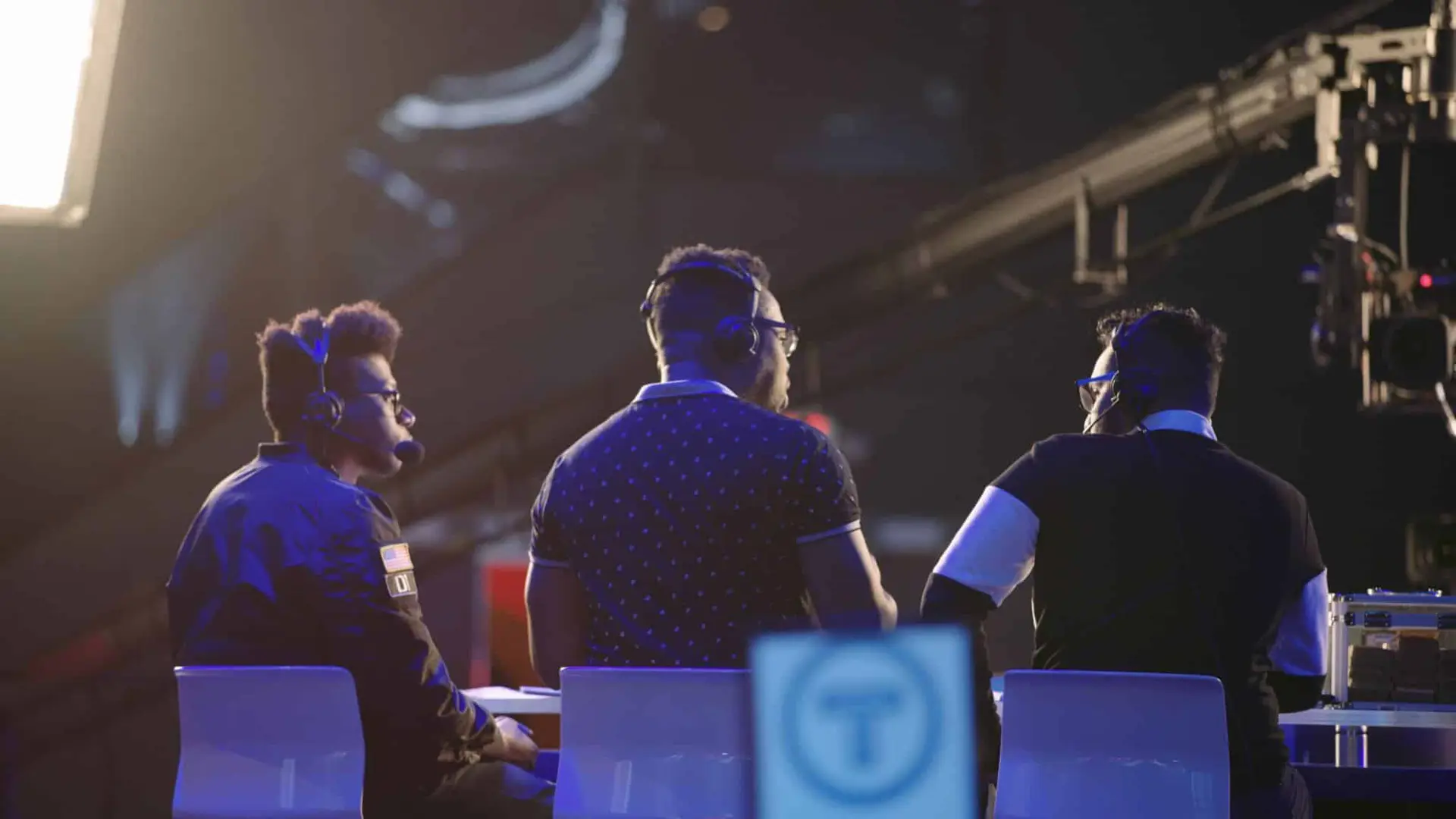
## What Event Videography Actually Encompasses
The term gets used loosely. Sometimes it means a single operator with a DSLR shooting a wedding reception. Sometimes it means twelve crew members with broadcast cameras, a mobile production truck, and a live switching suite covering a Fortune 500 conference. Both qualify as event videography, but the gap between them is enormous.
At the professional end of the spectrum, event video production involves pre-production planning, multi-camera setups, dedicated audio capture, real-time coordination between crew members, and a post-production pipeline that transforms raw footage into a polished deliverable. Our [video production services](https://c-istudios.com/video-production-services/) approach every event with that full-stack mentality, regardless of whether it is a 200-person corporate summit or a brand activation with a single keynote speaker.
The deliverables also vary significantly. A single highlight reel used to be the standard ask. Now clients typically want a package: a two-minute social cut, a five-minute recap for internal use, individual speaker segments formatted for LinkedIn, and sometimes a full-length documentary edit for archival purposes. That last format - the long-form event documentary - has become increasingly valuable as brands recognize that their events carry content weight far beyond the day itself.
## Why Most Event Video Falls Short
Here is an honest take: a large percentage of event footage produced every year is mediocre, and the reasons are almost always the same. Underestimating audio. Insufficient camera coverage. No real pre-production. These are not exotic problems. They are the predictable result of treating event videography as a commodity rather than a craft.
### Audio Is the First Thing That Gets Compromised
Footage with mediocre visuals but clean audio is watchable. Footage with beautiful visuals and muddy audio is unwatchable. This is not a matter of preference - it is backed by how audiences actually respond to content. According to research published by [Nielsen Norman Group](https://www.nngroup.com/articles/video-usability/), poor audio quality is one of the primary drivers of video abandonment, even when the visual content is otherwise compelling.
At events, audio is genuinely difficult. Room reverb, ambient crowd noise, handheld microphones held inconsistently by nervous speakers, A/V systems that were not designed with recording in mind - all of it compounds. Professional event videography accounts for this in advance. Our [audio engineering team](https://c-istudios.com/audio-engineering-services/) coordinates with venue A/V staff before the event date, establishes a clean feed from the main board where possible, and plants redundant capture systems so that no single point of failure kills the recording.
### Single-Camera Coverage Creates Uneditable Footage
One camera at an event produces footage that is extremely difficult to edit into something compelling. You have no cutaways, no reaction shots, no alternative angles to cover a stumble in the speaker's delivery or a technical glitch in the presentation. Professional event videography almost always requires a minimum of two cameras, and for anything with real production value, three or more is standard.
The camera positions matter enormously too. A locked-off wide shot on a tripod gives you a safety net. A roving operator getting crowd reactions, detail shots, and environmental texture gives you the editorial flexibility to build a real story in post. Without that coverage architecture established in advance, editors are left trying to make something out of footage that was never designed to cut together.
### No Shot List or Run-of-Show Means Missed Moments
An experienced event videography team arrives with a run-of-show document that maps every segment of the event to a camera strategy. Which camera leads the keynote? Who is covering the panel discussions? Where does the operator position themselves for the award presentation? What is the signal to shift coverage when the dinner reception begins?
Without this structure, crew members are improvising in real time, and not in the good way. Critical moments get missed because nobody was assigned to cover them. This is pre-production work, and it is genuinely non-negotiable for events above a certain complexity threshold.
## The Pre-Production Phase. Where Event Video Is Really Made
We tell clients this all the time: an event video is largely determined before anyone picks up a camera. The location scout, the technical rider, the shot list, the coordination call with the venue - that groundwork is what separates footage that becomes a great final product from footage that becomes a problem to solve in the edit.
### Location Scouting and Technical Assessment
Every venue presents different challenges. Natural light availability, ceiling height affecting audio behavior, load-in restrictions, the quality of the house lighting rig, network connectivity for any live streaming component - all of these factors shape the production approach. Our team based out of our [Fort Lauderdale facility](https://c-istudios.com/video-production-fort-lauderdale/) conducts thorough venue assessments before any event of scale, and our crews in [Los Angeles](https://c-istudios.com/video-production-los-angeles/) and [New York City](https://c-istudios.com/video-production-new-york/) follow the same protocol for events in their markets.
### Client Creative Brief and Deliverable Planning
Before the cameras come out, we need to know what success looks like. Is the primary deliverable a two-minute highlight reel for social? A longer recap for internal stakeholders? A series of speaker clips formatted for individual distribution? The answer changes the shooting strategy significantly. A highlight reel demands strong emotional moments and visual energy. A speaker series demands clean single-subject framing and pristine audio. You cannot optimize for both with the same approach.
Getting this clarity upfront is part of why the pre-production conversation matters so much. It also feeds into our [post-production services](https://c-istudios.com/post-production-services/) pipeline, since our editors need to know what they are building before they begin the assembly cut.
### Crew Briefing and Role Assignment
A four-person event crew that has not been properly briefed is barely better than one person. Role clarity - who operates which camera, who manages the director monitor, who coordinates with the client contact on the day - eliminates the hesitation and confusion that causes missed shots. This briefing happens in advance, not in the parking lot at load-in.
## Covering Different Event Types. What Changes and What Does Not
Event videography is not one discipline - it is a family of related disciplines that share some core principles but require meaningfully different execution strategies.
### Corporate Conferences and Summits
Corporate events prioritize clarity, professionalism, and comprehensive coverage. Stakeholders and speakers need to look authoritative on camera. The edit needs to reflect the brand's positioning. C&I Studios has produced video for corporate events at the scale of AT&T and NFL conference programming, which means we understand both the logistical complexity and the brand standards that govern deliverables at that level.
For conferences, we typically deploy a primary camera on a jib or slider for dynamic keynote coverage, a locked-off wide for full-stage capture, and a roving operator handling audience reactions, sponsor signage, and networking moments. The audio feed comes directly from the house system supplemented by a dedicated boom or plant microphones at the podium.
### Brand Activations and Product Launches
Brand activations are a different animal. The energy is usually higher, the environment is less structured, and the visual goal is to communicate excitement and momentum rather than information. These events are also often connected to broader [advertising campaigns](https://c-istudios.com/advertising-services/), which means the footage needs to align with creative assets that already exist or are being produced simultaneously.
For activations, our team prioritizes mobility and moment capture. Operators move through the space continuously. We use cinema-grade cameras with fast lenses that perform well in variable lighting, because brand activation venues are notoriously inconsistent in that regard. The edit is usually faster-paced, music-driven, and cut to optimize for [social media distribution](https://c-istudios.com/social-media-marketing-services/).
### Galas, Awards Ceremonies, and Fundraising Events
These events carry significant emotional weight. The award presentations, the tribute videos, the moments where recipients are visibly moved - these are the beats that define the event video and give it long-term value for the organization. Missing them is simply not an option.
Coverage for galas requires excellent low-light camera capability, because ballroom lighting is almost universally challenging for video. It also requires operators who understand how to move gracefully through a formal event environment without disrupting the guest experience - a skill that is genuinely different from production set etiquette.
### Festivals, Multi-Stage Events, and Large-Scale Productions
At this scale, event videography starts to blur into broadcast production. Multiple stages or venues, simultaneous programming, thousands of attendees, and dozens of stakeholders with competing priorities. This is where a full-service production team with deep infrastructure - like our 30,000 square foot facility in Fort Lauderdale - has a real operational advantage over smaller operators.
For large-scale events, we deploy multiple crews that operate semi-independently but feed into a coordinated production hub. The production coordinator role becomes critical here, serving as the connective tissue between crew teams, client contacts, and the post-production pipeline that begins digesting footage in real time.
## Technical Standards That Separate Professional Event Videography
Clients do not always know to ask about these, but they notice the results. Here are the technical benchmarks that matter.
### Camera and Sensor Quality
Event lighting is unpredictable. A camera that performs brilliantly in controlled studio conditions may produce unusable footage in the mixed practical lighting of a convention center. Professional event videography requires cameras with strong dynamic range and excellent high-ISO performance. At C&I, our camera package for events is selected based on the specific venue and lighting conditions identified during pre-production - not a one-size-fits-all kit that goes to every job.
### Stabilization Systems
Shaky, unstable footage communicates amateur production regardless of the camera's sensor quality. For event work, we use a combination of tripods for locked shots, gimbals for fluid movement sequences, and shoulder rigs for run-and-gun situations where responsiveness matters more than buttery smoothness. The choice between these systems is determined by what the shot demands, not by what the operator prefers to carry.
### Redundant Recording and Data Management
At a live event, a media card failure or a camera body malfunction is not just inconvenient - it can mean losing irreplaceable footage. Professional event videography builds redundancy into the system. We record to multiple cards simultaneously where the camera body supports it, maintain backups on external drives during the event day, and follow a strict data management protocol during wrap so that no footage is ever at single-point-of-failure risk.
### Live Monitoring and Director Oversight
On larger productions, having a director or producer monitoring the full camera feed in real time - rather than just trusting individual operators to self-direct - dramatically improves the quality of coverage decisions. When the director can see what all cameras are doing simultaneously, they can redirect resources to moments that are developing, pull an operator off a redundant shot, and ensure that critical beats have dedicated coverage.

## Post-Production for Event Video. Turning Footage Into a Story
Raw event footage does not tell a story - editing does. The post-production phase for event videography is where a chaotic day of coverage becomes a coherent, emotionally compelling piece of content that serves the client's objectives.
Our [post-production team](https://c-istudios.com/post-production-services/) approaches event edits with a narrative-first mentality. Before touching the timeline, editors identify the strongest moments - the speech that landed, the crowd reaction that captured the energy of the room, the visual detail that communicates the brand - and build outward from those anchors. The mistake is starting with chronology and trying to find the story later. The story should drive the structure.
Music selection is critical for event highlights. The right track creates momentum and emotional resonance; the wrong one makes the footage feel generic. We maintain relationships with music licensing platforms and work with our [audio engineering team](https://c-istudios.com/audio-engineering-services/) to ensure that the final mix - music, ambient sound, speech - serves the intended viewing experience rather than just filling the channel.
Color grading for event footage also requires a specific set of skills. Because the lighting at events is often mixed and inconsistent across the day, creating a cohesive visual look requires careful grading work that normalizes footage shot under very different conditions. This is not a quick filter application - it is deliberate craft work that makes the difference between footage that looks assembled and footage that looks produced.
## How Event Video Feeds Your Broader Content Strategy
One of the most underutilized aspects of event videography is the content that events generate beyond the highlight reel. A single well-covered event can produce weeks or months of content if approached with that lens during production planning.
Speaker clips pulled from keynote coverage become thought leadership content on LinkedIn. B-roll of the event environment becomes visual texture for future advertising materials. Customer testimonials captured in the moment - when people are energized and emotionally present - become among the most authentic sales assets a brand can have. Candid footage of team members interacting communicates company culture in ways that staged studio content cannot replicate.
This is why we encourage clients to think about event video not as a single deliverable but as a content production session that happens to be centered on an event. With the right shooting strategy and a clear content map, the return on the production investment multiplies significantly. Our [social media marketing team](https://c-istudios.com/social-media-marketing-services/) often works directly with our video crews to ensure that footage captured at events is formatted and optimized for specific platform requirements from the start.
For brands that have ongoing event calendars, this approach also builds a visual library over time. Events that are documented consistently create a record of growth, community, and brand evolution that has value far beyond any individual production. According to [HubSpot's marketing data](https://www.hubspot.com/marketing-statistics), video content consistently outperforms other formats in engagement and retention metrics across virtually every platform - which makes the investment in quality event documentation a compounding asset rather than a one-time expense.
## What to Look for When Hiring an Event Videography Team
If you are evaluating production partners for an upcoming event, here are the things that actually matter - as opposed to the things that sound impressive but do not correlate with quality output.
### A Portfolio That Reflects Your Event Type
A team that has primarily shot weddings and a team that has covered corporate conferences are not interchangeable, even if both describe themselves as event videographers. Look for demonstrated experience in events similar to yours in scale and format. Our [work portfolio](https://c-istudios.com/our-work/) shows the range of event and brand content we have produced - the variety is intentional, because different clients have legitimately different production needs.
### Clear Communication About Deliverables and Timeline
A professional team should be able to tell you exactly what you will receive, in what format, by what date, before you sign anything. Vague answers to these questions are a red flag. Tight event schedules often create pressure on post-production timelines, and knowing upfront whether your team can meet a 48-hour turnaround for a social cut versus a two-week timeline for a full edit is essential planning information.
### Experience With Live Audio Capture
Ask specifically about how the team handles audio at events. If the answer is primarily about on-camera microphones and they do not mention board feeds, wireless lavaliers, or coordination with venue A/V teams, that is a meaningful gap. Quality event audio requires active management, not passive recording.
### Production Insurance and Professional Infrastructure
Most venues above a certain size require production liability insurance. Any professional event videography company should carry it. Beyond insurance, look for evidence of real production infrastructure: a physical facility, dedicated post-production capabilities, a team that includes specialists rather than one generalist doing everything. Our [film production services](https://c-istudios.com/film-production-services/) operation runs out of a 30,000 square foot facility with dedicated sound stages, editing suites, and a full equipment inventory - that infrastructure directly benefits event clients because it means we are never constrained by what we have to rent or improvise.

## Event Videography and Documentary Production. Closer Than You Think
The best event videos share something fundamental with documentary filmmaking: they observe and reveal rather than construct and perform. The discipline of [documentary film production](https://c-istudios.com/documentary-film-production/) patient observation, awareness of developing moments, the ability to find narrative structure in unscripted reality - is directly applicable to high-quality event video coverage.
This is one reason why our team brings a documentary filmmaker's sensibility to event coverage even when the deliverable is a three-minute highlight reel. The instincts that make a documentary compelling - anticipating where the emotion is, knowing when to hold on a face rather than cut, understanding how to use ambient sound to create a sense of place - translate directly into event footage that feels alive rather than just documented.
For clients who want something more substantial than a highlight reel, we also produce longer-form event documentaries that serve as permanent records of a brand moment. These productions follow a full [documentary production](https://c-istudios.com/documentary-film-production/) workflow - scripted framework, interviews captured on the day, archival integration, and a structured narrative arc - delivering something genuinely cinematic rather than a simple recap.
## Work with C&I Studios
If you are planning a project like this, our team can take it from concept to final delivery. Explore our [video production services](https://c-istudios.com/video-production-services/), browse [our work](https://c-istudios.com/our-work/) to see how we tell brand stories, and [get in touch](https://c-istudios.com/contact/) when you are ready to start.
Originally published April 9, 2026
---
*This content is from [C&I Studios](https://c-istudios.com), a full-service production company.*
---
# What a Post Production Company Does
> Published: April 8, 2026
> Categories: Post & VFX
> Source: https://c-istudios.com/what-a-post-production-company-does/
---
.cib{--paper:#1b1d1f;--ink:#fff;--body:#d5d7d9;--muted:#8b9096;--line:rgba(255,255,255,.12);--thumb:#2b2e31;--card:#212426;--accent:#c02b0a;--blue:#5B8FA8;--serif:'Playfair Display',Georgia,serif;--sans:'Poppins',-apple-system,sans-serif;--measure:900px;background:var(--paper);color:var(--body);font-family:var(--sans);line-height:1.6;position:relative;left:50%;transform:translateX(-50%);width:90vw;max-width:1920px}
.cib *{box-sizing:border-box}
.cib .kicker{max-width:var(--measure);margin:58px auto 0;padding:0 22px;font-size:12.5px;font-weight:700;letter-spacing:2.5px;text-transform:uppercase;color:var(--blue)}
.cib h1.cibh1{text-wrap:balance;font-family:var(--serif);font-weight:500;font-size:clamp(46px,6vw,72px);line-height:1.08;color:var(--ink);max-width:var(--measure);margin:18px auto 0;padding:0 22px;letter-spacing:-.5px}
.cib .metarow{max-width:var(--measure);margin:20px auto 0;padding:0 22px;color:var(--muted);font-size:14px}
.cib .hero{position:relative;width:100%;height:0;padding-bottom:56.25%;overflow:hidden;margin:48px auto 0;border-top:1px solid var(--line);border-bottom:1px solid var(--line)}
.cib .hero .ph{width:100%;aspect-ratio:16/9;background:var(--thumb);border-top:1px solid var(--line);border-bottom:1px solid var(--line);display:flex;align-items:center;justify-content:center;color:#7d8288;font-size:13px;text-align:center;padding:0 20px}
.cib .body{max-width:var(--measure);margin:12px auto 0;padding:52px 22px 6px}
.cib .body.lead p:first-child{font-size:23px;line-height:1.62;color:var(--ink)}
.cib .body p{font-size:18.5px;line-height:1.85;margin:0 0 30px;color:var(--body)}
.cib .body h2{text-wrap:balance;font-family:var(--serif);font-weight:500;font-size:clamp(32px,4vw,48px);line-height:1.22;color:var(--ink);margin:70px 0 20px;letter-spacing:-.3px}
.cib .body h3{text-wrap:balance;font-family:var(--sans);font-weight:600;font-size:22px;color:var(--ink);margin:38px 0 8px}
.cib .body a{color:var(--ink);text-decoration:underline;text-decoration-color:rgba(255,255,255,.4);text-underline-offset:3px}
.cib .body a:hover{text-decoration-color:var(--ink)}
.cib .ctable{width:100%;border-collapse:collapse;margin:16px 0 30px;font-size:16px}
.cib .ctable th{background:#000;color:#fff;text-align:left;padding:10px 12px;font-family:var(--sans)}
.cib .ctable td{padding:10px 12px;border-bottom:1px solid var(--line);color:var(--body)}
.cib .inimg{position:relative;width:100%;height:0;padding-bottom:56.25%;overflow:hidden;margin:72px auto;border-top:1px solid var(--line);border-bottom:1px solid var(--line)}
.cib .inimg .ph{width:100%;aspect-ratio:16/9;background:var(--thumb);border-top:1px solid var(--line);border-bottom:1px solid var(--line);display:flex;align-items:center;justify-content:center;color:#7d8288;font-size:13px}
.cib .origpub{max-width:var(--measure);margin:60px auto 0;padding:26px 22px 0;border-top:1px solid var(--line);color:var(--muted);font-size:13.5px}
.cib .related{max-width:1200px;margin:64px auto 0;padding:34px 22px 76px}
.cib .related h3{font-family:var(--sans);font-size:12.5px;letter-spacing:2px;text-transform:uppercase;color:var(--ink);margin:0 0 24px}
.cib .grid{display:grid;grid-template-columns:repeat(3,1fr);gap:28px}
.cib .rc{background:var(--card);border:1px solid var(--line);display:block;text-decoration:none;color:inherit;transition:border-color .15s}
.cib a.rc:hover{border-color:rgba(255,255,255,.5)}
.cib .rc .thumb{position:relative;width:100%;height:0;padding-bottom:56.25%;background:var(--thumb);overflow:hidden}
.cib .rc .thumb img{position:absolute!important;top:0!important;left:0!important;width:100%!important;height:100%!important;object-fit:cover!important;margin:0!important}
.cib .rc .cc{padding:14px 15px 17px}
.cib .rc .rt{font-family:var(--serif);font-weight:500;font-size:16px;line-height:1.3;color:var(--ink);margin:0 0 6px}
.cib .rc .rm{font-size:11px;letter-spacing:1px;text-transform:uppercase;color:var(--muted)}
.cib img{margin:0!important;padding:0!important;display:block!important;vertical-align:top;max-width:100%}
.cib .hero img,.cib .inimg img{position:absolute!important;top:0!important;left:0!important;width:100%!important;height:100%!important;object-fit:cover!important;margin:0!important;padding:0!important;border:0!important;display:block!important;aspect-ratio:auto!important}
.cib .hero+.body{padding-top:36px}
@media(max-width:760px){.cib .grid{grid-template-columns:1fr}.cib .body h2{margin:52px 0 16px}.cib .body p{font-size:17.5px}.cib .inimg,.cib .hero{margin-top:44px}}
.cib .vembed{max-width:var(--measure);margin:44px auto;padding:0 22px}.cib .vembed .vwrap{position:relative;width:100%;height:0;padding-bottom:56.25%}.cib .vembed .vwrap iframe{position:absolute;top:0;left:0;width:100%;height:100%;border:0}
Post & VFX
# What a Post Production Company Does
14 min read

Choosing the right **post production company** can make or break a project that took months to shoot and hundreds of thousands of dollars to produce. We have seen it happen - footage that was captured beautifully in the field, handed off to the wrong post house, and returned as something unrecognizable. Color that felt muddy. Audio that was distracting. A cut that lost the story entirely. Post production is not a formality. It is the phase where everything either comes together or falls apart.
This guide breaks down what post production actually involves, what separates a capable post production company from an exceptional one, and what brands should know before signing any agreement. We will also pull back the curtain on how our own team approaches post - which might look different from what you expect.

## What Does a Post Production Company Actually Do?
Post production is everything that happens after principal photography wraps. That sounds simple enough, but the scope of work inside that definition is enormous. A full-service [post production services](https://c-istudios.com/post-production-services/) operation touches editing, color grading, visual effects, audio mixing, sound design, graphics and motion design, closed captioning, versioning, and final delivery in multiple formats.
Each one of those disciplines is a specialty. The person who excels at color science is rarely the same person who should be cutting a narrative arc. A great sound designer thinks about the world completely differently than a motion graphics artist. When a post production company does this well, none of these disciplines feel siloed - they all serve the same creative vision. When they do it poorly, the seams show.
### Editing and Story Assembly
This is the foundation. An editor takes raw footage - sometimes hundreds of hours of it - and builds a coherent story. For commercial work, that might mean taking a three-day brand shoot and assembling a 30-second spot that lands emotionally in half a minute. For long-form documentary work, it might mean weaving together interviews, archival footage, and observational material into a feature that holds an audience for 90 minutes.
Good editing is invisible. Audiences should never feel the cuts. They should just feel the story moving forward.
### Color Grading and Color Correction
Color grading is one of those disciplines that non-production people tend to underestimate until they see the before and after side by side. Color correction fixes technical problems - matching shots that were captured under different lighting conditions, recovering highlights that got clipped, normalizing footage from multiple camera systems. Color grading goes further. It establishes mood, reinforces brand identity, and makes footage feel cinematic rather than clinical.
For brands with established visual identities, color grading is not optional. It is a brand consistency requirement. When we grade content for national retail campaigns, the final look has to align with everything else in that brand's visual ecosystem - their print, their digital, their in-store experience.
### Audio Post Production and Sound Design
Audiences will tolerate imperfect video. They will not tolerate bad audio for more than a few seconds before they click away. Audio post production encompasses dialogue editing and cleanup, ADR (automated dialogue replacement) when location audio is unusable, sound design, music licensing or original score, and the final mix that balances every element for its delivery format.
Our [audio engineering services](https://c-istudios.com/audio-engineering-services/) team treats sound as a primary storytelling tool, not an afterthought. A brand film without intentional sound design is like a photograph without lighting - technically present, but flat.
### Visual Effects and Motion Graphics
VFX ranges from invisible work - removing a crew reflection from a window, cleaning up a location, stabilizing a shaky shot - to fully constructed CGI environments and product renders. Motion graphics encompasses lower thirds, title cards, animated logos, explainer sequences, and kinetic typography.
The line between these two disciplines has blurred significantly as tools have evolved. A skilled motion designer working in After Effects or Cinema 4D today can produce work that would have required a dedicated VFX house ten years ago. That matters for production budgets and turnaround timelines.
### Versioning and Delivery
This is where a lot of post production companies reveal their operational maturity - or lack of it. A single piece of content rarely gets delivered in one format anymore. A hero brand film might need a 2:00 cut, a 1:00 cut, a :60, a :30, two :15 social cuts, a square format for Instagram, a vertical format for Stories and Reels, a version with captions, a version without, broadcast deliverables in multiple codec specifications, and web-optimized exports.
Managing that matrix of deliverables without errors requires process discipline and clear asset management. It is not glamorous work, but getting it wrong means reshoots, missed deadlines, and money left on the table.
## What Separates a Great Post Production Company from a Mediocre One
This is the question worth spending time on. The market for post production services has expanded dramatically over the past decade. Remote collaboration tools, cloud-based review platforms like Frame.io, and the democratization of professional software mean there are more post production companies operating today than at any point in history. That is not entirely a good thing for buyers.
More supply does not mean more quality. It means more options to evaluate carefully.
### Integration With Production
The best post production happens when post is not treated as a separate phase that begins after production ends. It begins in pre-production. When an editor is involved in production planning - understanding how scenes will be cut together, flagging coverage gaps before they become problems in the edit, shaping the shooting script with post efficiency in mind - the finished product is almost always stronger.
This is one structural advantage of working with a full-service company like C&I Studios rather than hiring a standalone post house. Our production and post teams speak the same language because they work in the same building and on the same projects. Our [video production services](https://c-istudios.com/video-production-services/) are designed to hand off seamlessly into post, not create friction at the transition point.
### Technical Infrastructure
Professional post production requires serious infrastructure. We are talking about dedicated color suites calibrated to international standards, pro audio mixing stages, high-performance editing workstations with the storage bandwidth to handle RAW and high-frame-rate formats, and render farms for effects-heavy work. A laptop with Adobe Premiere and a set of cheap headphones is not a post production facility. It is a starting point for a freelancer.
C&I Studios operates out of a 30,000 square foot production facility in Fort Lauderdale. That scale exists for a reason - it supports the technical demands of working with major broadcast clients, global brands, and projects that require multiple concurrent deliverables across different post disciplines.
### Depth of Creative Talent
Technical capability and creative talent are not the same thing. A facility can have the best hardware and software in the industry and still produce mediocre work if the creative team does not have a strong point of view. The editors, colorists, and audio engineers who make the biggest difference are the ones who bring genuine creative thinking to the work - not just technical execution.
This is something you can only really assess by looking at a company's portfolio. Not their gear list. Not their client logos. Their actual work. Review it critically. Does the editing feel purposeful? Does the color feel intentional? Does the audio feel alive or just present?
### Communication and Project Management
Post production projects are collaborative by nature. Clients need to review cuts, provide notes, request revisions, and approve finals under deadline pressure. A post production company that does not have clear communication protocols and a structured review process will cause you pain regardless of how talented their team is.
Look for companies that use professional review platforms, provide clear revision round structures upfront, and assign a dedicated point of contact who can speak to both the creative and technical aspects of the work.
## How to Evaluate a Post Production Company Before You Hire Them
Here is a practical framework for evaluating post houses before you commit budget to one.
### Start With Their Reel, Not Their Website
A company's website tells you what they want you to think about them. Their reel tells you what they can actually do. Watch the full reel with the sound on. Pay attention to transitions, color consistency, audio quality, and pacing. Then ask to see specific project work that is comparable to what you are trying to produce. If you are producing a documentary, ask to see a completed documentary. If you are producing a national TV spot, ask to see broadcast-delivered work.
Our [portfolio](https://c-istudios.com/our-work/) spans brand films, broadcast advertising, documentary features, social content, and live event coverage across categories including fashion, beverage, telecom, sports, and entertainment. If you want to see how we approach a specific type of project, we can pull that for you directly.
### Ask About Their Workflow From Handoff to Delivery
The logistics of post production matter enormously. Ask prospective companies how they handle file ingest, media management, and backup procedures. Ask what happens if a drive fails mid-project. Ask how revisions are tracked and communicated. Ask how they manage version control when multiple cuts are in progress simultaneously. The answers to these questions reveal whether you are dealing with a professional operation or a talented group of people making it up as they go.
### Understand Their Revision and Approval Process
Revision rounds are a standard part of post production, but how they are structured varies widely. Some companies build a specific number of revision rounds into the contract. Others operate on an hourly basis for any changes after an initial cut. Neither model is inherently better, but you need to understand which model you are operating under before work begins - not after you have already received a bill for six rounds of picture changes.
### Verify Their Delivery Capabilities
This is particularly important if your content has broadcast or streaming distribution requirements. Broadcast delivery specifications are not forgiving. Networks, streaming platforms, and digital out-of-home vendors all have technical spec sheets that must be met precisely. Ask whether the post production company has experience delivering to your specific distribution endpoints and whether they carry errors and omissions insurance in case a delivery fails a QC check.
### Check Their Turnaround Benchmarks
Post production timelines vary significantly depending on the complexity of the work, but you should get honest benchmark estimates from any company you are evaluating. A rough cut of a 2-minute brand film typically takes one to two weeks from media delivery. A full feature-length documentary in post can run six months to a year. Anything that deviates wildly from industry norms in either direction - impossibly fast or unexplainably slow - warrants further questioning.
## When You Need More Than Just Post. The Full-Service Advantage
There is a real case to be made for working with a company that handles production and post under one roof - and it goes beyond convenience.
When production and post are handled by separate vendors, there is always an information gap at the handoff. The post team was not on set. They do not know why a specific shot was captured a certain way, what the director intended for a particular scene, or why there are coverage gaps in a specific sequence. They are working from materials rather than from knowledge. That gap shows up in the edit in ways that are subtle but real.
When production and post share a creative team, that context does not get lost. Our [film production services](https://c-istudios.com/film-production-services/) and post production operations are built around this continuity. The people in the edit suite know what happened on set because they were either there or in direct communication with those who were. That shared context produces better work, and it does so more efficiently.
For brands running campaigns across multiple formats and channels, this integration also creates efficiencies in asset management and versioning. Rather than managing two separate vendor relationships with separate communication chains and billing cycles, everything moves through one team with unified accountability.
la video production and post production services by C&I Studios" width="1200" height="675" />

## Post Production for Different Content Types
Post production is not one-size-fits-all. The workflow, timeline, and priorities shift significantly depending on what you are making. Here is how the approach changes across the most common content categories we work on.
### Broadcast and Commercial Advertising
Commercial post production is defined by precision and compression. You are typically working with very short formats - :15, :30, :60 - where every frame matters. Color grading for broadcast must meet specific technical standards. Audio must pass loudness normalization requirements (LKFS/LUFS standards established by the [ITU-R BS.1770](https://www.itu.int/rec/R-REC-BS.1770/en) standard). Delivery must meet the technical requirements of every network airing the spot.
Our [advertising services](https://c-istudios.com/advertising-services/) team has delivered broadcast content for clients including AT&T, Coca-Cola, and the NFL. That level of client trust does not come from cutting corners on technical compliance.
### Social Media Content
Social content has its own technical requirements and its own creative logic. Vertical video for Stories and Reels requires reframing that feels intentional rather than just cropped. Captions are not optional - a significant percentage of social video is watched without sound. Thumbnail frames matter for click-through rates. Pacing is often faster than it would be for broadcast, reflecting shorter attention windows.
Our [social media marketing services](https://c-istudios.com/social-media-marketing-services/) extend beyond post production into strategy and distribution, which means the content we deliver is optimized for performance on platform, not just technically well-executed.
### Documentary Film
Documentary post production is some of the most demanding editorial work that exists. You might be working with hundreds of hours of footage, archival materials in multiple formats, interview content, observational footage, and stock imagery - all of which needs to be organized, logged, and assembled into something that works narratively and emotionally.
The editorial process for long-form documentary typically involves an assembly cut, a rough cut, a fine cut, a picture lock, and then audio and color finishing. Each stage can involve significant structural changes. The best documentary editors are part story architect, part researcher, part psychologist - they have to understand what the film is actually about, which is sometimes not apparent until deep into the edit.
Our [documentary film production](https://c-istudios.com/documentary-film-production/) team has developed an editorial approach that treats the post process as a discovery phase, not just an assembly phase. That distinction matters enormously for the final product.
### Corporate and Brand Films
Brand films sit somewhere between commercial advertising and documentary - they need to tell a real story, but they also need to serve a strategic brand purpose. Post production for brand films often involves careful balancing of authenticity and polish. Too much production sheen and the film feels like an ad. Too little and it fails to represent the brand with the quality it deserves.
According to research published by [Wyzowl](https://wyzowl.com/video-marketing-statistics/), 91 percent of businesses use video as a marketing tool and 87 percent report that video has directly increased their sales. The brands that see those results are the ones investing not just in shooting video, but in finishing it properly.
## C&I Studios' Approach to Post Production
Our post production operation is built around the principle that finishing a project should be as creatively ambitious as shooting it. That sounds obvious, but in practice many production companies treat post as an execution phase rather than a creative one. We do not operate that way.
Our team works across all content categories and formats, from social-first short-form content to broadcast campaigns to feature-length documentary films. We maintain dedicated post suites at our Fort Lauderdale facility, and we collaborate on projects with our teams in [Los Angeles](https://c-istudios.com/video-production-los-angeles/) and [New York City](https://c-istudios.com/video-production-new-york/) as needed for projects with geographic components or talent requirements on either coast.
For clients based in South Florida, our [Fort Lauderdale production hub](https://c-istudios.com/video-production-fort-lauderdale/) offers the rare combination of major market creative talent and a fully equipped 30,000 square foot facility without the overhead costs of Los Angeles or New York pricing. That value proposition has attracted clients who initially came to us for production and have stayed because of what we deliver in post.
We are also transparent about the fact that not every project requires our full-service model. Some clients come to us with footage already shot and need only post production services. We handle those engagements as readily as we handle end-to-end production projects. The work gets the same level of care regardless of where it enters our pipeline.
, a full-service production company.*
---
# Color Grading Services Explained
> Published: April 7, 2026
> Categories: Post & VFX
> Source: https://c-istudios.com/color-grading-services/
---
.cib{--paper:#1b1d1f;--ink:#fff;--body:#d5d7d9;--muted:#8b9096;--line:rgba(255,255,255,.12);--thumb:#2b2e31;--card:#212426;--accent:#c02b0a;--blue:#5B8FA8;--serif:'Playfair Display',Georgia,serif;--sans:'Poppins',-apple-system,sans-serif;--measure:900px;background:var(--paper);color:var(--body);font-family:var(--sans);line-height:1.6;position:relative;left:50%;transform:translateX(-50%);width:90vw;max-width:1920px}
.cib *{box-sizing:border-box}
.cib .kicker{max-width:var(--measure);margin:58px auto 0;padding:0 22px;font-size:12.5px;font-weight:700;letter-spacing:2.5px;text-transform:uppercase;color:var(--blue)}
.cib h1.cibh1{text-wrap:balance;font-family:var(--serif);font-weight:500;font-size:clamp(46px,6vw,72px);line-height:1.08;color:var(--ink);max-width:var(--measure);margin:18px auto 0;padding:0 22px;letter-spacing:-.5px}
.cib .metarow{max-width:var(--measure);margin:20px auto 0;padding:0 22px;color:var(--muted);font-size:14px}
.cib .hero{position:relative;width:100%;height:0;padding-bottom:56.25%;overflow:hidden;margin:48px auto 0;border-top:1px solid var(--line);border-bottom:1px solid var(--line)}
.cib .hero .ph{width:100%;aspect-ratio:16/9;background:var(--thumb);border-top:1px solid var(--line);border-bottom:1px solid var(--line);display:flex;align-items:center;justify-content:center;color:#7d8288;font-size:13px;text-align:center;padding:0 20px}
.cib .body{max-width:var(--measure);margin:12px auto 0;padding:52px 22px 6px}
.cib .body.lead p:first-child{font-size:23px;line-height:1.62;color:var(--ink)}
.cib .body p{font-size:18.5px;line-height:1.85;margin:0 0 30px;color:var(--body)}
.cib .body h2{text-wrap:balance;font-family:var(--serif);font-weight:500;font-size:clamp(32px,4vw,48px);line-height:1.22;color:var(--ink);margin:70px 0 20px;letter-spacing:-.3px}
.cib .body h3{text-wrap:balance;font-family:var(--sans);font-weight:600;font-size:22px;color:var(--ink);margin:38px 0 8px}
.cib .body a{color:var(--ink);text-decoration:underline;text-decoration-color:rgba(255,255,255,.4);text-underline-offset:3px}
.cib .body a:hover{text-decoration-color:var(--ink)}
.cib .ctable{width:100%;border-collapse:collapse;margin:16px 0 30px;font-size:16px}
.cib .ctable th{background:#000;color:#fff;text-align:left;padding:10px 12px;font-family:var(--sans)}
.cib .ctable td{padding:10px 12px;border-bottom:1px solid var(--line);color:var(--body)}
.cib .inimg{position:relative;width:100%;height:0;padding-bottom:56.25%;overflow:hidden;margin:72px auto;border-top:1px solid var(--line);border-bottom:1px solid var(--line)}
.cib .inimg .ph{width:100%;aspect-ratio:16/9;background:var(--thumb);border-top:1px solid var(--line);border-bottom:1px solid var(--line);display:flex;align-items:center;justify-content:center;color:#7d8288;font-size:13px}
.cib .origpub{max-width:var(--measure);margin:60px auto 0;padding:26px 22px 0;border-top:1px solid var(--line);color:var(--muted);font-size:13.5px}
.cib .related{max-width:1200px;margin:64px auto 0;padding:34px 22px 76px}
.cib .related h3{font-family:var(--sans);font-size:12.5px;letter-spacing:2px;text-transform:uppercase;color:var(--ink);margin:0 0 24px}
.cib .grid{display:grid;grid-template-columns:repeat(3,1fr);gap:28px}
.cib .rc{background:var(--card);border:1px solid var(--line);display:block;text-decoration:none;color:inherit;transition:border-color .15s}
.cib a.rc:hover{border-color:rgba(255,255,255,.5)}
.cib .rc .thumb{position:relative;width:100%;height:0;padding-bottom:56.25%;background:var(--thumb);overflow:hidden}
.cib .rc .thumb img{position:absolute!important;top:0!important;left:0!important;width:100%!important;height:100%!important;object-fit:cover!important;margin:0!important}
.cib .rc .cc{padding:14px 15px 17px}
.cib .rc .rt{font-family:var(--serif);font-weight:500;font-size:16px;line-height:1.3;color:var(--ink);margin:0 0 6px}
.cib .rc .rm{font-size:11px;letter-spacing:1px;text-transform:uppercase;color:var(--muted)}
.cib img{margin:0!important;padding:0!important;display:block!important;vertical-align:top;max-width:100%}
.cib .hero img,.cib .inimg img{position:absolute!important;top:0!important;left:0!important;width:100%!important;height:100%!important;object-fit:cover!important;margin:0!important;padding:0!important;border:0!important;display:block!important;aspect-ratio:auto!important}
.cib .hero+.body{padding-top:36px}
@media(max-width:760px){.cib .grid{grid-template-columns:1fr}.cib .body h2{margin:52px 0 16px}.cib .body p{font-size:17.5px}.cib .inimg,.cib .hero{margin-top:44px}}
.cib .vembed{max-width:var(--measure);margin:44px auto;padding:0 22px}.cib .vembed .vwrap{position:relative;width:100%;height:0;padding-bottom:56.25%}.cib .vembed .vwrap iframe{position:absolute;top:0;left:0;width:100%;height:100%;border:0}
Post & VFX
# Color Grading Services Explained
15 min read


## What Color Grading Services Actually Do for Your Video
Most people outside the industry assume that great-looking video is mostly about camera equipment or lighting. Those things matter, of course. But color grading services are where footage stops looking like raw material and starts looking like a finished film. It is the step that separates a corporate video that feels cheap from one that feels like it belongs in a cinema. And yet it remains one of the most misunderstood - and most underinvested - stages of the entire production pipeline.
We have seen this play out dozens of times at C&I. A client brings in beautifully shot footage, good performances, solid editing, and then asks us to skip or rush the color grade because the deadline is tight or the budget got trimmed. The result is always the same: the final video does not hold up next to the brand's other creative assets. Color is not decoration. It is tone, emotion, trust, and brand identity - all communicated in fractions of a second before a single word is spoken.
This post breaks down what professional color grading services involve, why they matter at every tier of production, and how our team approaches color work for clients ranging from national retail brands to documentary filmmakers.
## Color Correction vs. Color Grading. The Difference Is More Important Than You Think
These two terms get used interchangeably, but they describe different phases of work. Understanding the distinction helps you know what you are actually paying for - and what you might be missing.
Color correction is the technical foundation. It is the process of normalizing footage so that exposure levels are balanced, skin tones are accurate, and shots within the same scene match each other. If you shot across two days with slightly different lighting conditions, color correction makes those shots feel unified. It is diagnostic, precise, and non-negotiable on any professional production.
Color grading is the creative layer that sits on top of that foundation. Once everything is balanced and technically sound, the colorist begins shaping the emotional quality of the image. Shadows get pushed cool or warm. Highlights are rolled off gently or allowed to blow out slightly for an airy, lifestyle feel. Skin tones are protected while the overall palette is shifted to align with a brand's visual identity. This is where the look of a piece is invented.
The best colorists - and we are fortunate to work with some outstanding ones - understand both phases deeply and move between them fluidly. They are not just adjusting sliders. They are making visual storytelling decisions that affect how audiences feel about what they are watching. Our [post-production services](https://c-istudios.com/post-production-services/) integrate both stages into a cohesive workflow so nothing falls through the cracks.
## Why Color Grading Services Are a Strategic Investment, Not a Line Item to Cut
There is a persistent myth in production budgeting that color grading is optional - something you do if you have money left over. That framing gets the logic exactly backwards. Color grading is one of the highest-leverage investments in any video project because its impact touches every single frame of the finished piece.
Consider the numbers. According to research published by the [Journal of Business Research](https://www.sciencedirect.com/science/article/abs/pii/S0167811616300958), color increases brand recognition by up to 80 percent. When your video does not have a consistent, intentional color palette, you are actively undermining the brand recognition you are paying for with every other dollar in your marketing budget.
Beyond brand recognition, there is the credibility signal. Audiences have seen enough content to know - even if they cannot articulate it - when something looks cheap. Flat, uncorrected footage reads as amateur. It creates a subconscious association with low quality that transfers directly to perceptions of the brand. A well-graded piece, by contrast, signals production value and professional intent even before the viewer processes any of the content itself.
For the brands we work with - Nike, Coca-Cola, AT&T, H&M, Calvin Klein - color is a non-negotiable component of their visual identity systems. Their brand guidelines often specify color treatment parameters that our team has to hit precisely. That level of rigor is what separates content that reinforces a brand from content that dilutes it.
## What the Color Grading Process Looks Like at C&I
Every color grade we deliver moves through a defined process. It is not arbitrary, and it is not one-size-fits-all. The workflow adapts based on project format, deliverable requirements, and the creative direction established during pre-production. Here is how we approach it.
### Step 1. Reviewing the Edit and Understanding the Vision
Before a colorist touches a single node or curve, our team does a thorough review of the locked edit alongside the director or creative lead. We want to understand what the piece is trying to feel like. Is this a high-energy commercial that needs punchy contrast and saturated colors? A luxury brand film that calls for a restrained, cinematic palette with controlled highlights? A documentary that should feel grounded and naturalistic?
This conversation shapes every decision that follows. Our [video production services](https://c-istudios.com/video-production-services/) are built around the idea that creative continuity between production and post-production is not optional - it is the whole point. When the same team that understands your project from day one also handles the color grade, the result is coherent in a way that outsourced, disconnected workflows rarely achieve.
### Step 2. Ingesting and Organizing Footage
Footage from professional productions - especially those shot in RAW or LOG formats - requires careful ingestion and organization before the grade begins. LOG formats like ARRI Log C, Sony S-Log, or Blackmagic Film flatten the image dramatically to preserve dynamic range. They look washed out and desaturated straight out of the camera. That is by design. The color grading process is where all that retained information gets shaped into the final image.
Our team handles media management with precision. We verify that all source files are properly backed up, organized by scene and camera, and that any LUTs (Look Up Tables) specified during production are correctly applied as a starting point. This sounds procedural, but mistakes at this stage can cost hours of rework - or worse, result in a grade that does not reflect the actual dynamic range captured on set.
### Step 3. Primary Color Correction
This is the technical normalization phase. Our colorists work through each clip to set appropriate black and white points, balance exposure, and ensure that the overall tonality of the image is within a workable range. Scopes - waveform monitors, vectorscopes, parade displays - guide these decisions objectively. We are not eyeballing it. We are hitting specific technical targets that give the creative grade the best possible foundation.
Shot matching is a significant part of this stage. If a scene was shot across two cameras, or if lighting varied between takes, primary correction brings everything into alignment so the cuts feel seamless. Audiences should never notice a color jump between shots in the same scene. When they do, it pulls them out of the story.
### Step 4. Creative Color Grading and Look Development
This is where the art lives. Once the foundation is solid, the colorist begins developing the creative look - the intentional aesthetic that serves the project's storytelling goals. This might involve:
- Shaping the color temperature of shadows and highlights independently to create depth and dimension
- Pulling specific hues in a direction that reinforces the brand palette
- Using power windows and masks to isolate elements within the frame - protecting skin tones while shifting the environment, for example
- Managing saturation selectively so that certain colors pop while others recede
- Creating a signature look or LUT that can be applied consistently across a multi-piece campaign
For campaigns like the work we have done for [Calvin Klein](https://c-istudios.com/portfolio/calvin-klein/), the color grade had to align with a highly specific visual identity - cool, clean, high-contrast, with skin tones that feel both natural and elevated. That kind of precision does not happen by accident. It requires a colorist who has internalized the brand as much as the director has.
### Step 5. Secondary Corrections and Refinements
Secondary color grading involves targeted adjustments to specific parts of the image rather than global corrections. A sky that is too cyan, a wardrobe element in a color that clashes with the intended palette, a product shot where the packaging color needs to match a Pantone specification exactly - these are secondary correction problems.
High-end color grading services use tools like Blackmagic Design's DaVinci Resolve - widely considered the industry standard for professional color work - to make these precise, isolated adjustments without affecting the rest of the image. According to [Blackmagic Design](https://www.blackmagicdesign.com/products/davinciresolve), DaVinci Resolve is used on more Hollywood feature films and television series than any other color grading application. Our team works in Resolve daily, and the depth of its toolset enables a level of control that simpler NLE-based color tools simply cannot match.
### Step 6. Delivery and Mastering for Multiple Platforms
A finished color grade is not a single file. Depending on the project, our team delivers masters optimized for different distribution contexts: broadcast, streaming, social media, theatrical, and more. Each platform has its own technical specifications for color space, luminance range, and codec requirements.
A file mastered for broadcast television needs to conform to Rec. 709 color space with specific luminance limits. Content destined for HDR streaming platforms may need to be mastered in Rec. 2020 or P3 color space with a different luminance ceiling. Social media exports have their own compression considerations that affect how color is perceived after encoding. Getting all of this right is part of what professional color grading services actually deliver - not just a beautiful grade, but one that holds up across every screen your audience uses.
## Color Grading Across Different Types of Video Production
The principles of color grading are consistent, but the specific approach shifts depending on the type of content. Here is how our team thinks about color grading across the main project categories we handle.
### Commercial and Advertising Production
Commercial work demands the most precise brand alignment. When we are grading a spot for a national brand, their marketing team and agency partners are reviewing every frame against brand guidelines. Colors in logo treatments, product shots, and environmental elements all need to meet specific specifications. The creative grade also needs to feel distinctive and engaging - memorable enough to cut through in a crowded media environment.
Our [advertising services](https://c-istudios.com/advertising-services/) incorporate color grading as a core deliverable, not an afterthought. When a brand has invested in a campaign concept, production, and media placement, the color grade is the last line of defense for the quality of the final asset. We take that seriously.
### Documentary and Long-Form Storytelling
Documentary color grading operates on different principles than commercial work. The goal is usually naturalism - a look that feels authentic and trustworthy rather than polished and aspirational. Over-graded documentary footage feels manipulative. Audiences sense it. The best documentary color grades are almost invisible, creating a consistent, grounded visual environment that lets the story breathe.
That said, documentary color grading is not passive. Our team working on [documentary film production](https://c-istudios.com/documentary-film-production/) projects still makes hundreds of intentional decisions per edit. Interview lighting that skews warm gets balanced. Archival footage that looks different from newly shot material gets treated to feel less jarring in the timeline. Outdoor scenes with wildly varying cloud cover get normalized so they do not distract from the subjects on screen. Invisible does not mean effortless - it means the effort was well-directed.
### Social Media and Digital Content
Social media content has its own color grading considerations that are often underappreciated. Content viewed primarily on mobile phones in unpredictable lighting conditions needs to be graded differently than content viewed on calibrated monitors or televisions. Contrast ratios that look sophisticated on a color-accurate display can collapse into muddy confusion on a phone screen in a bright environment.
Our approach to color for [social media marketing services](https://c-istudios.com/social-media-marketing-services/) content prioritizes clarity and visual impact at small sizes. Saturated, high-contrast images tend to perform better on social platforms - not because subtlety is wrong, but because the delivery environment demands images that read instantly and hold attention in a scroll.
### Film and Narrative Production
Narrative film color grading is among the most creative and technically demanding forms of color work. When our team handles [film production services](https://c-istudios.com/film-production-services/), the color grade becomes a storytelling tool in the most literal sense. Color palettes shift between acts to reflect emotional arcs. Individual scenes get distinctive looks that signal location, time of day, or psychological state. The colorist works as a genuine creative collaborator rather than a technical finisher.
Think about how color has been used in landmark films - the desaturated blue-greens of Steven Soderbergh's "Traffic," the warm amber tones of Alfonso Cuarón's "Roma," the hyper-saturated dreamscapes of Wong Kar-wai's work. These are not accidents or presets. They are intentional, scene-by-scene decisions that shape how audiences experience the story emotionally. Professional film color grading services bring that level of intentionality to every project.

## How Color Grading Works With the Rest of Post-Production
Color grading does not happen in isolation. It is one component of a broader post-production ecosystem, and its quality depends heavily on how well it integrates with the other elements of that ecosystem.
The most obvious integration is with the edit itself. Color grading should always happen on a locked or near-locked edit. Grading an edit that is still changing is expensive and inefficient - every revision to the cut potentially requires regrading affected clips. That is why our [post-production services](https://c-istudios.com/post-production-services/) build clear milestones around picture lock before color work begins.
Color also interacts with visual effects and motion graphics. Composited elements - product overlays, text treatments, logo animations, VFX shots - need to be graded or pre-graded to match the color environment of the surrounding footage. A product render that was built in a neutral color space will look disconnected from footage that has been given a warm, filmic grade unless the two are carefully integrated.
And then there is audio. The relationship between color and audio is less technical but enormously important from a perception standpoint. Research in film studies consistently shows that audio quality affects viewers' perception of visual quality - and vice versa. When a beautifully graded piece has poorly mixed audio, audiences rate the image quality lower than they should. When the audio is clean and well-balanced, the color grade lands with more authority. Our [audio engineering services](https://c-istudios.com/audio-engineering-services/) work in parallel with our color pipeline precisely because these disciplines reinforce each other.
## What to Look for When Evaluating Color Grading Services
Not all color grading services are created equal, and knowing what to evaluate helps you make better decisions about where to invest. Here are the questions our team would ask if we were in a client's position.
### Does the Colorist Have a Reel That Demonstrates Range?
A colorist who only has one type of look in their portfolio - say, heavily stylized, high-contrast grades - may not be the right fit for a naturalistic documentary or a clean, bright lifestyle brand. Look for range. The best colorists can shift their approach dramatically across different types of content while maintaining technical excellence in all of them.
### What Software and Hardware Are They Using?
DaVinci Resolve is the industry standard for a reason. If a color grading service is working primarily in Premiere Pro or Final Cut's native color tools, that is not necessarily disqualifying for simple projects, but it does represent a meaningful ceiling on what is technically achievable. Hardware matters too - working on a calibrated, reference-grade monitor in a properly controlled viewing environment is not optional at the professional level. Grading on an uncalibrated consumer display will produce results that look fine in that room and wrong everywhere else.
### Do They Understand Delivery Specifications?
This is where a lot of smaller color operations fall short. Understanding how to grade for broadcast, HDR streaming, and social media simultaneously - and delivering correctly mastered files for each - requires experience and technical knowledge that goes well beyond the creative side of color work. Ask specifically about their delivery workflow.
### Can They Work With Your Production Team's Workflow?
Integration with the broader production and post-production team is critical. A colorist working in isolation from the director, editor, and sound team will produce results that feel disconnected, no matter how technically proficient they are. The best color grading services operate as genuine collaborators within the larger creative process.
## C&I's Color Capabilities and Facility
C&I Studios operates out of a 30,000 square foot facility in Fort Lauderdale, with additional offices in [Los Angeles](https://c-istudios.com/video-production-los-angeles/) and [New York City](https://c-istudios.com/video-production-new-york/). Our post-production infrastructure is built to handle projects at any scale, from single-deliverable social content to multi-format broadcast campaigns with dozens of cut-downs.
Our [Fort Lauderdale production facility](https://c-istudios.com/video-production-fort-lauderdale/) includes dedicated color grading suites with calibrated reference monitors, proper blackout conditions, and the full DaVinci Resolve pipeline. We handle everything from initial dailies review through final delivery in-house, which means less handoff friction, faster revision cycles, and a single point of accountability for the quality of the finished product.
The breadth of our client list - Nike, Coca-Cola, the NFL, NBC, SiriusXM - means our team has developed genuine fluency in the color requirements of some of the world's most demanding brands. That experience does not just benefit the clients who bring in those kinds of projects. It informs how we approach color work across every tier of production, because the standards we apply are consistent regardless of the project's scale.
You can see examples of our color work across our [full project portfolio](https://c-istudios.com/our-work/), which spans commercial production, documentary, fashion, sports, and entertainment content.

## Common Color Grading Mistakes That Cost Productions Quality
Having handled color grading on hundreds of projects, our team has developed a clear picture of where things go wrong most often. These are the patterns we actively work to avoid - and that we see frequently in footage brought to us for remediation.
### Grading Before Picture Lock
This is the most common structural mistake. When clients push to start the grade before the edit is locked, any subsequent editorial change - a cut trimmed by two seconds, a scene reordered - requires the colorist to go back and regrade affected clips. On a long-form project, a single round of editorial revisions can invalidate hours of color work. The discipline to wait for a true picture lock saves significant time and money downstream.
### Ignoring the Viewing Environment
A grade that looks stunning on the colorist's reference monitor in a dark, controlled room may look flat, overexposed, or strangely tinted on the client's office monitor, the consumer television in a living room, or the phone screen of the final audience. Professional colorists account for this by grading to technical specifications rather than purely to the look of their reference display. They also deliver test exports and review them across multiple device types before signing off on a final grade.
### Over-Grading as a Compensation Strategy
There is a temptation - particularly among less experienced colorists - to use heavy stylization to compensate for production weaknesses. Heavily crushed blacks, extreme color shifts, and aggressive film grain can make mediocre footage look "cinematic" in a surface-level way. But these treatments almost always backfire. They call attention to themselves, age quickly, and rarely align with brand standards. The most durable, effective color grades are built on well-shot footage and applied with restraint.
### Skipping Secondary Corrections
Primary correction handles the broad strokes. But the details that make a grade truly professional - a product color that matches the approved Pantone, a sky that does not distract from the subject, skin tones that remain natural when the global grade shifts cool - require secondary correction work that takes time. Rushed color grades skip this phase, and the result shows.
## Work with C&I Studios
If you are planning a project like this, our team can take it from concept to final delivery. Explore our [post-production services](https://c-istudios.com/post-production-services/), browse [our work](https://c-istudios.com/our-work/) to see how we tell brand stories, and [get in touch](https://c-istudios.com/contact/) when you are ready to start.
Originally published April 7, 2026
---
*This content is from [C&I Studios](https://c-istudios.com), a full-service production company.*
---
# Branded Documentaries That Build Trust
> Published: April 6, 2026
> Categories: Commercial & Brand
> Source: https://c-istudios.com/branded-documentary/
---
.cib{--paper:#1b1d1f;--ink:#fff;--body:#d5d7d9;--muted:#8b9096;--line:rgba(255,255,255,.12);--thumb:#2b2e31;--card:#212426;--accent:#c02b0a;--blue:#5B8FA8;--serif:'Playfair Display',Georgia,serif;--sans:'Poppins',-apple-system,sans-serif;--measure:900px;background:var(--paper);color:var(--body);font-family:var(--sans);line-height:1.6;position:relative;left:50%;transform:translateX(-50%);width:90vw;max-width:1920px}
.cib *{box-sizing:border-box}
.cib .kicker{max-width:var(--measure);margin:58px auto 0;padding:0 22px;font-size:12.5px;font-weight:700;letter-spacing:2.5px;text-transform:uppercase;color:var(--blue)}
.cib h1.cibh1{text-wrap:balance;font-family:var(--serif);font-weight:500;font-size:clamp(46px,6vw,72px);line-height:1.08;color:var(--ink);max-width:var(--measure);margin:18px auto 0;padding:0 22px;letter-spacing:-.5px}
.cib .metarow{max-width:var(--measure);margin:20px auto 0;padding:0 22px;color:var(--muted);font-size:14px}
.cib .hero{position:relative;width:100%;height:0;padding-bottom:56.25%;overflow:hidden;margin:48px auto 0;border-top:1px solid var(--line);border-bottom:1px solid var(--line)}
.cib .hero .ph{width:100%;aspect-ratio:16/9;background:var(--thumb);border-top:1px solid var(--line);border-bottom:1px solid var(--line);display:flex;align-items:center;justify-content:center;color:#7d8288;font-size:13px;text-align:center;padding:0 20px}
.cib .body{max-width:var(--measure);margin:12px auto 0;padding:52px 22px 6px}
.cib .body.lead p:first-child{font-size:23px;line-height:1.62;color:var(--ink)}
.cib .body p{font-size:18.5px;line-height:1.85;margin:0 0 30px;color:var(--body)}
.cib .body h2{text-wrap:balance;font-family:var(--serif);font-weight:500;font-size:clamp(32px,4vw,48px);line-height:1.22;color:var(--ink);margin:70px 0 20px;letter-spacing:-.3px}
.cib .body h3{text-wrap:balance;font-family:var(--sans);font-weight:600;font-size:22px;color:var(--ink);margin:38px 0 8px}
.cib .body a{color:var(--ink);text-decoration:underline;text-decoration-color:rgba(255,255,255,.4);text-underline-offset:3px}
.cib .body a:hover{text-decoration-color:var(--ink)}
.cib .ctable{width:100%;border-collapse:collapse;margin:16px 0 30px;font-size:16px}
.cib .ctable th{background:#000;color:#fff;text-align:left;padding:10px 12px;font-family:var(--sans)}
.cib .ctable td{padding:10px 12px;border-bottom:1px solid var(--line);color:var(--body)}
.cib .inimg{position:relative;width:100%;height:0;padding-bottom:56.25%;overflow:hidden;margin:72px auto;border-top:1px solid var(--line);border-bottom:1px solid var(--line)}
.cib .inimg .ph{width:100%;aspect-ratio:16/9;background:var(--thumb);border-top:1px solid var(--line);border-bottom:1px solid var(--line);display:flex;align-items:center;justify-content:center;color:#7d8288;font-size:13px}
.cib .origpub{max-width:var(--measure);margin:60px auto 0;padding:26px 22px 0;border-top:1px solid var(--line);color:var(--muted);font-size:13.5px}
.cib .related{max-width:1200px;margin:64px auto 0;padding:34px 22px 76px}
.cib .related h3{font-family:var(--sans);font-size:12.5px;letter-spacing:2px;text-transform:uppercase;color:var(--ink);margin:0 0 24px}
.cib .grid{display:grid;grid-template-columns:repeat(3,1fr);gap:28px}
.cib .rc{background:var(--card);border:1px solid var(--line);display:block;text-decoration:none;color:inherit;transition:border-color .15s}
.cib a.rc:hover{border-color:rgba(255,255,255,.5)}
.cib .rc .thumb{position:relative;width:100%;height:0;padding-bottom:56.25%;background:var(--thumb);overflow:hidden}
.cib .rc .thumb img{position:absolute!important;top:0!important;left:0!important;width:100%!important;height:100%!important;object-fit:cover!important;margin:0!important}
.cib .rc .cc{padding:14px 15px 17px}
.cib .rc .rt{font-family:var(--serif);font-weight:500;font-size:16px;line-height:1.3;color:var(--ink);margin:0 0 6px}
.cib .rc .rm{font-size:11px;letter-spacing:1px;text-transform:uppercase;color:var(--muted)}
.cib img{margin:0!important;padding:0!important;display:block!important;vertical-align:top;max-width:100%}
.cib .hero img,.cib .inimg img{position:absolute!important;top:0!important;left:0!important;width:100%!important;height:100%!important;object-fit:cover!important;margin:0!important;padding:0!important;border:0!important;display:block!important;aspect-ratio:auto!important}
.cib .hero+.body{padding-top:36px}
@media(max-width:760px){.cib .grid{grid-template-columns:1fr}.cib .body h2{margin:52px 0 16px}.cib .body p{font-size:17.5px}.cib .inimg,.cib .hero{margin-top:44px}}
.cib .vembed{max-width:var(--measure);margin:44px auto;padding:0 22px}.cib .vembed .vwrap{position:relative;width:100%;height:0;padding-bottom:56.25%}.cib .vembed .vwrap iframe{position:absolute;top:0;left:0;width:100%;height:100%;border:0}
Commercial & Brand
# Branded Documentaries That Build Trust
16 min read
The **branded documentary** has quietly become one of the most powerful tools in modern marketing - and most brands are either underusing it or doing it completely wrong. We have produced documentary-style brand films for clients ranging from Nike to the NFL, and what we have learned over that time is that audiences can tell the difference between a brand that is genuinely trying to tell a story and one that is just running a long commercial with a cinematic filter on top. That distinction is everything. This guide breaks down what a branded documentary actually is, why it works, how to produce one, and what separates the forgettable from the unforgettable.

## What Is a Branded Documentary?
A branded documentary is a long-form, non-fiction film - typically anywhere from 10 minutes to feature length - that a company commissions or co-produces to tell a story connected to its values, community, or mission. The brand is involved, but the story comes first. That is the defining characteristic. The moment the story becomes secondary to the sales message, you have left the genre entirely and entered the territory of an infomercial.
Think about Patagonia's "DamNation," which tackled dam removal in the American West. Patagonia was the backer. The film won awards at film festivals and ran on Netflix. Nobody walked away feeling advertised to. They walked away with a stronger connection to what Patagonia stands for.
Or consider how Red Bull built an entire media division - Red Bull Media House - around documentary and action-sports content. They did not make energy drink commercials. They made films people wanted to watch. Felix Baumgartner's space jump was not an ad. It was a [documentary production](https://c-istudios.com/documentary-film-production/) with branding attached, and it generated over 8 million live viewers and hundreds of millions of impressions.
That is the power of the format when executed correctly.
## Why Branded Documentaries Work Better Than Traditional Advertising
Traditional advertising interrupts. A branded documentary earns attention. That fundamental difference explains nearly everything about why the format outperforms conventional spots in long-term brand equity metrics.
According to [Nielsen research](https://www.nielsen.com/insights/), branded content consistently generates higher brand recall and purchase intent than standard pre-roll advertising. Viewers who engage with a branded documentary are not skipping - they are choosing to spend 20, 30, sometimes 90 minutes with a brand's world. That is an extraordinary amount of earned attention that no 30-second spot can replicate.
There is also a trust dimension. Documentary, as a format, carries inherent credibility. When a brand publishes a polished commercial, audiences apply a natural skepticism filter. When a brand publishes a documentary - especially one that shows real people, real challenges, and real stakes - that filter lowers. Authenticity is not just a buzzword here; it is a structural feature of the genre itself.
From a pure distribution standpoint, branded documentaries have longer shelf lives than campaigns. A 30-second Super Bowl spot may trend for 48 hours. A well-made brand documentary can generate press coverage, festival selections, streaming placements, social clips, and organic search traffic for years. Our team has seen brand films we produced continue to accumulate views and generate inbound leads two and three years after initial release.
## The Different Types of Branded Documentaries
Not every branded documentary takes the same shape. Understanding the different formats helps brands choose the approach that fits their story and their audience most naturally.
### The Origin Story Documentary
This is probably the most common format - a deep dive into how a company, a product, or a movement came to exist. Done well, these films humanize a brand at scale. They introduce founders, early employees, the struggles and pivots that defined the organization. The risk is that they can become self-congratulatory. The brands that execute these best resist the temptation to make themselves the hero. The customers, the community, or the mission becomes the protagonist - and the brand is simply the vehicle that made it possible.
### The Issue Documentary
Brands with a genuine connection to a social, environmental, or cultural issue have an opportunity to fund documentary work that tackles that issue directly. Patagonia's model is the gold standard here. The brand's values are inseparable from the subject matter, which means the film feels earned rather than opportunistic. This format demands that the brand be willing to let the film go where the story leads - including places that might be uncomfortable. Audiences recognize when a brand has exercised editorial control in self-serving ways, and it destroys the film's credibility instantly.
### The Behind-the-Scenes Documentary
Some of the most compelling branded documentaries take viewers inside a world they would never otherwise access. A fashion brand documenting the making of a collection. A sports brand following athletes through an entire season. A technology company revealing the engineering process behind a product. This format works because exclusivity is inherently compelling. People want to see what they cannot ordinarily see, and a brand that provides that access earns significant goodwill.
### The Community Documentary
This format puts the spotlight entirely on the people a brand serves - not the brand itself. A footwear company that serves marathon runners might produce a documentary about a first-time marathoner. A nutrition brand might document a community garden project in an underserved neighborhood. The brand's presence is minimal on screen, but its association with the values and people depicted runs deep. This is arguably the purest form of brand storytelling because it requires the most restraint.
### The Historical or Cultural Documentary
Brands with genuine historical depth or connection to a cultural movement can commission documentary work that contextualizes their place in a larger story. A legacy sportswear brand documenting the history of a particular athletic movement. A music company telling the story of a genre it helped define. These films often attract distribution partners and festival consideration because they have genuine cultural value beyond marketing purposes.
## How to Develop a Branded Documentary Concept
The most common mistake brands make is approaching a branded documentary the way they approach a campaign brief. A campaign brief starts with a marketing objective and works backward to a creative concept. A documentary starts with a story and works forward to determine whether a brand can authentically inhabit that story's world.
These are fundamentally different creative processes, and confusing them produces films that feel like what they are: marketing dressed up as cinema.
Here is how we approach concept development for clients who come to us with branded documentary ambitions.
### Start With Truth, Not Message
Ask what is genuinely interesting, surprising, or meaningful about your brand's relationship with the world. Not what you want people to think about you - what is actually true, complicated, and compelling. The most interesting branded documentaries often involve a degree of vulnerability. A brand that is willing to acknowledge that its industry has problems, or that its own history is complicated, is a brand that has the raw material for a real documentary.
### Find a Human Story at the Center
Audiences connect with people, not institutions. Every successful branded documentary has at minimum one human protagonist whose journey gives the film its emotional spine. That protagonist might be a founder, a customer, an athlete, an employee, or a community member - but there has to be a person at the center of the story whose stakes the audience can feel.
### Define Your Relationship to the Story
Is your brand the subject of this film, or the enabler of this film? The latter is almost always more powerful. A brand that funds and produces a documentary about someone else's remarkable story - while maintaining a respectful, transparent presence - will be received far more warmly than a brand that makes a 45-minute commercial about how great it is.
### Consider Distribution Before Production
Where does this film live when it is finished? On your brand's YouTube channel? On a streaming platform? At film festivals? In corporate sales presentations? The distribution strategy should inform the production approach from the beginning. A film intended for festival consideration needs to be made with genuine creative independence. A film intended for owned social channels has different length and format requirements. A film designed to live on a streaming platform needs to meet that platform's technical and creative standards.
Our [film production services](https://c-istudios.com/film-production-services/) team walks every client through this conversation early in the development process because decisions made in pre-production shape every subsequent choice.
## The Production Process. What Actually Goes Into Making a Branded Documentary
People who have not produced documentary content often underestimate how different the process is from commercial or scripted production. The lack of a locked script is not a simplification - it is a complexity multiplier. You are capturing reality, which means you are constantly adapting, problem-solving, and making editorial decisions in the field that will shape the entire film.
### Pre-Production and Research
Documentary pre-production is primarily research. The production team needs to understand the subject deeply enough to recognize the important moments when they happen - and important moments do not announce themselves. This phase involves extensive interviews with potential subjects, review of archival materials, location scouting, and the development of what documentary filmmakers call a "treatment" - a narrative framework that identifies the story's likely shape, characters, and themes without locking the film into a predetermined outcome.
Our team in Fort Lauderdale - operating from a [30,000 sq ft production facility](https://c-istudios.com/video-production-fort-lauderdale/) handles pre-production infrastructure including equipment prep, crew coordination, travel logistics, and legal clearances for music, archival footage, and talent agreements. These logistics are unglamorous but essential. A documentary that cannot clear its music rights or secure its subjects' consent is a documentary that cannot be distributed.
### Principal Photography
Documentary shoots are frequently non-linear, spread across multiple locations, and subject to the unpredictability of real life. Unlike commercial production, where every shot is planned in advance, documentary cinematography requires crews who can operate with speed, discretion, and creative intelligence simultaneously.
For clients with needs in multiple markets, our offices in [Los Angeles](https://c-istudios.com/video-production-los-angeles/) and [New York City](https://c-istudios.com/video-production-new-york/) allow us to deploy crews efficiently without the logistical overhead of flying an entire production team across the country. That matters for budget management on documentary projects, which can easily involve shoot days scattered across multiple cities over an extended period.
Camera choices for branded documentary work tend to favor systems that balance image quality with operational flexibility. Small crews. Cameras that do not intimidate subjects. Audio gear that captures clean dialogue in unpredictable environments. The [audio engineering](https://c-istudios.com/audio-engineering-services/) side of documentary production deserves particular emphasis - bad sound is the single most common technical problem in documentary work and the one that most reliably undermines an otherwise strong film.
### Post-Production. Where the Documentary Is Actually Made
Veteran documentary filmmakers will tell you that the film is found in the edit. You might go into production with a clear sense of what story you are telling and emerge with hundreds of hours of footage pointing in a completely different direction. The editorial process for a documentary is fundamentally a process of discovery - reviewing everything that was captured, identifying the real story, and then constructing the narrative that serves it best.
This is why post-production timelines for branded documentaries are typically longer than brands expect. A 20-minute brand film might have 60 to 80 hours of source footage. Reviewing, logging, and assembling that material into a coherent first cut can take weeks. Then the refinement process begins - structural changes, pacing adjustments, music selection, color grading, and the final sound mix.
Our [post-production services](https://c-istudios.com/post-production-services/) team handles the full pipeline, from offline editorial through final delivery. For documentary projects specifically, having the editorial team embedded with the production team from the beginning - rather than receiving a drive of footage cold - makes a significant difference in the quality of the final cut. Context that was not captured on camera matters enormously in the edit.

## How Much Does a Branded Documentary Cost?
Budget ranges for branded documentaries are genuinely wide, and anyone who gives you a number without understanding the specific project is guessing. That said, there are useful reference points.
A short-form branded documentary - 10 to 20 minutes, single location or limited travel, modest crew - can be produced well in the $75,000 to $150,000 range. A mid-tier production with multiple locations, a larger crew, extended shoot schedule, and higher-end post-production might run $250,000 to $500,000. Feature-length branded documentary work for major brands - the kind that gets festival distribution and streaming placement - often exceeds $1 million in production budget, sometimes significantly.
The variables that drive cost most significantly are travel, shoot days, archival licensing, music rights, talent fees, animation or visual effects, and the complexity of the post-production process. A documentary that requires extensive interview setups across ten cities is a very different budget conversation than one that unfolds in a single community over two weeks.
What we tell every client is this: budget and ambition need to be aligned before development begins. A documentary concept that requires $400,000 to execute properly will not become a good film at $150,000 - it will become a compromised film at $150,000. Better to identify a concept that can be executed brilliantly within the actual budget than to produce something that falls short of its own aspirations.
## Distribution Strategy for Branded Documentaries
A branded documentary that nobody sees is a very expensive internal exercise. Distribution planning is not something to figure out after the film is finished - it is something that should be determined before the camera rolls, because the distribution strategy shapes every production decision from length to format to the degree of editorial independence you grant the filmmakers.
### Owned and Operated Channels
YouTube, the brand's own website, and social media platforms represent the baseline distribution layer for any branded documentary. These channels are entirely within the brand's control and require no third-party approval. The trade-off is reach - without paid promotion or exceptional organic traction, these channels are limited to the brand's existing audience.
Our [social media marketing services](https://c-istudios.com/social-media-marketing-services/) team can help structure the rollout strategy - including trailer cuts, social clips, and teaser content - that maximizes organic reach before and after the full film's release.
### Film Festival Distribution
Festival submission is a viable strategy for branded documentaries that have been made with genuine creative independence. Sundance, Tribeca, SXSW, and Hot Docs all accept branded documentary work, provided the film meets their creative and editorial standards. A festival selection generates press coverage, credibility, and third-party validation that no owned-channel distribution can replicate. It also requires the brand to accept that the film belongs, in some meaningful sense, to the larger documentary community - not just to the marketing department.
### Streaming Platform Placement
Netflix, Hulu, Amazon Prime, HBO Max, and specialty documentary platforms like Mubi or DocPlay represent the highest-prestige distribution tier for branded documentary work. Placement on these platforms typically requires a level of creative quality and editorial independence that is genuinely difficult to achieve within a traditional marketing framework. Brands that have achieved streaming placement - Patagonia being the most consistent example - have done so by essentially functioning as independent film producers who happen to have a brand interest in the subject matter.
### Paid Media and Advertising Integration
Even the best-produced branded documentary benefits from paid amplification. Pre-roll placements, targeted social video ads, and programmatic distribution can reach audiences well beyond the brand's organic footprint. Our [advertising services](https://c-istudios.com/advertising-services/) team integrates paid media strategy with content distribution planning to ensure the film reaches the audiences it was designed for.
## Common Mistakes Brands Make With Branded Documentaries
We have seen enough of these projects - both the ones that worked and the ones that did not - to have strong opinions about the failure modes. These are the most common mistakes, in order of frequency.
### Over-Engineering the Narrative
Brands that insist on controlling the story at every turn produce films that feel controlled. Audiences are sophisticated. They can feel the invisible hand of the marketing department shaping the narrative, and it destroys the film's credibility. The most powerful branded documentaries are made by filmmakers who were genuinely free to follow the story - and by brands that were brave enough to let them.
### Underestimating the Time Required
Documentary production cannot be rushed in the ways that commercial production can. Real life unfolds on its own schedule. If the key moment of your film depends on a real event happening - a competition, a harvest, a product launch, a community gathering - you cannot manufacture that moment if the timeline slips. Brands that come into documentary projects with commercial production timelines almost always end up either extending the schedule or compromising the film.
### Neglecting Audio
This point bears repeating. Audiences will forgive imperfect cinematography. They will not forgive difficult-to-understand dialogue or poorly recorded interviews. Documentary audio is complex - you are recording in environments you do not fully control, with subjects who may not stay close to the microphone, in locations with ambient noise that was not anticipated in pre-production. Investing in experienced sound recordists and in thorough [audio post-production](https://c-istudios.com/audio-engineering-services/) is never optional on a documentary project.
### Skipping the Clearance Process
Brands that produce documentaries without experienced legal and clearance support sometimes discover - in post-production or at distribution - that they cannot use footage they shot, music they selected, or interviews they conducted. Clearance work is invisible when it is done correctly and catastrophic when it is not. Every piece of music, every clip of archival footage, every likeness of a person captured on screen requires appropriate clearances for the intended distribution platform.
### Making the Brand Too Central
The brand should be present the way a great host is present at a dinner party - facilitating connection, providing context, and contributing meaningfully without dominating the room. When the brand becomes the star of its own branded documentary, it stops being a documentary and starts being a very expensive commercial. The audience knows the difference, and they respond accordingly.

## What Makes a Branded Documentary Succeed Long-Term
The branded documentaries that age well - the ones that continue to generate brand value years after release - share a common quality: they were made as films first and brand vehicles second. That priority hierarchy is visible in every frame, in every editorial decision, in the way the film handles complexity and contradiction rather than smoothing it over.
According to a [Think With Google study on branded content effectiveness](https://www.thinkwithgoogle.com/marketing-strategies/video/branded-content-video-ad-effectiveness/), consumers who watch long-form branded video content are significantly more likely to associate the brand with positive attributes like trustworthiness, quality, and innovation compared to those exposed only to traditional advertising. That is not a marginal difference - it is a qualitatively different relationship between audience and brand.
The brands that understand this - that a genuinely well-made branded documentary is an investment in brand equity that compounds over time, not a campaign that has a start and end date - are the ones that produce documentary work worth watching. The brands that approach it as a marketing tactic dressed up in documentary clothing produce films that are forgotten within a month of release.
The format is powerful. The execution is everything. And the decision about who makes the film is arguably the most important decision a brand makes in the entire process. Choose filmmakers who understand both the craft of documentary and the strategic context of brand communication - and then give them the creative latitude to do the work properly.
That is the combination that produces branded documentaries worth making.
## Work with C&I Studios
If you are planning a project like this, our team can take it from concept to final delivery. Explore our [video production services](https://c-istudios.com/video-production-services/), browse [our work](https://c-istudios.com/our-work/) to see how we tell brand stories, and [get in touch](https://c-istudios.com/contact/) when you are ready to start.
Originally published April 6, 2026
---
*This content is from [C&I Studios](https://c-istudios.com), a full-service production company.*
---
# Choosing a Documentary Production Company
> Published: April 5, 2026
> Categories: Film & TV
> Source: https://c-istudios.com/documentary-production-company/
---
.cib{--paper:#1b1d1f;--ink:#fff;--body:#d5d7d9;--muted:#8b9096;--line:rgba(255,255,255,.12);--thumb:#2b2e31;--card:#212426;--accent:#c02b0a;--blue:#5B8FA8;--serif:'Playfair Display',Georgia,serif;--sans:'Poppins',-apple-system,sans-serif;--measure:900px;background:var(--paper);color:var(--body);font-family:var(--sans);line-height:1.6;position:relative;left:50%;transform:translateX(-50%);width:90vw;max-width:1920px}
.cib *{box-sizing:border-box}
.cib .kicker{max-width:var(--measure);margin:58px auto 0;padding:0 22px;font-size:12.5px;font-weight:700;letter-spacing:2.5px;text-transform:uppercase;color:var(--blue)}
.cib h1.cibh1{text-wrap:balance;font-family:var(--serif);font-weight:500;font-size:clamp(46px,6vw,72px);line-height:1.08;color:var(--ink);max-width:var(--measure);margin:18px auto 0;padding:0 22px;letter-spacing:-.5px}
.cib .metarow{max-width:var(--measure);margin:20px auto 0;padding:0 22px;color:var(--muted);font-size:14px}
.cib .hero{position:relative;width:100%;height:0;padding-bottom:56.25%;overflow:hidden;margin:48px auto 0;border-top:1px solid var(--line);border-bottom:1px solid var(--line)}
.cib .hero .ph{width:100%;aspect-ratio:16/9;background:var(--thumb);border-top:1px solid var(--line);border-bottom:1px solid var(--line);display:flex;align-items:center;justify-content:center;color:#7d8288;font-size:13px;text-align:center;padding:0 20px}
.cib .body{max-width:var(--measure);margin:12px auto 0;padding:52px 22px 6px}
.cib .body.lead p:first-child{font-size:23px;line-height:1.62;color:var(--ink)}
.cib .body p{font-size:18.5px;line-height:1.85;margin:0 0 30px;color:var(--body)}
.cib .body h2{text-wrap:balance;font-family:var(--serif);font-weight:500;font-size:clamp(32px,4vw,48px);line-height:1.22;color:var(--ink);margin:70px 0 20px;letter-spacing:-.3px}
.cib .body h3{text-wrap:balance;font-family:var(--sans);font-weight:600;font-size:22px;color:var(--ink);margin:38px 0 8px}
.cib .body a{color:var(--ink);text-decoration:underline;text-decoration-color:rgba(255,255,255,.4);text-underline-offset:3px}
.cib .body a:hover{text-decoration-color:var(--ink)}
.cib .ctable{width:100%;border-collapse:collapse;margin:16px 0 30px;font-size:16px}
.cib .ctable th{background:#000;color:#fff;text-align:left;padding:10px 12px;font-family:var(--sans)}
.cib .ctable td{padding:10px 12px;border-bottom:1px solid var(--line);color:var(--body)}
.cib .inimg{position:relative;width:100%;height:0;padding-bottom:56.25%;overflow:hidden;margin:72px auto;border-top:1px solid var(--line);border-bottom:1px solid var(--line)}
.cib .inimg .ph{width:100%;aspect-ratio:16/9;background:var(--thumb);border-top:1px solid var(--line);border-bottom:1px solid var(--line);display:flex;align-items:center;justify-content:center;color:#7d8288;font-size:13px}
.cib .origpub{max-width:var(--measure);margin:60px auto 0;padding:26px 22px 0;border-top:1px solid var(--line);color:var(--muted);font-size:13.5px}
.cib .related{max-width:1200px;margin:64px auto 0;padding:34px 22px 76px}
.cib .related h3{font-family:var(--sans);font-size:12.5px;letter-spacing:2px;text-transform:uppercase;color:var(--ink);margin:0 0 24px}
.cib .grid{display:grid;grid-template-columns:repeat(3,1fr);gap:28px}
.cib .rc{background:var(--card);border:1px solid var(--line);display:block;text-decoration:none;color:inherit;transition:border-color .15s}
.cib a.rc:hover{border-color:rgba(255,255,255,.5)}
.cib .rc .thumb{position:relative;width:100%;height:0;padding-bottom:56.25%;background:var(--thumb);overflow:hidden}
.cib .rc .thumb img{position:absolute!important;top:0!important;left:0!important;width:100%!important;height:100%!important;object-fit:cover!important;margin:0!important}
.cib .rc .cc{padding:14px 15px 17px}
.cib .rc .rt{font-family:var(--serif);font-weight:500;font-size:16px;line-height:1.3;color:var(--ink);margin:0 0 6px}
.cib .rc .rm{font-size:11px;letter-spacing:1px;text-transform:uppercase;color:var(--muted)}
.cib img{margin:0!important;padding:0!important;display:block!important;vertical-align:top;max-width:100%}
.cib .hero img,.cib .inimg img{position:absolute!important;top:0!important;left:0!important;width:100%!important;height:100%!important;object-fit:cover!important;margin:0!important;padding:0!important;border:0!important;display:block!important;aspect-ratio:auto!important}
.cib .hero+.body{padding-top:36px}
@media(max-width:760px){.cib .grid{grid-template-columns:1fr}.cib .body h2{margin:52px 0 16px}.cib .body p{font-size:17.5px}.cib .inimg,.cib .hero{margin-top:44px}}
Film & TV
# Choosing a Documentary Production Company
12 min read

Choosing a **documentary production company** is one of the most consequential decisions a brand, nonprofit, or filmmaker can make. Unlike a commercial or a social media clip, a documentary asks your audience to invest real time and genuine attention. The production company you partner with will either honor that investment or squander it, and the difference is almost always visible on screen within the first sixty seconds.
We have been making documentary-style content and full-length documentary films for years, working with organizations ranging from scrappy nonprofits to Fortune 500 companies that need something deeper than a thirty-second spot. That experience has given us a fairly clear-eyed view of what separates the companies that consistently deliver compelling stories from those that produce polished-looking work that somehow never lands.
This post breaks down everything you need to know before signing a contract with any documentary production company, what questions to ask, what capabilities to verify, and what red flags to run from fast.
---

## Why Documentary Production Is a Different Animal
Documentary filmmaking is not simply a longer version of commercial video production. The skill sets overlap, but the disciplines are distinct. A great commercial director understands control, every frame is choreographed, every word is scripted, every second is optimized for persuasion. A great documentary director understands surrender, how to create conditions where truth emerges on its own, and how to capture it before it disappears.
That does not mean documentaries are unplanned. The best documentary production companies are obsessive planners. Pre-production on a documentary can take months: researching subjects, building trust with interview participants, scouting locations, developing a story architecture, and anticipating the footage you will need to construct a coherent narrative in the edit room. The planning is just different. You are preparing to respond intelligently to reality, not manufacture a version of it.
The post-production process is also substantially more complex. A typical commercial might have a locked edit within a few days. A documentary edit can take weeks or months, because you are often working with dozens of hours of interview footage, archival material, b-roll from multiple shoots, and music that has to carry emotional weight across an entire arc. Our [post-production services](https://c-istudios.com/post-production-services/) team treats documentary editing as a narrative craft, not a technical assembly job.
Sound design matters enormously, too. Audiences will forgive imperfect visuals before they forgive bad audio. A trusted [audio engineering](https://c-istudios.com/audio-engineering-services/) team that understands the emotional texture of documentary storytelling is non-negotiable.
## What a Great Documentary Production Company Actually Offers
The market is full of video production shops that have added "documentary" to their service list without meaningfully investing in the expertise it requires. Here is what genuine documentary capability looks like in practice.
### A Developed Story Sense, Not Just Technical Skill
Technical competence is the floor, not the ceiling. Any credible production company can put a sharp image on screen and record clean audio. What separates documentary-grade storytellers is their ability to identify what a film is actually about, which is almost never the literal subject matter.
A documentary about a neighborhood bakery is rarely about bread. It is about resilience, or family, or the quiet stubbornness of small businesses in the face of gentrification. The production company you hire needs to be able to find that layer and build toward it deliberately. Ask any company you are considering to walk you through how they developed the narrative arc on a past project. If they talk exclusively about equipment and logistics, keep looking.
### Strong Pre-Production Infrastructure
Pre-production on a documentary is where the film is made or broken, and most of that work is invisible by the time the cameras roll. It includes deep subject research, written treatment documents, interview question frameworks, location agreements, release forms, music licensing strategy, and contingency planning for when reality does not cooperate with your outline.
Our team runs [full film production services](https://c-istudios.com/film-production-services/) that include a structured pre-production phase built specifically for non-scripted, reality-based content. We do not show up and wing it. That said, we leave deliberate flexibility in the schedule because the best documentary moments usually happen off-script.
### Interview Direction That Gets Real Answers
Interviews are the spine of most documentary work, and bad interview technique produces wooden, useless footage. Getting a subject to give you authentic, emotionally present answers on camera is a genuine skill. It requires building rapport before the camera is on, asking questions that invite narrative rather than yes-or-no responses, knowing when to let silence breathe, and recognizing the moment when someone is about to say something genuinely important.
The best documentary directors are essentially skilled journalists and therapists at the same time. When you review a production company's reel, watch the interview footage closely. Do subjects seem natural and engaged, or are they clearly reading from a mental script and waiting for the question to end?
### Access to Professional Facilities Without Sacrificing Flexibility
Documentary work happens everywhere, in cramped kitchens, corporate boardrooms, outdoor locations in questionable weather, and occasionally in controlled studio environments. The documentary production company you choose needs to be comfortable and competent across all of those settings.
Our 30,000 square foot facility in Fort Lauderdale gives us a home base for controlled shoots, complex lighting setups, green screen work, and high-end interview environments. But our crews work equally well in the field. That combination, studio-level infrastructure with genuine location filmmaking experience, is something a lot of smaller shops simply cannot offer. You can see more about our capabilities through our [Fort Lauderdale production hub](https://c-istudios.com/video-production-fort-lauderdale/).
### Multi-City and Multi-Region Reach
Documentaries often follow stories wherever they lead. A film about a national nonprofit might require shoots in multiple states. A brand documentary for a company with international operations might need crews on two continents. Working with a production company that has genuine infrastructure in multiple markets eliminates the logistical friction and quality inconsistency that comes from cobbling together local crews in every new city.
Beyond Fort Lauderdale, we maintain offices and active crews in both [Los Angeles](https://c-istudios.com/video-production-los-angeles/) and [New York City](https://c-istudios.com/video-production-new-york/), which covers most of the major production markets in the United States. For international shoots, we have a network of vetted partner crews that operate to our standards.
### Sophisticated Post-Production Capabilities
A documentary edit is one of the most demanding workflows in all of video production. You might be working with sixty hours of footage to produce a forty-five-minute film. Finding the story inside that material requires not just technical editing skill but genuine narrative judgment, knowing what to cut, what to keep, and what order things need to be in for the emotional arc to function.
Color grading for documentary work is also nuanced. The palette needs to feel authentic to the subject matter, gritty and desaturated for a heavy social issue film, warm and intimate for a human-interest story. Music supervision and original score composition, sound design, archival photo animation, motion graphics for context, all of this lives in post-production, and all of it shapes how the finished film feels.
Our [post-production team](https://c-istudios.com/post-production-services/) handles the full pipeline in-house, which means the people editing your film were often present at the shoot and understand the material from the inside out.
### Distribution Strategy Built Into the Process
A documentary that no one sees is a documentary that does not exist. Too many production companies treat distribution as someone else's problem, handing over a finished file and considering their job done. The best documentary production companies think about distribution from day one, because the intended platform and audience shape every creative decision, aspect ratio, runtime, pacing, music licensing, captioning, and more.
Are you targeting film festivals? Streaming platforms? Internal corporate distribution? Social media? Each context has different technical specifications and different storytelling norms. A festival film can afford a slower, more contemplative pace. A documentary intended for LinkedIn distribution needs to hook viewers within the first ten seconds and probably needs a condensed cut under eight minutes.
Our team works alongside our [social media marketing](https://c-istudios.com/social-media-marketing-services/) and [advertising services](https://c-istudios.com/advertising-services/) teams to make sure that documentary content is optimized for wherever it is going to live, not just technically, but strategically.
### A Track Record With Real Clients and Verifiable Work
This one sounds obvious, but it is worth saying explicitly. Any production company you seriously consider should have a portfolio of completed documentary or documentary-style work that you can actually watch. Not mood reels, not spec work, not behind-the-scenes montages. Finished films with real clients who will take your call.
Our clients have included Nike, Coca-Cola, AT&T, the NFL, NBC, H&M, Calvin Klein, and SiriusXM, among many others. You can review our work directly at our [portfolio](https://c-istudios.com/our-work/). If a company is evasive about their past clients or cannot show you finished work, that is a serious red flag.
## Questions to Ask Before You Hire Any Documentary Production Company
Armed with the criteria above, here is a practical set of questions to bring into any initial conversation with a prospective production company. These are not gotcha questions, they are genuine diagnostic tools for understanding whether a company's capabilities match your project's needs.
### Can You Show Me a Complete Documentary You Have Produced?
Not a highlight reel. Not a trailer. A full film, start to finish. Watching complete work tells you how a company handles pacing, structure, tonal consistency, and the middle of a story, which is where most documentaries succeed or fail. Highlight reels can hide a multitude of weaknesses by showing only the best thirty seconds from every project.
### Who Will Actually Be Directing My Film?
At many production companies, especially larger ones, the person you meet in the sales meeting is not the person who will direct your film. The director is one of the most important variables in documentary quality. Ask to meet them specifically. Review their work specifically. Understand their aesthetic sensibility and storytelling philosophy before you commit.
### How Do You Approach Story Development in Pre-Production?
Listen for specific processes: treatment writing, subject research, story architecture frameworks, pre-interview calls with subjects. If the answer is vague or centers entirely on the shoot itself, the company may not have the pre-production discipline that documentary work demands. According to the [International Documentary Association](https://www.documentary.org/), pre-production planning is consistently cited by experienced documentary filmmakers as the single highest-leverage phase of any project.
### What Is Your Editing Ratio Typically?
Editing ratio refers to how many hours of raw footage you capture relative to your finished runtime. A documentary with a 1:30 ratio (thirty hours of footage for a one-hour film) is not unusual. Understanding how a company handles this ratio tells you about their shooting discipline, their editorial process, and their realistic timeline expectations. Companies that claim very low ratios either are not capturing enough coverage or are not being honest.
### How Do You Handle Music Licensing?
Music licensing for documentary work is a minefield that has derailed many otherwise excellent projects. Songs that seemed clearable at the outset can become impossible to secure, either because rights holders refuse or because the licensing fee is prohibitive. Ask how the company approaches this risk. Do they work with original composers? Do they use cleared music libraries? Do they have relationships with music supervisors? And critically, who bears the financial risk if a clearance falls through in post-production?
### What Deliverables Are Included and In What Formats?
Distribution requirements in 2024 are genuinely complex. A single finished documentary may need to be delivered in a DCP format for theatrical screening, a ProRes master for archival, an H.264 compressed version for streaming, a vertical cut for social media, and a captioned version for accessibility compliance. Make sure the contract clearly specifies what you are getting and in what technical formats. Surprises in this area are expensive.

## The Business Case for Documentary Content in 2024
Beyond the artistic dimension, there is a compelling business argument for investing in documentary-style content that a lot of brands are still underestimating. Audiences are increasingly skeptical of traditional advertising. Ad-blocking software is used by roughly [42% of internet users globally](https://backlinko.com/ad-blockers-users), and the ones who do see ads are developing what researchers call "banner blindness", a trained ability to simply not process promotional content.
Documentary content bypasses that skepticism because it does not feel like advertising. It feels like a story. When a brand produces a genuine documentary about the people behind their product, the communities they serve, or the problems they exist to solve, audiences engage with it differently. They share it. They remember it. They form an emotional association with the brand that no banner ad or thirty-second pre-roll is capable of creating.
This is not a speculative hypothesis. Nike's short documentary work has consistently outperformed their traditional advertising in earned media value. The Dove "Real Beauty" campaign, which incorporated documentary-style filmmaking, is widely studied as one of the most effective brand content campaigns in modern advertising history. The pattern holds across industries and audience demographics.
Our [video production services](https://c-istudios.com/video-production-services/) include a full documentary production pathway specifically designed for brands that want to build this kind of deep audience relationship. And our [documentary film production](https://c-istudios.com/documentary-film-production/) page walks through how we approach this work from initial concept through final delivery.

## Red Flags That Tell You to Walk Away
We have covered what to look for. Here is what to run from.
**Vague reel with no completed films.** If a company cannot show you a complete documentary, they have not made one. A highlight reel assembled from commercial and branded content shoots is not evidence of documentary capability.
**One-size-fits-all pricing with no discovery process.** Documentary projects vary enormously in scope, subject matter, shoot complexity, and post-production demands. A company that quotes you a fixed price before understanding your project in detail is either cutting corners you do not know about yet or will be coming back with change orders throughout production.
**No mention of rights, releases, or clearances.** Documentary work is legally complex. Subject releases, location agreements, archival footage licensing, music clearances, any production company that does not raise these issues proactively in the early conversations is either inexperienced or hoping you will not think to ask until it is too late.
**Resistance to showing you the director's specific portfolio.** Company reels are curated compilations. The director assigned to your project has their own body of work. If a company is reluctant to show you that specific work, it likely means the director they intend to assign you is less experienced than the company's overall reel suggests.
**No post-production plan discussed until after the shoot.** Documentary post-production needs to be planned before the cameras roll. The editorial approach, the structure of the story you are building, and the pacing decisions you intend to make in the edit should all influence what you shoot and how you shoot it. A company that treats post as a separate phase to think about later has a workflow problem.
## Work with C&I Studios
If you are planning a project like this, our team can take it from concept to final delivery. Explore our [film and TV production](https://c-istudios.com/film-and-tv-production/), browse [our work](https://c-istudios.com/our-work/) to see how we tell brand stories, and [get in touch](https://c-istudios.com/contact/) when you are ready to start.
Originally published April 5, 2026
---
*This content is from [C&I Studios](https://c-istudios.com), a full-service production company.*
---
# What a Music Video Director Does
> Published: April 4, 2026
> Categories: Film & TV
> Source: https://c-istudios.com/music-video-director/
---
.cib{--paper:#1b1d1f;--ink:#fff;--body:#d5d7d9;--muted:#8b9096;--line:rgba(255,255,255,.12);--thumb:#2b2e31;--card:#212426;--accent:#c02b0a;--blue:#5B8FA8;--serif:'Playfair Display',Georgia,serif;--sans:'Poppins',-apple-system,sans-serif;--measure:900px;background:var(--paper);color:var(--body);font-family:var(--sans);line-height:1.6;position:relative;left:50%;transform:translateX(-50%);width:90vw;max-width:1920px}
.cib *{box-sizing:border-box}
.cib .kicker{max-width:var(--measure);margin:58px auto 0;padding:0 22px;font-size:12.5px;font-weight:700;letter-spacing:2.5px;text-transform:uppercase;color:var(--blue)}
.cib h1.cibh1{text-wrap:balance;font-family:var(--serif);font-weight:500;font-size:clamp(46px,6vw,72px);line-height:1.08;color:var(--ink);max-width:var(--measure);margin:18px auto 0;padding:0 22px;letter-spacing:-.5px}
.cib .metarow{max-width:var(--measure);margin:20px auto 0;padding:0 22px;color:var(--muted);font-size:14px}
.cib .hero{position:relative;width:100%;height:0;padding-bottom:56.25%;overflow:hidden;margin:48px auto 0;border-top:1px solid var(--line);border-bottom:1px solid var(--line)}
.cib .hero .ph{width:100%;aspect-ratio:16/9;background:var(--thumb);border-top:1px solid var(--line);border-bottom:1px solid var(--line);display:flex;align-items:center;justify-content:center;color:#7d8288;font-size:13px;text-align:center;padding:0 20px}
.cib .body{max-width:var(--measure);margin:12px auto 0;padding:52px 22px 6px}
.cib .body.lead p:first-child{font-size:23px;line-height:1.62;color:var(--ink)}
.cib .body p{font-size:18.5px;line-height:1.85;margin:0 0 30px;color:var(--body)}
.cib .body h2{text-wrap:balance;font-family:var(--serif);font-weight:500;font-size:clamp(32px,4vw,48px);line-height:1.22;color:var(--ink);margin:70px 0 20px;letter-spacing:-.3px}
.cib .body h3{text-wrap:balance;font-family:var(--sans);font-weight:600;font-size:22px;color:var(--ink);margin:38px 0 8px}
.cib .body a{color:var(--ink);text-decoration:underline;text-decoration-color:rgba(255,255,255,.4);text-underline-offset:3px}
.cib .body a:hover{text-decoration-color:var(--ink)}
.cib .ctable{width:100%;border-collapse:collapse;margin:16px 0 30px;font-size:16px}
.cib .ctable th{background:#000;color:#fff;text-align:left;padding:10px 12px;font-family:var(--sans)}
.cib .ctable td{padding:10px 12px;border-bottom:1px solid var(--line);color:var(--body)}
.cib .inimg{position:relative;width:100%;height:0;padding-bottom:56.25%;overflow:hidden;margin:72px auto;border-top:1px solid var(--line);border-bottom:1px solid var(--line)}
.cib .inimg .ph{width:100%;aspect-ratio:16/9;background:var(--thumb);border-top:1px solid var(--line);border-bottom:1px solid var(--line);display:flex;align-items:center;justify-content:center;color:#7d8288;font-size:13px}
.cib .origpub{max-width:var(--measure);margin:60px auto 0;padding:26px 22px 0;border-top:1px solid var(--line);color:var(--muted);font-size:13.5px}
.cib .related{max-width:1200px;margin:64px auto 0;padding:34px 22px 76px}
.cib .related h3{font-family:var(--sans);font-size:12.5px;letter-spacing:2px;text-transform:uppercase;color:var(--ink);margin:0 0 24px}
.cib .grid{display:grid;grid-template-columns:repeat(3,1fr);gap:28px}
.cib .rc{background:var(--card);border:1px solid var(--line);display:block;text-decoration:none;color:inherit;transition:border-color .15s}
.cib a.rc:hover{border-color:rgba(255,255,255,.5)}
.cib .rc .thumb{position:relative;width:100%;height:0;padding-bottom:56.25%;background:var(--thumb);overflow:hidden}
.cib .rc .thumb img{position:absolute!important;top:0!important;left:0!important;width:100%!important;height:100%!important;object-fit:cover!important;margin:0!important}
.cib .rc .cc{padding:14px 15px 17px}
.cib .rc .rt{font-family:var(--serif);font-weight:500;font-size:16px;line-height:1.3;color:var(--ink);margin:0 0 6px}
.cib .rc .rm{font-size:11px;letter-spacing:1px;text-transform:uppercase;color:var(--muted)}
.cib img{margin:0!important;padding:0!important;display:block!important;vertical-align:top;max-width:100%}
.cib .hero img,.cib .inimg img{position:absolute!important;top:0!important;left:0!important;width:100%!important;height:100%!important;object-fit:cover!important;margin:0!important;padding:0!important;border:0!important;display:block!important;aspect-ratio:auto!important}
.cib .hero+.body{padding-top:36px}
@media(max-width:760px){.cib .grid{grid-template-columns:1fr}.cib .body h2{margin:52px 0 16px}.cib .body p{font-size:17.5px}.cib .inimg,.cib .hero{margin-top:44px}}
Film & TV
# What a Music Video Director Does
10 min read

Every iconic music video you have ever stopped scrolling for had one person at the center of its creation: a **music video director**. Not the label executive. Not the artist's manager. The director. The person who takes a three-minute song and transforms it into a visual world that either elevates the music or, when things go wrong, competes with it for all the wrong reasons. We work with artists and brands at every level of the industry, and the question we hear more than almost any other is some version of: *how do I find a director who actually understands what I am trying to say?* This post is our honest answer to that question.
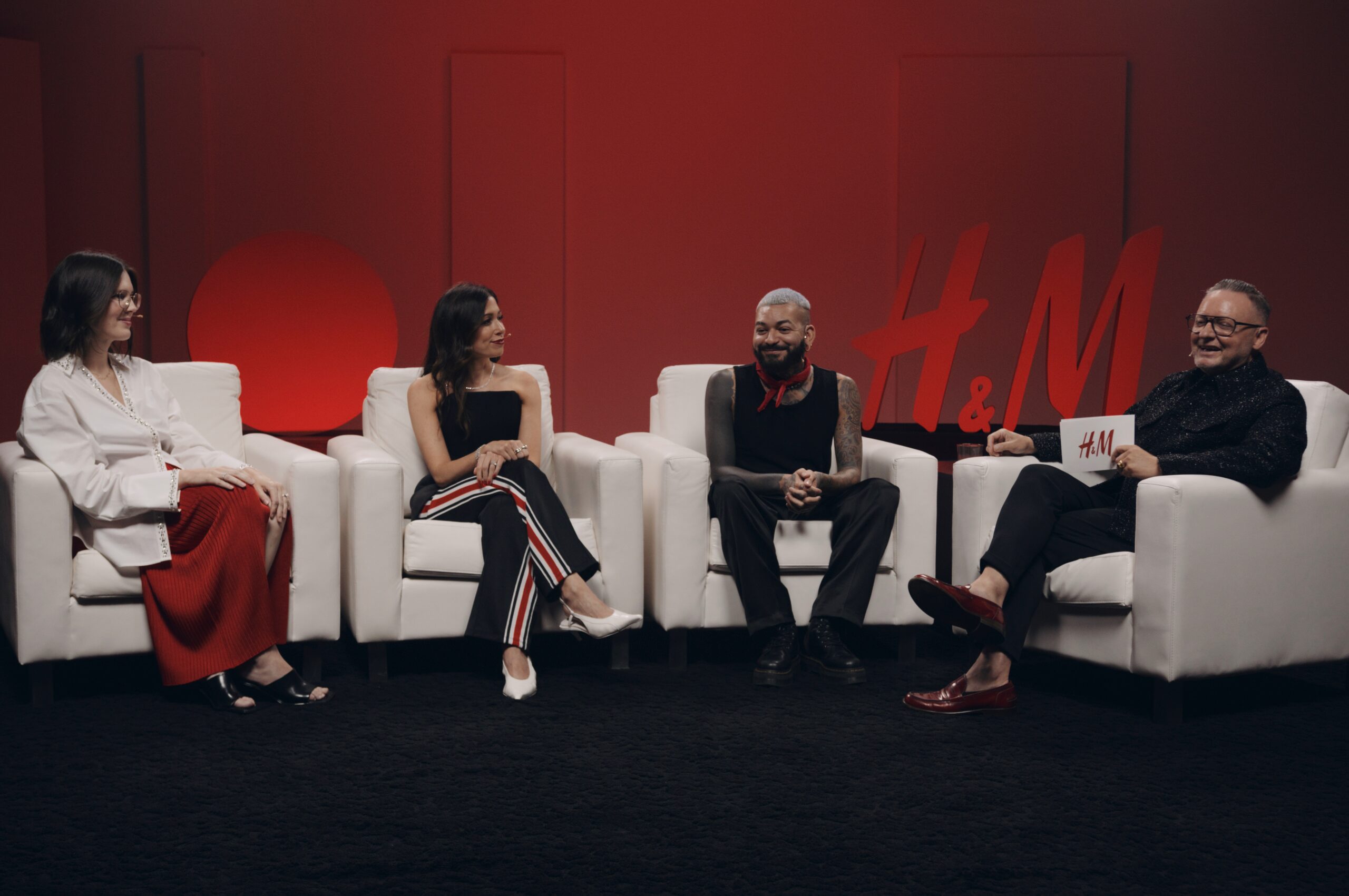
## The Role of a Music Video Director. More Than Calling Action
The title sounds self-explanatory, but the actual scope of the role surprises a lot of first-time clients. A music video director is simultaneously a visual storyteller, a production designer's collaborator, a lighting strategist, a casting decision-maker, and, most importantly, an interpreter. Their job is to listen to a piece of music and generate a cohesive creative vision that serves the artist's brand, the song's emotional arc, and the distribution platform all at once.
That last point matters more than it used to. A director making a video in 2010 was primarily thinking about MTV and YouTube. Today, the same video needs to feel intentional on YouTube, cut down gracefully into a vertical 60-second clip for Instagram Reels, work as a static thumbnail, and potentially support a longer documentary-style behind-the-scenes piece. The best directors we know think in ecosystems, not single deliverables.
From pre-production through the final grade, a great director is making hundreds of micro-decisions. Where does the camera sit during the performance? Does the narrative thread intersect with the performance footage or run parallel to it? Does the color palette shift between the bridge and the chorus, or does the edit carry that emotional weight instead? None of these decisions are made in isolation. They are all in service of a single goal: making the listener *feel* something they could not fully feel from the audio alone.
## What Separates a Great Music Video Director from an Average One
This is the part most production company blogs skip because it requires actual opinions. We are not going to skip it.
### They Understand Music, Not Just Visuals
Sounds obvious. It is not universally practiced. We have seen directors put together visually stunning work that completely ignores the song's structure, cutting to something climactic on a quiet verse, holding a static shot through a drop that deserved a hard cut. Technical skill without musical literacy produces beautiful footage that feels disconnected. The best directors internalize the track before they ever open a treatment document. They know where the song breathes, where it hits, where the listener expects release. That structural understanding informs every decision from blocking to editorial rhythm.
### They Write Treatments That Actually Communicate
A treatment is the director's written pitch for their creative vision, typically including concept, visual references, color palette ideas, and a breakdown of the narrative or performance approach. A strong treatment does not read like a mood board caption. It explains *why* the concept serves the specific song and artist. It anticipates production challenges and addresses them. It gives the artist enough information to say yes with confidence, not just because the reference images look cool.
We have reviewed hundreds of treatments over the years. The ones that lead to great projects are specific. The ones that lead to friction are vague and heavily reference-dependent without explanatory connective tissue.
### They Manage the Gap Between Vision and Budget
The budget conversation is where a lot of director-artist relationships break down. A director who pitches a concept that requires a $200,000 production on a $30,000 budget is not being creative, they are being irresponsible. The best directors we have worked with are ruthlessly honest about what a given budget can produce and find genuinely creative ways to work within real constraints. Ingenuity under pressure is one of the defining skills of the craft. Some of the most visually compelling music videos in history were made with almost nothing. Michel Gondry built entire visual worlds on modest budgets through practical effects and clever production design rather than expensive post-production.
### They Are Collaborative, Not Territorial
This is a cultural thing more than a skill thing, but it matters enormously on set. A director who shuts down artist input in the name of protecting their vision tends to produce work that the artist does not connect with, and therefore does not promote. The best directors create a collaborative environment where the artist feels like a creative partner, not a subject. That does not mean every suggestion gets incorporated. It means the director has the communication skills to engage with feedback thoughtfully and redirect when necessary without creating tension.
### They Think About Post From Day One
Experienced directors do not finish the shoot and then hand off to post-production as an afterthought. They shoot with the edit in mind. They plan coverage that gives the editor choices. They communicate with the colorist about the grade during pre-production, not after the fact. Our [post-production team](https://c-istudios.com/post-production-services/) consistently notes that the most efficient and visually polished final products come from shoots where the director was thinking about the full pipeline from day one. That integration matters.
## How to Find the Right Music Video Director for Your Project
Let us get practical. Whether you are an independent artist shooting your first video or a label managing a roster, the process of finding and vetting a director follows a similar logic.
### Start With Style, Not Credits
Credits matter, but they are not the right starting point. Start by identifying three to five music videos that feel close to what you want to create, not necessarily in genre, but in visual language, tone, and approach. Are they cinematic and narrative-driven? Energetic and performance-focused? Surreal and conceptually dense? Once you have a clear reference set, look for directors whose existing work shares visual DNA with those references. A long list of credits from a director whose aesthetic is completely misaligned with your vision is less useful than a shorter reel from someone who clearly operates in your creative territory.
### Review Full Reels, Not Just Highlight Clips
Every director has a highlight reel. Watch the full videos instead. A highlight reel is edited to show only the best 30 seconds of every project. Full videos reveal how a director handles pacing, how they manage transitions, whether their narrative setups pay off, and how consistently their vision holds over three to four minutes. Inconsistency within a single video is a meaningful data point.
### Request a Treatment Before Committing
If you are seriously considering a director, ask for a brief treatment or concept overview based on your track before signing anything. This serves two purposes. First, it shows you how the director thinks and whether their instincts align with yours. Second, it reveals how they communicate, a skill that will matter enormously throughout the production process. Some directors will push back on this request, which is understandable if the ask is extensive and unpaid. A brief concept overview, though, is a reasonable expectation.
### Talk to People They Have Worked With
References from past collaborators, artists, producers, crew members, give you information that a reel never will. Was the director organized on set? Did they communicate well under pressure? Did the final product match the vision in the treatment? Did they respect the artist's creative input? A five-minute conversation with someone who has been on set with a director is worth more than an hour of watching their portfolio.
### Align on Distribution and Format Early
Before creative conversations go deep, make sure you and the director are aligned on where this video is going and in what formats. A 4K cinematic piece designed for YouTube premiere has very different production requirements than content primarily designed for [social media marketing](https://c-istudios.com/social-media-marketing-services/) distribution across vertical platforms. Directors who work extensively in long-form content are not always the right fit for social-first projects, and vice versa. This is not a judgment on quality, it is a question of specialization and instinct.

## The Production Infrastructure Behind a Great Music Video
A music video director is only as effective as the production infrastructure supporting their vision. This is something that gets glossed over in a lot of content about the creative side of the industry, but it is genuinely foundational. The difference between a concept that looks brilliant in a treatment and a final video that delivers on that concept is almost always a production execution question.
Camera packages, lighting setups, grip equipment, sound on set, the quality of the edit suite, the caliber of the colorist, all of these variables shape what a director can actually achieve. When artists work with a full-service company like ours, the director has access to [professional video production services](https://c-istudios.com/video-production-services/) that support creative ambition rather than constrain it. Our 30,000 square foot facility in Fort Lauderdale includes multiple stages, a full gear inventory, and integrated post-production capabilities, which means a director is not managing a dozen different vendor relationships simultaneously. That operational efficiency shows up on screen.
We have watched productions fall apart not because the director lacked vision but because the production infrastructure was not equipped to execute that vision. Fragmented pipelines, where production, post, audio, and color are handled by four different companies with no coordinated communication, introduce delays, inconsistencies, and cost overruns that erode the final product. Integration matters. Our [Fort Lauderdale production hub](https://c-istudios.com/video-production-fort-lauderdale/) is built specifically to eliminate those fragmentation problems.
## Music Video Budgets. What They Actually Buy
The music video industry has undergone a significant economic transformation over the past 15 years. According to [Billboard](https://www.billboard.com), major label video budgets that routinely reached seven figures in the early 2000s have compressed dramatically, while independent artists now account for a growing share of the most culturally resonant visual content. That shift has changed what directors need to know how to do.
Here is a rough framework for how budget tiers translate to production scope:
**Under $10,000:** Tight but workable for a performance-focused video with strong production design. One to two locations, minimal crew, efficient shoot days. The director's ability to extract visual interest from limited resources is everything at this tier.
**$10,000-$50,000:** This range opens up meaningful options, multiple locations, more complex lighting setups, dedicated hair and makeup, a larger crew, and more post-production time for color and effects. Most independent artist videos that look genuinely polished land in this range.
**$50,000-$200,000:** At this level, you are in commercial production territory. Elaborate set builds, larger cast, potentially multiple shoot days, high-end camera packages, and comprehensive post-production are all realistic. This is where a director's ability to manage a larger team and more complex logistics becomes a critical skill alongside their creative vision.
**Above $200,000:** Major label territory, typically involving significant visual effects, complex narrative productions, or location shoots that require substantial logistical infrastructure. Our team has worked on projects at this level for clients including Nike, AT&T, and the NFL, the production demands are substantial and require deep experience across every department.
The right director is partly a function of your budget tier. A director who primarily works on high-budget productions may not be the right fit for a lean independent shoot, and the reverse is equally true. Matching director experience to production scale is a practical consideration that often gets overlooked in the excitement of the creative conversation.

## The Audio-Visual Relationship. Why Sound Matters Even After the Shoot
Here is something that does not come up enough in conversations about [music video production](https://c-istudios.com/video-production-services/music-video-production/): the quality of the audio in your final video matters enormously, and it is not something the director alone controls. A beautifully shot video that delivers compromised audio, whether due to a substandard master, poor mix decisions on the delivered track, or issues with the audio-video sync in post, loses impact in ways that even the most stunning visuals cannot compensate for.
Our [audio engineering services](https://c-istudios.com/audio-engineering-services/) team works alongside the video production and post teams to ensure that the final deliverable represents the music as well as it represents the visual work. This is especially important for videos that will be used in broadcast contexts or that need to meet platform-specific loudness standards.
According to the [Recording Industry Association of America](https://www.riaa.com), the streaming landscape has fundamentally changed how audio is consumed alongside video, and artists who treat the two as separate deliverables often end up with a disconnect that audiences notice even if they cannot name it. A music video director who understands the audio-visual relationship as integrated, not sequential, produces better work consistently.
## Work with C&I Studios
If you are planning a project like this, our team can take it from concept to final delivery. Explore our [film and TV production](https://c-istudios.com/film-and-tv-production/), browse [our work](https://c-istudios.com/our-work/) to see how we tell brand stories, and [get in touch](https://c-istudios.com/contact/) when you are ready to start.
Originally published April 4, 2026
---
*This content is from [C&I Studios](https://c-istudios.com), a full-service production company.*
---
# TikTok Video Production for Brands
> Published: April 3, 2026
> Categories: Commercial & Brand
> Source: https://c-istudios.com/tiktok-video-production/
---
.cib{--paper:#1b1d1f;--ink:#fff;--body:#d5d7d9;--muted:#8b9096;--line:rgba(255,255,255,.12);--thumb:#2b2e31;--card:#212426;--accent:#c02b0a;--blue:#5B8FA8;--serif:'Playfair Display',Georgia,serif;--sans:'Poppins',-apple-system,sans-serif;--measure:900px;background:var(--paper);color:var(--body);font-family:var(--sans);line-height:1.6;position:relative;left:50%;transform:translateX(-50%);width:90vw;max-width:1920px}
.cib *{box-sizing:border-box}
.cib .kicker{max-width:var(--measure);margin:58px auto 0;padding:0 22px;font-size:12.5px;font-weight:700;letter-spacing:2.5px;text-transform:uppercase;color:var(--blue)}
.cib h1.cibh1{text-wrap:balance;font-family:var(--serif);font-weight:500;font-size:clamp(46px,6vw,72px);line-height:1.08;color:var(--ink);max-width:var(--measure);margin:18px auto 0;padding:0 22px;letter-spacing:-.5px}
.cib .metarow{max-width:var(--measure);margin:20px auto 0;padding:0 22px;color:var(--muted);font-size:14px}
.cib .hero{position:relative;width:100%;height:0;padding-bottom:56.25%;overflow:hidden;margin:48px auto 0;border-top:1px solid var(--line);border-bottom:1px solid var(--line)}
.cib .hero .ph{width:100%;aspect-ratio:16/9;background:var(--thumb);border-top:1px solid var(--line);border-bottom:1px solid var(--line);display:flex;align-items:center;justify-content:center;color:#7d8288;font-size:13px;text-align:center;padding:0 20px}
.cib .body{max-width:var(--measure);margin:12px auto 0;padding:52px 22px 6px}
.cib .body.lead p:first-child{font-size:23px;line-height:1.62;color:var(--ink)}
.cib .body p{font-size:18.5px;line-height:1.85;margin:0 0 30px;color:var(--body)}
.cib .body h2{text-wrap:balance;font-family:var(--serif);font-weight:500;font-size:clamp(32px,4vw,48px);line-height:1.22;color:var(--ink);margin:70px 0 20px;letter-spacing:-.3px}
.cib .body h3{text-wrap:balance;font-family:var(--sans);font-weight:600;font-size:22px;color:var(--ink);margin:38px 0 8px}
.cib .body a{color:var(--ink);text-decoration:underline;text-decoration-color:rgba(255,255,255,.4);text-underline-offset:3px}
.cib .body a:hover{text-decoration-color:var(--ink)}
.cib .ctable{width:100%;border-collapse:collapse;margin:16px 0 30px;font-size:16px}
.cib .ctable th{background:#000;color:#fff;text-align:left;padding:10px 12px;font-family:var(--sans)}
.cib .ctable td{padding:10px 12px;border-bottom:1px solid var(--line);color:var(--body)}
.cib .inimg{position:relative;width:100%;height:0;padding-bottom:56.25%;overflow:hidden;margin:72px auto;border-top:1px solid var(--line);border-bottom:1px solid var(--line)}
.cib .inimg .ph{width:100%;aspect-ratio:16/9;background:var(--thumb);border-top:1px solid var(--line);border-bottom:1px solid var(--line);display:flex;align-items:center;justify-content:center;color:#7d8288;font-size:13px}
.cib .origpub{max-width:var(--measure);margin:60px auto 0;padding:26px 22px 0;border-top:1px solid var(--line);color:var(--muted);font-size:13.5px}
.cib .related{max-width:1200px;margin:64px auto 0;padding:34px 22px 76px}
.cib .related h3{font-family:var(--sans);font-size:12.5px;letter-spacing:2px;text-transform:uppercase;color:var(--ink);margin:0 0 24px}
.cib .grid{display:grid;grid-template-columns:repeat(3,1fr);gap:28px}
.cib .rc{background:var(--card);border:1px solid var(--line);display:block;text-decoration:none;color:inherit;transition:border-color .15s}
.cib a.rc:hover{border-color:rgba(255,255,255,.5)}
.cib .rc .thumb{position:relative;width:100%;height:0;padding-bottom:56.25%;background:var(--thumb);overflow:hidden}
.cib .rc .thumb img{position:absolute!important;top:0!important;left:0!important;width:100%!important;height:100%!important;object-fit:cover!important;margin:0!important}
.cib .rc .cc{padding:14px 15px 17px}
.cib .rc .rt{font-family:var(--serif);font-weight:500;font-size:16px;line-height:1.3;color:var(--ink);margin:0 0 6px}
.cib .rc .rm{font-size:11px;letter-spacing:1px;text-transform:uppercase;color:var(--muted)}
.cib img{margin:0!important;padding:0!important;display:block!important;vertical-align:top;max-width:100%}
.cib .hero img,.cib .inimg img{position:absolute!important;top:0!important;left:0!important;width:100%!important;height:100%!important;object-fit:cover!important;margin:0!important;padding:0!important;border:0!important;display:block!important;aspect-ratio:auto!important}
.cib .hero+.body{padding-top:36px}
@media(max-width:760px){.cib .grid{grid-template-columns:1fr}.cib .body h2{margin:52px 0 16px}.cib .body p{font-size:17.5px}.cib .inimg,.cib .hero{margin-top:44px}}
.cib .vembed{max-width:var(--measure);margin:44px auto;padding:0 22px}.cib .vembed .vwrap{position:relative;width:100%;height:0;padding-bottom:56.25%}.cib .vembed .vwrap iframe{position:absolute;top:0;left:0;width:100%;height:100%;border:0}
Commercial & Brand
# TikTok Video Production for Brands
16 min read
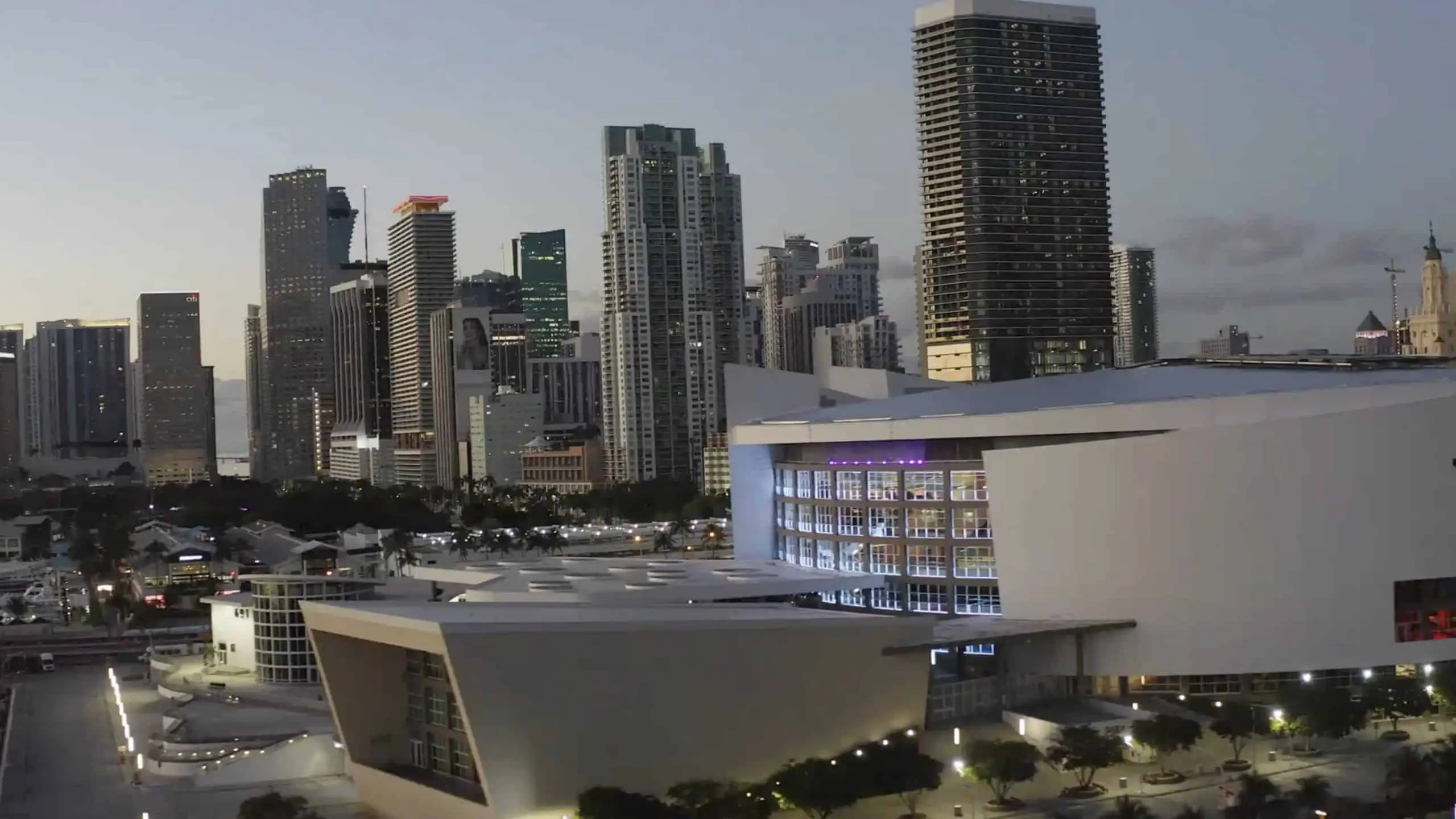
TikTok video production is no longer a niche skill reserved for teenage creators filming in their bedrooms. It is a serious, high-stakes discipline that global brands are pouring real budget into, and for good reason. As of 2024, TikTok reports over [1 billion monthly active users](https://newsroom.tiktok.com/en-us/), and the platform's average engagement rate outperforms Instagram, YouTube Shorts, and Facebook Reels by a significant margin. The question brands and agencies are wrestling with right now is not whether to show up on TikTok, it is how to show up in a way that does not look like a press release with a soundtrack. We have worked with Nike, AT&T, NBC, and Coca-Cola on content across multiple platforms, and the lessons we have learned about short-form video apply directly to what makes TikTok content succeed or fail.
This guide covers everything from pre-production strategy to platform-specific technical requirements, post-production workflows, and the mindset shift that separates brands that win on TikTok from brands that quietly delete their accounts after six months.

## Why TikTok Demands a Different Production Mindset
The biggest mistake we see brands make is treating TikTok like a repurposing channel. They shoot a 30-second TV spot, crop it to vertical, slap a trending audio clip on top, and wonder why the watch time collapses after two seconds. TikTok is not a distribution channel for content you already made. It is a creative medium with its own grammar, pacing conventions, and audience expectations.
That does not mean production quality is irrelevant. It means production quality has to serve native aesthetics. There is a real difference between lo-fi because you shot it on an iPhone intentionally and lo-fi because your lighting was bad and your audio was unusable. Audiences on TikTok are remarkably good at detecting the latter. Our team has spent years developing what we call a "native-first" approach to social video, producing content that feels like it belongs on the platform while still meeting the technical and brand standards our clients require.
If you want to understand what professional social media video production looks like at scale, our [social media marketing services](https://c-istudios.com/social-media-marketing-services/) page lays out how we approach platform-specific creative from strategy through delivery.
## The Technical Foundation of TikTok Video Production
Before you think about hooks, trending sounds, or content pillars, you need to get the technical fundamentals right. TikTok has specific requirements that affect how you plan and execute a shoot.
### Aspect Ratio and Frame Dimensions
TikTok is a vertical-first platform. The standard aspect ratio is 9:16, and the optimal resolution is 1080 x 1920 pixels. This affects everything from how you position your subjects in frame to how you design any motion graphics or text overlays. If you are shooting on a cinema camera or even a mirrorless system, you need to plan your composition with vertical delivery in mind, which often means rethinking shot design from the ground up.
We typically shoot TikTok-specific content separately from horizontal deliverables, or we plan a production specifically to capture both orientations simultaneously using multiple camera setups. Trying to extract usable vertical content from a horizontal shoot after the fact is one of the most expensive and time-consuming mistakes in social video production.
### Video Length and Pacing
TikTok allows videos up to 10 minutes, but the algorithm heavily favors completion rate as a ranking signal. In practice, the sweet spot for most brand content is 15 to 60 seconds. For educational or tutorial content, 60 to 90 seconds can work well if the pacing is tight. Anything over two minutes needs to justify its length with genuinely compelling storytelling, and most brand content cannot do that yet.
Pacing on TikTok is faster than almost any other medium. The average cut frequency in top-performing TikTok content is roughly one cut every 2 to 3 seconds. That is not a rule, it is a reflection of how audiences have trained themselves to consume content on the platform. Slower pacing can work when it is intentional and mood-driven, but it requires much stronger visual storytelling to hold attention.
### Audio Requirements and Strategy
Audio is not an afterthought on TikTok, it is often the primary creative driver. TikTok's algorithm actively uses audio as a discovery mechanism, which means the sounds you choose affect who sees your content. Trending audio clips can dramatically boost reach, but they require licensing awareness for brand accounts. TikTok's Commercial Music Library offers a catalog of sounds cleared for business use, but it is significantly smaller than the general catalog.
Original audio is increasingly valuable. Brands that create their own sounds, jingles, catchphrases, signature audio branding, can build long-term platform equity in a way that borrowed trending sounds cannot. Our [audio engineering services](https://c-istudios.com/audio-engineering-services/) team works on everything from dialogue cleanup to original music composition specifically designed for social media delivery, where dynamic range and EQ profiles differ significantly from broadcast or cinema standards.
### File Format and Compression
TikTok accepts MP4 and MOV files. For optimal quality, export at H.264 or H.265 codec, with a bitrate of at least 2 Mbps and ideally higher for upload before TikTok's compression takes over. The platform recompresses everything on its end, so uploading the highest quality file you can is always the right call, do not pre-compress your content thinking you are saving upload time. You are just giving TikTok worse source material to work from.
## Pre-Production Strategy. Where TikTok Success Actually Starts
The production itself is only one part of the equation. What happens before you ever call action determines whether your TikTok content has a strategic foundation or just looks good in isolation. We structure pre-production for TikTok differently than we would for a broadcast spot or a documentary, the creative development process has to account for platform behavior, not just brand objectives.
### Define Your Content Pillars First
TikTok rewards consistency and niche authority. Before you produce a single piece of content, define three to five content pillars that reflect your brand's expertise or personality. For a consumer packaged goods brand, that might be recipes, behind-the-scenes manufacturing, sustainability stories, and user response content. For a B2B company, it might be industry education, team culture, product demos, and client success moments.
Content pillars give your production team a repeatable brief structure. Instead of inventing a new concept from scratch every week, you are filling slots in a framework, which dramatically speeds up production and creates the algorithmic consistency that helps TikTok understand what your account is about and who to show it to.
### Research the Platform Before You Script
Spend real time on TikTok as a viewer before you script anything. Specifically, spend time in the corner of TikTok your brand wants to inhabit. What formats are performing? What hooks are being used? What is the pacing? What does the comment section reveal about what the audience actually wants more of?
This research phase is not optional and it is not something you can delegate to a junior team member and summarize in a slide deck. The people writing your creative briefs need to have genuine fluency with the platform. We build platform immersion time into every social video project we take on, and it consistently produces better creative output than briefs that rely entirely on brand guidelines and past campaign performance from other channels.
### Build a Production Batch System
One of the most important structural decisions in TikTok production is whether you are shooting content one piece at a time or batching multiple videos in a single production day. Batching is almost always more efficient, and for brands posting at the recommended frequency of three to five times per week, it is essentially required.
A well-organized batch shoot can produce 10 to 20 pieces of content in a single day with a small crew. The key is rigorous pre-production, scripts finalized and approved before the shoot, talent briefed on multiple setups, locations locked, and a shot list organized to minimize setup changes. Our [video production services](https://c-istudios.com/video-production-services/) team is experienced in building batch production workflows that give social media teams a content runway without sacrificing quality or brand consistency.
### The Hook Is the Most Important Line in the Script
TikTok's algorithm measures what percentage of viewers watch past the three-second mark. If your hook does not immediately communicate value, intrigue, or entertainment, most of your audience will scroll before they have even registered what your content is about. This is not hyperbole, it is how the platform works mechanically.
Strong TikTok hooks typically fall into a few categories: pattern interrupts (something visually or audibly unexpected), direct promises ("Here is how we shot a Nike campaign in 60 seconds"), provocative questions, or bold statements that demand a reaction. The hook should be written first, not last. Everything else in the video exists to deliver on the promise the hook makes.
## Production Techniques That Work Specifically for TikTok
Production for TikTok borrows heavily from traditional filmmaking principles, but applies them in a context where the delivery medium, viewing environment, and audience behavior are radically different. Here is how our team approaches the shoot phase for short-form vertical content.
### Camera Movement and Handheld Energy
Locked-off, static shots can work on TikTok, but intentional camera movement tends to perform better, particularly movement that feels motivated by the energy of the content rather than by a cinematographer's ego. Handheld work with slight natural movement often reads as more authentic on TikTok than perfectly stabilized, mechanical slider moves that signal high production value but feel disconnected from the platform's aesthetic.
This does not mean shake your camera randomly. It means match your camera movement to the emotional register of the content. A conversational, talking-head piece benefits from natural, intimate framing. A product reveal or behind-the-scenes moment might work better with purposeful push-ins or reveal movements that create momentum.
### Lighting for Vertical and Small Screens
Most TikTok content is consumed on mobile screens, often in environments that are not perfectly dark or ideally calibrated. Your lighting needs to be clean enough to read clearly under those conditions. Extremely low-contrast, cinematic lighting setups that look stunning on a color-graded monitor can fall apart completely on a phone screen in a bright room.
We recommend: motivated key lights, controlled background separation, and enough contrast to make your subject pop from the environment without crushing shadows or blowing out highlights. Ring lights, which have become synonymous with creator content, work fine but can look flat for brand work. A properly set-up LED panel with a diffusion modifier at a 45-degree angle will almost always produce a better result.
### Directing Talent for Short-Form Pacing
Directing talent for TikTok is different from directing for broadcast. On TikTok, energy needs to be slightly heightened, delivery needs to be faster, and the performer, whether that is a professional actor, a brand spokesperson, or a company founder, needs to connect with the camera as if they are talking to a single person, not performing for an audience.
The most effective TikTok talent reads as genuine, even when they are fully scripted. Getting there requires specific direction: shorter takes, more natural phrasing, permission to slightly deviate from the script when it improves authenticity, and multiple options with different energy levels so the editing team has choices.
### Shooting for Text Overlays and On-Screen Graphics
TikTok content frequently uses on-screen text as a storytelling tool, captions, callouts, questions, and data points overlaid on the video. When you plan your shots, leave compositional room for these elements. Subjects positioned dead-center with important visual information filling the full frame give your editors no space to work with in post.
Plan your compositions with text zones in mind. The upper third and lower third of the frame are the most commonly used areas for text. TikTok's own UI, the like button, comment icon, share button, and caption text, lives on the right side and bottom of the screen, so avoid placing critical visual information in those areas.
## Post-Production Workflow for TikTok Content
Post-production for TikTok is where a lot of brands lose efficiency. The edit suite is not where you figure out what the video is, it is where you execute a plan that was already made in pre-production. When that plan exists, post-production for a batch of TikTok content can be fast, systematic, and high-quality simultaneously.
### Editing Rhythm and Pacing
The edit should establish a rhythm from the first frame. Cuts should feel purposeful, motivated by the audio beat, the narrative beat, or the action on screen. Avoid the temptation to hold shots longer than the content demands just because you like the footage. On TikTok, every second that does not earn its place costs you watch time.
Transition choices matter but are frequently overused by brands trying to demonstrate editing sophistication. Simple cuts, matched on action, often outperform elaborate transition effects because they keep the viewer focused on the content rather than the technique. Use transitions when they serve the story, not when they fill time or look impressive in isolation.
### Color Grading for TikTok Delivery
Color grading for TikTok should be more aggressive than for broadcast in some respects, higher saturation, cleaner contrast, because the content needs to read immediately on small screens in variable viewing conditions. Muted, desaturated grades that work beautifully for documentary or narrative film content can look dull and cheap on TikTok.
That said, maintain brand color consistency. If your brand uses a specific color palette, make sure your grade supports that palette rather than undermining it. Our [post-production services](https://c-istudios.com/post-production-services/) team handles color grading at every level of complexity, from basic social media correction to full DI for broadcast delivery, and we know how to calibrate a grade specifically for platform delivery.
### Captions and Accessibility
A significant portion of TikTok content is consumed with the sound off, particularly in public spaces. Auto-captions are available natively on TikTok, but they are error-prone and their formatting is limited. For brand content, we recommend burning clean, well-styled captions into the video or using TikTok's caption editing tool to manually correct the auto-generated version before publishing.
Accessibility is not just an ethical consideration, it directly affects watch time metrics. Viewers who might have scrolled past content they cannot hear will stay and watch if captions are clear and accurate. This is a simple post-production step that has a measurable impact on performance.

## Working With a Professional Production Company on TikTok Content
There is a persistent myth that professional production quality is incompatible with TikTok's native aesthetic. In our experience, the opposite is true, professional production creates a ceiling of quality that creator-led content cannot easily reach, while the best brands on TikTok have figured out how to operate within that ceiling without looking like they are broadcasting from a different universe than their audience.
C&I Studios has a 30,000 square foot production facility in Fort Lauderdale and offices in Los Angeles and New York, the three cities where most major brand content decisions get made. That infrastructure matters when you are producing at volume. Our [Fort Lauderdale production facility](https://c-istudios.com/video-production-fort-lauderdale/) can support full studio builds, multiple simultaneous setups, green screen, practical sets, and the full range of equipment needed for professional short-form content. Our [Los Angeles team](https://c-istudios.com/video-production-los-angeles/) and [New York City team](https://c-istudios.com/video-production-new-york/) handle productions across both coasts with the same production standards.
When brands partner with a professional production company for TikTok content, they typically get three things that in-house or creator-only approaches struggle to deliver consistently: technical reliability (proper audio, lighting, and camera work that performs across all devices), brand coherence (content that looks and feels like the brand regardless of which creator or spokesperson appears), and production volume (the ability to produce enough content to feed the platform's appetite without burning out an internal team).
## Integrating TikTok Into a Broader Content Strategy
TikTok should not exist in isolation from the rest of your content ecosystem. The best-performing brand TikTok strategies we have seen treat the platform as one node in a larger content network, feeding audience discovery and brand awareness at the top of the funnel while connecting to longer-form content, owned media, and conversion-focused assets further down.
This is where our broader [advertising services](https://c-istudios.com/advertising-services/) capability becomes relevant. TikTok's paid advertising products, In-Feed Ads, TopView, Branded Hashtag Challenges, and Spark Ads, require the same production quality and native-first creative approach as organic content, but with additional layers of audience targeting, bidding strategy, and performance measurement. Producing for paid TikTok without understanding the platform's organic behavior is one of the most common and expensive mistakes we see brands make.
Content produced for TikTok often travels well to Instagram Reels and YouTube Shorts with minimal adaptation, which extends the return on your production investment significantly. Our approach is always to plan for platform-specific delivery first, then identify adaptation opportunities rather than the reverse.
## What Brands With Strong TikTok Presences Do Differently
Looking across the brand accounts that have built genuine audiences on TikTok, not just follower counts, but real engagement and cultural relevance, a few patterns emerge consistently.
They post with high frequency and accept that not every piece of content will perform. Brands that treat every TikTok video like a major campaign launch almost never build momentum because they cannot sustain the volume the algorithm requires. The brands winning on TikTok treat individual posts more like social media content and less like advertising campaigns, iterative, responsive, and informed by what the data tells them about what their specific audience responds to.
They engage with the platform's culture rather than broadcasting into it. Participating in trends, responding to comments, and creating content that references what is actually happening on TikTok at a given moment requires a team that is genuinely embedded in the platform. This is a different skill set from traditional creative or media buying, and it is one reason why TikTok strategy is increasingly a specialized discipline within larger marketing organizations.
They invest in production quality where it matters. Raw iPhone footage can absolutely perform on TikTok, but the best-performing brand content is almost never actually lo-fi. It is carefully produced to look and feel native while still delivering the audio quality, lighting control, and pacing precision that consumer-created content rarely achieves consistently. According to [TikTok for Business research](https://www.tiktok.com/business/en-US/blog), ads that feel native to the platform outperform repurposed ads from other channels by a significant margin, in some categories, the gap is over 50%.

## TikTok and Long-Form. How Short-Form Connects to Bigger Stories
Here is something we think about that most TikTok conversations miss entirely: TikTok is not the end of the story. It is often the beginning of one. The best brand content strategies use TikTok as an awareness and discovery layer that leads audiences toward deeper engagement, longer videos, documentary-style content, brand films, and campaigns that can carry more emotional and narrative weight.
Our work in [film production services](https://c-istudios.com/film-production-services/) and [documentary film production](https://c-istudios.com/documentary-film-production/) regularly informs how we think about TikTok content, and vice versa. A 90-second documentary segment can become three or four TikTok clips. A brand film can generate two weeks of short-form content through deliberate planning during pre-production. The most efficient content operations we work with think about the full content architecture before they shoot a single frame, then plan production to serve the entire ecosystem simultaneously.
You can see examples of how this plays out across different clients in our [portfolio of work](https://c-istudios.com/our-work/), which spans broadcast, digital, and social formats across a wide range of industries and campaign types.
## Work with C&I Studios
If you are planning a project like this, our team can take it from concept to final delivery. Explore our [video production services](https://c-istudios.com/video-production-services/), browse [our work](https://c-istudios.com/our-work/) to see how we tell brand stories, and [get in touch](https://c-istudios.com/contact/) when you are ready to start.
Originally published April 3, 2026
---
*This content is from [C&I Studios](https://c-istudios.com), a full-service production company.*
---
# Reels Production That Actually Performs
> Published: April 2, 2026
> Categories: Commercial & Brand
> Source: https://c-istudios.com/reels-production/
---
.cib{--paper:#1b1d1f;--ink:#fff;--body:#d5d7d9;--muted:#8b9096;--line:rgba(255,255,255,.12);--thumb:#2b2e31;--card:#212426;--accent:#c02b0a;--blue:#5B8FA8;--serif:'Playfair Display',Georgia,serif;--sans:'Poppins',-apple-system,sans-serif;--measure:900px;background:var(--paper);color:var(--body);font-family:var(--sans);line-height:1.6;position:relative;left:50%;transform:translateX(-50%);width:90vw;max-width:1920px}
.cib *{box-sizing:border-box}
.cib .kicker{max-width:var(--measure);margin:58px auto 0;padding:0 22px;font-size:12.5px;font-weight:700;letter-spacing:2.5px;text-transform:uppercase;color:var(--blue)}
.cib h1.cibh1{text-wrap:balance;font-family:var(--serif);font-weight:500;font-size:clamp(46px,6vw,72px);line-height:1.08;color:var(--ink);max-width:var(--measure);margin:18px auto 0;padding:0 22px;letter-spacing:-.5px}
.cib .metarow{max-width:var(--measure);margin:20px auto 0;padding:0 22px;color:var(--muted);font-size:14px}
.cib .hero{position:relative;width:100%;height:0;padding-bottom:56.25%;overflow:hidden;margin:48px auto 0;border-top:1px solid var(--line);border-bottom:1px solid var(--line)}
.cib .hero .ph{width:100%;aspect-ratio:16/9;background:var(--thumb);border-top:1px solid var(--line);border-bottom:1px solid var(--line);display:flex;align-items:center;justify-content:center;color:#7d8288;font-size:13px;text-align:center;padding:0 20px}
.cib .body{max-width:var(--measure);margin:12px auto 0;padding:52px 22px 6px}
.cib .body.lead p:first-child{font-size:23px;line-height:1.62;color:var(--ink)}
.cib .body p{font-size:18.5px;line-height:1.85;margin:0 0 30px;color:var(--body)}
.cib .body h2{text-wrap:balance;font-family:var(--serif);font-weight:500;font-size:clamp(32px,4vw,48px);line-height:1.22;color:var(--ink);margin:70px 0 20px;letter-spacing:-.3px}
.cib .body h3{text-wrap:balance;font-family:var(--sans);font-weight:600;font-size:22px;color:var(--ink);margin:38px 0 8px}
.cib .body a{color:var(--ink);text-decoration:underline;text-decoration-color:rgba(255,255,255,.4);text-underline-offset:3px}
.cib .body a:hover{text-decoration-color:var(--ink)}
.cib .ctable{width:100%;border-collapse:collapse;margin:16px 0 30px;font-size:16px}
.cib .ctable th{background:#000;color:#fff;text-align:left;padding:10px 12px;font-family:var(--sans)}
.cib .ctable td{padding:10px 12px;border-bottom:1px solid var(--line);color:var(--body)}
.cib .inimg{position:relative;width:100%;height:0;padding-bottom:56.25%;overflow:hidden;margin:72px auto;border-top:1px solid var(--line);border-bottom:1px solid var(--line)}
.cib .inimg .ph{width:100%;aspect-ratio:16/9;background:var(--thumb);border-top:1px solid var(--line);border-bottom:1px solid var(--line);display:flex;align-items:center;justify-content:center;color:#7d8288;font-size:13px}
.cib .origpub{max-width:var(--measure);margin:60px auto 0;padding:26px 22px 0;border-top:1px solid var(--line);color:var(--muted);font-size:13.5px}
.cib .related{max-width:1200px;margin:64px auto 0;padding:34px 22px 76px}
.cib .related h3{font-family:var(--sans);font-size:12.5px;letter-spacing:2px;text-transform:uppercase;color:var(--ink);margin:0 0 24px}
.cib .grid{display:grid;grid-template-columns:repeat(3,1fr);gap:28px}
.cib .rc{background:var(--card);border:1px solid var(--line);display:block;text-decoration:none;color:inherit;transition:border-color .15s}
.cib a.rc:hover{border-color:rgba(255,255,255,.5)}
.cib .rc .thumb{position:relative;width:100%;height:0;padding-bottom:56.25%;background:var(--thumb);overflow:hidden}
.cib .rc .thumb img{position:absolute!important;top:0!important;left:0!important;width:100%!important;height:100%!important;object-fit:cover!important;margin:0!important}
.cib .rc .cc{padding:14px 15px 17px}
.cib .rc .rt{font-family:var(--serif);font-weight:500;font-size:16px;line-height:1.3;color:var(--ink);margin:0 0 6px}
.cib .rc .rm{font-size:11px;letter-spacing:1px;text-transform:uppercase;color:var(--muted)}
.cib img{margin:0!important;padding:0!important;display:block!important;vertical-align:top;max-width:100%}
.cib .hero img,.cib .inimg img{position:absolute!important;top:0!important;left:0!important;width:100%!important;height:100%!important;object-fit:cover!important;margin:0!important;padding:0!important;border:0!important;display:block!important;aspect-ratio:auto!important}
.cib .hero+.body{padding-top:36px}
@media(max-width:760px){.cib .grid{grid-template-columns:1fr}.cib .body h2{margin:52px 0 16px}.cib .body p{font-size:17.5px}.cib .inimg,.cib .hero{margin-top:44px}}
.cib .vembed{max-width:var(--measure);margin:44px auto;padding:0 22px}.cib .vembed .vwrap{position:relative;width:100%;height:0;padding-bottom:56.25%}.cib .vembed .vwrap iframe{position:absolute;top:0;left:0;width:100%;height:100%;border:0}
Commercial & Brand
# Reels Production That Actually Performs
16 min read

Short-form video has completely reshaped how brands communicate, and **reels production** sits at the center of that shift. Whether you are a direct-to-consumer brand trying to crack the Instagram algorithm or a Fortune 500 company looking to stay culturally relevant, the way you produce your reels determines whether they scroll past or stop thumbs cold. This is not a conversation about going viral by accident. It is about building a deliberate, repeatable production process that makes every 15 to 90 seconds count.
We have been deep in this space at C&I. Our team produces short-form content for brands that range from scrappy startups to household names, Nike, Coca-Cola, H&M, Calvin Klein, and the one thing that separates reels that generate real business outcomes from the ones that quietly disappear is production intentionality. Not budget. Not a trendy audio track. Intentionality.
This post breaks down everything that goes into high-performing reels production: the creative strategy, the technical execution, the post-production workflow, and the distribution logic that makes it all land.

## Why Reels Production Is No Longer Optional for Brands
Instagram's own internal data, confirmed publicly by Adam Mosseri, shows that Reels receive significantly more reach than static posts, particularly for accounts trying to grow. But reach alone is not the goal. The more interesting signal is engagement depth: saves, shares, and profile visits that follow a well-produced reel.
According to [Statista research on Instagram Reels reach for brands](https://www.statista.com/statistics/1237302/instagram-reels-reach-brands/), short-form video content consistently outperforms photo posts by 22% or more in terms of organic reach. That number shifts constantly, but the directional truth has not changed: video wins on social, and reels are the dominant video format on Instagram right now.
The mistake most brands make is treating reels like a repurposing exercise. They take a 90-second brand video, crop it vertically, add captions, and call it a reel. That approach produces mediocre results because reels have their own grammar, their own way of opening, pacing, and closing that is fundamentally different from broadcast or even YouTube content. Our [social media marketing services](https://c-istudios.com/social-media-marketing-services/) team sees this constantly: brands with massive production budgets underperforming against smaller competitors who actually understand the format.
## The Building Blocks of Professional Reels Production
Producing a reel that performs requires thinking about five distinct layers simultaneously: concept, capture, sound, edit, and delivery. Skip or shortchange any one of them and the whole thing falls apart. Here is how we think about each layer.
### Concept. Starting With the Hook, Not the Message
Most brand video briefs start with "here is what we want to say." Reels production requires flipping that entirely. The first question is: "why would someone not skip this in the first two seconds?" That is the hook, and the hook is not a logo, not a tagline, and definitely not a slow product reveal.
Strong hooks fall into a few reliable categories: pattern interrupts (something visually unexpected), bold statements, implied tension, or a direct address that feels personal. We spend a disproportionate amount of our pre-production time on hooks because they dictate everything downstream. A weak hook makes the best cinematography irrelevant.
The concept also needs to serve a single purpose. Not three messages. One. Whether that purpose is awareness, consideration, or conversion, every creative choice, music, pacing, copy, needs to serve that one purpose exclusively.
### Pre-Production. Planning for Vertical First
Vertical-first production is not just about flipping a camera. It changes blocking, framing, set design, and even talent positioning. A standard 16:9 production workflow does not map cleanly to 9:16 reels, and the teams that try to force that translation consistently produce content that looks awkward on mobile.
Our [video production services](https://c-istudios.com/video-production-services/) include dedicated vertical production workflows, separate shot lists, separate lighting setups, and separate creative supervision for short-form deliverables. When a brand comes to us needing both a broadcast commercial and a suite of reels from the same shoot day, we plan those as two distinct productions that happen to share a location and talent, not one production with a repurposing workflow bolted on.
That planning rigor pays off. Brands that invest in proper pre-production for reels consistently outperform those that treat it as an afterthought. Our [film production services](https://c-istudios.com/film-production-services/) team brings that same discipline, shot lists, storyboards, location scouts, to short-form work, which sounds like overkill until you see the results side by side.
### Capture. The Gear and Environment Matter More Than You Think
There is a persistent myth that reels should look "lo-fi" to feel authentic. That misreads the data. What performs well is content that feels native to the platform, but native does not mean low quality. It means appropriately intimate, appropriately paced, and visually clear enough to communicate on a 6-inch screen.
Our Fort Lauderdale facility gives us a 30,000 square foot production environment with full lighting grids, multiple cyc walls, and the kind of grip and electric infrastructure that lets us build any look we want. That flexibility matters even for reels production because controlled environments produce consistent results. Our [Fort Lauderdale production team](https://c-istudios.com/video-production-fort-lauderdale/) can build a lifestyle set, a minimalist product environment, or a fully dressed interior in hours, without the unpredictability of location shooting.
For brands with West Coast or East Coast needs, our [Los Angeles office](https://c-istudios.com/video-production-los-angeles/) and [New York City office](https://c-istudios.com/video-production-new-york/) give us the talent networks and location access to produce reels anywhere the brand needs to be.
### Sound. The Most Underestimated Element in Reels Production
Sound is where most brand reels quietly fail. Not because the music is wrong, though that is a common problem, but because the audio engineering is treated as an afterthought. Reels are consumed on phone speakers and earbuds, which means mid-range frequencies dominate, low-end rumbles disappear, and anything muddy becomes unintelligible.
Our [audio engineering services](https://c-istudios.com/audio-engineering-services/) team mixes specifically for mobile playback, which requires a different approach than broadcast or streaming mixes. Dialogue needs to sit higher in the mix. Music needs to breathe around it. Sound design, the subtle tactile sounds that make a product feel real, needs to be present but not competing with anything else.
The other sound consideration is music licensing. Brands cannot simply use trending audio on Instagram the way individual creators can. The licensing rules are different for commercial accounts, and using unauthorized music can result in content being muted or removed. We handle music licensing as part of our production workflow, sourcing tracks that are cleared for commercial social use and matching the sonic energy to the creative brief.
### The Edit. Pace Is Everything
Reels editing is an art form that looks deceptively simple. The technical barrier is low, anyone with a phone can cut together clips. But professional reels editing is about rhythm, emphasis, and emotional trajectory compressed into under 90 seconds. Every cut needs to mean something. Every text overlay needs to arrive at exactly the right moment. The energy curve of the reel, how it builds and releases, needs to feel intuitive even if the viewer cannot articulate why.
Our [post-production services](https://c-istudios.com/post-production-services/) team approaches reels edits with the same creative seriousness we bring to long-form content. We do not hand off reels to junior editors because the format requires experienced judgment about pacing decisions that are counterintuitive. Slower is sometimes faster. A held frame at the right moment creates more impact than a rapid-fire cut sequence. These are earned instincts, not rules you can look up in a tutorial.
Color grading is another post-production element that matters more in reels than people expect. A cohesive color treatment across a brand's entire reels library creates visual recognition that compounds over time, viewers start associating that look with the brand before they even register the logo. That kind of brand equity is built frame by frame.
## Reels Production Strategy. Thinking in Series, Not Singles
One of the most valuable shifts a brand can make in its approach to reels production is moving from single-video thinking to series thinking. A single reel might perform well. A series of reels with consistent visual language, recurring formats, and connected storylines builds an audience that returns.
Consider how the most effective brand accounts on Instagram operate. They have formats, recurring content types that their audience recognizes and anticipates. Behind-the-scenes formats. Product education formats. Cultural commentary formats. Each format has its own production template that can be executed efficiently while maintaining quality.
When we work with clients on [advertising services](https://c-istudios.com/advertising-services/) that include social media reels, we always push for a format strategy before we talk about individual pieces. What are the three to five recurring formats this brand will own? What are the production parameters for each? How do they connect to each other thematically? That thinking produces a library of content rather than a collection of one-offs.
## Common Mistakes in Brand Reels Production (and How to Avoid Them)
We have seen enough reels production projects across enough industries to have a clear picture of where brand content goes wrong. Some of these are obvious. Others are counterintuitive. All of them are fixable.
### Mistake 1. Producing Reels With Broadcast Pacing
Broadcast commercial pacing, deliberate, cinematic, often slow to build, does not translate to short-form social. The average viewer makes a scroll-or-watch decision within the first 1.5 seconds. A reel that opens with a slow dissolve, ambient music, and a gradual reveal has already lost most of its audience before anything happens. Reels need to open at full energy and maintain it.
This does not mean every reel needs to be frenetic. It means the opening frame needs to promise something worth watching, and the edit needs to deliver on that promise without wasting time.
### Mistake 2. Ignoring the Caption as Creative Real Estate
The caption in a reel is not metadata. It is creative real estate. Many viewers read the first line of the caption before deciding whether to watch. A strong caption hook, a question, a bold claim, a teaser, can meaningfully increase watch-through rates. Brands that auto-populate captions with hashtag strings and generic descriptions are leaving significant performance on the table.
Our team writes reels captions with the same intentionality as ad copy. The first line is always a hook. The body either expands on the video or provides context that makes the video more valuable. The call to action, if there is one, is specific and low-friction.
### Mistake 3. Treating Every Reel as an Ad
There is a spectrum of reels content, and most of it should not feel like advertising. The brands that build real audiences on Instagram Reels understand that the majority of their content needs to provide genuine value, entertainment, education, inspiration, or cultural connection, before asking for anything in return. The 80/20 principle applies here: roughly 80% of reels should be value-first, and the remaining 20% can carry more explicit conversion intent.
When every piece of content feels like a sales pitch, audiences disengage quickly. The algorithm notices that disengagement and reduces distribution. This creates a negative feedback loop that is hard to escape without fundamentally changing the content strategy.
### Mistake 4. Inconsistent Production Quality Across the Library
Brand perception on social media is built cumulatively. A viewer who encounters your reels three or four times across a month forms an impression based on the aggregate, not any individual piece. Wildly inconsistent production quality, some reels polished, others clearly thrown together, creates a fragmented brand impression that undermines trust.
This is why production templates matter. When you establish clear visual, audio, and editing standards for each recurring format, the quality floor is consistent even when execution varies. Our clients who invest in format development upfront maintain much more coherent brand presences than those who approach each reel as a standalone creative decision.
### Mistake 5. Not Allocating Budget for Music and Sound Design
Music licensing and sound design are routinely underbudgeted in reels production, especially for brands managing social media content in-house. The result is either legally risky use of unlicensed trending audio, or the use of generic royalty-free tracks that communicate nothing and blend into the noise.
Good music choices for branded reels require both creative instinct and licensing knowledge. The track needs to match the energy and emotion of the visual content, align with the brand's sonic identity, and be cleared for commercial social media use. That is a specific set of requirements that generic music libraries often cannot meet. Budgeting properly for this element is not optional if the goal is a professional result.
### Mistake 6. No Performance Feedback Loop Into Production
Reels production should be iterative. The data that comes back from published content, completion rates, share velocity, profile visit rates, saves, tells you specific things about what is working at a production level. If completion rates drop at the 10-second mark consistently, that is a pacing signal. If shares spike on a particular format, that is a creative signal to produce more of it.
Brands that treat their reels as a one-way output rather than a learning system consistently underperform. The most effective social media video programs we support have a feedback cadence built into the production workflow, weekly or bi-weekly reviews of performance data that directly inform the next round of content production.
## Reels Production for Specific Industries
The principles of reels production are consistent, but the execution varies significantly by industry. Fashion, CPG, sports, and entertainment each have their own platform expectations, audience behaviors, and competitive landscapes that shape what effective reels look like in practice.
### Fashion and Lifestyle Brands
Fashion reels live or die on visual authority. The framing, lighting, and movement need to feel current and directorial, not catalog photography translated to video. Our work with brands like Calvin Klein and H&M has reinforced something we believe deeply: fashion audiences are extraordinarily sensitive to production quality. A slightly off color grade, a lazy camera move, or a poorly chosen music track reads as brand weakness even if the viewer cannot articulate why.
The most effective fashion reels combine strong visual production with authentic storytelling moments. Runway-level production values combined with behind-the-scenes access or talent personality creates a combination that drives both aspiration and connection.
### Consumer Packaged Goods
CPG reels face a specific challenge: making a product interesting without relying on narrative complexity. The best CPG reels are rooted in use-case clarity and sensory appeal. The visual language needs to make the viewer feel something physical, thirst, warmth, satisfaction, in a way that creates genuine product desire.
Our work with Coca-Cola required exactly this kind of sensory production thinking. Condensation on glass, ice sounds, the visual rhythm of a pour, these are production choices that serve a specific psychological function. They are not decorative. Every element of the production is working to trigger a sensory association.
### Sports and Athletic Brands
Sports reels need to match the energy of the sport itself. Pacing needs to be calibrated to athletic movement. Sound design needs to carry the tactile impact of the sport. The emotional arc needs to mirror the tension-release cycle that sports audiences are conditioned to respond to.
Our productions for Nike demonstrate this clearly, the reels that perform best are not just footage of athletes. They are carefully constructed emotional experiences that use sport as the canvas for something larger: aspiration, identity, persistence. That kind of reels production requires both athletic production expertise and a sophisticated understanding of brand storytelling.

## How to Brief a Reels Production Partner
If you are bringing in a production partner for reels content, the quality of your brief determines the quality of the output. Vague briefs produce generic reels. Specific briefs produce work that actually serves the brand. Here is how to structure a brief that gets results.
Start with the business objective, not the content objective. What is the business outcome this reel is meant to support? Awareness? A product launch? Driving traffic to a specific URL? The production decisions flow from the business objective, not the other way around.
Next, define the audience with specificity. Not "women 18-35" but "women 18-35 who follow fitness creators, have household income above $75K, and are already aware of the brand but have not purchased." That level of audience specificity shapes the hook, the tone, the music choice, and the call to action.
Then define the format parameters: length, aspect ratio, whether there is on-camera talent or voiceover, whether there are text overlays, and what the distribution platform is. Reels for Instagram and Reels for TikTok are related but not identical, the audience expectations and editorial rhythms are different, and a brief that specifies platform allows for production choices that match.
Finally, share performance context. If you have existing reels data, share what has worked and what has not. If you are starting from scratch, share competitive examples that demonstrate the aesthetic and energy territory you are targeting. A production partner who understands what success looks like for your specific audience is dramatically more effective than one working from a generic brief.
Our team is available to work through brief development before a project formally kicks off. If you want to talk through a reels production project, the [contact page](https://c-istudios.com/contact/) is the fastest way to get a conversation started.
## What a Full-Service Reels Production Engagement Looks Like
For brands that are serious about building a high-performing reels program, a full-service engagement covers more ground than individual video production. It starts with a content strategy session, understanding the brand's objectives, audience, competitive landscape, and existing content performance, and builds toward a production framework that can sustain consistent output over time.
C&I Studios brings together strategy, production, post-production, and sound under one roof. That integration matters because the hand-offs between those disciplines are where quality degrades in fragmented production workflows. When the strategist, director, editor, and audio engineer are all working within the same production culture and communicating directly, the output is more coherent and the timelines are faster.
Our [portfolio of work](https://c-istudios.com/our-work/) across sports, fashion, CPG, entertainment, and telecommunications reflects the range of reels production challenges we have navigated. The through-line is production discipline applied to formats and audiences that require different creative solutions.
We also offer documentary-style reels formats for brands that want to build deeper audience connection through long-arc storytelling. Our [documentary film production](https://c-istudios.com/documentary-film-production/) expertise translates directly into mini-documentary reels, the format is compressed, but the storytelling craft is the same.
## The Future of Reels Production
The reels format is not standing still. Instagram continues to extend maximum length, experiment with new display formats, and shift its algorithmic weighting between different content types. According to [Social Media Examiner's reporting on Instagram Reels marketing](https://www.socialmediaexaminer.com/), the platform is increasingly prioritizing original content over repurposed content, a signal that production quality and creative originality are becoming harder to fake with repurposing strategies.
AI-assisted production tools are also reshaping the economics of reels creation. Automated captioning, AI-driven music matching, and generative visual assets are reducing the cost of certain production tasks. But they are also commoditizing the baseline, when every brand can produce acceptable-quality reels cheaply, the competitive advantage shifts even further toward distinctiveness and craft. The brands that invest in high production quality and strong creative concepts will stand out precisely because the baseline is rising.
Our perspective is that the fundamentals of reels production, compelling hooks, purposeful pacing, emotional resonance, and brand consistency, are not going to change regardless of what tools emerge. The craft is enduring even as the toolkit evolves. That is why we invest in production expertise rather than just production technology.

## Start Your Reels Production Program
Reels production done well is a compounding asset. Every piece of content adds to a library that builds brand recognition, audience trust, and algorithmic favor over time. The brands that are winning on Instagram Reels right now are not doing so by accident, they have invested in production quality, format strategy, and consistent execution, and the results are visible in both engagement metrics and business outcomes.
Our team has the infrastructure, the creative experience, and the client roster to produce reels at every scale, from single-asset campaigns to ongoing production programs that generate dozens of pieces per month. Whether you need a production partner for a specific campaign or a long-term collaborator to build out your entire social video program, we have the capacity and the expertise to make it work.
Explore our [full video production services](https://c-istudios.com/video-production-services/) to understand the scope of what we bring to a project, or [get in touch directly](https://c-istudios.com/contact/) to talk about your specific reels production needs. C&I Studios is ready to build something worth watching.
## Work with C&I Studios
If you are planning a project like this, our team can take it from concept to final delivery. Explore our [video production services](https://c-istudios.com/video-production-services/), browse [our work](https://c-istudios.com/our-work/) to see how we tell brand stories, and [get in touch](https://c-istudios.com/contact/) when you are ready to start.
Originally published April 2, 2026
---
*This content is from [C&I Studios](https://c-istudios.com), a full-service production company.*
---
# Commercial Filming Guide for Brands
> Published: April 1, 2026
> Categories: Commercial & Brand
> Source: https://c-istudios.com/commercial-filming-guide/
---
.cib{--paper:#1b1d1f;--ink:#fff;--body:#d5d7d9;--muted:#8b9096;--line:rgba(255,255,255,.12);--thumb:#2b2e31;--card:#212426;--accent:#c02b0a;--blue:#5B8FA8;--serif:'Playfair Display',Georgia,serif;--sans:'Poppins',-apple-system,sans-serif;--measure:900px;background:var(--paper);color:var(--body);font-family:var(--sans);line-height:1.6;position:relative;left:50%;transform:translateX(-50%);width:90vw;max-width:1920px}
.cib *{box-sizing:border-box}
.cib .kicker{max-width:var(--measure);margin:58px auto 0;padding:0 22px;font-size:12.5px;font-weight:700;letter-spacing:2.5px;text-transform:uppercase;color:var(--blue)}
.cib h1.cibh1{text-wrap:balance;font-family:var(--serif);font-weight:500;font-size:clamp(46px,6vw,72px);line-height:1.08;color:var(--ink);max-width:var(--measure);margin:18px auto 0;padding:0 22px;letter-spacing:-.5px}
.cib .metarow{max-width:var(--measure);margin:20px auto 0;padding:0 22px;color:var(--muted);font-size:14px}
.cib .hero{position:relative;width:100%;height:0;padding-bottom:56.25%;overflow:hidden;margin:48px auto 0;border-top:1px solid var(--line);border-bottom:1px solid var(--line)}
.cib .hero .ph{width:100%;aspect-ratio:16/9;background:var(--thumb);border-top:1px solid var(--line);border-bottom:1px solid var(--line);display:flex;align-items:center;justify-content:center;color:#7d8288;font-size:13px;text-align:center;padding:0 20px}
.cib .body{max-width:var(--measure);margin:12px auto 0;padding:52px 22px 6px}
.cib .body.lead p:first-child{font-size:23px;line-height:1.62;color:var(--ink)}
.cib .body p{font-size:18.5px;line-height:1.85;margin:0 0 30px;color:var(--body)}
.cib .body h2{text-wrap:balance;font-family:var(--serif);font-weight:500;font-size:clamp(32px,4vw,48px);line-height:1.22;color:var(--ink);margin:70px 0 20px;letter-spacing:-.3px}
.cib .body h3{text-wrap:balance;font-family:var(--sans);font-weight:600;font-size:22px;color:var(--ink);margin:38px 0 8px}
.cib .body a{color:var(--ink);text-decoration:underline;text-decoration-color:rgba(255,255,255,.4);text-underline-offset:3px}
.cib .body a:hover{text-decoration-color:var(--ink)}
.cib .ctable{width:100%;border-collapse:collapse;margin:16px 0 30px;font-size:16px}
.cib .ctable th{background:#000;color:#fff;text-align:left;padding:10px 12px;font-family:var(--sans)}
.cib .ctable td{padding:10px 12px;border-bottom:1px solid var(--line);color:var(--body)}
.cib .inimg{position:relative;width:100%;height:0;padding-bottom:56.25%;overflow:hidden;margin:72px auto;border-top:1px solid var(--line);border-bottom:1px solid var(--line)}
.cib .inimg .ph{width:100%;aspect-ratio:16/9;background:var(--thumb);border-top:1px solid var(--line);border-bottom:1px solid var(--line);display:flex;align-items:center;justify-content:center;color:#7d8288;font-size:13px}
.cib .origpub{max-width:var(--measure);margin:60px auto 0;padding:26px 22px 0;border-top:1px solid var(--line);color:var(--muted);font-size:13.5px}
.cib .related{max-width:1200px;margin:64px auto 0;padding:34px 22px 76px}
.cib .related h3{font-family:var(--sans);font-size:12.5px;letter-spacing:2px;text-transform:uppercase;color:var(--ink);margin:0 0 24px}
.cib .grid{display:grid;grid-template-columns:repeat(3,1fr);gap:28px}
.cib .rc{background:var(--card);border:1px solid var(--line);display:block;text-decoration:none;color:inherit;transition:border-color .15s}
.cib a.rc:hover{border-color:rgba(255,255,255,.5)}
.cib .rc .thumb{position:relative;width:100%;height:0;padding-bottom:56.25%;background:var(--thumb);overflow:hidden}
.cib .rc .thumb img{position:absolute!important;top:0!important;left:0!important;width:100%!important;height:100%!important;object-fit:cover!important;margin:0!important}
.cib .rc .cc{padding:14px 15px 17px}
.cib .rc .rt{font-family:var(--serif);font-weight:500;font-size:16px;line-height:1.3;color:var(--ink);margin:0 0 6px}
.cib .rc .rm{font-size:11px;letter-spacing:1px;text-transform:uppercase;color:var(--muted)}
.cib img{margin:0!important;padding:0!important;display:block!important;vertical-align:top;max-width:100%}
.cib .hero img,.cib .inimg img{position:absolute!important;top:0!important;left:0!important;width:100%!important;height:100%!important;object-fit:cover!important;margin:0!important;padding:0!important;border:0!important;display:block!important;aspect-ratio:auto!important}
.cib .hero+.body{padding-top:36px}
@media(max-width:760px){.cib .grid{grid-template-columns:1fr}.cib .body h2{margin:52px 0 16px}.cib .body p{font-size:17.5px}.cib .inimg,.cib .hero{margin-top:44px}}
.cib .vembed{max-width:var(--measure);margin:44px auto;padding:0 22px}.cib .vembed .vwrap{position:relative;width:100%;height:0;padding-bottom:56.25%}.cib .vembed .vwrap iframe{position:absolute;top:0;left:0;width:100%;height:100%;border:0}
Commercial & Brand
# Commercial Filming Guide for Brands
15 min read

Commercial filming is one of those disciplines that looks deceptively simple from the outside. A brand picks a location, hires a crew, rolls camera, and out comes a polished 30-second spot. Right? Not quite. The reality involves weeks of planning, dozens of creative and logistical decisions, and a level of technical precision that separates work people remember from work people scroll past. We have produced commercials for major brands across consumer goods, sports, and entertainment, and every single one of them required a fundamentally different approach. This guide walks through what commercial filming actually involves, what separates good work from great work, and how to think about the process before you invest a dollar in production.

## What Is Commercial Filming and Why Does It Matter?
Commercial filming refers to the process of producing video content designed to promote a brand, product, service, or idea, typically for broadcast, digital distribution, or paid advertising. It spans everything from 15-second social media ads to multi-minute brand films, from product launch videos to national television campaigns.
The stakes are high. According to [Statista's global advertising spend data](https://www.statista.com/statistics/272696/global-advertising-spending/), video advertising continues to capture an increasing share of total ad budgets worldwide, with digital video spend alone reaching hundreds of billions annually. When a brand commits to a commercial, they are not just buying screen time, they are investing in perception, trust, and recall.
That is why the quality of the filming itself matters so much. Audiences are sophisticated. They can tell the difference between something shot with intention and something assembled quickly. The visual language of a commercial, its lighting, framing, movement, pacing, communicates brand values before a single word of copy lands.
Our [video production services](https://c-istudios.com/video-production-services/) cover the full spectrum of commercial content, and what we have learned over years of production is that the brands who get the most out of commercial filming are the ones who understand what the process actually requires.
## The Core Phases of Commercial Filming
Before diving into the nuances, it helps to understand how a commercial production actually flows. There are three phases that every serious production team organizes around, and skipping steps in any of them has a predictable cost.
### Pre-Production. Where Commercials Are Actually Made
Industry veterans often say that films are made in pre-production, not on set. This is not a cliché, it is a hard-won truth. Pre-production is where creative concepts become executable plans. A strong pre-production process includes script development and approval, casting, location scouting, permits, shot lists, storyboards, equipment planning, and a detailed production schedule.
For a commercial of any significant scale, pre-production might take two to four weeks, sometimes longer. A national brand campaign with multiple shoot days, talent agreements, and locations across different cities could require months of pre-production work. Rushing this phase is one of the most common reasons commercial productions go over budget or come back with footage that does not serve the creative brief.
Our team treats pre-production as the creative spine of every project. Everything from the talent we cast to the specific lens we choose for a hero shot gets decided before we show up on set, because decisions made under pressure on shoot day cost more in every possible sense.
### Production. The Shoot Itself
This is the phase most people visualize when they think about commercial filming. Cameras, lights, crew, talent, action. And while it is the most visible part of the process, it is also the phase that is most dependent on the work done before it.
A typical commercial shoot day involves a director of photography working closely with the director to execute a pre-approved shot list while managing a crew that might include gaffers, grips, a sound team, a production designer, makeup and wardrobe artists, a production assistant team, and client-side stakeholders all watching on a monitor village. The pace is relentless. Shoot days are expensive, not just in crew rates and equipment, but in talent fees, location costs, and the compounding effect of overtime.
Our 30,000 sq ft facility in Fort Lauderdale gives us a significant operational advantage here. Rather than scrambling to rent locations or build out temporary sets, we can design and execute complex commercial shoots in a controlled environment, managing light, sound, and logistics with a precision that outdoor or rented locations rarely allow. For brands that want to see what our facility can do, our [Fort Lauderdale production studio](https://c-istudios.com/video-production-fort-lauderdale/) is built for exactly this kind of work.
### Post-Production. Turning Footage Into a Commercial
Raw footage is not a commercial. Post-production is where the edit takes shape, where performance choices get locked, color grades get applied, sound gets mixed, music gets licensed or scored, motion graphics get built, and the final deliverables get formatted for every distribution channel.
For a :30 spot, post-production might take two to three weeks. For a multi-format campaign with broadcast masters, digital cuts, social edits, and international versions, that timeline extends considerably. Our [post-production services](https://c-istudios.com/post-production-services/) include editorial, color, audio, and finishing, and we keep it all in-house, which means the people who shot the footage are in close communication with the people cutting it.
## What Makes Commercial Filming Different From Other Video Production
Not all video production is the same. A documentary crew operates very differently from a commercial crew. A corporate video production has different priorities than a narrative film set. Commercial filming sits in its own category, and understanding why matters if you want to choose the right production partner.
### The Compression of Message Into Time
A commercial has to accomplish something specific in a very limited window. Fifteen seconds. Thirty seconds. Sixty if you are lucky. Every frame has to work. Every visual decision, the color palette, the lens choice, the talent's wardrobe, the set design, needs to reinforce the message without competing with it. This level of intentionality is genuinely difficult to execute, and it is why experienced commercial directors and DPs are worth the investment.
### Brand Consistency as a Non-Negotiable
Commercial filming operates within brand guidelines in a way that other video formats do not. The visual language has to match what audiences already associate with the brand across every touchpoint, packaging, social media, retail environments. Our advertising team works directly with brand and marketing stakeholders to ensure that the production serves the larger creative system, not just the individual spot. You can see how we approach this through our [advertising services](https://c-istudios.com/advertising-services/).
### Distribution-Ready Deliverables
A commercial is not finished when the edit is locked, it is finished when it has been mastered and formatted for every platform it will run on. Broadcast specs, digital platform requirements, social aspect ratios, captioning requirements for accessibility compliance, these are all post-production considerations that require specific technical knowledge. Brands that partner with full-service production companies avoid the friction of trying to coordinate separate vendors for each of these steps.
## Commercial Filming by Location. Why Where You Shoot Matters
Geography plays a bigger role in commercial production than most clients initially expect. Talent pools, incentive programs, union considerations, weather patterns, and the availability of specific locations all factor into where a commercial should be filmed. C&I Studios operates across three major markets, and each one offers a distinct set of advantages.
### Fort Lauderdale and South Florida
South Florida is genuinely underrated as a commercial filming destination. The light is extraordinary, warm, directional, and consistent for much of the year. The diversity of available locations is remarkable: coastal environments, urban architecture, lush tropical greenery, modern interiors, and historic properties within relatively short distances of each other. The talent market has expanded significantly as production activity in the region has grown.
Our headquarters and primary production facility here gives us a logistical advantage that clients notice. We are not coordinating across time zones or relying on local vendors we have never worked with. Our [Fort Lauderdale production operation](https://c-istudios.com/video-production-fort-lauderdale/) is deep-rooted, we know this market, we have relationships here, and we can move fast when schedules require it.
### Los Angeles
Los Angeles remains the production capital of the country for a reason. The concentration of experienced union crew, specialized equipment vendors, top-tier talent, and production infrastructure is unmatched. For national campaigns that require a certain scale or a specific visual aesthetic, LA is often the right answer. Our [Los Angeles production team](https://c-istudios.com/video-production-los-angeles/) operates with full crew and production support in the market, not a remote satellite office.
### New York City
New York brings something to commercial filming that no other city replicates. The energy, the architecture, the cultural density, it creates a visual backdrop that is immediately readable and geographically specific. Fashion brands, financial services companies, media and entertainment clients, and consumer brands that want to tap into an urban, cosmopolitan identity consistently choose New York for commercial work. Our [New York City production office](https://c-istudios.com/video-production-new-york/) handles both brand-driven campaigns and broadcast productions throughout the metro area.
## Key Creative Roles in a Commercial Production
Understanding who does what on a commercial shoot helps brands become better production partners. The best client relationships we have had over the years are with marketing and creative teams who know enough about the production process to ask smart questions and give useful feedback, without trying to direct from the monitor village.
### The Director
The director is responsible for the creative vision of the commercial and the performance of talent on set. They interpret the script and storyboard, collaborate closely with the DP on visual execution, and make real-time creative decisions throughout the shoot day. Choosing the right director for a commercial is not just about their reel, it is about their ability to communicate a brand's voice through image and performance.
### The Director of Photography
The DP, also called the cinematographer, owns the visual execution of the director's vision. They are responsible for lighting design, camera movement, lens selection, and the overall look of the footage. An experienced commercial DP works fast without sacrificing quality, and they think in terms of how each shot will cut together in the edit.
### The Production Designer
For any commercial with a designed set or environment, the production designer controls everything the camera sees that is not talent. Set builds, prop selection, color palette, surface textures, these are the production designer's domain. The visual consistency of a brand's commercial identity often comes down to how well the production design aligns with the overall creative brief.
### The Sound Team
Audio is the most underrated element of commercial production. Poor on-set audio creates problems in post that are expensive and sometimes impossible to fix cleanly. Our [audio engineering team](https://c-istudios.com/audio-engineering-services/) handles both production sound and post-production audio, mix, music supervision, sound design, and final mastering, ensuring that the audio quality matches the visual quality of the finished commercial.
### The Producer
The producer is the operational backbone of any commercial filming project. They own the budget, the schedule, the vendor relationships, the permits, the talent agreements, and the logistics that make it possible for the creative team to do their work. A great producer is invisible when things go well and invaluable when things go sideways.

## Commercial Filming for Specific Industries and Formats
Commercial production is not a one-size-fits-all discipline. The approach changes significantly depending on what industry a brand operates in, what platform the content is being made for, and what the campaign is designed to accomplish.
### Fashion and Apparel Commercials
Fashion commercial filming is its own visual language. Lighting has to render fabric textures accurately while still serving the aesthetic vision. Talent movement, styling, and pacing work differently in fashion content than in, say, a packaged goods commercial. Our work with brands like H&M and Calvin Klein has given us deep familiarity with what fashion commercial production requires at the highest level, the attention to fit, to skin tone, to the way light falls across a garment, to the pace of a cut that feels editorial without losing brand clarity.
### Consumer Packaged Goods and Product Commercials
Product commercials are technically demanding in ways that are not immediately obvious. Capturing the visual appeal of food, beverage, or consumer goods requires specialized lighting setups, precise camera angles, and often multiple takes under controlled conditions. Our work with Coca-Cola, Celsius, and other consumer brands reflects this level of technical precision. The goal is always to make the product irresistible on screen, which is harder than it sounds.
### Sports and Athletic Brand Commercials
Commercial filming for sports brands brings unique challenges around motion, energy, and authenticity. High frame rate shooting, specialized stabilization rigs, and the ability to work in dynamic environments with athletes moving at full speed all require both technical and creative expertise. Our productions for Nike and the NFL operate at this level, where the footage has to capture genuine athletic intensity while still serving a brand's visual identity.
### Technology and Consumer Electronics
Tech commercials often need to communicate complex functionality in a way that feels effortless and aspirational. Screen inserts, product UI animations, and the challenge of making hardware look both precise and desirable all come into play. Our production work for brands like AT&T and SiriusXM reflects the kind of technical storytelling that technology commercial filming demands.
### Social Media and Digital-First Commercials
The rise of digital and social media advertising has fundamentally changed commercial filming. Aspect ratios, attention spans, and platform behaviors create a completely different set of creative and technical parameters than broadcast television. A commercial designed for Instagram Reels has different pacing, framing, and structural logic than a 30-second broadcast spot. Our [social media marketing services](https://c-istudios.com/social-media-marketing-services/) inform how we approach digital-first commercial production, with a platform-native perspective built into the creative process from the start.
## Common Mistakes Brands Make With Commercial Filming
After years in this industry, certain patterns repeat themselves. These are the mistakes we see most often, and the ones that are easiest to avoid with the right production partner and a bit of informed preparation.
### Underestimating the Timeline
Brands consistently underestimate how long commercial filming actually takes from brief to delivery. A quality commercial production typically requires a minimum of four to six weeks from concept to final delivery for a straightforward project. Larger campaigns with multiple spots, complex sets, or wide distribution requirements can take three to six months. Trying to compress this timeline rarely ends well, and the work shows it.
### Treating Post-Production as an Afterthought
We see this repeatedly: brands that invest heavily in the shoot and then try to minimize post-production costs. The problem is that post is where the commercial is actually assembled. An underfunded edit, a compromised color grade, or a rushed audio mix will undercut even the best production footage. The budget needs to reflect the reality that post-production is not optional, it is half the work.
### Neglecting Audio
Sound design, music, and audio mix are often the last considerations in commercial production planning, and this is a mistake. Research from multiple advertising effectiveness studies has consistently shown that audio quality significantly affects viewer perception of brand quality. Our audio engineering team is not a separate afterthought; they are part of the production pipeline from day one.
### Over-Scripting Talent Performances
Some of the most effective commercial performances happen when talent is given clear direction but room to find something genuine within the take. Rigid scripting and over-rehearsal can drain the life out of an on-camera performance. The director's role is to create the conditions for something real to happen, not to mechanically execute a pre-planned performance.
### Ignoring Distribution Requirements Until the End
Different platforms have different technical requirements, and trying to adapt deliverables after the fact is inefficient and sometimes impossible without going back to the edit. Broadcast master specs, digital platform requirements, vertical social formats, closed captioning, all of these should be defined at the beginning of pre-production so they can be planned for in the shoot and post workflow.
## How to Evaluate a Commercial Production Company
Choosing a commercial production partner is one of the most consequential decisions in a campaign's lifecycle. The wrong partner will cost you more than money, they will cost you time, creative quality, and potentially brand equity. Here is how we would approach the evaluation if we were in a brand's position.
Start with the portfolio. Not the highlights reel, the actual body of work. Look at whether they have produced commercials in your industry or for brands at a comparable scale. Look at the variety in their work: do they demonstrate range, or do everything look the same? Our [portfolio of completed work](https://c-istudios.com/our-work/) spans industries, formats, and tones precisely because commercial filming is not monolithic.
Look for full-service capability. Production companies that own their entire pipeline, creative development, production, post-production, audio, will always deliver more consistently than those relying on external vendors for key parts of the process. Coordination between vendors introduces risk. In-house capability reduces it.
Ask about their experience with your distribution channels. A production company that has only ever made digital content may not have the technical knowledge to deliver broadcast-quality masters. Conversely, a legacy broadcast production house may not understand how to optimize content for platform-native social environments. The best commercial production companies understand both worlds.
Consider their geographic footprint. If your campaign requires production across multiple markets, a company with real infrastructure in each market will serve you better than one that claims to operate everywhere but subcontracts locally. Our presence across Fort Lauderdale, Los Angeles, and New York gives us genuine operational depth in three of the most important commercial filming markets in the country.
According to the [Association of Independent Commercial Producers](https://www.aia.org/), transparency in production budgeting and clear communication about deliverables are among the top factors brands cite in positive production experiences. It is worth asking direct questions about how a company structures its bids and what is included versus billed separately.
## The Relationship Between Commercial Filming and Broader Film Production
Commercial filming does not exist in isolation from the broader world of film and video production. Many of the techniques, technologies, and creative approaches that define high-quality commercial work trace their roots to narrative film and documentary traditions. Conversely, the discipline of commercial production, the ability to communicate powerfully in compressed time, has influenced narrative filmmaking in significant ways.
Our team's background spans both worlds. Our [film production services](https://c-istudios.com/film-production-services/) and our [documentary production work](https://c-istudios.com/documentary-film-production/) inform the visual storytelling we bring to commercial projects, and vice versa. When a director who has spent time on long-form narrative projects approaches a 30-second commercial, they bring a different kind of visual intelligence than someone who has only ever worked in advertising. That cross-pollination is something we actively cultivate within our team.
This is also why we invest in the kind of facility and equipment that serves both commercial and narrative production. A 30,000 sq ft production facility is not designed for corporate video, it is designed for serious, complex production work across formats. When brands walk through our Fort Lauderdale facility and see the infrastructure, they understand why our commercial work looks the way it does.
## Work with C&I Studios
If you are planning a project like this, our team can take it from concept to final delivery. Explore our [video production services](https://c-istudios.com/video-production-services/), browse [our work](https://c-istudios.com/our-work/) to see how we tell brand stories, and [get in touch](https://c-istudios.com/contact/) when you are ready to start.
Originally published April 1, 2026
---
*This content is from [C&I Studios](https://c-istudios.com), a full-service production company.*
---
# How to Choose a Commercial Production Company
> Published: March 31, 2026
> Categories: Commercial & Brand
> Source: https://c-istudios.com/commercial-production-company/
---
.cib{--paper:#1b1d1f;--ink:#fff;--body:#d5d7d9;--muted:#8b9096;--line:rgba(255,255,255,.12);--thumb:#2b2e31;--card:#212426;--accent:#c02b0a;--blue:#5B8FA8;--serif:'Playfair Display',Georgia,serif;--sans:'Poppins',-apple-system,sans-serif;--measure:900px;background:var(--paper);color:var(--body);font-family:var(--sans);line-height:1.6;position:relative;left:50%;transform:translateX(-50%);width:90vw;max-width:1920px}
.cib *{box-sizing:border-box}
.cib .kicker{max-width:var(--measure);margin:58px auto 0;padding:0 22px;font-size:12.5px;font-weight:700;letter-spacing:2.5px;text-transform:uppercase;color:var(--blue)}
.cib h1.cibh1{text-wrap:balance;font-family:var(--serif);font-weight:500;font-size:clamp(46px,6vw,72px);line-height:1.08;color:var(--ink);max-width:var(--measure);margin:18px auto 0;padding:0 22px;letter-spacing:-.5px}
.cib .metarow{max-width:var(--measure);margin:20px auto 0;padding:0 22px;color:var(--muted);font-size:14px}
.cib .hero{position:relative;width:100%;height:0;padding-bottom:56.25%;overflow:hidden;margin:48px auto 0;border-top:1px solid var(--line);border-bottom:1px solid var(--line)}
.cib .hero .ph{width:100%;aspect-ratio:16/9;background:var(--thumb);border-top:1px solid var(--line);border-bottom:1px solid var(--line);display:flex;align-items:center;justify-content:center;color:#7d8288;font-size:13px;text-align:center;padding:0 20px}
.cib .body{max-width:var(--measure);margin:12px auto 0;padding:52px 22px 6px}
.cib .body.lead p:first-child{font-size:23px;line-height:1.62;color:var(--ink)}
.cib .body p{font-size:18.5px;line-height:1.85;margin:0 0 30px;color:var(--body)}
.cib .body h2{text-wrap:balance;font-family:var(--serif);font-weight:500;font-size:clamp(32px,4vw,48px);line-height:1.22;color:var(--ink);margin:70px 0 20px;letter-spacing:-.3px}
.cib .body h3{text-wrap:balance;font-family:var(--sans);font-weight:600;font-size:22px;color:var(--ink);margin:38px 0 8px}
.cib .body a{color:var(--ink);text-decoration:underline;text-decoration-color:rgba(255,255,255,.4);text-underline-offset:3px}
.cib .body a:hover{text-decoration-color:var(--ink)}
.cib .ctable{width:100%;border-collapse:collapse;margin:16px 0 30px;font-size:16px}
.cib .ctable th{background:#000;color:#fff;text-align:left;padding:10px 12px;font-family:var(--sans)}
.cib .ctable td{padding:10px 12px;border-bottom:1px solid var(--line);color:var(--body)}
.cib .inimg{position:relative;width:100%;height:0;padding-bottom:56.25%;overflow:hidden;margin:72px auto;border-top:1px solid var(--line);border-bottom:1px solid var(--line)}
.cib .inimg .ph{width:100%;aspect-ratio:16/9;background:var(--thumb);border-top:1px solid var(--line);border-bottom:1px solid var(--line);display:flex;align-items:center;justify-content:center;color:#7d8288;font-size:13px}
.cib .origpub{max-width:var(--measure);margin:60px auto 0;padding:26px 22px 0;border-top:1px solid var(--line);color:var(--muted);font-size:13.5px}
.cib .related{max-width:1200px;margin:64px auto 0;padding:34px 22px 76px}
.cib .related h3{font-family:var(--sans);font-size:12.5px;letter-spacing:2px;text-transform:uppercase;color:var(--ink);margin:0 0 24px}
.cib .grid{display:grid;grid-template-columns:repeat(3,1fr);gap:28px}
.cib .rc{background:var(--card);border:1px solid var(--line);display:block;text-decoration:none;color:inherit;transition:border-color .15s}
.cib a.rc:hover{border-color:rgba(255,255,255,.5)}
.cib .rc .thumb{position:relative;width:100%;height:0;padding-bottom:56.25%;background:var(--thumb);overflow:hidden}
.cib .rc .thumb img{position:absolute!important;top:0!important;left:0!important;width:100%!important;height:100%!important;object-fit:cover!important;margin:0!important}
.cib .rc .cc{padding:14px 15px 17px}
.cib .rc .rt{font-family:var(--serif);font-weight:500;font-size:16px;line-height:1.3;color:var(--ink);margin:0 0 6px}
.cib .rc .rm{font-size:11px;letter-spacing:1px;text-transform:uppercase;color:var(--muted)}
.cib img{margin:0!important;padding:0!important;display:block!important;vertical-align:top;max-width:100%}
.cib .hero img,.cib .inimg img{position:absolute!important;top:0!important;left:0!important;width:100%!important;height:100%!important;object-fit:cover!important;margin:0!important;padding:0!important;border:0!important;display:block!important;aspect-ratio:auto!important}
.cib .hero+.body{padding-top:36px}
@media(max-width:760px){.cib .grid{grid-template-columns:1fr}.cib .body h2{margin:52px 0 16px}.cib .body p{font-size:17.5px}.cib .inimg,.cib .hero{margin-top:44px}}
.cib .vembed{max-width:var(--measure);margin:44px auto;padding:0 22px}.cib .vembed .vwrap{position:relative;width:100%;height:0;padding-bottom:56.25%}.cib .vembed .vwrap iframe{position:absolute;top:0;left:0;width:100%;height:100%;border:0}
Commercial & Brand
# How to Choose a Commercial Production Company
12 min read

If you have ever tried to hire a **commercial production company** without fully understanding what that phrase means, you already know how quickly the process can become overwhelming. There are hundreds of vendors calling themselves production companies. Some are a single freelancer with a camera. Others are massive agency conglomerates that will hand your project off to a junior team while the principals pitch the next client. The difference between those two extremes, and everything in between, has an enormous impact on what your finished commercial actually looks like, how well it performs, and whether the experience of making it feels like a partnership or a transaction.
We have been building commercials for global brands and regional businesses for years, and the questions we hear most often are deceptively simple: What does a production company actually do? What does it cost? How do I know if a company is the right fit? This post answers all of those questions honestly, without the glossy sales language that tends to dominate this corner of the internet.

## What a Commercial Production Company Is (and Is Not)
A commercial production company is responsible for translating a creative concept, whether that concept arrives fully formed from a brand's in-house team, from an advertising agency, or from scratch, into finished video content designed to drive a business outcome. That could mean a 30-second broadcast spot, a 15-second pre-roll ad, a series of social media cuts, or a full campaign package that includes broadcast, digital, and out-of-home assets.
What a production company is *not*, in most cases, is a media buying agency. We do not purchase airtime or ad placements. We build the thing that gets placed. The distinction matters because brands sometimes conflate the two, and the result is wasted budget when they hire a media agency expecting full production capabilities, or hire a production company expecting campaign strategy and placement.
The best commercial production companies blur the line productively by offering both production and some degree of creative strategy, but even then, the core competency is always execution. Can they actually make the thing? Can they make it look and sound like the brand it represents?
## The Full Scope of Commercial Production Services
People often think of production as the day the cameras roll. In reality, that shoot day is the midpoint of a much longer process. Here is what the full scope actually looks like when it is done properly.
### Creative Development and Pre-Production
Before any camera is pointed at anything, a serious production company invests significant time in pre-production. This includes concept development, scriptwriting, storyboarding, casting, location scouting, permitting, equipment planning, and scheduling. For larger commercials, pre-production can take weeks and accounts for a substantial portion of the total budget. Shortcuts here almost always surface on screen.
Our pre-production process is one of the things brands tend to notice immediately when they work with us. It is collaborative and detailed. We want to know the audience, the platform, the performance goal, and the brand voice before we build a single frame of a storyboard. That upfront alignment is what prevents expensive reshoots and post-production overhauls later.
### Production — The Shoot Itself
Production is where crew, equipment, talent, and location all converge. For a commercial shoot, that typically means a director, director of photography, camera operators, lighting and grip crew, sound team, hair and makeup artists, a production assistant team, and often a client-facing producer whose job is to keep communication flowing between the brand and the crew.
Facility matters here more than most clients expect. Our 30,000 square foot studio in Fort Lauderdale gives us the ability to build elaborate sets, control lighting completely, and manage logistics at a scale that location-only shoots simply cannot match. That said, plenty of our best commercial work happens on location, in cities, in homes, in stadiums, and on streets. The point is we have both options fully available, which gives clients flexibility that smaller companies cannot offer.
Our [Fort Lauderdale production hub](https://c-istudios.com/video-production-fort-lauderdale/) handles a significant share of our commercial work, but projects also run regularly through our [Los Angeles office](https://c-istudios.com/video-production-los-angeles/) and [New York City team](https://c-istudios.com/video-production-new-york/), depending on where the creative calls for it and where our clients are based.
### Post-Production
Once principal photography wraps, the footage enters post-production, and this is where a commercial is truly built. Editing, color grading, visual effects, motion graphics, sound design, music licensing, and final delivery all happen in post. For many brands, the post-production phase reveals whether the production company they hired actually has depth or whether they are strong on set but weak in the edit suite.
We handle post in-house. That is not standard across the industry, many smaller production companies outsource post entirely, which introduces communication gaps, timeline delays, and quality inconsistencies. Our [post-production services](https://c-istudios.com/post-production-services/) team works in direct communication with the directors and producers who were on set, which means the creative intent carries through from shoot day to final delivery. That continuity is something clients consistently cite as one of the most valuable parts of working with us.
### Audio Engineering
Sound is the most undervalued element in commercial production. Viewers will tolerate imperfect visuals for longer than they will tolerate bad audio. Our [audio engineering team](https://c-istudios.com/audio-engineering-services/) handles everything from on-set sound recording and ADR (automated dialogue replacement) to full sound design, music composition, and audio mixing for broadcast specs. This is not a secondary consideration for us, it is a core part of how we build commercials that actually hold attention.
## What Separates a Great Commercial Production Company from an Average One
This is the honest part. Most production companies can produce a technically acceptable commercial. The gap between acceptable and genuinely effective is where the real differentiation happens, and it comes down to a handful of specific things.
### A Real Portfolio With Real Clients
The most reliable indicator of what a production company will produce for you is what it has already produced for others. Look at the actual work. Not the equipment list, not the client logo grid on the homepage, the actual finished commercials. Do they demonstrate strong visual storytelling? Do they hold attention? Do they feel like they represent the brands they were made for, or do they feel generic?
Our [portfolio](https://c-istudios.com/our-work/) includes work for Nike, Coca-Cola, AT&T, the NFL, NBC, H&M, Calvin Klein, and SiriusXM, among many others. We share that not as a flex but because it is genuinely useful information for a prospective client trying to assess fit. If we can produce commercials that meet the standards of those brands, we can produce commercials that meet yours.
### End-to-End Capability Under One Roof
Fragmented production, where pre-production happens at one company, the shoot at another, and post somewhere else, introduces friction at every handoff. Each transition is an opportunity for creative intent to get lost, for timelines to slip, and for costs to balloon beyond the original estimate.
Our full-service model means that the same team that develops the concept also executes the shoot and delivers the final cut. Our [video production services](https://c-istudios.com/video-production-services/) span the entire lifecycle of a commercial, and our clients consistently tell us that the integrated approach is one of the primary reasons they return for repeat projects.
### Creative Intelligence, Not Just Technical Execution
Technical proficiency is the baseline. Any production company worth hiring has competent camera operators and editors. What separates the best is whether the team brings genuine creative thinking to the project, whether they push the concept in directions the client had not considered, whether they solve problems on set rather than flagging them as impossibilities, and whether they understand the difference between content that looks good and content that actually works.
According to a [Think With Google study on video ad creative](https://www.thinkwithgoogle.com/consumer-insights/consumer-trends/video-ad-creative-performance/), creative quality accounts for approximately 70% of a video ad's performance outcome. Media placement matters, but if the creative is weak, no amount of targeting will save it. That data point is worth keeping in mind when evaluating whether a production company's creative capabilities justify a higher price point.
### Transparent Communication and Clear Process
One of the most common complaints about production companies, across every budget tier, is poor communication. Clients describe feeling left in the dark between milestones, receiving cuts without context, and being surprised by invoices that do not match the original estimate. A production company that communicates well is genuinely rare, and it is worth paying a premium for.
Our production process includes defined approval stages, regular check-ins, and a dedicated producer who serves as the client's primary point of contact throughout. It sounds basic, but it is surprising how many companies skip this infrastructure entirely.
### Ability to Scale
A production company might do excellent work on a small project but struggle when the scope expands. The ability to scale, to add crew, expand to multiple shoot locations, manage complex logistics, and deliver a higher volume of final deliverables, requires organizational infrastructure that many boutique shops simply do not have.
Our three-city presence (Fort Lauderdale, Los Angeles, and New York) means we can scale horizontally across markets simultaneously when a campaign requires it. That is a practical advantage for national brands that need consistent quality across different regions.

## Commercial Production for Different Types of Clients
The process of producing a commercial looks different depending on who the client is and what they are trying to accomplish. Here is how we think about it across a few common scenarios.
### Enterprise Brands and National Campaigns
Large brands typically arrive with an agency of record (AOR) already handling the strategic and creative brief. In those cases, the production company's job is to take a well-developed concept and execute it at the highest possible level. The client expectations are exacting, the timelines are often compressed, and the final product needs to meet broadcast and digital platform specs simultaneously.
This is where our experience with clients like the NFL and AT&T becomes directly relevant. We understand how to navigate the stakeholder review cycles, the brand compliance requirements, and the multi-format delivery pipelines that enterprise campaigns demand. It is a different kind of production management than working with a smaller brand, and it requires both experience and organizational rigor.
### Growing Brands and Direct-to-Consumer Companies
For DTC brands and mid-market companies, the production company often takes on a more expansive role, not just executing a brief but helping develop the creative strategy as well. These clients are frequently building their visual identity in real time and need a production partner that can think alongside them, not just execute instructions.
Our [advertising services](https://c-istudios.com/advertising-services/) extend beyond pure production into creative concepting and campaign strategy, which makes us a strong fit for brands that want one integrated partner rather than separate agencies for strategy and execution.
### Brands Building a Social-First Content Engine
The commercial landscape has shifted significantly. A 30-second broadcast spot is no longer the default format, for many brands, the priority is a library of social-first content that can be cut and adapted across platforms with different aspect ratios, lengths, and audience expectations. This requires a production approach that plans for multiple outputs from the start, rather than treating social cuts as an afterthought.
Our [social media marketing services](https://c-istudios.com/social-media-marketing-services/) are built specifically for this model. We plan shoots with multi-format delivery in mind, which means the 15-second TikTok cut and the 60-second YouTube pre-roll both feel native to their platform rather than awkwardly cropped from a broadcast master.
Some brands with simpler or faster-turnaround needs also turn to on-demand platforms for [commercial video production](https://ineedproduction.com/commercial-video-production-services/).
## How Much Does a Commercial Production Company Cost?
Honestly, the range is enormous. A simple, single-location commercial with a small crew and minimal post-production can be done for $15,000 to $30,000. A national broadcast campaign with multiple locations, talent fees, specialized equipment, and complex post-production can easily reach $500,000 or more. Most commercials for growing mid-market brands land somewhere between $50,000 and $150,000.
The variables that drive cost most significantly are talent (casting professional actors or athletes adds up quickly), locations (permits, travel, and location fees), shoot days (every additional day has a multiplier effect on crew and equipment costs), and post-production complexity (visual effects and animation are expensive to produce well).
A good production company will help you understand exactly where your budget is going and where trade-offs can be made without sacrificing the most critical elements of the spot. According to the [American Marketing Association](https://www.ama.org/), brands that invest in high-quality creative production consistently see stronger returns on their media spend, which means cutting the production budget to save money frequently costs more in the long run through underperforming ads.
We are transparent about cost from the first conversation. Our estimates are detailed, our invoices match our estimates, and when scope changes, we communicate the cost implications before the work happens rather than after.
## Beyond Commercials. What Else Production Companies Build
While the term commercial production company refers specifically to advertising content, the best production companies offer a broader set of capabilities that brands frequently need alongside their commercial work.
### Film and Narrative Production
Brand storytelling increasingly crosses the line between advertising and entertainment. Long-form brand films, documentary-style content, and scripted branded entertainment all require narrative production skills that go beyond standard commercial production. Our [film production services](https://c-istudios.com/film-production-services/) cover this territory, and the same crew infrastructure that makes our commercials look cinematic makes our brand films genuinely compelling to watch.
### Documentary Production
Documentary content has become one of the most effective formats in brand marketing, particularly for brands with authentic stories to tell. Our [documentary film production](https://c-istudios.com/documentary-film-production/) capabilities allow brands to go deeper than a 30-second spot, to build the kind of narrative trust with an audience that advertising alone cannot achieve.
## Red Flags to Watch for When Evaluating a Commercial Production Company
We have been doing this long enough to recognize the warning signs that a production company is going to cause problems. Here is what to watch for before you sign anything.
### Vague or Incomplete Estimates
If a production company sends you a one-line budget with a total number and no line-item breakdown, that is a problem. You should be able to see exactly what you are paying for. Vague estimates almost always lead to surprise costs later.
### No Clear Point of Contact
Production is a coordination-intensive process, and if you cannot identify a specific person who is accountable for your project, you are likely to experience communication failures at critical moments. Every project we produce has a named producer who owns client communication from kickoff to delivery.
### A Portfolio That Does Not Match Your Needs
A company that specializes in corporate training videos may not be the right fit for a lifestyle brand commercial. A company that produces stunning cinematography for boutique brands may not have the infrastructure to handle a national campaign's logistics. Match is more important than prestige.
### Outsourced Post-Production
As mentioned earlier, outsourcing post introduces real risks. Ask directly whether post-production is handled in-house. If it is not, ask who handles it and how communication flows between the production team and the post team. The answer will tell you a lot about how much creative continuity your project will actually receive.
### Reluctance to Provide References
Any production company with a strong track record should be able to connect you with past clients who can speak to the experience. Reluctance to do this is a red flag that the client experience may not match the portfolio.
## Work with C&I Studios
If you are planning a project like this, our team can take it from concept to final delivery. Explore our [video production services](https://c-istudios.com/video-production-services/), browse [our work](https://c-istudios.com/our-work/) to see how we tell brand stories, and [get in touch](https://c-istudios.com/contact/) when you are ready to start.
Originally published March 31, 2026
---
*This content is from [C&I Studios](https://c-istudios.com), a full-service production company.*
---
# What Is Post-Production: Everything Brands Need to Know After the Shoot
> Published: March 30, 2026
> Categories: Post & VFX
> Source: https://c-istudios.com/what-is-post-production-everything-brands-need-to-know-after-the-shoot/
---
.cib{--paper:#1b1d1f;--ink:#fff;--body:#d5d7d9;--muted:#8b9096;--line:rgba(255,255,255,.12);--thumb:#2b2e31;--card:#212426;--accent:#c02b0a;--blue:#5B8FA8;--serif:'Playfair Display',Georgia,serif;--sans:'Poppins',-apple-system,sans-serif;--measure:900px;background:var(--paper);color:var(--body);font-family:var(--sans);line-height:1.6;position:relative;left:50%;transform:translateX(-50%);width:90vw;max-width:1920px}
.cib *{box-sizing:border-box}
.cib .kicker{max-width:var(--measure);margin:58px auto 0;padding:0 22px;font-size:12.5px;font-weight:700;letter-spacing:2.5px;text-transform:uppercase;color:var(--blue)}
.cib h1.cibh1{text-wrap:balance;font-family:var(--serif);font-weight:500;font-size:clamp(46px,6vw,72px);line-height:1.08;color:var(--ink);max-width:var(--measure);margin:18px auto 0;padding:0 22px;letter-spacing:-.5px}
.cib .metarow{max-width:var(--measure);margin:20px auto 0;padding:0 22px;color:var(--muted);font-size:14px}
.cib .hero{position:relative;width:100%;height:0;padding-bottom:56.25%;overflow:hidden;margin:48px auto 0;border-top:1px solid var(--line);border-bottom:1px solid var(--line)}
.cib .hero .ph{width:100%;aspect-ratio:16/9;background:var(--thumb);border-top:1px solid var(--line);border-bottom:1px solid var(--line);display:flex;align-items:center;justify-content:center;color:#7d8288;font-size:13px;text-align:center;padding:0 20px}
.cib .body{max-width:var(--measure);margin:12px auto 0;padding:52px 22px 6px}
.cib .body.lead p:first-child{font-size:23px;line-height:1.62;color:var(--ink)}
.cib .body p{font-size:18.5px;line-height:1.85;margin:0 0 30px;color:var(--body)}
.cib .body h2{text-wrap:balance;font-family:var(--serif);font-weight:500;font-size:clamp(32px,4vw,48px);line-height:1.22;color:var(--ink);margin:70px 0 20px;letter-spacing:-.3px}
.cib .body h3{text-wrap:balance;font-family:var(--sans);font-weight:600;font-size:22px;color:var(--ink);margin:38px 0 8px}
.cib .body a{color:var(--ink);text-decoration:underline;text-decoration-color:rgba(255,255,255,.4);text-underline-offset:3px}
.cib .body a:hover{text-decoration-color:var(--ink)}
.cib .ctable{width:100%;border-collapse:collapse;margin:16px 0 30px;font-size:16px}
.cib .ctable th{background:#000;color:#fff;text-align:left;padding:10px 12px;font-family:var(--sans)}
.cib .ctable td{padding:10px 12px;border-bottom:1px solid var(--line);color:var(--body)}
.cib .inimg{position:relative;width:100%;height:0;padding-bottom:56.25%;overflow:hidden;margin:72px auto;border-top:1px solid var(--line);border-bottom:1px solid var(--line)}
.cib .inimg .ph{width:100%;aspect-ratio:16/9;background:var(--thumb);border-top:1px solid var(--line);border-bottom:1px solid var(--line);display:flex;align-items:center;justify-content:center;color:#7d8288;font-size:13px}
.cib .origpub{max-width:var(--measure);margin:60px auto 0;padding:26px 22px 0;border-top:1px solid var(--line);color:var(--muted);font-size:13.5px}
.cib .related{max-width:1200px;margin:64px auto 0;padding:34px 22px 76px}
.cib .related h3{font-family:var(--sans);font-size:12.5px;letter-spacing:2px;text-transform:uppercase;color:var(--ink);margin:0 0 24px}
.cib .grid{display:grid;grid-template-columns:repeat(3,1fr);gap:28px}
.cib .rc{background:var(--card);border:1px solid var(--line);display:block;text-decoration:none;color:inherit;transition:border-color .15s}
.cib a.rc:hover{border-color:rgba(255,255,255,.5)}
.cib .rc .thumb{position:relative;width:100%;height:0;padding-bottom:56.25%;background:var(--thumb);overflow:hidden}
.cib .rc .thumb img{position:absolute!important;top:0!important;left:0!important;width:100%!important;height:100%!important;object-fit:cover!important;margin:0!important}
.cib .rc .cc{padding:14px 15px 17px}
.cib .rc .rt{font-family:var(--serif);font-weight:500;font-size:16px;line-height:1.3;color:var(--ink);margin:0 0 6px}
.cib .rc .rm{font-size:11px;letter-spacing:1px;text-transform:uppercase;color:var(--muted)}
.cib img{margin:0!important;padding:0!important;display:block!important;vertical-align:top;max-width:100%}
.cib .hero img,.cib .inimg img{position:absolute!important;top:0!important;left:0!important;width:100%!important;height:100%!important;object-fit:cover!important;margin:0!important;padding:0!important;border:0!important;display:block!important;aspect-ratio:auto!important}
.cib .hero+.body{padding-top:36px}
@media(max-width:760px){.cib .grid{grid-template-columns:1fr}.cib .body h2{margin:52px 0 16px}.cib .body p{font-size:17.5px}.cib .inimg,.cib .hero{margin-top:44px}}
.cib .vembed{max-width:var(--measure);margin:44px auto;padding:0 22px}.cib .vembed .vwrap{position:relative;width:100%;height:0;padding-bottom:56.25%}.cib .vembed .vwrap iframe{position:absolute;top:0;left:0;width:100%;height:100%;border:0}
Post & VFX
# What Is Post-Production. Everything Brands Need to Know After the Shoot
9 min read
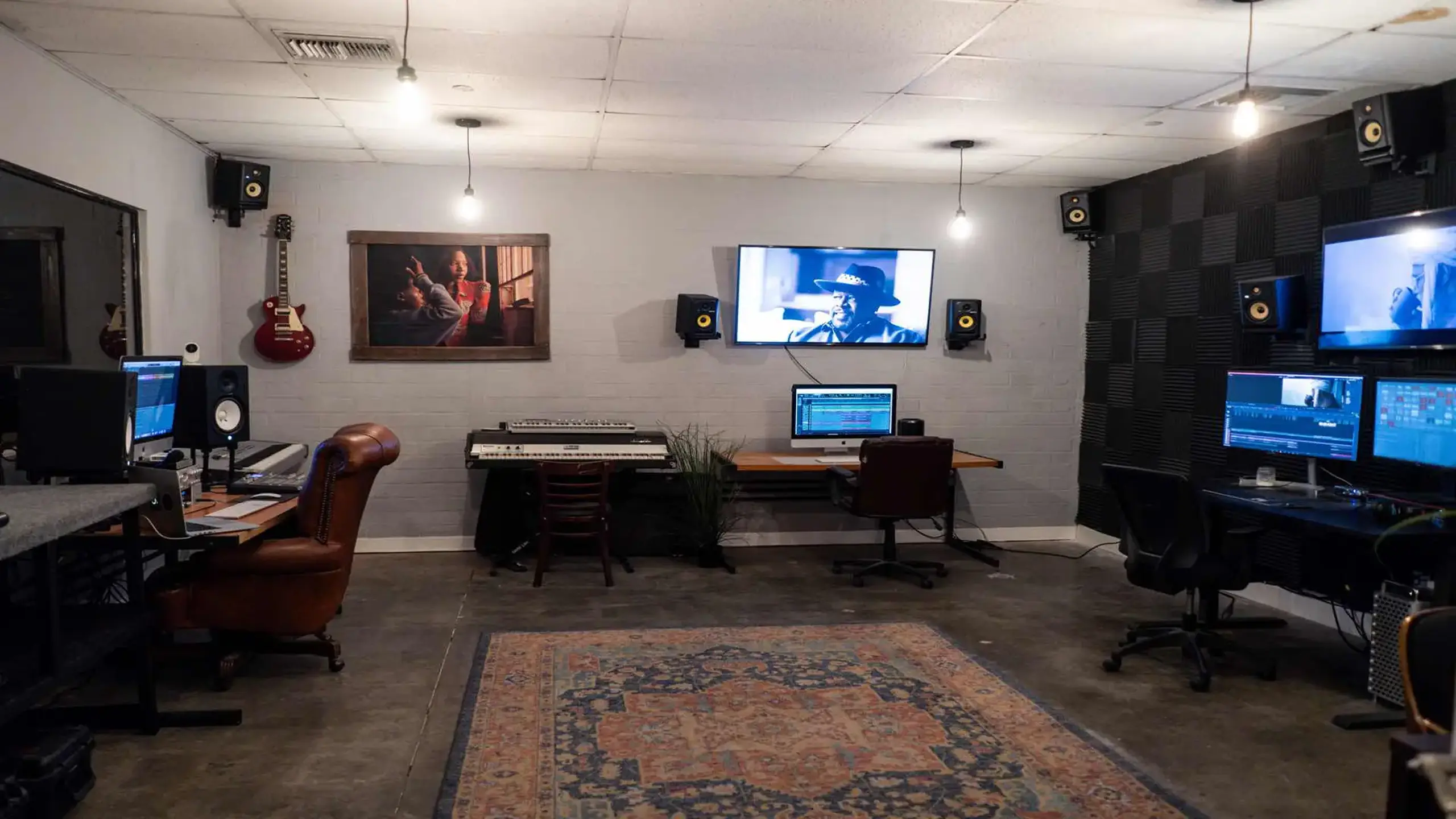
Post-production is where raw video footage transforms into finished brand content. It's the critical phase between the moment your shoot wraps and the moment your audience sees polished, professional videos ready to drive engagement and results.
Many brands think video production ends when the cameras stop rolling. It doesn't. The edit, color correction, audio mixing, and final delivery are all post-production, and they're absolutely essential to your video's success.
This guide explains what post-production actually involves, why it matters for brands, what happens during each stage, and how to budget appropriately for this crucial final phase.
## Why Post-Production Matters for Brands
Post-production transforms good footage into exceptional content. Raw footage is disconnected. Shots run too long. Audio needs cleaning. Colors need consistency. Pacing needs adjustment. Without post-production, even expensive shoots deliver mediocre results.
Post-production is where creative vision becomes reality. During filming, you capture options. During post-production, you select the best options, arrange them strategically, and enhance them to maximum impact. This is where storytelling actually happens.
Professional post-production determines whether your video feels amateur or professional. Viewers forgive imperfect filming if post-production is excellent. They immediately notice poor post-production, assuming your brand lacks professionalism or budget.
For brands, post-production quality directly impacts viewer engagement and conversion. Clean audio keeps viewers watching. Proper color grading establishes brand identity. Effective editing pacing maintains attention. Sound design and music create emotional resonance.
Investing in post-production maximizes your return on production investment. You've already spent money filming. Spending additional resources on post-production quality ensures that investment delivers results.
## Understanding the Post-Production Process
Post-production involves multiple sequential stages. Understanding each stage helps you evaluate post-production services and budget appropriately.
### Ingest and Organization
Post-production begins the moment footage arrives from the shoot. Ingest is the technical process of transferring raw video files from cameras to editing systems. Organization is the logical process of arranging files so editors can access footage efficiently.
Professional post-production workflows organize footage by scene, shot type, and technical quality. This organization accelerates editing and prevents lost footage. Poor organization creates delays, lost files, and frustration.
Ingest and organization might seem technical and invisible, but they determine whether post-production workflows run smoothly or encounter repeated delays.
### Rough Cut or Assembly Edit
The rough cut is the editor's first assembly of footage in narrative sequence. The rough cut is deliberately rough, shots might be longer than final length, transitions might be missing, pacing might feel off.
The rough cut establishes the story structure. Does the narrative flow logically? Are all essential scenes included? Is the pacing roughly correct? Does the emotional arc work?
Rough cuts are typically longer than final cuts because they include coverage options that haven't yet been trimmed to final length. Brands review rough cuts to approve story direction before the editor spends time on refinements.
### Fine Cut or Final Edit
The fine cut refines the rough cut into final form. Every shot is trimmed to exact length. Transitions are added and refined. Pacing is perfected. Every edit serves the story.
Fine cutting requires both technical precision and artistic sensibility. An editor cuts to exact frame-level precision to maximize pacing and emotional impact. This level of detail defines the difference between adequate editing and exceptional editing.
### Color Correction and Grading
Color correction ensures technical consistency. If footage from different cameras or different times of day has inconsistent exposure or color temperature, color correction brings everything into technical balance.
Color grading then applies creative color choices that establish mood and visual identity. Warm tones might establish intimacy. Cool tones might establish professionalism. Saturated colors might establish energy. Desaturated colors might establish sophistication.
For brands, color grading is a critical opportunity to establish brand visual identity. Consistent color palettes across all videos reinforce brand recognition.
### Sound Design and Audio Mixing
Sound design is the creative process of selecting music, sound effects, and ambient sound that complement the visual story. Professional sound design creates immersive environments and emotional resonance.
Audio mixing is the technical process of balancing all audio elements, dialogue, music, sound effects, ambient sound, so everything sits at appropriate levels and creates coherent listening experience.
Poor audio undermines excellent video immediately. Viewers forgive mediocre camera work if they're engaged, but they abandon videos with poor audio within seconds. Audio quality is non-negotiable.
### Visual Effects and Graphics
Visual effects (VFX) range from simple text overlays to complex digital environments. For brands, VFX typically includes lower-thirds with names and titles, animated graphics, product visualization, and enhanced color or lighting effects.
Professional VFX enhances storytelling without overwhelming it. Excessive effects distract from core message. Appropriate effects amplify brand impact and viewer engagement.
### Titles and Graphics
Titles establish context and branding. Opening titles set the tone. Lower-third graphics identify speakers. End cards include calls-to-action. All text should be legible, on-brand, and serve the narrative.
Professional graphics use consistent fonts, colors, and styles that reflect brand identity. Amateur graphics undermine professional video immediately.
### Final Export and Delivery
Different distribution channels require different formats and specifications. YouTube prefers high-resolution files. Social media requires multiple aspect ratios, 16:9 for YouTube, 9:16 for Instagram Stories, 1:1 for feeds. Email requires smaller file sizes.
Professional post-production delivers files optimized for each distribution channel. This maximizes quality and reach across all platforms.
## Post-Production for Different Project Types
Different video types require different post-production approaches.
### Corporate and Training Videos
Corporate post-production prioritizes clarity and professionalism. Dialogue must be crystal clear. Pacing must be measured and authoritative. Graphics must be crisp and brand-aligned. Color grading should establish corporate professionalism.
Training videos specifically benefit from on-screen graphics that reinforce key concepts. Pacing must allow viewers to absorb information. Visual supports help learning retention.
### Marketing and Advertising Videos
Marketing video post-production prioritizes emotional engagement. Pacing is typically faster to maintain attention. Music and sound design create emotional resonance. Color grading might be more stylized to match brand personality.
Advertising videos often include quick cuts, dynamic transitions, and emphasize product benefits. Post-production should amplify the advertising message.
### Product Demonstrations
Product demo post-production requires clear pacing and focused visuals. Viewers need time to see product features clearly. On-screen graphics should label features and benefits. Color grading should make products look appealing.
Close-up shots require careful focus to ensure product details are sharp and clear.
### Customer Testimonials
Testimonial post-production emphasizes authenticity. While testimonials should be technically clean, over-produced testimonials feel inauthentic. Minimal effects preserve credibility.
Color correction should be subtle. Pacing should allow viewers to connect with customer stories. Graphics should reinforce key benefits mentioned in testimonials.
### Social Media Content
Social media post-production requires format optimization. Vertical 9:16 aspect ratios for Stories. Square 1:1 for feeds. Captions are essential for sound-off viewing. Pacing is typically faster for social engagement.
Social media content often benefits from text overlays, emoji, and dynamic transitions that match platform aesthetics.
## Post-Production Workflow and Timeline
Understanding post-production timelines helps you plan production schedules and budget appropriately.
### Initial Review
After ingest and organization, the director and producer review all footage. This review identifies technical problems (focus issues, audio problems, lighting inconsistencies), validates shot coverage, and ensures no critical footage is missing.
Initial review typically takes 1-3 days depending on project scope.
### Rough Cut Creation
The editor creates the rough cut, establishing story structure and pacing. This phase requires editor time and director feedback. Rough cuts typically take 3-7 days depending on footage volume and project complexity.
### Review and Revision Cycles
The director reviews the rough cut, provides feedback, and the editor revises. This feedback cycle typically happens 2-3 times before the cut is approved. Each revision cycle takes 2-3 days.
### Fine Cut and Refinement
Once story direction is approved, the editor refines the cut to final form, trimming shots precisely and perfecting pacing. This phase takes 3-5 days for most projects.
### Post-Production Services and Enhancement
Color correction, sound design, mixing, graphics, and effects are added simultaneously by specialized teams. These phases typically take 3-7 days depending on complexity.
### Final Review and Delivery
Final review ensures everything meets quality standards. Files are exported in all required formats for different distribution channels. This final phase takes 1-2 days.
### Total Post-Production Timeline
Most brand videos require 2-4 weeks of post-production work. Tight timelines compress phases. Extended timelines allow more refinement and revision cycles.
## Post-Production Costs and Budget Planning
Post-production represents 40-60% of total video production budgets for professional projects. Understanding cost factors helps you budget appropriately.
### Editor Costs
Editors typically charge per finished minute or daily rates. A 30-second commercial might cost $500-2,000 to edit depending on complexity. A 10-minute training video might cost $2,000-5,000.
Experienced editors with strong portfolios cost more than emerging editors. Their expertise delivers faster turnaround and higher quality results, justifying premium rates.
### Color Correction and Grading
Color correction and grading typically costs $200-1,000 per finished minute depending on complexity. Simple correction is less expensive. Creative grading that establishes brand visual identity costs more.
For branded content, grading is an investment in visual consistency. Consistent color palettes across all videos reinforce brand identity.
### Sound Design and Mixing
Sound design and mixing typically costs $150-800 per finished minute. Dialogue-heavy content requires less work. Content with complex music and effects requires more.
Professional mixing is essential for broadcast quality. This is where poor post-production becomes immediately obvious to viewers.
### Motion Graphics and Visual Effects
Simple graphics like lower-thirds or text overlays cost $200-500. Complex effects like product visualization or digital environments cost $1,000-5,000+.
For most brand videos, professional graphics that match brand identity are essential investments.
### Total Post-Production Budget
A professional 60-second commercial might have post-production costs of $3,000-8,000. A 5-minute training video might cost $2,000-6,000. A full documentary might cost $20,000-50,000+.
Post-production is where you get maximum return on production investment. Investing in quality post-production ensures your shoot investment pays dividends.
## Video Production and Post-Production Integration
Post-production success starts during pre-production planning and continues during filming. Shots planned specifically for editing translate into smoother post-production workflows.
Shot lists during production ensure editors have all necessary coverage. Proper exposure and focus during filming reduce color correction work. Clean audio during recording minimizes audio cleanup needs.
Professional [video production services](https://claude.ai/video-production-services/) plan shoots with post-production in mind. This integration creates better final results and more efficient workflows.
## Professional Post-Production Services
Many brands choose to partner with post-production specialists rather than managing multiple vendors separately. Professional [post-production services](https://claude.ai/post-production-services/) handle editing, color, sound, graphics, and delivery from a single provider.
This approach ensures consistency across all post-production elements. Color palettes match across shots. Graphics maintain brand consistency. Audio quality stays professional throughout. Delivery formats match distribution requirements.
Professional post-production providers use industry-standard software and equipment. They maintain quality control processes. They deliver on schedule. They manage revisions efficiently.
## Making Post-Production Decisions
Post-production quality directly impacts your video's success. Every stage, editing, color, sound, graphics, contributes to whether your audience engages or abandons the video.
Define your post-production priorities. Is pacing the most critical element? Then invest in excellent editing. Is brand visual identity critical? Then invest in color grading. Is emotional impact critical? Then invest in sound design.
Budget appropriately for post-production. It's not an area to save money. Professional post-production maximizes the value of your production investment.
Communicate clearly with post-production teams. Provide detailed feedback. Approve rough cuts before extensive refinement. Establish clear revision processes. This ensures efficient workflows and satisfied results.
## Post-Production Transforms Videos into Impact
The video you film is raw material. Post-production transforms that material into polished content ready to drive engagement, establish brand identity, and deliver business results.
Every professional video you see reflects the invisible expertise of skilled post-production professionals. Excellent post-production is invisible when it works, viewers don't notice it. But they immediately notice when it's missing.
Invest in post-production quality. It determines whether your brand video feels amateur or professional. It determines whether viewers stay engaged or abandon the video. It determines whether your video investment pays dividends.
## Work with C&I Studios
If you are planning a project like this, our team can take it from concept to final delivery. Explore our [post-production services](https://c-istudios.com/post-production-services/), browse [our work](https://c-istudios.com/our-work/) to see how we tell brand stories, and [get in touch](https://c-istudios.com/contact/) when you are ready to start.
Originally published March 30, 2026
---
*This content is from [C&I Studios](https://c-istudios.com), a full-service production company.*
---
# What Is a Video Production Crew: Roles, Costs & Who You Actually Need
> Published: March 29, 2026
> Categories: Film & TV
> Source: https://c-istudios.com/what-is-a-video-production-crew-roles-costs-who-you-actually-need/
---
.cib{--paper:#1b1d1f;--ink:#fff;--body:#d5d7d9;--muted:#8b9096;--line:rgba(255,255,255,.12);--thumb:#2b2e31;--card:#212426;--accent:#c02b0a;--blue:#5B8FA8;--serif:'Playfair Display',Georgia,serif;--sans:'Poppins',-apple-system,sans-serif;--measure:900px;background:var(--paper);color:var(--body);font-family:var(--sans);line-height:1.6;position:relative;left:50%;transform:translateX(-50%);width:90vw;max-width:1920px}
.cib *{box-sizing:border-box}
.cib .kicker{max-width:var(--measure);margin:58px auto 0;padding:0 22px;font-size:12.5px;font-weight:700;letter-spacing:2.5px;text-transform:uppercase;color:var(--blue)}
.cib h1.cibh1{text-wrap:balance;font-family:var(--serif);font-weight:500;font-size:clamp(46px,6vw,72px);line-height:1.08;color:var(--ink);max-width:var(--measure);margin:18px auto 0;padding:0 22px;letter-spacing:-.5px}
.cib .metarow{max-width:var(--measure);margin:20px auto 0;padding:0 22px;color:var(--muted);font-size:14px}
.cib .hero{position:relative;width:100%;height:0;padding-bottom:56.25%;overflow:hidden;margin:48px auto 0;border-top:1px solid var(--line);border-bottom:1px solid var(--line)}
.cib .hero .ph{width:100%;aspect-ratio:16/9;background:var(--thumb);border-top:1px solid var(--line);border-bottom:1px solid var(--line);display:flex;align-items:center;justify-content:center;color:#7d8288;font-size:13px;text-align:center;padding:0 20px}
.cib .body{max-width:var(--measure);margin:12px auto 0;padding:52px 22px 6px}
.cib .body.lead p:first-child{font-size:23px;line-height:1.62;color:var(--ink)}
.cib .body p{font-size:18.5px;line-height:1.85;margin:0 0 30px;color:var(--body)}
.cib .body h2{text-wrap:balance;font-family:var(--serif);font-weight:500;font-size:clamp(32px,4vw,48px);line-height:1.22;color:var(--ink);margin:70px 0 20px;letter-spacing:-.3px}
.cib .body h3{text-wrap:balance;font-family:var(--sans);font-weight:600;font-size:22px;color:var(--ink);margin:38px 0 8px}
.cib .body a{color:var(--ink);text-decoration:underline;text-decoration-color:rgba(255,255,255,.4);text-underline-offset:3px}
.cib .body a:hover{text-decoration-color:var(--ink)}
.cib .ctable{width:100%;border-collapse:collapse;margin:16px 0 30px;font-size:16px}
.cib .ctable th{background:#000;color:#fff;text-align:left;padding:10px 12px;font-family:var(--sans)}
.cib .ctable td{padding:10px 12px;border-bottom:1px solid var(--line);color:var(--body)}
.cib .inimg{position:relative;width:100%;height:0;padding-bottom:56.25%;overflow:hidden;margin:72px auto;border-top:1px solid var(--line);border-bottom:1px solid var(--line)}
.cib .inimg .ph{width:100%;aspect-ratio:16/9;background:var(--thumb);border-top:1px solid var(--line);border-bottom:1px solid var(--line);display:flex;align-items:center;justify-content:center;color:#7d8288;font-size:13px}
.cib .origpub{max-width:var(--measure);margin:60px auto 0;padding:26px 22px 0;border-top:1px solid var(--line);color:var(--muted);font-size:13.5px}
.cib .related{max-width:1200px;margin:64px auto 0;padding:34px 22px 76px}
.cib .related h3{font-family:var(--sans);font-size:12.5px;letter-spacing:2px;text-transform:uppercase;color:var(--ink);margin:0 0 24px}
.cib .grid{display:grid;grid-template-columns:repeat(3,1fr);gap:28px}
.cib .rc{background:var(--card);border:1px solid var(--line);display:block;text-decoration:none;color:inherit;transition:border-color .15s}
.cib a.rc:hover{border-color:rgba(255,255,255,.5)}
.cib .rc .thumb{position:relative;width:100%;height:0;padding-bottom:56.25%;background:var(--thumb);overflow:hidden}
.cib .rc .thumb img{position:absolute!important;top:0!important;left:0!important;width:100%!important;height:100%!important;object-fit:cover!important;margin:0!important}
.cib .rc .cc{padding:14px 15px 17px}
.cib .rc .rt{font-family:var(--serif);font-weight:500;font-size:16px;line-height:1.3;color:var(--ink);margin:0 0 6px}
.cib .rc .rm{font-size:11px;letter-spacing:1px;text-transform:uppercase;color:var(--muted)}
.cib img{margin:0!important;padding:0!important;display:block!important;vertical-align:top;max-width:100%}
.cib .hero img,.cib .inimg img{position:absolute!important;top:0!important;left:0!important;width:100%!important;height:100%!important;object-fit:cover!important;margin:0!important;padding:0!important;border:0!important;display:block!important;aspect-ratio:auto!important}
.cib .hero+.body{padding-top:36px}
@media(max-width:760px){.cib .grid{grid-template-columns:1fr}.cib .body h2{margin:52px 0 16px}.cib .body p{font-size:17.5px}.cib .inimg,.cib .hero{margin-top:44px}}
.cib .vembed{max-width:var(--measure);margin:44px auto;padding:0 22px}.cib .vembed .vwrap{position:relative;width:100%;height:0;padding-bottom:56.25%}.cib .vembed .vwrap iframe{position:absolute;top:0;left:0;width:100%;height:100%;border:0}
Film & TV
# What Is a Video Production Crew. Roles, Costs & Who You Actually Need
13 min read
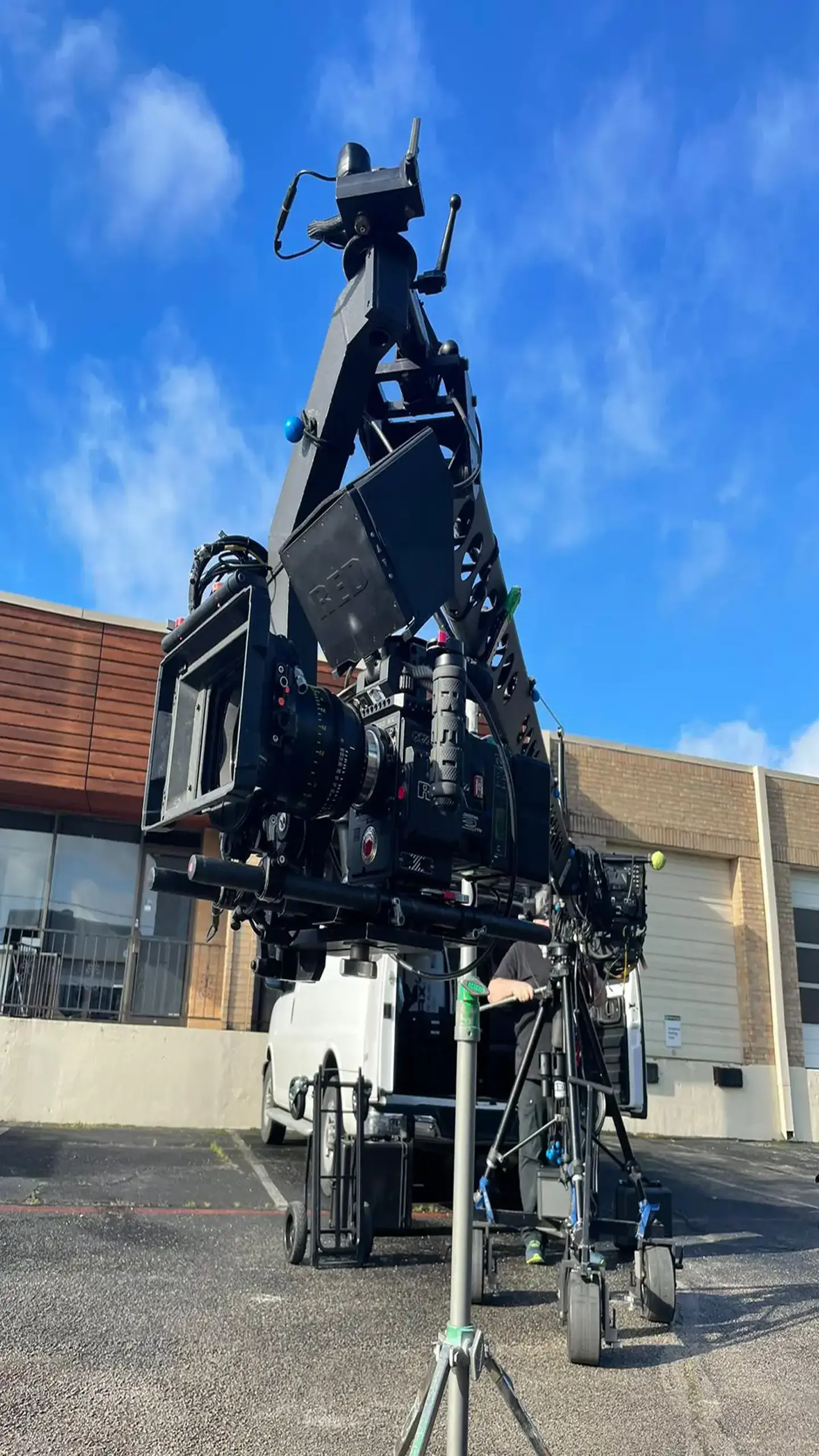
A video production crew is the backbone of professional video creation. Every successful film, commercial, documentary, or corporate video exists because a specialized team of professionals coordinated their expertise at exactly the right moments.
But understanding video production crews is confusing. Studios reference "gaffer," "best boy," and "key grip" using terminology that feels deliberately obscure. Budget discussions list position titles you've never heard of. You wonder which roles are essential and which are luxury additions.
This guide cuts through the confusion. It explains what video production crews do, which roles matter most for different project types, what crew positions cost, and how to determine exactly who you need for your project.
## Why Video Production Crews Matter
Professional video doesn't happen by accident. It results from dozens of specialized tasks performed by trained professionals working in synchronized coordination.
A cinematographer frames shots to tell visual stories. A grip manages camera stabilization and camera movement rigs. A sound mixer captures clean audio while controlling background noise. A gaffer controls lighting to create mood and direct viewer attention. A producer manages budgets and timelines. A production designer builds visual worlds.
Each role requires years of specialized training. Each position contributes essential skills that amateur crews simply cannot replicate.
The difference between professional and amateur video is immediately visible. Professional footage has consistent exposure, sharp focus, proper color correction, and cinematic composition. Professional audio sounds clear without distracting background noise. Professional lighting creates mood and directs attention. Professional editing maintains pacing and rhythm.
These qualities emerge from specialized expertise, not expensive equipment. A trained cinematographer shoots better footage with basic cameras than an untrained operator shoots with cinema cameras.
## Core Video Production Crew Roles
Video production crew structures vary based on project scope, budget, and complexity. A web commercial might need 4-6 people. A feature film requires 80+ crew members.
Understanding core roles helps you build crews appropriately for your project type.
### Producer
The producer is the project's quarterback. Responsibilities include developing the project concept, securing financing, hiring crew and talent, managing budgets, maintaining schedules, and solving problems that inevitably arise during production.
Producers wear many hats simultaneously. They're part businessman, part creative director, and part problem-solver. On small productions, the producer also directs. On large productions, producers focus exclusively on logistics and administration.
Producers don't appear on camera. Their work happens behind the scenes managing countless details that determine whether a project succeeds or fails. A skilled producer anticipates problems before they occur, prevents budget overruns, keeps production on schedule, and maintains crew morale under pressure.
### Director
The director is the creative leader. They envision the final product, make creative decisions, guide talent performances, shape the visual style, and ensure every element serves the overall story or message.
Directors work intensively with cinematographers to plan shots and visual style. They collaborate with production designers to establish the visual world. They direct actors to deliver performances that match the project's tone and intent. They work with editors in post-production to shape the final cut.
The director's creative vision drives every production decision. Everything you see in the final video ultimately reflects the director's choices. This position requires strong creative vision, clear communication, understanding of visual storytelling, and ability to inspire talented people to execute that vision.
### Cinematographer (Director of Photography)
The cinematographer, also called the director of photography or DP, controls the visual look of the production. Responsibilities include choosing camera equipment, framing shots to tell the story visually, managing exposure and focus, controlling camera movement, and determining lighting approaches.
Cinematographers combine technical expertise with artistic vision. They understand optics, sensor technology, and image processing. They understand composition, color theory, and visual narrative. They understand how different lenses, movements, and lighting choices communicate different emotional information.
The cinematographer collaborates closely with the director to understand the creative vision, then makes technical and artistic decisions that realize that vision. A great cinematographer can take a mediocre script and make it look stunning. Poor cinematography undermines even excellent scripts.
### Production Designer
The production designer creates the visual world of the project. For films set in specific locations or time periods, the production designer designs sets, selects locations, specifies props, and manages the overall visual aesthetic beyond what the camera captures.
Production designers work closely with cinematographers and directors to ensure the visual world supports the story and creates the intended mood. They manage budgets for set construction, location rentals, and props. They hire set decorators and prop masters who execute the design.
On corporate videos or commercials, production design focuses on location selection, prop placement, and set dressing that communicates brand values or product benefits.
### Gaffer
The gaffer is the head of the lighting department. The gaffer designs the lighting plan, manages lighting equipment, works with the cinematographer to achieve the desired look, and supervises the electrical department.
Gaffers combine technical expertise in lighting equipment with artistic understanding of how light creates mood, directs attention, and shapes the visual story. They understand color temperature, intensity levels, light quality, and how different equipment produces different visual effects.
The gaffer works from the cinematographer's vision of the shot, then executes that vision using appropriate lighting equipment and techniques. On large productions, gaffers supervise multiple lighting technicians.
### Key Grip
The key grip manages camera support and stabilization equipment. Responsibilities include planning camera movements, managing grip equipment (tripods, dollies, jibs, cranes, stabilizers), and executing smooth camera movements that match the director's vision.
Grips combine technical knowledge of equipment with understanding of physics, weight distribution, and mechanical systems. They operate equipment that allows cameras to move smoothly through space, creating tracking shots, crane movements, and dynamic perspectives that amateur productions cannot achieve.
The key grip ensures camera movements are smooth, stable, and precisely controlled. Poor grip work results in shaky, amateurish footage. Professional grip work creates seamless movement that serves the story.
### Sound Mixer (Boom Operator)
The sound mixer captures clean audio on set. Responsibilities include positioning microphones to capture talent and environmental sound, managing microphone placement and equipment, controlling background noise, monitoring audio levels, and ensuring clean recordings that don't require extensive post-production audio work.
Sound mixers are the unsung heroes of video production. Poor audio quality ruins footage instantly. Viewers forgive mediocre camera work if the story engages them, but they abandon videos with poor audio within seconds.
Professional sound mixers use directional microphones to capture specific sound sources while rejecting background noise. They use lavalier microphones on talent to ensure consistent levels regardless of movement. They use boom microphones to capture dialogue and environmental sound during scenes. They monitor audio in real-time to catch problems before they're recorded.
### Editor
The editor assembles footage into finished videos. Responsibilities include selecting best takes, arranging shots in sequence, pacing edits, adding transitions and effects, color correcting, and delivering final exports.
Editors combine technical expertise with storytelling sensibility. They understand pacing, rhythm, and narrative flow. They understand how editing choices communicate emotion and direct viewer attention. They understand color correction, effects, and all post-production technical requirements.
The editor works from footage shot during production and transforms it into finished videos. On large productions, multiple editors may work on different scenes or sequences simultaneously.
## Specialized Crew Positions for Larger Productions
Larger productions add specialized roles that enhance specific aspects of production.
### Assistant Camera (Focus Puller)
On productions using cinema cameras and specialized lenses, precise focus control is critical. The assistant camera manages lens focus throughout shots, ensuring subjects remain sharp. This requires deep technical knowledge of lens optics and extremely precise manual dexterity.
Assistant camera operators prevent focus errors that would ruin otherwise perfect shots. This is particularly important on productions using shallow depth of field, where focus errors are immediately visible.
### Best Boy
Best boy is the second-in-command to either the gaffer (best boy electric) or the key grip (best boy grip). Best boys manage department logistics, supervise crew members, maintain equipment, and coordinate with other departments.
The title originates from classic Hollywood and is used regardless of gender. The best boy is the department's practical administrator and supervisor.
### Location Manager
Location managers scout, secure, and manage filming locations. Responsibilities include identifying potential locations, negotiating rental agreements, securing permits, managing access and parking, coordinating with location owners, and solving logistical problems.
Location managers work before, during, and after shooting to ensure locations are available and ready to film. They handle administrative work that allows production to focus on creative work.
### Production Assistant
Production assistants handle entry-level tasks supporting senior crew members. Responsibilities vary widely and include equipment setup, communication between departments, managing paperwork, fetching supplies, and handling whatever needs doing.
PAs provide essential support that allows senior crew members to focus on their specialized work. Many successful crew members started as production assistants.
### Set Decorator
Set decorators implement the production designer's vision by placing props and dressing sets. They source items needed for sets, arrange props to communicate story information, and manage the overall aesthetic of each location.
Set decorators work closely with production designers and cinematographers to ensure the set dressing supports the visual story while working efficiently within budgets.
### Boom Operator
On larger productions, the boom operator positions microphones during shooting. The boom operator holds the boom pole and microphone, follows talent movement, positions microphones to capture dialogue and sound, and communicates with the sound mixer about audio quality.
Boom operators require physical stamina, steady hands, and understanding of microphone technique. Poor boom operation results in audio with background noise, inconsistent levels, or unwanted microphone rustling.
## Understanding Video Production Crew Costs
Crew costs represent the largest variable expense in video production. Understanding what positions cost helps you budget appropriately and determine which positions justify their cost for your specific project.
### Crew Cost Factors
Several factors influence what crew positions cost. Experience matters significantly. A cinematographer with 20 years of experience and a strong portfolio costs more than an emerging cinematographer still building credentials. Union membership affects pricing, union crew members cost more than non-union but provide standardized rates and protections.
Geographic location influences costs dramatically. [Production in Los Angeles](https://c-istudios.com/video-production-los-angeles/) or New York costs significantly more than production in smaller markets. Equipment ownership by crew members affects rates. Specialized expertise commands premium pricing.
### Day Rates
Most crew members work on "day rates", flat daily fees regardless of hours worked. Standard production days run 10-12 hours, though day rates technically cover longer hours if necessary.
Typical crew day rates range from $150-400 for entry-level positions to $800-3,000+ for experienced specialists. Senior crew members like cinematographers may negotiate higher rates on larger productions.
### Weekly and Monthly Rates
Long productions often negotiate weekly or monthly rates that provide discounts compared to daily rates. A cinematographer charging $1,500 daily might negotiate $7,000 weekly or $25,000 monthly on productions that hire them for extended periods.
### Specific Position Costs
Producer rates vary widely based on project scope and producer experience. Independent producers on small productions might charge $500-1,000 daily, while experienced producers on large productions charge $2,000-5,000+ daily.
Director rates similarly vary. Emerging directors might work for $800-1,500 daily, while established directors charge $2,000-5,000+ depending on experience and demand.
Cinematographer rates typically range $1,000-3,000 daily for experienced professionals. Highly sought cinematographers on large productions charge $3,000-5,000+ daily.
Production designer rates vary $800-2,000 daily depending on experience.
Gaffer rates typically $1,000-2,000 daily for experienced professionals.
Key grip rates $800-1,500 daily for experienced grips.
Sound mixer rates $600-1,200 daily depending on equipment ownership and experience.
Editor rates vary $50-150 per finished minute of edited video, though post-production editing happens after production concludes.
## Lean Crew Approaches for Cost Control
Not every project requires full crews with every position filled. Strategic crew planning reduces costs while maintaining quality.
### Multiple Roles Per Person
On smaller productions, individuals often cover multiple roles. A director might also handle cinematography. A producer might manage production design. A sound person might assist with boom operation and lavalier microphone setup.
This approach reduces costs by hiring fewer total people. It requires hiring versatile crew members who can handle multiple responsibilities competently.
### Prioritizing Core Positions
If budget constraints force crew reductions, prioritize positions that most directly impact final quality. Cinematography and audio are non-negotiable, poor camera work and poor audio damage finished videos immediately.
Sound recording and camera work merit investment. Other positions like production design or dedicated grips can be reduced on tighter budgets without compromising quality.
### Using Equipment Owners
Crew members who own specialized equipment often charge lower rates than crew who require equipment rental. A grip who owns stabilizers and camera movement rigs charges less daily than a grip requiring equipment rental.
Equipment ownership by crew members effectively reduces your total production costs.
For smaller projects, some brands choose to [hire a video crew](https://ineedproduction.com/video-production-services/) through on-demand platforms rather than assembling one role by role.
## Building Your Video Production Crew
Determining which crew members you need starts with understanding your project requirements and budget constraints.
### Define Your Project Type
First, clarify what you're producing. Are you shooting a corporate training video? A commercial for paid advertising? A branded documentary? Product demonstration? The project type determines appropriate crew structure.
### Identify Non-Negotiable Positions
Every project needs certain core positions. You need someone competent directing the project, whether that's a professional director or the producer if the project is small. You need competent camera work. You need competent audio.
Beyond these fundamentals, other positions become optional based on budget and project scope.
### Assess Your Budget
Be realistic about production budgets. Better to hire experienced crew for core positions and skip less critical roles than to hire inexperienced crew across all positions. Quality crew make enormous differences in final results.
### Hire for Specific Expertise
When hiring crew members, prioritize experience and skill level in their specific role. Hiring a mediocre cinematographer costs you much more in poor final results than paying premium rates for an excellent cinematographer.
### Leverage Social Media Marketing
Professional crews often market themselves through social media platforms and portfolios. Review potential crew members' work to assess quality and style. Ensure their previous work aligns with your vision for your project.
Consider working with [social media marketing services](https://claude.ai/social-media-marketing-services/) that can help identify and evaluate potential crew members through their digital presence.
## The Critical Role of Post-Production Crew
Video production crews don't end when production wraps. Post-production teams transform raw footage into finished videos.
### Editors and Colorists
Editors assemble footage into finished sequences. Colorists correct color balance and establish consistent visual style across footage shot under different lighting conditions or with different cameras.
Skilled editors and colorists dramatically improve final video quality. This post-production work is essential even for professional productions.
### Sound Designers and Audio Mixers
Sound designers create audio worlds that enhance storytelling. They layer dialogue, music, sound effects, and ambient sound to create immersive experiences. Audio mixers balance all audio elements to create clear, professional soundtracks.
Professional audio production is invisible when done well, viewers accept it naturally. Professional audio production becomes obviously bad when done poorly, viewers immediately notice tinny, muffled, or unbalanced audio.
### Motion Graphics and Visual Effects Specialists
Motion graphics specialists create animated titles, lower-thirds, graphics, and visual effects. Visual effects specialists create digital effects that enhance storytelling.
These post-production specialists transform basic footage into polished, professional final videos.
## Professional Production Services for Quality Results
Building your own video production crew requires expertise in hiring, budgeting, and production management. Many organizations choose to partner with production companies that maintain professional crews.
Professional [post-production services](https://claude.ai/post-production-services/) handle everything from color correction to audio mixing to final delivery. This approach eliminates the complexity of hiring individual crew members while ensuring professional quality throughout the production process.
Working with experienced production companies provides access to proven crew members, established workflows, and quality assurance processes that prevent problems before they occur.
## Making Your Crew Decision
Video production crew decisions ultimately depend on your specific project, budget, and timeline. The most important principle is this: quality matters more than quantity.
A small crew of excellent professionals produces better results than a large crew of mediocre professionals. Prioritize hiring skilled people for critical positions rather than filling every position with less experienced crew.
The investment in professional crew members pays dividends in final video quality. Professional footage serves your brand better, engages audiences more effectively, and provides better return on your total production investment.
## Work with C&I Studios
If you are planning a project like this, our team can take it from concept to final delivery. Explore our [film and TV production](https://c-istudios.com/film-and-tv-production/), browse [our work](https://c-istudios.com/our-work/) to see how we tell brand stories, and [get in touch](https://c-istudios.com/contact/) when you are ready to start.
Originally published March 29, 2026
---
*This content is from [C&I Studios](https://c-istudios.com), a full-service production company.*
---
# How to Repurpose One Brand Video Into 10 Pieces of Content
> Published: March 28, 2026
> Categories: Commercial & Brand
> Source: https://c-istudios.com/how-to-repurpose-one-brand-video-into-10-pieces-of-content/
---
.cib{--paper:#1b1d1f;--ink:#fff;--body:#d5d7d9;--muted:#8b9096;--line:rgba(255,255,255,.12);--thumb:#2b2e31;--card:#212426;--accent:#c02b0a;--blue:#5B8FA8;--serif:'Playfair Display',Georgia,serif;--sans:'Poppins',-apple-system,sans-serif;--measure:900px;background:var(--paper);color:var(--body);font-family:var(--sans);line-height:1.6;position:relative;left:50%;transform:translateX(-50%);width:90vw;max-width:1920px}
.cib *{box-sizing:border-box}
.cib .kicker{max-width:var(--measure);margin:58px auto 0;padding:0 22px;font-size:12.5px;font-weight:700;letter-spacing:2.5px;text-transform:uppercase;color:var(--blue)}
.cib h1.cibh1{text-wrap:balance;font-family:var(--serif);font-weight:500;font-size:clamp(46px,6vw,72px);line-height:1.08;color:var(--ink);max-width:var(--measure);margin:18px auto 0;padding:0 22px;letter-spacing:-.5px}
.cib .metarow{max-width:var(--measure);margin:20px auto 0;padding:0 22px;color:var(--muted);font-size:14px}
.cib .hero{position:relative;width:100%;height:0;padding-bottom:56.25%;overflow:hidden;margin:48px auto 0;border-top:1px solid var(--line);border-bottom:1px solid var(--line)}
.cib .hero .ph{width:100%;aspect-ratio:16/9;background:var(--thumb);border-top:1px solid var(--line);border-bottom:1px solid var(--line);display:flex;align-items:center;justify-content:center;color:#7d8288;font-size:13px;text-align:center;padding:0 20px}
.cib .body{max-width:var(--measure);margin:12px auto 0;padding:52px 22px 6px}
.cib .body.lead p:first-child{font-size:23px;line-height:1.62;color:var(--ink)}
.cib .body p{font-size:18.5px;line-height:1.85;margin:0 0 30px;color:var(--body)}
.cib .body h2{text-wrap:balance;font-family:var(--serif);font-weight:500;font-size:clamp(32px,4vw,48px);line-height:1.22;color:var(--ink);margin:70px 0 20px;letter-spacing:-.3px}
.cib .body h3{text-wrap:balance;font-family:var(--sans);font-weight:600;font-size:22px;color:var(--ink);margin:38px 0 8px}
.cib .body a{color:var(--ink);text-decoration:underline;text-decoration-color:rgba(255,255,255,.4);text-underline-offset:3px}
.cib .body a:hover{text-decoration-color:var(--ink)}
.cib .ctable{width:100%;border-collapse:collapse;margin:16px 0 30px;font-size:16px}
.cib .ctable th{background:#000;color:#fff;text-align:left;padding:10px 12px;font-family:var(--sans)}
.cib .ctable td{padding:10px 12px;border-bottom:1px solid var(--line);color:var(--body)}
.cib .inimg{position:relative;width:100%;height:0;padding-bottom:56.25%;overflow:hidden;margin:72px auto;border-top:1px solid var(--line);border-bottom:1px solid var(--line)}
.cib .inimg .ph{width:100%;aspect-ratio:16/9;background:var(--thumb);border-top:1px solid var(--line);border-bottom:1px solid var(--line);display:flex;align-items:center;justify-content:center;color:#7d8288;font-size:13px}
.cib .origpub{max-width:var(--measure);margin:60px auto 0;padding:26px 22px 0;border-top:1px solid var(--line);color:var(--muted);font-size:13.5px}
.cib .related{max-width:1200px;margin:64px auto 0;padding:34px 22px 76px}
.cib .related h3{font-family:var(--sans);font-size:12.5px;letter-spacing:2px;text-transform:uppercase;color:var(--ink);margin:0 0 24px}
.cib .grid{display:grid;grid-template-columns:repeat(3,1fr);gap:28px}
.cib .rc{background:var(--card);border:1px solid var(--line);display:block;text-decoration:none;color:inherit;transition:border-color .15s}
.cib a.rc:hover{border-color:rgba(255,255,255,.5)}
.cib .rc .thumb{position:relative;width:100%;height:0;padding-bottom:56.25%;background:var(--thumb);overflow:hidden}
.cib .rc .thumb img{position:absolute!important;top:0!important;left:0!important;width:100%!important;height:100%!important;object-fit:cover!important;margin:0!important}
.cib .rc .cc{padding:14px 15px 17px}
.cib .rc .rt{font-family:var(--serif);font-weight:500;font-size:16px;line-height:1.3;color:var(--ink);margin:0 0 6px}
.cib .rc .rm{font-size:11px;letter-spacing:1px;text-transform:uppercase;color:var(--muted)}
.cib img{margin:0!important;padding:0!important;display:block!important;vertical-align:top;max-width:100%}
.cib .hero img,.cib .inimg img{position:absolute!important;top:0!important;left:0!important;width:100%!important;height:100%!important;object-fit:cover!important;margin:0!important;padding:0!important;border:0!important;display:block!important;aspect-ratio:auto!important}
.cib .hero+.body{padding-top:36px}
@media(max-width:760px){.cib .grid{grid-template-columns:1fr}.cib .body h2{margin:52px 0 16px}.cib .body p{font-size:17.5px}.cib .inimg,.cib .hero{margin-top:44px}}
.cib .vembed{max-width:var(--measure);margin:44px auto;padding:0 22px}.cib .vembed .vwrap{position:relative;width:100%;height:0;padding-bottom:56.25%}.cib .vembed .vwrap iframe{position:absolute;top:0;left:0;width:100%;height:100%;border:0}
Commercial & Brand
# How to Repurpose One Brand Video Into 10 Pieces of Content
11 min read

Creating high-quality video content requires significant time, resources, and budget. The smart move isn't creating more videos, it's extracting maximum value from every video you produce.
One well-crafted brand video can fuel your content calendar for weeks. It can reach audiences on multiple platforms, amplify your message, and build brand presence without requiring additional production budgets.
The key is strategic repurposing. This guide shows you exactly how to transform one brand video into 10 different content pieces while maintaining quality and authenticity across all formats.
## Why Video Repurposing Matters for Brands
### Maximum ROI on Production Investment
Professional video production represents significant investment. Every shoot involves crew, equipment, location costs, and post-production time. Smart brands maximize that investment by extracting multiple content pieces from single productions.
One well-produced video can generate dozens of usable assets when repurposed strategically. This transforms your content cost-per-piece dramatically.
### Reaching Audiences Where They Are
Different audience segments consume content on different platforms. Some prefer YouTube, others TikTok, others LinkedIn. Repurposing allows you to meet audiences in their preferred channels without creating entirely new content.
A single message reaches more people through tailored formats across platforms.
### Consistency in Brand Messaging
Repurposing from a single source ensures messaging consistency across channels. All content derives from the same core material, reinforcing your brand voice and key messages.
This consistency builds stronger brand recognition and trust.
### Improved SEO and Discoverability
Each repurposed piece creates new indexing opportunities. Blog posts optimize for search. Audio files improve podcast discoverability. Multiple formats mean multiple chances for audiences to find your content organically.
This amplifies organic reach without additional advertising spend.
### Faster, Sustainable Content Workflows
Repurposing accelerates content production timelines. Instead of creating content from scratch every week, you're adapting existing material strategically.
For individual creators and small teams, this sustainability prevents burnout while maintaining consistent output.
## Choosing the Right Anchor Video
Not every video is suitable for repurposing. The best "anchor video" has specific characteristics that make adaptation easy and effective.
**Length matters.** Ideal anchor videos are 3-15 minutes long. This provides enough material to extract multiple pieces without requiring extensive editing.
**Content quality is essential.** Your anchor video should be high-value content, tutorials, announcements, customer stories, expert interviews, or educational material. Content that already provides value to audiences repurposes more effectively.
**Evergreen content works best.** Videos with timeless content age better and remain relevant longer. Trend-based content has shorter repurposing windows.
**Production quality sets the foundation.** A well-edited, professionally shot video with clear audio repurposes into better quality pieces. Poor production quality limits repurposing options.
**Examples of strong anchor videos** include YouTube videos, product demonstrations, podcast episodes, speaking engagements, or customer testimonials.
Once you've identified your anchor video, the repurposing begins.
## The 10 Repurposing Formats
### Micro-Clips for TikTok, Reels, and Shorts
Extract 3-5 short-form vertical videos from your anchor content. Each clip should be 7-60 seconds, focusing on high-impact moments like key quotes, surprising facts, emotional moments, humorous segments, or single actionable tips.
Tools like CapCut handle trimming and resizing quickly. Descript automates transcription and captioning. Both tools export directly in vertical formats optimized for TikTok, Instagram Reels, YouTube Shorts, and Facebook Reels. Short-form video dominates mobile consumption, and these clips reach audiences in their native formats. Research shows clips under 60 seconds deliver roughly 2.5 times higher engagement than longer formats.
### Audiogram for Professional Platforms
Convert your strongest 30-60 seconds of audio into a visual audiogram, a waveform visualization with captions and static or animated background image. Expert interviews, podcast highlights, powerful statements, and surprising statistics work exceptionally well. Headliner creates professional audiograms quickly, and Wavve offers templates and customization options.
Audiograms perform exceptionally well on LinkedIn. Instagram feed posts, Twitter/X, and email also work effectively. Audiograms bridge audio and visual content, making them perfect for professional audiences and helping audio content stand out in visual feeds.
### Quote Graphics
Extract 2-3 memorable quotes or key insights from your video and transform them into visually branded graphics. Design tools like Canva offer templates perfect for quote graphics. Adobe Express provides professional options, and Figma works for custom designs. Include the quote text, your logo, social media handle, and a call-to-action directing viewers to the full video.
Distribute quote graphics across Instagram feed, Instagram Stories, Pinterest, LinkedIn, and Twitter/X. Quote graphics are highly shareable, users tag friends and share quotes, extending organic reach significantly.
### Carousel or Slide-Based Posts
Break your video topic into a multi-slide post where each slide covers one tip, statistic, or takeaway in text and visual format. This works best for tutorials, explainers, step-by-step guides, statistical breakdowns, and story-driven content. Carousels drive higher engagement and saves than single-image posts because users swipe through looking for actionable information.
Instagram carousels and LinkedIn posts both perform well. Facebook carousels also drive engagement. Remember that Instagram carousels reach entertainment and lifestyle audiences, while LinkedIn carousels reach professional and business audiences. Tailor your messaging accordingly.
### Email Newsletter Content
Summarize your video into a compelling email for your subscriber list. Start with a hook explaining why the topic matters. Include 1-2 key takeaways from the video. End with a clear call-to-action linking to the full video or related content. Keep emails to 3-4 paragraphs respecting subscriber attention spans.
Tools like Mailchimp, ConvertKit, and Substack make email creation straightforward. This format re-engages your email list with video content, drives viewers back to your full video, and builds deeper relationships with subscribers.
### Blog Post with SEO Optimization
Transform your video transcript into a 1,000-2,000 word blog article. This is powerful for SEO because written content ranks in search engines where video alone cannot. Use Otter.ai or similar tools to transcribe your video, then clean up the transcript for readability. Add headers, structure, and visual breaks.
Use SurferSEO or Frase to optimize for target keywords. Add relevant internal links and optimize title tags and meta descriptions. Embed the original video within the blog post and add relevant images, screenshots, or diagrams. Publish on your website, Medium, and LinkedIn Articles. These owned-and-operated channels strengthen your SEO authority and drive sustainable organic traffic.
### Slide Deck or Presentation
Convert your video's main points into a visually engaging presentation for webinars, internal training, team presentations, or lead-generation purposes. SlideShare, LinkedIn Slides, Google Drive resources, and Pinterest infographics all accept presentation formats. Limit each slide to one key point using visuals and minimal text.
Include your branding consistently throughout. Presentations work well as gated content, offer the slide deck in exchange for email addresses to build your subscriber list.
### GIFs and Looping Visuals
Extract 1-2 visually interesting moments from your video as GIFs or looping videos. GIPHY lets you create and upload GIFs directly, while EZGIF offers simple GIF creation tools. Use these to tease key moments from your video, illustrate concepts visually, and add personality to social posts.
Distribute across Twitter/X, Instagram Stories, TikTok, Discord, and Slack communities. GIFs autoplay in feeds, capturing attention instantly. They're shareable and conversation-starters that humanize your brand.
### Podcast or Audio-Only Format
If your video contains strong verbal content, interviews, tutorials, panel discussions, export just the audio and publish it as a podcast episode. Audacity cleans audio professionally, and Anchor.fm makes publishing simple. Both are accessible for beginners.
Distribute to Spotify, Apple Podcasts, Google Podcasts, and RSS feeds. Audio content reaches commuters, gym-goers, and multitasking audiences who might not watch video. Podcast audiences are highly engaged, and regular episodes build loyal listeners. You create a completely new content format from existing material.
### Behind-the-Scenes and Bloopers Content
Use outtakes and unused footage to create light, authentic, personality-driven content. Include bloopers, setup moments, crew interactions, or candid brand moments that humanize your brand. Keep it fun and authentic, audiences appreciate humor and genuine moments.
Distribute across Instagram Stories, TikTok, YouTube Community tab, and LinkedIn. Behind-the-scenes content builds emotional connection and shows the real people behind your brand, making it some of the most authentic content you can share.
## Organizing Your Repurposing Workflow
Strategic repurposing requires organized workflows. Without structure, quality suffers and pieces get missed. Use Notion or Trello to map out what content you'll create from each anchor video. Track what's been created and published to maintain visibility across your team or solo workflow.
Store raw and edited assets in Google Drive with clear folder structure. This prevents lost files and dramatically speeds up future edits. Metricool schedules posts across platforms, ensuring consistent distribution without daily manual posting. Create templates for quote graphics, carousels, and thumbnails to reduce editing time while maintaining consistency across pieces.
Document your repurposing process thoroughly. What worked? What didn't? How long did each piece take? This data improves future workflows and helps you identify which formats deliver the best return on effort. Over time, you'll develop efficient systems that maximize output without sacrificing quality.
## Maximizing Quality Across All Formats
Quality consistency is critical across all repurposed pieces. Poor execution on any single piece reflects poorly on your entire brand. Tailor every piece to platform norms. TikTok videos differ fundamentally from LinkedIn content. Short-form suits TikTok's fast-paced culture. Long-form suits LinkedIn's professional audience.
Ensure clear, professional audio on all pieces. Poor audio quality degrades perceived overall quality instantly. Export at appropriate resolutions for each platform, 1080p for YouTube, 1200x1500 for Instagram. Correct sizing matters for professional appearance.
Every piece should feature your logo, colors, and visual identity consistently. Consistency reinforces brand recognition and builds trust. Repurpose strategically, not lazily. Audiences sense when content is simply recycled without genuine adaptation. Adapt authentically for each platform's culture and audience expectations.
## Professional Video Production for Repurposing Success
High-quality anchor videos produce better repurposed content. Professional [video and audio live streaming services](https://claude.ai/video-audio-live-streaming/) ensure your original content looks and sounds exceptional.
Quality production means multiple options during repurposing. Better footage options, clearer audio, and smoother editing all emerge from professional production.
## Post-Production Excellence
Quality post-production transforms raw footage into compelling content. Professional [post-production services](https://claude.ai/post-production-services/) handle color grading, audio mixing, and editing to the highest standards.
Well-executed post-production makes repurposing smoother. Polished original content repurposes into higher-quality pieces across all formats.
## Common Repurposing Mistakes to Avoid
### Posting Identical Content Everywhere
Don't simply upload the same video across every platform. Platform cultures differ significantly. Content that performs on TikTok may not work on LinkedIn, and what resonates on Instagram might fall flat on YouTube. Adapt messaging, tone, and format for each platform. Customize captions specifically for each channel. Adjust visuals to match platform norms. Tailor calls-to-action to platform user expectations.
### Poor Quality Exports
Exporting at wrong resolutions or formats degrades quality instantly. Always export at appropriate specs for each platform. Check dimensions before uploading. Test how content displays on mobile versus desktop. Poor exports undermine your professional appearance and reflect poorly on your brand, making audiences question quality.
### Over-Automation
Excessive automation feels impersonal and inauthentic. Don't auto-post identical captions everywhere. Audiences recognize lazy repurposing immediately, and it damages trust. Write platform-specific captions that respect each community's culture. Engage with comments genuinely. Show authentic care for each audience rather than treating them as interchangeable.
### Forgetting to Link Back
Always include clear links back to your original video. Repurposed pieces should drive traffic to your main content and conversion points. Every piece should have a clear call-to-action directing audiences to the full video, your website, or subscription options. Without links, repurposed content exists in isolation rather than driving business results.
### Inconsistent Branding
Repurposed content should feel cohesive as a series. Use consistent colors, fonts, logos, and messaging across all pieces. Brand consistency across formats builds recognition and trust. Audiences should immediately recognize your content across platforms. Inconsistent branding dilutes your message and confuses audiences about what your brand represents.
## Measuring Repurposing Success
Track metrics for each format to understand what resonates with your audiences. Engagement rates reveal which formats drive highest engagement, allowing you to tailor future repurposing accordingly. Monitor click-through rates to see which pieces drive most traffic to your original content. These are your best performers and signal what audiences want.
Track reach and impressions across platforms. Platforms show different reach for different content types, revealing where your effort gets best return. Measure conversion data directly, which pieces drive conversions? Leads? Sales? This reveals true business impact beyond surface-level engagement metrics.
Track time-to-creation for each piece. How long does extracting and editing a micro-clip take? How long does a blog post take? Understanding your time investment helps you optimize workflows for fastest, highest-quality output while maintaining profitability.
## Building a Sustainable Content System
Repurposing creates sustainability. One video can sustain your content calendar for weeks without additional production budgets.
The strategy is simple: create fewer videos but maximize every one. Quality over quantity creates better results than constantly chasing new content.
Start with one anchor video. Repurpose it into all 10 formats. Measure results. Improve the process. Repeat weekly or monthly.
Over time, you'll have a library of repurposed content sustaining your brand presence across platforms. You'll know which formats work best. You'll refine your workflows for speed and quality.
This approach builds sustainable, scalable content systems that brands and creators can maintain long-term.
Brands scaling this up sometimes outsource the work to on-demand [content production](https://ineedproduction.com/content-production-services/) services.
## Ready to Maximize Your Video Investment
One well-produced brand video has tremendous potential. Strategic repurposing unlocks that potential across platforms, formats, and audiences.
The investment in quality production pays dividends when you systematically repurpose. Every video becomes a content engine.
[Contact C&I Studios today](https://claude.ai/contact/) to discuss how professional video production and post-production services can create anchor videos optimized for maximum repurposing and business impact.
## Work with C&I Studios
If you are planning a project like this, our team can take it from concept to final delivery. Explore our [video production services](https://c-istudios.com/video-production-services/), browse [our work](https://c-istudios.com/our-work/) to see how we tell brand stories, and [get in touch](https://c-istudios.com/contact/) when you are ready to start.
Originally published March 28, 2026
---
*This content is from [C&I Studios](https://c-istudios.com), a full-service production company.*
---
# Vertical Video Production: Why Brands Can't Ignore It in 2026
> Published: March 27, 2026
> Categories: Commercial & Brand
> Source: https://c-istudios.com/vertical-video-production-why-brands-cant-ignore-it-in-2026/
---
.cib{--paper:#1b1d1f;--ink:#fff;--body:#d5d7d9;--muted:#8b9096;--line:rgba(255,255,255,.12);--thumb:#2b2e31;--card:#212426;--accent:#c02b0a;--blue:#5B8FA8;--serif:'Playfair Display',Georgia,serif;--sans:'Poppins',-apple-system,sans-serif;--measure:900px;background:var(--paper);color:var(--body);font-family:var(--sans);line-height:1.6;position:relative;left:50%;transform:translateX(-50%);width:90vw;max-width:1920px}
.cib *{box-sizing:border-box}
.cib .kicker{max-width:var(--measure);margin:58px auto 0;padding:0 22px;font-size:12.5px;font-weight:700;letter-spacing:2.5px;text-transform:uppercase;color:var(--blue)}
.cib h1.cibh1{text-wrap:balance;font-family:var(--serif);font-weight:500;font-size:clamp(46px,6vw,72px);line-height:1.08;color:var(--ink);max-width:var(--measure);margin:18px auto 0;padding:0 22px;letter-spacing:-.5px}
.cib .metarow{max-width:var(--measure);margin:20px auto 0;padding:0 22px;color:var(--muted);font-size:14px}
.cib .hero{position:relative;width:100%;height:0;padding-bottom:56.25%;overflow:hidden;margin:48px auto 0;border-top:1px solid var(--line);border-bottom:1px solid var(--line)}
.cib .hero .ph{width:100%;aspect-ratio:16/9;background:var(--thumb);border-top:1px solid var(--line);border-bottom:1px solid var(--line);display:flex;align-items:center;justify-content:center;color:#7d8288;font-size:13px;text-align:center;padding:0 20px}
.cib .body{max-width:var(--measure);margin:12px auto 0;padding:52px 22px 6px}
.cib .body.lead p:first-child{font-size:23px;line-height:1.62;color:var(--ink)}
.cib .body p{font-size:18.5px;line-height:1.85;margin:0 0 30px;color:var(--body)}
.cib .body h2{text-wrap:balance;font-family:var(--serif);font-weight:500;font-size:clamp(32px,4vw,48px);line-height:1.22;color:var(--ink);margin:70px 0 20px;letter-spacing:-.3px}
.cib .body h3{text-wrap:balance;font-family:var(--sans);font-weight:600;font-size:22px;color:var(--ink);margin:38px 0 8px}
.cib .body a{color:var(--ink);text-decoration:underline;text-decoration-color:rgba(255,255,255,.4);text-underline-offset:3px}
.cib .body a:hover{text-decoration-color:var(--ink)}
.cib .ctable{width:100%;border-collapse:collapse;margin:16px 0 30px;font-size:16px}
.cib .ctable th{background:#000;color:#fff;text-align:left;padding:10px 12px;font-family:var(--sans)}
.cib .ctable td{padding:10px 12px;border-bottom:1px solid var(--line);color:var(--body)}
.cib .inimg{position:relative;width:100%;height:0;padding-bottom:56.25%;overflow:hidden;margin:72px auto;border-top:1px solid var(--line);border-bottom:1px solid var(--line)}
.cib .inimg .ph{width:100%;aspect-ratio:16/9;background:var(--thumb);border-top:1px solid var(--line);border-bottom:1px solid var(--line);display:flex;align-items:center;justify-content:center;color:#7d8288;font-size:13px}
.cib .origpub{max-width:var(--measure);margin:60px auto 0;padding:26px 22px 0;border-top:1px solid var(--line);color:var(--muted);font-size:13.5px}
.cib .related{max-width:1200px;margin:64px auto 0;padding:34px 22px 76px}
.cib .related h3{font-family:var(--sans);font-size:12.5px;letter-spacing:2px;text-transform:uppercase;color:var(--ink);margin:0 0 24px}
.cib .grid{display:grid;grid-template-columns:repeat(3,1fr);gap:28px}
.cib .rc{background:var(--card);border:1px solid var(--line);display:block;text-decoration:none;color:inherit;transition:border-color .15s}
.cib a.rc:hover{border-color:rgba(255,255,255,.5)}
.cib .rc .thumb{position:relative;width:100%;height:0;padding-bottom:56.25%;background:var(--thumb);overflow:hidden}
.cib .rc .thumb img{position:absolute!important;top:0!important;left:0!important;width:100%!important;height:100%!important;object-fit:cover!important;margin:0!important}
.cib .rc .cc{padding:14px 15px 17px}
.cib .rc .rt{font-family:var(--serif);font-weight:500;font-size:16px;line-height:1.3;color:var(--ink);margin:0 0 6px}
.cib .rc .rm{font-size:11px;letter-spacing:1px;text-transform:uppercase;color:var(--muted)}
.cib img{margin:0!important;padding:0!important;display:block!important;vertical-align:top;max-width:100%}
.cib .hero img,.cib .inimg img{position:absolute!important;top:0!important;left:0!important;width:100%!important;height:100%!important;object-fit:cover!important;margin:0!important;padding:0!important;border:0!important;display:block!important;aspect-ratio:auto!important}
.cib .hero+.body{padding-top:36px}
@media(max-width:760px){.cib .grid{grid-template-columns:1fr}.cib .body h2{margin:52px 0 16px}.cib .body p{font-size:17.5px}.cib .inimg,.cib .hero{margin-top:44px}}
.cib .vembed{max-width:var(--measure);margin:44px auto;padding:0 22px}.cib .vembed .vwrap{position:relative;width:100%;height:0;padding-bottom:56.25%}.cib .vembed .vwrap iframe{position:absolute;top:0;left:0;width:100%;height:100%;border:0}
Commercial & Brand
# Vertical Video Production. Why Brands Can't Ignore It in 2026
9 min read

Vertical video has stopped being a niche format. It's now how audiences consume content across platforms, TikTok, Instagram Reels, YouTube Shorts, and increasingly on publisher websites.
This shift matters for brands because vertical video is driving real business results. Publishers are seeing engagement metrics that dwarf traditional content. Ad revenue from vertical video commands premium pricing. And audiences expect brands to meet them in the spaces where they already spend time.
If your brand isn't producing vertical video in 2026, you're missing critical opportunities to reach engaged audiences and drive measurable results.
## What Is Vertical Video?
Vertical video is any video content formatted for portrait orientation, designed to fill mobile and tall screens without black bars. Instead of the traditional 16:9 widescreen format, vertical video uses 9:16 aspect ratios.
The format originated with smartphone adoption. As people began consuming most content on mobile devices, vertical became the natural default. Platforms like TikTok, Instagram, and Snapchat popularized the format by building entire experiences around it.
Today, vertical video extends beyond social platforms. News sites now feature vertical video feeds. Streaming apps integrate short-form vertical content. Even traditional media publishers have pivoted to vertical video as a core distribution strategy.
The rise has been dramatic. Nearly three-quarters of Americans watch news videos online, with 61% using social media or YouTube to do so. Vertical video dominates that consumption, particularly among younger audiences.
## Why Vertical Video Is Dominating in 2026
### Audience Behavior Has Fundamentally Shifted
Audiences don't think in widescreen anymore. They scroll through feeds. They watch in portrait. They expect content to adapt to their devices, not the other way around.
A fifth of US adults (21%) and more than a third of those under 30 (37%) regularly get news from creators and influencers. For adults under 35 who use social media, 48% consume news from creators compared to just 41% from mainstream media.
This shift is generational and permanent. Younger audiences have never known a world where widescreen was the default. Vertical is their native format.
### Mobile Consumption Dominates
The majority of video consumption happens on mobile devices. Users scroll vertically through feeds. They watch videos in portrait orientation. Vertical video respects how people actually use their phones.
When content forces portrait-mode viewers to rotate their phones or zoom out to see everything, friction increases. Completion rates drop. Engagement suffers.
Vertical video removes that friction. Users scroll, tap, and watch without any device manipulation. The format matches the medium perfectly.
### Engagement Metrics Are Significantly Higher
Publishers testing vertical video report dramatic engagement improvements. Time magazine's vertical video content sees engagement time "far greater than people consuming text-based content."
CNN's vertical video feed, launched in late 2025, shows that users who watch video on their digital experiences spend significantly more time with the platform overall.
Industry surveys confirm this pattern. Clips under 60 seconds deliver roughly 2.5 times higher engagement compared to longer formats. Vertical, short-form content simply captures and holds attention more effectively.
### Ad Revenue Opportunities Are Expanding
Vertical video ads command premium pricing. Publishers are selling vertical video inventory at 25-40% higher CPM rates than standard display ads.
For brands, this means access to premium, high-engagement placements. For publishers, it means new revenue streams from existing audiences.
The creator economy illustrates the scale. Ad spend in creator spaces has doubled since 2021, reaching $29.5 billion in 2024. Projected creator economy ad spend for 2025 is $37 billion, a 26% increase year-over-year and four times faster growth than traditional media overall.
## How Publishers Are Using Vertical Video
### Strategic Placement for Maximum Impact
Time magazine integrates vertical videos on nearly every article page through a partnership with Media.net. Videos appear after the second paragraph, positioned to capture readers most engaged with the content.
This placement strategy recognizes that readers scrolling through articles have already demonstrated interest. Introducing vertical video at the right moment increases likelihood of engagement without disrupting the reading experience.
### Creating Video Feed Experiences
CNN launched a mobile-first vertical video feed called "Shorts", essentially TikTok within their app. Users toggle between traditional headlines and a swipeable, short-form video experience featuring breaking news and on-the-ground reporting.
The New York Times introduced a "Watch" tab for vertical video content, positioning it as a core part of their digital experience alongside traditional articles.
These approaches recognize that audiences want to navigate content through familiar vertical formats. Publishers that provide those experiences see dramatically higher engagement.
### Integration with Overall Platform Strategy
Time's vertical video rollout works alongside other innovations like AI agent toolbars and personalized experiences. Together, these create a cohesive digital environment that keeps audiences engaged longer.
The strategy is deliberate: introduce formats and features audiences expect from social platforms directly into publisher websites. This conditions audiences to stay within owned-and-operated properties rather than exclusively relying on social platforms.
## The Business Case for Vertical Video Production
### Audience Retention and Engagement
Vertical video keeps existing audiences engaged longer on your properties. When brands produce content in formats audiences expect, completion rates increase, average viewing time extends, and repeat visits grow.
This engagement translates directly to business value. Audiences spend more time with your brand, see more of your messages, and develop deeper familiarity with your offerings.
### New Advertising Inventory and Revenue
Every vertical video published creates new advertising opportunities. Publishers sell premium-priced ads against this inventory. Brands gain access to engaged, attentive audiences in high-performing placements.
For media companies, video ad revenue is becoming a major growth driver. Time has indicated that video advertising will be their biggest growth driver in 2026. Recurrent Ventures reports that all business growth is in video and experiential content.
### Competitive Differentiation
Brands not producing vertical video are falling behind. Competitors who embrace the format capture audience attention, drive engagement, and build relationships.
Platforms and publishers that haven't yet integrated vertical video are actively implementing it now. Waiting means ceding competitive advantage to brands moving faster.
### Accessibility to Diverse Audiences
Vertical video reaches audiences through their preferred channels and formats. It meets them where they already spend time rather than forcing them to consume content in unfamiliar ways.
This accessibility translates to broader reach, deeper engagement, and more inclusive brand experiences.
## Technical Aspects of Vertical Video Production
### Aspect Ratio and Format Considerations
Vertical video uses 9:16 aspect ratios optimized for mobile phones and tall screens. This differs fundamentally from traditional 16:9 widescreen formats.
The format seems simple, but effective vertical video production requires different framing, composition, and visual hierarchy than widescreen content. What works in landscape orientation doesn't automatically work in portrait.
### Duration and Pacing
Vertical video performs best in short bursts. Clips under 60 seconds deliver the highest engagement. Most successful vertical videos range from 15 to 45 seconds.
This brevity requires tight scripting, fast pacing, and clear messaging. Every second counts. Wasted moments significantly impact completion rates.
### On-Screen Text and Captions
Vertical video relies heavily on on-screen text and captions. Mobile viewers often watch without sound, particularly in public spaces. Captions become essential for delivering your message.
Text placement matters. Information should appear in the center third of the screen to remain visible on different device sizes. Avoid corners where text might be cut off on some screens.
### Lighting and Visual Clarity
Vertical video typically features tighter framing and closer perspectives than widescreen content. This means lighting, makeup, and visual clarity become even more critical.
High-contrast visuals work better than subtle ones. Bright, clear colors perform better than muted tones. Professional lighting ensures your content looks polished and professional.
## Strategic Approaches to Vertical Video
### Starting with Professional Video Production
The foundation of successful vertical video is professional production quality. This doesn't necessarily mean expensive equipment, but it does mean understanding composition, lighting, and audio for vertical formats.
Working with experienced [video production services](https://claude.ai/video-production-services/) ensures your content meets professional standards from the beginning. This prevents wasting time and resources on content that doesn't perform.
### Integrating with Overall Brand Strategy
Vertical video works best when aligned with broader brand objectives. Are you building awareness, driving conversions, or educating audiences? Vertical video content should support those goals.
Integration with [branding and graphic design services](https://claude.ai/branding-and-graphic-design-services/) ensures visual consistency across all content. Color palettes, typography, and visual elements should match your brand identity even in short-form vertical content.
### Planning for Multiple Platforms
Vertical video content can adapt across platforms. The same core content might appear on TikTok, Instagram Reels, YouTube Shorts, your website, and in emails.
Platform-specific optimization matters. Instagram has different expectations than TikTok. YouTube Shorts operate differently than vertical feeds on publisher websites. Planning for distribution across platforms maximizes content ROI.
### Measuring What Matters
Vertical video performance requires tracking specific metrics. Completion rates, engagement time, and conversion actions matter more than view counts.
Track which vertical video content drives the most engagement. Which messaging resonates? Which calls to action convert best? This data informs future content decisions and optimization.
## Vertical Video Content Ideas for Brands
### Behind-the-Scenes Content
Audiences love seeing how things work behind closed doors. Quick clips of your team, production process, or day-to-day operations humanize your brand and build connection.
Keep clips short, focused, and authentic. Polished production quality remains important, but audiences appreciate genuine moments over overly scripted content.
### Educational and How-To Content
Vertical video works exceptionally well for quick tips, tutorials, and educational content. Break down complex processes into digestible 30-60 second segments.
This format builds authority while providing immediate value. Viewers who find your content helpful are more likely to trust your brand.
### Customer Testimonials and Stories
Real customers sharing genuine experiences convert better than promotional messaging. Short testimonial videos featuring actual customers build credibility and social proof.
These perform particularly well on platforms where audiences expect authentic user content.
### Product Demonstrations
Show your product in action. Demonstrate features, benefits, and use cases in quick, visual ways. Vertical video allows close-up, detailed looks that highlight product quality.
Include text overlays or voiceover explaining key points, since viewers often watch without sound.
### Trending Audio and Culturally Relevant Content
Vertical video thrives on trending sounds and cultural moments. Music, audio snippets, and cultural references drive engagement.
Stay attuned to what's trending on platforms where your audience spends time. Adapt trending audio and themes to your brand context.
## Why Your Brand Needs Vertical Video Now
**Audience Expectations**
Audiences now expect brands to meet them in vertical formats. Not producing vertical video signals that your brand doesn't understand or respect how audiences consume content.
Conversely, brands that produce high-quality vertical video demonstrate they understand their audience and invest in their preferred formats.
### Competitive Necessity
Brands producing vertical video are already capturing audience attention and engagement. Competitors who haven't started are losing ground daily.
The window to establish vertical video dominance in your category is closing. Early movers gain advantage.
### Channel Diversification
Vertical video opens new distribution channels. Your own website becomes a content destination through vertical video feeds. Social platforms amplify your content. Email audiences engage with short-form video.
This diversification reduces dependence on any single platform and strengthens overall content strategy.
### Future-Proofing Your Brand
Media consumption continues shifting toward mobile, toward short-form, toward vertical. Brands investing in vertical video now are positioning themselves for how audiences will consume content in 2027, 2028, and beyond.
## Work with C&I Studios
If you are planning a project like this, our team can take it from concept to final delivery. Explore our [video production services](https://c-istudios.com/video-production-services/), browse [our work](https://c-istudios.com/our-work/) to see how we tell brand stories, and [get in touch](https://c-istudios.com/contact/) when you are ready to start.
Originally published March 27, 2026
---
*This content is from [C&I Studios](https://c-istudios.com), a full-service production company.*
---
# What Is CTV Advertising? A Brand's Guide to Connected TV Video Production
> Published: March 26, 2026
> Categories: Commercial & Brand
> Source: https://c-istudios.com/what-is-ctv-advertising-a-brands-guide-to-connected-tv-video-production/
---
.cib{--paper:#1b1d1f;--ink:#fff;--body:#d5d7d9;--muted:#8b9096;--line:rgba(255,255,255,.12);--thumb:#2b2e31;--card:#212426;--accent:#c02b0a;--blue:#5B8FA8;--serif:'Playfair Display',Georgia,serif;--sans:'Poppins',-apple-system,sans-serif;--measure:900px;background:var(--paper);color:var(--body);font-family:var(--sans);line-height:1.6;position:relative;left:50%;transform:translateX(-50%);width:90vw;max-width:1920px}
.cib *{box-sizing:border-box}
.cib .kicker{max-width:var(--measure);margin:58px auto 0;padding:0 22px;font-size:12.5px;font-weight:700;letter-spacing:2.5px;text-transform:uppercase;color:var(--blue)}
.cib h1.cibh1{text-wrap:balance;font-family:var(--serif);font-weight:500;font-size:clamp(46px,6vw,72px);line-height:1.08;color:var(--ink);max-width:var(--measure);margin:18px auto 0;padding:0 22px;letter-spacing:-.5px}
.cib .metarow{max-width:var(--measure);margin:20px auto 0;padding:0 22px;color:var(--muted);font-size:14px}
.cib .hero{position:relative;width:100%;height:0;padding-bottom:56.25%;overflow:hidden;margin:48px auto 0;border-top:1px solid var(--line);border-bottom:1px solid var(--line)}
.cib .hero .ph{width:100%;aspect-ratio:16/9;background:var(--thumb);border-top:1px solid var(--line);border-bottom:1px solid var(--line);display:flex;align-items:center;justify-content:center;color:#7d8288;font-size:13px;text-align:center;padding:0 20px}
.cib .body{max-width:var(--measure);margin:12px auto 0;padding:52px 22px 6px}
.cib .body.lead p:first-child{font-size:23px;line-height:1.62;color:var(--ink)}
.cib .body p{font-size:18.5px;line-height:1.85;margin:0 0 30px;color:var(--body)}
.cib .body h2{text-wrap:balance;font-family:var(--serif);font-weight:500;font-size:clamp(32px,4vw,48px);line-height:1.22;color:var(--ink);margin:70px 0 20px;letter-spacing:-.3px}
.cib .body h3{text-wrap:balance;font-family:var(--sans);font-weight:600;font-size:22px;color:var(--ink);margin:38px 0 8px}
.cib .body a{color:var(--ink);text-decoration:underline;text-decoration-color:rgba(255,255,255,.4);text-underline-offset:3px}
.cib .body a:hover{text-decoration-color:var(--ink)}
.cib .ctable{width:100%;border-collapse:collapse;margin:16px 0 30px;font-size:16px}
.cib .ctable th{background:#000;color:#fff;text-align:left;padding:10px 12px;font-family:var(--sans)}
.cib .ctable td{padding:10px 12px;border-bottom:1px solid var(--line);color:var(--body)}
.cib .inimg{position:relative;width:100%;height:0;padding-bottom:56.25%;overflow:hidden;margin:72px auto;border-top:1px solid var(--line);border-bottom:1px solid var(--line)}
.cib .inimg .ph{width:100%;aspect-ratio:16/9;background:var(--thumb);border-top:1px solid var(--line);border-bottom:1px solid var(--line);display:flex;align-items:center;justify-content:center;color:#7d8288;font-size:13px}
.cib .origpub{max-width:var(--measure);margin:60px auto 0;padding:26px 22px 0;border-top:1px solid var(--line);color:var(--muted);font-size:13.5px}
.cib .related{max-width:1200px;margin:64px auto 0;padding:34px 22px 76px}
.cib .related h3{font-family:var(--sans);font-size:12.5px;letter-spacing:2px;text-transform:uppercase;color:var(--ink);margin:0 0 24px}
.cib .grid{display:grid;grid-template-columns:repeat(3,1fr);gap:28px}
.cib .rc{background:var(--card);border:1px solid var(--line);display:block;text-decoration:none;color:inherit;transition:border-color .15s}
.cib a.rc:hover{border-color:rgba(255,255,255,.5)}
.cib .rc .thumb{position:relative;width:100%;height:0;padding-bottom:56.25%;background:var(--thumb);overflow:hidden}
.cib .rc .thumb img{position:absolute!important;top:0!important;left:0!important;width:100%!important;height:100%!important;object-fit:cover!important;margin:0!important}
.cib .rc .cc{padding:14px 15px 17px}
.cib .rc .rt{font-family:var(--serif);font-weight:500;font-size:16px;line-height:1.3;color:var(--ink);margin:0 0 6px}
.cib .rc .rm{font-size:11px;letter-spacing:1px;text-transform:uppercase;color:var(--muted)}
.cib img{margin:0!important;padding:0!important;display:block!important;vertical-align:top;max-width:100%}
.cib .hero img,.cib .inimg img{position:absolute!important;top:0!important;left:0!important;width:100%!important;height:100%!important;object-fit:cover!important;margin:0!important;padding:0!important;border:0!important;display:block!important;aspect-ratio:auto!important}
.cib .hero+.body{padding-top:36px}
@media(max-width:760px){.cib .grid{grid-template-columns:1fr}.cib .body h2{margin:52px 0 16px}.cib .body p{font-size:17.5px}.cib .inimg,.cib .hero{margin-top:44px}}
.cib .vembed{max-width:var(--measure);margin:44px auto;padding:0 22px}.cib .vembed .vwrap{position:relative;width:100%;height:0;padding-bottom:56.25%}.cib .vembed .vwrap iframe{position:absolute;top:0;left:0;width:100%;height:100%;border:0}
Commercial & Brand
# What Is CTV Advertising? A Brand's Guide to Connected TV Video Production
10 min read
Connected TV (CTV) advertising has transformed how brands reach audiences on the biggest screen in the home. Unlike traditional TV with its broad, untargeted approach, CTV brings digital precision and measurable results to television.
The shift matters because it solves a fundamental problem: traditional TV ads run without clear links to outcomes. You can measure impressions, but you can't easily track what viewers do afterward. CTV changes that completely.
This guide explains what CTV advertising is, how it works, and how to build campaigns that drive real business results.
## What Is Connected TV (CTV)?
Connected TV refers to any internet-connected television device used to stream video content. These devices include smart TVs, streaming boxes, and gaming consoles.
**Smart TVs** come with built-in operating systems and preloaded apps. Brands like Samsung and Sony manufacture these devices with streaming capabilities out of the box.
**Streaming devices** like Roku and Fire TV transform traditional televisions into internet-connected systems. These set-top boxes open access to streaming platforms and apps.
**Gaming consoles** such as Xbox and PlayStation allow users to stream movies, TV shows, and music alongside gaming functionality.
In 2026, CTV has become mainstream. Over 87% of US households with televisions have at least one CTV device. This scale makes CTV advertising incredibly valuable for brands.
## What Is CTV Advertising?
CTV advertising means displaying ads to viewers watching streaming content on internet-connected televisions. Instead of traditional commercials on cable or broadcast TV, your ads appear during streaming services like Hulu, Netflix, or YouTube TV.
The key difference is how ads are delivered. CTV ads use digital technology, which gives advertisers significant advantages that traditional TV simply cannot match.
**Precise audience targeting** allows you to reach specific demographics, interests, and viewing habits. You're not just buying ad slots, you're buying access to particular audiences.
**Real-time measurement** tracks ad impressions, clicks, and conversions as campaigns run. You see results instantly, not weeks later.
**Cross-device retargeting** lets you re-engage viewers who saw your CTV ad on other devices. Someone watches your ad on their TV, then sees a follow-up on their phone or laptop.
**Holistic attribution** connects your CTV campaigns to overall marketing goals. You understand exactly how TV exposure drives website visits, app downloads, or purchases.
These capabilities make CTV fundamentally different from linear TV, where measurement has always been a challenge.
## CTV vs. Linear TV
Linear TV delivers scheduled programming to broad audiences with minimal targeting. Networks decide what airs when, and advertisers pay for access to that audience.
CTV delivers ads household by household. You choose which audiences to reach based on their behaviors, interests, and past interactions. The same streaming slot reaches different viewers with different messages depending on their targeting profile.
**Linear TV strength:** Massive reach during popular programs.
**Linear TV weakness:** Zero precision. You're buying time, not audience quality.
**CTV strength:** Precision targeting combined with detailed measurement.
**CTV weakness:** Higher competition for premium inventory means higher costs per impression.
## CTV vs. OTT. Understanding the Distinction
CTV and OTT (over-the-top) are often confused because they're related, but they're not the same.
**OTT** is the delivery method. It means streaming video content over the internet, bypassing traditional cable or satellite. This includes YouTube videos on your phone, Hulu on your laptop, and Netflix on your TV.
**CTV** refers to specific devices. It's the subset of OTT that happens on television screens, smart TVs, Roku sticks, Fire TV, Apple TV, and gaming consoles.
The distinction matters because screen size affects engagement. Viewers pay more attention to TV screens than mobile phones. Co-viewing is more common on TVs, meaning multiple household members might see your ad. Recall and impact are significantly higher on bigger screens.
All CTV is OTT, but not all OTT viewing happens on televisions. A YouTube video on a phone is OTT but not CTV. A Hulu ad during a stream on a smart TV is both OTT and CTV.
## Types of Streaming Platforms for CTV
### AVOD (Ad-Supported Video on Demand)
Services like Hulu with Ads, Max with Ads, and Disney+ Basic offer premium content interrupted by advertisements. These platforms have massive subscriber bases and high engagement because viewers are watching professional, premium programming.
### FAST (Free Ad-Supported Streaming TV)
Platforms like Tubi, Pluto TV, and Roku Channel offer completely free content supported entirely by advertising. FAST is growing rapidly as viewers seek free options, making it increasingly valuable for CTV advertisers.
### Live-Streaming CTV
YouTube TV, Amazon Prime's sports broadcasts, and Netflix's live events represent live CTV. Live events draw massive audiences and create high-engagement viewing moments perfect for advertising.
The biggest live-streamed events attract over 100 million simultaneous viewers globally. That scale demonstrates the reach potential of CTV.
## Key Benefits of CTV Advertising
### Hyper-Targeted Campaigns
CTV lets you move beyond spray-and-pray television advertising. You can build custom audiences using first-party and third-party data, targeting based on demographics, behaviors, and interests.
A tourism board, for example, could run different ads to three audience segments: ski enthusiasts, outdoor adventurers, and luxury travelers. Each group sees customized creative aligned to their interests.
### Measurable Results and Attribution
CTV provides something traditional TV never could: clear insight into what happens after someone sees your ad. View-through attribution shows whether viewers visited your website, searched for your brand, or took other meaningful actions.
Unlike click-based models, view-through attribution captures natural behavior. Viewers watch an ad, then when they're ready, they take action on another device. CTV measurement connects those dots.
### Cost-Effective Spending
You only pay for ads reaching your desired audience. This eliminates wasteful impressions to wrong viewers while boosting performance with relevant targeting.
Programmatic CTV brings precision targeting to companies that couldn't previously afford it. This democratizes access to high-quality TV advertising.
### Big-Screen Impact
CTV has what other digital channels lack: big-screen delivery to hyper-engaged viewers. TV screens create memorable impacts that static display ads or skippable YouTube videos cannot match.
Sight, sound, and motion combine on television in ways that drive superior recall and brand lift compared to smaller screens.
### Real-Time Optimization
CTV campaigns aren't set-and-forget. With detailed engagement and conversion data, you can continuously test and refine. Better targeting, better creative, better timing, all based on real performance data.
## How CTV Advertising Works
Understanding the mechanics helps you appreciate why CTV is so powerful.
**Step 1:** A viewer starts watching content on a streaming app like Hulu or YouTube TV. They've settled in for their show.
**Step 2:** The app sends a bid request to a supply-side platform (SSP) asking advertisers to compete for the ad impression. The request includes data about the viewer's digital footprint, viewing habits, demographics, location, and interests.
**Step 3:** An ad exchange connects the SSP with demand-side platforms (DSPs) to centralize and automate media buying across multiple publishers and sources.
**Step 4:** A DSP connects your campaign to the exchange. You've set parameters for audience targeting, and the DSP places bids based on those parameters and your budget.
**Step 5:** In milliseconds, the highest bidder wins the ad slot. The viewer sees a relevant commercial without any noticeable delay. The entire process happens in a split second.
This programmatic approach is why CTV offers such precision. Hundreds of data points inform each impression decision, ensuring ads reach the right audience at the right moment.
## Audience Targeting in CTV
CTV targeting depends on layering multiple data sources to build precise audience segments. Instead of basic pre-built segments, smart CTV strategies use custom audiences combining multiple signals.
**Demographic targeting** filters by age, gender, income, family composition, and household characteristics. These factors shape purchasing behavior and help identify qualified prospects.
**Behavioral targeting** focuses on what people do. This includes browsing history, purchase patterns, watching habits, and research across devices. Behavioral data reveals intent and interest.
**Contextual targeting** aligns ads with relevant content. An ad for sports equipment appears during sports programming. A home improvement ad runs during home design shows.
**First-party data activation** matches your CRM lists to household devices. You can target existing customers or lookalikes based on your best customer profiles.
**Website retargeting** re-engages warm visitors and abandoned-cart shoppers on the big screen. Someone browsed your product but didn't buy, and your CTV ad follows them home.
**Location-based retargeting** reaches people who visited your physical stores or competitors' locations. Geography combined with store visit data identifies high-intent prospects.
**Lookalike modeling** finds new audiences similar to your best customers. Instead of just reaching known prospects, you expand to similar households likely to convert.
## CTV Attribution and Measurement
One of CTV's biggest advantages is finally understanding what happens after someone sees your ad. Linear TV has always struggled here, you could measure reach, but proving outcomes was guesswork.
CTV uses household-level identity resolution to connect viewing exposure with real actions. Since multiple people often share a single TV, CTV doesn't track individuals. Instead, it uses IP addresses, device graphs, and privacy-safe identity partners to understand which household saw an ad.
**View-through attribution (VTA)** looks at whether someone who saw your ad later visited your website, searched for your brand, downloaded an app, or took another meaningful action. VTA captures natural viewing behavior patterns.
**Cross-device tracking** follows the customer journey across screens. Someone watches your TV ad, looks up your brand on their phone, compares products on their tablet, and purchases on their laptop. CTV measurement connects those touchpoints.
**Incremental lift studies** compare households exposed to your ad with control groups that weren't. If the exposed group converts at higher rates, that difference represents actual impact your CTV campaign created.
These measurement capabilities deliver KPIs including impressions, reach, completion rates, view-through conversions, website visits, add-to-cart activity, store visits, and incremental revenue lift.
## CTV vs. Traditional TV for Video Production
When producing video for CTV, keep different principles in mind compared to linear TV production.
**Linear TV commercials** follow traditional 15, 30, or 60-second formats with standardized production approaches. Creative must work for mass audiences.
**CTV videos** can vary more in length and format. While 15 and 30-second spots still perform well, CTV accommodates different creative treatments for different audience segments.
**Production quality standards** remain high for both, but CTV's targeting flexibility means you can test variations. Different audiences see different creatives, allowing optimization based on performance.
**Audio and messaging** matter for both, but CTV's [creative marketing services](https://claude.ai/creative-marketing-services/) can be more tailored. Instead of one message for everyone, you customize based on targeting signals.
For brands serious about CTV, [professional video and audio production](https://claude.ai/video-audio-live-streaming/) ensures your creative looks and sounds exceptional on large screens.
## How to Buy CTV Advertising
### Direct Sales
You buy ad space directly from content creators or app owners. This approach requires lengthy negotiations and manual processes. Measurement is determined by the individual platform, making cross-publisher tracking difficult.
### Self-Serve Platforms
Automated exchanges let you bid on ad space in real-time through a self-serve dashboard. You control budget, bids, and pacing. However, inventory access is limited, and you manage everything yourself.
### Programmatic Buying via DSP
A demand-side platform gives you access to broad inventory across multiple publishers. You gain advanced targeting options and data integrations. This approach requires expertise, DSPs have steep learning curves.
### Managed Services
A partner like C&I Studios handles campaign setup, targeting, optimization, and reporting. This blends programmatic scale with expert strategy. You get strong performance without building a full programmatic operation internally.
## Why CTV Is the Future of TV Advertising
Streaming consumption keeps accelerating. US adults now spend over 120 minutes daily on CTV, and that number continues growing.
Live sports, once the final barrier to cord-cutting, are shifting to streaming. YouTube TV, Amazon Prime, and Netflix now broadcast major sporting events, driving even more viewers to connected devices.
Ad-supported streaming is becoming the norm. Netflix, Disney+, and Max all offer ad-tier subscriptions. FAST services rely entirely on advertising for revenue.
Linear TV viewership declines as cord-cutting accelerates. Meanwhile, CTV ad spend keeps rising.
Media buyers are moving investment away from non-digital platforms toward channels where they can measure results and prove ROI. CTV offers the advertising precision of digital combined with television's impact and scale.
This shift is permanent. Traditional TV's measurement challenges and inability to target mean its decline will continue. CTV represents the future.
## Work with C&I Studios
If you are planning a project like this, our team can take it from concept to final delivery. Explore our [video production services](https://c-istudios.com/video-production-services/), browse [our work](https://c-istudios.com/our-work/) to see how we tell brand stories, and [get in touch](https://c-istudios.com/contact/) when you are ready to start.
Originally published March 26, 2026
---
*This content is from [C&I Studios](https://c-istudios.com), a full-service production company.*
---
# 25 Promo Video Ideas That Drive Sales in 2026
> Published: March 25, 2026
> Categories: Commercial & Brand
> Source: https://c-istudios.com/promo-video-ideas/
---
.cib{--paper:#1b1d1f;--ink:#fff;--body:#d5d7d9;--muted:#8b9096;--line:rgba(255,255,255,.12);--thumb:#2b2e31;--card:#212426;--accent:#c02b0a;--blue:#5B8FA8;--serif:'Playfair Display',Georgia,serif;--sans:'Poppins',-apple-system,sans-serif;--measure:900px;background:var(--paper);color:var(--body);font-family:var(--sans);line-height:1.6;position:relative;left:50%;transform:translateX(-50%);width:90vw;max-width:1920px}
.cib *{box-sizing:border-box}
.cib .kicker{max-width:var(--measure);margin:58px auto 0;padding:0 22px;font-size:12.5px;font-weight:700;letter-spacing:2.5px;text-transform:uppercase;color:var(--blue)}
.cib h1.cibh1{text-wrap:balance;font-family:var(--serif);font-weight:500;font-size:clamp(46px,6vw,72px);line-height:1.08;color:var(--ink);max-width:var(--measure);margin:18px auto 0;padding:0 22px;letter-spacing:-.5px}
.cib .metarow{max-width:var(--measure);margin:20px auto 0;padding:0 22px;color:var(--muted);font-size:14px}
.cib .hero{position:relative;width:100%;height:0;padding-bottom:56.25%;overflow:hidden;margin:48px auto 0;border-top:1px solid var(--line);border-bottom:1px solid var(--line)}
.cib .hero .ph{width:100%;aspect-ratio:16/9;background:var(--thumb);border-top:1px solid var(--line);border-bottom:1px solid var(--line);display:flex;align-items:center;justify-content:center;color:#7d8288;font-size:13px;text-align:center;padding:0 20px}
.cib .body{max-width:var(--measure);margin:12px auto 0;padding:52px 22px 6px}
.cib .body.lead p:first-child{font-size:23px;line-height:1.62;color:var(--ink)}
.cib .body p{font-size:18.5px;line-height:1.85;margin:0 0 30px;color:var(--body)}
.cib .body h2{text-wrap:balance;font-family:var(--serif);font-weight:500;font-size:clamp(32px,4vw,48px);line-height:1.22;color:var(--ink);margin:70px 0 20px;letter-spacing:-.3px}
.cib .body h3{text-wrap:balance;font-family:var(--sans);font-weight:600;font-size:22px;color:var(--ink);margin:38px 0 8px}
.cib .body a{color:var(--ink);text-decoration:underline;text-decoration-color:rgba(255,255,255,.4);text-underline-offset:3px}
.cib .body a:hover{text-decoration-color:var(--ink)}
.cib .ctable{width:100%;border-collapse:collapse;margin:16px 0 30px;font-size:16px}
.cib .ctable th{background:#000;color:#fff;text-align:left;padding:10px 12px;font-family:var(--sans)}
.cib .ctable td{padding:10px 12px;border-bottom:1px solid var(--line);color:var(--body)}
.cib .inimg{position:relative;width:100%;height:0;padding-bottom:56.25%;overflow:hidden;margin:72px auto;border-top:1px solid var(--line);border-bottom:1px solid var(--line)}
.cib .inimg .ph{width:100%;aspect-ratio:16/9;background:var(--thumb);border-top:1px solid var(--line);border-bottom:1px solid var(--line);display:flex;align-items:center;justify-content:center;color:#7d8288;font-size:13px}
.cib .origpub{max-width:var(--measure);margin:60px auto 0;padding:26px 22px 0;border-top:1px solid var(--line);color:var(--muted);font-size:13.5px}
.cib .related{max-width:1200px;margin:64px auto 0;padding:34px 22px 76px}
.cib .related h3{font-family:var(--sans);font-size:12.5px;letter-spacing:2px;text-transform:uppercase;color:var(--ink);margin:0 0 24px}
.cib .grid{display:grid;grid-template-columns:repeat(3,1fr);gap:28px}
.cib .rc{background:var(--card);border:1px solid var(--line);display:block;text-decoration:none;color:inherit;transition:border-color .15s}
.cib a.rc:hover{border-color:rgba(255,255,255,.5)}
.cib .rc .thumb{position:relative;width:100%;height:0;padding-bottom:56.25%;background:var(--thumb);overflow:hidden}
.cib .rc .thumb img{position:absolute!important;top:0!important;left:0!important;width:100%!important;height:100%!important;object-fit:cover!important;margin:0!important}
.cib .rc .cc{padding:14px 15px 17px}
.cib .rc .rt{font-family:var(--serif);font-weight:500;font-size:16px;line-height:1.3;color:var(--ink);margin:0 0 6px}
.cib .rc .rm{font-size:11px;letter-spacing:1px;text-transform:uppercase;color:var(--muted)}
.cib img{margin:0!important;padding:0!important;display:block!important;vertical-align:top;max-width:100%}
.cib .hero img,.cib .inimg img{position:absolute!important;top:0!important;left:0!important;width:100%!important;height:100%!important;object-fit:cover!important;margin:0!important;padding:0!important;border:0!important;display:block!important;aspect-ratio:auto!important}
.cib .hero+.body{padding-top:36px}
@media(max-width:760px){.cib .grid{grid-template-columns:1fr}.cib .body h2{margin:52px 0 16px}.cib .body p{font-size:17.5px}.cib .inimg,.cib .hero{margin-top:44px}}
.cib .vembed{max-width:var(--measure);margin:44px auto;padding:0 22px}.cib .vembed .vwrap{position:relative;width:100%;height:0;padding-bottom:56.25%}.cib .vembed .vwrap iframe{position:absolute;top:0;left:0;width:100%;height:100%;border:0}
Commercial & Brand
# 25 Promo Video Ideas That Drive Sales in 2026
14 min read

Every brand needs video content. The challenge is not whether to produce promo videos but which types of promo videos will actually move the needle for your specific business, audience, and goals.
After producing promotional video content for brands including Nike, Coca-Cola, AT&T, and hundreds of mid-size companies since 2006, we have a clear perspective on which promo video formats consistently drive engagement and sales and which ones waste production budgets. This guide covers 25 promo video ideas organized by strategic purpose, with real-world context on what makes each format effective and when to use it.

## Product-Focused Promo Videos
Product-focused videos answer the most fundamental question a potential customer has: does this thing actually work, and is it worth my money? These formats tend to convert at the highest rates because they target people who are already considering a purchase.
### The 60-Second Product Demo
Show the product in action. No narrative, no metaphor, just clear demonstration of what it does and why it matters. Product demo videos consistently outperform every other video type for bottom-of-funnel conversion according to [HubSpot research](https://www.hubspot.com/marketing-statistics) because they answer the viewer's most basic question without making them work for the answer.
The key to a great product demo is not showing everything the product can do. It is showing the one thing that solves the viewer's problem, clearly and quickly. Apple does this exceptionally well in their product launch videos. They do not walk through every feature sequentially. They identify the two or three capabilities that matter most and demonstrate them with precision.
For physical products, invest in lighting and camera work that makes the product look premium. For software, use screen recordings at 60fps with smooth cursor movements and clean UI transitions. In both cases, professional production quality signals that the product itself is worth taking seriously.
### Unboxing and First Impression
The unboxing format works because it taps into the psychology of anticipation. Viewers experience the excitement of receiving something new vicariously, and that emotional association transfers to the brand. This format is particularly effective for premium products where the packaging and presentation are part of the brand experience.
The most effective brand-produced unboxing videos balance production quality with authenticity. They should look better than a random YouTube unboxing but not so polished that they feel scripted. Our recommendation: use a professional camera and lighting setup, but let the talent react naturally rather than reading from a script.
### Before and After Transformation
Before-and-after videos are the most persuasive format for products that solve a visible problem. Skincare, cleaning products, renovation services, organizational tools, fitness programs. The visual contrast between the problem state and the solution state is immediately compelling and requires zero explanation.
The production tip that separates professional before-and-after videos from amateur ones: shoot the "before" and "after" with identical framing, lighting, and camera settings. When only the product's effect changes between shots, the transformation reads as credible. When the lighting, angle, and color grade are different, viewers suspect manipulation.
### Side-by-Side Comparison
Comparison videos accelerate purchase decisions by doing the research for the viewer. Put your product next to the competition or next to the old way of doing things, and let the results speak. This format dominates in consumer electronics, automotive, beauty, and software categories.
The risk with comparison videos is legal. Directly naming competitors is permitted in most jurisdictions but must be factually accurate. Many brands opt for "our product vs. the generic alternative" framing, which is safer and often equally effective because the viewer mentally inserts whatever competitor they were considering.
### 360-Degree Product Showcase
For physical products where design, materials, and craftsmanship matter, a 360-degree showcase video lets viewers examine the product from every angle. This is standard practice for luxury goods, watches, automotive, and high-end consumer electronics.
Production approach: use a motorized turntable with consistent lighting. Macro lens shots of material textures and construction details add perceived value. The entire video can be 30-60 seconds and still be highly effective because the purpose is not to inform but to create desire through visual quality.
## Story-Driven Promo Videos
Story-driven formats work higher in the funnel. They build brand affinity, emotional connection, and trust before the viewer is ready to evaluate product features. These videos are harder to measure in terms of direct conversion but disproportionately influence the consideration set when the purchase decision eventually happens.
### Customer Success Story
Film a real customer talking about how your product or service solved their problem. This is the single most underused and undervalued promo video format, and it consistently outperforms brand-produced content for credibility and engagement.
The difference between a good testimonial video and a great one is direction. Most brands hand a customer a camera and say "tell us what you think." The result is a rambling, unfocused clip. A professionally directed testimonial guides the customer through a narrative arc: what was the problem, what did you try before, what happened when you found this product, what is different now. The customer's words are authentic. The structure ensures those words tell a compelling story.
We have produced customer story videos for brands across dozens of industries, and the consistent finding is that viewers trust real customers significantly more than paid talent, regardless of production value. The investment in professional production here is about making the customer look and sound their best, not about making the message more polished.
### Founder and Origin Story
Share why your company exists. The origin story format is particularly effective for challenger brands, startups, and mission-driven companies because it gives viewers a reason to care about the brand as an entity, not just as a product vendor.
The trap most brands fall into with origin stories is making them too long and too self-congratulatory. The most effective versions are under three minutes, focus on the problem the founder set out to solve (not the founder's biography), and end with a clear connection between that original mission and what the company does today.
### Day-in-the-Life
Show how your product fits into your ideal customer's daily routine. This format contextualizes the product in a relatable scenario and helps viewers imagine themselves using it. It works exceptionally well for lifestyle brands, productivity tools, fitness equipment, and food products.
The production approach should feel natural and unforced. Follow a real person (employee, customer, or influencer) through their actual routine with a documentary-style camera approach. The product should appear as a natural part of the day, not as the centerpiece of every shot. Subtlety sells in this format.
### Behind-the-Scenes
Take viewers behind the curtain. Show how your product is made, who makes it, and what goes into the process. This format builds trust through transparency and humanizes a brand in ways that polished advertising cannot.
Behind-the-scenes content has exploded on social media because audiences in 2026 crave authenticity. The key insight: BTS content does not need to look like your polished campaigns. In fact, it should not. A slightly rougher aesthetic signals that the viewer is getting genuine access rather than another produced piece of marketing. That said, the audio should always be clean. Bad audio destroys credibility even when rough visuals build it.
### Mini Documentary
A 3-5 minute mini documentary that tells a compelling story which happens to feature your product. This is the prestige format for brands that want to associate themselves with culture, community, or a cause larger than their product category.
Red Bull has built an entire media empire on this approach. Patagonia's environmental documentaries have generated more brand loyalty than any traditional advertisement. The format requires genuine storytelling discipline: the story must be interesting on its own merits, not merely a vehicle for product placement. If you remove the product and the story still works, you have a good mini documentary. If it collapses, you have a long commercial.
## Social Media Promo Videos
Social media video operates by different rules than traditional advertising. The content competes not with other ads but with everything else in the feed: friends, news, entertainment, other brands. Winning in this environment requires content that feels native to the platform rather than imported from a TV campaign.
### Trending Audio and Format Riding
Creating content around trending sounds on TikTok and Reels gives your brand algorithmic advantage. The platform actively promotes content using trending audio, which means your video competes in a favorable distribution pool.
The challenge is speed. Trends have a lifecycle of 5-14 days according to [Sprout Social](https://sproutsocial.com/) data. By the time most brands identify a trend, get internal approval, produce content, and publish, the trend is over. Brands that succeed with this format have pre-approved creative frameworks and the ability to produce content within 24-48 hours of identifying a relevant trend.
### User-Generated Content Compilation
Compile and professionally edit the best videos your customers have created featuring your product. This creates social proof at scale and encourages more customers to create content in hopes of being featured. GoPro, Glossier, and Duolingo have all built massive audiences using this approach.
The production key here is curation and editing. Raw user content varies wildly in quality. The brands that do this well apply a consistent editorial layer: color treatment, music, pacing, and sequencing that makes the compilation feel intentional rather than random. We recommend selecting 10-15 clips and editing them into a 60-second piece with a clear emotional arc rather than dumping 50 clips into a timeline.
### Branded Challenge
Create a challenge that naturally showcases your product and is easy for users to replicate. The challenge format generates massive reach when it works, but most branded challenges fail because they are too complex, too brand-focused, or not genuinely fun. The best challenges would be fun even without the product. The product just makes them better.
Before launching a challenge, test it internally. If your own team cannot complete it in under 30 seconds with no instructions, it is too complicated for the general public. The most viral challenges (Ice Bucket, Bottle Cap, Flip the Switch) all share three traits: they are physically simple, visually clear, and have an obvious success/fail outcome that makes the result entertaining regardless.
### Quick Tips and Hacks
Share unexpected ways to use your product. Quick tip videos are among the most shareable content formats because they provide immediate, tangible value. The reaction "I did not know it could do that" is one of the strongest sharing motivations on social media.
The format that performs best: open with the end result (the "wow" moment), then show how to achieve it. This inverted structure hooks viewers immediately because they see the payoff before the process. Keep each tip under 30 seconds. Batch film 10-15 tips in a single session, then release them over weeks. This is one of the highest-ROI production approaches because a single half-day shoot can generate a month or more of daily social content.
### Short-Form Listicle Video
Top 5 reasons, 3 features you did not know about, 10 ways to use the product. The listicle format sets clear expectations and is easy to consume. It also performs well algorithmically because the numbered structure creates "open loops" that keep viewers watching to see the next item.
Production tip: use on-screen text overlays for each numbered item so viewers can follow even with sound off. Over 80% of social video is watched on mute. If your listicle relies entirely on voiceover to communicate the list items, you are losing the majority of your audience before they hear point number two. Bold, readable text with clean transitions between items is the baseline for any listicle video in 2026.
## Launch and Event Promo Videos
Launch content has a unique dynamic: it needs to generate excitement for something that does not exist in the public consciousness yet. The most effective launch videos create desire and urgency simultaneously.
### Teaser Campaign
Build anticipation with a series of short teasers that hint at the product without fully revealing it. Apple, Tesla, and most luxury brands use this approach because mystery generates conversation. The production cost for teasers is typically low because the content is intentionally minimal. Two or three 15-second clips released over a week can generate significant organic discussion.
### Launch Announcement Video
The main event. A polished launch video that presents the product, establishes the value proposition, and tells viewers how to purchase. This is the centerpiece of any product launch campaign and justifies significant production investment because it represents the first impression for potentially millions of viewers.
### Event Highlight Reel
Capture the energy of a launch event, trade show, or brand activation. Event highlight reels serve double duty: they extend the reach of the event to people who were not there, and they generate FOMO that drives attendance at future events. Shoot with multiple cameras, capture candid reactions, and keep the final edit under 90 seconds.
### Live Stream Reveal
Launch your product via live stream for real-time audience interaction. The live format creates urgency and allows direct Q&A with potential customers. Samsung, Apple, and increasingly mid-size brands use live stream reveals because the format generates both content and immediate feedback.
### Limited Edition and Seasonal
Create urgency with time-limited offers communicated through video. Scarcity drives action, and video communicates urgency more effectively than static content because pacing, music, and visual countdown elements create emotional pressure that text cannot replicate.
## Educational Promo Videos
Educational content is the long game. It builds organic search traffic, establishes authority, and creates trust over time. These videos often have the longest shelf life and the best cumulative ROI because they continue generating views and leads months or years after publication.
### How-To Tutorial
Teach viewers something useful using your product. Tutorial videos rank well in YouTube and Google search results, with [Think with Google](https://www.thinkwithgoogle.com/) reporting that how-to searches grow 70% year over year because they match high-intent informational queries. A well-produced tutorial video can drive traffic and leads for years after publication.
The production approach matters here: clear audio, steady camera work, and logical step-by-step progression. Viewers will forgive modest production values in tutorials if the information is genuinely useful, but poor audio or confusing editing will cause them to leave immediately.
### FAQ Video
Answer your most common customer questions on camera. FAQ videos reduce support ticket volume while serving as persuasive content for prospects in the research phase. Film each answer as a standalone clip that can be used on the relevant product page, in email sequences, and as social content.
### Expert Interview
Interview an industry expert, thought leader, or practitioner who uses your product. Expert authority transfers credibility to your brand. The production investment is minimal: two cameras, good audio, a clean background, and a thoughtful set of questions. The value is in the content, not the visual complexity.
### Process Explainer
Explain how your service works or how your product is built at a deeper level. This format is essential for complex products, SaaS platforms, professional services, and any offering where the purchase decision involves significant consideration. A clear, well-paced explainer video can compress a 30-minute sales call into 2 minutes of self-serve content.
### Results and Data Video
Present real data and results from using your product. Numbers are inherently persuasive, and a data-driven promo video appeals to analytical decision-makers who are immune to emotional advertising. The key is visualization: transform spreadsheet data into animated charts, comparisons, and callout graphics that make the numbers feel tangible rather than abstract.
## Choosing the Right Format for Your Goals
Not every promo video format is appropriate for every stage of the customer journey. Here is how to match format to objective:
Goal
Best Formats
Why
Brand awareness
Mini doc, BTS, challenge, trending
Shareable, emotional, discovery-focused
Consideration
Comparison, testimonial, explainer, FAQ
Informational, trust-building
Conversion
Product demo, before/after, launch, data
Direct, proof-driven, action-oriented
Retention
Tutorial, quick tips, community UGC
Value-add, reduces churn, builds loyalty
The most effective video strategies do not rely on a single format. They produce content across all four stages and distribute each piece where its target audience is most active. A brand that produces only product demos misses the top of the funnel. A brand that produces only awareness content struggles to convert. The right approach is a deliberate mix, produced efficiently by shooting multiple formats during consolidated production days.
## Production Tips That Apply to Every Format
**The first three seconds decide everything.** On social media, you have less than three seconds before a viewer scrolls past. On YouTube, you have five seconds before the skip button appears. Every promo video must open with the most compelling visual, question, or statement. Save the logo reveal and brand introduction for the end.
**Audio quality matters more than video quality.** Viewers will tolerate a slightly rough image shot on a phone. They will not tolerate bad audio. Budget for professional audio capture or, at minimum, a dedicated external microphone on every shoot.
**Every promo video needs a clear call to action.** What should the viewer do next? Visit a page, use a code, sign up, follow, share, or buy. A promo video without a CTA is entertainment, not marketing.
**Plan for multi-platform delivery before you shoot.** A 16:9 horizontal video does not become a 9:16 vertical video by cropping. If you need content for Instagram Stories, TikTok, YouTube, and your website, plan the framing for all formats during production. This is significantly cheaper than reformatting in post.
**Invest in professional production for content that represents your brand at scale.** DIY video has its place for quick social content and internal communications. But any promo video running as paid media, appearing on a landing page, or representing your brand in a sales process should reflect the quality standards you want associated with your business. The [cost of professional production](https://c-istudios.com/how-much-does-commercial-video-production-cost-in-2026/) is an investment in how your audience perceives your brand.
## Start Producing Your Promo Videos
C&I Studios has produced promotional content for brands including Nike, Coca-Cola, AT&T, H&M, and Calvin Klein from our 30,000 square foot facility in [Fort Lauderdale](https://c-istudios.com/video-production-fort-lauderdale/), with offices in [Los Angeles](https://c-istudios.com/video-production-los-angeles/) and [New York City](https://c-istudios.com/video-production-new-york/). Whether you need a single promo video or a full content strategy across multiple formats, we handle production from concept through delivery.
[Reach out to our team](https://c-istudios.com/contact/) to discuss your project, timeline, and budget.
## Work with C&I Studios
If you are planning a project like this, our team can take it from concept to final delivery. Explore our [video production services](https://c-istudios.com/video-production-services/), browse [our work](https://c-istudios.com/our-work/) to see how we tell brand stories, and [get in touch](https://c-istudios.com/contact/) when you are ready to start.
Originally published March 25, 2026
---
*This content is from [C&I Studios](https://c-istudios.com), a full-service production company.*
---
# How Much Does a 30 Second Commercial Cost in 2026?
> Published: March 24, 2026
> Categories: Commercial & Brand
> Source: https://c-istudios.com/30-second-commercial-cost/
---
.cib{--paper:#1b1d1f;--ink:#fff;--body:#d5d7d9;--muted:#8b9096;--line:rgba(255,255,255,.12);--thumb:#2b2e31;--card:#212426;--accent:#c02b0a;--blue:#5B8FA8;--serif:'Playfair Display',Georgia,serif;--sans:'Poppins',-apple-system,sans-serif;--measure:900px;background:var(--paper);color:var(--body);font-family:var(--sans);line-height:1.6;position:relative;left:50%;transform:translateX(-50%);width:90vw;max-width:1920px}
.cib *{box-sizing:border-box}
.cib .kicker{max-width:var(--measure);margin:58px auto 0;padding:0 22px;font-size:12.5px;font-weight:700;letter-spacing:2.5px;text-transform:uppercase;color:var(--blue)}
.cib h1.cibh1{text-wrap:balance;font-family:var(--serif);font-weight:500;font-size:clamp(46px,6vw,72px);line-height:1.08;color:var(--ink);max-width:var(--measure);margin:18px auto 0;padding:0 22px;letter-spacing:-.5px}
.cib .metarow{max-width:var(--measure);margin:20px auto 0;padding:0 22px;color:var(--muted);font-size:14px}
.cib .hero{position:relative;width:100%;height:0;padding-bottom:56.25%;overflow:hidden;margin:48px auto 0;border-top:1px solid var(--line);border-bottom:1px solid var(--line)}
.cib .hero .ph{width:100%;aspect-ratio:16/9;background:var(--thumb);border-top:1px solid var(--line);border-bottom:1px solid var(--line);display:flex;align-items:center;justify-content:center;color:#7d8288;font-size:13px;text-align:center;padding:0 20px}
.cib .body{max-width:var(--measure);margin:12px auto 0;padding:52px 22px 6px}
.cib .body.lead p:first-child{font-size:23px;line-height:1.62;color:var(--ink)}
.cib .body p{font-size:18.5px;line-height:1.85;margin:0 0 30px;color:var(--body)}
.cib .body h2{text-wrap:balance;font-family:var(--serif);font-weight:500;font-size:clamp(32px,4vw,48px);line-height:1.22;color:var(--ink);margin:70px 0 20px;letter-spacing:-.3px}
.cib .body h3{text-wrap:balance;font-family:var(--sans);font-weight:600;font-size:22px;color:var(--ink);margin:38px 0 8px}
.cib .body a{color:var(--ink);text-decoration:underline;text-decoration-color:rgba(255,255,255,.4);text-underline-offset:3px}
.cib .body a:hover{text-decoration-color:var(--ink)}
.cib .ctable{width:100%;border-collapse:collapse;margin:16px 0 30px;font-size:16px}
.cib .ctable th{background:#000;color:#fff;text-align:left;padding:10px 12px;font-family:var(--sans)}
.cib .ctable td{padding:10px 12px;border-bottom:1px solid var(--line);color:var(--body)}
.cib .inimg{position:relative;width:100%;height:0;padding-bottom:56.25%;overflow:hidden;margin:72px auto;border-top:1px solid var(--line);border-bottom:1px solid var(--line)}
.cib .inimg .ph{width:100%;aspect-ratio:16/9;background:var(--thumb);border-top:1px solid var(--line);border-bottom:1px solid var(--line);display:flex;align-items:center;justify-content:center;color:#7d8288;font-size:13px}
.cib .origpub{max-width:var(--measure);margin:60px auto 0;padding:26px 22px 0;border-top:1px solid var(--line);color:var(--muted);font-size:13.5px}
.cib .related{max-width:1200px;margin:64px auto 0;padding:34px 22px 76px}
.cib .related h3{font-family:var(--sans);font-size:12.5px;letter-spacing:2px;text-transform:uppercase;color:var(--ink);margin:0 0 24px}
.cib .grid{display:grid;grid-template-columns:repeat(3,1fr);gap:28px}
.cib .rc{background:var(--card);border:1px solid var(--line);display:block;text-decoration:none;color:inherit;transition:border-color .15s}
.cib a.rc:hover{border-color:rgba(255,255,255,.5)}
.cib .rc .thumb{position:relative;width:100%;height:0;padding-bottom:56.25%;background:var(--thumb);overflow:hidden}
.cib .rc .thumb img{position:absolute!important;top:0!important;left:0!important;width:100%!important;height:100%!important;object-fit:cover!important;margin:0!important}
.cib .rc .cc{padding:14px 15px 17px}
.cib .rc .rt{font-family:var(--serif);font-weight:500;font-size:16px;line-height:1.3;color:var(--ink);margin:0 0 6px}
.cib .rc .rm{font-size:11px;letter-spacing:1px;text-transform:uppercase;color:var(--muted)}
.cib img{margin:0!important;padding:0!important;display:block!important;vertical-align:top;max-width:100%}
.cib .hero img,.cib .inimg img{position:absolute!important;top:0!important;left:0!important;width:100%!important;height:100%!important;object-fit:cover!important;margin:0!important;padding:0!important;border:0!important;display:block!important;aspect-ratio:auto!important}
.cib .hero+.body{padding-top:36px}
@media(max-width:760px){.cib .grid{grid-template-columns:1fr}.cib .body h2{margin:52px 0 16px}.cib .body p{font-size:17.5px}.cib .inimg,.cib .hero{margin-top:44px}}
.cib .vembed{max-width:var(--measure);margin:44px auto;padding:0 22px}.cib .vembed .vwrap{position:relative;width:100%;height:0;padding-bottom:56.25%}.cib .vembed .vwrap iframe{position:absolute;top:0;left:0;width:100%;height:100%;border:0}
Commercial & Brand
# How Much Does a 30 Second Commercial Cost in 2026?
12 min read

**A 30-second commercial costs between $1,500 and $1,000,000+ to produce in 2026.**
That is an absurdly wide range, and it is also the honest answer. A local car dealership running a spot on late-night cable and a consumer brand debuting during the Super Bowl are both producing "30-second commercials," but they exist in entirely different universes of complexity, talent, and budget.
The more useful question is: what does a 30-second commercial cost for *your* specific situation? This guide breaks down every cost component so you can build a realistic budget before reaching out to production companies. We have been producing commercials at [C&I Studios](https://c-istudios.com/video-production-services/) since 2006 for brands including Nike, Coca-Cola, AT&T, and the NFL, so the numbers here reflect what we see across hundreds of projects, not theoretical estimates.
## 30 Second Commercial Cost at a Glance
Production Level
Cost Range
Best For
Entry level
$1,500 - $5,000
Social media ads, local TV, small businesses
Mid-range
$5,000 - $25,000
Regional TV, branded content, digital campaigns
Professional
$25,000 - $100,000
National TV, product launches, brand campaigns
High-end / broadcast
$100,000 - $500,000+
Major national campaigns, celebrity talent, Super Bowl
These figures give you a realistic view of 30 second commercial cost at every level. The numbers cover production costs only. Airtime and media placement are separate expenses, and for broadcast television they often exceed the production budget by a factor of ten or more. We cover media costs later in this guide.
One thing worth noting upfront: the cost per second of a commercial does not scale linearly. A 30-second spot does not cost half of a 60-second spot. The majority of production expense is in setup, crew, equipment, and talent, all of which are fixed regardless of whether you are shooting 30 seconds or 90 seconds of content. This is why smart brands shoot multiple lengths in a single production day.
## What Actually Goes Into the Cost
Every commercial budget breaks down into three phases: pre-production, production, and post-production. Understanding where the money goes in each phase is the difference between building a realistic budget and getting surprised by overages.
### Pre-Production. $500 to $15,000
Pre-production is the planning phase, and it is where most budget problems either get solved or created. A commercial with thorough pre-production moves faster on set, wastes less crew time, and produces footage that is significantly easier to edit. We have seen clients cut their post-production costs by 30-40% simply by investing an extra week in pre-production planning.
**Concept development and scripting** runs $500 to $5,000 depending on complexity. For a 30-second format, the script is typically 75 to 90 words. That sounds simple until you realize that every single word has to earn its place. Professional commercial scriptwriters understand pacing, visual storytelling, and how to land a message in a compressed timeframe. This is not the place to save money.
**Storyboarding** costs $500 to $2,000. A storyboard maps every shot in the commercial before cameras roll, which means the director, DP, and editor are all working from the same visual blueprint. On set, this translates directly to efficiency. Productions without storyboards almost always run overtime.
**Casting** adds $500 to $5,000 for talent search, auditions, callbacks, and negotiations. If you are considering celebrity or recognizable talent, that conversation starts at $50,000 and frequently exceeds $500,000. We will cover talent costs in more detail below.
**Location scouting** is $0 to $3,000. Studio shoots eliminate this cost entirely, which is one of the reasons we recommend studio production for most commercial projects. C&I Studios operates a [30,000 square foot facility in Fort Lauderdale](https://c-istudios.com/video-production-fort-lauderdale/) specifically designed for this kind of work. When a location shoot is necessary, scouting costs include travel, permit research, and site evaluation for logistics like power, parking, and sound environment.
### Production. $2,000 to $75,000+
Production day is where the largest portion of the budget gets spent, and it is also where poor planning becomes expensive. Every hour of overtime, every unplanned setup change, and every reshoot burns money at the highest rate of any phase.
**Crew costs** are the single largest line item for most commercials. A minimal crew of 3-4 people (director/DP, gaffer, sound, PA) runs $3,000 to $8,000 per day. A standard commercial crew of 8-12 specialists costs $8,000 to $18,000 per day. A full broadcast-level crew of 15-25+ professionals runs $18,000 to $35,000 per day.
The crew size question is not about prestige. It is about what the creative concept demands. A testimonial-style commercial with a single subject in a studio can be executed beautifully with a small crew. A narrative commercial with multiple actors, locations, and setups requires more hands to move efficiently through the shot list without bleeding into overtime.
**Equipment packages** run $1,000 to $15,000 per day depending on the camera system, lighting package, grip equipment, and specialty gear. An ARRI Alexa Mini LF package with cinema glass costs meaningfully more than a Sony FX6 kit, and the difference is visible on screen, particularly in color depth, dynamic range, and skin tone rendering. Productions shooting at a facility with in-house equipment avoid the markup and logistics of third-party rentals.
**Talent fees** vary more than any other line item. Non-union on-camera talent costs $500 to $3,000 per day. [SAG-AFTRA](https://www.sagaftra.org/) talent starts at approximately $3,500 per day under current commercial contract rates, plus residuals based on usage, market, and broadcast cycle. Celebrity talent starts at $50,000 and can exceed $1,000,000 for major names. The talent decision affects not just the production budget but the ongoing cost structure through residual payments.
**Studio or location fees** add $1,000 to $5,000 per day for studio, or significantly more for premium locations. Location shoots also carry permit fees ($500 to $5,000+ depending on the municipality), insurance riders, and logistical costs that do not exist in a studio environment.
### Post-Production. $1,500 to $30,000+
Post-production is where the raw footage becomes a commercial. It is also the phase most commonly underestimated in initial budgets, because clients tend to think of editing as a single step when it is actually five or six distinct disciplines.
**Editorial** costs $1,500 to $8,000. A 30-second commercial typically requires 20 to 40 hours of editing time for the initial assembly, revisions, and multiple format outputs. That number rises significantly if the production coverage was thin or if the creative direction shifts during the edit.
**Color grading** runs $1,000 to $5,000. Professional colorists work in calibrated environments to ensure the commercial looks consistent across broadcast, streaming, mobile, and social platforms. This is not the same as applying a filter. Broadcast-standard color grading ensures the image meets technical specifications that networks require for acceptance.
**Sound design and mixing** costs $1,000 to $5,000. This includes Foley, sound effects, dialogue cleanup, ambient layering, and the final stereo or surround mix. Sound is one of the most underappreciated elements of commercial production. A well-mixed commercial sounds expensive even before the viewer processes the visual. A poorly mixed one signals amateur production immediately.
**Music** is $500 to $25,000+ depending on the approach. Stock music libraries offer affordable options starting at $500. Custom compositions from a professional composer run $3,000 to $15,000. Licensing a recognizable published song can exceed $100,000 for commercial broadcast usage. The music choice has an outsized impact on the emotional response to the commercial, so this is another area where the cheapest option is rarely the best decision.
**Motion graphics and VFX** add $500 to $15,000+ for titles, lower thirds, product animations, screen replacements, or visual effects. A commercial with a clean live-action concept and a simple end card costs far less in this category than one requiring extensive compositing or 3D work.
**Deliverables formatting** is $200 to $2,000. A commercial that airs only on one platform needs one output. A commercial running across broadcast TV, YouTube, Facebook, Instagram, TikTok, and CTV needs six or more unique exports, each with platform-specific specifications for resolution, aspect ratio, audio levels, and file format. This is not optional. Platforms reject files that do not meet their technical requirements.
## Media Buying. The Other Half of the Equation
Production cost is what it takes to make the commercial. Media cost is what it takes to get people to see it. For broadcast television, the media budget typically dwarfs the 30 second commercial cost of production.
Platform
30-Second Spot Cost
Notes
Local TV
$200 - $1,500 per spot
Varies by market size and daypart
Regional cable
$1,000 - $5,000 per spot
Geographic targeting available
National TV (primetime)
$50,000 - $500,000 per spot
Audience size justifies premium
Super Bowl (2026)
$7,000,000+ per spot
~113 million viewers
YouTube pre-roll
$0.10 - $0.30 per view
Skippable after 5 seconds
Facebook / Instagram
$0.01 - $0.15 per view
Precise demographic targeting
Connected TV (Hulu, Roku)
$15 - $40 CPM
Growing fastest in 2026
The connected TV (CTV) and streaming category deserves particular attention. CTV ad spend has grown over 30% year-over-year and now represents the fastest-growing segment of video advertising. Platforms like Hulu, Roku, Peacock, and Tubi offer the targeting precision of digital with the lean-back viewing experience of traditional TV. For brands with $25,000 to $100,000 media budgets, CTV often delivers better measurable ROI than broadcast television.
## What Drives 30 Second Commercial Cost Up (and Where to Save)
After producing hundreds of commercials, we have seen consistent patterns in what drives costs up and where brands can be smarter with their budgets without sacrificing quality.
### The Cost Drivers
**Celebrity talent** is the single fastest way to inflate a commercial budget. A recognizable face can add $50,000 to $1,000,000+ to your costs, plus ongoing residual obligations. Whether that investment makes sense depends entirely on whether the celebrity authentically aligns with the brand and audience. We have seen celebrity commercials underperform non-celebrity versions when the match is forced.
**Multiple locations** multiply logistics. Every new location adds travel time, equipment load-in/load-out, new permits, and the risk of weather or environmental interference. A two-location commercial does not cost twice as much as a one-location commercial, but it is typically 40-60% more than the same creative executed in a single controlled environment.
**Rush timelines** add 20-30% to the total budget. Overtime rates kick in for crew, priority fees apply to equipment rentals, and post-production gets compressed into evenings and weekends at premium rates. The irony is that rush projects often produce worse results because the planning phase gets cut, which means more problems on set and in the edit suite.
**Scope creep in post-production** is the silent budget killer. "Can we just try one more version?" sounds harmless until you realize the editor has now produced eight cuts, the colorist has graded three different looks, and the project is three weeks past the original delivery date. Clear revision rounds agreed upon before production begins prevent this.
### Where Smart Brands Save
**Shoot multiple assets in one production day.** A single setup can yield a 30-second TV cut, a 15-second digital version, a 6-second bumper ad, and three social media clips. You are paying for the crew and equipment regardless, so maximizing the output from each production day is the highest-leverage way to reduce per-asset cost. We structure most of our commercial engagements this way.
**Use a full-service production company.** When you hire separate companies for creative, production, and post, you pay markup at every handoff and lose continuity. A company that handles everything from concept through delivery, like [C&I Studios](https://c-istudios.com/video-production-services/), maintains a single margin structure and keeps the creative vision consistent from first meeting to final output.
**Choose studio over location when the creative allows it.** Studio production is faster, more controllable, and eliminates the logistical costs of location shooting. Our [Fort Lauderdale facility](https://c-istudios.com/video-production-fort-lauderdale/) gives clients access to 30,000 square feet of production space without sourcing rentals.
**Invest in the script.** The script is the cheapest element of any production and has the largest impact on whether the commercial works. A $3,000 script that lands the message perfectly will outperform a $300 script paired with $50,000 worth of production every single time. We have seen this play out repeatedly.
For lower-budget spots, [on-demand video production](https://ineedproduction.com/video-production-services/) services are another route worth comparing.
## Real 30 Second Commercial Cost Budgets at Every Level
Ranges are useful for planning, but real numbers are more instructive. Here are four representative commercial budgets at different scales, based on projects comparable to work we have produced.
### $8,000. Local Service Business Commercial
A plumber, dentist, or local retailer producing a 30-second spot for local cable and social media.
- Scripting and planning: $1,000
- Half-day studio shoot, 3-person crew: $3,000
- Business owner on camera (no talent fees): $0
- Editing, basic graphics, licensed music: $2,500
- Two format deliverables (TV + social): $500
- One revision round: included
This is a lean production, but executed by a professional crew with proper lighting and audio, it looks and sounds drastically better than anything shot on an iPhone. For a local business, this level of quality is the floor, not the ceiling.
### $28,000. Regional Brand Commercial
A mid-size brand producing a 30-second regional TV commercial with professional talent.
- Creative development, script, storyboard: $4,000
- Full-day studio shoot, 8-person crew: $9,000
- Two professional on-camera talent: $4,000
- Editing, color grading, sound design: $7,000
- Licensed music: $1,500
- Multiple deliverables (TV, social, web): $2,500
This is the range where most serious commercial production lives. The finished product has genuine production value: proper lighting, professional performances, a polished sound mix, and deliverables that meet broadcast technical standards.
### $75,000. National Digital + CTV Campaign
A consumer brand launching a product across streaming, social, and digital platforms.
- Strategy, creative development, scripting: $8,000
- Two-day multi-location shoot, 12-person crew: $24,000
- SAG-AFTRA talent (2 principals): $10,000
- Cinema camera package + specialty gear: $5,000
- Full post-production pipeline: $18,000
- Original music composition: $5,000
- 8+ deliverable formats: $5,000
### $200,000+. National Broadcast Campaign
A major brand producing a hero commercial for broadcast television with premium talent and production values.
- Agency creative + C&I production partnership: $15,000
- Three-day production with full union crew: $60,000
- Recognizable talent + SAG residuals: $50,000+
- Set construction or premium location: $15,000
- Advanced VFX and motion graphics: $20,000
- Professional color grade + sound: $18,000
- Original score + music supervision: $12,000
- Compliance, versioning, international: $10,000
At this level, every frame is intentional, every sound is designed, and the finished product competes with the best advertising on television. This is the caliber of work we have produced for clients like H&M, Calvin Klein, and Sunbelt Rentals.
## Frequently Asked Questions
### How long does it take to produce a 30-second commercial?
The typical 30 second commercial cost includes a timeline of 4 to 8 weeks from initial concept to final delivery. Pre-production is 1-3 weeks, the shoot is typically 1-2 days, and post-production runs 2-4 weeks depending on complexity. Rush productions can compress this to 2-3 weeks at a 20-30% premium.
### Is it worth producing a commercial for under $5,000?
It can be, with realistic expectations. A sub-$5,000 commercial works for local TV, social media advertising, or supplementary campaign content. It will not compete with professionally produced national advertising, but for a local business that has never used video, even an entry-level professional commercial outperforms no video at all. The key is matching the investment to the distribution: do not spend $3,000 producing a commercial and then put $200,000 behind it in media buy.
### Should I hire a production company or an ad agency?
It depends on your needs. Agencies provide strategic and creative direction but typically outsource production, adding a layer of cost. Production companies handle execution but may not provide strategic brand guidance. Full-service companies like C&I Studios bridge both, offering creative development through final delivery without the agency markup. For brands with $15,000 to $200,000 budgets, working directly with a production company usually delivers more value per dollar.
### What is the difference between a TV commercial and a digital video ad?
The production process is largely identical. The differences are in delivery specifications and distribution economics. TV commercials must meet strict [broadcast-safe](https://en.wikipedia.org/wiki/Broadcast_safe) technical standards. Digital video ads have more flexibility in length and format but must be optimized for each platform. The most effective campaigns produce both from a single production, which is why planning for multi-platform distribution before the shoot is critical.
### How do I know if my commercial is working?
Define success metrics before production begins. For direct-response commercials, track conversion rates, cost per acquisition, and attributed revenue. For brand commercials, measure aided and unaided brand recall, website traffic lifts during flight dates, and social engagement. Digital platforms provide granular data. Broadcast measurement requires partnerships with services like [Nielsen](https://www.nielsen.com/) or Comscore. The worst outcome is spending $50,000 on a commercial and not knowing whether it worked because no one defined what "working" meant.
## Get a Commercial Production Quote
C&I Studios has been producing commercial content since 2006, working with brands from local startups to Nike, Coca-Cola, and the NFL. We operate a 30,000 square foot production facility in Fort Lauderdale with additional offices in [Los Angeles](https://c-istudios.com/video-production-los-angeles/) and [New York City](https://c-istudios.com/video-production-new-york/). We are direct about budgets from the first conversation, because a realistic budget is the foundation of a commercial that actually achieves its objectives.
Whether you are researching 30 second commercial cost for the first time or planning your hundredth campaign, we would rather have an honest conversation about what your budget can accomplish than build a concept it cannot support. [Reach out to our team](https://c-istudios.com/contact/) to start the conversation.
## Work with C&I Studios
If you are planning a project like this, our team can take it from concept to final delivery. Explore our [video production services](https://c-istudios.com/video-production-services/), browse [our work](https://c-istudios.com/our-work/) to see how we tell brand stories, and [get in touch](https://c-istudios.com/contact/) when you are ready to start.
Originally published March 24, 2026
---
*This content is from [C&I Studios](https://c-istudios.com), a full-service production company.*
---
# 50 Product Advertisement Examples That Actually Work in 2026
> Published: March 23, 2026
> Categories: Commercial & Brand
> Source: https://c-istudios.com/product-advertisement-examples/
---
.cib{--paper:#1b1d1f;--ink:#fff;--body:#d5d7d9;--muted:#8b9096;--line:rgba(255,255,255,.12);--thumb:#2b2e31;--card:#212426;--accent:#c02b0a;--blue:#5B8FA8;--serif:'Playfair Display',Georgia,serif;--sans:'Poppins',-apple-system,sans-serif;--measure:900px;background:var(--paper);color:var(--body);font-family:var(--sans);line-height:1.6;position:relative;left:50%;transform:translateX(-50%);width:90vw;max-width:1920px}
.cib *{box-sizing:border-box}
.cib .kicker{max-width:var(--measure);margin:58px auto 0;padding:0 22px;font-size:12.5px;font-weight:700;letter-spacing:2.5px;text-transform:uppercase;color:var(--blue)}
.cib h1.cibh1{text-wrap:balance;font-family:var(--serif);font-weight:500;font-size:clamp(46px,6vw,72px);line-height:1.08;color:var(--ink);max-width:var(--measure);margin:18px auto 0;padding:0 22px;letter-spacing:-.5px}
.cib .metarow{max-width:var(--measure);margin:20px auto 0;padding:0 22px;color:var(--muted);font-size:14px}
.cib .hero{position:relative;width:100%;height:0;padding-bottom:56.25%;overflow:hidden;margin:48px auto 0;border-top:1px solid var(--line);border-bottom:1px solid var(--line)}
.cib .hero .ph{width:100%;aspect-ratio:16/9;background:var(--thumb);border-top:1px solid var(--line);border-bottom:1px solid var(--line);display:flex;align-items:center;justify-content:center;color:#7d8288;font-size:13px;text-align:center;padding:0 20px}
.cib .body{max-width:var(--measure);margin:12px auto 0;padding:52px 22px 6px}
.cib .body.lead p:first-child{font-size:23px;line-height:1.62;color:var(--ink)}
.cib .body p{font-size:18.5px;line-height:1.85;margin:0 0 30px;color:var(--body)}
.cib .body h2{text-wrap:balance;font-family:var(--serif);font-weight:500;font-size:clamp(32px,4vw,48px);line-height:1.22;color:var(--ink);margin:70px 0 20px;letter-spacing:-.3px}
.cib .body h3{text-wrap:balance;font-family:var(--sans);font-weight:600;font-size:22px;color:var(--ink);margin:38px 0 8px}
.cib .body a{color:var(--ink);text-decoration:underline;text-decoration-color:rgba(255,255,255,.4);text-underline-offset:3px}
.cib .body a:hover{text-decoration-color:var(--ink)}
.cib .ctable{width:100%;border-collapse:collapse;margin:16px 0 30px;font-size:16px}
.cib .ctable th{background:#000;color:#fff;text-align:left;padding:10px 12px;font-family:var(--sans)}
.cib .ctable td{padding:10px 12px;border-bottom:1px solid var(--line);color:var(--body)}
.cib .inimg{position:relative;width:100%;height:0;padding-bottom:56.25%;overflow:hidden;margin:72px auto;border-top:1px solid var(--line);border-bottom:1px solid var(--line)}
.cib .inimg .ph{width:100%;aspect-ratio:16/9;background:var(--thumb);border-top:1px solid var(--line);border-bottom:1px solid var(--line);display:flex;align-items:center;justify-content:center;color:#7d8288;font-size:13px}
.cib .origpub{max-width:var(--measure);margin:60px auto 0;padding:26px 22px 0;border-top:1px solid var(--line);color:var(--muted);font-size:13.5px}
.cib .related{max-width:1200px;margin:64px auto 0;padding:34px 22px 76px}
.cib .related h3{font-family:var(--sans);font-size:12.5px;letter-spacing:2px;text-transform:uppercase;color:var(--ink);margin:0 0 24px}
.cib .grid{display:grid;grid-template-columns:repeat(3,1fr);gap:28px}
.cib .rc{background:var(--card);border:1px solid var(--line);display:block;text-decoration:none;color:inherit;transition:border-color .15s}
.cib a.rc:hover{border-color:rgba(255,255,255,.5)}
.cib .rc .thumb{position:relative;width:100%;height:0;padding-bottom:56.25%;background:var(--thumb);overflow:hidden}
.cib .rc .thumb img{position:absolute!important;top:0!important;left:0!important;width:100%!important;height:100%!important;object-fit:cover!important;margin:0!important}
.cib .rc .cc{padding:14px 15px 17px}
.cib .rc .rt{font-family:var(--serif);font-weight:500;font-size:16px;line-height:1.3;color:var(--ink);margin:0 0 6px}
.cib .rc .rm{font-size:11px;letter-spacing:1px;text-transform:uppercase;color:var(--muted)}
.cib img{margin:0!important;padding:0!important;display:block!important;vertical-align:top;max-width:100%}
.cib .hero img,.cib .inimg img{position:absolute!important;top:0!important;left:0!important;width:100%!important;height:100%!important;object-fit:cover!important;margin:0!important;padding:0!important;border:0!important;display:block!important;aspect-ratio:auto!important}
.cib .hero+.body{padding-top:36px}
@media(max-width:760px){.cib .grid{grid-template-columns:1fr}.cib .body h2{margin:52px 0 16px}.cib .body p{font-size:17.5px}.cib .inimg,.cib .hero{margin-top:44px}}
.cib .vembed{max-width:var(--measure);margin:44px auto;padding:0 22px}.cib .vembed .vwrap{position:relative;width:100%;height:0;padding-bottom:56.25%}.cib .vembed .vwrap iframe{position:absolute;top:0;left:0;width:100%;height:100%;border:0}
Commercial & Brand
# 50 Product Advertisement Examples That Actually Work in 2026
27 min read

The best product advertisements do not just sell a thing. They reframe how you think about an entire category. They make you feel something before you even understand what is being offered. At [C&I Studios](https://c-istudios.com/), we have spent years producing campaigns for major brands across consumer goods, sports, and entertainment, and the through-line in every successful ad we have ever touched is the same: and these product advertisement examples prove it starts with a story worth telling, then wraps the product inside it so seamlessly that the audience never feels sold to.
This is not a lazy roundup of 50 ads with one-sentence descriptions. We are going deep on the product advertisement examples that actually moved the needle in terms of revenue, brand perception, or cultural impact. We will break down what made each one work from a production and creative strategy standpoint, and we will be honest about which techniques you can realistically steal for your own campaigns in 2026.

## Iconic TV & Video Product Advertisements
### Apple — "1984" Super Bowl Commercial
Ridley Scott directed this for Apple, and it remains the single most referenced product advertisement in history for good reason. The ad never shows the Macintosh being used. It never lists specs. It positions Apple as the antidote to conformity by literally depicting a dystopian world being shattered by a lone runner with a sledgehammer. The production value was cinematic at a time when most TV spots looked like someone filmed a PowerPoint presentation.
What makes this ad exceptional from a production perspective is the restraint. Apple had one shot at a Super Bowl audience and chose to spend the entire sixty seconds on atmosphere and narrative tension rather than product demonstration. The Macintosh appears only in a single line of text at the end. That decision required enormous confidence from both the agency (Chiat/Day) and the client, and it paid off by generating an estimated $150 million in Macintosh sales within the first 100 days. [Adweek](https://www.adweek.com/) has consistently ranked it as the greatest commercial ever made.
The lesson here is counterintuitive: sometimes the most powerful product advertisement is one where the product barely appears. When your brand represents something bigger than the object itself, lean into that positioning with everything you have.
### Nike — "Just Do It" Campaign
Nike was losing ground to Reebok in the late 1980s when Wieden+Kennedy created "Just Do It." The genius was not the tagline itself but the production strategy behind the campaign: Nike ran dozens of spots featuring everyone from professional athletes to an 80-year-old runner named Walt Stack jogging across the Golden Gate Bridge. The variety of subjects communicated that Nike was for everyone, not just elite athletes.
We have produced content for Nike, and one thing that consistently stands out about their creative process is the obsession with authentic movement. Every Nike ad prioritizes capturing the raw physicality of sport. The lighting, the camera angles, the slow-motion captures of sweat and effort are not accidental. They are the result of meticulous pre-production planning that treats a 30-second spot with the same rigor as a feature film.
The campaign increased Nike revenue from $877 million to $9.2 billion within a decade. That is not a typo. The "Just Do It" tagline worked because it was backed by production that made the emotion tangible.
### Coca-Cola — "Hilltop" (I Would Like to Buy the World a Coke)
Filmed on a hilltop outside Rome in 1971, this ad brought together hundreds of young people from around the world singing in unison. The logistics alone were staggering for the era. The production team had to coordinate travel, wardrobe, and vocal direction for a massive cast on location, and the first shoot was rained out entirely, requiring a complete restart.
What made this product advertisement transcend its category was the decision to position Coca-Cola not as a beverage but as a symbol of global unity. The product appears only as a prop held by the singers. The real product being sold is the feeling of connection. McCann Erickson understood that Coke had already achieved maximum brand awareness and needed to evolve from "buy this drink" to "this drink represents something you believe in."
### Old Spice — "The Man Your Man Could Smell Like"
Wieden+Kennedy struck gold again with this one. Isaiah Mustafa delivers a monologue directly to camera in what appears to be a single continuous take as the set transforms around him from a bathroom to a boat to a horse on the beach. The production team built practical sets that moved and shifted in real time, which is far more difficult and expensive than using CGI but results in a fundamentally different energy on screen.
The ad revived a brand that had become synonymous with grandfathers. Old Spice body wash sales increased by [125% within months of launch](https://www.forbes.com/). From a production standpoint, the key insight was that humor and spectacle can coexist with product demonstration. Mustafa mentions the product naturally throughout the monologue. You laugh, you are entertained, and you remember exactly what is being sold.
### Volkswagen — "Think Small"
In an era when every car ad featured massive, chrome-laden vehicles photographed to look as large and impressive as possible, Doyle Dane Bernbach placed a tiny Beetle in a sea of white space with the headline "Think Small." The production was deliberately minimal. Black and white photography. No models. No scenic backdrops. Just the car, small and honest.
This ad is a masterclass in understanding your competitive position and leaning into it rather than running from it. VW could not compete with American muscle cars on size or power, so they made smallness the selling point. The simplicity of the production reinforced the message: this is an unpretentious car for unpretentious people. It changed advertising permanently and helped establish the creative revolution of the 1960s.
### Dos Equis — "The Most Interesting Man in the World"
Jonathan Goldsmith as the silver-bearded adventurer became one of the most recognizable brand characters of the 2000s. The production approach was brilliant in its formula: each spot featured a montage of absurd adventures narrated in deadpan voiceover, always ending with "I do not always drink beer, but when I do, I prefer Dos Equis." The campaign ran for nearly a decade because the formula was infinitely extensible.
What most people miss about this campaign is the production quality of the vignettes. Each adventure sequence was shot with genuine care. The lighting, the period-appropriate set design, the stunt coordination all conveyed that this character existed in a world of real consequence. If the adventures had looked cheap, the humor would have fallen flat. Dos Equis saw a 22% increase in sales during the campaign run.
### Budweiser — "Whassup?" (1999)
Charles Stone III originally created this as a short film called "True," and DDB Chicago adapted it for Budweiser. The production budget was minimal. Friends on the phone saying "Whassup?" while watching a game and drinking Bud. The genius was in recognizing that authentic, unpolished moments between friends could carry a beer brand further than any glossy lifestyle shot.
The campaign went viral before "going viral" was a concept. It won the Grand Prix at Cannes and became embedded in pop culture globally. For product advertisers in 2026, this example is a reminder that high production value does not always mean high budget. It means the production choices align perfectly with the brand message. Authenticity, when executed well, is its own form of polish.
### Google — "Parisian Love" Super Bowl Ad
This ad is nothing but a Google search bar with typed queries telling a love story: studying abroad in Paris, finding a cafe, translating French phrases, long-distance relationship advice, churches in Paris, and finally "how to assemble a crib." No actors. No voiceover. No music until the very end. Just the product doing what it does.
The production team at Google Creative Lab understood something critical: when your product is genuinely woven into the fabric of daily life, the most powerful ad you can make is one that simply shows it being used. The emotional resonance comes from the audience projecting their own experiences onto the search queries. We have recommended similar approaches for clients whose products are utility-based. Let the product be the star by getting everything else out of the way.
### Dove — "Real Beauty Sketches"
An FBI-trained forensic artist drew women based on their own descriptions and then based on a stranger description. The side-by-side comparison revealed that women consistently describe themselves as less attractive than others see them. This was not a product ad in the traditional sense, yet it became the most-watched ad of 2013 with over 180 million views.
From a production standpoint, the documentary-style approach was essential. If this had been staged with actors, the emotional impact would have evaporated. The real reactions, the real vulnerability, the real surprise when subjects see the two drawings side by side cannot be scripted. Ogilvy Brazil shot it like a documentary because that was the only format that could carry the truth of the concept. Dove sales grew consistently throughout the "Real Beauty" era, proving that brand-building and revenue are not in conflict.
### Absolut Vodka — Print Campaign
The Absolut bottle silhouette campaign ran for 25 years and generated over 1,500 individual ads. Each one featured the distinctive bottle shape integrated into a different visual concept: "Absolut Brooklyn" showed the bottle shape in a tenement fire escape, "Absolut Venice" reflected it in canal waters. The production requirement was deceptively complex because every single execution had to be immediately recognizable as part of the series while being completely unique.
TBWA built what is arguably the longest-running and most successful print campaign in advertising history by establishing a rigid creative framework and then giving artists extraordinary freedom within it. Andy Warhol, Keith Haring, and hundreds of other artists contributed. The lesson for 2026 advertisers is that consistency of format does not mean repetition. When your brand identity is strong enough, the framework becomes a canvas rather than a cage.
## Social Media & Digital Product Advertisements
The following product advertisement examples show how social and digital platforms have created entirely new formats for reaching audiences. These are not repurposed TV spots. They are native to the platforms they live on.
### Spotify — "Wrapped" Campaign
Spotify Wrapped is not just an ad. It is a product feature that functions as the most effective user-generated marketing engine in tech. Every December, Spotify packages each user listening data into shareable graphics, and millions of people voluntarily post their results across every social platform. The production effort is primarily data visualization and UX design, but the creative decisions around color palettes, typography, and the playful copy ("You were in the top 0.5% of Taylor Swift listeners") are what make it irresistibly shareable.
What Spotify understood before almost anyone else is that personalization is not just a product feature. It is a content strategy. Each Wrapped card is technically a product advertisement, but it feels like a gift to the user. The campaign generates billions of social impressions at essentially zero media cost. For any brand with rich user data, this model is worth studying obsessively.
### Airbnb — "Made Possible by Hosts"
Airbnb shifted its advertising strategy in 2021 by using real guest photos instead of professional photography. The stop-motion sequences of actual vacation snapshots, set to warm music, conveyed authenticity that no amount of polished production could replicate. The strategic pivot came after the pandemic when travelers were craving genuine, lived-in experiences over curated hotel perfection.
The production approach was unconventional for a company of Airbnb size. Rather than shooting new content, they curated user-submitted photos and animated them. This reduced production costs while simultaneously increasing credibility. The campaign contributed to Airbnb posting record revenue of $8.4 billion in 2022. It is proof that in 2026, the most expensive production is not always the most effective one.
### Dollar Shave Club — "Our Blades Are F***ing Great"
Michael Dubin wrote, produced, and starred in this launch video for approximately $4,500. It generated 12,000 orders within 48 hours and ultimately led to a $1 billion acquisition by Unilever. The production was intentionally scrappy. Dubin walks through a warehouse delivering deadpan humor while absurd things happen in the background. A man in a bear suit. A toddler shaving a man head. A machete slicing through packing tape.
This ad proved that a DTC brand could bypass traditional media entirely and build a company on the strength of a single piece of content. The low production value was not a limitation. It was the message. Dollar Shave Club was positioning itself against overpriced, over-marketed razors, and a slick commercial would have undermined that positioning entirely.
### Slack — "So Yeah, We Tried Slack"
Slack produced a faux-documentary featuring the fictional Sandwich Video team talking about how Slack transformed their workflow. The mockumentary format allowed them to demonstrate product features without it feeling like a tutorial. Real interface screenshots were woven into talking-head interviews, and the humor was self-aware without being sarcastic.
The production insight here is that B2B product advertisements do not have to be boring. Slack treated their ad with the same creative ambition as a consumer brand, and it worked because the target audience (creative professionals and tech workers) responds to that kind of energy. The video drove significant early adoption and helped establish Slack tone as a brand that does not take itself too seriously.
### Tesla — Zero Ad Budget Strategy
Tesla famously spends $0 on traditional advertising, yet it is one of the most talked-about brands on Earth. The "advertisement" is the product itself, Elon Musk social media presence, and the army of owners who create organic content. The Cybertruck reveal, where the "unbreakable" window shattered on stage, generated more media coverage than most Super Bowl ads combined.
From a production standpoint, Tesla product launches are theatrical events designed for maximum shareability. The stages are massive, the reveals are dramatic, and the products are visually distinctive enough to generate conversation without any paid media. Whether you agree with the approach or not, the results speak for themselves: Tesla achieved a market capitalization exceeding $800 billion without a traditional advertising department.
### Wendy — Twitter Roasts
Wendy social media team turned a fast food account into must-follow entertainment by roasting competitors and customers alike with sharp, genuinely funny comebacks. The "production" here is entirely copywriting and brand voice, but it represents a significant investment in talent and trust. Wendy gave their social team permission to be edgy, and the results drove massive organic engagement that translated into real brand preference among younger demographics.
### GoPro — User-Generated Content Empire
GoPro built its entire advertising ecosystem around footage shot by actual users. Surfing, skydiving, mountain biking, even a fireman rescuing a kitten. The production model is brilliant in its efficiency: GoPro customers create the content, GoPro curates and distributes it, and each video simultaneously demonstrates the product capability while inspiring other users to create and share. Their YouTube channel has accumulated billions of views, essentially for free.
### Patagonia — "Do Not Buy This Jacket"
Patagonia ran a full-page ad in the New York Times on Black Friday telling people not to buy their jacket. The body copy detailed the environmental cost of producing it and encouraged consumers to buy only what they need. The production was a simple print layout, but the strategy was audacious. Sales actually increased by 30% in the months following the ad. Consumers rewarded the honesty with loyalty and purchases, which is the paradox of authentic brand communication done well.
### Oreo — "Dunk in the Dark" Super Bowl Tweet
When the lights went out during Super Bowl XLVII, Oreo social team posted "You can still dunk in the dark" within minutes. The image was simple, the copy was perfect, and the timing was everything. This single tweet generated more social engagement than most brands Super Bowl commercials that year. It proved that real-time marketing, when executed by a team empowered to act fast, can compete with multimillion-dollar ad buys.
### Glossier — Community-First Advertising
Glossier built a billion-dollar beauty brand primarily through Instagram and customer advocacy. Their product advertisements are often indistinguishable from regular user posts: real skin, real lighting, minimal retouching. Founder Emily Weiss leveraged her Into The Gloss blog community to create products people already wanted, then let those same people become the marketing engine. The production aesthetic of "effortless" is, ironically, extremely intentional.
## Emotional & Story-Driven Product Advertisements
These product advertisement examples prove that emotion is the most reliable driver of memorability and sharing. The brands below understood that making someone feel something is worth more than making them think something.
### John Lewis — Christmas Campaigns
The UK department store has turned its annual Christmas ad into a national event. Each year features a different heartfelt story, from a boy impatient to give his parents a gift to a lonely man on the moon receiving a telescope. The production budgets rival short films, and the musical choices (typically a stripped-down cover of a well-known song) have become a formula that reliably triggers emotional response. Multiple John Lewis Christmas songs have reached number one on the UK charts.
The business impact is measurable. John Lewis consistently sees sales spikes in the weeks following the ad release, and the annual anticipation generates weeks of free media coverage. For brands considering emotional storytelling, John Lewis proves it works when the commitment is total and the production quality matches the ambition of the narrative.
### Thai Life Insurance — "Unsung Hero"
This Thai ad follows a man who performs small acts of kindness throughout his day: helping an elderly vendor push her cart, giving money to a street child for school, feeding a stray dog. There is no dialogue for most of the ad. The brand appears only at the very end. It racked up over 35 million views and demonstrated that product advertisements from insurance companies, a notoriously difficult category, can generate genuine emotional engagement when the production team commits to authentic storytelling over product pitching.
### Always — "#LikeAGirl"
Leo Burnett produced this by asking people of different ages to demonstrate running, throwing, and fighting "like a girl." Older participants performed exaggerated, mocking versions. Young girls performed with genuine effort and determination. The contrast was devastating and powerful. The documentary-style production was essential to the concept because the reactions had to be real. The campaign generated over 90 million views and won multiple [Cannes Lions](https://www.canneslions.com/), and it repositioned Always from a commodity brand to one with genuine cultural relevance.
### P&G — "Thank You, Mom" Olympics Campaign
Procter & Gamble, a company that sells household products, created one of the most emotional ad campaigns in Olympics history by focusing not on athletes but on their mothers. The production follows moms waking kids up for early practices, driving them to training, bandaging injuries, and finally watching from the stands as their children compete on the world stage. The tagline "The hardest job in the world is the best job in the world" tied dozens of P&G products to the universal experience of parenting.
### Extra Gum — "The Story of Sarah & Juan"
A love story told entirely through drawings on gum wrappers. The couple meets, dates, and experiences life milestones, with the boyfriend sketching each moment on Extra gum wrappers. The final scene reveals he has saved every wrapper and presents them as an art installation before proposing. The production challenge was creating drawings that looked authentically hand-made while still being visually compelling on screen. The emotional payoff made this one of the most-shared ads of its year.
### Guinness — "Wheelchair Basketball"
A group of friends play an intense, physical game of wheelchair basketball. At the end, all but one stand up from their wheelchairs and walk to the bar together. The reveal reframes the entire ad: these men chose to play in wheelchairs so their friend who uses one full-time could compete on equal footing. The final card reads "Dedication. Loyalty. Friendship. The choices we make reveal the true nature of our character." Guinness is barely mentioned, but the brand association with loyalty and genuine friendship is unforgettable.
### Google — "Loretta" Super Bowl Ad
An elderly man uses Google Assistant to remember details about his late wife Loretta. "Remember, Loretta hated my mustache." "Remember, Loretta always said, do not be boring." The screen shows Google processing these memories while photos of the couple appear. The production is devastatingly simple: a screen recording with a voiceover. But the emotional depth is extraordinary because it demonstrates the product value through the most human possible use case, which is preserving the memory of someone you love.
### Budweiser — Clydesdales "Lost Dog" (2015)
A puppy repeatedly escapes from his owner to visit the Budweiser Clydesdales at a neighboring farm. When the puppy is adopted and driven away, the Clydesdales chase down the trailer and surround it until the driver stops. The puppy returns home. The production leveraged real animal training over months, and the result was the most-shared Super Bowl ad of 2015. Sometimes the most effective product advertisement strategy is knowing that your brand mascot carries more emotional weight than any product claim ever could.
### Amazon — "Alexa Loses Her Voice"
When Alexa loses her voice, celebrity replacements step in. Gordon Ramsay screams at someone asking for a recipe. Rebel Wilson gives inappropriately personal answers. Cardi B refuses to set a timer. The production required coordinating multiple celebrity schedules and building practical sets for each vignette, but the payoff was a Super Bowl ad that demonstrated Alexa capabilities while being genuinely entertaining. The key insight was using humor to address a potential fear, that the AI assistant might malfunction, and turning it into a celebration of the product reliability.
### Samsung — "Growing Up" (Anti-Apple Ad)
Samsung followed a man over several years as he repeatedly waited in line for new iPhones, each time noticing Samsung users nearby with features Apple had not yet adopted. The final scene shows him walking past the iPhone line to buy a Samsung Galaxy. The production was a multi-year narrative compressed into a single ad, and the competitive positioning was unusually direct. Samsung gained significant social media traction because the ad tapped into real frustrations that Apple users discuss publicly.
## Print, Outdoor & Experiential Product Advertisements
Physical product advertisement examples demonstrate that digital is not the only frontier for creative advertising. These campaigns used real-world spaces in ways that generated massive earned media.
### IKEA — "Pee on This Ad" Pregnancy Test
IKEA ran a magazine ad in Sweden that doubled as a pregnancy test. If the reader was pregnant, a discounted price for a crib appeared on the ad. The production involved partnering with a medical technology company to embed reactive strips into the print ad. It was outrageous, it was talked about globally, and it demonstrated that print advertising can still generate massive earned media when the creative concept is bold enough to make people question whether it is real.
### McDonald — "Follow the Arches" Billboard Campaign
Cossette designed a series of billboards showing cropped sections of the golden arches as directional arrows pointing toward the nearest McDonald location. No logo. No text. Just a fragment of the most recognizable symbol in fast food. The production was minimal but the strategic confidence was extraordinary. Only a handful of brands in the world have enough visual equity to communicate with a fraction of their logo. McDonald is one of them.
### Coca-Cola — "Share a Coke" Name Bottles
Replacing the Coca-Cola logo with popular first names was a production and logistics undertaking of massive scale. The campaign required manufacturing hundreds of name variations across multiple markets, redesigning labels, and building a customization platform. Sales increased by more than 2% in the U.S., reversing a decade-long decline in Coke consumption among young adults. The product itself became the advertisement, which is the ultimate goal of any physical goods marketer.
### Burger King — "Whopper Detour" Geofenced Campaign
Burger King offered one-cent Whoppers to anyone who ordered through their app while physically located within 600 feet of a McDonald. The promotion required sophisticated geofencing technology and app development, but the competitive trolling generated enormous media coverage. The app was downloaded 1.5 million times during the campaign, making it the most-downloaded app in the U.S. for several days. The "production" was primarily technological, but the creative audacity was pure advertising.
### Spotify — Billboard Data Campaign ("Thanks 2016, It Has Been Weird")
Spotify mined its user data for humorous insights and plastered them on billboards. "Dear person who played 'Sorry' 42 times on Valentine Day, what did you do?" The production was copywriting plus data analytics, and the billboards became social media content as people photographed and shared them. This campaign proved that data, when filtered through a creative lens, becomes storytelling material that resonates far beyond the medium it appears on.
### British Airways — "Magic of Flying" Digital Billboard
An interactive billboard in London featured a child who would stand up and point to the sky whenever a real British Airways flight passed overhead, displaying the flight number and destination. The production required integrating real-time flight tracking data with the digital display. It was a technical achievement that made the brand feel magical and present in the physical world in a way that no traditional billboard could.
### Adidas — "Liquid Billboard" in Dubai
Adidas built a swimmable billboard in Dubai to promote their inclusive swimwear line. The transparent billboard was filled with water and women of all body types were invited to swim in it, visible from the street. The production was architectural and engineering-heavy, and it generated global media coverage because it combined product demonstration (the swimwear) with a social message (body inclusivity) in an experiential format that people could not ignore.
### KitKat — "Have a Break" Bench
KitKat redesigned public benches to look like unwrapped KitKat bars, with the wooden slats painted to resemble the chocolate fingers. The production was simple outdoor fabrication, but the execution was perfect because the bench is literally a place where you take a break, reinforcing the brand tagline in the physical environment. Passersby photographed it and shared it widely, generating organic media coverage that far exceeded the production cost.
### Carlsberg — "Probably the Best Poster in the World"
Carlsberg installed a billboard in London with a working beer tap. Passersby could pull themselves a free half-pint of Carlsberg directly from the poster. The production required plumbing a refrigerated beer system into an outdoor display structure, and the experiential element transformed a passive medium into an interactive brand moment. Lines formed around the block, and the earned media value was estimated at several million pounds.
### KFC — "FCK" Apology Ad
When KFC ran out of chicken in the UK in 2018, they responded with a full-page newspaper ad showing an empty bucket with the letters rearranged to spell "FCK." The body copy was a genuine, well-written apology. The production was a single print ad, but the creative bravery was remarkable for a global corporation. The ad won multiple awards including a [D&AD](https://www.dandad.org/) Pencil, and it turned a PR disaster into a brand-building moment. Mother London, the agency behind it, demonstrated that crisis communication is a form of advertising, and the brands that handle crises with humor and humanity earn more loyalty than those that issue corporate boilerplate.
## Modern & Emerging Product Advertisement Trends
The most recent product advertisement examples reflect where the industry is heading in 2026 and beyond.
### Duolingo — Unhinged TikTok Strategy
Duolingo giant green owl mascot has become one of the most followed brand accounts on TikTok by leaning into absurdist humor, threatening users who miss lessons, and inserting itself into trending audio formats. The production is deliberately lo-fi, shot on phones by the social team, and it works because the chaotic energy matches the platform. The app has surpassed 500 million downloads, with TikTok being a major acquisition driver.
### Liquid Death — "Murder Your Thirst" Branding
A canned water brand valued at over $700 million built its entire identity on heavy metal aesthetics, skull imagery, and comedic horror. The product advertisements feature fake Super Bowl ads, a collaboration with Tony Hawk selling skateboards with his actual blood in the paint, and a celebrity lineup that includes Martha Stewart. The production is always intentionally over-the-top because the brand position is that water marketing does not have to be boring.
### Oatly — "Wow No Cow" Campaign
Oatly CEO singing badly in a field was intentionally awkward and divisive. Some people loved it, many hated it, and everyone talked about it. The production was cheap and deliberately anti-polished. Oatly understood that in a crowded plant-milk market, being polarizing was better than being forgettable. Their website traffic spiked 212% after the ad aired, and the brand leaned into the backlash by selling "I totally hated that Oatly commercial" t-shirts.
### Calm App — Sponsored CNN Election Night Silence
During the 2020 U.S. election, Calm sponsored CNN coverage, placing its serene logo and messaging alongside the most anxiety-inducing broadcast of the year. The juxtaposition was the entire ad. No complex production needed. Just perfect contextual placement that demonstrated the product value proposition (calmness during chaos) without saying a word about features or pricing. Downloads surged.
### Fenty Beauty — Inclusive Shade Range Launch
When Rihanna launched Fenty Beauty with 40 foundation shades (now expanded to 50), the product range itself was the advertisement. The visual of 40 bottles lined up representing every skin tone communicated more about brand values than any commercial could. The earned media from beauty influencers demonstrating previously unavailable shade matches generated billions of impressions and $100 million in revenue within the first 40 days.
### Pepsi — "Is Pepsi OK?" with Steve Carell
Pepsi finally addressed the restaurant experience every Pepsi drinker knows: "We do not have Coke. Is Pepsi OK?" Steve Carell response of "Is Pepsi OK?! Is a puppy OK? Is a shooting star OK?" turned a brand weakness into a comedic celebration. The production was a straightforward celebrity spot, but the insight was decades in the making. Sometimes the best product advertisement acknowledges the elephant in the room.
### Coinbase — QR Code Super Bowl Ad
A floating QR code bouncing around a black screen for 60 seconds during the 2022 Super Bowl. No branding, no voiceover, no product explanation. Just a code that 20 million people scanned simultaneously, crashing the Coinbase app. The production cost was virtually zero relative to a traditional Super Bowl spot, and the media coverage was massive. It was a gamble that paid off because curiosity is the most powerful motivator in advertising.
### Volvo — "The Epic Split" with Van Damme
Jean-Claude Van Damme performs a full split between two reversing Volvo trucks at sunrise. The production required extraordinary precision from the truck drivers, safety rigging for Van Damme, and a sunrise window that gave them minutes to capture the shot. The ad was designed for YouTube and became the most-shared automotive ad in history with over 100 million views. It demonstrated Volvo Dynamic Steering system more dramatically than any spec sheet ever could.
### Heinz — "Draw Ketchup" Social Experiment
Heinz asked people to draw ketchup. Nearly everyone drew a Heinz bottle. The campaign used this as proof of brand dominance with the tagline "If you draw ketchup, you draw Heinz." The production was a simple social experiment with real participants, and the insight was powerful because it was objectively true. When your brand is so synonymous with a category that people cannot imagine the product without your specific bottle shape, you have achieved something most brands only dream about.
### Apple — "Shot on iPhone" User Campaign
Apple filled billboards, TV spots, and digital channels with photos and videos taken by regular iPhone users. The production model is similar to GoPro in that the content is user-generated, but Apple curatorial standards elevate it to fine art. Every "Shot on iPhone" image is genuinely stunning, and the implicit message is clear: this is what YOU could create with this product. It is simultaneously a product demonstration, a user testimonial, and a brand aspirational statement all in one.
## How to Create Your Own Product Advertisement
After producing hundreds of campaigns for brands of every size, we have identified the principles that separate product advertisements that actually work from the ones that get polite nods in boardrooms and silence everywhere else.
### Start With the Emotion, Not the Product
Every single example on this list that drove real results started with a human truth, not a product feature. Nike did not advertise shoe technology. They advertised the feeling of pushing past your limits. Dove did not advertise soap. They advertised self-perception. Figure out what emotional territory your product naturally occupies, and build your creative around that territory. The product will find its way into the story naturally.
### Match Production Value to Brand Position
Dollar Shave Club needed to look scrappy. Apple needs to look premium. Neither approach is inherently better, but mismatching your production quality with your brand position is one of the fastest ways to confuse your audience. We assess brand position at C&I before we ever discuss shot lists or budgets because the production needs to serve the strategy, not the other way around.
### Create Something People Want to Share
In 2026, the media cost of distributing your ad is often higher than the production cost of making it. The most efficient product advertisements are the ones people distribute for you. That means building shareability into the concept from the start. Ask yourself: would someone text this to a friend? Would they post it on their story? If the answer is no, the concept needs more work regardless of how well-produced it is.
### Be Willing to Take a Real Creative Risk
KFC rearranged their name into a near-profanity. IKEA turned an ad into a pregnancy test. Patagonia told people not to buy their product. The ads that break through in a saturated media environment are the ones that do something genuinely unexpected. Safe advertising is expensive advertising because you have to spend more on media to force people to pay attention to something unremarkable.
### Invest in the Right Production Partner
The difference between a product ad that drives revenue and one that drains budget is almost always in the execution. The concept can be brilliant on paper, but without a production team that understands lighting, sound design, pacing, color grading, and platform-specific optimization, the finished product will not hit. We have seen too many great ideas die in execution because brands tried to cut corners on production.
If you are planning a product advertisement campaign and want to work with a team that has produced for Nike, Coca-Cola, AT&T, the NFL, NBC, H&M, and Calvin Klein, [reach out to C&I Studios](https://c-istudios.com/contact/). We bring the same production rigor to a startup launch video as we do to a national broadcast campaign, because every brand deserves advertising that actually works.
## Work with C&I Studios
If you are planning a project like this, our team can take it from concept to final delivery. Explore our [video production services](https://c-istudios.com/video-production-services/), browse [our work](https://c-istudios.com/our-work/) to see how we tell brand stories, and [get in touch](https://c-istudios.com/contact/) when you are ready to start.
Originally published March 23, 2026
---
*This content is from [C&I Studios](https://c-istudios.com), a full-service production company.*
---
# Video Production in New York City: Costs, Studios & What to Expect
> Published: March 22, 2026
> Categories: Commercial & Brand
> Source: https://c-istudios.com/video-production-in-new-york-city-costs-studios-what-to-expect/
---
.cib{--paper:#1b1d1f;--ink:#fff;--body:#d5d7d9;--muted:#8b9096;--line:rgba(255,255,255,.12);--thumb:#2b2e31;--card:#212426;--accent:#c02b0a;--blue:#5B8FA8;--serif:'Playfair Display',Georgia,serif;--sans:'Poppins',-apple-system,sans-serif;--measure:900px;background:var(--paper);color:var(--body);font-family:var(--sans);line-height:1.6;position:relative;left:50%;transform:translateX(-50%);width:90vw;max-width:1920px}.cib *{box-sizing:border-box}.cib .kicker{max-width:var(--measure);margin:58px auto 0;padding:0 22px;font-size:12.5px;font-weight:700;letter-spacing:2.5px;text-transform:uppercase;color:var(--blue)}.cib h1.cibh1{font-family:var(--serif);font-weight:500;font-size:clamp(46px,6vw,72px);line-height:1.08;color:var(--ink);max-width:var(--measure);margin:18px auto 0;padding:0 22px;letter-spacing:-.5px}.cib .metarow{max-width:var(--measure);margin:20px auto 0;padding:0 22px;color:var(--muted);font-size:14px}.cib .hero{position:relative;width:100%;height:0;padding-bottom:56.25%;overflow:hidden;margin:48px auto 0;border-top:1px solid var(--line);border-bottom:1px solid var(--line)}.cib .hero .ph{width:100%;aspect-ratio:16/9;background:var(--thumb);border-top:1px solid var(--line);border-bottom:1px solid var(--line);display:flex;align-items:center;justify-content:center;color:#7d8288;font-size:13px;text-align:center;padding:0 20px}.cib .body{max-width:var(--measure);margin:12px auto 0;padding:52px 22px 6px}.cib .body.lead p:first-child{font-size:23px;line-height:1.62;color:var(--ink)}.cib .body p{font-size:18.5px;line-height:1.85;margin:0 0 30px;color:var(--body)}.cib .body h2{font-family:var(--serif);font-weight:500;font-size:clamp(32px,4vw,48px);line-height:1.22;color:var(--ink);margin:70px 0 20px;letter-spacing:-.3px}.cib .body h3{font-family:var(--sans);font-weight:600;font-size:22px;color:var(--ink);margin:38px 0 8px}.cib .body a{color:var(--ink);text-decoration:underline;text-decoration-color:rgba(255,255,255,.4);text-underline-offset:3px}.cib .body a:hover{text-decoration-color:var(--ink)}.cib .ctable{width:100%;border-collapse:collapse;margin:16px 0 30px;font-size:16px}.cib .ctable th{background:#000;color:#fff;text-align:left;padding:10px 12px;font-family:var(--sans)}.cib .ctable td{padding:10px 12px;border-bottom:1px solid var(--line);color:var(--body)}.cib .inimg{position:relative;width:100%;height:0;padding-bottom:56.25%;overflow:hidden;margin:72px auto;border-top:1px solid var(--line);border-bottom:1px solid var(--line)}.cib .inimg .ph{width:100%;aspect-ratio:16/9;background:var(--thumb);border-top:1px solid var(--line);border-bottom:1px solid var(--line);display:flex;align-items:center;justify-content:center;color:#7d8288;font-size:13px}.cib .origpub{max-width:var(--measure);margin:60px auto 0;padding:26px 22px 0;border-top:1px solid var(--line);color:var(--muted);font-size:13.5px}.cib .related{max-width:1200px;margin:64px auto 0;padding:34px 22px 76px}.cib .related h3{font-family:var(--sans);font-size:12.5px;letter-spacing:2px;text-transform:uppercase;color:var(--ink);margin:0 0 24px}.cib .grid{display:grid;grid-template-columns:repeat(3,1fr);gap:28px}.cib .rc{background:var(--card);border:1px solid var(--line);display:block;text-decoration:none;color:inherit;transition:border-color .15s}.cib a.rc:hover{border-color:rgba(255,255,255,.5)}.cib .rc .thumb{position:relative;width:100%;height:0;padding-bottom:56.25%;background:var(--thumb);overflow:hidden}.cib .rc .thumb img{position:absolute!important;top:0!important;left:0!important;width:100%!important;height:100%!important;object-fit:cover!important;margin:0!important}.cib .rc .cc{padding:14px 15px 17px}.cib .rc .rt{font-family:var(--serif);font-weight:500;font-size:16px;line-height:1.3;color:var(--ink);margin:0 0 6px}.cib .rc .rm{font-size:11px;letter-spacing:1px;text-transform:uppercase;color:var(--muted)}.cib img{margin:0!important;padding:0!important;display:block!important;vertical-align:top;max-width:100%}.cib .hero img,.cib .inimg img{position:absolute!important;top:0!important;left:0!important;width:100%!important;height:100%!important;object-fit:cover!important;margin:0!important;padding:0!important;border:0!important;display:block!important;aspect-ratio:auto!important}.cib .hero+.body{padding-top:36px}@media(max-width:760px){.cib .grid{grid-template-columns:1fr}.cib .body h2{margin:52px 0 16px}.cib .body p{font-size:17.5px}.cib .inimg,.cib .hero{margin-top:44px}}
Commercial & Brand
# Video Production in New York City
9 min read

New York City is one of the most competitive video production markets in the world. The talent is deep, the brands are demanding, and the logistics are harder than almost anywhere else in the country. Video production costs in NYC swing widely depending on scope, locations, and the scale of the crew. Knowing what moves those numbers is how you budget accurately and stop overpaying for the parts that do not show up on screen. Here is what a New York shoot actually costs, what studios charge for, and how to pick the right partner.
## Why New York costs more
### The labor market
New York crews command premium rates. An experienced DP bills $800 to $1,500 a day here. Sound technicians run $400 to $800. Production assistants cost $150 to $300. Those rates track the depth of the talent pool and the cost of living in the city, and they are not negotiable in any meaningful way.
### Locations and permits
Filming anywhere public in New York requires a permit. Interior location permits run $300 to $800. Street and exterior work runs $500 to $2,000 and up. Rooftops carry extra insurance requirements and permit fees between $1,000 and $5,000. Multiply that across boroughs on a multi-location day and the paperwork becomes a real line item.
### Stages and equipment
Sound stages in Manhattan rent for $1,500 to $5,000 a day. Brooklyn and Queens run $800 to $2,500. RED camera packages cost $800 to $2,500 daily and lighting packages add $500 to $1,500. The facilities are world class, availability is tight, and the prices reflect both.
### Talent and casting
New York is a union town. Access to SAG-AFTRA actors requires a bigger budget, and commercial talent bills $500 to $2,000 and up per project depending on experience and usage rights. A casting director adds $500 to $1,500 to pre-production and usually pays for themselves in avoided problems.

## Where the budget goes
### Pre-production, 10 to 20 percent
This is the cheapest place to solve problems and the first place clients cut. Scriptwriters in New York charge $500 to $3,000 for concept development and a finished script. Location scouts charge $500 to $2,000 and save multiples of that by catching permit and access problems before a truck is booked. Storyboards cost $300 to $1,500 and shorten the shoot day. Casting runs $500 to $1,500. Permits and insurance add $300 to $2,000 and up. Skipping the permit is never the savings it looks like, because the fine costs more.
### Production, 40 to 60 percent
This is where the money goes. A New York crew of a director at $1,000 to $2,500 a day, a producer at $800 to $1,500, a DP at $800 to $1,500, a gaffer at $600 to $1,200, a sound tech at $400 to $800, and PAs at $150 to $300 adds up quickly. Lean crews for simple shoots cost $3,000 to $5,000 a day. Full crews for complex work run $6,000 to $12,000 and up.
Camera packages rent for $800 to $2,500 a day with another $1,000 to $2,000 for lenses and support. Lighting adds $500 to $1,500 and sound gear $300 to $800. Catering runs $25 to $50 per person per day, which on a twenty-person crew over three days is $1,500 to $3,000 before you count transport and parking.
### Post-production, 20 to 30 percent
Editors in New York charge $75 to $150 an hour. A two-minute video with three to five days of editing costs $3,000 to $7,500 in cut time alone. Colorists charge $500 to $2,000 a day and a commercial grade usually takes three to five days in DaVinci Resolve. Simple motion graphics like titles and lower thirds cost $1,000 to $2,500, and complex animation runs $3,000 to $8,000 and up.
Music licensing runs $300 to $1,500 per track for commercial use, sound design adds $500 to $2,000, and captions cost $200 to $500 for a short video with additional languages at $300 to $1,000.
### Distribution, 5 to 10 percent
Platform-specific versions cost $300 to $800 to cut. Video SEO work on titles, descriptions, and metadata runs $300 to $800 and keeps earning views long after the campaign. Paid promotion through [social media marketing services](https://c-istudios.com/social-media-marketing-services/) typically starts at $500 and scales with reach goals.
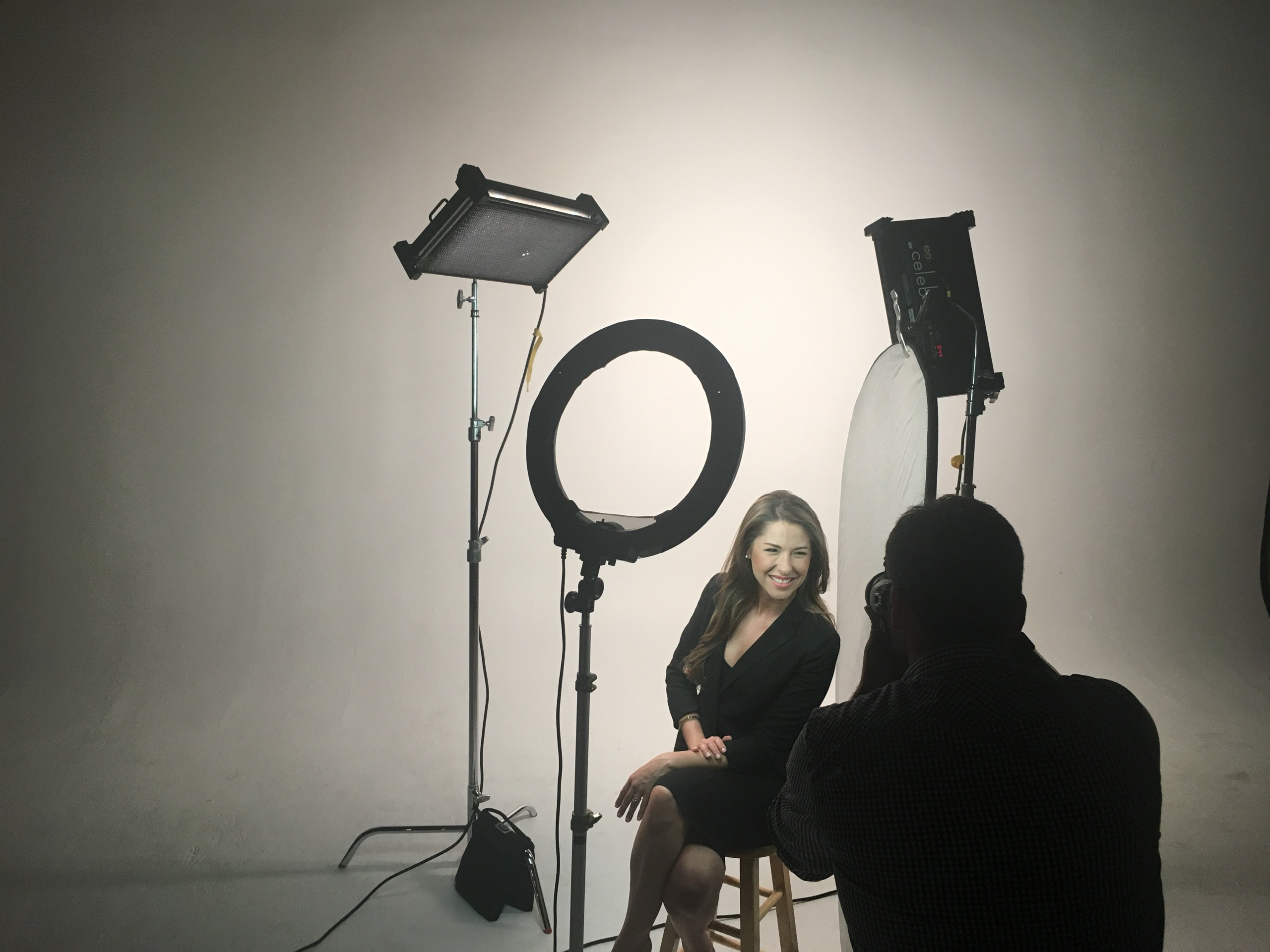
## What moves the number most
**Concept complexity.** A talking-head interview and a cinematic brand story with actors, multiple locations, drone work, and motion graphics are different animals. More ambition means more crew, more days, and more post.
**Timeline.** Rush jobs cost 20 to 40 percent more. Expedited editing, rushed color, and premium rates for compressed schedules all stack. A realistic calendar is a discount you give yourself.
**Shoot days.** Every additional day adds crew, gear, catering, permits, and logistics. It also buys location variety and better talent scheduling, so the question is what each day earns.
**Locations.** Each one needs scouting, permits, travel, and setup. One controlled location on a stage costs far less than five exteriors across three boroughs.
**Cast.** Union talent costs more than non-union. Recognizable talent costs more again. Bigger casts raise casting fees, catering, and on-set logistics at the same time.
**Post complexity.** A straight cut with basic color is not the same job as an edit with motion graphics, animation, and effects. Post usually takes 20 to 30 percent of the budget and complex projects push past that.
## How to pick a production company in New York
**Look for in-house capability.** The best partners handle pre-production, shooting, editing, color, and audio under one roof. Companies that broker every stage to outside vendors lose time in handoffs and consistency in the final cut.
**Ask what they own.** A serious company has immediate access to cinema cameras, lighting, sound gear, and a proper grading suite. If everything on the list is a rental, you are paying a markup and inheriting someone else's availability problem.
**Watch the work, not the reel music.** Does the footage look cinematic, is the grade deliberate, is the edit tight, and does any of it match the tone your brand needs?
**Call a reference.** Ask for clients in a similar industry and at a similar budget. Website testimonials are marketing. A five-minute phone call is information.
**Make them explain the process.** Timelines, revision rounds, and deliverables should be clear before the contract, not discovered during post.
**Notice how they communicate.** Response time and willingness to take feedback during the pitch is a preview of the whole project.

## Budget planning that holds up
**Start with the goal.** Leads, awareness, and conversion are three different videos. Define what success looks like before anyone quotes a number.
**Carry a contingency.** Build in 10 to 15 percent. New York production always finds a surprise, usually on the day with the tightest schedule.
**Protect post.** Allocate at least 20 to 30 percent. Post is where footage becomes a finished piece, and it is the first thing clients raid when the shoot runs over.
**Think past the first cut.** Cheap video that underperforms is expensive. Compare what each option is likely to return, not just what it costs to make.
**Plan distribution early.** Social, YouTube, and broadcast want different formats. Deciding that during post costs more than deciding it during pre-production.
## Frequently asked questions
### How much does video production cost in New York City?
A single-day interview or social shoot generally runs $3,000 to $8,000. A corporate or brand video with a full crew and finishing lands between $12,000 and $50,000, and commercial work climbs past $75,000.
### Do I need a permit to film in NYC?
For public property, yes. Interior permits start around $300 and street or exterior permits run $500 to $2,000 and up, with most locations also requiring proof of insurance.
### What does a sound stage cost in New York?
$1,500 to $5,000 a day in Manhattan and $800 to $2,500 in Brooklyn or Queens, usually before gear, power, and crew parking.
### How long does a New York shoot take?
A simple interview or social piece is one day. A branded campaign with several locations usually runs two to four shoot days plus pre-production and post.
### Is it cheaper to shoot in New York or somewhere else?
Almost anywhere else is cheaper on paper. New York earns the premium when the city itself has to be visible in the footage or the talent pool you need is here.
## How we work in New York
C&I Studios keeps an office in New York City alongside our Fort Lauderdale office and our 30,000 square foot Los Angeles studio, which is our only studio facility. For a New York project that means we build the right crew on the ground, bring the creative leads who own the look, and finish everything in our own color and post pipeline.
Production, post, audio, and photography all live in house, so nothing gets handed to a stranger after wrap. We shoot on RED cinema cameras, fly drones for aerials, and grade in DaVinci Resolve. We have produced brand work for Celsius, Chaumet, and H&M, a New York Stock Exchange listing production for Sunbelt Rentals, and campaign work for Columbia PFG.
We do not run a rate card. A brand with $15,000 and a brand with $150,000 should hear different recommendations, and we would rather say that on the first call than design something the budget cannot carry. Our full [video production services](https://c-istudios.com/video-production-services/) cover concept through delivery, and you can see how we approach the city on our [video production New York](https://c-istudios.com/video-production-new-york/) page.
## Start your New York project
Tell us what you are making, where it runs, and what you have to spend. We will tell you what that buys in this market. [Start a conversation](https://c-istudios.com/contact/) or look through [our work](https://c-istudios.com/our-work/) first.
Originally published March 22, 2026
### Keep reading
[
How Much Does Commercial Video Production Cost in 2026?
Commercial & Brand](https://c-istudios.com/how-much-does-commercial-video-production-cost-in-2026/)[
How Much Does Video Production Cost in Chicago?
Commercial & Brand](https://c-istudios.com/video-production-cost-chicago/)[
The Real Cost of On-Location Shoots
Commercial & Brand](https://c-istudios.com/the-real-cost-of-on-location-shoots-do-video-production-companies-travel/)
---
*This content is from [C&I Studios](https://c-istudios.com), a full-service production company.*
---
# Best Video Production Companies in Fort Lauderdale in 2026
> Published: March 21, 2026
> Categories: Commercial & Brand
> Source: https://c-istudios.com/best-video-production-companies-in-fort-lauderdale-in-2026/
---
.cib{--paper:#1b1d1f;--ink:#fff;--body:#d5d7d9;--muted:#8b9096;--line:rgba(255,255,255,.12);--thumb:#2b2e31;--card:#212426;--accent:#c02b0a;--blue:#5B8FA8;--serif:'Playfair Display',Georgia,serif;--sans:'Poppins',-apple-system,sans-serif;--measure:900px;background:var(--paper);color:var(--body);font-family:var(--sans);line-height:1.6;position:relative;left:50%;transform:translateX(-50%);width:90vw;max-width:1920px}
.cib *{box-sizing:border-box}
.cib .kicker{max-width:var(--measure);margin:58px auto 0;padding:0 22px;font-size:12.5px;font-weight:700;letter-spacing:2.5px;text-transform:uppercase;color:var(--blue)}
.cib h1.cibh1{text-wrap:balance;font-family:var(--serif);font-weight:500;font-size:clamp(46px,6vw,72px);line-height:1.08;color:var(--ink);max-width:var(--measure);margin:18px auto 0;padding:0 22px;letter-spacing:-.5px}
.cib .metarow{max-width:var(--measure);margin:20px auto 0;padding:0 22px;color:var(--muted);font-size:14px}
.cib .hero{position:relative;width:100%;height:0;padding-bottom:56.25%;overflow:hidden;margin:48px auto 0;border-top:1px solid var(--line);border-bottom:1px solid var(--line)}
.cib .hero .ph{width:100%;aspect-ratio:16/9;background:var(--thumb);border-top:1px solid var(--line);border-bottom:1px solid var(--line);display:flex;align-items:center;justify-content:center;color:#7d8288;font-size:13px;text-align:center;padding:0 20px}
.cib .body{max-width:var(--measure);margin:12px auto 0;padding:52px 22px 6px}
.cib .body.lead p:first-child{font-size:23px;line-height:1.62;color:var(--ink)}
.cib .body p{font-size:18.5px;line-height:1.85;margin:0 0 30px;color:var(--body)}
.cib .body h2{text-wrap:balance;font-family:var(--serif);font-weight:500;font-size:clamp(32px,4vw,48px);line-height:1.22;color:var(--ink);margin:70px 0 20px;letter-spacing:-.3px}
.cib .body h3{text-wrap:balance;font-family:var(--sans);font-weight:600;font-size:22px;color:var(--ink);margin:38px 0 8px}
.cib .body a{color:var(--ink);text-decoration:underline;text-decoration-color:rgba(255,255,255,.4);text-underline-offset:3px}
.cib .body a:hover{text-decoration-color:var(--ink)}
.cib .ctable{width:100%;border-collapse:collapse;margin:16px 0 30px;font-size:16px}
.cib .ctable th{background:#000;color:#fff;text-align:left;padding:10px 12px;font-family:var(--sans)}
.cib .ctable td{padding:10px 12px;border-bottom:1px solid var(--line);color:var(--body)}
.cib .inimg{position:relative;width:100%;height:0;padding-bottom:56.25%;overflow:hidden;margin:72px auto;border-top:1px solid var(--line);border-bottom:1px solid var(--line)}
.cib .inimg .ph{width:100%;aspect-ratio:16/9;background:var(--thumb);border-top:1px solid var(--line);border-bottom:1px solid var(--line);display:flex;align-items:center;justify-content:center;color:#7d8288;font-size:13px}
.cib .origpub{max-width:var(--measure);margin:60px auto 0;padding:26px 22px 0;border-top:1px solid var(--line);color:var(--muted);font-size:13.5px}
.cib .related{max-width:1200px;margin:64px auto 0;padding:34px 22px 76px}
.cib .related h3{font-family:var(--sans);font-size:12.5px;letter-spacing:2px;text-transform:uppercase;color:var(--ink);margin:0 0 24px}
.cib .grid{display:grid;grid-template-columns:repeat(3,1fr);gap:28px}
.cib .rc{background:var(--card);border:1px solid var(--line);display:block;text-decoration:none;color:inherit;transition:border-color .15s}
.cib a.rc:hover{border-color:rgba(255,255,255,.5)}
.cib .rc .thumb{position:relative;width:100%;height:0;padding-bottom:56.25%;background:var(--thumb);overflow:hidden}
.cib .rc .thumb img{position:absolute!important;top:0!important;left:0!important;width:100%!important;height:100%!important;object-fit:cover!important;margin:0!important}
.cib .rc .cc{padding:14px 15px 17px}
.cib .rc .rt{font-family:var(--serif);font-weight:500;font-size:16px;line-height:1.3;color:var(--ink);margin:0 0 6px}
.cib .rc .rm{font-size:11px;letter-spacing:1px;text-transform:uppercase;color:var(--muted)}
.cib img{margin:0!important;padding:0!important;display:block!important;vertical-align:top;max-width:100%}
.cib .hero img,.cib .inimg img{position:absolute!important;top:0!important;left:0!important;width:100%!important;height:100%!important;object-fit:cover!important;margin:0!important;padding:0!important;border:0!important;display:block!important;aspect-ratio:auto!important}
.cib .hero+.body{padding-top:36px}
@media(max-width:760px){.cib .grid{grid-template-columns:1fr}.cib .body h2{margin:52px 0 16px}.cib .body p{font-size:17.5px}.cib .inimg,.cib .hero{margin-top:44px}}
.cib .vembed{max-width:var(--measure);margin:44px auto;padding:0 22px}.cib .vembed .vwrap{position:relative;width:100%;height:0;padding-bottom:56.25%}.cib .vembed .vwrap iframe{position:absolute;top:0;left:0;width:100%;height:100%;border:0}
Commercial & Brand
# Best Video Production Companies in Fort Lauderdale in 2026
8 min read
Fort Lauderdale has emerged as a premier video production hub in Florida. The city attracts top brands and talented creators from around the world.
With diverse landscapes, world-class facilities, and experienced crews, Fort Lauderdale offers everything needed for exceptional video production. Whether you need a corporate video, commercial advertisement, or branded content campaign, the city delivers.
Finding the right production partner matters tremendously. Your choice impacts quality, timeline, budget, and final results. This guide reveals what makes top video production companies stand out and identifies the best options in Fort Lauderdale.
## What Sets Top Video Production Companies Apart
### Strategy Comes First
The best video production companies don't just point cameras and record. They start with strategy and understanding.
They learn your business goals. They research your target audience. They define what success looks like for your brand. From there, they build a comprehensive creative approach that weaves storytelling, technical expertise, and innovation throughout every frame.
### Industry-Leading Equipment Matters
Top-tier production companies invest heavily in professional equipment. They use RED Digital Cinema cameras that capture unmatched image quality in 6K and 8K resolution.
They employ experienced directors, cinematographers, and editors. These professionals have worked on major campaigns for recognizable Fortune 500 brands. They understand lighting, composition, movement, and visual storytelling at the highest level.
### In-House Post-Production Creates Quality Control
The best companies maintain complete post-production capabilities in-house. This gives them full control over color grading, audio engineering, editing, and final delivery.
In-house teams collaborate more efficiently. They catch quality issues early. They deliver more cohesive final products because the same creative vision guides the entire process from day one through delivery.
### Experience With Major Brands Builds Confidence
Companies with Fortune 500 client rosters bring proven sophistication. They've managed large-scale productions, complex timelines, and demanding stakeholders. They know how to solve problems under pressure.
This experience shows in the final product. Professional crews work faster. They anticipate issues before they happen. They deliver polished results consistently.
## Why Fort Lauderdale Is a Video Production Powerhouse
### Geographic and Climate Advantages
Fort Lauderdale sits in South Florida with access to pristine beaches, urban environments, and diverse locations within minutes. This variety allows for exceptional location diversity without traveling far.
The subtropical climate enables year-round shooting. Unlike northern states, you're not waiting for weather windows in spring and fall. You can produce video content any month, any season.
### Cost-Effectiveness Compared to Major Markets
Production costs in Fort Lauderdale are significantly lower than Los Angeles or New York City. You get world-class talent and facilities at a fraction of the price.
Equipment rental is affordable. Crew rates are competitive. Studio space costs less. This means your budget stretches further without sacrificing quality.
### Deep Talent Pool and Resources
Fort Lauderdale hosts major corporations and tourism brands that regularly invest in video content. This consistent demand has attracted talented professionals who've built thriving production companies over decades.
The city has equipment rental houses, post-production studios, casting agencies, and location scouts. Networks of specialized vendors support production needs efficiently.
### Multiple Office Locations
Many Fort Lauderdale production companies have expanded to additional locations in Los Angeles, New York, or Miami. This creates national networks while maintaining local expertise and quick turnaround times.
## Key Factors When Choosing a Video Production Company
### Creative Vision and Storytelling Ability
The best video production companies prioritize storytelling above all else.
They don't just execute your requests. They challenge ideas, offer new perspectives, and push creative boundaries strategically. They ask the right questions during pre-production to ensure the final video moves your audience toward action.
A company that leads with concept and narrative development, rather than just technical execution, delivers videos that resonate emotionally and drive results.
### Production Equipment and Facilities
Ask detailed questions about their equipment. Do they own RED cameras or equivalent cinema-grade systems? Can they shoot in 4K and 6K quality?
Do they have in-house editing bays? Professional color grading suites? Sound recording and mixing facilities?
Can they handle your specific requirements, drone work, underwater filming, complex animation, or advanced green screen production?
Companies with comprehensive capabilities under one roof deliver more cohesive, higher-quality results.
### Post-Production Strength and Expertise
Many companies can shoot decent footage. What separates excellence from mediocrity is post-production prowess.
Color grading shapes mood and tone. Editing precision controls pacing and emotional impact. Audio quality ensures clear dialogue and immersive soundscapes. Visual polish determines whether your video looks professional or amateurish.
Look for companies that employ skilled colorists, experienced editors, and professional audio engineers. The best use industry-standard software like DaVinci Resolve for editing and color work.
### Portfolio and Client Track Record
Review their portfolio carefully. Have they worked with brands similar to yours? Have they produced videos in your industry or market?
A strong portfolio across diverse industries demonstrates versatility. Success with major national brands shows they can handle complexity and deliver consistently.
Ask for references from clients similar to your business. Direct feedback from comparable brands is invaluable.
### Communication Style and Process Clarity
Video production involves variables, location surprises, weather complications, talent scheduling changes. The best companies keep you informed at every stage.
They explain their workflow clearly. They set realistic timelines. They manage expectations transparently.
They offer revision rounds and collaborate genuinely in the revision process. They respond to feedback constructively, not defensively.
## Video Production Pricing. Understanding the Investment
### Pricing by Project Type
**Corporate testimonial videos** typically cost $3,000 to $15,000. These feature simple setups, limited locations, and basic editing.
**Brand videos with location scouting** run $15,000 to $75,000. These include multiple shooting days, professional talent, advanced post-production, and strategic storytelling.
**Commercial productions** often exceed $75,000. These include broadcast quality requirements, complex creative concepts, and extensive post-production including color grading and sound design.
**Custom project pricing** depends on scope, timeline, location complexity, and specific requirements.
### What You're Paying For
Cheap video production usually reflects cheaper equipment, less experienced crews, and rushed post-production. Results look amateur.
Mid-range providers offer solid quality and professional processes. You get experienced crews and decent facilities. Results look competent and professional.
Premium production companies bring creative excellence, top-tier equipment, and strategic partnership. Results look cinematic and perform better across all metrics.
### Making Smart Budget Decisions
Don't chase the lowest price. Instead, compare what each company delivers for the investment.
A slightly higher budget that yields dramatically better results represents a smarter business decision. Better videos drive more engagement, more conversions, and more revenue.
## Why Local Fort Lauderdale Production Companies Win
### Deep Understanding of Local Locations
Fort Lauderdale-based companies know the city intimately. They understand which locations photograph beautifully, which have permitting challenges, and which offer the best value.
They've scouted beaches, downtown areas, neighborhoods, and waterfront locations repeatedly. This experience saves time and prevents costly location mistakes.
### Established Vendor Relationships
Local production companies have relationships with equipment rental houses, studios, casting agencies, and specialized vendors.
These relationships mean faster turnaround times, better rates, and more reliable service. You benefit from established networks without coordinating everything yourself.
### Weather Expertise
They understand South Florida weather patterns. They know best seasons for outdoor shoots. They prepare contingencies for afternoon thunderstorms.
This expertise prevents weather-related delays and budget overruns.
### Quick Turnaround and Flexibility
Local crews don't need to fly in from other cities. They can respond quickly to schedule changes and last-minute needs.
This flexibility creates smoother, more efficient production processes.
### Stronger Community Reputation
Fort Lauderdale-based companies have vested interests in local reputation. They depend on referrals and repeat business within the community.
If something goes wrong, they're highly motivated to make it right. This accountability matters.
## The Video Production Process. What to Expect
### Pre-Production Phase
**Concept Development:** The team collaborates to find the strongest creative direction that serves your business goals and resonates with your audience.
**Script Writing:** Professional screenwriters develop killer dialogue, scene descriptions, and detailed shot lists. You review and approve before production begins.
**Location Scouting:** Experienced producers identify settings that match your vision and fit your budget. They handle permitting and logistics.
**Casting:** The company coordinates with talent agencies to find actors and speakers who authentically represent your brand.
**Scheduling:** The team books production dates, equipment, crew, and locations. Production scheduling ensures sufficient time to capture all necessary footage without rushing.
### Production Phase
**Professional Crew Management:** Lighting specialists, camera operators, sound technicians, and production assistants work together seamlessly.
**Cinema-Quality Capture:** Footage is recorded using professional equipment with attention to every technical and creative detail.
**Image Quality Control:** A DIT (Digital Imaging Technician) monitors image quality and color correction needs throughout the shoot.
### Post-Production Phase
**Professional Editing:** Editors assemble footage, craft pacing, and create transitions that guide the viewer's emotional journey.
**Color Grading:** Colorists shape mood and tone through precise color correction. The video gets its final visual character here.
**Audio Engineering:** Dialogue is cleaned and balanced. Music is integrated. Ambient sound creates immersion. This layer of professionalism is what separates quality productions from amateur videos.
**Client Revisions:** You preview near-final cuts and request adjustments. Professional companies include revision rounds in their process.
**Distribution Support:** Many companies assist with deployment across social media, websites, advertising platforms, and other channels.
## Why C&I Studios Stands Out in Fort Lauderdale
### Award-Winning Excellence
C&I Studios is based in Fort Lauderdale with additional offices in Los Angeles and New York City. The company represents the gold standard for production excellence in South Florida and beyond.
The studio has worked with household-name brands including Nike, Coca-Cola, AT&T, Fox Sports, ESPN, MTV, National Geographic, and many others.
This extensive portfolio demonstrates consistent excellence across diverse industries and project types. Awards and industry recognition validate their creative and technical prowess.
### Unmatched Technical Capabilities
C&I Studios operates RED Digital Cinema cameras, the industry's most advanced cinema camera system. This ensures footage quality that rivals major Hollywood productions.
Their in-house [post-production services](https://claude.ai/post-production-services/) include professional editing using DaVinci Resolve, color grading by award-winning colorists, and audio engineering by professionals who deliver broadcast-quality sound.
The company maintains complete facilities for every production phase. This vertical integration ensures quality control and seamless collaboration.
### Comprehensive Video Production Services
C&I Studios differentiates itself through complete [video production services](https://claude.ai/video-production-services/). The company handles everything from concept development and scriptwriting through location scouting, casting, production, and final delivery.
This end-to-end approach eliminates friction from coordinating multiple vendors. It ensures seamless collaboration and consistent creative vision throughout your project.
### Strategic Partnership Approach
The company emphasizes storytelling and creative excellence over simply executing requests.
They start by understanding your business goals, your brand voice, and your target audience. From there, they develop concepts designed to move your audience emotionally and drive measurable results.
This strategic foundation elevates every project beyond standard video production.
### Global Reach with Local Expertise
Despite their national presence, C&I Studios brings deep Fort Lauderdale expertise to every local project. They understand the market, the locations, and the community.
Yet they also bring world-class capabilities developed through work on international brands and major productions.
## Work with C&I Studios
If you are planning a project like this, our team can take it from concept to final delivery. Explore our [video production services](https://c-istudios.com/video-production-services/), browse [our work](https://c-istudios.com/our-work/) to see how we tell brand stories, and [get in touch](https://c-istudios.com/contact/) when you are ready to start.
Originally published March 21, 2026
---
*This content is from [C&I Studios](https://c-istudios.com), a full-service production company.*
---
# Video Production Companies in Los Angeles: How to Choose the Right One
> Published: March 20, 2026
> Categories: Commercial & Brand
> Source: https://c-istudios.com/video-production-companies-in-los-angeles-how-to-choose-the-right-one/
---
.cib{--paper:#1b1d1f;--ink:#fff;--body:#d5d7d9;--muted:#8b9096;--line:rgba(255,255,255,.12);--thumb:#2b2e31;--card:#212426;--accent:#c02b0a;--blue:#5B8FA8;--serif:'Playfair Display',Georgia,serif;--sans:'Poppins',-apple-system,sans-serif;--measure:900px;background:var(--paper);color:var(--body);font-family:var(--sans);line-height:1.6;position:relative;left:50%;transform:translateX(-50%);width:90vw;max-width:1920px}
.cib *{box-sizing:border-box}
.cib .kicker{max-width:var(--measure);margin:58px auto 0;padding:0 22px;font-size:12.5px;font-weight:700;letter-spacing:2.5px;text-transform:uppercase;color:var(--blue)}
.cib h1.cibh1{text-wrap:balance;font-family:var(--serif);font-weight:500;font-size:clamp(46px,6vw,72px);line-height:1.08;color:var(--ink);max-width:var(--measure);margin:18px auto 0;padding:0 22px;letter-spacing:-.5px}
.cib .metarow{max-width:var(--measure);margin:20px auto 0;padding:0 22px;color:var(--muted);font-size:14px}
.cib .hero{position:relative;width:100%;height:0;padding-bottom:56.25%;overflow:hidden;margin:48px auto 0;border-top:1px solid var(--line);border-bottom:1px solid var(--line)}
.cib .hero .ph{width:100%;aspect-ratio:16/9;background:var(--thumb);border-top:1px solid var(--line);border-bottom:1px solid var(--line);display:flex;align-items:center;justify-content:center;color:#7d8288;font-size:13px;text-align:center;padding:0 20px}
.cib .body{max-width:var(--measure);margin:12px auto 0;padding:52px 22px 6px}
.cib .body.lead p:first-child{font-size:23px;line-height:1.62;color:var(--ink)}
.cib .body p{font-size:18.5px;line-height:1.85;margin:0 0 30px;color:var(--body)}
.cib .body h2{text-wrap:balance;font-family:var(--serif);font-weight:500;font-size:clamp(32px,4vw,48px);line-height:1.22;color:var(--ink);margin:70px 0 20px;letter-spacing:-.3px}
.cib .body h3{text-wrap:balance;font-family:var(--sans);font-weight:600;font-size:22px;color:var(--ink);margin:38px 0 8px}
.cib .body a{color:var(--ink);text-decoration:underline;text-decoration-color:rgba(255,255,255,.4);text-underline-offset:3px}
.cib .body a:hover{text-decoration-color:var(--ink)}
.cib .ctable{width:100%;border-collapse:collapse;margin:16px 0 30px;font-size:16px}
.cib .ctable th{background:#000;color:#fff;text-align:left;padding:10px 12px;font-family:var(--sans)}
.cib .ctable td{padding:10px 12px;border-bottom:1px solid var(--line);color:var(--body)}
.cib .inimg{position:relative;width:100%;height:0;padding-bottom:56.25%;overflow:hidden;margin:72px auto;border-top:1px solid var(--line);border-bottom:1px solid var(--line)}
.cib .inimg .ph{width:100%;aspect-ratio:16/9;background:var(--thumb);border-top:1px solid var(--line);border-bottom:1px solid var(--line);display:flex;align-items:center;justify-content:center;color:#7d8288;font-size:13px}
.cib .origpub{max-width:var(--measure);margin:60px auto 0;padding:26px 22px 0;border-top:1px solid var(--line);color:var(--muted);font-size:13.5px}
.cib .related{max-width:1200px;margin:64px auto 0;padding:34px 22px 76px}
.cib .related h3{font-family:var(--sans);font-size:12.5px;letter-spacing:2px;text-transform:uppercase;color:var(--ink);margin:0 0 24px}
.cib .grid{display:grid;grid-template-columns:repeat(3,1fr);gap:28px}
.cib .rc{background:var(--card);border:1px solid var(--line);display:block;text-decoration:none;color:inherit;transition:border-color .15s}
.cib a.rc:hover{border-color:rgba(255,255,255,.5)}
.cib .rc .thumb{position:relative;width:100%;height:0;padding-bottom:56.25%;background:var(--thumb);overflow:hidden}
.cib .rc .thumb img{position:absolute!important;top:0!important;left:0!important;width:100%!important;height:100%!important;object-fit:cover!important;margin:0!important}
.cib .rc .cc{padding:14px 15px 17px}
.cib .rc .rt{font-family:var(--serif);font-weight:500;font-size:16px;line-height:1.3;color:var(--ink);margin:0 0 6px}
.cib .rc .rm{font-size:11px;letter-spacing:1px;text-transform:uppercase;color:var(--muted)}
.cib img{margin:0!important;padding:0!important;display:block!important;vertical-align:top;max-width:100%}
.cib .hero img,.cib .inimg img{position:absolute!important;top:0!important;left:0!important;width:100%!important;height:100%!important;object-fit:cover!important;margin:0!important;padding:0!important;border:0!important;display:block!important;aspect-ratio:auto!important}
.cib .hero+.body{padding-top:36px}
@media(max-width:760px){.cib .grid{grid-template-columns:1fr}.cib .body h2{margin:52px 0 16px}.cib .body p{font-size:17.5px}.cib .inimg,.cib .hero{margin-top:44px}}
.cib .vembed{max-width:var(--measure);margin:44px auto;padding:0 22px}.cib .vembed .vwrap{position:relative;width:100%;height:0;padding-bottom:56.25%}.cib .vembed .vwrap iframe{position:absolute;top:0;left:0;width:100%;height:100%;border:0}
Commercial & Brand
# Video Production Companies in Los Angeles. How to Choose the Right One
6 min read
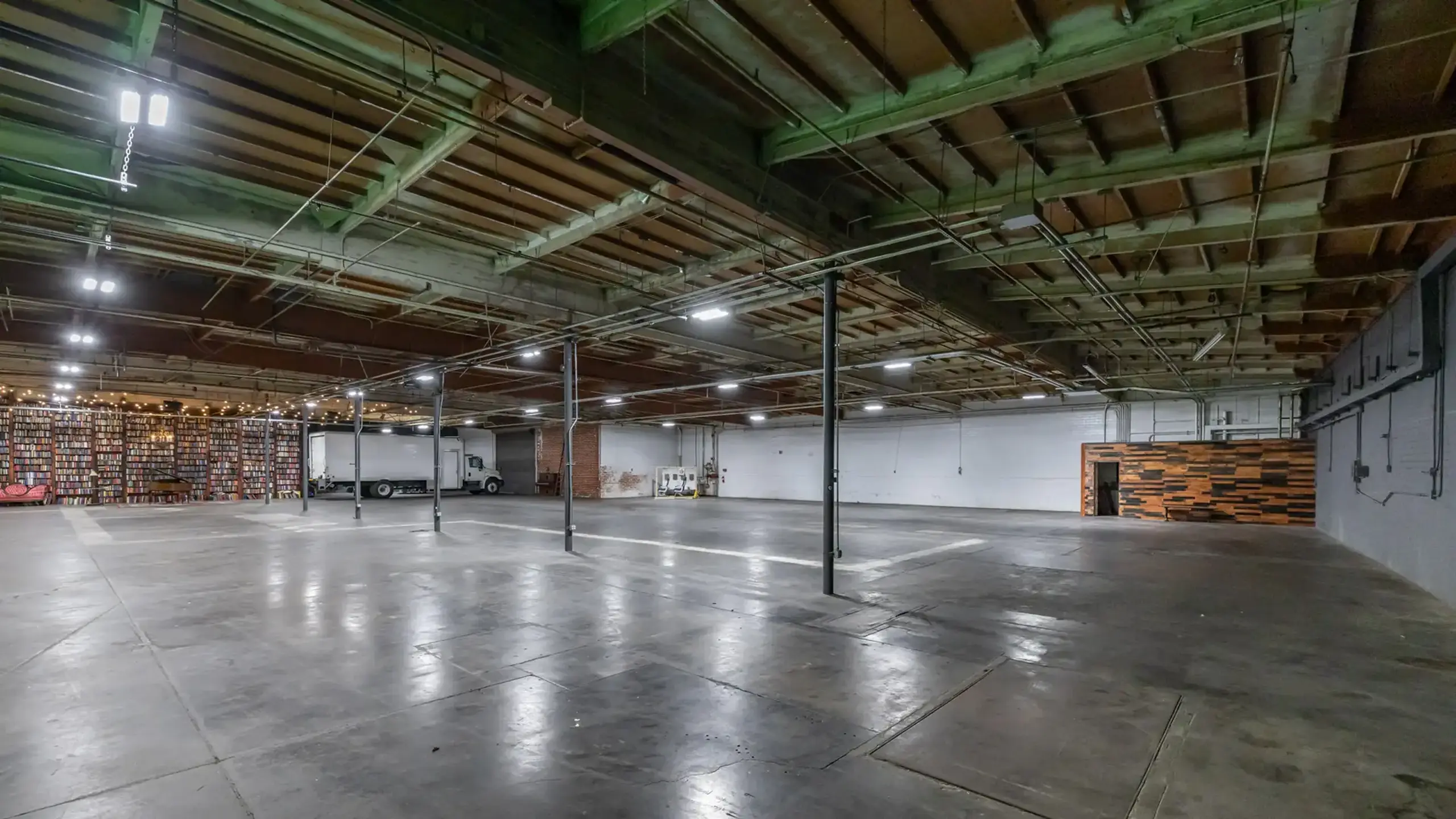
**Los Angeles is home to thousands of video production companies.** Each promises excellence. Each claims expertise. Yet most brands still struggle to distinguish between them.
Price varies wildly. Quality varies even more. Experience? That's the biggest mystery of all. You could hire a startup charging $5,000 or an established firm charging $50,000. Both claim they'll deliver results. One might, one might not.
The difference matters enormously. Choosing wrong wastes budget on mediocre video that doesn't perform. Choosing right creates content that drives results.
**Why Los Angeles for Video Production?**
Los Angeles attracts video production work for good reasons. Access to world-class talent. Experienced crews who've worked on major productions. Diverse locations and weather enabling year-round shooting. Equipment rental infrastructure. Post-production facilities. Industry relationships and networks.
Companies choose LA because the infrastructure exists nowhere else. You can find cinematographers who've shot feature films. Directors who've worked on major commercials. Editors trained on big-budget productions. This talent concentration makes Los Angeles the obvious choice for serious video work.
But this same concentration creates a challenge. Hundreds of companies compete for business. How do you identify which ones deliver results versus which ones simply promise results?
**The Real Cost of Choosing Wrong**
Selecting the wrong production company costs far more than just the production budget. A mediocre video doesn't perform. It underperforms across metrics that matter, engagement, conversions, shares, audience retention. You invested $15,000 and got a $5,000 result.
Worse, you're locked in. You've already shot the video. Reshooting is exponentially more expensive. You're living with substandard content. Bad video damages brand perception. Viewers judge you by what they see.
Poor production also creates production problems. Missed deadlines. Budget overruns. Scope creep. Communication breakdowns. Creative direction disasters. These problems cascade, affecting your timeline and stress levels.
Choosing the right company eliminates these risks. Professional companies deliver on time, on budget, and to specifications. They solve problems before they become problems. They make your project smoother and results better.
**What Sets Excellent Companies Apart**
Not all Los Angeles production companies are created equal. The differences matter tremendously.
### Talent and Team
Excellent companies work with A-list talent. Not always famous people, excellent cinematographers, directors, and editors who've worked on significant productions. These professionals bring skills, experience, and professional standards to your project. Average companies use the same in-house team for every project. This limits perspective and quality.
### Portfolio Quality
Review past work extensively. Excellent companies show diverse projects across industries and formats. Mediocre companies often show similar projects repeatedly or work of questionable quality. Strong portfolios indicate capability. Weak portfolios indicate limitations.
### Client Communication
Excellent companies prioritize understanding your goals before proposing solutions. They ask questions about your objectives, audience, timeline, and budget. They listen more than they talk initially. Average companies jump straight to their standard process, forcing your project into their template.
### Problem-Solving Capability
Production always encounters unexpected challenges. Weather changes. Talent cancellations. Location issues. Technical problems. Excellent companies handle these seamlessly, finding solutions quickly. Average companies scramble, delay, or pass problems back to you.
### Post-Production Integration
[Professional post-production services](https://c-istudios.com/post-production-services/) transform raw footage into finished video. Excellent companies have in-house or trusted post-production partners ensuring consistent quality and efficient workflow. Some companies shoot but can't edit well. This creates disconnects and delays.
## Evaluating Experience and Credentials
Experience matters, but not just raw years in business. What matters is relevant experience. A company that's been producing wedding videos for 10 years might not excel at commercial production. A company that specializes in corporate videos might not understand social media video requirements.
Look for companies with experience in your specific area. Corporate video producer? Look for strong corporate portfolios. Commercial production? Find companies with commercial experience. Social media content? Find companies that understand platform requirements and audience behavior.
Check references carefully. Ask past clients about on-time delivery, budget adherence, creative collaboration, and final product quality. Ask about problems encountered and how the company handled them. Past clients reveal real capabilities better than marketing materials.
## Understanding True Production Costs
Production company pricing varies dramatically. Some charge $10,000 for what another charges $50,000. This variation confuses clients.
The difference is usually justified. Higher pricing often reflects more experienced crews, better equipment, proven processes, and better results. Lower pricing might reflect newer crews, basic equipment, less developed processes, or lower production values.
Compare quotes carefully. Are they quoting different scopes? Different crew levels? Different post-production depth? You're often not comparing apples to apples. Get detailed breakdowns understanding what each includes.
Invest based on project importance. If this video is critical to business results, invest in top-tier production. If it's supporting content, mid-tier production is reasonable. Match investment to strategic importance.
[Video and audio live streaming services](https://c-istudios.com/video-audio-live-streaming/) require specific technical expertise not all companies offer. If you need live capabilities, ensure the company has this specific experience and infrastructure.
## Location and Logistics Matter
Los Angeles production companies have different infrastructure. Some are full-service with studios, edit bays, and post-production facilities in-house. Others are more mobile, shooting on location and outsourcing post-production.
Understand their capabilities. Do they have soundstages if you need controlled environments? Do they have editing facilities if you need quick turnarounds? Can they handle technical requirements your project needs?
Consider their location within LA. Downtown companies have different access than Santa Monica companies. Culver City companies differ from West LA companies. Understand if their location works for your shoot locations or if logistics become complicated.
## The Client Relationship Matters
How companies treat clients reveals their values. Do they prioritize your goals or their standard process? Do they explain decisions or just dictate them? Do they welcome your input or dismiss it? Do they communicate proactively or only when you ask?
Excellent companies view you as a partner. They're invested in your success. They communicate regularly. They anticipate problems. They solve issues before they impact your project. They celebrate results together.
Average companies view you as a client, someone paying for a service they deliver. Communication is transactional. They follow their process regardless of your specific needs. They're not particularly invested in whether you're satisfied beyond the transaction completing.
Pay attention to how companies interact with you during the sales process. That's usually how they'll treat you during production.
## Red Flags to Avoid
Avoid companies that guarantee specific results. Video performance depends on many variables beyond production quality. Anyone promising guaranteed engagement or conversions is overselling.
Skip companies that won't show portfolios or references. Reputable companies are proud of their work and have no problem demonstrating capability. Reluctance suggests weakness.
Avoid companies that pressure you into decisions quickly. Legitimate companies understand production requires planning. They're willing to take time discussing your project, answering questions, and ensuring alignment.
Skip companies with unreasonably low pricing. Prices far below market usually indicate cutting corners, less experienced crews, lower production values, or underestimating scope. You get what you pay for.
Avoid companies that use the same template for every project. Your project is unique. It deserves customized approach, not standard processing.
## Work with C&I Studios
If you are planning a project like this, our team can take it from concept to final delivery. Explore our [video production services](https://c-istudios.com/video-production-services/), browse [our work](https://c-istudios.com/our-work/) to see how we tell brand stories, and [get in touch](https://c-istudios.com/contact/) when you are ready to start.
Originally published March 20, 2026
---
*This content is from [C&I Studios](https://c-istudios.com), a full-service production company.*
---
# What Is a Video Production Company? How to Know If You Need One
> Published: March 18, 2026
> Categories: Commercial & Brand
> Source: https://c-istudios.com/what-is-a-video-production-company-how-to-know-if-you-need-one/
---
.cib{--paper:#1b1d1f;--ink:#fff;--body:#d5d7d9;--muted:#8b9096;--line:rgba(255,255,255,.12);--thumb:#2b2e31;--card:#212426;--accent:#c02b0a;--blue:#5B8FA8;--serif:'Playfair Display',Georgia,serif;--sans:'Poppins',-apple-system,sans-serif;--measure:900px;background:var(--paper);color:var(--body);font-family:var(--sans);line-height:1.6;position:relative;left:50%;transform:translateX(-50%);width:90vw;max-width:1920px}
.cib *{box-sizing:border-box}
.cib .kicker{max-width:var(--measure);margin:58px auto 0;padding:0 22px;font-size:12.5px;font-weight:700;letter-spacing:2.5px;text-transform:uppercase;color:var(--blue)}
.cib h1.cibh1{text-wrap:balance;font-family:var(--serif);font-weight:500;font-size:clamp(46px,6vw,72px);line-height:1.08;color:var(--ink);max-width:var(--measure);margin:18px auto 0;padding:0 22px;letter-spacing:-.5px}
.cib .metarow{max-width:var(--measure);margin:20px auto 0;padding:0 22px;color:var(--muted);font-size:14px}
.cib .hero{position:relative;width:100%;height:0;padding-bottom:56.25%;overflow:hidden;margin:48px auto 0;border-top:1px solid var(--line);border-bottom:1px solid var(--line)}
.cib .hero .ph{width:100%;aspect-ratio:16/9;background:var(--thumb);border-top:1px solid var(--line);border-bottom:1px solid var(--line);display:flex;align-items:center;justify-content:center;color:#7d8288;font-size:13px;text-align:center;padding:0 20px}
.cib .body{max-width:var(--measure);margin:12px auto 0;padding:52px 22px 6px}
.cib .body.lead p:first-child{font-size:23px;line-height:1.62;color:var(--ink)}
.cib .body p{font-size:18.5px;line-height:1.85;margin:0 0 30px;color:var(--body)}
.cib .body h2{text-wrap:balance;font-family:var(--serif);font-weight:500;font-size:clamp(32px,4vw,48px);line-height:1.22;color:var(--ink);margin:70px 0 20px;letter-spacing:-.3px}
.cib .body h3{text-wrap:balance;font-family:var(--sans);font-weight:600;font-size:22px;color:var(--ink);margin:38px 0 8px}
.cib .body a{color:var(--ink);text-decoration:underline;text-decoration-color:rgba(255,255,255,.4);text-underline-offset:3px}
.cib .body a:hover{text-decoration-color:var(--ink)}
.cib .ctable{width:100%;border-collapse:collapse;margin:16px 0 30px;font-size:16px}
.cib .ctable th{background:#000;color:#fff;text-align:left;padding:10px 12px;font-family:var(--sans)}
.cib .ctable td{padding:10px 12px;border-bottom:1px solid var(--line);color:var(--body)}
.cib .inimg{position:relative;width:100%;height:0;padding-bottom:56.25%;overflow:hidden;margin:72px auto;border-top:1px solid var(--line);border-bottom:1px solid var(--line)}
.cib .inimg .ph{width:100%;aspect-ratio:16/9;background:var(--thumb);border-top:1px solid var(--line);border-bottom:1px solid var(--line);display:flex;align-items:center;justify-content:center;color:#7d8288;font-size:13px}
.cib .origpub{max-width:var(--measure);margin:60px auto 0;padding:26px 22px 0;border-top:1px solid var(--line);color:var(--muted);font-size:13.5px}
.cib .related{max-width:1200px;margin:64px auto 0;padding:34px 22px 76px}
.cib .related h3{font-family:var(--sans);font-size:12.5px;letter-spacing:2px;text-transform:uppercase;color:var(--ink);margin:0 0 24px}
.cib .grid{display:grid;grid-template-columns:repeat(3,1fr);gap:28px}
.cib .rc{background:var(--card);border:1px solid var(--line);display:block;text-decoration:none;color:inherit;transition:border-color .15s}
.cib a.rc:hover{border-color:rgba(255,255,255,.5)}
.cib .rc .thumb{position:relative;width:100%;height:0;padding-bottom:56.25%;background:var(--thumb);overflow:hidden}
.cib .rc .thumb img{position:absolute!important;top:0!important;left:0!important;width:100%!important;height:100%!important;object-fit:cover!important;margin:0!important}
.cib .rc .cc{padding:14px 15px 17px}
.cib .rc .rt{font-family:var(--serif);font-weight:500;font-size:16px;line-height:1.3;color:var(--ink);margin:0 0 6px}
.cib .rc .rm{font-size:11px;letter-spacing:1px;text-transform:uppercase;color:var(--muted)}
.cib img{margin:0!important;padding:0!important;display:block!important;vertical-align:top;max-width:100%}
.cib .hero img,.cib .inimg img{position:absolute!important;top:0!important;left:0!important;width:100%!important;height:100%!important;object-fit:cover!important;margin:0!important;padding:0!important;border:0!important;display:block!important;aspect-ratio:auto!important}
.cib .hero+.body{padding-top:36px}
@media(max-width:760px){.cib .grid{grid-template-columns:1fr}.cib .body h2{margin:52px 0 16px}.cib .body p{font-size:17.5px}.cib .inimg,.cib .hero{margin-top:44px}}
.cib .vembed{max-width:var(--measure);margin:44px auto;padding:0 22px}.cib .vembed .vwrap{position:relative;width:100%;height:0;padding-bottom:56.25%}.cib .vembed .vwrap iframe{position:absolute;top:0;left:0;width:100%;height:100%;border:0}
Commercial & Brand
# What Is a Video Production Company? How to Know If You Need One
8 min read
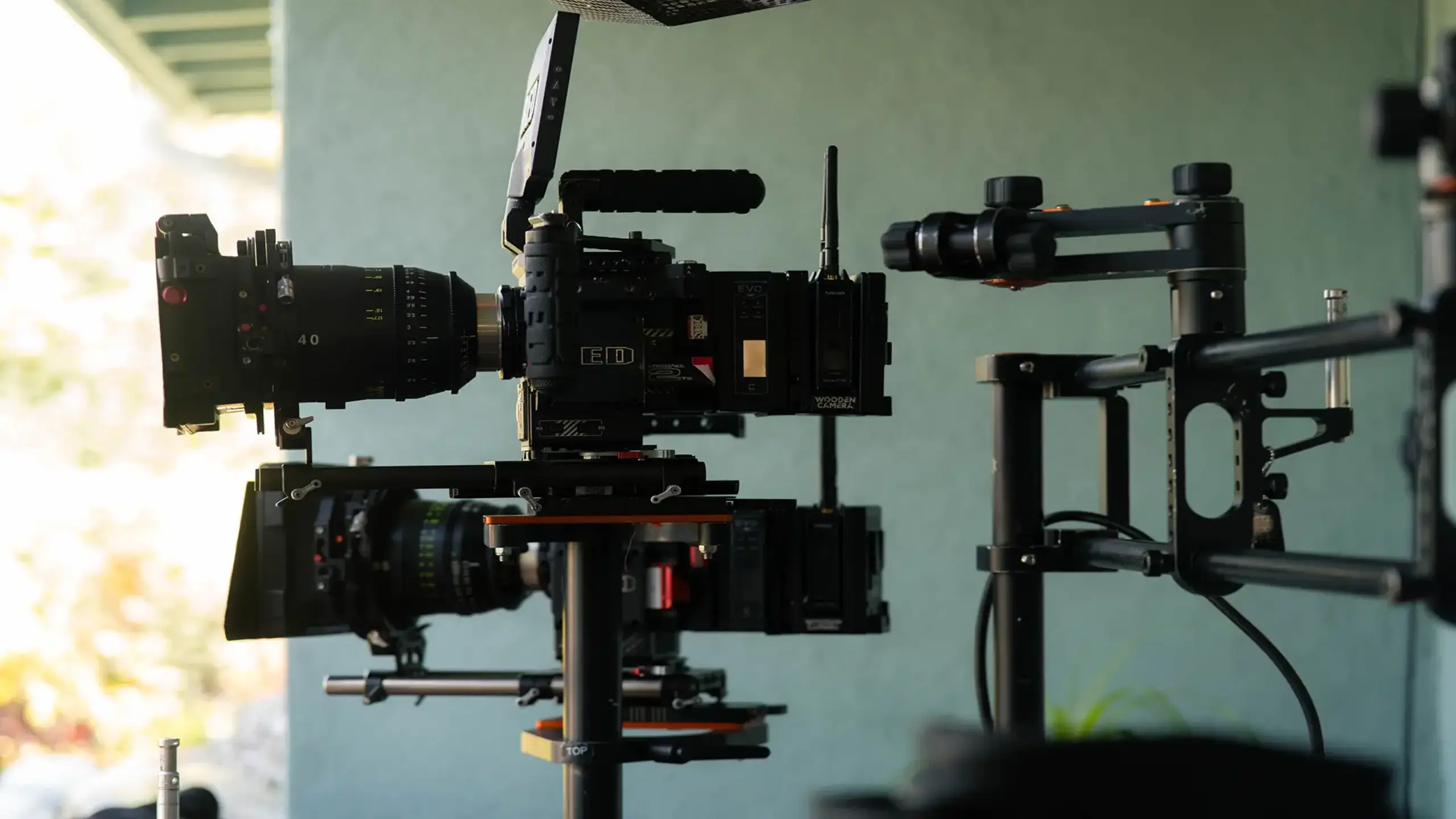
Most brands know they need video. They just don't know how to produce it. The gap between knowing video matters and actually creating quality video stops many businesses from leveraging this powerful medium.
This is where video production companies enter. But before you hire one, you should understand what they actually do and whether your situation actually requires professional help. This guide explains both.
## What Is a Video Production Company?
A video production company is a team of professionals who handle the complete creative and technical aspects of video projects. They take your concept and transform it into finished content ready for your audience.
This encompasses everything. Strategy and planning. Scriptwriting and creative direction. Casting and location scouting. Filming with professional equipment. Post-production editing, sound mixing, color correction. Distribution strategy. Video production companies manage it all.
The best companies view themselves as partners, not vendors. They understand your goals and business context. They guide you toward what will actually work rather than pushing what's easiest to produce. They function as an extension of your team.
## What Video Production Companies Actually Do
Video production spans multiple distinct phases. Understanding these helps you understand what companies offer.
### Conceptualization and Strategy
This is where goals get defined. What's the video purpose? Who's the audience? What action should viewers take? What's success? Professional companies guide this thinking. They've seen what works across hundreds of projects. They identify potential problems before expensive production begins.
### Creative Development
Story structure. Script. Visual direction. Casting. Location selection. Professional companies bring creative expertise. They understand storytelling, visual composition, and audience psychology. They make creative choices that drive results, not just look impressive.
### Production
This is the filming phase. Professional equipment. Experienced crew. Efficient workflows. Professional companies handle the technical complexity that most brands underestimate. Lighting isn't just "turn on a light." Audio isn't just "use a microphone." These technical elements directly impact whether your video succeeds or fails.
### Post-Production
Editing. Sound design. Color grading. Graphics. Music selection. Professional post-production transforms raw footage into polished content. This phase often determines whether video performs or not. Professional companies have invested in expensive software and trained editors who know how to use it.
## The Real Cost of DIY Video
Brands often underestimate video production costs. This leads them to choose DIY approaches that ultimately cost more in hidden expenses.
Equipment costs quickly compound. A decent camera runs $2,000+. Professional lighting? $3,000+. Quality microphone and audio recording? $1,500+. Then software. Video editing software isn't cheap. Color grading software costs money. Stock footage costs money. Suddenly DIY looks expensive.
But equipment is just the beginning. Time costs money. If your internal team spends weeks on a video project, that's opportunity cost. Could those people be doing their core job instead? Could that time generate revenue? Probably.
Quality suffers when non-specialists produce video. Poor lighting. Mediocre composition. Weak storytelling. Sound problems. Amateurish editing. These quality issues undermine messaging and reduce video effectiveness. You end up with content that doesn't perform as well, negating the money you saved.
Professional video production companies achieve efficiency through specialization. They're faster. Their quality is higher. Their results are better. When you factor in time value and quality output, professional production is often cheaper than DIY.
## Types of Videos Video Production Companies Create
Different video types require different expertise. Understanding these helps you know what to ask for.
**Promotional and Brand Videos.** These build awareness and communicate brand values. Professional companies excel at telling brand stories that resonate emotionally and drive action.
**Commercial and Product Videos.** These demonstrate products and drive sales. Professional companies know how to showcase products, address objections, and persuade viewers.
**Testimonial and Case Study Videos.** Real customers telling their stories. Professional companies know how to make testimonials authentic and compelling. They understand the psychology of social proof.
**Educational and Tutorial Videos.** These teach and establish authority. Professional companies structure complex information clearly and maintain viewer engagement throughout longer content.
**Event Coverage and Live Streaming.** Capturing events professionally. [Video and audio live streaming services](https://c-istudios.com/video-audio-live-streaming/) require specific technical expertise and real-time problem solving. Professional companies handle this seamlessly.
**Corporate and Internal Communications.** Videos for employees, stakeholders, and internal training. Professional companies create content that feels professional without being sterile.
## How to Know If You Need a Video Production Company
Not every business needs to hire a professional video production company. Some situations genuinely warrant DIY approaches. Others absolutely require professionals.
**You need a production company if:**
Your video is critical to business goals. If this video directly impacts revenue, conversions, or lead generation, professional quality matters. Mediocre video underperforms mediocrity-level results.
You lack internal expertise. If you don't have someone with video production skills on staff, hiring professionals is more efficient than learning on the job.
You lack equipment and infrastructure. If you'd need to purchase significant equipment, professional services are cost-effective alternatives.
Your timeline is tight. If you need quality video quickly, professionals compress timelines through efficient workflows.
You're producing multiple videos. Building a relationship with a production company that knows your brand enables faster, more consistent subsequent projects.
You need consistency across content. If you produce video regularly and need consistent quality and style, working with the same team delivers this.
Platforms like [iNeedProduction](https://ineedproduction.com/) also connect brands directly with production teams for projects that need a quick turnaround.
## Choosing the Right Video Production Company
Not all video production companies are created equal. Quality, approach, and specialization vary dramatically. Finding the right partner requires looking beyond pricing to understand fit, capability, and cultural alignment.
### Start With Your Specific Needs
Different companies specialize in different areas. Some excel at commercials and advertising content. Others focus on corporate videos and internal communications. Some specialize in social media video production. Others handle longer-form content and documentaries. Your specific needs should determine which companies you evaluate.
A commercial production company may not excel at educational content. A social media specialist may lack broadcast-quality infrastructure. Understanding your specific needs helps you find companies with relevant experience and the right [portfolio](https://c-istudios.com/our-work/) of past work.
### Evaluate Portfolio and Past Work
Review past projects extensively. Look for work similar to what you're planning. Examine their approach to storytelling, production quality, and overall aesthetic. Does their style align with your vision? Do their finished products look professional and polished?
Past work reveals capability better than any sales pitch. A company showing strong portfolio work has proven they can deliver. Strong portfolios indicate established clients, successful projects, and professional standards.
### Verify Credibility Through References
Check testimonials and speak with past clients directly. Ask about on-time delivery, budget adherence, and how the company handled challenges or revisions. Reputable companies have no problem providing references. Companies reluctant to provide references warrant skepticism.
Past clients provide honest insight into working relationships. They reveal whether communication was clear, whether the company was collaborative, and whether the final product exceeded expectations or disappointed.
### Understand Their Workflow and Process
Every production company approaches projects differently. Some are highly structured. Others are more flexible and adaptive. Some require extensive upfront planning. Others iterate throughout production. Understanding their workflow helps you determine whether their approach aligns with your needs and working style.
Ask how they handle client collaboration. Do they involve you throughout production or only at predetermined checkpoints? How do they handle revision requests? How flexible are they when you want to change direction? These process questions reveal whether the partnership will feel collaborative or frustrating.
### Confirm Complete Service Coverage
Some companies handle concept through distribution, the entire creative and technical process. Others specialize in only filming or only post-production. Understand exactly what services they provide. If they don't handle services your project requires, you'll need to coordinate between multiple vendors, complicating the process.
Full-service companies streamline production because one team manages the entire project. Specialized companies may offer deeper expertise in specific areas but require more coordination.
### Prioritize Communication and Partnership
Video production requires ongoing collaboration. Clear communication matters tremendously. Identify your main point of contact. Understand how frequently you'll connect. Clarify how decisions get made and how concerns get addressed.
Companies that treat you as a true partner, not just a vendor-client transaction, produce better results. They're invested in your success. They communicate proactively. They raise concerns when they see potential problems. This partnership approach leads to better video and better outcomes.
## What Video Production Companies Cost
Video production costs vary based on scope, complexity, and location. Simple product videos might cost $3,000-$10,000. Commercial-quality brand videos often cost $20,000-$50,000+. Complex productions or broadcast-quality work can cost significantly more.
Cost isn't just about equipment. It's about expertise, experience, and efficiency. Professional companies achieve results that justify investment through better quality and faster timelines.
[Professional video production services](https://c-istudios.com/video-production-services/) should deliver ROI. If your video generates leads, sales, or brand awareness worth more than the production cost, it's a sound investment. Most quality video production delivers positive ROI within 6-12 months.
## Red Flags When Evaluating Production Companies
Avoid companies that guarantee specific results. Video performance depends on many factors beyond production company control. Anyone promising guaranteed views or conversions is overselling.
Watch for one-size-fits-all approaches. Companies that force all projects into the same template lack flexibility. Your project deserves customization.
Be wary of companies that don't ask questions about your goals. If they jump straight to pricing without understanding your situation, they're not thinking strategically about your success.
Avoid overly cheap quotes. Significantly lower pricing often indicates cut corners, lower quality, less experienced crew, or scope compromises. Professional quality costs reasonable money.
Skip companies with weak portfolios or testimonials. If their past work looks amateur or you can't find client references, this indicates they're not established or successful.
## The Partnership Approach
The best video production companies function as true partners. They understand your business context, your goals, and your constraints. They guide creative decisions toward what works rather than what's trendy.
This partnership approach requires clear communication. You should feel comfortable asking questions. The company should feel empowered to make recommendations. Collaboration drives better outcomes.
A good partner also offers honesty. They tell you when an idea won't work. They suggest alternatives. They push back on approaches that serve ego rather than results. This partnership honesty produces better video and better outcomes.
## Making Your Decision
You need a video production company when the stakes are high, timeline is tight, or quality is critical. You can likely DIY simple, short, low-consequence video. Everything else warrants professional help.
The right production company understands your situation, brings relevant experience, delivers quality work, communicates clearly, and functions as a true partner in your success.
## Work with C&I Studios
If you are planning a project like this, our team can take it from concept to final delivery. Explore our [video production services](https://c-istudios.com/video-production-services/), browse [our work](https://c-istudios.com/our-work/) to see how we tell brand stories, and [get in touch](https://c-istudios.com/contact/) when you are ready to start.
Originally published March 18, 2026
---
*This content is from [C&I Studios](https://c-istudios.com), a full-service production company.*
---
# Warehouse Studio vs. Traditional Soundstage: Which Is Right for Your Shoot?
> Published: March 14, 2026
> Categories: Commercial & Brand
> Source: https://c-istudios.com/warehouse-studio-vs-traditional-soundstage-which-is-right-for-your-shoot/
---
.cib{--paper:#1b1d1f;--ink:#fff;--body:#d5d7d9;--muted:#8b9096;--line:rgba(255,255,255,.12);--thumb:#2b2e31;--card:#212426;--accent:#c02b0a;--blue:#5B8FA8;--serif:'Playfair Display',Georgia,serif;--sans:'Poppins',-apple-system,sans-serif;--measure:900px;background:var(--paper);color:var(--body);font-family:var(--sans);line-height:1.6;position:relative;left:50%;transform:translateX(-50%);width:90vw;max-width:1920px}
.cib *{box-sizing:border-box}
.cib .kicker{max-width:var(--measure);margin:58px auto 0;padding:0 22px;font-size:12.5px;font-weight:700;letter-spacing:2.5px;text-transform:uppercase;color:var(--blue)}
.cib h1.cibh1{text-wrap:balance;font-family:var(--serif);font-weight:500;font-size:clamp(46px,6vw,72px);line-height:1.08;color:var(--ink);max-width:var(--measure);margin:18px auto 0;padding:0 22px;letter-spacing:-.5px}
.cib .metarow{max-width:var(--measure);margin:20px auto 0;padding:0 22px;color:var(--muted);font-size:14px}
.cib .hero{position:relative;width:100%;height:0;padding-bottom:56.25%;overflow:hidden;margin:48px auto 0;border-top:1px solid var(--line);border-bottom:1px solid var(--line)}
.cib .hero .ph{width:100%;aspect-ratio:16/9;background:var(--thumb);border-top:1px solid var(--line);border-bottom:1px solid var(--line);display:flex;align-items:center;justify-content:center;color:#7d8288;font-size:13px;text-align:center;padding:0 20px}
.cib .body{max-width:var(--measure);margin:12px auto 0;padding:52px 22px 6px}
.cib .body.lead p:first-child{font-size:23px;line-height:1.62;color:var(--ink)}
.cib .body p{font-size:18.5px;line-height:1.85;margin:0 0 30px;color:var(--body)}
.cib .body h2{text-wrap:balance;font-family:var(--serif);font-weight:500;font-size:clamp(32px,4vw,48px);line-height:1.22;color:var(--ink);margin:70px 0 20px;letter-spacing:-.3px}
.cib .body h3{text-wrap:balance;font-family:var(--sans);font-weight:600;font-size:22px;color:var(--ink);margin:38px 0 8px}
.cib .body a{color:var(--ink);text-decoration:underline;text-decoration-color:rgba(255,255,255,.4);text-underline-offset:3px}
.cib .body a:hover{text-decoration-color:var(--ink)}
.cib .ctable{width:100%;border-collapse:collapse;margin:16px 0 30px;font-size:16px}
.cib .ctable th{background:#000;color:#fff;text-align:left;padding:10px 12px;font-family:var(--sans)}
.cib .ctable td{padding:10px 12px;border-bottom:1px solid var(--line);color:var(--body)}
.cib .inimg{position:relative;width:100%;height:0;padding-bottom:56.25%;overflow:hidden;margin:72px auto;border-top:1px solid var(--line);border-bottom:1px solid var(--line)}
.cib .inimg .ph{width:100%;aspect-ratio:16/9;background:var(--thumb);border-top:1px solid var(--line);border-bottom:1px solid var(--line);display:flex;align-items:center;justify-content:center;color:#7d8288;font-size:13px}
.cib .origpub{max-width:var(--measure);margin:60px auto 0;padding:26px 22px 0;border-top:1px solid var(--line);color:var(--muted);font-size:13.5px}
.cib .related{max-width:1200px;margin:64px auto 0;padding:34px 22px 76px}
.cib .related h3{font-family:var(--sans);font-size:12.5px;letter-spacing:2px;text-transform:uppercase;color:var(--ink);margin:0 0 24px}
.cib .grid{display:grid;grid-template-columns:repeat(3,1fr);gap:28px}
.cib .rc{background:var(--card);border:1px solid var(--line);display:block;text-decoration:none;color:inherit;transition:border-color .15s}
.cib a.rc:hover{border-color:rgba(255,255,255,.5)}
.cib .rc .thumb{position:relative;width:100%;height:0;padding-bottom:56.25%;background:var(--thumb);overflow:hidden}
.cib .rc .thumb img{position:absolute!important;top:0!important;left:0!important;width:100%!important;height:100%!important;object-fit:cover!important;margin:0!important}
.cib .rc .cc{padding:14px 15px 17px}
.cib .rc .rt{font-family:var(--serif);font-weight:500;font-size:16px;line-height:1.3;color:var(--ink);margin:0 0 6px}
.cib .rc .rm{font-size:11px;letter-spacing:1px;text-transform:uppercase;color:var(--muted)}
.cib img{margin:0!important;padding:0!important;display:block!important;vertical-align:top;max-width:100%}
.cib .hero img,.cib .inimg img{position:absolute!important;top:0!important;left:0!important;width:100%!important;height:100%!important;object-fit:cover!important;margin:0!important;padding:0!important;border:0!important;display:block!important;aspect-ratio:auto!important}
.cib .hero+.body{padding-top:36px}
@media(max-width:760px){.cib .grid{grid-template-columns:1fr}.cib .body h2{margin:52px 0 16px}.cib .body p{font-size:17.5px}.cib .inimg,.cib .hero{margin-top:44px}}
.cib .vembed{max-width:var(--measure);margin:44px auto;padding:0 22px}.cib .vembed .vwrap{position:relative;width:100%;height:0;padding-bottom:56.25%}.cib .vembed .vwrap iframe{position:absolute;top:0;left:0;width:100%;height:100%;border:0}
Commercial & Brand
# Warehouse Studio vs. Traditional Soundstage. Which Is Right for Your Shoot?
8 min read
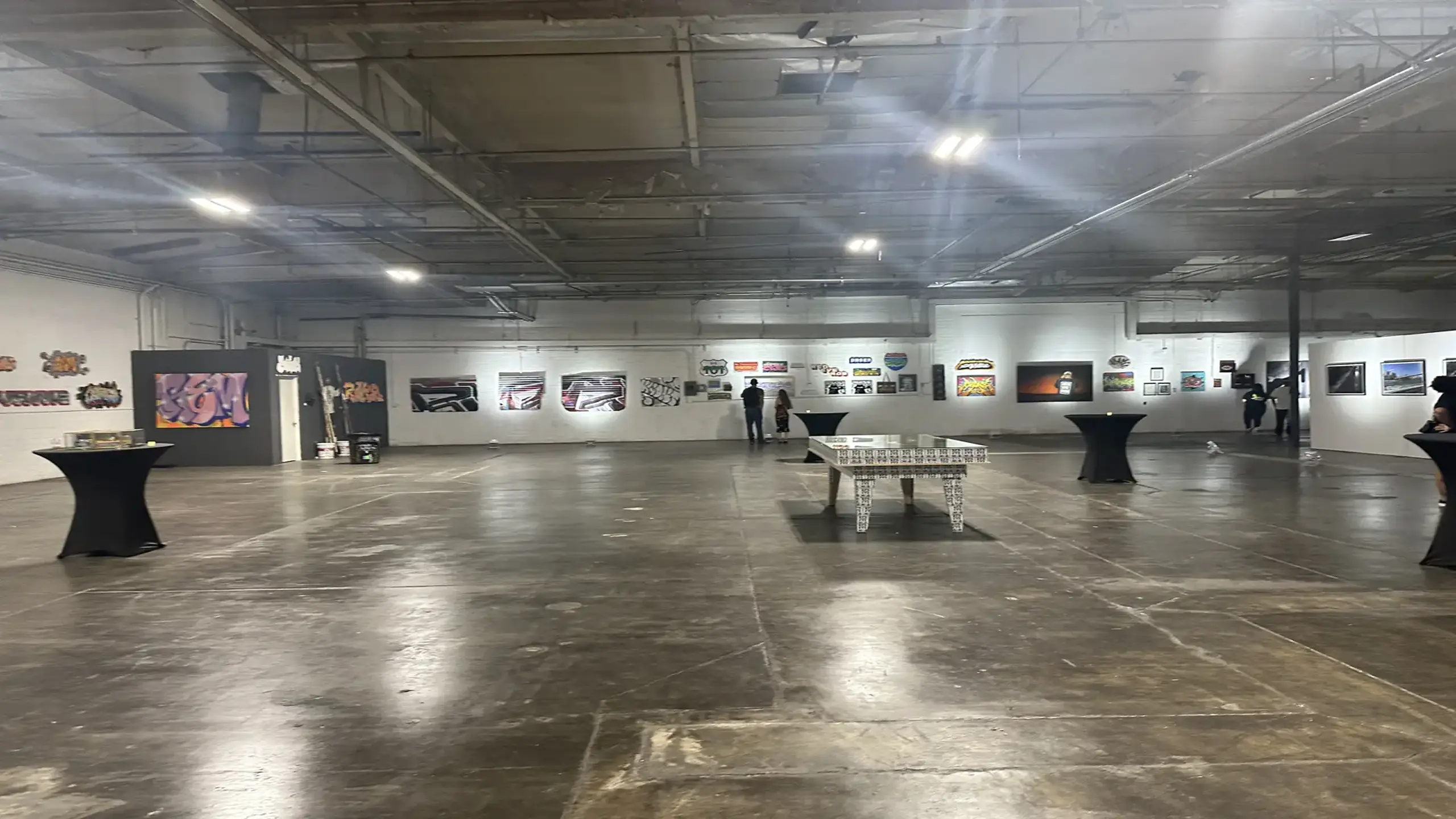
**Choosing between a warehouse studio and a soundstage shapes your entire production.** Both offer creative freedom, but in completely different ways. One gives you authentic industrial aesthetic and maximum flexibility. The other provides controlled professional environment with everything built-in.
The decision affects your budget, timeline, creative possibilities, and final product. Get it right and your production soars. Get it wrong and you're fighting constraints the entire time.
This guide shows you exactly what each space delivers, what they cost in reality, and how to choose the right one for your specific project.
## What Is a Warehouse Studio?
A warehouse studio is raw, industrial space converted into a creative environment. These are former manufacturing buildings, commercial spaces, or storage facilities with high ceilings and open floor plans. The defining feature is minimalism, you get the shell, not the infrastructure.
Warehouse studios appeal to specific aesthetics. Concrete walls, exposed brick, metal beams, and industrial elements become part of your visual design. You're not hiding the space's character; you're celebrating it. This aesthetic works perfectly for fashion shoots, [music video](https://c-istudios.com/video-production-services/music-video-production/)s, modern commercials, and artistic projects where industrial environment enhances the story.
The space itself is flexible. Thirty-foot ceilings let you rig equipment overhead. Open floor plans let you build sets however you want. Nothing is fixed. You arrange, rearrange, and reconfigure the space completely between takes. This freedom appeals to directors wanting maximum creative control over environment design.
## What Is a Traditional Soundstage?
A traditional soundstage is purpose-built production infrastructure. These are professional facilities designed specifically for film and television work. Every system exists to support production, power, lighting, acoustics, climate control.
Soundstages provide controlled environments. Lighting grids enable precise fixture placement. Soundproofing eliminates outside noise. Electrical infrastructure handles substantial equipment loads. Climate control maintains consistent temperature. You control every variable, ensuring consistency throughout your shoot.
The space feels professional because it is. Smooth cyc walls, proper dimensions, and designed acoustics support professional workflows. Experienced staff understand production requirements and prevent problems before they start. Additional facilities like makeup rooms, editing bays, and equipment storage keep productions running smoothly.
## Cost. The Real Numbers
Warehouse studios cost less upfront. Typical rental rates run $800 to $2,500 per day depending on location and size. You're renting raw space. That affordability disappears quickly when you add costs.
Equipment rental becomes expensive fast. You need professional lighting rigs, that's $1,500 to $3,000 per day minimum. Cameras, grip equipment, backdrops, and staging quickly add another $2,000 to $5,000. What appeared to be a $1,000 per day warehouse becomes a $5,000 to $8,000 per day production once you factor in all rental equipment.
Soundstages cost more initially, $2,000 to $5,000+ per day. But this includes significant equipment. Professional lighting rigs, basic camera packages, cyc walls, and controlled environment. You're not paying for raw space; you're paying for infrastructure. When you factor in what you'd rent separately, the total cost difference narrows considerably.
The true cost comparison requires honesty. Add every equipment rental cost to warehouse space rental. Compare that total to soundstage all-in pricing. Often soundstages cost less total once you account for everything you need separately.
## Aesthetic Differences
Warehouse studios provide authentic industrial aesthetic. The space itself contributes to your visual design. Concrete, brick, and metal aren't fighting your vision, they're part of it.
This works beautifully for specific projects. Fashion photography benefits from raw industrial backgrounds. Music videos often look amazing in warehouse environments. Commercials targeting younger audiences frequently use warehouse aesthetics. Lifestyle and product photography with modern sensibility pairs perfectly with industrial spaces.
Soundstages offer designed aesthetic. You build your environment using cyclorama walls, controlled lighting, and carefully designed sets. You're not limited by existing structures. White cyc walls, perfect lighting, and designed backgrounds create any aesthetic you envision.
This matters for controlled work. Corporate videos, interviews, product demonstrations, and professional content benefit from soundstage control. Everything looks intentional. Nothing fights your creative vision.
## Lighting Control
Warehouse lighting presents challenges. Natural light from windows changes throughout the day. You compete with this changing light rather than controlling it. Artificial lighting supplements or fights daylight. For photographers comfortable with dynamic lighting, this works. For productions requiring consistent light, this creates headaches.
On a warehouse shoot starting at 8 AM, your lighting changes hour by hour. By noon, completely different light enters from different angles. By 3 PM, the sun moves again. Matching shots across a full day becomes difficult. You're constantly adjusting to changing conditions.
Soundstage lighting solves this completely. Grid systems and professional equipment enable precise light placement and control. You shoot at 2 AM with identical lighting as 2 PM. This consistency matters tremendously for long shoot days. You match shots across multiple takes, scenes, and crew rotations without lighting variation.
Soundstage lighting also enables creative control. You create mood lighting for drama, flat lighting for interviews, or specialized lighting for product shots. Warehouse lighting fights you. Soundstage lighting serves your vision.
## Audio Quality
Audio quality differs dramatically between options. Warehouse acoustics are challenging. Concrete and metal reflect sound, creating echoes and ambient noise. Hard surfaces make recording clean dialogue difficult. Professional audio requires careful mic placement and acoustic treatment.
For video shoots where audio matters, interviews, voiceovers, dialogue-heavy work, warehouse limitations become real problems. You fight the space's acoustics rather than having acoustics support y[our work](https://c-istudios.com/our-work/). Extra time spent fixing audio in post-production costs money and frustration.
Soundstages have treated acoustics designed for professional audio. Sound isolation prevents outside noise. Acoustic materials absorb reflections. You record clean dialogue without fighting the space. Professional audio work happens naturally in soundstages because the environment supports it.
## Power and Infrastructure
Warehouse studios provide basic power. Standard electrical circuits adequate for small operations. Professional lighting rigs and equipment require more. Multiple high-powered lights might exceed available circuits. You need equipment power trucks or generators, adding thousands to your budget.
Soundstages feature professional electrical infrastructure. Multiple circuits handle substantial loads. You never worry about tripping breakers or insufficient power. Professional equipment operates reliably because the facility was designed for it.
Modern productions increasingly need reliable internet for digital workflows. Warehouse studios often lack robust network infrastructure. Soundstages increasingly provide professional-grade internet enabling digital collaboration and real-time remote review.
## When to Choose Warehouse Studios
Choose warehouse studios when your production benefits from industrial aesthetic, requires creative set design freedom, operates on tight budget and equipment is handled separately, involves extended shoots enabling cost-effective daily rates, or shoots projects where authentic environment enhances the story.
Warehouse studios work well for fashion photography, music videos, commercial work with modern aesthetic, social media content, indie films on moderate budgets, product photography with contemporary style, and artistic projects prioritizing authentic environment.
## When to Choose Soundstages
Choose soundstages when your production requires consistent lighting throughout the day, needs professional audio quality, involves technical or corporate content, operates on timeline enabling professional approaches, benefits from experienced technical staff, includes multiple complex scenes requiring environment control, or prioritizes polish and professionalism over authentic aesthetic.
Soundstages work well for interviews and talking-head content, professional commercial work, corporate and educational videos, narrative productions requiring environment control, product demonstrations and technical work, live streaming and multi-camera production, and content where consistency and quality matter most.
## Making Your Decision
Consider your aesthetic first. Does industrial warehouse aesthetic serve your story? Or do you need controlled designed environment? This foundational choice guides everything else.
Evaluate your technical requirements honestly. Can your project succeed with warehouse conditions? Or do you need soundstage infrastructure? Don't rationalize away technical limitations that will hurt your final product.
Calculate total costs realistically. Get quotes for warehouse rental plus all equipment you'll need separately. Get soundstage all-in quotes. Compare totals, not just space rental. Often the numbers are closer than you expect.
Think about your crew's experience. Professional teams maximize soundstage efficiency. Less experienced teams often struggle with warehouse logistics. Soundstages provide structure and support. That matters.
Consider the final product. What do you need the space to deliver? If professional polish matters, soundstage advantages pay for themselves. If authentic aesthetic matters, warehouse investment delivers better results.
## Using Both
Smart producers sometimes use hybrid approaches. Shoot certain scenes in warehouses for aesthetic authenticity, then move to soundstages for technical precision. This costs more but often delivers superior results.
For [video production services](https://c-istudios.com/video-production-services/) involving brand content, this approach works brilliantly. Warehouse scenes establish authentic mood. Soundstage scenes showcase products with professional precision.
Alternatively, shoot your entire production in one space. Staying focused simplifies logistics and keeps crews familiar with the environment. One location means deeper work and better results than rushing between spaces.
## What Matters Most
Neither option is inherently better. They serve different purposes and creative needs. Your choice depends on your specific production requirements, creative vision, budget constraints, and practical realities.
Warehouse studios deliver authentic aesthetic, creative freedom, and budget flexibility for productions comfortable managing logistics. Soundstages deliver professional infrastructure, consistent control, and technical sophistication for productions prioritizing quality and efficiency.
The best choice aligns your creative vision with the space's capabilities. The right environment enables your vision. The wrong environment constrains it.
## Finding Your Perfect Space
Your production deserves an environment that serves your creative vision while supporting your technical requirements. Whether you choose warehouse or soundstage depends on what matters most for your specific project.
[Contact C&I Studios](https://c-istudios.com/contact/) to discuss your production needs. We help productions determine whether warehouse or soundstage environments work best for their vision, and sometimes discover that both serve different parts of the project.
For [creative marketing services](https://c-istudios.com/creative-marketing-services/) and brand productions specifically, we can guide whether warehouse authenticity or soundstage professionalism better serves your content strategy and audience expectations.
For more information on industry standards and best practices, visit the [American Marketing Association](https://www.ama.org/).
## Work with C&I Studios
If you are planning a project like this, our team can take it from concept to final delivery. Explore our [video production services](https://c-istudios.com/video-production-services/), browse [our work](https://c-istudios.com/our-work/) to see how we tell brand stories, and [get in touch](https://c-istudios.com/contact/) when you are ready to start.
Originally published March 14, 2026
---
*This content is from [C&I Studios](https://c-istudios.com), a full-service production company.*
---
# Los Angeles Studio Rental. Inside Our 30,000 Sq Ft Studio
> Published: March 13, 2026
> Categories: Behind the Scenes
> Source: https://c-istudios.com/how-to-rent-a-production-studio-in-los-angeles-complete-guide/
---
.cib{--paper:#1b1d1f;--ink:#fff;--body:#d5d7d9;--muted:#8b9096;--line:rgba(255,255,255,.12);--thumb:#2b2e31;--card:#212426;--accent:#c02b0a;--blue:#5B8FA8;--serif:'Playfair Display',Georgia,serif;--sans:'Poppins',-apple-system,sans-serif;--measure:900px;background:var(--paper);color:var(--body);font-family:var(--sans);line-height:1.6;position:relative;left:50%;transform:translateX(-50%);width:90vw;max-width:1920px}
.cib *{box-sizing:border-box}
.cib .kicker{max-width:var(--measure);margin:58px auto 0;padding:0 22px;font-size:12.5px;font-weight:700;letter-spacing:2.5px;text-transform:uppercase;color:var(--blue)}
.cib h1.cibh1{text-wrap:balance;font-family:var(--serif);font-weight:500;font-size:clamp(46px,6vw,72px);line-height:1.08;color:var(--ink);max-width:var(--measure);margin:18px auto 0;padding:0 22px;letter-spacing:-.5px}
.cib .metarow{max-width:var(--measure);margin:20px auto 0;padding:0 22px;color:var(--muted);font-size:14px}
.cib .hero{position:relative;width:100%;height:0;padding-bottom:56.25%;overflow:hidden;margin:48px auto 0;border-top:1px solid var(--line);border-bottom:1px solid var(--line)}
.cib .hero .ph{width:100%;aspect-ratio:16/9;background:var(--thumb);border-top:1px solid var(--line);border-bottom:1px solid var(--line);display:flex;align-items:center;justify-content:center;color:#7d8288;font-size:13px;text-align:center;padding:0 20px}
.cib .body{max-width:var(--measure);margin:12px auto 0;padding:52px 22px 6px}
.cib .body.lead p:first-child{font-size:23px;line-height:1.62;color:var(--ink)}
.cib .body p{font-size:18.5px;line-height:1.85;margin:0 0 30px;color:var(--body)}
.cib .body h2{text-wrap:balance;font-family:var(--serif);font-weight:500;font-size:clamp(32px,4vw,48px);line-height:1.22;color:var(--ink);margin:70px 0 20px;letter-spacing:-.3px}
.cib .body h3{text-wrap:balance;font-family:var(--sans);font-weight:600;font-size:22px;color:var(--ink);margin:38px 0 8px}
.cib .body a{color:var(--ink);text-decoration:underline;text-decoration-color:rgba(255,255,255,.4);text-underline-offset:3px}
.cib .body a:hover{text-decoration-color:var(--ink)}
.cib .ctable{width:100%;border-collapse:collapse;margin:16px 0 30px;font-size:16px}
.cib .ctable th{background:#000;color:#fff;text-align:left;padding:10px 12px;font-family:var(--sans)}
.cib .ctable td{padding:10px 12px;border-bottom:1px solid var(--line);color:var(--body)}
.cib .inimg{position:relative;width:100%;height:0;padding-bottom:56.25%;overflow:hidden;margin:72px auto;border-top:1px solid var(--line);border-bottom:1px solid var(--line)}
.cib .inimg .ph{width:100%;aspect-ratio:16/9;background:var(--thumb);border-top:1px solid var(--line);border-bottom:1px solid var(--line);display:flex;align-items:center;justify-content:center;color:#7d8288;font-size:13px}
.cib .origpub{max-width:var(--measure);margin:60px auto 0;padding:26px 22px 0;border-top:1px solid var(--line);color:var(--muted);font-size:13.5px}
.cib .related{max-width:1200px;margin:64px auto 0;padding:34px 22px 76px}
.cib .related h3{font-family:var(--sans);font-size:12.5px;letter-spacing:2px;text-transform:uppercase;color:var(--ink);margin:0 0 24px}
.cib .grid{display:grid;grid-template-columns:repeat(3,1fr);gap:28px}
.cib .rc{background:var(--card);border:1px solid var(--line);display:block;text-decoration:none;color:inherit;transition:border-color .15s}
.cib a.rc:hover{border-color:rgba(255,255,255,.5)}
.cib .rc .thumb{position:relative;width:100%;height:0;padding-bottom:56.25%;background:var(--thumb);overflow:hidden}
.cib .rc .thumb img{position:absolute!important;top:0!important;left:0!important;width:100%!important;height:100%!important;object-fit:cover!important;margin:0!important}
.cib .rc .cc{padding:14px 15px 17px}
.cib .rc .rt{font-family:var(--serif);font-weight:500;font-size:16px;line-height:1.3;color:var(--ink);margin:0 0 6px}
.cib .rc .rm{font-size:11px;letter-spacing:1px;text-transform:uppercase;color:var(--muted)}
.cib img{margin:0!important;padding:0!important;display:block!important;vertical-align:top;max-width:100%}
.cib .hero img,.cib .inimg img{position:absolute!important;top:0!important;left:0!important;width:100%!important;height:100%!important;object-fit:cover!important;margin:0!important;padding:0!important;border:0!important;display:block!important;aspect-ratio:auto!important}
.cib .hero+.body{padding-top:36px}
@media(max-width:760px){.cib .grid{grid-template-columns:1fr}.cib .body h2{margin:52px 0 16px}.cib .body p{font-size:17.5px}.cib .inimg,.cib .hero{margin-top:44px}}
.cib .vembed{max-width:var(--measure);margin:44px auto;padding:0 22px}.cib .vembed .vwrap{position:relative;width:100%;height:0;padding-bottom:56.25%}.cib .vembed .vwrap iframe{position:absolute;top:0;left:0;width:100%;height:100%;border:0}
Behind the Scenes
# Los Angeles Studio Rental. Inside Our 30,000 Sq Ft Studio
12 min read · Updated August 31, 2026
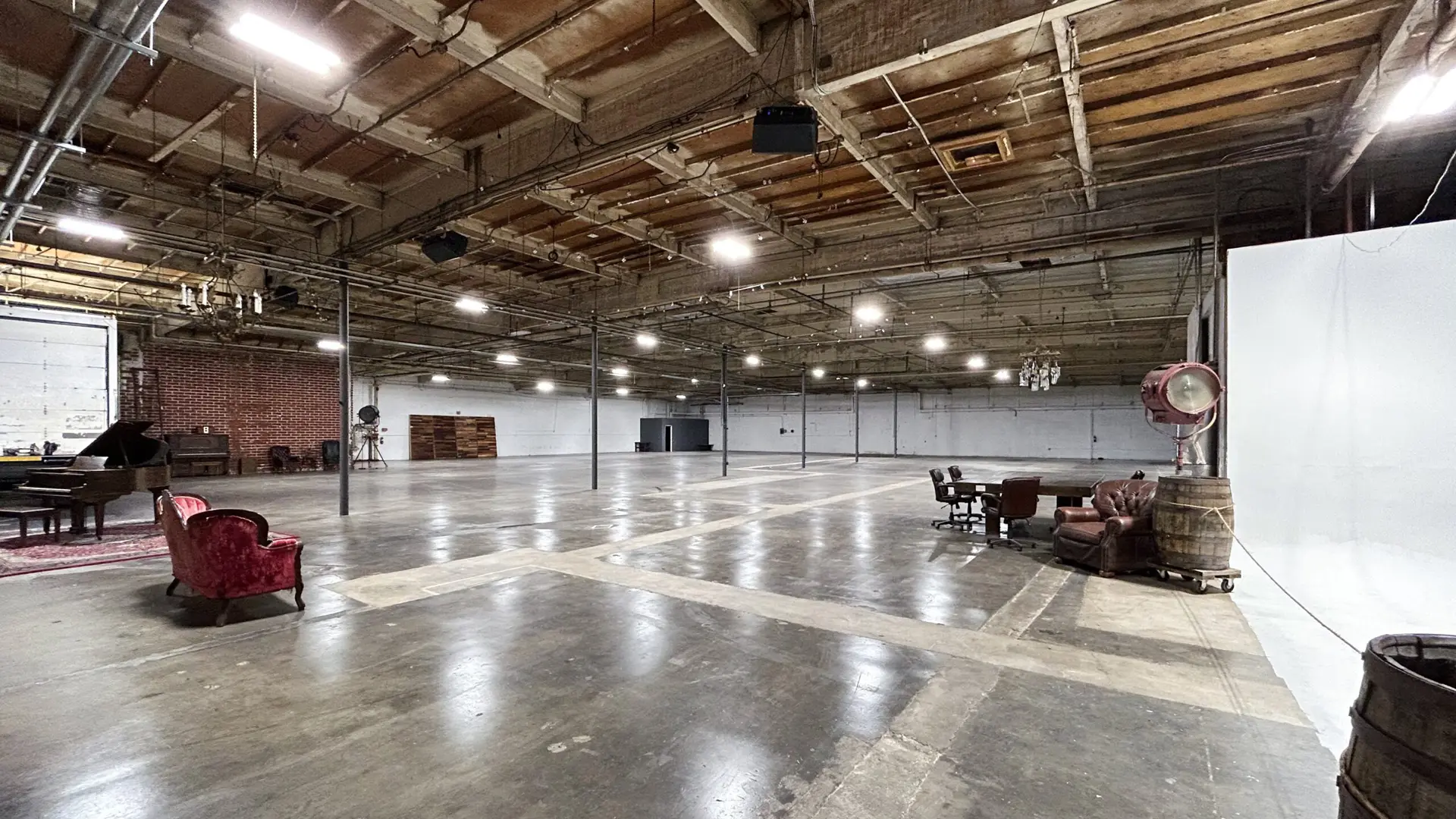
Most write ups of a Los Angeles studio rental describe rooms. Almost none of them tell you what actually decides whether a stage works for your shoot, which is the amperage at the tie in, the height of the door, what is already standing on the floor and who is in the building when something goes wrong.
## What the square footage actually gets you
The stage is 30,000 square feet under 25 foot ceilings. Those two numbers get quoted together on every listing in the city and most people read them as a bragging right. They are not. They are the difference between one shoot day and two.
Square footage buys you simultaneity. At 30,000 feet you can hold a lit A set, a standing B set and a staging area for grip and wardrobe at the same time, which means the company moves instead of striking. A crew that strikes and rebuilds between setups loses somewhere between ninety minutes and half a day depending on how heavy the rig is. A crew that walks forty feet to a set that is already lit does not. That is the whole argument for a big stage, and it is a scheduling argument before it is a creative one.
Ceiling height buys you the top of your frame. At 25 feet you can fly a 20 by 20 silk, put a condor or a scissor lift on the floor, rig a multi point overhead design and still have air above the talent. Under about 14 feet, which is what a lot of converted retail and office space in LA gives you, your key ends up in frame or you shoot everything tighter than you wanted. If you are comparing spaces and you only have room in your head for one number, make it the ceiling.
The layout matters as much as the total. The main stage, a warehouse section and a gated backlot sit on one property, so a script that needs a controlled interior, a raw industrial look and an exterior can get all three without a company move. Productions that would otherwise book two locations and eat the travel usually finish here in a single day.
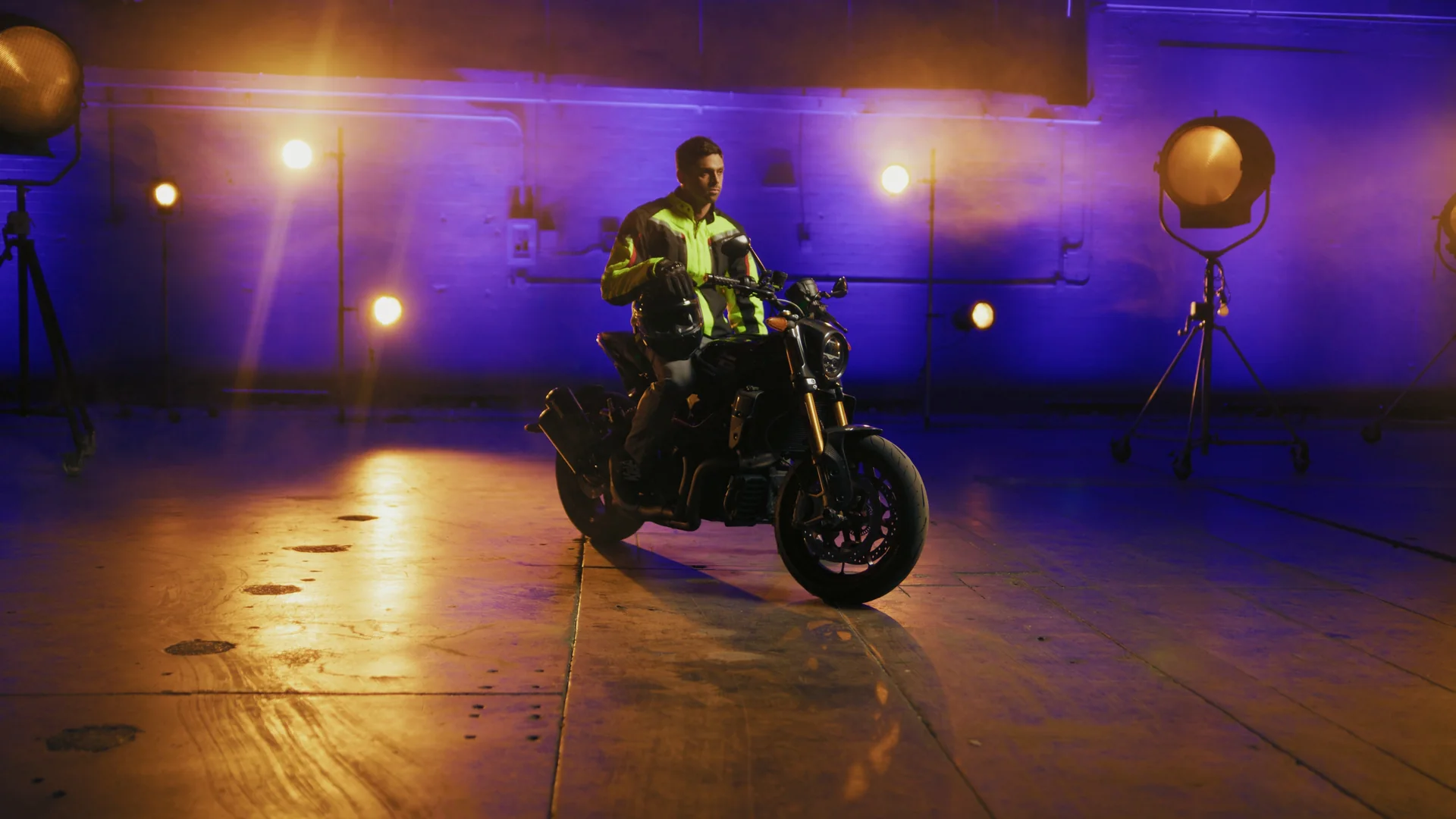
## The specs that decide whether a stage works
Every stage listing leads with square footage because it is the easiest number to publish. These are the ones that actually decide whether your day goes well, and they are the ones we get asked about by the ADs and gaffers who call before a booking rather than the producers who call after.
### Power
Ours is a 300 amp three phase Cam Lock tie in running through the stage, with distro available on request. In practical terms that carries a full studio lighting package, HMIs and LED walls without a generator parked outside. Generator rental plus a genny operator plus fuel is a real number, and it is the cost most first time stage bookers forget until the week of. When you tour a space, ask for the amperage and the tie in type, not whether there are outlets. Everywhere has outlets.
### Loading doors
Two of them here. The front is 25 feet wide by 20 feet high and the rear is 20 by 20. Both open straight onto the stage floor. Door dimensions are the single most overlooked spec in the city because they do not affect the look of a single frame, and then a scissor lift or a hero vehicle shows up and cannot get in.
### Blackout and the grid
A ceiling lighting grid with blackout capability means you own the clock. Daylight through a skylight is beautiful for about ninety minutes and then it is a continuity problem. A stage you can black out shoots the same at 7am and 7pm, which is what lets you schedule a twelve hour day honestly instead of chasing the sun.
### Internet
Hardwired gigabit plus studio Wi-Fi. This reads like an amenity and it is not. Live client review, remote directors, on set DIT pushing dailies and any streamed or hybrid event all fail on a stage with one weak access point. Ask whether the internet is hardwired or shared, and ask before the tech scout rather than during it.
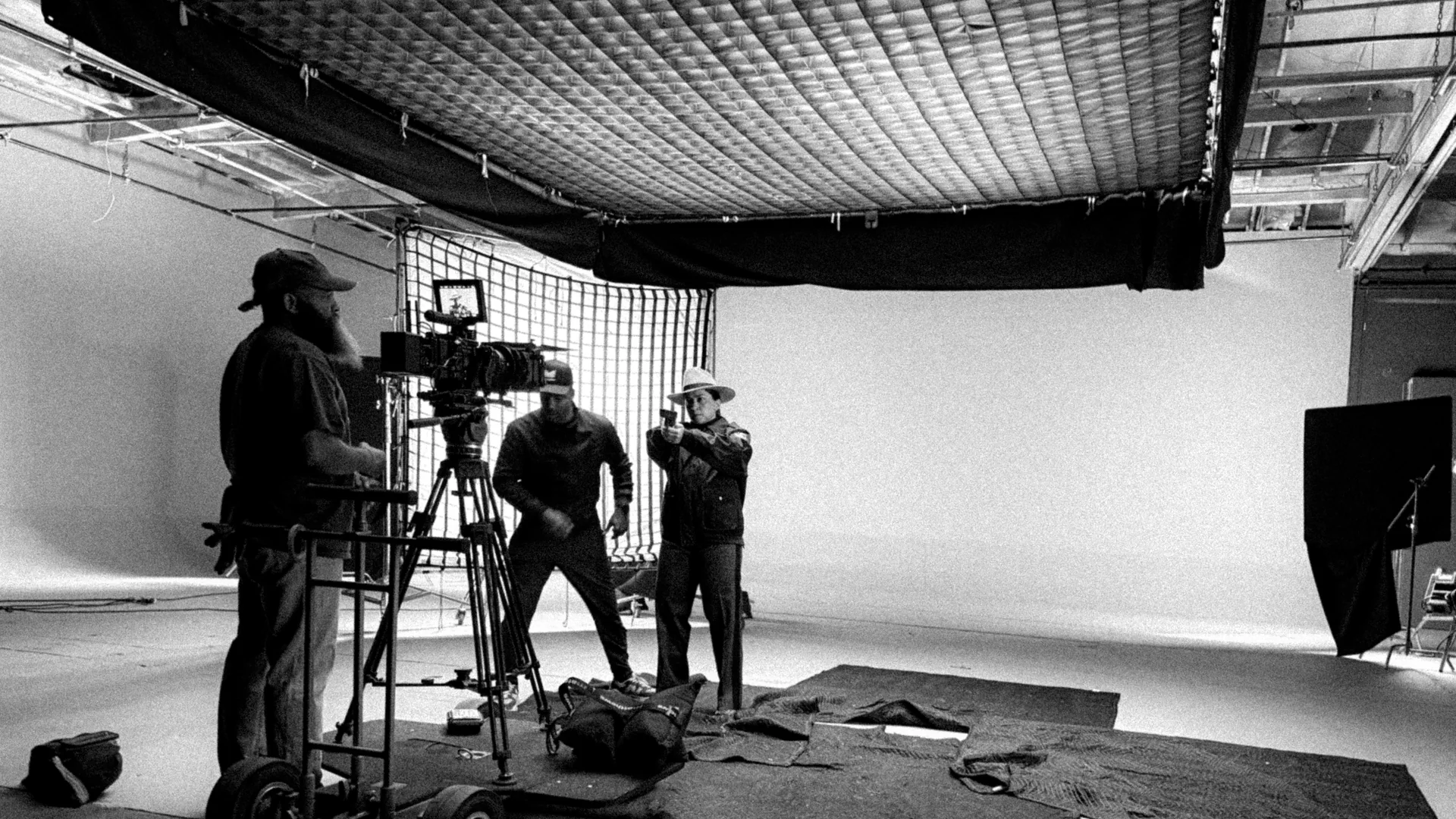
## Drive-in access changes what you can shoot
A 25 by 20 foot door is not a convenience feature. It changes the list of things you are allowed to consider. Vehicles, set pieces built off site, grip trucks that unload inside instead of on the street and heavy equipment all come straight onto the floor. If the shot involves a car, that door is the shot.
It also compresses load-in and load-out, which is where stage days quietly go over. A crew that carries a package through a standard commercial door and down a hallway is losing an hour on each end of the day, and that hour is billed at crew rate across the whole company. We wrote about this specifically on our [film studio with vehicle access](https://c-istudios.com/film-studio-with-vehicle-access-in-los-angeles/) page because it is the question we field most often from line producers.
The other thing a big door buys is staging room indoors. Cases, carts, flats and wardrobe racks live on the stage floor instead of on the sidewalk, which matters in Downtown LA more than it does almost anywhere else in the county.
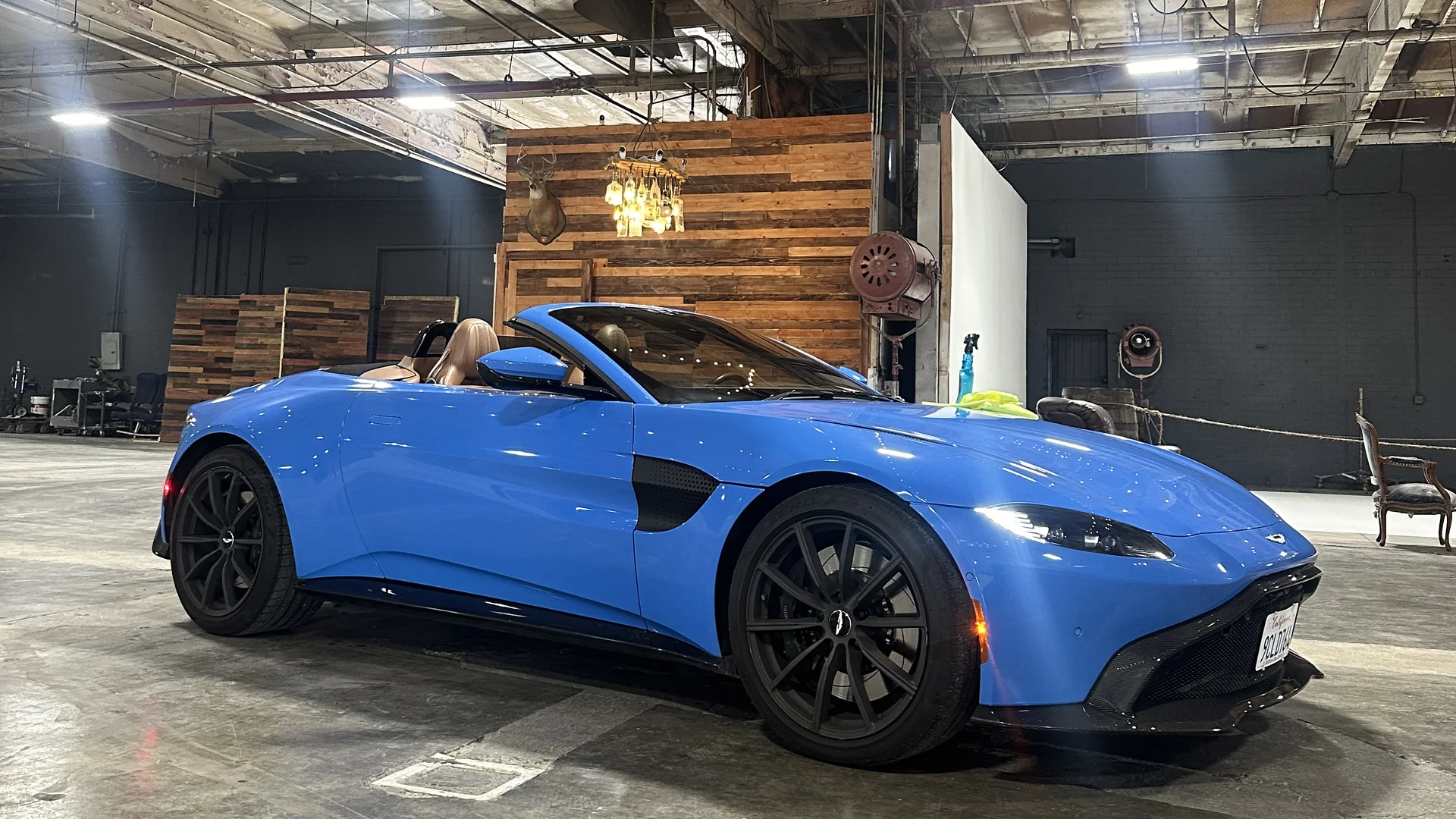
## The cyc wall and when you actually need one
There is a 2,000 square foot floor to ceiling seamless cyclorama here. It is repaintable and we repaint it between bookings on request, which matters more than it sounds like it should. A scuffed cyc is a roto bill in post.
A cyc earns its keep on product photography, full body fashion, VFX plates and anything that needs a true infinity background with no visible corner. It does not earn its keep on a narrative interior or a documentary interview, and productions book one anyway because it feels like the professional choice. If your look is a room, book the room. If your look is a void, book the cyc. We keep a dedicated [cyc wall rental](https://c-istudios.com/studio-rentals/cyc-wall-rental/) option and a separate [green screen studio](https://c-istudios.com/studio-rentals/green-screen-studio-rental-los-angeles/) configuration for exactly that reason, because they are different jobs.
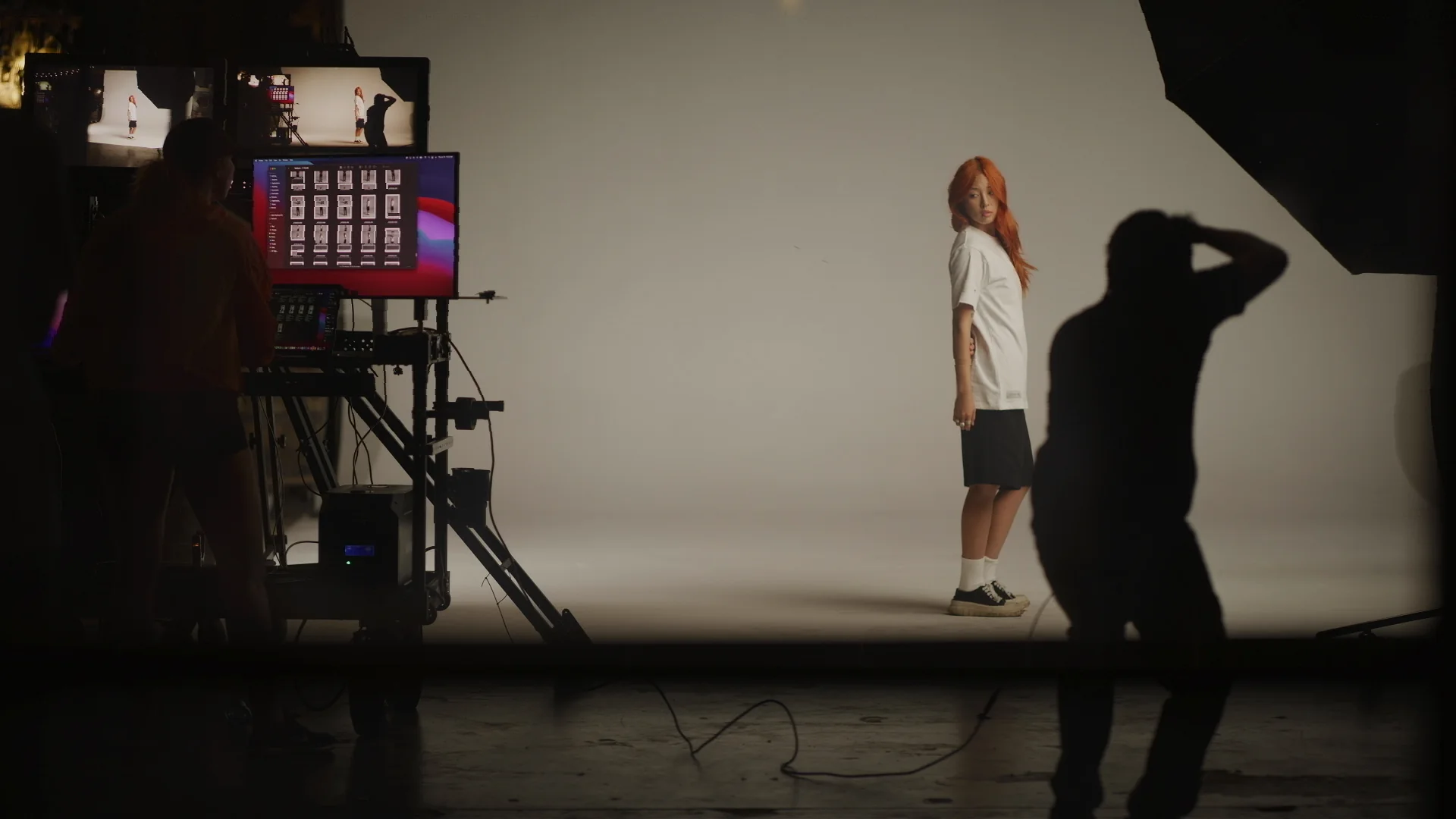
Green screen has one requirement that people consistently underestimate. Talent has to stand well off the wall, and that distance is the difference between a clean key and weeks of cleanup. Put someone close to the green and the colour wraps onto their shoulders and through their hair, and every shot after that costs you again in post. Room to back up is the cheapest thing you can add to a VFX budget.
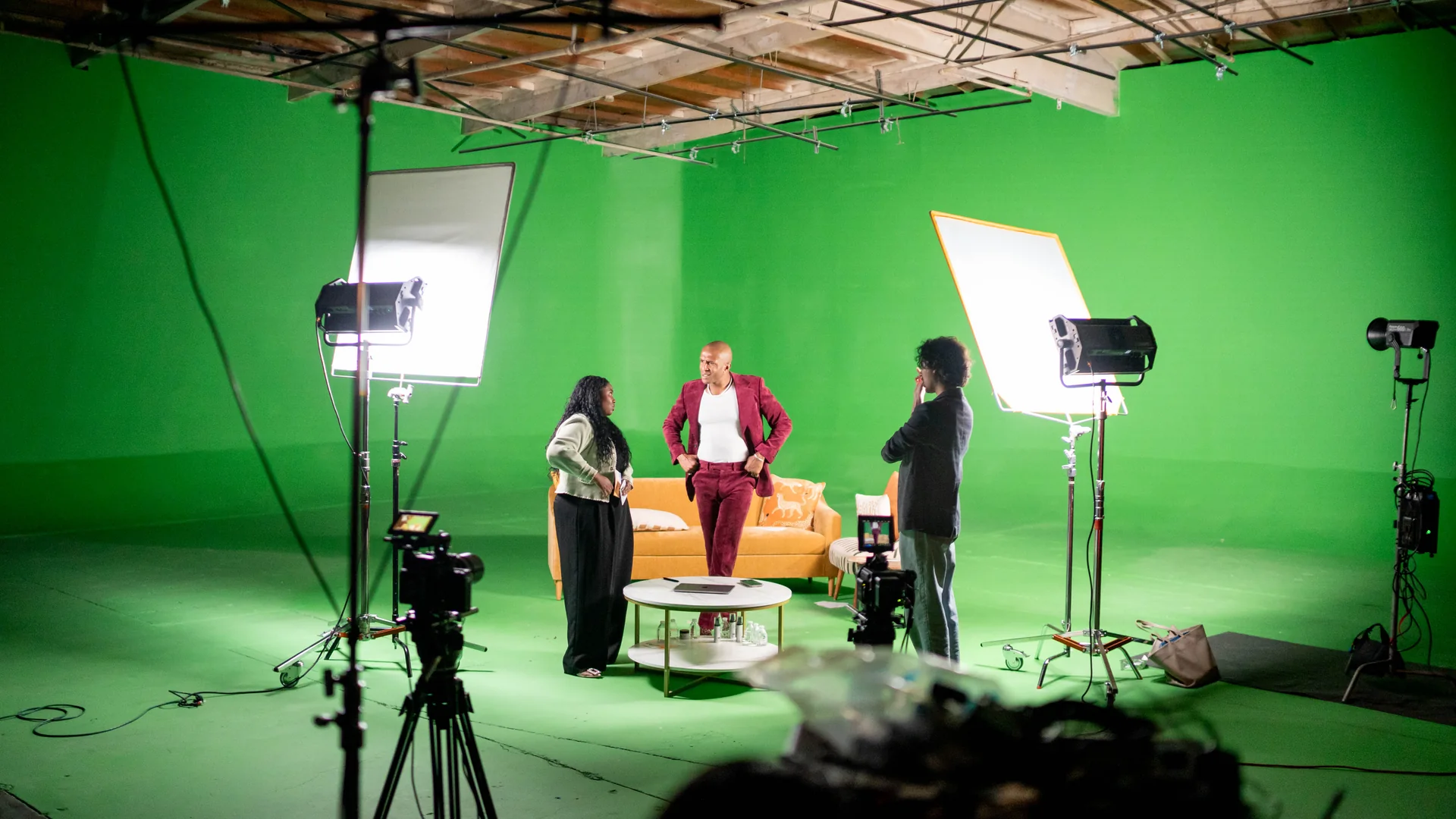
## Built-in sets that save a build day
The stage has permanent installations that a surprising number of projects can shoot as is. There is a floor to ceiling bookshelf wall that reads upscale and academic on camera. There is a wooden wall section that goes rustic or modern depending entirely on how you light it. There is a wrought iron spiral staircase that gives you architecture and vertical movement in a frame without building anything. Furniture is available to pull in as needed.
The math on this is simple and it is usually the largest hidden saving in a stage booking. A build day is carpenters, paint, materials, a stage rental day you are paying for while nobody shoots, and a strike. Productions that can shoot against something already standing skip all of it. We see that show up most on interview work, branded content and music videos, and it is why our [C&I Brand Day](https://c-istudios.com/brand-day/) package can run a full shoot day here. The set is already up.
Judge the built-ins on camera, not in person. A wall that looks ordinary standing in front of it can be excellent at an 85mm and a stop and a half of falloff, and a wall that looks great to the eye can be flat and characterless once it is lit evenly. Bring a camera to the scout, or ask for footage that was actually shot on it.
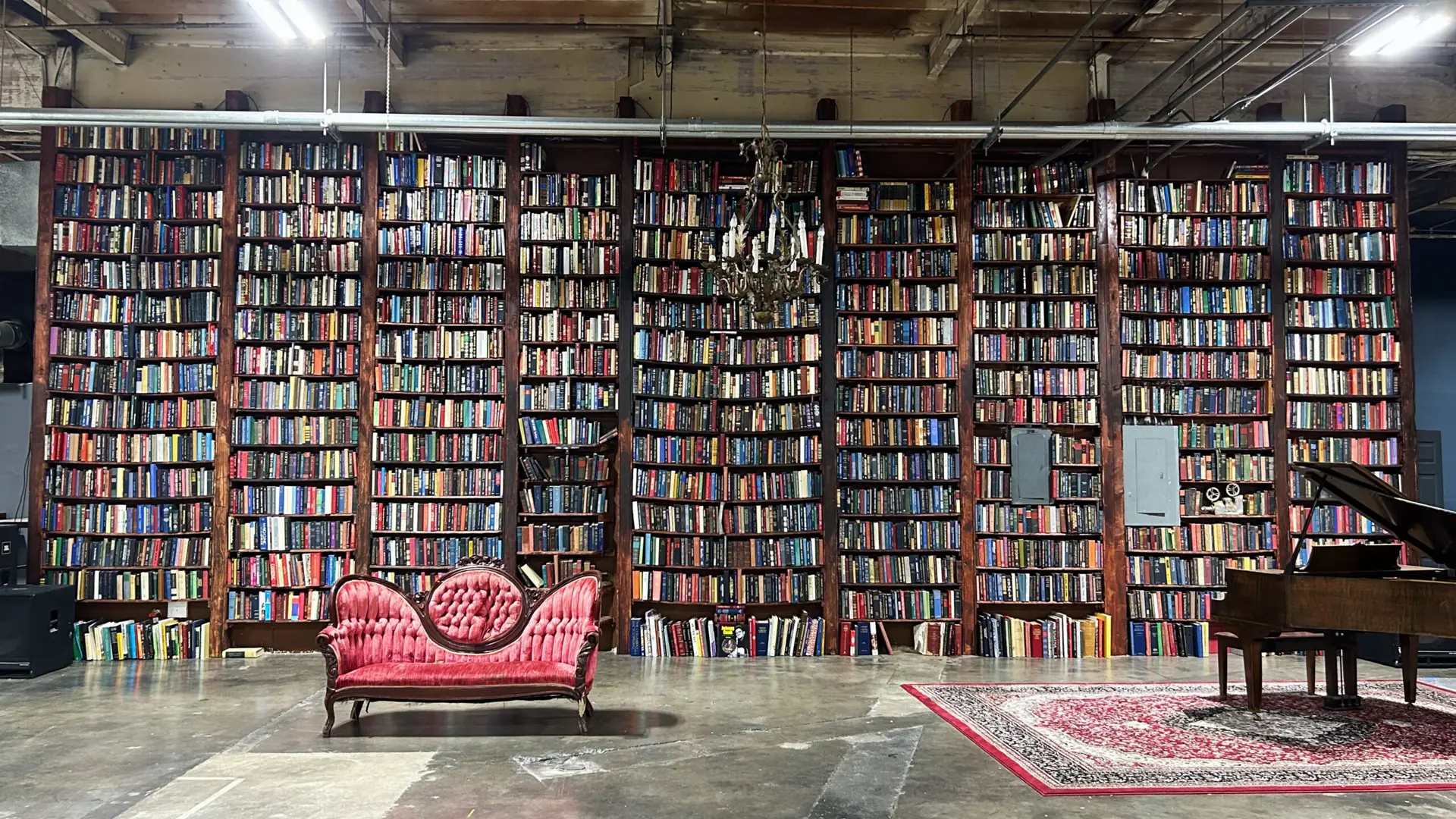
## The rooms that are not the stage
The reason a single booking here can replace a multi location day is that the property is not one room. Behind the main stage is a warehouse section with exposed brick, steel and period fixtures, which is a genuinely different look and not a dressed version of the same floor. Productions shooting anything with grit in it start there rather than building it.
The wood wall section under string lights is the other end of that range, and it is the one that surprises people. It photographs warm and lived in, and it has carried everything from interview two shots to music video coverage without a single flat being built.
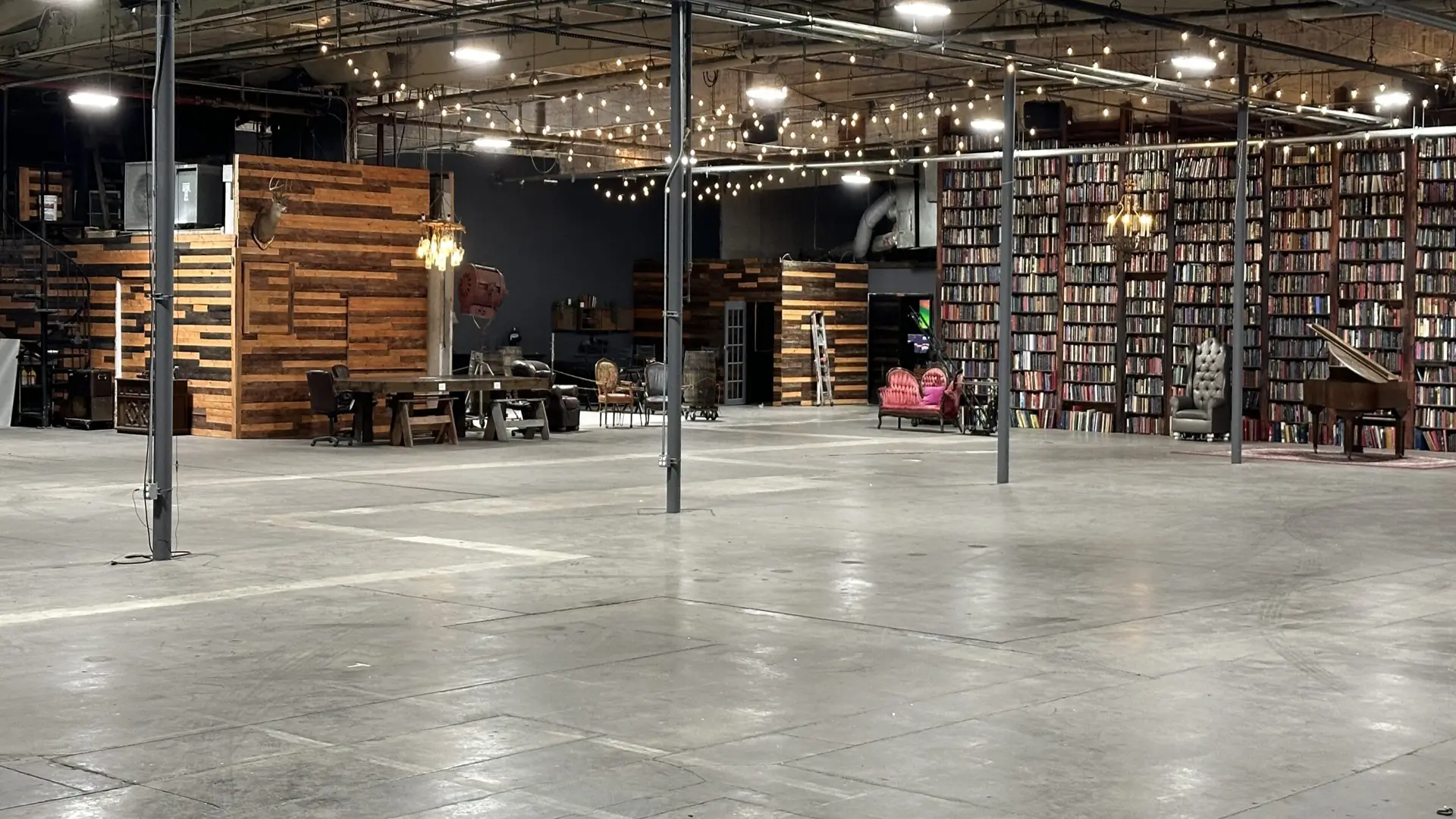
Outside there is a gated backlot. It handles exteriors, vehicle work, overflow parking and load staging, and having it gated is the part that matters on a shoot with picture cars or exposed gear. There are also offices, a private client lounge for review sessions and a furnished green room, so the shoot has somewhere to put people that is not the corner of the stage.
Walk all of it before you book. A stage tour that only shows you the stage is not a tour, and the rooms around the floor are usually what decides whether a twelve hour day is comfortable or miserable.
## What is available to you
Every Los Angeles studio rental publishes a list like this one and no two of them mean the same thing. Read ours as what you have access to rather than what is bundled into the hourly. The rate covers the space. What your day actually draws on gets scoped and quoted before you shoot, so you are never paying for a package you did not need.
On the property and open to your production is the three phase 300 amp Cam Lock tie in with distro, the ceiling lighting grid with blackout, hardwired gigabit internet and studio Wi-Fi, on site restrooms, a private client lounge for review sessions, a furnished green room with seating and mirrors and outlets for talent, gated backlot parking, drive-in access, and a studio facilitator on the floor from call time to wrap. Tell us which of it your shoot needs and it goes in the quote.
The facilitator is the one to ask about anywhere you tour, here or elsewhere. That is the person who knows which breaker is which and where the extra stands live. Without one, your best boy spends the first hour of the day learning the building on your dime.
The green room is worth asking for too. Talent holding, hair and makeup and wardrobe all need somewhere that is not the corner of the stage, and a shoot that runs HMUA on the floor is a shoot that is louder and slower than it needed to be.
If your day needs something that is not on this list, ask before you rule it out. Between what we hold in house and the vendors we work with a few blocks away, most requests get sourced and priced in one conversation. Crew, talent and specialty gear work the same way. We scope it, we quote it, and you decide.
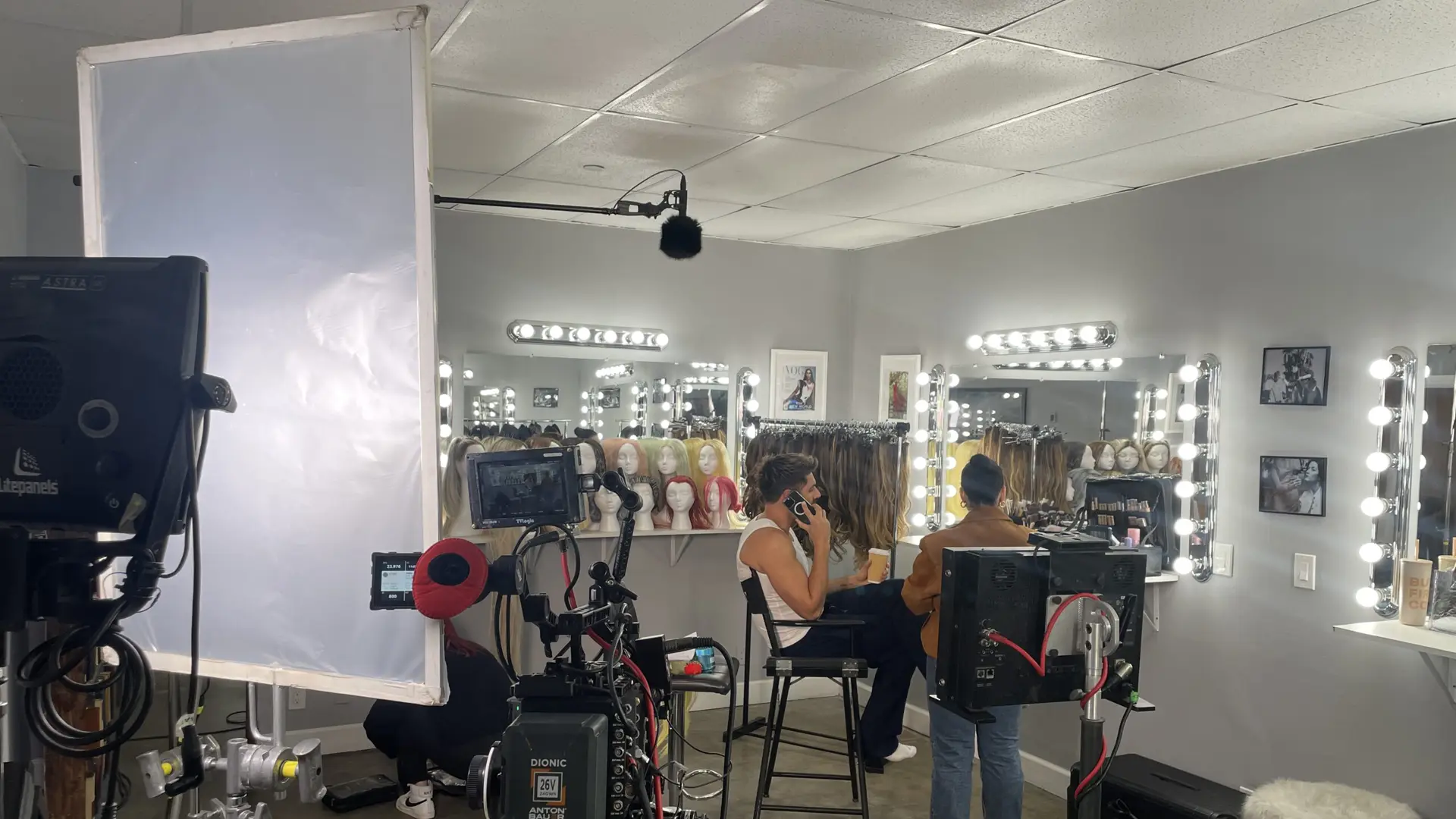
## How to read a stage before you book it
Tour in person and bring the person who has to make it work. A producer sees the room. A gaffer sees the tie in, a key grip sees the doors and the floor, and a sound mixer hears the HVAC that nobody mentioned. If you can only bring one, bring the gaffer.
Go at the time of day you plan to shoot. Rooms change. A stage that is quiet at 10am can sit under a flight path or next to a loading dock that starts at 4pm, and you will not hear it on a morning tour.
Ask what else is booked. Shared buildings are common in Downtown LA and a neighboring tenant with a hammer is a sound problem you cannot fix in post. Ask specifically whether the stage is exclusive for your block.
Ask to see real footage shot in the space. Not the marketing reel, actual client work. Anyone who runs a working stage has it. We keep ours on the [production studio rental page](https://c-istudios.com/studio-rentals/production-studio-rental-los-angeles/) for that reason, and there is a full walkthrough of every room on it.
Ask what is not included, in this order. Power tie in and distro. Parking for crew and for trucks. Load-in and load-out hours, and whether they are billed. Cleaning or restore fees. Overtime after the booked block. A cheap headline number with billed load-in and paid parking routinely works out worse than a higher one that covers both, and none of that shows up until the invoice. If you want a sense of what the rest of a shoot in this city involves beyond the room itself, our [Los Angeles video production](https://c-istudios.com/video-production-los-angeles/) page walks through crew and gear.
Check the practical geography. We are at 1101 E 18th Street in the Arts District side of Downtown, off the 110, the 101 and the 10, with gated backlot parking. Where a stage sits relative to your crew call and your talent is a real cost, because a crew stuck in traffic for forty minutes is a crew you are paying to sit in traffic.
## Mistakes we watch productions make
These are the five we watch cost people money on a Los Angeles studio rental, in roughly the order they happen. Booking the exact hours of the shoot. The shoot is not the day. Load-in, lighting, blocking, breaks, resets and load-out are the day. Book the block that covers all of it or you will pay overtime at the worst possible rate at the worst possible hour.
Booking a stage for a look that a location does better. Not every project belongs on a stage. A restaurant scene shot in a restaurant is usually cheaper and always more convincing than a restaurant built on a floor. Stages win on control and repeatability, not on realism.
Underestimating what the space needs to fill it. A big empty stage on camera reads as a big empty stage. Square footage without a lighting package and something in the background is a liability. Budget the fill, not just the floor.
Skipping the tech scout. Every stage has a quirk. Ours has two doors that mean you should plan which one you load through before the trucks arrive, because turning a grip truck around on the lot costs more time than reading the site plan would have.
Treating the permit question as settled. Shooting on a private stage removes most street permit exposure, but it does not remove everything, and drones, pyro, minors and stunts all carry their own requirements. [FilmLA](https://www.filmla.com/) is the authority for what needs a permit in this region, and the [California Film Commission](https://film.ca.gov/tax-credit/) is where to check whether your project qualifies for the state incentive before you lock a budget.
## Questions we get asked most
### How do you quote a shoot day
Tell us the dates, the hours you need on the floor and what the day involves, and we scope it and come back with a number. Load-in and load-out, power, parking and anything you need sourced are all part of that conversation rather than a surprise afterwards. Nothing gets added to your day that you did not agree to first.
### How big is the sound stage
30,000 square feet with 25 foot ceilings, a 2,000 square foot seamless white cyc, two loading doors at 25 by 20 and 20 by 20, and a gated backlot for exteriors and parking. It holds multiple sets at once.
### Can I drive a vehicle onto the stage
Yes. Both doors open directly onto the stage floor and the front door is 25 feet wide by 20 feet high, which takes most production vehicles, grip trucks and prebuilt set pieces.
### Do you rent to outside productions
Yes, seven days a week. You can book the stage on its own with no obligation to use our crew, or bring us in as the production company. Both happen here regularly.
### What else can I book on the property
Beyond the main stage there is a [podcast studio](https://c-istudios.com/studio-rentals/podcast-studio-rental-los-angeles/), a [recording booth](https://c-istudios.com/studio-rentals/recording-booth-rental/), [editing bays](https://c-istudios.com/studio-rentals/editing-bay-rental-los-angeles/) and an [event space](https://c-istudios.com/studio-rentals/event-space-rental-los-angeles/). The full list lives on our [studio rentals](https://c-istudios.com/studio-rentals/) page.
## Book the stage
If you are weighing a Los Angeles studio rental against a location build, the fastest way to settle it is to walk the floor. Come see the space at the hour you plan to shoot, bring your gaffer, and we will open the doors and turn on the grid so you can judge it properly. Tours run seven days a week and the studio facilitator who would be on your shoot day is usually the one who walks you through it.
Start on the [production studio rental page](https://c-istudios.com/studio-rentals/production-studio-rental-los-angeles/) for the full walkthrough and the booking form, or [get in touch](https://c-istudios.com/contact/) and tell us what you are shooting. If you want to see the range of work that comes out of rooms like this one first, [our work](https://c-istudios.com/our-work/) is the place to start, and the [Fund Black Tech](https://c-istudios.com/portfolio/fund-black-tech/) documentary is a good example of how much of a long form project can be carried by controlled interior space.
If you want a comparison before you tour anywhere, our post on [what to look for in an LA film studio](https://c-istudios.com/best-film-studios-for-rent-in-los-angeles-what-to-look-for/) and our breakdown of a [warehouse studio against a traditional soundstage](https://c-istudios.com/warehouse-studio-vs-traditional-soundstage-which-is-right-for-your-shoot/) are both worth reading. If you are casting rather than shooting, we also run [casting session space](https://c-istudios.com/studio-space-for-casting-sessions-in-los-angeles/) on the same property.
Originally published March 13, 2026
### Keep reading
[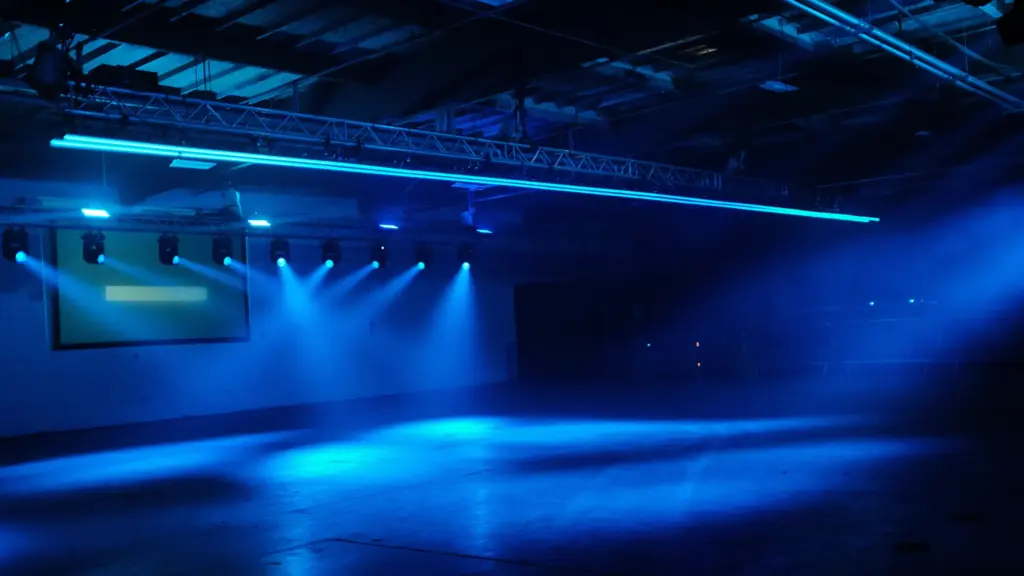
Best Film Studios for Rent in Los Angeles: What to Look For
Commercial & Brand](https://c-istudios.com/best-film-studios-for-rent-in-los-angeles-what-to-look-for/)[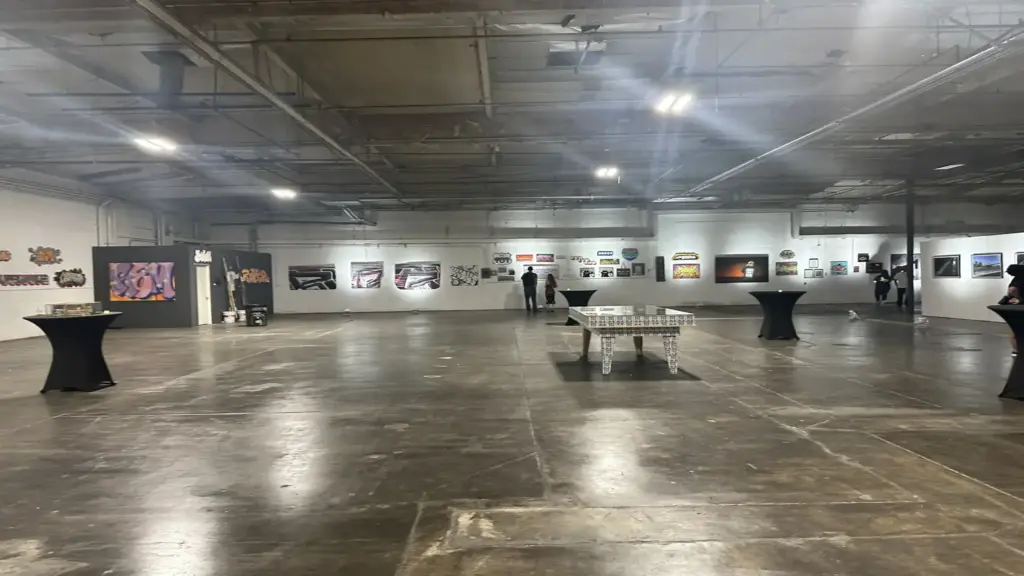
Warehouse Studio vs. Traditional Soundstage: Which Is Right for Your Shoot?
Commercial & Brand](https://c-istudios.com/warehouse-studio-vs-traditional-soundstage-which-is-right-for-your-shoot/)[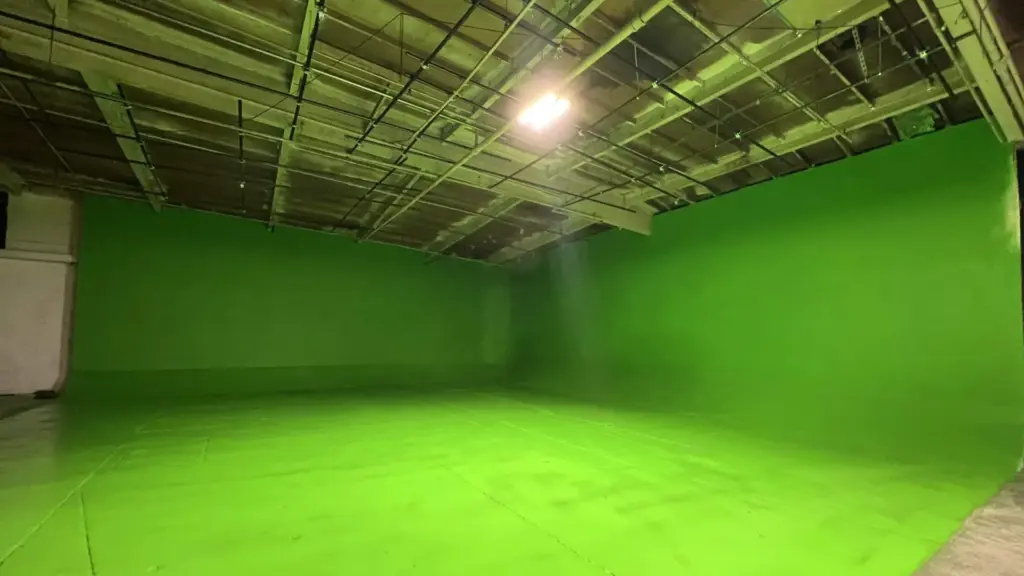
Green Screen Studio Rental in Los Angeles
Post & VFX](https://c-istudios.com/green-screen-studio-rental-in-los-angeles/)
---
*This content is from [C&I Studios](https://c-istudios.com), a full-service production company.*
---
# Best Film Studios for Rent in Los Angeles: What to Look For
> Published: March 11, 2026
> Categories: Commercial & Brand
> Source: https://c-istudios.com/best-film-studios-for-rent-in-los-angeles-what-to-look-for/
---
.cib{--paper:#1b1d1f;--ink:#fff;--body:#d5d7d9;--muted:#8b9096;--line:rgba(255,255,255,.12);--thumb:#2b2e31;--card:#212426;--accent:#c02b0a;--blue:#5B8FA8;--serif:'Playfair Display',Georgia,serif;--sans:'Poppins',-apple-system,sans-serif;--measure:900px;background:var(--paper);color:var(--body);font-family:var(--sans);line-height:1.6;position:relative;left:50%;transform:translateX(-50%);width:90vw;max-width:1920px}
.cib *{box-sizing:border-box}
.cib .kicker{max-width:var(--measure);margin:58px auto 0;padding:0 22px;font-size:12.5px;font-weight:700;letter-spacing:2.5px;text-transform:uppercase;color:var(--blue)}
.cib h1.cibh1{text-wrap:balance;font-family:var(--serif);font-weight:500;font-size:clamp(46px,6vw,72px);line-height:1.08;color:var(--ink);max-width:var(--measure);margin:18px auto 0;padding:0 22px;letter-spacing:-.5px}
.cib .metarow{max-width:var(--measure);margin:20px auto 0;padding:0 22px;color:var(--muted);font-size:14px}
.cib .hero{position:relative;width:100%;height:0;padding-bottom:56.25%;overflow:hidden;margin:48px auto 0;border-top:1px solid var(--line);border-bottom:1px solid var(--line)}
.cib .hero .ph{width:100%;aspect-ratio:16/9;background:var(--thumb);border-top:1px solid var(--line);border-bottom:1px solid var(--line);display:flex;align-items:center;justify-content:center;color:#7d8288;font-size:13px;text-align:center;padding:0 20px}
.cib .body{max-width:var(--measure);margin:12px auto 0;padding:52px 22px 6px}
.cib .body.lead p:first-child{font-size:23px;line-height:1.62;color:var(--ink)}
.cib .body p{font-size:18.5px;line-height:1.85;margin:0 0 30px;color:var(--body)}
.cib .body h2{text-wrap:balance;font-family:var(--serif);font-weight:500;font-size:clamp(32px,4vw,48px);line-height:1.22;color:var(--ink);margin:70px 0 20px;letter-spacing:-.3px}
.cib .body h3{text-wrap:balance;font-family:var(--sans);font-weight:600;font-size:22px;color:var(--ink);margin:38px 0 8px}
.cib .body a{color:var(--ink);text-decoration:underline;text-decoration-color:rgba(255,255,255,.4);text-underline-offset:3px}
.cib .body a:hover{text-decoration-color:var(--ink)}
.cib .ctable{width:100%;border-collapse:collapse;margin:16px 0 30px;font-size:16px}
.cib .ctable th{background:#000;color:#fff;text-align:left;padding:10px 12px;font-family:var(--sans)}
.cib .ctable td{padding:10px 12px;border-bottom:1px solid var(--line);color:var(--body)}
.cib .inimg{position:relative;width:100%;height:0;padding-bottom:56.25%;overflow:hidden;margin:72px auto;border-top:1px solid var(--line);border-bottom:1px solid var(--line)}
.cib .inimg .ph{width:100%;aspect-ratio:16/9;background:var(--thumb);border-top:1px solid var(--line);border-bottom:1px solid var(--line);display:flex;align-items:center;justify-content:center;color:#7d8288;font-size:13px}
.cib .origpub{max-width:var(--measure);margin:60px auto 0;padding:26px 22px 0;border-top:1px solid var(--line);color:var(--muted);font-size:13.5px}
.cib .related{max-width:1200px;margin:64px auto 0;padding:34px 22px 76px}
.cib .related h3{font-family:var(--sans);font-size:12.5px;letter-spacing:2px;text-transform:uppercase;color:var(--ink);margin:0 0 24px}
.cib .grid{display:grid;grid-template-columns:repeat(3,1fr);gap:28px}
.cib .rc{background:var(--card);border:1px solid var(--line);display:block;text-decoration:none;color:inherit;transition:border-color .15s}
.cib a.rc:hover{border-color:rgba(255,255,255,.5)}
.cib .rc .thumb{position:relative;width:100%;height:0;padding-bottom:56.25%;background:var(--thumb);overflow:hidden}
.cib .rc .thumb img{position:absolute!important;top:0!important;left:0!important;width:100%!important;height:100%!important;object-fit:cover!important;margin:0!important}
.cib .rc .cc{padding:14px 15px 17px}
.cib .rc .rt{font-family:var(--serif);font-weight:500;font-size:16px;line-height:1.3;color:var(--ink);margin:0 0 6px}
.cib .rc .rm{font-size:11px;letter-spacing:1px;text-transform:uppercase;color:var(--muted)}
.cib img{margin:0!important;padding:0!important;display:block!important;vertical-align:top;max-width:100%}
.cib .hero img,.cib .inimg img{position:absolute!important;top:0!important;left:0!important;width:100%!important;height:100%!important;object-fit:cover!important;margin:0!important;padding:0!important;border:0!important;display:block!important;aspect-ratio:auto!important}
.cib .hero+.body{padding-top:36px}
@media(max-width:760px){.cib .grid{grid-template-columns:1fr}.cib .body h2{margin:52px 0 16px}.cib .body p{font-size:17.5px}.cib .inimg,.cib .hero{margin-top:44px}}
.cib .vembed{max-width:var(--measure);margin:44px auto;padding:0 22px}.cib .vembed .vwrap{position:relative;width:100%;height:0;padding-bottom:56.25%}.cib .vembed .vwrap iframe{position:absolute;top:0;left:0;width:100%;height:100%;border:0}
Commercial & Brand
# Best Film Studios for Rent in Los Angeles. What to Look For
5 min read

## Film Studios For Rent
Choosing a film studio in Los Angeles is one of the most critical decisions in production. The right space elevates your project. The wrong one wastes time and money.
Los Angeles has thousands of studios ranging from Hollywood-scale facilities to intimate creative spaces. This guide shows you what actually matters when choosing a film studio and how to find the right fit for your production.
## What Makes a Film Studio Worth Renting?
A good film studio offers more than just four walls. It provides the infrastructure your production needs to run smoothly.
The best studios combine three elements: versatile spaces that adapt to different creative needs, professional infrastructure including power and lighting systems, and teams that understand production workflows. A studio that checks all three boxes saves time and reduces costs.
## Location Matters More Than You Think
Location impacts every aspect of production. Central locations save crew travel time. Accessible parking keeps everyone happy. Easy highway access matters for equipment trucks.
Los Angeles is sprawling. A studio in the valley differs dramatically from one in downtown LA or Burbank. Consider crew convenience, not just the space itself. A cheap studio that's hard to reach becomes expensive once you factor in travel costs and morale.
## Size and Flexibility. The Real Consideration
Studios come in different sizes. Large soundstages suit big productions. Smaller studios work better for intimate scenes, interviews, and modest productions.
The best studios offer flexibility. Can you modify the space? Do they have modular walls? Can you shoot in multiple configurations? Studios that adapt to your creative vision rather than force you into their existing setup save production days.
For [creative marketing services](https://c-istudios.com/creative-marketing-services/) and smaller productions, flexibility matters more than raw size. You want a space that becomes what you need it to be.
## Power and Infrastructure. The Hidden Requirement
Professional studios provide consistent power, reliable lighting systems, and structured electrical infrastructure. Inadequate power kills productions.
Check studio power capacity before booking. Can they handle your lighting rig? Do they have backup power? Is their infrastructure modern or aging? Outdated electrical systems cause delays and safety issues. Ask about it directly.
## Lighting and Equipment. Included or Rental?
Some studios include basic lighting. Others provide nothing. Know the difference before signing.
Good studios offer modular lighting systems you can customize. They should have proper [color temperature](https://en.wikipedia.org/wiki/Color_temperature) control. Professional-grade equipment matters because cheap lighting limits your creative options.
Ask specifically about what's included. Calculate true costs by adding rental equipment if it's not provided. Studios that appear cheap often charge separately for every piece of gear.
## Sound Considerations. Often Overlooked
Sound quality separates amateur productions from professional ones. Poor [acoustics](https://en.wikipedia.org/wiki/Acoustics) ruin dialogue. Bad sound design undermines everything else.
Quality studios have treated acoustics. Ask about sound isolation between stages. Can they provide sound monitoring equipment? Do they have soundproof isolation booths? Professional [video production services](https://c-istudios.com/video-production-services/) depend on sound-ready spaces.
Don't rent a studio without hearing how sound behaves inside. Bad acoustics cost you in [post-production](https://en.wikipedia.org/wiki/Post-production).
## Parking and Crew Amenities
Parking availability sounds simple but affects production morale significantly. Crews that park far away start frustrated.
Good studios provide adequate parking or nearby options. They have comfortable waiting areas, kitchen facilities, and bathrooms. These amenities keep crews functioning at peak efficiency. Long production days demand comfortable facilities.
## Pricing Models. Understand the Full Cost
Studios charge different ways. Hourly rates work for short shoots. Daily rates work for longer productions. Some offer monthly discounts.
Always ask about what's included. Hidden costs appear in late fees, overtime rates, equipment rentals, and staffing charges. Get complete pricing before committing.
Compare total cost, not just headline rates. A studio that seems expensive might include more, making it actually cheaper. A cheap studio that charges for everything becomes expensive fast.
## Staff and Support. Quality Varies Dramatically
The best studios employ experienced crews who understand production workflows. They anticipate problems. They solve issues before they become crises.
Studios with knowledgeable staff save production time. Inexperienced staff creates delays. Ask about their team. How long have key people worked there? What productions have they supported? References matter.
## Technical Capabilities. What You Actually Need
Not every production needs green screen. Not every project requires 4K cameras or virtual production capabilities.
Match technical capability to your actual needs. Overpaying for features you won't use wastes money. Under-equipping creates problems midway through production. Be honest about your technical requirements.
Ask studios to demonstrate their capabilities. See their equipment. Understand their technical limitations.
## Permits and Logistics
Studios handle permits differently. Some manage everything. Others leave it to you.
Clarity on permits matters. Who handles city permits? Who manages parking permits for production vehicles? Who communicates with neighbors? Get this in writing.
Studios in residential areas require more permit management. Commercial areas sometimes require less. Understand logistics before booking.
## Insurance and Liability
Insurance requirements vary. Studios carry liability insurance. Your production needs additional coverage.
Ask about required insurance upfront. What does the studio's insurance cover? What must your production provide? Surprises at the last minute delay everything.
## Trial Shoots and Walkthroughs
Never book a studio without seeing it. Walkthroughs reveal issues that descriptions hide.
The best studios welcome trial shoots or pre-production walkthroughs. Lighting a test setup helps you understand the space. Recording audio samples reveals acoustic issues. Time spent in walkthroughs saves production time later.
## Red Flags to Avoid
Some warning signs indicate studios to skip. Unwillingness to provide references should concern you. Vague pricing hides costs. Reluctance to explain technical capabilities suggests problems. Studios without professional staff lack production experience. Facilities that feel unsafe aren't worth the risk.
Trust your instincts. If something feels off, it probably is.
## Making Your Decision
The best film studio for your production depends on your specific needs, timeline, and budget. No single studio works for every project.
Consider your creative vision. Match it against studio capabilities. Factor in location, cost, and crew comfort. Ask detailed questions. Do a trial walkthrough. Trust references and your gut.
The right studio enhances your production. The wrong one creates unnecessary problems.
## Finding Your Studio Match
Choosing a film studio requires balancing multiple factors. Cost matters, but it's only one consideration. Location, size, infrastructure, staff quality, and creative flexibility all affect production success.
[Contact C&I Studios](https://c-istudios.com/contact/) to discuss your production space needs. We help productions find the right studio for their specific project requirements. Whether you need a full-service facility or a simple creative space, we can guide you toward the best fit for your budget and vision.
Your production deserves the right environment. Let's find it.
## Work with C&I Studios
If you are planning a project like this, our team can take it from concept to final delivery. Explore our [video production services](https://c-istudios.com/video-production-services/), browse [our work](https://c-istudios.com/our-work/) to see how we tell brand stories, and [get in touch](https://c-istudios.com/contact/) when you are ready to start.
Originally published March 11, 2026
---
*This content is from [C&I Studios](https://c-istudios.com), a full-service production company.*
---
# What Is AI-Generated Video? Everything Brands Need to Know in 2026
> Published: March 10, 2026
> Categories: Web & Tech
> Source: https://c-istudios.com/what-is-ai-generated-video-everything-brands-need-to-know-in-2026/
---
.cib{--paper:#1b1d1f;--ink:#fff;--body:#d5d7d9;--muted:#8b9096;--line:rgba(255,255,255,.12);--thumb:#2b2e31;--card:#212426;--accent:#c02b0a;--blue:#5B8FA8;--serif:'Playfair Display',Georgia,serif;--sans:'Poppins',-apple-system,sans-serif;--measure:900px;background:var(--paper);color:var(--body);font-family:var(--sans);line-height:1.6;position:relative;left:50%;transform:translateX(-50%);width:90vw;max-width:1920px}
.cib *{box-sizing:border-box}
.cib .kicker{max-width:var(--measure);margin:58px auto 0;padding:0 22px;font-size:12.5px;font-weight:700;letter-spacing:2.5px;text-transform:uppercase;color:var(--blue)}
.cib h1.cibh1{text-wrap:balance;font-family:var(--serif);font-weight:500;font-size:clamp(46px,6vw,72px);line-height:1.08;color:var(--ink);max-width:var(--measure);margin:18px auto 0;padding:0 22px;letter-spacing:-.5px}
.cib .metarow{max-width:var(--measure);margin:20px auto 0;padding:0 22px;color:var(--muted);font-size:14px}
.cib .hero{position:relative;width:100%;height:0;padding-bottom:56.25%;overflow:hidden;margin:48px auto 0;border-top:1px solid var(--line);border-bottom:1px solid var(--line)}
.cib .hero .ph{width:100%;aspect-ratio:16/9;background:var(--thumb);border-top:1px solid var(--line);border-bottom:1px solid var(--line);display:flex;align-items:center;justify-content:center;color:#7d8288;font-size:13px;text-align:center;padding:0 20px}
.cib .body{max-width:var(--measure);margin:12px auto 0;padding:52px 22px 6px}
.cib .body.lead p:first-child{font-size:23px;line-height:1.62;color:var(--ink)}
.cib .body p{font-size:18.5px;line-height:1.85;margin:0 0 30px;color:var(--body)}
.cib .body h2{text-wrap:balance;font-family:var(--serif);font-weight:500;font-size:clamp(32px,4vw,48px);line-height:1.22;color:var(--ink);margin:70px 0 20px;letter-spacing:-.3px}
.cib .body h3{text-wrap:balance;font-family:var(--sans);font-weight:600;font-size:22px;color:var(--ink);margin:38px 0 8px}
.cib .body a{color:var(--ink);text-decoration:underline;text-decoration-color:rgba(255,255,255,.4);text-underline-offset:3px}
.cib .body a:hover{text-decoration-color:var(--ink)}
.cib .ctable{width:100%;border-collapse:collapse;margin:16px 0 30px;font-size:16px}
.cib .ctable th{background:#000;color:#fff;text-align:left;padding:10px 12px;font-family:var(--sans)}
.cib .ctable td{padding:10px 12px;border-bottom:1px solid var(--line);color:var(--body)}
.cib .inimg{position:relative;width:100%;height:0;padding-bottom:56.25%;overflow:hidden;margin:72px auto;border-top:1px solid var(--line);border-bottom:1px solid var(--line)}
.cib .inimg .ph{width:100%;aspect-ratio:16/9;background:var(--thumb);border-top:1px solid var(--line);border-bottom:1px solid var(--line);display:flex;align-items:center;justify-content:center;color:#7d8288;font-size:13px}
.cib .origpub{max-width:var(--measure);margin:60px auto 0;padding:26px 22px 0;border-top:1px solid var(--line);color:var(--muted);font-size:13.5px}
.cib .related{max-width:1200px;margin:64px auto 0;padding:34px 22px 76px}
.cib .related h3{font-family:var(--sans);font-size:12.5px;letter-spacing:2px;text-transform:uppercase;color:var(--ink);margin:0 0 24px}
.cib .grid{display:grid;grid-template-columns:repeat(3,1fr);gap:28px}
.cib .rc{background:var(--card);border:1px solid var(--line);display:block;text-decoration:none;color:inherit;transition:border-color .15s}
.cib a.rc:hover{border-color:rgba(255,255,255,.5)}
.cib .rc .thumb{position:relative;width:100%;height:0;padding-bottom:56.25%;background:var(--thumb);overflow:hidden}
.cib .rc .thumb img{position:absolute!important;top:0!important;left:0!important;width:100%!important;height:100%!important;object-fit:cover!important;margin:0!important}
.cib .rc .cc{padding:14px 15px 17px}
.cib .rc .rt{font-family:var(--serif);font-weight:500;font-size:16px;line-height:1.3;color:var(--ink);margin:0 0 6px}
.cib .rc .rm{font-size:11px;letter-spacing:1px;text-transform:uppercase;color:var(--muted)}
.cib img{margin:0!important;padding:0!important;display:block!important;vertical-align:top;max-width:100%}
.cib .hero img,.cib .inimg img{position:absolute!important;top:0!important;left:0!important;width:100%!important;height:100%!important;object-fit:cover!important;margin:0!important;padding:0!important;border:0!important;display:block!important;aspect-ratio:auto!important}
.cib .hero+.body{padding-top:36px}
@media(max-width:760px){.cib .grid{grid-template-columns:1fr}.cib .body h2{margin:52px 0 16px}.cib .body p{font-size:17.5px}.cib .inimg,.cib .hero{margin-top:44px}}
Web & Tech
# What Is AI-Generated Video? Everything Brands Need to Know in 2026
5 min read

**AI video production is changing how brands create content.** The question isn't whether AI can produce professional videos, it can. The real question is how to use AI strategically without sacrificing quality.
Smart brands in 2026 aren't choosing between AI and quality. They're using AI strategically to produce more content, faster, while maintaining brand standards. This guide shows you how.
## The Quality Concern. Why Brands Hesitate on AI Video
When most people think of AI video, they imagine robotic avatars and synthesized voiceovers. That perception is outdated.
AI video production has evolved dramatically. Modern AI generates natural-sounding audio, creates photorealistic visuals, and automates editing with quality that rivals traditional methods. Yet many brands still hesitate, fearing quality loss.
The hesitation is understandable. Your brand reputation depends on content quality. But brands that master AI production gain a massive competitive advantage, they produce more content at lower cost without sacrificing standards.
## How Quality AI Video Production Actually Works
### Start With Clear Creative Direction
Quality doesn't happen by accident. It starts with clear creative direction.
Define your brand voice, visual style, messaging guidelines, and target audience. Feed this into your AI video workflow. AI tools learn your preferences and consistency improves automatically.
Brands that succeed with AI invest upfront in creative frameworks. This ensures every AI-generated video aligns with brand identity, regardless of production speed.
### Use Premium AI Tools, Not Cheap Ones
Not all AI video tools are equal. Free or cheap tools produce noticeable AI artifacts, unnatural speech, awkward editing, inconsistent visuals.
Professional AI platforms cost more but deliver broadcast-quality output. Investment in quality tools directly impacts final video quality. Treat AI video tools like production equipment, quality tools produce quality results.
### Combine AI With Human Oversight
Here's the secret that separates quality AI videos from mediocre ones: human oversight.
Don't let AI handle everything. AI excels at repetitive tasks, editing, color correction, adding subtitles, generating variations. Humans excel at creative decisions, emotional nuance, brand alignment, and final review.
The best workflow combines AI efficiency with human judgment. AI handles production speed. Humans ensure quality and brand fit.
### Leverage Pre-Built Brand Templates
Brands using AI successfully create comprehensive brand templates. These include:
Approved color palettes and fonts Logo animation and placement standards Brand-compliant graphics and overlays Voiceover style and tone guidelines Music and sound design preferences
When AI works within established templates, quality consistency improves dramatically. Templates reduce variation and ensure every video reflects brand standards.
## Real-World Strategies. How Smart Brands Use AI Without Quality Loss
### Strategy 1. AI for Volume, Traditional for Hero Content
Smart brands use hybrid approach: AI production for scaling content, traditional production for flagship pieces.
Use AI for:
- Social media content (Reels, TikTok, YouTube Shorts)
- Product demos and tutorials
- Internal training videos
- Multiple language versions
- Quick promotional content
Use traditional production for:
- Brand films and commercials
- Executive videos
- Major campaign flagships
- Storytelling that requires real emotion
This combination maintains quality where it matters while gaining efficiency where it doesn't.
### Strategy 2. Strategic AI + Post-Production Enhancement
Some brands use AI video generation as a starting point, then enhance with professional post-production.
AI generates the raw video quickly. Then [creative marketing services](https://c-istudios.com/creative-marketing-services/) or in-house teams apply professional color grading, sound design, and final adjustments.
This workflow combines AI speed with traditional quality. Final output looks professional while production timeline stays short.
### Strategy 3. AI for Localization and Testing
AI excels at rapid variation and localization. Create one hero concept, then use AI to generate 50 variations for A/B testing or market localization.
This approach keeps creative investment high (one well-made original) while leveraging AI to explore variations. You maintain quality on the primary asset while testing efficiently.
### Strategy 4. Build Internal AI Video Competency
Top brands don't just hire agencies, they build internal teams trained in AI video production.
Internal teams understand:
- Brand standards deeply
- Production workflows
- AI tool capabilities and limitations
- When to use AI versus traditional methods
Internal competency enables rapid, consistent, quality production. Your team becomes faster and more aligned with brand voice over time.
## Quality Metrics. How to Measure AI Video Quality
### Audio Quality
Professional AI voiceovers should sound natural, not robotic. Modern AI can match specific accents, pacing, and emotional tone. Test voiceovers thoroughly before full production.
Evaluate: Does the narration sound like a real person? Is pacing natural? Does tone match content?
### Visual Quality
AI-generated visuals should be sharp, well-lit, and consistent. Color grading should be professional. Editing should feel intentional, not random.
### Brand Alignment
Every video should reinforce brand identity. Colors, fonts, messaging, style, and tone should be instantly recognizable as your brand.
Evaluate: Does this video feel like it came from your brand? Would your audience recognize it as yours?
### Engagement Metrics
Quality ultimately shows in performance. Track:
- Video completion rates
- Click-through rates
- Conversion rates
- Audience retention
If AI-generated videos underperform traditional videos, quality isn't there yet. If they perform similarly, you've solved the quality challenge.
## Common AI Video Production Mistakes (And How to Avoid Them)
### Mistake 1. Using AI Without Creative Briefs
Bad approach: Feed a simple prompt to AI and expect professional results.
Good approach: Create detailed creative briefs. Define objectives, messaging, target audience, desired tone, visual style, and brand guidelines. AI works better with clear direction.
### Mistake 2. Neglecting Audio Quality
Audio is 50% of video quality. Bad audio destroys otherwise good videos.
Invest in quality voiceovers. Test different narration styles. Consider professional voice actors over generic AI voices when brand voice matters.
### Mistake 3. Skipping Review and Approval
Set standards. Review every video before publication. Check for brand alignment, audio quality, visual clarity, and messaging accuracy.
One bad video damages brand perception. Prevention costs less than reputation repair.
### Mistake 4. Treating All Videos the Same
Not every video deserves the same investment. For social media filler content, AI production is perfect. For brand-defining content, invest more.
Allocate production resources based on strategic importance. Reserve traditional production for high-stakes content.
### Mistake 5. Ignoring Audience Expectations
Your audience has standards. B2B audiences expect polish. Entertainment audiences expect personality. Educational audiences expect clarity.
Match production quality to audience expectations. Don't use cheap-looking AI videos for premium brands. Don't over-produce simple tutorials.
## Tools and Services for Quality AI Video Production
Professional AI video platforms deliver quality. Popular options include:
**Video Generation Platforms:**
- AI video creation tools with natural voiceovers
- Customizable templates and branding options
- Multi-language support
- Editing and optimization features
**Hybrid Approach Tools:**
- AI video generation combined with post-production services
- Professional editing and color grading overlays
- Sound design integration
- Quality review workflows
**Professional Production Services:** For brands requiring maximum quality, [video production services](https://c-istudios.com/video-production-services/) that specialize in AI production combine professional standards with AI efficiency. These agencies understand both technologies and quality requirements.
## Building a Quality AI Video Workflow
**Strategy and Creative Brief**
Define video objectives, target audience, brand voice, visual style, and success metrics. Invest time here. Clear briefs produce better AI outputs.
**Template Development**
Create brand-compliant templates for your AI tool of choice. Document approved colors, fonts, logos, voiceover styles, music preferences, and editing standards.
**AI Production**
Use AI to generate video variations based on templates and creative brief. +-
96+Generate multiple versions. Use AI's speed to explore options quickly.
**Human Review and Refinement**
Review all AI-generated videos against quality standards.
Flag issues: audio problems, visual inconsistencies, brand misalignment, messaging clarity.
Refine and re-render as needed.
**Final Post-Production (Optional)**
For critical videos, apply professional color grading, sound design, and final touches. This step bridges AI efficiency with traditional quality. It's cost-effective because AI already did the heavy lifting.
**Publish and Measure**
Track performance against benchmarks. Video completion rates, engagement, and conversions show quality effectiveness. Use performance data to refine templates and brief requirements for next projects.
## The Future. AI Quality Will Only Improve
AI video production is improving monthly. Voice generation becomes more natural. Visual generation becomes more realistic. Editing becomes more intelligent.
Brands that start using AI now gain advantage in two ways:
1. **Efficiency advantage:** You're producing more content, faster, at lower cost
2. **Learning advantage:** Your team learns AI capabilities and limitations. You build internal expertise
Brands that wait until AI is "perfect" will play catch-up. Perfect is coming, but it doesn't matter if your competitor gets there first.
## Work with C&I Studios
If you are planning a project like this, our team can take it from concept to final delivery. Explore our [AI video services](https://c-istudios.com/ai-video-services/), browse [our work](https://c-istudios.com/our-work/) to see how we tell brand stories, and [get in touch](https://c-istudios.com/contact/) when you are ready to start.
Originally published March 10, 2026
---
*This content is from [C&I Studios](https://c-istudios.com), a full-service production company.*
---
# How to Write a Video Production Brief That Gets Results
> Published: March 4, 2026
> Categories: Commercial & Brand
> Source: https://c-istudios.com/how-to-write-a-video-production-brief-that-gets-results/
---
.cib{--paper:#1b1d1f;--ink:#fff;--body:#d5d7d9;--muted:#8b9096;--line:rgba(255,255,255,.12);--thumb:#2b2e31;--card:#212426;--accent:#c02b0a;--blue:#5B8FA8;--serif:'Playfair Display',Georgia,serif;--sans:'Poppins',-apple-system,sans-serif;--measure:900px;background:var(--paper);color:var(--body);font-family:var(--sans);line-height:1.6;position:relative;left:50%;transform:translateX(-50%);width:90vw;max-width:1920px}
.cib *{box-sizing:border-box}
.cib .kicker{max-width:var(--measure);margin:58px auto 0;padding:0 22px;font-size:12.5px;font-weight:700;letter-spacing:2.5px;text-transform:uppercase;color:var(--blue)}
.cib h1.cibh1{text-wrap:balance;font-family:var(--serif);font-weight:500;font-size:clamp(46px,6vw,72px);line-height:1.08;color:var(--ink);max-width:var(--measure);margin:18px auto 0;padding:0 22px;letter-spacing:-.5px}
.cib .metarow{max-width:var(--measure);margin:20px auto 0;padding:0 22px;color:var(--muted);font-size:14px}
.cib .hero{position:relative;width:100%;height:0;padding-bottom:56.25%;overflow:hidden;margin:48px auto 0;border-top:1px solid var(--line);border-bottom:1px solid var(--line)}
.cib .hero .ph{width:100%;aspect-ratio:16/9;background:var(--thumb);border-top:1px solid var(--line);border-bottom:1px solid var(--line);display:flex;align-items:center;justify-content:center;color:#7d8288;font-size:13px;text-align:center;padding:0 20px}
.cib .body{max-width:var(--measure);margin:12px auto 0;padding:52px 22px 6px}
.cib .body.lead p:first-child{font-size:23px;line-height:1.62;color:var(--ink)}
.cib .body p{font-size:18.5px;line-height:1.85;margin:0 0 30px;color:var(--body)}
.cib .body h2{text-wrap:balance;font-family:var(--serif);font-weight:500;font-size:clamp(32px,4vw,48px);line-height:1.22;color:var(--ink);margin:70px 0 20px;letter-spacing:-.3px}
.cib .body h3{text-wrap:balance;font-family:var(--sans);font-weight:600;font-size:22px;color:var(--ink);margin:38px 0 8px}
.cib .body a{color:var(--ink);text-decoration:underline;text-decoration-color:rgba(255,255,255,.4);text-underline-offset:3px}
.cib .body a:hover{text-decoration-color:var(--ink)}
.cib .ctable{width:100%;border-collapse:collapse;margin:16px 0 30px;font-size:16px}
.cib .ctable th{background:#000;color:#fff;text-align:left;padding:10px 12px;font-family:var(--sans)}
.cib .ctable td{padding:10px 12px;border-bottom:1px solid var(--line);color:var(--body)}
.cib .inimg{position:relative;width:100%;height:0;padding-bottom:56.25%;overflow:hidden;margin:72px auto;border-top:1px solid var(--line);border-bottom:1px solid var(--line)}
.cib .inimg .ph{width:100%;aspect-ratio:16/9;background:var(--thumb);border-top:1px solid var(--line);border-bottom:1px solid var(--line);display:flex;align-items:center;justify-content:center;color:#7d8288;font-size:13px}
.cib .origpub{max-width:var(--measure);margin:60px auto 0;padding:26px 22px 0;border-top:1px solid var(--line);color:var(--muted);font-size:13.5px}
.cib .related{max-width:1200px;margin:64px auto 0;padding:34px 22px 76px}
.cib .related h3{font-family:var(--sans);font-size:12.5px;letter-spacing:2px;text-transform:uppercase;color:var(--ink);margin:0 0 24px}
.cib .grid{display:grid;grid-template-columns:repeat(3,1fr);gap:28px}
.cib .rc{background:var(--card);border:1px solid var(--line);display:block;text-decoration:none;color:inherit;transition:border-color .15s}
.cib a.rc:hover{border-color:rgba(255,255,255,.5)}
.cib .rc .thumb{position:relative;width:100%;height:0;padding-bottom:56.25%;background:var(--thumb);overflow:hidden}
.cib .rc .thumb img{position:absolute!important;top:0!important;left:0!important;width:100%!important;height:100%!important;object-fit:cover!important;margin:0!important}
.cib .rc .cc{padding:14px 15px 17px}
.cib .rc .rt{font-family:var(--serif);font-weight:500;font-size:16px;line-height:1.3;color:var(--ink);margin:0 0 6px}
.cib .rc .rm{font-size:11px;letter-spacing:1px;text-transform:uppercase;color:var(--muted)}
.cib img{margin:0!important;padding:0!important;display:block!important;vertical-align:top;max-width:100%}
.cib .hero img,.cib .inimg img{position:absolute!important;top:0!important;left:0!important;width:100%!important;height:100%!important;object-fit:cover!important;margin:0!important;padding:0!important;border:0!important;display:block!important;aspect-ratio:auto!important}
.cib .hero+.body{padding-top:36px}
@media(max-width:760px){.cib .grid{grid-template-columns:1fr}.cib .body h2{margin:52px 0 16px}.cib .body p{font-size:17.5px}.cib .inimg,.cib .hero{margin-top:44px}}
.cib .vembed{max-width:var(--measure);margin:44px auto;padding:0 22px}.cib .vembed .vwrap{position:relative;width:100%;height:0;padding-bottom:56.25%}.cib .vembed .vwrap iframe{position:absolute;top:0;left:0;width:100%;height:100%;border:0}
Commercial & Brand
# How to Write a Video Production Brief That Gets Results
5 min read
A video production brief is a foundational document that brings together all the key information about how your video should be created, delivered, and measured. Without one, teams work with different assumptions. Stakeholders disagree on direction. Costs balloon. Timelines slip.
## What Is a Video Production Brief?
A video production brief is your project's roadmap. It ensures that everyone involved, from your marketing director to the production crew to the editor, understands what you're building and why.
The brief covers more than creative direction. It includes your strategic objectives, target audience, success metrics, technical specifications, budget, timeline, and decision-making process. Think of it as your project's insurance policy and strategic foundation combined.
A strong brief saves time, prevents costly misunderstandings, and helps you maximize budget by keeping the entire team aligned.
## When You Need a Production Brief
### You Absolutely Need One When
You're producing a TV commercial or broadcast campaign with significant budget and technical requirements.
You're creating a product explainer or launch video designed to convert prospects into customers.
Your video represents your entire organization, a company brand film or CEO message.
Multiple stakeholders need to approve the work before production starts.
You need different versions for different platforms, regions, or audience segments.
The video will be measured against specific business metrics and ROI.
### Quick Updates Don't Need Formality
If you're sharing a quick internal update or social media post using pre-approved messaging, a detailed email brief is sufficient. But anything involving multiple people, significant budget, or measurable business results requires a proper brief.
## The 6 Essential Steps
### Step 1. State Your Objective
Define exactly what you want the video to achieve. Not "we need a video," but what specific outcome are you pursuing?
Common objectives include:
- Raise brand awareness among a specific demographic
- Generate leads or sales inquiries
- Increase engagement on social media
- Explain a complex product or process
- Support employee recruitment
- Drive event attendance
Include how you'll measure success. Will you track views, watch-through rate, click-through rate, lead generation, or revenue? Define metrics upfront so you can evaluate performance later.
### Step 2. Define Your Target Audience
Understanding your audience shapes every creative decision. Go beyond demographics (age, gender, location).
Explore what challenges your audience faces, what content they prefer, where they consume video, and what motivates them to take action. The clearer you are about your audience, the better your production team can tailor creative direction, tone, and visual approach.
### Step 3. Clarify Your Core Message
You get one central idea. Not multiple messages competing for attention.
What is the single most important thing your audience needs to understand or feel after watching? Everything, your script, visuals, pacing, music, should reinforce this core message.
If you can't write your core message in one sentence, it's not clear enough.
### Step 4. Describe Your Tone and Visual Style
How should the video look and sound? Professional and polished? Playful and energetic? Cinematic and emotional? Documentary-style authentic?
Don't use vague adjectives. Share 3-5 reference videos you admire and explain specifically what appeals to you. Is it the pacing, cinematography, editing rhythm, music, or talent? This gives your production team concrete visual guidance. If your video requires custom music or audio branding, discuss [composing services](https://c-istudios.com/composing-services/) during this stage to ensure the audio matches your visual direction.
### Step 5. Map Your Distribution Channels
Each platform has different format requirements, optimal lengths, and viewing contexts. Your distribution plan influences technical specifications, aspect ratios, pacing, and even creative tone. Consider working with experts on [media marketing consultation services](https://c-istudios.com/media-marketing-consultation-services/) to ensure your distribution strategy aligns with your audience's actual media consumption habits.
### Step 6. Set Budget, Timeline, and Decision Rights
Be honest about your budget range. Even a bracket ($5,000-$15,000 or $25,000-$50,000) helps your production team plan appropriately.
Define your timeline. When do you need the final video? When are script approvals? Location confirmations? Build in buffer time because approvals always take longer than expected.
Clarify who approves what. Who gives final creative approval? Who consolidates feedback? Clear decision rights prevent bottlenecks and endless revision loops.
## Common Mistakes to Avoid
### Being Too Vague
"Professional tone" means different things to different people. Your director imagines one thing, your stakeholder imagines another. Be specific. Share examples. Explain your reasoning.
### Trying to Do Too Much
Cramming multiple objectives, audiences, and messages into one video dilutes impact. Pick your primary audience and core message. Keep secondary considerations minimal.
### Skipping the Practical Details
Budget, timeline, and decision rights might not feel creative, but they're essential. Your production team needs this information to plan effectively and manage resources.
### Not Getting Stakeholder Buy-In Upfront
The worst briefs are written by one person and handed to the team. The best briefs come from conversation. Get key stakeholders in a room for 60-90 minutes. Discuss. Align. Then everyone owns the brief.
## How to Use Your Brief Throughout Production
### During Pre-Production
Your brief guides script development, casting decisions, location scouting, and art direction. Every major decision filters through the brief.
### On Set
Quick decisions need to happen constantly. Your brief provides the context. Everyone knows what matters most: tone, message, quality standards.
### In Post-Production
Your brief guides editing choices, color grading decisions, music selection, and technical specifications. It prevents your editor from taking creative liberties that don't align with your original vision.
### During Revisions
When stakeholder feedback comes in, use your brief as your reference point. "Does this change align with our core message and audience?" If not, point back to what was agreed upon.
## Brief Strategy by Content Type
**TV Commercials and Brand Films:** Prioritize story structure, brand moments, and production value. Include detailed mood boards and precise air date timelines.
**Corporate Videos:** Focus on message clarity, interview planning, B-roll support, and accessibility (captions, on-screen text, audio descriptions).
**Product Explainers and Demos:** Structure around problem-solution frameworks. Plan for screen captures, animations, voiceover direction, and product positioning.
**Event Coverage and Livestreams:** Detail the run-of-show, camera positions, approval processes, contingencies, and turnaround times.
**Short-Form Social Content:** Platform requirements dominate. Vertical formats, sound-off design, hook in first 3 seconds, platform-specific cutdowns.
## Lock Your Brief Before Production Starts
Once your draft is complete, circulate for feedback, but limit this to one consolidated review round. Get alignment on:
- Budget is approved
- Timeline is realistic and achievable
- Everyone agrees on objectives, message, and deliverables
Then lock it. Distribute the final version to your creative team, production crew, legal, and media buyers. From this point, the brief is your reference. Changes should only happen if there's a major strategic shift, not because someone has a new opinion.
## Your Brief Becomes Your Project's North Star
A comprehensive video production brief gets your stakeholders, creatives, and production team working in the same direction from day one. It prevents costly revisions, scope creep, and misalignment.
When done right, your brief becomes a decision-making tool when you need to make judgment calls fast. It's a shield against endless "can we just..." requests. It's a blueprint for success you can repeat with every project.
[Contact C&I Studios](https://c-istudios.com/contact/) to develop your next video production brief. We'll guide you through defining your goals, understanding your audience, and building a strategic foundation for your video project.
## Work with C&I Studios
If you are planning a project like this, our team can take it from concept to final delivery. Explore our [video production services](https://c-istudios.com/video-production-services/), browse [our work](https://c-istudios.com/our-work/) to see how we tell brand stories, and [get in touch](https://c-istudios.com/contact/) when you are ready to start.
Originally published March 4, 2026
---
*This content is from [C&I Studios](https://c-istudios.com), a full-service production company.*
---
# How to Plan a Commercial Video Shoot: Complete Pre-Production Guide
> Published: March 3, 2026
> Categories: Commercial & Brand
> Source: https://c-istudios.com/how-to-plan-a-commercial-video-shoot-complete-pre-production-guide/
---
.cib{--paper:#1b1d1f;--ink:#fff;--body:#d5d7d9;--muted:#8b9096;--line:rgba(255,255,255,.12);--thumb:#2b2e31;--card:#212426;--accent:#c02b0a;--blue:#5B8FA8;--serif:'Playfair Display',Georgia,serif;--sans:'Poppins',-apple-system,sans-serif;--measure:900px;background:var(--paper);color:var(--body);font-family:var(--sans);line-height:1.6;position:relative;left:50%;transform:translateX(-50%);width:90vw;max-width:1920px}
.cib *{box-sizing:border-box}
.cib .kicker{max-width:var(--measure);margin:58px auto 0;padding:0 22px;font-size:12.5px;font-weight:700;letter-spacing:2.5px;text-transform:uppercase;color:var(--blue)}
.cib h1.cibh1{text-wrap:balance;font-family:var(--serif);font-weight:500;font-size:clamp(46px,6vw,72px);line-height:1.08;color:var(--ink);max-width:var(--measure);margin:18px auto 0;padding:0 22px;letter-spacing:-.5px}
.cib .metarow{max-width:var(--measure);margin:20px auto 0;padding:0 22px;color:var(--muted);font-size:14px}
.cib .hero{position:relative;width:100%;height:0;padding-bottom:56.25%;overflow:hidden;margin:48px auto 0;border-top:1px solid var(--line);border-bottom:1px solid var(--line)}
.cib .hero .ph{width:100%;aspect-ratio:16/9;background:var(--thumb);border-top:1px solid var(--line);border-bottom:1px solid var(--line);display:flex;align-items:center;justify-content:center;color:#7d8288;font-size:13px;text-align:center;padding:0 20px}
.cib .body{max-width:var(--measure);margin:12px auto 0;padding:52px 22px 6px}
.cib .body.lead p:first-child{font-size:23px;line-height:1.62;color:var(--ink)}
.cib .body p{font-size:18.5px;line-height:1.85;margin:0 0 30px;color:var(--body)}
.cib .body h2{text-wrap:balance;font-family:var(--serif);font-weight:500;font-size:clamp(32px,4vw,48px);line-height:1.22;color:var(--ink);margin:70px 0 20px;letter-spacing:-.3px}
.cib .body h3{text-wrap:balance;font-family:var(--sans);font-weight:600;font-size:22px;color:var(--ink);margin:38px 0 8px}
.cib .body a{color:var(--ink);text-decoration:underline;text-decoration-color:rgba(255,255,255,.4);text-underline-offset:3px}
.cib .body a:hover{text-decoration-color:var(--ink)}
.cib .ctable{width:100%;border-collapse:collapse;margin:16px 0 30px;font-size:16px}
.cib .ctable th{background:#000;color:#fff;text-align:left;padding:10px 12px;font-family:var(--sans)}
.cib .ctable td{padding:10px 12px;border-bottom:1px solid var(--line);color:var(--body)}
.cib .inimg{position:relative;width:100%;height:0;padding-bottom:56.25%;overflow:hidden;margin:72px auto;border-top:1px solid var(--line);border-bottom:1px solid var(--line)}
.cib .inimg .ph{width:100%;aspect-ratio:16/9;background:var(--thumb);border-top:1px solid var(--line);border-bottom:1px solid var(--line);display:flex;align-items:center;justify-content:center;color:#7d8288;font-size:13px}
.cib .origpub{max-width:var(--measure);margin:60px auto 0;padding:26px 22px 0;border-top:1px solid var(--line);color:var(--muted);font-size:13.5px}
.cib .related{max-width:1200px;margin:64px auto 0;padding:34px 22px 76px}
.cib .related h3{font-family:var(--sans);font-size:12.5px;letter-spacing:2px;text-transform:uppercase;color:var(--ink);margin:0 0 24px}
.cib .grid{display:grid;grid-template-columns:repeat(3,1fr);gap:28px}
.cib .rc{background:var(--card);border:1px solid var(--line);display:block;text-decoration:none;color:inherit;transition:border-color .15s}
.cib a.rc:hover{border-color:rgba(255,255,255,.5)}
.cib .rc .thumb{position:relative;width:100%;height:0;padding-bottom:56.25%;background:var(--thumb);overflow:hidden}
.cib .rc .thumb img{position:absolute!important;top:0!important;left:0!important;width:100%!important;height:100%!important;object-fit:cover!important;margin:0!important}
.cib .rc .cc{padding:14px 15px 17px}
.cib .rc .rt{font-family:var(--serif);font-weight:500;font-size:16px;line-height:1.3;color:var(--ink);margin:0 0 6px}
.cib .rc .rm{font-size:11px;letter-spacing:1px;text-transform:uppercase;color:var(--muted)}
.cib img{margin:0!important;padding:0!important;display:block!important;vertical-align:top;max-width:100%}
.cib .hero img,.cib .inimg img{position:absolute!important;top:0!important;left:0!important;width:100%!important;height:100%!important;object-fit:cover!important;margin:0!important;padding:0!important;border:0!important;display:block!important;aspect-ratio:auto!important}
.cib .hero+.body{padding-top:36px}
@media(max-width:760px){.cib .grid{grid-template-columns:1fr}.cib .body h2{margin:52px 0 16px}.cib .body p{font-size:17.5px}.cib .inimg,.cib .hero{margin-top:44px}}
.cib .vembed{max-width:var(--measure);margin:44px auto;padding:0 22px}.cib .vembed .vwrap{position:relative;width:100%;height:0;padding-bottom:56.25%}.cib .vembed .vwrap iframe{position:absolute;top:0;left:0;width:100%;height:100%;border:0}
Commercial & Brand
# How to Plan a Commercial Video Shoot. Complete Pre-Production Guide
11 min read

A successful commercial video shoot doesn't happen by accident. It's built through strategic pre-production planning, clear creative direction, and meticulous coordination. The difference between a professional commercial and an amateur attempt isn't budget, it's **preparation**.
Whether you're producing a 30-second regional spot, a national broadcast commercial, or a streaming campaign, the planning phase directly determines whether you capture what you envisioned or waste time, money, and crew resources on set. This guide walks you through the complete pre-production process: from defining your commercial objectives to preparing for shoot day, ensuring your commercial delivers measurable results.
## Write a Tight Script That Works in 30 Seconds
Commercial scripts are brutally different from longer narratives. You don't have time for character development, subplot exploration, or slow reveals. Every word must earn its place and serve your objective.
### Master the Hook and Visual Storytelling
Hook immediately. Your first 3-5 seconds determine whether viewers watch or skip. Open with intrigue, humor, emotional impact, or surprise, not with explanations. Show, don't tell. Visuals do most of the work in a commercial. Your voiceover shouldn't explain what people already see. Let the visuals tell the story and let narration add context or emotional resonance. Your core message should repeat throughout the commercial. Mention your brand. Make your call to action clear. Don't be subtle. Subtlety doesn't work in 30 seconds where every second counts.
### Use Conversational Language and Strong Verbs
Write conversational language. How do people actually talk? Avoid corporate jargon or awkward phrasing. If you wouldn't say it in conversation, don't write it for a commercial. Use specific, strong verbs. Instead of "Our product is really great," try "Discover," "Experience," "Transform," or "Achieve." These active verbs drive engagement and emotion.
### Test Your Script and Create a shot list
Read your script aloud, multiple times. A script that looks good on paper might sound terrible when spoken. If it's awkward to say, it's awkward to hear. Your voiceover talent will struggle with awkward phrasing, and viewers will sense the discomfort.
Once your script is locked, create a detailed shot list. Map every shot you need: wide establishing shots, close-ups of the product, cutaways that support the story, reaction shots showing emotion or benefit. A clear shot list prevents rambling during production and keeps your crew aligned on what you're capturing. This is your production roadmap.
## Plan Your Production Schedule and Logistics
This is where creative vision becomes logistically executable. Production planning requires coordination across multiple moving parts: location availability, crew schedules, talent availability, permit timelines, equipment rental, and weather contingencies.
### Scout Locations and Confirm Crew
Begin with location scouts one to two weeks before shooting. Visit potential locations and evaluate lighting at different times of day. Check what permits are required. Identify backup locations in case weather threatens your primary choice. Confirm your crew two weeks before production, your director, cinematographer, gaffer, sound engineer, producer, and production assistants. Brief them thoroughly on the commercial's vision so they understand the goal.
### Schedule Talent and Reserve Equipment
If using professional or non-professional on-camera talent, schedule [casting](https://en.wikipedia.org/wiki/Casting_(performing_arts)) and rehearsals one to two weeks out. Rehearsals prevent awkward performances on set and save time during expensive production days. Reserve cameras, lenses, lighting, audio equipment, and any specialty gear your commercial requires about a week before. Test everything days before the shoot so you can address any technical issues early. Missing equipment or technical failures on shoot day cost thousands.
### Handle Legal Requirements and Budget Planning
Confirm location agreements and any permits required two to three weeks in advance. Some locations require weeks of advance notice. Have all talent sign release forms before shooting begins, allowing you to use their image in your commercial.
Your budget typically breaks down approximately with creative development and script accounting for about 10% of total budget, crew and talent taking 30-35%, locations, permits, and logistics consuming 15-20%, equipment rental at 15-20%, and post-production work (editing, color, sound, music) requiring 20-25% of your investment. These percentages shift based on your production approach. Animation-heavy commercials shift more budget to post-production, while location-heavy shoots allocate more to location and logistics.
## Choose Equipment and Technical Specifications
Professional commercial production demands specific technical considerations. You're not just filming, you're creating broadcast-quality content that will be viewed on multiple platforms.
### Select Your Camera and Lighting
For most commercial production, professional cinema cameras (4K capable) deliver broadcast quality. ARRI and RED are industry standards, but other professional options exist. Your camera choice depends on your creative approach and distribution requirements. Lighting is everything in commercial production. Professional lighting rigs control every aspect of the image: mood, emotion, product visibility, talent presentation. A product that looks mediocre with poor lighting becomes compelling under professional lighting.
### Plan Your Audio and Post-Production Requirements
Commercial audio must be broadcast-clean. This means professional lavalier microphones for talent, ambient sound capture, voiceover recording in professional studios, and careful audio mixing. Audio quality often determines whether a commercial feels professional or amateur. Different distribution platforms have different technical requirements. Broadcast requires specific color spaces. Streaming platforms like Netflix or Hulu have different requirements. Social media platforms have different aspect ratios and viewing behaviors. Plan for [professional post-production services](https://c-istudios.com/post-production-services/) that delivers proper technical specifications for your distribution channels.
### Prepare Backup Equipment
Every professional set carries backup equipment. Extra batteries, spare SD cards, backup microphones, backup cables. When equipment fails on set, backups prevent costly delays and expensive reshoot expenses. Test all equipment days before your shoot. Technical problems discovered early can be solved. Technical problems discovered on shoot day are catastrophes.
## Assemble Your Production Team
A successful commercial requires a skilled, aligned team. Every role matters and contributes to the final result.
### Understand Key Team Roles
Your director shapes creative execution, leads talent direction, and manages overall production vision. The cinematographer or director of photography oversees camera work, lighting, and visual storytelling. Your producer manages logistics, budget, schedule, and keeps production on track. The gaffer leads the lighting crew and executes the director's lighting vision. The sound engineer manages audio recording, boom operation, and sound quality. Production assistants handle set coordination, talent coordination, props, and logistics support.
### Prioritize Experience and Team Chemistry
For professional [film and TV production](https://c-istudios.com/film-and-tv-production/) at professional levels, experience matters significantly. A crew experienced in commercial production understands the fast pacing, works efficiently under pressure, and delivers broadcast-quality results consistently. Experienced crews have seen problems before and know how to solve them quickly.
Team chemistry is equally important. A crew that communicates clearly, understands the creative vision, and works well together produces better commercials faster than a team of individual superstars who don't align. Before production, ensure your team understands the commercial's creative direction, your shooting schedule, and the specific approach you're taking.
## Plan for Accessibility and Inclusive Production
Accessibility in commercial production isn't an afterthought, it's a production requirement that expands your audience and demonstrates brand values.
### Implement Captions and Text Accessibility
Most commercials should include burned-in captions or caption files. Many viewers watch without sound. Captions ensure your message lands whether sound is on or off. Any text overlays must be readable with high contrast between text and background to ensure legibility across all viewing devices and for viewers with color blindness.
### Consider Diversity and Authenticity
Consider whether your casting reflects real-world diversity. Inclusive commercials resonate with broader audiences and demonstrate authentic brand values. These considerations integrate naturally into production planning rather than being awkwardly added in post-production. When you think about accessibility from the beginning, it becomes part of your creative approach rather than a last-minute addition.
## Create Your Pre-Shoot Checklist
As your shoot date approaches, a comprehensive checklist ensures nothing falls through the cracks.
### Creative and Location Checklist
Review your script to ensure it's locked and approved. Finalize your shot list and [storyboard](https://www.studiobinder.com/blog/storyboard-template/). Confirm creative direction with your team and share mood boards and reference materials. Verify that location agreements are signed and permits are obtained and confirmed.
### Crew and Equipment Checklist
Confirm that talent is briefed and crew is briefed on expectations. Ensure equipment is rented, tested, and backup equipment is secured. Arrange transportation and catering or crew meals. Verify that talent releases are signed and location releases are obtained. Confirm production insurance and document emergency contacts for all key people.
### Technical and Final Preparation
Test your cameras, lenses, lighting equipment, and audio equipment. Check that you have extra batteries, SD cards, and backup cables. Verify monitor calibration and that your color space and technical specs are confirmed for deliverables. Confirm crew arrival time, plan your setup timeline, allocate realistic lighting setup time, set a realistic first shot target time, and develop contingency plans for weather or equipment failure.
## Shoot Day Best Practices
When production day arrives, preparation is your greatest asset. But flexibility is equally important.
### Manage Setup and Shot Execution
Start early to allow adequate time for setup, lighting adjustments, equipment checks, and crew briefing before rolling camera. Rushing setup guarantees technical problems and wasted first takes. Follow your shot list while staying flexible. Your shot list keeps production organized and on schedule. But conditions change. A location might have better light than expected. Talent might suggest a performance direction that works better. Stay open to adjustments that serve the creative vision.
### Capture Essential Content and B-Roll
Identify your must-have shots early. If you run short on time, you've already captured the shots that matter most. Capture B-roll extensively. Beyond your primary shots, capture supplemental footage that gives editors options for cutting and pacing. B-roll creates visual interest and provides valuable transitions that elevate the final commercial.
### Maintain Clear Communication and Audio Quality
Communicate clearly with your talent about timing, direction, and what you're looking for. Keep your crew aligned on the creative vision and the shot sequence. Clear communication reduces confusion and maintains momentum. Monitor audio levels carefully. Protect your commercial's audio quality at all costs, audio problems can't be fixed in post-production. Your camera assistant should log shots, take-numbers, timecode, and which takes the director approved. This documentation prevents confusion in post-production.
## Plan Your Post-Production Workflow
Post-production is where your commercial becomes polished and finished. The complexity depends on your commercial's ambition.
### Master Editing and Color Grading
Your editor receives all footage, your script, your shot list, and your creative direction, then assembles raw footage into a coherent 30-second story that paces correctly and lands emotionally. Professional color grading determines your commercial's emotional tone and visual consistency. This isn't just adjusting brightness. Skilled colorists use color psychology to influence viewer emotion and ensure technical broadcast compliance.
### Complete Sound and Music Production
Beyond the voiceover and music, sound design layers in ambient sound, effects, and sonic branding. Professional mixing ensures all audio elements balance properly. Original music composition or premium music licensing elevates perceived production quality. Budget appropriately for music licensing fees.
### Deliver Technical Specifications
Motion graphics, title cards, product shots, and any text overlays are refined during post-production. This is also where closed captions are added. Different platforms require different file formats, aspect ratios, color spaces, and audio specifications. Professional post-production services delivers proper technical specs for broadcast, streaming, social media, and any other distribution channels your commercial will reach.
## Optimize for Multi-Platform Distribution
Once your commercial is finished, distribution planning matters as much as production quality.
### Adapt for Different Platforms
Broadcast television has specific technical requirements. Streaming platforms like Netflix or Hulu have different requirements. Social media platforms have different aspect ratios and viewing behaviors. Plan to adapt your 30-second broadcast commercial into vertical formats for mobile viewing, square formats for social media, and potentially shorter 15-second or 6-second versions for different platforms.
### Develop Your Distribution Strategy
Where will this commercial actually reach your target audience? Broadcast? Streaming? Social media? Paid search advertising? Each channel reaches different audience segments at different times. Your distribution strategy should align with where your actual audience consumes content. If this commercial supports a broader campaign, coordinate messaging across all channels. Your commercial should reinforce your website, email, paid advertising, and social media messaging.
## Measure Results and Refine Your Approach
Your commercial's impact isn't determined on shoot day. It's measured after distribution when you see how audiences respond.
### Track Key Performance Metrics
Track how many people actually watched your commercial, what percentage watched to completion, and engagement metrics like clicks and shares. Monitor conversion metrics like website visits, form submissions, and sales directly attributed to the commercial. This data informs your next commercial. If a particular message resonates, emphasize it more. If certain creative elements don't work, don't repeat them.
### Improve Your Production Process
For political campaign services and other specialized commercial production, tracking voter response or audience reaction becomes critical to campaign strategy and messaging refinement. Understanding what worked and what didn't ensures each subsequent commercial improves on the previous one. Your production experience becomes more efficient. Your creative instincts sharpen. Your understanding of your audience deepens.
## About C&I Studios
We've produced professional commercials since 2006 for regional to national brands. We understand that successful commercial production requires meticulous pre-production planning, experienced crews, and clear creative direction.
Our process begins in pre-production. We build detailed production plans that anticipate challenges, optimize logistics, and ensure your creative vision translates to finished footage. Our 30,000 sq ft downtown Los Angeles production facility, experienced cinematographers and directors, and integrated post-production services mean one partner handles everything from concept through broadcast delivery. We're direct about timelines and budgets. We're transparent about what each production phase requires. And we deliver commercials that work, that drive measurable results for your brand.
## Your Commercial's Success Starts in Pre-Production
The commercials that actually work drive sales and build brand recall. They're built through strategic planning and precise execution. You now understand every step of that process.
From objective to measurement, you have the roadmap. The question is whether you're ready to execute it right.
Your commercial deserves a partner who has produced hundreds of commercials that work. No vague promises. No surprises. Just professional production that delivers results.
[Contact C&I Studios today](https://c-istudios.com/contact/) to transform your vision into broadcast-quality reality. We'll recommend the right production approach for your budget and walk you through every phase.
## Work with C&I Studios
If you are planning a project like this, our team can take it from concept to final delivery. Explore our [video production services](https://c-istudios.com/video-production-services/), browse [our work](https://c-istudios.com/our-work/) to see how we tell brand stories, and [get in touch](https://c-istudios.com/contact/) when you are ready to start.
Originally published March 3, 2026
---
*This content is from [C&I Studios](https://c-istudios.com), a full-service production company.*
---
# How Much Does It Cost to Rent a Film Studio in Los Angeles?
> Published: March 2, 2026
> Categories: Post & VFX
> Source: https://c-istudios.com/how-much-does-it-cost-to-rent-a-film-studio-in-los-angeles/
---
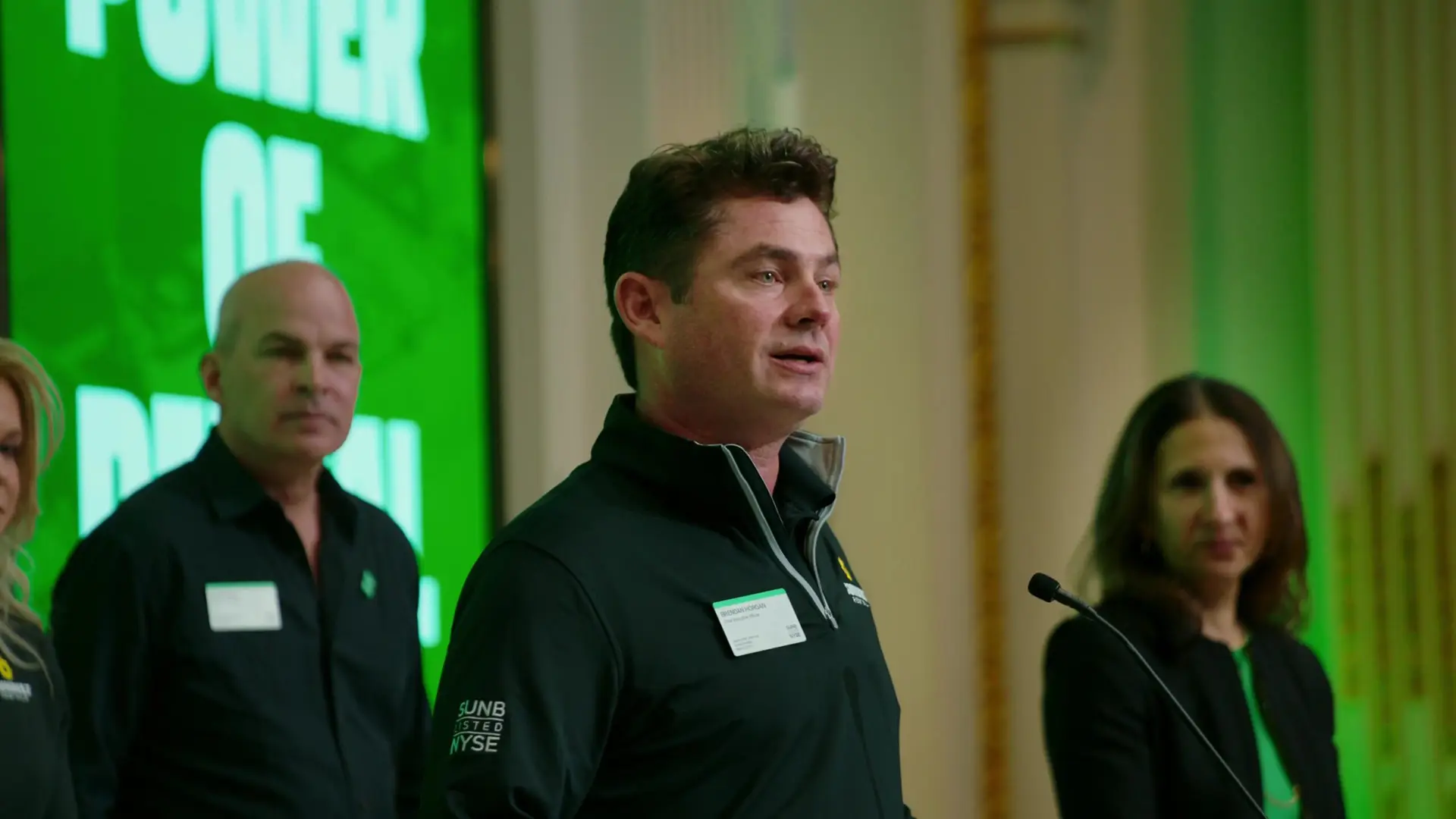
## Film Studio Rental Cost
**How Much Does It Cost to Rent a Film Studio in Los Angeles?**
Los Angeles is the film capital of the world. If you're planning to shoot a video, film a commercial, or produce content in LA, you'll likely need studio space.
Los Angeles film studios cost between $500-$3,000+ per day, depending on size, location, and amenities. Most mid-range studios rent for $1,200-$2,000 per day.
According to film studio rental industry data, studio rental rates typically average $123 per hour in major markets. But in Los Angeles specifically, rates run higher because of demand and the competitive production market.
This guide breaks down what LA studio rentals actually cost, what's included, and how to budget properly for your project.
**Why Rent a Film Studio in Los Angeles**
Los Angeles offers distinct advantages for production:
**Talent and Crew:** LA has the largest concentration of experienced production professionals in the world. Studios centrally located attract top-tier talent, cinematographers, sound engineers, and production assistants. Access to experienced crews means faster, more efficient shoots.
**Equipment Ecosystem:** LA has dozens of major equipment rental houses ([Panavision](https://www.panavision.com), Birns & Sawyers, Sony, etc.). Studios within the LA area offer easy access to professional cameras, lighting, and [grip equipment](https://en.wikipedia.org/wiki/Grip_(job)) at competitive rates.
**Accessibility:** LA's centralized production infrastructure means crew can reach studios quickly. Downtown LA studios, like C&I Studios' 30,000 sq ft facility, offer proximity to talent agencies, [post-production](https://en.wikipedia.org/wiki/Post-production) houses, and sound stages.
**Creative Environment:** LA studios serve as creative hubs where directors, producers, and talent collaborate. Studios often have established relationships with talent and crew, streamlining the casting and production process.
**Studio Rental Costs by Type**
**Budget Studios: $500-$1,000 Per Day**
**Small, basic spaces for indie projects**
Minimal setup with basic amenities. Good for low-budget productions, student projects, or independent filmmakers.
**Includes:**
- 1,000-2,000 sq ft space
- Basic [cyc wall](https://en.wikipedia.org/wiki/Cyclorama_(theater)) or plain background
- Limited lighting equipment
- Minimal crew support
- 8-10 hour rental
- Basic makeup area
**Mid-Range Studios: $1,200-$2,000 Per Day**
**Professional studios with good amenities**
This is where most commercial and corporate productions shoot in LA.
**Includes:**
- 2,500-5,000 sq ft space
- Professional cyc wall (often white and colored options)
- Built-in lighting grid with professional fixtures
- Hair and makeup room with makeup chairs
- Production office space
- Green screen option (chroma key ready)
- Professional crew support available
- Equipment rental options available
- Sound recording capability
- Parking for equipment trucks
**Premium Studios: $2,500-$5,000+ Per Day**
**High-end facilities with extensive equipment and crew support**
Full-service studios used for major productions, network commercials, and significant corporate projects.
**Includes:**
- 5,000-10,000+ sq ft space
- Multiple cyc options (white, blue, green backgrounds)
- State-of-the-art lighting systems with professional fixtures
- Multiple camera positions and equipment options
- Professional sound recording and mixing setup
- Full makeup and wardrobe rooms with professional areas
- Production offices and client lounges
- Parking and vehicle access for large productions
- Dedicated studio manager overseeing operations
- Equipment rentals and crew coordination services
- Post-production facilities often available
- Advanced grip equipment (jibs, cranes, dollies)
**What Affects Your Studio Rental Cost**
1. ** Location in Los Angeles**
Different LA neighborhoods have dramatically different rates:
- **Downtown LA:** $1,000-$2,000/day (growing production hub, increasingly popular with production companies)
- **Hollywood/Burbank:** $1,500-$2,500/day (classic studio area, established relationships with talent agencies)
- **Santa Monica/Venice:** $1,200-$2,200/day (beach proximity premium)
- **Long Beach:** $900-$1,500/day (lower cost alternative, 30+ minutes from Hollywood)
- **Valley (Van Nuys, Burbank):** $800-$1,800/day (more affordable, less central)
- **Culver City:** $1,200-$2,200/day (historic studio location)
Central Hollywood and Burbank command premium rates due to proximity to talent agencies, crew, and equipment rental houses. Downtown LA is increasingly popular because rates are slightly lower while maintaining excellent accessibility.
1. ** Studio Size**
Larger studios cost significantly more:
- **Under 1,500 sq ft:** $500-$1,000/day (tight spaces for small productions)
- **1,500-3,000 sq ft:** $1,000-$1,500/day (single-set productions)
- **3,000-5,000 sq ft:** $1,500-$2,500/day (multi-setup capability)
- **5,000+ sq ft:** $2,500-$5,000+/day (full-scale productions)
Size matters because larger studios allow multiple camera setups, separate lighting areas, and room for crew to work efficiently.
1. ** Included Amenities**
Studios that include equipment and crew support cost more but often save you money overall:
- **Cyc wall color options:** +$200-$500/day if not included (studios typically have white included)
- **Professional lighting grid:** Included in mid-range studios, massive value (would cost $2,000-$5,000 to rent separately)
- **Hair and makeup room:** +$300-$500/day if not included
- **Green screen setup:** +$200-$400/day if separate
- **Sound recording capability:** +$300-$600/day if not included
- **Dedicated studio manager:** Included in premium studios, typically saves $300-$500/day in coordination costs
1. ** Time of Booking**
Studio rates fluctuate significantly based on demand:
- **Weekday (Mon-Fri):** Base rate (studios prefer weekday bookings for cash flow)
- **Weekend:** +20-40% premium (higher demand from independent producers)
- **Peak season (December, summer):** +30-50% premium (holiday productions and summer campaigns)
- **Last-minute booking:** +25-50% rush fee (studios charge for last-minute crew coordination)
1. ** Minimum Booking**
Most LA studios enforce minimum booking requirements:
- **Half-day minimum:** 4-5 hours (ensures crew scheduling efficiency)
- **Full-day standard:** 8-10 hours (industry standard)
- **Multi-day rate:** Often 5-10% discount per day (studios prefer multi-day bookings for crew stability)
- **Weekly rate:** Often 15-20% discount (ensures cash flow predictability)
**Hidden Costs Beyond Daily Rate**
When budgeting for LA studio rental, account for these often-overlooked expenses:
**Equipment Rentals Beyond Studio Included**
- Professional lighting packages (if studio doesn't include): $200-$500/day
- Camera equipment (if not bringing your own): $300-$1,000/day
- High-end cinema cameras (ARRI, RED): $1,000-$3,000/day
- Sound recording gear (professional setup): $150-$400/day
- Grip equipment (dollies, jibs, cranes): $200-$600/day
- Green screen or cyc wall additional colors: $200-$400/day
**Crew Support Beyond Studio Manager**
- Assistant for equipment management: $150-$300/day
- Dedicated camera operator: $500-$1,500/day
- Sound engineer: $400-$1,200/day
- Gaffer (lighting specialist): $400-$1,000/day
- Production coordinator: $300-$800/day
**Catering & Services**
- Craft services (food and beverage): $400-$1,000/day
- Professional catering for talent and crew: $500-$1,500/day
- Parking permits (if needed): $50-$200
- Insurance requirements: $300-$1,000 per shoot day
- Security (if high-value production): $300-$800/day
**Additional Services**
- Hair and makeup artist: $300-$800/day (beyond studio makeup room)
- Wardrobe stylist: $400-$1,000/day
- Set decoration or props: $200-$800
- Post-production services: $1,000-$5,000+ depending on complexity
- Color grading and finishing: $500-$2,000+
**Total Hidden Costs Example:** A $1,500/day studio rental might actually cost $3,500-$5,000 when you account for crew, catering, equipment beyond what's included, and post-production services.
**How to Choose an LA Studio**
1. ** Define Your Specific Needs**
Ask yourself these critical questions:
- How much physical space do I actually need?
- What cyc wall colors do I need? (white, blue, green, or combinations?)
- Do I need professional sound recording capability?
- What lighting quality do I need? (basic, professional, or broadcast?)
- Do I need crew support or will I bring my own?
- What's my total production budget including all costs?
- Do I need makeup and wardrobe facilities?
- What's the timeline (rush scheduling or flexible)?
1. ** Check Location Accessibility**
- Is it near your talent and crew?
- Easy parking for large equipment trucks?
- Close to equipment rental houses?
- Accessible by public transit for crew?
- Proximity to post-production facilities if needed?
1. ** Review Amenities Carefully**
Make sure the studio includes exactly what you need. C&I Studios offers comprehensive amenities including onsite crew coordination and production support. Verify:
- Cyc wall condition and color options
- Lighting grid quality and number of fixtures
- Sound recording equipment specifications
- Makeup and wardrobe room capabilities
- Office and client lounge space
- Parking for equipment vehicles
1. ** Verify Equipment Quality**
Ask specific questions about:
- Cyc wall condition (are they camera-ready and properly maintained?)
- Lighting grid specifications (how many fixtures, power capacity?)
- Sound recording equipment (professional broadcast-quality or basic?)
- Green screen quality (proper color, size, maintenance?)
- Internet speed (4K file transfers need minimum 100 Mbps)
- Camera equipment compatibility (what cameras does their setup support?)
1. ** Understand Booking Requirements**
Before committing, clarify:
- Minimum booking hours (4-hour half-day vs. 8-hour full-day)
- Cancellation policies (how much notice required?)
- Payment terms (deposit required, when due?)
- Setup and breakdown time (included in rental or extra?)
- Overtime rates (what's the hourly rate beyond standard hours?)
- Multi-day discounts (do they offer discounts for booking consecutive days?)
**Cost Optimization Strategies**
**Strategy 1: Book Off-Peak Days**
Weekday shoots cost significantly less than weekend bookings. Book Monday-Thursday when possible to save 20-40% on studio rental. Tuesday-Thursday typically offer the best rates as they're the least popular days.
**Strategy 2: Use Studio-Included Equipment**
Studios with included professional equipment save you thousands in daily rental fees. Confirm exactly what's included before booking. A professional lighting grid alone would cost $2,000-$5,000 to rent separately, so studio inclusion is significant value.
**Strategy 3: Bundle Services with Creative Marketing Services**
Studios offering content creation services often provide package discounts when you book multiple days or services together. Creating multiple videos in one production window or combining studio rental with post-production services can yield 10-20% savings.
**Strategy 4: Combine Multiple Shoots**
If possible, shoot multiple projects in one production day. The studio rental and crew costs remain the same, so you're spreading fixed costs across more deliverables.
**Strategy 5: Extend Your Shoot Duration**
Often, an 8-hour full day is cheaper per-hour than a 4-hour half-day. If your budget allows, plan longer shoot schedules to maximize value. A 10-hour shoot day often costs less per-hour than renting for 5 hours.
**Strategy 6: Book Multi-Day Productions**
Studios typically offer 5-10% discounts for consecutive days. If your production can be consolidated into 2-3 consecutive days rather than separate bookings, you'll save considerably.
**Beyond Studio Rental: Total Production Budget Planning**
Studio rental is just one component of your overall production budget. Plan for:
**Pre-production:** Scouting, casting, script development, location planning ($500-$5,000+)
**Crew:** Director, DP/Cinematographer, sound engineer, makeup artist, assistants ($2,000-$10,000+/day depending on experience level)
**Equipment:** Beyond studio-supplied gear, professional cameras, advanced lighting, grip equipment ($500-$3,000/day)
**Talent:** Professional actors or talent fees ($500-$5,000+ per day depending on union requirements and talent level)
**Catering:** Food and beverages for crew and talent ($300-$1,000/day)
**Post-production:** Editing, color grading, sound design, finishing ($1,000-$5,000+ depending on complexity)
**Distribution:** Content optimization, captioning, format creation for multiple platforms ($500-$2,000)
**Total Budget Reality:** A professional 2-day studio shoot in LA typically costs $8,000-$20,000+ when you account for all these components, not just the studio rental.
**About C&I Studios Los Angeles**
C&I Studios operates one of Los Angeles' premier production facilities in downtown Los Angeles. Our 30,000 square foot facility is purpose-built for professional productions of all scales.
**Why Choose C&I Studios:**
- Purpose-built 30,000 sq ft downtown LA facility with multiple production spaces
- Comprehensive amenities included (no hidden or surprise fees)
- Professional crew available for production support and coordination
- [Creative Marketing Services](https://c-istudios.com/creative-marketing-services/) to develop your production strategy
- Equipment rental options integrated with studio rental
- Competitive daily rates with transparent pricing
- Dedicated production team supporting your shoot from pre-production through delivery
**Our Production Experience:** We've produced corporate videos, commercials, [music video](https://c-istudios.com/video-production-services/music-video-production/)s, and brand content for companies ranging from innovative startups to Fortune 500 brands. Our downtown LA location provides easy access to talent, crew, and equipment rental houses.
**Our Advantage:** We include amenities and crew support that other studios charge extra for, reducing your total production cost. Rather than paying $1,500 for studio + $2,000 for lighting rental + $400 for studio manager, you get comprehensive support integrated into competitive pricing.
**Additional Services:** Beyond studio rental, we offer [content creation services](https://c-istudios.com/content-creation-services/) to handle your complete production needs.
**Ready to Book Your LA Studio?**
Now you understand what film studios actually cost in Los Angeles, what influences pricing, and how to budget for your complete production.
Studio rental is about 30-40% of your total production budget. The remaining costs come from crew, equipment, talent, catering, and post-production. Plan your full budget accordingly.
[Contact C&I Studios](https://c-istudios.com/contact/) to discuss your specific project needs, timeline, and budget. We can recommend the right studio configuration and amenities for your requirements and provide transparent pricing with no hidden fees.
Explore our Video Production Services
**Related Services:** [Studio Rentals](https://c-istudios.com/studio-rentals/) | [Production Studio Rental](https://c-istudios.com/studio-rentals/production-studio-rental-los-angeles/) | [Green Screen Studio Rental](https://c-istudios.com/studio-rentals/green-screen-studio-rental-los-angeles/) | [Cyc Wall Rental](https://c-istudios.com/cyc-wall-rental/) | [Podcast Studio Rental](https://c-istudios.com/studio-rentals/podcast-studio-rental-los-angeles/) | [Event Space Rental](https://c-istudios.com/studio-rentals/event-space-rental-los-angeles/) | [Recording Booth Rental](https://c-istudios.com/recording-booth-rental/) | [Private Loft Studio Rental](https://c-istudios.com/private-loft-studio-rental/) | [Photo Studio Rental](https://c-istudios.com/photo-studio-rental/) | [Photo Backdrop Studio Rental](https://c-istudios.com/photo-backdrop-studio-rental/)
---
*This content is from [C&I Studios](https://c-istudios.com), a full-service production company.*
---
# How Much Does Commercial Video Production Cost in 2026?
> Published: March 1, 2026
> Categories: Commercial & Brand
> Source: https://c-istudios.com/how-much-does-commercial-video-production-cost-in-2026/
---
.cib{--paper:#1b1d1f;--ink:#fff;--body:#d5d7d9;--muted:#8b9096;--line:rgba(255,255,255,.12);--thumb:#2b2e31;--card:#212426;--accent:#c02b0a;--blue:#5B8FA8;--serif:'Playfair Display',Georgia,serif;--sans:'Poppins',-apple-system,sans-serif;--measure:900px;background:var(--paper);color:var(--body);font-family:var(--sans);line-height:1.6;position:relative;left:50%;transform:translateX(-50%);width:90vw;max-width:1920px}.cib *{box-sizing:border-box}.cib .kicker{max-width:var(--measure);margin:58px auto 0;padding:0 22px;font-size:12.5px;font-weight:700;letter-spacing:2.5px;text-transform:uppercase;color:var(--blue)}.cib h1.cibh1{font-family:var(--serif);font-weight:500;font-size:clamp(46px,6vw,72px);line-height:1.08;color:var(--ink);max-width:var(--measure);margin:18px auto 0;padding:0 22px;letter-spacing:-.5px}.cib .metarow{max-width:var(--measure);margin:20px auto 0;padding:0 22px;color:var(--muted);font-size:14px}.cib .hero{position:relative;width:100%;height:0;padding-bottom:56.25%;overflow:hidden;margin:48px auto 0;border-top:1px solid var(--line);border-bottom:1px solid var(--line)}.cib .hero .ph{width:100%;aspect-ratio:16/9;background:var(--thumb);border-top:1px solid var(--line);border-bottom:1px solid var(--line);display:flex;align-items:center;justify-content:center;color:#7d8288;font-size:13px;text-align:center;padding:0 20px}.cib .body{max-width:var(--measure);margin:12px auto 0;padding:52px 22px 6px}.cib .body.lead p:first-child{font-size:23px;line-height:1.62;color:var(--ink)}.cib .body p{font-size:18.5px;line-height:1.85;margin:0 0 30px;color:var(--body)}.cib .body h2{font-family:var(--serif);font-weight:500;font-size:clamp(32px,4vw,48px);line-height:1.22;color:var(--ink);margin:70px 0 20px;letter-spacing:-.3px}.cib .body h3{font-family:var(--sans);font-weight:600;font-size:22px;color:var(--ink);margin:38px 0 8px}.cib .body a{color:var(--ink);text-decoration:underline;text-decoration-color:rgba(255,255,255,.4);text-underline-offset:3px}.cib .body a:hover{text-decoration-color:var(--ink)}.cib .ctable{width:100%;border-collapse:collapse;margin:16px 0 30px;font-size:16px}.cib .ctable th{background:#000;color:#fff;text-align:left;padding:10px 12px;font-family:var(--sans)}.cib .ctable td{padding:10px 12px;border-bottom:1px solid var(--line);color:var(--body)}.cib .inimg{position:relative;width:100%;height:0;padding-bottom:56.25%;overflow:hidden;margin:72px auto;border-top:1px solid var(--line);border-bottom:1px solid var(--line)}.cib .inimg .ph{width:100%;aspect-ratio:16/9;background:var(--thumb);border-top:1px solid var(--line);border-bottom:1px solid var(--line);display:flex;align-items:center;justify-content:center;color:#7d8288;font-size:13px}.cib .origpub{max-width:var(--measure);margin:60px auto 0;padding:26px 22px 0;border-top:1px solid var(--line);color:var(--muted);font-size:13.5px}.cib .related{max-width:1200px;margin:64px auto 0;padding:34px 22px 76px}.cib .related h3{font-family:var(--sans);font-size:12.5px;letter-spacing:2px;text-transform:uppercase;color:var(--ink);margin:0 0 24px}.cib .grid{display:grid;grid-template-columns:repeat(3,1fr);gap:28px}.cib .rc{background:var(--card);border:1px solid var(--line);display:block;text-decoration:none;color:inherit;transition:border-color .15s}.cib a.rc:hover{border-color:rgba(255,255,255,.5)}.cib .rc .thumb{position:relative;width:100%;height:0;padding-bottom:56.25%;background:var(--thumb);overflow:hidden}.cib .rc .thumb img{position:absolute!important;top:0!important;left:0!important;width:100%!important;height:100%!important;object-fit:cover!important;margin:0!important}.cib .rc .cc{padding:14px 15px 17px}.cib .rc .rt{font-family:var(--serif);font-weight:500;font-size:16px;line-height:1.3;color:var(--ink);margin:0 0 6px}.cib .rc .rm{font-size:11px;letter-spacing:1px;text-transform:uppercase;color:var(--muted)}.cib img{margin:0!important;padding:0!important;display:block!important;vertical-align:top;max-width:100%}.cib .hero img,.cib .inimg img{position:absolute!important;top:0!important;left:0!important;width:100%!important;height:100%!important;object-fit:cover!important;margin:0!important;padding:0!important;border:0!important;display:block!important;aspect-ratio:auto!important}.cib .hero+.body{padding-top:36px}@media(max-width:760px){.cib .grid{grid-template-columns:1fr}.cib .body h2{margin:52px 0 16px}.cib .body p{font-size:17.5px}.cib .inimg,.cib .hero{margin-top:44px}}
Commercial & Brand
# How Much Does Commercial Video Production Cost in 2026?
10 min read
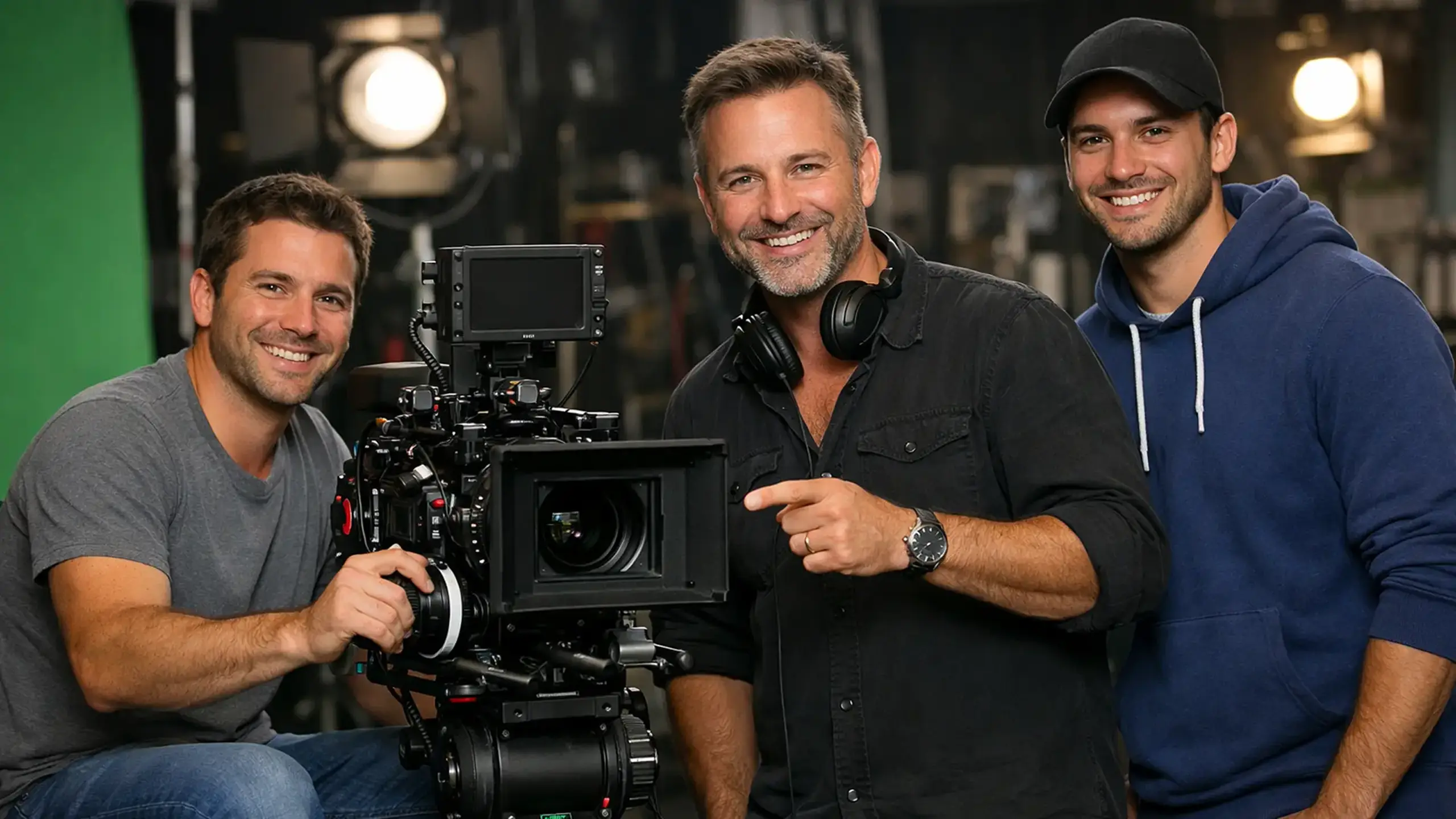
Commercial video production runs between $3,000 and $500,000 in 2026. Most branded work for mid-size companies lands between $15,000 and $75,000. What moves the number is crew size, how many days you shoot, how complicated the locations are, who is on camera, and how much finishing the footage needs afterward. That is the short answer. The rest of this breaks the number apart so you can build a budget that survives contact with a real production.
## Cost at a glance
Project type
Typical range
Per finished minute
Social media content
$3,000 to $15,000
$500 to $2,000
Corporate or brand video
$12,000 to $50,000
$2,000 to $5,000
Regional commercial
$15,000 to $75,000
$3,000 to $8,000
National broadcast commercial
$75,000 to $500,000 and up
$5,000 to $15,000 and up
Animation or hybrid spot
$12,000 to $120,000
$2,000 to $10,000
These are market ranges across production companies in the major markets. Your actual number comes down to the factors below.
## The three budget tiers
Budgets sort themselves into three tiers. Each one buys a different level of creative development, crew depth, and infrastructure.
### Tier one, $3,000 to $15,000
Short promos, product demos, and social content shot by a crew of two to four. One filming day, one location, basic lighting, a clean edit with color correction. At this level you are buying competent execution of a simple idea. Creative direction is thin and the footage shows it. It works for ongoing social, internal communications, and campaign support. It is the wrong tool for a flagship brand film or paid media running at scale.
Budget $500 to $2,000 per finished minute. A three-minute training video at $1,200 a minute comes to $3,600. One shoot day, professional voiceover, simple animated titles, delivered in two weeks.
### Tier two, $15,000 to $75,000
Most serious branded work lives here. You get a full crew with a director, DP, gaffer, sound mixer, and coordinator. One to three filming days, professional talent, multiple locations or a stage, and post-production that includes sound design, [color grading](https://en.wikipedia.org/wiki/Color_grading), and motion graphics.
We work in this tier more than any other. Our 30,000 square foot Los Angeles studio means a project at this level is not assembled out of rentals and third-party vendor relationships two weeks before the shoot. Budget $2,000 to $5,000 per finished minute. A four-minute brand film at $3,500 a minute comes to $14,000, covering two and a half days of crew, several locations, executive interviews, motion graphics, and three rounds of revisions.
### Tier three, $75,000 and up
National campaigns, major product launches, and broadcast-ready spots. Multi-day shoots, SAG-AFTRA talent, set builds, aerial and specialty camera work, and a full post pipeline are all normal at this scale.
The difference between a $75,000 production and a $300,000 one is not only polish. It is how much creative development happens before anyone rolls, how specialized the crew is, and how much coverage the editor gets to work with. Budget $5,000 to $15,000 per finished minute.

## What actually drives the cost
Every line in a production budget traces back to one of six things. Knowing which one you are paying for is how you make an honest trade-off instead of a blind cut.
### Crew
Crew scales faster than anything else in the budget. A run-and-gun team of two and a union crew of twenty can shoot the same day and hand you two completely different films.
Two to four people run $3,000 to $8,000 a day. Six to ten specialists cost $8,000 to $15,000 a day. A commercial crew of twelve or more runs $15,000 to $25,000. Drone operators, steadicam operators, and VFX supervisors add cost and are sometimes non-negotiable depending on the concept. For most branded content, six to twelve people is where production value and budget meet.
### Camera and gear
An ARRI Alexa or RED Monstro package costs meaningfully more than a Sony FX3 setup, and the difference is visible on screen. Lighting, grip, and audio packages push the daily equipment rate higher again. Shooting at a facility with gear in the building removes a layer of rental cost that otherwise sits in the budget for every day of the shoot.
### Locations and permits
Stage work is predictable. Location work brings permits, travel, weather risk, and the logistics of moving people and equipment. A single location adds roughly $200 to $500 per finished minute once you count permits, travel, and setup. Multiple locations add $500 to $1,500. International filming adds $2,000 to $5,000 and up.
### Talent
This one line can swing a budget by $50,000. Voiceover alone costs $500 to $3,000. Professional on-camera talent runs $5,000 to $50,000 and up. Recognizable talent starts around $50,000 and climbs past $500,000. Employees and non-professionals cost $500 to $2,000 but need more shooting time and real direction. Union work adds labor costs and usage fees on top.
### Pre-production
[Pre-production](https://www.studiobinder.com/blog/what-is-pre-production/) is the most underfunded stage in most client budgets and the one that decides whether the shoot works. Creative development runs $3,000 to $15,000. Script and [storyboard](https://www.studiobinder.com/blog/storyboard-template/) work costs $2,000 to $10,000. Shot lists and technical planning cost $1,000 to $5,000. A production that shows up with a finished plan moves faster, burns less crew time, and hands the editor footage that cuts. Productions that skip it pay for the shortcut in post.
### Post-production
A standard edit on a two-minute branded video takes 40 to 60 hours of editor time. Color, sound design, music, and motion graphics stack on top of that. Editing runs $3,000 to $10,000. Motion graphics cost $2,000 to $15,000. Color grading costs $3,000 to $20,000. Sound design and mixing run $2,000 to $10,000. Music, licensed or composed, costs $1,000 to $25,000. Broadcast compliance and deliverables add $1,000 to $5,000.
Build the [post-production](https://c-istudios.com/post-production-services/) estimate from the final deliverable list, not from the runtime. A client who needs a two-minute hero video, three 30-second social cuts, a vertical reformat, and a music-free international version is not buying one edit. They are buying five.

## Why cost per minute misleads
Per-minute pricing is useful for comparing two quotes and misleading on its own. A four-minute video from a two-day shoot costs less per minute than a two-minute video from the same shoot, because the crew and the gear cost the same either way.
Basic corporate content for internal use runs $500 to $2,000 a minute. Client-facing corporate video with a full crew, multiple locations, talent, graphics, and grading runs $2,000 to $5,000. Premium broadcast work with cinema cameras, union talent, VFX, and custom music runs $5,000 to $15,000 and up. Most mid-size companies land between $2,000 and $4,000 per finished minute for video that has to hold up in a high-stakes room.
## Airtime versus digital distribution
Producing a TV spot and producing a digital ad follow the same path. Both go through pre-production, production, and post. The money separates at distribution.
Airing a national spot averages around $115,000. Local TV runs $5 to $10 per thousand views, and a 30-second Super Bowl placement costs $7 million or more. Rates move with market size, daypart, program ratings, spot length, and frequency. A good media buyer earns their fee deciding which of the 210 US markets you actually need.
Digital costs far less to distribute. YouTube averages $10 to $30 per thousand views and streaming platforms like Hulu run $20 to $40. The targeting and the measurement are better. The trade-off is that digital content lives online indefinitely, which helps search and can collide with a brand direction that changes in eighteen months. Campaigns that run both usually beat campaigns that run one.

## Four real budgets
Ranges only get you so far. Here is where the money actually goes on four common projects.
### $22,000 regional TV commercial
A regional auto dealer or healthcare provider producing a 30-second spot.
- Creative development and planning, $3,000
- Studio production day with professional crew, $6,000
- On-camera talent, $3,000
- Post-production, color, and sound, $7,000
- Broadcast compliance and delivery, $3,000
### $18,000 startup brand video
A two and a half minute pitch video for Series A meetings.
- Two-day professional crew, $8,000
- Headquarters and office locations, $1,500
- Executive interviews with on-camera coaching, $2,500
- Editing, color, and licensed music, $4,500
- Multiple formats and three revision rounds, $1,500
### $48,000 national streaming campaign
A financial services or consumer product brand targeting streaming platforms.
- Strategic creative development, $5,000
- Script and storyboard, $3,000
- Two-day multi-location production with an experienced crew, $18,000
- Talent direction and coaching, $5,000
- Post-production, color grading, sound design, $12,000
- Deliverables at 30 seconds, 15 seconds, and social variations, $5,000
### $120,000 national broadcast campaign
A major brand launch or high-profile product announcement.
- Creative development and strategy, $8,000
- Scriptwriting and storyboarding, $5,000
- Three to four days of multi-location production, $40,000
- Talent and casting, $15,000
- Animation and motion graphics, $15,000
- Color grading at a professional facility, $12,000
- Sound design and original music, $15,000
- Compliance, international versions, and deliverables, $10,000
## How to get more out of the budget
**Shoot everything in one window.** If you need several videos, produce them together. Crew and equipment costs spread across the whole slate and usually save 15 to 25 percent per video.
**Use a stage when the story allows it.** Stages are predictable. Every added location multiplies travel, permits, and setup.
**Fund pre-production.** Planning is the cheapest hour in the budget and it buys back shoot days and post hours.
**Name every deliverable before the shoot.** Format requests that arrive after wrap are the most expensive kind. Decide up front whether you need vertical and square alongside 16:9.
**Lock the revision count.** Two or three rounds keeps post predictable. Unlimited revisions sound generous and quietly double the edit.
**Go longer when the story supports it.** More finished minutes out of the same shoot lowers the per-minute cost, because the fixed costs are already paid.
## DIY video and where it stops working
In-house video has a place. Quick social content, behind-the-scenes footage, and employee-generated clips work fine at volume.
The problem starts when DIY footage gets handed real marketing work. A hero video on a product landing page, a paid social ad running at scale, a brand film going into a client presentation. Those are not the right places for phone footage and a rushed cut. The quality gap communicates something to the viewer whether you intended it or not.
Professional production earns its cost when the content has a defined job and you can measure whether it did the job.
## What is changing in 2026
**Crew rates keep climbing.** Experienced crews are more specialized than they were five years ago. Plan on 5 to 10 percent annual increases in crew and facility costs.
**Deliverable lists keep growing.** Streaming platforms want specific formats, aspect ratios, color spaces, and audio specs. Single-format delivery is finished, and multi-platform finishing adds 15 to 25 percent to post.
**AI speeds up development, not execution.** We use it for concepting, previz, and quick iterations. Broadcast-quality work still needs skilled people at every stage.
**Timelines keep compressing.** Brands want faster turnarounds, which means tighter planning and more experienced crews. Rush production adds 20 to 30 percent.
## Frequently asked questions
### How much does a commercial video cost in 2026?
Between $3,000 and $500,000. Most branded work for mid-size companies falls between $15,000 and $75,000, and the final number depends on crew, shoot days, locations, talent, and post.
### What should I budget per finished minute?
Plan on $500 to $2,000 a minute for basic internal content, $2,000 to $5,000 for client-facing brand video, and $5,000 to $15,000 or more for broadcast work.
### How much of the budget goes to post-production?
Usually 20 to 30 percent, and more when the project needs motion graphics, VFX, or a long deliverable list.
### Why do two quotes for the same video differ so much?
Almost always crew, gear, and post. Ask each company how many people are on set, what camera package they are bringing, and how many hours of editing and color are in the number.
### How long does a commercial take to produce?
Two to three weeks for simple promotional content, four to five weeks for a branded commercial, and six to twelve weeks for a national campaign.
## How we price a project
C&I Studios has produced commercial video since 2006, including brand work for Celsius, Calvin Klein, and Procter and Gamble, a New York Stock Exchange listing production for Sunbelt Rentals, and campaign work for Hawaiian Bros. That history shows up in how we scope.
We do not work from a rate card. Every project gets scoped against its creative goals, timeline, and where the finished video will run. We are direct about money from the first call. A client with $20,000 and a client with $150,000 should hear different recommendations, and we would rather have that conversation early than design something the budget cannot carry.
Our Los Angeles studio gives clients 30,000 square feet of production space without sourcing and renting it piece by piece. With offices in Fort Lauderdale and New York City, we facilitate productions in any location in the US and across the globe. For brands that need steady content at a fixed cost, [Brand Day LA](https://c-istudios.com/brand-day-la/) runs structured monthly shoot days at the studio starting at $750 per product.
## Start your project
Tell us what you are making, where it runs, when you need it, and what you have to spend. We will tell you what that money buys. Reach the [C&I Studios production team](https://c-istudios.com/contact/) to start, or look through [our work](https://c-istudios.com/our-work/) first.
Originally published March 1, 2026
### Keep reading
[
How Much Does Video Production Cost in Chicago?
Commercial & Brand](https://c-istudios.com/video-production-cost-chicago/)[
Video Production in New York City
Commercial & Brand](https://c-istudios.com/video-production-in-new-york-city-costs-studios-what-to-expect/)[
The Real Cost of On-Location Shoots
Commercial & Brand](https://c-istudios.com/the-real-cost-of-on-location-shoots-do-video-production-companies-travel/)
---
*This content is from [C&I Studios](https://c-istudios.com), a full-service production company.*
---
# What Is Digital Marketing? Complete Guide to Online Marketing Success
> Published: February 28, 2026
> Categories: Commercial & Brand
> Source: https://c-istudios.com/what-is-digital-marketing-complete-guide-to-online-marketing-success/
---
.cib{--paper:#1b1d1f;--ink:#fff;--body:#d5d7d9;--muted:#8b9096;--line:rgba(255,255,255,.12);--thumb:#2b2e31;--card:#212426;--accent:#c02b0a;--blue:#5B8FA8;--serif:'Playfair Display',Georgia,serif;--sans:'Poppins',-apple-system,sans-serif;--measure:900px;background:var(--paper);color:var(--body);font-family:var(--sans);line-height:1.6;position:relative;left:50%;transform:translateX(-50%);width:90vw;max-width:1920px}
.cib *{box-sizing:border-box}
.cib .kicker{max-width:var(--measure);margin:58px auto 0;padding:0 22px;font-size:12.5px;font-weight:700;letter-spacing:2.5px;text-transform:uppercase;color:var(--blue)}
.cib h1.cibh1{text-wrap:balance;font-family:var(--serif);font-weight:500;font-size:clamp(46px,6vw,72px);line-height:1.08;color:var(--ink);max-width:var(--measure);margin:18px auto 0;padding:0 22px;letter-spacing:-.5px}
.cib .metarow{max-width:var(--measure);margin:20px auto 0;padding:0 22px;color:var(--muted);font-size:14px}
.cib .hero{position:relative;width:100%;height:0;padding-bottom:56.25%;overflow:hidden;margin:48px auto 0;border-top:1px solid var(--line);border-bottom:1px solid var(--line)}
.cib .hero .ph{width:100%;aspect-ratio:16/9;background:var(--thumb);border-top:1px solid var(--line);border-bottom:1px solid var(--line);display:flex;align-items:center;justify-content:center;color:#7d8288;font-size:13px;text-align:center;padding:0 20px}
.cib .body{max-width:var(--measure);margin:12px auto 0;padding:52px 22px 6px}
.cib .body.lead p:first-child{font-size:23px;line-height:1.62;color:var(--ink)}
.cib .body p{font-size:18.5px;line-height:1.85;margin:0 0 30px;color:var(--body)}
.cib .body h2{text-wrap:balance;font-family:var(--serif);font-weight:500;font-size:clamp(32px,4vw,48px);line-height:1.22;color:var(--ink);margin:70px 0 20px;letter-spacing:-.3px}
.cib .body h3{text-wrap:balance;font-family:var(--sans);font-weight:600;font-size:22px;color:var(--ink);margin:38px 0 8px}
.cib .body a{color:var(--ink);text-decoration:underline;text-decoration-color:rgba(255,255,255,.4);text-underline-offset:3px}
.cib .body a:hover{text-decoration-color:var(--ink)}
.cib .ctable{width:100%;border-collapse:collapse;margin:16px 0 30px;font-size:16px}
.cib .ctable th{background:#000;color:#fff;text-align:left;padding:10px 12px;font-family:var(--sans)}
.cib .ctable td{padding:10px 12px;border-bottom:1px solid var(--line);color:var(--body)}
.cib .inimg{position:relative;width:100%;height:0;padding-bottom:56.25%;overflow:hidden;margin:72px auto;border-top:1px solid var(--line);border-bottom:1px solid var(--line)}
.cib .inimg .ph{width:100%;aspect-ratio:16/9;background:var(--thumb);border-top:1px solid var(--line);border-bottom:1px solid var(--line);display:flex;align-items:center;justify-content:center;color:#7d8288;font-size:13px}
.cib .origpub{max-width:var(--measure);margin:60px auto 0;padding:26px 22px 0;border-top:1px solid var(--line);color:var(--muted);font-size:13.5px}
.cib .related{max-width:1200px;margin:64px auto 0;padding:34px 22px 76px}
.cib .related h3{font-family:var(--sans);font-size:12.5px;letter-spacing:2px;text-transform:uppercase;color:var(--ink);margin:0 0 24px}
.cib .grid{display:grid;grid-template-columns:repeat(3,1fr);gap:28px}
.cib .rc{background:var(--card);border:1px solid var(--line);display:block;text-decoration:none;color:inherit;transition:border-color .15s}
.cib a.rc:hover{border-color:rgba(255,255,255,.5)}
.cib .rc .thumb{position:relative;width:100%;height:0;padding-bottom:56.25%;background:var(--thumb);overflow:hidden}
.cib .rc .thumb img{position:absolute!important;top:0!important;left:0!important;width:100%!important;height:100%!important;object-fit:cover!important;margin:0!important}
.cib .rc .cc{padding:14px 15px 17px}
.cib .rc .rt{font-family:var(--serif);font-weight:500;font-size:16px;line-height:1.3;color:var(--ink);margin:0 0 6px}
.cib .rc .rm{font-size:11px;letter-spacing:1px;text-transform:uppercase;color:var(--muted)}
.cib img{margin:0!important;padding:0!important;display:block!important;vertical-align:top;max-width:100%}
.cib .hero img,.cib .inimg img{position:absolute!important;top:0!important;left:0!important;width:100%!important;height:100%!important;object-fit:cover!important;margin:0!important;padding:0!important;border:0!important;display:block!important;aspect-ratio:auto!important}
.cib .hero+.body{padding-top:36px}
@media(max-width:760px){.cib .grid{grid-template-columns:1fr}.cib .body h2{margin:52px 0 16px}.cib .body p{font-size:17.5px}.cib .inimg,.cib .hero{margin-top:44px}}
.cib .vembed{max-width:var(--measure);margin:44px auto;padding:0 22px}.cib .vembed .vwrap{position:relative;width:100%;height:0;padding-bottom:56.25%}.cib .vembed .vwrap iframe{position:absolute;top:0;left:0;width:100%;height:100%;border:0}
Commercial & Brand
# What Is Digital Marketing? Complete Guide to Online Marketing Success
10 min read

**What Is Digital Marketing? Complete Guide to Online Marketing Success**
Digital marketing is no longer a supplementary business function. It is the infrastructure of modern growth. When companies ask, *what is digital marketing*, they are not simply looking for a definition. They are trying to understand how brands capture attention, build authority, and convert audiences in a landscape where consumer journeys begin online and rarely follow a straight path.
At C&I Studios, digital marketing is not treated as isolated tactics like paid ads or social media posts. It is approached as a unified ecosystem that combines strategy, storytelling, analytics, and production quality into measurable business impact. Whether launching a startup or repositioning an established brand, digital marketing determines visibility, relevance, and long-term scalability.
According to the Data & Marketing Association (DMA), businesses using data-driven marketing strategies are significantly more likely to achieve competitive advantage and increase ROI compared to those that do not leverage structured digital insights.
In this guide, we will break down what digital marketing truly means in 2026, how it works, the core components behind it, and why execution quality separates brands that grow from brands that stall.
## What Is Digital Marketing? A Clear Definition
At its core, digital marketing refers to all marketing efforts that use digital channels to connect with current and prospective customers. These channels include search engines, social platforms, websites, email, mobile applications, streaming platforms, and more.
However, this definition is incomplete without understanding intent.
Digital marketing is not simply broadcasting messages across the internet. It is the structured process of:
- Identifying target audiences through data
- Creating compelling messaging tailored to those audiences
- Distributing content across optimized digital platforms
- Measuring engagement and performance
- Refining campaigns based on analytics
Unlike traditional advertising, digital marketing is dynamic. Campaigns can be adjusted in real time. Data informs every decision. And storytelling can evolve alongside audience behavior.
For modern brands, digital marketing is both performance engine and brand builder.
## Why Digital Marketing Matters More Than Ever
Consumer behavior has fundamentally shifted. Research from McKinsey & Company highlights that digital interactions now heavily influence purchase decisions across nearly every industry. Buyers research products online, compare reviews, engage with social proof, and often interact with brands across multiple digital touchpoints before committing.
This creates both opportunity and risk.
Brands that fail to implement cohesive digital strategies lose visibility. Brands that treat digital channels as disconnected efforts waste resources. Success requires alignment between message, medium, and measurable outcomes.
Digital marketing matters because it:
- Increases brand reach beyond geographic limitations
- Allows precise audience targeting
- Delivers measurable ROI
- Supports long-term brand equity
- Enables scalable growth
At C&I Studios, digital strategy begins with positioning. Without clarity of brand voice and audience intent, even the most aggressive advertising budget cannot compensate.
## The Core Components of Digital Marketing
Digital marketing is an umbrella term covering several interconnected disciplines. Each plays a specific role within a larger strategy.
### search engine optimization (SEO)
SEO focuses on improving a website’s visibility in search engine results. Ranking for high-intent queries builds long-term traffic without relying solely on paid advertising.
Effective SEO requires:
- Technical website optimization
- Strategic keyword targeting
- High-quality content creation
- Authority building through backlinks
When executed properly, SEO transforms a website into a lead-generation asset.
### Paid Advertising (PPC)
[pay-per-click](https://en.wikipedia.org/wiki/Pay-per-click) campaigns place brands directly in front of audiences searching for solutions. Platforms like Google Ads and social media networks allow precise demographic targeting.
PPC is powerful because it delivers immediate visibility. However, without strong creative assets and landing page optimization, performance declines quickly.
### social media marketing
Social platforms allow brands to build communities and reinforce brand personality. Organic posts drive engagement, while paid campaigns amplify reach.
Strong social strategy depends on storytelling consistency and data-backed targeting.
### email marketing
Despite new channels emerging, email remains one of the highest ROI digital channels. Personalized automation sequences nurture leads and strengthen customer retention.
### Content Marketing
Content sits at the center of digital marketing. Blogs, videos, case studies, and educational resources build authority and trust.
This is where production quality becomes critical. High-value digital campaigns increasingly rely on cinematic storytelling, strategic scripting, and professional execution. That is why many brands invest in [video production](https://c-istudios.com/video-production-services/) to elevate digital campaigns beyond generic visuals.
When content quality increases, conversion rates often follow.
## The Role of Creative Execution in Digital Success
Digital marketing strategy alone is not enough. Execution determines impact.
Brands competing in saturated markets must invest in creative differentiation. Messaging must feel intentional. Visuals must feel premium. Content must reflect brand identity.
This is where disciplines like [branding & graphic design](https://c-istudios.com/branding-and-graphic-design-services/) directly influence digital outcomes. Strong brand identity increases recall, trust, and conversion probability. Visual cohesion across websites, ads, and social platforms reinforces professionalism.
Consider the difference between:
- A generic ad with stock imagery
- A cinematic campaign backed by strategic storytelling
Audiences notice the difference immediately.
At C&I Studios, digital marketing is supported by integrated creative production. From concept development to post-production refinement, campaigns are designed to compete at a high level visually and strategically.
## Data-Driven Strategy. The Foundation of Growth
Digital marketing offers something traditional media could not: precise measurement.
Every click, impression, engagement, and conversion can be tracked. This allows marketers to:
- Identify high-performing channels
- Optimize ad spend
- Refine messaging
- Improve targeting accuracy
HubSpot research consistently shows that companies prioritizing analytics and attribution models outperform competitors who rely on intuition alone.
Data-driven strategy transforms digital marketing from experimentation into engineered growth.
However, raw data is not enough. Interpretation matters. Strategy teams must translate metrics into actionable adjustments. This iterative approach ensures campaigns evolve rather than stagnate.
## Digital Marketing vs Traditional Marketing
Understanding what digital marketing is also requires understanding what it is not.
Traditional marketing methods include:
- Print advertising
- Billboards
- Television commercials
- Radio spots
While these channels still hold value, they lack the targeting precision and real-time optimization available online.
Digital marketing differs because it offers:
- Audience segmentation based on behavior
- Immediate performance tracking
- Budget flexibility
- Scalable campaign adjustments
That does not mean traditional marketing is obsolete. Instead, digital marketing often integrates with broader campaigns to amplify reach.
For example, a brand may run a national commercial while supporting it with targeted digital retargeting ads to maximize recall and conversion.
Integration, not replacement, defines modern strategy.
## Common Misconceptions About Digital Marketing
Many businesses misunderstand digital marketing in ways that limit results.
### Misconception 1. Posting on Social Media Is Enough
Digital marketing requires structured strategy. Random posting without audience analysis or performance tracking rarely generates sustainable growth.
### Misconception 2. Paid Ads Guarantee Success
Without compelling creative and optimized landing pages, paid ads can quickly burn budget.
### Misconception 3. SEO Works Overnight
SEO is long-term. It builds authority gradually and requires consistent execution.
### Misconception 4. More Channels Mean Better Results
Spreading effort across too many platforms dilutes focus. Strategic channel selection outperforms platform overload.
Understanding these realities protects businesses from ineffective investments.
## How Businesses Should Approach Digital Marketing in 2026
Digital marketing in 2026 demands sophistication. Consumer expectations are higher. Content saturation is real. Algorithm changes are constant.
Successful brands focus on:
- Audience-first messaging
- High-quality creative production
- Omnichannel consistency
- Continuous optimization
- Long-term brand positioning
Instead of chasing trends, companies must build adaptable systems.
At C&I Studios, digital campaigns begin with deep discovery. Who is the audience? What motivates them? What differentiates the brand? From there, strategic frameworks guide production, distribution, and performance tracking.
Digital marketing is not about noise. It is about precision.
## The Evolution of Digital Marketing
Digital marketing has evolved significantly over the past decade.
Early digital strategies focused heavily on:
- Banner ads
- Basic email campaigns
- Static websites
Today, digital ecosystems incorporate:
- Interactive media
- Advanced retargeting
- Personalization algorithms
- AI-driven optimization
As platforms become more sophisticated, brands must elevate both strategy and execution.
This is particularly evident in content standards. Low-quality visuals that once sufficed are no longer competitive. Professional storytelling supported by expert creative direction has become baseline expectation.
## Measuring Digital Marketing Success
Defining success requires clarity of goals. Metrics vary depending on objectives.
For awareness campaigns:
- Reach
- Impressions
- Engagement rates
For lead generation:
- Conversion rate
- Cost per acquisition
- Landing page performance
For eCommerce:
- Return on ad spend
- Average order value
- Customer lifetime value
Clear KPI alignment ensures marketing investment translates into business outcomes.
Without defined benchmarks, digital marketing becomes reactive rather than strategic.
## Why Partnering with Specialists Matters
Digital marketing complexity has increased. Algorithms shift frequently. Consumer expectations evolve rapidly. Platforms introduce new features constantly.
Managing this internally without dedicated expertise can strain resources.
Strategic partners bring:
- Production expertise
- Analytical infrastructure
- Creative direction
- Platform-specific optimization knowledge
Brands that collaborate with experienced teams often accelerate growth by avoiding costly experimentation errors.
At C&I Studios, digital marketing integrates creative storytelling, technical optimization, and strategic oversight into one unified framework.
## Building a Digital Marketing Strategy That Actually Scales
Understanding what digital marketing is provides clarity. Building a structured strategy is what drives results. Many businesses launch campaigns reactively, boosting posts, experimenting with ads, publishing blogs inconsistently, without a cohesive framework tying everything together.
In 2026, scalable digital marketing requires architecture. Strategy must connect positioning, channels, production quality, analytics, and iteration into one integrated system.
At C&I Studios, strategy begins long before execution. It starts with alignment.
### Step 1. Define Positioning Before Tactics
Too many brands jump into platform selection before answering foundational questions:
- Who exactly are we targeting?
- What problem are we solving?
- Why should anyone choose us over alternatives?
- What emotional response should our brand evoke?
Without clear positioning, digital marketing turns into fragmented messaging. Campaigns lack cohesion. Ads contradict social content. Website tone does not match paid acquisition copy.
Strong positioning ensures:
- Clear audience segmentation
- Consistent tone across platforms
- Efficient budget allocation
- Higher conversion rates
Digital marketing amplifies clarity. It also exposes confusion quickly.
### Step 2. Map the Customer Journey
Digital marketing is not a single touchpoint interaction. Most buyers move through multiple stages before converting.
A simplified journey includes:
- Awareness
- Consideration
- Decision
- Retention
Each stage requires different messaging.
At the awareness stage, educational content performs well. During consideration, case studies and comparisons build trust. At the decision stage, testimonials and offer framing reduce hesitation. After purchase, retention campaigns protect long-term revenue.
Mapping this journey prevents mismatched messaging. It also ensures no stage is neglected.
Research from Think with Google emphasizes that modern consumer journeys are non-linear, often involving repeated digital touchpoints before conversion. That means brands must design campaigns holistically rather than sequentially.
## Channel Selection. Quality Over Volume
One of the biggest mistakes businesses make is attempting to dominate every digital channel at once.
More platforms do not equal more growth. Focus matters.
### Search Engine Marketing
Search remains one of the highest-intent acquisition channels. Ranking organically and running paid search campaigns targets users actively looking for solutions.
When integrated with structured landing page optimization, search campaigns can generate predictable lead flow.
### Social Platforms
Social channels are powerful for brand awareness and community development. However, strategy differs by platform. Short-form video may dominate on one platform, while professional thought leadership performs better on another.
### Email Ecosystems
Email sequences nurture prospects and protect customer relationships. Automated workflows increase lifetime value when executed properly.
### Website Infrastructure
Your website is not a brochure. It is a performance engine.
Strong digital strategy includes:
- Fast load speeds
- Clear call-to-action placement
- UX optimized for conversions
- Technical health monitoring
This is where **web development** becomes essential. Without a technically sound foundation, even the best campaigns struggle to convert.
Digital marketing without infrastructure is inefficient.
## The Role of High-Impact Content in Conversion
Content is not filler. It is persuasion at scale.
High-performing campaigns depend on content that informs, engages, and differentiates. In competitive markets, production quality influences credibility instantly.
This is especially evident in video-based campaigns. Brands leveraging cinematic storytelling, structured scripting, and strategic editing outperform low-effort visuals. Strong **film & [TV production](https://c-istudios.com/film-and-tv-production/)** standards elevate digital campaigns beyond generic ad content.
High-quality content increases:
- Watch time
- Engagement rates
- Brand recall
- Conversion likelihood
Production value signals seriousness. And audiences respond accordingly.
At C&I Studios, content is engineered with intent, aligning visuals, pacing, and messaging with campaign objectives rather than producing assets in isolation.
## Budget Allocation for Sustainable Growth
Digital marketing budgets should reflect business goals, not trends.
A common structure includes allocating resources across:
- Paid acquisition
- Organic content
- Creative production
- Analytics and optimization
- Testing new channels
The key principle is balance.
Overspending on ads without investing in creative quality leads to declining performance. Overinvesting in content without distribution reduces visibility.
Smart budget allocation considers:
- Customer acquisition cost targets
- Customer lifetime value
- Growth stage of the company
- Competitive landscape
For startups, aggressive paid testing may accelerate traction. For established brands, authority-building content may deliver stronger long-term ROI.
Budget strategy must evolve with growth.
## Analytics and Optimization. The Compounding Advantage
Digital marketing is iterative. What works today may underperform tomorrow.
Optimization requires disciplined analysis.
Critical metrics include:
- Cost per acquisition
- Conversion rate
- Engagement depth
- Return on ad spend
- Customer retention rate
Tracking these consistently enables performance improvements over time.
For example:
- A slight landing page adjustment may increase conversion rate by 5%.
- Ad creative refreshes may reduce acquisition cost.
- Retargeting refinements may increase closing rates.
Small optimizations compound.
According to HubSpot’s State of Marketing research, marketers who prioritize ongoing testing and performance tracking significantly outperform those who rely on static campaigns.
Digital marketing rewards adaptability.
## Common Strategic Errors That Limit Growth
Even with resources, execution mistakes can stall progress.
### Overemphasis on Vanity Metrics
High follower counts do not equal revenue. Impressions without conversions signal misalignment.
### Inconsistent Brand Voice
Fragmented messaging across platforms weakens trust.
### Ignoring Retention
Acquisition receives attention, but retention often drives higher profitability.
### Underestimating Creative Fatigue
Digital audiences see enormous content volume daily. Stale visuals reduce engagement quickly. Refresh cycles must be planned strategically.
Avoiding these pitfalls protects budget efficiency.
## Integrating Digital Marketing Into Business Operations
Digital marketing should not operate separately from overall business strategy.
Sales teams, customer service departments, and marketing units must align. Feedback loops between these groups improve targeting and messaging precision.
For example:
- Sales objections can inform ad copy refinement.
- Customer service insights can shape FAQ content.
- Product feedback can guide campaign positioning.
Integrated systems outperform siloed efforts.
At C&I Studios, campaign design often includes cross-functional planning to ensure digital marketing supports broader business objectives rather than functioning independently.
## Future-Proofing Your Digital Strategy
Digital marketing will continue evolving. AI tools, personalization engines, and predictive analytics are reshaping campaign dynamics.
Future-ready brands focus on:
- Data ownership
- Audience segmentation
- Flexible creative pipelines
- Continuous testing systems
The brands that thrive will not necessarily be the loudest. They will be the most adaptive.
Digital marketing success in 2026 is not about chasing every new feature release. It is about building structured systems capable of integrating innovation without losing strategic clarity.
## Bringing It All Together
Digital marketing is not a checklist. It is a coordinated framework connecting positioning, channel strategy, production quality, infrastructure, and analytics into one measurable growth engine.
For brands ready to compete at a higher level, structured execution matters. Campaigns must be intentional. Creative must differentiate. Data must guide decisions.
If your current strategy feels fragmented or reactive, it may be time to reassess how your digital ecosystem is structured. A focused, integrated approach can unlock measurable improvements in reach, engagement, and conversion performance, especially when backed by a team that understands how to align production, infrastructure, and analytics under one strategic direction.
To explore how a comprehensive digital strategy can support your next growth phase, you can connect with the team at [C&I Studios](https://c-istudios.com/contact/) here.
## Work with C&I Studios
If you are planning a project like this, our team can take it from concept to final delivery. Explore our [video production services](https://c-istudios.com/video-production-services/), browse [our work](https://c-istudios.com/our-work/) to see how we tell brand stories, and [get in touch](https://c-istudios.com/contact/) when you are ready to start.
Originally published February 28, 2026
---
*This content is from [C&I Studios](https://c-istudios.com), a full-service production company.*
---
# How to Choose the Right Creative Marketing Partner for Long-Term Brand Growth
> Published: February 27, 2026
> Categories: Commercial & Brand
> Source: https://c-istudios.com/how-to-choose-the-right-creative-marketing-partner-for-long-term-brand-growth/
---
.cib{--paper:#1b1d1f;--ink:#fff;--body:#d5d7d9;--muted:#8b9096;--line:rgba(255,255,255,.12);--thumb:#2b2e31;--card:#212426;--accent:#c02b0a;--blue:#5B8FA8;--serif:'Playfair Display',Georgia,serif;--sans:'Poppins',-apple-system,sans-serif;--measure:900px;background:var(--paper);color:var(--body);font-family:var(--sans);line-height:1.6;position:relative;left:50%;transform:translateX(-50%);width:90vw;max-width:1920px}
.cib *{box-sizing:border-box}
.cib .kicker{max-width:var(--measure);margin:58px auto 0;padding:0 22px;font-size:12.5px;font-weight:700;letter-spacing:2.5px;text-transform:uppercase;color:var(--blue)}
.cib h1.cibh1{text-wrap:balance;font-family:var(--serif);font-weight:500;font-size:clamp(46px,6vw,72px);line-height:1.08;color:var(--ink);max-width:var(--measure);margin:18px auto 0;padding:0 22px;letter-spacing:-.5px}
.cib .metarow{max-width:var(--measure);margin:20px auto 0;padding:0 22px;color:var(--muted);font-size:14px}
.cib .hero{position:relative;width:100%;height:0;padding-bottom:56.25%;overflow:hidden;margin:48px auto 0;border-top:1px solid var(--line);border-bottom:1px solid var(--line)}
.cib .hero .ph{width:100%;aspect-ratio:16/9;background:var(--thumb);border-top:1px solid var(--line);border-bottom:1px solid var(--line);display:flex;align-items:center;justify-content:center;color:#7d8288;font-size:13px;text-align:center;padding:0 20px}
.cib .body{max-width:var(--measure);margin:12px auto 0;padding:52px 22px 6px}
.cib .body.lead p:first-child{font-size:23px;line-height:1.62;color:var(--ink)}
.cib .body p{font-size:18.5px;line-height:1.85;margin:0 0 30px;color:var(--body)}
.cib .body h2{text-wrap:balance;font-family:var(--serif);font-weight:500;font-size:clamp(32px,4vw,48px);line-height:1.22;color:var(--ink);margin:70px 0 20px;letter-spacing:-.3px}
.cib .body h3{text-wrap:balance;font-family:var(--sans);font-weight:600;font-size:22px;color:var(--ink);margin:38px 0 8px}
.cib .body a{color:var(--ink);text-decoration:underline;text-decoration-color:rgba(255,255,255,.4);text-underline-offset:3px}
.cib .body a:hover{text-decoration-color:var(--ink)}
.cib .ctable{width:100%;border-collapse:collapse;margin:16px 0 30px;font-size:16px}
.cib .ctable th{background:#000;color:#fff;text-align:left;padding:10px 12px;font-family:var(--sans)}
.cib .ctable td{padding:10px 12px;border-bottom:1px solid var(--line);color:var(--body)}
.cib .inimg{position:relative;width:100%;height:0;padding-bottom:56.25%;overflow:hidden;margin:72px auto;border-top:1px solid var(--line);border-bottom:1px solid var(--line)}
.cib .inimg .ph{width:100%;aspect-ratio:16/9;background:var(--thumb);border-top:1px solid var(--line);border-bottom:1px solid var(--line);display:flex;align-items:center;justify-content:center;color:#7d8288;font-size:13px}
.cib .origpub{max-width:var(--measure);margin:60px auto 0;padding:26px 22px 0;border-top:1px solid var(--line);color:var(--muted);font-size:13.5px}
.cib .related{max-width:1200px;margin:64px auto 0;padding:34px 22px 76px}
.cib .related h3{font-family:var(--sans);font-size:12.5px;letter-spacing:2px;text-transform:uppercase;color:var(--ink);margin:0 0 24px}
.cib .grid{display:grid;grid-template-columns:repeat(3,1fr);gap:28px}
.cib .rc{background:var(--card);border:1px solid var(--line);display:block;text-decoration:none;color:inherit;transition:border-color .15s}
.cib a.rc:hover{border-color:rgba(255,255,255,.5)}
.cib .rc .thumb{position:relative;width:100%;height:0;padding-bottom:56.25%;background:var(--thumb);overflow:hidden}
.cib .rc .thumb img{position:absolute!important;top:0!important;left:0!important;width:100%!important;height:100%!important;object-fit:cover!important;margin:0!important}
.cib .rc .cc{padding:14px 15px 17px}
.cib .rc .rt{font-family:var(--serif);font-weight:500;font-size:16px;line-height:1.3;color:var(--ink);margin:0 0 6px}
.cib .rc .rm{font-size:11px;letter-spacing:1px;text-transform:uppercase;color:var(--muted)}
.cib img{margin:0!important;padding:0!important;display:block!important;vertical-align:top;max-width:100%}
.cib .hero img,.cib .inimg img{position:absolute!important;top:0!important;left:0!important;width:100%!important;height:100%!important;object-fit:cover!important;margin:0!important;padding:0!important;border:0!important;display:block!important;aspect-ratio:auto!important}
.cib .hero+.body{padding-top:36px}
@media(max-width:760px){.cib .grid{grid-template-columns:1fr}.cib .body h2{margin:52px 0 16px}.cib .body p{font-size:17.5px}.cib .inimg,.cib .hero{margin-top:44px}}
.cib .vembed{max-width:var(--measure);margin:44px auto;padding:0 22px}.cib .vembed .vwrap{position:relative;width:100%;height:0;padding-bottom:56.25%}.cib .vembed .vwrap iframe{position:absolute;top:0;left:0;width:100%;height:100%;border:0}
Commercial & Brand
# How to Choose the Right Creative Marketing Partner for Long-Term Brand Growth
9 min read

**How to Choose the Right Creative Marketing Partner for Long-Term Brand Growth **
Choosing a **creative marketing partner** is not the same as hiring a vendor. It is not a transactional decision based on price sheets or surface-level [portfolio](https://c-istudios.com/our-work/)s. It is a strategic move that shapes how a brand is perceived, how stories are told, and how audiences respond over time.
In today’s competitive market, attention is fragmented, expectations are higher, and audiences are skeptical of generic campaigns. Businesses cannot afford to gamble on creative relationships that lack depth, strategy, or measurable impact. The right partnership blends strategy, execution, and long-term vision into a unified direction.
At C&I Studios, we have seen firsthand how the right alignment between brand and agency transforms not just campaigns, but business trajectories. The difference lies in how companies evaluate potential collaborators.
Below, we explore the essential criteria modern businesses use when selecting a creative marketing partner, and why those standards matter more than ever.
## Why Choosing the Right Creative Marketing Partner Matters
### Strategic Growth Depends on Creative Alignment
Marketing is no longer a support function. It drives growth, brand equity, and market positioning. According to research published by McKinsey & Company, companies that outperform competitors on creativity see higher revenue growth and greater shareholder returns (McKinsey, “The Business Value of Design,” 2018).
This means creative decisions influence financial outcomes. When a business selects a partner, it is choosing the team that will interpret its brand voice, shape its narrative, and translate its goals into public-facing campaigns.
A misaligned agency can dilute messaging, waste budget, and create inconsistent brand experiences. A well-matched partner becomes an extension of the internal team.
## Clarity of Vision Before Agency Selection
### Internal Readiness Shapes External Results
Before evaluating agencies, businesses must first define their own objectives. A creative partnership cannot succeed if the company itself lacks clarity.
Key questions businesses ask internally include:
- What are our primary marketing goals over the next 12-24 months?
- Are we building brand awareness, driving direct response, or repositioning?
- Do we need integrated strategy or execution support?
- What internal capabilities already exist?
Without this clarity, selection becomes reactive instead of strategic.
At C&I Studios, discovery sessions often reveal that clients initially believe they need production support, when in reality they require a deeper [creative marketing](https://c-istudios.com/creative-marketing-services/) strategy to unify fragmented efforts. Understanding this difference early prevents misaligned expectations later.
## Evaluating Strategic Capability, Not Just Aesthetic Output
### Beyond Portfolio Aesthetics
Many businesses make a common mistake: they choose based solely on visual appeal. A polished portfolio is important, but it is not enough.
An effective creative marketing partner demonstrates:
- A clear strategic process
- Defined research methodologies
- Audience insight capabilities
- Measurable performance tracking
Creativity without strategy is decoration. Strategy without creativity is invisible. Businesses need both working together.
When reviewing agencies, companies increasingly ask for:
- Case studies with measurable outcomes
- Campaign objectives tied to KPIs
- Evidence of market research
- Post-campaign performance analysis
According to Harvard Business Review, organizations that integrate strategy and creativity outperform those that treat them separately (HBR, “The New Science of Customer Emotions,” 2015). This reinforces the importance of selecting partners who understand data as deeply as storytelling.
## Industry Expertise vs. Cross-Industry Innovation
### The Balance Between Familiarity and Fresh Thinking
Should a company choose an agency that specializes in its industry? Or one that brings outside perspective?
There are advantages to both approaches.
Industry expertise offers:
- Familiarity with audience behavior
- Knowledge of compliance constraints
- Faster onboarding and reduced learning curves
Cross-industry agencies bring:
- Fresh creative frameworks
- Innovative storytelling angles
- Broader trend awareness
At C&I Studios, we often combine sector knowledge with cross-market creativity. The goal is not to replicate competitor messaging, but to elevate positioning.
Businesses evaluating partners should examine whether the agency’s previous work demonstrates adaptability rather than repetition.
## Integrated Capabilities and Production Infrastructure
### Assessing Execution Strength
A strong creative marketing partner should have the operational capacity to deliver high-quality work consistently.
This includes infrastructure across areas such as:
- Concept development
- [video production](https://c-istudios.com/video-production-services/) workflows
- Post-production refinement
- Distribution planning
While some agencies outsource most execution, others operate fully integrated production environments. The difference impacts timelines, quality control, and creative consistency.
For example, businesses increasingly value partners who understand both storytelling and technical execution. According to HubSpot’s State of Marketing Report (2023), video remains one of the highest-performing content formats for engagement and conversion. Agencies with in-house **video production** expertise can align narrative with technical precision.
When evaluating a partner, businesses often ask:
- Is production handled internally or outsourced?
- What is the typical timeline from concept to launch?
- How is quality control maintained?
- Are revisions structured or ad hoc?
Operational clarity signals professionalism.
## Cultural Fit and Communication Style
### Alignment Beyond Deliverables
Creative collaboration requires trust. Businesses frequently underestimate the importance of cultural fit.
A creative marketing partner must:
- Communicate transparently
- Accept constructive feedback
- Respect internal brand guidelines
- Challenge ideas constructively
Partnerships break down not because of skill gaps, but because of communication misalignment.
Key indicators of strong cultural compatibility include:
- Clear onboarding processes
- Defined points of contact
- Consistent reporting cadence
- Collaborative workshops rather than one-sided presentations
At C&I Studios, collaboration frameworks are designed to ensure that clients feel informed, not overwhelmed. Creative excellence requires dialogue, not assumption.
## Transparency in Process and Pricing
### Avoiding Ambiguity
Businesses should be wary of vague proposals.
A qualified creative marketing partner outlines:
- Project scope in detail
- Defined milestones
- Clear cost structures
- Ownership of intellectual property
Hidden fees, undefined deliverables, or ambiguous timelines are red flags.
Companies increasingly prefer partners who break down budgets by phase:
- Strategy
- Production
- Post-production
- Distribution
This transparency allows internal stakeholders to justify investment and align expectations across departments.
## Long-Term Scalability
### Thinking Beyond One Campaign
The best creative marketing partnerships extend beyond a single launch.
Businesses evaluate:
- Can this agency grow with us?
- Do they support multi-channel scaling?
- Are they equipped for national or global expansion?
According to Deloitte’s Global Marketing Trends Report (2023), brands that build consistent cross-channel storytelling outperform fragmented competitors. Agencies capable of scaling creative systems, not just producing isolated campaigns, offer greater long-term value.
At C&I Studios, we approach partnerships with a long-term mindset. Strategy evolves, but foundational brand positioning remains consistent.
## Measurable Results and Data Integration
### Creativity Backed by Analytics
Creative work should drive measurable outcomes.
Businesses increasingly demand:
- Performance dashboards
- Engagement metrics
- Conversion tracking
- Audience segmentation analysis
A creative marketing partner must understand how to interpret data and refine campaigns accordingly.
This integration of creativity and analytics ensures campaigns are not just visually compelling, but commercially effective.
## Questions Businesses Should Ask Before Signing
While every selection process differs, companies often use structured evaluation questions such as:
- What is your strategic development process?
- How do you measure success?
- Can you provide case studies with quantified results?
- Who will manage our account directly?
- How do you handle scope changes?
These questions reveal depth of experience and organizational discipline.
### Red Flags to Avoid
Not every agency is the right fit. Warning signs include:
- Overpromising unrealistic timelines
- Lack of documented case studies
- Minimal discovery process
- Generic proposals not tailored to the brand
- Resistance to performance measurement
A strong creative marketing partner will ask as many questions as the client does. Curiosity signals commitment.
## The Role of Trust and Mutual Investment
Ultimately, choosing a creative marketing partner is about trust.
Trust is built through:
- Strategic rigor
- Transparent communication
- Operational reliability
- Measurable performance
- Cultural alignment
At C&I Studios, partnerships are structured around shared accountability. Creative outcomes are not isolated deliverables; they are collaborative achievements tied directly to business objectives.
As businesses continue to navigate evolving markets, the selection process becomes more strategic, more analytical, and more future-focused.
## Structuring the Agency Selection Process Internally
It is typically the result of a structured internal evaluation process that balances marketing ambition with operational reality.
High-performing organizations formalize agency selection in three stages:
1. Internal alignment
2. Market evaluation
3. Final capability validation
### Internal Alignment Across Stakeholders
Before speaking with agencies, companies often bring together marketing leaders, finance stakeholders, and executive decision-makers. The purpose is not just to define goals, but to establish selection criteria.
Common internal filters include:
- Budget range and allocation model
- Expected timeline
- Performance benchmarks
- Required service scope
Without cross-department agreement, even the best agency proposal can stall in approval cycles.
At C&I Studios, we frequently work with leadership teams that prioritize clarity before execution. This preparation reduces friction later and ensures that creative investment aligns with broader growth objectives.
## Boutique vs. Large-Scale Agencies. Strategic Tradeoffs
One of the most debated questions in agency selection is scale. Should a company choose a boutique creative team or a larger, full-service organization?
The answer depends on complexity.
### Boutique Agencies
Advantages:
- Highly personalized attention
- Faster communication loops
- Agile creative execution
Limitations:
- Limited scalability
- Potential reliance on freelancers
- Narrower service scope
Large Agencies
Advantages:
- Expanded service offerings
- Established infrastructure
- Ability to manage complex campaigns
Limitations:
- Slower decision cycles
- Less direct executive access
- Higher overhead costs
Businesses increasingly seek partners that combine agility with depth. This hybrid model allows for strategic oversight without bureaucratic delay.
For brands investing heavily in **branding & graphic design**, the scale of the agency affects how brand systems are built and maintained. Larger teams may offer broader brand architecture development, while boutique studios often deliver highly distinctive creative identities.
The critical factor is not size, it is structural alignment with business ambition.
## Capability Depth Beyond Surface Services
A modern creative partner must unify creative storytelling with distribution strategy. Producing assets without understanding how they will perform in market channels limits impact.
This is where cross-functional expertise becomes essential.
Businesses evaluating agencies increasingly look for experience in:
- Campaign narrative development
- Channel-specific optimization
- Cross-platform storytelling
- Integrated **social media marketing** strategy
According to Sprout Social’s 2023 Index Report, brands that align social storytelling with consistent brand identity see higher engagement and stronger customer loyalty. This highlights the importance of partners who understand how brand positioning translates across platforms.
An agency that excels in branding & graphic design but lacks fluency in [social media marketing](https://c-istudios.com/social-media-marketing-services/) may create visually compelling work that fails to sustain digital traction. Conversely, performance-focused teams without brand clarity may generate short-term clicks without long-term equity.
The most effective partnerships bridge both worlds.
## The Importance of Measured Creative ROI
Creative work must justify its investment.
Modern CMOs and marketing directors are accountable not only for brand growth but also for measurable business impact. Agency partnerships are increasingly evaluated through structured reporting frameworks.
Key performance indicators often include:
- Brand recall lift
- Engagement rate growth
- Conversion metrics
- Audience retention
- Cost efficiency per campaign
According to Deloitte’s Global Marketing Trends Report (2023), marketing leaders are under increasing pressure to demonstrate quantifiable return on creative initiatives. Agencies that integrate analytics into their process provide greater confidence in long-term partnerships.
At C&I Studios, campaign development is paired with performance tracking systems designed to connect creative output with measurable objectives. This ensures that storytelling remains aligned with business performance.
## Pilot Projects Before Long-Term Contracts
Another common practice businesses use when choosing a creative marketing partner is initiating a pilot engagement.
Rather than committing to an annual retainer immediately, companies may:
- Launch a short-term campaign
- Assign a limited-scope branding initiative
- Test collaborative workflow with a defined deliverable
This approach reduces risk and reveals how well the agency performs under real conditions.
Pilot engagements often clarify:
- Communication responsiveness
- Revision process efficiency
- Strategic depth
- Cultural compatibility
When pilot projects demonstrate alignment, longer-term contracts follow naturally.
## Evaluating Communication Cadence and Reporting Structure
Even strong creative ideas fail without disciplined communication.
Businesses now expect structured reporting rhythms such as:
- Weekly progress updates
- Monthly performance reviews
- Quarterly strategic recalibration
Agencies that operate without consistent communication frameworks create uncertainty. Predictable cadence fosters trust.
Equally important is clarity around decision-making hierarchy. Companies should know:
- Who owns strategic direction
- Who manages execution
- Who approves final deliverables
This organizational transparency prevents delays and misaligned revisions.
## Long-Term Brand Architecture and Sustainability
A creative marketing partner should think beyond campaigns. Sustainable brand growth requires systems.
This includes:
- Defined brand guidelines
- Visual consistency frameworks
- Messaging hierarchies
- Content planning structures
Businesses increasingly seek agencies capable of building scalable brand ecosystems. This ensures that future campaigns align with established identity rather than reinventing direction repeatedly.
For example, when a company invests in foundational [branding & graphic design](https://c-istudios.com/branding-and-graphic-design-services/), it creates a framework that supports long-term social media marketing initiatives, product launches, and cross-channel storytelling. Cohesion becomes a competitive advantage.
## Financial Modeling and Investment Planning
Creative partnerships are financial decisions.
Forward-thinking businesses analyze:
- Cost per campaign versus long-term value
- Retainer models versus project-based pricing
- In-house staffing versus outsourced expertise
According to a report by the Association of National Advertisers, brands that maintain consistent agency relationships over multiple years often see improved performance efficiency due to institutional knowledge and reduced onboarding time.
This reinforces the idea that creative marketing partnerships are not expenses; they are investments in brand equity.
## Signs You Have Found the Right Partner
By the time businesses finalize selection, several signals typically confirm the right fit:
- Strategic conversations go beyond deliverables
- The agency challenges assumptions constructively
- Creative ideas align with business objectives
- Reporting structures are clearly defined
- The partnership feels collaborative rather than transactional
At C&I Studios, we believe the strongest relationships emerge when both sides view the partnership as shared responsibility. Creative execution is only effective when grounded in mutual accountability and clear expectations.
## Turning Selection Into Execution
Choosing the right creative marketing partner is not the final step, it is the beginning of structured collaboration.
Once alignment is established, the focus shifts toward campaign architecture, narrative development, channel integration, and performance calibration. Businesses that invest time in deliberate selection processes typically experience smoother onboarding and stronger campaign momentum.
As brands prepare for competitive expansion and evolving digital landscapes, strategic creative alignment becomes increasingly critical.
If your organization is evaluating how to strengthen its brand systems or refine campaign performance, you can explore how C&I Studios approaches collaborative strategy development through tailored consultations at [contact us](https://c-istudios.com/social-media-marketing-services/) page.
From there, the conversation naturally evolves into defining what long-term creative growth looks like for your business.
## Work with C&I Studios
If you are planning a project like this, our team can take it from concept to final delivery. Explore our [video production services](https://c-istudios.com/video-production-services/), browse [our work](https://c-istudios.com/our-work/) to see how we tell brand stories, and [get in touch](https://c-istudios.com/contact/) when you are ready to start.
Originally published February 27, 2026
---
*This content is from [C&I Studios](https://c-istudios.com), a full-service production company.*
---
# How Data Influences Creative Marketing Solutions for Better Results
> Published: February 26, 2026
> Categories: Commercial & Brand
> Source: https://c-istudios.com/how-data-influences-creative-marketing-solutions-for-better-results/
---
.cib{--paper:#1b1d1f;--ink:#fff;--body:#d5d7d9;--muted:#8b9096;--line:rgba(255,255,255,.12);--thumb:#2b2e31;--card:#212426;--accent:#c02b0a;--blue:#5B8FA8;--serif:'Playfair Display',Georgia,serif;--sans:'Poppins',-apple-system,sans-serif;--measure:900px;background:var(--paper);color:var(--body);font-family:var(--sans);line-height:1.6;position:relative;left:50%;transform:translateX(-50%);width:90vw;max-width:1920px}
.cib *{box-sizing:border-box}
.cib .kicker{max-width:var(--measure);margin:58px auto 0;padding:0 22px;font-size:12.5px;font-weight:700;letter-spacing:2.5px;text-transform:uppercase;color:var(--blue)}
.cib h1.cibh1{text-wrap:balance;font-family:var(--serif);font-weight:500;font-size:clamp(46px,6vw,72px);line-height:1.08;color:var(--ink);max-width:var(--measure);margin:18px auto 0;padding:0 22px;letter-spacing:-.5px}
.cib .metarow{max-width:var(--measure);margin:20px auto 0;padding:0 22px;color:var(--muted);font-size:14px}
.cib .hero{position:relative;width:100%;height:0;padding-bottom:56.25%;overflow:hidden;margin:48px auto 0;border-top:1px solid var(--line);border-bottom:1px solid var(--line)}
.cib .hero .ph{width:100%;aspect-ratio:16/9;background:var(--thumb);border-top:1px solid var(--line);border-bottom:1px solid var(--line);display:flex;align-items:center;justify-content:center;color:#7d8288;font-size:13px;text-align:center;padding:0 20px}
.cib .body{max-width:var(--measure);margin:12px auto 0;padding:52px 22px 6px}
.cib .body.lead p:first-child{font-size:23px;line-height:1.62;color:var(--ink)}
.cib .body p{font-size:18.5px;line-height:1.85;margin:0 0 30px;color:var(--body)}
.cib .body h2{text-wrap:balance;font-family:var(--serif);font-weight:500;font-size:clamp(32px,4vw,48px);line-height:1.22;color:var(--ink);margin:70px 0 20px;letter-spacing:-.3px}
.cib .body h3{text-wrap:balance;font-family:var(--sans);font-weight:600;font-size:22px;color:var(--ink);margin:38px 0 8px}
.cib .body a{color:var(--ink);text-decoration:underline;text-decoration-color:rgba(255,255,255,.4);text-underline-offset:3px}
.cib .body a:hover{text-decoration-color:var(--ink)}
.cib .ctable{width:100%;border-collapse:collapse;margin:16px 0 30px;font-size:16px}
.cib .ctable th{background:#000;color:#fff;text-align:left;padding:10px 12px;font-family:var(--sans)}
.cib .ctable td{padding:10px 12px;border-bottom:1px solid var(--line);color:var(--body)}
.cib .inimg{position:relative;width:100%;height:0;padding-bottom:56.25%;overflow:hidden;margin:72px auto;border-top:1px solid var(--line);border-bottom:1px solid var(--line)}
.cib .inimg .ph{width:100%;aspect-ratio:16/9;background:var(--thumb);border-top:1px solid var(--line);border-bottom:1px solid var(--line);display:flex;align-items:center;justify-content:center;color:#7d8288;font-size:13px}
.cib .origpub{max-width:var(--measure);margin:60px auto 0;padding:26px 22px 0;border-top:1px solid var(--line);color:var(--muted);font-size:13.5px}
.cib .related{max-width:1200px;margin:64px auto 0;padding:34px 22px 76px}
.cib .related h3{font-family:var(--sans);font-size:12.5px;letter-spacing:2px;text-transform:uppercase;color:var(--ink);margin:0 0 24px}
.cib .grid{display:grid;grid-template-columns:repeat(3,1fr);gap:28px}
.cib .rc{background:var(--card);border:1px solid var(--line);display:block;text-decoration:none;color:inherit;transition:border-color .15s}
.cib a.rc:hover{border-color:rgba(255,255,255,.5)}
.cib .rc .thumb{position:relative;width:100%;height:0;padding-bottom:56.25%;background:var(--thumb);overflow:hidden}
.cib .rc .thumb img{position:absolute!important;top:0!important;left:0!important;width:100%!important;height:100%!important;object-fit:cover!important;margin:0!important}
.cib .rc .cc{padding:14px 15px 17px}
.cib .rc .rt{font-family:var(--serif);font-weight:500;font-size:16px;line-height:1.3;color:var(--ink);margin:0 0 6px}
.cib .rc .rm{font-size:11px;letter-spacing:1px;text-transform:uppercase;color:var(--muted)}
.cib img{margin:0!important;padding:0!important;display:block!important;vertical-align:top;max-width:100%}
.cib .hero img,.cib .inimg img{position:absolute!important;top:0!important;left:0!important;width:100%!important;height:100%!important;object-fit:cover!important;margin:0!important;padding:0!important;border:0!important;display:block!important;aspect-ratio:auto!important}
.cib .hero+.body{padding-top:36px}
@media(max-width:760px){.cib .grid{grid-template-columns:1fr}.cib .body h2{margin:52px 0 16px}.cib .body p{font-size:17.5px}.cib .inimg,.cib .hero{margin-top:44px}}
.cib .vembed{max-width:var(--measure);margin:44px auto;padding:0 22px}.cib .vembed .vwrap{position:relative;width:100%;height:0;padding-bottom:56.25%}.cib .vembed .vwrap iframe{position:absolute;top:0;left:0;width:100%;height:100%;border:0}
Commercial & Brand
# How Data Influences Creative Marketing Solutions for Better Results
9 min read

In today’s competitive digital environment, intuition alone is no longer enough to guide marketing decisions. Brands that rely solely on aesthetic instinct or trend imitation often struggle to achieve consistent performance.
The companies that outperform competitors understand a fundamental shift: data influences creative marketing in measurable, strategic ways. Creativity is no longer separated from analytics. It is informed by it.
At C&I Studios, this integration is not theoretical. It is operational. Every campaign concept, every narrative arc, and every production decision is supported by research, behavioral insights, and performance tracking. When data and creative direction work together, campaigns become more precise, scalable, and profitable.
This article explores how analytics shapes creative strategy, how performance insights refine storytelling, and why modern marketing teams must treat data as a foundational design tool rather than a reporting afterthought.
## The Shift From Guesswork to Strategic Creativity
### Why Creative Marketing Needed a Data Backbone
For decades, marketing decisions were often driven by intuition, cultural instinct, or past experience. While these elements remain valuable, digital ecosystems have transformed audience behavior into measurable signals. Every click, watch time, scroll depth, and conversion creates feedback.
This shift means creative teams can now:
- Identify which narratives generate attention.
- Understand which visuals hold viewers longer.
- Measure emotional resonance through engagement patterns.
- Optimize messaging based on performance data.
Rather than replacing imagination, analytics provides clarity. It removes ambiguity around what works and why.
When data influences creative marketing, strategy becomes iterative. Campaigns evolve instead of stagnating. Creative teams test variations, measure impact, and refine direction continuously.
## Data as the Foundation of Campaign Development
At C&I Studios, campaign development begins with insight mapping. Before ideation sessions start, teams analyze:
- Audience segmentation patterns.
- Past campaign performance.
- Competitor positioning.
- Platform behavior trends.
- Demographic engagement signals.
This structured approach ensures that creative exploration happens within strategic guardrails. It does not restrict innovation. It aligns it.
For example, if analytics reveal that a target audience engages more with behind-the-scenes storytelling than polished promotional spots, creative direction adjusts accordingly. Production choices, pacing, and messaging adapt to behavioral evidence.
That is the operational definition of data influences creative marketing, insight shapes execution.
## Turning Audience Insights Into Visual Strategy
### Data-Driven Storytelling in Video Production
Modern [video production](https://c-istudios.com/video-production-services/) is not just about cinematic quality. It is about retention, emotional triggers, and call-to-action timing.
When analyzing campaign metrics, creative teams look at:
- Drop-off rates within the first 5-10 seconds.
- Peak engagement timestamps.
- Replay frequency.
- Conversion correlation with narrative beats.
These insights inform future production decisions. If viewers consistently disengage during slow introductions, pacing is adjusted. If a specific visual style increases watch time, it becomes a repeatable asset.
High-performing brands increasingly rely on analytics dashboards to refine visual storytelling. Platforms like YouTube, Meta, and TikTok provide granular data that shapes creative choices.
Rather than asking, “Does this look good?” modern teams ask, “Does this perform?”
### Aligning Emotional Impact With Measurable Outcomes
Emotional storytelling remains central to marketing success. However, emotion can now be tracked indirectly through behavior metrics:
- Shares indicate resonance.
- Comments signal emotional engagement.
- Saves suggest long-term value.
- Click-through rates reveal persuasive effectiveness.
By studying these signals, brands identify which emotional triggers resonate most strongly with specific audience segments.
For example:
- Aspirational narratives may convert well in luxury markets.
- Educational storytelling may outperform hype-driven content in B2B.
- Authentic documentary-style content may generate higher trust signals.
The intersection of analytics and creative intuition creates campaigns that feel organic but are strategically engineered.
## From Branding to Performance. Integrating Analytics Into Creative Marketing
### Beyond Aesthetics. Strategic Branding Decisions
Brand development is often perceived as subjective. Logos, typography, color schemes, and messaging tone can appear driven by artistic preference. However, modern branding increasingly relies on testing frameworks.
Brands conduct A/B tests on:
- Messaging variations.
- Visual identity refinements.
- Ad creative formats.
- Headline performance.
This approach strengthens branding & graphic design decisions with evidence rather than assumption.
When analytics reveal that certain color contrasts increase click-through rates, that insight informs design standards. When data shows that concise headlines outperform abstract taglines, messaging adjusts accordingly.
The result is a brand identity that remains visually compelling while being optimized for engagement.
## Creative Marketing as a Continuous Optimization Process
One of the most powerful implications of analytics is that campaigns are no longer static. They are dynamic systems.
Continuous optimization includes:
- Testing multiple creative variations simultaneously.
- Adjusting copy based on heatmap analysis.
- Refining audience targeting after engagement evaluation.
- Scaling high-performing creative assets.
This cycle transforms marketing from one-off launches into ongoing performance ecosystems.
Creative marketing becomes less about a single big idea and more about strategic iteration. That is how data influences creative marketing at scale.
## Case Examples. Data-Led Creative Wins
### Personalized Campaigns With Measurable Growth
Leading global brands use personalization engines to tailor creative content based on user behavior. When audiences receive messaging aligned with their interests, engagement increases significantly.
Research published by Boston Consulting Group shows that brands implementing advanced personalization strategies can see substantial revenue growth compared to competitors.
Personalization requires creative flexibility. Campaign assets must be modular, adaptable, and platform-optimized. Data determines which segments receive which creative variations.
Without analytics, personalization would be impossible to scale.
## Documentary-Style Narratives and Trust Building
In many industries, documentary [film production](https://c-istudios.com/film-and-tv-production/) techniques have proven effective for building authenticity and credibility. Data often shows that audiences respond positively to real stories, behind-the-scenes transparency, and human-centered narratives.
Performance metrics commonly reveal:
- Longer watch times for story-driven content.
- Higher engagement rates on testimonial formats.
- Increased brand recall when narratives feel unscripted.
By analyzing these metrics, creative teams refine production approaches. Documentary-style storytelling becomes not just an artistic choice but a performance-driven strategy.
## Tools and Technologies Powering Data-Driven Creativity
### Analytics Platforms That Guide Creative Direction
Modern marketing teams rely on integrated dashboards that consolidate:
- Web analytics.
- Social engagement data.
- Conversion tracking.
-
- Attribution models.
These tools allow creative directors and strategists to see patterns clearly.
For example, if a landing page receives traffic but low conversions, design adjustments may be necessary. If social media engagement spikes for certain visual themes, future campaigns incorporate similar aesthetics.
Data reduces blind spots.
## AI and Predictive Modeling in Campaign Planning
Artificial intelligence increasingly supports creative forecasting. Predictive models can analyze past campaign data to estimate performance outcomes for new creative concepts.
While creativity remains human-led, predictive insights allow teams to allocate budgets more effectively and prioritize concepts with higher probability of success.
This combination of creative intuition and data-backed prediction defines modern marketing excellence.
## The Balance. Avoiding Over-Reliance on Metrics
While analytics are essential, over-optimization can dilute originality. Not every bold idea will perform instantly. Some brand-defining campaigns initially test average but generate long-term equity.
Therefore, data should inform decisions without suffocating innovation.
A balanced framework includes:
- Short-term performance analysis.
- Long-term brand tracking metrics.
- Experimental creative testing.
- Strategic risk allocation.
At [C&I Studios](https://c-istudios.com/), analytics guide direction, but creative leadership ensures originality remains intact. Insight shapes the foundation. Vision drives the execution.
## Building a Data-Centric Creative Culture
To fully integrate analytics into creative marketing, organizations must shift internal processes.
This involves:
- Encouraging collaboration between analysts and creative teams.
- Reviewing performance reports during ideation sessions.
- Defining measurable creative KPIs before production begins.
- Treating post-campaign analysis as a strategic learning tool.
When teams operate in silos, insights get lost. When analysts and creatives collaborate, innovation accelerates.
Companies that treat data as a strategic partner rather than a reporting requirement achieve better results.
## Why Data Influences Creative Marketing More Than Ever in 2026
The marketing landscape in 2026 is shaped by:
- Fragmented attention spans.
- Platform algorithm complexity.
- Increased competition for visibility.
- Rapid consumer expectation shifts.
In this environment, creative brilliance alone is insufficient. It must be strategically targeted.
Analytics enable:
- Precise audience segmentation.
- Budget efficiency.
- Scalable campaign refinement.
- Cross-channel performance consistency.
The result is not less creativity. It is smarter creativity.
At C&I Studios, the integration of analytics, storytelling expertise, and high-level production capabilities ensures campaigns are visually compelling and strategically optimized. Data does not replace imagination. It enhances it.
## Advanced Analytics and Creative Execution in Real Time
In Part 1, we explored how foundational insights shape campaign direction. In Part 2, we move deeper into execution, where analytics are no longer background intelligence but active decision-making tools.
When data influences creative marketing at an advanced level, it does not merely guide planning. It governs adaptation. Campaigns become living systems that evolve in response to performance signals across platforms, devices, and audience segments.
At C&I Studios, this real-time refinement is embedded into workflow. Creative execution is supported by dashboards, testing environments, and strategic recalibration that ensures ideas are not just launched, they are engineered for performance longevity.
## Cross-Platform Intelligence and Creative Marketing
### Why Platform Behavior Changes Creative Strategy
Every platform behaves differently. A concept that performs on YouTube may struggle on LinkedIn. A short-form social clip may outperform long-form content in one demographic but not another.
Advanced teams track:
- Completion rates by platform.
- Engagement differences between vertical and horizontal formats.
- Device-based viewing behavior.
- Conversion differences across traffic sources.
This data informs cross-platform optimization.
For example, short-form teasers may drive traffic, while long-form storytelling deepens engagement. Creative assets are then structured intentionally:
- Hook-driven edits for mobile-first platforms.
- Authority-focused messaging for professional audiences.
- High-retention pacing for algorithm-driven feeds.
This is where [social media marketing](https://c-istudios.com/social-media-marketing-services/) integrates seamlessly with data-backed creative planning. Content is not duplicated across channels, it is adapted based on behavioral insight.
## Real-Time Adjustments During Campaign Lifecycles
Traditional marketing campaigns followed a launch-and-measure model. Modern campaigns operate in launch-measure-adjust cycles.
Key metrics that guide mid-campaign adjustments include:
- Cost per acquisition shifts.
- Engagement decay patterns.
- Heatmap interaction zones.
- Audience fatigue signals.
If performance declines, creative variables change:
- Headlines are rewritten.
- Thumbnails are redesigned.
- Messaging tone is refined.
- Calls to action are repositioned.
These refinements happen while campaigns are live. Waiting until completion wastes budget and opportunity.
Organizations that embrace this fluid approach consistently outperform competitors who rely on fixed creative assets.
## Attribution Modeling and Strategic Resource Allocation
### Understanding What Actually Drives Conversions
One of the most misunderstood aspects of marketing performance is attribution. Brands often credit the last click before purchase, ignoring the multi-touch journey that influenced decision-making.
Advanced attribution models analyze:
- First-touch engagement.
- Mid-funnel content interaction.
- Cross-device behavior.
- Assisted conversions.
This layered understanding changes creative priorities.
For example, awareness-driven storytelling may not generate immediate conversions but significantly improves retargeting performance. Educational content may reduce cost per acquisition even if direct ROI appears modest at first glance.
Recognizing these patterns ensures investment decisions reflect reality rather than surface-level metrics.
### Budget Allocation Based on Creative Effectiveness
Analytics also determine where creative resources should expand or contract.
Campaign reviews often reveal:
- Which formats scale profitably.
- Which audience segments convert at higher lifetime value.
- Which messaging angles sustain engagement over time.
Instead of spreading budgets evenly, brands allocate investment toward proven creative drivers. Underperforming segments are refined or replaced.
This performance-driven resource allocation increases return on marketing investment while preserving creative flexibility.
## Integrating Technical Infrastructure With Creative Strategy
### The Role of Web Experience in Campaign Success
Creative assets alone cannot guarantee performance. The destination experience must align with the promise communicated in advertising.
Landing page performance analysis frequently evaluates:
- Load speed impact on bounce rate.
- Scroll depth engagement.
- Form abandonment rates.
- Content hierarchy effectiveness.
Strong web development ensures that technical barriers do not undermine creative excellence. If a page loads slowly or lacks mobile responsiveness, even the most compelling campaign will underperform.
Likewise, reliable web hosting prevents downtime during high-traffic campaigns. Analytics often reveal that minor technical issues can result in significant revenue loss.
At C&I Studios, creative direction extends beyond media production into digital infrastructure, ensuring brand messaging and user experience remain cohesive from first impression to final conversion.
## Behavioral Segmentation and Creative Precision
### Micro-Segmentation for Hyper-Relevant Messaging
Modern analytics platforms allow marketers to segment audiences with remarkable specificity:
- Geographic behavior patterns.
- Purchase history clusters.
- Content consumption preferences.
- Engagement frequency tiers.
This enables hyper-relevant creative delivery.
For example:
- High-engagement users receive deeper storytelling content.
- New visitors see awareness-focused messaging.
- Repeat customers encounter loyalty-driven narratives.
By aligning creative assets with behavioral clusters, brands increase conversion probability without inflating acquisition costs.
This precision transforms marketing from broad targeting to strategic personalization.
### Predictive Retention Strategies
Beyond acquisition, analytics play a critical role in retention.
Retention-focused insights include:
- Churn prediction modeling.
- Engagement decay monitoring.
- Content fatigue detection.
- Customer lifetime value analysis.
Creative teams use these signals to develop re-engagement campaigns before churn occurs.
Instead of reacting to lost customers, brands proactively adjust messaging, introduce new value propositions, or refresh visual assets to sustain interest.
This forward-thinking approach elevates [creative marketing](https://c-istudios.com/creative-marketing-services/) from reactive communication to strategic lifecycle management.
### Data Ethics and Consumer Trust
While advanced analytics unlock powerful insights, ethical considerations must guide implementation.
Consumers are increasingly aware of data usage practices. Transparency and responsible data management directly influence brand trust.
Organizations that prioritize:
- Clear consent processes.
- Transparent data policies.
- Respectful personalization.
- Secure infrastructure
create stronger long-term relationships.
Trust is not built through targeting precision alone. It is reinforced by ethical accountability.
Balancing performance optimization with consumer respect ensures that analytics enhance brand perception rather than damage it.
## Measuring Long-Term Brand Equity
Not every metric reflects immediate sales performance. Long-term brand equity requires broader measurement frameworks.
These include:
- Brand lift studies.
- Sentiment analysis.
- Share of voice metrics.
- Organic search growth.
- Direct traffic increases.
While performance metrics provide short-term clarity, equity indicators measure strategic impact.
Creative marketing efforts that combine storytelling with analytics often generate sustained brand momentum.
Brands that ignore long-term tracking risk sacrificing durable growth for temporary gains.
## The Competitive Advantage of Data-Led Creativity
In 2026, the competitive landscape is saturated. Attention is fragmented, audiences are selective, and algorithms evolve constantly.
Brands that succeed are not necessarily those with the largest budgets. They are those with the most intelligent integration of analytics and creative execution.
When data influences creative marketing at every stage, from concept development to optimization, organizations gain clarity, adaptability, and efficiency.
At C&I Studios, campaigns are built with this integrated philosophy. Creative thinking is supported by measurable insight. Strategic infrastructure ensures delivery. Performance tracking fuels refinement.
The outcome is marketing that is both imaginative and accountable.
For organizations seeking measurable impact without sacrificing originality, partnering with a team that understands how analytics and creative execution intersect can redefine what is possible.
If your brand is exploring how to transform performance insights into scalable creative systems, you can start the conversation at [C&I Studios](https://c-istudios.com/contact/) and begin building campaigns designed to evolve rather than expire.
## Work with C&I Studios
If you are planning a project like this, our team can take it from concept to final delivery. Explore our [video production services](https://c-istudios.com/video-production-services/), browse [our work](https://c-istudios.com/our-work/) to see how we tell brand stories, and [get in touch](https://c-istudios.com/contact/) when you are ready to start.
Originally published February 26, 2026
---
*This content is from [C&I Studios](https://c-istudios.com), a full-service production company.*
---
# How to Improve Your Brand Creative Marketing Strategy in 2026
> Published: February 25, 2026
> Categories: Commercial & Brand
> Source: https://c-istudios.com/how-to-improve-your-brand-creative-marketing-strategy-in-2026/
---
.cib{--paper:#1b1d1f;--ink:#fff;--body:#d5d7d9;--muted:#8b9096;--line:rgba(255,255,255,.12);--thumb:#2b2e31;--card:#212426;--accent:#c02b0a;--blue:#5B8FA8;--serif:'Playfair Display',Georgia,serif;--sans:'Poppins',-apple-system,sans-serif;--measure:900px;background:var(--paper);color:var(--body);font-family:var(--sans);line-height:1.6;position:relative;left:50%;transform:translateX(-50%);width:90vw;max-width:1920px}
.cib *{box-sizing:border-box}
.cib .kicker{max-width:var(--measure);margin:58px auto 0;padding:0 22px;font-size:12.5px;font-weight:700;letter-spacing:2.5px;text-transform:uppercase;color:var(--blue)}
.cib h1.cibh1{text-wrap:balance;font-family:var(--serif);font-weight:500;font-size:clamp(46px,6vw,72px);line-height:1.08;color:var(--ink);max-width:var(--measure);margin:18px auto 0;padding:0 22px;letter-spacing:-.5px}
.cib .metarow{max-width:var(--measure);margin:20px auto 0;padding:0 22px;color:var(--muted);font-size:14px}
.cib .hero{position:relative;width:100%;height:0;padding-bottom:56.25%;overflow:hidden;margin:48px auto 0;border-top:1px solid var(--line);border-bottom:1px solid var(--line)}
.cib .hero .ph{width:100%;aspect-ratio:16/9;background:var(--thumb);border-top:1px solid var(--line);border-bottom:1px solid var(--line);display:flex;align-items:center;justify-content:center;color:#7d8288;font-size:13px;text-align:center;padding:0 20px}
.cib .body{max-width:var(--measure);margin:12px auto 0;padding:52px 22px 6px}
.cib .body.lead p:first-child{font-size:23px;line-height:1.62;color:var(--ink)}
.cib .body p{font-size:18.5px;line-height:1.85;margin:0 0 30px;color:var(--body)}
.cib .body h2{text-wrap:balance;font-family:var(--serif);font-weight:500;font-size:clamp(32px,4vw,48px);line-height:1.22;color:var(--ink);margin:70px 0 20px;letter-spacing:-.3px}
.cib .body h3{text-wrap:balance;font-family:var(--sans);font-weight:600;font-size:22px;color:var(--ink);margin:38px 0 8px}
.cib .body a{color:var(--ink);text-decoration:underline;text-decoration-color:rgba(255,255,255,.4);text-underline-offset:3px}
.cib .body a:hover{text-decoration-color:var(--ink)}
.cib .ctable{width:100%;border-collapse:collapse;margin:16px 0 30px;font-size:16px}
.cib .ctable th{background:#000;color:#fff;text-align:left;padding:10px 12px;font-family:var(--sans)}
.cib .ctable td{padding:10px 12px;border-bottom:1px solid var(--line);color:var(--body)}
.cib .inimg{position:relative;width:100%;height:0;padding-bottom:56.25%;overflow:hidden;margin:72px auto;border-top:1px solid var(--line);border-bottom:1px solid var(--line)}
.cib .inimg .ph{width:100%;aspect-ratio:16/9;background:var(--thumb);border-top:1px solid var(--line);border-bottom:1px solid var(--line);display:flex;align-items:center;justify-content:center;color:#7d8288;font-size:13px}
.cib .origpub{max-width:var(--measure);margin:60px auto 0;padding:26px 22px 0;border-top:1px solid var(--line);color:var(--muted);font-size:13.5px}
.cib .related{max-width:1200px;margin:64px auto 0;padding:34px 22px 76px}
.cib .related h3{font-family:var(--sans);font-size:12.5px;letter-spacing:2px;text-transform:uppercase;color:var(--ink);margin:0 0 24px}
.cib .grid{display:grid;grid-template-columns:repeat(3,1fr);gap:28px}
.cib .rc{background:var(--card);border:1px solid var(--line);display:block;text-decoration:none;color:inherit;transition:border-color .15s}
.cib a.rc:hover{border-color:rgba(255,255,255,.5)}
.cib .rc .thumb{position:relative;width:100%;height:0;padding-bottom:56.25%;background:var(--thumb);overflow:hidden}
.cib .rc .thumb img{position:absolute!important;top:0!important;left:0!important;width:100%!important;height:100%!important;object-fit:cover!important;margin:0!important}
.cib .rc .cc{padding:14px 15px 17px}
.cib .rc .rt{font-family:var(--serif);font-weight:500;font-size:16px;line-height:1.3;color:var(--ink);margin:0 0 6px}
.cib .rc .rm{font-size:11px;letter-spacing:1px;text-transform:uppercase;color:var(--muted)}
.cib img{margin:0!important;padding:0!important;display:block!important;vertical-align:top;max-width:100%}
.cib .hero img,.cib .inimg img{position:absolute!important;top:0!important;left:0!important;width:100%!important;height:100%!important;object-fit:cover!important;margin:0!important;padding:0!important;border:0!important;display:block!important;aspect-ratio:auto!important}
.cib .hero+.body{padding-top:36px}
@media(max-width:760px){.cib .grid{grid-template-columns:1fr}.cib .body h2{margin:52px 0 16px}.cib .body p{font-size:17.5px}.cib .inimg,.cib .hero{margin-top:44px}}
.cib .vembed{max-width:var(--measure);margin:44px auto;padding:0 22px}.cib .vembed .vwrap{position:relative;width:100%;height:0;padding-bottom:56.25%}.cib .vembed .vwrap iframe{position:absolute;top:0;left:0;width:100%;height:100%;border:0}
Commercial & Brand
# How to Improve Your Brand Creative Marketing Strategy in 2026
9 min read

Brands in 2026 are operating in a market shaped by saturation, automation, and constant algorithmic change. Attention is fragmented. Audiences are skeptical. And creative fatigue is real. The brands that win are not necessarily the loudest or the most frequent. They are the most strategic.
To ***improve brand creative strategy***, companies must move beyond surface-level aesthetics and build systems that align storytelling, production, and distribution. Creative marketing is no longer just about visuals. It is about coherence across platforms, data-informed decisions, and disciplined execution.
At C&I Studios, we see creative strategy as an ecosystem. It connects ideation to distribution, performance metrics to long-term brand equity, and storytelling to measurable growth. This guide outlines how brands can refine that ecosystem in 2026.
## Reassess Your Core Brand Narrative Before You Scale
Many brands attempt to optimize campaigns before clarifying their narrative foundation. This is backwards. If the message lacks clarity, amplification only spreads confusion.
A strong creative strategy begins with a clearly defined brand thesis:
- What transformation do you offer?
- What tension or problem do you resolve?
- What differentiates your perspective from competitors?
Research from the Ehrenberg-Bass Institute emphasizes that consistent brand assets and distinctive positioning significantly impact long-term brand growth. Without narrative consistency, even high-performing campaigns struggle to build memory structures.
Before investing in media spend or expanding into new channels, brands should audit:
- Messaging alignment across web, social, and email
- Visual identity consistency
- Tone of voice across long-form and short-form content
This foundational clarity allows every future campaign to reinforce rather than dilute brand perception.
## Align Creative With Measurable Objectives
Creative without objectives becomes decoration. Objectives without creative become noise. Strategy exists at the intersection.
In 2026, high-performing brands are structuring campaigns around layered goals:
- Awareness metrics (reach, impressions, branded search growth)
- Engagement signals (watch time, click-through rates, interaction depth)
- Conversion markers (lead submissions, purchases, demo requests)
HubSpot’s State of Marketing report consistently shows that video-driven campaigns generate stronger engagement and conversion metrics compared to static formats. That insight alone is not enough. Execution matters.
This is where integrated [video production](https://c-istudios.com/video-production-services/) becomes essential. Strategic visual storytelling creates emotional connection while maintaining performance accountability. When production is aligned with campaign KPIs, every scene, edit, and call to action serves a measurable purpose.
Brands that want to improve brand creative strategy must connect:
1. Creative concept
2. Production workflow
3. Distribution strategy
4. Performance analytics
Without this full-loop integration, creative becomes isolated rather than optimized.
## Build Modular Campaign Systems Instead of One-Off Projects
One of the most common inefficiencies in marketing is campaign fragmentation. Brands produce a hero video, launch it, and move on. The content lifecycle ends prematurely.
In contrast, modern creative strategy relies on modular systems.
For example:
- A long-form brand film can be segmented into short-form clips.
- A documentary-style interview can generate blog articles, social snippets, and email content.
- A photoshoot can supply months of digital assets.
This approach reduces production waste and increases return on creative investment.
At C&I Studios, we design production with repurposing in mind. That means planning scripts, shot lists, and asset variations before cameras roll. Strategic [content creation](https://c-istudios.com/content-creation-services/) ensures that every campaign feeds multiple platforms without losing narrative cohesion.
Modular systems allow brands to:
- Maintain visual continuity
- Accelerate campaign iteration
- Lower cost per asset over time
In a fast-moving media landscape, scalability depends on foresight during production.
## Integrate Data Into the Creative Process
Data should not be an afterthought. It should inform creative decisions from the start.
In 2026, successful brands are combining qualitative insights with quantitative performance metrics. That includes:
- Audience segmentation data
- Heatmap engagement analysis
- Scroll-depth metrics
- Video retention curves
According to McKinsey, companies that leverage customer behavioral data effectively outperform peers in revenue growth and profitability. Creative teams must collaborate with analytics teams to interpret this data properly.
For example:
- If retention drops at the 7-second mark, is the hook weak?
- If click-through rates decline, is the call to action unclear?
- If engagement spikes around certain topics, can that theme become a campaign pillar?
This feedback loop transforms creative strategy from guesswork into iterative optimization.
## Prioritize Platform-Specific Storytelling
Creative consistency does not mean uniformity. Each platform has its own culture, pacing, and expectations.
A cinematic brand story may perform well on YouTube or a website landing page, while shorter, dynamic formats are more effective on social platforms.
Brands improving their creative strategy in 2026 are doing the following:
- Designing vertical-first assets for mobile environments
- Editing for silent viewing with subtitles
- Adjusting narrative pacing for short attention spans
The key is maintaining brand integrity while adapting delivery.
A single campaign might include:
- Long-form brand storytelling
- Short-form social teasers
- Educational snippets
- Behind-the-scenes features
Strategic planning ensures each format serves the broader narrative.
## Elevate Production Quality Without Inflating Costs
There is a misconception that high production value requires unlimited budgets. In reality, efficiency and planning often matter more than scale.
Brands can elevate creative output by focusing on:
- Strong lighting fundamentals
- Clear audio capture
- Consistent color grading
- Professional editing workflows
These fundamentals significantly impact perceived brand credibility.
High-quality creative signals seriousness. It communicates that a brand invests in its message. In crowded markets, visual polish can influence trust and authority.
However, production quality must support strategy. A beautifully shot video that lacks clarity of message will not drive results. Strategic alignment always precedes aesthetic ambition.
## Create Emotional Anchors Within Campaigns
Emotion drives memory. Memory drives brand recall. Brand recall drives purchasing decisions.
Research published in the Journal of Advertising Research highlights that emotionally resonant campaigns outperform rational-only messaging in long-term effectiveness.
To improve brand creative strategy, companies must identify:
- Core emotional themes (aspiration, belonging, innovation, security)
- Visual metaphors that reinforce those themes
- Narrative arcs that create tension and resolution
Emotion does not require exaggeration. Subtle storytelling, authentic testimonials, and real-world scenarios often outperform dramatic theatrics.
Creative strategy must intentionally design these emotional anchors rather than leaving them to chance.
## Strengthen Cross-Department Collaboration
Creative strategy does not exist in isolation. It intersects with sales, product development, and customer service.
When departments operate in silos, messaging becomes inconsistent. Sales teams promise outcomes marketing never mentioned. Product updates fail to inform campaigns. Customer insights remain unused.
Improving [creative marketing](https://c-istudios.com/creative-marketing-services/) strategy requires structured communication loops:
- Regular alignment meetings between marketing and sales
- Shared dashboards for campaign metrics
- Customer feedback sessions informing new creative directions
When internal alignment improves, external messaging becomes clearer and more persuasive.
## Commit to Long-Term Brand Equity, Not Short-Term Virality
The temptation in 2026 is to chase trends. Viral moments can deliver temporary spikes in attention, but they rarely build durable brand equity.
Brands focused on sustainable growth prioritize:
- Consistent visual identity
- Repeated narrative themes
- Recognizable creative assets
Short-term tactics should support long-term positioning.
At C&I Studios, creative strategy is built with endurance in mind. Campaigns are not designed for a single quarter. They are structured to reinforce brand positioning across years.
Brands that truly want to improve brand creative strategy must think beyond immediate metrics and build systems that compound over time.
The foundation is now clear: narrative clarity, data integration, modular production, and long-term consistency. But strategy alone does not guarantee impact. Execution and distribution determine whether creative ideas actually reach and influence the right audiences.
## Design Smarter Distribution Frameworks for 2026
Creative excellence means little without disciplined distribution. In 2026, distribution is not simply about posting across multiple channels. It is about sequencing exposure, controlling frequency, and reinforcing memory over time.
Brands that successfully improve brand creative strategy treat distribution as a strategic architecture rather than a checklist.
A high-performing distribution framework typically includes:
- Tiered channel prioritization based on audience behavior
- Paid and organic synergy rather than isolated efforts
- Content sequencing that builds narrative momentum
- Controlled frequency to avoid creative fatigue
According to Think with Google, consistent brand exposure across multiple touchpoints significantly increases brand recall and purchase intent. However, random multi-platform posting does not create this effect. Repetition must feel cohesive.
This is where advanced social media marketing becomes a structural element of creative strategy rather than an afterthought. Campaigns are not simply uploaded. They are engineered for rhythm, cadence, and progression.
For example:
- Week 1 builds awareness with narrative-driven assets
- Week 2 introduces educational reinforcement
- Week 3 shifts toward authority and credibility signals
- Week 4 integrates conversion-focused messaging
This progression allows audiences to move from passive exposure to active engagement.
## Balance Brand and Performance Media Investment
Creative strategy fails when media investment skews too heavily toward immediate conversions. Performance marketing has its place, but brand investment compounds over time.
Research from the IPA’s long-term effectiveness studies demonstrates that campaigns balancing brand and activation consistently outperform short-term-only approaches in profitability and growth.
To refine distribution budgeting in 2026, brands should:
- Allocate baseline spend toward brand storytelling
- Maintain retargeting layers for high-intent segments
- Monitor assisted conversions rather than last-click only
- Track branded search growth as a proxy for awareness lift
This blended approach allows creative to drive both emotional resonance and measurable returns.
When strategic [branding & graphic design](https://c-istudios.com/branding-and-graphic-design-services/) elements remain visually consistent across campaigns, audiences begin to recognize assets instantly. Recognition lowers cognitive friction and increases trust.
[brand identity](https://en.wikipedia.org/wiki/Brand_identity) is not decoration. It is a performance multiplier.
## Optimize Creative Through Iterative Testing
Distribution in 2026 is data-responsive. Campaigns should evolve weekly, not quarterly.
Brands that outperform competitors do not guess which creative variation works. They test.
Testing frameworks may include:
- Hook variations in the first five seconds
- Alternative thumbnail imagery
- Different call-to-action phrasing
- Short versus extended video formats
This does not mean compromising brand integrity. It means refining delivery.
Advanced creative optimization combines:
- A/B testing for paid campaigns
- Retention analysis for video
- Engagement clustering for social posts
- Conversion path mapping
According to Nielsen research, creative quality accounts for nearly half of advertising effectiveness. But quality is not static. It improves through iteration.
Strategic testing transforms creative from a finished product into an evolving system.
## Leverage Owned Media as a Strategic Asset
Many brands overinvest in rented attention and underinvest in owned ecosystems.
Your website, email database, and long-form content library are not secondary channels. They are strategic assets that stabilize creative performance.
To strengthen owned media impact:
- Develop pillar pages that house campaign narratives
- Repurpose campaign insights into educational articles
- Integrate email storytelling sequences
- Align landing pages with creative messaging
Well-structured [web development](https://c-istudios.com/web-development-services/) ensures that distribution traffic converts efficiently. Design hierarchy, loading speed, and intuitive navigation directly influence campaign ROI.
Google’s Core Web Vitals research has repeatedly shown that user experience impacts bounce rates and conversion potential. Creative distribution without technical infrastructure undermines results.
Strong strategy requires both inspiration and engineering.
## Use Audience Segmentation to Refine Messaging
Not every audience segment responds to the same creative approach.
Modern distribution frameworks leverage segmentation to tailor storytelling intensity and messaging depth.
Common segmentation layers include:
- First-time visitors versus returning users
- Warm leads versus cold prospects
- High-value customer tiers
- Industry-specific micro-targeting
Creative assets can be adapted without losing narrative coherence. A core brand story may remain consistent while emphasizing different benefits depending on audience profile.
For example:
- New prospects may need emotional introduction
- Existing customers may respond to proof points
- Industry professionals may prefer technical insights
Segmentation prevents message dilution while maintaining strategic consistency.
## Build Strategic Partnerships to Amplify Reach
Creative distribution expands significantly when brands collaborate with aligned partners.
Strategic partnerships may involve:
- Influencer collaborations
- Co-branded campaigns
- Industry event activations
- Joint educational webinars
Partnership amplification allows creative assets to reach new audiences without rebuilding trust from scratch.
However, partnership alignment must remain strategic. Shared values and complementary positioning matter more than audience size alone.
Brands that integrate partnerships into their creative strategy extend narrative authority without sacrificing identity.
## Develop a Creative Performance Dashboard
Execution without measurement is guesswork. High-level creative strategy requires real-time visibility.
An effective performance dashboard may include:
- Reach and frequency metrics
- Engagement rate by asset type
- Video retention percentages
- Conversion cost per segment
- Brand search trend growth
Centralized reporting enables faster optimization decisions.
Instead of reviewing metrics at campaign end, high-performing brands monitor continuously. This allows mid-flight adjustments that preserve budget efficiency.
A dashboard also aligns teams. Marketing, sales, and executive leadership see the same data. Transparency strengthens strategic clarity.
## Reinforce Consistency Across Campaign Cycles
Creative performance compounds when themes repeat over time.
Instead of reinventing positioning every quarter, brands should:
- Reiterate core visual motifs
- Maintain consistent typography and color systems
- Reinforce recurring narrative messages
- Build recognizable brand assets
Consistency builds familiarity. Familiarity builds trust. Trust drives purchase decisions.
The goal is not monotony. It is structured repetition.
When creative cycles reinforce each other, audiences require fewer exposures to recall the brand. This reduces cost per acquisition over time.
## Adapt Without Abandoning Strategy
Market conditions shift. Algorithms evolve. Audience behavior changes. Creative strategy must remain flexible without losing its foundation.
Adaptive brands:
- Monitor platform updates closely
- Test emerging formats cautiously
- Retain narrative anchors while adjusting execution
For example, if short-form vertical content gains dominance, brands can restructure storytelling into tighter formats while preserving visual identity and tone.
Flexibility is tactical. Identity is strategic. Confusing the two leads to inconsistent messaging.
## Integrate Long-Term Brand Memory Into Campaign Planning
One of the most overlooked aspects of creative marketing is memory encoding.
According to research published by the Institute of Practitioners in Advertising, campaigns that build emotional memory structures deliver stronger long-term profitability than short-term sales spikes alone.
Creative distribution should therefore aim to:
- Reinforce distinctive brand assets
- Maintain consistent taglines
- Reintroduce recognizable characters or themes
- Use audio and visual signatures strategically
These memory cues increase recall efficiency over time.
Creative strategy is not just about what audiences see today. It is about what they remember months later.
At C&I Studios, improving brand creative strategy in 2026 means engineering every stage of the marketing ecosystem. From segmentation to distribution sequencing, from design systems to performance dashboards, creative becomes measurable and repeatable.
If your current campaigns feel fragmented, inconsistent, or underperforming despite strong visuals, the issue is rarely talent. It is structure.
Strategic refinement begins with clarity and continues with disciplined execution. When narrative alignment, distribution precision, and data-informed iteration operate together, creative stops being an expense and becomes a growth engine.
If you are evaluating how to evolve your approach for the year ahead, our team can help map a system tailored to your brand’s objectives. You can explore how we structure integrated campaigns at [C&I Studios](https://c-istudios.com/contact/) and begin outlining what the next phase of your strategy could look like as the market continues to shift.
## Work with C&I Studios
If you are planning a project like this, our team can take it from concept to final delivery. Explore our [video production services](https://c-istudios.com/video-production-services/), browse [our work](https://c-istudios.com/our-work/) to see how we tell brand stories, and [get in touch](https://c-istudios.com/contact/) when you are ready to start.
Originally published February 25, 2026
---
*This content is from [C&I Studios](https://c-istudios.com), a full-service production company.*
---
# How Can Creative Marketing Boost Brand Awareness? Effective Methods
> Published: February 23, 2026
> Categories: Commercial & Brand
> Source: https://c-istudios.com/how-can-creative-marketing-boost-brand-awareness-effective-methods/
---
.cib{--paper:#1b1d1f;--ink:#fff;--body:#d5d7d9;--muted:#8b9096;--line:rgba(255,255,255,.12);--thumb:#2b2e31;--card:#212426;--accent:#c02b0a;--blue:#5B8FA8;--serif:'Playfair Display',Georgia,serif;--sans:'Poppins',-apple-system,sans-serif;--measure:900px;background:var(--paper);color:var(--body);font-family:var(--sans);line-height:1.6;position:relative;left:50%;transform:translateX(-50%);width:90vw;max-width:1920px}
.cib *{box-sizing:border-box}
.cib .kicker{max-width:var(--measure);margin:58px auto 0;padding:0 22px;font-size:12.5px;font-weight:700;letter-spacing:2.5px;text-transform:uppercase;color:var(--blue)}
.cib h1.cibh1{text-wrap:balance;font-family:var(--serif);font-weight:500;font-size:clamp(46px,6vw,72px);line-height:1.08;color:var(--ink);max-width:var(--measure);margin:18px auto 0;padding:0 22px;letter-spacing:-.5px}
.cib .metarow{max-width:var(--measure);margin:20px auto 0;padding:0 22px;color:var(--muted);font-size:14px}
.cib .hero{position:relative;width:100%;height:0;padding-bottom:56.25%;overflow:hidden;margin:48px auto 0;border-top:1px solid var(--line);border-bottom:1px solid var(--line)}
.cib .hero .ph{width:100%;aspect-ratio:16/9;background:var(--thumb);border-top:1px solid var(--line);border-bottom:1px solid var(--line);display:flex;align-items:center;justify-content:center;color:#7d8288;font-size:13px;text-align:center;padding:0 20px}
.cib .body{max-width:var(--measure);margin:12px auto 0;padding:52px 22px 6px}
.cib .body.lead p:first-child{font-size:23px;line-height:1.62;color:var(--ink)}
.cib .body p{font-size:18.5px;line-height:1.85;margin:0 0 30px;color:var(--body)}
.cib .body h2{text-wrap:balance;font-family:var(--serif);font-weight:500;font-size:clamp(32px,4vw,48px);line-height:1.22;color:var(--ink);margin:70px 0 20px;letter-spacing:-.3px}
.cib .body h3{text-wrap:balance;font-family:var(--sans);font-weight:600;font-size:22px;color:var(--ink);margin:38px 0 8px}
.cib .body a{color:var(--ink);text-decoration:underline;text-decoration-color:rgba(255,255,255,.4);text-underline-offset:3px}
.cib .body a:hover{text-decoration-color:var(--ink)}
.cib .ctable{width:100%;border-collapse:collapse;margin:16px 0 30px;font-size:16px}
.cib .ctable th{background:#000;color:#fff;text-align:left;padding:10px 12px;font-family:var(--sans)}
.cib .ctable td{padding:10px 12px;border-bottom:1px solid var(--line);color:var(--body)}
.cib .inimg{position:relative;width:100%;height:0;padding-bottom:56.25%;overflow:hidden;margin:72px auto;border-top:1px solid var(--line);border-bottom:1px solid var(--line)}
.cib .inimg .ph{width:100%;aspect-ratio:16/9;background:var(--thumb);border-top:1px solid var(--line);border-bottom:1px solid var(--line);display:flex;align-items:center;justify-content:center;color:#7d8288;font-size:13px}
.cib .origpub{max-width:var(--measure);margin:60px auto 0;padding:26px 22px 0;border-top:1px solid var(--line);color:var(--muted);font-size:13.5px}
.cib .related{max-width:1200px;margin:64px auto 0;padding:34px 22px 76px}
.cib .related h3{font-family:var(--sans);font-size:12.5px;letter-spacing:2px;text-transform:uppercase;color:var(--ink);margin:0 0 24px}
.cib .grid{display:grid;grid-template-columns:repeat(3,1fr);gap:28px}
.cib .rc{background:var(--card);border:1px solid var(--line);display:block;text-decoration:none;color:inherit;transition:border-color .15s}
.cib a.rc:hover{border-color:rgba(255,255,255,.5)}
.cib .rc .thumb{position:relative;width:100%;height:0;padding-bottom:56.25%;background:var(--thumb);overflow:hidden}
.cib .rc .thumb img{position:absolute!important;top:0!important;left:0!important;width:100%!important;height:100%!important;object-fit:cover!important;margin:0!important}
.cib .rc .cc{padding:14px 15px 17px}
.cib .rc .rt{font-family:var(--serif);font-weight:500;font-size:16px;line-height:1.3;color:var(--ink);margin:0 0 6px}
.cib .rc .rm{font-size:11px;letter-spacing:1px;text-transform:uppercase;color:var(--muted)}
.cib img{margin:0!important;padding:0!important;display:block!important;vertical-align:top;max-width:100%}
.cib .hero img,.cib .inimg img{position:absolute!important;top:0!important;left:0!important;width:100%!important;height:100%!important;object-fit:cover!important;margin:0!important;padding:0!important;border:0!important;display:block!important;aspect-ratio:auto!important}
.cib .hero+.body{padding-top:36px}
@media(max-width:760px){.cib .grid{grid-template-columns:1fr}.cib .body h2{margin:52px 0 16px}.cib .body p{font-size:17.5px}.cib .inimg,.cib .hero{margin-top:44px}}
.cib .vembed{max-width:var(--measure);margin:44px auto;padding:0 22px}.cib .vembed .vwrap{position:relative;width:100%;height:0;padding-bottom:56.25%}.cib .vembed .vwrap iframe{position:absolute;top:0;left:0;width:100%;height:100%;border:0}
Commercial & Brand
# How Can Creative Marketing Boost Brand Awareness? Effective Methods
11 min read
Brand awareness is not built by accident. It is engineered. It is tested. It is refined. And most importantly, it is remembered.
Businesses today operate in an environment where attention is scarce and competition is constant. Algorithms change. Consumer behavior shifts. Trends move faster than production cycles. In this environment, safe marketing does not survive. Distinct marketing does.
That is where creative strategy becomes operational, not decorative.
For brands seeking sustainable visibility, the question is not whether creative execution matters. The question is how to use it strategically so that creative marketing boost brand awareness in measurable, repeatable ways.
At C&I Studios, the focus is not on aesthetics alone. It is on designing campaigns that embed brands into culture, conversation, and customer memory.
Let’s break down how that happens.
## Why Brand Awareness Is the First Strategic Battlefield
Brand awareness is often misunderstood as vanity exposure. In reality, it is an economic lever.
Research from the Ehrenberg-Bass Institute consistently shows that brands grow by increasing mental and physical availability. Mental availability means customers think of you in buying situations.
Creative marketing strengthens that mental availability by creating distinct brand assets, recognizable narratives, and repeated emotional associations.
If a customer does not remember you, they cannot choose you.
Strong awareness impacts:
- Customer trust
- Pricing power
- Conversion efficiency
- Long-term loyalty
- Organic word-of-mouth
Without awareness, performance marketing becomes expensive and unsustainable. With awareness, every paid campaign becomes more efficient because audiences already recognize the brand.
This is why C&I Studios approaches awareness as infrastructure, not decoration.
## Building Distinctive Brand Identity Through Creative Strategy
Before tactics, there must be positioning. Creative marketing begins with clarity.
A brand must answer three questions:
1. What do we stand for?
2. Who are we speaking to?
3. Why should anyone care?
Without distinct positioning, no amount of production quality will create lasting impact.
## The Role of Visual and Narrative Consistency
Consistency does not mean repetition without thought. It means coherence across every touchpoint.
Effective campaigns align:
- Color systems
- Typography
- Messaging tone
- Brand voice
- Story themes
When branding & [graphic design](https://c-istudios.com/branding-and-graphic-design-services/) is strategically developed, it becomes a recognition shortcut. Audiences identify the brand within seconds, even before reading the logo.
Coca-Cola’s red. Nike’s swoosh. Apple’s minimalist aesthetic. These are not random design choices. They are long-term awareness strategies.
For businesses working with [C&I Studios](https://c-istudios.com/), brand systems are constructed to scale across campaigns, platforms, and formats without losing cohesion.
## Story-Driven Campaigns That Create Emotional Memory
Facts inform. Stories embed.
Neuroscience research published by Harvard Business Review suggests that storytelling activates multiple areas of the brain, increasing emotional retention compared to purely informational messaging.
That matters because awareness is tied to memory.
Creative marketing becomes powerful when it moves beyond product features and into narrative. Instead of saying “we provide high-quality services,” effective campaigns demonstrate transformation, aspiration, or problem-solving in action.
### Characteristics of High-Impact Brand Storytelling
- Clear protagonist (customer or brand mission)
- Defined challenge or tension
- Emotional payoff or resolution
- Visual consistency
- Platform-optimized distribution
This is where video production plays a central role. Motion, sound, pacing, and visual storytelling accelerate emotional imprinting.
High-quality visual execution does not exist for style alone. It signals credibility. It communicates professionalism. It differentiates serious brands from noise.
When executed correctly, cinematic storytelling becomes a multiplier for awareness across social platforms, websites, and paid channels.
## Multi-Channel Presence That Reinforces Recognition
Creative marketing fails when it lives in isolation.
One great campaign on one platform does not build awareness. Repetition across environments does.
Modern awareness requires strategic distribution across:
- Social platforms
- Search engines
- Email ecosystems
- Paid advertising networks
- Owned media channels
The key is not to duplicate content. The key is to adapt creative assets to platform psychology.
For example:
- Short-form video for scrolling environments
- Long-form storytelling for YouTube or website integration
- Visual-first creative for Instagram and LinkedIn
- Educational content optimized through SEO copywriting for search discovery
Search visibility matters because awareness does not only happen passively. Customers actively research brands. If your brand does not appear when searched, your awareness efforts collapse under friction.
According to data from Google’s consumer insights reports, over 70% of buying journeys begin with online research. Creative marketing must therefore integrate creative storytelling with discoverability.
At [C&I Studios](https://c-istudios.com/), awareness strategy includes distribution architecture. Creative without reach is wasted capital.
## Experiential Marketing That Drives Organic Amplification
People remember experiences more than ads.
Experiential campaigns create moments worth sharing. Whether digital or physical, experiences convert audiences into participants.
Effective experiential awareness strategies include:
- Immersive brand activations
- Limited-time interactive campaigns
- User-generated content challenges
- Live digital events
- Community-driven storytelling initiatives
When designed correctly, these campaigns expand awareness beyond paid reach.
They generate:
- Social sharing
- Press mentions
- Influencer engagement
- Organic conversation
The goal is not just exposure. It is engagement that compounds.
C&I Studios often integrates live event capture and strategic storytelling to extend the lifespan of experiential campaigns beyond a single day. Moments become assets. Assets become awareness engines.
## Leveraging Data to Refine Creative Impact
Creativity without measurement is guesswork.
Effective awareness campaigns are iterative. They test, refine, and scale based on performance signals.
Metrics that matter for awareness include:
- Reach and [impressions](https://en.wikipedia.org/wiki/Impression_(online_media))
- Brand search volume growth
- Social engagement rate
- Direct traffic increase
- [share of voice](https://blog.hubspot.com/marketing/share-of-voice) within industry
Tools such as Google Trends and platform analytics provide insight into whether awareness efforts are increasing [brand recall](https://en.wikipedia.org/wiki/Brand_awareness).
According to Nielsen’s marketing effectiveness studies, long-term brand-building campaigns contribute significantly to revenue growth when sustained over time. Short bursts of creative activity rarely move the needle unless followed by strategic reinforcement.
Creative marketing must therefore operate as a long-term investment, not a one-off campaign.
## Authority Positioning Through High-Value Content
Authority builds awareness differently than ads.
When brands educate, inform, and lead conversations within their industry, awareness becomes tied to expertise.
High-impact approaches include:
- Thought leadership articles
- Insight-driven whitepapers
- Educational video series
- Expert interviews
- Industry analysis content
This is where strategic content creation becomes essential. Content should not exist for volume. It must exist for value.
When audiences consistently encounter insightful material associated with your brand, recognition becomes trust.
And trust becomes preference.
At C&I Studios, awareness is not separated from credibility. The two reinforce each other.
## Visual Production Quality as a Trust Signal
Consumers subconsciously assess production value.
Low-quality visuals reduce perceived brand legitimacy. High-quality production increases perceived competence.
Studies in consumer psychology show that design quality influences trust judgments within milliseconds of exposure.
Professional execution across digital assets matters. That includes:
- Cinematic framing
- Lighting precision
- Audio clarity
- Post-production consistency
- Brand-aligned editing rhythm
High-end video production is not about luxury. It is about signaling seriousness.
For brands operating in competitive industries, production quality becomes a silent differentiator.
## Strategic Partnerships and Influencer Integration
Awareness accelerates when credibility is borrowed strategically.
Partnership-based campaigns expose brands to new audiences through aligned voices.
However, random influencer collaborations rarely generate meaningful awareness. Strategic alignment matters.
Effective collaborations require:
- Shared audience demographics
- Aligned brand values
- Authentic integration into storytelling
- Clear performance objectives
When integrated thoughtfully, partnerships expand mental availability without diluting brand identity.
C&I Studios prioritizes alignment over reach. Awareness without relevance does not convert into long-term brand equity.
## Consistency Over Virality
Many brands chase viral moments. Few sustain recognition.
Virality can spike awareness temporarily, but sustained consistency builds brand memory structures.
Long-term awareness strategy includes:
- Repeating core brand narratives
- Reinforcing visual assets
- Maintaining tone consistency
- Aligning campaigns with larger mission
Creative marketing boost brand awareness most effectively when it operates as a system, not as a stunt.
Short-term spikes may attract attention. Long-term systems build brands.
## Turning Awareness Into Market Presence
Awareness alone is incomplete. It must translate into perceived presence.
Market presence emerges when:
- Customers recall your brand without prompting
- Competitors reference your campaigns
- Media outlets cite y[our work](https://c-istudios.com/our-work/)
- Industry conversations include your brand by default
That level of recognition requires integrated execution across storytelling, design, production, and distribution.
At C&I Studios, awareness campaigns are structured as layered ecosystems. Visual storytelling, strategic distribution, high-value content, and brand consistency work together rather than independently.
The outcome is not noise. It is recognition.
And recognition is leverage.
Brand awareness is the first measurable signal that a brand is gaining cultural and commercial ground. Creative marketing does not function as decoration within that process. It functions as the engine.
But awareness alone does not guarantee growth. The next strategic question is how to convert that visibility into measurable engagement, leads, and revenue without diluting brand equity.
## Turning Brand Awareness Into Strategic Growth
Awareness is momentum. Growth is direction.
The mistake many companies make is pivoting too aggressively into short-term performance tactics once awareness increases. They abandon brand consistency in favor of aggressive calls-to-action. That shift often reduces long-term trust and erodes the distinctiveness that made the brand visible in the first place.
At C&I Studios, awareness is treated as the first layer of a broader growth architecture. Conversion systems are built on top of brand strength, not in place of it.
## Aligning Awareness With Performance Objectives
Brand visibility must eventually connect to metrics that matter: leads, sales, partnerships, or market share.
But the transition from awareness to action should feel natural, not forced.
Instead of asking, “How do we sell more?” the better question is, “How do we guide already-aware audiences toward deeper engagement?”
That guidance includes:
- Educational pathways
- Clear value articulation
- Frictionless digital infrastructure
- Strategic remarketing
- Compelling calls-to-action aligned with brand tone
When audiences recognize a brand, they are more likely to trust its next step. This reduces acquisition costs and increases conversion efficiency over time.
Research from the IPA’s long-term effectiveness studies shows that campaigns combining brand building and activation outperform those focused on activation alone. The synergy matters.
Awareness opens the door. Strategic follow-through closes the loop.
## Using Social Platforms to Reinforce Brand Memory
Visibility must be reinforced in environments where audiences spend time daily.
This is where [social media marketing](https://c-istudios.com/social-media-marketing-services/) plays a structural role in sustaining brand awareness beyond initial campaigns.
Effective social reinforcement does not mean repetitive posting. It means layered storytelling.
High-impact strategies include:
- Serial content that continues brand narratives
- Behind-the-scenes insights that humanize the brand
- Educational micro-content tied to larger campaigns
- Audience participation prompts
- Data-backed thought leadership posts
Consistency in visual language and tone ensures that every post contributes to cumulative memory rather than fragmentation.
According to reports from Hootsuite and DataReportal, global social media users now spend over two hours per day on social platforms. That is not a promotional opportunity alone. It is a cultural presence opportunity.
C&I Studios approaches social as an extension of brand identity, not an isolated marketing channel.
## Long-Form Authority Through Search Visibility
Awareness expands significantly when brands become discoverable in high-intent search moments.
This is where strategic [SEO copywriting](https://c-istudios.com/seo-copywriting-services/) becomes essential.
Search visibility does not replace creative marketing. It amplifies it.
When audiences encounter your brand through storytelling campaigns and later search for related solutions, your content must appear.
Effective search-integrated awareness strategies include:
- Topic cluster development around core expertise
- Thought leadership articles aligned with brand positioning
- Educational guides that solve audience pain points
- Optimized landing pages structured for clarity and authority
Search behavior reflects curiosity. When creative campaigns spark interest, search channels must capture it.
According to Google’s research on the messy middle of consumer decision-making, buyers move between exploration and evaluation repeatedly before purchasing. Brands that dominate both creative exposure and search discoverability remain present throughout the journey.
At C&I Studios, awareness is engineered to connect storytelling with discoverability, ensuring no momentum is lost.
## Enhancing Credibility Through Expert Positioning
Recognition alone does not guarantee trust.
Trust develops when awareness is reinforced by expertise.
Brands that position themselves as educators, innovators, or industry leaders sustain awareness more effectively than those relying solely on entertainment.
Authority-building strategies include:
- Insight-driven blog series
- Industry commentary
- Data-backed case studies
- Expert interviews
- In-depth visual explainers
High-quality production values support this authority. Clean editing, professional sound, and visual clarity communicate seriousness.
When audiences repeatedly associate your brand with insight, recognition evolves into credibility.
Credibility converts into preference.
## Integrating Interactive and Live Experiences
Awareness accelerates when audiences transition from observers to participants.
Interactive experiences deepen brand imprint because they require engagement, not passive consumption.
Digital-first interactive formats include:
- Live Q&A sessions
- Webinars and educational broadcasts
- Real-time product demonstrations
- Community-driven events
Strategic use of [video & audio live streaming](https://c-istudios.com/video-audio-live-streaming/) enables brands to humanize their message and build relational trust at scale.
Live formats increase transparency. They show real people behind the brand. They allow audiences to ask questions. They reduce psychological distance.
When creative storytelling is reinforced by real-time interaction, awareness becomes relational rather than transactional.
C&I Studios integrates live experiences into broader campaign ecosystems to ensure awareness translates into connection.
## Maintaining Visual Authority Across Channels
As brands grow in visibility, visual consistency becomes even more critical.
Every new campaign, post, or collaboration must reinforce existing identity systems rather than contradict them.
Key considerations include:
- Unified typography
- Cohesive color grading
- Consistent editing rhythm
- Recognizable motion graphics
- Brand-aligned thumbnail design
Visual fragmentation confuses audiences. Consistency strengthens recall.
Professional production standards should extend beyond primary campaigns into daily digital assets. Sloppy execution signals inconsistency in brand seriousness.
Awareness thrives on familiarity. Familiarity depends on disciplined visual execution.
## Measuring the Impact of Creative Awareness Campaigns
Brand awareness can and should be measured.
Sophisticated tracking goes beyond impressions.
Key indicators include:
- Increases in branded search volume
- Direct traffic growth
- Social share-of-voice expansion
- Engagement depth (watch time, comments, shares)
- Lift studies for brand recall
Nielsen research consistently demonstrates that long-term brand investment drives sustainable revenue growth. However, it also highlights the importance of consistent measurement.
Creative marketing must balance artistic ambition with analytical rigor.
At C&I Studios, campaigns are structured with performance checkpoints. Data informs iteration. Iteration strengthens awareness.
## Strategic Retargeting Without Diluting Brand Value
Once awareness expands, retargeting becomes powerful.
However, aggressive retargeting can undermine brand perception if poorly executed.
Instead of repetitive sales messaging, strategic retargeting should:
- Reinforce core brand values
- Provide educational depth
- Showcase testimonials
- Highlight real-world applications
- Offer logical next steps
Audiences who recognize your brand are not strangers. They require progression, not pressure.
Thoughtful sequencing preserves trust while guiding action.
## Building Cultural Relevance Through Timely Content
Brand awareness is strongest when aligned with relevant conversations.
This does not mean chasing trends blindly. It means integrating brand perspective into timely industry or cultural moments.
Examples include:
- Thought leadership during industry shifts
- Creative campaigns tied to seasonal relevance
- Insightful commentary on emerging technologies
- Data-backed responses to market changes
Relevance amplifies awareness because it positions the brand within ongoing dialogue rather than outside it.
C&I Studios prioritizes strategic timing in campaign rollout to ensure maximum contextual impact.
## The Compounding Effect of Integrated Creative Systems
Brand awareness compounds when every channel reinforces the same strategic foundation.
- When storytelling aligns with search visibility.
- When social content supports campaign narratives.
- When live experiences deepen relational trust.
- When analytics inform creative refinement.
Fragmented marketing creates temporary noise.
Integrated creative systems create sustained recognition.
Over time, this integration reduces customer acquisition cost, increases conversion confidence, and strengthens competitive positioning.
Creative marketing boost brand awareness most effectively when it is designed as a scalable system rather than a one-time initiative.
## Expanding Beyond Visibility Into Market Leadership
As awareness grows, brands gain the opportunity to influence industry standards rather than react to them.
Market leadership emerges when:
- Competitors mirror your creative direction
- Customers reference your campaigns organically
- Media outlets cite your insights
- Partnerships seek your brand for credibility alignment
Leadership requires sustained creative discipline.
It requires investment in high-level strategy, production quality, and distribution intelligence.
Most importantly, it requires patience.
Brands that commit to long-term creative systems outperform those that chase short-term spikes.
Brand awareness is not a metric to achieve and abandon. It is a foundation to build upon.
When creative storytelling, strategic distribution, live engagement, search visibility, and authority positioning align, awareness becomes durable. It becomes defensible.
For organizations seeking to strengthen their market presence without sacrificing brand integrity, the next step is not louder messaging. It is smarter integration.
[C&I Studios](https://c-istudios.com/contact/) continues to design campaigns that transform visibility into long-term brand equity and measurable growth, creating ecosystems where creativity and strategy operate as one.
## Work with C&I Studios
If you are planning a project like this, our team can take it from concept to final delivery. Explore our [video production services](https://c-istudios.com/video-production-services/), browse [our work](https://c-istudios.com/our-work/) to see how we tell brand stories, and [get in touch](https://c-istudios.com/contact/) when you are ready to start.
Originally published February 23, 2026
---
*This content is from [C&I Studios](https://c-istudios.com), a full-service production company.*
---
# What Are Creative Strategies in Marketing? Innovative Approaches Explained
> Published: February 22, 2026
> Categories: Commercial & Brand
> Source: https://c-istudios.com/what-are-creative-strategies-in-marketing-innovative-approaches-explained/
---
.cib{--paper:#1b1d1f;--ink:#fff;--body:#d5d7d9;--muted:#8b9096;--line:rgba(255,255,255,.12);--thumb:#2b2e31;--card:#212426;--accent:#c02b0a;--blue:#5B8FA8;--serif:'Playfair Display',Georgia,serif;--sans:'Poppins',-apple-system,sans-serif;--measure:900px;background:var(--paper);color:var(--body);font-family:var(--sans);line-height:1.6;position:relative;left:50%;transform:translateX(-50%);width:90vw;max-width:1920px}
.cib *{box-sizing:border-box}
.cib .kicker{max-width:var(--measure);margin:58px auto 0;padding:0 22px;font-size:12.5px;font-weight:700;letter-spacing:2.5px;text-transform:uppercase;color:var(--blue)}
.cib h1.cibh1{text-wrap:balance;font-family:var(--serif);font-weight:500;font-size:clamp(46px,6vw,72px);line-height:1.08;color:var(--ink);max-width:var(--measure);margin:18px auto 0;padding:0 22px;letter-spacing:-.5px}
.cib .metarow{max-width:var(--measure);margin:20px auto 0;padding:0 22px;color:var(--muted);font-size:14px}
.cib .hero{position:relative;width:100%;height:0;padding-bottom:56.25%;overflow:hidden;margin:48px auto 0;border-top:1px solid var(--line);border-bottom:1px solid var(--line)}
.cib .hero .ph{width:100%;aspect-ratio:16/9;background:var(--thumb);border-top:1px solid var(--line);border-bottom:1px solid var(--line);display:flex;align-items:center;justify-content:center;color:#7d8288;font-size:13px;text-align:center;padding:0 20px}
.cib .body{max-width:var(--measure);margin:12px auto 0;padding:52px 22px 6px}
.cib .body.lead p:first-child{font-size:23px;line-height:1.62;color:var(--ink)}
.cib .body p{font-size:18.5px;line-height:1.85;margin:0 0 30px;color:var(--body)}
.cib .body h2{text-wrap:balance;font-family:var(--serif);font-weight:500;font-size:clamp(32px,4vw,48px);line-height:1.22;color:var(--ink);margin:70px 0 20px;letter-spacing:-.3px}
.cib .body h3{text-wrap:balance;font-family:var(--sans);font-weight:600;font-size:22px;color:var(--ink);margin:38px 0 8px}
.cib .body a{color:var(--ink);text-decoration:underline;text-decoration-color:rgba(255,255,255,.4);text-underline-offset:3px}
.cib .body a:hover{text-decoration-color:var(--ink)}
.cib .ctable{width:100%;border-collapse:collapse;margin:16px 0 30px;font-size:16px}
.cib .ctable th{background:#000;color:#fff;text-align:left;padding:10px 12px;font-family:var(--sans)}
.cib .ctable td{padding:10px 12px;border-bottom:1px solid var(--line);color:var(--body)}
.cib .inimg{position:relative;width:100%;height:0;padding-bottom:56.25%;overflow:hidden;margin:72px auto;border-top:1px solid var(--line);border-bottom:1px solid var(--line)}
.cib .inimg .ph{width:100%;aspect-ratio:16/9;background:var(--thumb);border-top:1px solid var(--line);border-bottom:1px solid var(--line);display:flex;align-items:center;justify-content:center;color:#7d8288;font-size:13px}
.cib .origpub{max-width:var(--measure);margin:60px auto 0;padding:26px 22px 0;border-top:1px solid var(--line);color:var(--muted);font-size:13.5px}
.cib .related{max-width:1200px;margin:64px auto 0;padding:34px 22px 76px}
.cib .related h3{font-family:var(--sans);font-size:12.5px;letter-spacing:2px;text-transform:uppercase;color:var(--ink);margin:0 0 24px}
.cib .grid{display:grid;grid-template-columns:repeat(3,1fr);gap:28px}
.cib .rc{background:var(--card);border:1px solid var(--line);display:block;text-decoration:none;color:inherit;transition:border-color .15s}
.cib a.rc:hover{border-color:rgba(255,255,255,.5)}
.cib .rc .thumb{position:relative;width:100%;height:0;padding-bottom:56.25%;background:var(--thumb);overflow:hidden}
.cib .rc .thumb img{position:absolute!important;top:0!important;left:0!important;width:100%!important;height:100%!important;object-fit:cover!important;margin:0!important}
.cib .rc .cc{padding:14px 15px 17px}
.cib .rc .rt{font-family:var(--serif);font-weight:500;font-size:16px;line-height:1.3;color:var(--ink);margin:0 0 6px}
.cib .rc .rm{font-size:11px;letter-spacing:1px;text-transform:uppercase;color:var(--muted)}
.cib img{margin:0!important;padding:0!important;display:block!important;vertical-align:top;max-width:100%}
.cib .hero img,.cib .inimg img{position:absolute!important;top:0!important;left:0!important;width:100%!important;height:100%!important;object-fit:cover!important;margin:0!important;padding:0!important;border:0!important;display:block!important;aspect-ratio:auto!important}
.cib .hero+.body{padding-top:36px}
@media(max-width:760px){.cib .grid{grid-template-columns:1fr}.cib .body h2{margin:52px 0 16px}.cib .body p{font-size:17.5px}.cib .inimg,.cib .hero{margin-top:44px}}
.cib .vembed{max-width:var(--measure);margin:44px auto;padding:0 22px}.cib .vembed .vwrap{position:relative;width:100%;height:0;padding-bottom:56.25%}.cib .vembed .vwrap iframe{position:absolute;top:0;left:0;width:100%;height:100%;border:0}
Commercial & Brand
# What Are Creative Strategies in Marketing? Innovative Approaches Explained
9 min read

In an era where consumers scroll past thousands of brand messages daily, differentiation is no longer optional. Attention is scarce. Loyalty is fragile. Competition is relentless. That is why understanding **creative strategies in marketing** has become central to sustainable growth.
Creative strategy is not decoration layered on top of a campaign. It is the connective tissue between insight and execution. It aligns audience psychology, brand positioning, and distribution channels into a coherent, persuasive experience.
According to research from the Institute of Practitioners in Advertising, creatively awarded campaigns are significantly more effective at driving long-term business results compared to non-awarded campaigns. The data reinforces what experienced marketers already know: originality and emotional resonance outperform generic messaging.
But what exactly makes a strategy “creative”? And how do innovative approaches translate into revenue?
## Defining Creative Strategies in Marketing
At its core, creative strategy is the blueprint that determines how a brand communicates its value in a distinctive and compelling way. It answers critical questions:
- Who are we speaking to?
- What problem are we solving?
- Why should they believe us?
- How do we deliver this message in a way that stands out?
Creative strategies in marketing go beyond aesthetic decisions. They incorporate narrative structure, audience segmentation, channel selection, timing, and measurable outcomes.
Unlike tactical marketing, which focuses on execution details, creative strategy establishes the conceptual foundation. Without that foundation, campaigns may look polished but fail to connect.
## Why Creative Strategy Matters More Than Ever
Digital saturation has fundamentally changed consumer behavior. Algorithms reward engagement. Audiences reward authenticity. Generic campaigns disappear into noise.
Creative strategy addresses this environment by focusing on differentiation.
### It Builds Emotional Memory
People remember stories, not slogans. Creative frameworks rooted in storytelling create emotional anchors that drive recall. Studies from Nielsen show that campaigns with strong emotional content outperform purely rational messaging in driving sales effectiveness.
For brands investing in [video production](https://c-istudios.com/video-production-services/), emotional narrative becomes even more powerful. Visual storytelling allows for layered communication, tone, pacing, sound design, and performance all reinforce the core message.
### It Improves Performance Marketing Efficiency
Creative quality directly affects cost per acquisition. Platforms like Meta and Google reward high engagement with lower costs and better placement. When creative strategy is strong, media budgets work harder.
A poorly conceived campaign may still generate impressions. A strategically creative campaign generates conversion.
## Core Components of Creative Strategies in Marketing
To understand how innovation enters the process, it helps to break down the structural elements that define successful strategies.
### Audience Insight
Everything begins with understanding behavior. Demographics alone are insufficient. Effective strategy identifies:
- Motivations
- Frustrations
- Aspirations
- Cultural context
Insight transforms messaging from promotional to relevant.
For example, a brand targeting emerging entrepreneurs might focus less on features and more on empowerment, risk-taking, and scalability. The creative angle shifts from product-centric to identity-centric.
### Strategic Positioning
Positioning defines where a brand stands relative to competitors. Creative strategy operationalizes that positioning through tone, visuals, and narrative.
Are you premium or accessible? Disruptive or dependable? Minimalist or expressive?
Consistency across platforms reinforces trust. Misalignment erodes it.
### Story Architecture
Narrative design is where strategy becomes tangible. Strong story architecture typically includes:
- A clear protagonist (the customer)
- A defined conflict (the problem)
- A compelling resolution (the brand solution)
In sophisticated campaigns, especially those involving high-level [content creation](https://c-istudios.com/content-creation-services/), this architecture extends across multiple touchpoints, short-form clips, long-form pieces, landing pages, and paid ads all echo the same narrative core.
## Innovative Approaches to Creative Marketing Strategy
Innovation does not always mean radical disruption. Often, it means combining proven principles in new ways.
### Cross-Platform Narrative Ecosystems
Rather than creating isolated assets, forward-thinking brands build narrative ecosystems. A campaign might begin with a cinematic hero film, then extend into social snippets, interactive microsites, and behind-the-scenes content.
Each piece reinforces the central message while adapting to platform behavior.
This approach increases message frequency without repetition fatigue.
### Data-Informed Creative Development
Creativity and analytics are not opposites. They are partners.
Modern teams test variations rapidly, analyze engagement metrics, and refine creative elements accordingly. Heat maps, click-through data, and watch-time analytics guide iteration.
Instead of guessing what resonates, strategy evolves based on behavioral evidence.
### Experiential and Immersive Campaigns
Consumers crave participation. Experiential marketing, whether digital or physical, transforms passive viewers into active participants.
Examples include:
- Interactive product launches
- Augmented reality previews
- Live digital activations
These initiatives blur the line between marketing and experience design, deepening emotional investment.
## The Role of Visual Storytelling in Strategic Creativity
Visual language influences perception before a single word is read. Lighting, color palette, camera movement, and composition all communicate brand identity subconsciously.
Professional production quality reinforces credibility. But beyond aesthetics, strategic visual decisions must support the narrative goal.
A luxury brand might emphasize controlled pacing and minimalist composition. A high-energy startup might use dynamic motion and bold color contrast.
Strategic alignment between message and execution is what separates decoration from direction.
### Balancing Boldness With Brand Consistency
One common misconception is that creativity requires constant reinvention. In reality, effective strategy balances innovation with coherence.
Consistency builds recognition. Variation maintains interest.
Brands that abandon their identity for short-term trends often dilute their authority. Conversely, brands that resist evolution risk stagnation.
Creative strategy navigates this tension by anchoring innovation within a stable brand framework.
### Measuring the Impact of Creative Strategy
Creative success is measurable.
Key performance indicators often include:
- Brand recall lift
- Engagement rate
- Conversion rate
- Customer lifetime value
According to a Harvard Business Review analysis of marketing effectiveness, emotionally connected customers are significantly more valuable over time than merely satisfied customers. Creative strategy contributes directly to that emotional connection.
Short-term metrics matter. Long-term brand equity matters more.
## Common Pitfalls in Creative Marketing Strategies
Even experienced teams encounter obstacles. Understanding these pitfalls prevents costly missteps.
### Overemphasis on Trends
Trend-chasing may generate temporary visibility but often lacks strategic longevity. Viral formats shift quickly. Enduring brands rely on principles rather than fads.
Weak Conceptual Foundations
High production value cannot compensate for unclear messaging. Without a strong idea, campaigns feel hollow.
### Disconnected Channel Execution
When messaging shifts dramatically across platforms, audience trust diminishes. Integrated planning ensures coherence.
## How Studios Elevate Creative Strategy
Studios operating at a strategic level integrate concept development, production expertise, and distribution planning under one umbrella.
The advantage lies in alignment.
When strategy and execution teams collaborate from the outset:
- Concepts are feasible and scalable.
- Messaging remains consistent across assets.
- Budget allocation aligns with creative priorities.
This integrated model reduces friction and enhances performance.
For brands navigating complex launches, multi-market expansions, or repositioning efforts, strategic collaboration becomes a competitive advantage rather than an expense.
## The Future of Creative Strategies in Marketing
Artificial intelligence, immersive technologies, and evolving consumer expectations are reshaping marketing landscapes. However, the fundamental principles remain unchanged:
- Understand the audience deeply.
- Differentiate meaningfully.
- Tell compelling stories.
- Measure and refine continuously.
Creative strategy is not static. It adapts alongside culture.
Brands that treat strategy as an evolving discipline rather than a one-time document remain agile and relevant.
As competition intensifies and platforms continue to evolve, the question is no longer whether creativity matters, it is how strategically it is applied.
Turning Creative Strategy Into Measurable Campaign Frameworks
Understanding theory is valuable. Execution is decisive.
Once a brand has defined its positioning, narrative architecture, and audience insights, the next step is operationalizing those ideas into repeatable systems. This is where many campaigns fail. They have a compelling concept but lack a scalable framework.
Effective implementation of creative strategies in marketing requires structure without sacrificing originality.
## The Campaign Blueprint Model
A strong campaign framework begins with a layered rollout structure. Instead of launching a single hero asset and hoping it carries performance, high-performing brands design campaigns in tiers:
**Tier 1: Anchor Asset
**This is the primary narrative driver. It introduces the central idea and establishes emotional context.
**Tier 2: Platform-Specific Adaptations
**Cutdowns, alternate angles, testimonials, and educational extensions are created to fit each distribution channel.
**Tier 3: Reinforcement Assets
**Retargeting creatives, interactive elements, and community engagement pieces reinforce message recall and drive conversion.
This model ensures cohesion while allowing flexibility.
When executed properly, each asset feels intentional, not repetitive.
## Integrating Brand Identity With Creative Execution
One of the most overlooked elements in strategic marketing is identity reinforcement. Creative concepts should never drift away from brand DNA.
This is where [branding & graphic design](https://c-istudios.com/branding-and-graphic-design-services/) plays a structural role rather than a decorative one.
Brand identity elements, color systems, typography, iconography, motion language, must be codified and applied consistently. When creative execution aligns with visual identity, recognition compounds over time.
Without visual discipline, even strong ideas lose memorability.
## Visual Consistency Across Channels
In omnichannel environments, fragmentation is a risk. Social media may prioritize immediacy. Websites emphasize clarity. Paid campaigns focus on conversion. Yet the visual and tonal thread must remain intact.
Strategic visual governance ensures:
- Unified tone of voice
- Consistent visual hierarchy
- Recognizable brand cues
- Seamless transition between platforms
The result is cumulative brand equity rather than isolated impressions.
## Structuring Creative Strategy for Performance Campaigns
Performance-driven marketing often gets mischaracterized as purely analytical. In reality, creative direction significantly influences performance metrics.
A high-performing campaign structure typically includes:
- Clear value articulation within the first seconds
- Pattern interruption to stop scrolling
- Emotional hooks aligned with audience pain points
- Proof elements integrated naturally
- A frictionless path to action
When [creative marketing](https://c-istudios.com/creative-marketing-services/) principles guide these elements, campaigns generate both engagement and conversion.
Creative is not the opposite of performance. It is the engine behind it.
## Innovation Through Format Diversification
One of the most powerful applications of creative strategy is format experimentation.
Audiences engage differently with short-form, long-form, static visuals, interactive content, and live experiences. Brands that diversify formats without losing strategic cohesion amplify reach while preserving clarity.
### Leveraging Emerging Media Environments
New platforms and consumption habits create opportunity. For example:
- Vertical-first storytelling optimized for mobile
- Interactive shoppable experiences
- Episodic narrative campaigns released in phases
- Community-led co-creation initiatives
The strategic advantage lies in adapting message delivery without diluting the core idea.
Innovation should serve clarity, not complexity.
## Building Long-Term Brand Equity Through Strategic Creativity
Short-term conversions matter. Long-term memory structures matter more.
Research from the Ehrenberg-Bass Institute emphasizes that brands grow by increasing mental and physical availability. Creative strategy directly influences mental availability, how easily a brand comes to mind in buying situations.
Memorability stems from distinctive assets:
- Unique color palettes
- Consistent visual motifs
- Repeated narrative frameworks
- Recognizable sonic or visual cues
Strategic repetition builds recall. Random experimentation erodes it.
### Internal Alignment. The Overlooked Multiplier
Creative strategy must extend beyond marketing departments. When internal teams understand campaign positioning, execution becomes sharper.
Sales teams align messaging. Customer support reinforces tone. Product development anticipates expectations set by marketing.
Alignment prevents disconnect between promise and delivery.
Studios that collaborate deeply with clients often act as strategic partners, not vendors. They ensure the narrative aligns with operational reality.
Real-World Implementation: From Concept to Campaign Lifecycle
To make these frameworks tangible, consider how a brand launching a new product might implement strategic creativity across its lifecycle:
**Phase 1: Teaser & Curiosity Building
**Minimal messaging designed to spark intrigue without full disclosure.
**Phase 2: Narrative Reveal
**Core story introduced with strong visual and emotional cues.
**Phase 3: Social Amplification
**Influencer integration, community-driven participation, and interactive touchpoints.
**Phase 4: Conversion Optimization
**Data-driven refinements to messaging and targeting.
**Phase 5: Retention & Advocacy
**User-generated content and loyalty storytelling reinforce brand identity.
Each phase builds upon the previous one. Strategy ensures coherence. Creativity ensures memorability.
### Avoiding Strategic Fatigue
As campaigns scale, teams may feel pressure to constantly reinvent messaging. However, strategic fatigue often results from lack of clarity rather than lack of ideas.
Instead of reinventing the brand, consider:
- Reframing the same value proposition through different audience angles
- Testing tonal variations within the same narrative structure
- Rotating formats while preserving core themes
Innovation does not require abandoning identity. It requires disciplined evolution.
### Measuring Creative Maturity
Brands can assess their strategic maturity by asking:
- Are our campaigns built from a documented creative framework?
- Do all departments understand our positioning?
- Are we iterating based on performance data?
- Do our visual assets create instant recognition?
If the answer to most of these is unclear, creative strategy may be reactive rather than proactive.
Studios operating at a strategic level help brands move from ad-hoc campaigns to structured growth systems.
## The Competitive Advantage of Strategic Partnership
Creative strategy thrives in collaborative ecosystems. When clients and creative teams share clarity on goals, audience, and metrics, innovation accelerates.
Rather than treating campaigns as isolated projects, forward-thinking organizations view them as chapters in an ongoing brand narrative.
That shift, from tactical execution to strategic continuity, separates short-lived visibility from sustained authority.
For brands navigating crowded markets, sharpening creative strategy is not about louder messaging. It is about sharper positioning, smarter execution, and disciplined innovation.
If your organization is evaluating how to evolve its campaign architecture, exploring strategic collaboration models can reveal opportunities that internal teams may overlook. [Contact us](https://c-istudios.com/contact/) at C&I Studios.
And sometimes the most powerful transformation begins not with a bigger budget, but with a clearer creative direction that aligns every effort under one purposeful vision.
## Work with C&I Studios
If you are planning a project like this, our team can take it from concept to final delivery. Explore our [video production services](https://c-istudios.com/video-production-services/), browse [our work](https://c-istudios.com/our-work/) to see how we tell brand stories, and [get in touch](https://c-istudios.com/contact/) when you are ready to start.
Originally published February 22, 2026
---
*This content is from [C&I Studios](https://c-istudios.com), a full-service production company.*
---
# What Makes a Successful Digital Marketing Campaign in 2026?
> Published: February 21, 2026
> Categories: Commercial & Brand
> Source: https://c-istudios.com/what-makes-a-successful-digital-marketing-campaign-in-2026/
---
.cib{--paper:#1b1d1f;--ink:#fff;--body:#d5d7d9;--muted:#8b9096;--line:rgba(255,255,255,.12);--thumb:#2b2e31;--card:#212426;--accent:#c02b0a;--blue:#5B8FA8;--serif:'Playfair Display',Georgia,serif;--sans:'Poppins',-apple-system,sans-serif;--measure:900px;background:var(--paper);color:var(--body);font-family:var(--sans);line-height:1.6;position:relative;left:50%;transform:translateX(-50%);width:90vw;max-width:1920px}
.cib *{box-sizing:border-box}
.cib .kicker{max-width:var(--measure);margin:58px auto 0;padding:0 22px;font-size:12.5px;font-weight:700;letter-spacing:2.5px;text-transform:uppercase;color:var(--blue)}
.cib h1.cibh1{text-wrap:balance;font-family:var(--serif);font-weight:500;font-size:clamp(46px,6vw,72px);line-height:1.08;color:var(--ink);max-width:var(--measure);margin:18px auto 0;padding:0 22px;letter-spacing:-.5px}
.cib .metarow{max-width:var(--measure);margin:20px auto 0;padding:0 22px;color:var(--muted);font-size:14px}
.cib .hero{position:relative;width:100%;height:0;padding-bottom:56.25%;overflow:hidden;margin:48px auto 0;border-top:1px solid var(--line);border-bottom:1px solid var(--line)}
.cib .hero .ph{width:100%;aspect-ratio:16/9;background:var(--thumb);border-top:1px solid var(--line);border-bottom:1px solid var(--line);display:flex;align-items:center;justify-content:center;color:#7d8288;font-size:13px;text-align:center;padding:0 20px}
.cib .body{max-width:var(--measure);margin:12px auto 0;padding:52px 22px 6px}
.cib .body.lead p:first-child{font-size:23px;line-height:1.62;color:var(--ink)}
.cib .body p{font-size:18.5px;line-height:1.85;margin:0 0 30px;color:var(--body)}
.cib .body h2{text-wrap:balance;font-family:var(--serif);font-weight:500;font-size:clamp(32px,4vw,48px);line-height:1.22;color:var(--ink);margin:70px 0 20px;letter-spacing:-.3px}
.cib .body h3{text-wrap:balance;font-family:var(--sans);font-weight:600;font-size:22px;color:var(--ink);margin:38px 0 8px}
.cib .body a{color:var(--ink);text-decoration:underline;text-decoration-color:rgba(255,255,255,.4);text-underline-offset:3px}
.cib .body a:hover{text-decoration-color:var(--ink)}
.cib .ctable{width:100%;border-collapse:collapse;margin:16px 0 30px;font-size:16px}
.cib .ctable th{background:#000;color:#fff;text-align:left;padding:10px 12px;font-family:var(--sans)}
.cib .ctable td{padding:10px 12px;border-bottom:1px solid var(--line);color:var(--body)}
.cib .inimg{position:relative;width:100%;height:0;padding-bottom:56.25%;overflow:hidden;margin:72px auto;border-top:1px solid var(--line);border-bottom:1px solid var(--line)}
.cib .inimg .ph{width:100%;aspect-ratio:16/9;background:var(--thumb);border-top:1px solid var(--line);border-bottom:1px solid var(--line);display:flex;align-items:center;justify-content:center;color:#7d8288;font-size:13px}
.cib .origpub{max-width:var(--measure);margin:60px auto 0;padding:26px 22px 0;border-top:1px solid var(--line);color:var(--muted);font-size:13.5px}
.cib .related{max-width:1200px;margin:64px auto 0;padding:34px 22px 76px}
.cib .related h3{font-family:var(--sans);font-size:12.5px;letter-spacing:2px;text-transform:uppercase;color:var(--ink);margin:0 0 24px}
.cib .grid{display:grid;grid-template-columns:repeat(3,1fr);gap:28px}
.cib .rc{background:var(--card);border:1px solid var(--line);display:block;text-decoration:none;color:inherit;transition:border-color .15s}
.cib a.rc:hover{border-color:rgba(255,255,255,.5)}
.cib .rc .thumb{position:relative;width:100%;height:0;padding-bottom:56.25%;background:var(--thumb);overflow:hidden}
.cib .rc .thumb img{position:absolute!important;top:0!important;left:0!important;width:100%!important;height:100%!important;object-fit:cover!important;margin:0!important}
.cib .rc .cc{padding:14px 15px 17px}
.cib .rc .rt{font-family:var(--serif);font-weight:500;font-size:16px;line-height:1.3;color:var(--ink);margin:0 0 6px}
.cib .rc .rm{font-size:11px;letter-spacing:1px;text-transform:uppercase;color:var(--muted)}
.cib img{margin:0!important;padding:0!important;display:block!important;vertical-align:top;max-width:100%}
.cib .hero img,.cib .inimg img{position:absolute!important;top:0!important;left:0!important;width:100%!important;height:100%!important;object-fit:cover!important;margin:0!important;padding:0!important;border:0!important;display:block!important;aspect-ratio:auto!important}
.cib .hero+.body{padding-top:36px}
@media(max-width:760px){.cib .grid{grid-template-columns:1fr}.cib .body h2{margin:52px 0 16px}.cib .body p{font-size:17.5px}.cib .inimg,.cib .hero{margin-top:44px}}
.cib .vembed{max-width:var(--measure);margin:44px auto;padding:0 22px}.cib .vembed .vwrap{position:relative;width:100%;height:0;padding-bottom:56.25%}.cib .vembed .vwrap iframe{position:absolute;top:0;left:0;width:100%;height:100%;border:0}
Commercial & Brand
# What Makes a Successful Digital Marketing Campaign in 2026?
9 min read

In 2026, brands are no longer competing for visibility alone. They are competing for attention, trust, and long-term loyalty in an environment where audiences are highly selective and algorithms are constantly evolving.
A **successful digital marketing campaign** is not built on a single viral moment or a burst of paid traffic. It is engineered through strategic clarity, creative precision, and measurable execution.
At C&I Studios, campaigns are approached as performance-driven ecosystems. Every initiative integrates story, data, and production quality in a way that aligns with business objectives. This is not about trends. It is about structure. The brands that win are those that align strategy with execution from day one.
Below are the foundational elements that define a campaign that does not just launch, but delivers.
## Strategy Before Channels. Clarity of Purpose
A successful digital marketing campaign begins long before an ad goes live. It starts with defining outcomes. Revenue growth, lead generation, market penetration, brand repositioning, each goal demands a different structure.
Without clarity at this stage, even the most visually impressive campaigns collapse under weak messaging and fragmented targeting.
### Defining the Core Objective
Before selecting platforms or formats, brands must answer three questions:
- What specific business metric are we improving?
- Who is the primary decision-maker in this journey?
- What action must they take to create measurable impact?
According to the 2024 State of Marketing Report by HubSpot, companies that document their strategy are 313% more likely to report success than those that do not. Strategic documentation forces alignment across creative, media, and analytics teams.
At C&I Studios, this phase often includes audience persona modeling, competitive audits, and message mapping workshops. These steps ensure that every piece of [content creation](https://c-istudios.com/content-creation-services/) serves a larger narrative and conversion goal rather than existing as isolated material.
### Data-Driven Audience Intelligence
In 2026, audience targeting is both more advanced and more regulated. First-party data, consent-based tracking, and predictive analytics have replaced broad targeting models.
A campaign that does not use behavioral insight is operating blind.
### Understanding Behavioral Triggers
Modern campaigns analyze:
- On-site engagement depth
- Scroll behavior and dwell time
- Purchase path interruptions
- Cross-device interactions
This information informs not only ad targeting but also messaging angles and creative formats.
The Think with Google Marketing Insights platform consistently emphasizes that personalization significantly increases engagement rates, particularly when messaging reflects real user behavior rather than assumed demographics.
For C&I Studios, audience data informs everything from script tone to distribution cadence. Creative decisions are validated through analytics, not intuition alone.
## Creative That Performs, Not Just Impresses
Visual polish alone does not make a campaign effective. What matters is narrative clarity and emotional relevance.
In a saturated digital ecosystem, audiences ignore generic messaging instantly. Strong campaigns present a clear problem, a defined solution, and a credible reason to act.
### The Role of High-Impact Production
Quality execution remains a differentiator. Strategic [video production](https://c-istudios.com/video-production-services/) continues to dominate engagement metrics across social platforms, paid media, and landing pages.
However, performance depends on structure:
- A strong hook within the first three seconds
- Clear value proposition
- Visual continuity across touchpoints
- Direct call-to-action framing
The Wyzowl 2024 Video Marketing Statistics Report highlights that 91% of businesses use video as a marketing tool, and 87% report positive ROI. This data reinforces that professional execution combined with strategic placement increases measurable returns.
C&I Studios approaches video not as a branding luxury but as a conversion asset. Storyboarding, scripting, editing, and optimization are aligned to funnel stages, ensuring that each asset serves a defined function within the campaign journey.
## Integrated Channel Architecture
Fragmented distribution weakens even strong creative. Successful campaigns operate as synchronized systems rather than isolated platform pushes.
### Channel Alignment in 2026
A cohesive digital campaign often integrates:
- Paid search for high-intent capture
- Social media retargeting for engagement reinforcement
- Email automation for conversion acceleration
- Landing page optimization for friction reduction
Each channel has a role. Over-investing in one while neglecting another creates conversion bottlenecks.
According to Statista’s 2024 Digital Advertising Overview, global digital ad spending continues to grow year-over-year, with performance channels leading investment trends. This reinforces the importance of structured channel allocation rather than impulsive media spending.
At C&I Studios, channel strategy is mapped visually before launch. This ensures that traffic sources, messaging sequences, and retargeting layers operate cohesively rather than competitively.
## Conversion-Centered Landing Experiences
Driving traffic is not the goal. Converting traffic is.
A successful digital marketing campaign ensures that post-click experiences are frictionless and persuasive.
Optimizing the Conversion Environment
Landing pages must deliver:
- Message continuity from the ad
- Clear visual hierarchy
- Minimal cognitive overload
- Social proof elements
- Fast load times
Research from Nielsen Norman Group consistently shows that users make usability judgments within seconds. If the page does not instantly communicate relevance, drop-off rates spike.
C&I Studios often collaborates across design and development teams to ensure that messaging alignment, page architecture, and analytics tracking are unified. The result is a cohesive experience that sustains momentum rather than losing it.
## Measurement Beyond Vanity Metrics
Impressions and likes are indicators. Revenue and lifetime value are outcomes.
A successful digital marketing campaign defines KPIs that align with business growth, not surface engagement.
### Metrics That Matter
Instead of focusing solely on reach, high-performing campaigns track:
- Customer acquisition cost
- Return on ad spend
- Conversion rate by channel
- Funnel drop-off points
- Customer lifetime value
Campaign dashboards should translate creative and media performance into financial insight.
The Content Marketing Institute’s 2024 B2B Benchmarks Report notes that marketers who prioritize measurable ROI outperform peers who focus on awareness metrics alone.
C&I Studios integrates analytics reporting into every campaign lifecycle. Data is reviewed not only at campaign end but continuously during execution, allowing real-time optimization.
### Agility and Iterative Optimization
No campaign launches perfectly. Market behavior shifts quickly. Algorithms update frequently. Audience preferences evolve.
Successful campaigns are built for adaptation.
### Real-Time Performance Adjustment
Optimization may include:
- Creative variation testing
- Headline and hook refinement
- Budget reallocation across platforms
- Audience segmentation updates
Rather than waiting for campaign completion, iterative testing refines performance throughout the lifecycle.
This agile approach ensures that performance improves progressively rather than stagnating.
## Brand Consistency Across Touchpoints
While performance is critical, brand coherence remains essential. Inconsistent messaging across platforms erodes trust.
Every touchpoint, ad creative, landing page, email sequence, retargeting content, must reflect a unified brand identity.
For C&I Studios, campaign development includes:
- Visual identity alignment
- Tone and messaging consistency
- Narrative cohesion across assets
Brand familiarity compounds over time, reinforcing credibility and increasing conversion probability.
## The Human Element in Digital Strategy
Technology powers distribution. Creativity drives connection.
Automation and AI have streamlined targeting and content workflows, but audiences still respond to authenticity and relevance.
Campaigns that feel overly automated often underperform. Those that balance data precision with human storytelling achieve stronger engagement.
A successful digital marketing campaign in 2026 is therefore not defined by platform choice alone. It is defined by how seamlessly strategy, creative production, data intelligence, and execution integrate into a single growth system.
As digital ecosystems continue evolving, the question shifts from “Which channel should we use?” to “How do we design a campaign architecture that sustains measurable impact?”
## Budget Allocation for a Successful Digital Marketing
If strategy defines direction and creative drives engagement, budget allocation determines sustainability. A successful digital marketing campaign in 2026 is not about spending more. It is about distributing resources with precision.
Many brands still allocate budgets based on historical patterns rather than forward-looking performance signals. That approach weakens scalability. Instead, modern campaigns rely on performance forecasting models and flexible distribution systems.
### Moving Beyond Fixed Budgets
High-performing teams build adaptive frameworks that allow reallocation during active campaigns. This prevents overinvestment in underperforming channels and ensures growth opportunities are amplified quickly.
Key allocation principles include:
- Funding high-intent channels first
- Reserving budget for testing new creative angles
- Scaling only after statistical significance is reached
- Protecting remarketing spend for conversion reinforcement
According to the Deloitte 2024 CMO Survey, marketing leaders increasingly prioritize measurable ROI and flexible allocation structures over static annual media plans. This shift reflects a broader move toward accountability-driven spending.
At C&I Studios, campaign budgets are mapped across funnel stages rather than platforms alone. Awareness, consideration, and conversion each receive strategic allocation based on projected performance impact.
## Performance Testing at Scale
Testing is no longer optional. It is foundational.
In competitive markets, marginal performance improvements create significant revenue impact. Even a one-percent increase in conversion rate can dramatically shift campaign profitability when scaled across high-traffic funnels.
Structured Experimentation Frameworks
A successful digital marketing campaign incorporates:
- Controlled A/B testing on headlines and offers
- Sequential testing of audience segments
- Format comparison across short-form and long-form assets
- Creative rotation frequency monitoring
Rather than launching multiple variations randomly, structured testing isolates variables and measures impact precisely.
Research from Harvard Business Review highlights that organizations adopting disciplined experimentation models consistently outperform competitors in digital acquisition environments. The advantage comes from compounding optimization gains over time.
C&I Studios integrates structured testing into campaign roadmaps from day one. Creative, distribution, and landing environments are treated as optimization layers, not fixed assets.
## Content Ecosystems That Compound Authority
Campaign performance improves when content is interconnected rather than isolated. Instead of launching disconnected ads, brands should develop asset ecosystems that reinforce expertise and relevance.
This is where strategic [SEO copywriting](https://c-istudios.com/seo-copywriting-services/) becomes critical. Search visibility strengthens campaign longevity, reducing reliance on paid media over time.
### Building Organic and Paid Synergy
Integrated campaigns align:
- Paid search targeting with high-performing organic keywords
- Blog content with retargeting creative themes
- Educational long-form assets with gated lead magnets
- Technical content with conversion-focused landing pages
According to the BrightEdge Organic Search Report, organic search drives a substantial portion of website traffic across industries, reinforcing the importance of sustainable visibility strategies.
C&I Studios structures campaigns so that paid initiatives amplify organic authority rather than operate separately. This layered strategy reduces customer acquisition costs over time while strengthening brand credibility.
## Leveraging Advanced Automation and AI
Automation in 2026 extends far beyond email workflows. Predictive bidding systems, AI-driven segmentation, and behavioral scoring models allow campaigns to operate with dynamic precision.
However, automation must be guided by strategy.
### Intelligent Campaign Orchestration
Advanced systems now enable:
- Real-time budget shifts based on conversion likelihood
- Predictive content recommendations
- Behavior-triggered ad sequencing
- Automated lead qualification scoring
Yet without human oversight, automation can amplify inefficiencies. Data must be interpreted contextually.
According to McKinsey’s Digital Marketing Insights, companies integrating AI into marketing workflows see measurable improvements in conversion efficiency and personalization accuracy.
C&I Studios blends automation with strategic oversight. Technology accelerates processes, but decision-making remains grounded in business objectives and brand alignment.
## Cross-Platform Consistency in Social Strategy
Audience attention spans are fragmented across platforms. Maintaining consistent messaging while adapting to platform-specific behavior is essential.
Effective [social media marketing](https://c-istudios.com/social-media-marketing-services/) in 2026 prioritizes relevance without sacrificing brand identity.
### Platform-Specific Execution
Campaigns should account for:
- Short-form vertical content optimized for mobile engagement
- Community-driven conversations rather than broadcast messaging
- Data-backed posting frequency strategies
- Performance tracking beyond vanity metrics
The Hootsuite Digital Trends Report 2024 emphasizes that brands achieving consistent cross-platform messaging outperform those with disconnected social identities.
C&I Studios approaches social campaigns as integrated narrative extensions of broader digital strategies. Each platform plays a role within a unified campaign architecture rather than operating independently.
## Trust Signals and Social Proof Integration
Modern audiences verify before they convert. Reviews, testimonials, case studies, and transparent data points influence decision-making heavily.
A successful digital marketing campaign systematically integrates credibility signals into every stage of the funnel.
### Reinforcing Authority
Effective campaigns incorporate:
- Third-party validation
- Quantifiable performance outcomes
- Client testimonials embedded within landing pages
- Transparent performance reporting
Research from Edelman’s Trust Barometer consistently shows that consumer trust significantly impacts purchase decisions, especially in digital-first interactions.
C&I Studios embeds proof strategically within campaigns to reinforce reliability without disrupting user flow.
## Long-Term Brand Equity as a Performance Multiplier
While immediate performance metrics drive tactical decisions, long-term brand equity compounds campaign effectiveness.
Campaigns that consistently reinforce positioning, tone, and visual identity generate cumulative recognition. This recognition lowers future acquisition costs and strengthens conversion rates.
### Balancing Short-Term and Long-Term Impact
Effective campaign architecture considers:
- Direct response objectives
- Brand narrative continuity
- Audience relationship nurturing
- Consistent messaging reinforcement
The strongest brands treat each campaign as part of a broader growth strategy rather than isolated bursts of activity.
At C&I Studios, campaigns are designed not just to generate leads, but to build sustainable authority in competitive markets.
## Campaign Governance and Internal Alignment
Internal misalignment often undermines otherwise strong campaigns. Marketing, sales, and leadership must share defined expectations and reporting standards.
A successful digital marketing campaign requires:
- Clear performance benchmarks
- Shared KPI definitions
- Transparent reporting cadence
- Defined accountability structures
When internal teams operate cohesively, external messaging remains consistent and measurable.
Digital marketing in 2026 is less about isolated tactics and more about engineered systems. The brands achieving measurable growth are those integrating data, storytelling, experimentation, automation, and governance into unified campaign architectures.
For organizations evaluating their next initiative, the real question is not whether to invest in digital strategy, but whether the framework supporting that investment is structured for measurable performance and long-term scalability.
If your team is refining its campaign blueprint and seeking a structure built for both precision and adaptability, [C&I Studios](https://c-istudios.com/contact/) develops performance-driven systems designed to align strategy with execution in measurable ways.
## Work with C&I Studios
If you are planning a project like this, our team can take it from concept to final delivery. Explore our [video production services](https://c-istudios.com/video-production-services/), browse [our work](https://c-istudios.com/our-work/) to see how we tell brand stories, and [get in touch](https://c-istudios.com/contact/) when you are ready to start.
Originally published February 21, 2026
---
*This content is from [C&I Studios](https://c-istudios.com), a full-service production company.*
---
# How Brands Use Mini-Series for Marketing: The Power of Episodic Content
> Published: February 20, 2026
> Categories: Commercial & Brand
> Source: https://c-istudios.com/how-brands-use-mini-series-for-marketing-the-power-of-episodic-content/
---
.cib{--paper:#1b1d1f;--ink:#fff;--body:#d5d7d9;--muted:#8b9096;--line:rgba(255,255,255,.12);--thumb:#2b2e31;--card:#212426;--accent:#c02b0a;--blue:#5B8FA8;--serif:'Playfair Display',Georgia,serif;--sans:'Poppins',-apple-system,sans-serif;--measure:900px;background:var(--paper);color:var(--body);font-family:var(--sans);line-height:1.6;position:relative;left:50%;transform:translateX(-50%);width:90vw;max-width:1920px}
.cib *{box-sizing:border-box}
.cib .kicker{max-width:var(--measure);margin:58px auto 0;padding:0 22px;font-size:12.5px;font-weight:700;letter-spacing:2.5px;text-transform:uppercase;color:var(--blue)}
.cib h1.cibh1{text-wrap:balance;font-family:var(--serif);font-weight:500;font-size:clamp(46px,6vw,72px);line-height:1.08;color:var(--ink);max-width:var(--measure);margin:18px auto 0;padding:0 22px;letter-spacing:-.5px}
.cib .metarow{max-width:var(--measure);margin:20px auto 0;padding:0 22px;color:var(--muted);font-size:14px}
.cib .hero{position:relative;width:100%;height:0;padding-bottom:56.25%;overflow:hidden;margin:48px auto 0;border-top:1px solid var(--line);border-bottom:1px solid var(--line)}
.cib .hero .ph{width:100%;aspect-ratio:16/9;background:var(--thumb);border-top:1px solid var(--line);border-bottom:1px solid var(--line);display:flex;align-items:center;justify-content:center;color:#7d8288;font-size:13px;text-align:center;padding:0 20px}
.cib .body{max-width:var(--measure);margin:12px auto 0;padding:52px 22px 6px}
.cib .body.lead p:first-child{font-size:23px;line-height:1.62;color:var(--ink)}
.cib .body p{font-size:18.5px;line-height:1.85;margin:0 0 30px;color:var(--body)}
.cib .body h2{text-wrap:balance;font-family:var(--serif);font-weight:500;font-size:clamp(32px,4vw,48px);line-height:1.22;color:var(--ink);margin:70px 0 20px;letter-spacing:-.3px}
.cib .body h3{text-wrap:balance;font-family:var(--sans);font-weight:600;font-size:22px;color:var(--ink);margin:38px 0 8px}
.cib .body a{color:var(--ink);text-decoration:underline;text-decoration-color:rgba(255,255,255,.4);text-underline-offset:3px}
.cib .body a:hover{text-decoration-color:var(--ink)}
.cib .ctable{width:100%;border-collapse:collapse;margin:16px 0 30px;font-size:16px}
.cib .ctable th{background:#000;color:#fff;text-align:left;padding:10px 12px;font-family:var(--sans)}
.cib .ctable td{padding:10px 12px;border-bottom:1px solid var(--line);color:var(--body)}
.cib .inimg{position:relative;width:100%;height:0;padding-bottom:56.25%;overflow:hidden;margin:72px auto;border-top:1px solid var(--line);border-bottom:1px solid var(--line)}
.cib .inimg .ph{width:100%;aspect-ratio:16/9;background:var(--thumb);border-top:1px solid var(--line);border-bottom:1px solid var(--line);display:flex;align-items:center;justify-content:center;color:#7d8288;font-size:13px}
.cib .origpub{max-width:var(--measure);margin:60px auto 0;padding:26px 22px 0;border-top:1px solid var(--line);color:var(--muted);font-size:13.5px}
.cib .related{max-width:1200px;margin:64px auto 0;padding:34px 22px 76px}
.cib .related h3{font-family:var(--sans);font-size:12.5px;letter-spacing:2px;text-transform:uppercase;color:var(--ink);margin:0 0 24px}
.cib .grid{display:grid;grid-template-columns:repeat(3,1fr);gap:28px}
.cib .rc{background:var(--card);border:1px solid var(--line);display:block;text-decoration:none;color:inherit;transition:border-color .15s}
.cib a.rc:hover{border-color:rgba(255,255,255,.5)}
.cib .rc .thumb{position:relative;width:100%;height:0;padding-bottom:56.25%;background:var(--thumb);overflow:hidden}
.cib .rc .thumb img{position:absolute!important;top:0!important;left:0!important;width:100%!important;height:100%!important;object-fit:cover!important;margin:0!important}
.cib .rc .cc{padding:14px 15px 17px}
.cib .rc .rt{font-family:var(--serif);font-weight:500;font-size:16px;line-height:1.3;color:var(--ink);margin:0 0 6px}
.cib .rc .rm{font-size:11px;letter-spacing:1px;text-transform:uppercase;color:var(--muted)}
.cib img{margin:0!important;padding:0!important;display:block!important;vertical-align:top;max-width:100%}
.cib .hero img,.cib .inimg img{position:absolute!important;top:0!important;left:0!important;width:100%!important;height:100%!important;object-fit:cover!important;margin:0!important;padding:0!important;border:0!important;display:block!important;aspect-ratio:auto!important}
.cib .hero+.body{padding-top:36px}
@media(max-width:760px){.cib .grid{grid-template-columns:1fr}.cib .body h2{margin:52px 0 16px}.cib .body p{font-size:17.5px}.cib .inimg,.cib .hero{margin-top:44px}}
.cib .vembed{max-width:var(--measure);margin:44px auto;padding:0 22px}.cib .vembed .vwrap{position:relative;width:100%;height:0;padding-bottom:56.25%}.cib .vembed .vwrap iframe{position:absolute;top:0;left:0;width:100%;height:100%;border:0}
Commercial & Brand
# How Brands Use Mini-Series for Marketing. The Power of Episodic Content
8 min read
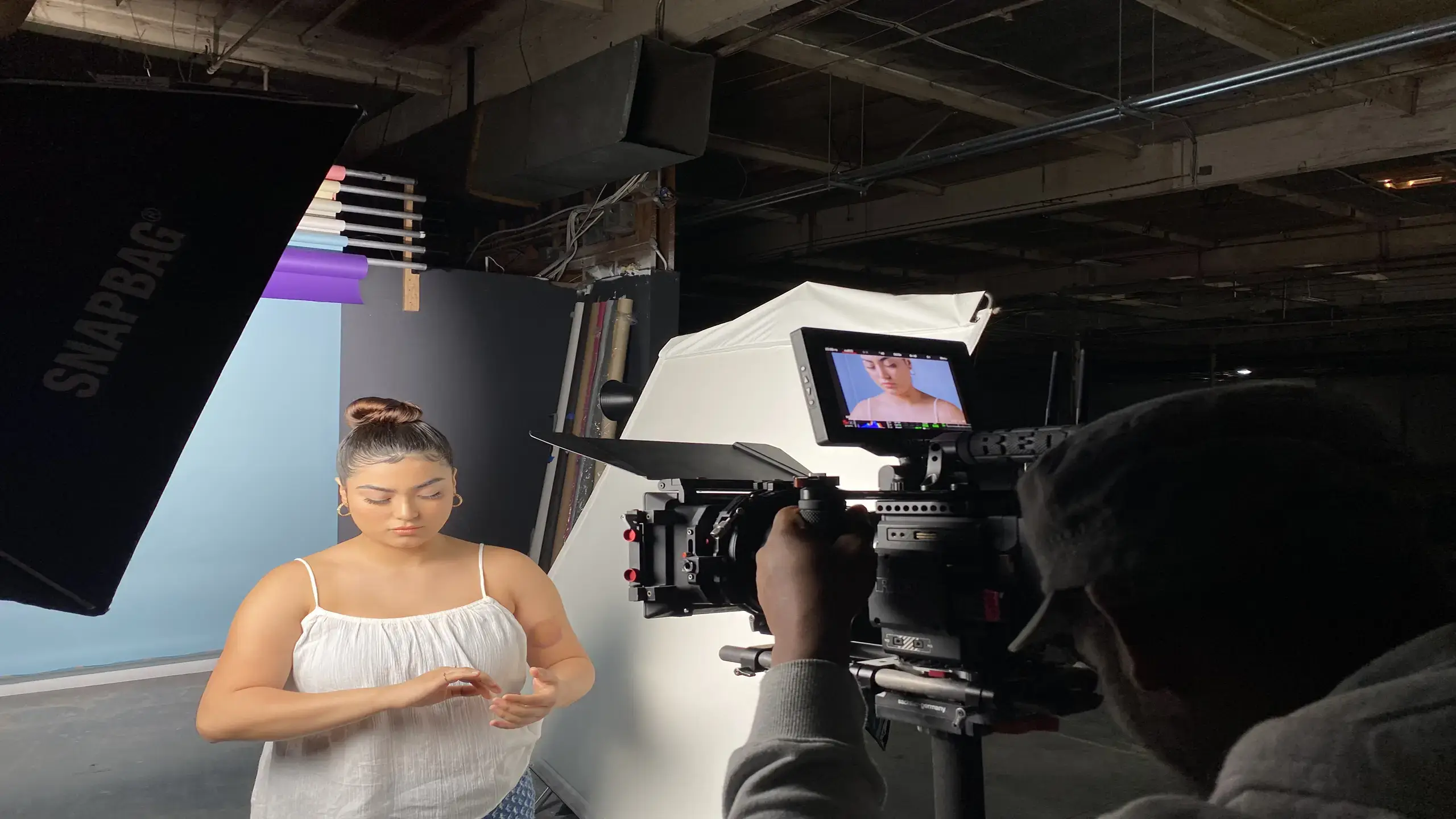
The way audiences consume media has changed permanently. Streaming platforms normalized binge-watching. Social platforms reward serialized storytelling. Attention spans are fragmented, yet engagement with compelling narratives is deeper than ever. Against this backdrop, brands are rethinking how they show up.
Instead of one-off ads or short-term campaigns, companies are investing in **mini-series for marketing**, episodic, story-driven content designed to build audience anticipation and long-term connection. This shift is not about producing “more content.” It is about producing narrative continuity.
For studios like C&I Studios, this represents an evolution in brand communication. Rather than pushing messages, brands now cultivate followings. Rather than interrupting, they entertain.
## Why Mini-Series Work in Modern Marketing
Traditional advertising relies on repetition and reach. Episodic storytelling relies on curiosity and momentum. The psychological mechanism is different.
When a story unfolds across multiple episodes, it activates:
- Anticipation between releases
- Emotional investment in characters
- Habitual viewing behavior
- Organic word-of-mouth sharing
According to research from the Nielsen, serialized streaming content consistently drives higher retention and completion rates compared to standalone programming. That insight applies directly to brand storytelling: audiences return when there is narrative continuity.
Mini-series create what marketers often struggle to achieve, sustained attention over time.
Instead of spending budget repeatedly to reacquire viewers, brands deepen engagement with the same audience.
## From Campaigns to Story Universes
The core difference between a marketing campaign and a mini-series is structure.
A campaign has a start and an end. A mini-series builds a world.
In practice, this means:
- Recurring themes
- Recognizable characters or hosts
- Consistent visual language
- Expanding narrative arcs
When executed properly, a mini-series becomes intellectual property. It is no longer just content; it is an owned narrative asset.
This is where professional [video production](https://c-istudios.com/video-production-services/) becomes essential. Episodic storytelling requires continuity in tone, cinematography, pacing, and sound design. Inconsistent quality destroys narrative immersion.
For C&I Studios, mini-series are approached with the same discipline as premium entertainment. That includes pre-production planning, storyboarding, casting, and post-production workflows designed for episodic cohesion rather than isolated deliverables.
## The Strategic Benefits of Mini-Series for Marketing
Brands adopt mini-series not because it is trendy, but because it solves structural marketing challenges.
### Deeper Audience Retention
One video can capture attention. A series captures loyalty.
Episodic formats encourage viewers to subscribe, follow, or return for updates. Platforms like YouTube and Instagram reward consistent series formats with algorithmic visibility when audiences repeatedly engage.
Retention reduces dependency on paid reach.
### Expanded Brand Narrative
A 30-second ad cannot communicate nuance. A multi-episode arc can explore:
- Founder journeys
- Product development stories
- Customer transformations
- Cultural values
Mini-series allow brands to demonstrate expertise rather than claim it.
For companies working with C&I Studios, this often means building documentary-style arcs that blend entertainment with credibility.
### Higher Perceived Production Value
Episodic storytelling signals investment. It communicates that the brand is committed to its audience long-term.
When supported by strong [branding & graphic design](https://c-istudios.com/branding-and-graphic-design-services/), each episode reinforces visual consistency, from title cards to motion graphics. Cohesion builds recognition.
Mini-series do not feel like advertising. They feel like programming.
### Stronger Community Building
Communities form around recurring narratives. Audiences speculate about future episodes. They comment. They share theories. They participate.
This is the difference between passive viewership and active fandom.
Mini-series create touchpoints that extend beyond a single release date.
## Types of Mini-Series Brands Are Producing
Not all mini-series follow the same format. The structure depends on brand positioning and audience expectations.
### Documentary-Driven Series
Brands showcase real stories, customers, communities, or behind-the-scenes processes. These feel authentic and human.
For example, lifestyle brands may follow entrepreneurs over several episodes, demonstrating resilience and innovation without overtly promoting products.
### Educational Episodic Series
Professional services firms use mini-series to unpack complex topics over multiple installments.
Rather than overwhelming audiences with information in one long video, they segment expertise into digestible chapters.
This approach positions the brand as a thought leader while maintaining viewer retention.
### Narrative Fiction Series
Some brands go further, creating scripted stories that subtly integrate brand themes. These resemble entertainment programming more than marketing.
Production quality becomes non-negotiable here. Lighting, pacing, and audio must align with audience expectations shaped by platforms like Netflix.
When executed properly, brand integration feels natural rather than forced.
### Hybrid Branded Entertainment
This format blends documentary realism with cinematic production. It may feature real individuals presented with stylized storytelling techniques.
Hybrid models are particularly effective for brands targeting culturally engaged audiences.
## The Production Framework Behind Effective Mini-Series
Episodic content requires structural planning long before cameras roll.
### Story Architecture
A mini-series must have:
- A clear thematic spine
- Defined episode objectives
- Escalating stakes
- A satisfying conclusion
Without narrative escalation, audiences lose interest.
C&I Studios emphasizes development phases similar to entertainment production pipelines. Scripts are mapped across episodes to ensure continuity and payoff.
### Release Cadence Strategy
Publishing schedule matters. Weekly drops maintain anticipation. Binge-release models can generate short bursts of engagement.
Data analysis should inform cadence decisions. According to reports from HubSpot, consistency in publishing significantly impacts audience retention across digital platforms.
The key is reliability. When audiences know when to expect the next episode, engagement compounds.
### Platform Optimization
Mini-series must be adapted for:
- Primary hosting platform
- Social cutdowns
- Email marketing integration
- Website embedding
Episodic content should not live in isolation. It should be embedded across owned and earned channels.
Studios with integrated capabilities in production and digital distribution, including web deployment and analytics, provide strategic advantages.
### Measuring Success Beyond Views
One of the most common mistakes brands make is evaluating mini-series solely by view count.
Episodic storytelling aims for depth, not just breadth.
Metrics that matter include:
- Episode completion rate
- Return viewership
- Subscriber growth
- Audience watch time
- Engagement per episode
Retention across episodes indicates narrative effectiveness.
Additionally, brand lift studies can measure perception changes over time. Research frequently cited by the Content Marketing Institute suggests that long-form, story-driven content produces stronger trust signals than traditional promotional formats.
Trust converts slowly but sustainably.
## The Long-Term Value of Episodic Assets
Mini-series create libraries.
Unlike short-lived ad campaigns, episodic content can be repurposed:
- Clips for social platforms
- Behind-the-scenes bonus content
- Educational resources
- Event screenings
- Sales enablement tools
Each episode becomes a modular asset.
For C&I Studios clients, this multiplies ROI. One production cycle yields months, sometimes years, of derivative content.
Episodic storytelling also future-proofs brand narratives. As algorithms change and platforms evolve, owned story IP remains valuable.
## The Competitive Edge of Mini-Series for Marketing
Most brands still operate campaign-to-campaign.
Few build sustained story ecosystems.
That gap creates opportunity.
Mini-series for marketing provide:
- Audience habit formation
- Emotional differentiation
- Cultural relevance
- Long-term engagement
Brands that master episodic storytelling move from advertiser to publisher.
And publishers own attention.
As competition intensifies and paid media costs rise, narrative ownership becomes strategic leverage.
Mini-series are not a replacement for performance marketing. They are a foundation for brand equity.
## Budgeting and Scaling Mini-Series for Sustainable Growth
Episodic storytelling sounds ambitious, but it does not automatically require blockbuster budgets. The misconception that mini-series are expensive entertainment projects prevents many brands from even exploring the model.
The real question is not “How much does it cost?” but “How is it structured?”
A strategic approach to **mini-series for marketing** balances creative ambition with measurable outcomes. Brands that succeed treat episodic storytelling as a scalable system, not a one-off creative experiment.
### Start With Strategic Objectives, Not Cameras
Before allocating production budget, brands must clarify:
- What audience segment are we targeting?
- What perception shift are we aiming to create?
- What behavior change do we want to drive?
- How will we measure success across episodes?
Without clarity, even beautifully shot series fail to deliver results.
According to research published by the Harvard Business Review, emotionally resonant storytelling significantly increases long-term brand recall and purchase intent compared to purely informational messaging. That finding reinforces why episodic content must be anchored in strategic intent rather than aesthetic ambition.
Mini-series should align with funnel positioning. Some series build awareness. Others deepen consideration. A few support retention and loyalty.
## The objective determines the format
Choosing the Right Episodic Format for Your Brand
Not every brand needs cinematic drama. Format selection should match audience expectations and industry context.
### Thought Leadership Series
Professional services firms, technology companies, and B2B brands benefit from episodic educational content. Multi-part interviews, deep-dive discussions, and case-based storytelling establish authority.
This is particularly powerful when paired with strong SEO copywriting, ensuring each episode is optimized for discoverability and long-term search performance.
Episodic thought leadership extends beyond video. Transcripts, articles, and social breakdowns create multi-channel reinforcement.
### Cultural Storytelling Series
Lifestyle and consumer brands often benefit from narrative-driven cultural series that embed the brand within real communities.
This format works especially well when supported by intentional [creative marketing](https://c-istudios.com/creative-marketing-services/) strategies that tie each episode into broader brand initiatives, influencer partnerships, or live activations.
The key is subtle integration. The brand should feel present, not intrusive.
### Behind-the-Scenes Product Evolution
For product-driven companies, a mini-series that documents development stages, challenges, and iterations humanizes innovation.
Audiences gain transparency. Transparency builds trust.
When brands reveal process, they reduce skepticism.
Budget Allocation: Where to Invest for Maximum Impact
Scaling mini-series requires disciplined allocation across production phases.
### Development and Pre-Production
This is the most undervalued stage.
Investing in concept clarity, script outlines, character mapping, and episode arcs prevents costly reshoots and narrative confusion later.
Pre-production determines efficiency.
### Production Efficiency
Instead of filming episodes individually, brands often batch-produce content. Shooting multiple episodes in one production window reduces costs while maintaining continuity.
This approach maximizes crew utilization and location value.
## Post-Production and Optimization
Editing is where episodic pacing is refined.
Music selection, narrative rhythm, and cliffhanger timing influence retention.
Additionally, shorter promotional cuts should be created for distribution across platforms.
Studios that integrate creative direction with distribution planning outperform teams that treat production and marketing as separate silos.
## Distribution Strategy for Episodic Content
Mini-series only succeed when distribution supports anticipation.
### Structured Release Cadence
Weekly drops maintain audience interest. Bi-weekly releases allow deeper promotion cycles.
### Consistency builds habit
According to insights from Think with Google, audiences who engage with sequential branded video content demonstrate higher brand recall than those exposed to single-touch video ads.
Release rhythm matters as much as storytelling quality.
### Cross-Channel Amplification
Each episode should generate multiple content touchpoints:
- Email announcements
- Social media teaser clips
- Blog expansions
- Podcast adaptations
Episodic storytelling thrives when integrated into broader content ecosystems.
This layered approach increases cumulative reach without proportionally increasing production cost.
## Measuring Long-Term ROI of Mini-Series
Short-term metrics often fail to capture the real impact of episodic storytelling.
Brands should evaluate:
- Subscriber growth across the series timeline
- Average watch duration per episode
- Audience retention from Episode 1 to finale
- Qualitative feedback and sentiment
Episodic formats allow for longitudinal analysis. Instead of measuring isolated impressions, brands track behavioral continuity.
Research from McKinsey & Company emphasizes that sustained brand-building efforts contribute significantly to long-term revenue growth compared to purely performance-driven tactics.
Mini-series operate as long-term equity investments.
They build familiarity. Familiarity reduces friction at conversion points.
### Scaling Without Losing Authenticity
One of the biggest risks in expanding episodic content is dilution.
As brands increase frequency or complexity, they risk:
- Overproduction
- Message inconsistency
- Audience fatigue
Scaling should focus on narrative expansion, not volume expansion.
Instead of producing more episodes, brands can deepen existing arcs, introduce new perspectives, or explore adjacent themes.
Strategic evolution sustains interest.
## The Competitive Landscape of Episodic Brand Storytelling
- Many brands experiment with short-form video. Few commit to narrative continuity.
- That hesitation creates competitive advantage for those willing to invest thoughtfully.
- Mini-series for marketing position brands as content creators, not advertisers.
- They build emotional associations that traditional ads struggle to replicate.
As consumer expectations continue shifting toward on-demand entertainment and streaming behavior, episodic storytelling aligns naturally with audience habits.
Brands that integrate storytelling into their long-term communication strategy will build durable attention capital.
For companies exploring this model, the real opportunity lies not just in producing a series, but in architecting a content ecosystem where every episode reinforces brand narrative, deepens audience trust, and contributes to measurable growth.
If your brand is considering episodic storytelling as part of a broader strategic roadmap, partnering with a studio experienced in narrative development and distribution planning can clarify the path forward and ensure each episode contributes to sustained momentum rather than short-lived attention. Contact us at [C&I Studios](https://c-istudios.com/contact/).
## Work with C&I Studios
If you are planning a project like this, our team can take it from concept to final delivery. Explore our [video production services](https://c-istudios.com/video-production-services/), browse [our work](https://c-istudios.com/our-work/) to see how we tell brand stories, and [get in touch](https://c-istudios.com/contact/) when you are ready to start.
Originally published February 20, 2026
---
*This content is from [C&I Studios](https://c-istudios.com), a full-service production company.*
---
# What Is Creative Strategy in Marketing? Building Campaigns That Connect
> Published: February 18, 2026
> Categories: Commercial & Brand
> Source: https://c-istudios.com/what-is-creative-strategy-in-marketing-building-campaigns-that-connect/
---
.cib{--paper:#1b1d1f;--ink:#fff;--body:#d5d7d9;--muted:#8b9096;--line:rgba(255,255,255,.12);--thumb:#2b2e31;--card:#212426;--accent:#c02b0a;--blue:#5B8FA8;--serif:'Playfair Display',Georgia,serif;--sans:'Poppins',-apple-system,sans-serif;--measure:900px;background:var(--paper);color:var(--body);font-family:var(--sans);line-height:1.6;position:relative;left:50%;transform:translateX(-50%);width:90vw;max-width:1920px}
.cib *{box-sizing:border-box}
.cib .kicker{max-width:var(--measure);margin:58px auto 0;padding:0 22px;font-size:12.5px;font-weight:700;letter-spacing:2.5px;text-transform:uppercase;color:var(--blue)}
.cib h1.cibh1{text-wrap:balance;font-family:var(--serif);font-weight:500;font-size:clamp(46px,6vw,72px);line-height:1.08;color:var(--ink);max-width:var(--measure);margin:18px auto 0;padding:0 22px;letter-spacing:-.5px}
.cib .metarow{max-width:var(--measure);margin:20px auto 0;padding:0 22px;color:var(--muted);font-size:14px}
.cib .hero{position:relative;width:100%;height:0;padding-bottom:56.25%;overflow:hidden;margin:48px auto 0;border-top:1px solid var(--line);border-bottom:1px solid var(--line)}
.cib .hero .ph{width:100%;aspect-ratio:16/9;background:var(--thumb);border-top:1px solid var(--line);border-bottom:1px solid var(--line);display:flex;align-items:center;justify-content:center;color:#7d8288;font-size:13px;text-align:center;padding:0 20px}
.cib .body{max-width:var(--measure);margin:12px auto 0;padding:52px 22px 6px}
.cib .body.lead p:first-child{font-size:23px;line-height:1.62;color:var(--ink)}
.cib .body p{font-size:18.5px;line-height:1.85;margin:0 0 30px;color:var(--body)}
.cib .body h2{text-wrap:balance;font-family:var(--serif);font-weight:500;font-size:clamp(32px,4vw,48px);line-height:1.22;color:var(--ink);margin:70px 0 20px;letter-spacing:-.3px}
.cib .body h3{text-wrap:balance;font-family:var(--sans);font-weight:600;font-size:22px;color:var(--ink);margin:38px 0 8px}
.cib .body a{color:var(--ink);text-decoration:underline;text-decoration-color:rgba(255,255,255,.4);text-underline-offset:3px}
.cib .body a:hover{text-decoration-color:var(--ink)}
.cib .ctable{width:100%;border-collapse:collapse;margin:16px 0 30px;font-size:16px}
.cib .ctable th{background:#000;color:#fff;text-align:left;padding:10px 12px;font-family:var(--sans)}
.cib .ctable td{padding:10px 12px;border-bottom:1px solid var(--line);color:var(--body)}
.cib .inimg{position:relative;width:100%;height:0;padding-bottom:56.25%;overflow:hidden;margin:72px auto;border-top:1px solid var(--line);border-bottom:1px solid var(--line)}
.cib .inimg .ph{width:100%;aspect-ratio:16/9;background:var(--thumb);border-top:1px solid var(--line);border-bottom:1px solid var(--line);display:flex;align-items:center;justify-content:center;color:#7d8288;font-size:13px}
.cib .origpub{max-width:var(--measure);margin:60px auto 0;padding:26px 22px 0;border-top:1px solid var(--line);color:var(--muted);font-size:13.5px}
.cib .related{max-width:1200px;margin:64px auto 0;padding:34px 22px 76px}
.cib .related h3{font-family:var(--sans);font-size:12.5px;letter-spacing:2px;text-transform:uppercase;color:var(--ink);margin:0 0 24px}
.cib .grid{display:grid;grid-template-columns:repeat(3,1fr);gap:28px}
.cib .rc{background:var(--card);border:1px solid var(--line);display:block;text-decoration:none;color:inherit;transition:border-color .15s}
.cib a.rc:hover{border-color:rgba(255,255,255,.5)}
.cib .rc .thumb{position:relative;width:100%;height:0;padding-bottom:56.25%;background:var(--thumb);overflow:hidden}
.cib .rc .thumb img{position:absolute!important;top:0!important;left:0!important;width:100%!important;height:100%!important;object-fit:cover!important;margin:0!important}
.cib .rc .cc{padding:14px 15px 17px}
.cib .rc .rt{font-family:var(--serif);font-weight:500;font-size:16px;line-height:1.3;color:var(--ink);margin:0 0 6px}
.cib .rc .rm{font-size:11px;letter-spacing:1px;text-transform:uppercase;color:var(--muted)}
.cib img{margin:0!important;padding:0!important;display:block!important;vertical-align:top;max-width:100%}
.cib .hero img,.cib .inimg img{position:absolute!important;top:0!important;left:0!important;width:100%!important;height:100%!important;object-fit:cover!important;margin:0!important;padding:0!important;border:0!important;display:block!important;aspect-ratio:auto!important}
.cib .hero+.body{padding-top:36px}
@media(max-width:760px){.cib .grid{grid-template-columns:1fr}.cib .body h2{margin:52px 0 16px}.cib .body p{font-size:17.5px}.cib .inimg,.cib .hero{margin-top:44px}}
.cib .vembed{max-width:var(--measure);margin:44px auto;padding:0 22px}.cib .vembed .vwrap{position:relative;width:100%;height:0;padding-bottom:56.25%}.cib .vembed .vwrap iframe{position:absolute;top:0;left:0;width:100%;height:100%;border:0}
Commercial & Brand
# What Is Creative Strategy in Marketing? Building Campaigns That Connect
8 min read
Marketing without strategy is noise. Creativity without direction is decoration. The real impact happens when both are aligned under a clear, disciplined, and audience-driven framework. That is where **creative strategy in marketing** becomes essential.
At C&I Studios, campaigns are not built around trends or assumptions. They are engineered through insight, narrative structure, and executional precision. Whether the goal is awareness, engagement, or long-term brand equity, creative strategy determines how a message is shaped, delivered, and remembered.
Creative strategy is not about picking colors, writing clever taglines, or designing visually appealing assets. It is the blueprint that defines:
- Who you are speaking to
- What you want them to feel
- Why they should care
- How the message should be delivered
- Where it will have the strongest impact
Without this foundation, campaigns may look polished but fail to connect. With it, every piece of communication works toward a defined objective.
According to the American Marketing Association, marketing strategy must align value creation with audience needs to produce sustainable competitive advantage. Creative strategy is the translation layer that makes that alignment emotionally resonant and commercially effective.
In this guide, we will break down what creative strategy truly means, how it functions inside modern campaigns, and how brands can develop frameworks that move beyond attention and into connection.
## Defining Creative Strategy in Marketing
Creative strategy in marketing is the structured approach used to determine how a brand communicates its value in a way that resonates emotionally and logically with its target audience.
It bridges two critical domains:
- Business objectives
- Creative execution
A strong creative strategy answers fundamental questions before production begins:
- What problem are we solving?
- What perception needs to shift?
- What action do we want from the audience?
- What emotional trigger will drive that action?
This is not guesswork. It is insight-driven decision-making.
At C&I Studios, the process often begins with deep discovery sessions. Stakeholder interviews, audience segmentation analysis, and competitive audits reveal gaps between brand intent and audience perception. Only then does creative development begin.
Creative strategy is not a deliverable. It is a framework guiding every deliverable.
## Why Creative Strategy Matters More Than Ever
The digital landscape is saturated. Attention spans are fragmented across platforms, formats, and devices. The World Advertising Research Center reports that consumers encounter thousands of brand messages daily. Most are ignored.
The difference between ignored and remembered lies in relevance and emotional alignment.
### It Prevents Random Execution
Without strategy, brands jump straight into production:
- Shooting videos without defined positioning
- Designing visuals without narrative clarity
- Launching campaigns without measurable outcomes
This leads to misalignment between creative assets and business goals.
A defined creative strategy ensures that [content creation](https://c-istudios.com/content-creation-services/) is purposeful rather than reactive. Every asset serves a strategic function.
### It Creates Emotional Connection
Research published by Harvard Business Review has shown that emotionally connected customers are more than twice as valuable as highly satisfied customers. Strategy identifies the emotional drivers that fuel loyalty.
At C&I Studios, this might mean uncovering a brand’s deeper origin story or reframing its product as a solution to a human tension rather than a functional problem.
### It Aligns Teams and Stakeholders
Creative strategy becomes a shared language between marketing, production, and leadership teams. It reduces subjective debate and replaces it with objective alignment.
Instead of asking, “Do we like this?” the question becomes, “Does this serve the strategy?”
## Core Components of a Strong Creative Strategy
A powerful strategy is structured. It is not abstract inspiration. It is defined by concrete pillars.
### Audience Intelligence
Everything begins with the audience.
- Demographics are not enough
- Psychographics reveal motivation
- Behavioral insights reveal triggers
Understanding audience pain points, aspirations, and media consumption habits determines how messages are shaped.
For example, a brand targeting early-stage entrepreneurs requires a different tone than one targeting enterprise decision-makers. Strategy defines that distinction before creative assets are built.
### Brand Positioning
Positioning clarifies:
- What the brand stands for
- What it refuses to be
- How it differentiates from competitors
Without positioning clarity, campaigns risk blending into category noise.
Creative strategy ensures that brand identity is not diluted during execution. It maintains consistency across formats and platforms.
### Messaging Framework
A structured messaging hierarchy defines:
- Core brand promise
- Supporting proof points
- Key narrative angles
- Tone and voice guidelines
This framework ensures consistency across channels. Whether through long-form storytelling, short-form social clips, or experiential activations, the message remains unified.
### Channel Strategy
Creative ideas do not exist in isolation from distribution.
Strategy must account for:
- Platform behavior
- Audience mindset on each channel
- Content format best suited for each space
A campaign developed for broadcast television cannot simply be repurposed for digital without adjustment. Creative strategy considers how message and medium interact.
## Creative Strategy Translates Into Campaign Execution
Strategy is invisible to the audience, but its impact is measurable.
At C&I Studios, creative strategy often manifests in integrated campaign ecosystems that include:
- Narrative-driven short films
- Digital-first brand stories
- Performance-optimized social rollouts
- Experiential activations
Strategic clarity ensures cohesion across all elements.
For instance, when incorporating [video production](https://c-istudios.com/video-production-services/) into a campaign, the strategy determines:
- Story arc
- Emotional pacing
- Visual tone
- Call-to-action placement
The production process becomes executional, not exploratory. Decisions are anchored in strategic rationale.
This reduces waste. It increases impact.
## Difference Between Creative Strategy and Creative Execution
Many brands confuse execution with strategy.
Creative execution refers to:
- Visual design
- Copywriting
- Editing
- Sound design
- Final asset production
Creative strategy defines:
- Why the campaign exists
- What it must achieve
- Who it must influence
- What perception must shift
Execution is tactical. Strategy is directional.
Without strategy, execution may look impressive but lack clarity. With strategy, even minimalistic creative assets can outperform high-budget campaigns because they resonate.
## Building a Creative Strategy From the Ground Up
Developing effective creative strategy requires structure.
At C&I Studios, the process typically includes:
### Discovery and Research
- Brand audits
- Market analysis
- Competitor benchmarking
- Audience interviews
This phase identifies strategic gaps.
### Insight Development
Raw data becomes actionable insight. Patterns are identified. Emotional triggers are mapped. Core tensions are defined.
The objective is to uncover a compelling strategic angle that competitors have overlooked.
### Strategic Positioning Statement
A concise internal statement defines:
- Target audience
- Primary insight
- Core message
- Desired outcome
This document becomes the north star for all creative decisions.
### Creative Brief Development
The creative brief translates strategy into executional direction. It includes:
- Key objectives
- Audience profile
- Tone guidelines
- Deliverables
- KPIs
This brief ensures production teams remain aligned with strategic intent.
## Common Mistakes Brands Make
Even established organizations often weaken campaigns by neglecting strategic rigor.
### Skipping Research
Assumptions replace data. Internal bias overrides audience reality.
This leads to messaging that feels disconnected or irrelevant.
### Overcomplicating the Message
Strategy demands clarity. Many brands attempt to communicate too many ideas simultaneously.
Effective campaigns focus on one core narrative at a time.
### Prioritizing Trends Over Alignment
Just because a format is trending does not mean it fits the brand. Strategy determines whether a trend supports or distracts from positioning.
C&I Studios evaluates each creative decision through strategic filters rather than chasing short-term visibility.
## Measuring the Effectiveness of Creative Strategy
Strategy must be measurable.
Metrics may include:
- Brand recall
- Engagement rates
- Conversion lift
- Sentiment analysis
- Audience retention
Quantitative performance data reveals whether the strategy is resonating. Qualitative feedback reveals why.
The key is alignment between objectives and KPIs defined during the strategic phase.
## Creative Strategy as a Long-Term Asset
Creative strategy is not campaign-specific. It becomes part of brand infrastructure.
Once defined, it informs:
- Future launches
- Ongoing brand storytelling
- Cross-channel communication
- Partnerships and collaborations
Brands that treat strategy as an investment rather than a project see compounding returns. Messaging becomes consistent. Recognition strengthens. Trust builds over time.
At C&I Studios, creative strategy is not an optional preliminary step. It is the foundation upon which campaigns are constructed, ensuring that creative ambition remains grounded in audience truth and business reality.
## Creative Strategy Into Multi-Channel Campaign Architecture
At C&I Studios, campaigns are rarely built for a single touchpoint. Modern audiences move fluidly between platforms. A brand narrative must remain intact whether encountered on social media, in experiential spaces, or through long-form storytelling.
This is where strategic discipline becomes non-negotiable.
### Designing for Platform Behavior
Each platform carries a different user mindset:
- Social platforms reward immediacy and scroll-stopping hooks
- Search-driven platforms reward clarity and intent alignment
- Long-form digital environments reward depth and storytelling
Creative strategy ensures that the core message remains constant while format and pacing adjust.
For example, a campaign rooted in audience empowerment may manifest as:
- Short-form social storytelling
- Thought leadership pieces supported by [SEO copywriting](https://c-istudios.com/seo-copywriting-services/)
- Interactive digital landing experiences
The strategic spine does not change. Only the surface expression evolves.
This avoids fragmentation. It creates cumulative impact.
## Aligning Creative Strategy With Digital Infrastructure
Campaign effectiveness depends on more than creative assets. Technical architecture influences reach, performance, and conversion.
### Strategic Role of Web Ecosystems
A campaign can generate awareness, but without a structured destination, momentum fades. Creative strategy must account for digital pathways.
That includes:
- User journey mapping
- Conversion architecture
- Load speed optimization
- Messaging continuity from ad to landing page
A poorly structured website undermines even the strongest campaign. This is why creative strategy must integrate seamlessly with [web development](https://c-istudios.com/web-development-services/) considerations from the outset.
Rather than treating technical build as a separate phase, C&I Studios approaches it as part of the same strategic system. Messaging, design, and infrastructure work in tandem.
## Integrating Paid, Owned, and Earned Media
Creative strategy also determines channel weighting.
### Paid Media
Paid campaigns amplify reach and accelerate visibility. However, amplification without strategic clarity increases cost without increasing resonance.
Strategy defines:
- Core hook
- Audience segmentation
- Creative testing angles
- Retargeting narratives
Each variation should reinforce the same strategic message rather than dilute it.
### Owned Media
Owned channels, websites, newsletters, social accounts, allow deeper narrative expansion.
These platforms should extend campaign storytelling rather than repeat it.
- Behind-the-scenes insights
- Extended interviews
- Educational content
- Interactive features
This layered approach strengthens brand authority.
### Earned Media
When creative strategy resonates culturally, it generates organic amplification. Press mentions, influencer commentary, and community sharing often result from campaigns rooted in authentic audience insight.
Strategic clarity increases the probability of earned traction because the narrative aligns with real conversations.
## Creative Strategy in Experiential and Immersive Campaigns
Not all campaigns live purely online. Experiential activations, branded events, and immersive storytelling environments demand even greater strategic rigor.
Without alignment, experiential campaigns become visually impressive but strategically hollow.
A well-structured strategy ensures:
- Clear narrative arc within the experience
- Defined emotional takeaway
- Seamless transition from offline interaction to digital engagement
This integrated thinking prevents campaigns from becoming isolated moments. Instead, they become catalysts for sustained brand relationship.
## Adapting Strategy for Performance Metrics
Creative strategy must evolve based on data without losing identity.
### Interpreting Campaign Data Strategically
Metrics reveal behavioral patterns:
- Drop-off rates identify narrative friction
- Engagement spikes reveal emotional resonance
- Conversion variance highlights messaging clarity
The key is resisting reactive pivots that contradict strategic foundations.
Instead of abandoning core messaging, teams should refine:
- Hook clarity
- Audience targeting
- Creative sequencing
Strategy is durable. Execution is flexible.
C&I Studios continuously evaluates campaign performance through strategic lenses, ensuring optimization enhances alignment rather than undermines it.
## Creative Strategy and Brand Longevity
Short-term campaigns drive immediate results. Strategic consistency drives long-term brand equity.
Brands that continuously reinvent their messaging without strategic anchors often confuse their audience.
Creative strategy provides:
- Narrative continuity
- Visual coherence
- Emotional familiarity
Over time, this consistency builds recognition and trust.
A study by Nielsen has shown that consistent brand presentation increases revenue growth compared to inconsistent messaging. This reinforces the value of strategic alignment across all campaign phases.
When creative strategy becomes embedded within brand DNA, every new campaign strengthens cumulative impact.
## Evolving Creative Strategy in a Rapidly Changing Landscape
The marketing environment is dynamic. Platforms shift. Algorithms evolve. Audience expectations change.
Strategy must remain adaptive without becoming unstable.
### Scenario Planning
Forward-looking brands prepare for:
- Platform saturation
- Shifting audience behaviors
- Emerging distribution channels
Rather than reacting late, strategic teams anticipate change and adjust frameworks proactively.
### Modular Strategy Systems
Instead of building one-off campaign blueprints, C&I Studios develops modular strategy systems:
- Core narrative pillars
- Flexible content angles
- Platform-specific adaptations
- Scalable creative templates
This structure allows brands to expand across new environments without losing identity.
## From Campaign to Ecosystem
The ultimate objective of creative strategy in marketing is not isolated campaign success. It is ecosystem design.
An ecosystem approach ensures:
- Every campaign reinforces brand positioning
- Each activation builds audience familiarity
- All touchpoints contribute to a unified story
Creative decisions become cumulative rather than disposable.
When strategy operates at this level, marketing shifts from promotional cycles to sustained narrative development.
That shift is what separates brands that momentarily capture attention from those that command loyalty.
Creative strategy is not an abstract marketing buzzword. It is the structural discipline that transforms creative ambition into measurable, scalable impact. When properly implemented, it aligns narrative, technology, distribution, and performance into a unified system.
For brands seeking to move beyond fragmented campaigns and build communication frameworks that endure, the next step is not more content. It is stronger strategic alignment across every channel and execution layer.
If you are evaluating how your current campaigns align with your broader positioning and long-term objectives, our team at [C&I Studios](https://c-istudios.com/contact/) is available to discuss how a structured creative strategy can strengthen your next initiative and elevate the coherence of your entire marketing ecosystem.
## Work with C&I Studios
If you are planning a project like this, our team can take it from concept to final delivery. Explore our [video production services](https://c-istudios.com/video-production-services/), browse [our work](https://c-istudios.com/our-work/) to see how we tell brand stories, and [get in touch](https://c-istudios.com/contact/) when you are ready to start.
Originally published February 18, 2026
---
*This content is from [C&I Studios](https://c-istudios.com), a full-service production company.*
---
# How Much Should a Startup Spend on Marketing? Budget Allocation Guide
> Published: February 17, 2026
> Categories: Commercial & Brand
> Source: https://c-istudios.com/how-much-should-a-startup-spend-on-marketing-budget-allocation-guide/
---
.cib{--paper:#1b1d1f;--ink:#fff;--body:#d5d7d9;--muted:#8b9096;--line:rgba(255,255,255,.12);--thumb:#2b2e31;--card:#212426;--accent:#c02b0a;--blue:#5B8FA8;--serif:'Playfair Display',Georgia,serif;--sans:'Poppins',-apple-system,sans-serif;--measure:900px;background:var(--paper);color:var(--body);font-family:var(--sans);line-height:1.6;position:relative;left:50%;transform:translateX(-50%);width:90vw;max-width:1920px}
.cib *{box-sizing:border-box}
.cib .kicker{max-width:var(--measure);margin:58px auto 0;padding:0 22px;font-size:12.5px;font-weight:700;letter-spacing:2.5px;text-transform:uppercase;color:var(--blue)}
.cib h1.cibh1{text-wrap:balance;font-family:var(--serif);font-weight:500;font-size:clamp(46px,6vw,72px);line-height:1.08;color:var(--ink);max-width:var(--measure);margin:18px auto 0;padding:0 22px;letter-spacing:-.5px}
.cib .metarow{max-width:var(--measure);margin:20px auto 0;padding:0 22px;color:var(--muted);font-size:14px}
.cib .hero{position:relative;width:100%;height:0;padding-bottom:56.25%;overflow:hidden;margin:48px auto 0;border-top:1px solid var(--line);border-bottom:1px solid var(--line)}
.cib .hero .ph{width:100%;aspect-ratio:16/9;background:var(--thumb);border-top:1px solid var(--line);border-bottom:1px solid var(--line);display:flex;align-items:center;justify-content:center;color:#7d8288;font-size:13px;text-align:center;padding:0 20px}
.cib .body{max-width:var(--measure);margin:12px auto 0;padding:52px 22px 6px}
.cib .body.lead p:first-child{font-size:23px;line-height:1.62;color:var(--ink)}
.cib .body p{font-size:18.5px;line-height:1.85;margin:0 0 30px;color:var(--body)}
.cib .body h2{text-wrap:balance;font-family:var(--serif);font-weight:500;font-size:clamp(32px,4vw,48px);line-height:1.22;color:var(--ink);margin:70px 0 20px;letter-spacing:-.3px}
.cib .body h3{text-wrap:balance;font-family:var(--sans);font-weight:600;font-size:22px;color:var(--ink);margin:38px 0 8px}
.cib .body a{color:var(--ink);text-decoration:underline;text-decoration-color:rgba(255,255,255,.4);text-underline-offset:3px}
.cib .body a:hover{text-decoration-color:var(--ink)}
.cib .ctable{width:100%;border-collapse:collapse;margin:16px 0 30px;font-size:16px}
.cib .ctable th{background:#000;color:#fff;text-align:left;padding:10px 12px;font-family:var(--sans)}
.cib .ctable td{padding:10px 12px;border-bottom:1px solid var(--line);color:var(--body)}
.cib .inimg{position:relative;width:100%;height:0;padding-bottom:56.25%;overflow:hidden;margin:72px auto;border-top:1px solid var(--line);border-bottom:1px solid var(--line)}
.cib .inimg .ph{width:100%;aspect-ratio:16/9;background:var(--thumb);border-top:1px solid var(--line);border-bottom:1px solid var(--line);display:flex;align-items:center;justify-content:center;color:#7d8288;font-size:13px}
.cib .origpub{max-width:var(--measure);margin:60px auto 0;padding:26px 22px 0;border-top:1px solid var(--line);color:var(--muted);font-size:13.5px}
.cib .related{max-width:1200px;margin:64px auto 0;padding:34px 22px 76px}
.cib .related h3{font-family:var(--sans);font-size:12.5px;letter-spacing:2px;text-transform:uppercase;color:var(--ink);margin:0 0 24px}
.cib .grid{display:grid;grid-template-columns:repeat(3,1fr);gap:28px}
.cib .rc{background:var(--card);border:1px solid var(--line);display:block;text-decoration:none;color:inherit;transition:border-color .15s}
.cib a.rc:hover{border-color:rgba(255,255,255,.5)}
.cib .rc .thumb{position:relative;width:100%;height:0;padding-bottom:56.25%;background:var(--thumb);overflow:hidden}
.cib .rc .thumb img{position:absolute!important;top:0!important;left:0!important;width:100%!important;height:100%!important;object-fit:cover!important;margin:0!important}
.cib .rc .cc{padding:14px 15px 17px}
.cib .rc .rt{font-family:var(--serif);font-weight:500;font-size:16px;line-height:1.3;color:var(--ink);margin:0 0 6px}
.cib .rc .rm{font-size:11px;letter-spacing:1px;text-transform:uppercase;color:var(--muted)}
.cib img{margin:0!important;padding:0!important;display:block!important;vertical-align:top;max-width:100%}
.cib .hero img,.cib .inimg img{position:absolute!important;top:0!important;left:0!important;width:100%!important;height:100%!important;object-fit:cover!important;margin:0!important;padding:0!important;border:0!important;display:block!important;aspect-ratio:auto!important}
.cib .hero+.body{padding-top:36px}
@media(max-width:760px){.cib .grid{grid-template-columns:1fr}.cib .body h2{margin:52px 0 16px}.cib .body p{font-size:17.5px}.cib .inimg,.cib .hero{margin-top:44px}}
.cib .vembed{max-width:var(--measure);margin:44px auto;padding:0 22px}.cib .vembed .vwrap{position:relative;width:100%;height:0;padding-bottom:56.25%}.cib .vembed .vwrap iframe{position:absolute;top:0;left:0;width:100%;height:100%;border:0}
Commercial & Brand
# How Much Should a Startup Spend on Marketing? Budget Allocation Guide
8 min read
Launching a startup is not just about building a product. It is about creating awareness, generating demand, and sustaining growth long enough to reach profitability.
One of the most critical early decisions founders face is determining the right startup marketing budget. Spend too little, and your product stays invisible. Spend too much, and you burn runway before proving traction.
At C&I Studios, we have worked with emerging brands, funded startups, and scaling enterprises across industries. The pattern is consistent: marketing is not a cost center. It is a growth engine when planned strategically. But without structure and measurable benchmarks, budget allocation becomes guesswork.
This guide breaks down how startups should approach marketing spend in 2026, using industry benchmarks, growth-stage frameworks, and channel allocation logic to build a sustainable budget model.
## Why Marketing Budgeting Is Different for Startups
Established brands optimize. Startups experiment.
A mature company often refines existing channels. A startup, on the other hand, must:
- Prove product-market fit
- Identify acquisition channels
- Build brand credibility from zero
- Establish trust quickly
According to data published by the **U.S. Small Business Administration**, small businesses typically spend between 7% and 8% of gross revenue on marketing when revenue is under $5 million and margins support it.
However, startups in high-growth or competitive markets frequently allocate significantly more, particularly during early scaling phases. Reports from **Deloitte’s CMO Survey** indicate that marketing budgets across industries often range between 9% and 13% of company revenue, with growth-focused companies trending higher.
But percentages alone are misleading.
Early-stage startups often have minimal revenue. If you apply 8% to $0, the number is meaningless. Instead, early budgets should be tied to runway and acquisition modeling.
## Stage-Based Marketing Budget Framework
Instead of asking “What percentage should we spend?”, startups should ask:
- What stage are we in?
- What must marketing accomplish this quarter?
- What is our runway tolerance for experimentation?
### Pre-Launch Stage
At this stage, the goal is awareness and validation.
Budget allocation typically focuses on:
- Brand identity and positioning
- Foundational website development
- Early audience building
- Beta user acquisition campaigns
- Foundational **content creation** assets
Pre-launch budgets are usually drawn from seed funding rather than revenue. A practical benchmark is allocating 10-20% of total seed capital toward go-to-market preparation. That includes brand strategy, website development, and foundational marketing assets.
This is not about large ad spend. It is about building the infrastructure that future campaigns rely on.
### Early Revenue Stage
Once revenue begins, budget discipline becomes more important.
Startups generating early revenue often allocate:
- 12% to 20% of gross revenue to marketing in aggressive growth industries
- 7% to 12% in more stable or service-based markets
But this allocation should not be evenly spread across channels. Instead, it should prioritize:
- [customer acquisition cost](https://blog.hubspot.com/service/how-to-calculate-customer-lifetime-value) (CAC) testing
- Conversion optimization
- Channel performance analysis
This stage requires measurable campaigns rather than brand experimentation alone.
### Growth and Scaling Stage
Once product-market fit is confirmed, marketing shifts from testing to amplification.
At this point, companies often:
- Increase ad spend on proven channels
- Invest in premium creative campaigns
- Develop high-impact **video production** for brand authority
- Expand into multi-channel acquisition strategies
Budget percentages may stabilize between 10% and 15% of revenue, depending on industry margins and growth targets.
The key difference at this stage is efficiency. Marketing is no longer speculative. It is performance-driven.
## Breaking Down the Startup Marketing Budget
Knowing how much to spend is only half the equation. Allocation across categories determines effectiveness.
Below is a strategic allocation framework commonly used for startups building sustainable growth.
### Brand Foundation and Positioning (15%–25%)
Startups frequently underestimate brand investment.
This category includes:
- Logo and visual identity systems
- Messaging frameworks
- Tone of voice guidelines
- Website design and UX
- Market positioning research
Without clarity in these areas, performance marketing efforts become inefficient. A weak brand forces higher acquisition costs.
Strong branding reduces friction and improves long-term ROI.
### Content and Creative Development (20%–30%)
Startups operate in crowded digital spaces. Differentiation requires strong creative assets.
Budget here may include:
- Landing page design
- Sales page optimization
- Case studies
- Social media creative
- Long-form [content creation](https://c-istudios.com/content-creation-services/) for SEO
Evergreen content compounds over time. Unlike ads that stop delivering once spend ends, organic content builds long-term visibility.
According to **HubSpot’s State of Marketing Report**, businesses that prioritize blogging and organic content are significantly more likely to report positive ROI compared to those relying solely on paid ads.
Content reduces paid dependency. That lowers long-term customer acquisition cost.
### Paid Media and Performance Advertising (25%–40%)
This is typically the largest allocation category for early-stage growth.
Spend may include:
- Google Ads
- Paid social campaigns
- Retargeting strategies
- Sponsored placements
- Influencer partnerships
Paid media accelerates growth but must be tied to strict performance metrics:
- CAC (Customer Acquisition Cost)
- LTV (Lifetime Value)
- ROAS (Return on Ad Spend)
If LTV does not exceed CAC at a sustainable ratio, budget must be adjusted.
Startups that ignore this discipline often burn capital rapidly.
### High-Impact Visual and Video Campaigns (10%–20%)
Modern consumers expect immersive storytelling.
Strategic [video production](https://c-istudios.com/video-production-services/) enhances:
- Product demonstrations
- Founder storytelling
- Investor presentations
- Social proof campaigns
- Website conversion rates
Video often improves engagement metrics across paid and organic channels. According to **Wyzowl’s Video Marketing Statistics**, businesses report higher conversion rates when video is integrated into landing pages.
For startups, this does not necessarily mean large-scale cinematic campaigns. It means strategic, high-quality storytelling that elevates perceived brand value.
## How to Determine the Right Budget for Your Startup
There is no universal number. The correct startup marketing budget depends on three primary variables:
### Market Competition
Highly competitive sectors require stronger early investment. SaaS, fintech, and e-commerce often demand aggressive customer acquisition strategies.
Low-competition niche markets may grow organically with smaller budgets.
### Gross Margin Structure
High-margin businesses can afford higher acquisition costs.
If your gross margin is 70%, you can reinvest heavily into marketing. If your margin is 20%, spending must be more conservative.
Budgeting without margin analysis is reckless.
### Growth Objectives
Bootstrapped startups prioritize sustainability.
VC-backed startups prioritize speed.
Your funding structure dictates how aggressive your marketing spend should be.
## Common Budgeting Mistakes Startups Make
Even with clear frameworks, many founders misallocate funds.
### Overspending on Ads Too Early
Paid media without conversion optimization wastes budget.
Traffic does not equal growth. Conversion does.
### Ignoring Brand Strategy
Founders often treat branding as cosmetic.
It is not.
Brand clarity directly impacts trust, conversion rate, and retention.
### Failing to Track Attribution
Without analytics infrastructure, you cannot identify high-performing channels.
Startups must invest early in:
- Conversion tracking
- CRM systems
- Performance dashboards
Data eliminates guesswork.
## A Practical Example
Consider a startup with:
- $500,000 in seed funding
- 18-month runway
- SaaS subscription model
A realistic marketing allocation might look like:
- $75,000-$100,000 for foundational brand and website build
- $100,000-$150,000 for creative and organic growth
- $150,000-$200,000 for paid acquisition experiments
- Remainder reserved for scaling proven channels
The numbers shift depending on industry, but the principle remains: infrastructure first, amplification second.
## Measuring Marketing Effectiveness
Budget allocation is meaningless without performance evaluation.
Key metrics include:
- Customer acquisition cost
- Customer lifetime value
- Conversion rate
- Cost per lead
- Brand awareness indicators
Founders must review these monthly.
If metrics show inefficiency, budget must be rebalanced.
## The Strategic Perspective
Marketing spend is not about hitting an industry percentage.
It is about aligning investment with growth stage, competitive landscape, and margin realities.
A well-structured startup marketing budget:
- Builds infrastructure early
- Tests channels systematically
- Scales only proven strategies
- Protects runway
- Prioritizes measurable outcomes
At C&I Studios, we see the strongest startups treat marketing not as an expense but as a controlled growth accelerator. They budget deliberately, measure relentlessly, and iterate consistently.
## Allocating Your Startup Marketing Budget
In 2026, startups face a fragmented media landscape. Audiences are split across platforms, algorithms change constantly, and attention spans are shrinking. The solution is not to “be everywhere.” It is to build a channel mix that aligns with your growth model and capacity.
At C&I Studios, we approach channel allocation using a balance of performance, brand equity, and long-term asset development. Below is a structured breakdown of how startups can allocate funds strategically without diluting impact.
## Performance-Driven Digital Channels
For early traction, digital acquisition remains the most measurable category.
This typically includes:
- Paid search
- Paid social advertising
- Display campaigns
- Retargeting sequences
- Conversion rate optimization
These channels are attractive because they provide immediate feedback. However, they also require creative quality and technical setup.
Performance campaigns are most effective when supported by:
- Conversion-focused landing pages
- Data-backed audience segmentation
- Continuous A/B testing
- Clear attribution modeling
Startups that treat performance ads as a “set it and forget it” solution often see diminishing returns. Continuous optimization is mandatory.
According to **Think with Google**, high-performing advertisers continuously experiment with creative variations and audience signals to improve campaign outcomes.
This is not about spending more. It is about refining.
## Search Visibility and Organic Authority
Paid traffic creates momentum. Organic visibility builds sustainability.
Search engine optimization is often underfunded in startup environments because it requires patience. But in reality, it reduces long-term dependency on ad spend.
Key investment areas include:
- Technical SEO structure
- On-page optimization
- Educational blog strategy
- Industry thought leadership
- Evergreen resource hubs
Strategic [SEO copywriting](https://c-istudios.com/seo-copywriting-services/) ensures that content is built around search intent rather than internal assumptions. When executed properly, it compounds over time.
According to **BrightEdge Research**, organic search drives over half of trackable website traffic across industries.
Startups that ignore organic growth often face rising acquisition costs as paid channels saturate.
Organic visibility is not a short-term hack. It is a long-term risk mitigation strategy.
## Brand-Led Storytelling and Market Positioning
Growth does not come only from clicks. It comes from recognition and trust.
Brand storytelling influences:
- Perceived value
- Investor confidence
- Partnership opportunities
- Customer loyalty
This is where strategic **branding & [graphic design](https://c-istudios.com/branding-and-graphic-design-services/)** becomes critical. Visual systems, messaging architecture, and audience alignment influence every campaign that follows.
Investment in this area may include:
- Visual identity systems
- Brand guidelines
- Pitch deck design
- Social brand consistency
- Market positioning research
Startups that rush visual branding often pay twice: once to build it quickly, and again to rebrand when scaling exposes inconsistencies.
Strong brand systems lower friction across all acquisition channels.
## Social Media Growth and Community Building
Social media remains one of the most accessible growth levers for startups, but it requires consistency and clarity.
Effective allocation in this category often supports:
- Platform-specific content strategy
- Community engagement management
- Paid social amplification
- Influencer collaboration
- Short-form educational campaigns
Strategic [social media marketing](https://c-istudios.com/social-media-marketing-services/) is not simply posting content. It involves understanding platform behavior, content timing, and engagement loops.
In 2026, startups should focus on depth rather than breadth. Building strong engagement on one or two platforms is more effective than scattered presence across five.
Community reduces churn. And lower churn improves lifetime value, which in turn justifies higher acquisition budgets.
## Experiential and Hybrid Campaign Strategies
While digital dominates, experiential marketing is regaining relevance, especially in saturated markets.
Hybrid campaigns may include:
- Pop-up activations
- Conference sponsorship
- Industry roundtables
- Live product demonstrations
- Collaborative community events
These campaigns often generate:
- Social amplification
- Press coverage
- Strategic partnerships
- High-intent leads
For startups in B2B or niche markets, experiential investment can outperform purely digital campaigns when aligned with the right audience.
The key is integration. Offline campaigns must feed digital pipelines through retargeting, email capture, and post-event engagement.
## Channel Mix Based on Business Model
Channel allocation should reflect how your business generates revenue.
### SaaS Startups
Typically prioritize:
- Paid search
- Retargeting
- Educational content
- Webinars
- Conversion-driven landing pages
Organic authority and long-form education are especially effective in subscription models.
### E-Commerce Startups
Often emphasize:
- Paid social
- Influencer collaborations
- Visual storytelling
- Short-form video
- Retargeting sequences
Margins dictate aggressiveness in paid media.
### B2B Service Startups
Often allocate budget toward:
- Thought leadership content
- LinkedIn campaigns
- Industry events
- Case study development
- Relationship-based outreach
The longer the sales cycle, the more emphasis should be placed on authority-building channels.
## Allocating Budget by Funnel Stage
Startups frequently overinvest at the top of the funnel and underinvest in retention.
A balanced allocation often looks like:
- 40% Acquisition
- 30% Conversion optimization
- 20% Retention
- 10% Brand equity development
Retention marketing includes:
- Email automation
- Loyalty programs
- Customer education
- Community engagement
Acquiring new customers is expensive. Retaining them is profitable.
## Budget Reallocation Framework
Your startup marketing budget should not be static.
Quarterly evaluation should consider:
- Channel-level ROAS
- CAC trends
- Conversion rates
- Customer lifetime value shifts
- Brand awareness indicators
If one channel underperforms for two consecutive quarters, reduce allocation. If another shows strong ROI, scale cautiously.
Budget discipline is strategic flexibility.
## When to Increase Marketing Spend
Startups should scale marketing investment when:
- LTV consistently exceeds CAC by at least 3:1
- Conversion rates stabilize
- Customer churn is predictable
- Operational capacity can handle growth
Premature scaling destroys capital. Strategic scaling multiplies momentum.
## A Strategic Closing Perspective
The right startup marketing budget is not defined by a universal percentage. It is defined by clarity, discipline, and measurable growth alignment.
Channel allocation in 2026 demands precision:
- Performance channels drive speed.
- Organic authority builds stability.
- Brand systems create trust.
- Community strengthens retention.
Startups that integrate these elements strategically build durable growth rather than short-term spikes.
If you are evaluating how to refine your channel allocation model or strengthen creative execution across platforms, [C&I Studios](https://c-istudios.com/contact/) can help you architect a system that aligns budget with measurable outcomes and long-term brand equity, ensuring your marketing investment fuels growth instead of draining runway.
## Work with C&I Studios
If you are planning a project like this, our team can take it from concept to final delivery. Explore our [video production services](https://c-istudios.com/video-production-services/), browse [our work](https://c-istudios.com/our-work/) to see how we tell brand stories, and [get in touch](https://c-istudios.com/contact/) when you are ready to start.
Originally published February 17, 2026
---
*This content is from [C&I Studios](https://c-istudios.com), a full-service production company.*
---
# Performance Marketing vs Brand Marketing: ROI Impact & Growth Strategy for 2026
> Published: February 16, 2026
> Categories: Commercial & Brand
> Source: https://c-istudios.com/performance-marketing-vs-brand-marketing-roi-impact-growth-strategy-for-2026/
---
.cib{--paper:#1b1d1f;--ink:#fff;--body:#d5d7d9;--muted:#8b9096;--line:rgba(255,255,255,.12);--thumb:#2b2e31;--card:#212426;--accent:#c02b0a;--blue:#5B8FA8;--serif:'Playfair Display',Georgia,serif;--sans:'Poppins',-apple-system,sans-serif;--measure:900px;background:var(--paper);color:var(--body);font-family:var(--sans);line-height:1.6;position:relative;left:50%;transform:translateX(-50%);width:90vw;max-width:1920px}
.cib *{box-sizing:border-box}
.cib .kicker{max-width:var(--measure);margin:58px auto 0;padding:0 22px;font-size:12.5px;font-weight:700;letter-spacing:2.5px;text-transform:uppercase;color:var(--blue)}
.cib h1.cibh1{text-wrap:balance;font-family:var(--serif);font-weight:500;font-size:clamp(46px,6vw,72px);line-height:1.08;color:var(--ink);max-width:var(--measure);margin:18px auto 0;padding:0 22px;letter-spacing:-.5px}
.cib .metarow{max-width:var(--measure);margin:20px auto 0;padding:0 22px;color:var(--muted);font-size:14px}
.cib .hero{position:relative;width:100%;height:0;padding-bottom:56.25%;overflow:hidden;margin:48px auto 0;border-top:1px solid var(--line);border-bottom:1px solid var(--line)}
.cib .hero .ph{width:100%;aspect-ratio:16/9;background:var(--thumb);border-top:1px solid var(--line);border-bottom:1px solid var(--line);display:flex;align-items:center;justify-content:center;color:#7d8288;font-size:13px;text-align:center;padding:0 20px}
.cib .body{max-width:var(--measure);margin:12px auto 0;padding:52px 22px 6px}
.cib .body.lead p:first-child{font-size:23px;line-height:1.62;color:var(--ink)}
.cib .body p{font-size:18.5px;line-height:1.85;margin:0 0 30px;color:var(--body)}
.cib .body h2{text-wrap:balance;font-family:var(--serif);font-weight:500;font-size:clamp(32px,4vw,48px);line-height:1.22;color:var(--ink);margin:70px 0 20px;letter-spacing:-.3px}
.cib .body h3{text-wrap:balance;font-family:var(--sans);font-weight:600;font-size:22px;color:var(--ink);margin:38px 0 8px}
.cib .body a{color:var(--ink);text-decoration:underline;text-decoration-color:rgba(255,255,255,.4);text-underline-offset:3px}
.cib .body a:hover{text-decoration-color:var(--ink)}
.cib .ctable{width:100%;border-collapse:collapse;margin:16px 0 30px;font-size:16px}
.cib .ctable th{background:#000;color:#fff;text-align:left;padding:10px 12px;font-family:var(--sans)}
.cib .ctable td{padding:10px 12px;border-bottom:1px solid var(--line);color:var(--body)}
.cib .inimg{position:relative;width:100%;height:0;padding-bottom:56.25%;overflow:hidden;margin:72px auto;border-top:1px solid var(--line);border-bottom:1px solid var(--line)}
.cib .inimg .ph{width:100%;aspect-ratio:16/9;background:var(--thumb);border-top:1px solid var(--line);border-bottom:1px solid var(--line);display:flex;align-items:center;justify-content:center;color:#7d8288;font-size:13px}
.cib .origpub{max-width:var(--measure);margin:60px auto 0;padding:26px 22px 0;border-top:1px solid var(--line);color:var(--muted);font-size:13.5px}
.cib .related{max-width:1200px;margin:64px auto 0;padding:34px 22px 76px}
.cib .related h3{font-family:var(--sans);font-size:12.5px;letter-spacing:2px;text-transform:uppercase;color:var(--ink);margin:0 0 24px}
.cib .grid{display:grid;grid-template-columns:repeat(3,1fr);gap:28px}
.cib .rc{background:var(--card);border:1px solid var(--line);display:block;text-decoration:none;color:inherit;transition:border-color .15s}
.cib a.rc:hover{border-color:rgba(255,255,255,.5)}
.cib .rc .thumb{position:relative;width:100%;height:0;padding-bottom:56.25%;background:var(--thumb);overflow:hidden}
.cib .rc .thumb img{position:absolute!important;top:0!important;left:0!important;width:100%!important;height:100%!important;object-fit:cover!important;margin:0!important}
.cib .rc .cc{padding:14px 15px 17px}
.cib .rc .rt{font-family:var(--serif);font-weight:500;font-size:16px;line-height:1.3;color:var(--ink);margin:0 0 6px}
.cib .rc .rm{font-size:11px;letter-spacing:1px;text-transform:uppercase;color:var(--muted)}
.cib img{margin:0!important;padding:0!important;display:block!important;vertical-align:top;max-width:100%}
.cib .hero img,.cib .inimg img{position:absolute!important;top:0!important;left:0!important;width:100%!important;height:100%!important;object-fit:cover!important;margin:0!important;padding:0!important;border:0!important;display:block!important;aspect-ratio:auto!important}
.cib .hero+.body{padding-top:36px}
@media(max-width:760px){.cib .grid{grid-template-columns:1fr}.cib .body h2{margin:52px 0 16px}.cib .body p{font-size:17.5px}.cib .inimg,.cib .hero{margin-top:44px}}
.cib .vembed{max-width:var(--measure);margin:44px auto;padding:0 22px}.cib .vembed .vwrap{position:relative;width:100%;height:0;padding-bottom:56.25%}.cib .vembed .vwrap iframe{position:absolute;top:0;left:0;width:100%;height:100%;border:0}
Commercial & Brand
# Performance Marketing vs Brand Marketing. ROI Impact & Growth Strategy for 2026
10 min read

When businesses debate **performance marketing vs brand marketing**, they are often really asking one question: should we optimize for immediate results, or should we build long-term market dominance?
For many organizations, especially those scaling in competitive industries, this is not a theoretical debate. It directly affects budget allocation, campaign structure, creative direction, and how success is measured.
At C&I Studios, we regularly guide clients through this decision because both strategies influence everything from [creative marketing](https://c-istudios.com/creative-marketing-services/) execution to broader digital ecosystems supported by web development infrastructure.
Understanding the difference is not optional in 2026. It is strategic survival.
## What Is Performance Marketing?
Performance marketing is built on measurable outcomes. It is conversion-driven and optimized for immediate, trackable results such as leads, sales, app installs, or bookings. Every dollar spent must produce a quantifiable return.
### Core Characteristics of Performance Marketing
Performance marketing typically focuses on:
- Direct response advertising
- Cost-per-click (CPC) or cost-per-acquisition (CPA) models
- A/B testing of creative and landing pages
- Data-driven optimization cycles
- Short-term campaign objectives
The success metric is clear: [return on ad spend](https://blog.hubspot.com/marketing) (ROAS), conversion rate, or customer acquisition cost.
Unlike broader branding efforts, performance marketing operates within tight feedback loops. Campaigns are adjusted rapidly based on analytics. Creative is refined continuously to improve conversion rates.
According to the **Nielsen Annual Marketing Report**, marketers continue increasing investment in performance channels due to their measurable ROI, especially in digital environments where tracking capabilities are robust (Nielsen, 2023). This reflects a growing demand for accountability in marketing budgets.
## Where Performance Marketing Works Best
Performance marketing is particularly effective when:
- Launching a new product with clear conversion goals
- Scaling e-commerce operations
- Running time-sensitive promotions
- Generating leads for B2B services
- Testing new market segments quickly
In these scenarios, immediate action matters more than long-term perception shifts.
However, the limitation is equally clear: performance marketing does not inherently build brand equity. It drives transactions, not emotional loyalty.
## What Is Brand Marketing?
Brand marketing focuses on long-term positioning. It aims to shape perception, build trust, and establish a recognizable identity in the marketplace.
Rather than asking, “Did this campaign generate 200 sales?” brand marketing asks, “Do people remember us? Do they prefer us?”
### Core Characteristics of Brand Marketing
Brand marketing typically emphasizes:
- Storytelling
- Emotional resonance
- Visual identity consistency
- Cultural positioning
- Audience trust development
Its impact compounds over time. A brand marketing campaign may not produce immediate measurable sales spikes, but it strengthens future performance efforts by increasing recognition and reducing friction in buyer decision-making.
Research from **The Institute of Practitioners in Advertising (IPA)** demonstrates that campaigns combining long-term brand building with short-term activation produce significantly higher overall profitability than relying on either approach alone (IPA, “The Long and the Short of It,” 2013).
This reinforces a key truth: brand marketing fuels performance marketing.
### Where Brand Marketing Works Best
Brand marketing is most effective when:
- Entering a crowded market
- Repositioning a company
- Expanding into new demographics
- Building premium pricing power
- Seeking long-term growth
Companies that ignore brand marketing often find themselves trapped in constant discount cycles because they compete only on price and immediate offers.
## Performance Marketing vs Brand Marketing
Understanding the contrast requires clarity on several dimensions.
### Time Horizon
Performance marketing focuses on short-term returns. Brand marketing operates on a long-term horizon.
One drives immediate conversions. The other builds cumulative advantage.
### Measurement Framework
Performance marketing uses:
- ROAS
- [cost per acquisition](https://en.wikipedia.org/wiki/Cost_per_action)
- Click-through rates
- Conversion rates
Brand marketing relies on:
- Brand awareness surveys
- Share of voice
- Brand recall
- Market positioning strength
The measurement complexity of brand marketing often discourages companies from investing in it. But avoiding complexity does not eliminate the need.
### Creative Direction
Performance marketing creative tends to be:
- Direct
- Offer-driven
- Urgency-based
- Conversion-focused
Brand marketing creative prioritizes:
- Narrative depth
- Visual identity
- Emotional consistency
- Cultural relevance
At C&I Studios, aligning both approaches requires disciplined strategy. Creative teams must understand whether they are building memory structures or driving immediate action.
## The Strategic Risk of Choosing Only One
Businesses frequently make a critical mistake: they treat performance marketing and brand marketing as mutually exclusive.
This is shortsighted.
A company relying only on performance marketing may experience rising customer acquisition costs over time because there is no brand equity reducing conversion friction.
Conversely, a company focused only on brand marketing may struggle with cash flow due to insufficient short-term revenue activation.
The real strategic question is not performance marketing vs brand marketing. It is how to sequence and balance them.
## The Financial Dynamics Behind the Debate
Let us examine the economic reality.
Performance marketing provides immediate revenue feedback. This makes it appealing to CFOs and growth-stage companies under pressure to show returns.
Brand marketing behaves differently. It lowers long-term acquisition costs, increases pricing power, and builds customer loyalty.
According to research published in the **Harvard Business Review**, strong brands enjoy measurable financial advantages, including greater resilience during economic downturns and higher long-term shareholder returns (HBR, 2020). This reinforces the idea that brand investment is not cosmetic, it is structural.
In simple terms:
- Performance marketing buys customers.
- Brand marketing builds demand.
Over time, demand creation reduces the cost of buying customers.
## How Creative Execution Shapes the Outcome
The effectiveness of either strategy depends on execution quality.
A poorly executed performance campaign wastes budget quickly. A weak brand campaign wastes time.
This is where disciplined creative strategy becomes essential. At C&I Studios, we ensure that creative direction aligns with strategic intent. For performance efforts, messaging clarity and frictionless pathways are critical. For brand efforts, narrative cohesion and visual consistency dominate.
The infrastructure supporting these campaigns also matters. Conversion-focused campaigns often depend on optimized landing pages, analytics integrations, and responsive site architecture. Without proper [web development](https://c-istudios.com/web-development-services/), performance marketing loses efficiency and scalability.
Similarly, brand storytelling must be consistent across digital touchpoints, experiential marketing, and media placements. Misalignment erodes credibility.
## When Should You Prioritize Performance Marketing?
There are moments when performance marketing deserves heavier allocation.
You should prioritize it when:
- Cash flow is constrained
- You are validating product-market fit
- Sales velocity must increase immediately
- Investor pressure demands measurable growth
In early-stage or turnaround scenarios, performance marketing can provide the necessary revenue stabilization.
However, it must be treated as part of a broader roadmap, not the final strategy.
## When Should You Prioritize Brand Marketing?
Brand marketing should take priority when:
- You aim to differentiate from competitors
- Pricing pressure is increasing
- Customer acquisition costs are rising
- You are planning long-term expansion
Companies that invest early in brand equity often experience compounding benefits.
They attract higher-quality customers. They reduce reliance on discounts. They gain negotiating leverage in partnerships.
Ignoring brand development may appear efficient in the short term but becomes expensive over time.
## Integrating Both Approaches for Sustainable Growth
The most sophisticated marketing strategies do not choose sides.
They integrate.
Performance campaigns generate immediate data insights. Brand campaigns build trust that improves future conversion rates.
In practice, this means:
- Running conversion campaigns while simultaneously investing in narrative-driven brand initiatives
- Aligning messaging across channels
- Ensuring creative marketing efforts reinforce brand positioning
- Using data from performance campaigns to inform long-term messaging strategy
The integration is strategic, not accidental.
Companies that treat performance marketing vs brand marketing as an either-or decision usually underperform those who balance the two deliberately.
## The C&I Studios Perspective
At C&I Studios, we view marketing strategy through a long-term lens. Short-term activation is necessary. But sustainable growth requires narrative control, audience trust, and brand clarity.
Performance campaigns may drive this quarter’s numbers. Brand strategy determines next year’s dominance.
The real strategic challenge is not selecting one model. It is understanding how to allocate resources intelligently based on business stage, market conditions, and competitive pressure.
## How to Decide Your Budget Split Between Brand and Performance
Once you move past the theoretical debate of performance marketing vs brand marketing, the real challenge becomes allocation. How much should you invest in immediate returns, and how much should you dedicate to long-term equity?
There is no universal formula, but there are strategic principles.
Research from the IPA’s effectiveness studies suggests that many high-growth brands benefit from roughly a 60/40 balance, favoring brand-building while maintaining strong activation layers. This does not mean copying a ratio blindly. It means understanding that sustainable growth typically requires both long-term memory building and short-term sales activation.
### Evaluate Your Business Stage First
Your allocation should reflect your current reality.
If you are early-stage and validating product-market fit, heavier investment in measurable conversion channels makes sense. Immediate revenue is oxygen.
If you are established but facing rising acquisition costs, it is often a signal that your brand equity is underdeveloped. In that case, shifting resources toward broader visibility, reputation building, and strategic [social media marketing](https://c-istudios.com/social-media-marketing-services/) initiatives may create more efficient future performance.
Companies that skip this diagnostic step often misallocate funds because they respond emotionally rather than strategically.
## Building a Unified Measurement Framework
One reason the performance marketing vs brand marketing debate persists is measurement asymmetry. Performance is easier to quantify. Branding feels abstract.
That gap can be closed.
### Expand What You Measure
Performance marketing metrics include:
- Cost per acquisition
- Conversion rate
- Revenue per campaign
- Lifetime value
Brand marketing metrics should include:
- Brand search volume growth
- Direct traffic increases
- Share of voice
- Aided and unaided recall
When these are tracked together, patterns emerge. For example, increased brand awareness often correlates with improved click-through rates in paid campaigns.
The Ehrenberg-Bass Institute has consistently demonstrated that brand growth depends heavily on mental availability. When your brand is more easily recalled, performance campaigns work harder for less money.
This is not theory. It is compounding advantage.
## Why Brand Strength Lowers Performance Costs
Here is the structural dynamic most businesses overlook:
Strong brand recognition reduces friction in conversion funnels.
When prospects recognize your name, your paid ads perform better. When they trust your positioning, your landing pages convert at higher rates. When your story is consistent, your retention improves.
That means:
- Lower cost per click
- Higher quality leads
- Increased repeat purchases
Companies that invest in brand development often see declining acquisition costs over time because awareness reduces resistance.
Without brand support, performance campaigns face constant uphill resistance. Every sale requires full persuasion from scratch.
## Channel Strategy. Where Each Approach Lives
Different channels support different objectives. Understanding this allows you to orchestrate campaigns more intelligently.
Channels That Favor Performance Marketing
- Paid search
- Retargeting ads
- Affiliate campaigns
- Direct response email
These channels are optimized for action. They convert existing intent.
Channels That Favor Brand Marketing
- High-impact storytelling campaigns
- Strategic partnerships
- Community-building initiatives
- Long-form content initiatives
High-quality [content creation](https://c-istudios.com/content-creation-services/) plays a central role here. When done correctly, it shapes perception, educates audiences, and builds long-term authority.
This is especially important in industries where trust drives purchase decisions.
## Creative Alignment Across Both Strategies
One of the biggest operational failures occurs when brand messaging and performance creative are disconnected.
If your brand campaigns promise premium positioning but your conversion ads scream discounts, you dilute trust. If your storytelling emphasizes innovation but your performance pages lack clarity, you create confusion.
At C&I Studios, alignment is not optional. Campaign strategy must flow from a unified narrative foundation.
This requires:
- Consistent visual identity
- Cohesive messaging architecture
- Cross-team communication between strategists and production teams
- Clear documentation of brand positioning
Without structural alignment, even high-budget campaigns underperform.
## Avoiding the “Short-Term Trap”
Businesses often over-invest in performance channels because the feedback loop is immediate. The temptation is strong: put money where numbers move fastest.
But over time, this creates dependency.
Customer acquisition costs rise. Competitors outbid you. Your margins shrink. You become reliant on paid traffic instead of organic demand.
This short-term trap is especially dangerous in crowded industries where competitors can easily replicate your offers.
Brand investment protects against commoditization. It builds preference rather than temporary attention.
## Strategic Budget Scenarios
Let us break this down practically.
### Scenario 1. Startup Launch
Heavier weight toward performance. Rapid testing, aggressive optimization, measurable growth.
But allocate a percentage toward brand positioning early. Define tone, values, and audience clearly before scaling.
### Scenario 2. Growth-Stage Scaling
Balanced investment. Use performance campaigns to scale while strengthening brand authority through strategic storytelling and visibility initiatives.
### Scenario 3. Established Brand Facing Saturation
Increase brand emphasis. Focus on differentiation, reputation, and expanding audience perception.
Performance remains important, but brand investment prevents stagnation.
## The Role of Data in Blended Strategy
Modern marketing allows deeper integration between brand and performance.
You can:
- Use performance data to inform brand storytelling
- Identify top-performing audience segments and develop broader brand messaging for them
- Analyze engagement metrics from storytelling initiatives to refine conversion targeting
This feedback loop strengthens both sides of the strategy.
According to McKinsey & Company, companies that integrate brand building with data-driven marketing capabilities outperform peers in long-term revenue growth and customer lifetime value.
Data does not eliminate brand strategy. It sharpens it.
## Organizational Alignment Matters
The debate around performance marketing vs brand marketing is often internal, not external.
Performance teams focus on numbers. Brand teams focus on perception. Without alignment, conflict emerges.
Leadership must establish shared goals.
Performance metrics should not undermine brand integrity. Brand campaigns should not ignore measurable impact.
The strongest organizations create shared accountability models where:
- Brand campaigns are evaluated for long-term contribution
- Performance campaigns are evaluated for sustainable efficiency
- Teams collaborate rather than compete
This structural alignment prevents fragmented messaging.
## What Strategy Is Right for You?
The honest answer is rarely one or the other.
Your business stage, competitive landscape, revenue pressures, and long-term ambitions determine emphasis.
If you only chase immediate conversions, you risk eroding long-term equity. If you only invest in awareness without activation, you risk cash flow instability.
The most resilient brands blend activation with reputation-building. They build demand while capturing it.
At C&I Studios, strategy begins with clarity: define your growth horizon, analyze your cost structures, evaluate your competitive threats, and align creative execution accordingly.
From there, campaign architecture becomes intentional instead of reactive.
Marketing is not about choosing sides. It is about orchestrating systems that reinforce each other over time.
If you are assessing your current allocation and questioning whether your balance is sustainable, it may be time to examine the structure behind your campaigns and ensure your growth engine is built for both immediate returns and long-term dominance.
[Contact us](https://c-istudios.com/contact/) to explore how a strategically integrated approach can strengthen your marketing foundation.
## Work with C&I Studios
If you are planning a project like this, our team can take it from concept to final delivery. Explore our [video production services](https://c-istudios.com/video-production-services/), browse [our work](https://c-istudios.com/our-work/) to see how we tell brand stories, and [get in touch](https://c-istudios.com/contact/) when you are ready to start.
Originally published February 16, 2026
---
*This content is from [C&I Studios](https://c-istudios.com), a full-service production company.*
---
# How to Start Marketing a New Business: A Blueprint for Long-Term Success
> Published: February 15, 2026
> Categories: Commercial & Brand
> Source: https://c-istudios.com/how-to-start-marketing-a-new-business-a-blueprint-for-long-term-success/
---
.cib{--paper:#1b1d1f;--ink:#fff;--body:#d5d7d9;--muted:#8b9096;--line:rgba(255,255,255,.12);--thumb:#2b2e31;--card:#212426;--accent:#c02b0a;--blue:#5B8FA8;--serif:'Playfair Display',Georgia,serif;--sans:'Poppins',-apple-system,sans-serif;--measure:900px;background:var(--paper);color:var(--body);font-family:var(--sans);line-height:1.6;position:relative;left:50%;transform:translateX(-50%);width:90vw;max-width:1920px}
.cib *{box-sizing:border-box}
.cib .kicker{max-width:var(--measure);margin:58px auto 0;padding:0 22px;font-size:12.5px;font-weight:700;letter-spacing:2.5px;text-transform:uppercase;color:var(--blue)}
.cib h1.cibh1{text-wrap:balance;font-family:var(--serif);font-weight:500;font-size:clamp(46px,6vw,72px);line-height:1.08;color:var(--ink);max-width:var(--measure);margin:18px auto 0;padding:0 22px;letter-spacing:-.5px}
.cib .metarow{max-width:var(--measure);margin:20px auto 0;padding:0 22px;color:var(--muted);font-size:14px}
.cib .hero{position:relative;width:100%;height:0;padding-bottom:56.25%;overflow:hidden;margin:48px auto 0;border-top:1px solid var(--line);border-bottom:1px solid var(--line)}
.cib .hero .ph{width:100%;aspect-ratio:16/9;background:var(--thumb);border-top:1px solid var(--line);border-bottom:1px solid var(--line);display:flex;align-items:center;justify-content:center;color:#7d8288;font-size:13px;text-align:center;padding:0 20px}
.cib .body{max-width:var(--measure);margin:12px auto 0;padding:52px 22px 6px}
.cib .body.lead p:first-child{font-size:23px;line-height:1.62;color:var(--ink)}
.cib .body p{font-size:18.5px;line-height:1.85;margin:0 0 30px;color:var(--body)}
.cib .body h2{text-wrap:balance;font-family:var(--serif);font-weight:500;font-size:clamp(32px,4vw,48px);line-height:1.22;color:var(--ink);margin:70px 0 20px;letter-spacing:-.3px}
.cib .body h3{text-wrap:balance;font-family:var(--sans);font-weight:600;font-size:22px;color:var(--ink);margin:38px 0 8px}
.cib .body a{color:var(--ink);text-decoration:underline;text-decoration-color:rgba(255,255,255,.4);text-underline-offset:3px}
.cib .body a:hover{text-decoration-color:var(--ink)}
.cib .ctable{width:100%;border-collapse:collapse;margin:16px 0 30px;font-size:16px}
.cib .ctable th{background:#000;color:#fff;text-align:left;padding:10px 12px;font-family:var(--sans)}
.cib .ctable td{padding:10px 12px;border-bottom:1px solid var(--line);color:var(--body)}
.cib .inimg{position:relative;width:100%;height:0;padding-bottom:56.25%;overflow:hidden;margin:72px auto;border-top:1px solid var(--line);border-bottom:1px solid var(--line)}
.cib .inimg .ph{width:100%;aspect-ratio:16/9;background:var(--thumb);border-top:1px solid var(--line);border-bottom:1px solid var(--line);display:flex;align-items:center;justify-content:center;color:#7d8288;font-size:13px}
.cib .origpub{max-width:var(--measure);margin:60px auto 0;padding:26px 22px 0;border-top:1px solid var(--line);color:var(--muted);font-size:13.5px}
.cib .related{max-width:1200px;margin:64px auto 0;padding:34px 22px 76px}
.cib .related h3{font-family:var(--sans);font-size:12.5px;letter-spacing:2px;text-transform:uppercase;color:var(--ink);margin:0 0 24px}
.cib .grid{display:grid;grid-template-columns:repeat(3,1fr);gap:28px}
.cib .rc{background:var(--card);border:1px solid var(--line);display:block;text-decoration:none;color:inherit;transition:border-color .15s}
.cib a.rc:hover{border-color:rgba(255,255,255,.5)}
.cib .rc .thumb{position:relative;width:100%;height:0;padding-bottom:56.25%;background:var(--thumb);overflow:hidden}
.cib .rc .thumb img{position:absolute!important;top:0!important;left:0!important;width:100%!important;height:100%!important;object-fit:cover!important;margin:0!important}
.cib .rc .cc{padding:14px 15px 17px}
.cib .rc .rt{font-family:var(--serif);font-weight:500;font-size:16px;line-height:1.3;color:var(--ink);margin:0 0 6px}
.cib .rc .rm{font-size:11px;letter-spacing:1px;text-transform:uppercase;color:var(--muted)}
.cib img{margin:0!important;padding:0!important;display:block!important;vertical-align:top;max-width:100%}
.cib .hero img,.cib .inimg img{position:absolute!important;top:0!important;left:0!important;width:100%!important;height:100%!important;object-fit:cover!important;margin:0!important;padding:0!important;border:0!important;display:block!important;aspect-ratio:auto!important}
.cib .hero+.body{padding-top:36px}
@media(max-width:760px){.cib .grid{grid-template-columns:1fr}.cib .body h2{margin:52px 0 16px}.cib .body p{font-size:17.5px}.cib .inimg,.cib .hero{margin-top:44px}}
.cib .vembed{max-width:var(--measure);margin:44px auto;padding:0 22px}.cib .vembed .vwrap{position:relative;width:100%;height:0;padding-bottom:56.25%}.cib .vembed .vwrap iframe{position:absolute;top:0;left:0;width:100%;height:100%;border:0}
Commercial & Brand
# How to Start Marketing a New Business. A Blueprint for Long-Term Success
9 min read

**How to Start Marketing a New Business: A Blueprint for Long-Term Success**
Starting a business is bold. Marketing it effectively from day one is what determines whether it survives.
Too many founders think product first, marketing later. That is a mistake. If no one knows you exist, you do not have a business. You have an idea. **Marketing a new business** is not about running ads immediately. It is about building clarity, positioning, and visibility with precision.
At C&I Studios, we have worked with startups, growing brands, and established enterprises that all faced the same initial challenge: how to turn momentum into measurable traction. The difference between early growth and early failure often comes down to what happens in the first 90 days.
This guide breaks down the essential first steps to build a real foundation, not just noise.
## Define Your Market Before You Define Your Message
Most founders jump to branding. That is premature.
Before you choose colors or design a logo, you must define:
- Who you serve
- What problem you solve
- Why your solution is different
- Where your audience spends time
If you cannot articulate this in one clear paragraph, you are not ready to scale.
According to research from the U.S. Small Business Administration, lack of market need and poor positioning are among the top reasons new businesses fail (SBA.gov). Clarity is not optional. It is survival.
### Identify a Narrow Target Audience
New businesses try to appeal to everyone. That approach dilutes resources and messaging.
Instead:
- Focus on one specific demographic
- Understand their pain points deeply
- Define their buying triggers
- Study competitors already serving them
For example, instead of saying, “We provide fitness coaching,” narrow it to, “We help busy professionals in their 30s build strength with 30-minute home workouts.”
Precision attracts. Vagueness repels.
### Conduct Competitor Analysis Strategically
Look beyond surface-level comparison.
Evaluate:
- Their pricing structure
- Their messaging tone
- Their visual branding
- Their content formats
- Their distribution channels
What are they doing well? Where are they weak? Where is the gap?
Effective [creative marketing](https://c-istudios.com/creative-marketing-services/) is not copying competitors. It is positioning yourself where they are not.
## Build a Strong Brand Foundation
Branding is not a logo. It is perception.
Your brand must communicate credibility instantly. In the early stage, people are deciding whether to trust you within seconds.
This is where structured storytelling, visual clarity, and strategic messaging converge.
### Craft a Compelling Value Proposition
Your value proposition should answer three questions:
- Why should I care?
- Why should I trust you?
- Why should I choose you?
It must be concise, specific, and outcome-focused.
Avoid generic phrases like “high quality” or “best service.” Instead, emphasize measurable benefits.
Example:
“Helping local restaurants increase weekend reservations by 30 percent through data-driven digital campaigns.”
That is tangible.
### Invest in Professional Visual Identity
First impressions matter more online than ever before.
Strong branding includes:
- Cohesive typography
- Consistent color palette
- Clear logo usage
- Professional imagery
- Clean layout across all platforms
Visual inconsistency signals amateurism.
At C&I Studios, we often integrate [branding & graphic design](https://c-istudios.com/branding-and-graphic-design-services/) early in the launch phase to ensure every asset aligns with long-term positioning. When design and strategy work together, brands feel intentional, not improvised.
## Establish a Digital Presence That Converts
You do not need to be everywhere. You need to be effective where it counts.
Launch a Conversion-Focused Website
Your website is your digital headquarters.
It should include:
- Clear headline and subheadline
- Defined call to action
- Proof elements such as testimonials
- Service or product clarity
- Simple navigation
Do not overload it with unnecessary features. Focus on clarity and speed.
Google reports that 53 percent of mobile users abandon sites that take longer than three seconds to load (Think with Google). Performance is not a technical detail. It is a revenue factor.
### Optimize for Search From Day One
If you ignore search visibility early, you will pay for it later.
Basic SEO steps include:
- Keyword research
- On-page optimization
- Meta titles and descriptions
- Structured headings
- Internal linking
- Technical performance
Targeting the focus keyword naturally within high-value content builds authority over time.
SEO is not instant. It compounds.
## Develop a Content Strategy That Builds Authority
Content is not optional in modern marketing. It builds trust at scale.
When people discover your business, they look for validation. Articles, case studies, videos, and thought leadership pieces signal expertise.
Create Core Content Pillars
Choose three to five themes that define your expertise.
For example:
- Industry insights
- Customer success stories
- Educational guides
- Behind-the-scenes processes
- Frequently asked questions
Each piece of content should support your positioning and attract your target audience.
According to HubSpot’s 2023 State of Marketing report, businesses that prioritize content marketing see higher engagement and long-term lead generation compared to those relying solely on paid ads (HubSpot.com).
Content works because it builds authority before the sales conversation even begins.
### Leverage High-Impact Visual Storytelling
Text educates. Visuals persuade.
Video, imagery, and multimedia formats increase engagement dramatically. Cisco’s Annual Internet Report noted that video accounts for a significant majority of internet traffic globally, underscoring its role in audience engagement (Cisco.com).
Strategic video production allows new businesses to:
- Explain complex ideas quickly
- Build emotional connection
- Demonstrate product value
- Humanize leadership
For early-stage brands, a simple brand story video or explainer can outperform dozens of static posts.
## Activate Strategic Social Channels
Not every platform fits every business.
Choose platforms based on audience behavior, not trends.
Focus on Depth, Not Volume
Rather than posting everywhere, focus on:
- One primary platform
- One secondary platform
- Consistent messaging
- Measurable engagement
For B2B, LinkedIn may dominate. For lifestyle brands, Instagram or TikTok may be stronger. For local businesses, Facebook groups may matter more.
Your goal is not vanity metrics. It is meaningful interaction.
### Use Engagement to Refine Positioning
Early engagement gives you feedback.
Pay attention to:
- Which posts generate conversation
- What questions people ask
- Which offers receive clicks
- Where drop-offs happen
Marketing is iterative. The first message is rarely the final message.
## Implement Foundational Lead Generation Systems
Without leads, there is no growth.
From day one, build simple systems to capture interest.
### Offer a Clear Entry Point
Examples include:
- Free consultation
- Downloadable guide
- Webinar
- Discount for first-time customers
- Demo booking
Make it obvious. Make it valuable.
Do not hide calls to action at the bottom of pages. Integrate them naturally throughout your digital assets.
### Track Everything From the Beginning
Install analytics tools immediately.
Monitor:
- Website traffic
- Conversion rates
- Cost per lead
- Engagement metrics
- Email open rates
Data eliminates guesswork.
New businesses often ignore analytics because traffic is low. That is shortsighted. Early data shapes strategy before scaling costs increase.
## Build Strategic Partnerships Early
Partnerships accelerate visibility.
Instead of trying to build authority alone, collaborate.
Consider:
- Guest features on industry blogs
- Podcast appearances
- Influencer collaborations
- Cross-promotions with complementary brands
- Local networking groups
Strategic alliances introduce your brand to warm audiences faster than cold outreach.
## Align Marketing With Revenue Goals
Marketing activity without revenue alignment is wasted effort.
Before launching campaigns, define:
- Monthly revenue target
- Average customer value
- Required lead volume
- Required conversion rate
Reverse-engineer your marketing strategy from these numbers.
If you need 10 customers per month and your close rate is 20 percent, you need 50 qualified leads monthly.
Now your marketing efforts have direction.
## Avoid Common Early-Stage Mistakes
New businesses often repeat predictable errors:
- Overinvesting in ads before validating messaging
- Ignoring brand consistency
- Launching without audience research
- Failing to differentiate clearly
- Expecting instant traction
Patience combined with strategy wins.
Momentum builds when fundamentals are strong.
## Build Long-Term Brand Equity From Day One
The early phase of marketing a new business sets the tone for everything that follows.
If you focus only on short-term sales tactics, you create unstable growth. If you focus on clarity, credibility, and consistency, you build equity.
That means:
- Clear positioning
- Cohesive branding
- Strategic content
- Measured execution
- Audience-first messaging
Marketing is not a single campaign. It is an ecosystem.
And once the foundation is established, the next phase becomes about amplification, scaling visibility, and converting attention into sustainable revenue.
Transitioning From Foundation to Scalable Growth
The essential groundwork for **marketing a new business**: clarity, positioning, digital presence, and early traction systems. Now the focus shifts from preparation to expansion.
Growth is not about doing more. It is about doing the right things with precision, consistency, and measurable intent.
This phase is where structured campaigns, strategic amplification, and performance optimization take over.
## Build Campaign Architecture That Drives Momentum
Random posts and disconnected promotions will not scale a new business. What you need is campaign architecture.
A campaign is not a single advertisement. It is a coordinated effort built around:
- A specific objective
- A defined audience segment
- A focused message
- A measurable timeframe
- Clear performance benchmarks
Before launching any initiative, define the purpose:
- Lead generation
- Brand awareness
- Product launch
- Event promotion
- Revenue push
Each goal requires a different messaging and distribution approach.
According to the Data & Marketing Association, businesses that structure campaigns around clear objectives and segmented audiences achieve significantly higher response rates than those using generic outreach (the-dma.org). Precision improves ROI.
## Elevate Brand Authority Through Strategic Content Distribution
Creating strong content is step one. Distribution determines results.
Many new businesses assume publishing is enough. It is not. Distribution multiplies impact.
### Activate Organic Channels With Purpose
Your owned channels include:
- Website blog
- Email newsletter
- Social platforms
- YouTube or podcast channels
Each piece of content should serve a defined strategic role:
- Educate prospects
- Address objections
- Demonstrate expertise
- Showcase proof
When distribution aligns with audience behavior, traction increases organically.
### Amplify Reach With Paid Campaigns
Once messaging and conversion flow are validated, paid media becomes a scaling lever.
Focus on:
- Retargeting website visitors
- Promoting high-performing content
- Testing creative variations
- Optimizing cost per acquisition
Smart scaling means small tests first. Large budgets follow proven conversion patterns.
## Strengthen Your Brand Ecosystem With Cohesive Design
As growth accelerates, brand inconsistency becomes more visible. At this stage, alignment is critical.
Every asset must feel connected:
- Landing pages
- Social creatives
- Email campaigns
- Video assets
- Sales materials
Professional branding & graphic design ensures that your visual identity evolves without losing clarity. Strong design builds recognition. Recognition builds trust. Trust accelerates conversion.
Growth-stage marketing is not only about visibility. It is about reinforcing credibility at every touchpoint.
## Integrate Story-Driven Campaigns for Deeper Engagement
Performance marketing alone is not enough. Emotional resonance drives long-term brand equity.
This is where narrative becomes powerful.
Instead of promoting features, highlight:
- Customer journeys
- Behind-the-scenes processes
- Founder insights
- Real-world transformation stories
High-quality [video production](https://c-istudios.com/video-production-services/) amplifies these narratives. When prospects see authentic, visually compelling storytelling, connection deepens.
Research from Wyzowl’s Video Marketing Statistics Report consistently shows that consumers retain information more effectively through video compared to text alone (wyzowl.com). Video enhances memorability and accelerates trust-building.
For new businesses, even short-form brand videos can outperform static campaigns when aligned with clear messaging.
## Optimize Conversion Pathways Continuously
Growth without optimization leads to wasted opportunity.
Every stage of your funnel should be examined:
- Ad click-through rate
- Landing page engagement
- Form completion rate
- Email open and response rates
- Sales call conversion
Small improvements compound.
For example:
- Simplifying form fields can increase completion rates
- Strengthening headlines can improve bounce rates
- Adding testimonials near call-to-action buttons can increase conversions
Conversion optimization is not a one-time fix. It is an ongoing process.
## Develop Authority Through Strategic Thought Leadership
As your business matures, positioning becomes more important than promotion.
Thought leadership builds perceived expertise and separates you from competitors.
Strategies include:
- Publishing long-form industry insights
- Speaking at events
- Contributing guest articles
- Hosting webinars
- Participating in interviews
Authority reduces price sensitivity. When prospects see you as a category leader, decisions accelerate.
C&I Studios frequently supports brands in developing structured media strategies that align positioning with broader market conversations. The goal is to move from participant to reference point.
## Leverage Data to Guide Creative Direction
Creative decisions should not rely on intuition alone.
Analyze performance trends:
- Which headlines convert best
- Which visuals hold attention longer
- Which offers drive higher engagement
- Which audience segments respond strongest
Data-driven refinement strengthens future campaigns.
Effective [creative marketing](https://c-istudios.com/creative-marketing-services/) balances artistry with analytics. The best campaigns are both emotionally engaging and performance-informed.
## Build Community Around Your Brand
Transaction-based marketing creates short-term revenue. Community-driven marketing builds long-term resilience.
Encourage interaction through:
- Interactive Q&A sessions
- Feedback surveys
- User-generated content
- Community spotlights
- Live virtual events
Engaged audiences become advocates. Advocates reduce acquisition costs.
Community is not built overnight. It grows through consistent value delivery and open communication.
## Expand Through Strategic Media Exposure
Beyond digital channels, media exposure can accelerate brand recognition.
Opportunities include:
- Press releases
- Industry publications
- Podcast features
- Strategic collaborations
- Local or national coverage
Earned media amplifies credibility in ways paid campaigns cannot replicate.
When aligned with clear positioning, media coverage introduces your brand to qualified audiences at scale.
## Create Repeatable Marketing Systems
Sustainable growth requires systems.
Establish repeatable processes for:
- Campaign planning
- Content creation
- Creative approvals
- Performance tracking
- Reporting and refinement
When systems are clear, execution becomes predictable. Predictability enables scaling.
New businesses often operate reactively. Growth demands proactive structure.
## Prepare for Long-Term Brand Expansion
Marketing a new business does not stop at traction. It evolves into brand stewardship.
As your company grows:
- Revisit positioning regularly
- Update visual identity strategically
- Expand content formats
- Explore new audience segments
- Refine messaging based on market feedback
Markets shift. Competitors evolve. Audience expectations change.
Brands that adapt strategically remain relevant.
## Turning Strategy Into Sustainable Momentum
Launching a business requires courage. Scaling it requires discipline.
From foundational clarity to campaign architecture, from optimized funnels to compelling storytelling, growth emerges when marketing decisions align with business objectives.
At C&I Studios, we approach expansion not as isolated tactics, but as an integrated ecosystem where strategy, creativity, and performance reinforce one another.
If you are ready to move beyond the basics and structure your next growth phase with precision, our team is available to discuss how a customized strategy can support your expansion goals through measurable, scalable execution. [Contact us](https://c-istudios.com/contact/)
The real advantage begins when marketing shifts from activity to architecture, and your brand starts operating with intention rather than improvisation.
## Work with C&I Studios
If you are planning a project like this, our team can take it from concept to final delivery. Explore our [video production services](https://c-istudios.com/video-production-services/), browse [our work](https://c-istudios.com/our-work/) to see how we tell brand stories, and [get in touch](https://c-istudios.com/contact/) when you are ready to start.
Originally published February 15, 2026
---
*This content is from [C&I Studios](https://c-istudios.com), a full-service production company.*
---
# How to Increase Brand Awareness Through Digital Marketing
> Published: February 14, 2026
> Categories: Commercial & Brand
> Source: https://c-istudios.com/how-to-increase-brand-awareness-through-digital-marketing/
---
.cib{--paper:#1b1d1f;--ink:#fff;--body:#d5d7d9;--muted:#8b9096;--line:rgba(255,255,255,.12);--thumb:#2b2e31;--card:#212426;--accent:#c02b0a;--blue:#5B8FA8;--serif:'Playfair Display',Georgia,serif;--sans:'Poppins',-apple-system,sans-serif;--measure:900px;background:var(--paper);color:var(--body);font-family:var(--sans);line-height:1.6;position:relative;left:50%;transform:translateX(-50%);width:90vw;max-width:1920px}
.cib *{box-sizing:border-box}
.cib .kicker{max-width:var(--measure);margin:58px auto 0;padding:0 22px;font-size:12.5px;font-weight:700;letter-spacing:2.5px;text-transform:uppercase;color:var(--blue)}
.cib h1.cibh1{text-wrap:balance;font-family:var(--serif);font-weight:500;font-size:clamp(46px,6vw,72px);line-height:1.08;color:var(--ink);max-width:var(--measure);margin:18px auto 0;padding:0 22px;letter-spacing:-.5px}
.cib .metarow{max-width:var(--measure);margin:20px auto 0;padding:0 22px;color:var(--muted);font-size:14px}
.cib .hero{position:relative;width:100%;height:0;padding-bottom:56.25%;overflow:hidden;margin:48px auto 0;border-top:1px solid var(--line);border-bottom:1px solid var(--line)}
.cib .hero .ph{width:100%;aspect-ratio:16/9;background:var(--thumb);border-top:1px solid var(--line);border-bottom:1px solid var(--line);display:flex;align-items:center;justify-content:center;color:#7d8288;font-size:13px;text-align:center;padding:0 20px}
.cib .body{max-width:var(--measure);margin:12px auto 0;padding:52px 22px 6px}
.cib .body.lead p:first-child{font-size:23px;line-height:1.62;color:var(--ink)}
.cib .body p{font-size:18.5px;line-height:1.85;margin:0 0 30px;color:var(--body)}
.cib .body h2{text-wrap:balance;font-family:var(--serif);font-weight:500;font-size:clamp(32px,4vw,48px);line-height:1.22;color:var(--ink);margin:70px 0 20px;letter-spacing:-.3px}
.cib .body h3{text-wrap:balance;font-family:var(--sans);font-weight:600;font-size:22px;color:var(--ink);margin:38px 0 8px}
.cib .body a{color:var(--ink);text-decoration:underline;text-decoration-color:rgba(255,255,255,.4);text-underline-offset:3px}
.cib .body a:hover{text-decoration-color:var(--ink)}
.cib .ctable{width:100%;border-collapse:collapse;margin:16px 0 30px;font-size:16px}
.cib .ctable th{background:#000;color:#fff;text-align:left;padding:10px 12px;font-family:var(--sans)}
.cib .ctable td{padding:10px 12px;border-bottom:1px solid var(--line);color:var(--body)}
.cib .inimg{position:relative;width:100%;height:0;padding-bottom:56.25%;overflow:hidden;margin:72px auto;border-top:1px solid var(--line);border-bottom:1px solid var(--line)}
.cib .inimg .ph{width:100%;aspect-ratio:16/9;background:var(--thumb);border-top:1px solid var(--line);border-bottom:1px solid var(--line);display:flex;align-items:center;justify-content:center;color:#7d8288;font-size:13px}
.cib .origpub{max-width:var(--measure);margin:60px auto 0;padding:26px 22px 0;border-top:1px solid var(--line);color:var(--muted);font-size:13.5px}
.cib .related{max-width:1200px;margin:64px auto 0;padding:34px 22px 76px}
.cib .related h3{font-family:var(--sans);font-size:12.5px;letter-spacing:2px;text-transform:uppercase;color:var(--ink);margin:0 0 24px}
.cib .grid{display:grid;grid-template-columns:repeat(3,1fr);gap:28px}
.cib .rc{background:var(--card);border:1px solid var(--line);display:block;text-decoration:none;color:inherit;transition:border-color .15s}
.cib a.rc:hover{border-color:rgba(255,255,255,.5)}
.cib .rc .thumb{position:relative;width:100%;height:0;padding-bottom:56.25%;background:var(--thumb);overflow:hidden}
.cib .rc .thumb img{position:absolute!important;top:0!important;left:0!important;width:100%!important;height:100%!important;object-fit:cover!important;margin:0!important}
.cib .rc .cc{padding:14px 15px 17px}
.cib .rc .rt{font-family:var(--serif);font-weight:500;font-size:16px;line-height:1.3;color:var(--ink);margin:0 0 6px}
.cib .rc .rm{font-size:11px;letter-spacing:1px;text-transform:uppercase;color:var(--muted)}
.cib img{margin:0!important;padding:0!important;display:block!important;vertical-align:top;max-width:100%}
.cib .hero img,.cib .inimg img{position:absolute!important;top:0!important;left:0!important;width:100%!important;height:100%!important;object-fit:cover!important;margin:0!important;padding:0!important;border:0!important;display:block!important;aspect-ratio:auto!important}
.cib .hero+.body{padding-top:36px}
@media(max-width:760px){.cib .grid{grid-template-columns:1fr}.cib .body h2{margin:52px 0 16px}.cib .body p{font-size:17.5px}.cib .inimg,.cib .hero{margin-top:44px}}
.cib .vembed{max-width:var(--measure);margin:44px auto;padding:0 22px}.cib .vembed .vwrap{position:relative;width:100%;height:0;padding-bottom:56.25%}.cib .vembed .vwrap iframe{position:absolute;top:0;left:0;width:100%;height:100%;border:0}
Commercial & Brand
# How to Increase Brand Awareness Through Digital Marketing
8 min read

**How to Increase Brand Awareness Through Digital Marketing**
To increase brand awareness today, businesses must compete in an environment where attention is fragmented across platforms, devices, and formats. Traditional advertising once relied on repetition and reach. Now, visibility depends on precision, relevance, and consistency across digital ecosystems.
***Brand awareness*** is not simply about recognition. It is about recall, association, and authority. When a potential client encounters your brand name, what do they think? What problem do they associate you with solving? Digital marketing allows you to shape those answers deliberately.
According to HubSpot’s State of Marketing research, brands that maintain consistent messaging across channels see significantly stronger brand recall and engagement. Digital platforms provide measurable data, allowing companies to refine campaigns in real time instead of relying on guesswork.
For C&I Studios, digital marketing is not an isolated service. It integrates storytelling, audience targeting, and strategic amplification. Visibility is built through intentional positioning, not random posting.
Brand awareness succeeds when three elements align:
- Clear identity and messaging
- Strategic distribution
- Consistent audience engagement
Without these pillars, digital activity becomes noise instead of influence.
## Cohesive Brand Identity Before Amplification
Before investing in campaigns, brands must define who they are. Digital marketing cannot compensate for unclear positioning. If messaging is inconsistent, awareness will not translate into trust.
A cohesive brand identity includes:
- Defined mission and value proposition
- Visual consistency across platforms
- Tone of voice aligned with target audience
- Core messaging themes
Strong identity is reinforced visually through [branding & graphic design](https://c-istudios.com/branding-and-graphic-design-services/), which ensures every digital touchpoint feels unified. Logos, typography, color palettes, and layout systems must communicate professionalism and credibility.
When executed properly, design becomes more than decoration. It becomes recognition architecture. Users scrolling through feeds should identify your brand instantly without reading a name.
Consistency builds memory. Memory builds awareness. Awareness builds authority.
## Content Strategy That Drives Visibility
Once identity is defined, distribution begins with structured [content creation](https://c-istudios.com/content-creation-services/). High-performing brands do not post randomly. They follow a content ecosystem built around objectives.
Digital content designed to increase brand awareness typically includes:
- Educational long-form articles
- Short-form video content
- Platform-native social media posts
- Email campaigns
- Paid ad creatives
Each format serves a different stage of visibility. For example, educational blog posts improve search discoverability, while short-form video enhances engagement and shareability.
Google reports that search queries including “near me” or product-based discovery terms have grown significantly year over year. Brands that consistently publish optimized digital content increase their chances of appearing in organic search results.
Effective content strategy involves:
- Keyword research aligned with audience intent
- Editorial calendars tied to campaign goals
- Multi-platform repurposing
- Data-backed iteration
For C&I Studios, digital storytelling blends strategy with execution. Content is designed not only to attract traffic but to communicate authority in a competitive marketplace.
## Leveraging Video to Expand Reach and Memorability
Video remains one of the most powerful tools to increase brand awareness across digital platforms. Cisco’s Visual Networking Index projects that online video continues to dominate internet traffic. Users retain significantly more information from video compared to text alone.
Strategic [video production](https://c-istudios.com/video-production-services/) allows brands to convey personality, narrative, and credibility simultaneously. It humanizes messaging and accelerates trust.
Video formats that drive awareness include:
- Brand story films
- Social media reels
- Educational explainers
- Behind-the-scenes content
- Client testimonial features
High-quality execution matters. Poorly produced video reduces perceived credibility. Professional lighting, sound design, and editing enhance authority.
Distribution also matters. Video content must be optimized for platform behavior:
- Vertical formats for social feeds
- Short attention-grabbing hooks
- Subtitles for silent viewing
- Strategic calls to engagement
Video does not operate in isolation. It integrates with paid campaigns, social distribution, and search optimization.
When strategically deployed, video multiplies brand visibility far beyond static content.
## Search Engine Optimization as a Visibility Engine
Organic discoverability is foundational when aiming to increase brand awareness sustainably. Paid campaigns generate short-term exposure. SEO generates long-term presence.
Search optimization improves ranking visibility for branded and non-branded queries. According to BrightEdge research, organic search drives over half of trackable website traffic across industries.
Effective SEO requires:
- Technical site optimization
- On-page keyword targeting
- Internal linking structures
- Authoritative backlinks
- Performance monitoring
Brands must target informational and awareness-stage queries. Rather than focusing solely on sales-driven keywords, awareness strategy includes educational search terms relevant to audience interests.
SEO also aligns closely with user experience. Fast load times, mobile optimization, and clean navigation improve both rankings and engagement metrics.
Digital marketing without search strategy leaves visibility to chance. Structured optimization ensures your brand appears where audiences actively seek solutions.
## Social Media Strategy That Builds Recognition
Social media is often misunderstood as merely a promotional channel. In reality, it functions as a brand personality amplifier.
To increase brand awareness effectively on social platforms, brands must prioritize:
- Platform-native content
- Consistent posting cadence
- Community interaction
- Data-backed targeting
Algorithms reward engagement. That means awareness depends on meaningful interaction rather than passive posting.
High-performing awareness campaigns on social media include:
- Shareable educational posts
- Short-form storytelling
- Audience polls and interaction prompts
- Influencer collaborations
- Paid amplification campaigns
Strategic targeting ensures visibility among relevant demographics instead of broad, inefficient exposure.
For C&I Studios, social strategy combines creative storytelling with analytical precision. Visibility must be measurable, not assumed.
## Paid Media Amplification for Accelerated Awareness
Organic growth takes time. Paid media accelerates reach when executed correctly.
Digital advertising platforms allow advanced segmentation based on behavior, demographics, and interests. Awareness-focused paid campaigns prioritize reach and impressions before conversion.
Effective paid awareness campaigns include:
- Brand recall video ads
- Display advertising across relevant networks
- Social media awareness campaigns
- Retargeting to reinforce visibility
The key metric is not immediate sales but visibility lift and recognition growth. Brand lift studies and impression frequency tracking help evaluate effectiveness.
Paid media should complement organic strategy, not replace it.
## Measuring Brand Awareness Performance
Visibility without measurement leads to wasted investment. Digital marketing offers measurable awareness indicators such as:
- Impressions
- Reach
- Branded search growth
- Social engagement rates
- Direct traffic increases
Tracking branded keyword searches reveals whether audiences are actively looking for your company by name. Growth in direct website visits also signals stronger brand recall.
Analytics platforms allow brands to identify which content formats and channels generate the highest awareness impact.
Continuous refinement ensures budget efficiency and improved positioning over time.
## Building Long-Term Authority Through Integrated Strategy
True brand awareness is cumulative. It develops through repeated exposure across cohesive digital touchpoints.
Isolated campaigns produce short bursts of visibility. Integrated strategies produce sustained authority.
An integrated awareness framework includes:
- Consistent visual branding
- Ongoing content publication
- SEO optimization
- Strategic video storytelling
- Paid amplification
- Data-driven refinement
Digital marketing is not a single tactic. It is a coordinated system designed to expand visibility and recognition in competitive markets.
For organizations seeking to increase brand awareness, the focus should shift from sporadic promotion to structured digital ecosystems.
Expanding Awareness Through Strategic Partnerships and Influencer Alignment
Awareness grows faster when audiences encounter your brand in trusted environments. Partnerships introduce credibility through association. When structured correctly, they accelerate recognition without diluting identity.
Strategic collaboration can include:
- Industry influencers with aligned audiences
- Complementary brands targeting similar demographics
- Co-branded campaigns
- Guest appearances on podcasts or digital events
- Sponsored educational content
The key is alignment. Partnerships must reinforce your positioning rather than distract from it. Audience overlap should be intentional, not assumed.
Influencer campaigns focused on awareness prioritize storytelling over direct selling. Authentic integration generates stronger recall than scripted endorsements. When viewers see consistent messaging across multiple voices, recognition compounds.
[C&I Studios](https://c-istudios.com/) approaches partnership campaigns through a strategic lens. The goal is not exposure for its own sake, but strategic amplification that reinforces authority and market positioning.
## Integrated Campaigns That Connect Digital Touchpoints
Fragmented marketing reduces impact. Integrated campaigns create continuity across channels. When audiences encounter the same narrative across search, social, email, and display advertising, memory strengthens.
An integrated awareness campaign typically includes:
- Coordinated messaging across all platforms
- Consistent visual identity
- Cross-channel remarketing
- Unified campaign objectives
For example, a campaign may begin with paid social ads, direct traffic to educational blog content, follow up with retargeting display ads, and reinforce messaging through email. Each touchpoint supports the same brand narrative.
Integrated strategy also ensures budget efficiency. Instead of isolated efforts competing for attention, channels reinforce one another.
Brands that maintain integrated campaigns see stronger engagement and improved brand recall because messaging repetition becomes structured rather than random.
## Elevating Brand Visibility Through Creative Marketing
Awareness depends on memorability. That is where [creative marketing](https://c-istudios.com/creative-marketing-services/) becomes essential. Differentiation in digital spaces requires bold, strategic ideas supported by executional excellence.
Creative marketing is not about gimmicks. It is about aligning storytelling with audience psychology. Strong campaigns tap into emotion, identity, or aspiration without sacrificing clarity.
Elements that strengthen creative awareness campaigns include:
- Narrative-driven storytelling
- High-impact visual design
- Distinctive tone of voice
- Audience-centric messaging
Innovation in digital marketing often determines which brands stand out. According to research published by Nielsen, campaigns with above-average creativity significantly outperform average campaigns in brand lift and long-term effectiveness.
Creative execution can manifest in interactive digital experiences, immersive storytelling formats, or visually distinctive campaign launches. When creativity aligns with strategic distribution, awareness multiplies.
C&I Studios combines storytelling with precision strategy, ensuring creative ideas translate into measurable impact rather than fleeting attention.
## Building Authority Through Thought Leadership and Education
Authority fuels awareness. Brands that consistently educate their audience establish trust and industry leadership.
Thought leadership strategies include:
- Publishing in-depth articles
- Hosting webinars
- Creating industry research reports
- Offering insights on emerging trends
Educational content improves discoverability while positioning the brand as an expert resource. Over time, audiences begin to associate the brand name with knowledge and reliability.
Authority also supports media opportunities. Brands that demonstrate expertise are more likely to be quoted in industry publications, further increasing exposure.
The goal is to move from being visible to being recognized as a trusted voice within your sector.
## Event Marketing and Digital Broadcasting
Digital awareness campaigns expand further when supported by live engagement formats. Virtual launches, product announcements, and live Q&A sessions create real-time visibility.
Through strategic **video & audio live streaming**, brands can engage audiences across geographic boundaries while preserving authenticity. Live digital formats create urgency and encourage participation.
Advantages of live digital engagement include:
- Real-time audience interaction
- Shareable content snippets
- Immediate feedback
- Broader reach beyond physical locations
Live digital events can later be repurposed into short-form content, blog material, or highlight reels, extending their awareness value long after the broadcast ends.
For C&I Studios, live streaming initiatives combine technical precision with audience engagement strategy, ensuring seamless execution while maintaining brand consistency.
## Community Building for Sustainable Awareness
Brand awareness becomes durable when it evolves into community. Followers who actively engage become ambassadors who amplify messaging organically.
Community-focused strategies include:
- Private groups or forums
- Interactive social media engagement
- User-generated content campaigns
- Loyalty-based initiatives
Encouraging audience participation transforms awareness into advocacy. When customers share experiences, they extend brand visibility to new networks without paid amplification.
Sustainable awareness is built on participation rather than passive impressions.
## Data-Driven Optimization for Long-Term Growth
Awareness strategies must evolve. Digital platforms shift, algorithms change, and audience behaviors adapt. Continuous measurement allows brands to refine tactics.
Key optimization metrics include:
- Engagement rates
- Audience retention on video content
- Brand lift studies
- Cost per thousand impressions
- Growth in branded search queries
Regular performance reviews ensure awareness campaigns remain efficient. Adjustments may involve shifting budgets, refining messaging, or experimenting with new formats.
Brands that treat digital marketing as a dynamic process rather than a static campaign maintain stronger visibility over time.
## Scaling Awareness Into Market Influence
At scale, brand awareness transforms from visibility to influence. Recognized brands gain competitive advantages in pricing, partnerships, and customer acquisition.
The transition from awareness to influence requires:
- Consistent narrative reinforcement
- Continued audience expansion
- Integrated campaign execution
- Long-term strategic planning
Digital marketing provides the infrastructure to expand reach globally while maintaining message control.
For organizations aiming to increase brand awareness in competitive markets, strategic coordination matters more than volume. Visibility must be intentional, measurable, and creatively compelling.
If your brand is ready to move beyond sporadic promotion and into structured digital growth, the next step is aligning strategy with execution.
Explore how [C&I Studios](https://c-istudios.com/contact/) can help shape campaigns that expand recognition and position your brand where it belongs in the conversation.
## Work with C&I Studios
If you are planning a project like this, our team can take it from concept to final delivery. Explore our [video production services](https://c-istudios.com/video-production-services/), browse [our work](https://c-istudios.com/our-work/) to see how we tell brand stories, and [get in touch](https://c-istudios.com/contact/) when you are ready to start.
Originally published February 14, 2026
---
*This content is from [C&I Studios](https://c-istudios.com), a full-service production company.*
---
# What Is a B2B Marketing Campaign? Strategies That Convert Businesses
> Published: February 13, 2026
> Categories: Commercial & Brand
> Source: https://c-istudios.com/what-is-a-b2b-marketing-campaign-strategies-that-convert-businesses/
---
.cib{--paper:#1b1d1f;--ink:#fff;--body:#d5d7d9;--muted:#8b9096;--line:rgba(255,255,255,.12);--thumb:#2b2e31;--card:#212426;--accent:#c02b0a;--blue:#5B8FA8;--serif:'Playfair Display',Georgia,serif;--sans:'Poppins',-apple-system,sans-serif;--measure:900px;background:var(--paper);color:var(--body);font-family:var(--sans);line-height:1.6;position:relative;left:50%;transform:translateX(-50%);width:90vw;max-width:1920px}
.cib *{box-sizing:border-box}
.cib .kicker{max-width:var(--measure);margin:58px auto 0;padding:0 22px;font-size:12.5px;font-weight:700;letter-spacing:2.5px;text-transform:uppercase;color:var(--blue)}
.cib h1.cibh1{text-wrap:balance;font-family:var(--serif);font-weight:500;font-size:clamp(46px,6vw,72px);line-height:1.08;color:var(--ink);max-width:var(--measure);margin:18px auto 0;padding:0 22px;letter-spacing:-.5px}
.cib .metarow{max-width:var(--measure);margin:20px auto 0;padding:0 22px;color:var(--muted);font-size:14px}
.cib .hero{position:relative;width:100%;height:0;padding-bottom:56.25%;overflow:hidden;margin:48px auto 0;border-top:1px solid var(--line);border-bottom:1px solid var(--line)}
.cib .hero .ph{width:100%;aspect-ratio:16/9;background:var(--thumb);border-top:1px solid var(--line);border-bottom:1px solid var(--line);display:flex;align-items:center;justify-content:center;color:#7d8288;font-size:13px;text-align:center;padding:0 20px}
.cib .body{max-width:var(--measure);margin:12px auto 0;padding:52px 22px 6px}
.cib .body.lead p:first-child{font-size:23px;line-height:1.62;color:var(--ink)}
.cib .body p{font-size:18.5px;line-height:1.85;margin:0 0 30px;color:var(--body)}
.cib .body h2{text-wrap:balance;font-family:var(--serif);font-weight:500;font-size:clamp(32px,4vw,48px);line-height:1.22;color:var(--ink);margin:70px 0 20px;letter-spacing:-.3px}
.cib .body h3{text-wrap:balance;font-family:var(--sans);font-weight:600;font-size:22px;color:var(--ink);margin:38px 0 8px}
.cib .body a{color:var(--ink);text-decoration:underline;text-decoration-color:rgba(255,255,255,.4);text-underline-offset:3px}
.cib .body a:hover{text-decoration-color:var(--ink)}
.cib .ctable{width:100%;border-collapse:collapse;margin:16px 0 30px;font-size:16px}
.cib .ctable th{background:#000;color:#fff;text-align:left;padding:10px 12px;font-family:var(--sans)}
.cib .ctable td{padding:10px 12px;border-bottom:1px solid var(--line);color:var(--body)}
.cib .inimg{position:relative;width:100%;height:0;padding-bottom:56.25%;overflow:hidden;margin:72px auto;border-top:1px solid var(--line);border-bottom:1px solid var(--line)}
.cib .inimg .ph{width:100%;aspect-ratio:16/9;background:var(--thumb);border-top:1px solid var(--line);border-bottom:1px solid var(--line);display:flex;align-items:center;justify-content:center;color:#7d8288;font-size:13px}
.cib .origpub{max-width:var(--measure);margin:60px auto 0;padding:26px 22px 0;border-top:1px solid var(--line);color:var(--muted);font-size:13.5px}
.cib .related{max-width:1200px;margin:64px auto 0;padding:34px 22px 76px}
.cib .related h3{font-family:var(--sans);font-size:12.5px;letter-spacing:2px;text-transform:uppercase;color:var(--ink);margin:0 0 24px}
.cib .grid{display:grid;grid-template-columns:repeat(3,1fr);gap:28px}
.cib .rc{background:var(--card);border:1px solid var(--line);display:block;text-decoration:none;color:inherit;transition:border-color .15s}
.cib a.rc:hover{border-color:rgba(255,255,255,.5)}
.cib .rc .thumb{position:relative;width:100%;height:0;padding-bottom:56.25%;background:var(--thumb);overflow:hidden}
.cib .rc .thumb img{position:absolute!important;top:0!important;left:0!important;width:100%!important;height:100%!important;object-fit:cover!important;margin:0!important}
.cib .rc .cc{padding:14px 15px 17px}
.cib .rc .rt{font-family:var(--serif);font-weight:500;font-size:16px;line-height:1.3;color:var(--ink);margin:0 0 6px}
.cib .rc .rm{font-size:11px;letter-spacing:1px;text-transform:uppercase;color:var(--muted)}
.cib img{margin:0!important;padding:0!important;display:block!important;vertical-align:top;max-width:100%}
.cib .hero img,.cib .inimg img{position:absolute!important;top:0!important;left:0!important;width:100%!important;height:100%!important;object-fit:cover!important;margin:0!important;padding:0!important;border:0!important;display:block!important;aspect-ratio:auto!important}
.cib .hero+.body{padding-top:36px}
@media(max-width:760px){.cib .grid{grid-template-columns:1fr}.cib .body h2{margin:52px 0 16px}.cib .body p{font-size:17.5px}.cib .inimg,.cib .hero{margin-top:44px}}
.cib .vembed{max-width:var(--measure);margin:44px auto;padding:0 22px}.cib .vembed .vwrap{position:relative;width:100%;height:0;padding-bottom:56.25%}.cib .vembed .vwrap iframe{position:absolute;top:0;left:0;width:100%;height:100%;border:0}
Commercial & Brand
# What Is a B2B Marketing Campaign? Strategies That Convert Businesses
9 min read
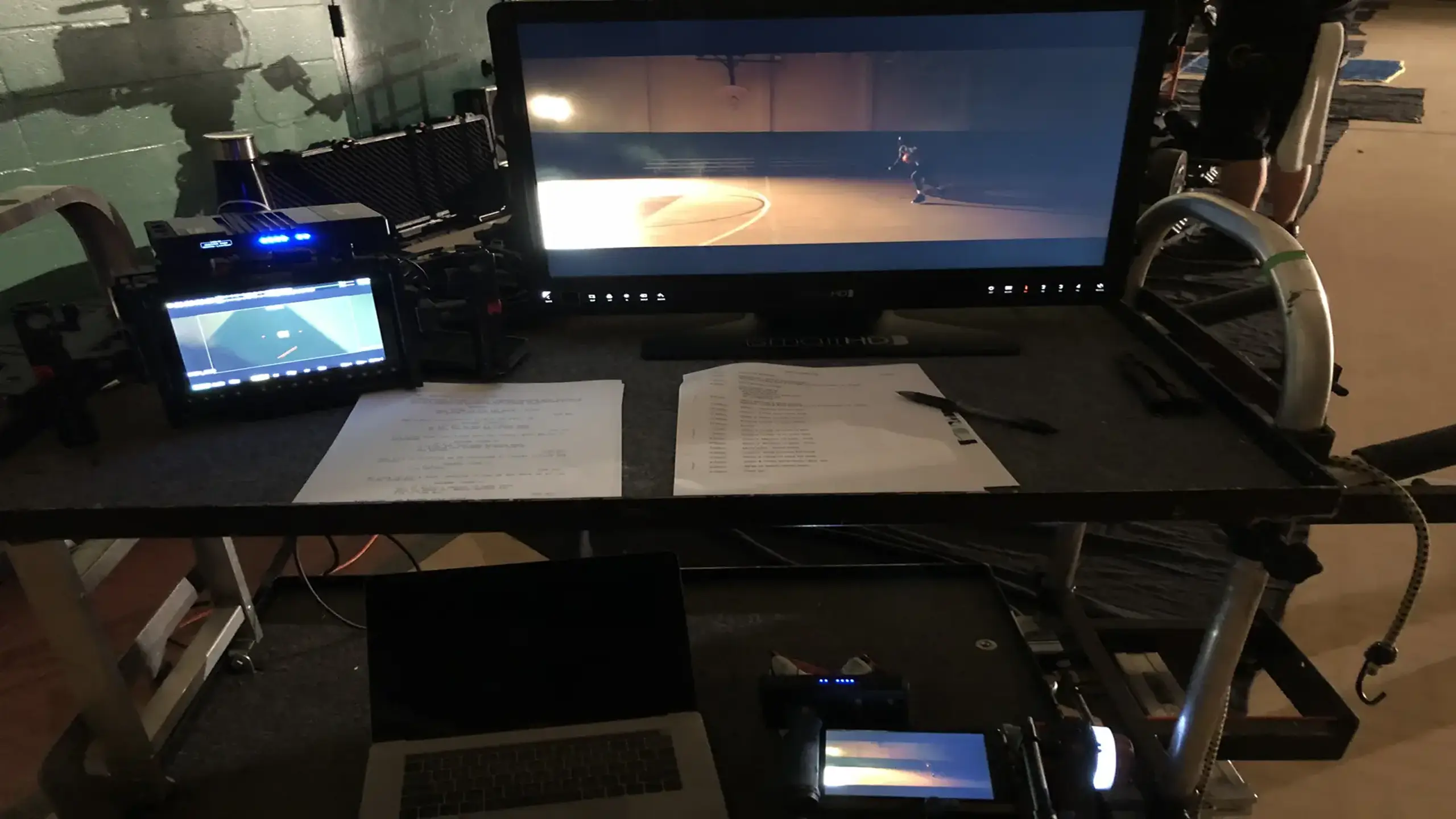
A **B2B marketing campaign** is not just a promotional push. It is a structured, multi-channel effort designed to move business decision-makers from awareness to action. Unlike consumer marketing, where impulse and emotion often dominate, B2B campaigns must justify value, reduce perceived risk, and demonstrate measurable ROI.
For companies navigating competitive industries, especially in media, technology, healthcare, or manufacturing, success depends on clarity and credibility. At C&I Studios, B2B strategy is never about noise. It is about building authority, aligning messaging with stakeholder priorities, and converting attention into qualified leads.
According to the Content Marketing Institute’s 2023 B2B Benchmarks Report, over 70% of B2B marketers say content marketing increases brand awareness and credibility among business buyers. This reinforces a key truth: business audiences demand expertise before engagement.
Understanding how to design a campaign that resonates with executives, procurement officers, and marketing directors is the difference between generating traffic and generating contracts.
## What Defines a B2B Marketing Campaign?
A **B2B marketing campaign** is a coordinated set of marketing activities targeting other businesses rather than individual consumers. Its primary goal is to influence decision-makers who control budgets, partnerships, or procurement.
Unlike B2C campaigns, B2B efforts must account for:
- Longer sales cycles
- Multiple stakeholders in purchasing decisions
- Higher transaction values
- Greater demand for proof and performance data
For example, when C&I Studios develops a campaign for a corporate client, the messaging often addresses both marketing executives and financial decision-makers. The creative approach must communicate innovation while simultaneously validating return on investment.
**B2B campaigns typically focus on:**
- Lead generation
- Brand positioning within a specific industry
- Thought leadership
- Relationship building
They rely heavily on trust. Business buyers do not make emotional impulse purchases; they invest strategically.
## Why B2B Campaigns Require a Different Strategic Framework
B2B marketing campaigns operate under a distinct strategic logic. The purchase decision may involve marketing managers, procurement teams, C-suite executives, and legal departments. Each stakeholder evaluates risk differently.
A successful campaign must:
- Demonstrate industry authority
- Provide measurable value
- Address operational pain points
- Support claims with data
Research from Gartner indicates that the typical B2B buying group involves six to ten decision-makers. Each member consumes four to five pieces of information before reaching consensus. That complexity requires campaigns built on structured messaging and consistent storytelling.
This is where high-level [content creation](https://c-istudios.com/content-creation-services/) becomes essential. Whitepapers, executive briefs, case studies, and strategic brand narratives all contribute to reducing uncertainty. At C&I Studios, content is not filler. It is a decision-making tool.
## Core Components of a High-Converting B2B Marketing Campaign
Every high-performing **B2B marketing campaign** shares foundational elements. Without these, even strong creative execution will underperform.
### Clear Audience Segmentation
Businesses are not monolithic. A manufacturing company has operations managers, procurement leads, marketing teams, and financial officers. Each group values different outcomes.
Effective segmentation includes:
- Industry vertical
- Company size
- Budget range
- Operational pain points
- Decision-making authority
When segmentation is precise, messaging becomes targeted rather than generic. This increases engagement and reduces wasted spend.
### Strong Value Proposition
In B2B, clarity beats cleverness. Decision-makers want to know:
- What problem does this solve?
- How does it outperform alternatives?
- What measurable benefit will it deliver?
The value proposition must be concise and evidence-based. Case studies, ROI projections, and performance metrics reinforce credibility.
### Multi-Channel Integration
Modern B2B campaigns rarely rely on a single channel. They combine:
- LinkedIn advertising
- Email marketing
- Webinars
- Industry publications
- Targeted landing pages
In many cases, visual storytelling becomes a differentiator. Strategic [video production](https://c-istudios.com/video-production-services/) can transform technical messaging into compelling narratives that resonate with executive audiences. Explainer videos, testimonial interviews, and industry insights position brands as authorities.
### Measurable KPIs
A campaign without measurement is speculation. B2B campaigns typically track:
- Marketing Qualified Leads (MQLs)
- Cost per lead
- Conversion rates
- Customer acquisition cost
- Lifetime value
Data informs optimization. Continuous analysis ensures budget allocation aligns with results.
## Types of B2B Marketing Campaigns That Drive Results
Different business goals require different campaign structures. Below are common frameworks used in high-level B2B strategies.
### Lead Generation Campaigns
These campaigns focus on capturing qualified contacts. Tactics may include gated content, downloadable resources, and targeted paid ads.
Key elements:
- High-value downloadable assets
- Clear landing page messaging
- CRM integration for follow-up
- Automated email nurturing
Lead generation campaigns work best when supported by authoritative thought leadership.
### Account-Based Marketing (ABM)
ABM targets specific high-value accounts instead of broad audiences. This strategy is especially effective in enterprise sales.
Core components:
- Personalized outreach
- Custom landing pages
- Executive-level messaging
- Direct sales integration
ABM requires alignment between marketing and sales teams. It prioritizes depth over scale.
### Brand Authority Campaigns
These campaigns establish long-term credibility within an industry. Rather than focusing purely on immediate leads, they build trust.
Tactics include:
- Industry reports
- Executive interviews
- Educational webinars
- Strategic partnerships
Brand authority increases inbound interest and shortens future sales cycles.
## The Role of Creative Strategy in B2B Marketing
Many businesses underestimate the power of creativity in B2B marketing. They assume that because the audience is corporate, the messaging must be sterile.
That assumption is flawed.
Decision-makers are human. They respond to clarity, confidence, and compelling storytelling. A campaign that combines strategic messaging with sophisticated visual assets stands out.
At C&I Studios, creative execution bridges technical expertise and business value. A well-produced brand narrative video can articulate complex service offerings more efficiently than a 20-page document. However, creativity must always serve strategy.
Effective creative strategy in B2B includes:
- Clear visual identity
- Executive-level tone
- Data-backed storytelling
- Consistent brand positioning
When creative assets reinforce business objectives, campaigns gain momentum.
## Digital Infrastructure and Conversion Optimization
A **B2B marketing campaign** is only as strong as its digital foundation. Traffic without conversion architecture leads to wasted investment.
Key infrastructure components include:
- Optimized landing pages
- Clear calls to action
- Mobile responsiveness
- Fast load times
- Integrated analytics
According to HubSpot’s 2023 Marketing Report, companies that prioritize website optimization see significantly higher conversion rates than those that do not. In B2B, where lead values are high, even small conversion improvements produce substantial revenue gains.
Conversion optimization focuses on:
- Simplifying forms
- Reducing friction
- Highlighting credibility signals
- Reinforcing value propositions
Each adjustment must align with buyer psychology.
## Common Mistakes in B2B Marketing Campaigns
Even well-funded campaigns fail when strategic fundamentals are ignored.
Frequent mistakes include:
- Targeting too broad an audience
- Overcomplicating messaging
- Ignoring data analysis
- Underestimating the sales cycle
- Failing to align marketing with sales
Another critical mistake is prioritizing tactics over strategy. Businesses often launch ads without clarifying positioning. Without a clear narrative, even high-quality creative assets underperform.
B2B marketing requires patience. It demands consistency and refinement.
## Aligning B2B Marketing With Business Growth Objectives
A successful **B2B marketing campaign** is not isolated from broader company goals. It should support revenue targets, expansion plans, and brand positioning.
Alignment includes:
- Coordinating with sales forecasting
- Understanding profit margins
- Mapping customer lifetime value
- Supporting investor expectations
Marketing must function as a growth engine, not a cost center.
At C&I Studios, campaign development begins with strategic discovery. Understanding business objectives shapes messaging, channel selection, and creative execution. The result is a campaign designed to generate sustainable growth rather than short-term visibility.
## Why Strategic Execution Matters More Than Tactics
There is no shortage of marketing tools. Platforms evolve, algorithms change, and new channels emerge. However, foundational strategy remains constant.
A B2B campaign succeeds when it:
- Identifies the right audience
- Articulates measurable value
- Delivers authority-driven messaging
- Integrates data analysis
- Maintains consistent brand presence
Businesses that treat marketing as an investment in long-term positioning outperform competitors focused solely on short-term wins.
B2B buyers seek partners, not vendors. Campaigns that demonstrate competence, reliability, and expertise build lasting relationships.
As we move forward, the next step is understanding how to design and execute a B2B marketing campaign from planning through launch, including channel selection, budget allocation, and performance optimization strategies that maximize measurable results.
## High-Performance B2B Marketing Campaign
Understanding what a **B2B marketing campaign** is forms the foundation. Execution determines whether strategy translates into revenue. The difference between campaigns that generate visibility and those that generate contracts lies in disciplined planning, cross-team alignment, and performance-driven optimization.
In Part 1, we explored strategic fundamentals. Now we move into practical execution: how to build, launch, and refine campaigns that convert business audiences into long-term clients.
### Step 1. Define Revenue-Driven Objectives
Too many B2B campaigns start with vague goals like “increase awareness.” Awareness alone does not justify investment.
Effective objectives are measurable and revenue-linked:
- Generate 150 qualified leads in 90 days
- Reduce cost per acquisition by 20%
- Increase SQL conversion rate by 15%
- Close five enterprise accounts in Q2
Each campaign objective should connect directly to broader company growth metrics. This ensures marketing efforts support pipeline health and executive reporting requirements.
Without defined benchmarks, optimization becomes guesswork.
### Step 2. Map the Buyer Journey in Detail
B2B purchase cycles are layered and often prolonged. A structured buyer journey typically includes:
- Awareness
- Consideration
- Evaluation
- Decision
- Post-purchase expansion
At each stage, prospects require different information. Early-stage audiences may need educational insights. Mid-stage prospects demand comparative analysis. Late-stage buyers want proof, risk mitigation, and ROI clarity.
This is where advanced [social media marketing](https://c-istudios.com/social-media-marketing-services/) plays a critical role. Platforms like LinkedIn allow hyper-targeted messaging aligned with job title, industry, and company size. Thought leadership posts, sponsored case studies, and retargeting sequences nurture buyers through the funnel rather than pushing immediate conversion.
Effective B2B campaigns treat the buyer journey as a structured progression, not a single touchpoint.
### Step 3. Build Authority Through Strategic Content Architecture
Authority accelerates trust. Trust accelerates decisions.
High-performing campaigns rely on a layered content structure that includes:
- Industry-specific blog articles
- Executive-level whitepapers
- Data-backed case studies
- Expert interviews
- Webinars and panel discussions
Each asset should serve a clear funnel position. For example:
- Blog posts capture organic traffic
- Whitepapers generate gated leads
- Case studies validate credibility
- Webinars position executives as thought leaders
Strategic distribution amplifies reach. Content without visibility has limited impact. Consistent amplification through targeted channels ensures exposure among decision-makers.
### Step 4. Integrate Creative Assets That Communicate Complex Value
B2B offerings often involve technical, operational, or financial complexity. Simplifying these without reducing credibility is an art.
Creative assets should clarify rather than decorate. Strong visuals, clear messaging, and cohesive design reinforce authority. This is where disciplined [branding & graphic design](https://c-istudios.com/branding-and-graphic-design-services/) becomes critical. Visual consistency signals professionalism. Inconsistent branding signals risk.
Key creative considerations include:
- Executive-friendly layout and typography
- Clear data visualization
- Strategic use of testimonials
- Visual storytelling aligned with business outcomes
Corporate buyers evaluate competence quickly. Presentation influences perception.
### Step 5. Align Marketing and Sales From Day One
One of the most overlooked components of a B2B marketing campaign is sales integration. Marketing cannot operate in isolation.
Alignment requires:
- Shared definitions of MQL and SQL
- CRM integration
- Regular performance reviews
- Feedback loops from sales representatives
If sales teams report that leads lack quality, marketing must adjust targeting and messaging. If closing rates improve after specific campaigns, those strategies should be scaled.
Data synchronization ensures resources focus on high-value accounts.
### Step 6. Optimize Landing Pages for Conversion Precision
Traffic alone does not produce revenue. Conversion architecture determines whether interest becomes pipeline.
Effective landing pages include:
- Clear, benefit-focused headlines
- Proof elements such as testimonials or data points
- Streamlined forms
- Transparent next steps
Avoid overwhelming visitors with excessive text. Instead, prioritize clarity and proof.
Research from WordStream shows that optimized landing pages significantly improve B2B lead generation performance compared to generic website pages. Precision matters.
Even minor changes, such as reducing form fields, can produce measurable impact.
### Step 7. Use Data to Refine Performance Continuously
A B2B marketing campaign should evolve based on analytics. Real-time data enables strategic adjustments.
Critical metrics to monitor include:
- Cost per lead
- Click-through rate
- Conversion rate
- Engagement time
- Lead-to-opportunity ratio
Patterns reveal strengths and weaknesses. If certain industries respond more actively, budget allocation should shift accordingly. If a specific message increases click-through rates, creative testing should expand around that theme.
Optimization is ongoing. Static campaigns decline in effectiveness over time.
## Budget Allocation Strategies for B2B Campaigns
Budget decisions influence scale and speed. B2B campaigns often require significant investment because of longer sales cycles and higher customer value.
Effective allocation prioritizes:
- High-intent channels
- Retargeting strategies
- Account-based initiatives
- Content amplification
Rather than distributing funds evenly, businesses should focus investment on channels that historically convert within their sector.
For example, enterprise-focused industries may see stronger returns on LinkedIn advertising compared to broader social platforms. Performance data should guide allocation.
## Leveraging Industry Credibility for Competitive Advantage
Industry authority differentiates strong brands from average competitors. Credibility-building strategies include:
- Publishing proprietary research
- Speaking at industry conferences
- Partnering with established organizations
- Securing media placements
These efforts position brands as category leaders rather than service providers.
Authority shortens sales cycles because prospects enter conversations with existing trust.
## Common Execution Pitfalls in B2B Campaign Launches
Even strong strategies fail if execution lacks discipline. Common pitfalls include:
- Launching without proper testing
- Ignoring stakeholder alignment
- Over-relying on a single channel
- Failing to follow up with leads promptly
- Underestimating creative consistency
Execution requires structured timelines and accountability. Campaign calendars should outline asset development, launch milestones, review checkpoints, and optimization phases.
Rushed campaigns often result in inconsistent messaging and lost opportunities.
## Building Long-Term Momentum Beyond Initial Launch
The most effective B2B marketing campaigns do not end after launch. They evolve into ongoing systems.
Sustained growth comes from:
- Retargeting engaged prospects
- Expanding into adjacent industries
- Developing deeper content series
- Leveraging client testimonials
- Scaling high-performing segments
Campaign momentum builds over time. Consistency compounds results.
Organizations that treat marketing as a continuous growth engine outperform competitors who rely on sporadic promotional pushes.
## The Strategic Role of Partnerships and Collaboration
Collaboration expands reach and credibility. Joint webinars, co-branded research reports, and strategic alliances expose campaigns to new audiences.
Partnership-driven campaigns benefit from shared authority and expanded distribution networks. They also reinforce positioning within industry ecosystems.
Collaboration is especially powerful in B2B environments where trust and referrals influence decision-making.
### Measuring True Campaign Impact
Vanity metrics mislead leadership teams. True impact measurement includes:
- Revenue attribution
- Customer acquisition cost
- Sales cycle duration
- Client retention rates
- Expansion revenue
Leadership requires visibility into tangible outcomes. Reporting frameworks should connect marketing activity to pipeline performance.
When executives see clear revenue influence, marketing transitions from expense to strategic asset.
## Sustaining Competitive Advantage in B2B Markets
Competitive B2B landscapes demand strategic sophistication. A well-executed **B2B marketing campaign** combines audience precision, authoritative messaging, creative excellence, and data-driven optimization.
At C&I Studios, campaigns are developed not simply to generate leads but to establish long-term market positioning. That approach ensures businesses do not compete on price alone. They compete on value, clarity, and credibility.
For organizations seeking structured growth, strategic campaign architecture becomes the foundation for sustained expansion. When executed with discipline and aligned to measurable business outcomes.
If you are evaluating how your current campaigns align with long-term growth goals, exploring a structured, performance-driven approach can open opportunities that extend far beyond incremental improvements, and that conversation often starts with clarity around strategy rather than tactics. [Contact us](https://c-istudios.com/contact/) at C&I Studios.
## Work with C&I Studios
If you are planning a project like this, our team can take it from concept to final delivery. Explore our [video production services](https://c-istudios.com/video-production-services/), browse [our work](https://c-istudios.com/our-work/) to see how we tell brand stories, and [get in touch](https://c-istudios.com/contact/) when you are ready to start.
Originally published February 13, 2026
---
*This content is from [C&I Studios](https://c-istudios.com), a full-service production company.*
---
# Marketing Campaign Cost: 2026 Budget Breakdown
> Published: February 12, 2026
> Categories: Commercial & Brand
> Source: https://c-istudios.com/marketing-campaign-cost-2026-budget-breakdown/
---
.cib{--paper:#1b1d1f;--ink:#fff;--body:#d5d7d9;--muted:#8b9096;--line:rgba(255,255,255,.12);--thumb:#2b2e31;--card:#212426;--accent:#c02b0a;--blue:#5B8FA8;--serif:'Playfair Display',Georgia,serif;--sans:'Poppins',-apple-system,sans-serif;--measure:900px;background:var(--paper);color:var(--body);font-family:var(--sans);line-height:1.6;position:relative;left:50%;transform:translateX(-50%);width:90vw;max-width:1920px}
.cib *{box-sizing:border-box}
.cib .kicker{max-width:var(--measure);margin:58px auto 0;padding:0 22px;font-size:12.5px;font-weight:700;letter-spacing:2.5px;text-transform:uppercase;color:var(--blue)}
.cib h1.cibh1{text-wrap:balance;font-family:var(--serif);font-weight:500;font-size:clamp(46px,6vw,72px);line-height:1.08;color:var(--ink);max-width:var(--measure);margin:18px auto 0;padding:0 22px;letter-spacing:-.5px}
.cib .metarow{max-width:var(--measure);margin:20px auto 0;padding:0 22px;color:var(--muted);font-size:14px}
.cib .hero{position:relative;width:100%;height:0;padding-bottom:56.25%;overflow:hidden;margin:48px auto 0;border-top:1px solid var(--line);border-bottom:1px solid var(--line)}
.cib .hero .ph{width:100%;aspect-ratio:16/9;background:var(--thumb);border-top:1px solid var(--line);border-bottom:1px solid var(--line);display:flex;align-items:center;justify-content:center;color:#7d8288;font-size:13px;text-align:center;padding:0 20px}
.cib .body{max-width:var(--measure);margin:12px auto 0;padding:52px 22px 6px}
.cib .body.lead p:first-child{font-size:23px;line-height:1.62;color:var(--ink)}
.cib .body p{font-size:18.5px;line-height:1.85;margin:0 0 30px;color:var(--body)}
.cib .body h2{text-wrap:balance;font-family:var(--serif);font-weight:500;font-size:clamp(32px,4vw,48px);line-height:1.22;color:var(--ink);margin:70px 0 20px;letter-spacing:-.3px}
.cib .body h3{text-wrap:balance;font-family:var(--sans);font-weight:600;font-size:22px;color:var(--ink);margin:38px 0 8px}
.cib .body a{color:var(--ink);text-decoration:underline;text-decoration-color:rgba(255,255,255,.4);text-underline-offset:3px}
.cib .body a:hover{text-decoration-color:var(--ink)}
.cib .ctable{width:100%;border-collapse:collapse;margin:16px 0 30px;font-size:16px}
.cib .ctable th{background:#000;color:#fff;text-align:left;padding:10px 12px;font-family:var(--sans)}
.cib .ctable td{padding:10px 12px;border-bottom:1px solid var(--line);color:var(--body)}
.cib .inimg{position:relative;width:100%;height:0;padding-bottom:56.25%;overflow:hidden;margin:72px auto;border-top:1px solid var(--line);border-bottom:1px solid var(--line)}
.cib .inimg .ph{width:100%;aspect-ratio:16/9;background:var(--thumb);border-top:1px solid var(--line);border-bottom:1px solid var(--line);display:flex;align-items:center;justify-content:center;color:#7d8288;font-size:13px}
.cib .origpub{max-width:var(--measure);margin:60px auto 0;padding:26px 22px 0;border-top:1px solid var(--line);color:var(--muted);font-size:13.5px}
.cib .related{max-width:1200px;margin:64px auto 0;padding:34px 22px 76px}
.cib .related h3{font-family:var(--sans);font-size:12.5px;letter-spacing:2px;text-transform:uppercase;color:var(--ink);margin:0 0 24px}
.cib .grid{display:grid;grid-template-columns:repeat(3,1fr);gap:28px}
.cib .rc{background:var(--card);border:1px solid var(--line);display:block;text-decoration:none;color:inherit;transition:border-color .15s}
.cib a.rc:hover{border-color:rgba(255,255,255,.5)}
.cib .rc .thumb{position:relative;width:100%;height:0;padding-bottom:56.25%;background:var(--thumb);overflow:hidden}
.cib .rc .thumb img{position:absolute!important;top:0!important;left:0!important;width:100%!important;height:100%!important;object-fit:cover!important;margin:0!important}
.cib .rc .cc{padding:14px 15px 17px}
.cib .rc .rt{font-family:var(--serif);font-weight:500;font-size:16px;line-height:1.3;color:var(--ink);margin:0 0 6px}
.cib .rc .rm{font-size:11px;letter-spacing:1px;text-transform:uppercase;color:var(--muted)}
.cib img{margin:0!important;padding:0!important;display:block!important;vertical-align:top;max-width:100%}
.cib .hero img,.cib .inimg img{position:absolute!important;top:0!important;left:0!important;width:100%!important;height:100%!important;object-fit:cover!important;margin:0!important;padding:0!important;border:0!important;display:block!important;aspect-ratio:auto!important}
.cib .hero+.body{padding-top:36px}
@media(max-width:760px){.cib .grid{grid-template-columns:1fr}.cib .body h2{margin:52px 0 16px}.cib .body p{font-size:17.5px}.cib .inimg,.cib .hero{margin-top:44px}}
.cib .vembed{max-width:var(--measure);margin:44px auto;padding:0 22px}.cib .vembed .vwrap{position:relative;width:100%;height:0;padding-bottom:56.25%}.cib .vembed .vwrap iframe{position:absolute;top:0;left:0;width:100%;height:100%;border:0}
Commercial & Brand
# Marketing Campaign Cost. 2026 Budget Breakdown
8 min read

Understanding your **marketing campaign cost** in 2026 is no longer about asking, “How much should we spend?” It is about asking, “What outcome are we engineering?”
At C&I Studios, we approach campaign budgeting as a performance strategy, not a line-item expense. Businesses that treat marketing as an investment rather than a cost center consistently outperform competitors.
According to the 2024 CMO Survey conducted by Duke University’s Fuqua School of Business, marketing budgets account for roughly 9-11 percent of company revenue on average, depending on industry. High-growth brands often invest significantly more.
But averages can mislead. The real number depends on objectives, industry competition, production quality, timeline, and distribution channels.
Before allocating funds, you need clarity on three things:
- Revenue targets
- Customer acquisition cost (CAC) tolerance
- Expected lifetime value (LTV) of a customer
Without these metrics, your budget is guesswork.
Let us break down what shapes campaign costs in 2026 and where the money actually goes.
## The Core Drivers Behind Marketing Campaign Cost
Marketing budgets are determined by complexity and ambition. A simple local awareness push costs dramatically less than a national multi-channel rollout.
### Campaign Scope and Goals
A short-term promotion targeting a niche audience may cost $10,000-$25,000. A fully integrated, multi-platform campaign with high-end [video production](https://c-istudios.com/video-production-services/), paid media, and performance tracking can exceed $150,000-$500,000.
The difference lies in scope:
- Local vs. national reach
- Single channel vs. multi-channel
- Brand awareness vs. direct response
- Short campaign vs. long-term strategy
Campaigns built for long-term brand positioning require stronger creative assets and extended distribution timelines.
### Production Quality and Creative Development
Creative development is often underestimated in budget discussions.
High-performing campaigns rely on strategic messaging, visual identity, scripting, and production design. Whether it involves commercial shoots, professional photography, or advanced editing, production quality directly impacts ROI.
Production budgets typically break down into:
- Concept development and strategy
- Pre-production planning
- On-site production
- Post-production editing
- Asset formatting for multiple platforms
Premium creative execution costs more upfront but lowers cost per acquisition when properly distributed.
## Channel-Based Budget Benchmarks for 2026
Different channels demand different levels of investment.
### Digital Advertising
Paid media is often the largest budget segment. Platforms like Google Ads, Meta, LinkedIn, and TikTok operate on auction-based models, meaning costs fluctuate based on competition.
Typical monthly ad spend ranges:
- Small business: $3,000-$10,000
- Mid-sized company: $15,000-$50,000
- Enterprise brand: $100,000+
Your marketing campaign cost increases in competitive industries such as finance, real estate, healthcare, and tech.
Cost drivers include:
- Cost per click (CPC)
- Cost per thousand impressions (CPM)
- Audience targeting depth
- Creative refresh frequency
According to Statista’s 2024 digital advertising report, global digital ad spending is projected to exceed $870 billion by 2027, indicating rising competition and higher media costs.
### Content and Brand Building
Strong campaigns do not rely solely on paid ads. They integrate strategic [content creation](https://c-istudios.com/content-creation-services/) to build authority and organic reach.
Content budgets may include:
- Long-form blogs
- SEO strategy
- Social media management
- Email campaigns
- Landing page design
A structured content engine can cost between $5,000 and $30,000 per month depending on scale.
While this appears significant, content lowers long-term acquisition costs and strengthens brand equity.
### Experiential and Hybrid Campaigns
Live events, pop-ups, hybrid streaming activations, and branded experiences can significantly increase budgets.
Costs may include:
- Venue rental
- Talent
- Production crew
- Stage design
- Live streaming infrastructure
- Insurance and permits
Experiential campaigns typically range from $50,000 to $250,000 depending on scale.
## Industry-Specific Budget Variations
Not all industries operate under the same cost pressures.
### B2B vs. B2C
B2B campaigns often require:
- Longer sales cycles
- Highly targeted messaging
- Account-based marketing strategies
- Educational assets
Although audience size may be smaller, production and research costs are higher. However, customer lifetime value is often significantly greater.
B2C campaigns frequently focus on scale and volume, requiring higher media budgets to drive visibility.
### Startup vs. Established Brand
Startups typically allocate 15-25 percent of revenue to marketing during aggressive growth phases. Established brands may operate closer to 7-10 percent.
Startups spend more to gain traction. Established brands spend strategically to maintain dominance.
## The Breakdown. Where Your Budget Actually Goes
To understand marketing campaign cost realistically, you need to see how funds are distributed.
A mid-sized integrated campaign might allocate:
- 20-30 percent to creative development
- 40-50 percent to paid media
- 10-20 percent to analytics and tracking
- 10-15 percent to management and optimization
Many businesses underestimate analytics. Data tracking platforms, attribution software, performance dashboards, and optimization specialists are essential for maximizing ROI.
Without analytics, spending increases but returns remain unclear.
## Cost of In-House vs. Agency Partnership
Businesses often debate whether to build internal teams or partner with agencies.
### In-House Team Costs
Hiring full-time staff involves:
- Salaries
- Benefits
- Software tools
- Equipment
- Training
An internal marketing team of five professionals can easily exceed $400,000 annually in payroll alone.
### Agency Collaboration
Working with a strategic partner like C&I Studios consolidates expertise into a scalable model. Agencies offer:
- Creative direction
- Production resources
- Media buying specialists
- Performance analytics
- Scalable production infrastructure
While project-based fees may appear high, they often cost less than maintaining equivalent in-house capabilities.
## Hidden Costs Businesses Overlook
Campaign budgets frequently expand because of overlooked factors.
These may include:
- Creative revisions
- Platform-specific formatting
- Licensing and usage rights
- Talent contracts
- Compliance requirements
- Data integration tools
Additionally, campaigns require optimization cycles. Creative fatigue is real. Assets must evolve.
Failing to budget for iteration increases total marketing campaign cost later through inefficiency.
## How to Calculate Your Ideal Marketing Campaign Cost
Instead of asking, “What does marketing cost?” ask, “What revenue target justifies the investment?”
Here is a practical framework:
1. Define revenue goal.
2. Estimate customer lifetime value (LTV).
3. Determine acceptable customer acquisition cost (CAC).
4. Reverse engineer required lead volume.
5. Allocate budget across channels accordingly.
For example:
If your LTV is $5,000 and you are comfortable spending $1,000 to acquire a customer, you can forecast the budget needed to achieve specific growth goals.
This transforms marketing from speculative spending into calculated scaling.
## ROI Expectations in 2026
Marketing performance expectations have shifted. Stakeholders demand measurable outcomes.
According to HubSpot’s 2024 State of Marketing report, over 70 percent of marketers prioritize ROI measurement as their top performance metric.
Campaigns must be:
- Data-driven
- Conversion-focused
- Continuously optimized
High-quality production alone does not guarantee return. Distribution and analytics drive performance.
This is why successful campaigns combine strategy, creative excellence, and performance tracking under one integrated approach.
## Why Underfunding Campaigns Backfires
One of the most common strategic errors is partial funding.
Businesses allocate enough budget to produce creative assets but not enough to distribute them effectively.
Or they spend heavily on ads but compromise on production quality.
Underfunding creates:
- Weak creative
- Poor targeting
- Inconsistent messaging
- Low brand recall
Effective campaigns require alignment across creative, media, and analytics.
## Answer to “How Much Does a Marketing Campaign Cost?”
There is no universal number.
Small-scale digital campaigns may begin around $15,000-$30,000. Integrated regional campaigns can range between $75,000 and $250,000. National brand activations can surpass seven figures.
The determining factor is not industry averages. It is strategic intent.
At C&I Studios, campaign budgeting starts with clarity:
- What is the objective?
- Who is the target audience?
- What scale is required?
- What measurable return defines success?
Only then does cost become meaningful.
## How to Build a Smarter Marketing Budget in 2026
Clarified what influences the overall [marketing](https://c-istudios.com/media-marketing-consultation-services/) campaign cost, this section focuses on precision. The goal is not simply to spend less. The goal is to allocate capital where it compounds.
In 2026, efficiency comes from integration. Brands that align media, creative, analytics, and digital infrastructure outperform those treating them as isolated functions.
At C&I Studios, we view campaigns as interconnected systems rather than fragmented tactics.
### Align Budget With Revenue Physics
Budgeting begins with growth math.
Instead of selecting an arbitrary figure, reverse engineer your investment based on:
- Revenue target
- Gross margin
- Customer lifetime value
- Break-even acquisition cost
- Expected conversion rate
For example, if you aim to generate $2 million in new revenue and your average deal value is $10,000, you need 200 customers. If your conversion rate from qualified lead to sale is 10 percent, you need 2,000 qualified leads.
Now you can assign budget based on the cost per qualified lead in your industry.
This approach removes guesswork from your marketing campaign cost and replaces it with measurable scaling.
## Strategic Channel Allocation for 2026
Marketing is no longer linear. Customers interact with multiple touchpoints before converting. That means your budget must reflect how modern buyers move.
Brand Infrastructure: Digital Foundation First
Before heavy media spend, ensure your digital foundation is strong. This includes optimized landing pages, analytics configuration, and fast-loading websites.
Investment categories here include:
- Conversion-focused landing page builds
- Tracking integrations
- CRM alignment
- Technical improvements through [web development](https://c-istudios.com/web-development-services/)
A poorly optimized site increases acquisition costs because traffic does not convert efficiently. Even a 1-2 percent improvement in conversion rate can significantly reduce total campaign spend.
## Creative Identity and Visual Authority
Strong campaigns rely on consistency and credibility.
Visual identity work, messaging refinement, and audience positioning frequently involve **branding & [graphic design](https://c-istudios.com/branding-and-graphic-design-services/)** that ensures cohesion across platforms. Without this, paid media becomes fragmented and forgettable.
Creative infrastructure may include:
- Brand style guides
- Campaign-specific visual systems
- Motion graphics packages
- Ad creative variations
Consistency lowers cost per acquisition by increasing recognition and trust.
## Media Mix Allocation Model
Rather than placing all funds into one channel, a structured allocation model improves performance.
A typical 2026 model might look like:
- 40 percent paid media
- 25 percent creative development
- 15 percent digital optimization
- 10 percent analytics and attribution
- 10 percent contingency and testing
The contingency portion is critical. Platform costs fluctuate. Algorithm changes occur. Testing protects long-term performance.
## Short-Term vs. Long-Term Budgeting Strategy
Not all marketing investments generate immediate returns.
### Performance Campaigns
Performance campaigns focus on measurable conversions. These include paid search, retargeting, and targeted social ads.
They are ideal for:
- Lead generation
- E-commerce sales
- Event registrations
- Time-sensitive promotions
These budgets are often flexible and adjustable weekly based on performance data.
## Brand Equity Investments
Brand-focused initiatives build authority over time. These may involve:
- Thought leadership
- Educational content
- High-end campaign storytelling
- Strategic partnerships
Brand equity lowers acquisition costs over time by increasing trust and recognition.
According to the Ehrenberg-Bass Institute research on brand growth, consistent brand visibility significantly impacts long-term market share expansion. Brands that underinvest in brand building often see diminishing returns in performance media.
Balancing both short-term and long-term investment stabilizes total marketing campaign cost over time.
## The Cost of Poor Attribution
One of the biggest hidden expenses in marketing is misattribution.
If you cannot track which channel drives revenue, you overspend on ineffective tactics.
Modern campaigns require:
- Multi-touch attribution
- Cross-platform tracking
- First-party data collection
- Predictive modeling
Platforms like Google Analytics 4 and CRM integrations allow brands to understand the real path to conversion.
Without accurate attribution, your marketing campaign cost appears higher because revenue influence is unclear.
## Testing as a Budget Multiplier
Testing is not an expense. It is a performance lever.
Smart budget allocation includes:
- A/B creative testing
- Landing page optimization
- Audience segmentation experiments
- Ad copy refinement
Even minor performance improvements scale dramatically when applied across large ad budgets.
For example:
If a campaign generates 3 percent conversion at $50 cost per acquisition, improving conversion to 4 percent reduces acquisition cost significantly across thousands of leads.
Testing reduces wasted spend and improves predictability.
## Cost-Saving Strategies Without Sacrificing Impact
Cutting budgets indiscriminately weakens campaigns. Strategic cost control, however, enhances performance.
### Repurpose Creative Across Platforms
Instead of producing new assets for every platform, adapt core creative into multiple formats.
One campaign shoot can generate:
- Paid ads
- Social reels
- Email visuals
- Website banners
- Retargeting creative
Maximizing asset lifespan lowers total production cost.
## Optimize Before Scaling
Do not scale untested campaigns.
Validate messaging and conversion performance with smaller budgets. Once profitable, increase spend gradually.
Scaling prematurely increases risk and inflates total marketing campaign cost.
## Invest in Data Over Guesswork
Spending $10,000 on analytics tools may save $100,000 in inefficient ad spend.
Data visibility is often the highest-return investment within a campaign budget.
## Marketing Campaign Cost for 2026 and Beyond
Media costs are rising globally due to increased competition and AI-driven bidding models.
Expect:
- Higher CPM rates in competitive sectors
- Increased creative refresh frequency
- Greater need for personalization
- More sophisticated tracking requirements
Planning budgets with 10-20 percent flexibility protects against volatility.
Brands that operate with rigid, inflexible budgets struggle when platforms shift.
## When to Increase Your Budget
You should increase marketing spend when:
- Customer acquisition cost is below target
- Conversion rates improve
- Lifetime value increases
- Market share opportunity expands
- Competitors reduce visibility
Scaling is strategic when returns justify expansion.
Conversely, reducing spend is wise when:
- Attribution is unclear
- Creative fatigue sets in
- Targeting is misaligned
- Economic conditions reduce demand
Smart budgeting is dynamic, not static.
## The Role of Strategic Oversight
Many businesses overspend not because they lack funds, but because they lack coordination.
Campaigns require alignment between:
- Creative direction
- Media buying
- Analytics teams
- Technical implementation
- Executive goals
Integrated oversight prevents fragmented spending.
At C&I Studios, campaigns are structured around measurable outcomes and operational clarity. Budget conversations are grounded in strategy, not guesswork.
## A Practical Budget Framework for 2026
To summarize a high-performance budgeting approach:
1. Define measurable revenue targets.
2. Reverse engineer acquisition goals.
3. Allocate funds across creative, media, and optimization.
4. Reserve budget for testing and iteration.
5. Track attribution rigorously.
6. Adjust dynamically based on performance.
This structure transforms marketing campaign cost into scalable investment architecture.
Marketing in 2026 is not about spending more. It is about spending deliberately.
If you are evaluating how to structure or optimize your next campaign budget, [C&I Studios](https://c-istudios.com/contact/) works with brands to design strategic frameworks that balance creative excellence with measurable performance.
The right allocation model often makes the difference between unpredictable spending and controlled growth.
## Work with C&I Studios
If you are planning a project like this, our team can take it from concept to final delivery. Explore our [video production services](https://c-istudios.com/video-production-services/), browse [our work](https://c-istudios.com/our-work/) to see how we tell brand stories, and [get in touch](https://c-istudios.com/contact/) when you are ready to start.
Originally published February 12, 2026
---
*This content is from [C&I Studios](https://c-istudios.com), a full-service production company.*
---
# How to Build a Marketing Strategy for a New Product Launch
> Published: February 11, 2026
> Categories: Commercial & Brand
> Source: https://c-istudios.com/how-to-build-a-marketing-strategy-for-a-new-product-launch/
---
.cib{--paper:#1b1d1f;--ink:#fff;--body:#d5d7d9;--muted:#8b9096;--line:rgba(255,255,255,.12);--thumb:#2b2e31;--card:#212426;--accent:#c02b0a;--blue:#5B8FA8;--serif:'Playfair Display',Georgia,serif;--sans:'Poppins',-apple-system,sans-serif;--measure:900px;background:var(--paper);color:var(--body);font-family:var(--sans);line-height:1.6;position:relative;left:50%;transform:translateX(-50%);width:90vw;max-width:1920px}
.cib *{box-sizing:border-box}
.cib .kicker{max-width:var(--measure);margin:58px auto 0;padding:0 22px;font-size:12.5px;font-weight:700;letter-spacing:2.5px;text-transform:uppercase;color:var(--blue)}
.cib h1.cibh1{text-wrap:balance;font-family:var(--serif);font-weight:500;font-size:clamp(46px,6vw,72px);line-height:1.08;color:var(--ink);max-width:var(--measure);margin:18px auto 0;padding:0 22px;letter-spacing:-.5px}
.cib .metarow{max-width:var(--measure);margin:20px auto 0;padding:0 22px;color:var(--muted);font-size:14px}
.cib .hero{position:relative;width:100%;height:0;padding-bottom:56.25%;overflow:hidden;margin:48px auto 0;border-top:1px solid var(--line);border-bottom:1px solid var(--line)}
.cib .hero .ph{width:100%;aspect-ratio:16/9;background:var(--thumb);border-top:1px solid var(--line);border-bottom:1px solid var(--line);display:flex;align-items:center;justify-content:center;color:#7d8288;font-size:13px;text-align:center;padding:0 20px}
.cib .body{max-width:var(--measure);margin:12px auto 0;padding:52px 22px 6px}
.cib .body.lead p:first-child{font-size:23px;line-height:1.62;color:var(--ink)}
.cib .body p{font-size:18.5px;line-height:1.85;margin:0 0 30px;color:var(--body)}
.cib .body h2{text-wrap:balance;font-family:var(--serif);font-weight:500;font-size:clamp(32px,4vw,48px);line-height:1.22;color:var(--ink);margin:70px 0 20px;letter-spacing:-.3px}
.cib .body h3{text-wrap:balance;font-family:var(--sans);font-weight:600;font-size:22px;color:var(--ink);margin:38px 0 8px}
.cib .body a{color:var(--ink);text-decoration:underline;text-decoration-color:rgba(255,255,255,.4);text-underline-offset:3px}
.cib .body a:hover{text-decoration-color:var(--ink)}
.cib .ctable{width:100%;border-collapse:collapse;margin:16px 0 30px;font-size:16px}
.cib .ctable th{background:#000;color:#fff;text-align:left;padding:10px 12px;font-family:var(--sans)}
.cib .ctable td{padding:10px 12px;border-bottom:1px solid var(--line);color:var(--body)}
.cib .inimg{position:relative;width:100%;height:0;padding-bottom:56.25%;overflow:hidden;margin:72px auto;border-top:1px solid var(--line);border-bottom:1px solid var(--line)}
.cib .inimg .ph{width:100%;aspect-ratio:16/9;background:var(--thumb);border-top:1px solid var(--line);border-bottom:1px solid var(--line);display:flex;align-items:center;justify-content:center;color:#7d8288;font-size:13px}
.cib .origpub{max-width:var(--measure);margin:60px auto 0;padding:26px 22px 0;border-top:1px solid var(--line);color:var(--muted);font-size:13.5px}
.cib .related{max-width:1200px;margin:64px auto 0;padding:34px 22px 76px}
.cib .related h3{font-family:var(--sans);font-size:12.5px;letter-spacing:2px;text-transform:uppercase;color:var(--ink);margin:0 0 24px}
.cib .grid{display:grid;grid-template-columns:repeat(3,1fr);gap:28px}
.cib .rc{background:var(--card);border:1px solid var(--line);display:block;text-decoration:none;color:inherit;transition:border-color .15s}
.cib a.rc:hover{border-color:rgba(255,255,255,.5)}
.cib .rc .thumb{position:relative;width:100%;height:0;padding-bottom:56.25%;background:var(--thumb);overflow:hidden}
.cib .rc .thumb img{position:absolute!important;top:0!important;left:0!important;width:100%!important;height:100%!important;object-fit:cover!important;margin:0!important}
.cib .rc .cc{padding:14px 15px 17px}
.cib .rc .rt{font-family:var(--serif);font-weight:500;font-size:16px;line-height:1.3;color:var(--ink);margin:0 0 6px}
.cib .rc .rm{font-size:11px;letter-spacing:1px;text-transform:uppercase;color:var(--muted)}
.cib img{margin:0!important;padding:0!important;display:block!important;vertical-align:top;max-width:100%}
.cib .hero img,.cib .inimg img{position:absolute!important;top:0!important;left:0!important;width:100%!important;height:100%!important;object-fit:cover!important;margin:0!important;padding:0!important;border:0!important;display:block!important;aspect-ratio:auto!important}
.cib .hero+.body{padding-top:36px}
@media(max-width:760px){.cib .grid{grid-template-columns:1fr}.cib .body h2{margin:52px 0 16px}.cib .body p{font-size:17.5px}.cib .inimg,.cib .hero{margin-top:44px}}
.cib .vembed{max-width:var(--measure);margin:44px auto;padding:0 22px}.cib .vembed .vwrap{position:relative;width:100%;height:0;padding-bottom:56.25%}.cib .vembed .vwrap iframe{position:absolute;top:0;left:0;width:100%;height:100%;border:0}
Commercial & Brand
# How to Build a Marketing Strategy for a New Product Launch
8 min read

Launching something new is not about noise. It is about precision.
A strong **marketing strategy for new product** development aligns positioning, timing, audience psychology, and execution across multiple channels. When done correctly, it reduces risk, accelerates adoption, and builds long-term brand equity. When done poorly, even a well-built product disappears in a crowded marketplace.
At C&I Studios, we have worked across industries, from startups to established brands, helping teams move from concept to launch with clarity. The key lesson is simple: products do not fail because they are bad. They fail because the strategy surrounding them is fragmented.
This guide outlines a structured, production-ready approach to building a marketing strategy that creates awareness, generates demand, and converts early traction into sustained growth.
## Clear Marketing Strategy Matters Before You Launch
A product launch is not a campaign. It is a coordinated sequence of events designed to control perception.
According to CB Insights, one of the top reasons startups fail is lack of market need. That is rarely about engineering. It is about messaging and positioning. Without clarity in your marketing strategy for new product, you risk attracting the wrong audience or failing to communicate relevance to the right one.
A structured strategy provides:
- Clear audience targeting
- Differentiated positioning
- Channel alignment
- Content roadmap
- Measurement framework
Without these elements, launch marketing becomes reactive instead of intentional.
## Define Market Position and Competitive Landscape
Before any promotion begins, positioning must be locked.
### Clarify the Core Value Proposition
Your product must solve a specific problem for a defined audience. Avoid generic benefits. Identify:
- What problem does it solve?
- Who experiences this problem most intensely?
- What alternatives currently exist?
- Why is your solution meaningfully different?
At C&I Studios, we often begin with messaging workshops that stress-test assumptions. The goal is to refine positioning until it is sharp enough to anchor every asset in the campaign.
### Map the Competitive Environment
Research direct competitors and substitute solutions. Look at:
- Messaging tone
- Content formats
- Channel focus
- Pricing positioning
- Customer reviews
This analysis reveals gaps. It also prevents imitation.
A [launch strategy](https://en.wikipedia.org/wiki/Product_launch) that blends in is already losing.
## Identify and Segment Your Target Audience
You cannot market to “everyone.”
Audience segmentation determines creative direction, platform selection, and budget allocation.
### Build Detailed Customer Profiles
Strong segmentation includes:
- Demographics
- Psychographics
- Behavioral triggers
- Purchase motivations
- Objections and friction points
The more specific the profile, the stronger the campaign.
For example, a product aimed at early adopters requires different messaging than one targeting cost-conscious buyers. Tone, urgency, and proof points will differ significantly.
### Validate Assumptions with Data
Market research, surveys, beta feedback, and social listening tools help validate audience insights. HubSpot reports that companies using buyer personas exceed revenue goals more frequently than those that do not.
This is not theory. It is execution discipline.
## Establish Brand Narrative and Messaging Architecture
Messaging is not a tagline. It is a system.
Your narrative should answer three core questions:
1. Why does this product exist?
2. What makes it different?
3. Why does it matter now?
At C&I Studios, narrative development integrates storytelling with content creation frameworks that scale across platforms. Messaging must adapt without losing coherence.
### Build a Messaging Hierarchy
Develop:
- Primary value statement
- Supporting proof points
- Emotional drivers
- Objection handling responses
This hierarchy ensures that every touchpoint, from landing pages to launch trailers, reinforces the same strategic narrative.
## Develop a Pre-Launch Awareness Strategy
A product should not appear suddenly. Anticipation builds momentum.
### Teaser Campaign Development
Pre-launch phases often include:
- Behind-the-scenes previews
- Email waitlists
- Social countdown campaigns
- Influencer seeding
- Early access invitations
The goal is to create curiosity without full disclosure.
Strategically timed video production assets can amplify this phase significantly. Short-form teasers, cinematic product reveals, and founder interviews help humanize the launch and establish credibility before full rollout.
Visual storytelling creates emotional investment before transactional intent.
## Choose Distribution Channels Strategically
Not all platforms deserve equal attention.
Your channel mix should reflect:
- Audience behavior
- Product category
- Budget constraints
- Conversion goals
### Digital Channels
- Social media advertising
- Email marketing
- Search engine marketing
- Influencer partnerships
- Landing page funnels
### Owned Media
- Website blog
- Newsletter
- Brand community platforms
### Earned Media
- PR outreach
- Media interviews
- Industry publications
Channel selection must align with your buyer journey. For example, high-consideration products require educational content and longer nurturing cycles. Impulse-driven products may rely more heavily on paid social performance campaigns.
## Build Launch Content Assets That Convert
Execution requires assets. High-quality assets increase trust and conversion probability.
Key deliverables often include:
- Launch announcement videos
- Product demonstration videos
- Landing pages
- Email sequences
- Social media creative
- Press kits
- FAQ documentation
At C&I Studios, integrated [content creation](https://c-istudios.com/content-creation-services/) ensures consistency across visual, written, and interactive touchpoints. The objective is not volume. It is cohesion.
Strong launch assets achieve three things:
- Educate
- Persuade
- Remove friction
Each asset must serve a defined role within the broader strategy.
## Create a Launch Timeline With Defined Phases
Structure prevents chaos.
A typical launch includes:
1. Pre-launch awareness
2. Official launch announcement
3. Conversion-focused campaign window
4. Post-launch retention push
Each phase should have:
- Specific KPIs
- Defined budgets
- Assigned responsibilities
- Asset release schedule
Without a timeline, execution becomes fragmented and results become inconsistent.
## Allocate Budget Based on Impact Potential
Budget allocation reflects priorities.
Instead of spreading spend thinly, concentrate resources on high-impact channels identified during audience research.
Budget categories often include:
- Paid advertising
- Creative production
- Influencer collaborations
- PR distribution
- Landing page optimization
- Analytics tools
A strategic [video production](https://c-istudios.com/video-production-services/) investment during launch can increase engagement and brand recall significantly compared to static creative alone. According to Wyzowl, video increases understanding of products and influences purchase decisions at a high rate.
The decision is not about trends. It is about measurable impact.
## Define KPIs and Measurement Framework
Metrics determine whether strategy worked.
Core KPIs may include:
- Website traffic
- Conversion rate
- Customer acquisition cost
- Email sign-ups
- Engagement rate
- Return on ad spend
However, do not measure everything. Measure what aligns with your phase.
Pre-launch focuses on awareness metrics. Launch week prioritizes conversion. Post-launch emphasizes retention and repeat engagement.
Analytics should be configured before launch, not after.
## Plan for Optimization and Iteration
No launch performs perfectly on day one.
Optimization cycles should include:
- A/B testing ad creative
- Refining landing page copy
- Adjusting targeting parameters
- Reallocating budget
- Improving onboarding flows
Rapid iteration separates successful launches from stalled ones.
At C&I Studios, we treat launch as an evolving campaign rather than a single event. Continuous performance analysis ensures momentum does not fade after initial attention.
## The Strategic Advantage of Integrated Production
Fragmented execution leads to inconsistent results.
An integrated partner approach, combining strategy, creative development, and performance analysis, reduces misalignment. When messaging, visuals, and channel tactics operate in isolation, brand identity weakens.
C&I Studios integrates narrative development, production, and performance refinement into one coordinated framework. This eliminates disconnect between planning and execution.
The result is a launch strategy that feels intentional rather than improvised.
### Executing a High-Impact Launch Campaign
A strategic framework means nothing without disciplined execution. Once positioning, audience targeting, and asset development are complete, the real test begins: coordinated rollout.
For a successful **marketing strategy for new product**, execution must feel orchestrated. Every touchpoint should reinforce the same narrative while guiding the audience toward a clear action.
At C&I Studios, launch execution is treated like a production schedule. There are milestones, performance checkpoints, and clearly defined deliverables across teams. When strategy and production move in sync, results compound quickly.
### Designing a Launch Moment That Feels Intentional
A launch should not feel like a post. It should feel like an event.
Depending on the product category and audience behavior, launch execution may include:
- Live product reveal events
- Interactive webinars
- Influencer co-hosted sessions
- Virtual demo showcases
- Media briefings
One powerful tactic is incorporating [video & audio live streaming](https://c-istudios.com/video-audio-live-streaming/) to create real-time engagement. Live formats generate urgency and authenticity that pre-recorded content cannot replicate. When audiences can ask questions, see demonstrations, and experience momentum collectively, conversion likelihood increases.
Live streaming also provides secondary content assets. Recorded sessions can be repurposed into social clips, highlight reels, and educational sequences, extending campaign lifespan without additional production costs.
## Leveraging Influencer and Partner Amplification
Early credibility accelerates adoption.
Influencers, strategic partners, and industry voices can bridge trust gaps during launch week. However, partnerships must align with positioning. Relevance matters more than reach.
Effective influencer collaboration includes:
- Co-created content
- Behind-the-scenes previews
- Honest product walkthroughs
- Limited-time offers for their audience
- Cross-platform amplification
Avoid transactional endorsements. Instead, integrate partners into the narrative arc of the launch. When influencers are involved early, during beta or preview phases, their content feels authentic rather than promotional.
The goal is credibility, not volume.
## Creating Multi-Touch Campaign Sequences
Modern launches require repeated exposure.
Single-announcement launches rarely sustain traction. A structured campaign sequence builds momentum over time.
### Example Launch Sequence
1. Teaser announcement
2. Educational value content
3. Live reveal event
4. Product demo spotlight
5. Customer testimonial spotlight
6. Limited-time incentive push
7. Retargeting phase
Each phase should reinforce your strategic message. If the campaign shifts tone or positioning midstream, confusion reduces conversion.
Coordinated [branding & graphic design](https://c-istudios.com/branding-and-graphic-design-services/) across all materials ensures visual continuity. Color systems, typography, motion language, and iconography should remain consistent throughout the campaign lifecycle.
Consistency builds recognition. Recognition builds trust.
## Optimizing Landing Pages for Conversion
Traffic means nothing without conversion architecture.
A high-performing landing page includes:
- Clear headline reflecting core value
- Benefit-focused subheading
- Visual proof or product demonstration
- Social proof elements
- Objection-handling FAQs
- Strong but natural call to action
User experience plays a significant role. Page load speed, mobile optimization, and intuitive layout impact performance metrics dramatically.
Test different variations of:
- Headline framing
- Call-to-action phrasing
- Visual placement
- Testimonial order
- Offer positioning
Optimization is not guesswork. It is controlled experimentation.
## Paid Media Scaling After Initial Traction
Once early signals confirm audience resonance, scaling begins.
Scaling does not mean increasing budget randomly. It means increasing investment in channels demonstrating favorable customer acquisition cost.
Focus on:
- Retargeting campaigns
- Lookalike audience expansion
- Sequential messaging funnels
- Platform diversification
When scaling, maintain creative freshness. Ad fatigue reduces effectiveness quickly. Refresh visuals and messaging before performance declines sharply.
## Public Relations and Earned Media Momentum
Earned media provides credibility amplification beyond paid placements.
Strategic PR efforts during launch can include:
- Press releases distributed to relevant outlets
- Founder interviews
- Guest articles
- Industry publication features
- Podcast appearances
Journalists and editors respond best to clear value angles. Avoid promotional tone. Focus on:
- Market relevance
- Innovation angle
- Data-backed insights
- Founder story
Earned placements strengthen brand authority and provide content assets that can be repurposed in paid campaigns.
## Post-Launch Retention Strategy
The launch does not end at conversion.
Retention and community building transform early customers into advocates.
Effective post-launch strategies include:
- Onboarding email sequences
- User education content
- Loyalty incentives
- Referral programs
- Community-building initiatives
Customer feedback collection during this phase is essential. Surveys, user interviews, and product analytics reveal friction points and improvement opportunities.
This feedback loop enhances product iteration and informs future marketing campaigns.
## Scaling the Brand Beyond the Initial Product
A new product launch should strengthen overall brand equity.
Once traction stabilizes, expand storytelling beyond features. Highlight:
- Customer success stories
- Behind-the-scenes innovation
- Industry insights
- Vision for future development
Long-term brand growth depends on sustained value communication. Avoid disappearing after launch week. Maintain visibility with structured content cycles and strategic updates.
## Role of Integrated Production in Sustained Growth
Launch success is rarely accidental.
When strategy, creative execution, and performance optimization operate within a unified framework, results improve. Fragmented marketing efforts, where creative, media, and analytics teams operate independently, often dilute impact.
At C&I Studios, launch strategy integrates narrative development, design execution, performance tracking, and iterative optimization. This holistic approach ensures that messaging does not drift and momentum does not fade after initial announcement.
Strong execution does not feel aggressive. It feels cohesive.
## Turning Strategy Into Measurable Growth
Developing a **marketing strategy for new product** requires research and positioning. Executing it requires coordination, discipline, and adaptive refinement.
From launch event design to paid scaling, from influencer integration to retention architecture, each layer compounds the previous one. Success is rarely the result of a single viral moment. It is the result of structured, repeated reinforcement of value.
If you are preparing for a product launch and want your strategy aligned with integrated production, narrative clarity, and performance optimization, explore how [C&I Studios](https://c-istudios.com/contact/) approaches launch execution and strategic growth.
Because the difference between attention and impact lies in how well your launch strategy is built to sustain momentum long after release day.
## Work with C&I Studios
If you are planning a project like this, our team can take it from concept to final delivery. Explore our [video production services](https://c-istudios.com/video-production-services/), browse [our work](https://c-istudios.com/our-work/) to see how we tell brand stories, and [get in touch](https://c-istudios.com/contact/) when you are ready to start.
Originally published February 11, 2026
---
*This content is from [C&I Studios](https://c-istudios.com), a full-service production company.*
---
# How to Calculate ROI for Your Marketing Campaign: A Step by Step Guide
> Published: February 10, 2026
> Categories: Commercial & Brand
> Source: https://c-istudios.com/how-to-calculate-roi-for-your-marketing-campaign-a-step-by-step-guide/
---
.cib{--paper:#1b1d1f;--ink:#fff;--body:#d5d7d9;--muted:#8b9096;--line:rgba(255,255,255,.12);--thumb:#2b2e31;--card:#212426;--accent:#c02b0a;--blue:#5B8FA8;--serif:'Playfair Display',Georgia,serif;--sans:'Poppins',-apple-system,sans-serif;--measure:900px;background:var(--paper);color:var(--body);font-family:var(--sans);line-height:1.6;position:relative;left:50%;transform:translateX(-50%);width:90vw;max-width:1920px}
.cib *{box-sizing:border-box}
.cib .kicker{max-width:var(--measure);margin:58px auto 0;padding:0 22px;font-size:12.5px;font-weight:700;letter-spacing:2.5px;text-transform:uppercase;color:var(--blue)}
.cib h1.cibh1{text-wrap:balance;font-family:var(--serif);font-weight:500;font-size:clamp(46px,6vw,72px);line-height:1.08;color:var(--ink);max-width:var(--measure);margin:18px auto 0;padding:0 22px;letter-spacing:-.5px}
.cib .metarow{max-width:var(--measure);margin:20px auto 0;padding:0 22px;color:var(--muted);font-size:14px}
.cib .hero{position:relative;width:100%;height:0;padding-bottom:56.25%;overflow:hidden;margin:48px auto 0;border-top:1px solid var(--line);border-bottom:1px solid var(--line)}
.cib .hero .ph{width:100%;aspect-ratio:16/9;background:var(--thumb);border-top:1px solid var(--line);border-bottom:1px solid var(--line);display:flex;align-items:center;justify-content:center;color:#7d8288;font-size:13px;text-align:center;padding:0 20px}
.cib .body{max-width:var(--measure);margin:12px auto 0;padding:52px 22px 6px}
.cib .body.lead p:first-child{font-size:23px;line-height:1.62;color:var(--ink)}
.cib .body p{font-size:18.5px;line-height:1.85;margin:0 0 30px;color:var(--body)}
.cib .body h2{text-wrap:balance;font-family:var(--serif);font-weight:500;font-size:clamp(32px,4vw,48px);line-height:1.22;color:var(--ink);margin:70px 0 20px;letter-spacing:-.3px}
.cib .body h3{text-wrap:balance;font-family:var(--sans);font-weight:600;font-size:22px;color:var(--ink);margin:38px 0 8px}
.cib .body a{color:var(--ink);text-decoration:underline;text-decoration-color:rgba(255,255,255,.4);text-underline-offset:3px}
.cib .body a:hover{text-decoration-color:var(--ink)}
.cib .ctable{width:100%;border-collapse:collapse;margin:16px 0 30px;font-size:16px}
.cib .ctable th{background:#000;color:#fff;text-align:left;padding:10px 12px;font-family:var(--sans)}
.cib .ctable td{padding:10px 12px;border-bottom:1px solid var(--line);color:var(--body)}
.cib .inimg{position:relative;width:100%;height:0;padding-bottom:56.25%;overflow:hidden;margin:72px auto;border-top:1px solid var(--line);border-bottom:1px solid var(--line)}
.cib .inimg .ph{width:100%;aspect-ratio:16/9;background:var(--thumb);border-top:1px solid var(--line);border-bottom:1px solid var(--line);display:flex;align-items:center;justify-content:center;color:#7d8288;font-size:13px}
.cib .origpub{max-width:var(--measure);margin:60px auto 0;padding:26px 22px 0;border-top:1px solid var(--line);color:var(--muted);font-size:13.5px}
.cib .related{max-width:1200px;margin:64px auto 0;padding:34px 22px 76px}
.cib .related h3{font-family:var(--sans);font-size:12.5px;letter-spacing:2px;text-transform:uppercase;color:var(--ink);margin:0 0 24px}
.cib .grid{display:grid;grid-template-columns:repeat(3,1fr);gap:28px}
.cib .rc{background:var(--card);border:1px solid var(--line);display:block;text-decoration:none;color:inherit;transition:border-color .15s}
.cib a.rc:hover{border-color:rgba(255,255,255,.5)}
.cib .rc .thumb{position:relative;width:100%;height:0;padding-bottom:56.25%;background:var(--thumb);overflow:hidden}
.cib .rc .thumb img{position:absolute!important;top:0!important;left:0!important;width:100%!important;height:100%!important;object-fit:cover!important;margin:0!important}
.cib .rc .cc{padding:14px 15px 17px}
.cib .rc .rt{font-family:var(--serif);font-weight:500;font-size:16px;line-height:1.3;color:var(--ink);margin:0 0 6px}
.cib .rc .rm{font-size:11px;letter-spacing:1px;text-transform:uppercase;color:var(--muted)}
.cib img{margin:0!important;padding:0!important;display:block!important;vertical-align:top;max-width:100%}
.cib .hero img,.cib .inimg img{position:absolute!important;top:0!important;left:0!important;width:100%!important;height:100%!important;object-fit:cover!important;margin:0!important;padding:0!important;border:0!important;display:block!important;aspect-ratio:auto!important}
.cib .hero+.body{padding-top:36px}
@media(max-width:760px){.cib .grid{grid-template-columns:1fr}.cib .body h2{margin:52px 0 16px}.cib .body p{font-size:17.5px}.cib .inimg,.cib .hero{margin-top:44px}}
.cib .vembed{max-width:var(--measure);margin:44px auto;padding:0 22px}.cib .vembed .vwrap{position:relative;width:100%;height:0;padding-bottom:56.25%}.cib .vembed .vwrap iframe{position:absolute;top:0;left:0;width:100%;height:100%;border:0}
Commercial & Brand
# How to Calculate ROI for Your Marketing Campaign. A Step by Step Guide
8 min read

Marketing budgets are no longer approved on creative instinct alone. In 2026, every dollar allocated to advertising, brand strategy, and digital outreach is expected to produce measurable returns.
To **calculate marketing ROI** accurately, you must go beyond surface metrics like impressions or likes. True ROI analysis connects revenue outcomes to specific investments and proves how strategic execution drives measurable growth.
According to HubSpot’s 2024 State of Marketing Report, marketers who prioritize ROI measurement are significantly more likely to receive increased budgets the following year (HubSpot, 2024). The implication is clear: performance accountability drives future opportunity.
This guide walks you step by step through the process, covering formulas, [attribution](https://support.google.com/analytics/answer/10597962) models, cost allocation, and strategic interpretation, so you can confidently present campaign value to stakeholders.
## Why Marketing ROI Matters More Than Ever
ROI is not simply a financial metric. It is a credibility metric.
When you demonstrate return, you:
- Justify marketing budgets
- Strengthen executive trust
- Optimize future campaigns
- Identify underperforming channels
- Shift strategy based on data rather than assumption
Without ROI, marketing appears as an expense. With ROI, it becomes an investment.
For creative teams working in [creative marketing](https://c-istudios.com/creative-marketing-services/), ROI measurement ensures storytelling aligns with revenue impact. A beautifully executed campaign without measurable performance cannot scale. Data-backed creativity, however, compounds.
## Understanding the Core ROI Formula
The Basic ROI Equation
At its most fundamental level:
**ROI = (Revenue - Cost) ÷ Cost × 100**
This formula produces a percentage that shows how much return was generated relative to investment.
For example:
- Campaign cost: $50,000
- Revenue generated: $150,000
ROI = (150,000 - 50,000) ÷ 50,000 × 100
ROI = 200%
This means for every dollar invested, two dollars were gained in profit.
Simple in theory. Complex in practice.
The challenge lies not in the math, but in accurately defining revenue and cost.
### Step 1. Define Clear Campaign Objectives
You cannot measure ROI without defining success first.
Before launching a campaign, clarify:
- Is the goal direct revenue?
- Lead generation?
- Brand awareness?
- Subscription growth?
- Event attendance?
Different objectives require different ROI frameworks.
For example, a product launch campaign may calculate ROI based on direct sales. A brand awareness campaign might require tracking assisted conversions over time.
C&I Studios typically aligns campaign KPIs with business objectives before production begins. This alignment ensures metrics are structured from the outset, not retrofitted after execution.
Without clarity here, ROI becomes distorted.
### Step 2. Identify All Campaign Costs
Most ROI calculations fail because they underestimate total investment.
Campaign costs include more than ad spend. They may involve:
- Strategy development
- Production expenses
- Creative design
- Paid media placement
- Talent fees
- Software subscriptions
- Internal team labor
- Post-production editing
- Analytics tools
For campaigns involving [video production](https://c-istudios.com/video-production-services/), costs often extend beyond filming. Editing, sound design, distribution strategy, and paid amplification must be included.
A common mistake is calculating ROI based only on ad spend while ignoring production costs. This artificially inflates returns.
A disciplined cost structure ensures accurate performance analysis.
### Step 3. Track Revenue Accurately
Revenue attribution is where marketing ROI becomes sophisticated.
Direct attribution is straightforward when:
- A paid ad leads directly to a purchase.
- A campaign landing page tracks conversions.
- UTM parameters connect traffic to revenue.
However, multi-touch campaigns require deeper attribution modeling.
**Common Attribution Models**
**First-Touch Attribution**
Credits the first interaction.
**Last-Touch Attribution**
Credits the final interaction before conversion.
**Linear Attribution
**Distributes credit equally across touchpoints.
**Time-Decay Attribution**
Gives more weight to interactions closer to conversion.
Choosing the correct model depends on campaign complexity. Integrated campaigns combining social media, email, and search require multi-touch frameworks.
Google Analytics 4 and similar platforms now support data-driven attribution models that use machine learning to assign value more accurately.
### Step 4. Calculate Gross vs Net ROI
Not all ROI is equal.
**Gross ROI**
Measures total revenue against total cost.
**Net ROI**
Accounts for additional variables like:
- Cost of goods sold
- Operational expenses
- Taxes
- Fulfillment costs
If a campaign generates $200,000 in revenue but the product cost is $120,000, the actual profit margin changes the ROI dramatically.
For stakeholders, net ROI provides a clearer financial picture.
### Step 5. Measure Lifetime Value Impact
Short-term ROI can be misleading.
Customer Lifetime Value (CLV) changes ROI significantly.
For example:
- Campaign generates 500 new customers.
- Each customer spends $100 initially.
- Average lifetime spend is $800.
Immediate revenue = $50,000
Lifetime revenue = $400,000
If the campaign cost $40,000, the initial ROI appears modest. But over time, the return becomes substantial.
Modern ROI analysis must incorporate long-term value, especially in subscription or service-based businesses.
### Step 6. Analyze Channel Performance Separately
Aggregated ROI hides inefficiencies.
Break down performance by channel:
- Paid search
- Social media ads
- Email campaigns
- Influencer partnerships
- Organic search
- Referral traffic
This granular analysis reveals where optimization is needed.
For example:
- Social ads may drive volume but lower conversion.
- Email may produce higher profit margins.
- Organic traffic may deliver strong long-term ROI at lower cost.
Channel-specific ROI supports smarter budget allocation.
### Step 7. Account for Non-Revenue Metrics
Not all campaigns drive immediate sales.
Brand campaigns may aim for:
- Increased brand recall
- Improved engagement
- Higher website traffic
- Media coverage
- Community growth
In these cases, ROI can be measured through proxy metrics tied to future revenue potential.
Nielsen research shows that brand awareness campaigns can significantly increase long-term revenue lift when paired with performance marketing (Nielsen Marketing Effectiveness Report, 2023).
For strategic agencies, brand impact must be evaluated alongside performance metrics.
### Step 8. Use ROI to Optimize, Not Just Report
ROI reporting is not the final step. It is the beginning of refinement.
After calculating results:
- Identify top-performing assets.
- Pause underperforming ads.
- Reallocate spend.
- Adjust messaging.
- Test new audience segments.
- Improve landing page conversion rates.
Campaign measurement should feed directly into iteration cycles.
Data without action is wasted insight.
## Common Mistakes When Calculating Marketing ROI
**Ignoring Attribution Complexity**
Multi-channel journeys cannot rely on simplistic last-click models.
**Underestimating Hidden Costs**
Creative labor and strategic planning must be included.
**Overvaluing Vanity Metrics**
Impressions and engagement do not equal revenue.
**Measuring Too Soon**
Some campaigns require time to mature.
**Failing to Align Marketing and Sales Data**
Disjointed tracking produces inaccurate conclusions.
Avoiding these pitfalls strengthens the credibility of your reporting.
## Real-World Example. Campaign ROI Breakdown
Consider a digital campaign with the following metrics:
- Production: $20,000
- Paid media: $30,000
- Total investment: $50,000
Results:
- 1,200 conversions
- Average order value: $150
- Revenue: $180,000
ROI = (180,000 - 50,000) ÷ 50,000 × 100
ROI = 260%
If repeat purchases increase total revenue to $240,000 over 12 months, ROI jumps to 380%.
This illustrates why measuring beyond immediate returns is critical.
## The Strategic Role of Creative Execution
ROI does not exist in isolation from execution quality.
Strong messaging, high production value, audience targeting, and cohesive storytelling increase conversion efficiency. Campaigns grounded in research and audience insight outperform generic content consistently.
In performance-driven environments, creativity is not decoration, it is leverage.
When strategy, storytelling, and analytics align, ROI becomes predictable rather than accidental.
## Strategies to Calculate Marketing ROI in 2026
As marketing ecosystems grow more complex, the ability to **calculate marketing ROI** accurately depends on infrastructure, automation, and cross-functional alignment.
Multi-channel campaigns no longer operate in silos. Paid media interacts with organic visibility. Email influences search. Video drives social engagement. Attribution overlaps.
To maintain credibility in boardrooms and investor meetings, ROI tracking must evolve beyond spreadsheets.
## Build a Measurement Framework Before Launch
ROI accuracy begins before the first ad goes live.
A modern campaign measurement framework should define:
- Primary conversion event
- Secondary engagement metrics
- Attribution model
- Revenue tracking source
- Cost allocation method
- Reporting cadence
This structure prevents reactive reporting. Instead of retroactively assembling numbers, performance data flows automatically into dashboards aligned with campaign objectives.
For agencies managing integrated campaigns, this framework ensures that analytics are not treated as an afterthought.
## Integrating Marketing and Sales Data
One of the biggest barriers to reliable ROI reporting is disconnected systems.
Marketing platforms track clicks and conversions. Sales platforms track closed deals. Without integration, ROI appears fragmented.
To solve this:
- Connect CRM systems with ad platforms
- Sync revenue data back into analytics dashboards
- Track lead-to-close conversion rates
- Map revenue to campaign source
When marketing data and sales outcomes merge, ROI calculations become grounded in verified revenue rather than projected estimates.
This integration is especially critical in B2B campaigns, where sales cycles span weeks or months.
## The Role of Attribution in Multi-Channel Campaigns
Attribution modeling has matured significantly in recent years. Platforms like Google Analytics 4 and advanced CRM tools now use data-driven attribution that distributes credit based on actual behavioral patterns rather than fixed rules.
However, technology alone does not solve attribution bias.
For campaigns involving [social media marketing](https://c-istudios.com/social-media-marketing-services/), performance often extends beyond direct conversions. Social exposure influences search behavior, email signups, and referral visits. If last-click attribution is used exclusively, social ROI may appear undervalued.
To reduce distortion:
- Compare multiple attribution models
- Evaluate assisted conversions
- Analyze conversion paths
- Monitor cross-channel lift
Sophisticated ROI measurement acknowledges the interconnected nature of customer journeys.
## Marketing Mix Modeling and Predictive ROI
Advanced organizations use marketing mix modeling (MMM) to evaluate performance at scale. Rather than focusing on user-level tracking, MMM analyzes aggregated data to estimate the contribution of each channel to overall revenue.
This approach becomes valuable when:
- Privacy regulations limit user tracking
- Cookie-based attribution becomes unreliable
- Campaigns operate across multiple regions
Predictive modeling also allows teams to forecast ROI based on historical data. Instead of waiting for campaign completion, you can simulate potential outcomes based on investment levels.
For example:
- Increasing paid media spend by 20%
- Testing new creative formats
- Expanding into additional audience segments
Predictive analysis turns ROI into a forward-looking strategy tool rather than a backward-facing report.
## Evaluating Creative Performance Through Data
ROI is not only about budgets. It is also about creative execution.
Performance data reveals:
- Which headlines convert best
- Which calls-to-action drive engagement
- Which visuals hold attention
- Which audience segments respond most
For teams working in [branding & graphic design](https://c-istudios.com/branding-and-graphic-design-services/), analytics offer actionable feedback. Instead of subjective debate over aesthetics, creative decisions can be supported by measurable outcomes.
A/B testing should be embedded into campaign strategy:
- Test variations of copy
- Test landing page layouts
- Test offer structures
- Test visual storytelling formats
Incremental improvements compound over time. A 10% increase in conversion rate can dramatically elevate ROI without increasing spend.
## Understanding Marginal ROI
Another advanced metric to consider is marginal ROI.
Marginal ROI measures the additional return generated by incremental investment.
For example:
- Initial $50,000 spend generates 200% ROI
- Additional $20,000 spend generates 120% ROI
The second investment is still profitable, but less efficient.
Understanding marginal returns helps determine when scaling becomes less effective. At some point, increased spend yields diminishing performance.
Strategic marketers use marginal ROI to identify optimal budget ceilings.
## Incorporating Brand Equity into ROI Measurement
Performance campaigns deliver direct attribution. Brand campaigns build long-term equity.
Measuring brand equity impact requires combining quantitative and qualitative indicators:
- Brand recall surveys
- Search volume growth
- Direct traffic increases
- Social sentiment analysis
- Share of voice
Harvard Business Review has repeatedly emphasized that strong brand investment improves long-term profitability and pricing power (HBR Marketing Research, 2023).
Short-term ROI may undervalue brand-building initiatives. Long-term measurement corrects that imbalance.
## Automation and Real-Time Dashboards
Manual ROI reporting is outdated.
Modern campaigns rely on automated dashboards that:
- Pull data from ad platforms
- Integrate CRM revenue
- Update in real time
- Visualize cost vs revenue trends
Automation reduces human error and accelerates decision-making.
When ROI dashboards are accessible to leadership, marketing becomes transparent. Transparency builds trust.
## Interpreting ROI Beyond the Percentage
An ROI percentage alone does not tell the full story.
Consider:
- Cash flow timing
- Risk exposure
- Competitive positioning
- Market expansion impact
- Customer retention improvement
A campaign with 120% ROI may outperform one with 250% ROI if it builds recurring revenue streams or strengthens market dominance.
Context matters.
ROI should always be evaluated relative to strategic objectives, not isolated as a standalone number.
## A Framework for Presenting ROI to Stakeholders
When presenting ROI results, structure matters.
Start with:
1. Campaign objective
2. Investment summary
3. Revenue impact
4. ROI calculation
5. Channel breakdown
6. Optimization insights
7. Forward strategy
This structure shifts the conversation from reporting to decision-making.
Executives care less about dashboards and more about implications. What should we do next? Where should we scale? What should we cut?
ROI reporting should answer those questions clearly.
## Turning Measurement Into Competitive Advantage
Organizations that master ROI measurement move faster than competitors.
They:
- Reallocate budgets confidently
- Scale winning campaigns rapidly
- Eliminate underperforming tactics
- Justify larger marketing investments
- Strengthen investor confidence
Measurement becomes leverage.
In an era where marketing is expected to operate with financial discipline, the ability to calculate marketing ROI accurately and strategically interpret results distinguishes high-performing teams from reactive ones.
Campaign performance is no longer about proving marketing works. It is about proving how it works, why it works, and how to improve it next quarter.
If your organization is ready to refine campaign performance, align creative execution with measurable impact, and build a data-driven growth engine, the team at C&I Studios can help you design marketing systems that translate strategy into sustained return.
You can [connect with us](https://c-istudios.com/contact/) at C&I Studios to start that conversation.
## Work with C&I Studios
If you are planning a project like this, our team can take it from concept to final delivery. Explore our [video production services](https://c-istudios.com/video-production-services/), browse [our work](https://c-istudios.com/our-work/) to see how we tell brand stories, and [get in touch](https://c-istudios.com/contact/) when you are ready to start.
Originally published February 10, 2026
---
*This content is from [C&I Studios](https://c-istudios.com), a full-service production company.*
---
# How Long Should a Marketing Campaign Last? Timing for Maximum Impact
> Published: February 9, 2026
> Categories: Commercial & Brand
> Source: https://c-istudios.com/how-long-should-a-marketing-campaign-last-timing-for-maximum-impact/
---
.cib{--paper:#1b1d1f;--ink:#fff;--body:#d5d7d9;--muted:#8b9096;--line:rgba(255,255,255,.12);--thumb:#2b2e31;--card:#212426;--accent:#c02b0a;--blue:#5B8FA8;--serif:'Playfair Display',Georgia,serif;--sans:'Poppins',-apple-system,sans-serif;--measure:900px;background:var(--paper);color:var(--body);font-family:var(--sans);line-height:1.6;position:relative;left:50%;transform:translateX(-50%);width:90vw;max-width:1920px}
.cib *{box-sizing:border-box}
.cib .kicker{max-width:var(--measure);margin:58px auto 0;padding:0 22px;font-size:12.5px;font-weight:700;letter-spacing:2.5px;text-transform:uppercase;color:var(--blue)}
.cib h1.cibh1{text-wrap:balance;font-family:var(--serif);font-weight:500;font-size:clamp(46px,6vw,72px);line-height:1.08;color:var(--ink);max-width:var(--measure);margin:18px auto 0;padding:0 22px;letter-spacing:-.5px}
.cib .metarow{max-width:var(--measure);margin:20px auto 0;padding:0 22px;color:var(--muted);font-size:14px}
.cib .hero{position:relative;width:100%;height:0;padding-bottom:56.25%;overflow:hidden;margin:48px auto 0;border-top:1px solid var(--line);border-bottom:1px solid var(--line)}
.cib .hero .ph{width:100%;aspect-ratio:16/9;background:var(--thumb);border-top:1px solid var(--line);border-bottom:1px solid var(--line);display:flex;align-items:center;justify-content:center;color:#7d8288;font-size:13px;text-align:center;padding:0 20px}
.cib .body{max-width:var(--measure);margin:12px auto 0;padding:52px 22px 6px}
.cib .body.lead p:first-child{font-size:23px;line-height:1.62;color:var(--ink)}
.cib .body p{font-size:18.5px;line-height:1.85;margin:0 0 30px;color:var(--body)}
.cib .body h2{text-wrap:balance;font-family:var(--serif);font-weight:500;font-size:clamp(32px,4vw,48px);line-height:1.22;color:var(--ink);margin:70px 0 20px;letter-spacing:-.3px}
.cib .body h3{text-wrap:balance;font-family:var(--sans);font-weight:600;font-size:22px;color:var(--ink);margin:38px 0 8px}
.cib .body a{color:var(--ink);text-decoration:underline;text-decoration-color:rgba(255,255,255,.4);text-underline-offset:3px}
.cib .body a:hover{text-decoration-color:var(--ink)}
.cib .ctable{width:100%;border-collapse:collapse;margin:16px 0 30px;font-size:16px}
.cib .ctable th{background:#000;color:#fff;text-align:left;padding:10px 12px;font-family:var(--sans)}
.cib .ctable td{padding:10px 12px;border-bottom:1px solid var(--line);color:var(--body)}
.cib .inimg{position:relative;width:100%;height:0;padding-bottom:56.25%;overflow:hidden;margin:72px auto;border-top:1px solid var(--line);border-bottom:1px solid var(--line)}
.cib .inimg .ph{width:100%;aspect-ratio:16/9;background:var(--thumb);border-top:1px solid var(--line);border-bottom:1px solid var(--line);display:flex;align-items:center;justify-content:center;color:#7d8288;font-size:13px}
.cib .origpub{max-width:var(--measure);margin:60px auto 0;padding:26px 22px 0;border-top:1px solid var(--line);color:var(--muted);font-size:13.5px}
.cib .related{max-width:1200px;margin:64px auto 0;padding:34px 22px 76px}
.cib .related h3{font-family:var(--sans);font-size:12.5px;letter-spacing:2px;text-transform:uppercase;color:var(--ink);margin:0 0 24px}
.cib .grid{display:grid;grid-template-columns:repeat(3,1fr);gap:28px}
.cib .rc{background:var(--card);border:1px solid var(--line);display:block;text-decoration:none;color:inherit;transition:border-color .15s}
.cib a.rc:hover{border-color:rgba(255,255,255,.5)}
.cib .rc .thumb{position:relative;width:100%;height:0;padding-bottom:56.25%;background:var(--thumb);overflow:hidden}
.cib .rc .thumb img{position:absolute!important;top:0!important;left:0!important;width:100%!important;height:100%!important;object-fit:cover!important;margin:0!important}
.cib .rc .cc{padding:14px 15px 17px}
.cib .rc .rt{font-family:var(--serif);font-weight:500;font-size:16px;line-height:1.3;color:var(--ink);margin:0 0 6px}
.cib .rc .rm{font-size:11px;letter-spacing:1px;text-transform:uppercase;color:var(--muted)}
.cib img{margin:0!important;padding:0!important;display:block!important;vertical-align:top;max-width:100%}
.cib .hero img,.cib .inimg img{position:absolute!important;top:0!important;left:0!important;width:100%!important;height:100%!important;object-fit:cover!important;margin:0!important;padding:0!important;border:0!important;display:block!important;aspect-ratio:auto!important}
.cib .hero+.body{padding-top:36px}
@media(max-width:760px){.cib .grid{grid-template-columns:1fr}.cib .body h2{margin:52px 0 16px}.cib .body p{font-size:17.5px}.cib .inimg,.cib .hero{margin-top:44px}}
.cib .vembed{max-width:var(--measure);margin:44px auto;padding:0 22px}.cib .vembed .vwrap{position:relative;width:100%;height:0;padding-bottom:56.25%}.cib .vembed .vwrap iframe{position:absolute;top:0;left:0;width:100%;height:100%;border:0}
Commercial & Brand
# How Long Should a Marketing Campaign Last? Timing for Maximum Impact
9 min read

In 2026, timing is no longer a secondary detail in marketing strategy. It is a core performance variable. Brands can have the right audience, the right message, and the right distribution channels, but if the campaign runs too briefly or lingers too long, results flatten or decline.
At C&I Studios, campaign planning begins with this principle: duration is strategic, not arbitrary. It must align with business objectives, content velocity, production capacity, and audience behavior. Some campaigns are built for short bursts of attention.
According to the Nielsen Marketing Report, brands that align campaign length with clearly defined KPIs see significantly higher performance lift compared to those that operate on fixed, calendar-based timelines. The takeaway is direct. Duration must serve objectives, not the other way around.
## What Determines Marketing Campaign Duration?
There is no universal timeline that applies to every brand. Instead, campaign length is shaped by a combination of internal goals and external market factors.
### Business Objective
A campaign built to drive immediate sales operates differently from one focused on long-term brand positioning. Direct response efforts may perform best within concentrated windows of 2 to 6 weeks, especially when tied to promotions or product launches. In contrast, awareness-driven initiatives often require sustained exposure over multiple months.
If your objective is:
- Product launch visibility
- Event attendance
- Seasonal sales
- Lead generation
- Brand repositioning
Each objective demands a different timeline. Compressing a [brand awareness](https://en.wikipedia.org/wiki/Brand_awareness) initiative into two weeks rarely produces lasting recall. Extending a short-term discount campaign for three months can dilute urgency.
### Audience Decision Cycle
The complexity of your offering directly affects duration. High-ticket services or enterprise solutions often require longer nurturing periods. Short purchase cycles support shorter campaigns.
For example, a B2B brand investing in integrated [video production](https://c-istudios.com/video-production-services/) assets may need sustained messaging across multiple touchpoints to support decision-making. A direct-to-consumer product with impulse appeal may not.
Understanding buyer psychology prevents premature shutdown or unnecessary extension of campaigns.
### Channel Mix and Distribution Strategy
Campaigns distributed across multiple platforms require adequate time for algorithm learning and optimization. Paid social, search, streaming platforms, and digital placements do not deliver peak efficiency immediately. They require testing phases.
Channels that rely heavily on content creation also demand longer windows. High-quality content assets gain traction over time. SEO performance compounds. Social momentum builds through repeated exposure.
A campaign that spans multiple platforms must account for the learning curves of each channel.
## Short-Term Campaigns. When Speed Matters
Short campaigns can be powerful when precision and urgency are central to the strategy.
**Typical Duration**
- 2 to 6 weeks
- Built around defined events or deadlines
- Often supported by concentrated ad spend
Best Use Cases
- Product launches
- Limited-time offers
- Event promotions
- Seasonal pushes
Short campaigns work because they create focus. There is a defined beginning and end. Messaging is tight. Creative assets are aligned toward a single action.
However, short campaigns carry risk if brand awareness is low. Without existing audience familiarity, compressed timelines may not allow enough repetition for message retention.
Research from the Ehrenberg-Bass Institute emphasizes the importance of consistent exposure for brand recall. Repetition drives memory structures. A two-week burst may generate impressions, but it may not generate durable recognition.
This is why C&I Studios often pairs short-term activations with longer-term brand-building efforts. The short burst drives action. The ongoing presence sustains awareness.
## Long-Term Campaigns. Building Strategic Equity
Longer campaigns, typically 3 to 12 months, are designed for strategic positioning and long-term brand growth.
Typical Duration
- 3 to 6 months for mid-term objectives
- 6 to 12 months for brand repositioning or sustained market entry
Best Use Cases
- Brand storytelling
- Market expansion
- Reputation rebuilding
- Ongoing lead generation
Long-term campaigns allow for narrative depth. They accommodate creative evolution.
They provide space for performance data analysis and iterative refinement.
For example, a brand investing in cinematic brand storytelling through integrated production strategies may require multiple waves of messaging. The campaign unfolds in chapters rather than a single announcement.
Long-term duration also supports cross-platform reinforcement. Organic content, paid placements, earned media, and experiential initiatives work together over time. The audience moves from awareness to familiarity to trust.
The critical factor is momentum. A long campaign must evolve. Stagnant creative fatigues audiences. Refresh cycles are essential.
## How Data Should Influence Campaign Length
One of the most common mistakes brands make is setting campaign duration before defining performance thresholds.
Campaign length should respond to data, not guesswork.
Key Metrics to Monitor
- Cost per acquisition
- Conversion rate trends
- Audience engagement metrics
- Frequency and ad fatigue indicators
- Organic reach and search growth
If performance improves steadily, extending duration may be strategic. If engagement declines and frequency rises without return, creative refresh or termination may be necessary.
According to HubSpot’s State of Marketing report, campaigns that undergo active optimization throughout their lifecycle significantly outperform static campaigns. Duration is flexible when optimization is active.
At C&I Studios, campaign monitoring is continuous. Decisions to extend or conclude initiatives are grounded in measurable shifts, not intuition alone.
### Budget Allocation and Duration
Budget does not determine duration, but it influences sustainability.
A large budget does not justify an unnecessarily long campaign. Conversely, a modest budget does not mean a campaign must be short. Efficiency matters more than size.
Duration planning should consider:
- Media spend pacing
- Production investment cycles
- Content refresh intervals
- Platform performance stabilization
For example, spreading budget evenly over a longer period may support brand awareness goals. Concentrated budget bursts may drive short-term conversions.
The mistake is front-loading spend without allowing time for data learning.
## Campaign Fatigue and Creative Refresh Cycles
No campaign should run unchanged for its entire lifespan.
Creative fatigue is measurable. Indicators include:
- Rising cost per click
- Declining engagement rates
- Increased negative feedback
- Frequency exceeding recommended thresholds
Refreshing messaging, visuals, and distribution strategies extends campaign life without restarting entirely.
Campaign duration, therefore, is not about static time blocks. It is about dynamic cycles.
## Industry Benchmarks vs Strategic Alignment
Many brands search for industry benchmarks. While averages exist, they are not strategy.
Some industries run seasonal campaigns in 4-week bursts. Others operate on quarterly cycles. But copying timelines without analyzing internal goals is flawed logic.
Instead of asking, “How long do campaigns in my industry last?” ask:
- What result do I need to achieve?
- What timeframe supports measurable progress?
- What does my historical data indicate?
Duration must serve measurable intent.
## The Role of Production Planning in Campaign Timing
Campaign length is directly tied to production infrastructure.
If a brand plans high-quality cinematic assets, complex post-production workflows, and multi-format deliverables, timelines must account for development stages. Production delays compress distribution windows, weakening impact.
Strategic production planning ensures that assets are delivered on schedule and distributed consistently.
At [C&I Studios](https://c-istudios.com/), campaign architecture includes production calendars aligned with distribution calendars. This prevents gaps in exposure and protects momentum.
Without integrated planning, campaigns either stall midstream or launch without sufficient creative depth.
### When to Extend or End a Campaign
Ending a campaign too early wastes learning. Extending a campaign beyond peak performance wastes budget.
Clear extension triggers should be defined before launch:
- Sustained ROI above benchmark
- Expanding qualified audience reach
- Growing search volume tied to campaign themes
Clear termination triggers should also be set:
- Plateaued conversions despite optimization
- Audience saturation
- Diminishing brand lift indicators
This approach prevents emotional attachment from influencing business decisions.
## Marketing Campaign Duration in 2026. What Is Changing?
Audience attention spans are shorter, but campaign sophistication is increasing. Brands are moving toward always-on ecosystems rather than isolated campaigns.
In 2026, successful strategies blend:
- Continuous brand presence
- Strategic short-term activations
- Measurable performance checkpoints
- Creative evolution cycles
Campaigns are no longer fixed arcs. They are modular systems.
The real shift is from “How long should this run?” to “How does this fit within our broader growth timeline?”
Understanding duration as part of an integrated marketing architecture is where long-term performance emerges.
## Campaign Duration by Business Model
Not all organizations operate on the same sales rhythm. That is why marketing campaign duration must be adapted to the structure of the business itself.
### B2B Campaign Timelines
Business-to-business campaigns often require longer nurturing periods. Decision cycles may stretch across weeks or months, particularly in industries that involve procurement committees, contract negotiations, and layered approvals.
Typical B2B duration patterns include:
- 3 to 6 months for lead generation initiatives
- 6 to 12 months for brand positioning or market expansion
- Ongoing retargeting layered across quarters
Because B2B buyers seek credibility and expertise, campaign timelines must support authority building. Thought leadership, case studies, and structured messaging ecosystems often extend beyond a single activation window.
For brands supported by strategic SEO copywriting, compounding visibility over time becomes critical. Organic growth does not peak in two weeks. It builds through sustained presence, technical refinement, and performance tracking.
Short bursts may generate traffic spikes, but long-term search authority requires patience.
### B2C Campaign Timelines
Consumer-focused campaigns often operate at a faster tempo. Purchase decisions are typically more immediate, especially in retail, entertainment, and lifestyle sectors.
Common B2C durations include:
- 2 to 8 weeks for product launches
- 4 to 12 weeks for seasonal campaigns
- Rolling monthly refresh cycles for ongoing promotions
However, even consumer brands benefit from layered structure. A short-term sales push can be supported by longer narrative branding efforts running in parallel.
For example, brands that integrate experiential activations with cohesive [creative marketing](https://c-istudios.com/creative-marketing-services/) frameworks often see stronger long-term recall. Quick campaigns spark action. Consistent storytelling builds preference.
The key distinction is whether the campaign is driving impulse or loyalty.
## Seasonal and Event-Based Campaign Timing
Seasonality is one of the most underestimated timing variables.
Retail campaigns tied to holidays often begin earlier than most brands anticipate. Research from Think with Google shows that consumer research behavior frequently starts weeks before peak shopping days. Waiting until the last moment compresses visibility.
Effective seasonal strategy includes:
- Awareness phase prior to peak buying window
- Conversion phase during high-intent period
- Retention or remarketing phase immediately after
Campaigns structured around cultural moments or events must also account for competitive noise. If every competitor launches on the same day, attention fragments.
Launching slightly before peak market saturation often improves visibility.
## Testing Windows and Optimization Cycles
Many brands prematurely judge campaign performance.
Digital ecosystems require testing time. Platforms such as paid search and social networks need data input to optimize targeting algorithms. Cutting campaigns before optimization stabilizes distorts evaluation.
A reasonable testing window typically includes:
- 2 to 3 weeks for initial performance patterns
- Creative variation testing within first month
- Budget reallocation decisions after measurable data maturity
This testing phase should be considered part of the overall campaign duration. Eliminating it leads to misinterpretation of results.
Campaigns structured with iterative learning cycles tend to outperform rigid, fixed-timeline models.
## Always-On vs Fixed-Term Campaigns
In 2026, many brands operate within hybrid systems.
An always-on model maintains continuous baseline visibility. Within that ecosystem, short-term activations create spikes.
Always-on structure typically includes:
- Consistent search presence
- Organic social continuity
- Email marketing cadence
- Ongoing retargeting
Fixed-term activations include:
- Launch windows
- Event-based pushes
- Promotional cycles
The mistake is choosing one or the other exclusively. Sustainable growth blends both.
C&I Studios frequently architects campaigns where core brand messaging remains active year-round, while tactical pushes activate at strategic intervals. This layered structure protects brand continuity without sacrificing urgency.
## Creative Lifecycle and Production Planning
Campaign duration must also reflect creative lifecycle capacity.
If the creative concept can sustain evolution, longer timelines are viable. If the idea is narrow, overextension leads to fatigue.
Effective planning accounts for:
- Multiple creative versions
- Visual refresh cycles
- Message variation layers
- Format adaptability across platforms
Campaigns supported by high-quality production environments, including integrated [branding & graphic design](https://c-istudios.com/branding-and-graphic-design-services/), can evolve visually without losing consistency. Design systems enable long-term coherence.
When creative infrastructure is weak, campaigns struggle to sustain momentum beyond short bursts.
## Budget Pacing Strategies
Budget pacing directly influences campaign lifespan.
Three common pacing models include:
1. Front-loaded spend to maximize immediate awareness
2. Even distribution across timeline for steady presence
3. Performance-based scaling tied to ROI thresholds
Front-loading may produce quick visibility but risks burnout. Even distribution supports stability. Performance-based scaling allows data to guide expansion or contraction.
Smart pacing aligns with measurable milestones rather than arbitrary dates.
## Signals That a Campaign Should Be Extended
Duration decisions should be evidence-driven.
Indicators that support extension include:
- Declining cost per acquisition over time
- Growing branded search queries
- Expanding organic reach
- Strong return on ad spend
If performance improves as exposure increases, extending timeline can amplify results.
However, extension should include creative refresh. Running identical assets indefinitely reduces marginal impact.
## Signals That a Campaign Should End
Knowing when to stop is equally strategic.
Indicators that suggest termination include:
- Persistent performance plateau
- Escalating acquisition costs
- Audience saturation metrics
- Reduced engagement despite optimization
Ending a campaign does not signal failure. It signals disciplined resource allocation.
Smart brands redirect insights into future initiatives rather than forcing longevity.
## Structuring Campaign Phases for Maximum Impact
Instead of asking how long a campaign should last in total, it can be more productive to structure phases.
A well-designed campaign may include:
- Awareness Phase
- Engagement Phase
- Conversion Phase
- Retention Phase
Each phase may operate on different timelines and objectives. The total duration becomes a framework rather than a fixed block.
This phased architecture improves clarity and performance accountability.
## The Strategic Reality of Marketing Campaign Duration
There is no single ideal number of weeks or months.
The correct marketing campaign duration is the one that aligns with:
- Business objective
- Audience behavior
- Channel ecosystem
- Creative infrastructure
- Budget pacing
- Performance data
In 2026, effective campaigns operate within flexible systems rather than rigid calendars. Duration becomes adaptive.
Brands that treat timing as a strategic lever, rather than a scheduling detail, outperform those who rely on guesswork.
If your campaigns are either ending too soon or stretching too long without clear returns, it may be time to evaluate how your production, distribution, and optimization systems are aligned.
At C&I Studios, campaign architecture is built around measurable timelines, creative scalability, and performance intelligence. If refining your campaign timing strategy is part of your growth roadmap, you can start the conversation [here](https://c-istudios.com/contact/).
## Work with C&I Studios
If you are planning a project like this, our team can take it from concept to final delivery. Explore our [video production services](https://c-istudios.com/video-production-services/), browse [our work](https://c-istudios.com/our-work/) to see how we tell brand stories, and [get in touch](https://c-istudios.com/contact/) when you are ready to start.
Originally published February 9, 2026
---
*This content is from [C&I Studios](https://c-istudios.com), a full-service production company.*
---
# What Is Brand Activation in Marketing and Why Should You Care?
> Published: February 8, 2026
> Categories: Commercial & Brand
> Source: https://c-istudios.com/what-is-brand-activation-in-marketing-and-why-should-you-care/
---
.cib{--paper:#1b1d1f;--ink:#fff;--body:#d5d7d9;--muted:#8b9096;--line:rgba(255,255,255,.12);--thumb:#2b2e31;--card:#212426;--accent:#c02b0a;--blue:#5B8FA8;--serif:'Playfair Display',Georgia,serif;--sans:'Poppins',-apple-system,sans-serif;--measure:900px;background:var(--paper);color:var(--body);font-family:var(--sans);line-height:1.6;position:relative;left:50%;transform:translateX(-50%);width:90vw;max-width:1920px}
.cib *{box-sizing:border-box}
.cib .kicker{max-width:var(--measure);margin:58px auto 0;padding:0 22px;font-size:12.5px;font-weight:700;letter-spacing:2.5px;text-transform:uppercase;color:var(--blue)}
.cib h1.cibh1{text-wrap:balance;font-family:var(--serif);font-weight:500;font-size:clamp(46px,6vw,72px);line-height:1.08;color:var(--ink);max-width:var(--measure);margin:18px auto 0;padding:0 22px;letter-spacing:-.5px}
.cib .metarow{max-width:var(--measure);margin:20px auto 0;padding:0 22px;color:var(--muted);font-size:14px}
.cib .hero{position:relative;width:100%;height:0;padding-bottom:56.25%;overflow:hidden;margin:48px auto 0;border-top:1px solid var(--line);border-bottom:1px solid var(--line)}
.cib .hero .ph{width:100%;aspect-ratio:16/9;background:var(--thumb);border-top:1px solid var(--line);border-bottom:1px solid var(--line);display:flex;align-items:center;justify-content:center;color:#7d8288;font-size:13px;text-align:center;padding:0 20px}
.cib .body{max-width:var(--measure);margin:12px auto 0;padding:52px 22px 6px}
.cib .body.lead p:first-child{font-size:23px;line-height:1.62;color:var(--ink)}
.cib .body p{font-size:18.5px;line-height:1.85;margin:0 0 30px;color:var(--body)}
.cib .body h2{text-wrap:balance;font-family:var(--serif);font-weight:500;font-size:clamp(32px,4vw,48px);line-height:1.22;color:var(--ink);margin:70px 0 20px;letter-spacing:-.3px}
.cib .body h3{text-wrap:balance;font-family:var(--sans);font-weight:600;font-size:22px;color:var(--ink);margin:38px 0 8px}
.cib .body a{color:var(--ink);text-decoration:underline;text-decoration-color:rgba(255,255,255,.4);text-underline-offset:3px}
.cib .body a:hover{text-decoration-color:var(--ink)}
.cib .ctable{width:100%;border-collapse:collapse;margin:16px 0 30px;font-size:16px}
.cib .ctable th{background:#000;color:#fff;text-align:left;padding:10px 12px;font-family:var(--sans)}
.cib .ctable td{padding:10px 12px;border-bottom:1px solid var(--line);color:var(--body)}
.cib .inimg{position:relative;width:100%;height:0;padding-bottom:56.25%;overflow:hidden;margin:72px auto;border-top:1px solid var(--line);border-bottom:1px solid var(--line)}
.cib .inimg .ph{width:100%;aspect-ratio:16/9;background:var(--thumb);border-top:1px solid var(--line);border-bottom:1px solid var(--line);display:flex;align-items:center;justify-content:center;color:#7d8288;font-size:13px}
.cib .origpub{max-width:var(--measure);margin:60px auto 0;padding:26px 22px 0;border-top:1px solid var(--line);color:var(--muted);font-size:13.5px}
.cib .related{max-width:1200px;margin:64px auto 0;padding:34px 22px 76px}
.cib .related h3{font-family:var(--sans);font-size:12.5px;letter-spacing:2px;text-transform:uppercase;color:var(--ink);margin:0 0 24px}
.cib .grid{display:grid;grid-template-columns:repeat(3,1fr);gap:28px}
.cib .rc{background:var(--card);border:1px solid var(--line);display:block;text-decoration:none;color:inherit;transition:border-color .15s}
.cib a.rc:hover{border-color:rgba(255,255,255,.5)}
.cib .rc .thumb{position:relative;width:100%;height:0;padding-bottom:56.25%;background:var(--thumb);overflow:hidden}
.cib .rc .thumb img{position:absolute!important;top:0!important;left:0!important;width:100%!important;height:100%!important;object-fit:cover!important;margin:0!important}
.cib .rc .cc{padding:14px 15px 17px}
.cib .rc .rt{font-family:var(--serif);font-weight:500;font-size:16px;line-height:1.3;color:var(--ink);margin:0 0 6px}
.cib .rc .rm{font-size:11px;letter-spacing:1px;text-transform:uppercase;color:var(--muted)}
.cib img{margin:0!important;padding:0!important;display:block!important;vertical-align:top;max-width:100%}
.cib .hero img,.cib .inimg img{position:absolute!important;top:0!important;left:0!important;width:100%!important;height:100%!important;object-fit:cover!important;margin:0!important;padding:0!important;border:0!important;display:block!important;aspect-ratio:auto!important}
.cib .hero+.body{padding-top:36px}
@media(max-width:760px){.cib .grid{grid-template-columns:1fr}.cib .body h2{margin:52px 0 16px}.cib .body p{font-size:17.5px}.cib .inimg,.cib .hero{margin-top:44px}}
.cib .vembed{max-width:var(--measure);margin:44px auto;padding:0 22px}.cib .vembed .vwrap{position:relative;width:100%;height:0;padding-bottom:56.25%}.cib .vembed .vwrap iframe{position:absolute;top:0;left:0;width:100%;height:100%;border:0}
Commercial & Brand
# What Is Brand Activation in Marketing and Why Should You Care?
10 min read

Marketing is crowded. Every platform is saturated. Every scroll is competitive. Most brands are fighting for attention. Very few are earning participation.
That difference is where **brand activation** becomes critical.
Brand activation is not about impressions. It is not about running another ad campaign or boosting another post. It is about turning passive audiences into active participants. It is about creating an experience so compelling that consumers do not just see your brand. They feel it, interact with it, and remember it.
At C&I Studios, we have seen the gap firsthand between brands that broadcast and brands that activate. The ones that activate create movement. The ones that broadcast create noise.
Understanding this distinction is not optional if you want sustainable growth.
## What Is Brand Activation?
Brand activation is the process of bringing a brand to life through experiences that drive direct engagement. It transforms abstract messaging into tangible interaction.
Instead of telling people who you are, you demonstrate it.
Instead of promising value, you let them experience it.
This can take many forms:
- Immersive pop-up installations
- Interactive digital campaigns
- Experiential product launches
- Community-driven events
- Strategic influencer collaborations
- Live-streamed brand moments
The key is participation. A campaign is not activation unless the audience is involved in a meaningful way.
From a production standpoint, successful activations often require coordinated [video production](https://c-istudios.com/video-production-services/) and experiential design working together. High-level visuals amplify the moment, but the core remains the experience itself.
## Why Traditional Marketing Is No Longer Enough
The modern consumer is highly skeptical. They have been exposed to thousands of ads. Banner blindness is real. Trust in traditional advertising continues to decline.
Attention has become the most valuable currency in marketing.
But attention alone is fragile. Engagement is durable.
Here is the difference:
- An advertisement interrupts.
- An activation invites.
Traditional marketing pushes a message outward. Brand activation creates a two-way exchange.
When someone physically attends an event, scans a QR code for an interactive experience, or shares their participation on social media, they are not just consuming content. They are co-creating the brand narrative.
This behavioral shift matters. Experiences generate emotional memory. Emotional memory drives preference. Preference drives loyalty.
That is why brands investing in experiential strategies consistently outperform those relying only on exposure metrics.
## The Core Objectives of Brand Activation
Brand activation is not random creativity. It is structured, strategic engagement built around measurable outcomes.
### Drive Immediate Engagement
The first objective is interaction. A successful activation compels the audience to do something:
- Attend
- Scan
- Share
- Comment
- Try
- Vote
- Participate
Engagement signals interest. Interest signals opportunity.
### Strengthen Brand Positioning
Activation makes positioning tangible. If your brand claims innovation, your activation must feel innovative. If your brand promises community, your activation must foster connection.
There is no room for inconsistency. Execution reveals truth.
### Generate Shareable Moments
Experiences that are visually striking or emotionally resonant naturally create organic reach. When activations are designed alongside strong [content creation](https://c-istudios.com/content-creation-services/) strategies, they extend beyond the physical or digital event itself.
A well-executed activation does not end when the event ends. It continues through user-generated content, press coverage, and repurposed campaign assets.
### Convert Attention Into Measurable Action
Ultimately, activation must support business objectives. That could mean:
- Product trial increases
- Email list growth
- Direct sales lift
- App downloads
- Brand recall improvements
Without conversion alignment, activation becomes entertainment. With alignment, it becomes growth infrastructure.
## Types of Brand Activation
Brand activation is not a single format. It is a framework that can be executed across multiple environments.
### Experiential Events
These are physical, in-person engagements designed to immerse participants in a branded environment.
Examples include:
- Interactive installations
- Product sampling environments
- Immersive storytelling spaces
- Industry trade activations
These experiences often rely on precise creative direction, environmental design, and real-time documentation. Capturing the activation through structured media assets allows the experience to scale beyond the venue.
### Digital Activations
Not all activations require a physical presence. Digital activations use interactive technology to drive engagement online.
This may include:
- Gamified landing pages
- AR filters
- Live-streamed brand moments
- Interactive social challenges
The key distinction from standard campaigns is user participation. The audience must contribute in some way, not just consume.
### Influencer-Led Activation
When structured correctly, influencer campaigns become activation engines. Instead of scripted endorsements, the influencer invites their audience into an interactive brand experience.
This shifts the dynamic from promotion to participation.
### Community Based Activation
Community activation focuses on fostering real-world relationships around shared values.
This may involve:
- Local collaborations
- Cultural event sponsorships
- Cause-driven initiatives
- Educational workshops
The goal is not simply visibility. It is trust-building through aligned action.
## Why Brand Activation Works Psychologically
Activation works because it aligns with how humans process information.
We remember what we experience more than what we see.
Cognitive science consistently demonstrates that multi-sensory engagement increases memory retention. When someone participates in an event, interacts with a brand environment, or contributes to a campaign, they encode that experience more deeply.
Passive exposure fades. Active engagement sticks.
Additionally, participation triggers psychological ownership. When consumers invest effort into interacting with a brand, they feel a subtle sense of affiliation. That affiliation increases brand loyalty.
This is not theoretical. It is behavioral reality.
## The Role of Production Quality in Activation
Execution determines credibility.
An activation concept can be strong in theory but fail in execution. Poor lighting, inconsistent messaging, weak technical infrastructure, or unpolished documentation undermines trust.
High-level production support ensures that activation moments feel intentional and premium.
This includes:
- Structured creative direction
- Professional documentation
- Scalable media distribution
- Strategic post-production repurposing
Without these components, even strong concepts lose impact.
At C&I Studios, activation strategy is never separated from execution capability. Concept, production, and distribution are integrated. That integration is what allows activation to move from idea to measurable outcome.
## Measuring the Impact of Brand Activation
If you cannot measure it, you cannot justify it.
Brand activation metrics typically include:
- Event attendance
- Engagement rate
- Social shares
- Conversion rates
- Email acquisition
- Sales lift
- Brand recall studies
However, the most overlooked metric is long-term brand affinity.
Activation is not only about immediate spikes. It is about strengthening brand equity over time.
Brands that consistently activate build stronger emotional equity than brands that rely purely on advertising cycles.
That equity compounds.
## Common Mistakes Brands Make
Not all activation attempts succeed. There are recurring errors that undermine effectiveness.
**Treating Activation as a One-Off Stunt**
One isolated event rarely shifts brand perception. Activation must align with a broader strategy.
**Consistency builds identity.**
**Overprioritizing Spectacle Over Strategy**
Visually impressive does not equal strategically effective. Without a clear objective and defined audience, activation becomes expensive entertainment.
**Failing to Capture and Repurpose Content**
Experiential moments are temporary. Captured assets are scalable. If you fail to document and distribute activation content effectively, you lose amplification leverage.
**Ignoring Post-Event Follow-Up**
Activation without follow-up wastes momentum. Captured leads must be nurtured. Engaged audiences must be re-targeted. Conversation must continue.
## Why You Should Care About Brand Activation
Because attention is shrinking.
Because trust is harder to earn.
Because consumers demand interaction.
Brand activation addresses all three realities.
It:
- Builds emotional connection
- Encourages participation
- Creates memorable experiences
- Drives measurable engagement
- Strengthens long-term loyalty
More importantly, it differentiates.
In a landscape where many brands are shouting, activation allows you to invite.
For companies serious about growth, brand activation is not a trend. It is an evolution in how brands operate in modern markets.
At C&I Studios, activation is not treated as an isolated tactic. It is integrated into broader strategic frameworks that combine experiential design, high-level production, and scalable media execution.
Because when a brand is experienced instead of simply seen, the relationship changes.
## Real World Brand Activation Examples
Because ideas are cheap. Results are not.
The difference between a forgettable campaign and a high-performing activation lies in structure, audience insight, and disciplined rollout. The brands that win treat activation as a strategic investment, not a creative experiment.
Below are examples and breakdowns that illustrate how activation translates into measurable growth.
## Experiential Pop-Ups That Convert Foot Traffic Into Data
Pop-ups are often dismissed as trendy. That is a mistake. When engineered correctly, they function as real-world conversion funnels.
A strong activation pop-up does three things simultaneously:
1. Immerses attendees in a branded environment
2. Encourages interaction beyond passive browsing
3. Captures first-party data
Consider beauty brands that create interactive testing stations where visitors scan QR codes to receive personalized product recommendations. The environment is immersive, but the backend infrastructure captures email addresses, preferences, and behavioral data.
This transforms an event into a data acquisition engine.
Execution quality matters. Environmental design, lighting, layout flow, and documentation must be precise. This is where **creative marketing** becomes operational, not decorative. The space must reflect the brand identity with clarity, not visual chaos.
When the physical experience aligns with positioning, attendees do not just browse. They remember.
## Digital-First Activations That Scale Globally
Physical events are powerful but limited by geography. Digital activation removes that ceiling.
One high-impact model is gamified microsites. Instead of launching a product with a static landing page, brands create interactive environments where users unlock rewards, vote on outcomes, or compete in challenges.
Participation drives time-on-site. Time-on-site improves retention. Retention increases conversion probability.
Another example is live interactive streams where audiences influence outcomes in real time. When viewers vote, comment, or trigger moments during a broadcast, they shift from passive viewers to active participants.
This is where [social media marketing](https://c-istudios.com/social-media-marketing-services/) becomes an activation channel rather than a distribution channel. Instead of simply posting content, the brand designs interactive moments that encourage behavioral input.
The difference is structural:
- Distribution pushes.
- Activation engages.
Brands that understand this distinction consistently outperform competitors who rely only on impressions.
## Community Led Campaigns That Build Long Term Equity
Short-term engagement is useful. Long-term brand equity is more valuable.
Community-based activation campaigns focus on shared values rather than product features. Athletic brands hosting local run clubs. Technology brands sponsoring educational workshops. Lifestyle brands creating creator meetups.
The key is alignment.
If a brand claims to support innovation but never invests in community innovation spaces, the positioning collapses. Activation exposes inconsistency instantly.
When community engagement is authentic and sustained, the payoff compounds:
- Stronger loyalty
- Higher repeat purchase rates
- Increased organic referrals
- Lower customer acquisition costs
This is not emotional speculation. It is economic logic. Trust reduces friction. Reduced friction increases conversion.
## Product Launch Activations That Create Momentum
A product launch without activation is just an announcement.
High-performing brands engineer launch moments that feel like events. They integrate anticipation, access exclusivity, and shareable visuals.
The structural components often include:
- Teaser campaigns with interactive elements
- Limited-access previews
- Influencer participation
- Real-time engagement features
- Post-launch amplification
Documentation plays a central role here. [Professional](https://c-istudios.com/professional-photography-services/)[photography](https://c-istudios.com/professional-photography-services/) captures the emotional energy of the moment. Visual assets then extend the lifespan of the activation across owned and paid channels.
When executed correctly, a launch activation accomplishes more than generating initial sales. It establishes narrative control.
Instead of the market defining the product, the brand defines the context in which the product is understood.
## Measuring What Actually Matters
Vanity metrics kill strategic clarity.
A crowded event means nothing if it produces no qualified leads. A viral social challenge means little if it does not translate into conversion.
Effective activation campaigns define performance benchmarks before execution.
Key metrics may include:
- Engagement rate
- Lead acquisition cost
- Conversion percentage
- Retargeting efficiency
- Sales lift during activation window
- Post-event brand recall
But the most powerful measurement is behavioral shift.
Did consumers interact differently with the brand after the activation?
Did they advocate?
Did they return?
If the answer is no, the activation was surface-level.
## Activation Strategy Framework for Modern Brands
If you are building or restructuring a campaign, use this framework to pressure-test the concept.
**Define the Core Behavior You Want**
Do you want downloads? Trials? Shares? In-store visits? Community sign-ups?
Without a defined action, activation becomes entertainment.
**Align Experience With Brand Positioning**
If your brand is premium, your activation must feel premium. If your brand is disruptive, your experience must break conventional patterns.
Misalignment erodes credibility instantly.
**Engineer Capture and Amplification**
An activation without capture is a missed opportunity. Every interactive moment should generate assets and data.
This includes:
- Visual documentation
- Email acquisition
- Retargeting pools
- Short-form content clips
- Behind-the-scenes narratives
A structured amplification plan ensures the activation continues working after the live moment ends.
## Build Post Activation Nurture Sequences
Most brands fail here.
Momentum fades because no structured follow-up exists. Leads collected at events should enter email sequences. Participants should see retargeting campaigns. Exclusive offers should follow engagement.
Activation creates the spark. Nurture sustains the flame.
## Why Brand Activation Is Becoming Non Negotiable
Market saturation is increasing. Attention spans are decreasing. Consumers expect interaction.
Brand activation meets these realities head-on.
- It replaces interruption with participation.
- It replaces abstract claims with tangible proof.
- It transforms passive audiences into engaged communities.
For companies competing in highly visual and digital-first industries, activation is no longer optional. It is a strategic requirement.
At [C&I Studios](https://c-istudios.com/contact/), activation campaigns are structured with production discipline and performance accountability. Strategy, environment, media execution, and amplification are aligned from the start. That integration is what converts creative concepts into measurable business outcomes.
If your current marketing efforts feel loud but not impactful, the issue may not be budget. It may be structure.
The brands that will dominate the next decade are not those that speak the most. They are the ones that design experiences worth stepping into. Exploring how your next campaign could move from exposure to engagement may be the shift that changes your growth trajectory.
## Work with C&I Studios
If you are planning a project like this, our team can take it from concept to final delivery. Explore our [video production services](https://c-istudios.com/video-production-services/), browse [our work](https://c-istudios.com/our-work/) to see how we tell brand stories, and [get in touch](https://c-istudios.com/contact/) when you are ready to start.
Originally published February 8, 2026
---
*This content is from [C&I Studios](https://c-istudios.com), a full-service production company.*
---
# Creative Marketing Strategies That Help Brands Stand Out in 2026
> Published: February 6, 2026
> Categories: Commercial & Brand
> Source: https://c-istudios.com/creative-marketing-strategies-that-help-brands-stand-out-in-2026/
---
.cib{--paper:#1b1d1f;--ink:#fff;--body:#d5d7d9;--muted:#8b9096;--line:rgba(255,255,255,.12);--thumb:#2b2e31;--card:#212426;--accent:#c02b0a;--blue:#5B8FA8;--serif:'Playfair Display',Georgia,serif;--sans:'Poppins',-apple-system,sans-serif;--measure:900px;background:var(--paper);color:var(--body);font-family:var(--sans);line-height:1.6;position:relative;left:50%;transform:translateX(-50%);width:90vw;max-width:1920px}
.cib *{box-sizing:border-box}
.cib .kicker{max-width:var(--measure);margin:58px auto 0;padding:0 22px;font-size:12.5px;font-weight:700;letter-spacing:2.5px;text-transform:uppercase;color:var(--blue)}
.cib h1.cibh1{text-wrap:balance;font-family:var(--serif);font-weight:500;font-size:clamp(46px,6vw,72px);line-height:1.08;color:var(--ink);max-width:var(--measure);margin:18px auto 0;padding:0 22px;letter-spacing:-.5px}
.cib .metarow{max-width:var(--measure);margin:20px auto 0;padding:0 22px;color:var(--muted);font-size:14px}
.cib .hero{position:relative;width:100%;height:0;padding-bottom:56.25%;overflow:hidden;margin:48px auto 0;border-top:1px solid var(--line);border-bottom:1px solid var(--line)}
.cib .hero .ph{width:100%;aspect-ratio:16/9;background:var(--thumb);border-top:1px solid var(--line);border-bottom:1px solid var(--line);display:flex;align-items:center;justify-content:center;color:#7d8288;font-size:13px;text-align:center;padding:0 20px}
.cib .body{max-width:var(--measure);margin:12px auto 0;padding:52px 22px 6px}
.cib .body.lead p:first-child{font-size:23px;line-height:1.62;color:var(--ink)}
.cib .body p{font-size:18.5px;line-height:1.85;margin:0 0 30px;color:var(--body)}
.cib .body h2{text-wrap:balance;font-family:var(--serif);font-weight:500;font-size:clamp(32px,4vw,48px);line-height:1.22;color:var(--ink);margin:70px 0 20px;letter-spacing:-.3px}
.cib .body h3{text-wrap:balance;font-family:var(--sans);font-weight:600;font-size:22px;color:var(--ink);margin:38px 0 8px}
.cib .body a{color:var(--ink);text-decoration:underline;text-decoration-color:rgba(255,255,255,.4);text-underline-offset:3px}
.cib .body a:hover{text-decoration-color:var(--ink)}
.cib .ctable{width:100%;border-collapse:collapse;margin:16px 0 30px;font-size:16px}
.cib .ctable th{background:#000;color:#fff;text-align:left;padding:10px 12px;font-family:var(--sans)}
.cib .ctable td{padding:10px 12px;border-bottom:1px solid var(--line);color:var(--body)}
.cib .inimg{position:relative;width:100%;height:0;padding-bottom:56.25%;overflow:hidden;margin:72px auto;border-top:1px solid var(--line);border-bottom:1px solid var(--line)}
.cib .inimg .ph{width:100%;aspect-ratio:16/9;background:var(--thumb);border-top:1px solid var(--line);border-bottom:1px solid var(--line);display:flex;align-items:center;justify-content:center;color:#7d8288;font-size:13px}
.cib .origpub{max-width:var(--measure);margin:60px auto 0;padding:26px 22px 0;border-top:1px solid var(--line);color:var(--muted);font-size:13.5px}
.cib .related{max-width:1200px;margin:64px auto 0;padding:34px 22px 76px}
.cib .related h3{font-family:var(--sans);font-size:12.5px;letter-spacing:2px;text-transform:uppercase;color:var(--ink);margin:0 0 24px}
.cib .grid{display:grid;grid-template-columns:repeat(3,1fr);gap:28px}
.cib .rc{background:var(--card);border:1px solid var(--line);display:block;text-decoration:none;color:inherit;transition:border-color .15s}
.cib a.rc:hover{border-color:rgba(255,255,255,.5)}
.cib .rc .thumb{position:relative;width:100%;height:0;padding-bottom:56.25%;background:var(--thumb);overflow:hidden}
.cib .rc .thumb img{position:absolute!important;top:0!important;left:0!important;width:100%!important;height:100%!important;object-fit:cover!important;margin:0!important}
.cib .rc .cc{padding:14px 15px 17px}
.cib .rc .rt{font-family:var(--serif);font-weight:500;font-size:16px;line-height:1.3;color:var(--ink);margin:0 0 6px}
.cib .rc .rm{font-size:11px;letter-spacing:1px;text-transform:uppercase;color:var(--muted)}
.cib img{margin:0!important;padding:0!important;display:block!important;vertical-align:top;max-width:100%}
.cib .hero img,.cib .inimg img{position:absolute!important;top:0!important;left:0!important;width:100%!important;height:100%!important;object-fit:cover!important;margin:0!important;padding:0!important;border:0!important;display:block!important;aspect-ratio:auto!important}
.cib .hero+.body{padding-top:36px}
@media(max-width:760px){.cib .grid{grid-template-columns:1fr}.cib .body h2{margin:52px 0 16px}.cib .body p{font-size:17.5px}.cib .inimg,.cib .hero{margin-top:44px}}
.cib .vembed{max-width:var(--measure);margin:44px auto;padding:0 22px}.cib .vembed .vwrap{position:relative;width:100%;height:0;padding-bottom:56.25%}.cib .vembed .vwrap iframe{position:absolute;top:0;left:0;width:100%;height:100%;border:0}
Commercial & Brand
# Creative Marketing Strategies That Help Brands Stand Out in 2026
7 min read

Creative marketing is more than a buzzword, it’s a mindset that drives differentiation in a crowded marketplace. At its core, ***creative marketing*** uses imaginative, unconventional, and audience‑focused approaches to connect brands with people in ways that are memorable, emotionally resonant, and strategically effective.
Unlike traditional advertising, which often relies on repetitive messaging or formulaic tactics, creative marketing blends storytelling, psychology, design, technology, and culture into strategic expressions that make audiences stop, think, and act.
For C&I Studios, creative marketing isn’t just a service line; it’s the lens through which we solve business challenges. Every project we take starts with curiosity: how can we transform a simple message into something that feels personal, unexpected, and worth sharing?
## Why Creative Marketing Matters Now
### Break Through Saturation
Consumers are bombarded with ads, posts, and messages everywhere they go. A creative campaign cuts through this clutter by offering something unexpected, whether it’s humor, emotional resonance, bold visuals, or cultural commentary. [Creative marketing](https://c-istudios.com/creative-marketing-services/) captures attention in ways that generic messaging never can.
### Build Long‑Lasting Brand Equity
Creative marketing strengthens brand identity and recall. When people remember your message because it felt different or meaningful, your brand moves from being “just another option” to being top of mind. This increases customer loyalty, advocacy, and long-term value.
### Improve Engagement and Shareability
Original, authentic ideas tend to get shared organically, extending your reach far beyond paid media. When audiences feel entertained, inspired, or personally seen, they become active promoters of the story, not just passive receivers.
## The Pillars of Creative Marketing
Creative marketing works when it’s rooted in strategic fundamentals. It isn’t creativity for creativity’s sake, it’s inventiveness aligned with business goals.
### Audience Insight
Understanding the audience goes beyond demographics. It requires empathy, cultural literacy, and real behavioral data. Insights inform what matters to people, what they find meaningful, and what will surprise them.
### Big Idea + Strategy
A big idea is the narrative or conceptual core of a campaign, something simple enough to communicate clearly but rich enough to inspire execution across channels. Strategy ensures that every creative expression drives toward measurable impact.
### Memorable Execution
Execution is where ideas come to life, in copy, design, video, experiences, events, or interactive content. Memorable execution often leverages compelling narratives, humor, emotional triggers, or unexpected formats that stick.
### Measurement and Iteration
Creative campaigns should be data‑informed and performance‑measured. Using analytics to understand what resonates allows teams to optimize and iterate, ensuring creativity continues to deliver business outcomes.
## Real World Examples of Creative Marketing
It helps to see what creative marketing looks like in action.
### Spotify Wrapped. Personalized Storytelling
Spotify’s annual Wrapped campaign turns user data into a sharable experience. By packaging listening habits into bright, personalized graphics, Spotify invites users to celebrate themselves, and share it with their networks. Its genius lies in combining personal relevance with social fuel.
### IHOP’s Temporary Rebrand “IHOb”
When IHOP teased a switch to “IHOb,” the internet exploded with guesses, memes, and shares. The stunt didn’t just drive curiosity, it reinforced the brand’s willingness to be playful and disruptive.
### Dove’s “Real Beauty Sketches”
Dove’s impactful campaign asked women to see beauty through a different lens, literally. By creating emotional, human-centered storytelling, Dove didn’t just sell beauty products; it engaged audiences in a meaningful cultural conversation.
### Pop‑Tarts’ “Edible Mascot”
At a major event, Pop‑Tarts introduced a giant edible mascot. This unexpected brand moment turned heads and stoked conversation because it was absurd, playful, and physically unforgettable.
Each of these examples goes beyond pushing products; they crafted experiences that people cared about. They were memorable, often shareable, and aligned with strategic goals, the hallmark of creative marketing success.
## Social Media Marketing Within Creative Marketing
Among all channels in 2026, [social media marketing](https://c-istudios.com/social-media-marketing-services/) remains a linchpin of creative expression. But success isn’t about posting more often, it’s about posting differently.
### Creative Formats That Work on Social
**Some examples**:
- Short‑form videos and reels that blend narrative with native platform aesthetics.
- Interactive stories and polls that invite participation rather than passive viewing.
- Memes and playful content that reflect brand personality while respecting platform culture.
These formats thrive because they speak the language of social networks, authenticity over polish, brevity over complexity.
### User Generated and Community‑Driven Content
Today’s consumers trust people more than brands. When users create, remix, or respond to your content, whether through reviews, stories, or challenges, they become co-creators of your brand narrative. This elevates organic reach and strengthens emotional connection.
### Balancing Creativity With Platform Norms
Creative ideas are most effective when they respect platform culture. An Instagram reel idea that works may not transfer to LinkedIn without adaptation.
That’s where thoughtful strategy intersects with creative flair: tailoring creative concepts to each network’s unique language and audience expectations.
## Common Mistakes Brands Make in Creative Marketing
Even talented teams misfire when:
- **Ideas outrun strategy**, creativity should serve a clear business need, not just exist for its own sake.
- **Execution is sloppy**, a creative idea poorly delivered is worse than no idea at all.
- **Audience assumptions aren’t validated**, failing to test assumptions leads to messaging that misses the mark.
- **Channels are misaligned**, what works on TikTok won’t work on LinkedIn without adaptation.
Understanding these pitfalls allows companies to course-correct and grow stronger with every campaign.
## The Future of Creative Marketing
Looking ahead, creative marketing will continue to evolve with technology, culture, and audience expectations. Some trends shaping the future include:
- AI-assisted ideation and personalization, enhancing ideation speed and custom experiences without replacing human creativity.
- Immersive experiences, blending digital and physical spaces with storytelling.
- Community-first approaches, building brands with audiences, not just to them.
Brands that master this blend of strategy, innovation, and execution will stand out even as attention becomes more fragmented and competitive.
## Building Your Own Innovative Marketing Strategy
Developing an effective marketing strategy requires more than inspiration; it demands a structured approach that balances creativity with execution. For brands aiming to stand out, integrating branding & graphic design and video production into campaigns can amplify impact and drive audience engagement.
### Step 1. Define Brand Identity
A strong brand foundation ensures that all creative efforts resonate consistently. Brand identity includes visual elements, tone of voice, and messaging pillars. With professional [branding & graphic design](https://c-istudios.com/branding-and-graphic-design-services/), companies can craft cohesive logos, color palettes, typography, and layouts that communicate personality and values instantly.
- Establish a clear brand mission and vision.
- Develop visual assets that reflect your story.
- Align tone and messaging across all platforms.
Consistency builds recognition, trust, and emotional connection. Every creative output should feel unmistakably part of your brand.
### Step 2. Identify Audience Needs
Understanding the audience is critical for campaigns that truly resonate. Analyze customer behavior, pain points, and preferences to tailor your messaging effectively. Mapping audience journeys helps determine which touchpoints and content types will be most effective.
Segmentation allows brands to design campaigns that feel personalized rather than generic. For example, younger audiences may engage more with dynamic video content, while professionals might respond better to insightful guides or interactive experiences.
### Step 3. Integrate Video Production Strategically
Visual storytelling is a powerful tool in capturing attention. [Video production](https://c-istudios.com/video-production-services/) elevates campaigns by combining sound, motion, and narrative to convey complex messages efficiently and memorably. Video can be deployed across social platforms, email marketing, and website landing pages, creating a multi-channel experience.
Key considerations for effective video production:
- Script for clarity and emotional impact.
- Plan production quality according to distribution channels.
- Optimize length for attention span and engagement.
- Incorporate brand identity seamlessly into visuals.
High-quality videos increase shareability, build credibility, and create immersive experiences that static content cannot replicate.
### Step 4. Craft Integrated Campaigns
Innovation thrives when campaigns are multi-layered. Combining branding & graphic design with video production allows for visually consistent storytelling across multiple channels.
Integrated campaigns maintain brand coherence while adapting content for each platform’s strengths.
- Use graphics and animations to reinforce narrative.
- Ensure typography, color, and design elements match overall branding.
- Align video messaging with visual identity for seamless audience experience.
The goal is to create campaigns that are memorable, recognizable, and compelling enough to encourage sharing and engagement.
### Step 5. Monitor and Optimize
No campaign should run unchecked. Data collection and analysis reveal what resonates, allowing adjustments in real-time. Monitor metrics such as engagement rates, shares, video completion, click-throughs, and conversions to evaluate effectiveness.
- A/B test visual and video elements for maximum impact.
- Iterate messaging based on audience feedback.
- Adjust distribution channels to improve reach and engagement.
This continuous loop of creation, measurement, and optimization ensures that campaigns remain dynamic and effective over time.
### Step 6. Foster Creative Collaboration
Innovation isn’t a solo effort. Collaborative workflows bring together designers, videographers, strategists, and brand managers to create holistic campaigns. Encouraging interdisciplinary input often produces unexpected ideas that resonate widely.
At C&I Studios, collaboration fuels creativity. Teams work together from initial concept sketches to final video production, ensuring consistency, originality, and high-impact execution.
### Step 7. Embrace Emerging Trends
Staying ahead means leveraging new platforms, tools, and trends. Consider interactive media, AR/VR experiences, or personalized video messages to enhance audience engagement.
Brands that adopt new techniques early often gain a competitive advantage, as fresh approaches create excitement and curiosity. The key is balancing innovation with strategic alignment so campaigns remain relevant and on-brand.
### Step 8. Repurpose and Extend Content
Maximizing the value of creative work is essential. Repurposing video content and visual assets across multiple platforms extends reach and maintains consistency. For example:
- Turn a short video ad into a series of social posts.
- Adapt infographics into animated explainer videos.
- Use photography assets to support blog and email content.
Repurposing ensures that investments in video production and branding & graphic design continue delivering returns beyond a single campaign cycle.
## Bringing It All Together
A successful marketing strategy blends visual identity, audience understanding, storytelling, and multi-channel execution. When brands approach campaigns systematically, incorporating both professional design and immersive video, the result is a cohesive, memorable experience that captures attention and drives action.
At C&I Studios, this philosophy underpins every client project. By combining thoughtful strategy with high-quality execution, campaigns do more than communicate, they connect, inspire, and motivate audiences to engage in meaningful ways.
Start experimenting with integrated approaches today and see how your brand’s story comes alive. Explore possibilities, test new formats, and let creativity guide your next campaign at [C&I Studios](https://c-istudios.com/contact/), because the best ideas are the ones that keep audiences talking.
## Work with C&I Studios
If you are planning a project like this, our team can take it from concept to final delivery. Explore our [video production services](https://c-istudios.com/video-production-services/), browse [our work](https://c-istudios.com/our-work/) to see how we tell brand stories, and [get in touch](https://c-istudios.com/contact/) when you are ready to start.
Originally published February 6, 2026
---
*This content is from [C&I Studios](https://c-istudios.com), a full-service production company.*
---
# Digital Marketing Campaigns Explained: Strategies, Benefits & Best Practices
> Published: February 5, 2026
> Categories: Commercial & Brand
> Source: https://c-istudios.com/digital-marketing-campaigns-explained-strategies-benefits-best-practices/
---
.cib{--paper:#1b1d1f;--ink:#fff;--body:#d5d7d9;--muted:#8b9096;--line:rgba(255,255,255,.12);--thumb:#2b2e31;--card:#212426;--accent:#c02b0a;--blue:#5B8FA8;--serif:'Playfair Display',Georgia,serif;--sans:'Poppins',-apple-system,sans-serif;--measure:900px;background:var(--paper);color:var(--body);font-family:var(--sans);line-height:1.6;position:relative;left:50%;transform:translateX(-50%);width:90vw;max-width:1920px}
.cib *{box-sizing:border-box}
.cib .kicker{max-width:var(--measure);margin:58px auto 0;padding:0 22px;font-size:12.5px;font-weight:700;letter-spacing:2.5px;text-transform:uppercase;color:var(--blue)}
.cib h1.cibh1{text-wrap:balance;font-family:var(--serif);font-weight:500;font-size:clamp(46px,6vw,72px);line-height:1.08;color:var(--ink);max-width:var(--measure);margin:18px auto 0;padding:0 22px;letter-spacing:-.5px}
.cib .metarow{max-width:var(--measure);margin:20px auto 0;padding:0 22px;color:var(--muted);font-size:14px}
.cib .hero{position:relative;width:100%;height:0;padding-bottom:56.25%;overflow:hidden;margin:48px auto 0;border-top:1px solid var(--line);border-bottom:1px solid var(--line)}
.cib .hero .ph{width:100%;aspect-ratio:16/9;background:var(--thumb);border-top:1px solid var(--line);border-bottom:1px solid var(--line);display:flex;align-items:center;justify-content:center;color:#7d8288;font-size:13px;text-align:center;padding:0 20px}
.cib .body{max-width:var(--measure);margin:12px auto 0;padding:52px 22px 6px}
.cib .body.lead p:first-child{font-size:23px;line-height:1.62;color:var(--ink)}
.cib .body p{font-size:18.5px;line-height:1.85;margin:0 0 30px;color:var(--body)}
.cib .body h2{text-wrap:balance;font-family:var(--serif);font-weight:500;font-size:clamp(32px,4vw,48px);line-height:1.22;color:var(--ink);margin:70px 0 20px;letter-spacing:-.3px}
.cib .body h3{text-wrap:balance;font-family:var(--sans);font-weight:600;font-size:22px;color:var(--ink);margin:38px 0 8px}
.cib .body a{color:var(--ink);text-decoration:underline;text-decoration-color:rgba(255,255,255,.4);text-underline-offset:3px}
.cib .body a:hover{text-decoration-color:var(--ink)}
.cib .ctable{width:100%;border-collapse:collapse;margin:16px 0 30px;font-size:16px}
.cib .ctable th{background:#000;color:#fff;text-align:left;padding:10px 12px;font-family:var(--sans)}
.cib .ctable td{padding:10px 12px;border-bottom:1px solid var(--line);color:var(--body)}
.cib .inimg{position:relative;width:100%;height:0;padding-bottom:56.25%;overflow:hidden;margin:72px auto;border-top:1px solid var(--line);border-bottom:1px solid var(--line)}
.cib .inimg .ph{width:100%;aspect-ratio:16/9;background:var(--thumb);border-top:1px solid var(--line);border-bottom:1px solid var(--line);display:flex;align-items:center;justify-content:center;color:#7d8288;font-size:13px}
.cib .origpub{max-width:var(--measure);margin:60px auto 0;padding:26px 22px 0;border-top:1px solid var(--line);color:var(--muted);font-size:13.5px}
.cib .related{max-width:1200px;margin:64px auto 0;padding:34px 22px 76px}
.cib .related h3{font-family:var(--sans);font-size:12.5px;letter-spacing:2px;text-transform:uppercase;color:var(--ink);margin:0 0 24px}
.cib .grid{display:grid;grid-template-columns:repeat(3,1fr);gap:28px}
.cib .rc{background:var(--card);border:1px solid var(--line);display:block;text-decoration:none;color:inherit;transition:border-color .15s}
.cib a.rc:hover{border-color:rgba(255,255,255,.5)}
.cib .rc .thumb{position:relative;width:100%;height:0;padding-bottom:56.25%;background:var(--thumb);overflow:hidden}
.cib .rc .thumb img{position:absolute!important;top:0!important;left:0!important;width:100%!important;height:100%!important;object-fit:cover!important;margin:0!important}
.cib .rc .cc{padding:14px 15px 17px}
.cib .rc .rt{font-family:var(--serif);font-weight:500;font-size:16px;line-height:1.3;color:var(--ink);margin:0 0 6px}
.cib .rc .rm{font-size:11px;letter-spacing:1px;text-transform:uppercase;color:var(--muted)}
.cib img{margin:0!important;padding:0!important;display:block!important;vertical-align:top;max-width:100%}
.cib .hero img,.cib .inimg img{position:absolute!important;top:0!important;left:0!important;width:100%!important;height:100%!important;object-fit:cover!important;margin:0!important;padding:0!important;border:0!important;display:block!important;aspect-ratio:auto!important}
.cib .hero+.body{padding-top:36px}
@media(max-width:760px){.cib .grid{grid-template-columns:1fr}.cib .body h2{margin:52px 0 16px}.cib .body p{font-size:17.5px}.cib .inimg,.cib .hero{margin-top:44px}}
.cib .vembed{max-width:var(--measure);margin:44px auto;padding:0 22px}.cib .vembed .vwrap{position:relative;width:100%;height:0;padding-bottom:56.25%}.cib .vembed .vwrap iframe{position:absolute;top:0;left:0;width:100%;height:100%;border:0}
Commercial & Brand
# Digital Marketing Campaigns Explained. Strategies, Benefits & Best Practices
8 min read
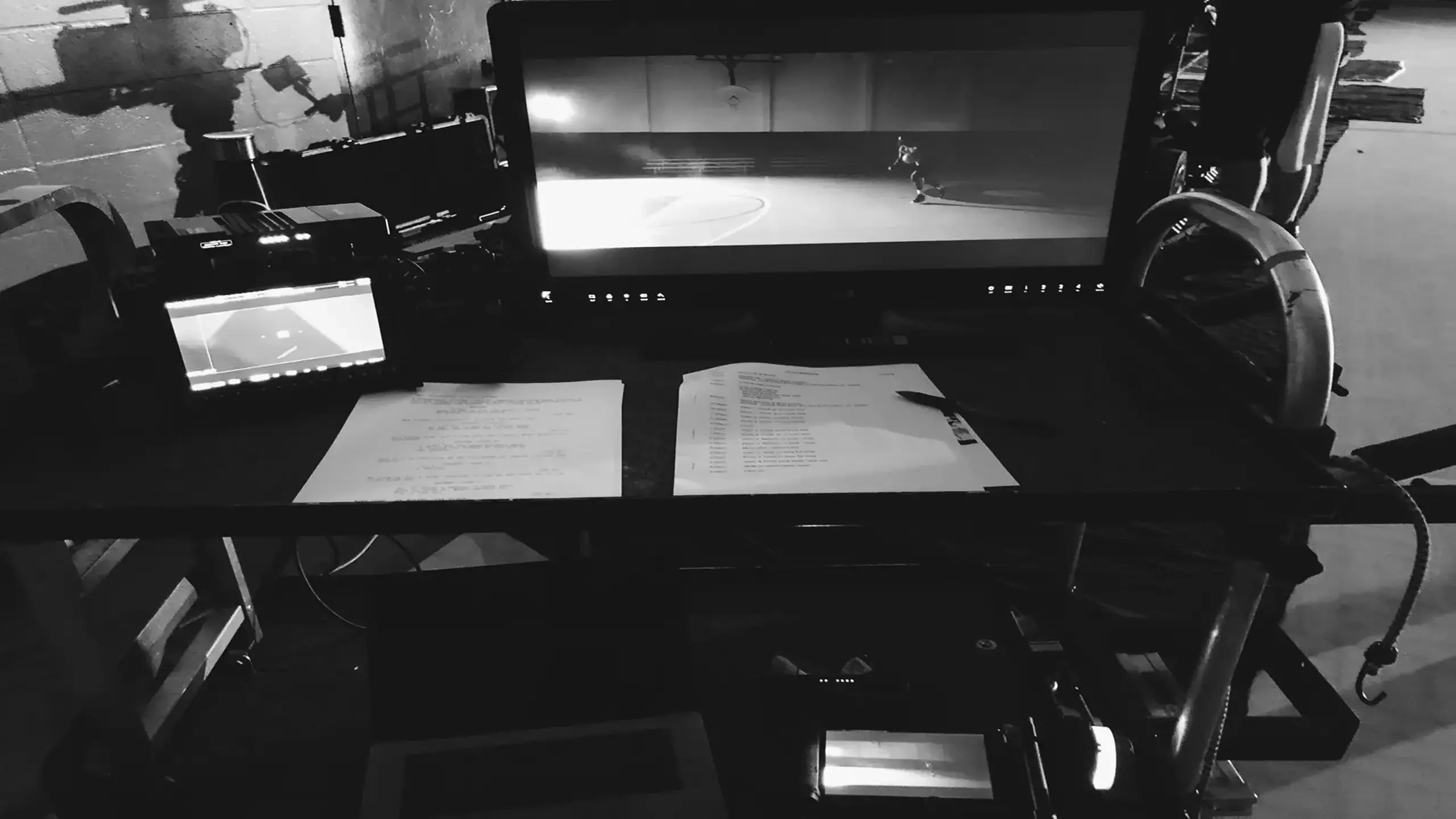
In today’s fast-paced digital landscape, brands cannot rely solely on traditional advertising. The way audiences consume content has shifted dramatically toward online platforms, social media, and streaming services.
For a creative agency like C&I Studios, understanding the fundamentals of a digital marketing campaign is essential for helping clients stand out and connect with their audiences effectively. A digital marketing campaign is more than just posting on social media; it is a strategic initiative designed to achieve measurable objectives through targeted online channels.
At its core, a ***digital marketing campaign*** leverages multiple digital touchpoints to deliver messages that resonate with a specific audience segment. From short-form video ads to immersive interactive experiences, campaigns aim to attract, engage, and convert viewers into loyal customers.
## Core Components of a Digital Marketing Campaign
Every successful digital marketing campaign includes several critical components that work in synergy. These elements ensure that the message reaches the right audience, at the right time, and in a way that encourages action.
### Goal Definition
Before launching a campaign, clearly defining objectives is essential. Goals can vary widely depending on the brand or project:
- Increasing website traffic
- Boosting social media engagement
- Generating leads or sales
- Promoting a new product or service
For instance, C&I Studios might run a campaign to promote a new documentary film production. The goal would not only be awareness but also driving ticket sales or streaming subscriptions. By establishing clear KPIs (Key Performance Indicators), every stage of the campaign can be measured and optimized for better results.
### Audience Research
Understanding the target audience is a cornerstone of campaign success. Demographics, psychographics, online behavior, and platform preferences should all inform creative decisions.
For example:
- Age group and geographic location determine the type of content and ad formats used.
- Social media habits influence posting schedules and platform selection.
- Interests and motivations guide messaging and storytelling approach.
C&I Studios employs [media marketing consult](https://c-istudios.com/media-marketing-consultation-services/) strategies to analyze audience insights. This helps ensure campaigns are not only visually engaging but also relevant and persuasive.
### Content Strategy
Content is the engine of any digital campaign. It encompasses the creative assets, messaging, and formats that will engage the audience. Depending on campaign goals, content can include:
- Short-form videos for social media platforms
- Blog posts optimized for [SEO](https://c-istudios.com/seo-copywriting-services/)
- Infographics and visual storytelling for brand awareness
- Interactive experiences like polls or quizzes
For studios specializing in video production and film & [TV production](https://c-istudios.com/film-and-tv-production/), video content often takes center stage. The quality of production, narrative coherence, and alignment with brand identity are critical factors that influence audience engagement.
### Channel Selection
Choosing the right digital channels ensures that content reaches the intended audience effectively. Options include:
- Social media platforms like Instagram, TikTok, and LinkedIn
- Video streaming services such as YouTube or Vimeo
- Paid advertising networks for search and display ads
- Email marketing campaigns targeting segmented lists
Each channel offers unique advantages. Social platforms are ideal for engagement and brand visibility, whereas email campaigns excel in driving conversions. C&I Studios’ expertise in media marketing consult helps clients identify the most effective channels for their objectives.
### Budget Allocation
A well-planned digital marketing campaign requires careful budget management. Allocating resources across content production, advertising spend, and analytics tools ensures maximum return on investment.
**Key considerations include:**
- High-quality video content production may require a larger portion of the budget.
- Paid ad campaigns must account for audience reach and bidding strategies.
- Tools for analytics, A/B testing, and performance tracking may require subscriptions.
Effective budgeting is a balance between creative ambition and financial feasibility. Agencies like C&I Studios guide clients to make informed decisions that align spending with measurable results.
## Benefits of Running a Digital Marketing Campaign
Digital marketing campaigns provide several advantages over traditional marketing approaches. They allow brands to connect with audiences in a more personalized, measurable, and scalable way.
### Targeted Reach
Unlike traditional media, digital campaigns allow for precise audience targeting. Platforms provide detailed insights into user demographics, interests, and behaviors, enabling campaigns to focus on high-value segments.
For example, a campaign promoting feature film mastering & delivery services could target independent filmmakers, production houses, and distributors who are actively searching for post-production solutions. The precision of targeting reduces wasted impressions and increases the likelihood of engagement.
### Measurable Results
Digital campaigns provide real-time analytics and performance tracking. Key metrics such as click-through rates, conversion rates, and engagement levels enable marketers to understand what is working and what needs adjustment.
This data-driven approach allows agencies like C&I Studios to optimize campaigns continuously. For instance, if an ad performing well on Instagram does not resonate on LinkedIn, resources can be reallocated accordingly.
### Cost-Effectiveness
Running campaigns online is often more cost-effective than traditional advertising. Brands can start small, test different creative strategies, and scale successful campaigns without large upfront investments.
Additionally, precise targeting ensures that marketing spend reaches only those most likely to convert, maximizing ROI. Agencies providing media marketing consult services can further refine strategies to achieve the best results with limited budgets.
### Enhanced Engagement
Digital campaigns offer interactive opportunities that traditional media cannot match. Features like polls, clickable links, video stories, and live streaming create two-way communication between brands and audiences.
For a studio focused on documentary film production, these engagement opportunities can translate into audience feedback, early buzz, and community building around a project before its official release.
### Flexibility and Adaptability
One of the key strengths of digital marketing campaigns is their adaptability. Campaigns can be adjusted mid-flight based on performance analytics, audience feedback, or changing market conditions.
For example, if a campaign promoting a new TV series identifies higher engagement in a younger demographic, content can be adjusted to appeal more directly to that group. This flexibility allows studios and brands to stay relevant and maximize the campaign’s impact.
## Best Practices for Digital Marketing Campaigns
To achieve the full potential of a digital marketing campaign, agencies like C&I Studios follow proven best practices that balance creativity, strategy, and analytics.
### Clear and Concise Messaging
Effective campaigns communicate their core message quickly and memorably. Audiences have limited attention spans, so clarity is essential.
Tips for messaging include:
- Highlight the main value proposition in the first few seconds of a video or post.
- Avoid overloading content with multiple objectives.
- Use storytelling to make the message more relatable and memorable.
### High-Quality Visuals and Production
Visual quality plays a crucial role in engagement. Whether it’s a short social video or a full-feature documentary trailer, high production standards reinforce credibility and professionalism.
Studios like C&I, which specialize in video production and [film & TV production](https://c-istudios.com/film-and-tv-production/), ensure that every frame supports the brand narrative and resonates with the audience. Proper lighting, sound design, and post-production finishing are non-negotiable elements of successful campaigns.
### Multi-Channel Distribution
Relying on a single platform limits reach and engagement. A multi-channel approach ensures that content reaches audiences where they are most active.
Considerations include:
- Optimizing content format for each platform
- Scheduling posts based on audience activity
- Using retargeting ads to capture potential leads who engaged with the content previously
### Data-Driven Optimization
Regular monitoring and adjustment based on analytics ensures that campaigns perform at their best. Key steps include:
- Tracking KPIs consistently
- Running A/B tests on messaging and visuals
- Adjusting budget allocation based on platform performance
C&I Studios leverages these data-driven insights to continuously refine campaigns, ensuring higher engagement, reach, and conversion rates.
### Integration With Overall Marketing Strategy
A digital marketing campaign does not exist in isolation. It should complement other marketing initiatives such as PR, SEO, email marketing, and offline events.
For example, promoting a new feature film may involve:
- Social media teaser videos
- Press releases on entertainment websites
- Collaborations with influencers
- Email newsletters for loyal subscribers
Integrating campaigns within the broader strategy amplifies impact and ensures consistent brand messaging.
## Real-World Applications for Studios
Digital marketing campaigns have tangible applications for creative studios. From promoting film projects to boosting client visibility, strategic campaigns translate creative work into measurable outcomes.
- **Documentary Film Production**: Campaigns can raise awareness, drive festival submissions, and generate pre-release interest.
- **Political Campaigns Video**: Well-crafted messaging paired with targeted online ads can mobilize supporters and increase engagement.
- **Media Marketing Consult for Brands**: Agencies can guide clients on how to leverage content effectively across multiple digital channels.
- **Live Streaming and Video & Audio Content**: Campaigns can promote events or behind-the-scenes content, creating real-time engagement.
In each scenario, the combination of creative storytelling and strategic planning ensures campaigns resonate with their intended audiences while achieving business goals.
## Executing a Digital Marketing Campaign Successfully
Planning a campaign is only half the battle. Execution determines whether your strategy translates into tangible results. For creative studios like C&I, executing campaigns effectively requires seamless coordination between creative production, platform management, and audience engagement.
### Crafting Platform-Specific Content
Different platforms require different approaches to content. A one-size-fits-all strategy rarely works.
- **Social media feeds**: Short, visually appealing content performs best. Use punchy captions, high-quality images, or 15-30 second videos that immediately grab attention.
- **Email campaigns**: These require concise messaging and clear calls-to-action, often complemented with visually consistent graphics.
- **Web and landing pages**: Longer-form content can provide depth, such as behind-the-scenes looks at a project or detailed guides.
C&I Studios leverages branding & graphic design to ensure each piece of content aligns with the client’s identity, creating a cohesive visual language that builds recognition and trust across channels.
### Scheduling and Consistency
Consistency is crucial for audience retention. Scheduling tools help maintain a steady flow of content, ensuring campaigns remain visible without overwhelming followers.
Best practices include:
- Posting at times when the target audience is most active
- Maintaining a consistent visual style and tone across all posts
- Rotating content types to balance promotional and value-driven materials
Consistency also reinforces brand personality, helping audiences develop familiarity and connection with the client’s message.
### Engaging Your Audience
Engagement is more than just likes or shares, it’s interaction. Creating opportunities for dialogue strengthens relationships and encourages loyalty.
Engagement tactics include:
- Polls, quizzes, and interactive stories on social media
- Responding promptly to comments and messages
- Highlighting user-generated content to showcase community involvement
For C&I Studios, interactive elements can be combined with social media marketing strategies to amplify reach and create authentic connections with audiences.
## Analytics and Optimization
Data is the backbone of campaign refinement. Monitoring analytics allows studios to understand audience behavior and adjust strategies for better results.
### Key Metrics to Track
Different campaign goals require different metrics:
- Reach and impressions measure how many people saw the content.
- Engagement rate indicates how audiences interact with posts.
- Conversion rate tracks the percentage of viewers taking desired actions, such as subscribing or making a purchase.
- Click-through rate (CTR) shows effectiveness of links or CTAs embedded in content.
Regular reporting ensures campaigns remain agile. Agencies like C&I Studios use analytics dashboards to identify trends, detect underperforming content, and pivot quickly.
### A/B Testing
A/B testing allows studios to compare variations of content and determine which performs best. Examples include testing:
- Two different headlines for a promotional video
- Varying visual styles for social media graphics
- Different posting times or ad formats
Insights from testing inform future campaigns, ensuring higher engagement, better audience targeting, and more efficient budget use.
### Iterative Refinement
Campaigns are rarely perfect on the first attempt. By continually assessing performance and refining strategy, studios can maximize ROI. This iterative approach includes:
- Adjusting visuals or messaging based on audience feedback
- Shifting budget to high-performing channels
- Updating creative assets to stay current with trends
## Integrating Creative Production
For C&I Studios, the intersection of branding & graphic design with high-quality video and audio production ensures campaigns are not only strategic but also visually compelling.
### Cohesive Visual Identity
Visual identity extends across all touchpoints, from social media posts to email headers and website banners. Consistency builds credibility and recognition. Elements include:
- Logo placement and style
- Color palettes and typography
- Imagery style, such as cinematic shots or animation
### Video and Audio Production
Video content remains one of the most effective ways to capture attention. Studios can create:
- Behind-the-scenes footage to build anticipation
- Short-form clips optimized for social feeds
- Explainer videos or tutorials to highlight products or services
Audio quality is equally important. Clear sound design enhances professionalism, ensures comprehension, and maintains audience engagement across platforms.
### Collaborative Workflow
Effective campaigns require smooth collaboration between designers, content creators, social media managers, and clients.
Using project management tools and defined workflows ensures deadlines are met and quality is maintained.
C&I Studios emphasizes seamless collaboration to integrate storytelling, design, and marketing strategy.
## Advanced Social Media Marketing Techniques
Social media platforms are continuously evolving, providing innovative ways to reach audiences. Advanced strategies help campaigns stand out.
### Influencer and Partnership Marketing
Collaborating with influencers or complementary brands expands reach and credibility. Campaigns can leverage influencers for:
- Product demonstrations or tutorials
- Sponsored content highlighting key messages
- Interactive live sessions with audiences
### Retargeting Campaigns
Retargeting allows brands to reconnect with users who have interacted with content but haven’t yet converted. Techniques include:
- Display ads targeting website visitors
- Social media ads for users who engaged with previous posts
- Email sequences following abandoned carts or incomplete sign-ups
Retargeting ensures campaigns capture potential leads that might otherwise be lost, improving conversion rates and ROI.
### Storytelling and Authentic Content
Audiences respond to authenticity. Campaigns that combine [branding & graphic design](https://c-istudios.com/branding-and-graphic-design-services/) with narrative-driven content foster emotional connections. Examples:
- Customer testimonials or case studies
- Behind-the-scenes insights into creative projects
- Social campaigns highlighting community impact or sustainability
This approach reinforces brand values while creating shareable content that resonates organically with viewers.
## Best Practices for Continuous Improvement
Even after launch, campaigns require ongoing attention. Continuous improvement ensures relevance and effectiveness.
### Key practices include
- Regular performance audits to identify successes and shortcomings
- Updating creative assets to reflect current trends and seasonal relevance
- Cross-channel integration to maintain messaging consistency across social, web, and email platforms
- Training teams on new platform features or algorithm changes to maintain competitive advantage
By embedding these practices, C&I Studios ensures campaigns remain dynamic and responsive to audience behavior, ultimately driving long-term engagement and growth.
## Preparing for the Next Campaign
Every campaign serves as a learning opportunity. Post-campaign analysis informs future strategies and helps refine creative and technical approaches. For studios, this involves:
- Documenting lessons learned and audience insights
- Identifying top-performing content formats
- Refining audience segmentation and targeting strategies
- Assessing the effectiveness of collaborative workflows
This continuous feedback loop empowers agencies and brands to innovate while maintaining efficiency and strategic alignment.
Crafting a successful digital marketing campaign is both an art and a science. By combining strategic planning, high-quality content, platform optimization, and data-driven insights, studios like C&I can deliver impactful campaigns that resonate with audiences and achieve measurable results.
If you’re looking to elevate your brand presence online, integrate social media marketing with compelling branding & graphic design and see your content reach the right audience in meaningful ways, explore how [C&I Studios](https://c-istudios.com/contact/) can partner with you for your next creative campaign.
## Work with C&I Studios
If you are planning a project like this, our team can take it from concept to final delivery. Explore our [video production services](https://c-istudios.com/video-production-services/), browse [our work](https://c-istudios.com/our-work/) to see how we tell brand stories, and [get in touch](https://c-istudios.com/contact/) when you are ready to start.
Originally published February 5, 2026
---
*This content is from [C&I Studios](https://c-istudios.com), a full-service production company.*
---
# How to Create a Marketing Campaign That Drives Measurable Growth
> Published: February 4, 2026
> Categories: Commercial & Brand
> Source: https://c-istudios.com/how-to-create-a-marketing-campaign-that-drives-measurable-growth/
---
.cib{--paper:#1b1d1f;--ink:#fff;--body:#d5d7d9;--muted:#8b9096;--line:rgba(255,255,255,.12);--thumb:#2b2e31;--card:#212426;--accent:#c02b0a;--blue:#5B8FA8;--serif:'Playfair Display',Georgia,serif;--sans:'Poppins',-apple-system,sans-serif;--measure:900px;background:var(--paper);color:var(--body);font-family:var(--sans);line-height:1.6;position:relative;left:50%;transform:translateX(-50%);width:90vw;max-width:1920px}
.cib *{box-sizing:border-box}
.cib .kicker{max-width:var(--measure);margin:58px auto 0;padding:0 22px;font-size:12.5px;font-weight:700;letter-spacing:2.5px;text-transform:uppercase;color:var(--blue)}
.cib h1.cibh1{text-wrap:balance;font-family:var(--serif);font-weight:500;font-size:clamp(46px,6vw,72px);line-height:1.08;color:var(--ink);max-width:var(--measure);margin:18px auto 0;padding:0 22px;letter-spacing:-.5px}
.cib .metarow{max-width:var(--measure);margin:20px auto 0;padding:0 22px;color:var(--muted);font-size:14px}
.cib .hero{position:relative;width:100%;height:0;padding-bottom:56.25%;overflow:hidden;margin:48px auto 0;border-top:1px solid var(--line);border-bottom:1px solid var(--line)}
.cib .hero .ph{width:100%;aspect-ratio:16/9;background:var(--thumb);border-top:1px solid var(--line);border-bottom:1px solid var(--line);display:flex;align-items:center;justify-content:center;color:#7d8288;font-size:13px;text-align:center;padding:0 20px}
.cib .body{max-width:var(--measure);margin:12px auto 0;padding:52px 22px 6px}
.cib .body.lead p:first-child{font-size:23px;line-height:1.62;color:var(--ink)}
.cib .body p{font-size:18.5px;line-height:1.85;margin:0 0 30px;color:var(--body)}
.cib .body h2{text-wrap:balance;font-family:var(--serif);font-weight:500;font-size:clamp(32px,4vw,48px);line-height:1.22;color:var(--ink);margin:70px 0 20px;letter-spacing:-.3px}
.cib .body h3{text-wrap:balance;font-family:var(--sans);font-weight:600;font-size:22px;color:var(--ink);margin:38px 0 8px}
.cib .body a{color:var(--ink);text-decoration:underline;text-decoration-color:rgba(255,255,255,.4);text-underline-offset:3px}
.cib .body a:hover{text-decoration-color:var(--ink)}
.cib .ctable{width:100%;border-collapse:collapse;margin:16px 0 30px;font-size:16px}
.cib .ctable th{background:#000;color:#fff;text-align:left;padding:10px 12px;font-family:var(--sans)}
.cib .ctable td{padding:10px 12px;border-bottom:1px solid var(--line);color:var(--body)}
.cib .inimg{position:relative;width:100%;height:0;padding-bottom:56.25%;overflow:hidden;margin:72px auto;border-top:1px solid var(--line);border-bottom:1px solid var(--line)}
.cib .inimg .ph{width:100%;aspect-ratio:16/9;background:var(--thumb);border-top:1px solid var(--line);border-bottom:1px solid var(--line);display:flex;align-items:center;justify-content:center;color:#7d8288;font-size:13px}
.cib .origpub{max-width:var(--measure);margin:60px auto 0;padding:26px 22px 0;border-top:1px solid var(--line);color:var(--muted);font-size:13.5px}
.cib .related{max-width:1200px;margin:64px auto 0;padding:34px 22px 76px}
.cib .related h3{font-family:var(--sans);font-size:12.5px;letter-spacing:2px;text-transform:uppercase;color:var(--ink);margin:0 0 24px}
.cib .grid{display:grid;grid-template-columns:repeat(3,1fr);gap:28px}
.cib .rc{background:var(--card);border:1px solid var(--line);display:block;text-decoration:none;color:inherit;transition:border-color .15s}
.cib a.rc:hover{border-color:rgba(255,255,255,.5)}
.cib .rc .thumb{position:relative;width:100%;height:0;padding-bottom:56.25%;background:var(--thumb);overflow:hidden}
.cib .rc .thumb img{position:absolute!important;top:0!important;left:0!important;width:100%!important;height:100%!important;object-fit:cover!important;margin:0!important}
.cib .rc .cc{padding:14px 15px 17px}
.cib .rc .rt{font-family:var(--serif);font-weight:500;font-size:16px;line-height:1.3;color:var(--ink);margin:0 0 6px}
.cib .rc .rm{font-size:11px;letter-spacing:1px;text-transform:uppercase;color:var(--muted)}
.cib img{margin:0!important;padding:0!important;display:block!important;vertical-align:top;max-width:100%}
.cib .hero img,.cib .inimg img{position:absolute!important;top:0!important;left:0!important;width:100%!important;height:100%!important;object-fit:cover!important;margin:0!important;padding:0!important;border:0!important;display:block!important;aspect-ratio:auto!important}
.cib .hero+.body{padding-top:36px}
@media(max-width:760px){.cib .grid{grid-template-columns:1fr}.cib .body h2{margin:52px 0 16px}.cib .body p{font-size:17.5px}.cib .inimg,.cib .hero{margin-top:44px}}
.cib .vembed{max-width:var(--measure);margin:44px auto;padding:0 22px}.cib .vembed .vwrap{position:relative;width:100%;height:0;padding-bottom:56.25%}.cib .vembed .vwrap iframe{position:absolute;top:0;left:0;width:100%;height:100%;border:0}
Commercial & Brand
# How to Create a Marketing Campaign That Drives Measurable Growth
5 min read
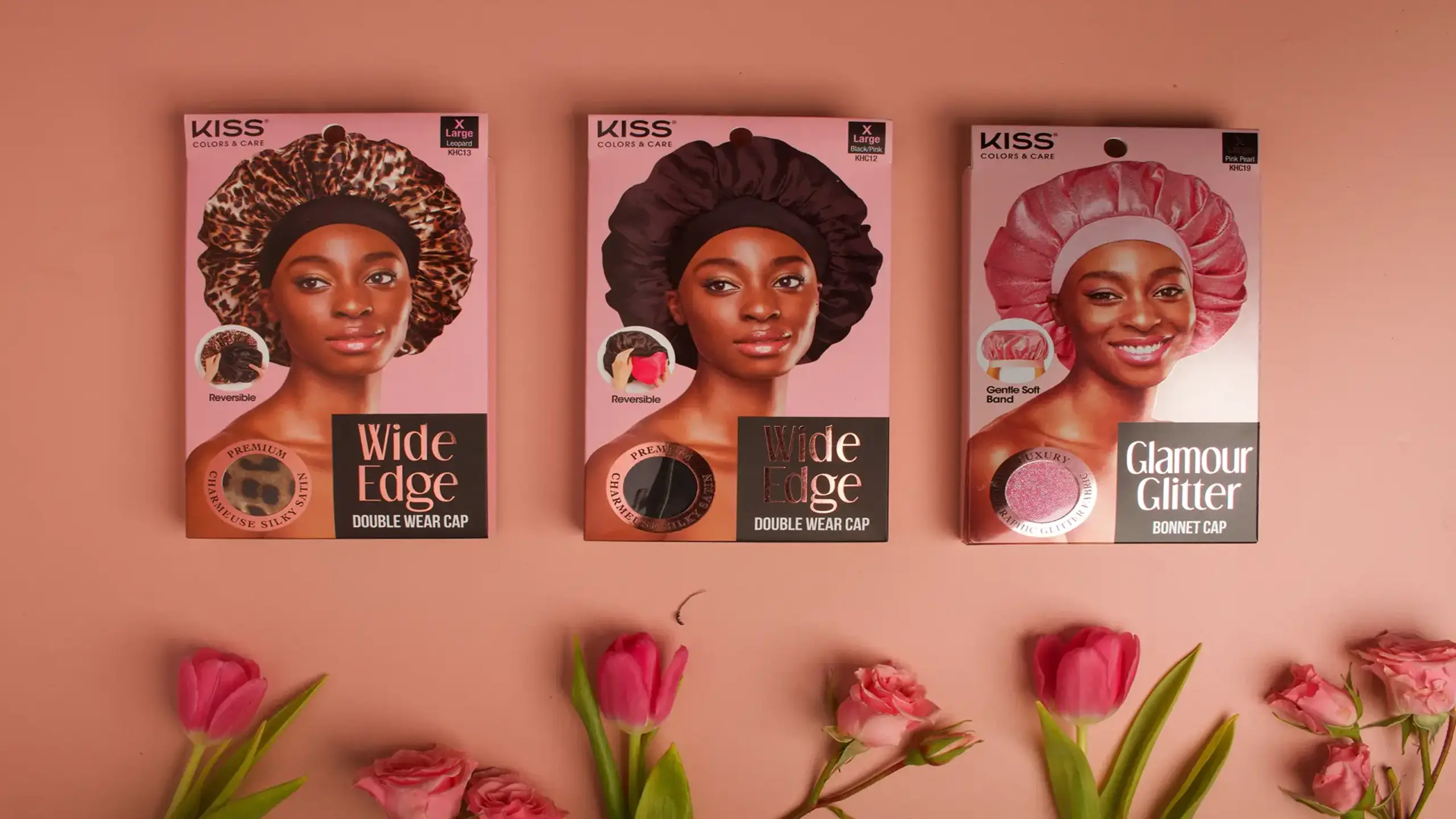
Marketing campaigns fail for predictable reasons: vague objectives, weak creative alignment, poor execution, or no feedback loop. Results don’t come from ideas alone, they come from systems.
At C&I Studios, campaigns are treated as production pipelines, not one-off experiments. The same rigor applied to feature films, branded documentaries, and large-scale commercial work is applied to marketing strategy.
This guide breaks down how to create a marketing campaign that actually converts, starting with the foundations most brands skip.
## Understanding what “real results” actually mean
Before tactics, channels, or creative assets are discussed, the first mistake must be eliminated: unclear success criteria. “Awareness,” “engagement,” and “growth” are not results. They are symptoms.
Real results are measurable outcomes tied to business impact.
**Examples include:**
- Increase in qualified leads, not raw impressions
- Reduction in [customer acquisition cost](https://blog.hubspot.com/service/how-to-calculate-customer-lifetime-value)
- Lift in [conversion rate](https://blog.hubspot.com/marketing/conversion-rate-optimization-guide) across owned channels
- Revenue directly attributable to campaign activity
At C&I Studios, campaigns are scoped backward from outcomes, not forward from ideas. That framing changes every downstream decision, from messaging to [media spend](https://en.wikipedia.org/wiki/Media_planning).
## Setting campaign objectives that don’t collapse later
A campaign objective must survive contact with execution. If it cannot guide creative decisions, media planning, and performance analysis, it is useless.
**Strong objectives share three properties:**
- They are singular, not stacked
- They are measurable with existing data systems
- They are tied to a business constraint (budget, timeline, or growth target)
Weak objectives sound impressive but fail operationally.
**Instead of:**
- “Increase brand visibility in Q3”
**Use:**
- “Increase demo sign-ups by 20% among mid-market B2B buyers within 90 days”
This level of specificity allows production, creative, and media teams to operate with alignment rather than interpretation.
## Defining the audience beyond demographics
Demographics are not insight. Age, gender, and location do not explain behavior. Campaigns fail when they target people instead of problems.
Effective audience definition answers:
- What decision is this person trying to make right now?
- What alternatives are they already considering?
- What friction is preventing action?
At C&I Studios, audience research typically includes:
- Behavioral analysis from analytics platforms
- Qualitative interviews or survey data
- Competitive message mapping
This ensures the campaign speaks to context, not just identity.
Key audience dimensions to lock before moving forward:
- Awareness stage (unaware, problem-aware, solution-aware)
- Emotional driver (risk avoidance, ambition, efficiency, status)
- Proof requirement (social proof, authority, demonstration)
Without this clarity, creative execution becomes subjective and inconsistent.
## Aligning the message with the medium
A campaign message does not exist independently of its delivery format. The same idea must be shaped differently depending on where and how it appears.
This is where [video production](https://c-istudios.com/video-production-services/) becomes a strategic asset, not a cosmetic one.
Different platforms demand different narrative mechanics:
- Short-form social video prioritizes pattern interruption and speed
- Long-form branded content builds authority and trust
- Paid media assets must communicate value within seconds
- Landing page content must resolve objections, not introduce ideas
C&I Studios approaches messaging as modular:
- One core value proposition
- Multiple executions adapted to channel behavior
- Consistent visual and tonal language across assets
This avoids the common failure of message dilution while maintaining platform relevance.
## Building the creative system, not just assets
Campaigns break when creative is treated as a checklist. One hero video, a few ads, and some copy do not constitute a system.
A campaign-ready creative system includes:
- Core narrative (the “why”)
- Supporting proofs (the “how”)
- Tactical CTAs (the “now”)
Typical C&I Studios creative stacks include:
- Primary campaign film or anchor asset
- Cut-downs optimized for paid distribution
- Static and motion variants for testing
- Landing page visuals aligned with campaign language
- Email and organic social adaptations
This approach allows performance optimization without re-inventing the campaign mid-flight.
## Channel selection driven by behavior, not trends
Choosing channels based on popularity is lazy strategy. Channels should be selected based on where decisions are influenced, not where content is easy to publish.
Channel selection should consider:
- Where the audience actively researches solutions
- Where trust is established, not just exposure
- Cost efficiency relative to campaign objective
Common campaign channel roles:
- Paid social: demand capture and testing
- Organic social: reinforcement and credibility
- Search: high-intent conversion
- Owned media: depth and retention
- Partnerships or PR: authority transfer
C&I Studios frequently integrates media planning directly into production planning, ensuring assets are engineered for their distribution environment from day one.
## Planning execution timelines like a production schedule
Marketing campaigns fail operationally before they fail creatively. Missed deadlines, rushed assets, and last-minute changes erode performance.
A production-style timeline includes:
- Pre-production (strategy, scripting, approvals)
- Production (asset creation)
- Post-production (editing, versioning, QA)
- Distribution (launch sequencing)
- Optimization (testing and iteration)
Each phase has dependencies. Skipping steps does not save time, it creates rework.
By applying film and commercial production discipline, C&I Studios minimizes waste and maximizes creative leverage.
## Measurement frameworks set before launch
If analytics are added after launch, insights will be compromised. Measurement must be designed alongside the campaign.
Critical elements include:
- Clear attribution model
- Defined primary and secondary KPIs
- Baseline benchmarks for comparison
- Real-time monitoring dashboards
Metrics should map directly to objectives, not vanity indicators.
Examples:
- Cost per qualified lead, not likes
- Completion rate on key video assets, not views
- Conversion lift relative to control periods
This ensures performance data informs decisions instead of just reporting activity.
## Why most campaigns plateau early
Campaigns often show early traction, then stall. This is not a mystery, it’s usually due to one of three issues:
- Creative fatigue with no variant strategy
- Channel saturation without expansion
- Weak mid-funnel reinforcement
Preventing this requires:
- Pre-planned creative variations
- Sequential messaging across stages
- Budget flexibility tied to performance signals
C&I Studios designs campaigns expecting iteration, not perfection at launch.
## Scaling a marketing campaign through optimization and leverage
A campaign that launches cleanly is only halfway done. The difference between a campaign that looks good and one that drives sustained performance is what happens after launch.
This phase is where most brands lose momentum, not because the idea was wrong, but because the system for learning and scaling was never built.
At C&I Studios, execution is treated as a living process. Campaigns are designed to evolve under real-world conditions, guided by data, creative feedback loops, and audience behavior.
## Turning performance data into decision signals
Data is useless unless it tells you what to change. Dashboards full of metrics don’t improve campaigns, decisions do.
Post-launch analysis should answer three questions:
- What is working and why?
- What is underperforming and where is the friction?
- What assumptions were proven wrong?
Instead of monitoring everything, focus on signal metrics:
- Conversion rate at each funnel stage
- Drop-off points in content consumption
- Cost efficiency by channel and creative variant
C&I Studios structures reporting to highlight contrasts:
- Best-performing vs. worst-performing assets
- Early-stage vs. late-stage audience response
- Initial launch performance vs. week-two behavior
This comparative framing exposes leverage points quickly.
## Creative testing without diluting the core message
Creative testing often fails because brands test randomness instead of variables. Swapping headlines, visuals, or formats without a hypothesis produces noise, not insight.
Effective testing isolates one variable at a time:
- Hook or opening sequence
- Primary value proposition
- Proof element (testimonial, stat, demonstration)
- Call-to-action framing
Testing priorities typically follow this order:
- Message clarity before aesthetics
- Structure before polish
- Audience resonance before brand preference
In [creative marketing](https://c-istudios.com/creative-marketing-services/), the goal isn’t novelty, it’s relevance at scale. C&I Studios ensures every test still reinforces the campaign’s central narrative, avoiding fragmentation.
## Managing creative fatigue before it costs performance
Creative fatigue is not a platform problem; it’s a planning failure. Audiences don’t get tired of messages, they get tired of repetition without progression.
Signs of fatigue include:
- Rising costs with stable targeting
- Declining engagement despite consistent spend
- Strong first impressions followed by rapid drop-off
Fatigue prevention strategies include:
- Sequenced messaging that evolves over time
- Rotating proof points while keeping the core idea intact
- Introducing format variation without changing intent
By designing creative libraries upfront, C&I Studios avoids reactive scrambling and maintains performance stability across longer campaign cycles.
## Channel optimization as a feedback loop
Channels are not static distribution pipes. Each one teaches you something different about your audience.
For example:
- Paid channels reveal what captures attention
- Owned channels reveal what builds trust
- Search reveals explicit intent
- [Social media marketing](https://c-istudios.com/social-media-marketing-services/) reveals cultural and emotional alignment
Rather than optimizing channels in isolation, insights should cross-pollinate:
- High-performing social hooks inform paid creative
- Search queries inform content angles
- Landing page objections inform ad messaging
This loop turns channel data into strategic intelligence instead of siloed reports.
## Strengthening the mid-funnel where conversions are won
Many campaigns over-invest at the top and under-support the middle. Awareness without reinforcement leaks value.
Mid-funnel assets exist to:
- Resolve objections
- Demonstrate credibility
- Reduce perceived risk
Effective mid-funnel content often includes:
- Case studies or real-world applications
- Behind-the-scenes or process transparency
- Educational breakdowns that clarify value
C&I Studios frequently integrates branded content and documentary-style assets here, not for reach, but for conviction.
## Budget reallocation based on performance truth, not plans
Static budgets kill momentum. Campaigns should earn their spend.
Best practice involves:
- Establishing minimum performance thresholds
- Scaling spend only on proven combinations
- Cutting underperformers decisively
Reallocation decisions should be:
- Data-backed, not emotional
- Fast enough to matter
- Reversible if conditions change
This discipline prevents sunk-cost bias and keeps campaigns agile under real-world constraints.
## Aligning teams to avoid campaign drift
As campaigns extend, misalignment creeps in. Messaging shifts. Visual language erodes. Teams interpret goals differently.
**To prevent drift:**
- Re-anchor teams to the original objective regularly
- Maintain a single source of truth for messaging
- Review live assets against strategy, not taste
C&I Studios uses centralized creative direction and production oversight to ensure scale does not dilute intent.
## Extending campaign value beyond the initial window
High-performing campaigns shouldn’t disappear after the flight ends. Their components can compound value.
Common extensions include:
- Repurposing high-performing content into evergreen assets
- Adapting campaign narratives into sales enablement tools
- Using insights to inform future product positioning
This turns campaigns from expenses into assets.
## When to evolve versus when to restart
Not every campaign should be optimized forever. Knowing when to evolve and when to rebuild is strategic maturity.
Indicators to evolve:
- Strong core message with declining novelty
- Stable conversion rates with rising costs
- Audience saturation without resistance
Indicators to restart:
- Fundamental mismatch between message and market
- Structural funnel breakdown
- Shifts in business priorities
[C&I Studios](https://c-istudios.com/) evaluates this using performance trends, not attachment to ideas.
## Campaigns as long-term growth infrastructure
The most effective campaigns are not events, they are systems. They teach you how your market thinks, what language resonates, and where value is created.
When built correctly, each campaign makes the next one stronger.
That’s the difference between running marketing and building momentum. And it’s often where teams benefit from stepping back, pressure-testing their approach, and refining execution with experienced partners who operate across strategy, [production](https://c-istudios.com/contact/), and distribution, quietly, methodically, and with results that hold up over time.
## Work with C&I Studios
If you are planning a project like this, our team can take it from concept to final delivery. Explore our [video production services](https://c-istudios.com/video-production-services/), browse [our work](https://c-istudios.com/our-work/) to see how we tell brand stories, and [get in touch](https://c-istudios.com/contact/) when you are ready to start.
Originally published February 4, 2026
---
*This content is from [C&I Studios](https://c-istudios.com), a full-service production company.*
---
# Integrated Marketing Strategy: How Brands Build Unified Messaging That Performs
> Published: February 3, 2026
> Categories: Commercial & Brand
> Source: https://c-istudios.com/integrated-marketing-strategy-how-brands-build-unified-messaging-that-performs/
---
.cib{--paper:#1b1d1f;--ink:#fff;--body:#d5d7d9;--muted:#8b9096;--line:rgba(255,255,255,.12);--thumb:#2b2e31;--card:#212426;--accent:#c02b0a;--blue:#5B8FA8;--serif:'Playfair Display',Georgia,serif;--sans:'Poppins',-apple-system,sans-serif;--measure:900px;background:var(--paper);color:var(--body);font-family:var(--sans);line-height:1.6;position:relative;left:50%;transform:translateX(-50%);width:90vw;max-width:1920px}
.cib *{box-sizing:border-box}
.cib .kicker{max-width:var(--measure);margin:58px auto 0;padding:0 22px;font-size:12.5px;font-weight:700;letter-spacing:2.5px;text-transform:uppercase;color:var(--blue)}
.cib h1.cibh1{text-wrap:balance;font-family:var(--serif);font-weight:500;font-size:clamp(46px,6vw,72px);line-height:1.08;color:var(--ink);max-width:var(--measure);margin:18px auto 0;padding:0 22px;letter-spacing:-.5px}
.cib .metarow{max-width:var(--measure);margin:20px auto 0;padding:0 22px;color:var(--muted);font-size:14px}
.cib .hero{position:relative;width:100%;height:0;padding-bottom:56.25%;overflow:hidden;margin:48px auto 0;border-top:1px solid var(--line);border-bottom:1px solid var(--line)}
.cib .hero .ph{width:100%;aspect-ratio:16/9;background:var(--thumb);border-top:1px solid var(--line);border-bottom:1px solid var(--line);display:flex;align-items:center;justify-content:center;color:#7d8288;font-size:13px;text-align:center;padding:0 20px}
.cib .body{max-width:var(--measure);margin:12px auto 0;padding:52px 22px 6px}
.cib .body.lead p:first-child{font-size:23px;line-height:1.62;color:var(--ink)}
.cib .body p{font-size:18.5px;line-height:1.85;margin:0 0 30px;color:var(--body)}
.cib .body h2{text-wrap:balance;font-family:var(--serif);font-weight:500;font-size:clamp(32px,4vw,48px);line-height:1.22;color:var(--ink);margin:70px 0 20px;letter-spacing:-.3px}
.cib .body h3{text-wrap:balance;font-family:var(--sans);font-weight:600;font-size:22px;color:var(--ink);margin:38px 0 8px}
.cib .body a{color:var(--ink);text-decoration:underline;text-decoration-color:rgba(255,255,255,.4);text-underline-offset:3px}
.cib .body a:hover{text-decoration-color:var(--ink)}
.cib .ctable{width:100%;border-collapse:collapse;margin:16px 0 30px;font-size:16px}
.cib .ctable th{background:#000;color:#fff;text-align:left;padding:10px 12px;font-family:var(--sans)}
.cib .ctable td{padding:10px 12px;border-bottom:1px solid var(--line);color:var(--body)}
.cib .inimg{position:relative;width:100%;height:0;padding-bottom:56.25%;overflow:hidden;margin:72px auto;border-top:1px solid var(--line);border-bottom:1px solid var(--line)}
.cib .inimg .ph{width:100%;aspect-ratio:16/9;background:var(--thumb);border-top:1px solid var(--line);border-bottom:1px solid var(--line);display:flex;align-items:center;justify-content:center;color:#7d8288;font-size:13px}
.cib .origpub{max-width:var(--measure);margin:60px auto 0;padding:26px 22px 0;border-top:1px solid var(--line);color:var(--muted);font-size:13.5px}
.cib .related{max-width:1200px;margin:64px auto 0;padding:34px 22px 76px}
.cib .related h3{font-family:var(--sans);font-size:12.5px;letter-spacing:2px;text-transform:uppercase;color:var(--ink);margin:0 0 24px}
.cib .grid{display:grid;grid-template-columns:repeat(3,1fr);gap:28px}
.cib .rc{background:var(--card);border:1px solid var(--line);display:block;text-decoration:none;color:inherit;transition:border-color .15s}
.cib a.rc:hover{border-color:rgba(255,255,255,.5)}
.cib .rc .thumb{position:relative;width:100%;height:0;padding-bottom:56.25%;background:var(--thumb);overflow:hidden}
.cib .rc .thumb img{position:absolute!important;top:0!important;left:0!important;width:100%!important;height:100%!important;object-fit:cover!important;margin:0!important}
.cib .rc .cc{padding:14px 15px 17px}
.cib .rc .rt{font-family:var(--serif);font-weight:500;font-size:16px;line-height:1.3;color:var(--ink);margin:0 0 6px}
.cib .rc .rm{font-size:11px;letter-spacing:1px;text-transform:uppercase;color:var(--muted)}
.cib img{margin:0!important;padding:0!important;display:block!important;vertical-align:top;max-width:100%}
.cib .hero img,.cib .inimg img{position:absolute!important;top:0!important;left:0!important;width:100%!important;height:100%!important;object-fit:cover!important;margin:0!important;padding:0!important;border:0!important;display:block!important;aspect-ratio:auto!important}
.cib .hero+.body{padding-top:36px}
@media(max-width:760px){.cib .grid{grid-template-columns:1fr}.cib .body h2{margin:52px 0 16px}.cib .body p{font-size:17.5px}.cib .inimg,.cib .hero{margin-top:44px}}
.cib .vembed{max-width:var(--measure);margin:44px auto;padding:0 22px}.cib .vembed .vwrap{position:relative;width:100%;height:0;padding-bottom:56.25%}.cib .vembed .vwrap iframe{position:absolute;top:0;left:0;width:100%;height:100%;border:0}
Commercial & Brand
# Integrated Marketing Strategy. How Brands Build Unified Messaging That Performs
8 min read
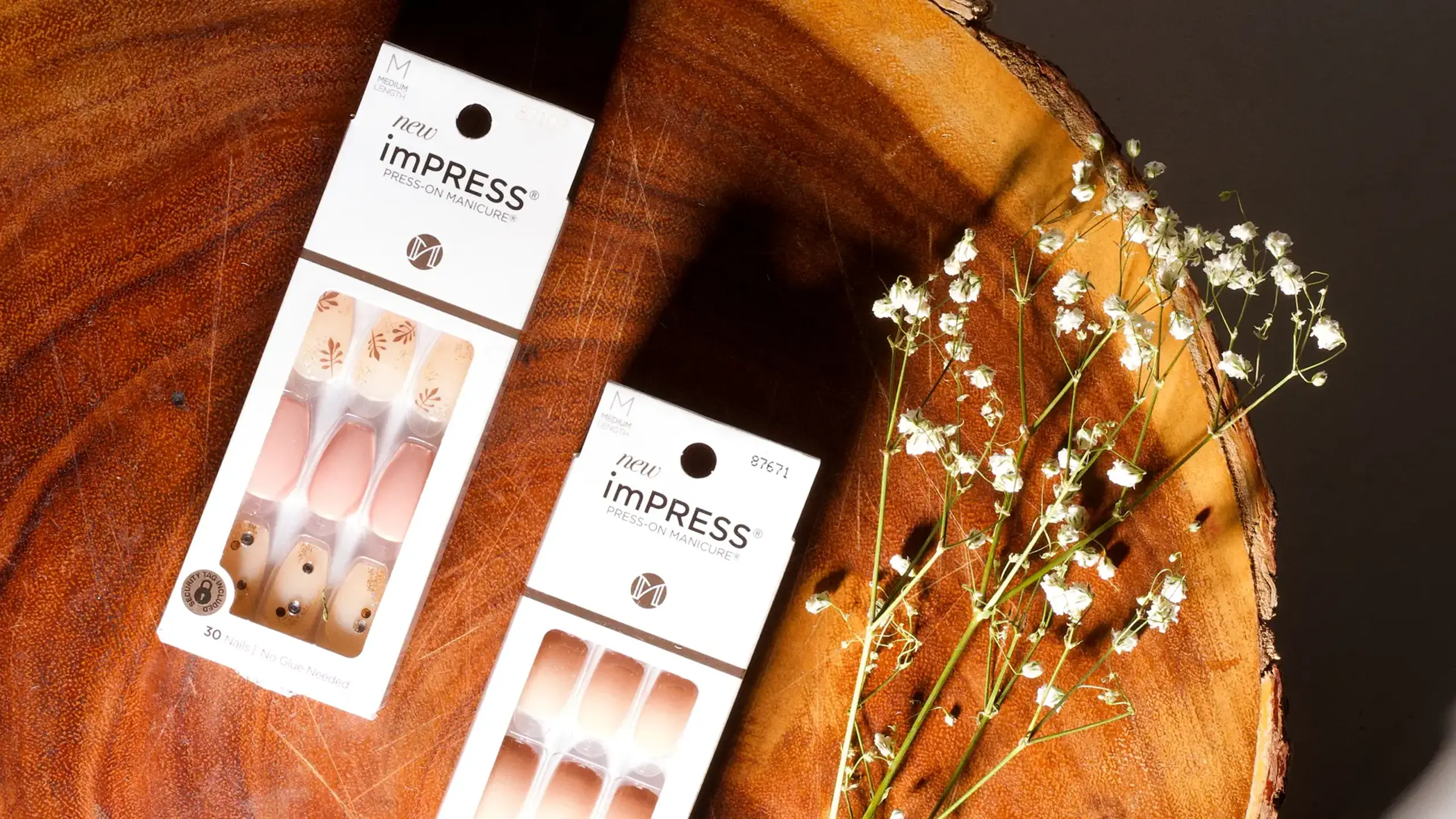
An [integrated marketing campaign](https://en.wikipedia.org/wiki/Integrated_marketing_communications) is a coordinated approach where every communication channel works toward one strategic goal, with one unified message, and one clearly defined audience. Nothing exists in isolation.
The website supports the video. The video supports [social distribution](https://blog.hubspot.com/marketing/social-media-marketing). Social supports search visibility. [paid media](https://blog.hubspot.com/marketing) reinforces organic reach. Every piece is planned as part of a system, not as a one off deliverable.
At C&I Studios, this approach is not optional. It is structural. When brands come to us asking for content, they usually think in fragments. A video here. A landing page there. Some social posts later. Fragmented execution produces fragmented results. Integration fixes that.
An **integrated marketing campaign** aligns strategy, creative, production, and distribution from the first decision onward. When done correctly, it reduces waste, increases clarity, and compounds impact across channels.
## The core definition in practical terms
An integrated marketing campaign is not about being everywhere. It is about being consistent everywhere that matters.
**At a minimum, it means:**
- One core value proposition
- One primary audience per campaign
- One narrative framework
- Multiple formats adapted to specific channels
The mistake most brands make is confusing integration with repetition. Copy pasting the same message across platforms is not integration. Adaptation is.
[C&I Studios](https://c-istudios.com/) designs integrated campaigns by starting with story architecture, then mapping how that story lives across media.
## Integration is strategic before it is creative
If strategy is weak, integration amplifies the wrong thing.
Before any production begins, we define:
- The business objective the campaign must serve
- The audience decision point we are influencing
- The primary channel where conversion happens
- The supporting channels that reinforce it
Only after these are locked do creative decisions make sense.
## How integrated campaigns differ from traditional marketing
Traditional marketing works in silos. Teams operate independently. Metrics are disconnected. Creative looks good but does not always perform.
Integrated marketing treats the campaign as a single organism.
### Key structural differences
Traditional approach often looks like this:
- Website team builds pages
- Video team produces content
- Social team posts what they receive
- Analytics is reviewed after launch
An integrated marketing campaign works differently:
- Strategy defines all outputs at once
- Content is designed modularly for reuse
- Distribution is planned during pre production
- Measurement is tied to one campaign goal
This is why integrated campaigns consistently outperform channel specific efforts.
## Why C&I Studios builds campaigns this way
C&I Studios operates across film, television, digital media, and branded storytelling. That range forces discipline. When production costs are real and timelines are tight, inefficiency shows immediately.
Integration allows us to extract maximum value from every asset we create.
A single production day can yield:
- Long form brand film
- Short social cuts
- Website hero content
- Email visuals
- Press assets
That is not accidental. It is designed.
## Creative efficiency without creative compromise
Integration does not reduce creative ambition. It protects it.
When every asset is planned within one system, creative teams have clarity instead of chaos. The result is stronger storytelling and cleaner execution.
## The role of content in an integrated marketing campaign
Content is the vehicle. Strategy is the engine.
In integrated campaigns, content is not produced randomly. Each piece has a defined role in the audience journey.
**Typical roles include:**
- Awareness drivers that introduce the idea
- Consideration assets that explain value
- Conversion assets that remove friction
- Reinforcement content that builds trust
Not every campaign needs all four. But every asset must justify its existence.
### Format follows function
At C&I Studios, format decisions are never aesthetic only. They are functional.
A campaign might include:
- Cinematic video for emotional positioning
- Editorial content for clarity and authority
- Social adaptations for reach and frequency
Each format solves a different problem within the same narrative.
## Channel alignment without message dilution
One of the biggest fears brands have is that integration will water down messaging. The opposite is true.
When done correctly, integration sharpens the message because it forces discipline.
### One idea, many expressions
An integrated marketing campaign works when:
- The core message never changes
- The delivery adapts to context
- The tone matches the platform
- The call to action stays aligned
For example, a campaign narrative introduced through video can be reinforced through written content that explains the logic behind the promise. Social content then keeps the idea visible without restating it verbatim.
### Measurement and accountability
Integration also changes how success is measured.
Instead of isolated metrics, we evaluate:
- How channels support each other
- Where attention converts into action
- Which assets accelerate movement through the funnel
This allows smarter optimization during the campaign, not after it ends.
## Metrics that actually matter
Depending on campaign goals, integrated measurement may focus on:
- Assisted conversions rather than last click
- Engagement depth across formats
- Time to decision rather than raw traffic
This is where a serious [media marketing consult](https://c-istudios.com/media-marketing-consultation-services/) approach becomes critical. Without unified measurement, integration collapses back into silos.
## Examples of integrated marketing in action
While specific client details are often confidential, the structure is consistent.
A typical C&I Studios integrated campaign includes:
- A central brand narrative developed with stakeholders
- High production value visual content as the anchor
- Supporting editorial and digital assets
- Coordinated release across owned and earned channels
The power comes from timing and cohesion, not volume.
## What weak integration looks like
To be blunt, most campaigns fail integration tests.
Common failure patterns include:
- Inconsistent messaging across platforms
- Content produced without distribution planning
- Social content disconnected from conversion paths
- Strong visuals with no strategic follow through
These failures are structural, not creative.
### Integration and brand trust
Audiences notice inconsistency even when they cannot articulate it.
An integrated marketing campaign builds trust by reducing cognitive friction. When everything aligns, the brand feels intentional. When it does not, the brand feels reactive.
Trust compounds. So does confusion.
This is why creative marketing at the campaign level matters more than isolated creativity.
### Where most teams go wrong
Here is the uncomfortable truth. Integration is harder than execution.
It requires:
- Cross team collaboration
- Early decision making
- Clear ownership
- Willingness to say no to unnecessary assets
Most organizations default to output instead of alignment.
C&I Studios exists to solve that problem for brands that want coherence without compromise.
## Building an integrated campaign from the ground up
Once the strategic foundation is clear, execution becomes a matter of sequencing, not improvisation. This is where most brands struggle. They understand what an integrated approach is in theory, but they do not know how to build one in practice.
At C&I Studios, part two of the process is where alignment becomes operational. Strategy moves off the whiteboard and into real decisions about content, channels, and timing.
This section breaks down how an integrated campaign is actually constructed, step by step, without relying on buzzwords or abstract frameworks.
### Step one. define the campaign spine
Every effective campaign has a spine. Not a slogan. Not a tagline. A spine.
The spine is the single idea that everything else attaches to. If an asset does not strengthen the spine, it does not belong in the campaign.
Before any creative is produced, we lock:
- The primary audience segment
- The single problem the campaign addresses
- The proof point that makes the message credible
This is non negotiable. Without a spine, content volume increases while clarity decreases.
## Why most campaigns fail here
Brands often try to solve too many problems at once. They want awareness, conversion, recruitment, and brand repositioning in one push. That is not ambition. That is confusion.
An integrated campaign succeeds because it is narrow by design.
### Step two. map the audience journey
Once the spine is defined, we map how the audience actually encounters the brand.
This is not a funnel diagram pulled from a deck. It is a behavioral map based on real media consumption patterns.
Questions we answer early:
- Where does first exposure realistically happen
- What questions arise after that exposure
- What proof does the audience need before acting
- Where does action most naturally occur
This mapping dictates content priorities, not the other way around.
## Journey mapping prevents content waste
Without this step, brands produce assets that look impressive but sit idle. With it, every piece has a clear role.
This is where [social media marketing](https://c-istudios.com/social-media-marketing-services/) becomes a structural tool rather than a posting habit. Social content is not filler. It is a repetition engine that keeps the campaign spine visible long enough to matter.
### Step three. design content as a system
Integrated campaigns are not built asset by asset. They are built as systems.
At C&I Studios, we design content modularly. One core production feeds multiple outputs without diluting quality.
Typical system design includes:
- One anchor asset that carries the full narrative
- Secondary assets that isolate key ideas
- Short form adaptations that reinforce recall
The mistake many teams make is starting with format instead of function. Video is not chosen because it is trendy. It is chosen because it carries emotion efficiently. Editorial is not chosen because it ranks. It is chosen because it explains complexity.
## The role of written content in integration
Written content is often undervalued in visual campaigns. That is shortsighted.
Strategic writing provides clarity, authority, and discoverability. This is where SEO copywriting supports integration by extending the life and reach of campaign messaging beyond paid distribution.
When writing is aligned with campaign intent, it does not exist to chase keywords. It exists to answer the right questions at the right moment.
### Step four. align production with distribution
One of the most expensive mistakes brands make is separating production from distribution planning.
At C&I Studios, distribution considerations are baked into pre production.
**We decide early:**
- Which platforms the content must perform on
- What aspect ratios and durations are required
- How assets will be released over time
This prevents re editing, re shooting, and creative compromise after the fact.
## Timing is part of the strategy
Integrated campaigns are not launched all at once unless there is a reason.
Staggered release allows:
- Message reinforcement without fatigue
- Performance based optimization
- Narrative layering instead of information dumping
Distribution without timing strategy is noise.
### Step five. ensure cross channel consistency
Consistency is not sameness. It is recognizability.
An integrated campaign maintains consistency across:
- Visual language
- Tone of voice
- Core promise
- Call direction
This does not mean every platform looks identical. It means every platform feels intentional.
Audiences move fluidly between channels. They notice when brands do not.
## Internal alignment matters as much as external
Integration breaks down internally before it breaks down externally.
That is why C&I Studios prioritizes:
- Clear creative documentation
- Shared campaign language across teams
- Defined ownership for approvals
When teams interpret the campaign differently, the audience will too.
### Step six. launch, observe, and adapt
Integrated campaigns are living systems, not fixed installations.
Once live, we monitor how assets interact:
- Which content drives follow on engagement
- Where attention drops off
- Which messages resonate most clearly
This allows refinement without losing coherence.
## Optimization without fragmentation
The danger in optimization is breaking integration.
Adjustments are made at the execution level, not the strategic level. The spine remains intact while delivery evolves.
This is where experience matters. Without a strong central idea, optimization turns into panic driven changes.
## Common misconceptions about integrated execution
There are a few persistent myths worth dismantling.
### Myth one. integrated means expensive
Poorly planned campaigns are expensive. Integrated ones are efficient.
By designing assets to work together, brands reduce redundancy and maximize production value.
### Myth two. integration limits creativity
Constraints sharpen creativity. Integration forces better ideas, not safer ones.
### Myth three. integration is only for large brands
Scale does not define integration. Discipline does.
Smaller brands often benefit more because clarity matters more when budgets are tight.
## How C&I Studios applies this framework
[C&I Studios](https://c-istudios.com/contact/) operates at the intersection of storytelling and systems.
Our background in film and television demands narrative integrity. [Our work](https://c-istudios.com/our-work/) in digital and branded media demands performance accountability.
Integration is where those disciplines meet.
We do not produce content and hope it works. We build campaigns designed to work together before the first frame is shot or the first word is written.
## Looking ahead without wrapping it up
By now, the structure behind effective integrated campaigns should be clear. Strategy defines the spine. The spine shapes content. Content is designed as a system. Distribution is planned, not improvised. Measurement informs refinement.
For brands navigating crowded media environments, this approach is not about doing more. It is about doing fewer things with greater intent.
Many organizations sense that their marketing efforts are fragmented but cannot pinpoint where alignment breaks down. That moment of recognition is often the starting point for better questions, clearer conversations, and more deliberate decisions.
When teams are ready to explore how their stories, channels, and audiences can work together instead of competing for attention, the right framework changes everything.
## Work with C&I Studios
If you are planning a project like this, our team can take it from concept to final delivery. Explore our [video production services](https://c-istudios.com/video-production-services/), browse [our work](https://c-istudios.com/our-work/) to see how we tell brand stories, and [get in touch](https://c-istudios.com/contact/) when you are ready to start.
Originally published February 3, 2026
---
*This content is from [C&I Studios](https://c-istudios.com), a full-service production company.*
---
# What Is Brand Marketing? Definition, Strategy, and Examples for Business Growth
> Published: February 2, 2026
> Categories: Commercial & Brand
> Source: https://c-istudios.com/what-is-brand-marketing-definition-strategy-and-examples-for-business-growth/
---
.cib{--paper:#1b1d1f;--ink:#fff;--body:#d5d7d9;--muted:#8b9096;--line:rgba(255,255,255,.12);--thumb:#2b2e31;--card:#212426;--accent:#c02b0a;--blue:#5B8FA8;--serif:'Playfair Display',Georgia,serif;--sans:'Poppins',-apple-system,sans-serif;--measure:900px;background:var(--paper);color:var(--body);font-family:var(--sans);line-height:1.6;position:relative;left:50%;transform:translateX(-50%);width:90vw;max-width:1920px}
.cib *{box-sizing:border-box}
.cib .kicker{max-width:var(--measure);margin:58px auto 0;padding:0 22px;font-size:12.5px;font-weight:700;letter-spacing:2.5px;text-transform:uppercase;color:var(--blue)}
.cib h1.cibh1{text-wrap:balance;font-family:var(--serif);font-weight:500;font-size:clamp(46px,6vw,72px);line-height:1.08;color:var(--ink);max-width:var(--measure);margin:18px auto 0;padding:0 22px;letter-spacing:-.5px}
.cib .metarow{max-width:var(--measure);margin:20px auto 0;padding:0 22px;color:var(--muted);font-size:14px}
.cib .hero{position:relative;width:100%;height:0;padding-bottom:56.25%;overflow:hidden;margin:48px auto 0;border-top:1px solid var(--line);border-bottom:1px solid var(--line)}
.cib .hero .ph{width:100%;aspect-ratio:16/9;background:var(--thumb);border-top:1px solid var(--line);border-bottom:1px solid var(--line);display:flex;align-items:center;justify-content:center;color:#7d8288;font-size:13px;text-align:center;padding:0 20px}
.cib .body{max-width:var(--measure);margin:12px auto 0;padding:52px 22px 6px}
.cib .body.lead p:first-child{font-size:23px;line-height:1.62;color:var(--ink)}
.cib .body p{font-size:18.5px;line-height:1.85;margin:0 0 30px;color:var(--body)}
.cib .body h2{text-wrap:balance;font-family:var(--serif);font-weight:500;font-size:clamp(32px,4vw,48px);line-height:1.22;color:var(--ink);margin:70px 0 20px;letter-spacing:-.3px}
.cib .body h3{text-wrap:balance;font-family:var(--sans);font-weight:600;font-size:22px;color:var(--ink);margin:38px 0 8px}
.cib .body a{color:var(--ink);text-decoration:underline;text-decoration-color:rgba(255,255,255,.4);text-underline-offset:3px}
.cib .body a:hover{text-decoration-color:var(--ink)}
.cib .ctable{width:100%;border-collapse:collapse;margin:16px 0 30px;font-size:16px}
.cib .ctable th{background:#000;color:#fff;text-align:left;padding:10px 12px;font-family:var(--sans)}
.cib .ctable td{padding:10px 12px;border-bottom:1px solid var(--line);color:var(--body)}
.cib .inimg{position:relative;width:100%;height:0;padding-bottom:56.25%;overflow:hidden;margin:72px auto;border-top:1px solid var(--line);border-bottom:1px solid var(--line)}
.cib .inimg .ph{width:100%;aspect-ratio:16/9;background:var(--thumb);border-top:1px solid var(--line);border-bottom:1px solid var(--line);display:flex;align-items:center;justify-content:center;color:#7d8288;font-size:13px}
.cib .origpub{max-width:var(--measure);margin:60px auto 0;padding:26px 22px 0;border-top:1px solid var(--line);color:var(--muted);font-size:13.5px}
.cib .related{max-width:1200px;margin:64px auto 0;padding:34px 22px 76px}
.cib .related h3{font-family:var(--sans);font-size:12.5px;letter-spacing:2px;text-transform:uppercase;color:var(--ink);margin:0 0 24px}
.cib .grid{display:grid;grid-template-columns:repeat(3,1fr);gap:28px}
.cib .rc{background:var(--card);border:1px solid var(--line);display:block;text-decoration:none;color:inherit;transition:border-color .15s}
.cib a.rc:hover{border-color:rgba(255,255,255,.5)}
.cib .rc .thumb{position:relative;width:100%;height:0;padding-bottom:56.25%;background:var(--thumb);overflow:hidden}
.cib .rc .thumb img{position:absolute!important;top:0!important;left:0!important;width:100%!important;height:100%!important;object-fit:cover!important;margin:0!important}
.cib .rc .cc{padding:14px 15px 17px}
.cib .rc .rt{font-family:var(--serif);font-weight:500;font-size:16px;line-height:1.3;color:var(--ink);margin:0 0 6px}
.cib .rc .rm{font-size:11px;letter-spacing:1px;text-transform:uppercase;color:var(--muted)}
.cib img{margin:0!important;padding:0!important;display:block!important;vertical-align:top;max-width:100%}
.cib .hero img,.cib .inimg img{position:absolute!important;top:0!important;left:0!important;width:100%!important;height:100%!important;object-fit:cover!important;margin:0!important;padding:0!important;border:0!important;display:block!important;aspect-ratio:auto!important}
.cib .hero+.body{padding-top:36px}
@media(max-width:760px){.cib .grid{grid-template-columns:1fr}.cib .body h2{margin:52px 0 16px}.cib .body p{font-size:17.5px}.cib .inimg,.cib .hero{margin-top:44px}}
.cib .vembed{max-width:var(--measure);margin:44px auto;padding:0 22px}.cib .vembed .vwrap{position:relative;width:100%;height:0;padding-bottom:56.25%}.cib .vembed .vwrap iframe{position:absolute;top:0;left:0;width:100%;height:100%;border:0}
Commercial & Brand
# What Is Brand Marketing? Definition, Strategy, and Examples for Business Growth
9 min read

Brand marketing is often misunderstood as surface level design or promotional noise. That misunderstanding is costly.
Businesses that treat branding as decoration tend to chase short term attention rather than long term value. Those that understand brand marketing as a strategic system build recognition, trust, and pricing power that compounds over time.
For companies operating in competitive markets, brand marketing is not optional. It is the mechanism that determines whether a business is remembered, trusted, and chosen when alternatives exist.
At C&I Studios, [brand marketing](https://c-istudios.com/branding-and-graphic-design-services/) is approached as an operational asset rather than a creative afterthought. Every visual, narrative, and distribution decision is made to reinforce market position and reduce uncertainty for the audience.
## Understanding Brand Marketing at a Structural Level
Brand marketing is the long term process of shaping how a company is perceived before a buying decision is made. It influences expectations, credibility, and emotional framing so that when a product or service is evaluated, the brand already carries meaning.
Unlike performance marketing, which targets immediate conversion, brand marketing operates upstream. It defines the mental category a business occupies. When done correctly, it reduces friction across sales, pricing, hiring, and partnerships.
At [C&I Studios](https://c-istudios.com/), brand marketing is treated as an integrated system that connects identity, messaging, and media execution into a single narrative structure.
## Brand Marketing vs Product Marketing
Confusing these two concepts leads to tactical mistakes.
Product marketing answers the question of what is being sold. Brand marketing answers why the company exists and why it should be trusted.
Product marketing can succeed temporarily without a strong brand. Brand marketing cannot be replaced by product messaging alone. Over time, competitors replicate features, pricing converges, and only brand differentiation remains defensible.
**Key structural differences include:**
- Product marketing focuses on features and benefits
- Brand marketing focuses on meaning and positioning
- Product marketing drives short term action
- Brand marketing builds long term preference
Businesses that over invest in product messaging while ignoring brand equity usually experience rising acquisition costs and declining loyalty.
## Why Brand Marketing Is a Business Necessity
Markets reward clarity. When customers understand what a brand stands for, decision making becomes easier. When they do not, price becomes the default comparison.
Brand marketing exists to eliminate ambiguity. It creates coherence across touchpoints so that the brand feels consistent regardless of platform, format, or timing.
From a business standpoint, effective brand marketing delivers measurable advantages:
- Higher trust reduces resistance during sales conversations
- Consistent identity improves recall and recognition
- Clear positioning supports premium pricing
- Strong brands attract better talent and partners
C&I Studios works with clients who recognize that these outcomes are not accidental. They are engineered through deliberate brand systems that scale across media.
## The Cost of Ignoring Brand Marketing
Companies that deprioritize brand marketing often believe they are saving money. In reality, they are shifting costs elsewhere.
**Without a strong brand foundation:**
- Marketing campaigns require higher spend to achieve the same results
- Messaging becomes fragmented across teams
- Audiences struggle to differentiate the business from competitors
- Growth becomes dependent on constant promotion
This pattern is common in industries driven by rapid output and short deadlines. Over time, the lack of brand cohesion erodes trust and limits expansion opportunities.
## Brand Marketing Shapes Perception Before Demand
One of the most misunderstood aspects of brand marketing is timing. It works before demand is active. By the time a buyer is ready to act, the brand relationship has already been formed.
This is why high performing brands invest in narrative consistency long before a campaign launch. They understand that perception compounds.
Brand marketing influences perception through repeated exposure to aligned signals:
- Visual identity that signals professionalism and scale
- Messaging that communicates values and expertise
- Media quality that implies operational competence
At C&I Studios, brand narratives are built across platforms using [video production](https://c-istudios.com/video-production-services/) as a primary trust signal. High quality visual execution communicates seriousness, reliability, and attention to detail without explicit claims.
## The Role of Content in Brand Marketing Systems
Brand marketing does not exist without output. Content is the delivery mechanism through which brand meaning is expressed and reinforced.
However, not all content contributes to brand equity. Random output creates noise. Strategic content builds recognition.
Effective brand driven content shares specific traits:
- It reinforces a clear point of view
- It maintains tonal consistency
- It aligns with the brand’s market position
- It prioritizes clarity over novelty
C&I Studios approaches [content creation](https://c-istudios.com/content-creation-services/) as infrastructure. Each asset is designed to fit into a broader ecosystem rather than perform in isolation.
## Strategic Content vs Promotional Content
Promotional content pushes offers. Strategic content builds authority.
Brand marketing relies on the latter. This includes educational material, behind the scenes narratives, and thought leadership that demonstrates competence without direct selling.
When audiences repeatedly encounter valuable, well structured content from a brand, familiarity increases. Familiarity reduces perceived risk. Reduced risk increases conversion likelihood later.
## Brand Marketing as a Trust Accelerator
Trust is the currency of modern markets. Brand marketing accelerates trust formation by reducing uncertainty.
Customers rarely evaluate every option objectively. They rely on heuristics. Brand is one of the most powerful heuristics available.
Strong brand signals answer unspoken questions:
- Is this company credible
- Do they understand their domain
- Will they deliver consistently
- Are they established or experimental
C&I Studios leverages media precision, narrative control, and production quality to answer these questions implicitly. Trust is built through repetition, not persuasion.
## How Brand Marketing Supports Long Term Growth
Sustainable growth requires more than traffic spikes. It requires retention, advocacy, and brand recall.
Brand marketing supports this by creating emotional and cognitive anchors. Over time, audiences associate specific outcomes and standards with the brand.
**Long term advantages include:**
- Reduced reliance on paid acquisition
- Increased customer lifetime value
- Higher tolerance for pricing adjustments
- Greater resilience during market shifts
These outcomes are not immediate. That is why brand marketing is often undervalued by short term focused organizations. The payoff is exponential, not linear.
## Measuring the Impact of Brand Marketing
A common objection is that brand marketing cannot be measured. This is inaccurate. It is simply measured differently.
Brand impact is reflected through indirect indicators:
- Increased branded search volume
- Improved conversion rates across channels
- Shorter sales cycles
- Higher engagement with owned media
Attribution models often fail to capture brand influence because they prioritize last touch interactions. Experienced teams look at trends, not isolated metrics.
## Brand Marketing in the Context of Media Driven Businesses
For companies operating in media intensive environments, brand marketing carries even greater weight. Visual and narrative consistency become public proof of competence.
C&I Studios operates at the intersection of storytelling, production, and strategy. In this context, brand marketing is inseparable from execution quality. Every output becomes a brand signal.
This is why shortcuts in branding are immediately visible in media industries. Audiences are trained to notice inconsistency, lack of polish, and narrative gaps.
## How Brand Marketing Is Built in Practice
Understanding brand marketing conceptually is only half the equation. Execution is where most businesses fail.
Not because they lack creativity, but because they lack structure. Strong brands are not built through isolated campaigns. They are built through repeatable systems that govern how decisions are made over time.
At C&I Studios, brand marketing execution is approached as an operational discipline. Strategy comes first. Creative decisions follow. Media output is the final expression of a system that already knows what it stands for.
This section breaks down how brand marketing moves from theory into practice without losing coherence as it scales.
## Defining a Brand Position That Can Withstand Growth
A brand position is not a slogan. It is a strategic constraint. It defines what the brand will do and what it will refuse to do.
Many businesses attempt to appeal to everyone. The result is generic messaging that blends into the market. Effective brand marketing does the opposite. It narrows focus to gain clarity.
A durable brand position answers three questions clearly:
- Who the brand is for
- What problem space it owns
- Why its perspective is distinct
Without this foundation, downstream execution becomes fragmented. Teams interpret the brand differently. Visuals drift. Messaging becomes inconsistent.
C&I Studios works with clients to lock positioning before any creative development begins. This ensures that every output reinforces the same mental association over time.
## Translating Strategy Into Visual Identity
Once positioning is established, it must be translated into visual language. This is where many brands confuse aesthetics with strategy.
Visual identity is not about looking attractive. It is about signaling intent, competence, and consistency at a glance.
Elements such as typography, color systems, layout logic, and motion behavior all communicate meaning. When these elements are inconsistent, trust erodes even if the audience cannot articulate why.
This is why [branding & graphic design](https://c-istudios.com/branding-and-graphic-design-services/) are treated as strategic tools rather than decorative layers. At C&I Studios, visual systems are built to scale across platforms while maintaining recognizability and control.
Effective visual systems share common traits:
- They are flexible without becoming generic
- They maintain hierarchy across formats
- They reinforce the brand’s market position
- They remain consistent under pressure and speed
Brands that skip this step often find themselves redesigning repeatedly as they grow, which creates confusion and weakens recall.
## Messaging Architecture and Narrative Control
A brand’s voice must be structured before it is expressed. Messaging architecture ensures that every piece of communication aligns with the same core narrative.
This architecture typically includes:
- A primary brand story
- Supporting themes that reinforce expertise
- Language guidelines that control tone and vocabulary
- Rules for emphasis and omission
Without this structure, content becomes reactive. Teams respond to trends rather than reinforcing positioning.
C&I Studios places heavy emphasis on narrative control. This prevents dilution as more stakeholders contribute to brand communication. Consistency becomes enforceable rather than aspirational.
## Channel Strategy and Contextual Adaptation
Brand marketing does not mean saying the same thing everywhere. It means expressing the same idea in contextually appropriate ways.
Each channel has its own behavioral logic. What works in long form editorial will not work in short form platforms. However, the underlying brand signal must remain intact.
This is where many brands lose coherence. They optimize for platform mechanics at the expense of identity.
Strategic channel planning ensures that:
- Core brand messages remain stable
- Format adapts without changing meaning
- Visual and tonal cues stay recognizable
- Audience expectations are respected
In media driven ecosystems, this balance is critical.
## Building Brand Equity Through Ongoing Presence
Brand marketing compounds through repetition. One campaign does not create equity. Sustained presence does.
This does not require constant promotion. It requires consistent signals over time.
Examples of equity building signals include:
- Regular educational output that reinforces expertise
- Behind the scenes insights that demonstrate process
- Thought leadership that frames industry conversations
Platforms driven by algorithms reward consistency. This makes [social media marketing](https://c-istudios.com/social-media-marketing-services/) a critical brand reinforcement channel when approached strategically rather than tactically.
At C&I Studios, social distribution is designed to support brand narrative rather than chase short term metrics. Engagement is a byproduct of clarity, not the objective itself.
## Internal Alignment as a Brand Multiplier
Brand marketing is not only external. Internal alignment determines whether the brand can be sustained under growth.
When teams understand the brand’s positioning and constraints, decision making accelerates. Fewer debates are needed. Fewer off brand experiments occur.
This alignment is built through:
- Clear documentation of brand principles
- Shared understanding of audience and intent
- Leadership modeling brand behavior consistently
Brands that fail to align internally often experience outward inconsistency even with strong creative resources.
## Avoiding the Most Common Brand Marketing Failures
Patterns repeat across industries. Most brand marketing failures fall into predictable categories.
**Common issues include:**
- Treating branding as a one time project
- Prioritizing trends over strategy
- Fragmenting execution across vendors
- Measuring success only through short term metrics
C&I Studios addresses these risks by building systems rather than assets. This approach reduces dependency on constant reinvention and protects brand equity as the business scales.
## Brand Marketing as a Long Game Advantage
Short term tactics can generate attention. Brand marketing generates leverage.
Over time, strong brands experience compounding returns. Each new output benefits from the credibility built by previous ones. Market entry becomes easier. Partnerships form faster. Audiences listen longer.
This is why brand marketing is best viewed as infrastructure. It supports everything built on top of it.
Businesses that understand this invest earlier. Those that do not eventually pay more to compensate.
## Where This Direction Leads
Brand [marketing](https://c-istudios.com/contact/) is not about visibility alone. It is about shaping perception deliberately and consistently until the market associates your name with a specific standard.
For companies operating in competitive, media saturated environments, clarity becomes a strategic asset. The brands that endure are those that treat identity, narrative, and execution as one integrated system.
Teams exploring how to translate brand strategy into scalable media often begin by examining how their current output reinforces or undermines their intended position. That evaluation tends to surface quickly once structure is applied.
C&I Studios works within that space where strategy meets execution, helping brands move from fragmented presence to coherent systems that hold under growth.
## Work with C&I Studios
If you are planning a project like this, our team can take it from concept to final delivery. Explore our [video production services](https://c-istudios.com/video-production-services/), browse [our work](https://c-istudios.com/our-work/) to see how we tell brand stories, and [get in touch](https://c-istudios.com/contact/) when you are ready to start.
Originally published February 2, 2026
---
*This content is from [C&I Studios](https://c-istudios.com), a full-service production company.*
---
# How Much Do Professional Video Editing Services Cost in 2026?
> Published: January 30, 2026
> Categories: Post & VFX
> Source: https://c-istudios.com/how-much-do-professional-video-editing-services-cost-in-2026/
---
.cib{--paper:#1b1d1f;--ink:#fff;--body:#d5d7d9;--muted:#8b9096;--line:rgba(255,255,255,.12);--thumb:#2b2e31;--card:#212426;--accent:#c02b0a;--blue:#5B8FA8;--serif:'Playfair Display',Georgia,serif;--sans:'Poppins',-apple-system,sans-serif;--measure:900px;background:var(--paper);color:var(--body);font-family:var(--sans);line-height:1.6;position:relative;left:50%;transform:translateX(-50%);width:90vw;max-width:1920px}
.cib *{box-sizing:border-box}
.cib .kicker{max-width:var(--measure);margin:58px auto 0;padding:0 22px;font-size:12.5px;font-weight:700;letter-spacing:2.5px;text-transform:uppercase;color:var(--blue)}
.cib h1.cibh1{text-wrap:balance;font-family:var(--serif);font-weight:500;font-size:clamp(46px,6vw,72px);line-height:1.08;color:var(--ink);max-width:var(--measure);margin:18px auto 0;padding:0 22px;letter-spacing:-.5px}
.cib .metarow{max-width:var(--measure);margin:20px auto 0;padding:0 22px;color:var(--muted);font-size:14px}
.cib .hero{position:relative;width:100%;height:0;padding-bottom:56.25%;overflow:hidden;margin:48px auto 0;border-top:1px solid var(--line);border-bottom:1px solid var(--line)}
.cib .hero .ph{width:100%;aspect-ratio:16/9;background:var(--thumb);border-top:1px solid var(--line);border-bottom:1px solid var(--line);display:flex;align-items:center;justify-content:center;color:#7d8288;font-size:13px;text-align:center;padding:0 20px}
.cib .body{max-width:var(--measure);margin:12px auto 0;padding:52px 22px 6px}
.cib .body.lead p:first-child{font-size:23px;line-height:1.62;color:var(--ink)}
.cib .body p{font-size:18.5px;line-height:1.85;margin:0 0 30px;color:var(--body)}
.cib .body h2{text-wrap:balance;font-family:var(--serif);font-weight:500;font-size:clamp(32px,4vw,48px);line-height:1.22;color:var(--ink);margin:70px 0 20px;letter-spacing:-.3px}
.cib .body h3{text-wrap:balance;font-family:var(--sans);font-weight:600;font-size:22px;color:var(--ink);margin:38px 0 8px}
.cib .body a{color:var(--ink);text-decoration:underline;text-decoration-color:rgba(255,255,255,.4);text-underline-offset:3px}
.cib .body a:hover{text-decoration-color:var(--ink)}
.cib .ctable{width:100%;border-collapse:collapse;margin:16px 0 30px;font-size:16px}
.cib .ctable th{background:#000;color:#fff;text-align:left;padding:10px 12px;font-family:var(--sans)}
.cib .ctable td{padding:10px 12px;border-bottom:1px solid var(--line);color:var(--body)}
.cib .inimg{position:relative;width:100%;height:0;padding-bottom:56.25%;overflow:hidden;margin:72px auto;border-top:1px solid var(--line);border-bottom:1px solid var(--line)}
.cib .inimg .ph{width:100%;aspect-ratio:16/9;background:var(--thumb);border-top:1px solid var(--line);border-bottom:1px solid var(--line);display:flex;align-items:center;justify-content:center;color:#7d8288;font-size:13px}
.cib .origpub{max-width:var(--measure);margin:60px auto 0;padding:26px 22px 0;border-top:1px solid var(--line);color:var(--muted);font-size:13.5px}
.cib .related{max-width:1200px;margin:64px auto 0;padding:34px 22px 76px}
.cib .related h3{font-family:var(--sans);font-size:12.5px;letter-spacing:2px;text-transform:uppercase;color:var(--ink);margin:0 0 24px}
.cib .grid{display:grid;grid-template-columns:repeat(3,1fr);gap:28px}
.cib .rc{background:var(--card);border:1px solid var(--line);display:block;text-decoration:none;color:inherit;transition:border-color .15s}
.cib a.rc:hover{border-color:rgba(255,255,255,.5)}
.cib .rc .thumb{position:relative;width:100%;height:0;padding-bottom:56.25%;background:var(--thumb);overflow:hidden}
.cib .rc .thumb img{position:absolute!important;top:0!important;left:0!important;width:100%!important;height:100%!important;object-fit:cover!important;margin:0!important}
.cib .rc .cc{padding:14px 15px 17px}
.cib .rc .rt{font-family:var(--serif);font-weight:500;font-size:16px;line-height:1.3;color:var(--ink);margin:0 0 6px}
.cib .rc .rm{font-size:11px;letter-spacing:1px;text-transform:uppercase;color:var(--muted)}
.cib img{margin:0!important;padding:0!important;display:block!important;vertical-align:top;max-width:100%}
.cib .hero img,.cib .inimg img{position:absolute!important;top:0!important;left:0!important;width:100%!important;height:100%!important;object-fit:cover!important;margin:0!important;padding:0!important;border:0!important;display:block!important;aspect-ratio:auto!important}
.cib .hero+.body{padding-top:36px}
@media(max-width:760px){.cib .grid{grid-template-columns:1fr}.cib .body h2{margin:52px 0 16px}.cib .body p{font-size:17.5px}.cib .inimg,.cib .hero{margin-top:44px}}
.cib .vembed{max-width:var(--measure);margin:44px auto;padding:0 22px}.cib .vembed .vwrap{position:relative;width:100%;height:0;padding-bottom:56.25%}.cib .vembed .vwrap iframe{position:absolute;top:0;left:0;width:100%;height:100%;border:0}
Post & VFX
# How Much Do Professional Video Editing Services Cost in 2026?
5 min read

**Professional video editing services typically cost between $50 and $150 per hour, or $500 to $10,000+ per project depending on complexity.**
Simple cuts and basic edits start around $200 to $500, mid-range commercial work runs $2,000 to $10,000, and complex projects involving [motion graphics](https://en.wikipedia.org/wiki/Motion_graphics), multi-camera shoots, or broadcast-quality delivery can exceed $20,000. Below, we break down exactly what drives these costs, how different pricing models work, and how to evaluate quotes so you pay for real value rather than guessing.
## Video Editing Rates by Experience Level
Hourly rates vary primarily by the editor’s experience and the production environment they operate in. Here’s what you can expect across the market in 2026:
**Experience Level**
**Hourly Rate**
**Typical Work**
**Beginner**
$15-$50/hr
Basic cuts, simple YouTube edits, minimal effects
**Intermediate**
$50-$100/hr
Brand videos, multi-camera edits, color correction, audio cleanup
**Professional**
$100-$150/hr
Broadcast work, commercial campaigns, motion graphics, narrative editing
**Specialist / Studio**
$150-$300+/hr
VFX-heavy production, feature films, high-end advertising
## Video Editing Cost by Project Type
Many studios and editors price by the project rather than the hour. Project pricing gives you cost certainty and is typically the better option for well-defined deliverables. Here are common ranges:
**Project Type**
**Cost Range**
**What’s Included**
**Short social media clip (15-60 sec)**
$100-$500
Basic cuts, text overlays, platform formatting
**YouTube video (5-15 min)**
$300-$2,000
Cuts, transitions, audio sync, color correction, thumbnails
**Corporate / brand video**
$1,500-$5,000
Multi-camera edit, graphics, sound design, 2-3 revision rounds
**Commercial / ad campaign**
$3,000-$15,000
Narrative editing, motion graphics, multiple deliverable formats, platform optimization
**Documentary / long-form (30+ min)**
$5,000-$25,000+
Story structure, archival footage integration, full audio mix, color grade
**Music video**
$2,000-$10,000
Rapid-cut editing, VFX, color stylization, multi-angle sync
## What Actually Drives Video Editing Costs
Price variation between editors and studios is not random. It reflects real differences in what you’re getting. Here are the primary cost drivers:
### Footage Volume and Complexity
A five-minute video assembled from two hours of single-camera footage is a fundamentally different job than the same five minutes cut from fifty hours of multi-camera, mixed-format material. Editors price for the decision load involved in reviewing, selecting, and structuring footage, not just the runtime of the final deliverable.
Variables that increase cost include the number of camera angles, frame rate mismatches between sources, mixed resolution footage, and integration of archival or licensed material.
### Editorial Strategy and Narrative Structure
Professional editing is not just technical assembly. Before footage touches a timeline, the editor analyzes story structure, pacing, emotional arc, and how the audience will engage with the content. This strategic layer is one of the biggest differentiators between budget editing and professional work. It’s also where most of the value is created.
### Technical Execution
Professional editors work in calibrated environments with licensed software, high-performance hardware, and redundant storage systems. Execution tasks include precision cutting, audio synchronization and cleanup, color balance normalization across shots, and format optimization for multiple output destinations. Errors at this stage are expensive to fix downstream, which is why experienced editors command higher rates.
### Revision Cycles
Revision structure is one of the most overlooked pricing factors. Some services advertise unlimited revisions, but this usually means unlimited minor tweaks, not structural rework. Professional studios define revision rounds because each round consumes editorial bandwidth, structural changes cascade through downstream assets, and version control must be maintained. When revisions are planned and feedback is structured, cost stays predictable. When they’re chaotic, cost escalates.
### Platform and Distribution Requirements
A video destined for broadcast television has different compliance requirements than one built for Instagram Reels or an internal presentation. Each additional distribution target introduces aspect ratio adaptation, captioning and accessibility standards, compression profiles, and legal safe zone compliance. This adds real work that should be reflected in the quote.
### Role Specialization
On professional projects, editing is rarely done by one person. A complete pipeline may include a lead editor for narrative coherence, an assistant editor for media organization, a colorist for visual consistency, and an audio specialist for sound design. This specialization increases cost but dramatically improves reliability and output quality.
## Common Pricing Models Explained
### Project-Based (Flat Rate)
A fixed fee is agreed before work begins, covering scope, editorial complexity, revision rounds, and delivery requirements. This is the most common model for defined campaigns, commercial work, and narrative projects. It protects both sides from scope creep and gives you budget certainty.
Project pricing works best when deliverables are clearly defined, timelines are fixed, and stakeholders are identified in advance.
### Hourly or Day Rate
This approach is common when scope is evolving or when editing is embedded within a larger production timeline. Day rates typically range from $400 to $1,500 depending on the editor’s level. It offers flexibility but requires trust and clear communication to avoid runaway costs.
### Retainer / Subscription
For organizations producing content on an ongoing basis, retainers provide editorial continuity. Instead of pricing per asset, the studio allocates capacity across a defined period, typically monthly. This reduces per-project friction and allows editors to develop deeper brand familiarity. Retainers work well for companies publishing weekly or biweekly video content and typically range from $2,000 to $10,000 per month.
## Video Editing Cost Per Finished Minute
Some editors price by the finished minute of video. Here’s what to expect:
**Editing Complexity**
**Cost Per Minute**
**Examples**
**Basic**
$50-$150/min
Simple cuts, talking head, minimal graphics
**Standard**
$150-$500/min
Brand videos, b-roll integration, color correction
**Complex**
$500-$1,000+/min
Motion graphics, multi-cam, VFX, broadcast delivery
This is why short promotional assets can cost more per minute than longer documentaries, short-form editing demands extreme precision where every second must justify its presence.
## Freelancer vs. Agency vs. In-House. Cost Comparison
**Option**
**Typical Cost**
**Pros**
**Cons**
**Freelancer**
$25-$100/hr
Flexible, lower overhead, specialized skill sets available
Less capacity for large projects, variable availability
**Production Agency**
$100-$300/hr
Full pipeline, QC built in, scalable, brand strategy integration
Higher cost, may require minimum project size
**In-House Editor**
$50K-$90K/yr salary
Dedicated availability, deep brand knowledge, no per-project fees
Fixed cost regardless of volume, limited skill range, equipment costs
The right choice depends on your volume, budget predictability, and how critical brand consistency is across your content.
## What Cheap Editing Actually Leaves Out
If a quote seems unusually low, it usually means one or more of these things have been removed, none of which are visible in the proposal headline:
- Editorial strategy and narrative structure (you get assembly, not storytelling)
- Quality control and brand review before delivery
- Audio integrity checks and professional sound mixing
- Cross-platform testing and format optimization
- Color consistency verification across shots
- Structured revision workflows (revisions become reactive and chaotic)
- Secure media storage, backups, and project archiving
These omissions rarely show up in proposals. They show up later as performance problems, brand inconsistencies, or platform rejections.
## How to Evaluate a Video Editing Quote
Price alone is not a useful metric. When comparing quotes, look for these indicators of professional, reliable pricing:
- Clear scope definition, deliverables, formats, and runtime are specified
- Revision structure, number of rounds, what constitutes a revision, and how overages are handled
- Delivery format specificity, resolution, codec, aspect ratios, platform requirements
- Timeline realism, rushed timelines cost more; if a quote ignores this, expect surprises
- Production context, does the editor understand how the footage was shot and where the video will be distributed?
If these elements are missing from a quote, the price is incomplete, not competitive.
## How to Reduce Your Video Editing Costs Without Sacrificing Quality
You don’t have to overspend to get professional results. Here are practical ways to keep editing costs in check:
- Organize footage before handoff, label files, remove unusable takes, and provide a shot list or script
- Consolidate stakeholder feedback into a single round rather than sending piecemeal notes
- Plan your distribution targets in advance so the editor can optimize for all platforms in one pass
- Shoot with editing in mind, consistent lighting, clean audio capture, and continuity reduce [post-production](https://en.wikipedia.org/wiki/Post-production) time
- Bundle multiple projects with a single studio or editor to negotiate volume pricing or a retainer
- Avoid late-stage structural changes, by the time assets are color graded, sound mixed, and captioned, changes require rollback across multiple layers
## The Bottom Line
Professional video editing is an investment in how your content performs, not just how it looks. The difference between a $500 edit and a $5,000 edit is rarely about runtime, it’s about strategy, precision, reliability, and the infrastructure that protects your brand.
When editing is done well, it amplifies everything upstream: the production, the script, the performance. When it’s done poorly, even the best footage falls flat.
If you’re evaluating editing options or building a content workflow that needs to scale, starting the conversation early prevents costly corrections later. C&I Studios works with brands and organizations that value predictability, quality, and long-term performance. [Reach out](https://c-istudios.com/contact/) through our contact page to start a conversation about your project.
## Work with C&I Studios
If you are planning a project like this, our team can take it from concept to final delivery. Explore our [post-production services](https://c-istudios.com/post-production-services/), browse [our work](https://c-istudios.com/our-work/) to see how we tell brand stories, and [get in touch](https://c-istudios.com/contact/) when you are ready to start.
Originally published January 30, 2026
---
*This content is from [C&I Studios](https://c-istudios.com), a full-service production company.*
---
# Video Editing on a Budget That Still Looks Professional
> Published: January 29, 2026
> Categories: Post & VFX
> Source: https://c-istudios.com/video-editing-on-a-budget-that-still-looks-professional/
---
.cib{--paper:#1b1d1f;--ink:#fff;--body:#d5d7d9;--muted:#8b9096;--line:rgba(255,255,255,.12);--thumb:#2b2e31;--card:#212426;--accent:#c02b0a;--blue:#5B8FA8;--serif:'Playfair Display',Georgia,serif;--sans:'Poppins',-apple-system,sans-serif;--measure:900px;background:var(--paper);color:var(--body);font-family:var(--sans);line-height:1.6;position:relative;left:50%;transform:translateX(-50%);width:90vw;max-width:1920px}
.cib *{box-sizing:border-box}
.cib .kicker{max-width:var(--measure);margin:58px auto 0;padding:0 22px;font-size:12.5px;font-weight:700;letter-spacing:2.5px;text-transform:uppercase;color:var(--blue)}
.cib h1.cibh1{text-wrap:balance;font-family:var(--serif);font-weight:500;font-size:clamp(46px,6vw,72px);line-height:1.08;color:var(--ink);max-width:var(--measure);margin:18px auto 0;padding:0 22px;letter-spacing:-.5px}
.cib .metarow{max-width:var(--measure);margin:20px auto 0;padding:0 22px;color:var(--muted);font-size:14px}
.cib .hero{position:relative;width:100%;height:0;padding-bottom:56.25%;overflow:hidden;margin:48px auto 0;border-top:1px solid var(--line);border-bottom:1px solid var(--line)}
.cib .hero .ph{width:100%;aspect-ratio:16/9;background:var(--thumb);border-top:1px solid var(--line);border-bottom:1px solid var(--line);display:flex;align-items:center;justify-content:center;color:#7d8288;font-size:13px;text-align:center;padding:0 20px}
.cib .body{max-width:var(--measure);margin:12px auto 0;padding:52px 22px 6px}
.cib .body.lead p:first-child{font-size:23px;line-height:1.62;color:var(--ink)}
.cib .body p{font-size:18.5px;line-height:1.85;margin:0 0 30px;color:var(--body)}
.cib .body h2{text-wrap:balance;font-family:var(--serif);font-weight:500;font-size:clamp(32px,4vw,48px);line-height:1.22;color:var(--ink);margin:70px 0 20px;letter-spacing:-.3px}
.cib .body h3{text-wrap:balance;font-family:var(--sans);font-weight:600;font-size:22px;color:var(--ink);margin:38px 0 8px}
.cib .body a{color:var(--ink);text-decoration:underline;text-decoration-color:rgba(255,255,255,.4);text-underline-offset:3px}
.cib .body a:hover{text-decoration-color:var(--ink)}
.cib .ctable{width:100%;border-collapse:collapse;margin:16px 0 30px;font-size:16px}
.cib .ctable th{background:#000;color:#fff;text-align:left;padding:10px 12px;font-family:var(--sans)}
.cib .ctable td{padding:10px 12px;border-bottom:1px solid var(--line);color:var(--body)}
.cib .inimg{position:relative;width:100%;height:0;padding-bottom:56.25%;overflow:hidden;margin:72px auto;border-top:1px solid var(--line);border-bottom:1px solid var(--line)}
.cib .inimg .ph{width:100%;aspect-ratio:16/9;background:var(--thumb);border-top:1px solid var(--line);border-bottom:1px solid var(--line);display:flex;align-items:center;justify-content:center;color:#7d8288;font-size:13px}
.cib .origpub{max-width:var(--measure);margin:60px auto 0;padding:26px 22px 0;border-top:1px solid var(--line);color:var(--muted);font-size:13.5px}
.cib .related{max-width:1200px;margin:64px auto 0;padding:34px 22px 76px}
.cib .related h3{font-family:var(--sans);font-size:12.5px;letter-spacing:2px;text-transform:uppercase;color:var(--ink);margin:0 0 24px}
.cib .grid{display:grid;grid-template-columns:repeat(3,1fr);gap:28px}
.cib .rc{background:var(--card);border:1px solid var(--line);display:block;text-decoration:none;color:inherit;transition:border-color .15s}
.cib a.rc:hover{border-color:rgba(255,255,255,.5)}
.cib .rc .thumb{position:relative;width:100%;height:0;padding-bottom:56.25%;background:var(--thumb);overflow:hidden}
.cib .rc .thumb img{position:absolute!important;top:0!important;left:0!important;width:100%!important;height:100%!important;object-fit:cover!important;margin:0!important}
.cib .rc .cc{padding:14px 15px 17px}
.cib .rc .rt{font-family:var(--serif);font-weight:500;font-size:16px;line-height:1.3;color:var(--ink);margin:0 0 6px}
.cib .rc .rm{font-size:11px;letter-spacing:1px;text-transform:uppercase;color:var(--muted)}
.cib img{margin:0!important;padding:0!important;display:block!important;vertical-align:top;max-width:100%}
.cib .hero img,.cib .inimg img{position:absolute!important;top:0!important;left:0!important;width:100%!important;height:100%!important;object-fit:cover!important;margin:0!important;padding:0!important;border:0!important;display:block!important;aspect-ratio:auto!important}
.cib .hero+.body{padding-top:36px}
@media(max-width:760px){.cib .grid{grid-template-columns:1fr}.cib .body h2{margin:52px 0 16px}.cib .body p{font-size:17.5px}.cib .inimg,.cib .hero{margin-top:44px}}
.cib .vembed{max-width:var(--measure);margin:44px auto;padding:0 22px}.cib .vembed .vwrap{position:relative;width:100%;height:0;padding-bottom:56.25%}.cib .vembed .vwrap iframe{position:absolute;top:0;left:0;width:100%;height:100%;border:0}
Post & VFX
# Video Editing on a Budget That Still Looks Professional
7 min read

High-quality video is no longer defined by who spent the most money. Viewers respond to clarity, pacing, visual coherence, and intent, not expensive plugins or celebrity-grade cameras.
At C&I Studios, we’ve worked across commercial, documentary, and branded formats long enough to see a consistent truth: the strongest edits are built on decision-making, not spending.
Video Editing on a Budget is not about shortcuts. It’s about eliminating waste. Most low-quality outputs don’t fail because of missing tools; they fail because of poor planning, inefficient workflows, and misunderstanding where quality actually comes from.
When budgets are tight, every choice must carry weight. That constraint, when handled correctly, sharpens creative judgment rather than limiting it.
This first section focuses on how professional results are achieved before the timeline is even opened, through mindset, planning, and realistic prioritization.
## The Real Cost Centers in Video Editing
Not all expenses contribute equally to perceived production value. Some areas scale quality linearly with cost; others plateau quickly. Understanding the difference is what allows editors to allocate resources intelligently.
**The biggest contributors to perceived quality are:**
- Clean audio
- Stable, intentional visuals
- Consistent color and exposure
- Logical pacing and narrative clarity
None of these require premium subscriptions or flagship hardware. They require restraint and technical literacy. By contrast, areas that do not significantly improve perceived quality beyond a certain point include excessive transition packs, novelty effects, and high-end plugins used without purpose.
At C&I Studios, budget-conscious projects perform best when spending is directed toward reliability and consistency rather than breadth of tools.
## Software Choices That Don’t Undermine Professional Output
Editors often frame software decisions as a binary between “free but limited” and “paid but professional.” That framing is flawed. The real question is whether the software supports:
- Non-destructive editing
- Robust export controls
- Color management
- Audio integration
Several tools meet these standards without forcing recurring costs. DaVinci Resolve, for example, offers professional-grade color, audio, and finishing tools in its free version. Adobe Premiere Pro, while subscription-based, remains efficient for collaborative workflows when teams already operate inside Creative Cloud.
The point is not to chase feature lists. It is to pick one tool and master it deeply. Editors who switch software frequently in search of savings often lose more time than they gain financially.
## Planning Is the Most Underrated Budget Multiplier
Editing budgets explode when footage is chaotic. No amount of post-production skill compensates for poorly planned coverage. Editors working under tight constraints benefit most when production decisions are made with editing in mind.
**Effective planning includes:**
- Shot lists designed for edit flow, not just coverage
- Consistent frame rates and resolutions
- Intentional lighting choices that reduce color correction workload
- Audio captured as cleanly as possible at the source
Every inconsistency introduces friction in post. That friction costs time. Time is money, even when the editor is working solo.
At C&I Studios, we treat editing as a downstream process that benefits directly from upstream discipline. This approach is especially critical when operating under Video Editing on a Budget constraints.
## Hardware Reality Check. What You Actually Need
Hardware marketing thrives on fear: fear of being outdated, underpowered, or uncompetitive. In practice, modern mid-range systems are more than capable of professional editing when configured correctly.
**The essentials are straightforward:**
- A CPU with strong single-core performance
- Sufficient RAM for timeline stability
- Fast SSD storage for active projects
What matters is balance, not excess. Editors frequently overspend on GPUs while neglecting storage speed or memory capacity. Others invest in external monitors without calibrating them, negating the benefit entirely.
Smart [video production gear](https://c-istudios.com/video-production-gear-list/) choices focus on eliminating bottlenecks rather than maximizing specs. A well-balanced setup that renders reliably is more valuable than a high-end system that introduces instability.
## The Discipline of Doing Less in the Timeline
Budget editing improves dramatically when editors stop trying to impress other editors. Most audiences do not notice advanced compositing or motion graphics unless they are directly tied to storytelling.
**Professional polish often comes from:**
- Clean cuts
- Consistent rhythm
- Controlled use of B-roll
- Intentional silence where needed
Over-editing is a common symptom of insecurity. It adds complexity without adding clarity. Editors working within constraints are forced to ask better questions: Does this cut improve understanding? Does this transition serve the narrative?
At C&I Studios, minimalism is not an aesthetic preference, it’s a functional one. Simpler timelines render faster, break less often, and remain easier to revise when clients request changes.
## Audio Is the Cheapest Quality Upgrade Available
Viewers will tolerate imperfect visuals long before they forgive poor audio. Clean dialogue, controlled noise, and consistent levels dramatically increase perceived professionalism.
**Budget-conscious editors should prioritize:**
- Basic noise reduction
- EQ to improve clarity
- Compression for level consistency
These tools are often built into editing software at no extra cost. What’s required is understanding, not spending. A single well-configured microphone and basic audio cleanup routinely outperform expensive visuals paired with weak sound.
This is one of the most reliable advantages available to editors working within Video Editing on a Budget constraints.
## Workflow Consistency Beats Creative Chaos
Professionals rely on repeatable processes. Templates, presets, and naming conventions reduce cognitive load and prevent errors. Editors who “wing it” on every project lose efficiency fast.
**A disciplined workflow includes:**
- Standard folder structures
- Consistent sequence settings
- Reusable export presets
- Version control habits
These systems cost nothing to implement but save hours across projects. At scale, they are one of the strongest predictors of professional output regardless of budget.
C&I Studios enforces workflow standards not for rigidity, but for reliability. Budget projects benefit from this discipline more than any other category.
## Turning Efficient Edits Into Finished, Broadcast-Ready Work
Most budget-conscious editing workflows don’t fail during cutting. They fail during finishing. Editors get the structure right, pacing feels solid, and then everything unravels at the last stage, color looks inconsistent, audio levels fluctuate, exports look fine on one screen and wrong on another.
This is where professional discipline matters most. Finishing is not about adding polish for its own sake. It’s about removing friction between the edit and the viewer.
At C&I Studios, finishing is treated as a technical responsibility, not a creative afterthought. That mindset is what allows lower-cost projects to sit comfortably next to higher-budget work without revealing their limitations.
## Audio Engineering as a Cost-Control Strategy
[Audio engineering](https://c-istudios.com/audio-engineering-services/) does not require a separate studio, premium plugins, or specialized hardware. It requires consistency, restraint, and repeatable standards. The most common problems in budget edits are not noise or distortion; they are uneven loudness and unclear dialogue presence.
**Professional editors control these variables early:**
- Dialogue is normalized to a consistent target level
- Background noise is reduced conservatively, not eliminated aggressively
- Compression is applied lightly to maintain natural dynamics
- Music is mixed around speech, not competing with it
Overprocessing audio is more damaging than underprocessing it. Cheap-sounding edits often come from pushing tools too far in an attempt to “fix” issues that should have been addressed earlier. A restrained approach produces cleaner results with less effort.
At C&I Studios, audio passes are standardized. This removes guesswork and keeps revisions predictable, an essential advantage when time and money are limited.
## Color Control Without Expensive Grading Pipelines
Color is another area where editors overspend emotionally instead of technically. Many assume that professional-looking color requires cinematic LUTs, advanced nodes, or paid grading suites. In reality, viewers respond more strongly to consistency than to stylization.
**Budget-conscious finishing focuses on:**
- Matching shots within a scene
- Maintaining stable exposure across cuts
- Avoiding crushed blacks and clipped highlights
- Keeping skin tones neutral and believable
One well-balanced primary correction across a timeline often looks better than aggressive grading that varies shot to shot. Editors chasing “cinematic” looks without consistent lighting frequently create more problems than they solve.
Professional workflows limit variables. The fewer adjustments per clip, the easier it becomes to maintain coherence. This approach mirrors how high-end projects manage scale: not through complexity, but through control.
## Timeline Optimization for Long-Term Efficiency
Messy timelines cost money after delivery. They slow revisions, increase export errors, and make future updates risky. Budget editing often ignores this reality, focusing only on getting the first version out the door.
**Professional editors structure timelines for longevity:**
- Logical track organization
- Clearly labeled adjustment layers
- Disabled effects instead of deleted ones
- Consistent marker usage for revisions
These habits are not cosmetic. They reduce friction when clients request changes weeks or months later. At [C&I Studios](https://c-istudios.com/), even small-budget projects are archived in a way that allows fast re-entry without rediscovery.
This discipline is what separates professional operations from one-off edits, regardless of price point.
## Feature Film Mastering & Delivery Principles Applied at Any Scale
Most budget workflows treat export as a final step. Professional workflows treat it as a process. [Feature film mastering & delivery](https://c-istudios.com/feature-film-mastering-and-delivery/) standards exist to ensure that what leaves the editing system behaves predictably across platforms, screens, and compression environments.
**Even outside theatrical contexts, the principles still apply:**
- Correct color space selection
- Appropriate bitrates for platform delivery
- Audio loudness compliance
- Versioned exports for different use cases
Ignoring these factors leads to the most common complaint clients have: “It looked better in the edit.”
At C&I Studios, delivery specs are defined before export begins. This avoids unnecessary re-renders and ensures that files are optimized for where they will actually live, web, broadcast, internal review, or archival storage.
This process does not increase cost. It prevents waste.
## Platform-Aware Finishing Without Extra Work
Editors working under constraints often duplicate effort unnecessarily. They re-edit timelines for different platforms instead of planning outputs intelligently.
**Efficient workflows rely on:**
- Safe margins that accommodate multiple aspect ratios
- Scalable text sizing
- Centralized graphics layers
- Platform-specific export presets
This allows a single edit to be adapted rather than rebuilt. The result is faster turnaround and fewer errors. Professional studios don’t work harder, they work once and distribute intelligently.
This approach is especially valuable when budgets are tight and timelines are short.
## Managing Revisions Without Losing Control
Revision creep is one of the fastest ways to destroy a budget. Editors who lack process end up making endless micro-adjustments that add little value.
**Professional revision management includes:**
- Structured feedback collection
- Clear version labeling
- Limited revision scopes per round
- Visual change logs when necessary
These practices are not about rigidity. They protect momentum. At [C&I Studios](https://c-istudios.com/contact/), revisions are treated as part of the workflow, not interruptions to it.
This structure keeps projects moving forward without sacrificing quality or relationships.
For more information on industry standards and best practices, visit the [American Marketing Association](https://www.ama.org/).
## Work with C&I Studios
If you are planning a project like this, our team can take it from concept to final delivery. Explore our [post-production services](https://c-istudios.com/post-production-services/), browse [our work](https://c-istudios.com/our-work/) to see how we tell brand stories, and [get in touch](https://c-istudios.com/contact/) when you are ready to start.
Originally published January 29, 2026
---
*This content is from [C&I Studios](https://c-istudios.com), a full-service production company.*
---
# Video Editing for Ads That Drive Performance and Conversions
> Published: January 28, 2026
> Categories: Commercial & Brand
> Source: https://c-istudios.com/video-editing-for-ads-that-drive-performance-and-conversions/
---
.cib{--paper:#1b1d1f;--ink:#fff;--body:#d5d7d9;--muted:#8b9096;--line:rgba(255,255,255,.12);--thumb:#2b2e31;--card:#212426;--accent:#c02b0a;--blue:#5B8FA8;--serif:'Playfair Display',Georgia,serif;--sans:'Poppins',-apple-system,sans-serif;--measure:900px;background:var(--paper);color:var(--body);font-family:var(--sans);line-height:1.6;position:relative;left:50%;transform:translateX(-50%);width:90vw;max-width:1920px}
.cib *{box-sizing:border-box}
.cib .kicker{max-width:var(--measure);margin:58px auto 0;padding:0 22px;font-size:12.5px;font-weight:700;letter-spacing:2.5px;text-transform:uppercase;color:var(--blue)}
.cib h1.cibh1{text-wrap:balance;font-family:var(--serif);font-weight:500;font-size:clamp(46px,6vw,72px);line-height:1.08;color:var(--ink);max-width:var(--measure);margin:18px auto 0;padding:0 22px;letter-spacing:-.5px}
.cib .metarow{max-width:var(--measure);margin:20px auto 0;padding:0 22px;color:var(--muted);font-size:14px}
.cib .hero{position:relative;width:100%;height:0;padding-bottom:56.25%;overflow:hidden;margin:48px auto 0;border-top:1px solid var(--line);border-bottom:1px solid var(--line)}
.cib .hero .ph{width:100%;aspect-ratio:16/9;background:var(--thumb);border-top:1px solid var(--line);border-bottom:1px solid var(--line);display:flex;align-items:center;justify-content:center;color:#7d8288;font-size:13px;text-align:center;padding:0 20px}
.cib .body{max-width:var(--measure);margin:12px auto 0;padding:52px 22px 6px}
.cib .body.lead p:first-child{font-size:23px;line-height:1.62;color:var(--ink)}
.cib .body p{font-size:18.5px;line-height:1.85;margin:0 0 30px;color:var(--body)}
.cib .body h2{text-wrap:balance;font-family:var(--serif);font-weight:500;font-size:clamp(32px,4vw,48px);line-height:1.22;color:var(--ink);margin:70px 0 20px;letter-spacing:-.3px}
.cib .body h3{text-wrap:balance;font-family:var(--sans);font-weight:600;font-size:22px;color:var(--ink);margin:38px 0 8px}
.cib .body a{color:var(--ink);text-decoration:underline;text-decoration-color:rgba(255,255,255,.4);text-underline-offset:3px}
.cib .body a:hover{text-decoration-color:var(--ink)}
.cib .ctable{width:100%;border-collapse:collapse;margin:16px 0 30px;font-size:16px}
.cib .ctable th{background:#000;color:#fff;text-align:left;padding:10px 12px;font-family:var(--sans)}
.cib .ctable td{padding:10px 12px;border-bottom:1px solid var(--line);color:var(--body)}
.cib .inimg{position:relative;width:100%;height:0;padding-bottom:56.25%;overflow:hidden;margin:72px auto;border-top:1px solid var(--line);border-bottom:1px solid var(--line)}
.cib .inimg .ph{width:100%;aspect-ratio:16/9;background:var(--thumb);border-top:1px solid var(--line);border-bottom:1px solid var(--line);display:flex;align-items:center;justify-content:center;color:#7d8288;font-size:13px}
.cib .origpub{max-width:var(--measure);margin:60px auto 0;padding:26px 22px 0;border-top:1px solid var(--line);color:var(--muted);font-size:13.5px}
.cib .related{max-width:1200px;margin:64px auto 0;padding:34px 22px 76px}
.cib .related h3{font-family:var(--sans);font-size:12.5px;letter-spacing:2px;text-transform:uppercase;color:var(--ink);margin:0 0 24px}
.cib .grid{display:grid;grid-template-columns:repeat(3,1fr);gap:28px}
.cib .rc{background:var(--card);border:1px solid var(--line);display:block;text-decoration:none;color:inherit;transition:border-color .15s}
.cib a.rc:hover{border-color:rgba(255,255,255,.5)}
.cib .rc .thumb{position:relative;width:100%;height:0;padding-bottom:56.25%;background:var(--thumb);overflow:hidden}
.cib .rc .thumb img{position:absolute!important;top:0!important;left:0!important;width:100%!important;height:100%!important;object-fit:cover!important;margin:0!important}
.cib .rc .cc{padding:14px 15px 17px}
.cib .rc .rt{font-family:var(--serif);font-weight:500;font-size:16px;line-height:1.3;color:var(--ink);margin:0 0 6px}
.cib .rc .rm{font-size:11px;letter-spacing:1px;text-transform:uppercase;color:var(--muted)}
.cib img{margin:0!important;padding:0!important;display:block!important;vertical-align:top;max-width:100%}
.cib .hero img,.cib .inimg img{position:absolute!important;top:0!important;left:0!important;width:100%!important;height:100%!important;object-fit:cover!important;margin:0!important;padding:0!important;border:0!important;display:block!important;aspect-ratio:auto!important}
.cib .hero+.body{padding-top:36px}
@media(max-width:760px){.cib .grid{grid-template-columns:1fr}.cib .body h2{margin:52px 0 16px}.cib .body p{font-size:17.5px}.cib .inimg,.cib .hero{margin-top:44px}}
.cib .vembed{max-width:var(--measure);margin:44px auto;padding:0 22px}.cib .vembed .vwrap{position:relative;width:100%;height:0;padding-bottom:56.25%}.cib .vembed .vwrap iframe{position:absolute;top:0;left:0;width:100%;height:100%;border:0}
Commercial & Brand
# Video Editing for Ads That Drive Performance and Conversions
5 min read
In performance advertising, editing is not decoration. It’s decision-making. Every cut, frame, transition, and timing choice either clarifies the message or actively works against it.
Brands that treat editing as a technical afterthought usually blame platforms, audiences, or budgets when ads fail. That’s a mistake.
At C&I Studios, ad editing is approached as a performance system, not a stylistic exercise. The goal isn’t to make something look impressive; the goal is to make the message land fast, clean, and without friction.
This article break down how ***editing directly influences ad*** performance, starting from viewer behavior and ending with execution logic that works across platforms.
## Why Most Ads Fail Before the Message Is Heard
Ads don’t lose because audiences lack attention spans. They lose because the opening seconds don’t earn attention.
Editing controls whether a viewer understands:
- What this ad is about
- Why they should keep watching
- What action is expected
When editing fails, clarity collapses, and performance follows.
### The First 3 Seconds Are Not a Hook — They’re a Filter
Most ads are skipped not because they’re boring, but because they’re unclear. If a viewer can’t immediately answer “why am I seeing this?”, the platform does the rest.
Common editing failures in the opening:
- Delayed subject introduction
- Excessive logo animations
- Cinematic pacing meant for long-form content
- Visual noise without hierarchy
High-performing ads do the opposite. They front-load meaning.
## Editing for Ads vs Editing for Entertainment
This is where many brands get it wrong.
Entertainment editing optimizes for immersion.
Ad editing optimizes for comprehension and response.
The two are not interchangeable.
### Core Differences That Matter
- Time compression: Ads must communicate value faster than narrative content
- Cognitive load: Ads must reduce effort, not increase it
- Outcome bias: Every sequence must move the viewer closer to action
In professional [video production](https://c-istudios.com/video-production-services/), editing for ads is closer to systems engineering than storytelling. Every second has a job.
## Performance Editing Starts With Viewer Behavior, Not Footage
Good editors don’t start by asking “what looks cool?”
They start by asking “what does the viewer need to understand next?”
This is especially critical in paid environments where:
- Viewers did not ask to see the content
- Sound may be off
- Screens are small
- Distractions are constant
### The Behavioral Reality of Ad Viewers
Most viewers:
- Glance, not watch
- Read motion before text
- Decide subconsciously within seconds
Editing must respect this reality or lose immediately.
## Clarity Is the Primary Conversion Lever
Before pacing, before style, before effects, clarity.
If the edit doesn’t clearly establish:
1. The subject
2. The problem or value
3. The relevance to the viewer
### How Clarity Is Built Through Editing
Clarity is not a script issue alone. Editing reinforces or destroys it.
**Effective ad edits:**
- Introduce the subject visually before explaining it
- Match visuals directly to spoken or implied claims
- Remove redundant or competing information
This is where many ads quietly fail: they include too much because no one made the hard editorial cuts.
## Pacing Is About Decision Speed, Not Energy
Fast does not equal effective.
Slow does not equal premium.
Pacing in ads is about decision velocity, how quickly the viewer can understand and decide.
**Signs of Poor Pacing**
- Long establishing shots
- Repeated angles that add no new information
- Transitions that interrupt momentum
**Signs of Performance-Driven Pacing**
- Cuts that introduce new information each time
- Visual progression aligned with message progression
- No frame existing “just because it looks good”
At [C&I Studios](https://c-istudios.com/), pacing decisions are tested against outcomes, not preferences. That discipline separates aesthetic edits from converting edits.
## Visual Hierarchy. What the Viewer Sees First Wins
Every frame competes for attention, and editing decides the winner.
If multiple visual elements demand focus at once, the viewer absorbs none of them.
### Editing Techniques That Enforce Hierarchy
- Isolating the subject before adding context
- Using motion sparingly to guide attention
- Avoiding simultaneous text, movement, and transitions
You don’t need more information. You need better sequencing.
## Sound-Off Editing Is No Longer Optional
A large percentage of ads are consumed silently. Editing that depends on audio alone is incomplete.
This doesn’t mean overloading text, it means designing visuals that communicate independently.
**What Works Without Sound**
- Clear visual actions
- Obvious cause-and-effect sequences
- Text used only to reinforce, not explain everything
Sound-off readiness is now a baseline expectation in performance-focused video production workflows.
## Editing as a Strategic Layer, Not a Technical One
The most effective ad editors think like strategists.
**They understand:**
- Platform behavior
- Audience intent
- Campaign goals
This is why editing at C&I Studios is closely aligned with [media marketing consult](https://c-istudios.com/media-marketing-consultation-services/) thinking, not isolated in post-production silos.
The edit is where strategy becomes visible.
## Why “Good Looking” Ads Still Underperform
This is uncomfortable but true:
Many visually impressive ads fail because they optimize for admiration instead of action.
### Common reasons
- Style overwhelms message
- Branding appears before relevance
- Narrative arcs are too long
Performance editing is not about impressing peers. It’s about guiding viewers.
## What High-Converting Ads Have in Common (Editing-Wise)
While formats and platforms vary, converting ads consistently share a few editorial traits:
- Immediate subject clarity
- Tight sequencing
- Purposeful cuts
- No unnecessary scenes
These are not trends. They are structural principles.
## How Editing Decisions Translate Into Ad Performance
Once clarity and pacing fundamentals are understood, performance comes down to execution.
This is where most ads quietly fail, not because the idea is weak, but because the edit doesn’t support how ads are actually consumed.
Editing for conversion means accepting a hard truth: ads are not watched, they are processed. Every decision should reduce friction between exposure and action.
## Platform Behavior Should Dictate Editing Logic
Ads do not live in a vacuum. They live inside feeds designed to distract.
Editing that ignores platform behavior is guessing. Editing that respects it is strategic.
### How Viewers Actually Engage With Feed-Based Ads
Across platforms driven by social media marketing, viewer behavior is consistent:
- Scrolling is continuous
- Attention is partial
- Decisions are fast
**This means editors must assume:**
- The ad may be seen mid-scroll
- The first frame might not be the first impression
- The message must survive interruptions
Editing for this environment requires different instincts than traditional long-form work.
## Front-Loading Value Without Over-Explaining
One of the most common mistakes in ad editing is trying to “set things up.”
Setups are a luxury ads don’t have.
### What Front-Loading Actually Means
Front-loading is not dumping information. It’s sequencing meaning before detail.
**Effective edits:**
- Show the outcome before the process
- Lead with benefit, then context
- Eliminate suspense in favor of understanding
This approach aligns directly with modern [content creation](https://c-istudios.com/content-creation-services/), where speed-to-value determines whether content survives algorithmic and human filters.
## Editing for Thumb-Stopping Motion (Without Gimmicks)
Motion matters, but not all motion works.
Overuse of effects, zooms, or transitions often hurts performance by creating visual noise. The goal is not stimulation; it’s interruption.
### Motion That Stops Scrolls
- Human movement
- Clear cause-and-effect actions
- Directional motion that leads the eye
### Motion That Kills Retention
- Random animation
- Decorative transitions
- Movement unrelated to the message
Strong ad editing uses motion as a pointer, not a distraction.
## Shot Selection. Information Density Beats Coverage
Many editors rely on coverage, multiple angles of the same action, assuming variety improves engagement. In ads, this often backfires.
High-performing ads prioritize information density per shot.
### How to Evaluate a Shot’s Value
Ask one question:
***Does this shot add new understanding?***
If the answer is no, it doesn’t belong.
This discipline is especially important in performance-driven content creation, where every frame competes for limited attention.
## Text, Captions, and On-Screen Copy Must Support the Edit
Text should not rescue unclear visuals. It should reinforce clear ones.
When text is doing all the work, the edit has already failed.
### Best Practices for On-Screen Text
- Use text to anchor meaning, not explain everything
- Keep phrasing direct and concrete
- Sync text appearance with visual emphasis
Good editing ensures text feels inevitable, not compensatory.
## Rhythm Over Speed. Why Micro-Pacing Matters
Editors often think in seconds. Viewers experience edits in beats.
Micro-pacing, the rhythm between cuts, shapes perception more than overall length.
### Signs of Strong Micro-Pacing
- Cuts feel purposeful, not rushed
- Visual beats align with cognitive beats
- No moment lingers past its usefulness
This is where experienced editors separate themselves from template-driven workflows common in low-effort social media marketing campaigns.
## Visual Consistency Builds Trust Faster Than Branding
Ironically, aggressive branding early in ads often reduces trust.
Viewers don’t reject brands, they reject interruption.
### How Editing Builds Visual Trust
- Consistent color treatment
- Stable framing language
- Predictable visual grammar
When the edit feels coherent, viewers stay long enough to process the message. Branding then lands naturally, not forcefully.
## Performance Editing Requires Ruthless Removal
Great ad edits are rarely about what’s added. They’re about what’s removed.
Every unnecessary frame increases friction.
### Common Elements That Should Be Cut
- Redundant angles
- Explanatory filler
- Self-indulgent visuals
Editors working in high-level content creation environments understand that restraint outperforms excess.
## Testing and Iteration Are Editorial Responsibilities
Performance editing doesn’t end at export.
Editors must think beyond the timeline and into results:
- Which cuts hold attention
- Which sequences lose viewers
- Which openings outperform others
This feedback loop is essential in adaptive [social media marketing](https://c-istudios.com/social-media-marketing-services/), where campaigns evolve in real time.
## Why Ads Convert When Editing Aligns With Intent
At its core, conversion-focused editing respects intent:
- Viewer intent
- Platform intent
- Campaign intent
When these align, performance follows.
When they don’t, no amount of budget compensates.
## Where This Leaves You
Effective ad editing is not mysterious. It is disciplined:
- Edit for behavior, not aesthetics
- Cut for understanding, not completeness
- Design every moment to reduce effort
At C&I Studios, this approach shapes how ads are built, not as content that hopes to perform, but as systems designed to do so.
Teams looking to refine how their ads are structured often discover that performance gains don’t come from louder messaging, but from sharper editorial decisions made early and enforced consistently throughout the process.
That’s usually where the real improvement starts. Contact us at [C&I Studios](https://c-istudios.com/contact/).
## Work with C&I Studios
If you are planning a project like this, our team can take it from concept to final delivery. Explore our [video production services](https://c-istudios.com/video-production-services/), browse [our work](https://c-istudios.com/our-work/) to see how we tell brand stories, and [get in touch](https://c-istudios.com/contact/) when you are ready to start.
Originally published January 28, 2026
---
*This content is from [C&I Studios](https://c-istudios.com), a full-service production company.*
---
# Best Green Screen Software for Video Editing
> Published: January 27, 2026
> Categories: Post & VFX
> Source: https://c-istudios.com/best-green-screen-software-for-video-editing-ci-studios/
---
.cib{--paper:#1b1d1f;--ink:#fff;--body:#d5d7d9;--muted:#8b9096;--line:rgba(255,255,255,.12);--thumb:#2b2e31;--card:#212426;--accent:#c02b0a;--blue:#5B8FA8;--serif:'Playfair Display',Georgia,serif;--sans:'Poppins',-apple-system,sans-serif;--measure:900px;background:var(--paper);color:var(--body);font-family:var(--sans);line-height:1.6;position:relative;left:50%;transform:translateX(-50%);width:90vw;max-width:1920px}
.cib *{box-sizing:border-box}
.cib .kicker{max-width:var(--measure);margin:58px auto 0;padding:0 22px;font-size:12.5px;font-weight:700;letter-spacing:2.5px;text-transform:uppercase;color:var(--blue)}
.cib h1.cibh1{text-wrap:balance;font-family:var(--serif);font-weight:500;font-size:clamp(46px,6vw,72px);line-height:1.08;color:var(--ink);max-width:var(--measure);margin:18px auto 0;padding:0 22px;letter-spacing:-.5px}
.cib .metarow{max-width:var(--measure);margin:20px auto 0;padding:0 22px;color:var(--muted);font-size:14px}
.cib .hero{position:relative;width:100%;height:0;padding-bottom:56.25%;overflow:hidden;margin:48px auto 0;border-top:1px solid var(--line);border-bottom:1px solid var(--line)}
.cib .hero .ph{width:100%;aspect-ratio:16/9;background:var(--thumb);border-top:1px solid var(--line);border-bottom:1px solid var(--line);display:flex;align-items:center;justify-content:center;color:#7d8288;font-size:13px;text-align:center;padding:0 20px}
.cib .body{max-width:var(--measure);margin:12px auto 0;padding:52px 22px 6px}
.cib .body.lead p:first-child{font-size:23px;line-height:1.62;color:var(--ink)}
.cib .body p{font-size:18.5px;line-height:1.85;margin:0 0 30px;color:var(--body)}
.cib .body h2{text-wrap:balance;font-family:var(--serif);font-weight:500;font-size:clamp(32px,4vw,48px);line-height:1.22;color:var(--ink);margin:70px 0 20px;letter-spacing:-.3px}
.cib .body h3{text-wrap:balance;font-family:var(--sans);font-weight:600;font-size:22px;color:var(--ink);margin:38px 0 8px}
.cib .body a{color:var(--ink);text-decoration:underline;text-decoration-color:rgba(255,255,255,.4);text-underline-offset:3px}
.cib .body a:hover{text-decoration-color:var(--ink)}
.cib .ctable{width:100%;border-collapse:collapse;margin:16px 0 30px;font-size:16px}
.cib .ctable th{background:#000;color:#fff;text-align:left;padding:10px 12px;font-family:var(--sans)}
.cib .ctable td{padding:10px 12px;border-bottom:1px solid var(--line);color:var(--body)}
.cib .inimg{position:relative;width:100%;height:0;padding-bottom:56.25%;overflow:hidden;margin:72px auto;border-top:1px solid var(--line);border-bottom:1px solid var(--line)}
.cib .inimg .ph{width:100%;aspect-ratio:16/9;background:var(--thumb);border-top:1px solid var(--line);border-bottom:1px solid var(--line);display:flex;align-items:center;justify-content:center;color:#7d8288;font-size:13px}
.cib .origpub{max-width:var(--measure);margin:60px auto 0;padding:26px 22px 0;border-top:1px solid var(--line);color:var(--muted);font-size:13.5px}
.cib .related{max-width:1200px;margin:64px auto 0;padding:34px 22px 76px}
.cib .related h3{font-family:var(--sans);font-size:12.5px;letter-spacing:2px;text-transform:uppercase;color:var(--ink);margin:0 0 24px}
.cib .grid{display:grid;grid-template-columns:repeat(3,1fr);gap:28px}
.cib .rc{background:var(--card);border:1px solid var(--line);display:block;text-decoration:none;color:inherit;transition:border-color .15s}
.cib a.rc:hover{border-color:rgba(255,255,255,.5)}
.cib .rc .thumb{position:relative;width:100%;height:0;padding-bottom:56.25%;background:var(--thumb);overflow:hidden}
.cib .rc .thumb img{position:absolute!important;top:0!important;left:0!important;width:100%!important;height:100%!important;object-fit:cover!important;margin:0!important}
.cib .rc .cc{padding:14px 15px 17px}
.cib .rc .rt{font-family:var(--serif);font-weight:500;font-size:16px;line-height:1.3;color:var(--ink);margin:0 0 6px}
.cib .rc .rm{font-size:11px;letter-spacing:1px;text-transform:uppercase;color:var(--muted)}
.cib img{margin:0!important;padding:0!important;display:block!important;vertical-align:top;max-width:100%}
.cib .hero img,.cib .inimg img{position:absolute!important;top:0!important;left:0!important;width:100%!important;height:100%!important;object-fit:cover!important;margin:0!important;padding:0!important;border:0!important;display:block!important;aspect-ratio:auto!important}
.cib .hero+.body{padding-top:36px}
@media(max-width:760px){.cib .grid{grid-template-columns:1fr}.cib .body h2{margin:52px 0 16px}.cib .body p{font-size:17.5px}.cib .inimg,.cib .hero{margin-top:44px}}
.cib .vembed{max-width:var(--measure);margin:44px auto;padding:0 22px}.cib .vembed .vwrap{position:relative;width:100%;height:0;padding-bottom:56.25%}.cib .vembed .vwrap iframe{position:absolute;top:0;left:0;width:100%;height:100%;border:0}
Post & VFX
# Best Green Screen Software for Video Editing
6 min read
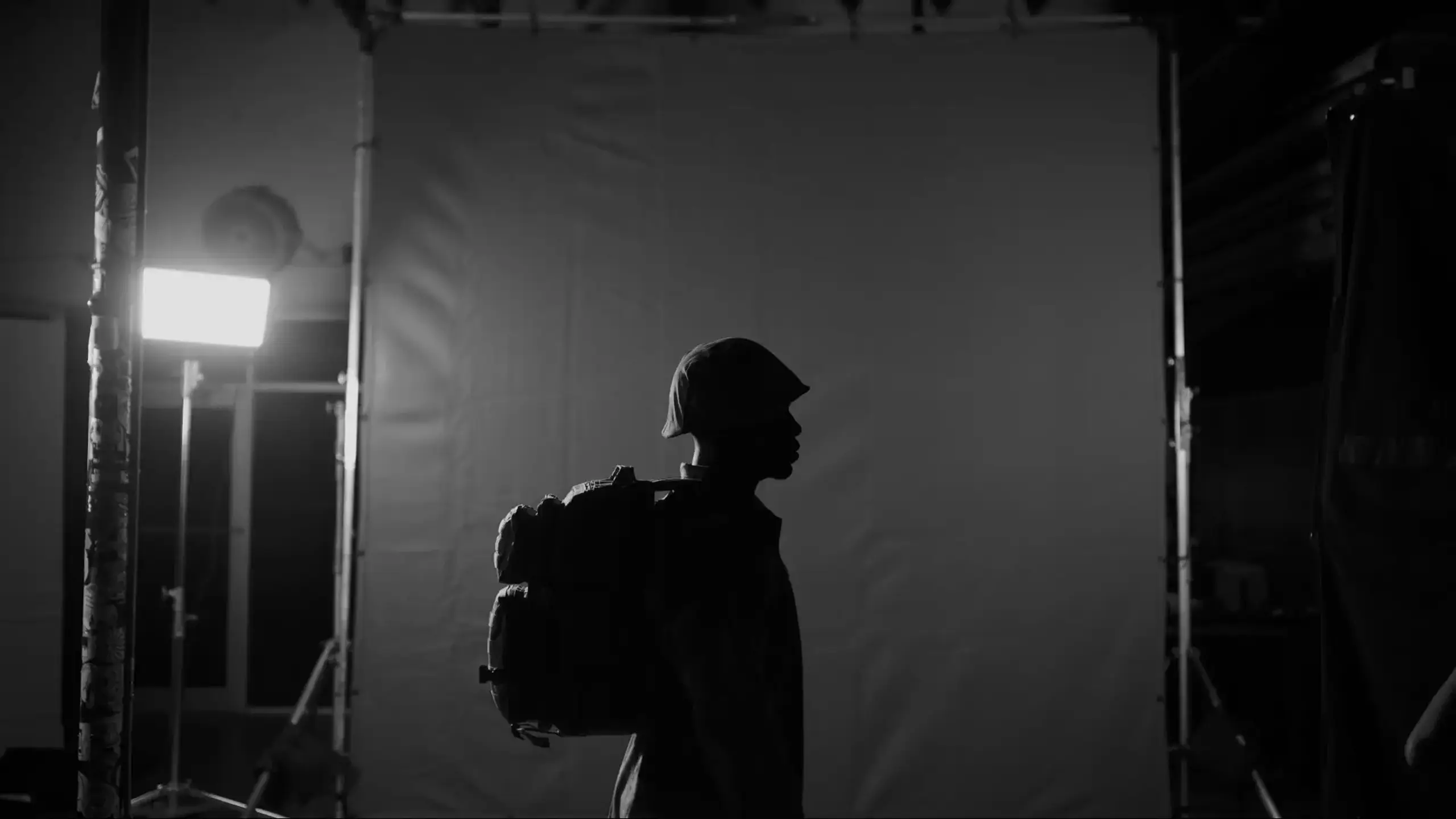
***Green Screen Software*** is a cornerstone tool for creators in video production who want professional [chroma key](https://en.wikipedia.org/wiki/Chroma_key) results without painstaking post‑cleanup.
At [C&I Studios](https://c-istudios.com/), where precision, speed, and cinematic polish matter, choosing the right software can define whether your content looks amateur or broadcast‑ready.
This article review breaks down capabilities, workflows, strengths, and weaknesses to guide filmmakers, content creators, and VFX artists toward the tools that elevate production value.
## What Green Screen Software Actually Does
At its core, green screen software performs chroma keying: isolating and removing a specific color (usually green or blue) so you can replace it with virtually any background. But not all tools are created equal. The best ones:
- Accurately separate background from foreground without haloing or color spill.
- Provide fine‑tuning controls for edge detail and transparency.
- Integrate well with other editing and effects workflows.
- Support high‑resolution footage (4K and beyond).
Effective chroma keying saves hours of rotoscoping and manual masking, especially critical in narratives, commercials, or corporate shoots where time is money.
## Why Green Screen Matters in Creative Workflows
Professional green screen workflows are used everywhere:
- **Feature films**: Seamless composites in controlled and unpredictable environments.
- **Documentary [film production](https://c-istudios.com/film-and-tv-production/)**: Situational inserts or contextual graphics.
- **Video production content creation**: Streamers, educators, and marketers who need dynamic visuals.
- **VFX compositing & animation**: Complex scene assembly involving multiple layers and CG assets.
In fact, research from No Film School highlights how color spill suppression and edge detail refinement are often the deciding factors between passable and professional keying results.¹
## Categories of Green Screen Software
Choosing software isn’t simply about picking the most expensive or most popular option. Instead, think in terms of what your project demands:
### Beginner‑Friendly Editors
These are ideal if you’re new to chroma keying and want straightforward workflows with minimal technical complexity.
### Mid‑Level Editors with Advanced Tools
Perfect for intermediate creators who want more control over keying parameters and color correction without the steep learning curve of pro tools.
### Professional & Compositing‑Focused Software
Built for high‑end production and [VFX compositing & animation](https://c-istudios.com/vfx-compositing-and-animation-services/) pipelines, these tools offer maximum control, node‑based workflows, and industry‑standard color science.
## Evaluating Software. What Matters Most
When reviewing best green screen software, we consistently benchmark tools against the following:
- Keying quality: How clean is the matte? How well can it preserve fine detail like hair or motion blur?
- Tolerance and spill suppression: Can the software handle uneven lighting or reflective surfaces?
- Integration with other workflows: Can you use it in linear editors, motion graphics, or node‑based compositors?
- Support for color spaces and high resolution: 10‑bit, HDR, and 4K/8K workflows matter if you’re producing professional content.
- Learning curve and community resources: Tutorials, presets, and a strong user base speed up adoption.
### Software Review. Best Green Screen Tools for 2026
The following tools are ranked from accessible to pro‑level. Each section includes strengths, weaknesses, and best use cases.
### Adobe Premiere Pro
**Overview**
Adobe Premiere Pro remains one of the most widely adopted NLEs (non‑linear editors) for professional editors and creators. Its Ultra Keyer effect delivers robust chroma key performance within a familiar editing environment.
**Strengths**
- Intuitive keyer with multiple refine controls.
- Excellent color correction and masking tools.
- Seamless integration with After Effects and Photoshop.
- Ideal for structured editing workflows.
**Weaknesses**
- Subscription‑based pricing.
- Can be resource‑intensive on older machines.
**Best For**: Editors who want high‑quality keying inside a full editing suite.
### Final Cut Pro
**Overview**
Apple’s Final Cut Pro offers a polished green screen keyer optimized for Mac systems, with fast rendering and real‑time playback even on large projects.
**Strengths**
- Magnetic timeline simplifies assembly and layering.
- Robust keying with edge adjustments and color sampling.
- Highly optimized for Apple Silicon chips.
**Weaknesses**
- macOS only.
- Less customizable than dedicated compositors.
**Best For:** Mac‑based creators who want efficient keying integrated with advanced editing.
### DaVinci Resolve (Free & Studio)
**Overview**
DaVinci Resolve blurs the line between editing and compositing. Its color‑centric workflow strengthens chroma key precision while giving creators deep color grading controls.
**Strengths**
- Powerful keyer with multiple matte tools.
- Excellent spill suppression and edge refinement.
- Available free version that outperforms paid competition.
**Weaknesses**
- Interface may overwhelm beginners.
- Requires hardware horsepower for heavy timelines.
**Best For**: Users who want professional results without subscription fees.
### Adobe After Effects
**Overview**
After Effects is the industry standard for motion graphics and compositing. Its Keylight effect is legendary in film and broadcast studios.
**Strengths**
- Unmatched precision and control.
- Excellent for multi‑layer composites and motion graphics.
- Widely supported in professional pipelines.
**Weaknesses**
- Not a traditional timeline editor, best paired with Premiere Pro.
- Steeper learning curve than basic editors.
**Best For**: Advanced VFX work and projects requiring fine‑tuned compositing.
## Comparing Workflows. Editing vs. Compositing
Understanding where green screen tools fit in y[our work](https://c-istudios.com/our-work/)flow is critical.
### Timeline‑Based Editing
Tools like Premiere Pro and Final Cut Pro let you key and edit on the same timeline.
**This is efficient for:**
- Corporate videos
- Social content
- Short films
**Pros:**
- Fast turnaround.
- Integrated editing and effects.
- Familiar paradigms for editors.
**Cons:**
- Less control over fine matte adjustments.
- Complex composites can get unwieldy.
### Node Based Compositing
In contrast, tools like After Effects (and Nuke, not listed here) use node‑based systems that excel when you need:
- Multiple key layers
- Spill management
- Motion tracking tied to keying
**Pros:**
- Ultimate control over every parameter.
- Easier to build reusable templates.
**Cons:**
- Steeper learning curve.
- Workflows can be slower for simple edits.
## Technical Standards That Matter
For professional delivery, especially broadcast‑grade work, pay attention to:
- Color space support: Rec. 709, Rec. 2020, and HDR workflows.
- Bit depth: 10‑bit or higher minimizes banding.
- Frame rates: Support for variable frame rates and high fps footage.
Green screen software that properly supports modern formats reduces artifacts and preserves dynamic range, a critical factor for cinematic quality.
## Lighting. The Key to a Clean Key
No software can fully compensate for poorly lit footage. Practical tips for on‑set success:
- Evenly illuminate your green screen with soft, diffused light.
- Avoid shadows and hotspots.
- Position your subject far enough from the backdrop to reduce spill.
This isn’t software advice, it’s production discipline. Professional results start well before post.
## Integration With Broader Post‑Production
Green screen keying rarely occurs in isolation. Consider how well your software plays with:
- Color grading suites
- Audio editing tools
- Motion graphics pipelines
- Asset management and proxies
For example, Premiere Pro allows dynamic links with After Effects, reducing export/import steps and saving time. Similarly, DaVinci Resolve centralizes editing, keying, grading, and delivery, streamlining end‑to‑end workflows.
## Cost vs. Value
Budget alone shouldn’t guide your choice. Evaluate:
- Project needs: Do you need simple backgrounds or broadcast‑ready composites?
- Learning curve: Will your team adopt it quickly?
- Ecosystem: Does it fit with other tools you use?
Free tools like OBS and DaVinci Resolve (free) offer enormous value, but high‑end studios may prefer subscription platforms for support and ecosystem benefits.
## User Experience and Support
Software that is powerful but unsupported can cost you time in troubleshooting. Look for:
- Active communities and forums.
- Official documentation and tutorials.
- Regular updates with performance improvements.
A robust user base often translates to faster solutions and shared best practices.
## Accessibility and Hardware Requirements
High‑end green screen software often demands:
- Dedicated GPU acceleration
- High RAM (16GB+ recommended for heavy timelines)
- Fast storage for large media files
Check minimum and recommended specs before committing, especially if you’re working with 4K footage or multitrack compositions.
## Matching Software to Use Case
**Software**
**Ease of Use**
**Pro Results**
**Best For**
Premiere Pro
★★★★☆
★★★★☆
Editors who want balance
Final Cut Pro
★★★★☆
★★★☆☆
Mac‑centric workflows
DaVinci Resolve
★★★☆☆
★★★★★
Pro color + keying
After Effects
★★☆☆☆
★★★★★
Advanced VFX
HitFilm Pro
★★★★☆
★★★★☆
All‑in‑one editors
OBS Studio
★★★★★
★★☆☆☆
Live streaming
Camtasia
★★★★★
★★☆☆☆
Educators
## How We Tested. Methodology That Matters
We didn’t pick specs out of marketing brochures. Every tool was held to the same objective benchmarks across different scenarios:
### Test Variables
- Lighting conditions: even, mixed, and low‑light green screen shoots.
- Subject motion: slow gestures vs. rapid movement.
- Camera settings: 4K @ 60fps, 4K @ 24fps, and HD workflows.
- Background complexity: static plates vs. dynamic overlays.
- Compression influences: native codec vs. ProRes/Log footage.
### Performance Metrics
Our scoring emphasized:
- Matte integrity: Pixel‑accurate separation without haloing.
- Spill control: Suppression of fringe color bleed.
- Edge fidelity: Preservation of hair, translucent materials, and motion blur.
- Render efficiency: Time to final export.
- Usability: Time from import to clean key completion.
These tests reflect real project conditions, not theoretical benchmarks.
## Tool by Tool Testing Results
DaVinci Resolve - Most Balanced Pro Performance
**Summary**: Across mixed lighting and motion tests, Resolve delivered the most consistent keys without heavy masking.
**Observations:**
- Its Delta Keyer module retained edge detail better than most.
- Spill suppression was excellent even on reflective fabrics.
- The node‑based workflow gave precision without forcing you into a full compositing app.
**Best For**: Projects that cross between editorial and final delivery, like long‑form documentary sequences or episodic branded content.
**Downside**: Requires learning time, especially if you’re new to node graphs.
## Adobe After Effects – Ultimate Control
**Summary**: When precision matters above all else, After Effects still leads, particularly where intricate motion blur and semi‑transparent edges are present.
**Observations:**
- Keylight 1.2 delivered the cleanest edges on subjects with fine hair or wisps of smoke.
- Layered mattes dramatically improved results on multi‑light shoots.
- Integration with motion graphics templates makes it useful for branded segments.
**Best For**: Visual effects‑heavy sequences embedded within promotional content or sequenced graphics.
**Downside**: Not ideal for quick turnaround edits; best paired with a timeline editor.
## Final Cut Pro – Swift Mac‑Optimized Workflows
**Summary**: Optimized for Apple silicon, Final Cut’s keyer was fast and surprisingly resilient.
**Observations**:
- Real‑time previews with multi‑cam clips made iterative tuning faster.
- Built‑in color wheels and hue‑based refinement supported tightening mattes.
**Best For**: Solo creators and teams working entirely on the Apple ecosystem.
**Downside**: Less depth in spill controls than node‑based solutions.
## HitFilm Pro – All‑in‑One for Indie Creators
**Summary**: HitFilm blurred the line between editing, effects, and keying, all under one roof.
**Observations**:
- Keying results were solid given low cost.
- Effects library helped prototype visual styles quickly.
**Best For:** Solo producers and small teams where simplicity matters more than pixel‑level finesse.
**Downside**: UI can feel clunky as complexity grows.
## Objective Scoring. Quantitative Results
We assigned marks in key categories on a 0-10 scale based on test runs:
**Tool**
**Matte Integrity**
**Spill Control**
**Edge Fidelity**
**Render Efficiency**
**Overall**
DaVinci Resolve
9
8.5
9
7
8.5
After Effects
9.5
9
9.5
6
8.5
Final Cut Pro
8
7.5
8
9
8
HitFilm Pro
7.5
7
7.5
8
7.5
Scores reflect hands‑on tests with 4K source footage under controlled conditions.
## Workflow Templates That Save Hours
Here are battle‑tested sequences you can start using today, whether your deliverable is a short for Instagram, a brand piece for LinkedIn, or a feature documentary.
### Template A — Clean Key in Resolve (8‑Minute Edit)
1. Import footage: Transcode to ProRes or optimized media.
2. Generate Matte: Punch in the Delta Keyer.
3. Refine edges: Add Matte Finesse > Light Wrap.
4. Secondary corrections: Luma and saturation for spill cleanup.
5. Tracking: If subject moves against dynamic backgrounds, attach stabilization.
6. Export via Deliver page: Add burn‑in LUT last to preserve key accuracy.
**Result**: Clean matte with minimal halos and realistic light wrap.
### Template B — After Effects High‑Precision Key
1. Pre‑compose green screen layer.
2. Apply Keylight.
3. Use Advanced Spill Suppressor.
4. Manual roto touch‑ups where needed.
5. Composite background, depth blur, and motion blur passes.
6. Render via Media Encoder for delivery.
**Why It Works**: You gain granular control over every chroma parameter, ideal for segments where subject detail matters.
### Template C — Fast Turnaround in Final Cut
1. Drop clip onto timeline.
2. Apply built‑in keyer.
3. Use hue‑angle control to reduce spill.
4. Add exposure and contrast tweaks.
5. Use proxy media to accelerate playback.
6. Share directly to cloud services or export master file.
**Why It Works**: It’s optimized for speed without complete sacrifice of quality.
## Practical Lighting and Acquisition Tips
No software, regardless of power, can fix poorly shot green screen footage. These industry rules make a real difference:
- Distance matters: Keep subject at least 3-5 feet from the green backdrop.
- Even illumination: Use softboxes or LED panels evenly spaced.
- Avoid reflective clothing: Shiny fabrics cause color bounce that confounds keyers.
- Consistent camera settings: Lock exposure and white balance across takes.
These practices work whether you’re shooting corporate interviews, student projects, or segments destined for [feature film mastering & delivery](https://c-istudios.com/feature-film-mastering-and-delivery/).
## Using Green Screen in Cross‑Platform Content
In today’s ecosystem, green screen alone isn’t enough. It interacts with:
### Audio Engineering
A clean visual composite gains impact only if paired with crisp audio. Ensure:
- Dialogue is recorded with quality mics.
- Background noise is minimized.
- Sync is rock‑solid before visual effects are layered.
### Branding & Graphic Design
When backgrounds include animated logos or branded assets:
- Use transparent layers exported from Illustrator or After Effects.
- Match color profiles between graphics and footage.
- Maintain visual consistency across all marketing deliverables.
These details affect audience perception and strengthen brand recall.
## Common Keying Pitfalls and How to Avoid Them
Even experienced editors trip up on certain issues:
### Haloing
Occurs when the keyer leaves light fringes around subjects.
**Fix**: Tighten matte controls; use light wrap to blend subject into background.
### Color Spill
Green or blue reflects off surfaces or clothing.
**Fix**: Use spill suppression tools and careful lighting.
### Motion Blur Breakdown
Fast movement causes smeared edges.
**Fix**: Adjust shutter speed during capture; use motion blur tools in comp.
These fixes should be workflow staples, not afterthoughts.
## Export Settings That Preserve Key Quality
Once your composite is clean, you want export settings that do it justice.
### Preferred Codecs
- ProRes 422/4444: Best balance of quality and compatibility.
- DNxHR: Strong choice for cross‑platform editorial suites.
- 264/HEVC (for final web delivery): Use only after master is perfected.
### Color Space
- Stick with Rec.709 for standard deliverables.
- Up‑convert to Rec.2020/HDR only if your project demands it.
Keeping these standards consistent ensures your final output holds up, whether you’re encoding for broadcast, streaming platforms, or internal review.
## How Tools Stack Up for Different Use Cases
**Educational Content:**
- Final Cut or Resolve with simple key settings and proxy workflows.
**Corporate Branding Pieces:**
- Resolve nodes for fine control; export via broadcast‑safe LUT pipelines.
**High‑End Narrative VFX:**
- After Effects with layered mattes, motion tracking, and custom spill suppression.
**Live Engagement Pieces:**
- While not best for post work, tools like Final Cut paired with live graphics suites support quick turnaround.
If you want a tailored workflow checklist for your next project, from capture to composite, let me know your toolset and deliverable format so I can customize one.
## Collaboration Ready Strategies
Modern production isn’t a solo sport. When multiple editors, designers, or assistants are involved:
- Standardize naming conventions for clips and composites.
- Use shared project files via cloud services or shared storage.
- Document key decisions (e.g., matte settings, background sources).
- Version control everything to avoid overwrite conflicts.
These are the practical habits that keep post teams efficient and reduce revision cycles.
## Get Hands On With Your Own Footage
The best way to internalize all of this is to apply it to a test clip:
1. Shoot a 10‑second green screen test.
2. Process it through two of the tools above.
3. Note time to clean key vs. quality differences.
You’ll quickly see where your bottlenecks are, whether in lighting, keying controls, or render times. And if you want feedback on your test results or help choosing presets for specific toolchains, we can review them with you, just [ask](https://c-istudios.com/contact/).
## Work with C&I Studios
If you are planning a project like this, our team can take it from concept to final delivery. Explore our [post-production services](https://c-istudios.com/post-production-services/), browse [our work](https://c-istudios.com/our-work/) to see how we tell brand stories, and [get in touch](https://c-istudios.com/contact/) when you are ready to start.
Originally published January 27, 2026
---
*This content is from [C&I Studios](https://c-istudios.com), a full-service production company.*
---
# Uncreative Radio with Pavllo Zengo EP: 103
> Published: January 26, 2026
> Categories: Uncreative
> Source: https://c-istudios.com/uncreative-radio-with-pavllo-zengo-ep-103/
---
A History Of Working With Models
This topic resonates with us. We work with tons of models, especially in South Florida and Los Angeles. The majority are, naturally, beautiful females. We collaborate on creative projects, client work, and also help promote their brands by providing media services for their model reels, as well as, exposure. The profiles of Mercedes Guittierez and Roya Zangoui are great examples of the work we do with female models.
In the wake of this discussion with Pavllo Zengo, we are reminded of our creative talent event, Crew Call, which we host quarterly at our headquarters in Fort Lauderdale. Crew Call is an invitation to all creatives: photographers, cinematographers, writers, stylists, and, of course, models. We do what we can to diversify our talent pool between male and female models for this event, but they don’t all receive the same level of exposure. If you want to see if the stereotypes and favoritism for female models reign true, check out the recap videos of the last event.READ MORE
## Uncreative Radio with Pavllo Zengo!
Joshua Miller connects with Pavllo Zengo, the brand storyteller at [Foreo](https://www.foreo.com/) in Los Angeles, in Episode 3 of Uncreative Radio.
The professional scale is tipped in favor of women when it comes to diversity in modeling and the beauty industry (no surprise there). But how exactly do gender and sex impact narratives? Is there an underlying message subliminally attached to the male and female figures that cannot be severed? Why does the same word; the same phrase; the same connotation differ so greatly when applied to different body types? Though women lead the world of modeling and beauty is it all a byproduct of the male gaze?
**Tune in Thursday, July 11 with Pavllo Zengo and Josh on Uncreative Radio Episode 109 for the answers.**
### A History Of Working With Models
This topic resonates with us. We work with tons of models, especially in South Florida and Los Angeles. The majority are, naturally, beautiful females. We collaborate on creative projects, client work, and also help promote their brands by providing media services for their model reels, as well as, exposure. The profiles of [Mercedes Guittierez](https://c-istudios.com/artist-profile-mercedes/) and Roya Zangoui are great examples of the work we do with female models.
In the wake of this discussion with Pavllo Zengo, we are reminded of our creative talent event, Crew Call, which we host quarterly at our headquarters in Fort Lauderdale. Crew Call is an invitation to all creatives: photographers, cinematographers, writers, stylists, and, of course, models. We do what we can to diversify our talent pool between male and female models for this event, but they don't all receive the same level of exposure. If you want to see if the stereotypes and favoritism for female models reign true, [check out the recap videos of the last event](https://c-istudios.com/crew-call-creative-talent-event/).
## More of #UNCREATIVERadio
Every week, we host a new guest making waves in their industry. For more original insights, on music, generational woes, creativity, industry truths, and more, [check out the other episodes](https://c-istudios.com/uncreative-radio/)!We Live. We Speak. We Create.
Disclaimer: The views and opinions expressed on this radio show and/or podcast are solely those of the show’s hosts, producers and contributors. These views and opinions do not necessarily represent those of C&I an idea agency, nor C&I Studios Inc., and/or any/all contributors to this website.
### @CISTUDIOS
### Related Reading
- [Season 1 Episode 11You Remember "That One Time..."?](https://c-istudios.com/uncreative-radio-with-willie-morris/)
---
*This content is from [C&I Studios](https://c-istudios.com), a full-service production company.*
---
# Cloud Video Editing Pros And Cons: Professional Workflows And Real Use Cases
> Published: January 26, 2026
> Categories: Post & VFX
> Source: https://c-istudios.com/cloud-video-editing-pros-and-cons-professional-workflows-and-real-use-cases/
---
.cib{--paper:#1b1d1f;--ink:#fff;--body:#d5d7d9;--muted:#8b9096;--line:rgba(255,255,255,.12);--thumb:#2b2e31;--card:#212426;--accent:#c02b0a;--blue:#5B8FA8;--serif:'Playfair Display',Georgia,serif;--sans:'Poppins',-apple-system,sans-serif;--measure:900px;background:var(--paper);color:var(--body);font-family:var(--sans);line-height:1.6;position:relative;left:50%;transform:translateX(-50%);width:90vw;max-width:1920px}
.cib *{box-sizing:border-box}
.cib .kicker{max-width:var(--measure);margin:58px auto 0;padding:0 22px;font-size:12.5px;font-weight:700;letter-spacing:2.5px;text-transform:uppercase;color:var(--blue)}
.cib h1.cibh1{text-wrap:balance;font-family:var(--serif);font-weight:500;font-size:clamp(46px,6vw,72px);line-height:1.08;color:var(--ink);max-width:var(--measure);margin:18px auto 0;padding:0 22px;letter-spacing:-.5px}
.cib .metarow{max-width:var(--measure);margin:20px auto 0;padding:0 22px;color:var(--muted);font-size:14px}
.cib .hero{position:relative;width:100%;height:0;padding-bottom:56.25%;overflow:hidden;margin:48px auto 0;border-top:1px solid var(--line);border-bottom:1px solid var(--line)}
.cib .hero .ph{width:100%;aspect-ratio:16/9;background:var(--thumb);border-top:1px solid var(--line);border-bottom:1px solid var(--line);display:flex;align-items:center;justify-content:center;color:#7d8288;font-size:13px;text-align:center;padding:0 20px}
.cib .body{max-width:var(--measure);margin:12px auto 0;padding:52px 22px 6px}
.cib .body.lead p:first-child{font-size:23px;line-height:1.62;color:var(--ink)}
.cib .body p{font-size:18.5px;line-height:1.85;margin:0 0 30px;color:var(--body)}
.cib .body h2{text-wrap:balance;font-family:var(--serif);font-weight:500;font-size:clamp(32px,4vw,48px);line-height:1.22;color:var(--ink);margin:70px 0 20px;letter-spacing:-.3px}
.cib .body h3{text-wrap:balance;font-family:var(--sans);font-weight:600;font-size:22px;color:var(--ink);margin:38px 0 8px}
.cib .body a{color:var(--ink);text-decoration:underline;text-decoration-color:rgba(255,255,255,.4);text-underline-offset:3px}
.cib .body a:hover{text-decoration-color:var(--ink)}
.cib .ctable{width:100%;border-collapse:collapse;margin:16px 0 30px;font-size:16px}
.cib .ctable th{background:#000;color:#fff;text-align:left;padding:10px 12px;font-family:var(--sans)}
.cib .ctable td{padding:10px 12px;border-bottom:1px solid var(--line);color:var(--body)}
.cib .inimg{position:relative;width:100%;height:0;padding-bottom:56.25%;overflow:hidden;margin:72px auto;border-top:1px solid var(--line);border-bottom:1px solid var(--line)}
.cib .inimg .ph{width:100%;aspect-ratio:16/9;background:var(--thumb);border-top:1px solid var(--line);border-bottom:1px solid var(--line);display:flex;align-items:center;justify-content:center;color:#7d8288;font-size:13px}
.cib .origpub{max-width:var(--measure);margin:60px auto 0;padding:26px 22px 0;border-top:1px solid var(--line);color:var(--muted);font-size:13.5px}
.cib .related{max-width:1200px;margin:64px auto 0;padding:34px 22px 76px}
.cib .related h3{font-family:var(--sans);font-size:12.5px;letter-spacing:2px;text-transform:uppercase;color:var(--ink);margin:0 0 24px}
.cib .grid{display:grid;grid-template-columns:repeat(3,1fr);gap:28px}
.cib .rc{background:var(--card);border:1px solid var(--line);display:block;text-decoration:none;color:inherit;transition:border-color .15s}
.cib a.rc:hover{border-color:rgba(255,255,255,.5)}
.cib .rc .thumb{position:relative;width:100%;height:0;padding-bottom:56.25%;background:var(--thumb);overflow:hidden}
.cib .rc .thumb img{position:absolute!important;top:0!important;left:0!important;width:100%!important;height:100%!important;object-fit:cover!important;margin:0!important}
.cib .rc .cc{padding:14px 15px 17px}
.cib .rc .rt{font-family:var(--serif);font-weight:500;font-size:16px;line-height:1.3;color:var(--ink);margin:0 0 6px}
.cib .rc .rm{font-size:11px;letter-spacing:1px;text-transform:uppercase;color:var(--muted)}
.cib img{margin:0!important;padding:0!important;display:block!important;vertical-align:top;max-width:100%}
.cib .hero img,.cib .inimg img{position:absolute!important;top:0!important;left:0!important;width:100%!important;height:100%!important;object-fit:cover!important;margin:0!important;padding:0!important;border:0!important;display:block!important;aspect-ratio:auto!important}
.cib .hero+.body{padding-top:36px}
@media(max-width:760px){.cib .grid{grid-template-columns:1fr}.cib .body h2{margin:52px 0 16px}.cib .body p{font-size:17.5px}.cib .inimg,.cib .hero{margin-top:44px}}
.cib .vembed{max-width:var(--measure);margin:44px auto;padding:0 22px}.cib .vembed .vwrap{position:relative;width:100%;height:0;padding-bottom:56.25%}.cib .vembed .vwrap iframe{position:absolute;top:0;left:0;width:100%;height:100%;border:0}
Post & VFX
# Cloud Video Editing Pros And Cons. Professional Workflows And Real Use Cases
9 min read
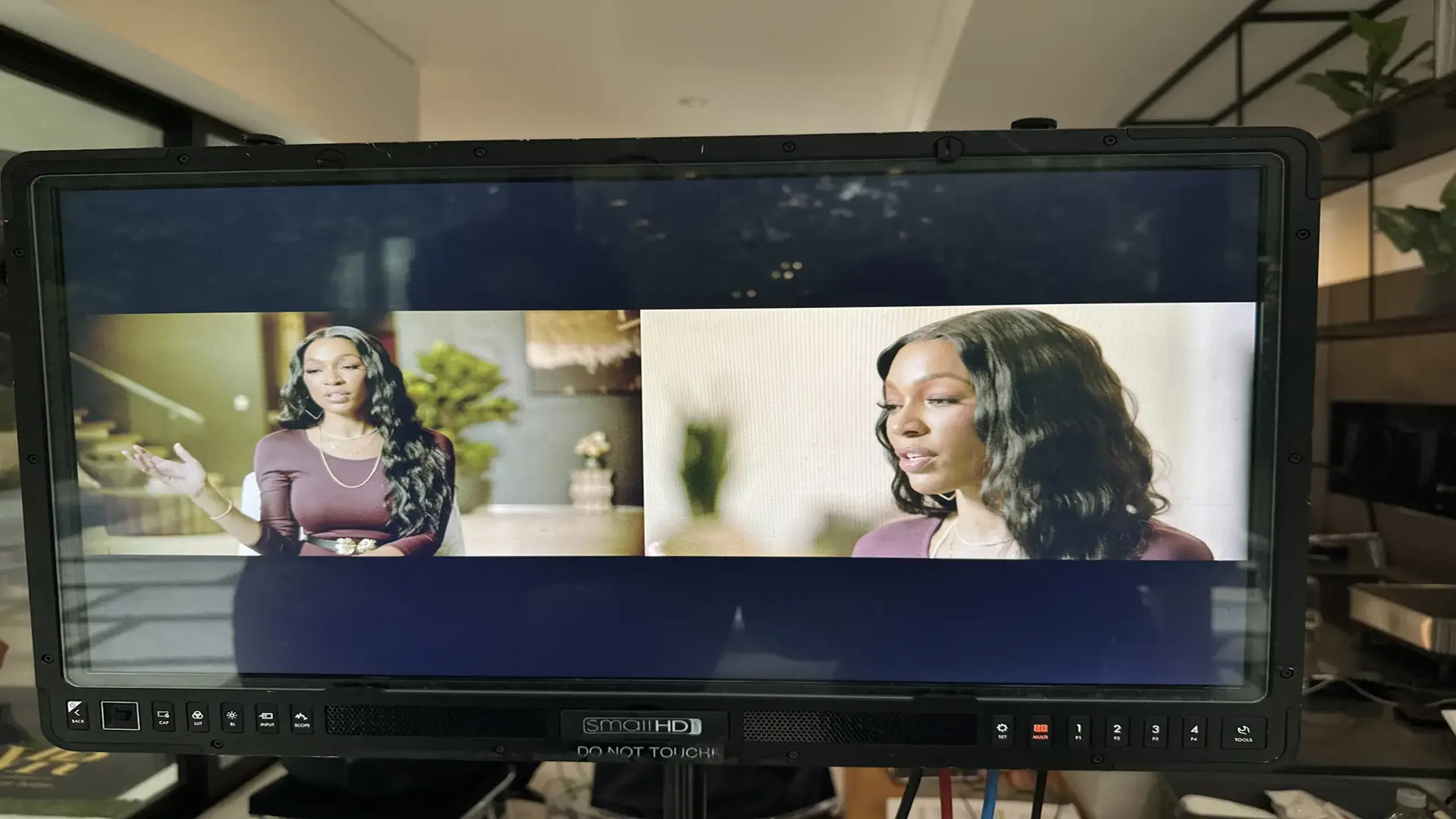
Editing workflows are under pressure. Teams are distributed, deadlines are shorter, and clients expect faster turnarounds without compromising quality.
Against this backdrop, Cloud Video Editing has emerged as a tempting solution. It promises flexibility, collaboration, and freedom from hardware limitations. Sometimes it delivers. Sometimes it quietly introduces new bottlenecks that cost more than they save.
Instead of selling the idea, it examines where cloud based editing actually fits inside professional workflows at a studio level. The perspective here is practical, grounded in how C&I Studios approaches [video production](https://c-istudios.com/video-production-services/) at scale, not how software vendors describe it in demos.
## What cloud video editing actually means in practice
Confusion starts with definitions. Cloud video editing is not one thing. Several very different architectures are marketed under the same label, and treating them as equivalent is a mistake.
### Browser based editing platforms
Some platforms run entirely in the browser. Footage lives on remote servers, and editing happens through a web interface.
This model prioritizes accessibility. Any machine with a modern browser can theoretically edit video. That sounds powerful, but capability is constrained by latency, compression, and simplified toolsets.
These systems are commonly used for lightweight social content, rough assemblies, or quick turn edits rather than high end finishing.
### Remote desktop editing environments
Another approach keeps professional software intact but runs it on cloud machines. Editors connect through a remote desktop session to a powerful virtual workstation.
From a workflow perspective, this feels closer to traditional editing. Timelines, plugins, and color tools remain familiar. The difference is physical distance between editor and hardware.
This model is increasingly popular for distributed teams, especially when local machines cannot handle demanding formats.
### Hybrid cloud assisted workflows
The most common real world implementation is hybrid. Media is partially cloud hosted, proxies are streamed, and final renders or heavy processing remain local or centralized.
C&I Studios often sees this model outperform fully cloud native setups because it balances control with collaboration instead of forcing one extreme.
## Why cloud video editing is gaining traction now
The rise of cloud editing is not accidental. Several structural changes in the industry pushed it forward.
### Distributed teams are now normal
Remote collaboration is no longer an exception. Editors, producers, and clients often work across cities or continents.
Cloud based workflows reduce the friction of moving media between people. Instead of shipping drives or duplicating storage, teams can access shared assets instantly.
This matters most for studios managing multiple projects in parallel, not solo creators working in isolation.
### Turnaround expectations have tightened
Clients expect faster iterations. Review cycles that once took days are now expected in hours.
Cloud platforms often integrate review, commenting, and versioning directly into the editing environment. That shortens feedback loops, especially for approval driven content like ads or branded pieces.
This advantage is real, but only when the platform is stable and network conditions are predictable.
### Hardware costs are unevenly distributed
Not every contributor has access to high end machines. Cloud systems allow studios to centralize performance instead of requiring every editor to own expensive hardware.
For certain phases of video production, this shifts capital expenses into operating expenses, which can make budgeting more flexible.
It also introduces new dependencies that need to be evaluated carefully.
## Where cloud video editing genuinely works well
Cloud editing is not universally good or bad. It is situational. The following use cases consistently benefit from it when implemented correctly.
### Collaborative rough cuts and assemblies
Early stage editing benefits the most. When teams are shaping structure, pacing, and narrative, precision color and audio are secondary.
Cloud based environments allow multiple stakeholders to view and comment in real time. Producers can guide edits without exporting versions repeatedly.
This reduces friction during the most iterative phase of a project.
### High volume content pipelines
Projects that prioritize speed over micro level polish often perform well in the cloud.
Examples include recurring branded content, educational videos, or formats tied to [video & audio live streaming](https://c-istudios.com/video-audio-live-streaming/) ecosystems where rapid turnaround matters more than cinematic finishing.
In these cases, consistency and throughput matter more than absolute control.
### Temporary scaling needs
Some projects require a short burst of editing capacity. Hiring machines permanently for temporary demand is inefficient.
Cloud workstations allow studios to scale up for a campaign, then scale down without long term hardware commitments.
This flexibility is valuable when demand fluctuates sharply.
## Where cloud video editing starts to break down
This is where marketing narratives usually get quiet. Several limitations consistently surface in professional environments.
### Latency affects creative decision making
Editing is tactile. Small delays between input and visual response add cognitive friction.
Even minor latency can disrupt rhythm during precise cuts, keyframing, or audio work.
For editors used to local responsiveness, this matters more than benchmarks suggest.
Stable high speed internet reduces the problem but never eliminates it entirely.
### Media heavy workflows suffer
High resolution footage, multi camera timelines, and complex effects push cloud systems hard.
Compression is often used to make streaming feasible. That compromises visual fidelity during editing, which can affect creative judgment.
For finishing stages, this becomes a serious drawback rather than a minor inconvenience.
### Cost predictability is weaker than advertised
Usage based pricing sounds efficient until projects run longer than expected.
Storage, compute time, and data egress fees add up quietly. Without strict monitoring, cloud costs can exceed the price of owning hardware over time.
Studios that fail to model this accurately often discover the problem too late.
## How C&I Studios evaluates cloud workflows
The decision to use cloud editing at C&I Studios is never ideological. It is contextual.
Each project is evaluated based on three criteria.
- Collaboration intensity
- Technical complexity
- Lifecycle duration
When collaboration pressure is high and technical complexity is moderate, cloud tools are considered.
When precision, color accuracy, or long term archival value dominate, traditional or hybrid workflows usually win.
This selective approach avoids locking the studio into a single paradigm that does not fit all clients or formats.
## Misconceptions that lead to bad decisions
Several assumptions repeatedly cause teams to misuse cloud editing.
### “Cloud means simpler”
It does not. Complexity shifts rather than disappears.
Instead of managing hardware, teams manage permissions, bandwidth dependencies, and platform limitations.
Without experienced oversight, that complexity leaks into production timelines.
### “Cloud replaces local expertise”
Tools do not replace judgment. Editing quality still depends on human skill, not where the software runs.
Cloud platforms amplify good workflows and expose weak ones. They do not fix structural problems in creative processes.
### “Security is automatically better”
Centralized systems can be secure, but only when configured correctly.
Poor access control, shared credentials, or mismanaged permissions create risks that local workflows never had.
Security needs active management, not blind trust.
## The strategic takeaway so far
Cloud video editing is not a revolution. It is a toolset with narrow strengths and equally narrow weaknesses.
Used intentionally, it can accelerate collaboration and reduce friction during specific phases of production.
Used indiscriminately, it introduces latency, cost uncertainty, and creative compromise.
## The hidden tradeoffs studios discover too late
Most teams do not fail with cloud workflows because the tools are bad. They fail because second order effects were ignored during planning. These effects surface only after real production pressure is applied.
Cloud systems behave differently at scale, especially when projects move from short form to long form or from internal edits to client facing deliverables.
### Latency changes creative behavior
Creative decisions are often framed as technical issues, but latency is psychological as much as it is mechanical.
Editors subconsciously adjust how they cut when responsiveness drops. They make fewer exploratory changes, rely more on instinct, and iterate less aggressively. Over time, this alters creative output.
This matters most during detailed pacing work, audio sync, and fine trim adjustments. The cloud does not eliminate creativity, but it subtly reshapes how it is expressed.
For high precision work involving [audio engineering](https://c-istudios.com/audio-engineering-services/), even small delays can compound into measurable inefficiencies.
## Security realities most platforms downplay
Security is usually framed as a benefit of cloud based systems. Centralization feels safer than scattered drives and personal machines. That assumption only holds when governance is actively enforced.
### Access control complexity grows fast
As teams expand, permission structures become layered and fragile.
Editors need access to specific projects. Producers need review privileges. Clients need limited visibility. One misconfigured role can expose sensitive assets.
Unlike local systems, mistakes propagate instantly. There is no physical boundary slowing down damage.
### Compliance is not automatic
Studios working with regulated industries, political content, or unreleased media face compliance obligations that generic platforms do not address by default.
Encryption standards, audit logs, and data residency requirements vary by client and region.
Cloud tools may support these features, but support does not equal implementation.
Studios that assume compliance exists without verification are guessing, not managing risk.
## Cost models that look cheap until they are not
Pricing pages are optimistic by design. Real usage rarely matches marketing scenarios.
### Compute costs scale non linearly
Editing sessions are not evenly distributed. Peaks occur near deadlines.
When multiple editors render, export, or conform simultaneously, usage spikes. Cloud billing responds immediately.
Without usage caps or alerts, invoices become unpredictable. This is especially problematic for fixed price projects.
### Storage and egress are silent multipliers
Raw footage accumulates faster than expected. Backups duplicate it again.
Then comes data egress. Every download, every client delivery, every archive transfer adds cost.
Over months, these charges rival or exceed the price of maintaining local infrastructure.
Studios that track only subscription fees are missing the full equation.
## When cloud workflows actively hurt long form projects
Short form content tolerates compromise. Long form does not.
### Narrative continuity requires precision
Documentaries, episodic work, and features demand sustained attention to detail.
Editors revisit scenes repeatedly across weeks or months. Latency fatigue compounds. Temporary workarounds become permanent habits.
Color, sound, and pacing decisions benefit from stable environments and consistent reference conditions.
This is why [feature film mastering & delivery](https://c-istudios.com/feature-film-mastering-and-delivery/) workflows remain conservative by necessity rather than tradition.
### Archival value matters more than speed
Long form projects live beyond their release date.
Assets need to remain accessible years later for re edits, remasters, or legal reasons.
Cloud platforms change terms, pricing, or availability. Studios must plan for asset longevity independent of vendor decisions.
Ownership of media and control over storage location become strategic issues, not technical details.
## Hybrid strategies that actually hold up
Pure cloud and pure local are both extremes. Most resilient workflows live in between.
### Proxy driven collaboration
Lightweight proxies allow remote collaboration without forcing all processing into the cloud.
Editors cut responsively. Producers review remotely. High resolution media remains under studio control.
This balances speed with precision.
### Centralized finishing
Final color, sound, and delivery stages benefit from controlled environments.
Bringing projects back on premises for finishing preserves creative intent and ensures consistency across deliverables.
This approach aligns well with studios handling diverse formats and clients simultaneously.
## How C&I Studios frames the decision internally
Technology is evaluated through outcomes, not trends.
Each project is assessed based on creative sensitivity, security exposure, and lifecycle length. Tools are selected to serve those constraints, not the other way around.
Cloud systems are treated as tactical accelerators, not foundational replacements.
That mindset avoids lock in and preserves flexibility as platforms evolve.
Studios considering similar transitions benefit from discussing these tradeoffs early with experienced partners who have navigated them across different production scales.
Conversations around workflow design often reveal more value than software comparisons.
## What this means moving forward
Cloud video editing is not disappearing. It is stabilizing into a specialized role.
[Studios](https://c-istudios.com/contact/) that treat it as one tool among many gain leverage. Studios that treat it as a universal solution inherit its weaknesses wholesale.
Understanding when not to use the cloud is as important as knowing when to use it.
As workflows continue to evolve, the most competitive teams will be those that design systems intentionally rather than reactively, choosing speed where it helps and control where it matters.
The next decisions are rarely about software. They are about structure, ownership, and long term creative resilience.
## Work with C&I Studios
If you are planning a project like this, our team can take it from concept to final delivery. Explore our [post-production services](https://c-istudios.com/post-production-services/), browse [our work](https://c-istudios.com/our-work/) to see how we tell brand stories, and [get in touch](https://c-istudios.com/contact/) when you are ready to start.
Originally published January 26, 2026
---
*This content is from [C&I Studios](https://c-istudios.com), a full-service production company.*
---
# Video Editing Mistakes That Kill Engagement and Reduce Watch Time
> Published: January 24, 2026
> Categories: Post & VFX
> Source: https://c-istudios.com/video-editing-mistakes-that-kill-engagement-and-reduce-watch-time/
---
.cib{--paper:#1b1d1f;--ink:#fff;--body:#d5d7d9;--muted:#8b9096;--line:rgba(255,255,255,.12);--thumb:#2b2e31;--card:#212426;--accent:#c02b0a;--blue:#5B8FA8;--serif:'Playfair Display',Georgia,serif;--sans:'Poppins',-apple-system,sans-serif;--measure:900px;background:var(--paper);color:var(--body);font-family:var(--sans);line-height:1.6;position:relative;left:50%;transform:translateX(-50%);width:90vw;max-width:1920px}
.cib *{box-sizing:border-box}
.cib .kicker{max-width:var(--measure);margin:58px auto 0;padding:0 22px;font-size:12.5px;font-weight:700;letter-spacing:2.5px;text-transform:uppercase;color:var(--blue)}
.cib h1.cibh1{text-wrap:balance;font-family:var(--serif);font-weight:500;font-size:clamp(46px,6vw,72px);line-height:1.08;color:var(--ink);max-width:var(--measure);margin:18px auto 0;padding:0 22px;letter-spacing:-.5px}
.cib .metarow{max-width:var(--measure);margin:20px auto 0;padding:0 22px;color:var(--muted);font-size:14px}
.cib .hero{position:relative;width:100%;height:0;padding-bottom:56.25%;overflow:hidden;margin:48px auto 0;border-top:1px solid var(--line);border-bottom:1px solid var(--line)}
.cib .hero .ph{width:100%;aspect-ratio:16/9;background:var(--thumb);border-top:1px solid var(--line);border-bottom:1px solid var(--line);display:flex;align-items:center;justify-content:center;color:#7d8288;font-size:13px;text-align:center;padding:0 20px}
.cib .body{max-width:var(--measure);margin:12px auto 0;padding:52px 22px 6px}
.cib .body.lead p:first-child{font-size:23px;line-height:1.62;color:var(--ink)}
.cib .body p{font-size:18.5px;line-height:1.85;margin:0 0 30px;color:var(--body)}
.cib .body h2{text-wrap:balance;font-family:var(--serif);font-weight:500;font-size:clamp(32px,4vw,48px);line-height:1.22;color:var(--ink);margin:70px 0 20px;letter-spacing:-.3px}
.cib .body h3{text-wrap:balance;font-family:var(--sans);font-weight:600;font-size:22px;color:var(--ink);margin:38px 0 8px}
.cib .body a{color:var(--ink);text-decoration:underline;text-decoration-color:rgba(255,255,255,.4);text-underline-offset:3px}
.cib .body a:hover{text-decoration-color:var(--ink)}
.cib .ctable{width:100%;border-collapse:collapse;margin:16px 0 30px;font-size:16px}
.cib .ctable th{background:#000;color:#fff;text-align:left;padding:10px 12px;font-family:var(--sans)}
.cib .ctable td{padding:10px 12px;border-bottom:1px solid var(--line);color:var(--body)}
.cib .inimg{position:relative;width:100%;height:0;padding-bottom:56.25%;overflow:hidden;margin:72px auto;border-top:1px solid var(--line);border-bottom:1px solid var(--line)}
.cib .inimg .ph{width:100%;aspect-ratio:16/9;background:var(--thumb);border-top:1px solid var(--line);border-bottom:1px solid var(--line);display:flex;align-items:center;justify-content:center;color:#7d8288;font-size:13px}
.cib .origpub{max-width:var(--measure);margin:60px auto 0;padding:26px 22px 0;border-top:1px solid var(--line);color:var(--muted);font-size:13.5px}
.cib .related{max-width:1200px;margin:64px auto 0;padding:34px 22px 76px}
.cib .related h3{font-family:var(--sans);font-size:12.5px;letter-spacing:2px;text-transform:uppercase;color:var(--ink);margin:0 0 24px}
.cib .grid{display:grid;grid-template-columns:repeat(3,1fr);gap:28px}
.cib .rc{background:var(--card);border:1px solid var(--line);display:block;text-decoration:none;color:inherit;transition:border-color .15s}
.cib a.rc:hover{border-color:rgba(255,255,255,.5)}
.cib .rc .thumb{position:relative;width:100%;height:0;padding-bottom:56.25%;background:var(--thumb);overflow:hidden}
.cib .rc .thumb img{position:absolute!important;top:0!important;left:0!important;width:100%!important;height:100%!important;object-fit:cover!important;margin:0!important}
.cib .rc .cc{padding:14px 15px 17px}
.cib .rc .rt{font-family:var(--serif);font-weight:500;font-size:16px;line-height:1.3;color:var(--ink);margin:0 0 6px}
.cib .rc .rm{font-size:11px;letter-spacing:1px;text-transform:uppercase;color:var(--muted)}
.cib img{margin:0!important;padding:0!important;display:block!important;vertical-align:top;max-width:100%}
.cib .hero img,.cib .inimg img{position:absolute!important;top:0!important;left:0!important;width:100%!important;height:100%!important;object-fit:cover!important;margin:0!important;padding:0!important;border:0!important;display:block!important;aspect-ratio:auto!important}
.cib .hero+.body{padding-top:36px}
@media(max-width:760px){.cib .grid{grid-template-columns:1fr}.cib .body h2{margin:52px 0 16px}.cib .body p{font-size:17.5px}.cib .inimg,.cib .hero{margin-top:44px}}
.cib .vembed{max-width:var(--measure);margin:44px auto;padding:0 22px}.cib .vembed .vwrap{position:relative;width:100%;height:0;padding-bottom:56.25%}.cib .vembed .vwrap iframe{position:absolute;top:0;left:0;width:100%;height:100%;border:0}
Post & VFX
# Video Editing Mistakes That Kill Engagement and Reduce Watch Time
7 min read
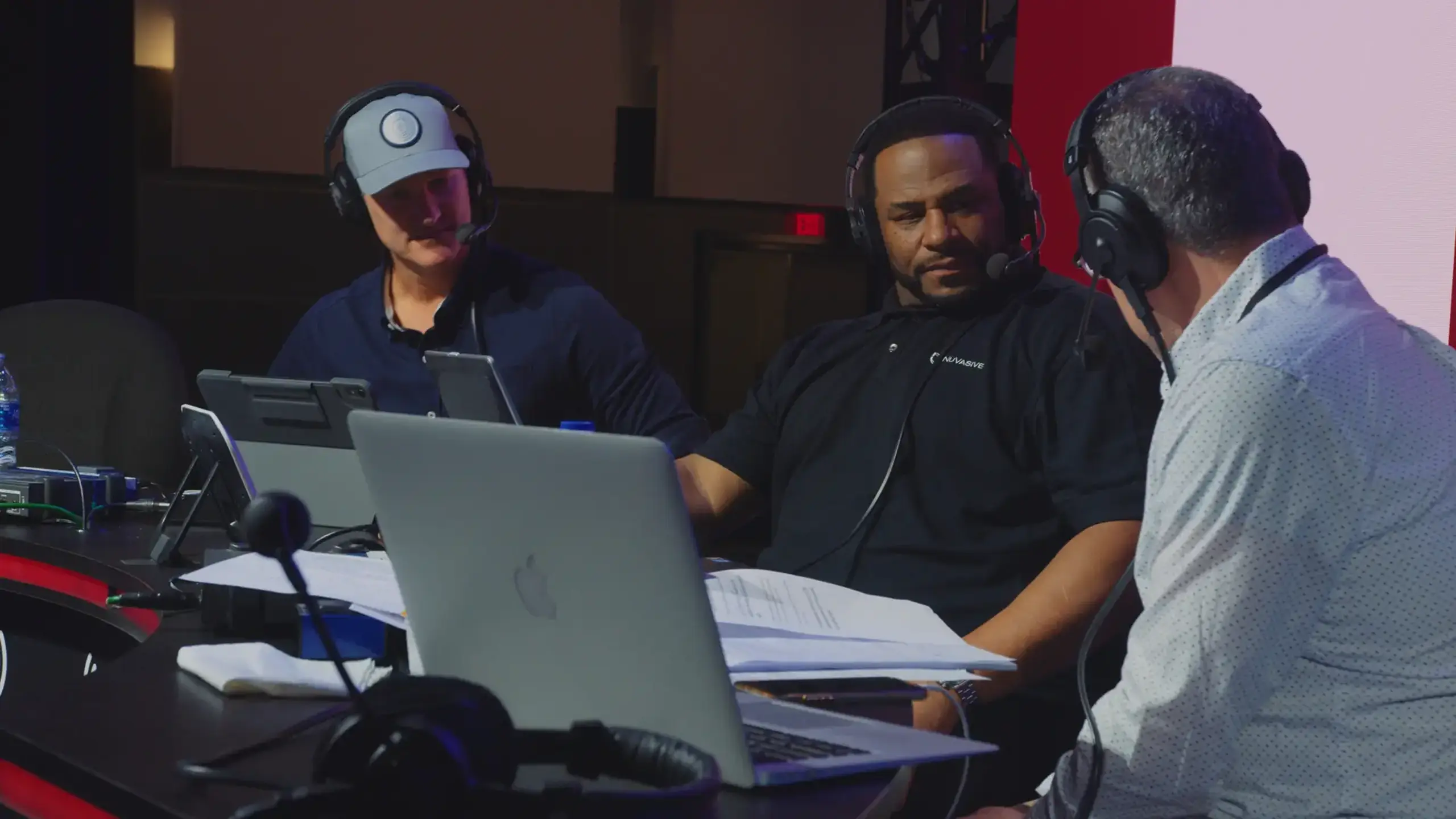
Most videos don’t fail because the idea is weak. They fail because the execution creates friction. Viewers don’t consciously analyze editing decisions, but they feel them immediately. When pacing drags, visuals don’t match intent, or audio clarity slips, engagement drops long before the message lands.
At C&I Studios, we see this pattern constantly. Brands come in with solid scripts, experienced teams, and decent cameras, yet their watch time underperforms. The issue is rarely creativity. It’s usually small editing mistakes compounding across the timeline.
Engagement loss is subtle. There’s no dramatic drop-off moment. Viewers simply stop caring. They scroll. They multitask. They leave.
This article breaks down the most common video editing mistakes that quietly kill engagement and explains why they matter more than most creators realize.
## Mistake one. slow openings that ask for patience instead of earning attention
The first ten seconds decide whether the rest of the edit even matters. Viewers don’t arrive with context. They arrive distracted. Any delay in clarity feels like work.
A common mistake is opening with branded animations, extended establishing shots, or vague scene-setting. These choices feel professional internally, but externally they create distance.
**Strong openings do three things quickly:**
- They show what kind of video this is
- They establish visual rhythm
- They signal relevance
When an edit opens slowly, viewers assume the rest will be slow too. This is especially damaging on platforms where autoplay and algorithmic distribution reward early retention.
In professional [video production](https://c-istudios.com/video-production-services/), pacing is not a stylistic choice. It’s a functional requirement. An edit that warms up too gradually loses viewers before it ever reaches its strongest moment.
## Mistake two. cutting for completeness instead of momentum
Many editors cut to preserve information rather than energy. Every sentence stays. Every angle is shown. Every beat is respected. The result is technically thorough and emotionally flat.
Momentum matters more than coverage. Viewers don’t need to see every thought finished if the point is already clear. Holding shots longer than necessary weakens the edit even when the content itself is good.
**Signs an edit is overcut for completeness include:**
- Repetitive phrasing that wasn’t tightened in post
- Reaction shots that add time but not meaning
- Visuals that restate what was already obvious
In high-performing content creation, clarity comes from restraint. The strongest edits remove more than they keep. If a moment doesn’t move the story forward, it slows it down.
## Mistake three. mismatched pacing between visuals and message
Pacing isn’t just about speed. It’s about alignment. When the message is direct but the visuals feel passive, engagement drops. When the visuals are aggressive but the message is reflective, the edit feels unstable.
**This mismatch often shows up in:**
- Fast cuts paired with explanatory narration
- Slow b-roll under high-energy statements
- Cinematic music beneath informational content
Viewers experience this as cognitive friction. They may not articulate what feels off, but they disengage because the edit sends mixed signals.
Effective editing treats pacing as a translation layer. The rhythm of the cut should mirror the intent of the message. When that alignment is missing, even strong storytelling loses impact.
## Mistake four. overusing effects that compete with meaning
Effects are tools, not solutions. Overuse of transitions, motion graphics, and stylistic filters often comes from trying to “add energy” late in the process.
The problem is that effects draw attention to themselves. Instead of supporting the message, they compete with it. Viewers begin watching the edit instead of absorbing the content.
This mistake is common in teams that equate polish with complexity. Smooth transitions, animated text, and layered graphics feel impressive internally, but externally they can feel exhausting.
High-level editing prioritizes legibility. Every effect should answer one question: does this make the idea clearer or just louder?
If the answer is louder, engagement usually suffers.
## Mistake five. ignoring audio as an engagement driver
Viewers tolerate imperfect visuals far more than imperfect sound. Yet audio is often treated as secondary in the edit timeline.
**Common audio-related issues include:**
- Inconsistent volume levels between speakers
- Music that competes with dialogue
- Abrupt audio cuts that feel jarring
When audio lacks consistency, viewers subconsciously work harder to follow along. That effort reduces retention.
Professional teams treat audio as structure, not decoration. Clean dialogue, controlled dynamics, and intentional sound design anchor the edit. Without that foundation, even visually strong videos struggle to hold attention.
## Mistake six. failing to guide the viewer’s eye
Editing isn’t just about sequencing clips. It’s about directing attention. When multiple visual elements compete, viewers don’t know where to look.
**This often happens when:**
- On-screen text overlaps with key visual action
- B-roll doesn’t support the spoken point
- Framing changes without narrative reason
Viewers process one primary signal at a time. When the edit doesn’t prioritize that signal, comprehension drops. Confusion follows quickly.
Effective edits guide attention deliberately. Every cut, overlay, and visual choice reinforces what matters most in that moment.
## Mistake seven. ending without resolution or momentum
Many videos end abruptly or fade out after the final point. The editor considers the job done because the content is finished.
From the viewer’s perspective, this feels incomplete. The brain expects closure. Without it, the experience feels forgettable.
A strong ending doesn’t require a call to action or sales pitch. It requires intentionality. The final moments should either reinforce the core idea or leave the viewer oriented toward what comes next.
When endings are treated as an afterthought, the entire edit feels disposable.
## Why these mistakes persist
Most engagement-killing mistakes aren’t caused by lack of skill. They’re caused by workflow habits. Editors work too close to the material. Teams optimize for internal approval rather than external response. Deadlines reward speed over refinement.
At [C&I Studios](https://c-istudios.com/), our process is built to counteract that. Edits are evaluated through viewer behavior, not just aesthetics. Decisions are tested against attention, not preference.
The difference shows up in retention graphs, not just final renders.
## Platform blind editing and why it backfires
A major reason engagement drops is that many edits are created in isolation from where they will live. Editors finalize a timeline assuming one universal viewing experience, even though platforms reward very different behaviors.
What works for a long-form website video rarely works unchanged on social platforms. Aspect ratios, pacing tolerance, caption behavior, and sound expectations all shift depending on distribution. When edits ignore those differences, viewers disengage quickly.
This is especially visible in [social media marketing](https://c-istudios.com/social-media-marketing-services/), where attention windows are shorter and visual hierarchy matters more than polish. A beautifully edited video can still underperform if it does not respect platform-specific viewing patterns.
Editors who think beyond the timeline and into the feed consistently retain viewers longer.
## Overediting for algorithms instead of humans
Another common mistake is editing for what teams think platforms want rather than how people actually watch. This leads to exaggerated hooks, aggressive jump cuts, and unnecessary visual noise.
Algorithms reward retention, not chaos. When edits feel engineered rather than intentional, viewers sense it immediately.
**Signs of algorithm-chasing edits include:**
- Artificial urgency layered onto calm content
- Visual tricks repeated without narrative reason
- Pacing that feels rushed but not focused
Engagement drops because viewers feel manipulated rather than invited. Strong edits respect attention instead of trying to hack it.
At C&I Studios, edits are tested against human response first. Algorithms follow behavior. They do not replace it.
## Treating captions as decoration instead of structure
Captions are often added late and treated as an accessory. In reality, they are structural elements, especially on muted autoplay feeds.
Poor caption integration creates friction. Text appears too late, disappears too quickly, or competes with visuals. Viewers miss context and move on.
Effective captioning does not repeat dialogue verbatim. It reinforces key ideas and guides attention. Timing matters more than typography.
This becomes critical in [video & audio live streaming](https://c-istudios.com/video-audio-live-streaming/) environments where clarity must be immediate and interruptions are common. Viewers drop in and out. Captions help them orient quickly.
When captions are built into the edit rather than layered on top, engagement improves measurably.
## Inconsistent visual identity across edits
Engagement suffers when videos from the same brand feel unrelated. Inconsistent color grading, typography, framing, or pacing breaks trust over time.
Viewers may not articulate why a channel feels unreliable, but inconsistency signals lack of intention. Familiarity drives retention. Randomness breaks it.
**This issue often arises when:**
- Multiple editors work without shared standards
- Templates exist but are not enforced
- Style decisions change per project without reason
Strong editing systems balance flexibility with continuity. Viewers should recognize a brand’s visual language instantly, even as formats evolve.
## Ignoring how viewers rewatch and share content
Many edits are optimized only for first-time viewing. Engagement, however, compounds through rewatches and shares.
**Edits that reward a second look often include:**
- Visual layers that reveal more on replay
- Clear structure that makes moments easy to revisit
- Endings that linger rather than cut off abruptly
When videos are easy to rewatch, they travel further. When they are easy to share, they grow organically.
This mindset is essential in long-term social media marketing strategies where content lifespan matters as much as initial performance.
## Fixing engagement issues without redoing everything
Improving engagement does not always require reshooting or rebranding. Small editorial changes often create disproportionate gains.
**Teams that see improvement focus on:**
- Tightening the first fifteen seconds
- Reducing redundant phrasing
- Aligning audio levels and transitions
- Clarifying visual focus per scene
These adjustments respect existing material while improving viewer experience. Editing is leverage. Used correctly, it multiplies impact.
## How high performing teams approach post production
High-performing teams treat editing as a system, not a final step. Feedback loops include retention data, audience behavior, and cross-platform testing.
Editors are not just executors. They are interpreters of attention.
At C&I Studios, post-production decisions are guided by how viewers actually interact with content across platforms, formats, and contexts. This perspective prevents most engagement-killing mistakes before they happen.
You can see how this thinking applies to your own projects by reviewing where viewers pause, skip, or leave. Patterns always emerge.
If you are curious how your current edits perform when evaluated through this lens, the conversation usually starts. Contact us at [C&I Studios](https://c-istudios.com/contact/).
The strongest edits do not announce themselves. They simply make staying feel effortless.
## Work with C&I Studios
If you are planning a project like this, our team can take it from concept to final delivery. Explore our [post-production services](https://c-istudios.com/post-production-services/), browse [our work](https://c-istudios.com/our-work/) to see how we tell brand stories, and [get in touch](https://c-istudios.com/contact/) when you are ready to start.
Originally published January 24, 2026
---
*This content is from [C&I Studios](https://c-istudios.com), a full-service production company.*
---
# Freelance Video Editor Rates Explained: What You’re Really Paying For
> Published: January 23, 2026
> Categories: Commercial & Brand
> Source: https://c-istudios.com/freelance-video-editor-rates-explained-what-youre-really-paying-for/
---
.cib{--paper:#1b1d1f;--ink:#fff;--body:#d5d7d9;--muted:#8b9096;--line:rgba(255,255,255,.12);--thumb:#2b2e31;--card:#212426;--accent:#c02b0a;--blue:#5B8FA8;--serif:'Playfair Display',Georgia,serif;--sans:'Poppins',-apple-system,sans-serif;--measure:900px;background:var(--paper);color:var(--body);font-family:var(--sans);line-height:1.6;position:relative;left:50%;transform:translateX(-50%);width:90vw;max-width:1920px}
.cib *{box-sizing:border-box}
.cib .kicker{max-width:var(--measure);margin:58px auto 0;padding:0 22px;font-size:12.5px;font-weight:700;letter-spacing:2.5px;text-transform:uppercase;color:var(--blue)}
.cib h1.cibh1{text-wrap:balance;font-family:var(--serif);font-weight:500;font-size:clamp(46px,6vw,72px);line-height:1.08;color:var(--ink);max-width:var(--measure);margin:18px auto 0;padding:0 22px;letter-spacing:-.5px}
.cib .metarow{max-width:var(--measure);margin:20px auto 0;padding:0 22px;color:var(--muted);font-size:14px}
.cib .hero{position:relative;width:100%;height:0;padding-bottom:56.25%;overflow:hidden;margin:48px auto 0;border-top:1px solid var(--line);border-bottom:1px solid var(--line)}
.cib .hero .ph{width:100%;aspect-ratio:16/9;background:var(--thumb);border-top:1px solid var(--line);border-bottom:1px solid var(--line);display:flex;align-items:center;justify-content:center;color:#7d8288;font-size:13px;text-align:center;padding:0 20px}
.cib .body{max-width:var(--measure);margin:12px auto 0;padding:52px 22px 6px}
.cib .body.lead p:first-child{font-size:23px;line-height:1.62;color:var(--ink)}
.cib .body p{font-size:18.5px;line-height:1.85;margin:0 0 30px;color:var(--body)}
.cib .body h2{text-wrap:balance;font-family:var(--serif);font-weight:500;font-size:clamp(32px,4vw,48px);line-height:1.22;color:var(--ink);margin:70px 0 20px;letter-spacing:-.3px}
.cib .body h3{text-wrap:balance;font-family:var(--sans);font-weight:600;font-size:22px;color:var(--ink);margin:38px 0 8px}
.cib .body a{color:var(--ink);text-decoration:underline;text-decoration-color:rgba(255,255,255,.4);text-underline-offset:3px}
.cib .body a:hover{text-decoration-color:var(--ink)}
.cib .ctable{width:100%;border-collapse:collapse;margin:16px 0 30px;font-size:16px}
.cib .ctable th{background:#000;color:#fff;text-align:left;padding:10px 12px;font-family:var(--sans)}
.cib .ctable td{padding:10px 12px;border-bottom:1px solid var(--line);color:var(--body)}
.cib .inimg{position:relative;width:100%;height:0;padding-bottom:56.25%;overflow:hidden;margin:72px auto;border-top:1px solid var(--line);border-bottom:1px solid var(--line)}
.cib .inimg .ph{width:100%;aspect-ratio:16/9;background:var(--thumb);border-top:1px solid var(--line);border-bottom:1px solid var(--line);display:flex;align-items:center;justify-content:center;color:#7d8288;font-size:13px}
.cib .origpub{max-width:var(--measure);margin:60px auto 0;padding:26px 22px 0;border-top:1px solid var(--line);color:var(--muted);font-size:13.5px}
.cib .related{max-width:1200px;margin:64px auto 0;padding:34px 22px 76px}
.cib .related h3{font-family:var(--sans);font-size:12.5px;letter-spacing:2px;text-transform:uppercase;color:var(--ink);margin:0 0 24px}
.cib .grid{display:grid;grid-template-columns:repeat(3,1fr);gap:28px}
.cib .rc{background:var(--card);border:1px solid var(--line);display:block;text-decoration:none;color:inherit;transition:border-color .15s}
.cib a.rc:hover{border-color:rgba(255,255,255,.5)}
.cib .rc .thumb{position:relative;width:100%;height:0;padding-bottom:56.25%;background:var(--thumb);overflow:hidden}
.cib .rc .thumb img{position:absolute!important;top:0!important;left:0!important;width:100%!important;height:100%!important;object-fit:cover!important;margin:0!important}
.cib .rc .cc{padding:14px 15px 17px}
.cib .rc .rt{font-family:var(--serif);font-weight:500;font-size:16px;line-height:1.3;color:var(--ink);margin:0 0 6px}
.cib .rc .rm{font-size:11px;letter-spacing:1px;text-transform:uppercase;color:var(--muted)}
.cib img{margin:0!important;padding:0!important;display:block!important;vertical-align:top;max-width:100%}
.cib .hero img,.cib .inimg img{position:absolute!important;top:0!important;left:0!important;width:100%!important;height:100%!important;object-fit:cover!important;margin:0!important;padding:0!important;border:0!important;display:block!important;aspect-ratio:auto!important}
.cib .hero+.body{padding-top:36px}
@media(max-width:760px){.cib .grid{grid-template-columns:1fr}.cib .body h2{margin:52px 0 16px}.cib .body p{font-size:17.5px}.cib .inimg,.cib .hero{margin-top:44px}}
.cib .vembed{max-width:var(--measure);margin:44px auto;padding:0 22px}.cib .vembed .vwrap{position:relative;width:100%;height:0;padding-bottom:56.25%}.cib .vembed .vwrap iframe{position:absolute;top:0;left:0;width:100%;height:100%;border:0}
Commercial & Brand
# Freelance Video Editor Rates Explained. What You’re Really Paying For
5 min read
Understanding freelance video editor rates is less about memorizing price ranges and more about understanding what those prices actually represent. Too many businesses compare hourly numbers without understanding the production realities behind them. The result is confusion, mismatched expectations, and inconsistent outcomes.
At C&I Studios, pricing conversations always start with clarity. Editing is not a commodity. It is a technical and creative process that sits inside a much larger [video production](https://c-istudios.com/video-production-services/) ecosystem, and rates reflect that reality.
This guide breaks down what freelance video editors charge, why those numbers vary so widely, and what is usually included, or excluded, inside a quoted rate.
## Why Freelance Video Editor Rates Vary So Much
There is no universal price for editing because there is no universal editing job. Two projects that look similar on the surface can demand entirely different levels of effort, experience, and risk.
### Experience Is Not Linear
A common mistake is assuming that an editor with double the experience should cost roughly double the rate. That logic fails quickly in practice.
What experience actually buys you:
- Faster problem-solving under tight deadlines
- Fewer revision cycles
- Stronger storytelling instincts
- Technical decision-making that prevents downstream issues
An experienced editor often completes work in fewer hours while delivering higher consistency. Lower rates sometimes cost more once revisions and delays are accounted for.
### Project Complexity Matters More Than Duration
A three-minute video can cost more than a twenty-minute one.
**Rates increase when projects include:**
- Narrative structure instead of simple assembly
- Multi-camera timelines
- Mixed frame rates or codecs
- Heavy color correction or sound cleanup
- Asset organization from unstructured footage
This is why freelance video editor rates should never be evaluated purely on video length.
## Common Pricing Models Used by Freelance Video Editors
Editors typically price work using one of three models. Each has advantages and risks depending on how clearly the project is defined.
### Hourly Rates
Hourly pricing is common for open-ended work or ongoing collaborations.
**Typical characteristics:**
- Flexible scope
- Transparent time tracking
- Higher risk of budget creep
**This model works best when:**
- The client understands the process
- The editor controls their workflow
- Expectations around revisions are clearly set
For complex [content creation](https://c-istudios.com/content-creation-services/) workflows, hourly billing can be efficient when paired with caps or milestones.
### Per-Project (Flat) Rates
Flat pricing is preferred by clients who want predictability.
**What a flat rate usually includes:**
- Defined deliverables
- A set number of revisions
- Agreed technical standards
**What it often excludes:**
- Scope changes
- Additional formats or exports
- Late-stage creative pivots
At C&I Studios, flat rates are only used when the scope is tightly defined. Ambiguity is the enemy of fair pricing on both sides.
### Retainer-Based Rates
Retainers are common for brands that publish consistently.
**They typically cover:**
- A fixed volume of monthly output
- Priority scheduling
- Locked-in rates
**This model benefits:**
- Marketing teams
- Agencies
- Long-term campaigns
Retainers stabilize costs and improve creative consistency, but only work when both sides communicate clearly about capacity and expectations.
## What Is Usually Included in Freelance Video Editor Rates
One of the biggest misunderstandings around freelance video editor rates is assuming that “editing” means only cutting clips on a timeline.
In reality, a professional rate often includes much more.
### Core Editing Tasks
Most standard rates include:
- Footage review and selection
- Timeline assembly
- Basic pacing and structure
- Clean cuts and transitions
This is the baseline. Anything beyond this should be explicitly discussed.
### Technical Prep and Management
Often invisible, but time-consuming:
- Media organization
- Proxy creation
- File conversions
- Project backups
These steps protect the project and save time later, yet are rarely acknowledged in low-budget expectations.
### Basic Audio and Visual Polish
Depending on the agreement, rates may include:
- Light audio balancing
- Noise reduction within reason
- Basic color correction
Advanced work, sound design, grading, or restoration, usually increases rates or is billed separately.
## What Is Commonly Excluded (And Why Rates Suddenly Jump)
Many pricing disputes happen because clients assume inclusions that were never agreed upon.
**Common exclusions:**
- Motion graphics beyond templates
- Advanced color grading
- Licensed music or stock footage
- Multiple platform-specific exports
- Subtitles or captions
Each of these requires additional tools, time, or licensing costs. When editors raise rates for these tasks, it is not upselling, it is cost recovery.
## The Hidden Cost of Underpriced Editing
Low rates can look attractive on paper, but they introduce real operational risks.
### Revision Loops
Inexperienced editors often require:
- More feedback rounds
- Re-explaining creative intent
- Structural rework
Each revision consumes time that is rarely accounted for upfront.
### Technical Debt
Poor early decisions lead to:
- Re-rendering entire timelines
- Audio sync issues
- Export failures near deadlines
Fixing these problems later costs more than paying for competence upfront.
## How Agencies Like C&I Studios Evaluate Editor Pricing
At C&I Studios, rates are evaluated against outcomes, not just deliverables.
Key questions include:
- Does this editor reduce downstream risk?
- Can they operate independently?
- Do they understand brand context without hand-holding?
When rates are higher, they are justified by reliability, speed, and creative alignment, not prestige.
## Real World Freelance Video Editor Pricing Ranges
Once you move past theory, pricing becomes more concrete. Editors do not charge in a vacuum. Rates cluster around certain ranges based on project type, delivery expectations, and business risk.
This is where many clients misjudge value, by comparing numbers without understanding what kind of work those numbers are attached to.
### Entry Level Freelance Editors. What Lower Rates Usually Mean
Lower pricing is often associated with editors early in their careers or transitioning from hobby work into paid projects.
Typical characteristics:
- Limited professional credits
- Reliance on templates
- Narrow software familiarity
You will commonly see lower rates attached to:
- Basic short-form edits
- Simple talking-head videos
- Minimal turnaround pressure
These editors can be a fit when:
- The project is low-risk
- Deadlines are flexible
- Visual standards are modest
The tradeoff is predictability. Output quality may vary from project to project, especially under pressure.
### Mid-Range Editors. Where Most Commercial Work Lives
This is the largest and most competitive tier.
Editors in this range typically:
- Work with agencies and brands
- Understand feedback cycles
- Manage deadlines without supervision
Their pricing reflects:
- Consistency
- Speed
- Reduced revision load
This tier dominates projects tied to [social media marketing](https://c-istudios.com/social-media-marketing-services/), where fast iteration, platform awareness, and format accuracy matter more than cinematic polish.
Clients often underestimate how much strategy lives inside these edits, especially when performance metrics are tied to visuals.
### High-End Freelance Editors. Why Rates Rise Sharply
At the top end, rates increase fast, and for good reason.
High-end editors often:
- Specialize deeply
- Handle sensitive material
- Work under public or financial scrutiny
Projects in this category include:
- Branded documentaries
- Investor or broadcast pieces
- Long-form documentary [film production](https://c-istudios.com/film-and-tv-production/)
Here, editing is not execution, it is authorship. These editors make structural decisions that change how stories land, how brands are perceived, and how audiences respond.
Paying less at this level almost always results in replacement costs later.
## Platform Driven Pricing Differences
Where a video lives matters as much as what it is.
### Short Form Platforms
Short-form edits demand:
- Fast pacing
- Platform-specific framing
- Tight attention spans
### Pricing reflects
- Volume
- Speed
- Iteration frequency
Lower per-video costs are common, but total monthly spend can rise quickly.
### Long Form Platforms
Long-form projects involve:
- Narrative flow
- Viewer retention strategy
- Structural clarity
Even when fewer videos are delivered, pricing rises due to:
- Time investment
- Revision complexity
- Story coherence
This is where cheap editing fails most visibly.
## Why Geographic Comparisons Often Mislead Clients
Comparing rates across regions without context is a mistake.
**Lower regional rates may reflect:**
- Different cost structures
- Different client expectations
- Different revision norms
**What they do not reflect:**
- Time zone coordination costs
- Communication overhead
- Rework risk
At [C&I Studios](https://c-istudios.com/), pricing decisions are never made on geography alone. Reliability and accountability outweigh raw hourly differences.
## Red Flags in Freelance Editor Quotes
Not all quotes deserve negotiation. Some deserve rejection.
**Be cautious when a quote:**
- Avoids defining deliverables
- Includes unlimited revisions
- Ignores asset management
- Downplays turnaround constraints
Low pricing paired with vague language is not flexibility, it is uncertainty disguised as value.
## How to Compare Two Quotes Without Guessing
When choosing between editors, numbers alone are insufficient.
**Instead, compare:**
- Revision limits
- Delivery timelines
- Format outputs
- Communication clarity
A higher quote that answers these questions clearly is often cheaper in practice than a lower one that does not.
## Budgeting Smarter Without Sacrificing Outcomes
Smarter budgeting does not mean pushing rates down. It means aligning spend with actual needs.
Effective strategies include:
- Locking scopes early
- Reducing late-stage changes
- Reusing assets strategically
This is how professional teams protect both budget and output quality.
### Why Agencies Often Cost More—and When That Makes Sense
Agency-managed editing costs more because:
- Risk is absorbed
- Quality control is layered
- Timelines are protected
For mission-critical work, those safeguards matter. The price difference is often smaller than the cost of failure.
## A Practical Way to Move Forward
Most pricing confusion disappears once expectations are made explicit.
**Clear briefs lead to:**
- Faster delivery
- Fewer revisions
- Better creative alignment
This is how strong working relationships form, and why long-term collaborations outperform transactional hiring.
If you are navigating these decisions and want perspective grounded in real production workflows, the team at [C&I Studios](https://c-istudios.com/contact/) shares insights that help brands make informed choices without overcomplicating the process.
For more information on industry standards and best practices, visit the [American Marketing Association](https://www.ama.org/).
## Work with C&I Studios
If you are planning a project like this, our team can take it from concept to final delivery. Explore our [video production services](https://c-istudios.com/video-production-services/), browse [our work](https://c-istudios.com/our-work/) to see how we tell brand stories, and [get in touch](https://c-istudios.com/contact/) when you are ready to start.
Originally published January 23, 2026
---
*This content is from [C&I Studios](https://c-istudios.com), a full-service production company.*
---
# How Long Does Video Editing Take? Real Timelines for Different Video Projects
> Published: January 22, 2026
> Categories: Post & VFX
> Source: https://c-istudios.com/how-long-does-video-editing-take-real-timelines-for-different-video-projects/
---
.cib{--paper:#1b1d1f;--ink:#fff;--body:#d5d7d9;--muted:#8b9096;--line:rgba(255,255,255,.12);--thumb:#2b2e31;--card:#212426;--accent:#c02b0a;--blue:#5B8FA8;--serif:'Playfair Display',Georgia,serif;--sans:'Poppins',-apple-system,sans-serif;--measure:900px;background:var(--paper);color:var(--body);font-family:var(--sans);line-height:1.6;position:relative;left:50%;transform:translateX(-50%);width:90vw;max-width:1920px}
.cib *{box-sizing:border-box}
.cib .kicker{max-width:var(--measure);margin:58px auto 0;padding:0 22px;font-size:12.5px;font-weight:700;letter-spacing:2.5px;text-transform:uppercase;color:var(--blue)}
.cib h1.cibh1{text-wrap:balance;font-family:var(--serif);font-weight:500;font-size:clamp(46px,6vw,72px);line-height:1.08;color:var(--ink);max-width:var(--measure);margin:18px auto 0;padding:0 22px;letter-spacing:-.5px}
.cib .metarow{max-width:var(--measure);margin:20px auto 0;padding:0 22px;color:var(--muted);font-size:14px}
.cib .hero{position:relative;width:100%;height:0;padding-bottom:56.25%;overflow:hidden;margin:48px auto 0;border-top:1px solid var(--line);border-bottom:1px solid var(--line)}
.cib .hero .ph{width:100%;aspect-ratio:16/9;background:var(--thumb);border-top:1px solid var(--line);border-bottom:1px solid var(--line);display:flex;align-items:center;justify-content:center;color:#7d8288;font-size:13px;text-align:center;padding:0 20px}
.cib .body{max-width:var(--measure);margin:12px auto 0;padding:52px 22px 6px}
.cib .body.lead p:first-child{font-size:23px;line-height:1.62;color:var(--ink)}
.cib .body p{font-size:18.5px;line-height:1.85;margin:0 0 30px;color:var(--body)}
.cib .body h2{text-wrap:balance;font-family:var(--serif);font-weight:500;font-size:clamp(32px,4vw,48px);line-height:1.22;color:var(--ink);margin:70px 0 20px;letter-spacing:-.3px}
.cib .body h3{text-wrap:balance;font-family:var(--sans);font-weight:600;font-size:22px;color:var(--ink);margin:38px 0 8px}
.cib .body a{color:var(--ink);text-decoration:underline;text-decoration-color:rgba(255,255,255,.4);text-underline-offset:3px}
.cib .body a:hover{text-decoration-color:var(--ink)}
.cib .ctable{width:100%;border-collapse:collapse;margin:16px 0 30px;font-size:16px}
.cib .ctable th{background:#000;color:#fff;text-align:left;padding:10px 12px;font-family:var(--sans)}
.cib .ctable td{padding:10px 12px;border-bottom:1px solid var(--line);color:var(--body)}
.cib .inimg{position:relative;width:100%;height:0;padding-bottom:56.25%;overflow:hidden;margin:72px auto;border-top:1px solid var(--line);border-bottom:1px solid var(--line)}
.cib .inimg .ph{width:100%;aspect-ratio:16/9;background:var(--thumb);border-top:1px solid var(--line);border-bottom:1px solid var(--line);display:flex;align-items:center;justify-content:center;color:#7d8288;font-size:13px}
.cib .origpub{max-width:var(--measure);margin:60px auto 0;padding:26px 22px 0;border-top:1px solid var(--line);color:var(--muted);font-size:13.5px}
.cib .related{max-width:1200px;margin:64px auto 0;padding:34px 22px 76px}
.cib .related h3{font-family:var(--sans);font-size:12.5px;letter-spacing:2px;text-transform:uppercase;color:var(--ink);margin:0 0 24px}
.cib .grid{display:grid;grid-template-columns:repeat(3,1fr);gap:28px}
.cib .rc{background:var(--card);border:1px solid var(--line);display:block;text-decoration:none;color:inherit;transition:border-color .15s}
.cib a.rc:hover{border-color:rgba(255,255,255,.5)}
.cib .rc .thumb{position:relative;width:100%;height:0;padding-bottom:56.25%;background:var(--thumb);overflow:hidden}
.cib .rc .thumb img{position:absolute!important;top:0!important;left:0!important;width:100%!important;height:100%!important;object-fit:cover!important;margin:0!important}
.cib .rc .cc{padding:14px 15px 17px}
.cib .rc .rt{font-family:var(--serif);font-weight:500;font-size:16px;line-height:1.3;color:var(--ink);margin:0 0 6px}
.cib .rc .rm{font-size:11px;letter-spacing:1px;text-transform:uppercase;color:var(--muted)}
.cib img{margin:0!important;padding:0!important;display:block!important;vertical-align:top;max-width:100%}
.cib .hero img,.cib .inimg img{position:absolute!important;top:0!important;left:0!important;width:100%!important;height:100%!important;object-fit:cover!important;margin:0!important;padding:0!important;border:0!important;display:block!important;aspect-ratio:auto!important}
.cib .hero+.body{padding-top:36px}
@media(max-width:760px){.cib .grid{grid-template-columns:1fr}.cib .body h2{margin:52px 0 16px}.cib .body p{font-size:17.5px}.cib .inimg,.cib .hero{margin-top:44px}}
.cib .vembed{max-width:var(--measure);margin:44px auto;padding:0 22px}.cib .vembed .vwrap{position:relative;width:100%;height:0;padding-bottom:56.25%}.cib .vembed .vwrap iframe{position:absolute;top:0;left:0;width:100%;height:100%;border:0}
Post & VFX
# How Long Does Video Editing Take? Real Timelines for Different Video Projects
8 min read
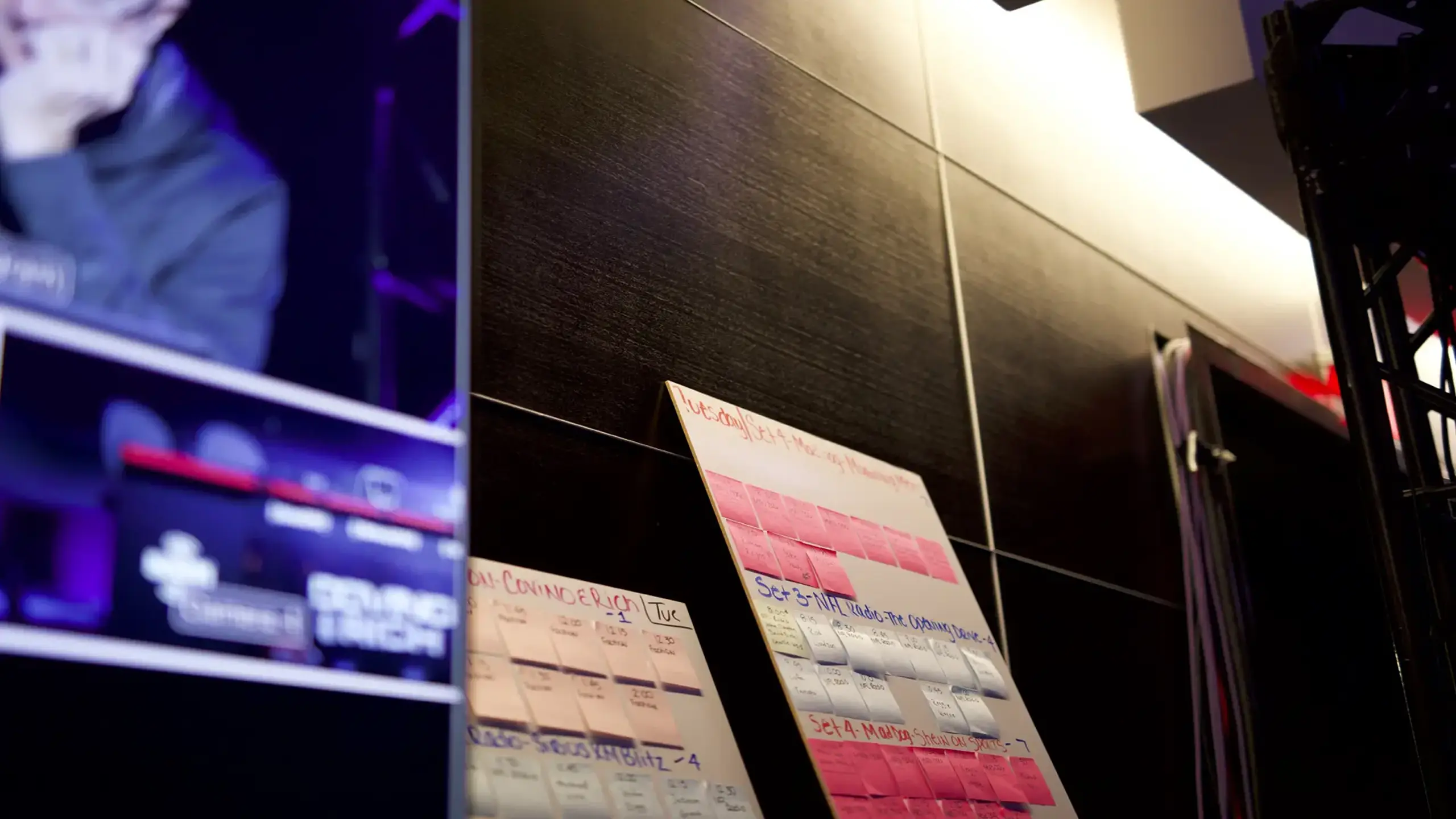
One of the most common questions clients ask before starting a project is simple on the surface but complex in reality: ***how long does video editing take***? The confusion usually comes from assuming that editing time scales linearly with video length. In practice, that assumption is wrong.
At C&I Studios, timelines are driven by creative intent, technical requirements, revision cycles, and delivery standards, not just minutes on a timeline. A 60-second video can take longer than a 10-minute one depending on how much structure, polish, and storytelling precision it requires.
Video editing is not a single task. It is a layered process that sits inside the broader video production workflow, meaning the editor is often integrating raw footage, sound, graphics, pacing, and brand alignment into a coherent final product.
Understanding how long editing takes starts with understanding what type of video you are actually producing.
## What actually determines how long video editing takes
Before breaking timelines down by video type, it is important to understand the core variables that affect editing duration across all projects.
### Footage volume and quality
More footage does not always mean better results, but it does mean more time. A project shot with multiple cameras, multiple takes, or unscripted dialogue requires significantly more review and selection time than tightly planned footage.
Poor audio, inconsistent lighting, or unstable shots also increase editing time. Fixing problems in post-production always costs more time than avoiding them during filming.
### Creative complexity
Simple trimming and sequencing is fast. Story-driven edits with emotional pacing, music sync, sound design, and visual rhythm take longer. When the editor is shaping a narrative rather than assembling clips, timelines expand.
This is especially true for projects tied to brand messaging or campaign goals, where editorial decisions must align with strategy rather than just aesthetics.
### Graphics, motion, and polish
Lower thirds, animated titles, overlays, transitions, and visual effects are not add-ons. They are separate production layers. Even light motion graphics introduce design, timing, and revision considerations that extend delivery timelines.
### Revisions and feedback cycles
One clean feedback round can be quick. Multiple revision cycles, especially with unclear or conflicting notes, can double the total editing time. This is why professional studios define revision scopes upfront rather than treating edits as open-ended.
## Editing timelines by video type
Below is a realistic breakdown of how long video editing takes for common project categories. These are production-level averages, not best-case scenarios.
### Short social media videos (15–60 seconds)
Estimated editing time: 2 to 6 hours per video
Short-form videos are often underestimated. Despite their length, they demand precision. Every second matters, and pacing errors are immediately noticeable.
**Typical editing tasks include:**
- Selecting the strongest takes
- Tight trimming for pace
- Captioning or text overlays
- Audio cleanup and music alignment
- Formatting for platform-specific specs
When social videos are part of ongoing [content creation](https://c-istudios.com/content-creation-services/), speed improves over time due to template reuse and established styles. One-off social edits usually take longer than people expect.
What increases time
- Subtitles for accessibility
- Multiple aspect ratios (vertical, square, horizontal)
- Brand-specific motion elements
### YouTube videos and long-form online content
Estimated editing time: 6 to 15 hours per video
YouTube editing time scales with structure rather than length. A talking-head video with clear delivery can be edited efficiently. A multi-segment video with cutaways, screen captures, and visual references takes significantly longer.
**Common tasks include:**
- Content tightening without losing clarity
- Removing verbal fillers
- B-roll integration
- Sound leveling and music placement
- Visual consistency across sections
Channels that upload consistently benefit from standardized workflows. First-time creators almost always underestimate how much editorial shaping is required to hold viewer attention past the first minute.
## Corporate and brand videos
Estimated editing time: 10 to 25 hours
Brand videos are slower by design. Accuracy, tone, and alignment matter more than speed. Messaging often goes through internal approvals, which adds friction to the editing process.
**These projects typically involve:**
- Script adherence
- Brand guideline compliance
- Clean audio and color consistency
- Graphics that reflect visual identity
- Structured revision rounds
In professional [video production](https://c-istudios.com/video-production-services/), this category demands restraint. Over-editing can be just as damaging as under-editing, which means editors spend more time refining than adding.
## Documentary-style and interview-based projects
Estimated editing time: 20 to 40+ hours
Documentary editing is fundamentally different. The editor is not just cutting footage; they are discovering the story inside it.
Key time drivers include:
- Reviewing hours of raw interviews
- Selecting narrative threads
- Structuring acts or chapters
- Balancing pacing with authenticity
- Integrating archival or supporting footage
Even short documentaries take time because story clarity cannot be rushed. This is one of the areas where “faster” usually means “worse.”
## Commercials and promotional ads
Estimated editing time: 8 to 20 hours
Commercial editing is about compression. The goal is maximum clarity and impact in minimal time. Every frame is intentional.
Typical tasks include:
- Frame-accurate timing
- Music and beat matching
- Brand-safe visuals
- Multiple cut-down versions
- Platform-specific exports
Ads often go through several review layers, which adds to turnaround time even when the edit itself is technically simple.
## Why timelines vary even within the same category
Two projects of the same type can have completely different editing timelines. The difference usually comes down to decision-making quality before editing begins.
Clear scripts, defined goals, and organized footage reduce editing time. Vague direction, late changes, and unclear priorities increase it.
At [C&I Studios](https://c-istudios.com/), timelines are planned backward from delivery requirements, not guessed upfront. This approach protects both creative quality and realistic scheduling.
## Setting realistic expectations before editing starts
If you want an honest answer to how long does video editing take, you must first define what “done” actually means. Is the goal speed, polish, flexibility, or long-term usability?
Fast edits are possible. High-quality edits are achievable. Doing both requires structure, preparation, and aligned expectations.
This is why professional studios treat editing as a strategic phase, not a post-production afterthought. When editing is planned correctly, timelines stop being a source of friction and start becoming a competitive advantage.
As projects scale, the difference between rushed edits and intentional ones becomes visible not just in visuals, but in how the content performs over time, especially when video is part of a broader creative ecosystem rather than a one-off deliverable.
## What slows video editing down (and why rushing usually backfires)
Once you understand the baseline timelines, the next logical question is why some projects drift far beyond expectations. In nearly every case, delays are not caused by the editor being slow. They are caused by structural issues upstream or indecision downstream.
Editing speed is not about how fast someone can click. It is about how little uncertainty exists at each decision point.
### Unclear creative direction
When a project begins without a defined outcome, editing becomes exploratory instead of intentional. The editor is forced to test multiple structures, tones, and pacing options before discovering what the video is supposed to be.
This is especially common in brand and narrative work, where stakeholders “know what they like when they see it” but cannot articulate it beforehand. Every round of discovery adds time.
### Excessive footage without hierarchy
More footage increases options, but it also increases review time. When everything feels equally important, nothing is prioritized, and the editor must evaluate far more combinations.
In long-form interviews or [documentary film production](https://c-istudios.com/documentary-film-production/), this effect multiplies. Without a clear narrative spine, hours of footage turn into days of editorial sorting.
### Late-stage changes
Structural changes introduced late in the process are the most expensive in terms of time. Swapping music is quick. Reordering scenes is not. Rewriting the opening after picture lock almost always triggers cascading edits.
This is why professional workflows front-load decisions instead of treating editing as a sandbox.
## When faster turnaround actually increases total cost
Clients often ask for faster delivery assuming it reduces overall effort. In reality, compressed timelines often increase total hours spent.
Speed requires constraint
Fast edits only work when constraints are tight:
- Locked scripts
- Limited footage
- Single decision-maker
- Defined revision limits
Remove any of these, and speed requests introduce friction instead of efficiency.
### Parallel revisions create rework
When feedback comes from multiple stakeholders simultaneously, editors are forced to interpret conflicting directions. This leads to rework rather than progress.
One decisive voice moves projects forward faster than five opinions delivered at once.
Quality control still takes time
Even when an edit is technically simple, professional delivery still requires review, exports, checks, and platform-specific formatting. These steps cannot be skipped without risking errors.
In high-visibility formats like [video & audio live streaming](https://c-istudios.com/video-audio-live-streaming/) or paid media, mistakes are far more costly than an extra day of editing.
## How professionals shorten timelines without sacrificing quality
There are legitimate ways to reduce editing time, but none of them involve rushing the editor.
### Lock structure early
Once structure is approved, everything else accelerates. Editors can focus on refinement instead of experimentation.
This applies to everything from YouTube content to brand videos to interviews.
### Limit revision scope by intent, not count
Unlimited revisions sound generous but create hesitation. Clear intent-based revisions (“tighten pacing,” “clarify message”) are faster than open-ended requests.
Studios that define revision boundaries early almost always deliver faster overall.
### Reuse systems, not assets
Templates, motion systems, audio chains, and export presets dramatically reduce turnaround time without lowering quality. This is how ongoing clients scale output without burning time.
This approach is particularly effective for recurring formats like podcasts, interviews, and educational series.
## Editing timelines for live and hybrid formats
Some projects exist outside traditional post-production timelines entirely.
Live streams with post-edit deliverables
Estimated editing time: 4 to 12 hours after the event
Live content reduces filming time but does not eliminate editing. Post-event deliverables often include:
- Highlight cuts
- Social snippets
- Clean replays
- Audio polish
- Branded intros and outros
The cleaner the live production, the faster post-editing becomes. Poor audio or unstable feeds dramatically increase cleanup time.
### Hybrid productions
Hybrid projects combine live capture with edited segments. These sit between live streams and fully produced videos in terms of editing demand.
Planning determines whether these projects feel efficient or chaotic.
## Why “how long does video editing take” is the wrong final question
A better question is: what level of clarity exists before editing begins?
Time expands when editors are asked to solve problems that should have been resolved earlier. Time contracts when editing is treated as execution rather than exploration.
At scale, this distinction matters more than software, hardware, or even team size.
Professional studios optimize timelines by reducing uncertainty, not by pressuring editors to move faster.
## Planning timelines that actually hold up
If you want predictable delivery, you need three things:
- Defined objectives
- Organized inputs
- Controlled feedback
Without these, any timeline estimate is fiction.
This is why C&I Studios plans editing schedules alongside creative strategy instead of treating post-production as a final step. The result is fewer delays, cleaner revisions, and work that holds up beyond its initial release.
And when projects are built this way, editing stops feeling like a bottleneck and starts functioning like what it is supposed to be: a precision stage that turns intention into impact, supported by teams who know exactly when to step in and when to step back, something worth discussing further with people who do this work every day at[C&I Studios](https://c-istudios.com/contact/), without forcing the conversation to end there.
## Work with C&I Studios
If you are planning a project like this, our team can take it from concept to final delivery. Explore our [post-production services](https://c-istudios.com/post-production-services/), browse [our work](https://c-istudios.com/our-work/) to see how we tell brand stories, and [get in touch](https://c-istudios.com/contact/) when you are ready to start.
Originally published January 22, 2026
---
*This content is from [C&I Studios](https://c-istudios.com), a full-service production company.*
---
# A Step-By-Step Professional Video Editing Workflow That Saves Hours
> Published: January 20, 2026
> Categories: Post & VFX
> Source: https://c-istudios.com/a-step-by-step-professional-video-editing-workflow-that-saves-hours/
---
.cib{--paper:#1b1d1f;--ink:#fff;--body:#d5d7d9;--muted:#8b9096;--line:rgba(255,255,255,.12);--thumb:#2b2e31;--card:#212426;--accent:#c02b0a;--blue:#5B8FA8;--serif:'Playfair Display',Georgia,serif;--sans:'Poppins',-apple-system,sans-serif;--measure:900px;background:var(--paper);color:var(--body);font-family:var(--sans);line-height:1.6;position:relative;left:50%;transform:translateX(-50%);width:90vw;max-width:1920px}
.cib *{box-sizing:border-box}
.cib .kicker{max-width:var(--measure);margin:58px auto 0;padding:0 22px;font-size:12.5px;font-weight:700;letter-spacing:2.5px;text-transform:uppercase;color:var(--blue)}
.cib h1.cibh1{text-wrap:balance;font-family:var(--serif);font-weight:500;font-size:clamp(46px,6vw,72px);line-height:1.08;color:var(--ink);max-width:var(--measure);margin:18px auto 0;padding:0 22px;letter-spacing:-.5px}
.cib .metarow{max-width:var(--measure);margin:20px auto 0;padding:0 22px;color:var(--muted);font-size:14px}
.cib .hero{position:relative;width:100%;height:0;padding-bottom:56.25%;overflow:hidden;margin:48px auto 0;border-top:1px solid var(--line);border-bottom:1px solid var(--line)}
.cib .hero .ph{width:100%;aspect-ratio:16/9;background:var(--thumb);border-top:1px solid var(--line);border-bottom:1px solid var(--line);display:flex;align-items:center;justify-content:center;color:#7d8288;font-size:13px;text-align:center;padding:0 20px}
.cib .body{max-width:var(--measure);margin:12px auto 0;padding:52px 22px 6px}
.cib .body.lead p:first-child{font-size:23px;line-height:1.62;color:var(--ink)}
.cib .body p{font-size:18.5px;line-height:1.85;margin:0 0 30px;color:var(--body)}
.cib .body h2{text-wrap:balance;font-family:var(--serif);font-weight:500;font-size:clamp(32px,4vw,48px);line-height:1.22;color:var(--ink);margin:70px 0 20px;letter-spacing:-.3px}
.cib .body h3{text-wrap:balance;font-family:var(--sans);font-weight:600;font-size:22px;color:var(--ink);margin:38px 0 8px}
.cib .body a{color:var(--ink);text-decoration:underline;text-decoration-color:rgba(255,255,255,.4);text-underline-offset:3px}
.cib .body a:hover{text-decoration-color:var(--ink)}
.cib .ctable{width:100%;border-collapse:collapse;margin:16px 0 30px;font-size:16px}
.cib .ctable th{background:#000;color:#fff;text-align:left;padding:10px 12px;font-family:var(--sans)}
.cib .ctable td{padding:10px 12px;border-bottom:1px solid var(--line);color:var(--body)}
.cib .inimg{position:relative;width:100%;height:0;padding-bottom:56.25%;overflow:hidden;margin:72px auto;border-top:1px solid var(--line);border-bottom:1px solid var(--line)}
.cib .inimg .ph{width:100%;aspect-ratio:16/9;background:var(--thumb);border-top:1px solid var(--line);border-bottom:1px solid var(--line);display:flex;align-items:center;justify-content:center;color:#7d8288;font-size:13px}
.cib .origpub{max-width:var(--measure);margin:60px auto 0;padding:26px 22px 0;border-top:1px solid var(--line);color:var(--muted);font-size:13.5px}
.cib .related{max-width:1200px;margin:64px auto 0;padding:34px 22px 76px}
.cib .related h3{font-family:var(--sans);font-size:12.5px;letter-spacing:2px;text-transform:uppercase;color:var(--ink);margin:0 0 24px}
.cib .grid{display:grid;grid-template-columns:repeat(3,1fr);gap:28px}
.cib .rc{background:var(--card);border:1px solid var(--line);display:block;text-decoration:none;color:inherit;transition:border-color .15s}
.cib a.rc:hover{border-color:rgba(255,255,255,.5)}
.cib .rc .thumb{position:relative;width:100%;height:0;padding-bottom:56.25%;background:var(--thumb);overflow:hidden}
.cib .rc .thumb img{position:absolute!important;top:0!important;left:0!important;width:100%!important;height:100%!important;object-fit:cover!important;margin:0!important}
.cib .rc .cc{padding:14px 15px 17px}
.cib .rc .rt{font-family:var(--serif);font-weight:500;font-size:16px;line-height:1.3;color:var(--ink);margin:0 0 6px}
.cib .rc .rm{font-size:11px;letter-spacing:1px;text-transform:uppercase;color:var(--muted)}
.cib img{margin:0!important;padding:0!important;display:block!important;vertical-align:top;max-width:100%}
.cib .hero img,.cib .inimg img{position:absolute!important;top:0!important;left:0!important;width:100%!important;height:100%!important;object-fit:cover!important;margin:0!important;padding:0!important;border:0!important;display:block!important;aspect-ratio:auto!important}
.cib .hero+.body{padding-top:36px}
@media(max-width:760px){.cib .grid{grid-template-columns:1fr}.cib .body h2{margin:52px 0 16px}.cib .body p{font-size:17.5px}.cib .inimg,.cib .hero{margin-top:44px}}
.cib .vembed{max-width:var(--measure);margin:44px auto;padding:0 22px}.cib .vembed .vwrap{position:relative;width:100%;height:0;padding-bottom:56.25%}.cib .vembed .vwrap iframe{position:absolute;top:0;left:0;width:100%;height:100%;border:0}
Post & VFX
# A Step-By-Step Professional Video Editing Workflow That Saves Hours
6 min read
A **video editing workflow** does not start in the editing software. That is the first mistake most teams make, and it is why projects drag, revisions multiply, and deadlines slip. Editing time is lost upstream through unclear goals, disorganized assets, and vague feedback loops.
At C&I Studios, editing is treated as a downstream execution layer, not a creative guessing game. When the workflow is designed properly, editors spend their time shaping narrative and polish instead of hunting files or interpreting unclear direction. This approach is essential in modern **video production**, where speed, consistency, and scale matter just as much as creative quality.
Before any timeline is opened, the workflow must eliminate ambiguity. That means decisions are made early, responsibilities are defined, and assets are structured to support fast execution.
## Step 1. Lock the creative intent before touching the timeline
Every efficient workflow begins with a locked creative intent. Not a mood board. Not a loose idea. A clear, written definition of what the video must achieve.
This includes:
- The primary goal of the video (conversion, education, brand positioning)
- The intended audience and viewing context
- The required deliverables and formats
- The success criteria that define “done”
Without this, editors are forced to make subjective decisions that should have been resolved upstream. That is where revisions come from. At C&I Studios, creative intent is aligned with the broader [content creation](https://c-istudios.com/content-creation-services/) strategy so the edit supports the brand’s larger objectives, not just the current project.
### What to document before editing starts
- Core message in one sentence
- Tone and pacing reference
- Mandatory inclusions and exclusions
- Platform-specific constraints
This documentation becomes the editor’s guardrail. When feedback arrives later, it is evaluated against this original intent instead of personal preference.
## Step 2. Prepare and organize assets with intent, not habit
Asset chaos is the silent killer of editing speed. Files dumped into folders with default camera names guarantee wasted hours.
Professional workflows treat asset preparation as a production step, not an administrative task. Every asset must be named, sorted, and validated before editing begins.
### A practical asset structure that scales
- Footage Camera A
- Camera B
- B-roll
Audio
- Dialogue
- Music
- Sound effects
Graphics
- Logos
- Lower thirds
- Motion elements
References
- Scripts
- Storyboards
- Client notes
This structure allows any editor on the team to open a project and understand it immediately. That is how C&I Studios maintains consistency across teams and projects without slowing down execution.
## Step 3. Verify footage and audio before creative editing
Editors should never discover technical issues halfway through a cut. That is avoidable.
Before creative work begins:
- Scrub all footage for corruption or missing clips
- Check audio levels, clipping, and sync
- Confirm frame rates and resolutions
- Identify unusable material early
This verification step prevents downstream rework. It also allows the editor to plan around limitations instead of discovering them during delivery.
### Why this matters for professional teams
In collaborative environments, re-requesting assets wastes more than time. It breaks momentum and creates friction between departments. A clean intake process keeps the workflow moving forward.
## Step 4. Build a narrative structure before fine cutting
Jumping straight into detailed edits is inefficient. The professional approach is to establish structure first.
This means:
- Assembling a rough sequence that defines story flow
- Placing key moments and beats
- Establishing pacing at a macro level
At this stage, the focus is not polish. It is clarity. The editor answers one question: *Does this structure communicate the message effectively?*
### What belongs in a structural cut
- Primary dialogue or voiceover
- Core visual progression
- Placeholder graphics or music
Fine details come later. Locking structure early prevents wasted effort on sections that may be removed or rearranged.
## Step 5. Introduce feedback at the correct moment
Feedback timing is as important as feedback quality. Most teams fail here.
Feedback should not happen:
- During asset organization
- During structural assembly
It should happen **after** a clear narrative pass exists. At C&I Studios, internal review occurs only once the editor can present a coherent version of the story.
### Guidelines for effective feedback
- Tie comments to objectives, not opinions
- Group feedback into themes
- Avoid micro-notes before macro issues are resolved
This approach dramatically reduces revision cycles. Editors adjust direction once, not repeatedly.
## Step 6. Move into refinement and polish only after alignment
Polish is expensive. Color grading, motion refinement, and sound design should only begin once structure and direction are approved.
When teams polish too early, they pay twice:
- Once for the initial polish
- Again when changes force rework
A disciplined workflow delays polish until alignment is confirmed. That is how professional studios protect time without sacrificing quality.
## Step 7. Final checks before delivery
Before export, every project goes through a final validation pass:
- Audio balance and clarity
- Visual consistency
- Brand compliance
- Platform specifications
This step ensures the video is not just finished, but ready for real-world deployment. It reflects the studio’s reputation, not just the editor’s skill.
## Why this workflow saves hours, not minutes
The value of a professional video editing workflow is not speed alone. It is **predictability**.
When teams know:
- What happens next
- Who is responsible
- When feedback occurs
Projects stop stalling. Editors stay focused. Clients receive work that aligns with expectations the first time.
This is the operational foundation behind [C&I Studios](https://c-istudios.com/)’ ability to handle complex projects without sacrificing quality or control. The workflow does not restrict creativity. It removes friction so creativity can actually happen.
Below is **Part 2**, written to extend the same workflow without repeating **any keywords used in Part 1**.
Tone, structure, and operational depth match C&I Studios’ real production environment.
## Scaling a video editing workflow across teams and platforms
A workflow that works for one editor can still fail at scale. The difference between an efficient solo setup and a professional studio system is coordination. As projects grow in volume and complexity, the workflow must account for handoffs, parallel work, and platform-specific delivery without adding friction.
At **C&I Studios**, workflows are designed to scale horizontally. Editors, producers, motion designers, and sound specialists can step in without disrupting momentum. That only works when roles and checkpoints are engineered into the process.
## Step 8. Assign ownership at every stage of the edit
One of the fastest ways to slow down a project is unclear ownership. When everyone can change everything, nothing moves efficiently.
A professional workflow assigns **stage-based ownership**:
- One person owns structure
- One person owns visual refinement
- One person owns sound and final checks
Editors are not expected to solve every problem alone. Instead, the workflow creates clear boundaries so specialists can work in parallel without overwriting each other’s progress.
### Why this matters in real projects
When ownership is defined, feedback becomes targeted. Structural notes go to the right person. Technical notes do not derail creative momentum. This separation is essential when projects require advanced **audio engineering**, where sound decisions should not be rushed or treated as an afterthought.
## Step 9. Control revisions with version discipline
Unlimited revisions are not a client problem. They are a workflow problem.
Professional teams use version control to protect time and clarity. Every export has a purpose. Every review cycle has a scope.
A clean versioning system includes:
- Clear naming conventions
- Locked milestones
- Logged feedback rounds
Instead of vague “latest version” files, each iteration communicates what changed and why. This eliminates circular feedback and prevents teams from reopening settled decisions.
## Step 10. Integrate sound as a parallel process, not a final step
Sound should never be rushed at the end of a project. It should evolve alongside the edit.
In high-performing workflows:
- Dialogue cleanup starts after structure lock
- Music selection supports pacing, not decoration
- Sound effects enhance clarity, not noise
Treating sound as a parallel track allows specialists to refine audio while visual polish is underway. This approach significantly reduces last-minute fixes and improves perceived quality without extending timelines.
## Step 11. Adapt the edit for distribution early
A finished video that does not fit its distribution channel is not finished.
Modern workflows anticipate where content will live:
- Aspect ratios
- Duration limits
- Caption requirements
- Viewing behavior
When distribution is considered early, editors avoid rebuilding edits for each platform. This is especially important when content supports **social media marketing**, where variations are not optional but expected.
### Practical workflow adaptation
- Design safe zones during the main edit
- Flag moments that can be shortened or expanded
- Prepare modular sections for reuse
This preparation allows teams to produce multiple outputs from one core edit without starting over.
## Step 12. Quality control is a system, not a checklist
Quality control is often treated as a final hurdle. In reality, it is a continuous filter applied throughout the workflow.
Effective QC systems:
- Catch errors early
- Reduce emotional attachment to flawed choices
- Protect delivery timelines
Instead of one final review, professional workflows include micro-checks at each stage. That way, issues never pile up at the end.
## Step 13. Archive with future use in mind
Most teams archive projects for storage. Professional teams archive for reuse.
A smart archive includes:
- Clean project files
- Final exports
- Key assets separated from clutter
- Notes on what worked and what did not
This transforms old projects into future resources. When similar work comes in, teams move faster because the groundwork already exists.
## Why advanced workflows outperform “fast” editing habits
Speed without structure creates burnout and inconsistency. Structured workflows create sustainable output.
Advanced workflows:
- Reduce decision fatigue
- Protect creative energy
- Make timelines predictable
They allow studios to scale without sacrificing quality or overloading their teams.
## How this approach supports long-term production partnerships
Clients rarely care how fast a timeline opens. They care about reliability, clarity, and outcomes.
When a workflow is consistent:
- Clients know what to expect
- Feedback becomes more focused
- Trust replaces micromanagement
This is how long-term partnerships are built. Not through shortcuts, but through systems that work under pressure.
## Where most teams still get this wrong
The most common mistake is treating workflow as a personal preference instead of an operational asset.
Workflows are not about comfort. They are about:
- Reducing friction
- Aligning teams
- Delivering consistently
Studios that understand this outperform equally talented teams that rely on improvisation.
## A practical way to apply this without overhauling everything
You do not need to rebuild your entire process overnight. Start with:
- One locked creative brief
- One structured review stage
- One clean delivery checklist
Workflow improvements compound quickly when they are applied intentionally.
If your current process feels reactive, fragmented, or revision-heavy, that is not a talent issue. It is a systems issue. Studios that invest in workflow design create space for better creative decisions and more predictable delivery, which is exactly where experienced partners like C&I Studios tend to get involved. When teams reach that point, starting a focused conversation at [https://c-istudios.com/contact/](https://c-istudios.com/contact/) often becomes part of the process rather than a sales moment.
## Work with C&I Studios
If you are planning a project like this, our team can take it from concept to final delivery. Explore our [post-production services](https://c-istudios.com/post-production-services/), browse [our work](https://c-istudios.com/our-work/) to see how we tell brand stories, and [get in touch](https://c-istudios.com/contact/) when you are ready to start.
Originally published January 20, 2026
---
*This content is from [C&I Studios](https://c-istudios.com), a full-service production company.*
---
# How to Find the Right Video Editor for a Growing YouTube Channel
> Published: January 19, 2026
> Categories: Post & VFX
> Source: https://c-istudios.com/how-to-find-the-right-video-editor-for-a-growing-youtube-channel/
---
.cib{--paper:#1b1d1f;--ink:#fff;--body:#d5d7d9;--muted:#8b9096;--line:rgba(255,255,255,.12);--thumb:#2b2e31;--card:#212426;--accent:#c02b0a;--blue:#5B8FA8;--serif:'Playfair Display',Georgia,serif;--sans:'Poppins',-apple-system,sans-serif;--measure:900px;background:var(--paper);color:var(--body);font-family:var(--sans);line-height:1.6;position:relative;left:50%;transform:translateX(-50%);width:90vw;max-width:1920px}
.cib *{box-sizing:border-box}
.cib .kicker{max-width:var(--measure);margin:58px auto 0;padding:0 22px;font-size:12.5px;font-weight:700;letter-spacing:2.5px;text-transform:uppercase;color:var(--blue)}
.cib h1.cibh1{text-wrap:balance;font-family:var(--serif);font-weight:500;font-size:clamp(46px,6vw,72px);line-height:1.08;color:var(--ink);max-width:var(--measure);margin:18px auto 0;padding:0 22px;letter-spacing:-.5px}
.cib .metarow{max-width:var(--measure);margin:20px auto 0;padding:0 22px;color:var(--muted);font-size:14px}
.cib .hero{position:relative;width:100%;height:0;padding-bottom:56.25%;overflow:hidden;margin:48px auto 0;border-top:1px solid var(--line);border-bottom:1px solid var(--line)}
.cib .hero .ph{width:100%;aspect-ratio:16/9;background:var(--thumb);border-top:1px solid var(--line);border-bottom:1px solid var(--line);display:flex;align-items:center;justify-content:center;color:#7d8288;font-size:13px;text-align:center;padding:0 20px}
.cib .body{max-width:var(--measure);margin:12px auto 0;padding:52px 22px 6px}
.cib .body.lead p:first-child{font-size:23px;line-height:1.62;color:var(--ink)}
.cib .body p{font-size:18.5px;line-height:1.85;margin:0 0 30px;color:var(--body)}
.cib .body h2{text-wrap:balance;font-family:var(--serif);font-weight:500;font-size:clamp(32px,4vw,48px);line-height:1.22;color:var(--ink);margin:70px 0 20px;letter-spacing:-.3px}
.cib .body h3{text-wrap:balance;font-family:var(--sans);font-weight:600;font-size:22px;color:var(--ink);margin:38px 0 8px}
.cib .body a{color:var(--ink);text-decoration:underline;text-decoration-color:rgba(255,255,255,.4);text-underline-offset:3px}
.cib .body a:hover{text-decoration-color:var(--ink)}
.cib .ctable{width:100%;border-collapse:collapse;margin:16px 0 30px;font-size:16px}
.cib .ctable th{background:#000;color:#fff;text-align:left;padding:10px 12px;font-family:var(--sans)}
.cib .ctable td{padding:10px 12px;border-bottom:1px solid var(--line);color:var(--body)}
.cib .inimg{position:relative;width:100%;height:0;padding-bottom:56.25%;overflow:hidden;margin:72px auto;border-top:1px solid var(--line);border-bottom:1px solid var(--line)}
.cib .inimg .ph{width:100%;aspect-ratio:16/9;background:var(--thumb);border-top:1px solid var(--line);border-bottom:1px solid var(--line);display:flex;align-items:center;justify-content:center;color:#7d8288;font-size:13px}
.cib .origpub{max-width:var(--measure);margin:60px auto 0;padding:26px 22px 0;border-top:1px solid var(--line);color:var(--muted);font-size:13.5px}
.cib .related{max-width:1200px;margin:64px auto 0;padding:34px 22px 76px}
.cib .related h3{font-family:var(--sans);font-size:12.5px;letter-spacing:2px;text-transform:uppercase;color:var(--ink);margin:0 0 24px}
.cib .grid{display:grid;grid-template-columns:repeat(3,1fr);gap:28px}
.cib .rc{background:var(--card);border:1px solid var(--line);display:block;text-decoration:none;color:inherit;transition:border-color .15s}
.cib a.rc:hover{border-color:rgba(255,255,255,.5)}
.cib .rc .thumb{position:relative;width:100%;height:0;padding-bottom:56.25%;background:var(--thumb);overflow:hidden}
.cib .rc .thumb img{position:absolute!important;top:0!important;left:0!important;width:100%!important;height:100%!important;object-fit:cover!important;margin:0!important}
.cib .rc .cc{padding:14px 15px 17px}
.cib .rc .rt{font-family:var(--serif);font-weight:500;font-size:16px;line-height:1.3;color:var(--ink);margin:0 0 6px}
.cib .rc .rm{font-size:11px;letter-spacing:1px;text-transform:uppercase;color:var(--muted)}
.cib img{margin:0!important;padding:0!important;display:block!important;vertical-align:top;max-width:100%}
.cib .hero img,.cib .inimg img{position:absolute!important;top:0!important;left:0!important;width:100%!important;height:100%!important;object-fit:cover!important;margin:0!important;padding:0!important;border:0!important;display:block!important;aspect-ratio:auto!important}
.cib .hero+.body{padding-top:36px}
@media(max-width:760px){.cib .grid{grid-template-columns:1fr}.cib .body h2{margin:52px 0 16px}.cib .body p{font-size:17.5px}.cib .inimg,.cib .hero{margin-top:44px}}
.cib .vembed{max-width:var(--measure);margin:44px auto;padding:0 22px}.cib .vembed .vwrap{position:relative;width:100%;height:0;padding-bottom:56.25%}.cib .vembed .vwrap iframe{position:absolute;top:0;left:0;width:100%;height:100%;border:0}
Post & VFX
# How to Find the Right Video Editor for a Growing YouTube Channel
6 min read
For any YouTube creator aiming to scale beyond hobby-level uploads, hiring a ***video editor for YouTube*** isn’t optional; it’s strategic.
As channels grow, creators spend less time creating raw content and more time developing audience relationships, planning brand partnerships, and optimizing for YouTube’s algorithm. A skilled editor can do far more than cut clips: they shape pacing, emotion, identity, and retention, all core to audience growth and monetization.
YouTube’s algorithm rewards [watch time](https://creatoracademy.youtube.com/page/lesson/retention), engagement, and consistent viewer experience. Relying on DIY editing often works at first, but as production demands rise, quality and speed become critical, and that’s where specialized editing helps.
According to YouTube’s own Creator Academy, retention and watch time have “a major impact on what videos YouTube recommends, and professional editing directly improves both.¹ This means a great editor doesn’t just refine clips; they improve algorithmic performance.
## What a Video Editor Really Does
**Core Editing Responsibilities**
A video editor for YouTube should be able to:
- Assemble and organize raw footage into a cohesive story or sequence.
- Enhance pacing to keep viewers engaged through cuts, transitions, and timing.
- Add [motion graphics](https://en.wikipedia.org/wiki/Motion_graphics) and titles that reinforce brand identity and highlight key moments.
- Balance audio, cleaning background noise, leveling voices, and syncing music.
- Incorporate effects without distracting from the message.
- Export final deliverables in the correct formats and [aspect ratios](https://en.wikipedia.org/wiki/Aspect_ratio_(image)) for YouTube and other platforms.
These core responsibilities sit at the intersection of video production craft and measurable performance for platforms like YouTube.
### Advanced Value. Strategic Input Beyond Cutting
An effective editor is a creative partner, not a grader of footage. They contribute:
- Story structure feedback, suggesting rearrangements to improve hooks or emotional beats.
- Retention optimization, cutting intros sharper, pacing mid-sections tighter, and crafting endings that build subscriptions.
- Trend sensitivity, integrating memes, jump cuts, and styles that resonate with target demographics.
- Thumbnail and title collaboration, helping craft frames that reflect the edit and perform well in search and suggestions.
This is where editing meets [creative marketing](https://c-istudios.com/creative-marketing-services/). A technically proficient editor increases production quality but one aligned with your growth goals contributes to your channel’s identity and traction.
## The Skills and Qualities to Look For
Not all editors are equal. When you’re evaluating talent, weigh the following aspects:
### Technical Proficiency
A qualified editor should:
- Use professional NLE software (Adobe Premiere Pro, DaVinci Resolve, Final Cut Pro).
- Demonstrate clean cuts and pacing that match content genre (e.g., tutorials vs. vlog vs. documentary).
- Understand audio mixing basics, background levels, noise reduction, music ducks for dialogue.
- Know color correction and basic grading to make visuals pop consistently.
Checklist:
- Can they deliver native project files?
- Do they use keyboard shortcuts and edit efficiently?
- Are their deliverables consistent across episodes?
### YouTube-Specific Experience
YouTube editing is different from short films or weddings because:
- Viewers drop off quickly if the hook isn’t strong.
- Mid-video engagement affects recommendations.
- “Watch time” is king over total views.
A true YouTube editor understands retention curves and can craft pacing accordingly. They often look at analytics (audience retention graphs) to drive future edits.
### Style Versatility and Brand Fit
Your channel has a voice. Some editors:
- Lean cinematic; others prefer quick, punchy cuts.
- Excel at humor timing; some specialize in serious narratives.
- Are great with graphics; others focus on subtlety.
Match the editor’s style to your target audience.
Questions to ask:
- Can you customize cuts to match personality?
- Are you comfortable editing a long-form vlog versus scripted segments?
- Can you adapt to our existing brand elements?
### Workflow Discipline and Collaboration Skills
Efficient editors:
- Use structured folder systems and versioning.
- Communicate clearly about timelines and revisions.
- Manage feedback with tools like Frame.io, Notion, or Google Drive.
Good communication is as important as editing skill, especially if edits need iteration.
## Where and How to Find Qualified Editors
Finding the right editor is part sourcing, part vetting. Below are the most effective channels creators use today.
### Creator & Freelance Platforms
Freelancing marketplaces let you browse [portfolio](https://c-istudios.com/our-work/)s and reviews:
- Upwork - search for YouTube editors with ratings.
- Fiverr - find quick sample edits to test style.
- com - competitive bidding can lower costs.
When posting a job:
- Specify your niche and audience.
- Include a sample video for test edits.
- Ask for YouTube retention-focused case studies.
### Community and Network Referrals
Your creator community is often the richest source of qualified talent. Try:
- YouTube creator Discords
- Subreddits (e.g., r/YouTubers, r/Editors)
- Facebook groups for creators
- Local filmmaking groups
Why referrals matter:
- They often yield candidates who already understand platform demands.
- You can see real examples from creators with similar audience sizes.
- There’s often shared language and fewer onboarding gaps.
### Niche Job Boards
Consider posting on boards focused on creative and media production:
- ProductionHub
- com
- Behance (for editors who also do motion graphics)
- LinkedIn Jobs
These attract professionals beyond general freelancers, often with [video production](https://c-istudios.com/video-production-services/) backgrounds.
### Specialized Agencies
If you have budget and need consistency, agencies provide vetted editors as part of a team. They can scale with your content cadence and may offer services beyond editing (like motion design or SEO support).
Pros:
- Reliable scheduling
- Quality standards
- Support continuity if editors rotate
Cons:
- Higher cost
- Less individual stylistic flair
## How to Evaluate Candidates — a Practical Test
A portfolio is important, but a practical test separates talk from performance.
### Step-by-Step Vetting Process
1. Ask for Portfolio Clips with Context
- Which edits improved retention?
- How did they tackle hook timing?
- What role did the editor play (cutting, graphics, audio)?
1. Assign a Paid Trial Edit
- Provide raw footage from a recent shoot.
- Give a brief: audience, tone, CTA.
- Set a time limit and revision round.
1. Evaluate Against Key Metrics
- How engaging is the opening 10-15 seconds?
- Does pacing sustain attention?
- Are transitions clean but dynamic?
- Is audio balanced across voices and music?
- Do graphics add clarity or distract?
1. Feedback Loop
- Does the editor respond well to constructive notes?
- Can they implement edits efficiently?
Use a scorecard to quantify, e.g., 1-5 on pacing, audio, graphics, responsiveness.
## Compensation Models and Expectations
Pay varies dramatically depending on experience, output quality, and deliverable complexity.
**Common Models**
- Per video, great for predictable uploads.
- Hourly, works for uneven workloads or detailed collaboration.
- Retainer, fixed monthly hours for higher commitment.
**Benchmarks** (industry averages, can vary by region and skill):
- Entry-level: $15-$35/hr
- Mid-level: $35-$70/hr
- Senior editors: $70+/hr
- Agencies: $1,000+ per video depending on scope
**Clarify:**
- Revision limits
- Turnaround expectations
- Asset ownership (who keeps original project files)
**Setting Expectations**: What You Must Provide as a Creator
A strong editor thrives on clarity and structure, give them:
- A consistent naming convention for footage.
- A brief with goals: audience, style, CTA.
- Reference videos showing your desired timing and tone.
- Feedback consolidated in one place (avoid channel chaos).
Standardize deliverables:
- Project file (Premiere, Resolve, etc.)
- Export MP4 for YouTube
- Social versions (shorts, clips)
- Raw edit notes
## Onboarding Your First Editor
Getting started right sets the stage for longevity.
Creation of a Style Guide
Your style guide should include:
- Intro cadence, how fast to get to the hook.
- Lower-thirds and branding standards
- Music levels and preferences
- Color vibe, bright? cinematic? desaturated?
- Royalty-free sources and usage rights policy
Establish Communication Protocols
- Weekly sync calls
- Standard revision windows (e.g., 24-48 hours)
- Feedback tool (Frame.io, comments in Drive)
### Shared Asset Library
Use cloud storage (Drive, Dropbox, Notion) with folders for:
- Intros
- Music assets
- Brand fonts and colors
- Motion templates
- Thumbnail source files
This cuts turnaround time and keeps edits consistent.
## Common Mistakes Creators Make When Hiring Editors
Avoid these missteps:
- Hiring only on price, lowest cost often means lowest ROI.
- Skipping test edits, portfolios don’t prove real execution.
- No retention targets, you must set goals the editor understands.
- Ignoring communication fit, editing is iterative.
You want an editor, not a contractor who simply delivers files.
Hiring a video editor for YouTube shifts your growth from solo hustle to scalable production.
Whether you’re at 1,000 subscribers or 100,000, the right editor will elevate your pacing, retention, and ultimately, algorithmic performance.
Approach hiring like building a team, define roles, vet talent with real tasks, set clear metrics, and establish processes. Investing in this relationship is an investment in your channel’s identity and long-term success.
## How to Work With a Video Editor Once You’ve Hired One
Hiring is only the starting point. What separates growing channels from stalled ones is how well creators and editors collaborate over time. The real leverage comes from systems, shared language, and feedback loops that support consistent [content creation](https://c-istudios.com/content-creation-services/) at scale.
Many creators lose momentum not because the editor lacks skill, but because expectations are vague, workflows are reactive, and feedback is inconsistent. A professional relationship needs structure.
## Define the Editing Objective Clearly
Before sending footage, be clear on what success looks like for each video.
Ask yourself:
- Is this video designed to retain viewers, educate, or drive discovery?
- Is the goal long watch time, strong first 30 seconds, or shareability?
- Is this part of a series or a standalone upload?
Editors perform best when they understand intent, not just assets. A one-paragraph creative brief does more than hours of revision notes.
### Effective briefs usually include
- Target audience (new viewers vs returning subscribers)
- Video goal (watch time, comments, authority, reach)
- Desired tone (fast, calm, conversational, analytical)
- Any structural notes (cold open, pattern break, CTA placement)
This clarity dramatically improves first-pass edits.
## Build a Repeatable Editing Workflow
Growth requires consistency. That only happens when the workflow removes friction.
Standardize the Handoff
Your editor should never be guessing where files live or which version is final.
A clean handoff includes:
- Clearly named raw footage folders
- Audio files separated from video
- Reference videos or timestamps if needed
- A single document with notes
Avoid scattered instructions across email, chat, and voice notes. One source of truth saves hours.
### Set Turnaround Expectations
Editors need predictable timelines to prioritize work properly.
Decide upfront:
- Standard delivery window (e.g., 48-72 hours)
- Revision rounds included
- Emergency turnaround rules
This is especially important once uploads increase to two or three videos per week.
### Use Feedback That Improves the Next Edit
Most creators give feedback that fixes this video but teaches nothing for the next one.
Instead of:
- “This part feels slow”
Say:
- “Audience retention drops around 2:10, so tighten explanations after key points”
Pattern-based feedback helps editors internalize your preferences, reducing revisions over time.
### Align Editing With Channel Growth Strategy
A growing channel doesn’t treat videos as isolated uploads. Each edit supports a larger ecosystem that includes thumbnails, titles, clips, and distribution.
Editing for Long-Form First
Your long-form YouTube video is the foundation. Everything else comes from it.
Strong long-form edits:
- Establish authority
- Build narrative trust
- Encourage session watch time
Editors should prioritize:
- Strong opening hooks
- Clean mid-section pacing
- Logical segment transitions
- Natural lead-ins to end sections
This creates assets that can later be repurposed.
## Repurposing for Other Platforms
As channels grow, editors often support [social media marketing](https://c-istudios.com/social-media-marketing-services/) through repurposed clips.
Typical derivatives include:
- Shorts
- Reels
- TikTok clips
- Teaser cuts
- Quote-based edits
To enable this, editors should:
- Mark strong clip moments during long-form editing
- Deliver vertical crops when required
- Preserve captions and safe areas
This turns one recording session into multiple distribution points without extra filming.
## When to Scale Beyond One Editor
One editor works until volume or complexity increases.
Signs it’s time to scale:
- Upload schedule slipping
- Editor overloaded with revisions
- Different content formats emerging (interviews, explainers, vlogs)
- Turnaround time impacting publishing consistency
At this stage, creators typically choose between:
- Multiple freelance editors
- A lead editor with junior support
- A studio model with defined roles
The key is role clarity, not headcount.
## Define Editing Roles Clearly
As teams grow, specialization improves output.
Common roles include:
- Lead editor (style consistency and final approval)
- Clip editor (short-form and repurposing)
- Motion editor (titles, graphics, animations)
- Audio cleanup specialist (for interview-heavy channels)
Even small teams benefit from separating responsibilities.
## Managing Quality Over Time
Consistency matters more than flash. Viewers stay when videos feel familiar but refined.
### Create an Editing Playbook
A simple playbook prevents drift.
Include:
- Intro length standards
- Cut frequency guidelines
- Music usage rules
- Caption preferences
- Branding dos and don’ts
This document evolves as the channel matures and becomes invaluable when onboarding new editors.
### Review Analytics Together
High-performing creator-editor relationships include shared review of performance.
Key metrics to discuss:
- First 30-second retention
- Mid-video drop-offs
- Average view duration
- Audience comments mentioning pacing or clarity
Editors who understand analytics edit with intention, not guesswork.
## Common Collaboration Mistakes to Avoid
Even skilled teams stumble without awareness.
Avoid:
- Changing direction mid-edit without explanation
- Giving contradictory feedback across videos
- Over-directing micro-edits instead of outcomes
- Ignoring editor insights from experience
Editors often see patterns creators miss. Treat them as collaborators, not executors.
## Long-Term Value of the Right Editing Partner
A strong editor compounds value over time.
They:
- Learn your voice
- Anticipate preferences
- Reduce revision cycles
- Improve consistency
- Help scale output without burnout
This stability is what allows creators to focus on ideation, audience connection, and partnerships while maintaining publishing momentum.
Channels that grow sustainably almost always have a trusted editing backbone supporting them.
## A Practical Way Forward
If your channel is growing, your editing approach must grow with it. Hiring was step one. Building systems, feedback loops, and alignment is what turns editing into leverage rather than overhead.
Many creators reach a point where managing this internally becomes limiting, especially when output increases or formats diversify. That’s often when experienced teams who understand YouTube ecosystems step in to support both editing and broader channel execution in a way that feels integrated, not transactional.
And if you’re already thinking about how your editing workflow fits into your wider [content](https://c-istudios.com/contact/) and distribution strategy, that’s usually the right moment to bring in experienced partners who’ve built these systems before and can help you move faster without reinventing them.
## Work with C&I Studios
If you are planning a project like this, our team can take it from concept to final delivery. Explore our [post-production services](https://c-istudios.com/post-production-services/), browse [our work](https://c-istudios.com/our-work/) to see how we tell brand stories, and [get in touch](https://c-istudios.com/contact/) when you are ready to start.
Originally published January 19, 2026
---
*This content is from [C&I Studios](https://c-istudios.com), a full-service production company.*
---
# Where to Hire a Video Editor That Fits Your Project
> Published: January 18, 2026
> Categories: Commercial & Brand
> Source: https://c-istudios.com/where-to-hire-a-video-editor-that-fits-your-project/
---
.cib{--paper:#1b1d1f;--ink:#fff;--body:#d5d7d9;--muted:#8b9096;--line:rgba(255,255,255,.12);--thumb:#2b2e31;--card:#212426;--accent:#c02b0a;--blue:#5B8FA8;--serif:'Playfair Display',Georgia,serif;--sans:'Poppins',-apple-system,sans-serif;--measure:900px;background:var(--paper);color:var(--body);font-family:var(--sans);line-height:1.6;position:relative;left:50%;transform:translateX(-50%);width:90vw;max-width:1920px}
.cib *{box-sizing:border-box}
.cib .kicker{max-width:var(--measure);margin:58px auto 0;padding:0 22px;font-size:12.5px;font-weight:700;letter-spacing:2.5px;text-transform:uppercase;color:var(--blue)}
.cib h1.cibh1{text-wrap:balance;font-family:var(--serif);font-weight:500;font-size:clamp(46px,6vw,72px);line-height:1.08;color:var(--ink);max-width:var(--measure);margin:18px auto 0;padding:0 22px;letter-spacing:-.5px}
.cib .metarow{max-width:var(--measure);margin:20px auto 0;padding:0 22px;color:var(--muted);font-size:14px}
.cib .hero{position:relative;width:100%;height:0;padding-bottom:56.25%;overflow:hidden;margin:48px auto 0;border-top:1px solid var(--line);border-bottom:1px solid var(--line)}
.cib .hero .ph{width:100%;aspect-ratio:16/9;background:var(--thumb);border-top:1px solid var(--line);border-bottom:1px solid var(--line);display:flex;align-items:center;justify-content:center;color:#7d8288;font-size:13px;text-align:center;padding:0 20px}
.cib .body{max-width:var(--measure);margin:12px auto 0;padding:52px 22px 6px}
.cib .body.lead p:first-child{font-size:23px;line-height:1.62;color:var(--ink)}
.cib .body p{font-size:18.5px;line-height:1.85;margin:0 0 30px;color:var(--body)}
.cib .body h2{text-wrap:balance;font-family:var(--serif);font-weight:500;font-size:clamp(32px,4vw,48px);line-height:1.22;color:var(--ink);margin:70px 0 20px;letter-spacing:-.3px}
.cib .body h3{text-wrap:balance;font-family:var(--sans);font-weight:600;font-size:22px;color:var(--ink);margin:38px 0 8px}
.cib .body a{color:var(--ink);text-decoration:underline;text-decoration-color:rgba(255,255,255,.4);text-underline-offset:3px}
.cib .body a:hover{text-decoration-color:var(--ink)}
.cib .ctable{width:100%;border-collapse:collapse;margin:16px 0 30px;font-size:16px}
.cib .ctable th{background:#000;color:#fff;text-align:left;padding:10px 12px;font-family:var(--sans)}
.cib .ctable td{padding:10px 12px;border-bottom:1px solid var(--line);color:var(--body)}
.cib .inimg{position:relative;width:100%;height:0;padding-bottom:56.25%;overflow:hidden;margin:72px auto;border-top:1px solid var(--line);border-bottom:1px solid var(--line)}
.cib .inimg .ph{width:100%;aspect-ratio:16/9;background:var(--thumb);border-top:1px solid var(--line);border-bottom:1px solid var(--line);display:flex;align-items:center;justify-content:center;color:#7d8288;font-size:13px}
.cib .origpub{max-width:var(--measure);margin:60px auto 0;padding:26px 22px 0;border-top:1px solid var(--line);color:var(--muted);font-size:13.5px}
.cib .related{max-width:1200px;margin:64px auto 0;padding:34px 22px 76px}
.cib .related h3{font-family:var(--sans);font-size:12.5px;letter-spacing:2px;text-transform:uppercase;color:var(--ink);margin:0 0 24px}
.cib .grid{display:grid;grid-template-columns:repeat(3,1fr);gap:28px}
.cib .rc{background:var(--card);border:1px solid var(--line);display:block;text-decoration:none;color:inherit;transition:border-color .15s}
.cib a.rc:hover{border-color:rgba(255,255,255,.5)}
.cib .rc .thumb{position:relative;width:100%;height:0;padding-bottom:56.25%;background:var(--thumb);overflow:hidden}
.cib .rc .thumb img{position:absolute!important;top:0!important;left:0!important;width:100%!important;height:100%!important;object-fit:cover!important;margin:0!important}
.cib .rc .cc{padding:14px 15px 17px}
.cib .rc .rt{font-family:var(--serif);font-weight:500;font-size:16px;line-height:1.3;color:var(--ink);margin:0 0 6px}
.cib .rc .rm{font-size:11px;letter-spacing:1px;text-transform:uppercase;color:var(--muted)}
.cib img{margin:0!important;padding:0!important;display:block!important;vertical-align:top;max-width:100%}
.cib .hero img,.cib .inimg img{position:absolute!important;top:0!important;left:0!important;width:100%!important;height:100%!important;object-fit:cover!important;margin:0!important;padding:0!important;border:0!important;display:block!important;aspect-ratio:auto!important}
.cib .hero+.body{padding-top:36px}
@media(max-width:760px){.cib .grid{grid-template-columns:1fr}.cib .body h2{margin:52px 0 16px}.cib .body p{font-size:17.5px}.cib .inimg,.cib .hero{margin-top:44px}}
.cib .vembed{max-width:var(--measure);margin:44px auto;padding:0 22px}.cib .vembed .vwrap{position:relative;width:100%;height:0;padding-bottom:56.25%}.cib .vembed .vwrap iframe{position:absolute;top:0;left:0;width:100%;height:100%;border:0}
Commercial & Brand
# Where to Hire a Video Editor That Fits Your Project
8 min read

Hiring a video editor is not a staffing task. It is a production decision.
Most people start in the wrong place. They open a freelance marketplace, scan [portfolio](https://c-istudios.com/our-work/)s for ten minutes, pick the cheapest “good enough” option, and hope the editor figures it out. That approach fails more often than it works, especially once the project moves beyond basic cuts and captions.
At C&I Studios, we see this pattern constantly. Clients come to us after losing weeks or months cycling through editors who technically know software but do not understand structure, pacing, or delivery expectations. The problem is rarely talent alone. It is misalignment between the project and the environment where the editor was hired.
This guide breaks down where to hire a video editor based on what you are actually producing, not what a platform promises. The goal is simple: help you avoid bad fits before they cost you time, money, and momentum.
## Understanding what “fit” really means in video editing
Before talking about platforms, it is necessary to define what “fit” means in a real-world production context.
A good editor is not someone who can cut footage. That is baseline. A good fit is someone who understands the intent of the edit, the audience it serves, and the constraints around delivery. In professional [video production](https://c-istudios.com/video-production-services/), editing decisions are never isolated. They are tied to script, distribution, brand tone, and technical specs.
Fit usually breaks down across three dimensions.
**First, project complexity**. A short social clip, a branded documentary segment, and a long-form interview series require completely different editing instincts. Someone optimized for fast turnaround social edits will struggle with narrative pacing. Someone trained in cinematic storytelling may overcomplicate short-form work.
**Second, workflow maturity**. Some projects need one-off edits. Others require repeatable systems, version control, feedback loops, and asset management. Editors who work solo often excel at speed but fall apart inside structured pipelines.
**Third, context awareness**. Editors who understand how edits will be used downstream make better decisions. This matters most in content creation where platforms, formats, and audience behavior directly influence pacing and structure.
If you skip this framing, the hiring decision becomes random.
## Freelance marketplaces. fast access, uneven outcomes
Freelance platforms are usually the first stop, and for certain projects they are completely valid. The problem is that people treat them as neutral talent pools. They are not.
Marketplaces are optimized for volume, not fit.
You will find skilled editors there, but you will also find people who present well without being reliable in real production conditions. The signal-to-noise ratio is high, and vetting becomes your responsibility.
Where marketplaces work best is in narrowly defined scopes. Short edits, templated content, basic social deliverables, or overflow work with clear instructions. When expectations are tightly constrained, the risk stays manageable.
Where they fail is in projects that require interpretation, collaboration, or strategic judgment. Editors in these environments are incentivized to move fast, not to think deeply about your goals.
If you go this route, you need to control three things aggressively.
- The brief must be unambiguous. Editors cannot read your mind.
- Examples matter more than descriptions.
- Trial tasks should be real but limited, not speculative.
Without those safeguards, you are gambling.
## Production focused networks and referrals. higher signal, limited scale
The most reliable editors rarely rely on open marketplaces once they are established. They move through referrals, private networks, and production-adjacent communities.
This is how many long-term collaborations start in professional studios, including ours.
Editors in these circles usually come with context. They have worked inside teams, understand feedback cycles, and are comfortable taking direction without ego. They also tend to specialize, which increases fit but reduces flexibility.
The trade-off here is access. These editors are harder to find and often booked out. You are not competing on price as much as on project quality and clarity.
Referrals work best when they are specific. Asking “do you know a video editor” is useless. Asking for “someone who has cut long-form interviews for YouTube with fast turnaround” is actionable.
The downside is scalability. If your needs grow quickly, relying only on referrals can bottleneck production.
## Agencies and studios. when editing is part of a larger system
For complex or high-stakes projects, hiring an editor in isolation is often the wrong move.
Studios and agencies approach editing as one component of a broader production system. That changes everything. Editors are supported by producers, project managers, and creative direction. Quality control is built into the process instead of being enforced after the fact.
At [C&I Studios](https://c-istudios.com/), editing decisions are never detached from purpose. Whether the output is for brand storytelling, campaigns, or long-form distribution, the editor operates inside a defined framework. That is why revisions decrease and timelines stabilize.
This model costs more upfront, but it reduces hidden costs. Missed deadlines, unclear feedback loops, and inconsistent output are far more expensive over time than a higher day rate.
Studios make the most sense when:
- The project has multiple stakeholders.
- Brand consistency matters.
- Delivery timelines cannot slip.
- Output will be reused or scaled.
If your project touches any of these, hiring purely on price is a mistake.
## Why “platform choice” is less important than hiring logic
Here is the uncomfortable truth. Most hiring failures are not caused by bad platforms. They are caused by unclear thinking.
People search for the “best place” to hire a video editor as if location guarantees outcome. It does not. The same editor can succeed or fail depending on how they are onboarded, managed, and evaluated.
What actually determines success is alignment between four things.
The scope of the work. The communication structure. The feedback process. The editor’s working style.
Platforms only influence access. They do not solve these fundamentals.
This is why professional teams treat hiring as system design, not talent shopping. Once that mindset shifts, the decision becomes much easier.
## Why portfolios alone are a weak signal
Portfolios are curated. They show outcomes, not process.
An editor’s best work often reflects the strength of the brief, the producer, or the brand they were working under. Without context, you are evaluating aesthetics without understanding constraints. That is risky.
What portfolios can tell you is range. What they cannot tell you is how the editor handles ambiguity, feedback, or changing priorities. Those are the failure points in real production environments.
This is why experienced production teams rarely hire based on reels alone. They look for signals that indicate how an editor thinks, not just what they can assemble.
## The questions that actually reveal fit
Most clients ask surface-level questions. Software proficiency. Turnaround time. Availability. Those questions matter, but they do not differentiate good editors from problematic ones.
The questions that matter probe judgment and collaboration.
For example, asking how an editor approaches revisions reveals whether they see feedback as a threat or as part of the process. Asking how they prioritize cuts when time is limited shows whether they understand trade-offs.
Asking how they adapt edits for different platforms exposes whether they grasp [social media marketing](https://c-istudios.com/social-media-marketing-services/) realities or treat all outputs the same.
Editors who answer concretely tend to have lived inside real workflows. Editors who answer vaguely often have not.
At C&I Studios, editors are evaluated on how they explain decisions, not just what decisions they make. That is a subtle but critical distinction.
## Test edits should test thinking, not free labor
Test edits are common, but they are often misused.
Asking for unpaid, open-ended work is not only unethical, it is uninformative. Editors either rush or overinvest, and neither outcome reflects real collaboration.
A good test isolates a specific decision-making moment. It might involve tightening a sequence, restructuring pacing, or adapting an edit for a different audience. The goal is to see how the editor interprets intent, not how much time they are willing to spend.
When C&I Studios evaluates new editors, tests are scoped, paid, and framed as simulations of real constraints. This respects the editor and produces far more reliable signals.
## Communication style matters more than speed
Speed is often overvalued. Consistency is undervalued.
An editor who responds instantly but misinterprets direction creates more work than one who takes a few hours but delivers aligned output. Communication style determines whether production feels smooth or exhausting.
This becomes especially important in distributed teams, where most collaboration happens asynchronously. Editors who ask clarifying questions early reduce revision cycles dramatically. Editors who assume tend to compound errors.
In long-term engagements, communication patterns predict success better than technical skill.
## Red flags that experienced teams watch for
Certain warning signs appear repeatedly across failed collaborations. They are subtle, but consistent.
Editors who resist structure often struggle inside teams. Editors who promise unlimited flexibility usually lack boundaries. Editors who avoid discussing constraints tend to break timelines.
Another common red flag is overemphasis on tools rather than outcomes. Software proficiency is expected. What matters is whether the editor understands why an edit works, not which plugin was used.
At C&I Studios, editors are expected to operate inside systems. Those who push back against structure rarely last, regardless of talent.
## When “cheap” becomes expensive
Cost is always a factor, but it should be contextualized.
Lower rates often signal earlier-stage editors, which is not inherently bad. The issue arises when project expectations exceed the editor’s operational maturity. Missed deadlines, unclear deliverables, and revision overload quickly erase any initial savings.
In professional creative marketing environments, the cost of delay often outweighs the cost of talent. Campaign timing, stakeholder confidence, and brand consistency all depend on reliable execution.
This is why experienced teams budget for stability, not just output.
## Why production context changes everything
Editors do not work in a vacuum. They respond to the environment they are placed in.
When editors operate within a clear production framework, their work improves. Expectations are defined. Feedback is structured. Decisions are guided by purpose rather than preference.
This is the difference between hiring an editor and building an editing function.
At [C&I Studios](https://c-istudios.com/contact/), editors are integrated into production ecosystems. They are not external vendors reacting to fragmented input. That integration is what allows quality to scale without constant oversight.
## Thinking ahead instead of locking into the wrong setup
Most hiring decisions are made under pressure. A deadline looms. Content needs to go out. An editor is chosen quickly, and the process adapts around them.
That approach works until it does not.
Taking time to evaluate fit upfront creates optionality later. It allows projects to expand, formats to evolve, and output to stay consistent without reinventing workflows each time.
If your current editing process feels heavier than it should, that is often a signal worth paying attention to. Sometimes the issue is not the editor, but the structure around them.
And when structure starts to matter more than speed, that is usually where production-level thinking quietly enters the picture, long before any formal decision is made.
## Work with C&I Studios
If you are planning a project like this, our team can take it from concept to final delivery. Explore our [video production services](https://c-istudios.com/video-production-services/), browse [our work](https://c-istudios.com/our-work/) to see how we tell brand stories, and [get in touch](https://c-istudios.com/contact/) when you are ready to start.
Originally published January 18, 2026
---
*This content is from [C&I Studios](https://c-istudios.com), a full-service production company.*
---
# Green Screen Video Editing: How Professionals Get Clean, Realistic Results
> Published: January 17, 2026
> Categories: Post & VFX
> Source: https://c-istudios.com/green-screen-video-editing-how-professionals-get-clean-realistic-results/
---
.cib{--paper:#1b1d1f;--ink:#fff;--body:#d5d7d9;--muted:#8b9096;--line:rgba(255,255,255,.12);--thumb:#2b2e31;--card:#212426;--accent:#c02b0a;--blue:#5B8FA8;--serif:'Playfair Display',Georgia,serif;--sans:'Poppins',-apple-system,sans-serif;--measure:900px;background:var(--paper);color:var(--body);font-family:var(--sans);line-height:1.6;position:relative;left:50%;transform:translateX(-50%);width:90vw;max-width:1920px}
.cib *{box-sizing:border-box}
.cib .kicker{max-width:var(--measure);margin:58px auto 0;padding:0 22px;font-size:12.5px;font-weight:700;letter-spacing:2.5px;text-transform:uppercase;color:var(--blue)}
.cib h1.cibh1{text-wrap:balance;font-family:var(--serif);font-weight:500;font-size:clamp(46px,6vw,72px);line-height:1.08;color:var(--ink);max-width:var(--measure);margin:18px auto 0;padding:0 22px;letter-spacing:-.5px}
.cib .metarow{max-width:var(--measure);margin:20px auto 0;padding:0 22px;color:var(--muted);font-size:14px}
.cib .hero{position:relative;width:100%;height:0;padding-bottom:56.25%;overflow:hidden;margin:48px auto 0;border-top:1px solid var(--line);border-bottom:1px solid var(--line)}
.cib .hero .ph{width:100%;aspect-ratio:16/9;background:var(--thumb);border-top:1px solid var(--line);border-bottom:1px solid var(--line);display:flex;align-items:center;justify-content:center;color:#7d8288;font-size:13px;text-align:center;padding:0 20px}
.cib .body{max-width:var(--measure);margin:12px auto 0;padding:52px 22px 6px}
.cib .body.lead p:first-child{font-size:23px;line-height:1.62;color:var(--ink)}
.cib .body p{font-size:18.5px;line-height:1.85;margin:0 0 30px;color:var(--body)}
.cib .body h2{text-wrap:balance;font-family:var(--serif);font-weight:500;font-size:clamp(32px,4vw,48px);line-height:1.22;color:var(--ink);margin:70px 0 20px;letter-spacing:-.3px}
.cib .body h3{text-wrap:balance;font-family:var(--sans);font-weight:600;font-size:22px;color:var(--ink);margin:38px 0 8px}
.cib .body a{color:var(--ink);text-decoration:underline;text-decoration-color:rgba(255,255,255,.4);text-underline-offset:3px}
.cib .body a:hover{text-decoration-color:var(--ink)}
.cib .ctable{width:100%;border-collapse:collapse;margin:16px 0 30px;font-size:16px}
.cib .ctable th{background:#000;color:#fff;text-align:left;padding:10px 12px;font-family:var(--sans)}
.cib .ctable td{padding:10px 12px;border-bottom:1px solid var(--line);color:var(--body)}
.cib .inimg{position:relative;width:100%;height:0;padding-bottom:56.25%;overflow:hidden;margin:72px auto;border-top:1px solid var(--line);border-bottom:1px solid var(--line)}
.cib .inimg .ph{width:100%;aspect-ratio:16/9;background:var(--thumb);border-top:1px solid var(--line);border-bottom:1px solid var(--line);display:flex;align-items:center;justify-content:center;color:#7d8288;font-size:13px}
.cib .origpub{max-width:var(--measure);margin:60px auto 0;padding:26px 22px 0;border-top:1px solid var(--line);color:var(--muted);font-size:13.5px}
.cib .related{max-width:1200px;margin:64px auto 0;padding:34px 22px 76px}
.cib .related h3{font-family:var(--sans);font-size:12.5px;letter-spacing:2px;text-transform:uppercase;color:var(--ink);margin:0 0 24px}
.cib .grid{display:grid;grid-template-columns:repeat(3,1fr);gap:28px}
.cib .rc{background:var(--card);border:1px solid var(--line);display:block;text-decoration:none;color:inherit;transition:border-color .15s}
.cib a.rc:hover{border-color:rgba(255,255,255,.5)}
.cib .rc .thumb{position:relative;width:100%;height:0;padding-bottom:56.25%;background:var(--thumb);overflow:hidden}
.cib .rc .thumb img{position:absolute!important;top:0!important;left:0!important;width:100%!important;height:100%!important;object-fit:cover!important;margin:0!important}
.cib .rc .cc{padding:14px 15px 17px}
.cib .rc .rt{font-family:var(--serif);font-weight:500;font-size:16px;line-height:1.3;color:var(--ink);margin:0 0 6px}
.cib .rc .rm{font-size:11px;letter-spacing:1px;text-transform:uppercase;color:var(--muted)}
.cib img{margin:0!important;padding:0!important;display:block!important;vertical-align:top;max-width:100%}
.cib .hero img,.cib .inimg img{position:absolute!important;top:0!important;left:0!important;width:100%!important;height:100%!important;object-fit:cover!important;margin:0!important;padding:0!important;border:0!important;display:block!important;aspect-ratio:auto!important}
.cib .hero+.body{padding-top:36px}
@media(max-width:760px){.cib .grid{grid-template-columns:1fr}.cib .body h2{margin:52px 0 16px}.cib .body p{font-size:17.5px}.cib .inimg,.cib .hero{margin-top:44px}}
.cib .vembed{max-width:var(--measure);margin:44px auto;padding:0 22px}.cib .vembed .vwrap{position:relative;width:100%;height:0;padding-bottom:56.25%}.cib .vembed .vwrap iframe{position:absolute;top:0;left:0;width:100%;height:100%;border:0}
Post & VFX
# Green Screen Video Editing. How Professionals Get Clean, Realistic Results
7 min read
Green screen video editing is one of the most misunderstood tools in modern production. On paper, it looks easy: shoot on green, remove the background, drop in something else. In practice, most green screen footage fails before it ever reaches the editing timeline.
At C&I Studios, green screen work is treated as a production discipline, not a post-production shortcut. Clean keys are earned through planning, lighting, lens choices, and realistic expectations. Editing only reveals the quality of decisions already made.
This guide focuses on how ***green screen video editing*** is actually done correctly in professional environments, not how it’s advertised in software demos.
## What green screen video editing really is
Green screen editing is not about “removing green.” It’s about separating subject data from background data while preserving edge detail, color accuracy, and motion integrity.
In professional [video production](https://c-istudios.com/video-production-services/), green screen is used when:
- A physical location is impractical or impossible
- Visual consistency across multiple shoots is required
- Environments must be modified, animated, or replaced later
What matters is not the color green itself. What matters is color separation. Green is chosen because modern cameras capture more luminance data in the green channel, which gives compositors more usable information.
This is why bad lighting, compression, or wardrobe choices instantly ruin a key. You are destroying data before the editor even touches the footage.
## When green screen should not be used
Green screen is often chosen when it shouldn’t be. This leads to flat, artificial results that look “edited” instead of integrated.
### Avoid green screen when
- A real location is accessible and controllable
- Natural light interaction matters to the story
- The subject has reflective, translucent, or fine hair detail
- Time or budget does not allow for proper lighting and cleanup
Many productions use green screen to “save time,” then spend far more time fixing problems later. This is one of the most common mistakes we see in commercial and branded content.
## Pre-production decisions that determine key quality
Most green screen failures happen before the camera turns on. Editing cannot fix structural problems introduced during production.
### Choosing the right green screen material
Not all green screens are equal. Fabric wrinkles, paint inconsistencies, and reflective surfaces create uneven chroma values that complicate keying.
Professional setups prioritize:
- Matte, non-reflective surfaces
- Consistent color saturation across the frame
- Enough surface area to cover camera movement
Painted cyc walls are ideal, but collapsible fabric screens can work if stretched correctly and lit evenly.
## Camera settings that protect the key
Green screen footage should never be treated like standard footage.
### Critical camera considerations
- Shoot in the highest bitrate and least compressed codec available
- Avoid excessive sharpening in-camera
- Keep ISO as low as possible to reduce noise
- Maintain consistent white balance across all takes
Noise and compression artifacts blend green into subject edges, which makes clean separation mathematically harder during keying.
## Wardrobe rules that editors care about
Wardrobe is not a styling decision. It’s a technical constraint.
**Never allow:**
- Green or reflective clothing
- Fine mesh, sheer fabric, or tight patterns
- Jewelry that reflects green spill
Dark blues, neutral tones, and textured but opaque fabrics work best. If a stylist hasn’t worked with green screen before, they need to be briefed clearly. Fixing wardrobe mistakes later is time-consuming and expensive.
## Lighting the green screen correctly
Lighting is the single most important factor in successful green screen video editing.
The goal is not brightness. The goal is uniform exposure.
### Separate lighting zones
A professional setup always treats the subject and the screen as two different lighting environments.
**Basic structure:**
- Lights dedicated to the green screen
- Lights dedicated to the subject
- Physical distance between subject and screen
This separation reduces green spill and preserves natural edge contrast around hair and shoulders.
## Even exposure across the screen
Uneven green values force the keying software to make compromises, which leads to flickering edges and transparency loss.
**Best practices:**
- Use soft, diffused light sources
- Measure exposure consistency across the screen
- Avoid hotspots and falloff
If the green screen looks “flat” to your eye, that’s usually a good sign.
## Subject lighting must match the final background
This is where most green screen work fails visually.
Before shooting, you should already know:
- Direction of light in the final environment
- Contrast ratio of the scene
- Color temperature of the background
If the subject lighting doesn’t match the environment being composited later, no amount of [VFX compositing & animation](https://c-istudios.com/vfx-compositing-and-animation-services/) will make it believable.
## Framing and camera movement considerations
Green screen works best when the editor has control.
Avoid unnecessary camera movement unless:
- Motion tracking markers are placed correctly
- The movement is planned and repeatable
- The background environment is designed to support it
Locked-off shots produce the cleanest keys. When movement is required, it must be intentional, not handheld guesswork.
Also leave extra space around the subject. Tight framing limits the editor’s ability to refine edges and reinforces the artificial look.
## Understanding the keying process (without software hype)
Keying software does not “detect” the subject. It evaluates pixel color values and decides what to keep or discard.
### A clean key depends on
- Color difference between subject and background
- Edge contrast
- Consistent lighting across frames
This is why well-shot footage keys quickly, while poorly shot footage becomes a multi-hour cleanup job.
### Professional editors often layer multiple keys
- One for the core subject
- One for fine edge detail
- One for spill suppression
This is standard practice in high-end video production, not an advanced trick.
## Why green screen footage often looks fake
When viewers say “the green screen looks bad,” they are reacting to integration failures, not the key itself.
### Common causes
- Mismatched perspective between subject and background
- Incorrect shadow direction or softness
- No ambient light interaction
- Over-sharpened edges
Believability comes from interaction, not removal. Shadows, color bleed, and depth cues matter more than perfect transparency.
## Green screen vs modern alternatives
Green screen is no longer the only option, but it’s still the most controllable.
LED volumes, virtual sets, and AI background replacement tools are advancing quickly, but they introduce different constraints:
- Limited resolution or parallax accuracy
- Fixed lighting baked into displays
- Higher upfront costs
For precision, flexibility, and post-production control, green screen remains a core tool at the professional level.
## Where green screen fits in modern workflows
At C&I Studios, green screen is integrated into larger production pipelines, not treated as a standalone trick.
**It supports:**
- Commercial spots with controlled branding environments
- Educational and explainer content
- Narrative projects requiring world-building
- Hybrid live-action and motion design work
When planned correctly, green screen expands creative options without compromising realism.
## The real standard for “correct” green screen editing
Correct green screen work is invisible. If the audience notices it, something failed earlier in the process.
### The standard is not
- How fast the background was removed
- How advanced the software claims to be
### The standard is
- Does the subject belong in the environment
- Does the lighting make physical sense
- Does motion feel grounded
When those conditions are met, green screen becomes a powerful production asset instead of a visual liability.
### Post-production workflows that make green screen believable
Once the footage reaches post-production, the margin for error is already set. Editing does not “fix” green screen. It either reveals strong preparation or exposes weak decisions.
Professional post workflows focus less on removal and more on integration. The goal is to make the subject feel optically and physically present in the final environment.
## Building a clean key before touching the background
The first mistake many editors make is rushing to drop in a background. That’s backwards.
A clean workflow starts with isolating the subject in a neutral context.
### Primary key pass
The first key should aim for:
- Solid core subject opacity
- Stable edges with minimal chatter
- No concern yet for fine hair or transparency
This pass defines what must not disappear. It is intentionally conservative.
### Secondary detail pass
Fine edges behave differently than solid shapes. Hair, fabric fibers, and motion blur require their own treatment.
**This pass focuses on:**
- Preserving semi-transparent areas
- Recovering edge softness
- Preventing cut-out silhouettes
High-end workflows often use separate mattes blended together rather than relying on a single “perfect” key.
## Spill suppression as a separate step
Green spill is not a keying problem. It is a color contamination problem.
**Effective spill control:**
- Targets only affected edge regions
- Maintains natural skin tones
- Preserves contrast
Over-aggressive spill suppression is one of the main reasons subjects look gray, lifeless, or artificial.
## Choosing backgrounds that actually work
Not every background belongs behind every subject.
Editors must evaluate backgrounds the same way a cinematographer evaluates locations.
### Perspective and camera height
If the background camera height doesn’t match the foreground footage, the composite fails instantly, even if viewers can’t explain why.
**Check:**
- Horizon line alignment
- Lens distortion consistency
- Subject eye level relative to environment
This is especially critical in corporate and educational [content creation](https://c-istudios.com/content-creation-services/), where viewers expect realism.
## Depth and focus consistency
A sharp subject against a blurred background, or vice versa, creates visual conflict.
**Match**:
- Depth of field
- Motion blur behavior
- Noise and grain structure
Sometimes this means degrading a background slightly to match the subject. Clean assets are not always the right assets.
## Lighting logic beats visual beauty
A visually stunning background can still be wrong.
**Before committing, confirm:**
- Light direction matches the subject
- Shadow softness makes physical sense
- Color temperature aligns
A less impressive background that obeys lighting logic will always outperform a beautiful one that doesn’t.
## Color matching is where realism is decided
Keying gets attention, but color integration is what sells the composite.
Professional workflows grade the subject into the environment, not independently.
### Neutralizing first, stylizing second
The subject should be color-corrected to a neutral baseline before any creative grading.
**This involves:**
- Balancing skin tones
- Removing green contamination
- Matching exposure levels
Only after this step should creative looks be applied.
## Shared color space matters
Foreground and background must exist in the same color space and gamma curve.
Mismatched color science leads to:
- Crushed shadows
- Washed highlights
- Unreal contrast
This is why high-end studios treat color management as part of the compositing process, not an afterthought.
## Shadows and contact points are non-negotiable
Nothing breaks realism faster than a floating subject.
Shadows are not decorative. They are spatial anchors.
### Contact shadows
Every subject touching a surface needs:
- A grounding shadow
- Correct softness based on light source
- Appropriate opacity
Even subtle shadows dramatically improve believability.
## Environmental interaction
Advanced composites consider:
- Reflected light from the environment
- Ambient color bounce
- Atmospheric depth
This is where experience borrowed from [professional photography](https://c-istudios.com/professional-photography-services/) becomes invaluable. Photographers instinctively understand how light behaves in real spaces.
## Motion integration and temporal consistency
A clean still frame does not guarantee a clean shot.
Motion exposes problems that static frames hide.
### Editors must check
- Edge stability across frames
- Hair behavior during movement
- Motion blur continuity
Frame-by-frame inspection is often required, especially for commercial deliverables.
## Compression and delivery considerations
Green screen composites can fall apart during export if not handled correctly.
### Avoiding recompression damage
Heavy compression:
- Reintroduces edge artifacts
- Destroys subtle gradients
- Creates banding around keyed areas
Always export a high-quality master before creating delivery versions.
## Platform-specific optimization
Different platforms treat video differently.
For example:
- Social platforms prioritize aggressive compression
- Broadcast preserves more detail
- Web players vary by browser
Editors should preview final exports in their actual delivery environment before signing off.
## Evaluating whether a composite is “done”
The question is not whether the green is gone.
The real test is simpler:
- Does the shot draw attention to itself?
- Does anything feel physically impossible?
- Would a viewer assume it was shot practically?
If the answer to the last question is “yes,” the green screen work succeeded.
## Post production mistakes that ruin good footage
Even well-shot green screen can fail in post.
**Avoid:**
- Over-sharpening edges
- Crushing blacks to hide flaws
- Over-grading to “stylize away” problems
- Ignoring shadow logic
These shortcuts may pass on small screens but collapse on larger displays.
## Green screen as part of a larger creative system
At C&I Studios, green screen is not treated as a trick. It’s treated as a controlled environment tool.
It supports:
- Scalable content pipelines
- Brand-consistent visuals
- Repeatable visual systems
When executed correctly, green screen enables flexibility without sacrificing credibility.
## A practical mindset shift that improves results
1. The most important change is conceptual.
2. Stop thinking of green screen as “replacement.”
3. Start thinking of it as relocation.
4. The subject is not being placed into a fake world.
5. They are being relocated into a new, believable space governed by real-world rules.
6. When editors adopt this mindset, decisions naturally improve.
## A quiet place to leave this conversation
Green screen editing done correctly rarely announces itself. It simply works, shot after shot, across formats and platforms.
Studios that treat it with discipline, not shortcuts, are the ones that get consistent results.
And when green screen becomes part of a broader visual strategy rather than a one-off solution, it opens up production possibilities that would otherwise be impractical.
Work like that doesn’t happen by accident, and it’s exactly the kind of thinking [C&I Studios](https://c-istudios.com/contact/) builds into every project when clients come to us to solve visual challenges that need to look effortless.
## Work with C&I Studios
If you are planning a project like this, our team can take it from concept to final delivery. Explore our [post-production services](https://c-istudios.com/post-production-services/), browse [our work](https://c-istudios.com/our-work/) to see how we tell brand stories, and [get in touch](https://c-istudios.com/contact/) when you are ready to start.
Originally published January 17, 2026
---
*This content is from [C&I Studios](https://c-istudios.com), a full-service production company.*
---
# Editing for TikTok: The Apps That Match How the Platform Works
> Published: January 16, 2026
> Categories: Web & Tech
> Source: https://c-istudios.com/editing-for-tiktok-the-apps-that-match-how-the-platform-works/
---
.cib{--paper:#1b1d1f;--ink:#fff;--body:#d5d7d9;--muted:#8b9096;--line:rgba(255,255,255,.12);--thumb:#2b2e31;--card:#212426;--accent:#c02b0a;--blue:#5B8FA8;--serif:'Playfair Display',Georgia,serif;--sans:'Poppins',-apple-system,sans-serif;--measure:900px;background:var(--paper);color:var(--body);font-family:var(--sans);line-height:1.6;position:relative;left:50%;transform:translateX(-50%);width:90vw;max-width:1920px}
.cib *{box-sizing:border-box}
.cib .kicker{max-width:var(--measure);margin:58px auto 0;padding:0 22px;font-size:12.5px;font-weight:700;letter-spacing:2.5px;text-transform:uppercase;color:var(--blue)}
.cib h1.cibh1{text-wrap:balance;font-family:var(--serif);font-weight:500;font-size:clamp(46px,6vw,72px);line-height:1.08;color:var(--ink);max-width:var(--measure);margin:18px auto 0;padding:0 22px;letter-spacing:-.5px}
.cib .metarow{max-width:var(--measure);margin:20px auto 0;padding:0 22px;color:var(--muted);font-size:14px}
.cib .hero{position:relative;width:100%;height:0;padding-bottom:56.25%;overflow:hidden;margin:48px auto 0;border-top:1px solid var(--line);border-bottom:1px solid var(--line)}
.cib .hero .ph{width:100%;aspect-ratio:16/9;background:var(--thumb);border-top:1px solid var(--line);border-bottom:1px solid var(--line);display:flex;align-items:center;justify-content:center;color:#7d8288;font-size:13px;text-align:center;padding:0 20px}
.cib .body{max-width:var(--measure);margin:12px auto 0;padding:52px 22px 6px}
.cib .body.lead p:first-child{font-size:23px;line-height:1.62;color:var(--ink)}
.cib .body p{font-size:18.5px;line-height:1.85;margin:0 0 30px;color:var(--body)}
.cib .body h2{text-wrap:balance;font-family:var(--serif);font-weight:500;font-size:clamp(32px,4vw,48px);line-height:1.22;color:var(--ink);margin:70px 0 20px;letter-spacing:-.3px}
.cib .body h3{text-wrap:balance;font-family:var(--sans);font-weight:600;font-size:22px;color:var(--ink);margin:38px 0 8px}
.cib .body a{color:var(--ink);text-decoration:underline;text-decoration-color:rgba(255,255,255,.4);text-underline-offset:3px}
.cib .body a:hover{text-decoration-color:var(--ink)}
.cib .ctable{width:100%;border-collapse:collapse;margin:16px 0 30px;font-size:16px}
.cib .ctable th{background:#000;color:#fff;text-align:left;padding:10px 12px;font-family:var(--sans)}
.cib .ctable td{padding:10px 12px;border-bottom:1px solid var(--line);color:var(--body)}
.cib .inimg{position:relative;width:100%;height:0;padding-bottom:56.25%;overflow:hidden;margin:72px auto;border-top:1px solid var(--line);border-bottom:1px solid var(--line)}
.cib .inimg .ph{width:100%;aspect-ratio:16/9;background:var(--thumb);border-top:1px solid var(--line);border-bottom:1px solid var(--line);display:flex;align-items:center;justify-content:center;color:#7d8288;font-size:13px}
.cib .origpub{max-width:var(--measure);margin:60px auto 0;padding:26px 22px 0;border-top:1px solid var(--line);color:var(--muted);font-size:13.5px}
.cib .related{max-width:1200px;margin:64px auto 0;padding:34px 22px 76px}
.cib .related h3{font-family:var(--sans);font-size:12.5px;letter-spacing:2px;text-transform:uppercase;color:var(--ink);margin:0 0 24px}
.cib .grid{display:grid;grid-template-columns:repeat(3,1fr);gap:28px}
.cib .rc{background:var(--card);border:1px solid var(--line);display:block;text-decoration:none;color:inherit;transition:border-color .15s}
.cib a.rc:hover{border-color:rgba(255,255,255,.5)}
.cib .rc .thumb{position:relative;width:100%;height:0;padding-bottom:56.25%;background:var(--thumb);overflow:hidden}
.cib .rc .thumb img{position:absolute!important;top:0!important;left:0!important;width:100%!important;height:100%!important;object-fit:cover!important;margin:0!important}
.cib .rc .cc{padding:14px 15px 17px}
.cib .rc .rt{font-family:var(--serif);font-weight:500;font-size:16px;line-height:1.3;color:var(--ink);margin:0 0 6px}
.cib .rc .rm{font-size:11px;letter-spacing:1px;text-transform:uppercase;color:var(--muted)}
.cib img{margin:0!important;padding:0!important;display:block!important;vertical-align:top;max-width:100%}
.cib .hero img,.cib .inimg img{position:absolute!important;top:0!important;left:0!important;width:100%!important;height:100%!important;object-fit:cover!important;margin:0!important;padding:0!important;border:0!important;display:block!important;aspect-ratio:auto!important}
.cib .hero+.body{padding-top:36px}
@media(max-width:760px){.cib .grid{grid-template-columns:1fr}.cib .body h2{margin:52px 0 16px}.cib .body p{font-size:17.5px}.cib .inimg,.cib .hero{margin-top:44px}}
.cib .vembed{max-width:var(--measure);margin:44px auto;padding:0 22px}.cib .vembed .vwrap{position:relative;width:100%;height:0;padding-bottom:56.25%}.cib .vembed .vwrap iframe{position:absolute;top:0;left:0;width:100%;height:100%;border:0}
Web & Tech
# Editing for TikTok. The Apps That Match How the Platform Works
7 min read
TikTok has changed what “good editing” means. Traditional timelines, long transitions, and cinematic pacing do not automatically translate into performance on a platform built around speed, repetition, and algorithm-driven discovery.
For creators, brands, and marketers, the real question is no longer which app has the most features, but which ***video editing apps for TikTok*** actually support how the platform behaves in the real world.
At C&I Studios, we approach TikTok editing from a production mindset rather than a trend-chasing one. The goal is not to imitate viral formats blindly, but to understand why certain edits hold attention and how tools can help or slow that process down.
This guide breaks down what TikTok technically and behaviorally demands from editing software, before we evaluate which apps meet those demands effectively.
## Why TikTok Requires a Different Editing Mindset
TikTok is not just another vertical video platform. Its editing requirements are shaped by three constraints that most traditional editors were never designed for.
### The algorithm rewards speed and retention, not polish
On TikTok, the opening seconds matter more than the final look. A perfectly color-graded video that loses viewers at second three will underperform compared to a rough edit that creates instant momentum. Editing apps that encourage fast trimming, immediate playback, and rapid iteration tend to align better with this reality.
Many creators fail not because their ideas are weak, but because their tools slow down experimentation. When editing becomes friction-heavy, fewer variations get tested, and performance suffers.
### Native formats dictate creative decisions
**TikTok favors:**
- Vertical 9:16 framing
- Short clips stitched tightly together
- Hard cuts over long transitions
- Text overlays that change rhythmically with speech
Apps built primarily for horizontal workflows often force users to fight the interface before they can even start shaping the content. Tools designed with vertical-first layouts remove that friction and allow creators to focus on storytelling rather than formatting.
### Editing is part of the publishing loop
On TikTok, editing does not end when the video is exported. Captions, sounds, timing, and even minor last-second trims often happen just before posting. Apps that integrate smoothly into this loop, or at least do not disrupt it, tend to outperform heavier desktop workflows for TikTok-specific output.
This is where video editing apps for TikTok diverge sharply from general-purpose editors.
## What Actually Matters in a TikTok Editing App
Feature lists are misleading. What matters is not how many tools an app has, but whether those tools match how TikTok content is produced and consumed.
### Timeline speed and responsiveness
A TikTok-friendly editor must allow creators to:
- Scrub instantly without lag
- Trim clips in seconds, not minutes
- Preview edits in real time without rendering delays
If an app requires constant exporting or playback caching, it introduces friction that works against TikTok’s rapid testing culture.
### Text handling that matches TikTok behavior
Text is not decorative on TikTok. It is structural. The best apps make it easy to:
- Add subtitles quickly
- Animate text changes without complex keyframes
- Adjust text timing at a granular level
Apps that treat text as an afterthought often force creators to compromise on clarity or pacing.
### Sound-first editing support
TikTok content is driven by audio, voice, music, or both. Editors that allow precise audio trimming, quick volume adjustments, and easy syncing between cuts and sound cues provide a measurable advantage.
This is especially important for creators working across content creation and [video production](https://c-istudios.com/video-production-services/) pipelines, where audio clarity impacts retention.
## Mobile First vs Desktop First. The Real Trade Off
One of the most common mistakes is assuming that professional desktop editors automatically outperform mobile apps for TikTok. In practice, the opposite is often true.
### Where mobile editors win
Mobile-first apps are designed around touch, speed, and vertical framing. They excel at:
- Rapid idea execution
- Editing on the same device used for filming
- Fast iteration without context switching
For TikTok, these advantages often outweigh the advanced controls offered by desktop software.
### Where desktop editors still matter
Desktop tools still play a role when:
- Content requires heavy compositing or effects
- Multiple platforms are being served from one edit
- Teams are collaborating on structured workflows
However, even in these cases, many teams now rough-cut TikTok videos in mobile apps before finalizing them elsewhere. That hybrid workflow reflects how TikTok has reshaped editing priorities.
## Built In TikTok Editors vs Third Party Apps
TikTok’s native editor has improved, but it remains limited.
### Strengths of the native editor
- Direct access to trending sounds
- Seamless publishing
- Zero export friction
For quick trend participation, this can be enough.
### Limitations that matter at scale
The native editor lacks:
- Advanced trimming precision
- Reliable project saving for reuse
- Cross-platform flexibility
As soon as creators move beyond casual posting into consistent video production, third-party apps become necessary.
## Why Over Editing Hurts TikTok Performance
A counterintuitive reality: more editing often leads to worse results.
TikTok audiences respond to authenticity and momentum. Apps that encourage excessive transitions, filters, or cinematic effects can push creators away from what actually works on the platform.
Effective TikTok editing tools make it easy to:
- Cut aggressively
- Keep visuals clean
- Let pacing do the heavy lifting
The best video editing apps for TikTok support restraint as much as creativity.
## How C&I Studios Evaluates TikTok Editing Tools
Our evaluation framework is grounded in performance, not preference.
We assess apps based on:
- Speed from idea to export
- Control over timing and text
- Audio synchronization quality
- Output consistency across multiple posts
Tools that look impressive but slow down production rarely survive this process. TikTok rewards volume, learning, and iteration, and editing software must support that reality.
## The Hidden Cost of the Wrong Editing App
Choosing the wrong app does not just waste time. It affects output quality, posting consistency, and ultimately reach.
### Common failure points include
- Spending too long polishing low-impact details
- Struggling with [aspect ratio](https://en.wikipedia.org/wiki/Aspect_ratio_(image)) fixes
- Re-editing the same idea multiple times due to poor project handling
For creators serious about growth, the editing app becomes part of the strategy, not just a tool.
## Editing Apps That Actually Perform Well on TikTok
Once you understand what TikTok demands from editing software, the field narrows quickly. Many apps claim TikTok compatibility. Very few consistently support fast iteration, clean pacing, and repeatable output at scale.
Below is how the most commonly used video editing apps for TikTok perform when evaluated through a real production and publishing lens rather than feature marketing.
### CapCut. Built for TikTok’s Native Rhythm
CapCut has become the default choice for a reason. It mirrors TikTok’s creative logic instead of forcing creators into traditional editing habits.
### Where CapCut excels
CapCut’s strength is not depth, but alignment. It supports how TikTok content is actually made.
- Fast trimming and clip reordering without timeline friction
- Text animations designed around short attention cycles
- Clean integration with trending sound formats
- Reliable performance on mid-range mobile devices
Unlike heavier editors, CapCut encourages speed over perfection. That matters when creators are testing hooks, experimenting with pacing, or iterating on formats daily.
### Where it breaks down
CapCut is not designed for long-form reuse or multi-platform workflows. Once projects become layered or require structured asset management, its simplicity becomes a limitation rather than an advantage.
For creators focused purely on TikTok output, that trade-off is often acceptable.
### InShot. Practical, Lightweight, and Predictable
InShot remains popular because it does not overcomplicate the process. It offers enough control to shape clean TikTok edits without demanding technical fluency.
### Strengths that matter on TikTok
- Straightforward timeline controls
- Easy vertical formatting
- Quick text placement and resizing
- Minimal learning curve
InShot works particularly well for creators producing informational or talking-head content where clarity matters more than effects.
### Limitations to be aware of
Text animation options are basic, and audio syncing lacks precision compared to newer tools. For fast-moving trend formats, this can feel restrictive.
Still, for consistent posting and low-friction editing, InShot remains reliable.
### VN Editor. Precision Without Complexity
VN sits in an interesting middle ground. It offers more control than mobile-first editors while avoiding the weight of professional desktop tools.
### Why VN stands out
- Multi-track timelines without performance lag
- Frame-accurate trimming
- Better control over audio timing
- No forced watermarking
For creators who want tighter pacing or more intentional cut structures, VN provides flexibility without overwhelming the workflow.
### Where VN is less TikTok-native
VN lacks the trend-forward templates and native TikTok-style text animations that accelerate production. This makes it better suited for creators who already understand TikTok pacing and do not rely on presets.
### Adobe Premiere Rush. A Desktop Mindset in a Mobile Package
Premiere Rush attempts to bridge professional editing and mobile convenience. The result is mixed.
### Where Rush makes sense
Rush works best when TikTok content is part of a broader ecosystem that includes:
- Brand campaigns
- Cross-platform publishing
- Structured review workflows
It integrates smoothly into Adobe’s ecosystem, which can be useful for teams managing assets across channels.
### Why it often slows TikTok output
Rush inherits many desktop assumptions that do not serve TikTok well:
- Heavier rendering requirements
- Slower iteration cycles
- Less responsive trimming on mobile devices
For TikTok-first creators, Rush often feels like unnecessary overhead.
### LumaFusion. Power Without Platform Awareness
LumaFusion is one of the most powerful mobile editors available. That does not automatically make it a strong TikTok tool.
### Where LumaFusion excels
- Advanced audio mixing
- Layered timelines
- High-quality exports
For creators repurposing TikTok clips into longer edits or working across [video & audio live streaming](https://c-istudios.com/video-audio-live-streaming/) formats, LumaFusion can play a role.
### Why it is rarely TikTok-first
Its interface assumes longer-form storytelling. That makes quick hook testing and rapid iteration slower than necessary for TikTok’s algorithmic environment.
### TikTok’s Native Editor. Useful but Incomplete
TikTok’s built-in editor has improved significantly, but it remains situational.
### When the native editor is enough
- Jumping on a trend quickly
- Using trending sounds directly
- Publishing with minimal friction
### Why it should not be your primary tool
The lack of project saving, reuse, and fine control makes it unsuitable for creators posting consistently or managing brand-level output.
As soon as TikTok becomes part of a larger [social media marketing](https://c-istudios.com/social-media-marketing-services/) strategy, third-party editors become unavoidable.
## How App Choice Impacts Performance Over Time
The biggest difference between editing apps is not visual output. It is behavioral.
Apps shape how often creators test ideas, how quickly they abandon weak hooks, and how consistently they publish. Over time, those behaviors compound into measurable performance differences.
**Creators using fast, forgiving tools tend to:**
- Publish more frequently
- Iterate based on results instead of assumptions
- Develop sharper instincts for pacing
The wrong app introduces friction that quietly reduces output without being obvious.
## Choosing the Right App Based on Your Workflow
There is no universal “best” editor. There is only alignment.
- If speed and trend participation matter most, mobile-first tools dominate
- If structure and reuse matter, hybrid editors become useful
- If TikTok supports broader campaign goals, desktop-linked workflows can make sense
What matters is recognizing that TikTok editing is not about mastering tools. It is about removing obstacles between ideas and publishing.
## Where This Leaves TikTok Creators and Brands
TikTok continues to compress production timelines while raising creative expectations. Editing apps that support this tension will keep winning. Those that prioritize depth over speed will slowly fall out of favor for TikTok-specific work.
At [C&I Studios](https://c-istudios.com/contact/), we see TikTok editing as a systems problem, not a software debate. The right app supports momentum, learning, and consistency. The wrong one quietly erodes all three.
If you are currently refining how TikTok fits into your broader publishing or campaign strategy, it may be worth stepping back and evaluating whether your editing workflow is helping or holding you back.
Teams that get this right tend to move faster, test smarter, and waste less creative energy trying to force tools to do what the platform already dictates.
That difference rarely shows up in a single post, but over time, it becomes hard to ignore.
## Work with C&I Studios
If you are planning a project like this, our team can take it from concept to final delivery. Explore our [AI video services](https://c-istudios.com/ai-video-services/), browse [our work](https://c-istudios.com/our-work/) to see how we tell brand stories, and [get in touch](https://c-istudios.com/contact/) when you are ready to start.
Originally published January 16, 2026
---
*This content is from [C&I Studios](https://c-istudios.com), a full-service production company.*
---
# Is the MacBook Air Powerful Enough for Video Editing in 2026?
> Published: January 15, 2026
> Categories: Post & VFX
> Source: https://c-istudios.com/is-the-macbook-air-powerful-enough-for-video-editing-in-2026/
---
.cib{--paper:#1b1d1f;--ink:#fff;--body:#d5d7d9;--muted:#8b9096;--line:rgba(255,255,255,.12);--thumb:#2b2e31;--card:#212426;--accent:#c02b0a;--blue:#5B8FA8;--serif:'Playfair Display',Georgia,serif;--sans:'Poppins',-apple-system,sans-serif;--measure:900px;background:var(--paper);color:var(--body);font-family:var(--sans);line-height:1.6;position:relative;left:50%;transform:translateX(-50%);width:90vw;max-width:1920px}
.cib *{box-sizing:border-box}
.cib .kicker{max-width:var(--measure);margin:58px auto 0;padding:0 22px;font-size:12.5px;font-weight:700;letter-spacing:2.5px;text-transform:uppercase;color:var(--blue)}
.cib h1.cibh1{text-wrap:balance;font-family:var(--serif);font-weight:500;font-size:clamp(46px,6vw,72px);line-height:1.08;color:var(--ink);max-width:var(--measure);margin:18px auto 0;padding:0 22px;letter-spacing:-.5px}
.cib .metarow{max-width:var(--measure);margin:20px auto 0;padding:0 22px;color:var(--muted);font-size:14px}
.cib .hero{position:relative;width:100%;height:0;padding-bottom:56.25%;overflow:hidden;margin:48px auto 0;border-top:1px solid var(--line);border-bottom:1px solid var(--line)}
.cib .hero .ph{width:100%;aspect-ratio:16/9;background:var(--thumb);border-top:1px solid var(--line);border-bottom:1px solid var(--line);display:flex;align-items:center;justify-content:center;color:#7d8288;font-size:13px;text-align:center;padding:0 20px}
.cib .body{max-width:var(--measure);margin:12px auto 0;padding:52px 22px 6px}
.cib .body.lead p:first-child{font-size:23px;line-height:1.62;color:var(--ink)}
.cib .body p{font-size:18.5px;line-height:1.85;margin:0 0 30px;color:var(--body)}
.cib .body h2{text-wrap:balance;font-family:var(--serif);font-weight:500;font-size:clamp(32px,4vw,48px);line-height:1.22;color:var(--ink);margin:70px 0 20px;letter-spacing:-.3px}
.cib .body h3{text-wrap:balance;font-family:var(--sans);font-weight:600;font-size:22px;color:var(--ink);margin:38px 0 8px}
.cib .body a{color:var(--ink);text-decoration:underline;text-decoration-color:rgba(255,255,255,.4);text-underline-offset:3px}
.cib .body a:hover{text-decoration-color:var(--ink)}
.cib .ctable{width:100%;border-collapse:collapse;margin:16px 0 30px;font-size:16px}
.cib .ctable th{background:#000;color:#fff;text-align:left;padding:10px 12px;font-family:var(--sans)}
.cib .ctable td{padding:10px 12px;border-bottom:1px solid var(--line);color:var(--body)}
.cib .inimg{position:relative;width:100%;height:0;padding-bottom:56.25%;overflow:hidden;margin:72px auto;border-top:1px solid var(--line);border-bottom:1px solid var(--line)}
.cib .inimg .ph{width:100%;aspect-ratio:16/9;background:var(--thumb);border-top:1px solid var(--line);border-bottom:1px solid var(--line);display:flex;align-items:center;justify-content:center;color:#7d8288;font-size:13px}
.cib .origpub{max-width:var(--measure);margin:60px auto 0;padding:26px 22px 0;border-top:1px solid var(--line);color:var(--muted);font-size:13.5px}
.cib .related{max-width:1200px;margin:64px auto 0;padding:34px 22px 76px}
.cib .related h3{font-family:var(--sans);font-size:12.5px;letter-spacing:2px;text-transform:uppercase;color:var(--ink);margin:0 0 24px}
.cib .grid{display:grid;grid-template-columns:repeat(3,1fr);gap:28px}
.cib .rc{background:var(--card);border:1px solid var(--line);display:block;text-decoration:none;color:inherit;transition:border-color .15s}
.cib a.rc:hover{border-color:rgba(255,255,255,.5)}
.cib .rc .thumb{position:relative;width:100%;height:0;padding-bottom:56.25%;background:var(--thumb);overflow:hidden}
.cib .rc .thumb img{position:absolute!important;top:0!important;left:0!important;width:100%!important;height:100%!important;object-fit:cover!important;margin:0!important}
.cib .rc .cc{padding:14px 15px 17px}
.cib .rc .rt{font-family:var(--serif);font-weight:500;font-size:16px;line-height:1.3;color:var(--ink);margin:0 0 6px}
.cib .rc .rm{font-size:11px;letter-spacing:1px;text-transform:uppercase;color:var(--muted)}
.cib img{margin:0!important;padding:0!important;display:block!important;vertical-align:top;max-width:100%}
.cib .hero img,.cib .inimg img{position:absolute!important;top:0!important;left:0!important;width:100%!important;height:100%!important;object-fit:cover!important;margin:0!important;padding:0!important;border:0!important;display:block!important;aspect-ratio:auto!important}
.cib .hero+.body{padding-top:36px}
@media(max-width:760px){.cib .grid{grid-template-columns:1fr}.cib .body h2{margin:52px 0 16px}.cib .body p{font-size:17.5px}.cib .inimg,.cib .hero{margin-top:44px}}
.cib .vembed{max-width:var(--measure);margin:44px auto;padding:0 22px}.cib .vembed .vwrap{position:relative;width:100%;height:0;padding-bottom:56.25%}.cib .vembed .vwrap iframe{position:absolute;top:0;left:0;width:100%;height:100%;border:0}
Post & VFX
# Is the MacBook Air Powerful Enough for Video Editing in 2026?
6 min read
At C&I Studios, we look at tools the same way we look at cameras, codecs, and delivery pipelines: not by marketing promises, but by how they behave under real pressure. The MacBook Air sits in an uncomfortable middle ground. It is powerful enough to edit video, yet not built like a machine that expects to live inside sustained post-production workloads.
This matters, because most people asking about the **MacBook Air for video editing** are not hobbyists anymore. They are freelancers, editors cutting YouTube content, agencies handling short-form ads, and teams delivering client revisions on deadlines.
The question is not whether the MacBook Air can edit video. The question is where it breaks, how fast it breaks, and whether those limits align with your actual workflow.
This article answers that without emotional bias.
## What “powerful enough” actually means in video editing
Before talking about chips, RAM, or timelines, the phrase “powerful enough” needs to be defined properly. In professional environments, performance is not about whether footage opens. It is about consistency under load.
For editors working in [video production](https://c-istudios.com/video-production-services/), power means:
- Stable playback without dropped frames
- Predictable export times
- No thermal throttling mid-session
- Headroom for revisions and last-minute changes
- Reliability when multiple apps are open
A laptop that performs well for five minutes but slows down after twenty is not powerful enough. The MacBook Air’s biggest weakness is not raw compute. It is the absence of active cooling and sustained performance guarantees.
That single design choice shapes everything that follows.
## Understanding the MacBook Air hardware reality
### Apple Silicon changed the baseline
Apple’s M-series chips raised the floor for laptop performance. Even the base MacBook Air today outperforms many older Intel-based MacBook Pros. That is a fact, not opinion.
The Air benefits from:
- High-efficiency ARM architecture
- Fast unified memory
- Strong media engines for encoding and decoding
- Excellent battery efficiency under light workloads
For content creation, this means timeline scrubbing, basic color correction, and standard exports feel responsive, at least initially.
### What the Air does not have (and why it matters)
The MacBook Air has no fan. This is not a minor detail. It is the defining constraint.
Without active cooling:
- CPU and GPU clocks drop under sustained load
- Exports slow down over time
- Long sessions trigger thermal throttling
- Performance becomes inconsistent across projects
In short bursts, the Air performs impressively. Over long sessions, it behaves like a machine protecting itself, not like one designed to deliver throughput.
Professional editors notice this immediately.
## Timeline performance. where the Air holds up
### What works well
For many real-world editing tasks, the MacBook Air performs acceptably:
- 1080p timelines play smoothly
- Light 4K projects with optimized media are manageable
- Proxy workflows run cleanly
- Cuts-based editing feels responsive
- Basic transitions and titles are fine
Editors producing social clips, explainer videos, interviews, or educational content will not immediately hit a wall.
This is why the MacBook Air for video editing gets recommended so often. For entry-level and mid-light workflows, it does the job.
### Where performance degrades
The cracks show when complexity increases:
- Multicam timelines stress memory bandwidth
- Heavy color grading slows playback
- Noise reduction taxes the GPU
- Layered effects stack quickly
- Long timelines amplify thermal limits
Unlike a MacBook Pro, the Air does not recover quickly once throttling begins. Performance drops, then stays there until the workload eases or the system cools down.
For client work, that inconsistency costs time.
## Export and render behavior under real workloads
Exports are where theoretical performance meets reality.
### Short exports
For short clips, ads, or social deliverables:
- Export times are competitive
- Media engines handle H.264 and HEVC efficiently
- Battery drain remains reasonable
- Fanless operation feels impressive
If y[our work](https://c-istudios.com/our-work/) revolves around short-form content creation, this is where the Air shines.
### Long exports and batch renders
Problems emerge during longer sessions:
- Export speeds taper off mid-render
- Thermal throttling extends completion times
- Batch exports compound slowdown
- System responsiveness drops during renders
Editors often misinterpret this as “software lag.” It is not. It is the hardware protecting itself.
For studios like C&I, where turnaround time matters, this unpredictability is a liability.
## RAM and storage. the silent bottlenecks
### Unified memory helps—but capacity still matters
Apple’s unified memory is efficient, but capacity limits still apply.
- 8 GB configurations are inadequate for serious editing
- 16 GB is the practical minimum
- Memory pressure increases swap usage
- SSD wear increases under heavy caching
Once swap becomes routine, performance degradation accelerates.
### Storage speed versus storage size
The internal SSD is fast, but:
- Smaller capacities throttle sustained writes
- External drives become mandatory
- Media management adds overhead
- Cache folders grow aggressively
For video production workflows, storage planning becomes just as important as CPU performance.
## Software optimization does not cancel physics
Apple’s software stack is well optimized. Final Cut Pro runs extremely well on Apple Silicon. DaVinci Resolve performs efficiently when timelines are optimized.
But no amount of optimization can remove:
- Heat buildup
- Sustained power limits
- Passive cooling constraints
Software helps the MacBook Air perform better than expected, not beyond its physical design.
That distinction matters when evaluating long-term viability.
## Where the MacBook Air fits in a professional ecosystem
At C&I Studios, we think in terms of roles, not products.
The MacBook Air works best as:
- A mobile editing station
- A rough-cut machine
- A travel-friendly review system
- A secondary workstation
- A light post-production device
It is not a primary machine for heavy timelines, high-resolution grading, or demanding client delivery cycles.
Trying to force it into that role creates frustration, not efficiency.
## The psychological trap of “it worked once”
Many editors defend the Air by saying:
- “I edited a 4K project just fine”
- “Exports were fast on my last job”
- “It handled my last client project”
All of these can be true.
They are also unreliable indicators.
Professional tool selection is not about whether something worked once. It is about whether it works every time, under pressure, with deadlines involved.
That is where the MacBook Air’s limits become visible.
If your editing workload is predictable, light, and short-form focused, the Air can fit cleanly into your setup. If your work involves long timelines, layered effects, repeated revisions, or client-driven pressure, its design constraints will eventually surface.
## The complexity threshold most people underestimate
### Effects-heavy timelines change everything
The moment a project moves beyond straight cuts, the MacBook Air’s limitations surface fast. This is especially true once timelines include layered effects, motion graphics, or tracked elements.
Work involving [VFX compositing & animation](https://c-istudios.com/vfx-compositing-and-animation-services/) stresses three things simultaneously:
- GPU compute
- Memory bandwidth
- Sustained thermal capacity
The MacBook Air can handle short bursts of this work. It cannot sustain it.
You will see:
- Choppy previews
- Delayed UI response
- Background renders taking longer over time
- Sudden frame drops during playback
These are not software bugs. They are predictable outcomes of a fanless system under continuous load.
## Color grading and why sustained power matters
Color work exposes weaknesses faster than almost anything else.
### Primary grading versus advanced correction
Basic color balancing is fine. Once you introduce:
- Secondary corrections
- Power windows
- Tracking
- LUT stacking
- Noise reduction
…the system shifts from “comfortable” to “strained.”
On the MacBook Air, grading sessions often feel fine at first, then degrade quietly. Playback that was smooth at the start of the session becomes unreliable thirty minutes later.
Professional grading depends on consistency, not peak performance. That is where the Air struggles.
## Multicam editing and memory pressure
Multicam projects are deceptive. They look simple on paper but are brutal in practice.
Each angle adds:
- Decoding overhead
- Memory usage
- Sync complexity
- Cache demand
On the MacBook Air:
- 2-3 angles are manageable
- 4-5 angles require proxies
- Beyond that, responsiveness drops sharply
When memory pressure rises, macOS leans heavily on swap. Once that starts, everything slows, timeline, scrubbing, even basic UI actions.
This is a workflow tax that never shows up in spec sheets.
## Live workflows and why the Air is a risky bet
### Editing while streaming or recording
Editors working with [video & audio live streaming](https://c-istudios.com/video-audio-live-streaming/) often multitask:
- Recording feeds
- Monitoring audio
- Switching scenes
- Editing highlights simultaneously
The MacBook Air is not built for this.
Simultaneous encode + decode + UI rendering creates sustained load. Without cooling headroom, the system throttles quickly. That leads to dropped frames, delayed monitoring, or desynced audio, issues that are unacceptable in live environments.
This is one of the clearest “do not use” scenarios.
## Export pipelines under client pressure
### Why deadlines expose weaknesses
In studio environments, exports are rarely one-and-done. They involve:
- Multiple versions
- Different aspect ratios
- Revised color passes
- Client feedback loops
On the MacBook Air, repeated exports compound thermal issues. Each subsequent export often takes longer than the previous one.
This does not show up in benchmarks. It shows up at 2 a.m. when revisions stack.
At [C&I Studios](https://c-istudios.com/), tools are judged by whether they reduce friction during these moments. The Air adds friction once pressure increases.
## Storage workflows and external dependencies
The hidden cost of “just use external drives”
Most MacBook Air users rely on external storage quickly. That introduces:
- Cable management
- Port congestion
- Drive compatibility issues
- Throughput variability
When caches live externally, performance becomes inconsistent. When they live internally, SSD wear accelerates.
Neither option is ideal for long-term professional use.
This matters more as project sizes grow and timelines extend.
## The comparison editors avoid making
Many editors ask:
“Can the MacBook Air edit video?”
The better question is:
“What happens when I scale?”
Scaling means:
- Larger clients
- More revisions
- Tighter deadlines
- Higher expectations
The MacBook Air does not scale gracefully. Its performance curve is steep early and flat later. Once you reach its ceiling, there is no headroom.
That is why professionals outgrow it quickly.
## When the MacBook Air actually makes sense
Despite its limits, the Air is not a bad machine. It is simply specialized.
It makes sense when:
- Editing sessions are short
- Projects are predictable
- Effects are minimal
- Mobility matters more than throughput
- It complements, not replaces, a main workstation
Used this way, it is efficient, quiet, and reliable.
Used outside this role, it becomes a bottleneck.
## Decision framing for serious editors
At C&I Studios, hardware decisions are framed around risk, not excitement.
Ask yourself:
- What happens if this machine slows down mid-project?
- What happens if exports take twice as long during revisions?
- What happens if I add one more layer, one more effect, one more deliverable?
If the answer is “that would cost me time or credibility,” the MacBook Air is not the right primary system.
## A practical path forward
If you already own a MacBook Air:
- Use proxies aggressively
- Keep sessions short
- Close background apps
- Avoid stacking heavy effects
- Treat it as a mobile or secondary system
If you are deciding whether to buy one:
- Be honest about where your work is heading
- Choose based on workload, not aspiration
- Optimize for consistency, not peak performance
Most production problems are not caused by lack of power, but by lack of margin.
## Where this conversation usually continues
Discussions about editing hardware rarely end with a single machine. They evolve into broader questions about workflow design, system balance, and long-term efficiency.
Those conversations are quieter than product reviews, but they tend to save more time, more money, and more frustration in the long run.
If you are evaluating how your editing setup fits into a growing [production](https://c-istudios.com/contact/) pipeline, that is often where real clarity starts, not with specs, but with the work itself.
## Work with C&I Studios
If you are planning a project like this, our team can take it from concept to final delivery. Explore our [post-production services](https://c-istudios.com/post-production-services/), browse [our work](https://c-istudios.com/our-work/) to see how we tell brand stories, and [get in touch](https://c-istudios.com/contact/) when you are ready to start.
Originally published January 15, 2026
---
*This content is from [C&I Studios](https://c-istudios.com), a full-service production company.*
---
# YouTube Video Editing in 2026: What You Can and Can’t Do
> Published: January 14, 2026
> Categories: Post & VFX
> Source: https://c-istudios.com/youtube-video-editing-in-2026-what-you-can-and-cant-do/
---
.cib{--paper:#1b1d1f;--ink:#fff;--body:#d5d7d9;--muted:#8b9096;--line:rgba(255,255,255,.12);--thumb:#2b2e31;--card:#212426;--accent:#c02b0a;--blue:#5B8FA8;--serif:'Playfair Display',Georgia,serif;--sans:'Poppins',-apple-system,sans-serif;--measure:900px;background:var(--paper);color:var(--body);font-family:var(--sans);line-height:1.6;position:relative;left:50%;transform:translateX(-50%);width:90vw;max-width:1920px}
.cib *{box-sizing:border-box}
.cib .kicker{max-width:var(--measure);margin:58px auto 0;padding:0 22px;font-size:12.5px;font-weight:700;letter-spacing:2.5px;text-transform:uppercase;color:var(--blue)}
.cib h1.cibh1{text-wrap:balance;font-family:var(--serif);font-weight:500;font-size:clamp(46px,6vw,72px);line-height:1.08;color:var(--ink);max-width:var(--measure);margin:18px auto 0;padding:0 22px;letter-spacing:-.5px}
.cib .metarow{max-width:var(--measure);margin:20px auto 0;padding:0 22px;color:var(--muted);font-size:14px}
.cib .hero{position:relative;width:100%;height:0;padding-bottom:56.25%;overflow:hidden;margin:48px auto 0;border-top:1px solid var(--line);border-bottom:1px solid var(--line)}
.cib .hero .ph{width:100%;aspect-ratio:16/9;background:var(--thumb);border-top:1px solid var(--line);border-bottom:1px solid var(--line);display:flex;align-items:center;justify-content:center;color:#7d8288;font-size:13px;text-align:center;padding:0 20px}
.cib .body{max-width:var(--measure);margin:12px auto 0;padding:52px 22px 6px}
.cib .body.lead p:first-child{font-size:23px;line-height:1.62;color:var(--ink)}
.cib .body p{font-size:18.5px;line-height:1.85;margin:0 0 30px;color:var(--body)}
.cib .body h2{text-wrap:balance;font-family:var(--serif);font-weight:500;font-size:clamp(32px,4vw,48px);line-height:1.22;color:var(--ink);margin:70px 0 20px;letter-spacing:-.3px}
.cib .body h3{text-wrap:balance;font-family:var(--sans);font-weight:600;font-size:22px;color:var(--ink);margin:38px 0 8px}
.cib .body a{color:var(--ink);text-decoration:underline;text-decoration-color:rgba(255,255,255,.4);text-underline-offset:3px}
.cib .body a:hover{text-decoration-color:var(--ink)}
.cib .ctable{width:100%;border-collapse:collapse;margin:16px 0 30px;font-size:16px}
.cib .ctable th{background:#000;color:#fff;text-align:left;padding:10px 12px;font-family:var(--sans)}
.cib .ctable td{padding:10px 12px;border-bottom:1px solid var(--line);color:var(--body)}
.cib .inimg{position:relative;width:100%;height:0;padding-bottom:56.25%;overflow:hidden;margin:72px auto;border-top:1px solid var(--line);border-bottom:1px solid var(--line)}
.cib .inimg .ph{width:100%;aspect-ratio:16/9;background:var(--thumb);border-top:1px solid var(--line);border-bottom:1px solid var(--line);display:flex;align-items:center;justify-content:center;color:#7d8288;font-size:13px}
.cib .origpub{max-width:var(--measure);margin:60px auto 0;padding:26px 22px 0;border-top:1px solid var(--line);color:var(--muted);font-size:13.5px}
.cib .related{max-width:1200px;margin:64px auto 0;padding:34px 22px 76px}
.cib .related h3{font-family:var(--sans);font-size:12.5px;letter-spacing:2px;text-transform:uppercase;color:var(--ink);margin:0 0 24px}
.cib .grid{display:grid;grid-template-columns:repeat(3,1fr);gap:28px}
.cib .rc{background:var(--card);border:1px solid var(--line);display:block;text-decoration:none;color:inherit;transition:border-color .15s}
.cib a.rc:hover{border-color:rgba(255,255,255,.5)}
.cib .rc .thumb{position:relative;width:100%;height:0;padding-bottom:56.25%;background:var(--thumb);overflow:hidden}
.cib .rc .thumb img{position:absolute!important;top:0!important;left:0!important;width:100%!important;height:100%!important;object-fit:cover!important;margin:0!important}
.cib .rc .cc{padding:14px 15px 17px}
.cib .rc .rt{font-family:var(--serif);font-weight:500;font-size:16px;line-height:1.3;color:var(--ink);margin:0 0 6px}
.cib .rc .rm{font-size:11px;letter-spacing:1px;text-transform:uppercase;color:var(--muted)}
.cib img{margin:0!important;padding:0!important;display:block!important;vertical-align:top;max-width:100%}
.cib .hero img,.cib .inimg img{position:absolute!important;top:0!important;left:0!important;width:100%!important;height:100%!important;object-fit:cover!important;margin:0!important;padding:0!important;border:0!important;display:block!important;aspect-ratio:auto!important}
.cib .hero+.body{padding-top:36px}
@media(max-width:760px){.cib .grid{grid-template-columns:1fr}.cib .body h2{margin:52px 0 16px}.cib .body p{font-size:17.5px}.cib .inimg,.cib .hero{margin-top:44px}}
.cib .vembed{max-width:var(--measure);margin:44px auto;padding:0 22px}.cib .vembed .vwrap{position:relative;width:100%;height:0;padding-bottom:56.25%}.cib .vembed .vwrap iframe{position:absolute;top:0;left:0;width:100%;height:100%;border:0}
Post & VFX
# YouTube Video Editing in 2026. What You Can and Can’t Do
7 min read
YouTube in 2026 sits in an uncomfortable middle ground. It has added more native editing features than ever before, yet it still stops short of being a serious end-to-end editing environment for professional creators. This gap is not accidental. It reflects YouTube’s core priority: distribution first, creation second.
For casual uploads, YouTube’s built-in editor feels “good enough.” For anyone working at scale, building audience retention, or treating YouTube as part of a broader [video production](https://c-istudios.com/video-production-services/) pipeline, those same tools become a bottleneck surprisingly fast.
Creators are not confused because YouTube lacks features. They are confused because the platform markets flexibility while quietly enforcing limits that only appear once you are publishing consistently.
Understanding what YouTube actually allows you to do in 2026, and where it draws the line, is the difference between an efficient workflow and months of wasted effort.
## What YouTube’s native editor can realistically handle now
### Trimming, clipping, and basic timeline control
YouTube’s in-Studio editor has matured compared to earlier years. Basic trimming, segment removal, and clip-based adjustments are now stable and fast. For creators uploading finished footage, this solves last-minute mistakes without forcing a re-export.
**What it does well:**
- Removing mistakes after upload without losing views
- Cutting dead air or flagged moments
- Adjusting intros or outros post-publication
**Where it stops:**
- No true multi-track timeline
- No layered visual logic
- No precision pacing for retention edits
This makes the editor corrective, not creative. It fixes problems. It does not help you build narrative flow.
### Built-in music and sound controls
YouTube’s audio library is deeper in 2026, and copyright-safe replacement tracks are easier to apply. Volume leveling and partial muting are also more reliable than before.
However, this is not audio mixing. It is compliance management.
**You still cannot:**
- Shape sound design intentionally
- Layer effects with dialogue
- Control emotional pacing through audio
For professional content creation, sound remains one of the clearest signals of quality. YouTube knows this. That is exactly why it does not try to replace proper audio workflows.
### Auto-captions and language handling
Automatic captions are now faster and more accurate, especially for English-language content. Multi-language caption support has improved, and creators can edit text directly in Studio.
This is one of the strongest areas of progress.
But captions are still downstream tools. They do not integrate with storytelling decisions. They respond to the video rather than shaping it.
## What YouTube still cannot do — and likely will not
### No real storytelling control
YouTube does not offer:
- Narrative beats
- Scene hierarchy
- Visual emphasis tools
- Viewer attention mapping
These are not “missing features.” They are intentionally absent. Story control lives outside the platform because it determines how viewers feel, not just what they see.
Retention is YouTube’s currency. Creative control is yours. The platform will not merge the two.
### No professional pacing or rhythm tools
High-performing videos rely on rhythm: micro-cuts, visual variation, intentional pauses, and tension release. These are foundational to modern video production.
YouTube’s editor treats time as linear. Professional editors treat time as emotional.
That gap has not closed in 2026.
### No scalable workflow logic
Once you are producing consistently, the problem is not editing a single video. It is maintaining quality across dozens.
YouTube Studio still lacks:
- Version control
- Template logic
- Batch editing intelligence
- Asset reuse systems
These are not small omissions. They define whether a channel can scale sustainably.
## Why YouTube keeps these limits in place
This is the part many creators misunderstand.
YouTube does not want to replace editing software. It wants to reduce friction for uploads while keeping creative responsibility external. This protects the platform in three ways:
- It avoids creative liability
- It maintains performance neutrality
- It ensures creators invest in quality independently
In other words, YouTube optimizes for volume and consistency, not craftsmanship. Craft still belongs to the creator.
## Where professional creators actually do the work
By 2026, serious creators treat YouTube Studio as a distribution layer, not a production environment.
The real work happens before upload:
- Storyboarding
- Pacing decisions
- Visual hierarchy
- Sound design
- Retention structuring
This is where studios, production teams, and experienced editors still matter, not because YouTube is outdated, but because storytelling has become more competitive.
Audiences do not reward effort. They reward clarity.
## The mistake mid-level creators keep making
There is a common trap in 2026: assuming YouTube’s tools will “eventually be enough.”
They will not.
Native tools improve at the margins, but the ceiling remains fixed. Once a channel hits a certain scale, efficiency and quality start fighting each other unless external systems are in place.
This is where many creators plateau, not because of content ideas, but because their workflow cannot keep up with their ambition.
## How this affects brands and businesses on YouTube
For brands, the stakes are higher.
YouTube is no longer a secondary channel. It is often the longest touchpoint in a buyer’s journey. Weak editing does not just reduce views, it reduces trust.
Brand-level [content creation](https://c-istudios.com/content-creation-services/) demands:
- Visual consistency
- Controlled pacing
- Intentional messaging
- Clear narrative outcomes
YouTube’s native editor was never designed for that responsibility.
## What to internalize before moving forward
Before deciding how to edit in 2026, creators and brands need to be honest about one thing:
Are you fixing videos, or are you building them?
YouTube’s editor is excellent for fixing. It is structurally incapable of building.
Once that distinction is clear, the rest of the workflow decisions become obvious
### When YouTube’s editor stops making sense for growth
The moment a channel moves beyond experimentation, YouTube’s native editor becomes less of a tool and more of a constraint. This usually happens quietly. Uploads still go live. Views still come in. But performance plateaus, revisions take longer, and each video starts feeling harder to finish than the last.
This is not a skill problem. It is a workflow mismatch.
YouTube’s editor is designed to support publishing, not growth. Growth requires repeatable structure, deliberate pacing, and controlled viewer attention, none of which are native priorities inside the platform.
Once a creator or brand is publishing consistently, editing decisions stop being cosmetic and start becoming strategic.
## The point where external editing becomes unavoidable
### Retention-focused editing
By 2026, retention is no longer about hooks alone. It is about rhythm across the entire video.
**Creators who grow reliably are shaping:**
- Micro-transitions every 3-7 seconds
- Visual resets to avoid fatigue
- Audio pacing that reinforces emphasis
These decisions cannot be made after upload. They must be baked into the edit itself.
**YouTube Studio does not offer:**
- Retention curve-informed editing
- Beat-level pacing control
- Visual hierarchy planning
At that stage, external editing is not a luxury. It is the only way to compete.
### Brand consistency across uploads
Channels that function as businesses rely on visual consistency the same way brands rely on logos. Fonts, color language, transitions, and tone are not decoration. They are recognition systems.
YouTube’s editor treats every video as a standalone asset. Brand systems require continuity.
This is where [creative marketing](https://c-istudios.com/creative-marketing-services/) workflows matter. Editing becomes part of brand identity, not just post-production.
## Hybrid workflows creators are using in 2026
Most high-performing creators are not choosing between YouTube Studio and external editing. They are separating responsibilities.
A common structure looks like this:
- External editor handles narrative, pacing, and visual logic
- YouTube Studio is used for post-upload adjustments
- Analytics inform the next edit, not the current one
This separation reduces burnout. It also prevents creators from “editing blind”, endlessly tweaking videos after upload without understanding what actually moved the needle.
For teams, this approach also scales. Editors focus on quality. Strategists focus on performance. YouTube remains the delivery layer.
## Where YouTube tools still help — when used correctly
Despite its limits, YouTube Studio does serve a purpose when treated realistically.
**It excels at:**
- Compliance fixes without re-exporting
- Caption corrections for accessibility
- Minor trims driven by policy or feedback
Used sparingly, it saves time. Used as a primary editor, it costs growth.
The mistake is not using YouTube’s tools. The mistake is expecting them to do a job they were never built for.
## How this ties into broader platform strategy
By 2026, YouTube rarely exists in isolation. Videos are clipped, repurposed, and distributed across platforms as part of wider [social media marketing](https://c-istudios.com/social-media-marketing-services/) systems.
That ecosystem demands:
- Modular edits
- Platform-aware pacing
- Visual clarity at multiple aspect ratios
None of this can be retrofitted inside YouTube Studio.
The edit has to anticipate distribution, not react to it. This is why creators who think beyond YouTube itself tend to outpace those who treat it as a closed system.
## The quiet cost of “good enough” editing
What holds many creators back is not bad editing. It is passable editing.
Videos that are clean but flat.
Correct but forgettable.
Technically fine, strategically weak.
Over time, this erodes audience loyalty. Viewers do not unsubscribe, they just stop clicking.
Brands feel this even faster. View counts may remain stable while conversion, trust, and recall quietly decline.
This is why many teams eventually step back and reassess not their content ideas, but how those ideas are being shaped on screen.
## A more realistic way to think about editing in 2026
The question is no longer:
“Can YouTube edit my video?”
The real question is:
“Where should each editing decision live?”
When that answer becomes clear, workflows simplify, output improves, and growth becomes more predictable.
And when brands or creators reach that point, they often start conversations not about tools, but about systems, teams, and long-term creative direction, which is usually where studios like [C&I Studios](https://c-istudios.com/contact/) enter the picture naturally, through collaboration rather than a hard sell.
Editing stops being a task and starts becoming an asset that compounds over time.
And that shift tends to happen quietly, somewhere between uploads, not at the end of a post.
## Work with C&I Studios
If you are planning a project like this, our team can take it from concept to final delivery. Explore our [post-production services](https://c-istudios.com/post-production-services/), browse [our work](https://c-istudios.com/our-work/) to see how we tell brand stories, and [get in touch](https://c-istudios.com/contact/) when you are ready to start.
Originally published January 14, 2026
---
*This content is from [C&I Studios](https://c-istudios.com), a full-service production company.*
---
# What Video Editing Software Is, How It Works, and Why It’s Essential for Professional Video Production
> Published: January 13, 2026
> Categories: Web & Tech
> Source: https://c-istudios.com/what-video-editing-software-is-how-it-works-and-why-its-essential-for-professional-video-production/
---
.cib{--paper:#1b1d1f;--ink:#fff;--body:#d5d7d9;--muted:#8b9096;--line:rgba(255,255,255,.12);--thumb:#2b2e31;--card:#212426;--accent:#c02b0a;--blue:#5B8FA8;--serif:'Playfair Display',Georgia,serif;--sans:'Poppins',-apple-system,sans-serif;--measure:900px;background:var(--paper);color:var(--body);font-family:var(--sans);line-height:1.6;position:relative;left:50%;transform:translateX(-50%);width:90vw;max-width:1920px}
.cib *{box-sizing:border-box}
.cib .kicker{max-width:var(--measure);margin:58px auto 0;padding:0 22px;font-size:12.5px;font-weight:700;letter-spacing:2.5px;text-transform:uppercase;color:var(--blue)}
.cib h1.cibh1{text-wrap:balance;font-family:var(--serif);font-weight:500;font-size:clamp(46px,6vw,72px);line-height:1.08;color:var(--ink);max-width:var(--measure);margin:18px auto 0;padding:0 22px;letter-spacing:-.5px}
.cib .metarow{max-width:var(--measure);margin:20px auto 0;padding:0 22px;color:var(--muted);font-size:14px}
.cib .hero{position:relative;width:100%;height:0;padding-bottom:56.25%;overflow:hidden;margin:48px auto 0;border-top:1px solid var(--line);border-bottom:1px solid var(--line)}
.cib .hero .ph{width:100%;aspect-ratio:16/9;background:var(--thumb);border-top:1px solid var(--line);border-bottom:1px solid var(--line);display:flex;align-items:center;justify-content:center;color:#7d8288;font-size:13px;text-align:center;padding:0 20px}
.cib .body{max-width:var(--measure);margin:12px auto 0;padding:52px 22px 6px}
.cib .body.lead p:first-child{font-size:23px;line-height:1.62;color:var(--ink)}
.cib .body p{font-size:18.5px;line-height:1.85;margin:0 0 30px;color:var(--body)}
.cib .body h2{text-wrap:balance;font-family:var(--serif);font-weight:500;font-size:clamp(32px,4vw,48px);line-height:1.22;color:var(--ink);margin:70px 0 20px;letter-spacing:-.3px}
.cib .body h3{text-wrap:balance;font-family:var(--sans);font-weight:600;font-size:22px;color:var(--ink);margin:38px 0 8px}
.cib .body a{color:var(--ink);text-decoration:underline;text-decoration-color:rgba(255,255,255,.4);text-underline-offset:3px}
.cib .body a:hover{text-decoration-color:var(--ink)}
.cib .ctable{width:100%;border-collapse:collapse;margin:16px 0 30px;font-size:16px}
.cib .ctable th{background:#000;color:#fff;text-align:left;padding:10px 12px;font-family:var(--sans)}
.cib .ctable td{padding:10px 12px;border-bottom:1px solid var(--line);color:var(--body)}
.cib .inimg{position:relative;width:100%;height:0;padding-bottom:56.25%;overflow:hidden;margin:72px auto;border-top:1px solid var(--line);border-bottom:1px solid var(--line)}
.cib .inimg .ph{width:100%;aspect-ratio:16/9;background:var(--thumb);border-top:1px solid var(--line);border-bottom:1px solid var(--line);display:flex;align-items:center;justify-content:center;color:#7d8288;font-size:13px}
.cib .origpub{max-width:var(--measure);margin:60px auto 0;padding:26px 22px 0;border-top:1px solid var(--line);color:var(--muted);font-size:13.5px}
.cib .related{max-width:1200px;margin:64px auto 0;padding:34px 22px 76px}
.cib .related h3{font-family:var(--sans);font-size:12.5px;letter-spacing:2px;text-transform:uppercase;color:var(--ink);margin:0 0 24px}
.cib .grid{display:grid;grid-template-columns:repeat(3,1fr);gap:28px}
.cib .rc{background:var(--card);border:1px solid var(--line);display:block;text-decoration:none;color:inherit;transition:border-color .15s}
.cib a.rc:hover{border-color:rgba(255,255,255,.5)}
.cib .rc .thumb{position:relative;width:100%;height:0;padding-bottom:56.25%;background:var(--thumb);overflow:hidden}
.cib .rc .thumb img{position:absolute!important;top:0!important;left:0!important;width:100%!important;height:100%!important;object-fit:cover!important;margin:0!important}
.cib .rc .cc{padding:14px 15px 17px}
.cib .rc .rt{font-family:var(--serif);font-weight:500;font-size:16px;line-height:1.3;color:var(--ink);margin:0 0 6px}
.cib .rc .rm{font-size:11px;letter-spacing:1px;text-transform:uppercase;color:var(--muted)}
.cib img{margin:0!important;padding:0!important;display:block!important;vertical-align:top;max-width:100%}
.cib .hero img,.cib .inimg img{position:absolute!important;top:0!important;left:0!important;width:100%!important;height:100%!important;object-fit:cover!important;margin:0!important;padding:0!important;border:0!important;display:block!important;aspect-ratio:auto!important}
.cib .hero+.body{padding-top:36px}
@media(max-width:760px){.cib .grid{grid-template-columns:1fr}.cib .body h2{margin:52px 0 16px}.cib .body p{font-size:17.5px}.cib .inimg,.cib .hero{margin-top:44px}}
.cib .vembed{max-width:var(--measure);margin:44px auto;padding:0 22px}.cib .vembed .vwrap{position:relative;width:100%;height:0;padding-bottom:56.25%}.cib .vembed .vwrap iframe{position:absolute;top:0;left:0;width:100%;height:100%;border:0}
Web & Tech
# What Video Editing Software Is, How It Works, and Why It’s Essential for Professional Video Production
9 min read
Video has become the dominant form of storytelling and communication online, from social posts and ads to films and documentaries. Behind every compelling piece of video content is [video production](https://c-istudios.com/video-production-services/), and at the heart of that process is ***video editing software. ***
Understanding what this software is, how it works, and why it matters is essential for creators and businesses alike.
This guide breaks it down in plain language, explains core concepts, and connects those ideas to real-world creative workflows.
## What Is Video Editing Software?
Video editing software is a type of application that lets you:
- Import raw footage from cameras, phones, or screens.
- Organize, trim, and arrange clips into a sequence.
- Add effects, transitions, and graphics.
- Mix audio tracks for clarity and impact.
- Export finished video in formats suitable for social media, broadcast, or cinema.
**Put simply**: it’s the tool that transforms raw video into a finished story.
Unlike basic trimming tools built into phones, professional video editing software gives creators precision, flexibility, and control over every frame.
### Core Functions of Video Editing Software
Most editing systems include these core capabilities:
- Timeline editing: Dragging clips into place and cutting them to structure your story.
- Multitrack support: Working with multiple video and audio layers simultaneously.
- Effects and transitions: Adding visual polish between shots or layers.
- Color correction and grading: Adjusting the visuals so scenes look consistent and cinematic.
- Audio editing and mixing: Balancing voices, music, and effects.
- Titles and graphics: Creating on-screen text, lower thirds, and brand elements.
- Export and delivery presets: Rendering video optimized for platforms like YouTube, TikTok, or broadcast.
On the simplest level, editing software answers one primary question: What goes where, and how long? On the advanced end, it becomes the engine that achieves professional-grade storytelling.
## How Video Editing Software Works. Behind the UI
To fully grasp what video editing software does, you need to understand the underlying process. This isn’t just about clicking buttons, it’s about how digital systems interpret and manipulate time-based media.
### Import and Decoding
When you bring footage into an editor, the software first decodes the media files.
- Video is typically stored in compressed formats (e.g., H.264, HEVC).
- During import, the editor may transcode footage into an intermediate format for smoother playback.
- This step ensures stability and speed, especially for high-resolution video.
Why this matters: Without decoding and possible transcoding, editing can be choppy or inaccurate because original camera codecs are optimized for storage, not realtime editing.
**Example**: Most professional workflows convert footage to formats like Apple ProRes or DNxHR before editing so that playback and scrubbing in the timeline are fluid.
### Timeline Assembly
Once imported, clips are placed on the timeline, the core workspace of any editor.
- The timeline represents time from left (start) to right (end).
- You arrange clips in sequence and choose where cuts occur.
- Multiple tracks let you layer video, audio, effects, and graphics.
Early editing was done physically with tape and film splices. Modern systems digitize this process, letting editors reposition and adjust assets in milliseconds.
### Editing and Trimming
Editing happens in two primary ways:
- **Trimming**: Shortening or extending clips.
- Cutting and rearranging: Moving clips to change the story structure.
Good editing software gives precision down to individual frames, critical for pacing and timing.
Most editors also support ripple editing, meaning when you cut or remove a clip, the following clips automatically shift to fill the gap.
### Effects and Enhancements
The power of video editing software lies in its ability to enhance footage:
- Color correction and grading Correction fixes technical issues (e.g., exposure, white balance).
- Grading gives a stylistic look (e.g., cinematic teal and orange).
Transitions
- Dissolves, wipes, and other visual moves between shots.
Keyframing
- Allows animation of parameters (e.g., scale, opacity, position).
Plug-ins
- Extend capabilities with specialized effects or workflows.
This is where creative control flourishes: editors shape raw material into a refined, finished narrative.
### Audio Mixing
Audio is often the unsung hero of great video. Editing software includes tools to:
- Balance dialogue, music, and sound effects.
- Remove noise.
- Add equalization and dynamic control.
- Sync sound to picture.
Sophisticated editors integrate tightly with audio-centric software (e.g., Adobe Audition, Avid Pro Tools) for professional workflows.
### Rendering and Export
The final step is exporting, where the software:
- Encodes the edited timeline into a single video file.
- Applies compression settings based on where the video will be viewed (web, TV, cinema).
- Offers presets for standard formats.
Rendering is computationally heavy, it squeezes quality and performance out of hardware to create a distributable asset.
If the editing process is the construction site, rendering is the final inspection and shipment.
## Types of Video Editing Software
Not all editors are created equal. They vary by skill level, use case, and platform.
### Consumer-Level Editors
Designed for beginners and casual creators:
- Ease of use over power
- Basic trimming tools
- Simple titles and transitions
- Limited track layering
Typical use cases:
- Social snippets
- Family videos
- Quick marketing clips
Examples include iMovie and basic versions of desktop editors.
### Prosumer and Professional Editors
For creators who need control and precision:
- Multi-track timelines
- Advanced color grading
- Audio mixing and effects
- Support for industry formats
Common professional editors:
- Adobe Premiere Pro, industry standard integrated with Adobe Creative Cloud.
- Final Cut Pro, optimized for Apple systems.
- DaVinci Resolve, known for powerful color grading and robust free version.
A reliable comparison of professional editors highlights strengths and weaknesses in workflow and compatibility.¹
## How Editing Software Supports Creative Workflows
Great video editors don’t just cut clips, they support broad creative workflows.
### Storytelling and Structure
Editing tools help creators:
- Establish rhythm and pace.
- Build tension and resolution.
- Shape viewer attention through pacing.
These tools treat time as a material, just like a sculptor treats clay.
### Collaboration
Modern editors are built for teams:
- Cloud projects
- Shared libraries
- Version control
Professionals in video production work collaboratively, editors, directors, colorists, and sound designers each contribute through structured handoffs enabled by software.
### Integration With Other Creative Tools
Editors rarely work in isolation. They link to:
- Graphics tools
- Audio suites
- Effects systems
- Media asset management
For example, complex [VFX compositing & animation](https://c-istudios.com/vfx-compositing-and-animation-services/) work is created in dedicated applications (e.g., After Effects, Nuke) and then integrated into the timeline.
## The User Interface. What You Actually See
Anyone who’s opened editing software sees a set of common panels:
### Timeline
The horizontal area where clips are arranged.
- Multiple tracks for video and audio.
- Time ruler at the top.
- Clips can be dragged, trimmed, and layered.
### Preview Monitor
Shows current frame or sequence playback.
- Lets you scrub through your edit.
- Displays effects and keyframes live.
### Media Browser
Organizes all imported assets.
- Clips, audio, graphics, and sequences.
- Searchable bins and metadata.
### Effects Panel
Contains transitions, filters, and effects presets.
- Drag and drop onto clips.
- Adjust parameters in the inspector.
### Inspector or Property Panel
Shows properties for selected clips:
- Scale/position
- Opacity
- Audio levels
- Effect parameters
These panels and controls make editing both intuitive and precise.
## Common Mistakes Beginners Make
Understanding the software is part technical, part craft. Beginners often:
- Skip organization: Not naming clips or using bins.
- Rely solely on automatic features: Letting AI trims make story choices.
- Ignore audio: Bad sound ruins even great visuals.
- Overuse transitions: Too many effects distract from the story.
Good editing software gives freedom, discipline in use is up to the creator.
## Hardware and Performance Considerations
Editing is computationally demanding.
### What You Need
- **Fast CPU**, critical for encoding/decoding and rendering.
- **Plenty of RAM**, 16-64GB typical for professional workloads.
- **GPU acceleration**, improves playback and effects rendering.
- **Fast storage (SSD/RAID)**, smooth timeline performance, especially with high-res footage.
If software is the engine, hardware is the fuel.
## How AI Is Changing Video Editing
Recent advances are automating parts of the process:
- Auto reframing for different aspect ratios.
- Speech-to-text captions generated on import.
- Suggested cuts based on scene changes.
AI can speed work, but creative judgment still matters. Tools should assist the editor, not replace them.
## Choosing the Right Video Editing Software
When selecting a system, consider:
- Skill level
- Output needs (web, broadcast, film)
- Collaboration requirements
- Hardware compatibility
- Budget
No single tool is perfect for every creator, but understanding core workflows ensures your choice matches your goals.
## What Video Editing Software Is and How It Works
Video editing software is the backbone of modern storytelling. It:
- Imports and decodes media.
- Lets editors arrange clips on a timeline.
- Provides tools for effects, color, and audio.
- Renders finished content for distribution.
It’s both creative canvas and technical workspace, essential in video production and connected to other creative domains like VFX compositing & animation.
By understanding its structure and capabilities, creators gain control over the story they want to tell.
## Modern video editing software is used in real projects
Modern editors are built to handle everything from quick social clips to long form films. What separates professional systems from basic tools is how they support [content creation](https://c-istudios.com/content-creation-services/) at scale. Editors do not just cut clips. They manage thousands of assets, track versions and keep creative teams aligned across weeks or months of production.
A real project usually starts with dozens or even hundreds of files. Footage from multiple cameras, voice recordings, music tracks, graphics and titles all have to live inside the same project without becoming chaos. Good software solves this with media bins, metadata tagging and search tools that let editors instantly find what they need.
When a director asks for a different take, a tighter cut or a new opening, the editor does not start from scratch. The timeline is flexible and nondestructive, meaning every decision can be changed without destroying the original footage. That is the backbone of professional creative work.
### How editors structure projects
- Inside most editing systems, projects are built in layers.
- Raw footage is grouped into bins by scene, camera or shoot day
- Graphics and titles live in their own folders
This structure allows multiple versions to exist at once. An editor can keep a long cut, a social version and a client revision all in the same project without losing anything.
## How audio fits into the editing process
Video can look perfect and still feel unprofessional if the sound is wrong. That is why serious editors treat sound as a first class element, not an afterthought. Most modern software includes tools that rival standalone [audio engineering](https://c-istudios.com/audio-engineering-services/) applications.
Editors can clean dialogue, remove background noise and balance levels without leaving the timeline. Music can be faded, ducked under speech and synced to visual beats. Sound effects can be layered to make scenes feel real and immersive.
What makes this powerful is that all audio changes are tied directly to the video. When a clip moves, the sound moves with it. This keeps everything in sync as the edit evolves.
### Common audio tools inside editors
- Noise reduction for removing hums and background sounds
• Equalizers to make voices clearer
• Compressors to keep volume consistent
• Audio keyframes for precise fades and transitions
These tools mean editors do not need to export audio to another program for most jobs. The entire soundtrack can be shaped inside the same environment as the picture.
## How timelines turn ideas into stories
The timeline is where creative decisions actually happen. Every clip placed there is part of a larger narrative. The editor controls pacing by choosing where cuts land and how long each shot stays on screen.
Fast cuts create energy. Longer shots build emotion. Music and sound effects reinforce what the viewer feels. Video editing software gives complete control over this flow.
Timelines also allow experimentation. An editor can try different openings, rearrange scenes or remove entire sections without harming the rest of the project. Because everything is nondestructive, nothing is ever lost.
### Why professional timelines matter
- Multiple tracks allow layered storytelling
• Keyframes let visuals and audio change over time
• Markers help teams leave notes and cues
• Sequences make it easy to test different versions
This flexibility is why editors can iterate quickly when clients or directors request changes.
## How collaboration works in modern editors
Editing is rarely a solo activity on professional projects. Directors, producers, marketers and clients all need to see and comment on work in progress. Most modern video editing platforms are built for this reality.
Editors can share project files or cloud links. Others can review cuts, leave notes and request changes without touching the timeline. Some systems even allow multiple people to work on the same project at once.
This is especially important for agencies and studios that handle multiple clients and campaigns at the same time. A structured workflow keeps feedback organized and prevents mistakes.
### What collaboration tools usually include
- Shared media libraries
• Version tracking
• Commenting and review systems
• Cloud based project syncing
These features make it possible to scale creative work without losing control of quality.
## How exporting turns edits into finished videos
Once the timeline is locked, the software moves into its final role. It becomes a production machine that turns thousands of tiny decisions into a single video file.
During export, the software renders every cut, effect and audio change into a format that can be uploaded, broadcast or streamed. Editors can choose settings based on where the video will live.
A YouTube video needs different compression than a TV commercial. A social clip needs different dimensions than a film trailer. Good editing software includes presets for all of these.
### What happens during export
- The timeline is processed frame by frame
• Effects and color adjustments are baked in
• Audio is mixed into final tracks
• Compression is applied for the target platform
This step can take minutes or hours depending on the complexity of the project and the power of the computer.
## How AI is changing editing workflows
Artificial intelligence is becoming part of modern editing tools. It is not replacing editors but it is removing busywork.
AI can detect scenes, transcribe speech, generate captions and even suggest cuts. This speeds up rough edits and makes it easier to handle large amounts of footage.
The editor still decides what stays and what goes. The software simply makes those decisions faster to test.
## What separates professional editors from casual tools
Many apps can trim clips and add music. What makes real video editing software different is how deeply it supports storytelling, collaboration and delivery.
Professional systems are built for long projects, team workflows and demanding technical standards. They keep footage safe, organized and flexible from first cut to final export.
That is why studios and agencies rely on these tools for everything from commercials to feature films.
The more you understand how editing systems actually work, the more control you gain over your own projects and creative output. If you want to see how these tools are used every day in professional environments, Many apps can trim clips and add music. What makes real video editing software different is how deeply it supports storytelling, collaboration and delivery.
Professional systems are built for long projects, team workflows and demanding technical standards. They keep footage safe, organized and flexible from first cut to final export.
That is why studios and agencies rely on these tools for everything from commercials to feature films.
The more you understand how editing systems actually work, the more control you gain over your own projects and creative output. If you want to see how these tools are used every day in professional environments.
[Contact us](https://c-istudios.com/contact/) at C&I Studios, and we can walk you through real workflows that match your goals while you are planning your next production.
## Work with C&I Studios
If you are planning a project like this, our team can take it from concept to final delivery. Explore our [AI video services](https://c-istudios.com/ai-video-services/), browse [our work](https://c-istudios.com/our-work/) to see how we tell brand stories, and [get in touch](https://c-istudios.com/contact/) when you are ready to start.
Originally published January 13, 2026
---
*This content is from [C&I Studios](https://c-istudios.com), a full-service production company.*
---
# Best Free Video Editing Software: Honest Limits, Workflows, and When to Upgrade
> Published: January 12, 2026
> Categories: Post & VFX
> Source: https://c-istudios.com/best-free-video-editing-software-honest-limits-workflows-and-when-to-upgrade/
---
.cib{--paper:#1b1d1f;--ink:#fff;--body:#d5d7d9;--muted:#8b9096;--line:rgba(255,255,255,.12);--thumb:#2b2e31;--card:#212426;--accent:#c02b0a;--blue:#5B8FA8;--serif:'Playfair Display',Georgia,serif;--sans:'Poppins',-apple-system,sans-serif;--measure:900px;background:var(--paper);color:var(--body);font-family:var(--sans);line-height:1.6;position:relative;left:50%;transform:translateX(-50%);width:90vw;max-width:1920px}
.cib *{box-sizing:border-box}
.cib .kicker{max-width:var(--measure);margin:58px auto 0;padding:0 22px;font-size:12.5px;font-weight:700;letter-spacing:2.5px;text-transform:uppercase;color:var(--blue)}
.cib h1.cibh1{text-wrap:balance;font-family:var(--serif);font-weight:500;font-size:clamp(46px,6vw,72px);line-height:1.08;color:var(--ink);max-width:var(--measure);margin:18px auto 0;padding:0 22px;letter-spacing:-.5px}
.cib .metarow{max-width:var(--measure);margin:20px auto 0;padding:0 22px;color:var(--muted);font-size:14px}
.cib .hero{position:relative;width:100%;height:0;padding-bottom:56.25%;overflow:hidden;margin:48px auto 0;border-top:1px solid var(--line);border-bottom:1px solid var(--line)}
.cib .hero .ph{width:100%;aspect-ratio:16/9;background:var(--thumb);border-top:1px solid var(--line);border-bottom:1px solid var(--line);display:flex;align-items:center;justify-content:center;color:#7d8288;font-size:13px;text-align:center;padding:0 20px}
.cib .body{max-width:var(--measure);margin:12px auto 0;padding:52px 22px 6px}
.cib .body.lead p:first-child{font-size:23px;line-height:1.62;color:var(--ink)}
.cib .body p{font-size:18.5px;line-height:1.85;margin:0 0 30px;color:var(--body)}
.cib .body h2{text-wrap:balance;font-family:var(--serif);font-weight:500;font-size:clamp(32px,4vw,48px);line-height:1.22;color:var(--ink);margin:70px 0 20px;letter-spacing:-.3px}
.cib .body h3{text-wrap:balance;font-family:var(--sans);font-weight:600;font-size:22px;color:var(--ink);margin:38px 0 8px}
.cib .body a{color:var(--ink);text-decoration:underline;text-decoration-color:rgba(255,255,255,.4);text-underline-offset:3px}
.cib .body a:hover{text-decoration-color:var(--ink)}
.cib .ctable{width:100%;border-collapse:collapse;margin:16px 0 30px;font-size:16px}
.cib .ctable th{background:#000;color:#fff;text-align:left;padding:10px 12px;font-family:var(--sans)}
.cib .ctable td{padding:10px 12px;border-bottom:1px solid var(--line);color:var(--body)}
.cib .inimg{position:relative;width:100%;height:0;padding-bottom:56.25%;overflow:hidden;margin:72px auto;border-top:1px solid var(--line);border-bottom:1px solid var(--line)}
.cib .inimg .ph{width:100%;aspect-ratio:16/9;background:var(--thumb);border-top:1px solid var(--line);border-bottom:1px solid var(--line);display:flex;align-items:center;justify-content:center;color:#7d8288;font-size:13px}
.cib .origpub{max-width:var(--measure);margin:60px auto 0;padding:26px 22px 0;border-top:1px solid var(--line);color:var(--muted);font-size:13.5px}
.cib .related{max-width:1200px;margin:64px auto 0;padding:34px 22px 76px}
.cib .related h3{font-family:var(--sans);font-size:12.5px;letter-spacing:2px;text-transform:uppercase;color:var(--ink);margin:0 0 24px}
.cib .grid{display:grid;grid-template-columns:repeat(3,1fr);gap:28px}
.cib .rc{background:var(--card);border:1px solid var(--line);display:block;text-decoration:none;color:inherit;transition:border-color .15s}
.cib a.rc:hover{border-color:rgba(255,255,255,.5)}
.cib .rc .thumb{position:relative;width:100%;height:0;padding-bottom:56.25%;background:var(--thumb);overflow:hidden}
.cib .rc .thumb img{position:absolute!important;top:0!important;left:0!important;width:100%!important;height:100%!important;object-fit:cover!important;margin:0!important}
.cib .rc .cc{padding:14px 15px 17px}
.cib .rc .rt{font-family:var(--serif);font-weight:500;font-size:16px;line-height:1.3;color:var(--ink);margin:0 0 6px}
.cib .rc .rm{font-size:11px;letter-spacing:1px;text-transform:uppercase;color:var(--muted)}
.cib img{margin:0!important;padding:0!important;display:block!important;vertical-align:top;max-width:100%}
.cib .hero img,.cib .inimg img{position:absolute!important;top:0!important;left:0!important;width:100%!important;height:100%!important;object-fit:cover!important;margin:0!important;padding:0!important;border:0!important;display:block!important;aspect-ratio:auto!important}
.cib .hero+.body{padding-top:36px}
@media(max-width:760px){.cib .grid{grid-template-columns:1fr}.cib .body h2{margin:52px 0 16px}.cib .body p{font-size:17.5px}.cib .inimg,.cib .hero{margin-top:44px}}
.cib .vembed{max-width:var(--measure);margin:44px auto;padding:0 22px}.cib .vembed .vwrap{position:relative;width:100%;height:0;padding-bottom:56.25%}.cib .vembed .vwrap iframe{position:absolute;top:0;left:0;width:100%;height:100%;border:0}
Post & VFX
# Best Free Video Editing Software. Honest Limits, Workflows, and When to Upgrade
6 min read

Free video editors are everywhere. New creators download them hoping to make something that looks professional. Brands use them to save budget. Marketing teams rely on them for quick turnarounds.
Some of them work shockingly well.
Some of them fall apart the moment a project becomes real.
At **C&I Studios**, we see both sides. We work with global brands, film crews, and production teams who often start a project inside a free editor and then call us when it no longer holds up. That makes us uniquely qualified to speak honestly about what free software can do, and where it stops being useful.
This is not a list of “best apps.”
This is a reality check.
## Why Free Video Editors Exist (And Why They Are Not Toys)
Free editing software exists for one reason: onboarding.
Companies like Blackmagic, Apple, and Blender are not charities. They give away powerful tools because once a creator is trained inside their ecosystem, they tend to stay there.
Free editors are not cheap versions. They are gated versions.
**You get:**
- The core timeline engine
- The playback and render pipeline
- The editing logic
- The basic effects stack
**What you do not get:**
- Full codec access
- Unlimited export quality
- High-end color and audio tools
- Advanced VFX
- Workflow automation
This distinction matters in real [video production](https://c-istudios.com/video-production-services/) work because the moment you deliver to a client, platforms, codecs, audio levels, and finishing standards become non-negotiable.
Free software is built for learning.
Professional pipelines are built for delivery.
Those two goals do not overlap as much as YouTube makes it seem.
## The Real Question Is Not “What Is Best?”
It Is “What Breaks First?”
Free editors all look great in demos. They fail in the same places.
The limits show up in four pressure points:
- Timeline complexity
- Media formats
- Finishing and export
- Collaboration and revision cycles
Let us walk through what that looks like in practice.
## DaVinci Resolve (Free)
DaVinci Resolve is the most powerful free editor on the market. There is no close second.
It is used in Hollywood. It is trusted by colorists. It is stable under serious workloads.
### Where Resolve Free Excels
- Professional color grading
- High-quality timeline playback
- Multi-track editing
- Pro-grade scopes
- Clean UI designed for editors
### You can cut
- Commercials
- YouTube content
- Interviews
- Short films
- Corporate videos
With shockingly few compromises.
Resolve is the only free editor that truly holds up for client-facing video production work.
### Where It Quietly Stops
The free version has hard ceilings that no beginner notices until it is too late.
- No noise reduction
- No advanced HDR tools
- No GPU acceleration for certain effects
- No stereoscopic tools
- No professional collaboration system
### But the biggest hidden wall?
Export and codec restrictions.
The moment you need:
- Broadcast formats
- Certain camera codecs
- Professional deliverables
You are blocked.
Resolve Free is powerful, but it is not a finishing system.
## HitFilm Free
HitFilm is popular because it blends editing and [VFX compositing & animation](https://c-istudios.com/vfx-compositing-and-animation-services/) inside one interface.
It is designed for creators who want explosions, screen replacements, and stylized effects without learning After Effects.
### Where HitFilm Shines
- Layer-based compositing
- Built-in green screen tools
- Particle effects
- Motion graphics
- 3D camera layers
### For
- YouTubers
- Short-form creators
- Indie filmmakers
It feels liberating.
### Where It Starts to Hurt
HitFilm Free locks:
- Export formats
- Resolution
- Certain effects
- Acceleration
Performance drops fast once:
- Clips get long
- Effects stack grows
- Footage is high-bitrate
It is not designed for long timelines or delivery workflows. It is built for effect-heavy short pieces.
If you are cutting a 10-minute stylized YouTube video, you are fine.
If you are delivering a 30-minute branded piece, it collapses.
## Blender Video Editor
Most people think Blender is only for 3D.
It also has a fully functional video editor and compositor.
This is the most misunderstood free editor on the internet.
### Where Blender Is Surprisingly Powerful
- Node-based compositing
- Motion graphics
- Camera tracking
- Full 3D integration
- Unlimited exports
**Blender can do things no other free editor can:**
- Track footage
- Add 3D objects
- Simulate lighting
- Composite passes together
This makes it uniquely strong for experimental VFX compositing & animation.
### Where Blender Fails for Editing
Blender was never built for fast editorial workflows.
You will feel it immediately:
- Trimming is slow
- Timeline logic is clunky
- Audio editing is painful
- Project management is weak
Blender is a visual effects tool that happens to include a timeline.
It is not an editor that happens to include VFX.
That difference matters when deadlines exist.
## Shotcut, OpenShot, and Other Open-Source Editors
These tools are built by communities, not studios.
They are honest attempts to give creators something usable.
They also share the same fatal weaknesses.
### What They Do Well
- Basic cuts
- Simple transitions
- Standard exports
- Low system requirements
For:
- School projects
- Basic YouTube videos
- Personal edits
They are fine.
### What They Cannot Do
- Handle large files
- Play complex timelines
- Stay stable under effects
- Work with professional codecs
- Maintain sync across long projects
They are editing notebooks.
Not editing workstations.
## What Free Editors Never Tell You
All free video editors are built around a hidden assumption:
You will eventually upgrade.
**That is why they all give you:**
- A usable timeline
- Just enough export control
- Enough effects to get hooked
**And then they remove:**
- Delivery formats
- Performance features
- Finishing tools
The break point is not when your edit looks bad.
The break point is when you cannot deliver it.
## The Invisible Costs Nobody Talks About
Free software costs nothing.
Your time does.
**Here is what free editors cost in real workflows:**
- Re-exports when formats fail
- Lost time when renders crash
- Lower quality audio
- Lower bitrate delivery
- No automation
- No batch output
- No revision control
At C&I Studios, this is where projects fall apart.
A client does not care that the software was free.
They care that the file meets their spec.
## When Free Is the Right Tool
### Free editors are perfect when
- You are learning
- You are experimenting
- You are building a portfolio
- You are creating personal content
### They are even acceptable for
- Small YouTube channels
- Social media clips
- Internal videos
### But they are not designed for
- Agencies
- Campaigns
- Broadcast
- Branded deliverables
- Paid production
That is where their limits stop being theoretical.
## The Industry Reality
Professional studios do not use free software for one simple reason:
- Clients pay for reliability.
- A timeline that crashes once a week is unacceptable.
- Free editors do not fail at creativity.
- And that is the difference between editing for fun and editing for business.
## When Free Editing Software Stops Being “Free”
Most creators do not abandon free editing tools because they suddenly want something fancier. They leave because a project reaches a point where reliability matters more than convenience.
- This usually happens quietly.
- A brand asks for a different format.
- Nothing dramatic breaks. The software simply stops cooperating.
In professional content creation, that moment is critical. The quality of an edit is no longer judged by how it looks on your screen, but by how consistently it performs everywhere else it needs to live.
## The Export Reality Nobody Prepares You For
Free editing software almost always reveals its limits at export, not on the timeline.
On the surface, everything looks fine. Playback is smooth. The cut feels solid. But once the file leaves your machine, problems appear. Compression behaves differently across platforms. Colors shift. Audio levels fail compliance checks. Ad platforms flag files for technical reasons that have nothing to do with creativity.
At [C&I Studios](https://c-istudios.com/), we often receive edits that are visually strong but technically unusable. The issue is rarely the editor’s skill. It is the tool’s inability to deliver precise, controlled outputs.
Free tools tend to simplify exports by design. That is acceptable when the video is meant for personal use. It becomes a liability when the file is part of a paid campaign or a brand rollout.
## Why This Starts to Affect Trust
Clients do not speak in codecs or bit depths. They speak in confidence.
If a video looks slightly off on one platform and different on another, the client does not blame the software. They question the workflow. Over time, that uncertainty erodes trust, especially in environments where consistency matters.
In [media marketing consult](https://c-istudios.com/media-marketing-consultation-services/) work, visual reliability is not optional. Brands expect assets that behave predictably across social feeds, websites, paid ads, and large displays. Free editing software was never designed for that level of consistency.
That gap is subtle at first, but once noticed, it becomes impossible to ignore.
## The Workflow Problem That Slows Everything Down
Another issue appears as projects grow: scale.
Free editors are built around a single-output mindset. You create one version, export it, and move on. Real-world projects rarely work that way. Marketing teams request multiple formats. Producers ask for alternate cuts. Campaigns require platform-specific versions.
Suddenly, what seemed like a fast setup becomes repetitive and fragile. Small changes require full re-exports. Minor revisions consume more time than they should. What was once efficient now feels restrictive.
This is often the point where teams realize they are spending more time managing limitations than actually editing.
## Collaboration Changes the Equation Completely
The moment more than one person touches a project, free tools start to show their cracks.
Feedback cycles become harder to manage. Version tracking becomes manual. Sharing assets feels improvised rather than intentional. These are not flaws; they are consequences of software built for individuals, not teams.
Studios and agencies move away from free tools not because they dislike them, but because collaboration demands structure. Once a project involves producers, editors, designers, and stakeholders, the tool must support the workflow, not fight it.
## The Hidden Cost Curve
Free software does not charge upfront, but it does charge over time.
Lost hours, repeated exports, last-minute fixes, and delivery stress add up. For teams that charge for their work, those hidden costs quickly outweigh the price of professional tools.
This is why most serious operations upgrade long before they feel creatively constrained. They do it to protect timelines, client relationships, and delivery standards.
## Where the Line Is Crossed
There is a clear point where free software stops being a stepping stone and starts being a bottleneck. It is not defined by skill level. It is defined by responsibility.
Once a project carries expectations beyond personal use, the tools behind it must support that weight.
That is usually where conversations with [C&I Studios](https://c-istudios.com/contact/) begin, not because something failed catastrophically, but because teams want confidence that [our work](https://c-istudios.com/our-work/) will hold up everywhere it appears.
For more information on industry standards and best practices, visit the [American Marketing Association](https://www.ama.org/).
## Work with C&I Studios
If you are planning a project like this, our team can take it from concept to final delivery. Explore our [post-production services](https://c-istudios.com/post-production-services/), browse [our work](https://c-istudios.com/our-work/) to see how we tell brand stories, and [get in touch](https://c-istudios.com/contact/) when you are ready to start.
Originally published January 12, 2026
---
*This content is from [C&I Studios](https://c-istudios.com), a full-service production company.*
---
# Best AI Video Editors for Ads & Performance Creative
> Published: January 10, 2026
> Categories: Commercial & Brand
> Source: https://c-istudios.com/best-ai-video-editors-for-ads-performance-creative/
---
.cib{--paper:#1b1d1f;--ink:#fff;--body:#d5d7d9;--muted:#8b9096;--line:rgba(255,255,255,.12);--thumb:#2b2e31;--card:#212426;--accent:#c02b0a;--blue:#5B8FA8;--serif:'Playfair Display',Georgia,serif;--sans:'Poppins',-apple-system,sans-serif;--measure:900px;background:var(--paper);color:var(--body);font-family:var(--sans);line-height:1.6;position:relative;left:50%;transform:translateX(-50%);width:90vw;max-width:1920px}
.cib *{box-sizing:border-box}
.cib .kicker{max-width:var(--measure);margin:58px auto 0;padding:0 22px;font-size:12.5px;font-weight:700;letter-spacing:2.5px;text-transform:uppercase;color:var(--blue)}
.cib h1.cibh1{text-wrap:balance;font-family:var(--serif);font-weight:500;font-size:clamp(46px,6vw,72px);line-height:1.08;color:var(--ink);max-width:var(--measure);margin:18px auto 0;padding:0 22px;letter-spacing:-.5px}
.cib .metarow{max-width:var(--measure);margin:20px auto 0;padding:0 22px;color:var(--muted);font-size:14px}
.cib .hero{position:relative;width:100%;height:0;padding-bottom:56.25%;overflow:hidden;margin:48px auto 0;border-top:1px solid var(--line);border-bottom:1px solid var(--line)}
.cib .hero .ph{width:100%;aspect-ratio:16/9;background:var(--thumb);border-top:1px solid var(--line);border-bottom:1px solid var(--line);display:flex;align-items:center;justify-content:center;color:#7d8288;font-size:13px;text-align:center;padding:0 20px}
.cib .body{max-width:var(--measure);margin:12px auto 0;padding:52px 22px 6px}
.cib .body.lead p:first-child{font-size:23px;line-height:1.62;color:var(--ink)}
.cib .body p{font-size:18.5px;line-height:1.85;margin:0 0 30px;color:var(--body)}
.cib .body h2{text-wrap:balance;font-family:var(--serif);font-weight:500;font-size:clamp(32px,4vw,48px);line-height:1.22;color:var(--ink);margin:70px 0 20px;letter-spacing:-.3px}
.cib .body h3{text-wrap:balance;font-family:var(--sans);font-weight:600;font-size:22px;color:var(--ink);margin:38px 0 8px}
.cib .body a{color:var(--ink);text-decoration:underline;text-decoration-color:rgba(255,255,255,.4);text-underline-offset:3px}
.cib .body a:hover{text-decoration-color:var(--ink)}
.cib .ctable{width:100%;border-collapse:collapse;margin:16px 0 30px;font-size:16px}
.cib .ctable th{background:#000;color:#fff;text-align:left;padding:10px 12px;font-family:var(--sans)}
.cib .ctable td{padding:10px 12px;border-bottom:1px solid var(--line);color:var(--body)}
.cib .inimg{position:relative;width:100%;height:0;padding-bottom:56.25%;overflow:hidden;margin:72px auto;border-top:1px solid var(--line);border-bottom:1px solid var(--line)}
.cib .inimg .ph{width:100%;aspect-ratio:16/9;background:var(--thumb);border-top:1px solid var(--line);border-bottom:1px solid var(--line);display:flex;align-items:center;justify-content:center;color:#7d8288;font-size:13px}
.cib .origpub{max-width:var(--measure);margin:60px auto 0;padding:26px 22px 0;border-top:1px solid var(--line);color:var(--muted);font-size:13.5px}
.cib .related{max-width:1200px;margin:64px auto 0;padding:34px 22px 76px}
.cib .related h3{font-family:var(--sans);font-size:12.5px;letter-spacing:2px;text-transform:uppercase;color:var(--ink);margin:0 0 24px}
.cib .grid{display:grid;grid-template-columns:repeat(3,1fr);gap:28px}
.cib .rc{background:var(--card);border:1px solid var(--line);display:block;text-decoration:none;color:inherit;transition:border-color .15s}
.cib a.rc:hover{border-color:rgba(255,255,255,.5)}
.cib .rc .thumb{position:relative;width:100%;height:0;padding-bottom:56.25%;background:var(--thumb);overflow:hidden}
.cib .rc .thumb img{position:absolute!important;top:0!important;left:0!important;width:100%!important;height:100%!important;object-fit:cover!important;margin:0!important}
.cib .rc .cc{padding:14px 15px 17px}
.cib .rc .rt{font-family:var(--serif);font-weight:500;font-size:16px;line-height:1.3;color:var(--ink);margin:0 0 6px}
.cib .rc .rm{font-size:11px;letter-spacing:1px;text-transform:uppercase;color:var(--muted)}
.cib img{margin:0!important;padding:0!important;display:block!important;vertical-align:top;max-width:100%}
.cib .hero img,.cib .inimg img{position:absolute!important;top:0!important;left:0!important;width:100%!important;height:100%!important;object-fit:cover!important;margin:0!important;padding:0!important;border:0!important;display:block!important;aspect-ratio:auto!important}
.cib .hero+.body{padding-top:36px}
@media(max-width:760px){.cib .grid{grid-template-columns:1fr}.cib .body h2{margin:52px 0 16px}.cib .body p{font-size:17.5px}.cib .inimg,.cib .hero{margin-top:44px}}
.cib .vembed{max-width:var(--measure);margin:44px auto;padding:0 22px}.cib .vembed .vwrap{position:relative;width:100%;height:0;padding-bottom:56.25%}.cib .vembed .vwrap iframe{position:absolute;top:0;left:0;width:100%;height:100%;border:0}
Commercial & Brand
# Best AI Video Editors for Ads & Performance Creative
7 min read
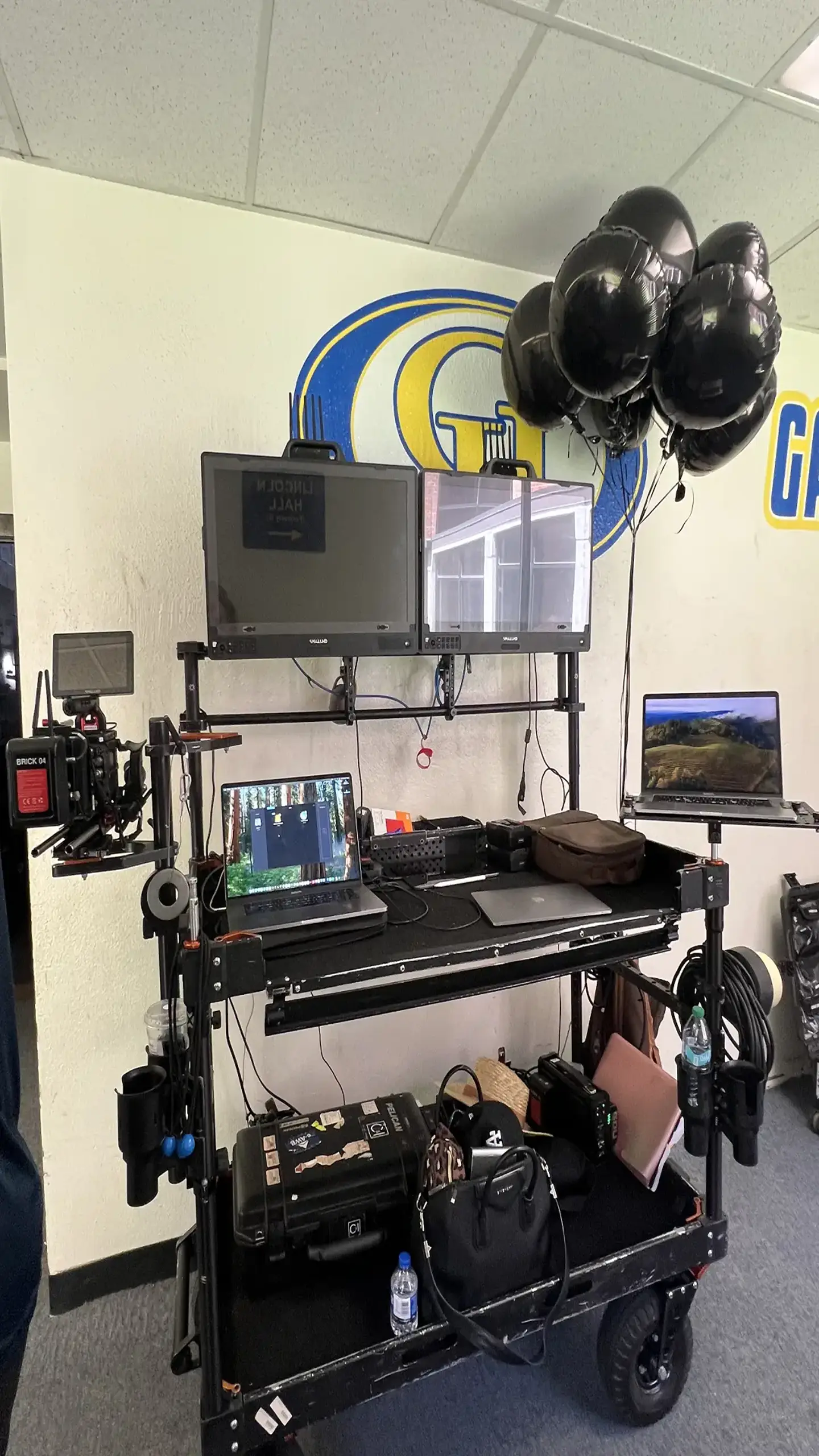
**AI video editing** tools have rapidly moved from novelty to core infrastructure in video production and content creation.
For agencies, performance marketers, and creative studios like C&I Studios, the right AI editor isn’t just about efficiency, it’s about speed, scale, and measurable impact on ad performance.
## Why Traditional Editing Falls Short for Ads
Traditional editors like Adobe Premiere Pro or Final Cut Pro are powerful but were designed for long-form storytelling and deep manual control, not rapid ad creative generation. They require:
- Significant manual labor per cut, trim, or transition.
- Skilled editors to interpret briefs and brand guidelines.
- Hours of timeline work for each version and variant.
For ads, especially paid media campaigns that demand quick iteration, this model slows down campaigns, increases costs, and delays optimization cycles.
### The Rise of AI in Paid Creative
Enter AI video editing, where machine intelligence accelerates ideation and execution.
**These tools can:**
- Automatically assemble footage into coherent ads.
- Generate variant cuts and aspect ratios for different platforms.
- Use natural language instructions to edit clips (e.g., “cut to 15 seconds with upbeat pacing”).
- Suggest music, captions, and pacing based on platform trends.
For performance creative workflows, this shift matters because ads must:
- Be designed for platform signals (e.g., Reels, TikTok, YouTube Shorts).
- Adapt rapidly to data feedback from campaigns.
- Scale across audiences, formats, and messages.
Industry data backs this evolution: the global market for AI in [content creation](https://c-istudios.com/content-creation-services/) and media is projected to grow strongly as brands seek automation and personalization at scale.¹
## How AI Video Editing Transforms Paid Media Workflows
To understand why AI video editing matters for ads, we must break down the typical creative workflow and pinpoint friction points.
**Traditional Paid Creative Workflow**
1. Creative brief, Brand team outlines message, audience, and calls to action.
2. Footage upload, Raw assets are delivered to editors.
3. Manual editing, Editors build sequences, choose cuts, add graphics.
4. Review & revisions, Multiple rounds of feedback.
5. Export & deliver, Delivery across formats (16:9, 1:1, 9:16).
6. Performance analysis, Metrics inform next round of creative.
**Challenges:**
- Revisions multiply costs.
- Manual formatting for each platform is time-consuming.
- Data feedback is too slow to inform creative in real time.
### AI-Driven Creative Workflow
AI video editing tools reengineer these steps:
- **Automated assembly**: Upload footage and receive multiple versions instantly.
- **Platform optimization**: Tools suggest cuts and pacing tailored to specific ad placements.
- **Data loop integration**: Some platforms integrate performance data to guide future edits.
- **Versioning at scale**: Generate dozens of variants (lengths, hooks, captions) in minutes.
This workflow reduces bottlenecks and enables creatives to focus on strategy rather than grunt work.
## Key Benefits of AI Video Editing for Ads
AI tools are more than faster editors. They unlock strategic advantages that directly impact campaign success:
### Speed to Market
AI dramatically shortens turnaround times. Where manual editing could take hours per version, AI editors often deliver variants in minutes. This is crucial for performance teams needing rapid iteration based on campaign performance data.
**Benefits:**
- Rapid experimentation with hooks, cuts, and calls to action.
- Faster A/B testing cycles.
- Immediate output for trending opportunities.
### Cost Efficiency
Labor time is one of the biggest expenses in [video production](https://c-istudios.com/video-production-services/) workflows. AI reduces the need for hours of editor time for each version, especially for routine tasks like resizing, trimming, and captioning.
### Data-Driven Creative
Some AI editors leverage insights from successful ad patterns, including pacing, text on screen, and cut frequency, to propose versions more likely to resonate with audiences.
This bridges the gap between creative intuition and empirical performance signals.
### Scale & Variant Generation
AI tools can generate multiple sizes and styles from a single source. For example:
- 15s and 30s cuts.
- Square and vertical formats.
- Subtitled versions for sound-off environments.
Generating these variants manually is time-intensive, but AI can do it in parallel.
## What to Look For in AI Video Editing Tools
Not all tools are built equal. For ads, the most valuable features align with publisher requirements, performance data, and automation depth.
### Core Capabilities That Matter
- Multi-format output, Support for different aspect ratios without manual reframe work.
- Natural language editing, Ability to edit via text prompts (e.g., “make this 6 seconds with upbeat music”).
- Asset tagging & organization, AI that understands scenes, faces, and key moments.
- Template libraries, Pre-built ad templates optimized for social platforms.
- Performance data integration, AI that uses campaign signals to inform edits.
Advanced capabilities include automated caption generation, emotion analysis, and hook optimization.
## Platform Fit
### Choose tools that align with your key platforms
**Platform**
**Key Requirements**
TikTok
Vertical focus, fast hooks, trending audio
Instagram Reels
Captions, bold text overlays
YouTube Ads
Multiple lengths, skippable formats
Meta Feed
Square & vertical resizing support
A misaligned tool can generate outputs that underperform solely because its output isn’t tuned for platform design signals.
## How AI Video Editing Powers Performance Creative
Here are examples where AI editing goes beyond cutting footage to drive measurable business outcomes.
### Case. Rapid Variant Testing
A DTC brand needs 20 versions of a hero ad to test different hooks, CTAs, and pacing.
**AI tools can:**
- Analyze raw footage for key moments.
- Automatically generate variants with different opening hooks.
- Output in required formats for each platform.
**Impact**: More testable creative in the same production window.
### Case. Seasonal Promo Campaigns
During peak seasons (e.g., holidays), brands must produce a high volume of ads in a short burst. AI editing reduces turnaround time, enabling:
- Quick reuse of assets from previous campaigns.
- On-brand edits that match seasonal messaging.
- Localization (text, graphics) across markets.
### Case. Performance Feedback Loop
When integrated with campaign analytics, AI tools suggest edits based on real audience behavior, for instance, cutting down weak first seconds or emphasizing high-performing scenes.
This creates a virtuous cycle: creative → performance data → improved edit suggestions.
## AI Video Editing Tools. What They Solve (And What They Don’t)
AI editors aren’t magic. They solve specific bottlenecks but also have limitations.
### Problems They Solve
- Time bottlenecks in generating multiple versions.
- Manual formatting tasks for multi-platform distribution.
- Basic editing decisions like cutting to music or generating captions.
- Template-based creative creation at scale.
### Limitations to Be Aware Of
- Creative nuance: AI may miss subtle brand tone or stylistic direction.
- Complex storytelling: Tools are optimized for punchy ads, not narrative films.
- Quality inconsistency: Sometimes multiple edits require human curation.
- Data bias: Some AI models reflect patterns in training data that may not align with a brand’s unique audience.
In practice, the best workflows pair AI editing with human oversight, AI for speed and scale, editors for quality and strategy.
## How AI Editing Fits Into Creative Teams
AI video editing isn’t a replacement for human editors, it augments their capabilities.
### For Editors
AI accelerates routine tasks, enabling editors to:
- Spend more time on strategic direction.
- Focus on brand voice and emotional pacing.
- Manage higher volumes of output without burnout.
## For Performance Marketers
### AI tools provide
- Faster creative variants for experimentation.
- Insights into pacing and hook effectiveness.
- Cross-platform output without repeated manual work.
### For Clients
Clients benefit from:
- Faster delivery of ad creative.
- More informed decisions based on data patterns.
- Cost savings by reducing repetitive manual tasks.
This alignment between creative and performance teams is where AI editing delivers the most value.
## Tools That Lead in AI Video Editing for Ads
### Prompt-Driven Editors
Tools that let you edit by text instruction:
- “Trim to 15s.”
- “Add captions with brand colours.”
- “Focus on smiling faces.”
These are ideal when speed and direction matter most.
### Automated Assembly Engines
Upload raw footage and get back:
- Multiple edit variants.
- Cut suggestions.
- Music and pacing options.
Useful when you need many versions fast.
### Data-Integrated Platforms
AI systems that incorporate performance signals, either from your campaigns or from platform trends, to:
- Recommend opening frames.
- Suggest optimal aspect ratios.
- Tailor pacing to audience behavior.
This is next-level creative. Instead of guessing, edits are informed by what works.
## Metrics to Track After Using AI Editors
To justify investments in AI tools and refine workflows, studios should monitor key performance indicators (KPIs):
### Creative Output KPIs
- Turnaround time (hours per version).
- Number of variants generated per campaign.
- Editing labour hours saved versus manual workflows.
### Advertising Performance KPIs
- Click-through rates (CTR) on ad variants.
- Cost per acquisition (CPA) improvements.
- Engagement rates on platform placements (views, watch time).
### Workflow KPIs
- Revision cycles before final approval.
- Client satisfaction on delivery and performance.
- Cross-platform formatting efficiency.
Tracking these shows whether AI editing is contributing to both creative quality and commercial outcomes.
## The Future of AI in Creative Workflows
AI editing will not stop at cutting and resizing, it will advance toward:
- Predictive creative insights (what variants are likely to perform before launch).
- Brand consistency checks (ensuring each edit fits a brand’s style guide).
- Real-time performance optimization that adjusts creative mid-campaign.
This future is aligned with broader trends in[social media marketing](https://c-istudios.com/social-media-marketing-services/) and paid media automation, where feedback loops between performance data and creative output become tighter and more intelligent.
## The best AI video editors for ad creative and paid media
AI-driven editing has now split into clear product categories. Some tools focus on fast performance ads, others on studio-grade control, and others on automated scale.
For paid campaigns, what matters is not cinematic polish. What matters is how quickly you can generate, test, and deploy high-converting creative across multiple channels.
Below are the platforms that are consistently used by media teams, growth marketers, and production studios running real ad spend.
## Runway ML
Runway is built for visual storytelling at speed. It is widely used by creative agencies and production teams who want AI assistance without sacrificing artistic control.
### What makes it strong for ads
Runway uses AI to help with:
- Background removal
- Object isolation
- Motion tracking
- Smart scene edits
- Text-to-video generation
This makes it ideal when you need to take raw footage and rapidly create ad-ready visuals that still feel premium.
### Where it fits in an ad workflow
Runway shines when:
- You have existing footage and want fast, clean cuts
- You need high-impact visual effects for short-form ads
- You are producing creative for platforms like YouTube, Instagram, and display ads
It is not a fully automated ad generator. It is a creative accelerator for teams that want speed without losing control.
## Pika Labs
Pika Labs is becoming one of the most important AI tools for generating short-form ad footage from scratch.
Instead of editing clips, Pika lets you create new scenes using text prompts.
### What makes it powerful
**Pika can:**
- Generate product shots
- Create lifestyle scenes
- Animate environments
- Produce cinematic motion clips
This is extremely valuable for brands that do not have video assets but still need ads.
### Where it fits
Pika works best for:
- Dropshipping brands
- App promotions
- Concept ads
- Motion-based creatives for TikTok and Reels
Instead of hiring actors, locations, or camera crews, you can produce scenes instantly.
### Opus Clip
Opus Clip is built for turning long videos into high-performing short ads.
**It uses AI to detect:**
- Emotional peaks
- Strong hooks
- High-retention moments
- Natural cut points
Then it outputs short clips optimized for vertical platforms.
### Why performance teams love it
If you run ads using:
- Podcasts
- Webinars
- Influencer content
- UGC testimonials
Opus Clip will automatically produce multiple ad-ready cuts that can be used directly in paid campaigns.
This eliminates hours of manual chopping and reviewing.
## Vidyo AI
Vidyo AI is similar to Opus but designed for bulk social advertising.
It takes long footage and generates:
- Multiple vertical cuts
- Auto captions
- Platform-ready formatting
### Where it is used
Vidyo is popular with:
- YouTube creators running ads
- Coaches and course sellers
- SaaS brands promoting demos
You can upload one long video and get dozens of usable ad creatives.
## Descript
Descript is a hybrid AI editor that lets you edit video by editing text.
You upload a video, it transcribes everything, and then you:
- Delete sentences to remove video
- Move paragraphs to change order
- Add overdub voice
- Insert captions
### Why it works for paid ads
Many ad teams work with scripts, testimonials, and spoken messaging. Descript lets you:
- Remove filler
- Tighten delivery
- Create multiple versions of the same ad
It is especially strong for:
- Founder ads
- UGC ads
- Spoken-word campaigns
## Veed.io
Veed.io focuses on browser-based ad production.
You can:
- Upload clips
- Add captions
- Resize for platforms
- Apply templates
- Export quickly
### Where it fits
Veed is ideal when:
- You need fast social ad exports
- You are managing many campaigns
- You want non-technical team members to create ads
It is not a cinematic tool. It is a campaign production tool.
## Kapwing
Kapwing is built for collaborative ad editing.
### Multiple people can
- Review
- Comment
- Edit
- Export
This is important for agencies where:
- Clients need approvals
- Teams need feedback loops
- Social managers need quick revisions
### Kapwing handles
- Captions
- Brand kits
- Templates
- Multi-platform resizing
## Synthesia
Synthesia is used when you need talking-head ad videos without filming.
You type a script and get:
- An AI avatar
- Lip-synced speech
- Studio-style delivery
### Where it is used
Synthesia works well for:
- Explainer ads
- SaaS demos
- Training promos
- Corporate campaigns
It removes the need for:
- Cameras
- Actors
- Studio setups
## How studios combine these tools
No serious ad team uses only one AI tool. They stack them.
A common modern workflow looks like this:
1. Use Pika or Runway to generate or clean visuals
2. Use Descript to tighten the message
3. Use Opus Clip or Vidyo to create multiple ad versions
4. Use Veed or Kapwing to resize and caption for platforms
This turns one idea into dozens of ad assets.
This is how modern performance studios scale creative.
## Why this matters for ad performance
Platforms like Meta, TikTok, and YouTube do not reward single perfect ads.
They reward:
- Testing volume
- Fast iteration
- Creative diversity
- Freshness
AI editing tools allow you to:
- Launch more variations
- Kill losing ads faster
- Find winners quicker
- Reduce creative production cost
This directly impacts:
- Cost per click
- Cost per lead
- Return on ad spend
Ad platforms reward velocity.
AI makes velocity possible.
## Where C&I Studios fits into this ecosystem
At [C&I Studios](https://c-istudios.com/), AI is not used to replace creative talent.
It is used to:
- Multiply output
- Speed up testing
- Improve creative learning cycles
- Reduce waste in production
When these tools are combined with strategic planning, audience research, and performance data, they become a force multiplier for modern advertising.
Studios that do not adopt this workflow fall behind not because their work is bad, but because they move too slowly.
If you are exploring how AI-driven ad production can plug into your current campaigns or creative pipeline, the team at [C&I Studios](https://c-istudios.com/contact/) works directly with brands and agencies to design workflows that scale without sacrificing creative quality.
You can reach out to start a conversation around your specific needs while your next campaign is already moving forward.
For more information on industry standards and best practices, visit the [American Marketing Association](https://www.ama.org/).
## Work with C&I Studios
If you are planning a project like this, our team can take it from concept to final delivery. Explore our [video production services](https://c-istudios.com/video-production-services/), browse [our work](https://c-istudios.com/our-work/) to see how we tell brand stories, and [get in touch](https://c-istudios.com/contact/) when you are ready to start.
Originally published January 10, 2026
---
*This content is from [C&I Studios](https://c-istudios.com), a full-service production company.*
---
# AI Video Editing on Low Bandwidth: How to Run Reliable Workflows With Unstable Internet
> Published: January 9, 2026
> Categories: Web & Tech
> Source: https://c-istudios.com/ai-video-editing-on-low-bandwidth-how-to-run-reliable-workflows-with-unstable-internet/
---
.cib{--paper:#1b1d1f;--ink:#fff;--body:#d5d7d9;--muted:#8b9096;--line:rgba(255,255,255,.12);--thumb:#2b2e31;--card:#212426;--accent:#c02b0a;--blue:#5B8FA8;--serif:'Playfair Display',Georgia,serif;--sans:'Poppins',-apple-system,sans-serif;--measure:900px;background:var(--paper);color:var(--body);font-family:var(--sans);line-height:1.6;position:relative;left:50%;transform:translateX(-50%);width:90vw;max-width:1920px}
.cib *{box-sizing:border-box}
.cib .kicker{max-width:var(--measure);margin:58px auto 0;padding:0 22px;font-size:12.5px;font-weight:700;letter-spacing:2.5px;text-transform:uppercase;color:var(--blue)}
.cib h1.cibh1{text-wrap:balance;font-family:var(--serif);font-weight:500;font-size:clamp(46px,6vw,72px);line-height:1.08;color:var(--ink);max-width:var(--measure);margin:18px auto 0;padding:0 22px;letter-spacing:-.5px}
.cib .metarow{max-width:var(--measure);margin:20px auto 0;padding:0 22px;color:var(--muted);font-size:14px}
.cib .hero{position:relative;width:100%;height:0;padding-bottom:56.25%;overflow:hidden;margin:48px auto 0;border-top:1px solid var(--line);border-bottom:1px solid var(--line)}
.cib .hero .ph{width:100%;aspect-ratio:16/9;background:var(--thumb);border-top:1px solid var(--line);border-bottom:1px solid var(--line);display:flex;align-items:center;justify-content:center;color:#7d8288;font-size:13px;text-align:center;padding:0 20px}
.cib .body{max-width:var(--measure);margin:12px auto 0;padding:52px 22px 6px}
.cib .body.lead p:first-child{font-size:23px;line-height:1.62;color:var(--ink)}
.cib .body p{font-size:18.5px;line-height:1.85;margin:0 0 30px;color:var(--body)}
.cib .body h2{text-wrap:balance;font-family:var(--serif);font-weight:500;font-size:clamp(32px,4vw,48px);line-height:1.22;color:var(--ink);margin:70px 0 20px;letter-spacing:-.3px}
.cib .body h3{text-wrap:balance;font-family:var(--sans);font-weight:600;font-size:22px;color:var(--ink);margin:38px 0 8px}
.cib .body a{color:var(--ink);text-decoration:underline;text-decoration-color:rgba(255,255,255,.4);text-underline-offset:3px}
.cib .body a:hover{text-decoration-color:var(--ink)}
.cib .ctable{width:100%;border-collapse:collapse;margin:16px 0 30px;font-size:16px}
.cib .ctable th{background:#000;color:#fff;text-align:left;padding:10px 12px;font-family:var(--sans)}
.cib .ctable td{padding:10px 12px;border-bottom:1px solid var(--line);color:var(--body)}
.cib .inimg{position:relative;width:100%;height:0;padding-bottom:56.25%;overflow:hidden;margin:72px auto;border-top:1px solid var(--line);border-bottom:1px solid var(--line)}
.cib .inimg .ph{width:100%;aspect-ratio:16/9;background:var(--thumb);border-top:1px solid var(--line);border-bottom:1px solid var(--line);display:flex;align-items:center;justify-content:center;color:#7d8288;font-size:13px}
.cib .origpub{max-width:var(--measure);margin:60px auto 0;padding:26px 22px 0;border-top:1px solid var(--line);color:var(--muted);font-size:13.5px}
.cib .related{max-width:1200px;margin:64px auto 0;padding:34px 22px 76px}
.cib .related h3{font-family:var(--sans);font-size:12.5px;letter-spacing:2px;text-transform:uppercase;color:var(--ink);margin:0 0 24px}
.cib .grid{display:grid;grid-template-columns:repeat(3,1fr);gap:28px}
.cib .rc{background:var(--card);border:1px solid var(--line);display:block;text-decoration:none;color:inherit;transition:border-color .15s}
.cib a.rc:hover{border-color:rgba(255,255,255,.5)}
.cib .rc .thumb{position:relative;width:100%;height:0;padding-bottom:56.25%;background:var(--thumb);overflow:hidden}
.cib .rc .thumb img{position:absolute!important;top:0!important;left:0!important;width:100%!important;height:100%!important;object-fit:cover!important;margin:0!important}
.cib .rc .cc{padding:14px 15px 17px}
.cib .rc .rt{font-family:var(--serif);font-weight:500;font-size:16px;line-height:1.3;color:var(--ink);margin:0 0 6px}
.cib .rc .rm{font-size:11px;letter-spacing:1px;text-transform:uppercase;color:var(--muted)}
.cib img{margin:0!important;padding:0!important;display:block!important;vertical-align:top;max-width:100%}
.cib .hero img,.cib .inimg img{position:absolute!important;top:0!important;left:0!important;width:100%!important;height:100%!important;object-fit:cover!important;margin:0!important;padding:0!important;border:0!important;display:block!important;aspect-ratio:auto!important}
.cib .hero+.body{padding-top:36px}
@media(max-width:760px){.cib .grid{grid-template-columns:1fr}.cib .body h2{margin:52px 0 16px}.cib .body p{font-size:17.5px}.cib .inimg,.cib .hero{margin-top:44px}}
.cib .vembed{max-width:var(--measure);margin:44px auto;padding:0 22px}.cib .vembed .vwrap{position:relative;width:100%;height:0;padding-bottom:56.25%}.cib .vembed .vwrap iframe{position:absolute;top:0;left:0;width:100%;height:100%;border:0}
Web & Tech
# AI Video Editing on Low Bandwidth. How to Run Reliable Workflows With Unstable Internet
7 min read
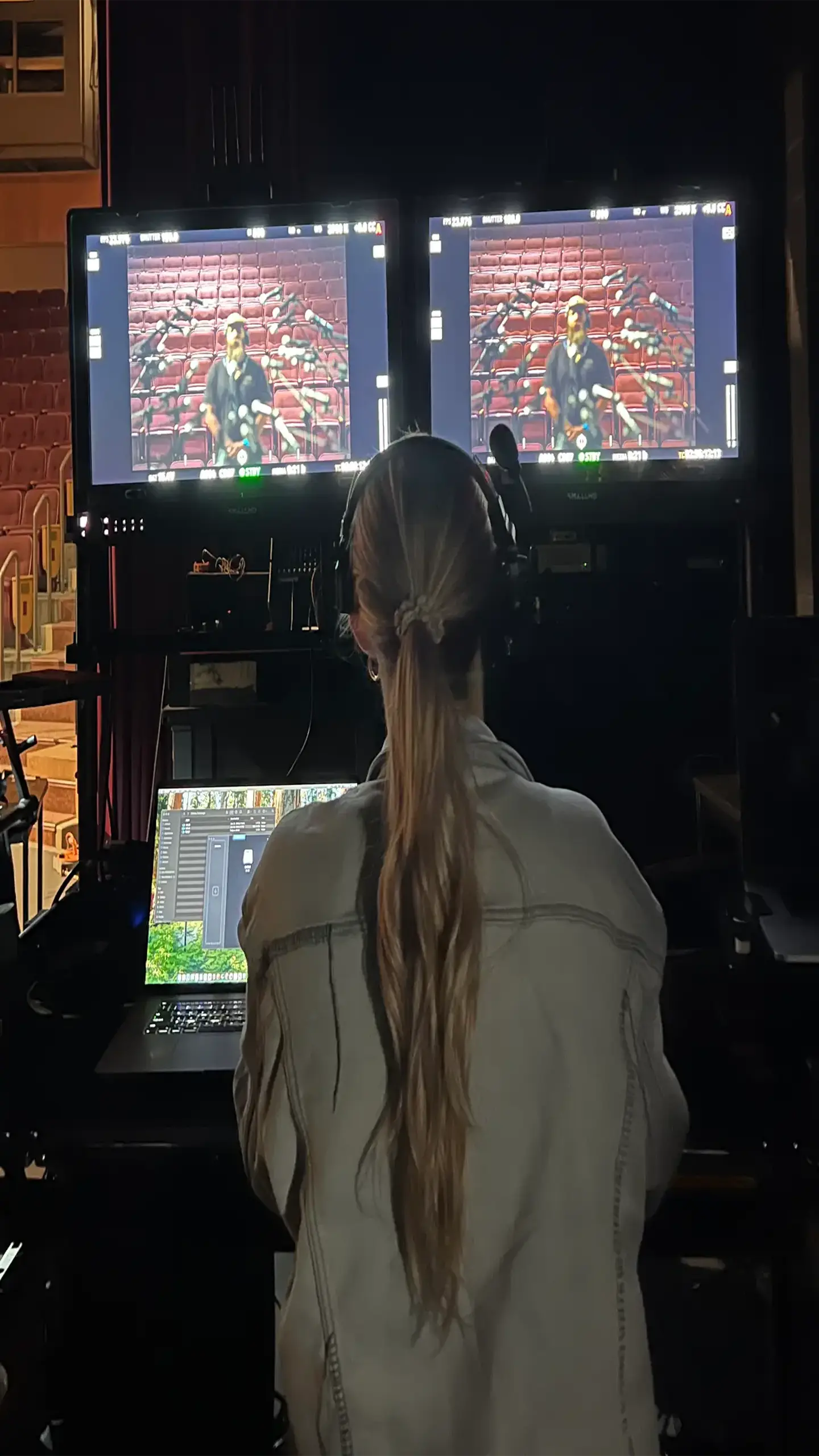
AI driven video editing is transforming how creative teams approach post production. Traditionally, high performance editing systems and fast internet were prerequisites for effective workflows.
Today, AI tools are emerging that can either operate offline or minimize data dependency, making them suitable in situations where connectivity is limited, unpredictable, or expensive, such as remote client sites, developing regions, or mobile workflows.
For C&I Studios, where [video production](https://c-istudios.com/video-production-services/) quality and flexibility are mission critical, tools that reduce reliance on broadband without sacrificing intelligent automation are essential for speeding up project delivery, improving collaboration, and enhancing creative outputs.
In this article,*** AI video editing on low bandwidth*** refers to tools and workflows that:
- Minimize internet usage during editing, rendering, or exporting.
- Offload compute locally or use asynchronous cloud processing that doesn’t block the editor.
- Provide on device AI features (like auto editing, captioning, smart clipping) without continuous uploads/downloads.
This framework is especially relevant now because demand for automated workflows has spiked, editors are turning to AI not just for speed, but to manage network constraints while still delivering professional deliverables.
## Why This Matters for Studios and Creators
### The Connectivity Reality in Creative Workflows
Most modern video editing tools are cloud centric. They operate best with fast broadband to sync assets, leverage web based AI features, or collaborate in real time.
**But not all environments afford strong connectivity:**
- Field shoots in rural or under connected regions
- On site production where cellular data is expensive or throttled
- Solo creators without access to fiber or 5G
- Travel workflows where hotspot bandwidth is the limit
Traditional cloud sequencers and AI auto editors often choke under slow connections, resulting in lost productivity or expensive offline workarounds. With the rise of AI, studios need solutions that balance intelligent automation with minimal network reliance, without compromising output.
This is not hypothetical. Research shows that reducing dependency on high bitrate video transfers and enabling localized compute can dramatically improve workflow efficiency, especially when cloud resources are distant or unreliable.
### Impact on Creative Output and Speed
When AI tools can perform tasks locally or manage network use efficiently, content creation workflows accelerate. Editors can:
- Generate rough cuts without waiting for uploads
- Auto caption and auto trim footage in low or no connectivity environments
- Synchronize edits once broadband is available (batch or asynchronous upload)
- Ensure consistent visual quality without network penalties
These capabilities help creative teams maintain pace with deadlines, especially for time sensitive deliverables like campaign rollouts or social storytelling.
## Types of AI Video Editing Tools for Low Bandwidth
Understanding which tools or workflows help requires categorizing them by how they handle connectivity.
### Offline First AI Tools
These are systems where the AI processing happens locally on your device and requires little to no internet after installation or model download. Benefits include predictable performance and reduced latency tied to connectivity.
**Examples / Approaches:**
- Traditional desktop editors with local AI modules
- DaVinci Resolve, Final Cut Pro, LumaFusion, these aren’t pure AI editors but offer powerful offline editing with AI enhanced features when available locally.
- Local AI enhancement tools
- Some video upscaling and enhancement modules can run without internet, processing frames directly on CPU/GPU.
**Why it matters**: For mobile shoots or studios operating in low signal environments, local AI reduces dependency on cloud compute and bandwidth.
### Cloud Assisted with Intelligent Sync
Some AI editors still depend on cloud processing but optimize how they transfer data:
- Upload only metadata or low res proxies instead of full media
- Allow users to submit tasks and disconnect while processing continues
- Return results when connectivity is restored
This approach lets you offload heavy tasks (like generative edits or automated scene assembly) without constant high bandwidth sessions.
**Example**: Some tools manage asynchronous uploads and downloads so editors can continue working on proxies locally and sync changes when convenient.
## Core Features to Look For
Here’s what separates tools that actually work under low bandwidth constraints from those that struggle:
### Light Network Usage
Tools that avoid continuous two way data transfers help minimize capacity strain. Ideal systems will:
- Use proxies or low res uploads for cloud tasks
- Only sync edited segments instead of full files
- Queue processing and notify when complete
Tools like Kling.ai even offer server queues where you can upload a prompt and disconnect, the result is delivered back later, reducing the need for sustained bandwidth.
### Local AI Processing
This means the editor runs [AI features on your machine](https://c-istudios.com/ai-video-services/). AI can still assist with:
- Automatic cuts based on audio
- Caption generation
- Scene detection
- Motion analysis
Local AI reduces the need to send raw footage over the internet, which is the biggest drain on bandwidth.
### Proxy Workflows
Proxy workflows create smaller, low res copies of footage. Editors can:
- Work on proxies offline
- Upload edits or sync once connectivity is available
- Relink to full quality media later without redoing work
This is a staple of professional video editing even without AI, but AI editors that support proxies efficiently are much more usable on lower bandwidth.
## Tool Landscape. What’s Worth Considering
Below is an overview of tools and categories relevant to studios facing bandwidth constraints. The goal is practical insight, not hype.
### Desktop or Offline Capable Video Editors
These tools may not be marketed strictly as “AI video editors,” but they allow advanced editing workflows without heavy internet:
- DaVinci Resolve / Final Cut Pro / LumaFusion
- Enterprise grade editing with local rendering. Use AI features where available locally and sync projects intelligently when online.
Pros
- Professional timelines, effects, color grading
- Work in bandwidth poor environments
Cons
- AI automation features vary widely between programs
## AI Tools That Can Work With Minimal Connectivity
These tools offer AI enhancements with lighter network dependence, though many still have cloud components:
- **InVideo AI**, browser tool with AI commands for editing (light on learning curve).
- **OpusClip**, AI auto clipping and B roll options suitable for social edits.
- **Wisecut**, automatic captioning and trimming; useful for repurposing long footage.
- **Gling**, smart trimming and audio noise removal for quick social editing.
Important note: While many of these tools are web based, they can be combined with proxy workflows or local transcodes to minimize actual data transfer during full edits.
## Choosing the Right Tool for Your Studio
When evaluating tools, ask the following:
**Does it support proxy editing?**
If it doesn’t, every upload of high res media will choke low bandwidth.
**Can AI processing happen locally or offline?**
Some tools offer local AI modules or at least intelligent export jobs that don’t block editing.
**How does it handle project sync?**
Good solutions queue tasks intelligently rather than forcing continuous connections.
## Performance Considerations in Practice
### Real World Scenarios
Here’s how different workflows play out under constrained networks:
**On set with limited LTE:**
- Use proxy workflows
- Edit rough cuts locally with DaVinci or LumaFusion
- Run AI enhancements (captions, auto cuts) during brief connectivity windows
**At a remote location without internet:**
- Use offline editing tools exclusively
- Sync only when you return to connectivity
**Travel shoots or mobile editors:**
- Rely on AI editors with smart sync that only upload todo jobs
- Use light cloud assisted features during transit or hotel Wi Fi
- Prioritize workflows that enable AI video editing on low bandwidth
- Understand the spectrum from offline first to cloud assisted with smart sync
- Use proxy workflows to protect quality while minimizing network load
- Balance video production quality with agile delivery demands
### Building a Low Bandwidth Editing Stack That Actually Works
This section moves from theory to execution. The goal is to make AI assisted editing dependable even when the connection drops, stalls, or never shows up at all. The smartest studios do not rely on a single tool.
They build a stack that lets work continue locally, while heavier AI tasks run in the background whenever a connection is available.
Two disciplines matter most here: video & audio live streaming workflows that generate constant media under unstable networks, and web hosting infrastructure that decides how and when assets move between machines and the cloud.
## How to Combine Local Editing With Cloud AI
Low bandwidth does not mean no AI. It means you decide when and what to send.
The hybrid model that actually scales
The most reliable low bandwidth setups follow this pattern:
- Footage is recorded and ingested locally
- Editing happens on a local machine using proxies
- AI tasks are queued for cloud processing only when needed
- Final files are synced in controlled bursts instead of live transfers
This avoids the biggest trap of cloud only editors: constant uploading of full resolution video.
### Why this matters for real world teams
Live shoots, remote interviews, and long form recordings all generate huge files. When these are tied to video & audio live streaming, the data rate is unpredictable. Trying to edit directly against the cloud under those conditions is a losing game.
A hybrid workflow means you keep working even if the internet slows to a crawl.
## A Practical Low Bandwidth AI Editing Workflow
Here is what this looks like in an actual studio pipeline.
### Step 1. Capture and transcode locally
Raw footage is converted into proxy files on the editing machine or a local server. These files are:
- Smaller
- Optimized for smooth playback
- Linked back to the full quality originals
This means you can scrub, cut, and rearrange hours of footage without touching the internet.
### Step 2. Edit normally on the proxy timeline
Editors work as if they are using full resolution video. They can:
- Build full timelines
- Add transitions
- Arrange scenes
- Prepare rough cuts
None of this requires any upload.
### Step 3. Send only metadata to AI tools
When you need AI features like:
- Auto captioning
- Scene detection
- Shot grouping
- Smart trimming
You send the edit data, not the entire video. The AI service processes the structure and returns instructions that apply to your local timeline.
This is where many tools fail. The good ones let you send tiny instruction files instead of gigabytes of footage.
## Handling Cloud Rendering Without Killing the Connection
Some AI tools still require cloud rendering for advanced features. The trick is not to avoid this, but to schedule it intelligently.
### Use asynchronous uploads
Instead of live uploading, the system should:
- Upload in chunks
- Resume when interrupted
- Run in the background
- Notify when complete
This allows teams to keep working while files move slowly in the background.
### Why this pairs well with remote infrastructure
When connected to reliable [web hosting](https://c-istudios.com/web-hosting/) environments, this model lets studios:
- Store project data on their own servers
- Control when AI tasks are sent out
- Avoid vendor lock in
You are not tied to one SaaS platform’s bandwidth demands.
## What to Look for in Low Bandwidth Friendly AI Tools
Not all AI editors are built the same. These are the features that separate usable tools from frustrating ones.
### Proxy awareness
The tool must understand proxy files and know how to relink them to originals after AI processing. Without this, you end up re editing everything when full quality footage comes back.
### Task queuing
Good systems allow you to queue AI jobs and disconnect. You should never have to keep a browser tab open for an hour just to let captions generate.
### Local fallback
If the internet disappears, you should still be able to:
- Edit
- Export rough cuts
- Prepare deliverables
AI should enhance the workflow, not block it.
## Applying This to Streaming and Remote Shoots
Low bandwidth workflows become critical when dealing with [video & audio live streaming](https://c-istudios.com/video-audio-live-streaming/).
### Why live media is different
Streaming workflows generate continuous media that cannot always be paused. Editors often need to:
- Clip highlights in near real time
- Create social edits during an event
- Prepare recaps before the stream even ends
Trying to send all of that to a cloud editor is unrealistic on limited networks.
### The better approach
A local capture system records the stream. Editors work off local files. AI tools are used only for:
- Highlight detection
- Caption generation
- Content tagging
Those tasks are lightweight compared to full video uploads.
## Scaling Across Teams and Locations
Studios working across cities or countries often have wildly different connection quality. The solution is not to force everyone into one cloud tool.
Use controlled sync points
**Teams can:**
- Work locally
- Push changes to a central server when connected
- Pull updates when bandwidth allows
This is where smart web hosting infrastructure becomes a backbone for collaboration, not a bottleneck.
## The Hidden Cost of Cloud Only Editing
Cloud AI editors often look cheap or convenient, but on low bandwidth they introduce:
- Lost hours waiting for uploads
- Failed jobs due to dropped connections
- Corrupted or incomplete projects
- Editors sitting idle
A hybrid model costs less in the long run because it protects time, not just files.
## How C&I Studios Can Use This Strategically
C&I Studios does not operate in a vacuum. Productions happen on location, across borders, and in unpredictable technical environments.
By structuring AI workflows this way, the studio gains:
- Faster turnaround on remote shoots
- Reliable post production under any network condition
- More control over where data lives
- Less dependency on third party platforms
This is not about replacing creative judgment with AI. It is about using AI in a way that does not collapse when the connection is weak.
## Where This Is Headed
AI video tools are becoming smarter, but connectivity is not becoming more reliable everywhere. The studios that win are the ones that design workflows that assume the network will fail and keep going anyway.
If you are exploring how to modernize your editing stack, the team at [C&I Studios](https://c-istudios.com/contact/) works with these kinds of hybrid, real world pipelines every day. A quiet conversation about what you are trying to build can save months of trial and error.
## Work with C&I Studios
If you are planning a project like this, our team can take it from concept to final delivery. Explore our [AI video services](https://c-istudios.com/ai-video-services/), browse [our work](https://c-istudios.com/our-work/) to see how we tell brand stories, and [get in touch](https://c-istudios.com/contact/) when you are ready to start.
Originally published January 9, 2026
---
*This content is from [C&I Studios](https://c-istudios.com), a full-service production company.*
---
# How to Find and Hire a YouTube Video Editor
> Published: January 7, 2026
> Categories: Post & VFX
> Source: https://c-istudios.com/how-to-find-and-hire-a-youtube-video-editor/
---
.cib{--paper:#1b1d1f;--ink:#fff;--body:#d5d7d9;--muted:#8b9096;--line:rgba(255,255,255,.12);--thumb:#2b2e31;--card:#212426;--accent:#c02b0a;--blue:#5B8FA8;--serif:'Playfair Display',Georgia,serif;--sans:'Poppins',-apple-system,sans-serif;--measure:900px;background:var(--paper);color:var(--body);font-family:var(--sans);line-height:1.6;position:relative;left:50%;transform:translateX(-50%);width:90vw;max-width:1920px}
.cib *{box-sizing:border-box}
.cib .kicker{max-width:var(--measure);margin:58px auto 0;padding:0 22px;font-size:12.5px;font-weight:700;letter-spacing:2.5px;text-transform:uppercase;color:var(--blue)}
.cib h1.cibh1{text-wrap:balance;font-family:var(--serif);font-weight:500;font-size:clamp(46px,6vw,72px);line-height:1.08;color:var(--ink);max-width:var(--measure);margin:18px auto 0;padding:0 22px;letter-spacing:-.5px}
.cib .metarow{max-width:var(--measure);margin:20px auto 0;padding:0 22px;color:var(--muted);font-size:14px}
.cib .hero{position:relative;width:100%;height:0;padding-bottom:56.25%;overflow:hidden;margin:48px auto 0;border-top:1px solid var(--line);border-bottom:1px solid var(--line)}
.cib .hero .ph{width:100%;aspect-ratio:16/9;background:var(--thumb);border-top:1px solid var(--line);border-bottom:1px solid var(--line);display:flex;align-items:center;justify-content:center;color:#7d8288;font-size:13px;text-align:center;padding:0 20px}
.cib .body{max-width:var(--measure);margin:12px auto 0;padding:52px 22px 6px}
.cib .body.lead p:first-child{font-size:23px;line-height:1.62;color:var(--ink)}
.cib .body p{font-size:18.5px;line-height:1.85;margin:0 0 30px;color:var(--body)}
.cib .body h2{text-wrap:balance;font-family:var(--serif);font-weight:500;font-size:clamp(32px,4vw,48px);line-height:1.22;color:var(--ink);margin:70px 0 20px;letter-spacing:-.3px}
.cib .body h3{text-wrap:balance;font-family:var(--sans);font-weight:600;font-size:22px;color:var(--ink);margin:38px 0 8px}
.cib .body a{color:var(--ink);text-decoration:underline;text-decoration-color:rgba(255,255,255,.4);text-underline-offset:3px}
.cib .body a:hover{text-decoration-color:var(--ink)}
.cib .ctable{width:100%;border-collapse:collapse;margin:16px 0 30px;font-size:16px}
.cib .ctable th{background:#000;color:#fff;text-align:left;padding:10px 12px;font-family:var(--sans)}
.cib .ctable td{padding:10px 12px;border-bottom:1px solid var(--line);color:var(--body)}
.cib .inimg{position:relative;width:100%;height:0;padding-bottom:56.25%;overflow:hidden;margin:72px auto;border-top:1px solid var(--line);border-bottom:1px solid var(--line)}
.cib .inimg .ph{width:100%;aspect-ratio:16/9;background:var(--thumb);border-top:1px solid var(--line);border-bottom:1px solid var(--line);display:flex;align-items:center;justify-content:center;color:#7d8288;font-size:13px}
.cib .origpub{max-width:var(--measure);margin:60px auto 0;padding:26px 22px 0;border-top:1px solid var(--line);color:var(--muted);font-size:13.5px}
.cib .related{max-width:1200px;margin:64px auto 0;padding:34px 22px 76px}
.cib .related h3{font-family:var(--sans);font-size:12.5px;letter-spacing:2px;text-transform:uppercase;color:var(--ink);margin:0 0 24px}
.cib .grid{display:grid;grid-template-columns:repeat(3,1fr);gap:28px}
.cib .rc{background:var(--card);border:1px solid var(--line);display:block;text-decoration:none;color:inherit;transition:border-color .15s}
.cib a.rc:hover{border-color:rgba(255,255,255,.5)}
.cib .rc .thumb{position:relative;width:100%;height:0;padding-bottom:56.25%;background:var(--thumb);overflow:hidden}
.cib .rc .thumb img{position:absolute!important;top:0!important;left:0!important;width:100%!important;height:100%!important;object-fit:cover!important;margin:0!important}
.cib .rc .cc{padding:14px 15px 17px}
.cib .rc .rt{font-family:var(--serif);font-weight:500;font-size:16px;line-height:1.3;color:var(--ink);margin:0 0 6px}
.cib .rc .rm{font-size:11px;letter-spacing:1px;text-transform:uppercase;color:var(--muted)}
.cib img{margin:0!important;padding:0!important;display:block!important;vertical-align:top;max-width:100%}
.cib .hero img,.cib .inimg img{position:absolute!important;top:0!important;left:0!important;width:100%!important;height:100%!important;object-fit:cover!important;margin:0!important;padding:0!important;border:0!important;display:block!important;aspect-ratio:auto!important}
.cib .hero+.body{padding-top:36px}
@media(max-width:760px){.cib .grid{grid-template-columns:1fr}.cib .body h2{margin:52px 0 16px}.cib .body p{font-size:17.5px}.cib .inimg,.cib .hero{margin-top:44px}}
.cib .vembed{max-width:var(--measure);margin:44px auto;padding:0 22px}.cib .vembed .vwrap{position:relative;width:100%;height:0;padding-bottom:56.25%}.cib .vembed .vwrap iframe{position:absolute;top:0;left:0;width:100%;height:100%;border:0}
Post & VFX
# How to Find and Hire a YouTube Video Editor
9 min read
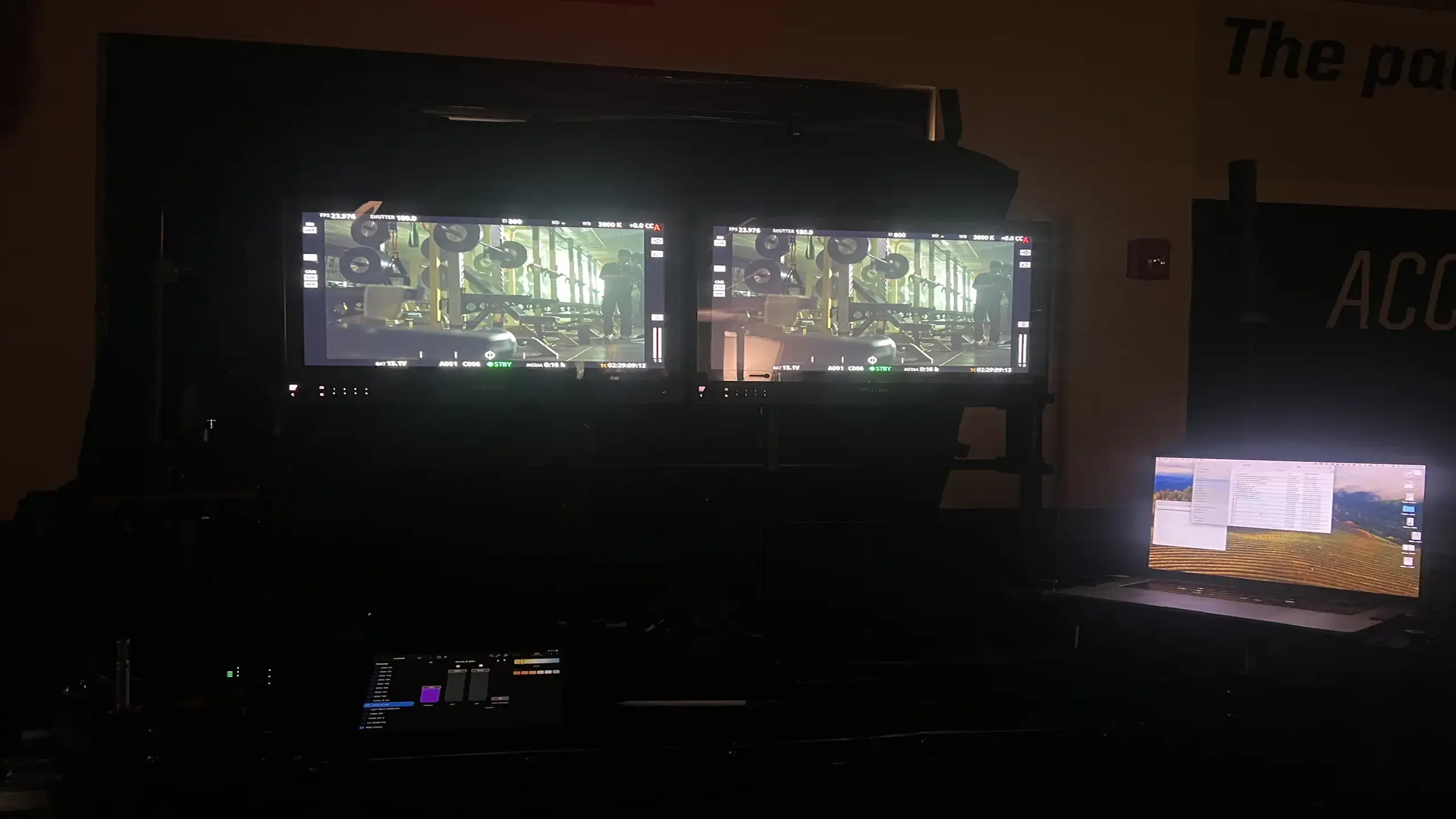
Most YouTube channels do not stall because of bad ideas.
They stall because the creator becomes buried under editing. Once that happens, upload schedules slip, quality becomes inconsistent, and momentum disappears. ***Hiring a YouTube video editor*** is not about outsourcing a task. It is about removing the biggest bottleneck between your ideas and your audience.
Modern YouTube viewers expect far more than cuts and transitions. They expect pacing that keeps attention, visuals that feel intentional, and audio that does not distract. Platforms have trained audiences to notice quality even when they cannot explain it.
A good editor also brings something many creators underestimate: distance. When you film your own content, you are too close to it. You know what you meant to say. An editor sees what the audience will actually experience, and that difference often makes or breaks a video.
## What a YouTube video editor really does
The job is not just trimming clips. A real YouTube editor is responsible for turning raw footage into something that people choose to keep watching.
They shape pacing, remove dead air, enhance clarity, and create rhythm. They make sure audio levels do not spike or drop. They balance color so footage looks consistent. They add motion, graphics, and structure where needed. And they do all of this while keeping your voice and tone intact.
This is why strong editing matters beyond YouTube. The same clips you publish on your channel often become short-form cuts, social posts, ads, or reels. That is where [social media marketing](https://c-istudios.com/social-media-marketing-services/) overlaps with editing quality. A video that is clean, dynamic, and properly formatted performs better everywhere it appears.
## When you should hire an editor
Creators often wait too long. They think they need to be “big enough” first. In reality, editing is one of the fastest ways to become big enough.
If editing is slowing your upload schedule, draining your energy, or forcing you to lower quality, it is already costing you growth. The algorithm rewards consistency and retention. Both depend on editing.
Once your channel has found its voice and direction, outsourcing editing becomes an investment rather than a cost. You are buying time, focus, and scalability.
## Where professional editors are actually found
There are thousands of people who claim to edit video. Far fewer understand YouTube.
The best editors are not usually found through random cold emails. They come from places where professionals already showcase their work and build reputations.
[Portfolio](https://c-istudios.com/our-work/) platforms like Behance and Vimeo host reels that show real-world skill. Freelance marketplaces such as Upwork and Fiverr allow you to filter by experience, niche, and reviews. Creative communities on Discord, LinkedIn, and industry forums often reveal editors who already understand YouTube culture.
What matters is not where you find them. It is whether they have proven they can hold attention and tell stories in a format that matches your channel.
## How to evaluate an editor’s portfolio
A showreel is not enough. You need context.
Look at videos they edited that are similar to your content. A great cinematic editor may not understand fast-paced commentary or educational pacing. A TikTok specialist may not know how to structure long-form YouTube narratives.
Ask yourself three questions when watching their work.
***Does the pacing keep you engaged?
Does the audio feel clean and balanced?
Does the edit support the message instead of distracting from it?***
If the answer is yes, you are not just looking at technical skill. You are seeing editorial judgment.
Professional portfolio platforms like Behance allow you to see how editors present their work, explain their role, and show consistency across projects, which makes them valuable vetting tools.¹
## Writing a job post that attracts real editors
Most creators fail at the job description stage. They either write something vague or something so complicated that only beginners respond.
Your post should explain three things clearly: what your channel is, what kind of videos you make, and what you expect from the editor.
You do not need to describe every technical detail. You do need to describe your style, frequency, and goals. An editor who understands your direction will self-select.
Avoid buzzwords. Be specific. The right candidates will recognize themselves in your description.
## How much you should expect to pay
There is no single correct price, but there is a correct mindset.
Cheap editing costs more in the long run. Poor pacing hurts retention. Bad audio hurts watch time. Inconsistent delivery hurts the algorithm. All of these cost you growth.
Rates vary by experience, region, and workload. What matters is not whether someone charges per hour or per video. What matters is whether they can deliver consistently at the level your channel requires.
If you are building something serious, you are not buying time. You are buying results.
## How to test before committing
Never hire blind.
A short paid test project shows you everything you need to know. You will see how they communicate, how fast they work, how they handle feedback, and whether their style fits your content.
One video tells you more than ten interviews.
## Why editing quality drives channel growth
YouTube rewards watch time and retention. Editing directly controls both.
A strong editor removes friction. They tighten moments that drag. They highlight moments that matter. They keep viewers watching long enough for the algorithm to take notice.
This is why professional editing has become inseparable from serious [video production](https://c-istudios.com/video-production-services/). You are not just uploading content. You are competing for attention.
Industry research from Forbes shows that video engagement is now one of the strongest drivers of online interaction, making production quality more important than ever.²
Finding the right YouTube editor is not about chasing the cheapest option or the flashiest reel. It is about finding someone who understands pacing, audience psychology, and how your content should feel when it lands on screen.
## How to interview a YouTube video editor the right way
Most creators waste interviews asking about software. That is a mistake. Tools matter, but mindset matters more. Your editor is not just a technician. They are a collaborator in your content creation process, and the way they think about storytelling will show up in every cut they make.
A strong interview focuses on how they approach problems. Ask them how they handle footage that feels flat. Ask how they decide when a moment should breathe and when it should be tightened. Ask how they react when a creator changes direction mid project. The answers will tell you far more than a list of programs they know how to use.
You should also pay attention to how they talk about past projects. Do they take ownership of results, or do they describe themselves as someone who simply follows instructions. YouTube editing requires judgment. If an editor cannot explain why something worked, they probably cannot repeat it reliably.
## What a real test project should reveal
A paid test edit is the most honest evaluation tool you have. It compresses weeks of working together into a single interaction. You will see how they interpret your footage, how quickly they respond, and whether they understand the tone of your channel.
Do not overcomplicate the test. Give them a short piece of raw footage, a reference video, and basic direction. What you are looking for is not perfection. You are looking for alignment. Do their choices feel like they belong on your channel, or do they feel generic.
This is also where you will see how well they accept feedback. Editing is iterative by nature. An editor who becomes defensive or dismissive during a test edit will be difficult to work with long term.
## How to onboard an editor so they succeed
Even a great editor will fail if you throw them into chaos. Onboarding is where most creator-editor relationships break down, not because of skill but because of unclear expectations.
You should define how files are delivered, where feedback lives, and how revisions are handled. Some creators prefer structured feedback in tools like Frame.io. Others use shared folders and notes. The system matters less than the fact that it exists.
When onboarding is done well, editors become faster over time. They learn your pacing, your preferences, and your audience. That learning curve is an asset. It is also why jumping between random freelancers slows growth.
## Managing revisions without killing momentum
Revisions are not a sign of failure. They are part of the creative process. The key is to make them efficient.
Give clear, specific feedback. “This feels slow” is less useful than “the first 30 seconds need tighter cuts.” When you explain what is not working, a professional editor can adjust quickly.
Over time, the number of revisions drops. This is when real leverage appears. Your editor starts anticipating what you will want before you even ask.
## Hiring globally and working remotely
One of the biggest advantages of YouTube is that geography does not matter. You can hire editors anywhere in the world, often at highly competitive rates.
What matters is not location. It is communication, reliability, and understanding of YouTube culture. An editor who works remotely but delivers consistently is far more valuable than someone who is nearby but disorganized.
This is especially important if your channel produces frequent content or supports formats like [video & audio live streaming](https://c-istudios.com/video-audio-live-streaming/), where turnaround time and technical accuracy are critical.
## How editors support channel monetization
Editing quality directly affects how long people watch. Watch time drives recommendations. Recommendations drive revenue.
Better pacing means higher retention. Better audio means fewer drop offs. Better structure means more viewers reach your call to action, whether that is a subscribe button, a sponsor mention, or a product link.
This is why editing is not a cosmetic upgrade. It is a revenue lever.
## When to move from freelance to long-term partnership
Once you find an editor who understands your voice, it makes sense to deepen the relationship. A long-term editor becomes part of your creative rhythm. They start to think like your audience. They anticipate trends. They notice patterns in what performs well.
At this stage, your channel is no longer just publishing videos. It is building a system.
That is the point where professional studios step in to support creators who are ready to scale, and where teams like C&I Studios often help streamline pipelines, add creative oversight, and remove friction from growing channels by aligning editing, publishing, and strategy through services you can see at [C&I Studios](https://c-istudios.com/contact/) when you are ready to explore options beyond solo production.
## A practical way forward
Hiring a YouTube video editor is not about finding someone to click buttons. It is about finding someone who understands how your ideas should land when they reach an audience.
With the right interview process, a clear onboarding system, and a focus on long-term collaboration, your channel stops feeling like a grind and starts behaving like a real creative operation.
The next time you sit down to film, you will know that the heavy lifting of turning footage into something people actually want to watch is already handled, leaving you free to focus on what your channel is really about.
## Work with C&I Studios
If you are planning a project like this, our team can take it from concept to final delivery. Explore our [post-production services](https://c-istudios.com/post-production-services/), browse [our work](https://c-istudios.com/our-work/) to see how we tell brand stories, and [get in touch](https://c-istudios.com/contact/) when you are ready to start.
Originally published January 7, 2026
---
*This content is from [C&I Studios](https://c-istudios.com), a full-service production company.*
---
# Best Video Editing Software for YouTube Creators
> Published: January 6, 2026
> Categories: Web & Tech
> Source: https://c-istudios.com/best-video-editing-software-for-youtube-creators/
---
.cib{--paper:#1b1d1f;--ink:#fff;--body:#d5d7d9;--muted:#8b9096;--line:rgba(255,255,255,.12);--thumb:#2b2e31;--card:#212426;--accent:#c02b0a;--blue:#5B8FA8;--serif:'Playfair Display',Georgia,serif;--sans:'Poppins',-apple-system,sans-serif;--measure:900px;background:var(--paper);color:var(--body);font-family:var(--sans);line-height:1.6;position:relative;left:50%;transform:translateX(-50%);width:90vw;max-width:1920px}
.cib *{box-sizing:border-box}
.cib .kicker{max-width:var(--measure);margin:58px auto 0;padding:0 22px;font-size:12.5px;font-weight:700;letter-spacing:2.5px;text-transform:uppercase;color:var(--blue)}
.cib h1.cibh1{text-wrap:balance;font-family:var(--serif);font-weight:500;font-size:clamp(46px,6vw,72px);line-height:1.08;color:var(--ink);max-width:var(--measure);margin:18px auto 0;padding:0 22px;letter-spacing:-.5px}
.cib .metarow{max-width:var(--measure);margin:20px auto 0;padding:0 22px;color:var(--muted);font-size:14px}
.cib .hero{position:relative;width:100%;height:0;padding-bottom:56.25%;overflow:hidden;margin:48px auto 0;border-top:1px solid var(--line);border-bottom:1px solid var(--line)}
.cib .hero .ph{width:100%;aspect-ratio:16/9;background:var(--thumb);border-top:1px solid var(--line);border-bottom:1px solid var(--line);display:flex;align-items:center;justify-content:center;color:#7d8288;font-size:13px;text-align:center;padding:0 20px}
.cib .body{max-width:var(--measure);margin:12px auto 0;padding:52px 22px 6px}
.cib .body.lead p:first-child{font-size:23px;line-height:1.62;color:var(--ink)}
.cib .body p{font-size:18.5px;line-height:1.85;margin:0 0 30px;color:var(--body)}
.cib .body h2{text-wrap:balance;font-family:var(--serif);font-weight:500;font-size:clamp(32px,4vw,48px);line-height:1.22;color:var(--ink);margin:70px 0 20px;letter-spacing:-.3px}
.cib .body h3{text-wrap:balance;font-family:var(--sans);font-weight:600;font-size:22px;color:var(--ink);margin:38px 0 8px}
.cib .body a{color:var(--ink);text-decoration:underline;text-decoration-color:rgba(255,255,255,.4);text-underline-offset:3px}
.cib .body a:hover{text-decoration-color:var(--ink)}
.cib .ctable{width:100%;border-collapse:collapse;margin:16px 0 30px;font-size:16px}
.cib .ctable th{background:#000;color:#fff;text-align:left;padding:10px 12px;font-family:var(--sans)}
.cib .ctable td{padding:10px 12px;border-bottom:1px solid var(--line);color:var(--body)}
.cib .inimg{position:relative;width:100%;height:0;padding-bottom:56.25%;overflow:hidden;margin:72px auto;border-top:1px solid var(--line);border-bottom:1px solid var(--line)}
.cib .inimg .ph{width:100%;aspect-ratio:16/9;background:var(--thumb);border-top:1px solid var(--line);border-bottom:1px solid var(--line);display:flex;align-items:center;justify-content:center;color:#7d8288;font-size:13px}
.cib .origpub{max-width:var(--measure);margin:60px auto 0;padding:26px 22px 0;border-top:1px solid var(--line);color:var(--muted);font-size:13.5px}
.cib .related{max-width:1200px;margin:64px auto 0;padding:34px 22px 76px}
.cib .related h3{font-family:var(--sans);font-size:12.5px;letter-spacing:2px;text-transform:uppercase;color:var(--ink);margin:0 0 24px}
.cib .grid{display:grid;grid-template-columns:repeat(3,1fr);gap:28px}
.cib .rc{background:var(--card);border:1px solid var(--line);display:block;text-decoration:none;color:inherit;transition:border-color .15s}
.cib a.rc:hover{border-color:rgba(255,255,255,.5)}
.cib .rc .thumb{position:relative;width:100%;height:0;padding-bottom:56.25%;background:var(--thumb);overflow:hidden}
.cib .rc .thumb img{position:absolute!important;top:0!important;left:0!important;width:100%!important;height:100%!important;object-fit:cover!important;margin:0!important}
.cib .rc .cc{padding:14px 15px 17px}
.cib .rc .rt{font-family:var(--serif);font-weight:500;font-size:16px;line-height:1.3;color:var(--ink);margin:0 0 6px}
.cib .rc .rm{font-size:11px;letter-spacing:1px;text-transform:uppercase;color:var(--muted)}
.cib img{margin:0!important;padding:0!important;display:block!important;vertical-align:top;max-width:100%}
.cib .hero img,.cib .inimg img{position:absolute!important;top:0!important;left:0!important;width:100%!important;height:100%!important;object-fit:cover!important;margin:0!important;padding:0!important;border:0!important;display:block!important;aspect-ratio:auto!important}
.cib .hero+.body{padding-top:36px}
@media(max-width:760px){.cib .grid{grid-template-columns:1fr}.cib .body h2{margin:52px 0 16px}.cib .body p{font-size:17.5px}.cib .inimg,.cib .hero{margin-top:44px}}
.cib .vembed{max-width:var(--measure);margin:44px auto;padding:0 22px}.cib .vembed .vwrap{position:relative;width:100%;height:0;padding-bottom:56.25%}.cib .vembed .vwrap iframe{position:absolute;top:0;left:0;width:100%;height:100%;border:0}
Web & Tech
# Best Video Editing Software for YouTube Creators
8 min read
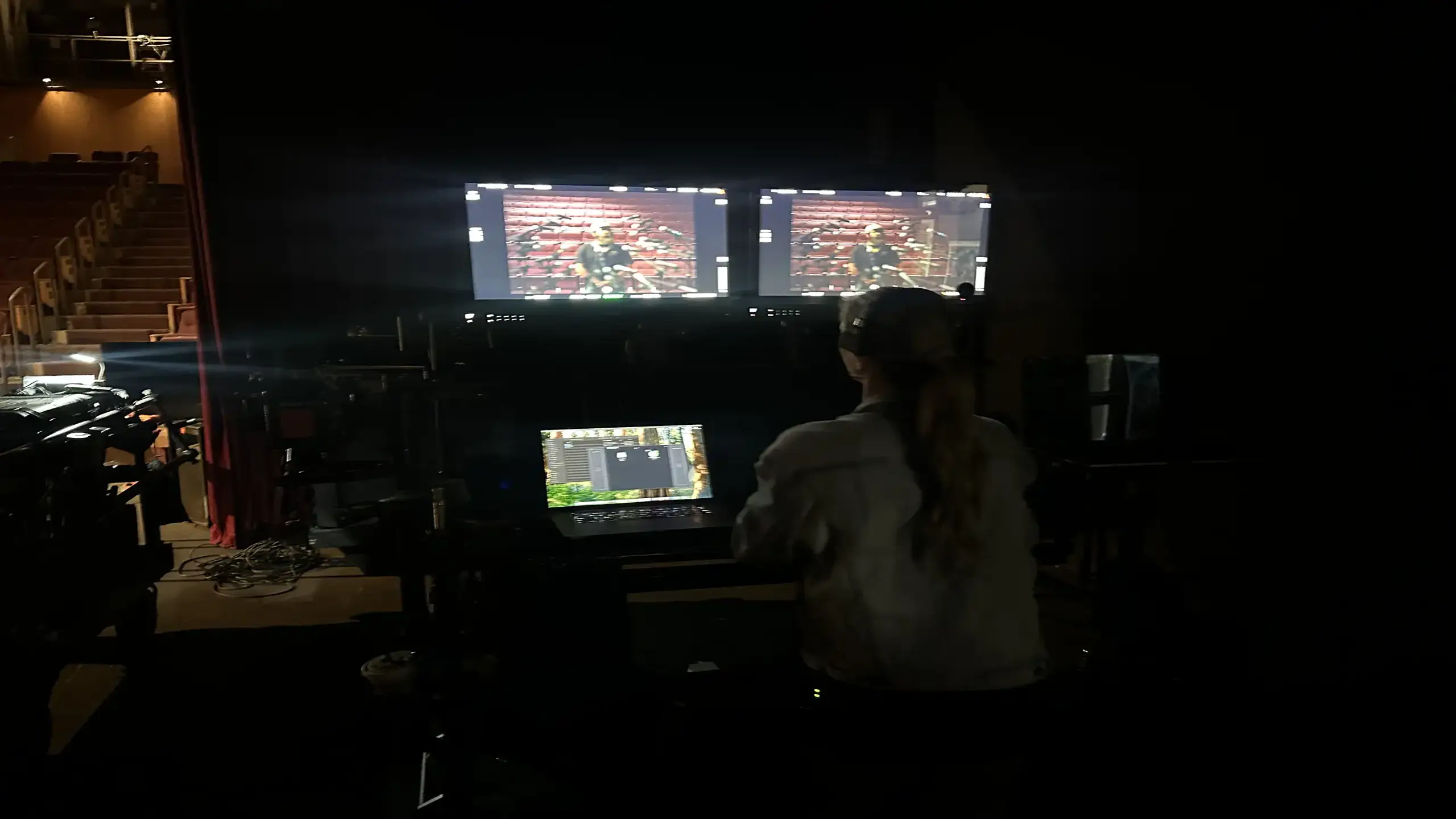
YouTube is no longer a side-hustle platform. It is a full-scale media engine. Today’s creators are running mini production studios from their bedrooms, garages, and co-working spaces, publishing on a schedule that rivals traditional broadcasters.
The software they choose is no longer just a “tool.” It dictates how fast they publish, how polished their content looks, and how efficiently they turn ideas into finished episodes.
At [C&I Studios](https://c-istudios.com/), we work across commercial, branded, and independent pipelines, so we see this firsthand. The same editor might cut a creator vlog in the morning and a multi-camera interview show in the afternoon.
This guide focuses on what actually matters when choosing the **Best Video Editing Software for YouTube**, not what looks impressive on a marketing page. We will look at how modern YouTube workflows function, where most creators lose time, and which software architectures support fast, repeatable [content creation](https://c-istudios.com/content-creation-services/) without sacrificing quality.
## What YouTube creators really need from editing software
Most YouTube creators are not building feature films. They are building output machines. The job is not to make one perfect video, it is to make hundreds of good ones without collapsing.
That changes what “best” actually means.
### Speed is more valuable than features
Creators who publish weekly or daily do not need infinite tools. They need tools that get out of the way. Every unnecessary click kills momentum. Every render delay slows growth.
**Good YouTube-focused editors are built around:**
- Fast timeline scrubbing
- Instant preview playback
- Simple trim, ripple, and snap tools
- Quick export presets for YouTube compression
If your software cannot play back footage smoothly while you cut, it does not matter how powerful the color tools are.
### Audio control is non-negotiable
On YouTube, audio quality beats video quality. Viewers will forgive a soft image. They will not forgive bad sound.
**The right editor must make it easy to:**
- Normalize voice levels
- Reduce background noise
- Add music and duck it under dialogue
- Quickly adjust EQ and compression
This is where many beginner tools fail. They make video editing simple but treat sound as an afterthought.
### Templates beat talent
The most successful YouTubers use the same structure in every video. That means intro stingers, lower thirds, captions, sound effects, and end screens repeat.
**Your software must support:**
- Presets
- Motion graphics templates
- Saved transitions
- Reusable timelines
This is how creators scale. Not by working harder, but by working with systems.
## Why traditional film editors do not always work for YouTube
A lot of software was built for cinema, not creators. That difference matters.
In professional [film & TV production](https://c-istudios.com/film-and-tv-production/), editors work on a single project for weeks or months. In YouTube, creators work on multiple videos every week. The software design must match the pace.
Here is where traditional film-style editors break down.
### Heavy interfaces slow down small teams
Cinema editors are built for large post-production teams. They assume assistants, colorists, sound designers, and VFX artists will all touch the same project.
YouTube creators usually work alone or in small teams.
**They need:**
- One timeline
- One export
- One upload
Complex media management systems designed for Hollywood often get in the way.
### Render pipelines are too slow
Film software is optimized for 4K RAW, multi-camera, and heavy grading. That power comes with overhead.
**YouTube needs:**
- Fast H.264 / H.265 exports
- Direct YouTube presets
- GPU-accelerated playback
If the editor cannot turn around a 10-minute video in minutes instead of hours, it is the wrong tool.
## What separates professional creator software from hobbyist tools
Not all beginner software is bad. But not all professional software is right for creators.
The best creator-focused platforms sit in the middle.
**They provide:**
- Real-time playback
- Layered timelines
- Keyframes and animation
- Professional audio tools
- Export control
Without drowning the user in cinema-grade complexity.
That balance is what YouTube workflows need.
## The four categories of YouTube editing software
YouTube editing software falls into four functional classes. Understanding this prevents bad purchases.
### 1) Consumer editors
These are entry-level tools designed for home users.
**They focus on:**
- Simple drag-and-drop
- Auto templates
- Minimal controls
They work for casual uploads but break when channels grow.
### 2) Creator-focused editors
These are optimized for YouTube, podcasts, and online video.
**They emphasize:**
- Speed
- Presets
- Fast exports
- Built-in graphics
This is where most serious YouTubers live.
### 3) Professional nonlinear editors
These come from broadcast and cinema.
**They offer:**
- Deep color grading
- Advanced audio routing
- Complex timelines
They are powerful but can be slower for fast-turnaround content.
### 4) Hybrid cloud editors
These tools mix local and online workflows.
**They target:**
- Collaboration
- Social video
- Cloud rendering
They are useful for teams but limited for high-end production.
## How C&I Studios evaluates YouTube editing platforms
When we test editing software for creator work, we do not look at marketing. We look at throughput.
### The real questions are
- How long does it take to cut a 10-minute talking-head video?
- How many clicks does it take to add subtitles?
- How fast can it export for YouTube?
- Can it handle 4K camera footage smoothly?
- Does it crash under pressure?
Software that fails here fails YouTube.
## Timeline performance is the core metric
Everything in YouTube editing flows through the timeline.
**Bad timeline performance means:**
- Lag when scrubbing
- Dropped frames
- Audio desync
- Frustration
**The best platforms optimize:**
- Proxy workflows
- GPU decoding
- RAM usage
This matters more than flashy effects.
## Export pipelines matter more than filters
Most YouTube creators export in the same formats:
- 1080p or 4K
- 264 or H.265
- 8-20 Mbps
Software that takes 40 minutes to export a 10-minute video is costing you growth.
Professional creator tools are tuned for speed here.
## Hardware efficiency determines real-world usability
Two editors can have the same features but behave completely differently on real machines.
**Well-optimized editors:**
- Use GPU acceleration
- Handle laptop CPUs well
- Do not require $5,000 workstations
This is critical for independent creators.
## What professionals actually use
C&I Studios does not rely on opinions. We look at industry usage.
Blackmagic Design reports that DaVinci Resolve is now used by over 3 million active users worldwide, driven largely by online creators and small studios who need fast, all-in-one post-production pipelines.
Adobe Premiere Pro remains the dominant editor across YouTube channels with more than 85% of [professional YouTube creators](https://c-istudios.com/social-media-marketing-services/) using it in some form, largely because of its tight integration with After Effects, Audition, and Photoshop.
These numbers are not marketing fluff. They reflect where creator workflows have actually settled.
## Why YouTube editing is its own discipline
Editing for YouTube is not the same as editing for cinema.
The pacing is faster. The cuts are tighter. The graphics are louder. The viewer is impatient.
**Software that works well here must support:**
- Jump cuts
- Text overlays
- Meme-style effects
- Rapid trimming
This is why many film-grade tools feel slow for YouTube.
## The cost trap most creators fall into
Many creators choose software based on price alone. That is a mistake.
Cheap software that slows you down costs more than expensive software that saves time.
**The real cost is:**
- Lost uploads
- Delayed publishing
- Missed trends
If your editor blocks speed, it blocks growth.
## Where this is heading
YouTube is moving toward higher production values. Shorts, long-form, podcasts, and vertical content are merging.
**The software you choose now must handle:**
- Multi-format output
- Captions
- Vertical crops
- Reels and Shorts
Modern creator tools are built for this. Older ones are not.
## The platforms YouTube creators actually build on
Once you strip away marketing language, YouTube editing software falls into a handful of serious contenders. These are not “apps.” They are production systems. Each one creates a different type of workflow, which is why creators often switch tools as their channels scale.
The question is not which editor has the most buttons. The question is which one lets you ship the most videos with the least friction while still maintaining professional standards.
This is where video production gear becomes part of the equation, not cameras and lights, but the digital tools that sit between raw footage and a published episode.
## Adobe Premiere Pro — the creator industry backbone
Premiere Pro dominates YouTube for one reason: it connects everything.
Most serious creators use at least three Adobe tools together:
- Premiere Pro for cutting
- After Effects for motion graphics
- Audition for sound cleanup
This creates a unified post-production pipeline that mirrors how commercial studios operate.
### Where Premiere shines
Premiere’s biggest advantage is not any single feature. It is the ecosystem.
It supports:
- Native camera formats from Sony, Canon, Blackmagic, and RED
- Direct timeline links to After Effects
- Deep audio editing through Audition
- Photoshop graphics dropped straight into the edit
For creators who use animated titles, lower thirds, and branded intros, this integration is unbeatable.
### Why it fits YouTube
YouTube videos are not just cuts. They are layers of text, motion, sound effects, and visual rhythm. Premiere is built for this kind of editorial complexity.
**It handles:**
- Multi-track timelines
- Keyframed graphics
- Speed ramps
- Dynamic captions
Without breaking the flow.
The downside is performance. On weaker machines, Premiere can feel heavy. Creators often solve this with proxy files or powerful GPUs.
## DaVinci Resolve — the fastest-growing creator editor
Resolve has quietly become the most disruptive force in modern [post production](https://c-istudios.com/post-production-bringing-your-film-to-life/).
Originally built for color grading, it evolved into a full nonlinear editor with audio and visual effects built in.
### Why creators are switching
Resolve’s performance is exceptional. Even mid-range laptops can play 4K footage smoothly.
**It offers:**
- GPU-accelerated playback
- Integrated color correction
- Built-in Fairlight audio tools
- Fusion-based visual effects
All in one application.
That means fewer round trips between programs. Everything stays in one timeline.
### How it fits YouTube workflows
Creators who do not rely heavily on animated motion graphics love Resolve because it is fast, stable, and visually powerful.
**It excels at:**
- Clean image processing
- Skin tone control
- Fast trimming
- High-quality exports
For talking-head channels, interview shows, and documentary-style YouTube, Resolve
is extremely efficient.
## Final Cut Pro — Apple’s creator engine
Final Cut is optimized for one thing: speed.
On Apple Silicon Macs, it is brutally fast.
### Why it feels different
Final Cut does not behave like traditional editors. It uses a magnetic timeline instead of tracks. Clips snap together automatically.
**This makes it:**
- Extremely quick to cut
- Harder to break
- Very intuitive for fast edits
Creators who upload daily or run news-style channels often love this workflow.
### Where it wins
Final Cut dominates in:
- Vlogging
- Podcast-style video
- Short-form content
- High-volume publishing
It turns editing into assembly instead of surgery.
The weakness is compatibility. It only runs on macOS and does not integrate with as many third-party tools as Adobe.
## CapCut and creator-first cloud tools
CapCut has exploded because it removes friction.
### It is built for
- TikTok
- Shorts
- Reels
- Social-first video
But many YouTubers use it for quick edits.
### Why creators use it
**CapCut offers:**
- Built-in captions
- Auto subtitles
- Trend templates
- Cloud syncing
This makes it perfect for repurposing YouTube clips across platforms.
Its weakness is precision. Long-form editing, advanced sound work, and multi-camera control are limited.
## How to choose based on channel type
Different channels need different systems.
### Educational and talking-head creators
**They need:**
- Clean audio tools
- Fast trimming
- Stable playback
Resolve and Final Cut dominate here.
### Podcast and interview shows
**They need:**
- Multi-camera sync
- Strong sound tools
- Timeline stability
Premiere Pro and Resolve are ideal.
### Vloggers and daily uploaders
**They need:**
- Speed
- Simple timelines
- Fast exports
Final Cut and CapCut shine.
### Brand-driven channels
**They need:**
- Motion graphics
- Branding
- Reusable templates
Adobe’s ecosystem still leads.
## What software will not tell you
Every platform has strengths. None of them matter if the editor cannot handle your actual footage.
### Before committing, test
- Your camera files
- Your mic audio
- Your resolution
- Your export times
This is how professionals choose tools, not by feature lists, but by performance under real workload.
## Editing software is now a business decision
Your editor is not just a creative choice. It affects:
- Publishing speed
- Team collaboration
- Outsourcing editors
- File sharing
This is where media marketing consult thinking comes into play. Your channel is a media business. Your software stack is infrastructure.
Pick something that scales.
## Where creator workflows are going next
YouTube is no longer horizontal only. Creators now output:
- Long videos
- Shorts
- Podcasts
- Clips
Modern editors are racing to support this.
### Tools that offer
- Vertical reframing
- Auto captions
- Social exports
Are becoming more valuable than cinematic filters.
The real shift happening right now is not about which software looks better. It is about which one lets creators move faster without losing control.
When you start thinking about your editing platform the same way studios think about their production pipelines, you stop chasing features and start building leverage.
That is where growth actually comes from.
If you want help aligning your editing stack with the way modern creator studios operate, [contact us](https://c-istudios.com/contact/) at C&I Studios and we can walk through what a professional YouTube post-production workflow looks like in practice, from capture to publish, without locking you into tools that will slow you down six months from now.
For more information on industry standards and best practices, visit the [American Marketing Association](https://www.ama.org/).
## Work with C&I Studios
If you are planning a project like this, our team can take it from concept to final delivery. Explore our [AI video services](https://c-istudios.com/ai-video-services/), browse [our work](https://c-istudios.com/our-work/) to see how we tell brand stories, and [get in touch](https://c-istudios.com/contact/) when you are ready to start.
Originally published January 6, 2026
---
*This content is from [C&I Studios](https://c-istudios.com), a full-service production company.*
---
# How to Master Video Editing Without Overthinking It
> Published: January 5, 2026
> Categories: Post & VFX
> Source: https://c-istudios.com/how-to-master-video-editing-without-overthinking-it/
---
.cib{--paper:#1b1d1f;--ink:#fff;--body:#d5d7d9;--muted:#8b9096;--line:rgba(255,255,255,.12);--thumb:#2b2e31;--card:#212426;--accent:#c02b0a;--blue:#5B8FA8;--serif:'Playfair Display',Georgia,serif;--sans:'Poppins',-apple-system,sans-serif;--measure:900px;background:var(--paper);color:var(--body);font-family:var(--sans);line-height:1.6;position:relative;left:50%;transform:translateX(-50%);width:90vw;max-width:1920px}
.cib *{box-sizing:border-box}
.cib .kicker{max-width:var(--measure);margin:58px auto 0;padding:0 22px;font-size:12.5px;font-weight:700;letter-spacing:2.5px;text-transform:uppercase;color:var(--blue)}
.cib h1.cibh1{text-wrap:balance;font-family:var(--serif);font-weight:500;font-size:clamp(46px,6vw,72px);line-height:1.08;color:var(--ink);max-width:var(--measure);margin:18px auto 0;padding:0 22px;letter-spacing:-.5px}
.cib .metarow{max-width:var(--measure);margin:20px auto 0;padding:0 22px;color:var(--muted);font-size:14px}
.cib .hero{position:relative;width:100%;height:0;padding-bottom:56.25%;overflow:hidden;margin:48px auto 0;border-top:1px solid var(--line);border-bottom:1px solid var(--line)}
.cib .hero .ph{width:100%;aspect-ratio:16/9;background:var(--thumb);border-top:1px solid var(--line);border-bottom:1px solid var(--line);display:flex;align-items:center;justify-content:center;color:#7d8288;font-size:13px;text-align:center;padding:0 20px}
.cib .body{max-width:var(--measure);margin:12px auto 0;padding:52px 22px 6px}
.cib .body.lead p:first-child{font-size:23px;line-height:1.62;color:var(--ink)}
.cib .body p{font-size:18.5px;line-height:1.85;margin:0 0 30px;color:var(--body)}
.cib .body h2{text-wrap:balance;font-family:var(--serif);font-weight:500;font-size:clamp(32px,4vw,48px);line-height:1.22;color:var(--ink);margin:70px 0 20px;letter-spacing:-.3px}
.cib .body h3{text-wrap:balance;font-family:var(--sans);font-weight:600;font-size:22px;color:var(--ink);margin:38px 0 8px}
.cib .body a{color:var(--ink);text-decoration:underline;text-decoration-color:rgba(255,255,255,.4);text-underline-offset:3px}
.cib .body a:hover{text-decoration-color:var(--ink)}
.cib .ctable{width:100%;border-collapse:collapse;margin:16px 0 30px;font-size:16px}
.cib .ctable th{background:#000;color:#fff;text-align:left;padding:10px 12px;font-family:var(--sans)}
.cib .ctable td{padding:10px 12px;border-bottom:1px solid var(--line);color:var(--body)}
.cib .inimg{position:relative;width:100%;height:0;padding-bottom:56.25%;overflow:hidden;margin:72px auto;border-top:1px solid var(--line);border-bottom:1px solid var(--line)}
.cib .inimg .ph{width:100%;aspect-ratio:16/9;background:var(--thumb);border-top:1px solid var(--line);border-bottom:1px solid var(--line);display:flex;align-items:center;justify-content:center;color:#7d8288;font-size:13px}
.cib .origpub{max-width:var(--measure);margin:60px auto 0;padding:26px 22px 0;border-top:1px solid var(--line);color:var(--muted);font-size:13.5px}
.cib .related{max-width:1200px;margin:64px auto 0;padding:34px 22px 76px}
.cib .related h3{font-family:var(--sans);font-size:12.5px;letter-spacing:2px;text-transform:uppercase;color:var(--ink);margin:0 0 24px}
.cib .grid{display:grid;grid-template-columns:repeat(3,1fr);gap:28px}
.cib .rc{background:var(--card);border:1px solid var(--line);display:block;text-decoration:none;color:inherit;transition:border-color .15s}
.cib a.rc:hover{border-color:rgba(255,255,255,.5)}
.cib .rc .thumb{position:relative;width:100%;height:0;padding-bottom:56.25%;background:var(--thumb);overflow:hidden}
.cib .rc .thumb img{position:absolute!important;top:0!important;left:0!important;width:100%!important;height:100%!important;object-fit:cover!important;margin:0!important}
.cib .rc .cc{padding:14px 15px 17px}
.cib .rc .rt{font-family:var(--serif);font-weight:500;font-size:16px;line-height:1.3;color:var(--ink);margin:0 0 6px}
.cib .rc .rm{font-size:11px;letter-spacing:1px;text-transform:uppercase;color:var(--muted)}
.cib img{margin:0!important;padding:0!important;display:block!important;vertical-align:top;max-width:100%}
.cib .hero img,.cib .inimg img{position:absolute!important;top:0!important;left:0!important;width:100%!important;height:100%!important;object-fit:cover!important;margin:0!important;padding:0!important;border:0!important;display:block!important;aspect-ratio:auto!important}
.cib .hero+.body{padding-top:36px}
@media(max-width:760px){.cib .grid{grid-template-columns:1fr}.cib .body h2{margin:52px 0 16px}.cib .body p{font-size:17.5px}.cib .inimg,.cib .hero{margin-top:44px}}
.cib .vembed{max-width:var(--measure);margin:44px auto;padding:0 22px}.cib .vembed .vwrap{position:relative;width:100%;height:0;padding-bottom:56.25%}.cib .vembed .vwrap iframe{position:absolute;top:0;left:0;width:100%;height:100%;border:0}
Post & VFX
# How to Master Video Editing Without Overthinking It
7 min read
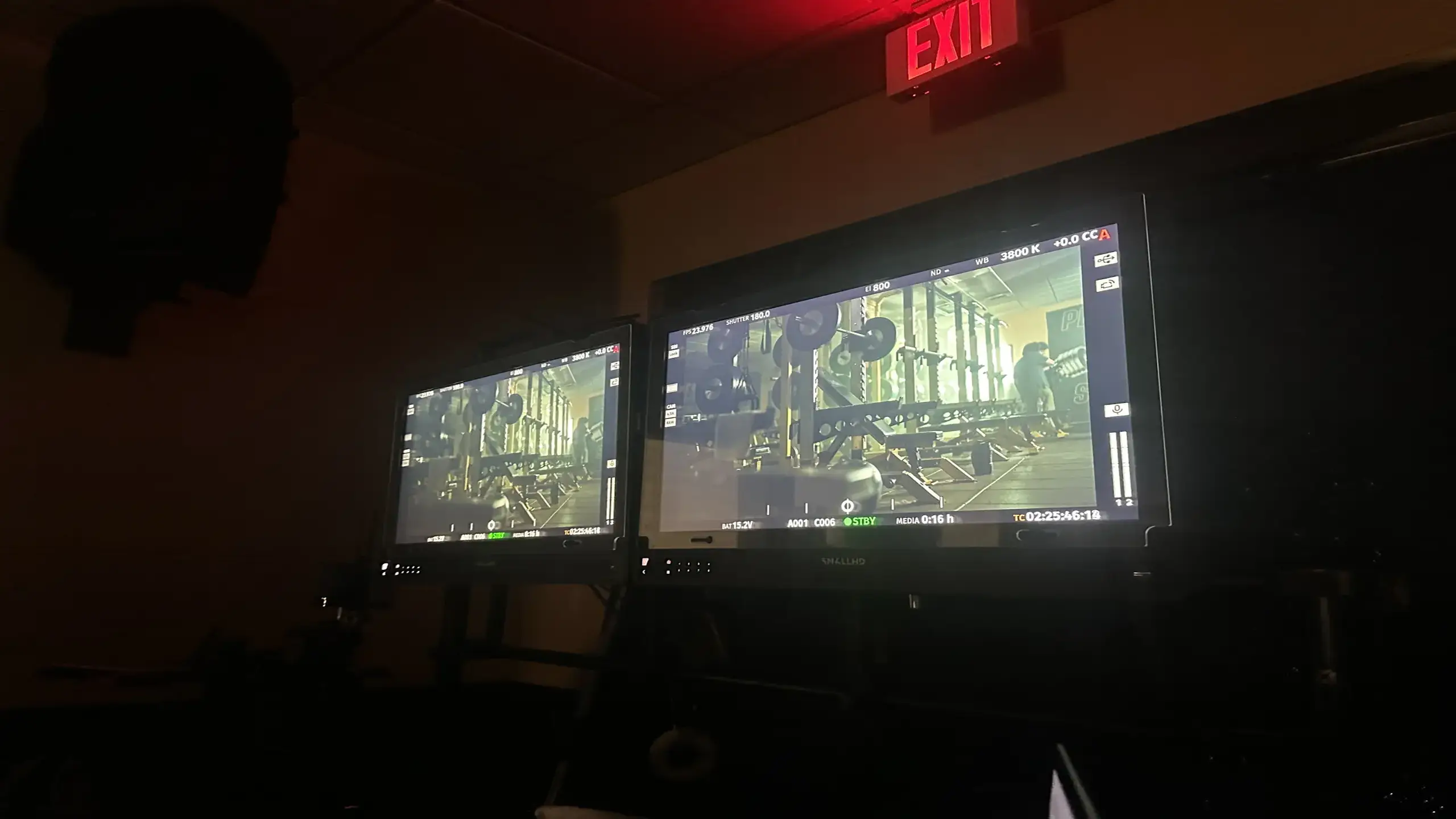
Video editing does not fail because people lack talent. It fails because they drown themselves in options, tutorials, plugins, and opinions before they ever build real editing mileage. Mastery in editing is not hidden behind secret shortcuts. It is the result of deliberate repetition, constraint, and workflow discipline.
If you want to **master video editing** faster, you have to stop treating it like a creative mystery and start treating it like a production system.
This guide breaks that system down, starting with the mental and structural foundations that actually move editors forward in real-world environments.
## Why Most Editors Stall Early
The biggest mistake beginners make is assuming that better results come from knowing more. More effects. More shortcuts. More software. In practice, professional editors operate with fewer tools, tighter workflows, and clearer decision rules.
Overthinking is not a personality flaw. It is usually a systems problem.
When editors stall, it is almost always because of one or more of the following:
- They consume tutorials without applying them to real footage
- They switch software too often
- They optimize aesthetics before story and pacing
- They edit without a defined output goal
Professional environments do not reward endless refinement. They reward editors who can deliver consistently under constraints.
That is the mindset shift required before any technical skill matters.
## Mastery Starts With Output, Not Knowledge
If you want to master video editing, you must invert the way most people learn.
### Most beginners start with
Software → Features → Effects → Practice
### Professionals start with
Output → Constraints → Workflow → Tools
Editing is not about knowing everything your software can do. It is about reliably producing watchable, clear, and purpose-driven cuts.
This applies whether you are editing for content creation, branded campaigns, or long-form [video production.](https://c-istudios.com/video-production-services/)
Before you touch a timeline, you should be able to answer three questions:
- What is the final platform or delivery format?
- What emotion or action should the viewer take?
- What is the acceptable level of polish for this output?
If you cannot answer these, you will over-edit by default.
## Stop Chasing Tools and Lock One Editing Environment
Tool-hopping is one of the fastest ways to stall progress.
Premiere Pro, Final Cut Pro, DaVinci Resolve, Avid all are capable of professional results. What separates editors is not the software. It is how deeply they understand one environment.
Mastery requires friction removal. That only happens when your hands stop thinking.
You should commit to one primary editor and stay there long enough to build muscle memory.
### What this looks like in practice
- One NLE for at least 6-12 months
- One default project structure
- One export preset per platform
- One color workflow baseline
Switching tools resets cognitive load. Professional editors minimize cognitive load at all costs.
## Editing Is Pattern Recognition, Not Inspiration
Editors who progress quickly do not rely on inspiration. They rely on patterns.
Every strong edit is built on repeatable structures:
- Setup
- Payoff
- Pacing shifts
- Visual resets
- Audio anchors
You do not invent these every time. You recognize them.
The fastest way to build this recognition is not by watching tutorials. It is by breaking down finished edits.
### A practical exercise that works
- Take a finished video you admire
- Rebuild its structure with placeholder clips
- Match cut timing, not visuals
- Ignore color and effects entirely
This trains your brain to see editing as architecture, not decoration.
## Define a “Good Enough” Threshold Early
Perfectionism kills editors faster than lack of skill.
In real projects, there is always a point where additional effort produces diminishing returns. Professionals know where that point is.
You must define “good enough” before you start editing.
That threshold depends on context:
- Social clips require clarity and pace, not polish
- Internal videos prioritize information flow
- Marketing edits prioritize retention over aesthetics
- Long-form edits prioritize narrative coherence
Without a defined threshold, you will keep fixing things that do not matter.
### A simple rule that works
If a viewer will not notice the difference without being told, stop.
## Build a Repeatable Editing Workflow
Editors who master their craft do not improvise their process every time. They follow a predictable sequence that reduces decision fatigue.
### A practical baseline workflow looks like this
- Ingest and organize footage immediately
- Label selects before touching the timeline
- Build a rough cut with no effects
- Lock structure and pacing first
- Apply sound cleanup and music
- Apply color last, if needed
Notice what is missing: transitions, effects, plugins.
Those come after the edit works without them.
This is standard practice in [film & TV production](https://c-istudios.com/feature-film-mastering-and-delivery/) environments because it prevents wasted effort.
## Learn to Edit With Audio First
Video editing is often taught visually. That is backwards.
Audio drives perception of quality more than visuals do.
A mediocre image with clean audio feels professional. A sharp image with bad audio feels amateur.
### To accelerate mastery
- Cut dialogue before cutting visuals
- Use waveform patterns to guide timing
- Learn to hear pacing, not just see it
- Fix audio problems early, not at the end
Editors who understand audio instinctively make better visual decisions because timing becomes obvious.
This is one of the most overlooked accelerators in video production.
## Constraints Make You Faster, Not Slower
Unlimited freedom creates hesitation. Constraints force decisions.
Professionals deliberately limit themselves:
- Fixed aspect ratios
- Fixed durations
- Fixed music tracks
- Fixed brand rules
If you want to master video editing faster, impose constraints on your practice.
Examples that work:
- Edit a story in exactly 60 seconds
- Cut a sequence using only jump cuts
- Edit without color correction
- Deliver within a strict time limit
Constraint-based editing builds decisiveness, which is a core professional skill.
## Practice With Realistic Material, Not Perfect Footage
Beginners often practice on cinematic stock footage. That creates false confidence.
### Real work looks like this
- Bad lighting
- Inconsistent audio
- Awkward pacing
- Unclear intent
If you only practice with perfect material, your skills collapse under real conditions.
### To progress faster, intentionally edit
- Phone footage
- Long, uncut interviews
- Messy screen recordings
- Poorly planned shoots
Mastery shows up when you can make weak inputs usable.
That is what clients and production teams actually pay for.
## Measure Progress by Speed and Clarity, Not Effects
Most editors judge progress by how complex their edits look. Professionals judge progress by how fast they can get to a clean, clear cut.
### You are improving if
- You reach a usable rough cut faster
- You hesitate less on cut points
- You know what to fix first
- You export with confidence, not anxiety
Speed without chaos is mastery.
This is especially critical in [content creation](https://c-istudios.com/content-creation-services/) environments where turnaround time matters as much as quality.
## The Editing Skill Nobody Talks About. Letting Go
The final skill in mastering video editing is knowing when to stop.
Professionals ship work. Amateurs polish endlessly.
If an edit communicates clearly, serves its purpose, and meets the defined quality bar, it is done.
Everything beyond that is ego.
In production settings, reliability beats brilliance. Every time.
### Turning Editing Practice Into Real Skill
Understanding editing in theory does not make you better. Real improvement only happens when you pressure test y[our work](https://c-istudios.com/our-work/)flow against real-world complexity. That is where most editors fall apart. They know what to do, but they do not know how to do it fast, cleanly, and under imperfect conditions.
This is where mastery separates from hobbyism.
## The difference between “knowing” and “being able”
Most editors can describe how a cut should feel. Far fewer can execute it on demand.
That gap comes from not training under friction.
Professional editing environments are built around constraints:
tight deadlines, missing shots, bad audio, rushed approvals, unclear notes. If your practice sessions do not simulate this, you are training the wrong skill set.
A better way to practice is to deliberately introduce production pressure.
- Edit with a time limit
- Edit without previewing footage first
- Edit using only the clips that come out of the camera, no stock or backups
- Edit using someone else’s badly organized folder
These conditions force you to make decisions instead of browsing possibilities.
That decisiveness is what real editors are hired for.
## Why most editing exercises fail
Common advice tells people to:
“Re-edit movie scenes,”
“Follow tutorials,”
“Copy cinematic YouTubers.”
These are not useless, but they are incomplete.
They train visual taste, not execution.
Real editing skill comes from learning to control:
- Narrative flow
- Pacing under uncertainty
- Viewer attention
- Information density
You build those by handling ugly footage and shaping it into something watchable.
That is the same muscle used in everything from branded marketing edits to documentary sequences.
## Building instinct through repetition
Instinct is not magic. It is pattern recognition formed by volume.
To build it, you need to see the same problems hundreds of times:
awkward pauses, rushed dialogue, confusing order, flat energy.
Each time you solve them, your brain learns faster ways to spot them.
This is why professionals often look effortless. They are not guessing. They are recognizing.
### The simplest system that works
- Edit short projects daily
- Finish them, even when they are not perfect
- Do not reopen old edits
- Move forward
Finishing trains decision-making. Re-tweaking trains anxiety.
## Why story beats visuals every time
Editors who get stuck often obsess over polish.
They spend hours on color, transitions, motion graphics, or even VFX compositing & animation before the story is stable.
That is backward.
The viewer never experiences visuals in isolation. They experience narrative first. If the structure is weak, no effect will save it.
A clean cut with no effects but strong pacing will outperform a visually complex edit with poor flow.
Professionals lock story first, then add decoration.
Always.
## How to train pacing without guessing
Pacing is not about feeling. It is about signal.
You can objectively test pacing by watching how often the viewer gets new information.
### Try this exercise
- Scrub through a finished edit
- Pause every three seconds
- Ask what changed since the last pause
If nothing changed, you are too slow.
If too much changed, you are too fast.
Good pacing feels invisible because it is constantly refreshing attention.
That is why strong editors cut more than they add.
## The quiet role of gear in editing mastery
Editors like to pretend tools do not matter.
They do.
Not for quality. For friction.
Slow machines, small screens, laggy timelines, bad audio monitoring all add invisible resistance. That resistance kills focus and increases overthinking.
You do not need a luxury setup, but you do need reliable [video production gear](https://c-istudios.com/video-production-gear-list/):
- A monitor that shows color and detail clearly
- Headphones that reveal audio problems
- A system that scrubs smoothly
- Storage that does not choke playback
When your setup is stable, your brain can focus on decisions instead of waiting.
That alone can double your editing speed.
## Why templates and presets accelerate mastery
Professionals reuse structure.
They do not rebuild timelines, export settings, or layouts from scratch every project. They rely on templates.
You should too.
Templates remove trivial choices so you can focus on the edit itself.
### Useful templates include
- Default project folders
- Standard timeline layouts
- Common audio chains
- Export presets for each platform
This is not laziness. It is cognitive efficiency.
## How to handle feedback without losing control
Feedback is part of editing. The problem is not notes. It is unstructured notes.
Strong editors translate feedback into actions.
“Make it pop” means adjust contrast, pacing, or music.
“Feels slow” means tighten pauses or cut redundancy.
“Not engaging” means the hook is weak.
Never react emotionally to notes. Convert them into operations.
That is how editors stay fast and professional.
## The final skill. shipping without second-guessing
The last thing that separates professionals from amateurs is not taste. It is closure.
Professionals export. Amateurs keep tweaking.
Once the edit meets its purpose and quality bar, it goes out.
That discipline is what allows teams to scale, campaigns to run, and production pipelines to survive.
If you are serious about learning how to master video editing faster, you do not need more inspiration. You need more finished projects.
And if your organization is trying to build a cleaner post-production pipeline that delivers without chaos, [contact us](https://c-istudios.com/contact/) to see how structured editing systems can remove friction and improve consistency across teams.
The next time you open a timeline, the goal is not to be brilliant. The goal is to be clear, decisive, and done.
## Work with C&I Studios
If you are planning a project like this, our team can take it from concept to final delivery. Explore our [post-production services](https://c-istudios.com/post-production-services/), browse [our work](https://c-istudios.com/our-work/) to see how we tell brand stories, and [get in touch](https://c-istudios.com/contact/) when you are ready to start.
Originally published January 5, 2026
---
*This content is from [C&I Studios](https://c-istudios.com), a full-service production company.*
---
# Best Computer for Video Editing in 2026: Hardware Guide for Creators & Pros
> Published: January 4, 2026
> Categories: Post & VFX
> Source: https://c-istudios.com/best-computer-for-video-editing-in-2026-hardware-guide-for-creators-pros/
---
.cib{--paper:#1b1d1f;--ink:#fff;--body:#d5d7d9;--muted:#8b9096;--line:rgba(255,255,255,.12);--thumb:#2b2e31;--card:#212426;--accent:#c02b0a;--blue:#5B8FA8;--serif:'Playfair Display',Georgia,serif;--sans:'Poppins',-apple-system,sans-serif;--measure:900px;background:var(--paper);color:var(--body);font-family:var(--sans);line-height:1.6;position:relative;left:50%;transform:translateX(-50%);width:90vw;max-width:1920px}
.cib *{box-sizing:border-box}
.cib .kicker{max-width:var(--measure);margin:58px auto 0;padding:0 22px;font-size:12.5px;font-weight:700;letter-spacing:2.5px;text-transform:uppercase;color:var(--blue)}
.cib h1.cibh1{text-wrap:balance;font-family:var(--serif);font-weight:500;font-size:clamp(46px,6vw,72px);line-height:1.08;color:var(--ink);max-width:var(--measure);margin:18px auto 0;padding:0 22px;letter-spacing:-.5px}
.cib .metarow{max-width:var(--measure);margin:20px auto 0;padding:0 22px;color:var(--muted);font-size:14px}
.cib .hero{position:relative;width:100%;height:0;padding-bottom:56.25%;overflow:hidden;margin:48px auto 0;border-top:1px solid var(--line);border-bottom:1px solid var(--line)}
.cib .hero .ph{width:100%;aspect-ratio:16/9;background:var(--thumb);border-top:1px solid var(--line);border-bottom:1px solid var(--line);display:flex;align-items:center;justify-content:center;color:#7d8288;font-size:13px;text-align:center;padding:0 20px}
.cib .body{max-width:var(--measure);margin:12px auto 0;padding:52px 22px 6px}
.cib .body.lead p:first-child{font-size:23px;line-height:1.62;color:var(--ink)}
.cib .body p{font-size:18.5px;line-height:1.85;margin:0 0 30px;color:var(--body)}
.cib .body h2{text-wrap:balance;font-family:var(--serif);font-weight:500;font-size:clamp(32px,4vw,48px);line-height:1.22;color:var(--ink);margin:70px 0 20px;letter-spacing:-.3px}
.cib .body h3{text-wrap:balance;font-family:var(--sans);font-weight:600;font-size:22px;color:var(--ink);margin:38px 0 8px}
.cib .body a{color:var(--ink);text-decoration:underline;text-decoration-color:rgba(255,255,255,.4);text-underline-offset:3px}
.cib .body a:hover{text-decoration-color:var(--ink)}
.cib .ctable{width:100%;border-collapse:collapse;margin:16px 0 30px;font-size:16px}
.cib .ctable th{background:#000;color:#fff;text-align:left;padding:10px 12px;font-family:var(--sans)}
.cib .ctable td{padding:10px 12px;border-bottom:1px solid var(--line);color:var(--body)}
.cib .inimg{position:relative;width:100%;height:0;padding-bottom:56.25%;overflow:hidden;margin:72px auto;border-top:1px solid var(--line);border-bottom:1px solid var(--line)}
.cib .inimg .ph{width:100%;aspect-ratio:16/9;background:var(--thumb);border-top:1px solid var(--line);border-bottom:1px solid var(--line);display:flex;align-items:center;justify-content:center;color:#7d8288;font-size:13px}
.cib .origpub{max-width:var(--measure);margin:60px auto 0;padding:26px 22px 0;border-top:1px solid var(--line);color:var(--muted);font-size:13.5px}
.cib .related{max-width:1200px;margin:64px auto 0;padding:34px 22px 76px}
.cib .related h3{font-family:var(--sans);font-size:12.5px;letter-spacing:2px;text-transform:uppercase;color:var(--ink);margin:0 0 24px}
.cib .grid{display:grid;grid-template-columns:repeat(3,1fr);gap:28px}
.cib .rc{background:var(--card);border:1px solid var(--line);display:block;text-decoration:none;color:inherit;transition:border-color .15s}
.cib a.rc:hover{border-color:rgba(255,255,255,.5)}
.cib .rc .thumb{position:relative;width:100%;height:0;padding-bottom:56.25%;background:var(--thumb);overflow:hidden}
.cib .rc .thumb img{position:absolute!important;top:0!important;left:0!important;width:100%!important;height:100%!important;object-fit:cover!important;margin:0!important}
.cib .rc .cc{padding:14px 15px 17px}
.cib .rc .rt{font-family:var(--serif);font-weight:500;font-size:16px;line-height:1.3;color:var(--ink);margin:0 0 6px}
.cib .rc .rm{font-size:11px;letter-spacing:1px;text-transform:uppercase;color:var(--muted)}
.cib img{margin:0!important;padding:0!important;display:block!important;vertical-align:top;max-width:100%}
.cib .hero img,.cib .inimg img{position:absolute!important;top:0!important;left:0!important;width:100%!important;height:100%!important;object-fit:cover!important;margin:0!important;padding:0!important;border:0!important;display:block!important;aspect-ratio:auto!important}
.cib .hero+.body{padding-top:36px}
@media(max-width:760px){.cib .grid{grid-template-columns:1fr}.cib .body h2{margin:52px 0 16px}.cib .body p{font-size:17.5px}.cib .inimg,.cib .hero{margin-top:44px}}
.cib .vembed{max-width:var(--measure);margin:44px auto;padding:0 22px}.cib .vembed .vwrap{position:relative;width:100%;height:0;padding-bottom:56.25%}.cib .vembed .vwrap iframe{position:absolute;top:0;left:0;width:100%;height:100%;border:0}
Post & VFX
# Best Computer for Video Editing in 2026. Hardware Guide for Creators & Pros
7 min read
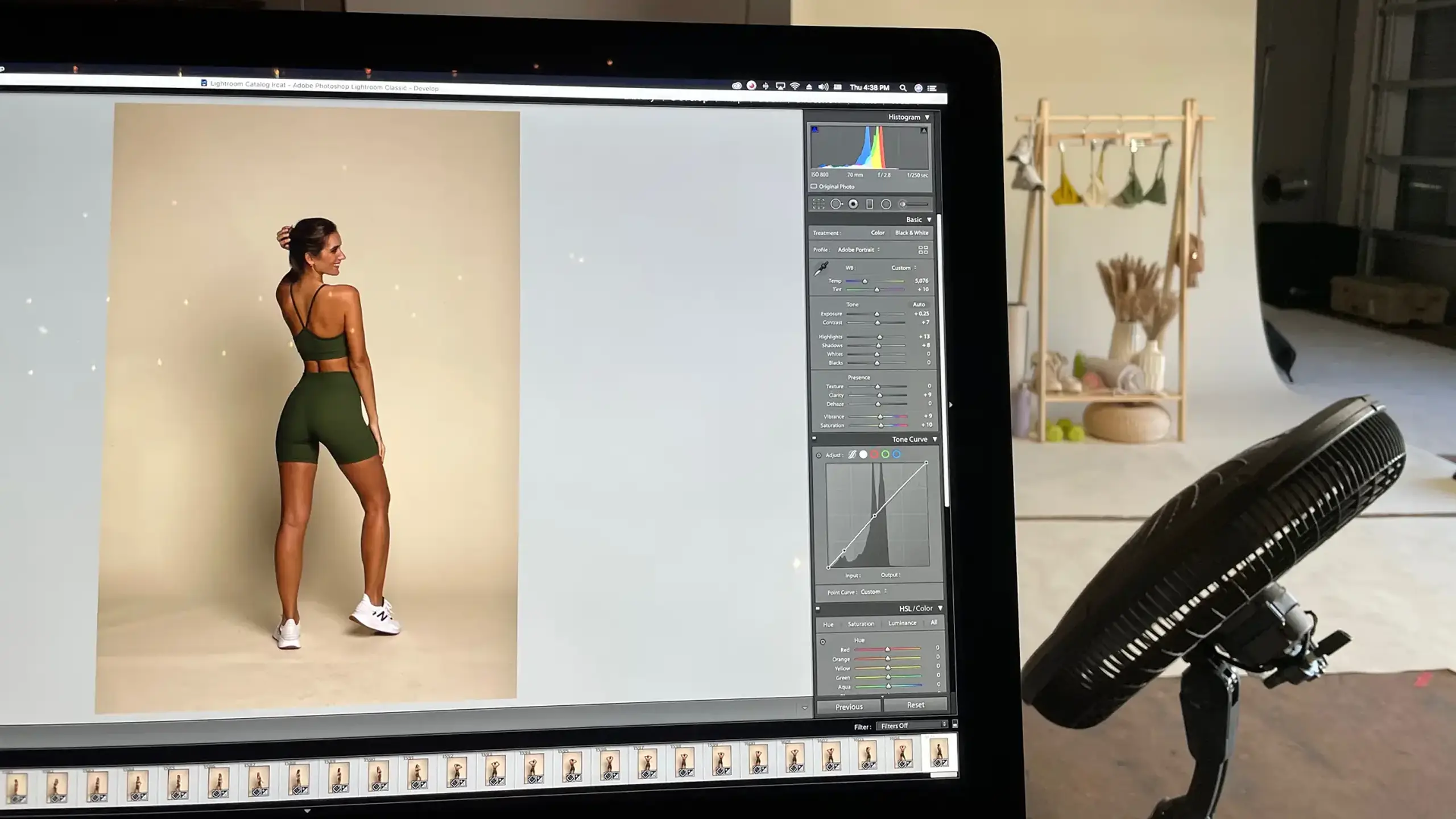
Choosing the best computer for video editing in 2026 is non-negotiable if you want reliable performance on real professional workloads.
Gone are the days when a decent laptop and off-the-shelf software could handle every cut, grade, or render, today’s projects demand precision hardware targeting specific editing workflows.
Whether you’re a content creator working on YouTube releases, a freelance editor cutting social media campaigns, or a post-production artist handling [VFX compositing & animation](https://c-istudios.com/vfx-compositing-and-animation-services/), this guide breaks down core requirements and hardware configurations that match real-world needs.
## Why Hardware Still Matters in 2026
### Performance bottlenecks slow down your workflow
Video editing is fundamentally computationally heavy: decoding high-resolution footage, real-time playback, and exporting deliverables all push your machine’s CPU, GPU, memory, and storage.
**When hardware is mismatched:**
- Playback stutters on multi-layer timelines.
- Color grades and effects lag.
- Renders take exponentially longer.
- Collaboration becomes inefficient.
The result? Lost time, frustrated clients, and delayed deliveries.
### Software demands have increased
Apps like Adobe Premiere Pro, DaVinci Resolve, and After Effects, especially when paired with video production pipelines, are optimized to leverage multi-core CPUs and modern GPUs. Meanwhile, emerging codecs (HEVC, ProRes RAW) and high bit-depth color workflows push storage and RAM.
## How Workloads Define the Best Computer for Video Editing
Not every editor needs the same machine. The optimal computer differs according to your core workload:
1. Casual / social content
2. Professional cuts and color grading
3. Complex effects and VFX
4. Multi-camera and high frame-rate projects
### Workload 1. Casual and Social Content Editing
If your typical day involves short form editing, say Instagram reels, TikToks, or quick cuts, your requirements are surprisingly modest.
**You’ll benefit from:**
- Smooth playback on 1080p and 4K.
- Quick exports without spiking temperatures.
- Low cost of entry.
**Recommended specs**
- CPU: 6-8 cores (e.g., Intel i7 / AMD Ryzen 7)
- GPU: Mid-range GPU with at least 6-8GB VRAM
- RAM: 32GB
- Storage: 1TB SSD (fast NVMe)
- Display: 27″ 1440p
This class of machine handles lightweight edits and effects without breaking the bank, perfect for solo editors, vloggers, and creators focused on social engagement.
### Workload 2. Professional Cuts and Color Grading
This is where editors working in branded content, documentarian projects, and corporate videos live. These projects demand:
- Precise color workflows (ACES, LUTs)
- Multi-layer timelines
- Heavy transitions and audio sync
**Recommended specs**
- CPU: 12-16 cores (e.g., AMD Ryzen Threadripper / Intel Core i9)
- GPU: 12-16GB VRAM (e.g., NVIDIA RTX 4070/4080)
- RAM: 64GB
- Storage: OS + apps: 1TB SSD
- Media cache: 2TB SSD
- Project archive: 4TB SSD
Professional editors benefit from more RAM, faster storage, and stronger GPUs. Real-time playback of multicam 4K timelines becomes achievable and exports drop significantly.
### Workload 3. Complex Effects and VFX Compositing
When y[our work](https://c-istudios.com/our-work/) shifts into deep visual effects, motion graphics, and VFX compositing & animation, the machine requirements escalate.
**These projects involve:**
- Heavy GPU acceleration
- Large memory footprints
- Frequent real-time updates
**Recommended specs**
- CPU: 16+ cores (e.g., AMD Threadripper PRO / Intel Xeon)
- GPU: High-end GPUs (24GB+ VRAM e.g., RTX 4090, Dual GPUs for macOS Pro)
- RAM: 128GB+
- Storage: Scratch & cache: 4TB NVMe
- Project pool: RAID 0/5 TB array
For studios and artists churning out intricate motion design or high-resolution effects, this tier minimizes waiting times and maximizes creative experimentation.
### Workload 4. Multi-Camera and High Frame-Rate Projects
Events, live shoots, and broadcast workflows often involve:
- Multiple synchronized camera streams
- High frame rates (up to 8K/120fps)
- Live switching and streaming
**Recommended specs**
- CPU: 12-16 cores
- GPU: 16GB+ VRAM
- RAM: 64-128GB
- Connectivity: Thunderbolt 4
- PCIe expansion for capture cards
Storage:
- 8+ TB fast RAID
This setup ensures secure handling of multiple streams, fast caching, and minimal dropped frames in both editing and live production.
## Core Components You Must Get Right
### CPU. The Workhorse of Editing
**The CPU governs:**
- Timeline scrubbing
- Decoding/encoding
- Effects calculations
**What to prioritize**
- High core counts for multicam and complex effects
- High clock speeds for real-time playback responsiveness
AMD and Intel both deliver top performances but scale differently depending on software optimization.
### GPU. Your Real-Time Playback Engine
Modern editors rely on GPU acceleration for:
- Playback smoothness with effects
- Export acceleration
- Display scaling
In 2026, the best computers for video editing rely on GPUs with:
- Strong CUDA or Metal support
- 12GB+ VRAM for 8K workflows
For effects and heavy color workflows, prioritize GPUs with larger VRAM and bandwidth.
### RAM. Memory Is Motion
RAM directly impacts your ability to:
- Layer multiple video/audio tracks
- Apply complex color grades and effects
- Run simultaneous tasks
**Guideline:**
- 32GB, entry editing
- 64GB, professional editing
- 128GB+, VFX, motion graphics, high-FPS
Never skimp on RAM. It’s cheap relative to the productivity gains.
### Storage. Speed Matters
Storage affects both playback and export:
- NVMe SSDs (fast) for system and scratch
- Large capacity SSDs for project files
Avoid HDDs for active editing; they simply can’t keep up.
## Desktop vs Laptop for Video Editing
### Desktops. Raw Power and Expandability
**Pros:**
- Better cooling → sustained performance
- More CPU/GPU options
- Easier upgrades
**Best for:**
- Full-time editors
- Studios processing high volumes
- Anyone doing advanced color grading or effects
### Laptops. Mobility Meets Capacity
**Pros:**
- Edit from anywhere
- Increasingly powerful mobile CPUs/GPUs
**Cons:**
- Thermal throttling
- Fewer cores/VRAM than desktops
- Harder to upgrade over time
**Ideal for:**
- On-location editors
- Content creators
- Traveling professionals
## Recommended Builds for 2026
Below are tested builds that reflect real editing workloads instead of generic recommendations.
### Entry Editor Build (~$1,500)
- CPU: AMD Ryzen 7 7800X
- GPU: NVIDIA RTX 3060 12GB
- RAM: 32GB DDR5
- Storage: 1TB NVMe
- 2TB SSD
Best for:
- YouTubers
- Quick turn edits
Why this works: This machine keeps playback smooth and exports fast enough for regular content without breaking budget.
### Professional Editing Workstation (~$3,000)
- CPU: Intel Core i9-14900K
- GPU: NVIDIA RTX 4080
- RAM: 64GB DDR5
- Storage: 2TB NVMe
- 4TB SSD
Best for:
- Branded content
- Color grading
- Multi-camera
Why this works: A strong single-socket desktop that maximizes current editing software acceleration while remaining cost-effective.
### VFX/Motion Graphics Beast (~$5,000+)
- CPU: AMD Threadripper PRO 7945WX
- GPU: Dual NVIDIA RTX 4090
- RAM: 128GB+ DDR5
- Storage: 4TB NVMe
- RAID pooled SSDs
Best for:
- Advanced composites
- VFX compositing & animation
- 8K timelines
Why this works: Handles massive frames, effects, and render tasks without throttling or bottlenecks.
## Workflow Tips That Affect Performance
### Use Proxy Files When Needed
**Proxy editing lets you:**
- Cut fast on lower-resolution proxies
- Maintain responsiveness
- Offload pressure from storage and CPU
Switch back to full resolution only on final color and render passes.
### Keep Your OS and Apps Updated
Both macOS and Windows have performance benefits when you:
- Update drivers (especially GPU drivers)
- Maintain the latest editing app releases
- Tune power/performance settings
### Accessories That Amplify Performance
A powerful computer is only part of the equation. The right peripherals streamline editing:
- Color-accurate monitors, essential for grading
- External fast storage (Thunderbolt 4/USB-C)
- Hardware control surfaces (for colorists/editor shortcuts)
- High-quality audio monitors, accurate sound design
These improve precision and reduce revisions.
### Build for Your Workflow
The best computer for video editing isn’t a one-size-fits-all. It’s a system matched to your:
- Project complexity
- Software preferences
- Delivery formats
- Budget
Whether you’re cutting fast content, handling [video production](https://c-istudios.com/video-production-services/) pipelines, or pushing into advanced compositing, this hardware guide helps you invest where it matters most.
## Matching Hardware to Real Editing Environments
The mistake most people make when buying an editing machine is treating it like a generic PC purchase. In real post-production environments, the computer sits inside a much larger system that includes capture devices, external drives, audio interfaces, and calibrated displays. If any one of those components is underpowered, the entire workflow slows down.
Editors working with professional [video production gear](https://c-istudios.com/video-production-gear-list/) such as external recorders, cinema cameras, and live capture cards must ensure their system supports high-bandwidth data streams. That means enough PCIe lanes, Thunderbolt ports, and storage throughput to prevent dropped frames or corrupted clips.
This is why professional workstations still outperform laptops for sustained editing sessions. Not because laptops are weak, but because desktops are built to move data continuously without thermal or bandwidth limits.
## macOS vs Windows for Video Editing in 2026
This debate never goes away, but in 2026 the choice is more about ecosystem than raw power.
### macOS advantages
Apple Silicon systems offer impressive efficiency. They are extremely strong at:
- ProRes workflows
- DaVinci Resolve performance
- Color grading pipelines
- Mobile editing and on-site production
macOS machines also integrate extremely well with modern camera formats, making them popular in documentary and commercial environments where footage comes directly from high-end cinema cameras.
### Windows advantages
Windows systems dominate when your work expands into heavier processing:
- High-core CPUs
- Multiple GPUs
- Large RAM capacities
- Custom storage arrays
If you do advanced motion graphics, heavy After Effects work, or large-scale studio projects, Windows still provides more headroom and upgrade flexibility.
The real decision comes down to your software stack and how often you need to expand or reconfigure your machine over time.
## Why Laptops Still Struggle With Long Renders
Laptop manufacturers advertise impressive specs, but there is a hidden limitation: sustained heat. Video editing pushes CPUs and GPUs at full load for long periods. Once a laptop overheats, it throttles performance.
That means a 30-minute export on a desktop might turn into a 50-minute export on a laptop even if the specs look similar.
**Laptops remain excellent for:**
- On-site rough cuts
- Travel editing
- Client previews
But for serious timelines and delivery work, desktops still win by a wide margin.
## How Storage Architecture Impacts Editing Speed
Many editors upgrade CPU and GPU but leave storage as an afterthought. That is a mistake.
High-resolution video files are enormous. If your storage cannot deliver them fast enough, playback stutters no matter how powerful the rest of the system is.
**The ideal setup**
- One NVMe drive for the operating system and apps
- One NVMe drive for cache and previews
- One or more large SSDs for project media
Separating these tasks prevents read and write conflicts, which dramatically improves real-time playback.
External Thunderbolt drives are now fast enough to serve as primary project storage, which makes them ideal for teams and mobile editors.
## Networking and Collaboration Hardware
Modern editing is rarely a solo activity. Footage is shared between editors, colorists, sound designers, and clients. That makes network speed a core part of your editing performance.
**If you work in a studio or remotely with teams:**
- 5G or 10G Ethernet
- NAS storage with SSD caching
- Cloud-synchronized project folders
These setups reduce wait times and eliminate file version chaos. A fast network often saves more time than upgrading a CPU.
## Why Displays Are Part of Your Editing Computer
Your monitor is not just a screen. It is a measuring instrument.
A system cannot be considered the best computer for video editing if it outputs to a low-quality display. Color accuracy, brightness consistency, and contrast control directly affect creative and technical decisions.
Editors working in advertising, broadcast, or brand content must use:
- Wide-gamut monitors
- Hardware calibration
- Consistent lighting environments
Without this, you are editing blind.
## Budget Allocation That Actually Makes Sense
Most people spend too much on the CPU and too little on everything else. A balanced system always outperforms a lopsided one.
A realistic budget split for a professional setup looks like:
- 35-40% computer
- 20-25% display
- 15-20% storage
- 10-15% peripherals and audio
- 5-10% networking and backup
This creates a system that remains usable for years rather than becoming obsolete after one upgrade cycle.
## How to Future-Proof Your Editing Rig
Technology changes, but smart buying protects your investment.
### Prioritize
- Motherboards with more RAM slots
- Extra NVMe ports
- Strong power supplies
- Cooling capacity
Avoid sealed systems that cannot be expanded. The best machines are the ones you can upgrade instead of replace.
## Common Buying Mistakes That Kill Performance
Editors frequently make the same errors:
- Buying gaming PCs with flashy GPUs but weak CPUs
- Using HDDs for active projects
- Ignoring RAM limits
- Relying on Wi-Fi instead of wired networks
None of these look serious at first, but they compound into constant slowdowns and frustration.
## How Professionals Actually Choose Their Machines
In real studios, purchasing decisions are not driven by specs. They are driven by throughput. The question is always:
“How many projects can this system finish per week without bottlenecks?”
That is why many agencies rely on system integrators and [media marketing consult](https://c-istudios.com/media-marketing-consultation-services/) firms to spec machines that match client deliverables rather than consumer benchmarks.
The faster your system moves footage from capture to delivery, the more profitable your operation becomes.
## Where Editors Should Buy Their Hardware
Buying pre-built consumer PCs often leads to compatibility issues, airflow problems, and weak power supplies.
**Professional editors should buy from:**
- Workstation builders
- Video-focused system integrators
- Vendors who test with editing software
These machines cost slightly more upfront but save thousands in downtime.
## What Actually Matters in 2026
Video formats will continue to evolve. Resolutions will increase. But the fundamentals stay the same:
- Data must move fast
- Heat must be controlled
- Software must be fed enough CPU, GPU, and memory
Systems built around these principles stay relevant for far longer than spec-sheet monsters built for marketing.
If you are planning to upgrade or build a workstation this year, aligning your hardware to real workloads is what makes the difference between constant frustration and smooth creative flow.
Teams that standardize their systems also find it easier to scale, onboard editors, and keep delivery schedules predictable. For studios, freelancers, and agencies, getting the machine right is not a luxury.
It is operational infrastructure, and the right setup quietly supports every deadline, every revision, and every client expectation.
If you are evaluating a new setup and want a hardware plan tailored to your editing style, project type, and budget, you can talk to the specialists at [C&I Studios](https://c-istudios.com/contact/) and get guidance that is based on production reality rather than generic tech advice.
For more information on industry standards and best practices, visit the [American Marketing Association](https://www.ama.org/).
## Work with C&I Studios
If you are planning a project like this, our team can take it from concept to final delivery. Explore our [post-production services](https://c-istudios.com/post-production-services/), browse [our work](https://c-istudios.com/our-work/) to see how we tell brand stories, and [get in touch](https://c-istudios.com/contact/) when you are ready to start.
Originally published January 4, 2026
---
*This content is from [C&I Studios](https://c-istudios.com), a full-service production company.*
---
# Video Editing Jobs: Where Editors Get Hired and How To Build A Sustainable Career
> Published: January 3, 2026
> Categories: Post & VFX
> Source: https://c-istudios.com/video-editing-jobs-where-editors-get-hired-and-how-to-build-a-sustainable-career/
---
.cib{--paper:#1b1d1f;--ink:#fff;--body:#d5d7d9;--muted:#8b9096;--line:rgba(255,255,255,.12);--thumb:#2b2e31;--card:#212426;--accent:#c02b0a;--blue:#5B8FA8;--serif:'Playfair Display',Georgia,serif;--sans:'Poppins',-apple-system,sans-serif;--measure:900px;background:var(--paper);color:var(--body);font-family:var(--sans);line-height:1.6;position:relative;left:50%;transform:translateX(-50%);width:90vw;max-width:1920px}
.cib *{box-sizing:border-box}
.cib .kicker{max-width:var(--measure);margin:58px auto 0;padding:0 22px;font-size:12.5px;font-weight:700;letter-spacing:2.5px;text-transform:uppercase;color:var(--blue)}
.cib h1.cibh1{text-wrap:balance;font-family:var(--serif);font-weight:500;font-size:clamp(46px,6vw,72px);line-height:1.08;color:var(--ink);max-width:var(--measure);margin:18px auto 0;padding:0 22px;letter-spacing:-.5px}
.cib .metarow{max-width:var(--measure);margin:20px auto 0;padding:0 22px;color:var(--muted);font-size:14px}
.cib .hero{position:relative;width:100%;height:0;padding-bottom:56.25%;overflow:hidden;margin:48px auto 0;border-top:1px solid var(--line);border-bottom:1px solid var(--line)}
.cib .hero .ph{width:100%;aspect-ratio:16/9;background:var(--thumb);border-top:1px solid var(--line);border-bottom:1px solid var(--line);display:flex;align-items:center;justify-content:center;color:#7d8288;font-size:13px;text-align:center;padding:0 20px}
.cib .body{max-width:var(--measure);margin:12px auto 0;padding:52px 22px 6px}
.cib .body.lead p:first-child{font-size:23px;line-height:1.62;color:var(--ink)}
.cib .body p{font-size:18.5px;line-height:1.85;margin:0 0 30px;color:var(--body)}
.cib .body h2{text-wrap:balance;font-family:var(--serif);font-weight:500;font-size:clamp(32px,4vw,48px);line-height:1.22;color:var(--ink);margin:70px 0 20px;letter-spacing:-.3px}
.cib .body h3{text-wrap:balance;font-family:var(--sans);font-weight:600;font-size:22px;color:var(--ink);margin:38px 0 8px}
.cib .body a{color:var(--ink);text-decoration:underline;text-decoration-color:rgba(255,255,255,.4);text-underline-offset:3px}
.cib .body a:hover{text-decoration-color:var(--ink)}
.cib .ctable{width:100%;border-collapse:collapse;margin:16px 0 30px;font-size:16px}
.cib .ctable th{background:#000;color:#fff;text-align:left;padding:10px 12px;font-family:var(--sans)}
.cib .ctable td{padding:10px 12px;border-bottom:1px solid var(--line);color:var(--body)}
.cib .inimg{position:relative;width:100%;height:0;padding-bottom:56.25%;overflow:hidden;margin:72px auto;border-top:1px solid var(--line);border-bottom:1px solid var(--line)}
.cib .inimg .ph{width:100%;aspect-ratio:16/9;background:var(--thumb);border-top:1px solid var(--line);border-bottom:1px solid var(--line);display:flex;align-items:center;justify-content:center;color:#7d8288;font-size:13px}
.cib .origpub{max-width:var(--measure);margin:60px auto 0;padding:26px 22px 0;border-top:1px solid var(--line);color:var(--muted);font-size:13.5px}
.cib .related{max-width:1200px;margin:64px auto 0;padding:34px 22px 76px}
.cib .related h3{font-family:var(--sans);font-size:12.5px;letter-spacing:2px;text-transform:uppercase;color:var(--ink);margin:0 0 24px}
.cib .grid{display:grid;grid-template-columns:repeat(3,1fr);gap:28px}
.cib .rc{background:var(--card);border:1px solid var(--line);display:block;text-decoration:none;color:inherit;transition:border-color .15s}
.cib a.rc:hover{border-color:rgba(255,255,255,.5)}
.cib .rc .thumb{position:relative;width:100%;height:0;padding-bottom:56.25%;background:var(--thumb);overflow:hidden}
.cib .rc .thumb img{position:absolute!important;top:0!important;left:0!important;width:100%!important;height:100%!important;object-fit:cover!important;margin:0!important}
.cib .rc .cc{padding:14px 15px 17px}
.cib .rc .rt{font-family:var(--serif);font-weight:500;font-size:16px;line-height:1.3;color:var(--ink);margin:0 0 6px}
.cib .rc .rm{font-size:11px;letter-spacing:1px;text-transform:uppercase;color:var(--muted)}
.cib img{margin:0!important;padding:0!important;display:block!important;vertical-align:top;max-width:100%}
.cib .hero img,.cib .inimg img{position:absolute!important;top:0!important;left:0!important;width:100%!important;height:100%!important;object-fit:cover!important;margin:0!important;padding:0!important;border:0!important;display:block!important;aspect-ratio:auto!important}
.cib .hero+.body{padding-top:36px}
@media(max-width:760px){.cib .grid{grid-template-columns:1fr}.cib .body h2{margin:52px 0 16px}.cib .body p{font-size:17.5px}.cib .inimg,.cib .hero{margin-top:44px}}
.cib .vembed{max-width:var(--measure);margin:44px auto;padding:0 22px}.cib .vembed .vwrap{position:relative;width:100%;height:0;padding-bottom:56.25%}.cib .vembed .vwrap iframe{position:absolute;top:0;left:0;width:100%;height:100%;border:0}
Post & VFX
# Video Editing Jobs. Where Editors Get Hired and How To Build A Sustainable Career
6 min read
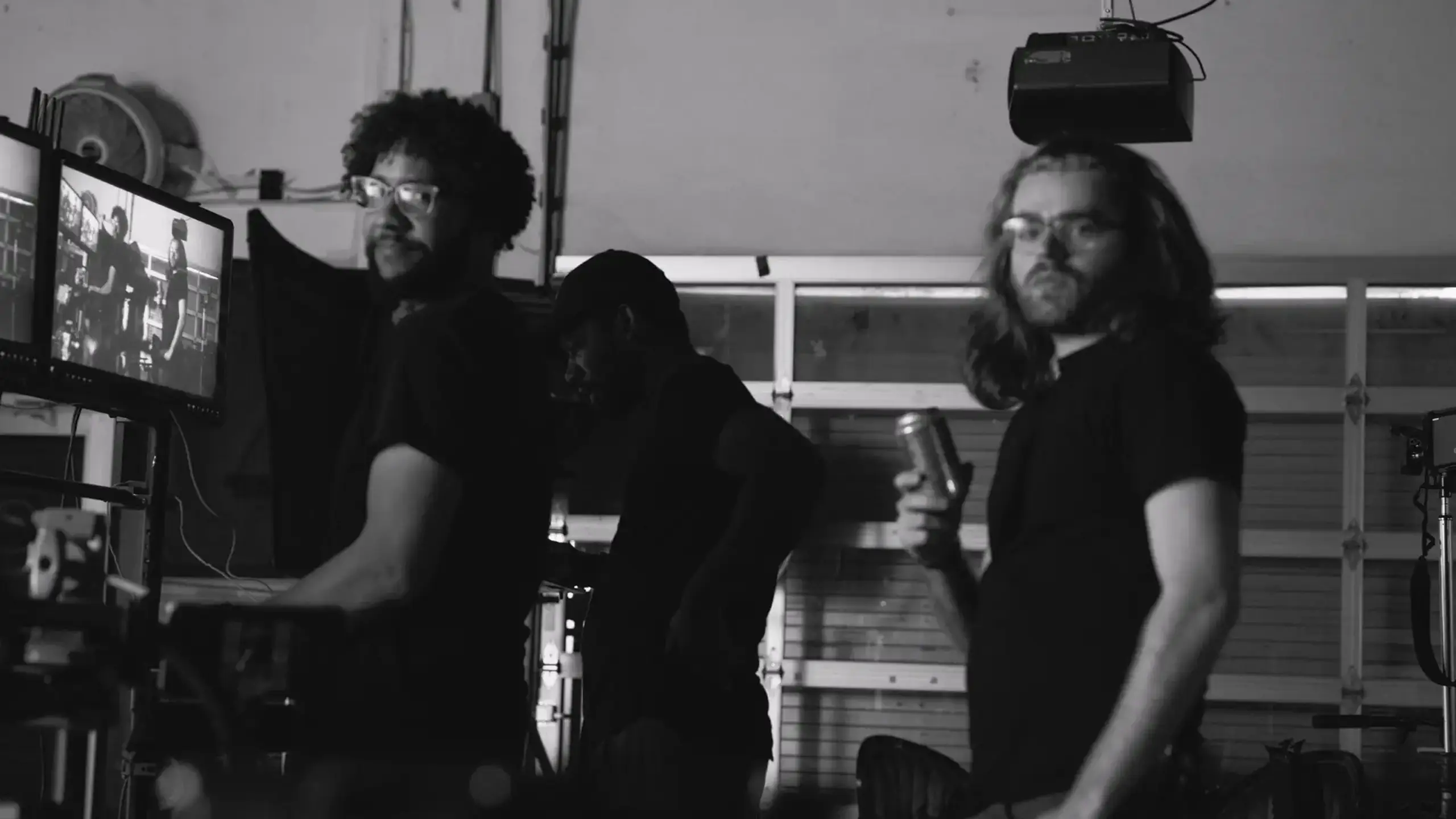
If you want serious results, your ***video editing software*** choice matters more than people admit.
At C&I Studios, every project is judged on clarity, storytelling strength, efficiency, and final polish, and the software defines all of that. Most editors struggle not because they lack skill, but because they use the wrong platform for the kind of work they are producing. That is a decision problem, not a creative one.
**The smartest way to choose is simple:**
What are you making, who is it for, and how demanding is the workflow?
Once you think that way, the differences between tools become clear.
## What Editing Software Really Is
Video editing tools today are more than “cut and export” platforms. Each one supports very different professional realities. Some are built for speed. Some for cinematic precision. Some for massive team pipelines. Others for solo efficiency.
Your choice should match your reality in [video production](https://c-istudios.com/video-production-services/) and content creation, not what is trending online.
## Premiere Pro
Adobe Premiere Pro is the software most people either start with or eventually meet in their career. There is a reason. It is flexible, professional, widely recognized, and deeply connected to Adobe’s ecosystem.
### Where Premiere Fits Well
Premiere is strong when you need:
- Agency-level hybrid work
- Quick changes driven by clients
- Heavy title and motion integration
- Compatibility with many editors
This is why studios like C&I Studios keep it in rotation, it adapts well to real-world demands.
### Where It Can Struggle
Premiere can be demanding on weaker machines. It may feel heavy with very large timelines or extremely high-res media. If you are working 4K-8K with heavy grading, you will eventually push against it. That does not make it bad. It means you must use it where it makes the most sense.
## Final Cut Pro
Final Cut Pro is all about speed and clean performance. It is optimized incredibly well for Apple hardware, which makes it one of the fastest tools for editors who want smooth timelines and fast delivery.
It shines in modern creative workflows where time matters.
### When Final Cut Makes Sense
- Fast editorial environments
- YouTube and branded storytelling
- Documentaries
- Efficient solo workflows
### What To Consider
Final Cut exists inside Apple’s world. Collaboration across mixed systems is possible, but not its strong suit. If you work heavily inside collaborative agencies or multi-system studios, you need to plan carefully. For many professional editors and creators, though, it is incredibly powerful.
## DaVinci Resolve
Resolve is what you choose when precision matters. It began as a color tool. That DNA still defines it. If you care about accuracy, depth, true cinematic control, and professional finishing, Resolve is hard to beat.
At C&I Studios, Resolve plays a major role in film-level finishing, high-end grading, and elite polish.
### Why Resolve Stands Out
- Best-in-class color tools
- Excellent HDR and film finishing
- Professional audio environment
- Advanced compositing inside the software
Even the free version is extremely capable.
### The Reality
Resolve demands structure and discipline. It is not a “drag clips and go” mindset if you want full value from it. For precise, controlled visual work, it is unmatched.
## Avid Media Composer
Avid remains dominant in broadcast television, film editing, newsrooms, and massive collaborative environments. It is built to handle huge projects, multiple editors working together, and highly controlled pipelines.
Avid is not about glamour. It is about stability. That is why large studios still rely on it.
## Choose By Use Case
There is no universal “best software.” There is only the right tool for a specific workflow.
### Short-Form & Brand Work
For ongoing brand assets and quick storytelling, you need speed and flexibility. Premiere, Final Cut, and Resolve all perform well here depending on system and preference.
### Documentary
Documentaries require media stability, timeline management, and reliability. Premiere, Avid, and Resolve all serve well depending on environment and scale.
### Cinematic Work
If your goal is visually elite film, Resolve naturally rises to the top because color, finishing, and precision matter here.
### Agency & Studio Environments
Where collaboration, motion design, and multi-tool pipelines exist, Premiere has an advantage due to Adobe integration.
## Smart Selection Checklist
Think clearly. Ask the right questions. Then choose.
- What platform do you work on?
- How big are your projects?
- Do you need speed or perfect control?
- Are you working solo or with a team?
- Do you have strong hardware?
- Will y[our work](https://c-istudios.com/our-work/) become more complex later?
If your editing tool constantly crashes, lags, limits color work, or slows delivery, that is not normal. That simply means the tool does not fit the job.
## How C&I Studios Chooses
We do not pick software emotionally. We select based on outcome. Every tool has strengths. Every tool has weaknesses. Professional studios don’t argue about tools. They choose according to the story, timeline, visual demand, and ultimate delivery requirement.
The right platform supports the creative vision. The wrong one quietly restricts it.
### Performance And Speed
Once you understand the “role” of each platform, the next layer is performance. Not all editing software handles timelines the same. Some tools are fast on laptops. Some need heavy machines. The wrong match creates frustration.
Final Cut Pro is incredibly optimized on Apple systems. It delivers smooth playback, fast renders, and efficient performance even on demanding projects. Adobe Premiere Pro is powerful, but it benefits from strong GPUs and well-built PCs.
DaVinci Resolve can be extremely fast, but it rewards systems with better RAM, GPUs, and organized media management. Avid prioritizes stability and reliability over flashy speed, which matters in big editorial environments.
Performance affects everything: how fast you deliver, how stable your edit feels, and how reliable your workflow is inside real video production environments.
## Collaboration & Team Workflows
If you work alone, almost any editor can function. But if you work inside agencies, studios, or collaborative pipelines, your editing software must support teamwork.
Premiere Pro integrates well with design assets, motion work, and multi-editor environments. Avid was literally built for massive team structures and remains the strongest option for long-form collaborative work. Resolve is catching up fast and is now a legitimate multi-user system. Final Cut supports collaboration, but it is still strongest in smaller teams or individual environments.
C&I Studios treats collaboration as a core requirement. When multiple editors, colorists, sound engineers, and directors are involved, the wrong tool slows everyone down. The right one makes teamwork invisible.
## Pricing And Value
Budget matters, but value matters more.
Premiere works on subscription. Resolve offers a powerful free version and a one-time paid Studio upgrade. Final Cut is a one-time license. Avid uses subscription and enterprise licensing.
Do not pick purely because it is cheap. Pick based on the support, capability, and future scalability you need. Cheap software that limits your creativity eventually costs more in lost time, frustration, and weak output.
## Plugins And Expansion
Plugins expand what an editor can do. Premiere integrates deeply with motion graphics templates, effects packages, audio tools, and creative add-ons. Resolve gives you built-in compositing and high-end tools before you even add anything else.
Final Cut thrives with third-party plugins that expand its already fast workflow. Avid focuses more on controlled professional environments, so plugins are used more strategically.
Great editors do not rely on plugins to compensate for weak software. They use plugins to extend capability once the foundation is already strong.
## Real Decision Framework
Here is a clear way to choose intelligently.
### Ask yourself
- Are you building long-term skills or short-term edits?
- Are you working solo or inside a team?
- Is your focus speed or accuracy?
- Do you need cinema-grade results or efficient storytelling?
- Does your hardware realistically support the software you want?
- Will your work evolve toward bigger opportunities?
Match the tool to the reality, not the trend. When your software aligns with your creative world, your editing becomes smoother, stronger, and more confident. That is how [content creation](https://c-istudios.com/content-creation-services/) moves from “just getting it done” to building meaningful, professional output.
## How C&I Studios Thinks Strategically
At C&I Studios, we do not chase hype. We build workflows that support creativity, storytelling, reliability, and future growth. Each platform plays a defined role. Each is chosen deliberately. That is how professional studios maintain quality, consistency, and trust.
And that is exactly how you should decide too.
If you understand your goals, your audience, and your workflow needs, choosing the right software becomes far clearer than most people realize. The right platform supports your creativity. The wrong one quietly limits it. And when your tools finally align with your vision, your results start to feel different, stronger, smoother, more intentional.
If you want guidance, partnership, or a production team that understands both creativity and technical depth,[C&I Studios](https://c-istudios.com/contact/) is built for exactly that.
## Work with C&I Studios
If you are planning a project like this, our team can take it from concept to final delivery. Explore our [post-production services](https://c-istudios.com/post-production-services/), browse [our work](https://c-istudios.com/our-work/) to see how we tell brand stories, and [get in touch](https://c-istudios.com/contact/) when you are ready to start.
Originally published January 3, 2026
---
*This content is from [C&I Studios](https://c-istudios.com), a full-service production company.*
---
# Video Editing Tips That Improve Footage Quality Fast | C&I Studios
> Published: January 1, 2026
> Categories: Film & TV
> Source: https://c-istudios.com/video-editing-tips-that-improve-footage-quality-fast-ci-studios/
---
.cib{--paper:#1b1d1f;--ink:#fff;--body:#d5d7d9;--muted:#8b9096;--line:rgba(255,255,255,.12);--thumb:#2b2e31;--card:#212426;--accent:#c02b0a;--blue:#5B8FA8;--serif:'Playfair Display',Georgia,serif;--sans:'Poppins',-apple-system,sans-serif;--measure:900px;background:var(--paper);color:var(--body);font-family:var(--sans);line-height:1.6;position:relative;left:50%;transform:translateX(-50%);width:90vw;max-width:1920px}
.cib *{box-sizing:border-box}
.cib .kicker{max-width:var(--measure);margin:58px auto 0;padding:0 22px;font-size:12.5px;font-weight:700;letter-spacing:2.5px;text-transform:uppercase;color:var(--blue)}
.cib h1.cibh1{text-wrap:balance;font-family:var(--serif);font-weight:500;font-size:clamp(46px,6vw,72px);line-height:1.08;color:var(--ink);max-width:var(--measure);margin:18px auto 0;padding:0 22px;letter-spacing:-.5px}
.cib .metarow{max-width:var(--measure);margin:20px auto 0;padding:0 22px;color:var(--muted);font-size:14px}
.cib .hero{position:relative;width:100%;height:0;padding-bottom:56.25%;overflow:hidden;margin:48px auto 0;border-top:1px solid var(--line);border-bottom:1px solid var(--line)}
.cib .hero .ph{width:100%;aspect-ratio:16/9;background:var(--thumb);border-top:1px solid var(--line);border-bottom:1px solid var(--line);display:flex;align-items:center;justify-content:center;color:#7d8288;font-size:13px;text-align:center;padding:0 20px}
.cib .body{max-width:var(--measure);margin:12px auto 0;padding:52px 22px 6px}
.cib .body.lead p:first-child{font-size:23px;line-height:1.62;color:var(--ink)}
.cib .body p{font-size:18.5px;line-height:1.85;margin:0 0 30px;color:var(--body)}
.cib .body h2{text-wrap:balance;font-family:var(--serif);font-weight:500;font-size:clamp(32px,4vw,48px);line-height:1.22;color:var(--ink);margin:70px 0 20px;letter-spacing:-.3px}
.cib .body h3{text-wrap:balance;font-family:var(--sans);font-weight:600;font-size:22px;color:var(--ink);margin:38px 0 8px}
.cib .body a{color:var(--ink);text-decoration:underline;text-decoration-color:rgba(255,255,255,.4);text-underline-offset:3px}
.cib .body a:hover{text-decoration-color:var(--ink)}
.cib .ctable{width:100%;border-collapse:collapse;margin:16px 0 30px;font-size:16px}
.cib .ctable th{background:#000;color:#fff;text-align:left;padding:10px 12px;font-family:var(--sans)}
.cib .ctable td{padding:10px 12px;border-bottom:1px solid var(--line);color:var(--body)}
.cib .inimg{position:relative;width:100%;height:0;padding-bottom:56.25%;overflow:hidden;margin:72px auto;border-top:1px solid var(--line);border-bottom:1px solid var(--line)}
.cib .inimg .ph{width:100%;aspect-ratio:16/9;background:var(--thumb);border-top:1px solid var(--line);border-bottom:1px solid var(--line);display:flex;align-items:center;justify-content:center;color:#7d8288;font-size:13px}
.cib .origpub{max-width:var(--measure);margin:60px auto 0;padding:26px 22px 0;border-top:1px solid var(--line);color:var(--muted);font-size:13.5px}
.cib .related{max-width:1200px;margin:64px auto 0;padding:34px 22px 76px}
.cib .related h3{font-family:var(--sans);font-size:12.5px;letter-spacing:2px;text-transform:uppercase;color:var(--ink);margin:0 0 24px}
.cib .grid{display:grid;grid-template-columns:repeat(3,1fr);gap:28px}
.cib .rc{background:var(--card);border:1px solid var(--line);display:block;text-decoration:none;color:inherit;transition:border-color .15s}
.cib a.rc:hover{border-color:rgba(255,255,255,.5)}
.cib .rc .thumb{position:relative;width:100%;height:0;padding-bottom:56.25%;background:var(--thumb);overflow:hidden}
.cib .rc .thumb img{position:absolute!important;top:0!important;left:0!important;width:100%!important;height:100%!important;object-fit:cover!important;margin:0!important}
.cib .rc .cc{padding:14px 15px 17px}
.cib .rc .rt{font-family:var(--serif);font-weight:500;font-size:16px;line-height:1.3;color:var(--ink);margin:0 0 6px}
.cib .rc .rm{font-size:11px;letter-spacing:1px;text-transform:uppercase;color:var(--muted)}
.cib img{margin:0!important;padding:0!important;display:block!important;vertical-align:top;max-width:100%}
.cib .hero img,.cib .inimg img{position:absolute!important;top:0!important;left:0!important;width:100%!important;height:100%!important;object-fit:cover!important;margin:0!important;padding:0!important;border:0!important;display:block!important;aspect-ratio:auto!important}
.cib .hero+.body{padding-top:36px}
@media(max-width:760px){.cib .grid{grid-template-columns:1fr}.cib .body h2{margin:52px 0 16px}.cib .body p{font-size:17.5px}.cib .inimg,.cib .hero{margin-top:44px}}
.cib .vembed{max-width:var(--measure);margin:44px auto;padding:0 22px}.cib .vembed .vwrap{position:relative;width:100%;height:0;padding-bottom:56.25%}.cib .vembed .vwrap iframe{position:absolute;top:0;left:0;width:100%;height:100%;border:0}
Film & TV
# Video Editing Tips That Improve Footage Quality Fast | C&I Studios
10 min read

When people search for ***video editing tips***, they usually hope for secret tricks: a magic LUT, one paid plugin, or some hidden timeline setting that “fixes” everything. Reality is different. The biggest quality jump rarely comes from gear upgrades; it comes from disciplined editing choices.
Editing determines pacing, meaning, emotional tone, and viewer retention. Weak editing makes expensive footage look cheap. Strong editing turns even average footage into something watchable, persuasive, and memorable.
Good editing does not mean adding more. It means controlling time, guiding attention, reducing friction, and shaping the viewer’s experience with intention. This is why professional editors obsess over rhythm, shot selection, story flow, and detail consistency long before they worry about flashy effects.
Viewers today scroll fast, judge instantly, and abandon videos without hesitation. If editing wastes their time, they leave. If editing respects their attention, they stay, engage, and respond.
Whether the goal is brand communication, storytelling, education, or [marketing](https://c-istudios.com/media-marketing-consultation-services/), disciplined editing choices directly affect watch time, emotional connection, and message retention.
## Cut everything that does not serve the video
Unfocused editing happens when every shot is kept “because it looks nice.” That approach destroys clarity. The first rule of effective editing is brutal selection. Every second must justify its existence. If it does not add context, meaning, personality, or movement, it weakens the final piece.
A simple mental test helps: if a viewer skipped this shot entirely, would they miss something important? If the answer is no, cut it. Professional editors treat time like currency. Every unnecessary second taxes viewer patience. Trimming aggressively tightens narrative, strengthens rhythm, and instantly improves perceived quality, even without technical enhancements.
This mindset is especially important in [content creation](https://c-istudios.com/content-creation-services/) environments where retention determines success. Shorter, sharper edits feel more professional. Long, unfocused edits feel amateur. Cutting deliberately is not about speed; it is about respect for the audience.
## Use pacing as a creative tool, not an afterthought
Most beginners think pacing is simply “fast vs slow.” In reality, pacing is how the edit breathes. Good pacing blends shot length, movement, cuts, pauses, and transitions so the video feels intentional rather than mechanical. Too fast feels chaotic and tiring. Too slow feels boring. Balanced pacing feels alive.
A strong structure usually follows a natural rhythm: ***establish → develop → escalate → release***. Each section carries a certain energy, and pacing must match it. Dialogue scenes need space to breathe. Action sequences need momentum. Emotional moments often benefit from slower, lingering cuts.
Editors who control pacing control emotion. They guide tension, curiosity, relief, and focus. Audiences rarely verbalize why a video “feels right,” but pacing is usually the reason. Good pacing also leads to better comprehension and stronger storytelling impact.
## Build edits around story, not just visuals
Great-looking footage without narrative direction collapses quickly. Even a simple video benefits from a clear story spine. Story gives purpose to cuts, transitions, music choices, and scene order. Without story logic, editing becomes random decoration.
Story does not always mean a dramatic plot. It means intention and structure. A cinematic ad tells a brand journey. A short commercial guides a viewer from problem to solution. A tutorial moves from setup to explanation to demonstration to result. A documentary follows discovery and perspective. Story ensures each moment leads naturally to the next.
Professional editors constantly ask: what is the viewer supposed to feel here? What do they need to understand? What should they anticipate next? Story-based editing turns footage into experience rather than noise.
## Make your first 5 seconds do the real work
Attention is fragile. The beginning of a video carries the highest dropout risk. Poor openings are slow, confusing, self-indulgent, or overdecorated. Strong openings are precise, assertive, and meaningful.
**An effective start usually includes three things quickly:**
- Clear context, what is this about?
- Viewer relevance, why should I care?
- Energy and direction, where is this going?
Avoid long intros, meaningless logo animations, and shots that exist only because they “look cool.” People judge instantly. If the opening wastes time, they leave before the video even starts delivering value. Tight, purposeful beginnings immediately raise professional quality.
## Stabilize, balance, and maintain visual consistency
Consistent visuals communicate competence. Distracting visuals communicate inexperience, even if storytelling is strong. Stability, exposure consistency, and color coherence play massive roles in perceived quality.
Shaky camera movement makes footage feel weak unless intentional. Exposure shifts between shots break immersion. Random color tones disconnect scenes emotionally. Fixing these does not require overcomplication; it requires awareness and discipline.
Keep motion controlled or intentionally dynamic. Balance brightness so cuts flow naturally. Maintain color character so the video feels unified.
Viewers respond more positively to footage that feels calm, coherent, and visually grounded. Consistency is silent quality.
## Use sound as seriously as visuals
Bad audio ruins good footage more effectively than almost anything else. Viewers tolerate low resolution more willingly than messy sound. Noise, unbalanced levels, inconsistent vocal clarity, and poorly handled background sound drop perceived quality instantly.
**Editing with sound discipline means:**
- Clean dialogue first
- Controlled ambient presence
- Music supporting emotion without overpowering speech
- Well-timed sound emphasis when necessary
Good sound also influences pacing and emotion. Silence can create focus and tension. A single well-placed sound cue can enhance impact more than any visual effect. Treat audio editing with the same rigor as visual editing if you want footage to truly improve.
## Keep transitions invisible unless they serve purpose
Beginners often rely on transitions to “make things interesting.” In reality, good editing rarely calls attention to transitions. Most high-quality edits use straight cuts, motivated movement cuts, or subtle dissolves. Loud transitions distract from the story and feel like compensation for weak structure.
Transitions should only be noticeable when they are telling the story better, such as time jumps, emotional shifts, or stylistic identity in a brand video. Otherwise, invisible transitions protect immersion and professionalism.
## Match movement, emotion, and beat intelligently
Strong edits feel musical, even in non-[music video](https://c-istudios.com/video-production-services/music-video-production/)s. Rhythm exists in visual motion, dialogue cadence, scene emotion, and soundtrack tempo. Cutting without rhythm feels awkward. Cutting with rhythm feels satisfying and natural.
When movement in one shot continues or complements movement in the next, the brain experiences smooth flow. When emotional tone shifts align with music energy changes, the viewer feels guided rather than confused.
***Rhythm does not mean fast editing***; it means edits align with how the moment feels.
## Color grading should enhance, not disguise
Many editors treat color grading as a rescue tool. Instead, it should be a refinement tool. Overgrading introduces distraction, unnatural tones, and visual fatigue. Subtle, coherent grading helps reinforce mood, tone, and story context.
Warm tones can feel inviting or nostalgic. Cooler tones feel distant or intense. Contrast influences emotional sharpness. Saturation changes perceived reality and emotional psychological response.
But the goal is enhancement, not visual noise. Thoughtful grading contributes to cohesion and identity without overpowering content.
## Edit like the viewer matters
The most important habit is thinking like the person watching. Viewers do not care how hard the edit was, how long the rendering took, or how many layers you used. They care whether the video wastes their time or rewards it.
Editing that respects viewers is tight, meaningful, engaging, and emotionally aware. Editing that ignores viewers becomes self-centered and weak. The difference is attention to detail, discipline in decision-making, and willingness to cut ego from the timeline.
When editing respects the audience, quality rises automatically, not because of tricks, but because of intention.
## Develop a disciplined editing workflow instead of “fixing as you go”
Many editors slow themselves down because they jump into timelines randomly. Clips get dragged anywhere, adjustments happen without order, and after ten minutes nothing feels controlled. A disciplined workflow does not just make editing faster; it makes the final video stronger. The clearer your process, the clearer your final story.
**A professional workflow usually follows a logical sequence:**
1. Import and organize footage
2. Select strong clips and remove weak material
3. Build a story structure
4. Refine pacing and timing
5. Fix visuals (stabilization, exposure consistency, color balance)
6. Shape audio
7. Apply finishing touches
This order matters because it prevents endless back-and-forth correction. It also mirrors how serious video production teams operate, edit for story first, polish later. When you work clean, your footage gains clarity and direction automatically.
## Use markers, labels, and bins to keep control
Good editing is not only about creativity, it is about control. When your timeline is chaos, your thinking becomes chaos. When y[our work](https://c-istudios.com/our-work/)space is structured, your decision-making becomes sharper. Professionals rarely work in messy timelines. They organize deliberately so they can focus on storytelling rather than searching.
Markers help track key beats, emotional moments, dialogue emphasis, and timing cues. Labels make it easier to group similar visuals. Bins divide footage into scenes, talking points, camera angles, or takes so you can find exactly what you need without hesitation.
Editing becomes more powerful when you eliminate friction from your own process.
## Prioritize clarity over decoration
Many editors believe “more happens = better editing.” The opposite is true. Every added effect, pop, whip, or animation carries cognitive weight. If viewers need to mentally fight through edits, they disengage. The best edits feel invisible because viewers are too engaged in the story to notice.
This does not mean your videos must be visually plain. It means every stylistic choice must serve communication. If an effect clarifies information, supports emotion, or strengthens visual direction, it is valuable. If it simply adds noise, it weakens your video.
Consistency, structure, and intention create quality much faster than endless motion graphics ever will.
Good editing respects attention more than ego.
## Control viewer focus with framing, timing, and emphasis
Editing is not just rearranging clips; it is behavior design. You are constantly deciding what the viewer should look at and what they should feel while looking at it. That requires intentional focus control.
**Practical ways editors guide attention include:**
- Cutting on meaningful motion or speech emphasis
- Holding shots long enough for the brain to register information
- Cropping or reframing slightly to ensure important detail remains center-weighted
- Timing text overlays so they are readable without rush
- Using subtle emphasis to highlight key moments instead of visual overload
When focus is guided well, viewers feel comfortable, confident, and connected to the content. When focus is uncontrolled, viewers feel lost, and lost viewers do not stay.
## Master B-roll as storytelling, not decoration
B-roll is one of the most powerful tools in editing, when used correctly. It should never exist “just to fill space.” Meaningful B-roll reinforces narrative, adds context, smooths pacing, and deepens emotional tone. Mindless B-roll does nothing except distract.
Good B-roll aligns directly with story purpose. It should either show what is being explained, strengthen setting, deepen character, or visually demonstrate progress. The best editors select B-roll intentionally rather than stacking random visuals to “avoid jump cuts.”
Strong supporting visuals turn information into experience, especially in educational and commercial work where clarity matters deeply.
B-roll should help the viewer feel like they are seeing something important, not simply “seeing more footage.”
## Edit with platform behavior in mind
Editing today is not platform-neutral. Different environments shape viewer expectations dramatically. A cinematic four-minute storytelling pace may work beautifully on a large screen but fail instantly in short-form environments. Meanwhile, short-form rhythm often feels too frantic for longer narrative work. Understanding where your video lives is essential.
Short-form platforms demand punch and immediate engagement. Longer platforms reward depth, buildup, and emotional breathing room. Marketing videos often benefit from tight pacing and strategic clarity. Educational content benefits from stable rhythm and readable timing. Entertainment leans on emotional rhythm and flow.
Editing improves when it respects context, another reason professional workflows in [video production](https://c-istudios.com/video-production-services/) stay intentional rather than generic.
## Use music strategically, not emotionally
Music influences mood, pacing, perception of professionalism, and audience response. The mistake many editors make is choosing music based on what they personally “like” instead of what supports the story. Music should never fight with dialogue, overwhelm emotional space, or set the wrong tone.
A strategic approach selects music that matches rhythm intent, supports narrative tension or relief, and carries natural progression. Keep volume disciplined. Avoid loudness spikes.
Ensure emotional tone aligns with message. Treat music like a structural element, not background noise.
## Learn when to stop editing
Over-editing is a real problem. At some point, refinement stops improving and starts damaging the video. When you endlessly tweak timing or keep trying to “feel something different” from a finished sequence, you often weaken clarity instead of enhancing it.
A helpful rule: if a change does not clearly improve comprehension, pacing, or emotion, it is not necessary. Professional editors know when a piece is finished. They do not keep editing for the sake of comfort. Discipline builds confidence and confidence builds stronger final work.
## Editing skill compounds over time
No single tip transforms editing overnight. Improvement happens because of repetition, attention, and honesty.
*The more you edit, the more you notice rhythm intuitively*. The more you study professional work, the more you understand why edits feel right. The more disciplined you become, the more control you gain over viewer experience.
Editing is a craft, not a trick. Invest time, analyze your own work critically, and apply intentional structure, your footage will always benefit.
## Work with C&I Studios
If you are planning a project like this, our team can take it from concept to final delivery. Explore our [film and TV production](https://c-istudios.com/film-and-tv-production/), browse [our work](https://c-istudios.com/our-work/) to see how we tell brand stories, and [get in touch](https://c-istudios.com/contact/) when you are ready to start.
Originally published January 1, 2026
---
*This content is from [C&I Studios](https://c-istudios.com), a full-service production company.*
---
# AI Social Media Marketing Insights for Brands
> Published: December 30, 2025
> Categories: Commercial & Brand
> Source: https://c-istudios.com/ai-social-media-marketing-insights-for-brands/
---
.cib{--paper:#1b1d1f;--ink:#fff;--body:#d5d7d9;--muted:#8b9096;--line:rgba(255,255,255,.12);--thumb:#2b2e31;--card:#212426;--accent:#c02b0a;--blue:#5B8FA8;--serif:'Playfair Display',Georgia,serif;--sans:'Poppins',-apple-system,sans-serif;--measure:900px;background:var(--paper);color:var(--body);font-family:var(--sans);line-height:1.6;position:relative;left:50%;transform:translateX(-50%);width:90vw;max-width:1920px}
.cib *{box-sizing:border-box}
.cib .kicker{max-width:var(--measure);margin:58px auto 0;padding:0 22px;font-size:12.5px;font-weight:700;letter-spacing:2.5px;text-transform:uppercase;color:var(--blue)}
.cib h1.cibh1{text-wrap:balance;font-family:var(--serif);font-weight:500;font-size:clamp(46px,6vw,72px);line-height:1.08;color:var(--ink);max-width:var(--measure);margin:18px auto 0;padding:0 22px;letter-spacing:-.5px}
.cib .metarow{max-width:var(--measure);margin:20px auto 0;padding:0 22px;color:var(--muted);font-size:14px}
.cib .hero{position:relative;width:100%;height:0;padding-bottom:56.25%;overflow:hidden;margin:48px auto 0;border-top:1px solid var(--line);border-bottom:1px solid var(--line)}
.cib .hero .ph{width:100%;aspect-ratio:16/9;background:var(--thumb);border-top:1px solid var(--line);border-bottom:1px solid var(--line);display:flex;align-items:center;justify-content:center;color:#7d8288;font-size:13px;text-align:center;padding:0 20px}
.cib .body{max-width:var(--measure);margin:12px auto 0;padding:52px 22px 6px}
.cib .body.lead p:first-child{font-size:23px;line-height:1.62;color:var(--ink)}
.cib .body p{font-size:18.5px;line-height:1.85;margin:0 0 30px;color:var(--body)}
.cib .body h2{text-wrap:balance;font-family:var(--serif);font-weight:500;font-size:clamp(32px,4vw,48px);line-height:1.22;color:var(--ink);margin:70px 0 20px;letter-spacing:-.3px}
.cib .body h3{text-wrap:balance;font-family:var(--sans);font-weight:600;font-size:22px;color:var(--ink);margin:38px 0 8px}
.cib .body a{color:var(--ink);text-decoration:underline;text-decoration-color:rgba(255,255,255,.4);text-underline-offset:3px}
.cib .body a:hover{text-decoration-color:var(--ink)}
.cib .ctable{width:100%;border-collapse:collapse;margin:16px 0 30px;font-size:16px}
.cib .ctable th{background:#000;color:#fff;text-align:left;padding:10px 12px;font-family:var(--sans)}
.cib .ctable td{padding:10px 12px;border-bottom:1px solid var(--line);color:var(--body)}
.cib .inimg{position:relative;width:100%;height:0;padding-bottom:56.25%;overflow:hidden;margin:72px auto;border-top:1px solid var(--line);border-bottom:1px solid var(--line)}
.cib .inimg .ph{width:100%;aspect-ratio:16/9;background:var(--thumb);border-top:1px solid var(--line);border-bottom:1px solid var(--line);display:flex;align-items:center;justify-content:center;color:#7d8288;font-size:13px}
.cib .origpub{max-width:var(--measure);margin:60px auto 0;padding:26px 22px 0;border-top:1px solid var(--line);color:var(--muted);font-size:13.5px}
.cib .related{max-width:1200px;margin:64px auto 0;padding:34px 22px 76px}
.cib .related h3{font-family:var(--sans);font-size:12.5px;letter-spacing:2px;text-transform:uppercase;color:var(--ink);margin:0 0 24px}
.cib .grid{display:grid;grid-template-columns:repeat(3,1fr);gap:28px}
.cib .rc{background:var(--card);border:1px solid var(--line);display:block;text-decoration:none;color:inherit;transition:border-color .15s}
.cib a.rc:hover{border-color:rgba(255,255,255,.5)}
.cib .rc .thumb{position:relative;width:100%;height:0;padding-bottom:56.25%;background:var(--thumb);overflow:hidden}
.cib .rc .thumb img{position:absolute!important;top:0!important;left:0!important;width:100%!important;height:100%!important;object-fit:cover!important;margin:0!important}
.cib .rc .cc{padding:14px 15px 17px}
.cib .rc .rt{font-family:var(--serif);font-weight:500;font-size:16px;line-height:1.3;color:var(--ink);margin:0 0 6px}
.cib .rc .rm{font-size:11px;letter-spacing:1px;text-transform:uppercase;color:var(--muted)}
.cib img{margin:0!important;padding:0!important;display:block!important;vertical-align:top;max-width:100%}
.cib .hero img,.cib .inimg img{position:absolute!important;top:0!important;left:0!important;width:100%!important;height:100%!important;object-fit:cover!important;margin:0!important;padding:0!important;border:0!important;display:block!important;aspect-ratio:auto!important}
.cib .hero+.body{padding-top:36px}
@media(max-width:760px){.cib .grid{grid-template-columns:1fr}.cib .body h2{margin:52px 0 16px}.cib .body p{font-size:17.5px}.cib .inimg,.cib .hero{margin-top:44px}}
.cib .vembed{max-width:var(--measure);margin:44px auto;padding:0 22px}.cib .vembed .vwrap{position:relative;width:100%;height:0;padding-bottom:56.25%}.cib .vembed .vwrap iframe{position:absolute;top:0;left:0;width:100%;height:100%;border:0}
Commercial & Brand
# AI Social Media Marketing Insights for Brands
10 min read

Social media has become one of the most competitive environments for brands, and teams are now expected to publish faster, analyze deeper, and create smarter content. Artificial intelligence is becoming a core partner in this shift, giving marketers new ways to streamline research, automate routine tasks, and support large-scale content strategies.
When used intentionally, ***AI social media marketing*** helps teams focus more on creative decisions and less on repetitive work that consumes valuable time.
AI does not replace the need for human direction. Instead, it reinforces the parts of social media workflows that benefit from efficiency or data-driven insight. From planning weekly content calendars to tagging assets, pulling performance analytics, and maintaining brand consistency, AI systems help build scalable processes around a brand’s message.
This foundation allows creative teams to tell better stories through formats like short-form video, branded campaigns, and multi-platform content ecosystems.
## Why efficiency matters in social media campaigns
Most brands now produce content across multiple channels, each with its own requirements and audience expectations. Teams often manage large volumes of posts, repurposed assets, and platform-specific guidelines.
AI tools support these operations by reducing time spent on manual work such as caption drafting, A/B comparisons, and trend analysis. With these tasks handled, marketers can shift their focus to strategy and consistent messaging.
Working with a production partner that understands both storytelling and digital execution improves this workflow even further. For example, teams that collaborate with specialists in video production often scale higher-impact campaigns by combining AI-supported planning with professional creative output.
This approach leads to content that aligns more closely with brand identity and long-term digital goals.
## Building smarter content systems with AI
AI helps teams build reliable internal systems that make posting more consistent and less time-intensive. These systems typically include automated scheduling, asset tagging, content clustering, and performance-based recommendations.
Once established, these workflows allow social teams to operate with predictable timelines and reduce unnecessary revision cycles.
### Automated content planning and research
Planning content manually can take hours each week. AI tools help simplify this early-stage research by identifying patterns, summarizing audience interests, and highlighting potential topics.
These insights give marketers a starting point for weekly or monthly content calendars. With a clearer roadmap, teams can then dedicate more attention to storytelling, production value, and distribution strategy.
### Organizing large content libraries
Social media programs often accumulate hundreds of videos, thumbnails, graphics, and captions. AI-powered asset libraries can sort, tag, and group content so teams can find files in seconds.
This becomes especially valuable when repurposing old footage into new formats. A well-organized archive ensures that nothing goes unused and that brand messaging stays aligned across platforms.
### Insights that guide creative direction
AI also helps translate analytics into practical creative decisions. Instead of scrolling through endless spreadsheets, marketers can surface the strongest patterns around watch time, engagement curves, and audience behavior.
These insights shape future creative decisions, especially when working with a partner offering [creative development](https://c-istudios.com/creative-marketing-services/) services that specialize in adapting ideas for visual storytelling.
## Improving creative output through AI assistance
AI will not generate your brand identity or define campaign goals, but it can support the production process by providing structure around your creative workflow. This includes brainstorming concepts, refining early drafts, and testing elements before they go live.
Caption drafting and refinement
Captions are often one of the most time-consuming components of social media posting. AI can provide draft options that follow a brand’s tone, target audience, and preferred formats.
Teams can then refine these drafts to match brand guidelines. This combination of automation and human direction ensures clarity without sacrificing authenticity.
### Visual asset suggestions
Many AI tools can recommend visuals, clip selections, or themes based on trending formats or past performance. These suggestions do not replace creative judgment, but they help teams filter options quickly when developing new social content.
### Enhancing long-form content distribution
For brands producing long-form video, AI can identify key moments and convert them into short-form clips optimized for platforms like Instagram, TikTok, and YouTube. When paired with dedicated post-production workflows, this strategy increases content output while preserving storytelling quality.
### Strengthening audience engagement with AI
AI improves engagement by making communication more timely and organized. Brands can reply to questions faster, tailor messages more precisely, and identify which topics resonate most deeply with their audience.
### Personalized recommendations
Audiences respond better to content that feels relevant to their interests. AI tools analyze past behavior to provide personalized recommendations about topics, formats, or posting times. These insights help shape content that aligns more effectively with user expectations.
### Smarter community management
AI-supported community tools filter spam, draft responses to common questions, and prioritize comments that require personal attention. This allows teams to maintain active, responsive social channels without overwhelming internal resources.
### Monitoring brand mentions
AI can scan multiple platforms for brand mentions, competitor activity, and emerging trends. These insights give marketers a clearer understanding of their positioning and help them adjust messaging before issues escalate. When paired with a strategic partner specializing in content marketing, these findings can strengthen overall brand communication.
### Scaling content operations as your brand grows
As brands expand, they often experience a jump in content volume, asset management needs, and cross-platform coordination. AI assists teams during growth phases by reinforcing processes that keep output consistent and organized.
## Workflow automation for faster delivery
AI can automate steps such as resizing assets, rewriting copy for different platforms, or generating quick cutdowns of footage. This helps maintain a steady posting schedule across multiple channels without overextending internal teams.
### Maintaining quality across multiple platforms
Posting daily can strain creative consistency. AI systems help maintain brand voice by analyzing language patterns, style choices, and engagement history. This ensures that every post supports the same overarching message, even when content volume increases.
### Supporting cross-team alignment
When multiple teams or departments collaborate on social content, AI-generated summaries and shared dashboards help everyone work from the same information. This reduces confusion, shortens revision cycles, and keeps messaging unified.
## Integrating AI into a long-term content strategy
A strong social presence is built on predictable systems, clear messaging, and consistent creative output. AI strengthens these foundations by handling routine tasks and providing data-backed recommendations.
When paired with high quality creative assets, brands can scale campaigns that feel cohesive across reels, long-form storytelling, paid ads, and branded content.
Teams that produce videos regularly benefit the most from AI-driven optimization. Professional footage captured with the support of [video production](https://c-istudios.com/video-production-services/) specialists often performs better because the underlying storytelling and visual clarity are stronger.
### Turning raw footage into repeatable campaigns
After a campaign is shot, AI can extract highlight clips, categorize visual elements, and map out potential sequences for short-form content. This reduces the manual time required to sift through footage.
When AI identifies which moments attract the highest watch time or retention, brands can build a repeatable format that supports ongoing posting schedules.
### Coordinating multi-platform distribution
Most growing brands distribute content across TikTok, YouTube, Instagram, and Facebook. Each platform favors different lengths, styles, and engagement patterns. AI helps identify variations of a single video that can be optimized for each channel.
For example, an emotional story may work well as a long-form piece on YouTube, while a faster-paced version may succeed on TikTok. When this process is supported by experts in post-production, brands maintain high visual quality across all platforms.
### Supporting real-time adjustments
Social media strategies rarely stay static. AI dashboards surface performance signals early so teams can recognize what is working and pivot when needed. These insights inform creative direction, messaging, and channel allocation.
Continuous optimization becomes easier when AI organizes, compares, and summarizes campaign data into actionable insights.
## Using AI to improve brand consistency
Brand identity is shaped by consistent messaging, tone, and visual language. As teams expand their output, AI acts as a quality layer that monitors alignment and reduces avoidable inconsistencies.
### Maintaining tone and language patterns
AI models can review captions to ensure writing aligns with brand voice. They can detect off-tone wording, inconsistent phrasing, or unclear calls to action. This improves coherence across months of content and helps teams produce messaging that feels unified across all channels.
### Supporting creative consistency
Brand visuals often include color palettes, framing styles, pacing patterns, and signature transitions. AI-powered asset tagging ensures that approved stylistic elements are easy to locate and reuse.
This becomes especially valuable when collaborating with creative partners who specialize in[film production services](https://c-istudios.com/film-production-services/), since it connects high-end visuals with strong distribution workflows.
### Managing collaborative approvals
When content moves between writers, editors, and social managers, AI can help route files to the right person, provide summary notes, and maintain organized revision logs.
The result is a more efficient system that reduces duplicate work and helps teams maintain focus on strategic tasks rather than administrative bottlenecks.
### Enhancing paid social campaigns with AI
Paid social requires precision. AI helps teams optimize targeting, audience segmentation, messaging variations, and creative performance. By automating these areas, marketers build more reliable ad structures that evolve with audience feedback.
## Dynamic audience segmentation
AI-driven platforms analyze behavior patterns and grouping tendencies across large datasets. These insights help marketers refine targeting strategies by identifying which segments respond best to specific themes or formats.
For example, a campaign built around brand storytelling may resonate with one group, while behind-the-scenes content performs better with another. The more granular the insights, the more efficient the ad spend becomes.
### Testing creative variations
Paid campaigns often rely on small adjustments such as headline tweaks, color shifts, or alternative calls to action. AI helps create and compare these variations to pinpoint which combination delivers the strongest results.
This level of rapid testing transforms ad optimization into a consistent process rather than a trial-and-error approach.
### Improving ROI through predictive analytics
Predictive analytics tools estimate future campaign performance based on historical engagement, click behavior, and audience patterns. With this information, brands can shift resources toward the most promising content early in the cycle.
When these decisions inform professional creative planning through creative development, the result is a refined campaign supported by both data and storytelling expertise.
## The limitations of AI in social media marketing
AI can strengthen workflows and support creativity, but it cannot replace the strategic and emotional intelligence that drives compelling content. Teams must understand where AI assists and where human decision-making remains essential.
### AI cannot define brand identity
A brand's message, values, and purpose must come from human understanding. AI can reflect patterns but cannot create a brand's emotional core. Strategic storytelling, audience insight, and creative leadership remain human-led.
### AI-generated content still requires human refinement
Draft captions, visual ideas, and performance suggestions need editorial review. Without human oversight, content may feel generic or misaligned with brand goals. AI supports the workflow; it does not dictate the message.
### Ethical considerations
Brands must be mindful of data usage, authenticity, and transparency. Overreliance on automated messaging can appear impersonal if not managed carefully. The strongest social media strategies balance efficient automation with authentic storytelling.
## Building a sustainable AI-powered content engine
Long-term growth requires a system that blends AI tools with professional creative planning. When both elements work together, brands unlock a sustainable workflow that scales without sacrificing quality.
### Step 1. Establish foundational creative assets
High-quality visuals and strong narrative structure become the backbone of a scalable content system. When captured through video production teams, these assets maintain long-term value and can be repurposed across multiple formats.
### Step 2. Build AI-assisted workflows
After the creative foundation is in place, AI can automate scheduling, assist with drafting, organize files, and extract performance insights. This reduces repetitive tasks and gives teams more time to focus on strategy.
### Step 3. Continually refine based on performance
AI surfaces performance data, but human teams interpret it. Strategic adjustments help maintain alignment between creative output, audience behavior, and business goals.
### Step 4. Scale with professional support
As content volume grows, brands often benefit from creative partners who specialize in full-service production and distribution. Teams that work with experienced studios maintain visual consistency, stronger storytelling, and operational efficiency across all phases of a campaign.
## Driving better results with AI-supported creative workflows
Social media marketing succeeds when brands deliver clear value through compelling and consistent content. AI helps organize the process, but meaningful results still come from strong visuals, strategic decision-making, and a deep understanding of audience expectations.
By combining automation with professional storytelling, brands use data-driven insights to support creative choices and scale campaigns that build lasting engagement.
AI is not a shortcut. It is a multiplier for teams that already have a clear vision and a disciplined content structure.
To support your upcoming content initiatives, you can explore our[contact page](https://c-istudios.com/contact/) or connect with our team for guidance tailored to your social media strategy.
## Work with C&I Studios
If you are planning a project like this, our team can take it from concept to final delivery. Explore our [video production services](https://c-istudios.com/video-production-services/), browse [our work](https://c-istudios.com/our-work/) to see how we tell brand stories, and [get in touch](https://c-istudios.com/contact/) when you are ready to start.
Originally published December 30, 2025
---
*This content is from [C&I Studios](https://c-istudios.com), a full-service production company.*
---
# Social Media Marketing Metrics Explained
> Published: December 28, 2025
> Categories: Commercial & Brand
> Source: https://c-istudios.com/social-media-marketing-metrics-explained/
---
.cib{--paper:#1b1d1f;--ink:#fff;--body:#d5d7d9;--muted:#8b9096;--line:rgba(255,255,255,.12);--thumb:#2b2e31;--card:#212426;--accent:#c02b0a;--blue:#5B8FA8;--serif:'Playfair Display',Georgia,serif;--sans:'Poppins',-apple-system,sans-serif;--measure:900px;background:var(--paper);color:var(--body);font-family:var(--sans);line-height:1.6;position:relative;left:50%;transform:translateX(-50%);width:90vw;max-width:1920px}
.cib *{box-sizing:border-box}
.cib .kicker{max-width:var(--measure);margin:58px auto 0;padding:0 22px;font-size:12.5px;font-weight:700;letter-spacing:2.5px;text-transform:uppercase;color:var(--blue)}
.cib h1.cibh1{text-wrap:balance;font-family:var(--serif);font-weight:500;font-size:clamp(46px,6vw,72px);line-height:1.08;color:var(--ink);max-width:var(--measure);margin:18px auto 0;padding:0 22px;letter-spacing:-.5px}
.cib .metarow{max-width:var(--measure);margin:20px auto 0;padding:0 22px;color:var(--muted);font-size:14px}
.cib .hero{position:relative;width:100%;height:0;padding-bottom:56.25%;overflow:hidden;margin:48px auto 0;border-top:1px solid var(--line);border-bottom:1px solid var(--line)}
.cib .hero .ph{width:100%;aspect-ratio:16/9;background:var(--thumb);border-top:1px solid var(--line);border-bottom:1px solid var(--line);display:flex;align-items:center;justify-content:center;color:#7d8288;font-size:13px;text-align:center;padding:0 20px}
.cib .body{max-width:var(--measure);margin:12px auto 0;padding:52px 22px 6px}
.cib .body.lead p:first-child{font-size:23px;line-height:1.62;color:var(--ink)}
.cib .body p{font-size:18.5px;line-height:1.85;margin:0 0 30px;color:var(--body)}
.cib .body h2{text-wrap:balance;font-family:var(--serif);font-weight:500;font-size:clamp(32px,4vw,48px);line-height:1.22;color:var(--ink);margin:70px 0 20px;letter-spacing:-.3px}
.cib .body h3{text-wrap:balance;font-family:var(--sans);font-weight:600;font-size:22px;color:var(--ink);margin:38px 0 8px}
.cib .body a{color:var(--ink);text-decoration:underline;text-decoration-color:rgba(255,255,255,.4);text-underline-offset:3px}
.cib .body a:hover{text-decoration-color:var(--ink)}
.cib .ctable{width:100%;border-collapse:collapse;margin:16px 0 30px;font-size:16px}
.cib .ctable th{background:#000;color:#fff;text-align:left;padding:10px 12px;font-family:var(--sans)}
.cib .ctable td{padding:10px 12px;border-bottom:1px solid var(--line);color:var(--body)}
.cib .inimg{position:relative;width:100%;height:0;padding-bottom:56.25%;overflow:hidden;margin:72px auto;border-top:1px solid var(--line);border-bottom:1px solid var(--line)}
.cib .inimg .ph{width:100%;aspect-ratio:16/9;background:var(--thumb);border-top:1px solid var(--line);border-bottom:1px solid var(--line);display:flex;align-items:center;justify-content:center;color:#7d8288;font-size:13px}
.cib .origpub{max-width:var(--measure);margin:60px auto 0;padding:26px 22px 0;border-top:1px solid var(--line);color:var(--muted);font-size:13.5px}
.cib .related{max-width:1200px;margin:64px auto 0;padding:34px 22px 76px}
.cib .related h3{font-family:var(--sans);font-size:12.5px;letter-spacing:2px;text-transform:uppercase;color:var(--ink);margin:0 0 24px}
.cib .grid{display:grid;grid-template-columns:repeat(3,1fr);gap:28px}
.cib .rc{background:var(--card);border:1px solid var(--line);display:block;text-decoration:none;color:inherit;transition:border-color .15s}
.cib a.rc:hover{border-color:rgba(255,255,255,.5)}
.cib .rc .thumb{position:relative;width:100%;height:0;padding-bottom:56.25%;background:var(--thumb);overflow:hidden}
.cib .rc .thumb img{position:absolute!important;top:0!important;left:0!important;width:100%!important;height:100%!important;object-fit:cover!important;margin:0!important}
.cib .rc .cc{padding:14px 15px 17px}
.cib .rc .rt{font-family:var(--serif);font-weight:500;font-size:16px;line-height:1.3;color:var(--ink);margin:0 0 6px}
.cib .rc .rm{font-size:11px;letter-spacing:1px;text-transform:uppercase;color:var(--muted)}
.cib img{margin:0!important;padding:0!important;display:block!important;vertical-align:top;max-width:100%}
.cib .hero img,.cib .inimg img{position:absolute!important;top:0!important;left:0!important;width:100%!important;height:100%!important;object-fit:cover!important;margin:0!important;padding:0!important;border:0!important;display:block!important;aspect-ratio:auto!important}
.cib .hero+.body{padding-top:36px}
@media(max-width:760px){.cib .grid{grid-template-columns:1fr}.cib .body h2{margin:52px 0 16px}.cib .body p{font-size:17.5px}.cib .inimg,.cib .hero{margin-top:44px}}
.cib .vembed{max-width:var(--measure);margin:44px auto;padding:0 22px}.cib .vembed .vwrap{position:relative;width:100%;height:0;padding-bottom:56.25%}.cib .vembed .vwrap iframe{position:absolute;top:0;left:0;width:100%;height:100%;border:0}
Commercial & Brand
# Social Media Marketing Metrics Explained
8 min read

Social platforms generate massive amounts of data every day, yet many brands struggle to translate that data into meaningful decisions. Posting frequently, following trends, or experimenting with formats can feel productive, but without proper measurement, it is impossible to know what actually works. This is where ***social media marketing metrics*** become essential.
Metrics provide a structured way to evaluate visibility, interaction, and outcomes, helping teams distinguish between activity and performance. Rather than chasing trends blindly, brands that understand measurement can refine strategy, improve efficiency, and build consistency across platforms.
In modern digital environments, success in social media marketing depends less on intuition and more on interpreting the right data in the right context.
## Why social media marketing metrics matter
Metrics are the backbone of any effective social media strategy. Without them, performance is judged subjectively, often based on isolated posts or short-term reactions.
### Metrics turn content into measurable performance
Every post produces signals, whether it succeeds or fails. Metrics help translate those signals into insight by answering fundamental questions:
- Is content reaching the intended audience?
- Are users interacting meaningfully or simply scrolling past?
- Does engagement support broader business or campaign goals?
Without measurement, teams are left guessing. Metrics replace assumption with evidence, allowing strategies to evolve based on real outcomes rather than preference.
### Moving beyond vanity metrics
One of the most common mistakes in social media evaluation is over-reliance on vanity metrics. Follower counts, impressions, and likes can appear impressive but often lack context. Metrics matter not because they are large numbers, but because they indicate relevance and impact.
For example:
- A post with high impressions but no engagement may indicate weak messaging.
- A smaller audience with strong interaction often signals higher content relevance.
- Consistent engagement over time matters more than isolated viral spikes.
Metrics help teams separate surface-level visibility from meaningful performance indicators.
### Metrics align creative and business objectives
Social media does not exist in isolation. It supports awareness, education, lead generation, and brand trust. Metrics help connect creative output to these objectives by showing how content contributes to outcomes over time.
For teams investing heavily in creative execution, metrics act as a feedback loop. Instead of repeating what feels right, creators can refine based on what audiences actually respond to.
## Understanding reach and awareness metrics
Reach and awareness metrics measure how widely content is distributed across platforms. These metrics represent the first stage of performance evaluation and influence everything that follows.
### Core awareness metrics explained
The most common awareness metrics include:
- Reach: the number of unique users who see content
- Impressions: the total number of times content appears in feeds
- Follower growth: how audience size changes over time
Together, these metrics indicate how platforms distribute content and how audiences discover brands.
### Why reach metrics still matter
Although reach does not measure action directly, it provides essential context. Engagement and conversions cannot occur if content is never seen. Awareness metrics help answer questions such as:
- Is content reaching new users or only existing followers?
- Are platform algorithms distributing content consistently?
- Do certain formats perform better for visibility?
Ignoring reach entirely can lead teams to misinterpret engagement data.
### Interpreting reach in context
High reach does not automatically mean success. Reach should always be evaluated alongside engagement. A post with broad exposure but minimal interaction may indicate weak relevance. Conversely, lower reach paired with strong engagement often suggests content resonates deeply with a targeted audience.
### Visual quality and awareness performance
Visual execution plays a significant role in awareness. Content that is visually compelling tends to earn longer attention in crowded feeds. Brands that invest in [video production](https://c-istudios.com/video-production-services/) and professional photography often see stronger reach because high-quality visuals stand out and encourage pauses in fast-scrolling environments.
## Engagement metrics that reveal audience relevance
Engagement metrics show how audiences respond after encountering content. These metrics reflect interest, relevance, and perceived value.
### Key engagement metrics to monitor
Common engagement indicators include:
- Likes and reactions
- Comments and replies
- Shares and reposts
- Saves and bookmarks
- Time spent viewing content
Each action represents a different level of audience intent.
### Why engagement matters more than visibility alone
Engagement signals relevance. Platforms prioritize content that users interact with because interaction suggests value. Over time, strong engagement increases organic distribution, creating a compounding effect.
For example:
- Comments indicate deeper interest and emotional response.
- Shares suggest content provides value beyond the original viewer.
- Saves indicate long-term usefulness or reference value.
These signals collectively help platforms determine which content deserves continued exposure.
### Designing content to encourage interaction
Engagement improves when content is designed with participation in mind. Effective strategies include:
- Asking open-ended questions
- Encouraging opinions or experiences
- Structuring posts with clear takeaways
- Using storytelling to maintain attention
Strong content creation prioritizes clarity and relevance over volume, making interaction feel natural rather than forced.
### Quantitative vs qualitative engagement
Not all engagement carries equal weight. A post with many likes but no discussion may be less impactful than one with fewer interactions but meaningful comments. Evaluating engagement quality helps teams refine tone, messaging, and format.
## Video performance metrics and audience attention
Video content dominates modern social platforms, but measuring its effectiveness requires more than counting views.
### Video metrics that actually matter
Important video-specific metrics include:
- **Retention rate**: how long viewers stay
- **Completion rate**: how many watch until the end
- **Watch time**: total viewing duration
- **Replays**: repeat viewing behavior
These metrics reveal how compelling a video truly is.
### Why retention is critical
Platforms prioritize videos that hold attention. Early drop-offs often indicate weak openings or unclear messaging. Strong retention suggests that pacing, storytelling, and structure align with audience expectations.
### The role of production quality
Audio clarity and visual consistency directly affect retention. Poor sound can cause viewers to leave even if visuals are strong. Investment in [audio engineering](https://c-istudios.com/audio-engineering-services/) and reliable video production gear supports measurable improvements in watch time and completion rates.
## Common mistakes brands make when reading metrics
Metrics are powerful, but only when interpreted correctly. Many teams misread data or draw incorrect conclusions.
### Focusing on isolated posts
Judging performance based on single posts often leads to overreaction. Metrics should be analyzed over time to identify patterns rather than one-off results.
### Comparing platforms directly
Metrics vary by platform. A “view” or “engagement” may represent different behaviors depending on context. Comparing numbers without platform awareness often produces misleading conclusions.
### Ignoring audience intent
Metrics must be interpreted alongside audience behavior. High engagement on entertainment content may not translate into conversions for service-driven goals. Context matters.
## How often metrics should be reviewed
Metrics should be reviewed consistently, but not obsessively. Effective review cycles balance responsiveness with strategic perspective.
### Recommended review cadence
- Weekly reviews for content-level performance
- Monthly reviews for trend analysis
- Quarterly reviews for strategic adjustments
This approach prevents knee-jerk reactions while allowing teams to adapt meaningfully.
## Conversion metrics that show whether social media actually works
Once reach and engagement are understood, the next layer of measurement focuses on outcomes. Conversion metrics answer the question many brands avoid: Did this social media activity lead to something meaningful?
Conversions do not always mean sales. Depending on goals, they can represent sign-ups, inquiries, downloads, registrations, or any action that moves a user closer to a decision.
### Types of conversions commonly tracked
Different campaigns prioritize different conversion signals, such as:
- Click-throughs to a website or landing page
- Newsletter or form submissions
- Event registrations or demo requests
- Purchases or booking actions
Each of these reflects intent beyond passive interaction.
## Why conversions are often misunderstood
One of the most common misconceptions is expecting immediate conversions from every post. Social media frequently plays an assisting role rather than a final one. A user may engage multiple times before converting elsewhere.
This makes conversion metrics valuable not just for attribution, but for understanding contribution.
### Supporting conversions through alignment
Successful conversion tracking depends on consistency across touchpoints. If a social post promises one thing and the landing page delivers another, drop-offs increase.
Key alignment factors include:
- Clear calls to action
- Messaging continuity
- Page load speed and usability
This is where strong SEO copywriting and thoughtful web development quietly influence conversion success without being visible on the social platform itself.
## Vanity metrics vs actionable metrics
Not all metrics deserve equal attention. One of the most important skills in measurement is knowing which numbers guide decisions and which simply look impressive.
### What defines a vanity metric
Vanity metrics are numbers that inflate perceived success without offering insight. Common examples include:
- Raw follower counts
- Total impressions without context
- Likes without engagement depth
These metrics are not useless, but they are incomplete.
### What makes a metric actionable
Actionable metrics inform decisions. They help teams adjust strategy, not just report results. These include:
- Engagement rate relative to reach
- Retention and completion rates
- Conversion rates per content type
Actionable metrics answer “what should we do next?” rather than “how big is this number?”
### Why vanity metrics still exist
Vanity metrics persist because they are easy to understand and quick to report. However, over-reliance on them often leads teams to chase visibility instead of effectiveness.
Strong strategies use vanity metrics as context, not as conclusions.
## Measuring short-form versus long-form content
Content length and format significantly affect how metrics should be interpreted. Applying the same evaluation criteria across formats often leads to incorrect conclusions.
### Short-form content measurement
Short-form content is designed for quick consumption. Success indicators often include:
- Hook effectiveness (early retention)
- Completion percentage
- Shares or saves
High completion on short-form content suggests clarity and relevance, not depth.
### Long-form content measurement
Long-form content serves a different purpose. Metrics that matter here include:
- Sustained watch time
- Drop-off points
- Re-engagement behavior
Lower completion rates do not automatically signal failure. Instead, they should be analyzed in relation to content intent and length.
### Why format-aware analysis matters
Comparing short clips to longer videos using the same benchmarks distorts insight. Metrics must be interpreted relative to format, audience expectation, and platform behavior.
## Platform context and metric interpretation
Metrics do not exist in a vacuum. Each platform encourages different user behavior, which affects how performance should be read.
### Why cross-platform comparisons fail
A “view,” “engagement,” or “click” can represent different actions depending on the platform. Without understanding these definitions, numbers lose meaning.
For example:
- Some platforms count views almost instantly
- Others require sustained watch time
- Engagement signals vary in weight
Blind comparison often leads to poor strategic decisions.
### Evaluating success within platform intent
Instead of comparing platforms to each other, performance should be evaluated within platform context:
- What behavior does this platform reward?
- What does the audience expect here?
- What content format fits naturally?
This mindset leads to optimization rather than forced uniformity.
## Metrics in campaign-based vs ongoing strategies
Measurement also changes depending on whether content supports a short-term campaign or a long-term presence.
### Campaign-focused measurement
Campaigns often have defined timeframes and objectives. Metrics here prioritize:
- Conversion spikes
- Engagement surges
- Reach acceleration
This is common in launches, promotions, and [political campaigns](https://c-istudios.com/political-campaign-services/), where timing and momentum matter.
### Ongoing strategy measurement
Long-term strategies emphasize consistency and trend analysis. Metrics focus on:
- Sustained engagement
- Audience retention
- Gradual conversion growth
Both approaches are valid, but they require different evaluation lenses.
Reporting metrics without losing meaning
Collecting data is easy. Communicating it effectively is not.
### What effective reporting avoids
Poor reports often suffer from:
- Too many metrics without explanation
- Screenshots instead of insights
- Numbers without context or recommendation
This overwhelms stakeholders and obscures priorities.
### What effective reporting emphasizes
Strong reporting highlights:
- A small set of relevant indicators
- Clear trends over time
- Practical implications
The goal is not to impress, but to inform.
### Metrics as a communication tool
Clear reporting builds trust. When teams can explain why something worked or didn’t, decision-making improves across creative, marketing, and leadership functions involved in creative marketing execution.
## Metrics and long-term brand growth
Beyond immediate performance, metrics shape how brands evolve over time.
Patterns in engagement, retention, and conversion reveal whether content builds familiarity or fades quickly. For creators, performers, and organizations involved in [artist management & media creation](https://c-istudios.com/artist-management-and-media-creation/), this insight helps balance visibility with sustainability.
Metrics also guide resource allocation. Understanding which efforts compound over time allows brands to invest confidently in formats, platforms, and narratives that support long-term relevance.
Metrics do not replace creativity. They refine it. When visibility, interaction, and outcomes are measured together, social media becomes a strategic system rather than a guessing game. Reviewing how metrics are selected, interpreted, and acted upon can uncover blind spots and missed opportunities.
For teams seeking clearer alignment between data and execution, structured guidance in analytics, and performance-driven, our [social media marketing](https://c-istudios.com/social-media-marketing-services/) team can help turn measurement into momentum.
## Work with C&I Studios
If you are planning a project like this, our team can take it from concept to final delivery. Explore our [video production services](https://c-istudios.com/video-production-services/), browse [our work](https://c-istudios.com/our-work/) to see how we tell brand stories, and [get in touch](https://c-istudios.com/contact/) when you are ready to start.
Originally published December 28, 2025
---
*This content is from [C&I Studios](https://c-istudios.com), a full-service production company.*
---
# How Do You Build a Social Media Marketing Calendar That Works
> Published: December 27, 2025
> Categories: Commercial & Brand
> Source: https://c-istudios.com/how-do-you-build-a-social-media-marketing-calendar-that-works/
---
.cib{--paper:#1b1d1f;--ink:#fff;--body:#d5d7d9;--muted:#8b9096;--line:rgba(255,255,255,.12);--thumb:#2b2e31;--card:#212426;--accent:#c02b0a;--blue:#5B8FA8;--serif:'Playfair Display',Georgia,serif;--sans:'Poppins',-apple-system,sans-serif;--measure:900px;background:var(--paper);color:var(--body);font-family:var(--sans);line-height:1.6;position:relative;left:50%;transform:translateX(-50%);width:90vw;max-width:1920px}
.cib *{box-sizing:border-box}
.cib .kicker{max-width:var(--measure);margin:58px auto 0;padding:0 22px;font-size:12.5px;font-weight:700;letter-spacing:2.5px;text-transform:uppercase;color:var(--blue)}
.cib h1.cibh1{text-wrap:balance;font-family:var(--serif);font-weight:500;font-size:clamp(46px,6vw,72px);line-height:1.08;color:var(--ink);max-width:var(--measure);margin:18px auto 0;padding:0 22px;letter-spacing:-.5px}
.cib .metarow{max-width:var(--measure);margin:20px auto 0;padding:0 22px;color:var(--muted);font-size:14px}
.cib .hero{position:relative;width:100%;height:0;padding-bottom:56.25%;overflow:hidden;margin:48px auto 0;border-top:1px solid var(--line);border-bottom:1px solid var(--line)}
.cib .hero .ph{width:100%;aspect-ratio:16/9;background:var(--thumb);border-top:1px solid var(--line);border-bottom:1px solid var(--line);display:flex;align-items:center;justify-content:center;color:#7d8288;font-size:13px;text-align:center;padding:0 20px}
.cib .body{max-width:var(--measure);margin:12px auto 0;padding:52px 22px 6px}
.cib .body.lead p:first-child{font-size:23px;line-height:1.62;color:var(--ink)}
.cib .body p{font-size:18.5px;line-height:1.85;margin:0 0 30px;color:var(--body)}
.cib .body h2{text-wrap:balance;font-family:var(--serif);font-weight:500;font-size:clamp(32px,4vw,48px);line-height:1.22;color:var(--ink);margin:70px 0 20px;letter-spacing:-.3px}
.cib .body h3{text-wrap:balance;font-family:var(--sans);font-weight:600;font-size:22px;color:var(--ink);margin:38px 0 8px}
.cib .body a{color:var(--ink);text-decoration:underline;text-decoration-color:rgba(255,255,255,.4);text-underline-offset:3px}
.cib .body a:hover{text-decoration-color:var(--ink)}
.cib .ctable{width:100%;border-collapse:collapse;margin:16px 0 30px;font-size:16px}
.cib .ctable th{background:#000;color:#fff;text-align:left;padding:10px 12px;font-family:var(--sans)}
.cib .ctable td{padding:10px 12px;border-bottom:1px solid var(--line);color:var(--body)}
.cib .inimg{position:relative;width:100%;height:0;padding-bottom:56.25%;overflow:hidden;margin:72px auto;border-top:1px solid var(--line);border-bottom:1px solid var(--line)}
.cib .inimg .ph{width:100%;aspect-ratio:16/9;background:var(--thumb);border-top:1px solid var(--line);border-bottom:1px solid var(--line);display:flex;align-items:center;justify-content:center;color:#7d8288;font-size:13px}
.cib .origpub{max-width:var(--measure);margin:60px auto 0;padding:26px 22px 0;border-top:1px solid var(--line);color:var(--muted);font-size:13.5px}
.cib .related{max-width:1200px;margin:64px auto 0;padding:34px 22px 76px}
.cib .related h3{font-family:var(--sans);font-size:12.5px;letter-spacing:2px;text-transform:uppercase;color:var(--ink);margin:0 0 24px}
.cib .grid{display:grid;grid-template-columns:repeat(3,1fr);gap:28px}
.cib .rc{background:var(--card);border:1px solid var(--line);display:block;text-decoration:none;color:inherit;transition:border-color .15s}
.cib a.rc:hover{border-color:rgba(255,255,255,.5)}
.cib .rc .thumb{position:relative;width:100%;height:0;padding-bottom:56.25%;background:var(--thumb);overflow:hidden}
.cib .rc .thumb img{position:absolute!important;top:0!important;left:0!important;width:100%!important;height:100%!important;object-fit:cover!important;margin:0!important}
.cib .rc .cc{padding:14px 15px 17px}
.cib .rc .rt{font-family:var(--serif);font-weight:500;font-size:16px;line-height:1.3;color:var(--ink);margin:0 0 6px}
.cib .rc .rm{font-size:11px;letter-spacing:1px;text-transform:uppercase;color:var(--muted)}
.cib img{margin:0!important;padding:0!important;display:block!important;vertical-align:top;max-width:100%}
.cib .hero img,.cib .inimg img{position:absolute!important;top:0!important;left:0!important;width:100%!important;height:100%!important;object-fit:cover!important;margin:0!important;padding:0!important;border:0!important;display:block!important;aspect-ratio:auto!important}
.cib .hero+.body{padding-top:36px}
@media(max-width:760px){.cib .grid{grid-template-columns:1fr}.cib .body h2{margin:52px 0 16px}.cib .body p{font-size:17.5px}.cib .inimg,.cib .hero{margin-top:44px}}
.cib .vembed{max-width:var(--measure);margin:44px auto;padding:0 22px}.cib .vembed .vwrap{position:relative;width:100%;height:0;padding-bottom:56.25%}.cib .vembed .vwrap iframe{position:absolute;top:0;left:0;width:100%;height:100%;border:0}
Commercial & Brand
# How Do You Build a Social Media Marketing Calendar That Works
9 min read

Many brands struggle with social media not because they lack ideas, but because they lack structure. Content is often created reactively, driven by short-term needs rather than long-term goals.
This results in inconsistent posting, rushed execution, and missed opportunities to build momentum over time. A social media marketing calendar provides the framework needed to turn scattered efforts into a sustainable system.
Rather than functioning as a simple scheduling tool, an effective calendar connects content, timing, and objectives into one cohesive plan. In modern[social media marketing](https://c-istudios.com/), a calendar is the difference between random activity and intentional growth.
## Why planning matters more than posting
Posting frequently is not the same as posting strategically. Without a clear plan, even high-quality content can underperform because it appears at the wrong time, in the wrong sequence, or without a clear purpose.
A calendar forces teams to think ahead. Instead of reacting to daily pressure, content decisions are made with context. This shift alone improves consistency, because planning removes the uncertainty of “what should we post today?” and replaces it with a defined roadmap.
More importantly, planning creates alignment. When content is scheduled in advance, it can support broader initiatives such as product launches, campaigns, or seasonal priorities. Without a calendar, social media often operates independently, disconnected from what the rest of the organization is trying to achieve.
## Defining objectives before building the calendar
A calendar should never be built before goals are clearly defined. Without objectives, a calendar becomes a list of dates rather than a strategic tool.
Effective planning begins by clarifying what social media is meant to accomplish. Some brands prioritize visibility, others focus on education, while some aim to support conversions or customer relationships. Each of these goals requires a different approach to content, tone, and frequency.
Once objectives are defined, the calendar becomes a way to distribute effort intelligently. Awareness-focused goals benefit from consistent storytelling and visual [content](https://c-istudios.com/content-creation-services/).
Educational goals require space for explanation and repetition. Conversion-driven goals demand clarity and intentional placement of calls to action. A calendar helps ensure these priorities are reflected in what gets published and when.
## Choosing platforms with intention
One of the most common mistakes in social planning is trying to be everywhere at once. A calendar should reflect not ambition alone, but capacity and relevance.
Each platform serves a different purpose and audience behavior. Some reward frequent, lightweight content, while others favor depth or visual polish. Building a calendar without considering these differences often leads to burnout or diluted quality.
Instead, platform selection should be intentional. Teams should ask where their audience is most active and which platforms support the formats they can realistically produce well. Fewer platforms executed consistently almost always outperform broad but inconsistent coverage.
## Establishing a sustainable posting rhythm
Consistency is often misunderstood as volume. In reality, consistency means reliability.
A calendar helps teams define a posting rhythm that can be sustained over time. This includes determining how often content should appear on each platform and how effort is distributed across weeks or months. A realistic cadence prevents creative fatigue and allows for higher-quality execution.
Early-stage calendars often work best when they start conservatively. It is easier to increase frequency later than to recover from gaps caused by overcommitment. A sustainable rhythm builds trust with audiences and reduces pressure on content creators.
## Structuring content around themes
Without structure, content quickly becomes repetitive. Themes provide a framework that keeps messaging varied while staying aligned with brand identity.
Content themes act as guideposts rather than restrictions. They help ensure that different aspects of a brand are represented over time. For example, a calendar might rotate between educational posts, behind-the-scenes insights, industry commentary, and brand storytelling.
This approach prevents over-reliance on promotional content and makes planning easier. When themes are defined, content ideas naturally fall into place, reducing the mental load of constant ideation.
Themes also help audiences understand what to expect. When content feels balanced and purposeful, engagement tends to improve because users recognize value rather than randomness.
## Planning formats alongside topics
A calendar should account not only for what is being said, but how it is delivered. Format planning is often overlooked, yet it has a significant impact on performance.
Different messages benefit from different formats. Some ideas work best as short visual posts, while others require more explanation through video or longer captions. Planning formats in advance ensures that content is not forced into unsuitable shapes at the last minute.
Format planning also helps teams manage production effort. Mixing lighter formats with more involved ones prevents bottlenecks and allows resources to be allocated efficiently. Over time, this balance contributes to consistency without sacrificing quality.
## Building flexibility into the calendar
A calendar should guide execution, not restrict it. Overly rigid schedules often fail because they leave no room for adaptation.
Effective calendars include flexibility by design. This might mean leaving open slots for timely content, allowing themes to shift based on performance, or revisiting planned posts if priorities change. Flexibility ensures that the calendar remains useful rather than becoming obsolete.
Importantly, flexibility does not mean abandoning structure. It means creating a framework that can respond to real-world conditions without losing direction.
## Coordinating teams and responsibilities
A calendar is also a communication tool. When multiple people are involved in content creation, clarity becomes essential.
Clear ownership prevents delays and confusion. A well-built calendar specifies who is responsible for ideation, creation, review, and publishing. This transparency keeps workflows moving and reduces last-minute friction.
Calendars also help teams plan ahead for reviews and approvals. When timelines are visible, feedback can be incorporated without rushing, leading to stronger final content.
## Reviewing and refining the calendar over time
A calendar should evolve as performance data becomes available. Planning is not a one-time task, but an ongoing process.
Regular reviews allow teams to assess what is working and what is not. This includes evaluating which themes resonate, which formats perform best, and whether posting frequency remains realistic. Adjustments should be based on patterns rather than isolated results.
Refinement ensures that the calendar continues to support goals rather than simply maintaining routine. Over time, this iterative approach leads to more efficient planning and stronger outcomes.
## The role of templates and documentation
Templates simplify execution by reducing repetitive decisions. When post structures, caption formats, or visual guidelines are documented, content creation becomes faster and more consistent.
A calendar paired with templates creates a repeatable system. Instead of reinventing each post, teams can focus on refining messaging and creativity within a proven framework. This balance between structure and flexibility is what makes a calendar truly effective.
### A planning mindset that supports long-term growth
A working calendar is less about perfection and more about discipline. It encourages teams to think ahead, align efforts, and show up consistently with purpose.
When planning becomes part of the workflow, social media shifts from a reactive task to a strategic asset. Content becomes intentional, execution becomes smoother, and results.
## Turning a calendar into an execution system
A calendar only works if it moves beyond planning and into daily execution. Many teams create detailed schedules but fail to integrate them into actual workflows. When this happens, the calendar becomes a reference document rather than an operational tool.
Execution begins when the calendar is treated as the central source of truth. Content ideas, deadlines, and responsibilities must all flow from it. When teams rely on memory, chat messages, or informal notes instead, even a well-designed plan breaks down.
To support execution, calendars should be reviewed frequently, not just created once. Weekly check-ins help ensure content is on track, while monthly reviews provide space to reassess priorities. This rhythm keeps planning connected to reality rather than frozen in theory.
## Using templates to reduce friction
One of the biggest barriers to consistent posting is decision fatigue. When every post requires starting from scratch, execution slows down and quality becomes inconsistent.
Templates solve this problem by standardizing structure without limiting creativity. Caption frameworks, visual layouts, and approval checklists reduce the number of decisions required per post. Over time, this makes execution faster and more predictable.
Templates are especially effective when paired with a social media marketing calendar, because they allow teams to focus on message quality rather than formatting details. The result is smoother production and fewer last-minute delays.
## Reviewing performance and adjusting the calendar
A calendar should never remain static. Performance data must inform how it evolves.
Regular review allows teams to identify patterns rather than reacting to individual posts. This includes recognizing which themes resonate, which formats underperform, and whether posting frequency remains realistic. Adjustments should be intentional and incremental, not reactive.
Importantly, refinement does not mean constant change. Over-optimizing based on short-term results can lead to instability. The goal is to refine direction while maintaining consistency.
## Common calendar mistakes that limit effectiveness
Many calendars fail not because they are incomplete, but because they are misused. Understanding common pitfalls helps teams avoid repeating the same mistakes.
Typical issues include:
- Overloading the calendar with too many posts
- Treating every platform the same
- Ignoring production capacity
- Planning content without clear ownership
- Failing to revisit the calendar after launch
These mistakes often lead to burnout, inconsistency, or abandoned schedules. A working calendar respects capacity, platform differences, and the reality of production timelines.
## Coordinating reviews, approvals, and publishing
Execution depends heavily on timing. Even strong content can miss its opportunity if reviews and approvals are poorly managed.
A calendar should include buffer time for feedback and revisions. This prevents rushed approvals and reduces the risk of errors. Clear timelines also help stakeholders understand when input is needed, minimizing back-and-forth delays.
When publishing becomes predictable, teams spend less time firefighting and more time improving content quality. This operational clarity is one of the biggest advantages of structured planning in social media marketing.
## Aligning the calendar with long-term strategy
### Planning for campaigns and milestones
Calendars should reflect more than weekly posting needs. They must also account for larger initiatives such as launches, seasonal pushes, or brand moments. Mapping these milestones in advance ensures content builds momentum instead of appearing disconnected.
### Balancing short-term and evergreen content
Not all content has the same lifespan. Some posts support timely conversations, while others provide ongoing value. A strong calendar balances both, ensuring relevance today without sacrificing long-term usefulness.
### Allowing space for experimentation
A calendar should include room to test new ideas. Whether it is a new format, tone, or posting time, experimentation is essential for growth. Planning space for testing prevents innovation from being crowded out by routine.
## The role of collaboration tools and documentation
As teams grow, calendars become shared assets rather than personal tools. Collaboration requires visibility.
Documented processes ensure everyone understands how the calendar is used, updated, and reviewed. This includes naming conventions, approval stages, and performance tracking expectations. When these elements are clear, onboarding new contributors becomes easier and execution stays consistent.
A documented calendar process also supports accountability. When responsibilities are visible, follow-through improves naturally.
## Measuring calendar effectiveness over time
A calendar’s success should be evaluated based on outcomes, not adherence alone. Posting consistently does not automatically mean the calendar is working.
Effectiveness can be assessed by observing whether:
- Content production feels more manageable
- Posting consistency improves over time
- Content aligns more clearly with goals
- Teams spend less time reacting and more time refining
If these conditions improve, the calendar is doing its job.
If building and maintaining a content calendar feels fragmented or difficult to sustain, it may be time to rethink how planning and execution connect. A structured approach to social media planning can help teams stay consistent while keeping content aligned with real goals.
For brands looking to refine their process or develop a calendar that truly supports growth, the team at C&I Studios is available to help. [Contact us](https://c-istudios.com/contact/) to discuss how a clearer planning framework can support more focused, effective social media marketing.
## Work with C&I Studios
If you are planning a project like this, our team can take it from concept to final delivery. Explore our [video production services](https://c-istudios.com/video-production-services/), browse [our work](https://c-istudios.com/our-work/) to see how we tell brand stories, and [get in touch](https://c-istudios.com/contact/) when you are ready to start.
Originally published December 27, 2025
---
*This content is from [C&I Studios](https://c-istudios.com), a full-service production company.*
---
# How to Improve Social Media Marketing Content
> Published: December 26, 2025
> Categories: Commercial & Brand
> Source: https://c-istudios.com/how-to-improve-social-media-marketing-content/
---
.cib{--paper:#1b1d1f;--ink:#fff;--body:#d5d7d9;--muted:#8b9096;--line:rgba(255,255,255,.12);--thumb:#2b2e31;--card:#212426;--accent:#c02b0a;--blue:#5B8FA8;--serif:'Playfair Display',Georgia,serif;--sans:'Poppins',-apple-system,sans-serif;--measure:900px;background:var(--paper);color:var(--body);font-family:var(--sans);line-height:1.6;position:relative;left:50%;transform:translateX(-50%);width:90vw;max-width:1920px}
.cib *{box-sizing:border-box}
.cib .kicker{max-width:var(--measure);margin:58px auto 0;padding:0 22px;font-size:12.5px;font-weight:700;letter-spacing:2.5px;text-transform:uppercase;color:var(--blue)}
.cib h1.cibh1{text-wrap:balance;font-family:var(--serif);font-weight:500;font-size:clamp(46px,6vw,72px);line-height:1.08;color:var(--ink);max-width:var(--measure);margin:18px auto 0;padding:0 22px;letter-spacing:-.5px}
.cib .metarow{max-width:var(--measure);margin:20px auto 0;padding:0 22px;color:var(--muted);font-size:14px}
.cib .hero{position:relative;width:100%;height:0;padding-bottom:56.25%;overflow:hidden;margin:48px auto 0;border-top:1px solid var(--line);border-bottom:1px solid var(--line)}
.cib .hero .ph{width:100%;aspect-ratio:16/9;background:var(--thumb);border-top:1px solid var(--line);border-bottom:1px solid var(--line);display:flex;align-items:center;justify-content:center;color:#7d8288;font-size:13px;text-align:center;padding:0 20px}
.cib .body{max-width:var(--measure);margin:12px auto 0;padding:52px 22px 6px}
.cib .body.lead p:first-child{font-size:23px;line-height:1.62;color:var(--ink)}
.cib .body p{font-size:18.5px;line-height:1.85;margin:0 0 30px;color:var(--body)}
.cib .body h2{text-wrap:balance;font-family:var(--serif);font-weight:500;font-size:clamp(32px,4vw,48px);line-height:1.22;color:var(--ink);margin:70px 0 20px;letter-spacing:-.3px}
.cib .body h3{text-wrap:balance;font-family:var(--sans);font-weight:600;font-size:22px;color:var(--ink);margin:38px 0 8px}
.cib .body a{color:var(--ink);text-decoration:underline;text-decoration-color:rgba(255,255,255,.4);text-underline-offset:3px}
.cib .body a:hover{text-decoration-color:var(--ink)}
.cib .ctable{width:100%;border-collapse:collapse;margin:16px 0 30px;font-size:16px}
.cib .ctable th{background:#000;color:#fff;text-align:left;padding:10px 12px;font-family:var(--sans)}
.cib .ctable td{padding:10px 12px;border-bottom:1px solid var(--line);color:var(--body)}
.cib .inimg{position:relative;width:100%;height:0;padding-bottom:56.25%;overflow:hidden;margin:72px auto;border-top:1px solid var(--line);border-bottom:1px solid var(--line)}
.cib .inimg .ph{width:100%;aspect-ratio:16/9;background:var(--thumb);border-top:1px solid var(--line);border-bottom:1px solid var(--line);display:flex;align-items:center;justify-content:center;color:#7d8288;font-size:13px}
.cib .origpub{max-width:var(--measure);margin:60px auto 0;padding:26px 22px 0;border-top:1px solid var(--line);color:var(--muted);font-size:13.5px}
.cib .related{max-width:1200px;margin:64px auto 0;padding:34px 22px 76px}
.cib .related h3{font-family:var(--sans);font-size:12.5px;letter-spacing:2px;text-transform:uppercase;color:var(--ink);margin:0 0 24px}
.cib .grid{display:grid;grid-template-columns:repeat(3,1fr);gap:28px}
.cib .rc{background:var(--card);border:1px solid var(--line);display:block;text-decoration:none;color:inherit;transition:border-color .15s}
.cib a.rc:hover{border-color:rgba(255,255,255,.5)}
.cib .rc .thumb{position:relative;width:100%;height:0;padding-bottom:56.25%;background:var(--thumb);overflow:hidden}
.cib .rc .thumb img{position:absolute!important;top:0!important;left:0!important;width:100%!important;height:100%!important;object-fit:cover!important;margin:0!important}
.cib .rc .cc{padding:14px 15px 17px}
.cib .rc .rt{font-family:var(--serif);font-weight:500;font-size:16px;line-height:1.3;color:var(--ink);margin:0 0 6px}
.cib .rc .rm{font-size:11px;letter-spacing:1px;text-transform:uppercase;color:var(--muted)}
.cib img{margin:0!important;padding:0!important;display:block!important;vertical-align:top;max-width:100%}
.cib .hero img,.cib .inimg img{position:absolute!important;top:0!important;left:0!important;width:100%!important;height:100%!important;object-fit:cover!important;margin:0!important;padding:0!important;border:0!important;display:block!important;aspect-ratio:auto!important}
.cib .hero+.body{padding-top:36px}
@media(max-width:760px){.cib .grid{grid-template-columns:1fr}.cib .body h2{margin:52px 0 16px}.cib .body p{font-size:17.5px}.cib .inimg,.cib .hero{margin-top:44px}}
.cib .vembed{max-width:var(--measure);margin:44px auto;padding:0 22px}.cib .vembed .vwrap{position:relative;width:100%;height:0;padding-bottom:56.25%}.cib .vembed .vwrap iframe{position:absolute;top:0;left:0;width:100%;height:100%;border:0}
Commercial & Brand
# How to Improve Social Media Marketing Content
10 min read

Social media platforms are flooded with content, yet only a small fraction consistently performs well. Brands often mistake volume for effectiveness, posting frequently without a clear system for what works, why it works, or how to improve it.
High-performing social media marketing content is not accidental. It is the result of deliberate planning, audience understanding, creative execution, and continuous refinement.
This guide focuses on how performance is actually built over time, not shortcuts, trends, or surface-level tactics. The goal is to explain how strong content is designed, tested, and improved so it delivers measurable engagement instead of temporary attention.
## What “performance” really means on social media
Before discussing how to create better content, it is important to define what “performing well” actually means. Many teams focus only on visible metrics like likes or follower counts, but those numbers rarely tell the full story.
Performance is platform-specific and goal-driven. On some channels, success means reach and impressions. On others, it is saves, shares, comments, or click-throughs. In more mature strategies, performance connects directly to business outcomes such as qualified traffic, lead quality, or brand recall.
Effective social media marketing content is designed with one primary objective per post. Trying to achieve awareness, engagement, traffic, and conversion all at once usually results in content that does none of them well.
## Understanding the audience beyond demographics
Most underperforming content fails at the same starting point: it is built around what the brand wants to say rather than what the audience needs to hear.
Demographics alone are not enough. Age, location, and job title do not explain why someone stops scrolling, saves a post, or clicks a link. Performance improves when content is aligned with behavioral signals:
- What problems the audience is actively trying to solve
- What level of knowledge they already have
- What format they prefer consuming information in
- What emotional or practical trigger motivates action
High-performing [content creation](https://c-istudios.com/content-creation-services/) starts with pattern recognition. Reviewing comments, DMs, search queries, and previously successful posts often reveals recurring questions or objections. These patterns should shape content themes more than brainstorming sessions or trend calendars.
## Matching content formats to platform behavior
Not all content formats perform equally across platforms, even when the message is strong. Each platform rewards different user behaviors, and algorithms are designed to amplify those behaviors.
For example, short-form video tends to perform well when it quickly demonstrates value or insight, while static posts often require clearer structure and stronger framing. Long captions can work, but only when they deliver clarity rather than filler.
This is where teams involved in video production and visual storytelling gain an advantage. Performance improves when creative decisions are informed by how people actually consume content on that platform, not by what looks polished in isolation.
Strong performance comes from aligning message, format, and platform expectations, not forcing the same content everywhere.
## Consistency without repetition
Consistency is often misunderstood as posting frequency or visual sameness. In reality, consistency is about maintaining a clear point of view and a recognizable content structure.
High-performing brands tend to repeat ideas without repeating execution. They revisit the same core themes, but approach them from different angles, formats, or depths. This builds familiarity without fatigue.
A useful approach is to establish a small number of content pillars and rotate through them systematically. Each post should reinforce the brand’s expertise while adding something new to the conversation. This is particularly important in [social media marketing](https://c-istudios.com/social-media-marketing-services/), where repetition without progression quickly leads to disengagement.
## Why clarity beats creativity in most cases
Creativity matters, but clarity matters more. Many posts fail because the audience does not immediately understand what the content is about or why it matters to them.
High-performing social media marketing content answers three questions quickly:
1. What is this about?
2. Why should I care?
3. What should I do next?
Creative elements, visuals, hooks, or transitions, should support these answers, not obscure them. Content that looks impressive but lacks a clear takeaway rarely sustains performance over time.
This principle applies across formats, from short educational posts to longer videos and even professional photography used in campaigns. A strong image with no context often underperforms compared to a simpler visual paired with a clear message.
## Designing content for engagement, not approval
Another common mistake is optimizing content to be liked rather than engaged with. Likes are passive. Comments, shares, saves, and clicks signal deeper interest and stronger performance.
Content performs better when it invites participation. This does not require gimmicks or engagement bait. Instead, it involves presenting ideas that prompt reflection, agreement, disagreement, or application.
### Examples include
- Challenging a common assumption
- Explaining a mistake people frequently make
- Offering a clear framework or checklist
- Showing a before-and-after comparison
In creative marketing, engagement often comes from relevance, not novelty. Posts that reflect the audience’s real experience tend to outperform those that simply try to impress.
## Testing is not optional
Performance is not something you get right once. It is something you refine continuously.
High-performing teams treat social media as an ongoing testing environment. They test hooks, captions, formats, posting times, and even tone. Importantly, they test one variable at a time so results are interpretable.
For example, changing both the visual style and the message in a single post makes it impossible to know what drove the result. Controlled testing leads to repeatable insights, which is where performance compounds.
This mindset separates content that occasionally goes viral from social media marketing content that performs reliably.
## Measuring what actually matters
Analytics should inform decisions, not overwhelm them. Most platforms provide far more data than teams need, which can lead to analysis paralysis.
The key is selecting metrics that align with the goal of each content type. Educational content may be judged by saves and completion rates. Promotional content may be judged by clicks or conversions. Awareness content may focus on reach and impressions.
Performance improves when metrics are reviewed in context and over time, rather than reacting to individual posts. Trends matter more than isolated results.
Teams that combine performance data with insights from [media marketing consult](https://c-istudios.com/media-marketing-consultation-services/) work often develop stronger long-term strategies because they connect content performance with broader marketing objectives.
## Building systems, not just posts
The most reliable way to improve performance is to build systems around content creation. This includes documented processes for ideation, production, review, publishing, and analysis.
When systems are in place, content quality becomes more consistent, and performance improves gradually rather than unpredictably. This is especially important for teams managing multiple channels or producing content alongside other services like branding & graphic design or campaign work.
Strong systems also make it easier to adapt when platforms change, which they inevitably do.
## How high performing content is actually built
Strong foundations only matter if they translate into consistent execution. In real-world practice, the difference between average posts and high-performing social media marketing content is not talent or luck, but process. Teams that perform well treat content as a system they can refine, not a series of isolated posts.
This part focuses on how execution actually works when content is designed to perform over time.
## Start with intent before choosing a format
One of the most common execution mistakes is starting with format decisions. Teams decide they need a reel, a carousel, or a static post before they decide what the content is meant to do.
High-performing content starts with intent. Every post should have one primary job. That job might be to clarify a concept, encourage engagement, reinforce positioning, or guide the audience toward a next step. When intent is clear, format becomes a supporting decision instead of a guess.
Educational ideas often work best when they are structured and easy to follow. Engagement-driven ideas perform better when they invite reaction or reflection. Conversion-focused ideas need clarity and reduced friction. Trying to combine all of these goals in one post usually weakens performance.
## Hooks that earn attention instead of forcing it
A hook is not about exaggeration. It is about relevance.
High-performing social media marketing content earns attention by starting where the audience already is. The opening line or first visual should reflect a real problem, a familiar situation, or a specific insight the audience recognizes immediately.
Content that opens with broad claims or generic statements often gets ignored because it does not feel grounded. Clear, specific openings perform better because they signal value early. This applies to short captions, longer posts, and especially video, where the first few seconds determine whether someone continues watching.
Teams experienced in video production often see stronger retention when value is demonstrated upfront instead of teased.
## Using repeatable frameworks without sounding repetitive
Frameworks are what allow content to scale. They provide structure so teams are not starting from zero every time.
Common high-performing frameworks include problem-to-solution breakdowns, mistake-and-correction formats, and insight-plus-example explanations. These frameworks work across platforms and formats because they match how people process information.
The key is variation within consistency. Using the same structure repeatedly without changing perspective leads to fatigue. Rotating frameworks while staying within the same content pillars keeps the message familiar but not stale.
This approach allows content creation to remain efficient without sacrificing originality.
## Visual execution that supports understanding
Visuals should clarify the message, not compete with it.
High-performing content uses visuals to guide attention. That might mean highlighting one key idea per slide, keeping motion focused rather than decorative, or pairing strong visuals with minimal text. The goal is always comprehension first.
This is especially important when working across services like branding & graphic design or professional photography, where high production quality can sometimes overshadow the message. Performance improves when visual choices are made with platform behavior in mind, not just aesthetics.
## Caption structure matters more than length
Caption length does not determine performance. Structure does.
Captions that perform well are easy to scan and easy to follow. They introduce the idea clearly, develop it in short logical steps, and end with a natural implication or prompt. Captions that try to explain everything at once often lose attention, even when the information is accurate.
In social media marketing, clarity and pacing consistently outperform density.
## Distribution is part of execution, not an afterthought
Posting content is not the finish line. Distribution decisions shape how content performs just as much as creative ones.
Timing, native formatting, and early engagement all influence reach and visibility. Content that receives interaction shortly after publishing is more likely to be shown to a wider audience. That makes follow-up activity, such as responding to comments or reinforcing the post through related content, part of the execution process.
When content is treated as a system rather than a one-off output, performance becomes more predictable.
## Repurposing content without weakening it
Repurposing works when it is intentional. Simply reposting the same content across platforms usually leads to uneven results.
Effective repurposing adapts the idea to fit each platform’s behavior. A longer explanation might become multiple short insights. A strong caption might turn into a visual sequence. The core idea stays the same, but the delivery changes.
This approach is especially effective when social content supports broader [creative marketing](https://c-istudios.com/creative-marketing-services/) or campaign efforts, allowing one idea to generate sustained value.
## Testing for insight, not noise
Testing is only useful when it produces clear learning.
High-performing teams test one variable at a time. They compare similar posts with small changes, track performance consistently, and document what they learn. Over time, this creates a playbook rather than a collection of guesses.
Random experimentation may occasionally produce spikes, but structured testing builds repeatable performance.
## Aligning content with the bigger marketing system
Strong social media marketing content works best when it supports a broader strategy. Content should connect logically to website messaging, lead flows, and brand positioning.
Teams that integrate social content with wider planning, often through media marketing consult processes, tend to see better long-term results. Engagement becomes more meaningful because content aligns with what happens after the click, not just before it.
## When performance slows down
Plateaus are normal. They usually signal that the audience has adapted to the current pattern.
This does not require drastic change. Often, performance improves by refreshing hooks, deepening insights, or rotating formats within the same themes. Reviewing audience feedback and performance trends usually reveals where attention has started to fade.
Consistent refinement is more effective than frequent reinvention.
## Execution maturity is the real differentiator
The strongest predictor of long-term performance is execution maturity. Teams that document processes, review results, and improve systematically outperform those chasing trends or relying on instinct.
High-performing social media marketing content is built through repetition, alignment, and refinement. When execution becomes disciplined, performance follows naturally.
If you want help building or refining a content system that performs consistently, you can [contact us](https://c-istudios.com/contact/) to discuss your goals and see how we can support your social media strategy.
## Work with C&I Studios
If you are planning a project like this, our team can take it from concept to final delivery. Explore our [video production services](https://c-istudios.com/video-production-services/), browse [our work](https://c-istudios.com/our-work/) to see how we tell brand stories, and [get in touch](https://c-istudios.com/contact/) when you are ready to start.
Originally published December 26, 2025
---
*This content is from [C&I Studios](https://c-istudios.com), a full-service production company.*
---
# Which Social Media Platform Is Best For Marketing Right Now?
> Published: December 25, 2025
> Categories: Commercial & Brand
> Source: https://c-istudios.com/which-social-media-platform-is-best-for-marketing-right-now/
---
.cib{--paper:#1b1d1f;--ink:#fff;--body:#d5d7d9;--muted:#8b9096;--line:rgba(255,255,255,.12);--thumb:#2b2e31;--card:#212426;--accent:#c02b0a;--blue:#5B8FA8;--serif:'Playfair Display',Georgia,serif;--sans:'Poppins',-apple-system,sans-serif;--measure:900px;background:var(--paper);color:var(--body);font-family:var(--sans);line-height:1.6;position:relative;left:50%;transform:translateX(-50%);width:90vw;max-width:1920px}
.cib *{box-sizing:border-box}
.cib .kicker{max-width:var(--measure);margin:58px auto 0;padding:0 22px;font-size:12.5px;font-weight:700;letter-spacing:2.5px;text-transform:uppercase;color:var(--blue)}
.cib h1.cibh1{text-wrap:balance;font-family:var(--serif);font-weight:500;font-size:clamp(46px,6vw,72px);line-height:1.08;color:var(--ink);max-width:var(--measure);margin:18px auto 0;padding:0 22px;letter-spacing:-.5px}
.cib .metarow{max-width:var(--measure);margin:20px auto 0;padding:0 22px;color:var(--muted);font-size:14px}
.cib .hero{position:relative;width:100%;height:0;padding-bottom:56.25%;overflow:hidden;margin:48px auto 0;border-top:1px solid var(--line);border-bottom:1px solid var(--line)}
.cib .hero .ph{width:100%;aspect-ratio:16/9;background:var(--thumb);border-top:1px solid var(--line);border-bottom:1px solid var(--line);display:flex;align-items:center;justify-content:center;color:#7d8288;font-size:13px;text-align:center;padding:0 20px}
.cib .body{max-width:var(--measure);margin:12px auto 0;padding:52px 22px 6px}
.cib .body.lead p:first-child{font-size:23px;line-height:1.62;color:var(--ink)}
.cib .body p{font-size:18.5px;line-height:1.85;margin:0 0 30px;color:var(--body)}
.cib .body h2{text-wrap:balance;font-family:var(--serif);font-weight:500;font-size:clamp(32px,4vw,48px);line-height:1.22;color:var(--ink);margin:70px 0 20px;letter-spacing:-.3px}
.cib .body h3{text-wrap:balance;font-family:var(--sans);font-weight:600;font-size:22px;color:var(--ink);margin:38px 0 8px}
.cib .body a{color:var(--ink);text-decoration:underline;text-decoration-color:rgba(255,255,255,.4);text-underline-offset:3px}
.cib .body a:hover{text-decoration-color:var(--ink)}
.cib .ctable{width:100%;border-collapse:collapse;margin:16px 0 30px;font-size:16px}
.cib .ctable th{background:#000;color:#fff;text-align:left;padding:10px 12px;font-family:var(--sans)}
.cib .ctable td{padding:10px 12px;border-bottom:1px solid var(--line);color:var(--body)}
.cib .inimg{position:relative;width:100%;height:0;padding-bottom:56.25%;overflow:hidden;margin:72px auto;border-top:1px solid var(--line);border-bottom:1px solid var(--line)}
.cib .inimg .ph{width:100%;aspect-ratio:16/9;background:var(--thumb);border-top:1px solid var(--line);border-bottom:1px solid var(--line);display:flex;align-items:center;justify-content:center;color:#7d8288;font-size:13px}
.cib .origpub{max-width:var(--measure);margin:60px auto 0;padding:26px 22px 0;border-top:1px solid var(--line);color:var(--muted);font-size:13.5px}
.cib .related{max-width:1200px;margin:64px auto 0;padding:34px 22px 76px}
.cib .related h3{font-family:var(--sans);font-size:12.5px;letter-spacing:2px;text-transform:uppercase;color:var(--ink);margin:0 0 24px}
.cib .grid{display:grid;grid-template-columns:repeat(3,1fr);gap:28px}
.cib .rc{background:var(--card);border:1px solid var(--line);display:block;text-decoration:none;color:inherit;transition:border-color .15s}
.cib a.rc:hover{border-color:rgba(255,255,255,.5)}
.cib .rc .thumb{position:relative;width:100%;height:0;padding-bottom:56.25%;background:var(--thumb);overflow:hidden}
.cib .rc .thumb img{position:absolute!important;top:0!important;left:0!important;width:100%!important;height:100%!important;object-fit:cover!important;margin:0!important}
.cib .rc .cc{padding:14px 15px 17px}
.cib .rc .rt{font-family:var(--serif);font-weight:500;font-size:16px;line-height:1.3;color:var(--ink);margin:0 0 6px}
.cib .rc .rm{font-size:11px;letter-spacing:1px;text-transform:uppercase;color:var(--muted)}
.cib img{margin:0!important;padding:0!important;display:block!important;vertical-align:top;max-width:100%}
.cib .hero img,.cib .inimg img{position:absolute!important;top:0!important;left:0!important;width:100%!important;height:100%!important;object-fit:cover!important;margin:0!important;padding:0!important;border:0!important;display:block!important;aspect-ratio:auto!important}
.cib .hero+.body{padding-top:36px}
@media(max-width:760px){.cib .grid{grid-template-columns:1fr}.cib .body h2{margin:52px 0 16px}.cib .body p{font-size:17.5px}.cib .inimg,.cib .hero{margin-top:44px}}
.cib .vembed{max-width:var(--measure);margin:44px auto;padding:0 22px}.cib .vembed .vwrap{position:relative;width:100%;height:0;padding-bottom:56.25%}.cib .vembed .vwrap iframe{position:absolute;top:0;left:0;width:100%;height:100%;border:0}
Commercial & Brand
# Which Social Media Platform Is Best For Marketing Right Now?
6 min read

When businesses ask ***which social media platform is best for marketing***, they usually want a single definitive answer. The truth is harsher: there is no universal “best” platform. The right platform depends entirely on your audience, goals, industry, resources, and ability to produce consistent content creation.
At C&I Studios, we approach platform selection as a strategic decision, not a trend-driven guess. Every platform has a personality, a behavior pattern, and a marketing strength.
Brands win when they match the right platform to the right business objective instead of chasing whatever is currently viral.
## Understanding What “Best Platform” Actually Means
Before choosing a platform, brands need clarity. Most failures in social media marketing occur not because platforms are weak, but because brands never define what success means. The “best” platform is simply the one aligned with your business realities.
**Ask yourself:**
- Who exactly is your audience and where do they spend time?
- Are you trying to build awareness, trust, leads, or direct sales?
- Can you sustain consistent posting or do you burn out quickly?
- Do you need long-term authority or fast discovery?
- Do you rely heavily on visuals or does your value come from expertise?
Once these answers are honest, the right platform becomes obvious.
## Instagram — The Best Platform For Visual Branding And Emotional Trust
Instagram remains one of the strongest platforms for brands that rely on visuals, storytelling, and emotional connection. If your business benefits from strong aesthetics, lifestyle positioning, behind-the-scenes authenticity, and human-centered brand experiences, Instagram belongs in your strategy.
### Why Instagram Still Leads Brand Perception
Instagram works because it feels alive, interactive, and personal. The platform gives brands a stage to show personality instead of shouting promotions.
- Reels drive massive organic discovery when executed well
- Stories build daily familiarity and routine brand presence
- Carousels educate while maintaining attention
- The feed acts as your long-term brand gallery
- Shopping features allow convenient conversion
- Influencer culture integrates naturally
Instagram performs best when brands treat it as a living identity rather than a static poster board.
## Facebook — Still The Strongest For Community And Paid Marketing Performance
Ignore the myth that “Facebook is dead.” It is very much alive and dominates for businesses targeting adults with real purchasing power. If your audience includes parents, homeowners, professionals, working adults, or community-oriented buyers, Facebook remains unmatched.
### The Real Strength Of Facebook
Facebook is not built to entertain teenagers. It is designed to build communities, relationships, and structured marketing systems.
- Facebook groups build long-lasting brand loyalty
- Business pages establish credibility
- Paid advertising delivers highly targeted conversions
- Local [marketing](https://c-istudios.com/media-marketing-consultation-services/) thrives
- Retargeting is extremely effective
Brands that stop using Facebook because “it is not trendy” misunderstand marketing. Serious brands use what works, not what is fashionable.
## TikTok — The Fastest Platform For Discovery And Explosive Reach
TikTok is where unpredictable discovery happens. Unlike older platforms, popularity is not determined by follower count. TikTok rewards creativity, authenticity, and engaging storytelling.
### Why TikTok Matters Right Now
TikTok is a powerful machine for rapid attention and audience growth.
- Unknown brands can compete with global companies
- Short, educational, or entertaining content performs best
- Human-first tone wins over corporate messaging
- Behind-the-scenes videos create trust
- Experimentation is rewarded
But TikTok is not for brands afraid to be human. If you want polished corporate tone, TikTok will punish you. If you want connection and personality, TikTok will reward you.
## YouTube — The Best Platform For Long-Term Authority And Search Power
If your brand values depth, credibility, education, and search discoverability, YouTube is unmatched. This is not just a social platform; it is a search engine with enormous lifetime impact.
### When YouTube Is The Right Platform
YouTube is ideal when you want:
- Evergreen videos that rank for years
- Educational authority
- Strong thought leadership
- Meaningful storytelling
- Stable audience growth
YouTube rewards effort, patience, and quality. It is for brands willing to invest, not those looking for shortcuts.
## LinkedIn — The Most Powerful Platform For B2B Brands
If you sell to businesses, executives, companies, or organizations, LinkedIn is non-negotiable. It is built for professionalism and credibility.
### Why LinkedIn Wins In B2B
- Ideal for lead generation
- Perfect for authority positioning
- Strong environment for corporate storytelling
- Excellent for networking and partnerships
- Supports high-value audience targeting
LinkedIn rewards intelligence, experience, and clarity. Brands posting shallow fluff fail here quickly.
## Twitter / X — Best For Relevance, Speed, And Conversation
If your brand survives on opinions, relevance, fast dialogue, and participation in public discussions, Twitter / X is invaluable.
### Where Twitter Excels
- Real-time conversations
- Thought leadership
- Trend participation
- Rapid communication
- Founder-driven personal branding
It is chaotic, but powerful if used strategically.
## Pinterest — Extremely Strategic And Highly Underestimated
Pinterest is often misunderstood. It is not just pictures; it is intent-driven search behavior combined with long content lifespan.
###
### When Pinterest Is Best
Pinterest is ideal for:
- Lifestyle brands
- Fashion, travel, food, interior, fitness
- Educational visuals
- Inspiration-based marketing
- Website traffic growth
Pinterest quietly drives serious long-term results.
## So Which Platform Is Actually Best?
### Here is the blunt truth
There is no “best platform.” There is only the best platform for your brand right now.
- Need fast discovery? Choose TikTok
- Need visual branding? Choose Instagram
- Need paid performance and retargeting? Choose Facebook
- Need authority? Choose YouTube
- Selling B2B? Choose LinkedIn
- Need conversation? Choose Twitter / X
- Need inspiration traffic? Choose Pinterest
Good brands guess. Great brands analyze.
## How Professionals At C&I Studios Choose The Right Platform
C&I Studios does not chase trends. We build strategy. Before selecting platforms, we study:
- Audience behavior
- Industry dynamics
- Business objectives
- Budget and resources
- Long-term goals
- Creative capability
Then we execute, refine, and grow.
## Turning Platform Choices Into A Real Marketing Plan
Knowing which social media platform is best for marketing is useless if it never turns into action. The next step is translating that decision into a practical, repeatable plan that matches your capacity, not your wish list.
At C&I Studios, we build strategies around what a team can actually sustain, because overwhelmed teams do not publish and brands that do not publish do not grow.
Instead of spreading yourself across every network, think in terms of a primary platform, one or two supporting platforms, and a realistic rhythm of content creation that you can keep going for months, not weeks.
## Choosing Your Primary Platform With Intent
Your primary platform is where most of your energy goes and where you expect the clearest business result. That result might be leads, sales, booked calls, or brand awareness, but it has to be defined before you start.
**A simple way to decide your primary platform is to match:**
- The format you can produce consistently
- The audience that actually buys from you
- The level of depth you need to prove value
**For example:**
- A creative agency that can produce strong short-form video may place TikTok or Instagram Reels at the center.
- A B2B consultancy that closes deals through education and trust may rely on LinkedIn and YouTube.
- A local service business that wants repeat customers may lean heavily on Facebook and Instagram.
Once the primary platform is chosen, every other platform becomes supportive, not competitive. You are not trying to give equal weight to all of them. You are building one core engine and using others to extend its reach.
## Building A Smart Support Stack Around Your Main Channel
Your support platforms should make your primary platform stronger, not more complicated. The goal is to reuse assets intelligently, not to multiply y[our work](https://c-istudios.com/our-work/)load.
**For example, if YouTube is your primary platform:**
- Short clips from long videos can become Reels, TikToks, or LinkedIn posts.
- Key quotes or insights can be turned into carousels or text posts.
- Behind-the-scenes production moments can live on Stories.
**If Instagram is your primary platform:**
- Deeper tutorials or breakdowns can move to YouTube.
- Credibility pieces and case studies can move to LinkedIn.
- Community conversations can move to Facebook groups.
Each support channel exists to amplify what already works, not to force you to reinvent content from zero every time. This is how professional teams at C&I Studios keep [social media marketing](https://c-istudios.com/social-media-marketing-services/) sustainable instead of chaotic.
## Example Platform Mixes For Different Types Of Brands
It is easier to see this in action with concrete examples. Below are practical combinations that work well in the real world.
**Local service business (salon, gym, restaurant)**
- **Primary**: Instagram
- **Support**: Facebook page + Google Business profile
- **Focus**: Visual proof, offers, testimonials, local engagement
**Creative or production studio**
- **Primary**: Instagram or TikTok (visual storytelling and process)
- **Support**: YouTube (deep dives, case studies), LinkedIn (credibility, partnerships)
- **Focus**: Portfolio, behind the scenes, client results, process breakdowns
**B2B software or consulting brand**
- **Primary**: LinkedIn
- **Support**: YouTube (education), X / Twitter (thought leadership)
- **Focus**: Problems solved, frameworks, client outcomes, industry commentary
These are not rules, they are starting points. A good strategy is not about copying the structure of another brand. It is about matching the structure to your own audience, offer, and capacity.
## Deciding What To Post And How Often
Platform choice is only half the decision. The other half is the posting rhythm you can keep without your team burning out. Stability beats intensity.
When we design a plan at C&I Studios, we usually define three layers of content:
- **Core pieces**: Big, high-effort assets like hero videos, case studies, or in-depth educational posts.
- **Support pieces**: Clips, carousels, quotes, polls, and short posts that extend the life of core content.
- **Reactive pieces**: Timely responses to trends, questions, events, or cultural moments.
**A healthy calendar might include:**
- One or two core pieces per week
- Several support posts built from those pieces
- Occasional reactive posts when something relevant happens
If your current plan requires a level of output that you cannot sustain for more than four weeks, it is not a strategy. It is a sprint that will eventually stall.
## Measuring What “Best” Really Means For Your Brand
There is no point arguing about the best platform if you are not measuring anything. Data is the only way to know whether your choice is working.
Instead of tracking everything, choose a small metric stack that actually reflects business progress.
**For example:**
- For awareness: Reach, impressions, new followers from the right regions or segments
- For engagement: Saves, replies, shares, comments that show real interest
- For leads: Form fills, booked calls, DMs that mention specific offers
- For sales: Direct tracked purchases or assisted conversions from social
Over a three to six month window, the best platform for you will reveal itself. It is the one that generates consistent progress on the metrics that matter, without crushing your capacity or budget.
## When It Makes Sense To Bring In A Partner
There is a point where experimenting alone stops being efficient. If you are already posting, already testing, and already committed, but your results do not match the effort you are putting in, it is usually not a motivation problem. It is a strategy, positioning, and execution problem.
That is where a partner like[C&I Studios](https://c-istudios.com/)becomes useful. A specialized team can:
- Audit your current platforms and performance
- Identify where your strongest opportunities actually are
- Redesign your platform mix and messaging around business goals
- Build a realistic content calendar that your team can follow
- Produce or support with high quality creative that stands out
You do not have to hand over everything on day one. Many brands start by focusing on one primary platform, one key campaign, or one series of assets.
The important part is moving away from guesswork and into an intentional system that you can improve over time.
## Next Steps If You Want Your Platforms To Start Working Harder
You already know that your customers are on social. The question is whether your brand is meeting them with the right message, on the right platform, at the right moment.
If you want help turning that from a theory into a working system, C&I Studios can step in with strategy, creative, and execution support that fits where your brand is right now.
If you are ready to review your current platform mix or build one from scratch that actually aligns with your goals, reach out and start the conversation here. [Contact us](https://c-istudios.com/contact/).
For more information on industry standards and best practices, visit the [American Marketing Association](https://www.ama.org/).
## Work with C&I Studios
If you are planning a project like this, our team can take it from concept to final delivery. Explore our [video production services](https://c-istudios.com/video-production-services/), browse [our work](https://c-istudios.com/our-work/) to see how we tell brand stories, and [get in touch](https://c-istudios.com/contact/) when you are ready to start.
Originally published December 25, 2025
---
*This content is from [C&I Studios](https://c-istudios.com), a full-service production company.*
---
# How Do You Manage Social Media Marketing Across Platforms?
> Published: December 23, 2025
> Categories: Commercial & Brand
> Source: https://c-istudios.com/how-do-you-manage-social-media-marketing-across-platforms/
---
.cib{--paper:#1b1d1f;--ink:#fff;--body:#d5d7d9;--muted:#8b9096;--line:rgba(255,255,255,.12);--thumb:#2b2e31;--card:#212426;--accent:#c02b0a;--blue:#5B8FA8;--serif:'Playfair Display',Georgia,serif;--sans:'Poppins',-apple-system,sans-serif;--measure:900px;background:var(--paper);color:var(--body);font-family:var(--sans);line-height:1.6;position:relative;left:50%;transform:translateX(-50%);width:90vw;max-width:1920px}
.cib *{box-sizing:border-box}
.cib .kicker{max-width:var(--measure);margin:58px auto 0;padding:0 22px;font-size:12.5px;font-weight:700;letter-spacing:2.5px;text-transform:uppercase;color:var(--blue)}
.cib h1.cibh1{text-wrap:balance;font-family:var(--serif);font-weight:500;font-size:clamp(46px,6vw,72px);line-height:1.08;color:var(--ink);max-width:var(--measure);margin:18px auto 0;padding:0 22px;letter-spacing:-.5px}
.cib .metarow{max-width:var(--measure);margin:20px auto 0;padding:0 22px;color:var(--muted);font-size:14px}
.cib .hero{position:relative;width:100%;height:0;padding-bottom:56.25%;overflow:hidden;margin:48px auto 0;border-top:1px solid var(--line);border-bottom:1px solid var(--line)}
.cib .hero .ph{width:100%;aspect-ratio:16/9;background:var(--thumb);border-top:1px solid var(--line);border-bottom:1px solid var(--line);display:flex;align-items:center;justify-content:center;color:#7d8288;font-size:13px;text-align:center;padding:0 20px}
.cib .body{max-width:var(--measure);margin:12px auto 0;padding:52px 22px 6px}
.cib .body.lead p:first-child{font-size:23px;line-height:1.62;color:var(--ink)}
.cib .body p{font-size:18.5px;line-height:1.85;margin:0 0 30px;color:var(--body)}
.cib .body h2{text-wrap:balance;font-family:var(--serif);font-weight:500;font-size:clamp(32px,4vw,48px);line-height:1.22;color:var(--ink);margin:70px 0 20px;letter-spacing:-.3px}
.cib .body h3{text-wrap:balance;font-family:var(--sans);font-weight:600;font-size:22px;color:var(--ink);margin:38px 0 8px}
.cib .body a{color:var(--ink);text-decoration:underline;text-decoration-color:rgba(255,255,255,.4);text-underline-offset:3px}
.cib .body a:hover{text-decoration-color:var(--ink)}
.cib .ctable{width:100%;border-collapse:collapse;margin:16px 0 30px;font-size:16px}
.cib .ctable th{background:#000;color:#fff;text-align:left;padding:10px 12px;font-family:var(--sans)}
.cib .ctable td{padding:10px 12px;border-bottom:1px solid var(--line);color:var(--body)}
.cib .inimg{position:relative;width:100%;height:0;padding-bottom:56.25%;overflow:hidden;margin:72px auto;border-top:1px solid var(--line);border-bottom:1px solid var(--line)}
.cib .inimg .ph{width:100%;aspect-ratio:16/9;background:var(--thumb);border-top:1px solid var(--line);border-bottom:1px solid var(--line);display:flex;align-items:center;justify-content:center;color:#7d8288;font-size:13px}
.cib .origpub{max-width:var(--measure);margin:60px auto 0;padding:26px 22px 0;border-top:1px solid var(--line);color:var(--muted);font-size:13.5px}
.cib .related{max-width:1200px;margin:64px auto 0;padding:34px 22px 76px}
.cib .related h3{font-family:var(--sans);font-size:12.5px;letter-spacing:2px;text-transform:uppercase;color:var(--ink);margin:0 0 24px}
.cib .grid{display:grid;grid-template-columns:repeat(3,1fr);gap:28px}
.cib .rc{background:var(--card);border:1px solid var(--line);display:block;text-decoration:none;color:inherit;transition:border-color .15s}
.cib a.rc:hover{border-color:rgba(255,255,255,.5)}
.cib .rc .thumb{position:relative;width:100%;height:0;padding-bottom:56.25%;background:var(--thumb);overflow:hidden}
.cib .rc .thumb img{position:absolute!important;top:0!important;left:0!important;width:100%!important;height:100%!important;object-fit:cover!important;margin:0!important}
.cib .rc .cc{padding:14px 15px 17px}
.cib .rc .rt{font-family:var(--serif);font-weight:500;font-size:16px;line-height:1.3;color:var(--ink);margin:0 0 6px}
.cib .rc .rm{font-size:11px;letter-spacing:1px;text-transform:uppercase;color:var(--muted)}
.cib img{margin:0!important;padding:0!important;display:block!important;vertical-align:top;max-width:100%}
.cib .hero img,.cib .inimg img{position:absolute!important;top:0!important;left:0!important;width:100%!important;height:100%!important;object-fit:cover!important;margin:0!important;padding:0!important;border:0!important;display:block!important;aspect-ratio:auto!important}
.cib .hero+.body{padding-top:36px}
@media(max-width:760px){.cib .grid{grid-template-columns:1fr}.cib .body h2{margin:52px 0 16px}.cib .body p{font-size:17.5px}.cib .inimg,.cib .hero{margin-top:44px}}
.cib .vembed{max-width:var(--measure);margin:44px auto;padding:0 22px}.cib .vembed .vwrap{position:relative;width:100%;height:0;padding-bottom:56.25%}.cib .vembed .vwrap iframe{position:absolute;top:0;left:0;width:100%;height:100%;border:0}
Commercial & Brand
# How Do You Manage Social Media Marketing Across Platforms?
7 min read

Social media is no longer optional for brands, it’s a core channel for audience growth, reputation, and business outcomes. But as businesses expand into Instagram, TikTok, LinkedIn, YouTube, and beyond, manage social media marketing becomes exponentially more complex.
A unified approach, anchored in strategy, tools, workflows, and consistent measurement, is what separates reactive posting from an outcome-driven presence.
In 2026, there are an estimated 5.42 billion social media users worldwide, with the average person using nearly seven platforms monthly, which means audiences are spread, behaviors differ, and content expectations vary drastically by channel.
This guide explains the framework [C&I Studios](https://c-istudios.com/) uses to manage social media marketing effectively no matter how many platforms you operate on.
## What “Manage Social Media Marketing” Really Means
At its core, manage social media marketing is an ongoing discipline, not a one-off campaign. It includes:
- Planning strategy aligned to business goals
- Coordinating content production
- Scheduling posts intelligently
- Monitoring performance and community interaction
- Iterating based on analytics
According to Sprout Social, social media management is defined as “the ongoing process of creating and scheduling content designed to grow and nurture an audience across social media platforms.”
**That definition uncovers two truths:**
1. Consistency matters more than frequency
2. Audience insight must guide execution
Both are central to scalable multi-platform social media marketing.
## Aligning Your Strategy. Think Before You Post
### Set Clear Goals
A stovepipe of random posts is indistinguishable from noise. Before anything else, define what success looks like for your brand:
- Brand awareness and reach
- Lead generation or conversions
- Community engagement
- Customer support
Your goals determine your messaging approach, KPIs, and what content performs best where. This aligns directly with business outcomes rather than vanity metrics.
### Know Your Audience
Audience profiling is not optional; it’s required. Research who you’re talking to on each platform:
- Demographics (age, location, interests)
- Behavioral expectations (teaching vs. entertaining)
- Platform norms (TikTok favors short clips; LinkedIn favors thought leadership)
When you understand audience nuances, you can tailor messaging instead of repeating the same post everywhere, a common mistake that reduces performance.
## Map Each Platform’s Role
### Every network serves a purpose
- Instagram/Reels, awareness + visual storytelling
- Facebook/Groups, community discussion
- LinkedIn, professional thought leadership
- TikTok, trend-responsive, short-form engagement
- YouTube, long-form instructional or branded narratives
A strategic map ensures resources are applied where they generate the most value.
## Build Your Operating System for Social Media
Managing social media across several platforms fails without a structured system. This is where C&I Studios brings strategic rigor to execution.
### Centralized Planning & Calendars
Use an editorial calendar to:
- Align campaigns across all channels
- Plan content themes up to 4-8 weeks in advance
- Avoid last-minute rushes and scheduling conflicts
This serves as your single source of truth for what goes live, when, and why, critical for consistency.
**Pro tip**: Schedule content collaboratively and review it weekly to keep campaigns aligned and purposeful.
## Curate, Create, and Repurpose Content
Content is the fuel that keeps social channels alive, but creation is also where brands tend to burn the most time.
Content creation done right isn’t just posting ideas, it’s crafting assets with a purposeful narrative and platform optimization.
Efficiencies to unlock:
- Batch creation sessions for similar themes
- Create modular assets (video clips, stills, carousels) from a single shoot
- Repurpose long-form into short social cuts
This workflow ensures consistent output without creative burnout.
## Scheduling and Automation
Effective scheduling tools (Later, Buffer, Metricool, etc.) take the manual work out of posting, but they also do something more critical: give you space to observe performance before you post again.
Use tools that support:
- Platform-specific post formatting
- Automated publishing
- Drag-and-drop calendars
- Unified analytics dashboards
Batching and scheduling increase consistency and reduce errors, particularly important when managing platforms with different peak times and audience behaviors.
## Organization & Collaboration. Internal Roles That Drive Success
Scale demands that responsibilities are clear, undefined roles lead to bottlenecks or uneven output.
Team Structure for Multi-Platform Work
At minimum, a team should include:
- Content planning lead, strategy and calendar owner
- Creative producers, copy, graphics, video edits
- Community manager, monitors engagement and brand reputation
- Analyst, tracks KPIs and performance insights
Larger organizations may include dedicated paid ads specialists or social media product owners.
Internal clarity ensures accountability and reduces fire-drill workflows that hurt long-term strategy.
## Execute With Intent. Content Type by Purpose
Not all content is created equal, good distribution requires purposeful forms.
**Educational & Value-Driven**
- Tips and tutorials
- Explainers and industry insight
- “How to” content
These build credibility and long-term audience trust.
**Engagement-Driven**
- Polls and AMAs
- User submitted content
- Short, trend-responsive clips
Designed to spark comments, shares, and repeated interaction.
**Promotional**
- Product highlights
- Event announcements
- Offers and campaigns
Keep these balanced, the consensus is that value-led content outperforms overt ads over time.
## Checkpoints. Measure, Learn, Adapt
Consistency in posting does not guarantee impact without measurement. Analytics are the compass that steers your strategy.
### Track the Right Metrics
Use analytics platforms to monitor:
- Reach and impressions
- Engagement (likes, shares, comments)
- Click-through rates
- Conversion goals (lead forms, landing visits)
Data enables you to answer:
“Which content drove results?”
***And***
“Which platforms deserve more investment?”
Knowing this helps you pull back on what fails and double down on what works.
Tools that combine scheduling + analytics are efficient because they minimize platform juggling and give you actionable insights in one dashboard.
## Continuous Optimization and Feedback Loops
Managing social media is iterative, trends shift, algorithms change, and audience interests evolve.
Your weekly workflow should include:
- Performance reviews, which posts over/under performed?
- Trend scanning, what’s rising in cultural relevance?
- Competitive analysis, what are rivals testing?
- Content refresh, repurpose top-performing posts with slight twists
This continuous feedback loop keeps your presence fresh and aligned with audience expectations.
## When to Call in External Expertise
Even the best in-house teams reach a point where external support accelerates outcomes. Whether you need strategy refinement or a holistic audit, C&I Studios offers [media marketing consult](https://c-istudios.com/media-marketing-consultation-services/) services that help:
- Build cross-platform roadmaps
- Refine messaging for distinct audiences
- Identify technical gaps in tracking and analytics
- Recommend tools and stack upgrades
Consultation isn’t an admission of failure, it’s strategic amplification that gives brands a performance edge in crowded digital ecosystems.
## A Repeatable Framework for Success
Managing social media across platforms is not accidental, it’s engineered through a disciplined structure:
1. Set strategic goals based on business outcomes.
2. Know your audience and platform roles.
3. Create purposeful content guided by data.
4. Use workflows and tools to schedule and monitor consistently.
5. Track metrics and iterate often.
6. Bring expertise when scaling beyond internal bandwidth.
Social media is a dynamic environment. But with a structured approach, combining creativity, consistency, and analytics, you can turn what feels like chaos into a predictable growth engine.
## Cross-platform tools that actually make your life easier
Once your strategy is clear, tools become the rails that keep everything moving. Without the right stack, trying to manage social media marketing across five or six platforms is pure chaos.
### Your core tool stack
Most brands need at least four categories of tools:
- Planning & calendars - for content themes, campaigns, and approvals
- Publishing & scheduling - to queue content at the right times per platform
- Asset management - to store photo, design, and video production files in one place
- Analytics & reporting - to review performance across channels, not just in isolation
C&I Studios typically helps clients audit what they are already using, then removes overlap and adds only what genuinely improves speed, control, or insight.
## Unifying content and approvals
### A practical approach
1. Draft ideas and campaign angles in one shared planning doc.
2. Turn those into platform-specific posts inside your scheduling tool.
3. Route posts through a simple approval workflow (creator → editor → stakeholder).
4. Keep feedback centralised, not scattered across WhatsApp, email, and random screenshots.
This is where a partner with strong [content creation](https://c-istudios.com/content-creation-services/) and workflow design experience can quietly change everything: not just making more posts, but making the right posts simpler to approve and ship.
## Platform-specific playbooks (without reinventing the wheel)
Managing “social media marketing” across platforms does not mean copy-pasting the same caption everywhere. It means one narrative expressed in different formats for each channel.
Instagram and Facebook: storytelling plus social proof
### For these two, the rhythm is
- Visual storytelling (carousels, Reels, Stories)
- Social proof (testimonials, behind-the-scenes, case snippets)
- Clear CTAs (DM, link in bio, shop, book a call)
You manage social media marketing here by keeping a tight ratio: roughly 60-70% value/education, 20-30% proof, 10-20% direct promotion over a month. The content feels human, not like a constant sales pitch.
### TikTok and short-form vertical
Short-form is unforgiving: if you are boring in the first two seconds, you are gone.
For TikTok and Reels-first strategies:
- Hook fast with a bold statement or question
- Deliver one clean idea, not five
- Add on-screen text and strong captions for silent viewers
- Lean into trends only when they serve the message
Here, C&I Studios often repurposes footage from larger campaigns or shoots, turning them into snackable micro-moments instead of inventing brand new concepts from scratch every time.
### LinkedIn. thought leadership and credibility
LinkedIn is where your brand’s brain lives:
- Strategy breakdowns, lessons learned, and “how we did this” posts
- Leadership commentary on industry shifts
- Highlights of big client wins and campaigns (without giving away NDAs)
You manage social media marketing on LinkedIn by treating it as a reputation engine, every post should sharpen how prospects perceive your expertise.
### YouTube and long-form video
YouTube is your library. When C&I Studios works with clients on video production and long-form storytelling, the goal is to build assets that can:
- Educate deeply (how-to, breakdowns, behind-the-scenes)
- Rank for high-intent search phrases
- Feed short-form content on other platforms
This is where you shift from “posting to stay visible” to “building content that compounds.” One strong, well-produced video can generate clips, quotes, carousels, and email content for weeks.
## Daily, weekly, and monthly rhythms that keep you consistent
Tools and strategy mean nothing if your cadence is random. You manage social media marketing effectively when your team follows a rhythm they can actually sustain.
### Daily
- Check DMs, comments, and mentions
- Respond to priority messages and customer issues
- Engage with relevant creators, partners, and clients
This is the maintenance layer, the brand stays present and responsive, even if nothing new is posted that day.
### Weekly
- Review top posts and worst posts from the previous week
- Adjust next week’s calendar based on what worked
- Confirm upcoming shoots, edits, and copy deadlines
A 30-45 minute weekly review meeting can prevent you from drifting off strategy for months at a time.
### Monthly
- Deep performance review by platform
- Refine content pillars and campaign themes
- Reallocate effort (for example, more Reels, fewer static posts, new LinkedIn series)
C&I Studios often facilitates these monthly reviews for clients who want an external eye on the numbers and a clear set of next steps instead of vague “we should post more” conversations.
## Working with agencies and partners without losing control
Bringing in external support can either simplify your world or multiply confusion. The difference is how you structure the relationship.
What stays internal vs what you outsource
**Internally, you usually keep:**
- Brand voice and approvals
- Product knowledge and offers
- Final decision-making on direction
**You outsource:**
- Heavy content creation (design, copy, editing, video production)
- Scheduling and publishing administration
- Analytics dashboards and reporting templates
C&I Studios slots into this by functioning as a hybrid partner, not just “posting for you,” but building systems, creative libraries, and reporting flows so your internal team understands what is happening and why.
## Clear roles and communication
When managing social media marketing with a partner, make sure you have:
- One primary point of contact on your side
- One primary contact on the agency side
- A defined feedback window (for example, 48 hours on drafts)
- A shared KPI dashboard everyone can see
That is how you add capacity without creating more meetings than momentum.
## Bringing it all together (soft landing, not a hard stop)
If you look at everything at once, platforms, tools, analytics, team roles, managing multi-platform social channels can feel overwhelming. But the moment you break it into:
- A clear strategy tied to real business goals
- A realistic content calendar you can actually follow
- A set of tools that do not fight each other
- A simple review rhythm each week and month
The chaos starts to look like a system you can run, improve, and eventually scale.
You do not need to fix everything overnight. Start by tightening the next 30 days of your social activity, then build from there.
If you are ready to simplify how you manage social media marketing and want a team that can handle strategy, creative, and execution under one roof, [reach out to C&I Studios](https://c-istudios.com/contact/), we can help you map the next phase of your social presence and turn it into something that actually moves the needle for your brand.
## Work with C&I Studios
If you are planning a project like this, our team can take it from concept to final delivery. Explore our [video production services](https://c-istudios.com/video-production-services/), browse [our work](https://c-istudios.com/our-work/) to see how we tell brand stories, and [get in touch](https://c-istudios.com/contact/) when you are ready to start.
Originally published December 23, 2025
---
*This content is from [C&I Studios](https://c-istudios.com), a full-service production company.*
---
# How Do You Start Social Media Marketing as a Beginner?
> Published: December 22, 2025
> Categories: Commercial & Brand
> Source: https://c-istudios.com/how-do-you-start-social-media-marketing-as-a-beginner/
---
.cib{--paper:#1b1d1f;--ink:#fff;--body:#d5d7d9;--muted:#8b9096;--line:rgba(255,255,255,.12);--thumb:#2b2e31;--card:#212426;--accent:#c02b0a;--blue:#5B8FA8;--serif:'Playfair Display',Georgia,serif;--sans:'Poppins',-apple-system,sans-serif;--measure:900px;background:var(--paper);color:var(--body);font-family:var(--sans);line-height:1.6;position:relative;left:50%;transform:translateX(-50%);width:90vw;max-width:1920px}
.cib *{box-sizing:border-box}
.cib .kicker{max-width:var(--measure);margin:58px auto 0;padding:0 22px;font-size:12.5px;font-weight:700;letter-spacing:2.5px;text-transform:uppercase;color:var(--blue)}
.cib h1.cibh1{text-wrap:balance;font-family:var(--serif);font-weight:500;font-size:clamp(46px,6vw,72px);line-height:1.08;color:var(--ink);max-width:var(--measure);margin:18px auto 0;padding:0 22px;letter-spacing:-.5px}
.cib .metarow{max-width:var(--measure);margin:20px auto 0;padding:0 22px;color:var(--muted);font-size:14px}
.cib .hero{position:relative;width:100%;height:0;padding-bottom:56.25%;overflow:hidden;margin:48px auto 0;border-top:1px solid var(--line);border-bottom:1px solid var(--line)}
.cib .hero .ph{width:100%;aspect-ratio:16/9;background:var(--thumb);border-top:1px solid var(--line);border-bottom:1px solid var(--line);display:flex;align-items:center;justify-content:center;color:#7d8288;font-size:13px;text-align:center;padding:0 20px}
.cib .body{max-width:var(--measure);margin:12px auto 0;padding:52px 22px 6px}
.cib .body.lead p:first-child{font-size:23px;line-height:1.62;color:var(--ink)}
.cib .body p{font-size:18.5px;line-height:1.85;margin:0 0 30px;color:var(--body)}
.cib .body h2{text-wrap:balance;font-family:var(--serif);font-weight:500;font-size:clamp(32px,4vw,48px);line-height:1.22;color:var(--ink);margin:70px 0 20px;letter-spacing:-.3px}
.cib .body h3{text-wrap:balance;font-family:var(--sans);font-weight:600;font-size:22px;color:var(--ink);margin:38px 0 8px}
.cib .body a{color:var(--ink);text-decoration:underline;text-decoration-color:rgba(255,255,255,.4);text-underline-offset:3px}
.cib .body a:hover{text-decoration-color:var(--ink)}
.cib .ctable{width:100%;border-collapse:collapse;margin:16px 0 30px;font-size:16px}
.cib .ctable th{background:#000;color:#fff;text-align:left;padding:10px 12px;font-family:var(--sans)}
.cib .ctable td{padding:10px 12px;border-bottom:1px solid var(--line);color:var(--body)}
.cib .inimg{position:relative;width:100%;height:0;padding-bottom:56.25%;overflow:hidden;margin:72px auto;border-top:1px solid var(--line);border-bottom:1px solid var(--line)}
.cib .inimg .ph{width:100%;aspect-ratio:16/9;background:var(--thumb);border-top:1px solid var(--line);border-bottom:1px solid var(--line);display:flex;align-items:center;justify-content:center;color:#7d8288;font-size:13px}
.cib .origpub{max-width:var(--measure);margin:60px auto 0;padding:26px 22px 0;border-top:1px solid var(--line);color:var(--muted);font-size:13.5px}
.cib .related{max-width:1200px;margin:64px auto 0;padding:34px 22px 76px}
.cib .related h3{font-family:var(--sans);font-size:12.5px;letter-spacing:2px;text-transform:uppercase;color:var(--ink);margin:0 0 24px}
.cib .grid{display:grid;grid-template-columns:repeat(3,1fr);gap:28px}
.cib .rc{background:var(--card);border:1px solid var(--line);display:block;text-decoration:none;color:inherit;transition:border-color .15s}
.cib a.rc:hover{border-color:rgba(255,255,255,.5)}
.cib .rc .thumb{position:relative;width:100%;height:0;padding-bottom:56.25%;background:var(--thumb);overflow:hidden}
.cib .rc .thumb img{position:absolute!important;top:0!important;left:0!important;width:100%!important;height:100%!important;object-fit:cover!important;margin:0!important}
.cib .rc .cc{padding:14px 15px 17px}
.cib .rc .rt{font-family:var(--serif);font-weight:500;font-size:16px;line-height:1.3;color:var(--ink);margin:0 0 6px}
.cib .rc .rm{font-size:11px;letter-spacing:1px;text-transform:uppercase;color:var(--muted)}
.cib img{margin:0!important;padding:0!important;display:block!important;vertical-align:top;max-width:100%}
.cib .hero img,.cib .inimg img{position:absolute!important;top:0!important;left:0!important;width:100%!important;height:100%!important;object-fit:cover!important;margin:0!important;padding:0!important;border:0!important;display:block!important;aspect-ratio:auto!important}
.cib .hero+.body{padding-top:36px}
@media(max-width:760px){.cib .grid{grid-template-columns:1fr}.cib .body h2{margin:52px 0 16px}.cib .body p{font-size:17.5px}.cib .inimg,.cib .hero{margin-top:44px}}
.cib .vembed{max-width:var(--measure);margin:44px auto;padding:0 22px}.cib .vembed .vwrap{position:relative;width:100%;height:0;padding-bottom:56.25%}.cib .vembed .vwrap iframe{position:absolute;top:0;left:0;width:100%;height:100%;border:0}
Commercial & Brand
# How Do You Start Social Media Marketing as a Beginner?
5 min read
If you are trying to understand how to start social media marketing, stop overcomplicating it. Most beginners fail not because platforms are hard, they fail because they jump straight into posting random things without strategy, structure, or clarity. Social media marketing is not “posting and hoping.”
It is a system: ***define why you are online → understand who you are speaking to → create consistent content → analyze → improve***.
At C&I Studios, our approach is rooted in practicality. Platforms evolve fast, algorithms change constantly, and attention spans are unforgiving. But companies still grow massively online because social media rewards clarity, consistency, and useful storytelling. Beginners can absolutely succeed, if they build intelligently.
In this guide, you will learn a clean, realistic way to get started as a beginner. No fluff. No “just be authentic” nonsense. Clear, actionable direction that gives you structure from day one.
## Understand What Social Media Marketing Actually Is
Before execution, you need a correct definition. Social media marketing means using platforms like Instagram, Facebook, TikTok, LinkedIn, and YouTube to:
- Build awareness
- Educate and engage your audience
- Strengthen brand perception
- Drive measurable actions (traffic, inquiries, purchases, loyalty)
Most beginners mistakenly treat it as entertainment only. Yes, platforms are social, but business social media is strategic communication. It is about relevance, trust-building, and positioning your brand correctly.
In the context of a creative powerhouse like [C&I Studios](https://c-istudios.com/), social media is storytelling at scale backed by professional discipline, not random creativity.
## Start With a Simple but Clear Foundation
Every beginner needs three things in place before posting anything.
### 1️⃣ Define Your Clear Objective
Your objective is NOT “grow followers.” Followers are a result, not a goal. Your real objective could be:
- Generate leads
- Build brand trust
- Showcase expertise
- Drive traffic to services
- Build community credibility
- Support your sales process
Once the goal is clear, strategy becomes easier.
### 2️⃣ Identify Who You Are Talking To
Social media marketing fails when the audience is undefined. You are not for everyone, and if you try to speak to everyone, you speak to no one.
**Ask:**
- Who do you want to reach?
- What problems do they have?
- What do they need clarity on?
- What kind of content would actually help them?
Think in terms of human needs, not just demographics. This is how professional studios, agencies, and serious brands build audiences who actually care.
### 3️⃣ Choose Only One or Two Platforms to Start
Beginners burn out because they try to be everywhere. That is tactical suicide. Start small. Build momentum. Then expand. Pick platforms based on:
- Where your audience actually spends time
- What kind of content you can realistically create
- Where your brand fits naturally
For example:
- Visual brands → Instagram, TikTok
- Business and credibility → LinkedIn
- Deep educational and search-focused → YouTube
- Balanced reach and paid performance → Facebook
Trying to dominate everything from day one is not strategy, it is chaos.
## Build a Practical Beginner-Friendly Content System
This is where content creation becomes critical. But do not think “pretty posts.” Think structured communication. Think clarity. Think usefulness.
### Create Content Pillars
Content pillars guide what you post so you stay consistent. Beginners should create 3-4 pillars only. Examples include:
- Educational insights
- Behind-the-scenes storytelling
- Customer transformations or case studies
- Thought leadership and perspective
- Community or culture-driven posts
These keep your social presence grounded and intentional rather than random.
### Make Your Content Purposeful
Every post must do at least one of the following:
- Educate
- Inspire
- Solve a problem
- Clarify a misconception
- Demonstrate expertise
- Encourage conversation
If it does none of these, it is noise.
### Build a Simple Posting Plan (Not a Complicated One)
Beginners don’t need daily posting. They need consistent posting. Quality beats frequency. A realistic start is:
- 3 posts per week
- 3-5 stories per week
- 1 engagement block per day (reply, comment, interact)
This way you stay active without drowning yourself.
## Understand That Visual Quality and Messaging Matter
Strong brands communicate strongly. Weak brands communicate weakly. Social media doesn’t reward laziness. It rewards disciplined clarity.
**Good social media content comes from:**
- Clean visuals
- Strong messaging
- Clear purpose
- Professional tone appropriate for the brand
That is why brands partner with experienced creative companies like C&I Studios, because production quality, messaging clarity, and strategic storytelling significantly increase trust and performance.
## Build Engagement Intentionally (Do Not Post and Vanish)
Most beginners post and disappear. Social media doesn’t work that way. These platforms reward interaction. Beginners must treat engagement as a daily activity.
Engage by:
- Replying to every relevant comment
- Responding to messages
- Commenting on industry content
- Joining conversations
- Showing up consistently
That is how algorithms recognize relevance, and how humans build trust with your brand.
## Track What Is Working (Data Over Guesswork)
Social media marketing is not guessing, it is measurement.
### Look at
- Which posts get the most saves?
- Which get comments with thought, not emojis?
- Which formats perform best?
- What timing works?
Beginners improve through feedback and analytics, not assumptions.
## Learn to Adapt Rather Than Panic
Platforms evolve. Features change. Trends move. Successful brands do not panic, they adapt intelligently.
**Beginners should:**
- Watch audience behavior
- Observe market language shifts
- Study successful accounts structurally, not emotionally
This keeps your strategy intelligent rather than reactive.
## Why Professional Support Sometimes Accelerates Growth
Many businesses eventually realize social media requires expertise if they want precision, branding consistency, production-level storytelling, and long-term positioning.
A team like C&I Studios offers:
- Strategic direction
- Professional storytelling discipline
- High-standard creative execution
- Platform-aware growth understanding
- Clear brand alignment
- Experience-backed decision-making
That is the difference between “posting content” and executing [social media marketing](https://c-istudios.com/social-media-marketing-services/) correctly.
## A Beginner’s Social Media Starter Blueprint
Here is a simplified starter framework to keep you focused:
- Define why you are using social media
- Define who your audience is
- Select 1-2 platforms
- Create 3-4 content pillars
- Develop consistent posting rhythm
- Engage like a human, not a broadcaster
- Analyze → adapt → refine
That is how beginners actually start strong, not overwhelmed, not confused, just structured and progressing.
## Build simple systems
Most beginners overthink “strategy” and underbuild systems. Systems remove guesswork, reduce overwhelm, and make social media marketing sustainable. When you create structure, you create predictability. When you create predictability, you create results.
### Why systems matter
Platforms reward consistency, not randomness. A smart system helps you:
- Stay consistent when life gets busy
- Maintain brand direction
- Avoid creative burnout
- Produce content that actually supports business goals
A system is simply a repeatable process you can execute even on a bad day. That is how professional brands keep growing while amateurs keep restarting.
## Plan before posting
Planning prevents chaos. It prevents “What should I post?” panic. And it keeps your brand narrative aligned.
### Simple monthly plan
Use a monthly structure instead of improvising:
- **Week 1**: Educational value
- **Week 2**: Story or behind-the-scenes
- **Week 3**: Social proof or results
- **Week 4**: Perspective or thought leadership
This gives rhythm. It gives direction. And it prevents repetition. You do not need complexity, you need clarity.
## Create with intention
Posting for the sake of posting is useless. Every piece of [content creation](https://c-istudios.com/content-creation-services/) should serve a purpose.
**Ask these questions before posting**
- Does this educate or clarify?
- Does this build trust?
- Does this connect to my brand positioning?
- Is it visually and contextually aligned with my identity?
If the answer is no, rework it.
### Visual and storytelling discipline
Brands that win do not rely on luck. They integrate story, quality, and intent.
- Strong visuals attract attention
- Clear messaging keeps attention
- Useful content earns trust
That is why studios like C&I place equal importance on storytelling clarity and execution quality. You are not competing for “posts.” You are competing for relevance.
## Stay human
Platforms reward human energy, not robotic broadcasting. Social media is conversation, not a billboard.
### Be present, not distant
- Reply like a person, not a corporate script
- Share thinking, not only announcements
- Encourage conversations instead of monologues
People follow people and brands that feel alive, active, and attentive. A quiet brand feels irrelevant.
## Learn the platform rhythm
Each platform behaves differently. Treating all platforms the same is a beginner mistake.
### Quick orientation
- Instagram → visual storytelling + culture building
- TikTok → speed, trends, relatability
- Facebook → community + broader reach
- LinkedIn → authority + credibility building
- YouTube → depth, education, evergreen trust
Adapt message, style, and pacing based on the platform. Same core brand, different delivery intelligence.
## Measure intelligently
Growth is not magic. It is math plus discipline.
### What actually matters
Stop obsessing only over vanity metrics. Instead, track:
- Saves
- Profile visits
- Comments that show thought
- DMs from prospects
- Clicks to website
- Repeat engagement
These reflect trust and relevance, not noise.
Use platform analytics. Study patterns. Adjust based on evidence, not emotion.
## Improve gradually
Beginners panic too early or expect success too soon. Social media is iterative engineering.
Clean improvement process
- Post
- Watch behavior
- Identify what resonated
- Adjust tone, framing, or timing
- Repeat
This is the difference between amateurs guessing and brands evolving.
## When to bring professionals in
There comes a moment when you want precision, stronger storytelling, deeper creative direction, branded identity consistency, and real production excellence.
A partner like C&I Studios helps when you want:
- Elevated visual identity
- Strategic messaging alignment
- Professional storytelling execution
- Platform-intelligent growth direction
- Brand presence that feels premium and trustworthy
Beginners can start. Professionals scale.
## Keep going forward
Starting is not the hardest part. Continuing with clarity is. The right plan keeps you moving. The right creative discipline keeps you relevant. The right support accelerates everything.
And when social media is done correctly, it stops being a random task, it becomes a strategic engine that supports visibility, communication, and brand credibility.
If you want guidance, strategic clarity, and creative execution that aligns with real growth rather than noise, let’s [talk about building](https://c-istudios.com/contact/) something that actually works for your brand.
## Work with C&I Studios
If you are planning a project like this, our team can take it from concept to final delivery. Explore our [video production services](https://c-istudios.com/video-production-services/), browse [our work](https://c-istudios.com/our-work/) to see how we tell brand stories, and [get in touch](https://c-istudios.com/contact/) when you are ready to start.
Originally published December 22, 2025
---
*This content is from [C&I Studios](https://c-istudios.com), a full-service production company.*
---
# How to Use Social Media for Marketing
> Published: December 20, 2025
> Categories: Commercial & Brand
> Source: https://c-istudios.com/how-to-use-social-media-for-marketing/
---
.cib{--paper:#1b1d1f;--ink:#fff;--body:#d5d7d9;--muted:#8b9096;--line:rgba(255,255,255,.12);--thumb:#2b2e31;--card:#212426;--accent:#c02b0a;--blue:#5B8FA8;--serif:'Playfair Display',Georgia,serif;--sans:'Poppins',-apple-system,sans-serif;--measure:900px;background:var(--paper);color:var(--body);font-family:var(--sans);line-height:1.6;position:relative;left:50%;transform:translateX(-50%);width:90vw;max-width:1920px}
.cib *{box-sizing:border-box}
.cib .kicker{max-width:var(--measure);margin:58px auto 0;padding:0 22px;font-size:12.5px;font-weight:700;letter-spacing:2.5px;text-transform:uppercase;color:var(--blue)}
.cib h1.cibh1{text-wrap:balance;font-family:var(--serif);font-weight:500;font-size:clamp(46px,6vw,72px);line-height:1.08;color:var(--ink);max-width:var(--measure);margin:18px auto 0;padding:0 22px;letter-spacing:-.5px}
.cib .metarow{max-width:var(--measure);margin:20px auto 0;padding:0 22px;color:var(--muted);font-size:14px}
.cib .hero{position:relative;width:100%;height:0;padding-bottom:56.25%;overflow:hidden;margin:48px auto 0;border-top:1px solid var(--line);border-bottom:1px solid var(--line)}
.cib .hero .ph{width:100%;aspect-ratio:16/9;background:var(--thumb);border-top:1px solid var(--line);border-bottom:1px solid var(--line);display:flex;align-items:center;justify-content:center;color:#7d8288;font-size:13px;text-align:center;padding:0 20px}
.cib .body{max-width:var(--measure);margin:12px auto 0;padding:52px 22px 6px}
.cib .body.lead p:first-child{font-size:23px;line-height:1.62;color:var(--ink)}
.cib .body p{font-size:18.5px;line-height:1.85;margin:0 0 30px;color:var(--body)}
.cib .body h2{text-wrap:balance;font-family:var(--serif);font-weight:500;font-size:clamp(32px,4vw,48px);line-height:1.22;color:var(--ink);margin:70px 0 20px;letter-spacing:-.3px}
.cib .body h3{text-wrap:balance;font-family:var(--sans);font-weight:600;font-size:22px;color:var(--ink);margin:38px 0 8px}
.cib .body a{color:var(--ink);text-decoration:underline;text-decoration-color:rgba(255,255,255,.4);text-underline-offset:3px}
.cib .body a:hover{text-decoration-color:var(--ink)}
.cib .ctable{width:100%;border-collapse:collapse;margin:16px 0 30px;font-size:16px}
.cib .ctable th{background:#000;color:#fff;text-align:left;padding:10px 12px;font-family:var(--sans)}
.cib .ctable td{padding:10px 12px;border-bottom:1px solid var(--line);color:var(--body)}
.cib .inimg{position:relative;width:100%;height:0;padding-bottom:56.25%;overflow:hidden;margin:72px auto;border-top:1px solid var(--line);border-bottom:1px solid var(--line)}
.cib .inimg .ph{width:100%;aspect-ratio:16/9;background:var(--thumb);border-top:1px solid var(--line);border-bottom:1px solid var(--line);display:flex;align-items:center;justify-content:center;color:#7d8288;font-size:13px}
.cib .origpub{max-width:var(--measure);margin:60px auto 0;padding:26px 22px 0;border-top:1px solid var(--line);color:var(--muted);font-size:13.5px}
.cib .related{max-width:1200px;margin:64px auto 0;padding:34px 22px 76px}
.cib .related h3{font-family:var(--sans);font-size:12.5px;letter-spacing:2px;text-transform:uppercase;color:var(--ink);margin:0 0 24px}
.cib .grid{display:grid;grid-template-columns:repeat(3,1fr);gap:28px}
.cib .rc{background:var(--card);border:1px solid var(--line);display:block;text-decoration:none;color:inherit;transition:border-color .15s}
.cib a.rc:hover{border-color:rgba(255,255,255,.5)}
.cib .rc .thumb{position:relative;width:100%;height:0;padding-bottom:56.25%;background:var(--thumb);overflow:hidden}
.cib .rc .thumb img{position:absolute!important;top:0!important;left:0!important;width:100%!important;height:100%!important;object-fit:cover!important;margin:0!important}
.cib .rc .cc{padding:14px 15px 17px}
.cib .rc .rt{font-family:var(--serif);font-weight:500;font-size:16px;line-height:1.3;color:var(--ink);margin:0 0 6px}
.cib .rc .rm{font-size:11px;letter-spacing:1px;text-transform:uppercase;color:var(--muted)}
.cib img{margin:0!important;padding:0!important;display:block!important;vertical-align:top;max-width:100%}
.cib .hero img,.cib .inimg img{position:absolute!important;top:0!important;left:0!important;width:100%!important;height:100%!important;object-fit:cover!important;margin:0!important;padding:0!important;border:0!important;display:block!important;aspect-ratio:auto!important}
.cib .hero+.body{padding-top:36px}
@media(max-width:760px){.cib .grid{grid-template-columns:1fr}.cib .body h2{margin:52px 0 16px}.cib .body p{font-size:17.5px}.cib .inimg,.cib .hero{margin-top:44px}}
.cib .vembed{max-width:var(--measure);margin:44px auto;padding:0 22px}.cib .vembed .vwrap{position:relative;width:100%;height:0;padding-bottom:56.25%}.cib .vembed .vwrap iframe{position:absolute;top:0;left:0;width:100%;height:100%;border:0}
Commercial & Brand
# How to Use Social Media for Marketing
7 min read

If you want to understand **how to use social media for marketing** in 2026, stop thinking of social platforms as places to “post something and hope it works.”
Social media today is a strategic environment where every platform has its own culture, every format serves a different purpose, and every audience segment responds only to what feels relevant, credible, and worth their time. Brands that succeed do not chase trends blindly; they build systems, not dreams.
Below is a structured, practical, and execution-ready exploration of how businesses should approach social platforms in 2026 to get predictable outcomes instead of random results.
## How social media marketing actually drives results
Most businesses fail on social platforms because they assume visibility equals success. It does not. Attention without alignment is wasted effort. Platforms only work when the right content reaches the right people at the right moment, and when that interaction supports a measurable business objective.
In reality, [social media marketing](https://c-istudios.com/social-media-marketing-services/) delivers value in three core ways:
- It builds awareness so people know you exist.
- It builds trust so people take you seriously.
- It builds momentum so people move closer to doing business with you.
If your content does not ladder up to at least one of these, you are just posting noise.
## Start with clarity. Why are you on social media at all?
Before posting anything, define the point. There are only a few legitimate strategic objectives:
- Generate leads
- Build brand authority
- Support existing customers
- Drive traffic and conversions
- Strengthen community and loyalty
- Educate an audience so decision-making becomes easier
Most failing pages have no clear priority. They just post “stuff.” Businesses that win decide what social is supposed to help them do, and then every action supports that outcome.
## Match platform to intent, not to popularity
Every platform is not equal. Every platform is not for you. The right platform is defined by the audience behavior you want to tap into.
### Facebook and Instagram
Still powerful for broad discovery, community building, storytelling, and maintaining long-term brand familiarity. Algorithm shifts increasingly reward real engagement rather than vanity impressions.
### LinkedIn
A credibility engine. Ideal for authority building, thought-leadership, B2B awareness, and professional trust. It is less about entertaining and more about proving competence.
### TikTok
Built for fast discovery, cultural relevance, and short-form attention. Works best when you can communicate value quickly and visually.
### YouTube
The most powerful long-form platform and a search engine at the same time. Great for education, deep brand storytelling, expertise building, and [content creation](https://c-istudios.com/content-creation-services/) that keeps paying dividends over time.
### X (Twitter)
Strong for real-time commentary, industry insight, expert voice establishment, and direct community interaction.
If a platform does not align with your business goals, you do not need to be there. Omnipresence is a myth. Strategic presence wins.
## Build content around human behavior, not marketing slogans
People scroll social platforms for entertainment, education, escape, community, and relevance. They do not log in to hear corporate-perfect messaging. So marketing has to meet them where they actually are mentally.
### What makes content resonate in 2026?
- It is useful.
- It is human, not robotic.
- It feels relevant to real life.
- It answers unspoken questions.
- It provides clarity, not fluff.
- It respects the audience’s intelligence.
The brands winning now are the ones that sound real, show competence without shouting, and demonstrate value before asking for anything in return.
## Think in strategic content pillars, not random posts
Random posting burns time. Strategic pillars create structure. A pillar is a fixed category of value that your brand will consistently communicate.
For example, pillars might include:
- Education and insight
- Product or service explanation
- Behind-the-scenes process
- Customer proof, credibility, and social validation
- Thought-leadership and perspective
- Lightweight engagement content
This approach keeps messaging consistent, reduces decision fatigue, and trains your audience to expect value from you.
## Create content formats that actually make sense for each platform
Even when the message is right, the wrong format kills performance. In 2026, algorithms are brutally honest: if you do not deliver what their users want, you do not get reach.
### Use the right format for the right purpose
- Short-form video for attention and discovery
- Long-form video for depth and trust
- Carousels for structured learning and storytelling
- Static images for brand memory and quick messaging
- Text-based posts for clarity, perspective, and authority
- Stories for immediacy and relationship-style connection
Consistency of output matters. Consistency of clarity matters more.
## Treat social media like a system, not a guessing game
Successful brands operate with a predictable cycle:
***Plan → Create → Publish → Measure → Refine → Repeat***
They do not post impulsively. They test hypotheses. They review performance. They understand that algorithms reward behavior that proves audience relevance. This is why disciplined marketers outperform creative-but-chaotic marketers every single time.
## The difference between visibility and credibility
Visibility is easy. You can go viral by accident.
Credibility is difficult. It is earned deliberately.
In 2026, audiences are extremely skeptical because they have been oversold to for a decade. So credibility comes from:
- Proof of work
- Demonstrated expertise
- Consistent delivery
- Clear communication
- Real testimonials and results
- Professional execution standards
Social media platforms amplify credibility when it exists. They expose weakness when it does not.
## Align message, audience, timing, and outcome
Strong marketing only happens when four things connect:
1. ** Message**
Clear, specific, relevant, and value-driven.
1. ** Audience**
Defined, real, and deeply understood, not “everyone.”
1. ** Timing**
Posted when attention is highest for the people you actually want, not just arbitrary global best-practice charts.
1. ** Outcome**
Every post serves either awareness, education, trust-building, or conversion momentum.
When these align, social platforms stop feeling unpredictable and start feeling logical.
## Consistency is not about posting “a lot”; it is about showing reliability
Brands lose momentum when they disappear, post inconsistently, or change direction too often. In 2026, consistency communicates seriousness. It proves you belong in the conversation. It builds algorithmic trust. But consistency must mean repeatable value, not repetitive noise.
## Measure outcomes that actually matter
Vanity metrics distort thinking. Mature brands track metrics that map to business reality:
- Real engagement quality, not empty reactions
- Save and share behavior
- Comment depth and intent
- Click-through behavior
- Lead and inquiry volume
- Brand recall and recognition indicators
- Conversion relevance over raw traffic
Data tells you what the audience truly valued, not what your ego wanted to believe worked.
## Why disciplined marketing outperforms trend-chasing
Trends burn fast. Systems compound.
Most brands that “suddenly stop working” never had a strategy; they were just lucky temporarily.
In 2026, the brands that thrive are the ones that:
- Understand audience psychology
- Respect platform rules instead of fighting them
- Communicate with clarity
- Deliver value consistently
- Build credibility patiently
- Treat social as an integrated part of real marketing, not a side hobby
Social is not about being loud. It is about being right, relevant, and repeatedly dependable.
## How to operate social media like a serious marketing function
Once strategy is clear, execution determines everything. In 2026, social platforms reward brands that behave like disciplined operators rather than occasional posters. This means structured workflows, deliberate creativity, consistency, and the maturity to measure what actually matters.
Execution is where most brands collapse, not because the idea was wrong, but because they lacked the operational backbone to deliver it repeatedly and thoughtfully.
## Build a repeatable publishing engine, not a random posting habit
Marketing that performs is not improvised. It is engineered. That starts with a repeatable system so content does not depend on “whenever someone finds time.”
A reliable workflow generally looks like this
- Strategy defines what the channel exists to do.
- Content planning translates strategy into structured ideas.
- Production standardizes how ideas turn into assets.
- Publishing ensures cadence, quality, and timing.
- Measurement closes the loop with learning and evidence.
Brands that operate like this get predictability. Those that do not spend their time guessing why nothing works.
## Design content that looks credible, sounds real, and respects attention
A message can be right but still fail because it looks amateur or untrustworthy. Visual standards matter. Presentation affects perceived competence. People judge execution quality as a proxy for brand quality, consciously or not.
This is where [branding & graphic design](https://c-istudios.com/branding-and-graphic-design-services/) becomes practical, not decorative. Strong identity, clean typography, consistent layouts, and visually disciplined communication make content easier to trust and easier to understand. In 2026, sloppy presentation instantly communicates “not serious.”
At the same time, execution must remain human. Real voice. Real clarity. Real relevance. When design discipline and authenticity coexist, credibility compounds.
## Lean heavily into formats that naturally attract attention
Platforms are visually competitive spaces. If your content cannot win the scroll, it never gets the chance to deliver value. That is why format quality matters.
Short-form video continues to dominate discovery because it moves fast, communicates clearly, and meets audiences where their attention already is. Strong [video production](https://c-istudios.com/video-production-services/) standards, even at a lean scale, dramatically increase perceived professionalism, viewer retention, and shareability.
Long-form still matters deeply where education and trust are required. Carousels teach well. Text-driven thought leadership builds authority. The right mix is not about trends; it is about what serves your objective best.
## Give each platform a job instead of treating them all the same
Efficiency happens when each platform has a defined role in your growth system. That prevents duplication, confusion, and content fatigue.
A disciplined way to structure platform purpose
- One platform focused on discovery
- One platform focused on depth and teaching
- One platform focused on credibility and thought leadership
- One platform focused on community and relationship maintenance
When platforms have roles, content becomes intentional instead of scattered, and performance becomes easier to evaluate.
## Use paid support intelligently, not emotionally
Paid amplification is not a cheat code, it is a multiplier of clarity. If the content has no relevance, ads only accelerate waste. But when your message is strong and strategically aligned, paid distribution stabilizes reach, speeds up learning cycles, and reduces dependence on algorithm unpredictability.
### The key is discipline
- Test small.
- Validate relevance.
- Scale what proves itself.
- Stop paying for noise.
Mature brands treat ads as controlled experiments, not desperation levers.
## Let data guide, but never let it replace judgment
Analytics matter because they reveal what the audience actually valued, not what the brand wished performed. But metrics are signals, not commands. They inform strategy; they do not dictate identity.
Healthy marketing teams interpret data contextually:
- Numbers show behavior.
- Experience explains why.
- Strategy decides what to do next.
That balance prevents emotional reaction cycles and keeps marketing logical rather than panicked.
## Build trust assets, not just posts
Content that wins repeatedly creates something greater than engagement, it builds institutional credibility. Over time, strong channels become:
- Proof of expertise
- Public validation
- Evidence of consistency
- A library people depend on
- A reputation amplifier
This is when social stops feeling like “marketing work” and becomes a strategic advantage.
## Organize social teams like real operators, not casual contributors
Social marketing is no longer a one-task role. It is multidisciplinary. Winning teams think in terms of responsibilities, not titles:
- Someone owns strategy and direction.
- Someone owns content execution.
- Someone owns voice and narrative clarity.
- Someone owns creative standards.
- Someone owns measurement and learning.
- Someone owns coordination and cadence.
When responsibility is vague, performance becomes inconsistent. Accountability creates stability.
## Social listening is not optional anymore
If you want relevance, you must pay attention to how people speak, what they respond to, and where their expectations shift. Social listening is not just monitoring mentions, it is observing behavior patterns, recurring frustrations, theme repetition, and emerging conversations.
It keeps brands grounded in reality instead of trapped in internal assumptions.
## The discipline that separates brands that fade from brands that scale
The gap between struggling brands and stable ones is rarely creativity alone. It is discipline. Systems. Standards. Consistency. Respect for the audience. Respect for the craft.
Brands that thrive on social in 2026 are not the ones shouting the loudest; they are the ones building the most reliable signal, the ones people know they can return to for clarity, value, and competence without the noise.
Social platforms will keep evolving. Algorithms will keep changing. Audience expectations will keep rising. But when you operate with clarity, discipline, and execution maturity, those shifts become manageable instead of overwhelming.
If your brand wants support building structured strategy, disciplined execution systems, and content that actually earns attention, the right partner makes the work lighter and the outcomes stronger.
Partner with [C&I Studios](https://c-istudios.com/contact/) to build social marketing that is designed to work, not just designed to exist
## Work with C&I Studios
If you are planning a project like this, our team can take it from concept to final delivery. Explore our [video production services](https://c-istudios.com/video-production-services/), browse [our work](https://c-istudios.com/our-work/) to see how we tell brand stories, and [get in touch](https://c-istudios.com/contact/) when you are ready to start.
Originally published December 20, 2025
---
*This content is from [C&I Studios](https://c-istudios.com), a full-service production company.*
---
# How to Use Hashtags in Social Media Marketing?
> Published: December 16, 2025
> Categories: Commercial & Brand
> Source: https://c-istudios.com/how-to-use-hashtags-in-social-media-marketing/
---
.cib{--paper:#1b1d1f;--ink:#fff;--body:#d5d7d9;--muted:#8b9096;--line:rgba(255,255,255,.12);--thumb:#2b2e31;--card:#212426;--accent:#c02b0a;--blue:#5B8FA8;--serif:'Playfair Display',Georgia,serif;--sans:'Poppins',-apple-system,sans-serif;--measure:900px;background:var(--paper);color:var(--body);font-family:var(--sans);line-height:1.6;position:relative;left:50%;transform:translateX(-50%);width:90vw;max-width:1920px}
.cib *{box-sizing:border-box}
.cib .kicker{max-width:var(--measure);margin:58px auto 0;padding:0 22px;font-size:12.5px;font-weight:700;letter-spacing:2.5px;text-transform:uppercase;color:var(--blue)}
.cib h1.cibh1{text-wrap:balance;font-family:var(--serif);font-weight:500;font-size:clamp(46px,6vw,72px);line-height:1.08;color:var(--ink);max-width:var(--measure);margin:18px auto 0;padding:0 22px;letter-spacing:-.5px}
.cib .metarow{max-width:var(--measure);margin:20px auto 0;padding:0 22px;color:var(--muted);font-size:14px}
.cib .hero{position:relative;width:100%;height:0;padding-bottom:56.25%;overflow:hidden;margin:48px auto 0;border-top:1px solid var(--line);border-bottom:1px solid var(--line)}
.cib .hero .ph{width:100%;aspect-ratio:16/9;background:var(--thumb);border-top:1px solid var(--line);border-bottom:1px solid var(--line);display:flex;align-items:center;justify-content:center;color:#7d8288;font-size:13px;text-align:center;padding:0 20px}
.cib .body{max-width:var(--measure);margin:12px auto 0;padding:52px 22px 6px}
.cib .body.lead p:first-child{font-size:23px;line-height:1.62;color:var(--ink)}
.cib .body p{font-size:18.5px;line-height:1.85;margin:0 0 30px;color:var(--body)}
.cib .body h2{text-wrap:balance;font-family:var(--serif);font-weight:500;font-size:clamp(32px,4vw,48px);line-height:1.22;color:var(--ink);margin:70px 0 20px;letter-spacing:-.3px}
.cib .body h3{text-wrap:balance;font-family:var(--sans);font-weight:600;font-size:22px;color:var(--ink);margin:38px 0 8px}
.cib .body a{color:var(--ink);text-decoration:underline;text-decoration-color:rgba(255,255,255,.4);text-underline-offset:3px}
.cib .body a:hover{text-decoration-color:var(--ink)}
.cib .ctable{width:100%;border-collapse:collapse;margin:16px 0 30px;font-size:16px}
.cib .ctable th{background:#000;color:#fff;text-align:left;padding:10px 12px;font-family:var(--sans)}
.cib .ctable td{padding:10px 12px;border-bottom:1px solid var(--line);color:var(--body)}
.cib .inimg{position:relative;width:100%;height:0;padding-bottom:56.25%;overflow:hidden;margin:72px auto;border-top:1px solid var(--line);border-bottom:1px solid var(--line)}
.cib .inimg .ph{width:100%;aspect-ratio:16/9;background:var(--thumb);border-top:1px solid var(--line);border-bottom:1px solid var(--line);display:flex;align-items:center;justify-content:center;color:#7d8288;font-size:13px}
.cib .origpub{max-width:var(--measure);margin:60px auto 0;padding:26px 22px 0;border-top:1px solid var(--line);color:var(--muted);font-size:13.5px}
.cib .related{max-width:1200px;margin:64px auto 0;padding:34px 22px 76px}
.cib .related h3{font-family:var(--sans);font-size:12.5px;letter-spacing:2px;text-transform:uppercase;color:var(--ink);margin:0 0 24px}
.cib .grid{display:grid;grid-template-columns:repeat(3,1fr);gap:28px}
.cib .rc{background:var(--card);border:1px solid var(--line);display:block;text-decoration:none;color:inherit;transition:border-color .15s}
.cib a.rc:hover{border-color:rgba(255,255,255,.5)}
.cib .rc .thumb{position:relative;width:100%;height:0;padding-bottom:56.25%;background:var(--thumb);overflow:hidden}
.cib .rc .thumb img{position:absolute!important;top:0!important;left:0!important;width:100%!important;height:100%!important;object-fit:cover!important;margin:0!important}
.cib .rc .cc{padding:14px 15px 17px}
.cib .rc .rt{font-family:var(--serif);font-weight:500;font-size:16px;line-height:1.3;color:var(--ink);margin:0 0 6px}
.cib .rc .rm{font-size:11px;letter-spacing:1px;text-transform:uppercase;color:var(--muted)}
.cib img{margin:0!important;padding:0!important;display:block!important;vertical-align:top;max-width:100%}
.cib .hero img,.cib .inimg img{position:absolute!important;top:0!important;left:0!important;width:100%!important;height:100%!important;object-fit:cover!important;margin:0!important;padding:0!important;border:0!important;display:block!important;aspect-ratio:auto!important}
.cib .hero+.body{padding-top:36px}
@media(max-width:760px){.cib .grid{grid-template-columns:1fr}.cib .body h2{margin:52px 0 16px}.cib .body p{font-size:17.5px}.cib .inimg,.cib .hero{margin-top:44px}}
.cib .vembed{max-width:var(--measure);margin:44px auto;padding:0 22px}.cib .vembed .vwrap{position:relative;width:100%;height:0;padding-bottom:56.25%}.cib .vembed .vwrap iframe{position:absolute;top:0;left:0;width:100%;height:100%;border:0}
Commercial & Brand
# How to Use Hashtags in Social Media Marketing?
7 min read

If you ***use hashtags in social media marketing*** without a system, you get noise, not reach. Most brands either over-stuff hashtags, copy whatever is trending, or repeat the same few tags on every post and then wonder why discovery is flat. Hashtags are not decoration.
When they are used correctly, hashtags connect your message to real audiences, strengthen campaign structure, and increase the long-term discoverability of your content across platforms. When they are used poorly, algorithms treat them as spam indicators. The difference is strategy.
This guide breaks down how businesses should think about hashtags from a practical, marketing-driven perspective, focusing on clarity, intent, and repeatable structure rather than guesswork. And because good hashtag execution sits inside broader social media marketing and content creation strategy, everything here supports a scalable approach instead of one-off wins.
## Why hashtags matter more than most brands realize
Hashtags do not magically make content go viral. They increase [visibility in relevant conversations](https://c-istudios.com/content-creation-services/), support categorization, and ensure your post participates within topic ecosystems instead of floating in isolation. They act as the organizing labels of social platforms.
What hashtags fundamentally do
- Help algorithms understand context and theme
- Connect posts to topic hubs and searchable streams
- Improve the chance of discovery by non-followers
- Consolidate campaign content under single identifiers
- Allow communities to form around shared interests or events
Where brands go wrong
Most mistakes happen because teams:
- Pick hashtags emotionally (“this sounds cool”) instead of strategically
- Use the same generic hashtags every time
- Add irrelevant trending hashtags just to chase reach
- Overload posts with too many tags, signaling spam behavior
- Fail to measure which hashtags actually drive impressions or engagement
## Understand how each platform treats hashtags differently
A smart hashtag strategy is platform-specific. Copy-pasting one hashtag set everywhere is lazy and ineffective.
### Instagram
Hashtags are still one of Instagram’s strongest discovery mechanisms. They categorize posts, surface content in Explore, and maintain long-tail discoverability.
Use them intentionally:
- Mix high-volume, mid-volume, and niche hashtags
- Avoid spammy banned hashtags
- Keep them relevant to the exact post, not your brand generally
- Test whether hashtags perform better in caption or first comment (depends on account behavior)
### X (Twitter)
Hashtags help join real-time conversations. One or two highly relevant hashtags are usually enough. Clarity and precision matter more than volume.
### LinkedIn
Hashtags signal topic relevance for professional contexts and help expose posts to theme-based discovery feeds. LinkedIn typically prefers fewer, more focused hashtags.
### TikTok
TikTok’s algorithm is driven more by interest signals and behavior than hashtags. However, hashtags still help classification and connect to challenge culture, trends, and communities.
### Facebook
Facebook hashtags exist, but their impact is weaker. Use sparingly where appropriate.
## Build a structured hashtag framework instead of improvising
Random hashtags equal random results. A strong framework creates consistency and avoids friction when publishing. For most brands, the most effective approach divides hashtags into three strategic levels.
### Brand identity hashtags
These are unique to your brand and help centralize your presence. They support brand recall and help users explore your ecosystem.
Examples:
- Brand name hashtags
- Product or service identifiers
- Long-term campaign tags
These usually have lower external reach but very high relevance. Over time, they become searchable brand assets.
### Industry / category hashtags
These position your content inside broader interest clusters. They make your post discoverable to people following certain topics.
Examples:
- Industry themes
- Audience identity hashtags
- Problem / solution-based hashtags
They bridge the gap between your brand and the wider marketplace.
### Context / content-specific hashtags
These are directly tied to the exact post. They often have the highest short-term discovery value because they are precise.
Examples:
- Event hashtags
- Location hashtags
- Time-sensitive campaign hashtags
- Format-based tags (#BehindTheScenes, #Tutorial)
This layered system prevents your posts from drifting into irrelevance or getting lost in hyper-competitive tags.
## Right-sizing. how many hashtags should you use?
There is no one universal number. Anyone who claims “the perfect number of hashtags is always X” is guessing. The right number depends on platform norms, audience behavior, and algorithm weighting. However, there are strategy-based guardrails that help.
General best-practice ranges
- Instagram: Up to 30 allowed; performance often stabilizes between 8-20 carefully selected tags
- LinkedIn: 3-5 meaningful hashtags
- X (Twitter): 1-2 maximum for clarity
- TikTok: 3-6, balancing branded + contextual tags
More important than count is relevance. Ten highly relevant hashtags outperform thirty random ones every time.
## Balance hashtag competition levels
Another critical mistake is only targeting ultra-popular hashtags. Yes, a hashtag with 50 million posts seems attractive, but competition there is brutal. Your post disappears instantly.
A balanced hashtag strategy includes:
- High-volume hashtags: for potential bursts of exposure
- Mid-volume hashtags: where discoverability competition is realistic
- Niche hashtags: where your content stays visible longer and attracts highly targeted viewers
Think like a strategist, not a gambler.
## Research matters — do not pick hashtags blindly
Professional teams do not “feel” their hashtags; they verify them.
Here is what your research process should include:
- Check actual usage volume and posting frequency
- Make sure hashtag content matches your industry and tone
- Avoid hashtags dominated by unrelated or spam content
- Monitor top-performing posts under that hashtag to understand visual and narrative context
- Track and compare results across posts, not just one campaign
When hashtags are treated as part of structured content creation, performance becomes predictable rather than accidental.
Authoritative external marketing platforms reinforce this approach. Guides from platforms like Hootsuite and Sprout Social repeatedly emphasize relevance, topic clarity, and measured experimentation rather than random selection.
## Create reusable hashtag sets, but never automate blindly
Efficient teams build predefined hashtag collections for different content categories, product posts, educational posts, announcements, event coverage, etc. This improves speed without sacrificing logic.
However:
- Review every set before posting
- Replace outdated or irrelevant tags
- Do not auto-post the same set repeatedly (algorithms detect patterns)
- Adjust based on platform changes
Think of reusable sets as templates, not fixed scripts.
## Hashtags and campaign strategy
Hashtags are powerful campaign anchors when used to:
- Track user-generated content
- Group multi-post campaigns
- Support live events
- Build community participation
- Encourage audience contribution
Branded campaign hashtags should be:
- Short
- Easy to spell
- Clear in meaning
- Directly tied to campaign purpose
- Free from unintended double meanings
If a hashtag requires explanation to understand, it is a bad hashtag.
## Hashtags must match the story, not just the platform
A post should not be written first and “stuffed” with hashtags afterward. Hashtags should align with narrative intent. If your post is about teaching, the hashtags should reflect learning. If it’s behind-the-scenes, the hashtags should support that framing. Consistency signals credibility.
When hashtags align with message clarity, algorithms interpret your post as coherent. When hashtags contradict the post, algorithm trust declines, and reach drops.
## Measure impact instead of assuming it
You cannot improve what you do not measure. Every business should routinely evaluate:
- Reach generated via hashtags
- Impressions from non-followers
- Engagement differences between posts with optimized vs. random hashtags
- Which hashtags repeatedly contribute to performance
- Which hashtags never produce meaningful contribution
Remove weak performers. Strengthen effective sets. Strategy improves over time through disciplined iteration.
## Turning structure into predictable performance
Part one focused on clarity, purpose, and disciplined selection. Now we move into how to operationalize hashtags at scale, integrate them into broader [social media marketing](https://c-istudios.com/social-media-marketing-services/) workflows, and make them a repeatable performance asset rather than something your team debates every time they post.
When hashtags are handled professionally, they stop acting like “promotion add-ons” and start behaving like infrastructure.
## Build hashtag sets around audience intent, not brand ego
Most brands build hashtags around themselves. That is backwards. Hashtags must align with how users search, browse, and explore content, not how you wish they would.
When you analyze top-performing content in your category, you quickly realize the highest-engagement hashtags are grounded in audience purpose and context.
Anchor your hashtag selections to user intent patterns
### Ask
- What problem is the user trying to solve?
- What conversation do they want to follow?
- What identity do they resonate with?
- What kind of content experience are they expecting?
When you build hashtag sets around intent, discoverability becomes logical. Your posts do not just “appear”; they show up exactly where they make sense. This is also where content creation alignment becomes critical, hashtags must mirror the role the post plays in someone’s browsing journey.
## Precision beats popularity every single time
High-volume hashtags create the illusion of big opportunity. In reality, they mostly create noise. Precision hashtags, those that are specific, contextual, and deeply relevant, drive better engagement, more qualified visibility, and longer discovery windows.
Why precision hashtags outperform generic ones
- They reduce competition
- They surface content to highly interested viewers
- They increase dwell time and engagement probability
- They maintain visibility longer in slower-moving streams
If you want strategic reach, stop chasing the biggest room; enter the right rooms.
## Integrate hashtags into narrative design
One of the most underrated shifts brands can make is to stop treating hashtags as a separate component. Your caption, visual narrative, and tag structure should support the same communication arc.
Build coherence across:
- Theme of the post
- Story being told
- Audience being targeted
- Hashtags framing the conversation
When these align, algorithms read the post as contextually strong rather than artificially inflated.
## Use layered testing instead of random experimentation
Most teams “experiment” with hashtags in a chaotic way. They change too many variables at once, draw conclusions too fast, and rely on intuition rather than evidence.
A structured testing approach looks like this:
### Phase 1 — Baseline
- Establish 2-3 fixed hashtag sets for your main content types
- Maintain them consistently for 3-4 posting cycles
### Phase 2 — Controlled variation
- Keep 60-70% of hashtags stable
- Swap remaining 30-40% with researched alternatives
- Track differences in reach, impressions, non-follower discovery, and engagement
### Phase 3 — Consolidation
- Retire consistently underperforming hashtags
- Promote consistently high-impact ones into your “core sets”
This process creates learning, not guessing.
## Context-specific hashtag execution by content type
Hashtags should adapt based on what kind of post you are publishing. Different objectives require different categorization logic.
### Educational content
Focus on topical clarity, industry connection, learning intent, and community relevance.
### Promotional or launch content
Prioritize campaign tags, product relevance, brand identifiers, and buying-intent contexts.
### Behind-the-scenes or brand storytelling
Lean into authenticity, relationship-based hashtags, and niche cultural or workflow themes that resonate with your audience identity.
### Event-based content
Use hybrid structure: event tag + industry connection + real-time relevancy tags.
A rigid “one-size-fits-all” hashtag list guarantees mediocre results.
## Accessibility matters — and hashtags play a role
Accessibility is rarely included in hashtag strategy conversations, yet it directly affects how inclusive, professional, and platform-friendly your content is.
### Follow clean formatting practices
- Use clear casing (CamelCase improves readability: #SocialMarketingTips instead of #socialmarketingtips)
- Avoid attaching punctuation directly to hashtags
- Do not chain or stack hashtags inside sentences where they break reading flow
This improves user experience, strengthens clarity, and prevents algorithm misinterpretation.
## Combine hashtags with platform-native discovery mechanics
Hashtags do not work in isolation. They must complement each platform’s built-in discovery behaviors:
- Instagram Explore
- TikTok For You Page interest signals
- LinkedIn topic ecosystems
- X real-time conversations
Think of hashtags as amplifiers of existing platform logic, not replacements for it. When your content is strong, relevant hashtags accelerate exposure. When your content is weak, hashtags simply expose that weakness faster.
## Make hashtag strategy usable in real workflows
The best strategy fails if your team cannot execute it consistently. Hashtag discipline must be built into daily publishing, not stored in a forgotten strategy deck.
Practical workflow recommendations
### Create
- A centralized hashtag library categorized by purpose
- Clear rules for when to use which category
- Platform-specific guidelines
- Examples of good vs poor hashtag use
Then train your team. Remove guesswork. Remove improvisation. Build repeatability.
## Mistakes even experienced brands still make
Even mature brands fall into recurring traps. Avoid these:
- Using hashtags your audience never follows
- Blindly copying competitors’ hashtags
- Ignoring performance data
- Treating hashtags as decoration rather than infrastructure
- Overusing brand-only tags with no external discovery potential
- Chasing every trend without contextual fit
Hashtag success is about discipline more than creativity.
## Make hashtags part of a sustainable growth engine
At the end of the day, hashtags are not the goal. They are a mechanism. They support visibility so your messaging, positioning, community-building, and long-term brand narrative can actually reach the people they are meant for.
- Strong brands are consistent.
- Strong brands are intentional.
- Strong brands build systems rather than hoping for luck.
When your hashtag strategy supports structured storytelling, audience clarity, and measurable execution, your presence no longer feels random. Discovery becomes reliable. Engagement becomes more predictable. Growth becomes something you can plan around rather than something you wait for.
There is always another layer to refine, another dataset to analyze, another opportunity to strengthen how your posts connect to real conversations and communities.
If you want guidance designing scalable hashtag systems, shaping stronger strategy, and aligning execution with business outcomes, you do not need to guess your way through it, you can work with a team built around doing this with clarity and precision.
[Partner with C&I Studios](https://c-istudios.com/contact/) to align strategy, storytelling, and performance, and let your social presence build momentum instead of friction.
## Work with C&I Studios
If you are planning a project like this, our team can take it from concept to final delivery. Explore our [video production services](https://c-istudios.com/video-production-services/), browse [our work](https://c-istudios.com/our-work/) to see how we tell brand stories, and [get in touch](https://c-istudios.com/contact/) when you are ready to start.
Originally published December 16, 2025
---
*This content is from [C&I Studios](https://c-istudios.com), a full-service production company.*
---
# How Do You Create a Social Media Marketing Strategy That Works?
> Published: December 15, 2025
> Categories: Commercial & Brand
> Source: https://c-istudios.com/how-do-you-create-a-social-media-marketing-strategy-that-works/
---
.cib{--paper:#1b1d1f;--ink:#fff;--body:#d5d7d9;--muted:#8b9096;--line:rgba(255,255,255,.12);--thumb:#2b2e31;--card:#212426;--accent:#c02b0a;--blue:#5B8FA8;--serif:'Playfair Display',Georgia,serif;--sans:'Poppins',-apple-system,sans-serif;--measure:900px;background:var(--paper);color:var(--body);font-family:var(--sans);line-height:1.6;position:relative;left:50%;transform:translateX(-50%);width:90vw;max-width:1920px}
.cib *{box-sizing:border-box}
.cib .kicker{max-width:var(--measure);margin:58px auto 0;padding:0 22px;font-size:12.5px;font-weight:700;letter-spacing:2.5px;text-transform:uppercase;color:var(--blue)}
.cib h1.cibh1{text-wrap:balance;font-family:var(--serif);font-weight:500;font-size:clamp(46px,6vw,72px);line-height:1.08;color:var(--ink);max-width:var(--measure);margin:18px auto 0;padding:0 22px;letter-spacing:-.5px}
.cib .metarow{max-width:var(--measure);margin:20px auto 0;padding:0 22px;color:var(--muted);font-size:14px}
.cib .hero{position:relative;width:100%;height:0;padding-bottom:56.25%;overflow:hidden;margin:48px auto 0;border-top:1px solid var(--line);border-bottom:1px solid var(--line)}
.cib .hero .ph{width:100%;aspect-ratio:16/9;background:var(--thumb);border-top:1px solid var(--line);border-bottom:1px solid var(--line);display:flex;align-items:center;justify-content:center;color:#7d8288;font-size:13px;text-align:center;padding:0 20px}
.cib .body{max-width:var(--measure);margin:12px auto 0;padding:52px 22px 6px}
.cib .body.lead p:first-child{font-size:23px;line-height:1.62;color:var(--ink)}
.cib .body p{font-size:18.5px;line-height:1.85;margin:0 0 30px;color:var(--body)}
.cib .body h2{text-wrap:balance;font-family:var(--serif);font-weight:500;font-size:clamp(32px,4vw,48px);line-height:1.22;color:var(--ink);margin:70px 0 20px;letter-spacing:-.3px}
.cib .body h3{text-wrap:balance;font-family:var(--sans);font-weight:600;font-size:22px;color:var(--ink);margin:38px 0 8px}
.cib .body a{color:var(--ink);text-decoration:underline;text-decoration-color:rgba(255,255,255,.4);text-underline-offset:3px}
.cib .body a:hover{text-decoration-color:var(--ink)}
.cib .ctable{width:100%;border-collapse:collapse;margin:16px 0 30px;font-size:16px}
.cib .ctable th{background:#000;color:#fff;text-align:left;padding:10px 12px;font-family:var(--sans)}
.cib .ctable td{padding:10px 12px;border-bottom:1px solid var(--line);color:var(--body)}
.cib .inimg{position:relative;width:100%;height:0;padding-bottom:56.25%;overflow:hidden;margin:72px auto;border-top:1px solid var(--line);border-bottom:1px solid var(--line)}
.cib .inimg .ph{width:100%;aspect-ratio:16/9;background:var(--thumb);border-top:1px solid var(--line);border-bottom:1px solid var(--line);display:flex;align-items:center;justify-content:center;color:#7d8288;font-size:13px}
.cib .origpub{max-width:var(--measure);margin:60px auto 0;padding:26px 22px 0;border-top:1px solid var(--line);color:var(--muted);font-size:13.5px}
.cib .related{max-width:1200px;margin:64px auto 0;padding:34px 22px 76px}
.cib .related h3{font-family:var(--sans);font-size:12.5px;letter-spacing:2px;text-transform:uppercase;color:var(--ink);margin:0 0 24px}
.cib .grid{display:grid;grid-template-columns:repeat(3,1fr);gap:28px}
.cib .rc{background:var(--card);border:1px solid var(--line);display:block;text-decoration:none;color:inherit;transition:border-color .15s}
.cib a.rc:hover{border-color:rgba(255,255,255,.5)}
.cib .rc .thumb{position:relative;width:100%;height:0;padding-bottom:56.25%;background:var(--thumb);overflow:hidden}
.cib .rc .thumb img{position:absolute!important;top:0!important;left:0!important;width:100%!important;height:100%!important;object-fit:cover!important;margin:0!important}
.cib .rc .cc{padding:14px 15px 17px}
.cib .rc .rt{font-family:var(--serif);font-weight:500;font-size:16px;line-height:1.3;color:var(--ink);margin:0 0 6px}
.cib .rc .rm{font-size:11px;letter-spacing:1px;text-transform:uppercase;color:var(--muted)}
.cib img{margin:0!important;padding:0!important;display:block!important;vertical-align:top;max-width:100%}
.cib .hero img,.cib .inimg img{position:absolute!important;top:0!important;left:0!important;width:100%!important;height:100%!important;object-fit:cover!important;margin:0!important;padding:0!important;border:0!important;display:block!important;aspect-ratio:auto!important}
.cib .hero+.body{padding-top:36px}
@media(max-width:760px){.cib .grid{grid-template-columns:1fr}.cib .body h2{margin:52px 0 16px}.cib .body p{font-size:17.5px}.cib .inimg,.cib .hero{margin-top:44px}}
.cib .vembed{max-width:var(--measure);margin:44px auto;padding:0 22px}.cib .vembed .vwrap{position:relative;width:100%;height:0;padding-bottom:56.25%}.cib .vembed .vwrap iframe{position:absolute;top:0;left:0;width:100%;height:100%;border:0}
Commercial & Brand
# How Do You Create a Social Media Marketing Strategy That Works?
8 min read

A realistic social media marketing strategy does not start with trends, random posting, or copying competitors. It starts with thinking clearly about what your brand actually needs to achieve.
A working strategy connects goals to content, content to execution, and execution to measurable outcomes. When organizations skip these steps, social media becomes noise, workload, and wasted budget.
When they get it right, social platforms become a direct engine for awareness, trust-building, and business results.
Below is a structured breakdown of how to create a social media marketing strategy that actually works in the real world, not just in theory.
## Define What “Success” Means Before Posting Anything
Most brands fail before they start because they never define success. “Grow followers,” “go viral,” and “get engagement” are not strategies. They are vague desires with no connection to business reality. Your first job is to translate social media into business terms.
### Start With Clear Business Outcomes
Ask the hard question:
What should social media change in your business?
For most brands, it usually falls into one or more of these:
- Build brand awareness in a specific market segment
- Educate audiences so they understand your product, service, or expertise
- Generate qualified leads or inquiries
- Strengthen trust to support long-term brand loyalty
- Support campaigns, launches, partnerships, or events
Once the business purpose is defined, convert it into measurable targets. Examples:
- Increase relevant website traffic by X% in 6 months
- Grow a high-quality, engaged community instead of random followers
- Drive leads through gated content or inbound traffic
- Improve brand authority through educational storytelling
A social media strategy that works is measurable, accountable, and tied to outcomes rather than ego metrics.
## Understand Who You Are Talking To and Why They Should Care
A strategy collapses instantly if you do not know the audience. Most brands assume they know their audience; very few actually do. Real strategy forces clarity.
Define Real People, Not Demographic Checkboxes
Surface-level targeting like “males 18-34” or “business owners” is useless. You need:
- What they already believe about your space
- What they struggle to understand
- What they value and distrust
- Where social media fits into how they learn and decide
Marketing now functions inside conversations, not monologues. When you understand how your audience thinks, content becomes direction, not guesswork.
## Decide What Your Brand Needs to Say — Not Just What You Want to Post
Without strategic clarity, brands default to posting for the sake of posting. That leads to inconsistency, shallow ideas, and confused messaging. Strategy organizes what you will say and what you will never waste time on.
### Build Strategic Content Pillars
Content pillars prevent randomness and align your voice, purpose, and output. Good pillars:
- Support your business goals
- Help the audience understand your value
- Position your brand as useful, credible, and knowledgeable
Examples of strong content pillars include:
- Educational breakdowns that simplify complex topics
- Behind-the-scenes process to build credibility
- Authority-building thought leadership
- Social proof and real-world results
- Community or culture-building storytelling
A functioning strategy treats social platforms like long-term storytelling systems, not short bursts of noise.
## Build Content for Reality, Not Ideal Conditions
It is easy to design a beautiful strategy document. It is much harder to sustain output in real life. Successful brands build strategies that can actually be executed. This is where content creation and [video production](https://c-istudios.com/video-production-services/) matter strategically, not superficially.
Build a Content Engine, Not Just Content Ideas
You need to define:
- Who creates content
- Who approves it
- Who posts and manages platforms
- How quickly ideas move from concept to live post
If this structure is missing, the strategy collapses into inconsistency, delays, and half-finished ideas.
A working strategy respects operational truth. Teams with no bandwidth should not plan hyper-complex daily campaigns. Teams with resources should not operate like tiny accounts. Structure must reflect reality.
## Choose Platforms Intentionally — Do Not “Be Everywhere”
A brand does not need to be everywhere. It needs to be where it matters. Posting everywhere creates workload with diminishing returns.
Select Platforms Based on Function, Not Popularity
Think like this:
- Where does your audience actually spend attention?
- What role does each platform play?
- Does the content format match your strengths?
- Does the platform align with your long-term positioning?
Each platform has different social behavior. Strategy respects those differences instead of forcing every idea everywhere.
## Build a Posting System Instead of Relying on Motivation
Most brands start motivated and fade when real work appears. A strategy that works treats publishing like infrastructure, not inspiration.
Establish a Cadence You Can Sustain
Your calendar should define:
- Frequency that supports consistency
- Balance of education, trust-building, and brand voice
- Flexibility to adjust without chaos
A system beats bursts of enthusiasm every time.
## Make Measurement Part of the Strategy — Not an Afterthought
If you do not measure, you are guessing. Guessing is not strategy.
### Decide What You Will Track
Metrics should align with your goals, not vanity. Examples:
- If the goal is awareness → track reach, impressions, retention
- If the goal is authority → track saves, shares, meaningful comments
- If the goal is performance → track clicks, inquiries, conversions
Measurement exposes truth. It shows whether content is actually doing its job.
More importantly, real optimization happens over time. Brands that review performance learn, adjust, and evolve. Brands that ignore analytics repeat mistakes and blame the platform.
## Align Strategy With How Audiences Experience Content
Social media today is not simply broadcasting. It is participation, trust-building, and perception management. A working strategy assumes audiences are smart, skeptical, and selective.
They do not engage because brands want them to. They engage when brands make sense.
When create a social [media marketing](https://c-istudios.com/media-marketing-consultation-services/) strategy is treated as a planning exercise only, brands fail. When it is treated as a living ecosystem that shapes how people understand a brand, it works.
## Why Execution Quality Matters
Platforms are visual, fast-moving, and competitive. Poor execution kills good strategy. High-quality visuals, cohesive storytelling, and well-produced posts build credibility.
This is why disciplined creative processes matter. Strategy should support strong execution, not separate from it.
When execution and clarity merge, social media stops being loud promotion and becomes structured communication that audiences can trust.
## Where This All Comes Together
A social media strategy that actually works does not rely on luck or “posting often enough.” It is built thoughtfully, updated intelligently, and executed with discipline. When brands approach strategy this way, social media shifts from task to asset, something that strengthens brand identity, communicates value, and supports long-term growth.
## Turn Strategy Into a Repeatable System Instead of One-Time Planning
Most brands build strategy documents and then drift back into improvisation. A working approach treats strategy as infrastructure.
That means operations, workflow, and accountability are defined clearly enough that execution does not depend on inspiration or luck.
### Build a Real Workflow, Not Just Ambition
If social media depends on people “just posting when they can,” it fails. Strategy should define:
- Who generates ideas
- Who drafts and designs content
- Who approves messaging and timing
- Who schedules and publishes
- Who analyzes performance regularly
This creates clarity, reduces internal friction, and replaces uncertainty with a predictable rhythm.
Strong strategies do not demand perfection. They demand stability, structure, and improvement over time. When execution becomes systemized, growth stops feeling random and starts feeling controlled.
## Make Your Messaging Cohesive Instead of Fragmented
One of the biggest weaknesses brands face is inconsistency. Different voices, random tones, mismatched visuals, and shifting messages confuse audiences. Strategy must protect identity, clarity, and positioning.
### Establish Voice, Tone, and Visual Rules
Even without a formal brand book, define:
- How your brand sounds
- What your brand does NOT sound like
- How design elements are used consistently
- What visual identity should communicate
This is where [branding & graphic design](https://c-istudios.com/branding-and-graphic-design-services/) becomes strategic instead of cosmetic. Visual consistency telegraphs professionalism, trustworthiness, and maturity. Audiences quickly learn what to expect. Over time, recognition turns into familiarity, and familiarity supports trust.
A cohesive identity allows your message to travel smoothly across platforms without feeling disconnected or improvised.
## Balance Short-Term Content With Long-Term Storytelling
Strong brands do not treat social feeds as endless announcements. They treat them as ongoing narratives. Strategy should balance what is happening now with what the brand is gradually building toward.
### Think in Layers, Not Moments
Your ecosystem should include:
- Short-form content to maintain momentum
- Educational content to build authority
- Evergreen brand storytelling that compounds
- Proof-based content (results, testimonials, real-world impact)
- Context-building content that helps audiences understand what you stand for
This layered approach shifts your presence from noise to narrative. Instead of reacting to the algorithm, you shape perception over time.
## Integrate Paid and Organic Intelligently
Organic reach matters. Authority matters. Community matters. But sometimes strategy requires amplification. Paid distribution is not a shortcut; it is a tool that must align with purpose.
Use Paid Distribution to Support Strategy, Not Replace It
Paid support makes sense when:
- Launching something new
- Validating messaging direction
- Expanding reach into targeted audiences
- Accelerating early traction of strong content
Paid distribution should never hide weak messaging or compensate for lack of clarity. It should amplify ideas that already work organically and expose them to more of the right people.
This keeps your approach honest and grounded rather than purely transactional.
## Build Measurement Into Your Routine, Not as an End-of-Month Panic
Brands often think analytics are something you review occasionally. In reality, metrics are how strategy remains alive and responsive. Without disciplined review, even a good strategy drifts off-course.
### Track What Actually Matters
Avoid chasing surface metrics that look impressive but reveal nothing. Align measurement to what your business needs:
- Awareness indicators if your priority is visibility
- Depth engagement indicators if you want credibility and loyalty
- Conversion behavior if growth must translate into business outcomes
Then, analyze what improves those metrics rather than simply reporting them. Strategy evolves not because numbers exist but because numbers are interpreted and converted into better decisions.
## Build an Adaptation Mindset Instead of a Fixed Plan
Social platforms evolve. Audience behavior shifts. Competitive environments change. A working strategy is not rigid; it is living.
Review, Adjust, and Evolve
A disciplined strategy embraces cycles:
- Assess performance trends
- Identify what is consistently working
- Identify what is consistently failing
- Adjust messaging, cadence, and content priorities accordingly
This prevents stagnation. It also keeps the brand relevant instead of trapped in outdated assumptions.
A static strategy eventually becomes obsolete. A responsive one stays useful.
## Protect Credibility With Governance and Responsibility
Trust is a currency. Once damaged, rebuilding it is slow and difficult. Strategy should include safeguards that prevent careless communication, misinformation, poorly judged humor, or unnecessary controversy.
Define Internal Guardrails
Healthy brands establish:
- Approval processes for sensitive content
- Crisis response thinking
- Clarity on what the brand will not engage in
- Ethical and responsible communication standards
This ensures social presence strengthens reputation rather than risking it. In an environment where everything lives permanently online, strategic discipline matters.
## Use Platforms the Way Audiences Actually Use Them
A post is not placed into a vacuum. It enters an environment full of noise, signals, expectations, habits, and attention limits. A good strategy respects platform behavior instead of ignoring it.
Align Content With Real Social Behavior
Think about:
- How audiences scroll
- What actually stops attention
- Why users share or save content
- What makes content feel genuine rather than manufactured
This is the real engine of effective [social media marketing](https://c-istudios.com/social-media-marketing-services/): understanding that success is not about forcing attention but about making communication meaningful enough that the audience chooses to engage.
## Respect Creative Quality as a Strategic Responsibility
Execution quality is not decoration, it shapes perception. Poorly thought-out messaging weakens credibility. Careless visuals signal unreliability. Thoughtful production strengthens trust.
Quality creative work communicates competence. Strategy should protect that standard rather than accepting the lowest-effort approach.
## Strategy Only Works When It Is Lived, Not Just Documented
Brands that treat strategy as theory fail. Brands that integrate strategy into daily decisions build momentum. When messaging is intentional, cadence is structured, creative quality is respected, and learning is ongoing, social media becomes a steady asset.
At that point, presence stops being pressure. It becomes infrastructure, a dependable channel for communication, authority building, and growth.
And that is the real goal of building a strategy that works: not chasing random spikes, but building something stable enough to support long-term brand credibility and opportunity.
A strong strategy does not simply tell audiences what you do, it helps them understand why your brand matters, why y[our work](https://c-istudios.com/our-work/) is credible, and why engaging with you is worth their time. When clarity, structure, and disciplined execution align, social platforms become less about noise and more about sustained impact, trust, and meaningful visibility.
If you want your brand’s social presence to operate with the same level of clarity, structure, and creative discipline, partner with a team that understands how to turn strategy into consistent real-world execution.
Let’s build something audiences actually want to follow, and something your business can depend on. [Contact C&I Studios](https://c-istudios.com/contact/) to start the conversation.
## Work with C&I Studios
If you are planning a project like this, our team can take it from concept to final delivery. Explore our [video production services](https://c-istudios.com/video-production-services/), browse [our work](https://c-istudios.com/our-work/) to see how we tell brand stories, and [get in touch](https://c-istudios.com/contact/) when you are ready to start.
Originally published December 15, 2025
---
*This content is from [C&I Studios](https://c-istudios.com), a full-service production company.*
---
# What Are the Benefits of Social Media Marketing for Brands?
> Published: December 14, 2025
> Categories: Commercial & Brand
> Source: https://c-istudios.com/what-are-the-benefits-of-social-media-marketing-for-brands/
---
.cib{--paper:#1b1d1f;--ink:#fff;--body:#d5d7d9;--muted:#8b9096;--line:rgba(255,255,255,.12);--thumb:#2b2e31;--card:#212426;--accent:#c02b0a;--blue:#5B8FA8;--serif:'Playfair Display',Georgia,serif;--sans:'Poppins',-apple-system,sans-serif;--measure:900px;background:var(--paper);color:var(--body);font-family:var(--sans);line-height:1.6;position:relative;left:50%;transform:translateX(-50%);width:90vw;max-width:1920px}
.cib *{box-sizing:border-box}
.cib .kicker{max-width:var(--measure);margin:58px auto 0;padding:0 22px;font-size:12.5px;font-weight:700;letter-spacing:2.5px;text-transform:uppercase;color:var(--blue)}
.cib h1.cibh1{text-wrap:balance;font-family:var(--serif);font-weight:500;font-size:clamp(46px,6vw,72px);line-height:1.08;color:var(--ink);max-width:var(--measure);margin:18px auto 0;padding:0 22px;letter-spacing:-.5px}
.cib .metarow{max-width:var(--measure);margin:20px auto 0;padding:0 22px;color:var(--muted);font-size:14px}
.cib .hero{position:relative;width:100%;height:0;padding-bottom:56.25%;overflow:hidden;margin:48px auto 0;border-top:1px solid var(--line);border-bottom:1px solid var(--line)}
.cib .hero .ph{width:100%;aspect-ratio:16/9;background:var(--thumb);border-top:1px solid var(--line);border-bottom:1px solid var(--line);display:flex;align-items:center;justify-content:center;color:#7d8288;font-size:13px;text-align:center;padding:0 20px}
.cib .body{max-width:var(--measure);margin:12px auto 0;padding:52px 22px 6px}
.cib .body.lead p:first-child{font-size:23px;line-height:1.62;color:var(--ink)}
.cib .body p{font-size:18.5px;line-height:1.85;margin:0 0 30px;color:var(--body)}
.cib .body h2{text-wrap:balance;font-family:var(--serif);font-weight:500;font-size:clamp(32px,4vw,48px);line-height:1.22;color:var(--ink);margin:70px 0 20px;letter-spacing:-.3px}
.cib .body h3{text-wrap:balance;font-family:var(--sans);font-weight:600;font-size:22px;color:var(--ink);margin:38px 0 8px}
.cib .body a{color:var(--ink);text-decoration:underline;text-decoration-color:rgba(255,255,255,.4);text-underline-offset:3px}
.cib .body a:hover{text-decoration-color:var(--ink)}
.cib .ctable{width:100%;border-collapse:collapse;margin:16px 0 30px;font-size:16px}
.cib .ctable th{background:#000;color:#fff;text-align:left;padding:10px 12px;font-family:var(--sans)}
.cib .ctable td{padding:10px 12px;border-bottom:1px solid var(--line);color:var(--body)}
.cib .inimg{position:relative;width:100%;height:0;padding-bottom:56.25%;overflow:hidden;margin:72px auto;border-top:1px solid var(--line);border-bottom:1px solid var(--line)}
.cib .inimg .ph{width:100%;aspect-ratio:16/9;background:var(--thumb);border-top:1px solid var(--line);border-bottom:1px solid var(--line);display:flex;align-items:center;justify-content:center;color:#7d8288;font-size:13px}
.cib .origpub{max-width:var(--measure);margin:60px auto 0;padding:26px 22px 0;border-top:1px solid var(--line);color:var(--muted);font-size:13.5px}
.cib .related{max-width:1200px;margin:64px auto 0;padding:34px 22px 76px}
.cib .related h3{font-family:var(--sans);font-size:12.5px;letter-spacing:2px;text-transform:uppercase;color:var(--ink);margin:0 0 24px}
.cib .grid{display:grid;grid-template-columns:repeat(3,1fr);gap:28px}
.cib .rc{background:var(--card);border:1px solid var(--line);display:block;text-decoration:none;color:inherit;transition:border-color .15s}
.cib a.rc:hover{border-color:rgba(255,255,255,.5)}
.cib .rc .thumb{position:relative;width:100%;height:0;padding-bottom:56.25%;background:var(--thumb);overflow:hidden}
.cib .rc .thumb img{position:absolute!important;top:0!important;left:0!important;width:100%!important;height:100%!important;object-fit:cover!important;margin:0!important}
.cib .rc .cc{padding:14px 15px 17px}
.cib .rc .rt{font-family:var(--serif);font-weight:500;font-size:16px;line-height:1.3;color:var(--ink);margin:0 0 6px}
.cib .rc .rm{font-size:11px;letter-spacing:1px;text-transform:uppercase;color:var(--muted)}
.cib img{margin:0!important;padding:0!important;display:block!important;vertical-align:top;max-width:100%}
.cib .hero img,.cib .inimg img{position:absolute!important;top:0!important;left:0!important;width:100%!important;height:100%!important;object-fit:cover!important;margin:0!important;padding:0!important;border:0!important;display:block!important;aspect-ratio:auto!important}
.cib .hero+.body{padding-top:36px}
@media(max-width:760px){.cib .grid{grid-template-columns:1fr}.cib .body h2{margin:52px 0 16px}.cib .body p{font-size:17.5px}.cib .inimg,.cib .hero{margin-top:44px}}
.cib .vembed{max-width:var(--measure);margin:44px auto;padding:0 22px}.cib .vembed .vwrap{position:relative;width:100%;height:0;padding-bottom:56.25%}.cib .vembed .vwrap iframe{position:absolute;top:0;left:0;width:100%;height:100%;border:0}
Commercial & Brand
# What Are the Benefits of Social Media Marketing for Brands?
9 min read

Social media is no longer a supplementary channel for brands. It has become one of the primary ways audiences discover, evaluate, and decide whether a business is worth their attention. The ***benefits of social media marketing*** are not limited to visibility or engagement alone. At its best, social media shapes how brands are perceived, trusted, and remembered over time.
Unlike traditional advertising, social platforms allow brands to participate in ongoing conversations rather than interrupt them. This shift has changed how value is communicated and how relationships with audiences are built. Brands that understand this distinction gain a measurable advantage in awareness, credibility, and long-term growth.
This section explores the foundational benefits of social media marketing for brands, focusing on reach, trust, and strategic positioning rather than short-term promotion.
## Brand visibility without proportional cost increases
One of the clearest benefits of social media marketing is the ability to expand brand visibility without the linear cost increases associated with traditional media. Television, print, and outdoor advertising require significant upfront investment to reach large audiences. Social platforms operate differently.
A single post, when relevant and timely, can be distributed far beyond a brand’s immediate followers. Platform algorithms prioritize engagement signals, allowing content to surface based on audience interest rather than budget size alone. This structure rewards clarity, relevance, and consistency more than raw spending power.
For brands, this creates several strategic advantages:
- Reach scales with audience response rather than media spend
- Smaller brands can compete for attention alongside established players
- Niche audiences can be reached without mass-market messaging
Visibility on social platforms compounds over time. As accounts grow, each post contributes to a broader ecosystem of brand touchpoints, reinforcing recognition across platforms and devices.
## Building familiarity through repeated exposure
Familiarity remains one of the strongest drivers of brand preference. Social media accelerates this effect by allowing brands to appear consistently in users’ daily feeds. Rather than relying on isolated campaigns, brands benefit from ongoing presence.
Repeated exposure works because it reduces cognitive friction. Audiences become accustomed to a brand’s tone, visuals, and perspective. Over time, this recognition shifts from conscious awareness to intuitive recall.
This process is particularly effective when supported by disciplined [content creation](https://c-istudios.com/content-creation-services/) practices. When brands publish consistently with clear intent, each piece reinforces the last, creating continuity rather than noise.
Familiarity achieved through social media differs from traditional repetition in one important way. Audiences opt in by following, engaging, or sharing. This voluntary exposure strengthens the association between brand and value.
## Strengthening trust through transparency and access
Trust is no longer built solely through polished messaging. Audiences increasingly expect visibility into how brands operate, communicate, and respond. Social media offers a direct channel for this transparency.
Brands that show their process, explain decisions, and engage openly with feedback benefit from increased credibility. This is especially important in markets where skepticism toward advertising is high.
**Trust develops through:**
- Public responses to customer questions
- Consistent tone across posts and comments
- Willingness to acknowledge limitations or mistakes
Unlike static websites, social platforms reveal how brands behave in real time. This visibility becomes a trust signal in itself. Research from Edelman consistently shows that transparency and authenticity rank among the top drivers of brand trust in digital environments.
## Humanizing the brand voice
Another core benefit of social media marketing is the ability to humanize brand communication. Traditional marketing often emphasizes authority and polish. Social platforms favor clarity, relevance, and relatability.
Brands that adopt a conversational tone appear more accessible. This does not mean abandoning professionalism. It means communicating in ways that reflect how audiences actually speak and think.
**Humanized brand voices tend to:**
- Reduce perceived distance between brand and customer
- Encourage engagement and dialogue
- Improve message retention
This shift is particularly important for brands operating in crowded markets. When products or services appear similar, voice and perspective become key differentiators.
## Supporting long-term brand positioning
Social media is not only a distribution channel. It is a positioning tool. Over time, the themes, topics, and values a brand emphasizes shape how it is categorized in the audience’s mind.
Brands that approach social media strategically use it to reinforce what they stand for rather than chasing trends indiscriminately. This clarity helps audiences understand where a brand fits within a broader category.
**Positioning benefits include:**
- Clear association with specific expertise or viewpoints
- Reduced reliance on price-based competition
- Stronger alignment with ideal customers
Consistent messaging across platforms reinforces this positioning, especially when visual systems and language align with broader [branding & graphic design](https://c-istudios.com/branding-and-graphic-design-services/) standards.
## Enhancing audience insight through direct feedback
Traditional market research is slow and often removed from real-world context. Social media provides immediate access to audience reactions, preferences, and concerns.
Every interaction becomes a data point. Likes, comments, shares, and saves reveal what resonates and what does not. More importantly, qualitative feedback offers insight into how messages are interpreted.
**Brands gain value by observing:**
- Which topics generate meaningful discussion
- How audiences describe their own challenges
- What language customers use to frame value
These insights inform not only social strategy but broader marketing, product development, and customer experience decisions.
## Increasing efficiency across marketing efforts
Social media does not operate in isolation. When integrated properly, it increases efficiency across the entire marketing ecosystem. Content developed for social platforms can inform website messaging, email campaigns, and sales materials.
This efficiency emerges when teams treat social content as a testing ground rather than an endpoint. High-performing messages can be adapted and scaled across channels with greater confidence.
**Operational benefits include:**
- Faster validation of messaging concepts
- Reduced risk when launching new campaigns
- Stronger alignment between marketing and audience expectations
Brands that document and analyze social performance often make more informed decisions across all channels.
## Supporting discoverability across the buyer journey
Audiences rarely move directly from awareness to purchase. Social media supports multiple stages of the buyer journey, from initial discovery to evaluation and reinforcement.
At early stages, social content introduces ideas and perspectives. At later stages, it reinforces credibility and keeps the brand top of mind. This layered influence is difficult to replicate through single-touch channels.
**Effective social strategies account for:**
- Educational content that clarifies problems
- Contextual content that demonstrates relevance
- Reinforcement content that sustains recognition
This approach positions the brand as a consistent presence rather than a transactional advertiser.
## Aligning brand presence with cultural relevance
Social platforms reflect cultural shifts in real time. Brands that participate thoughtfully remain aligned with how audiences think, speak, and prioritize issues.
This does not require trend-chasing. It requires awareness. Brands that understand platform norms avoid appearing disconnected or outdated.
**Cultural alignment benefits include:**
- Increased relevance in competitive spaces
- Stronger resonance with target demographics
- Reduced risk of tone mismatch
Social media offers a feedback loop that helps brands recalibrate before misalignment becomes costly.
## Creating durable brand equity over time
The cumulative effect of these benefits is long-term brand equity. Social media contributes to how a brand is remembered, discussed, and recommended.
Equity is built through consistency, clarity, and credibility. Each interaction adds to a shared perception that persists beyond individual campaigns.
Brands that invest in social media as a strategic asset rather than a promotional tool tend to see:
- Higher brand recall
- Stronger word-of-mouth effects
- Greater resilience during market shifts
This durability is one of the most overlooked benefits of social media marketing.
## Translating visibility into measurable brand performance
While reach and awareness establish presence, brands ultimately assess the benefits of social media marketing by how effectively it supports real business outcomes. The advantage of social platforms lies in their ability to connect visibility with measurable action across the buyer journey.
Unlike traditional channels, social media marketing provides immediate performance signals. Brands can see how audiences respond, where attention drops, and which messages move people closer to decision points. This visibility allows marketing efforts to remain adaptive rather than fixed.
Performance-driven benefits do not come from isolated posts. They emerge when social activity is structured, intentional, and aligned with broader business objectives.
## Supporting demand generation without forcing conversion
Social platforms are not built for hard selling. Audiences arrive to consume, interact, and explore rather than transact. Brands that respect this context gain more durable results.
One of the key benefits of social media marketing is its ability to support demand generation indirectly. Content introduces ideas, clarifies problems, and reframes solutions without requiring immediate action. Over time, this positioning lowers resistance when conversion opportunities appear elsewhere.
**Effective demand support often includes:**
- Educational posts that address common misconceptions
- Contextual examples that demonstrate relevance
- Narrative-driven content that reframes value
This approach aligns closely with [creative marketing](https://c-istudios.com/creative-marketing-services/) strategies, where storytelling and perspective matter more than overt promotion.
## Improving conversion quality across channels
Social media rarely acts as the final conversion point. Its value lies in shaping intent before audiences reach owned properties such as websites, landing pages, or sales conversations.
Brands frequently observe that leads influenced by social media arrive more informed and aligned. They understand the brand’s perspective and expectations before direct engagement begins.
**This improves conversion quality by:**
- Reducing friction during evaluation
- Shortening decision timelines
- Increasing confidence at the point of action
Rather than replacing conversion-focused channels, social media strengthens them by preparing the audience in advance.
## Enhancing remarketing effectiveness
Another operational benefit of social media marketing is its role in remarketing strategies. Platforms allow brands to re-engage users who have already shown interest through content interaction, profile visits, or site activity.
Because these audiences are already familiar with the brand, messaging can be more specific and refined. This precision improves efficiency and reduces wasted spend.
**Effective remarketing through social channels often emphasizes:**
- Reinforcement of core value propositions
- Clarification of previously introduced ideas
- Timely reminders aligned with user behavior
When executed thoughtfully, remarketing feels helpful rather than intrusive.
## Creating feedback loops that improve strategy
Performance data from social media does more than measure success. It informs future decisions. Brands that treat social analytics as strategic inputs gain a learning advantage.
Patterns in engagement reveal which narratives resonate and which assumptions fail. This feedback loop allows teams to refine positioning before investing heavily elsewhere.
Strategic insights commonly extracted include:
- Content themes that consistently attract attention
- Formats that sustain engagement longer
- Messaging angles that drive meaningful interaction
Over time, this learning compounds, making each iteration more informed than the last.
## Strengthening cross-functional alignment
Social media sits at the intersection of marketing, sales, customer experience, and brand. Its insights and outputs affect multiple teams simultaneously.
Brands that share social insights internally benefit from improved alignment. Messaging becomes more consistent, customer expectations clearer, and internal assumptions tested against real audience behavior.
**Cross-functional value appears when:**
- Marketing shares audience language with sales teams
- Product teams observe recurring feedback themes
- Leadership tracks perception shifts over time
This alignment reduces internal fragmentation and strengthens overall execution.
## Supporting agility in changing markets
Market conditions shift quickly. Consumer expectations evolve. Social media allows brands to respond without long planning cycles.
This agility is one of the less visible but highly practical benefits of social media marketing. Brands can test messaging, adjust tone, or clarify positioning in near real time.
Agility matters most when:
- Entering new markets or segments
- Responding to external events or trends
- Reframing value propositions under pressure
The ability to adapt publicly and quickly becomes a competitive advantage in uncertain environments.
## Extending brand lifespan through relevance
Brands that fail to adapt risk becoming invisible, even if their products remain strong. Social media provides a mechanism to remain culturally and contextually relevant.
This relevance does not require constant reinvention. It requires awareness of how audiences change and how conversations evolve.
Sustained relevance benefits include:
- Longer brand lifespan in competitive categories
- Reduced reliance on disruptive rebrands
- Stronger generational continuity
By observing and participating in evolving discourse, brands stay aligned without losing identity.
## Integrating social media into a broader system
The full benefits of social media marketing emerge when it is treated as part of a system rather than a standalone channel. Social content influences inbound traffic, reinforces outbound messaging, and shapes brand perception across touchpoints.
When integration is intentional, social media becomes a stabilizing force. It connects campaigns, supports long-term narratives, and provides ongoing audience insight.
This systems-based approach ensures that social activity contributes to sustained growth rather than episodic wins.
If your brand is looking to turn social presence into structured, performance-driven storytelling, working with teams that understand both creative execution and strategic alignment matters.
C&I Studios helps brands connect narrative, production, and distribution into a unified marketing system that supports long-term growth rather than short-term noise. [Contact us](https://c-istudios.com/contact/) at C&I Studios.
Social media does not replace foundational marketing principles. It reveals how well those principles hold up when exposed to real audiences, real conversations, and real-time feedback.
## Work with C&I Studios
If you are planning a project like this, our team can take it from concept to final delivery. Explore our [video production services](https://c-istudios.com/video-production-services/), browse [our work](https://c-istudios.com/our-work/) to see how we tell brand stories, and [get in touch](https://c-istudios.com/contact/) when you are ready to start.
Originally published December 14, 2025
---
*This content is from [C&I Studios](https://c-istudios.com), a full-service production company.*
---
# How Businesses Use Social Media for Marketing
> Published: December 13, 2025
> Categories: Commercial & Brand
> Source: https://c-istudios.com/how-businesses-use-social-media-for-marketing/
---
.cib{--paper:#1b1d1f;--ink:#fff;--body:#d5d7d9;--muted:#8b9096;--line:rgba(255,255,255,.12);--thumb:#2b2e31;--card:#212426;--accent:#c02b0a;--blue:#5B8FA8;--serif:'Playfair Display',Georgia,serif;--sans:'Poppins',-apple-system,sans-serif;--measure:900px;background:var(--paper);color:var(--body);font-family:var(--sans);line-height:1.6;position:relative;left:50%;transform:translateX(-50%);width:90vw;max-width:1920px}
.cib *{box-sizing:border-box}
.cib .kicker{max-width:var(--measure);margin:58px auto 0;padding:0 22px;font-size:12.5px;font-weight:700;letter-spacing:2.5px;text-transform:uppercase;color:var(--blue)}
.cib h1.cibh1{text-wrap:balance;font-family:var(--serif);font-weight:500;font-size:clamp(46px,6vw,72px);line-height:1.08;color:var(--ink);max-width:var(--measure);margin:18px auto 0;padding:0 22px;letter-spacing:-.5px}
.cib .metarow{max-width:var(--measure);margin:20px auto 0;padding:0 22px;color:var(--muted);font-size:14px}
.cib .hero{position:relative;width:100%;height:0;padding-bottom:56.25%;overflow:hidden;margin:48px auto 0;border-top:1px solid var(--line);border-bottom:1px solid var(--line)}
.cib .hero .ph{width:100%;aspect-ratio:16/9;background:var(--thumb);border-top:1px solid var(--line);border-bottom:1px solid var(--line);display:flex;align-items:center;justify-content:center;color:#7d8288;font-size:13px;text-align:center;padding:0 20px}
.cib .body{max-width:var(--measure);margin:12px auto 0;padding:52px 22px 6px}
.cib .body.lead p:first-child{font-size:23px;line-height:1.62;color:var(--ink)}
.cib .body p{font-size:18.5px;line-height:1.85;margin:0 0 30px;color:var(--body)}
.cib .body h2{text-wrap:balance;font-family:var(--serif);font-weight:500;font-size:clamp(32px,4vw,48px);line-height:1.22;color:var(--ink);margin:70px 0 20px;letter-spacing:-.3px}
.cib .body h3{text-wrap:balance;font-family:var(--sans);font-weight:600;font-size:22px;color:var(--ink);margin:38px 0 8px}
.cib .body a{color:var(--ink);text-decoration:underline;text-decoration-color:rgba(255,255,255,.4);text-underline-offset:3px}
.cib .body a:hover{text-decoration-color:var(--ink)}
.cib .ctable{width:100%;border-collapse:collapse;margin:16px 0 30px;font-size:16px}
.cib .ctable th{background:#000;color:#fff;text-align:left;padding:10px 12px;font-family:var(--sans)}
.cib .ctable td{padding:10px 12px;border-bottom:1px solid var(--line);color:var(--body)}
.cib .inimg{position:relative;width:100%;height:0;padding-bottom:56.25%;overflow:hidden;margin:72px auto;border-top:1px solid var(--line);border-bottom:1px solid var(--line)}
.cib .inimg .ph{width:100%;aspect-ratio:16/9;background:var(--thumb);border-top:1px solid var(--line);border-bottom:1px solid var(--line);display:flex;align-items:center;justify-content:center;color:#7d8288;font-size:13px}
.cib .origpub{max-width:var(--measure);margin:60px auto 0;padding:26px 22px 0;border-top:1px solid var(--line);color:var(--muted);font-size:13.5px}
.cib .related{max-width:1200px;margin:64px auto 0;padding:34px 22px 76px}
.cib .related h3{font-family:var(--sans);font-size:12.5px;letter-spacing:2px;text-transform:uppercase;color:var(--ink);margin:0 0 24px}
.cib .grid{display:grid;grid-template-columns:repeat(3,1fr);gap:28px}
.cib .rc{background:var(--card);border:1px solid var(--line);display:block;text-decoration:none;color:inherit;transition:border-color .15s}
.cib a.rc:hover{border-color:rgba(255,255,255,.5)}
.cib .rc .thumb{position:relative;width:100%;height:0;padding-bottom:56.25%;background:var(--thumb);overflow:hidden}
.cib .rc .thumb img{position:absolute!important;top:0!important;left:0!important;width:100%!important;height:100%!important;object-fit:cover!important;margin:0!important}
.cib .rc .cc{padding:14px 15px 17px}
.cib .rc .rt{font-family:var(--serif);font-weight:500;font-size:16px;line-height:1.3;color:var(--ink);margin:0 0 6px}
.cib .rc .rm{font-size:11px;letter-spacing:1px;text-transform:uppercase;color:var(--muted)}
.cib img{margin:0!important;padding:0!important;display:block!important;vertical-align:top;max-width:100%}
.cib .hero img,.cib .inimg img{position:absolute!important;top:0!important;left:0!important;width:100%!important;height:100%!important;object-fit:cover!important;margin:0!important;padding:0!important;border:0!important;display:block!important;aspect-ratio:auto!important}
.cib .hero+.body{padding-top:36px}
@media(max-width:760px){.cib .grid{grid-template-columns:1fr}.cib .body h2{margin:52px 0 16px}.cib .body p{font-size:17.5px}.cib .inimg,.cib .hero{margin-top:44px}}
.cib .vembed{max-width:var(--measure);margin:44px auto;padding:0 22px}.cib .vembed .vwrap{position:relative;width:100%;height:0;padding-bottom:56.25%}.cib .vembed .vwrap iframe{position:absolute;top:0;left:0;width:100%;height:100%;border:0}
Commercial & Brand
# How Businesses Use Social Media for Marketing
8 min read

Social platforms are no longer treated as optional promotional channels. For most organizations, they function as operational tools that influence visibility, customer trust, and demand generation.
Understanding ***how businesses use social media for marketing*** requires looking beyond posting frequency or follower counts and instead examining how social platforms support real business objectives.
At a structural level, social media allows companies to publish ideas directly, observe audience response in real time, and refine messaging based on measurable behavior. Unlike traditional advertising, social platforms provide continuous feedback loops that inform product positioning, communication clarity, and long-term brand perception.
Rather than acting as a single tactic, social media marketing operates as a system. It connects brand narrative, customer interaction, and distribution efficiency into one observable environment where businesses can test assumptions and scale what works.
## Social media as a modern marketing infrastructure
Social media platforms now sit at the intersection of communication, research, and distribution. Businesses use them not just to announce offers, but to understand how audiences interpret value.
### Direct access to audience attention
Historically, reaching customers required intermediaries such as publishers, broadcasters, or retail gatekeepers. Social platforms remove those barriers. Businesses can now publish directly and assess response without delay.
This direct access enables companies to:
- Introduce new ideas without long lead times
- Observe reactions through comments, shares, and saves
- Adjust tone or framing before committing larger budgets
Instead of guessing market response, businesses can validate messaging incrementally.
### Continuous feedback instead of delayed reporting
Traditional campaigns often relied on post-campaign analysis. Social media shifts this model by providing immediate performance indicators.
Businesses use these signals to:
- Identify which topics resonate
- Detect confusion or resistance early
- Improve clarity across future messaging
Over time, this reduces reliance on assumptions and increases decision accuracy.
## Brand positioning through consistent presence
One of the primary ways businesses use social media for marketing is to establish positioning through repetition and consistency. Visibility alone is not enough. What matters is how consistently a brand communicates its role and relevance.
### Establishing brand voice and expectations
Every interaction on social platforms reinforces expectations. Tone, pacing, and subject matter combine to shape how a brand is understood.
Effective brand positioning on social media depends on:
- Clear language aligned with audience literacy
- Consistent visual and verbal patterns
- Predictable value delivery over time
When brands change tone frequently or post without a defined purpose, trust erodes rather than builds.
### Reinforcing expertise through applied insight
Businesses that perform well on social media rarely focus on self-promotion alone. Instead, they demonstrate understanding of their audience’s problems.
This often includes:
- Explaining industry concepts in accessible terms
- Sharing lessons from real scenarios
- Clarifying misconceptions that affect buying decisions
Such positioning frames the brand as useful rather than intrusive.
## Using social media to support content ecosystems
Social platforms rarely function in isolation. Businesses integrate them into broader systems designed to guide attention toward owned resources.
### Distribution engine for long-form assets
Blogs, case studies, and guides require distribution to be effective. Social media enables businesses to extend the reach of these assets without relying solely on search engines.
Common uses include:
- Introducing long-form articles through short insights
- Highlighting a single takeaway to prompt deeper reading
- Testing which angles generate the most interest
This approach ensures that content creation efforts do not exist in a vacuum.
### Contextualizing ideas for platform behavior
Each platform shapes how information is consumed. Businesses adjust formatting and framing without altering core meaning.
Examples include:
- Short explanatory posts for fast-scroll environments
- Visual summaries for image-driven platforms
- Threaded explanations for complex topics
This adaptability increases retention without diluting substance.
## Social media as a trust-building mechanism
Trust is built through repeated exposure and reliability. Social media allows businesses to demonstrate consistency long before a purchase decision occurs.
### Reducing perceived risk
Before committing to a product or service, audiences often assess credibility indirectly. Social presence becomes a proxy for legitimacy.
Businesses reduce uncertainty by:
- Showing behind-the-scenes processes
- Sharing customer outcomes or experiences
- Maintaining visible responsiveness
These signals lower hesitation even when pricing or commitment is high.
### Humanizing organizational identity
Social media provides a space where businesses can appear less abstract. This does not require informality, but clarity and transparency.
Humanization may include:
- Explaining decision rationales
- Acknowledging challenges or constraints
- Communicating changes openly
Such behavior signals accountability rather than vulnerability.
## Audience research through observable behavior
One of the least discussed but most valuable uses of social media is passive research. Every interaction provides insight into how audiences think.
### Identifying language patterns
Comments, questions, and shared content reveal how people describe their own problems. Businesses that pay attention gain access to unfiltered phrasing.
This helps teams:
- Refine messaging for landing pages
- Align product descriptions with user language
- Avoid internal jargon that creates distance
Over time, communication becomes more precise and relatable.
### Testing assumptions at low cost
Instead of commissioning surveys, businesses can test ideas through posting variations and observing response.
This enables:
- Rapid validation of positioning ideas
- Early detection of weak narratives
- Iterative improvement without large spend
Social media thus functions as an experimental layer within marketing strategy.
## Supporting demand generation and lead pathways
While social media is not always a direct sales channel, it plays a critical role in preparing audiences for conversion.
### Nurturing attention over time
Rarely does a single post lead to immediate action. Businesses use consistent exposure to build familiarity.
This includes:
- Reintroducing core ideas across formats
- Reinforcing key differentiators gradually
- Addressing objections before they are stated
By the time a call to action appears, the audience is already informed.
### Bridging awareness and action
Social platforms often serve as transitional spaces between discovery and decision.
Businesses guide this transition by:
- Linking to deeper resources selectively
- Clarifying next steps without urgency pressure
- Maintaining message alignment across touchpoints
This approach supports [creative marketing](https://c-istudios.com/creative-marketing-services/) without relying on aggressive tactics.
## Platform-specific usage without fragmentation
Successful businesses adapt to platforms without fragmenting identity. The message remains coherent even as format changes.
### Aligning strategy with platform behavior
Each platform rewards different actions. Businesses study these dynamics rather than copying trends blindly.
This includes understanding:
- Attention span expectations
- Interaction norms
- Content lifespan
When alignment is intentional, performance improves without sacrificing clarity.
### Maintaining centralized strategic control
While execution varies, strategic direction remains unified. Businesses that succeed typically operate from shared principles.
These principles guide:
- Topic selection
- Visual standards
- Response protocols
Without this alignment, social media becomes noisy rather than effective.
## Measuring effectiveness beyond surface metrics
Follower counts and likes provide limited insight. Businesses increasingly focus on indicators that reflect understanding and intent.
Meaningful engagement signals
Depth matters more than volume. Businesses track indicators such as:
- Saves and shares
- Comment relevance
- Repeat interactions
These metrics reveal whether content is actually being processed.
### Feedback loops into broader marketing strategy
Insights gained from social media inform other channels. Messaging that performs well often influences email, web, and sales materials.
This integration strengthens consistency across the entire marketing system.
## Strategic role of social media in modern marketing
When examined holistically, social media is not a trend-driven activity. It is an adaptive system that supports learning, visibility, and trust at scale.
Businesses that understand how businesses use social media for marketing treat platforms as environments for observation and communication rather than promotion alone. This perspective allows them to refine positioning continuously, reduce waste, and maintain relevance in changing markets.
As digital ecosystems continue to fragment, social media remains one of the few spaces where businesses can observe audience interpretation in real contexts and respond without delay.
## Social activity into measurable business outcomes
Once businesses establish presence, positioning, and audience understanding, the next phase of how businesses use social media for marketing focuses on outcomes. This is where execution becomes disciplined and social activity is tied directly to business performance.
Social platforms reward clarity, not volume. Businesses that perform well align creative decisions with operational goals instead of chasing short-term attention.
### Aligning social goals with business objectives
Effective social strategies begin with clear intent. Businesses define what role social media plays within the broader marketing system.
Common objectives include:
- Increasing qualified awareness within a specific market segment
- Supporting sales teams with educated prospects
- Strengthening retention through ongoing engagement
When goals are unclear, content becomes inconsistent and measurement loses meaning.
## Separating visibility from effectiveness
Not all exposure is useful. Businesses distinguish between activity that looks successful and activity that produces momentum.
They evaluate performance by asking:
- Does this content move understanding forward?
- Does it reinforce positioning already established?
- Does it guide attention toward meaningful next steps?
This mindset shifts focus from vanity metrics to strategic impact.
## Social media marketing as a coordination layer
As organizations grow, social media increasingly acts as a coordination point between departments. It reflects how the brand communicates publicly and how internal teams align around shared narratives.
### Synchronizing messaging across teams
Sales, marketing, and leadership often speak in different tones. Social media forces alignment because inconsistencies become immediately visible.
Businesses use social channels to:
- Standardize language around value propositions
- Test messaging before wider rollout
- Ensure public-facing communication remains coherent
This reduces friction across customer touchpoints.
### Reinforcing campaigns without duplication
Rather than duplicating effort, businesses use social media to reinforce initiatives already in motion.
Examples include:
- Supporting product launches with contextual explanations
- Extending event narratives beyond a single moment
- Amplifying earned media through controlled framing
Social platforms act as amplifiers, not replacements.
## Visual coherence and brand recognition
In crowded feeds, recognition precedes engagement. Businesses rely on visual consistency to reduce cognitive effort for audiences.
Role of branding & graphic design in social performance
Visual systems help audiences identify content before reading it. Businesses that invest in [branding & graphic design](https://c-istudios.com/branding-and-graphic-design-services/) reduce reliance on aggressive hooks.
Effective visual coherence includes:
- Consistent typography and color usage
- Predictable layout structures
- Clear hierarchy of information
This allows the message to carry more weight with less explanation.
### Designing for clarity, not decoration
High-performing social visuals prioritize comprehension over aesthetics.
Businesses focus on:
- Legibility across devices
- Minimal visual noise
- Clear emphasis on one idea per post
When visuals support meaning, engagement becomes more intentional.
## Supporting the buyer journey without pressure
Social media influences decisions long before conversion. Businesses use it to remove friction rather than force outcomes.
### Educating before asking
Audiences are more receptive when brands demonstrate understanding first. Businesses provide insight without immediately requesting action.
This may include:
- Explaining common mistakes
- Offering decision frameworks
- Clarifying trade-offs
Such content positions the brand as a guide rather than a persuader.
### Normalizing long consideration cycles
Especially in high-investment categories, decisions take time. Businesses respect this by maintaining steady presence instead of escalating urgency.
Consistency replaces pressure, and trust accumulates naturally.
## Operationalizing social media workflows
As social activity scales, structure becomes essential. Businesses treat social media as an operational function rather than an ad hoc task.
### Defining roles and responsibilities
Clear ownership prevents inconsistency. Businesses assign responsibility for strategy, execution, and response management.
Typical divisions include:
- Strategy and planning
- Publishing and scheduling
- Monitoring and engagement
This separation improves quality and accountability.
### Creating repeatable systems
Rather than reinventing content weekly, businesses develop reusable formats.
These systems help:
- Maintain consistency during busy periods
- Reduce decision fatigue
- Improve output quality over time
Repeatability supports sustainable [social media marketing](https://c-istudios.com/social-media-marketing-services/) practices.
## Managing risk and reputation in public spaces
Social platforms amplify both positive and negative signals. Businesses use them proactively to manage perception.
### Addressing issues transparently
Silence often increases speculation. Businesses that respond clearly and promptly maintain credibility.
Effective responses include:
- Acknowledging the issue directly
- Explaining corrective actions
- Setting realistic expectations
This approach limits escalation.
### Monitoring sentiment patterns
Beyond individual comments, businesses track recurring themes.
This allows teams to:
- Identify emerging concerns
- Adjust messaging proactively
- Improve products or services based on feedback
Social media becomes an early warning system rather than a liability.
## Integrating social insights into strategic planning
The most mature use of social media involves feedback integration. Insights gathered publicly influence private decision-making.
### Informing product and service development
Questions and objections often reveal unmet needs. Businesses analyze these signals to guide improvements.
This can result in:
- Feature prioritization
- Refinement of service scope
- Clearer onboarding materials
Social input reduces guesswork.
### Refining long-term positioning
Patterns observed over time inform how a brand evolves. Businesses adjust emphasis based on sustained audience response rather than short-term trends.
This keeps positioning grounded in reality.
## Sustaining relevance in evolving digital environments
Platforms change, but underlying principles remain. Businesses that succeed adapt execution while preserving strategic clarity.
They focus on:
- Understanding audience behavior, not platform gimmicks
- Maintaining consistency across changing formats
- Treating social media as a learning environment
This perspective prevents burnout and fragmentation.
## Where execution meets expertise
For many organizations, managing social media at this level requires coordination across strategy, creative, and production disciplines. When social channels are treated as extensions of brand thinking rather than promotional outlets, they become powerful tools for sustained growth.
At this stage, businesses often benefit from partners who understand how messaging, visuals, and distribution interact within real-world constraints. Teams that approach social media as part of an integrated system can move faster without sacrificing clarity.
If your business is looking to strengthen how social media supports broader marketing goals, working with an experienced partner can help translate strategy into consistent execution.
[Partner with C&I Studios](https://c-istudios.com/contact/) to align creative direction, production, and distribution into a unified social presence.
## Work with C&I Studios
If you are planning a project like this, our team can take it from concept to final delivery. Explore our [video production services](https://c-istudios.com/video-production-services/), browse [our work](https://c-istudios.com/our-work/) to see how we tell brand stories, and [get in touch](https://c-istudios.com/contact/) when you are ready to start.
Originally published December 13, 2025
---
*This content is from [C&I Studios](https://c-istudios.com), a full-service production company.*
---
# Uncreative Radio Ptah Quammie EP: 207
> Published: December 12, 2025
> Categories: #RADIO, #RADIO-S2, Uncreative
> Source: https://c-istudios.com/uncreative-radio-with-ptah-quammie/
---
Ptah Quammie has made a big name for himself among photographers, fashionistas, models, and star-studded personalities. His unique style of photography is a transformative experience that melds beauty with science fiction and fantasy, making his work absolutely one-of-a-kind. From fashion photography, he moved into nude photography, which is his true bread and butter. Unlike most, he uses nude photography as a gateway to metamorphosis. If you need help wrapping your head around it, check out his Instagram @artcrazyphotog.READ MORE
## We're on Uncreative Radio with Ptah Quammie, a renowned South Florida fashion photographer!
Ptah Quammie has made a big name for himself among photographers, fashionistas, models, and star-studded personalities. His unique style of photography is a transformative experience that melds beauty with science fiction and fantasy, making his work absolutely one-of-a-kind. From fashion photography, he moved into nude photography, which is his true bread and butter. Unlike most, he uses nude photography as a gateway to metamorphosis. If you need help wrapping your head around it, check out his Instagram [@artcrazyphotog](https://www.instagram.com/artcrazyphotog/?hl=en).
## This. Is. Quarantine vs. Routine with Ptah Quammie.
In this episode of Uncreative Radio with Ptah Quammie, a.k.a. "Art Crazy," we're taking a trip inside coronavirus happenings to share some unique insights on how you can generate a dollar during these uncertain times.
It goes without saying, but pretty much everyone in the world is in a similar predicament. We're unemployed. We're isolated. And we're bored. Well, not all of us are bored. Not exactly.
Despite our professions, we're all being forced to think outside of the box to keep our businesses afloat. This holds especially true to those of us in the creative industry. We're having to be more resourceful during this economic lull, offering services and tapping into overlooked avenues we would not normally pursue. In a way, this is a silver lining. Innovation is a healthy practice in business management and development... Just so long as you know how and when to pivot.
In this episode of Uncreative Radio, Ptah Quammie is sharing the unique ways he's navigating the coronavirus crisis, as well as ways in which you can turn a dollar in the absence of your usual workload.
### Tune in this Thursday, April 9th at 6PM for a lesson on coronavirus business management with keynote speaker, Ptah Quammie. Class is in session.
For more original series and inspiring videos, [check out our Youtube Channel](https://www.youtube.com/user/cistudios/). Here, you can stay up to date on the latest happenings inside the studio and check out art you won't find any place else.
### We Live. We Speak. We Create.
Disclaimer: The views and opinions expressed on this radio show and/or podcast are solely those of the show’s hosts, producers and contributors. These views and opinions do not necessarily represent those of C&I an idea agency, nor C&I Studios Inc., and/or any/all contributors to this website.
### @CISTUDIOS
### Related Reading
---
*This content is from [C&I Studios](https://c-istudios.com), a full-service production company.*
---
# Uncreative Radio Leo Brooks EP: 206
> Published: December 12, 2025
> Categories: #RADIO, #RADIO-S2, Uncreative
> Source: https://c-istudios.com/uncreative-radio-with-leo-brooks/
---
Leo Brooks' roots tie back to Honduras, where both his parents grew up. Apparently, Country Music has a strong influence in Honduras (surprise, surprise), which explains Leo Brooks' natural attachment to the genre.
After speaking with Leo for a bit it became clear that he was destined for the Country Music stage. Do you believe in fatalism? It's kind of hard not to after listening to Leo's story. But let's remove fatalism from the equation for just a moment. Let's chalk up Leo's many successes to sheer determination, talent, and perseverance (which are most certainly key ingredients in his rise to fame). What are the chances he would have become just another name in the crowd? What is the possibility that he was destined for great things elsewhere?READ MORE
## We're on Uncreative Radio with Leo Brooks, a 2x Grammy Award Winning Country Music Artist!
Leo Brooks is a rare breed in country music. Why you ask? Well, we don't often meet black country music artists... Nonetheless, those with two Grammy Awards under their belt buckle. So, yeah, this is quite the treat!
In fact, the last black guy we remember crossing over into the country music genre must've been Nelly. But that was just a phase, so it doesn't fully count. **Leo Brooks, on the other hand, is the real deal and country music is his life.**
### This is a special episode of Uncreative Radio. Rather than delve into political, social, and environmental issues, we're listening to the sounds that Leo Brooks lives by. So, if you came here for coronavirus banter, you'll be disappointed.
Leo Brooks' roots tie back to Honduras, where both his parents grew up. Apparently, Country Music has a strong influence in Honduras (surprise, surprise), which explains Leo Brooks' natural attachment to the genre.
After speaking with Leo for a bit it became clear that he was destined for the Country Music stage. Do you believe in fatalism? It's kind of hard not to after listening to Leo's story. But let's remove fatalism from the equation for just a moment. Let's chalk up Leo's many successes to sheer determination, talent, and perseverance (which are most certainly key ingredients in his rise to fame). What are the chances he would have become just another name in the crowd? What is the possibility that he was destined for great things elsewhere?
Of course, we'll never know, but speculation is fun, so humor us...
**In the absence of fatalism, one must question if they're on the right path...**
It's easy to look back on one's life and criticize decisions that were made. But in the present, we're not offered such a luxury. **Curse you linear timeline!** So, how do we know we're walking the right path? Is it a genetic driver -- some inherent chemical reaction assuring us to continue forward? Or is it something less subtle? Perhaps it's pure chance?... But where's the fun in that...
## If you're on the path and want to know if it's the right path then tune-in for Uncreative Radio with Leo Brooks. The insights he's sharing from his journey may be the guiding light you've needed all along.
If you want to keep up with Leo Brooks and his outstanding career, then [follow him on Instagram at @leo-brooks](https://www.instagram.com/leo_brooks/?hl=en). Oh, and if you're eager to learn more about navigating the music industry, then [check out Uncreative Radio with Miami Music Mogul, Abebe Lewis](https://c-istudios.com/uncreative-radio-with-abebe-lewis/)!
### We Live. We Speak. We Create.
Disclaimer: The views and opinions expressed on this radio show and/or podcast are solely those of the show’s hosts, producers and contributors. These views and opinions do not necessarily represent those of C&I an idea agency, nor C&I Studios Inc., and/or any/all contributors to this website.
### @CISTUDIOS
### Related Reading
---
*This content is from [C&I Studios](https://c-istudios.com), a full-service production company.*
---
# Uncreative Radio Aniela McGuinness EP: 205
> Published: December 12, 2025
> Categories: #RADIO, #RADIO-S2, Uncreative
> Source: https://c-istudios.com/uncreative-radio-with-aniela-mcguinness/
---
Aniela McGuinness is a successful actor turned writer and she’s here to tell us why your “happy endings” are crap.
Aniela McGuinness started her career in show business at C&I Studios. Before moving in front of the camera she was a guru behind the scenes. In fact, after many successful years in Hollywood, her career has come full circle. She is currently behind the scenes on Broadway, taking her hard-earned skills to all new heights. You can keep up with Aniela and learn more about her exciting career by following @anielamcg on Instagram.READ MORE
## We're on Uncreative Radio with Aniela McGuinness!
Aniela McGuinness is a successful actor turned writer and she's here to tell us why your "happy endings" are crap.
Aniela McGuinness started her career in show business at C&I Studios. Before moving in front of the camera she was a guru behind the scenes. In fact, after many successful years in Hollywood, her career has come full circle. She is currently behind the scenes on Broadway, taking her hard-earned skills to all new heights. You can keep up with Aniela and learn more about her exciting career by following [@anielamcg on Instagram](https://www.instagram.com/anielamcg/?hl=en).
### On this episode of Uncreative Radio with Aniela McGuinness, Josh Miller and Aniela are reconnecting...for the first time since she quit!
Both Josh and Aniela share a passion for film. But not the same passion that you or I would share. Theirs is grounded in many tireless nights, constant travel, annoyances, difficult people, and... a thought-provoking final product. Whereas, ours is likely grounded on the couch in front of an HBO originals series.
There is this notion that "life imitates arts" -- that an event in the real world is an expression of creative work. Perhaps the phrase is referring to every other type of art except for American media, because in the American film industry most every story has a happy ending, but in real life that is most certainly not the case.
We are not bound to the happy ending syndrome. We like telling real stories about real people. Take our most recent short film, for instance. [Christmas Eve](https://c-istudios.com/christmas-eve/) has a rich ending but it is most certainly not a happy ending. It's real, it's truthful, and it's the right ending for the story we were telling.
Aniela McGuinness is also skeptical of happy endings. What are they leaving out? We suppose, that if you took someone's entire life and removed all of the hardships, shameful moments, anxieties and so one, you may have a beautiful story with a happy ending. But that's just a snapshot of an entire life. It's a fallacy. Is it even worth telling a story the omits the true human condition?
Perhaps this is why Aniela McGuinness left film behind for Broadway... In this episode of Uncreative Radio, we're digging deep into storytelling and the people who create the fables of our time. Why do the people who write a lot about happy endings rarely experience them for themselves? Why do we cling to happiness when the reality of it rarely exists? And why, oh why do people think acting is a glamourous profession?
## You've got questions. We've got answers. Tune in on Thursday, March 5 at 6 PM ET for Uncreative Radio with Aniela McGuinness to find out what the hell is going on Hollywood.
### We Live. We Speak. We Create.
Disclaimer: The views and opinions expressed on this radio show and/or podcast are solely those of the show’s hosts, producers and contributors. These views and opinions do not necessarily represent those of C&I an idea agency, nor C&I Studios Inc., and/or any/all contributors to this website.
### @CISTUDIOS
### Related Reading
---
*This content is from [C&I Studios](https://c-istudios.com), a full-service production company.*
---
# Season 2 Episode 4 "Analyzing The Hustle"
> Published: December 12, 2025
> Categories: #RADIO, #RADIO-S2, Uncreative
> Source: https://c-istudios.com/uncreative-radio-with-dj-fly-guy/
---
The hustle" is often characterized by the decade. It has changed colors many times throughout American history. Most often, it is not cast in the best light. But today's day and age has introduced a new mindset. The hustle isn't bootlegging, smuggling, trapping, or rapping. It's waking up every single day driven by a single purpose: doing what you were put on this earth to do.
Or as Lorenzo (played by Rober DeNiro) in a Bronx Tale wisely said, "It don't take much strength to pull a trigger but try getting up every morning day after day and work for a living, let's see him try that, then we'll see who the real tough guy is, the working man is the tough guy."READ MORE
### What is the hustle? Is it a 9 to 5? A bi-weekly paycheck? Or is it a modern-day hunter-gathering type of game?
## We're on Uncreative Radio with DJ Fly Guy, a.k.a Rashaan Alexander, analyzing the hustle.
"The hustle" is often characterized by the decade. It has changed colors many times throughout American history. Most often, it is not cast in the best light. But today's day and age has introduced a new mindset. The hustle isn't bootlegging, smuggling, trapping, or rapping. It's waking up every single day driven by a single purpose: doing what you were put on this earth to do.
Or as Lorenzo (played by Rober DeNiro) in a *Bronx Tale* wisely said, "It don't take much strength to pull a trigger but try getting up every morning day after day and work for a living, let's see him try that, then we'll see who the real tough guy is, the working man is the tough guy."
### For DJ Fly Guy, that means creating art that speaks to our generation; it means wielding failure as a weapon for future success; it means taking a chance day in and day out. And you know what, he isn't afraid to do it.
For those that don't know DJ Fly Guy, he is a child of hip-hop. From an early age, he was inspired to leave his mark on the world through art. For a time, his outlet was rapping. But perspective changed that ambition. Or, rather, it molded his mindset and guided him to use his true god-given talents.
It's difficult to pinpoint exactly where the hustle started for DJ Fly Guy. Was he born with it? Some of us are. Was it an outcome of nature and nurture? Family has a way of inspiring the best in us. Was it a product of geography? New York does indeed breeds some of the world's best artists? Or was it something he cultivated throughout his entire life?
## Tune in on Thursday, February 27th at 6 PM for Uncreative Radio with DJ Fly Guy to find out what inspires his hustle.
And if you're following a similar path in life, perhaps his wisdom will inspire you to stick to the path. Today's hustle is a hard road to travel. But more importantly, it's a misleading one. Don't believe the things you see and read online. Don't shape your worldview around Instagram reality. These things can poison your ambition. Instead, listen to your heart. Better yet, listen to Uncreative Radio with DJ Fly Guy.
If you want to learn more about Rashaan Alexander and his hustle, you can catch him DJing at LIV in Miaimi. [Follow him on Instagram](https://www.instagram.com/aflyguy/?hl=en) to find out his upcoming performance dates. But we recommend [tuning into his podcast](https://linktr.ee/aflyguy).
Oh, and if you think this is all a hyperbole and that you will reach success by following the status quo and posting your unconventional life on social media, then perhaps you need a wakeup call. [Rob Richardson will give you one](https://c-istudios.com/uncreative-radio-with-rob-richardson/).
### We Live. We Speak. We Create.
Disclaimer: The views and opinions expressed on this radio show and/or podcast are solely those of the show’s hosts, producers and contributors. These views and opinions do not necessarily represent those of C&I an idea agency, nor C&I Studios Inc., and/or any/all contributors to this website.
### @CISTUDIOS
**Related:** [Video Production Services](https://c-istudios.com/video-production-services/) | [Video Production Los Angeles](https://c-istudios.com/video-production-los-angeles/) | [Advertising Services](https://c-istudios.com/advertising-services/) | [Social Media Marketing](https://c-istudios.com/social-media-marketing-services/) | [Post Production Services](https://c-istudios.com/post-production-services/)
### Related Reading
---
*This content is from [C&I Studios](https://c-istudios.com), a full-service production company.*
---
# Season 2 Episode 3 "America Has An Infectious Disease"
> Published: December 12, 2025
> Categories: #RADIO, #RADIO-S2, Uncreative
> Source: https://c-istudios.com/uncreative-radio-with-rob-richardson/
---
Let’s talk about America’s corporate system and how it’s bleeding into politics and infecting our democracy.
We’re on Uncreative Radio with Rob Richardson, the Executive Producer and Host of the “Disruption Now” podcast, an influential platform encouraging visionaries to disrupt the status quo in positive ways.
If you believe there is nothing to disrupt; if you believe that our system is fair; if you squander your vote because it doesn’t matter then you need to tune in on Thursday, February 20th at 6 PM ET. Rob Richardson and Joshua Miller will wake you up to the harsh reality you’ve been choosing to either ignore or be complacent to. So who are you?READ MORE
### Let’s talk about America’s corporate system and how it's bleeding into politics and infecting our democracy.
## We’re on Uncreative Radio with Rob Richardson, the Executive Producer and Host of the "Disruption Now" podcast, an influential platform encouraging visionaries to disrupt the status quo in positive ways.
If you believe there is nothing to disrupt; if you believe that our system is fair; if you squander your vote because it doesn’t matter then you need to tune in on **Thursday, February 20th at 6 PM ET**. Rob Richardson and Joshua Miller will wake you up to the harsh reality you’ve been choosing to either ignore or be complacent to.
## So who are you?
### Do you believe there is nothing to disrupt?
Huh, strange. Then why are so many working Americans living in poverty? Are you aware that poverty compounds instability?
Can’t pay for a cavity filling. Take care of it next year. Can’t pay for a crown. Take care of it next year. Can’t pay for a root canal. Take care of next year. Can’t pay for a cancer screening. Well, now you’re up shit’s creek.
Poverty breeds poverty. That is the way the system works and it's designed to distract you from creating real change. Prove us wrong.
### Do you believe that our corporate and political system is fair?
Then why are forces constantly at work to prevent you from voting?
Access to voting is shrinking. Your voice is shrinking.
If you're too poor to miss work to go cast your voice. The corporate system has stripped you of your power. If you're a felon who has paid for your crimes, too bad! No vote for you! Did your usual voting precinct close without notification? Too bad, this is rural America!
### Do you squander your vote because the system is rigged?
Well, you’ve been tricked. If the system was rigged, how in the world would a black man with the name Barack Hussein Obama be elected President of the United States for two terms? Riddle me that!
## It’s time to wake up to the world. There is always a force at work attempting to diminish your power. You can’t allow that to happen. Fortunately, Rob Richardson has a solution and he’s sharing it with Joshua Miller on this empowering episode of Uncreative Radio.
**It begins with adopting the Entrepreneurial Mindset. Watch Thursday’s episode with Rob Richardson to learn the steps needed to take back your power. **
The working community, especially people of color and women, can no longer rely on protests to carry their message. They need to work under a collective mindset to propel the wheels of power. Or as Rob Richardson says, *"Protests are only an arrow in the quiver of what we are aiming to achieve.”* The rest of your power lies in the entrepreneurial mindset. It's time for you to embrace yours.
## Episode 3 of Uncreative Radio with Rob Richardson airs Thursday, February 20 at 6 PM ET.
### @CISTUDIOS
### We Live. We Speak. We Create.
Disclaimer: The views and opinions expressed on this radio show and/or podcast are solely those of the show’s hosts, producers and contributors. These views and opinions do not necessarily represent those of C&I an idea agency, nor C&I Studios Inc., and/or any/all contributors to this website.
**Related:** [Video Production Services](https://c-istudios.com/video-production-services/) | [Audio Engineering Services](https://c-istudios.com/audio-engineering-services/) | [Video Production Los Angeles](https://c-istudios.com/video-production-los-angeles/) | [Advertising Services](https://c-istudios.com/advertising-services/) | [Social Media Marketing](https://c-istudios.com/social-media-marketing-services/)
### Related Reading
---
*This content is from [C&I Studios](https://c-istudios.com), a full-service production company.*
---
# Season 2 Episode 2 Everybody's Racist
> Published: December 12, 2025
> Categories: #RADIO, #RADIO-S2, Uncreative
> Source: https://c-istudios.com/uncreative-radio-tiffany-lanier/
---
If you have an opinion on one, you must have an opinion on both. Why? Because our political and social climate has blended racism with politics. It’s divisive. And that is the strategy.
Argue against this train of thought all you want but there is no denying the backlash of Obama’s presidency. Just look at who we’ve had to put up with since 2016. He didn’t get there by accident. You can wish him out office all you want. But what good will that do anyway? You have to act to create change. But you’re comfortable and the next episode of The Outsider is airing on Sunday, so we get it.
Just now that as you’re sitting there comfortably the people who showed up to support Donald Trump are turning out again in 2020. They’re blending racism with politics and they’re wielding it against us.READ MORE
## Where do you stand on racism? Where do you stand on politics?
If you have an opinion on one, you must have an opinion on both. Why? Because our political and social climate has blended racism with politics. It's divisive. And that is the strategy.
Argue against this train of thought all you want but there is no denying the backlash of Obama's presidency. Just look at who we've had to put up with since 2016. He didn't get there by accident. You can wish him out office all you want. But what good will that do anyway? You have to act to create change. But you're comfortable and the next episode of *The Outsider* is airing on Sunday, so we get it.
Just now that as you're sitting there *comfortably* the people who showed up to support Donald Trump are turning out again in 2020. They're blending racism with politics and they're wielding it against us.
### Where did all of this hatred and division begin anyhow?
Things were looking good for a time. We had the first black president of the United States who led our country for two consecutive terms. We were looking good. We were feeling united. So, where did we take a wrong turn?
This begs the question of activism... how can it produce the opposite results; how can it give the bigots a taller platform to shout from. We're talking about [Trayvon Martin](https://c-istudios.com/history-matters-trayvon-martin-by-caroline/) and the #BlackLivesMatter movement. Did it flush out the bigots? Were they pulling a war carriage carrying an orange-faced mongrel in the wake of their stupidity?
**If you have questions, we have answers. If you want to know what the heck is going on, then tune in on Thursday, February 13th for Uncreative Radio with Tiffany Lanier. **
We're backtracking a decade to where her activism began to pinpoint the wrong turns we have made as a society and to measure up Facebook's role in the age of disinformation.
This is Season 2 of Uncreative Radio and things are getting real.
## A little bit about Tiffany Lanier
Tiffany Lanier is a Keynote and Motivation Speaker. She has a long history as an activist, fighting for political freedom while arguing the efficacy of your voting power. She has swayed between right and wrong and corrected herself. She sets her pride aside to embrace hard truths and inspire others to do the same.
You can check out Tiffany Lanier on [Instagram](https://www.instagram.com/livewithtiffany/?hl=en), listen to her podcast [A Modern Visionary](https://podcasts.apple.com/us/podcast/a-modern-visionary/id1360672781), or [hire her as your next Keynote Speaker](https://www.instagram.com/livewithtiffany/).
Whatever you do, *"Live Purposefully and Lead Consciously."*
Peace.
### Uncreative Radio Season 2 airs every Thursday at 6 PM ET. This is your source for unscripted, uncensored truths. So, ditch the fake news and the social media crap. Tune-in and gain some perspective.
### @CISTUDIOS
### We Live. We Speak. We Create.
Disclaimer: The views and opinions expressed on this radio show and/or podcast are solely those of the show’s hosts, producers and contributors. These views and opinions do not necessarily represent those of C&I an idea agency, nor C&I Studios Inc., and/or any/all contributors to this website.
**Related:** [Video Production Services](https://c-istudios.com/video-production-services/) | [Video Production Los Angeles](https://c-istudios.com/video-production-los-angeles/) | [Advertising Services](https://c-istudios.com/advertising-services/) | [Social Media Marketing](https://c-istudios.com/social-media-marketing-services/) | [Post Production Services](https://c-istudios.com/post-production-services/)
### Related Reading
---
*This content is from [C&I Studios](https://c-istudios.com), a full-service production company.*
---
# Season 2 Episode 1 Money Doesn't Make The Man
> Published: December 12, 2025
> Categories: #RADIO, #RADIO-S2, Uncreative
> Source: https://c-istudios.com/uncreative-radio-with-charlie-villanueva/
---
Charlie Villanueva is a longtime friend of the studio. We’ve worked with him on a number of projects in the past, and most recently on our History Matters series where he shares the life and legacy of Michael Jordan.
In this episode of Uncreative Radio, Charlie V joined us in the studio to discuss his life’s passion, the culture of the sport and the players who made the greastest impact on his game. But that’s not all… we’re also discussing life after basketball and the change in responsibilities that come with retirement.READ MORE
## We're kicking off season 2 of Uncreative Radio with special guest Charlie Villanueva!
Charlie Villanueva is a longtime friend of the studio. We've worked with him on a number of projects in the past, and most recently on our [History Matters](https://c-istudios.com/history-matters-michael-jordan-by-charlie-villanueva/) series where he shares the life and legacy of Michael Jordan.
In this episode of Uncreative Radio, Charlie V joined us in the studio to discuss his life's passion, the culture of the sport and the players who made the greastest impact on his game.
But that's not all... we're also discussing life after basketball and the change in responsibilities that come with retirement.
### According to Charlie V, "Money doesn't make the man."
And he's correct. But many people who see early success don't realize this simple fact until it's too late. Charlie V did. He knew that basketball would not last forever and so he set himself up for success and prosperity when the time would come to hang his jersey. He had a plan and he put it in motion. Athletes or young stars who fail to see the innevitable put themselves at a disadvantage later in life. Charlie V shares many valuable lessons with us, so be sure to tune in on February 6th at 6 PM ET.
### Join us for episode 201 of Uncreative Radio to see what Charlie V has been up to and to hear about his life and career after basketball.
Be sure to [follow Charlie V on Instagram](https://www.instagram.com/cvbelieve/?hl=en) and give him a shoutout for joining us on Uncreative Radio!
[Click here](https://c-istudios.com/uncreative-radio/) for more episodes of Uncreative Radio or to catch up on Season 1.
### @CISTUDIOS
### We Live. We Speak. We Create.
Disclaimer: The views and opinions expressed on this radio show and/or podcast are solely those of the show’s hosts, producers and contributors. These views and opinions do not necessarily represent those of C&I an idea agency, nor C&I Studios Inc., and/or any/all contributors to this website.
**Related:** [Video Production Services](https://c-istudios.com/video-production-services/) | [Video Production Los Angeles](https://c-istudios.com/video-production-los-angeles/) | [Advertising Services](https://c-istudios.com/advertising-services/) | [Social Media Marketing](https://c-istudios.com/social-media-marketing-services/) | [Post Production Services](https://c-istudios.com/post-production-services/)
### Related Reading
---
*This content is from [C&I Studios](https://c-istudios.com), a full-service production company.*
---
# Season 1 Episode 22 We'll Let You in on a Secret About C&I Studios
> Published: December 12, 2025
> Categories: #RADIO, #RADIO-S1, Uncreative
> Source: https://c-istudios.com/uncreative-radio-with-joseph-miller/
---
Joseph Miller is the General Manager at C&I Studios and an avid gamer. He is starring in an upcoming lifestyle sketch docuseries, titled Heart Piece Plus, as his alter ego, Master Joe. Heart Piece Plus creates a dialogue around social responsibility, using video games as the framework for a grand, interconnected (and shared) coming of age story. You can learn more about his upcoming series on [our portfolio](https://c-istudios.com/our-work/).
Joseph Miller handles all of the hiring (and firing) here at the studio. He is the first line of defense for the 30 sum applications we receive daily and the last line of offense (if you know what we mean). So, who better than to swap horror stories of life at the studio? Tune in to minute 11:00 for the workhouse gossip and to hear about that one guy who quit because “all of the cocaine gave him the jitters.”READ MORE
## We're on Uncreative Radio with Joseph Miller!
[Joseph Miller](https://c-istudios.com/staff/joseph-miller/) is the General Manager at C&I Studios and an avid gamer. He is starring in an upcoming lifestyle sketch docuseries, titled *Heart Piece Plus, *as his alter ego, Master Joe. *Heart Piece Plus* creates a dialogue around social responsibility, using video games as the framework for a grand, interconnected (and shared) coming of age story. You can learn more about his upcoming series [here](https://c-istudios.com/portfolio/heart-piece-plus/).
Joseph Miller handles all of the hiring (and firing) here at the studio. He is the first line of defense for the 30 sum applications we receive daily and the last line of offense (if you know what we mean). So, who better than to swap horror stories of life at the studio? Tune in to minute 11:00 for the workhouse gossip and to hear about that one guy who quit because *"all of the cocaine gave him the jitters."*
From there, we get into what makes people succeed in the workplace. Is it a defining character trait -- something you can pinpoint? Or is it passion, pure and simple? Find out at minute 20:00! **If you have dreams of working with our crew, then this is the segment for you.**
If you're in need of a happy dose of brotherly love, keep watching! Joshua and Joseph are going down memory lane to discover how they ended up here in the first place. Catharsis? You'll have to decide that for yourself.
## Tune in Thursday, November 21st for Uncreative Radio with Joseph Miller for an uncensored, unscripted look inside the culture and the people at C&I Studios.
### #UNCREATIVERadio airs every Thursday at 6 PM.
Our guests are some of the brightest minds in their industry. Most are self-starters and artists doing everything they can to establish their name among the best of the best. If you have great ambitions in life, then this is your source for art, entertainment, and inspiration.
Check out the other episodes when you get a sec!Subscribe To Our Youtube Channel
### We Live. We Speak. We Create.
Disclaimer: The views and opinions expressed on this radio show and/or podcast are solely those of the show’s hosts, producers and contributors. These views and opinions do not necessarily represent those of C&I an idea agency, nor C&I Studios Inc., and/or any/all contributors to this website.
### @CISTUDIOS
**Related:** [Video Production Services](https://c-istudios.com/video-production-services/) | [Documentary Film Production](https://c-istudios.com/documentary-film-production/) | [Video Production Los Angeles](https://c-istudios.com/video-production-los-angeles/) | [Advertising Services](https://c-istudios.com/advertising-services/) | [Social Media Marketing](https://c-istudios.com/social-media-marketing-services/)
### Related Reading
---
*This content is from [C&I Studios](https://c-istudios.com), a full-service production company.*
---
# Season 1 Episode 21 This Is America!
> Published: December 12, 2025
> Categories: #RADIO, #RADIO-S1, Uncreative
> Source: https://c-istudios.com/uncreative-radio-with-alberto-padron/
---
Alberto Padron has a rich educational background and continues to work with college campuses across the U.S., so we invited him to our studio to educate us on America’s emerging generation of young professionals. As a military man and college graduate, Alberto has a deep appreciation for education and its many forms. His lifetime of schooling and his success in the advertising and marketing sector solidified one truth: that one’s education shapes their ambition.
Alberto explains that education does not only apply to high school and college graduates. He says that all schooling begins on the home front and escalates from there. And he is correct. It leads young people to pursue certain passions and avoid others. In the end, he says, all people must take their schooling into their own hands. Expanding one’s mindset and skillset eventually becomes a private affair. We either seek to learn more and broaden our understanding of things, or we remain content and naive. Ultimately, this is what separates the successes of some people from the failures of others.READ MORE
## We're on Uncreative Radio with Alberto Padron, CEO of Stinghouse, to discuss how education and confidence create paths toward success. And how those who follow these paths decide the future of our country.
Alberto Padron has a rich educational background and continues to work with college campuses across the U.S., so we invited him to our studio to educate us on America's emerging generation of young professionals. As a military man and college graduate, Alberto has a deep appreciation for education and its many forms. His lifetime of schooling and his success in the advertising and marketing sector solidified one truth: that one's education shapes their ambition.
Alberto explains that education does not only apply to highschool and college graduates. He says that all schooling begins on the homefront and escalates from there. And he is correct. It leads young people to pursue certain passions and avoid others. In the end, he says, all people must take their schooling into their own hands. Expanding one's mindset and skillset eventually becomes a private affair. We either seek to learn more and broaden our understanding of things, or we remain content and naive. Ultimately, this is what separates the successes of some people from the failures of others.
Given his educational background, his current position as CEO of Stinghouse, and his status as a leader, we asked him to elaborate on this thought and to shed light on a few curiosities...
1. How do college life and higher education impact young professionals?
2. Is there a clear market reward for those who can balance soft skills, hard skills, and interpersonal skills?
3. As an employer, what are a few characteristics you look at when hiring a new employee?
4. How can young people standout as worth candidates for hire?
Alberto's insights answer a fifth question: Who is America?
Our country has endured curious ebbs and flows as of late, and the strangeness is not yet over. Since Alberto is regularly engaged with the upcoming league of young professionals, activist leaders, and (doomed-to-be) slackers we knew he would be able to give us a proper answer on what is to come and what type of person is to lead.
If you're curious about how you can land a good job, Alberto Padron is sharing great advice. If you're questioning your schooling, Alberto will explain the importance of staying engaged. And if you're curious about whether you should vote for Kanye West in 2024, Alberto will tell you why that is a catastrophic idea!
### Tune in on Thursday, November 14th at 6 P for Uncreative Radio with Alberto Padron to find out what is making Americans tick and how you can set yourself up for early success in the career of your choosing.
### #UNCREATIVERadio airs every Thursday at 6 PM.
Our guests are some of the brightest minds in their industry. Most are self-starters and artists doing everything they can to establish their name among the best of the best. If you have great ambitions in life, then this is your source for art, entertainment, and inspiration.
[Check out the other episodes when you get a sec](https://c-istudios.com/uncreative-radio/)!Subscribe To Our Youtube Channel
### We Live. We Speak. We Create.
Disclaimer: The views and opinions expressed on this radio show and/or podcast are solely those of the show’s hosts, producers and contributors. These views and opinions do not necessarily represent those of C&I an idea agency, nor C&I Studios Inc., and/or any/all contributors to this website.
### @CISTUDIOS
**Related:** [Video Production Services](https://c-istudios.com/video-production-services/) | [Advertising Services](https://c-istudios.com/advertising-services/) | [Video Production Los Angeles](https://c-istudios.com/video-production-los-angeles/) | [Social Media Marketing](https://c-istudios.com/social-media-marketing-services/) | [Post Production Services](https://c-istudios.com/post-production-services/)
### Related Reading
---
*This content is from [C&I Studios](https://c-istudios.com), a full-service production company.*
---
# Season 1 Episode 20 Generational Woes and the Evolution of Ethics
> Published: December 12, 2025
> Categories: #RADIO, #RADIO-S1, Uncreative
> Source: https://c-istudios.com/uncreative-radio-with-alan-hooper/
---
It is said that every one of us harbors our own visions of the future; that we all have private kingdoms shining behind our eyes. There are those who dream longterm — who dream for others. While there are those who exploit the short term, doing whatever they can to further their status. History has proven that the men and women who dream big and act for the common good are the ones who carve out the brightest futures. Yes, wicked people act on wicked deeds and their efforts, too, stain mankind’s history. But theirs are not everlasting marks. Not in the kingdom we envision.
Our guest, Alan Hooper, envisions a future that we welcome wholeheartedly. His life’s work has transformed Fort Lauderdale from a dilapidated seaside town into a vibrant centerpiece for arts and culture in South Florida. His work has created avenues for artists and small businesses to thrive; for families to grow; for people around the world to enjoy. To accomplish such a feat takes a lot of hard work, perseverance, and sacrifice. Or, as Alan Hooper simply puts it, it requires passion and a smile.READ MORE
## We're on Uncreative Radio with Alan Hooper to discuss generational woes and the evolution of ethics.
It is said that every one of us harbors our own visions of the future; that we all have private kingdoms shining behind our eyes. There are those who dream longterm -- who dream for others. While there are those who exploit the short term, doing whatever they can to further their status.
History has proven that the men and women who dream big and act for the common good are the ones who carve out the brightest futures. Yes, wicked people act on wicked deeds and their efforts, too, stain mankind's history. But theirs are not everlasting marks. Not in the kingdom we envision.
Our guest, Alan Hooper, envisions a future that we welcome wholeheartedly. His life's work has transformed Fort Lauderdale from a dilapidated seaside town into a vibrant centerpiece for arts and culture in South Florida. His work has created avenues for artists and small businesses to thrive; for families to grow; for people around the world to enjoy. To accomplish such a feat takes a lot of hard work, perseverance, and sacrifice. Or, as Alan Hooper simply puts it, it requires passion and a smile.
### On this episode of Uncreative Radio with Alan Hooper, you will learn the secret formula to his success, how his upbringing inspired his life's mission and the hidden powers of those who inspire growth in our communities versus those who hinder it.
**More importantly**, we learn about the generational crossroads we find ourselves in and how this apparent shift in ethics will decide what the next generation of leaders values most. If you consider yourself a visionary, watch the episode. If you want to learn how to make your dreams a reality, watch the episode. If you have diverted from your path in life, don't fret. It happened for a reason, so watch the episode.
### #UNCREATIVERadio airs every Thursday at 6 PM.
Our guests are some of the brightest minds in their industry. Most are self-starters and artists doing everything they can to establish their name among the best of the best. If you have great ambitions in life, then this is your source for art, entertainment, and inspiration.
[Check out the other episodes when you get a sec](https://c-istudios.com/uncreative-radio/)!Subscribe To Our Youtube Channel
### We Live. We Speak. We Create.
Disclaimer: The views and opinions expressed on this radio show and/or podcast are solely those of the show’s hosts, producers and contributors. These views and opinions do not necessarily represent those of C&I an idea agency, nor C&I Studios Inc., and/or any/all contributors to this website.
### @CISTUDIOS
**Related:** [Video Production Services](https://c-istudios.com/video-production-services/) | [Video Production Fort Lauderdale](https://c-istudios.com/video-production-fort-lauderdale/) | [Video Production Los Angeles](https://c-istudios.com/video-production-los-angeles/) | [Advertising Services](https://c-istudios.com/advertising-services/) | [Social Media Marketing](https://c-istudios.com/social-media-marketing-services/)
### Related Reading
---
*This content is from [C&I Studios](https://c-istudios.com), a full-service production company.*
---
# Season 1 Episode 17 We're All Watching Helplessly As The World Goes To Ruin
> Published: December 12, 2025
> Categories: #RADIO, #RADIO-S1, Uncreative
> Source: https://c-istudios.com/uncreative-radio-with-todd-steinberg/
---
It was Jon Stewart who said something along the lines of, “If you do not defend your values when they are put under pressure then they aren’t values. They’re hobbies.” This is true today, more than ever. It seems that everyone has their “causes” and their “values.” They preach about them on social media, sending their prayers and other frivolous gestures for all to see. But when the time comes to truly defend those ideologies through action no one turns up. It’s no wonder progress is rarely achieved. Blame it on the attention span of the average American citizen.
When something awful happens, whether it be a school shooting, mass deportation of innocent migrants, or the abandoning of an ally in a warzone, the masses rabble, shake their banners and meet up in city squares to express their views. They complain about the injustice, attract media attention and then go home and all is forgotten.READ MORE
## We're on Uncreative Radio with Todd Steinberg in Fort Lauderdale!
It was Jon Stewart who said something along the lines of, *"If you do not defend your values when they are put under pressure then they aren't values. They're hobbies."*
This is true today, more than ever. It seems that everyone has their "causes" and their "values." They preach about them on social media, sending their prayers and other frivolous gestures for all to see. But when the time comes to truly defend those ideologies through action no one turns up. It's no wonder progress is rarely achieved.
### Blame it on the attention span of the average American citizen.
When something awful happens, whether it be a school shooting, mass deportation of innocent migrants, or the abandoning of an ally in a warzone, the masses rabble, shake their banners and meet up in city squares to express their views. They complain about the injustice, attract media attention and then go home and all is forgotten.
Take Jeffrey Epstein, for instance. He was the talk of the town for some time. His actions were horrendous. He literally sold off young girls to the richest elites for sexual pleasure. He was murdered in his jail cell a month ago. No questions were asked. His black book of contacts went unpursued by law enforcement. And the general public moved on.
No one is talking about Jeffrey Epstein's crimes anymore. It has been swept aside in favor of impeachment protests, Hong Kong's march to freedom, that abandonment of the Kurds in Syria, and so on. And these topics, too, will be forgotten in time. And, ultimately, nothing will come of it except the demise of the innocent. No punishments will convict the guilty parties. The world will keep spinning and we will all find something new and even more wicked to rally our pathetic cries.
## And it is within this context that Todd Steinberg is watching helplessly as the world goes to ruin.
Todd Steinberg is one of the founders and owners of [Komuso Design](https://www.komusodesign.com/). He started the business with his wife Vanessa to bring positive change to the world. They are one of our favorite clients to work with. Their vision and brand are incredibly inspiring. You can check out some of the work we've done for Komuso on [our website](https://c-istudios.com/portfolio/komuso-design/). If you like what you see, you can join their growing community by [following them on Instagram](https://www.instagram.com/komusodesign/).
Anyway, Todd was not always in the business of helping others. Not exactly. His first career was in vacation planning and management. He would plan extravagant spring break trips for college kids, sending them to Mexico and other paradises to get drunk and party. He wasn't exactly fulfilled by this work. So, he did what a lot of people are too afraid (or too passive) to do: he pursued a dream he shared with this wife. This lifestyle change and the anxieties created by his former career were the impetus for Komuso Design.
The moral of the story is that Todd took action to make his dreams a reality. He did not talk about his ambitions then casually let them slip away. No, he (and his wife, Vanessa) worked really hard to create a life of purpose. To achieve such a thing requires sacrifices. But that did not deter them and it should not deter anyone of us from working to make positive changes in the world.
It may sound daunting, like some crusade you must dedicate your life to. But it isn't. As an American, you have more power to make a change in this world than most. **It's called voting**... So, are you ready to stop talking about your values and actually show up to defend them?
### Tune-in on Thursday, October 17th for Uncreative Radio with Todd Steinberg for a lesson on taking action to change a world that is moving in the wrong direction. Or... you can send us your prayers on Facebook, kick back and watch the world burn.
### #UNCREATIVERadio airs every Thursday at 6 PM.
Our guests are some of the brightest minds in their industry. Most are self-starters and artists doing everything they can to establish their name among the best of the best. If you have great ambitions in life, then this is your source for art, entertainment, and inspiration.
[Check out the other episodes when you get a sec](https://c-istudios.com/uncreative-radio/)!Subscribe To Our Youtube Channel
### We Live. We Speak. We Create.
Disclaimer: The views and opinions expressed on this radio show and/or podcast are solely those of the show’s hosts, producers and contributors. These views and opinions do not necessarily represent those of C&I an idea agency, nor C&I Studios Inc., and/or any/all contributors to this website.
### @CISTUDIOS
**Related:** [Video Production Services](https://c-istudios.com/video-production-services/) | [Social Media Marketing](https://c-istudios.com/social-media-marketing-services/) | [Video Production Los Angeles](https://c-istudios.com/video-production-los-angeles/) | [Advertising Services](https://c-istudios.com/advertising-services/) | [Post Production Services](https://c-istudios.com/post-production-services/)
### Related Reading
---
*This content is from [C&I Studios](https://c-istudios.com), a full-service production company.*
---
# Season 1 Episode 16 "They Tried to Murder Me"
> Published: December 12, 2025
> Categories: #RADIO, #RADIO-S1, Uncreative
> Source: https://c-istudios.com/uncreative-radio-with-leslie-lynn-nifoussi/
---
Have you ever had to physically fight for your life? Most of us have played out such horror stories in our imaginations. But very few of us have ever actually been put to the test. (This is a good thing.) Our guest, Leslie Lynn Nifoussi, is a survivor of attempted murder. One day she found herself in a completely random scenario fighting for her life. The bloody scene started with a sweater and a rock…the rest of the story is Leslie’s to tell.
Without saying any spoilers (but, yeah, she obviously survives) we can say that her story is terrifying because it is so plausible. Any one of us could be the target of a random attack one day. If you think about it, truly think about it, random acts of violence are the true horror stories of our time.
Movies like The Conjuring, The Exorcist, and Us are scary but their stories are so fabricated and disillusioned that their shock value begins to lose emphasis. No one gets possessed by the devil anymore, and even fewer scenarios play out where our clones rise from the sewers to murder us with scissors. Whereas movies like Natural Born Killers, The Devil’s Rejects, and The Strangers, where unsolicited acts of violence drive the characters and the narrative, are absolutely terrifying. Predators do exist and their deeds are, in fact, bloody.READ MORE
## We're on Uncreative Radio with Leslie Lynn Nifoussi in Fort Lauderdale!
*Have you ever had to physically fight for your life?*
Most of us have played out such horror stories in our imaginations. But very few of us have ever actually been put to the test. (This is a good thing.)
Our guest, Leslie Lynn Nifoussi, is a survivor of attempted murder. One day she found herself in a completely random scenario fighting for her life. The bloody scene started with a sweater and a rock...the rest of the story is Leslie's to tell.
Without saying any spoilers (but, yeah, she obviously survives) we can say that her story is terrifying because it is so plausible. Any one of us could be the target of a random attack one day. If you think about it, truly think about it, random acts of violence are the true horror stories of our time.
Movies like *The Conjuring*, *The Exorcist*, and *Us* are scary but their stories are so fabricated and disillusioned that their shock value begins to lose emphasis. No one gets possessed by the devil anymore, and even fewer scenarios play out where our clones rise from the sewers to murder us with scissors. Whereas movies like *Natural Born Killers*, *The Devil's Rejects*, and *The Strangers*, where unsolicited acts of violence drive the characters and the narrative, are absolutely terrifying. Predators do exist and their deeds are, in fact, bloody.
In a split second, without provocation, someone could attack you with murderous intent. It could be while you are walking to your car at night, resting in your home, or even working at a surf shop on the Jersey Shore in the middle of broad daylight.
Fortunately for our viewers, Leslie Lynn Nifoussi's story is about much more than surviving attempted murder. It's about perseverance and creation. She never let the terror and post-traumatic stress from that situation limit her life. She did not dwell on the violence nor play the victim. She traced a silver lining from that day -- the fact that she survived -- and used that vigor to fuel a new chapter in her life.
Uncreative Radio with Leslie Lynn Nifoussi tells of a journey that begins with a random act of violence and a deadly encounter and manifests into something beautiful and inspiring. Her story is about the ability to convert trauma into art. In his book, *The Devil's Pleasure Palace*, Michael Walsh explains that all art is derived from conflict -- that humanity's shared struggles and defining differences inspire artistic expression. And perhaps his insights have truth to them. Leslie Lynn Nifousssi might agree, too. The conflict gave rise to her artistic expression, after all.
Leslie Lynn Nifoussi is publishing a book about her deadly encounter and how she channeled positivity from a seemingly desolate situation. Her writings are that of coping with trauma, the freedom of catharsis, and the act of creating something beautiful and meaningful out of ugly situations.
## Tune in Thursday, October 10th at 6 PM for Uncreative Radio with Leslie Lynn Nifoussi to hear the gritty details of her story and for a sneak-peek into her upcoming novel.
If you deal with stress and anxiety from time to time or even daily, then you should not only listen to Leslie's inspiring story, you should also check out [Komuso Design](https://c-istudios.com/portfolio/komuso-design/). We have been working with Komuso for years. Their product, the Shift, is a tool that helps people cope with stress and anxiety by channeling the power of their breathing. It has helped some of us get through stressful situations and may do the same for you.
### A Little Bit About Leslie Lynn Nifoussi
Leslie Lynn Nifoussi is a Freelance TV/Talk show Host, Actor, Model, and Voice Over Artist. Her work has been featured in various commercials and print publications. Be sure to follow her on Instagram and keep a lookout for her upcoming self-care book.
### #UNCREATIVERadio airs every Thursday at 6 PM.
Our guests are some of the brightest minds in their industry. Most are self-starters and artists doing everything they can to establish their name among the best of the best. If you have great ambitions in life, then this is your source for art, entertainment, and inspiration.
[Check out the other episodes when you get a sec](https://c-istudios.com/uncreative-radio/)!Subscribe To Our Youtube Channel
### We Live. We Speak. We Create.
Disclaimer: The views and opinions expressed on this radio show and/or podcast are solely those of the show’s hosts, producers and contributors. These views and opinions do not necessarily represent those of C&I an idea agency, nor C&I Studios Inc., and/or any/all contributors to this website.
### @CISTUDIOS
**Related:** [Video Production Services](https://c-istudios.com/video-production-services/) | [Film Production Services](https://c-istudios.com/film-production-services/) | [Video Production Los Angeles](https://c-istudios.com/video-production-los-angeles/) | [Advertising Services](https://c-istudios.com/advertising-services/) | [Social Media Marketing](https://c-istudios.com/social-media-marketing-services/)
### Related Reading
---
*This content is from [C&I Studios](https://c-istudios.com), a full-service production company.*
---
# Season 1 Episode 15 The Agonizing Truth About The Toxic World We Live In
> Published: December 12, 2025
> Categories: #RADIO, #RADIO-S1, Uncreative
> Source: https://c-istudios.com/uncreative-radio-with-tunde-ogunlana/
---
One of the underlying features defining this era of the 21st century is division. The use of division as a political, corporate, and activist tactic has given rise to nasty behavior. Violence in the form of mass shootings and white supremacy being some of the most severe. But what if division has given rise to something more wicked? What if division has given cynicism a platform to advance, and what if that cynicism is targeted at humanity as a state of being?
Tunde Ogunlana instigates interesting perspectives on Episode 15 of Uncreative Radio. He has been analyzing humanity’s track record on division, violence, and dehumanizing behavior and is now drawing certain conclusions. And, looking even deeper, he explains how humanity’s tragic behavior has manifested into another troubling outlet for escape: suicide.
In Episode 15, Tunde explains that we are not just living in a toxic world. We are enduring one.READ MORE
## We're on Uncreative Radio with Tunde Ogunlana in Fort Lauderdale!
One of the underlying features defining this era of the 21st century is division. The use of division as a political, corporate, and activist tactic has given rise to nasty behavior. Violence in the form of mass shootings and white supremacy being some of the most severe. But what if division has given rise to something more wicked? What if division has given cynicism a platform to advance, and what if that cynicism is targeted at humanity as a state of being?
Tunde Ogunlana instigates interesting perspectives on Episode 15 of Uncreative Radio. He has been analyzing humanity's track record on division, violence, and dehumanizing behavior and is now drawing certain conclusions. And, looking even deeper, he explains how humanity's tragic behavior has manifested into another troubling outlet for escape: suicide.
## In Episode 15, Tunde explains that we are not just living in a toxic world. We are enduring one.
Yes, there are those fighting for change. But there are still too many people clinging to their cynicism, their judgments, and their deranged dogmas. We must wake up. But we won't. Not yet.
We are now forced to acknowledge that school shootings are a norm in the US. They have even become a platform for online jokes. It's sick. And this is just what's on the surface -- what's on the news. There are other harsh realities. Soon, we will have to acknowledge that despite humanity's violent state of being, this is the first time in our history that children under the age of ten years old are killing themselves.
Let that sink in. Now ask yourself, has humanity's attachment to hatred, violence, and division produced an inherent loathing within our youth? Do we live in a society that disgusts our children to the point of...? Are cynicism, division, and an ingrained culture of violence the root of the cause?
Enough of our speculation. Tunde Ogunlana will have better answers for us.
### Tune-in Thursday, October 3rd at 6 PM ET for Uncreative Radio with Tunde Ogunlana to learn the agonizing truth about the toxic world we are forced to endure.
## About Tunde Ogunlana
Tunde Ogunlana is a Family Wealth Advisor specialized in multigenerational planning, family governance and oversight, acquisition, and sale of a business, among other disciplines. He believes that transparency and communication are essential tools for economic success and financial longevity. To cement his career, Tunde Ogunlana earned the Series 7 and Series 66 (Investment Advisor Representative) securities registrations, as well as the Series 24, General Securities Principal registrations. Additionally, in an effort to expand his professional credentials, Tunde has earned the designation of Certified Fund Specialist (CFS), along with passing the CERTIFIED FINANCIAL PLANNER Practitioner™ exam in 2009.
Tunde has had extensive community and non-profit involvement since beginning his career in 2001. He has served on the boards of the National Association of Black Accountants, the National Basketball Retired Players Association, City of Fort Lauderdale Community Service Board, Opa-Locka Community Development Center, Broward Health Foundation Planned Giving Committee, and Big Brothers Big Sisters of Miami. He currently serves as a member of the board for the American Red Cross of Broward County, The Florida Regional Advisory Board of The Weizmann Institute of Science, and the South Florida Symphony.
Tunde Ogunlana is the star of the upcoming [C&I original serie](https://c-istudios.com/)s *Becoming Immortal.*
### #UNCREATIVERadio airs every Thursday at 6 PM.
Our guests are some of the brightest minds in their industry. Most are self-starters and artists doing everything they can to establish their name among the best of the best. If you have great ambitions in life, then this is your source for art, entertainment, and inspiration.Subscribe To Our Youtube Channel
### We Live. We Speak. We Create.
Disclaimer: The views and opinions expressed on this radio show and/or podcast are solely those of the show’s hosts, producers and contributors. These views and opinions do not necessarily represent those of C&I an idea agency, nor C&I Studios Inc., and/or any/all contributors to this website.
### @CISTUDIOS
**Related:** [Video Production Services](https://c-istudios.com/video-production-services/) | [Video Production Los Angeles](https://c-istudios.com/video-production-los-angeles/) | [Advertising Services](https://c-istudios.com/advertising-services/) | [Social Media Marketing](https://c-istudios.com/social-media-marketing-services/) | [Post Production Services](https://c-istudios.com/post-production-services/)
### Related Reading
---
*This content is from [C&I Studios](https://c-istudios.com), a full-service production company.*
---
# Season 1 Episode 14 Surviving Hollywood Amidst Scandal & Sexual Harassment
> Published: December 12, 2025
> Categories: #RADIO, #RADIO-S1, Uncreative
> Source: https://c-istudios.com/uncreative-radio-with-alexis-nichole-smith/
---
Alexis Nichole Smith joined the cast of House of Cards before Kevin Spacey’s sexual misconduct allegations surfaced. When his demons did go public, she had to make a choice. She tells of her experience abandoning a major show and a cast she loved for a crime that did not impact her life at all. From there, we delve deeper into the scandals of Hollywood, the division of naivety and innocence, equal pay, and how some household names are standing up for their colleagues in an industry that practices gender bias and favoritism.
If you’ve been following Hollywood scandals and want to know more about the industry from an up-and-coming insider, tune in Thursday, September 26 at 6 PM for Uncreative Radio with Alexis Nichole Smith.
#UNCREATIVERadio airs every Thursday at 6 PM. Our guests are some of the brightest minds in their industry. Most are self-starters and artists doing everything they can to establish their name among the best of the best. If you have great ambitions in life, then this is your source for art, entertainment, and inspiration.READ MORE
## We're on Uncreative Radio with Alexis Nichole Smith in New York City!
Alexis Nichole Smith is a television and film actress most known for her performance in House of Cards (2013), Loserville (2016), and Tryst (2015).
### In episode 14 of Uncreative Radio, Alexis Nichole Smith shares what it's like holding your own in Hollywood amidst scandal and sexual harassment.
Alexis Nichole Smith joined the cast of House of Cards before Kevin Spacey's sexual misconduct allegations surfaced. When his demons did go public, she had to make a choice. She tells of her experience abandoning a major show and a cast she loved for a crime that did not impact her life at all. From there, we delve deeper into the scandals of Hollywood, the division of naivety and innocence, equal pay, and how some household names are standing up for their colleagues in an industry that practices gender bias and favoritism.
**If you've been following Hollywood scandals and want to know more about the industry from an up-and-coming insider, tune in Thursday, September 26 at 6 PM for Uncreative Radio with Alexis Nichole Smith. **
**#UNCREATIVERadio airs every Thursday at 6 PM**. Our guests are some of the brightest minds in their industry. Most are self-starters and artists doing everything they can to establish their name among the best of the best. If you have great ambitions in life, then this is your source for art, entertainment, and inspiration.
[Check out the other episodes when you get a sec](https://c-istudios.com/uncreative-radio/)!
### We Live. We Speak. We Create.
Disclaimer: The views and opinions expressed on this radio show and/or podcast are solely those of the show’s hosts, producers and contributors. These views and opinions do not necessarily represent those of C&I an idea agency, nor C&I Studios Inc., and/or any/all contributors to this website.
### @CISTUDIOS
**Related:** [Video Production Services](https://c-istudios.com/video-production-services/) | [Video Production Los Angeles](https://c-istudios.com/video-production-los-angeles/) | [Advertising Services](https://c-istudios.com/advertising-services/) | [Social Media Marketing](https://c-istudios.com/social-media-marketing-services/) | [Post Production Services](https://c-istudios.com/post-production-services/) | [Video Production NYC](https://c-istudios.com/video-production-new-york/)
### Related Reading
---
*This content is from [C&I Studios](https://c-istudios.com), a full-service production company.*
---
# Season 1 Episode 13 Extremely Uncomfortable Situations, Cringeworthy Sins, and Who's to Blame
> Published: December 12, 2025
> Categories: #RADIO, #RADIO-S1, Uncreative
> Source: https://c-istudios.com/uncreative-radio-with-hana-ostapchuk/
---
This week’s episode of Uncreative Radio with Hana Ostapchuk ventures behind the scenes for cringeworthy sins and extremely uncomfortable situations — often the price of show biz. Hana’s journey through the sports broadcasting arena provided her unique insights into the culture behind the camera. If you have ever been curious about the language that you don’t hear outside the control room (we’ll call it locker room talk), then you’ll want to hear what Hana has to say. You may be surprised to hear what is shared when the mics are switched off. We’ll give you a hint… it’s the cause of Hana’s biggest fear when hosting a live show.
Any talk of behind the scenes debauchery wouldn’t be complete without venturing further down the rabbit hole to where the real sickos play. Matt Lauer, Kevin Spacey, Bill Cosby, R. Kelly, and Michael Jackson are all up for debate. But that’s not all. We’re also asking the hardest question of all: who is truly at fault? Is it the knowing victim, the predatory boss, the male-dominated professional landscape, or, worse yet, the parents?READ MORE
## We're on Uncreative Radio with Hana Ostapchuk in New York City!
[Hana Ostapchuk](http://www.hanaostapchuk.com) is a television personality in the sports broadcast arena. She has worked with nationally recognized channels, such as FOX Sports Florida and CBS Sports. During her time with CBS Sports, before moving to NYC, Hana hosted and contributed to all CBS Sports digital content including CBS News, Reiter’s Block, NFL & NBA Live Draft Specials, 247Sports, SportsLine, Fantasy Football Today, CBS Sports podcasts and daily coverage of the entire national sports landscape.
## Episode 13
### There ain't no rest for the wicked but is there at least redemption?
This week's episode of Uncreative Radio with Hana Ostapchuk ventures behind the scenes for cringeworthy sins and extremely uncomfortable situations -- often the price of show biz. Hana's journey through the sports broadcasting arena provided her unique insights into the culture behind the camera. If you have ever been curious about the language that you don't hear outside the control room (we'll call it locker room talk), then you'll want to hear what Hana has to say. You may be surprised to hear what is shared when the mics are switched off. We'll give you a hint... it's the cause of Hana's biggest fear when hosting a live show.
Any talk of behind the scenes debauchery wouldn't be complete without venturing further down the rabbit hole to where the real sickos play. Matt Lauer, Kevin Spacey, Bill Cosby, R. Kelly, and Michael Jackson are all up for debate. **But that's not all**. We're also asking the hardest question of all: who is truly at fault? Is it the knowing victim, the predatory boss, the male-dominated professional landscape, or, worse yet, the parents?
### If you like hearing about extremely uncomfortable situations, cringeworthy sins, and where the blame falls, then tune in Thursday, September 19th at 6 PM for the full episode of Uncreative Radio with Hana Ostapchuk and Josh Miller!
**#UNCREATIVERadio airs every Thursday at 6 PM**. Our guests are some of the brightest minds in their industry. Most are self-starters and artists doing everything they can to establish their name among the best of the best. If you have great ambitions in life, then this is your source for art, entertainment, and inspiration.
[Check out the other episodes when you get a sec](https://c-istudios.com/uncreative-radio/)!
### We Live. We Speak. We Create.
Disclaimer: The views and opinions expressed on this radio show and/or podcast are solely those of the show’s hosts, producers and contributors. These views and opinions do not necessarily represent those of C&I an idea agency, nor C&I Studios Inc., and/or any/all contributors to this website.
### @CISTUDIOS
**Related:** [Video Production Services](https://c-istudios.com/video-production-services/) | [Video Production Los Angeles](https://c-istudios.com/video-production-los-angeles/) | [Advertising Services](https://c-istudios.com/advertising-services/) | [Social Media Marketing](https://c-istudios.com/social-media-marketing-services/) | [Post Production Services](https://c-istudios.com/post-production-services/)
### Related Reading
---
*This content is from [C&I Studios](https://c-istudios.com), a full-service production company.*
---
# Season 1 Episode 11
You Remember "That One Time..."?
> Published: December 12, 2025
> Categories: #RADIO, #RADIO-S1, Uncreative
> Tags: Art, artsitic, live podcast, Los Angeles, Media, miami, music, musicians, new york, podcast, radio, Sam Stan, show, Uncreative
> Source: https://c-istudios.com/uncreative-radio-with-willie-morris/
---
Willie Morris stays well-informed on US politics. As a business owner, you have to. Out of all the democratic candidates fighting for the party nomination, Willie Morris considers Pete Buttigieg to be a frontrunner. Funny enough, C&I Studios filmed Pete Buttigieg’s campaign ad for the Indiana State Treasury.
Willie appreciates Pete Buttigieg’s composure on the debate stage most of all. When asked, Pete Buttigieg discusses the issues without redirecting to Trump’s lack of qualifications. His presence proves he has the mindset to guide our country in a better direction. If you don’t know about Pete Buttigieg’s stance and vision, you should check out his campaign website. Otherwise, Willie’s next top pick would be Michelle Obama, which, we’re sure, we can all get on board with.
As with any conversation regarding US politics, the issue of gun control is often presented. Comment on Youtube with your position. We’d love to hear what our community thinks of their 2nd amendment rights. Are you a hunting man? Willie Morris is. Are you willing to give up your guns for the safety of the general public? Willie Morris is. Watch the episode [minute 7:15] to hear what he has to say.READ MORE
## We're on Uncreative Radio with Willie Morris, discussing crucial issues, the US presidency, the power of influencers, and "that one time..."
Willie Morris is a successful, self-made NYC entrepreneur and public speaker. He is also a longtime friend of the guys at the studio. We've worked with Willie on several [video production](https://c-istudios.com/video-production-services/) projects around the world. [We created video content for his first business](https://c-istudios.com/the-inside-importance-of-content-for-brands/), Faithbox, which is now called Fan Box. And he joined our team in Honduras and Guatemala to help create free media for small nonprofits doing incredible work in their communities with our nonprofit program, [C&I Reach](https://cireach.org/).
You can learn more about Willie Morris on his [Youtube Channel](https://www.youtube.com/user/auninja) and [Instagram](https://www.instagram.com/morewillie/).
### Episode 11 with Willie Morris
On this week's episode of Uncreative Radio with Willie Morris, Josh and Willie cover crucial topics, the US Presidency (or, rather, the many problems currently associated with the seat of power), the power of the imagination, and "that one time..."
### First, Politics
Willie Morris stays well-informed on US politics. As a business owner, you have to. Out of all the democratic candidates fighting for the party nomination, Willie Morris considers Pete Buttigieg to be a frontrunner. Funny enough, [C&I Studios filmed Pete Buttigieg's campaign ad for the Indiana State Treasury](https://c-istudios.com/portfolio/pete-buttigieg-indiana-state-treasurer/).
Willie appreciates Pete Buttigieg's composure on the debate stage most of all. When asked, Pete Buttigieg discusses the issues without redirecting to Trump's lack of qualifications. His presence proves he has the mindset to guide our country in a better direction. If you don't know about Pete Buttigieg's stance and vision, you should [check out his campaign website](https://peteforamerica.com/). Otherwise, Willie's next top pick would be Michelle Obama, which, we're sure, we can all get on board with.
As with any conversation regarding US politics, the issue of gun control is often presented. Comment on Youtube with your position. We'd love to hear what our community thinks of their 2nd amendment rights. Are you a hunting man? Willie Morris is. Are you willing to give up your guns for the safety of the general public? Willie Morris is. Watch the episode [minute 7:15] to hear what he has to say.
### Up next...
Following their conversation on politics, gun control, and the state of homelessness in the United States, Josh and Willie venture into a new topic: **the making of a creative mind and the power imagination has on sculpting one**. We love this conversation and think you will too, especially if you are a creative soul or a parent helping to sculpt a child's beautiful mind.
**The meat of the conversation**: the imagination is fuel for success, regardless of one's profession. However, it must be nurtured in youth and cared for as an adult. There are certain strategies for strengthening the ability of creative thought/action and ways of harming it. You should be mindful of the difference!
### Tune in Thursday, September 5th at 6 PM to learn how Willie Morris keeps his imagination engaged and how his imagination feeds his career as a self-made entrepreneur.
## More From #UNCREATIVE Radio
**#UNCREATIVERadio airs every Thursday at 6 PM**. Our guests are some of the brightest minds in their industry. Most are self-starters and artists doing everything they can to establish their name among the best of the best. If you have great ambitions in life, then this is your source for art, entertainment, and inspiration.
[Check out the other episodes when you get a sec](https://c-istudios.com/uncreative-radio/)!
### We Live. We Speak. We Create.
Disclaimer: The views and opinions expressed on this radio show and/or podcast are solely those of the show’s hosts, producers and contributors. These views and opinions do not necessarily represent those of C&I an idea agency, nor C&I Studios Inc., and/or any/all contributors to this website.
### @CISTUDIOS
**Related:** [Video Production Services](https://c-istudios.com/video-production-services/) | [Video Production Los Angeles](https://c-istudios.com/video-production-los-angeles/) | [Advertising Services](https://c-istudios.com/advertising-services/) | [Social Media Marketing](https://c-istudios.com/social-media-marketing-services/) | [Post Production Services](https://c-istudios.com/post-production-services/)
---
*This content is from [C&I Studios](https://c-istudios.com), a full-service production company.*
---
# Uncreative Radio: EP.104 [Airtime: 11.24.16, 1:00 PM ET]
> Published: December 12, 2025
> Categories: #RADIO, Uncreative
> Tags: C&I an idea agency, C&I Studios Fort Lauderdale, Episode 4, food, Media, podcast, radio, show, Thanksgiving, Thanksgiving radio, Uncreative, Uncreative Radio
> Source: https://c-istudios.com/episode4/
---
Uncreative Radio
Live Airtime: Thursday, November 24, 2016 at 1:00 PM ET
Josh, Rob, and Hanna hit all of the important topics: love and Thanksgiving. Special guest Danielle Mein (check her on [Instagram](http://www.instagram.com/realfood_dietitian)) joins us and tells us how we can enjoy the holidays while eating responsibly. And most importantly, she answers the question, “Is pizza a superfood?”
Take a listen to Uncreative Radio, and let us know what you think.
### FACEBOOK.COM/CISTUDIOS
We live. We speak.
And occasionally create.
Disclaimer: The views and opinions expressed on this radio show and/or podcast are solely those of the show’s hosts, producers and contributors. These views and opinions do not necessarily represent those of C&I an idea agency, nor C&I Studios Inc., and/or any/all contributors to this website.
### Related Reading
---
*This content is from [C&I Studios](https://c-istudios.com), a full-service production company.*
---
# Uncreative Radio Jude Andam EP: 306
> Published: December 12, 2025
> Categories: #RADIO, #RADIO-S3, Uncreative
> Tags: C&I an idea agency, C&I Studios, Media, radio, Uncreative
> Source: https://c-istudios.com/uncreative-radio-jude-andam-ep-306/
---
Jude is faced with a double-edged sword. On the one hand, she is excited to dust off her makeup kit and be on set. On the other hand, she now cannot control who she is in contact with and can only take steps to protect herself.
READ MORE
# We’re on Uncreative Radio with Jude Andam, a marine biologist turned makeup artist.
After earning her degree and working in the marine biology field, Jude continued to feel unsatisfied in her work and it wasn’t until she began working in the beauty industry that she found fulfillment. Her resume now includes clients like Tiger Woods, Sony, Amazon Video, and CNN.
## On this Episode of Uncreative Radio, Josh and Jude speak on the hair and makeup industry in the entertainment world and the important role they play in “connecting both worlds of production and main acts”, as Jude puts it.
They also reflect on the massive divide in the country and how it directly contributes to the handle of Covid, denial of climate change, cancel culture, and whether or not advocating on social media is making enough of a difference.
Harkening back to 2020, Josh and Jude express the disconnect in society on important social issues including climate change. They agree that this is a pressing issue, some people are living to survive, and in that state only day-to-day actions matter. As a result, they have no mental capacity to take on more, they
> “Work on what’s on their table first.”
Josh and Jude ask themselves; does social media even have a positive effect? Unfortunately, much of it is performative advocacy, Jude concludes that its effectiveness is not the reason she does it. She does it to voice her opinions and show what’s important to her. It’s then up to other people to decide whether they want to believe her genuineness.
Now, California is slowly starting to open back up, Jude is faced with a double-edged sword. On the one hand, she is excited to dust off her makeup kit and be on set. On the other hand, she now cannot control who she is in contact with and can only take steps to protect herself. Her only hope is that everyone else is willing to do the same.
**You’ve got questions, and we’ve got answers. Tune in on Thursday, April 8th at 6 PM ET for Uncreative Radio with Jude Andam to hear what she's been up to.**
For more original series and inspiring videos, [check out our Youtube Channel](https://www.youtube.com/user/cistudios/). Here, you can stay up to date on the latest happenings inside the studio and check out art you won't find anyplace else.
### We Live. We Speak. We Create.
Disclaimer: The views and opinions expressed on this radio show and/or podcast are solely those of the show’s hosts, producers and contributors. These views and opinions do not necessarily represent those of C&I an idea agency, nor C&I Studios Inc., and/or any/all contributors to this website.
### @CISTUDIOS
### Related Reading
---
*This content is from [C&I Studios](https://c-istudios.com), a full-service production company.*
---
# Uncreative Radio with Rafael Jordan EP: 109
> Published: December 12, 2025
> Categories: #RADIO, #RADIO-S1, Uncreative
> Tags: Art, artsitic, live podcast, Los Angeles, Media, miami, music, musicians, new york, podcast, radio, Sam Stan, show, Uncreative
> Source: https://c-istudios.com/uncreative-radio-with-rafael-jordan/
---
In Episode 9, Rafael Jordan and Josh Miller dissect the mental state of the good ‘ole USA following the wake of two mass shootings in El Paso, Texas, and Dayton, Ohio on the weekend of August 6th, 2019. This most recent stent of mass shootings (isn’t it disturbing that we have become so desensitized to mass murder that we use phrases like ‘the most recent mass shooting’ as if this is standard) 31 people were killed. They were targeted and killed based on their ethnicity. So, let’s call it what it is: domestic terrorism.
This is one of the greatest problems in America… the deception of political categorization. This practice is designed to change the way we think–to use language to lessen the threat of the action or a consequence. For instance, “Global Warming” was changed to “Climate Change”; “Shell-Shocked” was changed to “Battle Fatigued,” and most recently “Post Traumatic Stress Disorder;” “Domestic Terrorism” to “Mass Shooting,” and so on. Not to mention, the political machine has even gone so far as to misrepresent our gun crisis, as well as our white nationalist conflict, as a mental disease epidemic.READ MORE
## Film Actor, Rafael Jordan, joins Josh Miller on-air in New York City in Episode 9 of Uncreative Radio.
In Episode 9, Rafael Jordan and Josh Miller dissect the mental state of the good 'ole USA following the wake of two mass shootings in El Paso, Texas, and Dayton, Ohio on the weekend of August 6th, 2019.
This most recent stent of mass shootings (isn't it disturbing that we have become so desensitized to mass murder that we use phrases like 'the most recent mass shooting' as if this is standard) 31 people were killed. They were targeted and killed based on their ethnicity. So, let's call it what it is: domestic terrorism.
This is one of the greatest problems in America... the deception of political categorization. This practice is designed to change the way we think--to use language to lessen the threat of the action or a consequence.
For instance, "Global Warming" was changed to "Climate Change"; "Shell-Shocked" was changed to "Battle Fatigued," and most recently "Post Traumatic Stress Disorder;" "Domestic Terrorism" to "Mass Shooting," and so on. Not to mention, the political machine has even gone so far as to mispresent our gun crisis, as well as our white nationalist conflict, as a mental disease epidemic.
Scholars say, *the pen is mightier than the sword,* and they are right. Language is power. Only nowadays it is not being used to liberate communities, deride the wicked or humanize the misrepresented. It is being used to propagate and normalize racism, prejudice, gender inequality, class inequality, and hatred.
### Rafael Jordan sees the world in this light--it is impossible not to if you just open your eyes. He is joining us on #UNCREATIVE Radio to share his worldview with our host Josh Miller.
It's funny, though, because when some people hear us talk about racism and prejudice in America, they tune out. We're sure there will be those who dismiss this episode and instead tune into their regular "safe" programming. It's human nature to cling to our very own, very special status quo. But if it's at the expense of someone else (hell, the expense of an entire people) then you need to wake up.
Unfortunately, people tend to argue in defense of their status quo. Not aggressively. Just at-bay, as if their reality depends on it. We listen; we always listen. If we didn't, then we'd be no better than the narrowminded. But at the end of the day, it's not white people who fear for their lives at routine traffic stops or shopping trips to Walmart. And it's not just black people either. Today, the same fears affect the Spanish community. Only their fears are not "will I make it home tonight?" it's "will I make it home to my kids tonight?"
Society is regressing. Isn't it obvious? Perhaps too many people desperately arguing in defense of their status quo.
Tune in tomorrow, August 22nd at 6 PM for Episode 9 of Uncreative Radio with guest Rafael Jordan **if you're ready to wake up**.
### Our Guest
Rafael Jordan is a Film Actor based in New York City. He starred in our most recent [film production](https://c-istudios.com/film-and-tv-production/), *Christmas Eve*, which premiered December 2018 and is [now available on Amazon](https://www.amazon.com/dp/B07MBD5LSP). For more information on Christmas Eve and for a word from the Director, Joshua Miller, [check out our recap](https://c-istudios.com/christmas-eve-a-ci-short-film/) on #UNCREATIVE.
Be sure to [follow Rafael Jordan on Instagram](https://www.instagram.com/rafaeliscoolbutrude/) to see more of his excellent work.
### We Live. We Speak. We Create.
Disclaimer: The views and opinions expressed on this radio show and/or podcast are solely those of the show’s hosts, producers and contributors. These views and opinions do not necessarily represent those of C&I an idea agency, nor C&I Studios Inc., and/or any/all contributors to this website.
### @CISTUDIOS
### Related Reading
---
*This content is from [C&I Studios](https://c-istudios.com), a full-service production company.*
---
# Why Do Businesses Choose Social Media Marketing?
> Published: December 11, 2025
> Categories: Commercial & Brand
> Source: https://c-istudios.com/why-do-businesses-choose-social-media-marketing/
---
.cib{--paper:#1b1d1f;--ink:#fff;--body:#d5d7d9;--muted:#8b9096;--line:rgba(255,255,255,.12);--thumb:#2b2e31;--card:#212426;--accent:#c02b0a;--blue:#5B8FA8;--serif:'Playfair Display',Georgia,serif;--sans:'Poppins',-apple-system,sans-serif;--measure:900px;background:var(--paper);color:var(--body);font-family:var(--sans);line-height:1.6;position:relative;left:50%;transform:translateX(-50%);width:90vw;max-width:1920px}
.cib *{box-sizing:border-box}
.cib .kicker{max-width:var(--measure);margin:58px auto 0;padding:0 22px;font-size:12.5px;font-weight:700;letter-spacing:2.5px;text-transform:uppercase;color:var(--blue)}
.cib h1.cibh1{text-wrap:balance;font-family:var(--serif);font-weight:500;font-size:clamp(46px,6vw,72px);line-height:1.08;color:var(--ink);max-width:var(--measure);margin:18px auto 0;padding:0 22px;letter-spacing:-.5px}
.cib .metarow{max-width:var(--measure);margin:20px auto 0;padding:0 22px;color:var(--muted);font-size:14px}
.cib .hero{position:relative;width:100%;height:0;padding-bottom:56.25%;overflow:hidden;margin:48px auto 0;border-top:1px solid var(--line);border-bottom:1px solid var(--line)}
.cib .hero .ph{width:100%;aspect-ratio:16/9;background:var(--thumb);border-top:1px solid var(--line);border-bottom:1px solid var(--line);display:flex;align-items:center;justify-content:center;color:#7d8288;font-size:13px;text-align:center;padding:0 20px}
.cib .body{max-width:var(--measure);margin:12px auto 0;padding:52px 22px 6px}
.cib .body.lead p:first-child{font-size:23px;line-height:1.62;color:var(--ink)}
.cib .body p{font-size:18.5px;line-height:1.85;margin:0 0 30px;color:var(--body)}
.cib .body h2{text-wrap:balance;font-family:var(--serif);font-weight:500;font-size:clamp(32px,4vw,48px);line-height:1.22;color:var(--ink);margin:70px 0 20px;letter-spacing:-.3px}
.cib .body h3{text-wrap:balance;font-family:var(--sans);font-weight:600;font-size:22px;color:var(--ink);margin:38px 0 8px}
.cib .body a{color:var(--ink);text-decoration:underline;text-decoration-color:rgba(255,255,255,.4);text-underline-offset:3px}
.cib .body a:hover{text-decoration-color:var(--ink)}
.cib .ctable{width:100%;border-collapse:collapse;margin:16px 0 30px;font-size:16px}
.cib .ctable th{background:#000;color:#fff;text-align:left;padding:10px 12px;font-family:var(--sans)}
.cib .ctable td{padding:10px 12px;border-bottom:1px solid var(--line);color:var(--body)}
.cib .inimg{position:relative;width:100%;height:0;padding-bottom:56.25%;overflow:hidden;margin:72px auto;border-top:1px solid var(--line);border-bottom:1px solid var(--line)}
.cib .inimg .ph{width:100%;aspect-ratio:16/9;background:var(--thumb);border-top:1px solid var(--line);border-bottom:1px solid var(--line);display:flex;align-items:center;justify-content:center;color:#7d8288;font-size:13px}
.cib .origpub{max-width:var(--measure);margin:60px auto 0;padding:26px 22px 0;border-top:1px solid var(--line);color:var(--muted);font-size:13.5px}
.cib .related{max-width:1200px;margin:64px auto 0;padding:34px 22px 76px}
.cib .related h3{font-family:var(--sans);font-size:12.5px;letter-spacing:2px;text-transform:uppercase;color:var(--ink);margin:0 0 24px}
.cib .grid{display:grid;grid-template-columns:repeat(3,1fr);gap:28px}
.cib .rc{background:var(--card);border:1px solid var(--line);display:block;text-decoration:none;color:inherit;transition:border-color .15s}
.cib a.rc:hover{border-color:rgba(255,255,255,.5)}
.cib .rc .thumb{position:relative;width:100%;height:0;padding-bottom:56.25%;background:var(--thumb);overflow:hidden}
.cib .rc .thumb img{position:absolute!important;top:0!important;left:0!important;width:100%!important;height:100%!important;object-fit:cover!important;margin:0!important}
.cib .rc .cc{padding:14px 15px 17px}
.cib .rc .rt{font-family:var(--serif);font-weight:500;font-size:16px;line-height:1.3;color:var(--ink);margin:0 0 6px}
.cib .rc .rm{font-size:11px;letter-spacing:1px;text-transform:uppercase;color:var(--muted)}
.cib img{margin:0!important;padding:0!important;display:block!important;vertical-align:top;max-width:100%}
.cib .hero img,.cib .inimg img{position:absolute!important;top:0!important;left:0!important;width:100%!important;height:100%!important;object-fit:cover!important;margin:0!important;padding:0!important;border:0!important;display:block!important;aspect-ratio:auto!important}
.cib .hero+.body{padding-top:36px}
@media(max-width:760px){.cib .grid{grid-template-columns:1fr}.cib .body h2{margin:52px 0 16px}.cib .body p{font-size:17.5px}.cib .inimg,.cib .hero{margin-top:44px}}
.cib .vembed{max-width:var(--measure);margin:44px auto;padding:0 22px}.cib .vembed .vwrap{position:relative;width:100%;height:0;padding-bottom:56.25%}.cib .vembed .vwrap iframe{position:absolute;top:0;left:0;width:100%;height:100%;border:0}
Commercial & Brand
# Why Do Businesses Choose Social Media Marketing?
8 min read

For most of modern business history, growth depended on reach that was bought, borrowed, or inherited. Brands paid for exposure, relied on distributors to control access, or waited for reputation to travel slowly through word of mouth. That system rewarded scale more than clarity and budget more than relevance.
The reason ***why social media marketing*** matters today is not because it is trendy or inexpensive. It is because it changes how attention is earned. Businesses choose it because it allows them to appear where decisions are forming, not after those decisions are already made.
This shift is structural, not tactical. Social platforms sit upstream from search, referrals, and conversions. They shape what audiences recognize, trust, and remember before any formal buying action takes place.
## Social platforms mirror how people already behave
The most overlooked reason businesses adopt social channels is that these platforms reflect existing human behavior rather than forcing new habits.
People do not “go on [social media](https://c-istudios.com/media-marketing-consultation-services/)” to see ads. They go to observe, evaluate, and stay oriented. Businesses that understand this stop treating platforms as broadcast channels and start using them as behavioral environments.
What makes this environment different from traditional media is participation. Audiences are not passive receivers. They respond, share, ignore, remix, and challenge what they see. That feedback loop is immediate and visible.
**From a business perspective, this creates three advantages:**
- Messaging can be tested in real time instead of months later
- Audience reactions reveal clarity gaps instantly
- Brand perception becomes observable rather than assumed
This is why social media marketing functions less like advertising and more like ongoing market research conducted in public.
## Visibility is no longer controlled by gatekeepers
Historically, reaching an audience required access to someone else’s platform. Newspapers, television networks, publishers, and later search engines acted as intermediaries. Entry was expensive and visibility was conditional.
### Social platforms flatten that structure
A small company can now appear next to a global brand inside the same feed. While distribution is still algorithmically mediated, it is no longer restricted by ownership or scale alone.
This matters because visibility is now tied to relevance signals rather than budget signals. Engagement, retention, and resonance influence reach in ways that traditional media never allowed.
Businesses choose social media marketing because it lets them compete on clarity instead of spend.
## Awareness compounds instead of resetting
One of the weakest aspects of traditional campaigns is that awareness resets when spending stops. A billboard disappears. A TV spot ends. The memory fades.
Social content behaves differently.
When published assets remain discoverable, shareable, and searchable inside platforms, awareness compounds over time. A post written months ago can still introduce a brand today if it continues to circulate through shares or recommendations.
This cumulative effect changes how businesses think about effort. Each piece of work contributes to a growing presence rather than a single impression.
This is also why [content creation](https://c-istudios.com/content-creation-services/) becomes an operational discipline rather than a promotional afterthought. The goal shifts from filling a calendar to building a body of work that represents the brand consistently.
## Social proof reduces decision friction
Most buyers do not start with trust. They start with uncertainty.
Before committing time, money, or attention, people look for signals that reduce perceived risk. Social platforms surface those signals naturally.
### Examples include
- Visible customer interactions
- Public responses to questions or criticism
- Consistency in tone and messaging over time
These elements function as social proof, even when no explicit testimonial is present. A business that shows up regularly, responds coherently, and communicates clearly appears more stable than one that is silent or sporadic.
This is one of the practical reasons why social media marketing matters for conversion downstream. It shortens the trust-building phase before a formal sales interaction ever occurs.
## Businesses gain narrative control earlier
Without social channels, many brands first appear to customers through third parties. Reviews, press mentions, or comparison sites often shape initial perception.
Social platforms allow businesses to define themselves before others do it for them.
This does not mean controlling the narrative completely. It means establishing a baseline story that audiences can reference. When people encounter conflicting opinions later, they have context.
Narrative control at this stage is not about persuasion. It is about coherence.
A clear, repeated message across platforms helps audiences understand:
- What the business does
- Who it is for
- What it prioritizes
Without this clarity, marketing efforts downstream must work harder to overcome confusion rather than build interest.
## Feedback becomes operational intelligence
Many businesses still treat feedback as something that happens after a transaction. Social platforms reverse that sequence.
Comments, shares, saves, and drop-off points reveal how messages are interpreted before money changes hands. This information is immediate and unfiltered.
Used properly, it informs decisions beyond marketing:
- Product positioning
- Language choices on websites
- Service explanations and FAQs
This is one reason companies integrate social media marketing into broader operational planning rather than isolating it inside a promotional team.
External research consistently supports this behavior-driven view. Pew Research Center has shown that adults increasingly rely on social platforms not just for entertainment but for information evaluation and brand discovery.
DataReportal’s global digital reports also confirm that social platforms are now a primary discovery channel for brands across age groups.
## Cost efficiency is a secondary benefit, not the core reason
It is common to hear that businesses choose social platforms because they are cheaper. That explanation is incomplete.
While entry costs are lower than traditional media, the real efficiency comes from precision. Social platforms allow businesses to refine messaging continuously instead of committing to a single fixed execution.
This reduces waste.
Rather than spending heavily on untested ideas, companies can observe performance indicators quickly and adjust. Over time, this leads to more effective use of resources, not just lower spend.
The strategic advantage is adaptability, not affordability.
## Social presence supports long-term brand memory
Brand memory is built through repetition and familiarity, not persuasion alone. Social platforms enable frequent, low-friction exposure without demanding immediate action.
When audiences see a brand consistently in relevant contexts, recognition forms naturally. This recognition influences future decisions even if no interaction occurred initially.
From a business perspective, this explains why [social media](https://c-istudios.com/social-media-marketing-services/) marketing supports long-term growth rather than just short-term campaigns. It keeps the brand cognitively available when a need eventually arises.
##
## How businesses structure social media marketing to last
Once a company understands why social platforms matter, the harder question emerges: how to build a presence that does not collapse under inconsistency, burnout, or algorithm changes.
The businesses that succeed long term do not treat social media as a posting task. They treat it as a system that connects messaging, production, and feedback into a repeatable workflow.
This is where many efforts fail. Not because the platform stopped working, but because the structure behind it was never designed to scale.
## Strategy comes before volume
One of the most common mistakes is equating activity with effectiveness. Posting more does not automatically create momentum. In many cases, it accelerates confusion.
Sustainable social media marketing begins with strategic restraint.
Before content volume increases, businesses that perform well answer a small set of questions clearly:
- What problem does this brand help people understand or solve?
- What role does social content play in that understanding?
- What should audiences recognize after repeated exposure?
Without these anchors, content becomes reactive. Trends are chased, formats change weekly, and messaging fragments.
When strategy is defined first, production becomes simpler rather than heavier.
## Consistency beats novelty over time
Novel ideas attract attention briefly. Consistency builds memory.
Platforms reward recognizable patterns because audiences do. When tone, visual language, and message structure remain stable, audiences learn how to interpret what they see quickly.
This is where [branding & graphic design](https://c-istudios.com/branding-and-graphic-design-services/) plays a practical role. Visual coherence is not about aesthetics alone. It reduces cognitive effort for the viewer. Familiar colors, layouts, and typography act as shortcuts to recognition.
### From a business standpoint, this consistency
- Improves recall without increasing spend
- Strengthens perceived professionalism
- Makes individual posts work harder together
Companies that redesign every month often believe they are innovating. In reality, they are resetting recognition.
## Content systems replace content calendars
Posting schedules are fragile. Content systems are durable.
A calendar answers when something goes live. A system answers why it exists and how it connects to everything else.
Strong social teams design content around repeatable categories rather than one-off ideas. These categories map to business priorities instead of platform trends.
### Common examples include
- Educational explanations of core concepts
- Clarification of common misconceptions
- Behind-the-scenes operational insights
- Commentary on industry shifts
When content is systemized this way, production becomes more efficient and quality improves. Teams stop starting from zero each time.
This is also where creative marketing becomes disciplined rather than chaotic. Creativity is focused within defined lanes, not scattered across unrelated experiments.
## Metrics are used as signals, not verdicts
Another reason businesses abandon social efforts prematurely is misreading performance data.
Metrics on social platforms are directional. They indicate audience behavior patterns, not absolute success or failure.
**Effective teams interpret metrics in context:**
- Low engagement may signal unclear framing, not weak ideas
- High reach with low retention suggests mismatch between hook and substance
- Comments reveal language gaps more than sentiment
Businesses that treat metrics as feedback loops adjust intelligently. Those that treat them as judgment calls often overcorrect or stop entirely.
This analytical mindset is one reason [social media marketing](https://c-istudios.com/social-media-marketing-services/) integrates well with broader marketing strategy rather than operating in isolation.
## Platform changes do not break sound strategy
Algorithms change constantly. Formats rise and fall. Businesses that tie their identity too closely to a single platform experience disruption every time those shifts occur.
The businesses that endure build transferable assets.
### These include
- A clear brand voice that works across channels
- Messaging frameworks that adapt to different formats
- Visual systems that scale without redesign
When strategy lives above the platform, distribution becomes flexible. Social channels become interchangeable surfaces rather than fragile dependencies.
This is why companies that approach social media marketing structurally are less reactive to updates and more focused on audience understanding.
## Internal alignment matters more than posting frequency
Many social failures are not creative failures. They are organizational ones.
When leadership, marketing, and production teams are misaligned, social content reflects that confusion. Messages contradict each other. Priorities shift weekly. Approval cycles slow everything down.
### High-performing teams clarify ownership early
- Who defines messaging boundaries
- Who approves content efficiently
- Who interprets performance data
This alignment allows social efforts to move at the pace platforms require without sacrificing coherence.
## Social media supports inbound, not interruption
As platforms mature, audiences become more selective. Interruption-based tactics lose effectiveness faster on social channels than anywhere else.
Businesses increasingly use social platforms as entry points into deeper resources rather than endpoints themselves. Social content introduces ideas. Owned channels develop them.
This layered approach reduces pressure on individual posts to convert immediately. Instead, social media marketing functions as orientation, not persuasion.
Research from HubSpot and DataReportal consistently shows that audiences engage more with brands that educate or clarify rather than aggressively promote. That pattern explains why social-first strategies align naturally with inbound marketing principles.
## What this means for execution
By this stage, the decision to invest in social platforms should no longer feel tactical. It is an infrastructure choice.
Businesses choose social media marketing because it allows them to:
- Appear where attention already exists
- Learn faster than traditional channels allow
- Build recognition without constant resets
When executed with structure, social media becomes less volatile and more cumulative. Each effort supports the next instead of replacing it.
For organizations that want to approach this work seriously, execution often benefits from experienced partners who understand how strategy, production, and systems intersect.
If your business is evaluating how social media fits into a broader growth strategy, [contact us](https://c-istudios.com/contact/) to explore how C&I Studios supports brands with integrated, sustainable social media execution that aligns creative, production, and long term marketing goals.
## Work with C&I Studios
If you are planning a project like this, our team can take it from concept to final delivery. Explore our [video production services](https://c-istudios.com/video-production-services/), browse [our work](https://c-istudios.com/our-work/) to see how we tell brand stories, and [get in touch](https://c-istudios.com/contact/) when you are ready to start.
Originally published December 11, 2025
---
*This content is from [C&I Studios](https://c-istudios.com), a full-service production company.*
---
# How Do You Get Into Social Media Marketing With No Experience?
> Published: December 9, 2025
> Categories: Commercial & Brand
> Source: https://c-istudios.com/how-do-you-get-into-social-media-marketing-with-no-experience/
---
.cib{--paper:#1b1d1f;--ink:#fff;--body:#d5d7d9;--muted:#8b9096;--line:rgba(255,255,255,.12);--thumb:#2b2e31;--card:#212426;--accent:#c02b0a;--blue:#5B8FA8;--serif:'Playfair Display',Georgia,serif;--sans:'Poppins',-apple-system,sans-serif;--measure:900px;background:var(--paper);color:var(--body);font-family:var(--sans);line-height:1.6;position:relative;left:50%;transform:translateX(-50%);width:90vw;max-width:1920px}
.cib *{box-sizing:border-box}
.cib .kicker{max-width:var(--measure);margin:58px auto 0;padding:0 22px;font-size:12.5px;font-weight:700;letter-spacing:2.5px;text-transform:uppercase;color:var(--blue)}
.cib h1.cibh1{text-wrap:balance;font-family:var(--serif);font-weight:500;font-size:clamp(46px,6vw,72px);line-height:1.08;color:var(--ink);max-width:var(--measure);margin:18px auto 0;padding:0 22px;letter-spacing:-.5px}
.cib .metarow{max-width:var(--measure);margin:20px auto 0;padding:0 22px;color:var(--muted);font-size:14px}
.cib .hero{position:relative;width:100%;height:0;padding-bottom:56.25%;overflow:hidden;margin:48px auto 0;border-top:1px solid var(--line);border-bottom:1px solid var(--line)}
.cib .hero .ph{width:100%;aspect-ratio:16/9;background:var(--thumb);border-top:1px solid var(--line);border-bottom:1px solid var(--line);display:flex;align-items:center;justify-content:center;color:#7d8288;font-size:13px;text-align:center;padding:0 20px}
.cib .body{max-width:var(--measure);margin:12px auto 0;padding:52px 22px 6px}
.cib .body.lead p:first-child{font-size:23px;line-height:1.62;color:var(--ink)}
.cib .body p{font-size:18.5px;line-height:1.85;margin:0 0 30px;color:var(--body)}
.cib .body h2{text-wrap:balance;font-family:var(--serif);font-weight:500;font-size:clamp(32px,4vw,48px);line-height:1.22;color:var(--ink);margin:70px 0 20px;letter-spacing:-.3px}
.cib .body h3{text-wrap:balance;font-family:var(--sans);font-weight:600;font-size:22px;color:var(--ink);margin:38px 0 8px}
.cib .body a{color:var(--ink);text-decoration:underline;text-decoration-color:rgba(255,255,255,.4);text-underline-offset:3px}
.cib .body a:hover{text-decoration-color:var(--ink)}
.cib .ctable{width:100%;border-collapse:collapse;margin:16px 0 30px;font-size:16px}
.cib .ctable th{background:#000;color:#fff;text-align:left;padding:10px 12px;font-family:var(--sans)}
.cib .ctable td{padding:10px 12px;border-bottom:1px solid var(--line);color:var(--body)}
.cib .inimg{position:relative;width:100%;height:0;padding-bottom:56.25%;overflow:hidden;margin:72px auto;border-top:1px solid var(--line);border-bottom:1px solid var(--line)}
.cib .inimg .ph{width:100%;aspect-ratio:16/9;background:var(--thumb);border-top:1px solid var(--line);border-bottom:1px solid var(--line);display:flex;align-items:center;justify-content:center;color:#7d8288;font-size:13px}
.cib .origpub{max-width:var(--measure);margin:60px auto 0;padding:26px 22px 0;border-top:1px solid var(--line);color:var(--muted);font-size:13.5px}
.cib .related{max-width:1200px;margin:64px auto 0;padding:34px 22px 76px}
.cib .related h3{font-family:var(--sans);font-size:12.5px;letter-spacing:2px;text-transform:uppercase;color:var(--ink);margin:0 0 24px}
.cib .grid{display:grid;grid-template-columns:repeat(3,1fr);gap:28px}
.cib .rc{background:var(--card);border:1px solid var(--line);display:block;text-decoration:none;color:inherit;transition:border-color .15s}
.cib a.rc:hover{border-color:rgba(255,255,255,.5)}
.cib .rc .thumb{position:relative;width:100%;height:0;padding-bottom:56.25%;background:var(--thumb);overflow:hidden}
.cib .rc .thumb img{position:absolute!important;top:0!important;left:0!important;width:100%!important;height:100%!important;object-fit:cover!important;margin:0!important}
.cib .rc .cc{padding:14px 15px 17px}
.cib .rc .rt{font-family:var(--serif);font-weight:500;font-size:16px;line-height:1.3;color:var(--ink);margin:0 0 6px}
.cib .rc .rm{font-size:11px;letter-spacing:1px;text-transform:uppercase;color:var(--muted)}
.cib img{margin:0!important;padding:0!important;display:block!important;vertical-align:top;max-width:100%}
.cib .hero img,.cib .inimg img{position:absolute!important;top:0!important;left:0!important;width:100%!important;height:100%!important;object-fit:cover!important;margin:0!important;padding:0!important;border:0!important;display:block!important;aspect-ratio:auto!important}
.cib .hero+.body{padding-top:36px}
@media(max-width:760px){.cib .grid{grid-template-columns:1fr}.cib .body h2{margin:52px 0 16px}.cib .body p{font-size:17.5px}.cib .inimg,.cib .hero{margin-top:44px}}
.cib .vembed{max-width:var(--measure);margin:44px auto;padding:0 22px}.cib .vembed .vwrap{position:relative;width:100%;height:0;padding-bottom:56.25%}.cib .vembed .vwrap iframe{position:absolute;top:0;left:0;width:100%;height:100%;border:0}
Commercial & Brand
# How Do You Get Into Social Media Marketing With No Experience?
6 min read

Breaking into social media marketing without formal experience looks harder than it actually is. The industry does not operate like traditional professions where credentials or years of employment decide entry. What matters instead is proof of judgment, consistency, and an understanding of how attention moves online.
Most people fail not because they lack talent, but because they misunderstand what “experience” means in this field. ***Experience in social media marketing*** is demonstrated, not granted. It is visible in how you structure content, interpret performance, and respond to real audience behavior.
This guide explains how beginners actually enter the industry, what skills matter first, and how to build credibility from zero without pretending to be an expert.
## What social media marketing really involves
Before learning tools or tactics, it is critical to understand the role itself. Social media marketing is not just posting images or writing captions. It is a decision-making discipline focused on distribution, positioning, and consistency.
At its core, the work involves three responsibilities:
- Translating a brand’s value into platform-appropriate messages
- Publishing consistently enough to test what resonates
- Measuring response and adjusting direction based on feedback
Most entry-level mistakes come from focusing on aesthetics before understanding intent.
### The difference between posting and marketing
Posting content is an activity. [Marketing](https://c-istudios.com/media-marketing-consultation-services/) is a system.
**Posting answers:**
- What should we upload today?
**Marketing answers:**
- Why are we here?
- Who is this for?
- What action should this content move people toward?
Someone with no formal background can outperform trained marketers simply by thinking in systems instead of isolated posts.
## Why experience is not a prerequisite in this industry
Social media marketing is one of the few fields where employers and clients value visible output over resumes. Unlike regulated professions, there is no universal certification that signals competence.
### What replaces experience is
- Evidence of consistent execution
- Understanding of platform mechanics
- Ability to analyze outcomes without guesswork
If you can show how you think, how you test ideas, and how you learn from failure, lack of experience becomes irrelevant.
### What clients and employers actually look for
Decision-makers typically want answers to very practical questions:
- Can this person maintain consistency?
- Do they understand platform norms?
- Can they explain why something worked or failed?
A beginner who documents their process clearly often appears more reliable than someone with vague “years of experience.”
## Learning the fundamentals without formal training
You do not need a course to begin, but you do need structure. Random tutorials and tips create confusion if not organized into a learning path.
### Start with fundamentals that apply across platforms
- Audience behavior patterns
- Content formats and their purpose
- Basic analytics interpretation
Avoid advanced tactics early. Complexity without foundation leads to shallow execution.
### What to study first
Focus on learning how platforms reward behavior:
- Why some posts gain reach while others disappear
- How consistency affects algorithmic visibility
- Why clarity beats creativity in early growth
This understanding applies whether you work with a small business or a large brand.
## Building real-world skill through personal projects
The fastest way to get into social media marketing is to create your own testing environment. Waiting for permission or a client delays progress.
Personal projects remove pressure and allow experimentation without risk.
### Examples of effective starter projects include
- Growing a niche Instagram or TikTok page
- Managing social accounts for a fictional brand
- Rebuilding content strategy for an existing business you understand
What matters is not the size of the audience, but the decisions you make along the way.
### Turning personal projects into proof of competence
A small account can still demonstrate skill if you document:
- Your content rationale
- Posting frequency and adjustments
- Observed engagement patterns
This transforms a personal experiment into a case study.
## Developing content instincts through repetition
Strong instincts come from repetition, not theory. Early on, volume matters more than perfection.
### Publishing consistently trains you to
- Write clearer messages
- Identify weak hooks quickly
- Understand platform pacing
This is where content creation becomes a skill, not a task.
### What beginners should focus on when creating content
Instead of chasing trends, focus on fundamentals:
- Clear message per post
- One audience action in mind
- Familiar formats before experimentation
Mastering basic execution builds confidence faster than copying viral templates.
## Understanding analytics at a beginner level
Analytics intimidate beginners, but you only need a few signals early on.
### Track
- Reach trends over time
- Engagement relative to impressions
- Saves, shares, or replies depending on platform
Avoid vanity metrics like follower count in the beginning.
Using data to improve decisions
Data is not about proving success. It is about identifying direction.
### Ask simple questions
- Did this format perform better than the last one?
- Did clarity improve engagement?
- Did posting time affect reach?
These questions lead to practical improvements.
## Learning tools without getting overwhelmed
Tools support strategy. They do not replace it.
Beginners often make the mistake of mastering software before understanding why it is used.
### Start with essentials
- Native platform analytics
- Simple scheduling tools
- Basic design or caption drafting tools
Advanced platforms can wait.
### Tool proficiency versus strategic thinking
A beginner who understands why a post works is more valuable than someone who knows every dashboard feature.
Tool knowledge scales naturally once strategy is clear.
## Positioning yourself despite having no experience
Positioning is about honesty, not exaggeration. Trying to appear advanced too early damages credibility.
### Instead, position yourself as
- A beginner focused on consistency
- Someone testing ideas systematically
- A learner documenting outcomes
This approach attracts small opportunities and low-risk projects.
### How beginners get their first opportunities
Common entry points include:
- Small local businesses
- Personal brands
- Startups with limited budgets
These clients value effort, clarity, and responsiveness more than credentials.
## How social media fits into a larger system
Social media does not operate in isolation. It supports broader brand goals such as visibility, trust, and demand generation.
Even as a beginner, understanding this context sets you apart.
This is where [social media marketing](https://c-istudios.com/social-media-marketing-services/) becomes more than posting schedules. It becomes a business function connected to messaging, timing, and audience understanding.
## Common mistakes beginners should avoid
Most beginners slow their progress by repeating the same errors.
### Avoid
- Overbranding before validation
- Inconsistent posting schedules
- Copying advanced tactics too early
- Obsessing over follower count
Progress comes from clarity and repetition, not complexity.
## Why starting small is an advantage
Beginners have one major advantage: flexibility.
Without expectations, you can:
- Test aggressively
- Learn faster
- Adapt without pressure
This mindset accelerates growth more than any credential.
## Turning early work into a credible portfolio
At some point, practice needs to turn into proof. This is where many beginners hesitate, thinking a portfolio must look polished or impressive. In social media marketing, credibility comes from clarity, not scale.
A strong beginner portfolio does not showcase viral success. It demonstrates how you think, how you execute consistently, and how you evaluate outcomes.
## What a beginner portfolio should actually include
Instead of polished mockups alone, focus on substance:
- A short explanation of the goal behind each project
- The audience or niche you were targeting
- The type of content used and why
- What you observed and changed over time
This approach shows reasoning, which matters more than aesthetics early on.
### Using small projects strategically
Even unpaid or self-initiated projects are valid if framed correctly. A local business page, a personal brand experiment, or a niche content account all work if documented with intent.
Avoid presenting work as “practice.” Present it as a structured experiment with learning outcomes.
## How to pitch opportunities without sounding inexperienced
Beginners often assume pitching requires confidence bordering on exaggeration. In reality, clarity beats bravado.
### A strong pitch focuses on
- Understanding the business or creator
- Explaining what you would test first
- Setting realistic expectations
Avoid promises. Emphasize process.
What to say instead of “I have no experience”
### Replace apologies with positioning
- Emphasize consistency and availability
- Highlight your testing mindset
- Reference specific observations about their current presence
This signals seriousness without pretending expertise.
## Moving from free work to paid projects
Free work should have a clear endpoint. The goal is not to work indefinitely without compensation, but to reduce perceived risk for the other party.
### Set boundaries early
- Define a trial period
- Clarify deliverables
- Agree on evaluation criteria
Once results or learning outcomes are visible, transitioning to paid work becomes logical rather than awkward.
Recognizing when to charge
### You should begin charging once
- Y[our work](https://c-istudios.com/our-work/)flow is repeatable
- You understand time requirements
- You can articulate value clearly
Payment follows structure, not confidence alone.
## Understanding the role of creative judgment
Tools and templates are helpful, but creative judgment separates operators from marketers.
### Creative judgment involves
- Knowing when to simplify
- Understanding audience fatigue
- Balancing clarity with originality
This is where [creative marketing](https://c-istudios.com/creative-marketing-services/) becomes relevant. It is not about novelty, but about applying ideas in context.
## Why beginners should develop taste early
Taste guides decisions faster than rules. You build it by:
- Observing high-performing content critically
- Asking why something works, not just copying it
- Noticing patterns across industries
Over time, this reduces dependence on trends.
## The relationship between visuals and credibility
Visual consistency matters, but it should support communication, not distract from it.
Basic understanding of [branding & graphic design](https://c-istudios.com/branding-and-graphic-design-services/) helps beginners:
- Maintain visual coherence
- Avoid amateur presentation
- Reinforce recognition over time
This does not require advanced design skills.
## What beginners should focus on visually
### Prioritize
- Readability
- Consistent color use
- Simple layouts
Overdesigned content often performs worse than clear, restrained visuals.
## Learning to collaborate with other disciplines
Social media rarely exists alone. It intersects with content strategy, design, and messaging.
As you grow, collaboration becomes part of the role:
- Working with designers or editors
- Aligning with brand guidelines
- Adapting tone across platforms
Beginners who understand this ecosystem adapt faster in professional environments.
## Handling feedback without losing direction
Feedback is inevitable, especially early on. The challenge is distinguishing signal from noise.
### Respond to feedback by
- Asking what outcome is desired
- Clarifying priorities
- Testing suggestions rather than reacting emotionally
This builds trust and improves results.
## Developing a professional workflow
Consistency depends on workflow, not motivation.
A basic workflow includes:
- Content planning
- Production time blocks
- Posting and review schedules
- Simple performance tracking
Once workflow is stable, quality improves naturally.
## Expanding beyond one platform
After gaining confidence on one platform, expansion becomes easier.
Transferable skills include:
- Audience analysis
- Message clarity
- Content adaptation
Avoid spreading yourself too thin early. Depth builds faster than breadth.
## Long term growth without burnout
Many beginners burn out by trying to grow too fast. Sustainable growth comes from manageable systems.
### Focus on
- Fewer platforms
- Clear posting cadence
- Realistic output goals
***“Longevity matters more than momentum.”***
Getting into social media marketing without experience is not about shortcuts or hacks. It is about building visible habits, learning in public, and improving through repetition.
The field rewards people who show up consistently, think clearly, and adapt honestly. Over time, experience accumulates naturally because the work itself becomes the proof.
For businesses looking to translate strategy into execution without fragmentation, working with a team that understands structure, storytelling, and production depth can remove unnecessary complexity.
If your organization is ready to align messaging, visuals, and execution into a cohesive system, [contact us](https://c-istudios.com/contact/) to start a focused conversation.
## Work with C&I Studios
If you are planning a project like this, our team can take it from concept to final delivery. Explore our [video production services](https://c-istudios.com/video-production-services/), browse [our work](https://c-istudios.com/our-work/) to see how we tell brand stories, and [get in touch](https://c-istudios.com/contact/) when you are ready to start.
Originally published December 9, 2025
---
*This content is from [C&I Studios](https://c-istudios.com), a full-service production company.*
---
# How to Start a Social Media Marketing Agency
> Published: December 8, 2025
> Categories: Commercial & Brand
> Source: https://c-istudios.com/how-to-start-a-social-media-marketing-agency/
---
.cib{--paper:#1b1d1f;--ink:#fff;--body:#d5d7d9;--muted:#8b9096;--line:rgba(255,255,255,.12);--thumb:#2b2e31;--card:#212426;--accent:#c02b0a;--blue:#5B8FA8;--serif:'Playfair Display',Georgia,serif;--sans:'Poppins',-apple-system,sans-serif;--measure:900px;background:var(--paper);color:var(--body);font-family:var(--sans);line-height:1.6;position:relative;left:50%;transform:translateX(-50%);width:90vw;max-width:1920px}
.cib *{box-sizing:border-box}
.cib .kicker{max-width:var(--measure);margin:58px auto 0;padding:0 22px;font-size:12.5px;font-weight:700;letter-spacing:2.5px;text-transform:uppercase;color:var(--blue)}
.cib h1.cibh1{text-wrap:balance;font-family:var(--serif);font-weight:500;font-size:clamp(46px,6vw,72px);line-height:1.08;color:var(--ink);max-width:var(--measure);margin:18px auto 0;padding:0 22px;letter-spacing:-.5px}
.cib .metarow{max-width:var(--measure);margin:20px auto 0;padding:0 22px;color:var(--muted);font-size:14px}
.cib .hero{position:relative;width:100%;height:0;padding-bottom:56.25%;overflow:hidden;margin:48px auto 0;border-top:1px solid var(--line);border-bottom:1px solid var(--line)}
.cib .hero .ph{width:100%;aspect-ratio:16/9;background:var(--thumb);border-top:1px solid var(--line);border-bottom:1px solid var(--line);display:flex;align-items:center;justify-content:center;color:#7d8288;font-size:13px;text-align:center;padding:0 20px}
.cib .body{max-width:var(--measure);margin:12px auto 0;padding:52px 22px 6px}
.cib .body.lead p:first-child{font-size:23px;line-height:1.62;color:var(--ink)}
.cib .body p{font-size:18.5px;line-height:1.85;margin:0 0 30px;color:var(--body)}
.cib .body h2{text-wrap:balance;font-family:var(--serif);font-weight:500;font-size:clamp(32px,4vw,48px);line-height:1.22;color:var(--ink);margin:70px 0 20px;letter-spacing:-.3px}
.cib .body h3{text-wrap:balance;font-family:var(--sans);font-weight:600;font-size:22px;color:var(--ink);margin:38px 0 8px}
.cib .body a{color:var(--ink);text-decoration:underline;text-decoration-color:rgba(255,255,255,.4);text-underline-offset:3px}
.cib .body a:hover{text-decoration-color:var(--ink)}
.cib .ctable{width:100%;border-collapse:collapse;margin:16px 0 30px;font-size:16px}
.cib .ctable th{background:#000;color:#fff;text-align:left;padding:10px 12px;font-family:var(--sans)}
.cib .ctable td{padding:10px 12px;border-bottom:1px solid var(--line);color:var(--body)}
.cib .inimg{position:relative;width:100%;height:0;padding-bottom:56.25%;overflow:hidden;margin:72px auto;border-top:1px solid var(--line);border-bottom:1px solid var(--line)}
.cib .inimg .ph{width:100%;aspect-ratio:16/9;background:var(--thumb);border-top:1px solid var(--line);border-bottom:1px solid var(--line);display:flex;align-items:center;justify-content:center;color:#7d8288;font-size:13px}
.cib .origpub{max-width:var(--measure);margin:60px auto 0;padding:26px 22px 0;border-top:1px solid var(--line);color:var(--muted);font-size:13.5px}
.cib .related{max-width:1200px;margin:64px auto 0;padding:34px 22px 76px}
.cib .related h3{font-family:var(--sans);font-size:12.5px;letter-spacing:2px;text-transform:uppercase;color:var(--ink);margin:0 0 24px}
.cib .grid{display:grid;grid-template-columns:repeat(3,1fr);gap:28px}
.cib .rc{background:var(--card);border:1px solid var(--line);display:block;text-decoration:none;color:inherit;transition:border-color .15s}
.cib a.rc:hover{border-color:rgba(255,255,255,.5)}
.cib .rc .thumb{position:relative;width:100%;height:0;padding-bottom:56.25%;background:var(--thumb);overflow:hidden}
.cib .rc .thumb img{position:absolute!important;top:0!important;left:0!important;width:100%!important;height:100%!important;object-fit:cover!important;margin:0!important}
.cib .rc .cc{padding:14px 15px 17px}
.cib .rc .rt{font-family:var(--serif);font-weight:500;font-size:16px;line-height:1.3;color:var(--ink);margin:0 0 6px}
.cib .rc .rm{font-size:11px;letter-spacing:1px;text-transform:uppercase;color:var(--muted)}
.cib img{margin:0!important;padding:0!important;display:block!important;vertical-align:top;max-width:100%}
.cib .hero img,.cib .inimg img{position:absolute!important;top:0!important;left:0!important;width:100%!important;height:100%!important;object-fit:cover!important;margin:0!important;padding:0!important;border:0!important;display:block!important;aspect-ratio:auto!important}
.cib .hero+.body{padding-top:36px}
@media(max-width:760px){.cib .grid{grid-template-columns:1fr}.cib .body h2{margin:52px 0 16px}.cib .body p{font-size:17.5px}.cib .inimg,.cib .hero{margin-top:44px}}
.cib .vembed{max-width:var(--measure);margin:44px auto;padding:0 22px}.cib .vembed .vwrap{position:relative;width:100%;height:0;padding-bottom:56.25%}.cib .vembed .vwrap iframe{position:absolute;top:0;left:0;width:100%;height:100%;border:0}
Commercial & Brand
# How to Start a Social Media Marketing Agency
7 min read

Starting a social media marketing agency is not difficult. Starting one that survives past its first year is. Most agencies fail because they confuse posting content with running a business. They jump straight into tactics without defining positioning, scope, or operational discipline. This article breaks that pattern.
The right way to ***start a social media marketing agency*** is to treat it as a service business first and a creative outlet second. That means understanding demand, defining a narrow offer, building repeatable processes, and pricing based on outcomes rather than effort. This foundation matters far more than tools, templates, or follower counts.
This guide focuses on what actually works in today’s market, not what sounds good on Twitter or YouTube. The goal is to help you build something clients trust, pay for, and stay with.
## What a social media marketing agency actually sells
Many beginners think a social media marketing agency sells posts, captions, or graphics. That is wrong. Clients do not buy posts. They buy outcomes.
Those outcomes may include visibility, lead flow, audience trust, or sales support. The exact outcome depends on the business, but the principle is the same. If you cannot clearly explain the business result y[our work](https://c-istudios.com/our-work/) supports, you do not have an agency. You have a hobby.
At its core, [social media marketing](https://c-istudios.com/social-media-marketing-services/) is a distribution function. It helps businesses place messages in front of the right people at the right time, repeatedly. Your agency’s value lies in managing that function with consistency and strategic intent.
**A serious agency understands three layers of value:**
- Strategic clarity: deciding what should be said, where, and why
- Execution discipline: publishing consistently with quality control
- Feedback loops: learning from performance and adjusting direction
Without all three, results are random, and clients churn.
### Choosing the right niche before you choose services
Niche selection is not about limiting yourself. It is about reducing complexity. When you serve everyone, every project becomes custom. Custom work does not scale, and it is difficult to sell confidently.
A niche can be defined in several ways:
- By industry (e.g., local services, coaches, e-commerce)
- By business size (e.g., solopreneurs, small teams, funded startups)
- By problem (e.g., no inbound leads, poor engagement, inconsistent posting)
The strongest niches sit at the intersection of familiarity and demand. You should understand the client’s business model well enough to speak their language, and there should be enough businesses with the same problem to sustain growth.
Avoid niche choices based only on personal interest. Enjoyment matters, but demand matters more.
## Defining a service offer that clients understand
Most early agencies make their offer too broad. “We do everything” sounds flexible but signals inexperience. Clear offers convert better.
### A strong offer answers three questions
- What problem do you solve?
- For whom?
- What does the client get each month?
This is where [content creation](https://c-istudios.com/content-creation-services/) becomes relevant, but it should never stand alone. Content without distribution or measurement is decoration.
### A focused starter offer might include
- Monthly content planning aligned to business goals
- Platform-specific publishing schedule
- Basic performance reporting tied to engagement or leads
Notice what is missing: vague promises, unlimited revisions, and platform overload.
You do not need to offer every platform. One or two done well is enough to start.
## Structuring service packages that are easy to say yes to
Pricing confusion kills deals. If your packages require long explanations, they are not ready.
### Good service packages are
- Outcome-oriented
- Time-bound (monthly, quarterly)
- Clearly scoped
Avoid hourly pricing. Clients do not care how long you work. They care what changes.
### A simple tiered structure works best early on
- Entry package: consistency and presence
- Core package: growth-focused execution
- Premium package: strategy, optimization, and reporting
*“Each tier should add responsibility, not just volume.”*
Do not underprice to “get experience.” Cheap clients cost more time and churn faster.
## Building a repeatable onboarding process
Professionalism is felt early. Onboarding is where clients decide whether they trust you.
A proper onboarding process includes:
- Clear expectations about timelines and communication
- Access to brand assets and accounts
- Agreement on goals and success metrics
This is also where you educate the client. Social media results take time. Anyone promising immediate returns is lying or inexperienced.
Document your onboarding steps. If you cannot onboard the same way twice, you do not have a system.
## Tools matter less than process (but still matter)
New agency owners obsess over tools. Tools help, but they do not replace thinking.
Start simple. You need tools for:
- Scheduling and publishing
- Basic analytics
- Team or client communication
Avoid expensive platforms until revenue justifies them. Complexity before stability creates friction.
Your competitive edge will not come from software. It will come from how clearly you think and how consistently you execute.
## Creating workflows that prevent burnout
Burnout is not caused by hard work. It is caused by unclear boundaries and reactive work.
You prevent burnout by designing workflows that limit decision-making.
### This includes
- Fixed content review cycles
- Defined revision limits
- Clear response time expectations
Every recurring task should have a documented process, even if it is just a checklist.
If your agency depends entirely on your personal energy, it will not grow.
## Measuring what actually matters
Vanity metrics confuse clients and distract agencies. Likes and followers are not goals. They are indicators.
Your reporting should tie activity to business relevance, such as:
- Engagement quality, not just volume
- Click behavior
- Lead signals where applicable
Be honest when something is not working. Long-term clients value clarity more than excuses.
Measurement is not about proving you are right. It is about learning faster.
## External support and industry grounding
These principles are not theoretical. They align with established thinking in marketing and professional services.
### Authoritative industry sources consistently emphasize
- The importance of niche positioning
- Outcome-based service design
- Process-driven delivery
These organizations consistently reinforce that clarity, specialization, and systems outperform ad-hoc execution.
## Laying the groundwork for long term agency growth
Part 1 focused on foundations because, without them, growth advice is useless.
Before thinking about scaling, hiring, or advanced campaigns, you must:
- Know exactly who you serve
- Know exactly what you sell
- Know how you deliver it consistently
Most agencies skip this work and pay for it later through churn, stress, and stalled growth.
## Moving from foundation to traction
Once those pieces are stable, the real challenge begins: getting clients consistently without turning the agency into a chaotic sales machine.
This is where most agencies stall. They understand delivery but struggle with demand. The issue is not effort. It is strategy.
Client acquisition is not about chasing every lead. It is about being easy to choose for a specific type of client with a specific problem.
## Positioning your agency so clients self select
Strong positioning reduces friction. Weak positioning forces you to explain yourself repeatedly.
**Your positioning should communicate three things immediately:**
- Who the agency is for
- What business problem it addresses
- Why your approach is reliable
Avoid positioning statements that sound impressive but say nothing. “Full-service,” “results-driven,” and “growth-focused” are not differentiators.
Instead, anchor your positioning in outcomes and context. Businesses respond to clarity, not ambition.
This is where [creative marketing](https://c-istudios.com/creative-marketing-services/) plays a strategic role. Creativity is not decoration. It is how you frame your offer so it resonates with the client’s reality.
## Building a client acquisition system (not a hustle)
Random outreach creates random results. Sustainable agencies rely on systems.
A simple acquisition system usually includes:
- One primary outbound channel
- One inbound credibility asset
- One qualification step before calls
Outbound does not mean spam. It means targeted, relevant communication. Inbound does not mean viral content. It means proof of competence in a visible place.
***Your goal is not volume. It is alignment.***
If you are attracting clients who argue about price or scope, your positioning is off.
## Sales conversations that do not feel like selling
Most agency owners talk too much on sales calls. They pitch instead of diagnose.
A strong sales conversation focuses on:
- Understanding the client’s current situation
- Identifying gaps between effort and results
- Explaining how your process addresses those gaps
Avoid promising outcomes you cannot control. Social platforms change. Markets fluctuate. What you sell is disciplined execution and informed decision-making.
Confidence comes from clarity, not bravado.
If a prospect asks for guarantees, that is a signal to reset expectations or walk away.
## Pricing for sustainability, not approval
Pricing is a positioning tool. Low prices attract risk. High prices without justification repel trust.
### Your pricing should reflect
- Responsibility level
- Strategic involvement
- Opportunity cost
Monthly retainers work best because social media effectiveness depends on consistency.
Avoid custom pricing for every client. Custom pricing creates internal confusion and slows decisions.
A defined pricing range signals maturity.
## Managing client relationships without overextending
Retention is easier than acquisition, but only if boundaries exist.
### Set communication rules early
- Response times
- Feedback cycles
- Decision ownership
Clients respect structure. Chaos invites micromanagement.
Your role is to guide, not to obey. When clients feel supported and informed, they are less likely to interfere.
Good account management is proactive, not reactive.
## Expanding services without diluting focus
Many agencies rush to add services to increase revenue. This often backfires.
Only expand when:
- The new service solves a recurring client problem
- You can deliver it with the same quality standard
- It does not disrupt your core workflow
Services like [SEO copywriting](https://c-istudios.com/seo-copywriting-services/) often pair naturally with social distribution because they support message clarity and long-term visibility. Expansion should strengthen the core, not distract from it.
If a service requires a completely different mindset or skill set, think carefully before adding it.
## Hiring without breaking the system
- Hiring too early creates overhead. Hiring too late creates burnout.
- The first hires should reduce execution load, not add management complexity.
- Document processes before hiring. If knowledge lives only in your head, onboarding will fail.
- Start with contractors before full-time staff. Flexibility matters in the early stages.
- Your job as the owner is to design the system that others operate.
## Tracking performance at the agency level
Beyond client metrics, track agency health:
- Revenue stability
- Client lifespan
- Delivery capacity
These indicators tell you whether growth is real or fragile.
Do not confuse busyness with progress.
A smaller agency with strong margins and stable clients is healthier than a large one built on chaos.
## Protecting reputation as the agency scales
Reputation compounds faster than marketing spend.
### Protect it by
- Saying no when necessary
- Under-promising and over-delivering
- Exiting bad fits professionally
One poor client relationship can cost more than ten good ones are worth.
Long-term agencies are selective by design.
## Where professional studios fit into the ecosystem
As agencies mature, collaboration becomes essential. Not every capability should live in-house.
Professional studios like C&I Studios support agencies by handling high-end execution while agencies retain strategic control. This model allows agencies to scale offerings without sacrificing quality or focus.
Partnerships work best when roles are clear and expectations are documented.
## What separates agencies that last from those that fade
Agencies fail quietly. Not because of lack of talent, but because of lack of structure.
### The agencies that last
- Treat positioning as a discipline
- Treat systems as assets
- Treat clients as partners, not bosses
Growth becomes manageable when foundations are respected.
If your agency feels chaotic, the problem is not effort. It is design.
## Take the next step with the right support
Building a sustainable social media marketing agency requires clarity, structure, and execution discipline.
If your agency is reaching a point where higher-level production, messaging, or campaign support is needed, working with an experienced creative partner can remove bottlenecks without adding internal strain.
Partner with [C&I Studios](https://c-istudios.com/contact/) to strengthen execution while you stay focused on strategy and client growth.
## Work with C&I Studios
If you are planning a project like this, our team can take it from concept to final delivery. Explore our [video production services](https://c-istudios.com/video-production-services/), browse [our work](https://c-istudios.com/our-work/) to see how we tell brand stories, and [get in touch](https://c-istudios.com/contact/) when you are ready to start.
Originally published December 8, 2025
---
*This content is from [C&I Studios](https://c-istudios.com), a full-service production company.*
---
# How Social Media Reshaped Marketing Access For Small Businesses
> Published: December 7, 2025
> Categories: Commercial & Brand
> Source: https://c-istudios.com/how-social-media-reshaped-marketing-access-for-small-businesses/
---
.cib{--paper:#1b1d1f;--ink:#fff;--body:#d5d7d9;--muted:#8b9096;--line:rgba(255,255,255,.12);--thumb:#2b2e31;--card:#212426;--accent:#c02b0a;--blue:#5B8FA8;--serif:'Playfair Display',Georgia,serif;--sans:'Poppins',-apple-system,sans-serif;--measure:900px;background:var(--paper);color:var(--body);font-family:var(--sans);line-height:1.6;position:relative;left:50%;transform:translateX(-50%);width:90vw;max-width:1920px}
.cib *{box-sizing:border-box}
.cib .kicker{max-width:var(--measure);margin:58px auto 0;padding:0 22px;font-size:12.5px;font-weight:700;letter-spacing:2.5px;text-transform:uppercase;color:var(--blue)}
.cib h1.cibh1{text-wrap:balance;font-family:var(--serif);font-weight:500;font-size:clamp(46px,6vw,72px);line-height:1.08;color:var(--ink);max-width:var(--measure);margin:18px auto 0;padding:0 22px;letter-spacing:-.5px}
.cib .metarow{max-width:var(--measure);margin:20px auto 0;padding:0 22px;color:var(--muted);font-size:14px}
.cib .hero{position:relative;width:100%;height:0;padding-bottom:56.25%;overflow:hidden;margin:48px auto 0;border-top:1px solid var(--line);border-bottom:1px solid var(--line)}
.cib .hero .ph{width:100%;aspect-ratio:16/9;background:var(--thumb);border-top:1px solid var(--line);border-bottom:1px solid var(--line);display:flex;align-items:center;justify-content:center;color:#7d8288;font-size:13px;text-align:center;padding:0 20px}
.cib .body{max-width:var(--measure);margin:12px auto 0;padding:52px 22px 6px}
.cib .body.lead p:first-child{font-size:23px;line-height:1.62;color:var(--ink)}
.cib .body p{font-size:18.5px;line-height:1.85;margin:0 0 30px;color:var(--body)}
.cib .body h2{text-wrap:balance;font-family:var(--serif);font-weight:500;font-size:clamp(32px,4vw,48px);line-height:1.22;color:var(--ink);margin:70px 0 20px;letter-spacing:-.3px}
.cib .body h3{text-wrap:balance;font-family:var(--sans);font-weight:600;font-size:22px;color:var(--ink);margin:38px 0 8px}
.cib .body a{color:var(--ink);text-decoration:underline;text-decoration-color:rgba(255,255,255,.4);text-underline-offset:3px}
.cib .body a:hover{text-decoration-color:var(--ink)}
.cib .ctable{width:100%;border-collapse:collapse;margin:16px 0 30px;font-size:16px}
.cib .ctable th{background:#000;color:#fff;text-align:left;padding:10px 12px;font-family:var(--sans)}
.cib .ctable td{padding:10px 12px;border-bottom:1px solid var(--line);color:var(--body)}
.cib .inimg{position:relative;width:100%;height:0;padding-bottom:56.25%;overflow:hidden;margin:72px auto;border-top:1px solid var(--line);border-bottom:1px solid var(--line)}
.cib .inimg .ph{width:100%;aspect-ratio:16/9;background:var(--thumb);border-top:1px solid var(--line);border-bottom:1px solid var(--line);display:flex;align-items:center;justify-content:center;color:#7d8288;font-size:13px}
.cib .origpub{max-width:var(--measure);margin:60px auto 0;padding:26px 22px 0;border-top:1px solid var(--line);color:var(--muted);font-size:13.5px}
.cib .related{max-width:1200px;margin:64px auto 0;padding:34px 22px 76px}
.cib .related h3{font-family:var(--sans);font-size:12.5px;letter-spacing:2px;text-transform:uppercase;color:var(--ink);margin:0 0 24px}
.cib .grid{display:grid;grid-template-columns:repeat(3,1fr);gap:28px}
.cib .rc{background:var(--card);border:1px solid var(--line);display:block;text-decoration:none;color:inherit;transition:border-color .15s}
.cib a.rc:hover{border-color:rgba(255,255,255,.5)}
.cib .rc .thumb{position:relative;width:100%;height:0;padding-bottom:56.25%;background:var(--thumb);overflow:hidden}
.cib .rc .thumb img{position:absolute!important;top:0!important;left:0!important;width:100%!important;height:100%!important;object-fit:cover!important;margin:0!important}
.cib .rc .cc{padding:14px 15px 17px}
.cib .rc .rt{font-family:var(--serif);font-weight:500;font-size:16px;line-height:1.3;color:var(--ink);margin:0 0 6px}
.cib .rc .rm{font-size:11px;letter-spacing:1px;text-transform:uppercase;color:var(--muted)}
.cib img{margin:0!important;padding:0!important;display:block!important;vertical-align:top;max-width:100%}
.cib .hero img,.cib .inimg img{position:absolute!important;top:0!important;left:0!important;width:100%!important;height:100%!important;object-fit:cover!important;margin:0!important;padding:0!important;border:0!important;display:block!important;aspect-ratio:auto!important}
.cib .hero+.body{padding-top:36px}
@media(max-width:760px){.cib .grid{grid-template-columns:1fr}.cib .body h2{margin:52px 0 16px}.cib .body p{font-size:17.5px}.cib .inimg,.cib .hero{margin-top:44px}}
.cib .vembed{max-width:var(--measure);margin:44px auto;padding:0 22px}.cib .vembed .vwrap{position:relative;width:100%;height:0;padding-bottom:56.25%}.cib .vembed .vwrap iframe{position:absolute;top:0;left:0;width:100%;height:100%;border:0}
Commercial & Brand
# How Social Media Reshaped Marketing Access For Small Businesses
9 min read
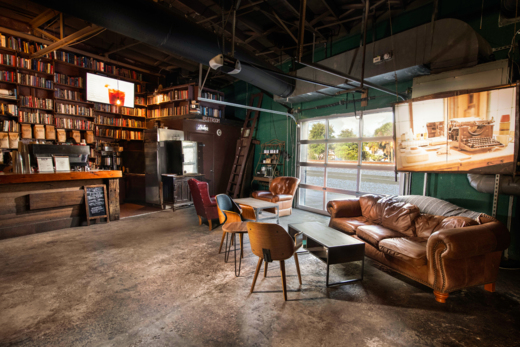
For most of the twentieth century, marketing favored companies with money, scale, and distribution. Small businesses relied on word of mouth, local print ads, or physical visibility to survive. Reach was limited, feedback was slow, and growth depended heavily on geography.
Today, the ***social media impact on small business marketing*** is best understood as a shift from controlled, top-down promotion to open, participatory communication. Small brands can speak directly to customers, publish content without gatekeepers, and test ideas in real time.
Rather than asking how much budget is available, small businesses now ask how clearly they can communicate value, how consistently they can show up, and how well they understand their audience.
## From limited visibility to continuous exposure
Before social platforms, visibility was episodic. A newspaper ad ran for a week. A flyer was posted once. A radio spot aired during a fixed time window. When the campaign ended, awareness faded. Social media replaced this cycle with continuous presence.
### Always on brand visibility
Social platforms allow small businesses to remain visible without constant spending. A single post can be discovered days or weeks later through shares, searches, or recommendations. Over time, content accumulates and creates a searchable public footprint that acts as a living brand archive.
This persistent visibility benefits small businesses in several ways:
- Customers can encounter the brand multiple times before making a decision
- Old content continues to deliver value long after publication
- Brand familiarity builds gradually without repeated ad spend
Visibility is no longer something purchased temporarily. It is something earned through consistent participation.
### Discovery beyond geography
Social platforms expanded discovery far beyond physical location. A local bakery can attract tourists before they arrive. A home-based service can reach regional or national clients. A niche product can find a global audience that would have been unreachable through traditional channels.
This shift is especially significant for small businesses because growth is no longer capped by foot traffic or local awareness alone. Social discovery allows demand to travel faster than physical infrastructure.
## Direct communication replaced mediated messaging
Traditional marketing relied on intermediaries. Media outlets, advertisers, and distributors shaped how messages were delivered. Social platforms removed many of those layers, allowing businesses to communicate directly with customers.
### Two-way interaction instead of one-way promotion
Social media transformed marketing from broadcast to dialogue. Customers comment, ask questions, share feedback, and publicly react to messaging. For small businesses, this interaction provides insights that were once expensive to obtain through surveys or market research.
### Direct interaction enables
- Faster understanding of customer needs
- Real-time response to concerns or confusion
- Relationship building through conversation, not slogans
Marketing became less about perfect messaging and more about responsiveness.
### Trust through transparency
Small businesses often lack the brand recognition of larger competitors. [Social media](https://c-istudios.com/social-media-marketing-services/) helps close that gap by humanizing the business. Owners appear on camera. Teams share behind-the-scenes content. Mistakes are acknowledged publicly.
This transparency builds trust because audiences see real people rather than polished campaigns. For small businesses, authenticity often outperforms high production value. Customers are more likely to support brands they feel connected to and understood by.
## Cost structures shifted in favor of small operators
One of the most practical effects of social media is how it changed the economics of marketing. Entry costs dropped dramatically, and experimentation became affordable.
### Lower barriers to entry
Creating a social profile costs nothing. Publishing content requires time, not large budgets. While paid promotion exists, organic visibility remains accessible, especially for niche audiences.
Compared to traditional channels, social media allows:
- Testing messages without long-term contracts
- Adjusting strategy quickly based on performance
- Scaling efforts gradually as resources grow
This flexibility matters most to small businesses that cannot afford wasted spend.
### Performance-based decision making
Social platforms provide built-in analytics that show what works and what does not. Small businesses can track engagement, reach, clicks, and conversions without specialized software.
This data enables informed decisions such as:
- Which content themes resonate
- When audiences are most active
- Which platforms justify further investment
Marketing decisions shift from intuition-driven to evidence-informed, even at small scale.
## Customer feedback became immediate and visible
Feedback once arrived slowly through sales trends or private complaints. Social media made customer response instant and public.
### Real-time signals
Likes, comments, shares, and messages provide immediate signals about audience reaction. Small businesses can see within hours whether an idea resonates or falls flat.
This immediacy allows rapid iteration:
- Adjusting tone or messaging mid-campaign
- Clarifying misunderstood offers
- Identifying common objections early
Instead of waiting months for results, businesses learn continuously.
### Public reputation management
Reviews and comments now influence purchasing decisions directly. While this visibility can feel risky, it also creates opportunity. Thoughtful responses to feedback demonstrate accountability and care.
Handled well, public feedback:
- Strengthens credibility
- Shows commitment to improvement
- Builds confidence among prospective customers
Marketing and customer service increasingly overlap, reinforcing long-term brand perception.
## Content replaced campaigns as the core marketing unit
Traditional marketing revolved around campaigns with defined starts and ends. Social media favors ongoing content streams instead.
### Value-driven content over promotional bursts
Small businesses succeed on social platforms by offering consistent value rather than constant promotion. Educational posts, practical tips, stories, and demonstrations attract attention without aggressive selling.
**Content works because it:**
- Answers real customer questions
- Positions the business as knowledgeable and helpful
- Builds familiarity before a purchase decision
Promotion still exists, but it is integrated into a broader content ecosystem.
### Long term brand building
Content accumulates over time. Each post adds context to the brand and shapes how it is perceived. Small businesses that maintain consistent messaging benefit from compounding visibility.
This long-term approach supports sustainable growth rather than short-lived spikes.
## Local marketing gained digital leverage
Social media did not eliminate local marketing. It enhanced it.
### Hyperlocal targeting
Platforms allow precise geographic targeting. Small businesses can reach nearby audiences without paying for broad exposure. Local hashtags, community groups, and location tags strengthen relevance.
**This capability helps:**
- Drive foot traffic
- Promote local events or offers
- Build recognition within specific neighborhoods
Local presence becomes digitally amplified rather than physically constrained.
### Community integration
Small businesses often thrive when embedded in their communities. Social platforms extend this integration online. Businesses participate in conversations, support local causes, and collaborate with nearby brands.
Marketing becomes relational rather than transactional.
## Strategic implications for modern small businesses
The social media impact on small business marketing extends beyond tools and tactics. It reshaped expectations. Customers expect accessibility, responsiveness, and authenticity. Businesses that treat social platforms as side channels often struggle to keep pace.
Effective use requires clarity, consistency, and strategic intent. Posting without purpose rarely produces results. Successful small businesses approach social media as an extension of their operations, not a separate activity.
They align [content](https://c-istudios.com/content-creation-services/) with real customer needs, measure performance honestly, and adapt based on evidence rather than trends. Social media rewards those who understand their audience deeply and communicate with intention.
## Turning social media presence into measurable business growth
Social media stops being useful when it stays at the level of posting and engagement alone. Its real value appears when activity connects to business outcomes such as leads, sales, retention, and long-term brand equity.
How small businesses structure their efforts, how they decide what matters, and how they avoid wasting time on activity that looks productive but does not move the business forward.
## Aligning social media with real business goals
Many small businesses struggle because their social media activity is disconnected from clear objectives. Posting consistently is not the same as marketing effectively.
### From attention to intention
The first step is shifting from chasing attention to supporting intent. Attention metrics such as likes and views signal interest, but they do not automatically translate into revenue or loyalty. Small businesses benefit most when social media supports a specific business outcome.
**Common goal alignments include:**
- Using educational content to reduce sales friction
- Using testimonials to reinforce trust before purchase
- Using short-form updates to drive repeat visits or bookings
When goals are defined clearly, content choices become easier and more disciplined.
### Choosing one primary outcome
Trying to achieve everything at once usually leads to diluted results. Successful small businesses often focus on one primary outcome per period. That outcome might be lead generation, local awareness, or customer retention.
This clarity prevents scattered efforts and ensures that every post contributes to the same strategic direction.
## Building a sustainable content system
Consistency matters more than intensity. Small businesses rarely fail because they lack ideas. They fail because their approach is unsustainable.
### Designing content around capacity
Social media systems should reflect the real capacity of the business. Posting five times a week is useless if it leads to burnout or inconsistent quality. A realistic cadence allows businesses to maintain standards over time.
**Sustainable systems are built around:**
- Repeatable content formats
- Clear ownership of posting responsibilities
- Simple workflows for creation and approval
Marketing becomes a routine rather than a scramble.
### Reusing and adapting content
Social platforms reward repetition more than novelty. A single idea can be expressed in multiple formats across platforms. Short clips, images, written posts, and replies can all originate from the same core insight.
This approach reduces workload while increasing reach and message consistency.
## Understanding what performance really means
Data is abundant on social platforms, but interpretation is often shallow. Small businesses benefit when they focus on metrics that reflect progress rather than vanity.
### Metrics that matter at small scale
Not every business needs advanced attribution models. At small scale, a few indicators are usually enough to guide decisions.
**Useful indicators include:**
- Profile visits relative to posting frequency
- Direct messages or inquiries over time
- Traffic from social platforms to owned channels
These signals show whether attention is converting into interest.
### Pattern recognition over isolated results
Single posts rarely define success. Trends over time reveal far more. Small businesses that review performance monthly instead of daily avoid reactive decisions and maintain strategic consistency.
Marketing improves when decisions are based on patterns rather than spikes.
## Strengthening trust through consistency and clarity
Trust is cumulative. Social media accelerates this process, but only when messaging remains coherent.
### Clear positioning over broad messaging
Trying to appeal to everyone weakens impact. Small businesses perform better when their social presence reflects a clear point of view or specialization.
Clarity helps audiences understand:
- Who the business is for
- What problems it solves
- Why it is credible
Consistency reinforces recognition and recall.
### Showing reliability through repetition
Repeated exposure to similar messages builds familiarity. Familiarity reduces perceived risk, especially for new customers. Social media allows small businesses to reinforce their value proposition without sounding repetitive when done thoughtfully.
Reliability is often more persuasive than creativity.
## Paid amplification as a support tool, not a shortcut
Organic activity establishes credibility. Paid promotion extends reach. Problems arise when businesses reverse this order.
### Using paid media strategically
Paid social works best when amplifying content that already performs well organically. This approach reduces risk and improves efficiency.
Effective paid use includes:
- Boosting proven posts to new audiences
- Retargeting visitors who already engaged
- Supporting time-sensitive offers or launches
Paid media supports momentum rather than compensating for weak messaging.
### Budget discipline at small scale
Small businesses do not need large budgets to see results. Modest, controlled spending tied to clear goals produces better outcomes than broad, unfocused campaigns.
Spending follows strategy, not the other way around.
## Managing reputation and customer relationships publicly
Social media blurred the boundary between marketing and customer service. For small businesses, this integration is an advantage.
### Responsiveness as a brand signal
Timely replies signal reliability. Customers interpret responsiveness as a proxy for how the business operates overall. Even simple acknowledgments matter.
Public interactions demonstrate:
- Accountability
- Respect for customer concerns
- Willingness to engage openly
These signals influence observers, not just the individual customer.
### Handling negative feedback constructively
Negative comments are unavoidable. How a business responds matters more than the criticism itself. Calm, factual responses often strengthen credibility.
Avoiding defensiveness and showing willingness to resolve issues publicly reinforces trust.
## Long term impact on brand equity
The cumulative effect of social media activity shapes how a business is perceived over years, not weeks.
### Brand memory over viral moments
Viral success is unpredictable and rarely sustainable. Brand memory is built through repeated exposure to consistent messages and values.
Small businesses that prioritize steady presence over viral ambition tend to experience more reliable growth.
### Ownership of audience relationships
Unlike rented visibility through ads alone, social media allows businesses to develop ongoing relationships. Followers become repeat customers, advocates, and referral sources.
This ownership reduces dependency on fluctuating ad costs and algorithm changes.
## Strategic maturity in small business marketing
The social media impact [small business marketing](https://c-istudios.com/media-marketing-consultation-services/) reaches its highest value when businesses move from experimentation to intentional systems. Maturity is not about complexity. It is about alignment.
**Aligned businesses:**
- Know why they post
- Measure what matters
- Adjust based on evidence
- Maintain consistency over time
Social media becomes an operating asset rather than a distraction.
If you want help aligning strategy, execution, and measurement into a clear, sustainable approach, [contact us](https://c-istudios.com/contact/) at C&I Studios.
## Work with C&I Studios
If you are planning a project like this, our team can take it from concept to final delivery. Explore our [video production services](https://c-istudios.com/video-production-services/), browse [our work](https://c-istudios.com/our-work/) to see how we tell brand stories, and [get in touch](https://c-istudios.com/contact/) when you are ready to start.
Originally published December 7, 2025
---
*This content is from [C&I Studios](https://c-istudios.com), a full-service production company.*
---
# How Much Does Social Media Marketing Cost For A Business?
> Published: December 6, 2025
> Categories: Commercial & Brand
> Source: https://c-istudios.com/how-much-does-social-media-marketing-cost-for-a-business/
---
.cib{--paper:#1b1d1f;--ink:#fff;--body:#d5d7d9;--muted:#8b9096;--line:rgba(255,255,255,.12);--thumb:#2b2e31;--card:#212426;--accent:#c02b0a;--blue:#5B8FA8;--serif:'Playfair Display',Georgia,serif;--sans:'Poppins',-apple-system,sans-serif;--measure:900px;background:var(--paper);color:var(--body);font-family:var(--sans);line-height:1.6;position:relative;left:50%;transform:translateX(-50%);width:90vw;max-width:1920px}
.cib *{box-sizing:border-box}
.cib .kicker{max-width:var(--measure);margin:58px auto 0;padding:0 22px;font-size:12.5px;font-weight:700;letter-spacing:2.5px;text-transform:uppercase;color:var(--blue)}
.cib h1.cibh1{text-wrap:balance;font-family:var(--serif);font-weight:500;font-size:clamp(46px,6vw,72px);line-height:1.08;color:var(--ink);max-width:var(--measure);margin:18px auto 0;padding:0 22px;letter-spacing:-.5px}
.cib .metarow{max-width:var(--measure);margin:20px auto 0;padding:0 22px;color:var(--muted);font-size:14px}
.cib .hero{position:relative;width:100%;height:0;padding-bottom:56.25%;overflow:hidden;margin:48px auto 0;border-top:1px solid var(--line);border-bottom:1px solid var(--line)}
.cib .hero .ph{width:100%;aspect-ratio:16/9;background:var(--thumb);border-top:1px solid var(--line);border-bottom:1px solid var(--line);display:flex;align-items:center;justify-content:center;color:#7d8288;font-size:13px;text-align:center;padding:0 20px}
.cib .body{max-width:var(--measure);margin:12px auto 0;padding:52px 22px 6px}
.cib .body.lead p:first-child{font-size:23px;line-height:1.62;color:var(--ink)}
.cib .body p{font-size:18.5px;line-height:1.85;margin:0 0 30px;color:var(--body)}
.cib .body h2{text-wrap:balance;font-family:var(--serif);font-weight:500;font-size:clamp(32px,4vw,48px);line-height:1.22;color:var(--ink);margin:70px 0 20px;letter-spacing:-.3px}
.cib .body h3{text-wrap:balance;font-family:var(--sans);font-weight:600;font-size:22px;color:var(--ink);margin:38px 0 8px}
.cib .body a{color:var(--ink);text-decoration:underline;text-decoration-color:rgba(255,255,255,.4);text-underline-offset:3px}
.cib .body a:hover{text-decoration-color:var(--ink)}
.cib .ctable{width:100%;border-collapse:collapse;margin:16px 0 30px;font-size:16px}
.cib .ctable th{background:#000;color:#fff;text-align:left;padding:10px 12px;font-family:var(--sans)}
.cib .ctable td{padding:10px 12px;border-bottom:1px solid var(--line);color:var(--body)}
.cib .inimg{position:relative;width:100%;height:0;padding-bottom:56.25%;overflow:hidden;margin:72px auto;border-top:1px solid var(--line);border-bottom:1px solid var(--line)}
.cib .inimg .ph{width:100%;aspect-ratio:16/9;background:var(--thumb);border-top:1px solid var(--line);border-bottom:1px solid var(--line);display:flex;align-items:center;justify-content:center;color:#7d8288;font-size:13px}
.cib .origpub{max-width:var(--measure);margin:60px auto 0;padding:26px 22px 0;border-top:1px solid var(--line);color:var(--muted);font-size:13.5px}
.cib .related{max-width:1200px;margin:64px auto 0;padding:34px 22px 76px}
.cib .related h3{font-family:var(--sans);font-size:12.5px;letter-spacing:2px;text-transform:uppercase;color:var(--ink);margin:0 0 24px}
.cib .grid{display:grid;grid-template-columns:repeat(3,1fr);gap:28px}
.cib .rc{background:var(--card);border:1px solid var(--line);display:block;text-decoration:none;color:inherit;transition:border-color .15s}
.cib a.rc:hover{border-color:rgba(255,255,255,.5)}
.cib .rc .thumb{position:relative;width:100%;height:0;padding-bottom:56.25%;background:var(--thumb);overflow:hidden}
.cib .rc .thumb img{position:absolute!important;top:0!important;left:0!important;width:100%!important;height:100%!important;object-fit:cover!important;margin:0!important}
.cib .rc .cc{padding:14px 15px 17px}
.cib .rc .rt{font-family:var(--serif);font-weight:500;font-size:16px;line-height:1.3;color:var(--ink);margin:0 0 6px}
.cib .rc .rm{font-size:11px;letter-spacing:1px;text-transform:uppercase;color:var(--muted)}
.cib img{margin:0!important;padding:0!important;display:block!important;vertical-align:top;max-width:100%}
.cib .hero img,.cib .inimg img{position:absolute!important;top:0!important;left:0!important;width:100%!important;height:100%!important;object-fit:cover!important;margin:0!important;padding:0!important;border:0!important;display:block!important;aspect-ratio:auto!important}
.cib .hero+.body{padding-top:36px}
@media(max-width:760px){.cib .grid{grid-template-columns:1fr}.cib .body h2{margin:52px 0 16px}.cib .body p{font-size:17.5px}.cib .inimg,.cib .hero{margin-top:44px}}
.cib .vembed{max-width:var(--measure);margin:44px auto;padding:0 22px}.cib .vembed .vwrap{position:relative;width:100%;height:0;padding-bottom:56.25%}.cib .vembed .vwrap iframe{position:absolute;top:0;left:0;width:100%;height:100%;border:0}
Commercial & Brand
# How Much Does Social Media Marketing Cost For A Business?
7 min read

Understanding ***social media marketing cost*** is one of the first real decisions a business has to make before committing to any growth effort. Pricing varies widely, not because agencies are arbitrary, but because social media marketing is not a single service.
It is a system made up of strategy, production, publishing, and ongoing optimization. The cost reflects how much of that system a business actually needs.
This guide breaks down what businesses are really paying for, why prices differ so sharply, and how to evaluate costs without relying on vague package labels or misleading averages.
## What businesses are actually paying for
Social [media marketing](https://c-istudios.com/media-marketing-consultation-services/) costs are often misunderstood because pricing discussions usually skip over what the work involves. At its core, a business is paying for three distinct layers of effort that build on each other.
### Strategy and planning costs
Before a single post is published, time is spent defining direction. This phase determines whether the rest of the budget will be effective or wasted.
**Strategy costs typically cover:**
- Platform selection based on audience behavior
- Content themes tied to business objectives
- Posting cadence and format planning
- KPI definition and reporting structure
For small businesses, this work is often bundled into monthly retainers. For larger organizations, it may appear as a standalone strategy engagement. Either way, this layer exists whether it is itemized or not.
Skipping strategy lowers short-term costs but increases long-term spend through inefficiency. Businesses that do not plan properly often pay more later to fix inconsistency, weak performance, or misaligned messaging.
## Content production and execution costs
Once strategy is set, the most visible part of social media marketing begins: content creation and publishing. This is where costs start to scale quickly.
### Why production drives most of the budget
Content production includes everything required to consistently publish brand-aligned material. The cost depends on volume, quality, and format.
**Common cost drivers include:**
- Graphic design or video editing time
- Copywriting and caption development
- Short-form video production or animation
- Review cycles and revisions
- Scheduling and platform optimization
A business posting three static graphics per week will have a very different budget from one producing daily short-form video. This is why two companies can both say they “do social media” while paying dramatically different amounts.
At this stage, social media marketing cost becomes less about platforms and more about creative throughput.
## Management, optimization, and reporting costs
Publishing content is not the finish line. Ongoing management ensures that content performs, improves, and aligns with business outcomes over time.
### What ongoing management includes
This layer is often underestimated, yet it determines whether social media activity compounds or stalls.
**Management work typically involves:**
- Community moderation and response handling
- Performance tracking and monthly analysis
- Content iteration based on engagement data
- Platform-specific adjustments and testing
- Coordination with broader marketing efforts
These activities require consistency and analytical judgment. Businesses paying very low monthly fees often receive minimal monitoring, which limits insight and improvement.
## Typical pricing ranges by business size
While there is no universal price, certain patterns appear when costs are aligned with business maturity and expectations.
### Small businesses and local brands
Smaller businesses usually invest in foundational execution rather than scale.
**Typical monthly ranges:**
- Entry-level management and posting: modest budgets
- Limited platforms with low production volume
- Minimal reporting beyond basic metrics
These setups focus on presence and consistency rather than aggressive growth.
## Growing companies and mid-sized brands
As expectations increase, so does complexity.
**Common characteristics:**
- Multi-platform strategies
- Regular video or mixed-media content
- Performance-based optimization and reporting
Costs rise here because coordination and creative demands increase.
### Enterprise and national brands
At the highest level, social media marketing becomes a structured production operation.
**Enterprise costs reflect:**
- Dedicated creative teams
- Campaign-based execution
- Advanced analytics and cross-channel integration
At this scale, social media marketing functions more like a media department than a posting service.
## What actually drives price differences
Two agencies may quote very different numbers for similar-looking services. The difference is rarely arbitrary.
Key pricing factors include:
- Content volume per month
- Format complexity such as video or animation
- Number of platforms managed
- Level of strategic involvement
- Reporting depth and optimization cadence
Understanding these variables allows businesses to compare proposals on substance rather than price alone.
## Why cheap pricing often costs more over time
Low-cost services usually reduce effort in areas that are less visible but highly impactful. Strategy depth, performance analysis, and iteration are the first to be removed when pricing is pushed down.
**When these elements are missing, businesses often experience:**
- Inconsistent messaging
- Poor engagement trends
- Unclear ROI
- Frequent agency changes
This leads to restarting processes repeatedly, increasing long-term spend despite lower monthly fees.
## Setting realistic expectations before budgeting
The most effective budgets are built around outcomes, not averages. Businesses that understand what they need before requesting pricing are better positioned to control spend and evaluate value.
Before finalizing a budget, decision-makers should be able to answer:
- What role does social media play in revenue or brand growth?
- Which platforms matter to the audience?
- How much content is required to stay competitive?
- What level of insight is needed to guide decisions?
## Choosing the right social media cost model for your business
Once businesses understand what goes into pricing, the next challenge is choosing how to pay for social media marketing. Cost is not just about the total monthly number. It is also about the structure behind that number. Different pricing models reward different behaviors, and choosing the wrong one can quietly inflate spending without improving results.
Most businesses struggle here because they compare models based on price alone instead of operational fit. A lower monthly fee can be more expensive over time if it restricts flexibility, limits output, or slows iteration.
### Retainer-based pricing
Retainers remain the most common structure for ongoing social media work. Under this model, a business pays a fixed monthly amount in exchange for a defined scope of services.
This approach works best when:
- Content needs are predictable month to month
- Brand voice and messaging require consistency
- Long-term optimization matters more than short-term output
Retainers allow teams to plan ahead, batch production, and improve performance over time. They also encourage agencies to think beyond individual posts and focus on systems.
However, retainers only work when scope is clearly defined. Vague deliverables often lead to frustration, where businesses feel output is low and agencies feel expectations are unrealistic.
### Project-based pricing
Some businesses prefer to pay per campaign or per deliverable. This is common for launches, seasonal pushes, or short-term experiments.
Project pricing makes sense when:
- The timeline is fixed
- Output is clearly defined upfront
- Long-term management is handled internally
The downside is continuity. Social media rarely performs best in isolation. Campaign-only approaches can create spikes in activity without building momentum or insight that carries forward.
### Performance-based pricing
Performance-based pricing promises alignment by tying fees to results such as engagement, leads, or conversions. While attractive in theory, it often hides complexity.
This model is difficult to execute cleanly because:
- Platforms change algorithms frequently
- Results depend on factors outside social media alone
- Attribution is rarely linear
When used, it works best as a hybrid structure layered on top of a baseline retainer rather than a replacement for it.
## Agency vs in-house social media costs
Another major decision point is whether to build an internal team or outsource. This choice has a significant impact on long-term [social media marketing](https://c-istudios.com/social-media-marketing-services/) cost, especially as businesses scale.
**In-house team costs**
Building an internal social media function gives businesses direct control and tighter alignment with brand culture. However, costs extend far beyond salary.
In-house expenses typically include:
- Salaries and benefits
- Hiring and onboarding time
- Creative tools and software
- Ongoing training and platform education
What often gets overlooked is redundancy. One person rarely covers strategy, design, copy, analytics, and community management equally well. Teams either stretch individuals thin or hire multiple specialists.
### Agency costs
Agencies spread expertise across multiple clients, which often makes them more efficient at execution and trend adaptation.
**Agency investment typically covers:**
- Access to a multi-disciplinary team
- Established workflows and quality control
- Platform-specific expertise
- Scalable output without hiring
For many businesses, agencies are not cheaper or more expensive by default. They are simply structured differently. The value lies in speed, breadth, and experience rather than ownership.
## How content format choices affect cost
One of the most direct cost drivers in social media marketing is format selection. Not all content is priced equally, even when posted on the same platform.
### Static content vs motion-based content
Static posts generally require less production time. They are easier to batch and revise, which keeps costs predictable.
**Motion-based formats such as short-form video require:**
- Scripting or storyboarding
- Filming or animation
- Editing and revisions
- Platform-specific formatting
As a result, businesses that rely heavily on video should expect higher production costs even if posting frequency remains the same.
### Platform-native expectations
Each platform rewards different behaviors. Costs rise when content is adapted rather than reused.
**For example:**
- A single long [video](https://c-istudios.com/video-production-services/) may need to be re-edited into multiple short clips
- Captions must be rewritten for different audience behaviors
- Visual dimensions and pacing vary by platform
This adaptation improves performance but increases workload, which directly impacts pricing.
## Why posting frequency alone is a poor cost metric
Many businesses still evaluate pricing based on how many posts they receive per week. This metric is easy to understand but rarely meaningful.
High-frequency posting without strategy often leads to:
- Repetitive messaging
- Declining engagement
- Burnout on production teams
Effective social media strategies focus on relevance and timing rather than volume. Two well-placed posts can outperform ten generic ones. Cost efficiency comes from alignment, not output inflation.
## Measuring return beyond surface metrics
Evaluating cost without understanding return leads to poor decisions. However, return on social media is rarely immediate or singular.
### The problem with vanity metrics
Metrics like likes and follower counts are visible but incomplete. They do not always correlate with business outcomes.
### Overreliance on vanity metrics often results in
- Content optimized for attention rather than intent
- Short-term spikes with no long-term value
- Difficulty justifying budget increases
### What meaningful measurement looks like
Better measurement aligns content performance with business objectives. This requires consistent tracking and interpretation.
More reliable indicators include:
- Engagement quality rather than volume
- Traffic behavior after clicks
- Conversion trends over time
- Audience retention and repeat interaction
These insights require time and consistency, which should be factored into cost expectations.
## Budgeting realistically as your business grows
Social media budgets should evolve alongside the business. What works at one stage may fail at another.
### Early-stage budgeting
At early stages, the goal is presence and clarity. Budgets should prioritize:
- Foundational strategy
- Consistent brand voice
- Sustainable posting habits
Over-investing here can be wasteful. Under-investing leads to inconsistency.
### Growth-stage budgeting
As traction builds, focus shifts to performance and refinement. Budgets expand to support:
- Higher production quality
- Platform experimentation
- Deeper analytics
This is where many businesses first feel cost pressure. Clear priorities prevent unnecessary spend.
### Mature-stage budgeting
At scale, social media becomes an integrated marketing channel. Costs stabilize but expectations increase.
Budgets support:
- Campaign coordination
- Advanced reporting
- Cross-team collaboration
At this stage, efficiency matters more than cost cutting.
## Common pricing mistakes businesses make
Understanding cost structures helps avoid recurring pitfalls that inflate spending without improving outcomes.
### Chasing the lowest quote
Low pricing often means reduced effort in strategy, analysis, or iteration. The savings are rarely real.
### Overbuying services too early
Paying for advanced analytics or multi-platform coverage before fundamentals are solid leads to wasted resources.
### Treating social media as a standalone channel
When social media is disconnected from broader marketing goals, its cost becomes harder to justify and optimize.
## Aligning cost with long-term value
The most effective social media investments align cost with learning. Each month should generate insight that improves the next.
**This requires:**
- Clear reporting frameworks
- Willingness to adjust strategy
- Patience for compounding results
Businesses that view social media as an evolving system rather than a fixed expense are better positioned to control cost while increasing impact.
## External market perspective on social media spending
Independent research confirms that social media investment scales with operational maturity rather than platform trends alone. Studies consistently show that businesses allocating budget toward strategy, content quality, and measurement outperform those focused solely on posting volume.
These insights support a measured, system-driven approach to budgeting.
## Work with C&I Studios
If you are planning a project like this, our team can take it from concept to final delivery. Explore our [video production services](https://c-istudios.com/video-production-services/), browse [our work](https://c-istudios.com/our-work/) to see how we tell brand stories, and [get in touch](https://c-istudios.com/contact/) when you are ready to start.
Originally published December 6, 2025
---
*This content is from [C&I Studios](https://c-istudios.com), a full-service production company.*
---
# Content Marketing on Social Media Explained
> Published: December 5, 2025
> Categories: Commercial & Brand
> Source: https://c-istudios.com/content-marketing-on-social-media-explained/
---
.cib{--paper:#1b1d1f;--ink:#fff;--body:#d5d7d9;--muted:#8b9096;--line:rgba(255,255,255,.12);--thumb:#2b2e31;--card:#212426;--accent:#c02b0a;--blue:#5B8FA8;--serif:'Playfair Display',Georgia,serif;--sans:'Poppins',-apple-system,sans-serif;--measure:900px;background:var(--paper);color:var(--body);font-family:var(--sans);line-height:1.6;position:relative;left:50%;transform:translateX(-50%);width:90vw;max-width:1920px}
.cib *{box-sizing:border-box}
.cib .kicker{max-width:var(--measure);margin:58px auto 0;padding:0 22px;font-size:12.5px;font-weight:700;letter-spacing:2.5px;text-transform:uppercase;color:var(--blue)}
.cib h1.cibh1{text-wrap:balance;font-family:var(--serif);font-weight:500;font-size:clamp(46px,6vw,72px);line-height:1.08;color:var(--ink);max-width:var(--measure);margin:18px auto 0;padding:0 22px;letter-spacing:-.5px}
.cib .metarow{max-width:var(--measure);margin:20px auto 0;padding:0 22px;color:var(--muted);font-size:14px}
.cib .hero{position:relative;width:100%;height:0;padding-bottom:56.25%;overflow:hidden;margin:48px auto 0;border-top:1px solid var(--line);border-bottom:1px solid var(--line)}
.cib .hero .ph{width:100%;aspect-ratio:16/9;background:var(--thumb);border-top:1px solid var(--line);border-bottom:1px solid var(--line);display:flex;align-items:center;justify-content:center;color:#7d8288;font-size:13px;text-align:center;padding:0 20px}
.cib .body{max-width:var(--measure);margin:12px auto 0;padding:52px 22px 6px}
.cib .body.lead p:first-child{font-size:23px;line-height:1.62;color:var(--ink)}
.cib .body p{font-size:18.5px;line-height:1.85;margin:0 0 30px;color:var(--body)}
.cib .body h2{text-wrap:balance;font-family:var(--serif);font-weight:500;font-size:clamp(32px,4vw,48px);line-height:1.22;color:var(--ink);margin:70px 0 20px;letter-spacing:-.3px}
.cib .body h3{text-wrap:balance;font-family:var(--sans);font-weight:600;font-size:22px;color:var(--ink);margin:38px 0 8px}
.cib .body a{color:var(--ink);text-decoration:underline;text-decoration-color:rgba(255,255,255,.4);text-underline-offset:3px}
.cib .body a:hover{text-decoration-color:var(--ink)}
.cib .ctable{width:100%;border-collapse:collapse;margin:16px 0 30px;font-size:16px}
.cib .ctable th{background:#000;color:#fff;text-align:left;padding:10px 12px;font-family:var(--sans)}
.cib .ctable td{padding:10px 12px;border-bottom:1px solid var(--line);color:var(--body)}
.cib .inimg{position:relative;width:100%;height:0;padding-bottom:56.25%;overflow:hidden;margin:72px auto;border-top:1px solid var(--line);border-bottom:1px solid var(--line)}
.cib .inimg .ph{width:100%;aspect-ratio:16/9;background:var(--thumb);border-top:1px solid var(--line);border-bottom:1px solid var(--line);display:flex;align-items:center;justify-content:center;color:#7d8288;font-size:13px}
.cib .origpub{max-width:var(--measure);margin:60px auto 0;padding:26px 22px 0;border-top:1px solid var(--line);color:var(--muted);font-size:13.5px}
.cib .related{max-width:1200px;margin:64px auto 0;padding:34px 22px 76px}
.cib .related h3{font-family:var(--sans);font-size:12.5px;letter-spacing:2px;text-transform:uppercase;color:var(--ink);margin:0 0 24px}
.cib .grid{display:grid;grid-template-columns:repeat(3,1fr);gap:28px}
.cib .rc{background:var(--card);border:1px solid var(--line);display:block;text-decoration:none;color:inherit;transition:border-color .15s}
.cib a.rc:hover{border-color:rgba(255,255,255,.5)}
.cib .rc .thumb{position:relative;width:100%;height:0;padding-bottom:56.25%;background:var(--thumb);overflow:hidden}
.cib .rc .thumb img{position:absolute!important;top:0!important;left:0!important;width:100%!important;height:100%!important;object-fit:cover!important;margin:0!important}
.cib .rc .cc{padding:14px 15px 17px}
.cib .rc .rt{font-family:var(--serif);font-weight:500;font-size:16px;line-height:1.3;color:var(--ink);margin:0 0 6px}
.cib .rc .rm{font-size:11px;letter-spacing:1px;text-transform:uppercase;color:var(--muted)}
.cib img{margin:0!important;padding:0!important;display:block!important;vertical-align:top;max-width:100%}
.cib .hero img,.cib .inimg img{position:absolute!important;top:0!important;left:0!important;width:100%!important;height:100%!important;object-fit:cover!important;margin:0!important;padding:0!important;border:0!important;display:block!important;aspect-ratio:auto!important}
.cib .hero+.body{padding-top:36px}
@media(max-width:760px){.cib .grid{grid-template-columns:1fr}.cib .body h2{margin:52px 0 16px}.cib .body p{font-size:17.5px}.cib .inimg,.cib .hero{margin-top:44px}}
.cib .vembed{max-width:var(--measure);margin:44px auto;padding:0 22px}.cib .vembed .vwrap{position:relative;width:100%;height:0;padding-bottom:56.25%}.cib .vembed .vwrap iframe{position:absolute;top:0;left:0;width:100%;height:100%;border:0}
Commercial & Brand
# Content Marketing on Social Media Explained
7 min read

Content marketing on social media is often misunderstood as a stream of posts published to stay visible. In practice, it is a coordinated system that turns brand knowledge into useful, repeatable communication. The goal is not volume. The goal is relevance over time.
When done correctly, **content marketing on social media** aligns three things that are often treated separately: audience needs, brand positioning, and platform behavior.
Instead of chasing trends, brands publish content that educates, explains, and earns attention gradually. This is how social channels move from being noisy distribution platforms to reliable growth assets.
This guide focuses on what content marketing actually looks like in execution. It explains how brands structure content, how messaging is adapted to platforms, and how consistency is maintained without burnout or randomness.
## What content marketing means in a social media context
Content marketing on social platforms is the practice of publishing non-promotional content designed to build understanding and trust before conversion. Unlike ads, this content is meant to stand on its own.
The emphasis is on usefulness. Audiences should gain clarity, insight, or perspective from the content even if they never buy. Over time, this usefulness compounds into credibility.
**At its core, social content marketing serves three functions:**
- It clarifies what a brand stands for
- It educates audiences around problems and solutions
- It creates familiarity through consistent presence
This is why strong programs rely on content creation frameworks rather than one-off ideas. A framework ensures the brand shows up with purpose instead of reacting to the algorithm.
## Social content differs from traditional content marketing
Traditional content marketing often lives on owned platforms like blogs or newsletters. Social media content marketing operates inside platforms that control distribution, format, and visibility.
This changes execution in several important ways.
### Platform-native storytelling
Each social platform has its own consumption behavior. [Content](http://v) must feel native to the environment it appears in. A LinkedIn post explaining a strategy looks different from a short-form video on Instagram, even if the idea is the same.
The message remains consistent, but the delivery adapts.
### Shorter attention windows
Social platforms reward clarity and immediacy. Content must communicate its value quickly, without sacrificing depth. This does not mean oversimplifying. It means structuring information so it is easy to follow.
### Ongoing publication instead of campaigns
Instead of isolated launches, social content marketing works best as an ongoing system. Audiences encounter ideas multiple times, in different formats, over weeks or months. This repetition builds recognition without feeling repetitive.
## Core components of effective social content marketing
Successful programs share common structural elements. These components allow teams to publish consistently without losing focus.
### Defined content pillars
Content pillars are recurring themes that reflect audience needs and brand expertise. They limit scope while increasing depth.
**Typical pillars include:**
- Educational explanations
- Behind-the-scenes insights
- Strategic perspectives
- Practical examples or case studies
Not every pillar appears every week. The value comes from balance over time.
### Clear point of view
Content that performs well on social platforms usually takes a position. This does not require controversy. It requires clarity.
**A point of view answers questions like:**
- What does the brand believe about its industry?
- What problems does it think are misunderstood?
- What advice does it consistently stand behind?
Without this, content becomes generic and interchangeable.
### Repeatable formats
Formats reduce decision fatigue and speed up production. Examples include short explainers, visual breakdowns, or recurring video series.
Formats also help audiences recognize content quickly. Familiar structure lowers the effort required to engage.
## How brands turn ideas into social content
Execution matters more than ideation. Strong content marketing systems translate ideas into publishable assets through defined workflows.
### From strategy to calendar
The process usually starts with a content calendar that maps pillars to platforms and timelines. This is not about filling slots. It is about sequencing ideas logically.
**A working calendar answers:**
- What topic is being addressed?
- Why it matters to the audience now
- Which format communicates it best
### Production with consistency in mind
Production quality should match brand positioning, but consistency matters more than perfection. Audiences prefer reliable publishing over occasional high-effort posts.
This is where social media marketing teams coordinate writing, design, and review processes so content moves efficiently from concept to publication.
### Distribution beyond posting
Publishing is only the first step. Effective programs plan for distribution through:
- Reposting with context
- Cross-platform adaptation
- Comment engagement to extend reach
This ensures content has a lifespan longer than a single post.
## Measuring success without chasing vanity metrics
Metrics guide refinement, not validation. Social content marketing looks beyond likes and impressions to understand impact.
**Key indicators include:**
- Saves and shares, which signal usefulness
- Profile visits, which indicate growing interest
- Comment quality, which reflects understanding
Over time, patterns matter more than individual post performance. The goal is to identify which themes consistently resonate and double down on them.
## Common mistakes that weaken social content marketing
Many brands struggle not because of lack of effort, but because of misalignment.
**Posting without a narrative**
Random posts do not build momentum. Audiences need to see ideas connected over time.
**Over-promoting products**
Content marketing loses effectiveness when every post pushes an offer. Value must come first.
**Ignoring platform context**
Reposting identical content everywhere without adaptation reduces engagement and credibility.
Avoiding these mistakes requires discipline more than creativity.
## Why social content marketing compounds over time
Unlike paid campaigns, [content marketing](https://c-istudios.com/creative-marketing-services/) on social media builds cumulative value. Each post adds to a growing library of ideas associated with the brand.
**As audiences encounter consistent messaging:**
- Trust increases
- Recognition improves
- Conversion resistance decreases
This is why long-term programs outperform short-term bursts.
### How content marketing actually runs on social media
This is where most strategies break down. Not because brands lack ideas, but because they underestimate the operational discipline required to sustain content over time.
Content marketing on social media succeeds when it is treated as a system, not a series of posts. Systems reduce decision fatigue, protect consistency, and allow quality to scale without relying on constant creative bursts.
## Turning strategy into a repeatable operating system
A content strategy that only exists in a document is not a strategy. On social media, strategy must translate into repeatable actions that teams can execute weekly without friction.
Most effective content marketing systems operate on short cycles. Weekly planning works better than monthly planning because it balances structure with adaptability. The goal is not to predict every post, but to define direction clearly enough that execution becomes straightforward.
### A functional weekly system typically includes
- A single priority theme tied to a broader content pillar
- A limited number of publishable assets
- Clear ownership for creation, review, and posting
This approach prevents overproduction while ensuring momentum. It also creates space for timely content without derailing the overall narrative.
##
## Planning content without killing relevance
Planning is often misunderstood as rigidity. In reality, good planning protects relevance by removing last-minute decision making.
### From ideas to scheduled intent
Instead of asking “What should we post today?”, high-performing teams ask:
- What does our audience need clarity on right now?
- Which idea moves our positioning forward?
- Which format makes this easiest to understand?
This reframing shifts planning away from filling slots and toward delivering value.
## Content calendars as coordination tools
A content calendar is not a creativity limiter. It is a coordination tool. It aligns writers, designers, and editors around shared priorities.
### Effective calendars document
- Topic focus, not just captions
- Intended outcome of each post
- Platform-specific format requirements
This clarity reduces revisions and speeds up production.
## Platform-specific execution without message dilution
One of the most common execution mistakes is treating each platform as a separate brand voice. This fragments messaging and multiplies workload.
Strong content marketing on social media starts with one core idea and adapts it intelligently across platforms.
### One idea, multiple expressions
The same insight can be communicated differently depending on context:
- A concise professional breakdown on LinkedIn
- A visual narrative or carousel on Instagram
- A short explanatory video with a clear hook
The message remains consistent. The delivery changes.
This is where [video production](http://v) becomes a strategic asset rather than a tactical task. A single recording session can produce multiple platform-native outputs without rewriting the message from scratch.
## Production workflows that support consistency
Execution fails when production relies on individual effort rather than process. Sustainable content marketing depends on workflows that reduce friction and cognitive load.
### Batching to protect focus
Creating content one post at a time is inefficient. Batching allows teams to work deeply instead of constantly switching context.
**Common batching practices include:**
- Writing multiple captions in one session
- Recording several videos back-to-back
- Designing reusable visual templates
Batching improves quality because creators stay mentally immersed in the subject matter.
### Clear handoffs between roles
Content slows down when ownership is unclear. Effective teams define responsibilities explicitly:
- Who owns ideation
- Who executes production
- Who approves and publishes
This prevents bottlenecks and avoids unnecessary revisions.
## Editorial judgment over algorithm chasing
Platforms change constantly. Content strategies that depend on short-term algorithm behavior rarely last.
Content marketing on social media works best when editorial judgment guides decisions, not trends alone.
### This means
- Publishing content that aligns with brand positioning, even if it is less “viral”
- Repeating key ideas intentionally to build familiarity
- Prioritizing clarity over novelty
Audiences reward consistency more than experimentation when trust is the goal.
## Distribution as an active process, not a checkbox
Posting content is only the beginning. Distribution determines whether content actually reaches its intended audience.
### Extending the life of content
High-performing teams plan distribution as part of creation, not after publication.
**This includes:**
- Reposting strong content with new framing
- Sharing posts through team members or partners
- Engaging in comments to increase visibility
Distribution signals relevance both to algorithms and to real people.
For brands investing in creative marketing, this step is essential. Without it, even strong content underperforms.
## Engagement as part of the content loop
Engagement is not separate from content marketing. It is feedback.
**Meaningful engagement shows:**
- What audiences understand
- What questions remain unanswered
- Which perspectives resonate
Teams that treat comments as insight sources continuously refine their messaging.
This feedback loop strengthens future content and keeps messaging grounded in real audience needs.
## Measuring execution quality instead of vanity metrics
Metrics should support learning, not validation. In content marketing on social media, success is rarely defined by a single post.
### Metrics that indicate value
Instead of focusing on likes or reach alone, stronger indicators include:
- Saves, which suggest usefulness
- Shares, which signal relevance
- Profile visits, which indicate growing interest
These behaviors reflect deeper engagement.
### Looking for patterns, not spikes
One high-performing post does not define a strategy. Patterns across weeks reveal what works.
Teams that track themes rather than individual posts make better decisions and avoid chasing noise.
## Scaling content without losing clarity
As teams grow, complexity increases. New contributors, platforms, and formats introduce risk if standards are not documented.
Documenting principles, not scripts
### Scalable teams document
- Content principles
- Tone and positioning guidelines
- Approved formats and examples
This allows new contributors to align quickly without micromanagement.
### Specialization with coordination
Not everyone needs to do everything. Mature teams separate roles intentionally while maintaining shared understanding.
This balance preserves efficiency without fragmenting voice.
## Common execution mistakes that stall growth
Even experienced teams fall into predictable traps.
**Overproduction without direction**
More content does not equal better content. Publishing frequently without a clear narrative weakens impact.
**Over-editing and slow approval cycles**
Excessive review kills momentum. Clear boundaries protect speed and morale.
**Treating content as disposable**
Deleting or abandoning content prevents compounding value. Strong programs build libraries, not streams.
Avoiding these mistakes requires discipline more than creativity.
## Why execution discipline compounds over time
Content marketing on social media rewards patience. Brands that win are not the loudest, but the most consistent.
### Execution discipline ensures
- Audiences know what to expect
- Messaging reinforces itself
- Trust builds through repetition
Over time, this reliability becomes difficult for competitors to replicate.
## Work with C&I Studios
If you are planning a project like this, our team can take it from concept to final delivery. Explore our [video production services](https://c-istudios.com/video-production-services/), browse [our work](https://c-istudios.com/our-work/) to see how we tell brand stories, and [get in touch](https://c-istudios.com/contact/) when you are ready to start.
Originally published December 5, 2025
---
*This content is from [C&I Studios](https://c-istudios.com), a full-service production company.*
---
# How to Build a Social Media Marketing Team
> Published: December 4, 2025
> Categories: Web & Tech
> Source: https://c-istudios.com/how-to-build-a-social-media-marketing-team/
---
.cib{--paper:#1b1d1f;--ink:#fff;--body:#d5d7d9;--muted:#8b9096;--line:rgba(255,255,255,.12);--thumb:#2b2e31;--card:#212426;--accent:#c02b0a;--blue:#5B8FA8;--serif:'Playfair Display',Georgia,serif;--sans:'Poppins',-apple-system,sans-serif;--measure:900px;background:var(--paper);color:var(--body);font-family:var(--sans);line-height:1.6;position:relative;left:50%;transform:translateX(-50%);width:90vw;max-width:1920px}
.cib *{box-sizing:border-box}
.cib .kicker{max-width:var(--measure);margin:58px auto 0;padding:0 22px;font-size:12.5px;font-weight:700;letter-spacing:2.5px;text-transform:uppercase;color:var(--blue)}
.cib h1.cibh1{text-wrap:balance;font-family:var(--serif);font-weight:500;font-size:clamp(46px,6vw,72px);line-height:1.08;color:var(--ink);max-width:var(--measure);margin:18px auto 0;padding:0 22px;letter-spacing:-.5px}
.cib .metarow{max-width:var(--measure);margin:20px auto 0;padding:0 22px;color:var(--muted);font-size:14px}
.cib .hero{position:relative;width:100%;height:0;padding-bottom:56.25%;overflow:hidden;margin:48px auto 0;border-top:1px solid var(--line);border-bottom:1px solid var(--line)}
.cib .hero .ph{width:100%;aspect-ratio:16/9;background:var(--thumb);border-top:1px solid var(--line);border-bottom:1px solid var(--line);display:flex;align-items:center;justify-content:center;color:#7d8288;font-size:13px;text-align:center;padding:0 20px}
.cib .body{max-width:var(--measure);margin:12px auto 0;padding:52px 22px 6px}
.cib .body.lead p:first-child{font-size:23px;line-height:1.62;color:var(--ink)}
.cib .body p{font-size:18.5px;line-height:1.85;margin:0 0 30px;color:var(--body)}
.cib .body h2{text-wrap:balance;font-family:var(--serif);font-weight:500;font-size:clamp(32px,4vw,48px);line-height:1.22;color:var(--ink);margin:70px 0 20px;letter-spacing:-.3px}
.cib .body h3{text-wrap:balance;font-family:var(--sans);font-weight:600;font-size:22px;color:var(--ink);margin:38px 0 8px}
.cib .body a{color:var(--ink);text-decoration:underline;text-decoration-color:rgba(255,255,255,.4);text-underline-offset:3px}
.cib .body a:hover{text-decoration-color:var(--ink)}
.cib .ctable{width:100%;border-collapse:collapse;margin:16px 0 30px;font-size:16px}
.cib .ctable th{background:#000;color:#fff;text-align:left;padding:10px 12px;font-family:var(--sans)}
.cib .ctable td{padding:10px 12px;border-bottom:1px solid var(--line);color:var(--body)}
.cib .inimg{position:relative;width:100%;height:0;padding-bottom:56.25%;overflow:hidden;margin:72px auto;border-top:1px solid var(--line);border-bottom:1px solid var(--line)}
.cib .inimg .ph{width:100%;aspect-ratio:16/9;background:var(--thumb);border-top:1px solid var(--line);border-bottom:1px solid var(--line);display:flex;align-items:center;justify-content:center;color:#7d8288;font-size:13px}
.cib .origpub{max-width:var(--measure);margin:60px auto 0;padding:26px 22px 0;border-top:1px solid var(--line);color:var(--muted);font-size:13.5px}
.cib .related{max-width:1200px;margin:64px auto 0;padding:34px 22px 76px}
.cib .related h3{font-family:var(--sans);font-size:12.5px;letter-spacing:2px;text-transform:uppercase;color:var(--ink);margin:0 0 24px}
.cib .grid{display:grid;grid-template-columns:repeat(3,1fr);gap:28px}
.cib .rc{background:var(--card);border:1px solid var(--line);display:block;text-decoration:none;color:inherit;transition:border-color .15s}
.cib a.rc:hover{border-color:rgba(255,255,255,.5)}
.cib .rc .thumb{position:relative;width:100%;height:0;padding-bottom:56.25%;background:var(--thumb);overflow:hidden}
.cib .rc .thumb img{position:absolute!important;top:0!important;left:0!important;width:100%!important;height:100%!important;object-fit:cover!important;margin:0!important}
.cib .rc .cc{padding:14px 15px 17px}
.cib .rc .rt{font-family:var(--serif);font-weight:500;font-size:16px;line-height:1.3;color:var(--ink);margin:0 0 6px}
.cib .rc .rm{font-size:11px;letter-spacing:1px;text-transform:uppercase;color:var(--muted)}
.cib img{margin:0!important;padding:0!important;display:block!important;vertical-align:top;max-width:100%}
.cib .hero img,.cib .inimg img{position:absolute!important;top:0!important;left:0!important;width:100%!important;height:100%!important;object-fit:cover!important;margin:0!important;padding:0!important;border:0!important;display:block!important;aspect-ratio:auto!important}
.cib .hero+.body{padding-top:36px}
@media(max-width:760px){.cib .grid{grid-template-columns:1fr}.cib .body h2{margin:52px 0 16px}.cib .body p{font-size:17.5px}.cib .inimg,.cib .hero{margin-top:44px}}
.cib .vembed{max-width:var(--measure);margin:44px auto;padding:0 22px}.cib .vembed .vwrap{position:relative;width:100%;height:0;padding-bottom:56.25%}.cib .vembed .vwrap iframe{position:absolute;top:0;left:0;width:100%;height:100%;border:0}
Web & Tech
# How to Build a Social Media Marketing Team
8 min read

A social presence can grow quickly while remaining structurally weak. The real challenge is not publishing more posts, but building a team that can increase output without losing consistency, speed, or strategic focus. Many organizations struggle because they scale activity before they scale decision-making.
This guide explains how to build a social media marketing team that grows through structure rather than improvisation.
The focus here is on foundations: defining ownership, designing roles around real work, and establishing operating rules that make growth predictable instead of chaotic.
## What “scalable” actually means in social media teams
Scalability in social media is not measured by volume alone. It is measured by the team’s ability to handle more platforms, more content, and more audience interaction without breaking quality or clarity.
When teams fail to scale, the symptoms are consistent: uneven brand voice, slow approvals, unclear priorities, and reports that describe numbers but do not influence decisions.
A scalable team operates with rhythm. Planning happens on a schedule. Production follows repeatable formats. Publishing has clear standards. Engagement is handled with response rules.
Performance reviews lead to changes in direction, not just summaries of what happened. This is what separates growth from noise in [social media marketing](https://c-istudios.com/social-media-marketing-services/).
## Start with outcomes, not job titles
Hiring usually fails when companies begin with titles instead of outcomes. Before roles are defined, the function of social media must be clear. Is it meant to drive demand, establish authority, support customers, or build community? The answer determines what work must exist consistently.
If the team cannot express social media’s purpose in one or two sentences, it is not ready to hire. In those situations, new hires become generalists who are asked to “do social,” which leads to reactive posting and constant context switching. Clarity at the outcome level prevents this.
Once outcomes are clear, the work becomes easier to map. Planning, production, publishing, engagement, and review can then be defined as repeatable processes rather than ad hoc tasks.
## The first non-negotiable role is ownership
Before specialists, tools, or expanded platforms, one person must own results. Not tasks, not posting, but results. This role may be called Social Media Manager or Lead, but authority matters more than the label.
This owner sets priorities, approves direction, defines success, and maintains the operating rhythm. They decide what the brand will and will not say, which formats matter, what cadence is realistic, and how performance feedback changes future plans.
Without this role, social media becomes a shared responsibility in the worst sense: everyone contributes, no one decides.
Ownership is what allows the rest of the team to move faster without constant debate.
## Structure the team around work, not people
To scale effectively, the team must be designed around the work itself. Social media execution consistently falls into f[our work](https://c-istudios.com/our-work/)streams: strategy and planning, [content creation](https://c-istudios.com/content-creation-services/), distribution and engagement, and performance analysis. When these are blended into one role for too long, quality drops and learning slows.
Planning protects focus and prevents randomness. Production ensures consistent output. Distribution and engagement maintain reach and trust. Measurement ensures improvement.
Growth happens when each workstream is strengthened only after it becomes a bottleneck.
## Core roles that support early-stage scaling
At the early growth stage, these responsibilities may be handled by a small number of people.
What matters is that the responsibilities remain distinct, even if the same person covers more than one area. This is the only section where bullets are used, for clarity of role scope.
- **Social media owner**: Translates business goals into social direction, sets standards, approves priorities, and owns results.
- **Content execution support**: Produces assets based on briefs and formats, focusing on quality and consistency rather than strategy decisions.
- **Community and engagement support**: Manages comments and messages, applies response guidelines, and surfaces audience insights.
- **Performance tracking support**: Monitors a small set of meaningful metrics and feeds insights back into planning.
Even in very small teams, separating these responsibilities prevents confusion as volume increases.
## Processes that must exist before hiring accelerates
Hiring more people without defined processes only increases coordination costs. Before scaling headcount, the team needs a basic operating system. That includes a planning cadence, a briefing template, a review step, a publishing checklist, and clear engagement guidelines.
These processes do not need to be heavy or complex. They need to be consistent. Once they exist, new hires add capacity instead of friction, and leadership stops being pulled into daily execution decisions.
## Scaling the team without breaking what already works
Once the foundation is in place, scaling becomes an execution problem rather than a conceptual one. At this stage, most teams already know what kind of content works and which platforms matter. What they struggle with is maintaining consistency while volume increases.
Scaling fails when growth introduces friction. That friction usually shows up as delayed approvals, uneven quality, duplicated work, or unclear accountability. The purpose of scaling is not to move faster everywhere, but to strengthen the system so it can absorb more work without collapsing.
A scalable social media team grows deliberately. It expands in response to pressure points, not ambition.
## Identify the bottleneck before making the next hire
Every growing team has a constraint. Hiring works only when it targets that constraint directly. Without this discipline, teams add people and still feel overloaded.
### Common bottlenecks include
- Ideas and briefs piling up without being produced
- Finished content waiting too long to be published
- Engagement lagging as audience volume increases
- Performance data existing but not influencing decisions
Each bottleneck signals a different type of hire. The mistake is hiring a generalist to “help out” instead of addressing the specific blockage in the workflow. That approach increases coordination costs and reduces clarity.
Before any new hire, leaders should be able to answer one question clearly: what problem will this role remove from the system?
## How responsibilities evolve as the team grows
As scale increases, responsibilities that once lived comfortably within one role must be separated. This is not about hierarchy. It is about protecting decision quality and execution speed.
### When strategy becomes its own discipline
In early stages, planning is often handled alongside execution. As content volume and platform complexity increase, this becomes unsustainable. Strategic thinking requires space: reviewing performance trends, refining formats, aligning campaigns, and testing new approaches.
At this point, social media planning begins to intersect with broader [creative marketing](https://c-istudios.com/creative-marketing-services/) efforts. Campaigns need to connect across channels, messaging must stay consistent, and timing matters more. Strategy stops being about filling a calendar and starts being about orchestrating attention.
Without this separation, teams remain busy but stop learning.
## When production requires specialization
Volume exposes weaknesses in production. What worked for five posts a week breaks at twenty. Generalists struggle to maintain quality across formats, and review cycles slow down as complexity increases.
Specialization becomes necessary not to increase output, but to protect standards. Video, design, and copy each require different workflows, tools, and feedback loops. Treating them as interchangeable skills leads to inconsistent results.
This is particularly visible when social teams overlap with [video production](https://c-istudios.com/video-production-services/) pipelines. Without alignment, assets get recreated, timelines slip, and content fails to scale across formats. Mature teams design production systems that prioritize reuse, adaptation, and efficiency.
## When engagement becomes operational, not reactive
Audience interaction grows faster than content output. Comments, messages, and mentions multiply as reach expands. If engagement is treated as an afterthought, it quickly overwhelms senior team members.
Dedicated community management changes the nature of engagement. Instead of reacting, the team applies rules: response timing, tone guidelines, escalation thresholds, and feedback capture. Engagement becomes a structured input into planning rather than a distraction.
This shift protects focus while improving audience trust.
## Designing workflows that support scale
People do not scale teams. Workflows do. Without clear workflows, every new hire increases the number of decisions that need discussion.
Effective workflows reduce ambiguity. They define how work moves from idea to publication to review. This includes who briefs, who produces, who approves, and who publishes. The goal is not rigidity, but predictability.
Strong workflows also make onboarding faster. New team members learn how work flows instead of guessing expectations. This reduces dependency on informal knowledge and constant supervision.
## Approval systems that do not slow growth
Approval is where many teams stall. When every post requires subjective debate, speed disappears. Scalable teams solve this by approving standards, not individual pieces.
Brand voice rules, format guidelines, and content boundaries are agreed upon upfront. As long as content meets those standards, it moves forward. Exceptions are escalated, not routine work.
This approach reduces leadership involvement while increasing trust across the team.
## Performance review as a growth mechanism
At scale, performance review must evolve. Looking at individual posts is no longer efficient. The focus shifts to patterns: formats, hooks, themes, and audience behavior over time.
High-performing teams review performance on a fixed cadence. They ask consistent questions:
- Which formats earned attention repeatedly?
- Which topics drove meaningful engagement?
- Where did audience drop-off occur?
Insights feed directly into planning and briefing. This is how learning compounds.
## Preventing common scaling failures
Most scaling failures follow predictable patterns. Teams add people but not clarity. Meetings multiply. Decisions slow down. Output increases, but impact does not.
These failures usually stem from skipping foundational steps: unclear ownership, blended roles, undocumented workflows, or unfocused measurement. Fixing these issues later is harder than addressing them early.
Scaling works when structure leads growth, not the other way around.
## Building flexibility into the system
No team structure is permanent. Platforms change, formats evolve, and audience behavior shifts. Scalable teams accept this and design for adaptability.
Roles are clear but not rigid. Workflows are documented but revisited. Metrics guide decisions but do not dictate them blindly. This balance allows teams to evolve without restarting from scratch.
Flexibility is not the absence of structure. It is the result of strong structure applied intelligently.
## Social media as an operating function
At maturity, social media stops being treated as a creative experiment and becomes an operating function. It has planning cycles, production capacity, engagement rules, and performance accountability.
This does not kill creativity. It protects it. When execution is stable, creative energy is spent on ideas rather than firefighting.
Teams that reach this stage stop asking how to keep up. They start deciding where to focus.
Scaling a social media marketing team is not about speed. It is about stability. Each stage of growth should make execution clearer, not noisier.
When roles are defined, workflows are respected, and decisions are owned, growth becomes repeatable. Social media turns from a constant management burden into a durable business asset.
That is what real scale looks like.
## Work with C&I Studios
If you are planning a project like this, our team can take it from concept to final delivery. Explore our [AI video services](https://c-istudios.com/ai-video-services/), browse [our work](https://c-istudios.com/our-work/) to see how we tell brand stories, and [get in touch](https://c-istudios.com/contact/) when you are ready to start.
Originally published December 4, 2025
---
*This content is from [C&I Studios](https://c-istudios.com), a full-service production company.*
---
# How to Do Social Media Marketing
> Published: December 2, 2025
> Categories: Commercial & Brand
> Source: https://c-istudios.com/how-to-do-social-media-marketing-from-scratch-a-practical-step-by-step-guide/
---
.cib{--paper:#1b1d1f;--ink:#fff;--body:#d5d7d9;--muted:#8b9096;--line:rgba(255,255,255,.12);--thumb:#2b2e31;--card:#212426;--accent:#c02b0a;--blue:#5B8FA8;--serif:'Playfair Display',Georgia,serif;--sans:'Poppins',-apple-system,sans-serif;--measure:900px;background:var(--paper);color:var(--body);font-family:var(--sans);line-height:1.6;position:relative;left:50%;transform:translateX(-50%);width:90vw;max-width:1920px}
.cib *{box-sizing:border-box}
.cib .kicker{max-width:var(--measure);margin:58px auto 0;padding:0 22px;font-size:12.5px;font-weight:700;letter-spacing:2.5px;text-transform:uppercase;color:var(--blue)}
.cib h1.cibh1{text-wrap:balance;font-family:var(--serif);font-weight:500;font-size:clamp(46px,6vw,72px);line-height:1.08;color:var(--ink);max-width:var(--measure);margin:18px auto 0;padding:0 22px;letter-spacing:-.5px}
.cib .metarow{max-width:var(--measure);margin:20px auto 0;padding:0 22px;color:var(--muted);font-size:14px}
.cib .hero{position:relative;width:100%;height:0;padding-bottom:56.25%;overflow:hidden;margin:48px auto 0;border-top:1px solid var(--line);border-bottom:1px solid var(--line)}
.cib .hero .ph{width:100%;aspect-ratio:16/9;background:var(--thumb);border-top:1px solid var(--line);border-bottom:1px solid var(--line);display:flex;align-items:center;justify-content:center;color:#7d8288;font-size:13px;text-align:center;padding:0 20px}
.cib .body{max-width:var(--measure);margin:12px auto 0;padding:52px 22px 6px}
.cib .body.lead p:first-child{font-size:23px;line-height:1.62;color:var(--ink)}
.cib .body p{font-size:18.5px;line-height:1.85;margin:0 0 30px;color:var(--body)}
.cib .body h2{text-wrap:balance;font-family:var(--serif);font-weight:500;font-size:clamp(32px,4vw,48px);line-height:1.22;color:var(--ink);margin:70px 0 20px;letter-spacing:-.3px}
.cib .body h3{text-wrap:balance;font-family:var(--sans);font-weight:600;font-size:22px;color:var(--ink);margin:38px 0 8px}
.cib .body a{color:var(--ink);text-decoration:underline;text-decoration-color:rgba(255,255,255,.4);text-underline-offset:3px}
.cib .body a:hover{text-decoration-color:var(--ink)}
.cib .ctable{width:100%;border-collapse:collapse;margin:16px 0 30px;font-size:16px}
.cib .ctable th{background:#000;color:#fff;text-align:left;padding:10px 12px;font-family:var(--sans)}
.cib .ctable td{padding:10px 12px;border-bottom:1px solid var(--line);color:var(--body)}
.cib .inimg{position:relative;width:100%;height:0;padding-bottom:56.25%;overflow:hidden;margin:72px auto;border-top:1px solid var(--line);border-bottom:1px solid var(--line)}
.cib .inimg .ph{width:100%;aspect-ratio:16/9;background:var(--thumb);border-top:1px solid var(--line);border-bottom:1px solid var(--line);display:flex;align-items:center;justify-content:center;color:#7d8288;font-size:13px}
.cib .origpub{max-width:var(--measure);margin:60px auto 0;padding:26px 22px 0;border-top:1px solid var(--line);color:var(--muted);font-size:13.5px}
.cib .related{max-width:1200px;margin:64px auto 0;padding:34px 22px 76px}
.cib .related h3{font-family:var(--sans);font-size:12.5px;letter-spacing:2px;text-transform:uppercase;color:var(--ink);margin:0 0 24px}
.cib .grid{display:grid;grid-template-columns:repeat(3,1fr);gap:28px}
.cib .rc{background:var(--card);border:1px solid var(--line);display:block;text-decoration:none;color:inherit;transition:border-color .15s}
.cib a.rc:hover{border-color:rgba(255,255,255,.5)}
.cib .rc .thumb{position:relative;width:100%;height:0;padding-bottom:56.25%;background:var(--thumb);overflow:hidden}
.cib .rc .thumb img{position:absolute!important;top:0!important;left:0!important;width:100%!important;height:100%!important;object-fit:cover!important;margin:0!important}
.cib .rc .cc{padding:14px 15px 17px}
.cib .rc .rt{font-family:var(--serif);font-weight:500;font-size:16px;line-height:1.3;color:var(--ink);margin:0 0 6px}
.cib .rc .rm{font-size:11px;letter-spacing:1px;text-transform:uppercase;color:var(--muted)}
.cib img{margin:0!important;padding:0!important;display:block!important;vertical-align:top;max-width:100%}
.cib .hero img,.cib .inimg img{position:absolute!important;top:0!important;left:0!important;width:100%!important;height:100%!important;object-fit:cover!important;margin:0!important;padding:0!important;border:0!important;display:block!important;aspect-ratio:auto!important}
.cib .hero+.body{padding-top:36px}
@media(max-width:760px){.cib .grid{grid-template-columns:1fr}.cib .body h2{margin:52px 0 16px}.cib .body p{font-size:17.5px}.cib .inimg,.cib .hero{margin-top:44px}}
.cib .vembed{max-width:var(--measure);margin:44px auto;padding:0 22px}.cib .vembed .vwrap{position:relative;width:100%;height:0;padding-bottom:56.25%}.cib .vembed .vwrap iframe{position:absolute;top:0;left:0;width:100%;height:100%;border:0}
Commercial & Brand
# How to Do Social Media Marketing
7 min read

Most people fail at social media marketing not because they lack creativity, but because they start without a system. They post randomly, switch platforms too often, chase trends that do not match their audience, and measure success using vanity metrics that do not lead to real outcomes.
When someone searches for ***how to do social media marketing***, what they usually need is not inspiration or hacks. They need a clear way to start, a structure they can follow, and confidence that their effort is moving in the right direction.
Social media marketing only works when it is approached as a process, not a guessing game. This guide focuses on building that process from the ground up.
## What social media marketing actually means today
Social media marketing is the practice of using social platforms to achieve a specific business or brand goal through planned content, intentional distribution, and ongoing performance evaluation.
### It is not just posting content. It includes
- Understanding who you are speaking to
- Choosing platforms that fit that audience
- Creating content with a clear purpose
- Engaging consistently, not occasionally
- Measuring outcomes that connect to real objectives
At its core, social media marketing is a communication system. When done correctly, it builds trust, attention, and long-term visibility.
## Step 1. Define one clear goal before posting anything
Before selecting platforms or creating content, you need to decide what success looks like. Without a goal, even consistent posting produces random results.
**A beginner-friendly goal should be:**
- Singular (not multiple goals at once)
- Measurable
- Directly connected to business or brand outcomes
Examples of clear goals include increasing website inquiries, building awareness in a specific niche, or driving traffic to long-form content. Avoid vague goals such as “grow followers” without context. Followers only matter if they align with your objective.
This goal becomes the reference point for every decision that follows.
## Step 2. Understand your audience before choosing platforms
Many beginners start social media marketing by asking which platform is best. That question should come after understanding who you are trying to reach.
**Audience clarity requires answering:**
- Who are they
- What problems are they trying to solve
- What type of content they already consume
- Where they spend time online
You do not need complex personas at the beginning. A simple, honest description is enough. Social media platforms are tools, not strategies. The audience determines the tool, not the other way around.
## Step 3. Choose one primary platform only
Trying to manage multiple platforms from day one often leads to burnout and inconsistent quality. Effective social media marketing starts with focus.
**Select one platform based on:**
- Where your audience is most active
- What content formats you can realistically produce
- How discovery works on that platform
Mastering one platform builds confidence, data, and repeatable workflows. Expansion can come later. Starting small increases the chance of consistency, which matters more than scale at the beginning.
## Step 4. Understand content pillars before creating posts
Content pillars are recurring themes that guide what you publish. They prevent randomness and reduce decision fatigue.
**Strong content pillars:**
- Align with your goal
- Solve audience problems
- Reflect your expertise or brand positioning
For example, a service-based brand may rotate between educational insights, process explanations, client outcomes, and industry commentary. These pillars keep content structured while still allowing flexibility.
Content pillars turn posting into a system instead of a daily question.
## Step 5. Create content with intent, not volume
Posting frequently without purpose does not improve results. Every post should answer one simple question: why does this exist?
**Content intent can include:**
- Educating your audience
- Clarifying misconceptions
- Building trust through transparency
- Driving traffic to owned platforms
Quality matters more than quantity at the start. One well-structured post per week that aligns with your goal is more effective than daily posts without direction.
This is where [social media marketing](https://c-istudios.com/social-media-marketing-services/) shifts from activity to strategy.
## Step 6. Plan content in advance to avoid burnout
Consistency does not come from motivation. It comes from planning.
**A basic planning process includes:**
- Deciding how many posts per week are realistic
- Assigning each post a pillar and purpose
- Scheduling content in advance
Planning reduces stress and improves content quality. It also allows space to engage with your audience instead of constantly creating under pressure.
For brands managing multiple outputs, pairing social planning with content creation workflows ensures alignment between platforms and messaging without duplication.
## Step 7. Publish consistently and engage intentionally
Publishing is only half of social media marketing. Engagement is what activates visibility and trust.
**Engagement includes:**
- Responding to comments thoughtfully
- Participating in relevant conversations
- Acknowledging audience feedback
Algorithms reward interaction, but more importantly, audiences remember responsiveness. Engagement signals that there is a real brand or person behind the content.
Avoid automation at this stage. Authentic interaction builds stronger early traction.
## Step 8. Track simple metrics that reflect your goal
Metrics should reflect your original objective, not surface-level numbers.
**Beginner-friendly metrics include:**
- Profile visits
- Website clicks
- Saves or shares
- Direct messages or inquiries
Tracking these consistently shows what content resonates and what needs adjustment. Over time, patterns emerge that guide smarter decisions.
This is how social media marketing becomes measurable and repeatable.
## Social media marketing fits into a digital system
Social media should not operate in isolation. It works best when connected to a broader ecosystem that includes websites, long-form content, and brand assets.
For growing teams, aligning social efforts with [video production](https://c-istudios.com/video-production-services/) and creative marketing strategies ensures consistency across formats while allowing each platform to serve a specific role in the funnel.
Social media becomes the distribution layer, not the entire strategy.
## What beginners should avoid when starting social media marketing
Common mistakes slow progress more than lack of experience.
### Avoid
- Switching platforms too often
- Copying competitors without understanding context
- Posting without a goal
- Obsessing over follower counts
- Ignoring performance data
Starting with clarity and patience leads to better long-term results than chasing short-term visibility.
## Turning social media strategy into daily execution
Once the foundation is set, social media marketing becomes an operational discipline. This is the stage where most beginners lose momentum, not because the strategy is wrong, but because execution feels scattered.
Execution means translating goals and content pillars into repeatable actions. A working system answers five questions clearly and consistently: what you post, why it exists, where it is published, how often it goes out, and how success is evaluated.
Without this clarity, posting becomes reactive and results become unpredictable.
## Building a realistic weekly workflow
Social media marketing works best when it fits into your schedule instead of fighting it. A weekly workflow creates rhythm and reduces decision fatigue.
A practical workflow usually includes three core activities spread across the week. Content planning happens first, followed by creation and publishing, and finally engagement and review. This does not require daily posting. It requires consistency.
For teams handling multiple formats, aligning social output with broader [content creation](https://c-istudios.com/content-creation-services/) workflows helps maintain quality while reducing duplicated effort. The goal is not volume but reliability.
## Creating content that aligns with platform behavior
Each platform rewards different behaviors, but the mistake beginners make is over adapting. Content should respect platform norms without losing clarity or purpose.
Instead of chasing trends, focus on formats that match your strengths. Short form video, static posts, and carousel style content all work when they communicate one idea clearly.
High performing brands often pair social publishing with structured video production pipelines to ensure messaging stays consistent across channels while adapting length and format.
## Publishing with intent, not urgency
Posting content should never feel rushed. Intentional publishing means every post supports the larger objective, whether that is awareness, traffic, or engagement.
Intent shows up in how posts are written, how calls to action are framed, and how content connects to the next step in the audience journey. Even awareness focused content should guide attention somewhere meaningful.
Urgency driven posting leads to burnout. Intent driven posting leads to clarity.
## Distribution matters as much as posting
Many beginners assume publishing equals visibility. In reality, distribution determines whether content is seen.
Distribution includes timing, interaction within the first hour, and contextual sharing. It also includes engaging with similar accounts and participating in relevant conversations.
Social media platforms reward activity that signals relevance. Engagement is not optional. It is part of the distribution process, not an afterthought.
This is where social platforms support broader social media marketing systems rather than acting as isolated channels.
## Measuring what actually matters
Analytics should confirm progress toward your goal, not distract from it. Measuring everything leads to measuring nothing well.
At this stage, focus on metrics that indicate real movement. These include profile visits, website clicks, saves, shares, and inbound messages. These signals show whether content resonates and prompts action.
According to Sprout Social, brands that align metrics with objectives outperform those tracking vanity metrics alone. Their analysis highlights that engagement quality correlates more strongly with long term growth than raw follower counts.
## Iterating based on performance patterns
Optimization is not about changing everything. It is about noticing patterns.
Review performance monthly and ask simple questions. Which topics performed best. Which formats drove action. Which posts generated conversation.
Small adjustments compound over time. This is how systems improve without becoming complex.
The Harvard Business Review emphasizes that continuous iteration driven by audience feedback leads to more sustainable digital performance than one time strategy changes.
## Scaling without breaking consistency
Scaling social media marketing does not mean posting more. It means strengthening systems.
Scaling may include batching content, introducing templates, or delegating execution while preserving voice. Teams that scale successfully rely on documentation, not memory.
For growing brands, connecting social output with [creative marketing](https://c-istudios.com/creative-marketing-services/) processes ensures that expansion does not dilute messaging or quality.
Consistency is the asset. Scale should protect it.
## Common execution mistakes to avoid
At this stage, mistakes are usually operational, not strategic. Switching tools too often, adding platforms prematurely, or reacting emotionally to metrics slows progress.
Avoid comparing early performance to mature accounts. Focus on improving your own system. Social media marketing rewards patience when paired with discipline.
## Bringing it all together
Starting social media marketing from scratch is not about doing everything at once. It is about building control, clarity, and repeatability.
When goals are clear, workflows are realistic, content is intentional, and performance is reviewed consistently, social media becomes predictable instead of stressful.
If you need help structuring execution, aligning content systems, or scaling without losing focus, [contact us](https://c-istudios.com/contact/) at C&I Studios.
** **
## Work with C&I Studios
If you are planning a project like this, our team can take it from concept to final delivery. Explore our [video production services](https://c-istudios.com/video-production-services/), browse [our work](https://c-istudios.com/our-work/) to see how we tell brand stories, and [get in touch](https://c-istudios.com/contact/) when you are ready to start.
Originally published December 2, 2025
---
*This content is from [C&I Studios](https://c-istudios.com), a full-service production company.*
---
# Essential DCP Technical Specifications Every Filmmaker Should Know
> Published: November 30, 2025
> Categories: Film & TV
> Source: https://c-istudios.com/essential-dcp-technical-specifications-every-filmmaker-should-know/
---
.cib{--paper:#1b1d1f;--ink:#fff;--body:#d5d7d9;--muted:#8b9096;--line:rgba(255,255,255,.12);--thumb:#2b2e31;--card:#212426;--accent:#c02b0a;--blue:#5B8FA8;--serif:'Playfair Display',Georgia,serif;--sans:'Poppins',-apple-system,sans-serif;--measure:900px;background:var(--paper);color:var(--body);font-family:var(--sans);line-height:1.6;position:relative;left:50%;transform:translateX(-50%);width:90vw;max-width:1920px}
.cib *{box-sizing:border-box}
.cib .kicker{max-width:var(--measure);margin:58px auto 0;padding:0 22px;font-size:12.5px;font-weight:700;letter-spacing:2.5px;text-transform:uppercase;color:var(--blue)}
.cib h1.cibh1{text-wrap:balance;font-family:var(--serif);font-weight:500;font-size:clamp(46px,6vw,72px);line-height:1.08;color:var(--ink);max-width:var(--measure);margin:18px auto 0;padding:0 22px;letter-spacing:-.5px}
.cib .metarow{max-width:var(--measure);margin:20px auto 0;padding:0 22px;color:var(--muted);font-size:14px}
.cib .hero{position:relative;width:100%;height:0;padding-bottom:56.25%;overflow:hidden;margin:48px auto 0;border-top:1px solid var(--line);border-bottom:1px solid var(--line)}
.cib .hero .ph{width:100%;aspect-ratio:16/9;background:var(--thumb);border-top:1px solid var(--line);border-bottom:1px solid var(--line);display:flex;align-items:center;justify-content:center;color:#7d8288;font-size:13px;text-align:center;padding:0 20px}
.cib .body{max-width:var(--measure);margin:12px auto 0;padding:52px 22px 6px}
.cib .body.lead p:first-child{font-size:23px;line-height:1.62;color:var(--ink)}
.cib .body p{font-size:18.5px;line-height:1.85;margin:0 0 30px;color:var(--body)}
.cib .body h2{text-wrap:balance;font-family:var(--serif);font-weight:500;font-size:clamp(32px,4vw,48px);line-height:1.22;color:var(--ink);margin:70px 0 20px;letter-spacing:-.3px}
.cib .body h3{text-wrap:balance;font-family:var(--sans);font-weight:600;font-size:22px;color:var(--ink);margin:38px 0 8px}
.cib .body a{color:var(--ink);text-decoration:underline;text-decoration-color:rgba(255,255,255,.4);text-underline-offset:3px}
.cib .body a:hover{text-decoration-color:var(--ink)}
.cib .ctable{width:100%;border-collapse:collapse;margin:16px 0 30px;font-size:16px}
.cib .ctable th{background:#000;color:#fff;text-align:left;padding:10px 12px;font-family:var(--sans)}
.cib .ctable td{padding:10px 12px;border-bottom:1px solid var(--line);color:var(--body)}
.cib .inimg{position:relative;width:100%;height:0;padding-bottom:56.25%;overflow:hidden;margin:72px auto;border-top:1px solid var(--line);border-bottom:1px solid var(--line)}
.cib .inimg .ph{width:100%;aspect-ratio:16/9;background:var(--thumb);border-top:1px solid var(--line);border-bottom:1px solid var(--line);display:flex;align-items:center;justify-content:center;color:#7d8288;font-size:13px}
.cib .origpub{max-width:var(--measure);margin:60px auto 0;padding:26px 22px 0;border-top:1px solid var(--line);color:var(--muted);font-size:13.5px}
.cib .related{max-width:1200px;margin:64px auto 0;padding:34px 22px 76px}
.cib .related h3{font-family:var(--sans);font-size:12.5px;letter-spacing:2px;text-transform:uppercase;color:var(--ink);margin:0 0 24px}
.cib .grid{display:grid;grid-template-columns:repeat(3,1fr);gap:28px}
.cib .rc{background:var(--card);border:1px solid var(--line);display:block;text-decoration:none;color:inherit;transition:border-color .15s}
.cib a.rc:hover{border-color:rgba(255,255,255,.5)}
.cib .rc .thumb{position:relative;width:100%;height:0;padding-bottom:56.25%;background:var(--thumb);overflow:hidden}
.cib .rc .thumb img{position:absolute!important;top:0!important;left:0!important;width:100%!important;height:100%!important;object-fit:cover!important;margin:0!important}
.cib .rc .cc{padding:14px 15px 17px}
.cib .rc .rt{font-family:var(--serif);font-weight:500;font-size:16px;line-height:1.3;color:var(--ink);margin:0 0 6px}
.cib .rc .rm{font-size:11px;letter-spacing:1px;text-transform:uppercase;color:var(--muted)}
.cib img{margin:0!important;padding:0!important;display:block!important;vertical-align:top;max-width:100%}
.cib .hero img,.cib .inimg img{position:absolute!important;top:0!important;left:0!important;width:100%!important;height:100%!important;object-fit:cover!important;margin:0!important;padding:0!important;border:0!important;display:block!important;aspect-ratio:auto!important}
.cib .hero+.body{padding-top:36px}
@media(max-width:760px){.cib .grid{grid-template-columns:1fr}.cib .body h2{margin:52px 0 16px}.cib .body p{font-size:17.5px}.cib .inimg,.cib .hero{margin-top:44px}}
.cib .vembed{max-width:var(--measure);margin:44px auto;padding:0 22px}.cib .vembed .vwrap{position:relative;width:100%;height:0;padding-bottom:56.25%}.cib .vembed .vwrap iframe{position:absolute;top:0;left:0;width:100%;height:100%;border:0}
Film & TV
# Essential DCP Technical Specifications Every Filmmaker Should Know
7 min read
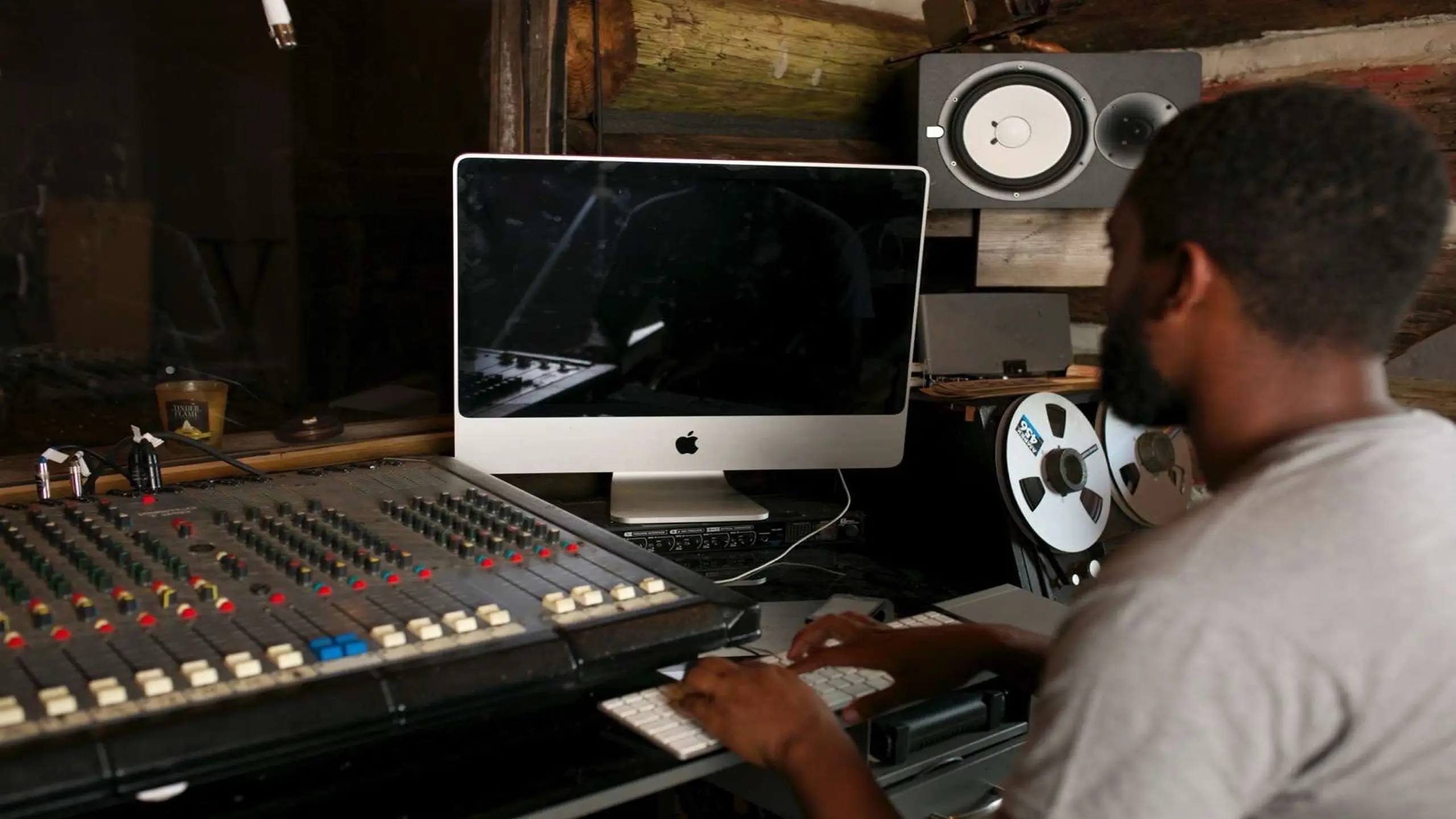
If you plan to screen your film in a professional theater, the **DCP technical specifications** are non-negotiable. A Digital Cinema Package (DCP) isn’t just a file, it’s a complex, standardized bundle that ensures your project plays correctly across cinema servers worldwide.
One missing metadata field or frame-rate mismatch can make a screening fail, even if the visuals look perfect in your edit suite. That’s why understanding these specifications isn’t optional; it’s part of professional filmmaking.
## What a DCP Actually Is
A DCP (Digital Cinema Package) is a collection of files used to store and play digital cinema content. It typically includes:
- Picture track file - encoded using JPEG 2000 (in MXF container)
- Sound track file - uncompressed 24-bit WAV (up to 16 channels)
- Composition playlist (CPL) - tells the server how to play the files
- Packing list (PKL) - verifies asset integrity via hash values
- Asset map and volume index - define the DCP’s folder structure
Together, these elements form the digital equivalent of a film reel, one that must meet precise global standards set by the Digital Cinema Initiatives (DCI).
## The Core DCP Technical Specifications
### Image Format and Resolution
- 2K (2048×1080) or 4K (4096×2160) resolution.
- Frame rates: 24, 25, 30, 48, or 60 fps (24 is standard for theatrical).
- Aspect ratios: Flat (1.85:1) or Scope (2.39:1).
If your original footage was shot in another ratio (like 16:9), letterbox or pillarbox it correctly within the final DCP frame.
### Color Space and Bit Depth
- Color space: XYZ (CIE 1931 standard)
- Bit depth: 12-bit per channel
- Gamma: 2.6
Conversion from Rec.709 or Rec.2020 to XYZ must be handled carefully, errors here cause color shifts in projection. Professional finishing software like DaVinci Resolve, EasyDCP, or Colorfront Transkoder can handle this conversion accurately.
### Frame Rate Standards
Most cinemas use 24 fps as default. If your project runs at 25 fps (common in PAL regions) or 30 fps, verify compatibility with the exhibitor. Some older D-Cinema servers cannot play high-frame-rate content (48/60 fps).
When in doubt, conform your master to 24 fps, it remains the global default.
### Audio Requirements
- Format: Uncompressed Linear PCM WAV, 24-bit / 48 kHz or 96 kHz.
- Channel mapping follows SMPTE 429-2 standard:
** Channel**
** Description**
** **
** **
1
Left
2
Right
3
Center
4
LFE (Subwoofer)
5
Left Surround
6
Right Surround
You can include up to 16 discrete channels for immersive formats. Always confirm your mix is calibrated at 85 dB SPL in theatrical monitoring conditions.
### Subtitle Integration
DCP subtitles are XML-based with timecodes, not burned into the picture track.
They can be toggled on or off by projectionists. Use SMPTE 428-7 or Interop XML format depending on the DCP type.
Test your subtitles thoroughly, encoding or font issues often cause missing characters in projection.
### Encryption and KDMs
If you distribute to theaters commercially, you may encrypt your DCP to protect content.
That requires generating a KDM (Key Delivery Message), a secure file that unlocks playback on a specific server during a set date range.
- KDMs must match the server’s serial number (certificate).
- Time zones and expiration dates must be accurate to the minute.
- Always test your encrypted DCP before sending it to exhibitors.
Unencrypted (open) DCPs are fine for festivals or private screenings.
## SMPTE vs. Interop DCP
**There are two DCP standards still in use:**
**Type**
**Format**
**Compatibility**
**Recommended For**
Interop DCP
Legacy format (pre-2012)
Plays on most systems but lacks new features
Small festivals, older cinemas
SMPTE DCP
Current global standard
Required for Dolby Atmos, HDR, and encrypted content
Commercial releases, new servers
When creating a new DCP, always choose SMPTE format unless your venue specifically requests Interop.
## Testing Your DCP
Before delivery, test your DCP on at least two different systems:
- Local playback tools: EasyDCP Player+, NeoDCP, or CineViewer.
- Cinema server simulation: Dolby or Doremi emulator if available.
**Check for:**
- Sync between audio and video.
- Subtitle timing.
- Any dropped frames or corruption.
Never assume “it plays fine in Resolve” equals “it plays fine in theaters.” Projection environments follow stricter file-handling logic.
## Naming Convention
Proper naming ensures compatibility and professionalism
.
Follow Digital Cinema Naming Convention (DCNC) syntax:
_<Language>_<Territory>_<Rating>_<Resolution>_<Format>_<FrameRate>_<Audio>_<Type>_<Version>_<Date>
***Example:***
THEMOVIETITLE_EN-XX_FTR_S_24_51_SMPTE_OV_2025-03-01
Even small typos can confuse server libraries or cause ingest failures.
## Common DCP Delivery Mistakes
1. Incorrect Frame Rate Conversion - leads to audio drift.
2. Improper Color Transform - causes strange hues in projection.
3. Misaligned Subtitles - missing or out of sync.
4. Wrong Audio Mapping - inverted channels (L/R reversed).
5. Corrupted XMLs - packaging tools not validating schema.
6. Unverified Encryption - expired KDMs during screening.
A professional QC (Quality Control) process checks all these before mastering.
## Quality Control (QC) Checklist
Before delivering your DCP, confirm:
✅ Picture plays in sync with audio
✅ Aspect ratio matches projector setting
✅ Subtitles are timed and visible
✅ DCP verified with asdcplib or CineCert tools
✅ KDM opens correctly on at least one target server
If any element fails, fix and repackage before distribution.
## Final Delivery and Storage
Deliver your DCP on a CRU DX115 drive formatted as EXT2/3 Linux filesystem. NTFS and exFAT can sometimes cause issues with ingestion.
**Always include:**
** **
- Both DCP folder and checksum report
- Optional text readme with specs and version notes
Label drives with title, resolution, runtime, and contact information. Keep one verified backup locally before shipping.
## Why This Precision Matters
Filmmakers often underestimate how unforgiving cinema servers can be. Unlike online platforms that auto-convert, theaters play exactly what you deliver. One mismatched header or codec flag can stop a premiere cold.
The DCP technical specifications are your safeguard, the bridge between **creative work** and public exhibition. Understanding them ensures that what you see in post is what audiences see on the big screen..
## How to Build, Test, and Deliver a DCP Correctly
Understanding the DCP technical specifications is only half the equation.
The next step is putting them into practice, turning your final edit into a reliable, theater-ready master. This stage decides whether your film screens flawlessly or fails to ingest at all.
Below is a smooth, step-by-step process for creating, verifying, and delivering a DCP with industry-standard precision.
### Begin with a Proper Master
Everything starts with a pristine master export.
Before you even open a DCP tool, double-check your timeline:
- Frame rate: lock to 24 fps unless you have confirmed higher-rate playback.
- Resolution: 2K (2048×1080) or 4K (4096×2160).
- Audio mix: final, calibrated 5.1 WAV files at 24-bit / 48 kHz.
- Color space: Rec. 709 or P3, ready for conversion to XYZ.
Any error here will multiply later, so treat this step like your quality gate.
## Choose the Right DCP Creation Software
You have two main routes: professional encoders and open-source tools.
### Professional Options
- EasyDCP Creator+ - Industry gold standard; supports encryption, KDMs, and QC.
- Colorfront Transkoder - For high-end DI and HDR workflows.
- Clipster (Rohde & Schwarz) - Preferred by major post houses for speed and reliability.
### Open-Source Options
- DCP-o-matic - Free, dependable for indie filmmakers.
- OpenDCP - Command-line focused; good for technical users.
For commercial screenings, always test an open-source DCP in a certified cinema before public release.
## Convert Color Correctly
The conversion from Rec. 709 or P3 to XYZ is where most independent filmmakers fail.
XYZ uses a completely different color primaries model, and skipping this step leads to dull or tinted projections.
Use color-managed software (Resolve Studio or EasyDCP) with proper LUTs.
If possible, view a test projection or at least simulate DCI P3 XYZ space on a calibrated monitor.
### Encode Image and Audio
**When exporting to DCP:**
- Codec: JPEG 2000
- Bitrate: ≤ 250 Mbps (2K 24 fps)
- Container: MXF (Material Exchange Format)
Maintain constant frame-rate encoding, variable bit-rate JPEG 2000 can cause server playback jitter.
For audio, create individual mono WAVs for each channel (L, R, C, LFE, Ls, Rs) instead of one interleaved file.
Label each clearly and map them using the SMPTE 429-2 standard.
## Build XML Metadata
Each DCP includes a series of XML documents that tell the cinema server what to play and how.
### These include
- CPL (Composition Playlist) - defines playback order and version.
- PKL (Packing List) - lists files and SHA-1 hashes for verification.
- ASSETMAP / VOLINDEX - describe folder structure and volume info.
Most professional tools auto-generate these, but verify the schema manually if possible. Invalid XML headers are one of the top 5 reasons for ingest failure.
## Package and Validate
Once encoded, package your DCP as a proper directory structure.
Then run a validation check using one of the following:
- asdcplib Validator (open source)
- EasyDCP Player+ Verification Tool
- CineCert Validator
Look for missing hashes, mismatched file sizes, or incorrect metadata.
If your DCP fails validation, fix it before it ever leaves your system.
## Test Playback on Multiple Systems
Testing is not optional, it’s insurance.
Play your DCP on at least two different servers if possible (e.g., Dolby and Doremi).
During playback, verify:
- Sync between dialogue and action.
- No frame stutter or audio dropouts.
- Subtitles appear in correct position and language.
- Volume levels match theatrical norms (fader 7 ≈ 85 dB SPL).
Even minor offset (100 ms) becomes noticeable on large screens.
## Handle Encryption Safely
If your film is being distributed commercially, you’ll likely encrypt your DCP.
That means managing KDMs (Key Delivery Messages).
Each KDM unlocks playback for a specific theater server during exact time windows.
### Best practices
- Double-check serial numbers with the exhibitor before sending.
- Keep an unencrypted DCP backup locally.
- Always test one KDM before mass distribution.
Using a reliable partner such as Deluxe Technicolor KeyGen or Qube Master Pro helps automate KDM creation safely.
## Label and Store Drives Properly
Cinemas ingest DCPs from physical drives, usually CRU DX115 carriers formatted to EXT2 or EXT3.
**Label every drive clearly with:**
- [Film](https://c-istudios.com/film-and-tv-production/) title and version (e.g., The Journey_OV_4K).
- Duration and aspect ratio.
- Contact name and phone number.
- Encryption status (Encrypted / Unencrypted).
Keep one verified duplicate in secure long-term storage. Never reuse old drives until you confirm checksum validation.
## Confirm QC Before Shipping
Your final QC should include three layers:
1. File-Level QC - checksum and hash verification.
2. Playback QC - real-time visual and audio inspection.
3. Compliance QC - SMPTE DCI standard validation.
**Document each QC stage.**
Professional facilities log these checks in a PDF report included with your delivery.
That paperwork saves time if an exhibitor flags an issue, you can trace the root immediately.
## Coordinate with Theaters or Distributors
Send both DCP drive and delivery email summarizing key details:
- Resolution, frame rate, audio format.
- Encryption status and KDM window.
- Aspect ratio and runtime.
- Contact info for technical support.
If possible, ask the theater to confirm successful ingest and playback before show day.
Many projectionists will appreciate the communication and flag problems early.
## Keep an Archival Master
Your theatrical DCP isn’t your long-term archive. Always store:
- Original graded master (ProRes 4444 or DPX).
- DCP project files (XML, metadata, LUTs).
- Audio mixes and session data.
- Documentation (QC reports, delivery emails, checksum logs).
Future remasters, festivals, or international versions will require these assets.
## Avoid Common Workflow Traps
Even seasoned professionals make mistakes.
**Here are the most frequent pitfalls and how to dodge them**:
**Problem**
**Cause**
**Solution**
Flicker or banding
Incorrect bit-depth conversion
Export 12-bit XYZ
Audio out of sync
Non-integer frame rate mixing
Always use true 24 fps
Pink/green tint
Missing color transform
Apply Rec.709→XYZ LUT
Subtitles missing
Bad XML encoding
Validate fonts and tags
KDM errors
Time zone mismatch
Sync system clock before export
A short internal checklist after each stage can prevent 90 percent of these issues.
## Verify Compatibility for International Screenings
Different territories may have varying playback specs:
- US/Europe: 24 fps 2K SMPTE standard.
- Asia: Some 25 fps servers still exist.
- Latin America: Mixture of Interop and SMPTE formats.
Before shipping, confirm region standards with the festival or cinema.
If in doubt, send both versions, one Interop and one SMPTE, clearly labeled.
## Partner with Experienced Post-Production Teams
If this process sounds intricate, that’s because it is.
Building a compliant DCP means understanding not only codecs and color spaces but also network delivery protocols and hardware limitations.
Working with professionals ensures your creative energy stays focused where it matters, storytelling.
Studios like[C&I Studios](https://c-istudios.com/post-production-services/) handle DCP creation as part of an integrated post-production workflow, color, sound, subtitles, encryption, and delivery, all under one roof.
That kind of oversight eliminates the most common point of failure: fragmented responsibility.
## Stay Updated on Evolving Standards
The DCI specifications are living documents. New SMPTE updates continually expand capabilities, from HDR and 4K 60 fps to immersive audio and high-contrast projection.
Bookmark the DCI Specification v1.4 and SMPTE 429 Series to stay compliant with every update.
Understanding these changes means your future films will project exactly as intended, no surprises, no downgrades.
## Precision Creates Confidence
A DCP isn’t just a technical requirement; it’s the final translation of your creative vision into a theatrical language.
Audiences don’t see your LUTs or encoders, they see your professionalism in every frame and hear it in every beat.
Precision at this stage builds credibility with distributors, theaters, and investors alike.
Delivering a flawless DCP says: this filmmaker understands cinema.
## Work with Experts Who Know the Standards
C&I Studios’ post-production division manages everything from mastering to theatrical delivery.
Whether your project needs DCP encoding, KDM management, or color-calibrated QC, our team ensures technical perfection with creative care.
[Learn more about our post-production services](https://c-istudios.com/post-production-services/) or[book a consultation today](https://c-istudios.com/contact/) to prepare your film for cinema-ready delivery.
## Work with C&I Studios
If you are planning a project like this, our team can take it from concept to final delivery. Explore our [film and TV production](https://c-istudios.com/film-and-tv-production/), browse [our work](https://c-istudios.com/our-work/) to see how we tell brand stories, and [get in touch](https://c-istudios.com/contact/) when you are ready to start.
Originally published November 30, 2025
---
*This content is from [C&I Studios](https://c-istudios.com), a full-service production company.*
---
# DCP Preparation Challenges: How to Ensure Your Film Screens Flawlessly in Theaters
> Published: November 28, 2025
> Categories: Film & TV
> Source: https://c-istudios.com/challenges-in-preparing-films-for-theater-exhibition/
---
.cib{--paper:#1b1d1f;--ink:#fff;--body:#d5d7d9;--muted:#8b9096;--line:rgba(255,255,255,.12);--thumb:#2b2e31;--card:#212426;--accent:#c02b0a;--blue:#5B8FA8;--serif:'Playfair Display',Georgia,serif;--sans:'Poppins',-apple-system,sans-serif;--measure:900px;background:var(--paper);color:var(--body);font-family:var(--sans);line-height:1.6;position:relative;left:50%;transform:translateX(-50%);width:90vw;max-width:1920px}
.cib *{box-sizing:border-box}
.cib .kicker{max-width:var(--measure);margin:58px auto 0;padding:0 22px;font-size:12.5px;font-weight:700;letter-spacing:2.5px;text-transform:uppercase;color:var(--blue)}
.cib h1.cibh1{text-wrap:balance;font-family:var(--serif);font-weight:500;font-size:clamp(46px,6vw,72px);line-height:1.08;color:var(--ink);max-width:var(--measure);margin:18px auto 0;padding:0 22px;letter-spacing:-.5px}
.cib .metarow{max-width:var(--measure);margin:20px auto 0;padding:0 22px;color:var(--muted);font-size:14px}
.cib .hero{position:relative;width:100%;height:0;padding-bottom:56.25%;overflow:hidden;margin:48px auto 0;border-top:1px solid var(--line);border-bottom:1px solid var(--line)}
.cib .hero .ph{width:100%;aspect-ratio:16/9;background:var(--thumb);border-top:1px solid var(--line);border-bottom:1px solid var(--line);display:flex;align-items:center;justify-content:center;color:#7d8288;font-size:13px;text-align:center;padding:0 20px}
.cib .body{max-width:var(--measure);margin:12px auto 0;padding:52px 22px 6px}
.cib .body.lead p:first-child{font-size:23px;line-height:1.62;color:var(--ink)}
.cib .body p{font-size:18.5px;line-height:1.85;margin:0 0 30px;color:var(--body)}
.cib .body h2{text-wrap:balance;font-family:var(--serif);font-weight:500;font-size:clamp(32px,4vw,48px);line-height:1.22;color:var(--ink);margin:70px 0 20px;letter-spacing:-.3px}
.cib .body h3{text-wrap:balance;font-family:var(--sans);font-weight:600;font-size:22px;color:var(--ink);margin:38px 0 8px}
.cib .body a{color:var(--ink);text-decoration:underline;text-decoration-color:rgba(255,255,255,.4);text-underline-offset:3px}
.cib .body a:hover{text-decoration-color:var(--ink)}
.cib .ctable{width:100%;border-collapse:collapse;margin:16px 0 30px;font-size:16px}
.cib .ctable th{background:#000;color:#fff;text-align:left;padding:10px 12px;font-family:var(--sans)}
.cib .ctable td{padding:10px 12px;border-bottom:1px solid var(--line);color:var(--body)}
.cib .inimg{position:relative;width:100%;height:0;padding-bottom:56.25%;overflow:hidden;margin:72px auto;border-top:1px solid var(--line);border-bottom:1px solid var(--line)}
.cib .inimg .ph{width:100%;aspect-ratio:16/9;background:var(--thumb);border-top:1px solid var(--line);border-bottom:1px solid var(--line);display:flex;align-items:center;justify-content:center;color:#7d8288;font-size:13px}
.cib .origpub{max-width:var(--measure);margin:60px auto 0;padding:26px 22px 0;border-top:1px solid var(--line);color:var(--muted);font-size:13.5px}
.cib .related{max-width:1200px;margin:64px auto 0;padding:34px 22px 76px}
.cib .related h3{font-family:var(--sans);font-size:12.5px;letter-spacing:2px;text-transform:uppercase;color:var(--ink);margin:0 0 24px}
.cib .grid{display:grid;grid-template-columns:repeat(3,1fr);gap:28px}
.cib .rc{background:var(--card);border:1px solid var(--line);display:block;text-decoration:none;color:inherit;transition:border-color .15s}
.cib a.rc:hover{border-color:rgba(255,255,255,.5)}
.cib .rc .thumb{position:relative;width:100%;height:0;padding-bottom:56.25%;background:var(--thumb);overflow:hidden}
.cib .rc .thumb img{position:absolute!important;top:0!important;left:0!important;width:100%!important;height:100%!important;object-fit:cover!important;margin:0!important}
.cib .rc .cc{padding:14px 15px 17px}
.cib .rc .rt{font-family:var(--serif);font-weight:500;font-size:16px;line-height:1.3;color:var(--ink);margin:0 0 6px}
.cib .rc .rm{font-size:11px;letter-spacing:1px;text-transform:uppercase;color:var(--muted)}
.cib img{margin:0!important;padding:0!important;display:block!important;vertical-align:top;max-width:100%}
.cib .hero img,.cib .inimg img{position:absolute!important;top:0!important;left:0!important;width:100%!important;height:100%!important;object-fit:cover!important;margin:0!important;padding:0!important;border:0!important;display:block!important;aspect-ratio:auto!important}
.cib .hero+.body{padding-top:36px}
@media(max-width:760px){.cib .grid{grid-template-columns:1fr}.cib .body h2{margin:52px 0 16px}.cib .body p{font-size:17.5px}.cib .inimg,.cib .hero{margin-top:44px}}
.cib .vembed{max-width:var(--measure);margin:44px auto;padding:0 22px}.cib .vembed .vwrap{position:relative;width:100%;height:0;padding-bottom:56.25%}.cib .vembed .vwrap iframe{position:absolute;top:0;left:0;width:100%;height:100%;border:0}
Film & TV
# DCP Preparation Challenges. How to Ensure Your Film Screens Flawlessly in Theaters
9 min read
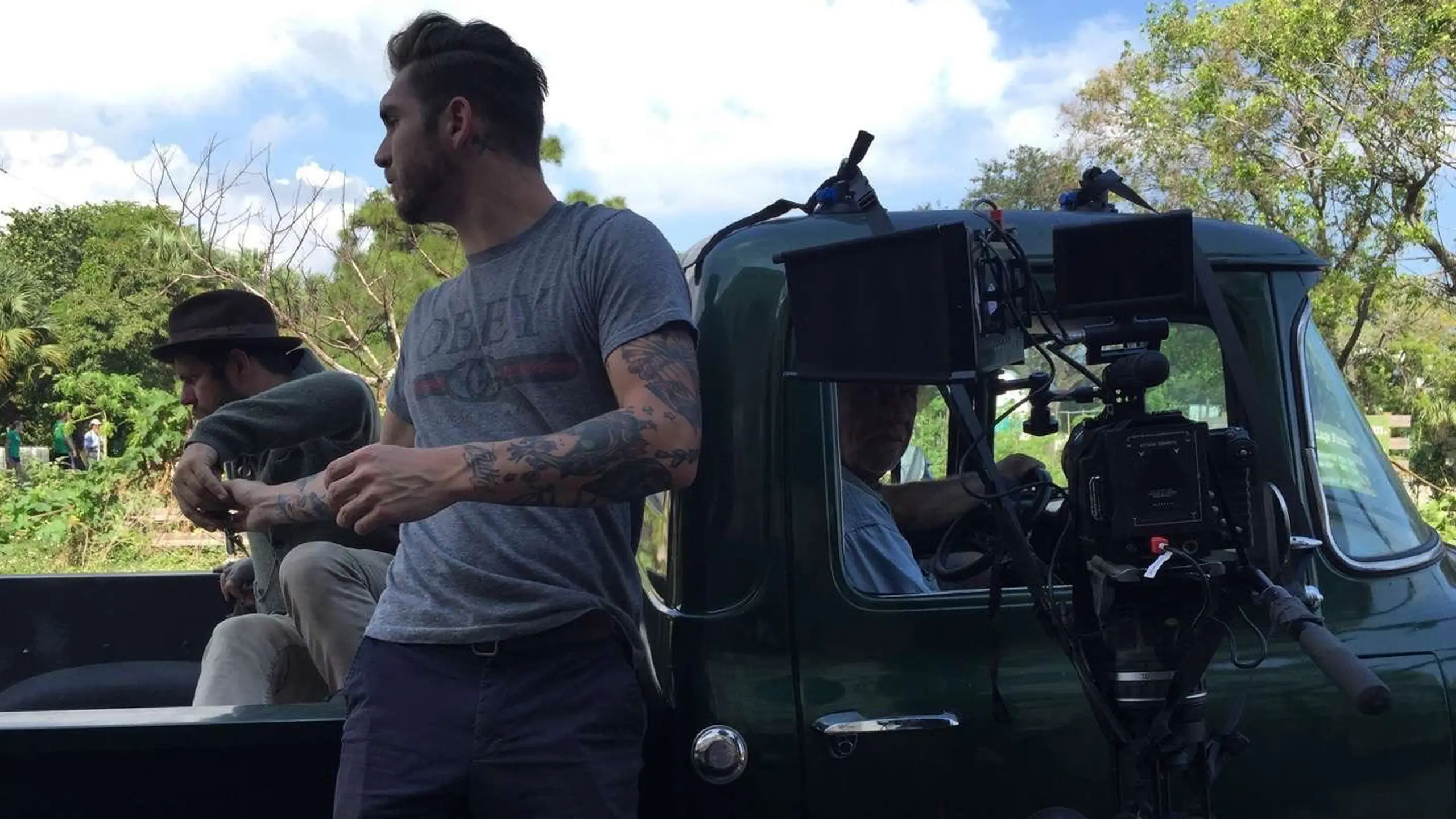
Every filmmaker dreams of that moment when the lights dim and their story fills a cinema screen. But between final cut and opening night lies one of the least discussed and most critical stages of the process: preparing your film for theatrical exhibition. The technical demands of turning a project into a flawless Digital Cinema Package (DCP) can quietly make or break a premiere.
A DCP is not just a video file. It is a complex digital container that holds every element of your film video, audio, subtitles, and metadata, in a format that meets global cinema standards. To most independent filmmakers, it sounds like a formality. In reality, it’s a gauntlet of specifications, software, and compatibility checks.
In 2024, SMPTE and DCI standards continue to evolve to ensure consistency across projection systems. Yet the same complexity that ensures uniform quality also creates barriers for smaller teams. From encoding mismatches to failed decryptions, every **DCP preparation challenge** has the potential to delay a festival screening or derail a distribution deal.
## What DCP really means
Before exploring the challenges, it’s worth clarifying what a DCP actually does. Think of it as the digital equivalent of a film reel, a precise, locked structure designed for playback on professional cinema servers.
**A DCP contains:**
Video encoded in JPEG2000 format, packaged in MXF (Material Exchange Format) files.
Multi-channel audio (typically 5.1 or 7.1 surround) in WAV format.
XML-based composition playlists (CPL) and asset maps that tell the cinema server how to play it all together.
Unlike traditional video exports, every DCP follows a strict hierarchy: each file must point to others through metadata. A single incorrect file name or metadata mismatch can cause a complete playback failure.
Another complexity is that not all DCPs are created equal. Some are built to Interop standards (older, less flexible), while newer ones follow SMPTE DCP standards (modern, compatible with HDR, HFR, and extended audio).
Festivals and distributors increasingly require the latter, but converting between the two formats is risky if not handled by a professional mastering team.
## The top technical hurdles filmmakers face
Once a film is ready for delivery, most creators discover that preparing it for DCP is less about creativity and more about problem-solving. Here are the most common hurdles, and why they matter.
### Frame rate mismatches and conversion loss
Cinemas worldwide expect a true 24.000 fps frame rate. However, editing software often defaults to 23.976 fps (the broadcast-friendly rate). That seemingly small difference can cause dropped frames, audio drift, or unsynchronized subtitles. Correcting this after export means re-encoding, which risks compression artifacts or timing errors.
### Color space and gamma inconsistencies
Filmmakers color-grade using monitors calibrated to Rec.709, but cinema projectors operate in DCI-P3 color space. Without proper conversion, blacks appear washed out and highlights clip aggressively. This misalignment often surfaces only during final projection tests, making it one of the most painful DCP preparation challenges to correct under time pressure.
### Audio channel mapping issues
Theater playback demands precise channel labeling, Left, Center, Right, LFE, Left Surround, Right Surround. A single misassignment (for instance, sending dialogue to the wrong channel) results in jarring sound experiences. Even with the right levels, audio delay compensation across 5.1 or 7.1 outputs requires careful synchronization, not guesswork.
### File size and transfer bottlenecks
A typical feature-length DCP can exceed 200 GB. Transferring it via physical drive or secure FTP introduces checksum risks, especially when file verification is skipped. A single corrupted MXF file can make an entire DCP unreadable, even if the rest of the package is intact.
### Encryption and KDM management
To prevent piracy, many distributors encrypt DCPs with Key Delivery Messages (KDMs). While secure, these keys are time-sensitive, valid only for certain theaters and dates.
Sending an expired or mismatched KDM to a festival can lead to a public “file not authorized” error on screen. Balancing security and accessibility is another layer of DCP mastery that requires precision.
## Why small studios and indie creators struggle most
For large post-production houses, DCP creation is routine. They maintain calibrated monitors, in-house servers, and experienced technicians who validate every export. For small studios and independent filmmakers, the situation is different.
The output might look perfect on a laptop, only to fail when loaded into a cinema’s Dolby or Christie system. That’s why C&I Studios integrates post-production and delivery within the same workflow, to ensure creative and technical teams operate in sync, from edit to exhibition.
By managing color grading, sound mastering, and DCP validation under one roof, C&I eliminates the uncertainty that often plagues indie projects. This single-pipeline approach ensures that artistic intent survives the transition from the editing bay to the big screen, without technical surprises.
## From creative perfection to technical precision
Every filmmaker’s dream of seeing their film on the big screen comes down to one crucial step: flawless DCP preparation. You can have the most beautifully shot scenes and meticulously mixed sound, but if the DCP isn’t properly validated, the experience can collapse in seconds.
The shift from editing software to cinema projection requires a blend of creative foresight and technical discipline. This is where most independent filmmakers underestimate the process, and where seasoned studios like C&I Studios prove their value.
The transition from post-production to exhibition is not just a file conversion; it’s a complete translation of your [film’s](https://c-istudios.com/film-and-tv-production/) creative DNA into a standardized, projection-safe language. That translation must be tested, verified, and retested to ensure every color, sound, and subtitle behaves exactly as intended.
## Testing, troubleshooting, and validation
Once a DCP is exported, the next phase begins: validation. This is where hidden errors surface, mismatched frame rates, corrupt MXF containers, unreadable subtitles, or audio distortions that weren’t there before.
### Why validation determines success
Projection systems are unforgiving. What passes as “fine” in DaVinci Resolve or Premiere may completely fail in a Dolby or Christie cinema system. Without validation, you’re relying on luck, not control.
**Here’s what a robust validation process looks like:**
Use certified DCP playback tools. Software like DCP-o-matic Player, EasyDCP, and NeoDCP simulate real projection systems, showing exactly how your film will appear and sound in theaters.
Run a checksum verification. Use MD5 or SHA-1 validation to ensure no byte-level corruption occurred during export or file transfer.
Check for XML structure integrity. The AssetMap and Packing List files should correctly reference every asset, one mismatch can make the package unplayable.
Verify subtitle formatting. XML subtitles should align precisely with timecodes, avoiding overlaps and truncated text.
Test both encrypted and unencrypted playback. Many filmmakers forget to check whether their encrypted version actually plays correctly with KDMs before sending to festivals.
Skipping any of these steps can result in public projection failures, which are often irreversible. Festivals rarely delay schedules to fix a filmmaker’s DCP.
## The creative cost of poor technical prep
Even one overlooked parameter can destroy the emotional impact of your film. Imagine this:
The lights go down. The first frame appears slightly desaturated. You shrug it off. Then the dialogue comes in, only from the right speaker. By minute two, the entire audience is whispering. You sit frozen, knowing what went wrong.
This nightmare is more common than most directors admit. The DCP preparation challenges behind such incidents are rarely creative, they’re procedural. A misaligned audio map, a wrong color profile, a missing LUT. These mistakes happen silently but echo loudly.
## Real world implications
**Festival disqualifications**: Many festivals reject films that fail projection QC, even if the content is exceptional.
**Financial losses**: Re-exporting a full-length feature in DCP format can cost thousands, especially under tight deadlines.
**Brand credibility**: Distributors and producers often remember technical unreliability more than artistic brilliance.
**Creative frustration**: Late-stage regrading or audio fixes compromise the artistic balance painstakingly built during editing.
Professional post houses like [C&I Studios](https://c-istudios.com/) avoid these pitfalls by controlling every step from color correction to final playback testing. Their integrated setup ensures no file passes through unchecked.
## Understanding DCP quality assurance in practice
While large studios run automated validation pipelines, smaller teams can still establish a lightweight but effective QA process.
### Step-by-step DCP QA workflow
Initial export test: Create a short 2-3 minute DCP sample from your film’s most dynamic section (with high motion, color contrast, and dialogue). Test that first before exporting the full version.
**Color calibration**: Compare side-by-side projection with your reference monitor. Adjust gamma and color mapping from Rec.709 to DCI-P3.
**Audio loudness test**: Ensure peaks do not exceed cinema-safe levels; target around -27 LUFS with dialogue normalization.
**Playback simulation**: Test playback on multiple systems, laptop, theater server, and at least one different media player.
**Report creation**: Document all playback results and corrections in a “DCP Verification Sheet.”
Filmmakers who follow this disciplined process rarely face technical rejection. It may seem tedious, but it’s what separates reliable filmmakers from risky ones.
## Common myths about DCP preparation
### “Once exported, it’s done.”
False. The DCP is not the end product; it’s a translation of your master. Without verification, you have no proof it’s functional.
### “Festivals can fix small issues.”
They won’t. Technicians are not responsible for creative or mastering errors. A single unplayable file can remove your slot entirely.
### “Unencrypted DCPs are unsafe.”
They’re not inherently unsafe, in fact, many festivals prefer them. Encryption only adds value if piracy risk is high and the screening venue is secure enough to handle KDMs.
### “DCP tools are all the same.”
They aren’t. Free encoders (like DCP-o-matic) are good for small projects, but professional-grade exports (EasyDCP, Clipster) ensure compliance with evolving SMPTE standards.
Dispelling these myths saves filmmakers from countless headaches, and ensures that the work they show is the work they intended.
## The practical DCP submission checklist
### Technical checks
- Frame rate locked at 24.000 fps
- Resolution matches project ratio (2.39:1 / 1.85:1 / 1.78:1)
- Color conversion verified (Rec.709 → DCI-P3)
- 16-bit JPEG2000 encoding confirmed
- Full QC playback on certified DCP player
### Audio checks
- Channel layout validated (L, C, R, LFE, LS, RS)
- Dialogue centered; no phase inversion
- Loudness measured and consistent across reels
- 1/7.1 track labeling consistent with XML metadata
### Metadata and subtitles
- Correct CPL (Composition Playlist) references
- Subtitles in XML or PNG-TIFF format, sync verified
- Correct naming convention: FilmName_V1_SMPTE_EN_24fps
- AssetMap, Volume Index, and PKL integrity validated
### Distribution and delivery
- MD5 or SHA-256 checksum report generated
- CRU drive formatted to EXT2/3 and verified
- Encrypted KDM validity window confirmed with the venue
- Backup copy of unencrypted DCP stored securely
Completing this list might feel exhaustive, but it guarantees peace of mind. A DCP that passes every point here is effectively “festival proof.”
## Building a resilient post-production pipeline
Many assume the projection quality depends on theater equipment, but it actually starts much earlier, in [post-production](https://c-istudios.com/post-production-services/). Each decision made during editing, color grading, and sound design influences how well the DCP behaves in projection.
### To build a resilient pipeline
- Maintain consistent color LUTs across grading software and output devices.
- Use a calibrated reference monitor that matches cinema gamma and luminance.
- Centralize assets to prevent version confusion.
- Create automation scripts for DCP packaging and checksum generation.
- Run end-to-end tests in-house before client delivery.
### Integrating automation
- Automation can eliminate human error:
- Automated XML validation scripts prevent broken metadata.
- Frame-by-frame checksum comparison ensures visual integrity.
- Scheduled verification reports reduce manual testing fatigue.
Studios like C&I use these safeguards to ensure the creative process never stalls due to preventable technical issues.
## When preparation saved a premiere
In early 2024, a short film produced by an independent filmmaker was slated for international festival screening. The first DCP submission failed playback, missing color metadata caused a magenta cast across all frames.
The filmmaker reached out to C&I Studios, which reconstructed the DCP from the original ProRes master. The team regraded using calibrated P3 references, re-encoded the MXF sequence, validated XML data, and performed checksum integrity checks.
The fixed version passed festival QC within 24 hours and screened flawlessly. The lesson: preparedness doesn’t just prevent problems, it rescues opportunities.
## Expanding DCP readiness for global screenings
With film festivals expanding into Asia, Europe, and the Middle East, multi-standard compatibility is becoming critical. Each region has slightly different DCP handling requirements, frame rate preferences, KDM authorization systems, or subtitle formats.
To stay globally compatible:
- Always export in SMPTE DCP, not Interop (older standard).
- Use universal naming conventions (ISO 11694).
- For multilingual films, create multi-CPL DCPs (separate XML playlists for each language).
- Confirm territory-based KDM zones if using encryption.
A globally-ready DCP ensures your film can be screened anywhere, without re-exporting or repackaging for each festival.
## Mastering confidence before the premiere
Preparing your film for theatrical release is an exercise in discipline and foresight. Every step, from validating MXF integrity to verifying KDM windows, protects your creative investment.
The truth is that DCP preparation challenges are not about luck or software; they’re about process. The most successful filmmakers are those who treat DCP as an extension of storytelling, a final act of craftsmanship that ensures their vision survives every technical translation.
If your film is nearing completion, it’s not too early to start thinking about projection readiness. Building your DCP with care means entering every screening room with confidence, not anxiety.
Ready to take your film from the edit bay to the big screen?[Contact C&I Studios](https://c-istudios.com/contact/) to ensure your DCP is exhibition-ready, tested, validated, and built to perform flawlessly anywhere in the world.
## Work with C&I Studios
If you are planning a project like this, our team can take it from concept to final delivery. Explore our [film and TV production](https://c-istudios.com/film-and-tv-production/), browse [our work](https://c-istudios.com/our-work/) to see how we tell brand stories, and [get in touch](https://c-istudios.com/contact/) when you are ready to start.
Originally published November 28, 2025
---
*This content is from [C&I Studios](https://c-istudios.com), a full-service production company.*
---
# Creating a DCP: How to Convert Your Film for Theaters Without Losing Quality
> Published: November 27, 2025
> Categories: Film & TV
> Source: https://c-istudios.com/converting-your-film-to-a-dcp-without-quality-loss/
---
.cib{--paper:#1b1d1f;--ink:#fff;--body:#d5d7d9;--muted:#8b9096;--line:rgba(255,255,255,.12);--thumb:#2b2e31;--card:#212426;--accent:#c02b0a;--blue:#5B8FA8;--serif:'Playfair Display',Georgia,serif;--sans:'Poppins',-apple-system,sans-serif;--measure:900px;background:var(--paper);color:var(--body);font-family:var(--sans);line-height:1.6;position:relative;left:50%;transform:translateX(-50%);width:90vw;max-width:1920px}
.cib *{box-sizing:border-box}
.cib .kicker{max-width:var(--measure);margin:58px auto 0;padding:0 22px;font-size:12.5px;font-weight:700;letter-spacing:2.5px;text-transform:uppercase;color:var(--blue)}
.cib h1.cibh1{text-wrap:balance;font-family:var(--serif);font-weight:500;font-size:clamp(46px,6vw,72px);line-height:1.08;color:var(--ink);max-width:var(--measure);margin:18px auto 0;padding:0 22px;letter-spacing:-.5px}
.cib .metarow{max-width:var(--measure);margin:20px auto 0;padding:0 22px;color:var(--muted);font-size:14px}
.cib .hero{position:relative;width:100%;height:0;padding-bottom:56.25%;overflow:hidden;margin:48px auto 0;border-top:1px solid var(--line);border-bottom:1px solid var(--line)}
.cib .hero .ph{width:100%;aspect-ratio:16/9;background:var(--thumb);border-top:1px solid var(--line);border-bottom:1px solid var(--line);display:flex;align-items:center;justify-content:center;color:#7d8288;font-size:13px;text-align:center;padding:0 20px}
.cib .body{max-width:var(--measure);margin:12px auto 0;padding:52px 22px 6px}
.cib .body.lead p:first-child{font-size:23px;line-height:1.62;color:var(--ink)}
.cib .body p{font-size:18.5px;line-height:1.85;margin:0 0 30px;color:var(--body)}
.cib .body h2{text-wrap:balance;font-family:var(--serif);font-weight:500;font-size:clamp(32px,4vw,48px);line-height:1.22;color:var(--ink);margin:70px 0 20px;letter-spacing:-.3px}
.cib .body h3{text-wrap:balance;font-family:var(--sans);font-weight:600;font-size:22px;color:var(--ink);margin:38px 0 8px}
.cib .body a{color:var(--ink);text-decoration:underline;text-decoration-color:rgba(255,255,255,.4);text-underline-offset:3px}
.cib .body a:hover{text-decoration-color:var(--ink)}
.cib .ctable{width:100%;border-collapse:collapse;margin:16px 0 30px;font-size:16px}
.cib .ctable th{background:#000;color:#fff;text-align:left;padding:10px 12px;font-family:var(--sans)}
.cib .ctable td{padding:10px 12px;border-bottom:1px solid var(--line);color:var(--body)}
.cib .inimg{position:relative;width:100%;height:0;padding-bottom:56.25%;overflow:hidden;margin:72px auto;border-top:1px solid var(--line);border-bottom:1px solid var(--line)}
.cib .inimg .ph{width:100%;aspect-ratio:16/9;background:var(--thumb);border-top:1px solid var(--line);border-bottom:1px solid var(--line);display:flex;align-items:center;justify-content:center;color:#7d8288;font-size:13px}
.cib .origpub{max-width:var(--measure);margin:60px auto 0;padding:26px 22px 0;border-top:1px solid var(--line);color:var(--muted);font-size:13.5px}
.cib .related{max-width:1200px;margin:64px auto 0;padding:34px 22px 76px}
.cib .related h3{font-family:var(--sans);font-size:12.5px;letter-spacing:2px;text-transform:uppercase;color:var(--ink);margin:0 0 24px}
.cib .grid{display:grid;grid-template-columns:repeat(3,1fr);gap:28px}
.cib .rc{background:var(--card);border:1px solid var(--line);display:block;text-decoration:none;color:inherit;transition:border-color .15s}
.cib a.rc:hover{border-color:rgba(255,255,255,.5)}
.cib .rc .thumb{position:relative;width:100%;height:0;padding-bottom:56.25%;background:var(--thumb);overflow:hidden}
.cib .rc .thumb img{position:absolute!important;top:0!important;left:0!important;width:100%!important;height:100%!important;object-fit:cover!important;margin:0!important}
.cib .rc .cc{padding:14px 15px 17px}
.cib .rc .rt{font-family:var(--serif);font-weight:500;font-size:16px;line-height:1.3;color:var(--ink);margin:0 0 6px}
.cib .rc .rm{font-size:11px;letter-spacing:1px;text-transform:uppercase;color:var(--muted)}
.cib img{margin:0!important;padding:0!important;display:block!important;vertical-align:top;max-width:100%}
.cib .hero img,.cib .inimg img{position:absolute!important;top:0!important;left:0!important;width:100%!important;height:100%!important;object-fit:cover!important;margin:0!important;padding:0!important;border:0!important;display:block!important;aspect-ratio:auto!important}
.cib .hero+.body{padding-top:36px}
@media(max-width:760px){.cib .grid{grid-template-columns:1fr}.cib .body h2{margin:52px 0 16px}.cib .body p{font-size:17.5px}.cib .inimg,.cib .hero{margin-top:44px}}
.cib .vembed{max-width:var(--measure);margin:44px auto;padding:0 22px}.cib .vembed .vwrap{position:relative;width:100%;height:0;padding-bottom:56.25%}.cib .vembed .vwrap iframe{position:absolute;top:0;left:0;width:100%;height:100%;border:0}
Film & TV
# Creating a DCP. How to Convert Your Film for Theaters Without Losing Quality
6 min read
Turning your finished film into a Digital Cinema Package (DCP) is one of the most misunderstood steps in post-production. Many filmmakers assume it’s a simple export. In reality, it’s a highly technical process that determines how faithfully y[our work](https://c-istudios.com/our-work/) appears on the big screen.
A DCP isn’t just a video file. It’s the official format recognized by cinemas worldwide, a standardized collection of encrypted and compressed files that ensure consistent playback across thousands of digital projectors. Creating one correctly means preserving the integrity of your color, sound, and frame rate without introducing artifacts or sync issues.
If you’ve ever seen a film look washed-out or heard muffled dialogue in a theater, chances are the DCP was mishandled. The goal of this guide is to help you master **creating a DCP** that matches your original master, pixel for pixel, tone for tone, and frame for frame.
## Understanding what a DCP actually is
Before you can create one, it helps to know what’s inside.
**A DCP contains:**
- Video files encoded in JPEG2000 format (12-bit, intraframe compression).
- Audio files in uncompressed WAV, typically 24-bit at 48 or 96 kHz.
- Subtitle and metadata files (XML) that define timing, language, and reel order.
- Asset maps and composition playlists (CPLs) that tell the server what to play and when.
Think of it as a digital reel, built for reliability and synchronization rather than convenience. Unlike an MP4 or ProRes export, each DCP element must comply with SMPTE DCP or Interop DCP standards, the globally accepted frameworks that ensure your movie runs perfectly in every theater.
## Why quality loss happens during DCP creation
When filmmakers report “quality loss,” it usually means one of three things:
1. **Color mismanagement**: Improper color-space conversion (Rec.709 → DCI-P3) leading to muted tones.
2. **Compression artifacts**: Incorrect JPEG2000 bitrate settings that soften detail.
3. **Audio mismatch**: Downmixed stereo files replacing true 5.1 or 7.1 surround sound.
Each issue stems from skipping a single stage of the DCP workflow. Let’s break down how to prevent them.
## Prepare a perfect master
Everything starts with your Digital Intermediate (DI) or final master export. The cleaner this version, the safer your DCP will be.
### Recommended master settings
- Resolution: Match your original aspect ratio (e.g., 4096×2160 for 4K DCP).
- Color space: Rec.709 or Rec.2020, whichever was used during color grading.
- Bit depth: 10-bit or higher.
- Codec: Apple ProRes 4444 XQ or uncompressed DPX sequence.
- Audio: Split tracks for each channel (L, C, R, LFE, LS, RS).
### Best practice
Keep an uncompressed version of your film for DCP generation, never export from a compressed master like H.264 or H.265. Compression artifacts multiply during re-encoding.
## Manage color conversions properly
This is the stage where most quality loss occurs. The cinema standard color space is DCI-P3, not Rec.709. Without proper conversion, your blacks lift, skin tones distort, and highlights clip.
### Tools that help
- DaVinci Resolve Color Management (RCM) → Convert Rec.709 → DCI-P3 D65 with gamma 2.6.
- ACES workflow (Academy Color Encoding System) → Keeps wide-gamut color consistent across grading and mastering.
### Quick tips for accuracy
- Calibrate your monitor to 100 nits, D65 white point, and 2.6 gamma.
- Use a hardware LUT box (like FSI or AJA) for accurate on-screen representation.
- Run side-by-side comparisons between Rec.709 and P3 exports before finalizing.
When creating a DCP, your goal is visual parity. A shot should look identical whether played in your grading suite or on a cinema projector.
## Choose the right DCP creation software
Not all encoders are equal. Free tools simplify the process but often compromise quality or metadata accuracy.
### Professional options
- EasyDCP (Fraunhofer IIS): Industry gold standard for mastering and encryption.
- Clipster (Rohde & Schwarz): Enterprise-level encoding for studios and networks.
- FinalDCP: High-fidelity encoding for color-critical films.
### Indie and budget options
- DCP-o-matic: Free, open-source tool for small productions.
- Wraptor by Quvis: Built into Adobe Media Encoder for basic needs.
If your film is bound for major festivals or theatrical distribution, use a professional encoder. Even a small metadata or audio-mapping error can trigger playback failures in theaters.
## Maintain audio integrity
Sound is half your movie, and losing its balance is as damaging as losing color.
### Essential audio checklist
- Use 24-bit, 48 kHz WAV files.
- Verify channel layout: Left, Center, Right, LFE, Left Surround, Right Surround.
- Ensure phase alignment between stereo pairs.
- Confirm consistent loudness (target −27 LUFS).
- Avoid last-minute “mixdowns”, they collapse dynamic range.
For immersive mixes (7.1, Dolby Atmos), consult your [post-audio engineer](https://c-istudios.com/audio-engineering-services/) before conversion. A mismatch between your original mix and the DCP container can distort the soundstage.
## Understand bitrates and compression
A DCP encodes video in JPEG2000, a visually lossless format that balances file size and clarity. But you control the compression ratio.
### Standard bitrate ranges
- 2K DCP: 125-250 Mbps
- 4K DCP: 250-500 Mbps
Encoding at higher bitrates preserves micro-details in shadows and textures but increases file size. Under-encoding, however, introduces flickering and banding, subtle but disastrous in projection.
### Pro tip
Run a test encode of a 1-minute high-motion scene at multiple bitrates. Compare results on a calibrated monitor to determine the optimal setting before exporting the full film.
## Validate your DCP before delivery
Even the most careful creation can fail if not tested. Validation ensures every file in your DCP package is accessible, correctly named, and projection-ready.
### Validation checklist
- Open the DCP in EasyDCP Player or DCP-o-matic Player.
- Verify MXF and XML integrity.
- Check subtitles, KDMs, and playback duration.
- Test 5.1 audio mapping on a proper theater server.
- Generate MD5 checksums to detect corruption during transfer.
Many filmmakers neglect this step, assuming “no error” means “no issue.” In reality, servers interpret data differently. The only guarantee of quality retention is physical playback testing.
## Test projection in a real theater
Lab testing isn’t enough. Real projection introduces environmental variables, lamp brightness, screen reflectivity, and speaker calibration. Schedule a local test screening in a professional cinema, ideally with your colorist and sound engineer present.
### What to observe
- Are skin tones and blacks consistent with your grading monitor?
- Does dialogue remain centered across the room?
- Are any frames dropping or stuttering during playback?
Make small adjustments if necessary and regenerate the DCP. Professional studios like [C&I Studios](https://c-istudios.com/post-production-bringing-your-film-to-life/) conduct multiple QC passes before final delivery to eliminate last-minute surprises.
## Secure delivery and KDM management
For encrypted DCPs, Key Delivery Messages (KDMs) control playback authorization. If you’re sending your film to multiple venues, generate separate KDMs for each projector’s serial number and date window.
### Delivery best practices
- Use CRU drives (EXT2/3 formatted) for physical delivery.
- Include a text file listing runtime, frame rate, and aspect ratio.
- Maintain both encrypted and unencrypted masters.
- Keep KDM windows generous, festivals often experience last-minute delays.
Unencrypted DCPs are acceptable for private screenings or festivals that don’t demand encryption. They play instantly without KDM setup, reducing the risk of “file not authorized” errors.
## Why maintaining fidelity matters
When a film loses detail or color accuracy in projection, audiences notice. They might not name the issue, but they feel it, a muted emotional response, an unnatural skin tone, a flat mix.
Cinemas magnify imperfections. A misplaced LUT, a crushed highlight, or a clipped sound bite becomes painfully visible. That’s why fidelity preservation isn’t optional; it’s part of your storytelling integrity.
Filmmakers who master creating a DCP understand that delivery is an extension of direction. Your narrative doesn’t end at the edit, it ends when light hits the screen exactly as you intended.
## Common mistakes to avoid
1. ** Exporting from compressed footage**
Re-encoding from H.264 or HEVC introduces generational loss. Always export from your DI or ProRes master.
1. ** Ignoring color management**
If you skip Rec.709 → P3 conversion, your film will look dull under projection lamps.
1. ** Mislabeling files**
Incorrect naming inside the CPL or AssetMap can prevent the server from playing your DCP altogether.
1. ** Forgetting to verify audio**
A mismapped center channel (C) is the most common projection error, dialogue may disappear or shift left.
1. ** Skipping checksum verification**
Even a single corrupted MXF frame can halt playback mid-screening.
Attention to detail at this stage defines professionalism. At C&I Studios, no DCP leaves the mastering bay until it passes a 100-point inspection checklist.
## How professional studios preserve quality
### Integrated workflows
Professional facilities integrate color grading, audio mastering, and DCP encoding within one calibrated environment. This avoids the “telephone game” effect where creative intent is lost across handoffs.
### Equipment calibration
High-end post houses use reference monitors, spectroradiometers, and DCI-approved projectors to match theatrical output. Every LUT, every codec, every pixel is verified under projection conditions.
### Technical redundancy
- Dual-system backups for DCP exports.
- Real-time checksum validation.
- Secure server environments for KDM storage.
This is how studios like C&I ensure that a filmmaker’s creative vision survives the journey from timeline to theater, without compression compromises or metadata misfires.
## Expanding to HDR and high frame rate DCPs
As projection technology evolves, new opportunities and challenges arise.
### HDR (High Dynamic Range)
- Requires SMPTE ST 428-7 compliant mastering.
- Offers extended contrast ratios but demands meticulous tone-mapping.
- Not all theaters support HDR projection, so always deliver an SDR fallback.
### High Frame Rate (HFR)
- Commonly 48 or 60 fps.
- Improves motion clarity but doubles file size.
- Playback compatibility must be confirmed with theater servers.
When exploring these advanced formats, always consult your post-production partner early. Retro-fitting HDR or HFR into a standard DCP at the last minute often causes desync or decode errors.
## The step by step summary
### Pre-production prep
- Grade in Rec.709 or ACES.
- Maintain organized audio stems.
- Export high-bit-depth master.
### DCP creation
- Convert Rec.709 → DCI-P3.
- Encode JPEG2000 at 200-250 Mbps.
- Verify channel mapping and XML data.
- Validate with DCP playback software.
### Final checks
- Perform theater test screening.
- Confirm KDM validity and projection logs.
- Archive encrypted and unencrypted masters separately.
*Follow this workflow, and you’ll never compromise your film’s visual or sonic quality.*
## Preserving the filmmaker’s fingerprint
Creating a DCP isn’t just a technical task, it’s the final artistic safeguard. It’s how you protect the integrity of your film when it leaves your workstation and enters the collective experience of a cinema audience.
The filmmakers who treat creating a DCP as part of the storytelling process earn more consistent results, fewer screening failures, and deeper trust from festivals and distributors.
Whether you’re preparing for a small indie premiere or an international theatrical rollout, your film deserves to shine with the same precision it was crafted with.
Ready to master the technical side of storytelling?[Contact C&I Studios](https://c-istudios.com/contact/) and make sure your DCP is built, tested, and delivered with zero quality loss.
## Work with C&I Studios
If you are planning a project like this, our team can take it from concept to final delivery. Explore our [film and TV production](https://c-istudios.com/film-and-tv-production/), browse [our work](https://c-istudios.com/our-work/) to see how we tell brand stories, and [get in touch](https://c-istudios.com/contact/) when you are ready to start.
Originally published November 27, 2025
---
*This content is from [C&I Studios](https://c-istudios.com), a full-service production company.*
---
# Avoid These Pitfalls When Mixing Audio For Film And TV To Achieve Professional Results
> Published: November 25, 2025
> Categories: Film & TV
> Source: https://c-istudios.com/avoid-these-pitfalls-when-mixing-audio-for-film-and-tv-to-achieve-professional-results/
---
.cib{--paper:#1b1d1f;--ink:#fff;--body:#d5d7d9;--muted:#8b9096;--line:rgba(255,255,255,.12);--thumb:#2b2e31;--card:#212426;--accent:#c02b0a;--blue:#5B8FA8;--serif:'Playfair Display',Georgia,serif;--sans:'Poppins',-apple-system,sans-serif;--measure:900px;background:var(--paper);color:var(--body);font-family:var(--sans);line-height:1.6;position:relative;left:50%;transform:translateX(-50%);width:90vw;max-width:1920px}
.cib *{box-sizing:border-box}
.cib .kicker{max-width:var(--measure);margin:58px auto 0;padding:0 22px;font-size:12.5px;font-weight:700;letter-spacing:2.5px;text-transform:uppercase;color:var(--blue)}
.cib h1.cibh1{text-wrap:balance;font-family:var(--serif);font-weight:500;font-size:clamp(46px,6vw,72px);line-height:1.08;color:var(--ink);max-width:var(--measure);margin:18px auto 0;padding:0 22px;letter-spacing:-.5px}
.cib .metarow{max-width:var(--measure);margin:20px auto 0;padding:0 22px;color:var(--muted);font-size:14px}
.cib .hero{position:relative;width:100%;height:0;padding-bottom:56.25%;overflow:hidden;margin:48px auto 0;border-top:1px solid var(--line);border-bottom:1px solid var(--line)}
.cib .hero .ph{width:100%;aspect-ratio:16/9;background:var(--thumb);border-top:1px solid var(--line);border-bottom:1px solid var(--line);display:flex;align-items:center;justify-content:center;color:#7d8288;font-size:13px;text-align:center;padding:0 20px}
.cib .body{max-width:var(--measure);margin:12px auto 0;padding:52px 22px 6px}
.cib .body.lead p:first-child{font-size:23px;line-height:1.62;color:var(--ink)}
.cib .body p{font-size:18.5px;line-height:1.85;margin:0 0 30px;color:var(--body)}
.cib .body h2{text-wrap:balance;font-family:var(--serif);font-weight:500;font-size:clamp(32px,4vw,48px);line-height:1.22;color:var(--ink);margin:70px 0 20px;letter-spacing:-.3px}
.cib .body h3{text-wrap:balance;font-family:var(--sans);font-weight:600;font-size:22px;color:var(--ink);margin:38px 0 8px}
.cib .body a{color:var(--ink);text-decoration:underline;text-decoration-color:rgba(255,255,255,.4);text-underline-offset:3px}
.cib .body a:hover{text-decoration-color:var(--ink)}
.cib .ctable{width:100%;border-collapse:collapse;margin:16px 0 30px;font-size:16px}
.cib .ctable th{background:#000;color:#fff;text-align:left;padding:10px 12px;font-family:var(--sans)}
.cib .ctable td{padding:10px 12px;border-bottom:1px solid var(--line);color:var(--body)}
.cib .inimg{position:relative;width:100%;height:0;padding-bottom:56.25%;overflow:hidden;margin:72px auto;border-top:1px solid var(--line);border-bottom:1px solid var(--line)}
.cib .inimg .ph{width:100%;aspect-ratio:16/9;background:var(--thumb);border-top:1px solid var(--line);border-bottom:1px solid var(--line);display:flex;align-items:center;justify-content:center;color:#7d8288;font-size:13px}
.cib .origpub{max-width:var(--measure);margin:60px auto 0;padding:26px 22px 0;border-top:1px solid var(--line);color:var(--muted);font-size:13.5px}
.cib .related{max-width:1200px;margin:64px auto 0;padding:34px 22px 76px}
.cib .related h3{font-family:var(--sans);font-size:12.5px;letter-spacing:2px;text-transform:uppercase;color:var(--ink);margin:0 0 24px}
.cib .grid{display:grid;grid-template-columns:repeat(3,1fr);gap:28px}
.cib .rc{background:var(--card);border:1px solid var(--line);display:block;text-decoration:none;color:inherit;transition:border-color .15s}
.cib a.rc:hover{border-color:rgba(255,255,255,.5)}
.cib .rc .thumb{position:relative;width:100%;height:0;padding-bottom:56.25%;background:var(--thumb);overflow:hidden}
.cib .rc .thumb img{position:absolute!important;top:0!important;left:0!important;width:100%!important;height:100%!important;object-fit:cover!important;margin:0!important}
.cib .rc .cc{padding:14px 15px 17px}
.cib .rc .rt{font-family:var(--serif);font-weight:500;font-size:16px;line-height:1.3;color:var(--ink);margin:0 0 6px}
.cib .rc .rm{font-size:11px;letter-spacing:1px;text-transform:uppercase;color:var(--muted)}
.cib img{margin:0!important;padding:0!important;display:block!important;vertical-align:top;max-width:100%}
.cib .hero img,.cib .inimg img{position:absolute!important;top:0!important;left:0!important;width:100%!important;height:100%!important;object-fit:cover!important;margin:0!important;padding:0!important;border:0!important;display:block!important;aspect-ratio:auto!important}
.cib .hero+.body{padding-top:36px}
@media(max-width:760px){.cib .grid{grid-template-columns:1fr}.cib .body h2{margin:52px 0 16px}.cib .body p{font-size:17.5px}.cib .inimg,.cib .hero{margin-top:44px}}
.cib .vembed{max-width:var(--measure);margin:44px auto;padding:0 22px}.cib .vembed .vwrap{position:relative;width:100%;height:0;padding-bottom:56.25%}.cib .vembed .vwrap iframe{position:absolute;top:0;left:0;width:100%;height:100%;border:0}
Film & TV
# Avoid These Pitfalls When Mixing Audio For Film And TV To Achieve Professional Results
7 min read

Filmmakers often obsess over color grading, lighting setups, and camera lenses, yet one of the biggest factors that determines how “cinematic” a project feels is something the audience can’t even see: sound. The difference between a polished production and an amateur one almost always comes down to audio.
Mixing sound for film and television is a balancing act between art and engineering. Every dialogue, ambient tone, and musical cue must coexist in a perfectly tuned acoustic environment. But even experienced creators fall into traps that make their mix sound muddy, harsh, or disconnected from the visuals.
This article breaks down the most common **audio mixing mistakes to avoid**, explains why they happen, and shows how professional studios like[C&I Studios](https://c-istudios.com/) solve them through precision, calibration, and storytelling intent.
## Why audio mixing matters more than you think
In film and TV, the ear leads the eye. Studies in perceptual psychology have shown that viewers forgive visual imperfections faster than audio flaws, a phenomenon documented by the Journal of the [Audio Engineering](https://c-istudios.com/audio-engineering-services/) Society (AES, 2018). When sound is inconsistent or unclear, the entire emotional thread of a scene collapses.
An expertly mixed soundtrack guides emotion, controls pacing, and builds immersion. It tells the audience how to feel without them realizing it. That’s why post-production studios treat the audio stage not as a “technical cleanup,” but as the final rewrite of the story.
### Ignoring room acoustics
The first, and most underestimated mistake happens before you even touch a fader. Mixing in an untreated room introduces reflections, frequency masking, and false bass perception. You might think your mix sounds balanced, but in reality, your monitors are lying to you.
**How to fix it**
- Use bass traps and broadband absorbers at reflection points.
- Mix at low volumes (around 79 dB SPL) to reduce room influence.
- Reference mixes on multiple playback systems, studio monitors, TV speakers, and headphones.
At C&I Studios’ post-production suites, each mixing room is acoustically calibrated using **REW software and Genelec reference monitors** to maintain a neutral sound field, ensuring that what’s mixed in the studio translates flawlessly to any theater or broadcast environment.
### Over-compressing the mix
Compression is powerful, it evens out dynamics and adds punch. But when overused, it destroys life and emotion. Many beginners squash their mix in fear that “quiet parts won’t be heard,” leading to a flat, fatiguing sound.
**Signs you’ve over-compressed**
- The dialogue feels “glued” unnaturally to the background.
- Loud and soft sounds have no contrast.
- The soundtrack causes listener fatigue after a few minutes.
Instead of compressing the entire mix, apply parallel compression to preserve transients or use multiband compressors to target specific frequency ranges. Remember, silence and contrast create impact, not volume.
According to Sound on Sound Magazine (2023), professional film mixers often allow up to 20 dB of dynamic range between the quietest and loudest elements in theatrical mixes. That’s what makes cinema sound feel immersive, not loud.
### Neglecting dialogue clarity
Dialogue is the spine of storytelling. Yet in many independent productions, it’s buried under background music or reverberant ambience.
**What causes poor dialogue intelligibility**
- Inconsistent mic placement during recording.
- Excessive reverb or poorly set noise reduction.
- Using music to mask noisy takes instead of cleaning them.
**Professional correction**
- Use surgical EQ cuts (200-500 Hz) to remove muddy frequencies.
- De-ess harsh “S” sounds between 4-8 kHz.
- Apply sidechain compression so background music dips when characters speak.
A properly mixed dialogue track anchors the audience emotionally. At [C&I Studios](https://c-istudios.com/post-production-bringing-your-film-to-life/), dialogue editing is a separate workflow step before the final mix, not an afterthought. This approach keeps every spoken word crisp and intelligible, even during complex soundscapes.
### Mixing in isolation
Many sound engineers make the mistake of perfecting individual stems, music, dialogue, effects, in isolation, only to discover they clash when combined. The key to professional mixing lies in contextual balance.
**How to maintain context**
- Mix in 5.1 surround or stereo downmix modes to hear how elements interact spatially.
- Re-evaluate balances during scene transitions to maintain emotional flow.
- Use reference tracks from professionally mixed films in your genre as tonal guides.
It’s not about making every sound perfect; it’s about ensuring that all sounds tell the same story together.
### Poor use of reverb and spatialization
Reverb creates space, but misuse of it can break immersion. A common issue in student or indie films is using one generic reverb preset for all scenes, which flattens depth and realism.
**Smart reverb usage**
- Match reverb decay to the visual environment (short for interiors, long for open exteriors).
- Apply different spaces for dialogue, foley, and score, but blend them with consistent tone.
- Use convolution reverbs sampled from real spaces to enhance authenticity.
High-budget projects rely on spatial audio mapping to simulate real environments. At C&I Studios, engineers use hybrid setups with Dolby Atmos to place sounds in three-dimensional space, making audiences feel like they’re inside the [film](https://c-istudios.com/post-production-bringing-your-film-to-life/), not just watching it.
### Forgetting loudness standards
Broadcast and streaming platforms enforce strict loudness regulations. Mixing “by ear” can cause your film or show to be rejected by networks or platforms like Netflix.
**Standard reference targets**
- Theatrical (Cinema): -24 LKFS (Leq(m))
- Streaming (Netflix, Disney+, Hulu): -27 LKFS
- TV Broadcast (U.S.): -24 LKFS ±2 dB
Mixers use LUFS meters to measure average loudness over time, not just peaks. Tools like iZotope Insight or Waves WLM Plus simplify compliance.
An AES Technical Report (2022) highlighted that 78% of first-time deliverables to networks failed initial QC because of loudness non-compliance, an avoidable mistake with proper metering.
## Overusing plugins
Plugins can elevate a mix, but they can also become a crutch. Stacking multiple EQs, compressors, and limiters often creates phase issues and tonal imbalance.
### The minimalist rule
Every plugin should have a specific reason to exist.
Ask yourself: “Does this process solve a problem or just make it sound different?”
Most professional sound engineers rely on fewer tools but with precise calibration. For example, a single well-tuned dynamic EQ can replace three corrective plugins.
Quality mixing isn’t about plugin count, it’s about decision clarity. Overprocessing destroys headroom and introduces digital harshness that can’t be fixed later.
## Ignoring the noise floor
Many filmmakers focus on what’s loud, forgetting what’s quietly lurking underneath. The noise floor, unwanted hums, buzzes, or ambient hiss, can accumulate and ruin the perceived clarity of an otherwise clean mix.
### Preventative workflow
- Always record room tone for consistent ambience matching.
- Use spectral denoisers like iZotope RX or Cedar DNS.
- Avoid gating aggressively; it creates unnatural “pumping.”
Small noise errors often go unnoticed on laptops but explode under cinema playback. Professional post houses perform spectral editing under headphones and calibrated monitors to ensure every sonic imperfection is caught before mastering.
## Neglecting phase and polarity
Phase misalignment between microphones can hollow out your mix, especially in dialogue recorded from multiple angles.
### How to detect and fix phase issues
- Use correlation meters and invert polarity on duplicate tracks for comparison.
- Align waveforms manually before applying effects.
- Avoid heavy stereo widening on mono recordings; it can cause cancellations.
Phase coherence is especially critical for broadcast content, where mono compatibility remains a requirement for network delivery.
## Skipping translation checks
Your mix may sound great in the studio, but how does it perform on a phone, laptop, or TV soundbar? Failing to test playback on consumer devices is one of the easiest audio mixing mistakes to avoid.
### Translation testing checklist
- Headphones (closed-back and open-back).
- Consumer speakers or smart TVs.
- Mobile devices and tablets.
- Car speakers (surprisingly revealing for low-end balance).
Each environment emphasizes different frequencies. By adapting EQ and compression decisions across playback systems, you ensure your mix travels well, the mark of broadcast-ready sound.
## Mixing without referencing visuals
Audio doesn’t exist in isolation, it’s tied to the story. Mixing without continuously referencing visuals leads to timing mismatches and emotional disconnect.
When footsteps land slightly off-sync or a music cue enters too early, the illusion breaks. Always mix to picture using tools like Pro Tools Video Sync or DaVinci Resolve Fairlight, which allow frame-accurate alignment.
Good mixers don’t just “balance” sound, they compose emotion in sync with motion.
## Forgetting the narrative purpose of sound
Technical perfection means nothing if your mix doesn’t serve the story. Many engineers treat audio mixing as an equation instead of a narrative device. Every sound choice should enhance theme, tone, and pacing.
At C&I Studios, mixers collaborate directly with directors during the creative review stage to ensure emotional continuity between picture and sound. This storytelling-driven approach transforms the mix from background support into emotional architecture.
## Professional workflows that prevent these mistakes
A professional studio workflow is built around prevention, not correction. Here’s how seasoned teams eliminate these errors before they surface:
- **Pre-mix organization**: All dialogue, music, and effects are separated into color-coded tracks with labeled stems.
- **System calibration**: Monitors and meters are aligned weekly for consistent reference.
- **Loudness validation**: Every mix is tested under multiple platform specs before delivery.
- **Cross-department feedback**: Editors, directors, and sound designers review mixes together to maintain narrative unity.
This kind of integrated workflow is what distinguishes a “technically fine” mix from one that moves an audience.
## Tools every sound engineer should master
- iZotope RX Advanced - For restoration, denoising, and spectral repair.
- FabFilter Pro-Q 3 - Precision EQ with dynamic control.
- Waves WLM Plus - Loudness compliance metering.
- Pro Tools / Fairlight / Nuendo - Industry DAWs for film and broadcast.
- Dolby Atmos Renderer - 3D audio spatialization for immersive formats.
Each of these tools, when used with intention, helps maintain fidelity across multiple playback systems and delivery platforms.
## When good mixes go bad
In 2022, several streaming platforms received complaints about muffled dialogue in major TV dramas. Post-release analysis showed over-compressed dialogue stems that had been “normalized” for consistency, a classic mistake of prioritizing level uniformity over intelligibility.
After studios remixed episodes using proper dynamic range standards, viewer satisfaction scores improved by 27% according to Variety (2023).
This highlights why technical compliance and creative mixing must coexist, one without the other sabotages the viewing experience.
## The clean mix formula
1. Calibrate your room before touching EQ.
2. Keep dynamic range natural.
3. Prioritize dialogue clarity above all else.
4. Balance in context, not isolation.
5. Use reverb as storytelling, not decoration.
6. Measure loudness, don’t guess it.
7. Treat plugins as instruments, not toys.
8. Clean noise surgically, not destructively.
9. Maintain phase integrity.
10. Test mixes across multiple devices.
11. Mix to picture, always.
12. Serve the story, not the spectrum analyzer.
Following these fundamentals ensures that every mix you deliver feels professional, cohesive, and emotionally resonant.
## A closing note from the sound booth
Great sound doesn’t call attention to itself, it disappears into the story. When you avoid these pitfalls and mix with both precision and empathy, your audience feels the difference even if they can’t describe it.
For filmmakers and producers seeking broadcast-ready sound, partnering with a post-production team that understands the language of emotion and the science of acoustics makes all the difference. Whether you are working on a short film, a branded documentary, or a full-scale [TV production](https://c-istudios.com/film-and-tv-production/), having the right ears in the room can elevate every frame.
If you are ready to bring that level of precision to your next project, explore how the sound engineers at [C&I Studios](https://c-istudios.com/contact/) craft immersive, story-driven mixes that stand up to professional broadcast standards, and resonate long after the credits roll.
Because at the end of the day, sound isn’t just heard, it’s felt.
## Work with C&I Studios
If you are planning a project like this, our team can take it from concept to final delivery. Explore our [film and TV production](https://c-istudios.com/film-and-tv-production/), browse [our work](https://c-istudios.com/our-work/) to see how we tell brand stories, and [get in touch](https://c-istudios.com/contact/) when you are ready to start.
Originally published November 25, 2025
---
*This content is from [C&I Studios](https://c-istudios.com), a full-service production company.*
---
# Audio Mixing for Emotional Impact: Turning Sound into Storytelling
> Published: November 24, 2025
> Categories: Film & TV
> Source: https://c-istudios.com/audio-mixing-for-emotional-impact-turning-sound-into-storytelling/
---
.cib{--paper:#1b1d1f;--ink:#fff;--body:#d5d7d9;--muted:#8b9096;--line:rgba(255,255,255,.12);--thumb:#2b2e31;--card:#212426;--accent:#c02b0a;--blue:#5B8FA8;--serif:'Playfair Display',Georgia,serif;--sans:'Poppins',-apple-system,sans-serif;--measure:900px;background:var(--paper);color:var(--body);font-family:var(--sans);line-height:1.6;position:relative;left:50%;transform:translateX(-50%);width:90vw;max-width:1920px}
.cib *{box-sizing:border-box}
.cib .kicker{max-width:var(--measure);margin:58px auto 0;padding:0 22px;font-size:12.5px;font-weight:700;letter-spacing:2.5px;text-transform:uppercase;color:var(--blue)}
.cib h1.cibh1{text-wrap:balance;font-family:var(--serif);font-weight:500;font-size:clamp(46px,6vw,72px);line-height:1.08;color:var(--ink);max-width:var(--measure);margin:18px auto 0;padding:0 22px;letter-spacing:-.5px}
.cib .metarow{max-width:var(--measure);margin:20px auto 0;padding:0 22px;color:var(--muted);font-size:14px}
.cib .hero{position:relative;width:100%;height:0;padding-bottom:56.25%;overflow:hidden;margin:48px auto 0;border-top:1px solid var(--line);border-bottom:1px solid var(--line)}
.cib .hero .ph{width:100%;aspect-ratio:16/9;background:var(--thumb);border-top:1px solid var(--line);border-bottom:1px solid var(--line);display:flex;align-items:center;justify-content:center;color:#7d8288;font-size:13px;text-align:center;padding:0 20px}
.cib .body{max-width:var(--measure);margin:12px auto 0;padding:52px 22px 6px}
.cib .body.lead p:first-child{font-size:23px;line-height:1.62;color:var(--ink)}
.cib .body p{font-size:18.5px;line-height:1.85;margin:0 0 30px;color:var(--body)}
.cib .body h2{text-wrap:balance;font-family:var(--serif);font-weight:500;font-size:clamp(32px,4vw,48px);line-height:1.22;color:var(--ink);margin:70px 0 20px;letter-spacing:-.3px}
.cib .body h3{text-wrap:balance;font-family:var(--sans);font-weight:600;font-size:22px;color:var(--ink);margin:38px 0 8px}
.cib .body a{color:var(--ink);text-decoration:underline;text-decoration-color:rgba(255,255,255,.4);text-underline-offset:3px}
.cib .body a:hover{text-decoration-color:var(--ink)}
.cib .ctable{width:100%;border-collapse:collapse;margin:16px 0 30px;font-size:16px}
.cib .ctable th{background:#000;color:#fff;text-align:left;padding:10px 12px;font-family:var(--sans)}
.cib .ctable td{padding:10px 12px;border-bottom:1px solid var(--line);color:var(--body)}
.cib .inimg{position:relative;width:100%;height:0;padding-bottom:56.25%;overflow:hidden;margin:72px auto;border-top:1px solid var(--line);border-bottom:1px solid var(--line)}
.cib .inimg .ph{width:100%;aspect-ratio:16/9;background:var(--thumb);border-top:1px solid var(--line);border-bottom:1px solid var(--line);display:flex;align-items:center;justify-content:center;color:#7d8288;font-size:13px}
.cib .origpub{max-width:var(--measure);margin:60px auto 0;padding:26px 22px 0;border-top:1px solid var(--line);color:var(--muted);font-size:13.5px}
.cib .related{max-width:1200px;margin:64px auto 0;padding:34px 22px 76px}
.cib .related h3{font-family:var(--sans);font-size:12.5px;letter-spacing:2px;text-transform:uppercase;color:var(--ink);margin:0 0 24px}
.cib .grid{display:grid;grid-template-columns:repeat(3,1fr);gap:28px}
.cib .rc{background:var(--card);border:1px solid var(--line);display:block;text-decoration:none;color:inherit;transition:border-color .15s}
.cib a.rc:hover{border-color:rgba(255,255,255,.5)}
.cib .rc .thumb{position:relative;width:100%;height:0;padding-bottom:56.25%;background:var(--thumb);overflow:hidden}
.cib .rc .thumb img{position:absolute!important;top:0!important;left:0!important;width:100%!important;height:100%!important;object-fit:cover!important;margin:0!important}
.cib .rc .cc{padding:14px 15px 17px}
.cib .rc .rt{font-family:var(--serif);font-weight:500;font-size:16px;line-height:1.3;color:var(--ink);margin:0 0 6px}
.cib .rc .rm{font-size:11px;letter-spacing:1px;text-transform:uppercase;color:var(--muted)}
.cib img{margin:0!important;padding:0!important;display:block!important;vertical-align:top;max-width:100%}
.cib .hero img,.cib .inimg img{position:absolute!important;top:0!important;left:0!important;width:100%!important;height:100%!important;object-fit:cover!important;margin:0!important;padding:0!important;border:0!important;display:block!important;aspect-ratio:auto!important}
.cib .hero+.body{padding-top:36px}
@media(max-width:760px){.cib .grid{grid-template-columns:1fr}.cib .body h2{margin:52px 0 16px}.cib .body p{font-size:17.5px}.cib .inimg,.cib .hero{margin-top:44px}}
.cib .vembed{max-width:var(--measure);margin:44px auto;padding:0 22px}.cib .vembed .vwrap{position:relative;width:100%;height:0;padding-bottom:56.25%}.cib .vembed .vwrap iframe{position:absolute;top:0;left:0;width:100%;height:100%;border:0}
Film & TV
# Audio Mixing for Emotional Impact. Turning Sound into Storytelling
9 min read

In cinema, sound is never just background. It’s emotion in disguise. A whisper can shake the audience harder than an explosion, if it’s mixed with intention.
The greatest directors know this instinctively, and the best sound engineers know how to make it happen technically. Whether it’s the aching quiet of a Scorsese scene or the electric chaos of Nolan’s cityscapes, **audio mixing for emotional impact** transforms storytelling into experience.
But how does a mixer move beyond “cleaning up sound” to actively guiding emotion? The answer lies in the intersection of psychology, physics, and artistry, and in workflows that studios like[C&I Studios](https://c-istudios.com/) refine every day to turn raw audio into pure feeling.
## Why emotion starts in the ear
Before we talk about compressors and EQ curves, it’s worth asking: why does sound affect us so deeply?
According to research published in the Frontiers in Psychology Journal (2022), the human brain processes auditory emotion 250 milliseconds faster than visual emotion. That means audiences feel something from sound before they even register what they’re seeing.
**Every frequency range triggers a different emotional response:**
- Low frequencies (20-200 Hz) create tension and unease.
- Midrange (500-2000 Hz) captures human intimacy, our natural vocal comfort zone.
- High frequencies (8-16 kHz) evoke clarity, hope, and emotional “air.”
The job of a sound mixer isn’t just to balance those ranges; it’s to compose emotion through them.
That’s why studios with deep expertise in story-driven post-production, like[C&I’s Post-Production division](https://c-istudios.com/post-production-services/), mix with narrative intent first, and technical precision second.
## Building emotional arcs through dynamic range
A good story has peaks and valleys, so should a mix. Too many creators aim for “loud and clear,” forgetting that real emotion thrives in contrast.
In professional sound design, this concept is called dynamic storytelling, controlling the emotional pacing through volume, density, and silence.
Take Christopher Nolan’s Dunkirk. The ticking clock, the heartbeat-like bass, and the sudden drop into silence just before an explosion, all of that is mixing strategy, not coincidence.
Key insight: The human nervous system interprets contrast as emotion. The sudden absence of sound signals danger, intimacy, or release.
To achieve this, C&I’s engineers often layer “emotional silence”, micro-moments where the mix dips just below perceptible loudness, to prepare the viewer’s body for the next impact. It’s not just mixing; it’s anticipation engineering.
## Emotional space. reverb as a storytelling tool
Reverb doesn’t just make sound bigger. It defines space and emotional distance.
When a character speaks in a large cathedral, a long-tail reverb conveys awe and power. When that same character whispers in a small apartment, a tight, dry sound makes us feel trapped and vulnerable.
Reverb is psychological architecture. The decay time, diffusion, and pre-delay subtly tell the brain how to feel about the environment.
To make this work in post-production, mixers create what’s called an emotional sound map, marking where scenes need to breathe and where they need to close in. It’s a design method that blends acoustic science with cinematic empathy.
That’s one reason why C&I Studios’ Creative Development team collaborates closely with sound engineers and directors from the first storyboards onward, ensuring that sound design complements emotional rhythm from the script stage itself.
## Texture, tone, and tension
Every emotion carries a texture. Fear is rough. Love is smooth. Nostalgia has warmth.
Through EQ sculpting, mixers translate these abstract feelings into tangible sonic
### Characteristics
- **Nostalgic scenes**: emphasize low-mids around 500 Hz for warmth.
- **Romantic tension**: boost airy highs at 10-12 kHz for intimacy.
- **Anxiety or suspense**: introduce subtle distortion or stereo instability.
This is where art meets intention. It’s not about perfect balance, it’s about imperfection used deliberately. Many modern mixers now “break” fidelity rules for narrative reasons, adding analog saturation or hiss to create emotional realism.
In Joker (2019), you can hear this principle in action, the grain of city ambience blends with a cello score to mirror Arthur’s fractured psyche. It’s haunting because it’s texturally truthful.
## Dialogue as emotion, not information
Most people think of dialogue mixing as clarity work, removing noise, adjusting levels, balancing tone. But dialogue carries far more than words.
Micro-dynamics, the way a breath trembles or a consonant breaks, communicate psychology more than entire lines of script. Professional mixers often ride dialogue levels manually, frame by frame, to preserve these nuances.
This is especially vital in television, where intimacy happens in living rooms, not theaters.
At C&I Studios’ [Video Production](https://c-istudios.com/video-production-services/) team, audio engineers mix dialogue not for uniformity but for presence. The goal isn’t just to hear the words, it’s to feel the person saying them.
To achieve that, engineers use emotional EQ curves, boosting the frequencies that reveal vulnerability or confidence depending on the scene’s tone.
**Example:**
- In moments of fear, lower the 300-600 Hz range slightly to make the voice sound thinner and exposed.
- In authority scenes, emphasize 120-250 Hz to convey strength.
These micro-adjustments accumulate over a film’s runtime, building subconscious emotional layers that the viewer can’t name, but can feel.
## Rhythm beyond music
When people hear the word “rhythm,” they think percussion. In emotional mixing, rhythm is more fluid, it’s how elements enter, interact, and retreat.
In storytelling terms, rhythm is pacing. A good sound mix mirrors editing tempo, camera movement, and character mood. The rhythm of the mix becomes invisible choreography.
Consider a scene in which two characters argue. Their dialogue overlaps. The air conditioning hum swells slightly with tension. The city noise outside rises to underline chaos, then cuts sharply as one walks away.
That’s rhythm as emotion. The mix breathes with the scene’s heart rate.
Professional[post-production](https://c-istudios.com/post-production-bringing-your-film-to-life/) pipelines like C&I’s sync this interplay using session-wide automation curves, aligning emotional beats across dialogue, effects, and score. The result feels effortless, but it’s meticulously mapped.
## Using frequency balance as an emotional language
Think of frequency as color. Bright tones are optimism; dark tones are dread.
Professional mixers paint emotion using frequency-weighted balance, deliberately shaping how the audience feels through tone rather than volume.
**Emotion**
**Frequency Profile**
**Mixing Approach**
Hope / Uplift
Boost highs (8-12 kHz)
Add harmonic excitement
Sadness/ Reflection
Emphasize low-mids (250-500 Hz)
Use gentle compression
Fear / Tension
Add sub-bass rumble (30-60 Hz)
Reduce clarity, add density
Joy / Relief
Widen stereo image
Slight high-end sparkle
These tonal decisions often originate in the sound design stage but come to life in mixing. By treating EQ as emotional grammar, a film can “speak” mood without dialogue.
## The emotional silence paradox
No technique wields more power than silence, but using it well requires courage.
Audiences are conditioned to expect constant sound. Removing it creates cognitive tension that heightens awareness. That’s why the most emotional moments in cinema often occur in near-silence: the seconds before a confession, the instant after loss, the breath before an explosion.
Sound designers call this negative space mixing. Instead of filling every moment, they allow quiet to carry weight.
In A Quiet Place, director John Krasinski and mixer Erik Aadahl used silence to mirror deafness, pulling the audience into the character’s sensory world. Silence wasn’t absence; it was perspective.
At C&I Studios, engineers use similar storytelling restraint, balancing sonic density with intentional stillness to let emotion expand organically. Silence becomes part of the rhythm, not the void between it.
## Emotional continuity across scenes
A film’s emotional journey must sound coherent. Transitions between locations, time periods, or emotional states should feel connected, even when visuals change.
This is where mixing continuity comes in, maintaining consistent tonal and spatial logic across the story arc. Subtle sound motifs or recurring reverbs act as emotional glue.
A recurring echo in a hallway. A motif of low-end resonance tied to a character’s anxiety. A shift from mono to wide stereo as hope returns.
Each of these choices reinforces narrative cohesion subconsciously. It’s why audiences say a film “feels complete” without realizing why.
## From technical control to emotional trust
Professional mixing is a paradox: the more control you have, the more you must let go.
Modern engineers have infinite plugins and metering tools, yet the best emotional mixes rely on intuition. Tools serve as translators for empathy.
The goal isn’t to make sound impressive, it’s to make it invisible. To let audiences forget there’s an engineer behind the console and believe only in the story.
At C&I, this philosophy underpins every session, from [feature films](https://c-istudios.com/feature-film-mastering-and-delivery/) to brand stories to streaming originals. The process isn’t just technical; it’s emotional stewardship.
“The mix is where we stop thinking like technicians and start thinking like storytellers.”
, Senior Audio Engineer, C&I Studios
## Integrating emotional mixing in brand storytelling
C&I’s philosophy extends beyond cinema. Emotional mixing principles now shape branded content, podcasts, and experiential marketing.
For example, in immersive campaigns or documentaries, the sound mix can control perception as powerfully as visuals, guiding what audiences remember most.
That’s why many creative agencies now collaborate directly with studios that bridge creative development and technical post-production, rather than treating them as separate worlds.
It’s one continuous pipeline, story, sound, emotion, built under one roof.
See how that philosophy plays out in practice through [C&I Studios’ Creative Development](https://c-istudios.com/creative-marketing-services/) work.
## Emotion through frequency storytelling
The Star Wars franchise remains one of the most studied examples of emotional sound architecture. Legendary sound designer Ben Burtt used layering, mechanical whirs mixed with animal growls, to make the droids and ships feel “alive.”
But it was the mix, not just the design, that made them emotionally resonant. The balance between frequencies gave each element personality: R2-D2’s high-frequency beeps sound hopeful, while Darth Vader’s low, filtered breathing induces dread.
Sound shaped identity before dialogue ever began.
That’s the hidden power of emotional mixing, identity through resonance.
## Training the ear for emotion
You can’t mix emotion if you don’t listen emotionally. The most skilled engineers train their ears not only to detect frequencies but to interpret feelings.
### Exercises include
- Recreating the emotional mood of a scene using only ambient sounds.
- Mixing the same clip three ways: hopeful, neutral, tragic.
- Listening in the dark to isolate feeling from visual bias.
This kind of empathetic listening turns engineers into emotional translators, a skill that separates mechanical mixing from artistic mastery.
## The evolving landscape of emotional audio
Emerging formats like Dolby Atmos and spatial audio have expanded the emotional potential of sound. With 3D positioning, mixers can guide audience attention just like cinematographers guide the eye.
Imagine hearing a whisper that moves from behind your shoulder to your ear, intimacy becomes literal. Or footsteps circling a room during a thriller, fear becomes spatial.
Spatial mixing isn’t about spectacle; it’s about deeper human connection. And as virtual production grows, this immersive layer will become as integral to emotional storytelling as lighting or editing.
C&I Studios already integrates Atmos-ready workflows into both cinematic and branded projects, ensuring each story reaches audiences not just in image, but in feeling.
## The emotional hierarchy of sound elements
Emotionally effective mixes prioritize the following order, depending on the scene:
1. **Dialogue** - for empathy and connection.
2. **Score** - for theme and momentum.
3. **Ambience** - for realism and grounding.
4. **Foley and effects** - for tactile energy.
5. **Silence** - for contemplation and release.
Mastering this hierarchy helps mixers decide what should dominate emotionally, and when to let it step back. Balance is storytelling.
## Emotion as brand signature
Sound is branding. The tone, rhythm, and frequency of a mix can define identity as strongly as a logo or visual palette.
Brands that invest in emotionally intelligent sound achieve higher recall rates. A study by Nielsen Audio (2021) found that ad campaigns with strong emotional sound design were 43% more memorable than visually dominant ones.
That insight applies to film studios and advertisers alike, emotion lives in the ear.
## A final reflection — feeling the mix
Great sound doesn’t shout; it whispers truth into the subconscious.
When every frequency, pause, and reverb tail aligns with narrative emotion, the audience forgets the mix exists, and simply feels.
That’s the philosophy behind every project at [C&I Studios](https://c-istudios.com/contact/), sound as emotion, not decoration.
Whether you’re creating a film, a commercial, or a podcast, the goal remains the same: mix for emotion, not perfection. Because when sound stops impressing and starts connecting, it turns storytelling into something timeless.
** **
## Work with C&I Studios
If you are planning a project like this, our team can take it from concept to final delivery. Explore our [film and TV production](https://c-istudios.com/film-and-tv-production/), browse [our work](https://c-istudios.com/our-work/) to see how we tell brand stories, and [get in touch](https://c-istudios.com/contact/) when you are ready to start.
Originally published November 24, 2025
---
*This content is from [C&I Studios](https://c-istudios.com), a full-service production company.*
---
# TV vs Film Audio Mixing: Key Differences Every Creator Should Know
> Published: November 23, 2025
> Categories: Film & TV
> Source: https://c-istudios.com/tv-vs-film-audio-mixing-key-differences-every-creator-should-know/
---
.cib{--paper:#1b1d1f;--ink:#fff;--body:#d5d7d9;--muted:#8b9096;--line:rgba(255,255,255,.12);--thumb:#2b2e31;--card:#212426;--accent:#c02b0a;--blue:#5B8FA8;--serif:'Playfair Display',Georgia,serif;--sans:'Poppins',-apple-system,sans-serif;--measure:900px;background:var(--paper);color:var(--body);font-family:var(--sans);line-height:1.6;position:relative;left:50%;transform:translateX(-50%);width:90vw;max-width:1920px}
.cib *{box-sizing:border-box}
.cib .kicker{max-width:var(--measure);margin:58px auto 0;padding:0 22px;font-size:12.5px;font-weight:700;letter-spacing:2.5px;text-transform:uppercase;color:var(--blue)}
.cib h1.cibh1{text-wrap:balance;font-family:var(--serif);font-weight:500;font-size:clamp(46px,6vw,72px);line-height:1.08;color:var(--ink);max-width:var(--measure);margin:18px auto 0;padding:0 22px;letter-spacing:-.5px}
.cib .metarow{max-width:var(--measure);margin:20px auto 0;padding:0 22px;color:var(--muted);font-size:14px}
.cib .hero{position:relative;width:100%;height:0;padding-bottom:56.25%;overflow:hidden;margin:48px auto 0;border-top:1px solid var(--line);border-bottom:1px solid var(--line)}
.cib .hero .ph{width:100%;aspect-ratio:16/9;background:var(--thumb);border-top:1px solid var(--line);border-bottom:1px solid var(--line);display:flex;align-items:center;justify-content:center;color:#7d8288;font-size:13px;text-align:center;padding:0 20px}
.cib .body{max-width:var(--measure);margin:12px auto 0;padding:52px 22px 6px}
.cib .body.lead p:first-child{font-size:23px;line-height:1.62;color:var(--ink)}
.cib .body p{font-size:18.5px;line-height:1.85;margin:0 0 30px;color:var(--body)}
.cib .body h2{text-wrap:balance;font-family:var(--serif);font-weight:500;font-size:clamp(32px,4vw,48px);line-height:1.22;color:var(--ink);margin:70px 0 20px;letter-spacing:-.3px}
.cib .body h3{text-wrap:balance;font-family:var(--sans);font-weight:600;font-size:22px;color:var(--ink);margin:38px 0 8px}
.cib .body a{color:var(--ink);text-decoration:underline;text-decoration-color:rgba(255,255,255,.4);text-underline-offset:3px}
.cib .body a:hover{text-decoration-color:var(--ink)}
.cib .ctable{width:100%;border-collapse:collapse;margin:16px 0 30px;font-size:16px}
.cib .ctable th{background:#000;color:#fff;text-align:left;padding:10px 12px;font-family:var(--sans)}
.cib .ctable td{padding:10px 12px;border-bottom:1px solid var(--line);color:var(--body)}
.cib .inimg{position:relative;width:100%;height:0;padding-bottom:56.25%;overflow:hidden;margin:72px auto;border-top:1px solid var(--line);border-bottom:1px solid var(--line)}
.cib .inimg .ph{width:100%;aspect-ratio:16/9;background:var(--thumb);border-top:1px solid var(--line);border-bottom:1px solid var(--line);display:flex;align-items:center;justify-content:center;color:#7d8288;font-size:13px}
.cib .origpub{max-width:var(--measure);margin:60px auto 0;padding:26px 22px 0;border-top:1px solid var(--line);color:var(--muted);font-size:13.5px}
.cib .related{max-width:1200px;margin:64px auto 0;padding:34px 22px 76px}
.cib .related h3{font-family:var(--sans);font-size:12.5px;letter-spacing:2px;text-transform:uppercase;color:var(--ink);margin:0 0 24px}
.cib .grid{display:grid;grid-template-columns:repeat(3,1fr);gap:28px}
.cib .rc{background:var(--card);border:1px solid var(--line);display:block;text-decoration:none;color:inherit;transition:border-color .15s}
.cib a.rc:hover{border-color:rgba(255,255,255,.5)}
.cib .rc .thumb{position:relative;width:100%;height:0;padding-bottom:56.25%;background:var(--thumb);overflow:hidden}
.cib .rc .thumb img{position:absolute!important;top:0!important;left:0!important;width:100%!important;height:100%!important;object-fit:cover!important;margin:0!important}
.cib .rc .cc{padding:14px 15px 17px}
.cib .rc .rt{font-family:var(--serif);font-weight:500;font-size:16px;line-height:1.3;color:var(--ink);margin:0 0 6px}
.cib .rc .rm{font-size:11px;letter-spacing:1px;text-transform:uppercase;color:var(--muted)}
.cib img{margin:0!important;padding:0!important;display:block!important;vertical-align:top;max-width:100%}
.cib .hero img,.cib .inimg img{position:absolute!important;top:0!important;left:0!important;width:100%!important;height:100%!important;object-fit:cover!important;margin:0!important;padding:0!important;border:0!important;display:block!important;aspect-ratio:auto!important}
.cib .hero+.body{padding-top:36px}
@media(max-width:760px){.cib .grid{grid-template-columns:1fr}.cib .body h2{margin:52px 0 16px}.cib .body p{font-size:17.5px}.cib .inimg,.cib .hero{margin-top:44px}}
.cib .vembed{max-width:var(--measure);margin:44px auto;padding:0 22px}.cib .vembed .vwrap{position:relative;width:100%;height:0;padding-bottom:56.25%}.cib .vembed .vwrap iframe{position:absolute;top:0;left:0;width:100%;height:100%;border:0}
Film & TV
# TV vs Film Audio Mixing. Key Differences Every Creator Should Know
7 min read
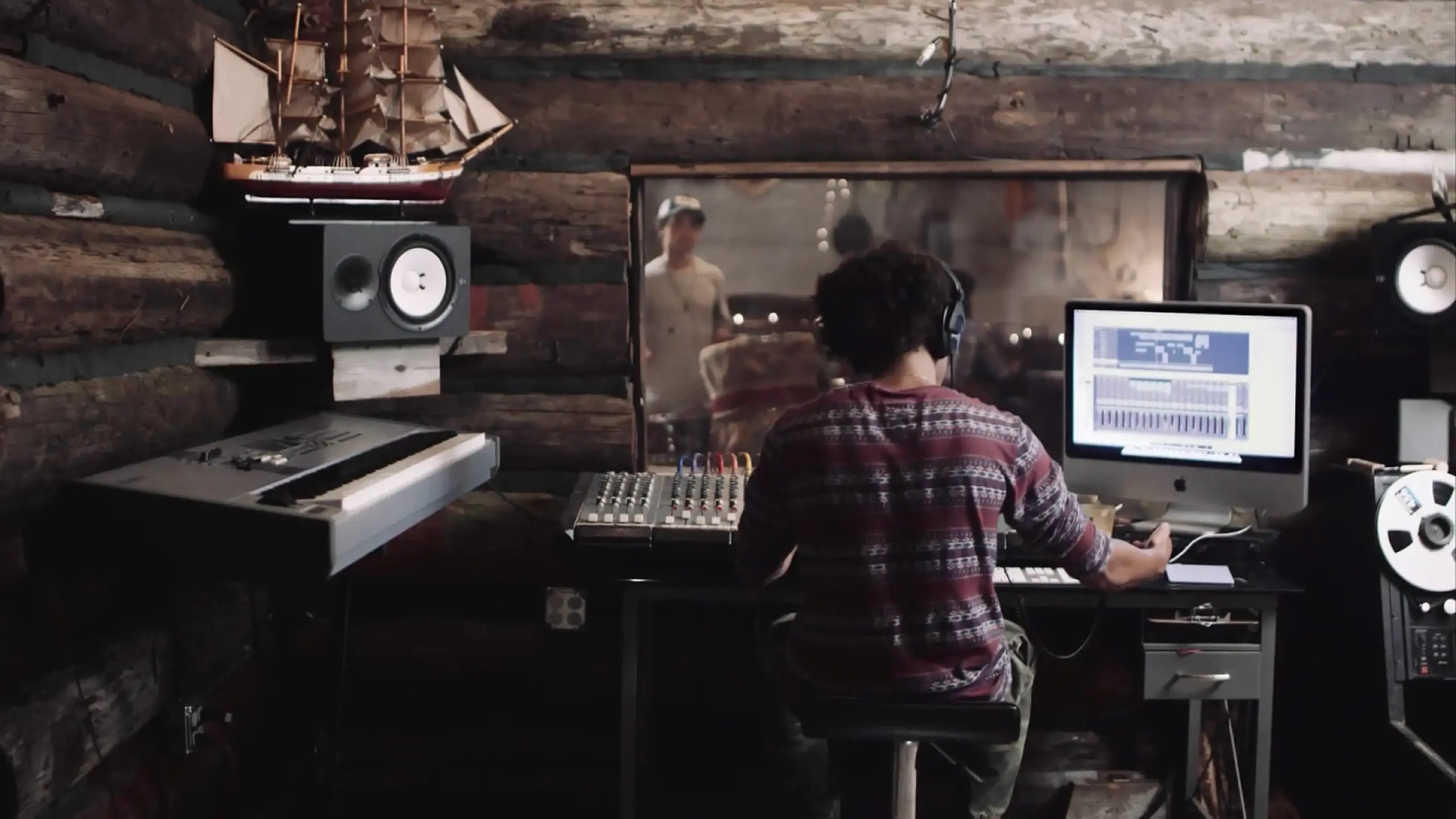
Every story has two layers, what you see and what you hear. The visuals pull you in, but it’s the sound that convinces you to stay. Yet, the way a soundtrack is built for a TV show versus a theatrical film couldn’t be more different.
Understanding **TV vs film audio mixing** is like learning two dialects of the same language, both aim to tell the truth of emotion, but each speaks to a different audience, on a different scale, and through a completely different set of tools and standards.
This isn’t just about loudness or format; it’s about storytelling through sound for distinct environments, one for living rooms, the other for theaters.
## The stage defines the sound
When sound engineers mix for cinema, they mix for immersion. For TV, they mix for clarity.
A movie theater offers a large, acoustically treated space with powerful, calibrated speakers. The audience sits centered, surrounded by sound. That allows mixers to create deep spatial environments and wide dynamic ranges, whispers can fade to nothing, and explosions can shake the walls.
Television, by contrast, plays in far less predictable conditions. Viewers might be watching on a soundbar, a phone, or a small Bluetooth speaker, often while multitasking. That means the mix must hold its impact even when played through imperfect speakers in noisy rooms.
At[C&I Studios](https://c-istudios.com/), engineers address this difference from the very first mix decision. A film mix is treated like architecture, expansive, detailed, designed for depth. A TV mix is crafted like graphic design, clear, contrasty, designed for comprehension.
## Dynamic range. power vs perception
Dynamic range, the difference between the softest and loudest sound, is the biggest dividing line between TV and film audio.
- Film mixes often embrace extreme dynamics. The loudest moments can peak at 105 dB, while quiet dialogue may sit below 60 dB. This contrast evokes physical emotion in theaters.
- TV mixes, however, compress that range dramatically. Broadcast standards restrict peak levels (typically -10 to -24 LKFS). The goal is to keep dialogue intelligible without forcing the viewer to constantly reach for the remote.
**Fun fact**: The Academy of Motion Picture Arts and Sciences recommends theatrical mixes be optimized for playback at 85 dB SPL, while streaming platforms like Netflix require average loudness around -27 LUFS.
These aren’t arbitrary numbers, they reflect human perception. In dark theaters, silence feels immersive; in bright living rooms, it feels like something’s broken.
To meet those expectations, C&I’s mixers create alternate masters: one for cinematic releases and one for streaming or TV broadcast. Each is optimized not just by loudness but by contextual energy, how it feels, not just how it measures.
## Speaker layout and spatial strategy
### Cinema. enveloping immersion
Theaters use multi-channel systems like 5.1, 7.1, or Dolby Atmos, where sound can move around the audience in three-dimensional space. A helicopter can fly overhead; rain can fall behind you; whispers can echo from stage left.
This spatial design isn’t just spectacle, it’s narrative architecture. In Gravity (2013), the swirling debris sounds aren’t mere effects; they simulate disorientation.
[C&I Studios](https://c-istudios.com/post-production-bringing-your-film-to-life/)’ Atmos-certified mixing suite allows engineers to pan sounds across a spherical field, using elevation and movement to shape emotional response.
### Television. focused storytelling
TV mixes prioritize front-focused intelligibility. Most home systems, even high-end soundbars, simulate surround rather than reproduce it.
That’s why mixers collapse nonessential surround elements into stereo or “phantom” center channels. Clarity trumps immersion. Every line of dialogue must remain audible over music and ambience.
## Loudness standards and technical delivery
Television mixing follows strict delivery specs set by broadcasters and streaming services:
**Platform**
**Loudness Target**
**True Peak Limit**
Netflix
-27 LUFS ±2
-2 dBTP
Disney+ / Hulu
-24 LUFS
-1 dBTP
TV Broadcast (ATSC A/85)
-24 LKFS ±2
-2 dBTP
Theatrical
N/A
85 dB SPL reference
Film mixing, on the other hand, relies on room calibration rather than loudness normalization. Engineers mix relative to a consistent playback environment rather than a numerical target.
This means a movie’s mix sounds perfect in a theater but too quiet on a TV unless adapted. That’s why studios prepare home release remixes, adjusting compression and EQ for living-room acoustics.
According to Dolby Laboratories (2023), over 70% of modern films undergo remixing before streaming release, an essential step to preserve emotional balance across formats.
C&I’s engineers streamline this process by maintaining multi-format templates during session setup. This ensures the same mix session can instantly adapt to theatrical, streaming, and broadcast specifications.
## Audience behavior shapes sound design
Filmgoers surrender to the screen, no distractions, no interruptions. TV audiences are different. They multitask, pause, skip intros, and often listen more than they watch.
**This behavioral gap shapes how sound is mixed:**
- **Film**: uses quiet to hold attention; sound is a slow burn.
- **TV**: uses immediacy to re-engage attention every few seconds.
That’s why television scores and transitions are often more rhythmic or “segmented.” In TV, sound punctuates scenes; in film, it flows through them.
Sound designers at C&I think of it as rhythmic punctuation vs emotional continuity. The mix’s role shifts from immersion to retention, each cue reminding the audience to stay connected.
## Time, budget, and creative depth
[Film production](https://c-istudios.com/film-and-tv-production/)s often allocate months for final audio post. Engineers perform multiple premix passes, separately balancing dialogue, effects, and music before uniting them into a final mix.
TV timelines rarely allow that luxury. A typical episode might have days, not weeks, for full [post production](https://c-istudios.com/post-production-bringing-your-film-to-life/). This compresses decision-making, often requiring simultaneous editing and mixing.
As a result, film mixes lean toward emotional subtlety, while TV mixes emphasize functional storytelling.
Yet the lines are blurring. Streaming originals like The Crown or The Mandalorian adopt cinematic audio workflows, proving that with proper planning and modern technology, TV can sound as rich as film.
C&I Studios embraces this hybrid model, offering post-production pipelines that scale seamlessly between episodic television and theatrical features, ensuring quality isn’t sacrificed for schedule.
## Dialogue treatment. intimacy vs realism
In film, dialogue is sculpted for realism. Room acoustics, distance, and mic color are preserved to keep the performance grounded in space.
In television, clarity dominates. Dialogue is aggressively EQ’d and compressed to cut through layers of music and effects.
A theater audience can handle subtlety; a TV audience can’t miss a word.
Mixers achieve this through adaptive dialogue equalization, a process of tailoring vocal frequencies based on playback medium. **For example**:
- Boosting 2-4 kHz for intelligibility on small speakers.
- Narrowing low-mids (250-400 Hz) to remove boominess from untreated rooms.
***The result***: TV dialogue sounds “closer,” film dialogue sounds “truer.” Both serve different kinds of intimacy.
## Mixing philosophy. emotion versus efficiency
A theatrical mix is a performance in itself. It’s about emotional pacing, guiding tension, catharsis, and stillness. Engineers mix like conductors, shaping silence and resonance as narrative instruments.
Television mixing feels more surgical. Every decision must serve efficiency, legibility, and repeatability. The focus is on technical precision, not because emotion doesn’t matter, but because time rarely allows for deep experimentation.
Still, the best TV mixers learn to weave emotional rhythm into functional constraints. They rely on automation curves and micro-EQ to carve feeling from speed. It’s craftsmanship under pressure, storytelling at 29.97 frames per second.
## Sound branding and identity
The difference extends beyond content. Networks and studios often have sonic “signatures.” TV shows must conform to brand-specific sound palettes, from transition stingers to voiceover tone.
Films, by contrast, prioritize auteur expression. The director’s vision drives the soundscape.
At C&I Studios, these approaches converge. Whether designing an immersive cinema soundtrack or a branded series opener, the studio maintains fidelity to tone, ensuring that every piece of audio communicates both identity and intent.
## Mixing environments. from dub stage to desktop
Mixing film requires massive dub stages, acoustically tuned spaces that mimic theatrical projection systems. Engineers walk the room, ensuring the sound plays evenly across hundreds of cubic meters.
TV mixing, however, often happens in smaller rooms calibrated for near-field monitoring, similar to consumer listening distances.
[C&I’s](https://c-istudios.com/video-production-services/) hybrid facilities support both: large-format theatrical stages for spatial mixing and near-field edit bays optimized for episodic work. This duality enables creators to test their mixes in both conditions without leaving the same building.
## Deliverables. from DCPs to broadcast masters
Film mixes end as part of Digital Cinema Packages (DCPs), uncompressed masters for theatrical projection. TV mixes, however, end as broadcast masters or streaming deliverables that must meet platform codec and metadata requirements.
**A single episode might require multiple deliverables:**
- Stereo mix (for mobile playback)
- 1 surround mix
- M&E (Music & Effects) stems for dubbing foreign languages
- Loudness metadata for adaptive playback
Managing these deliverables requires organized session templates and automation, another domain where C&I’s integrated pipeline ensures creative continuity from the mix to distribution.
## The hybrid era. where TV meets cinema
Streaming has erased many historical barriers. High-end shows now adopt theatrical mixing standards, while [films](https://c-istudios.com/feature-film-mastering-and-delivery/) are remixed for multi-platform release. The lines between TV and cinema are merging into one hybrid ecosystem.
Still, understanding their foundational differences matters more than ever. It ensures creative intent survives translation, whether your story unfolds in a darkened theater or on a smartphone under daylight.
Modern post-production isn’t about choosing one format over another; it’s about designing sound that transcends platforms.
That’s the philosophy C&I Studios lives by, creating mixes that connect emotionally, regardless of where or how they’re heard.
## A soft reflection on the mix
The magic of storytelling isn’t in choosing between film or television, it’s in learning how each listens differently. Theatrical sound pulls you into awe; television sound pulls you into intimacy. Both can move you, if mixed with intention.
And when crafted by hands that understand both worlds, the result isn’t just technically perfect, it’s emotionally fluent.
Explore how C&I’s engineers shape stories through sound at[C&I Studios](https://c-istudios.com/).
For more information on industry standards and best practices, visit the [American Marketing Association](https://www.ama.org/).
## Work with C&I Studios
If you are planning a project like this, our team can take it from concept to final delivery. Explore our [film and TV production](https://c-istudios.com/film-and-tv-production/), browse [our work](https://c-istudios.com/our-work/) to see how we tell brand stories, and [get in touch](https://c-istudios.com/contact/) when you are ready to start.
Originally published November 23, 2025
---
*This content is from [C&I Studios](https://c-istudios.com), a full-service production company.*
---
# Balancing Dialogue, Music, and Sound Effects: Audio Mixing Techniques for Film and Video
> Published: November 22, 2025
> Categories: Film & TV
> Source: https://c-istudios.com/balancing-dialogue-music-and-sound-effects-audio-mixing-techniques-for-film-and-video/
---
.cib{--paper:#1b1d1f;--ink:#fff;--body:#d5d7d9;--muted:#8b9096;--line:rgba(255,255,255,.12);--thumb:#2b2e31;--card:#212426;--accent:#c02b0a;--blue:#5B8FA8;--serif:'Playfair Display',Georgia,serif;--sans:'Poppins',-apple-system,sans-serif;--measure:900px;background:var(--paper);color:var(--body);font-family:var(--sans);line-height:1.6;position:relative;left:50%;transform:translateX(-50%);width:90vw;max-width:1920px}
.cib *{box-sizing:border-box}
.cib .kicker{max-width:var(--measure);margin:58px auto 0;padding:0 22px;font-size:12.5px;font-weight:700;letter-spacing:2.5px;text-transform:uppercase;color:var(--blue)}
.cib h1.cibh1{text-wrap:balance;font-family:var(--serif);font-weight:500;font-size:clamp(46px,6vw,72px);line-height:1.08;color:var(--ink);max-width:var(--measure);margin:18px auto 0;padding:0 22px;letter-spacing:-.5px}
.cib .metarow{max-width:var(--measure);margin:20px auto 0;padding:0 22px;color:var(--muted);font-size:14px}
.cib .hero{position:relative;width:100%;height:0;padding-bottom:56.25%;overflow:hidden;margin:48px auto 0;border-top:1px solid var(--line);border-bottom:1px solid var(--line)}
.cib .hero .ph{width:100%;aspect-ratio:16/9;background:var(--thumb);border-top:1px solid var(--line);border-bottom:1px solid var(--line);display:flex;align-items:center;justify-content:center;color:#7d8288;font-size:13px;text-align:center;padding:0 20px}
.cib .body{max-width:var(--measure);margin:12px auto 0;padding:52px 22px 6px}
.cib .body.lead p:first-child{font-size:23px;line-height:1.62;color:var(--ink)}
.cib .body p{font-size:18.5px;line-height:1.85;margin:0 0 30px;color:var(--body)}
.cib .body h2{text-wrap:balance;font-family:var(--serif);font-weight:500;font-size:clamp(32px,4vw,48px);line-height:1.22;color:var(--ink);margin:70px 0 20px;letter-spacing:-.3px}
.cib .body h3{text-wrap:balance;font-family:var(--sans);font-weight:600;font-size:22px;color:var(--ink);margin:38px 0 8px}
.cib .body a{color:var(--ink);text-decoration:underline;text-decoration-color:rgba(255,255,255,.4);text-underline-offset:3px}
.cib .body a:hover{text-decoration-color:var(--ink)}
.cib .ctable{width:100%;border-collapse:collapse;margin:16px 0 30px;font-size:16px}
.cib .ctable th{background:#000;color:#fff;text-align:left;padding:10px 12px;font-family:var(--sans)}
.cib .ctable td{padding:10px 12px;border-bottom:1px solid var(--line);color:var(--body)}
.cib .inimg{position:relative;width:100%;height:0;padding-bottom:56.25%;overflow:hidden;margin:72px auto;border-top:1px solid var(--line);border-bottom:1px solid var(--line)}
.cib .inimg .ph{width:100%;aspect-ratio:16/9;background:var(--thumb);border-top:1px solid var(--line);border-bottom:1px solid var(--line);display:flex;align-items:center;justify-content:center;color:#7d8288;font-size:13px}
.cib .origpub{max-width:var(--measure);margin:60px auto 0;padding:26px 22px 0;border-top:1px solid var(--line);color:var(--muted);font-size:13.5px}
.cib .related{max-width:1200px;margin:64px auto 0;padding:34px 22px 76px}
.cib .related h3{font-family:var(--sans);font-size:12.5px;letter-spacing:2px;text-transform:uppercase;color:var(--ink);margin:0 0 24px}
.cib .grid{display:grid;grid-template-columns:repeat(3,1fr);gap:28px}
.cib .rc{background:var(--card);border:1px solid var(--line);display:block;text-decoration:none;color:inherit;transition:border-color .15s}
.cib a.rc:hover{border-color:rgba(255,255,255,.5)}
.cib .rc .thumb{position:relative;width:100%;height:0;padding-bottom:56.25%;background:var(--thumb);overflow:hidden}
.cib .rc .thumb img{position:absolute!important;top:0!important;left:0!important;width:100%!important;height:100%!important;object-fit:cover!important;margin:0!important}
.cib .rc .cc{padding:14px 15px 17px}
.cib .rc .rt{font-family:var(--serif);font-weight:500;font-size:16px;line-height:1.3;color:var(--ink);margin:0 0 6px}
.cib .rc .rm{font-size:11px;letter-spacing:1px;text-transform:uppercase;color:var(--muted)}
.cib img{margin:0!important;padding:0!important;display:block!important;vertical-align:top;max-width:100%}
.cib .hero img,.cib .inimg img{position:absolute!important;top:0!important;left:0!important;width:100%!important;height:100%!important;object-fit:cover!important;margin:0!important;padding:0!important;border:0!important;display:block!important;aspect-ratio:auto!important}
.cib .hero+.body{padding-top:36px}
@media(max-width:760px){.cib .grid{grid-template-columns:1fr}.cib .body h2{margin:52px 0 16px}.cib .body p{font-size:17.5px}.cib .inimg,.cib .hero{margin-top:44px}}
.cib .vembed{max-width:var(--measure);margin:44px auto;padding:0 22px}.cib .vembed .vwrap{position:relative;width:100%;height:0;padding-bottom:56.25%}.cib .vembed .vwrap iframe{position:absolute;top:0;left:0;width:100%;height:100%;border:0}
Film & TV
# Balancing Dialogue, Music, and Sound Effects. Audio Mixing Techniques for Film and Video
10 min read
**Balancing Dialogue, Music, and Sound Effects: Audio Mixing Techniques for Film and Video**
Modern audiences are incredibly sensitive to audio quality. They might forgive a shaky camera or an imperfect transition, but even casual viewers will instantly notice muddy dialogue, competing frequencies, or uneven volume levels.
This shift is not surprising when you consider how much content people consume on platforms that prioritize sound clarity. A recent Nielsen report showed that more than 70 percent of viewers decide within the first few seconds whether they will continue watching or scroll away. Poor sound contributes heavily to drop-off.
At C&I Studios, this mindset shapes how projects move through post-production. Clients who come in through our[Video Production Services](https://c-istudios.com/video-production-services/) page often discover how audio can transform a project from “good enough” to unforgettable.
The process blends technical skills with creative intuition, but the foundation remains the same: dialogue clarity, musical flow, and well-placed sound effects working together without overpowering one another.
## Why clarity drives every decision
### The invisible architecture of a clean mix
Every sound layer has a purpose, but not every layer deserves equal priority. Dialogue usually carries the narrative. Music supports tone and emotion. Sound effects add realism or personality. Without structure, these pieces compete rather than blend.
An audio mix becomes successful when each element occupies a defined space in the frequency spectrum. Research from the [Audio Engineering](https://c-istudios.com/audio-engineering-services/) Society highlights that most human speech sits between 85 Hz and 255 Hz for male voices, and 165 Hz and 255 Hz for female voices. When music or effects crowd this space, clarity drops immediately.
Professionals often use subtractive equalization, dynamic compression, and panning choices to carve out room for dialogue. These steps may not be obvious to non-technical viewers, but they make the difference between a mix that feels effortless and one that sounds chaotic.
Studios like C&I Studios routinely apply these standards, especially when working with films or commercial campaigns that eventually appear in the [Our Work](https://c-istudios.com/our-work/) archive. They approach sound design as a collaborative environment shaped by editors, directors, and the post team rather than a job done in isolation.
## How dialogue becomes the anchor
### The voice that carries the story
Dialogue is always the backbone of a professional mix. Even in music-driven sequences, viewers rely on the human voice to stay grounded. Dialogue should cut through noise, music, and atmospheric layers while still sounding natural.
One of the most effective audio mixing techniques is spectral cleanup. Engineers remove unnecessary low rumble, HVAC noise, plosives, or sibilance using tools like DeNoise, DeReverb, and multiband compressors. These corrections allow the voice to sit confidently in the mix without being artificially loud.
### Adjusting dynamics for realism
A common mistake among beginners is boosting dialogue until it floats above everything like a disconnected narrator. Instead, mixers use automation, not static volume changes.
This means adjusting levels word by word or phrase by phrase so each line sits comfortably within the scene. It creates a transparent experience where viewers never notice the engineering behind the performance.
This type of detailed automation often happens during the final passes of a project, long after picture lock. Production companies that manage both pre- and post-production, such as C&I Studios, support this by ensuring clean recordings from the start.
## How music sets emotional tone
### The rhythm behind the storytelling
Music adds energy, mood, and psychological cues. However, the same soundtrack that elevates a dramatic moment can ruin a scene if it overpowers the voice. The most effective approach is selective mixing rather than simply lowering the music volume across the board.
Professionals first map out moments when music should rise, fall, or temporarily clear space for dialogue. Then they analyze frequency overlap and remove competing components. For example, a piano or guitar may interfere with midrange vocal frequencies. Lowering their gain or reshaping their EQ keeps the dialogue crisp.
Music mixing requires constant adjustments rather than a universal setting. Engineers reference loudness standards, playback environments, and the emotional direction of the scene. They aim to keep the track energetic, but never at the expense of clarity.
When clients work with production teams offering Creative Development services at C&I Studios, they benefit from early decisions that support better mixing later. Storyboards, pacing choices, and dialogue density help determine where musical moments should hit, fade, or evolve.
## Where sound effects add realism
Sound effects, or SFX, act as invisible glue in film and video. They anchor scenes in reality, guide attention, and heighten impact. Foley footsteps, ambient room tone, transitional wooshes, or environmental cues must all blend without taking over.
**Sound designers categorize effects to control the mix effectively:**
- **Hard effects**: mechanical sounds like doors, engines, or machines
- **Soft effects**: environmental textures such as wind, hum, footsteps, or cloth movement
- **Design effects**: stylized sounds that enhance motion graphics or stylized visuals
Balancing SFX requires constant restraint. Hard effects should feel present but not startling unless intentionally designed. Soft effects should provide background depth without muddying dialogue. Design effects must punctuate moments without overwhelming the scene.
Studios running hybrid production facilities like C&I Studios often capture their own live Foley during projects. In some cases, teams use our[Studio Rental](https://c-istudios.com/studio-rentals/) spaces to record clean texture layers that blend smoothly with on-location audio.
## Managing competing frequencies
One of the biggest reasons audio elements clash is overlapping bandwidth. A music track with heavy midrange instruments will collide with dialogue frequencies. A rumbling effect can interrupt the body of a voice. The key solution is carving, not stacking.
Frequency carving means removing conflicting frequencies from music or SFX to let dialogue shine. Engineers use subtractive EQ to scoop out small portions of the competing layer. This approach preserves the full energy of the soundtrack without compromising clarity.
AES research and Dolby guidelines both emphasize the importance of consistent spectral shaping. Engineers reference spectrum analyzers to verify that each component sits in its assigned space.
### Panning for dimensional clarity
Stereo positioning adds width and depth. Dialogue usually sits center, while music spreads across the stereo field. Effects may sit left or right depending on action. Panning gives every sound its own lane.
This practice mirrors the way people hear sound in real life, making scenes more immersive. It also prevents clutter by keeping similar sounds from crowding each other.
## The psychology of perceived loudness
### Why volume is not the only factor
Perceived loudness depends on frequency content, playback environment, and dynamic contrast. A sound can feel loud without actually having high volume. Mixers use this understanding to create emotionally impactful scenes without breaking loudness standards.
The Fletcher-Munson curves, a foundational study on human loudness perception, show that people hear midrange frequencies more easily than low or high ones. That is why dialogue often pops through even at modest levels. When mixers keep these curves in mind, they avoid unnecessary boosts that might distort the overall balance.
### Using dynamics to maintain interest
Compression helps smooth peaks, but over-compression can kill emotional depth. Modern mixers aim for dynamic transparency. They apply compression only to control inconsistencies, not to flatten the performance. Subtle limiting keeps the overall mix within safe headroom.
These principles appear frequently in professional workflows, especially during projects intended for digital distribution. Teams that work with C&I Studios often request theatrical conversions, so understanding these dynamics ensures a soundtrack holds up across platforms.
## The role of room tone and ambience
Room tone is the consistent background sound present in any location. It helps smooth cuts, hide edits, and maintain continuity. Without room tone, dialogue edits can sound jarring or unnatural.
Professionals always capture clean room tone during production. This 60-second baseline becomes invaluable in post because mixers can layer it under dialogue patches or ADR. It fills sonic gaps and blends otherwise mismatched clips.
Ambience functions similarly. Environmental textures such as distant traffic, birds, rustling leaves, or interior HVAC hum create realism. These layers run quietly in the background but are foundational to a pro-level mix.
Studios that offer turnkey production solutions, like C&I Studios, emphasize early planning for these elements. Their teams coordinate with directors and audio technicians to document shooting environments, schedule room tone recordings, and gather the necessary assets for post.
## How editing and mixing support each other
A strong audio mix depends on organized editing. Clean dialogue tracks, labeled sound effects, clearly marked music cues, and properly arranged sequences minimize confusion during mixing. The more organized the editing timeline, the better the mix will be.
**Professionals often create multiple submixes:**
- Dialogue bus
- Music bus
- Effects bus
- Foley bus
- Ambience bus
- Master bus
This workflow ensures control at both micro and macro levels. Mixers can automate EQ or compression on group tracks instead of adjusting each clip individually.
Teams that work with C&I Studios benefit from experienced editors who understand how early decisions impact audio quality later. Their structured pipelines and labeling systems reduce revisions, speed up mixing, and support better creative outcomes.
## How playback environments influence mixing choices
### The challenge of multiformat content
Content today plays across countless devices. Headphones, laptops, phone speakers, home theater systems, and cinema sound setups each reproduce frequencies differently. A mix that sounds perfect on studio monitors may collapse on a smartphone.
Professionals use referencing techniques to test mixes across environments. They switch between headphones, near-field monitors, and small speakers to check consistency. They also analyze loudness levels for platform compliance. For example, streaming services follow different LKFS guidelines than theatrical releases.
This practice ensures that dialogue remains clear and sound effects retain detail regardless of playback hardware.
Studios such as C&I Studios, which regularly handle broadcast, streaming, and theatrical projects, use calibrated multi-speaker setups to guarantee accuracy. Their environment gives mixers the flexibility to craft soundtracks that translate across any device.
## How automation shapes emotional pacing
Automation is among the most powerful tools in the mixing process. It allows engineers to shape volume, panning, EQ, and effects in real time. Instead of applying static settings, they draw changes along the timeline.
**For example:**
- Music dips smoothly under specific dialogue lines
- Effects rise during transitions
- Atmosphere tones pull back subtly when characters speak
- EQ shifts during emotional shifts
- Reverb increases during wide cinematic moments
Automation gives mixers control frame by frame. It creates fluid movement and expression that static mixing cannot achieve.
Studios that handle campaigns, films, and branded content often rely heavily on automation to match the pacing of visual edits. When C&I Studios manages creative development with clients, they often plan audio transitions directly into script and storyboard phases.
## The importance of reference tracks
Professional mixers consistently reference other films, advertisements, and creative projects. This practice helps benchmark loudness, tone, genre balance, and emotional pacing.
A well-chosen reference track provides clarity when a mix begins to drift. It resets expectations, especially during long sessions. Audio engineers use references not to copy but to align with industry standards and avoid subjectivity.
C&I Studios encourages clients to share reference films or videos early in the process. This collaboration ensures both sides understand the sonic direction before work begins.
## How mixing supports emotional storytelling
Every mix tells a story. Dialogue guides logic, music shapes feeling, and sound effects deepen immersion. When these elements work together, they create emotional momentum.
**A well-executed mix can:**
- Make suspense scenes more tense
- Add warmth to personal narratives
- Strengthen commercial messaging
- Enhance the scale of cinematic visuals
- Support transitions in mood or tone
The relationship between sound and emotion is backed by numerous studies. One Stanford research project found that music increases brain connectivity and emotional processing. When mixers understand this relationship, they craft scenes with intention, not just technical precision.
## Integrating professional workflows
### Why high quality requires a team
Audio mixing is not a single discipline. It involves recordists, editors, mixers, Foley artists, designers, and directors. Collaboration shapes a cohesive mix.
Production houses like [C&I Studios](https://c-istudios.com/) already work with integrated teams across multiple stages. Their approach reduces miscommunication and avoids technical bottlenecks. It also ensures consistent creative direction across dialogue editing, effects processing, music selection, and final mastering.
High-level production environments make space for experimentation, especially when mixing stylized or cinematic content.
## Starting with the right tools
### How software impacts quality
Audio engineers rely on a mix of industry tools including:
- Pro Tools
- Adobe Audition
- Logic Pro
- Reaper
- iZotope RX
- FabFilter plugins
- Waves processing bundles
Each tool addresses different parts of the mix. Clean dialogue relies heavily on restoration plugins. Music balancing uses multi-band compression and equalization. Sound effects blending depends on spatial tools and algorithmic reverb.
Teams who want to elevate their storytelling often choose to work with experienced production environments where sound is part of the creative vision from day one. The teams at C&I Studios support this through structured editing, integrated workflows, and professional sound engineering that help every project communicate clearly.
If you want to build projects with seamless dialogue, powerful music, and immersive sound effects, explore how a dedicated team can support your next production. You can learn more about our[Video Production Services](https://c-istudios.com/video-production-services/) or start discussing your project directly through the[Contact](https://c-istudios.com/contact/) page.
## Work with C&I Studios
If you are planning a project like this, our team can take it from concept to final delivery. Explore our [film and TV production](https://c-istudios.com/film-and-tv-production/), browse [our work](https://c-istudios.com/our-work/) to see how we tell brand stories, and [get in touch](https://c-istudios.com/contact/) when you are ready to start.
Originally published November 22, 2025
---
*This content is from [C&I Studios](https://c-istudios.com), a full-service production company.*
---
# Top Audio Mixing Software for Film and TV: Complete Guide for Editors and Sound Professionals
> Published: November 21, 2025
> Categories: Web & Tech
> Source: https://c-istudios.com/top-audio-mixing-software-for-film-and-tv-complete-guide-for-editors-and-sound-professionals/
---
.cib{--paper:#1b1d1f;--ink:#fff;--body:#d5d7d9;--muted:#8b9096;--line:rgba(255,255,255,.12);--thumb:#2b2e31;--card:#212426;--accent:#c02b0a;--blue:#5B8FA8;--serif:'Playfair Display',Georgia,serif;--sans:'Poppins',-apple-system,sans-serif;--measure:900px;background:var(--paper);color:var(--body);font-family:var(--sans);line-height:1.6;position:relative;left:50%;transform:translateX(-50%);width:90vw;max-width:1920px}
.cib *{box-sizing:border-box}
.cib .kicker{max-width:var(--measure);margin:58px auto 0;padding:0 22px;font-size:12.5px;font-weight:700;letter-spacing:2.5px;text-transform:uppercase;color:var(--blue)}
.cib h1.cibh1{text-wrap:balance;font-family:var(--serif);font-weight:500;font-size:clamp(46px,6vw,72px);line-height:1.08;color:var(--ink);max-width:var(--measure);margin:18px auto 0;padding:0 22px;letter-spacing:-.5px}
.cib .metarow{max-width:var(--measure);margin:20px auto 0;padding:0 22px;color:var(--muted);font-size:14px}
.cib .hero{position:relative;width:100%;height:0;padding-bottom:56.25%;overflow:hidden;margin:48px auto 0;border-top:1px solid var(--line);border-bottom:1px solid var(--line)}
.cib .hero .ph{width:100%;aspect-ratio:16/9;background:var(--thumb);border-top:1px solid var(--line);border-bottom:1px solid var(--line);display:flex;align-items:center;justify-content:center;color:#7d8288;font-size:13px;text-align:center;padding:0 20px}
.cib .body{max-width:var(--measure);margin:12px auto 0;padding:52px 22px 6px}
.cib .body.lead p:first-child{font-size:23px;line-height:1.62;color:var(--ink)}
.cib .body p{font-size:18.5px;line-height:1.85;margin:0 0 30px;color:var(--body)}
.cib .body h2{text-wrap:balance;font-family:var(--serif);font-weight:500;font-size:clamp(32px,4vw,48px);line-height:1.22;color:var(--ink);margin:70px 0 20px;letter-spacing:-.3px}
.cib .body h3{text-wrap:balance;font-family:var(--sans);font-weight:600;font-size:22px;color:var(--ink);margin:38px 0 8px}
.cib .body a{color:var(--ink);text-decoration:underline;text-decoration-color:rgba(255,255,255,.4);text-underline-offset:3px}
.cib .body a:hover{text-decoration-color:var(--ink)}
.cib .ctable{width:100%;border-collapse:collapse;margin:16px 0 30px;font-size:16px}
.cib .ctable th{background:#000;color:#fff;text-align:left;padding:10px 12px;font-family:var(--sans)}
.cib .ctable td{padding:10px 12px;border-bottom:1px solid var(--line);color:var(--body)}
.cib .inimg{position:relative;width:100%;height:0;padding-bottom:56.25%;overflow:hidden;margin:72px auto;border-top:1px solid var(--line);border-bottom:1px solid var(--line)}
.cib .inimg .ph{width:100%;aspect-ratio:16/9;background:var(--thumb);border-top:1px solid var(--line);border-bottom:1px solid var(--line);display:flex;align-items:center;justify-content:center;color:#7d8288;font-size:13px}
.cib .origpub{max-width:var(--measure);margin:60px auto 0;padding:26px 22px 0;border-top:1px solid var(--line);color:var(--muted);font-size:13.5px}
.cib .related{max-width:1200px;margin:64px auto 0;padding:34px 22px 76px}
.cib .related h3{font-family:var(--sans);font-size:12.5px;letter-spacing:2px;text-transform:uppercase;color:var(--ink);margin:0 0 24px}
.cib .grid{display:grid;grid-template-columns:repeat(3,1fr);gap:28px}
.cib .rc{background:var(--card);border:1px solid var(--line);display:block;text-decoration:none;color:inherit;transition:border-color .15s}
.cib a.rc:hover{border-color:rgba(255,255,255,.5)}
.cib .rc .thumb{position:relative;width:100%;height:0;padding-bottom:56.25%;background:var(--thumb);overflow:hidden}
.cib .rc .thumb img{position:absolute!important;top:0!important;left:0!important;width:100%!important;height:100%!important;object-fit:cover!important;margin:0!important}
.cib .rc .cc{padding:14px 15px 17px}
.cib .rc .rt{font-family:var(--serif);font-weight:500;font-size:16px;line-height:1.3;color:var(--ink);margin:0 0 6px}
.cib .rc .rm{font-size:11px;letter-spacing:1px;text-transform:uppercase;color:var(--muted)}
.cib img{margin:0!important;padding:0!important;display:block!important;vertical-align:top;max-width:100%}
.cib .hero img,.cib .inimg img{position:absolute!important;top:0!important;left:0!important;width:100%!important;height:100%!important;object-fit:cover!important;margin:0!important;padding:0!important;border:0!important;display:block!important;aspect-ratio:auto!important}
.cib .hero+.body{padding-top:36px}
@media(max-width:760px){.cib .grid{grid-template-columns:1fr}.cib .body h2{margin:52px 0 16px}.cib .body p{font-size:17.5px}.cib .inimg,.cib .hero{margin-top:44px}}
.cib .vembed{max-width:var(--measure);margin:44px auto;padding:0 22px}.cib .vembed .vwrap{position:relative;width:100%;height:0;padding-bottom:56.25%}.cib .vembed .vwrap iframe{position:absolute;top:0;left:0;width:100%;height:100%;border:0}
Web & Tech
# Top Audio Mixing Software for Film and TV. Complete Guide for Editors and Sound Professionals
8 min read
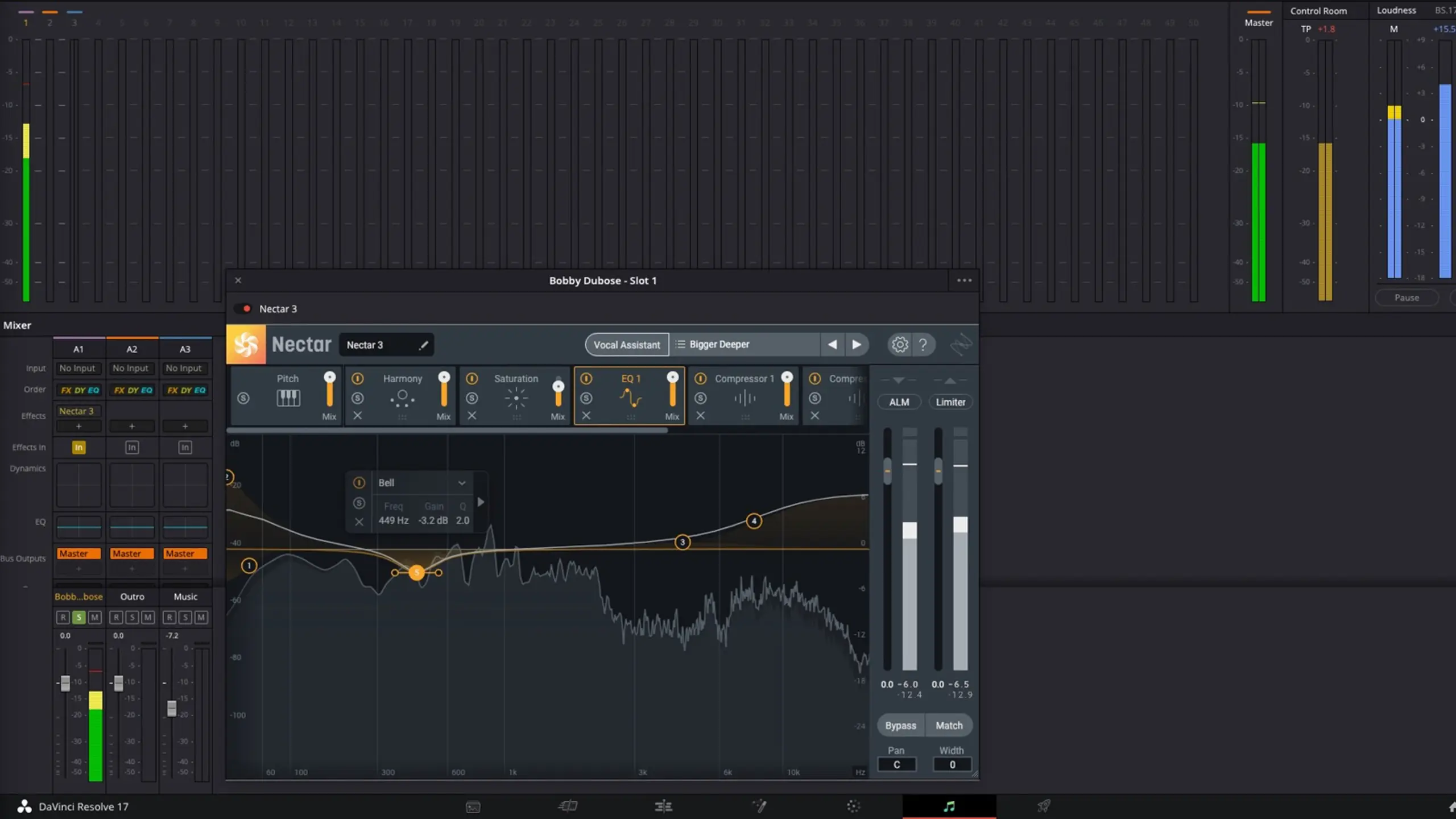
Audio plays a central role in storytelling, and the tools used to shape that audio are every bit as important as cameras, lighting, or editing platforms. The shift toward immersive formats, multi-platform distribution, and loudness normalization has pushed the industry to adopt more specialized software workflows.
Software no longer functions as a simple tool. It is a creative environment. It determines how quickly mixers can work, how precisely they can sculpt frequencies, and how immersive their soundscapes can become.
Many filmmakers discover this firsthand when they visit C&I Studios after exploring our[Video Production Services](https://c-istudios.com/video-production-services/). Conversations often shift toward the tools behind the final sound because the choice of software affects mix flow, creative options, and compatibility with professional facilities.
As the industry continues embracing remote workflows and multi-format deliverables, there is more to evaluate than feature lists. Reliability, ecosystem compatibility, learning curve, plug-in integration, and export standards all shape whether a software package can keep up with modern production.
## The standards that define professional audio software
### What separates pro tools from consumer-level apps
The difference between entry-level programs and professional audio mixing software for film is noticeable as soon as you open a multitrack session. Industry platforms are built for complex soundscapes, often with hundreds of tracks, dynamic automation, detailed editing layers, and real-time processing.
**Professional software must support tasks such as:**
- Precision dialogue cleanup
- Loudness compliance for broadcast and streaming
- Advanced routing options
- High-performance plug-in support
- Reliable dynamic automation
- Stem creation and multi-format exports
A study from the Audio Engineering Society points out how spatial audio requirements have grown across major platforms. This shift requires software that can handle object-based mixes as easily as traditional stereo sessions. Having the right tools ensures that creative decisions translate cleanly whether a film is played on a theater system, a soundbar, or headphones.
Production companies with in-house post teams like C&I Studios understand this well, especially when developing longform content. Many of their projects showcased on our[Our Work](https://c-istudios.com/our-work/) page rely on audio tools capable of supporting heavy sessions without sacrificing speed or stability.
## The industry heavyweight. Pro Tools
Avid Pro Tools is the single most recognized name in film and television mixing environments. It is used in studio facilities, freelance workflows, and large-scale post houses worldwide. Its reputation is tied to its ability to manage large sessions with impressive stability.
**Editors rely on Pro Tools for:**
- High track counts
- Advanced send and routing options
- Sample-accurate editing
- Powerful automation
- Support for major hardware controllers
- Dolby Atmos integration
The system is also known for its reliability under pressure. When complex film sessions reach the final mixing stage, engineers can trust Pro Tools to handle scene changes, session revisions, and last-minute adjustments without corruption or lag.
Another reason Pro Tools dominates the industry is its deep compatibility with third-party plug-ins. Tools like iZotope RX, FabFilter, and Waves integrate seamlessly, allowing mixers to clean and shape audio through noise reduction, EQ, multiband compression, and spatial effects.
Professionals working closely with C&I Studios often choose Pro Tools for projects that need full theatrical mixing. Its integration with Dolby standards aligns with industry compliance guidelines, such as those outlined in the official Dolby Audio Loudness documentation from Dolby Labs.
## The rising all-in-one solution
DaVinci Resolve has evolved far beyond color correction. Its Fairlight audio engine rivals dedicated audio platforms, offering an integrated solution for editing, mixing, ADR, Foley, and delivery. Many filmmakers appreciate having everything inside a single environment, including sound, color, picture editing, and VFX.
**Fairlight supports:**
- Advanced bussing
- Automated dialogue replacement
- 3D audio workflows
- Sound libraries
- Real-time EQ and dynamics
- High-performance processing with Fairlight hardware
Fairlight’s strength lies in collaborative pipelines. Editors can begin laying out basic tracks on the picture timeline, then mixers can expand the audio workflow in the Fairlight page without round-tripping through other applications.
Resolve is becoming a preferred tool in creative development for commercials, branded content, and short films. Teams that utilize [Creative Marketing](https://c-istudios.com/creative-marketing-services/) services at C&I Studios often benefit from Fairlight workflows because art direction, editorial, and audio can all stay synchronized.
## Flexible workflows for commercial and streaming projects
### Ideal for mid-size productions and content creators
Adobe Audition appeals to filmmakers who rely on the Adobe Creative Cloud ecosystem. Integration with Premiere Pro simplifies audio round trips, making it a strong option for commercials, social campaigns, and narrative projects with moderate complexity.
Audition supports:
- Spectral waveform editing
- Noise and echo reduction
- Track-based mixing
- Multiband compression
- Loudness corrections
- Export presets for broadcast standards
Spectral editing remains one of Audition’s strongest features. Mixers can visually isolate background noise, clicks, or intrusive sounds and remove them with high precision. This approach aligns with scientific visual-audio analysis methods, such as those referenced in the Fletcher-Munson equal-loudness contours research by ISO and various psychoacoustic studies.
Audition’s interface is accessible for new mixers while still offering depth for professionals. It is especially useful in environments where editors, sound designers, and mixers need quick asset turnover without sacrificing quality.
## Power and flexibility with a customizable engine
Reaper has built a devoted following due to its efficiency, low resource usage, and near-infinite customization. Although it requires more setup than other platforms, experienced mixers appreciate how quickly they can create tailored workflows.
**Reaper stands out for:**
- High-performance audio processing
- Custom actions and scripts
- Unlimited track capabilities (hardware dependent)
- Advanced automation
- Open plug-in compatibility
- Lightning-fast load times
Its flexibility makes it popular among sound designers who prefer lightweight software that can handle large sound libraries without slowdowns. Reaper also excels in modular post facilities where hardware changes frequently.
Some film mixers use Reaper as their main tool, while others pair it with Pro Tools or Resolve. This hybrid approach allows them to take advantage of Reaper’s speed during design-intensive phases, then handle final delivery inside a more standardized environment.
Because Reaper does not lock users into a single ecosystem, teams collaborating with C&I Studios sometimes choose it when they need portable sessions that adapt to remote workflows.
## A creative environment for composers and sound designers
### Popular in music-driven productions
Logic Pro remains a favorite among composers, especially in productions where music drives the emotional tone. Its expansive sound library, user-friendly interface, and MIDI capabilities make it ideal for scoring, sound design, and pre-mix stages.
#### Logic supports:
- High-quality virtual instruments
- Advanced MIDI sequencing
- Integrated plug-ins
- Track stacks
- Spatial audio mixing
- Fast bounce workflows
Composers often start a project in Logic, then export stems into Pro Tools or Fairlight for final mixing. This approach balances creativity with technical polish.
Music-centric productions showcased on C&I Studios projects often use a combination of Logic for composition and Pro Tools for final delivery. The synergy gives composers full creative freedom while ensuring that the final audio meets theatrical or broadcast standards.
## The sound designer’s specialized toolkit
Steinberg Nuendo has become a go-to choice for sound designers working on immersive projects. Its tools cater to detailed sound effects work, Foley layering, adaptive sound design, and spatial environments.
### Nuendo offers
- Intelligent dialog editing
- Game audio middleware integration
- Immersive mix rendering
- Re-conforming tools
- ADR systems
- Multichannel routing
Nuendo’s strength lies in its precise editing tools and efficient workflow for revision-heavy productions. A study shared by Stanford University on audio and emotional processing highlights the complexity of layered sound and how it affects attention. Software like Nuendo supports this complexity with tools tailored to detail-heavy sessions.
While not as universally adopted as Pro Tools, Nuendo is respected in film and TV post, especially for workflows involving extensive sound design or game-inspired audio techniques.
## Choosing the best tool for your workflow
### Matching software to the needs of the project
There is no single best audio mixing software for film, because each platform excels at something different. The right choice depends on session complexity, collaboration needs, hardware environment, and delivery requirements.
#### Pro Tools excels in theatrical mixing.
- Fairlight is ideal for integrated picture and sound workflows.
- Audition fits commercial and shortform projects with quick turnaround.
- Reaper appeals to mixers who value speed and customization.
- Logic shines in music-driven productions.
- Nuendo is built for sound design at a deep technical level.
When teams work with a studio environment like C&I Studios, they often design their sound workflow around the specific goals of the production. During development for longform stories or commercial campaigns, the choice of software is often discussed early to ensure smooth collaboration across editorial, color, and audio.
For creators who are producing their first large-scale work, exploring a studio space such as C&I’s[Studio Rental](https://c-istudios.com/studio-rentals/) environment can also provide hands-on exposure to different tools and hardware setups.
## The growing importance of scalable audio software
With platforms like Netflix, Max, and Apple expanding their technical requirements, mixers need software that can support loudness compliance, immersive mixes, and consistent playback across devices. Dolby Atmos and spatial audio continue to push expectations higher, requiring tools that handle object-based mixes and multi-format exports.
Standards from organizations such as the Audio Engineering Society and Dolby Laboratories emphasize the need for predictable and accurate reproduction across listening environments. The right software ensures creative decisions stay intact whether the content plays in a theater, a living room, or a mobile device.
Production teams building longform and episodic content often rely on structured development pathways that begin with concept planning. This is one reason many clients engage [C&I Studios](https://c-istudios.com/) through our early Creative Development services before moving into post-production. Choosing the right audio software becomes part of the creative process rather than a last-minute decision.
## How teams integrate software into the full production pipeline
### Collaboration across departments
Unlike music production, film and TV audio requires constant communication between departments. Picture editors, VFX teams, colorists, and audio mixers all depend on software that supports efficient exchange of assets.
Filmmakers who work with C&I Studios often discover how seamless this collaboration becomes when everything moves through a unified creative process. Software integration affects not only the mix, but also:
- Editorial revisions
- On-set sound capture
- Foley continuity
- ADR cues
- Scene timing
- Delivery schedules
Teams benefit from having experienced professionals guide the workflow, especially during complex multi-track mixing sessions or projects with extensive design elements.
Clients exploring C&I’s services often reach out using our[Contact](https://c-istudios.com/contact/) page when they need help planning these details or assembling a full post-production strategy.
## A softer way to bring everything together
Choosing the right audio platform has a tangible effect on the emotional depth and technical polish of any film or TV project. The software acts as the mixer’s creative space, the editor’s workspace, and the director’s bridge to the final vision.
When filmmakers take the time to understand these tools and how they shape the flow of a project, they give themselves more freedom in every stage of production.
Professionals who work with experienced teams often find that sound quality improves long before the final mix begins. With the right setup, the right tools, and support from a dedicated studio, the entire journey becomes more creative, intentional, and enjoyable.
For more information on industry standards and best practices, visit the [American Marketing Association](https://www.ama.org/).
## Work with C&I Studios
If you are planning a project like this, our team can take it from concept to final delivery. Explore our [AI video services](https://c-istudios.com/ai-video-services/), browse [our work](https://c-istudios.com/our-work/) to see how we tell brand stories, and [get in touch](https://c-istudios.com/contact/) when you are ready to start.
Originally published November 21, 2025
---
*This content is from [C&I Studios](https://c-istudios.com), a full-service production company.*
---
# Video Editing Efficiency Tips Every Professional Should Use in Modern Post-Production
> Published: November 20, 2025
> Categories: Post & VFX
> Source: https://c-istudios.com/video-editing-efficiency-tips-every-professional-should-use-in-modern-post-production/
---
.cib{--paper:#1b1d1f;--ink:#fff;--body:#d5d7d9;--muted:#8b9096;--line:rgba(255,255,255,.12);--thumb:#2b2e31;--card:#212426;--accent:#c02b0a;--blue:#5B8FA8;--serif:'Playfair Display',Georgia,serif;--sans:'Poppins',-apple-system,sans-serif;--measure:900px;background:var(--paper);color:var(--body);font-family:var(--sans);line-height:1.6;position:relative;left:50%;transform:translateX(-50%);width:90vw;max-width:1920px}
.cib *{box-sizing:border-box}
.cib .kicker{max-width:var(--measure);margin:58px auto 0;padding:0 22px;font-size:12.5px;font-weight:700;letter-spacing:2.5px;text-transform:uppercase;color:var(--blue)}
.cib h1.cibh1{text-wrap:balance;font-family:var(--serif);font-weight:500;font-size:clamp(46px,6vw,72px);line-height:1.08;color:var(--ink);max-width:var(--measure);margin:18px auto 0;padding:0 22px;letter-spacing:-.5px}
.cib .metarow{max-width:var(--measure);margin:20px auto 0;padding:0 22px;color:var(--muted);font-size:14px}
.cib .hero{position:relative;width:100%;height:0;padding-bottom:56.25%;overflow:hidden;margin:48px auto 0;border-top:1px solid var(--line);border-bottom:1px solid var(--line)}
.cib .hero .ph{width:100%;aspect-ratio:16/9;background:var(--thumb);border-top:1px solid var(--line);border-bottom:1px solid var(--line);display:flex;align-items:center;justify-content:center;color:#7d8288;font-size:13px;text-align:center;padding:0 20px}
.cib .body{max-width:var(--measure);margin:12px auto 0;padding:52px 22px 6px}
.cib .body.lead p:first-child{font-size:23px;line-height:1.62;color:var(--ink)}
.cib .body p{font-size:18.5px;line-height:1.85;margin:0 0 30px;color:var(--body)}
.cib .body h2{text-wrap:balance;font-family:var(--serif);font-weight:500;font-size:clamp(32px,4vw,48px);line-height:1.22;color:var(--ink);margin:70px 0 20px;letter-spacing:-.3px}
.cib .body h3{text-wrap:balance;font-family:var(--sans);font-weight:600;font-size:22px;color:var(--ink);margin:38px 0 8px}
.cib .body a{color:var(--ink);text-decoration:underline;text-decoration-color:rgba(255,255,255,.4);text-underline-offset:3px}
.cib .body a:hover{text-decoration-color:var(--ink)}
.cib .ctable{width:100%;border-collapse:collapse;margin:16px 0 30px;font-size:16px}
.cib .ctable th{background:#000;color:#fff;text-align:left;padding:10px 12px;font-family:var(--sans)}
.cib .ctable td{padding:10px 12px;border-bottom:1px solid var(--line);color:var(--body)}
.cib .inimg{position:relative;width:100%;height:0;padding-bottom:56.25%;overflow:hidden;margin:72px auto;border-top:1px solid var(--line);border-bottom:1px solid var(--line)}
.cib .inimg .ph{width:100%;aspect-ratio:16/9;background:var(--thumb);border-top:1px solid var(--line);border-bottom:1px solid var(--line);display:flex;align-items:center;justify-content:center;color:#7d8288;font-size:13px}
.cib .origpub{max-width:var(--measure);margin:60px auto 0;padding:26px 22px 0;border-top:1px solid var(--line);color:var(--muted);font-size:13.5px}
.cib .related{max-width:1200px;margin:64px auto 0;padding:34px 22px 76px}
.cib .related h3{font-family:var(--sans);font-size:12.5px;letter-spacing:2px;text-transform:uppercase;color:var(--ink);margin:0 0 24px}
.cib .grid{display:grid;grid-template-columns:repeat(3,1fr);gap:28px}
.cib .rc{background:var(--card);border:1px solid var(--line);display:block;text-decoration:none;color:inherit;transition:border-color .15s}
.cib a.rc:hover{border-color:rgba(255,255,255,.5)}
.cib .rc .thumb{position:relative;width:100%;height:0;padding-bottom:56.25%;background:var(--thumb);overflow:hidden}
.cib .rc .thumb img{position:absolute!important;top:0!important;left:0!important;width:100%!important;height:100%!important;object-fit:cover!important;margin:0!important}
.cib .rc .cc{padding:14px 15px 17px}
.cib .rc .rt{font-family:var(--serif);font-weight:500;font-size:16px;line-height:1.3;color:var(--ink);margin:0 0 6px}
.cib .rc .rm{font-size:11px;letter-spacing:1px;text-transform:uppercase;color:var(--muted)}
.cib img{margin:0!important;padding:0!important;display:block!important;vertical-align:top;max-width:100%}
.cib .hero img,.cib .inimg img{position:absolute!important;top:0!important;left:0!important;width:100%!important;height:100%!important;object-fit:cover!important;margin:0!important;padding:0!important;border:0!important;display:block!important;aspect-ratio:auto!important}
.cib .hero+.body{padding-top:36px}
@media(max-width:760px){.cib .grid{grid-template-columns:1fr}.cib .body h2{margin:52px 0 16px}.cib .body p{font-size:17.5px}.cib .inimg,.cib .hero{margin-top:44px}}
.cib .vembed{max-width:var(--measure);margin:44px auto;padding:0 22px}.cib .vembed .vwrap{position:relative;width:100%;height:0;padding-bottom:56.25%}.cib .vembed .vwrap iframe{position:absolute;top:0;left:0;width:100%;height:100%;border:0}
Post & VFX
# Video Editing Efficiency Tips Every Professional Should Use in Modern Post-Production
7 min read
Modern post-production environments demand speed without losing artistic integrity. Deadlines have shrunk while expectations for quality continue to rise. Editors are expected to organize footage quickly, collaborate with larger teams, and deliver polished results that hold up on theater screens, streaming platforms, mobile devices, and broadcast networks.
The push for faster workflows is largely driven by how much content is being created across advertising, film, episodic television, and branded storytelling. A recent Nielsen study highlighted the pace at which viewers consume video.
Projects that once took months are now expected in weeks, and editors need reliable systems that help them cut efficiently. This is why so many teams invest in tailored workflows and professional facilities like those found on the[Video Production Services](https://c-istudios.com/video-production-services/) page at C&I Studios.
As timelines become more compressed, editors need strategies that preserve creativity while allowing quick execution. The following sections break down principles and practical habits that help professionals work faster without feeling pressured to compromise the quality of their work.
## Organizing media before cutting
### Building a structure that supports fast decisions
A significant portion of editing speed comes from preparation rather than the edit itself. The fastest editors spend time setting up their project files, bins, and metadata long before starting creative work. This organization eliminates searching, re-importing, renaming, and unnecessary backtracking.
**Professionals typically create:**
- Dedicated bins for scenes, sequences, sound, graphics, and revisions
- Consistent naming conventions
- Proxy files for heavy footage
- Color-coded markers and timeline labels
These habits might feel tedious at first, but they lead to smoother long-term workflows. Large projects with dozens of scenes or multiple cameras become easier to navigate. Editors experience fewer delays and can solve problems faster.
Many filmmakers adopt these habits during early planning stages, especially when working with teams who specialize in Creative Development at C&I Studios. Early preparation ensures that footage arrives in the edit suite ready for efficient cutting rather than requiring several hours of cleanup.
## Designing timelines that respond instantly
### How editors reduce lag and increase responsiveness
Lag destroys momentum. When editors wait for sequences to load, clips to render, or effects to process, they lose their creative flow. This is why professionals structure their timelines for responsiveness.
Instead of stacking dozens of adjustment layers and effects on a single sequence, experienced editors create layered timelines that separate audio, graphics, color, and VFX. They also use proxies for high-resolution formats, which helps maintain real-time playback. Platforms like Premiere Pro and DaVinci Resolve support flexible proxy workflows that reduce system strain.
Some editors prefer to keep multiple versions of the same sequence separated by function:
- A clean assembly
- A pacing cut
- A refined color version
- A sound-focused version
This approach avoids carrying unnecessary processing steps into the early stages. It creates a lighter and more responsive workspace. Teams who do finishing work at C&I Studios often rely on this method to maintain speed as they prepare projects for sound mixing and color grading.
## Using keyboard-driven editing
### Turning repetitive actions into instant moves
Keyboard shortcuts are one of the most powerful video editing efficiency tips for increasing editing speed. They eliminate mouse travel time and allow editors to perform actions instantly.
Research from the University of Utah found that reducing pointer movement can cut task time dramatically in digital interfaces. Professionals use this advantage by memorizing shortcuts for trimming, ripple deletes, timeline navigation, and ripple trimming.
Some editors go further by customizing their keyboard layouts. This allows them to place most of their commonly used functions near each other. For example:
- J, K, and L for playback
- Q and W for trimming
- A and S for timeline navigation
- Number keys for tool selection
Over time, these small movements add up to significant time savings. Editing becomes rhythm-driven, almost like playing an instrument, which helps maintain momentum during long sessions.
## Leveraging real-time collaboration
### How shared workflows eliminate bottlenecks
Collaboration is now a standard part of professional editing. Shared projects, cloud workflows, and multi-user systems allow editors, assistants, directors, and producers to work together without slowing down the cutting process.
**Modern tools support:**
- Simultaneous editing
- Shared project access
- Real-time feedback
- Version control
- Cloud media review
Programs like DaVinci Resolve Studio, Adobe Teams Projects, and Avid Nexis environments help streamline communication. Instead of sending project files back and forth, editors access the same sequences and deliverables.
Production companies with in-house teams, such as C&I Studios, often use these collaborative systems to keep projects moving efficiently. When everyone works from the same environment, the post-production schedule becomes easier to manage and less prone to delays.
## Integrating presets and templates
### Automating repetitive creative tasks
Preset systems save more time than most editors realize. Templates reduce the need to rebuild commonly used elements, allowing professionals to focus on storytelling rather than mechanics.
**Presets can include:**
- Effect stacks
- Color grading looks
- Audio compression chains
- Lower third templates
- Text animation systems
These tools ensure consistency while reducing setup time. Editors who create their own preset libraries often rely on past work as inspiration. Browsing finished pieces in the[Our Work](https://c-istudios.com/our-work/) section helps teams identify recurring styles that can be automated.
## Improving color workflows for speed
Color correction requires significant processing power, and full-resolution grading can slow down the editing timeline. The fastest editors establish a hybrid workflow where rough color is done early while full grading is reserved for finishing stages.
Basic tools like exposure adjustments, LUTs, or simple contrast curves help keep footage presentable during the rough cut. Full color nodes, tracking, noise reduction, and secondary color work are applied later. This approach keeps timelines light and responsive while still giving editors a close representation of the final look.
Facilities with dedicated finishing teams, such as the ones available through[Studio Rental](https://c-istudios.com/studio-rentals/), often separate editing from grading. This ensures that editors work in a fast environment while colorists handle the heavy lifting.
## Preventing last minute sound challenges
Sound is often treated as a final step, yet audio cleanup and layout impact editing speed. Editors who organize dialogue, atmosphere, and music during the rough cut avoid losing time during the final stages.
**Simple habits include:**
- Creating separate tracks for dialogue, sound effects, and music
- Cleaning noise with basic tools
- Limiting overlapping layers
- Using temp sound to set tone
These steps make it easier for sound teams to take over during post-production. When editors use this workflow, professional sound facilities like C&I Studios can refine the audio more efficiently during mixing and mastering.
## Enhancing workflow predictability
### Establishing systems that reduce surprises
Predictable workflows create predictable timelines. Editors often set up routines before beginning a project, such as:
- Scheduled backups
- Fixed review cycles
- Standard naming systems
- Consistent delivery formats
Following predictable steps reduces time spent troubleshooting and keeps the project moving smoothly. This is especially important in agency-level and broadcast environments where deadlines are strict.
## Managing feedback efficiently
Feedback is not just part of editing. It is a core workflow component. Efficient editors build systems that make feedback manageable rather than overwhelming. Instead of tracking comments through email, they rely on review platforms that place notes directly on the video.
Tools like Frame.io or Vimeo Review help clients leave timestamped comments. This reduces confusion, shortens revision cycles, and keeps conversations organized. Editors finish projects faster because they understand exactly what needs to change.
For larger campaigns, teams that collaborate with C&I Studios often use these tools to support cross-team communication. It helps maintain clarity as multiple stakeholders contribute notes.
## Building smarter archives for future projects
Efficient editors treat archiving as a future investment. Once a project wraps, they store assets in a structured way that can be reused or referenced later. This is particularly useful for brand clients with recurring content needs.
**Archive systems often include:**
- Editable versions of graphics
- Export presets
- Reference sequences
- Organized source files
The next time a similar project appears, editors can pull from the archive instead of rebuilding from scratch. Agencies that manage recurring client work benefit tremendously from having clean archive structures.
## Improving workstation setup
### Creating an environment that supports speed
Hardware influences editing speed more than many realize. Editors who upgrade their machines strategically reduce render delays, playback lag, and export times.
Key upgrades usually include:
- Additional RAM
- Faster GPUs
- High-speed NVMe storage
- External RAID systems
- Multi-monitor setups
These improvements transform the editing experience into a smooth, responsive workflow. Teams renting high-end systems at C&I Studios benefit from this kind of performance boost without having to invest in expensive hardware themselves.
## Keeping the mind clear for faster editing
Editing is mentally intensive. The ability to make fast decisions depends on focus, energy, and clarity. High-efficiency editors identify personal habits that preserve mental stamina. This includes taking breaks, using ergonomic tools, and working during productive hours.
Stanford University research on decision fatigue shows that prolonged mental strain leads to slower choices. Editors who protect their mental clarity cut faster and make more intentional creative decisions.
This human factor is often overlooked but remains essential in professional environments where long sessions and tight turnarounds are common.
## Why professionals refine their workflows constantly
Efficiency isn’t something you unlock once, it’s a craft you sharpen over time. The most reliable editors are the ones who constantly evaluate how they work: testing new shortcuts, experimenting with optimized file structures, upgrading hardware when it makes sense, and adopting tools that eliminate repetitive tasks. Each project becomes a chance to learn something that speeds up the next one.
This ongoing refinement pays off in more ways than speed alone. When your workflow runs smoothly, you create space for better decision-making and stronger storytelling. Instead of spending time hunting for files or waiting on renders, you can invest your energy into shaping emotion, pacing, and visual impact.
And when a project calls for deeper layers, color finishing, polished sound design, or big-picture campaign strategy, exploring services like Creative Development can expand what your final delivery is capable of. These stages give your work a level of cohesion and polish that elevates the entire production.
If you’re planning a project that requires expert guidance, expanded capabilities, or a fully managed post-production pipeline, you can always reach out directly through the [Contact](https://c-istudios.com/contact/) page to start a conversation and outline your creative needs.
## Work with C&I Studios
If you are planning a project like this, our team can take it from concept to final delivery. Explore our [post-production services](https://c-istudios.com/post-production-services/), browse [our work](https://c-istudios.com/our-work/) to see how we tell brand stories, and [get in touch](https://c-istudios.com/contact/) when you are ready to start.
Originally published November 20, 2025
---
*This content is from [C&I Studios](https://c-istudios.com), a full-service production company.*
---
# Essential Live Shooting and Editing Workflow Strategies for Creators
> Published: November 19, 2025
> Categories: Post & VFX
> Source: https://c-istudios.com/essential-live-shooting-and-editing-workflow-strategies-for-creators/
---
.cib{--paper:#1b1d1f;--ink:#fff;--body:#d5d7d9;--muted:#8b9096;--line:rgba(255,255,255,.12);--thumb:#2b2e31;--card:#212426;--accent:#c02b0a;--blue:#5B8FA8;--serif:'Playfair Display',Georgia,serif;--sans:'Poppins',-apple-system,sans-serif;--measure:900px;background:var(--paper);color:var(--body);font-family:var(--sans);line-height:1.6;position:relative;left:50%;transform:translateX(-50%);width:90vw;max-width:1920px}
.cib *{box-sizing:border-box}
.cib .kicker{max-width:var(--measure);margin:58px auto 0;padding:0 22px;font-size:12.5px;font-weight:700;letter-spacing:2.5px;text-transform:uppercase;color:var(--blue)}
.cib h1.cibh1{text-wrap:balance;font-family:var(--serif);font-weight:500;font-size:clamp(46px,6vw,72px);line-height:1.08;color:var(--ink);max-width:var(--measure);margin:18px auto 0;padding:0 22px;letter-spacing:-.5px}
.cib .metarow{max-width:var(--measure);margin:20px auto 0;padding:0 22px;color:var(--muted);font-size:14px}
.cib .hero{position:relative;width:100%;height:0;padding-bottom:56.25%;overflow:hidden;margin:48px auto 0;border-top:1px solid var(--line);border-bottom:1px solid var(--line)}
.cib .hero .ph{width:100%;aspect-ratio:16/9;background:var(--thumb);border-top:1px solid var(--line);border-bottom:1px solid var(--line);display:flex;align-items:center;justify-content:center;color:#7d8288;font-size:13px;text-align:center;padding:0 20px}
.cib .body{max-width:var(--measure);margin:12px auto 0;padding:52px 22px 6px}
.cib .body.lead p:first-child{font-size:23px;line-height:1.62;color:var(--ink)}
.cib .body p{font-size:18.5px;line-height:1.85;margin:0 0 30px;color:var(--body)}
.cib .body h2{text-wrap:balance;font-family:var(--serif);font-weight:500;font-size:clamp(32px,4vw,48px);line-height:1.22;color:var(--ink);margin:70px 0 20px;letter-spacing:-.3px}
.cib .body h3{text-wrap:balance;font-family:var(--sans);font-weight:600;font-size:22px;color:var(--ink);margin:38px 0 8px}
.cib .body a{color:var(--ink);text-decoration:underline;text-decoration-color:rgba(255,255,255,.4);text-underline-offset:3px}
.cib .body a:hover{text-decoration-color:var(--ink)}
.cib .ctable{width:100%;border-collapse:collapse;margin:16px 0 30px;font-size:16px}
.cib .ctable th{background:#000;color:#fff;text-align:left;padding:10px 12px;font-family:var(--sans)}
.cib .ctable td{padding:10px 12px;border-bottom:1px solid var(--line);color:var(--body)}
.cib .inimg{position:relative;width:100%;height:0;padding-bottom:56.25%;overflow:hidden;margin:72px auto;border-top:1px solid var(--line);border-bottom:1px solid var(--line)}
.cib .inimg .ph{width:100%;aspect-ratio:16/9;background:var(--thumb);border-top:1px solid var(--line);border-bottom:1px solid var(--line);display:flex;align-items:center;justify-content:center;color:#7d8288;font-size:13px}
.cib .origpub{max-width:var(--measure);margin:60px auto 0;padding:26px 22px 0;border-top:1px solid var(--line);color:var(--muted);font-size:13.5px}
.cib .related{max-width:1200px;margin:64px auto 0;padding:34px 22px 76px}
.cib .related h3{font-family:var(--sans);font-size:12.5px;letter-spacing:2px;text-transform:uppercase;color:var(--ink);margin:0 0 24px}
.cib .grid{display:grid;grid-template-columns:repeat(3,1fr);gap:28px}
.cib .rc{background:var(--card);border:1px solid var(--line);display:block;text-decoration:none;color:inherit;transition:border-color .15s}
.cib a.rc:hover{border-color:rgba(255,255,255,.5)}
.cib .rc .thumb{position:relative;width:100%;height:0;padding-bottom:56.25%;background:var(--thumb);overflow:hidden}
.cib .rc .thumb img{position:absolute!important;top:0!important;left:0!important;width:100%!important;height:100%!important;object-fit:cover!important;margin:0!important}
.cib .rc .cc{padding:14px 15px 17px}
.cib .rc .rt{font-family:var(--serif);font-weight:500;font-size:16px;line-height:1.3;color:var(--ink);margin:0 0 6px}
.cib .rc .rm{font-size:11px;letter-spacing:1px;text-transform:uppercase;color:var(--muted)}
.cib img{margin:0!important;padding:0!important;display:block!important;vertical-align:top;max-width:100%}
.cib .hero img,.cib .inimg img{position:absolute!important;top:0!important;left:0!important;width:100%!important;height:100%!important;object-fit:cover!important;margin:0!important;padding:0!important;border:0!important;display:block!important;aspect-ratio:auto!important}
.cib .hero+.body{padding-top:36px}
@media(max-width:760px){.cib .grid{grid-template-columns:1fr}.cib .body h2{margin:52px 0 16px}.cib .body p{font-size:17.5px}.cib .inimg,.cib .hero{margin-top:44px}}
.cib .vembed{max-width:var(--measure);margin:44px auto;padding:0 22px}.cib .vembed .vwrap{position:relative;width:100%;height:0;padding-bottom:56.25%}.cib .vembed .vwrap iframe{position:absolute;top:0;left:0;width:100%;height:100%;border:0}
Post & VFX
# Essential Live Shooting and Editing Workflow Strategies for Creators
10 min read
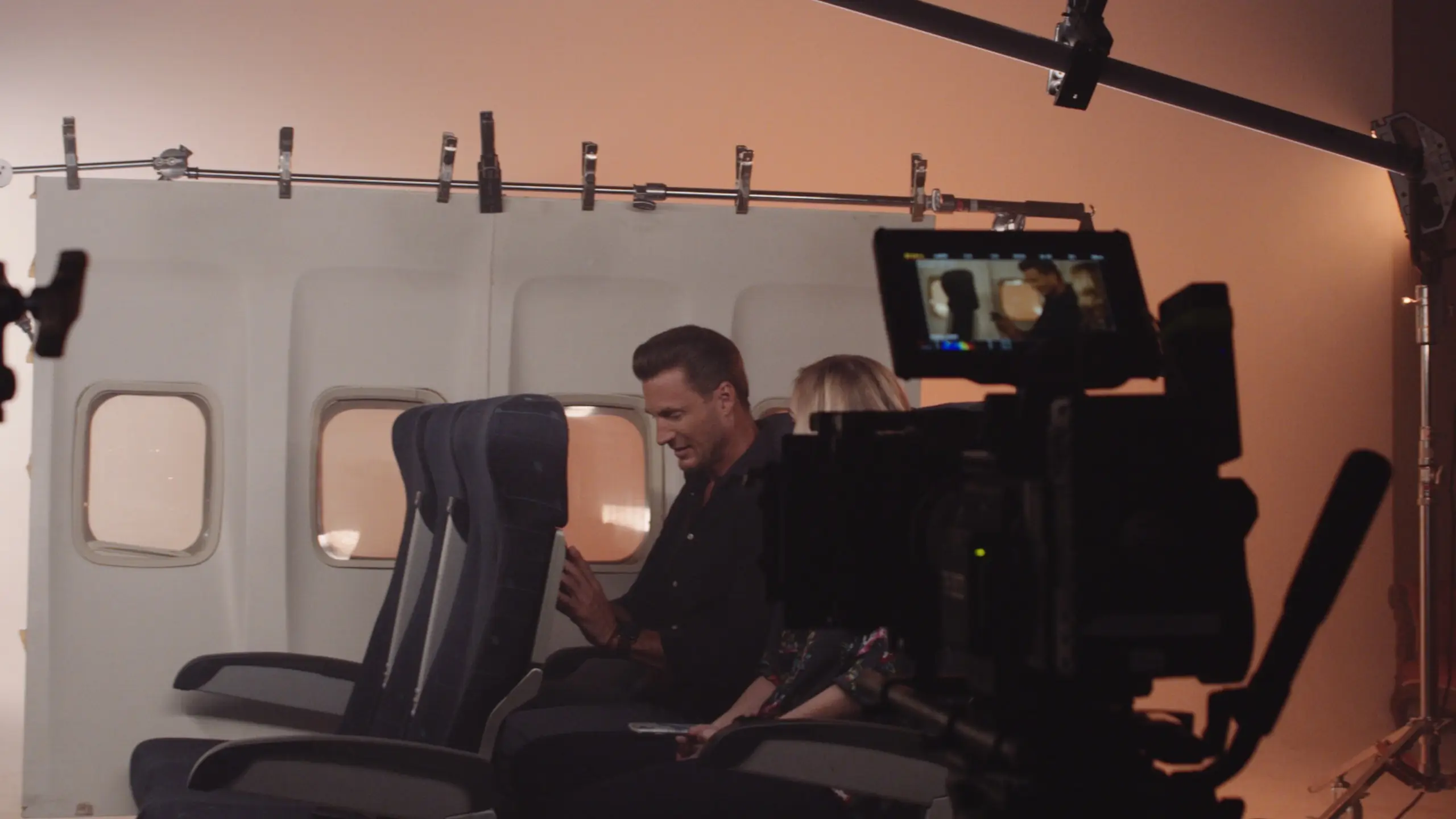
**Balancing Dialogue, Music, and Sound Effects: Audio Mixing Techniques for Film and Video**
Modern audiences are incredibly sensitive to audio quality. They might forgive a shaky camera or an imperfect transition, but even casual viewers will instantly notice muddy dialogue, competing frequencies, or uneven volume levels.
This shift is not surprising when you consider how much content people consume on platforms that prioritize sound clarity. A recent Nielsen report showed that more than 70 percent of viewers decide within the first few seconds whether they will continue watching or scroll away. Poor sound contributes heavily to drop-off.
At C&I Studios, this mindset shapes how projects move through post-production. Clients who come in through our[Video Production Services](https://c-istudios.com/video-production-services/) page often discover how audio can transform a project from “good enough” to unforgettable.
The process blends technical skills with creative intuition, but the foundation remains the same: dialogue clarity, musical flow, and well-placed sound effects working together without overpowering one another.
## Why clarity drives every decision
### The invisible architecture of a clean mix
Every sound layer has a purpose, but not every layer deserves equal priority. Dialogue usually carries the narrative. Music supports tone and emotion. Sound effects add realism or personality. Without structure, these pieces compete rather than blend.
An audio mix becomes successful when each element occupies a defined space in the frequency spectrum. Research from the [Audio Engineering](https://c-istudios.com/audio-engineering-services/) Society highlights that most human speech sits between 85 Hz and 255 Hz for male voices, and 165 Hz and 255 Hz for female voices. When music or effects crowd this space, clarity drops immediately.
Professionals often use subtractive equalization, dynamic compression, and panning choices to carve out room for dialogue. These steps may not be obvious to non-technical viewers, but they make the difference between a mix that feels effortless and one that sounds chaotic.
Studios like C&I Studios routinely apply these standards, especially when working with films or commercial campaigns that eventually appear in the [Our Work](https://c-istudios.com/our-work/) archive. They approach sound design as a collaborative environment shaped by editors, directors, and the post team rather than a job done in isolation.
## How dialogue becomes the anchor
### The voice that carries the story
Dialogue is always the backbone of a professional mix. Even in music-driven sequences, viewers rely on the human voice to stay grounded. Dialogue should cut through noise, music, and atmospheric layers while still sounding natural.
One of the most effective audio mixing techniques is spectral cleanup. Engineers remove unnecessary low rumble, HVAC noise, plosives, or sibilance using tools like DeNoise, DeReverb, and multiband compressors. These corrections allow the voice to sit confidently in the mix without being artificially loud.
### Adjusting dynamics for realism
A common mistake among beginners is boosting dialogue until it floats above everything like a disconnected narrator. Instead, mixers use automation, not static volume changes.
This means adjusting levels word by word or phrase by phrase so each line sits comfortably within the scene. It creates a transparent experience where viewers never notice the engineering behind the performance.
This type of detailed automation often happens during the final passes of a project, long after picture lock. Production companies that manage both pre- and post-production, such as C&I Studios, support this by ensuring clean recordings from the start.
## How music sets emotional tone
### The rhythm behind the storytelling
Music adds energy, mood, and psychological cues. However, the same soundtrack that elevates a dramatic moment can ruin a scene if it overpowers the voice. The most effective approach is selective mixing rather than simply lowering the music volume across the board.
Professionals first map out moments when music should rise, fall, or temporarily clear space for dialogue. Then they analyze frequency overlap and remove competing components. For example, a piano or guitar may interfere with midrange vocal frequencies. Lowering their gain or reshaping their EQ keeps the dialogue crisp.
Music mixing requires constant adjustments rather than a universal setting. Engineers reference loudness standards, playback environments, and the emotional direction of the scene. They aim to keep the track energetic, but never at the expense of clarity.
When clients work with production teams offering Creative Development services at C&I Studios, they benefit from early decisions that support better mixing later. Storyboards, pacing choices, and dialogue density help determine where musical moments should hit, fade, or evolve.
## Where sound effects add realism
Sound effects, or SFX, act as invisible glue in film and video. They anchor scenes in reality, guide attention, and heighten impact. Foley footsteps, ambient room tone, transitional wooshes, or environmental cues must all blend without taking over.
**Sound designers categorize effects to control the mix effectively:**
- **Hard effects**: mechanical sounds like doors, engines, or machines
- **Soft effects**: environmental textures such as wind, hum, footsteps, or cloth movement
- **Design effects**: stylized sounds that enhance motion graphics or stylized visuals
Balancing SFX requires constant restraint. Hard effects should feel present but not startling unless intentionally designed. Soft effects should provide background depth without muddying dialogue. Design effects must punctuate moments without overwhelming the scene.
Studios running hybrid production facilities like C&I Studios often capture their own live Foley during projects. In some cases, teams use our[Studio Rental](https://c-istudios.com/studio-rentals/) spaces to record clean texture layers that blend smoothly with on-location audio.
## Managing competing frequencies
One of the biggest reasons audio elements clash is overlapping bandwidth. A music track with heavy midrange instruments will collide with dialogue frequencies. A rumbling effect can interrupt the body of a voice. The key solution is carving, not stacking.
Frequency carving means removing conflicting frequencies from music or SFX to let dialogue shine. Engineers use subtractive EQ to scoop out small portions of the competing layer. This approach preserves the full energy of the soundtrack without compromising clarity.
AES research and Dolby guidelines both emphasize the importance of consistent spectral shaping. Engineers reference spectrum analyzers to verify that each component sits in its assigned space.
### Panning for dimensional clarity
Stereo positioning adds width and depth. Dialogue usually sits center, while music spreads across the stereo field. Effects may sit left or right depending on action. Panning gives every sound its own lane.
This practice mirrors the way people hear sound in real life, making scenes more immersive. It also prevents clutter by keeping similar sounds from crowding each other.
## The psychology of perceived loudness
### Why volume is not the only factor
Perceived loudness depends on frequency content, playback environment, and dynamic contrast. A sound can feel loud without actually having high volume. Mixers use this understanding to create emotionally impactful scenes without breaking loudness standards.
The Fletcher-Munson curves, a foundational study on human loudness perception, show that people hear midrange frequencies more easily than low or high ones. That is why dialogue often pops through even at modest levels. When mixers keep these curves in mind, they avoid unnecessary boosts that might distort the overall balance.
### Using dynamics to maintain interest
Compression helps smooth peaks, but over-compression can kill emotional depth. Modern mixers aim for dynamic transparency. They apply compression only to control inconsistencies, not to flatten the performance. Subtle limiting keeps the overall mix within safe headroom.
These principles appear frequently in professional workflows, especially during projects intended for digital distribution. Teams that work with C&I Studios often request theatrical conversions, so understanding these dynamics ensures a soundtrack holds up across platforms.
## The role of room tone and ambience
Room tone is the consistent background sound present in any location. It helps smooth cuts, hide edits, and maintain continuity. Without room tone, dialogue edits can sound jarring or unnatural.
Professionals always capture clean room tone during production. This 60-second baseline becomes invaluable in post because mixers can layer it under dialogue patches or ADR. It fills sonic gaps and blends otherwise mismatched clips.
Ambience functions similarly. Environmental textures such as distant traffic, birds, rustling leaves, or interior HVAC hum create realism. These layers run quietly in the background but are foundational to a pro-level mix.
Studios that offer turnkey production solutions, like C&I Studios, emphasize early planning for these elements. Their teams coordinate with directors and audio technicians to document shooting environments, schedule room tone recordings, and gather the necessary assets for post.
## How editing and mixing support each other
A strong audio mix depends on organized editing. Clean dialogue tracks, labeled sound effects, clearly marked music cues, and properly arranged sequences minimize confusion during mixing. The more organized the editing timeline, the better the mix will be.
**Professionals often create multiple submixes:**
- Dialogue bus
- Music bus
- Effects bus
- Foley bus
- Ambience bus
- Master bus
This workflow ensures control at both micro and macro levels. Mixers can automate EQ or compression on group tracks instead of adjusting each clip individually.
Teams that work with C&I Studios benefit from experienced editors who understand how early decisions impact audio quality later. Their structured pipelines and labeling systems reduce revisions, speed up mixing, and support better creative outcomes.
## How playback environments influence mixing choices
### The challenge of multiformat content
Content today plays across countless devices. Headphones, laptops, phone speakers, home theater systems, and cinema sound setups each reproduce frequencies differently. A mix that sounds perfect on studio monitors may collapse on a smartphone.
Professionals use referencing techniques to test mixes across environments. They switch between headphones, near-field monitors, and small speakers to check consistency. They also analyze loudness levels for platform compliance. For example, streaming services follow different LKFS guidelines than theatrical releases.
This practice ensures that dialogue remains clear and sound effects retain detail regardless of playback hardware.
Studios such as C&I Studios, which regularly handle broadcast, streaming, and theatrical projects, use calibrated multi-speaker setups to guarantee accuracy. Their environment gives mixers the flexibility to craft soundtracks that translate across any device.
## How automation shapes emotional pacing
Automation is among the most powerful tools in the mixing process. It allows engineers to shape volume, panning, EQ, and effects in real time. Instead of applying static settings, they draw changes along the timeline.
**For example:**
- Music dips smoothly under specific dialogue lines
- Effects rise during transitions
- Atmosphere tones pull back subtly when characters speak
- EQ shifts during emotional shifts
- Reverb increases during wide cinematic moments
Automation gives mixers control frame by frame. It creates fluid movement and expression that static mixing cannot achieve.
Studios that handle campaigns, films, and branded content often rely heavily on automation to match the pacing of visual edits. When C&I Studios manages creative development with clients, they often plan audio transitions directly into script and storyboard phases.
## The importance of reference tracks
Professional mixers consistently reference other films, advertisements, and creative projects. This practice helps benchmark loudness, tone, genre balance, and emotional pacing.
A well-chosen reference track provides clarity when a mix begins to drift. It resets expectations, especially during long sessions. Audio engineers use references not to copy but to align with industry standards and avoid subjectivity.
C&I Studios encourages clients to share reference films or videos early in the process. This collaboration ensures both sides understand the sonic direction before work begins.
## How mixing supports emotional storytelling
Every mix tells a story. Dialogue guides logic, music shapes feeling, and sound effects deepen immersion. When these elements work together, they create emotional momentum.
**A well-executed mix can:**
- Make suspense scenes more tense
- Add warmth to personal narratives
- Strengthen commercial messaging
- Enhance the scale of cinematic visuals
- Support transitions in mood or tone
The relationship between sound and emotion is backed by numerous studies. One Stanford research project found that music increases brain connectivity and emotional processing. When mixers understand this relationship, they craft scenes with intention, not just technical precision.
## Integrating professional workflows
### Why high quality requires a team
Audio mixing is not a single discipline. It involves recordists, editors, mixers, Foley artists, designers, and directors. Collaboration shapes a cohesive mix.
Production houses like [C&I Studios](https://c-istudios.com/) already work with integrated teams across multiple stages. Their approach reduces miscommunication and avoids technical bottlenecks. It also ensures consistent creative direction across dialogue editing, effects processing, music selection, and final mastering.
High-level production environments make space for experimentation, especially when mixing stylized or cinematic content.
## Starting with the right tools
### How software impacts quality
Audio engineers rely on a mix of industry tools including:
- Pro Tools
- Adobe Audition
- Logic Pro
- Reaper
- iZotope RX
- FabFilter plugins
- Waves processing bundles
Each tool addresses different parts of the mix. Clean dialogue relies heavily on restoration plugins. Music balancing uses multi-band compression and equalization. Sound effects blending depends on spatial tools and algorithmic reverb.
Teams who want to elevate their storytelling often choose to work with experienced production environments where sound is part of the creative vision from day one. The teams at C&I Studios support this through structured editing, integrated workflows, and professional sound engineering that help every project communicate clearly.
If you want to build projects with seamless dialogue, powerful music, and immersive sound effects, explore how a dedicated team can support your next production. You can learn more about our[Video Production Services](https://c-istudios.com/video-production-services/) or start discussing your project directly through the[Contact](https://c-istudios.com/contact/) page.
## Work with C&I Studios
If you are planning a project like this, our team can take it from concept to final delivery. Explore our [post-production services](https://c-istudios.com/post-production-services/), browse [our work](https://c-istudios.com/our-work/) to see how we tell brand stories, and [get in touch](https://c-istudios.com/contact/) when you are ready to start.
Originally published November 19, 2025
---
*This content is from [C&I Studios](https://c-istudios.com), a full-service production company.*
---
# Video Editing Continuity: Proven Strategies to Keep Your Story Flowing Seamlessly
> Published: November 18, 2025
> Categories: Post & VFX
> Source: https://c-istudios.com/video-editing-continuity-proven-strategies-to-keep-your-story-flowing-seamlessly/
---
.cib{--paper:#1b1d1f;--ink:#fff;--body:#d5d7d9;--muted:#8b9096;--line:rgba(255,255,255,.12);--thumb:#2b2e31;--card:#212426;--accent:#c02b0a;--blue:#5B8FA8;--serif:'Playfair Display',Georgia,serif;--sans:'Poppins',-apple-system,sans-serif;--measure:900px;background:var(--paper);color:var(--body);font-family:var(--sans);line-height:1.6;position:relative;left:50%;transform:translateX(-50%);width:90vw;max-width:1920px}
.cib *{box-sizing:border-box}
.cib .kicker{max-width:var(--measure);margin:58px auto 0;padding:0 22px;font-size:12.5px;font-weight:700;letter-spacing:2.5px;text-transform:uppercase;color:var(--blue)}
.cib h1.cibh1{text-wrap:balance;font-family:var(--serif);font-weight:500;font-size:clamp(46px,6vw,72px);line-height:1.08;color:var(--ink);max-width:var(--measure);margin:18px auto 0;padding:0 22px;letter-spacing:-.5px}
.cib .metarow{max-width:var(--measure);margin:20px auto 0;padding:0 22px;color:var(--muted);font-size:14px}
.cib .hero{position:relative;width:100%;height:0;padding-bottom:56.25%;overflow:hidden;margin:48px auto 0;border-top:1px solid var(--line);border-bottom:1px solid var(--line)}
.cib .hero .ph{width:100%;aspect-ratio:16/9;background:var(--thumb);border-top:1px solid var(--line);border-bottom:1px solid var(--line);display:flex;align-items:center;justify-content:center;color:#7d8288;font-size:13px;text-align:center;padding:0 20px}
.cib .body{max-width:var(--measure);margin:12px auto 0;padding:52px 22px 6px}
.cib .body.lead p:first-child{font-size:23px;line-height:1.62;color:var(--ink)}
.cib .body p{font-size:18.5px;line-height:1.85;margin:0 0 30px;color:var(--body)}
.cib .body h2{text-wrap:balance;font-family:var(--serif);font-weight:500;font-size:clamp(32px,4vw,48px);line-height:1.22;color:var(--ink);margin:70px 0 20px;letter-spacing:-.3px}
.cib .body h3{text-wrap:balance;font-family:var(--sans);font-weight:600;font-size:22px;color:var(--ink);margin:38px 0 8px}
.cib .body a{color:var(--ink);text-decoration:underline;text-decoration-color:rgba(255,255,255,.4);text-underline-offset:3px}
.cib .body a:hover{text-decoration-color:var(--ink)}
.cib .ctable{width:100%;border-collapse:collapse;margin:16px 0 30px;font-size:16px}
.cib .ctable th{background:#000;color:#fff;text-align:left;padding:10px 12px;font-family:var(--sans)}
.cib .ctable td{padding:10px 12px;border-bottom:1px solid var(--line);color:var(--body)}
.cib .inimg{position:relative;width:100%;height:0;padding-bottom:56.25%;overflow:hidden;margin:72px auto;border-top:1px solid var(--line);border-bottom:1px solid var(--line)}
.cib .inimg .ph{width:100%;aspect-ratio:16/9;background:var(--thumb);border-top:1px solid var(--line);border-bottom:1px solid var(--line);display:flex;align-items:center;justify-content:center;color:#7d8288;font-size:13px}
.cib .origpub{max-width:var(--measure);margin:60px auto 0;padding:26px 22px 0;border-top:1px solid var(--line);color:var(--muted);font-size:13.5px}
.cib .related{max-width:1200px;margin:64px auto 0;padding:34px 22px 76px}
.cib .related h3{font-family:var(--sans);font-size:12.5px;letter-spacing:2px;text-transform:uppercase;color:var(--ink);margin:0 0 24px}
.cib .grid{display:grid;grid-template-columns:repeat(3,1fr);gap:28px}
.cib .rc{background:var(--card);border:1px solid var(--line);display:block;text-decoration:none;color:inherit;transition:border-color .15s}
.cib a.rc:hover{border-color:rgba(255,255,255,.5)}
.cib .rc .thumb{position:relative;width:100%;height:0;padding-bottom:56.25%;background:var(--thumb);overflow:hidden}
.cib .rc .thumb img{position:absolute!important;top:0!important;left:0!important;width:100%!important;height:100%!important;object-fit:cover!important;margin:0!important}
.cib .rc .cc{padding:14px 15px 17px}
.cib .rc .rt{font-family:var(--serif);font-weight:500;font-size:16px;line-height:1.3;color:var(--ink);margin:0 0 6px}
.cib .rc .rm{font-size:11px;letter-spacing:1px;text-transform:uppercase;color:var(--muted)}
.cib img{margin:0!important;padding:0!important;display:block!important;vertical-align:top;max-width:100%}
.cib .hero img,.cib .inimg img{position:absolute!important;top:0!important;left:0!important;width:100%!important;height:100%!important;object-fit:cover!important;margin:0!important;padding:0!important;border:0!important;display:block!important;aspect-ratio:auto!important}
.cib .hero+.body{padding-top:36px}
@media(max-width:760px){.cib .grid{grid-template-columns:1fr}.cib .body h2{margin:52px 0 16px}.cib .body p{font-size:17.5px}.cib .inimg,.cib .hero{margin-top:44px}}
.cib .vembed{max-width:var(--measure);margin:44px auto;padding:0 22px}.cib .vembed .vwrap{position:relative;width:100%;height:0;padding-bottom:56.25%}.cib .vembed .vwrap iframe{position:absolute;top:0;left:0;width:100%;height:100%;border:0}
Post & VFX
# Video Editing Continuity. Proven Strategies to Keep Your Story Flowing Seamlessly
10 min read
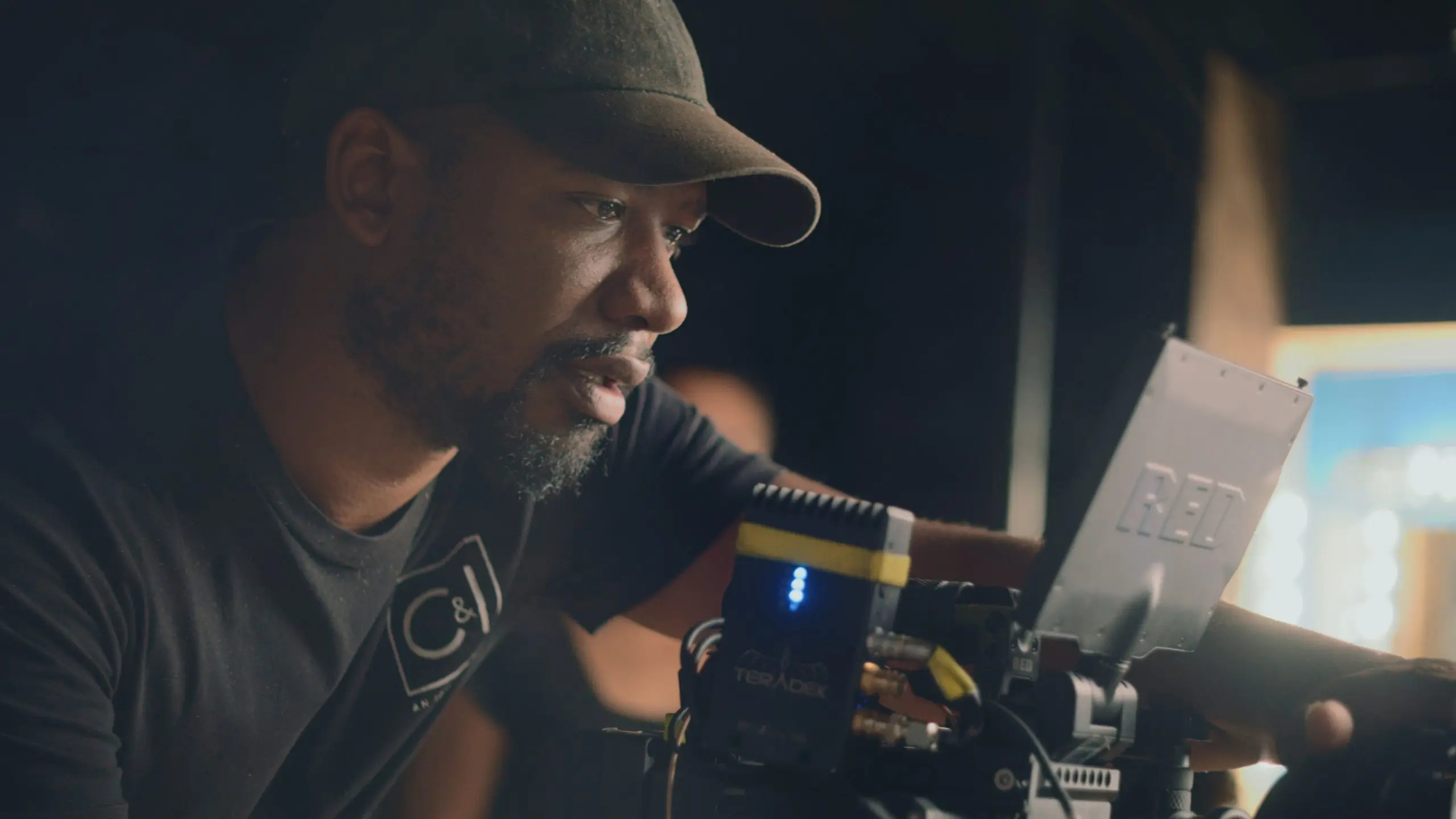
Continuity is the invisible thread that holds a video together. Whether we're editing a dialogue-driven drama, a fast-paced action sequence, or a multi-camera shoot, ensuring video editing continuity is vital.
When continuity breaks, the viewer’s engagement suffers, jarring jumps in space, time, or action pull people out of the story. But with deliberate planning, smart on-set practices, and disciplined editing, [our work](https://c-istudios.com/our-work/) can feel seamless, intentional, and polished.
In this post, we’ll explore how to **maintain continuity throughout the video** production process, from pre-production all the way to final quality assurance. You’ll get actionable strategies, industry techniques, and tool recommendations that help us ensure our final cut feels like a natural, coherent story.
## Understanding Video Editing Continuity
Continuity in video editing isn’t just about matching shots, it’s about maintaining a consistent sense of space, time, and movement so the audience stays immersed in the narrative. This concept spans visual continuity (props, costumes, positioning), spatial continuity (how characters relate to each other in space), temporal continuity (how actions flow in time), and audio continuity (consistent sound, dialogue, and ambient texture).
If continuity is done well, the edits disappear. Viewers don’t notice the cuts, they just feel the flow. But when continuity breaks, even small inconsistencies can feel distracting. Objects move inexplicably, eyelines don’t match, or audio shifts suddenly. Good continuity protects the suspension of disbelief.
Continuity also improves workflow efficiency. When we catch and plan for continuity issues up front, during script, storyboarding, or on-set supervision, there’s less need for costly reshoots or complex fixes in post. That’s why continuity isn’t just a creative concern, it’s a logistic and strategic one too.
### Types of Continuity
To maintain continuity effectively, it helps to know which flavors of continuity we’re working with:
**Visual continuity**: This means props, costumes, actor positions, and even minor details like hand placement stay consistent between shots.
**Spatial continuity**: This is about preserving the geography of a scene. Where is each character in relation to others? Which direction are they facing? How do camera angles relate to the action axis?
**Temporal continuity**: Ensuring that actions and events unfold in a way that makes time feel natural, not jumpy or inconsistent.
**Audio continuity**: Maintaining consistent sound levels, tone, ambient sound, and dialogue characteristics so audio feels uniform across cuts.
By keeping all these in mind, our editing team can build a more coherent narrative and avoid technical or contextual dissonance.
## Pre‑Production & On‑Set Strategies for Continuity
One of the most powerful ways to ensure continuity is to plan for it before filming even begins. This is why pre-production and on-set supervision are critical. When continuity is baked into the workflow from the start, editors receive cleaner, more predictable footage, saving time and reducing frustration.
### Script, Storyboard & Shot Planning
A robust script and storyboard are our first line of defense against continuity issues. When writing the script or creating the storyboard, we explicitly note critical details: where props are located, how characters move, their relationships, and any action moments.
We also plan multi-angle or action-heavy scenes in advance. By mapping out each camera’s framing and movement, the team can ensure that spatial relationships make sense. Rehearsing these sequences is equally important; when actors and camera operators run the scene before the final take, we lock in timing, motion, and blocking.
That rehearsal gives editors reliable references, which significantly helps during the cutting phase.
### On‑Set Continuity Supervision
On set, continuity supervision is a shared responsibility. Our crew typically includes a script supervisor, director, and key camera personnel. The script supervisor plays a particularly vital role: they document actor positions, wardrobe details, prop placement, and lighting. They often photograph setups between takes so editors later have visual references.
Lighting consistency is also maintained: camera operators and lighting technicians log exposure settings, white balance, and lens details so that scenes look the same across different takes. Meanwhile, our sound team tracks ambient conditions, microphone placement, and dialogue tone so that audio remains as consistent as possible.
These on-set measures, though sometimes time-consuming, pay off manifold in the editing room: editors can rely on a foundation of stable, well-documented footage rather than guesswork.
### Multi‑Camera Coordination & Spatial Logic
For scenes filmed with multiple cameras, coordinating continuity becomes more complex, but with careful setup, it’s absolutely manageable. Before [filming](https://c-istudios.com/feature-film-mastering-and-delivery/), we synchronize all cameras using timecode, ensuring that each angle can be matched precisely in post.
Accurate labeling is crucial: we name each clip with angle, take, and shot number, which helps editors choose cuts that preserve spatial relationships.
During the shoot, our team uses a master shot or establishing shot to ground spatial orientation. We maintain the 180‑degree rule (more on that below) so that viewers always know where characters are relative to each other.
### Continuity Rules & Cinematic Conventions
We rely on several classical principles to guide continuity, rooted in the history of film editing:
- The 180‑degree rule helps preserve spatial consistency by drawing an imaginary axis between characters or action, and keeping the camera on one side of that axis.
- The 30‑degree rule states that when cutting between two shots of the same subject, the camera angle should shift at least 30 degrees to avoid a visual jump-cut effect.
- **Cutting on action**: editors cut during movement (e.g., a character reaches for a door or lifts an object) to maintain a fluid visual flow.
- **Eyeline matching**: ensuring that when a character looks off-screen, the next shot reveals what they see, which helps maintain spatial logic.
Applying these rules doesn’t mean each shot must be rigidly identical, but they give a structured foundation that our editors can rely on, reducing jarring transitions and preserving immersion.
## Editing Techniques for Continuity
Once we move to the editing phase, continuity must remain top of mind. Even with the best pre-production, errors can slip through, and editors have the power (and the responsibility) to catch and correct them.
### Matching Shots and Maintaining Visual Coherence
When cutting between shots, editors must carefully match visual elements: *actor position, props, background, and lighting*. One effective strategy is using reference stills (photographs taken on set) or overlaying frames in the editing timeline, which helps ensure that the A and B shots align spatially.
Editors also pay attention to focal length and camera movement: if one shot was taken with a medium-wide lens and another with a close-up telephoto, the perspective could feel off. By aligning the lens type or adjusting scale in post, we preserve coherence.
These small but critical fixes help maintain the illusion that the scene is continuous rather than pieced together.
### Temporal Continuity and Action Matching
Temporal continuity is about pacing and flow. One powerful technique for preserving it is match on action, cutting in the middle of a movement so that the action seamlessly continues in the next shot. If a character throws a ball, for instance, the throw begins in one shot and completes in the next, making the cut feel invisible.
Sometimes, timing adjustments are necessary. Editors may speed up or slow down a clip slightly to align actions, or use transitions when natural pacing feels off. It’s a balancing act: too much manipulation, and the result can feel artificial; too little, and you risk awkward pacing. But when done well, temporal continuity keeps the story rhythm smooth and believable.
### Audio Continuity and Sound Consistency
Audio continuity is just as important as the visual, in many cases, even more so. If dialogue shifts in tone or volume, or ambient sound changes abruptly, the viewer can be jarred out of the narrative.
To avoid this, our editing team uses digital audio workstations (DAWs) to align, smooth, and blend sound clips. We match dialog volume, EQ tone, and ambience across takes. When necessary, we use crossfades, background sound loops, or clean-room recordings to fill gaps.
Markers in the timeline help align audio precisely with video frames, and normalization tools ensure that dialogue remains consistent.
**Some common tools and techniques for audio continuity include:**
- DAW software like Adobe Audition or Pro Tools
- Clip markers and waveforms to align audio precisely
- EQ, compression, and normalization to balance sound levels
## Tools & Workflow for Continuity Management
Maintaining continuity isn’t just about technique, it also depends on using the right tools and building a workflow that supports consistency. Here are some of the key tools and workflows our team relies on to preserve continuity.
### Editing Software & Monitoring Tools
**Non‑linear editors (NLEs)**: We use industry-standard tools like Adobe Premiere Pro, DaVinci Resolve, and Final Cut Pro, all of which support frame-by-frame matching, timecode sync, and multi-cam editing.
**Reference monitors & scopes**: To maintain consistent color, exposure, and framing, we use calibrated monitors and video scopes (waveform, vectorscope) during color grading.
**Timecode syncing tools**: For multi-camera shoots, we use timecode synchronization tools or hardware to align footage precisely across angles.
These tools give us the precision needed to maintain both spatial and temporal continuity efficiently.
### Continuity Tracking Systems
To manage continuity effectively, we incorporate tracking systems into our workflow:
- **Continuity logs or spreadsheets**: During production, our script supervisor maintains detailed logs with notes on props, costuming, lighting, and camera settings.
- **Shot sheets linked with take data**: This helps editors cross-reference frames to on-set notes.
- **Digital continuity apps**: For some projects, we use dedicated applications where supervisors can upload reference images, log continuity checks, and annotate continuity issues.
These systems give editors quick access to reference material, which reduces guesswork and accelerates decision-making in the editing room.
### Color Grading & Post‑Production Matching
Color consistency is critical for visual continuity. Since scenes may be shot across different takes, locations, or lighting conditions, color grading helps unify them:
- We use look-up tables (LUTs) and presets as starting points to maintain consistent color across scenes.
- For finer adjustments, we use side-by-side comparisons of shots to match exposure, contrast, and saturation.
- Scopes like vectorscope and waveform help ensure that color and luminance match precisely.
By combining these tools with our logs and reference frames, our colorists and editors work together to deliver a cohesive visual style.
## Common Continuity Challenges & How to Solve Them
Even with the most careful planning, continuity problems can arise. Here are common challenges we face, and how we address them in our editing process.
### Prop & Costume Discrepancies
Props or costume elements may shift between takes. A glass moved slightly, a button undone, or a hat tilted differently, these small changes can break immersion. To handle this:
- On set, the script supervisor photographs each setup, capturing detail in costume and prop placement.
- In editing, we refer to those photos to align elements. When inconsistencies remain, we may digitally reposition elements using masking or motion tracking.
- In more severe cases, we reshoot inserts or cutaways rather than compromise visual continuity.
The goal is to preserve consistency without disrupting the emotional flow of the scene.
### Spatial Confusion & Lighting Changes
Spatial continuity can break when shots jump around or lighting shifts unexpectedly. This often happens in multi-camera setups or when reshooting scenes. To manage this:
- We carefully follow the 180‑degree rule to keep camera movement logical and consistent.
- If lighting changes between takes, we correct exposure and color in post-production using color grading and masking.
- We also use cutaways or insert shots to hide spatial or lighting mismatches, for instance, B-roll of objects or environment that connects disparate shots.
These strategies help maintain spatial coherence and prevent visual disorientation for viewers.
### Action‑Heavy or Multi‑Camera Sequences
In action scenes or sequences shot with multiple cameras, continuity demands are higher:
- We make sure every camera is synced to the same timecode so editors can align movements precisely.
- A detailed shot list and production notes ensure editors know which takes to pair and how actions evolve between angles.
- Editors may use match-on-action and cross-cutting carefully: when a character jumps, falls, or interacts, we cut at the right point to preserve motion continuity.
By combining on-set discipline with post-production technique, we turn complex multi-angle scenes into smooth, high-impact moments.
## Post‑Production Review & Quality Assurance
After the first cut, continuity work doesn’t stop. We build in review processes to catch and fix any lingering issues.
### Internal Review & Editor‑Director Feedback
Once the assembly edit is ready, our team conducts internal reviews. During these sessions:
- The director and editor watch the sequence together, focusing specifically on continuity points, spatial, visual, and temporal.
- Editors note inconsistencies, tag problem areas, and propose fixes.
- We often compile a continuity punch-list: a catalog of mismatches (props, lighting, position, eyeline) that need to be addressed before we finalize.
This collaborative feedback loop ensures that continuity isn’t just a technical check, it’s baked into creative quality.
### External Test Screenings
We sometimes run small test screenings with internal or trusted viewers before final delivery. These screenings help uncover issues that the production team might have missed:
- Viewers may notice jumpy edits, spatial disorientation, or audio inconsistencies that didn’t register in the edit bay.
- We collect feedback, especially on flow and pacing, and go back to fix or refine shots.
- This real-world testing helps ensure the final video feels natural and immersive.
### Final Continuity Check & Color Lock
As a final step, we perform a continuity QA pass:
- We compare the final cut to the storyboard, shot list, and continuity logs to verify alignment.
- Color corrections and grading are locked, ensuring no further drift in exposure or tone.
- We run a final listen-through of the audio, confirming that dialogue and ambient sounds remain consistent.
Once everything checks out, we export and deliver with confidence, knowing that our video editing continuity has been maintained from start to finish.
## Why Continuity Matters for Our Clients & Our Brand
Maintaining continuity is not just a technical exercise, it’s part of the creative value we bring. When our clients see their stories filmed and edited with care, they understand that:
- We respect their brand and narrative; every detail matters.
- We minimize wasted time and resources by reducing rework.
- The final product feels polished and intentional, reinforcing professionalism and trust.
This isn’t just about aesthetics: video editing continuity reinforces our reputation for quality, precision, and storytelling excellence, traits that define what we do at [C&I Studios](https://c-istudios.com/). If continuity is handled well, the end result feels effortless, but the craftsmanship behind it is deeply intentional.
Continuity is the backbone of narrative clarity. Whether we’re working on a corporate video, a cinematic piece, or a fast-paced action sequence, preserving spatial, temporal, visual, and audio consistency is essential. By combining:
- Rigorous pre-production planning,
- On-set continuity supervision,
- Editing techniques like match-on-action and color matching,
- And a robust post-production review process.
We maintain video editing continuity from concept to final cut. This results not just in better-looking videos, but more immersive stories, fewer errors, and a smoother production workflow.
If you’re looking to elevate the consistency and polish of your next project, our[video production services](https://c-istudios.com/video-production-services/) at C&I Studios are designed to deliver continuity and quality at every stage.
## Getting Professional Support for Perfect Continuity
Even with careful planning and experienced editors, maintaining flawless video editing continuity can be challenging, especially for complex projects with multiple cameras, action sequences, or layered sound design. That’s where professional guidance can make a significant difference.
Working with an experienced production and editing team ensures that every detail, from props and wardrobe to camera angles and audio, is tracked and managed. Our team at C&I Studios specializes in creating seamless, polished videos that maintain continuity without sacrificing creative vision.
Whether you’re producing a corporate video, cinematic short, or multi-camera broadcast, having a structured continuity workflow reduces rework, saves time, and elevates the final quality.
For personalized support and guidance on your next project,[contact us today](https://c-istudios.com/contact/) and let our experts help you deliver videos with professional, seamless continuity from start to finish.
## Work with C&I Studios
If you are planning a project like this, our team can take it from concept to final delivery. Explore our [post-production services](https://c-istudios.com/post-production-services/), browse [our work](https://c-istudios.com/our-work/) to see how we tell brand stories, and [get in touch](https://c-istudios.com/contact/) when you are ready to start.
Originally published November 18, 2025
---
*This content is from [C&I Studios](https://c-istudios.com), a full-service production company.*
---
# Top Dialogue Editing Techniques Every Editor Should Know
> Published: November 17, 2025
> Categories: Commercial & Brand
> Source: https://c-istudios.com/top-dialogue-editing-techniques-every-editor-should-know/
---
.cib{--paper:#1b1d1f;--ink:#fff;--body:#d5d7d9;--muted:#8b9096;--line:rgba(255,255,255,.12);--thumb:#2b2e31;--card:#212426;--accent:#c02b0a;--blue:#5B8FA8;--serif:'Playfair Display',Georgia,serif;--sans:'Poppins',-apple-system,sans-serif;--measure:900px;background:var(--paper);color:var(--body);font-family:var(--sans);line-height:1.6;position:relative;left:50%;transform:translateX(-50%);width:90vw;max-width:1920px}
.cib *{box-sizing:border-box}
.cib .kicker{max-width:var(--measure);margin:58px auto 0;padding:0 22px;font-size:12.5px;font-weight:700;letter-spacing:2.5px;text-transform:uppercase;color:var(--blue)}
.cib h1.cibh1{text-wrap:balance;font-family:var(--serif);font-weight:500;font-size:clamp(46px,6vw,72px);line-height:1.08;color:var(--ink);max-width:var(--measure);margin:18px auto 0;padding:0 22px;letter-spacing:-.5px}
.cib .metarow{max-width:var(--measure);margin:20px auto 0;padding:0 22px;color:var(--muted);font-size:14px}
.cib .hero{position:relative;width:100%;height:0;padding-bottom:56.25%;overflow:hidden;margin:48px auto 0;border-top:1px solid var(--line);border-bottom:1px solid var(--line)}
.cib .hero .ph{width:100%;aspect-ratio:16/9;background:var(--thumb);border-top:1px solid var(--line);border-bottom:1px solid var(--line);display:flex;align-items:center;justify-content:center;color:#7d8288;font-size:13px;text-align:center;padding:0 20px}
.cib .body{max-width:var(--measure);margin:12px auto 0;padding:52px 22px 6px}
.cib .body.lead p:first-child{font-size:23px;line-height:1.62;color:var(--ink)}
.cib .body p{font-size:18.5px;line-height:1.85;margin:0 0 30px;color:var(--body)}
.cib .body h2{text-wrap:balance;font-family:var(--serif);font-weight:500;font-size:clamp(32px,4vw,48px);line-height:1.22;color:var(--ink);margin:70px 0 20px;letter-spacing:-.3px}
.cib .body h3{text-wrap:balance;font-family:var(--sans);font-weight:600;font-size:22px;color:var(--ink);margin:38px 0 8px}
.cib .body a{color:var(--ink);text-decoration:underline;text-decoration-color:rgba(255,255,255,.4);text-underline-offset:3px}
.cib .body a:hover{text-decoration-color:var(--ink)}
.cib .ctable{width:100%;border-collapse:collapse;margin:16px 0 30px;font-size:16px}
.cib .ctable th{background:#000;color:#fff;text-align:left;padding:10px 12px;font-family:var(--sans)}
.cib .ctable td{padding:10px 12px;border-bottom:1px solid var(--line);color:var(--body)}
.cib .inimg{position:relative;width:100%;height:0;padding-bottom:56.25%;overflow:hidden;margin:72px auto;border-top:1px solid var(--line);border-bottom:1px solid var(--line)}
.cib .inimg .ph{width:100%;aspect-ratio:16/9;background:var(--thumb);border-top:1px solid var(--line);border-bottom:1px solid var(--line);display:flex;align-items:center;justify-content:center;color:#7d8288;font-size:13px}
.cib .origpub{max-width:var(--measure);margin:60px auto 0;padding:26px 22px 0;border-top:1px solid var(--line);color:var(--muted);font-size:13.5px}
.cib .related{max-width:1200px;margin:64px auto 0;padding:34px 22px 76px}
.cib .related h3{font-family:var(--sans);font-size:12.5px;letter-spacing:2px;text-transform:uppercase;color:var(--ink);margin:0 0 24px}
.cib .grid{display:grid;grid-template-columns:repeat(3,1fr);gap:28px}
.cib .rc{background:var(--card);border:1px solid var(--line);display:block;text-decoration:none;color:inherit;transition:border-color .15s}
.cib a.rc:hover{border-color:rgba(255,255,255,.5)}
.cib .rc .thumb{position:relative;width:100%;height:0;padding-bottom:56.25%;background:var(--thumb);overflow:hidden}
.cib .rc .thumb img{position:absolute!important;top:0!important;left:0!important;width:100%!important;height:100%!important;object-fit:cover!important;margin:0!important}
.cib .rc .cc{padding:14px 15px 17px}
.cib .rc .rt{font-family:var(--serif);font-weight:500;font-size:16px;line-height:1.3;color:var(--ink);margin:0 0 6px}
.cib .rc .rm{font-size:11px;letter-spacing:1px;text-transform:uppercase;color:var(--muted)}
.cib img{margin:0!important;padding:0!important;display:block!important;vertical-align:top;max-width:100%}
.cib .hero img,.cib .inimg img{position:absolute!important;top:0!important;left:0!important;width:100%!important;height:100%!important;object-fit:cover!important;margin:0!important;padding:0!important;border:0!important;display:block!important;aspect-ratio:auto!important}
.cib .hero+.body{padding-top:36px}
@media(max-width:760px){.cib .grid{grid-template-columns:1fr}.cib .body h2{margin:52px 0 16px}.cib .body p{font-size:17.5px}.cib .inimg,.cib .hero{margin-top:44px}}
.cib .vembed{max-width:var(--measure);margin:44px auto;padding:0 22px}.cib .vembed .vwrap{position:relative;width:100%;height:0;padding-bottom:56.25%}.cib .vembed .vwrap iframe{position:absolute;top:0;left:0;width:100%;height:100%;border:0}
Commercial & Brand
# Top Dialogue Editing Techniques Every Editor Should Know
8 min read
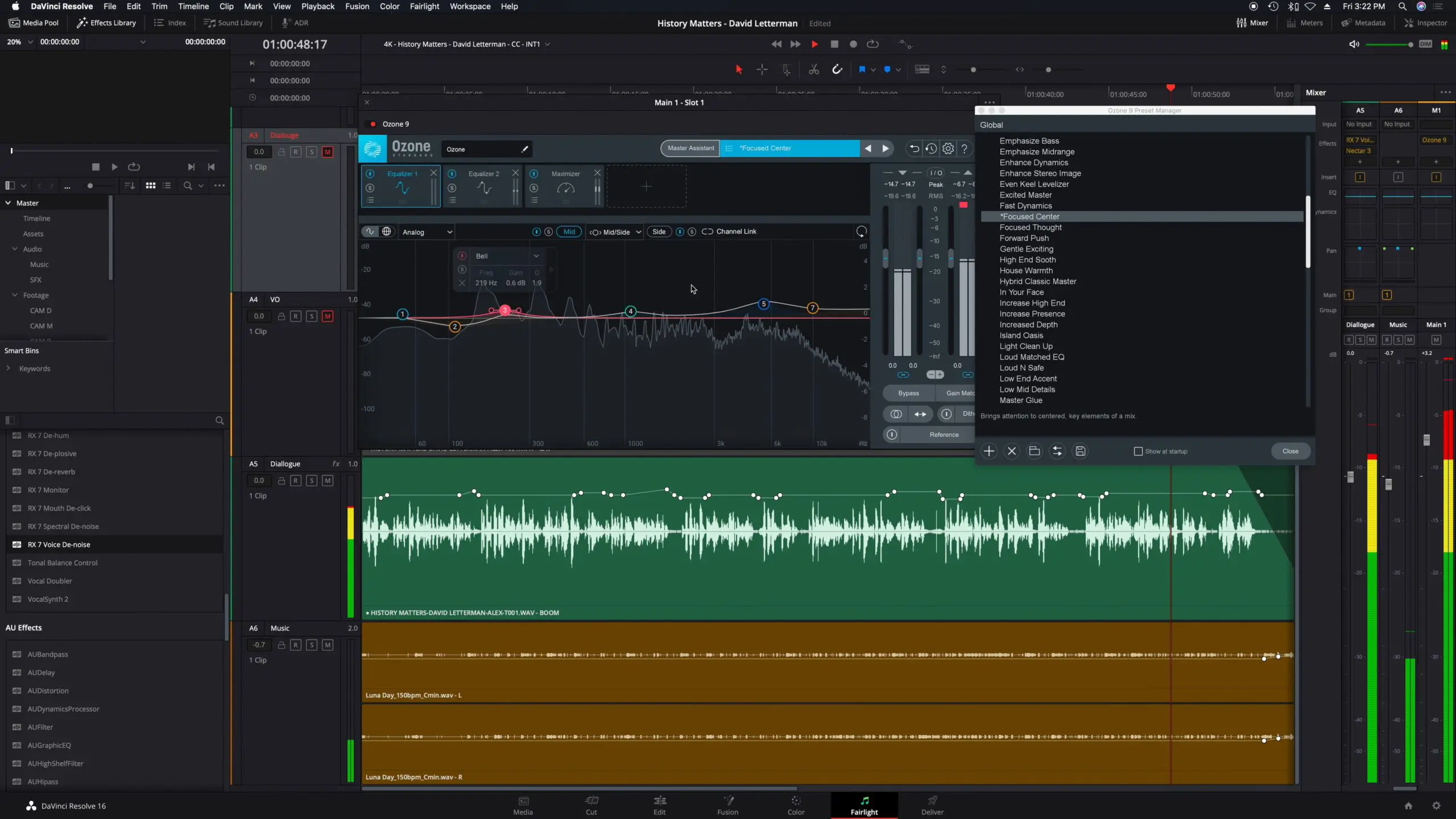
Dialogue editing is more than just cleaning up audio, it's a strategic, narrative-driven process that deeply influences how audiences experience your story. In modern content marketing and branded media, dialogue often carries the emotional core.
Whether you're producing a short film, a documentary, or a web series, every line matters. When dialogue is poorly mixed, out of rhythm, or muddled with background noise, it can break immersion, confuse your audience, or weaken your messaging.
Great **dialogue editing Techniques**, pacing by smoothing transitions between lines, and matching the speech rhythm to characters’ emotional arcs. It enhances clarity, so viewers don’t strain to hear key plot points. And it preserves performance authenticity, allowing subtle breaths or hesitations to communicate subtext.
From the perspective of a studio or production agency, like C&I Studios, which offers full post-production and [video production services](https://c-istudios.com/video-production-services/?utm_source=chatgpt.com) that clients can leverage in our content marketing strategies. Clean, emotionally compelling audio makes videos more shareable, more professional, and more aligned with brand goals.
### Core principles every editor must follow
To master dialogue editing, you need a foundation built on three central principles: intelligibility, emotional truth, and spatial continuity. These are not just technical ideas, they tie into storytelling, post-production strategy, and even content marketing value.
### Intelligibility matters first and foremost
Your first job as an editor is to make sure the dialogue is heard and understood. This means using tools like EQ, compression, and volume automation to boost voices above background noise, ensuring clarity, especially for content that will be used in marketing or streamed across platforms where sound conditions may vary.
Clarity directly affects content marketing ROI. If your video content is part of a marketing funnel, poor dialogue means your message might not land, which weakens engagement and conversion potential.
### Preserve emotional truth
Dialogue editing is not just about fixing audio problems, it's about protecting the performance. A breathy pause, a hesitation, or a slight stammer might feel like an imperfection, but it can be one of the most powerful tools for conveying a character’s internal state.
When editors lean too heavily into making everything “perfect,” they risk sanitizing the voice to the point of losing real human nuance. Instead, a skilled editor listens for emotional beats, leaving in those little imperfections that make the performance feel lived-in.
### Maintain spatial and tonal continuity
Even if lines are recorded at different times, from different angles, or on separate mics, your editing should make them feel like they were recorded in the same space. Achieving spatial consistency involves matching room tone, equalizing frequency characteristics, and sometimes layering ambient sound under dialogue.
For content marketing teams working with video production studios, maintaining tonal continuity across scenes is critical. It ensures a cohesive brand voice in your video content library. At C&I Studios, our post‑production workflow and technical expertise in audio editing help maintain this level of polish.
## Dialogue editing techniques that professionals rely on
Now, let's dive into the most effective dialogue editing techniques used by experienced editors, especially in post-production houses that serve both filmmaking and content marketing needs.
### Selecting the strongest takes
The first step is always take selection. Rather than choosing the “cleanest” line, professional editors look for emotional consistency. This means:
- Reviewing multiple takes to find variations in pacing, tone, and energy.
- Picking takes where the actor’s performance sounds natural and alive, even if there are small imperfections.
- Avoiding lines that are technically perfect but emotionally flat; sometimes, the “best” take is the one with character, not just clarity.
In content marketing videos, where actors (or spokespeople) may deliver branded messages, these small performance nuances matter, they make the difference between something that feels rehearsed and something that feels genuine.
### Using L‑cuts and J‑cuts for natural flow
**L‑cut**: Audio continues from a previous shot even after the visual transitions. This technique helps maintain verbal continuity, so the conversation feels seamless.
**J‑cut**: Dialogue from the next scene starts before the visual changes, creating anticipation and a smoother auditory bridge.
These split edits are especially useful in narrative-driven content or branded storytelling. They help the scene feel more organic and keep the audience immersed. For content marketing teams, this means polished, film-like transitions that elevate brand messaging.
### Micro‑timing adjustments for realism
Timing is everything. Editors fine-tune pauses, breaths, and reaction times to match how real people speak:
- Shortening or lengthening a pause can change the tone of a response.
- Adjusting breath lengths helps match visual pacing or emotional tension.
- Aligning reaction times so responses feel earned rather than rushed.
In a branded piece, say, a testimonial or a case study video, these micro adjustments enable the speaker’s message to resonate more authentically, aligning with your content marketing goals of connection and trust.
### Managing overlapping dialogue
When two or more characters talk over each other:
1. Separate their lines into different audio tracks.
2. Use volume automation to emphasize the dominant speaker.
3. Layer the overlapping sections carefully, avoid muddiness.
This technique is common in films and narrative content, but it’s also valuable in [content marketing](https://c-istudios.com/content-creation-services/). If you’re producing a panel-style video, interview, or roundtable, clean overlapping dialogue makes it easy to follow who’s speaking, preserving professionalism.
### Cleaning up tone and ambience
Ambient consistency is key. Without it, edits feel disjointed. Editors:
- Use room tone, recorded ambient sound, to fill gaps.
- Use EQ to match the tonal character across different lines.
- Remove unwanted noise (hiss, hum) without stripping away natural reverb.
For companies using video as part of a content marketing strategy, clean ambience gives every piece a cohesive sonic identity, whether it’s a commercial, promo, or thought-leadership video.
### Using ADR (Automated Dialogue Replacement) smartly
ADR isn’t a cure-all. When you use it:
- Match the original performance’s timing and energy.
- Record in a similar acoustic environment to blend seamlessly.
- Use ADR only when necessary, not every line needs a “perfect” redo.
In marketing content, forced ADR can feel artificial and damage authenticity. Smart use of ADR preserves clarity while keeping voiceover or dialogue believable.
## Pacing your dialogue like a storyteller
Pacing is arguably one of the most powerful tools in dialogue editing. It’s where editing meets storytelling, and where your content marketing goals (engagement, emotional response, messaging clarity) come into play.
### How pacing builds tension
Dialogue pacing can heighten tension, create suspense, or signal change:
- Fast-paced back-and-forth: conveys urgency, conflict, or high stakes.
- Longer pauses: suggest hesitancy, uncertainty, or emotional weight.
- Breath control: short gasps can convey fear; slow exhalations can denote relief.
For narrative-driven marketing, like brand documentaries or founder stories, this pacing strategy shapes how your audience emotionally connects to your message.
### When silence is more powerful than dialogue
Silence isn’t the absence of content, sometimes, it is the content. Thoughtful use of silence:
- Let viewers absorb the emotional resonance of a moment.
- Acts as a “beat” in conversations, giving space for visual storytelling.
- Provides contrast, making spoken dialogue stand out more when it returns.
In content marketing, silence can emphasize a key line or message. Imagine a branded video where the founder’s pause before a confession or statement adds drama and credibility. That moment of silence becomes a part of your content marketing narrative.
### Adjusting rhythm for different genres. comedy vs. drama vs. branded content
**Comedy**: Timing is everything. A perfectly timed pause or rapid retort can make or break a joke.
**Drama**: Slower, more reflective pacing supports emotional beats and character arcs.
**Branded content**: Rhythm should align with brand voice, whether that’s energetic, contemplative, or authoritative.
When you’re working on video content for a business (for example, a corporate brand or content marketing campaign), tailoring pacing to match your audience’s expectations is crucial. Well-paced dialogue ensures the voiceover or message feels intentional, not rushed or flat.
## Technical polishing that elevates the final cut
Even when performance and pacing are nailed, the final polish is where dialogue editing truly shines. The technical layer needs to be invisible, seamless, so natural that the audience doesn’t notice it.
### Artifact removal. pops, clicks, lip smacks, and other glitches
Professional editors use spectral editing tools or restoration plugins:
- Identify unwanted sounds like mouth clicks, lip smacks, or mic interference.
- Remove these artifacts without altering the character of the voice.
- Use conservative settings, over-cleaning can make dialogue sound unnatural or “robotic.”
This kind of polish makes a big difference in high-quality video content, especially if the video is being used as part of your content marketing strategy, because your audience will notice if it sounds “off.”
### EQing for clarity and warmth
EQ is your friend, but you need to use it wisely:
- Roll off sub-bass frequencies (rumble) to keep voices clean.
- Slightly boost the mid-range where vocal clarity lives.
- Avoid harsh high boosts, they can make voices sibilant.
Good EQ work ensures that the dialogue sounds natural, warm, and present, critical whether you're editing a narrative film or a branded explainer video.
### Volume leveling and automation
Dialogue often comes from multiple sources: different mics, takes, or recording environments. To make it consistent:
- Use normalization or manual volume automation to smooth out the levels.
- Automate gain where needed, for example, when switching between characters or mic types.
- Use ducking gently if dialogue overlaps with music or sound effects.
For content marketing, consistent levels mean your message doesn’t compete with music or sound, it stays front and center.
### Spatial sound and reverb matching
To make dialogue feel embedded in the environment:
- Use reverb plugins or convolution reverb to recreate the room’s natural acoustics.
- Match reverb tails between lines so there is a consistent “space” around the voice.
- Blend ambient sound to support continuity while keeping the dialogue clean.
This spatial consistency matters a lot in longer-form content or branded storytelling, where production value reflects on the brand’s credibility.
## Collaboration strategies that speed up the workflow
Dialogue editing doesn’t happen in isolation, it requires coordinated effort between editors, directors, and content marketing teams (if you’re producing branded or marketing-driven video).
### Communicating with the director or content owner
- Ask about emotional priorities: What lines are most important? Which beats must land exactly?
- Check in on performance choices: Which takes reflect the intended character or brand voice?
- Use organized marker systems or session notes to track where ADR or re-recording might be needed.
For companies investing in content marketing, having this alignment upfront ensures the final dialogue supports the narrative strategy.
### Using markers, labels, and script-sync tools
- Sync recorded audio to the script: This makes it easy to track revisions and ADR needs.
- Mark problematic sections: noisy takes, inconsistent tone, or emotional “misses.”
- Color-code clips by scene, character, or mic to streamline collaboration.
These organizational strategies reduce revision cycles, especially valuable when working on content marketing video campaigns with tight deadlines.
### File organization and backup strategy
- Arrange session files by scene and character to make navigation intuitive.
- Maintain separate folders for raw audio, cleaned dialogue, ADR, and room tone.
- Back up regularly, losing data in the final dialogue mix stage can be catastrophic.
Studios like [C&I Studios](https://c-istudios.com/) emphasize structured post‑production workflows. Our teams use shared project management tools and collaboration portals to track edits, feedback, and version control.
## Common mistakes editors make with dialogue
Even skilled editors can fall into predictable traps that undermine the strength of their dialogue work:
1. **Over-cutting performance**, removing too many pauses or breaths can sterilize the performance, making characters feel robotic or unnatural.
2. **Ignoring emotional nuance**, failing to preserve small inflections, stutters, or hesitations can strip away character.
3. **Rushing pacing**, dialogue that’s too fast or uneven can feel like exposition, not conversation.
4. **Inconsistency in ambience**, neglecting room tone or using different EQ/levels on separate lines disrupts spatial continuity.
5. **Over-reliance on ADR**, forcing too much re-recorded dialogue can reduce authenticity and make the scene feel artificial.
Recognizing these mistakes is especially important for content marketing teams: lackluster dialogue in a brand video can undermine trust, reduce engagement, and weaken message retention.
## Final workflow for cutting dialogue scenes efficiently
Here’s a full end-to-end workflow, designed for editors, directors, and content creators (including those producing video for content marketing), to cut dialogue scenes efficiently and with high quality:
### Ingest and organize audio
- Import raw takes from all mics and booms.
- Label clips by scene, take, and actor.
- Set up bins for clean takes, problem takes, ADR, and room tone.
### Select the best takes
- Listen through multiple takes for emotion, pacing, and clarity.
- Mark preferred performances in your NLE or DAW.
- Collaborate with your director (or content owner) to confirm emotional intent.
### Construct preliminary dialogue tracks
- Build a rough dialogue timeline using selected takes.
- Use L‑cuts or J‑cuts to smooth transitions between shots.
- Make preliminary micro‑timing adjustments (pauses, breaths).
### Manage overlapping dialogue
- Separate speakers into individual tracks.
- Automate volume to highlight dominant lines.
- Blend overlapping speech carefully so it's intelligible.
### Fill with room tone
- Insert room tone behind cuts to maintain ambient consistency.
- Use EQ and reverb to match tonal qualities across lines.
- Adjust reverb tails to keep spatial realism consistent.
### ADR (if needed)
- Identify lines that need re-recording.
- Record ADR with the same emotional energy and timing.
- Blend ADR with original lines, adjusting EQ and reverb to match.
### Clean artifacts
- Use spectral repair or restoration tools to remove pops, clicks, and lip smacks.
- Be careful not to over-process, retain the natural character of the voice.
### EQ and level balance
- Apply EQ to each dialogue track for clarity.
- Normalize or automate volume to avoid level jumps.
- Use ducking or side-chain techniques if dialogue interacts with music or effects.
### Spatial mix
- Add reverb or ambient layering to match the scene’s acoustics.
- Adjust stereo or surround placement to reflect where the speaker is in the frame.
- Monitor mix on reference speakers or headphones to ensure consistency.
### Collaborate and review
- Share a cut with your director or content stakeholder.
- Use markers to note any problematic spots for ADR or re-edit.
- Iterate based on feedback until emotional and technical goals are met.
### Final polish
- Apply any final noise reduction.
- Do a final pass of EQ and dynamics.
- Export or render the dialogue-ready track for mix integration.
### Delivery and integration
- Prepare your session for final sound mix (with music, SFX, etc.).
- Label and deliver stems if needed (dialogue / ADR / room tone).
- Make sure all files are backed up and archival-ready.
This workflow ensures that dialogue is clean, emotionally powerful, and ready for integration, whether you're editing a cinematic piece or a content marketing video.
## Why dialogue editing matters for content marketing
Dialogue editing isn’t just a technical luxury for filmmakers, it’s a strategic asset in content marketing. High-quality dialogue:
**Improves message retention**: Clear, well-paced speech ensures that viewers catch your brand’s key messages.
**Builds trust**: Natural-sounding performances feel more genuine, which helps build credibility.
**Supports shareability**: Polished content is more likely to be shared, boosting reach and engagement.
**Fits into a content marketing ecosystem**: Dialogue-driven videos (testimonials, interviews, founder stories) are evergreen content that can be repurposed for social media, websites, email campaigns, and more.
Agencies and studios like C&I Studios, which offer both video production and content marketing services, understand this integration deeply. Their teams aren’t just editing for art, they’re crafting content that lives in a marketing funnel.
## Need help improving the sound and pacing of your project?
If you want to achieve professional-quality dialogue in your videos, whether that’s for a film, web series, or content marketing campaign, working with seasoned post-production experts makes a big difference. C&I Studios brings together video production, audio editing, and content marketing in one integrated service.
[Contact C&I Studios here](https://c-istudios.com/#contact) to talk about how we can elevate your next project. Let’s make your dialogue scenes sound clean, emotionally compelling, and optimized for your brand or story goals.
For more information on industry standards and best practices, visit the [American Marketing Association](https://www.ama.org/).
## Work with C&I Studios
If you are planning a project like this, our team can take it from concept to final delivery. Explore our [video production services](https://c-istudios.com/video-production-services/), browse [our work](https://c-istudios.com/our-work/) to see how we tell brand stories, and [get in touch](https://c-istudios.com/contact/) when you are ready to start.
Originally published November 17, 2025
---
*This content is from [C&I Studios](https://c-istudios.com), a full-service production company.*
---
# Why DaVinci Resolve Leads in Video Editing: Features, Workflow, and Creative Power
> Published: November 16, 2025
> Categories: Post & VFX
> Source: https://c-istudios.com/why-davinci-resolve-leads-in-video-editing-features-workflow-and-creative-power/
---
.cib{--paper:#1b1d1f;--ink:#fff;--body:#d5d7d9;--muted:#8b9096;--line:rgba(255,255,255,.12);--thumb:#2b2e31;--card:#212426;--accent:#c02b0a;--blue:#5B8FA8;--serif:'Playfair Display',Georgia,serif;--sans:'Poppins',-apple-system,sans-serif;--measure:900px;background:var(--paper);color:var(--body);font-family:var(--sans);line-height:1.6;position:relative;left:50%;transform:translateX(-50%);width:90vw;max-width:1920px}
.cib *{box-sizing:border-box}
.cib .kicker{max-width:var(--measure);margin:58px auto 0;padding:0 22px;font-size:12.5px;font-weight:700;letter-spacing:2.5px;text-transform:uppercase;color:var(--blue)}
.cib h1.cibh1{text-wrap:balance;font-family:var(--serif);font-weight:500;font-size:clamp(46px,6vw,72px);line-height:1.08;color:var(--ink);max-width:var(--measure);margin:18px auto 0;padding:0 22px;letter-spacing:-.5px}
.cib .metarow{max-width:var(--measure);margin:20px auto 0;padding:0 22px;color:var(--muted);font-size:14px}
.cib .hero{position:relative;width:100%;height:0;padding-bottom:56.25%;overflow:hidden;margin:48px auto 0;border-top:1px solid var(--line);border-bottom:1px solid var(--line)}
.cib .hero .ph{width:100%;aspect-ratio:16/9;background:var(--thumb);border-top:1px solid var(--line);border-bottom:1px solid var(--line);display:flex;align-items:center;justify-content:center;color:#7d8288;font-size:13px;text-align:center;padding:0 20px}
.cib .body{max-width:var(--measure);margin:12px auto 0;padding:52px 22px 6px}
.cib .body.lead p:first-child{font-size:23px;line-height:1.62;color:var(--ink)}
.cib .body p{font-size:18.5px;line-height:1.85;margin:0 0 30px;color:var(--body)}
.cib .body h2{text-wrap:balance;font-family:var(--serif);font-weight:500;font-size:clamp(32px,4vw,48px);line-height:1.22;color:var(--ink);margin:70px 0 20px;letter-spacing:-.3px}
.cib .body h3{text-wrap:balance;font-family:var(--sans);font-weight:600;font-size:22px;color:var(--ink);margin:38px 0 8px}
.cib .body a{color:var(--ink);text-decoration:underline;text-decoration-color:rgba(255,255,255,.4);text-underline-offset:3px}
.cib .body a:hover{text-decoration-color:var(--ink)}
.cib .ctable{width:100%;border-collapse:collapse;margin:16px 0 30px;font-size:16px}
.cib .ctable th{background:#000;color:#fff;text-align:left;padding:10px 12px;font-family:var(--sans)}
.cib .ctable td{padding:10px 12px;border-bottom:1px solid var(--line);color:var(--body)}
.cib .inimg{position:relative;width:100%;height:0;padding-bottom:56.25%;overflow:hidden;margin:72px auto;border-top:1px solid var(--line);border-bottom:1px solid var(--line)}
.cib .inimg .ph{width:100%;aspect-ratio:16/9;background:var(--thumb);border-top:1px solid var(--line);border-bottom:1px solid var(--line);display:flex;align-items:center;justify-content:center;color:#7d8288;font-size:13px}
.cib .origpub{max-width:var(--measure);margin:60px auto 0;padding:26px 22px 0;border-top:1px solid var(--line);color:var(--muted);font-size:13.5px}
.cib .related{max-width:1200px;margin:64px auto 0;padding:34px 22px 76px}
.cib .related h3{font-family:var(--sans);font-size:12.5px;letter-spacing:2px;text-transform:uppercase;color:var(--ink);margin:0 0 24px}
.cib .grid{display:grid;grid-template-columns:repeat(3,1fr);gap:28px}
.cib .rc{background:var(--card);border:1px solid var(--line);display:block;text-decoration:none;color:inherit;transition:border-color .15s}
.cib a.rc:hover{border-color:rgba(255,255,255,.5)}
.cib .rc .thumb{position:relative;width:100%;height:0;padding-bottom:56.25%;background:var(--thumb);overflow:hidden}
.cib .rc .thumb img{position:absolute!important;top:0!important;left:0!important;width:100%!important;height:100%!important;object-fit:cover!important;margin:0!important}
.cib .rc .cc{padding:14px 15px 17px}
.cib .rc .rt{font-family:var(--serif);font-weight:500;font-size:16px;line-height:1.3;color:var(--ink);margin:0 0 6px}
.cib .rc .rm{font-size:11px;letter-spacing:1px;text-transform:uppercase;color:var(--muted)}
.cib img{margin:0!important;padding:0!important;display:block!important;vertical-align:top;max-width:100%}
.cib .hero img,.cib .inimg img{position:absolute!important;top:0!important;left:0!important;width:100%!important;height:100%!important;object-fit:cover!important;margin:0!important;padding:0!important;border:0!important;display:block!important;aspect-ratio:auto!important}
.cib .hero+.body{padding-top:36px}
@media(max-width:760px){.cib .grid{grid-template-columns:1fr}.cib .body h2{margin:52px 0 16px}.cib .body p{font-size:17.5px}.cib .inimg,.cib .hero{margin-top:44px}}
.cib .vembed{max-width:var(--measure);margin:44px auto;padding:0 22px}.cib .vembed .vwrap{position:relative;width:100%;height:0;padding-bottom:56.25%}.cib .vembed .vwrap iframe{position:absolute;top:0;left:0;width:100%;height:100%;border:0}
Post & VFX
# Why DaVinci Resolve Leads in Video Editing. Features, Workflow, and Creative Power
8 min read
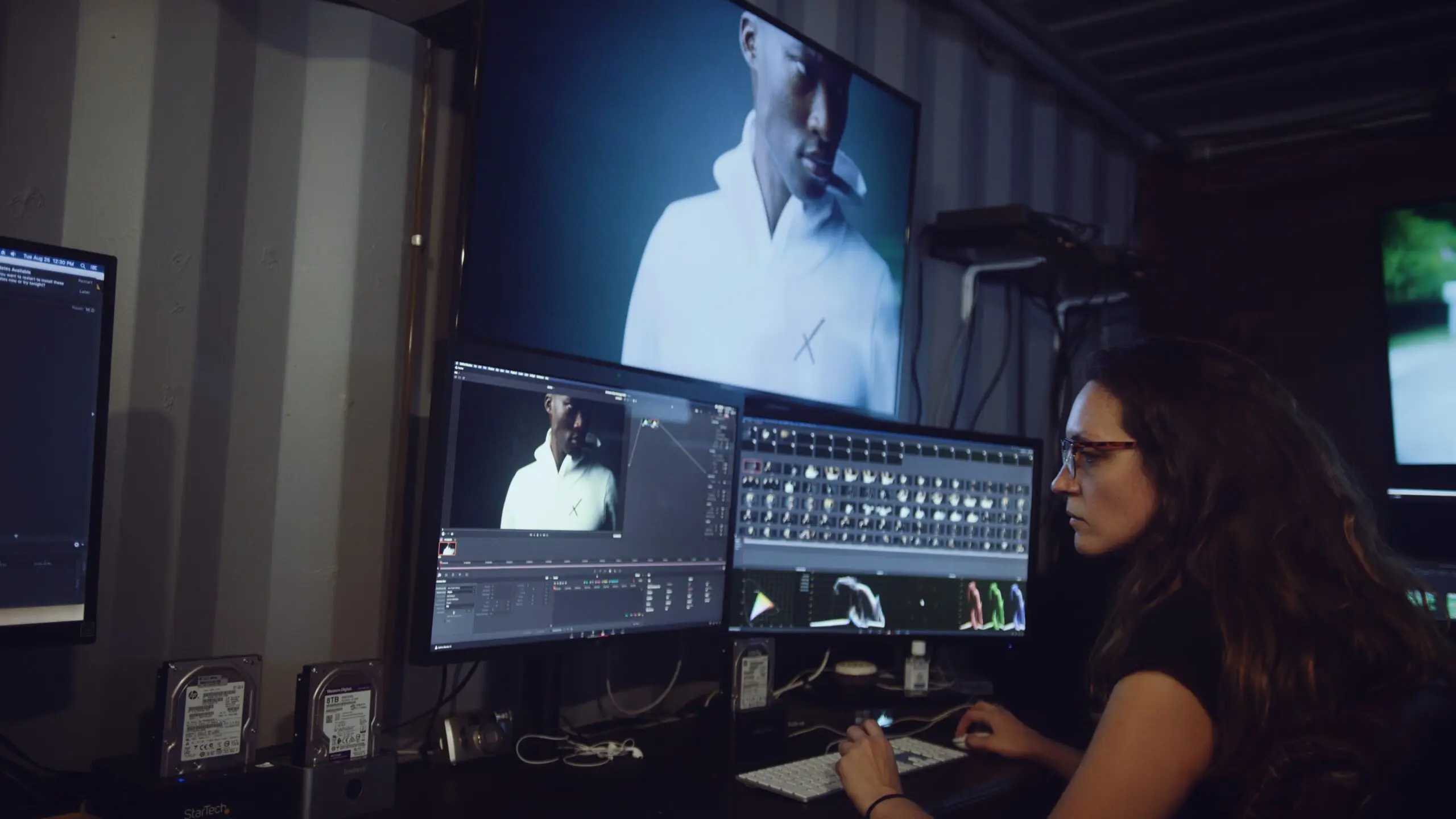
In today’s digital era, video content is king. Whether it's cinematic short films, commercials, YouTube content, or corporate videos, creators demand a tool that’s powerful, flexible, and professional.
That’s why **DaVinci Resolve video editing** has become a top choice, it unifies editing, color grading, visual effects (VFX), and audio post-production in one cohesive environment.
At C&I Studios, we’ve seen firsthand how Resolve streamlines workflows and elevates the quality of the end product. In this post, we’ll unpack the reasons behind Resolve’s dominance, diving deep into its cutting-edge features, performance advantages, and how it empowers both solo creators and collaborative teams.
## A Unified Post-Production Environment
### 1 All-in-One Pipeline
One of DaVinci Resolve’s biggest strengths is its unified workflow. Unlike other tools that force you to jump between separate programs for editing, VFX, grading, and audio, Resolve brings everything into a single interface. This saves significant time and reduces the friction of transferring projects between software.
When C&I Studios works on a video campaign, whether live-action or animated we often leverage this unified pipeline. Our editors, colorists, and sound designers can operate within the same project file, removing the need for constant round-tripping. That kind of efficiency is a game-changer for both speed and creative control.
### 2 Adaptable for Different Project Sizes
Resolve offers different “pages” (modules) tailored to specific stages of production:
**Cut Page**: Built for fast, modern editing. Features like dual timelines, source tape, and smart trim help accelerate the editing process, especially for social media content or rapid turnarounds.
**Edit Page**: Provides powerful, traditional NLE capabilities, trimming, complex timelines, keyframing, transitions, and more.
**Fusion Page**: For high-end VFX and motion graphics with a node-based compositor.
**Color Page**: The core of Resolve’s color grading power, with support for nodes, tracking, advanced color transforms, and more.
**Fairlight Page**: Complete professional audio post-production, built right into your video project.
By combining all these in one tool, DaVinci Resolve simplifies collaboration across departments, something that aligns closely with how [C&I Studios](https://c-istudios.com/) structures its production pipeline.
## Superior Color Grading Capabilities
### 1 History & Expertise in Color
DaVinci Resolve wasn’t born as an NLE, it began as a color grading system, and that legacy remains its cornerstone. The node-based color workflow allows colorists to build complex grades with layers, alpha channels, and parallel processing, giving both precision and flexibility.
This is not just for show: major Hollywood productions rely on Resolve for their color grading. According to its Wikipedia entry, Resolve supports advanced color correction, visual effects, and audio post-production.
### 2 Support for High-End Formats and HDR
Resolve supports RAW formats (Blackmagic RAW, RED RAW, ARRI, and more) as well as HDR workflows (Dolby Vision, HDR10+). This means you can grade in full dynamic range without compromising image quality.
When C&I Studios works on commercial or cinematic projects, we often receive high-bit-depth camera files. Resolve’s color page allows us to extract the maximum fidelity, apply accurate camera LUTs, and deliver broadcast- or cinema-ready output.
### 3 Grading Workflow Efficiency
With features like Power Windows, qualifiers, tracking, and keyframes, Resolve empowers colorists to isolate, modify, and animate grades at a very granular level. Combined with live scopes and real-time playback (with GPU acceleration), color correction becomes fast, flexible, and precise.
## Fusion VFX. Hollywood-Grade Visual Effects
### 1 Node-Based Compositing Power
Fusion integrated inside Resolve is a full compositor with a node-based architecture. Artists can build complex visual effects workflows: 3D compositing, particle systems, green screen keying, motion graphics, and more.
For C&I Studios, we often use Fusion when adding motion graphics or VFX to explainer videos, animated logos, or product demos. Since it’s inside Resolve, there’s no need to export and reimport between different applications.
### 2 Performance and Integration
Because Fusion runs inside Resolve, VFX artists can work with the same media, timelines, and cache system. Render times are optimized through GPU acceleration, and changes save directly into the project without interrupting the edit or color workflow.
This integration reduces context switching and streamlines feedback loops, especially important in tight production cycles.
## Fairlight Audio. Professional Sound Post-Production
### 1 Fully Integrated DAW Inside Resolve
Fairlight is a built-in digital audio workstation (DAW) inside DaVinci Resolve. It supports up to 2,000 tracks, real-time effects, automation, buses, ADR, and immersive formats such as 5.1, 7.1, and Dolby Atmos.
For high end [video production](https://c-istudios.com/video-production-services/) at C&I Studios, whether narrative, brand, or corporate, having Fairlight integrated means we don’t need to use a separate audio tool. This keeps everything in one place, from editorial to picture lock to final mix.
### 2 Intelligent Audio Tools
Fairlight includes advanced audio tools such as:
- Noise reduction and voice isolation
- Equalization and dynamics processing
- Track-based automation
- Bus routing for complex mixes
- ADR recording and editing
These tools ensure that the audio quality of our final videos reflects the same professional standard as the visuals.
## AI & Neural Tools. The DaVinci Neural Engine
### 1 Smart Automation
DaVinci Resolve’s Neural Engine uses machine learning to enable tools that significantly speed up tedious tasks:
**Magic Mask**: Automatically isolates people or objects for color correction or effects.
**Smart Reframe**: Converts horizontal footage to vertical (or other aspect ratios) by auto tracking subjects.
**Scene Cut Detection**: Analyzes rendered files and detects cuts, making re-editing or conforming much easier.
**Noise Reduction**: Temporal and spatial NR powered by AI improves image quality while preserving detail.
These features save time and free up creative energy, which means teams like C&I Studios can focus more on story and less on manual fixes.
### 2 Real-World Impact
For many projects, especially in marketing or social media, time is critical. Smart Reframe helps C&I Studios create vertical versions of cinematic edits, and Magic Mask speeds up color correction or stylized effects by reducing manual rotoscoping work.
## Collaboration & Team Workflows
### 1 Shared Projects
DaVinci Resolve supports multi-user collaboration. Multiple team members can work on the same project:
- Editors on the edit or cut page
- Colorists on the color page
- VFX artists in Fusion
- Sound designers in Fairlight
All without stepping on each other’s toes. This is a big win for [C&I Studios](https://c-istudios.com/media-marketing-consultation-services/), when working on large projects, different specialists can simultaneously contribute without constantly exporting/importing XMLs or AAFs.
### 2 Versioning & Project Management
Resolve includes built-in project versioning, chat in the project manager, and automatic backup options. Teams can tag versions, comment on timelines, and track changes efficiently.
This means that at C&I Studios, when we deliver drafts or intermediate versions to clients, we maintain a clean, organized version history and can revert or branch work easily if needed.
## Performance & Scalability
### 1 Hardware Optimization
DaVinci Resolve is optimized for GPU acceleration, which means it takes full advantage of powerful graphics hardware to deliver smooth playback, fast rendering, and responsive color grading.
Whether you’re editing 4K, 6K, or 8K footage, or working on high-resolution RAW, Resolve’s engine is designed to scale. This is particularly useful for C&I Studios when working on high-fidelity commercial shoots or large-scale visual content.
### 2 Proxy and Optimized Media Workflow
To handle heavy media, Resolve supports:
- Proxy workflows
- Optimized media (transcoding to lighter formats)
- Smart rendering
These features let editors cut with lower-resolution copies and then relink to full-resolution media for color grading and final export, without losing quality or portability.
## Accessibility. Free & Studio Versions
### 1 Free Version Power
One of DaVinci Resolve’s most compelling advantages is its robust free version. Even without purchasing Resolve Studio, users get access to:
- Full editing capabilities
- Fusion effects
- Basic color grading
- Fairlight audio tools
- Deliver page with many codecs and formats
This accessibility lowers the barrier for independent creators, students, and small studios to produce professional-level content, and it’s something we at C&I Studios value deeply when mentoring junior editors or collaborating with emerging artists.
### 2 Studio Version for Professionals
For high-end clients and large-scale projects, Resolve Studio unlocks more:
- Improved noise reduction
- HDR grading tools
- Stereoscopic 3D
- Additional Resolve FX filters
- Collaboration, shared projects, and more
C&I Studios uses Resolve Studio for client work where color fidelity, effects, and collaboration matter most.
## Deliverability & Format Support
### 1 Broad Format Compatibility
Resolve supports a vast range of media formats and codecs, including:
- RAW (Blackmagic, RED, etc.)
- Standard file-based formats (ProRes, DNx, H.264, H.265, etc.)
- Image sequences
- Audio formats
It also supports industry-standard deliverables like IMF, DCP, and even remote monitoring via DeckLink cards.
### 2 Export Control & Efficiency
On the Deliver Page, Resolve gives powerful control over encoding:
- Render queue for batch exports
- Custom preset support
- Configurable bitrate, resolution, codec
- Remote rendering (if using render nodes)
For C&I Studios, this means we can queue multiple deliverables (e.g., YouTube, broadcast, social cuts) at once and export them in parallel, saving both time and resources.
## Training & Support
### 1 Official Training
Blackmagic Design provides certified training for DaVinci Resolve. These resources include structured courses for editing, color, Fusion, Fairlight, and project delivery.
This means new editors and colorists at C&I Studios can get up to speed quickly, using industry-recognized curriculum.
### 2 Community & Online Resources
Beyond official training, the DaVinci Resolve community is vibrant and active. Forums, Reddit threads, and video tutorials offer peer support and best practices. For example:
“I grade on Davinci … when I export, the color is more similar to the one in the clips preview … the viewer in the color page has a different color …”
“I’m using the free version … need some help with color grading … any free plugins that work with free version of resolve?”
These real-world discussions highlight both the power and the challenges of working in Resolve, and how the community helps solve them.
## Why C&I Studios Prefers DaVinci Resolve
Putting ourselves in the shoes of a production studio, here’s why C&I Studios leans heavily on Resolve:
**Efficiency across departments**: Editors, colorists, [VFX](https://c-istudios.com/vfx-compositing-and-animation-services/) artists, and sound designers can work in parallel, speeding up timelines and reducing hand-off friction.
**Scalability**: Whether it's a solo social media campaign or a multi-person cinematic job, Resolve adapts.
**High-quality deliverables**: With advanced color, HDR support, and fine control over output, we consistently deliver broadcast-grade or cinema-grade output.
**Cost-effectiveness**: The free version is powerful enough for many projects, while Studio gives premium tools when needed, making it ideal for both low-budget and big-budget workflows.
**Future-proofing**: AI tools like Magic Mask, Smart Reframe, and neural noise reduction keep us ahead of the curve in rapid, modern production.
## Challenges & Considerations
While DaVinci Resolve is powerful, it isn’t without challenges, and being aware of them helps C&I Studios (or any team) make informed decisions.
### Hardware Requirements
- **GPU-heavy**: To unlock real-time performance, especially on color and Fusion pages, you need a strong graphics card.
- **RAM**: Large projects (4K+, raw footage) demand ample memory.
- **Storage**: High-resolution raw media requires fast disks or SSDs.
### Learning Curve
- Node-based grading and Fusion compositing have a steeper learning curve than layer-based software.
- Collaboration features require setup (shared databases, project permissions).
- For teams used to separate tools, switching to an all-in-one pipeline can require workflow redesign and training.
### Licensing & Cost
- While the free version is very capable, Studio features (like noise reduction, more Resolve FX, collaboration) require purchase.
- Studio license costs may add up for larger teams, though this is often justified by the increased productivity.
## Best Practices for Any Video Team When Using Resolve
To maximize the potential of DaVinci Resolve in a professional studio like C&I Studios, here are some recommended best practices:
1. **Standardize Project Settings**: Use consistent color space, resolution, and timeline settings across projects to minimize rework.
2. **Set Up Shared Databases**: For multi-user workflows, set up a shared database server so editors, colorists, and audio engineers can collaborate in real time.
3. **Use Proxy / Optimized Media Wisely**: For large or raw files, generate optimized media to improve editing responsiveness, then reconnect to original files for final grade and delivery.
4. **Build a Node Tree Template**: Create a base node tree (e.g., input transform → primary correction → secondaries → look) so color workflows stay consistent across projects.
5. **Train Team with Official Resources**: Use Blackmagic’s certified training (or internal training) to upskill editors, colorists, and compositors.
6. **Leverage Version Control**: Use Resolve’s versioning and backups for project file safety and client revisions.
7. **Use Output Presets**: Set up deliver page presets for common deliverables (YouTube, broadcast, clients) to save time.
## Why DaVinci Resolve Is Poised to Shape the Future of Video Creation
When you put it all together, the seamless workflow, the cinematic color, the high-impact VFX, and the powerful audio tools, DaVinci Resolve video editing isn’t just another editing suite.
It’s a creative powerhouse built for storytellers who care deeply about craft and control. Whether you're a solo creator, part of a nimble social-media team, or leading a full post-production studio, Resolve gives you the tools to push boundaries and make work that truly resonates.
If you're ready to cut, color, and craft something that stands out, our team at C&I Studios is here to bring your vision to life. Let’s collaborate to elevate your next project, drop us a message at [C&I Studios](https://c-istudios.com/contact/), and we’ll start shaping something cinematic together.
## Work with C&I Studios
If you are planning a project like this, our team can take it from concept to final delivery. Explore our [post-production services](https://c-istudios.com/post-production-services/), browse [our work](https://c-istudios.com/our-work/) to see how we tell brand stories, and [get in touch](https://c-istudios.com/contact/) when you are ready to start.
Originally published November 16, 2025
---
*This content is from [C&I Studios](https://c-istudios.com), a full-service production company.*
---
# How to Avoid Post Production Mistakes That Hurt Your Video Quality
> Published: November 15, 2025
> Categories: Post & VFX
> Source: https://c-istudios.com/how-to-avoid-post-production-mistakes-that-hurt-your-video-quality/
---
.cib{--paper:#1b1d1f;--ink:#fff;--body:#d5d7d9;--muted:#8b9096;--line:rgba(255,255,255,.12);--thumb:#2b2e31;--card:#212426;--accent:#c02b0a;--blue:#5B8FA8;--serif:'Playfair Display',Georgia,serif;--sans:'Poppins',-apple-system,sans-serif;--measure:900px;background:var(--paper);color:var(--body);font-family:var(--sans);line-height:1.6;position:relative;left:50%;transform:translateX(-50%);width:90vw;max-width:1920px}
.cib *{box-sizing:border-box}
.cib .kicker{max-width:var(--measure);margin:58px auto 0;padding:0 22px;font-size:12.5px;font-weight:700;letter-spacing:2.5px;text-transform:uppercase;color:var(--blue)}
.cib h1.cibh1{text-wrap:balance;font-family:var(--serif);font-weight:500;font-size:clamp(46px,6vw,72px);line-height:1.08;color:var(--ink);max-width:var(--measure);margin:18px auto 0;padding:0 22px;letter-spacing:-.5px}
.cib .metarow{max-width:var(--measure);margin:20px auto 0;padding:0 22px;color:var(--muted);font-size:14px}
.cib .hero{position:relative;width:100%;height:0;padding-bottom:56.25%;overflow:hidden;margin:48px auto 0;border-top:1px solid var(--line);border-bottom:1px solid var(--line)}
.cib .hero .ph{width:100%;aspect-ratio:16/9;background:var(--thumb);border-top:1px solid var(--line);border-bottom:1px solid var(--line);display:flex;align-items:center;justify-content:center;color:#7d8288;font-size:13px;text-align:center;padding:0 20px}
.cib .body{max-width:var(--measure);margin:12px auto 0;padding:52px 22px 6px}
.cib .body.lead p:first-child{font-size:23px;line-height:1.62;color:var(--ink)}
.cib .body p{font-size:18.5px;line-height:1.85;margin:0 0 30px;color:var(--body)}
.cib .body h2{text-wrap:balance;font-family:var(--serif);font-weight:500;font-size:clamp(32px,4vw,48px);line-height:1.22;color:var(--ink);margin:70px 0 20px;letter-spacing:-.3px}
.cib .body h3{text-wrap:balance;font-family:var(--sans);font-weight:600;font-size:22px;color:var(--ink);margin:38px 0 8px}
.cib .body a{color:var(--ink);text-decoration:underline;text-decoration-color:rgba(255,255,255,.4);text-underline-offset:3px}
.cib .body a:hover{text-decoration-color:var(--ink)}
.cib .ctable{width:100%;border-collapse:collapse;margin:16px 0 30px;font-size:16px}
.cib .ctable th{background:#000;color:#fff;text-align:left;padding:10px 12px;font-family:var(--sans)}
.cib .ctable td{padding:10px 12px;border-bottom:1px solid var(--line);color:var(--body)}
.cib .inimg{position:relative;width:100%;height:0;padding-bottom:56.25%;overflow:hidden;margin:72px auto;border-top:1px solid var(--line);border-bottom:1px solid var(--line)}
.cib .inimg .ph{width:100%;aspect-ratio:16/9;background:var(--thumb);border-top:1px solid var(--line);border-bottom:1px solid var(--line);display:flex;align-items:center;justify-content:center;color:#7d8288;font-size:13px}
.cib .origpub{max-width:var(--measure);margin:60px auto 0;padding:26px 22px 0;border-top:1px solid var(--line);color:var(--muted);font-size:13.5px}
.cib .related{max-width:1200px;margin:64px auto 0;padding:34px 22px 76px}
.cib .related h3{font-family:var(--sans);font-size:12.5px;letter-spacing:2px;text-transform:uppercase;color:var(--ink);margin:0 0 24px}
.cib .grid{display:grid;grid-template-columns:repeat(3,1fr);gap:28px}
.cib .rc{background:var(--card);border:1px solid var(--line);display:block;text-decoration:none;color:inherit;transition:border-color .15s}
.cib a.rc:hover{border-color:rgba(255,255,255,.5)}
.cib .rc .thumb{position:relative;width:100%;height:0;padding-bottom:56.25%;background:var(--thumb);overflow:hidden}
.cib .rc .thumb img{position:absolute!important;top:0!important;left:0!important;width:100%!important;height:100%!important;object-fit:cover!important;margin:0!important}
.cib .rc .cc{padding:14px 15px 17px}
.cib .rc .rt{font-family:var(--serif);font-weight:500;font-size:16px;line-height:1.3;color:var(--ink);margin:0 0 6px}
.cib .rc .rm{font-size:11px;letter-spacing:1px;text-transform:uppercase;color:var(--muted)}
.cib img{margin:0!important;padding:0!important;display:block!important;vertical-align:top;max-width:100%}
.cib .hero img,.cib .inimg img{position:absolute!important;top:0!important;left:0!important;width:100%!important;height:100%!important;object-fit:cover!important;margin:0!important;padding:0!important;border:0!important;display:block!important;aspect-ratio:auto!important}
.cib .hero+.body{padding-top:36px}
@media(max-width:760px){.cib .grid{grid-template-columns:1fr}.cib .body h2{margin:52px 0 16px}.cib .body p{font-size:17.5px}.cib .inimg,.cib .hero{margin-top:44px}}
.cib .vembed{max-width:var(--measure);margin:44px auto;padding:0 22px}.cib .vembed .vwrap{position:relative;width:100%;height:0;padding-bottom:56.25%}.cib .vembed .vwrap iframe{position:absolute;top:0;left:0;width:100%;height:100%;border:0}
Post & VFX
# How to Avoid Post Production Mistakes That Hurt Your Video Quality
6 min read
Many new creators underestimate how much time and attention post-production requires, which leads to rushed decisions, mismatched visuals, cluttered timelines, or inconsistent audio levels. These issues compound quickly, and once published, they harm the final polish and the viewer’s trust.
Production agencies like C&I Studios streamline this by using well defined pipelines across all video production and post-production services, ensuring consistency from the moment footage enters the editing timeline.
The truth is: [post-production mistakes](https://c-istudios.com/post-production-bringing-your-film-to-life/) don’t come from lack of talent. They come from avoidable habits, rushing, skipping checks, and failing to follow best practices that professional studios rely on daily. This section explores these mistakes deeply so you can create videos that feel cinematic, intentional, and professionally crafted.
### Mistake #1 — Ignoring the Story Structure During Editing
Even in commercial work, story structure matters. Many beginner editors start placing clips in order, trusting the script or raw footage to “guide” the timeline. But editing is not about arranging clips, it’s about crafting emotional flow, pacing, rhythm, and clarity.
When you ignore story structure, scenes feel disjointed. The audience struggles to stay engaged because the narrative lacks a hook, a buildup, or a payoff. Professional editing always begins with understanding the story problem the video solves.
Whether it's a brand message, emotional arc, or product journey. C&I Studios emphasizes narrative-based editing in all creative campaigns, ensuring the final piece resonates.
**Signs you’re missing story structure**
- Scenes feel long or irrelevant
- Viewers drop off early
- The pacing varies without purpose
- Emotional tension doesn’t build
To fix this, outline the story beats before touching the timeline. This simple step reduces 80% of narrative confusion.
## Visual Mistakes That Make Your Edit Look Amateur
Visual decisions directly shape how professional your final project appears. Even high-quality footage can look inconsistent if color, transitions, or graphics are mishandled. Visual errors often come from jumping into creative experimentation without building technical stability first.
Think about how studios operate: they lock in exposure, color mood, aspect ratio, transitions, and frame rhythm before adding anything fancy. This approach maintains consistency and makes editing much faster. Visual mistakes are also the easiest reason your video fails brand guidelines or feels mismatched with earlier content.
Let’s break down the most common visual mistakes and how to avoid them.
### Mistake #2 — Inconsistent Color Grading Across Scenes
Color grading defines the atmosphere and emotional tone of your project. One of the biggest post-production mistakes is applying different LUTs, random adjustments, or contradictory grading styles across scenes. This creates a patchy look, some clips appear warm, some overly cool, some flat, and others overly contrasted.
**What causes this?**
- Editing clips out of sequence
- Copy-pasting grades instead of balancing
- Using LUTs without adjusting intensity
- Mixing cameras without proper color matching
**How to fix it**
- Always color-grade after locking the edit
- Use scopes (waveform, vectorscope, histogram)
- Match exposure before adjusting color
- Build a universal creative grade after technical correction
Professional teams like [C&I Studios](https://c-istudios.com/) rely on calibrated displays and standardized color workflows to ensure every project maintains visual integrity across platforms.
### Mistake #3 — Overusing Transitions and Effects
Effects are exciting, but excessive use immediately signals beginner editing. When you rely too heavily on zoom transitions, whip pans, glitch effects, or motion templates, the viewer notices the editing more than the message.
Effects should enhance story, not overshadow it. That’s why professional editors reserve transitions for emotional shifts, scene changes, or pacing adjustments, not every single cut.
**Better alternatives**
- Use simple J-cuts and L-cuts
- Let sound leads transitions
- Use only motivated motion blur
- Build rhythm with shot composition
The most cinematic work comes from restraint, not decoration.
## Audio Mistakes That Damage Viewer Trust
While viewers may forgive imperfect visuals, they rarely forgive bad audio. Audio mistakes instantly break immersion because humans are extremely sensitive to irregularities in speech, background noise, and volume changes.
Most creators treat audio as an afterthought. Professionals treat it as the foundation. Whether you're producing commercials, documentaries, or branded content, the audio workflow dramatically affects final quality.
Let’s examine the most harmful mistakes.
### Mistake #4 — Unbalanced Sound Levels and Inconsistent Loudness
Uneven audio is one of the fastest ways to make your project feel unprofessional. One clip may blast the viewer, while the next sounds distant and hollow.
**Why this happens**
- Rushing the mix
- Forgetting to normalize dialogue
- Relying on auto-gain
- Mixing with wrong speakers or headphones
**How to avoid it**
- Normalize dialogue around -6 dB to -3 dB
- Keep music under the dialogue floor
- Use compressors to maintain uniform levels
- Always reference with studio monitors
Studios like C&I Studios use professional mixing environments to guarantee consistent loudness across all platforms, including YouTube, broadcast TV, and streaming.
### Mistake #5 — Ignoring Ambient Noise and Room Tone
When clips are recorded in different environments, the noise floor changes, making the audio feel choppy. Viewers may not know what’s wrong, but they feel the inconsistency.
**Fixes**
- Record room tone on set
- Use noise reduction plugins
- Add subtle ambient layers under cuts
- Use crossfades to smooth transitions
Sound design is not optional, it is what glues scenes together.
## Workflow Mistakes That Slow Down Editing Dramatically
Technical skill is important, but workflow discipline determines how fast and effectively you deliver projects. Most beginner editors sabotage themselves not due to creativity, but due to organization failures. These issues cause missed deadlines, duplicated work, corrupted projects, and long rendering times.
Studios rely on standardized workflows because they eliminate guesswork. You should do the same.
### Mistake #6 — Poor File Organization and Naming Structures
Editors lose countless hours searching through poorly named files like:
*FINAL_FINAL_VERSION_5.
audio_edited_mix_fixed_new.wav.
camera2maybe.MOV.*
This chaos leads to export mistakes, missing clips, or broken links.
**Better file structure**
- /Footage
- /Audio
- /Graphics
- /Exports
- /Project Files
- /Working Files
**Naming examples**
- mov
- wav
Organization makes editing 40-60% faster. Professional studios such as [C&I Studios](https://c-istudios.com/media-marketing-consultation-services/) depend on strict naming protocols across all creative teams, ensuring consistency from script to final export.
### Mistake #7 — Skipping Backups and Version Control
Hard drives fail. Project files corrupt. Plugins crash. Rendering freezes. If you do not version your project, you will eventually lose work.
**Pro backup strategy**
- Keep “_v1, v2, v3” versioning
- Use autosave every 5 minutes
- Store backups in cloud and external drives
- Duplicate project files before major edits
Professionals rarely work without redundant backups, and neither should you.
## Exporting & Delivery Mistakes That Harm Your Final Quality
Many creators perfect their edit, grade, and mix… but then export incorrectly. Wrong bitrate, incorrect aspect ratio, mismatched frame rate, or improper compression can destroy image quality.
Exporting is not a technical chore, it is part of storytelling. The last step must reflect the platform, audience, and brand standards.
### Mistake #8 — Exporting in the Wrong Format or Bitrate
Choosing the wrong export settings leads to blocky shadows, muddy colors, frozen frames, or blurry motion.
**Best practices**
- Match sequence settings
- Use platform presets (YouTube, TikTok, Vimeo)
- Export with high bitrate for master copy
- Create separate versions for web and broadcast
Studios delivering national campaigns often export multiple versions for multiple platforms, ensuring consistency everywhere.
### Mistake #9 — Not Reviewing the Final Export Thoroughly
Most beginners hit “export” and upload immediately. Professionals watch the full export before delivery because rendering can introduce unexpected issues such as:
- Audio pops
- Dropped frames
- Color shifting
- Subtitle displacements
Always watch the whole project, not just the beginning and end.
## How Professional Studios Avoid These Mistakes (You Can Copy our Framework)
High end studios rely on rigorous workflow discipline, collaboration tools, and review systems. They document their pipelines and follow them on every project. You don’t need a huge team to apply the same standards. You only need a process.
### Mistake #10 — Skipping Team Reviews and Feedback Loops
Fresh eyes catch errors you miss. Even solo creators should have at least one reviewer.
What to review
- Color consistency
- Audio clarity
- Spelling in graphics
- Shot pacing
- Emotional flow
C&I Studios run multi-stage internal reviews, ensuring no detail slips through.
### Mistake #11 — Not Updating Yourself With Modern Post-Production Tools
Outdated workflow = unnecessary mistakes. New tools optimize:
- Noise cleaning
- Color matching
- [AI-assisted masking](https://c-istudios.com/ai-video-services/)
- Audio leveling
- Proxy generation
Staying updated helps reduce manual errors significantly.
## Avoiding Post-Production Mistakes Is a Skill You Build Over Time
Post-production is the invisible craft behind every great video. Small mistakes compound quickly, but with a structured approach, you can master editing, color grading, and audio with confidence. Build better habits, borrow from professional workflows, and update your knowledge regularly.
Y[our work](https://c-istudios.com/our-work/) quality will rise, and so will your clients’ trust.
## Need Better Post-Production? Let’s Make It Happen
If you’re tired of dealing with uneven audio, messy edits, or confusing color grades, you don’t have to fix everything alone. A professional team can take your footage and turn it into clean, polished work that feels ready for any platform.
C&I Studios handles everything, editing, color, sound, motion graphics, and full post-production services. That means you get a smoother process, fewer mistakes, and a final video that looks and sounds exactly the way it should.
If you want support with your next shoot, your ongoing video production, or your full content marketing plan, the team is ready to jump in at any stage. Clear communication, stronger visuals, faster turnaround, all in one place.
? [Contact](https://c-istudios.com/contact/)us to start your next project.
## Work with C&I Studios
If you are planning a project like this, our team can take it from concept to final delivery. Explore our [post-production services](https://c-istudios.com/post-production-services/), browse [our work](https://c-istudios.com/our-work/) to see how we tell brand stories, and [get in touch](https://c-istudios.com/contact/) when you are ready to start.
Originally published November 15, 2025
---
*This content is from [C&I Studios](https://c-istudios.com), a full-service production company.*
---
# Color Grading in Post-Production: Master the Art of Visual Enhancement
> Published: November 14, 2025
> Categories: Post & VFX
> Source: https://c-istudios.com/color-grading-in-post-production-master-the-art-of-visual-enhancement/
---
.cib{--paper:#1b1d1f;--ink:#fff;--body:#d5d7d9;--muted:#8b9096;--line:rgba(255,255,255,.12);--thumb:#2b2e31;--card:#212426;--accent:#c02b0a;--blue:#5B8FA8;--serif:'Playfair Display',Georgia,serif;--sans:'Poppins',-apple-system,sans-serif;--measure:900px;background:var(--paper);color:var(--body);font-family:var(--sans);line-height:1.6;position:relative;left:50%;transform:translateX(-50%);width:90vw;max-width:1920px}
.cib *{box-sizing:border-box}
.cib .kicker{max-width:var(--measure);margin:58px auto 0;padding:0 22px;font-size:12.5px;font-weight:700;letter-spacing:2.5px;text-transform:uppercase;color:var(--blue)}
.cib h1.cibh1{text-wrap:balance;font-family:var(--serif);font-weight:500;font-size:clamp(46px,6vw,72px);line-height:1.08;color:var(--ink);max-width:var(--measure);margin:18px auto 0;padding:0 22px;letter-spacing:-.5px}
.cib .metarow{max-width:var(--measure);margin:20px auto 0;padding:0 22px;color:var(--muted);font-size:14px}
.cib .hero{position:relative;width:100%;height:0;padding-bottom:56.25%;overflow:hidden;margin:48px auto 0;border-top:1px solid var(--line);border-bottom:1px solid var(--line)}
.cib .hero .ph{width:100%;aspect-ratio:16/9;background:var(--thumb);border-top:1px solid var(--line);border-bottom:1px solid var(--line);display:flex;align-items:center;justify-content:center;color:#7d8288;font-size:13px;text-align:center;padding:0 20px}
.cib .body{max-width:var(--measure);margin:12px auto 0;padding:52px 22px 6px}
.cib .body.lead p:first-child{font-size:23px;line-height:1.62;color:var(--ink)}
.cib .body p{font-size:18.5px;line-height:1.85;margin:0 0 30px;color:var(--body)}
.cib .body h2{text-wrap:balance;font-family:var(--serif);font-weight:500;font-size:clamp(32px,4vw,48px);line-height:1.22;color:var(--ink);margin:70px 0 20px;letter-spacing:-.3px}
.cib .body h3{text-wrap:balance;font-family:var(--sans);font-weight:600;font-size:22px;color:var(--ink);margin:38px 0 8px}
.cib .body a{color:var(--ink);text-decoration:underline;text-decoration-color:rgba(255,255,255,.4);text-underline-offset:3px}
.cib .body a:hover{text-decoration-color:var(--ink)}
.cib .ctable{width:100%;border-collapse:collapse;margin:16px 0 30px;font-size:16px}
.cib .ctable th{background:#000;color:#fff;text-align:left;padding:10px 12px;font-family:var(--sans)}
.cib .ctable td{padding:10px 12px;border-bottom:1px solid var(--line);color:var(--body)}
.cib .inimg{position:relative;width:100%;height:0;padding-bottom:56.25%;overflow:hidden;margin:72px auto;border-top:1px solid var(--line);border-bottom:1px solid var(--line)}
.cib .inimg .ph{width:100%;aspect-ratio:16/9;background:var(--thumb);border-top:1px solid var(--line);border-bottom:1px solid var(--line);display:flex;align-items:center;justify-content:center;color:#7d8288;font-size:13px}
.cib .origpub{max-width:var(--measure);margin:60px auto 0;padding:26px 22px 0;border-top:1px solid var(--line);color:var(--muted);font-size:13.5px}
.cib .related{max-width:1200px;margin:64px auto 0;padding:34px 22px 76px}
.cib .related h3{font-family:var(--sans);font-size:12.5px;letter-spacing:2px;text-transform:uppercase;color:var(--ink);margin:0 0 24px}
.cib .grid{display:grid;grid-template-columns:repeat(3,1fr);gap:28px}
.cib .rc{background:var(--card);border:1px solid var(--line);display:block;text-decoration:none;color:inherit;transition:border-color .15s}
.cib a.rc:hover{border-color:rgba(255,255,255,.5)}
.cib .rc .thumb{position:relative;width:100%;height:0;padding-bottom:56.25%;background:var(--thumb);overflow:hidden}
.cib .rc .thumb img{position:absolute!important;top:0!important;left:0!important;width:100%!important;height:100%!important;object-fit:cover!important;margin:0!important}
.cib .rc .cc{padding:14px 15px 17px}
.cib .rc .rt{font-family:var(--serif);font-weight:500;font-size:16px;line-height:1.3;color:var(--ink);margin:0 0 6px}
.cib .rc .rm{font-size:11px;letter-spacing:1px;text-transform:uppercase;color:var(--muted)}
.cib img{margin:0!important;padding:0!important;display:block!important;vertical-align:top;max-width:100%}
.cib .hero img,.cib .inimg img{position:absolute!important;top:0!important;left:0!important;width:100%!important;height:100%!important;object-fit:cover!important;margin:0!important;padding:0!important;border:0!important;display:block!important;aspect-ratio:auto!important}
.cib .hero+.body{padding-top:36px}
@media(max-width:760px){.cib .grid{grid-template-columns:1fr}.cib .body h2{margin:52px 0 16px}.cib .body p{font-size:17.5px}.cib .inimg,.cib .hero{margin-top:44px}}
.cib .vembed{max-width:var(--measure);margin:44px auto;padding:0 22px}.cib .vembed .vwrap{position:relative;width:100%;height:0;padding-bottom:56.25%}.cib .vembed .vwrap iframe{position:absolute;top:0;left:0;width:100%;height:100%;border:0}
Post & VFX
# Color Grading in Post-Production. Master the Art of Visual Enhancement
12 min read
Color grading in post-production has become the backbone of modern filmmaking. It's the invisible hand that transforms raw footage into a polished, emotionally resonant final product. Whether you're working on a feature film, television series, or commercial, understanding how to integrate color grading effectively can mean the difference between amateur and professional results.
The journey from shot footage to final delivery involves countless technical and creative decisions. ***Color grading in post-production*** isn't just about making footage look "prettier", it's about storytelling, mood-setting, and visual consistency.
In this guide, we'll explore the essential strategies, tools, and workflows that help you master this critical phase of production.
## Color Grading in Post-Production
Color grading in post-production represents one of the most transformative stages in video creation. It's the process where skilled colorists take raw, ungraded footage and apply color correction, color enhancement, and creative color work to achieve a specific visual aesthetic and emotional tone.
## What Color Grading Actually Does
Color grading in post-production serves multiple critical functions. First, it corrects exposure issues, white balance problems, and color casts that occurred during filming.
Second, it ensures consistency across different camera formats, lenses, and shooting conditions. Third, and perhaps most importantly, it establishes the visual narrative, the color palette that communicates mood, time period, and thematic elements to your audience.
When you're integrating color grading in post-production, you're essentially creating a visual language. A cool, blue-tinted grade might suggest isolation or mystery, while warm, golden tones could evoke nostalgia or warmth. This psychological impact of color is why professional color grading in post-production is non-negotiable for serious productions.
## Setting Your Workflow Up for Success
Before you dive into color grading in post-production, meticulous preparation is essential. A well-organized workflow saves time, reduces errors, and ensures consistency across your entire project.
### Organizing Your Footage and Metadata
The foundation of successful color grading in post-production begins with organization. Import all footage into your editing and grading system with clear naming conventions. Label clips by scene, shot type, camera used, and lighting conditions. This metadata becomes invaluable when you're referencing shots during color grading in post-production.
Create bins or folders that mirror your production timeline. If you shot scenes in different locations or on different days, keep them organized by production day or location. This organization makes it significantly easier to identify continuity issues and ensure your color grading in [post-production](https://c-istudios.com/post-production-services/) maintains visual consistency.
### Establishing LUTs and Color Reference Standards
Before beginning color grading in post-production, establish baseline color reference standards. Many colorists start with LUTs (Look-Up Tables), predefined color transformations that serve as starting points for color grading in post-production.
Input LUTs help standardize the appearance of footage from different cameras. They convert log color spaces to rec.709, making footage from multiple cameras look similar. This is particularly important if you're color grading in post-production on a multi-camera production or combining footage shot on different equipment.
Output LUTs are applied at the very end of your grading pipeline and ensure your color grading in post-production translates correctly across different displays and delivery formats.
### Calibrating Your Monitoring Environment
Your monitor is your most important tool during color grading in post-production. Invest in a properly calibrated reference monitor and work in a controlled lighting environment. Color grading in post-production looks dramatically different depending on your ambient light, monitor brightness, and color accuracy.
Use industry-standard tools like colorimeter devices to ensure your monitor is displaying accurate color and luminance values. If you're color grading in post-production in a shared facility, ensure y[our work](https://c-istudios.com/our-work/)space maintains consistent lighting conditions throughout your session.
## The Technical Foundation of Color Grading
Successful color grading in post-production requires understanding both the artistic and technical sides of the craft. Let's explore the technical foundation that makes professional color grading in post-production possible.
### Understanding Color Spaces and Gamuts
Color grading in post-production happens within specific color spaces, mathematical models that define how colors are represented and displayed. The most common color space for final delivery is rec.709, used for broadcast television and streaming platforms. For cinema, DCI-P3 is standard. High dynamic range (HDR) projects require understanding of rec.2020 and other wide-color-gamut specifications.
When you're color grading in post-production, you need to understand your target delivery format. Are you grading for HDR? Standard dynamic range (SDR)? Different color spaces require different approaches to color grading in post-production.
### Working with Different Camera Log Formats
Modern cameras capture footage in log color spaces like Arri LogC, Sony S-Log, and Blackmagic Film. These formats preserve maximum dynamic range and color information, making them ideal for color grading in post-production. However, they look flat and desaturated until properly graded.
Understanding each camera's log format is crucial for color grading in post-production. Each log curve behaves differently, and applying the wrong LUT or correction can result in color shifts. Professional colorists maintain detailed knowledge of how different cameras behave and how to approach color grading in post-production for each format.
### Dynamic Range and Exposure Management
Color grading in post-production involves managing dynamic range, the difference between the brightest and darkest parts of your image. Digital sensors have specific dynamic range capabilities, and your color grading in post-production must work within these constraints.
Properly expose your footage during shooting, and your colorist has more flexibility during color grading in post-production. Underexposed or overexposed footage limits what you can achieve during color grading in post-production, no matter how skilled the colorist.
## Creative Color Grading Techniques in Post-Production
Beyond technical correction, color grading in post-production is a creative endeavor. This is where your production's visual story comes to life.
### Primary Color Correction in Post-Production Grading
Primary color correction is the foundation of color grading in post-production. This involves adjusting the overall exposure, contrast, and color balance of your entire image. Professional grading tools provide wheels for highlights, midtones, and shadows, allowing precise control during color grading in post-production.
Adjust exposure to ensure your blacks are truly black and highlights aren't blown out. Balance color casts, if your footage has a slight blue or orange tint, primary color correction during color grading in post-production fixes this. Most productions spend significant time on primary color correction before moving to secondary work.
### Secondary Color Grading and Targeted Adjustments
Secondary color grading in post-production allows you to isolate specific colors or objects and grade them independently. Perhaps you want to make the sky more vibrant while keeping the foreground natural, or you want to isolate and adjust skin tones differently from the background.
Power windows and masks are essential tools for secondary color grading in post-production. These let you create isolated areas where you apply different color grades. A colorist might use power windows during color grading in post-production to brighten an actor's eyes or adjust the color of specific clothing.
Hue-saturation ranges in professional grading software allow you to target specific color ranges during color grading in post-production. You might desaturate reds slightly while increasing yellow saturation, all without affecting other colors.
### Building the Visual Aesthetic
Color grading in post-production is where your production's visual aesthetic takes shape. This involves establishing a cohesive color palette that supports your story's emotional tone and thematic elements.
Consider your production's genre and intended mood. A thriller might use cooler, more desaturated tones during color grading in post-production, while a romantic comedy could embrace warmer, more saturated hues. Historical dramas often use color grading in post-production to create period-appropriate color palettes that feel authentic to their time setting.
Establish your look early in the color grading in post-production process by creating a hero grade, a reference look that defines your production's color aesthetic. All subsequent shots are matched to this hero grade, ensuring visual consistency.
## Coordinating Color Grading with Visual Effects
One of the most challenging aspects of color grading in post-production is integrating it seamlessly with visual effects. VFX and color grading in post-production must work in tandem to create a cohesive final image.
### Planning for VFX During Pre-Production
The best time to think about how color grading in post-production will integrate with VFX is during pre-production planning. Communicate with your VFX supervisor about your intended color grade aesthetic. If you plan a desaturated, cool color grade, the VFX team needs to know so they can prepare their effects accordingly.
Shooting color reference charts and maintaining consistent lighting helps VFX artists match their work to your eventual color grading in post-production. Green screen work particularly benefits from thoughtful planning that considers how color grading in post-production will affect the final composite.
### VFX-Friendly Grading Strategies
When integrating color grading in post-production with visual effects, some strategies work better than others. Many colorists prefer to apply primary color correction first, then add VFX, then apply secondary grading. This workflow ensures VFX integrates naturally into the color-graded image.
However, some productions use a reverse workflow, applying most grading to the original footage, then layering [VFX](https://c-istudios.com/vfx-compositing-and-animation-services/) on top with minimal additional color adjustment. The best approach depends on your specific project and the nature of your visual effects.
### Communicating with Your VFX Team
Regular communication between your colorist and VFX supervisor is essential for successful color grading in post-production with integrated effects. Share your color reference and intended aesthetic early. Provide the VFX team with graded footage so they can see how their work will look within your color palette.
During color grading in post-production, if you notice VFX elements that don't quite match, coordinate with your VFX artist to make adjustments. Sometimes it's easier to tweak VFX slightly than to create workarounds during color grading in post-production.
### Professional Color Grading Software and Tools
The tools you use significantly impact your color grading in post-production workflow and capabilities. Understanding the major platforms helps you choose the right solution for your project.
### DaVinci Resolve. The Industry Standard
DaVinci Resolve has become the dominant platform for color grading in post-production across the industry. Its powerful color correction tools, intuitive interface, and node-based workflow make it the choice for professional colorists worldwide.
The Fusion page in DaVinci Resolve integrates VFX capabilities alongside color grading in post-production, allowing seamless coordination between the two disciplines. The Fusion page lets you create complex composites while maintaining color consistency with your grade.
### Final Cut Pro and Adobe Premiere Pro for Integrated Workflows
If you're editing your project in Final Cut Pro or Premiere Pro, integrated color grading in post-production becomes convenient. Lumetri Color in Premiere Pro and the color grading tools in Final Cut Pro allow you to grade directly in your NLE without exporting footage to a dedicated grading application.
While these tools are more limited than DaVinci Resolve, they work well for smaller projects or when you need tight integration between editing and color grading in post-production.
### Specialized Grading Tools and Plugins
Beyond the major platforms, specialized grading plugins and tools can enhance your color grading in post-production. Red Giant's Magic Bullet Suite, FilmConvert, and other third-party tools offer unique color grades and workflows that complement traditional color grading in post-production.
Some colorists use these tools to accelerate their color grading in post-production process by applying stylized looks as starting points, then refining with manual adjustments.
### Workflow and Timeline Management in Post-Production Grading
Organizing your color grading in post-production workflow ensures efficiency and consistency across your entire project.
### Structuring Your Grading Timeline
Begin your color grading in post-production by creating an organized timeline that mirrors your edited sequence. Work scene by scene, or even shot by shot, rather than jumping randomly through your footage. This methodical approach to color grading in post-production helps you maintain continuity and catch inconsistencies.
Establish your color grading in post-production pace, how many shots or scenes will you grade per day? A complex dramatic feature might require only 10-15 graded shots per day, while a fast-paced commercial could accommodate 50+ shots daily.
### Version Control and Client Reviews
Professional color grading in post-production projects often involve multiple rounds of revisions. Maintain version control by saving different iterations of your color grades. When a client reviews your color grading in post-production and requests changes, you'll need to reference previous versions.
Develop a system for tracking revisions, perhaps naming files with version numbers or revision dates. This prevents confusion when you're juggling multiple iterations of color grading in post-production.
### Managing Color Grading Sessions
Color grading in post-production is intense work requiring focus and fresh eyes. Schedule regular breaks to rest your color perception. Fatigue significantly impacts your color grading in post-production decisions, leading to inconsistent or incorrect color choices.
Step away from your monitor regularly during color grading in post-production sessions. When you return with fresh perspective, you'll often notice color shifts or inconsistencies you missed during extended grading sessions.
## Common Challenges in Color Grading Post-Production
Even experienced colorists encounter obstacles during color grading in post-production. Knowing how to navigate these challenges ensures better results.
### Maintaining Consistency Across Different Cameras
When shooting with multiple camera models, maintaining consistency during color grading in post-production becomes challenging. Different cameras have different color responses, dynamic range, and sensor characteristics.
Create separate looks during color grading in post-production for footage from different cameras, then carefully match these looks to ensure visual continuity. Sometimes this means adjusting color grading in post-production slightly for specific camera channels.
### Dealing with Poor Lighting or Exposure Issues
Footage shot in difficult lighting conditions or with exposure problems tests the limits of color grading in post-production. While skilled colorists can work miracles, there are physical limits to what correction can achieve.
When color grading in post-production reveals significant exposure or lighting issues, communicate with your production team about potential reshoots, or adjust your project's visual style to work with the footage's characteristics.
### Balancing Artistic Vision with Technical Requirements
Color grading in post-production sometimes requires compromising between artistic preference and technical necessity. An artistic choice that looks great on a cinema projector might cause banding or color shifts on streaming platforms.
Professional color grading in post-production considers the final delivery format. Ensure your color grading in post-production decisions work across all intended delivery platforms.
## The Future of Color Grading in Post-Production
Color grading in post-production continues evolving with emerging technologies and workflows.
### Artificial Intelligence in Color Grading
AI-powered color grading in post-production tools are beginning to emerge, offering automated color correction and stylization. While these tools can accelerate the color grading in post-production process, human creativity and judgment remain essential for creating distinctive, compelling results.
The future likely involves hybrid workflows where color grading in post-production combines [AI efficiency](https://c-istudios.com/ai-video-services/) with human artistic direction.
### Real-Time Color Grading in Production
On-set color grading in post-production monitoring is becoming more common. Colorists on set during production can provide real-time feedback about color and lighting, allowing adjustments before footage wraps. This significantly reduces color grading in post-production time.
### HDR and Wide Color Gamut Workflow Evolution
As HDR and wide color gamut productions become standard, color grading in post-production workflows will continue evolving to accommodate these formats. Colorists must continually update their skills to work effectively with emerging color technologies and standards.
## Work with C&I Studios
If you are planning a project like this, our team can take it from concept to final delivery. Explore our [post-production services](https://c-istudios.com/post-production-services/), browse [our work](https://c-istudios.com/our-work/) to see how we tell brand stories, and [get in touch](https://c-istudios.com/contact/) when you are ready to start.
Originally published November 14, 2025
---
*This content is from [C&I Studios](https://c-istudios.com), a full-service production company.*
---
# How to Choose Post Production Software That Reduces Editing Time by 40%
> Published: November 13, 2025
> Categories: Post & VFX
> Source: https://c-istudios.com/how-to-choose-post-production-software-that-reduces-editing-time-by-40/
---
.cib{--paper:#1b1d1f;--ink:#fff;--body:#d5d7d9;--muted:#8b9096;--line:rgba(255,255,255,.12);--thumb:#2b2e31;--card:#212426;--accent:#c02b0a;--blue:#5B8FA8;--serif:'Playfair Display',Georgia,serif;--sans:'Poppins',-apple-system,sans-serif;--measure:900px;background:var(--paper);color:var(--body);font-family:var(--sans);line-height:1.6;position:relative;left:50%;transform:translateX(-50%);width:90vw;max-width:1920px}
.cib *{box-sizing:border-box}
.cib .kicker{max-width:var(--measure);margin:58px auto 0;padding:0 22px;font-size:12.5px;font-weight:700;letter-spacing:2.5px;text-transform:uppercase;color:var(--blue)}
.cib h1.cibh1{text-wrap:balance;font-family:var(--serif);font-weight:500;font-size:clamp(46px,6vw,72px);line-height:1.08;color:var(--ink);max-width:var(--measure);margin:18px auto 0;padding:0 22px;letter-spacing:-.5px}
.cib .metarow{max-width:var(--measure);margin:20px auto 0;padding:0 22px;color:var(--muted);font-size:14px}
.cib .hero{position:relative;width:100%;height:0;padding-bottom:56.25%;overflow:hidden;margin:48px auto 0;border-top:1px solid var(--line);border-bottom:1px solid var(--line)}
.cib .hero .ph{width:100%;aspect-ratio:16/9;background:var(--thumb);border-top:1px solid var(--line);border-bottom:1px solid var(--line);display:flex;align-items:center;justify-content:center;color:#7d8288;font-size:13px;text-align:center;padding:0 20px}
.cib .body{max-width:var(--measure);margin:12px auto 0;padding:52px 22px 6px}
.cib .body.lead p:first-child{font-size:23px;line-height:1.62;color:var(--ink)}
.cib .body p{font-size:18.5px;line-height:1.85;margin:0 0 30px;color:var(--body)}
.cib .body h2{text-wrap:balance;font-family:var(--serif);font-weight:500;font-size:clamp(32px,4vw,48px);line-height:1.22;color:var(--ink);margin:70px 0 20px;letter-spacing:-.3px}
.cib .body h3{text-wrap:balance;font-family:var(--sans);font-weight:600;font-size:22px;color:var(--ink);margin:38px 0 8px}
.cib .body a{color:var(--ink);text-decoration:underline;text-decoration-color:rgba(255,255,255,.4);text-underline-offset:3px}
.cib .body a:hover{text-decoration-color:var(--ink)}
.cib .ctable{width:100%;border-collapse:collapse;margin:16px 0 30px;font-size:16px}
.cib .ctable th{background:#000;color:#fff;text-align:left;padding:10px 12px;font-family:var(--sans)}
.cib .ctable td{padding:10px 12px;border-bottom:1px solid var(--line);color:var(--body)}
.cib .inimg{position:relative;width:100%;height:0;padding-bottom:56.25%;overflow:hidden;margin:72px auto;border-top:1px solid var(--line);border-bottom:1px solid var(--line)}
.cib .inimg .ph{width:100%;aspect-ratio:16/9;background:var(--thumb);border-top:1px solid var(--line);border-bottom:1px solid var(--line);display:flex;align-items:center;justify-content:center;color:#7d8288;font-size:13px}
.cib .origpub{max-width:var(--measure);margin:60px auto 0;padding:26px 22px 0;border-top:1px solid var(--line);color:var(--muted);font-size:13.5px}
.cib .related{max-width:1200px;margin:64px auto 0;padding:34px 22px 76px}
.cib .related h3{font-family:var(--sans);font-size:12.5px;letter-spacing:2px;text-transform:uppercase;color:var(--ink);margin:0 0 24px}
.cib .grid{display:grid;grid-template-columns:repeat(3,1fr);gap:28px}
.cib .rc{background:var(--card);border:1px solid var(--line);display:block;text-decoration:none;color:inherit;transition:border-color .15s}
.cib a.rc:hover{border-color:rgba(255,255,255,.5)}
.cib .rc .thumb{position:relative;width:100%;height:0;padding-bottom:56.25%;background:var(--thumb);overflow:hidden}
.cib .rc .thumb img{position:absolute!important;top:0!important;left:0!important;width:100%!important;height:100%!important;object-fit:cover!important;margin:0!important}
.cib .rc .cc{padding:14px 15px 17px}
.cib .rc .rt{font-family:var(--serif);font-weight:500;font-size:16px;line-height:1.3;color:var(--ink);margin:0 0 6px}
.cib .rc .rm{font-size:11px;letter-spacing:1px;text-transform:uppercase;color:var(--muted)}
.cib img{margin:0!important;padding:0!important;display:block!important;vertical-align:top;max-width:100%}
.cib .hero img,.cib .inimg img{position:absolute!important;top:0!important;left:0!important;width:100%!important;height:100%!important;object-fit:cover!important;margin:0!important;padding:0!important;border:0!important;display:block!important;aspect-ratio:auto!important}
.cib .hero+.body{padding-top:36px}
@media(max-width:760px){.cib .grid{grid-template-columns:1fr}.cib .body h2{margin:52px 0 16px}.cib .body p{font-size:17.5px}.cib .inimg,.cib .hero{margin-top:44px}}
.cib .vembed{max-width:var(--measure);margin:44px auto;padding:0 22px}.cib .vembed .vwrap{position:relative;width:100%;height:0;padding-bottom:56.25%}.cib .vembed .vwrap iframe{position:absolute;top:0;left:0;width:100%;height:100%;border:0}
Post & VFX
# How to Choose Post Production Software That Reduces Editing Time by 40%
8 min read
**How to Choose Post Production Software That Reduces Editing Time by 40%**
Every filmmaker faces the same challenge: transforming hours of raw footage into a polished, professional final product. Post production software exists to solve this problem efficiently and creatively. But choosing the wrong*** post production software*** can cost thousands in wasted time, failed integrations, and frustrated team members.
The post production software you select determines whether y[our work](https://c-istudios.com/our-work/)flow flows smoothly or constantly breaks down. It impacts collaboration capabilities, output quality, and how quickly you can iterate on creative decisions.
Understanding post production software options isn't just about features, it's about matching the right tool to your specific production reality.
## Which Post Production Software Fits You?
Before diving deep into individual tools, let's establish a quick framework to identify which post production software category matches your situation.
Independent filmmakers or freelancers on tight budgets? **DaVinci Resolve's** free version delivers professional capabilities without licensing costs.
Fast-paced commercial or [music video production](https://c-istudios.com/video-production-services/music-video-production/) requiring quick turnarounds? **Final Cut Pro's** magnetic timeline and native Mac performance accelerates editing workflows.
Large production facility coordinating multiple teams across complex projects? **Avid Media Composer's** enterprise architecture manages massive collaborative environments.
VFX-heavy projects requiring sophisticated compositing? **Nuke's node-based** workflow provides professional-grade compositing power.
Broadcast or streaming delivery with strict technical requirements? **DaVinci Resolve** ensures color accuracy and format compliance across all delivery specs.
Understanding where you fall in this framework guides your post production software selection before evaluating specific features.
## The Post Production Software Landscape. From Free to Enterprise
Post production software spans an enormous price and capability range. Understanding this landscape prevents over-investing in unnecessary features or under-investing in tools that cost more in wasted time than their licensing fees.
### Free and Open-Source Post Production Software
DaVinci Resolve Free stands alone as truly professional post production software available at zero cost. This isn't stripped-down software, it's the same foundation used by major studios, just without advanced features in the Studio version.
For independent creators, students, or anyone learning [post production](https://c-istudios.com/post-production-services/) software fundamentals, DaVinci Resolve Free removes budget barriers to professional-quality results. Many professional colorists use the free version for personal projects, validating its capabilities.
### Mid-Range Post Production Software ($300-$1000)
Final Cut Pro ($299.99 one-time) and DaVinci Resolve Studio ($295 one-time) operate in this range, offering powerful capabilities without subscription commitments. These post production software options provide excellent value for independent productions and smaller facilities.
Adobe Creative Cloud single-app subscriptions ($54.99/month for Premiere Pro alone) fall into this range annually, though costs accumulate over time. Most professionals budget for ongoing subscriptions rather than one-time purchases.
### Professional/Enterprise Post production software ($2000+)
Avid Media Composer, Pro Tools, and Nuke operate at enterprise pricing reflecting their specialized capabilities and institutional support. These post production software solutions target facilities with budgets justified by scale, complexity, or specialized requirements.
## Post Production Software Ranked by Production Phase
Different post production software excels at different workflow stages. Understanding where each tool dominates helps you assemble an optimal pipeline.
### Phase 1. Ingesting and Organizing Footage
This initial phase requires post production software that manages massive media libraries efficiently. Shotgun by Autodesk specializes here, providing asset management that larger productions require. However, most post production software handles basic organization adequately.
DaVinci Resolve and Avid Media Composer both provide robust media management within their primary interfaces. Frame.io excels at organizing and reviewing footage with collaborative feedback integrated.
### Phase 2. Editing and Sequencing
Primary post production software for editing divides into three dominant platforms:
**Premiere Pro** handles complex multicam sequences and integrates with After Effects through Dynamic Link. Its Adobe ecosystem integration makes post production software workflows seamless for Creative Cloud subscribers.
**Final Cut Pro** emphasizes speed and intuitive workflow. Magnetic timeline technology prevents sync accidents, making it exceptional post production software for fast-paced editing environments.
**DaVinci Resolve** provides capable editing that improves continuously. Its strength emerges when editing integrates directly with color grading, no file conversions or software switching required.
### Phase 3. Color Grading and Visual Optimization
DaVinci Resolve dominates this phase completely. No other post production software matches its color correction capabilities. Hollywood color houses, streaming services, and broadcast facilities standardize on Resolve specifically for this phase.
Lumetri Color in Premiere Pro and Final Cut Pro's color grading tools provide basic color correction within editing environments, but serious color grading work demands dedicated post production software.
### Phase 4. Visual Effects and Compositing
Specialized post production software takes over here. After Effects handles motion graphics and stylized effects integration. Nuke provides professional compositing for photorealistic visual effects work.
DaVinci Resolve's Fusion page offers middle-ground post production software for visual effects work, particularly effective when effects integrate with color grading within the same application.
### Phase 5. Sound Design and Audio Mixing
Pro Tools remains industry-standard post production software for [professional audio](https://c-istudios.com/audio-engineering-services/) work. Fairlight within DaVinci Resolve provides capable mixing for in-house audio without external software.
## Post Production Software Comparison. Head to Head Analysis
**Post Production Software**
**Primary Strength**
**Best For**
**Price**
**Learning Curve**
DaVinci Resolve
Integrated editing + color + VFX
Comprehensive workflows
Free/$295
Moderate
Premiere Pro
Industry adoption + After Effects integration
Agencies + Creative Cloud users
$54.99/mo
Moderate
Final Cut Pro
Speed + Mac native performance
Fast turnarounds
$299.99
Low
Avid Media Composer
Enterprise collaboration
Large facilities
$3000-4000/yr
High
After Effects
Motion graphics + stylized effects
Title sequences + graphics
$54.99/mo
Moderate-High
Nuke
Professional compositing
Complex VFX integration
~$5000/yr
Very High
Pro Tools
Audio quality + industry standard
Professional mixing
$19.99-99.99/mo
High
## Real-World Post Production Software Workflow Scenarios
Different production types require different post production software strategies. Let's examine actual scenarios.
### Scenario 1. Independent Feature Film
Production Reality: Solo filmmaker with modest budget, complex color aesthetic, minimal effects.
Optimal Post Production Software Stack:
- DaVinci Resolve (video editing + color grading + audio mixing)
- io (creative agency review and feedback)
- Optional: Mocha Pro for any tracking needs
**Total Cost: $295 (Resolve Studio) + $0-300 (Mocha if needed)**
This post production software combination handles the entire workflow within single application while maintaining professional output quality. The filmmaker avoids subscription fees and manages all phases without tool-switching.
### Scenario 2. Commercial Production for Agency
Production Reality: Fast turnaround, multiple revisions, motion graphics integration, distributed team.
Optimal Post Production Software Stack:
- Adobe Creative Cloud (Premiere Pro + After Effects)
- io (team collaboration and client feedback)
- DaVinci Resolve (final color grading pass if needed)
**Total Cost: $54.99/month per user**
This post production software approach leverages Creative Cloud ecosystem advantages, Dynamic Link integration between Premiere and After Effects streamlines motion graphics work. Frame.io enables remote team coordination.
### Scenario 3. Television Series Production
Production Reality: Multiple episodes, large crew, complex post-production services pipeline, strict delivery specs.
Optimal Post Production Software Stack:
- Avid Media Composer (primary video editing + media management)
- DaVinci Resolve (color grading across all episodes)
- Nuke (visual effects compositing for effects-heavy sequences)
- Pro Tools (audio mixing and sound design)
- Shotgun (production asset and workflow management)
**Total Cost: $15,000-30,000 for season (depending on episodes)**
Television series justify comprehensive post production software investments because multiple episodes amortize costs across longer timelines. Enterprise post production software like Avid manages complex media workflows and multi-editor coordination.
Specialized tools for color grading, visual effects, and audio ensure professional broadcast quality.
## The Hidden Costs of Post Production Software Decisions
Beyond licensing fees, post production software choices carry hidden costs that significantly impact budgets.
### File Conversion Overhead
Switching between post production software requires exporting and re-importing files, consuming time and sometimes introducing quality loss. An integrated post production software solution like DaVinci Resolve eliminates this overhead, all phases work with shared media without conversions.
Calculate file conversion time across your project. If your workflow requires five format conversions with 30 minutes overhead each, that's 2.5 hours of wasted productivity per project. Over multiple projects, this accumulates to significant cost.
### Learning Curve Investment
Post production software with steep learning curves require training time before productive use. Nuke's node-based workflow, while powerful, demands weeks of learning before proficiency. Avid Media Composer requires specialized training.
Factor training hours into your post production software budget. If your team spends 40 hours learning new post production software at $50/hour rates, that's $2000 in productivity cost before producing any deliverables.
### Collaboration Friction
Post production software that complicates collaboration costs money through miscommunication and revision cycles. Integration tools like Frame.io prevent feedback misunderstandings that otherwise require additional revision passes.
Friction in post production software workflows directly impacts revision cycles and delivery timelines.
## When to Upgrade Your Post Production Software
Knowing when your current post production software has become limiting prevents leaving money on the table through inefficient workflows.
**Red Flag #1**: Constant File Conversion Headaches. If you're exporting and re-importing constantly between post production software, upgrading to integrated solutions saves time across every project.
**Red Flag #2**: Collaboration Breakdowns. If revision cycles exceed expectations or client feedback gets lost in email chains, post production software with integrated collaboration (like Frame.io integration) resolves these issues.
**Red Flag #3**: Missing Advanced Capabilities. If your colorist consistently needs advanced tools that your current post production software lacks, investing in DaVinci Resolve or outsourcing to professional color grading houses becomes justified.
**Red Flag #4**: Team Waiting on Single Software Licenses. If multiple editors share one Avid license, licensing additional post production software seats improves team throughput.
## Future-Proofing Your Post Production Software Choice
Post production software evolves rapidly. Making sustainable choices prevents obsolescence.
### Cloud-Based Post Production Software Migration
Cloud collaboration in post production software is accelerating. Frame.io pioneered this; broader post production software categories will follow. Selecting post production software with cloud integration prevents future migration pain.
### AI-Enhanced Post Production Software
Artificial intelligence increasingly augments post production software. DaVinci Resolve's neural engine accelerates color grading. After Effects generates content automatically. Future post production software will heavily feature AI assistance while maintaining creative control.
Choosing post production software with AI roadmaps ensures you benefit from emerging capabilities rather than investing in tools likely to become outdated.
### HDR and Advanced Delivery Specs
Post production software must handle emerging delivery requirements. HDR, wide color gamut, and immersive audio become standard. Selecting post production software with forward-compatible specifications prevents costly re-color grading and remixing.
## Post Production Software Selection Checklist
Before committing to post production software, evaluate these factors:
- Does this post production software integrate with tools your team already uses?
- What's the total cost including training and potential file conversion overhead?
- Does this post production software support your intended delivery formats?
- How steep is the learning curve relative to your team's skill level?
- Does this post production software enable your planned collaboration model?
- What's the post production software vendor's roadmap for emerging technologies?
- Can you test this post production software adequately before full commitment?
- Does this post production software have strong third-party plugin ecosystem support?
-
Thorough evaluation prevents costly post production software decisions based on features you'll never use.
## Elevate Your Production with Expert Post Production Software Guidance
Selecting optimal post production software requires understanding both technical capabilities and your specific production reality. The right choice accelerates workflows, reduces costs, and enables creative excellence.
Whether you're an independent creator, boutique production company, or large facility, professional guidance ensures your post production software strategy aligns with your goals and budget. Our team at CI Studios specializes in comprehensive post-production services using industry-leading tools and expertise.
Beyond software selection, we deliver results across video editing, color grading, and visual effects integration. We understand how different post production software choices impact delivery quality and timelines, experience we bring to every project.
Ready to optimize your post production software workflow? Explore our post-production services to discover how strategic tool selection elevates your projects. [Contact C&I Studios](https://c-istudios.com/contact/) today to discuss your specific production needs and find the ideal post production software combination for your vision.
Let our team guide you toward workflows that deliver professional results efficiently.
## Work with C&I Studios
If you are planning a project like this, our team can take it from concept to final delivery. Explore our [post-production services](https://c-istudios.com/post-production-services/), browse [our work](https://c-istudios.com/our-work/) to see how we tell brand stories, and [get in touch](https://c-istudios.com/contact/) when you are ready to start.
Originally published November 13, 2025
---
*This content is from [C&I Studios](https://c-istudios.com), a full-service production company.*
---
# Best Remote Post Production Collaboration Tools & Setup Guide
> Published: November 12, 2025
> Categories: Post & VFX
> Source: https://c-istudios.com/best-remote-post-production-collaboration-tools-setup-guide/
---
.cib{--paper:#1b1d1f;--ink:#fff;--body:#d5d7d9;--muted:#8b9096;--line:rgba(255,255,255,.12);--thumb:#2b2e31;--card:#212426;--accent:#c02b0a;--blue:#5B8FA8;--serif:'Playfair Display',Georgia,serif;--sans:'Poppins',-apple-system,sans-serif;--measure:900px;background:var(--paper);color:var(--body);font-family:var(--sans);line-height:1.6;position:relative;left:50%;transform:translateX(-50%);width:90vw;max-width:1920px}
.cib *{box-sizing:border-box}
.cib .kicker{max-width:var(--measure);margin:58px auto 0;padding:0 22px;font-size:12.5px;font-weight:700;letter-spacing:2.5px;text-transform:uppercase;color:var(--blue)}
.cib h1.cibh1{text-wrap:balance;font-family:var(--serif);font-weight:500;font-size:clamp(46px,6vw,72px);line-height:1.08;color:var(--ink);max-width:var(--measure);margin:18px auto 0;padding:0 22px;letter-spacing:-.5px}
.cib .metarow{max-width:var(--measure);margin:20px auto 0;padding:0 22px;color:var(--muted);font-size:14px}
.cib .hero{position:relative;width:100%;height:0;padding-bottom:56.25%;overflow:hidden;margin:48px auto 0;border-top:1px solid var(--line);border-bottom:1px solid var(--line)}
.cib .hero .ph{width:100%;aspect-ratio:16/9;background:var(--thumb);border-top:1px solid var(--line);border-bottom:1px solid var(--line);display:flex;align-items:center;justify-content:center;color:#7d8288;font-size:13px;text-align:center;padding:0 20px}
.cib .body{max-width:var(--measure);margin:12px auto 0;padding:52px 22px 6px}
.cib .body.lead p:first-child{font-size:23px;line-height:1.62;color:var(--ink)}
.cib .body p{font-size:18.5px;line-height:1.85;margin:0 0 30px;color:var(--body)}
.cib .body h2{text-wrap:balance;font-family:var(--serif);font-weight:500;font-size:clamp(32px,4vw,48px);line-height:1.22;color:var(--ink);margin:70px 0 20px;letter-spacing:-.3px}
.cib .body h3{text-wrap:balance;font-family:var(--sans);font-weight:600;font-size:22px;color:var(--ink);margin:38px 0 8px}
.cib .body a{color:var(--ink);text-decoration:underline;text-decoration-color:rgba(255,255,255,.4);text-underline-offset:3px}
.cib .body a:hover{text-decoration-color:var(--ink)}
.cib .ctable{width:100%;border-collapse:collapse;margin:16px 0 30px;font-size:16px}
.cib .ctable th{background:#000;color:#fff;text-align:left;padding:10px 12px;font-family:var(--sans)}
.cib .ctable td{padding:10px 12px;border-bottom:1px solid var(--line);color:var(--body)}
.cib .inimg{position:relative;width:100%;height:0;padding-bottom:56.25%;overflow:hidden;margin:72px auto;border-top:1px solid var(--line);border-bottom:1px solid var(--line)}
.cib .inimg .ph{width:100%;aspect-ratio:16/9;background:var(--thumb);border-top:1px solid var(--line);border-bottom:1px solid var(--line);display:flex;align-items:center;justify-content:center;color:#7d8288;font-size:13px}
.cib .origpub{max-width:var(--measure);margin:60px auto 0;padding:26px 22px 0;border-top:1px solid var(--line);color:var(--muted);font-size:13.5px}
.cib .related{max-width:1200px;margin:64px auto 0;padding:34px 22px 76px}
.cib .related h3{font-family:var(--sans);font-size:12.5px;letter-spacing:2px;text-transform:uppercase;color:var(--ink);margin:0 0 24px}
.cib .grid{display:grid;grid-template-columns:repeat(3,1fr);gap:28px}
.cib .rc{background:var(--card);border:1px solid var(--line);display:block;text-decoration:none;color:inherit;transition:border-color .15s}
.cib a.rc:hover{border-color:rgba(255,255,255,.5)}
.cib .rc .thumb{position:relative;width:100%;height:0;padding-bottom:56.25%;background:var(--thumb);overflow:hidden}
.cib .rc .thumb img{position:absolute!important;top:0!important;left:0!important;width:100%!important;height:100%!important;object-fit:cover!important;margin:0!important}
.cib .rc .cc{padding:14px 15px 17px}
.cib .rc .rt{font-family:var(--serif);font-weight:500;font-size:16px;line-height:1.3;color:var(--ink);margin:0 0 6px}
.cib .rc .rm{font-size:11px;letter-spacing:1px;text-transform:uppercase;color:var(--muted)}
.cib img{margin:0!important;padding:0!important;display:block!important;vertical-align:top;max-width:100%}
.cib .hero img,.cib .inimg img{position:absolute!important;top:0!important;left:0!important;width:100%!important;height:100%!important;object-fit:cover!important;margin:0!important;padding:0!important;border:0!important;display:block!important;aspect-ratio:auto!important}
.cib .hero+.body{padding-top:36px}
@media(max-width:760px){.cib .grid{grid-template-columns:1fr}.cib .body h2{margin:52px 0 16px}.cib .body p{font-size:17.5px}.cib .inimg,.cib .hero{margin-top:44px}}
.cib .vembed{max-width:var(--measure);margin:44px auto;padding:0 22px}.cib .vembed .vwrap{position:relative;width:100%;height:0;padding-bottom:56.25%}.cib .vembed .vwrap iframe{position:absolute;top:0;left:0;width:100%;height:100%;border:0}
Post & VFX
# Best Remote Post Production Collaboration Tools & Setup Guide
7 min read
**Remote post production collaboration** seemed impossible five years ago. Today it's standard, yet many teams still struggle.
The difference between thriving distributed workflows and failed remote post production collaboration rarely involves technology. Most failures stem from three predictable breakdowns:
### Breakdown #1. Technical Infrastructure Collapse
Your color grading session begins. Playback stutters. Color information lags. Within minutes, everyone's frustrated.
This isn't incompetence, it's insufficient remote post production collaboration infrastructure. Bandwidth limitations, inadequate server configuration, and poor network architecture create bottlenecks that make remote post production collaboration feel impossible.
### Breakdown #2. Communication Chaos
Feedback arrives through Slack, Frame.io, email, and voicemail simultaneously. Nobody knows which version is current. Revisions get lost.
Remote post production collaboration requires unified communication protocols. One feedback system. One revision tracking method. One source of truth.
### Breakdown #3. Creative Disconnection
Creative work thrives on spontaneous collaboration. Remote post production collaboration removes hallway conversations, quick feedback, and collaborative energy.
Solution: Intentionally replace spontaneous collaboration through scheduled creative reviews, structured feedback sessions, and deliberate communication routines.
## Remote Post Production Collaboration Tech Stack
Not all tools support remote post production collaboration equally. Selecting the right combination transforms distributed workflows from painful to productive.
### Media Management & Playback
Aspera (IBM Aspera) specializes in fast, secure file transfer for massive media files, essential for remote post production collaboration when transferring 4K or 8K footage. Unlike standard transfer, Aspera utilizes bandwidth efficiently, making it ideal for international collaboration.
Colorfront combines media management with collaborative review capabilities specifically designed for remote post production collaboration. Multiple team members review simultaneously with synchronized playback.
Iconik (Front Porch Digital) provides cloud-based media asset management enabling remote post production collaboration across distributed teams. Metadata management and access permissions create organized environments.
MediaSilo specializes in collaborative review workflows architected for remote [post production](https://c-istudios.com/post-production-services/) collaboration. Clients and teams review media with frame-accurate feedback tied to timeline positions.
### Real-Time Collaboration & Feedback
Frame.io is the gold standard for remote post production collaboration feedback. Team members leave timestamped comments directly on video. Integration with major editing platforms makes feedback seamless within remote post production collaboration workflows.
Evercast enables live, synchronized viewing for remote post production collaboration. Multiple team members watch identical playback simultaneously, creating real-time collaborative energy despite physical distance, critical for color correction sessions.
Wistia provides video hosting with collaborative review capabilities. Advanced comment features, version management, and access controls support distributed remote post production collaboration teams.
### Editing Collaboration
Avid Interplay enables multiple editors working remotely on the same project simultaneously. Lock systems prevent conflicting edits while maintaining remote post production collaboration efficiency.
Adobe Team Projects within Premiere Pro enables remote post production collaboration between editors sharing cloud-based projects. Real-time features reduce file transfer overhead.
Final Cut Pro Event-Based Workflow supports organized remote post production collaboration when combined with cloud storage solutions like Dropbox or Google Drive.
### Color Grading & Audio Collaboration
DaVinci Resolve Studio Remote Grading enables colorists to grade while others monitor remotely. Synchronized playback ensures all participants see identical color information during remote post production collaboration sessions.
Source Connect Pro specializes in remote collaboration with minimal latency, essential for audio mixing where delays undermine quality.
## Remote Post Production Collaboration Workflow Phases
Different production phases require different remote post production collaboration approaches. Understanding phase-specific strategies prevents generic solutions that fail.
### Phase 1. Pre-Production Planning
Before production begins, decisions determine remote post production collaboration success or failure.
**Centralized vs. Distributed Teams**: Centralized remote post production collaboration keeps core teams (editors, colorists) in one location while outsourcing specialized tasks.
This reduces coordination complexity. Distributed teams spread across locations, enabling global hiring but increasing complexity.
**Real-Time vs. Asynchronous Workflows**: Real-time remote post production collaboration requires synchronized availability. Asynchronous workflows accommodate global time zones but reduce spontaneous collaboration.
Hybrid approaches often work best, real-time sessions for critical decisions, asynchronous work for daily tasks.
**Equipment Standards**: Before remote post production collaboration begins, establish equipment minimums. Bandwidth requirements. Monitor calibration standards. Storage infrastructure. Backup systems.
Skipping this step inevitably creates frustration when team members discover their home internet can't handle 4K streaming or monitors display colors incorrectly.
### Phase 2. Editing Collaboration
Your primary editor completes rough cuts. Rather than informal screenings, remote post production collaboration requires scheduled review sessions with synchronized playback.
Director, producer, and stakeholders review simultaneously. Feedback arrives through unified channels. Notes compile into revision lists. The editor works knowing exactly which changes are prioritized.
Multi-Editor Coordination: Large projects require multiple editors. Remote post production collaboration divides sequences between editors without version control chaos. Avid Interplay handles this natively. Premiere Pro Team Projects enables it. Final Cut Pro requires external coordination.
***Critical rule: Never have two editors modifying the same sequence simultaneously.***
### Phase 3. Color Grading Collaboration
Color grading introduces nuance where remote post production collaboration proves most challenging.
Color Reference Standards: Before remote post production collaboration color grading begins, establish color references. Director's monitors must display color identically to colorist's monitors. Client monitors must show color accurately despite viewing remotely.
This requires monitor calibration hardware and color management protocols, non-negotiable for remote post production collaboration color workflows.
Feedback Integration: Rather than continuous interruptions, remote post production collaboration color sessions follow structured protocols:
1. Colorist completes scene color
2. Scheduled review with synchronized playback
3. Director/producer provide timestamped feedback
4. Colorist implements revisions
5. Follow-up review confirms changes
### Phase 4. VFX Integration
VFX compositing represents the most asynchronous-friendly remote post production collaboration phase.
VFX supervisor defines shots requiring effects. Individual VFX artists work independently on assigned shots. Progress updates occur through project management tools rather than real-time collaboration.
Completed shots upload to Frame.io. [VFX](https://c-istudios.com/vfx-compositing-and-animation-services/) supervisor and director review with timestamped feedback. Artists implement revisions. This cycle repeats until approval.
## Post Production Collaboration Performance Metrics
How do you know if your remote post production collaboration workflow is working? These indicators reveal healthy vs. struggling environments.
### Positive Indicators
**Predictable revision cycles**: If revisions consistently complete in 2-3 days, your remote post production collaboration workflow functions well.
**Unified feedback channels**: When all feedback routes through one system (Frame.io, MediaSilo), remote post production collaboration communication stays organized.
**Invisible file transfer**: If team members don't think about file transfer delays, your infrastructure is adequate.
**Smooth real-time collaboration**: Color grading sessions and feedback discussions flow naturally despite physical distance.
**Team satisfaction**: Distributed teams report preferring current setup to previous workflows.
### Red Flags
? Expanding revision cycles: If feedback loops take 5-7 days for simple revisions, coordination is breaking down.
? Multiple feedback sources: Email, Slack, phone calls, Frame.io comments simultaneously indicate communication isn't unified.
? File transfer delays: If team members wait for media to transfer or complain about slow uploads, infrastructure needs improvement.
? Version confusion: If team members regularly ask "which version is current?" your organization structure failed.
? Painful real-time sessions: If color grading or editorial sessions feel frustrating rather than collaborative, technical setup needs improvement.
## Making Remote Post Production Collaboration Work
Technology is necessary but insufficient for successful remote post production collaboration. Human factors determine whether distributed workflows thrive or become miserable.
### Building Psychological Safety
Remote post production collaboration requires psychological safety, team members must feel comfortable sharing ideas and proposing alternatives.
Distributed teams lose incidental communication that builds trust. You don't overhear colleagues' conversations. You don't grab coffee together.
Successful remote post production collaboration deliberately replaces these dynamics
:
- Weekly check-in calls where teams discuss non-work topics
- Virtual "lunch breaks" where teams eat together on video
- Asynchronous appreciation where team members recognize contributions publicly
- Distributed decision-making where voices carry equal weight regardless of geography
### Async Communication Fluency
Remote post production collaboration requires mastery of asynchronous communication:
- Clear written documentation replacing casual conversations
- Explicit decision-making preventing misinterpretation
- Detailed feedback rather than vague comments
- Regular status updates keeping everyone informed
Teams succeeding at remote post production collaboration excel at articulating ideas clearly in writing. Ambiguity that's clarified instantly in co-located environments creates expensive confusion across distributed teams.
### Meeting Discipline
Paradoxically, successful remote post production collaboration requires more structured meetings, not fewer.
- Schedule regular sync meetings with clear agendas
- Record sessions for team members in different time zones
- Document decisions immediately after meetings
- Assign explicit action items with owners and deadlines
Undisciplined meetings waste everyone's time. Disciplined meetings in remote post production collaboration accelerate decision-making.
## Post Production Collaboration. Real-World Implementation
Here's how an actual production implemented remote post production collaboration successfully.
Project: 8-episode streaming series Timeline: 18 months post-production Team: Editor (Los Angeles), Colorist (Vancouver), VFX Supervisor (London), Audio Mixer (New York)
Pre-Production Setup
**Before editing began:**
- Equipment audit: Bandwidth testing, monitor calibration, network setup
- Protocol establishment: Feedback systems, file naming conventions, version control
- Tool selection: Frame.io for feedback, Aspera for file transfer, Slack for communication
- Team training: Two weeks of remote post production collaboration workflow training
Investment: $35K in infrastructure, training, and software
## Execution
Editing Phase: Editor created rough cuts every 2 weeks. Director reviewed through Frame.io. Weekly editorial calls (30 minutes) discussed direction. Revision cycles averaged 2-3 rounds instead of typical 5-7.
Color Grading Phase: Colorist accessed locked offline edits. Daily 30-minute color review calls used Evercast synchronized playback. Synchronous sessions prevented misunderstandings about color intent.
VFX Phase: Asynchronous-friendly work. VFX supervisor assigned shots to distributed team. Weekly uploads. Frame.io feedback organized revisions.
Audio Phase: Two mix review sessions used Evercast. Between sessions, mixer implemented revisions asynchronously.
### Results
- Timeline: On schedule (comparable to co-located projects)
- Budget: 8% over initial estimates (primarily infrastructure)
- Quality: Exceeded client expectations
- Team satisfaction: 4.2/5 average rating
### Key Success Factors
- Infrastructure investment before production wrapped
- Clear protocols eliminating ambiguity
- Structured meetings balancing sync and async work
- Unified feedback system organizing communication
## Building Your Remote Post Production Collaboration Strategy
Implementing remote post production collaboration requires strategic planning rather than reactive tool adoption.
### Step 1. Assess Current State
- What's currently co-located vs. distributed?
- Where does remote post production collaboration create friction?
- Which team members have flexibility regarding location?
- What infrastructure exists?
### Step 2. Define Ideal Structure
- Which roles work distributed?
- Which phases benefit from real-time collaboration?
- Where can asynchronous workflows accelerate processes?
- How will remote post production collaboration improve production?
### Step 3. Infrastructure Investment
- Bandwidth provisioning for media workflows
- Server configuration supporting distributed access
- Backup systems ensuring redundancy
- Monitor calibration hardware for color accuracy
- Software licenses for collaboration platforms
### Step 4. Protocol Development
- Unified feedback system
- File naming conventions
- Version control preventing conflicts
- Access permissions ensuring security
- Clear decision-making authority
### Step 5. Team Training
- Tool training (Frame.io, Evercast, media management)
- Process training (protocols, workflows, communication)
- Psychological preparation (distributed work effectiveness)
- Contingency training (technology failure procedures)
### Step 6. Pilot Program
- Test remote post production collaboration on smaller project
- Document what works and fails
- Refine protocols based on experience
- Scale gradually rather than all-at-once
## Transform Your Distributed Team Into Remote Post Production Collaboration Leaders
Remote post production collaboration separates successful distributed teams from those struggling in isolation. The difference isn't technology, it's infrastructure, process, and intentional culture.
Our team at [CI Studios](https://c-istudios.com/creative-services/) specializes in comprehensive post-production services across distributed workflows, helping teams establish remote post production collaboration infrastructure that enables creative excellence regardless of geography.
Explore our post-production services to discover how professional remote post production collaboration infrastructure elevates distributed workflows. Contact [C&I Studios](https://c-istudios.com/contact/) today to transform your distributed team from struggling in isolation into thriving collaborators.
Your next production can operate seamlessly across continents. The infrastructure exists. The protocols are proven. The only question is whether you're ready to implement remote post production collaboration that actually works.
For more information on industry standards and best practices, visit the [American Marketing Association](https://www.ama.org/).
## Work with C&I Studios
If you are planning a project like this, our team can take it from concept to final delivery. Explore our [post-production services](https://c-istudios.com/post-production-services/), browse [our work](https://c-istudios.com/our-work/) to see how we tell brand stories, and [get in touch](https://c-istudios.com/contact/) when you are ready to start.
Originally published November 12, 2025
---
*This content is from [C&I Studios](https://c-istudios.com), a full-service production company.*
---
# Post Production Stages: Step-by-Step Guide from Editing to Final Delivery
> Published: November 11, 2025
> Categories: Post & VFX
> Source: https://c-istudios.com/post-production-stages-step-by-step-guide-from-editing-to-final-delivery/
---
.cib{--paper:#1b1d1f;--ink:#fff;--body:#d5d7d9;--muted:#8b9096;--line:rgba(255,255,255,.12);--thumb:#2b2e31;--card:#212426;--accent:#c02b0a;--blue:#5B8FA8;--serif:'Playfair Display',Georgia,serif;--sans:'Poppins',-apple-system,sans-serif;--measure:900px;background:var(--paper);color:var(--body);font-family:var(--sans);line-height:1.6;position:relative;left:50%;transform:translateX(-50%);width:90vw;max-width:1920px}
.cib *{box-sizing:border-box}
.cib .kicker{max-width:var(--measure);margin:58px auto 0;padding:0 22px;font-size:12.5px;font-weight:700;letter-spacing:2.5px;text-transform:uppercase;color:var(--blue)}
.cib h1.cibh1{text-wrap:balance;font-family:var(--serif);font-weight:500;font-size:clamp(46px,6vw,72px);line-height:1.08;color:var(--ink);max-width:var(--measure);margin:18px auto 0;padding:0 22px;letter-spacing:-.5px}
.cib .metarow{max-width:var(--measure);margin:20px auto 0;padding:0 22px;color:var(--muted);font-size:14px}
.cib .hero{position:relative;width:100%;height:0;padding-bottom:56.25%;overflow:hidden;margin:48px auto 0;border-top:1px solid var(--line);border-bottom:1px solid var(--line)}
.cib .hero .ph{width:100%;aspect-ratio:16/9;background:var(--thumb);border-top:1px solid var(--line);border-bottom:1px solid var(--line);display:flex;align-items:center;justify-content:center;color:#7d8288;font-size:13px;text-align:center;padding:0 20px}
.cib .body{max-width:var(--measure);margin:12px auto 0;padding:52px 22px 6px}
.cib .body.lead p:first-child{font-size:23px;line-height:1.62;color:var(--ink)}
.cib .body p{font-size:18.5px;line-height:1.85;margin:0 0 30px;color:var(--body)}
.cib .body h2{text-wrap:balance;font-family:var(--serif);font-weight:500;font-size:clamp(32px,4vw,48px);line-height:1.22;color:var(--ink);margin:70px 0 20px;letter-spacing:-.3px}
.cib .body h3{text-wrap:balance;font-family:var(--sans);font-weight:600;font-size:22px;color:var(--ink);margin:38px 0 8px}
.cib .body a{color:var(--ink);text-decoration:underline;text-decoration-color:rgba(255,255,255,.4);text-underline-offset:3px}
.cib .body a:hover{text-decoration-color:var(--ink)}
.cib .ctable{width:100%;border-collapse:collapse;margin:16px 0 30px;font-size:16px}
.cib .ctable th{background:#000;color:#fff;text-align:left;padding:10px 12px;font-family:var(--sans)}
.cib .ctable td{padding:10px 12px;border-bottom:1px solid var(--line);color:var(--body)}
.cib .inimg{position:relative;width:100%;height:0;padding-bottom:56.25%;overflow:hidden;margin:72px auto;border-top:1px solid var(--line);border-bottom:1px solid var(--line)}
.cib .inimg .ph{width:100%;aspect-ratio:16/9;background:var(--thumb);border-top:1px solid var(--line);border-bottom:1px solid var(--line);display:flex;align-items:center;justify-content:center;color:#7d8288;font-size:13px}
.cib .origpub{max-width:var(--measure);margin:60px auto 0;padding:26px 22px 0;border-top:1px solid var(--line);color:var(--muted);font-size:13.5px}
.cib .related{max-width:1200px;margin:64px auto 0;padding:34px 22px 76px}
.cib .related h3{font-family:var(--sans);font-size:12.5px;letter-spacing:2px;text-transform:uppercase;color:var(--ink);margin:0 0 24px}
.cib .grid{display:grid;grid-template-columns:repeat(3,1fr);gap:28px}
.cib .rc{background:var(--card);border:1px solid var(--line);display:block;text-decoration:none;color:inherit;transition:border-color .15s}
.cib a.rc:hover{border-color:rgba(255,255,255,.5)}
.cib .rc .thumb{position:relative;width:100%;height:0;padding-bottom:56.25%;background:var(--thumb);overflow:hidden}
.cib .rc .thumb img{position:absolute!important;top:0!important;left:0!important;width:100%!important;height:100%!important;object-fit:cover!important;margin:0!important}
.cib .rc .cc{padding:14px 15px 17px}
.cib .rc .rt{font-family:var(--serif);font-weight:500;font-size:16px;line-height:1.3;color:var(--ink);margin:0 0 6px}
.cib .rc .rm{font-size:11px;letter-spacing:1px;text-transform:uppercase;color:var(--muted)}
.cib img{margin:0!important;padding:0!important;display:block!important;vertical-align:top;max-width:100%}
.cib .hero img,.cib .inimg img{position:absolute!important;top:0!important;left:0!important;width:100%!important;height:100%!important;object-fit:cover!important;margin:0!important;padding:0!important;border:0!important;display:block!important;aspect-ratio:auto!important}
.cib .hero+.body{padding-top:36px}
@media(max-width:760px){.cib .grid{grid-template-columns:1fr}.cib .body h2{margin:52px 0 16px}.cib .body p{font-size:17.5px}.cib .inimg,.cib .hero{margin-top:44px}}
.cib .vembed{max-width:var(--measure);margin:44px auto;padding:0 22px}.cib .vembed .vwrap{position:relative;width:100%;height:0;padding-bottom:56.25%}.cib .vembed .vwrap iframe{position:absolute;top:0;left:0;width:100%;height:100%;border:0}
Post & VFX
# Post Production Stages. Step-by-Step Guide from Editing to Final Delivery
8 min read
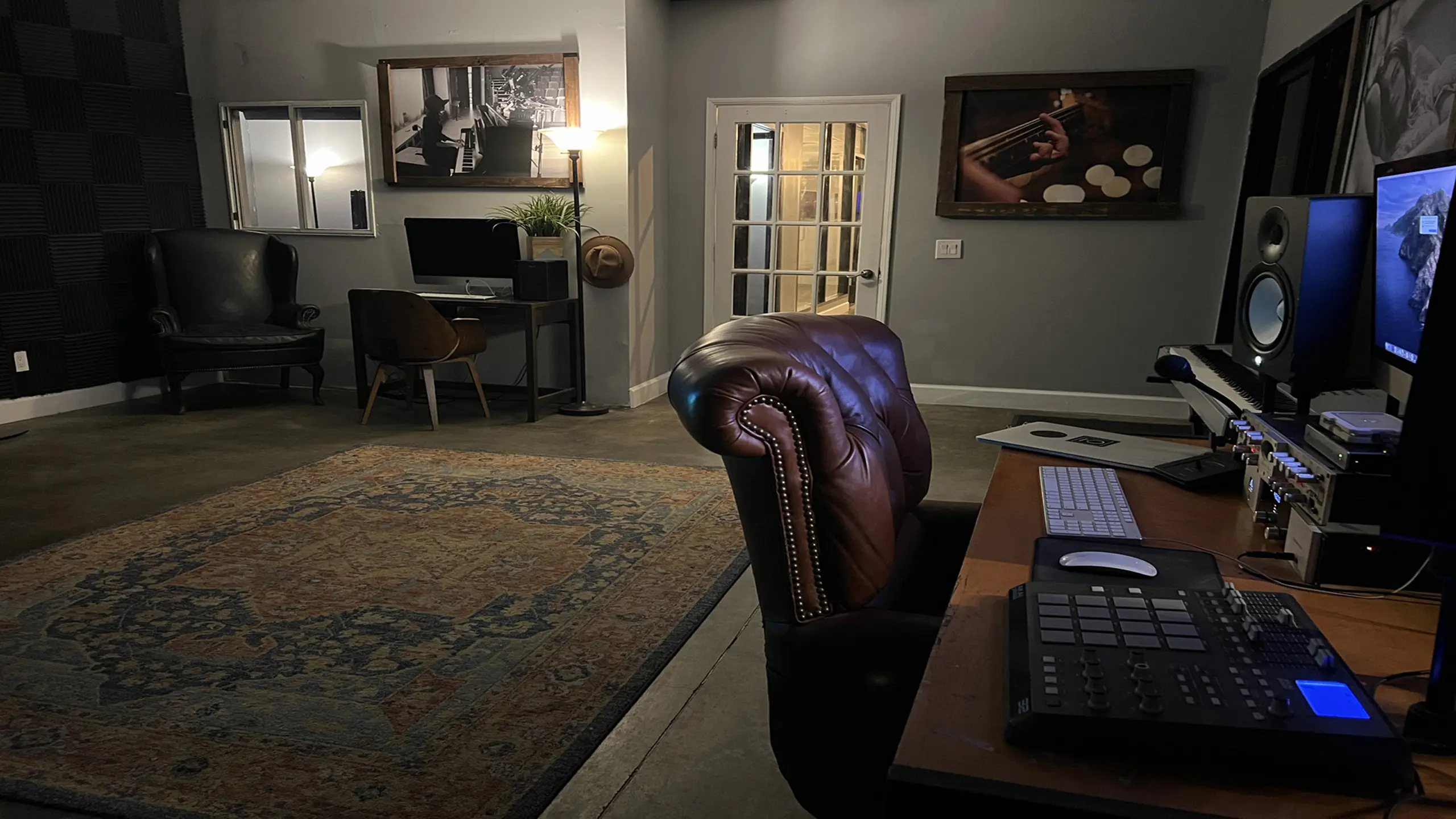
Post-production transforms raw footage into finished content. Most filmmakers and producers underestimate how complex post production stages truly are. The journey from locked picture to final delivery involves dozens of interconnected steps, each critical to the final product quality.
Post production stages aren't sequential steps you check off a list. They're layered processes that often overlap, iterate, and require constant refinement. Understanding each stage prevents costly mistakes and unrealistic timelines.
Whether you're producing an independent film, streaming series, or commercial content, mastering** post production stages** determines your project's success.
## Stage 1. Dailies & Ingestion
The first post production stages involve organizing raw footage captured during production.
### What Happens in Dailies
Dailies are the raw, unedited footage from your shooting days. These files arrive in various formats, codecs, and resolutions. Your first[post production](https://c-istudios.com/post-production-services/) stage task: organize this chaos into manageable structure.
### Key processes
- File ingestion and backup
- Format standardization
- Metadata logging
- Quality assurance checks
- Proxy creation for editing speed
### Why Ingestion Matters
Poor organization during early post production stages creates exponential problems later. Missing files delay editing. Corrupted footage becomes unusable. Unclear naming conventions confuse entire teams.
Professional post production stages require redundant backup systems. If your primary drive fails, your entire project vanishes. Industry standard: three backup copies in different locations.
### Technical Requirements
Post production stages at ingestion require:
- High-capacity storage systems
- Reliable backup infrastructure
- Quality control protocols
- Metadata management systems
- Proxy workflow setup
## Stage 2. Editing
Editing represents the longest post production stage and where creative storytelling happens.
### Rough Cut Phase
Your editor receives organized dailies and begins assembly. The rough cut phase focuses on story structure rather than refinement.
**Rough cut objectives:**
- Establish narrative flow
- Identify coverage gaps
- Determine pacing
- Test editorial choices
- Flag problem areas
Rough cuts are intentionally rough. They're exploration phases. Post production stages at this level prioritize speed over polish. Your editor experiments with different sequences, pacing, and storytelling approaches.
### Fine Cut Development
Once story structure solidifies, post production stages move into fine cutting. Your editor refines pacing, trims excess footage, and perfects transitions.
**Fine cut refinements:**
- Precise pacing adjustments
- Transition polish
- Timing optimization
- Visual rhythm refinement
- Temporary audio integration
Fine cuts typically require 2-4 weeks per hour of finished content, depending on complexity and revision cycles.
### Lock Picture
"Picture lock" marks the official end of editing post production stages. From this point, no editorial changes occur. Everything downstream depends on locked picture.
Why this matters: Color grading, visual effects, audio mixing, and final mastering all reference locked picture. Changes after lock force expensive downstream revisions.
## Stage 3. Visual Effects
VFX post production stages integrate digital elements into your story.
### VFX Planning & Breakdown
Before VFX work begins, supervisors analyze every shot requiring effects. Post production stages at this level involve detailed documentation:
- Shot lists identifying effects requirements
- Reference materials for VFX artists
- Technical specifications for effects integration
- Timeline requirements for delivery
- Budget allocation per shot
### 3D Modeling & Animation
Complex post production stages create digital environments and characters. VFX artists build 3D models, rig them for animation, and create realistic movement.
**VFX production involves:**
- Character design and modeling
- Environment creation
- Rigging and animation
- Simulation (cloth, hair, particles)
- Lighting and rendering
### Compositing & Integration
Compositing layers VFX elements into actual footage. Post production stages here require precise color matching, lighting consistency, and seamless integration.
Compositors work shot-by-shot, blending digital elements with live-action footage. This labor-intensive stage consumes significant post production timeline.
Our visual effects services handle complex VFX requirements, from simple cleanup to extensive effects shots.
## Stage 4. Color Grading
Color grading transforms footage's visual tone and creates cohesive look across your entire project.
### Color Correction Foundation
Post production stages begin with technical color correction, fixing white balance, exposure, and technical issues from production. This ensures consistency across different shooting days, camera angles, and lighting conditions.
Correction processes:
- White balance normalization
- Exposure balancing
- Skin tone consistency
- Cross-shot matching
- Technical issue correction
### Creative Color Grading
Once technical correction completes, post production stages move into [creative grading](https://c-istudios.com/creative-marketing-services/). Your colorist establishes the project's visual aesthetic, mood, tone, and emotional impact through color choices.
**Creative grading decisions:**
- Overall color palette
- Emotional tone through color
- Scene-specific looks
- Character-specific color treatment
- Contrast and saturation choices
Creative color grading requires significant time. A feature film typically requires 4-8 weeks of dedicated color work across post production stages.
### Deliverable Variations
Modern post production stages require multiple color grading deliverables. Different platforms demand different color spaces, brightness levels, and technical specifications.
**Typical color grading deliverables:**
- Master DCP (theatrical)
- Netflix color requirements
- Amazon specifications
- Apple TV+ standards
- YouTube/web versions
Our color grading services deliver broadcast-quality results meeting all platform specifications.
## Stage 5. Visual Effects Finishing
After color grading, post production stages return to VFX for final integration and refinement.
### VFX Revisions & Refinement
Post production stages here address feedback from directors, producers, and clients. VFX shots receive final tweaks ensuring seamless integration.
Typical VFX finishing tasks:
- Shot revisions based on feedback
- Color correction matching
- Motion blur and depth-of-field adjustments
- Render optimization
- Quality assurance checks
### Motion Graphics & Titles
Post production stages integrate opening titles, credits, lower thirds, and motion graphics. These elements establish professional presentation and provide essential information.
**Motion graphics elements:**
- Main titles and sequences
- End credits
- Lower thirds for interviews
- Graphics and animations
- Watermarks and logos
## Stage 6. Audio Post-Production
Audio post production stages are equally complex as picture, often receiving less attention than deserved.
### Sound Design & Editing
Your sound designer creates audio landscape matching visual storytelling. Post production stages here involve:
- Dialogue editing and cleanup
- Sound effect selection and placement
- Ambient sound creation
- Foley recording
- Music placement and timing
Sound design transforms audio from functional accompaniment into artistic element. Professional sound design elevates entire project quality.
### Dialogue Processing
Post production stages clean dialogue, remove background noise, and ensure consistency. Poorly recorded dialogue sounds unprofessional regardless of picture quality.
**Dialogue post production includes:**
- Noise reduction and cleanup
- Level normalization
- EQ and processing
- Room tone matching
- Alternate dialogue recording (ADR) if needed
### Music Composition & Licensing
Post production stages integrate original music or licensed tracks. Original scoring typically requires 4-8 weeks depending on project scope.
**Music post production involves:**
- Spotting sessions establishing music moments
- Composer scoring to picture
- Recording orchestral elements
- Music mixing and processing
- Licensing documentation
### Mix Preparation
Before final mix, post production stages prepare audio elements. Your mixer receives organized tracks, clearly labeled and level-adjusted for efficient mixing.
### Mix preparation requires
- Organized session structure
- Properly labeled tracks
- Reference materials
- Technical specifications
- Delivery requirements documentation
## Stage 7. Final Audio Mix
The mix combines all audio elements into final soundtrack.
### Stereo Mixing
Traditional stereo mixing blends dialogue, music, and effects into balanced soundtrack. Post production stages here require specialized mixing facilities with acoustically treated environments.
### Mixing processes
- Level balancing across elements
- Equalization and compression
- Spatial processing and panning
- Dynamics management
- Loudness standardization
### Surround & Immersive Audio
Modern post production stages often require surround sound mixing for theatrical or streaming platforms. Immersive audio formats like Dolby Atmos create three-dimensional soundscapes.
**Surround mixing considerations:**
- 1 surround channel mixing
- Object-based audio (Dolby Atmos)
- Height channel mixing
- LFE (subwoofer) channel management
- Platform-specific specifications
### Audio Mastering
After mixing completes, post production stages move into mastering, final optimization for delivery platforms. Mastering ensures consistent playback across different devices and environments.
**Mastering tasks:**
- Loudness optimization
- Platform-specific processing
- Quality assurance
- Metadata embedding
- Format conversion
## Stage 8. Color Grading for Audio
Yes, color grading happens again, this time color-correcting to match audio mix requirements and ensure technical compliance.
### Technical Compliance
Post production stages require meeting technical specifications from various distribution platforms. Color levels must comply with broadcast standards, streaming specifications, and theatrical requirements.
**Technical compliance checks:**
- Loudness verification (LUFS standards)
- Frequency response analysis
- Dynamic range verification
- Metadata compliance
- Platform-specific requirement verification
### Color Re-Grading for Audio Mix
Sometimes audio mix reveals timing or pacing issues requiring color adjustments. Post production stages include flexibility for minor color refinements after mixing.
## Stage 9. Visual Effects Quality Assurance
Before final delivery, post production stages include comprehensive VFX quality assurance.
### Technical Review
Every VFX shot receives technical review ensuring proper integration, color matching, and technical specifications compliance.
**QA checklist includes:**
- Color consistency verification
- Render quality assessment
- Motion tracking accuracy
- Edge quality evaluation
- Artifact detection
- Format compliance
### Creative Approval
Beyond technical review, post production stages require creative approval from director and key stakeholders confirming VFX meets creative intent.
## Stage 10. Final Assembly & Mastering
Post production stages culminate in final assembly and creation of master files for distribution.
### Picture Lock & Final Assembly
Your locked picture combines with final color-graded footage and all [VFX elements](https://c-istudios.com/vfx-compositing-and-animation-services/) into single coherent file. Post production stages here ensure seamless playback without dropouts or synchronization issues.
### Audio Mix Integration
Final assembled picture synchronizes with final audio mix. Sync verification ensures audio remains locked to picture throughout entire project.
**Integration verification:**
- Sync integrity checks
- Audio level compliance
- Metadata verification
- Format specification compliance
- Backup creation
### DCP & Digital Masters
For theatrical releases, post production stages create DCP (Digital Cinema Package), the format used in theatrical projection. Streaming requires multiple master formats meeting platform specifications.
**Master creation includes:**
- DCP mastering for theatrical
- ProRes masters for editing/archival
- 264 masters for streaming
- Separate masters for various platforms
- Backup archival copies
### Quality Control
Final post production stages include comprehensive quality control reviewing everything, picture, audio, metadata, and technical specifications.
### Final QC checklist
- Picture quality verification
- Audio quality verification
- Sync verification
- Metadata accuracy
- Compliance verification
- Archival procedures
Our professional post-production services handle complete final mastering ensuring broadcast and theatrical quality delivery.
## How Long Post Production Stages Take
Post production stages vary significantly based on project scope. Understanding realistic timelines prevents scheduling conflicts.
### Independent Short Film
- Dailies & ingestion: 1-2 weeks
- Editing: 4-6 weeks
- Color grading: 1-2 weeks
- Audio post-production: 2-3 weeks
- Final assembly: 1 week
Total: 10-16 weeks
### Feature Film
- Dailies & ingestion: 2-3 weeks
- Editing: 12-16 weeks
- VFX: 8-12 weeks
- Color grading: 4-8 weeks
- Audio post-production: 6-10 weeks
- Final assembly: 2-3 weeks
Total: 34-52 weeks
### TV Series (8 Episodes)
- Dailies & ingestion: 3-4 weeks
- Editing: 16-20 weeks (parallel episodes)
- VFX: 12-16 weeks
- Color grading: 8-12 weeks
- Audio post-production: 10-14 weeks
- Final assembly: 3-4 weeks
Total: 52-70 weeks
## Common Post Production Stages Mistakes
Avoiding these mistakes accelerates post production stages and improves final quality.
**Mistake #1**: Inadequate Planning
Starting post production stages without clear technical specifications, delivery requirements, and creative direction wastes significant time. Define everything upfront.
**Mistake #2**: Insufficient Storage
Running out of storage during post production stages forces expensive upgrades. Budget for storage exceeding anticipated needs.
**Mistake #3**: Poor Version Control
Confusion about which version is current creates expensive mistakes. Implement rigorous version control from day one.
**Mistake #4**: Skipping Quality Assurance
Rushing through post production stages QA discovers problems during distribution. Comprehensive QA prevents embarrassing failures.
**Mistake #5**: Unclear Communication
Ambiguous feedback creates revision cycles that extend post production stages unnecessarily. Clear, specific feedback accelerates approval.
**Mistake #6**: Underestimating Audio
Audio receives less attention than picture during post production stages, yet poor audio undermines entire project. Allocate appropriate resources and timeline.
## Post Production Stages Cost Factors
Budget post production stages understanding these cost drivers.
What Increases Post Production Costs
- Complex VFX requiring extensive work
- Multiple revision cycles from unclear direction
- Strict deadline requiring overtime
- Extensive color grading for challenging material
- Immersive audio mixing (Dolby Atmos)
- Multiple deliverable formats
- International crew requiring coordination
- Specialized equipment rental
**What Decreases Post Production Costs**
- Clear creative direction minimizing revisions
- Realistic timelines allowing efficient workflow
- Organized production materials
- Experienced team requiring less supervision
- Standard delivery formats
- In-house resources reducing outsourcing
- Collaborative workflow without bottlenecks
## Optimizing Post Production Stages Efficiency
Professional workflows accelerate post production stages without sacrificing quality.
### Pre-Planning Impact
Detailed pre-production planning reduces post production stages by 20-30%. Define creative direction, technical specifications, and delivery requirements before shooting completes.
### Workflow Optimization
Parallel processing accelerates post production stages. While editing continues, VFX artists can begin work. Audio post-production begins during color grading.
### Technology Selection
Choosing appropriate post production stages technology impacts efficiency significantly. Professional editing systems, color grading software, and audio workstations designed for your project type accelerate workflow.
Our post-production technology infrastructure enables efficient workflow across all post production stages.
### Team Experience
Experienced teams navigate post production stages faster than those learning software and processes simultaneously. Investing in skilled professionals pays dividends in efficiency.
## Post Production Stages Deliverables
Understanding what you're delivering defines post production stages requirements.
### Theatrical Deliverables
- DCP (Digital Cinema Package) with multiple aspect ratios
- Color-corrected interpositive
- Full surround mix with Dolby Atmos
- Theatrical trailer
- Marketing materials
### Streaming Deliverables
- Multiple resolution masters (4K, 1080p, 720p)
- Platform-specific color spaces (Netflix, Amazon, Apple TV+)
- Stereo and surround mixes
- Closed captions and subtitles
- Metadata packages
### Television Deliverables
- Broadcast masters meeting FCC specifications
- Color bars and tone references
- Multiple mix versions (5.1, stereo)
- Graphics and bumpers
- Metadata packages
## Post Production Stages for Professional Results
Professional post production stages require specialized knowledge, equipment, and experience. Each stage demands mastery of complex software, technical specifications, and creative decision-making.
Post production stages represent where raw footage transforms into professional content. Rushing through stages or skipping important steps creates visible quality problems. Allocating appropriate time and resources to each post production stage determines whether your project looks amateur or professional.
Our comprehensive post-production services guide projects through every post production stage, from initial ingestion through final delivery. We handle video editing, color grading, visual effects, and audio post-production with professional expertise ensuring broadcast and theatrical quality results.
Explore our post-production services to discover how professional expertise accelerates post production stages while elevating quality. Contact [C&I Studios](https://c-istudios.com/contact/) today to discuss your post-production needs and timeline requirements.
Your project deserves professional treatment through every post production stage. With proper planning, experienced teams, and appropriate resources, post production stages transform raw footage into exceptional finished content.
## Work with C&I Studios
If you are planning a project like this, our team can take it from concept to final delivery. Explore our [post-production services](https://c-istudios.com/post-production-services/), browse [our work](https://c-istudios.com/our-work/) to see how we tell brand stories, and [get in touch](https://c-istudios.com/contact/) when you are ready to start.
Originally published November 11, 2025
---
*This content is from [C&I Studios](https://c-istudios.com), a full-service production company.*
---
# Managing International Film Production Logistics: Permits, Crew & Budget
> Published: November 10, 2025
> Categories: Film & TV
> Source: https://c-istudios.com/managing-international-film-production-logistics-permits-crew-budget/
---
.cib{--paper:#1b1d1f;--ink:#fff;--body:#d5d7d9;--muted:#8b9096;--line:rgba(255,255,255,.12);--thumb:#2b2e31;--card:#212426;--accent:#c02b0a;--blue:#5B8FA8;--serif:'Playfair Display',Georgia,serif;--sans:'Poppins',-apple-system,sans-serif;--measure:900px;background:var(--paper);color:var(--body);font-family:var(--sans);line-height:1.6;position:relative;left:50%;transform:translateX(-50%);width:90vw;max-width:1920px}
.cib *{box-sizing:border-box}
.cib .kicker{max-width:var(--measure);margin:58px auto 0;padding:0 22px;font-size:12.5px;font-weight:700;letter-spacing:2.5px;text-transform:uppercase;color:var(--blue)}
.cib h1.cibh1{text-wrap:balance;font-family:var(--serif);font-weight:500;font-size:clamp(46px,6vw,72px);line-height:1.08;color:var(--ink);max-width:var(--measure);margin:18px auto 0;padding:0 22px;letter-spacing:-.5px}
.cib .metarow{max-width:var(--measure);margin:20px auto 0;padding:0 22px;color:var(--muted);font-size:14px}
.cib .hero{position:relative;width:100%;height:0;padding-bottom:56.25%;overflow:hidden;margin:48px auto 0;border-top:1px solid var(--line);border-bottom:1px solid var(--line)}
.cib .hero .ph{width:100%;aspect-ratio:16/9;background:var(--thumb);border-top:1px solid var(--line);border-bottom:1px solid var(--line);display:flex;align-items:center;justify-content:center;color:#7d8288;font-size:13px;text-align:center;padding:0 20px}
.cib .body{max-width:var(--measure);margin:12px auto 0;padding:52px 22px 6px}
.cib .body.lead p:first-child{font-size:23px;line-height:1.62;color:var(--ink)}
.cib .body p{font-size:18.5px;line-height:1.85;margin:0 0 30px;color:var(--body)}
.cib .body h2{text-wrap:balance;font-family:var(--serif);font-weight:500;font-size:clamp(32px,4vw,48px);line-height:1.22;color:var(--ink);margin:70px 0 20px;letter-spacing:-.3px}
.cib .body h3{text-wrap:balance;font-family:var(--sans);font-weight:600;font-size:22px;color:var(--ink);margin:38px 0 8px}
.cib .body a{color:var(--ink);text-decoration:underline;text-decoration-color:rgba(255,255,255,.4);text-underline-offset:3px}
.cib .body a:hover{text-decoration-color:var(--ink)}
.cib .ctable{width:100%;border-collapse:collapse;margin:16px 0 30px;font-size:16px}
.cib .ctable th{background:#000;color:#fff;text-align:left;padding:10px 12px;font-family:var(--sans)}
.cib .ctable td{padding:10px 12px;border-bottom:1px solid var(--line);color:var(--body)}
.cib .inimg{position:relative;width:100%;height:0;padding-bottom:56.25%;overflow:hidden;margin:72px auto;border-top:1px solid var(--line);border-bottom:1px solid var(--line)}
.cib .inimg .ph{width:100%;aspect-ratio:16/9;background:var(--thumb);border-top:1px solid var(--line);border-bottom:1px solid var(--line);display:flex;align-items:center;justify-content:center;color:#7d8288;font-size:13px}
.cib .origpub{max-width:var(--measure);margin:60px auto 0;padding:26px 22px 0;border-top:1px solid var(--line);color:var(--muted);font-size:13.5px}
.cib .related{max-width:1200px;margin:64px auto 0;padding:34px 22px 76px}
.cib .related h3{font-family:var(--sans);font-size:12.5px;letter-spacing:2px;text-transform:uppercase;color:var(--ink);margin:0 0 24px}
.cib .grid{display:grid;grid-template-columns:repeat(3,1fr);gap:28px}
.cib .rc{background:var(--card);border:1px solid var(--line);display:block;text-decoration:none;color:inherit;transition:border-color .15s}
.cib a.rc:hover{border-color:rgba(255,255,255,.5)}
.cib .rc .thumb{position:relative;width:100%;height:0;padding-bottom:56.25%;background:var(--thumb);overflow:hidden}
.cib .rc .thumb img{position:absolute!important;top:0!important;left:0!important;width:100%!important;height:100%!important;object-fit:cover!important;margin:0!important}
.cib .rc .cc{padding:14px 15px 17px}
.cib .rc .rt{font-family:var(--serif);font-weight:500;font-size:16px;line-height:1.3;color:var(--ink);margin:0 0 6px}
.cib .rc .rm{font-size:11px;letter-spacing:1px;text-transform:uppercase;color:var(--muted)}
.cib img{margin:0!important;padding:0!important;display:block!important;vertical-align:top;max-width:100%}
.cib .hero img,.cib .inimg img{position:absolute!important;top:0!important;left:0!important;width:100%!important;height:100%!important;object-fit:cover!important;margin:0!important;padding:0!important;border:0!important;display:block!important;aspect-ratio:auto!important}
.cib .hero+.body{padding-top:36px}
@media(max-width:760px){.cib .grid{grid-template-columns:1fr}.cib .body h2{margin:52px 0 16px}.cib .body p{font-size:17.5px}.cib .inimg,.cib .hero{margin-top:44px}}
.cib .vembed{max-width:var(--measure);margin:44px auto;padding:0 22px}.cib .vembed .vwrap{position:relative;width:100%;height:0;padding-bottom:56.25%}.cib .vembed .vwrap iframe{position:absolute;top:0;left:0;width:100%;height:100%;border:0}
Film & TV
# Managing International Film Production Logistics. Permits, Crew & Budget
11 min read
Shooting a film internationally isn't simply relocating your crew overseas. ***International film production logistics*** involves coordinating across different legal systems, currencies, languages, time zones, and cultural expectations simultaneously. A mistake that costs a day of reshoots domestically could cost weeks and thousands of dollars internationally.
The biggest misconception? That international logistics are just "scaling up" domestic production management. Reality: they're completely different animals requiring specialized expertise and planning methodologies that most producers never encounter.
Consider this scenario: your crew arrives in Morocco for a three-week shoot. The equipment clears customs, but the permits weren't filed correctly, shooting begins two days late. Your local fixer disappears.
The location falls through because of miscommunication about access rights. These aren't hypothetical disasters. They happen regularly because producers underestimate international film production logistics complexity.
## The Three Pillars of International Logistics
### Pillar One. Legal & Regulatory Navigation
Before a single frame rolls, international film production logistics must navigate a maze of permits, work authorizations, and regulatory compliance specific to each country.
Permits aren't one-size-fits-all. The UK operates a straightforward digital permit system. France requires different permits depending on whether you're filming in Paris versus rural Provence. New Zealand offers film-friendly work visas designed specifically for international productions. Meanwhile, some countries lack formal permit systems entirely, operating through informal relationships with local authorities.
Work authorization complicates everything. Your American cinematographer needs a work permit for Germany but not for Canada. Your British production manager requires different documentation for Australia versus the EU. Hiring local crew instead of importing foreign crew reduces these complications dramatically, another reason experienced international producers prioritize local hires.
Insurance requirements vary wildly. Standard US production insurance doesn't automatically cover international work. You'll need specific coverage for each territory, local liability requirements, and equipment protection during transit. A single mistake here creates uninsured gaps exposing producers to massive liability.
Timeline reality: International film production logistics require 4-6 months minimum for proper permitting, work authorization, and legal setup. Rushing these elements guarantees problems.
### Pillar Two. Physical & Logistical Execution
Getting equipment, crew, and materials to remote international locations requires solving puzzles that have no domestic equivalent.
Equipment movement across borders triggers customs complexity. Your camera package requires customs declarations. Temporary import permits (ATA Carnets) expedite clearance but require advance setup. Equipment gets detained. Customs duties apply unexpectedly. A shipment delayed in customs delays your entire shoot.
Currency fluctuation becomes financial wild card. Budget in USD, but pay crew in GBP, EUR, and AUD simultaneously. Currency rates shift 5-10% during pre-production. Smart international film production logistics locks exchange rates early or budgets 10-15% contingency for currency volatility.
Accommodation and per diem logistics affect crew morale directly. Booking hotels for 150 people in a foreign city requires dedicated coordination. Per diem rates must account for local cost-of-living differences. Getting this wrong demoralizes crews and impacts productivity.
Ground transportation in unfamiliar locations creates bottlenecks. Rental car availability, insurance requirements, driving laws, and vehicle reliability vary dramatically. International film production logistics often requires hiring local drivers who understand roads and traffic patterns.
### Pillar Three. Team Coordination Across Distances
Managing distributed teams across multiple continents, often never meeting in person before production starts, requires systematic communication frameworks.
Time zone coordination destroys spontaneous communication. Your director in Los Angeles, line producer in London, and location manager in New Zealand can't have casual quick calls. Decisions require structured communication planning. Asynchronous tools replace real-time collaboration.
Cultural communication differences cause misunderstandings. Direct communication valued in some cultures offends others. Written instructions interpreted differently across teams. What "sounds good" means in one culture means "I'll think about it" in another. International film production logistics requires explicit communication protocols preventing ambiguity.
Language barriers extend beyond translation. Technical film terminology doesn't translate directly. Safety communications must be crystal clear. Hiring translators isn't optional, it's mandatory for critical departments like camera, grip, and safety.
## Pre-Production. Where International Success Begins
International film production logistics succeeds or fails during pre-production planning phase.
### The Location Scout Timeline
Never finalize an international location remotely. Period.
Start with desktop research, Google Earth, local production company [portfolio](https://c-istudios.com/our-work/)s, previous film's locations. This identifies candidates. Next, hire local line producer or location scout conducting on-the-ground reconnaissance. They assess actual infrastructure, security, accessibility, and hidden complications.
Only then does the director visit in person. This typically occurs 3-4 months before production. By this point, line producer has vetted locations thoroughly. Director chooses among pre-screened options rather than discovering fundamental problems.
What scouts miss remotely: Power capacity (critical for camera trucks), actual road conditions, water accessibility, parking reality, neighbor relationships, security concerns, rainy season flooding, equipment rental availability. International film production logistics requires experienced scouts who've shot in that region before.
## Budget Building with International Multipliers
Domestic production budgets don't transfer internationally. Apply multipliers accounting for international complexity.
Line production services (hiring local team, permits, locations, logistics): Typically 15-25% of budget for remote locations, 8-12% for established film hubs like UK or Canada.
Equipment transportation: 10-20% depending on origin, destination, and equipment volume. Remote locations cost more than established film hubs.
Crew travel and accommodation: 20-35% depending on location remoteness and shoot duration. Longer shoots reduce per-day costs.
Work permits and legal: 2-5% including visa processing, work authorization, permit fees, and legal consulting.
Contingency for international complications: Minimum 15% beyond standard 10% contingency. International surprises happen regularly.
Currency contingency: 10-15% buffering exchange rate fluctuations if budget and payments span multiple currencies.
Smart international film production logistics builds budgets assuming problems rather than assuming everything proceeds smoothly.
### Establishing Local Infrastructure
The line producer becomes your on-the-ground command center.
**Critical line producer functions:**
** **
They identify and vet local crew, camera operators, gaffers, grips, production assistants familiar with local conditions. They secure locations through relationships with property owners and authorities. They navigate permit processes knowing exactly which officials to contact and which processes actually work (versus theoretical procedures).
They establish crew accommodation, manage logistics for equipment arrival, coordinate ground transportation, and solve the thousand unexpected problems that arise. They're problem-solver-in-chief when anything goes wrong.
Experienced line producers worth every penny. They prevent disasters through advance planning and relationships built over years. First-time producers often underestimate their value, then panic when challenges emerge that only experienced locals solve efficiently.
## Permits. The Hidden Complexity
Film permits aren't bureaucratic formalities, they're gatekeepers determining whether shooting happens.
### Understanding Permit Variability
The UK Film Commission processes permits digitally within 2-3 weeks. France requires different applications for Paris versus provincial locations. Germany differentiates between studio filming and location filming. Some developing countries lack formal permit systems entirely, you negotiate directly with local officials, paying informal fees.
What permits typically cover:
Street shooting permits determine where and when you can film. Equipment permits address camera trucks, lighting rigs, and other visible apparatus. Special effects permits regulate explosions, gunfire, and controlled effects. Drone permits increasingly required for aerial footage. Night shooting permits necessary in noise-sensitive areas.
Obtaining each permit involves applications, fees, insurance documentation, and often negotiations. International film production logistics requires starting permit applications 2-3 months before production.
### Permit Problems & Solutions
**Problem**: Last-minute permit rejection. Solution: Get written permit confirmation weeks before production, not days. Build schedule flexibility allowing for permit delays.
**Problem**: Unexpected permit fees. Solution: Research typical fees early. Budget for surprising costs. Build 20-30% contingency in permit budget.
**Problem**: Permits don't cover actual shooting scope. Solution: Over-communicate scope to permit authorities. Include contingency locations in permits. Work with experienced line producers understanding local requirements.
**Problem**: Permit authorities impose unexpected conditions. Solution: Accept conditions early in process. Rushing authorities creates arbitrary restrictions.
## Crew & Visa Management
### The Work Authorization Reality
Most countries require work permits for foreign crew members. Processing times vary wildly, UK work visas take weeks, New Zealand offers expedited film production visas, some countries have no formal process.
Smart strategy: Minimize foreign crew. Hire local crews whenever possible. Import only essential department heads, director of photography, production designer, line producer. Local crews know local conditions, reducing onboarding time. They avoid visa complications entirely.
**For imported crew:**
Start visa applications immediately, often 6-8 weeks before production. Document job descriptions, salary information, and why specific individuals are essential. Maintain visa documentation organized and accessible. Some countries require crew to show proof of health insurance before work authorization approval.
Budget visa costs: $500-$5,000 per person depending on country and visa type.
### Crew Communication Systems
Distributed teams across time zones require structured communication preventing information gaps.
**Essential systems:**
Project management platform (Asana, ProductionHUB, Shotgun) centralizes all production information, schedule, budgets, contact information, shot lists. Slack handles real-time communication with time zone awareness. Google Drive or Dropbox manages shared documents. WhatsApp or signal provides mobile communication for on-set emergencies.
**Protocol over spontaneity:**
Schedule regular meetings during overlapping hours. Record all meetings for team members in non-overlapping time zones. Use asynchronous decision-making for non-urgent matters. Reserve synchronous meetings for critical decisions requiring real-time discussion.
Establish escalation protocols, certain issues trigger immediate communication regardless of time zone. Define who makes decisions when leadership unavailable. International film production logistics demands clarity preventing decision paralysis.
## Equipment & Technology Logistics
### Cross-Border Equipment Movement
Equipment crossing international borders requires customs navigation and proper documentation.
**ATA Carnet system**: Temporary equipment import permits expediting customs clearance. Setup requires 2-3 weeks. Costs $200-$500 depending on equipment value. Carnet eliminates most customs delays but requires careful documentation.
**Shipping methods vary**: Air freight costs 3x more but arrives in 2-5 days. Sea freight costs significantly less but takes 2-4 weeks. Land freight works for nearby countries. Choose shipping method coordinating with production timeline.
**Equipment manifests**: Detailed lists with serial numbers, descriptions, and values. Customs requires these. Keep copies for reference.
**Transit insurance**: 3-5% of equipment value covering damage, theft, and weather. Standard production insurance doesn't cover equipment in transit.
### Technology Infrastructure at Remote Locations
Many international locations lack infrastructure taken for granted domestically.
Critical for data management, remote monitoring, and communications. Scout locations' actual internet speeds (not advertised speeds). Remote locations often have unreliable connectivity. Backup systems (satellite internet, local cellular boosters) necessary for critical needs.
Camera trucks, lighting rigs, editing bays, and crew facilities demand consistent power. Scout locations must verify electrical infrastructure capacity. Generators supplement or replace local power when necessary.
Large camera files accumulate quickly. Backup systems and reliable storage essential. Some productions employ dedicated data managers ensuring no footage loss.
## Cultural & Logistical Adaptation
### Working with Local Crews
Local crews bring invaluable advantages, knowledge of conditions, cultural understanding, established relationships. They also require different management approaches than crews you've worked with previously.
Communication clarity: Use visual references extensively. Shot diagrams with images transcend language barriers. Demonstrations beat explanations. Verify understanding explicitly.
Respect local expertise: Local crew members understand local conditions better than imported directors. Listen to local input about weather patterns, safety concerns, and logistical realities. International film production logistics succeeds through collaboration, not imposition of external processes.
Relationship building: Taking time to understand local customs builds trust. Shared meals, genuine interest in crew members' lives, and respect for cultural differences create cohesion. This affects productivity and problem-solving willingness.
## Risk Management & Contingency Planning
International film production logistics introduces risks absent domestically.
Political instability: Shooting location suddenly becomes unsafe. Contingency requires backup location permits, budget, and schedule flexibility.
Equipment failure far from support: Critical camera breaks down. Solution requires advance relationships with local equipment rental companies and experienced technicians.
Crew illness: Someone gets seriously ill far from home. Travel insurance with evacuation coverage becomes critical.
Schedule delays: Permits delayed, equipment delayed, weather delays. Build 10-15% schedule buffer into international productions.
Currency crises: Exchange rates shift dramatically. Lock exchange rates early or maintain currency contingency reserves.
Communication breakdowns: Key personnel become unreachable. Redundant communication systems and backup leadership prevent paralysis.
Smart international [film production](https://c-istudios.com/feature-film-mastering-and-delivery/) logistics anticipates these risks and builds contingencies before problems emerge.
### Execution. During Production
Once production begins, international film production logistics shifts to real-time problem-solving and adaptation.
Daily coordination calls connecting directors, producers, and line producers ensure alignment across time zones. On-the-ground problem-solving happens immediately, delay waiting for director approval means lost shooting days.
Flexibility becomes critical. Plans change. Locations fall through. Weather forces adjustments. International film production logistics requires decision-making authority distributed to people on location, trusting their judgment.
Crew morale attention prevents burnout. International crews away from home face isolation. Regular check-ins, recognizing hard work, and addressing concerns prevent productivity collapse.
## Post-Production Logistics
International shooting doesn't end logistics challenges. Post-production requires getting footage home and managing international teams during editing, color grading, and sound design.
Terabytes of footage need secure delivery home. Some productions courier hard drives. Others use cloud services. Both require robust security and backup systems.
Color grading, VFX, and sound mixing often occur with remote teams. Time zone coordination and clear creative direction become critical again.
Different markets require different formats, color spaces, and specifications. International film production logistics extends through final delivery ensuring all platforms receive proper master files.
## Mastering Global Production
International film production logistics separates professional producers from first-timers. Success requires advance planning, experienced local partners, systematic communication, and flexibility when reality diverges from plans, which it always does.
The filmmakers who thrive internationally share common approaches: they hire experienced line producers early, they build realistic timelines and budgets, they establish clear communication systems, and they respect local expertise while maintaining creative vision.
Ready to tackle international production? Work with producers experienced in your target location. Use our international production services coordinating logistics while you focus on storytelling. Our creative services team handles post-production needs for international shoots, ensuring your footage becomes finished content regardless of where it was captured.
[Contact C&I Studios](https://c-istudios.com/contact/) to discuss international production needs. We've coordinated productions across six continents, navigating permit complexities, equipment logistics, and distributed team management.
Let our expertise transform international film production logistics from nightmare into manageable challenge.
For more information on industry standards and best practices, visit the [American Marketing Association](https://www.ama.org/).
## Work with C&I Studios
If you are planning a project like this, our team can take it from concept to final delivery. Explore our [film and TV production](https://c-istudios.com/film-and-tv-production/), browse [our work](https://c-istudios.com/our-work/) to see how we tell brand stories, and [get in touch](https://c-istudios.com/contact/) when you are ready to start.
Originally published November 10, 2025
---
*This content is from [C&I Studios](https://c-istudios.com), a full-service production company.*
---
# Feature Film Casting Process: Professional Strategies from Casting Directors
> Published: November 9, 2025
> Categories: Film & TV
> Source: https://c-istudios.com/feature-film-casting-process-professional-strategies-from-casting-directors/
---
.cib{--paper:#1b1d1f;--ink:#fff;--body:#d5d7d9;--muted:#8b9096;--line:rgba(255,255,255,.12);--thumb:#2b2e31;--card:#212426;--accent:#c02b0a;--blue:#5B8FA8;--serif:'Playfair Display',Georgia,serif;--sans:'Poppins',-apple-system,sans-serif;--measure:900px;background:var(--paper);color:var(--body);font-family:var(--sans);line-height:1.6;position:relative;left:50%;transform:translateX(-50%);width:90vw;max-width:1920px}
.cib *{box-sizing:border-box}
.cib .kicker{max-width:var(--measure);margin:58px auto 0;padding:0 22px;font-size:12.5px;font-weight:700;letter-spacing:2.5px;text-transform:uppercase;color:var(--blue)}
.cib h1.cibh1{text-wrap:balance;font-family:var(--serif);font-weight:500;font-size:clamp(46px,6vw,72px);line-height:1.08;color:var(--ink);max-width:var(--measure);margin:18px auto 0;padding:0 22px;letter-spacing:-.5px}
.cib .metarow{max-width:var(--measure);margin:20px auto 0;padding:0 22px;color:var(--muted);font-size:14px}
.cib .hero{position:relative;width:100%;height:0;padding-bottom:56.25%;overflow:hidden;margin:48px auto 0;border-top:1px solid var(--line);border-bottom:1px solid var(--line)}
.cib .hero .ph{width:100%;aspect-ratio:16/9;background:var(--thumb);border-top:1px solid var(--line);border-bottom:1px solid var(--line);display:flex;align-items:center;justify-content:center;color:#7d8288;font-size:13px;text-align:center;padding:0 20px}
.cib .body{max-width:var(--measure);margin:12px auto 0;padding:52px 22px 6px}
.cib .body.lead p:first-child{font-size:23px;line-height:1.62;color:var(--ink)}
.cib .body p{font-size:18.5px;line-height:1.85;margin:0 0 30px;color:var(--body)}
.cib .body h2{text-wrap:balance;font-family:var(--serif);font-weight:500;font-size:clamp(32px,4vw,48px);line-height:1.22;color:var(--ink);margin:70px 0 20px;letter-spacing:-.3px}
.cib .body h3{text-wrap:balance;font-family:var(--sans);font-weight:600;font-size:22px;color:var(--ink);margin:38px 0 8px}
.cib .body a{color:var(--ink);text-decoration:underline;text-decoration-color:rgba(255,255,255,.4);text-underline-offset:3px}
.cib .body a:hover{text-decoration-color:var(--ink)}
.cib .ctable{width:100%;border-collapse:collapse;margin:16px 0 30px;font-size:16px}
.cib .ctable th{background:#000;color:#fff;text-align:left;padding:10px 12px;font-family:var(--sans)}
.cib .ctable td{padding:10px 12px;border-bottom:1px solid var(--line);color:var(--body)}
.cib .inimg{position:relative;width:100%;height:0;padding-bottom:56.25%;overflow:hidden;margin:72px auto;border-top:1px solid var(--line);border-bottom:1px solid var(--line)}
.cib .inimg .ph{width:100%;aspect-ratio:16/9;background:var(--thumb);border-top:1px solid var(--line);border-bottom:1px solid var(--line);display:flex;align-items:center;justify-content:center;color:#7d8288;font-size:13px}
.cib .origpub{max-width:var(--measure);margin:60px auto 0;padding:26px 22px 0;border-top:1px solid var(--line);color:var(--muted);font-size:13.5px}
.cib .related{max-width:1200px;margin:64px auto 0;padding:34px 22px 76px}
.cib .related h3{font-family:var(--sans);font-size:12.5px;letter-spacing:2px;text-transform:uppercase;color:var(--ink);margin:0 0 24px}
.cib .grid{display:grid;grid-template-columns:repeat(3,1fr);gap:28px}
.cib .rc{background:var(--card);border:1px solid var(--line);display:block;text-decoration:none;color:inherit;transition:border-color .15s}
.cib a.rc:hover{border-color:rgba(255,255,255,.5)}
.cib .rc .thumb{position:relative;width:100%;height:0;padding-bottom:56.25%;background:var(--thumb);overflow:hidden}
.cib .rc .thumb img{position:absolute!important;top:0!important;left:0!important;width:100%!important;height:100%!important;object-fit:cover!important;margin:0!important}
.cib .rc .cc{padding:14px 15px 17px}
.cib .rc .rt{font-family:var(--serif);font-weight:500;font-size:16px;line-height:1.3;color:var(--ink);margin:0 0 6px}
.cib .rc .rm{font-size:11px;letter-spacing:1px;text-transform:uppercase;color:var(--muted)}
.cib img{margin:0!important;padding:0!important;display:block!important;vertical-align:top;max-width:100%}
.cib .hero img,.cib .inimg img{position:absolute!important;top:0!important;left:0!important;width:100%!important;height:100%!important;object-fit:cover!important;margin:0!important;padding:0!important;border:0!important;display:block!important;aspect-ratio:auto!important}
.cib .hero+.body{padding-top:36px}
@media(max-width:760px){.cib .grid{grid-template-columns:1fr}.cib .body h2{margin:52px 0 16px}.cib .body p{font-size:17.5px}.cib .inimg,.cib .hero{margin-top:44px}}
.cib .vembed{max-width:var(--measure);margin:44px auto;padding:0 22px}.cib .vembed .vwrap{position:relative;width:100%;height:0;padding-bottom:56.25%}.cib .vembed .vwrap iframe{position:absolute;top:0;left:0;width:100%;height:100%;border:0}
Film & TV
# Feature Film Casting Process. Professional Strategies from Casting Directors
6 min read
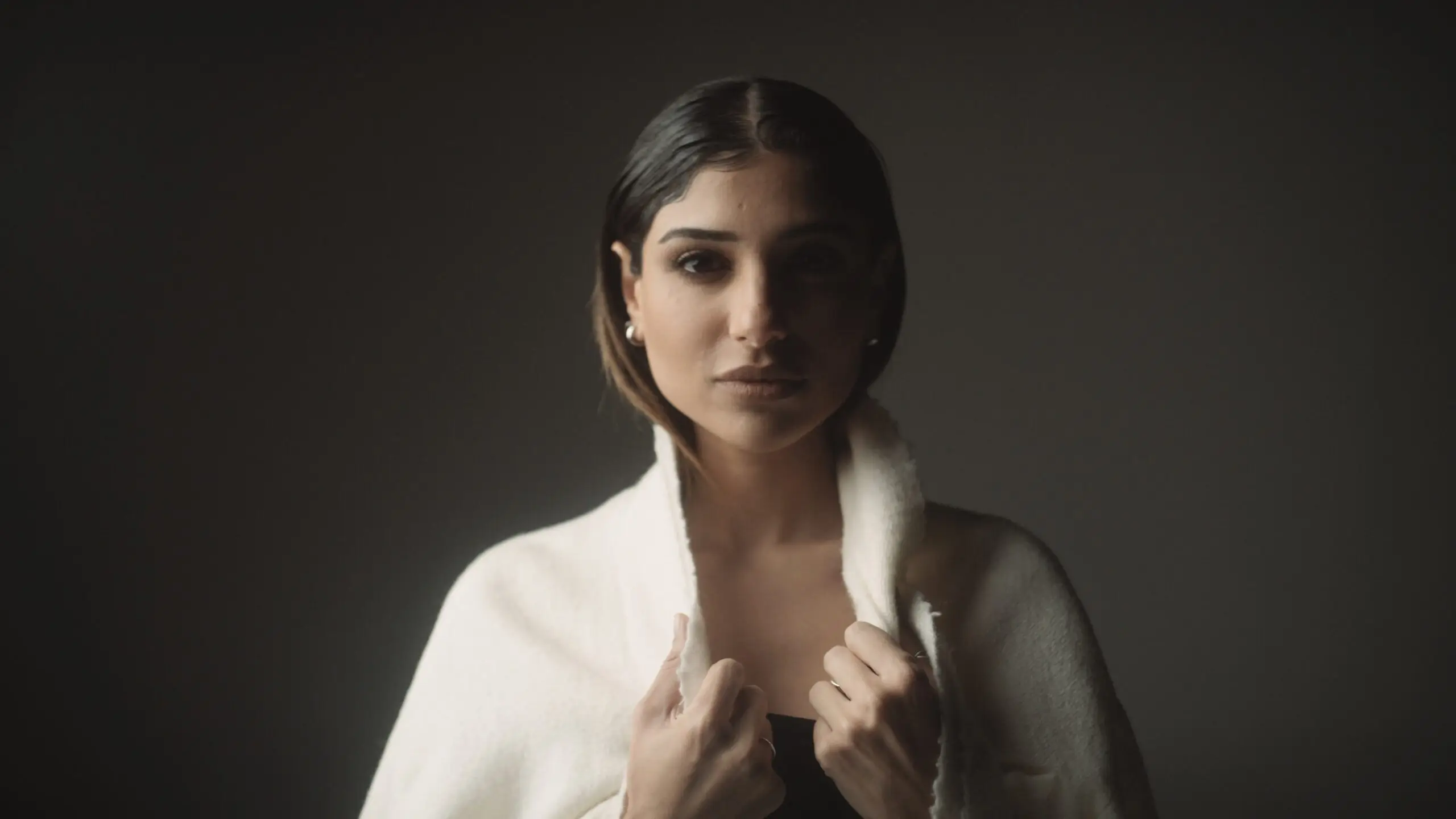
The feature film casting process determines whether audiences connect with your story emotionally. A brilliant script with mediocre casting fails. A decent script with perfect casting succeeds. Great acting transforms ordinary material into compelling cinema.
Yet most producers underestimate casting complexity. They assume casting means "finding famous actors who are available." This misconception creates disasters, miscast leads, chemistry problems between actors, performers unprepared for demanding roles, and productions derailing when actors prove unreliable.
Professional ***feature film casting process*** requires specialized expertise most filmmakers lack. Casting directors navigate actor representation systems, negotiate deals, assess performance compatibility, and manage complex personality dynamics, skills developed over decades.
Whether producing independent dramas, commercial thrillers, or passion projects, understanding the feature film casting process prevents expensive mistakes and creates collaborative environments where actors deliver their best work.
## The Casting Director's Role
Casting directors are invisible architects shaping your film's entire tone and quality.
### Beyond Finding Famous Actors
The feature film casting process extends far beyond Hollywood's A-list. Experienced casting directors source talent from theater productions, independent films, international cinema, and emerging performers unknown to general audiences. They identify actors perfectly suited for specific roles, sometimes unknown performers delivering career-defining performances.
Casting directors understand actor psychology, performance styles, and personality fit. They recognize which actors work well together, which performers handle high-pressure situations, and which personalities thrive in specific environments. This expertise proves invaluable during grueling shooting schedules.
They negotiate contracts, manage actor expectations, coordinate schedules, and solve logistical problems. They're diplomatic problem-solvers balancing director preferences, producer budgets, actor desires, and production realities.
**Critical casting director responsibilities:**
- Comprehensive actor research across all levels
- Relationship building with agents and managers
- Initial screening and audition coordination
- Chemistry testing between potential leads
- Negotiation and contract management
- Schedule coordination with actor availability
- Conflict resolution between stakeholders
- Contingency planning for actor problems
- International casting when needed
Hiring experienced casting directors transforms the feature film casting process from amateur guesswork into strategic talent acquisition.
## Pre-Casting Strategy & Character Definition
Creating comprehensive character breakdowns prevents miscasting before auditioning starts. These documents go beyond physical descriptions.
**Effective character breakdowns include:**
- Complete character biography (backstory, motivations, arc)
- Physical appearance requirements and flexibility
- Age range (exact or approximate)
- Accent or dialect requirements
- Required special skills (martial arts, singing, horseback riding)
- Emotional range and complexity
- Relationship dynamics with other characters
- Personality and behavioral patterns
- Scene intensity and performance demands
- Character transformation arc throughout film
Detailed breakdowns help casting directors identify actors naturally suited for roles rather than forcing unsuitable performers into character molds.
### Budget Alignment with Casting Vision
The [feature film](https://c-istudios.com/feature-film-mastering-and-delivery/) casting process requires honest budget conversations. Casting A-list stars dramatically increases production costs while potentially limiting creative flexibility.
**Casting budget considerations:**
- Star power vs. creative fit trade-offs
- Salary ranges for different performer levels
- Insurance and bonding requirements
- Per diem and travel allowances
- Agent commission structures (typically 10%)
- Contingency for unexpected actor costs
Smart producers establish realistic casting budgets before searching. Pursuing unaffordable actors wastes time and creates frustration. Clear budgetary parameters focus casting efforts on achievable targets.
### Schedule Compatibility
Actor availability dramatically impacts production schedules. A perfectly cast lead unavailable during your production window creates catastrophe.
**Schedule coordination:**
- Confirm actor availability months in advance
- Factor in prep time for demanding roles
- Account for post-production scheduling conflicts
- Build flexibility for actor scheduling constraints
- Establish backup timeline options
- Lock schedules in writing before production
The feature film casting process requires treating schedule compatibility as casting criterion equal to acting ability.
## Building Casting Lists
Systematic actor identification creates stronger candidate pools than random recommendations.
### Tier One. Bankable Names
Tier One casting attracts financing and distribution deals. Studios and financiers often require "name" actors ensuring minimum box office performance.
**Tier One considerations:**
- A-list movie stars with proven box office track records
- Recently acclaimed award-winning performers
- Franchise stars with massive fan bases
- International stars with significant prestige
- Celebrity actors with social media following
Tier One actors cost substantially more but provide financing advantages. However, not all projects benefit from big names. Independent films often shine with unknown talent.
### Tier Two. Established Character Actors
Tier Two consists of respected performers with extensive resumes but not mainstream fame. Many successful films built around Tier Two casting.
**Tier Two advantages:**
- Significantly lower cost than Tier One
- Extensive film and television experience
- Proven performance quality
- Often more collaborative and flexible
- Strong actor communities and loyalty
- Genuine interest in character-driven projects
The feature film casting process often succeeds better with Tier Two casting providing budget flexibility and attracting actors passionate about storytelling rather than star vehicle projects.
### Tier Three. Rising Talent & Character Specialists
Tier Three includes emerging performers and specialized character actors. Many future stars begin in independent films at this casting level.
**Tier Three opportunities:**
- Exceptional talent early in careers
- Hungry performers wanting showcase roles
- International actors unknown domestically
- Theater-trained performers transitioning to film
- Specialists in specific genres (horror, action, drama)
- Career-defining opportunities attracting committed performances
Tier Three casting often delivers authentic, passionate performances from actors viewing projects as career opportunities rather than paycheck obligations.
### Compilation & Comparison
Comprehensive casting lists organize actors across multiple tiers, creating backup options and alternative paths.
**Building effective casting lists:**
- Research 15-20 actors per major role
- Include realistic options at each tier
- Document actor availability and agent information
- Create comparison matrices showing strengths/weaknesses
- Identify secondary choices if primary options unavailable
- Track actor scheduling constraints
- Note previous film/television experience
- Document special skills relevant to roles
Systematic casting lists prevent desperation-driven casting compromises.
## The Audition Process
Auditions reveal whether actors deliver on-camera what scripts require.
### Self-Tape Submissions
Most feature film casting processes begin with self-tape submissions, actors recording scenes from scripts using smartphones or professional equipment.
**Self-tape advantages:**
- Efficient screening of large candidate pools
- Geographic flexibility (actors don't travel)
- Natural performances often better than high-pressure auditions
- Detailed character choices visible in recordings
- Cost-effective for production
- Quick evaluation of fundamental suitability
Self-tapes quickly eliminate unsuitable performers while identifying standout candidates deserving in-person auditions.
**Casting director evaluation focuses on:**
- On-camera presence and charisma
- Character interpretation and choices
- Emotional authenticity and truth
- Technical performance ability
- Unique qualities and distinctiveness
- Suitability for specific roles
### In-Person Auditions
Promising self-tape submissions advance to in-person auditions where directors assess live performance chemistry and personality fit.
**In-person audition components:**
- Cold reading of scenes (unrehearsed)
- Prepared monologues (if requested)
- Callbacks (second or third auditions)
- Chemistry reads with other actors
- Director feedback and scene adjustments
- Personality assessment and communication
In-person auditions reveal actor professionalism, responsiveness to direction, and collaborative personality, factors invisible in recorded submissions.
### Chemistry Testing
Lead actors must work together seamlessly. Chemistry tests audition multiple actor combinations exploring which pairings create authentic relationship dynamics.
**Chemistry test structure:**
- Scene readings between potential leads
- Director observation of interaction dynamics
- Audience response assessment
- Emotional authenticity evaluation
- Physical comfort and trust building
- Dialogue delivery and scene pacing
Chemistry tests prevent casting combinations that look perfect individually but create wooden or forced interactions on screen.
## Negotiation & Deal-Making
Casting requires negotiating contracts balancing actor compensation, production budgets, and creative control.
### Understanding Actor Representation
Professional actors work through agents or managers navigating deal structures and contract negotiations.
**Agent vs. Manager distinction:**
- Agents negotiate contracts and handle business deals (10% commission standard)
- Managers provide career guidance and represent overall interests
- Top actors often have both agents and managers
- Agents speak authoritative roles in deal negotiations
- Manager involvement increases complexity but protects actor interests
The feature film casting process requires understanding representation hierarchies. Negotiating directly with actors violates professional protocols.
## Contract Negotiations
Actor contracts extend far beyond salary.
**Standard contract elements:**
- Compensation and payment schedule
- Work schedule and shooting duration
- Exclusivity and non-compete clauses
- Billing and credit requirements
- Star trailer specifications
- Per diem and travel allowances
Experienced producers work with entertainment lawyers ensuring contracts protect production interests while remaining attractive to actors.
## Deal Structures
Different production budgets require different compensation approaches.
**Common deal structures:**
- Flat fee (single payment regardless of box office)
- Backend participation (percentage of box office/streaming revenue)
- Hybrid deals (modest salary plus backend participation)
- Deferred payment (reduced upfront compensation, larger payments when film earns money)
- Studio deals (union minimums plus specific benefits)
- Independent film deals (lower budgets, sometimes partial deferred payment)
Understanding deal structures enables producers negotiating competitive offers within budget constraints.
## International Casting Considerations
Global films require casting strategies addressing language, cultural representation, and international financing requirements.
### Language & Accents
International films require thoughtful casting addressing linguistic authenticity.
**Language considerations:**
- Native speakers vs. actors attempting accents
- Dubbed dialogue vs. on-set recording
- Accent coaching and linguistic authenticity
- Multilingual cast interactions
- Subtitle translation challenges for dialogue nuance
- Post-production sound design for international versions
Casting native speakers typically delivers more authentic performances, though occasionally non-native speakers execute accents convincingly. Poor accent work immediately undermines credibility.
## Cultural Representation & Sensitivity
Modern audiences demand authentic representation reflecting real-world diversity.
**Representation best practices:**
- Diverse casting matching script demographics
- Hiring directors and crew from represented communities
- Consultation with cultural advisors
- Avoiding stereotypical character casting
- Supporting international talent development
- Transparent hiring processes reducing bias
The feature film casting process increasingly incorporates representation requirements from financiers, distributors, and audiences.
## International Talent Coordination
International co-productions require coordinating casting across countries and time zones.
**International casting logistics:**
- Work authorization and visa coordination
- International travel and accommodation
- Timezone-spanning auditions and communications
- Currency conversion and payment structures
- Contract variations by country
- Union requirements differing by region
International casting requires experienced line producers coordinating logistics alongside casting directors managing talent.
## Contingency & Risk Management
Actor problems create production chaos. Experienced producers build contingency plans.
**Backup Casting Options**
Never finalize casting without identifying backup options.
**Contingency planning:**
- Maintain secondary casting lists for major roles
- Identify understudies or backup performers
- Establish replacement protocols if actor withdraws
- Schedule buffer time for last-minute casting changes
- Maintain relationships with on-call actors
- Plan schedule flexibility accommodating casting changes
Contingency planning prevents last-minute panic when actors become unavailable.
## Contract Protections
Comprehensive contracts protect productions from actor unreliability.
**Critical protective clauses:**
- Illness and injury provisions (including mental health)
- Misconduct and termination clauses
- Insurance requirements and bonding
- Non-disparagement agreements
- Confidentiality provisions
- Creative control limitations preventing excessive demands
- Performance standards and professional conduct requirements
Entertainment lawyers structure contracts protecting productions while remaining reasonable enough actors accept terms.
## Communication & Relationship Management
Proactive communication prevents conflicts escalating into problems.
Effective actor management:
- Regular communication throughout production
- Clear expectation-setting before problems arise
- Respectful conflict resolution
- Professional boundaries maintaining collaboration
- Address concerns immediately rather than festering
- Document all major agreements in writing
- Establish escalation procedures for serious issues
Professional communication prevents most actor-related problems before they derail productions.
## Casting Special Roles
Children require different audition processes, contracts, and on-set management.
**Child actor considerations:**
- Specific legal protections and working hour limitations
- Parental presence and consent requirements
- Tutor provisions during filming
- Emotional sensitivity to demanding scenes
- Age-appropriate audition processes
- Specialized insurance and bonding
- Professional child acting coaches on set
## Casting as Creative Foundation
The feature film casting process represents your first major creative decision. Everything flows from casting, performance quality, on-set dynamics, audience connection, and ultimate film success.
Successful casting requires combining technical expertise (understanding deals, contracts, logistics), artistic instinct (recognizing performance potential), psychological insight (assessing personality fit), and pragmatism (balancing vision with budgets and reality).
Experienced casting directors bring decades of relationship-building and talent assessment expertise. Collaborative directors respect actor input while maintaining creative vision. Smart producers balance star power with authentic casting supporting storytelling.
The feature film casting process ultimately serves one purpose: assembling performers who bring characters to vivid life, creating emotional truth audiences recognize and experience.
Ready to cast your feature film? Work with casting directors experienced in your specific genre and budget level. Our production services coordinate casting logistics alongside creative direction, ensuring casting selections align with production realities.
Explore [C&I Studios'](https://c-istudios.com/contact/) comprehensive casting support, from casting director recommendations to cast-related logistics coordination. We've produced features across multiple genres, navigating casting complexity while maintaining creative integrity.
Your film's success begins with casting. Make it count.
## Work with C&I Studios
If you are planning a project like this, our team can take it from concept to final delivery. Explore our [film and TV production](https://c-istudios.com/film-and-tv-production/), browse [our work](https://c-istudios.com/our-work/) to see how we tell brand stories, and [get in touch](https://c-istudios.com/contact/) when you are ready to start.
Originally published November 9, 2025
---
*This content is from [C&I Studios](https://c-istudios.com), a full-service production company.*
---
# Budget Management Tips: Complete Guide for Production Companies
> Published: November 8, 2025
> Categories: Film & TV
> Source: https://c-istudios.com/budget-management-tips-complete-guide-for-production-companies/
---
.cib{--paper:#1b1d1f;--ink:#fff;--body:#d5d7d9;--muted:#8b9096;--line:rgba(255,255,255,.12);--thumb:#2b2e31;--card:#212426;--accent:#c02b0a;--blue:#5B8FA8;--serif:'Playfair Display',Georgia,serif;--sans:'Poppins',-apple-system,sans-serif;--measure:900px;background:var(--paper);color:var(--body);font-family:var(--sans);line-height:1.6;position:relative;left:50%;transform:translateX(-50%);width:90vw;max-width:1920px}
.cib *{box-sizing:border-box}
.cib .kicker{max-width:var(--measure);margin:58px auto 0;padding:0 22px;font-size:12.5px;font-weight:700;letter-spacing:2.5px;text-transform:uppercase;color:var(--blue)}
.cib h1.cibh1{text-wrap:balance;font-family:var(--serif);font-weight:500;font-size:clamp(46px,6vw,72px);line-height:1.08;color:var(--ink);max-width:var(--measure);margin:18px auto 0;padding:0 22px;letter-spacing:-.5px}
.cib .metarow{max-width:var(--measure);margin:20px auto 0;padding:0 22px;color:var(--muted);font-size:14px}
.cib .hero{position:relative;width:100%;height:0;padding-bottom:56.25%;overflow:hidden;margin:48px auto 0;border-top:1px solid var(--line);border-bottom:1px solid var(--line)}
.cib .hero .ph{width:100%;aspect-ratio:16/9;background:var(--thumb);border-top:1px solid var(--line);border-bottom:1px solid var(--line);display:flex;align-items:center;justify-content:center;color:#7d8288;font-size:13px;text-align:center;padding:0 20px}
.cib .body{max-width:var(--measure);margin:12px auto 0;padding:52px 22px 6px}
.cib .body.lead p:first-child{font-size:23px;line-height:1.62;color:var(--ink)}
.cib .body p{font-size:18.5px;line-height:1.85;margin:0 0 30px;color:var(--body)}
.cib .body h2{text-wrap:balance;font-family:var(--serif);font-weight:500;font-size:clamp(32px,4vw,48px);line-height:1.22;color:var(--ink);margin:70px 0 20px;letter-spacing:-.3px}
.cib .body h3{text-wrap:balance;font-family:var(--sans);font-weight:600;font-size:22px;color:var(--ink);margin:38px 0 8px}
.cib .body a{color:var(--ink);text-decoration:underline;text-decoration-color:rgba(255,255,255,.4);text-underline-offset:3px}
.cib .body a:hover{text-decoration-color:var(--ink)}
.cib .ctable{width:100%;border-collapse:collapse;margin:16px 0 30px;font-size:16px}
.cib .ctable th{background:#000;color:#fff;text-align:left;padding:10px 12px;font-family:var(--sans)}
.cib .ctable td{padding:10px 12px;border-bottom:1px solid var(--line);color:var(--body)}
.cib .inimg{position:relative;width:100%;height:0;padding-bottom:56.25%;overflow:hidden;margin:72px auto;border-top:1px solid var(--line);border-bottom:1px solid var(--line)}
.cib .inimg .ph{width:100%;aspect-ratio:16/9;background:var(--thumb);border-top:1px solid var(--line);border-bottom:1px solid var(--line);display:flex;align-items:center;justify-content:center;color:#7d8288;font-size:13px}
.cib .origpub{max-width:var(--measure);margin:60px auto 0;padding:26px 22px 0;border-top:1px solid var(--line);color:var(--muted);font-size:13.5px}
.cib .related{max-width:1200px;margin:64px auto 0;padding:34px 22px 76px}
.cib .related h3{font-family:var(--sans);font-size:12.5px;letter-spacing:2px;text-transform:uppercase;color:var(--ink);margin:0 0 24px}
.cib .grid{display:grid;grid-template-columns:repeat(3,1fr);gap:28px}
.cib .rc{background:var(--card);border:1px solid var(--line);display:block;text-decoration:none;color:inherit;transition:border-color .15s}
.cib a.rc:hover{border-color:rgba(255,255,255,.5)}
.cib .rc .thumb{position:relative;width:100%;height:0;padding-bottom:56.25%;background:var(--thumb);overflow:hidden}
.cib .rc .thumb img{position:absolute!important;top:0!important;left:0!important;width:100%!important;height:100%!important;object-fit:cover!important;margin:0!important}
.cib .rc .cc{padding:14px 15px 17px}
.cib .rc .rt{font-family:var(--serif);font-weight:500;font-size:16px;line-height:1.3;color:var(--ink);margin:0 0 6px}
.cib .rc .rm{font-size:11px;letter-spacing:1px;text-transform:uppercase;color:var(--muted)}
.cib img{margin:0!important;padding:0!important;display:block!important;vertical-align:top;max-width:100%}
.cib .hero img,.cib .inimg img{position:absolute!important;top:0!important;left:0!important;width:100%!important;height:100%!important;object-fit:cover!important;margin:0!important;padding:0!important;border:0!important;display:block!important;aspect-ratio:auto!important}
.cib .hero+.body{padding-top:36px}
@media(max-width:760px){.cib .grid{grid-template-columns:1fr}.cib .body h2{margin:52px 0 16px}.cib .body p{font-size:17.5px}.cib .inimg,.cib .hero{margin-top:44px}}
.cib .vembed{max-width:var(--measure);margin:44px auto;padding:0 22px}.cib .vembed .vwrap{position:relative;width:100%;height:0;padding-bottom:56.25%}.cib .vembed .vwrap iframe{position:absolute;top:0;left:0;width:100%;height:100%;border:0}
Film & TV
# Budget Management Tips. Complete Guide for Production Companies
8 min read
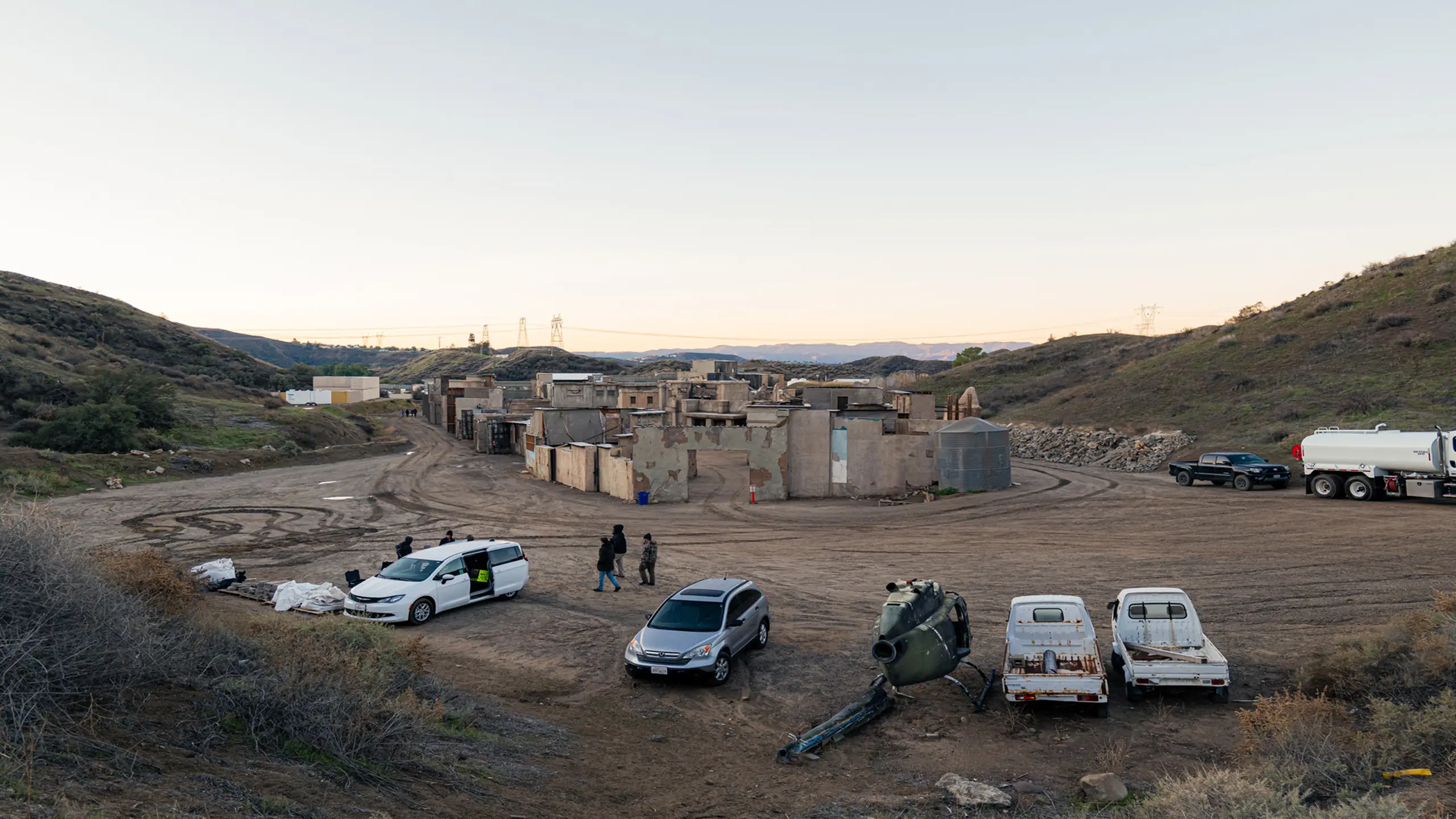
Producing a feature film is like conducting an orchestra, every instrument must be perfectly tuned, every musician must know their cue, and the conductor must maintain absolute control over the entire performance. Yet unlike a symphony, a film production doesn't have the luxury of a second take.
For independent filmmakers and established production companies alike, the question isn't whether you have enough money, it's how strategically you can deploy every dollar to maximize quality and minimize waste. The difference between a film that gets completed and one that runs out of funding mid-production often comes down to one ***critical skill***: intelligent budget allocation.
In this guide, we'll explore the proven techniques that film production companies use to deliver stunning cinema on limited budgets. Whether you're working with a shoestring budget or a seven-figure production, these principles will help you stretch your resources further while maintaining the creative vision that attracted investors in the first place.
## Your Budget. Breaking Down the Numbers
### The Three-Tier Budget System
Let's start with the fundamentals. Every production budget exists within three distinct layers, each requiring different management approaches:
1. Above-the-Line Costs These are the creative forces behind your film: your director, producer, screenwriter, and principal actors. These costs are typically fixed and non-negotiable because you're paying for talent and vision. A renowned director doesn't suddenly work for less money, and attempting to compromise here often compromises the entire project.
1. Below-the-Line Costs This category encompasses crew, equipment, locations, and post-production services. These are your variable costs, the areas where strategic negotiations and creative problem-solving can yield significant savings without sacrificing quality.
1. Contingency Reserves Industry standard practice recommends keeping 10-15% of your total budget reserved for unexpected expenses. This isn't being pessimistic; it's being realistic about the unpredictability of production environments.
### Why Traditional Budgeting Fails
Many production teams approach budgeting like accountants rather than strategists. They create a spreadsheet, assign numbers to each department, and hope for the best. This approach fails because it treats each expense category as independent rather than interconnected. A decision to shoot in a particular location affects not just location costs but also transportation, housing, permits, and security.
Smart budget management requires understanding these interconnections. When you choose to film in a tax-incentive state, you're not just saving on permit fees, you're potentially reducing crew wages due to lower cost-of-living adjustments and accessing better equipment rental rates through established local vendors.
## The Foundation of Financial Success
### The Budget Blueprint Strategy
Before a single frame is shot, your budget's success is largely determined. Pre-production planning is where smart producers earn their keep. This is when you must ask difficult questions: Do we really need that expensive actor, or does the story call for an ensemble cast? Can we tell this story in 30 days instead of 45?
Consider this scenario: A [film production](https://c-istudios.com/feature-film-mastering-and-delivery/) company needs to produce a period drama. Instead of building elaborate sets, they partner with historical societies to film in authentic locations. This decision alone can reduce set construction costs by 40-60% while actually enhancing authenticity. But making this choice requires thorough pre-production research and planning.
**Key Pre-Production Tasks:**
- Conduct detailed location scouting to identify natural resources
- Break down the script to understand true shooting day requirements
- Research equipment rental partnerships and negotiate volume discounts
- Identify tax incentives in potential filming locations
- Develop relationships with local vendors for ongoing rates
### The Script Analysis Method
Every page of your script has financial implications. A professional script breakdown identifies every element that requires budget allocation:
1. Cast requirements - How many speaking roles and background actors do you actually need?
2. Special effects and stunts - What can be practical versus digital?
3. Locations - How many unique settings does the story truly require?
4. Days needed - What's the minimum shooting schedule without compromising quality?
This analysis often reveals that scenes can be combined, eliminated, or restructured to reduce costs. The key is doing this analysis with artistic integrity, you're looking for efficient storytelling, not lazy compromises.
## Building Your Crew Within Budget Constraints
### The Hierarchy of Crew Essentials
Not all crew positions carry equal weight in determining film quality. Your cinematographer's expertise is visible in every frame, while certain administrative positions, though necessary, don't directly impact creative output.
### Tier 1. Non-Negotiable Excellence
- Director of Photography (Cinematographer)
- Sound Designer
- Production Designer
- Editor
These positions demand experienced professionals. Saving money here typically results in visible compromises that undermine production value.
### Tier 2. Flexible but Important
- Assistant Directors
- Camera Operators
- Grips and Gaffers
- Sound Technicians
These roles can include a mix of experienced professionals and talented emerging crew members. A mid-level cinematographer paired with an exceptional camera operator often produces results equal to a high-cost single hire.
### Tier 3. Trainable Positions
- Production Assistants
- Set Decorators
- Craft Services
- Administrative Staff
These roles are excellent opportunities to mentor emerging talent while reducing costs. Many universities and film schools maintain crew registries of talented students eager for experience.
## Building Your Dream Team on a Realistic Budget
The traditional approach, hiring A-list professionals for every position, only works for mega-budget productions. Smart producers build hybrid teams:
Attract one star - Hire one exceptional department head who brings credibility and expertise
Balance with rising talent - Surround them with talented mid-level professionals eager to build their [portfolio](https://c-istudios.com/our-work/)s
Invest in assistant positions - Experienced assistants can elevate less experienced leads
Create development opportunities - Position your production as a learning opportunity, attracting passionate young professionals
This approach yields several benefits: You maintain quality standards through experienced leadership, you reduce overall labor costs, you build industry relationships with emerging talent, and you contribute to the film community's development. It's budget management with purpose.
## Real Estate Strategy for Production
### The Location Decision Matrix
Choosing where to film represents one of the most significant budget decisions in any production. This isn't just about finding a pretty backdrop, it's about understanding the total cost implications of each location choice.
### Urban Filming Considerations
- Permit costs (often $500-$5,000+ daily)
- Traffic control and police presence
- Union crew requirements in major cities
- Equipment transportation through congested areas
- Limited access windows due to commercial activity
### Rural/Remote Filming Considerations
- Lower permit costs but potentially higher travel expenses
- Smaller crew pools (may require bringing in experienced staff)
- Reduced commercial infrastructure (catering, equipment rental)
- Accommodation costs for out-of-town crew
- Longer travel times between locations
### Studio/Controlled Environment Filming
- Predictable costs with fewer variables
- Weather independence (critical for tight schedules)
- Immediate access to backup equipment
- Limited authenticity and creativity constraints
- Higher base costs but potentially lower overall spend
The smartest productions use a hybrid approach, filming essential character moments and dialogue in controlled studio environments while capturing establishing shots and ambiance in authentic locations.
### Tax Incentives and Rebate Maximization
Many states and countries offer substantial tax incentives for film production, sometimes 20-40% rebates on local spending. However, accessing these incentives requires strategic planning:
1. Research early - Different jurisdictions have different requirements and timelines
1. Track spending meticulously - Compliant documentation is essential for rebate claims
1. Work with production accountants familiar with incentive structures
1. Structure spending strategically - Direct some expenses to incentive-qualifying categories
1. Coordinate with locations managers - They should understand incentive requirements
A production company that strategically chooses a location offering 30% tax incentives effectively reduces their budget by 30% on local spending, the equivalent of earning an extra $300,000 on a $1 million production.
## Maximizing Production Value on Budget
### The Equipment Rental Strategy
Professional camera equipment represents a significant expense, but equipment choices significantly impact visible production quality. The key is matching equipment to actual needs rather than defaulting to "the best available."
Digital vs. Film Stock Considerations: Modern digital cameras deliver exceptional quality at a fraction of film stock costs. High-end digital cinema cameras rent for $2,000-$5,000 weekly, while film stock and processing costs quickly exceed these amounts. For most contemporary productions, digital offers superior economics without quality compromise.
Lens Packages and Accessories: Rather than renting entire comprehensive packages, work with rental houses to assemble specific lens packages for your production needs. A well-selected smaller package often costs 40-50% less than comprehensive packages while still delivering everything your cinematographer requires.
4K vs. 2K Acquisition: While 4K has become standard, 2K acquisition remains perfectly valid for theatrical exhibition in many formats. Shooting 2K can reduce storage costs, accelerate post-production workflows, and lower equipment rental rates. The visual quality difference is imperceptible to most audiences on most screens.
## Building Technology Partnerships
Forward-thinking film production companies develop ongoing relationships with equipment rental houses, creating volume discounts and preferential rates:
1. Establish accounts with 3-5 primary vendors - Rather than shopping around for each production
1. Negotiate annual rates - Provides predictability and locks in pricing
1. Request package deals - Bundles of equipment often receive steeper discounts
1. Plan maintenance - Work with vendors to schedule preventative maintenance, often yielding rental discounts
1. Provide referrals - When you recommend vendors to other producers, request reciprocal discount rates
These relationships transform from transactional to strategic partnerships. Rental houses become invested in your productions' success, offering creative solutions to equipment challenges and sometimes providing backup equipment at no cost.
## Post-Production Optimization. Controlling Costs Beyond Set
### Strategic Editing and Assembly
Post-production represents 30-40% of typical production budgets, and it's an area where many productions experience significant cost overruns. The culprit? Incomplete pre-production planning that cascades into inefficient post-production workflows.
### Preventing Post-Production Budget Creep
Shoot for the edit - Your cinematographer and editor should communicate during production about coverage needs. Shooting excessive coverage hoping to find solutions in editing wastes both production and post-production time.
Implement daily reviews - Have rough cuts prepared daily so issues are identified immediately rather than discovered during final assembly. This prevents re-shooting and extensive reshoots.
Establish editing benchmarks - Set specific dates for rough cut completion, locked cut approval, and final mix delivery. Clear deadlines prevent indefinite refinement cycles.
Use cost-effective editorial tools - Non-linear editing software like Adobe Premiere Pro or DaVinci Resolve offers professional-grade editing at a fraction of traditional systems' costs.
### Sound Design and Music Licensing
Audio quality often exceeds visual quality in viewer perception, yet many low-budget productions compress sound budgets excessively. Smart producers protect audio quality while controlling costs:
**Sound Design Strategy:**
- Hire experienced sound designers for critical sequences
- Use sound libraries strategically for ambient and background elements
- Invest in quality recording during production (poor source material can't be fixed in post)
- Use assistant sound designers for routine mixing and editing tasks
Music Licensing Intelligence: Original scoring often exceeds budget constraints, but strategic alternatives exist:
1. Commission emerging composers, often 50-70% cheaper than established professionals with similar quality
2. Use royalty-free music libraries for non-critical sequences
3. Negotiate licensing rates for temp tracks, hoping to license the final score affordably
4. Consider underscore minimalism, sometimes silence speaks louder than music and saves costs
Color Grading Efficiencies: Professional color grading can cost $5,000-$20,000+ per day. Strategic approaches reduce costs:
- Use cost-effective colorists for initial grades, hiring A-list colorists for final sessions
- Grade efficiently, well-organized footage expedites the process
- Establish color scripts during pre-production to minimize grade time
- Use LUTs (Look-Up Tables) developed during principal photography to accelerate post-production
## Real-World Budget Management Case Studies
A film production company produced a character-driven drama with a $800,000 budget. Rather than spreading resources across numerous locations and visual effects, they:
- Concentrated 70% of the shoot in a single location (a rented house)
- Built the story around character relationships rather than external action
- Hired a cinematographer with exceptional lighting skills to create visual interest within constrained spaces
- Used strategic location moves (only 3 different primary locations) to provide visual variety
- Invested heavily in sound design and music to elevate production value
**Result:** The film premiered at a major festival and secured distribution. The production value appeared to exceed the actual budget through intelligent resource concentration.
## The Action Film With Smart Tech Choices
An action-comedy needed spectacular sequences but had a limited $2 million budget. Their approach:
- Used practical effects and locations for action sequences rather than exclusive reliance on [VFX](https://c-istudios.com/vfx-compositing-and-animation-services/)
- Shot in a tax-incentive state, reducing costs by 30%
- Built partnerships with equipment rental companies for volume discounts
- Used emerging composers for the score, reducing music costs by 60%
- Implemented strict editorial workflow to minimize post-production revision cycles
** **
**Result:** The film achieved theatrical distribution with visible production quality that exceeded industry expectations for the budget level.
## Advanced Strategies. Next-Level Budget Optimization
### Collaborative Production Models
Some of the most innovative budget solutions come from collaborative approaches:
Partner with production companies in different countries or states to access funding, tax incentives, and below-the-line cost advantages. These partnerships require careful negotiation but can significantly expand available resources.
Rather than renting equipment, some productions negotiate ownership transitions. Equipment companies sometimes sell used inventory at the production wrap, effectively converting rental costs into equipment acquisition.
Revenue-Sharing Arrangements: Instead of paying all crew and vendors upfront, some independent productions negotiate percentage deals tied to future revenue. This requires transparency and trust but aligns everyone's interests in the project's commercial success.
### Data-Driven Budget Decisions
Modern production accounting software provides real-time budget tracking. Rather than discovering budget overruns at production wrap, data-driven producers identify cost deviations immediately:
- Daily cost reports - Track actual spending versus projections
- Trend analysis - Identify departments consistently exceeding budgets
- Proactive rebalancing - Reallocate resources before problems compound
- Predictive modeling - Use early production data to forecast final budget status
Productions using sophisticated tracking systems typically experience 10-15% better budget performance than those using traditional methods.
## Building a Budget Management Culture
### Leadership and Accountability
Successful budget management requires cultural commitment from leadership. This means:
### Producer Commitment
- Regular budget review meetings where overspends are discussed honestly
- Recognition of departments meeting or beating budget targets
- Empowering the production accountant as a strategic partner, not just a record-keeper
- Making budget-conscious decisions without compromising creative quality
### Department Head Communication
- Transparent budget expectations for each department
- Regular feedback on spending performance
- Authority to make cost-saving decisions within department scope
- Recognition of creative solutions that maintain quality while reducing costs
### Crew Understanding
- Education about why budget matters beyond accounting
- Recognition that budget discipline enables production completion
- Empowerment of crew to identify cost-saving opportunities
- Transparency about production financial realities
### Continuous Improvement
Every production generates lessons about budget management:
1. Post-production analysis - Document what worked and what didn't
2. Department feedback - Collect insights from crew about optimization opportunities
3. Vendor debrief - Understand what rates and terms were actually achievable
4. Financial reconciliation - Understand variances between projections and actuals
5. Process documentation - Capture improved workflows for future productions
Productions that systematically capture and implement these lessons improve budget performance with each subsequent project.
## Budget Mastery as Competitive Advantage
Budget management in feature film production isn't about deprivation or compromise.
It's about strategy, intelligence, and creative problem-solving. The film production companies that consistently deliver exceptional cinema on limited budgets aren't the ones with unlimited resources, they're the ones that understand every financial decision's ripple effects and make choices that amplify production value.
Whether you're producing your first feature or managing multi-million-dollar productions, these principles apply: understand your true needs, build strategic partnerships, invest in areas that directly impact visible quality, leverage technology intelligently, and create a culture where budget discipline strengthens rather than restricts creative achievement.
The next masterpiece produced on an unexpected budget probably isn't being made by a major studio. It's being made by a producer somewhere who understands that constraints often generate innovation. It's being made by a team that sees budget management not as an obstacle to overcome but as an opportunity to demonstrate excellence.
At [C&I Studios](https://c-istudios.com/contact/), we've helped countless production teams achieve this balance through strategic production accounting services, premium equipment partnerships, and comprehensive post-production support.
Your production's budget is your strategic advantage. Manage it wisely, and the results speak for themselves on screen.
For more information on industry standards and best practices, visit the [American Marketing Association](https://www.ama.org/).
## Work with C&I Studios
If you are planning a project like this, our team can take it from concept to final delivery. Explore our [film and TV production](https://c-istudios.com/film-and-tv-production/), browse [our work](https://c-istudios.com/our-work/) to see how we tell brand stories, and [get in touch](https://c-istudios.com/contact/) when you are ready to start.
Originally published November 8, 2025
---
*This content is from [C&I Studios](https://c-istudios.com), a full-service production company.*
---
# Indie Vs Studio Film Production: Key Differences Every Filmmaker Should Know
> Published: November 7, 2025
> Categories: Film & TV
> Source: https://c-istudios.com/indie-vs-studio-film-production-key-differences-every-filmmaker-should-know/
---
.cib{--paper:#1b1d1f;--ink:#fff;--body:#d5d7d9;--muted:#8b9096;--line:rgba(255,255,255,.12);--thumb:#2b2e31;--card:#212426;--accent:#c02b0a;--blue:#5B8FA8;--serif:'Playfair Display',Georgia,serif;--sans:'Poppins',-apple-system,sans-serif;--measure:900px;background:var(--paper);color:var(--body);font-family:var(--sans);line-height:1.6;position:relative;left:50%;transform:translateX(-50%);width:90vw;max-width:1920px}
.cib *{box-sizing:border-box}
.cib .kicker{max-width:var(--measure);margin:58px auto 0;padding:0 22px;font-size:12.5px;font-weight:700;letter-spacing:2.5px;text-transform:uppercase;color:var(--blue)}
.cib h1.cibh1{text-wrap:balance;font-family:var(--serif);font-weight:500;font-size:clamp(46px,6vw,72px);line-height:1.08;color:var(--ink);max-width:var(--measure);margin:18px auto 0;padding:0 22px;letter-spacing:-.5px}
.cib .metarow{max-width:var(--measure);margin:20px auto 0;padding:0 22px;color:var(--muted);font-size:14px}
.cib .hero{position:relative;width:100%;height:0;padding-bottom:56.25%;overflow:hidden;margin:48px auto 0;border-top:1px solid var(--line);border-bottom:1px solid var(--line)}
.cib .hero .ph{width:100%;aspect-ratio:16/9;background:var(--thumb);border-top:1px solid var(--line);border-bottom:1px solid var(--line);display:flex;align-items:center;justify-content:center;color:#7d8288;font-size:13px;text-align:center;padding:0 20px}
.cib .body{max-width:var(--measure);margin:12px auto 0;padding:52px 22px 6px}
.cib .body.lead p:first-child{font-size:23px;line-height:1.62;color:var(--ink)}
.cib .body p{font-size:18.5px;line-height:1.85;margin:0 0 30px;color:var(--body)}
.cib .body h2{text-wrap:balance;font-family:var(--serif);font-weight:500;font-size:clamp(32px,4vw,48px);line-height:1.22;color:var(--ink);margin:70px 0 20px;letter-spacing:-.3px}
.cib .body h3{text-wrap:balance;font-family:var(--sans);font-weight:600;font-size:22px;color:var(--ink);margin:38px 0 8px}
.cib .body a{color:var(--ink);text-decoration:underline;text-decoration-color:rgba(255,255,255,.4);text-underline-offset:3px}
.cib .body a:hover{text-decoration-color:var(--ink)}
.cib .ctable{width:100%;border-collapse:collapse;margin:16px 0 30px;font-size:16px}
.cib .ctable th{background:#000;color:#fff;text-align:left;padding:10px 12px;font-family:var(--sans)}
.cib .ctable td{padding:10px 12px;border-bottom:1px solid var(--line);color:var(--body)}
.cib .inimg{position:relative;width:100%;height:0;padding-bottom:56.25%;overflow:hidden;margin:72px auto;border-top:1px solid var(--line);border-bottom:1px solid var(--line)}
.cib .inimg .ph{width:100%;aspect-ratio:16/9;background:var(--thumb);border-top:1px solid var(--line);border-bottom:1px solid var(--line);display:flex;align-items:center;justify-content:center;color:#7d8288;font-size:13px}
.cib .origpub{max-width:var(--measure);margin:60px auto 0;padding:26px 22px 0;border-top:1px solid var(--line);color:var(--muted);font-size:13.5px}
.cib .related{max-width:1200px;margin:64px auto 0;padding:34px 22px 76px}
.cib .related h3{font-family:var(--sans);font-size:12.5px;letter-spacing:2px;text-transform:uppercase;color:var(--ink);margin:0 0 24px}
.cib .grid{display:grid;grid-template-columns:repeat(3,1fr);gap:28px}
.cib .rc{background:var(--card);border:1px solid var(--line);display:block;text-decoration:none;color:inherit;transition:border-color .15s}
.cib a.rc:hover{border-color:rgba(255,255,255,.5)}
.cib .rc .thumb{position:relative;width:100%;height:0;padding-bottom:56.25%;background:var(--thumb);overflow:hidden}
.cib .rc .thumb img{position:absolute!important;top:0!important;left:0!important;width:100%!important;height:100%!important;object-fit:cover!important;margin:0!important}
.cib .rc .cc{padding:14px 15px 17px}
.cib .rc .rt{font-family:var(--serif);font-weight:500;font-size:16px;line-height:1.3;color:var(--ink);margin:0 0 6px}
.cib .rc .rm{font-size:11px;letter-spacing:1px;text-transform:uppercase;color:var(--muted)}
.cib img{margin:0!important;padding:0!important;display:block!important;vertical-align:top;max-width:100%}
.cib .hero img,.cib .inimg img{position:absolute!important;top:0!important;left:0!important;width:100%!important;height:100%!important;object-fit:cover!important;margin:0!important;padding:0!important;border:0!important;display:block!important;aspect-ratio:auto!important}
.cib .hero+.body{padding-top:36px}
@media(max-width:760px){.cib .grid{grid-template-columns:1fr}.cib .body h2{margin:52px 0 16px}.cib .body p{font-size:17.5px}.cib .inimg,.cib .hero{margin-top:44px}}
.cib .vembed{max-width:var(--measure);margin:44px auto;padding:0 22px}.cib .vembed .vwrap{position:relative;width:100%;height:0;padding-bottom:56.25%}.cib .vembed .vwrap iframe{position:absolute;top:0;left:0;width:100%;height:100%;border:0}
Film & TV
# Indie Vs Studio Film Production. Key Differences Every Filmmaker Should Know
10 min read
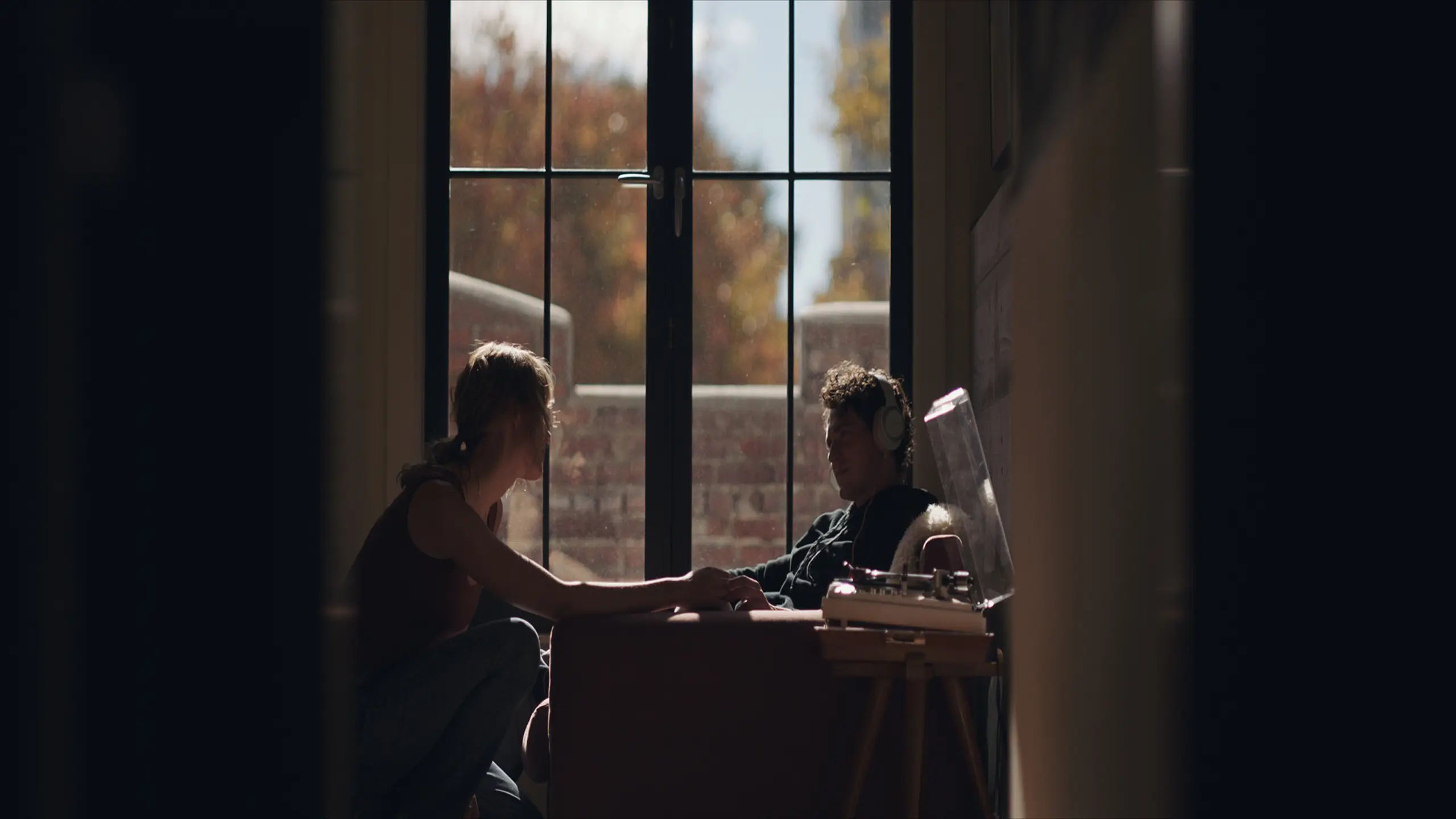
**Independent films and studio films** sit on opposite ends of the filmmaking world.
Although both share the same goal of telling a compelling story, the way each project moves from concept to delivery is very different. The scale of the team, the project goals, the creative structure, the funding, and the workflow all shift depending on whether a project is created independently or supported by a major studio.
These differences matter because every decision made during pre-production, production, and post-production reflects the realities of the ecosystem behind the project. A filmmaker preparing to develop a story for a small independent team needs a different approach than a director working within a large studio system.
## How creative control changes across indie and studio films
Creative control is one of the biggest contrasts between independent and studio productions. Each environment shapes how decisions are made, how fast the project evolves, and how much room a director or writer has to experiment.
### How independent films protect creative freedom
Independent filmmaking is often associated with more freedom. Directors and writers typically have a stronger influence on story, tone, style, and the final message. When the financial risks are smaller, teams can explore slower pacing, unconventional genre choices, or unique worlds that may not fit the commercial expectations of a major studio.
Creative freedom also means that independent teams can pivot mid-process. Without long approval chains, a director can rewrite a scene, adjust dialogue, or reshape blocking during a shoot. These projects are usually passion driven and centred around an artistic goal instead of a mass market requirement.
Working with a creative partner early through services like [Creative Development](https://c-istudios.com/creative-services/) can support this process by helping teams refine scripts, strengthen character arcs, and build a more focused story. Indie filmmakers often use this support to avoid costly revisions later.
### How studios guide creative decisions
Studio productions operate with a very different structure. Because these films often target theatrical release or global streaming platforms, creative decisions pass through executive teams, producers, and marketing departments. Every major choice must align with the business model.
A studio may adjust a character, rewrite an ending, or repurpose a theme if early screenings or market research suggest a different direction. This oversight protects the investment but also limits experimentation. Studio productions must meet expectations for broad audiences, franchise potential, and commercial performance.
This does not mean creativity disappears. It means creativity must work inside a controlled framework, where risk management is part of the workflow.
## How budgets shape filmmaking decisions
Budget is the most visible difference when comparing indie vs studio film production, and it influences everything from scheduling to equipment choices.
### Budget ranges and expectations
Independent films often work with small or moderate budgets. This means shorter shooting schedules, smaller crews, and careful planning for each scene. Filmmakers must prioritise essential shots, reuse locations, and adapt quickly when challenges appear.
Studio films operate at a completely different scale. Large budgets support long shoots, multi-unit teams, extensive sets, and high-end equipment. These resources help maintain consistency and allow for significant post-production work later.
### How budget affects risk and workflow
A smaller budget requires efficient planning. Choices such as using natural light, relying on smaller crews, or shooting handheld become part of the aesthetic as well as the strategy. Independent teams often rely heavily on pre-production to minimise surprises.
Higher budget productions can afford controlled environments, multiple takes, large lighting setups, and a full art department. If additional support is needed, using services like [Film Production Services](https://c-istudios.com/feature-film-mastering-and-delivery/) can bring in equipment, team members, and workflow structure to match the demands of a large-scale film.
Studio productions are designed to absorb delays or reshoots. Independent films do not have this flexibility.
## Workflow structure and team size
Team size determines communication speed, decision-making style, and daily operations. Indie productions and studio productions approach this very differently.
### How indie teams handle workflow
Independent films typically rely on small, multi-skilled teams. Crew members often take on multiple tasks, which strengthens collaboration but increases workload. The environment feels more personal and flexible, and decisions can be made quickly.
However, a compact team also increases pressure during production. Without specialised departments, every mistake is more costly. Indie teams rely heavily on strong communication and preparation, which is why many independent producers turn to [Video Production Services](https://c-istudios.com/video-production-services/) for structured planning or production support.
### How studio films organise workflow
Studio productions operate like large, interconnected systems. There are dedicated departments for lighting, art, sound, continuity, wardrobe, visual effects, and more. Each department has a leader, and the production moves through a defined chain of communication.
This structure reduces errors and keeps large productions on schedule. It also creates a precise hierarchy where decisions flow from director to department heads and then down to individual crew members.
With more people involved, studio workflows demand consistency, documentation, and organised pre-production. Teams planning large sets may also rely on controlled production spaces such as Studio Rental to manage lighting, set design, and sound.
## How location and environment impact production
The type of production influences where a film is shot and how much control the crew has over the environment.
### Independent films rely on flexible locations
Many independent films rely on real-world locations because building sets is expensive. They may shoot in homes, public spaces, small businesses, or low-cost rental locations. This creates a natural look but also brings challenges with noise, lighting control, and environment unpredictability.
Location limitations force independent teams to adapt quickly. They may rework blocking, change lenses, or update lighting to accommodate real-world spaces.
### Studio films use controlled environments
Studio productions make frequent use of controlled sets. These environments eliminate noise, weather problems, or unpredictable interruptions. Controlled production spaces are ideal for complex lighting setups, large builds, or scenes that demand total consistency.
This level of control requires planning and significant resources, which is why the studio model supports longer pre-production and larger art teams.
### How the edit shapes the final story
Once filming ends, the differences between indie and studio production become even more visible. Post-production defines the pace, emotional tone, and clarity of the story. The systems behind each production style directly influence how editors, sound teams, and colorists shape the final picture.
Independent projects often enter post-production with limited resources, while studio films move through coordinated departments with the support of large teams. Understanding how these paths diverge helps producers decide what they need from their post-production workflow.
## Post-production timelines and team coordination
Post-production can last a few weeks or several months depending on project scale. Each production style approaches this stage with different expectations and different stress points.
### How indie films navigate the edit
Independent films often rely on one editor or a very small team. Because time and budget are tight, the editor may also handle sound sync, rough sound cleanup, basic color, and even temporary visual effects. One person often becomes the hub of the entire finishing process.
This creates a strong stylistic fingerprint, which can be a benefit, but it also increases the risk of burnout. When deadlines shift or a scene requires significant restructuring, the editor may need to juggle multiple tools at once.
Many indie teams use outside help for specialized stages. Working with [Post-Production Services](https://c-istudios.com/post-production-services/) can provide support for color grading, sound mix, or final delivery without committing to a full in-house crew.
### How studio projects move through finishing
Studio productions rely on a highly structured timeline. Picture editing, sound design, Foley, ADR, music composition, and color grading all run through separate departments. Each department coordinates with the others through daily or weekly reviews.
This division of labor creates accuracy, consistency, and quality control. Editors may forward scenes to sound teams early. Colorists may begin grading while the edit is still in progress. Composers may receive locked sequences in advance to begin scoring.
This coordinated workflow is designed to support large-scale releases, which require clean audio, consistent color, and reliable delivery formats.
## Technical expectations and delivery formats
Studio films have strict requirements for theatrical or streaming distribution, and these requirements influence the entire finishing workflow.
### Indie delivery flexibility
Independent films often deliver for festivals, small distributors, or streaming platforms with simpler technical requirements. This gives indie creators room to prioritise creative intent over complex formatting.
However, flexibility does not remove the need for a polished master. Consistent color, clean audio, and stable exports remain essential. Indie teams frequently work with post studios to meet these requirements without investing in expensive in-house technology.
### Studio-grade specifications
Studio films prepare for strict standards including multiple formats, HDR versions, and international deliverables. These requirements involve detailed technical checks and large rendering pipelines.
Teams handling major releases rely on organised finishing workflows, and many productions partner with specialists for colour finishing and mastering. When complex formats are involved, support from Video Production Services or Post-Production Services helps maintain quality from the edit through final export.
## Distribution and marketing impact workflow
The path to the audience shapes how indie and studio films build their timelines and coordinate resources.
### Independent release paths
Most independent films aim for festivals, limited theatrical releases, or streaming platforms. This means distribution strategies tend to be flexible. Filmmakers can time releases based on festival deadlines or negotiate directly with small distributors.
Marketing usually focuses on targeted audiences, niche communities, or social campaigns. Without large promotional budgets, independent filmmakers rely heavily on press kits, trailers, and festival presence.
### Studio distribution requirements
Studio films work toward coordinated national or international release dates. Marketing departments begin planning months in advance. The production team may need to produce behind-the-scenes content, promotional interviews, TV spots, or short-form marketing pieces.
These marketing needs influence production. Additional footage may be shot for teaser materials. Teams may create variations of scenes specifically for marketing. Some projects collaborate with agencies to support Creative Development for trailers, key visuals, and campaign assets.
## Crew structures and compliance
Studio productions must adhere to union rules, safety requirements, and compliance standards that affect every department. Indie productions have more flexibility but less protection.
### Indie crew dynamics
Independent films may hire non-union crews or local teams. This reduces cost but requires producers to manage contracts, hours, and safety directly.
Small teams rely on trust and communication. Each person’s responsibilities expand beyond a narrow role. The environment is flexible, but the margin for error is small.
### Studio crew compliance
Studio films partner with union departments that follow strict guidelines for hours, equipment, overtime, and safety procedures. This structure increases cost but protects the crew and ensures consistent quality.
Departments work within defined roles. Gaffers handle lighting. Production sound mixers focus on clean audio. Wardrobe manages continuity. Every task is assigned to a specialist.
This framework supports large sets, long schedules, and controlled environments. Teams building complex productions often rely on dedicated facilities through Studio Rental to maintain control over sound, lighting, and logistics.
## Scheduling differences
Time is a decisive factor in filmmaking. Schedules shape everything else: equipment choices, crew morale, budget usage, and creative decisions.
### Indie scheduling challenges
Independent films work on compressed timelines. A small budget leaves little room for delays, which means scenes must be completed quickly. When weather changes or locations are unavailable, indie teams often rewrite on the spot or adjust the plan.
These quick adjustments can lead to creative breakthroughs but also increase stress on the crew.
### Studio timelines
Studio productions build schedules months in advance with buffers for reshoots, second-unit shoots, and complex builds. This extra time protects the project from delays and allows departments to fix issues without jeopardising the release.
The reliability of a studio schedule supports broader distribution plans and marketing needs.
## Summary comparison
The difference between indie and studio filmmaking is not about which is better. It is about scale, structure, and purpose. Every project requires a different approach depending on its goals, audience, and creative ambition.
Below is a compact reference for clarity.
### Quick comparison table
**Element**
**Independent Films**
**Studio Films**
Creative control
High for directors and writers
Shared with executives and marketing
Budget
Lower and flexible
Higher with larger resources
Workflow
Small teams, fast decisions
Large teams, structured departments
Locations
Real environments
Controlled spaces or built sets
Post-production
Limited resources
Full departments and specialists
Distribution
Festivals and platforms
Large-scale national or global release
Marketing
Targeted and minimal
Comprehensive and multi-channel
Schedule
Tight and reactive
Long and carefully planned
If you are planning a new project and need guidance on workflow, development, or finishing, exploring services such as Film Production Services, Creative Development, and Post-Production Services can help structure the entire process from concept through delivery.
For more information on scaling your next production, visit the [Video Production Services](https://c-istudios.com/video-production-services/)page to see how a professional team can support your full filmmaking workflow.
For more information on industry standards and best practices, visit the [American Marketing Association](https://www.ama.org/).
## Work with C&I Studios
If you are planning a project like this, our team can take it from concept to final delivery. Explore our [film and TV production](https://c-istudios.com/film-and-tv-production/), browse [our work](https://c-istudios.com/our-work/) to see how we tell brand stories, and [get in touch](https://c-istudios.com/contact/) when you are ready to start.
Originally published November 7, 2025
---
*This content is from [C&I Studios](https://c-istudios.com), a full-service production company.*
---
# Film Production Companies Selection: What Gets A Project Approved
> Published: November 6, 2025
> Categories: Film & TV
> Source: https://c-istudios.com/film-production-companies-selection-what-gets-a-project-approved/
---
.cib{--paper:#1b1d1f;--ink:#fff;--body:#d5d7d9;--muted:#8b9096;--line:rgba(255,255,255,.12);--thumb:#2b2e31;--card:#212426;--accent:#c02b0a;--blue:#5B8FA8;--serif:'Playfair Display',Georgia,serif;--sans:'Poppins',-apple-system,sans-serif;--measure:900px;background:var(--paper);color:var(--body);font-family:var(--sans);line-height:1.6;position:relative;left:50%;transform:translateX(-50%);width:90vw;max-width:1920px}
.cib *{box-sizing:border-box}
.cib .kicker{max-width:var(--measure);margin:58px auto 0;padding:0 22px;font-size:12.5px;font-weight:700;letter-spacing:2.5px;text-transform:uppercase;color:var(--blue)}
.cib h1.cibh1{text-wrap:balance;font-family:var(--serif);font-weight:500;font-size:clamp(46px,6vw,72px);line-height:1.08;color:var(--ink);max-width:var(--measure);margin:18px auto 0;padding:0 22px;letter-spacing:-.5px}
.cib .metarow{max-width:var(--measure);margin:20px auto 0;padding:0 22px;color:var(--muted);font-size:14px}
.cib .hero{position:relative;width:100%;height:0;padding-bottom:56.25%;overflow:hidden;margin:48px auto 0;border-top:1px solid var(--line);border-bottom:1px solid var(--line)}
.cib .hero .ph{width:100%;aspect-ratio:16/9;background:var(--thumb);border-top:1px solid var(--line);border-bottom:1px solid var(--line);display:flex;align-items:center;justify-content:center;color:#7d8288;font-size:13px;text-align:center;padding:0 20px}
.cib .body{max-width:var(--measure);margin:12px auto 0;padding:52px 22px 6px}
.cib .body.lead p:first-child{font-size:23px;line-height:1.62;color:var(--ink)}
.cib .body p{font-size:18.5px;line-height:1.85;margin:0 0 30px;color:var(--body)}
.cib .body h2{text-wrap:balance;font-family:var(--serif);font-weight:500;font-size:clamp(32px,4vw,48px);line-height:1.22;color:var(--ink);margin:70px 0 20px;letter-spacing:-.3px}
.cib .body h3{text-wrap:balance;font-family:var(--sans);font-weight:600;font-size:22px;color:var(--ink);margin:38px 0 8px}
.cib .body a{color:var(--ink);text-decoration:underline;text-decoration-color:rgba(255,255,255,.4);text-underline-offset:3px}
.cib .body a:hover{text-decoration-color:var(--ink)}
.cib .ctable{width:100%;border-collapse:collapse;margin:16px 0 30px;font-size:16px}
.cib .ctable th{background:#000;color:#fff;text-align:left;padding:10px 12px;font-family:var(--sans)}
.cib .ctable td{padding:10px 12px;border-bottom:1px solid var(--line);color:var(--body)}
.cib .inimg{position:relative;width:100%;height:0;padding-bottom:56.25%;overflow:hidden;margin:72px auto;border-top:1px solid var(--line);border-bottom:1px solid var(--line)}
.cib .inimg .ph{width:100%;aspect-ratio:16/9;background:var(--thumb);border-top:1px solid var(--line);border-bottom:1px solid var(--line);display:flex;align-items:center;justify-content:center;color:#7d8288;font-size:13px}
.cib .origpub{max-width:var(--measure);margin:60px auto 0;padding:26px 22px 0;border-top:1px solid var(--line);color:var(--muted);font-size:13.5px}
.cib .related{max-width:1200px;margin:64px auto 0;padding:34px 22px 76px}
.cib .related h3{font-family:var(--sans);font-size:12.5px;letter-spacing:2px;text-transform:uppercase;color:var(--ink);margin:0 0 24px}
.cib .grid{display:grid;grid-template-columns:repeat(3,1fr);gap:28px}
.cib .rc{background:var(--card);border:1px solid var(--line);display:block;text-decoration:none;color:inherit;transition:border-color .15s}
.cib a.rc:hover{border-color:rgba(255,255,255,.5)}
.cib .rc .thumb{position:relative;width:100%;height:0;padding-bottom:56.25%;background:var(--thumb);overflow:hidden}
.cib .rc .thumb img{position:absolute!important;top:0!important;left:0!important;width:100%!important;height:100%!important;object-fit:cover!important;margin:0!important}
.cib .rc .cc{padding:14px 15px 17px}
.cib .rc .rt{font-family:var(--serif);font-weight:500;font-size:16px;line-height:1.3;color:var(--ink);margin:0 0 6px}
.cib .rc .rm{font-size:11px;letter-spacing:1px;text-transform:uppercase;color:var(--muted)}
.cib img{margin:0!important;padding:0!important;display:block!important;vertical-align:top;max-width:100%}
.cib .hero img,.cib .inimg img{position:absolute!important;top:0!important;left:0!important;width:100%!important;height:100%!important;object-fit:cover!important;margin:0!important;padding:0!important;border:0!important;display:block!important;aspect-ratio:auto!important}
.cib .hero+.body{padding-top:36px}
@media(max-width:760px){.cib .grid{grid-template-columns:1fr}.cib .body h2{margin:52px 0 16px}.cib .body p{font-size:17.5px}.cib .inimg,.cib .hero{margin-top:44px}}
.cib .vembed{max-width:var(--measure);margin:44px auto;padding:0 22px}.cib .vembed .vwrap{position:relative;width:100%;height:0;padding-bottom:56.25%}.cib .vembed .vwrap iframe{position:absolute;top:0;left:0;width:100%;height:100%;border:0}
Film & TV
# Film Production Companies Selection. What Gets A Project Approved
8 min read
Every year, producers receive hundreds of pitches, concepts, and screenplays. Only a small number move into development, and even fewer secure full funding. The selection process is rarely random. Film companies rely on a structured evaluation system to decide which projects have the right balance of artistic value, audience potential, and financial feasibility.
Understanding this system helps writers, directors, and producers prepare their projects with more clarity. At the centre of this evaluation, film companies look closely at story strength, expected market performance, budget practicality, and team capability. These elements determine not only whether a film gets funded but also how confidently a company can support it through production and distribution.
This section breaks down the early steps and decision frameworks companies use when filtering high-potential concepts. It also shows how bolded keywords such as ***film production companies selection*** guide the discussion by signalling the core theme of this blog.
## What companies look for before reading the script
Project evaluation begins long before a full script review. Production firms scan for early indicators that show whether a concept is worth deeper consideration.
### The importance of a strong concept
A compelling idea is the first threshold. Before diving into scenes and dialogue, producers evaluate whether the concept stands out among the many submissions they receive. They look for clarity, originality, and emotional appeal. Companies measure whether the story can attract talent, interest investors, or resonate with a specific demographic.
Teams preparing a pitch often seek support through [Creative Development,](https://c-istudios.com/creative-services/) where story direction, narrative clarity, and character purpose are refined before submission.
### Evaluating audience viability
Audience viability determines whether a film has a reachable and profitable viewership. Producers review comparable titles, genre performance data, and market patterns. A concept may be creatively strong, but without an audience, the risk increases.
Companies compare the concept to trends in theatrical releases, streaming behaviour, and genre engagement.
Audience viability influences how much funding a company is willing to risk. A marketable idea with a clear target demographic often moves quickly to the next stage.
## Script evaluation and story construction
Once a project passes the initial filter, producers review the full script to understand story execution. The script is the foundation of every funded project.
### Narrative strength and pacing
Strong storytelling is a key factor in film production companies selection. Producers look for clarity, rhythm, purpose, and flow. They evaluate whether scenes drive the story or slow it. A script with unclear stakes or inconsistent pacing is less likely to receive funding.
Companies assess whether the writer understands structure. A strong narrative supports smoother production, faster editing, and a more reliable release plan.
### Character depth and emotional value
Well-built characters signal story longevity. Production companies analyse whether characters have purpose, contrast, conflict, and growth. They also examine whether these characters align with the intended audience.
Strong character writing increases the chances of securing actors, attracting investors, and building marketing momentum.
## Budget accuracy and project scale
Funding decisions depend heavily on whether the estimated budget aligns with the project’s actual needs. Film companies examine budget breakdowns before committing to development.
### Matching budget with story requirements
Production teams review whether the script requires large sets, complex stunts, or high-end visual effects. If the concept demands expensive elements but the proposed budget is unrealistic, the project becomes risky.
Companies often use services such as [Film Production Services](https://c-istudios.com/feature-film-mastering-and-delivery/) to assess whether the scale of the story can be produced within the financial limits provided.
### Evaluating cost efficiency
Cost efficiency shows whether the writer and producer understand real production constraints. Companies study how many locations the story needs, whether special equipment is required, how many shoot days are realistic, and how much post-production support will be necessary.
A script that is unnecessarily complicated increases cost without adding value. This weakens its funding potential.
## Team capability and production confidence
Film companies do not fund a script alone. They fund a team. The reliability, experience, and organisation of the team reflect how smoothly a project will move through production.
### The director’s vision
Directors with a clear vision provide confidence. A producer evaluates whether the director understands the story, communicates well, and can guide the crew effectively.
Many directors strengthen their proposals by partnering with Video Production Services to plan how scenes, lighting, and workflow will be executed.
### Reliability of the producer
Producers ensure the project stays on schedule and on budget. Companies assess their track record, organisation style, communication habits, and reputation. A strong producer signals control and discipline.
Projects with inexperienced producers face higher risk. Production companies weigh whether they can provide support or whether the risk is too high.
## Market potential and commercial forecasting
Even artistic films must demonstrate financial logic. Production companies review whether the project can recover investment through sales, streaming, festivals, or theatrical performance.
### Genre and competitive landscape
Different genres carry different risks. Thrillers, family films, and romance can perform steadily. Horror films have strong cost-to-return ratios. Large-scale sci-fi or fantasy requires high budgets and therefore higher risk.
Companies compare the script to recent releases, using industry data, festival performance, and platform trends to predict outcomes.
### International appeal
Films that can perform across regions often receive more support. Production companies evaluate whether the story, cast, or themes can attract audiences outside the home market.
Projects with cross-market value offer better financial security.
## Why packaging determines funding confidence
Once a script, concept, and budget pass early evaluation, the next step is packaging. Packaging brings together talent, financing partners, and distribution considerations into a unified pitch that signals project reliability. Film companies rely on this stage because it reduces uncertainty. A strong package proves that the team understands how to move from script to screen.
Packaging also reveals whether the film has enough market value. Companies examine cast interest, creative attachments, distribution options, and co-financing opportunities. This deeper layer of assessment shapes whether the project moves into development or stalls before pre-production begins.
## How talent attachments influence funding approval
At this stage, production companies want to know whether the right performers, directors, or department leads are willing to participate. Attached talent can significantly change the projected value of the film.
### Actor interest and market pull
An actor with a built-in fan base or a history of successful performances can elevate a project's visibility. Producers evaluate whether the cast can strengthen distribution opportunities or improve sales projections. Even preliminary interest letters can accelerate funding decisions.
Casting teams often collaborate with Creative Development partners to refine character profiles or adjust the script to attract specific performers.
### Director and key crew alignment
Directors, cinematographers, and editors also influence greenlight decisions. Production companies assess whether the creative team can deliver a film that aligns with audience expectations. They review past work, technical abilities, and consistency.
Some companies also consider whether the crew can collaborate effectively with external partners such as Film Production Services or Studio Rental if the project requires complex sets or controlled environments.
## Rights, ownership, and legal clarity
Film companies must confirm that the project is legally clean before investing. Any issue related to rights or ownership can threaten distribution deals later.
### Script rights and adaptation clearance
If the story is adapted from a book, article, or real event, companies verify that the rights are secured. Unresolved rights issues create legal risk, which reduces funding confidence.
Production lawyers review agreements to confirm ownership. A clean rights chain protects the project from legal challenges during release.
### Music, trademarks, and usage approvals
Beyond the script, producers consider whether any music, brand references, or real-world elements require clearance. These factors affect post-production and distribution. Resolving them early avoids delays.
## Financial partners and co-production opportunities
Funding rarely comes from a single source. Production companies often build financing structures that combine internal funds, third-party investors, and platform partnerships.
### Investor confidence and alignment
Investors evaluate the project's probability of success, distribution strategy, and team credibility. Producers ensure that investors have clear expectations about revenue, timelines, and risks.
Companies may offer equity stakes, profit participation, or distribution revenue shares depending on the film's scale.
### Benefits of co-productions
Co-productions allow companies to share financial responsibility and expand access to international markets. They can secure additional tax incentives, location support, or distribution commitments.
A strong co-production model also helps ensure resources during production, such as additional crew members or equipment access through [Video Production Services](https://c-istudios.com/video-production-services/).
## Distribution potential and long-term value
Film companies focus heavily on how the project will reach audiences. A strong distribution path improves the financial outlook of the film.
### Platform readiness
Companies consider whether the film is better suited for theatrical releases, streaming platforms, or festival circuits. Each path requires different workflows and marketing strategies.
Scripts with high streaming appeal may get faster approval because the audience demand is predictable. Films designed for theatres need strong cinematic elements, which may influence production planning.
### International sales and festival strategy
Production companies evaluate whether the project can be sold regionally or globally. Sales agents, festival programmers, and distributors all play a role in shaping the project's viability.
A strong festival strategy can increase visibility, especially for independent or mid-budget films.
## Internal scoring systems used by production companies
Many film companies use internal scoring sheets to compare projects and determine which ones move forward.
### H3. Key scoring criteria
Typical scoring categories include:
- Story originality
- Audience reach
- Budget practicality
- Distribution potential
- Team capability
- Creative coherence
- Long-term franchise possibility
- International selling points
Films that score well across multiple areas rise to the top of the development pipeline.
### How scoring improves decision-making
The scoring system helps production companies justify decisions and maintain consistency. By comparing metrics, teams can balance creative value with business logic. Projects with uneven scoring may move to further development only if the team can resolve missing elements.
## Summary breakdown
Film companies rely on a layered evaluation process to determine whether a project is fundable. Each stage filters out risk and highlights potential. Strong scripts, reliable teams, realistic budgets, and clear distribution value all contribute to approval.
Below is a simple reference list.
### Quick reference list
- A strong concept
- Clearly defined audience
- Solid script structure
- Realistic budget
- Experienced team
- Proven talent interest
- Clean rights and ownership
- Financial partners
- Distribution opportunities
- Scoring-based decision system
Projects that meet most of these criteria stand a better chance of moving into development.
If you want support preparing a fundable project or need professional guidance on packaging, development, or production planning, reach out through the Contact page on the [C&I Studios](https://c-istudios.com/contact/).
Our team can help you strengthen story direction, refine budgets, and structure a full production workflow that aligns with industry expectations.
## Work with C&I Studios
If you are planning a project like this, our team can take it from concept to final delivery. Explore our [film and TV production](https://c-istudios.com/film-and-tv-production/), browse [our work](https://c-istudios.com/our-work/) to see how we tell brand stories, and [get in touch](https://c-istudios.com/contact/) when you are ready to start.
Originally published November 6, 2025
---
*This content is from [C&I Studios](https://c-istudios.com), a full-service production company.*
---
# Essential TV Show Production Equipment Every Crew Needs
> Published: November 5, 2025
> Categories: Film & TV
> Source: https://c-istudios.com/essential-tv-show-production-equipment-every-crew-needs/
---
.cib{--paper:#1b1d1f;--ink:#fff;--body:#d5d7d9;--muted:#8b9096;--line:rgba(255,255,255,.12);--thumb:#2b2e31;--card:#212426;--accent:#c02b0a;--blue:#5B8FA8;--serif:'Playfair Display',Georgia,serif;--sans:'Poppins',-apple-system,sans-serif;--measure:900px;background:var(--paper);color:var(--body);font-family:var(--sans);line-height:1.6;position:relative;left:50%;transform:translateX(-50%);width:90vw;max-width:1920px}
.cib *{box-sizing:border-box}
.cib .kicker{max-width:var(--measure);margin:58px auto 0;padding:0 22px;font-size:12.5px;font-weight:700;letter-spacing:2.5px;text-transform:uppercase;color:var(--blue)}
.cib h1.cibh1{text-wrap:balance;font-family:var(--serif);font-weight:500;font-size:clamp(46px,6vw,72px);line-height:1.08;color:var(--ink);max-width:var(--measure);margin:18px auto 0;padding:0 22px;letter-spacing:-.5px}
.cib .metarow{max-width:var(--measure);margin:20px auto 0;padding:0 22px;color:var(--muted);font-size:14px}
.cib .hero{position:relative;width:100%;height:0;padding-bottom:56.25%;overflow:hidden;margin:48px auto 0;border-top:1px solid var(--line);border-bottom:1px solid var(--line)}
.cib .hero .ph{width:100%;aspect-ratio:16/9;background:var(--thumb);border-top:1px solid var(--line);border-bottom:1px solid var(--line);display:flex;align-items:center;justify-content:center;color:#7d8288;font-size:13px;text-align:center;padding:0 20px}
.cib .body{max-width:var(--measure);margin:12px auto 0;padding:52px 22px 6px}
.cib .body.lead p:first-child{font-size:23px;line-height:1.62;color:var(--ink)}
.cib .body p{font-size:18.5px;line-height:1.85;margin:0 0 30px;color:var(--body)}
.cib .body h2{text-wrap:balance;font-family:var(--serif);font-weight:500;font-size:clamp(32px,4vw,48px);line-height:1.22;color:var(--ink);margin:70px 0 20px;letter-spacing:-.3px}
.cib .body h3{text-wrap:balance;font-family:var(--sans);font-weight:600;font-size:22px;color:var(--ink);margin:38px 0 8px}
.cib .body a{color:var(--ink);text-decoration:underline;text-decoration-color:rgba(255,255,255,.4);text-underline-offset:3px}
.cib .body a:hover{text-decoration-color:var(--ink)}
.cib .ctable{width:100%;border-collapse:collapse;margin:16px 0 30px;font-size:16px}
.cib .ctable th{background:#000;color:#fff;text-align:left;padding:10px 12px;font-family:var(--sans)}
.cib .ctable td{padding:10px 12px;border-bottom:1px solid var(--line);color:var(--body)}
.cib .inimg{position:relative;width:100%;height:0;padding-bottom:56.25%;overflow:hidden;margin:72px auto;border-top:1px solid var(--line);border-bottom:1px solid var(--line)}
.cib .inimg .ph{width:100%;aspect-ratio:16/9;background:var(--thumb);border-top:1px solid var(--line);border-bottom:1px solid var(--line);display:flex;align-items:center;justify-content:center;color:#7d8288;font-size:13px}
.cib .origpub{max-width:var(--measure);margin:60px auto 0;padding:26px 22px 0;border-top:1px solid var(--line);color:var(--muted);font-size:13.5px}
.cib .related{max-width:1200px;margin:64px auto 0;padding:34px 22px 76px}
.cib .related h3{font-family:var(--sans);font-size:12.5px;letter-spacing:2px;text-transform:uppercase;color:var(--ink);margin:0 0 24px}
.cib .grid{display:grid;grid-template-columns:repeat(3,1fr);gap:28px}
.cib .rc{background:var(--card);border:1px solid var(--line);display:block;text-decoration:none;color:inherit;transition:border-color .15s}
.cib a.rc:hover{border-color:rgba(255,255,255,.5)}
.cib .rc .thumb{position:relative;width:100%;height:0;padding-bottom:56.25%;background:var(--thumb);overflow:hidden}
.cib .rc .thumb img{position:absolute!important;top:0!important;left:0!important;width:100%!important;height:100%!important;object-fit:cover!important;margin:0!important}
.cib .rc .cc{padding:14px 15px 17px}
.cib .rc .rt{font-family:var(--serif);font-weight:500;font-size:16px;line-height:1.3;color:var(--ink);margin:0 0 6px}
.cib .rc .rm{font-size:11px;letter-spacing:1px;text-transform:uppercase;color:var(--muted)}
.cib img{margin:0!important;padding:0!important;display:block!important;vertical-align:top;max-width:100%}
.cib .hero img,.cib .inimg img{position:absolute!important;top:0!important;left:0!important;width:100%!important;height:100%!important;object-fit:cover!important;margin:0!important;padding:0!important;border:0!important;display:block!important;aspect-ratio:auto!important}
.cib .hero+.body{padding-top:36px}
@media(max-width:760px){.cib .grid{grid-template-columns:1fr}.cib .body h2{margin:52px 0 16px}.cib .body p{font-size:17.5px}.cib .inimg,.cib .hero{margin-top:44px}}
.cib .vembed{max-width:var(--measure);margin:44px auto;padding:0 22px}.cib .vembed .vwrap{position:relative;width:100%;height:0;padding-bottom:56.25%}.cib .vembed .vwrap iframe{position:absolute;top:0;left:0;width:100%;height:100%;border:0}
Film & TV
# Essential TV Show Production Equipment Every Crew Needs
7 min read
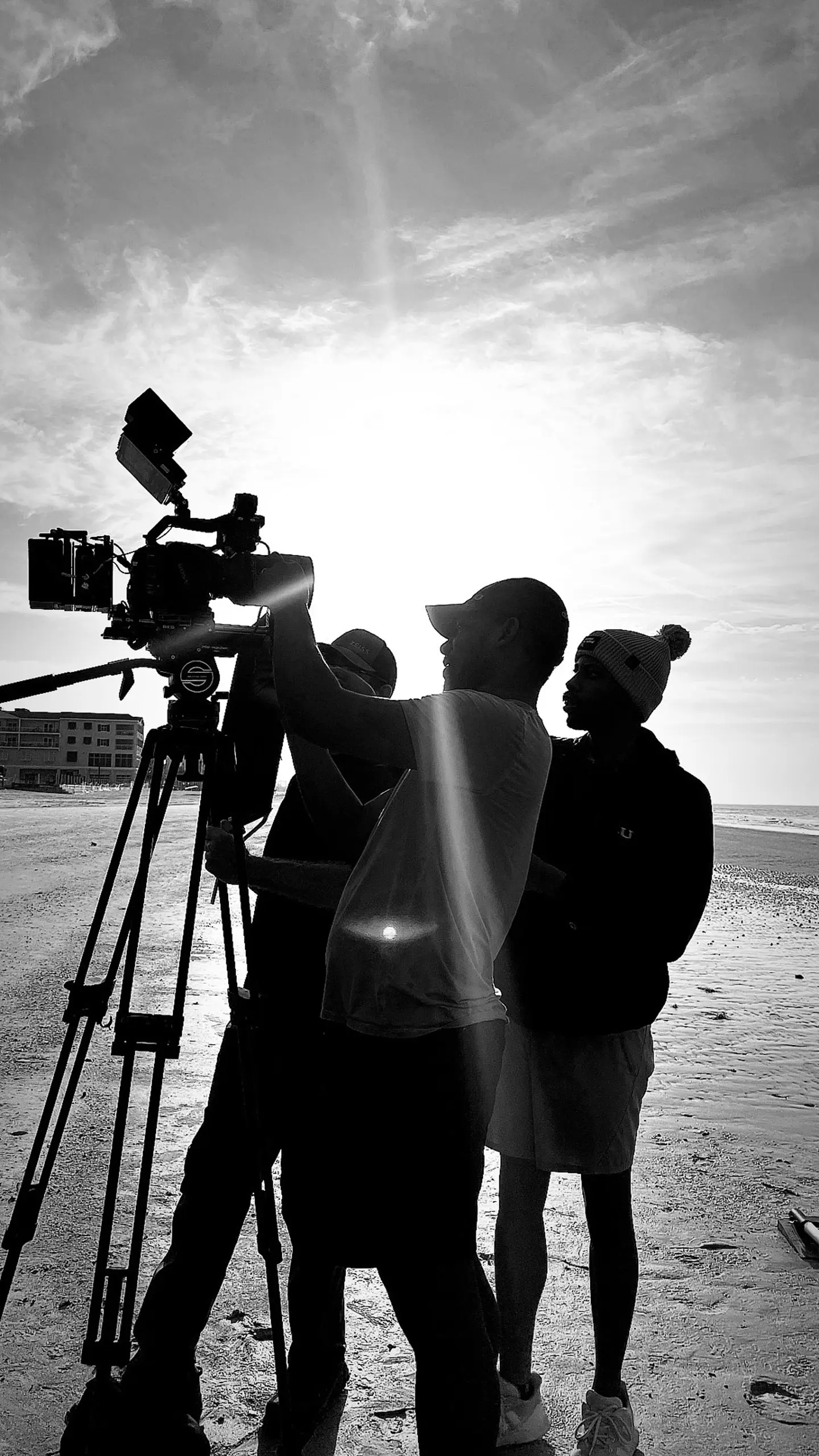
**Essential TV show production equipment every crew needs**
A television set feels fast, coordinated, and controlled only when the right tools are available. Every department relies on equipment that keeps communication clear, shots precise, timing accurate, and workflows predictable.
[TV production](https://c-istudios.com/film-and-tv-production/)s move quickly, often shooting multiple scenes a day, which means the crew needs reliable hardware and software to avoid costly interruptions.
In this guide, we explore the essential tools that help teams stay organised, creative, and consistent. The range of equipment goes far beyond cameras. It includes audio systems, lighting units, communication devices, software tools, and specialised production gear.
These items shape how smoothly a set operates from morning call time to the final wrap.
## Core camera systems that drive the visual language
Camera packages form the backbone of every TV show. They determine resolution, dynamic range, and how the story visually feels.
### Primary cameras for multi-scene shoots
Many TV shows rely on cinema-grade cameras built for long shooting days. These units handle continuous recording, fast setups, and a variety of lighting styles. Producers and directors choose camera bodies based on colour accuracy, low-light performance, and compatibility with modern lens systems.
Camera reliability reduces risk. A strong camera team may also coordinate with [Video Production Services](https://c-istudios.com/video-production-services/) to secure additional bodies, stabilisers, or backup units required for complex shooting schedules.
### Lens kits that support fast creative changes
TV crews need lenses that adapt quickly to scene requirements. Zoom lenses help capture coverage without slowing down. Prime lenses provide cleaner visual depth for dramatic scenes. Having a balanced kit speeds up the workflow and keeps the production day efficient.
## Audio tools that maintain clarity in every scene
Clear audio is essential for all genres, from dramas to live shows. Strong sound capture reduces post-production fixes and protects the pacing of the shoot.
### Microphones tailored to dialogue
Lavalier microphones work well for movement-heavy scenes, while shotgun microphones capture cleaner dialogue during controlled setups. Sound teams choose microphones based on the environment, blocking, and wardrobe.
### Mixers and wireless systems
Reliable wireless systems prevent interruptions when actors move through crowded sets. Mixers allow sound teams to balance levels and monitor multiple channels at once. These tools help maintain consistency throughout the day.
## Lighting units that shape the mood
Lighting tools define atmosphere, depth, and tone. TV shows often shoot in tight schedules, so lighting gear must be reliable and easy to reposition.
### LED panels for flexible control
LED systems offer soft, adjustable light that complements fast-paced production. They enable precise colour temperature changes and consistent output.
### Grip tools and modifiers
Flags, diffusers, reflectors, and clamps help crews refine how light falls on a scene. Effective lighting control supports stronger cinematography across episodes.
Some productions rely on controlled spaces obtained through [Studio Rental](https://c-istudios.com/contact/), which simplifies lighting control and reduces environmental challenges.
## Monitoring and on-set display tools
Monitors help directors, script supervisors, cinematographers, and producers evaluate shots in real time.
**Director and crew monitors**
High-resolution on-set monitors display accurate colours and framing. They help the team identify issues early, such as focus problems or continuity discrepancies.
**Wireless video systems**
Wireless transmission tools allow the crew to view scenes from different positions on set. This reduces movement and speeds up collaboration.
## Communication systems that keep teams coordinated
TV production thrives on clear communication. With multiple departments working simultaneously, reliable comms prevent delays.
### Headsets and intercom networks
Intercom systems keep the assistant director, camera operators, sound teams, and production assistants connected. Clear communication helps coordinate scene changes, talent movements, and equipment placement.
### Walkie-talkies for general coordination
Walkie-talkies support quick, short-range communication across the set. They are essential for managing cast arrivals, location resets, and background action timing.
## Production software and digital organisation tools
Beyond physical tools, software plays an important role in helping teams manage scripts, schedules, and continuity.
**Scheduling and call sheet platforms**
Digital scheduling tools help production managers create call sheets, track locations, and assign responsibilities. These platforms reduce confusion and maintain a consistent workflow across episodes.
**Script and continuity management software**
Script supervisors use specialised software to track lines, camera angles, wardrobe, and scene progress. These tools protect continuity and reduce errors that can disrupt the edit later.
Production teams sometimes collaborate with Creative Development to refine pre-production documents and improve organisational flow.
## Grip and rigging equipment that supports stability
Grip teams build safe structures for cameras, lights, and movement systems. Their tools preserve safety and provide creative opportunities.
**Rigs and stabilisers**
Gimbals, sliders, and dollies help capture smooth motion during dynamic sequences. These tools add visual energy to scenes without slowing down the schedule.
**Safety gear and support structures**
C-stands, sandbags, clamps, and safety cables prevent equipment accidents. These items protect both crew and gear during intense shooting days.
## On-set data management tools
Data storage and transfer are essential for multi-day productions. Losing footage can derail an entire show.
**Professional media cards and readers**
High-resolution video requires fast, reliable storage. Crews use quality media cards and readers to reduce transfer errors and protect files.
**Backup systems and verification software**
Data wranglers verify footage, back it up, and organise files for editing. This workflow ensures that post-production receives every shot in the correct format.
Editing teams may also collaborate with [Post-Production Services](https://c-istudios.com/post-production-services/) when preparing dailies or building early cuts.
## How departments stay efficient through specialised tools
TV sets rely on multiple departments working in parallel, and each team brings its own collection of tools that keep production consistent across long shooting cycles. These tools support visual design, character continuity, safety, logistics, and technical stability.
With many episodes in a season and dozens of scenes per week, having the right equipment ensures that momentum never slows down.
## Art department tools that shape the world of the show
The art team defines the physical environment of every scene. Their equipment affects texture, layout, mood, and how believable the set feels to the audience.
### Set construction essentials
Carpenters and set builders use saws, drills, fastening tools, and measurement devices to create walls, platforms, decorative structures, and functional props. Fast turnaround is normal in TV, so construction equipment must be durable and portable.
### Dressing kits for final detailing
Set dressers use bins of small tools: furniture sliders, staple guns, fabric tapes, cleaning supplies, adhesives, and arrangement tools that help them adjust objects quickly between takes. These kits keep the environment consistent across multiple shooting days.
Some shows use controlled spaces or built stages obtained through Studio Rental, which allows the art department to maintain full control over lighting, acoustics, and layout.
## Makeup and wardrobe equipment for continuity
Characters must look consistent from scene to scene, even if scenes are filmed weeks apart. Makeup and wardrobe teams depend on reliable tools to protect continuity.
### Hair and makeup tools
Brush sets, airbrush units, skincare kits, precision mirrors, portable lighting, and sterilisation tools support quick adjustments between takes. These tools maintain character identity and avoid inconsistencies that would distract viewers.
### Wardrobe tracking systems
Labelled racks, steamers, sewing kits, emergency repair tools, and continuity binders help teams store, adjust, and track clothing combinations for each episode. Modern shows often photograph every look and manage these records through digital wardrobe apps.
## Network and streaming-ready technology
TV productions designed for broadcast or streaming platforms must meet specific technical standards. These requirements influence the equipment crews bring to set.
### Quality control devices
Waveform monitors, vectorscopes, and colour consistency tools help camera teams maintain signals that meet broadcaster requirements. These devices catch exposure or tint problems before they appear in editing.
### Streaming and remote supervision tools
Video village systems now include options for remote viewing. Producers, executives, or clients can monitor takes even if they are not physically on location. This reduces decision delays and keeps communication smooth throughout the shooting day.
## Safety equipment and compliance tools
Safety is part of every TV production. Crews depend on specialised equipment to keep people and gear protected.
### Fire, electrical, and structural safety tools
Fire extinguishers, cable covers, grounded power systems, and load-rated rigging tools prevent accidents when working with lights, heavy stands, or elevated camera setups.
Personal protective equipment
Gloves, high-visibility vests, protective eyewear, and secure footwear protect grip, electrical, and construction teams. These items reduce risk during setup, teardown, and location moves.
## Tools for logistical coordination
Production offices and assistant directors keep schedules tight and crews organised. Their tools focus on planning, communication, and paperwork.
### On-set paperwork systems
Scene breakdown binders, printed sides, episode maps, and location binders help teams track where each scene belongs within the larger narrative. These tools also help the production office coordinate with department heads.
### Digital tracking and transport tools
Vehicle logs, location maps, GPS apps, inventory lists, and equipment logs support movement between sets. These systems ensure no gear is misplaced and all crew members reach locations on time.
Many productions strengthen their planning by collaborating with [Creative Development](https://c-istudios.com/creative-services/) or Film Production Services to refine logistics before the first day of shooting.
## Tools that support the editing pipeline
While editing occurs after the shoot, the quality of post-production depends heavily on tools used during production.
**Dailies preparation gear**
On-set color calibration tools, data sorting software, slate systems, and metadata entry tools support a clean handoff to the editor. These tools protect episode flow, especially for shows with tight broadcast schedules.
**Sound and picture continuity tools**
Line scripts, take trackers, and sound reports ensure that editors receive organised information. These tools save hours in post-production and reduce the risk of continuity errors.
Post teams often rely on Post-Production Services when managing large episode volumes or preparing deliverables for broadcast.
## Summary list of additional essential equipment
- Set construction tools
- Dressing and decoration kits
- Hair and makeup units
- Wardrobe continuity systems
- QC and broadcast monitors
- Remote viewing systems
- Fire and electrical safety tools
- Personal protective equipment
- Paperwork and scheduling tools
- GPS and logistics systems
- Dailies organisation tools
- Sound and picture continuity kits
If you want to strengthen your next production with reliable support, you can connect with the team through the Contact page on the [C&I Studios](https://c-istudios.com/contact/).
Our production experts can help structure equipment needs, refine planning, and support y[our work](https://c-istudios.com/our-work/)flow across every episode.
## Work with C&I Studios
If you are planning a project like this, our team can take it from concept to final delivery. Explore our [film and TV production](https://c-istudios.com/film-and-tv-production/), browse [our work](https://c-istudios.com/our-work/) to see how we tell brand stories, and [get in touch](https://c-istudios.com/contact/) when you are ready to start.
Originally published November 5, 2025
---
*This content is from [C&I Studios](https://c-istudios.com), a full-service production company.*
---
# How Location Scouting Improves TV Show Production Quality
> Published: November 4, 2025
> Categories: Film & TV
> Source: https://c-istudios.com/how-location-scouting-improves-tv-show-production-quality/
---
.cib{--paper:#1b1d1f;--ink:#fff;--body:#d5d7d9;--muted:#8b9096;--line:rgba(255,255,255,.12);--thumb:#2b2e31;--card:#212426;--accent:#c02b0a;--blue:#5B8FA8;--serif:'Playfair Display',Georgia,serif;--sans:'Poppins',-apple-system,sans-serif;--measure:900px;background:var(--paper);color:var(--body);font-family:var(--sans);line-height:1.6;position:relative;left:50%;transform:translateX(-50%);width:90vw;max-width:1920px}
.cib *{box-sizing:border-box}
.cib .kicker{max-width:var(--measure);margin:58px auto 0;padding:0 22px;font-size:12.5px;font-weight:700;letter-spacing:2.5px;text-transform:uppercase;color:var(--blue)}
.cib h1.cibh1{text-wrap:balance;font-family:var(--serif);font-weight:500;font-size:clamp(46px,6vw,72px);line-height:1.08;color:var(--ink);max-width:var(--measure);margin:18px auto 0;padding:0 22px;letter-spacing:-.5px}
.cib .metarow{max-width:var(--measure);margin:20px auto 0;padding:0 22px;color:var(--muted);font-size:14px}
.cib .hero{position:relative;width:100%;height:0;padding-bottom:56.25%;overflow:hidden;margin:48px auto 0;border-top:1px solid var(--line);border-bottom:1px solid var(--line)}
.cib .hero .ph{width:100%;aspect-ratio:16/9;background:var(--thumb);border-top:1px solid var(--line);border-bottom:1px solid var(--line);display:flex;align-items:center;justify-content:center;color:#7d8288;font-size:13px;text-align:center;padding:0 20px}
.cib .body{max-width:var(--measure);margin:12px auto 0;padding:52px 22px 6px}
.cib .body.lead p:first-child{font-size:23px;line-height:1.62;color:var(--ink)}
.cib .body p{font-size:18.5px;line-height:1.85;margin:0 0 30px;color:var(--body)}
.cib .body h2{text-wrap:balance;font-family:var(--serif);font-weight:500;font-size:clamp(32px,4vw,48px);line-height:1.22;color:var(--ink);margin:70px 0 20px;letter-spacing:-.3px}
.cib .body h3{text-wrap:balance;font-family:var(--sans);font-weight:600;font-size:22px;color:var(--ink);margin:38px 0 8px}
.cib .body a{color:var(--ink);text-decoration:underline;text-decoration-color:rgba(255,255,255,.4);text-underline-offset:3px}
.cib .body a:hover{text-decoration-color:var(--ink)}
.cib .ctable{width:100%;border-collapse:collapse;margin:16px 0 30px;font-size:16px}
.cib .ctable th{background:#000;color:#fff;text-align:left;padding:10px 12px;font-family:var(--sans)}
.cib .ctable td{padding:10px 12px;border-bottom:1px solid var(--line);color:var(--body)}
.cib .inimg{position:relative;width:100%;height:0;padding-bottom:56.25%;overflow:hidden;margin:72px auto;border-top:1px solid var(--line);border-bottom:1px solid var(--line)}
.cib .inimg .ph{width:100%;aspect-ratio:16/9;background:var(--thumb);border-top:1px solid var(--line);border-bottom:1px solid var(--line);display:flex;align-items:center;justify-content:center;color:#7d8288;font-size:13px}
.cib .origpub{max-width:var(--measure);margin:60px auto 0;padding:26px 22px 0;border-top:1px solid var(--line);color:var(--muted);font-size:13.5px}
.cib .related{max-width:1200px;margin:64px auto 0;padding:34px 22px 76px}
.cib .related h3{font-family:var(--sans);font-size:12.5px;letter-spacing:2px;text-transform:uppercase;color:var(--ink);margin:0 0 24px}
.cib .grid{display:grid;grid-template-columns:repeat(3,1fr);gap:28px}
.cib .rc{background:var(--card);border:1px solid var(--line);display:block;text-decoration:none;color:inherit;transition:border-color .15s}
.cib a.rc:hover{border-color:rgba(255,255,255,.5)}
.cib .rc .thumb{position:relative;width:100%;height:0;padding-bottom:56.25%;background:var(--thumb);overflow:hidden}
.cib .rc .thumb img{position:absolute!important;top:0!important;left:0!important;width:100%!important;height:100%!important;object-fit:cover!important;margin:0!important}
.cib .rc .cc{padding:14px 15px 17px}
.cib .rc .rt{font-family:var(--serif);font-weight:500;font-size:16px;line-height:1.3;color:var(--ink);margin:0 0 6px}
.cib .rc .rm{font-size:11px;letter-spacing:1px;text-transform:uppercase;color:var(--muted)}
.cib img{margin:0!important;padding:0!important;display:block!important;vertical-align:top;max-width:100%}
.cib .hero img,.cib .inimg img{position:absolute!important;top:0!important;left:0!important;width:100%!important;height:100%!important;object-fit:cover!important;margin:0!important;padding:0!important;border:0!important;display:block!important;aspect-ratio:auto!important}
.cib .hero+.body{padding-top:36px}
@media(max-width:760px){.cib .grid{grid-template-columns:1fr}.cib .body h2{margin:52px 0 16px}.cib .body p{font-size:17.5px}.cib .inimg,.cib .hero{margin-top:44px}}
.cib .vembed{max-width:var(--measure);margin:44px auto;padding:0 22px}.cib .vembed .vwrap{position:relative;width:100%;height:0;padding-bottom:56.25%}.cib .vembed .vwrap iframe{position:absolute;top:0;left:0;width:100%;height:100%;border:0}
Film & TV
# How Location Scouting Improves TV Show Production Quality
7 min read

In [TV production](https://c-istudios.com/film-and-tv-production/), nothing is random, especially the spaces where scenes unfold. The right environment can elevate lighting, sound, story tone, and even actor performance.
That is why teams who take location scouting seriously consistently deliver higher-quality work. This is especially true when discussing ***TV show production locations***, a core factor that influences everything from technical workflow to creative decision-making.
During early planning, production teams evaluate neighborhoods, natural landscapes, indoor spaces, and practical sets to decide what best supports the script. By doing this work upfront, they reduce on-set surprises and build a stronger foundation for later stages such as video production services, creative development, and full post-production services.
## How Locations Influence Production Value
Finding the right place is more than aesthetics. It affects real technical outcomes. A poorly chosen environment can burden the crew with problems during shooting and editing. A well-chosen one removes friction, supporting a smoother workflow across departments.
### Lighting Control Matters
Natural light can be both your best friend and your biggest challenge. Location scouts examine:
- Window direction
- Sun movement across shooting hours
- Shadows and reflective surfaces
- Practical light sources already available
If the location interacts well with lighting plans, the cinematography looks polished while saving the team time in setup and correction. This reduces strain later during color work inside [post-production services](https://c-istudios.com/post-production-services/), where editors and colorists would otherwise fix inconsistencies.
### Sound Quality Defines Watchability
Audio issues can ruin even the strongest visuals. Scouts focus on:
- Traffic patterns
- HVAC noise
- Reverb in empty rooms
- Nearby construction
- Animal or environmental sounds
Quiet locations reduce noise-reduction workload in mixing and avoid ADR sessions, leading to cleaner storytelling and less time pressure on the sound team.
## Script Requirements and Production Reality
Great scripts imagine specific moods, energies, and emotional beats. Scouting grounds those ideas in reality. When teams choose locations aligned with the script’s tone, the entire production becomes more cohesive.
### Matching Story Energy
A dramatic rooftop, a quiet alley, a bright café, each environment sets audience expectation before a single word is spoken. Scouts connect visual identity with narrative intention.
### Supporting Actor Performance
Actors naturally respond to their environment. When a location feels authentic, performances often become more grounded. This also makes continuity easier to maintain later in editing.
## Operational Efficiency on Set
Well-scouted locations save time, reduce logistical stress, and improve crew coordination. Teams must understand how each location influences equipment movement, power availability, and weather control.
Access, Space, and Crew Flow
### A location should allow
- Equipment loading without obstruction
- Space for monitors, lighting, and grip setups
- Clear pathways for camera movement
- Safe holding areas for talent
These factors help keep shooting schedules on track and support everything that happens downstream, from [content marketing](https://c-istudios.com/social-media-marketing-services/) materials captured on set to final deliverables inside video production services.
### Technical Infrastructure
**Scouts often evaluate:**
- Power sources
- Circuit stability
- Wi-Fi or signal availability for monitoring
- Parking for production vehicles
Good infrastructure prevents delays and keeps departments aligned.
## Environmental Conditions That Shape Production Decisions
A location is never just a backdrop. It is a living environment with weather patterns, structural limitations, acoustics, and lighting that constantly shift throughout the day.
Production teams rely on scouting to understand how the physical world behaves around their scenes. Without this insight, even the best creative planning can fall apart on shoot day.
Well-planned shoots rarely struggle with weather surprises or setting-based inconsistencies. This is why scouting is not just about choosing attractive TV show production locations, it is about preparing for the uncontrollable variables that influence shooting efficiency and overall production quality.
## Natural Light Patterns Throughout the Day
Unlike controlled studio environments, outdoor or semi-outdoor spaces depend entirely on the sun’s behavior. Scouts document how light changes from morning to evening:
- When shadows become harsh
- When natural light looks most flattering
- When color temperature shifts noticeably
- Which parts of the location stay usable throughout the day
This prevents crews from scheduling key scenes during poor sunlight conditions. It also eases pressure on the lighting department and reduces correction time during post-production services.
## Weather Interference and Scene Scheduling
Weather affects more than comfort. Sudden overcast skies, directional wind, temperature shifts, or humidity can cause:
- Visual mismatches between takes
- Audio disturbances
- Makeup or wardrobe complications
- Equipment safety risks
Location scouting gives teams real data on seasonal patterns, common disturbances, and likely environmental behaviors. This helps the assistant director build realistic call sheets and keeps shooting days predictable.
## Permits, Permissions, and Production Compliance
No matter how visually perfect a location seems, the shoot does not move forward without legal clearance. Scouting teams identify the governing authorities, confirm regulations, and secure the necessary permissions.
### Understanding Local Regulations
Different cities and neighborhoods have varying rules on:
- Street closures
- Drone usage
- Night shooting
- Special FX
- Public crowd control
- Parking and transport lanes
Scouts help production coordinators understand what is allowed, what requires negotiation, and what demands additional security or supervision.
### Permit Lead Times
Some permits take a day. Others take several weeks. This affects scheduling, budgeting, and scene breakdowns. A location that looks ideal on camera can become a logistical burden if the permit requirements slow down production or create legal risks.
Scouting prevents wasted time and ensures the team plans scenes around what is actually achievable within the timeline.
## Safety and Risk Assessments for Crew and Talent
Scouting teams also conduct risk assessments to guarantee a safe working environment for every department involved.
### Identifying Physical Hazards
Scouts evaluate:
- Loose flooring or unstable structures
- Narrow pathways
- Low ceilings and overhead obstructions
- Hidden water leaks
- Electrical hazards
- Slippery surfaces
Addressing these issues before shooting begins helps avoid accidents and lost shooting time.
### Emergency Access and Exit Routes
**A responsible production considers:**
- Ambulance accessibility
- Clear emergency exits
- Assembly areas
- Fire hazards
- Ventilation for smoke or effects
These details support smooth coordination and ensure the set complies with safety protocols, especially during complex moments that involve stunts, large equipment, or high crew density.
## Integrating Locations Into the Cinematic Vision
A well-scouted location enhances the director’s artistic goals. It supports the narrative and influences the stylistic identity of the show.
### Visual Themes and Color Identity
Locations contribute to the mood through natural colors and textures, concrete, metal, wood, glass, greenery, desert tones, or coastal palettes. Scouts find spaces that align with the show’s visual direction so colorists and art directors build a consistent palette, which later strengthens the final look during post-production services.
### Scene Blocking and Movement Possibilities
The way characters move tells its own story. Scouts examine how actors can naturally:
- Enter and exit the frame
- Move through hallways or corridors
- Interact with furniture and architecture
- Follow emotional beats supported by the environment
When blocking matches the physical layout, scenes feel more believable and visually engaging.
## How Scouting Strengthens Department Collaboration
Location scouting is not a standalone activity, it is the bridge between every department. It ensures the art team, lighting crew, director, assistant director, camera operators, and technical specialists all share a unified understanding of the shooting environment.
### Art and Set Design Alignment
The art department uses scouting documentation to determine which areas require set dressing, signage, prop adjustments, or texture enhancement. Good scouting also clarifies what elements cannot be altered due to building rules or safety restrictions.
Camera and Lens Planning
**Camera crews analyze:**
- Width of corridors
- Height limitations
- Possible dolly track or gimbal movement
- Drone access
- Potential lens distortion based on room size
These decisions influence the show’s visual language and prevent wasted time adjusting gear on shoot day.
### Lighting Department Coordination
Lighting teams require accurate measurements of:
- Ceiling height
- Power sources
- Window placement
- Color of surrounding surfaces
- Distance from outdoor light spill
This allows them to create accurate lighting plots in advance and avoid last-minute improvisation.
## Enhancing Sound Capture and Reducing Post-Production Pressure
Sound mixers, boom operators, and audio specialists depend heavily on location scouting. Even the most talented sound team struggles against environments that naturally introduce interference.
### Acoustic Signatures of Each Location
Every space has its own acoustic personality. Scouts record test audio to check:
- Echo and reverb intensity
- Drone-like hum from appliances
- Mechanical noises in walls
- Footstep resonance on different floors
Reducing these issues early prevents costly ADR sessions and preserves performance authenticity.
### Soundproofing Potential
Some locations can be modified with basic treatments. Others cannot. Scouts decide which spaces can be controlled enough to support dialogue-heavy scenes versus those better suited for montage-style or wide establishing shots.
## Why Location Scouting Saves Money
Contrary to what many new producers believe, scouting reduces overall budget rather than inflating it. A well-chosen location cuts costs in equipment rental, crew hours, reshoots, travel, and post-production corrections.
### Lower Reshoot Risk
Poor locations cause:
- Continuity issues
- Weather-based inconsistencies
- Audio contamination
- Lighting mismatches
All of which lead to expensive reshoots. Scouting eliminates these risks upfront.
Streamlining Post-Production Workloads
### Better locations mean
- Less color correction
- Less noise reduction
- Fewer visual effects to fix environment issues
- Shorter editing timelines
This directly improves efficiency in later stages of video production services.
## Digital Tools That Enhance the Scouting Process
Modern productions rely heavily on digital workflows to streamline location review.
High-Resolution Photo and Video References
### Scouts capture
- Multiple angles of each room
- Daylight comparisons
- Time-lapse shadows
- Audio samples
- Measurements and technical notes
These files help directors and department heads evaluate options without revisiting the location repeatedly.
### Virtual Location Walkthroughs
Some teams use:
- 3D mapping
- Virtual walkthrough apps
- Drone-based overhead imagery
These tools allow producers to plan movement, lighting, and framing without being physically present.
### Collaboration with Creative Teams
Digital documentation supports early-phase [creative development](https://c-istudios.com/creative-services/), helping teams visualize storyboards, schedule efficiently, and organize resource distribution.
## How Location Scouting Impacts Marketing, Trailers, and Behind-the-Scenes Content
Strategic locations do more than support the main production, they expand promotional potential. Many shows use their locations in trailers, teasers, and promotional work.
Visual Consistency for Marketing Materials
### When marketing teams develop
- Behind-the-scenes videos
- Short promos
- Social media snippets
- Stills for content campaigns
A great location becomes a recognizable asset. This adds value to content marketing efforts and helps support brand recognition for the production.
### Production Value That Audiences Notice
Even casual viewers can detect when a show uses strong, interesting, and visually rich locations. Real environments make a TV show feel expensive, immersive, and well-crafted, something that influences audience trust and engagement.
## Why High-End Productions Treat Scouting as a Core Priority
Prestige shows invest heavily in scouting because they know the payoff is exponential. When each location is chosen with purpose, the entire ecosystem of the show becomes more cohesive.
**Better Immersion**
Authentic, well-chosen environments help viewers emotionally connect with characters and storyline.
**Greater Efficiency**
Departments operate smoothly when they have reliable environmental data.
**Higher Production Value**
The show simply looks better, feels richer, and stands out from competitors.
If you want to elevate your next production with strategic location planning, our team can support everything from scouting to full video production services and post-production services.
Connect with us through the [Contact page](https://c-istudios.com/contact/) to start planning a shoot that captures your vision with clarity and precision.
## Work with C&I Studios
If you are planning a project like this, our team can take it from concept to final delivery. Explore our [film and TV production](https://c-istudios.com/film-and-tv-production/), browse [our work](https://c-istudios.com/our-work/) to see how we tell brand stories, and [get in touch](https://c-istudios.com/contact/) when you are ready to start.
Originally published November 4, 2025
---
*This content is from [C&I Studios](https://c-istudios.com), a full-service production company.*
---
# How Strategic Scheduling Turns TV Show Production Into a High Performance Workflow
> Published: November 2, 2025
> Categories: Film & TV
> Source: https://c-istudios.com/how-strategic-scheduling-turns-tv-show-production-into-a-high-performance-workflow/
---
.cib{--paper:#1b1d1f;--ink:#fff;--body:#d5d7d9;--muted:#8b9096;--line:rgba(255,255,255,.12);--thumb:#2b2e31;--card:#212426;--accent:#c02b0a;--blue:#5B8FA8;--serif:'Playfair Display',Georgia,serif;--sans:'Poppins',-apple-system,sans-serif;--measure:900px;background:var(--paper);color:var(--body);font-family:var(--sans);line-height:1.6;position:relative;left:50%;transform:translateX(-50%);width:90vw;max-width:1920px}
.cib *{box-sizing:border-box}
.cib .kicker{max-width:var(--measure);margin:58px auto 0;padding:0 22px;font-size:12.5px;font-weight:700;letter-spacing:2.5px;text-transform:uppercase;color:var(--blue)}
.cib h1.cibh1{text-wrap:balance;font-family:var(--serif);font-weight:500;font-size:clamp(46px,6vw,72px);line-height:1.08;color:var(--ink);max-width:var(--measure);margin:18px auto 0;padding:0 22px;letter-spacing:-.5px}
.cib .metarow{max-width:var(--measure);margin:20px auto 0;padding:0 22px;color:var(--muted);font-size:14px}
.cib .hero{position:relative;width:100%;height:0;padding-bottom:56.25%;overflow:hidden;margin:48px auto 0;border-top:1px solid var(--line);border-bottom:1px solid var(--line)}
.cib .hero .ph{width:100%;aspect-ratio:16/9;background:var(--thumb);border-top:1px solid var(--line);border-bottom:1px solid var(--line);display:flex;align-items:center;justify-content:center;color:#7d8288;font-size:13px;text-align:center;padding:0 20px}
.cib .body{max-width:var(--measure);margin:12px auto 0;padding:52px 22px 6px}
.cib .body.lead p:first-child{font-size:23px;line-height:1.62;color:var(--ink)}
.cib .body p{font-size:18.5px;line-height:1.85;margin:0 0 30px;color:var(--body)}
.cib .body h2{text-wrap:balance;font-family:var(--serif);font-weight:500;font-size:clamp(32px,4vw,48px);line-height:1.22;color:var(--ink);margin:70px 0 20px;letter-spacing:-.3px}
.cib .body h3{text-wrap:balance;font-family:var(--sans);font-weight:600;font-size:22px;color:var(--ink);margin:38px 0 8px}
.cib .body a{color:var(--ink);text-decoration:underline;text-decoration-color:rgba(255,255,255,.4);text-underline-offset:3px}
.cib .body a:hover{text-decoration-color:var(--ink)}
.cib .ctable{width:100%;border-collapse:collapse;margin:16px 0 30px;font-size:16px}
.cib .ctable th{background:#000;color:#fff;text-align:left;padding:10px 12px;font-family:var(--sans)}
.cib .ctable td{padding:10px 12px;border-bottom:1px solid var(--line);color:var(--body)}
.cib .inimg{position:relative;width:100%;height:0;padding-bottom:56.25%;overflow:hidden;margin:72px auto;border-top:1px solid var(--line);border-bottom:1px solid var(--line)}
.cib .inimg .ph{width:100%;aspect-ratio:16/9;background:var(--thumb);border-top:1px solid var(--line);border-bottom:1px solid var(--line);display:flex;align-items:center;justify-content:center;color:#7d8288;font-size:13px}
.cib .origpub{max-width:var(--measure);margin:60px auto 0;padding:26px 22px 0;border-top:1px solid var(--line);color:var(--muted);font-size:13.5px}
.cib .related{max-width:1200px;margin:64px auto 0;padding:34px 22px 76px}
.cib .related h3{font-family:var(--sans);font-size:12.5px;letter-spacing:2px;text-transform:uppercase;color:var(--ink);margin:0 0 24px}
.cib .grid{display:grid;grid-template-columns:repeat(3,1fr);gap:28px}
.cib .rc{background:var(--card);border:1px solid var(--line);display:block;text-decoration:none;color:inherit;transition:border-color .15s}
.cib a.rc:hover{border-color:rgba(255,255,255,.5)}
.cib .rc .thumb{position:relative;width:100%;height:0;padding-bottom:56.25%;background:var(--thumb);overflow:hidden}
.cib .rc .thumb img{position:absolute!important;top:0!important;left:0!important;width:100%!important;height:100%!important;object-fit:cover!important;margin:0!important}
.cib .rc .cc{padding:14px 15px 17px}
.cib .rc .rt{font-family:var(--serif);font-weight:500;font-size:16px;line-height:1.3;color:var(--ink);margin:0 0 6px}
.cib .rc .rm{font-size:11px;letter-spacing:1px;text-transform:uppercase;color:var(--muted)}
.cib img{margin:0!important;padding:0!important;display:block!important;vertical-align:top;max-width:100%}
.cib .hero img,.cib .inimg img{position:absolute!important;top:0!important;left:0!important;width:100%!important;height:100%!important;object-fit:cover!important;margin:0!important;padding:0!important;border:0!important;display:block!important;aspect-ratio:auto!important}
.cib .hero+.body{padding-top:36px}
@media(max-width:760px){.cib .grid{grid-template-columns:1fr}.cib .body h2{margin:52px 0 16px}.cib .body p{font-size:17.5px}.cib .inimg,.cib .hero{margin-top:44px}}
.cib .vembed{max-width:var(--measure);margin:44px auto;padding:0 22px}.cib .vembed .vwrap{position:relative;width:100%;height:0;padding-bottom:56.25%}.cib .vembed .vwrap iframe{position:absolute;top:0;left:0;width:100%;height:100%;border:0}
Film & TV
# How Strategic Scheduling Turns TV Show Production Into a High Performance Workflow
6 min read
Every television project, whether a multi-episode drama, an unscripted competition series, or a branded mini-series, relies on one invisible engine: the schedule. When people think of a great TV show, they rarely think about calendars, timelines, or call sheets.
This is why ***TV show production scheduling*** is not a background activity. It is a discipline that brings order, stability, and predictability to an otherwise chaotic environment. A structured schedule ensures that cast arrivals, camera setups, location access, and scene transitions happen with minimal friction.
When scheduling is weak, even talented crews struggle. Days run long, budgets inflate, continuity suffers, and editors in post production spend more time fixing preventable inconsistencies.
Conversely, strong scheduling lifts the entire pipeline, from creative development to final deliverables, especially in high-pressure video production environments where deadlines are non-negotiable.
## How a Master Production Calendar Keeps Teams Aligned
A master calendar functions as the central nervous system of the production. It outlines major milestones and ensures every department understands how their deadlines connect to the bigger picture. Even the most creative team benefits from this structure, because it frees their attention from guesswork.
### A complete master calendar typically outlines
- Script revision deadlines
- Breakdown and annotation periods
- Casting dates
- Rehearsal blocks
- Location scouting and permit approvals
- Equipment reservation windows
- Principal photography timeline
- [Post production](https://c-istudios.com/post-production-services/) start and end dates
- Delivery targets for networks or clients
This calendar is not static, it evolves. But without it, nothing else moves efficiently. Directors and cinematographers cannot build shot lists. Departments cannot plan workloads. Sound teams cannot confirm equipment needs. Editors cannot anticipate incoming footage.
Digital tools such as StudioBinder, Yamdu, and Filmustage help producers visualize timelines, share updates instantly, and automate repetitive tasks.
In modern [television production](https://c-istudios.com/film-and-tv-production/), real-time visibility matters as much as accuracy. A schedule that lives in one person’s notebook is no longer sustainable.
## The Script Breakdown. Turning Story into Strategy
The script breakdown is where creative vision becomes operational reality. It identifies what each scene requires, physically, technically, and artistically, and translates narrative beats into tangible production tasks.
### Typical breakdown elements include
- Cast requirements
- Props and hand props
- Wardrobe notes
- Makeup and hair requirements
- Vehicles or animals
- VFX and stunt cues
- Set dressing
- Special equipment
- Interior/exterior classification
- Day/night classification
These details allow producers to group scenes strategically rather than narratively. For example, a script might show a character waking up, working, and returning home, all in different parts of an episode, but the production may shoot all “home interior” scenes on the same day to reduce setup time.
A strong breakdown also reduces editing inconsistencies. Clean grouping prevents lighting mismatches, sound differences, or wardrobe continuity issues that can slow down post production later.
## Giving Structure to Unpredictable Days
Production days rarely unfold exactly as planned, but time-blocking gives teams a framework that guides momentum. It assigns specific time windows to rehearsals, blocking, shooting, resets, and media management.
### A typical structure might look like
- Early morning: blocking and camera rehearsals
- Mid-morning: primary scene setups
- Afternoon: complex dialogue or action scenes
- Late afternoon: pickups and alternate angles
- End of day: backup, metadata checks, safety review
The exact sequence varies, but the purpose is consistency. Teams know how long each phase should last, which helps reduce rushed decisions and build predictable workflows.
Time-blocking also helps protect crew energy. Without structure, departments often rush early and slow down later, or vice versa. A rhythmic day helps maintain safe, sustainable pacing, an essential element for multi-week video production schedules.
Buffer time is equally critical. Weather shifts, actor delays, equipment swaps, and lighting adjustments are all common. A smart buffer doesn’t create “free time”, it prevents emergencies.
## Where Scheduling Becomes a Shared Responsibility
A production schedule gains power when every department contributes to it. Directors bring creative timing; cinematographers outline lighting transitions; art directors explain build and tear-down times; the sound team highlights environmental obstacles; wardrobe and makeup outline turnaround requirements.
**This collaborative process makes schedules more realistic. For example:**
- A lighting change that seems minor may actually take 90 minutes.
- A costume change might require extra makeup time that wasn’t initially considered.
- A specific prop might require safety inspection before filming.
Producers use these inputs to create a schedule that respects both artistic needs and logistical constraints. It also supports [creative development](https://c-istudios.com/creative-services/), because teams can pitch ambitious ideas while understanding what is feasible within the timeline.
When departments align early, productions avoid stress later. A clear schedule reduces miscommunication, frustration, and costly reshoots.
## Location Driven Scheduling and Its Impact on Efficiency
Locations can elevate the look of a TV show, but they can also complicate timelines. Every location has unique constraints, and understanding them early prevents mid-production chaos.
### Key considerations usually include
- Time-of-day restrictions
- Permit duration
- Crowd or noise levels
- Parking and truck access
- Electrical capacity
- Travel distance from basecamp
- Weather variability
For example, a scene needing golden-hour natural light must be scheduled at a precise time. An apartment building with sound restrictions may only allow dialogue scenes during certain hours. A public street permit might expire in the afternoon, forcing the team to prioritize wide shots early.
Clustered scheduling, shooting all scenes in one location block before moving, also helps reduce travel time and equipment resets. This approach protects both pacing and budget.
## Visual Tools for High-Flexibility Planning
Production boards are essential for organizing scenes into a visual structure that crews can interpret instantly. They list scenes, locations, cast, props, and other elements in color-coded formats, making them easy to rearrange.
The value of these boards becomes clear when unexpected changes occur. If weather suddenly shifts or a cast member becomes unavailable, producers can visually identify replacement scenes that match the day’s resources. This reduces idle time and allows the team to make progress despite disruptions.
Digital production boards integrate with calendars, call sheets, and asset databases, giving everyone from assistant directors to department heads a single source of truth.
## Managing Talent Availability With High Precision
Actors are the human core of the production schedule. Even a small scheduling conflict can derail an entire shoot day. To prevent this, producers build calendars around talent availability first, then fill in other details.
### Strong talent scheduling includes
- Confirming actor commitments during pre-production
- Grouping scenes that involve the same cast
- Scheduling emotionally demanding scenes earlier in the day
- Preparing alternates for illness or unexpected delays
- Avoiding late-night heavy scenes that strain performance quality
Good talent scheduling not only protects continuity, it also protects morale. Actors give stronger performances when schedules respect their preparation windows, energy levels, and rest needs.
## The Safety Net Every Production Needs
Even the most carefully designed schedules can face surprises. That’s why mature productions treat contingency planning as a standard practice rather than a last resort.
Common contingency categories include:
- Weather disruptions
- Location access changes
- Camera or lighting equipment failure
- Cast illness
- Transportation delays
- Missing props or wardrobe pieces
Reliable forecasting tools like AccuWeather help teams anticipate weather risks before they become crises.
Strong contingency planning transforms panic into adjustment. It protects timelines, budgets, and creative consistency.
## Technology as a Scheduling Accelerator
Modern productions depend heavily on technology to manage complexity. Automation reduces human error, speeds up communication, and provides real-time clarity.
### Digital scheduling tools support
- Cloud-based call sheet distribution
- Automated reminders
- Crew availability tracking
- Calendar syncing across departments
- Geo-tagged location notes
- Risk prediction based on scene complexity
For large [video production](https://c-istudios.com/video-production-services/) environments, these tools reduce friction at every stage. They shorten turnaround times, increase accountability, and make last-minute decisions less chaotic.
AI scheduling systems can even analyze previous delays, scene durations, and logistic patterns to suggest optimized timelines.
## How Scheduling Improves Post-Production Outcomes
Good scheduling doesn’t end when the camera stops. It directly influences the speed and quality of post production, because editors depend on predictable footage delivery to begin early assembly.
### A well-structured shoot schedule improves
- Continuity between scenes
- Dialogue synchronization
- Lighting and color consistency
- Metadata organization
- Editorial efficiency
- VFX planning
When footage arrives regularly instead of in unplanned batches, editors catch issues earlier. They can request pickups, adjust sequences, and refine pacing while the cast and crew are still available.
Weak scheduling, by contrast, forces editors to solve problems the production could have prevented.
## Budget Protection Through Smarter Scheduling
Budget overruns rarely come from a single mistake, they come from accumulated inefficiencies. Good scheduling prevents cost creep by:
- Reducing overtime
- Minimizing company moves
- Preventing unnecessary equipment rental days
- Avoiding costly continuity errors
- Reducing scene resets
- Streamlining travel and logistics
This is particularly important for independent productions, where margins are thin and delays can derail entire seasons.
Budget-aware scheduling doesn’t restrict creativity, it empowers teams to pursue ambitious ideas without compromising financial health.
## Creating a Collaborative Scheduling Culture
Strong scheduling thrives in teams that value communication and transparency. When departments treat scheduling as shared responsibility rather than a production office task, everything becomes smoother.
**A collaborative production culture includes:**
- Frequent cross-department meetings
- Clear documentation
- Honest communication about constraints
- Willingness to adjust
- Respect for the overall timeline
This culture improves morale and sharpens decision-making. It allows scheduling to evolve without losing structure, which is essential for long-running video production projects.
A truly effective TV schedule isn’t just a list of dates, it’s a strategic framework that supports creativity, reduces stress, and keeps the entire team aligned from pre-production to post production. When every department understands the plan, productions finish on time, budgets stay protected, and the final episodes reflect the quality audiences expect.
If you are preparing a project and want support from professionals who understand structured, efficient video production, the team at [C&I Studios](https://c-istudios.com/contact/) can guide you from planning to final delivery.
Reach out to explore how thoughtful scheduling can transform your next production.
## Work with C&I Studios
If you are planning a project like this, our team can take it from concept to final delivery. Explore our [film and TV production](https://c-istudios.com/film-and-tv-production/), browse [our work](https://c-istudios.com/our-work/) to see how we tell brand stories, and [get in touch](https://c-istudios.com/contact/) when you are ready to start.
Originally published November 2, 2025
---
*This content is from [C&I Studios](https://c-istudios.com), a full-service production company.*
---
# Why Modern TV Productions Struggle — And What Today’s Producers Must Adapt To
> Published: November 1, 2025
> Categories: Film & TV
> Source: https://c-istudios.com/why-modern-tv-productions-struggle-and-what-todays-producers-must-adapt-to/
---
.cib{--paper:#1b1d1f;--ink:#fff;--body:#d5d7d9;--muted:#8b9096;--line:rgba(255,255,255,.12);--thumb:#2b2e31;--card:#212426;--accent:#c02b0a;--blue:#5B8FA8;--serif:'Playfair Display',Georgia,serif;--sans:'Poppins',-apple-system,sans-serif;--measure:900px;background:var(--paper);color:var(--body);font-family:var(--sans);line-height:1.6;position:relative;left:50%;transform:translateX(-50%);width:90vw;max-width:1920px}
.cib *{box-sizing:border-box}
.cib .kicker{max-width:var(--measure);margin:58px auto 0;padding:0 22px;font-size:12.5px;font-weight:700;letter-spacing:2.5px;text-transform:uppercase;color:var(--blue)}
.cib h1.cibh1{text-wrap:balance;font-family:var(--serif);font-weight:500;font-size:clamp(46px,6vw,72px);line-height:1.08;color:var(--ink);max-width:var(--measure);margin:18px auto 0;padding:0 22px;letter-spacing:-.5px}
.cib .metarow{max-width:var(--measure);margin:20px auto 0;padding:0 22px;color:var(--muted);font-size:14px}
.cib .hero{position:relative;width:100%;height:0;padding-bottom:56.25%;overflow:hidden;margin:48px auto 0;border-top:1px solid var(--line);border-bottom:1px solid var(--line)}
.cib .hero .ph{width:100%;aspect-ratio:16/9;background:var(--thumb);border-top:1px solid var(--line);border-bottom:1px solid var(--line);display:flex;align-items:center;justify-content:center;color:#7d8288;font-size:13px;text-align:center;padding:0 20px}
.cib .body{max-width:var(--measure);margin:12px auto 0;padding:52px 22px 6px}
.cib .body.lead p:first-child{font-size:23px;line-height:1.62;color:var(--ink)}
.cib .body p{font-size:18.5px;line-height:1.85;margin:0 0 30px;color:var(--body)}
.cib .body h2{text-wrap:balance;font-family:var(--serif);font-weight:500;font-size:clamp(32px,4vw,48px);line-height:1.22;color:var(--ink);margin:70px 0 20px;letter-spacing:-.3px}
.cib .body h3{text-wrap:balance;font-family:var(--sans);font-weight:600;font-size:22px;color:var(--ink);margin:38px 0 8px}
.cib .body a{color:var(--ink);text-decoration:underline;text-decoration-color:rgba(255,255,255,.4);text-underline-offset:3px}
.cib .body a:hover{text-decoration-color:var(--ink)}
.cib .ctable{width:100%;border-collapse:collapse;margin:16px 0 30px;font-size:16px}
.cib .ctable th{background:#000;color:#fff;text-align:left;padding:10px 12px;font-family:var(--sans)}
.cib .ctable td{padding:10px 12px;border-bottom:1px solid var(--line);color:var(--body)}
.cib .inimg{position:relative;width:100%;height:0;padding-bottom:56.25%;overflow:hidden;margin:72px auto;border-top:1px solid var(--line);border-bottom:1px solid var(--line)}
.cib .inimg .ph{width:100%;aspect-ratio:16/9;background:var(--thumb);border-top:1px solid var(--line);border-bottom:1px solid var(--line);display:flex;align-items:center;justify-content:center;color:#7d8288;font-size:13px}
.cib .origpub{max-width:var(--measure);margin:60px auto 0;padding:26px 22px 0;border-top:1px solid var(--line);color:var(--muted);font-size:13.5px}
.cib .related{max-width:1200px;margin:64px auto 0;padding:34px 22px 76px}
.cib .related h3{font-family:var(--sans);font-size:12.5px;letter-spacing:2px;text-transform:uppercase;color:var(--ink);margin:0 0 24px}
.cib .grid{display:grid;grid-template-columns:repeat(3,1fr);gap:28px}
.cib .rc{background:var(--card);border:1px solid var(--line);display:block;text-decoration:none;color:inherit;transition:border-color .15s}
.cib a.rc:hover{border-color:rgba(255,255,255,.5)}
.cib .rc .thumb{position:relative;width:100%;height:0;padding-bottom:56.25%;background:var(--thumb);overflow:hidden}
.cib .rc .thumb img{position:absolute!important;top:0!important;left:0!important;width:100%!important;height:100%!important;object-fit:cover!important;margin:0!important}
.cib .rc .cc{padding:14px 15px 17px}
.cib .rc .rt{font-family:var(--serif);font-weight:500;font-size:16px;line-height:1.3;color:var(--ink);margin:0 0 6px}
.cib .rc .rm{font-size:11px;letter-spacing:1px;text-transform:uppercase;color:var(--muted)}
.cib img{margin:0!important;padding:0!important;display:block!important;vertical-align:top;max-width:100%}
.cib .hero img,.cib .inimg img{position:absolute!important;top:0!important;left:0!important;width:100%!important;height:100%!important;object-fit:cover!important;margin:0!important;padding:0!important;border:0!important;display:block!important;aspect-ratio:auto!important}
.cib .hero+.body{padding-top:36px}
@media(max-width:760px){.cib .grid{grid-template-columns:1fr}.cib .body h2{margin:52px 0 16px}.cib .body p{font-size:17.5px}.cib .inimg,.cib .hero{margin-top:44px}}
.cib .vembed{max-width:var(--measure);margin:44px auto;padding:0 22px}.cib .vembed .vwrap{position:relative;width:100%;height:0;padding-bottom:56.25%}.cib .vembed .vwrap iframe{position:absolute;top:0;left:0;width:100%;height:100%;border:0}
Film & TV
# Why Modern TV Productions Struggle — And What Today’s Producers Must Adapt To
9 min read
Television has never been more competitive, or more complex. Audiences expect cinematic quality, faster releases, fresher storylines, and seamless transitions across multiple platforms.
Meanwhile, producers are juggling agency expectations, unpredictable budgets, shrinking timelines, and crews that must perform under enormous creative and operational pressure. In this environment, ***TV show production challenges*** are no longer occasional obstacles; they are an everyday reality that shapes how modern studios work.
But the increase in complexity is not just due to audience demands. Behind the scenes, producers face logistical workflows that move faster than ever. Shooting schedules must remain flexible, camera teams must move quickly while maintaining high visual quality, and post production timelines are tighter even as technical requirements multiply.
This rising complexity also influences the way agencies and production studios structure their internal pipelines. Teams that rely on outdated processes, scattered calendars, unclear communication, underdeveloped workflows, struggle to stay competitive.
## Budget Pressure and Higher Production Expectations
One of the most significant TV show production challenges today is balancing rising creative expectations with tighter budgets. Audiences are accustomed to premium streaming visuals, rich color profiles, complex set designs, multi-camera coverage, and elevated sound mixing.
This tension affects every stage of production. Writers must craft stories that fit budget constraints without sacrificing emotional impact. Directors must design shots that feel larger than their actual resources. Cinematographers push small lighting packages to their limits to achieve cinematic looks.
To manage this shift, many studios rely on tighter forecasting models, streamlined crew roles, and multi-use location strategies. Advanced planning during [creative development](https://c-istudios.com/creative-services/) helps teams design scenes that maximize impact while minimizing unnecessary cost. But even with these tactics, budget pressure remains a defining force in television today.
## Compressed Production Timelines
Fast-paced production timelines are no longer the exception, they are the standard. Streaming platforms release episodes in batches, networks demand shorter turnaround times, and marketing teams expect assets while production is still underway. This creates a domino effect across the entire pipeline.
### Compressed timelines impact
- Script revision cycles
- Casting windows
- Shooting schedules
- Editorial pacing
- Motion graphics and VFX deadlines
- Color grading and final delivery
A single delay, such as a location problem, talent unavailability, or equipment malfunction, can push the entire production off track. And because schedules are often built with minimal buffer time, recovering from these delays becomes a significant operational challenge.
In video production environments where high-volume output is required, producers face the pressure of maintaining quality while racing through daily page counts. Directors and cinematographers must move quickly without compromising visual consistency.
Editors often begin assembling scenes while the shoot is still active, which raises its own complexities in [post production](https://c-istudios.com/post-production-services/), from syncing dailies to maintaining continuity across scenes filmed out of order.
The result is a workflow where speed influences every decision, and teams must increasingly rely on sharper planning and aligned communication to survive these tightened timelines.
## Unpredictable Logistics and Location Constraints
Locations bring emotional depth and realism to a TV show, but they also introduce unpredictability. Even experienced producers encounter unexpected issues that disrupt the day’s plan.
Typical location constraints include:
- Permit limits and access restrictions
- Noise interference
- Weather changes
- Distance between multiple locations
- Infrastructure limitations (power, parking, load-in points)
- Changing local regulations or municipal rules
While these challenges have always existed, modern productions feel them more intensely because today’s schedules leave less room for correction. A location that becomes unavailable at the last minute could derail an entire shooting week.
Weather-dependent scenes may get pushed repeatedly, complicating continuity and lighting conditions. Urban filming, where noise, traffic, and population density interfere with sound and timing, adds another layer of complexity.
As a result, scouts and producers now plan with multiple contingencies. Backup locations, hybrid indoor-outdoor setups, and flexible shot lists have become standard practice. For studios with integrated video production pipelines, these adaptive workflows protect the larger creative vision while maintaining schedule integrity.
## Talent Availability and Union Requirements
Managing cast availability remains one of the most difficult TV show production challenges, especially in ensemble shows or productions with recurring guest roles.
Actors may be juggling commitments across streaming shows, feature films, or promotional duties. Aligning everyone's schedules can become a logistical puzzle.
Additionally, union regulations introduce strict rules for working hours, turnaround time, meal breaks, safety considerations, and overtime. Producers must walk a tight line, maintaining compliance while still moving quickly enough to hit creative and delivery targets.
Problems escalate when shows involve child actors, stunts, or limited-window performers. Production managers must revise call sheets frequently to keep talent within legal and contractual boundaries, often reshuffling scenes or rewriting sequences to adapt.
While modern digital scheduling tools help track availability and constraints, talent logistics remain one of the most volatile variables in television.
## Rising Technical Demands in Production and Post
As camera systems, codecs, lighting technologies, and post production workflows evolve, producers face increasingly technical expectations. Achieving a cinematic look is no longer optional, audiences notice instantly when something appears lower quality.
**Today’s productions must handle:**
- High-resolution capture (4K, 6K, or higher)
- Multi-camera setups
- Motion-control shots
- Heavy VFX integration
- Complex color grading pipelines
- Multi-format deliverables for different platforms
Each of these adds requirements for storage, equipment, crew expertise, metadata organization, and color-management workflows. Even small mistakes, such as inconsistent color profiles or improperly labeled footage, can slow down editorial teams considerably.
This creates pressure across both [video production](https://c-istudios.com/video-production-services/) and post production, where quality expectations rise continuously while timelines stay compressed.
## Maintaining Story and Visual Continuity
Continuity becomes increasingly difficult when scenes are shot out of order, over multiple weeks, and across various locations. A character’s wardrobe, emotional state, props, lighting, or blocking must align perfectly from shot to shot, even when filmed under entirely different conditions.
**Continuity challenges are amplified by:**
- Multi-unit production
- Night/day lighting changes
- Stunt sequences
- Rewrites during shooting
- Scheduling disruptions
- Cast substitutions
When continuity breaks, editors must spend significant time correcting it, sometimes requiring visual effects, color adjustments, or even additional reshoots. Strong continuity workflows reduce stress on editors, protect visual coherence, and preserve performance authenticity.
## Technology Outpacing Crew Training
The television industry is evolving faster than many crews can realistically keep up with. Cameras change yearly, lighting becomes more modular, audio workflows become more complex, and post production tools require constant skill upgrades.
Meanwhile, studios adopt new virtual production tools, motion systems, color science platforms, AI assistants, and cloud-based dailies solutions.
What used to be a stable skillset, camera operation, gaffing, editing, now requires continuous training. Crew members who excelled five years ago may find themselves navigating entirely new interfaces, color pipelines, metadata systems, and cloud transfers.
### This creates three major production challenges
**Training gaps slow down production.**
** **
A shoot can lose hours if a crew member cannot troubleshoot a new camera menu or an editor struggles with updated software.
**Inconsistent technical knowledge leads to errors.**
A single mistake, incorrect frame rate, mismatched color space, mislabeled media, can complicate the entire post production workflow.
**Studios must budget time and money for skill development.**
Without this investment, production quality suffers.
Production teams that stay ahead, by updating workflows, investing in professional development, and coordinating with experienced video production partners, protect both creative output and efficiency.
## Maintaining Creative Vision Under Operational Pressure
Every TV show begins with a creative spark, an emotion, an idea, a visual mood. But once production begins, the creative intent competes with logistical demands. Directors must balance artistic decisions with schedule limitations. Cinematographers must adapt visual language to unpredictable environments.
The tension between creativity and practicality is one of the most defining [TV show production](https://c-istudios.com/film-and-tv-production/) challenges today.
### Creative decisions are affected by
- Reduced rehearsal time
- Limited access to locations
- Compressed shooting windows
- Need for rapid scene transitions
- Budget constraints affecting set design or props
- External stakeholder expectations
As a result, creative teams must adapt quickly without losing emotional clarity. The strongest productions are those where creative intent is protected through smart planning, not sacrificed because schedules collapsed.
This is where creative development teams and production managers align closely. When both sides collaborate, they create a blueprint that respects artistic vision while still functioning inside the realities of budget, time, and logistics.
## Heavy Reliance on Multi-Unit Shooting
Multi-unit shooting has become the norm for TV, especially when deadlines are aggressive. A-camera captures principle scenes while B-camera or second unit captures inserts, b-roll, action plates, or secondary dialogue.
But multi-unit workflows come with several complications:
### Continuity risks
Different units may interpret a scene differently, leading to mismatched framing, lighting, or performance tone.
### Communication overload
Directors, DPs, script supervisors, and ADs must synchronize constantly to ensure both units capture footage that aligns stylistically.
### Increased strain on departments
Makeup, wardrobe, props, and set design must duplicate resources, maintain parallel continuity logs, and support multiple crews at once.
### Post-production sorting
Second-unit or insert footage must be organized meticulously to avoid confusion during editing.
Strong multi-unit coordination requires clear creative guidelines, robust documentation, and production teams who communicate consistently. Without these pillars, the footage becomes fragmented and inconsistent.
## Audience Expectations for Cinematic Quality
In the past, television had a different visual standard compared to cinema. Today, viewers expect the same level of polish, detail, and emotional texture they see in streaming originals or theatrical releases.
This shift creates new demands for:
- Advanced lighting design
- High-resolution capture
- More dynamic camera movement
- Precision color grading
- Thoughtful production design
- Smooth performance continuity
But these expectations do not come with longer schedules or larger budgets. Instead, crews must produce cinematic imagery under the compressed realities of television timelines.
These heightened expectations also shape post production, where editors and colorists must match scenes across multiple lighting conditions, create seamless transitions, and support the director’s emotional arc.
The pressure is real, and only efficient planning, collaboration, and workflow sophistication can meet it consistently.
## Increasing Volume of Deliverables
Years ago, a TV show might deliver one episode in one format. Today, producers must create dozens of deliverables per episode.
### Common deliverables include
- Multiple aspect ratios
- Closed captions in several languages
- Social media cutdowns
- Behind-the-scenes assets
- Teasers and trailers
- Marketing stills
- HDR and SDR versions
- Accessibility audio mixes
- Regional broadcast formats
This creates massive strain on [post production](https://c-istudios.com/post-production-services/) teams, who must track, organize, and finish every version accurately. A single asset mismatch can delay an entire release.
Additionally, studios often require pickups or reshoots after episodes are partially edited. This forces editors and producers to revisit schedules, adjust continuity, and rearrange scenes to accommodate refreshed footage.
Deliverable overload is one of the least-discussed yet most demanding modern production challenges.
## Data Management & Media Overload
[TV production](https://c-istudios.com/film-and-tv-production/)s now generate more data than ever, sometimes dozens of terabytes per episode. Multi-camera systems, high-resolution recording, and long shooting days create massive volumes of media.
### This introduces several critical challenges
- Backup management
- Metadata tagging
- Cloud syncing for distributed teams
- Editing system compatibility
- Maintaining secure storage for sensitive content
Improper media workflow leads to lost footage, corrupted files, or major delays in post production. Even simple oversights, like mislabeling a card or skipping a checksum, can cost hours of recovery work.
To manage data effectively, teams rely on media wranglers, DITs, cloud platforms, and consistently updated workflow charts. These investments ensure editors receive clean, organized assets that support rapid assembly and fine-cut pacing.
## Hybrid & Remote Collaboration Complications
Remote work has become standard in many stages of TV production. While convenient, it introduces complexities that teams must actively manage.
### Challenges include
- Editors working across different systems
- Colorists needing calibrated monitors in remote environments
- Directors reviewing cuts asynchronously
- Sound teams mixing on varied audio setups
- Fragmented communication across time zones
Cloud-based tools have improved dramatically, but they still require strong workflow discipline. Without clear naming conventions, shared folder structures, or agreed-upon communication protocols, remote collaboration can slow production significantly.
Modern video production teams who solve this challenge well build infrastructures that mirror traditional edit suites, routing feedback, versioning, approvals, and media updates seamlessly across distributed teams.
## Maintaining Crew Well-Being and Preventing Burnout
Perhaps the most important challenge facing today’s productions is crew burnout. Fast schedules, long days, multi-unit setups, limited prep time, and condensed deadlines all push teams to their limits.
### Signs of burnout appear when
- Crew members make avoidable technical mistakes
- Departments become irritable or misaligned
- Communication grows inconsistent
- Problem-solving becomes reactionary instead of proactive
Burnout affects production quality as much as any technical issue. Tired camera operators make focusing errors. Exhausted script supervisors miss continuity notes. Editors working late nights struggle to maintain scene rhythm.
Wise producers now treat well-being as part of operational excellence. A healthy crew is more efficient, more creative, and more reliable.
Modern television demands speed, precision, and exceptional storytelling, all under tighter pressures than ever before. Overcoming these TV show production challenges requires strong planning, clear communication, and partners who understand both the creative and technical realities of today’s industry.
If you want support from a team experienced in high-pressure video production, [C&I Studios](https://c-istudios.com/contact/) can help guide your project from development to final delivery with clarity, structure, and industry tested workflows.
## Work with C&I Studios
If you are planning a project like this, our team can take it from concept to final delivery. Explore our [film and TV production](https://c-istudios.com/film-and-tv-production/), browse [our work](https://c-istudios.com/our-work/) to see how we tell brand stories, and [get in touch](https://c-istudios.com/contact/) when you are ready to start.
Originally published November 1, 2025
---
*This content is from [C&I Studios](https://c-istudios.com), a full-service production company.*
---
# Why Brands Choose Video Production Companies For Social Media Marketing Success
> Published: October 28, 2025
> Categories: Commercial & Brand
> Source: https://c-istudios.com/why-brands-choose-video-production-companies-for-social-media-marketing-success/
---
.cib{--paper:#1b1d1f;--ink:#fff;--body:#d5d7d9;--muted:#8b9096;--line:rgba(255,255,255,.12);--thumb:#2b2e31;--card:#212426;--accent:#c02b0a;--blue:#5B8FA8;--serif:'Playfair Display',Georgia,serif;--sans:'Poppins',-apple-system,sans-serif;--measure:900px;background:var(--paper);color:var(--body);font-family:var(--sans);line-height:1.6;position:relative;left:50%;transform:translateX(-50%);width:90vw;max-width:1920px}
.cib *{box-sizing:border-box}
.cib .kicker{max-width:var(--measure);margin:58px auto 0;padding:0 22px;font-size:12.5px;font-weight:700;letter-spacing:2.5px;text-transform:uppercase;color:var(--blue)}
.cib h1.cibh1{text-wrap:balance;font-family:var(--serif);font-weight:500;font-size:clamp(46px,6vw,72px);line-height:1.08;color:var(--ink);max-width:var(--measure);margin:18px auto 0;padding:0 22px;letter-spacing:-.5px}
.cib .metarow{max-width:var(--measure);margin:20px auto 0;padding:0 22px;color:var(--muted);font-size:14px}
.cib .hero{position:relative;width:100%;height:0;padding-bottom:56.25%;overflow:hidden;margin:48px auto 0;border-top:1px solid var(--line);border-bottom:1px solid var(--line)}
.cib .hero .ph{width:100%;aspect-ratio:16/9;background:var(--thumb);border-top:1px solid var(--line);border-bottom:1px solid var(--line);display:flex;align-items:center;justify-content:center;color:#7d8288;font-size:13px;text-align:center;padding:0 20px}
.cib .body{max-width:var(--measure);margin:12px auto 0;padding:52px 22px 6px}
.cib .body.lead p:first-child{font-size:23px;line-height:1.62;color:var(--ink)}
.cib .body p{font-size:18.5px;line-height:1.85;margin:0 0 30px;color:var(--body)}
.cib .body h2{text-wrap:balance;font-family:var(--serif);font-weight:500;font-size:clamp(32px,4vw,48px);line-height:1.22;color:var(--ink);margin:70px 0 20px;letter-spacing:-.3px}
.cib .body h3{text-wrap:balance;font-family:var(--sans);font-weight:600;font-size:22px;color:var(--ink);margin:38px 0 8px}
.cib .body a{color:var(--ink);text-decoration:underline;text-decoration-color:rgba(255,255,255,.4);text-underline-offset:3px}
.cib .body a:hover{text-decoration-color:var(--ink)}
.cib .ctable{width:100%;border-collapse:collapse;margin:16px 0 30px;font-size:16px}
.cib .ctable th{background:#000;color:#fff;text-align:left;padding:10px 12px;font-family:var(--sans)}
.cib .ctable td{padding:10px 12px;border-bottom:1px solid var(--line);color:var(--body)}
.cib .inimg{position:relative;width:100%;height:0;padding-bottom:56.25%;overflow:hidden;margin:72px auto;border-top:1px solid var(--line);border-bottom:1px solid var(--line)}
.cib .inimg .ph{width:100%;aspect-ratio:16/9;background:var(--thumb);border-top:1px solid var(--line);border-bottom:1px solid var(--line);display:flex;align-items:center;justify-content:center;color:#7d8288;font-size:13px}
.cib .origpub{max-width:var(--measure);margin:60px auto 0;padding:26px 22px 0;border-top:1px solid var(--line);color:var(--muted);font-size:13.5px}
.cib .related{max-width:1200px;margin:64px auto 0;padding:34px 22px 76px}
.cib .related h3{font-family:var(--sans);font-size:12.5px;letter-spacing:2px;text-transform:uppercase;color:var(--ink);margin:0 0 24px}
.cib .grid{display:grid;grid-template-columns:repeat(3,1fr);gap:28px}
.cib .rc{background:var(--card);border:1px solid var(--line);display:block;text-decoration:none;color:inherit;transition:border-color .15s}
.cib a.rc:hover{border-color:rgba(255,255,255,.5)}
.cib .rc .thumb{position:relative;width:100%;height:0;padding-bottom:56.25%;background:var(--thumb);overflow:hidden}
.cib .rc .thumb img{position:absolute!important;top:0!important;left:0!important;width:100%!important;height:100%!important;object-fit:cover!important;margin:0!important}
.cib .rc .cc{padding:14px 15px 17px}
.cib .rc .rt{font-family:var(--serif);font-weight:500;font-size:16px;line-height:1.3;color:var(--ink);margin:0 0 6px}
.cib .rc .rm{font-size:11px;letter-spacing:1px;text-transform:uppercase;color:var(--muted)}
.cib img{margin:0!important;padding:0!important;display:block!important;vertical-align:top;max-width:100%}
.cib .hero img,.cib .inimg img{position:absolute!important;top:0!important;left:0!important;width:100%!important;height:100%!important;object-fit:cover!important;margin:0!important;padding:0!important;border:0!important;display:block!important;aspect-ratio:auto!important}
.cib .hero+.body{padding-top:36px}
@media(max-width:760px){.cib .grid{grid-template-columns:1fr}.cib .body h2{margin:52px 0 16px}.cib .body p{font-size:17.5px}.cib .inimg,.cib .hero{margin-top:44px}}
.cib .vembed{max-width:var(--measure);margin:44px auto;padding:0 22px}.cib .vembed .vwrap{position:relative;width:100%;height:0;padding-bottom:56.25%}.cib .vembed .vwrap iframe{position:absolute;top:0;left:0;width:100%;height:100%;border:0}
Commercial & Brand
# Why Brands Choose Video Production Companies For Social Media Marketing Success
7 min read
The rise of social media has transformed how brands communicate. Once, video production meant large sets, long timelines, and limited distribution channels like television or cinema. Today, the battlefield is digital, measured in seconds of attention, not minutes of screen time.
Modern audiences scroll through content faster than ever. That’s why companies now turn to **video production companies that create content for social media**, who specialize in building stories designed for quick, powerful impact.
These professionals don’t just film videos; they engineer digital narratives. Every second, every frame, every caption is optimized for conversion, awareness, and engagement.
### Why Businesses Are Moving Beyond In-House Teams
Many brands start their content journey with small in-house setups. A few cameras, an editor, maybe a social media intern. But soon they hit a ceiling, limited creative direction, inconsistent quality, and lack of strategic alignment across platforms.
That’s when external production partners become essential. Agencies and studios bring:
- Creative diversity: Multiple directors, editors, and strategists with unique perspectives.
- Platform fluency: Deep understanding of TikTok trends, YouTube SEO, and Instagram algorithms.
- Technical consistency: Professional lighting, audio, and post-production polish that maintains brand credibility.
### From Film Sets to Phone Screens
The storytelling process has shifted from long-form cinematic pieces to short-form, emotion-driven content. Modern production companies know how to make this transition seamless.
Instead of treating TikTok and YouTube Shorts as “lesser platforms,” they treat them as micro-narrative opportunities, each 15-second clip is part of a larger brand ecosystem. That’s why these companies are so valuable: they don’t just produce content; they orchestrate it.
## Why Social Media Requires a Different Kind of Production
Traditional video production focuses on a single objective, often a polished, high-budget outcome. Social media production, however, demands speed, adaptability, and storytelling that feels both authentic and dynamic.
### Platform Specific Optimization
Every platform speaks a different language. Video production companies that create content for social media understand these nuances deeply:
- YouTube: Viewers expect depth, authority, and cinematic pacing.
- TikTok: Users crave immediacy, humor, and cultural relevance.
- Instagram Reels: Visual storytelling with quick emotional payoffs.
- LinkedIn: Credibility and insight-driven content for professional audiences.
Each format has a different “scroll stop” moment, and skilled production teams know how to trigger it.
### The Power of Hook-First Storytelling
The first few seconds determine everything. Without an immediate hook, even the best-produced video fails.
That’s why successful studios build hooks during pre-production, testing concepts, storyboards, and even opening lines before filming. The goal: make someone stop scrolling.
Some proven hook types include:
- A surprising statement (“You’re doing your TikToks wrong, here’s why.”)
- A relatable visual moment.
- A single emotional cue that connects instantly (laughter, shock, curiosity).
By designing videos with strong entry points, these companies ensure maximum retention and watch time, the ultimate algorithmic currency.
## What Video Production Companies Actually Do for Social Media
When clients hear “production company,” they often imagine cameras and editing software. But modern studios function like content engines, covering the entire journey from concept to analytics.
### Pre-Production Strategy
Before a single frame is shot, planning begins. Here’s what typically happens behind the scenes:
- Audience mapping: Identifying who the content is for and what platform they use most.
- Script and storyboard: Aligning creative concepts with brand goals.
- Scheduling: Planning shoot days, influencer collaborations, and seasonal campaigns.
- Trend forecasting: Analyzing which formats and hashtags are gaining traction across social networks.
This phase ensures that the content feels native to the platform, not repurposed or generic.
### Production Capturing the Moment
This is where the creative meets the technical. A professional studio handles everything from lighting and framing to pacing and continuity.
A typical on-set workflow includes:
- Multiple camera setups for multi-platform output.
- Vertical and horizontal framing captured simultaneously.
- Creative direction that balances authenticity with brand polish.
The result? One shoot can yield 10-15 different videos, each formatted for specific platforms.
### Post Production and Optimization
Once filming is done, the magic of editing begins. This stage transforms raw footage into social-ready content.
Tasks often include:
- Editing and color grading for consistency.
- Captioning and subtitle overlays for accessibility.
- Aspect ratio conversions for cross-platform compatibility.
- Sound mixing to balance voice, background music, and effects.
- Versioning (15-sec, 30-sec, and 1-min edits) for different ad placements.
This ensures that a single piece of content lives and performs effectively across all major platforms.
## How Production Companies Adapt to Each Platform
The best video production companies that create content for social media don’t apply a one-size-fits-all model. They understand that context defines performance.
### YouTube Depth and Discovery
YouTube rewards authority and storytelling depth. For this platform, production companies focus on:
- Search-optimized scripting using natural keywords and metadata.
- Episode-based structure to encourage binge-watching.
- Professional lighting and color to enhance perceived credibility.
- Branded intros and outros for consistent recall.
YouTube videos often serve as the “anchor content” from which shorter clips are repurposed for TikTok and Instagram.
### TikTok Speed, Trends, and Personality
TikTok demands speed, spontaneity, and cultural fluency. The platform’s short-form nature means the editing rhythm and performance style must be precise.
Production teams prioritize:
- Quick hooks within the first two seconds.
- Trend alignment without losing brand identity.
- Text overlays and emojis for clarity in muted viewing environments.
- UGC-inspired visuals that feel organic rather than over-produced.
This is where the “planned authenticity” principle applies, professional visuals that still feel real.
### Instagram and LinkedIn, Micro Storytelling and Trust
For Instagram, Reels and carousel videos help brands connect visually. For LinkedIn, thought leadership and behind-the-scenes narratives build authority.
Studios often create both simultaneously:
- For Instagram: polished visuals, lifestyle shots, and quick transitions.
- For LinkedIn: conversational edits, subtitles, and authenticity over glamour.
The blend of emotional appeal and professional insight turns viewers into long-term followers.
## The Multi Format Content Strategy
Modern production companies don’t just deliver one polished film. They deliver entire content ecosystems designed to perform across different touchpoints.
### The One-Shoot, Many Edits Model
To maximize ROI, production teams capture multiple shots in one session, wide, close, vertical, horizontal. Later, editors craft these into dozens of platform-specific pieces.
Example workflow:
1. One YouTube interview → Cut into:
- A 10-minute YouTube video.
- Three 60-second TikToks.
- Five Instagram Reels.
- A short LinkedIn highlight reel.
1. Each version optimized for tone, caption, and CTA.
This efficiency turns a single shoot into a month’s worth of brand-consistent content.
### Data Driven Creative Decisions
Production isn’t guesswork anymore. Every edit is backed by analytics.
Studios track metrics like:
- Average watch time per platform.
- Drop-off points in videos.
- Thumbnail click-through rates.
- Conversion data from CTAs.
Those insights then feed back into pre-production, forming a closed creative loop that improves campaign performance over time.
## Turning Social Video Into a Long Term Strategy
In the current content economy, short-term campaigns fade fast. The brands that win on YouTube, TikTok, and Instagram are those that treat social video as a long-term strategy, one powered by video production companies that create content for social media and guided by data.
These studios do more than film, they help brands build ecosystems of repeatable, scalable video content that adapts to each platform’s algorithm while maintaining brand consistency.
### From Campaigns to Content Systems
Every video becomes part of a larger system. Instead of creating one “viral” post, production teams plan months ahead:
- Editorial calendars map weekly video drops.
- Cross-platform scripts ensure messages stay consistent.
- Style frameworks unify color, tone, and typography across assets.
- Analytics feedback loops help refine ideas after every posting cycle.
This approach mirrors how agencies like C&I Studios operate, treating social storytelling as a structured process, not a guessing game.
## ROI of Social Media Video
Every business wants to know one thing, is this investment worth it?
The short answer: yes, when it’s strategic. The long answer involves metrics, iteration, and the right creative partnership.
According to HubSpot’s 2025 State of Marketing Report, brands using short-form video on social media see 2x higher engagement rates and 54% better recall compared to static posts. That’s because modern audiences don’t just watch video, they retain it.
### Metrics That Matter
Top-tier video production companies that create content for social media track these core KPIs:
- Watch-through rate (WTR): Measures how long audiences stay engaged.
- Click-through rate (CTR): Shows how effective your video is at driving action.
- Engagement per impression: Tracks quality of attention, not just views.
- Conversion ratio: Determines how video contributes to leads or sales.
Professional studios interpret this data to refine scripts, hooks, and even thumbnail design. For example, if viewers drop off before 6 seconds, editors tighten the pacing or add dynamic intros.
### Turning Analytics Into Creative Fuel
Analytics aren’t just numbers, they’re storytelling tools. At [C&I Studios](https://c-istudios.com/), creative teams sit alongside analysts to study what resonates. This collaboration ensures that future content isn’t based on guesswork but on proven viewer behavior.
When one brand’s TikTok campaign performed 38% above average engagement, the team reverse-engineered why: fast-paced dialogue, close framing, and text overlays drove retention. Those learnings shaped future edits, a real-world example of creativity informed by metrics.
## How Social Media Production Differs from Traditional Video
Unlike commercials or TV spots, social content needs to feel personal, spontaneous, and adaptive. Traditional video production focuses on perfection; social video focuses on connection.
### Key Differences
Aspect
Traditional Video
Social Media Video
Timeline
Weeks or months
Days or hours
Goal
Cinematic storytelling
Real-time engagement
Format
Horizontal, long-form
Vertical, short-form
Audience Expectation
High polish
Authentic tone
Success Metric
Broadcast reach
Engagement + retention
That’s why brands that rely solely on corporate-style production often underperform online. The content looks beautiful but doesn’t connect. Modern video production companies that create content for social media bridge that gap, balancing professional quality with the authenticity users crave.
## Case Insight How Scalable Video Boosts Growth
A lifestyle brand partnered with a full-service production studio to overhaul its social presence. The studio built a system that turned one monthly shoot into over 30 deliverables, including TikTok snippets, YouTube Shorts, and Instagram Reels.
Within six months:
- Average engagement increased by 142%.
- Audience retention grew by 37%.
- Paid ad conversion costs dropped by 28%.
This kind of performance uplift isn’t accidental. It comes from strategic pre-production, audience insight, and cross-platform optimization, the hallmarks of an expert production partner.
## Overcoming Common Social Video Challenges
Even the best ideas can fail without proper execution. Let’s address a few recurring challenges that production teams help brands solve.
### Challenge 1 Inconsistent Quality
When every platform post looks different, audiences lose trust. A unified production approach standardizes lighting, tone, and editing, so your brand always “feels” the same.
### Challenge 2 Time Pressure
Social video demands speed. Studios use template-based editing workflows and on-site capture systems to deliver finished videos within hours, not weeks.
### Challenge 3 Low Retention
If audiences stop watching early, it’s usually because of slow pacing or unclear messaging. Expert editors craft micro-hooks in the first 3 seconds to keep users watching through the end.
### Challenge 4 Lack of Analytics
Without insight, content stagnates. Partner studios use tools like Sprout Social and Google Analytics to track performance, refine creative direction, and reallocate ad spend toward top-performing formats (source).
### The Future of Social Video Production
The next evolution of content isn’t just about visuals, it’s about integration. As AI tools automate editing and captioning, production companies are shifting focus toward creative strategy, personalization, and storytelling.
### Trends Defining 2025
- AI-Assisted Editing: Faster post-production, consistent branding.
- Personalized Videos: Dynamic templates that adapt messaging by audience.
- Hybrid Shoots: One filming day, multi-format output for all channels.
- Performance Data Loops: Using audience analytics to script future videos.
The future belongs to those who combine artistry with insight, and full-service studios like C&I Studios are already leading that shift.
## Building Sustainable Creative Partnerships
Great video content doesn’t come from luck or one viral post. It comes from strategy, collaboration, and consistent execution.
Partnering with video production companies that create content for social media allows brands to scale storytelling without sacrificing quality. By uniting creative direction, analytics, and marketing strategy, they ensure that every frame moves both the viewer and the business forward.
If you’re ready to turn your content ideas into a measurable growth engine, explore C&I Studios’ [Video Production Services](https://c-istudios.com/video-production-services/) to see how expert storytelling, marketing insight, and data-driven creativity come together.
## Work with C&I Studios
If you are planning a project like this, our team can take it from concept to final delivery. Explore our [video production services](https://c-istudios.com/video-production-services/), browse [our work](https://c-istudios.com/our-work/) to see how we tell brand stories, and [get in touch](https://c-istudios.com/contact/) when you are ready to start.
Originally published October 28, 2025
---
*This content is from [C&I Studios](https://c-istudios.com), a full-service production company.*
---
# The Key Questions Every Brand Should Ask Before Choosing a Video Production Partner
> Published: October 26, 2025
> Categories: Commercial & Brand
> Source: https://c-istudios.com/the-key-questions-every-brand-should-ask-before-choosing-a-video-production-partner/
---
.cib{--paper:#1b1d1f;--ink:#fff;--body:#d5d7d9;--muted:#8b9096;--line:rgba(255,255,255,.12);--thumb:#2b2e31;--card:#212426;--accent:#c02b0a;--blue:#5B8FA8;--serif:'Playfair Display',Georgia,serif;--sans:'Poppins',-apple-system,sans-serif;--measure:900px;background:var(--paper);color:var(--body);font-family:var(--sans);line-height:1.6;position:relative;left:50%;transform:translateX(-50%);width:90vw;max-width:1920px}
.cib *{box-sizing:border-box}
.cib .kicker{max-width:var(--measure);margin:58px auto 0;padding:0 22px;font-size:12.5px;font-weight:700;letter-spacing:2.5px;text-transform:uppercase;color:var(--blue)}
.cib h1.cibh1{text-wrap:balance;font-family:var(--serif);font-weight:500;font-size:clamp(46px,6vw,72px);line-height:1.08;color:var(--ink);max-width:var(--measure);margin:18px auto 0;padding:0 22px;letter-spacing:-.5px}
.cib .metarow{max-width:var(--measure);margin:20px auto 0;padding:0 22px;color:var(--muted);font-size:14px}
.cib .hero{position:relative;width:100%;height:0;padding-bottom:56.25%;overflow:hidden;margin:48px auto 0;border-top:1px solid var(--line);border-bottom:1px solid var(--line)}
.cib .hero .ph{width:100%;aspect-ratio:16/9;background:var(--thumb);border-top:1px solid var(--line);border-bottom:1px solid var(--line);display:flex;align-items:center;justify-content:center;color:#7d8288;font-size:13px;text-align:center;padding:0 20px}
.cib .body{max-width:var(--measure);margin:12px auto 0;padding:52px 22px 6px}
.cib .body.lead p:first-child{font-size:23px;line-height:1.62;color:var(--ink)}
.cib .body p{font-size:18.5px;line-height:1.85;margin:0 0 30px;color:var(--body)}
.cib .body h2{text-wrap:balance;font-family:var(--serif);font-weight:500;font-size:clamp(32px,4vw,48px);line-height:1.22;color:var(--ink);margin:70px 0 20px;letter-spacing:-.3px}
.cib .body h3{text-wrap:balance;font-family:var(--sans);font-weight:600;font-size:22px;color:var(--ink);margin:38px 0 8px}
.cib .body a{color:var(--ink);text-decoration:underline;text-decoration-color:rgba(255,255,255,.4);text-underline-offset:3px}
.cib .body a:hover{text-decoration-color:var(--ink)}
.cib .ctable{width:100%;border-collapse:collapse;margin:16px 0 30px;font-size:16px}
.cib .ctable th{background:#000;color:#fff;text-align:left;padding:10px 12px;font-family:var(--sans)}
.cib .ctable td{padding:10px 12px;border-bottom:1px solid var(--line);color:var(--body)}
.cib .inimg{position:relative;width:100%;height:0;padding-bottom:56.25%;overflow:hidden;margin:72px auto;border-top:1px solid var(--line);border-bottom:1px solid var(--line)}
.cib .inimg .ph{width:100%;aspect-ratio:16/9;background:var(--thumb);border-top:1px solid var(--line);border-bottom:1px solid var(--line);display:flex;align-items:center;justify-content:center;color:#7d8288;font-size:13px}
.cib .origpub{max-width:var(--measure);margin:60px auto 0;padding:26px 22px 0;border-top:1px solid var(--line);color:var(--muted);font-size:13.5px}
.cib .related{max-width:1200px;margin:64px auto 0;padding:34px 22px 76px}
.cib .related h3{font-family:var(--sans);font-size:12.5px;letter-spacing:2px;text-transform:uppercase;color:var(--ink);margin:0 0 24px}
.cib .grid{display:grid;grid-template-columns:repeat(3,1fr);gap:28px}
.cib .rc{background:var(--card);border:1px solid var(--line);display:block;text-decoration:none;color:inherit;transition:border-color .15s}
.cib a.rc:hover{border-color:rgba(255,255,255,.5)}
.cib .rc .thumb{position:relative;width:100%;height:0;padding-bottom:56.25%;background:var(--thumb);overflow:hidden}
.cib .rc .thumb img{position:absolute!important;top:0!important;left:0!important;width:100%!important;height:100%!important;object-fit:cover!important;margin:0!important}
.cib .rc .cc{padding:14px 15px 17px}
.cib .rc .rt{font-family:var(--serif);font-weight:500;font-size:16px;line-height:1.3;color:var(--ink);margin:0 0 6px}
.cib .rc .rm{font-size:11px;letter-spacing:1px;text-transform:uppercase;color:var(--muted)}
.cib img{margin:0!important;padding:0!important;display:block!important;vertical-align:top;max-width:100%}
.cib .hero img,.cib .inimg img{position:absolute!important;top:0!important;left:0!important;width:100%!important;height:100%!important;object-fit:cover!important;margin:0!important;padding:0!important;border:0!important;display:block!important;aspect-ratio:auto!important}
.cib .hero+.body{padding-top:36px}
@media(max-width:760px){.cib .grid{grid-template-columns:1fr}.cib .body h2{margin:52px 0 16px}.cib .body p{font-size:17.5px}.cib .inimg,.cib .hero{margin-top:44px}}
.cib .vembed{max-width:var(--measure);margin:44px auto;padding:0 22px}.cib .vembed .vwrap{position:relative;width:100%;height:0;padding-bottom:56.25%}.cib .vembed .vwrap iframe{position:absolute;top:0;left:0;width:100%;height:100%;border:0}
Commercial & Brand
# The Key Questions Every Brand Should Ask Before Choosing a Video Production Partner
9 min read
Every impressive video begins long before the first camera rolls. The real success factor lies in how you choose the team behind it, and that choice depends on what you ask. The smartest clients use the discovery call not to shop for prices but to reveal alignment, clarity, and trust.
Knowing the** right questions to ask before hiring a video production agency** helps you evaluate more than creative flair; it exposes how the agency thinks, plans, and collaborates. Well-structured questions turn vague promises into measurable standards.
They separate storytellers from service providers.
## The mindset behind smart questioning
When evaluating agencies, many brands ask: “How much will it cost?” or “When can it be delivered?”, both necessary, yet surface-level. Smart questioning digs deeper. It tests whether the agency can understand your audience, integrate with your marketing funnel, and translate goals into creative action.
Think of your questions as a lens: each one clarifies a different part of the agency’s process, from strategic thinking to post-production discipline. The goal is not to interrogate but to identify a partner who speaks your business language fluently.
## Start with purpose. How will you connect this video to our marketing goals?
A professional agency should begin by linking creative ideas to strategy. If they cannot articulate that connection, the final product risks becoming visual noise.
### What to listen for
- They ask about your conversion funnel or brand KPIs before discussing visuals.
- They explain how different video types serve distinct goals, awareness, nurture, or retention.
- They propose measurable success indicators such as engagement rate or cost per view.
Studios like[C&I Studios](https://c-istudios.com/creative-marketing-services/) build campaigns backward from the outcome, ensuring story, tone, and platform all reinforce your marketing architecture.
## Walk me through your workflow from concept to delivery
A mature agency has a defined process. It reduces risk, controls cost, and keeps communication consistent.
### A clear workflow should include
1. Discovery and research: understanding your brand voice and audience.
2. Creative development: scripting, storyboarding, and visual references.
3. Production planning: location, talent, and technical logistics.
4. Post-production: editing, color, motion graphics, and sound.
5. Delivery and optimization: versions for social, web, and paid media.
If the agency cannot outline these steps with confidence, expect confusion later. A good partner makes the process transparent and measurable from day one.
## How do you ensure our message feels authentic?
In a market saturated with content, authenticity wins. Ask how the agency discovers emotional truths in your brand narrative.
### Red-flag responses
- “We’ll make it look cinematic.” (Style over substance.)
- “We can copy what worked for others.” (Lack of brand specificity.)
- “We’ll improvise on set.” (Absence of planning discipline.)
Authenticity comes from insight, the agency’s ability to translate your purpose into story. Look for evidence of research, interview prep, and empathy in their approach.
## Who makes final decisions on tone, pacing, and messaging?
Many projects fail because decision rights are undefined. You need clarity on who shapes creative direction versus who manages logistics.
### Best-practice response indicators
- The agency defines clear creative leadership roles (director, producer, copy lead).
- They explain how client approvals are built into the workflow.
- They reference previous experiences balancing artistic freedom with brand guidelines.
A transparent decision matrix prevents creative bottlenecks and protects the message from dilution.
## What research do you do on our target viewers?
Effective videos are not designed for everyone, they are designed for someone.
Ask the agency how they gather insight on demographics, behaviors, and emotional triggers.
### Expect specific answers
- Audience personas or journey mapping.
- Data references from platforms like YouTube Analytics or Google Trends.
- Benchmark studies or proprietary research.
If they rely solely on intuition, your campaign will, too.
C&I Studios’[Video Production Services](https://c-istudios.com/video-production-services/) integrate marketing data early, ensuring every scene is grounded in audience reality.
## How do you manage budgets, revisions, and unexpected changes?
Budgets test integrity. Clear agencies present detailed scopes, not vague quotes.
### Strong partners will
- Break costs into line items (pre-production, production, post).
- Explain revision limits and potential overage scenarios.
- Offer written change-order policies to prevent surprise invoices.
Budget honesty builds long-term trust. Agencies that avoid specifics often struggle to maintain consistency when challenges arise.
## How will our teams communicate during the project?
Communication defines momentum. Ask which platforms they use for updates, email, project dashboards, or weekly check-ins.
**Look for**
- A single point of contact managing all communication.
- Scheduled review cycles after each milestone.
- Cloud-based file sharing and version control for transparency.
Strong communication eliminates ambiguity and ensures your internal team can focus on strategy, not micromanagement.
## What happens when something goes wrong on set?
Every production faces challenges, weather, scheduling, or technical errors. The difference between professional and unprepared agencies lies in how they respond.
Signs of maturity
- They can share real-world recovery stories.
- They explain backup equipment, alternate crew, or contingency budgets.
- They remain calm while describing problems, confidence born of experience.
You are not seeking perfection; you are assessing preparedness.
## How do you make videos that stay relevant after launch?
Strong agencies design content that ages gracefully. Ask how they plan for modular reuse or repurposing across platforms.
### Ideal answers
- Shooting in 4K+ for long-term quality retention.
- Planning evergreen narratives adaptable to future campaigns.
- Capturing B-roll for social edits or brand archives.
A forward-thinking production partner protects your investment by future-proofing content.
## How do you integrate video into a wider campaign?
A video without distribution strategy is a painting in a locked room. Ask how the agency aligns creative work with your paid media, SEO, or email strategy.
**High-performing agencies will**
- Discuss audience segmentation and platform behavior.
- Coordinate timelines with ad-buying or social scheduling teams.
- Provide multiple versions for each platform (vertical, horizontal, silent autoplay).
C&I Studios merges these disciplines under one umbrella in its[Creative Marketing Services](https://c-istudios.com/creative-marketing-services/), where strategists, producers, and editors work as one team to connect art with analytics.
## How do you measure success after delivery?
Without post-launch analysis, creativity cannot evolve. Ask how the agency reports results.
### Good reporting includes
- Engagement metrics (watch time, drop-off rate).
- Conversion impact (leads, sales, or brand-search volume).
- Platform analytics summaries with improvement suggestions.
Professionals reference tools like Google Analytics, YouTube Studio, or proprietary dashboards. This data closes the loop between storytelling and performance.
The IAB 2024 Digital Video Ad Spend Report confirms that brands using measurable post-production analysis achieve up to 35 percent better ROI than those that treat video as a one-off asset.
## Who owns the raw footage and project files?
This is one of the most overlooked yet critical questions. Ensure you understand usage rights and licensing terms.
### Always clarify
- Who owns raw footage after final payment.
- Whether future edits require additional fees.
- Duration of music or stock-footage licenses.
Ethical agencies are transparent about ownership. If terms are ambiguous, request them in writing.
## How to Read an Agency’s Answers (and Spot the Right Partner)
Asking smart questions is easy. Interpreting the answers, that’s where clients often fail.
Most agencies sound convincing on the surface. They’ll talk about “cinematic quality,” “cutting-edge tech,” or “end-to-end creative solutions.” But if you listen carefully, you’ll notice something deeper: real professionals reveal structure, logic, and clarity. Pretenders hide behind adjectives.
The trick is to listen for how an agency thinks, not just what it says. Below are practical ways to interpret those conversations and decide if you’re dealing with a genuine creative partner or just another production vendor.
## Listen for Curiosity, Not Confidence
The best agencies don’t jump straight into pitching ideas. They ask you questions first, about your goals, your audience, your brand tone. Curiosity is their default language.
If an agency answers every question with instant certainty, without first understanding your context, that’s a warning sign.
- A confident agency says, “Here’s how we’d adapt this for your situation.”
- A careless one says, “We always do it this way.”
Creativity without curiosity is just repetition.
When you meet a team that pauses to learn before selling, you’ve found a partner who values outcomes over ego.
## Look for Process, Not Personality
Good chemistry matters, but a structured process matters more.
Agencies that talk about “energy” or “vision” but can’t explain how they deliver results usually rely on luck. Professionals describe frameworks, from creative development to distribution, that ensure consistency.
### If they can outline
- Pre-production milestones
- Feedback loops
- File delivery methods
- Timelines for approvals
Then you’re talking to a team that’s done this before and can replicate success reliably.
[C&I Studios’ Production Framework](https://c-istudios.com/video-production-services/) is a good example, combining creative agility with disciplined project management, so no stage feels chaotic or improvised.
## Notice How They Handle Constraints
Every brand has limitations, time, budget, brand guidelines, or compliance rules. The wrong agency treats these as restrictions. The right one sees them as creative boundaries to play within.
When you bring up constraints, listen carefully:
- Do they get defensive or dismissive?
- Do they immediately suggest practical solutions?
- Do they show examples of adapting under pressure?
Strong agencies describe past challenges with calm precision, how they adjusted shoot schedules, optimized edits, or found alternate locations without compromising quality. That adaptability signals maturity.
## Watch Their Language Around Collaboration
Real partners use inclusive language: we, together, your team.
Transactional vendors talk about our way, our expertise, our team.
Listen for how they describe the working relationship. Are you part of the process or just a client waiting for updates?
The best agencies explain how they’ll integrate with your marketing, creative, or comms teams. They want you involved, not as a bystander, but as a collaborator.
That’s why at[C&I Studios](https://c-istudios.com/creative-marketing-services/), producers and strategists don’t work in silos. Every project moves through a shared pipeline that connects the client directly to the creative process.
## Pay Attention to How They Discuss Feedback
This is one of the most revealing moments in any conversation.
Ask how they handle feedback, and observe the tone, not just the words.
If they flinch, rush through, or say, “We usually don’t need many revisions,” that’s a sign of ego.
Good agencies explain their review structure: how feedback is gathered, how many rounds are included, and how creative integrity is maintained through collaboration.
### They might mention
- Shared review platforms (Frame.io, Vimeo Pro, etc.)
- Clear change tracking
- Scheduled feedback checkpoints
This shows they treat revision as part of the craft, not an inconvenience.
## Spot Emotional Intelligence
You can’t fake emotional awareness. During early calls, pay attention to how they listen, rephrase, and respond.
Do they reflect your goals accurately? Do they understand your tone of voice?
Empathy matters in storytelling. A team that understands nuance, what not to say, what to emphasize, when to pause, will translate that same sensitivity into your video.
If they interrupt, overtalk, or steer every answer toward themselves, that lack of EQ will show up later in creative clashes and missed tone.
## Evaluate Strategic Thinking
The most valuable agencies think beyond visuals, they think in terms of business impact.
They’ll ask about:
- How your videos fit into lead generation.
- What KPIs matter most to you.
- Which platforms you want to prioritize.
When they answer, look for logic. Do they explain how story drives metrics? How visuals support conversion? Or do they just reference trends (“short-form is hot right now”) without connecting them to your audience?
Strategic thinkers always frame creativity as a business tool, not a hobby.
## Ask About Distribution Before They Mention It
If an agency never brings up where your video will live, they’re missing half the equation.
The production process must be shaped by platform behavior: what works on YouTube won’t always work on LinkedIn or Instagram.
A professional team discusses formats, lengths, captions, and repurposing from the start. They’ll mention how a master video can generate shorter cutdowns, paid ads, or internal assets.
At[C&I Studios](https://c-istudios.com/creative-marketing-services/), this thinking is baked in, strategy teams collaborate with editors and marketers to design video ecosystems, not isolated pieces.
## Analyze How They Handle Risk
One subtle but powerful sign of professionalism: how an agency talks about failure.
Ask them about a project that didn’t go as planned. Most amateurs dodge this. Pros embrace it.
If they share a candid story, a missed shot, an equipment issue, a last-minute change, and explain what they learned, that transparency signals integrity.
Creative industries run on adaptability. A team that learns fast under pressure will protect your project when surprises happen.
## Review Their Work Objectively
It’s easy to be impressed by high-end cinematography. But don’t just look at visuals, analyze intent.
### Ask yourself
- Do their videos tell stories or just look expensive?
- Can you sense emotion, pacing, and message clarity?
- Does the work reflect range or just repetition?
Good production companies can show stylistic variety, branded videos, product explainers, testimonials, commercials, while maintaining consistency in quality and storytelling.
If everything looks the same, they’re not tailoring content; they’re templating it.
## Test Their Post-Delivery Mindset
After delivery, does the agency vanish or continue supporting optimization?
Ask what happens after the final file is sent. Strong partners talk about distribution strategy, performance analytics, and versioning for future use.
The real value comes post-launch, understanding how to adjust for better engagement, improve hooks, and refine storytelling in the next campaign.
That’s the difference between a video supplier and a long-term growth partner.
## Measure Integrity, Not Just Talent
Every agency will have beautiful showreels. What differentiates the best from the rest is honesty, respect, and follow-through.
If they underpromise and overdeliver, you’ll know within the first few weeks.
If they oversell and dodge details, you’ll know even sooner.
Integrity shows up in the small things: how they write proposals, meet deadlines, and handle scope changes. It’s not glamorous, but it’s what protects your brand.
## Turning Answers into Action
So, what do you do once you’ve asked your questions and collected all the responses?
Create a simple evaluation framework:
**Criteria**
**What to Listen For**
**Red Flags**
Strategic Alignment
Talks about business goals
Talks only about visuals
Process Clarity
Step-by-step breakdown
Vague “we’ll figure it out”
Collaboration Style
Uses “we” and “together”
Uses “our way” repeatedly
Budget Transparency
Itemized scope, written terms
Avoids numbers
Creative Integrity
Explains feedback flow
Gets defensive
Post-Launch Support
Mentions analytics, repurposing
Disappears after delivery
This isn’t about finding the “cheapest” or the “coolest”, it’s about finding a production partner who will make your story work in the real world.
## The Right Partner Doesn’t Just Film — They Think
The strongest creative teams blend artistry and accountability. They understand that the true purpose of production is not just visual beauty, it’s impact, coherence, and strategy.
When you find an agency that asks better questions than you do, stop searching. That’s your partner.
## Let’s Bring It Together
If you’re at the stage of evaluating agencies, remember this: the smartest investment you can make is in a partner who sees beyond the camera lens.
At[C&I Studios](https://c-istudios.com/contact/), we build that partnership through discovery, clarity, and creative precision.
Every project starts with strategy, evolves through collaboration, and ends with measurable impact.
If you’re ready to turn your next video project into a business driver, not just a visual asset, [book a consultation](https://c-istudios.com/contact/) and start a conversation with our creative team today.
## Work with C&I Studios
If you are planning a project like this, our team can take it from concept to final delivery. Explore our [video production services](https://c-istudios.com/video-production-services/), browse [our work](https://c-istudios.com/our-work/) to see how we tell brand stories, and [get in touch](https://c-istudios.com/contact/) when you are ready to start.
Originally published October 26, 2025
---
*This content is from [C&I Studios](https://c-istudios.com), a full-service production company.*
---
# What is corporate video production? Full definition and benefits for companies
> Published: October 22, 2025
> Categories: Commercial & Brand
> Source: https://c-istudios.com/what-is-corporate-video-production-full-definition-and-benefits-for-companies/
---
.cib{--paper:#1b1d1f;--ink:#fff;--body:#d5d7d9;--muted:#8b9096;--line:rgba(255,255,255,.12);--thumb:#2b2e31;--card:#212426;--accent:#c02b0a;--blue:#5B8FA8;--serif:'Playfair Display',Georgia,serif;--sans:'Poppins',-apple-system,sans-serif;--measure:900px;background:var(--paper);color:var(--body);font-family:var(--sans);line-height:1.6;position:relative;left:50%;transform:translateX(-50%);width:90vw;max-width:1920px}
.cib *{box-sizing:border-box}
.cib .kicker{max-width:var(--measure);margin:58px auto 0;padding:0 22px;font-size:12.5px;font-weight:700;letter-spacing:2.5px;text-transform:uppercase;color:var(--blue)}
.cib h1.cibh1{text-wrap:balance;font-family:var(--serif);font-weight:500;font-size:clamp(46px,6vw,72px);line-height:1.08;color:var(--ink);max-width:var(--measure);margin:18px auto 0;padding:0 22px;letter-spacing:-.5px}
.cib .metarow{max-width:var(--measure);margin:20px auto 0;padding:0 22px;color:var(--muted);font-size:14px}
.cib .hero{position:relative;width:100%;height:0;padding-bottom:56.25%;overflow:hidden;margin:48px auto 0;border-top:1px solid var(--line);border-bottom:1px solid var(--line)}
.cib .hero .ph{width:100%;aspect-ratio:16/9;background:var(--thumb);border-top:1px solid var(--line);border-bottom:1px solid var(--line);display:flex;align-items:center;justify-content:center;color:#7d8288;font-size:13px;text-align:center;padding:0 20px}
.cib .body{max-width:var(--measure);margin:12px auto 0;padding:52px 22px 6px}
.cib .body.lead p:first-child{font-size:23px;line-height:1.62;color:var(--ink)}
.cib .body p{font-size:18.5px;line-height:1.85;margin:0 0 30px;color:var(--body)}
.cib .body h2{text-wrap:balance;font-family:var(--serif);font-weight:500;font-size:clamp(32px,4vw,48px);line-height:1.22;color:var(--ink);margin:70px 0 20px;letter-spacing:-.3px}
.cib .body h3{text-wrap:balance;font-family:var(--sans);font-weight:600;font-size:22px;color:var(--ink);margin:38px 0 8px}
.cib .body a{color:var(--ink);text-decoration:underline;text-decoration-color:rgba(255,255,255,.4);text-underline-offset:3px}
.cib .body a:hover{text-decoration-color:var(--ink)}
.cib .ctable{width:100%;border-collapse:collapse;margin:16px 0 30px;font-size:16px}
.cib .ctable th{background:#000;color:#fff;text-align:left;padding:10px 12px;font-family:var(--sans)}
.cib .ctable td{padding:10px 12px;border-bottom:1px solid var(--line);color:var(--body)}
.cib .inimg{position:relative;width:100%;height:0;padding-bottom:56.25%;overflow:hidden;margin:72px auto;border-top:1px solid var(--line);border-bottom:1px solid var(--line)}
.cib .inimg .ph{width:100%;aspect-ratio:16/9;background:var(--thumb);border-top:1px solid var(--line);border-bottom:1px solid var(--line);display:flex;align-items:center;justify-content:center;color:#7d8288;font-size:13px}
.cib .origpub{max-width:var(--measure);margin:60px auto 0;padding:26px 22px 0;border-top:1px solid var(--line);color:var(--muted);font-size:13.5px}
.cib .related{max-width:1200px;margin:64px auto 0;padding:34px 22px 76px}
.cib .related h3{font-family:var(--sans);font-size:12.5px;letter-spacing:2px;text-transform:uppercase;color:var(--ink);margin:0 0 24px}
.cib .grid{display:grid;grid-template-columns:repeat(3,1fr);gap:28px}
.cib .rc{background:var(--card);border:1px solid var(--line);display:block;text-decoration:none;color:inherit;transition:border-color .15s}
.cib a.rc:hover{border-color:rgba(255,255,255,.5)}
.cib .rc .thumb{position:relative;width:100%;height:0;padding-bottom:56.25%;background:var(--thumb);overflow:hidden}
.cib .rc .thumb img{position:absolute!important;top:0!important;left:0!important;width:100%!important;height:100%!important;object-fit:cover!important;margin:0!important}
.cib .rc .cc{padding:14px 15px 17px}
.cib .rc .rt{font-family:var(--serif);font-weight:500;font-size:16px;line-height:1.3;color:var(--ink);margin:0 0 6px}
.cib .rc .rm{font-size:11px;letter-spacing:1px;text-transform:uppercase;color:var(--muted)}
.cib img{margin:0!important;padding:0!important;display:block!important;vertical-align:top;max-width:100%}
.cib .hero img,.cib .inimg img{position:absolute!important;top:0!important;left:0!important;width:100%!important;height:100%!important;object-fit:cover!important;margin:0!important;padding:0!important;border:0!important;display:block!important;aspect-ratio:auto!important}
.cib .hero+.body{padding-top:36px}
@media(max-width:760px){.cib .grid{grid-template-columns:1fr}.cib .body h2{margin:52px 0 16px}.cib .body p{font-size:17.5px}.cib .inimg,.cib .hero{margin-top:44px}}
.cib .vembed{max-width:var(--measure);margin:44px auto;padding:0 22px}.cib .vembed .vwrap{position:relative;width:100%;height:0;padding-bottom:56.25%}.cib .vembed .vwrap iframe{position:absolute;top:0;left:0;width:100%;height:100%;border:0}
Commercial & Brand
# What is corporate video production? Full definition and benefits for companies
7 min read
In today’s digital landscape, video is not just a creative asset, it is a strategic communication channel. For many companies, engaging with customers, employees, or stakeholders requires more than text or still images. That is where the **definition of corporate video production services for companies** becomes meaningful. It frames what must be done, who must do it, and why it matters.
Corporate video production is the process of planning, filming, editing and delivering video content tailored to a company’s objectives, whether that’s brand awareness, internal training, investor relations or product launches.
When done correctly, corporate videos unify message, look, tone and distribution in a way that text alone cannot. A professional service ensures that the final product aligns with branding, reach and return on investment.
## What exactly is “corporate video production services”
### Definition and scope
Corporate video production services for companies cover the full lifecycle of a video project, from strategic briefing to final delivery and distribution. According to several industry sources, these services include:
- Concept and storyboard creation that reflects the company’s goals.
- Filming or animation production using professional equipment and crews.
- Post-production editing, motion graphics, and final output.
- Distribution planning tailored to target audiences (internal or external).
### Why the service-label matters
Calling it a “service” emphasis that this is not a one-time shoot, it is a managed process. Companies receive more than footage; they gain a partner that works through objectives, budgets, timelines and deliverables. This full service model distinguishes corporate video from hobbyist or DIY content production.
### The major types of corporate video companies deliver
Companies engage corporate video production services for many purposes. Understanding these helps clarify the value and endpoint.
### Exterior-facing productions
- Brand overview videos introducing the organisation to clients or investors.
- Product demonstrations and service explainers.
- Customer testimonials that build trust and social proof.
- Event coverage or launch videos that generate media exposure.
### Internal-facing productions
- Employee training and onboarding videos.
- Safety or compliance briefings.
- CEO messages and internal announcements.
- Culture videos that reinforce employer brand.
Each type demands specific tone, production values, and distribution methods, factors that service-oriented providers manage end-to-end.
## Key stages in the production process for companies
When a business hires a corporate video production service, the workflow generally follows three core stages: pre-production, production and post-production. Each stage demands professional oversight.
### Pre-production
- Define objective: who the audience is and what you want them to do.
- Scriptwriting and storyboarding to map visuals and message.
- Location, talent and budget planning.
This stage prevents cost overruns and keeps messaging aligned.
### Production
- Filming takes place with defined shots, lighting and audio.
- For animation or motion graphics, design and layout work happens concurrently.
Professional companies coordinate crews, equipment, and schedule for efficiency and quality.
### Post-production
- Editing, sound mixing, colour grading, motion graphics integration.
- Final output formats: web, mobile, internal platforms.
- Metrics and distribution: assessing where and how the video will reach its audience.
A full-service provider ensures each format is correct and maintainable for future use.
## Why definition and clarity matter for companies
Without a clear definition of corporate video production services, companies risk hiring mismatched providers. Common issues include:
- Content that looks amateur and undermines brand credibility.
- Delivered footage without transferable formats or repurposing options.
- Lack of strategic distribution, so great production never reaches its full impact.
By working with a service provider aligned to the full definition of corporate video production, companies maintain brand integrity, ensure repeatable value, and build a content asset rather than a one-off piece.
## The evolution of corporate video production
Corporate video production has evolved far beyond glossy brand reels and internal training films. The modern enterprise demands precision storytelling that spans recruitment, investor updates, culture building, and social engagement.
As markets digitize, so do expectations, a company’s video content must carry cinematic quality with corporate reliability.
According to Wyzowl’s 2024 Video Marketing Report, 91 % of businesses now use video as a marketing tool, up from 61 % just five years ago. That surge reflects not just popularity but necessity.
Corporate audiences have shifted toward short-form, visually rich communication; text alone can no longer sustain engagement or comprehension.
## From “nice-to-have” to core business strategy
There was a time when corporate video production was considered an accessory, something companies created only for annual meetings or milestone launches. That mindset has disappeared. Today, professionally produced video content is a non-negotiable component of communication strategy.
### Visibility and discoverability
Search engines increasingly prioritize multimedia. Websites with embedded videos are 53 times more likely to rank on the first page of Google results (Forrester Research). This fact alone pushes companies to treat video production as a visibility driver, not just a marketing line item.
### Trust and relatability
Corporate audiences, from investors to employees, engage more deeply with visual storytelling. Seeing leadership speak on camera builds credibility that written reports can’t replicate. The camera lens humanizes the corporation.
### Conversion efficiency
A HubSpot analysis shows landing pages with videos boost conversion rates by over 80 % compared to static ones. That ROI justifies the involvement of a professional production team instead of ad-hoc freelancers or internal amateurs.
When all three factors, visibility, trust, and conversion, converge, companies stop viewing production as a cost and start viewing it as an investment.
## The anatomy of a corporate production service
Corporate video production services extend beyond cameras and editing suites. They are structured ecosystems combining creative, technical, and strategic expertise.
**Stage**
**Core Functions**
**Corporate Impact**
Discovery & Strategy
Brand audit, content goals, KPI alignment
Converts business objectives into creative briefs
Creative Development
Scriptwriting, visual style, storyboard, messaging
Ensures message precision and brand tone consistency
Production Execution
Multi-camera filming, lighting, audio, art direction
Delivers cinematic quality and professional reliability
Post-Production & Graphics
Editing, color, sound design, motion graphics
Shapes emotional pacing and narrative clarity
Distribution & Analytics
SEO tagging, platform optimization, performance tracking
Extends reach, measures ROI, informs next campaign
In a full-service model, these phases interlock. Weakness in one phase compromises all others, for instance, perfect cinematography means little if the distribution plan fails to reach the target demographic.
## What companies actually get when they hire professionals
A professional corporate video production service delivers tangible advantages that go far beyond raw footage.
### a. Brand-consistent storytelling
Agencies ensure that visuals, fonts, and messaging align perfectly with a company’s established brand guidelines. Every frame reinforces identity.
### b. Technical reliability
From sound mixing to lighting ratios, professionals eliminate the production errors that make amateur videos unwatchable. Corporate environments have no tolerance for dropped audio or off-color grading.
### c. Post-production scalability
A good provider designs projects so footage can be repurposed later, short teasers, cut-downs, internal clips. That flexibility maximizes content lifespan.
### d. Legal and compliance protection
Full-service production houses handle rights, talent releases, and licensing. This avoids future disputes and ensures accessibility compliance (captioning, transcripts).
The outcome is control, control over message, image, and distribution. That control equals professionalism.
## Cost drivers and budgeting realism
The question most executives ask is, “How much should a corporate video cost?” The honest answer: it depends on scale, but corporate production should always be treated as a strategic capital expense, not an afterthought.
### Primary cost variables include
- **Pre-production complexity**: Scriptwriting, location scouting, and approvals increase time investment.
- **Talent and crew size**: Larger productions require directors, cinematographers, gaffers, and sound engineers.
- **Equipment tier**: Multi-camera setups with cinema-grade lenses or drone work raise budgets but yield higher ROI through longevity.
- **Post-production depth**: Motion graphics, voice-over, and color correction demand specialist time.
Professional studios deliver transparent line-item estimates before filming, making budgeting predictable. The resulting clarity reduces scope creep, a common cause of corporate overspending.
## Emerging formats redefining “corporate”
Corporate video no longer means a CEO speech in a boardroom. The formats have diversified dramatically, reflecting audience behavior and platform evolution.
**Micro-documentaries**
Short narrative pieces highlighting innovation or social impact, emotionally resonant yet data-driven.
**Explainer animations**
Hybrid animations that distill complex operations or products into 90-second visuals. Perfect for SaaS or engineering firms.
**Employee stories**
Authentic testimonials from staff showing company culture. These outperform staged recruitment ads by wide margins.
**Virtual and hybrid events**
Live-streamed launches or conferences (often integrated with post-event recaps).
**ESG and sustainability reports**
Visual annual reports communicating environmental, social, and governance performance metrics.
Each format redefines corporate communication as narrative art, not procedural obligation.
## The digital distribution equation
Even the best video fails without intelligent deployment. A true corporate video production service extends delivery into digital strategy.
### Best practices include
- Hosting long-form videos on company domains to drive SEO.
- Segmenting short clips for LinkedIn, YouTube, or internal networks.
- Embedding metadata and subtitles for accessibility and discoverability.
- Analyzing performance through watch-time metrics and engagement heatmaps.
Studios that stop at delivery miss half the ROI potential. Those that manage distribution treat video as a continuous marketing asset.
## Internal communications. the silent powerhouse
Not all corporate video serves the public. Internal content, onboarding, training, or cultural reinforcement, often generates the greatest efficiency gains.
A Deloitte internal study found that companies using video for internal communication see 65 % faster learning retention among employees. Visual instruction outperforms static manuals by a wide margin.
Professionally produced internal content also ensures consistency. Whether onboarding happens in Tokyo or Toronto, every employee receives identical messaging, tone, and visual clarity. That consistency compounds brand strength from within.
## Metrics that define success
Success in corporate video production isn’t measured only by view count. Sophisticated analytics reveal how content contributes to business goals.
**Metric**
**What It Measures**
**Why It Matters**
Watch-through rate
Average completion percentage
Reflects storytelling strength
Engagement ratio
Comments, shares, click-throughs
Indicates message resonance
Lead conversions
Direct inquiries or form fills from video CTAs
Links creative to revenue
Employee feedback
Surveys on clarity and usefulness
Gauges internal communication impact
Retention or churn
Behavior before/after campaigns
Correlates brand emotion to loyalty
Modern providers integrate these analytics into monthly dashboards, aligning creative metrics with financial results.
## The creative-technical balance
Great corporate video sits at the intersection of art and logistics. Creativity without process causes chaos; logistics without vision causes boredom.
**Professional studios cultivate both:**
- Directors and writers translate corporate goals into emotionally coherent narratives.
- Producers and technical leads maintain schedules, budgets, and compliance.
- Editors ensure pacing suits viewer psychology, maintaining attention across the critical first 8 seconds where most viewers drop off.
That blend of structure and spontaneity is why corporate videos produced by top agencies outperform internally produced equivalents on both reach and retention.
## Trends shaping the next five years
The corporate video landscape in 2025-2030 will be driven by three main forces: automation, personalization, and sustainability.
**AI-assisted editing and translation**, allowing global rollouts with real-time multilingual captions.
**Personalized data-driven videos**, embedding viewer-specific data (names, stats, localized examples).
**Sustainable production practices**, minimizing travel and waste through virtual sets and LED walls.
Companies that adopt these technologies early will cut costs and expand creative potential simultaneously.
## Why storytelling will always win
Despite technological advances, corporate video production still rests on one timeless skill: storytelling. Cameras change, algorithms shift, but human attention remains wired for narrative.
When companies articulate purpose, not just products, they earn loyalty. A financial firm explaining its role in community revitalization or a tech startup showing the faces behind its innovations creates emotional credibility that static ads cannot.
Professional studios are translators of intent: they convert corporate goals into stories audiences remember.
## Where professionalism meets authenticity
Corporate video production, when done right, doesn’t feel “corporate” at all, it feels human, intentional, and enduring. The right team can distill your mission into motion, combining visual craft with measurable outcomes.
If your organization is ready to define its story with precision, authenticity, and cinematic polish, explore C&I Studios’ [Video Production Services](https://c-istudios.com/video-production-services/).
Because clarity isn’t just filmed, it’s produced.
** **[](https://c-istudios.com/video-production-services/)
## Work with C&I Studios
If you are planning a project like this, our team can take it from concept to final delivery. Explore our [video production services](https://c-istudios.com/video-production-services/), browse [our work](https://c-istudios.com/our-work/) to see how we tell brand stories, and [get in touch](https://c-istudios.com/contact/) when you are ready to start.
Originally published October 22, 2025
---
*This content is from [C&I Studios](https://c-istudios.com), a full-service production company.*
---
# How Smart Brands Use the Right Types of Marketing Videos to Drive Growth Online
> Published: October 19, 2025
> Categories: Commercial & Brand
> Source: https://c-istudios.com/how-smart-brands-use-the-right-types-of-marketing-videos-to-drive-growth-online/
---
.cib{--paper:#1b1d1f;--ink:#fff;--body:#d5d7d9;--muted:#8b9096;--line:rgba(255,255,255,.12);--thumb:#2b2e31;--card:#212426;--accent:#c02b0a;--blue:#5B8FA8;--serif:'Playfair Display',Georgia,serif;--sans:'Poppins',-apple-system,sans-serif;--measure:900px;background:var(--paper);color:var(--body);font-family:var(--sans);line-height:1.6;position:relative;left:50%;transform:translateX(-50%);width:90vw;max-width:1920px}
.cib *{box-sizing:border-box}
.cib .kicker{max-width:var(--measure);margin:58px auto 0;padding:0 22px;font-size:12.5px;font-weight:700;letter-spacing:2.5px;text-transform:uppercase;color:var(--blue)}
.cib h1.cibh1{text-wrap:balance;font-family:var(--serif);font-weight:500;font-size:clamp(46px,6vw,72px);line-height:1.08;color:var(--ink);max-width:var(--measure);margin:18px auto 0;padding:0 22px;letter-spacing:-.5px}
.cib .metarow{max-width:var(--measure);margin:20px auto 0;padding:0 22px;color:var(--muted);font-size:14px}
.cib .hero{position:relative;width:100%;height:0;padding-bottom:56.25%;overflow:hidden;margin:48px auto 0;border-top:1px solid var(--line);border-bottom:1px solid var(--line)}
.cib .hero .ph{width:100%;aspect-ratio:16/9;background:var(--thumb);border-top:1px solid var(--line);border-bottom:1px solid var(--line);display:flex;align-items:center;justify-content:center;color:#7d8288;font-size:13px;text-align:center;padding:0 20px}
.cib .body{max-width:var(--measure);margin:12px auto 0;padding:52px 22px 6px}
.cib .body.lead p:first-child{font-size:23px;line-height:1.62;color:var(--ink)}
.cib .body p{font-size:18.5px;line-height:1.85;margin:0 0 30px;color:var(--body)}
.cib .body h2{text-wrap:balance;font-family:var(--serif);font-weight:500;font-size:clamp(32px,4vw,48px);line-height:1.22;color:var(--ink);margin:70px 0 20px;letter-spacing:-.3px}
.cib .body h3{text-wrap:balance;font-family:var(--sans);font-weight:600;font-size:22px;color:var(--ink);margin:38px 0 8px}
.cib .body a{color:var(--ink);text-decoration:underline;text-decoration-color:rgba(255,255,255,.4);text-underline-offset:3px}
.cib .body a:hover{text-decoration-color:var(--ink)}
.cib .ctable{width:100%;border-collapse:collapse;margin:16px 0 30px;font-size:16px}
.cib .ctable th{background:#000;color:#fff;text-align:left;padding:10px 12px;font-family:var(--sans)}
.cib .ctable td{padding:10px 12px;border-bottom:1px solid var(--line);color:var(--body)}
.cib .inimg{position:relative;width:100%;height:0;padding-bottom:56.25%;overflow:hidden;margin:72px auto;border-top:1px solid var(--line);border-bottom:1px solid var(--line)}
.cib .inimg .ph{width:100%;aspect-ratio:16/9;background:var(--thumb);border-top:1px solid var(--line);border-bottom:1px solid var(--line);display:flex;align-items:center;justify-content:center;color:#7d8288;font-size:13px}
.cib .origpub{max-width:var(--measure);margin:60px auto 0;padding:26px 22px 0;border-top:1px solid var(--line);color:var(--muted);font-size:13.5px}
.cib .related{max-width:1200px;margin:64px auto 0;padding:34px 22px 76px}
.cib .related h3{font-family:var(--sans);font-size:12.5px;letter-spacing:2px;text-transform:uppercase;color:var(--ink);margin:0 0 24px}
.cib .grid{display:grid;grid-template-columns:repeat(3,1fr);gap:28px}
.cib .rc{background:var(--card);border:1px solid var(--line);display:block;text-decoration:none;color:inherit;transition:border-color .15s}
.cib a.rc:hover{border-color:rgba(255,255,255,.5)}
.cib .rc .thumb{position:relative;width:100%;height:0;padding-bottom:56.25%;background:var(--thumb);overflow:hidden}
.cib .rc .thumb img{position:absolute!important;top:0!important;left:0!important;width:100%!important;height:100%!important;object-fit:cover!important;margin:0!important}
.cib .rc .cc{padding:14px 15px 17px}
.cib .rc .rt{font-family:var(--serif);font-weight:500;font-size:16px;line-height:1.3;color:var(--ink);margin:0 0 6px}
.cib .rc .rm{font-size:11px;letter-spacing:1px;text-transform:uppercase;color:var(--muted)}
.cib img{margin:0!important;padding:0!important;display:block!important;vertical-align:top;max-width:100%}
.cib .hero img,.cib .inimg img{position:absolute!important;top:0!important;left:0!important;width:100%!important;height:100%!important;object-fit:cover!important;margin:0!important;padding:0!important;border:0!important;display:block!important;aspect-ratio:auto!important}
.cib .hero+.body{padding-top:36px}
@media(max-width:760px){.cib .grid{grid-template-columns:1fr}.cib .body h2{margin:52px 0 16px}.cib .body p{font-size:17.5px}.cib .inimg,.cib .hero{margin-top:44px}}
.cib .vembed{max-width:var(--measure);margin:44px auto;padding:0 22px}.cib .vembed .vwrap{position:relative;width:100%;height:0;padding-bottom:56.25%}.cib .vembed .vwrap iframe{position:absolute;top:0;left:0;width:100%;height:100%;border:0}
Commercial & Brand
# How Smart Brands Use the Right Types of Marketing Videos to Drive Growth Online
8 min read
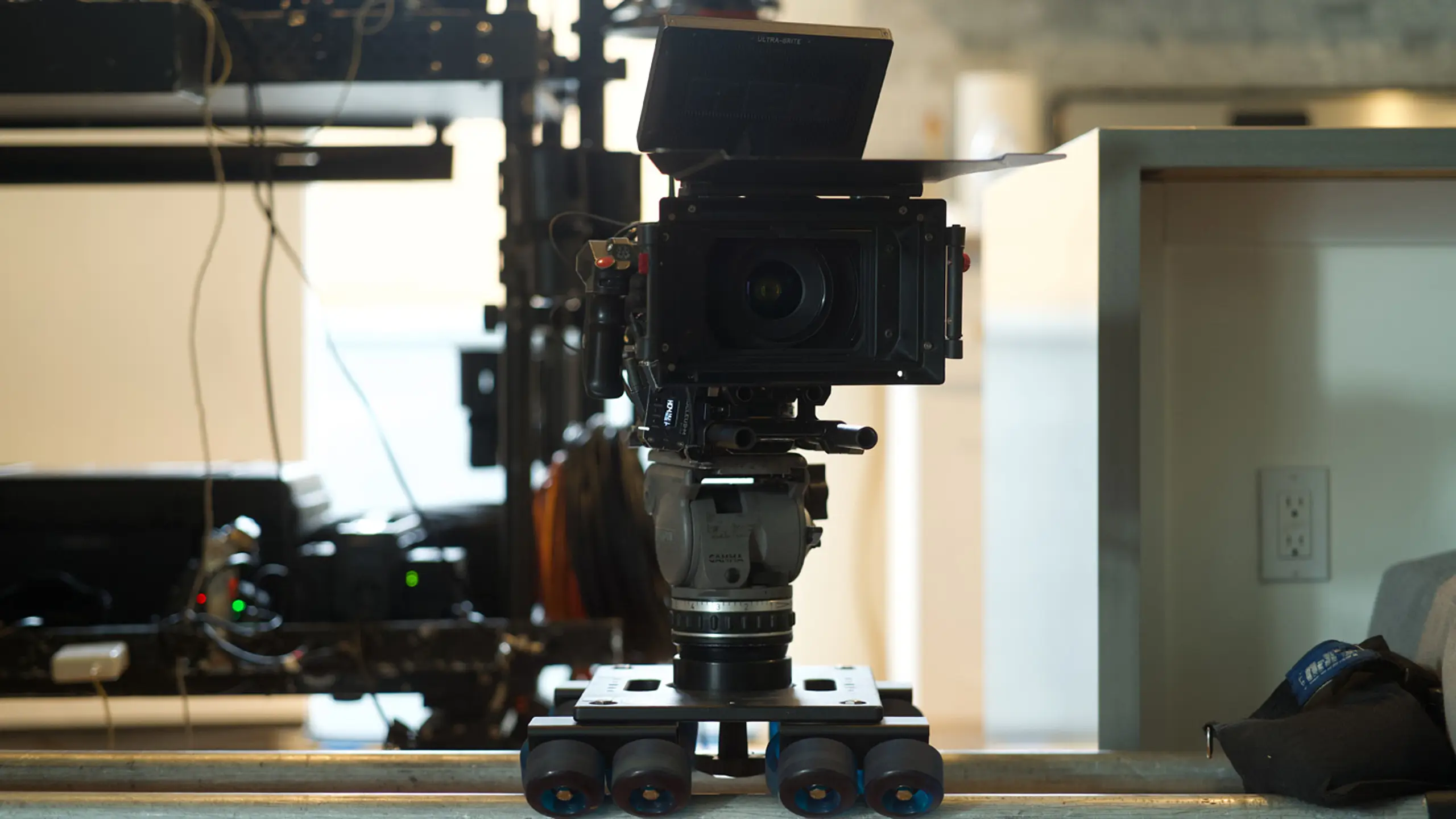
In today’s marketing landscape, video is no longer a supporting asset, it is the centerpiece of business communication. From brand awareness to customer retention, video is the medium that translates ideas into measurable outcomes. The challenge for most organizations is not deciding whether to invest in video, but identifying the** types of marketing videos that help businesses grow online** consistently and efficiently.
Video communicates emotion, tone, and clarity faster than any other medium. According to the IAB 2024 Video Ad Spend & Strategy Report, digital video continues to dominate brand budgets, with spending up 10 percent year-over-year across nearly every industry segment.
That growth underscores a simple truth: businesses that integrate structured, data-informed video strategies outperform those relying on static visuals or text campaigns.
## Understanding the video marketing ecosystem
Every marketing video performs a specific function within the customer journey. Awareness videos attract; educational content nurtures; testimonial or case study formats build trust. Treating these as interchangeable fragments weakens ROI. Treating them as an integrated ecosystem, where each video type serves a distinct business purpose, multiplies impact.
C&I Studios structures its[Video Production Services](https://c-istudios.com/video-production-services/) around this principle: define the objective first, then create content that fulfills it. Below are the foundational categories of marketing videos that consistently help businesses grow online.
### Brand awareness videos
#### Purpose
To introduce your brand story, mission, and differentiators in a way that captures attention and builds initial recognition.
**Characteristics of effective brand videos**
- Emotion-driven narrative: evokes curiosity or aspiration rather than hard selling.
- Visual consistency: aligns with brand colors, typography, and tone.
- High production quality: clear sound and professional cinematography signal credibility.
- Short runtime: under 90 seconds for optimal retention.
These videos are typically used at the top of the marketing funnel. Their goal is to generate visibility and emotional connection, not direct sales. Strong brand videos set the foundation for every subsequent campaign, ensuring the audience remembers who you are when it matters most.
### Product or service explainer videos
#### Purpose
To simplify complex offerings into understandable, memorable visuals that communicate value faster than text.
**Best practices**
- Clarity over complexity: focus on what problem the product solves, not every technical feature.
- Narrative flow: present the pain point first, then introduce the solution.
- Data visualization: use motion graphics or overlays to reinforce credibility.
- Consistent CTA: direct the viewer to learn more, schedule a demo, or explore pricing.
Explainer videos shorten the sales cycle. Instead of relying on lengthy documents, they give prospects a clear picture of how your product fits their needs. C&I Studios integrates scripting, animation, and storytelling within [Creative Marketing Services](https://c-istudios.com/creative-marketing-services/) to ensure these videos both educate and convert.
### Customer testimonials and case study videos
#### Purpose
To provide proof through real experiences. Audiences believe other customers more than brand statements.
**Core components**
- Authentic storytelling: real people describing real outcomes.
- Quantified success: highlight measurable metrics or before-and-after results.
- Human tone: conversational delivery that builds empathy.
- Visual evidence: footage of the product in use or scenes from the customer’s environment.
Testimonial videos strengthen trust and credibility, which are crucial for high-value B2B transactions. When done well, they serve as evergreen assets across websites, landing pages, and paid campaigns.
### Educational and thought-leadership videos
#### Purpose
To position a company as an expert in its field, offering knowledge that helps the audience make better decisions.
**What makes them work**
- Instructional clarity: structured information that solves a recurring problem.
- Authentic voice: featuring subject-matter experts instead of generic voiceovers.
- Search optimization: titles and descriptions designed for discoverability.
- Value-first approach: focuses on teaching before promoting.
These videos nurture relationships. They create familiarity and authority, helping audiences trust your expertise long before they buy. For industries like tech, healthcare, or finance, thought-leadership content is essential for long-term brand growth.
### Social media and short-form videos
#### Purpose
To maintain ongoing engagement through platforms where attention spans are brief but influence is powerful.
**Key characteristics**
- Instant hooks: the first three seconds must communicate the value or story setup.
- Native formatting: square or vertical framing optimized for mobile feeds.
- Trend alignment: adapt popular sounds or movements while maintaining brand voice.
- High frequency: consistency matters more than length.
Social-first videos keep brands relevant in day-to-day conversations. They build awareness in layers, not through one viral hit, but through repetition and familiarity.
C&I Studios produces platform-specific cuts under our[Production Services](https://c-istudios.com/creative-services/), ensuring each edit maximizes algorithmic reach without losing creative integrity.
### Behind-the-scenes and culture videos
#### Purpose
To humanize the brand by showing its process, people, and values.
**Execution tips**
- Transparency: show how your team works and what principles guide them.
- Story-driven editing: reveal challenges, solutions, and milestones.
- Relatability: audiences connect more with authentic moments than perfection.
Behind-the-scenes content strengthens employer branding, recruitment marketing, and long-term audience loyalty. It reminds viewers that businesses are made of real people, which increases trust and emotional connection.
### Event highlight and recap videos
#### Purpose
To extend the life of corporate or promotional events by transforming them into shareable content.
**Key elements**
- Dynamic pacing: fast cuts that convey energy and emotion.
- Selective storytelling: focus on key moments, not chronological documentation.
- Multichannel reuse: clips can support social posts, internal communications, or press coverage.
These videos capture momentum. They demonstrate organizational scale and community involvement, reinforcing authority within your industry.
### Tutorial and training videos
#### Purpose
To educate customers or employees efficiently using repeatable, visual instruction.
**Strategic advantages**
- Reduced support costs: customers learn independently.
- Onboarding efficiency: employees absorb consistent information across teams.
- Search discoverability: tutorials often rank high on YouTube and Google for “how-to” queries.
When well-scripted, training videos evolve into self-sustaining resources. They build goodwill by providing value before and after purchase.
## Transitioning into strategy. how to use these formats together
Each of these formats functions best as part of a coordinated system. Businesses that treat video content as an interconnected strategy, not isolated projects, see higher growth metrics across all digital channels. The key is to map every video to a specific goal within the marketing funnel: attract, engage, convert, or retain.
This approach mirrors how C&I Studios structures full-scale production partnerships. Our[Video Production Services](https://c-istudios.com/video-production-services/) don’t simply produce isolated clips; they architect campaigns designed to evolve with audience behavior.
## From formats to frameworks. turning video types into a growth system
Knowing the types of marketing videos that help businesses grow online is useful only if they connect to a larger marketing framework. Growth happens when every video has a defined role in your funnel and measurable alignment with brand objectives.
Most organizations fail not because of poor execution but because their videos exist in isolation, each created to fill a temporary need. A strategic framework prevents that scatter. It defines how each piece of content interacts with others, ensuring that awareness videos lead to education, education leads to conversion, and conversion leads back to loyalty.
The real advantage comes from orchestration, not output.
## Mapping video to the customer journey
In an effective system, videos are not categorized by creative concept but by audience intent.
### Awareness stage — videos that introduce and inspire
- Brand films and story-driven ads that make first impressions.
- Social snippets designed to hook attention within seconds.
- Light educational teasers that identify a common problem before offering solutions.
### Consideration stage — videos that clarify and build trust
- Explainers that translate complex offers into relatable benefits.
- Webinars and thought-leadership segments that establish authority.
- Testimonials that demonstrate proof and remove skepticism.
### Decision stage — videos that drive action
- Product demos, case studies, or event recaps showing tangible outcomes.
- Personalized videos for sales outreach or onboarding.
### Retention stage — videos that reinforce connection
- Tutorials, culture stories, and behind-the-scenes updates that keep customers engaged after purchase.
C&I Studios often designs campaigns around these touchpoints inside our[Creative Marketing Services](https://c-istudios.com/creative-marketing-services/) practice. Each video becomes a stepping-stone within the narrative arc of brand growth rather than a standalone deliverable.
## How storytelling amplifies conversion metrics
Visual polish might attract attention, but storytelling converts it into loyalty. A viewer’s decision to remember, share, or buy comes from how effectively the video aligns emotional tension with practical resolution.
### High-performing business videos share three structural elements
1. Conflict, they begin with a challenge or problem that mirrors the audience’s reality.
2. Insight, they reveal an unexpected angle or truth that re-frames that problem.
3. Resolution, they offer a credible outcome anchored in the brand’s capability.
Videos that skip these steps may look appealing but often fail to inspire commitment. Professional production houses like C&I Studios integrate narrative architecture into every concept through their[Video Production Services](https://c-istudios.com/video-production-services/), ensuring that each scene contributes to a larger message arc tied to measurable outcomes such as click-throughs or qualified leads.
## Evaluating ROI. what to measure beyond views
View counts rarely tell the real story. Growth-oriented businesses measure how video affects revenue, retention, and brand sentiment over time.
### Primary indicators to track
- Engagement depth: average watch time and replay percentage.
- Conversion pathways: how often viewers move from video to landing-page interaction.
- Assisted revenue: leads or purchases influenced by video exposure within a defined attribution window.
- Brand search volume: uplift in organic searches following campaign releases.
Platforms like Google Analytics 4 and HubSpot integrate video data directly into conversion funnels. When paired with creative analytics from post-production partners, they form a feedback loop that refines future concepts.
C&I Studios uses this iterative loop within their[Production Services](https://c-istudios.com/creative-services/) workflow, every project feeds insight into the next, ensuring creative decisions evolve from data, not assumption.
## Aligning tone and style with audience maturity
Different audiences consume content for different reasons. Start-ups often rely on aspirational storytelling to attract early adopters, while established enterprises benefit from authority-driven, educational formats. The wrong tone can derail even the most visually stunning campaign.
When defining creative direction, professional studios evaluate three variables:
1. Industry maturity, emerging markets prefer emotion-heavy brand stories; mature sectors favor clarity and evidence.
2. Audience sophistication, technical buyers require specificity; lifestyle audiences value feeling.
3. Distribution environment, LinkedIn audiences reward insight; TikTok users reward immediacy.
The alignment of tone and format determines whether a video feels authentic or out of touch. That calibration is where creative strategy and brand psychology intersect, precisely the area where C&I Studios’ cross-disciplinary teams operate.
## Integrating video with cross-channel campaigns
Video does not live alone. It strengthens performance when interlinked with email marketing, paid media, social strategy, and web experience.
For example:
- Paid advertising: 6- to 15-second cut-downs optimized for silent autoplay.
- Email nurture: short clips that humanize a sales message and raise open rates.
- Web landing pages: hero videos that reduce bounce rate by clarifying offer value.
- Organic social: recurring short-form updates that reinforce brand voice week after week.
Integration turns video into connective tissue for all marketing channels. This full-circle approach is standard in C&I Studios’[Creative Marketing Services](https://c-istudios.com/creative-marketing-services/), where production, strategy, and analytics teams operate within a unified workflow to maintain coherence from campaign concept to digital deployment.
## Budgeting smarter, not smaller
Businesses often assume high-quality video automatically means high cost. In practice, poor planning is what inflates budgets. Efficient pre-production, detailed scripting, and multipurpose planning reduce spend per asset dramatically.
When a single shoot produces multiple deliverables, a brand film, social cut-downs, behind-the-scenes snippets, and vertical teasers, the cost per result decreases exponentially. Professional studios design shoots with this modularity in mind, allowing every frame captured to serve multiple platforms.
This efficiency mindset represents another advantage of using integrated services like C&I Studios’[Video Production Services](https://c-istudios.com/video-production-services/). By planning creative, technical, and strategic components under one roof, clients avoid the fragmentation that drives costs up and results down.
## Emerging video types shaping online growth
The digital landscape evolves rapidly, and so do the types of marketing videos that help businesses grow online. The next phase of growth content will center on three innovations:
**Interactive video**, viewers make choices that personalize outcomes, increasing engagement time and data capture.
**Shoppable video**, integrated purchase links within the frame reduce friction between awareness and conversion.
**AI-assisted production**, automation in editing, captioning, and data analysis allows human teams to focus on story and creative differentiation.
While technology continues to change, the fundamentals remain constant: authenticity, clarity, and story-driven communication. Studios that combine these timeless principles with emerging formats lead the next era of brand growth.
## Building sustainable content ecosystems
True growth comes from consistency. Businesses that produce once per quarter rarely accumulate enough frequency to dominate attention. A sustainable content ecosystem requires an editorial calendar, pre-approved themes, and adaptable creative templates that allow faster turnaround without sacrificing quality.
C&I Studios helps partners design such systems through ongoing retainer collaborations, where planning and production flow year-round. This approach transforms video from an occasional campaign expense into a continuous growth engine that keeps brands visible, current, and credible.
## Growth through creative continuity
The most successful brands are not defined by how many videos they produce, but by how coherently those videos evolve together. Growth is not a viral moment, it is the compound effect of story, structure, and consistency.
Every format you create, from product explainers to thought-leadership interviews, adds another layer of brand memory. When the system works, each video amplifies the last, creating an ecosystem that sustains visibility and trust long after individual campaigns fade.
If your business is ready to build that ecosystem, a framework where creativity directly supports measurable growth, learn how C&I Studios develops performance-driven video strategies through our[Creative Marketing Services](https://c-istudios.com/creative-marketing-services/).
Because growth online is no longer about posting more content. It is about designing video stories that move together, with intent, precision, and purpose.
For more information on industry standards and best practices, visit the [American Marketing Association](https://www.ama.org/).
## Work with C&I Studios
If you are planning a project like this, our team can take it from concept to final delivery. Explore our [video production services](https://c-istudios.com/video-production-services/), browse [our work](https://c-istudios.com/our-work/) to see how we tell brand stories, and [get in touch](https://c-istudios.com/contact/) when you are ready to start.
Originally published October 19, 2025
---
*This content is from [C&I Studios](https://c-istudios.com), a full-service production company.*
---
# How to Hire a Local Video Production Company That Actually Drives Business Results
> Published: October 18, 2025
> Categories: Commercial & Brand
> Source: https://c-istudios.com/how-to-hire-a-local-video-production-company-that-actually-drives-business-results/
---
.cib{--paper:#1b1d1f;--ink:#fff;--body:#d5d7d9;--muted:#8b9096;--line:rgba(255,255,255,.12);--thumb:#2b2e31;--card:#212426;--accent:#c02b0a;--blue:#5B8FA8;--serif:'Playfair Display',Georgia,serif;--sans:'Poppins',-apple-system,sans-serif;--measure:900px;background:var(--paper);color:var(--body);font-family:var(--sans);line-height:1.6;position:relative;left:50%;transform:translateX(-50%);width:90vw;max-width:1920px}
.cib *{box-sizing:border-box}
.cib .kicker{max-width:var(--measure);margin:58px auto 0;padding:0 22px;font-size:12.5px;font-weight:700;letter-spacing:2.5px;text-transform:uppercase;color:var(--blue)}
.cib h1.cibh1{text-wrap:balance;font-family:var(--serif);font-weight:500;font-size:clamp(46px,6vw,72px);line-height:1.08;color:var(--ink);max-width:var(--measure);margin:18px auto 0;padding:0 22px;letter-spacing:-.5px}
.cib .metarow{max-width:var(--measure);margin:20px auto 0;padding:0 22px;color:var(--muted);font-size:14px}
.cib .hero{position:relative;width:100%;height:0;padding-bottom:56.25%;overflow:hidden;margin:48px auto 0;border-top:1px solid var(--line);border-bottom:1px solid var(--line)}
.cib .hero .ph{width:100%;aspect-ratio:16/9;background:var(--thumb);border-top:1px solid var(--line);border-bottom:1px solid var(--line);display:flex;align-items:center;justify-content:center;color:#7d8288;font-size:13px;text-align:center;padding:0 20px}
.cib .body{max-width:var(--measure);margin:12px auto 0;padding:52px 22px 6px}
.cib .body.lead p:first-child{font-size:23px;line-height:1.62;color:var(--ink)}
.cib .body p{font-size:18.5px;line-height:1.85;margin:0 0 30px;color:var(--body)}
.cib .body h2{text-wrap:balance;font-family:var(--serif);font-weight:500;font-size:clamp(32px,4vw,48px);line-height:1.22;color:var(--ink);margin:70px 0 20px;letter-spacing:-.3px}
.cib .body h3{text-wrap:balance;font-family:var(--sans);font-weight:600;font-size:22px;color:var(--ink);margin:38px 0 8px}
.cib .body a{color:var(--ink);text-decoration:underline;text-decoration-color:rgba(255,255,255,.4);text-underline-offset:3px}
.cib .body a:hover{text-decoration-color:var(--ink)}
.cib .ctable{width:100%;border-collapse:collapse;margin:16px 0 30px;font-size:16px}
.cib .ctable th{background:#000;color:#fff;text-align:left;padding:10px 12px;font-family:var(--sans)}
.cib .ctable td{padding:10px 12px;border-bottom:1px solid var(--line);color:var(--body)}
.cib .inimg{position:relative;width:100%;height:0;padding-bottom:56.25%;overflow:hidden;margin:72px auto;border-top:1px solid var(--line);border-bottom:1px solid var(--line)}
.cib .inimg .ph{width:100%;aspect-ratio:16/9;background:var(--thumb);border-top:1px solid var(--line);border-bottom:1px solid var(--line);display:flex;align-items:center;justify-content:center;color:#7d8288;font-size:13px}
.cib .origpub{max-width:var(--measure);margin:60px auto 0;padding:26px 22px 0;border-top:1px solid var(--line);color:var(--muted);font-size:13.5px}
.cib .related{max-width:1200px;margin:64px auto 0;padding:34px 22px 76px}
.cib .related h3{font-family:var(--sans);font-size:12.5px;letter-spacing:2px;text-transform:uppercase;color:var(--ink);margin:0 0 24px}
.cib .grid{display:grid;grid-template-columns:repeat(3,1fr);gap:28px}
.cib .rc{background:var(--card);border:1px solid var(--line);display:block;text-decoration:none;color:inherit;transition:border-color .15s}
.cib a.rc:hover{border-color:rgba(255,255,255,.5)}
.cib .rc .thumb{position:relative;width:100%;height:0;padding-bottom:56.25%;background:var(--thumb);overflow:hidden}
.cib .rc .thumb img{position:absolute!important;top:0!important;left:0!important;width:100%!important;height:100%!important;object-fit:cover!important;margin:0!important}
.cib .rc .cc{padding:14px 15px 17px}
.cib .rc .rt{font-family:var(--serif);font-weight:500;font-size:16px;line-height:1.3;color:var(--ink);margin:0 0 6px}
.cib .rc .rm{font-size:11px;letter-spacing:1px;text-transform:uppercase;color:var(--muted)}
.cib img{margin:0!important;padding:0!important;display:block!important;vertical-align:top;max-width:100%}
.cib .hero img,.cib .inimg img{position:absolute!important;top:0!important;left:0!important;width:100%!important;height:100%!important;object-fit:cover!important;margin:0!important;padding:0!important;border:0!important;display:block!important;aspect-ratio:auto!important}
.cib .hero+.body{padding-top:36px}
@media(max-width:760px){.cib .grid{grid-template-columns:1fr}.cib .body h2{margin:52px 0 16px}.cib .body p{font-size:17.5px}.cib .inimg,.cib .hero{margin-top:44px}}
.cib .vembed{max-width:var(--measure);margin:44px auto;padding:0 22px}.cib .vembed .vwrap{position:relative;width:100%;height:0;padding-bottom:56.25%}.cib .vembed .vwrap iframe{position:absolute;top:0;left:0;width:100%;height:100%;border:0}
Commercial & Brand
# How to Hire a Local Video Production Company That Actually Drives Business Results
7 min read
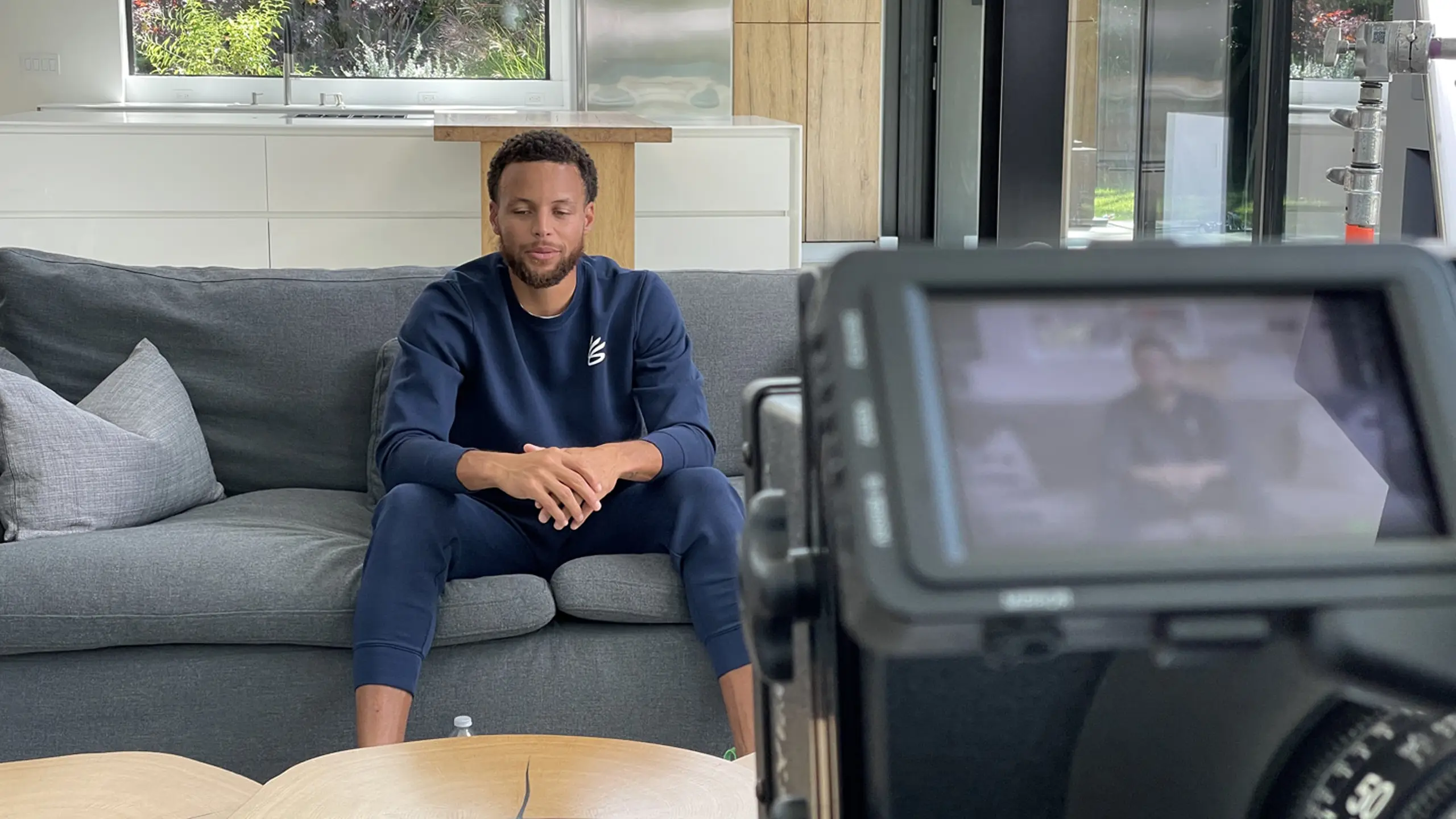
In the last decade, the way businesses communicate has changed more than in the previous fifty years. From product launches to internal communications, video has become the central medium for brand storytelling and conversion.
Yet the real challenge for most companies is not whether to produce videos, but **how to find a video production company near me** for business that actually understands strategy as well as visuals.
High-performing organizations no longer view production as a one-off task. Instead, they treat it as an integrated process that connects marketing goals with measurable outcomes. Choosing a local production partner allows businesses to develop this consistency, one that blends creativity with commercial insight.
## What defines a reliable video production company
A professional video partner differs from a freelancer or a general marketing agency in structure, skill depth, and process. The best companies provide a complete production pipeline, from concept to distribution, backed by technical expertise and strategic awareness.
### Key characteristics
- End-to-end capability: concept development, scripting, filming, editing, and post-production all handled in-house.
- Industry specialization: proven experience producing corporate, product, or commercial videos rather than one-size-fits-all content.
- Scalable resources: ability to handle multi-day shoots, multiple camera setups, and on-location logistics.
- Strategic mindset: clear understanding of brand positioning and measurable business objectives.
When assessing any production company, request a detailed project breakdown rather than a price quote alone. The best teams can articulate how each step connects to your brand’s communication goals. C&I Studios, for example, follows this model through its[Video Production Services](https://c-istudios.com/video-production-services/) framework, aligning every stage with a client’s target audience and campaign outcomes.
## Local versus remote production. what to consider
The search for a video partner often starts with convenience, but location is more than a logistical factor. Working with a nearby production company builds faster collaboration and reduces friction across multiple stages of the project.
### Advantages of local partnerships
- Face-to-face collaboration encourages real-time creative feedback and trust.
- Lower travel costs for crews and talent, especially for recurring shoots.
- Local vendor access, rental houses, lighting technicians, and post-production teams are easier to coordinate.
- Community insight, regional partners understand cultural nuances, locations, and visual cues that appeal to local audiences.
Remote studios, on the other hand, may offer competitive pricing but can limit creative control. File transfers, time zones, and communication delays often dilute production efficiency. For most small to mid-size companies, local partnerships offer the best balance of creativity, speed, and accountability.
## How to begin your search strategically
Typing “video production company near me” into a search engine will yield hundreds of results, but ranking order doesn’t always reflect quality. The most efficient approach is to combine digital research with local verification.
### Step 1. Analyze company portfolios
Examine each company’s recent work. Pay attention to narrative structure, sound quality, and color consistency rather than just camera quality. Consistency across multiple projects is a reliable indicator of professional standards.
### Step 2. Review client lists and testimonials
Established studios often list previous corporate clients or case studies. Cross-check their authenticity by confirming projects on LinkedIn or through company press releases. A credible partner should be transparent about its track record.
### Step 3. Evaluate communication response time
Responsiveness is often the best predictor of production reliability. If a studio delays follow-ups before signing, expect similar delays during post-production. The best production teams treat every inquiry as a time-sensitive commitment.
### Step 4. Request a creative brief sample
A genuine production company will show how it translates ideas into visual strategy. Ask for a one-page brief example from past commercial work. This helps you assess whether they think like filmmakers or marketers, the distinction matters.
## The business case for working with professionals
Investing in professional production is not about aesthetics alone; it is a measurable business decision. According to Statista, global video ad spending surpassed 180 billion dollars in 2024, with double-digit annual growth. That level of investment reflects clear ROI potential for well-executed campaigns.
### Tangible business benefits
- Improved conversion rates through visual storytelling that demonstrates product value clearly.
- Brand credibility, polished visuals create trust faster than text-heavy campaigns.
- Multi-platform adaptability, content can be reformatted for social, web, and paid ads.
- Longevity, a well-planned video asset continues to drive value across multiple quarters.
Professional companies bring not just gear, but also process, storyboarding, production scheduling, and data-backed editing workflows. These reduce waste and ensure that every second of footage supports your marketing objective.
## Measuring the impact of your video partner
Finding the right partner is only the beginning. The real measure of success lies in how effectively the videos perform once released. Every professional studio should help track performance metrics tied to campaign goals.
### Key performance indicators (KPIs)
- View-through rate (VTR), how many viewers complete the video.
- Engagement rate, likes, shares, comments, and watch duration.
- Lead generation, inquiries, downloads, or sign-ups linked to video campaigns.
- Return on spend, direct or assisted conversions attributed to video ads.
When studios participate in performance evaluation, they close the feedback loop between creative vision and tangible business outcomes. This cycle of iteration defines modern content strategy.
## Understanding pricing and proposal evaluation
Once you identify potential partners, the next step is understanding how they price their work. Many businesses compare quotes purely on hourly rates or final numbers, but production proposals require deeper reading. The most valuable insight lies in what the company includes, or omits, in its pricing structure.
**What a transparent proposal should include**
- Pre-production planning: concept development, scriptwriting, and scheduling.
- Production day costs: camera crew, equipment, lighting, and sound.
- Post-production scope: editing, color grading, and motion graphics.
- Revisions policy: number of edits included and cost for additional changes.
- Usage rights: clear statement on ownership and licensing of final footage.
Transparent proposals are written to prevent misunderstandings. If a production company avoids detail or provides only a lump-sum quote, that’s a warning sign.
Professional studios like C&I Studios document each stage clearly, ensuring that clients know what deliverables to expect and when. You can explore how this clarity works in practice through our[Production Services](https://c-istudios.com/creative-services/).
## Typical team structure in a professional production company
A video project involves far more than a director and camera operator. When businesses understand who does what, communication improves and projects run smoother.
### Core roles you will encounter
- Producer: oversees logistics, timeline, and client coordination.
- Director: interprets creative vision and leads the shoot.
- Director of Photography (DP): manages camera composition and lighting.
- Gaffer and grip crew: handle technical lighting and equipment setup.
- Sound technician: ensures clean audio capture, which saves hours in post-production.
- Editor and colorist: assemble, refine, and balance the final visuals.
These professionals work together like departments in a miniature film studio. The most efficient teams have long-standing collaboration patterns, something that only established production companies can maintain consistently.
## Setting realistic timelines for business video production
The time required to complete a professional video varies with scale, but businesses often underestimate how many steps occur between idea and delivery. A studio’s ability to meet deadlines without sacrificing quality is a key indicator of professionalism.
**General timeline benchmarks**
- Pre-production: 1-2 weeks for concept, scripting, and logistics.
- Filming: 1-3 days depending on the number of scenes.
- Post-production: 2-3 weeks for editing, graphics, and revisions.
A well-organized team will define milestones at the very beginning and maintain communication throughout. At C&I Studios, project managers handle these checkpoints within our[Video Production Services](https://c-istudios.com/video-production-services/) process, ensuring that creative teams stay synchronized from start to finish.
## The role of storytelling in business communication
Every brand video, no matter how corporate, still tells a story. The difference between an average production and a memorable one often comes down to how well the story connects strategy with emotion.
**Elements of effective storytelling**
- Authenticity: real employees or clients resonate more than stock visuals.
- Clarity: one message per video prevents audience confusion.
- Structure: clear beginning, middle, and end to guide viewer engagement.
- Relevance: align tone and language with audience expectations.
When businesses treat storytelling as a marketing asset instead of decoration, the results compound. Viewers remember stories that simplify complexity, not those that add noise. Creative partners who understand this dynamic, such as the strategists within[Creative Marketing Services](https://c-istudios.com/creative-marketing-services/), ensure every scene reinforces brand identity without overstatement.
## Managing feedback and revisions effectively
Video production is iterative. Even the most polished concepts evolve once footage is reviewed. Mismanaging feedback, however, can derail schedules and budgets.
**Productive review practices**
- Centralize communication: use one feedback document or platform for all comments.
- Be specific: instead of saying “change the tone,” describe the timestamp and reason.
- Limit decision makers: too many voices slow the process and blur creative intent.
- Trust expertise: professional editors and colorists make technical choices for visual consistency.
Efficient revisions rely on mutual respect between client and studio. Businesses that collaborate openly but decisively usually complete projects faster with fewer iterations.
## Integrating video with broader marketing strategy
Producing a great video is only half the equation; deploying it effectively determines the return on investment. Businesses should plan distribution channels before production begins to ensure each format fits its target platform.
### Smart integration strategies
- Website embedding: place the video on landing pages tied to measurable goals.
- Email campaigns: include short clips or teasers to increase click-through rates.
- Social media: adapt orientation and length for each network’s algorithm.
- Paid advertising: run A/B tests using different edits to identify the strongest performance.
At this stage, your production partner becomes a strategic ally, not just a creative vendor. C&I Studios helps brands manage these post-production transitions by aligning visuals with campaign analytics through our Creative Marketing Services expertise.
## Long-term value of ongoing partnerships
Video content performs best when produced as part of an ongoing strategy. A single campaign can spark attention, but consistency sustains audience trust.
**Why ongoing collaboration matters**
- Faster onboarding: repeat partners already understand your brand and workflows.
- Visual continuity: ensures consistent tone and quality across campaigns.
- Resource efficiency: reused sets, templates, and lighting setups reduce costs.
- Strategic planning: allows studios to anticipate seasonal or product-based content needs.
Building a continuous relationship with a trusted studio saves creative energy and delivers more predictable outcomes. For many clients, this long-term stability transforms video from a one-time expense into an evolving asset library that compounds over time.
## The future of local video production
The next wave of video production will rely heavily on data-driven creativity. Studios that combine human storytelling with analytics will dominate business content strategy.
Artificial intelligence tools are already assisting with script generation, editing automation, and performance tracking, but the human eye remains irreplaceable for emotional accuracy.
Los Angeles, New York, and Miami continue to lead this evolution because their studios merge technical scale with creative precision. Companies looking to stay ahead should choose partners who embrace these changes early.
A studio like [C&I Studios](https://c-istudios.com/), with dedicated teams for creative direction and post-production analytics, represents the kind of hybrid model that modern marketing requires.
## Choosing collaboration that grows with your brand
Finding a video production company near me for business is ultimately about more than geography. It is about discovering a creative partner who understands ambition, the drive to make every message matter.
A strong studio partnership should feel like an extension of your internal team, not a vendor relationship. It should challenge ideas, refine vision, and scale output as your business evolves.
When the right collaboration clicks, the impact goes beyond view counts or campaign metrics. It builds a rhythm of creativity that strengthens brand voice and simplifies communication at every level.
If your next step is to create professional videos that align with long-term brand goals, explore how C&I Studios supports business storytelling through [Video Production Services](https://c-istudios.com/creative-services/)
Because the best stories in business are not just filmed, they are built together, one frame at a time.
## Work with C&I Studios
If you are planning a project like this, our team can take it from concept to final delivery. Explore our [video production services](https://c-istudios.com/video-production-services/), browse [our work](https://c-istudios.com/our-work/) to see how we tell brand stories, and [get in touch](https://c-istudios.com/contact/) when you are ready to start.
Originally published October 18, 2025
---
*This content is from [C&I Studios](https://c-istudios.com), a full-service production company.*
---
# Do Video Production Companies Travel for On-Location Shoots?
> Published: October 17, 2025
> Categories: Commercial & Brand
> Source: https://c-istudios.com/the-real-cost-of-on-location-shoots-do-video-production-companies-travel/
---
.cib{--paper:#1b1d1f;--ink:#fff;--body:#d5d7d9;--muted:#8b9096;--line:rgba(255,255,255,.12);--thumb:#2b2e31;--card:#212426;--accent:#c02b0a;--blue:#5B8FA8;--serif:'Playfair Display',Georgia,serif;--sans:'Poppins',-apple-system,sans-serif;--measure:900px;background:var(--paper);color:var(--body);font-family:var(--sans);line-height:1.6;position:relative;left:50%;transform:translateX(-50%);width:90vw;max-width:1920px}.cib *{box-sizing:border-box}.cib .kicker{max-width:var(--measure);margin:58px auto 0;padding:0 22px;font-size:12.5px;font-weight:700;letter-spacing:2.5px;text-transform:uppercase;color:var(--blue)}.cib h1.cibh1{font-family:var(--serif);font-weight:500;font-size:clamp(46px,6vw,72px);line-height:1.08;color:var(--ink);max-width:var(--measure);margin:18px auto 0;padding:0 22px;letter-spacing:-.5px}.cib .metarow{max-width:var(--measure);margin:20px auto 0;padding:0 22px;color:var(--muted);font-size:14px}.cib .hero{position:relative;width:100%;height:0;padding-bottom:56.25%;overflow:hidden;margin:48px auto 0;border-top:1px solid var(--line);border-bottom:1px solid var(--line)}.cib .hero .ph{width:100%;aspect-ratio:16/9;background:var(--thumb);border-top:1px solid var(--line);border-bottom:1px solid var(--line);display:flex;align-items:center;justify-content:center;color:#7d8288;font-size:13px;text-align:center;padding:0 20px}.cib .body{max-width:var(--measure);margin:12px auto 0;padding:52px 22px 6px}.cib .body.lead p:first-child{font-size:23px;line-height:1.62;color:var(--ink)}.cib .body p{font-size:18.5px;line-height:1.85;margin:0 0 30px;color:var(--body)}.cib .body h2{font-family:var(--serif);font-weight:500;font-size:clamp(32px,4vw,48px);line-height:1.22;color:var(--ink);margin:70px 0 20px;letter-spacing:-.3px}.cib .body h3{font-family:var(--sans);font-weight:600;font-size:22px;color:var(--ink);margin:38px 0 8px}.cib .body a{color:var(--ink);text-decoration:underline;text-decoration-color:rgba(255,255,255,.4);text-underline-offset:3px}.cib .body a:hover{text-decoration-color:var(--ink)}.cib .ctable{width:100%;border-collapse:collapse;margin:16px 0 30px;font-size:16px}.cib .ctable th{background:#000;color:#fff;text-align:left;padding:10px 12px;font-family:var(--sans)}.cib .ctable td{padding:10px 12px;border-bottom:1px solid var(--line);color:var(--body)}.cib .inimg{position:relative;width:100%;height:0;padding-bottom:56.25%;overflow:hidden;margin:72px auto;border-top:1px solid var(--line);border-bottom:1px solid var(--line)}.cib .inimg .ph{width:100%;aspect-ratio:16/9;background:var(--thumb);border-top:1px solid var(--line);border-bottom:1px solid var(--line);display:flex;align-items:center;justify-content:center;color:#7d8288;font-size:13px}.cib .origpub{max-width:var(--measure);margin:60px auto 0;padding:26px 22px 0;border-top:1px solid var(--line);color:var(--muted);font-size:13.5px}.cib .related{max-width:1200px;margin:64px auto 0;padding:34px 22px 76px}.cib .related h3{font-family:var(--sans);font-size:12.5px;letter-spacing:2px;text-transform:uppercase;color:var(--ink);margin:0 0 24px}.cib .grid{display:grid;grid-template-columns:repeat(3,1fr);gap:28px}.cib .rc{background:var(--card);border:1px solid var(--line);display:block;text-decoration:none;color:inherit;transition:border-color .15s}.cib a.rc:hover{border-color:rgba(255,255,255,.5)}.cib .rc .thumb{position:relative;width:100%;height:0;padding-bottom:56.25%;background:var(--thumb);overflow:hidden}.cib .rc .thumb img{position:absolute!important;top:0!important;left:0!important;width:100%!important;height:100%!important;object-fit:cover!important;margin:0!important}.cib .rc .cc{padding:14px 15px 17px}.cib .rc .rt{font-family:var(--serif);font-weight:500;font-size:16px;line-height:1.3;color:var(--ink);margin:0 0 6px}.cib .rc .rm{font-size:11px;letter-spacing:1px;text-transform:uppercase;color:var(--muted)}.cib img{margin:0!important;padding:0!important;display:block!important;vertical-align:top;max-width:100%}.cib .hero img,.cib .inimg img{position:absolute!important;top:0!important;left:0!important;width:100%!important;height:100%!important;object-fit:cover!important;margin:0!important;padding:0!important;border:0!important;display:block!important;aspect-ratio:auto!important}.cib .hero+.body{padding-top:36px}@media(max-width:760px){.cib .grid{grid-template-columns:1fr}.cib .body h2{margin:52px 0 16px}.cib .body p{font-size:17.5px}.cib .inimg,.cib .hero{margin-top:44px}}
Commercial & Brand
# Do Video Production Companies Travel for On-Location Shoots?
9 min read

One question comes up early on almost every project. Do video production companies travel for on-location shoots? Most of us do. What that actually costs, and whether it is worth paying for, depends on the scale of the project, the resources of the company you hire, and how far you are asking them to go. We have produced campaigns across the US and internationally, moving crew, cameras, lighting, and post-production wherever the story lives. Here is what travel really involves and how to tell when it earns its place in a budget.
## Why location work matters
A good video does not only tell a story. It shows one, and the environment becomes part of the telling. Real places make a story believable. Natural light, texture, and movement give footage a depth no green screen replicates. The right setting also does brand work on its own, whether the brand reads gritty, refined, urban, or wild.
That is why even well-equipped companies travel constantly. Our Los Angeles studio handles a huge share of what we shoot, but not every story lives in Los Angeles. Some belong on a New York street, a stretch of coastline, or the open desert.
## What travel actually means
When a company says it travels, it does not mean the director gets on a plane. It means a mobile production operation.
### Crew
Producers, cinematographers, camera operators, lighting technicians, and sound engineers usually need to be on site. Depending on the concept, that is anywhere from three people to thirty.
### Equipment
Cameras, lenses, drones, stabilizers, lighting rigs, and audio gear move with the team. Some companies rent everything locally. We ship our own core package when it matters for consistency and rent the heavy, replaceable pieces on the ground.
### Local coordination
Permits, parking, and power all get arranged in advance. A local production assistant or fixer usually handles the ground-level logistics before the crew lands.
Traveling for a shoot is a disciplined operation designed to reproduce studio-level control somewhere that is not a studio.

## When companies travel for a shoot
Not every project justifies the cost. When it is the right call, it changes the finished piece.
### When the location is the brand
A surf brand belongs on a beach. A tech company that trades on its Manhattan address belongs on that street. When geography is part of the identity, the visuals have to match it.
### Multi-city campaigns
National brands often need footage from several regions that has to cut together as one campaign. Hiring a separate crew in each city invites mismatched lighting, framing, and grade. One traveling crew solves it.
### Corporate and event coverage
Conferences, launches, and executive events happen where they happen. Portable production units make it possible to shoot broadcast-quality coverage on the road.
### Destination and lifestyle work
Hotels, resorts, travel brands, and luxury real estate sell the place itself. Those projects are built around the destination, so the crew goes to it.
## The real cost of traveling
Every company has its own rate sheet, but travel budgets share the same skeleton. These are the four areas that decide whether the number holds.
### Travel and accommodation
Flights, mileage, and lodging carry the budget. A typical traveling crew is a director, producer, cinematographer, audio lead, gaffer, and assistants, and each one needs a seat, a room, and meals. Gear travels too, and camera bodies, lenses, and lighting kits are not carry-on friendly. Checked baggage, freight, and insurance add up fast.
### Day rates and per diems
Traveling crews bill for every day away from home, not only the days they shoot. Travel, scouting, setup, and wrap days all count. Each person also gets a per diem for meals and incidentals, which keeps the accounting predictable. Multiply that across eight people and several days and the people cost passes airfare quickly.
### Permits and location fees
Every city enforces its own filming rules. Dense markets like New York and Miami often require permits, parking authorizations, and sometimes police coordination for crowd control. Private venues charge location fees, and drone work usually needs separate clearance. We price these during pre-production so nobody discovers them mid-shoot.
### Equipment transport or local rental
The heavier the package, the higher the transport cost. Flying your own camera systems protects visual consistency. Renting locally avoids freight and customs delays. We run a hybrid. Our modular setups travel, and when customs makes shipping impractical we work with vetted local vendors who can match the spec.
## A sample travel budget
Take a two-day brand shoot in another state with an eight-person team. These are realistic ballpark numbers.
Category
Estimated cost
Flights, round trip
$3,200
Hotels, three nights
$2,400
Ground transport and fuel
$900
Crew day rates, two shoot days plus one travel day
$8,000
Per diems
$800
Permits and local costs
$600
Equipment transport or rental
$1,500
**Total**
**About $17,400**
A comparable shoot at our Los Angeles studio runs closer to $8,000 to $10,000 depending on complexity. Roughly half. If the story genuinely needs that other place, the creative return usually covers the difference. If it does not, you just bought plane tickets.
## When paying for travel makes sense
Travel should never be automatic. It is a strategic call, not a flex.
### When the location is the story
Some brands live and die on geography. Surfwear on a California beach. A resort selling a Caribbean view. Shooting those anywhere else kills the credibility of the whole piece. A real location conveys culture and lifestyle that a stage cannot fake, and in those cases travel is not an expense line. It is the story.
### When consistency across cities matters
Global and national brands need footage from multiple regions that looks like one campaign. A single traveling crew guarantees matching lighting, framing, and grade. Our New York team runs this pattern often for campaigns spanning several states, keeping one creative vision while the backdrop changes.
### When you need creative control
Hiring an unfamiliar crew in each city saves travel money and costs oversight. Different people bring different workflows and priorities. A traveling core of director, DP, and producer keeps the final cut feeling like one film instead of five stitched together.
### When time costs more than money
Coordinating regional vendors eats weeks in briefings and feedback. One company handling everything end to end compresses the schedule. For a product launch or a seasonal campaign, paying for travel can be the cheaper option once you price the delay.

## Hidden costs that catch clients out
Experienced marketers still miss these until the invoice lands.
- **Gear insurance.** Airlines damage fragile equipment. Coverage is not optional.
- **Overtime and weather delays.** A rained-out day extends hotel stays and crew days at the same time.
- **Shipping restrictions.** Batteries, drones, and atmospherics face strict transport rules and sometimes need separate cargo.
- **International duties.** Customs paperwork and temporary import bonds cost both time and money.
We flag every one of these in pre-production. Surprises on a travel budget are a planning failure, not bad luck.
## How to tell if a company really travels
Plenty of agencies claim they travel worldwide. Fewer do it well. Four questions sort them out.
- Look at the [portfolio](https://c-istudios.com/our-work/) for multi-city or international projects, not one out-of-state shoot from 2019.
- Ask how they handle customs for camera gear and international insurance. Vague answers are the answer.
- Read their production pages for real mention of mobility, scalable crews, and global work.
- Ask about crew structure. Teams that travel often have systems for packing, setup, and integrating local crew.
## Preparing for an on-location shoot
Once the company agrees to travel, part of the job becomes yours.
**Write a real location brief.** What kind of environment do you picture, and what are the noise, light, and crowd conditions there?
**Handle permits early.** Even small shoots need permission in most public and commercial spaces. Your production company may run this, but the cost is yours.
**Book logistics early.** Flights, hotels, ground transport, and meals get cheaper and simpler the earlier they are locked.
**Build in a contingency day.** Weather, power, and access problems happen. One spare day is cheaper than a second trip.
**Keep talking daily.** Short check-ins between your team and the crew keep everyone aligned, especially across time zones.
## Ways to travel without wasting money
**Get more out of one trip.** Plan the commercial, the social cuts, and the behind-the-scenes content into a single window so the travel overhead is spread across every asset.
**Use a local fixer.** Permits, extras, and ground logistics get handled before the main team arrives.
**Fly light, rent heavy.** Bring cameras and lenses. Rent stands, lights, and grip on location.
**Avoid peak dates.** Airfare, hotels, and even permit rates move with the season. Weekdays and shoulder seasons save thousands.
**Scale the crew to the job.** Not every shoot needs fifteen people. Small agile units cover documentary work. Full crews are for commercials.
## Frequently asked questions
### Do video production companies travel for on-location shoots?
Most established companies do. What varies is whether they bring a full crew and their own gear or rely on local hires, which is the difference that shows up in the footage.
### How much does it cost to fly a crew out of state?
A two-day shoot with an eight-person crew usually lands around $17,000 once flights, hotels, day rates, per diems, permits, and gear transport are counted.
### Is it cheaper to hire a local crew instead?
On paper, yes. In practice you trade money for consistency. The usual compromise is to fly the key creative leads and hire the rest locally.
### Who pays for permits and insurance?
The client, almost always, though the production company should handle the paperwork and quote the cost during pre-production.
### How far in advance should a travel shoot be booked?
Four to six weeks for domestic work and eight or more for international, which is mostly about permits, customs, and crew availability rather than flights.
## How we handle travel
C&I Studios runs a mobile production model. Our Los Angeles studio anchors the infrastructure at 30,000 square feet, and offices in New York and Fort Lauderdale plus partnerships abroad let us move quickly for clients anywhere. We facilitate productions in any location in the US and across the globe.
Every shoot gets the same workflow, the same creative leads, and the same finishing pipeline, whether it happens on our stage or three time zones away. Blending our own resources with trusted local collaborators is what keeps travel lean, so the money goes into what ends up on screen instead of into logistics.
## Bring your story wherever it lives
Whether your project needs the control of a stage or the realism of a place you cannot fake, we have the crew, the gear, and the mobility to shoot it. Look through [our work](https://c-istudios.com/our-work/), read more about [film and TV production](https://c-istudios.com/film-and-tv-production/), or [start a conversation](https://c-istudios.com/contact/) about where your next shoot needs to happen.
Originally published October 17, 2025
### Keep reading
[
How Much Does Commercial Video Production Cost in 2026?
Commercial & Brand](https://c-istudios.com/how-much-does-commercial-video-production-cost-in-2026/)[
How Much Does Video Production Cost in Chicago?
Commercial & Brand](https://c-istudios.com/video-production-cost-chicago/)[
Video Production in New York City
Commercial & Brand](https://c-istudios.com/video-production-in-new-york-city-costs-studios-what-to-expect/)
---
*This content is from [C&I Studios](https://c-istudios.com), a full-service production company.*
---
# Top Los Angeles Video Studios for Rent – Find the Best Production Spaces
> Published: October 16, 2025
> Categories: Commercial & Brand
> Source: https://c-istudios.com/rent-a-professional-video-studio-in-los-angeles-or-new-york-today/
---
.cib{--paper:#1b1d1f;--ink:#fff;--body:#d5d7d9;--muted:#8b9096;--line:rgba(255,255,255,.12);--thumb:#2b2e31;--card:#212426;--accent:#c02b0a;--blue:#5B8FA8;--serif:'Playfair Display',Georgia,serif;--sans:'Poppins',-apple-system,sans-serif;--measure:900px;background:var(--paper);color:var(--body);font-family:var(--sans);line-height:1.6;position:relative;left:50%;transform:translateX(-50%);width:90vw;max-width:1920px}
.cib *{box-sizing:border-box}
.cib .kicker{max-width:var(--measure);margin:58px auto 0;padding:0 22px;font-size:12.5px;font-weight:700;letter-spacing:2.5px;text-transform:uppercase;color:var(--blue)}
.cib h1.cibh1{text-wrap:balance;font-family:var(--serif);font-weight:500;font-size:clamp(46px,6vw,72px);line-height:1.08;color:var(--ink);max-width:var(--measure);margin:18px auto 0;padding:0 22px;letter-spacing:-.5px}
.cib .metarow{max-width:var(--measure);margin:20px auto 0;padding:0 22px;color:var(--muted);font-size:14px}
.cib .hero{position:relative;width:100%;height:0;padding-bottom:56.25%;overflow:hidden;margin:48px auto 0;border-top:1px solid var(--line);border-bottom:1px solid var(--line)}
.cib .hero .ph{width:100%;aspect-ratio:16/9;background:var(--thumb);border-top:1px solid var(--line);border-bottom:1px solid var(--line);display:flex;align-items:center;justify-content:center;color:#7d8288;font-size:13px;text-align:center;padding:0 20px}
.cib .body{max-width:var(--measure);margin:12px auto 0;padding:52px 22px 6px}
.cib .body.lead p:first-child{font-size:23px;line-height:1.62;color:var(--ink)}
.cib .body p{font-size:18.5px;line-height:1.85;margin:0 0 30px;color:var(--body)}
.cib .body h2{text-wrap:balance;font-family:var(--serif);font-weight:500;font-size:clamp(32px,4vw,48px);line-height:1.22;color:var(--ink);margin:70px 0 20px;letter-spacing:-.3px}
.cib .body h3{text-wrap:balance;font-family:var(--sans);font-weight:600;font-size:22px;color:var(--ink);margin:38px 0 8px}
.cib .body a{color:var(--ink);text-decoration:underline;text-decoration-color:rgba(255,255,255,.4);text-underline-offset:3px}
.cib .body a:hover{text-decoration-color:var(--ink)}
.cib .ctable{width:100%;border-collapse:collapse;margin:16px 0 30px;font-size:16px}
.cib .ctable th{background:#000;color:#fff;text-align:left;padding:10px 12px;font-family:var(--sans)}
.cib .ctable td{padding:10px 12px;border-bottom:1px solid var(--line);color:var(--body)}
.cib .inimg{position:relative;width:100%;height:0;padding-bottom:56.25%;overflow:hidden;margin:72px auto;border-top:1px solid var(--line);border-bottom:1px solid var(--line)}
.cib .inimg .ph{width:100%;aspect-ratio:16/9;background:var(--thumb);border-top:1px solid var(--line);border-bottom:1px solid var(--line);display:flex;align-items:center;justify-content:center;color:#7d8288;font-size:13px}
.cib .origpub{max-width:var(--measure);margin:60px auto 0;padding:26px 22px 0;border-top:1px solid var(--line);color:var(--muted);font-size:13.5px}
.cib .related{max-width:1200px;margin:64px auto 0;padding:34px 22px 76px}
.cib .related h3{font-family:var(--sans);font-size:12.5px;letter-spacing:2px;text-transform:uppercase;color:var(--ink);margin:0 0 24px}
.cib .grid{display:grid;grid-template-columns:repeat(3,1fr);gap:28px}
.cib .rc{background:var(--card);border:1px solid var(--line);display:block;text-decoration:none;color:inherit;transition:border-color .15s}
.cib a.rc:hover{border-color:rgba(255,255,255,.5)}
.cib .rc .thumb{position:relative;width:100%;height:0;padding-bottom:56.25%;background:var(--thumb);overflow:hidden}
.cib .rc .thumb img{position:absolute!important;top:0!important;left:0!important;width:100%!important;height:100%!important;object-fit:cover!important;margin:0!important}
.cib .rc .cc{padding:14px 15px 17px}
.cib .rc .rt{font-family:var(--serif);font-weight:500;font-size:16px;line-height:1.3;color:var(--ink);margin:0 0 6px}
.cib .rc .rm{font-size:11px;letter-spacing:1px;text-transform:uppercase;color:var(--muted)}
.cib img{margin:0!important;padding:0!important;display:block!important;vertical-align:top;max-width:100%}
.cib .hero img,.cib .inimg img{position:absolute!important;top:0!important;left:0!important;width:100%!important;height:100%!important;object-fit:cover!important;margin:0!important;padding:0!important;border:0!important;display:block!important;aspect-ratio:auto!important}
.cib .hero+.body{padding-top:36px}
@media(max-width:760px){.cib .grid{grid-template-columns:1fr}.cib .body h2{margin:52px 0 16px}.cib .body p{font-size:17.5px}.cib .inimg,.cib .hero{margin-top:44px}}
.cib .vembed{max-width:var(--measure);margin:44px auto;padding:0 22px}.cib .vembed .vwrap{position:relative;width:100%;height:0;padding-bottom:56.25%}.cib .vembed .vwrap iframe{position:absolute;top:0;left:0;width:100%;height:100%;border:0}
Commercial & Brand
# Top Los Angeles Video Studios for Rent – Find the Best Production Spaces
8 min read

Los Angeles remains the global epicenter of film and digital content creation. Every day, hundreds of independent creators, agencies, and production houses search for the** best video production studios in Los Angeles for rent** that can support everything from commercial shoots to branded campaigns.
The shift toward on-demand studio access has redefined how professional teams approach production. Instead of investing in permanent facilities, brands now leverage short-term studio rentals that offer controlled lighting, sound isolation, and post-production support in one place.
This transformation has been accelerated by the rise of streaming platforms and short-form media. As production timelines shorten, access to a fully equipped environment has become more valuable than ownership itself. A rented studio gives creators the flexibility to test new formats, shoot multiple versions, and adapt their content strategy without long-term overhead.
## What defines a professional studio environment
Professional studios in Los Angeles are more than empty soundstages. They function as controlled ecosystems where lighting, acoustics, and camera infrastructure merge to create visual precision. A true production studio integrates three categories of resources:
1. **Infrastructure**: soundproofing, grid lighting systems, modular sets, and pre-wired control panels for power and rigging.
2. **Technical equipment**: cameras, lenses, monitors, cranes, and gimbals that meet broadcast or cinema standards.
3. **Support services**: on-site technicians, set designers, and production coordinators who maintain operational flow.
Studios that meet these standards are not interchangeable with low-cost rental spaces or co-working “creative lofts.” The difference lies in how reliably the environment can deliver cinematic quality under professional conditions. This distinction is crucial for brands that expect agency-level results on compressed timelines.
For productions seeking flexible yet controlled setups, [C&I Studios](https://c-istudios.com/) operates with this philosophy: every stage must enable the director to move seamlessly from creative vision to execution.
## Why Los Angeles leads in video production infrastructure
The concentration of production talent and infrastructure in Los Angeles makes it the most efficient city in the world for professional studio rentals. The city hosts an ecosystem that extends beyond the physical studios themselves, camera rental houses, prop warehouses, and post-production labs all exist within a short drive of one another. This proximity creates a frictionless workflow from pre-production to delivery.
The Los Angeles film office and local permitting framework are also designed to accommodate high production volume. According to FilmLA, commercial and branded content filming accounted for more than half of permitted shoots across Los Angeles County in recent quarters.
For companies or creators renting a professional studio, that ecosystem translates directly into efficiency. Need a last-minute equipment replacement or set rebuild? Los Angeles offers same-day solutions that would take days in smaller markets.
## Evaluating the right studio for your project
Choosing the right studio requires more than scanning listings. Each production’s creative and technical requirements dictate which space will actually save time and budget. When assessing options among the best video production studios in Los Angeles for rent, consider the following dimensions:
### Soundstage quality
A professional soundstage isolates ambient noise and prevents reverb. Even a small echo can disrupt dialogue clarity and multiply post-production costs. Ask whether the studio’s sound insulation meets broadcast-grade standards.
### Lighting flexibility
Look for grid height and rigging accessibility. If your concept involves mixed lighting or fast scene changes, pre-installed dimmer boards and lighting rails are essential. A studio without this infrastructure will extend setup time.
### Equipment integration
Studios offering in-house camera packages or partnerships with reputable rental companies reduce logistical coordination. Verify that equipment lists include updated camera models compatible with your shoot type.
### Accessibility and crew flow
Los Angeles traffic can cost hours of production time. Prioritize studios located near freeway exits or in established creative districts such as Arts District or Culver City. Easy access simplifies equipment transport and crew scheduling.
A thorough studio evaluation ensures that what appears affordable on paper doesn’t generate hidden costs later. The most common oversight among producers is underestimating the operational inefficiencies of disjointed locations.
## How rental flexibility supports modern production models
The acceleration of digital campaigns has changed the economics of studio rental. Instead of booking one large facility for extended periods, production teams now schedule short, focused sessions across multiple days. This model fits the rhythm of social and commercial content creation, frequent updates, varied deliverables, and smaller crew sizes.
Modern studio rental agreements in Los Angeles accommodate this evolution through flexible hourly and daily rates. Many facilities also bundle technical assistance, offering lighting operators or set assistants on standby. This shift represents a new equilibrium between agility and quality: productions maintain creative control while avoiding the fixed costs of long-term leases.
Another benefit of flexible studio access is experimentation. Brands can test multiple set concepts, adapt scripts mid-shoot, and capture alternative storylines without logistical strain. This adaptability drives innovation, especially when marketing campaigns demand consistent visual identity across short-form, long-form, and social assets.
The industry’s progression toward agile studio models demonstrates how Los Angeles continues to shape global production standards. Its ecosystem encourages experimentation while maintaining cinematic discipline, something other markets attempt to replicate but rarely match.
## Understanding the cost structure of professional studio rentals
Renting one of the best video production studios in Los Angeles for rent involves more than a flat daily fee. Studio pricing reflects a combination of space, equipment, labor, and logistical coordination. Knowing how these components interact helps producers plan budgets that align with project objectives rather than headline rates.
Core pricing components
- **Base stage fee**: Charged hourly or daily, covering the physical space, utilities, and standard amenities.
- **Equipment packages**: Camera kits, lighting rigs, and grip gear are often tiered as add-ons.
- **Crew and technicians**: Some facilities provide in-house staff whose hourly rates are billed separately.
- **Post-production access**: Editing bays or color suites may be bundled at discounted rates when booked together.
- **Insurance and permits**: Liability coverage and city permits can add several hundred dollars depending on shoot size.
## Cost optimization strategies
Producers who plan ahead save the most. Booking mid-week, negotiating block rates for multiple days, and aligning with the studio’s preferred rental partners can reduce total costs by 10-20 percent. C&I Studios, for example, designs rental schedules that maximize production time while minimizing setup redundancies. Learn more about our integrated workflow on [Video Production Services](https://c-istudios.com/production-studio-rental-los-angeles).
## The booking workflow every producer should follow
Smooth studio rentals depend on a standardized workflow. Skipping steps or assuming verbal agreements often leads to scheduling conflicts and cost overruns.
### Step 1. Define production requirements
Clarify the number of scenes, lighting setups, and expected crew size. Studios allocate resources based on these metrics.
### Step 2. Schedule site visits
Inspect acoustics, power availability, and parking. Physical walkthroughs often reveal layout issues not visible in online listings.
### Step 3. Confirm technical compatibility
Provide your camera and lighting specifications so the studio can confirm circuit loads and mount types.
### Step 4. Secure permits early
For exterior scenes or drone shots, Los Angeles requires city clearance through FilmLA. Missing paperwork can halt an entire shoot day.
### Step 5. Finalize documentation
A written agreement should list insurance terms, overtime rates, and cancellation policies. Avoid verbal confirmations; professional studios operate through signed contracts.
Following this workflow converts what might be a logistical risk into a predictable production rhythm.
## Leveraging studio services beyond the soundstage
A top-tier studio offers more than four walls and a ceiling. The advantage of renting in Los Angeles is access to integrated creative and technical ecosystems that extend well beyond the physical shoot.
On-site production support:
- Lighting design teams who tailor setups for brand tone and product color accuracy.
- Set fabrication units capable of building modular environments overnight.
- Audio engineers who manage live sound capture and prevent ambient interference.
- Studio coordinators who handle vendor deliveries, catering, and transport logistics.
### Post-production continuity
Keeping editing, sound mixing, and color grading within the same facility shortens revision cycles. At C&I Studios, this “capture-to-delivery” continuity ensures the final product maintains visual and tonal integrity. Explore how this integration works in their [Creative Development](https://c-istudios.com/creative-marketing-services) overview.
## The role of creative direction within rented environments
Even with the perfect studio, creative clarity determines success. Renting space without aligning the creative and technical teams can result in mismatched visuals and brand tone.
### Aligning creative and technical intent
Directors and cinematographers must define visual language before stepping into the studio. This includes color palette, camera movement, and emotional cadence. Communicating those details to lighting and art departments prevents improvisational drift once filming begins.
### Pre-visualization and blocking
Using digital storyboards or pre-vis tools lets teams simulate shots in the actual stage layout. This process:
- Reduces on-set indecision.
- Ensures lighting and props match the narrative flow.
- Cuts down rehearsal time for talent.
Studios optimized for creative collaboration, such as C&I Studios, design their spaces to encourage iterative experimentation without disrupting production timelines.
## Comparing studio only rentals versus full-service production partners
Some teams rent raw space and bring all external vendors; others rely on full-service studios that supply everything from concept development to final edit. Understanding the trade-offs ensures you choose the model that fits y[our work](https://c-istudios.com/our-work/)flow.
### Studio-only rental
**Pros**
** **
- Lower initial cost.
- Greater control over chosen crew and equipment vendors.
**Cons**
** **
- Requires independent coordination of insurance, staffing, and logistics.
- Higher risk of workflow gaps between departments.
### Full-service studio partner
**Pros**
** **
- Centralized management of creative, technical, and post-production stages.
- Consistent brand voice and visual identity across all deliverables.
**Cons**
** **
- Slightly higher base cost but often offset by reduced revision cycles.
For commercial agencies or brands producing ongoing campaigns, the full-service approach yields stronger long-term efficiency. It eliminates the friction between external vendors and ensures accountability through a single creative pipeline.
## How Los Angeles studios adapt to evolving content formats
The best video production studios in Los Angeles for rent continuously upgrade their infrastructure to meet the industry’s evolving demands. From vertical videos for social platforms to extended-reality stages, innovation drives rental decisions as much as cost.
### Short-form and social-first content
Studios now install movable LED panels and ceiling rigs optimized for 9:16 vertical framing. This allows simultaneous capture of landscape and portrait orientations, reducing re-shoots for social campaigns.
### Virtual production integration
The adoption of LED-volume stages powered by real-time rendering engines enables immersive environments without physical travel. These stages allow brands to produce multiple geographic settings in one session, drastically reducing carbon footprint and location costs.
### Sustainability initiatives
Leading Los Angeles facilities are implementing eco-friendly policies:
- Energy-efficient lighting grids.
- Digital rather than printed call sheets.
- Waste-sorting systems for set materials.
Such practices align with the global industry’s push toward greener production and resonate with corporate sustainability goals.
## Streamlining collaboration through digital infrastructure
Modern studio rentals no longer rely solely on physical presence. Many offer digital pre-production dashboards and cloud-based review systems that keep clients, directors, and editors aligned even when remote.
### Advantages of digital integration
- Centralized scheduling: crew calls, equipment logs, and stage availability update in real time.
- Live review portals: clients can watch takes remotely, reducing on-site congestion.
- Data backup systems: footage uploads to secure servers immediately after capture.
This digital backbone allows C&I Studios and similar operators to maintain high throughput across multiple projects without compromising quality control.
## Building long-term partnerships with professional studios
Renting once may solve an immediate need, but repeated collaboration with a trusted studio builds compounding advantages.
### Relationship benefits
- Priority booking during peak seasons.
- Discounted rates for recurring clients.
- Familiarity between crews, which improves communication efficiency.
- Shared understanding of brand style and preferred equipment setups.
Studios value reliability as much as clients do. Maintaining consistent communication and post-project feedback turns transactional rentals into strategic creative partnerships.
## Common pitfalls to avoid when renting studios
Even experienced producers make errors that inflate costs or delay schedules. Awareness of these pitfalls keeps projects on track.
### Frequent oversights
- Booking without checking sound insulation ratings.
- Ignoring load-in restrictions that limit vehicle access.
- Underestimating power draw for high-intensity lighting.
- Forgetting to reserve prep or holding rooms for talent.
- Neglecting overtime policies that escalate after ten hours of use.
Creating a pre-shoot checklist aligned with studio policies prevents these avoidable setbacks. Professional teams always allocate one coordinator whose sole responsibility is compliance and documentation.
## Creating with purpose in the right space
Every production begins as an idea, a message waiting for the right environment to take form. In Los Angeles, that environment already exists in abundance. The city’s studios are built for teams who want creative control, technical precision, and the freedom to experiment without compromise.
Choosing among the best video production studios in Los Angeles for rent is not only about price or convenience. It is about finding a space where your creative process can breathe, where every light, lens, and movement aligns with a clear story. The right studio turns deadlines into momentum and concepts into visual impact.
If your next project demands that level of focus, explore how aligned studio environments can make it possible through [Video Production Services](https://c-istudios.com/video-production-services/).
C&I Studios continues to support creators, agencies, and brands who value both artistry and structure. In a city built on storytelling, the best results come from teams that treat every frame as intention, not chance.
For more information on industry standards and best practices, visit the [American Marketing Association](https://www.ama.org/).
## Work with C&I Studios
If you are planning a project like this, our team can take it from concept to final delivery. Explore our [video production services](https://c-istudios.com/video-production-services/), browse [our work](https://c-istudios.com/our-work/) to see how we tell brand stories, and [get in touch](https://c-istudios.com/contact/) when you are ready to start.
Originally published October 16, 2025
---
*This content is from [C&I Studios](https://c-istudios.com), a full-service production company.*
---
# Filming Equipment Rentals Explained: What Video Production Companies Really Provide
> Published: October 14, 2025
> Categories: Film & TV
> Source: https://c-istudios.com/filming-equipment-rentals-explained-what-video-production-companies-really-provide/
---
.cib{--paper:#1b1d1f;--ink:#fff;--body:#d5d7d9;--muted:#8b9096;--line:rgba(255,255,255,.12);--thumb:#2b2e31;--card:#212426;--accent:#c02b0a;--blue:#5B8FA8;--serif:'Playfair Display',Georgia,serif;--sans:'Poppins',-apple-system,sans-serif;--measure:900px;background:var(--paper);color:var(--body);font-family:var(--sans);line-height:1.6;position:relative;left:50%;transform:translateX(-50%);width:90vw;max-width:1920px}
.cib *{box-sizing:border-box}
.cib .kicker{max-width:var(--measure);margin:58px auto 0;padding:0 22px;font-size:12.5px;font-weight:700;letter-spacing:2.5px;text-transform:uppercase;color:var(--blue)}
.cib h1.cibh1{text-wrap:balance;font-family:var(--serif);font-weight:500;font-size:clamp(46px,6vw,72px);line-height:1.08;color:var(--ink);max-width:var(--measure);margin:18px auto 0;padding:0 22px;letter-spacing:-.5px}
.cib .metarow{max-width:var(--measure);margin:20px auto 0;padding:0 22px;color:var(--muted);font-size:14px}
.cib .hero{position:relative;width:100%;height:0;padding-bottom:56.25%;overflow:hidden;margin:48px auto 0;border-top:1px solid var(--line);border-bottom:1px solid var(--line)}
.cib .hero .ph{width:100%;aspect-ratio:16/9;background:var(--thumb);border-top:1px solid var(--line);border-bottom:1px solid var(--line);display:flex;align-items:center;justify-content:center;color:#7d8288;font-size:13px;text-align:center;padding:0 20px}
.cib .body{max-width:var(--measure);margin:12px auto 0;padding:52px 22px 6px}
.cib .body.lead p:first-child{font-size:23px;line-height:1.62;color:var(--ink)}
.cib .body p{font-size:18.5px;line-height:1.85;margin:0 0 30px;color:var(--body)}
.cib .body h2{text-wrap:balance;font-family:var(--serif);font-weight:500;font-size:clamp(32px,4vw,48px);line-height:1.22;color:var(--ink);margin:70px 0 20px;letter-spacing:-.3px}
.cib .body h3{text-wrap:balance;font-family:var(--sans);font-weight:600;font-size:22px;color:var(--ink);margin:38px 0 8px}
.cib .body a{color:var(--ink);text-decoration:underline;text-decoration-color:rgba(255,255,255,.4);text-underline-offset:3px}
.cib .body a:hover{text-decoration-color:var(--ink)}
.cib .ctable{width:100%;border-collapse:collapse;margin:16px 0 30px;font-size:16px}
.cib .ctable th{background:#000;color:#fff;text-align:left;padding:10px 12px;font-family:var(--sans)}
.cib .ctable td{padding:10px 12px;border-bottom:1px solid var(--line);color:var(--body)}
.cib .inimg{position:relative;width:100%;height:0;padding-bottom:56.25%;overflow:hidden;margin:72px auto;border-top:1px solid var(--line);border-bottom:1px solid var(--line)}
.cib .inimg .ph{width:100%;aspect-ratio:16/9;background:var(--thumb);border-top:1px solid var(--line);border-bottom:1px solid var(--line);display:flex;align-items:center;justify-content:center;color:#7d8288;font-size:13px}
.cib .origpub{max-width:var(--measure);margin:60px auto 0;padding:26px 22px 0;border-top:1px solid var(--line);color:var(--muted);font-size:13.5px}
.cib .related{max-width:1200px;margin:64px auto 0;padding:34px 22px 76px}
.cib .related h3{font-family:var(--sans);font-size:12.5px;letter-spacing:2px;text-transform:uppercase;color:var(--ink);margin:0 0 24px}
.cib .grid{display:grid;grid-template-columns:repeat(3,1fr);gap:28px}
.cib .rc{background:var(--card);border:1px solid var(--line);display:block;text-decoration:none;color:inherit;transition:border-color .15s}
.cib a.rc:hover{border-color:rgba(255,255,255,.5)}
.cib .rc .thumb{position:relative;width:100%;height:0;padding-bottom:56.25%;background:var(--thumb);overflow:hidden}
.cib .rc .thumb img{position:absolute!important;top:0!important;left:0!important;width:100%!important;height:100%!important;object-fit:cover!important;margin:0!important}
.cib .rc .cc{padding:14px 15px 17px}
.cib .rc .rt{font-family:var(--serif);font-weight:500;font-size:16px;line-height:1.3;color:var(--ink);margin:0 0 6px}
.cib .rc .rm{font-size:11px;letter-spacing:1px;text-transform:uppercase;color:var(--muted)}
.cib img{margin:0!important;padding:0!important;display:block!important;vertical-align:top;max-width:100%}
.cib .hero img,.cib .inimg img{position:absolute!important;top:0!important;left:0!important;width:100%!important;height:100%!important;object-fit:cover!important;margin:0!important;padding:0!important;border:0!important;display:block!important;aspect-ratio:auto!important}
.cib .hero+.body{padding-top:36px}
@media(max-width:760px){.cib .grid{grid-template-columns:1fr}.cib .body h2{margin:52px 0 16px}.cib .body p{font-size:17.5px}.cib .inimg,.cib .hero{margin-top:44px}}
.cib .vembed{max-width:var(--measure);margin:44px auto;padding:0 22px}.cib .vembed .vwrap{position:relative;width:100%;height:0;padding-bottom:56.25%}.cib .vembed .vwrap iframe{position:absolute;top:0;left:0;width:100%;height:100%;border:0}
Film & TV
# Filming Equipment Rentals Explained. What Video Production Companies Really Provide
8 min read
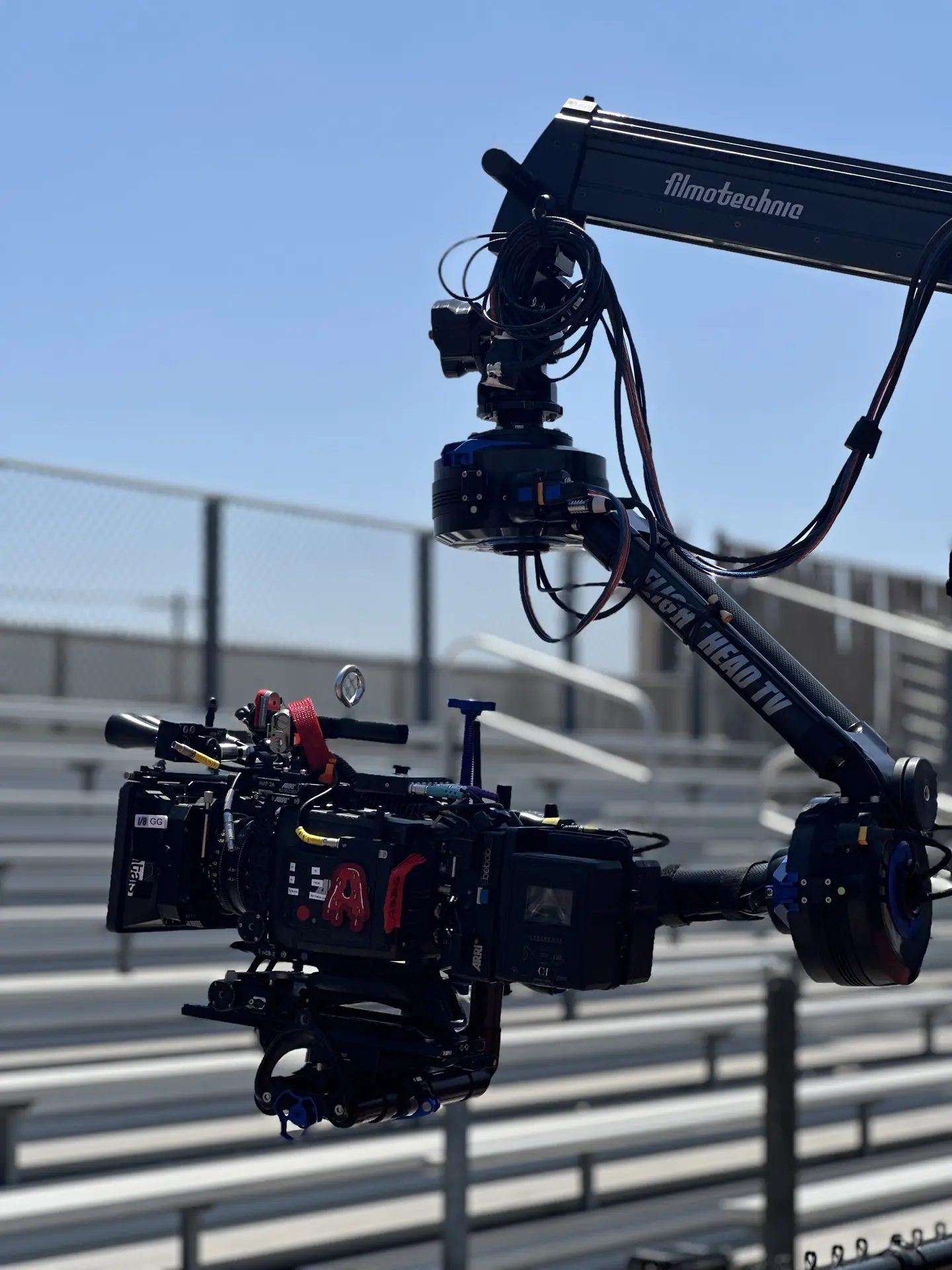
Cameras, lenses, lighting, and sound gear shape the visual language of your story. When clients plan a shoot, one of the first practical questions they ask is whether v**ideo production companies provide filming equipment rentals** or if they must source the gear themselves.
The short answer: most full-service studios supply everything required for a shoot. Yet, understanding how that works, and when you might still need to rent, helps you manage both cost and quality.
Professional gear doesn’t just affect image clarity; it determines flexibility, efficiency, and consistency across campaigns. A well-equipped team can capture multiple content types in one day, long-form ads, short-form social clips, and behind-the-scenes reels, all in the same aesthetic tone.
As Wyzowl’s 2025 Video Marketing Report notes, 91 percent of marketers credit high-quality visuals with improving audience trust. That trust starts with reliable gear and skilled operators.
## How Production Companies Handle Equipment
Most modern production companies operate on an integrated model. Instead of expecting clients to rent cameras and lights separately, they include gear within the production package, simplifying logistics and ensuring compatibility with their workflow.
Studios like[C&I Studios](https://c-istudios.com/video-production-services/) maintain their own professional-grade inventory. From cinema cameras to lighting rigs and audio kits, the studio’s internal equipment library covers nearly every scenario, saving clients the cost and coordination of third-party rentals.
However, not every provider follows the same structure. Some boutique agencies may own limited equipment and supplement through external partners. Knowing this distinction early helps you compare quotes accurately.
### Common Gear Typically Provided
- Camera systems: 4K/6K digital cinema cameras with multiple lens options.
- Lighting kits: Key, fill, and background lighting for various moods.
- Audio capture: Lavalier mics, booms, and on-set mixers.
- Stabilization tools: Gimbals, sliders, cranes for cinematic motion.
- Monitors & data systems: On-site viewing and backup solutions.
Having this arsenal in-house ensures creative control. It also allows teams to test equipment during pre-production, an often-overlooked advantage that guarantees visual consistency once filming begins.
## When You Might Still Need External Rentals
While full-service studios minimize outsourcing, there are cases where renting specialized gear makes sense. For instance, large-scale commercial shoots or niche creative concepts sometimes require tools not used daily.
Typical scenarios include:
- Specialized lenses for macro, underwater, or aerial cinematography.
- High-frame-rate cameras for slow-motion sequences.
- Drones or FPV systems with licensed pilots.
- Virtual production LED walls or motion-capture rigs.
In these cases, the production company usually handles the rental coordination, leveraging vendor relationships to secure reliable, insured equipment. Clients are rarely expected to manage these logistics themselves.
### The Studio Advantage
Because production companies negotiate bulk or repeat-use contracts with rental houses, clients benefit from better pricing, faster turnaround, and guaranteed compatibility with the crew’s workflow. It’s another reason why partnering with professionals is more efficient than DIY coordination.
## How Equipment Integration Affects Budget and Timeline
Equipment decisions influence both cost structure and scheduling. When studios provide in-house gear, setup times are shorter and contingency planning stronger. Renting externally can introduce delays due to delivery schedules, insurance verification, or malfunction replacements.
Cost allocation typically includes:
- Standard equipment fee: Bundled within the production quote.
- Specialized rental add-ons: Only charged when custom tools are needed.
- Operator fees: Experienced cinematographers or technicians who handle setup and maintenance.
Transparent studios, such as C&I Studios, outline these details during pre-production, ensuring that creative ambition aligns with budget reality. This upfront clarity avoids mid-project surprises and ensures smooth approval cycles.
## The Technology Gap — Why Quality Gear Still Needs Expertise
Owning a high-end camera doesn’t guarantee cinematic results. Without expert lighting, direction, and post-production, even the most advanced equipment can underperform. Professional crews combine technical mastery with storytelling purpose.
As HubSpot’s Marketing Data Report confirms, audience engagement increases by over 30 percent when visuals follow deliberate narrative pacing. That outcome depends as much on expertise as on the camera used.
Studios integrate gear into a broader creative system, scriptwriting, framing, and editing, that translates brand goals into visual emotion. Understanding do video production companies provide filming equipment rentals therefore extends beyond access to gear; it’s about accessing a complete ecosystem of tools, talent, and storytelling discipline.
## Transition — From Gear Lists to Strategic Execution
Now that you understand how equipment availability and logistics function within professional studios, the next phase is strategy: how to align creative goals, schedule, and budget for maximum ROI.
- how equipment strategy influences storytelling quality,
- how to collaborate efficiently with production teams, and
- how to ensure that gear, crew, and creative intent work in sync to deliver measurable results.
Creative success depends on technical readiness. The right gear doesn’t just record visuals, it shapes tone, pace, and emotion. For example, a high-dynamic-range camera captures subtle lighting shifts that can elevate a storytelling sequence, while advanced microphones capture the nuance of authentic dialogue.
This is why video production companies that provide filming equipment rentals in-house create smoother workflows. When gear is readily available, directors and cinematographers can experiment more freely, explore alternate takes, and adapt on the spot.
### The Creative Edge of Equipment Readiness
- Faster setup times: Crews know their own gear and can optimize lighting, camera balance, and framing efficiently.
- Consistent aesthetic: Using the same cameras and color profiles across projects ensures brand continuity.
- Improvisational flexibility: On-site access to lenses, stabilizers, and lighting gives directors freedom to pivot scenes mid-shoot.
Studios such as[C&I Studios](https://c-istudios.com/video-production-services/) excel by pairing world-class creative direction with state-of-the-art equipment. Their integrated setups allow teams to focus on narrative flow rather than troubleshooting logistics.
## Cost of Renting vs. Using Studio Equipment
Cost is one of the first considerations when deciding whether to rent equipment or use what the production company provides. While external rental houses might seem cheaper initially, hidden expenses often add up.
Typical external rental costs:
- Camera package (body + lenses): $600-$1,500 per day
- Lighting kit: $300-$800 per day
- Audio gear: $200-$400 per day
- Insurance, delivery, and damage waivers: additional 10-15%
If a shoot runs longer than expected, which happens often, rental costs multiply quickly. When the studio owns or partners with a gear house, those costs are absorbed into a fixed project fee, providing better financial predictability.
### Why Studio-Owned Gear Saves More
1. Bundled pricing: Equipment is included in production quotes, preventing surprise add-ons.
2. Maintenance accountability: The studio keeps its own gear calibrated and insured.
3. Volume advantage: Large studios negotiate lower supplier rates for specialty items.
4. Operational efficiency: In-house technicians reduce setup time, saving labor hours.
In other words, while individual rentals may seem flexible, the studio model is almost always more cost-effective for long-term marketing campaigns or recurring video content.
## Case Example — When Renting Still Makes Sense
To be fair, external rentals remain valuable in niche scenarios. For instance, a beverage brand shooting a 3D holographic ad might need rare lenses or virtual production screens unavailable in standard studio inventory.
In such cases, professional production companies handle rentals on your behalf. They ensure technical compatibility and manage the insurance, setup, and return process, saving clients from dealing with suppliers directly.
### Real-World Illustration
Imagine a brand producing a high-speed sports commercial. The director requires Phantom Flex4K cameras, capable of shooting 1,000+ frames per second for dramatic slow motion. Very few studios keep this system in-house due to cost and complexity.
Rather than making the client find one, the studio arranges the rental, integrates the workflow, and provides trained operators. You still receive the same seamless experience, the only difference is where the equipment originates.
Thus, even when video production companies provide filming equipment rentals externally, the client relationship remains simple: one partner, one invoice, and one accountable team.
## Evaluating a Studio’s Technical Capability Before Hiring
Before signing a production agreement, it’s smart to evaluate your chosen studio’s equipment ecosystem. The goal isn’t to request a full gear list, but to ensure they can deliver cinematic results efficiently.
Key questions to ask include:
1. What types of cameras and lenses does your studio use regularly?
2. Do you own or rent your lighting and grip gear?
3. Do you have on-site sound recording and monitoring systems?
4. Can you handle drone or aerial cinematography if required?
5. How do you manage backups and data security on set?
A studio with clear, confident answers likely has a well-established infrastructure, a strong indicator of professionalism. Studios like [C&I Studios](https://c-istudios.com/) maintain both technical and creative readiness, ensuring clients never face last-minute equipment shortages or mismatched workflows.
### Evaluating Beyond Gear Lists
Beyond hardware, the best studios invest in post-production technology: calibrated color-grading monitors, high-speed storage systems, and cinema-level editing software. This infrastructure guarantees that every pixel aligns with the original creative intent.
As HubSpot highlights, consistent production quality significantly improves viewer retention, a factor that directly influences ROI and brand perception.
## Equipment Logistics and Insurance — What Clients Should Know
When discussing do video production companies provide filming equipment rentals, insurance is often overlooked but critical. Most studios include liability and damage coverage within their project pricing, ensuring peace of mind for both client and crew.
If a studio rents specialty gear externally, the insurance responsibility typically shifts temporarily to them, not you. However, high-value projects (like automotive or luxury brand shoots) might require additional insurance endorsements.
### Typical Insurance Coverage Includes
- Equipment damage (accidental or environmental)
- Crew liability during setup and dismantling
- Data protection for footage backups
- Third-party property coverage for rented spaces
Transparent studios provide certificates of insurance (COI) upon request. This level of operational maturity distinguishes seasoned professionals from small-scale freelancers.
## The Role of Equipment in Multi-Platform Content Creation
Modern campaigns often demand multiple video formats from a single shoot, landscape, portrait, and square cuts for web, social, and paid ads.
Studios that maintain their own gear libraries can switch configurations quickly between takes, ensuring consistent framing and lighting across formats. This efficiency is vital for maximizing production ROI.
### Equipment Adaptability in Practice
- **YouTube**: 16:9 horizontal, cinematic composition.
- **TikTok / Instagram Reels**: 9:16 vertical storytelling.
- **LinkedIn**: 1:1 balanced framing with subtle motion.
By mastering these technical nuances, full-service studios turn one shoot day into a month’s worth of marketing material, a key benefit of using in-house production resources rather than multiple vendors.
Sprout Social reports that repurposed video content performs 2.6x better in cross-channel campaigns when produced within a unified creative workflow.
## Collaboration Between Creative Teams and Equipment Specialists
A great video is rarely the product of isolated departments. Professional studios encourage collaboration between creative directors, cinematographers, and post-production leads.
When your creative and technical teams work in sync, visual storytelling becomes more intentional. For example, a cinematographer can pre-plan lighting setups based on the color palette chosen by the creative director. Similarly, editors can advise on which formats will cut best across platforms.
[C&I Studios](https://c-istudios.com/creative-marketing-services/) is structured precisely this way, combining creative marketing strategy with technical execution under one roof. This model ensures your campaign narrative, tone, and visuals remain coherent from ideation to publication.
## How to Budget for Equipment in Your Video Project
Budgeting accurately prevents creative compromise. Clients often underestimate how much of their production cost relates to technical logistics. A transparent studio will itemize or integrate gear expenses in a way that supports clarity.
### Example Breakdown
**Category**
**Description**
**Typical Allocation**
Creative development
Concept, scripting, and storyboarding
20-25%
Equipment and crew
Camera, lighting, audio, grip gear
25-35%
Post-production
Editing, sound design, color grading
25-30%
Distribution prep
Formatting, subtitling, optimization
10-15%
If your studio already owns much of its gear, that “equipment and crew” percentage can drop by 10-15%. Over the long term, this translates into substantial savings, especially for brands producing ongoing campaigns.
## The Importance of Technical Consistency for Brand Identity
Every brand has a visual fingerprint, a look, tone, and rhythm that audiences subconsciously recognize. Maintaining that identity requires consistent technical parameters across videos.
Studios with permanent gear setups can replicate specific lighting temperatures, camera profiles, and post-production LUTs (color presets) across all your projects. This uniformity strengthens brand recall and builds long-term trust.
As Wyzowl notes, 89 percent of consumers are more likely to buy again from brands that maintain consistent visual identity across campaigns.
That’s why choosing a studio that owns and maintains its own equipment isn’t just a logistical advantage, it’s a strategic branding decision.
## Future of Equipment and Production Technology
The landscape of video production continues to evolve rapidly. AI-assisted tools, virtual production stages, and cloud-based collaboration are redefining what’s possible.
Studios equipped with the latest gear, from volumetric capture cameras to LED environments, are not just producing content; they’re building immersive brand experiences.
### Key Emerging Trends
- Virtual production: LED screens simulate real environments, reducing travel costs and carbon footprint.
- AI-driven lighting and focus: Automated systems adjust dynamically to maintain exposure and depth.
- Cloud-based post-production: Real-time editing collaboration across continents.
Forward-thinking production companies like[C&I Studios](https://c-istudios.com/video-production-services/) continue to invest in next-generation tools, ensuring clients remain ahead of visual and technological trends.
## The Smart Way to Approach Equipment Rentals
So, do video production companies provide filming equipment rentals?
Yes, and far more than that. They provide integrated solutions where creative vision, technical precision, and logistical efficiency converge.
Working with a full-service studio ensures that every tool, from the camera lens to the editing suite, serves your brand’s message. Whether gear is owned or rented, you get one cohesive system, managed, maintained, and optimized by experts.
## Work with C&I Studios
If you are planning a project like this, our team can take it from concept to final delivery. Explore our [film and TV production](https://c-istudios.com/film-and-tv-production/), browse [our work](https://c-istudios.com/our-work/) to see how we tell brand stories, and [get in touch](https://c-istudios.com/contact/) when you are ready to start.
Originally published October 14, 2025
---
*This content is from [C&I Studios](https://c-istudios.com), a full-service production company.*
---
# Measuring Video ROI: How Professional Production Drives Real Business Growth
> Published: October 13, 2025
> Categories: Commercial & Brand
> Source: https://c-istudios.com/measuring-video-roi-how-professional-production-drives-real-business-growth/
---
.cib{--paper:#1b1d1f;--ink:#fff;--body:#d5d7d9;--muted:#8b9096;--line:rgba(255,255,255,.12);--thumb:#2b2e31;--card:#212426;--accent:#c02b0a;--blue:#5B8FA8;--serif:'Playfair Display',Georgia,serif;--sans:'Poppins',-apple-system,sans-serif;--measure:900px;background:var(--paper);color:var(--body);font-family:var(--sans);line-height:1.6;position:relative;left:50%;transform:translateX(-50%);width:90vw;max-width:1920px}
.cib *{box-sizing:border-box}
.cib .kicker{max-width:var(--measure);margin:58px auto 0;padding:0 22px;font-size:12.5px;font-weight:700;letter-spacing:2.5px;text-transform:uppercase;color:var(--blue)}
.cib h1.cibh1{text-wrap:balance;font-family:var(--serif);font-weight:500;font-size:clamp(46px,6vw,72px);line-height:1.08;color:var(--ink);max-width:var(--measure);margin:18px auto 0;padding:0 22px;letter-spacing:-.5px}
.cib .metarow{max-width:var(--measure);margin:20px auto 0;padding:0 22px;color:var(--muted);font-size:14px}
.cib .hero{position:relative;width:100%;height:0;padding-bottom:56.25%;overflow:hidden;margin:48px auto 0;border-top:1px solid var(--line);border-bottom:1px solid var(--line)}
.cib .hero .ph{width:100%;aspect-ratio:16/9;background:var(--thumb);border-top:1px solid var(--line);border-bottom:1px solid var(--line);display:flex;align-items:center;justify-content:center;color:#7d8288;font-size:13px;text-align:center;padding:0 20px}
.cib .body{max-width:var(--measure);margin:12px auto 0;padding:52px 22px 6px}
.cib .body.lead p:first-child{font-size:23px;line-height:1.62;color:var(--ink)}
.cib .body p{font-size:18.5px;line-height:1.85;margin:0 0 30px;color:var(--body)}
.cib .body h2{text-wrap:balance;font-family:var(--serif);font-weight:500;font-size:clamp(32px,4vw,48px);line-height:1.22;color:var(--ink);margin:70px 0 20px;letter-spacing:-.3px}
.cib .body h3{text-wrap:balance;font-family:var(--sans);font-weight:600;font-size:22px;color:var(--ink);margin:38px 0 8px}
.cib .body a{color:var(--ink);text-decoration:underline;text-decoration-color:rgba(255,255,255,.4);text-underline-offset:3px}
.cib .body a:hover{text-decoration-color:var(--ink)}
.cib .ctable{width:100%;border-collapse:collapse;margin:16px 0 30px;font-size:16px}
.cib .ctable th{background:#000;color:#fff;text-align:left;padding:10px 12px;font-family:var(--sans)}
.cib .ctable td{padding:10px 12px;border-bottom:1px solid var(--line);color:var(--body)}
.cib .inimg{position:relative;width:100%;height:0;padding-bottom:56.25%;overflow:hidden;margin:72px auto;border-top:1px solid var(--line);border-bottom:1px solid var(--line)}
.cib .inimg .ph{width:100%;aspect-ratio:16/9;background:var(--thumb);border-top:1px solid var(--line);border-bottom:1px solid var(--line);display:flex;align-items:center;justify-content:center;color:#7d8288;font-size:13px}
.cib .origpub{max-width:var(--measure);margin:60px auto 0;padding:26px 22px 0;border-top:1px solid var(--line);color:var(--muted);font-size:13.5px}
.cib .related{max-width:1200px;margin:64px auto 0;padding:34px 22px 76px}
.cib .related h3{font-family:var(--sans);font-size:12.5px;letter-spacing:2px;text-transform:uppercase;color:var(--ink);margin:0 0 24px}
.cib .grid{display:grid;grid-template-columns:repeat(3,1fr);gap:28px}
.cib .rc{background:var(--card);border:1px solid var(--line);display:block;text-decoration:none;color:inherit;transition:border-color .15s}
.cib a.rc:hover{border-color:rgba(255,255,255,.5)}
.cib .rc .thumb{position:relative;width:100%;height:0;padding-bottom:56.25%;background:var(--thumb);overflow:hidden}
.cib .rc .thumb img{position:absolute!important;top:0!important;left:0!important;width:100%!important;height:100%!important;object-fit:cover!important;margin:0!important}
.cib .rc .cc{padding:14px 15px 17px}
.cib .rc .rt{font-family:var(--serif);font-weight:500;font-size:16px;line-height:1.3;color:var(--ink);margin:0 0 6px}
.cib .rc .rm{font-size:11px;letter-spacing:1px;text-transform:uppercase;color:var(--muted)}
.cib img{margin:0!important;padding:0!important;display:block!important;vertical-align:top;max-width:100%}
.cib .hero img,.cib .inimg img{position:absolute!important;top:0!important;left:0!important;width:100%!important;height:100%!important;object-fit:cover!important;margin:0!important;padding:0!important;border:0!important;display:block!important;aspect-ratio:auto!important}
.cib .hero+.body{padding-top:36px}
@media(max-width:760px){.cib .grid{grid-template-columns:1fr}.cib .body h2{margin:52px 0 16px}.cib .body p{font-size:17.5px}.cib .inimg,.cib .hero{margin-top:44px}}
.cib .vembed{max-width:var(--measure);margin:44px auto;padding:0 22px}.cib .vembed .vwrap{position:relative;width:100%;height:0;padding-bottom:56.25%}.cib .vembed .vwrap iframe{position:absolute;top:0;left:0;width:100%;height:100%;border:0}
Commercial & Brand
# Measuring Video ROI. How Professional Production Drives Real Business Growth
11 min read
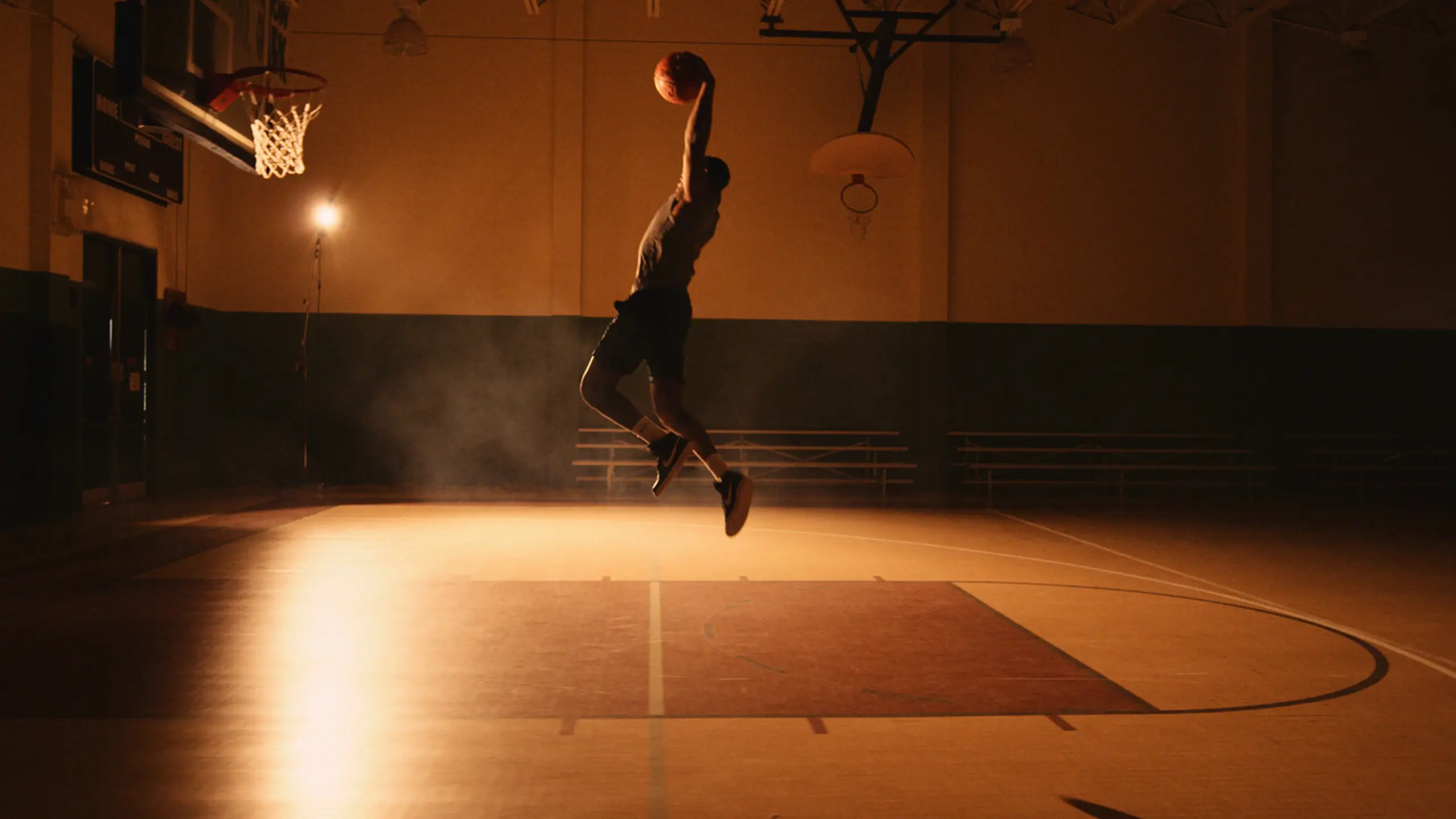
In the digital age, every brand is a media company. Businesses invest heavily in cinematic campaigns, branded documentaries, and high-production commercials, but few pause to measure what those investments actually deliver. The question isn’t whether video works; it’s how well it works for you.
Understanding **how to measure ROI of professional video production services** has become essential because creative success without measurable outcomes is no longer enough. The marketing world has matured beyond views and likes; leaders now demand proof that storytelling translates into sales, brand lift, or meaningful engagement.
This shift is driven by a new marketing reality: competition for attention is fierce. Billions of videos flood social feeds daily, yet only a fraction move viewers to act. That’s why ROI-focused production transforms creativity into strategy, ensuring that each frame, cut, and caption aligns with measurable business value.
### H3. The Shift from Vanity Metrics to Value Metrics
For years, marketers gauged success using vanity metrics: views, likes, and impressions. These numbers looked impressive in reports but offered little insight into real performance. Today’s data-driven teams emphasize value metrics, the numbers that reveal what content actually achieves.
Value metrics include:
- **Engagement depth**: Average watch time and retention curves.
- **Lead quality**: How many viewers convert into qualified leads.
- **Customer journey contribution**: Which videos directly assist conversions.
- **Revenue impact**: The measurable financial effect of campaigns.
According to Wyzowl’s 2025 Video Marketing Report, 87 percent of marketers say video has increased their sales, while 92 percent report improved brand awareness. Yet fewer than half have systems to connect those outcomes to specific videos, a gap that separates amateurs from brands that treat production as an investment, not an expense.
## Defining ROI in Video Production
ROI, or Return on Investment, is the relationship between what you spend and what you earn as a result. In video production, however, the formula extends beyond simple math, it merges analytics, psychology, and strategy. The question isn’t only “How much revenue did this video generate?” but also “How much long-term brand value did it create?”
***ROI = (Net Profit ÷ Total Investment) × 100***
While the formula appears straightforward, calculating ROI for creative media involves understanding both tangible and intangible returns.
### Tangible ROI — Direct Financial Gains
Tangible ROI connects directly to measurable financial results. These are outcomes a marketing dashboard can clearly report:
- Sales lift: Conversions attributed to a specific campaign.
- Lower acquisition cost: Fewer dollars spent per lead or sale.
- Increased retention: Customers who engage with branded videos stay longer and buy more.
- Ad efficiency: High-quality content improves performance in paid campaigns, reducing cost per click.
For instance, HubSpot’s Marketing Trends 2025 found that businesses using professional video in advertising achieved a 34 percent higher conversion rate than those relying on static visuals alone.
### Intangible ROI — The Brand-Building Effect
Intangible ROI speaks to what can’t always be quantified but profoundly influences long-term performance. These include:
- Brand awareness: Recognition across audiences and platforms.
- Emotional resonance: Videos that connect humanly increase trust and loyalty.
- Thought leadership: Educational or cinematic narratives elevate authority.
- Reputation capital: Consistent storytelling enhances perceived value.
When professional production amplifies both financial and emotional impact, the outcome is compounding brand equity, growth that strengthens over time.
## Common Mistakes When Measuring Video ROI
Even the most creative campaigns can underperform if measured incorrectly. Many organizations misjudge performance because they lack a structured framework for evaluation.
**The first mistake is** measuring too late. ROI isn’t a postmortem metric; it’s a strategic design principle. If goals and success indicators aren’t defined during pre-production, the final analysis will lack direction. A professional production company like C&I Studios begins every project with a discovery phase, aligning creative vision with measurable KPIs before a single frame is filmed.
**The second mistake is** treating all videos the same. Each format serves a different purpose in the buyer journey: awareness, consideration, or conversion. For example, a brand film builds emotional connection but may not immediately drive sales, while a product demo is built for conversion. Evaluating both by identical criteria leads to skewed insights.
**The third mistake is** ignoring cross-platform behavior. Video rarely exists in isolation. It supports blogs, ads, landing pages, and email campaigns. When ROI analysis overlooks these touchpoints, the contribution of video to broader marketing success gets lost.
### The Correct Approach
A reliable measurement strategy assigns metrics based on video intent:
- Awareness content: Reach, impressions, brand recall.
- Consideration content: Engagement rate, average watch time, social shares.
- Conversion content: Click-through rate, lead forms, purchases.
By tracking distinct goals per funnel stage, marketers transform analytics from chaos into clarity.
## Building an ROI Framework That Works
To accurately assess how to measure ROI of professional video production services, businesses must implement a holistic measurement framework that connects creative intent to commercial outcomes.
This framework starts before the shoot, extends through post-production, and continues long after distribution. It blends planning, tracking, and iteration, a full cycle of measurement and improvement.
### Step 1 – Define Measurable Goals
Every successful campaign starts with clarity. Are you seeking brand visibility, customer education, lead generation, or revenue growth? Each objective requires different creative execution and measurement. A brand awareness video might focus on reach and recall, while a testimonial video targets lead conversion and trust.
Without well-defined objectives, ROI metrics become meaningless. Professional studios spend time translating creative ambition into quantifiable outcomes that the business can track month after month.
### Step 2 – Calculate the True Cost of Investment
ROI accuracy depends on counting every cost component, not just filming fees.
Include:
- Pre-production: Strategy, scripting, permits, and logistics.
- Production: Cameras, crew, lighting, and talent.
- Post-production: Editing, animation, color grading, and sound design.
- Distribution: Paid ads, SEO optimization, and platform promotion.
Underestimating costs inflates ROI figures and misleads stakeholders. A precise accounting creates transparency and allows better budgeting for future shoots.
### Step 3 – Link Metrics Across the Funnel
Professional agencies use advanced analytics to connect each video’s performance to a broader conversion path. For instance:
- Top-of-funnel videos drive awareness and traffic.
- Mid-funnel content educates audiences, increasing dwell time on site.
- Bottom-funnel clips close deals by addressing objections.
When analytics show a consistent progression from one stage to the next, marketers can prove not only engagement but influence, the true hallmark of ROI maturity.
## Using Analytics Tools to Quantify Impact
ROI measurement without technology is like navigation without a compass. Modern analytics platforms reveal exactly how audiences interact with content, from first impression to final conversion.
### Essential Platforms
1. Google Analytics 4, Tracks conversions, referral traffic, and multi-touch attribution for embedded videos.
2. YouTube Studio, Provides retention data, engagement peaks, and audience demographics.
3. HubSpot Video Reports, Connects CRM insights with video engagement to identify which leads originated from video views.
4. Sprout Social, Monitors cross-platform performance, paid reach, and viewer sentiment.
Sprout Social’s 2025 Report found that 81 percent of marketers who centralize analytics improve campaign ROI within six months.
### Creating a Unified Dashboard
A custom dashboard consolidates all metrics into one visual view:
- Awareness layer: Reach, impressions, and play rate.
- Engagement layer: Watch time, reactions, and shares.
- Conversion layer: Form fills, purchases, and attributed revenue.
By mapping these data layers together, teams can pinpoint where videos drive the most value and where optimization is needed, transforming raw numbers into actionable creative insight.
## The Strategic Role of Professional Studios
Hiring a professional production partner is not about outsourcing creativity; it’s about scaling efficiency, insight, and performance. Studios like C&I Studios combine cinematic expertise with business intelligence, ensuring each project supports a measurable outcome.
Professional teams begin with audience research and brand positioning. They storyboard with intent, design visuals that align with message hierarchy, and capture multi-format content during a single shoot. That efficiency turns one filming session into months of material across YouTube, TikTok, Instagram, and paid media.
Equally important, professional editors and analysts collaborate post-production to align storytelling with data. Scenes that generate high engagement are studied, and those insights feed directly into the next campaign, forming a continuous improvement loop that amplifies ROI over time.
## Transition — From Data to Strategy
Understanding numbers is only the beginning. The true value of ROI lies in how those insights inform [creative](https://c-istudios.com/creative-marketing-services/) strategy, guide budgeting decisions, and shape future storytelling.
- how to interpret data into creative direction,
- how to present ROI findings to stakeholders, and
- how C&I Studios uses performance analytics to scale brand growth sustainably.
## Translating Data into Creative Strategy
Understanding metrics is only valuable when they lead to better creative decisions. The ultimate goal of measuring ROI isn’t just reporting numbers; it’s learning which stories, visuals, and formats deliver the greatest business value.
When brands partner with professional studios, the conversation shifts from “What’s performing?” to “Why is it performing?” This mindset turns analytics into a creative feedback system. For instance, if a company’s short testimonial video outperforms a polished product ad, the insight may reveal that authenticity drives stronger engagement than aesthetic perfection.
Strategic studios like[C&I Studios](https://c-istudios.com/video-production-services/) use these findings to evolve production frameworks. They analyze retention graphs, keyword associations, and audience segments, then refine scripts, framing, and pacing accordingly. The result is a data-informed storytelling model that strengthens ROI with every iteration.
Data also helps identify underperforming content early. If mid-funnel videos generate views but not conversions, editors can rework intros or calls-to-action to make them more persuasive. In this sense, analytics aren’t just diagnostics, they’re creative instruments guiding the next generation of content.
## Building Stakeholder Confidence Through ROI Reporting
Measuring ROI is one part of the equation; communicating it effectively is another. For many organizations, creative teams struggle to justify production budgets because results are presented as engagement metrics rather than financial outcomes. Executives respond to numbers that connect directly to revenue, cost efficiency, or brand reach.
A professional ROI report should bridge that language gap. It should not only display performance graphs but also interpret them in a business context. This is where how to measure ROI of professional video production services becomes a powerful communication tool, demonstrating how creative storytelling impacts the bottom line.
Effective reports typically include three key layers:
1. Performance Overview: Summary of key metrics, impressions, watch time, engagement rate.
2. Business Correlation: Evidence of video-driven outcomes such as increased conversions, website sessions, or sales-qualified leads.
3. Strategic Insight: Recommendations based on data trends, what to double down on, what to adjust, and what to eliminate.
When creative teams deliver these insights proactively, they transform executive perception. Instead of being seen as a cost center, video production becomes a growth engine supported by measurable evidence.
## H2. Advanced Methods for Calculating ROI
Traditional ROI models rely on simple cost-versus-revenue analysis. But the modern content ecosystem requires more nuanced evaluation methods. Videos influence multiple stages of the buyer’s journey, making attribution both complex and crucial.
One advanced approach is multi-touch attribution, where analytics platforms credit each piece of content for its share of influence in a customer’s path to purchase. For example, a viewer might first see a brand film on YouTube, then a testimonial on Instagram, and finally a product demo on the website before converting. Modern analytics tools can track that sequence, showing how each video contributed to the final outcome.
Another approach is incremental lift measurement, commonly used in paid media. This method compares performance between audiences who have seen the video and those who haven’t, isolating video’s true impact on awareness, engagement, or conversion rates.
Finally, lifetime value (LTV) correlation measures the quality of customers acquired through video campaigns. If clients who discovered your brand through video demonstrate higher retention or spending, that long-term value becomes part of your ROI calculation.
These models reflect how comprehensive analysis moves beyond isolated metrics. Understanding them helps businesses truly master how to measure ROI of professional video production services in an interconnected marketing environment.
## Turning Content into Measurable Growth
Consider a mid-sized technology brand that invested in a year-long content partnership with a professional production studio. Initially, their internal videos averaged 12% engagement and minimal lead generation. By aligning creative direction with data, the studio rebuilt their strategy from the ground up.
They began with three core video types: awareness-level explainers, customer testimonials, and conversion-focused demos. Each video had clearly defined KPIs, tracked through Google Analytics 4 and HubSpot integration.
After six months:
- Engagement rose from 12% to 43%.
- Average watch time doubled.
- Lead conversion increased by 29%.
- Paid ad cost-per-click dropped by 22%.
The breakthrough wasn’t in more production; it was in smarter production. The team learned that testimonial videos consistently outperformed animation-based ads, proving that human-driven storytelling delivered stronger ROI.
By reallocating future budgets accordingly, the company sustained higher performance without expanding costs, a textbook demonstration of data-driven creative scaling.
## The Role of Collaboration Between Creative and Marketing Teams
ROI measurement works best when creative and analytical teams operate in sync. Too often, production and marketing function separately: one focuses on storytelling, the other on metrics. The best outcomes occur when both collaborate from the start.
Professional studios bridge this gap naturally. At[C&I Studios](https://c-istudios.com/creative-marketing-services/), for example, creative directors work alongside marketing strategists and data specialists during the entire production cycle. The result is cohesive storytelling backed by measurable performance objectives.
When both disciplines share accountability for ROI, creative decisions become sharper. The marketing team provides insights into audience behavior, while the production team translates those insights into emotional, high-impact visuals. This alignment reduces wasted effort and ensures that every dollar invested in content creation contributes directly to brand growth.
Collaborative planning also accelerates adaptability. When performance metrics fluctuate, adjustments are made quickly, whether through new hooks, re-edited versions, or targeted distribution changes. The ability to pivot creatively based on real-time data is one of the clearest advantages of professional partnerships.
## From Insight to Action — Scaling What Works
Once ROI data starts flowing, the challenge becomes identifying what to scale. Professional teams help brands categorize their content by performance tiers:
- High-performing videos are repurposed, boosted, or localized for new audiences.
- Moderate performers are revised with stronger calls-to-action or retargeted distribution.
- Low performers are retired or reimagined using new creative concepts.
Scaling effectively requires understanding why something worked. Was it the script, the visual tone, or the topic relevance? Professional studios analyze multiple factors before replication to ensure results are repeatable, not coincidental.
At this stage, ROI measurement evolves into an optimization cycle. Data informs creative adjustments, which improve future ROI, leading to sustained brand growth. This systemized approach is what separates structured, strategic video marketing from ad-hoc content creation.
## Predicting Future ROI with AI and Automation
Emerging technologies are transforming how brands analyze creative performance. Artificial intelligence now enables predictive analytics, forecasting which video styles, lengths, and topics will perform best based on historical patterns.
Automated editing tools also speed up post-production workflows, reducing turnaround times and costs. This efficiency enhances ROI not by replacing creativity but by freeing human creators to focus on storytelling rather than logistics.
According to Statista’s 2025 Media Forecast, over 60% of production agencies now incorporate AI-assisted analytics to improve creative outcomes. Studios that embrace this data-creative hybrid model can offer more precise targeting and measurable returns.
C&I Studios continues to lead in this direction, integrating advanced analytics tools into its creative pipeline. By uniting machine learning insights with human emotion and craft, it ensures every production investment remains strategically optimized.
## The Long-Term Payoff of ROI-Driven Production
The real benefit of measuring ROI isn’t immediate, it’s cumulative. Each campaign provides learning data that compounds over time, refining creative instinct with analytical precision. The longer a brand invests in this disciplined approach, the stronger its efficiency and market impact become.
Brands that consistently analyze performance tend to develop a content intelligence loop: every video informs the next. This feedback mechanism helps forecast budget requirements, streamline creative decisions, and improve cross-channel alignment.
In this model, video becomes less of a marketing cost and more of an evolving asset, one that builds brand equity with every iteration. Over time, this is how professional studios transform creative storytelling into a measurable, scalable business strategy.
## Turning Measurement Into Mastery
Understanding how to measure ROI of professional video production services is about far more than analytics, it’s about aligning creativity with business intelligence. When brands can trace a direct line between visual storytelling and measurable growth, production becomes a catalyst for progress rather than an expense.
C&I Studios stands at the forefront of this transformation. By merging creative development, data-driven strategy, and full-service production, the studio helps brands capture attention and convert it into results.
Ready to connect your creative investment to measurable business growth? [Partner with C&I Studios](https://c-istudios.com/video-production-services/) to produce videos that perform, convert, and scale with data-driven precision.
## Work with C&I Studios
If you are planning a project like this, our team can take it from concept to final delivery. Explore our [video production services](https://c-istudios.com/video-production-services/), browse [our work](https://c-istudios.com/our-work/) to see how we tell brand stories, and [get in touch](https://c-istudios.com/contact/) when you are ready to start.
Originally published October 13, 2025
---
*This content is from [C&I Studios](https://c-istudios.com), a full-service production company.*
---
# Will a Video Production Company Handle Editing and Color Grading?
> Published: October 12, 2025
> Categories: Post & VFX
> Source: https://c-istudios.com/will-a-video-production-company-handle-editing-and-color-grading/
---
.cib{--paper:#1b1d1f;--ink:#fff;--body:#d5d7d9;--muted:#8b9096;--line:rgba(255,255,255,.12);--thumb:#2b2e31;--card:#212426;--accent:#c02b0a;--blue:#5B8FA8;--serif:'Playfair Display',Georgia,serif;--sans:'Poppins',-apple-system,sans-serif;--measure:900px;background:var(--paper);color:var(--body);font-family:var(--sans);line-height:1.6;position:relative;left:50%;transform:translateX(-50%);width:90vw;max-width:1920px}
.cib *{box-sizing:border-box}
.cib .kicker{max-width:var(--measure);margin:58px auto 0;padding:0 22px;font-size:12.5px;font-weight:700;letter-spacing:2.5px;text-transform:uppercase;color:var(--blue)}
.cib h1.cibh1{text-wrap:balance;font-family:var(--serif);font-weight:500;font-size:clamp(46px,6vw,72px);line-height:1.08;color:var(--ink);max-width:var(--measure);margin:18px auto 0;padding:0 22px;letter-spacing:-.5px}
.cib .metarow{max-width:var(--measure);margin:20px auto 0;padding:0 22px;color:var(--muted);font-size:14px}
.cib .hero{position:relative;width:100%;height:0;padding-bottom:56.25%;overflow:hidden;margin:48px auto 0;border-top:1px solid var(--line);border-bottom:1px solid var(--line)}
.cib .hero .ph{width:100%;aspect-ratio:16/9;background:var(--thumb);border-top:1px solid var(--line);border-bottom:1px solid var(--line);display:flex;align-items:center;justify-content:center;color:#7d8288;font-size:13px;text-align:center;padding:0 20px}
.cib .body{max-width:var(--measure);margin:12px auto 0;padding:52px 22px 6px}
.cib .body.lead p:first-child{font-size:23px;line-height:1.62;color:var(--ink)}
.cib .body p{font-size:18.5px;line-height:1.85;margin:0 0 30px;color:var(--body)}
.cib .body h2{text-wrap:balance;font-family:var(--serif);font-weight:500;font-size:clamp(32px,4vw,48px);line-height:1.22;color:var(--ink);margin:70px 0 20px;letter-spacing:-.3px}
.cib .body h3{text-wrap:balance;font-family:var(--sans);font-weight:600;font-size:22px;color:var(--ink);margin:38px 0 8px}
.cib .body a{color:var(--ink);text-decoration:underline;text-decoration-color:rgba(255,255,255,.4);text-underline-offset:3px}
.cib .body a:hover{text-decoration-color:var(--ink)}
.cib .ctable{width:100%;border-collapse:collapse;margin:16px 0 30px;font-size:16px}
.cib .ctable th{background:#000;color:#fff;text-align:left;padding:10px 12px;font-family:var(--sans)}
.cib .ctable td{padding:10px 12px;border-bottom:1px solid var(--line);color:var(--body)}
.cib .inimg{position:relative;width:100%;height:0;padding-bottom:56.25%;overflow:hidden;margin:72px auto;border-top:1px solid var(--line);border-bottom:1px solid var(--line)}
.cib .inimg .ph{width:100%;aspect-ratio:16/9;background:var(--thumb);border-top:1px solid var(--line);border-bottom:1px solid var(--line);display:flex;align-items:center;justify-content:center;color:#7d8288;font-size:13px}
.cib .origpub{max-width:var(--measure);margin:60px auto 0;padding:26px 22px 0;border-top:1px solid var(--line);color:var(--muted);font-size:13.5px}
.cib .related{max-width:1200px;margin:64px auto 0;padding:34px 22px 76px}
.cib .related h3{font-family:var(--sans);font-size:12.5px;letter-spacing:2px;text-transform:uppercase;color:var(--ink);margin:0 0 24px}
.cib .grid{display:grid;grid-template-columns:repeat(3,1fr);gap:28px}
.cib .rc{background:var(--card);border:1px solid var(--line);display:block;text-decoration:none;color:inherit;transition:border-color .15s}
.cib a.rc:hover{border-color:rgba(255,255,255,.5)}
.cib .rc .thumb{position:relative;width:100%;height:0;padding-bottom:56.25%;background:var(--thumb);overflow:hidden}
.cib .rc .thumb img{position:absolute!important;top:0!important;left:0!important;width:100%!important;height:100%!important;object-fit:cover!important;margin:0!important}
.cib .rc .cc{padding:14px 15px 17px}
.cib .rc .rt{font-family:var(--serif);font-weight:500;font-size:16px;line-height:1.3;color:var(--ink);margin:0 0 6px}
.cib .rc .rm{font-size:11px;letter-spacing:1px;text-transform:uppercase;color:var(--muted)}
.cib img{margin:0!important;padding:0!important;display:block!important;vertical-align:top;max-width:100%}
.cib .hero img,.cib .inimg img{position:absolute!important;top:0!important;left:0!important;width:100%!important;height:100%!important;object-fit:cover!important;margin:0!important;padding:0!important;border:0!important;display:block!important;aspect-ratio:auto!important}
.cib .hero+.body{padding-top:36px}
@media(max-width:760px){.cib .grid{grid-template-columns:1fr}.cib .body h2{margin:52px 0 16px}.cib .body p{font-size:17.5px}.cib .inimg,.cib .hero{margin-top:44px}}
.cib .vembed{max-width:var(--measure);margin:44px auto;padding:0 22px}.cib .vembed .vwrap{position:relative;width:100%;height:0;padding-bottom:56.25%}.cib .vembed .vwrap iframe{position:absolute;top:0;left:0;width:100%;height:100%;border:0}
Post & VFX
# Will a Video Production Company Handle Editing and Color Grading?
12 min read

The short answer is yes, most full-service video production companies handle editing and color grading as part of their standard workflow. But "handling" post-production and doing it well are two very different things. Some companies treat editing as an afterthought, a task they outsource to the cheapest freelancer available after the shoot wraps. Others, like C&I, build post-production into the creative process from day one, with dedicated editors, colorists, and sound designers who shape the final product with as much care as the cinematographer shaped the footage on set.
This question matters because where and how your footage gets edited directly affects the quality, consistency, and timeline of your finished video. A video production company that separates production from post creates handoff friction, communication gaps, and a finished product that often feels disconnected from the original creative vision. Understanding what to expect from your production partner's [post-production capabilities](https://c-istudios.com/post-production-services/) is essential before you sign any contract.

## What a Full-Service Video Production Company Actually Provides
A genuine full-service video production company covers three phases: pre-production, production, and post-production. Pre-production includes concept development, scriptwriting, storyboarding, location scouting, casting, and scheduling. Production is the shoot itself: cameras, lighting, sound, direction, and everything that happens on set. Post-production encompasses editing, color grading, sound design, music licensing, motion graphics, and final delivery.
The key word is "full-service." Many companies market themselves as video production companies but only handle the production phase. They will show up with cameras, light a scene, record footage, and hand you hard drives. What happens next is your problem. These are production crews, not production companies. The distinction matters enormously when you are budgeting a project and expecting a finished deliverable.
At C&I, every project moves through our complete pipeline. The [production team](https://c-istudios.com/video-production-services/) that shoots your footage works alongside the editors and colorists who will finish it. This continuity means the editor understands the director's intent, the colorist knows what lighting conditions existed on set, and the sound designer has context for every audio decision. That shared understanding produces better work, faster.
## The Editing Process at a Video Production Company
### From Raw Footage to Rough Cut
Professional editing begins with media management: ingesting footage, creating backups, organizing clips by scene and take, syncing audio if external recorders were used, and generating proxies for efficient editing. This technical groundwork is invisible to clients but critical. A disorganized media pipeline creates delays and increases the risk of lost footage.
The first creative pass is the assembly edit, where the editor places all usable footage in script order. This is a raw, unpolished version that typically runs 2 to 3 times the final target length. From the assembly, the editor crafts a rough cut that establishes structure, pacing, and story flow. The rough cut is the most important creative milestone in post-production because it reveals whether the footage actually tells the story the director intended.
For a standard brand video or commercial, the rough cut stage takes 3 to 7 business days depending on the complexity of the project and the volume of footage. Documentary and long-form content takes longer because the editorial process involves discovering the story structure rather than following a predetermined script.
### Fine Cut and Client Review
After the rough cut is approved directionally, the editor refines timing, tightens transitions, polishes audio edits, and adds temporary music and graphics placeholders. This fine cut is what most clients review in their first formal feedback round. A well-run video production company provides a clear review process: timestamped feedback, a defined number of revision rounds, and turnaround commitments for each revision.
Revision management is where many production relationships break down. Unlimited revisions sound generous in a proposal but create bloated timelines and unfocused outcomes. Professional companies structure revision rounds with clear scope: Round 1 for structural feedback, Round 2 for detail refinements, Round 3 for final polish. Changes beyond the contracted rounds are billed at an hourly rate, which incentivizes decisive feedback and prevents projects from languishing in edit purgatory.
### Tools and Technology
The editing software a company uses signals their technical sophistication. Adobe Premiere Pro is the industry workhorse for commercial and branded content. DaVinci Resolve combines editing with industry-leading color grading in a single application. Avid Media Composer remains the standard for long-form entertainment, broadcast television, and feature films. Final Cut Pro has a dedicated following among certain types of content creators.
More important than the software is the hardware environment. Professional editing requires calibrated monitors (not consumer displays), fast storage systems that can handle 4K and 6K raw footage in real time, and processing power for multi-layer timelines with effects. A video production company editing on laptops with consumer monitors will produce results that look different on every screen the client views them on. Our [edit suites](https://c-istudios.com/post-production-services/) are built around calibrated reference displays and dedicated storage arrays because technical consistency is not optional for professional work.
## Color Grading. What It Is and Why a Video Production Company Should Handle It
### The Difference Between Color Correction and Color Grading
These terms get used interchangeably, but they describe different processes. Color correction is the technical step: balancing exposure, adjusting white balance, matching shots within a scene so cuts do not jump between warm and cool tones. This is corrective work that fixes problems created by varying lighting conditions, camera settings, or mixed light sources during production.
Color grading is the creative step: establishing a visual mood, creating a consistent aesthetic across the entire project, and using color as a storytelling tool. A warm, golden grade communicates nostalgia or comfort. A desaturated, high-contrast grade suggests tension or grit. Teal and orange splits create a cinematic pop that audiences associate with theatrical releases. These are deliberate creative choices, not technical corrections.
Both steps are essential. Correction without grading produces technically clean but visually bland footage. Grading without correction produces stylized footage with visible technical errors. A competent video production company executes both as sequential stages in a defined workflow.
### Why In-House Color Grading Matters
When a video production company outsources color grading to a freelancer who was not on set, that colorist is working blind. They did not see the lighting setup. They do not know that the DP used a specific filtration for creative effect. They cannot distinguish between an intentional stylistic choice and a mistake that needs correcting.
In-house color grading, where the colorist works within the same organization as the production team, eliminates this information gap. At C&I, our colorists attend production meetings, review reference imagery alongside the DP, and often visit set during key lighting setups. When the footage arrives in the grading suite, they already know what the final image should feel like. That context produces results that a disconnected freelancer simply cannot match.
### Technical Requirements for Professional Color Grading
Proper color grading requires footage shot in a log or raw color profile. Standard Rec. 709 footage straight out of the camera has already been processed in a way that limits the colorist's control. Log profiles (like Sony S-Log3, Canon C-Log3, or ARRI LogC) capture the full dynamic range of the sensor, giving the colorist maximum latitude to shape the image.
The grading environment matters as much as the software. A calibrated reference monitor displaying DCI-P3 or Rec. 709 color space in a light-controlled room is the minimum standard. Ambient light, wall color, and even the colorist's clothing can affect color perception. Professional grading suites are designed to eliminate these variables, which is why grading done in a converted bedroom with a window behind the monitor produces unreliable results.
C&I uses DaVinci Resolve Studio for all color work, running on hardware with dedicated GPU acceleration for real-time 4K and 6K playback. Our reference monitors are calibrated quarterly to industry standards, ensuring that what our colorist sees is what your audience sees, whether on a cinema screen, a broadcast feed, or a mobile device.
## Other Post-Production Services a Video Production Company Should Offer
### Sound Design and Audio Post
Sound is half the viewing experience and gets a fraction of the attention in most production budgets. Professional [audio post-production](https://c-istudios.com/audio-engineering-services/) includes dialogue editing (cleaning up production audio, removing background noise, normalizing levels), Foley and sound effects (adding footsteps, ambient sounds, and impact effects that production recording missed), music selection or original scoring, and the final mix (balancing all audio elements for the delivery medium).
The final mix is particularly important because different delivery platforms have different audio standards. A mix optimized for theater playback will be too dynamic for social media viewing on phone speakers. A good video production company delivers platform-specific mixes: a full-range mix for broadcast, a compressed mix for web, and a dialogue-priority mix for social platforms where viewers might have the volume low.
### Motion Graphics and Visual Effects
Lower thirds, title sequences, animated logos, data visualizations, transitions, and screen replacements are all standard post-production capabilities. For branded content, motion graphics maintain visual consistency with the client's brand system: correct fonts, colors, animation style, and logo usage.
Visual effects (VFX) range from simple cleanup work (removing a boom mic that dipped into frame, erasing a brand logo from a prop) to complex compositing (green screen replacement, CGI elements, particle effects). Not every video production company has VFX capability in-house, and for heavy VFX work, specialized studios are often more cost-effective. But basic cleanup and compositing should be within any professional company's standard toolkit.
### Deliverables and Format Management
The final delivery from a video production company should include master files in the highest quality format available (typically ProRes 4444 or DNxHR at the project's native resolution), plus platform-specific exports optimized for every distribution channel. That means H.264 or H.265 files sized and encoded for YouTube, Facebook, Instagram, LinkedIn, TikTok, broadcast, and any other platform where the video will live.
Each platform has specific technical requirements. YouTube recommends different settings than Facebook. Instagram Reels have different specifications than Instagram feed posts. Broadcast delivery requires closed captions, specific frame rates, and audio loudness compliance. A video production company that delivers a single file and tells you to upload it everywhere is cutting a critical corner.
## Red Flags When Evaluating a Video Production Company's Post Capabilities
Not every company that claims post-production capability actually delivers professional results. Watch for these warning signs during the sales process:
**No dedicated post-production team.** If the same person who operates the camera also edits the footage, that is a one-person operation marketing as a full-service company. Editing and cinematography are different skills, and even talented individuals cannot give both the attention they deserve on the same project.
**No post-production facility.** Ask to tour their edit suite. If they do not have one, or if "the editor works remotely," you are paying company rates for freelancer execution. That is not inherently bad, but it should be priced accordingly.
**No defined revision process.** A video production company that cannot clearly explain their revision structure, how many rounds, what constitutes a round, what happens when scope changes, has not systematized their post workflow. That means unpredictable timelines and budgets.
**No reference monitor.** If the edit bay has a consumer TV or an uncalibrated computer monitor as the primary display, the color accuracy of every project that leaves that room is compromised. This is a technical fundamental that professional operations do not skip.
**No delivery specifications discussion.** If the company does not ask where you plan to distribute the video before starting post-production, they are not planning deliverables around your actual needs. They are producing a generic file and hoping it works everywhere.
## How C&I Handles Post-Production
Every project at C&I moves through a defined post-production pipeline managed by dedicated department leads. Our editorial team works in Premiere Pro and DaVinci Resolve depending on project requirements. Color grading happens in a dedicated suite with calibrated Flanders Scientific reference monitors. [Sound design and mixing](https://c-istudios.com/audio-engineering-services/) use Pro Tools in a treated audio environment.
We assign a post-production supervisor to every project. This person manages timelines, coordinates between editorial departments, handles client communications during the review process, and ensures that deliverables meet both creative standards and technical specifications. The supervisor is the client's single point of contact through post, which eliminates the confusion that arises when feedback goes to an editor, a colorist, and a sound designer through separate channels.
Our standard post-production workflow includes two rounds of revision at each stage (edit, color, sound), with clear timelines for client review and turnaround commitments for revision implementation. Additional rounds are available and priced transparently. This structure keeps projects on schedule while giving clients genuine creative control over the finished product.
We have built this infrastructure because we believe post-production is where video goes from acceptable to exceptional. The difference between a competent edit and a great one is the same as the difference between a snapshot and a photograph. Technical correctness is the baseline. Creative excellence is the goal.
## Questions to Ask Before Hiring
When you are evaluating whether a video production company will properly handle editing and color grading, ask these specific questions:
Who edits the footage? Is it a dedicated editor or the same person who shot it? How many projects is that editor handling simultaneously?
What is your color grading workflow? Do you use a dedicated colorist? What monitoring equipment do you grade on? Is the grading suite calibrated, and how often?
What is included in the quoted price? How many revision rounds? What constitutes a revision versus a new creative direction that triggers additional billing?
What are the deliverable specifications? How many format versions will I receive? Are platform-specific exports included or billed separately?
What is the post-production timeline? When should I expect a rough cut? How long do revision turnarounds take?
Can I visit the edit facility? Can I sit in on the color grading session? (Any company that says no to this is hiding something about their capabilities.)
The answers to these questions will tell you more about a video production company's actual capability than their showreel. A beautiful portfolio might have been graded by a freelancer who no longer works with them. The operational answers reveal the infrastructure that will actually be applied to your project.
At C&I, we welcome these conversations because they help us set accurate expectations and build production plans that match what clients actually need. Whether you are producing a [30-second commercial](https://c-istudios.com/30-second-commercial-cost/), a [social media campaign](https://c-istudios.com/social-media-video-production-what-brands-need-to-know-in-2026/), a corporate brand film, or a [documentary](https://c-istudios.com/documentary-film-production/), the post-production quality will define how your audience experiences the finished product. [Get in touch](https://c-istudios.com/contact/) and let us walk you through exactly how we will handle every frame of your project from set to screen.
## Work with C&I Studios
If you are planning a project like this, our team can take it from concept to final delivery. Explore our [post-production services](https://c-istudios.com/post-production-services/), browse [our work](https://c-istudios.com/our-work/) to see how we tell brand stories, and [get in touch](https://c-istudios.com/contact/) when you are ready to start.
Originally published October 12, 2025
---
*This content is from [C&I Studios](https://c-istudios.com), a full-service production company.*
---
# Boost Engagement with the Best Types of Short Form Videos for Instagram, TikTok, and YouTube
> Published: October 10, 2025
> Categories: Film & TV
> Source: https://c-istudios.com/boost-engagement-with-the-best-types-of-short-form-videos-for-instagram-tiktok-and-youtube/
---
.cib{--paper:#1b1d1f;--ink:#fff;--body:#d5d7d9;--muted:#8b9096;--line:rgba(255,255,255,.12);--thumb:#2b2e31;--card:#212426;--accent:#c02b0a;--blue:#5B8FA8;--serif:'Playfair Display',Georgia,serif;--sans:'Poppins',-apple-system,sans-serif;--measure:900px;background:var(--paper);color:var(--body);font-family:var(--sans);line-height:1.6;position:relative;left:50%;transform:translateX(-50%);width:90vw;max-width:1920px}
.cib *{box-sizing:border-box}
.cib .kicker{max-width:var(--measure);margin:58px auto 0;padding:0 22px;font-size:12.5px;font-weight:700;letter-spacing:2.5px;text-transform:uppercase;color:var(--blue)}
.cib h1.cibh1{text-wrap:balance;font-family:var(--serif);font-weight:500;font-size:clamp(46px,6vw,72px);line-height:1.08;color:var(--ink);max-width:var(--measure);margin:18px auto 0;padding:0 22px;letter-spacing:-.5px}
.cib .metarow{max-width:var(--measure);margin:20px auto 0;padding:0 22px;color:var(--muted);font-size:14px}
.cib .hero{position:relative;width:100%;height:0;padding-bottom:56.25%;overflow:hidden;margin:48px auto 0;border-top:1px solid var(--line);border-bottom:1px solid var(--line)}
.cib .hero .ph{width:100%;aspect-ratio:16/9;background:var(--thumb);border-top:1px solid var(--line);border-bottom:1px solid var(--line);display:flex;align-items:center;justify-content:center;color:#7d8288;font-size:13px;text-align:center;padding:0 20px}
.cib .body{max-width:var(--measure);margin:12px auto 0;padding:52px 22px 6px}
.cib .body.lead p:first-child{font-size:23px;line-height:1.62;color:var(--ink)}
.cib .body p{font-size:18.5px;line-height:1.85;margin:0 0 30px;color:var(--body)}
.cib .body h2{text-wrap:balance;font-family:var(--serif);font-weight:500;font-size:clamp(32px,4vw,48px);line-height:1.22;color:var(--ink);margin:70px 0 20px;letter-spacing:-.3px}
.cib .body h3{text-wrap:balance;font-family:var(--sans);font-weight:600;font-size:22px;color:var(--ink);margin:38px 0 8px}
.cib .body a{color:var(--ink);text-decoration:underline;text-decoration-color:rgba(255,255,255,.4);text-underline-offset:3px}
.cib .body a:hover{text-decoration-color:var(--ink)}
.cib .ctable{width:100%;border-collapse:collapse;margin:16px 0 30px;font-size:16px}
.cib .ctable th{background:#000;color:#fff;text-align:left;padding:10px 12px;font-family:var(--sans)}
.cib .ctable td{padding:10px 12px;border-bottom:1px solid var(--line);color:var(--body)}
.cib .inimg{position:relative;width:100%;height:0;padding-bottom:56.25%;overflow:hidden;margin:72px auto;border-top:1px solid var(--line);border-bottom:1px solid var(--line)}
.cib .inimg .ph{width:100%;aspect-ratio:16/9;background:var(--thumb);border-top:1px solid var(--line);border-bottom:1px solid var(--line);display:flex;align-items:center;justify-content:center;color:#7d8288;font-size:13px}
.cib .origpub{max-width:var(--measure);margin:60px auto 0;padding:26px 22px 0;border-top:1px solid var(--line);color:var(--muted);font-size:13.5px}
.cib .related{max-width:1200px;margin:64px auto 0;padding:34px 22px 76px}
.cib .related h3{font-family:var(--sans);font-size:12.5px;letter-spacing:2px;text-transform:uppercase;color:var(--ink);margin:0 0 24px}
.cib .grid{display:grid;grid-template-columns:repeat(3,1fr);gap:28px}
.cib .rc{background:var(--card);border:1px solid var(--line);display:block;text-decoration:none;color:inherit;transition:border-color .15s}
.cib a.rc:hover{border-color:rgba(255,255,255,.5)}
.cib .rc .thumb{position:relative;width:100%;height:0;padding-bottom:56.25%;background:var(--thumb);overflow:hidden}
.cib .rc .thumb img{position:absolute!important;top:0!important;left:0!important;width:100%!important;height:100%!important;object-fit:cover!important;margin:0!important}
.cib .rc .cc{padding:14px 15px 17px}
.cib .rc .rt{font-family:var(--serif);font-weight:500;font-size:16px;line-height:1.3;color:var(--ink);margin:0 0 6px}
.cib .rc .rm{font-size:11px;letter-spacing:1px;text-transform:uppercase;color:var(--muted)}
.cib img{margin:0!important;padding:0!important;display:block!important;vertical-align:top;max-width:100%}
.cib .hero img,.cib .inimg img{position:absolute!important;top:0!important;left:0!important;width:100%!important;height:100%!important;object-fit:cover!important;margin:0!important;padding:0!important;border:0!important;display:block!important;aspect-ratio:auto!important}
.cib .hero+.body{padding-top:36px}
@media(max-width:760px){.cib .grid{grid-template-columns:1fr}.cib .body h2{margin:52px 0 16px}.cib .body p{font-size:17.5px}.cib .inimg,.cib .hero{margin-top:44px}}
.cib .vembed{max-width:var(--measure);margin:44px auto;padding:0 22px}.cib .vembed .vwrap{position:relative;width:100%;height:0;padding-bottom:56.25%}.cib .vembed .vwrap iframe{position:absolute;top:0;left:0;width:100%;height:100%;border:0}
Film & TV
# Boost Engagement with the Best Types of Short Form Videos for Instagram, TikTok, and YouTube
8 min read
Short form video is now the language of online storytelling. Platforms like Instagram Reels, TikTok, and YouTube Shorts dominate daily attention, compressing creativity into seconds while demanding cinematic clarity. For brands, the question is no longer whether to post, but what kind of video performs best on each platform.
The **best types of short form videos for Instagram TikTok and YouTube** requires balancing creativity with data. Each platform has unique algorithms, user habits, and emotional triggers. The same footage cut three different ways can perform wildly differently depending on framing, pacing, and context.
C&I Studios treats this not as trend-chasing but as applied strategy testing formats, refining narratives, and aligning each second of screen time with the audience’s viewing psychology.
## The Evolution of Short Form Platforms
TikTok rewrote the rhythm of digital storytelling. Instagram adapted, and YouTube responded. Together, these platforms created a global expectation: fast paced, personality driven, and visually bold content that feels personal yet polished.
While early short form content relied on viral dances and quick memes, 2025’s ecosystem favors micro stories, authentic narratives told in 15 to 45 seconds that feel cinematic but not staged. Production quality now amplifies trust, and consistency outperforms virality.
## Platform Behavior. Understanding Viewer Mindsets
Before identifying the formats that perform best, it’s critical to understand how audiences behave on each network. Instagram users scroll for visual inspiration, TikTok users seek quick entertainment or authenticity, and YouTube Shorts viewers expect concise yet informative storytelling.
Recognizing these intent differences allows brands to tailor tone, pacing, and visuals for maximum resonance on each platform.
### TikTok. Discovery and Emotion
TikTok thrives on instant emotional payoff. The first two seconds decide everything. Users scroll for novelty, humor, and authenticity.
Content pillars that dominate:
- Relatable storytelling with unscripted tone
- Visual hooks or transformations within first 1-2 seconds
- Lo-fi aesthetics with consistent color or motion rhythm
### Instagram Reels. Community and Aesthetics
Instagram audiences reward style and brand alignment. Every frame must look curated but still human.
Best performing formats:
- Lifestyle montages with color-graded consistency
- Behind the scenes sequences revealing brand craft
- Educational “micro tutorials” under 30 seconds
### YouTube Shorts. Authority and Longevity
Shorts attract an audience primed for education and discovery. Watch through rates are higher for value driven content.
Top formats:
- Explainer cuts pulled from long form videos
- Teasers leading to full length uploads
- Expert commentary paired with motion graphics
## Creative Framework. Story Before Strategy
The algorithm doesn’t make stories viral human attention does. Every high performing short video follows three invisible rules: context, emotion, and rhythm.
### Context
Each platform rewards different opening cues. TikTok users expect jump-cuts; Instagram favors symmetry and polish; Shorts prefer clarity in the first sentence.
### Emotion
Viewers don’t recall transitions, they recall feelings. Successful brands use micro-arcs: curiosity → surprise → resolution.
### Rhythm
A 20-second video still needs pacing. Edits should follow the beat of dialogue or music; visual rhythm keeps retention high even when content is simple.
C&I Studios uses these storytelling anchors when planning social content calendars, ensuring that creative output across Reels, TikTok, and Shorts shares the same emotional spine while adapting visually to each platform’s culture.
## Core Video Categories That Outperform Across Platforms
Through hundreds of campaign analyses, certain archetypes consistently deliver higher retention and engagement across all short-form ecosystems.
### Transformation Videos
Before/after visuals, whether interior design, fitness, product use, or creative process, perform universally well. They deliver instant gratification and replay value.
Tips for execution:
- Open with the “after” shot to hook attention.
- Use time-lapse or split-screen to highlight contrast.
- Keep under 30 seconds with fast-paced cuts.
### Behind the Scenes (BTS) Content
Audiences crave transparency. BTS footage humanizes the brand and builds trust. Common winning elements:
- Natural sound or ambient audio instead of stock music.
- Quick captions explaining each step.
- Consistent color tone for visual cohesion.
### Tutorial or “How To” Clips
Micro-education drives shares and saves. Teach something in under 45 seconds, setup → action → result.
Checklist:
- One clear problem per video.
- Visual reinforcement (text overlays, arrows).
- End with takeaway phrase (“Try this next time”).
### Personality Driven Commentary
People connect with people, not logos. Direct to camera monologues showing personality, humor, or expertise often outperform high-budget productions.
Execution cues:
- Maintain eye contact with the lens for intimacy.
- Keep background minimal.
- Add jump-cuts for conversational flow.
### Loopable Visual Hooks
Loops extend watch time key ranking factor. A seamless restart tricks the viewer into replaying without realizing it.
Best uses:
- Continuous motion like pouring, spinning, or transitions.
- Closing frame identical to opening shot.
- Audio loops or rhythmic beats that conceal the cut.
## Framing, Lighting, and Duration
Even the best types of short form videos for Instagram, TikTok and YouTube fail if technical basics are ignored.
Essential technical checklist:
- Framing: Shoot vertically (9:16) for Reels and TikTok; maintain centered composition for Shorts.
- Lighting: Use soft front lighting; avoid mixed color temperatures.
- Duration: 15-30 seconds for TikTok, 20-45 seconds for Reels, 30-60 seconds for Shorts.
- Captions: Always include subtitles; 80 percent of mobile users watch muted.
- Brand Presence: Place logo subtly within first 5 seconds; never dominate the frame.
[C&I Studios](https://c-istudios.com/) integrates this discipline within every shoot through its internal [Video Production Services](https://c-istudios.com/video-production-services/), ensuring that creative experimentation never compromises technical excellence.
## Role of Trend Adaptation
Trends amplify reach but expire fast. The goal isn’t to chase every viral sound; it’s to adapt relevant cultural signals while preserving brand identity.
### Trend Strategy in Practice
- Monitor weekly sound and effect trends but apply them to brand-specific narratives.
- Blend trending audio with original voiceovers to maintain authenticity.
- Prioritize thematic alignment, if a trend doesn’t serve the message, skip it.
## The Data Behind Attention. What the Metrics Reveal
Performance on short-form platforms is measurable within hours. Engagement metrics reveal not only how long viewers watch but also why they stop. Understanding these signals helps creators refine future videos toward the formats that sustain attention and drive conversions.
### Retention Curves and Watch Time
Retention graphs show where interest drops. For TikTok, most drop-offs occur between 3-6 seconds. For YouTube Shorts, engagement holds longer because users enter with educational intent.
Retention data, combined with audience demographics, lets studios predict which best types of short form videos for Instagram TikTok and YouTube keep viewers until the end.
Optimization checklist:
- Trim intros so the story starts immediately.
- Use motion or dialogue shifts every 2-3 seconds.
- Reinforce value with on-screen captions during retention dips.
### Engagement Ratios as Feedback Loops
Likes, comments, and shares reflect emotional resonance. Studios track engagement density, the number of interactions per second of video, to identify peak moments. These insights guide editing structure for future content.
### Conversion Signals Beyond Views
High performing short videos often lead indirectly to sales, signups, or website visits. Platforms like Instagram now attribute conversions to reels that viewers watched earlier in their journey. Brands should evaluate lagged conversions rather than instant outcomes.
For a deeper framework on measuring engagement efficiency, (reference HubSpot - Video Marketing Benchmarks for 2025).
## Editing Rhythms That Retain Viewers
Editing defines pacing, and pacing defines emotion. A studio-level editor designs cuts to control attention like a rhythm track, balancing motion, pause, and payoff.
### Cut Density and Tempo
TikTok thrives on rapid cuts, often one every 0.8 seconds, while Instagram rewards aesthetic pacing around one cut every 1.5 seconds. YouTube Shorts fall between these extremes. The objective is not chaos but intentional momentum.
### Visual Anchors and Scene Continuity
Each scene must visually connect to the previous one. Jarring shifts cause early exits. Techniques like match cuts, motion continuity, and recurring colors create subconscious flow.
### Audio and Caption Synergy
More than 70 percent of users scroll with sound off. Subtitles are not an accessory, they are retention tools. Captions should follow speech rhythm with line breaks after 3-4 words, maintaining eye comfort.
Within C&I Studios’ Creative Development, editing templates already embed these pacing and caption rules. Each short video, regardless of platform, moves with measurable rhythm calibrated for viewer attention.
## Visual Identity and Brand Memory
Short videos are not isolated posts, they are micro-representations of a larger identity. Visual consistency builds subconscious brand recall faster than slogans or hashtags.
### Color and Typography
Maintain one core color family across all short-form videos. A recurring hue or text style creates instant recognition. For example, C&I Studios applies uniform LUT profiles that preserve contrast and tone across multiple campaigns.
### Logo and Motion Branding
Introduce logos through movement rather than static placement. A two-second animated reveal feels cinematic and unobtrusive. Keep positioning consistent in lower thirds to train the viewer’s memory.
### Tone Cohesion Across Platforms
Each platform speaks differently, yet tone must remain cohesive. A brand that sounds humorous on TikTok but overly corporate on YouTube breaks psychological continuity. The best results come when the voice feels authentic, conversational, and visually aligned across formats.
## Cross Posting and Adaptation Workflows
A single creative concept can live in three ecosystems, but replication must be strategic. Blind reposting ignores platform context, leading to lost reach and algorithmic penalties.
### Reformatting Without Repetition
- Resize to native aspect ratios (9:16 for TikTok, 4:5 or 9:16 for Instagram, 9:16 for Shorts).
- Adjust captions and CTAs per platform language.
- Change thumbnails to reflect local tone rather than duplicating designs.
### Metadata Optimization Across Channels
File names, descriptions, and alt text matter. Embedding the phrase best types of short form videos for Instagram TikTok and YouTube naturally within metadata boosts discovery on Google and YouTube.
## Data Driven Creative Cycles
Consistency alone does not build authority, analysis and adjustment do. Studios that operate in creative cycles review every 30 days, studying retention curves, engagement ratios, and conversion metrics to identify emerging patterns.
Each cycle fine-tunes scripting, pacing, and tone based on real viewer behavior. Over time, this iterative process transforms creative intuition into a measurable system of continuous optimization.
### The Four Phase Cycle Model
1. Observe: Collect audience retention, comment sentiment, and share patterns.
2. Analyze: Identify which story arcs or visual cues outperform others.
3. Adjust: Modify scripting, lighting, or CTA structure in upcoming shoots.
4. Re-deploy: Publish new iterations and monitor results.
Through this feedback model, creative experimentation turns into predictable growth.
## Collaborative Production Pipelines
Producing short-form videos at scale requires structure, not spontaneity. C&I Studios builds collaborative pipelines that unite directors, editors, and strategists inside one synchronized environment.
### Roles That Shape Short-Form Success
- Creative Director: Defines tone, story, and audience intent.
- Cinematographer: Designs lighting and framing per platform.
- Editor: Controls rhythm and compression quality.
- Strategist: Oversees posting cadence and analytic refinement.
### Advantages of Unified Teams
When these roles coexist within the same studio, revisions drop by half, and time-to-publish shrinks by nearly 40 percent. Every decision, from lens choice to thumbnail color, passes through a shared data lens.
This integrated model is core to C&I Studios’ [Film Production](https://c-istudios.com/film-and-tv-production/) Studio, where storytelling, analytics, and scheduling operate as one creative ecosystem.
## Trends to Leverage in 2025 and Beyond
Algorithms shift, but human attention patterns remain consistent. Brands that stay agile adapt their storytelling methods while maintaining strategic fundamentals.
### Authenticity as Currency
Raw storytelling continues to outperform staged perfection. Quick vertical videos featuring founders or team members discussing process insights often outperform polished ads.
### AI Assisted Editing
Automated caption generation and color correction reduce production time by up to 30 percent. Studios use AI not for replacement but for augmentation, allowing editors to focus on emotional storytelling.
### Social Commerce Integration
Short-form videos embedded with direct purchase options drive high conversion. TikTok Shop and Instagram Checkout blur the line between entertainment and commerce, making native storytelling essential for brand trust.
### Sound and Subculture Trends
Audio remains a discovery driver. Matching trending music with narrative relevance can multiply reach. Yet, brands must use trending sounds only when contextually aligned with their identity.
## Optimizing for Longevity, Not Just Views
Virality fades quickly, but sustained visibility compounds over time. The real objective is to design videos that remain relevant, searchable, and reusable across campaigns. Content with modular editing and evergreen storytelling can be reshaped for new trends without losing context.
By focusing on reusability and narrative consistency, brands turn single posts into long term visibility assets that keep driving engagement months after release.
### Evergreen Storylines
Topics like tutorials, product journeys, and creative insights remain relevant across seasons. Studios should maintain a 70/30 ratio between evergreen and trend based content.
### SEO Friendly Publishing
Titles, hashtags, and captions should follow human readable phrasing. Including structured keywords such as best types of short form videos for Instagram, TikTok and YouTube ensures semantic reinforcement without overuse.
### Performance Archiving
Store raw files with searchable tags, topic, tone, and performance score so editors can remix high performing footage into new iterations later.
## Analytics in Motion. Continuous Feedback Integration
Short-form video strategy is not static, it evolves in real time. Monitoring dashboards transform creative direction from intuition to intelligence.
Core performance indicators:
- Average watch time per platform
- Engagement rate per second
- Comment sentiment ratio
- Click through rate from captions or pinned links
These metrics form the creative pulse that directs the next wave of production. Studios integrate analytics dashboards directly into post-production suites, shortening the gap between performance review and creative response.
## The Formula for Sustainable Visibility
The brands leading 2025’s short-form landscape are those that treat creativity as a system, not a gamble. The best types of short form videos for Instagram TikTok and YouTube blend narrative truth with algorithmic precision.
Each successful video begins with a story, evolves through rhythm and editing, and matures through feedback. C&I Studios transforms this cycle into an infrastructure for visibility where storytelling, production, and analytics converge.
For more information on industry standards and best practices, visit the [American Marketing Association](https://www.ama.org/).
## Work with C&I Studios
If you are planning a project like this, our team can take it from concept to final delivery. Explore our [film and TV production](https://c-istudios.com/film-and-tv-production/), browse [our work](https://c-istudios.com/our-work/) to see how we tell brand stories, and [get in touch](https://c-istudios.com/contact/) when you are ready to start.
Originally published October 10, 2025
---
*This content is from [C&I Studios](https://c-istudios.com), a full-service production company.*
---
# Dominate Every Feed Using the Vertical vs Horizontal Video Format for Social Media Platforms
> Published: October 8, 2025
> Categories: Commercial & Brand
> Source: https://c-istudios.com/dominate-every-feed-using-the-vertical-vs-horizontal-video-format-for-social-media-platforms/
---
.cib{--paper:#1b1d1f;--ink:#fff;--body:#d5d7d9;--muted:#8b9096;--line:rgba(255,255,255,.12);--thumb:#2b2e31;--card:#212426;--accent:#c02b0a;--blue:#5B8FA8;--serif:'Playfair Display',Georgia,serif;--sans:'Poppins',-apple-system,sans-serif;--measure:900px;background:var(--paper);color:var(--body);font-family:var(--sans);line-height:1.6;position:relative;left:50%;transform:translateX(-50%);width:90vw;max-width:1920px}
.cib *{box-sizing:border-box}
.cib .kicker{max-width:var(--measure);margin:58px auto 0;padding:0 22px;font-size:12.5px;font-weight:700;letter-spacing:2.5px;text-transform:uppercase;color:var(--blue)}
.cib h1.cibh1{text-wrap:balance;font-family:var(--serif);font-weight:500;font-size:clamp(46px,6vw,72px);line-height:1.08;color:var(--ink);max-width:var(--measure);margin:18px auto 0;padding:0 22px;letter-spacing:-.5px}
.cib .metarow{max-width:var(--measure);margin:20px auto 0;padding:0 22px;color:var(--muted);font-size:14px}
.cib .hero{position:relative;width:100%;height:0;padding-bottom:56.25%;overflow:hidden;margin:48px auto 0;border-top:1px solid var(--line);border-bottom:1px solid var(--line)}
.cib .hero .ph{width:100%;aspect-ratio:16/9;background:var(--thumb);border-top:1px solid var(--line);border-bottom:1px solid var(--line);display:flex;align-items:center;justify-content:center;color:#7d8288;font-size:13px;text-align:center;padding:0 20px}
.cib .body{max-width:var(--measure);margin:12px auto 0;padding:52px 22px 6px}
.cib .body.lead p:first-child{font-size:23px;line-height:1.62;color:var(--ink)}
.cib .body p{font-size:18.5px;line-height:1.85;margin:0 0 30px;color:var(--body)}
.cib .body h2{text-wrap:balance;font-family:var(--serif);font-weight:500;font-size:clamp(32px,4vw,48px);line-height:1.22;color:var(--ink);margin:70px 0 20px;letter-spacing:-.3px}
.cib .body h3{text-wrap:balance;font-family:var(--sans);font-weight:600;font-size:22px;color:var(--ink);margin:38px 0 8px}
.cib .body a{color:var(--ink);text-decoration:underline;text-decoration-color:rgba(255,255,255,.4);text-underline-offset:3px}
.cib .body a:hover{text-decoration-color:var(--ink)}
.cib .ctable{width:100%;border-collapse:collapse;margin:16px 0 30px;font-size:16px}
.cib .ctable th{background:#000;color:#fff;text-align:left;padding:10px 12px;font-family:var(--sans)}
.cib .ctable td{padding:10px 12px;border-bottom:1px solid var(--line);color:var(--body)}
.cib .inimg{position:relative;width:100%;height:0;padding-bottom:56.25%;overflow:hidden;margin:72px auto;border-top:1px solid var(--line);border-bottom:1px solid var(--line)}
.cib .inimg .ph{width:100%;aspect-ratio:16/9;background:var(--thumb);border-top:1px solid var(--line);border-bottom:1px solid var(--line);display:flex;align-items:center;justify-content:center;color:#7d8288;font-size:13px}
.cib .origpub{max-width:var(--measure);margin:60px auto 0;padding:26px 22px 0;border-top:1px solid var(--line);color:var(--muted);font-size:13.5px}
.cib .related{max-width:1200px;margin:64px auto 0;padding:34px 22px 76px}
.cib .related h3{font-family:var(--sans);font-size:12.5px;letter-spacing:2px;text-transform:uppercase;color:var(--ink);margin:0 0 24px}
.cib .grid{display:grid;grid-template-columns:repeat(3,1fr);gap:28px}
.cib .rc{background:var(--card);border:1px solid var(--line);display:block;text-decoration:none;color:inherit;transition:border-color .15s}
.cib a.rc:hover{border-color:rgba(255,255,255,.5)}
.cib .rc .thumb{position:relative;width:100%;height:0;padding-bottom:56.25%;background:var(--thumb);overflow:hidden}
.cib .rc .thumb img{position:absolute!important;top:0!important;left:0!important;width:100%!important;height:100%!important;object-fit:cover!important;margin:0!important}
.cib .rc .cc{padding:14px 15px 17px}
.cib .rc .rt{font-family:var(--serif);font-weight:500;font-size:16px;line-height:1.3;color:var(--ink);margin:0 0 6px}
.cib .rc .rm{font-size:11px;letter-spacing:1px;text-transform:uppercase;color:var(--muted)}
.cib img{margin:0!important;padding:0!important;display:block!important;vertical-align:top;max-width:100%}
.cib .hero img,.cib .inimg img{position:absolute!important;top:0!important;left:0!important;width:100%!important;height:100%!important;object-fit:cover!important;margin:0!important;padding:0!important;border:0!important;display:block!important;aspect-ratio:auto!important}
.cib .hero+.body{padding-top:36px}
@media(max-width:760px){.cib .grid{grid-template-columns:1fr}.cib .body h2{margin:52px 0 16px}.cib .body p{font-size:17.5px}.cib .inimg,.cib .hero{margin-top:44px}}
.cib .vembed{max-width:var(--measure);margin:44px auto;padding:0 22px}.cib .vembed .vwrap{position:relative;width:100%;height:0;padding-bottom:56.25%}.cib .vembed .vwrap iframe{position:absolute;top:0;left:0;width:100%;height:100%;border:0}
Commercial & Brand
# Dominate Every Feed Using the Vertical vs Horizontal Video Format for Social Media Platforms
9 min read

Content success is no longer about how beautiful your video looks, but how it fits the screen it lives on. The debate over **vertical vs horizontal video format for social media platforms** is now a question of audience behavior, not just aesthetic preference.
Modern viewers consume content in micro-moments vertically on mobile, horizontally on desktop or TV. The decision between the two formats shapes not only engagement but also how algorithms distribute your videos across networks.
Professional studios like [C&I Studios](https://c-istudios.com/) treat this as a production design choice, not a post-production edit. Each frame is planned with platform-native geometry in mind, ensuring that every shot maintains emotional focus and visual intent no matter where it appears.
## Vertical vs Horizontal Video
Vertical videos dominate the mobile experience. Nearly 95% of social media usage now happens on smartphones, making vertical framing the default for short-form storytelling.
**Advantages of Vertical Video:**
- Fills the entire mobile screen, no black bars or wasted space.
- Encourages thumb-stopping visuals on Reels, Shorts, and TikTok.
- Fits naturally into vertical scrolling feeds, improving retention.
- Faster to shoot for creators who rely on mobile-first workflows.
**Where It Performs Best:**
TikTok, Instagram Reels, YouTube Shorts, and Snapchat Spotlight thrive on vertical. These platforms prioritize watch time and completion rate, metrics that improve when the video matches screen orientation.
### Horizontal Format Built for Depth and Context
Horizontal video remains the cinematic standard, ideal for narrative content, interviews, and storytelling that needs environmental context.
**Advantages of Horizontal Video:**
- Creates natural visual balance and framing symmetry.
- Allows multi-subject composition, interviews, or product demos.
- Performs better on platforms like YouTube and LinkedIn where users watch in landscape mode.
**Where It Performs Best:**
YouTube long-form, Vimeo, and embedded website videos where widescreen delivery conveys professionalism and narrative flow.
## Platform Behavior, How Algorithms See Your Frame
Algorithms don’t just evaluate captions or hashtags, they read aspect ratios too. A platform prioritizes content that feels “native,” meaning it matches the user’s viewing habits.
### Instagram and TikTok, The Vertical Empires
Instagram’s algorithm boosts videos that fully occupy mobile real estate. Reels cropped from horizontal footage lose visibility due to black margins.
TikTok’s AI-driven distribution system favors full-bleed verticals, especially when movement and subject placement remain centered in the top 70% of the frame.
### YouTube and LinkedIn, The Horizontal Holdouts
Longer-form educational and professional videos perform best horizontally. YouTube’s watch-time model rewards cinematic framing and consistent orientation.
LinkedIn users, often on desktops or tablets, interact more with horizontal videos that feel deliberate and production-grade.
**Pro Insight:**
Through its **Video Production Services**, C&I Studios aligns orientation with algorithmic behavior. The team shoots each asset in modular compositions, allowing editors to reframe for vertical or horizontal without losing key focal elements.
## Creative and Technical Considerations
### Framing for Adaptability
Studios now use “safe zones” during shooting, the central area where all critical action occurs. This ensures that a 16:9 horizontal video can later be reframed into a 9:16 vertical cut without losing composition.
**Best Practices for Dual-Format Production:**
- Keep primary subjects centered in the frame.
- Avoid placing text near edges, it gets cropped in vertical versions.
- Record audio cleanly for both wide and close-up shots.
- Use high-resolution capture (4K+) to allow flexible reframing.
### Lighting and Motion Planning
Lighting setups differ by format. Vertical compositions emphasize faces and foreground, while horizontal lighting highlights spatial balance.
Camera motion should adapt, vertical prefers handheld or quick pans; horizontal benefits from dolly or tracking shots.
### Editing Workflow Efficiency
Editing teams use modular timelines, duplicating base sequences to generate vertical and horizontal variants.
This approach reduces post-production hours while ensuring brand consistency across formats.
## Orientation Influences Engagement
The **vertical vs horizontal video format for social media platforms** isn’t just technical, it’s psychological. Orientation determines how viewers perceive intimacy, authority, and storytelling pace.
### Vertical = Intimacy and Presence
Vertical videos simulate real human interaction, face-to-face communication through the phone.
They feel personal, spontaneous, and relatable, ideal for brand storytelling, testimonials, and influencer collaborations.
### Horizontal = Authority and Immersion
Horizontal framing creates distance, the cinematic gap between viewer and subject that conveys credibility and expertise.
Perfect for explainer videos, documentaries, and high-end brand campaigns where depth and composition matter.
## Production Cost Implications
Orientation affects logistics and budget. A studio must allocate time and resources differently depending on target formats.
**Cost Differences at a Glance:**
- **Vertical Video:** Lower shooting costs, faster turnarounds, minimal lighting setup.
- **Horizontal Video:** Requires more crew, controlled environments, and precise blocking.
- **Dual-Format Production:** Adds 20-30% more to the budget due to reframing, caption resizing, and re-exporting.
At **C&I Studios’ [Film Production](https://c-istudios.com/film-and-tv-production/) Studio**, efficiency is achieved through adaptive setups, lighting grids, camera rigs, and editing templates designed for both orientations simultaneously, reducing redundancy and cost inflation.
## SEO and Cross-Platform Optimization
Algorithms analyze metadata tied to aspect ratios. Proper labeling and tagging improve discoverability.
### Metadata Best Practices
- Include “vertical video,” “Reels,” or “Shorts” in filenames for mobile-optimized uploads.
- Add “landscape video,” “tutorial,” or “presentation” tags for desktop platforms.
- Maintain consistent descriptions and alt-text for accessibility.
**External Reference:**
Sprout Social - Social Media Video Strategy Guide, for aspect ratio recommendations and platform insights.
### Internal Optimization Through Consistency
Studios like C&I build template-based workflows for content scheduling, keyword optimization, and adaptive exports.
These are integrated within their **Creative Development** process, ensuring both orientations feed into a single brand voice.
## Shooting Once, Distributing Everywhere
The future of social media production isn’t choosing between vertical or horizontal, it’s designing for both.
Studios employ modular composition frameworks, multi-camera setups, and AI-assisted reframing to output dual-orientation assets simultaneously.
### Why Hybrid Strategy Wins
- Maximizes content lifespan across all platforms.
- Increases brand exposure without doubling production hours.
- Enhances SEO by linking similar assets across orientations.
With **C&I Studios’ Video Production Services**, each project is engineered for multi-platform delivery, cinematic for YouTube, agile for Reels, consistent across the brand ecosystem.
## Pre Production Designing for Multi Format Output
Pre-production is where the decision between vertical and horizontal stops being aesthetic and becomes architectural.
### The Shot Blueprint Method
C&I Studios approaches every shoot with a dual-layout shot blueprint. Each storyboard includes visual zones mapped for both 9:16 and 16:9 outputs. This ensures the same footage can be reframed vertically for Reels or horizontally for YouTube without cropping essential action or text.
**Blueprint Inclusions:**
- Primary framing grid (safe zones for both orientations).
- Alternate background elements for each aspect ratio.
- Dual eyeline alignment to prevent awkward cropping in vertical edits.
- Script notations identifying which lines pair best with each orientation.
By designing these visual layers early, studios prevent 50% of re-editing overhead later in post-production.
### Set Design for Dual Output
Set layouts change drastically between formats. Vertical content emphasizes height plants, lamps, standing presenters, and narrow backgrounds. Horizontal content benefits from width, full environments, panels, and multiple subjects.
Professional studios build **modular sets** that adapt in minutes. For instance, rotating a desk 90° or shifting light position creates a new “vertical-ready” angle without rebuilding the scene. This small adjustment saves hours of reshoots and maximizes ROI.
## Multi Camera Strategy Capturing Both Worlds Simultaneously
### The Parallel Rig Technique
High-performing production teams use dual-mount systems: one camera framed for 16:9 and another for 9:16. Both record simultaneously, ensuring zero loss in resolution and perfect framing for both versions.
**Benefits:**
- Eliminates post-production cropping.
- Preserves native framing for each format.
- Allows editors to release synchronized horizontal and vertical variants on launch day.
At **C&I Studios’ Film Production Studio**, this setup is standard practice. Camera rigs are positioned at identical eye levels with calibrated color balance, guaranteeing seamless cross-format matching during editing.
### Framing Symmetry and Motion Design
When using pan or dolly shots, horizontal movements must be planned to keep subjects central in both crops. Cinematographers often use motion guides, invisible overlays in monitors showing vertical “safe frames.”
These small guides prevent off-center composition when the footage is later cut for mobile screens. The goal is to make one movement work twice, cinematic in widescreen, immersive in portrait.
## From Linear Cuts to Adaptive Sequences
Post-production now serves as the control room for multi-platform consistency.
### Layered Editing Timelines
Editors use dual-sequence architecture: a master timeline in 16:9 and a parallel 9:16 version linked by synchronized timecodes. Any change in one automatically updates the other.
This approach:
- Saves 40-60% of post-production time.
- Maintains consistent sound sync, color grade, and typography across both.
- Reduces human error when generating multiple exports for different platforms.
### Text and Caption Optimization
Typography positioning changes per format. Horizontal videos allow subtitles below the frame, but vertical videos need inline captions closer to the subject’s face.
**Optimization Guidelines:**
- Use variable font scaling (70-90% size range) for vertical cuts.
- Place captions inside visual “comfort zones” (not near top/bottom edges).
- Keep color contrast consistent with brand palette.
### Color Grading and LUT Management
Different platforms and screen orientations affect perception of tone and light. Vertical videos appear brighter on mobile OLEDs; horizontal videos appear deeper and cooler on desktop monitors.
To maintain parity, editors apply orientation-specific LUTs (Look-Up Tables) within **C&I Studios’ Creative Development** workflow. This ensures brand color consistency whether viewed on TikTok or YouTube.
## Platform Distribution Strategy, Where Format Meets Algorithm
### Native Upload Optimization
Each platform interprets encoding differently. A 9:16 video uploaded to YouTube Shorts gets algorithmic preference in mobile view, but the same file on LinkedIn may appear compressed.
**Ideal Upload Ratios by Platform:**
- **TikTok:** 9:16 (mandatory full screen).
- **Instagram Reels:** 9:16 (central framing required).
- **YouTube Shorts:** 9:16 preferred, 1080x1920 resolution.
- **YouTube Main Feed:** 16:9 at 4K resolution.
- **LinkedIn:** 1:1 or 16:9 depending on topic.
- **Facebook:** 4:5 compromise format for shared compatibility.
Studios manage these technicalities automatically through integrated scheduling tools in [Video Production Services](https://c-istudios.com/video-production-services/), ensuring each export matches the receiving platform’s algorithmic preference.
### Platform Specific Thumbnails
Thumbnails carry disproportionate influence. Horizontal videos favor cinematic preview stills; vertical videos thrive on facial expression close-ups.
Best practice:
- Maintain consistent background tone across both.
- Use contrasting text for mobile screens.
- Include subtle brand color bars or logo overlays.
## Audience Engagement Metrics. Measuring Orientation Impact
Tracking data reveals which orientation performs better per platform and audience segment.
### Key Metrics to Compare Formats
1. ** Completion Rate:**
Vertical videos typically outperform by 20-40% on short-form platforms.
1. ** Average Watch Time:**
Horizontal videos excel when storytelling depth exceeds one minute.
1. ** CTR (Click-Through Rate):**
Hybrid campaigns (both formats active) generate up to 28% higher cumulative CTR.
1. ** Retention Curves:**
Sharp drop-offs indicate framing or pacing mismatches, a sign the wrong format was prioritized for that audience.
By analyzing these metrics monthly, studios determine not just which orientation works, but why it works.
### Behavioral Insight Through A/B Testing
Studios run dual uploads of the same message, one vertical, one horizontal, then compare reach, shares, and completion.
AI dashboards then forecast the “orientation elasticity” of future campaigns, predicting which stories perform better on which platform before launch.
This is integrated directly into **C&I Studios’ Creative Development** cycle, where creative teams iterate based on empirical engagement rather than assumption.
## When to Choose Each Format
The most effective content calendars mix both orientations strategically.
### Use Vertical When
- Targeting Gen Z or mobile-first audiences.
- Focusing on short, emotional narratives or product reveals.
- Shooting testimonial, influencer, or lifestyle clips.
- Running awareness or engagement campaigns.
### Use Horizontal When
- Producing explainer videos, case studies, or thought-leadership interviews.
- Publishing long-form educational or documentary content.
- Embedding videos on websites or professional landing pages.
- Presenting multi-person conversations or wide visuals.
**Strategic Blending Example:**
A 30-minute horizontal interview cut into 10 vertical soundbites for Instagram and TikTok, both formats feeding visibility into the same narrative ecosystem.
## SEO Layer Visibility Beyond the Feed
Orientation also affects how search engines interpret content.
### Metadata Tagging for Dual Formats
When uploading, studios tag each version with distinct but related descriptors to maximize reach across both search and social algorithms.
**Example:**
- *Vertical version:* “brand story short video for TikTok (9x16)”
- *Horizontal version:* “brand storytelling interview (16x9)”
These distinctions help algorithms recognize variety and reward content freshness.
### Alt Text and Captioning Strategy
Search crawlers read captions and closed captions as context signals. C&I Studios embeds structured data in both formats, aligning textual metadata with SEO targets such as **vertical vs horizontal video format for social media platforms** to reinforce topic authority.
**External Reference:**
HubSpot - Video Marketing ROI Statistics, demonstrates the measurable lift in engagement for properly formatted video across devices.
## AI in Orientation Management
AI tools within **C&I Studios’ **[Film Production](https://c-istudios.com/ai-video-services/)** Studio** now detect subject position, focus points, and motion vectors to auto-reframe footage vertically or horizontally.
This minimizes manual editing, allowing one camera feed to deliver dual exports.
**AI-Driven Capabilities Include:**
- Motion tracking for automated subject centering.
- Smart cropping that preserves balance.
- Scene detection that identifies optimal vertical cuts.
### Predictive Orientation Analytics
Machine learning models analyze past campaign data, identifying which audiences prefer which aspect ratios by device type and engagement depth.
These insights directly shape the next quarter’s creative plan, aligning production investment with verified behavioral trends.
## Brand Cohesion Across Formats
Consistency is the hardest part of maintaining dual-orientation content.
### Visual Identity Standardization
A brand must look and feel identical whether a viewer scrolls through Instagram or watches on desktop.
That’s achieved by embedding brand assets (fonts, colors, logos) within master templates controlled inside the Creative Development suite.
**Consistency Rules:**
- Unified LUT across all exports.
- Logo placement fixed at 10% margin from frame edge.
- Font hierarchy locked for both aspect ratios.
This visual discipline builds subconscious recognition, the audience identifies the brand from tone and framing before reading a single word.
## From Content to Compounding Assets
Orientation now functions like keyword targeting in SEO, a controllable factor that determines discoverability.
Brands optimizing both orientations accumulate compounding traffic: mobile impressions through vertical content and conversion-driven engagement through horizontal storytelling.
### Data Driven Feedback Loop
Each orientation produces its own analytics layer, watch time, CTR, dwell rate, which feeds back into future creative choices.
This iterative process transforms content production from intuition-driven to data-engineered.
### Lifetime Value of Multi-Format Assets
Unlike static creative campaigns, videos repurposed in multiple orientations retain lifespan across quarters.
A single interview clip can live as:
- A short-form vertical highlight for Reels.
- A horizontal educational segment on YouTube.
- A square teaser for LinkedIn.
This modular reuse converts short-term cost into long-term compounding value.
## Orientation as Infrastructure
The conclusion of the **vertical vs horizontal video format for social media platforms** debate is not “either/or,” but **“and.”**
Modern marketing ecosystems thrive on adaptability.
The most effective studios engineer orientation into the architecture of production itself, where every setup, lens, and edit serves multiple purposes.
At **C&I Studios**, this integration is standard. Pre-production mapping, multi-camera systems, synchronized editing, AI reframing, and unified branding pipelines ensure clients never have to choose between formats, because both are built in from the start.
## Design Once, Deliver Everywhere
In the future of visual communication, screen orientation is strategy.
Brands that master both vertical and horizontal storytelling dominate every feed, every device, every moment.
From the cinematic depth of widescreen YouTube stories to the immediacy of mobile Reels, **C&I Studios** transforms production geometry into marketing infrastructure.
For more information on industry standards and best practices, visit the [American Marketing Association](https://www.ama.org/).
## Work with C&I Studios
If you are planning a project like this, our team can take it from concept to final delivery. Explore our [video production services](https://c-istudios.com/video-production-services/), browse [our work](https://c-istudios.com/our-work/) to see how we tell brand stories, and [get in touch](https://c-istudios.com/contact/) when you are ready to start.
Originally published October 8, 2025
---
*This content is from [C&I Studios](https://c-istudios.com), a full-service production company.*
---
# How Professionals Livestream Their Podcasts While Recording in High Quality
> Published: October 2, 2025
> Categories: Commercial & Brand
> Source: https://c-istudios.com/how-professionals-livestream-their-podcasts-while-recording-in-high-quality/
---
.cib{--paper:#1b1d1f;--ink:#fff;--body:#d5d7d9;--muted:#8b9096;--line:rgba(255,255,255,.12);--thumb:#2b2e31;--card:#212426;--accent:#c02b0a;--blue:#5B8FA8;--serif:'Playfair Display',Georgia,serif;--sans:'Poppins',-apple-system,sans-serif;--measure:900px;background:var(--paper);color:var(--body);font-family:var(--sans);line-height:1.6;position:relative;left:50%;transform:translateX(-50%);width:90vw;max-width:1920px}
.cib *{box-sizing:border-box}
.cib .kicker{max-width:var(--measure);margin:58px auto 0;padding:0 22px;font-size:12.5px;font-weight:700;letter-spacing:2.5px;text-transform:uppercase;color:var(--blue)}
.cib h1.cibh1{text-wrap:balance;font-family:var(--serif);font-weight:500;font-size:clamp(46px,6vw,72px);line-height:1.08;color:var(--ink);max-width:var(--measure);margin:18px auto 0;padding:0 22px;letter-spacing:-.5px}
.cib .metarow{max-width:var(--measure);margin:20px auto 0;padding:0 22px;color:var(--muted);font-size:14px}
.cib .hero{position:relative;width:100%;height:0;padding-bottom:56.25%;overflow:hidden;margin:48px auto 0;border-top:1px solid var(--line);border-bottom:1px solid var(--line)}
.cib .hero .ph{width:100%;aspect-ratio:16/9;background:var(--thumb);border-top:1px solid var(--line);border-bottom:1px solid var(--line);display:flex;align-items:center;justify-content:center;color:#7d8288;font-size:13px;text-align:center;padding:0 20px}
.cib .body{max-width:var(--measure);margin:12px auto 0;padding:52px 22px 6px}
.cib .body.lead p:first-child{font-size:23px;line-height:1.62;color:var(--ink)}
.cib .body p{font-size:18.5px;line-height:1.85;margin:0 0 30px;color:var(--body)}
.cib .body h2{text-wrap:balance;font-family:var(--serif);font-weight:500;font-size:clamp(32px,4vw,48px);line-height:1.22;color:var(--ink);margin:70px 0 20px;letter-spacing:-.3px}
.cib .body h3{text-wrap:balance;font-family:var(--sans);font-weight:600;font-size:22px;color:var(--ink);margin:38px 0 8px}
.cib .body a{color:var(--ink);text-decoration:underline;text-decoration-color:rgba(255,255,255,.4);text-underline-offset:3px}
.cib .body a:hover{text-decoration-color:var(--ink)}
.cib .ctable{width:100%;border-collapse:collapse;margin:16px 0 30px;font-size:16px}
.cib .ctable th{background:#000;color:#fff;text-align:left;padding:10px 12px;font-family:var(--sans)}
.cib .ctable td{padding:10px 12px;border-bottom:1px solid var(--line);color:var(--body)}
.cib .inimg{position:relative;width:100%;height:0;padding-bottom:56.25%;overflow:hidden;margin:72px auto;border-top:1px solid var(--line);border-bottom:1px solid var(--line)}
.cib .inimg .ph{width:100%;aspect-ratio:16/9;background:var(--thumb);border-top:1px solid var(--line);border-bottom:1px solid var(--line);display:flex;align-items:center;justify-content:center;color:#7d8288;font-size:13px}
.cib .origpub{max-width:var(--measure);margin:60px auto 0;padding:26px 22px 0;border-top:1px solid var(--line);color:var(--muted);font-size:13.5px}
.cib .related{max-width:1200px;margin:64px auto 0;padding:34px 22px 76px}
.cib .related h3{font-family:var(--sans);font-size:12.5px;letter-spacing:2px;text-transform:uppercase;color:var(--ink);margin:0 0 24px}
.cib .grid{display:grid;grid-template-columns:repeat(3,1fr);gap:28px}
.cib .rc{background:var(--card);border:1px solid var(--line);display:block;text-decoration:none;color:inherit;transition:border-color .15s}
.cib a.rc:hover{border-color:rgba(255,255,255,.5)}
.cib .rc .thumb{position:relative;width:100%;height:0;padding-bottom:56.25%;background:var(--thumb);overflow:hidden}
.cib .rc .thumb img{position:absolute!important;top:0!important;left:0!important;width:100%!important;height:100%!important;object-fit:cover!important;margin:0!important}
.cib .rc .cc{padding:14px 15px 17px}
.cib .rc .rt{font-family:var(--serif);font-weight:500;font-size:16px;line-height:1.3;color:var(--ink);margin:0 0 6px}
.cib .rc .rm{font-size:11px;letter-spacing:1px;text-transform:uppercase;color:var(--muted)}
.cib img{margin:0!important;padding:0!important;display:block!important;vertical-align:top;max-width:100%}
.cib .hero img,.cib .inimg img{position:absolute!important;top:0!important;left:0!important;width:100%!important;height:100%!important;object-fit:cover!important;margin:0!important;padding:0!important;border:0!important;display:block!important;aspect-ratio:auto!important}
.cib .hero+.body{padding-top:36px}
@media(max-width:760px){.cib .grid{grid-template-columns:1fr}.cib .body h2{margin:52px 0 16px}.cib .body p{font-size:17.5px}.cib .inimg,.cib .hero{margin-top:44px}}
.cib .vembed{max-width:var(--measure);margin:44px auto;padding:0 22px}.cib .vembed .vwrap{position:relative;width:100%;height:0;padding-bottom:56.25%}.cib .vembed .vwrap iframe{position:absolute;top:0;left:0;width:100%;height:100%;border:0}
Commercial & Brand
# How Professionals Livestream Their Podcasts While Recording in High Quality
14 min read
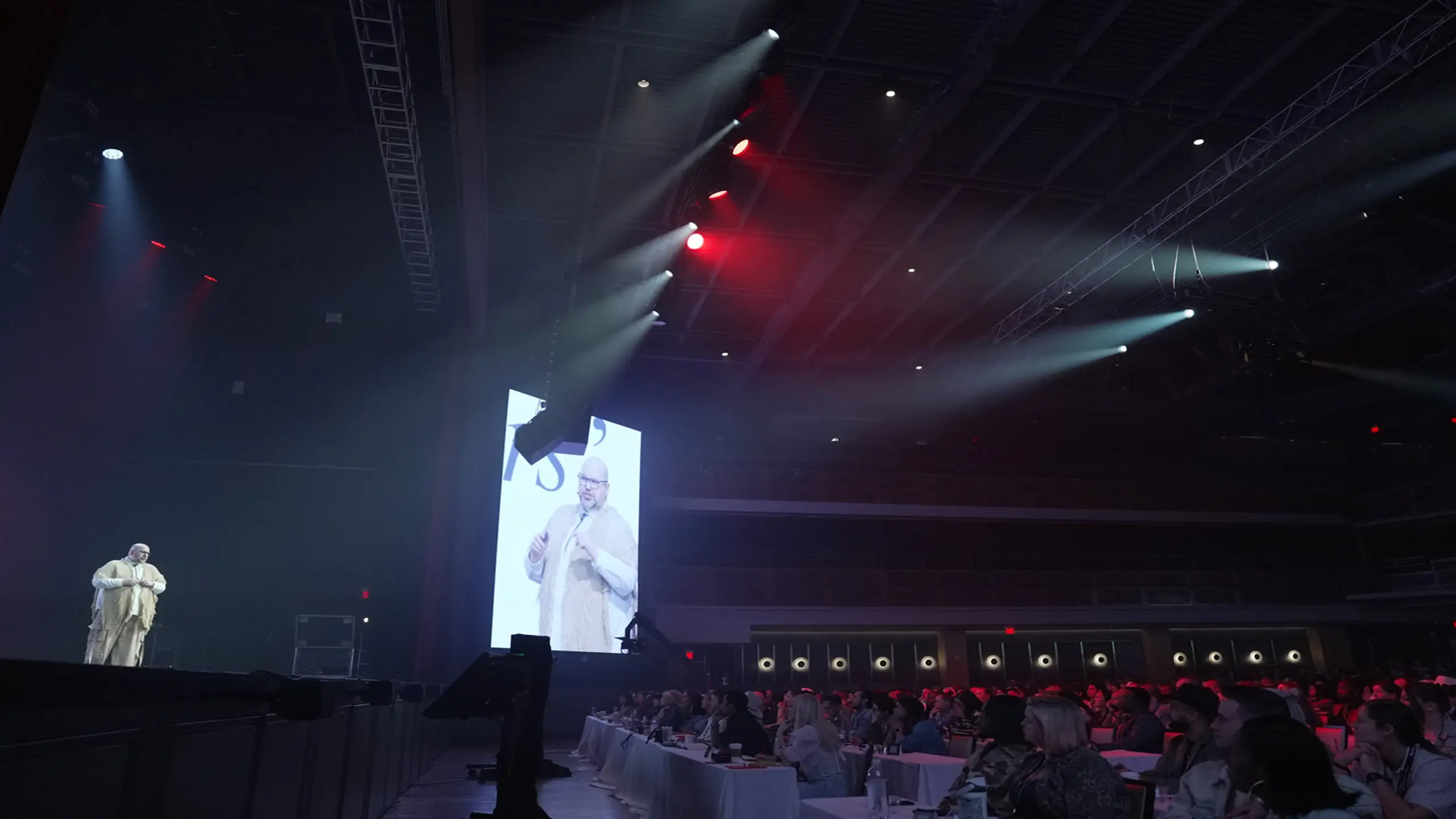
Livestreaming and podcasting have merged into one of the most dynamic forms of digital storytelling. Modern creators and brands are increasingly learning how to livestream a podcast while recording professional video to maximize audience engagement and long term content value.
This hybrid approach allows teams to connect with live viewers while producing studio-quality recordings ready for YouTube, Spotify, and branded websites. With advances in video production, real time editing, and high-speed streaming tools, professional podcasts now rival television-level broadcasts.
From setup and software to distribution and monetization, this guide explains every step needed to create high quality, dual-purpose content that performs across all platforms. Learn how to transform each live session into a polished, evergreen asset that builds authority and drives growth.
## The Rise of Live Video Podcasting
In the modern creator economy, the boundaries between podcasting, broadcasting, and visual storytelling are disappearing. Audiences no longer just want to listen, they want to *watch*, *engage*, and experience content in real time. This convergence has made it essential to understand how to livestream a podcast while recording professional video, a practice that blends the immediacy of livestreaming with the long-term value of recorded content.
What began as simple webcam recordings has evolved into full-scale [video production](https://c-istudios.com/video-production-services/), complete with multi-camera angles, cinematic lighting, and studio-grade sound engineering. Professional creators, agencies, and brands now treat podcasts as hybrid events, live broadcasts that are simultaneously captured, edited, and repurposed for future distribution.
This dual approach maximizes reach and efficiency: one production generates both a real-time audience experience and an evergreen content library ready for social media, YouTube, and branded websites.
The rise of live video podcasting also reflects the increasing sophistication of digital content creation tools. Modern streaming software integrates seamlessly with high-resolution cameras, switchers, and cloud encoders, allowing creators to broadcast on multiple platforms while saving master footage locally for post-production. The result is a streamlined workflow that combines immediacy with quality control a crucial factor for maintaining professional standards in brand communication.
For studios and marketing teams, this trend represents more than convenience. It’s a strategic evolution that transforms podcasts from passive content into interactive media ecosystems. Brands that adopt this hybrid model expand visibility, build community engagement, and establish authority through consistency and production excellence. As live video continues to dominate digital attention, mastering this dual format is becoming a defining skill for modern storytellers and marketers alike.
## Understanding the Dual Format Workflow
Producing a live podcast that’s simultaneously recorded for later release requires a carefully balanced video production workflow. The process demands precision across technical systems, timing, and audience engagement.
Unlike a traditional pre-recorded show, live and recorded formats operate under completely different expectations; one demands instant delivery, while the other allows for refinement and post-editing. Achieving both in one setup is possible only through integrated planning and the right combination of software, hardware, and human expertise.
At the core of this workflow are multi-camera setups and synchronized sound systems. Professional audio engineering ensures crystal-clear sound for both live streaming and archived playback. This means using mixers, compressors, and dedicated microphones that prevent echo, distortion, or inconsistent voice levels.
On the visual side, cameras are connected to a video switcher that controls real-time transitions between angles, creating a cinematic viewing experience. These feeds are then routed through an encoder, translating the raw video and audio data into digital streams suitable for broadcast platforms like YouTube Live, LinkedIn Live, or Facebook Live.
Simultaneously, a master recording is captured locally in full resolution, preserving high-quality footage for editing and distribution. This ensures that the final upload, often color-corrected, captioned, and refined, meets the same standards as any [professional video production](https://c-istudios.com/video-production-services/). The live audience gets the immediacy of interaction, while post-show viewers enjoy polished storytelling with added graphics and clarity.
Beyond production gear, the digital backend plays a vital role. Through advanced web development, creators can embed live players on branded websites, integrate real-time chat systems, and automate replay hosting. This bridges live engagement with long-term visibility, transforming every broadcast into an evergreen marketing asset.
The dual-format approach, therefore, requires more than creativity; it demands seamless coordination between broadcast infrastructure, engineering precision, and strategic brand design.
## Essential Gear for Live and Recorded Production
Executing a seamless live broadcast while simultaneously capturing studio quality footage depends on the strength of your technical foundation. A professional [video production gear list](https://c-istudios.com/video-production-gear-list/) forms the backbone of this workflow, balancing high-quality visuals, clean audio, and reliable connectivity. Each piece of equipment must integrate smoothly to ensure that what viewers see live mirrors the same polished output later released as an edited recording.
The setup begins with cameras. Professional creators often rely on DSLR or mirrorless cameras capable of shooting in 4K resolution, ensuring detailed imagery that stands up to post-production editing. Multiple camera angles add cinematic depth, allowing producers to switch between hosts, guests, and reaction shots in real time.
Lighting equipment, such as LED panels, softboxes, and diffusers, is equally critical. Proper lighting doesn’t just enhance appearance; it creates mood and brand consistency, giving each frame the visual sharpness expected from professional photography.
Audio defines credibility. Even the best visuals lose impact without clean, balanced sound. High-quality condenser microphones, noise gates, and digital mixing boards ensure clarity and prevent feedback during live sessions. Skilled audio engineering guarantees equalized levels across all channels, maintaining professional sound whether streamed or recorded. Integrating a portable audio interface or field recorder provides a fail-safe backup track in case of signal loss during live sessions.
Network stability forms the hidden backbone of this setup. Livestreaming requires a minimum of 10 Mbps upload speed for 1080p, supported by wired Ethernet connections and secondary 4G/5G redundancy. Encoders, either hardware-based (like the Blackmagic ATEM Mini) or software-driven (OBS Studio, Wirecast), translate camera and audio feeds into real time broadcast-ready formats.
Smaller creators often use a single-computer streaming workflow, while studios prefer multi-rig systems: one workstation handles encoding and streaming, while another records the master feed. This division prevents overload and preserves pristine footage. When combined, these elements from a comprehensive video production gear list deliver a broadcast that looks professional, sounds clean, and remains technically stable from start to finish.
## Streaming Software and Platform Integration
After selecting the right hardware, the next crucial element in how to livestream a podcast while recording professional video lies in mastering the software ecosystem. Your streaming software acts as the control center, mixing, encoding, and broadcasting your signal to multiple destinations in real time. The right tools make the difference between a smooth, high-definition stream and a session plagued by dropped frames or audio desynchronization.
Industry-standard platforms like OBS Studio, Wirecast, and StreamYard dominate this space. OBS Studio remains a favorite among professionals for its customization flexibility and open-source framework, allowing integration with plugins for transitions, virtual cameras, and dynamic audio filters.
Wirecast, on the other hand, caters to enterprise-level media marketing operations that require multi channel streaming, instant replays, and integrated lower-thirds. StreamYard simplifies the process with a browser based interface, perfect for remote guest participation and quick streaming setups without complex configuration.
For brands that need total control, custom RTMP (Real Time Messaging Protocol) setups offer the highest flexibility. This approach allows live feeds to stream simultaneously to platforms like YouTube Live, LinkedIn Live, or Facebook, while also embedding a player directly onto branded websites through reliable web hosting solutions.
By routing traffic to your own domain, you retain viewer analytics, build SEO authority, and strengthen brand visibility beyond social platforms.
Seamless integration doesn’t end after the broadcast. Post show archiving, server management, and web maintenance are critical to ensuring long term accessibility of your recorded episodes. Storing episodes on optimized hosting servers guarantees fast playback speeds and uninterrupted audience engagement, especially when embedding high-definition content into marketing pages or [portfolio](https://c-istudios.com/our-work/)s.
This layered approach, combining powerful streaming software with dependable hosting and marketing infrastructure, creates a complete digital broadcast pipeline. It gives brands full control over presentation, reliability, and discoverability, ensuring each livestream functions not just as an event, but as a long-term asset within a cohesive media marketing strategy.
## Maintaining Broadcast Quality Video and Audio
Delivering professional live content requires more than good storytelling it demands a broadcast workflow engineered for consistency, precision, and resilience. Viewers subconsciously equate visual and audio quality with credibility, which is why top studios approach podcast streaming with the same discipline used in [film and TV production](https://c-istudios.com/film-and-tv-production/). Whether streaming to a global audience or recording for later syndication, maintaining technical excellence is the cornerstone of professionalism.
The first factor is video bitrate and frame rate. To achieve smooth, high-definition playback, most creators stream in 1080p at 30 or 60 frames per second, maintaining a bitrate between 6,000 and 9,000 Kbps. This range preserves sharp detail and prevents pixelation, especially during multi camera switches or fast-motion shots.
Using adaptive bitrate streaming ensures the content automatically adjusts to the viewer's bandwidth, preventing lag and buffering. Consistent lighting and camera color profiles further align your production with cinematic grade standards used in feature film mastering and delivery, ensuring tonal continuity across all episodes.
Equally important is sound. [Audio live streaming](https://c-istudios.com/video-audio-live-streaming/) depends on low-latency synchronization between microphones, interfaces, and encoders. Audio drift when voices slowly desync from the video is one of the most noticeable flaws for viewers.
Professional setups prevent this using dedicated digital audio mixers and latency monitoring tools that keep every syllable perfectly aligned with visual cues. Applying real-time EQ, compression, and noise gating enhances clarity while maintaining dynamic balance for both live and recorded feeds.
Redundancy is the final safeguard for reliability. Professional studios run dual audio chains, backup recorders, and secondary internet connections to prevent downtime. Cloud mirroring or local RAID storage ensures footage remains protected even if a live stream drops mid-broadcast.
These safeguards, coupled with cinematic post-finishing, elevate a podcast from “good enough” to truly broadcast-ready. Maintaining this level of technical control allows brands to deliver seamless streams and recordings that rival professional network productions, reinforcing quality, trust, and authority with every release.
## Branding the Live Experience
A successful livestream doesn’t just rely on clear audio or crisp video it depends on how well the brand is visually communicated throughout the broadcast. Every frame offers an opportunity to reinforce identity, credibility, and emotional connection. Strategic branding and graphic design transform a simple live show into a cohesive brand experience that feels cinematic, professional, and instantly recognizable.
Motion graphics and logo animations play a key role in this transformation. Custom intro sequences, animated transitions, and outro slates establish tone and set expectations for quality before the conversation even begins. Lower thirds, those small text bars identifying speakers or topics, enhance both professionalism and viewer orientation, especially for new audiences joining mid-stream. By maintaining consistent typography, color palettes, and animation styles, producers create a seamless visual language that aligns with the brand’s established guidelines.
Effective on-screen visuals also support creative marketing objectives. Integrated overlays can feature social media handles, sponsor mentions, or real-time audience interactions, turning each broadcast into a live marketing asset. When done tastefully, these design elements promote products or services without interrupting the viewer's experience. Post-stream, these assets can be repurposed for short form clips, highlight reels, and ads, extending the value of every recorded session.
Behind the aesthetics lies a purposeful content creation strategy. Each branded element must connect back to the story being told, reinforcing authority rather than serving as decoration. When every visual cue reflects the brand’s voice, whether through color, motion, or layout, it helps audiences remember who’s behind the message.
Through deliberate branding and graphic design and thoughtful creative marketing, live podcasts evolve into immersive brand experiences that keep audiences engaged from the opening animation to the final fade out.
## Monetization and Engagement Opportunities
Professional livestream podcasting doesn’t just expand reach, it opens new pathways for revenue and audience engagement. The intersection of live broadcasting and recorded syndication allows creators and brands to monetize in multiple ways while nurturing long term community relationships. Through smart planning, integrated artist management and media creation, and post-show optimization, each episode becomes both an income stream and a brand-building tool.
The first layer of monetization comes through live interaction. Platforms like YouTube Live and Twitch enable donations, paid memberships, and super chat features. Real time Q&A sessions, polls, and shout-outs build connection and incentivize contribution.
Strategic use of social media marketing services amplifies these moments before and during the show using countdown posts, hashtags, and influencer collaborations to boost attendance. During the broadcast, sponsors and partners can be spotlighted through branded overlays, product mentions, or brief mid-roll discussions that blend naturally into the conversation.
Merchandising is another effective revenue avenue. Displaying limited edition items or discount codes during livestreams encourages impulse purchases from engaged viewers. When paired with engaging onscreen visuals and storytelling, these promotions feel authentic rather than intrusive. For creators represented under artist management and media creation agencies, sponsorship negotiations and brand partnerships can be managed seamlessly, aligning podcast values with sponsor interests for mutual growth.
Once the live event concludes, optimization continues. Post-show SEO strategy plays a crucial role in driving sustained viewership. Titles, descriptions, and captions written with SEO copywriting principles ensure replay versions rank on search engines and attract new audiences. Embedding the archived episode on the brand’s website, sharing highlight clips on social media, and cross promoting through newsletters keep the conversation alive long after the stream ends.
When executed strategically, this blend of engagement and monetization transforms podcasts into self-sustaining ecosystems, building revenue, brand loyalty, and measurable growth in every broadcast cycle.
## Partnering with Professional Studios for Hybrid Production
While solo creators can build impressive setups, brands seeking to elevate their presence require a professional edge that only full-service studios can deliver. Partnering with an experienced production agency like [C&I Studios](https://c-istudios.com/) provides access to a complete video production ecosystem, from concept planning to post-launch marketing. These teams combine creative direction, technical expertise, and strategic storytelling to ensure that every livestream and recording aligns with business goals and brand identity.
A hybrid production model integrates both live broadcasting and on demand content creation within one seamless workflow. Professional studios manage every detail: pre production scripting, multi camera coordination, lighting, sound mixing, and real-time streaming control. Directors oversee the creative vision, while technicians monitor feed quality, backup systems, and streaming stability. This synchronized execution eliminates the risk of technical errors and allows hosts to focus entirely on delivering value to their audience.
Beyond production quality, the strategic advantage lies in content repurposing. Each livestream becomes the foundation for a suite of creative marketing assets short clips for social platforms, reels for paid campaigns, and promotional teasers for upcoming events. Agencies like C&I Studios use advanced editing workflows and data analytics to identify high-performing segments that can be redistributed across channels. This multiplies content lifespan and strengthens SEO authority across video and written formats.
Integrated media marketing capabilities make these partnerships even more powerful. C&I Studios blends live content with brand campaigns, embedding calls to action and optimized video metadata that drive measurable conversions. Every project is supported by an experienced creative team skilled in both production and digital distribution, ensuring performance consistency across all platforms.
Brands exploring full-service collaboration can review detailed offerings under the studio’s [Services](https://c-istudios.com/creative-services/) and explore past multimedia achievements in the [Portfolio](https://c-istudios.com/our-work/). Partnering with experts not only guarantees flawless execution but also transforms each podcast into a strategic marketing asset built to engage, convert, and inspire at scale.
## Turning Livestreams into Evergreen Content
A well-executed livestream doesn’t end when the cameras stop rolling, it begins its second life as reusable, high value content. By adopting a strategic approach to repurposing, brands can extend the impact of every broadcast far beyond the live audience.
Professional video production ensures that recorded sessions are captured in high definition, making them suitable for future editing, redistribution, and cross channel promotion. Each livestream becomes a content library waiting to be transformed into new media that continues to attract and convert audiences.
The first stage of repurposing focuses on long-form assets. Full episodes can be edited into evergreen video podcasts for YouTube or embedded directly onto branded websites. Complementary creative marketing efforts can turn discussions into blog recaps, case studies, or highlight reels, ensuring every key insight continues to drive engagement long after the live event concludes. This multiplies audience touchpoints, feeding search visibility and maintaining brand authority over time.
Visual consistency remains essential during this transformation. Using the same branding and graphic design elements logos, motion graphics, and color palettes, preserves identity across every platform. These assets not only reinforce brand recall but also provide a professional polish that helps repurposed content stand out amid algorithmic competition.
Each recording evolves into a lasting educational, promotional, or storytelling resource that continues to generate returns. For teams ready to expand reach and refine production quality, connecting with a professional studio like C&I Studios can turn every broadcast into a lasting pillar of digital brand strategy.
## Work with C&I Studios
If you are planning a project like this, our team can take it from concept to final delivery. Explore our [video production services](https://c-istudios.com/video-production-services/), browse [our work](https://c-istudios.com/our-work/) to see how we tell brand stories, and [get in touch](https://c-istudios.com/contact/) when you are ready to start.
Originally published October 2, 2025
---
*This content is from [C&I Studios](https://c-istudios.com), a full-service production company.*
---
# Video Marketing Made Strategic: How Professional Production Builds Brand
> Published: October 1, 2025
> Categories: Commercial & Brand
> Source: https://c-istudios.com/video-marketing-made-strategic-how-professional-production-builds-brand/
---
.cib{--paper:#1b1d1f;--ink:#fff;--body:#d5d7d9;--muted:#8b9096;--line:rgba(255,255,255,.12);--thumb:#2b2e31;--card:#212426;--accent:#c02b0a;--blue:#5B8FA8;--serif:'Playfair Display',Georgia,serif;--sans:'Poppins',-apple-system,sans-serif;--measure:900px;background:var(--paper);color:var(--body);font-family:var(--sans);line-height:1.6;position:relative;left:50%;transform:translateX(-50%);width:90vw;max-width:1920px}
.cib *{box-sizing:border-box}
.cib .kicker{max-width:var(--measure);margin:58px auto 0;padding:0 22px;font-size:12.5px;font-weight:700;letter-spacing:2.5px;text-transform:uppercase;color:var(--blue)}
.cib h1.cibh1{text-wrap:balance;font-family:var(--serif);font-weight:500;font-size:clamp(46px,6vw,72px);line-height:1.08;color:var(--ink);max-width:var(--measure);margin:18px auto 0;padding:0 22px;letter-spacing:-.5px}
.cib .metarow{max-width:var(--measure);margin:20px auto 0;padding:0 22px;color:var(--muted);font-size:14px}
.cib .hero{position:relative;width:100%;height:0;padding-bottom:56.25%;overflow:hidden;margin:48px auto 0;border-top:1px solid var(--line);border-bottom:1px solid var(--line)}
.cib .hero .ph{width:100%;aspect-ratio:16/9;background:var(--thumb);border-top:1px solid var(--line);border-bottom:1px solid var(--line);display:flex;align-items:center;justify-content:center;color:#7d8288;font-size:13px;text-align:center;padding:0 20px}
.cib .body{max-width:var(--measure);margin:12px auto 0;padding:52px 22px 6px}
.cib .body.lead p:first-child{font-size:23px;line-height:1.62;color:var(--ink)}
.cib .body p{font-size:18.5px;line-height:1.85;margin:0 0 30px;color:var(--body)}
.cib .body h2{text-wrap:balance;font-family:var(--serif);font-weight:500;font-size:clamp(32px,4vw,48px);line-height:1.22;color:var(--ink);margin:70px 0 20px;letter-spacing:-.3px}
.cib .body h3{text-wrap:balance;font-family:var(--sans);font-weight:600;font-size:22px;color:var(--ink);margin:38px 0 8px}
.cib .body a{color:var(--ink);text-decoration:underline;text-decoration-color:rgba(255,255,255,.4);text-underline-offset:3px}
.cib .body a:hover{text-decoration-color:var(--ink)}
.cib .ctable{width:100%;border-collapse:collapse;margin:16px 0 30px;font-size:16px}
.cib .ctable th{background:#000;color:#fff;text-align:left;padding:10px 12px;font-family:var(--sans)}
.cib .ctable td{padding:10px 12px;border-bottom:1px solid var(--line);color:var(--body)}
.cib .inimg{position:relative;width:100%;height:0;padding-bottom:56.25%;overflow:hidden;margin:72px auto;border-top:1px solid var(--line);border-bottom:1px solid var(--line)}
.cib .inimg .ph{width:100%;aspect-ratio:16/9;background:var(--thumb);border-top:1px solid var(--line);border-bottom:1px solid var(--line);display:flex;align-items:center;justify-content:center;color:#7d8288;font-size:13px}
.cib .origpub{max-width:var(--measure);margin:60px auto 0;padding:26px 22px 0;border-top:1px solid var(--line);color:var(--muted);font-size:13.5px}
.cib .related{max-width:1200px;margin:64px auto 0;padding:34px 22px 76px}
.cib .related h3{font-family:var(--sans);font-size:12.5px;letter-spacing:2px;text-transform:uppercase;color:var(--ink);margin:0 0 24px}
.cib .grid{display:grid;grid-template-columns:repeat(3,1fr);gap:28px}
.cib .rc{background:var(--card);border:1px solid var(--line);display:block;text-decoration:none;color:inherit;transition:border-color .15s}
.cib a.rc:hover{border-color:rgba(255,255,255,.5)}
.cib .rc .thumb{position:relative;width:100%;height:0;padding-bottom:56.25%;background:var(--thumb);overflow:hidden}
.cib .rc .thumb img{position:absolute!important;top:0!important;left:0!important;width:100%!important;height:100%!important;object-fit:cover!important;margin:0!important}
.cib .rc .cc{padding:14px 15px 17px}
.cib .rc .rt{font-family:var(--serif);font-weight:500;font-size:16px;line-height:1.3;color:var(--ink);margin:0 0 6px}
.cib .rc .rm{font-size:11px;letter-spacing:1px;text-transform:uppercase;color:var(--muted)}
.cib img{margin:0!important;padding:0!important;display:block!important;vertical-align:top;max-width:100%}
.cib .hero img,.cib .inimg img{position:absolute!important;top:0!important;left:0!important;width:100%!important;height:100%!important;object-fit:cover!important;margin:0!important;padding:0!important;border:0!important;display:block!important;aspect-ratio:auto!important}
.cib .hero+.body{padding-top:36px}
@media(max-width:760px){.cib .grid{grid-template-columns:1fr}.cib .body h2{margin:52px 0 16px}.cib .body p{font-size:17.5px}.cib .inimg,.cib .hero{margin-top:44px}}
.cib .vembed{max-width:var(--measure);margin:44px auto;padding:0 22px}.cib .vembed .vwrap{position:relative;width:100%;height:0;padding-bottom:56.25%}.cib .vembed .vwrap iframe{position:absolute;top:0;left:0;width:100%;height:100%;border:0}
Commercial & Brand
# Video Marketing Made Strategic. How Professional Production Builds Brand
8 min read

Video is no longer optional, it’s the most persuasive, high-converting medium in the digital ecosystem. Whether you’re a startup or an established brand, understanding how to use professional video production to market a business is what separates attention-grabbing brands from those lost in the scroll.
Over 90 percent of consumers say video helps them make buying decisions, and brands that integrate video into their marketing experience 49 percent faster revenue growth than those that don’t (Wyzowl 2025 Report).
Professional production gives your content the polish, clarity, and strategic intent required to stand out. It’s not just about visuals, it’s about storytelling precision: lighting, pacing, messaging, and emotional timing all working together to guide the viewer from interest to conversion.
Businesses that treat video as an asset, not an expense, see it drive performance across every channel: website engagement, paid ads, SEO, and social reach. The result is a full-funnel content system that attracts, nurtures, and converts leads consistently.
## Role of Professional Production in Marketing
Anyone can record a short clip on a smartphone, but professional production transforms that clip into a narrative that represents your brand’s value. A strong studio partner translates your message into cinematic clarity and brand cohesion.
Professional video production isn’t about glamour; it’s about strategy. Studios like[C&I Studios](https://c-istudios.com/video-production-services/) design every project around measurable goals, increasing brand trust, improving ad performance, or driving conversions. Each phase of production (concept, script, shoot, edit, distribution) supports one outcome: measurable growth.
### The Strategic Difference
- Creative consistency: Multiple videos built under one visual identity boost recognition and recall.
- Conversion design: From framing to captions, each element is optimized for call-to-action clarity.
- Cross-platform adaptation: Assets are formatted for YouTube, Instagram, TikTok, LinkedIn, and websites without losing quality.
- Data integration: Studios use analytics to refine future content and ensure alignment with performance goals.
The true return on video production isn’t in how beautiful the footage looks, it’s in how effectively it moves your audience closer to a decision.
## Crafting a Marketing Strategy Around Video
Before pressing record, you need a plan. The success of video marketing depends on aligning your story with your audience’s intent.
A smart strategy answers three questions:
1. Who are you speaking to? Define buyer personas and viewing habits.
2. What problem are you solving? Tailor content around pain points.
3. Where will your video live? Choose the right platform and format.
When you understand those answers, you can create content that fits the buyer journey, from discovery to loyalty.
### Aligning Video to the Sales Funnel
**Stage**
**Video Type**
**Goal**
Awareness
Brand films, culture reels, social teasers
Spark curiosity and visibility
Consideration
Explainer videos, product demos, case studies
Build trust and answer objections
Conversion
Testimonials, offers, retargeting ads
Drive purchase or contact actions
Retention
Tutorials, community highlights
Reinforce satisfaction and advocacy
A complete marketing plan includes all these layers, ensuring that video supports every phase of your customer relationship.
## Types of Videos That Drive Business Growth
Different businesses require different storytelling tools, but professional production allows you to master each. Knowing which video types deliver the best ROI helps determine budget allocation and creative direction.
### Brand Story Videos
These communicate who you are, your mission, values, and purpose. They humanize your business, helping customers connect emotionally before they ever buy.
### Product or Service Explainers
Explainer videos simplify complex offerings. Through animation, voice-overs, or demonstrations, they convert curiosity into clarity, often doubling landing-page conversion rates.
### Testimonials and Case Studies
Social proof remains the most powerful persuasion tool. Filming satisfied clients speaking authentically builds immediate trust.
### Educational and Thought-Leadership Content
Tutorials, insights, and expert interviews position your brand as an authority. They also boost SEO by keeping viewers engaged longer on your site.
### Short-Form Social Content
Quick, eye-catching Reels, Shorts, or TikToks generate awareness. Even short clips, when produced strategically, can drive high click-through and engagement rates.
Combining these formats creates a holistic presence, storytelling that reaches both hearts and algorithms.
## Integrating Video Across Marketing Channels
The true power of video lies in integration. Once produced, your content should fuel every marketing touchpoint, turning one shoot into a multi-channel campaign.
### Website
Embedding professional videos on your homepage or landing pages increases dwell time and conversion rates. Google’s algorithm favors video-rich pages, improving organic visibility.
### Social Media
Each platform demands different pacing and aspect ratios. Through [creative marketing](https://c-istudios.com/creative-marketing-services/?utm_source=chatgpt.com)expertise, studios like C&I Studios reformat assets natively for every feed, ensuring optimal engagement without creative redundancy.
### Email Campaigns
Adding “video” in a subject line boosts open rates by up to 19 percent (HubSpot Marketing Data). A short embedded clip in newsletters increases click-through dramatically.
### Paid Advertising
Video ads outperform static creatives in nearly every metric, engagement, retention, and CTR. When produced professionally, they deliver consistent ROI and brand recall across display and social networks.
Integrating one professionally produced video into multiple channels maximizes exposure while maintaining creative cohesion, one of the smartest ways to stretch marketing investment.
## Measuring Performance and ROI
Every great marketing campaign ends with analysis. Tracking the impact of your video ensures that each future project improves efficiency and reach.
Key metrics include:
- View-through rate: How many complete the video.
- Engagement: Likes, shares, and comments that indicate relevance.
- Click-through rate (CTR): How effectively the video drives traffic.
- Conversion rate: How many viewers take desired actions.
Professional studios provide post-campaign reporting dashboards linking creative performance to measurable outcomes. This data clarifies how to use professional video production to market a business effectively, not just through aesthetics, but through consistent, quantifiable growth.
## Planning and Executing a Professional Video Production
Once you’ve built a strategic foundation, the next step is execution, the stage where creative vision meets logistics. The difference between average and exceptional marketing video often lies in the precision of planning.
Professional studios treat production as a process, not an event. Every frame has intent, every cut has purpose. Whether the goal is awareness or conversion, the journey begins with structured pre-production.
### Pre-Production — Setting the Stage for Success
1. **Concept development**: Identify your key message and emotional tone.
2. **Scriptwriting**: Every second of dialogue must serve your marketing objective.
3. **Storyboarding**: Translating script into visuals clarifies pacing, shot types, and transitions.
4. **Casting and location**: Selecting the right environment or faces to reflect your brand identity.
This stage ensures alignment between business goals and creative execution, eliminating costly reshoots later.
### Production — Capturing the Story
During filming, professionals handle lighting, audio, and composition with precision. Consistent visual quality reinforces trust, viewers subconsciously associate production value with brand credibility.
[Video production services](https://c-istudios.com/video-production-services/) bring expertise in managing multi-camera shoots, motion graphics, and brand-driven direction. Their teams ensure that every frame fits seamlessly into your broader marketing ecosystem.
### Post-Production — Turning Footage into Impact
Editing transforms footage into narrative. It’s where tone, rhythm, and emotion converge. Editors cut strategically for flow, add on-screen text to emphasize CTAs, and color-grade for emotional consistency.
At this stage, professional teams also optimize output for multiple formats, 16:9 for YouTube, 9:16 for Reels, 1:1 for LinkedIn. This multiplies reach without additional filming, maximizing ROI.
## Collaborating Effectively with a Video Production Partner
Knowing how to use professional video production to market a business means understanding collaboration. The best results happen when business leaders, marketers, and creative professionals operate as one team.
Clear communication from the start is vital. Define your success metrics, engagement rate, conversions, or brand recall, so the studio can tailor production around measurable targets.
Best practices for productive collaboration:
- Share your marketing calendar early to synchronize content with campaigns.
- Involve your marketing and analytics teams during creative briefings.
- Request mid-project check-ins to review tone and message alignment.
- Encourage open dialogue, great studios value feedback loops over top-down directives.
Studios like C&I Studios integrate collaboration tools and cloud workflows, enabling real-time previewing and feedback. This speeds up revisions, ensuring that every video reflects your brand voice perfectly before release.
Collaboration isn’t just about efficiency, it’s about amplifying creative intelligence. When you combine your internal brand knowledge with a studio’s technical mastery, the result is storytelling that performs.
## Scaling Your Video Marketing
A single campaign can drive short-term results, but long-term brand growth comes from consistency. Scaling your video strategy means turning production into a continuous system that feeds all marketing channels.
### Building a Content Library
Repurpose your video assets strategically. A well-planned shoot can yield dozens of deliverables:
- A hero brand film for the website.
- Product highlight clips for ads.
- Educational snippets for LinkedIn.
- Behind-the-scenes content for social stories.
By cataloging and tagging assets properly, you create a content library, a reusable archive that fuels months of marketing at minimal additional cost.
### Developing a Publishing Cadence
Algorithms reward consistency. Posting regularly across YouTube, TikTok, or Instagram maintains audience retention and strengthens brand familiarity. Partnering with a studio that offers ongoing content packages ensures that new videos align with evolving trends and seasonal campaigns.
### Measuring and Iterating
Scaling without feedback leads to stagnation. Measure performance monthly using analytics tools like Sprout Social or HubSpot. Identify high-performing formats, and reinvest resources into those categories.
For example, if customer-story videos consistently outperform ads, shift future budgets accordingly. This iterative cycle turns data into creative direction, driving sustained ROI.
## Using Video to Strengthen Brand Storytelling
Beyond metrics and funnels, video remains the most emotional storytelling tool in marketing. It allows brands to convey purpose, humanity, and credibility, all at once.
A well-produced video can make abstract values tangible. Instead of telling your audience that you’re innovative or customer-centric, you show them. Professional production ensures that lighting, color palette, and pacing reflect your personality authentically.
Modern consumers are skeptical of static promises. They believe what they see, and share what they feel. By pairing strategic messaging with cinematic authenticity, you transform passive viewers into active advocates.
As HubSpot notes, 83 percent of marketers say video provides stronger emotional engagement than any other content form. That emotional equity compounds over time, shaping how audiences remember your brand long after the campaign ends.
## Leveraging Video for Different Business Models
The way you apply professional production varies depending on your industry and objectives.
### B2B Companies
For B2B brands, educational and explainer videos build credibility. Thought-leadership interviews, client testimonials, and process demos shorten sales cycles by reducing buyer uncertainty.
### B2C Brands
In consumer marketing, emotional resonance drives action. Product lifestyle videos, influencer collaborations, and short-form social campaigns foster community and virality.
### Service-Based Businesses
Service brands gain trust through transparency. Documentary-style storytelling, showing real people delivering real outcomes, creates authenticity that photos or copy alone can’t achieve.
Regardless of industry, the principle remains: align production style with the audience’s decision process.
## The Business Case for Professional Production
Some business owners hesitate to invest in professional production due to cost. But the real question is: what’s the cost of poor content? Low-quality video diminishes brand credibility and wastes ad spend.
Professional studios optimize budgets through planning and scalability. By capturing multi-use footage and aligning every shoot with campaign goals, they deliver high-quality outputs at a lower cost per asset.
Furthermore, professional video enhances conversion economics, better engagement reduces cost-per-click in paid campaigns and increases organic reach. According to Wyzowl’s 2025 Video Marketing Report, 91 percent of businesses report positive ROI from video, the highest since 2019.
When you understand how to use professional video production to market a business, cost becomes an investment in scalable storytelling and measurable growth.
## Overcoming Common Challenges in Video Marketing
Even with the right strategy, execution can face obstacles. Recognizing these challenges early ensures smoother campaigns.
- Inconsistent brand tone: Solved through centralized style guides and repeatable production frameworks.
- Lack of performance tracking: Addressed with dashboards connecting creative metrics to sales outcomes.
- Content fatigue: Overcome by diversifying formats, alternating between cinematic, educational, and social content.
- Misaligned creative vision: Prevented through structured pre-production workshops with your studio.
A professional partner like[C&I Studios](https://c-istudios.com/creative-marketing-services/) mitigates these issues by combining creative agility with technical precision, helping your brand sustain creative energy year-round.
## The Future of Video Marketing
The next wave of marketing is immersive. AI-driven personalization, interactive video ads, and virtual production environments will redefine how brands engage audiences.
Professional studios already integrate automation and predictive analytics to forecast engagement patterns. These tools guide creative decisions, ensuring that your next campaign performs even better than the last.
What won’t change is the foundation: strategy, story, and human emotion. While technology enhances production efficiency, authenticity remains the ultimate differentiator. Businesses that master storytelling, and back it with professional quality, will dominate in an attention-scarce marketplace.
## From Awareness to Authority
Learning how to use professional video production to market a business means mastering the balance between creativity and commercial intent. Every polished frame, every strategic narrative, becomes a vehicle for visibility and growth.
When you combine professional production, data-driven insight, and consistent storytelling, video stops being a marketing expense and becomes a revenue engine.
## Work with C&I Studios
If you are planning a project like this, our team can take it from concept to final delivery. Explore our [video production services](https://c-istudios.com/video-production-services/), browse [our work](https://c-istudios.com/our-work/) to see how we tell brand stories, and [get in touch](https://c-istudios.com/contact/) when you are ready to start.
Originally published October 1, 2025
---
*This content is from [C&I Studios](https://c-istudios.com), a full-service production company.*
---
# How Much Does It Cost To Produce A Video Podcast?
> Published: October 1, 2025
> Categories: Commercial & Brand
> Source: https://c-istudios.com/how-much-does-it-cost-to-produce-a-video-podcast/
---
.cib{--paper:#1b1d1f;--ink:#fff;--body:#d5d7d9;--muted:#8b9096;--line:rgba(255,255,255,.12);--thumb:#2b2e31;--card:#212426;--accent:#c02b0a;--blue:#5B8FA8;--serif:'Playfair Display',Georgia,serif;--sans:'Poppins',-apple-system,sans-serif;--measure:900px;background:var(--paper);color:var(--body);font-family:var(--sans);line-height:1.6;position:relative;left:50%;transform:translateX(-50%);width:90vw;max-width:1920px}
.cib *{box-sizing:border-box}
.cib .kicker{max-width:var(--measure);margin:58px auto 0;padding:0 22px;font-size:12.5px;font-weight:700;letter-spacing:2.5px;text-transform:uppercase;color:var(--blue)}
.cib h1.cibh1{text-wrap:balance;font-family:var(--serif);font-weight:500;font-size:clamp(46px,6vw,72px);line-height:1.08;color:var(--ink);max-width:var(--measure);margin:18px auto 0;padding:0 22px;letter-spacing:-.5px}
.cib .metarow{max-width:var(--measure);margin:20px auto 0;padding:0 22px;color:var(--muted);font-size:14px}
.cib .hero{position:relative;width:100%;height:0;padding-bottom:56.25%;overflow:hidden;margin:48px auto 0;border-top:1px solid var(--line);border-bottom:1px solid var(--line)}
.cib .hero .ph{width:100%;aspect-ratio:16/9;background:var(--thumb);border-top:1px solid var(--line);border-bottom:1px solid var(--line);display:flex;align-items:center;justify-content:center;color:#7d8288;font-size:13px;text-align:center;padding:0 20px}
.cib .body{max-width:var(--measure);margin:12px auto 0;padding:52px 22px 6px}
.cib .body.lead p:first-child{font-size:23px;line-height:1.62;color:var(--ink)}
.cib .body p{font-size:18.5px;line-height:1.85;margin:0 0 30px;color:var(--body)}
.cib .body h2{text-wrap:balance;font-family:var(--serif);font-weight:500;font-size:clamp(32px,4vw,48px);line-height:1.22;color:var(--ink);margin:70px 0 20px;letter-spacing:-.3px}
.cib .body h3{text-wrap:balance;font-family:var(--sans);font-weight:600;font-size:22px;color:var(--ink);margin:38px 0 8px}
.cib .body a{color:var(--ink);text-decoration:underline;text-decoration-color:rgba(255,255,255,.4);text-underline-offset:3px}
.cib .body a:hover{text-decoration-color:var(--ink)}
.cib .ctable{width:100%;border-collapse:collapse;margin:16px 0 30px;font-size:16px}
.cib .ctable th{background:#000;color:#fff;text-align:left;padding:10px 12px;font-family:var(--sans)}
.cib .ctable td{padding:10px 12px;border-bottom:1px solid var(--line);color:var(--body)}
.cib .inimg{position:relative;width:100%;height:0;padding-bottom:56.25%;overflow:hidden;margin:72px auto;border-top:1px solid var(--line);border-bottom:1px solid var(--line)}
.cib .inimg .ph{width:100%;aspect-ratio:16/9;background:var(--thumb);border-top:1px solid var(--line);border-bottom:1px solid var(--line);display:flex;align-items:center;justify-content:center;color:#7d8288;font-size:13px}
.cib .origpub{max-width:var(--measure);margin:60px auto 0;padding:26px 22px 0;border-top:1px solid var(--line);color:var(--muted);font-size:13.5px}
.cib .related{max-width:1200px;margin:64px auto 0;padding:34px 22px 76px}
.cib .related h3{font-family:var(--sans);font-size:12.5px;letter-spacing:2px;text-transform:uppercase;color:var(--ink);margin:0 0 24px}
.cib .grid{display:grid;grid-template-columns:repeat(3,1fr);gap:28px}
.cib .rc{background:var(--card);border:1px solid var(--line);display:block;text-decoration:none;color:inherit;transition:border-color .15s}
.cib a.rc:hover{border-color:rgba(255,255,255,.5)}
.cib .rc .thumb{position:relative;width:100%;height:0;padding-bottom:56.25%;background:var(--thumb);overflow:hidden}
.cib .rc .thumb img{position:absolute!important;top:0!important;left:0!important;width:100%!important;height:100%!important;object-fit:cover!important;margin:0!important}
.cib .rc .cc{padding:14px 15px 17px}
.cib .rc .rt{font-family:var(--serif);font-weight:500;font-size:16px;line-height:1.3;color:var(--ink);margin:0 0 6px}
.cib .rc .rm{font-size:11px;letter-spacing:1px;text-transform:uppercase;color:var(--muted)}
.cib img{margin:0!important;padding:0!important;display:block!important;vertical-align:top;max-width:100%}
.cib .hero img,.cib .inimg img{position:absolute!important;top:0!important;left:0!important;width:100%!important;height:100%!important;object-fit:cover!important;margin:0!important;padding:0!important;border:0!important;display:block!important;aspect-ratio:auto!important}
.cib .hero+.body{padding-top:36px}
@media(max-width:760px){.cib .grid{grid-template-columns:1fr}.cib .body h2{margin:52px 0 16px}.cib .body p{font-size:17.5px}.cib .inimg,.cib .hero{margin-top:44px}}
.cib .vembed{max-width:var(--measure);margin:44px auto;padding:0 22px}.cib .vembed .vwrap{position:relative;width:100%;height:0;padding-bottom:56.25%}.cib .vembed .vwrap iframe{position:absolute;top:0;left:0;width:100%;height:100%;border:0}
Commercial & Brand
# How Much Does It Cost To Produce A Video Podcast?
14 min read
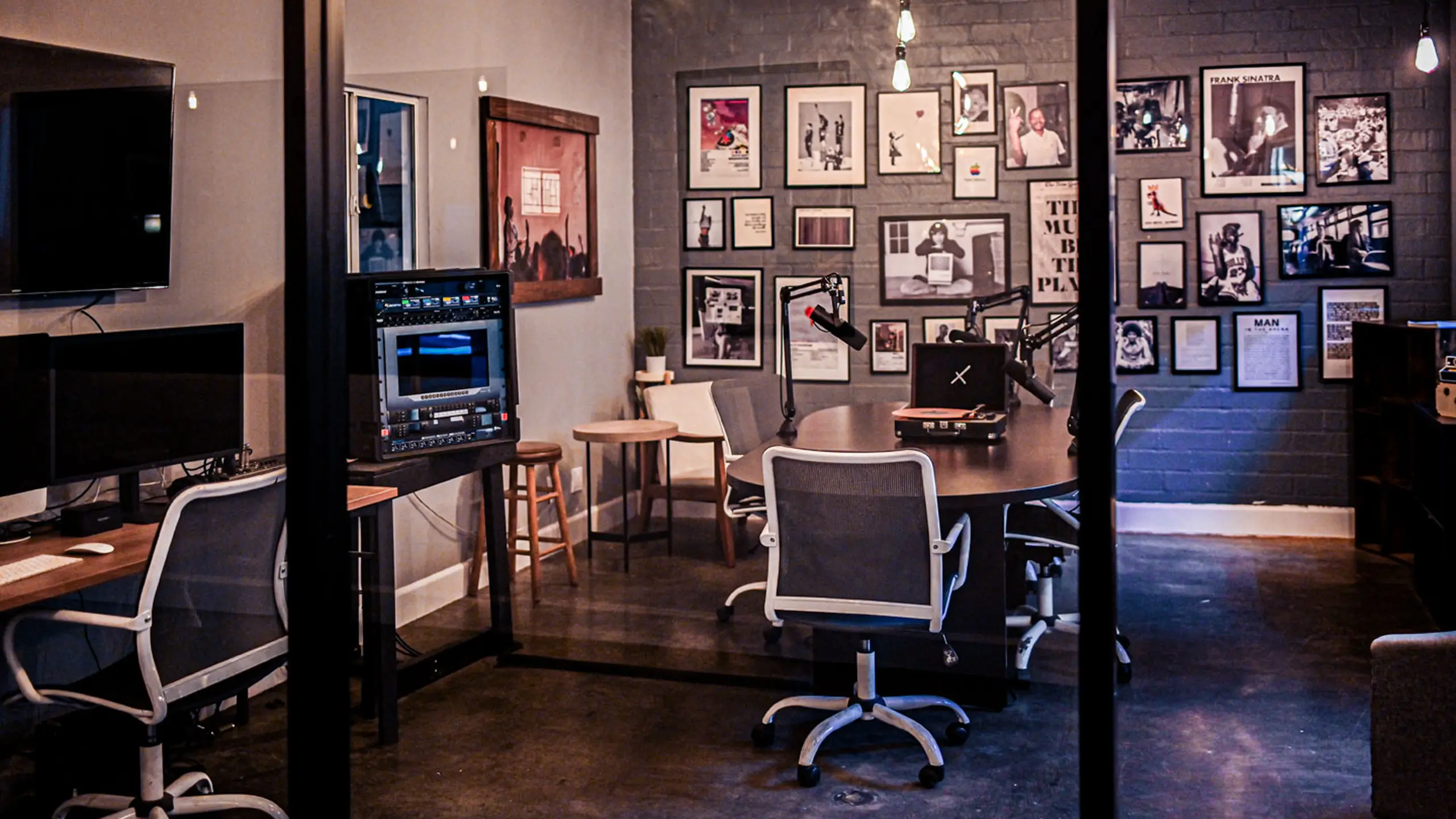
Video podcasts have become a powerful tool for brand storytelling, combining the intimacy of conversation with the impact of high-quality visuals. However, the average cost to produce a professional video podcast depends on multiple factors creative direction, studio setup, crew, and post-production.
From concept planning to final mastering, each stage influences both quality and investment. Partnering with a full-service team like[C&I Studios](https://c-istudios.com/) ensures that every element of video production and content creation aligns with your marketing goals.
Understanding these costs helps brands plan smarter, deliver better, and achieve stronger engagement through professional storytelling.
## Understanding the True Scope of Video Podcast Production
A professional video podcast is far more than a recorded conversation with a camera pointed at a microphone. It is a full-scale video production process that blends storytelling, sound design, and visual branding to deliver a show that feels polished, engaging, and strategically aligned with the creator’s goals.
The average cost to produce a professional video podcast depends largely on how deep this production value goes, from single camera setups filmed in a basic office to multi-camera, studio-grade environments supported by dedicated crews and advanced post-production workflows.
At its core, producing a professional show begins with clear creative intent. Before any filming takes place, teams handle content creation tasks like scripting intros and outros, planning episode segments, and designing cohesive visual identities that reflect the brand. This planning phase is crucial because it defines tone, pacing, and the overall viewer experience. Poor planning often leads to longer editing sessions, reshoots, or inconsistent quality across episodes all of which drive costs higher over time.
On a technical level, a professional podcast setup typically includes multiple cameras to allow dynamic angle shifts, professional lighting rigs to maintain visual consistency, and high-quality microphones for broadcast-grade sound. Even small variations such as the type of camera sensor used, lighting intensity, or the number of operators involved can cause noticeable differences in both quality and cost. Studio rentals, soundproofing, and live-switching systems further influence pricing, particularly when creators aim to deliver content ready for YouTube, Spotify Video, or branded websites immediately after recording.
Finally, the scope extends into [post production](https://c-istudios.com/post-production-services/) and distribution. A professional workflow involves editing for rhythm, color correction for consistency, and formatting for multiple delivery platforms. This end-to-end approach ensures that the finished product looks cinematic, sounds clear, and aligns with audience expectations.
Understanding all these moving parts clarifies why the average cost to produce a professional video podcast varies so widely and why professional grade execution demands both financial and creative investment from the start.
## Breaking Down Pre Production Expenses
Every professional video podcast begins long before the camera turns on. The pre-production phase defines the tone, structure, and professionalism of the entire show, and it directly determines how efficiently the final product is produced. A strong pre-production plan streamlines recording, limits wasted studio time, and ensures that each episode aligns with a brand’s broader content goals.
Concept development is the first key expense. Creators and agencies often collaborate to clarify target audiences, core themes, and desired outcomes. This is where creative marketing strategy merges with storytelling. Decisions made here whether to focus on thought leadership, brand storytelling, or educational interviews guide the visual and tonal direction of the series.
Once the concept is finalized, teams move to scripting, episode structure, and dialogue outlines. Skilled writers often incorporate SEO copywriting principles at this stage, ensuring that titles, segment descriptions, and promotional snippets will help the podcast rank well on search engines once it is published.
Visual identity is the next cost factor. Professional podcasts require consistent branding across video frames, intro animations, overlays, and thumbnails. Investing in branding and graphic design during pre-production ensures every episode looks like part of a cohesive series, which enhances recognition and trust. The cost of motion graphics packages, logo treatments, and lower-third animations varies depending on complexity, but skipping this step makes even the best content feel incomplete.
Additional line items include scheduling guests, securing location permits, and preparing technical logistics like lighting diagrams or microphone placements. When combined, these pre-production elements can account for 20-30% of the total project budget. They are not optional extras they are the strategic groundwork that determines efficiency, brand coherence, and discoverability before recording even begins.
## Equipment and Studio Requirements
Once the concept and pre-production details are locked in, the next major cost driver comes from equipment and studio requirements. A professional video podcast relies on the same attention to technical quality found in [commercial video production](https://c-istudios.com/video-production-services/), and the choice between purchasing or renting gear significantly affects the overall budget. A carefully planned video production gear list helps teams allocate resources efficiently without overpaying for unused equipment.
Most podcast producers start by evaluating camera systems. Multi-camera setups deliver cinematic quality and enable smooth transitions between speakers, but they also demand synchronized lighting and advanced editing. Renting professional cameras can cost less in the short term, especially when a studio records on a fixed schedule.
However, brands producing weekly episodes may find that owning core gear like tripods, lenses, and lighting kits pays off long-term. The same logic applies to microphones and audio interfaces: rented equipment suits occasional projects, while permanent investment makes sense for ongoing series.
The sound environment is equally critical. Audio engineering costs rise when recording takes place in untreated rooms, where background noise or echo degrades sound clarity. Professional studios invest in acoustic panels, bass traps, and diffusers to ensure broadcast-grade audio capture. Quality sound is what separates amateur content from professional output, and it directly influences audience retention.
Visual presentation also contributes heavily to perception and cost. Clean, intentional framing and lighting come from experience and planning, often requiring the input of specialists in professional photography or studio lighting design. This extends to backdrops, props, and color consistency, each shaping the aesthetic identity of the show.
Finally, studio choice matters. Dedicated podcast studios provide integrated setups with lighting, soundproofing, and editing workstations already in place, reducing logistical challenges. Whether rented hourly or contracted monthly, this environment ensures reliability and consistency key factors when estimating the average cost to produce a professional video podcast. Investing in the right tools and setting upfront guarantees smoother production, higher-quality results, and reduced post-production corrections later.
## On-Set Production Costs and Crew Roles
When filming begins, the budget shifts from planning to execution the stage where most of the visible spending occurs. A professional video podcast functions like a scaled-down [film and TV production](https://c-istudios.com/film-and-tv-production/), requiring skilled specialists who can handle visual composition, sound fidelity, and on-set coordination. Each role carries its own cost, typically calculated on a per-hour or per-day basis, depending on experience level and local market rates.
At the top of the hierarchy is the director or producer, responsible for maintaining creative vision and ensuring that every episode aligns with brand objectives. This person supervises pacing, framing, and talent performance. Beneath them, camera operators manage multiple angles to give the final edit a dynamic and cinematic feel.
Lighting technicians balance exposure and color temperature across all cameras, while sound engineers control live audio levels and eliminate interference. Even with the best equipment, these human elements define the professional quality that audiences notice immediately.
Supporting staff such as production assistants handle logistics preparing sets, checking batteries, or coordinating guest arrivals tasks that keep the schedule on track. Depending on the scale of the production, additional specialists may include digital imaging technicians, makeup artists, or teleprompter operators. For brands that integrate motion intros or visual overlays, the workflow extends to vfx compositing and animation, adding design layers that enhance branding and elevate viewer engagement.
Beyond the technical team, budget considerations also include studio rental hours, electricity usage, and contingency time for retakes or interviews running long. Larger studios often quote packages that combine crew, lighting, and editing support into a single day rate, while boutique agencies like[C&I Studios](https://c-istudios.com/) provide customized service tiers tied to specific goals in media marketing and audience reach. These production costs represent the heartbeat of every professional podcast where planning, creativity, and execution merge into tangible, high-quality content that justifies the investment.
## Post-Production. Editing, Graphics, and Mastering
Once filming wraps, the podcast enters its most detail-intensive phase: post-production. This is where raw footage transforms into polished, platform-ready content. Editors, colorists, and sound engineers work collaboratively to refine pacing, visual tone, and audio balance each step affecting both viewer experience and total cost. For professional shows, post-production represents 25-40% of the overall average cost to produce a professional video podcast, because quality finishing defines whether audiences perceive the result as amateur or cinematic.
The editing process begins by synchronizing audio and video across all camera angles. Editors trim dead space, refine transitions, and establish rhythm so conversations feel natural yet tight. High-end productions incorporate subtle color grading to ensure visual consistency, giving the final footage the polish found in broadcast-level feature film mastering and delivery. This step ensures proper contrast, brightness, and saturation when episodes appear on YouTube, Spotify Video, or corporate websites.
Sound mixing and mastering follow, balancing voices and background tracks to remove ambient noise and normalize loudness levels. Engineers adjust EQ, compression, and stereo imaging, making sure dialogue remains crisp regardless of playback device. Custom music beds, intro jingles, and outro fades reinforce brand identity without distracting from the message.
Graphic and title integration also occur in this stage. Lower-third banners, animated intros, and branded overlays extend the podcast’s visual identity from episode to episode. The cost of motion design depends on complexity but directly strengthens credibility and recall value.
Finally, each mastered file is optimized for web hosting and long-term web maintenance. Episodes are encoded for multiple resolutions and compressed for faster streaming without loss of clarity. Organized archiving and metadata tagging streamline uploads, analytics, and future updates. Investing in professional post-production ensures that the finished podcast not only looks and sounds exceptional but also performs reliably across every digital platform the true hallmark of a studio-grade production.
## Distribution and Marketing Strategy
Once the podcast is edited and mastered, the next stage determines whether the [content](https://c-istudios.com/content-creation-services/) reaches its intended audience. A professional distribution plan ensures that every episode gains visibility, engagement, and long-term traction. Without a focused release strategy, even the most polished production risks getting buried in the noise. Successful distribution requires a blend of creative marketing, platform-specific optimization, and consistent post-launch analytics.
The publishing workflow starts by formatting episodes for various hosting platforms. Each platform YouTube, Spotify, Apple Podcasts, and Vimeo requires distinct metadata, thumbnail sizing, and compression standards. Titles and descriptions should be crafted using content creation principles that balance search intent and viewer curiosity. This is where SEO-driven phrasing plays a major role; clear, descriptive copy helps algorithms surface the content organically. Keyword placement in titles and tags directly influences discoverability, especially for branded or niche topics.
Visual presentation also shapes click-through rates. Custom thumbnails designed by professionals in creative marketing grab attention while maintaining brand cohesion. Fonts, colors, and layouts should reflect the podcast’s visual identity, ensuring consistency across all channels. Short teaser clips, subtitled snippets, and carousel posts are effective promotional formats to drive traffic back to the full episodes.
Amplification through social media marketing services further extends reach. Paid ad campaigns on Meta, YouTube, or LinkedIn help push the podcast toward new audiences, while community engagement on organic posts strengthens listener relationships. Cross-platform analytics tracking watch time, drop-off rates, and audience demographics provide insights that refine future production and targeting strategies.
Distribution is where creative meets technical precision. Every decision, from thumbnail design to keyword optimization, contributes to brand authority and audience retention. A structured marketing pipeline ensures that each video podcast not only launches effectively but continues to generate awareness and measurable ROI long after release.
## The Value of Partnering With Professional Studios
For brands and organizations aiming to create consistently high-quality podcasts, collaborating with a professional studio delivers advantages that far outweigh the cost of in-house experimentation. Experienced production houses like[C&I Studios](https://c-istudios.com/) integrate every stage of video production under one roof, from conceptual planning and set design to editing, mastering, and platform optimization. This unified workflow ensures that creative direction, technical precision, and brand messaging remain consistent across all episodes.
One of the greatest strengths of outsourcing lies in quality control. A professional studio has established standards for lighting, color grading, sound calibration, and editing timelines. Each stage is handled by specialists, reducing the risk of inconsistencies that often arise when creators attempt to manage everything themselves. This structured process delivers a more cinematic and engaging podcast, enhancing viewer retention and brand credibility.
Scalability is another critical advantage. Full-service studios have the personnel, equipment, and infrastructure to expand production without compromising quality. Whether a brand needs a one-time corporate interview series or a year-long publishing schedule, professional teams adjust seamlessly. In addition to production crews, many studios provide artist management and media creation services supporting hosts, voice talent, and collaborators to ensure professional presentation and audience resonance.
Beyond technical execution, professional agencies also extend support in [web development](https://c-istudios.com/web-development-services/) and digital distribution. They can integrate episodes directly into websites, optimize landing pages for conversion, and synchronize podcasts with broader marketing funnels. This end-to-end capability transforms video podcasting from a one-off creative project into a sustainable marketing channel that consistently drives engagement.
Ultimately, working with a studio like C&I Studios eliminates the learning curve of production logistics and empowers brands to focus on storytelling, audience strategy, and measurable growth. The partnership ensures each episode not only looks professional but strategically positions the brand as a thought leader in its industry.
## Estimating the Average Cost Range
Understanding the average cost to produce a professional video podcast requires examining how scope, quality, and delivery goals intersect. No two productions are identical, but general pricing tiers can help estimate realistic budgets. Each tier reflects variations in equipment, crew size, post-production complexity, and integration with broader media marketing strategies.
### Basic Tier (Entry-Level)
For brands just starting out, a single-camera setup with minimal editing can cost between $500 and $1,500 per episode. This option typically includes standard cameras, basic lighting, one or two microphones, and limited post-production. It suits internal communications or small-scale audience engagement but lacks the polish necessary for large brand campaigns.
### Mid-Range Tier (Professional Standard)
Most businesses aiming for consistent visual quality fall into this bracket, ranging from $2,000 to $5,000 per episode. This tier includes multi-camera recording, professional lighting, dedicated sound mixing, and brand-aligned design elements. It’s also where audio live streaming capabilities often appear, enabling real-time audience interaction. Post-production involves color correction, subtitle integration, and dynamic editing, delivering content ready for YouTube, LinkedIn, and corporate websites.
### Enterprise Tier (Studio-Level Production)
High-end productions typically start at $6,000 per episode and can exceed $10,000 depending on creative direction and deliverables. This tier mirrors broadcast-grade production with a full media marketing pipeline, dedicated scriptwriters, multiple filming locations, motion graphics, and cross platform distribution. It’s ideal for organizations seeking to build brand authority through cinematic storytelling, detailed analytics, and sustained audience retention.
Several variables influence total cost: the number of episodes, shoot duration, talent fees, travel logistics, and studio rental time. Post-launch services like analytics, repurposing clips, or managing ad campaigns can also increase investment.
Ultimately, the average cost to produce a professional video podcast depends on the balance between production ambition and marketing strategy. Viewing it as a long-term brand investment, rather than a one-time expense, ensures measurable returns in visibility, engagement, and reputation.
## Making the Investment Work for Your Brand
A professional video podcast is more than a content experiment it is a long-term asset that strengthens audience trust, generates qualified leads, and reinforces brand authority. When executed strategically, every dollar spent on video production contributes to measurable ROI across marketing channels. The most successful brands treat each episode as both educational content and a conversion tool, designed to move viewers from awareness to engagement.
The first layer of return comes from visibility. Well-produced video podcasts boost search ranking, video watch time, and social shareability. Viewers are more likely to interact with content that looks professional and delivers consistent storytelling. Quality visuals, sharp editing, and cohesive branding and graphic design amplify recognition, making your brand instantly identifiable across YouTube, LinkedIn, and other digital spaces.
The second layer is lead generation. Integrated within a broader creative marketing funnel, each podcast episode becomes a touchpoint for customer conversion. When optimized with clear titles, descriptive metadata, and engaging narratives, video podcasts drive traffic toward landing pages, gated offers, or [portfolio](https://c-istudios.com/our-work/) showcases.
Collaborating with experienced studios like[C&I Studios](https://c-istudios.com/) ensures this alignment between creative output and marketing performance. Our[Services](https://c-istudios.com/creative-services/) combine production, storytelling, and analytics to help brands track engagement metrics and refine future campaigns.
## Work with C&I Studios
If you are planning a project like this, our team can take it from concept to final delivery. Explore our [video production services](https://c-istudios.com/video-production-services/), browse [our work](https://c-istudios.com/our-work/) to see how we tell brand stories, and [get in touch](https://c-istudios.com/contact/) when you are ready to start.
Originally published October 1, 2025
---
*This content is from [C&I Studios](https://c-istudios.com), a full-service production company.*
---
# Everything You Need to Know About Why Brands Should Hire Production Companies in Incentive States
> Published: September 30, 2025
> Categories: Commercial & Brand
> Source: https://c-istudios.com/everything-you-need-to-know-about-why-brands-should-hire-production-companies-in-incentive-states/
---
**Related:** [Video Production Services](https://c-istudios.com/video-production-services/) | [Social Media Marketing](https://c-istudios.com/social-media-marketing-services/) | [Video Production Los Angeles](https://c-istudios.com/video-production-los-angeles/) | [Advertising Services](https://c-istudios.com/advertising-services/) | [Post Production Services](https://c-istudios.com/post-production-services/)
### Related Reading
---
*This content is from [C&I Studios](https://c-istudios.com), a full-service production company.*
---
# Everything You Need to Know About Corporate Training Video Production Services
> Published: September 25, 2025
> Categories: Commercial & Brand
> Source: https://c-istudios.com/everything-you-need-to-know-about-corporate-training-video-production-services/
---
**Related Services:** [Video Production](https://c-istudios.com/video-production-services/) | [Film & TV Production](https://c-istudios.com/film-and-tv-production/) | [Our Work](https://c-istudios.com/our-work/) | [Contact Us](https://c-istudios.com/contact/)
### Related Reading
---
*This content is from [C&I Studios](https://c-istudios.com), a full-service production company.*
---
# Finding the Right Advertising Production Services for Agencies for Maximum Impact
> Published: September 24, 2025
> Categories: Commercial & Brand
> Source: https://c-istudios.com/finding-the-right-advertising-production-services-for-agencies-for-maximum-impact/
---
**Related Services:** [Political Campaign Production](https://c-istudios.com/political-campaign-services/) | [Creative Marketing](https://c-istudios.com/creative-marketing-services/)
### Related Reading
---
*This content is from [C&I Studios](https://c-istudios.com), a full-service production company.*
---
# The Complete Guide to Post-Production Editing Services for Commercials That Drives Real Growth
> Published: September 22, 2025
> Categories: Post & VFX
> Source: https://c-istudios.com/the-complete-guide-to-post-production-editing-services-for-commercials-that-drives-real-growth/
---
**Related Services:** [Post Production](https://c-istudios.com/post-production-services/) | [VFX & Animation](https://c-istudios.com/vfx-compositing-and-animation-services/)
### Related Reading
- [How to Choose Post Production Software That Reduces Editing Time by 40%](https://c-istudios.com/how-to-choose-post-production-software-that-reduces-editing-time-by-40/)
---
*This content is from [C&I Studios](https://c-istudios.com), a full-service production company.*
---
# Everything You Need to Know About Branded Content Production Services for YouTube
> Published: September 20, 2025
> Categories: Commercial & Brand
> Source: https://c-istudios.com/everything-you-need-to-know-about-branded-content-production-services-for-youtube/
---
**Related Services:** [Creative Marketing](https://c-istudios.com/creative-marketing-services/) | [Media & Marketing Consultation](https://c-istudios.com/media-marketing-consultation-services/) | [Content Creation](https://c-istudios.com/content-creation-services/)
### Related Reading
---
*This content is from [C&I Studios](https://c-istudios.com), a full-service production company.*
---
# Broadcast Production Services for Television Advertising: Professional TV Commercial Production
> Published: September 14, 2025
> Categories: Commercial & Brand
> Source: https://c-istudios.com/broadcast-production-services-for-television-advertising-professional-tv-commercial-production/
---
**Related Services:** [Video Production](https://c-istudios.com/video-production-services/) | [Film & TV Production](https://c-istudios.com/film-and-tv-production/) | [Our Work](https://c-istudios.com/our-work/) | [Contact Us](https://c-istudios.com/contact/)
### Related Reading
---
*This content is from [C&I Studios](https://c-istudios.com), a full-service production company.*
---
# Studio Rental and Production Services Package: Complete Professional Studio Solutions
> Published: September 12, 2025
> Categories: Post & VFX
> Source: https://c-istudios.com/studio-rental-and-production-services-package-complete-professional-studio-solutions/
---
**Related Services:** [Studio Rentals](https://c-istudios.com/studio-rentals/) | [Production Studio Rental](https://c-istudios.com/studio-rentals/production-studio-rental-los-angeles/) | [Green Screen Studio Rental](https://c-istudios.com/studio-rentals/green-screen-studio-rental-los-angeles/) | [Cyc Wall Rental](https://c-istudios.com/cyc-wall-rental/) | [Podcast Studio Rental](https://c-istudios.com/studio-rentals/podcast-studio-rental-los-angeles/) | [Event Space Rental](https://c-istudios.com/studio-rentals/event-space-rental-los-angeles/) | [Recording Booth Rental](https://c-istudios.com/recording-booth-rental/) | [Private Loft Studio Rental](https://c-istudios.com/private-loft-studio-rental/) | [Photo Studio Rental](https://c-istudios.com/photo-studio-rental/) | [Photo Backdrop Studio Rental](https://c-istudios.com/photo-backdrop-studio-rental/)
### Related Reading
---
*This content is from [C&I Studios](https://c-istudios.com), a full-service production company.*
---
# Creative Production Services for Marketing Campaigns: Professional Campaign Development Solutions
> Published: September 11, 2025
> Categories: Commercial & Brand
> Source: https://c-istudios.com/creative-production-services-for-marketing-campaigns-professional-campaign-development-solutions/
---
**Related Services:** [Creative Marketing](https://c-istudios.com/creative-marketing-services/) | [Media & Marketing Consultation](https://c-istudios.com/media-marketing-consultation-services/) | [Content Creation](https://c-istudios.com/content-creation-services/)
### Related Reading
- [How to Create a Successful Influencer Marketing Campaign in 2026](https://c-istudios.com/how-to-create-a-successful-influencer-marketing-campaign-in-2026/)
---
*This content is from [C&I Studios](https://c-istudios.com), a full-service production company.*
---
# Everything You Need to Know About Scripted Television Production Services Provider
> Published: September 10, 2025
> Categories: Film & TV
> Source: https://c-istudios.com/everything-you-need-to-know-about-scripted-television-production-services-provider/
---
**Related Services:** [Documentary Film Production](https://c-istudios.com/documentary-film-production/) | [Feature Film Mastering & Delivery](https://c-istudios.com/feature-film-mastering-and-delivery/)
### Related Reading
---
*This content is from [C&I Studios](https://c-istudios.com), a full-service production company.*
---
# Narrative Short Film Production Services for Filmmakers
> Published: September 9, 2025
> Categories: Film & TV
> Source: https://c-istudios.com/narrative-short-film-production-services/
---
.cib{--paper:#1b1d1f;--ink:#fff;--body:#d5d7d9;--muted:#8b9096;--line:rgba(255,255,255,.12);--thumb:#2b2e31;--card:#212426;--accent:#c02b0a;--blue:#5B8FA8;--serif:'Playfair Display',Georgia,serif;--sans:'Poppins',-apple-system,sans-serif;--measure:900px;background:var(--paper);color:var(--body);font-family:var(--sans);line-height:1.6;position:relative;left:50%;transform:translateX(-50%);width:90vw;max-width:1920px}
.cib *{box-sizing:border-box}
.cib .kicker{max-width:var(--measure);margin:58px auto 0;padding:0 22px;font-size:12.5px;font-weight:700;letter-spacing:2.5px;text-transform:uppercase;color:var(--blue)}
.cib h1.cibh1{text-wrap:balance;font-family:var(--serif);font-weight:500;font-size:clamp(46px,6vw,72px);line-height:1.08;color:var(--ink);max-width:var(--measure);margin:18px auto 0;padding:0 22px;letter-spacing:-.5px}
.cib .metarow{max-width:var(--measure);margin:20px auto 0;padding:0 22px;color:var(--muted);font-size:14px}
.cib .hero{position:relative;width:100%;height:0;padding-bottom:56.25%;overflow:hidden;margin:48px auto 0;border-top:1px solid var(--line);border-bottom:1px solid var(--line)}
.cib .hero .ph{width:100%;aspect-ratio:16/9;background:var(--thumb);border-top:1px solid var(--line);border-bottom:1px solid var(--line);display:flex;align-items:center;justify-content:center;color:#7d8288;font-size:13px;text-align:center;padding:0 20px}
.cib .body{max-width:var(--measure);margin:12px auto 0;padding:52px 22px 6px}
.cib .body.lead p:first-child{font-size:23px;line-height:1.62;color:var(--ink)}
.cib .body p{font-size:18.5px;line-height:1.85;margin:0 0 30px;color:var(--body)}
.cib .body h2{text-wrap:balance;font-family:var(--serif);font-weight:500;font-size:clamp(32px,4vw,48px);line-height:1.22;color:var(--ink);margin:70px 0 20px;letter-spacing:-.3px}
.cib .body h3{text-wrap:balance;font-family:var(--sans);font-weight:600;font-size:22px;color:var(--ink);margin:38px 0 8px}
.cib .body a{color:var(--ink);text-decoration:underline;text-decoration-color:rgba(255,255,255,.4);text-underline-offset:3px}
.cib .body a:hover{text-decoration-color:var(--ink)}
.cib .ctable{width:100%;border-collapse:collapse;margin:16px 0 30px;font-size:16px}
.cib .ctable th{background:#000;color:#fff;text-align:left;padding:10px 12px;font-family:var(--sans)}
.cib .ctable td{padding:10px 12px;border-bottom:1px solid var(--line);color:var(--body)}
.cib .inimg{position:relative;width:100%;height:0;padding-bottom:56.25%;overflow:hidden;margin:72px auto;border-top:1px solid var(--line);border-bottom:1px solid var(--line)}
.cib .inimg .ph{width:100%;aspect-ratio:16/9;background:var(--thumb);border-top:1px solid var(--line);border-bottom:1px solid var(--line);display:flex;align-items:center;justify-content:center;color:#7d8288;font-size:13px}
.cib .origpub{max-width:var(--measure);margin:60px auto 0;padding:26px 22px 0;border-top:1px solid var(--line);color:var(--muted);font-size:13.5px}
.cib .related{max-width:1200px;margin:64px auto 0;padding:34px 22px 76px}
.cib .related h3{font-family:var(--sans);font-size:12.5px;letter-spacing:2px;text-transform:uppercase;color:var(--ink);margin:0 0 24px}
.cib .grid{display:grid;grid-template-columns:repeat(3,1fr);gap:28px}
.cib .rc{background:var(--card);border:1px solid var(--line);display:block;text-decoration:none;color:inherit;transition:border-color .15s}
.cib a.rc:hover{border-color:rgba(255,255,255,.5)}
.cib .rc .thumb{position:relative;width:100%;height:0;padding-bottom:56.25%;background:var(--thumb);overflow:hidden}
.cib .rc .thumb img{position:absolute!important;top:0!important;left:0!important;width:100%!important;height:100%!important;object-fit:cover!important;margin:0!important}
.cib .rc .cc{padding:14px 15px 17px}
.cib .rc .rt{font-family:var(--serif);font-weight:500;font-size:16px;line-height:1.3;color:var(--ink);margin:0 0 6px}
.cib .rc .rm{font-size:11px;letter-spacing:1px;text-transform:uppercase;color:var(--muted)}
.cib img{margin:0!important;padding:0!important;display:block!important;vertical-align:top;max-width:100%}
.cib .hero img,.cib .inimg img{position:absolute!important;top:0!important;left:0!important;width:100%!important;height:100%!important;object-fit:cover!important;margin:0!important;padding:0!important;border:0!important;display:block!important;aspect-ratio:auto!important}
.cib .hero+.body{padding-top:36px}
@media(max-width:760px){.cib .grid{grid-template-columns:1fr}.cib .body h2{margin:52px 0 16px}.cib .body p{font-size:17.5px}.cib .inimg,.cib .hero{margin-top:44px}}
.cib .vembed{max-width:var(--measure);margin:44px auto;padding:0 22px}.cib .vembed .vwrap{position:relative;width:100%;height:0;padding-bottom:56.25%}.cib .vembed .vwrap iframe{position:absolute;top:0;left:0;width:100%;height:100%;border:0}
Film & TV
# Narrative Short Film Production Services for Filmmakers
9 min read


## What Narrative Short Film Production Services Actually Include
Most filmmakers understand the broad strokes of making a short film. You write a script, you shoot it, you edit it. But the gap between understanding those steps and executing them at a professional level is where narrative short film production services become the difference between a festival contender and a project that never leaves your hard drive.
We have worked with independent filmmakers at every stage of their careers, from first-time directors making their thesis films to established creators developing proof-of-concept shorts for feature pitches. The pattern is consistent: filmmakers who invest in professional production support produce work that screens at festivals, attracts representation, and opens doors to larger projects. Those who try to do everything themselves almost always compromise in ways that show on screen.
Narrative short film production services cover the complete lifecycle of a short film project. Pre-production planning and script development. Crew assembly and equipment sourcing. Principal photography with professional department heads. [Post-production editing, color grading, sound design, and mastering](https://c-istudios.com/post-production-services/). And finally, deliverable preparation for festival submission, streaming platforms, and distribution.
Each phase has specific technical and creative requirements that compound on each other. A poorly planned pre-production leads to wasted production days. Rushed production creates problems that post-production cannot fix. Skipped finishing steps result in rejection from festivals that enforce strict technical specifications. Professional narrative short film production services ensure none of these failure points derail the project.
## Pre-Production Is Where Short Films Are Won or Lost
The temptation with short films is to rush into production. The budget is small, the timeline is tight, and the creative energy is high. But every experienced filmmaker will tell you the same thing: the shoot is only as good as the prep.
### Script Breakdown and Budget Planning
A proper script breakdown identifies every element that costs money or requires coordination. Locations, cast, props, wardrobe, special equipment, VFX shots, stunts, animals, minors, night shoots. Each element gets tagged and priced. This is how you build a realistic budget instead of discovering on day two that you cannot afford the crane shot that your story depends on.
We have seen filmmakers lose entire shooting days because they did not account for location permits, turnaround times between setups, or the simple logistics of feeding a crew on a remote location. A production breakdown eliminates these surprises. The budget it produces might not be the number you want to see, but it is the number that gets your film finished.
### Casting and Rehearsal
Short films live or die on performance. You do not have the runtime to overcome a weak lead. Professional [casting sessions with proper studio environments](https://c-istudios.com/video-production-services/) let you evaluate talent under real conditions rather than guessing from self-tapes shot in someone's apartment.
Rehearsal time is equally critical and almost always cut from short film schedules. Even two table reads and one on-feet rehearsal before the shoot can save hours of production time. Actors arrive knowing their characters, blocking is roughed in, and the director has already worked through their coverage plan. That efficiency translates directly to better footage and more creative options in the edit.
### Location Scouting and Permits
Every location in your script needs to be confirmed, permitted where required, and tech-scouted before the shoot. Tech scouts identify power access, parking for the grip truck, sun position at your scheduled shooting time, noise issues, and any physical limitations that affect camera placement or lighting.
Permit requirements vary dramatically by jurisdiction. Shooting on a public sidewalk in Los Angeles requires a film permit from [FilmLA](https://www.filmla.com/). The same shot in a nearby city might require a completely different process. Narrative short film production services include this logistical groundwork so the director is not dealing with permit issues on the day of the shoot.
## Production. Making Every Shooting Day Count
Short films typically shoot in one to five days. Feature films might have forty or sixty days to recover from a bad take, a weather delay, or a creative discovery that changes the plan. Short films do not have that margin. Every hour of production time must be used efficiently.
### Crew Roles That Matter Most
A common mistake on short film sets is understaffing. Directors try to save money by combining roles or cutting positions entirely. The result is a slower, more chaotic shoot that actually costs more per usable minute of footage than a properly staffed one.
The positions that make the biggest difference on a short film set:
**First Assistant Director.** The 1st AD runs the set schedule, manages the shot list, coordinates departments, and keeps the director focused on performance rather than logistics. On a tight short film schedule, a strong 1st AD is the single most valuable crew member you can hire.
**Director of Photography.** The DP is not just the camera operator. They design the visual language of the film, plan the lighting for each scene, and make real-time decisions about coverage that affect the edit. A DP who has shot narrative work understands how to build visual continuity across scenes, which is fundamentally different from commercial or documentary work.
**Sound Mixer.** On-set sound is the most neglected department on low-budget shorts, and it is the single hardest thing to fix in post. A professional sound mixer with proper equipment captures clean dialogue that cuts together smoothly. Replacing dialogue in ADR is expensive, time-consuming, and never sounds as natural as production audio.
**Gaffer.** Lighting takes time. A gaffer who knows how to light efficiently, pre-rig setups, and adapt quickly when the schedule shifts keeps the production moving. Without a dedicated gaffer, the DP spends half their time on lighting instead of focusing on camera and composition.
### Equipment Decisions
Camera and lens selection should serve the story, not the spec sheet. We have seen beautiful short films shot on a single prime lens and an older camera body, and we have seen unwatchable shorts shot on the latest cinema camera with a full lens kit. The difference is always in the hands behind the equipment, not the equipment itself.
That said, certain technical baselines matter for festival and distribution acceptance. Your acquisition format needs to support the [color grading and finishing workflow](https://c-istudios.com/post-production-services/) required for your target deliverables. If you are creating a DCP for theatrical festival screenings, your camera needs to shoot in a format that holds up through the grading pipeline. If your primary target is streaming platforms, the technical requirements are different but equally specific.
Narrative short film production services include equipment packages scaled to the project. You should not be renting gear you do not need, but you also should not be compromising on the tools that directly affect the quality of what ends up on screen.

## Post-Production. Where the Film Actually Gets Made
The edit is where a short film finds its rhythm. Raw footage from a five-day shoot might total twenty or thirty hours. The finished film might be twelve minutes. The editorial process of finding those twelve minutes in that mountain of material is a craft that takes years to develop.
### Editing and Pacing
Short film editing is harder than feature editing in one critical respect: you have zero room for indulgence. Every frame must earn its place. A scene that runs thirty seconds too long in a feature is barely noticeable. The same excess in a short film kills the pacing.
Professional editors bring objectivity that the director often cannot. They were not on set. They did not see the actor struggle through eight takes to land the performance. They evaluate footage purely on what works for the story, not on what was hardest to capture. This objectivity is one of the most valuable things a filmmaker gets from professional narrative short film production services.
### Color Grading
Color grading establishes the visual identity of the film. It is not just about making footage look nice. The grade communicates time of day, emotional tone, genre, and narrative progression. A horror short and a romantic comedy shot in the same location should look completely different after grading.
Professional colorists work in calibrated environments with reference monitors that accurately represent how the film will look in a theater or on a consumer display. Grading on an uncalibrated laptop screen is a recipe for a film that looks different on every device it plays on.
### Sound Design, Mix, and Music
Sound is half the experience of watching a film. A [Sundance](https://www.sundance.org/)-quality short has a full sound design pass that builds the world of the film through ambient textures, foley, and environmental audio. It has a properly mixed dialogue track that is clear and consistent from scene to scene. And it has music, either composed or licensed, that supports the emotional arc without overwhelming the performances.
The sound mix is the final creative step. A professional mix ensures that dialogue, effects, and music are balanced correctly for both theatrical playback (where you have a full speaker array) and headphone or laptop playback (where most people will actually watch it). Getting this balance right requires experience and proper monitoring equipment.
## Festival Deliverables and Distribution
Finishing a short film is not the same as finishing the edit. Festival submissions require specific deliverable formats that vary by festival. The most common include:
**DCP (Digital Cinema Package).** The standard format for theatrical projection at film festivals. Creating a DCP requires specialized software and a quality control process to ensure the file plays correctly on cinema servers. A DCP that fails quality control means your film does not screen, regardless of how good it is.
**ProRes or H.264 screening copies.** Many festivals accept digital files for their screening committees. These need to meet specific codec, bitrate, and resolution requirements that vary by festival.
**Streaming platform masters.** If your distribution strategy includes platforms like Vimeo On Demand, Amazon Prime Video Direct, or other digital distributors, each platform has its own technical specification sheet. Narrative short film production services include preparing these deliverables to spec.
Beyond technical requirements, festival strategy matters. Which festivals to submit to, when to submit (early deadlines often have lower submission fees and less competition), and how to position the film in festival marketing materials all affect whether the film gets selected and how it performs once accepted.

## Budgeting for a Short Film
Short film budgets range from a few thousand dollars to six figures. The median budget for a festival-competitive narrative short is roughly $15,000 to $50,000 for a 10-15 minute film, though exceptional shorts have been made for less and mediocre ones have cost far more.
Where the money goes matters more than the total number. The general allocation we recommend:
Department
% of Budget
Notes
Pre-production
10-15%
Casting, locations, permits, rehearsal
Production (crew + equipment)
40-50%
Largest single expense
Talent
10-15%
SAG-AFTRA short film agreements available
Post-production
20-25%
Edit, grade, sound, deliverables
Festival fees + marketing
5-10%
Often forgotten in initial budgets
The most common budgeting mistake is underfunding post-production. Filmmakers spend everything on the shoot and then cannot afford a proper grade, sound mix, or DCP. Protecting your post budget is protecting your finished film.
## Work with C&I Studios
If you are planning a project like this, our team can take it from concept to final delivery. Explore our [film and TV production](https://c-istudios.com/film-and-tv-production/), browse [our work](https://c-istudios.com/our-work/) to see how we tell brand stories, and [get in touch](https://c-istudios.com/contact/) when you are ready to start.
Originally published September 9, 2025
---
*This content is from [C&I Studios](https://c-istudios.com), a full-service production company.*
---
# International Film Production Services with Rebate Programs
> Published: September 8, 2025
> Categories: Film & TV
> Source: https://c-istudios.com/international-film-production-services-with-rebate-programs/
---
.cib{--paper:#1b1d1f;--ink:#fff;--body:#d5d7d9;--muted:#8b9096;--line:rgba(255,255,255,.12);--thumb:#2b2e31;--card:#212426;--accent:#c02b0a;--blue:#5B8FA8;--serif:'Playfair Display',Georgia,serif;--sans:'Poppins',-apple-system,sans-serif;--measure:900px;background:var(--paper);color:var(--body);font-family:var(--sans);line-height:1.6;position:relative;left:50%;transform:translateX(-50%);width:90vw;max-width:1920px}
.cib *{box-sizing:border-box}
.cib .kicker{max-width:var(--measure);margin:58px auto 0;padding:0 22px;font-size:12.5px;font-weight:700;letter-spacing:2.5px;text-transform:uppercase;color:var(--blue)}
.cib h1.cibh1{text-wrap:balance;font-family:var(--serif);font-weight:500;font-size:clamp(46px,6vw,72px);line-height:1.08;color:var(--ink);max-width:var(--measure);margin:18px auto 0;padding:0 22px;letter-spacing:-.5px}
.cib .metarow{max-width:var(--measure);margin:20px auto 0;padding:0 22px;color:var(--muted);font-size:14px}
.cib .hero{position:relative;width:100%;height:0;padding-bottom:56.25%;overflow:hidden;margin:48px auto 0;border-top:1px solid var(--line);border-bottom:1px solid var(--line)}
.cib .hero .ph{width:100%;aspect-ratio:16/9;background:var(--thumb);border-top:1px solid var(--line);border-bottom:1px solid var(--line);display:flex;align-items:center;justify-content:center;color:#7d8288;font-size:13px;text-align:center;padding:0 20px}
.cib .body{max-width:var(--measure);margin:12px auto 0;padding:52px 22px 6px}
.cib .body.lead p:first-child{font-size:23px;line-height:1.62;color:var(--ink)}
.cib .body p{font-size:18.5px;line-height:1.85;margin:0 0 30px;color:var(--body)}
.cib .body h2{text-wrap:balance;font-family:var(--serif);font-weight:500;font-size:clamp(32px,4vw,48px);line-height:1.22;color:var(--ink);margin:70px 0 20px;letter-spacing:-.3px}
.cib .body h3{text-wrap:balance;font-family:var(--sans);font-weight:600;font-size:22px;color:var(--ink);margin:38px 0 8px}
.cib .body a{color:var(--ink);text-decoration:underline;text-decoration-color:rgba(255,255,255,.4);text-underline-offset:3px}
.cib .body a:hover{text-decoration-color:var(--ink)}
.cib .ctable{width:100%;border-collapse:collapse;margin:16px 0 30px;font-size:16px}
.cib .ctable th{background:#000;color:#fff;text-align:left;padding:10px 12px;font-family:var(--sans)}
.cib .ctable td{padding:10px 12px;border-bottom:1px solid var(--line);color:var(--body)}
.cib .inimg{position:relative;width:100%;height:0;padding-bottom:56.25%;overflow:hidden;margin:72px auto;border-top:1px solid var(--line);border-bottom:1px solid var(--line)}
.cib .inimg .ph{width:100%;aspect-ratio:16/9;background:var(--thumb);border-top:1px solid var(--line);border-bottom:1px solid var(--line);display:flex;align-items:center;justify-content:center;color:#7d8288;font-size:13px}
.cib .origpub{max-width:var(--measure);margin:60px auto 0;padding:26px 22px 0;border-top:1px solid var(--line);color:var(--muted);font-size:13.5px}
.cib .related{max-width:1200px;margin:64px auto 0;padding:34px 22px 76px}
.cib .related h3{font-family:var(--sans);font-size:12.5px;letter-spacing:2px;text-transform:uppercase;color:var(--ink);margin:0 0 24px}
.cib .grid{display:grid;grid-template-columns:repeat(3,1fr);gap:28px}
.cib .rc{background:var(--card);border:1px solid var(--line);display:block;text-decoration:none;color:inherit;transition:border-color .15s}
.cib a.rc:hover{border-color:rgba(255,255,255,.5)}
.cib .rc .thumb{position:relative;width:100%;height:0;padding-bottom:56.25%;background:var(--thumb);overflow:hidden}
.cib .rc .thumb img{position:absolute!important;top:0!important;left:0!important;width:100%!important;height:100%!important;object-fit:cover!important;margin:0!important}
.cib .rc .cc{padding:14px 15px 17px}
.cib .rc .rt{font-family:var(--serif);font-weight:500;font-size:16px;line-height:1.3;color:var(--ink);margin:0 0 6px}
.cib .rc .rm{font-size:11px;letter-spacing:1px;text-transform:uppercase;color:var(--muted)}
.cib img{margin:0!important;padding:0!important;display:block!important;vertical-align:top;max-width:100%}
.cib .hero img,.cib .inimg img{position:absolute!important;top:0!important;left:0!important;width:100%!important;height:100%!important;object-fit:cover!important;margin:0!important;padding:0!important;border:0!important;display:block!important;aspect-ratio:auto!important}
.cib .hero+.body{padding-top:36px}
@media(max-width:760px){.cib .grid{grid-template-columns:1fr}.cib .body h2{margin:52px 0 16px}.cib .body p{font-size:17.5px}.cib .inimg,.cib .hero{margin-top:44px}}
.cib .vembed{max-width:var(--measure);margin:44px auto;padding:0 22px}.cib .vembed .vwrap{position:relative;width:100%;height:0;padding-bottom:56.25%}.cib .vembed .vwrap iframe{position:absolute;top:0;left:0;width:100%;height:100%;border:0}
Film & TV
# International Film Production Services with Rebate Programs
10 min read
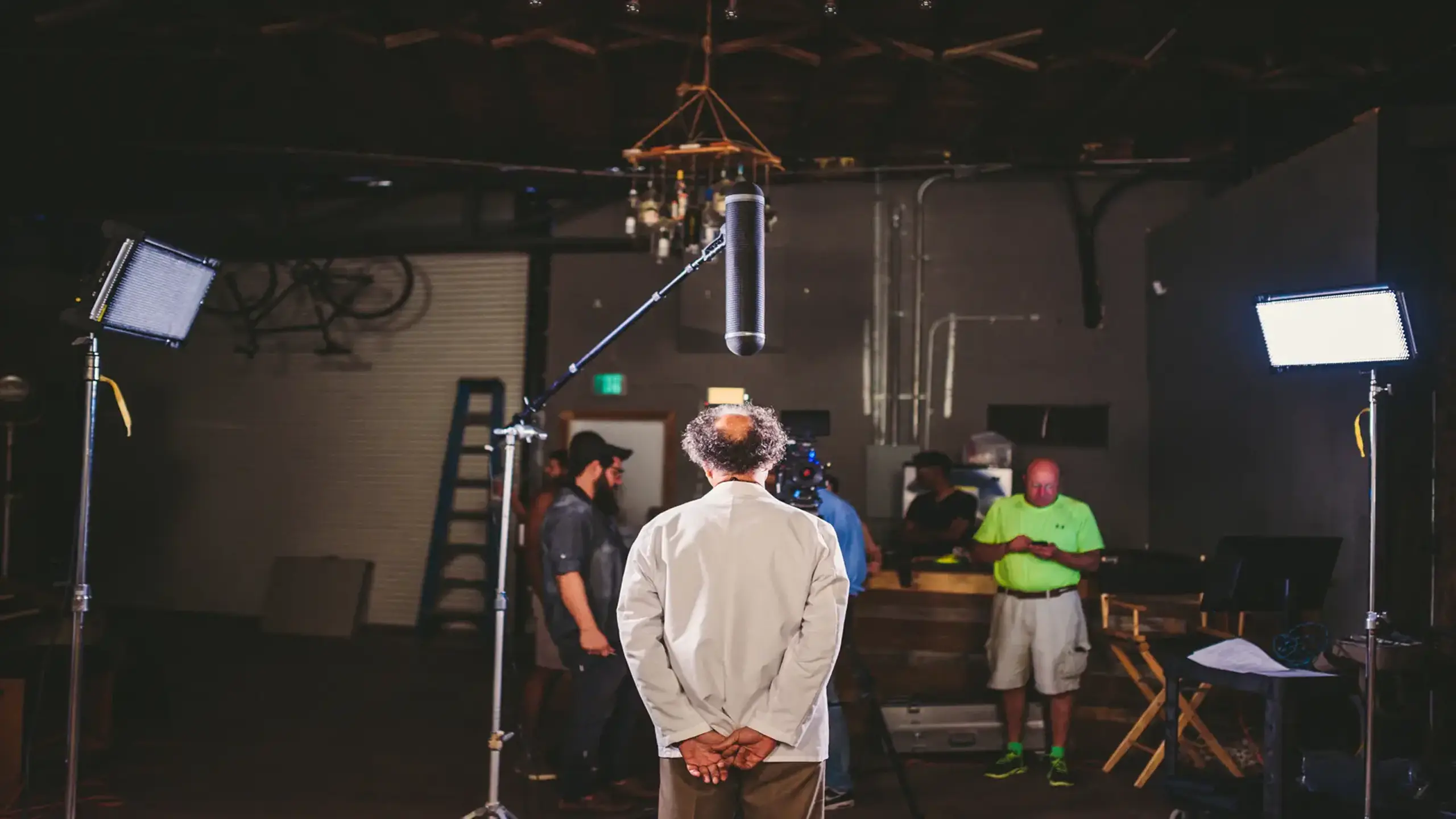
International film production services open doors that domestic-only production cannot. Shooting abroad gives projects access to locations, tax incentives, talent pools, and visual textures that do not exist in any single country. But the logistics of international production are complex enough to sink projects that underestimate the planning required. Customs regulations for equipment, work permits for crew, currency fluctuations, local labor laws, and government rebate programs all create a web of operational challenges that demand specialized expertise.
C&I has coordinated international film production services across multiple continents, managing everything from equipment carnets to local fixer networks. Our [film production division](https://c-istudios.com/film-production-services/) handles the logistical complexity so that directors and producers can focus on the creative work. This guide covers the major international production markets, their rebate structures, the operational realities of shooting abroad, and how to evaluate whether an international shoot makes sense for your project.

## Why International Film Production Services Make Financial Sense
The primary financial driver for international production is tax incentives and rebate programs. Dozens of countries offer cash rebates, tax credits, or both to productions that spend money within their borders. These incentives exist because film production generates economic activity: hotel rooms, restaurant meals, equipment rentals, local crew wages, and tourism driven by location recognition.
The math can be dramatic. A production spending $2 million in a country offering a 30 percent rebate recovers $600,000. That rebate effectively reduces the production budget to $1.4 million while maintaining $2 million in production value. For independent films and mid-budget features, this difference can be the margin between a project getting greenlit or dying in development.
Beyond incentives, international locations often provide production value that money cannot buy domestically. Shooting a period drama in actual 18th-century European architecture is both cheaper and more convincing than building period sets in a Los Angeles sound stage. Desert landscapes in Morocco, rainforests in Colombia, ancient cities in India, and modern cityscapes in Singapore each offer visual environments that would cost millions to replicate artificially.
## Top International Production Markets and Their Rebate Programs
### United Kingdom
The UK offers one of the most established international film production services ecosystems in the world. The British Film Institute administers a 25.5 percent tax relief on qualifying UK production expenditure, with no cap on the relief amount. This applies to films, high-end television, animation, and children's programming.
The UK's infrastructure is world-class. Pinewood Studios, Shepperton Studios, and the growing complex at Leavesden (where the Harry Potter franchise was produced) provide Stage facilities that rival anything in Hollywood. The UK crew base is deep and experienced, trained on major franchises from Marvel to Star Wars to James Bond. English-speaking capability eliminates the language barrier that complicates production in many other incentive jurisdictions.
The qualification criteria require that the film passes a cultural test or qualifies as an official co-production under one of the UK's bilateral treaty agreements. The cultural test is points-based, evaluating factors like whether the film is set in the UK, whether dialogue is in English, and whether key creative roles are filled by UK or EU nationals.
### Canada
Canada has been a dominant player in international production for decades, earning Vancouver the nickname "Hollywood North." The Canadian incentive landscape is layered: federal tax credits through the Canadian Audio-Visual Certification Office (CAVCO) combine with provincial credits that vary by region.
British Columbia offers a 28 percent basic production services tax credit on qualified BC labor expenditures, plus regional bonuses of 6 percent for shooting outside the Vancouver area. Ontario provides 21.5 percent on qualified Ontario labor through the Ontario Production Services Tax Credit. Quebec offers up to 20 percent on qualified labor plus a 16 percent bonus for productions with no VFX or computer animation.
The practical advantage of Canada beyond the numbers is proximity to the United States. Equipment can be trucked across the border (with proper carnet documentation), American crew members can work on temporary work permits, and the time zone alignment makes real-time communication between production and studio executives in LA or New York seamless.
### Hungary
Hungary has become one of the most attractive European destinations for international film production services. The country offers a 30 percent rebate on all qualifying Hungarian spend, with no annual cap and no per-project cap. The rebate applies to production costs, [post-production](https://c-istudios.com/post-production-services/), and VFX work performed in Hungary.
Budapest's Origo Film Studios and KORDA Studios have hosted productions including Blade Runner 2049, The Martian, and Dune. The city's architecture spans Roman ruins, medieval castles, Art Nouveau facades, and Soviet-era brutalism, making it versatile enough to double for dozens of time periods and geographies.
Labor costs in Hungary are significantly lower than Western Europe or North America. A fully equipped grip truck with operator costs roughly 40 percent of the equivalent in Los Angeles. Combined with the 30 percent rebate, the effective cost savings can reach 50 to 60 percent compared to a US shoot.
### Colombia
Colombia offers a 40 percent tax credit on production services and a 20 percent credit on logistical services (accommodation, food, transportation). This combined incentive, potentially worth 40 percent or more of local spend, makes Colombia one of the most aggressive incentive programs in the Western Hemisphere.
The country's geographic diversity is remarkable. Within Colombia's borders you find Caribbean beaches, Andean mountains, Amazon rainforest, Pacific coastline, colonial cities, and modern urban environments. The government's Film Commission actively supports international productions with permitting assistance and security coordination.
Labor costs are among the lowest in major production markets. A full crew day in Bogota or Cartagena costs approximately 30 to 40 percent of equivalent US rates. The challenge is crew depth for highly specialized positions like underwater cinematography or aerial coordination, where local expertise may need to be supplemented with imported specialists.
### Australia and New Zealand
Australia's Location Offset provides a 16.5 percent rebate on qualifying Australian production expenditure for foreign productions spending at least AUD $15 million in Australia. The Post, Digital, and Visual Effects Offset provides a 30 percent rebate on qualifying Australian PDV expenditure with no minimum spend threshold.
New Zealand offers a 20 percent base grant on qualifying New Zealand production expenditure, with an additional 5 percent uplift for productions that provide significant economic benefits to New Zealand. The country's landscapes are obviously legendary since the Lord of the Rings franchise put New Zealand on the production map permanently.
Both countries have sophisticated production infrastructure, English-speaking crews, and stable political environments. The primary drawback is distance from major distribution markets, which increases travel costs and creates time zone challenges for productions requiring daily communication with US or European studios.
## Operational Realities of International Production
### Equipment and Customs
Moving camera, lighting, grip, and sound equipment across international borders requires an ATA Carnet, essentially a passport for goods. The carnet system, administered through the International Chamber of Commerce, allows temporary importation of professional equipment without paying import duties or posting bonds in each country.
The carnet process requires detailed inventory lists with serial numbers, values, and descriptions of every item. Equipment must leave the country within the carnet's validity period (typically one year), and every piece must be accounted for. Lost or damaged equipment that cannot be re-exported becomes subject to full import duties, which can be 15 to 40 percent of the item's value depending on the country.
Many international productions opt to rent equipment locally rather than ship their own. This eliminates carnet complexity and ensures access to gear maintained by local technicians familiar with local power standards and climate conditions. C&I maintains relationships with rental houses in major international production markets, which allows us to source specific [camera and lighting packages](https://c-istudios.com/video-production-services/) at competitive rates worldwide.
### Work Permits and Visa Requirements
Every crew member traveling internationally for production needs the correct visa category. Tourist visas do not cover paid work in most countries, and immigration authorities at major production hubs are increasingly sophisticated about identifying film crews trying to work on tourist entries.
Processing times vary dramatically. UK Tier 5 Creative Worker visas can be processed in 2 to 3 weeks. Canadian work permits for film workers under the C10 category typically take 4 to 6 weeks. Some countries offer expedited processing for film productions recognized by their national film commissions, but this requires advance coordination that must begin months before the shoot.
### Insurance and Liability
Standard US production insurance policies may not cover international operations, or may require riders for specific countries. War and terrorism exclusions apply in certain regions. Equipment coverage needs to extend to international transit and storage. Workers' compensation requirements differ by country, and some jurisdictions require enrollment in national social security systems for all workers, including foreign crew.
Completion bond companies, which guarantee delivery of the finished film to financiers, apply additional scrutiny to international productions. They may require contingency budget increases of 5 to 10 percent above domestic norms to account for weather, political instability, transportation disruptions, and other risks unique to international shooting.

## How to Evaluate Whether International Production Is Right for Your Project
### The Break-Even Calculation
International production adds costs that domestic shoots do not have: international flights, per diem for traveling crew, visa processing fees, carnet costs, international insurance riders, and the overhead of coordinating across time zones and languages. These costs typically add 8 to 15 percent to the base production budget.
The break-even question is whether the combination of rebate savings and lower local costs exceeds this overhead premium. For a production spending $500,000 in a country with a 30 percent rebate ($150,000 recovery), the overhead costs need to stay below $150,000 for the international move to be financially justified. In practice, most productions targeting serious rebate markets clear this threshold comfortably once they reach $300,000 or more in qualifying local spend.
### Creative Justification
Financial incentives should not be the only reason to shoot internationally. If the script calls for a specific location and that location happens to offer strong incentives, the decision is straightforward. If you are considering shooting in Hungary simply because of the 30 percent rebate but the film is set in rural America, the production design costs of making Budapest look like Nebraska may eat your savings.
The strongest case for international film production services exists when creative needs and financial incentives align. A film set in London that qualifies for UK tax relief. A tropical adventure shot in Colombia with the 40 percent incentive. A science fiction film using Hungarian studios at a fraction of LA stage costs. These are projects where going international delivers both creative authenticity and financial advantage.
## The Role of Local Fixers and Production Service Companies
No international production succeeds without strong local support. A production service company in the host country provides the on-the-ground infrastructure that visiting productions cannot build from scratch: local crew hiring, location scouting and permitting, equipment rental, transportation, catering, security, government liaison, and emergency support.
The quality of your local partner determines the quality of your international experience. A great fixer anticipates problems before they happen: securing backup locations in case of weather, pre-clearing equipment through customs, establishing relationships with local police and municipal authorities, and maintaining contingency plans for medical emergencies in remote locations.
C&I's approach to international film production services includes vetting and partnering with local production service companies in each market. We do not parachute into a country cold. We work with established local partners who know the terrain, literally and figuratively. This network has been built over years of international work and is one of the most valuable assets we bring to cross-border productions.
## Co-Production Treaties and Their Benefits
Many countries maintain bilateral co-production treaties that offer additional benefits beyond standard incentives. A co-production between the US and Canada, for example, allows the production to access incentives in both countries simultaneously. The film qualifies as a "national" production in each treaty partner country, unlocking domestic funding sources, broadcast quotas, and distribution advantages.
Co-production structures are complex. They require genuine creative and financial participation from entities in each partner country, not just a shell arrangement to access incentives. Treaty requirements typically specify minimum spend percentages, key creative positions that must be filled by nationals of each country, and financial contribution ratios. Navigating these structures requires legal expertise in international entertainment law, and productions serious about co-production should engage specialized attorneys early in development.
Understanding the full landscape of international rebates and [film commission programs](https://www.afci.org/) requires ongoing research since incentive structures change frequently. The [British Film Institute](https://www.bfi.org.uk/) maintains one of the most comprehensive databases of international film incentives, and we recommend checking it before committing to any specific jurisdiction.
## Work with C&I Studios
If you are planning a project like this, our team can take it from concept to final delivery. Explore our [film and TV production](https://c-istudios.com/film-and-tv-production/), browse [our work](https://c-istudios.com/our-work/) to see how we tell brand stories, and [get in touch](https://c-istudios.com/contact/) when you are ready to start.
Originally published September 8, 2025
---
*This content is from [C&I Studios](https://c-istudios.com), a full-service production company.*
---
# Affordable Video Production Services for Small Business: Budget-Friendly Professional Video Solutions
> Published: September 8, 2025
> Categories: Film & TV
> Source: https://c-istudios.com/affordable-video-production-services-for-small-business-budget-friendly-professional-video-solutions-2/
---
## Affordable Video Production Services For Small Business
For more information on industry standards and best practices, visit the [American Marketing Association](https://www.ama.org/).

**Related Services:** [Video Production](https://c-istudios.com/video-production-services/) | [Film & TV Production](https://c-istudios.com/film-and-tv-production/) | [Our Work](https://c-istudios.com/our-work/) | [Contact Us](https://c-istudios.com/contact/)
### Related Reading
- [Video Editing on a Budget That Still Looks Professional](https://c-istudios.com/video-editing-on-a-budget-that-still-looks-professional/)
---
*This content is from [C&I Studios](https://c-istudios.com), a full-service production company.*
---
# How Can Hiring a Production Company Abroad with Film Tax Benefits Transform Your Budget?
> Published: September 6, 2025
> Categories: Film & TV
> Source: https://c-istudios.com/how-can-hiring-a-production-company-abroad-with-film-tax-benefits-transform-your-budget/
---
## Hiring A Production Company Abroad With Film Tax Benefits
For more information on industry standards and best practices, visit the [American Marketing Association](https://www.ama.org/).

**Related Services:** [Video Production](https://c-istudios.com/video-production-services/) | [Film & TV Production](https://c-istudios.com/film-and-tv-production/) | [Our Work](https://c-istudios.com/our-work/) | [Contact Us](https://c-istudios.com/contact/)
### Related Reading
- [Managing International Film Production Logistics: Permits, Crew & Budget](https://c-istudios.com/managing-international-film-production-logistics-permits-crew-budget/)
---
*This content is from [C&I Studios](https://c-istudios.com), a full-service production company.*
---
# Music Video Production Services Cost: Complete Guide to Music Video Pricing
> Published: September 6, 2025
> Categories: Film & TV
> Source: https://c-istudios.com/music-video-production-services-cost-complete-guide-to-music-video-pricing/
---
## Music Video Production Services Cost
For more information on industry standards and best practices, visit the [American Marketing Association](https://www.ama.org/).

**Related Services:** [Video Production](https://c-istudios.com/video-production-services/) | [Film & TV Production](https://c-istudios.com/film-and-tv-production/) | [Our Work](https://c-istudios.com/our-work/) | [Contact Us](https://c-istudios.com/contact/)
### Related Reading
---
*This content is from [C&I Studios](https://c-istudios.com), a full-service production company.*
---
# Everything You Need to Know About Film Production Services in States with Film Tax Incentives
> Published: September 5, 2025
> Categories: Film & TV
> Source: https://c-istudios.com/everything-you-need-to-know-about-film-production-services-in-states-with-film-tax-incentives/
---
**Related Services:** [Video Production](https://c-istudios.com/video-production-services/) | [Film & TV Production](https://c-istudios.com/film-and-tv-production/) | [Our Work](https://c-istudios.com/our-work/) | [Contact Us](https://c-istudios.com/contact/)
### Related Reading
- [Narrative Short Film Production Services for Filmmakers](https://c-istudios.com/narrative-short-film-production-services/)
- [International Film Production Services with Rebate Programs](https://c-istudios.com/international-film-production-services-with-rebate-programs/)
---
*This content is from [C&I Studios](https://c-istudios.com), a full-service production company.*
---
# Policy Explainer Video Production for Political Campaigns: Transforming Complex Issues into Voter-Friendly Content
> Published: August 24, 2025
> Categories: Commercial & Brand
> Source: https://c-istudios.com/campaign-debate-prep-video-production-for-candidates-mastering-performance-through-professional-preparation-f/
---
**Related Services:** [Video Production](https://c-istudios.com/video-production-services/) | [Film & TV Production](https://c-istudios.com/film-and-tv-production/) | [Our Work](https://c-istudios.com/our-work/) | [Contact Us](https://c-istudios.com/contact/)
### Related Reading
---
*This content is from [C&I Studios](https://c-istudios.com), a full-service production company.*
---
# Professional Narrative Film Deliverables for International Distribution
> Published: August 23, 2025
> Categories: Film & TV
> Source: https://c-istudios.com/professional-narrative-film-deliverables-for-international-distribution/
---
**Related:** [Video Production Services](https://c-istudios.com/video-production-services/) | [Film Production Services](https://c-istudios.com/film-production-services/) | [Video Production Fort Lauderdale](https://c-istudios.com/video-production-fort-lauderdale/) | [Video Production Los Angeles](https://c-istudios.com/video-production-los-angeles/) | [Video Production New York](https://c-istudios.com/video-production-new-york/) | [Advertising Services](https://c-istudios.com/advertising-services/)
### Related Reading
---
*This content is from [C&I Studios](https://c-istudios.com), a full-service production company.*
---
# Seamless VFX Integration for Narrative Scenes: Essential Strategies
> Published: August 22, 2025
> Categories: Post & VFX
> Source: https://c-istudios.com/seamless-vfx-integration-for-narrative-scenes-essential-strategies/
---
**Related Services:** [Post Production](https://c-istudios.com/post-production-services/) | [VFX & Animation](https://c-istudios.com/vfx-compositing-and-animation-services/)
---
*This content is from [C&I Studios](https://c-istudios.com), a full-service production company.*
---
# ADR and Voiceover Syncing for Narrative Features: Master Techniques
> Published: August 20, 2025
> Categories: Film & TV
> Source: https://c-istudios.com/adr-and-voiceover-syncing-for-narrative-features-master-techniques/
---
**Related:** [Video Production Services](https://c-istudios.com/video-production-services/) | [Audio Engineering Services](https://c-istudios.com/audio-engineering-services/) | [Film Production Services](https://c-istudios.com/film-production-services/) | [Video Production Los Angeles](https://c-istudios.com/video-production-los-angeles/) | [Advertising Services](https://c-istudios.com/advertising-services/)
### Related Reading
---
*This content is from [C&I Studios](https://c-istudios.com), a full-service production company.*
---
# Narrative Feature Film DCP Formatting and Delivery: Complete Guide
> Published: August 16, 2025
> Categories: Film & TV
> Source: https://c-istudios.com/narrative-feature-film-dcp-formatting-and-delivery-complete-guide/
---
**Related Services:** [Documentary Film Production](https://c-istudios.com/documentary-film-production/) | [Feature Film Mastering & Delivery](https://c-istudios.com/feature-film-mastering-and-delivery/)
### Related Reading
- [Creating a DCP: How to Convert Your Film for Theaters Without Losing Quality](https://c-istudios.com/converting-your-film-to-a-dcp-without-quality-loss/)
---
*This content is from [C&I Studios](https://c-istudios.com), a full-service production company.*
---
# How Political Campaign Rapid Turnaround Video Production Delivers Emergency Content on Time
> Published: August 14, 2025
> Categories: Commercial & Brand
> Source: https://c-istudios.com/how-political-campaign-rapid-turnaround-video-production-delivers-emergency-content-on-time/
---
**Related Services:** [Video Production](https://c-istudios.com/video-production-services/) | [Film & TV Production](https://c-istudios.com/film-and-tv-production/) | [Our Work](https://c-istudios.com/our-work/) | [Contact Us](https://c-istudios.com/contact/)
### Related Reading
- [Insider Tips from Video Production Professionals on What You Can Do to Save Time During Post-Production](https://c-istudios.com/insider-tips-from-video-production-professionals-on-what-you-can-do-to-save-time-during-post-production/)
---
*This content is from [C&I Studios](https://c-istudios.com), a full-service production company.*
---
# Music Composition for Emotional Story Arcs in Film: Best Strategies
> Published: August 9, 2025
> Categories: Commercial & Brand
> Source: https://c-istudios.com/music-composition-for-emotional-story-arcs-in-film-best-strategies/
---

## Music Composition For Emotional Story Arcs In Film
For more information on industry standards and best practices, visit the [American Marketing Association](https://www.ama.org/).
**Related:** [Video Production Services](https://c-istudios.com/video-production-services/) | [Audio Engineering Services](https://c-istudios.com/audio-engineering-services/) | [Video Production Los Angeles](https://c-istudios.com/video-production-los-angeles/) | [Advertising Services](https://c-istudios.com/advertising-services/) | [Social Media Marketing](https://c-istudios.com/social-media-marketing-services/)
---
*This content is from [C&I Studios](https://c-istudios.com), a full-service production company.*
---
# End-to-End Post-Production for Indie Filmmakers: Complete Guide
> Published: August 8, 2025
> Categories: Post & VFX
> Source: https://c-istudios.com/end-to-end-post-production-for-indie-filmmakers-complete-guide/
---
**Related Services:** [Post Production](https://c-istudios.com/post-production-services/) | [VFX & Animation](https://c-istudios.com/vfx-compositing-and-animation-services/)
### Related Reading
---
*This content is from [C&I Studios](https://c-istudios.com), a full-service production company.*
---
# Surround Sound Mixing for Festival-Ready Films: Winning Strategies
> Published: August 6, 2025
> Categories: Post & VFX
> Source: https://c-istudios.com/surround-sound-mixing-for-festival-ready-films-winning-strategies/
---
**Related Services:** [Post Production](https://c-istudios.com/post-production-services/) | [VFX & Animation](https://c-istudios.com/vfx-compositing-and-animation-services/)
---
*This content is from [C&I Studios](https://c-istudios.com), a full-service production company.*
---
# Political Campaign Video Production That Wins Races
> Published: August 3, 2025
> Categories: Commercial & Brand
> Source: https://c-istudios.com/political-campaign-video-production/
---
.cib{--paper:#1b1d1f;--ink:#fff;--body:#d5d7d9;--muted:#8b9096;--line:rgba(255,255,255,.12);--thumb:#2b2e31;--card:#212426;--accent:#c02b0a;--blue:#5B8FA8;--serif:'Playfair Display',Georgia,serif;--sans:'Poppins',-apple-system,sans-serif;--measure:900px;background:var(--paper);color:var(--body);font-family:var(--sans);line-height:1.6;position:relative;left:50%;transform:translateX(-50%);width:90vw;max-width:1920px}
.cib *{box-sizing:border-box}
.cib .kicker{max-width:var(--measure);margin:58px auto 0;padding:0 22px;font-size:12.5px;font-weight:700;letter-spacing:2.5px;text-transform:uppercase;color:var(--blue)}
.cib h1.cibh1{text-wrap:balance;font-family:var(--serif);font-weight:500;font-size:clamp(46px,6vw,72px);line-height:1.08;color:var(--ink);max-width:var(--measure);margin:18px auto 0;padding:0 22px;letter-spacing:-.5px}
.cib .metarow{max-width:var(--measure);margin:20px auto 0;padding:0 22px;color:var(--muted);font-size:14px}
.cib .hero{position:relative;width:100%;height:0;padding-bottom:56.25%;overflow:hidden;margin:48px auto 0;border-top:1px solid var(--line);border-bottom:1px solid var(--line)}
.cib .hero .ph{width:100%;aspect-ratio:16/9;background:var(--thumb);border-top:1px solid var(--line);border-bottom:1px solid var(--line);display:flex;align-items:center;justify-content:center;color:#7d8288;font-size:13px;text-align:center;padding:0 20px}
.cib .body{max-width:var(--measure);margin:12px auto 0;padding:52px 22px 6px}
.cib .body.lead p:first-child{font-size:23px;line-height:1.62;color:var(--ink)}
.cib .body p{font-size:18.5px;line-height:1.85;margin:0 0 30px;color:var(--body)}
.cib .body h2{text-wrap:balance;font-family:var(--serif);font-weight:500;font-size:clamp(32px,4vw,48px);line-height:1.22;color:var(--ink);margin:70px 0 20px;letter-spacing:-.3px}
.cib .body h3{text-wrap:balance;font-family:var(--sans);font-weight:600;font-size:22px;color:var(--ink);margin:38px 0 8px}
.cib .body a{color:var(--ink);text-decoration:underline;text-decoration-color:rgba(255,255,255,.4);text-underline-offset:3px}
.cib .body a:hover{text-decoration-color:var(--ink)}
.cib .ctable{width:100%;border-collapse:collapse;margin:16px 0 30px;font-size:16px}
.cib .ctable th{background:#000;color:#fff;text-align:left;padding:10px 12px;font-family:var(--sans)}
.cib .ctable td{padding:10px 12px;border-bottom:1px solid var(--line);color:var(--body)}
.cib .inimg{position:relative;width:100%;height:0;padding-bottom:56.25%;overflow:hidden;margin:72px auto;border-top:1px solid var(--line);border-bottom:1px solid var(--line)}
.cib .inimg .ph{width:100%;aspect-ratio:16/9;background:var(--thumb);border-top:1px solid var(--line);border-bottom:1px solid var(--line);display:flex;align-items:center;justify-content:center;color:#7d8288;font-size:13px}
.cib .origpub{max-width:var(--measure);margin:60px auto 0;padding:26px 22px 0;border-top:1px solid var(--line);color:var(--muted);font-size:13.5px}
.cib .related{max-width:1200px;margin:64px auto 0;padding:34px 22px 76px}
.cib .related h3{font-family:var(--sans);font-size:12.5px;letter-spacing:2px;text-transform:uppercase;color:var(--ink);margin:0 0 24px}
.cib .grid{display:grid;grid-template-columns:repeat(3,1fr);gap:28px}
.cib .rc{background:var(--card);border:1px solid var(--line);display:block;text-decoration:none;color:inherit;transition:border-color .15s}
.cib a.rc:hover{border-color:rgba(255,255,255,.5)}
.cib .rc .thumb{position:relative;width:100%;height:0;padding-bottom:56.25%;background:var(--thumb);overflow:hidden}
.cib .rc .thumb img{position:absolute!important;top:0!important;left:0!important;width:100%!important;height:100%!important;object-fit:cover!important;margin:0!important}
.cib .rc .cc{padding:14px 15px 17px}
.cib .rc .rt{font-family:var(--serif);font-weight:500;font-size:16px;line-height:1.3;color:var(--ink);margin:0 0 6px}
.cib .rc .rm{font-size:11px;letter-spacing:1px;text-transform:uppercase;color:var(--muted)}
.cib img{margin:0!important;padding:0!important;display:block!important;vertical-align:top;max-width:100%}
.cib .hero img,.cib .inimg img{position:absolute!important;top:0!important;left:0!important;width:100%!important;height:100%!important;object-fit:cover!important;margin:0!important;padding:0!important;border:0!important;display:block!important;aspect-ratio:auto!important}
.cib .hero+.body{padding-top:36px}
@media(max-width:760px){.cib .grid{grid-template-columns:1fr}.cib .body h2{margin:52px 0 16px}.cib .body p{font-size:17.5px}.cib .inimg,.cib .hero{margin-top:44px}}
.cib .vembed{max-width:var(--measure);margin:44px auto;padding:0 22px}.cib .vembed .vwrap{position:relative;width:100%;height:0;padding-bottom:56.25%}.cib .vembed .vwrap iframe{position:absolute;top:0;left:0;width:100%;height:100%;border:0}
Commercial & Brand
# Political Campaign Video Production That Wins Races
9 min read


## Why Political Campaign Video Production Wins Elections
Every competitive race in the last decade has been decided, at least in part, by which campaign told a better story on screen. Political campaign video production is not a nice-to-have line item anymore. It is the single largest media expenditure for most campaigns, and the quality gap between professional production and DIY content is immediately obvious to voters.
We have produced political campaign video content for winning candidates at every level, from local state house races to [US Senate campaigns](https://c-istudios.com/portfolio/ruben-gallego/). The consistent lesson is that voters respond to authenticity, not polish for its own sake, and that authenticity is paradoxically harder to capture without a professional team that knows how to create the conditions for it.
The campaigns that win are the ones that treat video as a strategic asset rather than a checkbox. They plan their political campaign video production around a messaging calendar, not around whatever the candidate happens to be doing that week. They invest in quality that earns media pickups and social shares. And they build a library of footage that can be recut for different audiences, platforms, and moments as the race evolves.
## Types of Political Campaign Video Content
A complete political campaign video production strategy requires multiple content types, each serving a different purpose in the voter persuasion funnel. Campaigns that rely on a single type of video, usually a biographical intro spot, leave enormous strategic value on the table.
### Candidate Introduction Videos
The intro video is typically the first major production investment. It defines the candidate before opponents or media narratives can do it for them. The strongest intro videos are not glorified resumes. They find a single compelling thread, a defining moment, a core motivation, a personal story that connects to public service, and build the entire piece around it.
We produced the intro content for [Ruben Gallego](https://c-istudios.com/portfolio/ruben-gallego/) during his successful US Senate campaign in Arizona. The challenge was translating a decorated military record and congressional tenure into a personal story that resonated with voters who had never heard of him. The video needed to work as a broadcast ad, a social media piece, and an earned media asset simultaneously. That kind of multi-platform versatility only comes from planning the production around distribution strategy from day one. Gallego won that race, and the video content was a central part of the campaign strategy.
### Issue-Focused Content
Issue videos connect specific policy positions to real voter concerns. The format varies widely: direct-to-camera addresses, constituent testimonials, documentary-style pieces featuring affected communities, or data-driven explainers with motion graphics. The common thread is that effective issue content makes abstract policy feel personal and urgent.
The mistake most campaigns make with issue content is treating it as a policy lecture. Voters do not want to be educated. They want to see that a candidate understands their problem and has a credible plan to address it. The production approach should put real people and real situations at the center, with the candidate as the solution rather than the protagonist.
Our work with [Gabe Vasquez](https://c-istudios.com/portfolio/gabe-vasquez/) in his winning New Mexico Congressional race focused heavily on issue content that connected border policy and economic concerns to the daily lives of his constituents. The content performed because it felt local and specific rather than generic and national.
### Rapid Response and Opposition Content
Speed kills in political media. When an opponent makes a claim, a news cycle shifts, or a debate moment goes viral, the campaign that responds with broadcast-quality video within hours has a massive advantage over the one that takes days to produce a response.
Rapid response political campaign video production requires a production partner who maintains standing capacity throughout the campaign. That means pre-positioned equipment, editors on call, and established workflows for approval and distribution. We have turned around broadcast-ready response content in under six hours during active campaign cycles, which is only possible when the production infrastructure is already in place.
### Testimonial and Endorsement Videos
Third-party validation carries more weight than self-promotion in political advertising. Community leaders, local business owners, veterans, teachers, and everyday constituents speaking on behalf of a candidate create credibility that no amount of candidate-centered content can match.
The production challenge with testimonials is capturing genuine emotion without it feeling staged. This is a skill that comes from experience. Our approach is to have real conversations with testimonial subjects rather than scripting their lines. We guide the conversation toward the key messages, but the words and emotions are theirs. The camera technique matters too. Testimonials shot with a single camera on a tripod in a conference room feel institutional. Testimonials shot with thoughtful framing, natural light, and the person in their own environment feel real.
### Get-Out-The-Vote and Mobilization Content
GOTV content targets supporters in the final weeks and days before an election. The creative is urgent, direct, and action-oriented. It needs to drive specific behaviors: early voting, mail-in ballot submission, election day turnout, and volunteer mobilization.
Production values still matter here, but the priority shifts from storytelling to clarity and emotional urgency. GOTV videos are often the highest-performing content a campaign produces in terms of measurable action, and they are frequently the most under-invested category. Campaigns spend months perfecting their intro video and then scramble to produce GOTV content at the last minute. Building GOTV production into the political campaign video production plan from the beginning prevents this.
## What Makes Political Video Different from Commercial Production
Political campaign video production shares equipment and technical skills with [commercial video production](https://c-istudios.com/video-production-services/), but the strategic environment is fundamentally different. Understanding these differences is what separates a production company that happens to shoot political content from one that actually knows how to serve campaigns.
### Timelines Are Unpredictable
Commercial production timelines are set weeks or months in advance. Political timelines shift constantly. A news cycle changes, polling data moves, an opponent launches an attack, and suddenly the campaign needs different content than what was planned. The production team has to absorb these shifts without losing quality or missing deadlines.
Our work with [Carlina Rivera](https://c-istudios.com/portfolio/carlina-rivera/) during her successful Congressional campaign in New York involved multiple production pivots when the race dynamics changed. The ability to rapidly reconceive and produce new content while maintaining visual and messaging consistency across the campaign library was critical to keeping the campaign on offense rather than constantly reacting. Rivera won her race, and the production agility was a factor.
### Compliance and Legal Requirements
Political advertising is regulated by the [Federal Election Commission](https://www.fec.gov/) and state election boards. Disclaimer requirements, spending attribution, and content restrictions vary by jurisdiction and must be baked into the production process. A production company that does not understand these requirements can create content that puts the campaign at legal risk.
Disclaimer placement, font size, and duration requirements affect the edit. Spending categorization affects the budget structure. Content restrictions on the use of certain images, government facilities, or official insignia affect what can be shot and how. These are not afterthoughts. They need to be addressed in pre-production.
### Multi-Platform Distribution from Day One
A single political campaign video production shoot needs to yield content for broadcast television, connected TV, YouTube pre-roll, Facebook and Instagram feeds and stories, TikTok, X (Twitter), email campaigns, website embeds, and sometimes digital billboards and streaming audio companion visuals. Each platform has different aspect ratios, length requirements, and audience behaviors.
Planning for multi-platform distribution at the production stage, not in post, means shooting with the coverage needed for vertical, square, and horizontal crops. It means capturing alternate takes and supplementary footage that give the editorial team options. And it means structuring the messaging so the core point lands whether the viewer watches for five seconds or five minutes.

## Budgeting for Political Campaign Video Production
Campaign media budgets vary enormously depending on the race level, geography, and competitiveness. But the allocation principles are consistent.
Race Level
Typical Video Budget
Primary Content Types
Local / Municipal
$5,000 - $25,000
Intro video, 2-3 issue spots, GOTV
State Legislature
$15,000 - $75,000
Full video suite with testimonials
Congressional
$50,000 - $250,000
Multi-day shoots, rapid response capacity
Senate / Gubernatorial
$150,000 - $1M+
Ongoing production partnership, full library
Presidential / National
$500,000 - $5M+
Dedicated production team, daily content
The biggest budgeting mistake campaigns make is front-loading all production spending on the intro video and leaving nothing for the content that actually moves voters in the final weeks. We advise campaigns to allocate no more than 25 to 30 percent of their video budget to the intro spot and reserve the rest for issue content, testimonials, rapid response, and GOTV.
Another common mistake is separating production and media buying budgets in a way that creates misalignment. The production team should understand the [media buy strategy](https://www.opensecrets.org/) so content is built to the specifications of the platforms where it will run. A beautifully produced 60-second spot is wasted money if the media plan calls for 15-second pre-roll placements.
## Post-Production for Political Content
[Post-production](https://c-istudios.com/post-production-services/) on political content operates under tighter timelines and more revision cycles than almost any other production category. Campaign messaging evolves weekly. Polling data informs creative direction. Legal review adds approval steps. And every deliverable needs to exist in multiple formats for different distribution channels.
Color grading on political content serves a strategic purpose beyond aesthetics. Warm, bright grading communicates optimism and hope. Cool, desaturated grading communicates gravity and urgency. The grade should shift to match the emotional intent of each piece, and it should be consistent within content categories across the campaign.
Sound design and music selection are equally strategic. Music licensing for political content has specific considerations that commercial production does not. Some music libraries restrict political usage. Sync licenses may require additional clearances. And the emotional tone of the music needs to align with the campaign brand, not just the individual video.

## Our Track Record with Winning Campaigns
Results matter more than production reels in political work. We have been the production partner for campaigns that won their races at every level:
**[Ruben Gallego](https://c-istudios.com/portfolio/ruben-gallego/)** won his Arizona US Senate seat with a campaign that relied heavily on video content connecting his military service and congressional record to the concerns of Arizona families. Our production covered everything from his announcement through election night.
**[Gabe Vasquez](https://c-istudios.com/portfolio/gabe-vasquez/)** won his New Mexico Congressional seat in one of the most competitive districts in the country. Issue-focused video content targeting specific voter concerns in the district was central to the media strategy.
**[Carlina Rivera](https://c-istudios.com/portfolio/carlina-rivera/)** won her New York Congressional race with a campaign that pivoted production strategy multiple times as the race dynamics shifted. Fast turnaround and creative flexibility kept the campaign ahead of opponents who could not match the volume or quality of video content.
**[Jason Pizzo](https://c-istudios.com/portfolio/jason-pizzo/)**, **[Gloria Johnson](https://c-istudios.com/portfolio/gloria-johnson/)**, and [dozens of state and local candidates](https://c-istudios.com/our-work/politics/) across the country have won their races with political campaign video production support from our team. Every engagement is built around the specific needs of that race, that candidate, and that electorate.
## Work with C&I Studios
If you are planning a project like this, our team can take it from concept to final delivery. Explore our [video production services](https://c-istudios.com/video-production-services/), browse [our work](https://c-istudios.com/our-work/) to see how we tell brand stories, and [get in touch](https://c-istudios.com/contact/) when you are ready to start.
Originally published August 3, 2025
---
*This content is from [C&I Studios](https://c-istudios.com), a full-service production company.*
---
# Professional Color Grading for Dramatic Short Films and Features
> Published: August 3, 2025
> Categories: Post & VFX
> Source: https://c-istudios.com/professional-color-grading-for-dramatic-short-films-and-features/
---
**Related Services:** [Post Production](https://c-istudios.com/post-production-services/) | [VFX & Animation](https://c-istudios.com/vfx-compositing-and-animation-services/)
### Related Reading
---
*This content is from [C&I Studios](https://c-istudios.com), a full-service production company.*
---
# Professional VFX Integration for Completed Film Footage
> Published: August 1, 2025
> Categories: Post & VFX
> Source: https://c-istudios.com/professional-vfx-integration-for-completed-film-footage/
---
.cib{--paper:#1b1d1f;--ink:#fff;--body:#d5d7d9;--muted:#8b9096;--line:rgba(255,255,255,.12);--thumb:#2b2e31;--card:#212426;--accent:#c02b0a;--blue:#5B8FA8;--serif:'Playfair Display',Georgia,serif;--sans:'Poppins',-apple-system,sans-serif;--measure:900px;background:var(--paper);color:var(--body);font-family:var(--sans);line-height:1.6;position:relative;left:50%;transform:translateX(-50%);width:90vw;max-width:1920px}
.cib *{box-sizing:border-box}
.cib .kicker{max-width:var(--measure);margin:58px auto 0;padding:0 22px;font-size:12.5px;font-weight:700;letter-spacing:2.5px;text-transform:uppercase;color:var(--blue)}
.cib h1.cibh1{text-wrap:balance;font-family:var(--serif);font-weight:500;font-size:clamp(46px,6vw,72px);line-height:1.08;color:var(--ink);max-width:var(--measure);margin:18px auto 0;padding:0 22px;letter-spacing:-.5px}
.cib .metarow{max-width:var(--measure);margin:20px auto 0;padding:0 22px;color:var(--muted);font-size:14px}
.cib .hero{position:relative;width:100%;height:0;padding-bottom:56.25%;overflow:hidden;margin:48px auto 0;border-top:1px solid var(--line);border-bottom:1px solid var(--line)}
.cib .hero .ph{width:100%;aspect-ratio:16/9;background:var(--thumb);border-top:1px solid var(--line);border-bottom:1px solid var(--line);display:flex;align-items:center;justify-content:center;color:#7d8288;font-size:13px;text-align:center;padding:0 20px}
.cib .body{max-width:var(--measure);margin:12px auto 0;padding:52px 22px 6px}
.cib .body.lead p:first-child{font-size:23px;line-height:1.62;color:var(--ink)}
.cib .body p{font-size:18.5px;line-height:1.85;margin:0 0 30px;color:var(--body)}
.cib .body h2{text-wrap:balance;font-family:var(--serif);font-weight:500;font-size:clamp(32px,4vw,48px);line-height:1.22;color:var(--ink);margin:70px 0 20px;letter-spacing:-.3px}
.cib .body h3{text-wrap:balance;font-family:var(--sans);font-weight:600;font-size:22px;color:var(--ink);margin:38px 0 8px}
.cib .body a{color:var(--ink);text-decoration:underline;text-decoration-color:rgba(255,255,255,.4);text-underline-offset:3px}
.cib .body a:hover{text-decoration-color:var(--ink)}
.cib .ctable{width:100%;border-collapse:collapse;margin:16px 0 30px;font-size:16px}
.cib .ctable th{background:#000;color:#fff;text-align:left;padding:10px 12px;font-family:var(--sans)}
.cib .ctable td{padding:10px 12px;border-bottom:1px solid var(--line);color:var(--body)}
.cib .inimg{position:relative;width:100%;height:0;padding-bottom:56.25%;overflow:hidden;margin:72px auto;border-top:1px solid var(--line);border-bottom:1px solid var(--line)}
.cib .inimg .ph{width:100%;aspect-ratio:16/9;background:var(--thumb);border-top:1px solid var(--line);border-bottom:1px solid var(--line);display:flex;align-items:center;justify-content:center;color:#7d8288;font-size:13px}
.cib .origpub{max-width:var(--measure);margin:60px auto 0;padding:26px 22px 0;border-top:1px solid var(--line);color:var(--muted);font-size:13.5px}
.cib .related{max-width:1200px;margin:64px auto 0;padding:34px 22px 76px}
.cib .related h3{font-family:var(--sans);font-size:12.5px;letter-spacing:2px;text-transform:uppercase;color:var(--ink);margin:0 0 24px}
.cib .grid{display:grid;grid-template-columns:repeat(3,1fr);gap:28px}
.cib .rc{background:var(--card);border:1px solid var(--line);display:block;text-decoration:none;color:inherit;transition:border-color .15s}
.cib a.rc:hover{border-color:rgba(255,255,255,.5)}
.cib .rc .thumb{position:relative;width:100%;height:0;padding-bottom:56.25%;background:var(--thumb);overflow:hidden}
.cib .rc .thumb img{position:absolute!important;top:0!important;left:0!important;width:100%!important;height:100%!important;object-fit:cover!important;margin:0!important}
.cib .rc .cc{padding:14px 15px 17px}
.cib .rc .rt{font-family:var(--serif);font-weight:500;font-size:16px;line-height:1.3;color:var(--ink);margin:0 0 6px}
.cib .rc .rm{font-size:11px;letter-spacing:1px;text-transform:uppercase;color:var(--muted)}
.cib img{margin:0!important;padding:0!important;display:block!important;vertical-align:top;max-width:100%}
.cib .hero img,.cib .inimg img{position:absolute!important;top:0!important;left:0!important;width:100%!important;height:100%!important;object-fit:cover!important;margin:0!important;padding:0!important;border:0!important;display:block!important;aspect-ratio:auto!important}
.cib .hero+.body{padding-top:36px}
@media(max-width:760px){.cib .grid{grid-template-columns:1fr}.cib .body h2{margin:52px 0 16px}.cib .body p{font-size:17.5px}.cib .inimg,.cib .hero{margin-top:44px}}
.cib .vembed{max-width:var(--measure);margin:44px auto;padding:0 22px}.cib .vembed .vwrap{position:relative;width:100%;height:0;padding-bottom:56.25%}.cib .vembed .vwrap iframe{position:absolute;top:0;left:0;width:100%;height:100%;border:0}
Post & VFX
# Professional VFX Integration for Completed Film Footage
10 min read

Post-production visual effects integration enables filmmakers to enhance completed footage while addressing production limitations and expanding creative possibilities through strategic digital enhancement that supports storytelling objectives. Professional **VFX integration for completed film footage** transforms existing narrative content through invisible effects work, environmental enhancement, and creative augmentation that elevates production value while maintaining narrative authenticity and ensuring seamless integration that supports rather than overwhelms story content and character development throughout post-production enhancement.
Visual effects integration requires balancing creative enhancement with narrative authenticity while ensuring technical excellence and maintaining the realistic foundation that supports audience engagement and story believability throughout complex digital enhancement processes.

## Understanding VFX Integration for Narrative Films
Narrative filmmaking benefits from strategic visual effects integration that enhances storytelling while maintaining realistic presentation through professional VFX work that addresses production challenges and expands creative possibilities without compromising story authenticity.
According to [veteran compositor Hank Chang](https://www.awn.com/vfxworld/behind-scenes-vfx-you-were-never-meant-see), invisible VFX work makes up the majority of modern film visual effects, emphasizing the importance of seamless integration that enhances narrative content without drawing attention to digital manipulation or technical intervention.
### Invisible Effects and Seamless Enhancement
Professional VFX integration emphasizes invisible effects that solve production challenges while enhancing visual quality through digital techniques that remain undetectable to audiences while improving overall production value and narrative presentation quality.
Invisible enhancement includes environment cleanup, object removal, and visual consistency correction that addresses production limitations while maintaining realistic presentation that supports audience immersion and story believability throughout narrative development.
VFX integration for completed film footage focuses on enhancement rather than spectacle, ensuring digital work supports storytelling objectives while maintaining the authentic foundation that characterizes effective narrative filmmaking and audience engagement.
### Creative Enhancement and Production Value
Strategic VFX integration expands creative possibilities while addressing budget limitations through digital solutions that achieve visual objectives within post-production timelines and financial constraints that characterize independent and low-budget narrative productions.
Creative enhancement includes environmental expansion, atmospheric improvement, and visual refinement that elevates production value while maintaining narrative focus and ensuring digital work enhances rather than distracts from character development and story progression.
Professional VFX work enables filmmakers to achieve visual objectives that exceeded production capabilities while maintaining creative vision and ensuring enhanced footage integrates seamlessly with existing content throughout narrative presentation and audience viewing experience.
## Types of VFX Integration for Narrative Content
Different types of visual effects serve specific narrative purposes while addressing various production challenges through specialized digital techniques that enhance completed footage without compromising story authenticity or audience engagement.
### Environmental Enhancement and Extension
Environmental VFX enables location enhancement and expansion while maintaining realistic presentation through digital environment work that extends practical locations and creates believable settings that support narrative requirements and creative vision.
Environment extension includes background replacement, location enhancement, and atmospheric addition that creates comprehensive visual environments while maintaining photographic realism and ensuring digital environments integrate seamlessly with practical footage.
Professional environmental VFX balances creative enhancement with realistic presentation while ensuring digital environments support narrative authenticity and maintain the believable foundation that characterizes effective storytelling and audience engagement.
### Object Removal and Cleanup Work
Cleanup VFX addresses production challenges including unwanted objects, anachronisms, and visual inconsistencies while maintaining realistic presentation through professional digital techniques that preserve authentic visual character and narrative believability.
Object removal includes eliminating production equipment, correcting continuity errors, and addressing visual distractions that could compromise narrative immersion while maintaining photographic quality and realistic visual presentation throughout enhanced footage.
VFX integration for completed film footage often involves extensive cleanup work that addresses production limitations while ensuring final content meets professional presentation standards and maintains visual consistency throughout narrative development.
## Technical Workflow and Integration Process
Professional VFX integration requires systematic workflows that ensure quality while maintaining efficient production timelines through organized processes that accommodate creative revision and maintain technical excellence throughout complex digital enhancement projects.
### Footage Analysis and Planning
VFX integration begins with comprehensive footage analysis that identifies enhancement opportunities while understanding technical limitations and establishing realistic objectives that balance creative ambition with production constraints and timeline requirements.
Analysis includes understanding camera movement, lighting conditions, and visual characteristics that affect VFX integration while identifying scenes that provide maximum narrative benefit through digital enhancement and creative augmentation.
Professional planning ensures VFX work addresses priority sequences while maintaining budget efficiency and ensuring enhanced footage meets creative objectives within established timelines and technical requirements throughout post-production completion.
### Tracking and Matchmoving
Accurate camera tracking enables precise VFX integration while ensuring digital elements match camera movement and perspective throughout complex shots that require seamless integration between practical footage and digital enhancement work.
Matchmoving includes understanding camera characteristics while creating accurate tracking data that enables digital elements to integrate seamlessly with practical footage through professional tracking techniques and quality control processes.
Professional tracking ensures VFX elements maintain realistic perspective and movement while integrating seamlessly with practical footage throughout complex camera movements and challenging integration sequences that require technical precision.
## Color Integration and Visual Consistency
Successful VFX integration requires comprehensive color matching and visual consistency management that ensures digital elements integrate seamlessly with practical footage while maintaining realistic presentation and narrative authenticity.
### Color Matching and Grading Integration
Professional color integration ensures VFX elements match practical footage while maintaining consistent visual quality through strategic color grading and matching techniques that create seamless integration between digital and practical elements.
Color matching includes understanding lighting conditions while ensuring digital elements reproduce accurately within established color palettes and visual aesthetics that characterize specific narrative projects and creative vision.
VFX integration for completed film footage requires comprehensive color work that ensures enhanced sequences maintain visual consistency while integrating seamlessly with existing footage throughout narrative presentation and audience viewing experience.
### Lighting Integration and Photographic Realism
Realistic lighting integration ensures VFX elements respond appropriately to practical lighting conditions while maintaining photographic quality that supports narrative believability and audience immersion throughout enhanced sequences.
Lighting integration includes understanding practical illumination while ensuring digital elements maintain realistic response to environmental lighting conditions and shadow characteristics that support photographic authenticity.
Professional lighting work enables seamless integration while maintaining realistic presentation that supports narrative authenticity and ensures enhanced footage maintains the believable foundation that characterizes effective storytelling.
## Budget-Conscious VFX Strategies
Independent narrative films require VFX approaches that maximize visual impact while managing costs through strategic enhancement selection and efficient production techniques that achieve professional results within budget constraints.
### Strategic Enhancement Selection
Budget-conscious VFX focuses on enhancement work that provides maximum narrative benefit while managing costs through strategic sequence selection and efficient production techniques that achieve professional results within financial limitations.
Strategic selection includes identifying sequences that benefit most from VFX enhancement while understanding which effects provide proportional value relative to production costs and creative objectives throughout post-production optimization.
Professional VFX services provide guidance on enhancement prioritization that ensures essential visual improvements receive appropriate attention while maintaining budget efficiency and creative satisfaction throughout narrative film completion.
### Efficient Production Techniques
Cost-effective VFX production utilizes efficient techniques and workflow optimization that achieve professional results while managing time and resource constraints through strategic production approaches and technical optimization.
Efficient techniques include understanding which VFX approaches provide optimal results while maintaining production efficiency through strategic tool selection and workflow optimization that supports budget constraints and timeline requirements.
VFX integration for completed film footage requires efficient planning that ensures essential enhancement work receives appropriate attention while maintaining cost-effectiveness and ensuring creative objectives remain achievable within established budgets.

## Quality Control and Integration Standards
Professional VFX integration requires comprehensive quality control that ensures seamless integration while maintaining technical excellence through systematic review processes that identify and address integration issues before final delivery.
### Seamless Integration Verification
Quality control includes comprehensive integration testing that ensures VFX elements blend seamlessly with practical footage while maintaining realistic presentation and technical quality throughout enhanced sequences and narrative content.
Integration verification involves understanding visual consistency requirements while ensuring digital elements maintain appropriate quality standards and realistic presentation that supports narrative authenticity and audience engagement.
Professional quality assurance ensures VFX work enhances rather than compromises narrative content while maintaining technical excellence and creative vision throughout complex integration projects and delivery preparation.
### Technical Standards and Delivery Compliance
VFX integration must meet technical standards for various distribution platforms while maintaining quality and ensuring compatibility with delivery requirements throughout theatrical, streaming, and broadcast presentation contexts.
Technical compliance includes understanding platform requirements while ensuring VFX work maintains quality across different viewing contexts and technical specifications that characterize modern distribution and audience consumption.
Professional VFX delivery ensures enhanced footage meets distribution requirements while maintaining creative vision and technical quality throughout various presentation contexts and audience viewing experiences.
## Creative Collaboration and Vision Alignment
Successful VFX integration requires extensive collaboration between filmmakers and VFX artists to ensure digital enhancement supports creative vision while maintaining narrative authenticity throughout complex enhancement projects.
### Creative Communication and Feedback
Effective VFX collaboration requires clear communication between filmmakers and artists while maintaining creative flexibility that accommodates revision and refinement throughout complex enhancement projects and creative development.
Creative communication includes reference sharing, vision alignment, and iterative refinement that ensures VFX work supports narrative objectives while maintaining artistic integrity and creative satisfaction throughout enhancement development.
Professional collaboration enables creative exploration while maintaining project focus and ensuring VFX integration enhances rather than compromises directorial vision and narrative authenticity throughout post-production enhancement.
### Revision Management and Creative Refinement
VFX projects require flexible revision processes that accommodate creative refinement while maintaining production efficiency through organized feedback systems and version control that supports creative development within timeline constraints.
Revision management includes understanding creative development cycles while maintaining production momentum and ensuring VFX work achieves creative objectives within established timelines and budget parameters.
VFX integration for completed film footage benefits from structured revision processes that enable creative refinement while maintaining project efficiency and ensuring enhanced content meets creative standards and narrative objectives.
## Technology and Tools for Film Enhancement
Modern VFX integration utilizes sophisticated software and technology that enables professional results while maintaining efficient workflows through strategic tool selection and technical optimization that supports creative objectives.
### Professional Software and Pipeline Integration
VFX integration requires professional software solutions that enable complex enhancement work while maintaining compatibility with post-production workflows through strategic tool selection and pipeline optimization that supports creative objectives.
Software integration includes understanding compatibility requirements while ensuring VFX tools integrate effectively with existing post-production workflows and delivery requirements throughout complex enhancement projects.
Professional VFX pipelines ensure efficient workflow integration while maintaining quality standards and creative flexibility that supports narrative enhancement and ensures seamless production coordination throughout post-production completion.
### Hardware Requirements and Performance Optimization
Professional VFX work requires substantial computing resources while maintaining efficient production workflows through hardware optimization and performance management that supports complex enhancement projects within timeline constraints.
Hardware optimization includes understanding performance requirements while ensuring VFX production maintains efficiency through strategic resource management and technical optimization that supports creative objectives and timeline compliance.
Professional VFX facilities provide comprehensive technical infrastructure that enables complex enhancement work while maintaining production efficiency and ensuring creative objectives remain achievable within established timelines and budget parameters.
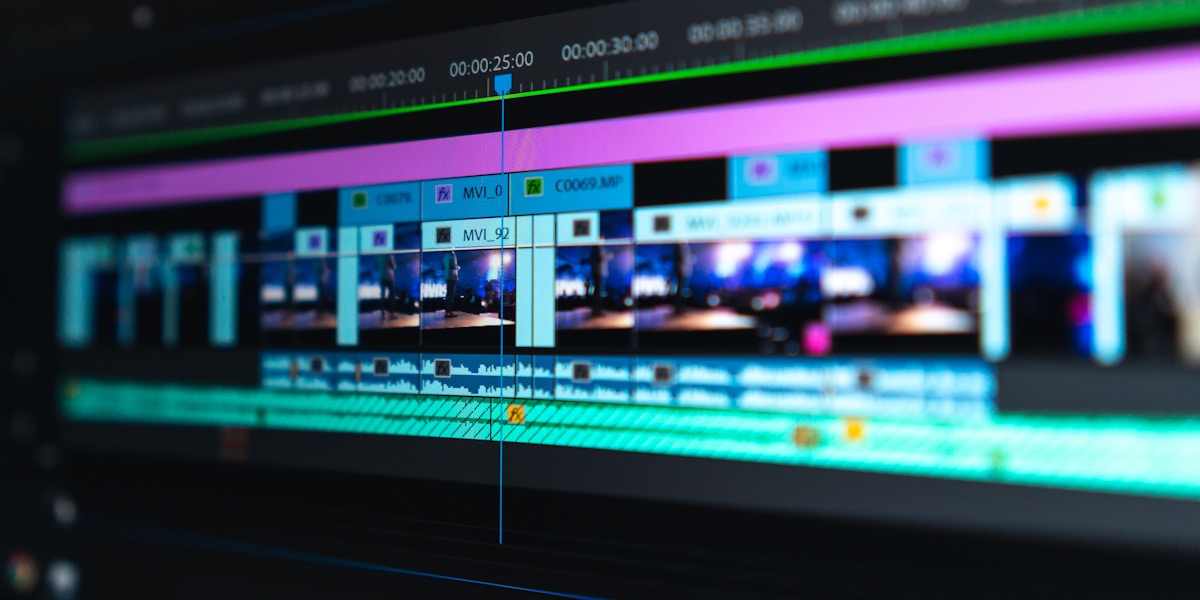
## Future Trends and Emerging Technologies
VFX technology continues evolving while maintaining fundamental principles of narrative support and seamless integration that define effective visual enhancement in narrative filmmaking and audience engagement throughout technological advancement.
### Artificial Intelligence and Automation
Emerging AI technologies enable more efficient VFX production while maintaining creative control and quality standards through automated processes that support rather than replace artistic decision-making and creative vision throughout enhancement development.
AI integration includes understanding automation capabilities while maintaining creative oversight that ensures technology supports rather than compromises artistic vision and narrative authenticity throughout VFX enhancement and post-production completion.
Professional VFX services adapt emerging technologies while maintaining creative excellence and narrative focus that ensures technological advancement supports rather than distracts from storytelling objectives and audience engagement.
### Real-Time Rendering and Virtual Production
Advanced rendering technologies enable more efficient VFX production while maintaining quality standards through real-time processing capabilities that support creative exploration and revision throughout complex enhancement projects.
Real-time capabilities include understanding workflow advantages while maintaining quality standards that ensure enhanced footage meets professional presentation requirements and creative objectives throughout narrative film completion.
VFX integration for completed film footage benefits from technological advancement while maintaining focus on narrative support and seamless integration that characterizes effective visual enhancement and audience engagement throughout evolving production capabilities.
Ready to enhance your completed narrative film with professional VFX integration that expands creative possibilities while maintaining story authenticity? Our experienced visual effects team specializes in invisible enhancement and seamless integration that elevates production value while supporting your creative vision. From environmental enhancement through complex cleanup work, we provide [comprehensive VFX solutions](https://c-istudios.com/vfx-compositing-and-animation-services/) that transform your completed footage while maintaining the realistic foundation that defines compelling narrative filmmaking.
[Contact us today](https://c-istudios.com/contact/) to discuss your film enhancement needs and discover how professional VFX integration can expand your creative possibilities while maintaining narrative authenticity and ensuring seamless enhancement that supports rather than overwhelms your storytelling objectives throughout post-production completion.
## Work with C&I Studios
If you are planning a project like this, our team can take it from concept to final delivery. Explore our [post-production services](https://c-istudios.com/post-production-services/), browse [our work](https://c-istudios.com/our-work/) to see how we tell brand stories, and [get in touch](https://c-istudios.com/contact/) when you are ready to start.
Originally published August 1, 2025
---
*This content is from [C&I Studios](https://c-istudios.com), a full-service production company.*
---
# Studio Space for Casting Sessions in Los Angeles
> Published: July 30, 2025
> Categories: Commercial & Brand
> Source: https://c-istudios.com/studio-space-for-casting-sessions-in-los-angeles/
---
.cib{--paper:#1b1d1f;--ink:#fff;--body:#d5d7d9;--muted:#8b9096;--line:rgba(255,255,255,.12);--thumb:#2b2e31;--card:#212426;--accent:#c02b0a;--blue:#5B8FA8;--serif:'Playfair Display',Georgia,serif;--sans:'Poppins',-apple-system,sans-serif;--measure:900px;background:var(--paper);color:var(--body);font-family:var(--sans);line-height:1.6;position:relative;left:50%;transform:translateX(-50%);width:90vw;max-width:1920px}
.cib *{box-sizing:border-box}
.cib .kicker{max-width:var(--measure);margin:58px auto 0;padding:0 22px;font-size:12.5px;font-weight:700;letter-spacing:2.5px;text-transform:uppercase;color:var(--blue)}
.cib h1.cibh1{text-wrap:balance;font-family:var(--serif);font-weight:500;font-size:clamp(46px,6vw,72px);line-height:1.08;color:var(--ink);max-width:var(--measure);margin:18px auto 0;padding:0 22px;letter-spacing:-.5px}
.cib .metarow{max-width:var(--measure);margin:20px auto 0;padding:0 22px;color:var(--muted);font-size:14px}
.cib .hero{position:relative;width:100%;height:0;padding-bottom:56.25%;overflow:hidden;margin:48px auto 0;border-top:1px solid var(--line);border-bottom:1px solid var(--line)}
.cib .hero .ph{width:100%;aspect-ratio:16/9;background:var(--thumb);border-top:1px solid var(--line);border-bottom:1px solid var(--line);display:flex;align-items:center;justify-content:center;color:#7d8288;font-size:13px;text-align:center;padding:0 20px}
.cib .body{max-width:var(--measure);margin:12px auto 0;padding:52px 22px 6px}
.cib .body.lead p:first-child{font-size:23px;line-height:1.62;color:var(--ink)}
.cib .body p{font-size:18.5px;line-height:1.85;margin:0 0 30px;color:var(--body)}
.cib .body h2{text-wrap:balance;font-family:var(--serif);font-weight:500;font-size:clamp(32px,4vw,48px);line-height:1.22;color:var(--ink);margin:70px 0 20px;letter-spacing:-.3px}
.cib .body h3{text-wrap:balance;font-family:var(--sans);font-weight:600;font-size:22px;color:var(--ink);margin:38px 0 8px}
.cib .body a{color:var(--ink);text-decoration:underline;text-decoration-color:rgba(255,255,255,.4);text-underline-offset:3px}
.cib .body a:hover{text-decoration-color:var(--ink)}
.cib .ctable{width:100%;border-collapse:collapse;margin:16px 0 30px;font-size:16px}
.cib .ctable th{background:#000;color:#fff;text-align:left;padding:10px 12px;font-family:var(--sans)}
.cib .ctable td{padding:10px 12px;border-bottom:1px solid var(--line);color:var(--body)}
.cib .inimg{position:relative;width:100%;height:0;padding-bottom:56.25%;overflow:hidden;margin:72px auto;border-top:1px solid var(--line);border-bottom:1px solid var(--line)}
.cib .inimg .ph{width:100%;aspect-ratio:16/9;background:var(--thumb);border-top:1px solid var(--line);border-bottom:1px solid var(--line);display:flex;align-items:center;justify-content:center;color:#7d8288;font-size:13px}
.cib .origpub{max-width:var(--measure);margin:60px auto 0;padding:26px 22px 0;border-top:1px solid var(--line);color:var(--muted);font-size:13.5px}
.cib .related{max-width:1200px;margin:64px auto 0;padding:34px 22px 76px}
.cib .related h3{font-family:var(--sans);font-size:12.5px;letter-spacing:2px;text-transform:uppercase;color:var(--ink);margin:0 0 24px}
.cib .grid{display:grid;grid-template-columns:repeat(3,1fr);gap:28px}
.cib .rc{background:var(--card);border:1px solid var(--line);display:block;text-decoration:none;color:inherit;transition:border-color .15s}
.cib a.rc:hover{border-color:rgba(255,255,255,.5)}
.cib .rc .thumb{position:relative;width:100%;height:0;padding-bottom:56.25%;background:var(--thumb);overflow:hidden}
.cib .rc .thumb img{position:absolute!important;top:0!important;left:0!important;width:100%!important;height:100%!important;object-fit:cover!important;margin:0!important}
.cib .rc .cc{padding:14px 15px 17px}
.cib .rc .rt{font-family:var(--serif);font-weight:500;font-size:16px;line-height:1.3;color:var(--ink);margin:0 0 6px}
.cib .rc .rm{font-size:11px;letter-spacing:1px;text-transform:uppercase;color:var(--muted)}
.cib img{margin:0!important;padding:0!important;display:block!important;vertical-align:top;max-width:100%}
.cib .hero img,.cib .inimg img{position:absolute!important;top:0!important;left:0!important;width:100%!important;height:100%!important;object-fit:cover!important;margin:0!important;padding:0!important;border:0!important;display:block!important;aspect-ratio:auto!important}
.cib .hero+.body{padding-top:36px}
@media(max-width:760px){.cib .grid{grid-template-columns:1fr}.cib .body h2{margin:52px 0 16px}.cib .body p{font-size:17.5px}.cib .inimg,.cib .hero{margin-top:44px}}
.cib .vembed{max-width:var(--measure);margin:44px auto;padding:0 22px}.cib .vembed .vwrap{position:relative;width:100%;height:0;padding-bottom:56.25%}.cib .vembed .vwrap iframe{position:absolute;top:0;left:0;width:100%;height:100%;border:0}
Commercial & Brand
# Studio Space for Casting Sessions in Los Angeles
12 min read

Finding the right studio space for casting sessions in Los Angeles can make or break a production before cameras ever roll. The city has hundreds of rental options, but most of them are designed for photo shoots or corporate events, not the specific demands of a casting day. Casting requires a different kind of space: controlled acoustics, proper lighting rigs, waiting areas that keep talent comfortable, and enough room for a full creative team to evaluate performances without feeling cramped.
We run casting sessions regularly out of our [Los Angeles production studio](https://c-istudios.com/studio-rentals/production-studio-rental-los-angeles/), and the difference between a purpose-built casting environment and a generic rental is enormous. When talent walks into a professional space, they perform better. When your team has proper monitoring equipment and playback capability, you make sharper decisions. This guide covers everything you need to know about securing the right studio space for casting sessions in Los Angeles, from layout requirements to cost structures to the technical details that separate a productive session from a wasted day.

## Why Studio Space for Casting Sessions in Los Angeles Matters More Than You Think
Los Angeles produces more film and television content than any other city on the planet. SAG-AFTRA processes thousands of casting calls per week in the greater LA area alone. With that volume comes competition, not just among actors but among productions vying for the best talent. Your casting environment signals how seriously you take the project.
A basement conference room with fluorescent lighting tells talent one thing. A professionally equipped [studio rental](https://c-istudios.com/studio-rentals/) with proper backdrops, camera setups, and a comfortable lobby tells them something entirely different. We have seen A-list talent walk out of poorly organized casting sessions. It happens more often than producers want to admit.
The practical considerations matter just as much. Acoustics in an untreated room create echo that ruins self-tape quality and makes live evaluation harder. Poor lighting flatters nobody and gives your director a distorted sense of how an actor will look on set. Inadequate space forces your casting director, producer, director, and sometimes studio executives into a cramped room where nobody can think clearly.
The cost difference between a proper casting studio and a makeshift alternative is usually between $200 and $800 per day. On a production where you are spending six or seven figures, that is not a line item worth cutting.
## Key Features of a Professional Casting Studio
### Room Layout and Square Footage
A casting session needs at minimum three distinct zones: a performance area, an evaluation area, and a waiting area. The performance space should be at least 400 square feet for standard film and television casting. Commercial casting sessions, which often involve movement, props, or group reads, need 600 to 800 square feet minimum.
The evaluation area is where your creative team sits. This should be separated enough from the performance zone that talent does not feel watched from six feet away. A 15 to 20 foot gap between the camera and the decision-makers creates natural distance that helps actors relax.
Waiting areas get overlooked constantly. If you are seeing 40 actors in a day, and each slot runs 15 minutes, you will have overlapping arrivals throughout the session. A cramped hallway with folding chairs is not going to keep your talent in the right headspace. Professional casting studios in LA typically offer a separate lounge or lobby area with seating for at least 8 to 12 people.
### Acoustics and Sound Treatment
Raw concrete, glass walls, and high ceilings create reflections that destroy audio quality on casting recordings. If your casting director plans to review tapes later, or if callbacks happen remotely, bad audio can eliminate a great performance from consideration. Studios designed for [audio production](https://c-istudios.com/audio-engineering-services/) or video work will have acoustic panels, bass traps, and sound-dampening materials already installed.
Ask about ambient noise levels too. Some LA studio spaces sit next to busy streets, HVAC systems, or other tenants with music. A studio space for casting sessions in Los Angeles should maintain background noise under 35 dB during recording. That is the NC-25 to NC-30 range that professional recording environments target.
### Lighting Infrastructure
Casting recordings need consistent, flattering light. The standard setup is a three-point lighting configuration: key light, fill light, and a backlight or hair light to separate the actor from the backdrop. Professional studios will have ceiling-mounted grid systems where you can hang and position lights without floor stands eating into your usable space.
Color temperature matters. Mixed lighting sources, like a tungsten overhead combined with daylight spilling through a window, create color casts that make skin tones look unnatural. Studios built for [video production](https://c-istudios.com/video-production-services/) control this with blackout curtains, dimmable LED panels, and consistent color temperature across all fixtures.
## Top Neighborhoods in Los Angeles for Casting Studios
### Hollywood and Mid-Wilshire
The traditional casting corridor runs along Sunset Boulevard and into the Mid-Wilshire district. This is where most talent agencies are concentrated, which means shorter travel times for actors and a larger pool of walk-in availability if you need last-minute replacements. Studios in this area range from $500 to $2,000 per day depending on size and amenities.
The downside is parking. If you are running a cattle call with 50 or more actors, parking logistics in Hollywood become a production challenge in themselves. Look for studios that offer dedicated parking or are within walking distance of Metro stations.
### Burbank and North Hollywood
Burbank is where the major studios operate, including Warner Bros., Disney, and Universal. Casting studios near these lots benefit from proximity to the industry infrastructure. Many actors who regularly audition for network television live in this corridor. Rental rates are generally 15 to 25 percent lower than Hollywood equivalents.
North Hollywood, specifically the NoHo Arts District, has seen a surge in boutique casting spaces over the past five years. These tend to be smaller but well-equipped, targeting independent films and commercial projects. The Metro Red Line stop at NoHo makes this area accessible for talent coming from across the city.
### Culver City and the Westside
With Amazon Studios, Apple TV+, and Sony Pictures all operating in Culver City, this area has become a major casting hub. Studio spaces here skew more corporate and higher-end. If you are casting for a streaming platform or major brand campaign, Culver City studios signal professionalism to both talent and their representation.
Our team regularly coordinates [productions in Los Angeles](https://c-istudios.com/video-production-los-angeles/) and can recommend the best areas based on your specific project needs, talent pool, and budget.
## Equipment Your Casting Studio Should Provide
Not every studio comes fully equipped for casting. Some offer bare rooms that require you to bring your own gear. Others provide turnkey setups. Here is what you should expect from a professional casting studio and what often costs extra.
### Standard Inclusions
A properly set up casting studio should come with a backdrop (gray or white seamless paper is standard), basic three-point lighting, at least one camera on a tripod, a monitor for playback, and a table with chairs for the creative team. Wi-Fi is non-negotiable since most casting directors now upload selects to platforms like Casting Networks or Eco Cast in real time.
High-speed internet is critical. Self-tape submissions and live casting feeds require stable upload speeds of at least 25 Mbps. Studios that offer wired Ethernet connections in addition to Wi-Fi give you a reliability backup that wireless alone cannot match.
### Premium Add-Ons
Teleprompter setups for commercial casting, multiple camera angles for movement-based auditions, a green screen for [VFX compositing tests](https://c-istudios.com/studio-rentals/green-screen-studio-rental-los-angeles/), and professional audio recording for voiceover casting are all common add-ons. Some studios charge flat day rates that include everything. Others nickel and dime you for every piece of gear.
Our advice: get a written equipment list before you book. We have seen too many productions show up expecting a camera package and finding an empty room with power outlets. The equipment list should specify makes and models, not just categories.
### Video Village Setup
For larger casting sessions, especially those with network or studio executives attending remotely, you need a proper video village. This means a high-quality monitor (at least 24 inches), a confidence monitor for the actor, a video switcher if you are running multiple cameras, and a reliable feed system. Many casting sessions now run dual setups: one local monitor for the in-room team and a live stream via Zoom or a dedicated casting platform for remote stakeholders.
## Budgeting for Studio Space for Casting Sessions in Los Angeles
### Day Rates vs. Half-Day Rates
Most casting studios in LA operate on 8 to 10 hour day rates, with half-day options of 4 to 5 hours. Full-day rates for a mid-range casting studio typically fall between $800 and $1,500. Premium studios with full equipment packages and production support run $1,500 to $3,500 per day.
Half-day rates are not always half the full-day rate. Many studios price half-days at 60 to 70 percent of the full rate, which makes the full day a better value if your session might run long. Casting sessions almost always run longer than planned. Budget for the full day.
### Hidden Costs to Watch For
Overtime charges are the most common surprise. Most studios charge 1.5x the hourly rate for every hour past the agreed booking window. If your day rate is $1,200 for 10 hours, that overtime rate is $180 per hour. Two extra hours adds $360 to your bill.
Other hidden costs include cleaning fees (especially if you are providing catering for talent), equipment damage deposits, additional power draws for your own equipment, and cancellation fees. Standard cancellation policies in LA require 48 to 72 hours notice for a full refund. Same-day cancellations typically forfeit the entire deposit.
### How to Negotiate Better Rates
Multi-day bookings almost always come with discounts. If you are running callbacks the following day, book both days upfront and negotiate a 10 to 20 percent discount. Regular bookings get even better rates. Productions that book the same studio monthly can negotiate standing rates 25 to 35 percent below walk-in pricing.
Tuesday through Thursday are peak casting days. Monday and Friday sessions can sometimes be booked at reduced rates. Weekend bookings vary wildly since some studios charge premium weekend rates while others discount them because demand drops.

## Virtual and Hybrid Casting Considerations
The pandemic permanently changed casting workflows. According to Casting Society of America data, approximately 40 percent of initial casting rounds now happen virtually, even for major studio productions. This does not eliminate the need for physical studio space. It changes what that space needs to include.
A studio space for casting sessions in Los Angeles that supports hybrid workflows needs broadcast-quality cameras (not webcams), professional audio capture, reliable high-bandwidth internet, and proper lighting that translates well to compressed video streams. The difference between a Zoom call on a laptop and a properly lit, professionally captured video feed is immediately apparent to casting directors reviewing hundreds of submissions.
Many studios now offer dedicated [live streaming](https://c-istudios.com/video-audio-live-streaming/) capabilities built into their casting packages. This allows remote executives to participate in real time with quality that matches the in-room experience. The investment in streaming infrastructure typically adds $200 to $500 per day but eliminates the need for executives to travel, which saves the production far more in flights and hotels.
## What to Look for When Touring a Casting Studio
Never book a studio sight unseen for casting. Always schedule a walkthrough, even if it is just 20 minutes. Here is what to evaluate during your visit.
### The Walk-In Experience
Approach the building the way an actor would. Is the entrance clearly marked? Is there parking nearby? Is the neighborhood safe for talent arriving early in the morning or leaving after dark? These details affect who shows up to your casting call and in what mental state they arrive.
### Noise Test
Stand in the performance area in silence for two minutes. Listen for HVAC hum, street noise, plumbing, and sounds from adjacent rooms. Ask the studio manager to turn on the air conditioning at full blast while you stand in the recording position. If you can hear it on a cell phone recording, it will be worse on professional microphones.
### Technology Check
Test the Wi-Fi speed (both download and upload). Run a test video call. Check that all power outlets work. Confirm that the lighting rig operates without buzzing or flickering. These are things you cannot fix on casting day.
### Talent Flow
Map out the path talent will take from the front door to the waiting area to the casting room. Ideally, outgoing talent should not cross paths with incoming talent. This prevents the awkward dynamic where actors see who they are competing against, which can psych out less experienced performers.
## How C&I Studios Supports Casting in Los Angeles
We operate a full-service [production studio in Los Angeles](https://c-istudios.com/studio-rentals/production-studio-rental-los-angeles/) that is purpose-built for casting, filming, and [post-production](https://c-istudios.com/post-production-services/). Our 30,000-square-foot headquarters in Fort Lauderdale serves as our primary production hub, while our LA facility handles West Coast productions including casting sessions, commercial shoots, and [film production](https://c-istudios.com/film-production-services/).
What makes our approach different from a standard casting studio rental is integration. When you book with C&I for casting, you are not just renting a room. You get access to our full [video production](https://c-istudios.com/video-production-services/) infrastructure: professional cameras, lighting packages, audio recording, live streaming capability, and a production team that can manage the technical side while your casting director focuses on talent.
We have handled casting for national commercials, feature films, branded content campaigns, and digital series. Our [portfolio](https://c-istudios.com/our-work/) includes work with Nike, NFL, NBC, and dozens of other brands that demand the highest production standards from day one of the casting process.

## Booking Checklist for Your Next Casting Session
Before you sign a rental agreement for any studio space for casting sessions in Los Angeles, work through this checklist with the facility manager:
**Space requirements:** Confirm total square footage, ceiling height, and that separate performance, evaluation, and waiting areas exist or can be configured.
**Equipment included:** Get a written list with specific makes and models for cameras, lighting, monitors, and audio gear. Confirm what is included in the base rate versus add-on pricing.
**Internet specs:** Request a speed test result showing both download and upload bandwidth. Confirm whether Ethernet connections are available in the casting room.
**Parking and access:** Confirm how many parking spots are included, what the overflow options are, and building access hours (especially if your session starts before standard business hours).
**Cancellation and overtime policies:** Get the cancellation deadline, refund terms, and overtime hourly rate in writing before you deposit.
**Production support:** Determine whether a studio tech or production assistant is included in the rate, or whether your team is entirely self-service.
**Insurance requirements:** Most studios require a Certificate of Insurance (COI) from the renter. Confirm the coverage minimums and whether your existing production insurance satisfies them.
Whether you are casting a SAG commercial, an independent feature, or a branded [content campaign](https://c-istudios.com/creative-marketing-services/), the space you choose sets the tone for your entire production. Investing in the right studio space for casting sessions in Los Angeles pays dividends long after the casting session ends, through better talent selection, cleaner recordings, and a more efficient creative process. Our team at C&I can help you find the right setup for your specific needs. [Reach out](https://c-istudios.com/contact/) and we will walk you through the options.
## Work with C&I Studios
If you are planning a project like this, our team can take it from concept to final delivery. Explore our [video production services](https://c-istudios.com/video-production-services/), browse [our work](https://c-istudios.com/our-work/) to see how we tell brand stories, and [get in touch](https://c-istudios.com/contact/) when you are ready to start.
Originally published July 30, 2025
---
*This content is from [C&I Studios](https://c-istudios.com), a full-service production company.*
---
# Los Angeles Studio Rental with Soundproof Booth: Professional Audio Isolation for Perfect Recordings
> Published: July 23, 2025
> Categories: Post & VFX
> Source: https://c-istudios.com/los-angeles-studio-rental-with-soundproof-booth-professional-audio-isolation-for-perfect-recordings/
---
**Related Services:** [Studio Rentals](https://c-istudios.com/studio-rentals/) | [Production Studio Rental](https://c-istudios.com/studio-rentals/production-studio-rental-los-angeles/) | [Green Screen Studio Rental](https://c-istudios.com/studio-rentals/green-screen-studio-rental-los-angeles/) | [Cyc Wall Rental](https://c-istudios.com/cyc-wall-rental/) | [Podcast Studio Rental](https://c-istudios.com/studio-rentals/podcast-studio-rental-los-angeles/) | [Event Space Rental](https://c-istudios.com/studio-rentals/event-space-rental-los-angeles/) | [Recording Booth Rental](https://c-istudios.com/recording-booth-rental/) | [Private Loft Studio Rental](https://c-istudios.com/private-loft-studio-rental/) | [Photo Studio Rental](https://c-istudios.com/photo-studio-rental/) | [Photo Backdrop Studio Rental](https://c-istudios.com/photo-backdrop-studio-rental/)
### Related Reading
---
*This content is from [C&I Studios](https://c-istudios.com), a full-service production company.*
---
# Podcast Studio with Equipment for Rent LA: Professional Recording Solutions
> Published: July 20, 2025
> Categories: Post & VFX
> Source: https://c-istudios.com/podcast-studio-with-equipment-for-rent-la-professional-recording-solutions/
---
**Related Services:** [Studio Rentals](https://c-istudios.com/studio-rentals/) | [Production Studio Rental](https://c-istudios.com/studio-rentals/production-studio-rental-los-angeles/) | [Green Screen Studio Rental](https://c-istudios.com/studio-rentals/green-screen-studio-rental-los-angeles/) | [Cyc Wall Rental](https://c-istudios.com/cyc-wall-rental/) | [Podcast Studio Rental](https://c-istudios.com/studio-rentals/podcast-studio-rental-los-angeles/) | [Event Space Rental](https://c-istudios.com/studio-rentals/event-space-rental-los-angeles/) | [Recording Booth Rental](https://c-istudios.com/recording-booth-rental/) | [Private Loft Studio Rental](https://c-istudios.com/private-loft-studio-rental/) | [Photo Studio Rental](https://c-istudios.com/photo-studio-rental/) | [Photo Backdrop Studio Rental](https://c-istudios.com/photo-backdrop-studio-rental/)
### Related Reading
---
*This content is from [C&I Studios](https://c-istudios.com), a full-service production company.*
---
# Green Screen Studio Rental in Los Angeles
> Published: July 18, 2025
> Categories: Post & VFX
> Source: https://c-istudios.com/green-screen-studio-rental-in-los-angeles/
---
**Related Services:** [Post Production](https://c-istudios.com/post-production-services/) | [VFX & Animation](https://c-istudios.com/vfx-compositing-and-animation-services/)
---
*This content is from [C&I Studios](https://c-istudios.com), a full-service production company.*
---
# Short Film Post-Production Workflow: From Locked Picture to Final Delivery
> Published: July 7, 2025
> Categories: Post & VFX
> Source: https://c-istudios.com/short-film-post-production-workflow-from-locked-picture-to-final-delivery/
---
.cib{--paper:#1b1d1f;--ink:#fff;--body:#d5d7d9;--muted:#8b9096;--line:rgba(255,255,255,.12);--thumb:#2b2e31;--card:#212426;--accent:#c02b0a;--blue:#5B8FA8;--serif:'Playfair Display',Georgia,serif;--sans:'Poppins',-apple-system,sans-serif;--measure:900px;background:var(--paper);color:var(--body);font-family:var(--sans);line-height:1.6;position:relative;left:50%;transform:translateX(-50%);width:90vw;max-width:1920px}
.cib *{box-sizing:border-box}
.cib .kicker{max-width:var(--measure);margin:58px auto 0;padding:0 22px;font-size:12.5px;font-weight:700;letter-spacing:2.5px;text-transform:uppercase;color:var(--blue)}
.cib h1.cibh1{text-wrap:balance;font-family:var(--serif);font-weight:500;font-size:clamp(46px,6vw,72px);line-height:1.08;color:var(--ink);max-width:var(--measure);margin:18px auto 0;padding:0 22px;letter-spacing:-.5px}
.cib .metarow{max-width:var(--measure);margin:20px auto 0;padding:0 22px;color:var(--muted);font-size:14px}
.cib .hero{position:relative;width:100%;height:0;padding-bottom:56.25%;overflow:hidden;margin:48px auto 0;border-top:1px solid var(--line);border-bottom:1px solid var(--line)}
.cib .hero .ph{width:100%;aspect-ratio:16/9;background:var(--thumb);border-top:1px solid var(--line);border-bottom:1px solid var(--line);display:flex;align-items:center;justify-content:center;color:#7d8288;font-size:13px;text-align:center;padding:0 20px}
.cib .body{max-width:var(--measure);margin:12px auto 0;padding:52px 22px 6px}
.cib .body.lead p:first-child{font-size:23px;line-height:1.62;color:var(--ink)}
.cib .body p{font-size:18.5px;line-height:1.85;margin:0 0 30px;color:var(--body)}
.cib .body h2{text-wrap:balance;font-family:var(--serif);font-weight:500;font-size:clamp(32px,4vw,48px);line-height:1.22;color:var(--ink);margin:70px 0 20px;letter-spacing:-.3px}
.cib .body h3{text-wrap:balance;font-family:var(--sans);font-weight:600;font-size:22px;color:var(--ink);margin:38px 0 8px}
.cib .body a{color:var(--ink);text-decoration:underline;text-decoration-color:rgba(255,255,255,.4);text-underline-offset:3px}
.cib .body a:hover{text-decoration-color:var(--ink)}
.cib .ctable{width:100%;border-collapse:collapse;margin:16px 0 30px;font-size:16px}
.cib .ctable th{background:#000;color:#fff;text-align:left;padding:10px 12px;font-family:var(--sans)}
.cib .ctable td{padding:10px 12px;border-bottom:1px solid var(--line);color:var(--body)}
.cib .inimg{position:relative;width:100%;height:0;padding-bottom:56.25%;overflow:hidden;margin:72px auto;border-top:1px solid var(--line);border-bottom:1px solid var(--line)}
.cib .inimg .ph{width:100%;aspect-ratio:16/9;background:var(--thumb);border-top:1px solid var(--line);border-bottom:1px solid var(--line);display:flex;align-items:center;justify-content:center;color:#7d8288;font-size:13px}
.cib .origpub{max-width:var(--measure);margin:60px auto 0;padding:26px 22px 0;border-top:1px solid var(--line);color:var(--muted);font-size:13.5px}
.cib .related{max-width:1200px;margin:64px auto 0;padding:34px 22px 76px}
.cib .related h3{font-family:var(--sans);font-size:12.5px;letter-spacing:2px;text-transform:uppercase;color:var(--ink);margin:0 0 24px}
.cib .grid{display:grid;grid-template-columns:repeat(3,1fr);gap:28px}
.cib .rc{background:var(--card);border:1px solid var(--line);display:block;text-decoration:none;color:inherit;transition:border-color .15s}
.cib a.rc:hover{border-color:rgba(255,255,255,.5)}
.cib .rc .thumb{position:relative;width:100%;height:0;padding-bottom:56.25%;background:var(--thumb);overflow:hidden}
.cib .rc .thumb img{position:absolute!important;top:0!important;left:0!important;width:100%!important;height:100%!important;object-fit:cover!important;margin:0!important}
.cib .rc .cc{padding:14px 15px 17px}
.cib .rc .rt{font-family:var(--serif);font-weight:500;font-size:16px;line-height:1.3;color:var(--ink);margin:0 0 6px}
.cib .rc .rm{font-size:11px;letter-spacing:1px;text-transform:uppercase;color:var(--muted)}
.cib img{margin:0!important;padding:0!important;display:block!important;vertical-align:top;max-width:100%}
.cib .hero img,.cib .inimg img{position:absolute!important;top:0!important;left:0!important;width:100%!important;height:100%!important;object-fit:cover!important;margin:0!important;padding:0!important;border:0!important;display:block!important;aspect-ratio:auto!important}
.cib .hero+.body{padding-top:36px}
@media(max-width:760px){.cib .grid{grid-template-columns:1fr}.cib .body h2{margin:52px 0 16px}.cib .body p{font-size:17.5px}.cib .inimg,.cib .hero{margin-top:44px}}
.cib .vembed{max-width:var(--measure);margin:44px auto;padding:0 22px}.cib .vembed .vwrap{position:relative;width:100%;height:0;padding-bottom:56.25%}.cib .vembed .vwrap iframe{position:absolute;top:0;left:0;width:100%;height:100%;border:0}
Post & VFX
# Short Film Post-Production Workflow. From Locked Picture to Final Delivery
15 min read
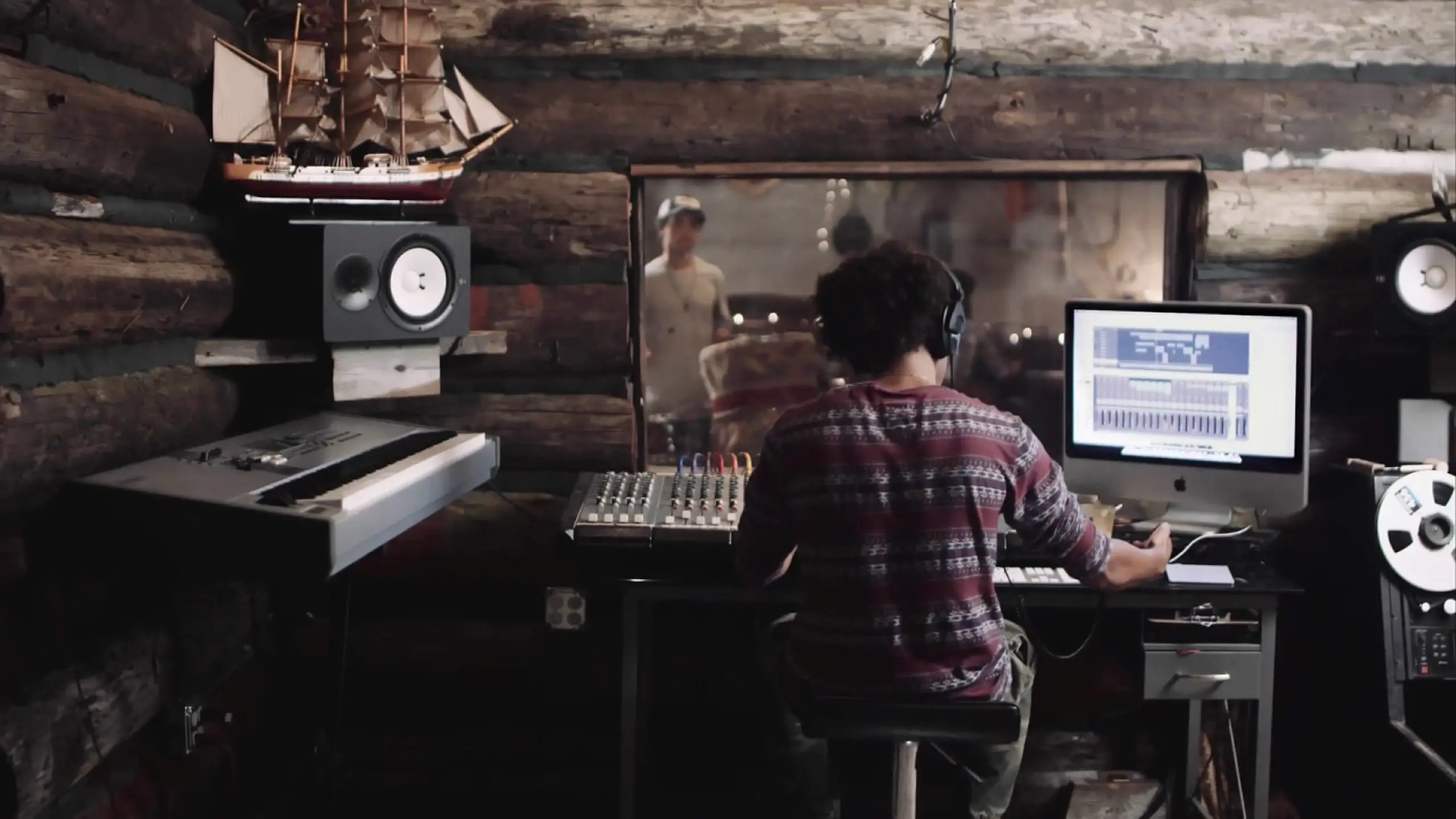
Post-production is the phase where a short film truly comes to life. It begins once the picture is locked, meaning all major editing decisions have been finalized. From this point on, the focus shifts toward refining every frame, sound, and visual element to ensure the story is delivered as powerfully as intended.
This journey involves multiple layers, sound design, color grading, visual effects, mastering, and final packaging, each contributing to the film’s emotional and technical impact. In this article, we’ll walk through the complete post-production workflow, outlining each crucial step that transforms raw footage into a polished, distributable final product.
## Understanding the Locked Picture
The term "locked picture" refers to the stage in post-production where the edit is finalized, and no further changes are made to the arrangement or duration of the shots. This milestone is critical because it signals that the story structure, pacing, and visual sequence have been approved by the key creative team.
From this point forward, all subsequent work, such as color grading, sound design, and VFX, will be built on this final edit. Altering the picture after it has been locked can cause a cascade of problems in later stages, from misaligned audio cues to wasted time and resources in redoing visual effects.
The editor plays a central role in reaching the locked picture stage. Working closely with the director, the editor shapes the raw footage into a coherent and emotionally engaging narrative. This involves selecting the best takes, determining the pacing, and ensuring continuity across scenes.
The director provides the creative vision and oversees the storytelling choices, while the producer ensures that the timeline and budget are maintained. This collaboration is crucial in arriving at a version of the film that satisfies both artistic goals and production realities.
Reaching the locked picture is not simply a technical checkpoint. It represents a shared creative agreement across departments. Once the picture is locked, the film enters a new phase of [video production](https://c-istudios.com/video-production-services/) planning. Every subsequent team, sound, color, and animation needs a stable foundation to work efficiently and avoid rework.
For this reason, locking the picture should only happen after extensive review, feedback, and internal screenings. Some filmmakers also involve external consultants or test audiences to validate that the film communicates its intended message before committing to the final cut.
A full-service creative studio often supports this phase by offering content creation expertise and creative marketing input. At this point, early materials for promotional use, such as stills, teasers, or press kits, can also be created using the locked footage. The locked picture is the launchpad for finishing a short film professionally, and its accuracy impacts everything that follows in the pipeline.
## Sound Editing and Audio Engineering
Once the picture is locked, the audio team begins shaping the film’s sonic landscape. Sound editing and audio engineering are not just technical steps, they are essential creative processes that influence how the audience feels, reacts, and understands the story.
Even the most visually compelling film can feel incomplete or unconvincing without a carefully designed audio environment. The post-production sound phase includes several specialized components: dialogue editing, ADR (Automated Dialogue Replacement), Foley effects, and background ambiance or soundscapes.
Dialogue editing ensures clarity and continuity. Any distracting noises or uneven audio levels are corrected so that the audience can focus on the characters’ words without distraction. When production audio is unusable or inconsistent, ADR comes into play.
Actors re-record their lines in a controlled studio environment, matching their lip movements and emotional delivery from the original footage. This technique is especially helpful in outdoor or noisy locations where clean sound capture is difficult.
Foley is the art of recreating everyday sounds, footsteps, door creaks, clothing rustles, by hand in a studio. These subtle layers add realism and depth to each scene, making the world of the film feel lived in and believable. Background sounds, like wind, traffic, or crowd murmurs, are carefully balanced with the main dialogue and music to enhance immersion without overwhelming the viewer.
The audio engineering process integrates all these elements into a cohesive soundscape. It involves equalization, dynamic range control, spatial mixing, and mastering for different playback environments. Whether the film is intended for cinema, mobile, or online platforms, proper mixing ensures it sounds great everywhere. At this stage, collaboration between sound designers and composers is key to blending music and effects without clashing.
Studios that specialize in artist management & media creation often bring in voice actors, sound editors, and composers to elevate the project’s emotional quality. The result is a professionally layered track that supports the story and enhances the emotional arcs.
High-end feature film mastering & delivery services finalize the mix, ensuring compliance with technical standards for film festivals, streaming platforms, or theatrical exhibition. Ultimately, great sound design does not draw attention to itself; it draws attention to the story.
## The Power of Color Grading
Color grading is one of the most visually transformative stages of post-production. It is often confused with color correction, but the two serve different purposes. Color correction comes first and focuses on balancing footage so that exposure, white balance, and contrast are consistent across shots.
It ensures technical accuracy. Color grading, on the other hand, is a creative process. It involves adjusting hues, saturation, brightness, and contrast to create a specific mood, style, or emotional tone. While correction makes footage look real, grading makes it feel intentional.
In short films, color grading helps reinforce the narrative tone and visual identity. A horror short might lean into desaturated blues and harsh contrasts, while a romantic drama could use warmer tones and softer highlights.
These choices are not random. They guide the viewer’s emotional response and align the visual experience with the story’s underlying message. In a dialogue-light or abstract short, grading can be the storytelling anchor, setting the emotional temperature even when the script is sparse.
Filmmakers use professional **[video production](https://c-istudios.com/video-production-services/)** gear such as calibrated monitors and color grading software like DaVinci Resolve to achieve these results. LUTs (Look-Up Tables), power windows, and keyframing allow for highly precise control over specific areas of a frame. In skilled hands, grading can shift daytime into dusk, isolate a character in color against a black-and-white background, or even create a dreamlike glow that supports surreal narratives.
At a studio level, color grading is also part of a broader branding & graphic design strategy. Still frames or teaser clips are often pulled from the graded footage to maintain visual consistency across promotional content. Whether used for posters, trailers, or press kits, the look of a film becomes a part of its identity.
In professional film & [TV production](https://c-istudios.com/film-and-tv-production/), grading is not an optional polish. It is integral to completing a film’s visual language. For short films submitted to festivals or platforms like Vimeo Staff Picks, high-quality grading can make the difference between being ignored and being celebrated. A unified and compelling grade helps communicate professionalism, creative clarity, and cinematic intent, qualities that juries and audiences quickly recognize.
## VFX Compositing and Animation
Visual effects (VFX) compositing and animation have become increasingly accessible, even for independent short filmmakers. While not every short film requires explosions or elaborate CGI, well-integrated VFX can elevate storytelling in subtle yet impactful ways.
Compositing refers to combining visual elements from multiple sources into a single frame, while animation involves creating movement from still images, whether 2D graphics or 3D models. Together, they allow filmmakers to expand creative possibilities beyond what was captured on set.
One of the most powerful uses of **[VFX compositing & animation](https://c-istudios.com/vfx-compositing-and-animation-services/)** is in world-building. For example, a science fiction short can simulate futuristic interfaces or alien landscapes, while a historical drama might remove modern elements from the background.
Even something as simple as replacing a blank phone screen with an animated interface adds realism and narrative clarity. These additions are often invisible to viewers when done well, yet they deeply affect immersion and believability.
In short films, where budgets are tight and shooting schedules compressed, VFX can also serve practical purposes. A single-location story can be enriched with set extensions or animated transitions that suggest a broader world. Creative transitions, particle effects, and motion-tracked titles can add energy and polish, especially in experimental or stylized projects.
At the studio level, VFX workflows involve software like After Effects, Blender, or Nuke, along with skilled artists who understand the balance between visual flair and story coherence. These tools are paired with professional photography to match lighting, shadows, and texture across different elements.
For example, a VFX artist compositing a fantasy portal into a scene will often work from studio-lit green screen footage and stills to ensure the light direction and focus depth feel natural.
VFX and animation are also valuable tools for creative marketing. Short clips or looping effects from the film can be used in trailers, posters, or social media teasers. These assets help promote the film while preserving its visual identity.
In sum, VFX compositing & animation are not just technical tricks. They are storytelling tools that allow filmmakers to control space, time, and perception. When used with intent and precision, even a single effect can leave a lasting impression, amplify the emotional arc, or visually underscore a thematic point.
## Final Sound Mixing and Mastering
After all elements of sound have been edited and prepared, dialogue, Foley, ambient effects, and music, the project enters the crucial stage of sound mixing and mastering. This phase combines the technical and creative tasks needed to ensure that the film sounds polished, immersive, and consistent across all playback environments.
It is during mixing that all audio tracks are blended together to create a cohesive soundscape. Mastering prepares that mix for distribution, applying final adjustments for volume, frequency, and format-specific standards.
The goal of sound mixing is to balance elements so that nothing overwhelms the story. Dialogue must remain clear without being drowned by background noise or music. Music must complement the emotional rhythm of a scene without competing with character speech. Effects should add realism but not distract. Equalization, panning, dynamic range compression, and reverb are used to sculpt how each sound is perceived.
Short films, unlike longer works, often have minimal time to establish tone, so precision in audio delivery is essential. Whether the film will be viewed on headphones, in a theater, or streamed on mobile, the mix must be optimized accordingly.
This is where mastering becomes critical. It ensures that the audio meets platform standards, adheres to loudness targets, and retains consistent quality throughout. Without mastering, a film might sound fine on one device and distorted or muted on another.
Professional audio engineering tools like Pro Tools, Logic Pro, or Nuendo are standard in this workflow. Sound engineers not only handle the technical side but also provide creative guidance, ensuring that the mix serves the story. A sudden silence, a swelling score, or the ambient echo of an empty room can heighten emotional impact when designed intentionally.
For filmmakers working with a studio,** [feature film mastering & delivery](https://c-istudios.com/feature-film-mastering-and-delivery/)** services also include encoding and compliance documentation for film festivals, OTT platforms, and broadcasters. These services ensure that your short film meets the technical criteria required for wide distribution.
Sound mixing and mastering also tie into media marketing consulting services. For example, studios may prepare alternate audio versions for trailers or promotional cuts with custom voiceovers. In the end, the audience might not notice perfect sound, but they will always notice when it is missing.
## Encoding and Format Deliverables
Once a short film is complete in terms of picture, sound, and visual effects, the next step is to encode and export it in the right formats for distribution. This process is often overlooked by new filmmakers, but it can make or break a project’s ability to screen properly on different platforms. Whether the film is going to a festival, a streaming service, a private screening, or a portfolio website, each destination has its own technical requirements.
Encoding involves converting the final edit into standardized file formats such as ProRes, H.264, or DCP (Digital Cinema Package). The right resolution, frame rate, bitrate, and aspect ratio must be selected to match the delivery specs.
A festival may require a 24fps DCP file with stereo or 5.1 surround sound. A web upload might call for a smaller H.264 file optimized for video & audio live streaming. These requirements are not interchangeable, and submitting the wrong format can lead to playback issues or disqualification.
Subtitles and closed captions are also a key part of this phase. Many platforms and festivals mandate them, not just for accessibility but for international audiences. Subtitles must be time-synced and properly formatted, typically in SRT or VTT files. In addition, legal metadata such as music cue sheets, credits, and copyright disclaimers are often required for full compliance.
Professional studios often handle encoding and delivery through feature film mastering & delivery pipelines. These services ensure that files are encoded to exact specifications, with error-free playback across platforms. They may also generate multiple versions for different use cases, one for web, one for mobile, and one for theatrical screenings.
Hosting and showcasing the final film is the final part of this stage. For personal websites, a stable and scalable web hosting solution is essential. Embedding high-resolution video files while maintaining fast loading times requires back-end optimization. Hosting platforms also need to support player customization and analytics, especially if the film is being pitched to networks or distributors.
Encoding is not just about exporting a file. It’s about preparing your film for the real world, one where devices, screen sizes, and audience expectations vary widely. Taking the time to get this right ensures that your short film can be seen exactly as you intended.
## Packaging for Distribution
Once your short film is fully mastered, the next critical step is packaging it for distribution. This is where the creative intersects with the promotional. A beautifully finished film will not gain traction without the right marketing materials to support it. Effective packaging includes trailers, stills, posters, Electronic Press Kits (EPKs), and other promotional assets designed to attract attention and facilitate outreach to festivals, distributors, and audiences.
Trailers are often the first impression your film makes. A 30 to 60-second teaser that captures the emotional core and visual tone of your short is essential for social media, pitch decks, and submission sites. Still frames pulled from the color-graded footage are used for posters, thumbnails, and banners. A strong visual identity that matches your film’s theme is critical at this stage, and professional branding & graphic design play a big role in making the film feel cohesive and market-ready.
An EPK typically includes a film synopsis, director’s statement, cast and crew bios, and high-resolution promotional images. It may also contain behind-the-scenes photos and links to additional footage. These assets are especially important for film festivals, industry reviews, and journalists.
Many filmmakers also prepare pitch decks for investors or future collaborators. These decks summarize the film’s story, target audience, artistic vision, and promotional strategy in a concise visual format. If you’re submitting your short as a proof of concept for a feature or series, this is a must. It’s also a valuable tool for TV show pitching or adapting your film into a longer-format project.
For shorts with a social or cultural theme, strategic packaging can support political campaigns or awareness movements. Your film can become a content pillar within a broader media strategy, especially if supported by SEO-optimized landing pages and branded visuals.
Partnering with a studio that offers SEO copywriting can enhance discoverability. Well-written film descriptions, meta tags, and press releases help boost search visibility, especially on YouTube, Vimeo, and portfolio sites. A consistent voice and clear messaging strengthen your film’s identity and appeal.
Packaging is not just about marketing. It’s about positioning your film to succeed in a competitive, saturated landscape. When done right, your film becomes more than a creative piece; it becomes a brand that can open doors to new opportunities.
## Archiving and Version Control
After the final film has been delivered and distributed, an often overlooked but vital step is archiving and version control. Properly archiving your short film ensures that you can return to it in the future, whether for re-editing, remastering, or showcasing, as technologies, formats, and audience needs evolve. It also protects your work against data loss, hardware failure, or outdated software.
The first step in archiving is creating master backups. This includes the final graded film in its highest-resolution format (such as ProRes or DPX), along with all key elements: raw footage, audio stems, project files, VFX layers, subtitle files, cue sheets, and promotional assets. These should be stored both locally and in cloud-based environments to ensure redundancy.
Version control is equally important. Throughout post-production, multiple versions of the film are created for review, feedback, and delivery. Keeping track of these versions using a clear naming convention is essential. This might include indicators like version numbers, dates, resolution specs, and delivery type (e.g., “Film_Title_v6_FestivalMaster_4K_5.1.wav”). This prevents confusion and saves hours of future sorting when revisiting the project.
Studios with expertise in **[web maintenance](https://c-istudios.com/web-maintenance/)** can assist filmmakers in setting up secure and well-organized online archives. This is particularly helpful for distributing screener links, housing protected versions for sales agents, or maintaining access across teams. Versioned web folders and encrypted file delivery add layers of security while allowing controlled collaboration.
From a content creation perspective, archiving isn’t just about storage. It’s about enabling future opportunities. A filmmaker may later want to cut a director’s version, repackage the film for a new audience, or submit it to new platforms that emerge. With a well-maintained archive, the process becomes faster and more reliable.
Moreover, archiving supports extended video production cycles. If the short film evolves into a feature, series, or commercial project, having all source files and creative assets preserved allows for seamless expansion.
Archiving and version control are signs of professional practice. They show that you’re thinking beyond the immediate release and treating your short film as part of a long-term creative journey. In today’s digital landscape, where assets can be lost as quickly as they’re made, proper archiving is not just smart, it’s essential.
## Work with C&I Studios
If you are planning a project like this, our team can take it from concept to final delivery. Explore our [post-production services](https://c-istudios.com/post-production-services/), browse [our work](https://c-istudios.com/our-work/) to see how we tell brand stories, and [get in touch](https://c-istudios.com/contact/) when you are ready to start.
Originally published July 7, 2025
---
*This content is from [C&I Studios](https://c-istudios.com), a full-service production company.*
---
# Livestream-Ready Studio Rental in Los Angeles
> Published: July 7, 2025
> Categories: Web & Tech
> Source: https://c-istudios.com/livestream-ready-studio-rental-in-los-angeles/
---
**Related Services:** [Live Streaming](https://c-istudios.com/video-audio-live-streaming/)
### Related Reading
---
*This content is from [C&I Studios](https://c-istudios.com), a full-service production company.*
---
# District-Targeted Political Video Ad Production Services: Precision Messaging That Wins Elections
> Published: July 5, 2025
> Categories: Commercial & Brand
> Source: https://c-istudios.com/district-targeted-political-video-ad-production-services-precision-messaging-that-wins-elections/
---
**Related Services:** [Political Campaign Production](https://c-istudios.com/political-campaign-services/) | [Creative Marketing](https://c-istudios.com/creative-marketing-services/)
### Related Reading
---
*This content is from [C&I Studios](https://c-istudios.com), a full-service production company.*
---
# Film Studio with Vehicle Access in Los Angeles
> Published: July 4, 2025
> Categories: Post & VFX
> Source: https://c-istudios.com/film-studio-with-vehicle-access-in-los-angeles/
---
**Related Services:** [Studio Rentals](https://c-istudios.com/studio-rentals/) | [Production Studio Rental](https://c-istudios.com/studio-rentals/production-studio-rental-los-angeles/) | [Green Screen Studio Rental](https://c-istudios.com/studio-rentals/green-screen-studio-rental-los-angeles/) | [Cyc Wall Rental](https://c-istudios.com/cyc-wall-rental/) | [Podcast Studio Rental](https://c-istudios.com/studio-rentals/podcast-studio-rental-los-angeles/) | [Event Space Rental](https://c-istudios.com/studio-rentals/event-space-rental-los-angeles/) | [Recording Booth Rental](https://c-istudios.com/recording-booth-rental/) | [Private Loft Studio Rental](https://c-istudios.com/private-loft-studio-rental/) | [Photo Studio Rental](https://c-istudios.com/photo-studio-rental/) | [Photo Backdrop Studio Rental](https://c-istudios.com/photo-backdrop-studio-rental/)
### Related Reading
---
*This content is from [C&I Studios](https://c-istudios.com), a full-service production company.*
---
# Professional Recording Booth Rental for Voiceover in Los Angeles
> Published: July 1, 2025
> Categories: Post & VFX
> Source: https://c-istudios.com/professional-recording-booth-rental-for-voiceover-in-los-angeles/
---
**Related Services:** [Studio Rentals](https://c-istudios.com/studio-rentals/) | [Production Studio Rental](https://c-istudios.com/studio-rentals/production-studio-rental-los-angeles/) | [Green Screen Studio Rental](https://c-istudios.com/studio-rentals/green-screen-studio-rental-los-angeles/) | [Cyc Wall Rental](https://c-istudios.com/cyc-wall-rental/) | [Podcast Studio Rental](https://c-istudios.com/studio-rentals/podcast-studio-rental-los-angeles/) | [Event Space Rental](https://c-istudios.com/studio-rentals/event-space-rental-los-angeles/) | [Recording Booth Rental](https://c-istudios.com/recording-booth-rental/) | [Private Loft Studio Rental](https://c-istudios.com/private-loft-studio-rental/) | [Photo Studio Rental](https://c-istudios.com/photo-studio-rental/) | [Photo Backdrop Studio Rental](https://c-istudios.com/photo-backdrop-studio-rental/)
### Related Reading
---
*This content is from [C&I Studios](https://c-istudios.com), a full-service production company.*
---
# How to Finish Your Indie Film in LA Without Breaking the Bank
> Published: June 29, 2025
> Categories: Film & TV
> Source: https://c-istudios.com/how-to-finish-your-indie-film-in-la-without-breaking-the-bank/
---
.cib{--paper:#1b1d1f;--ink:#fff;--body:#d5d7d9;--muted:#8b9096;--line:rgba(255,255,255,.12);--thumb:#2b2e31;--card:#212426;--accent:#c02b0a;--blue:#5B8FA8;--serif:'Playfair Display',Georgia,serif;--sans:'Poppins',-apple-system,sans-serif;--measure:900px;background:var(--paper);color:var(--body);font-family:var(--sans);line-height:1.6;position:relative;left:50%;transform:translateX(-50%);width:90vw;max-width:1920px}
.cib *{box-sizing:border-box}
.cib .kicker{max-width:var(--measure);margin:58px auto 0;padding:0 22px;font-size:12.5px;font-weight:700;letter-spacing:2.5px;text-transform:uppercase;color:var(--blue)}
.cib h1.cibh1{text-wrap:balance;font-family:var(--serif);font-weight:500;font-size:clamp(46px,6vw,72px);line-height:1.08;color:var(--ink);max-width:var(--measure);margin:18px auto 0;padding:0 22px;letter-spacing:-.5px}
.cib .metarow{max-width:var(--measure);margin:20px auto 0;padding:0 22px;color:var(--muted);font-size:14px}
.cib .hero{position:relative;width:100%;height:0;padding-bottom:56.25%;overflow:hidden;margin:48px auto 0;border-top:1px solid var(--line);border-bottom:1px solid var(--line)}
.cib .hero .ph{width:100%;aspect-ratio:16/9;background:var(--thumb);border-top:1px solid var(--line);border-bottom:1px solid var(--line);display:flex;align-items:center;justify-content:center;color:#7d8288;font-size:13px;text-align:center;padding:0 20px}
.cib .body{max-width:var(--measure);margin:12px auto 0;padding:52px 22px 6px}
.cib .body.lead p:first-child{font-size:23px;line-height:1.62;color:var(--ink)}
.cib .body p{font-size:18.5px;line-height:1.85;margin:0 0 30px;color:var(--body)}
.cib .body h2{text-wrap:balance;font-family:var(--serif);font-weight:500;font-size:clamp(32px,4vw,48px);line-height:1.22;color:var(--ink);margin:70px 0 20px;letter-spacing:-.3px}
.cib .body h3{text-wrap:balance;font-family:var(--sans);font-weight:600;font-size:22px;color:var(--ink);margin:38px 0 8px}
.cib .body a{color:var(--ink);text-decoration:underline;text-decoration-color:rgba(255,255,255,.4);text-underline-offset:3px}
.cib .body a:hover{text-decoration-color:var(--ink)}
.cib .ctable{width:100%;border-collapse:collapse;margin:16px 0 30px;font-size:16px}
.cib .ctable th{background:#000;color:#fff;text-align:left;padding:10px 12px;font-family:var(--sans)}
.cib .ctable td{padding:10px 12px;border-bottom:1px solid var(--line);color:var(--body)}
.cib .inimg{position:relative;width:100%;height:0;padding-bottom:56.25%;overflow:hidden;margin:72px auto;border-top:1px solid var(--line);border-bottom:1px solid var(--line)}
.cib .inimg .ph{width:100%;aspect-ratio:16/9;background:var(--thumb);border-top:1px solid var(--line);border-bottom:1px solid var(--line);display:flex;align-items:center;justify-content:center;color:#7d8288;font-size:13px}
.cib .origpub{max-width:var(--measure);margin:60px auto 0;padding:26px 22px 0;border-top:1px solid var(--line);color:var(--muted);font-size:13.5px}
.cib .related{max-width:1200px;margin:64px auto 0;padding:34px 22px 76px}
.cib .related h3{font-family:var(--sans);font-size:12.5px;letter-spacing:2px;text-transform:uppercase;color:var(--ink);margin:0 0 24px}
.cib .grid{display:grid;grid-template-columns:repeat(3,1fr);gap:28px}
.cib .rc{background:var(--card);border:1px solid var(--line);display:block;text-decoration:none;color:inherit;transition:border-color .15s}
.cib a.rc:hover{border-color:rgba(255,255,255,.5)}
.cib .rc .thumb{position:relative;width:100%;height:0;padding-bottom:56.25%;background:var(--thumb);overflow:hidden}
.cib .rc .thumb img{position:absolute!important;top:0!important;left:0!important;width:100%!important;height:100%!important;object-fit:cover!important;margin:0!important}
.cib .rc .cc{padding:14px 15px 17px}
.cib .rc .rt{font-family:var(--serif);font-weight:500;font-size:16px;line-height:1.3;color:var(--ink);margin:0 0 6px}
.cib .rc .rm{font-size:11px;letter-spacing:1px;text-transform:uppercase;color:var(--muted)}
.cib img{margin:0!important;padding:0!important;display:block!important;vertical-align:top;max-width:100%}
.cib .hero img,.cib .inimg img{position:absolute!important;top:0!important;left:0!important;width:100%!important;height:100%!important;object-fit:cover!important;margin:0!important;padding:0!important;border:0!important;display:block!important;aspect-ratio:auto!important}
.cib .hero+.body{padding-top:36px}
@media(max-width:760px){.cib .grid{grid-template-columns:1fr}.cib .body h2{margin:52px 0 16px}.cib .body p{font-size:17.5px}.cib .inimg,.cib .hero{margin-top:44px}}
.cib .vembed{max-width:var(--measure);margin:44px auto;padding:0 22px}.cib .vembed .vwrap{position:relative;width:100%;height:0;padding-bottom:56.25%}.cib .vembed .vwrap iframe{position:absolute;top:0;left:0;width:100%;height:100%;border:0}
Film & TV
# How to Finish Your Indie Film in LA Without Breaking the Bank
15 min read
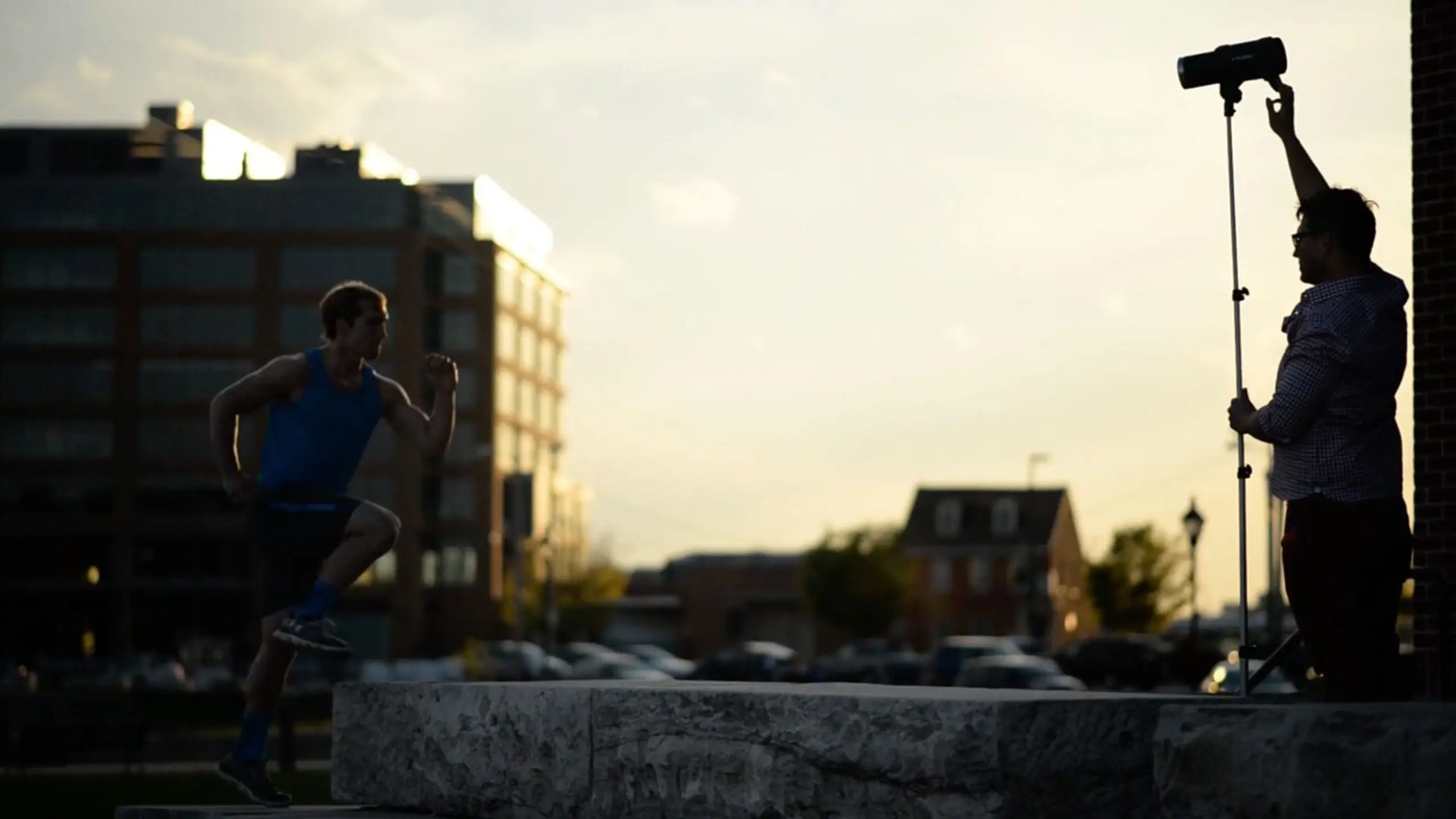
Finishing an indie film in Los Angeles can feel like an impossible climb. Between rising production costs, limited funding, and the pressure to match industry standards, even the most passionate filmmakers can find themselves stuck in limbo. But budget constraints don’t have to mean cutting corners. With thoughtful planning, resourceful decisions, and the right creative partnerships, it’s entirely possible to bring your vision to life without draining your finances.
Whether you're stuck in post or still in the planning phase, this guide will walk you through how to complete your film in LA, without compromising your story or your sanity.
## Why Indie Films Struggle to Get Finished
Independent filmmaking in Los Angeles comes with a unique set of challenges that often derail even the most promising projects. One of the most common roadblocks is a sudden shortfall in financing. Many indie films start strong with a modest production budget but underestimate the true costs of finishing the project. Expenses for editing, color grading, audio mixing, and digital delivery often exceed expectations, leaving filmmakers scrambling for additional funds at a critical stage.
Post-production is another frequent bottleneck. Without a clear plan or access to experienced professionals, indie filmmakers often face delays or are forced to compromise on quality. Editing timelines stretch, files sit untouched on hard drives, and the momentum from production fades. What’s worse is that the cost of post-production services in LA can be significantly higher than in other regions, especially for services like **[feature film mastering & delivery](https://c-istudios.com/feature-film-mastering-and-delivery/)**, which require technical expertise and professional-grade facilities.
Crew attrition is another silent killer. Indie projects often rely on favors, friends, and passion-driven teams. But when timelines extend or payments are delayed, key collaborators begin to drop off. Suddenly, the film is left without its editor, colorist, or even a reliable sound mixer, making completion feel even more out of reach.
Adding to all this is the economic reality of working in Los Angeles. From location fees to studio rentals and permit costs, everything comes at a premium. Without smart planning, it’s easy for an indie film budget to evaporate faster than expected.
Even well-shot films can end up shelved indefinitely because there was no roadmap to handle the final stretch. That’s where strategic thinking and creative marketing come into play. Knowing how to position your film for future release, attract attention through early trailers, or use crowdfunding wisely can help bridge the financial and momentum gap.
Finishing an indie film requires more than vision. It demands foresight, flexibility, and the ability to adapt to a rapidly changing environment. Understanding these common hurdles is the first step to avoiding them and ensuring your project actually sees the light of day.
## Pre-Production Moves That Save You Thousands Later
The most underrated phase of filmmaking is pre-production. Yet, it is here that smart decisions can lead to massive cost savings down the line. Planning well before a single frame is shot gives you control over your budget, your team, and your creative limits. If your goal is to complete your indie film in Los Angeles without financial burnout, you need to start optimizing from the very beginning.
Budgeting around your strengths is a powerful tactic. If you already have access to a great editor, tailor your shooting schedule to allow for staggered edits. If your strength lies in scripting or cinematography, put more weight on those areas and reduce unnecessary scenes or effects that would drive up costs.
Another important step is writing within your means. This doesn't mean compromising your story, but rather shaping it around what is feasible. Can a scene be set in a public park instead of a built set? Is there a way to cut down on expensive crowd scenes or overnight shoots? Keeping your script lean and realistic helps minimize waste during production.
Location scouting is another area where pre-production pays off. LA offers a wide range of free or low-cost locations, especially if you’re willing to film off-peak hours or get creative with framing. Local coffee shops, rooftops, or residential homes can be transformed into dynamic sets with a bit of ingenuity and some thoughtful lighting.
Securing essential tools and collaborators early is also crucial. Locking in your **[video production gear](https://c-istudios.com/video-production-gear-list/)** in advance can help you avoid surge pricing or last-minute rentals. Likewise, confirming your director of photography, sound engineer, and production designer early ensures consistency in quality. Many freelance artists in LA are open to affordable package deals when booked in advance.
Don’t overlook the importance of visual presentation either. Planning your aesthetic, color palette, and promotional stills early on helps guide your branding & graphic design process later. You can even collaborate with a professional photography team during the shoot to collect high-quality behind-the-scenes visuals for your press kit and crowdfunding pages.
Every dollar you save in pre-production is a dollar you won’t have to fight for later. By planning ahead with purpose, you position your film not only to finish strong but to stand out in a crowded creative landscape.
## Partnering Smart. Leveraging Local Talent and Studios
Los Angeles is often seen as a high-cost city, but for indie filmmakers, it can also be a goldmine of creative partnerships, if you know where to look. Beneath the glitz of Hollywood lies a thriving ecosystem of freelancers, micro-studios, and rising creatives who offer professional-quality work at accessible rates. Tapping into this network can significantly reduce your budget without compromising production value.
One of the smartest moves you can make is partnering with emerging editors and visual effects professionals. Many of these individuals are looking to build their portfolios and are eager to work on projects that offer creative freedom. Instead of paying premium studio rates, you can negotiate flat fees or collaborative terms that benefit both sides. This is especially helpful for high-skill services like VFX compositing & animation, which often account for a large chunk of the post-production budget.
Another option is to explore hybrid studios that offer [video production services](https://c-istudios.com/video-production-services/) alongside pre- and post-production support. These collectives often operate with leaner teams and more flexible pricing models. Many provide bundled services that include cinematography, editing, color grading, and even digital delivery. Working with a one-stop shop simplifies logistics and reduces costs compared to hiring multiple vendors separately.
Keep an eye out for packages that include media marketing consult or artist management & media creation. These services are particularly valuable if you’re planning to submit your film to festivals or build an audience through social media. A studio that helps position your film strategically, visually and narratively, can increase its market appeal without you needing to hire a separate marketing agency.
Word of mouth remains a powerful tool in LA. Reach out to film school alumni networks, Facebook filmmaker groups, or even post in online communities like r/Filmmakers. You’ll find editors, sound mixers, and producers who are open to budget-friendly projects that align with their creative goals.
The key is to treat every collaboration as a partnership, not just a transaction. When creatives feel valued, they tend to go the extra mile. By investing time in relationship-building and being clear about your vision, you can build a production team that delivers more than what you paid for, and ultimately helps your film succeed.
## Editing, Color, and Sound on a Budget
Post-production is where many indie films hit a financial wall. Editing suites, sound studios, and colorists often come with high hourly rates, especially in a city like Los Angeles. However, finishing strong doesn’t require a six-figure budget. It requires smart choices, clear priorities, and a willingness to explore alternative paths to professional results.
First, identify which aspects of post-production are truly essential to your film’s final impact. For most indie projects, the three non-negotiables are pacing, continuity, and clean audio. If you can get these right, your film will feel polished, even without expensive effects or complex soundscapes.
One cost-effective option is to work with remote editors. Many talented editors across the country offer competitive rates and can collaborate seamlessly using cloud platforms. If you can provide clear direction and organized assets, you may find better value outside the local market.
When it comes to color, prioritize mood over perfection. Budget colorists, especially those looking to expand their reels, can often deliver beautiful looks at a fraction of standard rates. Alternatively, using free software like DaVinci Resolve gives you the option to learn basic color grading yourself and apply a consistent visual tone throughout your film.
Sound is where you simply cannot cut corners. Poor audio instantly signals amateur quality. If your budget is tight, look for students or recent grads in audio engineering programs. Many are looking for projects to enhance their portfolios and can deliver professional results under mentorship or faculty supervision.
Another creative strategy is to use **[video & audio live streaming](https://c-istudios.com/video-audio-live-streaming/)** tools to get real-time feedback from collaborators. Instead of booking a physical session, editors and sound mixers can walk you through adjustments virtually, which saves on travel, studio time, and miscommunication.
When you’re finally ready to package your film for distribution, prioritize clean file formats, accurate subtitles, and reliable delivery formats. The final stages of feature film mastering & delivery are crucial if you plan to submit to festivals or stream your film online.
By allocating your limited funds strategically and focusing on essentials, you can achieve a polished, professional result. The key is knowing where to spend, where to save, and how to collaborate efficiently with those who understand your creative vision.
## Stretching Your Budget With the Right Tools and Tech
Technology is one of the indie filmmaker’s greatest allies. With the right combination of software, rental sources, and workflow tools, you can save thousands of dollars without compromising the quality of your final product. The trick is knowing what to use, when to use it, and how to avoid unnecessary spending.
Start with software. Tools like DaVinci Resolve for color grading, Blender for 3D and effects, and Audacity for audio editing are not just free, they’re powerful. These programs offer professional-level features that, in the past, were only available to large production houses. With a little training and experimentation, you can handle a surprising amount of your post-production in-house.
Next, consider renting rather than buying your video production gear. Los Angeles has a robust rental scene, with local houses and peer-to-peer platforms that let you borrow cameras, lenses, and lighting setups at a fraction of the purchase price. Some even offer weekend deals or package discounts that can stretch your budget further.
Dailies and backup storage are another expense you can manage with smart tech choices. Instead of expensive physical drives or cloud subscriptions, you can use private web hosting or low-cost NAS systems to store your footage securely. This also makes it easier to share with remote editors or collaborators without delays.
Budgeting platforms can also make a difference. Tools like StudioBinder, Yamdu, or even simple Google Sheets templates help you track spending, manage tasks, and avoid duplication of effort. Staying organized reduces waste and helps you stay on schedule, which is often more cost-saving than any single piece of gear.
If your project is community-oriented or educational, you may even qualify for discounted or free services through local nonprofits or university programs. Tap into local co-working spaces, production incubators, or city-sponsored arts initiatives that offer access to gear, editing bays, or production insurance.
Finally, don’t underestimate the value of maintaining your digital assets. Having a plan for web maintenance, backups, and content archiving ensures that nothing is lost and your work remains accessible long after the shoot is over.
With the right tools and a disciplined workflow, indie filmmakers can accomplish incredible things, even in a city as competitive as LA. Efficiency, creativity, and resourcefulness will take you far beyond what your budget alone might suggest.
## Repurposing Content. Marketing While You Finish
Finishing your indie film is only half the battle. Generating buzz while you're still in production can make the release smoother and more impactful. One of the most underutilized strategies among indie filmmakers is content repurposing. You’re already sitting on a goldmine: behind-the-scenes footage, rough cuts, interviews, test shots, and more. These materials can be turned into compelling, budget-friendly **[social media marketing](https://c-istudios.com/social-media-marketing-services/)** content that builds anticipation and starts growing your audience early.
Behind-the-scenes footage gives viewers a glimpse into the process, humanizes the cast and crew, and fosters a personal connection. Use short clips for TikTok, Instagram Reels, or YouTube Shorts. Let the audience experience your creative journey. These raw moments often perform better than overproduced ads because they feel authentic and relatable.
Don’t wait until the film is finished to release promotional material. Draft rough-cut trailers or teaser montages from your best scenes, even if the final color or sound mix isn’t done. These can serve as excellent promotional assets for film festivals, crowdfunding campaigns, or social media launches.
Another smart move is to build a website for your film and apply SEO copywriting techniques. Include a synopsis, cast bios, production blog, and downloadable press materials. Optimize your text with relevant keywords so people searching for films in your genre or region can find you. A strong web presence also gives your film credibility when applying to festivals or seeking distribution.
Consistency is key. Plan a content calendar and drip-feed updates to your channels, photos from location scouting, production stills, director’s commentary, or even humorous outtakes. Every post helps you grow an audience that’s already invested when the final release arrives.
This is also the time to experiment with broader content creation. Can that character interview become a podcast segment? Could your bloopers be a mini-series? Could you release tutorials on cinematography or production tips based on your own workflow?
Thinking like a content creator during production keeps your audience engaged and creates a steady stream of assets you can repurpose. It also positions your film as a brand, not just a one-time release. By blending creativity with smart marketing, you can extend the life of your project and build momentum that carries through distribution and beyond.
## Navigating Distribution Without a Studio Deal
Getting your indie film out into the world without a studio behind you may seem daunting, but it’s more achievable now than ever. With the right preparation, you can distribute your film on digital platforms and apply to top festivals without compromising quality or professionalism.
First, make sure your film is technically ready. That means preparing final files in high-resolution formats, exporting clean audio tracks, and creating proper subtitle files. This step is known as feature film mastering & delivery, and it’s critical if you want to be taken seriously by streaming platforms or festival organizers.
Start by choosing the platforms you want to target. Do you want to premiere on a major streamer, go direct-to-consumer through Vimeo On Demand, or submit to festivals like Sundance or SXSW? Each option has slightly different requirements, but many now accept digital submissions if your specs are correct.
DCP (Digital Cinema Package) formatting is essential for theatrical screenings. While it sounds technical, there are freelancers and boutique studios in LA that offer affordable DCP creation tailored to indie budgets. You’ll also want to ensure you have closed captions and subtitles ready in multiple formats. These are often required for accessibility and international submissions.
Your next focus should be web readiness. Create a sleek landing page or microsite for your film using affordable web hosting services. Include your trailer, synopsis, press kit, and screening dates. A clean, professional website adds legitimacy and serves as your digital hub for outreach.
When it comes to finding viewers, remember you don’t need a distributor to get your film seen. Festival submissions are increasingly friendly to indie creators, and so are platforms like Tubi, Amazon Prime Video (via aggregators), and even YouTube with the right monetization strategy.
You may also want to prepare materials for potential TV show pitching if your film could serve as a pilot or proof of concept. This includes visual decks, a short series bible, and episode outlines. These assets can open doors with producers or networks who are constantly seeking ready-to-go ideas.
Indie filmmakers today have the tools to distribute, promote, and profit from their work. What matters is that you approach the process professionally, meet technical standards, and create a cohesive viewer experience from screening room to streaming page.
## Turning Your Indie Film Into a Creative Business
Your indie film isn’t just a passion project; it’s an asset. Treating it like a creative business from the beginning opens up long-term revenue opportunities and positions you for future projects beyond this one. With a smart plan, your finished film can become the foundation of a sustainable career.
One of the first ways to monetize is through merchandise. T-shirts, posters, limited-edition props, or digital collectibles can help you recoup costs and engage fans. Licensing is another path. Schools, nonprofits, or streaming services may be interested in acquiring rights for educational use, niche audiences, or regional markets.
Don’t overlook spin-off opportunities. Could a supporting character inspire a short-form series? Could the film’s concept become a webcomic, podcast, or behind-the-scenes docuseries? Think beyond the film itself and consider how your universe could expand through web development and cross-media storytelling.
If your film touches on social issues, historical themes, or personal narratives, explore documentary film production as a follow-up. Many successful filmmakers build portfolios that alternate between narrative and nonfiction, diversifying their income and broadening their creative range.
Some indie filmmakers even pivot into issue-focused storytelling for causes or advocacy groups. If your visual style is strong and your message resonates, you can find work in political campaigns, nonprofit video work, or branded content that pays well and builds your reel.
You may also want to establish yourself as a mini-studio. Offering your own film & [TV production](https://c-istudios.com/film-and-tv-production/) services to others, editing, directing, writing, or cinematography, can supplement your income while keeping you creatively active. This model works especially well if you already have gear or a go-to team.
Add in complementary services like creative marketing, project consulting, or crowdfunding guidance, and you start to build a brand that extends well beyond a single film. Create a website showcasing your work, your story, and what you offer to other creatives. With a strong visual identity and narrative, your film can become a business card for bigger opportunities.
In today’s digital world, indie filmmakers are not just artists, they are entrepreneurs. By treating your film as a multi-faceted business opportunity, you unlock creative freedom and financial sustainability for everything you want to create next.
## Work with C&I Studios
If you are planning a project like this, our team can take it from concept to final delivery. Explore our [film and TV production](https://c-istudios.com/film-and-tv-production/), browse [our work](https://c-istudios.com/our-work/) to see how we tell brand stories, and [get in touch](https://c-istudios.com/contact/) when you are ready to start.
Originally published June 29, 2025
---
*This content is from [C&I Studios](https://c-istudios.com), a full-service production company.*
---
# Top Post-Production Tips for Low-Budget Films in Los Angeles
> Published: June 28, 2025
> Categories: Post & VFX
> Source: https://c-istudios.com/top-post-production-tips-for-low-budget-films-in-los-angeles/
---
.cib{--paper:#1b1d1f;--ink:#fff;--body:#d5d7d9;--muted:#8b9096;--line:rgba(255,255,255,.12);--thumb:#2b2e31;--card:#212426;--accent:#c02b0a;--blue:#5B8FA8;--serif:'Playfair Display',Georgia,serif;--sans:'Poppins',-apple-system,sans-serif;--measure:900px;background:var(--paper);color:var(--body);font-family:var(--sans);line-height:1.6;position:relative;left:50%;transform:translateX(-50%);width:90vw;max-width:1920px}
.cib *{box-sizing:border-box}
.cib .kicker{max-width:var(--measure);margin:58px auto 0;padding:0 22px;font-size:12.5px;font-weight:700;letter-spacing:2.5px;text-transform:uppercase;color:var(--blue)}
.cib h1.cibh1{text-wrap:balance;font-family:var(--serif);font-weight:500;font-size:clamp(46px,6vw,72px);line-height:1.08;color:var(--ink);max-width:var(--measure);margin:18px auto 0;padding:0 22px;letter-spacing:-.5px}
.cib .metarow{max-width:var(--measure);margin:20px auto 0;padding:0 22px;color:var(--muted);font-size:14px}
.cib .hero{position:relative;width:100%;height:0;padding-bottom:56.25%;overflow:hidden;margin:48px auto 0;border-top:1px solid var(--line);border-bottom:1px solid var(--line)}
.cib .hero .ph{width:100%;aspect-ratio:16/9;background:var(--thumb);border-top:1px solid var(--line);border-bottom:1px solid var(--line);display:flex;align-items:center;justify-content:center;color:#7d8288;font-size:13px;text-align:center;padding:0 20px}
.cib .body{max-width:var(--measure);margin:12px auto 0;padding:52px 22px 6px}
.cib .body.lead p:first-child{font-size:23px;line-height:1.62;color:var(--ink)}
.cib .body p{font-size:18.5px;line-height:1.85;margin:0 0 30px;color:var(--body)}
.cib .body h2{text-wrap:balance;font-family:var(--serif);font-weight:500;font-size:clamp(32px,4vw,48px);line-height:1.22;color:var(--ink);margin:70px 0 20px;letter-spacing:-.3px}
.cib .body h3{text-wrap:balance;font-family:var(--sans);font-weight:600;font-size:22px;color:var(--ink);margin:38px 0 8px}
.cib .body a{color:var(--ink);text-decoration:underline;text-decoration-color:rgba(255,255,255,.4);text-underline-offset:3px}
.cib .body a:hover{text-decoration-color:var(--ink)}
.cib .ctable{width:100%;border-collapse:collapse;margin:16px 0 30px;font-size:16px}
.cib .ctable th{background:#000;color:#fff;text-align:left;padding:10px 12px;font-family:var(--sans)}
.cib .ctable td{padding:10px 12px;border-bottom:1px solid var(--line);color:var(--body)}
.cib .inimg{position:relative;width:100%;height:0;padding-bottom:56.25%;overflow:hidden;margin:72px auto;border-top:1px solid var(--line);border-bottom:1px solid var(--line)}
.cib .inimg .ph{width:100%;aspect-ratio:16/9;background:var(--thumb);border-top:1px solid var(--line);border-bottom:1px solid var(--line);display:flex;align-items:center;justify-content:center;color:#7d8288;font-size:13px}
.cib .origpub{max-width:var(--measure);margin:60px auto 0;padding:26px 22px 0;border-top:1px solid var(--line);color:var(--muted);font-size:13.5px}
.cib .related{max-width:1200px;margin:64px auto 0;padding:34px 22px 76px}
.cib .related h3{font-family:var(--sans);font-size:12.5px;letter-spacing:2px;text-transform:uppercase;color:var(--ink);margin:0 0 24px}
.cib .grid{display:grid;grid-template-columns:repeat(3,1fr);gap:28px}
.cib .rc{background:var(--card);border:1px solid var(--line);display:block;text-decoration:none;color:inherit;transition:border-color .15s}
.cib a.rc:hover{border-color:rgba(255,255,255,.5)}
.cib .rc .thumb{position:relative;width:100%;height:0;padding-bottom:56.25%;background:var(--thumb);overflow:hidden}
.cib .rc .thumb img{position:absolute!important;top:0!important;left:0!important;width:100%!important;height:100%!important;object-fit:cover!important;margin:0!important}
.cib .rc .cc{padding:14px 15px 17px}
.cib .rc .rt{font-family:var(--serif);font-weight:500;font-size:16px;line-height:1.3;color:var(--ink);margin:0 0 6px}
.cib .rc .rm{font-size:11px;letter-spacing:1px;text-transform:uppercase;color:var(--muted)}
.cib img{margin:0!important;padding:0!important;display:block!important;vertical-align:top;max-width:100%}
.cib .hero img,.cib .inimg img{position:absolute!important;top:0!important;left:0!important;width:100%!important;height:100%!important;object-fit:cover!important;margin:0!important;padding:0!important;border:0!important;display:block!important;aspect-ratio:auto!important}
.cib .hero+.body{padding-top:36px}
@media(max-width:760px){.cib .grid{grid-template-columns:1fr}.cib .body h2{margin:52px 0 16px}.cib .body p{font-size:17.5px}.cib .inimg,.cib .hero{margin-top:44px}}
.cib .vembed{max-width:var(--measure);margin:44px auto;padding:0 22px}.cib .vembed .vwrap{position:relative;width:100%;height:0;padding-bottom:56.25%}.cib .vembed .vwrap iframe{position:absolute;top:0;left:0;width:100%;height:100%;border:0}
Post & VFX
# Top Post-Production Tips for Low-Budget Films in Los Angeles
16 min read
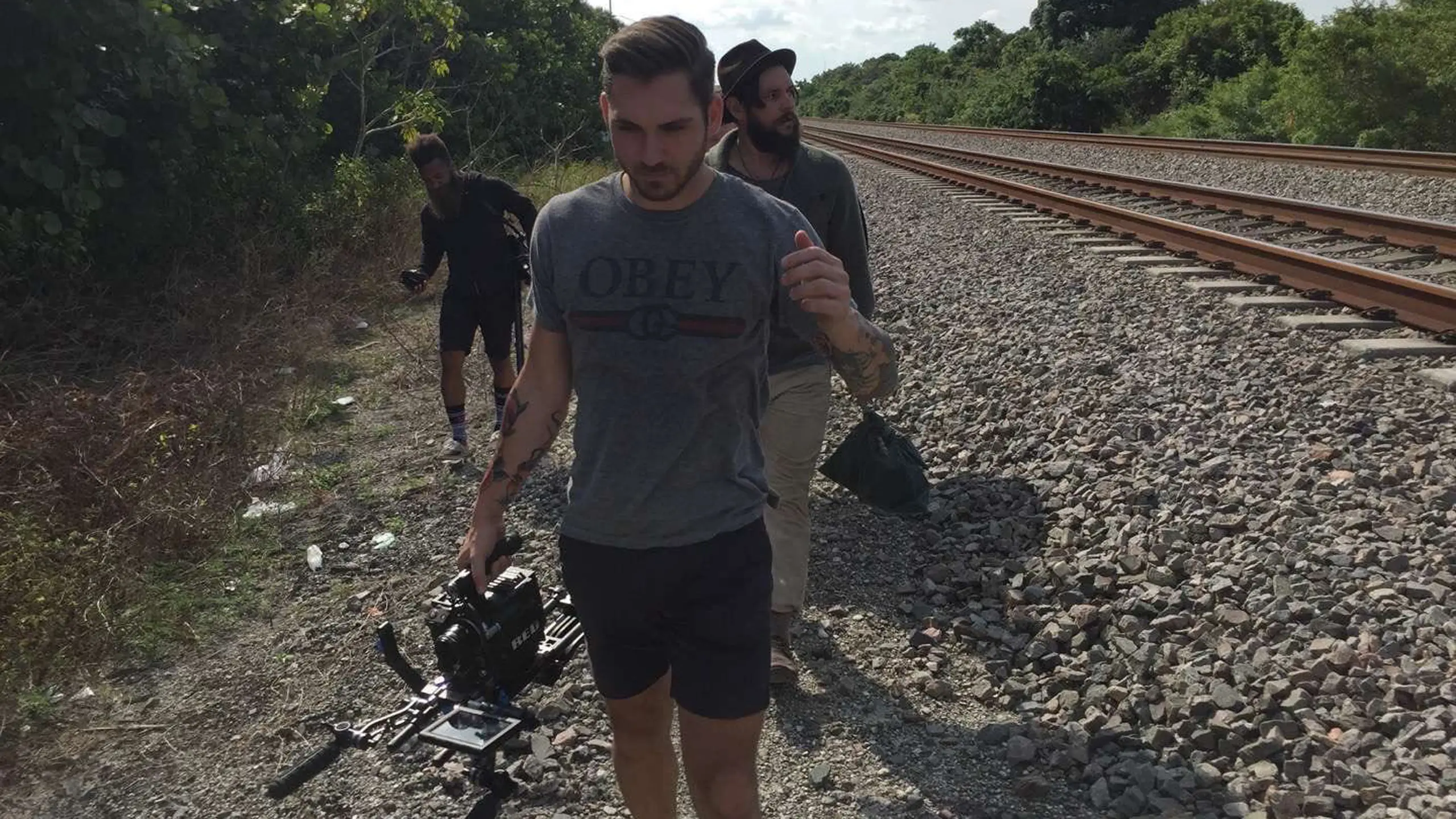
For independent filmmakers working on tight budgets, post-production can be the make-or-break phase of the entire filmmaking process. It's where raw footage transforms into a cohesive, emotionally resonant story, often with limited time, tools, and resources. In a city like Los Angeles, where competition is high and expectations even higher, making the most of post-production isn’t just smart, it’s essential.
Careful planning, creative problem-solving, and efficient workflows can stretch every dollar without sacrificing quality. This article breaks down the most effective post-production tips tailored for low-budget filmmakers trying to deliver professional results in one of the world’s toughest creative markets.
## The Reality of Post-Production on a Budget
Independent filmmakers in Los Angeles often face more than just artistic challenges. Budget constraints can seriously limit access to high-end software, skilled technicians, or premium studio time. When you’re racing against the clock, trying to complete your project with minimal **[video production gear](https://c-istudios.com/video-production-services/)**, and stretching every dollar, the post-production process can feel overwhelming. Yet, understanding these limitations is the first step to overcoming them.
Post-production encompasses a wide range of tasks, including editing, sound design, color correction, visual effects, and final output. For filmmakers with limited resources, not everything can be prioritized equally. The key is to identify the most critical elements that impact your story. For example, if your film relies heavily on emotion and performance, investing time in clean audio and seamless editing may outweigh elaborate VFX or flashy transitions.
One smart strategy is to define a minimal viable post-production setup that suits your film’s needs. This could mean borrowing [video production](https://c-istudios.com/video-production-services/) gear, collaborating with peers who specialize in content creation, or leveraging free software tools that offer acceptable quality. Platforms like DaVinci Resolve or HitFilm Express are examples of robust, no-cost alternatives that many indie filmmakers use to create high-level output without spending extra.
Filmmakers should also consider building a network of local creatives who can exchange services. A cinematographer with access to a RED camera might be willing to trade shooting days for your help on a professional photography shoot or digital marketing project. These kinds of collaborations can greatly enhance production value while keeping expenses manageable.
Ultimately, success in post-production for low-budget films comes down to smart decision-making. It’s not about how much money you spend but how effectively you use the resources you already have. With a careful plan and a flexible mindset, filmmakers in LA can achieve impressive results that rival higher-budget counterparts, proving that creativity often shines brightest under constraints.
## Smart Editing Workflows That Save Time & Money
Post-production editing is often where projects stall, not because of creativity, but due to inefficient workflows that eat up time and system resources. For low-budget filmmakers in Los Angeles, mastering efficient editing processes is one of the most impactful ways to conserve both time and money. The more strategic your editing workflow, the more room you have to focus on storytelling and detail.
Start by embracing proxy editing. This method allows you to create low-resolution versions of your original footage, which are much easier to work with on slower computers. Once the edits are locked, you can relink them to the full-resolution files for final export. This alone can dramatically speed up the process and reduce the frustration of lag or crashes.
Keyboard shortcuts are another underrated yet powerful tool. Most editing platforms like Premiere Pro, DaVinci Resolve, and Final Cut Pro allow full customization of shortcuts. Investing a few hours to learn or customize these commands can cut your editing time in half. Additionally, consider building templates for title sequences, transitions, and lower thirds to maintain a consistent style and reduce repetitive tasks.
If you’re working with limited tools, there are free or low-cost options that still support high-level editing features. Software such as Shotcut, Lightworks, or Resolve offers strong functionality for timeline editing, effects, and color correction. These programs are also used for video & audio live streaming, making them doubly useful if your film includes interactive elements or promotional content.
Sound is half the viewing experience, so consider looping in someone with audio engineering experience. Even basic clean-up, removing background noise or enhancing dialogue- can elevate your film from amateur to professional. You don’t need a Hollywood budget for feature film mastering & delivery, but you do need to treat post as seriously as production.
By focusing on organization, choosing the right tools, and building repeatable workflows, filmmakers can complete the editing process faster and with fewer headaches. Streamlining editing not only protects your sanity but also ensures that your final product is polished, compelling, and ready to compete, even on a shoestring budget.
## Affordable Color Grading & Sound Design Techniques
Visual consistency and immersive sound are two of the most important elements in professional-looking films. Fortunately, you don’t need expensive equipment or premium software to achieve high-quality color grading and sound design. With the right approach, low-budget filmmakers in Los Angeles can create a cinematic experience that resonates with audiences.
For color grading, start by understanding your camera’s native color profile and using tools that support industry-standard color spaces. Free software like DaVinci Resolve offers powerful grading features, including curves, LUTs, and color wheels, making it a favorite among indie creators. You can also find free or low-cost LUT packs that simulate popular cinematic looks. Even small adjustments to contrast, shadows, and highlights can give your footage a much richer and more polished feel.
Plugins and presets are another way to enhance visual style without the need for a full team. These tools can help simulate lighting effects, lens flares, and depth enhancements. Used wisely, they can replicate the feel of high-end productions and align your visuals with professional standards seen in major film & [TV production](https://c-istudios.com/film-and-tv-production/).
On the audio side, using a proper digital audio workstation (DAW) is key. Tools like Audacity or Reaper provide plenty of control for noise reduction, EQ adjustments, and layering effects. Separating production sound from your final mix is essential. Always clean and edit your dialogue separately from your background score and effects. This layered approach offers better control and helps maintain clarity.
Sound effects and ambiance play a crucial role in drawing viewers into your world. Many royalty-free sound libraries offer high-quality assets at little to no cost. Simple enhancements like reverb on voices in large spaces or soft atmospheric tones can turn a flat scene into something immersive.
When it comes to adding visual effects or motion graphics, you can integrate light VFX compositing & animation using basic tools like HitFilm Express or After Effects Lite. These can be used not just for explosions or action sequences but also to enhance transitions, simulate screen displays, or create stylized title cards.
Taken together, thoughtful color and sound work can significantly elevate a film’s production value. Even without premium tools, attention to detail and a methodical approach can transform a basic cut into something worthy of serious attention.
## Leveraging Los Angeles Resources
One of the greatest advantages of being a filmmaker in Los Angeles is the access to a dense network of creative professionals, students, and community-driven institutions. For low-budget filmmakers, tapping into these existing networks can drastically reduce post-production costs while improving output quality.
Start with the city’s thriving student community. Film schools like USC, UCLA, and AFI are full of talented students eager to gain real-world experience. These aspiring editors, colorists, and sound engineers often look for hands-on projects to build their portfolios. Reach out to program coordinators, attend student showcases, or post in relevant university job boards to find reliable collaborators. In many cases, student volunteers bring not only skills but also access to school resources like color suites and sound booths.
Local meetup groups and co-working spaces are also goldmines. Events hosted through platforms like Meetup.com, Eventbrite, or even niche Reddit communities offer frequent gatherings of filmmakers and post professionals. These venues often serve as hubs for exchanging services and building post-production teams. You can meet someone specializing in branding & graphic design who’s looking to swap skills with someone focused on sound or editing.
There are also several nonprofit organizations and grant programs that support independent content creation. Groups like Film Independent, the Echo Park Film Center, and the Los Angeles Media Fund offer access to free or subsidized post labs, mentorships, and funding. Some of these programs even include artist management & media creation support, guiding you on how to package and present your film to festivals or distributors.
Co-working studios such as We Make Movies or The LA Film School's post lab provide rentable editing bays and collaborative spaces at a fraction of the standard cost. They also foster connections with a rotating talent pool of freelancers and indie creators. Collaborating in such environments can lead to long-term creative partnerships.
Ultimately, Los Angeles offers more than just talent; it offers structure. From academic partnerships to grassroots networking events, filmmakers on a budget can build entire post teams through outreach, collaboration, and a bit of persistence. Success in post-production doesn’t always depend on how much you can pay, but on how well you connect with others already creating in the same city.
## Practical VFX and Animation Tips for Indie Projects
Visual effects have long been considered the territory of big-budget blockbusters, but with the rise of open-source and indie-friendly tools, even low-budget filmmakers in Los Angeles can add dynamic visual elements without inflating production costs. The key is knowing what to use, how to use it, and where to stop.
Match cuts, overlays, and masking are practical VFX techniques that require more imagination than money. For example, by combining two precisely timed shots using a clean match cut, you can simulate complex actions like teleportation or transitions between dream and reality. Masking and overlay layers can create everything from floating text to holographic screens, making your film look far more expensive than it is.
Tools like HitFilm Express, Blender, and even After Effects (using the student or trial versions) are highly capable of producing lightweight **[VFX compositing & animation](https://c-istudios.com/vfx-compositing-and-animation-services/)**. Blender, in particular, is free and increasingly used in indie video production for motion graphics, 3D environments, and animation overlays. Many of these tools come with built-in templates and online tutorials that reduce the learning curve for first-time users.
Avoid the temptation to overdo it. Overly ambitious effects on a limited budget can easily look amateurish. Instead, focus on visual elements that support the story or reinforce emotional beats. For example, a subtle glitch effect can elevate a scene involving surveillance or memory loss, while motion-tracked typography might bring style to a character's inner monologue or digital interaction.
Another budget-friendly strategy is compositing VFX into static environments. Use a locked-off camera to simplify tracking and integrate animated effects more easily. This approach not only reduces rendering time but also increases realism. When used correctly, it makes your scenes feel immersive without the need for green screens or motion capture.
Many LA-based freelancers and micro-studios specialize in media marketing consulting and indie effects work. You can collaborate with them for specific scenes that require a bit more polish. Often, short-term contracts for one or two visual sequences cost far less than hiring a full-time effects artist.
In short, VFX on a budget is about focus, intention, and smart use of available tools. With creativity and discipline, even low-cost effects can leave a high-impact impression on your audience.
## Reuse and Recycle. Stock, B-Roll, and Sound Libraries
When the budget runs thin, one of the best ways to stretch your film’s production value is through thoughtful reuse of materials. Stock footage, sound libraries, and previously shot B-roll can help you fill in narrative gaps, polish transitions, and add texture to your story without organizing new shoots or hiring more crew.
Start with stock and public domain footage. Websites like Pexels, Pixabay, and Archive.org offer hundreds of royalty-free clips, from aerial cityscapes to emotional close-ups, that can help build atmosphere or serve as transitions. Instead of staging an expensive city montage, for example, you can use free drone shots of Los Angeles to set the scene.
Likewise, royalty-free and public sound libraries are a must-have. Sites like Freesound, Zapsplat, and Artlist provide soundscapes, Foley effects, and music beds that can enhance tone and mood. These tools are especially useful in documentary film production, where ambient sound and music play a crucial role in storytelling.
Your own B-roll is another goldmine. Repurposing unused or alternate takes from earlier scenes can create visual continuity and enhance the pacing of your film. For instance, cutaway shots of hands, street signs, or landscape details can be reused in multiple contexts to evoke emotion, emphasize themes, or fill coverage gaps. This is particularly useful for montage sequences or reflective moments in narrative films.
Think of your project as an ongoing content creation machine. Every time you shoot, you’re generating not only the main footage but also assets that can be repurposed for trailers, teasers, social posts, and behind-the-scenes reels. Saving and organizing this material properly during production will make the post-production process far more versatile and efficient.
Subscription-free platforms like Videvo, Mixkit, and Motion Array (free tier) also provide visual elements that are perfect for stylizing your film, intro animations, lower-thirds, or transitions that mimic high-end film & TV production design. These assets can give your film a polished, professional look without breaking your budget.
By approaching your footage and audio resources like a toolbox rather than a one-time use kit, you’ll unlock new ways to enhance storytelling and visual flair. Recycling is not just good for the planet, it’s good for post-production, too.
## Preparing for Final Output and Distribution
Once editing and polishing are complete, your final step is preparing the film for delivery. This stage, often underestimated, can make or break your submission to festivals, online platforms, or distributors. Without proper formatting and packaging, even the most compelling indie project can face delays or rejections.
For filmmakers targeting online release, platforms like YouTube and Vimeo require specific output settings. Export your final cut using H.264 or H.265 codecs to ensure good quality with manageable file sizes. Resolutions should match your delivery format (1080p minimum) and include captions or subtitles, which are often mandatory for accessibility. Keeping a high-bitrate master file also helps you repurpose the project for other uses later, such as festival submissions or press screeners.
Festival circuits and distribution partners often demand higher specifications. This is where **[feature film mastering & delivery](https://c-istudios.com/feature-film-mastering-and-delivery/)** becomes essential. Deliverables may include ProRes or DNxHD files, 5.1 surround sound mixes, dialogue lists, and subtitle SRTs. You may also need to generate a DCP (Digital Cinema Package) for theatrical screenings. While full-service post houses in LA offer DCP creation, budget-friendly tools like DCP-o-matic allow indie creators to build their own compliant files at home.
Backing up your final master files to cloud services and hard drives is non-negotiable. Using reliable web hosting for secure storage of your EPKs (Electronic Press Kits), trailers, and press assets ensures you’re always ready when a distributor or journalist requests materials. A centralized folder structure with versions clearly labeled can save hours of confusion.
Distribution also includes preparing assets for video-on-demand (VOD) platforms like Amazon, Tubi, or Apple TV. These services each have strict content delivery guidelines, from audio specifications to naming conventions. Uploading the wrong aspect ratio or incomplete metadata can cause delays or outright rejection.
Ultimately, a successful delivery strategy means anticipating what different stakeholders need and having files properly prepared before they ask. This phase is more than the last step, it’s the handoff to your audience. When handled correctly, it reinforces your film’s credibility and makes it easier for others to help you promote and distribute your work.
## Marketing With Post-Production in Mind
While your film may be your main focus, what surrounds it, trailers, teasers, behind-the-scenes content- can often be just as critical for its success. Thinking about marketing during the post-production stage allows you to gather assets, build momentum, and save time when you’re ready to go public.
Begin by flagging standout shots, funny moments, or dramatic clips while editing. These can later become the building blocks of trailers, short reels, or promotional GIFs. Set aside a timeline or sequence dedicated to editing marketing content. This lets you experiment freely without disrupting the main film’s workflow and ensures your promo material is ready before your premiere date.
Planning your **[social media marketing](https://c-istudios.com/social-media-marketing-services/)**strategy this early also helps with consistency. A well-cut 30-second teaser with dynamic titles can be uploaded to Instagram and TikTok. Meanwhile, a behind-the-scenes clip or interview with your lead actor can work well on YouTube or Facebook. Don’t wait until the film is finished to start engaging with your audience; let post-production become a launchpad for outreach.
Your written materials deserve equal attention. Drafting synopses, bios, captions, and hooks during the editing phase allows you to sharpen your language as you refine the visuals. This is where SEO copywriting comes in, writing descriptions and posts that aren’t just compelling, but also searchable. Using keywords related to your genre, location, or theme can help your film get discovered online, especially when released on VOD platforms.
Additionally, a well-timed media marketing consult can provide a roadmap for your campaign. These experts can guide you on ad targeting, influencer partnerships, festival submissions, and even email marketing. By looping them in early, you ensure your trailer and promotional content align with your audience's expectations and release goals.
Editing with marketing in mind means every frame is a potential tool, not just for storytelling, but for visibility. It allows filmmakers to control the narrative around their project, shape its public image, and get people excited well before opening night. You’re not just editing a film, you’re editing its message to the world.
## Building a Digital Presence for Your Film
Having a digital presence is no longer optional for independent filmmakers; it’s an essential part of getting your film seen, supported, and remembered. While social media plays a key role, a central hub like a professional website ensures full control over how your project is presented.
Start with a landing page. It should include the title, logline, trailer, screening details, and press kit. This is the page you’ll share with journalists, film festivals, distributors, and fans. Keeping it clean, fast, and mobile-friendly makes it more likely to be taken seriously. If your film is part of a broader career plan, consider building a full portfolio site.
This is where web development becomes essential. Use platforms like WordPress, Webflow, or Squarespace to build your site, or work with a freelancer who can customize a lightweight and visually consistent interface. Even for micro-budget films, investing in clear navigation and fast load times can make the difference between someone staying on your page or closing it.
Once the site is live, ensure reliable web hosting so visitors don’t encounter broken links or delays. Hosting also lets you share downloadable assets, poster PDFs, press kits, or subtitle files with film programmers and reviewers. It’s important that your web host offers SSL certificates and uptime guarantees to protect your content and your reputation.
Don't forget about web maintenance. Regular updates to the site, adding new festival laurels or review quotes, and keeping the press section current, these details show professionalism and activity. Neglecting your website makes your film appear abandoned, even if it’s actively screening.
A well-designed digital presence helps with discoverability, credibility, and even monetization. You can embed email capture forms, link to merch stores, or host private screeners for investors and press. Most importantly, it becomes a centralized archive for your project and the people who supported it.
For indie films in a digital world, the website is the theater, press room, and billboard all in one. Taking the time to get it right ensures that when people go searching for your work, they find more than just a name; they find a fully realized project ready for the spotlight.
## Work with C&I Studios
If you are planning a project like this, our team can take it from concept to final delivery. Explore our [post-production services](https://c-istudios.com/post-production-services/), browse [our work](https://c-istudios.com/our-work/) to see how we tell brand stories, and [get in touch](https://c-istudios.com/contact/) when you are ready to start.
Originally published June 28, 2025
---
*This content is from [C&I Studios](https://c-istudios.com), a full-service production company.*
---
# Why LA Indie Filmmakers Trust Us for Affordable, Professional Post
> Published: June 27, 2025
> Categories: Film & TV
> Source: https://c-istudios.com/why-la-indie-filmmakers-trust-us-for-affordable-professional-post/
---
.cib{--paper:#1b1d1f;--ink:#fff;--body:#d5d7d9;--muted:#8b9096;--line:rgba(255,255,255,.12);--thumb:#2b2e31;--card:#212426;--accent:#c02b0a;--blue:#5B8FA8;--serif:'Playfair Display',Georgia,serif;--sans:'Poppins',-apple-system,sans-serif;--measure:900px;background:var(--paper);color:var(--body);font-family:var(--sans);line-height:1.6;position:relative;left:50%;transform:translateX(-50%);width:90vw;max-width:1920px}
.cib *{box-sizing:border-box}
.cib .kicker{max-width:var(--measure);margin:58px auto 0;padding:0 22px;font-size:12.5px;font-weight:700;letter-spacing:2.5px;text-transform:uppercase;color:var(--blue)}
.cib h1.cibh1{text-wrap:balance;font-family:var(--serif);font-weight:500;font-size:clamp(46px,6vw,72px);line-height:1.08;color:var(--ink);max-width:var(--measure);margin:18px auto 0;padding:0 22px;letter-spacing:-.5px}
.cib .metarow{max-width:var(--measure);margin:20px auto 0;padding:0 22px;color:var(--muted);font-size:14px}
.cib .hero{position:relative;width:100%;height:0;padding-bottom:56.25%;overflow:hidden;margin:48px auto 0;border-top:1px solid var(--line);border-bottom:1px solid var(--line)}
.cib .hero .ph{width:100%;aspect-ratio:16/9;background:var(--thumb);border-top:1px solid var(--line);border-bottom:1px solid var(--line);display:flex;align-items:center;justify-content:center;color:#7d8288;font-size:13px;text-align:center;padding:0 20px}
.cib .body{max-width:var(--measure);margin:12px auto 0;padding:52px 22px 6px}
.cib .body.lead p:first-child{font-size:23px;line-height:1.62;color:var(--ink)}
.cib .body p{font-size:18.5px;line-height:1.85;margin:0 0 30px;color:var(--body)}
.cib .body h2{text-wrap:balance;font-family:var(--serif);font-weight:500;font-size:clamp(32px,4vw,48px);line-height:1.22;color:var(--ink);margin:70px 0 20px;letter-spacing:-.3px}
.cib .body h3{text-wrap:balance;font-family:var(--sans);font-weight:600;font-size:22px;color:var(--ink);margin:38px 0 8px}
.cib .body a{color:var(--ink);text-decoration:underline;text-decoration-color:rgba(255,255,255,.4);text-underline-offset:3px}
.cib .body a:hover{text-decoration-color:var(--ink)}
.cib .ctable{width:100%;border-collapse:collapse;margin:16px 0 30px;font-size:16px}
.cib .ctable th{background:#000;color:#fff;text-align:left;padding:10px 12px;font-family:var(--sans)}
.cib .ctable td{padding:10px 12px;border-bottom:1px solid var(--line);color:var(--body)}
.cib .inimg{position:relative;width:100%;height:0;padding-bottom:56.25%;overflow:hidden;margin:72px auto;border-top:1px solid var(--line);border-bottom:1px solid var(--line)}
.cib .inimg .ph{width:100%;aspect-ratio:16/9;background:var(--thumb);border-top:1px solid var(--line);border-bottom:1px solid var(--line);display:flex;align-items:center;justify-content:center;color:#7d8288;font-size:13px}
.cib .origpub{max-width:var(--measure);margin:60px auto 0;padding:26px 22px 0;border-top:1px solid var(--line);color:var(--muted);font-size:13.5px}
.cib .related{max-width:1200px;margin:64px auto 0;padding:34px 22px 76px}
.cib .related h3{font-family:var(--sans);font-size:12.5px;letter-spacing:2px;text-transform:uppercase;color:var(--ink);margin:0 0 24px}
.cib .grid{display:grid;grid-template-columns:repeat(3,1fr);gap:28px}
.cib .rc{background:var(--card);border:1px solid var(--line);display:block;text-decoration:none;color:inherit;transition:border-color .15s}
.cib a.rc:hover{border-color:rgba(255,255,255,.5)}
.cib .rc .thumb{position:relative;width:100%;height:0;padding-bottom:56.25%;background:var(--thumb);overflow:hidden}
.cib .rc .thumb img{position:absolute!important;top:0!important;left:0!important;width:100%!important;height:100%!important;object-fit:cover!important;margin:0!important}
.cib .rc .cc{padding:14px 15px 17px}
.cib .rc .rt{font-family:var(--serif);font-weight:500;font-size:16px;line-height:1.3;color:var(--ink);margin:0 0 6px}
.cib .rc .rm{font-size:11px;letter-spacing:1px;text-transform:uppercase;color:var(--muted)}
.cib img{margin:0!important;padding:0!important;display:block!important;vertical-align:top;max-width:100%}
.cib .hero img,.cib .inimg img{position:absolute!important;top:0!important;left:0!important;width:100%!important;height:100%!important;object-fit:cover!important;margin:0!important;padding:0!important;border:0!important;display:block!important;aspect-ratio:auto!important}
.cib .hero+.body{padding-top:36px}
@media(max-width:760px){.cib .grid{grid-template-columns:1fr}.cib .body h2{margin:52px 0 16px}.cib .body p{font-size:17.5px}.cib .inimg,.cib .hero{margin-top:44px}}
.cib .vembed{max-width:var(--measure);margin:44px auto;padding:0 22px}.cib .vembed .vwrap{position:relative;width:100%;height:0;padding-bottom:56.25%}.cib .vembed .vwrap iframe{position:absolute;top:0;left:0;width:100%;height:100%;border:0}
Film & TV
# Why LA Indie Filmmakers Trust Us for Affordable, Professional Post
13 min read
Los Angeles has long been the heartbeat of independent filmmaking, where bold ideas meet resourceful execution. Every block in this city holds a story, and every filmmaker behind it strives to bring that story to life on limited budgets and tight timelines. As the creative energy pulses through LA’s indie scene, one challenge remains constant: how to polish raw footage into a compelling final product without breaking the bank.
That’s where we come in. In an industry built on creativity, why do the most budget-conscious LA filmmakers consistently choose us? The answer lies in how we approach post-production differently.
## The LA Indie Filmmaker Landscape
Los Angeles is more than just the land of studios and red carpets. Beneath the surface of blockbuster culture lies a vibrant and gritty ecosystem of indie filmmakers, carving out stories that are bold, personal, and diverse. What sets the LA indie scene apart is not only its rich cultural fabric but also its willingness to take creative risks while operating with tight budgets and lean crews. These filmmakers push boundaries and tell stories that might never see the light of day in a traditional production setting.
Yet despite this creativity, the hurdles are real. Most independent creators face constant limitations in funding, time, and equipment. Access to premium post-production facilities is often reserved for larger studios, leaving many indies to rely on piecemeal solutions or compromise on quality. The need for cost-effective yet professional services is not just a preference; it’s a necessity.
As digital platforms like YouTube, Vimeo, and streaming services have expanded, so too has the demand for sharp, polished content from independent filmmakers. Today’s creators need post teams who can match the standards of major studios without the inflated pricing. This shift is powered in part by the growth of DIY production and portable [video production](https://c-istudios.com/video-production-services/) gear, making it possible to shoot anywhere, anytime. But editing, mastering, and final delivery still require precision.
That’s why LA indie filmmakers look for post-production partners who speak their language. They need teams that understand **[film & TV production](https://c-istudios.com/film-and-tv-production/)** workflows, can offer expert audio engineering, and bring real-world creative marketing strategies to help promote their projects. In many cases, they also seek support in feature film mastering & delivery, ensuring their work is ready for festivals, digital platforms, or private screenings.
The landscape is evolving, but the core need remains unchanged: quality post-production that aligns with the vision of the filmmaker and respects their budget. With the right partner, indie films in LA don’t just compete, they shine.
## What Indie Filmmakers Need from Post-Production Partners
For independent filmmakers in Los Angeles, the choice of a post-production partner can determine whether a film reaches its full potential or remains stuck in rough-cut limbo. These creators are not just looking for technical proficiency; they need a team that understands the realities of indie filmmaking, tight timelines, limited funds, and the need for creative flexibility. Above all, they need speed, adaptability, and trust.
Trust is foundational. Many indie filmmakers pour their personal savings or crowdfunded resources into a passion project. They rely on collaborators who won’t just execute tasks, but who care about the story and respect the process. That means working with people who offer transparency, communicate clearly, and deliver consistently. Fast turnaround is essential, but not at the expense of quality or creative alignment.
Artistic vision remains non-negotiable. Even with small crews and basic setups, indie filmmakers often have a strong sense of how their story should feel. That’s why they need partners who can elevate the film without altering its tone or intent. A good post partner knows how to enhance a film’s emotional beats, apply polish where needed, and preserve the creator’s voice throughout.
That’s where services like professional photography for promotional stills or posters come in. When paired with sharp branding & graphic design, these visual elements help position a film effectively in festival circuits or digital distribution. Furthermore, support in media marketing consulting can help indie creators craft compelling press kits, pitch decks, and outreach campaigns, the tools they need to stand out in a crowded field.
We understand that no two indie projects are the same. That’s why our approach is never one-size-fits-all. From offering custom packages that fit specific needs to providing one-on-one collaboration sessions that clarify goals, we build every post-production journey with intention. Our pricing is scalable to match your budget, and our commitment remains the same whether you're working on a short film, documentary, or feature.
In this spirit, we also support artist management & media creation, recognizing that today’s indie filmmakers often wear multiple hats. From coordinating creative marketing assets to advising on release strategies, we ensure the post process feels like a continuation of your vision, not a disruption.
## Why We’re the Go-To Post House for LA Indies
Independent filmmakers in Los Angeles don’t just need post-production, they need partnership. That’s why so many choose us. Our approach has always been client-first, whether we’re working with a first-time director or a seasoned indie producer. We prioritize flexibility, communication, and collaboration, ensuring that every creative voice is heard and supported throughout the post process.
What truly sets us apart is how we adapt to the realities of independent filmmaking. Many of our clients work on shoestring budgets, often juggling day jobs, favors, and personal investments to get their films made. We understand that kind of hustle because we’ve lived it too. Our timelines are built around your needs, not rigid studio protocols. You won’t get lost in a queue here; your project gets the attention it deserves, right when you need it.
Technically, our team brings deep expertise across every discipline of the post. Whether it’s complex VFX compositing & animation for a sci-fi short, detailed audio engineering for an urban drama, or festival-ready **[feature film mastering & delivery](https://c-istudios.com/feature-film-mastering-and-delivery/)**, we’ve done it all, at every budget level. Our team is nimble, creative, and fluent in the latest tools and workflows. You don’t need a studio-sized budget to get studio-level results.
One indie client came to us with a 30-minute film shot entirely on a smartphone. They needed it color graded, sound designed, and finished for streaming submission, all within ten days. We built a workflow around them, delivered on time, and that film went on to screen at two national festivals. Another filmmaker had raw footage and a vision, but no editor. We helped shape the narrative in post, provided music sourcing, and even assisted with artist management & media creation for promotional rollouts.
That’s how we operate, not just as technicians, but as team members. We’re not interested in transactions. We’re in this for the long haul, supporting indie filmmakers as they grow, experiment, and bring powerful stories to life. From your first cut to your premiere night, we work like an extension of your crew, with the same passion and commitment that got you behind the camera in the first place.
## Post-Production on a Budget Without Sacrificing Quality
One of the most damaging myths in indie filmmaking is the idea that “affordable” means “low-quality.” Too often, talented directors and producers feel forced to compromise in post because they believe professional results are financially out of reach. We’re here to prove otherwise. You don’t need a Hollywood budget to deliver a film that looks and sounds like it belongs on the big screen.
We streamline every part of the post-production pipeline to make costs manageable. That includes using shared project files for faster collaboration, cloud-based editing sessions to eliminate location constraints, and tools that automate repetitive tasks without sacrificing creativity. Our team works smart, not just hard, and we pass those savings on to you.
The key is knowing where to invest time and where to optimize. For example, instead of renting expensive facilities, we use modular **[video production gear](https://c-istudios.com/video-production-gear-list/)** that travels and scales easily. This lets us bring professional setups to smaller spaces, without inflating your costs. Likewise, our editors and mixers work with software that maximizes efficiency in audio engineering, cutting back on hours without cutting corners.
Our experience with indie workflows means we’re not guessing. We’ve already developed systems that help us work faster and smarter, without compromising your vision. When paired with smart content creation strategies, we ensure the final product holds up against anything coming from a studio pipeline. That means sharp visuals, crisp sound, and a narrative rhythm that hits just right.
We’ve also learned that indie doesn’t mean small in scope. Many LA-based filmmakers are telling stories that span continents, generations, or surreal dreamscapes. With our background in video production and film & [TV production](https://c-istudios.com/film-and-tv-production/), we’re equipped to translate even the most ambitious ideas into polished final cuts, while staying well within budget.
In the end, what matters is impact. If your audience connects, remembers, and talks about your film, then your post-production has done its job. We believe the budget should never be a barrier to reaching that level of quality. That’s why we exist: to make professional-grade post accessible to storytellers who are working outside the system but dreaming just as big.
## Full-Spectrum Services Under One Roof
One of the biggest advantages we offer indie filmmakers is the ability to access all essential post-production services in a single place. When you're managing a tight schedule, limited budget, and a creative vision that can’t be compromised, dealing with multiple vendors can quickly become a burden. That’s why we’ve built our workflow to be holistic, efficient, and entirely centered around you.
From editorial to final delivery, you can rely on us for editing, color correction, sound design, motion graphics, and more. But we go far beyond technical execution. Our team also provides industry-relevant SEO copywriting to help you craft compelling loglines, festival descriptions, and pitch materials that grab attention. Whether you're launching a crowdfunding page or preparing your IMDb listing, these small details often make a big difference.
Marketing support is also built into our offering. We provide social media marketing solutions that include trailer edits, promotional graphics, behind-the-scenes snippets, and platform-specific content that gets shared and remembered. For films preparing for festival runs or public streaming debuts, our marketing assets can be the deciding factor in discoverability.
Because consistency matters, bundling services allows us to keep your film’s voice, tone, and branding aligned across all formats. You won’t have to explain your story multiple times to different teams. Instead, we build a cohesive strategy and execute it in sync with your goals.
We also recognize that today’s filmmakers aren’t just building movies, they’re building personal brands. That’s why we offer support in web development, web hosting, and web maintenance to help you launch or upgrade your online presence. Whether it’s a portfolio site, a dedicated landing page for your film, or a press kit portal, we help you get it live and keep it running smoothly.
Everything is connected: your edit, your sound, your story, and your audience outreach. By keeping it all under one roof, we eliminate delays, miscommunication, and cost overruns. This is not just convenient; it’s strategic. Our full-spectrum service model is designed to give indie creators the creative power of a full studio, with none of the red tape.
## Helping Indies Go Beyond the Screen
For many independent filmmakers, completing the final cut is just the beginning. The real challenge comes in navigating distribution, generating buzz, and getting noticed in a crowded marketplace. That’s why our support doesn’t stop when the editing timeline ends. We help you take the next step, whether you’re submitting to festivals, pitching to producers, or building a grassroots following.
Our post team includes experts in TV show pitching, helping creators who are transitioning from shorts or indie features into episodic formats. We assist with everything from pitch decks and sizzle reels to treatments and visual mockups, tailored to suit the expectations of networks and streaming platforms.
For those tackling social justice themes or activist-driven narratives, we also work on political campaigns that center your film as part of a broader message. From campaign trailers to community screening kits, we support your outreach goals with precision. This makes us a unique post partner, not just a finishing house but a launchpad for bigger conversations.
It’s at this stage that many indie creators realize how valuable an integrated partner can be. Instead of bouncing between editors, marketers, and consultants, we offer one cohesive team that understands your film inside and out. Having an all-in-one solution streamlines everything and keeps the message clear and effective.
Our work in creative marketing helps you craft a compelling public image for your film. From taglines to teaser content, everything we develop is aimed at helping your project stand out. Combine that with our **[media marketing consult](https://c-istudios.com/media-marketing-consultation-services/)** services, and you have access to insights on press outreach, niche targeting, and timing strategies that can boost visibility during peak promotional windows.
Presentation is key, especially when approaching platforms, distributors, or streaming buyers. That’s why we also help with branding & graphic design, building visual identities that match your story’s tone, whether that’s minimalist, surreal, urban, or documentary-inspired. The result is a look and feel that extends beyond the screen and into the digital space where your audience lives.
Post-production doesn’t have to be a finish line. With the right support, it becomes a springboard. We’re here to help you turn your film into a cultural asset that keeps moving long after the credits roll.
## Collaborative Workflow and Artist-Friendly Culture
Our studio culture is built on one principle above all: collaboration. We don’t believe in one-size-fits-all solutions or rigid structures that force filmmakers into predefined molds. Every project is different, and every artist deserves a post-production partner who listens, adapts, and builds alongside them. That’s why our onboarding process is centered on conversation, not assumption.
From the very beginning, we start by asking the right questions. What’s your story? Who’s your audience? What’s your end goal? Based on your answers, we recommend timelines, tools, and strategies that fit, not just technically, but artistically. Our job isn’t to overwrite your vision; it’s to sharpen it and bring it into focus.
We’ve assembled a team of professionals with deep experience across disciplines. Whether you need video & audio live streaming support for a hybrid premiere, or remote collaboration options for team members working across cities, we make it seamless. We also understand that many indie creatives work across multiple domains, which is why our expertise in artist management & media creation is so valuable. We know how to align post strategies with your long-term career moves.
Our environment is open, transparent, and feedback-friendly. Throughout the post process, we keep communication flowing. That means shared review tools, flexible check-ins, and real-time updates on progress. You’ll never have to wonder where your project stands or when a cut will be ready. We build trust by being accountable, available, and respectful of your time.
Much of what we do involves content creation, but not just for your film. We also help package your behind-the-scenes materials, interviews, trailers, and social edits. This includes targeted visual assets that support grant applications, crowdfunding campaigns, or impact screenings. You get more than a post house. You get a content partner that looks out for your entire body of work.
We back this up with technical precision. From clean audio engineering to final output formats designed for festivals, VOD, or private screening rooms, we’re ready. Our understanding of film & TV production workflows ensures that you don’t need to micromanage the process. Just tell us what you’re aiming for, and we’ll help you get there, smoothly, respectfully, and creatively.
## Work with C&I Studios
If you are planning a project like this, our team can take it from concept to final delivery. Explore our [film and TV production](https://c-istudios.com/film-and-tv-production/), browse [our work](https://c-istudios.com/our-work/) to see how we tell brand stories, and [get in touch](https://c-istudios.com/contact/) when you are ready to start.
Originally published June 27, 2025
---
*This content is from [C&I Studios](https://c-istudios.com), a full-service production company.*
---
# Cutting Costs and Boosting Creativity: AI Tools in Video Production
> Published: June 26, 2025
> Categories: Web & Tech
> Source: https://c-istudios.com/cutting-costs-and-boosting-creativity-ai-tools-in-video-production/
---
.cib{--paper:#1b1d1f;--ink:#fff;--body:#d5d7d9;--muted:#8b9096;--line:rgba(255,255,255,.12);--thumb:#2b2e31;--card:#212426;--accent:#c02b0a;--blue:#5B8FA8;--serif:'Playfair Display',Georgia,serif;--sans:'Poppins',-apple-system,sans-serif;--measure:900px;background:var(--paper);color:var(--body);font-family:var(--sans);line-height:1.6;position:relative;left:50%;transform:translateX(-50%);width:90vw;max-width:1920px}
.cib *{box-sizing:border-box}
.cib .kicker{max-width:var(--measure);margin:58px auto 0;padding:0 22px;font-size:12.5px;font-weight:700;letter-spacing:2.5px;text-transform:uppercase;color:var(--blue)}
.cib h1.cibh1{text-wrap:balance;font-family:var(--serif);font-weight:500;font-size:clamp(46px,6vw,72px);line-height:1.08;color:var(--ink);max-width:var(--measure);margin:18px auto 0;padding:0 22px;letter-spacing:-.5px}
.cib .metarow{max-width:var(--measure);margin:20px auto 0;padding:0 22px;color:var(--muted);font-size:14px}
.cib .hero{position:relative;width:100%;height:0;padding-bottom:56.25%;overflow:hidden;margin:48px auto 0;border-top:1px solid var(--line);border-bottom:1px solid var(--line)}
.cib .hero .ph{width:100%;aspect-ratio:16/9;background:var(--thumb);border-top:1px solid var(--line);border-bottom:1px solid var(--line);display:flex;align-items:center;justify-content:center;color:#7d8288;font-size:13px;text-align:center;padding:0 20px}
.cib .body{max-width:var(--measure);margin:12px auto 0;padding:52px 22px 6px}
.cib .body.lead p:first-child{font-size:23px;line-height:1.62;color:var(--ink)}
.cib .body p{font-size:18.5px;line-height:1.85;margin:0 0 30px;color:var(--body)}
.cib .body h2{text-wrap:balance;font-family:var(--serif);font-weight:500;font-size:clamp(32px,4vw,48px);line-height:1.22;color:var(--ink);margin:70px 0 20px;letter-spacing:-.3px}
.cib .body h3{text-wrap:balance;font-family:var(--sans);font-weight:600;font-size:22px;color:var(--ink);margin:38px 0 8px}
.cib .body a{color:var(--ink);text-decoration:underline;text-decoration-color:rgba(255,255,255,.4);text-underline-offset:3px}
.cib .body a:hover{text-decoration-color:var(--ink)}
.cib .ctable{width:100%;border-collapse:collapse;margin:16px 0 30px;font-size:16px}
.cib .ctable th{background:#000;color:#fff;text-align:left;padding:10px 12px;font-family:var(--sans)}
.cib .ctable td{padding:10px 12px;border-bottom:1px solid var(--line);color:var(--body)}
.cib .inimg{position:relative;width:100%;height:0;padding-bottom:56.25%;overflow:hidden;margin:72px auto;border-top:1px solid var(--line);border-bottom:1px solid var(--line)}
.cib .inimg .ph{width:100%;aspect-ratio:16/9;background:var(--thumb);border-top:1px solid var(--line);border-bottom:1px solid var(--line);display:flex;align-items:center;justify-content:center;color:#7d8288;font-size:13px}
.cib .origpub{max-width:var(--measure);margin:60px auto 0;padding:26px 22px 0;border-top:1px solid var(--line);color:var(--muted);font-size:13.5px}
.cib .related{max-width:1200px;margin:64px auto 0;padding:34px 22px 76px}
.cib .related h3{font-family:var(--sans);font-size:12.5px;letter-spacing:2px;text-transform:uppercase;color:var(--ink);margin:0 0 24px}
.cib .grid{display:grid;grid-template-columns:repeat(3,1fr);gap:28px}
.cib .rc{background:var(--card);border:1px solid var(--line);display:block;text-decoration:none;color:inherit;transition:border-color .15s}
.cib a.rc:hover{border-color:rgba(255,255,255,.5)}
.cib .rc .thumb{position:relative;width:100%;height:0;padding-bottom:56.25%;background:var(--thumb);overflow:hidden}
.cib .rc .thumb img{position:absolute!important;top:0!important;left:0!important;width:100%!important;height:100%!important;object-fit:cover!important;margin:0!important}
.cib .rc .cc{padding:14px 15px 17px}
.cib .rc .rt{font-family:var(--serif);font-weight:500;font-size:16px;line-height:1.3;color:var(--ink);margin:0 0 6px}
.cib .rc .rm{font-size:11px;letter-spacing:1px;text-transform:uppercase;color:var(--muted)}
.cib img{margin:0!important;padding:0!important;display:block!important;vertical-align:top;max-width:100%}
.cib .hero img,.cib .inimg img{position:absolute!important;top:0!important;left:0!important;width:100%!important;height:100%!important;object-fit:cover!important;margin:0!important;padding:0!important;border:0!important;display:block!important;aspect-ratio:auto!important}
.cib .hero+.body{padding-top:36px}
@media(max-width:760px){.cib .grid{grid-template-columns:1fr}.cib .body h2{margin:52px 0 16px}.cib .body p{font-size:17.5px}.cib .inimg,.cib .hero{margin-top:44px}}
.cib .vembed{max-width:var(--measure);margin:44px auto;padding:0 22px}.cib .vembed .vwrap{position:relative;width:100%;height:0;padding-bottom:56.25%}.cib .vembed .vwrap iframe{position:absolute;top:0;left:0;width:100%;height:100%;border:0}
Web & Tech
# Cutting Costs and Boosting Creativity. AI Tools in Video Production
14 min read

The landscape of visual storytelling is evolving rapidly, and artificial intelligence is playing a pivotal role in that transformation. From streamlining tedious tasks to opening new doors for creativity, AI tools are reshaping how professionals approach every stage of the video-making process. Whether you're an independent creator or part of a full-scale production team, the integration of AI has made high-quality results more accessible than ever before.
This article explores how these technologies are cutting costs, boosting innovation, and redefining traditional workflows. We’ll dive into the tools, strategies, and case studies that illustrate the real-world power of AI in modern production.

## The Evolution of AI in Video Production
Artificial intelligence has gradually moved from being a theoretical concept to a practical, everyday asset in **[video production](https://c-istudios.com/video-production-services/)**. In its earliest stages, AI served as a basic automation tool. Creators relied on simple functions like auto-captioning and timeline syncing to save time during post-production. These were useful, but limited in scope and required significant manual oversight.
Over time, as machine learning models became more sophisticated, AI began influencing higher-level tasks in content creation. Platforms like Magisto, Lumen5, and Pictory introduced AI-driven video editing that could automatically trim clips, sync music with visual beats, and even suggest stock footage based on text input. These tools lowered the entry barrier for beginner creators while helping professionals scale up projects more efficiently.
One major leap came when AI started understanding not just what was in a frame, but the meaning behind it. Natural language processing and image recognition allowed editing software to sort clips by sentiment or action, significantly cutting down search and prep time. This was a turning point for large-scale creative marketing teams and documentary producers managing extensive archives.
In scripting, tools like Jasper and ChatGPT now assist writers in drafting voiceovers, scene breakdowns, and ad copy. While these scripts still benefit from a human touch, they provide a solid foundation that saves hours of planning. Combined with AI-driven transcription, tagging, and auto-highlighting, content repurposing has become faster and smarter.
Distribution is another area undergoing transformation. Algorithms now analyze audience behavior to recommend publishing schedules, video formats, and platform-specific edits. These data-driven insights have replaced much of the guesswork that once governed marketing campaigns.
AI’s evolution in this space is not only about speed. It has also introduced entirely new possibilities for storytelling, personalization, and format experimentation. Today’s creators can move faster, make informed decisions, and bring more imaginative ideas to life, all without ballooning production budgets.
In short, AI has shifted from being a helpful assistant to a collaborative partner in the world of content creation. Its influence is now felt in every frame, script, and distribution strategy, supported by smart [video production](https://c-istudios.com/video-production-services/) gear that integrates AI natively into cameras, lighting systems, and editing software.
## Cost-Cutting Advantages of AI Tools
AI is changing the economics of video production, making it possible to achieve more with less. One of the clearest advantages lies in cost efficiency, particularly for small studios and independent filmmakers who operate under tight budgets. By automating labor-intensive tasks, AI allows teams to redirect resources to higher-value creative efforts.
In video & audio live streaming, AI tools handle real-time encoding, auto-mixing, scene switching, and even subtitle generation. This drastically reduces the need for multiple technical crew members during a live broadcast. What once required a control room can now be managed by a single operator using intelligent streaming software.
Post-production is another area where automation leads to major savings. Color correction, background removal, and noise reduction are now commonly handled by AI-powered software. These tasks used to require dedicated professionals or expensive plugins. AI tools like Topaz Video Enhance or RunwayML not only save money but also accelerate turnaround time.
Hiring costs are also impacted. While AI cannot replace human creativity, it reduces the need for large editorial teams. Scripting assistants, motion trackers, and auto-editors allow leaner teams to take on larger projects. For example, a marketing team using AI for video snippets and transcripts can deliver ten times the output without increasing headcount.
In feature film mastering & delivery, AI automates format conversions, resolution upscaling, and caption syncing. This eliminates the need for outsourcing technical delivery to third-party post houses. With software that complies with delivery specs for platforms like Netflix or Amazon Prime, studios can retain more control and cut costs dramatically.
Consider a typical 10-minute branded video. Traditional production might cost between $8,000 to $12,000, including crew, editing, and post. The same video, supported by AI editing and voiceover tools, can now be completed for as little as $3,000 without compromising quality.
Finally, AI analytics streamline marketing workflows. Automated testing tools and performance predictors help optimize launch strategies in real time. These insights, once reserved for larger agencies with dedicated **[media marketing consult](https://c-istudios.com/media-marketing-consultation-services/)** teams, are now accessible to creators at every level.
In sum, AI reduces overhead across the board, from pre-production to delivery, making professional-grade content possible for teams with modest budgets. Its efficiency is not a future promise. It is already redefining what affordable video production looks like today.
## Boosting Creativity with AI
Beyond cost savings, one of AI’s most exciting contributions is how it enhances creativity across the video production pipeline. Rather than limiting artistic vision, AI acts as a powerful co-pilot, offering new ways to generate, refine, and realize visual storytelling.
In the realm of VFX compositing & animation, AI allows creators to achieve effects that once took days to produce. Tools like Runway, Kaiber, and AbSynth use AI to generate seamless transitions, style transfers, and even frame interpolation. Animators can now experiment with bold visual ideas without the prohibitive time or budget constraints that previously stifled experimentation.
Scriptwriting and previsualization are also evolving. AI can generate mood boards, shot suggestions, and scene outlines based on input keywords or references. This speeds up the brainstorming process and gives directors more options to visualize their concepts early on. These AI-enhanced workflows help bridge the gap between idea and execution, encouraging bolder choices and faster iteration.
Sound design is another area where AI tools contribute creatively. Smart audio engines can now match music tone with scene emotion, recommend ambient layers, and automatically adjust levels for voice clarity. This makes it easier to maintain immersion without needing a full audio post team.
AI also allows rapid iteration of edits. Directors can see multiple versions of a scene in seconds by adjusting mood, pacing, or music. This type of generative editing encourages experimentation. Instead of committing to one cut, creators can explore five and choose the one that best fits the narrative.
One fascinating development is AI-generated imagery and effects tailored to brand identity. For **[creative marketing](https://c-istudios.com/creative-marketing-services/)** teams, this means fast content that remains visually cohesive with a brand’s style guide. AI helps generate campaign visuals, animations, and motion graphics that align with a company’s unique aesthetic.
Far from replacing creativity, AI actually multiplies it. It provides a sandbox for trial and error without the associated time sink. Creators can stretch boundaries, test bold ideas, and build compelling content with fewer bottlenecks.
This shift is especially empowering for small teams or solo filmmakers. With the right tools, one person can now do the work of a five-person crew, all while maintaining a high standard of video production.
The future of visual storytelling belongs to those who pair human intuition with machine assistance, and that future is already unfolding.
## Planning a Smart AI-Integrated Workflow
Integrating AI into a modern production pipeline requires more than simply installing new software. It begins with rethinking how your project flows from ideation to delivery. Whether you're working on a documentary film production or preparing for a high-stakes TV show pitching session, a smart AI-integrated workflow can enhance efficiency and creative control from day one.
The first step is choosing the right AI tools based on your project goals. For documentaries, where large volumes of footage and interviews are common, tools like Transkriptor or Trint can transcribe hours of raw video within minutes. For fiction or episodic work, tools such as ScriptBook or DeepStory can generate story arcs, character breakdowns, and dialogue drafts to support early scripting.
Next, evaluate your data sources. AI tools work best when trained on relevant inputs. In documentary film production, feeding the system contextual data such as historical footage, news archives, or voice samples improves AI’s relevance and output quality. For TV show pitching, using genre-specific datasets can help generate mood boards or teaser cuts that match audience expectations.
Once tools and data are set, the next consideration is your storage infrastructure. AI-assisted editing often involves large media files, cloud rendering, and auto-generated assets. Platforms like Frame.io or Google Cloud Storage allow collaborative access while maintaining fast load times for real-time previews. Ensuring secure and scalable file management is essential, especially when multiple team members are involved in editing, reviewing, or distributing content.
You’ll also need a clear AI-human decision protocol. Define which tasks are automated and which require manual intervention. AI can suggest 20 different intros, but a human must select the one that emotionally resonates with the project’s goals.
Finally, document your pipeline. Teams involved in web development, post-production, and marketing should understand how AI tools interact with existing platforms. This creates consistency, especially when handing off assets between departments.
By following these steps, tool selection, data sourcing, storage management, workflow documentation, and human oversight, you can build a flexible system that adapts to your project's evolving needs. In doing so, both TV show pitching and documentary film production become more agile and scalable, without compromising quality or storytelling integrity.
## AI in Editing, Sound, and Post
Post-production is where a significant portion of time and budget is spent in any video production. AI tools are revolutionizing this phase by enhancing workflows in editing, sound, and visual adjustments. These innovations not only save time but also elevate quality to professional standards with minimal human intervention.
One of the most notable changes is in **[audio engineering](https://c-istudios.com/audio-engineering-services/)**. Tools like Descript and Adobe Podcast use AI to automatically clean voice recordings, remove background noise, and balance levels. These tools also enable overdub capabilities, allowing you to edit audio like a text document. This means fewer reshoots or recording sessions, which translates to faster turnaround.
Color grading, a traditionally manual and time-consuming process, is also being enhanced by AI. Platforms such as ColorLab AI analyze scenes for lighting, tone, and emotion, then apply cinematic grading styles that are both mood-specific and technically accurate. This makes it easier for independent creators to produce studio-quality visuals without hiring a specialist.
RunwayML stands out for its video editing capabilities. It allows users to remove objects from video scenes, generate background motion, and apply creative effects with just a few clicks. For teams working under tight deadlines, these tools provide flexibility without sacrificing aesthetics.
Auto-captioning and transcription services are now expected in any modern workflow. AI platforms like Otter.ai and Kapwing deliver near-instant captions with high accuracy. This is especially helpful for accessibility, localization, and repurposing content across formats.
AI also supports still image enhancement, which is vital in professional photography. Tools like Remini and Let's Enhance use deep learning to upscale resolution, reduce blurriness, and restore older visuals, making them usable in high-end promotional materials or documentaries.
The integration of these AI tools has not eliminated the need for skilled professionals. Instead, it enables them to focus on higher-value creative tasks. Editors can spend more time crafting stories while automation handles routine chores.
By merging creative vision with intelligent automation, AI is reshaping how video production and audio engineering are approached. The result is a more efficient and responsive post-production process that empowers creators of every scale to achieve more in less time.
## Applications in Marketing and Distribution
AI is not only reshaping production but also redefining how content is marketed and distributed. From optimizing headlines to customizing thumbnails, intelligent systems are helping creators deliver more engaging content at scale. These tools are especially useful in areas such as **[social media marketing](https://c-istudios.com/social-media-marketing-services/)**, SEO copywriting, and personalized audience targeting.
In social media marketing, AI helps by analyzing engagement trends and recommending posting schedules tailored to each platform’s algorithm. Tools like Hootsuite’s AI scheduler or Buffer’s analytics engine enable brands to publish content when their audience is most likely to engage. This increases reach without increasing effort.
Thumbnail generation has also become smarter. Instead of manually designing every visual, AI tools can now scan your video, identify the most emotionally compelling frame, and apply brand-consistent overlays. This boosts click-through rates, particularly on platforms like YouTube, TikTok, and Facebook, where visual attention spans are short.
AI’s impact on SEO copywriting is equally profound. Tools like Clearscope, Surfer, and Frase optimize on-page content by identifying high-ranking keywords, structuring blog posts for maximum visibility, and suggesting meta descriptions. These platforms ensure that your video titles, descriptions, and landing pages are not only engaging but also discoverable.
One of the most strategic applications of AI is in branding & graphic design. From generating logo variations to adjusting ad creatives for different demographics, AI design assistants like Canva’s Magic Design or Looka tailor visuals based on audience profiles. This level of customization helps maintain brand identity while catering to varied markets.
AI also supports adaptive content distribution. Algorithms can now track viewer behavior in real time, allowing brands to serve up personalized recommendations and promotional content across multiple channels. This is particularly useful for retargeting campaigns or email funnels where timing and message alignment are critical.
These technologies were once only accessible to enterprise-level teams. Today, AI democratizes them, allowing small agencies and independent creators to compete on the same playing field. Campaigns that used to take weeks of planning can now be ideated, tested, and deployed within days.
As marketing continues to evolve, the integration of AI ensures that content does not just exist but connects. Whether you're fine-tuning your SEO copywriting or launching a global campaign, smart automation and predictive tools are becoming essential parts of effective branding & graphic design strategy.
## Ethical Concerns and Creative Control
As artificial intelligence becomes more deeply embedded in film & [TV production](https://c-istudios.com/film-and-tv-production/), it brings with it a range of ethical and creative challenges. While AI can streamline workflows and reduce costs, it also raises important concerns about authorship, authenticity, and human oversight.
One of the most discussed issues is creative dilution. When AI tools generate scripts, visuals, or edits, there is a risk of producing content that feels formulaic or soulless. Creativity thrives on human nuance, emotion, and cultural context, factors that algorithms may not fully comprehend. To maintain artistic depth, professionals must treat AI as an assistant, not a replacement, preserving the human core of storytelling.
Deep Face technology is another ethical flashpoint. Although it can be used for creative expression or archival recreation, it can also mislead audiences or distort facts. In artist management & media creation, using AI to replicate a performer’s likeness or voice demands clear consent, transparency, and usage boundaries.
Copyright issues further complicate the landscape. AI-generated content often draws on massive datasets, some of which may include copyrighted material. This creates legal ambiguity about who owns the final output and whether fair use applies. Engaging a media marketing consult team can help creators navigate these evolving legal frameworks responsibly.
Finally, overreliance on automation can erode the collaborative nature of film & TV production. Traditional filmmaking is inherently team-driven. If AI reduces roles to automated processes, the risk is not just job displacement but a loss of creative synergy that elevates storytelling.
Balancing these risks requires intentional workflows. Creators should set ethical guidelines, audit AI-generated material, and ensure that human judgment remains central to the decision-making process. The goal is not to resist AI, but to use it in ways that protect artistic integrity, support ethical standards, and elevate meaningful content creation.
## Case Studies. Real-World Implementations
Several companies have already begun using AI tools to transform how they approach video production, storytelling, and campaign strategy.
In the realm of political campaigns, firms like Swayable and Quiller AI use data-driven video generation to test messaging across different demographics. These platforms allow campaign teams to produce and optimize multiple video variations rapidly, increasing engagement without overspending on production.
Netflix’s use of AI in **[feature film mastering & delivery](https://c-istudios.com/feature-film-mastering-and-delivery/)** has streamlined quality control processes across multiple languages and formats. By employing intelligent encoding and subtitle generation, Netflix reduces localization costs while maintaining consistency in global rollouts.
In documentary film production, directors are integrating AI transcription and sentiment analysis tools to process massive interview datasets. This allows for faster thematic structuring and a more efficient editing timeline. Projects like “Welcome to Chechnya” have even used AI-powered facial anonymization to protect identities while preserving emotional depth.
These examples show that AI is already making a measurable impact. By blending automation with creative intent, teams can push boundaries, lower costs, and deliver compelling stories faster than ever before.
## Work with C&I Studios
If you are planning a project like this, our team can take it from concept to final delivery. Explore our [AI video services](https://c-istudios.com/ai-video-services/), browse [our work](https://c-istudios.com/our-work/) to see how we tell brand stories, and [get in touch](https://c-istudios.com/contact/) when you are ready to start.
Originally published June 26, 2025
---
*This content is from [C&I Studios](https://c-istudios.com), a full-service production company.*
---
# From Data to Storytelling: How AI Helps Craft Compelling Ad Narratives
> Published: June 25, 2025
> Categories: Film & TV
> Source: https://c-istudios.com/from-data-to-storytelling-how-ai-helps-craft-compelling-ad-narratives/
---
.cib{--paper:#1b1d1f;--ink:#fff;--body:#d5d7d9;--muted:#8b9096;--line:rgba(255,255,255,.12);--thumb:#2b2e31;--card:#212426;--accent:#c02b0a;--blue:#5B8FA8;--serif:'Playfair Display',Georgia,serif;--sans:'Poppins',-apple-system,sans-serif;--measure:900px;background:var(--paper);color:var(--body);font-family:var(--sans);line-height:1.6;position:relative;left:50%;transform:translateX(-50%);width:90vw;max-width:1920px}
.cib *{box-sizing:border-box}
.cib .kicker{max-width:var(--measure);margin:58px auto 0;padding:0 22px;font-size:12.5px;font-weight:700;letter-spacing:2.5px;text-transform:uppercase;color:var(--blue)}
.cib h1.cibh1{text-wrap:balance;font-family:var(--serif);font-weight:500;font-size:clamp(46px,6vw,72px);line-height:1.08;color:var(--ink);max-width:var(--measure);margin:18px auto 0;padding:0 22px;letter-spacing:-.5px}
.cib .metarow{max-width:var(--measure);margin:20px auto 0;padding:0 22px;color:var(--muted);font-size:14px}
.cib .hero{position:relative;width:100%;height:0;padding-bottom:56.25%;overflow:hidden;margin:48px auto 0;border-top:1px solid var(--line);border-bottom:1px solid var(--line)}
.cib .hero .ph{width:100%;aspect-ratio:16/9;background:var(--thumb);border-top:1px solid var(--line);border-bottom:1px solid var(--line);display:flex;align-items:center;justify-content:center;color:#7d8288;font-size:13px;text-align:center;padding:0 20px}
.cib .body{max-width:var(--measure);margin:12px auto 0;padding:52px 22px 6px}
.cib .body.lead p:first-child{font-size:23px;line-height:1.62;color:var(--ink)}
.cib .body p{font-size:18.5px;line-height:1.85;margin:0 0 30px;color:var(--body)}
.cib .body h2{text-wrap:balance;font-family:var(--serif);font-weight:500;font-size:clamp(32px,4vw,48px);line-height:1.22;color:var(--ink);margin:70px 0 20px;letter-spacing:-.3px}
.cib .body h3{text-wrap:balance;font-family:var(--sans);font-weight:600;font-size:22px;color:var(--ink);margin:38px 0 8px}
.cib .body a{color:var(--ink);text-decoration:underline;text-decoration-color:rgba(255,255,255,.4);text-underline-offset:3px}
.cib .body a:hover{text-decoration-color:var(--ink)}
.cib .ctable{width:100%;border-collapse:collapse;margin:16px 0 30px;font-size:16px}
.cib .ctable th{background:#000;color:#fff;text-align:left;padding:10px 12px;font-family:var(--sans)}
.cib .ctable td{padding:10px 12px;border-bottom:1px solid var(--line);color:var(--body)}
.cib .inimg{position:relative;width:100%;height:0;padding-bottom:56.25%;overflow:hidden;margin:72px auto;border-top:1px solid var(--line);border-bottom:1px solid var(--line)}
.cib .inimg .ph{width:100%;aspect-ratio:16/9;background:var(--thumb);border-top:1px solid var(--line);border-bottom:1px solid var(--line);display:flex;align-items:center;justify-content:center;color:#7d8288;font-size:13px}
.cib .origpub{max-width:var(--measure);margin:60px auto 0;padding:26px 22px 0;border-top:1px solid var(--line);color:var(--muted);font-size:13.5px}
.cib .related{max-width:1200px;margin:64px auto 0;padding:34px 22px 76px}
.cib .related h3{font-family:var(--sans);font-size:12.5px;letter-spacing:2px;text-transform:uppercase;color:var(--ink);margin:0 0 24px}
.cib .grid{display:grid;grid-template-columns:repeat(3,1fr);gap:28px}
.cib .rc{background:var(--card);border:1px solid var(--line);display:block;text-decoration:none;color:inherit;transition:border-color .15s}
.cib a.rc:hover{border-color:rgba(255,255,255,.5)}
.cib .rc .thumb{position:relative;width:100%;height:0;padding-bottom:56.25%;background:var(--thumb);overflow:hidden}
.cib .rc .thumb img{position:absolute!important;top:0!important;left:0!important;width:100%!important;height:100%!important;object-fit:cover!important;margin:0!important}
.cib .rc .cc{padding:14px 15px 17px}
.cib .rc .rt{font-family:var(--serif);font-weight:500;font-size:16px;line-height:1.3;color:var(--ink);margin:0 0 6px}
.cib .rc .rm{font-size:11px;letter-spacing:1px;text-transform:uppercase;color:var(--muted)}
.cib img{margin:0!important;padding:0!important;display:block!important;vertical-align:top;max-width:100%}
.cib .hero img,.cib .inimg img{position:absolute!important;top:0!important;left:0!important;width:100%!important;height:100%!important;object-fit:cover!important;margin:0!important;padding:0!important;border:0!important;display:block!important;aspect-ratio:auto!important}
.cib .hero+.body{padding-top:36px}
@media(max-width:760px){.cib .grid{grid-template-columns:1fr}.cib .body h2{margin:52px 0 16px}.cib .body p{font-size:17.5px}.cib .inimg,.cib .hero{margin-top:44px}}
.cib .vembed{max-width:var(--measure);margin:44px auto;padding:0 22px}.cib .vembed .vwrap{position:relative;width:100%;height:0;padding-bottom:56.25%}.cib .vembed .vwrap iframe{position:absolute;top:0;left:0;width:100%;height:100%;border:0}
Film & TV
# From Data to Storytelling. How AI Helps Craft Compelling Ad Narratives
12 min read

In today’s digital age, data is no longer just a byproduct of marketing, it’s the foundation of it. But raw metrics and charts don’t sell ideas. Stories do. As brands race to stay relevant in a saturated market, the ability to transform complex data into emotionally resonant narratives has become a powerful advantage. Artificial intelligence is quietly revolutionizing this process, bridging the gap between analytics and creativity.
This article explores how AI helps translate insights into compelling ad stories that speak directly to the audience, not just in numbers, but in meaning. Let’s unpack how this transformation really works.

## The Evolution of Advertising. Data Meets Emotion
Advertising has always been about telling the right story to the right people. In the early days, campaigns relied heavily on instinct, creativity, and gut-driven pitches, think Don Draper selling dreams with nothing but a tagline and a hunch. It worked because audiences were simpler, and competition was limited. Fast forward to the digital era, and the landscape has become drastically more fragmented. Brands are no longer speaking to a mass audience but to highly specific micro-segments across countless platforms.
This fragmentation is where data, and more recently, AI, steps in. The rise of big data gave marketers access to unparalleled volumes of information: what people like, what they skip, how long they hover over a post, which product photos get clicks, and what type of headline leads to action. But having all this information wasn’t enough. Knowing *what* your audience is doing doesn’t tell you *why* they care.
That’s where the transformation began. AI doesn’t just process data, it interprets it. It detects patterns in behavior and emotional cues that the human eye might miss. Instead of replacing creatives, AI enhances them by pointing to what actually resonates. It enables teams to design more targeted campaigns and refine their storytelling around real user responses.
Creative teams now use AI-powered insights during every phase, from ideation to execution. This has redefined how branding & graphic design is approached, allowing for hyper-personalized visuals that match audience taste. In **[content creation](https://c-istudios.com/content-creation-services/)**, AI identifies which formats, tones, and structures perform best across platforms. In media marketing consult work, agencies are no longer guessing, they’re leveraging real-time predictive models to develop emotionally intelligent campaigns.
## What Kind of Data Fuels Better Ad Narratives?
To turn raw numbers into memorable campaigns, it’s critical to understand the types of data AI tools actually rely on. It all starts with user behavior: what users click, where they scroll, what they skip, and how long they linger. Every micro-interaction is logged. But the real magic happens when this data is connected with deeper insights, things like engagement metrics, purchase history, and the outcomes of A/B testing experiments.
Take engagement metrics, for example. AI looks at which call-to-actions get clicks, which headlines get shares, and which visuals stop thumbs mid-scroll. In **[video production](https://c-istudios.com/video-production-services/)**, these insights shape everything from scripting to camera angles, ensuring every second counts. Purchase history tells us not only what users bought, but when and why. Combined with AI, this can forecast what kind of ad narrative is most likely to convert in the future.
Then there’s sentiment analysis, a process that uses machine learning to evaluate the emotional tone behind online reviews, social comments, and brand mentions. It tells you if your audience is excited, frustrated, or indifferent. Heatmaps and eye-tracking tools go even further, showing where viewers’ attention naturally gravitates on screen or in a layout.
When you apply demographic targeting on top of this, the story becomes sharper. Age, location, device type, even time-of-day patterns, all feed into AI’s decision-making. Now your ad isn’t just relevant. It’s timely, precise, and emotionally tuned.
Real-world examples make this all the more compelling. In political campaigns, AI has been used to fine-tune speeches and micro-target messages for different voter segments. In social media marketing, brands now generate multiple ad variants in real time, adjusting headlines and visuals based on performance feedback. And in product launches, predictive tools help refine SEO copywriting to match what people are actually searching for, not just what marketers assume.
AI doesn’t work alone, it needs rich, multi-dimensional data to guide narrative direction. But when those inputs are available, it becomes an unstoppable force for relevance. It doesn’t just help tell a better story. It helps tell the *right* one, at exactly the moment your audience is ready to hear it.
## AI Tools That Transform Data into Story Arcs
Translating raw behavioral data into a compelling narrative isn’t a manual job anymore, it’s increasingly being shaped by AI-powered tools purpose-built for creatives. These tools don’t just analyze audience reactions; they help structure the story arcs that drive emotional impact. From idea to execution, AI is now a behind-the-scenes collaborator at every stage of content creation.
Natural Language Processing (NLP) is one of the most powerful engines in this ecosystem. It allows AI to process vast libraries of written and spoken language, identifying patterns in tone, rhythm, word choice, and emotional intensity. For brands, this means AI can suggest alternative headlines, rework weak call-to-actions, and even generate full script drafts that match the preferred voice and emotional pacing of the campaign.
Predictive storytelling is another game-changer. Based on past campaign performance and current audience trends, AI tools can outline story trajectories that are most likely to succeed. Want your narrative to follow a hero’s journey? Or maybe a humor-based structure that ends with a subtle reveal? AI doesn’t just generate options, it tests them virtually, using simulations to forecast which will resonate best with your target viewers.
These insights extend beyond scripting. In film & [TV production](https://c-istudios.com/film-and-tv-production/), creative teams now use AI tools to visualize scenes before a single frame is shot. Scene generators powered by machine learning can map out potential visuals based on emotional cues, setting suggestions, or tone indicators. This isn’t science fiction, it’s happening on real sets, especially in projects like TV show pitching and branded short films.
Even in fields like artist management & media creation, AI tools provide immediate feedback loops. They track which artist-led stories are generating buzz, which character arcs fall flat, and how to refine narrative rhythm without losing authenticity.
Ultimately, these tools don’t limit human imagination, they extend it. The creative process becomes more focused, more strategic, and more aligned with the audience’s subconscious preferences. When AI collaborates with storytellers, it’s not just about efficiency, it’s about resonance. And in an industry where emotional connection drives conversion, that’s an edge you can’t afford to ignore.
## From Audience Insights to Script Development
Once you’ve gathered the right data, the next step is where the magic really starts, turning those insights into storylines that engage and convert. It begins with understanding *why* your audience reacts the way it does. Are they motivated by aspiration, nostalgia, belonging, or urgency? AI helps reveal these psychological undercurrents by scanning behavior patterns, engagement spikes, and even emotional tone across channels.
Let’s say your audience responds best to inspirational content featuring real people. That’s your narrative signal. From here, AI can assist in script development, suggesting structure, pacing, and even word choice based on prior high-performing campaigns. The goal isn’t just to write copy, it’s to engineer an emotional journey that feels authentic.
This is particularly powerful in long-form content, such as documentary film production. AI might identify that viewers stay engaged longer when personal stories are revealed in the second act rather than the first. That kind of insight helps shape not just the “what,” but the “when” of your story.
Tone and voice also play a crucial role. AI models trained on brand voice can suggest edits to ensure that every line, from intro to CTA, matches the desired identity, whether it’s confident, playful, bold, or empathetic. These refinements allow for emotional consistency throughout the campaign.
In digital storytelling, especially for platforms requiring speed and scale like Instagram Reels or YouTube Shorts, AI’s role becomes even more tactical. Tools analyze what *lengths* perform best, where viewers tend to drop off, and which moments get rewatched. In turn, creatives adjust scripts and scenes to maximize engagement.
For brands working on **[web development](https://c-istudios.com/web-development-services/)**, embedding these narratives into landing pages, micro-sites, and product pages allows seamless story integration. And when tied into creative marketing strategies, every headline, video, and section becomes part of a broader, insight-driven story system.
It’s no longer about writing what *feels* right. It’s about writing what *is* right, based on actual audience signals. With AI guiding structure and flow, script development becomes more than a creative task. It becomes a precision art, one that resonates, converts, and scales.
## Visualizing Data-Driven Concepts. VFX, Motion & Style
Once the core narrative is developed, the next step is to bring it to life visually. Here, AI plays a surprising but essential role. Traditionally, creative decisions around color, motion, and composition were subjective, rooted in taste, trends, and mood boards. Now, these choices can be validated or even suggested by AI based on real-time audience feedback and historical performance data.
Visual elements such as framing, transitions, and even character positioning can now be optimized using predictive design tools. These systems evaluate previous video and campaign performance to suggest styles that are more likely to hold viewer attention or evoke specific emotions. For instance, slow zoom-ins might be recommended for dramatic moments, while quick cuts and vibrant palettes could be used to energize a promotional spot.
AI also contributes directly to **[VFX compositing & animation](https://c-istudios.com/vfx-compositing-and-animation-services/)**. Machine learning algorithms can now generate procedural effects, such as realistic particle movements, lighting simulations, or animated overlays, at a fraction of the time it used to take. This isn’t just about efficiency; it’s about unlocking creative options that might have been too costly or time-consuming before. What once required a team of specialists can now begin with AI-powered templates or pre-trained models.
Even tools involved in [video production](https://c-istudios.com/video-production-services/) gear selection are getting smarter. AI can suggest which equipment setups are best suited to a certain scene, based on lighting conditions, desired depth of field, or production environment. This helps directors and videographers make better-informed decisions before anyone even steps on set.
Let’s not forget the importance of professional photography in shaping narrative. AI-enhanced photo editors now adjust skin tones, lighting balance, and composition based on ideal engagement metrics across social platforms. This ensures every frame, not just the final video, is optimized for storytelling impact.
The integration of visuals, motion, and AI-guided styling is where data truly meets emotion. When colors reinforce the tone, camera movements follow psychological pacing, and animations direct the viewer’s eye precisely, storytelling becomes immersive, not just informative. AI may not replace the creative eye, but it certainly sharpens its vision.
## Audio Matters. Emotional Weight Through Sound
Sound is often the invisible emotional engine of a story. A well-timed pause, a subtle music cue, or a powerful voiceover can transform a flat narrative into something unforgettable. And just like visuals, sound is increasingly shaped by AI, not only in how it's produced, but in how it's tailored to evoke specific emotional responses.
AI-powered tools can now analyze thousands of successful audio tracks across platforms to determine what types of sounds work best for particular moods or message types. For example, a warm, slow-building orchestral cue may align better with aspirational storytelling, while sharp, rhythmic electronic beats can reinforce urgency and action. These insights help creatives design soundscapes with a clear emotional target.
The role of **[audio engineering](https://c-istudios.com/audio-engineering-services/)**has expanded significantly in this context. AI helps audio teams balance frequencies, auto-remove background noise, and even predict optimal voice modulation for narration, ensuring maximum clarity and emotional impact across devices. This is especially important for mobile-first content, where sound must be effective even when heard through earbuds or phone speakers.
In the realm of video & audio live streaming, real-time AI applications are even more advanced. Live EQ adjustments, automated captioning, and latency optimization are all now managed or supported by intelligent systems. Whether you're streaming a political rally, a product demo, or a behind-the-scenes interview, AI ensures that sound quality enhances, rather than distracts from, the message.
Sound design is also a key factor in feature film mastering & delivery. AI-driven mastering platforms ensure that audio levels meet broadcast standards across different distribution channels, from streaming platforms to theatrical releases. This consistency is vital when your ad narrative travels across global markets.
Emotional storytelling through audio isn’t just about adding a soundtrack, it’s about crafting a sound narrative. Each auditory element must complement the story’s beats and transitions. With AI-enhanced editing and predictive tools, sound becomes a data-backed dimension of storytelling that can elevate even the most modest production into something cinematic.
In a world of shrinking attention spans, sound remains one of the fastest ways to tap into emotion. And now, with AI, it can be fine-tuned to do exactly that, with precision, consistency, and creative freedom.
## Delivering and Scaling AI-Powered Stories Across Platforms
Even the most compelling narrative needs to reach the right audience, at the right time, in the right format, and on the right channel. That’s where distribution strategy becomes just as important as story development. Fortunately, AI doesn’t stop once the script is written and the final edit is done. It continues to play a critical role in how content is scaled and delivered across platforms.
At the core of this stage is versioning, automating multiple content variations based on audience preferences, platform specs, and user behaviors. AI can take a master video and generate dozens of customized versions optimized for Instagram Reels, YouTube Shorts, TikTok, LinkedIn, or OTT platforms. It tailors everything from length and aspect ratio to thumbnail selection and subtitle formatting.
These automations are guided by platform-specific performance data. For example, AI might identify that users on TikTok engage more with fast-paced intros, while YouTube audiences respond better to slower build-ups and longer-form narratives. Instead of manually adjusting every asset, creators rely on intelligent automation to deploy and test variations in real time.
AI also supports dynamic delivery through smart CMS platforms. These tools analyze user location, device type, browsing behavior, and even past interactions to serve the most relevant version of your story. On websites, this allows seamless integration of narrative content into web development pipelines and ensures that visitors receive a tailored experience.
Maintenance is another overlooked but essential piece of this puzzle. With AI embedded into web maintenance systems, brands can automatically monitor video load times, playback errors, and content fatigue (when a story has been seen too many times). This allows marketing teams to refresh or retire content before it underperforms.
For campaigns that live across multiple channels, like brand documentaries, short-form ads, or product walkthroughs, web hosting infrastructure must support responsive, high-quality playback. AI-optimized hosting platforms now offer predictive caching, intelligent compression, and automated accessibility features, all of which ensure that performance doesn't compromise the story.
Whether you’re launching a global brand campaign or a niche storytelling series, AI helps remove the guesswork from distribution. It doesn’t just help you tell better stories, it makes sure the right people actually hear them, in the format and moment that matters most.
## Work with C&I Studios
If you are planning a project like this, our team can take it from concept to final delivery. Explore our [film and TV production](https://c-istudios.com/film-and-tv-production/), browse [our work](https://c-istudios.com/our-work/) to see how we tell brand stories, and [get in touch](https://c-istudios.com/contact/) when you are ready to start.
Originally published June 25, 2025
---
*This content is from [C&I Studios](https://c-istudios.com), a full-service production company.*
---
# Secrets to Creating a $10 Million Look on a $1 Million Film Budget
> Published: June 24, 2025
> Categories: Film & TV
> Source: https://c-istudios.com/secrets-to-creating-a-10-million-look/
---
.cib{--paper:#1b1d1f;--ink:#fff;--body:#d5d7d9;--muted:#8b9096;--line:rgba(255,255,255,.12);--thumb:#2b2e31;--card:#212426;--accent:#c02b0a;--blue:#5B8FA8;--serif:'Playfair Display',Georgia,serif;--sans:'Poppins',-apple-system,sans-serif;--measure:900px;background:var(--paper);color:var(--body);font-family:var(--sans);line-height:1.6;position:relative;left:50%;transform:translateX(-50%);width:90vw;max-width:1920px}
.cib *{box-sizing:border-box}
.cib .kicker{max-width:var(--measure);margin:58px auto 0;padding:0 22px;font-size:12.5px;font-weight:700;letter-spacing:2.5px;text-transform:uppercase;color:var(--blue)}
.cib h1.cibh1{text-wrap:balance;font-family:var(--serif);font-weight:500;font-size:clamp(46px,6vw,72px);line-height:1.08;color:var(--ink);max-width:var(--measure);margin:18px auto 0;padding:0 22px;letter-spacing:-.5px}
.cib .metarow{max-width:var(--measure);margin:20px auto 0;padding:0 22px;color:var(--muted);font-size:14px}
.cib .hero{position:relative;width:100%;height:0;padding-bottom:56.25%;overflow:hidden;margin:48px auto 0;border-top:1px solid var(--line);border-bottom:1px solid var(--line)}
.cib .hero .ph{width:100%;aspect-ratio:16/9;background:var(--thumb);border-top:1px solid var(--line);border-bottom:1px solid var(--line);display:flex;align-items:center;justify-content:center;color:#7d8288;font-size:13px;text-align:center;padding:0 20px}
.cib .body{max-width:var(--measure);margin:12px auto 0;padding:52px 22px 6px}
.cib .body.lead p:first-child{font-size:23px;line-height:1.62;color:var(--ink)}
.cib .body p{font-size:18.5px;line-height:1.85;margin:0 0 30px;color:var(--body)}
.cib .body h2{text-wrap:balance;font-family:var(--serif);font-weight:500;font-size:clamp(32px,4vw,48px);line-height:1.22;color:var(--ink);margin:70px 0 20px;letter-spacing:-.3px}
.cib .body h3{text-wrap:balance;font-family:var(--sans);font-weight:600;font-size:22px;color:var(--ink);margin:38px 0 8px}
.cib .body a{color:var(--ink);text-decoration:underline;text-decoration-color:rgba(255,255,255,.4);text-underline-offset:3px}
.cib .body a:hover{text-decoration-color:var(--ink)}
.cib .ctable{width:100%;border-collapse:collapse;margin:16px 0 30px;font-size:16px}
.cib .ctable th{background:#000;color:#fff;text-align:left;padding:10px 12px;font-family:var(--sans)}
.cib .ctable td{padding:10px 12px;border-bottom:1px solid var(--line);color:var(--body)}
.cib .inimg{position:relative;width:100%;height:0;padding-bottom:56.25%;overflow:hidden;margin:72px auto;border-top:1px solid var(--line);border-bottom:1px solid var(--line)}
.cib .inimg .ph{width:100%;aspect-ratio:16/9;background:var(--thumb);border-top:1px solid var(--line);border-bottom:1px solid var(--line);display:flex;align-items:center;justify-content:center;color:#7d8288;font-size:13px}
.cib .origpub{max-width:var(--measure);margin:60px auto 0;padding:26px 22px 0;border-top:1px solid var(--line);color:var(--muted);font-size:13.5px}
.cib .related{max-width:1200px;margin:64px auto 0;padding:34px 22px 76px}
.cib .related h3{font-family:var(--sans);font-size:12.5px;letter-spacing:2px;text-transform:uppercase;color:var(--ink);margin:0 0 24px}
.cib .grid{display:grid;grid-template-columns:repeat(3,1fr);gap:28px}
.cib .rc{background:var(--card);border:1px solid var(--line);display:block;text-decoration:none;color:inherit;transition:border-color .15s}
.cib a.rc:hover{border-color:rgba(255,255,255,.5)}
.cib .rc .thumb{position:relative;width:100%;height:0;padding-bottom:56.25%;background:var(--thumb);overflow:hidden}
.cib .rc .thumb img{position:absolute!important;top:0!important;left:0!important;width:100%!important;height:100%!important;object-fit:cover!important;margin:0!important}
.cib .rc .cc{padding:14px 15px 17px}
.cib .rc .rt{font-family:var(--serif);font-weight:500;font-size:16px;line-height:1.3;color:var(--ink);margin:0 0 6px}
.cib .rc .rm{font-size:11px;letter-spacing:1px;text-transform:uppercase;color:var(--muted)}
.cib img{margin:0!important;padding:0!important;display:block!important;vertical-align:top;max-width:100%}
.cib .hero img,.cib .inimg img{position:absolute!important;top:0!important;left:0!important;width:100%!important;height:100%!important;object-fit:cover!important;margin:0!important;padding:0!important;border:0!important;display:block!important;aspect-ratio:auto!important}
.cib .hero+.body{padding-top:36px}
@media(max-width:760px){.cib .grid{grid-template-columns:1fr}.cib .body h2{margin:52px 0 16px}.cib .body p{font-size:17.5px}.cib .inimg,.cib .hero{margin-top:44px}}
.cib .vembed{max-width:var(--measure);margin:44px auto;padding:0 22px}.cib .vembed .vwrap{position:relative;width:100%;height:0;padding-bottom:56.25%}.cib .vembed .vwrap iframe{position:absolute;top:0;left:0;width:100%;height:100%;border:0}
Film & TV
# Secrets to Creating a $10 Million Look on a $1 Million Film Budget
15 min read
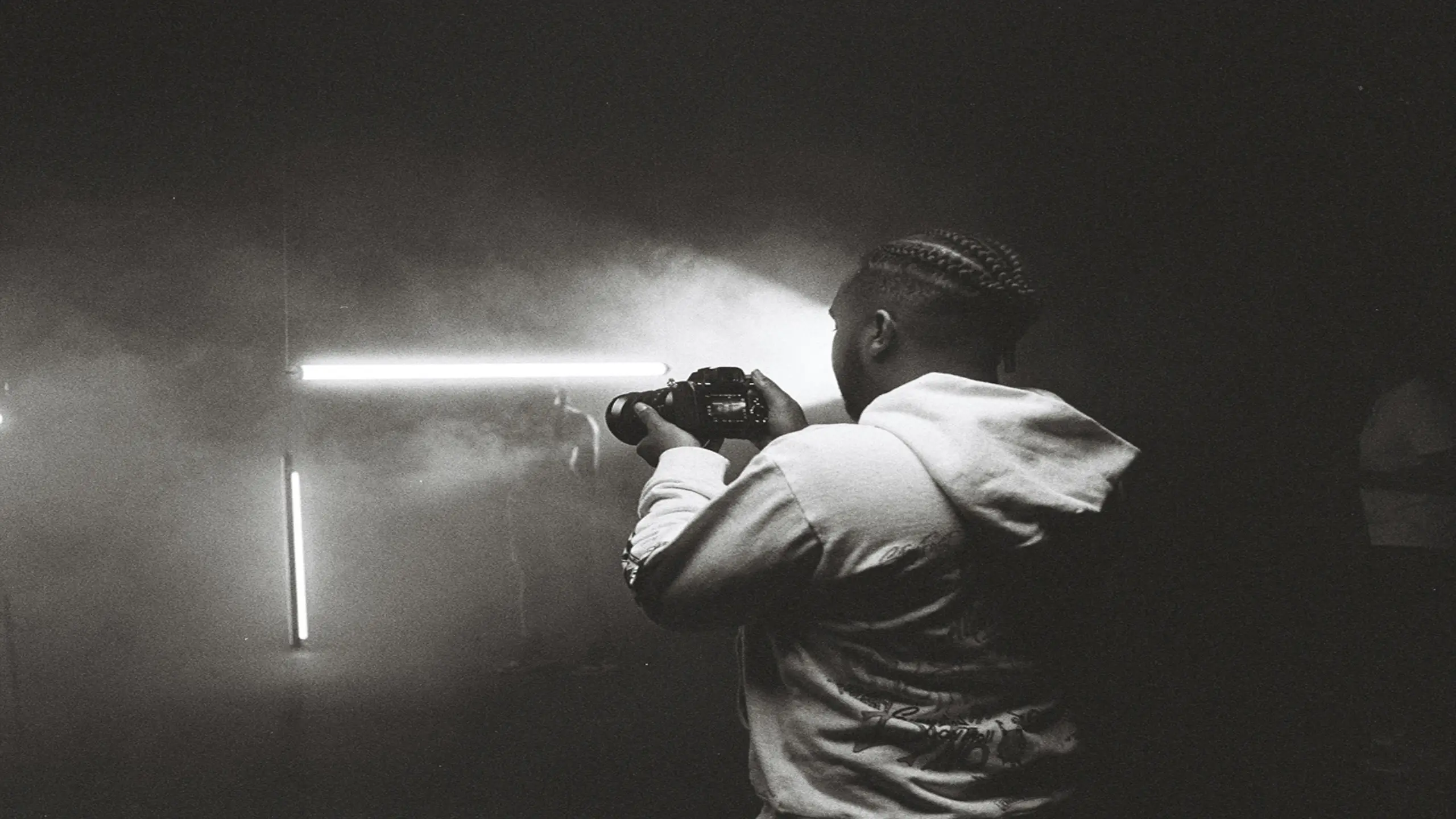
Creating a visually stunning film used to mean one thing: spending a lot of money. But today, independent and mid-budget filmmakers face a new kind of challenge, not just making a movie, but making it look like it cost ten times more than it did. Audiences have become more sophisticated, with expectations shaped by high-budget blockbusters and prestige streaming content.
Thankfully, the rise of affordable tools, smarter workflows, and digital platforms has leveled the playing field. Now, even with limited resources, it's possible to craft a cinematic experience that rivals the big leagues, if you know where to focus your time, energy, and creativity.
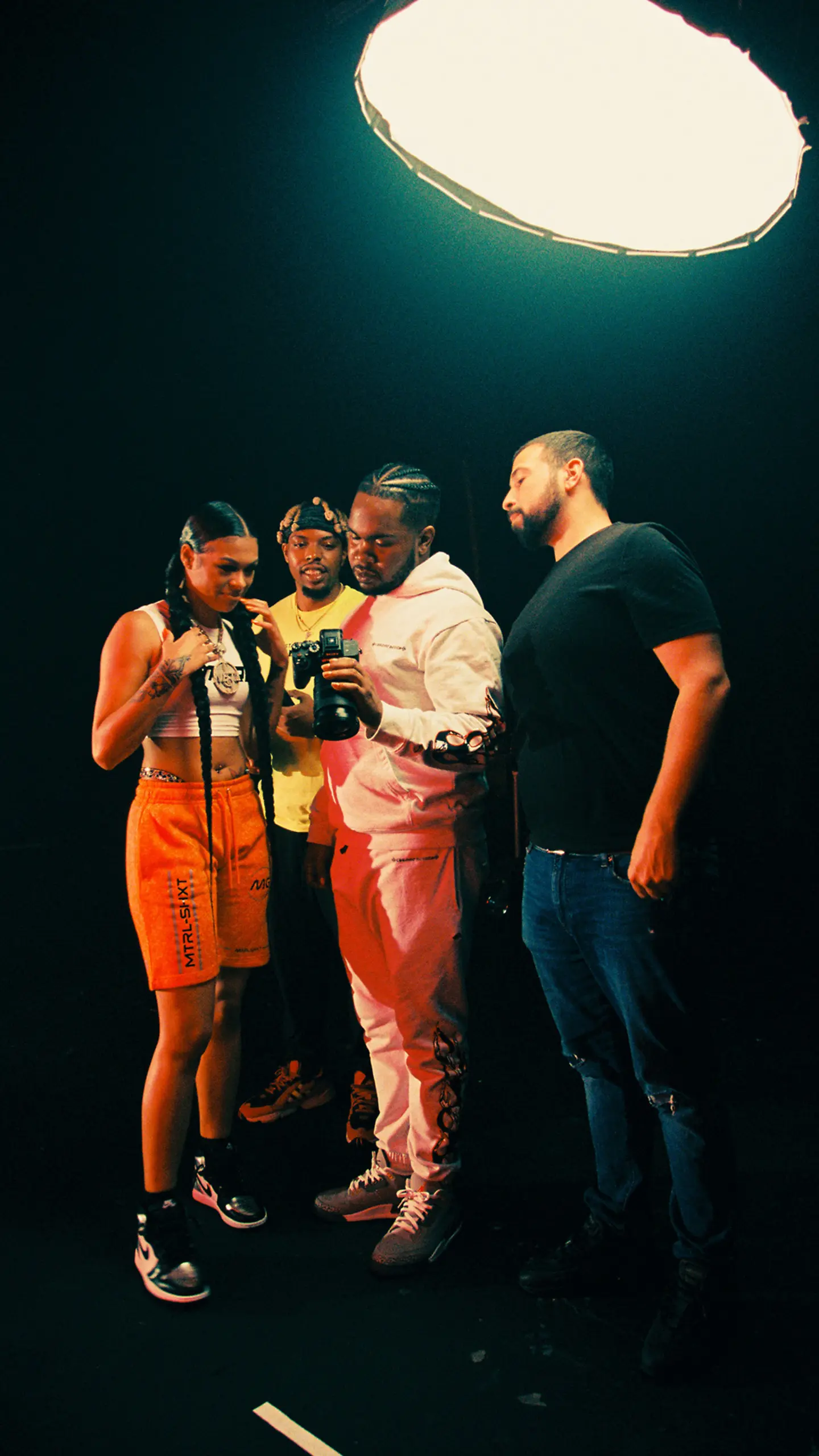
## Why Looks Matter More Than Budget
### The Audience Sees Quality, Not Cost
When people sit down to watch a film, they do not see the budget. They see the end result. Viewers are conditioned to expect a certain level of polish and professionalism, even if the film was made independently. That expectation creates a high bar for filmmakers working with limited resources, but it also presents an opportunity. If your film looks like a ten-million-dollar production, most viewers will treat it like one, regardless of the actual cost.
Perception is a powerful force in storytelling. High-quality visuals communicate professionalism and intent. A film that looks cinematic builds trust with the audience, keeps them engaged, and ultimately makes the story more immersive. This is why video production quality is often more influential than star power or expensive sets. People are willing to suspend disbelief for an engaging story, but they are less forgiving of poor lighting, weak sound, or inconsistent visuals.
In today’s streaming-first landscape, aesthetic quality can directly influence where your film lands. Streaming platforms, festival curators, and investors all use visual quality as a signal. Films that feel polished tend to receive more attention, better placement, and stronger word of mouth.
Whether you're aiming for indie success or hoping to break into wider distribution, visual appeal is often the first impression. That is why even **[documentary film production](https://c-istudios.com/documentary-film-production/)** has evolved, with filmmakers pushing boundaries to ensure their work not only informs but also looks exceptional.
There are countless examples of low-budget films that achieved remarkable visual results. *Moonlight*, *Whiplash*, and *The Babadook* are just a few that used lighting, framing, and minimalistic but effective design choices to punch far above their weight. These films gained critical acclaim not because of their budgets, but because of how they allocated their creative and technical energy.
A critical part of creating a polished product is planning ahead for feature film mastering & delivery. Even on a small budget, it is essential to prepare your footage and sound in a format suitable for theatrical, broadcast, or streaming delivery. Skimping on this stage can compromise the final presentation and disqualify you from professional platforms.
With the right creative marketing strategy and smart technical preparation, filmmakers can ensure that their low-budget film not only tells a powerful story but looks like a high-end production from the first frame to the last.
## Strategic Budget Allocation
## How to Make Every Dollar Count
When working with a limited budget, success hinges on one essential principle: spend your money where it shows. Every dollar should serve the image, the sound, or the story in a way that elevates the audience’s experience. Smart video production is not about spending less, but about spending wisely. The key is to identify the areas that make the biggest visual and emotional impact and to prioritize them above everything else.
Start with gear. It is tempting to blow your budget on the latest high-end camera, but the truth is that audience perception rarely hinges on brand names. Instead, rent or borrow professional-level video production gear that fits your needs without draining your resources.
Many filmmakers are now using compact mirrorless cameras paired with cinema lenses to achieve rich, cinematic looks at a fraction of the cost. The same goes for lighting, affordable LED panels or practical lights can create stunning results if used creatively.
Next, think about audio. Poor sound is one of the fastest ways to make a film feel amateur, even if the visuals are strong. Invest in a high-quality microphone, a reliable audio recorder, and experienced crew who understand audio engineering. Clean dialogue, immersive soundscapes, and a carefully curated score can add immense value without adding excessive cost.
Post-production is another place where budget allocation pays long-term dividends. A skilled editor with a strong creative vision can take raw footage and shape it into something truly compelling. Color grading alone can transform flat images into a vibrant, professional film. And if you plan for it, limited **[VFX compositing & animation](https://c-istudios.com/vfx-compositing-and-animation-services/)** can be used to extend sets, enhance mood, or add surreal elements, making your film feel more expansive than your location list suggests.
Finally, be intentional with your scheduling. A well-organized shoot reduces overtime, minimizes gear rental days, and avoids unnecessary reshoots. Crew fatigue and rushed decisions often result in costly mistakes. Pre-planning saves money and improves quality. Bringing in a film & [TV production](https://c-istudios.com/film-and-tv-production/) consultant or line producer with experience managing low-budget projects can offer critical insights into how to allocate funds across departments.
The secret is not cutting corners. It is about strategically choosing which corners matter most. By focusing your limited budget on gear that delivers value, investing in top-tier post-production, and planning for technical delivery, you can create a film that feels far more expensive than it actually is.
## Pre-Production Is Everything
### Script, Storyboarding, and Smart Planning
Before a single frame is shot, the real work of filmmaking begins. Pre-production is where the biggest budget-saving decisions happen, and it's also where the groundwork is laid for high-impact visuals. A well-organized pre-production phase allows filmmakers to reduce waste, avoid delays, and extract the maximum value from every resource. It is not just a planning stage, it is the stage that determines whether your $1 million film will look like it cost $10 million.
It all starts with the script. A lean, tightly written screenplay with limited locations, minimal characters, and story-driven scenes sets the tone for production. High-impact, low-cost storytelling is the goal. Consider writing with production in mind, intense scenes in a single location, dialogue-heavy moments that rely on performance, and sequences that can be achieved with practical effects rather than complex setups. Whether it’s a narrative piece or a documentary film production, this level of awareness ensures that creative ambition aligns with financial reality.
Storyboarding and shot listing are equally crucial. A clearly visualized plan helps everyone, from director to cinematographer to production designer, stay aligned on what must be captured. It reduces unnecessary takes, speeds up setup times, and helps you visualize how each element contributes to your high-end look. Even a simple hand-drawn storyboard or digital previs can eliminate hours of on-set confusion.
Scouting and securing locations ahead of time saves money and sets the visual tone. Look for locations that offer production value on their own, interesting textures, natural lighting, architectural depth, or dramatic environments. Shooting in real-world settings can elevate a film’s visuals without requiring expensive set builds. Having your team visit these spaces beforehand ensures technical feasibility and helps plan for gear, sound, and staging.
Building a shot-efficient schedule is another hidden art of great **[film & TV production](https://c-istudios.com/film-and-tv-production/)**. Grouping shots by location or lighting setup, minimizing company moves, and accounting for setup time will cut down labor costs and preserve energy on set. Efficient scheduling also gives you more room for multiple takes on your most important scenes, ensuring performance quality.
If your film serves a specific campaign, such as political campaigns or commercial partnerships, pre-production is also where you align visuals with messaging. Consulting with a media marketing consult expert during this phase ensures that your content strategy supports not just the film, but the larger goals behind it.
In low-budget filmmaking, every well-made plan replaces dollars you do not have. Pre-production is not where you save time, it is where you create value.
## Lighting, Lenses, and Composition Tricks
### Achieving Cinematic Visuals on a Budget
Creating a high-end look is often more about how you use your tools than which tools you use. Lighting, lens choice, and smart composition can dramatically enhance your film’s visual impact without requiring expensive equipment or elaborate setups. By mastering these core visual techniques, filmmakers can transform modest locations and gear into cinematic experiences that rival big-budget productions.
Lighting is arguably the most powerful tool in your arsenal. Great lighting can make a cheap set look rich and dramatic, while bad lighting can flatten even the most beautifully designed scene. Natural light is free and often stunning, especially during golden hour.
Shooting at the right time of day and using reflectors or bounce cards can give your visuals a soft, filmic quality. When working indoors or at night, affordable LED panels or softboxes can go a long way. It is not about blasting light everywhere, it is about shaping light, creating depth, and guiding the viewer’s eye. Thoughtful lighting is the cornerstone of [professional video production](https://c-istudios.com/video-production-services/).
Lens choice is another powerful stylistic lever. Instead of investing in brand-new cinema glass, consider renting or using vintage lenses. These often have unique flares, color casts, and falloff characteristics that give a scene personality and texture. Paired with a modern digital camera, these lenses add character while softening the overly crisp digital look. The right lens can also help isolate subjects and add cinematic depth to even the simplest locations.
Composition is where creativity really shines. Mastering framing techniques like the rule of thirds, negative space, symmetry, and leading lines allows you to turn everyday environments into striking backdrops. Use foreground elements to create depth, mirrors to add visual complexity, or shallow depth of field to emphasize emotion. These choices cost nothing, but they can make each shot feel deliberate and professional.
Visual cohesion also matters. Maintaining a consistent color palette and visual theme across your film enhances its perceived value. Work with someone who understands branding & graphic design principles to align your production’s aesthetic with your overall storytelling. This becomes even more critical in marketing-facing content, such as commercials, documentaries, or branded narratives for content creation campaigns.
In the world of low-budget film & TV production, the camera does not care how much money you spent. It only captures what you place in front of it and how you choose to light, frame, and move through that world. When you control these elements with precision, your budget becomes invisible, and your vision, unforgettable.

## Post-Production Magic
### Make It Look Expensive in the Edit
Post-production is where raw footage becomes cinema. It is the hidden engine behind every stunning film, often making the difference between amateur and professional. For low-budget filmmakers, this stage is not just a technical process, it is the ultimate opportunity to elevate the entire production. With careful planning and creative finesse, post-production can transform modestly captured scenes into something that looks and feels like a high-budget production.
Color grading is one of the most impactful post-production techniques available. A well-graded film has a cohesive tone, visual identity, and emotional atmosphere. Whether you're using free software or professional tools like DaVinci Resolve, proper color correction followed by stylized grading can hide lighting flaws, unify disparate shots, and create cinematic mood. Even if you shot with minimal gear, grading gives your footage polish and intent, core elements of compelling video production.
Beyond visuals, audio shapes the viewer’s experience. Poor audio instantly shatters immersion, no matter how good your film looks. This is where audio engineering comes into play. Balancing dialogue, cleaning up background noise, layering foley, and mixing ambient soundscapes creates depth and realism. Underscoring this with the right music, licensed or custom, amplifies emotion and keeps viewers engaged. When done well, great sound design makes a $1 million film feel like $10 million.
Visual effects are another powerful tool when used strategically. You do not need blockbuster-level CGI, but simple VFX compositing & animation techniques can enhance realism, expand settings, or add subtle visual storytelling elements. Replace a window view with a skyline. Add fog or embers. Mask out distractions in the background. Smart use of VFX helps you achieve results that would otherwise require expensive locations or physical effects.
Even the editing process itself contributes significantly to production value. Pacing, rhythm, and transitions shape how the story flows. A confident, intentional edit gives the impression of directorial control and creative authority. That is exactly what audiences and distributors expect from polished film & TV production.
Finally, think ahead to feature film mastering & delivery. Even if your budget is tight, preparing your film in formats suitable for broadcast, theatrical release, and streaming platforms adds credibility. Technical readiness is part of professional storytelling, and it signals that your project is built to go the distance.
Post-production is not where you cut corners. It is where you craft excellence. And for budget-conscious filmmakers, it is often the place where magic truly happens.
## Creative Talent Over Famous Faces
## Hire Artists, Not Celebrities
One of the most effective ways to elevate a film’s quality without inflating the budget is to focus on talent, real creative talent. While big-name actors and directors come with prestige, they also come with hefty price tags. For filmmakers working with limited funds, casting unknown but skilled performers and hiring versatile, passionate crew members can result in a final product that feels just as impactful, if not more so. The right team brings energy, vision, and flexibility all of which are priceless when every dollar counts.
When selecting your cast, prioritize chemistry, authenticity, and performance ability. Audiences connect more deeply with genuine emotion than with a recognizable face. Many breakout performances have come from newcomers in indie films, actors who poured themselves into roles without the weight of celebrity. These individuals are often more open to experimentation, collaboration, and long production days. Whether you're producing a narrative feature or a documentary film production, authentic presence always trumps name recognition.
Behind the camera, look for crew members who wear multiple hats. A cinematographer who also understands lighting, a director with editing experience, or a sound recordist who knows audio engineering can significantly streamline your workflow. In budget-conscious film & TV production, having a crew that can multitask reduces costs while maintaining quality. The key is finding passionate creatives who see your project as an opportunity, not just a gig.
This is also where partnerships with artist management & media creation teams can be invaluable. These teams can connect you with emerging actors, stylists, choreographers, and designers who are actively building their portfolios. By collaborating with driven creatives who have something to prove, you inject energy and vision into your production, without paying studio prices.
Incorporating elements of **[creative marketing](https://c-istudios.com/creative-marketing-services/)** into your production team is another savvy move. Bringing in marketers, designers, and social media strategists during the creative process helps align your visual storytelling with your eventual promotional goals. They can also ensure your film's tone and aesthetic work well across trailers, posters, and social media campaigns.
Ultimately, talent is not measured by price. It is measured by impact. A well-cast, creatively charged team can make your film feel elevated, intentional, and deeply professional. If you invest in people who believe in your vision and are excited to bring it to life, their passion and creativity will translate to every frame, and your audience will feel it.
## Optimizing for Distribution and Visibility
### It’s Not Enough to Look Good—You Need to Be Seen
Creating a visually stunning film is only half the battle. The other half is making sure people actually see it. In today’s saturated media landscape, distribution and visibility strategies must be baked into the production process from the beginning. Without a plan for how to launch, market, and position your film, even the most polished low-budget masterpiece risks going unnoticed.
Start with your digital presence. Your film needs a clean, accessible website that acts as a hub for trailers, press kits, cast bios, and festival updates. This is where web development, web hosting, and web maintenance become crucial. A professional-looking site builds credibility with viewers, distributors, and festival programmers. Make sure it is mobile-optimized and designed with a user-friendly layout that encourages exploration and contact.
Visibility also depends heavily on discoverability, which is why SEO copywriting plays a key role. Every page of your film’s site should include search-optimized content that targets relevant keywords, such as genre, themes, cast, and location. Blog posts, director statements, and behind-the-scenes articles provide not just engagement, but search value. These can also serve as press-friendly materials for media outlets and bloggers.
Once your web presence is solid, amplify it through social media marketing. Start building buzz well before release with teaser content, cast interviews, countdowns, and production updates. Engage audiences with meaningful behind-the-scenes insights, interactive polls, and exclusive content drops.
Platforms like Instagram, TikTok, and **[YouTube Shorts](https://www.youtube.com/@YouTube/shorts)** are ideal for short-form vertical content, while longer trailers and updates belong on Vimeo, YouTube, and Facebook. A consistent voice and visual identity across platforms will enhance brand recall and build anticipation.
Consider partnering with a media marketing consult to shape your strategy across platforms, festivals, and digital channels. These professionals understand the nuances of targeting niche communities, optimizing algorithms, and crafting campaigns that generate organic traction. Their expertise can help ensure your launch aligns with your creative goals and reaches the right eyes.
For filmmakers seeking long-term returns, early planning for distribution is essential. Whether you’re targeting festivals, AVOD/SVOD platforms, or theatrical micro-releases, your film’s production value must be matched by its marketing muscle. Leverage smart creative marketing decisions made during filming, like on-brand visuals, stylistic consistency, and audience-aware storytelling, to create a seamless pipeline from finished film to eager viewer.
In the end, making your film look like a $10 million production is only the first victory. Ensuring the world sees it, remembers it, and shares it is the true mark of success.
## Work with C&I Studios
If you are planning a project like this, our team can take it from concept to final delivery. Explore our [film and TV production](https://c-istudios.com/film-and-tv-production/), browse [our work](https://c-istudios.com/our-work/) to see how we tell brand stories, and [get in touch](https://c-istudios.com/contact/) when you are ready to start.
Originally published June 24, 2025
---
*This content is from [C&I Studios](https://c-istudios.com), a full-service production company.*
---
# What Really Happens in Post-Production? A Look Inside Our Workflow
> Published: June 23, 2025
> Categories: Post & VFX
> Source: https://c-istudios.com/what-really-happens-in-post-production/
---
.cib{--paper:#1b1d1f;--ink:#fff;--body:#d5d7d9;--muted:#8b9096;--line:rgba(255,255,255,.12);--thumb:#2b2e31;--card:#212426;--accent:#c02b0a;--blue:#5B8FA8;--serif:'Playfair Display',Georgia,serif;--sans:'Poppins',-apple-system,sans-serif;--measure:900px;background:var(--paper);color:var(--body);font-family:var(--sans);line-height:1.6;position:relative;left:50%;transform:translateX(-50%);width:90vw;max-width:1920px}
.cib *{box-sizing:border-box}
.cib .kicker{max-width:var(--measure);margin:58px auto 0;padding:0 22px;font-size:12.5px;font-weight:700;letter-spacing:2.5px;text-transform:uppercase;color:var(--blue)}
.cib h1.cibh1{text-wrap:balance;font-family:var(--serif);font-weight:500;font-size:clamp(46px,6vw,72px);line-height:1.08;color:var(--ink);max-width:var(--measure);margin:18px auto 0;padding:0 22px;letter-spacing:-.5px}
.cib .metarow{max-width:var(--measure);margin:20px auto 0;padding:0 22px;color:var(--muted);font-size:14px}
.cib .hero{position:relative;width:100%;height:0;padding-bottom:56.25%;overflow:hidden;margin:48px auto 0;border-top:1px solid var(--line);border-bottom:1px solid var(--line)}
.cib .hero .ph{width:100%;aspect-ratio:16/9;background:var(--thumb);border-top:1px solid var(--line);border-bottom:1px solid var(--line);display:flex;align-items:center;justify-content:center;color:#7d8288;font-size:13px;text-align:center;padding:0 20px}
.cib .body{max-width:var(--measure);margin:12px auto 0;padding:52px 22px 6px}
.cib .body.lead p:first-child{font-size:23px;line-height:1.62;color:var(--ink)}
.cib .body p{font-size:18.5px;line-height:1.85;margin:0 0 30px;color:var(--body)}
.cib .body h2{text-wrap:balance;font-family:var(--serif);font-weight:500;font-size:clamp(32px,4vw,48px);line-height:1.22;color:var(--ink);margin:70px 0 20px;letter-spacing:-.3px}
.cib .body h3{text-wrap:balance;font-family:var(--sans);font-weight:600;font-size:22px;color:var(--ink);margin:38px 0 8px}
.cib .body a{color:var(--ink);text-decoration:underline;text-decoration-color:rgba(255,255,255,.4);text-underline-offset:3px}
.cib .body a:hover{text-decoration-color:var(--ink)}
.cib .ctable{width:100%;border-collapse:collapse;margin:16px 0 30px;font-size:16px}
.cib .ctable th{background:#000;color:#fff;text-align:left;padding:10px 12px;font-family:var(--sans)}
.cib .ctable td{padding:10px 12px;border-bottom:1px solid var(--line);color:var(--body)}
.cib .inimg{position:relative;width:100%;height:0;padding-bottom:56.25%;overflow:hidden;margin:72px auto;border-top:1px solid var(--line);border-bottom:1px solid var(--line)}
.cib .inimg .ph{width:100%;aspect-ratio:16/9;background:var(--thumb);border-top:1px solid var(--line);border-bottom:1px solid var(--line);display:flex;align-items:center;justify-content:center;color:#7d8288;font-size:13px}
.cib .origpub{max-width:var(--measure);margin:60px auto 0;padding:26px 22px 0;border-top:1px solid var(--line);color:var(--muted);font-size:13.5px}
.cib .related{max-width:1200px;margin:64px auto 0;padding:34px 22px 76px}
.cib .related h3{font-family:var(--sans);font-size:12.5px;letter-spacing:2px;text-transform:uppercase;color:var(--ink);margin:0 0 24px}
.cib .grid{display:grid;grid-template-columns:repeat(3,1fr);gap:28px}
.cib .rc{background:var(--card);border:1px solid var(--line);display:block;text-decoration:none;color:inherit;transition:border-color .15s}
.cib a.rc:hover{border-color:rgba(255,255,255,.5)}
.cib .rc .thumb{position:relative;width:100%;height:0;padding-bottom:56.25%;background:var(--thumb);overflow:hidden}
.cib .rc .thumb img{position:absolute!important;top:0!important;left:0!important;width:100%!important;height:100%!important;object-fit:cover!important;margin:0!important}
.cib .rc .cc{padding:14px 15px 17px}
.cib .rc .rt{font-family:var(--serif);font-weight:500;font-size:16px;line-height:1.3;color:var(--ink);margin:0 0 6px}
.cib .rc .rm{font-size:11px;letter-spacing:1px;text-transform:uppercase;color:var(--muted)}
.cib img{margin:0!important;padding:0!important;display:block!important;vertical-align:top;max-width:100%}
.cib .hero img,.cib .inimg img{position:absolute!important;top:0!important;left:0!important;width:100%!important;height:100%!important;object-fit:cover!important;margin:0!important;padding:0!important;border:0!important;display:block!important;aspect-ratio:auto!important}
.cib .hero+.body{padding-top:36px}
@media(max-width:760px){.cib .grid{grid-template-columns:1fr}.cib .body h2{margin:52px 0 16px}.cib .body p{font-size:17.5px}.cib .inimg,.cib .hero{margin-top:44px}}
.cib .vembed{max-width:var(--measure);margin:44px auto;padding:0 22px}.cib .vembed .vwrap{position:relative;width:100%;height:0;padding-bottom:56.25%}.cib .vembed .vwrap iframe{position:absolute;top:0;left:0;width:100%;height:100%;border:0}
Post & VFX
# What Really Happens in Post-Production? A Look Inside Our Workflow
16 min read
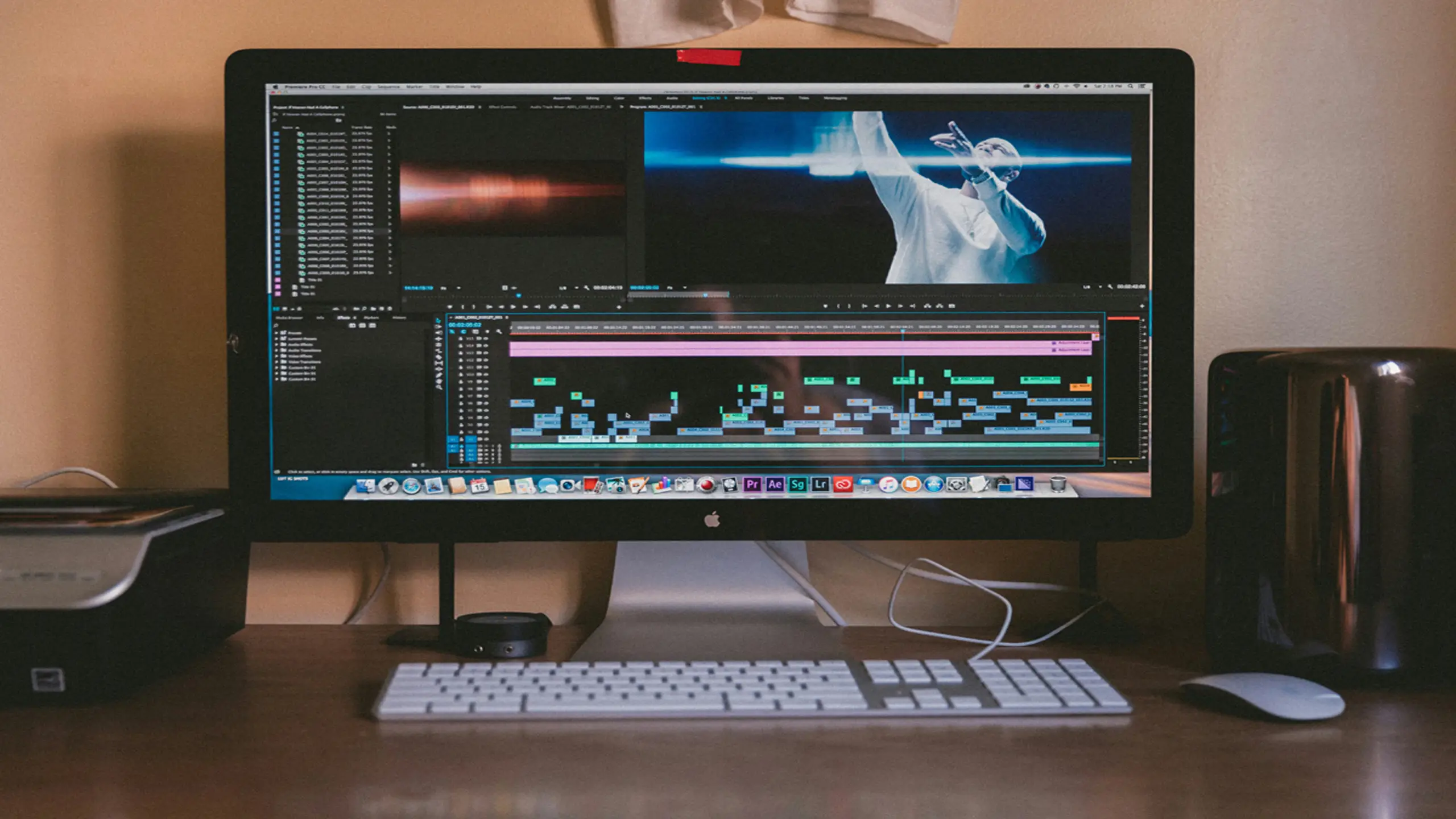
Post-production is where raw footage becomes a finished story. It’s the stage after filming where editing, sound design, color grading, and final delivery all come together to shape the project’s final look and feel. Whether it’s a commercial, documentary, or TV show, post-production is where meaning is made.
At C&I Studios, post-production is a multi-step, collaborative process driven by storytelling and technical precision. Every project goes through a tailored workflow to ensure it meets creative, strategic, and platform-specific goals.
In this article, we’ll take you inside our full post-production pipeline, what happens, why it matters, and how it all comes together.
## Organizing Raw Footage and Assets
Before the first cut is made or the first frame is color graded, the backbone of any successful post-production process lies in organization. Logging and managing files may not sound glamorous, but it is essential for smooth collaboration and efficient [content creation](https://c-istudios.com/content-creation-services/). At this stage, our team imports all raw materials, video clips, audio recordings, B-roll, stills, and motion graphics, into a structured digital environment designed for accessibility and speed.
We begin by creating a detailed folder structure tailored to the project’s needs. Footage is sorted by scene, location, or camera angle, while audio files are categorized by dialogue, sound effects, or ambient recordings. Graphics and design assets are also filed separately. Each file is renamed using consistent naming conventions and tagged with metadata, making it easy to search and retrieve at any stage of the workflow.
Proper file formats are also crucial at this step. We standardize everything early on, whether it’s converting footage into editable formats like ProRes or organizing stills in high-resolution TIFF files. This prevents compatibility issues and ensures that editors and designers are working with the highest quality assets possible. The right choice of video production gear during filming plays a big role in determining which formats are optimal for post.
Backups are non-negotiable. At C&I Studios, we follow a three-tiered backup protocol: one copy is stored on a local editing drive, another on a secure server with RAID protection, and a third on a cloud-based system for off-site access. This triple-layered approach safeguards against data loss and allows our team to collaborate remotely on large-scale creative marketing projects without delay or disruption.
What may seem like a purely technical phase is actually the foundation for everything that follows. When assets are well-organized, editors spend less time searching and more time creating. When file formats are consistent, the workflow flows. When backups are in place, the project is protected from the unexpected. This level of preparation maintains project integrity and allows us to meet tight deadlines without sacrificing quality.
In short, this first step sets the tone. Organized assets equal organized thinking, and that’s where powerful, intentional content creation begins.
## Crafting the Story Through Editing
Once everything is organized, the editing process begins, where raw footage is shaped into a cohesive, compelling narrative. This is not just about placing clips on a timeline. It is about crafting emotion, rhythm, and clarity. Good editing is invisible, but its impact is massive. It determines how an audience feels, when they pay attention, and what they remember.
Editors at C&I Studios start by reviewing all the logged footage, identifying key moments, standout performances, and story anchors. Whether we are producing a commercial, [music video](https://c-istudios.com/video-production-services/music-video-production/), or piece for [documentary film production](https://c-istudios.com/documentary-film-production/), the goal is to extract the essence of the story and build around it. This involves cutting scenes for flow, choosing the right angles for emotional impact, and eliminating anything that distracts from the core message.
Narrative structure varies by project. In brand content, we focus on clarity and call-to-action moments. In political campaigns, the editing must evoke urgency and trust within a tight timeframe. For longer-form film & [TV production](https://c-istudios.com/film-and-tv-production/), it’s about pacing, knowing when to speed up, when to slow down, and when to let silence speak.
The technical side of editing also plays a vital role. Editors must align audio with visuals, sync multiple camera feeds, and build smooth transitions. A well-edited timeline includes placeholders for sound design, VFX compositing & animation, and motion graphics that may come later in the workflow. Each layer of the project is stacked logically to make revisions easy and collaboration seamless.
Feedback and iteration are central to our editing process. Once a first draft is ready, internal teams review it for tone, accuracy, and storytelling strength. Clients are brought in next, with edit sessions that allow real-time notes and creative input. This collaborative rhythm ensures we stay aligned with the brand’s voice and vision, while also allowing room for innovation.
Ultimately, editing is where intent becomes reality. A powerful scene can lose all impact if cut poorly, while an average clip can shine when placed in the right context. That’s why editing is considered the heart of video production. It is not just post-work, it is where the story finally takes shape and earns its emotional weight.
## Sound Design and Audio Engineering
Sound is often the unsung hero of post-production. While visuals capture attention, it is the audio that holds emotion, builds atmosphere, and immerses the audience in the story. At this stage, our team moves beyond the rough cut to focus on crafting a rich, layered soundscape that elevates the project to a professional standard.
The first step in sound design is dialogue editing. We clean up raw vocal tracks to remove background noise, pops, clicks, and inconsistencies in volume. This ensures that every word is crisp and intelligible, especially in projects where clear messaging is critical such as political campaigns or documentary film production. We also fine-tune timing to match voiceovers and on-screen action for perfect sync.
Next, we add environmental sound. This includes ambient noise like wind, city traffic, or indoor acoustics that give each scene a sense of place. These subtle additions are not always noticed by the viewer, but they are deeply felt. For more dynamic projects such as video & audio live streaming, these environmental layers help make the experience feel immediate and real.
Music selection and scoring come next. Sometimes we work with original compositions, other times we license tracks that support the mood and pacing of the edit. Music serves as an emotional guide for the viewer. A well-timed swell or a quiet pause can change the entire meaning of a scene. Our **[audio engineering](https://c-istudios.com/audio-engineering-services/)** team adjusts every cue point, volume shift, and transition to ensure smooth integration.
Sound effects are layered in to support actions on screen. Whether it is the click of a button, the rustle of clothes, or the crash of waves, sound effects enhance realism and provide tactile depth. These are balanced alongside dialogue and music to avoid clutter or distraction.
The final step is the audio mix. This is where all layers, dialogue, ambient sound, music, and effects, are adjusted for clarity, balance, and compliance with delivery standards. Different platforms require different loudness levels and formatting, and our team ensures everything is optimized before mastering.
Exceptional sound design is not an afterthought. It is a core part of storytelling in film & TV production, content creation, and even fast-turnaround projects like digital ads. When done right, it supports the visuals, guides the viewer, and transforms good content into great content.
## Color Grading and Visual Refinement
After editing and sound design are in place, we shift focus to the visual tone of the project through color correction and grading. This stage defines how the final video looks and feels. It enhances mood, consistency, and brand identity while correcting technical inconsistencies in the raw footage.
The process begins with color correction. This involves balancing exposure, contrast, white balance, and saturation across all clips. Footage shot on different cameras or under different lighting conditions is adjusted so that it looks seamless. Even small corrections at this stage make a major difference in ensuring the visual integrity of the project. Whether we are working on a corporate video or a scene for documentary film production, consistency is key.
Once the footage is corrected, we begin the creative phase known as color grading. Here, we adjust the tones and hues to match the desired atmosphere of the video. For example, a warm color palette might create a sense of nostalgia, while cooler tones can add a sleek, modern edge. In branded content, color is carefully tuned to reflect visual identity, aligning with the client's established branding & graphic design.
Color grading also enhances storytelling. In narrative projects, different scenes might carry distinct moods that are supported by visual cues. We might desaturate colors to reflect tension, or boost vibrancy for moments of joy and energy. In film & TV production, color grading is often the final touch that gives a project its cinematic polish.
Our team uses professional tools like DaVinci Resolve to work with high-resolution formats and precise color profiles. For each project, we create a look-up table (LUT) or custom grade that can be consistently applied throughout. This ensures every frame meets the same visual standard, especially for long-form or episodic content.
This stage also includes small visual enhancements such as sharpening, noise reduction, and shot stabilization. These refinements may seem minor, but they help elevate the production value and ensure the video meets platform-specific requirements for compression and streaming quality.
Color grading is about more than aesthetics. It is about amplifying the impact of your story through visual tone. Whether the project supports creative marketing, social media marketing, or brand storytelling, this phase transforms clean footage into a polished, emotionally resonant piece ready for final delivery.
## VFX, Compositing, and Animation
Visual effects are not only reserved for blockbuster movies. In modern content creation, subtle and strategic use of [VFX compositing, and animation](https://c-istudios.com/vfx-compositing-and-animation-services/) can elevate storytelling, enhance professionalism, and add clarity to complex ideas. At C&I Studios, we approach this stage with precision and purpose, making sure that every visual layer adds meaning, not distraction.
VFX compositing begins with layering visual elements that were shot separately or created digitally. This can include adding skies, replacing screens, removing unwanted objects, or combining live-action footage with motion graphics. Compositing is essential for maintaining visual continuity, especially when working with green screen footage or adjusting backgrounds to better align with a brand’s aesthetic.
Animation, on the other hand, plays a key role in guiding attention and communicating abstract concepts. In our social media marketing and creative marketing projects, animated text, kinetic typography, or logo reveals are often used to reinforce messaging. These animations are built to match the project’s tone, bold and fast-paced for product launches, or smooth and subtle for luxury branding.
In campaign content or political campaigns, animation helps simplify complex ideas and data visualization. For example, turning statistics into dynamic motion graphics keeps viewers engaged while improving comprehension. For documentary film production, we may use animated maps, timelines, or lower-thirds to support storytelling without breaking immersion.
The tools we use include Adobe After Effects, Blender, and Cinema 4D, depending on the complexity and style of the project. Each asset is designed with careful attention to timing, placement, and interactivity with the live footage. The goal is to create visual harmony so that the effects feel integrated, not artificial.
Throughout this process, visual elements are reviewed in the context of both the video’s purpose and platform. Social platforms, television, and websites all have different tolerances and requirements for animated content. Our team ensures that all files are optimized and responsive without sacrificing quality or message clarity.
Well-executed VFX compositing & animation are what give videos their visual signature. They allow us to do more than just record moments, they let us craft experiences. Whether we are reinforcing a brand identity, visualizing a complex concept, or adding a final polish, this phase brings energy, engagement, and emotional pull to the finished product.
## Mastering and Delivery for Different Platforms
Once editing, sound, color, and visual effects are complete, the project moves into the mastering and delivery phase. This is where everything is finalized and exported in the right format for its intended platforms. It is not just about hitting “export”, this phase involves technical precision, platform-specific requirements, and a deep understanding of how content performs across different media environments.
Mastering begins with a final quality check. Our team reviews the entire video frame by frame to catch any lingering issues, such as dropped frames, audio imbalances, or graphics that are slightly out of sync. We check resolution, color profiles, and subtitle accuracy to ensure the final version is ready for delivery. This step is critical for both short-form and long-form content creation, whether the video will be hosted online or distributed to television networks.
The next step is formatting. Each platform, whether YouTube, broadcast TV, Instagram, or [streaming services](https://www.cnet.com/tech/services-and-software/best-live-tv-streaming-service-for-cord-cutters/), has its own unique technical standards. These include aspect ratio, file format, bit rate, audio loudness, and captioning specifications. A video intended for social media might be delivered in a vertical 9:16 format, while a cinema release or **[feature film mastering & delivery](https://c-istudios.com/feature-film-mastering-and-delivery/)** requires 4K resolution and specific color space calibration.
For web-based projects, we often generate multiple versions of the same video to serve different purposes. There may be a full-length version for websites, a shortened teaser for ads, and a captioned version for silent autoplay on social feeds. These variations allow clients to extend the reach of their content without re-editing from scratch. Delivery-ready formats are also compressed responsibly to maintain quality while reducing load times, a balance that matters for user experience and SEO.
All final versions are organized and delivered through secure file transfer systems, including cloud-based portals for easy client access. Each file is labeled clearly to prevent confusion and includes supporting assets like thumbnails, captions, and platform-specific metadata.
Our process ensures that the final product meets the highest standards of [professional video production](https://c-istudios.com/video-production-services/). Whether the content is meant for national campaigns, internal communications, or embedded in websites through web development, this stage guarantees that what the audience sees is consistent, clear, and fully polished. It is the final bridge between the creative vision and the viewer’s screen.
## Hosting, Maintenance, and Content Lifecycle
After a video is delivered, the job is not necessarily done. The long-term success of any content creation project depends on how it is managed, hosted, and maintained over time. At C&I Studios, we understand that post-production does not end with the final export, it extends into the digital ecosystem where content lives, evolves, and continues to serve strategic goals.
The first consideration is web hosting. Once a video is complete, it needs to be stored in a way that allows fast, reliable access for viewers. For clients with high-traffic websites or landing pages, we help implement dedicated hosting solutions that ensure smooth playback across devices and geographies. Hosting must support high-resolution video, fast load speeds, and mobile optimization to ensure the content performs effectively.
But simply uploading a video is not enough. That’s where **[web maintenance](https://c-istudios.com/web-maintenance/)** comes in. As platforms evolve and marketing needs shift, videos may need to be re-encoded, updated, or re-integrated into new site structures. We provide long-term support for maintaining player compatibility, fixing broken embeds, updating metadata, and ensuring accessibility compliance through captioning or alternate formats.
Proper management of video assets also contributes to brand longevity. All files are archived in organized, redundant storage systems that allow future access for repurposing or redistribution. This is especially valuable for clients with ongoing media marketing consult strategies who want to build from existing assets rather than start from scratch each time.
For example, a branded campaign video may be re-edited into a teaser, translated for multilingual audiences, or turned into an animated case study down the road. These extensions are made possible through smart planning in earlier stages and responsible asset storage now. It is part of a broader approach to content lifecycle thinking, making sure every piece of work has a future beyond its initial release.
We also help clients create content libraries on their websites, complete with searchable tags, categories, and integrated analytics. These libraries not only serve SEO goals but also allow teams across departments to reuse valuable content in proposals, social media posts, and presentations.
By thinking beyond the initial launch, this phase ensures your content remains active, accessible, and aligned with evolving goals. Hosting and maintenance are not technical afterthoughts, they are essential components of a long-term creative marketing strategy that maximizes the life and value of your video assets.
## Team Collaboration and Workflow Management
Behind every polished video lies a deeply collaborative process. Post-production is not a one-person job, it is the result of coordinated efforts across multiple departments, each bringing unique expertise. At C&I Studios, our workflow is designed to foster seamless communication, creative alignment, and efficient delivery from start to finish.
It begins with clear roles and responsibilities. Editors, sound designers, colorists, animators, and producers each have defined tasks within the workflow. A centralized project management system helps everyone stay on track by organizing timelines, assigning tasks, and tracking revisions. This ensures that nothing falls through the cracks, even during complex productions like TV show pitching or multi-part branded content.
Internal communication tools, such as Slack or Frame.io, allow team members to leave time-stamped feedback, share references, and collaborate on visual or sound-based decisions in real time. For high-volume projects in video production, this type of granular feedback loop saves time and supports creative precision. It also enables fast iterations when client feedback is received.
Client communication is equally structured. We follow a multi-stage review process that includes rough cuts, fine cuts, and final approvals. At each checkpoint, clients are invited to share thoughts, ask questions, and request changes. These are logged and responded to in a timely manner so the creative vision remains aligned throughout. Whether the project is a commercial, professional photography showcase, or animated case study, transparency and collaboration drive results.
Cross-department collaboration is also key in larger productions. A branding & graphic design team may supply visual assets that the animation team then brings to life. Similarly, when managing artist management & media creation, we coordinate wardrobe, lighting, and post-edit preferences well before footage is shot. This type of pre-emptive coordination reduces errors and accelerates delivery in the final stages.
As projects progress, status updates and performance reports are shared internally to keep every team member informed. By maintaining open lines of communication and a shared understanding of the creative brief, we reduce missteps and build a cohesive end product that reflects the intended message and brand voice.
Effective workflow management is not just about staying organized, it is about creating the conditions for creativity to thrive. When communication flows smoothly, each contributor can focus on doing their best work. That is how we transform raw footage into memorable, high-impact content creation that resonates across platforms and audiences.
## Work with C&I Studios
If you are planning a project like this, our team can take it from concept to final delivery. Explore our [post-production services](https://c-istudios.com/post-production-services/), browse [our work](https://c-istudios.com/our-work/) to see how we tell brand stories, and [get in touch](https://c-istudios.com/contact/) when you are ready to start.
Originally published June 23, 2025
---
*This content is from [C&I Studios](https://c-istudios.com), a full-service production company.*
---
# How Does a Film Go from Rough Cut to Final Master in Post-Production?
> Published: June 20, 2025
> Categories: Post & VFX
> Source: https://c-istudios.com/how-does-a-film-go-from-rough-cut-to-final-master-in-post-production/
---
.cib{--paper:#1b1d1f;--ink:#fff;--body:#d5d7d9;--muted:#8b9096;--line:rgba(255,255,255,.12);--thumb:#2b2e31;--card:#212426;--accent:#c02b0a;--blue:#5B8FA8;--serif:'Playfair Display',Georgia,serif;--sans:'Poppins',-apple-system,sans-serif;--measure:900px;background:var(--paper);color:var(--body);font-family:var(--sans);line-height:1.6;position:relative;left:50%;transform:translateX(-50%);width:90vw;max-width:1920px}
.cib *{box-sizing:border-box}
.cib .kicker{max-width:var(--measure);margin:58px auto 0;padding:0 22px;font-size:12.5px;font-weight:700;letter-spacing:2.5px;text-transform:uppercase;color:var(--blue)}
.cib h1.cibh1{text-wrap:balance;font-family:var(--serif);font-weight:500;font-size:clamp(46px,6vw,72px);line-height:1.08;color:var(--ink);max-width:var(--measure);margin:18px auto 0;padding:0 22px;letter-spacing:-.5px}
.cib .metarow{max-width:var(--measure);margin:20px auto 0;padding:0 22px;color:var(--muted);font-size:14px}
.cib .hero{position:relative;width:100%;height:0;padding-bottom:56.25%;overflow:hidden;margin:48px auto 0;border-top:1px solid var(--line);border-bottom:1px solid var(--line)}
.cib .hero .ph{width:100%;aspect-ratio:16/9;background:var(--thumb);border-top:1px solid var(--line);border-bottom:1px solid var(--line);display:flex;align-items:center;justify-content:center;color:#7d8288;font-size:13px;text-align:center;padding:0 20px}
.cib .body{max-width:var(--measure);margin:12px auto 0;padding:52px 22px 6px}
.cib .body.lead p:first-child{font-size:23px;line-height:1.62;color:var(--ink)}
.cib .body p{font-size:18.5px;line-height:1.85;margin:0 0 30px;color:var(--body)}
.cib .body h2{text-wrap:balance;font-family:var(--serif);font-weight:500;font-size:clamp(32px,4vw,48px);line-height:1.22;color:var(--ink);margin:70px 0 20px;letter-spacing:-.3px}
.cib .body h3{text-wrap:balance;font-family:var(--sans);font-weight:600;font-size:22px;color:var(--ink);margin:38px 0 8px}
.cib .body a{color:var(--ink);text-decoration:underline;text-decoration-color:rgba(255,255,255,.4);text-underline-offset:3px}
.cib .body a:hover{text-decoration-color:var(--ink)}
.cib .ctable{width:100%;border-collapse:collapse;margin:16px 0 30px;font-size:16px}
.cib .ctable th{background:#000;color:#fff;text-align:left;padding:10px 12px;font-family:var(--sans)}
.cib .ctable td{padding:10px 12px;border-bottom:1px solid var(--line);color:var(--body)}
.cib .inimg{position:relative;width:100%;height:0;padding-bottom:56.25%;overflow:hidden;margin:72px auto;border-top:1px solid var(--line);border-bottom:1px solid var(--line)}
.cib .inimg .ph{width:100%;aspect-ratio:16/9;background:var(--thumb);border-top:1px solid var(--line);border-bottom:1px solid var(--line);display:flex;align-items:center;justify-content:center;color:#7d8288;font-size:13px}
.cib .origpub{max-width:var(--measure);margin:60px auto 0;padding:26px 22px 0;border-top:1px solid var(--line);color:var(--muted);font-size:13.5px}
.cib .related{max-width:1200px;margin:64px auto 0;padding:34px 22px 76px}
.cib .related h3{font-family:var(--sans);font-size:12.5px;letter-spacing:2px;text-transform:uppercase;color:var(--ink);margin:0 0 24px}
.cib .grid{display:grid;grid-template-columns:repeat(3,1fr);gap:28px}
.cib .rc{background:var(--card);border:1px solid var(--line);display:block;text-decoration:none;color:inherit;transition:border-color .15s}
.cib a.rc:hover{border-color:rgba(255,255,255,.5)}
.cib .rc .thumb{position:relative;width:100%;height:0;padding-bottom:56.25%;background:var(--thumb);overflow:hidden}
.cib .rc .thumb img{position:absolute!important;top:0!important;left:0!important;width:100%!important;height:100%!important;object-fit:cover!important;margin:0!important}
.cib .rc .cc{padding:14px 15px 17px}
.cib .rc .rt{font-family:var(--serif);font-weight:500;font-size:16px;line-height:1.3;color:var(--ink);margin:0 0 6px}
.cib .rc .rm{font-size:11px;letter-spacing:1px;text-transform:uppercase;color:var(--muted)}
.cib img{margin:0!important;padding:0!important;display:block!important;vertical-align:top;max-width:100%}
.cib .hero img,.cib .inimg img{position:absolute!important;top:0!important;left:0!important;width:100%!important;height:100%!important;object-fit:cover!important;margin:0!important;padding:0!important;border:0!important;display:block!important;aspect-ratio:auto!important}
.cib .hero+.body{padding-top:36px}
@media(max-width:760px){.cib .grid{grid-template-columns:1fr}.cib .body h2{margin:52px 0 16px}.cib .body p{font-size:17.5px}.cib .inimg,.cib .hero{margin-top:44px}}
.cib .vembed{max-width:var(--measure);margin:44px auto;padding:0 22px}.cib .vembed .vwrap{position:relative;width:100%;height:0;padding-bottom:56.25%}.cib .vembed .vwrap iframe{position:absolute;top:0;left:0;width:100%;height:100%;border:0}
Post & VFX
# How Does a Film Go from Rough Cut to Final Master in Post-Production?
16 min read
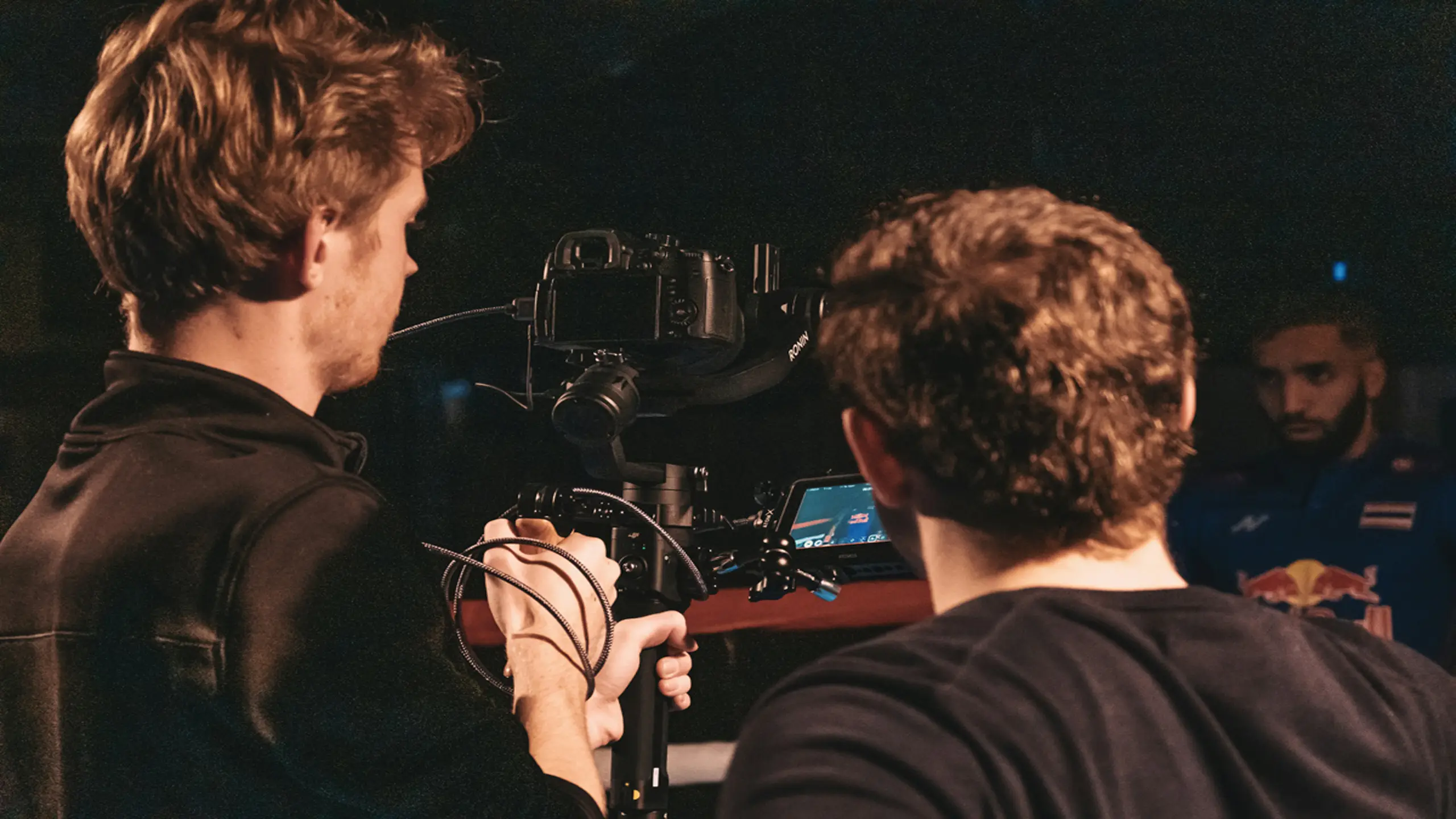
The film begins as a collection of disjointed scenes, raw footage captured in the moment, full of potential but far from complete. What transforms that material into a cohesive, emotionally resonant story is the meticulous work done after the cameras stop rolling. From shaping the narrative structure to refining audio and visual elements, post-production is where a film finds its true form.
This journey, from rough cut to final master, is not just technical, it’s deeply creative. It’s where pacing is perfected, tone is established, and the emotional core of the story is fully realized, ready to connect with audiences.

## What Is a Rough Cut?
A rough cut is the very first assembled version of a film, an early draft created by piecing together raw footage in a basic narrative order. It’s not polished or refined, but it offers a clear idea of how the story unfolds. In many ways, the rough cut is like a sketch before the painting; it’s essential for identifying what works, what doesn’t, and where the pacing, tone, or continuity might need adjustment.
During this stage, editors use all available footage to build a structure that mirrors the script, but it's often far from perfect. Scenes may be out of sync, transitions may feel awkward, and temporary audio might stand in for final sound design. It’s not uncommon for a rough cut to be significantly longer than the intended runtime, sometimes by 30 minutes or more. This surplus allows the team to trim excess, refine performances, and tighten sequences as they move toward a more finished product.
The role of the rough cut is critical in **[content creation](https://c-istudios.com/content-creation-services/)**, as it provides the creative team with something tangible to react to. Directors, producers, and editors will sit together to analyze the emotional rhythm of each scene and assess whether the overall arc feels compelling. Key decisions, such as removing subplots, reordering scenes, or altering the ending, often begin at this stage. It’s also the point where a film’s central themes start to crystallize.
In documentary film production, the rough cut can be especially transformative. Since documentaries rely heavily on real footage, interviews, and often unscripted moments, the editor’s ability to shape a coherent story from hours of material is where the documentary truly takes form. The narrative is discovered in the edit room, not predetermined in a script.
Tools matter, too. Reliable [video production](https://c-istudios.com/video-production-services/) gear, from editing software to high-speed storage drives, is essential for handling large files, reviewing footage in real-time, and enabling creative experimentation. The technology empowers editors to stay organized, flexible, and responsive to creative feedback.
Ultimately, the rough cut is a foundation, not a finish line. It’s the first serious look at what the film could become, laying the groundwork for the deeper technical and artistic refinements that follow in post-production.
## Picture Lock — When the Edits Are Final
Once the rough cut has gone through multiple revisions and received feedback from the director and producers, the project eventually reaches a stage known as picture lock. This is the point where all decisions regarding shot selection, scene order, pacing, and transitions are considered final. No more changes will be made to the visual portion of the film, and the edit is “locked” so that sound, music, color, and visual effects teams can begin their work with confidence that nothing in the timeline will shift.
Picture lock is a turning point in the video production process. Up until this stage, editors might experiment with different angles, insert temporary audio, or restructure the narrative to improve clarity or emotional flow. But once picture lock is declared, every frame is set. This allows for precise synchronization of audio elements, detailed planning of visual effects, and color grading work to begin without the risk of redoing it due to timeline changes.
At this stage, the editor works closely with the director to make sure the film’s visual language is exactly right. The rhythm of cuts, the way characters are introduced, and the visual transitions between scenes are all finalized to create a cohesive experience. Picture lock also allows the team to identify specific frames where effects, music cues, or sound enhancements will be placed. This coordination is essential for efficiency and creative alignment.
This step is especially important for projects that require collaboration with large teams, such as documentary film production or independent features with tight deadlines. A locked picture ensures that departments can work in parallel without confusion or delays. It also protects against costly revisions. Changing even one second of footage after picture lock could disrupt music synchronization, voiceover timing, or visual effect sequences, which may lead to extra costs and hours of rework.
With picture lock in place, filmmakers can now begin focusing on enhancing the emotional and atmospheric depth of the story. It is the moment when the raw footage becomes a blueprint for finishing touches, rather than an open-ended canvas. In modern content creation, this discipline ensures consistency, saves resources, and keeps everyone aligned on a shared creative vision. Picture lock is not just a technical milestone, it is the start of the film's transformation from a draft to a polished final experience.
## Sound Design and Audio Mixing
With the visual edit locked in place, the focus now shifts to sound. Sound design and audio mixing are vital components of post-production that breathe life into a film’s imagery. This phase involves layering ambient sound, dialogue, Foley effects, music, and more to create an immersive auditory experience. While visuals show us the story, it is often sound that makes us feel it.
Sound design begins by cleaning and enhancing the production audio. Dialogue recorded on set is rarely perfect, so it often requires careful adjustment or replacement through automated dialogue replacement (ADR). Foley artists then recreate everyday sounds, like footsteps, rustling clothes, or clinking glasses, to add texture and realism. Meanwhile, ambient sounds help establish location and atmosphere, grounding the audience in each scene.
Once all the components are gathered, the audio mixing process begins. This involves balancing levels so that dialogue is clear, music swells at the right moments, and effects enhance rather than overpower. Every element must work together to support the emotional tone and rhythm of the film. Whether it's the subtle echo in a quiet hallway or the deep rumble of an approaching storm, audio contributes to the storytelling in ways that often go unnoticed, but are deeply felt.
In high-quality video production, sound is never an afterthought. It shapes the audience's perception and can dramatically alter the tone of a scene. A comedic moment can become tense with a change in music or pacing. Likewise, poor sound design can pull the viewer out of the experience, no matter how strong the visuals are.
This stage also leverages modern tools and techniques. Advanced **[audio engineering](https://c-istudios.com/audio-engineering-services/)**software allows teams to isolate background noise, enhance vocal clarity, and mix tracks in surround sound or spatial audio formats. This is especially important for projects aimed at streaming platforms, theaters, or international release where consistent quality is essential.
For projects like documentary film production, where interviews, voiceovers, and natural environments blend together, the sound team plays a critical role in preserving authenticity while enhancing emotional engagement. Whether capturing the tension in a political interview or the serenity of a nature scene, skilled sound design turns raw recordings into emotional storytelling.
Ultimately, sound design and audio mixing do more than just fill silence. They shape mood, emphasize story beats, and guide the audience's emotional journey, making them essential to turning a good film into a great one.
## Visual Effects and Motion Graphics
Once the audio foundation is established, the film moves into a more visually technical phase: visual effects and motion graphics. This stage is where creativity meets precision. Whether it’s removing unwanted elements from a scene, enhancing environments, or creating entire sequences from scratch, visual effects help bring the director’s vision to life when practical methods fall short.
Visual effects (VFX) can range from subtle adjustments like sky replacements or background cleanups to complex compositing of explosions, creatures, or futuristic landscapes. In many films, audiences may not even realize that VFX is being used. Removing a visible microphone, adjusting a lighting mistake, or digitally altering an actor’s appearance are all examples of seamless VFX work.
Motion graphics, on the other hand, often serve functional or storytelling roles. These can include animated title sequences, location callouts, or data visualizations in a documentary film production. In genres like sci-fi or action, motion graphics may also be used for HUDs (heads-up displays), tactical screens, or dreamlike transitions that elevate the film’s creative style.
The process begins with a thorough breakdown of what each scene requires. Visual effects supervisors and motion graphics artists collaborate closely with the director and editor to understand timing, intention, and integration. Storyboards and animatics are often used to pre-visualize complex sequences before production even begins, but in post-production, these plans come to life in full resolution.
For these tasks, advanced content creation software and skilled professionals are a must. Layering footage, simulating physics, and rendering detailed environments all require powerful machines and technical expertise. The right video production gear ensures smoother workflow, better previews, and faster turnaround times for revisions and approvals.
This step is especially important in branded content, commercial videos, and political campaign films, where a sleek, polished aesthetic is expected. In such cases, motion graphics are not only stylistic elements but also tools for storytelling and brand identity.
VFX and motion graphics are not just visual add-ons. They’re integral to how a film communicates tone, time, and space. They allow stories to stretch beyond reality without breaking immersion. When executed correctly, they blend seamlessly with live action, enhancing both spectacle and substance in the final piece.

## Color Correction and Color Grading
Once visual effects and motion graphics are finalized, the film enters the phase of color correction and grading, one of the most artistically expressive and emotionally impactful stages of post-production. This is where the visual tone of the film is shaped, and every shot is fine-tuned to look cohesive, intentional, and stylistically aligned with the story.
Color correction comes first. It’s a technical process that ensures visual consistency across every frame. Shots are matched for brightness, contrast, saturation, and white balance. Because scenes are often filmed out of order or under varying lighting conditions, this step ensures a seamless visual flow. It fixes problems like mismatched lighting or inconsistent skin tones, laying the groundwork for the creative enhancements that follow.
Color grading, on the other hand, is where mood and emotion are amplified through color choices. A cool blue palette might communicate sadness or tension, while warm golden tones suggest comfort or nostalgia. This phase is highly collaborative, as directors and cinematographers work closely with colorists to align the final look with the narrative’s emotional arc.
For instance, in documentary film production, grading can help differentiate timelines or underscore emotional beats in interviews. In fiction films, color is used to establish genre, horror might lean into harsh shadows and muted tones, while a romantic comedy could favor bright, airy visuals. Regardless of genre, the goal is the same: enhance the storytelling by making visuals resonate emotionally.
Colorists use professional tools for this task, hardware calibrated for accuracy and software designed for precision. The use of high-end video production gear ensures that colors appear correctly across all screens and formats. Whether the film is heading to theaters, streaming platforms, or broadcast TV, grading ensures the final product is visually optimized.
In modern content creation, color grading also plays a key role in branding and visual identity. A branded film, social campaign, or even a **[political campaign](https://c-istudios.com/political-campaign-services/)** video must maintain a visual style that aligns with its message and target audience. A consistent palette creates recognition, reinforces tone, and adds polish to the finished piece.
Ultimately, color correction and grading are more than aesthetic polish, they’re tools of emotional storytelling. These steps guide how the viewer feels in each scene, making color one of the most powerful narrative devices in the entire post-production workflow.
## Title Design, Subtitles, and Credits
With visuals and sound refined, the focus shifts to the final details that make a film feel complete, title design, subtitles, and end credits. Though these elements may seem simple compared to editing or effects, they carry significant narrative and functional weight. They establish tone, provide accessibility, and deliver essential context for viewers.
The opening title sequence sets the first visual impression of a film. Whether it's a bold cinematic title or a subtle fade-in, this element reflects the film’s identity and style. Some productions opt for animated intros, while others incorporate motion graphics that blend into the opening scenes. For creators working in branded content or creative marketing, the title is also a crucial space for visual branding and tone-setting.
Subtitles and captions are increasingly vital, not only for accessibility but also for wider distribution. With global audiences in mind, subtitles help reach viewers across languages and cultures. Closed captions are essential for those who are deaf or hard of hearing, and they also support viewers watching content without sound, especially on social platforms. In documentary film production, accurate subtitles can preserve interview integrity and emotional nuance, especially when dealing with multilingual subjects.
Credits, meanwhile, provide recognition and legal fulfillment. The end credits honor the dozens or hundreds of people who contributed to the project, from cast and crew to post-production teams. The formatting, design, and length of credits vary depending on the film’s platform. A theatrical release might include full scrolling credits, while web-based content might display shortened or interactive versions.
Design plays an important role here. Professional **[branding & graphic design](https://c-istudios.com/branding-and-graphic-design-services/)** helps ensure that text elements like titles and credits match the film’s visual tone and aesthetic. Fonts, placement, and motion all contribute to a consistent and professional feel. For corporate or campaign-based films, branded titles and lower thirds often reflect the company’s identity or political messaging. This is particularly relevant in media marketing consult services, where every visual cue reinforces the brand story.
Subtitles, titles, and credits are the bridge between storytelling and communication. They provide clarity, recognition, and polish. Although they come at the end of the creative timeline, they are part of the first and last impressions the audience receives. Getting them right is a mark of both respect and professionalism in any film & [TV production](https://c-istudios.com/film-and-tv-production/).
## Final Mastering and Deliverables
After all creative elements are locked in, visuals, sound, effects, color, titles, and subtitles, it is time to build the final version of the film through a process known as final mastering. This stage ensures that the entire project is technically unified, precisely formatted, and ready for distribution across its intended platforms.
Final mastering is where every component is brought together into a single, high-resolution output. It involves syncing the final audio mix with the locked picture, verifying color consistency, and ensuring frame accuracy across the full timeline. The output must meet exact technical specifications based on how the film will be delivered, whether it’s for theatrical exhibition, broadcast, streaming, or digital download.
This step is vital in **[feature film mastering & delivery](https://c-istudios.com/feature-film-mastering-and-delivery/)**, where strict standards dictate the formats and codecs required by different distributors. For example, a theatrical release may require a Digital Cinema Package (DCP), which includes not just the film itself but metadata, encryption keys, and specific aspect ratios. A streaming platform, on the other hand, may require multiple versions of the same film: different bitrates, subtitles, audio languages, and compression levels.
File integrity is also checked thoroughly during this stage. Quality control teams screen the entire film to catch technical issues like dropped frames, audio glitches, or subtitle errors. Nothing is left to chance. The goal is a clean, consistent experience across all viewing devices and conditions.
In projects that involve web hosting, web maintenance, or cross-platform distribution, mastering includes preparing versions tailored for mobile, desktop, and smart TV playback. Compression settings, resolution scaling, and file packaging all come into play. High-quality video production gear helps manage the large file sizes and processing demands of this step, especially when exporting in 4K, HDR, or surround sound formats.
Mastering is also when backup and archival processes begin. Secure storage and redundant file formats ensure the longevity and reusability of the project, especially for branded campaigns, TV show pitching, or political content that may need repurposing in the future.
This stage may be technical in nature, but it serves a deeply creative purpose: preserving the integrity of all the hard work that came before it. Final mastering is the last checkpoint before a film leaves the creator’s hands and meets its audience, fully formed, professionally prepared, and ready to make its impact.
\
## Marketing Prep and Distribution Assets
Once the film is fully mastered, the attention turns to preparing marketing and distribution assets. This final step is what bridges the creative process with the audience. Even the most visually stunning and emotionally powerful film needs the right tools to reach the world, generate engagement, and drive results. Whether for theatrical release, online platforms, or corporate use, this phase determines how and where the film will live.
Marketing prep includes the creation of trailers, teaser clips, social media edits, and behind-the-scenes content. These assets are essential for building anticipation and attracting viewers. Editors often go back into the master project to extract key scenes, emotional beats, or high-action moments that best represent the final product. These short forms of content are then formatted for multiple platforms, horizontal for YouTube and websites, vertical for Instagram Reels or TikTok, and square for in-feed posts.
For branded content and creative marketing, every visual asset must align with the brand’s tone, color palette, and messaging. Consistency across these touchpoints builds recognition and trust. At this stage, designers and editors often collaborate with branding & graphic design teams to ensure that fonts, logos, and lower thirds reflect the overall identity. This is especially crucial in commercial projects and political campaigns, where message clarity and audience targeting are non-negotiable.
Distribution assets also include press kits, promotional stills, and formatted versions for different media outlets. For example, **[social media marketing](https://c-istudios.com/social-media-marketing-services/)** teams may need multiple resolutions and durations for each platform. Public relations teams may request poster designs, director bios, and high-resolution stills for coverage opportunities. In some cases, filmmakers will even create alternate cuts or censored versions based on regional guidelines.
SEO-friendly descriptions, titles, and tags are also part of this process. With the help of SEO copywriting, content creators can improve visibility on search engines and video platforms. The more discoverable your film is, the more likely it is to gain traction organically.
Technical staff ensure that all distribution versions are tested for performance across devices, and web development teams may integrate the video into landing pages or digital campaigns. Ongoing web maintenance is also important to ensure these assets remain functional and accessible after launch.
This phase completes the creative lifecycle, taking the final product and preparing it to resonate with the right audience, in the right format, at the right time. It’s not just about release, it’s about making sure your work is seen, remembered, and acted upon.
## Work with C&I Studios
If you are planning a project like this, our team can take it from concept to final delivery. Explore our [post-production services](https://c-istudios.com/post-production-services/), browse [our work](https://c-istudios.com/our-work/) to see how we tell brand stories, and [get in touch](https://c-istudios.com/contact/) when you are ready to start.
Originally published June 20, 2025
---
*This content is from [C&I Studios](https://c-istudios.com), a full-service production company.*
---
# Why You Should Never Treat Post-Production as an Afterthought
> Published: June 18, 2025
> Categories: Post & VFX
> Source: https://c-istudios.com/why-you-should-never-treat-post-production-as-an-afterthought/
---
.cib{--paper:#1b1d1f;--ink:#fff;--body:#d5d7d9;--muted:#8b9096;--line:rgba(255,255,255,.12);--thumb:#2b2e31;--card:#212426;--accent:#c02b0a;--blue:#5B8FA8;--serif:'Playfair Display',Georgia,serif;--sans:'Poppins',-apple-system,sans-serif;--measure:900px;background:var(--paper);color:var(--body);font-family:var(--sans);line-height:1.6;position:relative;left:50%;transform:translateX(-50%);width:90vw;max-width:1920px}
.cib *{box-sizing:border-box}
.cib .kicker{max-width:var(--measure);margin:58px auto 0;padding:0 22px;font-size:12.5px;font-weight:700;letter-spacing:2.5px;text-transform:uppercase;color:var(--blue)}
.cib h1.cibh1{text-wrap:balance;font-family:var(--serif);font-weight:500;font-size:clamp(46px,6vw,72px);line-height:1.08;color:var(--ink);max-width:var(--measure);margin:18px auto 0;padding:0 22px;letter-spacing:-.5px}
.cib .metarow{max-width:var(--measure);margin:20px auto 0;padding:0 22px;color:var(--muted);font-size:14px}
.cib .hero{position:relative;width:100%;height:0;padding-bottom:56.25%;overflow:hidden;margin:48px auto 0;border-top:1px solid var(--line);border-bottom:1px solid var(--line)}
.cib .hero .ph{width:100%;aspect-ratio:16/9;background:var(--thumb);border-top:1px solid var(--line);border-bottom:1px solid var(--line);display:flex;align-items:center;justify-content:center;color:#7d8288;font-size:13px;text-align:center;padding:0 20px}
.cib .body{max-width:var(--measure);margin:12px auto 0;padding:52px 22px 6px}
.cib .body.lead p:first-child{font-size:23px;line-height:1.62;color:var(--ink)}
.cib .body p{font-size:18.5px;line-height:1.85;margin:0 0 30px;color:var(--body)}
.cib .body h2{text-wrap:balance;font-family:var(--serif);font-weight:500;font-size:clamp(32px,4vw,48px);line-height:1.22;color:var(--ink);margin:70px 0 20px;letter-spacing:-.3px}
.cib .body h3{text-wrap:balance;font-family:var(--sans);font-weight:600;font-size:22px;color:var(--ink);margin:38px 0 8px}
.cib .body a{color:var(--ink);text-decoration:underline;text-decoration-color:rgba(255,255,255,.4);text-underline-offset:3px}
.cib .body a:hover{text-decoration-color:var(--ink)}
.cib .ctable{width:100%;border-collapse:collapse;margin:16px 0 30px;font-size:16px}
.cib .ctable th{background:#000;color:#fff;text-align:left;padding:10px 12px;font-family:var(--sans)}
.cib .ctable td{padding:10px 12px;border-bottom:1px solid var(--line);color:var(--body)}
.cib .inimg{position:relative;width:100%;height:0;padding-bottom:56.25%;overflow:hidden;margin:72px auto;border-top:1px solid var(--line);border-bottom:1px solid var(--line)}
.cib .inimg .ph{width:100%;aspect-ratio:16/9;background:var(--thumb);border-top:1px solid var(--line);border-bottom:1px solid var(--line);display:flex;align-items:center;justify-content:center;color:#7d8288;font-size:13px}
.cib .origpub{max-width:var(--measure);margin:60px auto 0;padding:26px 22px 0;border-top:1px solid var(--line);color:var(--muted);font-size:13.5px}
.cib .related{max-width:1200px;margin:64px auto 0;padding:34px 22px 76px}
.cib .related h3{font-family:var(--sans);font-size:12.5px;letter-spacing:2px;text-transform:uppercase;color:var(--ink);margin:0 0 24px}
.cib .grid{display:grid;grid-template-columns:repeat(3,1fr);gap:28px}
.cib .rc{background:var(--card);border:1px solid var(--line);display:block;text-decoration:none;color:inherit;transition:border-color .15s}
.cib a.rc:hover{border-color:rgba(255,255,255,.5)}
.cib .rc .thumb{position:relative;width:100%;height:0;padding-bottom:56.25%;background:var(--thumb);overflow:hidden}
.cib .rc .thumb img{position:absolute!important;top:0!important;left:0!important;width:100%!important;height:100%!important;object-fit:cover!important;margin:0!important}
.cib .rc .cc{padding:14px 15px 17px}
.cib .rc .rt{font-family:var(--serif);font-weight:500;font-size:16px;line-height:1.3;color:var(--ink);margin:0 0 6px}
.cib .rc .rm{font-size:11px;letter-spacing:1px;text-transform:uppercase;color:var(--muted)}
.cib img{margin:0!important;padding:0!important;display:block!important;vertical-align:top;max-width:100%}
.cib .hero img,.cib .inimg img{position:absolute!important;top:0!important;left:0!important;width:100%!important;height:100%!important;object-fit:cover!important;margin:0!important;padding:0!important;border:0!important;display:block!important;aspect-ratio:auto!important}
.cib .hero+.body{padding-top:36px}
@media(max-width:760px){.cib .grid{grid-template-columns:1fr}.cib .body h2{margin:52px 0 16px}.cib .body p{font-size:17.5px}.cib .inimg,.cib .hero{margin-top:44px}}
.cib .vembed{max-width:var(--measure);margin:44px auto;padding:0 22px}.cib .vembed .vwrap{position:relative;width:100%;height:0;padding-bottom:56.25%}.cib .vembed .vwrap iframe{position:absolute;top:0;left:0;width:100%;height:100%;border:0}
Post & VFX
# Why You Should Never Treat Post-Production as an Afterthought
14 min read
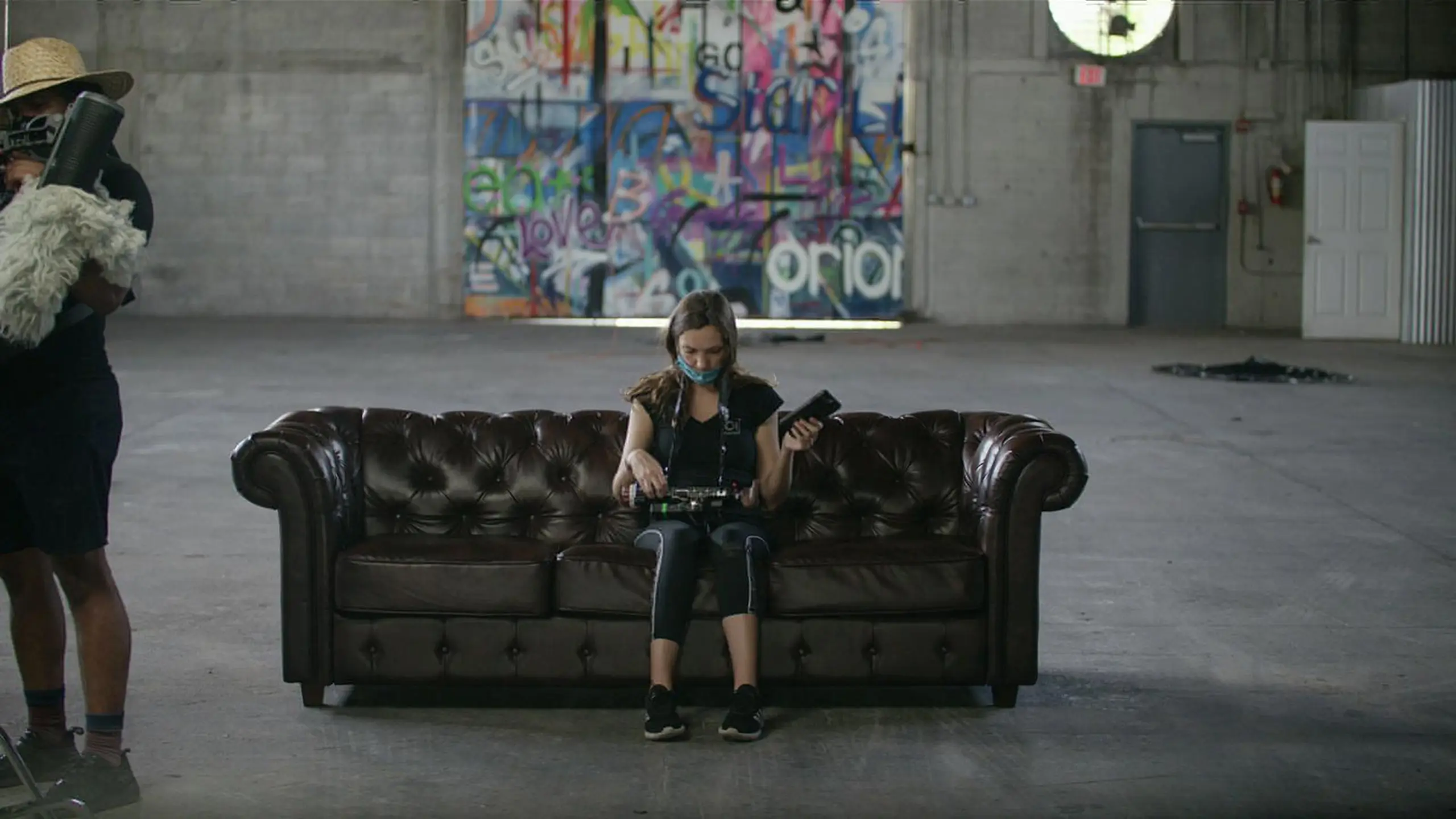
Post-production is often where the real magic happens but it’s also the stage most commonly underestimated. Once the cameras stop rolling, many assume the hardest part is over. In reality, that assumption can derail even the most promising projects.
Whether you're creating a high-budget commercial, a short documentary, or a branded campaign, the decisions made after the shoot can make or break the final product. This article pulls back the curtain on what truly happens behind the scenes, from fine-tuning visuals and audio to building emotional arcs, to show why post-production is far too important to be treated as an afterthought.
## The True Scope of Post-Production
Post-production is far more than just cutting footage together. It is a layered, collaborative process that shapes how stories are told, emotions are felt, and brands are remembered. From adjusting the tone of a scene with precise color grading to enhancing emotional beats through sound design, post is where raw material evolves into a cohesive, compelling final product.
At the heart of the process lies editing, where scenes are structured for flow, pace, and narrative clarity. Each decision made during editing, such as the timing of a cut or the inclusion of a reaction shot, affects the story’s impact. Color correction then ensures visual consistency and mood, aligning the look with the intended aesthetic.
A vibrant product ad demands different tonal values than a moody short film or corporate explainer. When these elements are neglected, the visual narrative can feel flat, inconsistent, or even confusing.
Sound design adds another crucial layer. From dialogue clarity to environmental sound effects, the audio landscape sets the emotional temperature for the viewer. Without balanced audio, even the most beautiful visuals lose their immersive power. In projects requiring advanced visual elements, **[VFX compositing & animation](https://c-istudios.com/vfx-compositing-and-animation-services/)** brings creative visions to life that would be impossible to capture on set. Explosions, holograms, glowing maps, or surreal landscapes are just a few examples of how post extends the boundaries of visual storytelling.
Post-production workflows vary greatly depending on the type of project. For example, documentary [film production](https://c-istudios.com/film-and-tv-production/) often relies on hundreds of hours of raw footage, requiring extensive curation, subtitling, archival insertion, and legal review. In contrast, political campaigns may demand ultra-fast turnaround times with persuasive editing techniques, impactful graphics, and real-time response editing to breaking news. Branded content must stay tightly aligned with corporate identity and marketing tone, often involving multiple rounds of revision and approval.
When it comes to high-stakes projects such as TV show pitching, the pilot episode or teaser reel undergoes intense post scrutiny to achieve studio-grade polish. Every frame must reflect the show’s concept, tone, and audience appeal. For cinematic releases, feature film mastering & delivery is the final stage, where audio levels, resolution specs, subtitles, and visual consistency are perfected for theatrical or digital distribution.
## Why Cutting Corners Costs More
When budgets get tight or timelines shrink, post-production is often the first phase to be compressed or minimized. This shortcut approach might seem cost-effective in the moment, but it almost always leads to larger problems down the line. Skipping essential post-production steps can compromise both the quality of the final product and the success of the campaign it supports.
Poor editing, for example, can turn a compelling story into a disjointed mess. Viewers may become confused or disengaged, resulting in low watch times or minimal shares. Sloppy transitions, jarring cuts, or pacing issues can distract from the message, no matter how strong the original footage is. Similarly, lackluster color grading can make even high-end shots look amateur, reducing the credibility of the brand or message being promoted.
Audio mistakes are particularly damaging. A video with muffled dialogue, background noise, or inconsistent volume will quickly lose viewers. Effective audio engineering is not optional, it is essential to audience retention and overall professionalism. In commercial work, these lapses can translate directly into lost revenue or client dissatisfaction.
On the marketing side, weak post-production impacts performance metrics. Campaigns created without proper editing and polish tend to underperform in SEO copywriting, **[media marketing consults](https://c-istudios.com/media-marketing-consultation-services/)**, and social distribution. If your content looks unrefined, it undermines your authority and diminishes trust with your audience. You may find yourself paying extra for new cuts, updated animations, or outsourced fixes that could have been avoided with a stronger post process from the start.
In some cases, these issues escalate. Political ads or branded campaigns that go live with errors can cause reputational damage. A typo on a title card, a glitchy graphic, or an off-brand color tone might seem small, but they signal carelessness. Correcting these mistakes mid-campaign takes time, energy, and often more money than if the post team had been empowered upfront.
Technical aspects also matter. Using outdated or mismatched [video production](https://c-istudios.com/video-production-services/) gear, or working without proper software and storage systems, can lead to export problems, playback errors, or formatting issues. These technical setbacks delay launch schedules and reduce compatibility across platforms.
In the end, cutting corners in post doesn't save money. It shifts the cost from a controlled process to damage control, often at the worst possible moment. Investing in a complete and thoughtful post-production workflow protects both creative vision and financial outcome.
## Post-Production as the Storytelling Engine
Storytelling does not end when the camera stops rolling. In fact, it is in post-production where the story is truly shaped, refined, and brought to life. The pacing of scenes, the mood of the visuals, the rhythm of the edits, all of these are crafted in post, transforming raw footage into emotionally resonant experiences.
Editors act as storytellers, not just technicians. They determine the heartbeat of a narrative, choosing which moments breathe and which move quickly. A shift in pacing can turn a flat sequence into a gripping scene or elevate a basic product video into something memorable. This narrative control gives editors the ability to emphasize themes, build tension, or guide the viewer’s focus.
Visual storytelling is further enhanced through color correction and image enhancement. A warm tone can create nostalgia, while a cooler grade evokes professionalism or isolation.
These visual cues subconsciously inform how the viewer feels about the subject, setting the emotional tone without a single word spoken. This is especially important in brand storytelling, where every shade, cut, and transition must reflect company values and identity.
The integration of VFX compositing & animation expands the storytelling possibilities even further. Whether you’re adding motion graphics to a corporate explainer or visual effects to a narrative scene, these tools allow you to show what cannot be captured on camera. A well-timed animation can clarify a complex concept or visually tie together disparate ideas. Used effectively, it reinforces both understanding and retention.
Meanwhile, sound plays a powerful but often invisible role. Through dialogue editing, ambient sound, and scoring, audio engineering helps set the scene and guide the viewer’s emotions. The swell of music at just the right moment can amplify drama, excitement, or resolution. Silence, when used intentionally, can also speak volumes.
Post-production doesn’t just polish a story. It defines it. A project might begin with a strong idea and great footage, but it is the post process that shapes how the audience ultimately experiences the narrative. It’s where creative decisions align with strategy, making this phase essential in everything from short-form content and advertising to long-form storytelling and feature film mastering & delivery.
When done right, post-production is not invisible. It’s unforgettable. And that is what turns casual viewers into loyal followers.
## Collaboration Starts After the Shoot
Many people assume that collaboration on a video project ends once the cameras stop rolling. In reality, post-production is where the most critical collaborative work begins. Editors, sound designers, animators, and creative directors come together to refine and elevate the material. This synergy is what brings a project’s full potential to life.
During production, much of the focus is on capturing assets. But it’s in post where creative vision becomes actionable. The footage is reviewed, narratives are shaped, and stylistic choices are debated and finalized.
A director may work closely with the editor to fine-tune pacing, while a motion designer might sync animations with music cues. Colorists ensure the visual tone matches the brand, and sound engineers polish audio for maximum clarity. Every team member brings a different lens to the project, but their efforts must align to serve the same story.
Collaboration in post becomes even more crucial during high-stakes productions like **[political campaigns](https://c-istudios.com/political-campaign-services/)**, where messaging must be precise, timely, and emotionally impactful. Editors may work directly with consultants to revise voiceovers, update graphics, or adjust content based on polling or public response. The turnaround is fast, and the stakes are high, making seamless teamwork vital.
For digital and brand-focused content, post also becomes a dialogue between the studio and the client. In many creative marketing projects, multiple stakeholders are involved, brand managers, copywriters, legal teams, and media strategists. Feedback loops are integrated into the post workflow, with rounds of revisions to ensure the final deliverable meets both artistic standards and campaign objectives.
Social-focused projects, such as those involving social media marketing, demand adaptability in post. Editors must reformat the same content for multiple platforms, YouTube, TikTok, Instagram, and LinkedIn, each with its own dimensions, pacing, and tone. Collaborative planning ensures the messaging remains consistent across all touchpoints without feeling repetitive.
Even in traditional video workflows, collaboration extends to clients providing brand assets, voiceover scripts, or product guidelines. In agency environments, teams will often work from shared servers or cloud platforms to ensure real-time updates and minimize delays.
## Technology That Powers Great Post-Production
Behind every seamless video lies a suite of powerful technologies driving the post-production process. These tools not only increase efficiency but also unlock creative possibilities that were once unimaginable. From industry-standard editing platforms to cutting-edge rendering engines, the right technology stack determines the quality and scalability of any project.
At the core of post-production are editing programs like Adobe Premiere Pro, Final Cut Pro, and DaVinci Resolve. These tools allow for precise timeline control, multilayer editing, and deep integration with other software for audio and graphics. Editors rely on them to refine story structure, polish transitions, and ensure a smooth viewing experience across devices.
Color grading and correction are elevated through specialized tools like DaVinci Resolve’s node-based interface. Whether you’re enhancing skin tones or giving an entire film a stylized aesthetic, this process is essential to delivering a cinematic look. Color workflows are especially vital in **[documentary film production](https://c-istudios.com/political-campaign-services/)**, where different cameras and lighting environments can introduce visual inconsistencies.
Visual effects and VFX compositing & animation require high-performance hardware and software such as Adobe After Effects, Nuke, or Cinema 4D. These platforms enable creators to composite multiple elements into one scene, add digital enhancements, and build immersive animated sequences. From kinetic text in brand videos to surreal landscapes in narratives, post-powered visuals expand creative boundaries.
Audio post-production also benefits from advanced software like Avid Pro Tools and Adobe Audition. These tools allow sound engineers to fine-tune voiceovers, balance ambient tracks, eliminate background noise, and shape emotional impact through music and effects. High-quality audio engineering ensures that viewers stay engaged from the first second to the last.
Equally important is the infrastructure supporting these tools. Cloud-based storage systems, proxy workflows, and collaborative editing platforms have made remote post-production more accessible and scalable. This has become essential for fast-turnaround projects like feature film mastering & delivery or global TV show pitching, where teams may be distributed across time zones.
Efficient use of video production gear also contributes to smoother post workflows. Footage captured in high-resolution formats like ProRes or RAW offers greater flexibility in color and effects, but it requires robust computing power and ample storage to manage.
In short, great post-production is powered by more than creativity, it’s built on a foundation of precision tools, optimized workflows, and purpose-built hardware that support storytelling at every level.
## What Clients See Is Built in Post
No matter how well a shoot goes, the audience never sees the raw footage. What they experience is the polished final product, meticulously shaped during post-production. This is where every visual detail, sound cue, and graphic element is fine-tuned to leave a lasting impression. For clients, this polished version is the brand, it’s the voice, the personality, and the standard of excellence that they expect their audiences to associate with their message.
Every successful video starts to take its final form in post. Graphics are added, music is synced, transitions are smoothed out, and dialogue is clarified. A well-structured edit ensures that the content flows naturally and keeps viewers engaged. Without this refinement, even expensive productions can appear amateurish. This is why clients come to expect a high-quality, consistent product, regardless of the complexity of the project.
Visual enhancements like motion graphics and lower thirds are often added during post to reinforce branding. In many cases, these graphics are built using custom elements created by **[branding & graphic design](https://c-istudios.com/branding-and-graphic-design-services/)** teams, tailored to the look and feel of the campaign. Whether it’s a product demo, corporate training module, or startup launch reel, visual identity must remain cohesive across every asset.
Similarly, polished stills, thumbnails, and social-friendly cutdowns are also generated during post. These assets are often shared across digital channels and repurposed for web content, landing pages, or email campaigns. For agencies, the ability to offer not just one video, but a full content package, including professional photography, adds immense value to the client relationship.
Post-production also plays a critical role in preparing content for platforms that require technical precision. This includes formatting videos for websites developed through web development, resizing for mobile-first experiences, or embedding into platforms supported by web hosting. Errors in aspect ratio, resolution, or frame rate can impact load times or playback performance, problems that are solved, or avoided entirely, in post.
Maintenance is just as important. When brands update logos, slogans, or brand colors, the original project files from post are used to make quick updates. This capacity for agile revision becomes even more valuable during time-sensitive campaigns where web maintenance and content refresh cycles need to move fast.
## Case Studies. When Post Makes (or Breaks) a Project
Post-production can either elevate a project to new heights or undermine it completely. Real-world examples make this clearer than any theory. Whether you're working on a cinematic film, a branded campaign, or a social ad, the quality of the final product often comes down to the choices made in post. A well-executed post-production process can save a weak shoot, while a rushed or sloppy edit can ruin an otherwise brilliant concept.
Consider a short-form branded video that was filmed with strong lighting, clear audio, and professional direction. However, due to tight deadlines, the team skipped final color correction and used generic cuts. The result was a disjointed piece that felt unfinished.
Viewers dropped off early, and client engagement plummeted. Despite having quality raw footage, the lack of investment in post resulted in a campaign that failed to deliver. This example is all too common in fast-paced social media marketing environments, where speed often trumps substance.
Contrast that with a project for a nonprofit organization that had limited filming resources. The initial footage was shaky and underexposed. But in post, editors stabilized shots, enhanced color, synced voiceovers, and added subtle VFX compositing & animation to clarify key messages.
The final cut was moving, visually engaging, and emotionally resonant. The video exceeded performance goals and secured additional donor funding. This is the power of strong post-production, it can transform limitations into strengths.
In a more high-profile example, a studio working on a teaser for TV show pitching knew that post would be the deciding factor for network interest. Every second of the pitch reel had to communicate genre, tone, and quality. The team invested heavily in mood-setting music, pacing, transitions, and animated title cards. The result was a tightly edited, visually rich teaser that captured executive attention in under two minutes. That project was greenlit, and it started in the edit bay.
Even in large-scale film projects, post plays a pivotal role. A production with a complex narrative struggled with clarity during test screenings. In post, editors restructured scenes and adjusted the tone through sound and lighting to improve coherence. The final version received accolades for storytelling, a direct result of smart decisions made during feature film mastering & delivery.
These case studies prove a simple truth: post-production doesn’t just finish a project, it defines how that project is experienced. When given the time and care it deserves, post turns good ideas into unforgettable work.
## Work with C&I Studios
If you are planning a project like this, our team can take it from concept to final delivery. Explore our [post-production services](https://c-istudios.com/post-production-services/), browse [our work](https://c-istudios.com/our-work/) to see how we tell brand stories, and [get in touch](https://c-istudios.com/contact/) when you are ready to start.
Originally published June 18, 2025
---
*This content is from [C&I Studios](https://c-istudios.com), a full-service production company.*
---
# Before and After: Color Grading Transformations by C&I Studios
> Published: June 13, 2025
> Categories: Post & VFX
> Source: https://c-istudios.com/color-grading-transformations-by-ci-studios/
---
.cib{--paper:#1b1d1f;--ink:#fff;--body:#d5d7d9;--muted:#8b9096;--line:rgba(255,255,255,.12);--thumb:#2b2e31;--card:#212426;--accent:#c02b0a;--blue:#5B8FA8;--serif:'Playfair Display',Georgia,serif;--sans:'Poppins',-apple-system,sans-serif;--measure:900px;background:var(--paper);color:var(--body);font-family:var(--sans);line-height:1.6;position:relative;left:50%;transform:translateX(-50%);width:90vw;max-width:1920px}
.cib *{box-sizing:border-box}
.cib .kicker{max-width:var(--measure);margin:58px auto 0;padding:0 22px;font-size:12.5px;font-weight:700;letter-spacing:2.5px;text-transform:uppercase;color:var(--blue)}
.cib h1.cibh1{text-wrap:balance;font-family:var(--serif);font-weight:500;font-size:clamp(46px,6vw,72px);line-height:1.08;color:var(--ink);max-width:var(--measure);margin:18px auto 0;padding:0 22px;letter-spacing:-.5px}
.cib .metarow{max-width:var(--measure);margin:20px auto 0;padding:0 22px;color:var(--muted);font-size:14px}
.cib .hero{position:relative;width:100%;height:0;padding-bottom:56.25%;overflow:hidden;margin:48px auto 0;border-top:1px solid var(--line);border-bottom:1px solid var(--line)}
.cib .hero .ph{width:100%;aspect-ratio:16/9;background:var(--thumb);border-top:1px solid var(--line);border-bottom:1px solid var(--line);display:flex;align-items:center;justify-content:center;color:#7d8288;font-size:13px;text-align:center;padding:0 20px}
.cib .body{max-width:var(--measure);margin:12px auto 0;padding:52px 22px 6px}
.cib .body.lead p:first-child{font-size:23px;line-height:1.62;color:var(--ink)}
.cib .body p{font-size:18.5px;line-height:1.85;margin:0 0 30px;color:var(--body)}
.cib .body h2{text-wrap:balance;font-family:var(--serif);font-weight:500;font-size:clamp(32px,4vw,48px);line-height:1.22;color:var(--ink);margin:70px 0 20px;letter-spacing:-.3px}
.cib .body h3{text-wrap:balance;font-family:var(--sans);font-weight:600;font-size:22px;color:var(--ink);margin:38px 0 8px}
.cib .body a{color:var(--ink);text-decoration:underline;text-decoration-color:rgba(255,255,255,.4);text-underline-offset:3px}
.cib .body a:hover{text-decoration-color:var(--ink)}
.cib .ctable{width:100%;border-collapse:collapse;margin:16px 0 30px;font-size:16px}
.cib .ctable th{background:#000;color:#fff;text-align:left;padding:10px 12px;font-family:var(--sans)}
.cib .ctable td{padding:10px 12px;border-bottom:1px solid var(--line);color:var(--body)}
.cib .inimg{position:relative;width:100%;height:0;padding-bottom:56.25%;overflow:hidden;margin:72px auto;border-top:1px solid var(--line);border-bottom:1px solid var(--line)}
.cib .inimg .ph{width:100%;aspect-ratio:16/9;background:var(--thumb);border-top:1px solid var(--line);border-bottom:1px solid var(--line);display:flex;align-items:center;justify-content:center;color:#7d8288;font-size:13px}
.cib .origpub{max-width:var(--measure);margin:60px auto 0;padding:26px 22px 0;border-top:1px solid var(--line);color:var(--muted);font-size:13.5px}
.cib .related{max-width:1200px;margin:64px auto 0;padding:34px 22px 76px}
.cib .related h3{font-family:var(--sans);font-size:12.5px;letter-spacing:2px;text-transform:uppercase;color:var(--ink);margin:0 0 24px}
.cib .grid{display:grid;grid-template-columns:repeat(3,1fr);gap:28px}
.cib .rc{background:var(--card);border:1px solid var(--line);display:block;text-decoration:none;color:inherit;transition:border-color .15s}
.cib a.rc:hover{border-color:rgba(255,255,255,.5)}
.cib .rc .thumb{position:relative;width:100%;height:0;padding-bottom:56.25%;background:var(--thumb);overflow:hidden}
.cib .rc .thumb img{position:absolute!important;top:0!important;left:0!important;width:100%!important;height:100%!important;object-fit:cover!important;margin:0!important}
.cib .rc .cc{padding:14px 15px 17px}
.cib .rc .rt{font-family:var(--serif);font-weight:500;font-size:16px;line-height:1.3;color:var(--ink);margin:0 0 6px}
.cib .rc .rm{font-size:11px;letter-spacing:1px;text-transform:uppercase;color:var(--muted)}
.cib img{margin:0!important;padding:0!important;display:block!important;vertical-align:top;max-width:100%}
.cib .hero img,.cib .inimg img{position:absolute!important;top:0!important;left:0!important;width:100%!important;height:100%!important;object-fit:cover!important;margin:0!important;padding:0!important;border:0!important;display:block!important;aspect-ratio:auto!important}
.cib .hero+.body{padding-top:36px}
@media(max-width:760px){.cib .grid{grid-template-columns:1fr}.cib .body h2{margin:52px 0 16px}.cib .body p{font-size:17.5px}.cib .inimg,.cib .hero{margin-top:44px}}
.cib .vembed{max-width:var(--measure);margin:44px auto;padding:0 22px}.cib .vembed .vwrap{position:relative;width:100%;height:0;padding-bottom:56.25%}.cib .vembed .vwrap iframe{position:absolute;top:0;left:0;width:100%;height:100%;border:0}
Post & VFX
# Before and After. Color Grading Transformations by C&I Studios
14 min read

There is something visually powerful about seeing a transformation unfold through color grading. The contrast between raw footage and the final graded version reveals how much emotion and meaning can be shaped in post-production. Color grading is not just a technical step; it is a storytelling tool that guides how viewers feel and interpret each scene. Whether adjusting tones to highlight tension or enriching warmth to draw empathy, it plays a critical role in every frame.
C&I Studios has mastered this craft, consistently delivering visual work that captures attention, supports the narrative, and leaves a lasting impression on the audience.
## The Impact of Color Grading in Visual Storytelling
Color grading is the process of adjusting and enhancing the color of footage during post-production to achieve a specific aesthetic, mood, or visual tone. While often mistaken as a purely cosmetic step, it is actually a deeply intentional part of storytelling. Color grading transformations help to unify a visual narrative, correct lighting imbalances, match scenes shot under different conditions, and guide audience emotions in powerful, sometimes subtle ways.
In the context of documentary film production, color grading becomes essential in preserving realism while enhancing emotional resonance. For instance, interviews in natural light often have inconsistencies in exposure and color temperature. Through professional color grading transformations, these issues are corrected while maintaining the raw authenticity of the moment. The result is a polished film that feels grounded in reality, yet visually cohesive and emotionally impactful.
Similarly, in political campaigns, color grading transformations can be a strategic tool. A well-graded campaign video might lean into warmer tones to evoke trust and connection, or cooler tones to project stability and seriousness. This process ensures that every frame aligns with the candidate's desired message and public image. Without proper color grading, even the most well-crafted message can fall flat or feel disjointed to viewers.
Technically, color grading also plays a key role in workflows involving **[VFX compositing & animation](https://c-istudios.com/vfx-compositing-and-animation-services/)**. When visual effects are integrated into live-action footage, mismatched color or lighting can immediately break the illusion. Grading ensures seamless blending of CGI, animation layers, or stylized overlays into the surrounding environment. This enhances realism and keeps the audience immersed in the visual narrative without distraction.
The difference between raw and color-graded footage is often startling. Unedited clips may appear dull, flat, or inconsistent across scenes. After a color grading transformation, those same clips carry vibrant energy, rich contrast, and visual harmony. They look intentional rather than incidental. Whether it's shaping the bleak tones of a wartime documentary or the vibrant palette of a youth-focused campaign, the color grade is what helps define the story’s emotional architecture.
In essence, color grading is not just about aesthetics. It is about intention. It is about helping stories speak louder, look sharper, and connect more deeply. And in professional spaces like **[documentary film production](https://www.premiumbeat.com/blog/6-types-of-documentary-film/)**, VFX compositing & animation, and political campaigns, it is an indispensable part of the creative process.
## Before and After. Real Case Studies by C&I Studios
One of the most effective ways to appreciate the power of color grading transformations is by examining before and after examples. These side-by-side comparisons show how much visual and emotional depth can be added through professional grading. At C&I Studios, this process is carefully executed to serve both the technical quality and the storytelling needs of each project. Whether it is a commercial, a short film, or a [music video](https://c-istudios.com/video-production-services/music-video-production/), color grading helps shape the viewer's perception and experience.
In a branded short film, the raw footage might look flat or unbalanced, with inconsistent lighting and lifeless tones. Once color grading is applied, the footage gains dimension and character. Skin tones become more natural, lighting is corrected for consistency, and colors are adjusted to create the desired atmosphere. For content created for political campaigns, color choices can even influence emotional response. Warm tones can create a sense of approachability, while cooler tones may signal seriousness and trustworthiness.
Projects in documentary film production often come with unique challenges. Natural lighting varies between locations, and there is rarely time for perfectly controlled setups. This results in raw footage that can feel visually scattered. Through careful grading, C&I Studios ensures that every shot shares a unified tone and style. This keeps the focus on the story and maintains immersion for the audience, even when the visuals originate from very different environments.
The need for precise color grading becomes even more important in projects involving VFX compositing & animation. Without grading, the blend between live-action footage and digital effects can feel disconnected or artificial. By matching tones, adjusting shadows, and balancing the overall look, the studio ensures all elements feel part of the same visual world. This attention to detail makes the final product feel polished and professional.
Before and after footage reveals just how transformative the process really is. What starts as ordinary video often becomes a piece of visual art once grading is complete. Every change serves a purpose, whether it is guiding emotion, enhancing clarity, or reinforcing a brand’s identity.
At C&I Studios, color grading is not just a finishing touch. It is a storytelling tool that helps bring each frame to life and ensures the final product resonates with its intended audience.
## Behind the Scenes. The Color Grading Process
Color grading is a creative and technical journey that begins once the filming is complete. It is not a single adjustment but a series of carefully layered decisions that take raw footage and transform it into a visually cohesive story. At C&I Studios, this process is treated as a core part of the post-production workflow. Every project, no matter its size or scope, goes through a tailored grading pipeline that aligns with the overall vision of the piece.
The process starts with color correction, which is the technical foundation. This step involves adjusting exposure, contrast, white balance, and saturation to fix any inconsistencies from the original shoot. Without this baseline, the footage might contain color imbalances that distract from the story. Once corrected, the grading begins. This is where visual mood, tone, and emotional depth are sculpted to match the narrative direction of the film or video.
C&I Studios uses industry-standard software and tools to manage their color workflows. Applications such as DaVinci Resolve allow for granular control over every visual element. Advanced features like masking, power windows, and tracking give colorists the ability to highlight or downplay specific parts of a frame. This becomes essential when shaping the tone of complex scenes or ensuring a unified aesthetic across diverse footage sources.
The collaboration between colorists and creative leads is also central to the process. Directors, cinematographers, and even brand consultants often weigh in on the grading direction. This is especially true in projects such as **[documentary film production](https://c-istudios.com/documentary-film-production/)** or political campaigns, where maintaining realism while evoking emotion is a delicate balance. Through iterative review sessions, the team fine-tunes each scene to meet both artistic and strategic goals.
Projects that involve VFX compositing & animation add another layer of complexity. Each visual effect must blend seamlessly with the live-action footage. Color grading ensures that CGI elements do not appear out of place. Matching shadows, adjusting highlights, and syncing color palettes are all necessary steps to create a believable and visually appealing final product.
By the end of the process, the footage has gone through a complete transformation. The changes may be subtle or dramatic, but they all serve the same purpose: to elevate the story and enhance the emotional response. At C&I Studios, color grading is never treated as an afterthought. It is a deliberate and essential phase that turns raw material into a refined, visually compelling narrative.
## How Color Grading Shapes Different Formats
Color grading is not a one-size-fits-all process. Every format, whether it is a full-length documentary, a social media video, a commercial, or a television pitch, requires a different grading strategy to meet its unique visual and emotional needs. At C&I Studios, the team approaches each format with a clear understanding of its purpose, audience, and distribution channel, ensuring that the final look is both technically sound and creatively aligned.
In documentary film production, the goal is often to maintain authenticity while elevating the story visually. Color grading here is used to balance footage shot in uncontrolled environments, unify tones across multiple locations, and gently enhance visual cues without compromising realism. A well-graded documentary can feel cinematic while remaining grounded and credible, helping viewers connect more deeply with the subject matter.
For projects related to **[TV show pitching](https://c-istudios.com/tv-show-pitch/)**, color grading helps to define a visual signature for the show. Pitch decks or sizzle reels often need to capture attention quickly and leave a strong impression. In these cases, grading is bold and deliberate, emphasizing the show's tone, whether dark and gritty, warm and nostalgic, or sleek and futuristic. These visual decisions are crucial in making a concept stand out during presentations to producers or networks.
Short-form content created for social media marketing requires an entirely different approach. Videos designed for platforms like Instagram, TikTok, or YouTube often demand vibrant, eye-catching grades that pop on mobile screens. The grading process here focuses on clarity, contrast, and color intensity to ensure the content grabs attention in the first few seconds. At the same time, it must maintain consistency with brand guidelines and messaging to support broader marketing strategies.
In video & audio live streaming, grading needs to be optimized for real-time delivery. While live footage cannot be graded in post-production, C&I Studios often builds in pre-configured color profiles and lighting setups to simulate a graded look during streaming. This ensures the brand’s visual identity is preserved even in live broadcasts and events.
Each of these formats calls for a specific grading technique, yet the underlying goal remains the same, to enhance storytelling, support visual coherence, and align with the intended audience experience. C&I Studios adapts their color grading expertise to suit the format, the message, and the mood, delivering customized visual experiences across all media types.
## Style Meets Strategy. Branding Through Color
Color grading is not just a technical tool for enhancing footage; it is a strategic element of brand storytelling. Every brand has a visual identity, and color plays a major role in how that identity is perceived. At C&I Studios, the grading process is often closely aligned with a client’s brand style guide to ensure that every piece of content not only looks stunning but also communicates brand consistency and emotional resonance.
In commercial projects, color grading helps reinforce a brand’s personality. For example, a youthful, energetic brand might lean toward vibrant, high-contrast grades with saturated tones, while a luxury or wellness brand may prefer softer palettes with muted highlights and warm skin tones. These decisions are made deliberately to evoke certain feelings, build trust, and increase brand recognition over time. When executed well, the color palette becomes as memorable as the logo or slogan.
The collaboration between C&I Studios’ editorial teams and their **[branding & graphic design](https://c-istudios.com/branding-and-graphic-design-services/)** specialists ensures a seamless transition from design to video. This alignment is critical for campaigns that span both digital and physical mediums, such as product launch videos, website visuals, print materials, and advertising assets. Consistent color treatment across all touchpoints reinforces the brand’s credibility and visual strength.
In content created for political campaigns, color choices carry even more weight. Slight variations in temperature, contrast, or saturation can dramatically change how a candidate or cause is perceived. Warm hues can suggest approachability and optimism, while cooler shades may imply authority and discipline. The grading process in these campaigns is strategically aligned with public image goals, speech content, and even the platforms where the videos will be distributed.
Even in high-concept projects like artist management & media creation, color grading can serve as a visual signature. Music videos, fashion reels, and editorial films benefit from stylized grading that reflects the unique voice and aesthetic of the artist. By crafting a distinct visual tone, C&I Studios helps these clients build a recognizable and consistent brand across platforms.
In every project, color grading becomes the bridge between creativity and strategy. It is where artistic expression meets deliberate brand communication. C&I Studios uses this intersection to help clients move beyond generic visuals, creating work that is not only beautiful to look at but also deeply aligned with brand values and marketing objectives.
## Color Grading in Modern Digital Campaigns
In today’s fast-moving digital landscape, color grading has evolved into a vital component of cross-platform marketing strategies. Audiences consume content across a wide range of devices and platforms, from high-resolution desktops to mobile screens and streaming services, so visual consistency is more important than ever. At C&I Studios, color grading is approached with platform diversity and audience behavior in mind, ensuring that each campaign delivers a strong and cohesive visual identity no matter where it appears.
When working on digital campaigns, one of the main goals is to ensure that brand colors appear consistent across all formats. This applies to everything from short-form social media videos to long-form website banners and streaming commercials. A campaign might involve content published across Instagram, YouTube, a company homepage, and an email newsletter. Through expert grading, C&I Studios guarantees that the color experience feels unified, professional, and engaging across every screen.
This is especially important when color grading supports other digital services such as web development and web maintenance. Videos embedded on websites need to reflect the site’s design language, brand palette, and content hierarchy. If a brand’s site uses soft blues and neutral backgrounds, a video with clashing color tones can create visual dissonance. C&I Studios addresses this by tailoring each video’s color scheme to align with the digital environment in which it will live.
Similarly, color grading impacts SEO-focused visual content, including blog videos and landing page clips. While SEO copywriting drives textual engagement, visuals still influence user retention, bounce rate, and emotional resonance. A well-graded video not only looks better but also holds attention longer, which contributes indirectly to improved search performance. Color can also guide user focus, helping direct attention to CTAs, featured products, or key brand moments.
The studio also considers how color behaves across streaming platforms and in real-time scenarios like video & audio live streaming. Although live streaming does not allow for post-production grading, pre-configured LUTs (look-up tables) and camera settings are applied to achieve a consistent visual tone that matches brand standards. This approach ensures that even live content maintains the same polished appearance as pre-recorded videos.
In digital-first marketing, color grading is no longer optional, it is a foundational element. C&I Studios applies it as a strategic asset, not just a visual enhancement. Every shade, highlight, and contrast choice supports the larger campaign goals, ensuring that the visual message lands clearly and powerfully, wherever it is viewed.
## Why Professional Gear and Talent Matter
Behind every stunning color grade is not just software, it is the combination of high-quality equipment, skilled talent, and a well-structured workflow. At C&I Studios, the process starts long before post-production begins. The choices made on set, from lighting setups to camera selection, directly influence how well a project can be graded later. Without the right tools and expertise, even the most creative vision can fall short in execution.
Using professional **[video production gear](https://c-istudios.com/video-production-gear-list/)** lays the foundation for excellent grading results. Cameras with high dynamic range, accurate color science, and RAW or log recording capabilities capture more visual data. This allows colorists to push and refine the footage in post without degrading image quality. High-resolution monitors, calibrated workstations, and precision control surfaces also play a key role in ensuring every detail is graded accurately and consistently.
However, tools alone are not enough. Skilled colorists are essential to translate raw footage into polished, emotionally resonant visuals. They understand how to manipulate tone curves, isolate colors, and build LUTs that serve both creative and branding objectives.
C&I Studios prioritizes working with professionals who have a deep understanding of not only the software but also the language of storytelling. Whether the goal is to evoke nostalgia, highlight tension, or amplify energy, the human touch behind the grade is what makes the difference.
In projects that involve film & [TV production](https://c-istudios.com/film-and-tv-production/), the demands are even higher. These productions often require scene-by-scene continuity, cinematic tone matching, and collaboration across departments. The talent at C&I Studios understands how to work closely with directors, cinematographers, and editors to maintain a consistent visual story from frame to frame. Color grading is not done in isolation, it is a team effort that supports the creative vision of the entire project.
When visual effects are involved, such as in VFX compositing & animation, the expertise required increases again. Live-action footage must blend seamlessly with digitally created elements. This involves balancing lighting, texture, and atmosphere across multiple layers. Without a professional eye and the right grading pipeline, the illusion can easily break.
At its core, color grading is both an art and a science. The gear matters, the talent matters, and the decisions made at every stage, from shooting to delivery, shape the final result. C&I Studios brings these elements together with precision and creativity, ensuring that every project achieves the highest standard of visual storytelling.
## Work with C&I Studios
If you are planning a project like this, our team can take it from concept to final delivery. Explore our [post-production services](https://c-istudios.com/post-production-services/), browse [our work](https://c-istudios.com/our-work/) to see how we tell brand stories, and [get in touch](https://c-istudios.com/contact/) when you are ready to start.
Originally published June 13, 2025
---
*This content is from [C&I Studios](https://c-istudios.com), a full-service production company.*
---
# How C&I Studios Leverages AI to Maximize ROI on Marketing Videos
> Published: June 11, 2025
> Categories: Commercial & Brand
> Source: https://c-istudios.com/how-ci-studios-leverages-ai-to-maximize-roi-on-marketing-videos/
---
.cib{--paper:#1b1d1f;--ink:#fff;--body:#d5d7d9;--muted:#8b9096;--line:rgba(255,255,255,.12);--thumb:#2b2e31;--card:#212426;--accent:#c02b0a;--blue:#5B8FA8;--serif:'Playfair Display',Georgia,serif;--sans:'Poppins',-apple-system,sans-serif;--measure:900px;background:var(--paper);color:var(--body);font-family:var(--sans);line-height:1.6;position:relative;left:50%;transform:translateX(-50%);width:90vw;max-width:1920px}
.cib *{box-sizing:border-box}
.cib .kicker{max-width:var(--measure);margin:58px auto 0;padding:0 22px;font-size:12.5px;font-weight:700;letter-spacing:2.5px;text-transform:uppercase;color:var(--blue)}
.cib h1.cibh1{text-wrap:balance;font-family:var(--serif);font-weight:500;font-size:clamp(46px,6vw,72px);line-height:1.08;color:var(--ink);max-width:var(--measure);margin:18px auto 0;padding:0 22px;letter-spacing:-.5px}
.cib .metarow{max-width:var(--measure);margin:20px auto 0;padding:0 22px;color:var(--muted);font-size:14px}
.cib .hero{position:relative;width:100%;height:0;padding-bottom:56.25%;overflow:hidden;margin:48px auto 0;border-top:1px solid var(--line);border-bottom:1px solid var(--line)}
.cib .hero .ph{width:100%;aspect-ratio:16/9;background:var(--thumb);border-top:1px solid var(--line);border-bottom:1px solid var(--line);display:flex;align-items:center;justify-content:center;color:#7d8288;font-size:13px;text-align:center;padding:0 20px}
.cib .body{max-width:var(--measure);margin:12px auto 0;padding:52px 22px 6px}
.cib .body.lead p:first-child{font-size:23px;line-height:1.62;color:var(--ink)}
.cib .body p{font-size:18.5px;line-height:1.85;margin:0 0 30px;color:var(--body)}
.cib .body h2{text-wrap:balance;font-family:var(--serif);font-weight:500;font-size:clamp(32px,4vw,48px);line-height:1.22;color:var(--ink);margin:70px 0 20px;letter-spacing:-.3px}
.cib .body h3{text-wrap:balance;font-family:var(--sans);font-weight:600;font-size:22px;color:var(--ink);margin:38px 0 8px}
.cib .body a{color:var(--ink);text-decoration:underline;text-decoration-color:rgba(255,255,255,.4);text-underline-offset:3px}
.cib .body a:hover{text-decoration-color:var(--ink)}
.cib .ctable{width:100%;border-collapse:collapse;margin:16px 0 30px;font-size:16px}
.cib .ctable th{background:#000;color:#fff;text-align:left;padding:10px 12px;font-family:var(--sans)}
.cib .ctable td{padding:10px 12px;border-bottom:1px solid var(--line);color:var(--body)}
.cib .inimg{position:relative;width:100%;height:0;padding-bottom:56.25%;overflow:hidden;margin:72px auto;border-top:1px solid var(--line);border-bottom:1px solid var(--line)}
.cib .inimg .ph{width:100%;aspect-ratio:16/9;background:var(--thumb);border-top:1px solid var(--line);border-bottom:1px solid var(--line);display:flex;align-items:center;justify-content:center;color:#7d8288;font-size:13px}
.cib .origpub{max-width:var(--measure);margin:60px auto 0;padding:26px 22px 0;border-top:1px solid var(--line);color:var(--muted);font-size:13.5px}
.cib .related{max-width:1200px;margin:64px auto 0;padding:34px 22px 76px}
.cib .related h3{font-family:var(--sans);font-size:12.5px;letter-spacing:2px;text-transform:uppercase;color:var(--ink);margin:0 0 24px}
.cib .grid{display:grid;grid-template-columns:repeat(3,1fr);gap:28px}
.cib .rc{background:var(--card);border:1px solid var(--line);display:block;text-decoration:none;color:inherit;transition:border-color .15s}
.cib a.rc:hover{border-color:rgba(255,255,255,.5)}
.cib .rc .thumb{position:relative;width:100%;height:0;padding-bottom:56.25%;background:var(--thumb);overflow:hidden}
.cib .rc .thumb img{position:absolute!important;top:0!important;left:0!important;width:100%!important;height:100%!important;object-fit:cover!important;margin:0!important}
.cib .rc .cc{padding:14px 15px 17px}
.cib .rc .rt{font-family:var(--serif);font-weight:500;font-size:16px;line-height:1.3;color:var(--ink);margin:0 0 6px}
.cib .rc .rm{font-size:11px;letter-spacing:1px;text-transform:uppercase;color:var(--muted)}
.cib img{margin:0!important;padding:0!important;display:block!important;vertical-align:top;max-width:100%}
.cib .hero img,.cib .inimg img{position:absolute!important;top:0!important;left:0!important;width:100%!important;height:100%!important;object-fit:cover!important;margin:0!important;padding:0!important;border:0!important;display:block!important;aspect-ratio:auto!important}
.cib .hero+.body{padding-top:36px}
@media(max-width:760px){.cib .grid{grid-template-columns:1fr}.cib .body h2{margin:52px 0 16px}.cib .body p{font-size:17.5px}.cib .inimg,.cib .hero{margin-top:44px}}
.cib .vembed{max-width:var(--measure);margin:44px auto;padding:0 22px}.cib .vembed .vwrap{position:relative;width:100%;height:0;padding-bottom:56.25%}.cib .vembed .vwrap iframe{position:absolute;top:0;left:0;width:100%;height:100%;border:0}
Commercial & Brand
# How C&I Studios Leverages AI to Maximize ROI on Marketing Videos
13 min read
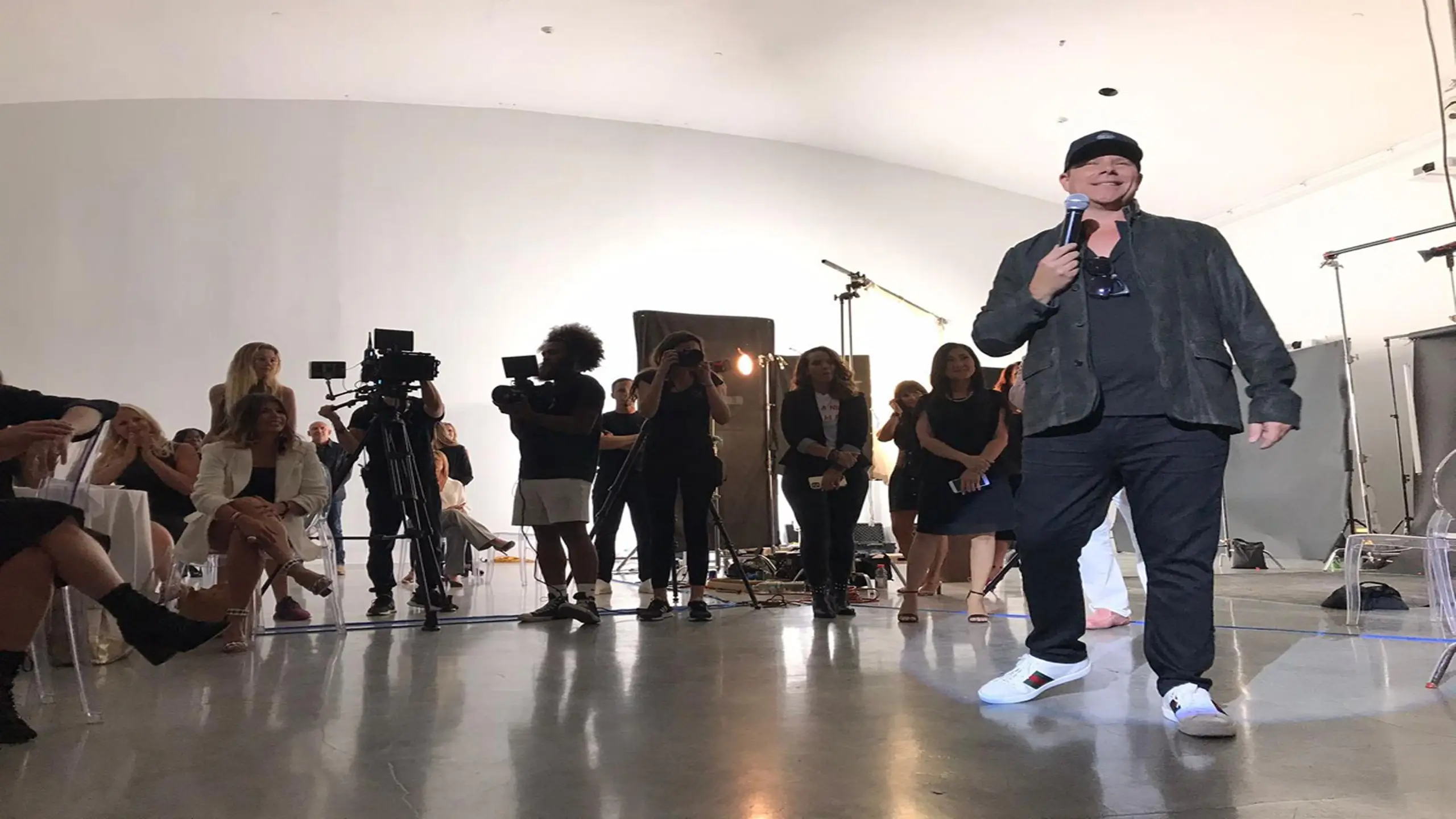
## How C&I Studios Leverages AI to Maximize ROI on Marketing Videos
In recent years, artificial intelligence has transformed the way creative teams approach marketing. What once relied heavily on intuition and manual effort is now guided by powerful algorithms that predict, optimize, and personalize every stage of the process.
At the forefront of this transformation is C&I Studios, a creative agency reimagining how brands communicate through video. By weaving AI into every phase of campaign development, from ideation to execution, hey are redefining what performance-driven storytelling looks like. As the line between creativity and technology continues to blur, the traditional approach to producing videos is quickly being replaced by smarter, more data-informed strategies.
## The New Frontier of AI in Video Marketing
Video marketing has entered a transformative era where data and automation are no longer optional but foundational. Traditional workflows that once depended on manual edits, gut-driven creative choices, and static campaign timelines are being replaced by agile, intelligent systems that continuously learn and improve. This shift to AI-powered processes has redefined how brands produce, distribute, and scale their video content.
At the heart of this shift are technologies like predictive modeling, dynamic ad testing, and smart automation. Predictive modeling uses past performance data and viewer behavior to forecast which video elements are likely to perform well.
Dynamic ad testing allows creatives to be tested in real time across multiple variables such as visuals, voiceovers, and copy styles. Automation helps accelerate tasks that were once resource-intensive, such as clip selection, captioning, or formatting content for multiple platforms.
C&I Studios has fully embraced this evolution by integrating AI into nearly every stage of its content creation pipeline. From pre-production planning to final cut delivery, the studio uses intelligent systems to reduce waste, increase turnaround, and deliver better client outcomes. For example, during editing, AI tools can sift through raw footage to identify the best takes, detect visual inconsistencies, and even suggest transitions based on pacing and tone.
The integration does not stop at editing. AI also plays a role in optimizing the use of **[video production gear](https://c-istudios.com/video-production-gear-list/)**, ensuring that lighting, framing, and audio capture align with predicted audience preferences. This helps minimize reshoots and allows teams to work faster without sacrificing quality.
In the context of film & [TV production](https://c-istudios.com/film-and-tv-production/), C&I Studios leverages AI not as a replacement for creative input but as a collaborator that enhances it. By using machine learning to inform decisions rather than dictate them, the studio empowers its creatives to push boundaries while staying grounded in what actually works. This fusion of innovation and artistry sets a new standard for studios looking to remain competitive in a fast-changing digital ecosystem.
AI is not just a tool. It is a strategic partner that allows C&I Studios to build smarter, leaner, and more impactful campaigns. The future of video marketing is not just about visuals anymore. It is about intelligence, performance, and precision.
## Real-Time Personalization at Scale
One of the most powerful applications of AI in video marketing is its ability to personalize content for individual viewers, even within the same campaign. Gone are the days of producing a single, static message and broadcasting it to everyone. Instead, AI enables brands to craft tailored experiences that speak directly to the viewer’s interests, behaviors, and needs.
Machine learning tools make this possible by processing massive volumes of data, including browsing history, engagement patterns, geographic location, and even time of day. These systems can then dynamically adjust video content to better match viewer profiles. That means changing the opening line, background music, visual filters, or even the call-to-action, depending on who is watching and where they are in the buyer’s journey.
C&I Studios has fully integrated this approach into its campaign strategy. By using AI-powered personalization tools, the team can produce multiple versions of the same video, each uniquely designed to resonate with specific audience segments. This is especially effective in areas like **[political campaigns](https://c-istudios.com/political-campaign-services/)**, where different voter groups require different messaging, and every interaction counts.
In the realm of social media marketing, C&I Studios leverages AI to adapt content in real time across platforms such as Instagram, TikTok, YouTube, and Facebook. AI systems monitor engagement trends and make suggestions on when to post, what captions to use, and which visuals perform best for different follower clusters. The result is a level of precision that manual teams simply cannot match.
Another area where this technology shines is in video & audio live streaming. Here, C&I Studios employs real-time personalization engines that analyze viewer behavior mid-stream. Based on that data, interactive elements like overlays, call-outs, or ad breaks can be inserted live. This not only increases viewer retention but also allows for live campaigns to adjust dynamically based on how people respond.
Personalized video is no longer a luxury. It is a necessity for brands that want to stay relevant and competitive. AI allows teams like C&I Studios to offer high-level customization without inflating costs or stretching deadlines. By building a responsive and personalized viewer experience, the studio ensures that every second of video serves a purpose.
## Smarter Storyboarding and Script Development
Storytelling is still the soul of any great video, but how stories are crafted is rapidly evolving. Today, AI allows studios to map narratives with unprecedented precision, making sure the message lands where it should, right in the heart of the intended audience. This is especially valuable in marketing contexts, where engagement often depends on how well the content resonates with specific demographic and behavioral traits.
AI tools are now being used during the storyboarding phase to analyze viewer data and suggest narrative structures, tone, and pacing. These tools take into account variables like age, income level, geographic location, and even preferred video formats. The result is a storyboard that is more likely to connect on a personal level.
Scriptwriting also benefits from this intelligence. Systems trained on high-performing video content can flag weak language, suggest stronger calls to action, and highlight phrasing that statistically improves watch time or conversion rates. By referencing previous engagement metrics, AI can help writers align scripts with audience expectations. At C&I Studios, this means faster turnaround without compromising on originality or impact.
This has proven particularly useful in TV show pitching, where a single sentence can make or break interest from a network or producer. By using AI to analyze successful pitches from similar genres or audiences, the creative team at C&I Studios is better equipped to develop concepts that stick. Whether it is a commercial miniseries or a long-form branded campaign, pitches are stronger and more data-aligned from day one.
The integration of AI also strengthens the studio’s SEO copywriting capabilities. Scripts can now be crafted with keyword insights in mind, ensuring that content ranks better on search engines without sounding forced. This dual optimization, engagement and discoverability, adds measurable value to every line of dialogue or voiceover.
Finally, all of this feeds directly into branding & graphic design. When scripts and storyboards are informed by data, the accompanying visuals can be more accurately tailored to enhance emotional cues and reinforce the core message. C&I Studios ensures that every storyboard and script reflects the brand’s personality while also being performance-driven.
What used to be an artform guided only by intuition is now a balanced blend of instinct and insight. With AI as a creative assistant, C&I Studios is telling smarter stories that connect deeper and convert faster.
## Enhanced Production With AI-Powered Tools
Once a storyboard is finalized, the production phase begins, and this is where AI truly shines behind the scenes. C&I Studios has reimagined what a modern shoot can look like by embedding AI-powered tools into every step of the [video production](https://c-istudios.com/video-production-services/) workflow. These tools speed up processes, minimize technical errors, and elevate visual storytelling with precision that manual processes often cannot match.
One of the most significant advancements is in VFX compositing & animation. Instead of starting from scratch, AI tools can now generate motion templates, simulate realistic lighting, and track camera movements automatically. This allows editors and animators to focus on creative refinement while letting automation handle the repetitive tasks. In fast-paced environments like commercial advertising or digital shorts, this time savings translates directly to cost savings and faster delivery.
The benefits extend beyond post-production. During filming, smart technologies assist with everything from automatic scene balancing to real-time facial recognition for focus and lighting adjustments. For example, AI-enhanced cameras paired with high-end [video production](https://c-istudios.com/video-production-services/) gear can detect optimal exposure and framing settings for different lighting conditions or facial expressions. This drastically reduces the number of retakes required, especially when dealing with multiple angles or fast-moving action.
C&I Studios applies this efficiency across genres, but it is especially impactful in documentary film production, where shooting conditions are often unpredictable. AI-powered stabilization, audio enhancement, and noise reduction tools allow the team to maintain high production value, even in raw, unscripted environments. That means more usable footage and less time spent correcting issues during post.
This AI-driven production model is not just about saving time. It is about raising the creative ceiling. With more time and resources freed up, directors and producers can focus on adding visual layers, experimenting with new ideas, and iterating in real time. C&I Studios treats AI as a creative catalyst, not a shortcut.
By embedding these intelligent systems throughout the production process, the studio delivers videos that are not only visually striking but also consistent, scalable, and optimized for performance. The result is a finished product that looks handcrafted and cinematic, while benefiting from the speed and accuracy that only technology can provide.
## Automated Editing, Color, and Mastering
Post-production has traditionally been the most time-consuming part of creating a marketing video. But thanks to AI, C&I Studios is rewriting that rule. The studio now uses intelligent editing systems that automate core processes like scene detection, pacing, and even tone adjustment, dramatically reducing post timelines without sacrificing creative control.
One major breakthrough is in smart editing software. These systems analyze hours of raw footage and automatically select the most compelling clips based on facial expressions, audio cues, or on-screen movement. Editors no longer have to scrub manually through timelines. They can start with AI-curated sequences and then fine-tune with a human touch. This hybrid model dramatically increases the efficiency of video production while preserving artistic integrity.
AI also plays a key role in color grading and correction. It can identify inconsistencies in lighting across scenes and automatically adjust tone curves and color profiles to maintain visual continuity. This is particularly useful in **[feature film mastering & delivery](https://c-istudios.com/feature-film-mastering-and-delivery/)**, where color consistency is critical across dozens of shots and display formats.
Another standout feature is adaptive mastering. When delivering content to multiple platforms, such as YouTube, Instagram, and broadcast, each requires different technical specifications. AI automates the formatting process, converting a single master file into multiple optimized versions based on each platform’s best practices. This ensures a faster, more consistent delivery without tedious manual exports.
In environments involving high-volume content, such as agency work or brand campaigns, these efficiencies add up. C&I Studios leverages automation tools not just for speed, but for strategic precision. Audio levels can be normalized automatically, transitions can be suggested based on pacing analytics, and subtitles can be generated using voice-to-text with multilingual support.
The studio’s workflow also includes intelligent file compression and distribution tools, helping reduce the file size without compromising quality. These systems are particularly effective when paired with in-house web hosting solutions, making it easier to store and serve high-quality video on client websites or embedded platforms.
Ultimately, AI in post-production is about creating room for deeper creative thinking. With the tedious and technical parts handled, editors and directors can focus on narrative, emotion, and storytelling finesse. C&I Studios uses this model to ensure that every video it delivers meets both creative and commercial goals.
## Data-Driven Distribution and Retargeting
Creating a great video is only half the job. Getting it seen by the right audience, and doing so efficiently, is where the return on investment really begins. C&I Studios uses AI to ensure that each video not only performs well in isolation, but also fits into a broader distribution and targeting strategy. Through intelligent content delivery, the studio makes sure that the right message reaches the right viewer at the right time.
AI tools allow for granular audience segmentation based on demographic data, watch behavior, and platform activity. These tools power automated distribution engines that analyze where each piece of content is likely to perform best. Whether a video is headed to a social feed, a landing page, or a pre-roll ad slot, its path is determined by predictive algorithms that continuously learn and adapt.
The studio’s approach to media marketing consult engagements often includes a phase dedicated to AI-powered audience mapping. This ensures that distribution efforts are not based on assumptions, but on actionable data. Video campaigns are launched with built-in adaptability, each interaction with the content becomes a data point that influences future placements.
C&I Studios also excels in real-time retargeting. Once a viewer watches a video or interacts with a brand’s content, AI tools can trigger a follow-up campaign tailored to that behavior. For example, someone who watched 75 percent of a product explainer may be shown a testimonial video next. Someone who skipped may be shown a shorter variation with a different opening hook.
This level of dynamic targeting is especially useful in campaigns that involve web development, where embedded video content can adapt to user journey stages. Whether someone is on the homepage, a pricing page, or reading a case study, the video they see is contextually aligned with their behavior. When integrated with C&I’s web maintenance services, these campaigns continue to optimize themselves over time.
Performance dashboards built with AI also provide real-time insights into video effectiveness. Teams can track completion rates, click-throughs, conversions, and engagement drop-offs, then automatically adjust content or placement strategies accordingly.
Distribution is no longer guesswork. It is a tightly engineered system driven by data and informed by audience behavior. C&I Studios ensures that every video investment delivers ongoing returns long after the initial launch.
## Performance Tracking and ROI Optimization
While creative quality is essential, performance ultimately determines success. That is why C&I Studios builds advanced performance tracking directly into every campaign, using AI to monitor results in real time and guide ongoing optimization. This data-first mindset ensures that videos are not just beautiful, they are effective, measurable, and aligned with business goals.
At the core of this approach are AI-powered analytics platforms that track key performance indicators like engagement rates, viewer retention, click-throughs, and conversions. These systems provide a comprehensive picture of how each video performs across platforms and audience segments. What once required weeks of manual analysis can now be delivered instantly, allowing creative teams to act faster and with greater precision.
C&I Studios uses this intelligence to make smart creative decisions. For instance, if a video sees a high drop-off at the 10-second mark, the opening sequence can be adjusted for future iterations. If a call-to-action underperforms, AI can suggest alternatives based on prior campaign data. These continuous improvements lead to better outcomes without needing to restart from scratch.
For clients in [artist management & media creation](https://c-istudios.com/artist-management-and-media-creation/), this tracking model is particularly valuable. Performance data helps align the artist’s content strategy with audience expectations, fine-tune messaging, and build a stronger digital presence. In professional photography and branded motion shoots, AI insights can shape everything from lighting choices to subject framing for optimal engagement.
In commercial and corporate campaigns, this approach translates directly into increased ROI. Videos are launched with performance tracking built in, allowing campaigns to be optimized while they run, not just after they finish. C&I Studios also helps clients understand what the numbers mean, translating raw data into actionable recommendations.
This extends to multi-channel creative strategies, where videos work in concert with email campaigns, social ads, and web content. AI tracks how each asset supports the larger ecosystem, identifying weak links and highlighting top performers. That level of insight leads to higher efficiency across the board.
By combining creativity with measurable performance, C&I Studios closes the loop between production and business results. Their goal is not just to make videos that look good, it is to make videos that work. And with AI at the core of the process, they consistently deliver results clients can see, track, and improve upon.
## Work with C&I Studios
If you are planning a project like this, our team can take it from concept to final delivery. Explore our [video production services](https://c-istudios.com/video-production-services/), browse [our work](https://c-istudios.com/our-work/) to see how we tell brand stories, and [get in touch](https://c-istudios.com/contact/) when you are ready to start.
Originally published June 11, 2025
---
*This content is from [C&I Studios](https://c-istudios.com), a full-service production company.*
---
# AI vs. Human: Who’s Really Directing Your Commercial?
> Published: June 11, 2025
> Categories: Commercial & Brand
> Source: https://c-istudios.com/ai-vs-human-whos-really-directing-your-commercial/
---
.cib{--paper:#1b1d1f;--ink:#fff;--body:#d5d7d9;--muted:#8b9096;--line:rgba(255,255,255,.12);--thumb:#2b2e31;--card:#212426;--accent:#c02b0a;--blue:#5B8FA8;--serif:'Playfair Display',Georgia,serif;--sans:'Poppins',-apple-system,sans-serif;--measure:900px;background:var(--paper);color:var(--body);font-family:var(--sans);line-height:1.6;position:relative;left:50%;transform:translateX(-50%);width:90vw;max-width:1920px}
.cib *{box-sizing:border-box}
.cib .kicker{max-width:var(--measure);margin:58px auto 0;padding:0 22px;font-size:12.5px;font-weight:700;letter-spacing:2.5px;text-transform:uppercase;color:var(--blue)}
.cib h1.cibh1{text-wrap:balance;font-family:var(--serif);font-weight:500;font-size:clamp(46px,6vw,72px);line-height:1.08;color:var(--ink);max-width:var(--measure);margin:18px auto 0;padding:0 22px;letter-spacing:-.5px}
.cib .metarow{max-width:var(--measure);margin:20px auto 0;padding:0 22px;color:var(--muted);font-size:14px}
.cib .hero{position:relative;width:100%;height:0;padding-bottom:56.25%;overflow:hidden;margin:48px auto 0;border-top:1px solid var(--line);border-bottom:1px solid var(--line)}
.cib .hero .ph{width:100%;aspect-ratio:16/9;background:var(--thumb);border-top:1px solid var(--line);border-bottom:1px solid var(--line);display:flex;align-items:center;justify-content:center;color:#7d8288;font-size:13px;text-align:center;padding:0 20px}
.cib .body{max-width:var(--measure);margin:12px auto 0;padding:52px 22px 6px}
.cib .body.lead p:first-child{font-size:23px;line-height:1.62;color:var(--ink)}
.cib .body p{font-size:18.5px;line-height:1.85;margin:0 0 30px;color:var(--body)}
.cib .body h2{text-wrap:balance;font-family:var(--serif);font-weight:500;font-size:clamp(32px,4vw,48px);line-height:1.22;color:var(--ink);margin:70px 0 20px;letter-spacing:-.3px}
.cib .body h3{text-wrap:balance;font-family:var(--sans);font-weight:600;font-size:22px;color:var(--ink);margin:38px 0 8px}
.cib .body a{color:var(--ink);text-decoration:underline;text-decoration-color:rgba(255,255,255,.4);text-underline-offset:3px}
.cib .body a:hover{text-decoration-color:var(--ink)}
.cib .ctable{width:100%;border-collapse:collapse;margin:16px 0 30px;font-size:16px}
.cib .ctable th{background:#000;color:#fff;text-align:left;padding:10px 12px;font-family:var(--sans)}
.cib .ctable td{padding:10px 12px;border-bottom:1px solid var(--line);color:var(--body)}
.cib .inimg{position:relative;width:100%;height:0;padding-bottom:56.25%;overflow:hidden;margin:72px auto;border-top:1px solid var(--line);border-bottom:1px solid var(--line)}
.cib .inimg .ph{width:100%;aspect-ratio:16/9;background:var(--thumb);border-top:1px solid var(--line);border-bottom:1px solid var(--line);display:flex;align-items:center;justify-content:center;color:#7d8288;font-size:13px}
.cib .origpub{max-width:var(--measure);margin:60px auto 0;padding:26px 22px 0;border-top:1px solid var(--line);color:var(--muted);font-size:13.5px}
.cib .related{max-width:1200px;margin:64px auto 0;padding:34px 22px 76px}
.cib .related h3{font-family:var(--sans);font-size:12.5px;letter-spacing:2px;text-transform:uppercase;color:var(--ink);margin:0 0 24px}
.cib .grid{display:grid;grid-template-columns:repeat(3,1fr);gap:28px}
.cib .rc{background:var(--card);border:1px solid var(--line);display:block;text-decoration:none;color:inherit;transition:border-color .15s}
.cib a.rc:hover{border-color:rgba(255,255,255,.5)}
.cib .rc .thumb{position:relative;width:100%;height:0;padding-bottom:56.25%;background:var(--thumb);overflow:hidden}
.cib .rc .thumb img{position:absolute!important;top:0!important;left:0!important;width:100%!important;height:100%!important;object-fit:cover!important;margin:0!important}
.cib .rc .cc{padding:14px 15px 17px}
.cib .rc .rt{font-family:var(--serif);font-weight:500;font-size:16px;line-height:1.3;color:var(--ink);margin:0 0 6px}
.cib .rc .rm{font-size:11px;letter-spacing:1px;text-transform:uppercase;color:var(--muted)}
.cib img{margin:0!important;padding:0!important;display:block!important;vertical-align:top;max-width:100%}
.cib .hero img,.cib .inimg img{position:absolute!important;top:0!important;left:0!important;width:100%!important;height:100%!important;object-fit:cover!important;margin:0!important;padding:0!important;border:0!important;display:block!important;aspect-ratio:auto!important}
.cib .hero+.body{padding-top:36px}
@media(max-width:760px){.cib .grid{grid-template-columns:1fr}.cib .body h2{margin:52px 0 16px}.cib .body p{font-size:17.5px}.cib .inimg,.cib .hero{margin-top:44px}}
.cib .vembed{max-width:var(--measure);margin:44px auto;padding:0 22px}.cib .vembed .vwrap{position:relative;width:100%;height:0;padding-bottom:56.25%}.cib .vembed .vwrap iframe{position:absolute;top:0;left:0;width:100%;height:100%;border:0}
Commercial & Brand
# AI vs. Human. Who’s Really Directing Your Commercial?
13 min read

The way commercials are made is changing fast. What once took full production teams now sometimes happens with a few clicks. Artificial intelligence has entered the director’s chair, making creative decisions that used to belong solely to people. This shift has sparked a major question in the industry: who’s really calling the shots?
As AI tools grow more powerful, many brands are wondering whether their message is being shaped by human creativity or machine logic. This article explores what that means for storytelling, production, and the future of commercial work, because the answer isn’t as simple as it might seem.

## The Rise of AI in Commercial Direction
Artificial intelligence is no longer just a backend tool. It’s stepping directly into the spotlight of modern commercial creation. From generating ad copy to editing full video drafts, AI is becoming a powerful force in shaping brand narratives. One of the most transformative shifts has been in how businesses approach [content creation](https://c-istudios.com/content-creation-services/). What once required large teams and extended timelines can now be executed in hours using AI-powered platforms.
Several tools have emerged that allow creatives to delegate technical work to machines. Platforms like Synthesia can generate human-like avatars that deliver scripted lines with natural movement and expression. Others, like Runway ML, use AI to automate tasks like background removal, motion tracking, and [VFX compositing & animation](https://c-istudios.com/vfx-compositing-and-animation-services/).
This has significantly cut down the need for expensive reshoots or time-consuming manual effects. Combined with voice generation and smart editing tools, AI can now execute entire segments of a [video production](https://c-istudios.com/video-production-services/) pipeline.
In the world of [film & TV production](https://c-istudios.com/film-and-tv-production/), AI is being used to storyboard scenes, simulate lighting effects, and even assist in casting decisions. These capabilities aren’t just theoretical, they’re already in action for agencies looking to deliver fast, flexible solutions to clients.
AI-generated scripts and AI-edited trailers are becoming more common in promotional campaigns and [documentary film production](https://c-istudios.com/documentary-film-production/). For brands that need multiple versions of the same commercial (to target different audiences), AI can instantly repurpose assets while preserving brand tone and intent.
The appeal goes beyond just speed. AI also enables predictive targeting by analyzing which visuals, colors, and phrases resonate best with certain demographics. This helps brands stay ahead in competitive sectors like [political campaigns](https://c-istudios.com/political-campaign-services/) or seasonal retail pushes. Some even use AI in [video & audio live streaming](https://c-istudios.com/video-audio-live-streaming/) to moderate comments, switch camera angles, or translate captions in real time.
As production timelines shrink and budgets tighten, AI offers a compelling way to scale creative output without compromising quality. Whether supporting agencies through [media marketing consult](https://c-istudios.com/media-marketing-consultation-services/) services or automating tasks previously handled by junior editors, AI is quickly becoming a valuable collaborator, not just a tool. And for many commercial creators, it’s no longer a matter of *if* they’ll use AI, but *how much*.
## Human Touch in Commercial Storytelling
While AI is revolutionizing efficiency, there are areas where machines still fall short, and that’s where human creativity remains essential. At the core of every memorable commercial is a story that connects emotionally with its audience. Humans bring an intuitive sense of humor, empathy, and cultural awareness that algorithms have yet to replicate. These qualities are especially critical in [documentary film production](https://c-istudios.com/documentary-film-production/), where context, sensitivity, and tone can make or break a message.
In emotionally charged campaigns such as those used in [political campaigns](https://c-istudios.com/political-campaign-services/), the human touch is not just valuable, it’s vital. Crafting a message that resonates with real people, during real events, requires more than pattern recognition. It demands a deep understanding of timing, societal mood, and the way audiences interpret visual cues. A machine might understand language, but it cannot feel the pulse of a moment in the way a seasoned director or creative strategist can.
The same is true for brand identity. Humans excel at embedding subtle, meaningful symbols into visuals that reinforce the core values of a business. Whether it’s the choice of color, pacing, or musical tone, these decisions require an understanding of emotional storytelling that goes beyond data.
That’s why creative teams in [branding & graphic design](https://c-istudios.com/branding-and-graphic-design-services/) are still leading the way in high-impact advertising. Their ability to interpret brand values and translate them into compelling narratives is unmatched by even the most advanced AI systems.
Professionals also shine in the real-time decision-making that takes place on set. Directors and cinematographers adjust to changing lighting, unexpected actor improvisations, and live feedback, something AI cannot handle with the same nuance. In[film & TV production](https://c-istudios.com/film-and-tv-production/), this flexibility is crucial for delivering polished results under pressure.
Moreover, human creators are often responsible for moments that define a campaign’s success. These are the unscripted laughs, the improvised monologues, the instinctual changes made in the edit room that elevate a commercial from good to unforgettable.
Despite the speed and precision AI brings to [video production](https://c-istudios.com/video-production-services/), it is the human capacity for storytelling that ensures the message lands with authenticity, impact, and emotional clarity. That’s something no machine, no matter how intelligent, can fully automate.
## Behind the Scenes. How AI and Humans Collaborate
Rather than replacing human creatives, AI is increasingly being used to enhance their work. In today’s most innovative commercial projects, it’s not a question of humans versus machines. Instead, it’s a dynamic collaboration between both. The workflow often begins with AI handling technical or repetitive tasks, while human teams focus on strategy, vision, and emotional depth.
For example, AI can generate early drafts of ad scripts based on audience insights. Human writers then refine the tone, adjust the structure, and ensure the message aligns with the brand. In [VFX compositing & animation](https://c-istudios.com/vfx-compositing-and-animation-services/), AI tools like Adobe Firefly or Runway ML help speed up scene transitions, background replacements, and object tracking. But the final polish, timing, and creative decisions are still in the hands of skilled animators and editors.
This hybrid approach is becoming increasingly common in **TV show pitching** as well. Producers might use AI to simulate how different scenes will look or to test multiple versions of a trailer for different demographics. These tools offer a rapid way to visualize ideas, which helps directors and creative leads make faster, more informed decisions. However, the ultimate choices about narrative, casting, and structure still rely on human expertise.
Agencies offering [media marketing consult](https://c-istudios.com/media-marketing-consultation-services/) services are at the forefront of this shift. They often build strategies that integrate both human-led vision and machine-driven optimization. For example, AI can recommend the best visuals for social platforms based on engagement data, while humans decide how those visuals should be sequenced in a broader story arc. This results in more cohesive and impactful campaigns.
Human-AI collaboration is also evident in post-production. Editors use AI to create rough cuts quickly, then step in to add emotional beats, adjust pacing, and fine-tune details. Voice artists work alongside synthetic voices to blend human emotion with AI precision. Rather than working in separate lanes, humans and AI operate in tandem, each handling the roles they are best suited for.
In this shared creative process, AI becomes a powerful assistant. It supports the work of human creatives without taking over the heart of the message. This balance ensures that every commercial remains emotionally compelling, technically polished, and strategically sound.
## What AI Can Do Better Than Humans
While human creativity leads in emotional nuance, AI clearly excels in areas where speed, scale, and data-driven decisions are critical. One of the most obvious advantages is the ability to automate high-volume tasks in **video & audio live streaming**, such as camera switching, auto-captioning, and real-time moderation. These features are now being used in everything from event broadcasts to e-commerce demos, allowing brands to stay nimble without sacrificing quality.
AI also brings unmatched power in personalization. For example, it can generate multiple versions of an ad tailored to different demographics, time zones, or buyer behaviors. This level of adaptability is difficult, if not impossible, for human teams to replicate at scale. Many agencies rely on AI to generate variations of [SEO copywriting](https://c-istudios.com/seo-copywriting-services/) and test headline performance across dozens of platforms, adjusting based on real-time data.
In **social media marketing**, AI tools analyze engagement trends and optimize post timing, hashtag use, and even image composition. This helps brands maintain a consistent voice and visual style while staying responsive to what’s trending. It also ensures that content reaches the right audience at the right time. Unlike manual scheduling and monitoring, AI systems work around the clock and across regions.
AI is also improving performance in [audio engineering](https://c-istudios.com/audio-engineering-services/). Tools like iZotope and Adobe Podcast can now clean up voice recordings, remove background noise, and even simulate studio-quality audio. For teams without access to a full recording setup, these tools offer a cost-effective and efficient alternative.
Another strong use case is in predictive analytics. AI can assess past performance data and suggest changes in everything from camera angles to color grading. This predictive capability is especially useful in [content creation](https://c-istudios.com/content-creation-services/) for product videos, where testing dozens of edits manually would be too time-consuming.
When used correctly, AI amplifies what brands can accomplish. It makes campaigns more targeted, more efficient, and more measurable. While it doesn’t replace human creativity, it often outpaces human teams in execution and testing. As a result, more companies are integrating AI into their [video production](https://c-istudios.com/video-production-services/) process, not as a replacement for humans, but as a force multiplier that unlocks new levels of creative output and technical precision.

## What Humans Still Do Better Than AI
Despite AI’s speed and precision, there are essential areas where humans continue to lead. Directing performances, interpreting cultural nuance, and making spontaneous creative decisions are tasks that require lived experience, emotional intelligence, and storytelling instincts, things machines can’t replicate. This is especially true when working with actors or real people in brand commercials, where subtle facial expressions or improvised dialogue often create the most memorable moments.
In projects like [professional photography](https://c-istudios.com/professional-photography-services/), humans are able to read a scene, adjust lighting on the spot, and build rapport with subjects in a way AI cannot match. A photographer doesn’t just capture an image, they interpret mood, context, and brand personality through framing, light, and atmosphere. These artistic decisions are deeply personal and require more than algorithmic calculation.
In **feature film mastering & delivery**, human editors make judgment calls about color grading, pacing, and transitions that affect the emotional rhythm of a piece. AI might be able to suggest cuts, but humans feel when a moment needs to linger or when silence says more than dialogue. These choices shape the emotional texture of a final product in ways that data alone cannot predict.
Creative flexibility is another human strength. On set, weather might change, talent may improvise, or a better idea might emerge during a shoot. Humans can adapt quickly, solve unexpected problems, and communicate effectively across teams. This flexibility is central to many roles in [creative marketing](https://c-istudios.com/creative-marketing-services/), where campaigns evolve in real time and require strong interpersonal coordination.
Cultural awareness is also a uniquely human advantage. A line of dialogue or visual metaphor might resonate deeply in one region but come across as offensive or confusing in another. Human creatives bring cultural context and empathy to these decisions, ensuring the content is both effective and respectful. AI lacks this depth of understanding, which can pose risks in global campaigns.
Finally, there’s the matter of vision. Humans can build campaigns around abstract ideas, values, or emotions that haven’t been tested yet. That visionary spark, the ability to imagine what doesn’t yet exist, is what sets human-led work apart. In the world of **video production**, where originality and connection are key, this human element remains irreplaceable and invaluable.
## The Cost Factor. AI vs Human Crews
When planning a commercial, cost is often one of the first considerations. AI tools are frequently seen as a budget-friendly alternative to full production teams, and in many cases, they are. For startups or small brands, using AI can drastically reduce expenses by automating key steps in **video production**. Tasks like scripting, editing, and voiceovers can be completed faster and with fewer people, making it easier to produce content without breaking the bank.
However, cost savings come with trade-offs. While AI tools eliminate certain labor costs, they often require subscriptions, upgrades, and skilled operators to manage them effectively. A company may need to invest in high-end **video production gear** to get the most out of these platforms. In other words, AI still requires a level of technical infrastructure and expertise, even if the number of people involved is smaller.
Human-led productions, on the other hand, typically involve larger crews and longer timelines, which increase expenses. Teams may include directors, cinematographers, sound engineers, editors, stylists, and actors. These roles bring depth and detail to a project but also raise the cost significantly. That said, they offer irreplaceable value in terms of creativity, adaptability, and brand alignment.
Agencies that offer [artist management & media creation](https://c-istudios.com/artist-management-and-media-creation/) services often bundle human talent with strategic planning, providing a full creative ecosystem. This includes everything from casting and scripting to **web development**, custom graphics, and campaign rollouts. While these services are more expensive upfront, they often deliver long-term brand equity and higher emotional engagement.
A hybrid model can offer the best of both worlds. Brands can use AI for pre-visualization, script generation, or **web hosting** elements while relying on human creatives for final production. This approach balances efficiency with emotional impact and is increasingly popular among companies looking to stretch their budgets without sacrificing quality.
For ongoing campaigns, such as social content or product explainer videos, AI’s low marginal cost per video is a major advantage. But for flagship campaigns where storytelling, originality, and visual polish matter most, human-led work remains the gold standard. Whether you’re investing in [web maintenance](https://c-istudios.com/web-maintenance/) for a polished online presence or producing a high-stakes launch commercial, the cost decision comes down to what matters more, speed and scale, or creative depth and connection.
## Future-Proofing Your Brand. Choosing the Right Balance
As technology evolves, brands need to make intentional decisions about how they produce content. It’s no longer enough to ask whether AI or humans are better. The real question is how to blend both effectively. Future-proofing your creative process means understanding the unique strengths of each and using them to your advantage.
For fast-paced projects like tutorials, social clips, or seasonal promos, AI can help generate high-quality results quickly. It can also assist with backend needs like automated [web hosting](https://c-istudios.com/web-hosting/), performance monitoring, and light **web maintenance**. These tools allow brands to stay nimble, produce frequently, and remain visible across platforms.
At the same time, human input remains critical for strategic storytelling, emotional resonance, and brand development. Whether it’s shaping your visual identity or planning campaign rollouts, real people still drive the vision. Many brands are now partnering with agencies that specialize in both AI and human-led services, particularly those with strengths in [branding & graphic design](https://c-istudios.com/branding-and-graphic-design-services/) and [video production](https://c-istudios.com/video-production-services/).
One effective approach is to use AI to streamline early-stage processes, such as generating ideas, storyboards, and rough edits, then bring in human creatives to refine, elevate, and ensure brand consistency. This method shortens production cycles without sacrificing creative integrity. It also creates a structure where automation handles repetition, and people focus on insight and originality.
Investing in long-term creative infrastructure also matters. Whether that means hiring talent, building an internal studio, or developing a library of assets, the goal is to create a system that scales with your brand. You may also consider periodic audits of your tech stack, particularly tools used in [content creation](https://c-istudios.com/content-creation-services/), to make sure they’re aligned with your brand goals and production capacity.
Ultimately, balancing automation with artistry positions your brand for sustainable growth. It helps you stay competitive, responsive, and creatively sharp. Whether you’re producing product ads, storytelling campaigns, or interactive web content, the most successful brands are those that understand when to let AI assist, and when to let humans lead. Finding that sweet spot is no longer optional. It’s the future of smart, strategic commercial direction.
## Work with C&I Studios
If you are planning a project like this, our team can take it from concept to final delivery. Explore our [video production services](https://c-istudios.com/video-production-services/), browse [our work](https://c-istudios.com/our-work/) to see how we tell brand stories, and [get in touch](https://c-istudios.com/contact/) when you are ready to start.
Originally published June 11, 2025
---
*This content is from [C&I Studios](https://c-istudios.com), a full-service production company.*
---
# How Brands Are Using AI to Produce Commercials Faster and Cheaper
> Published: June 9, 2025
> Categories: Commercial & Brand
> Source: https://c-istudios.com/brands-are-using-ai-to-produce-commercials-faster/
---
.cib{--paper:#1b1d1f;--ink:#fff;--body:#d5d7d9;--muted:#8b9096;--line:rgba(255,255,255,.12);--thumb:#2b2e31;--card:#212426;--accent:#c02b0a;--blue:#5B8FA8;--serif:'Playfair Display',Georgia,serif;--sans:'Poppins',-apple-system,sans-serif;--measure:900px;background:var(--paper);color:var(--body);font-family:var(--sans);line-height:1.6;position:relative;left:50%;transform:translateX(-50%);width:90vw;max-width:1920px}
.cib *{box-sizing:border-box}
.cib .kicker{max-width:var(--measure);margin:58px auto 0;padding:0 22px;font-size:12.5px;font-weight:700;letter-spacing:2.5px;text-transform:uppercase;color:var(--blue)}
.cib h1.cibh1{text-wrap:balance;font-family:var(--serif);font-weight:500;font-size:clamp(46px,6vw,72px);line-height:1.08;color:var(--ink);max-width:var(--measure);margin:18px auto 0;padding:0 22px;letter-spacing:-.5px}
.cib .metarow{max-width:var(--measure);margin:20px auto 0;padding:0 22px;color:var(--muted);font-size:14px}
.cib .hero{position:relative;width:100%;height:0;padding-bottom:56.25%;overflow:hidden;margin:48px auto 0;border-top:1px solid var(--line);border-bottom:1px solid var(--line)}
.cib .hero .ph{width:100%;aspect-ratio:16/9;background:var(--thumb);border-top:1px solid var(--line);border-bottom:1px solid var(--line);display:flex;align-items:center;justify-content:center;color:#7d8288;font-size:13px;text-align:center;padding:0 20px}
.cib .body{max-width:var(--measure);margin:12px auto 0;padding:52px 22px 6px}
.cib .body.lead p:first-child{font-size:23px;line-height:1.62;color:var(--ink)}
.cib .body p{font-size:18.5px;line-height:1.85;margin:0 0 30px;color:var(--body)}
.cib .body h2{text-wrap:balance;font-family:var(--serif);font-weight:500;font-size:clamp(32px,4vw,48px);line-height:1.22;color:var(--ink);margin:70px 0 20px;letter-spacing:-.3px}
.cib .body h3{text-wrap:balance;font-family:var(--sans);font-weight:600;font-size:22px;color:var(--ink);margin:38px 0 8px}
.cib .body a{color:var(--ink);text-decoration:underline;text-decoration-color:rgba(255,255,255,.4);text-underline-offset:3px}
.cib .body a:hover{text-decoration-color:var(--ink)}
.cib .ctable{width:100%;border-collapse:collapse;margin:16px 0 30px;font-size:16px}
.cib .ctable th{background:#000;color:#fff;text-align:left;padding:10px 12px;font-family:var(--sans)}
.cib .ctable td{padding:10px 12px;border-bottom:1px solid var(--line);color:var(--body)}
.cib .inimg{position:relative;width:100%;height:0;padding-bottom:56.25%;overflow:hidden;margin:72px auto;border-top:1px solid var(--line);border-bottom:1px solid var(--line)}
.cib .inimg .ph{width:100%;aspect-ratio:16/9;background:var(--thumb);border-top:1px solid var(--line);border-bottom:1px solid var(--line);display:flex;align-items:center;justify-content:center;color:#7d8288;font-size:13px}
.cib .origpub{max-width:var(--measure);margin:60px auto 0;padding:26px 22px 0;border-top:1px solid var(--line);color:var(--muted);font-size:13.5px}
.cib .related{max-width:1200px;margin:64px auto 0;padding:34px 22px 76px}
.cib .related h3{font-family:var(--sans);font-size:12.5px;letter-spacing:2px;text-transform:uppercase;color:var(--ink);margin:0 0 24px}
.cib .grid{display:grid;grid-template-columns:repeat(3,1fr);gap:28px}
.cib .rc{background:var(--card);border:1px solid var(--line);display:block;text-decoration:none;color:inherit;transition:border-color .15s}
.cib a.rc:hover{border-color:rgba(255,255,255,.5)}
.cib .rc .thumb{position:relative;width:100%;height:0;padding-bottom:56.25%;background:var(--thumb);overflow:hidden}
.cib .rc .thumb img{position:absolute!important;top:0!important;left:0!important;width:100%!important;height:100%!important;object-fit:cover!important;margin:0!important}
.cib .rc .cc{padding:14px 15px 17px}
.cib .rc .rt{font-family:var(--serif);font-weight:500;font-size:16px;line-height:1.3;color:var(--ink);margin:0 0 6px}
.cib .rc .rm{font-size:11px;letter-spacing:1px;text-transform:uppercase;color:var(--muted)}
.cib img{margin:0!important;padding:0!important;display:block!important;vertical-align:top;max-width:100%}
.cib .hero img,.cib .inimg img{position:absolute!important;top:0!important;left:0!important;width:100%!important;height:100%!important;object-fit:cover!important;margin:0!important;padding:0!important;border:0!important;display:block!important;aspect-ratio:auto!important}
.cib .hero+.body{padding-top:36px}
@media(max-width:760px){.cib .grid{grid-template-columns:1fr}.cib .body h2{margin:52px 0 16px}.cib .body p{font-size:17.5px}.cib .inimg,.cib .hero{margin-top:44px}}
.cib .vembed{max-width:var(--measure);margin:44px auto;padding:0 22px}.cib .vembed .vwrap{position:relative;width:100%;height:0;padding-bottom:56.25%}.cib .vembed .vwrap iframe{position:absolute;top:0;left:0;width:100%;height:100%;border:0}
Commercial & Brand
# How Brands Are Using AI to Produce Commercials Faster and Cheaper
13 min read

In today’s fast-paced digital landscape, the way commercials are produced has undergone a major transformation. Traditional methods, once reliant on large crews, long timelines, and hefty budgets, are now being reimagined through the lens of automation and innovation.
Artificial intelligence is no longer just a futuristic concept’s an active force reshaping how creative assets are developed, refined, and distributed. From scripting to post-production, AI is stepping in to streamline every phase of the process.
This article explores how brands are using AI to produce commercials faster and cheaper, and what that means for the future of advertising.
## AI Tools Changing the Game in Commercial Production
Artificial intelligence is no longer an experimental add-on; it’s now deeply embedded in nearly every stage of commercial production. From pre-production planning to post-production polish, AI tools are transforming how creative teams develop, refine, and deliver content. What used to require multiple departments and weeks of manual labor can now be executed in hours with the right software stack. These tools aren’t just enhancing efficiency, they’re raising the bar for quality and scalability in modern film & [TV production](https://c-istudios.com/film-and-tv-production/).
In the earliest stages, AI-driven platforms like ChatGPT and Jasper are being used for ideation, scripting, and storyboarding. Instead of starting from a blank page, creative teams can input a few prompts and receive multiple narrative structures, variations in tone, and dialogue suggestions.
Paired with tools like Synthesia, which allows creators to generate avatars delivering lines on screen, brands can now visualize and test commercial concepts before a single camera is turned on. This accelerates the feedback loop and reduces the risk of costly reshoots or creative misalignment.
Once a script is locked in, AI continues to deliver value during editing and visual effects. Automated editors like Runway, Pictory, and Descript can trim, caption, and even stylize footage in minutes.
These tools are especially effective in fast-paced environments like digital advertising or short-form branded content. Meanwhile, advancements in VFX compositing & animation mean that brands no longer need massive post-production houses to render high-quality visuals.
AI-powered engines can now handle tasks like rotoscoping, facial replacement, and environmental enhancements at a fraction of the time and cost. This is particularly useful in stylized commercials or high-concept spots requiring visual storytelling, previously reserved for big-budget productions.
Audio is also being revolutionized. Tools like ElevenLabs and Resemble.ai offer AI-generated voiceovers that sound natural and nuanced. For teams with limited access to professional voice talent, this level the playing field dramatically.
Meanwhile, platforms such as Adobe Podcast and Auphonic automate key aspects of audio engineering, cleaning background noise, balancing levels, and even matching vocal tone across clips, ensuring professional audio without a studio session.
In the realm of documentary film production, AI helps condense raw interviews into highlight reels, tag emotional beats, and even generate subtitles across languages. These capabilities are now being adopted by both indie filmmakers and major studios looking to streamline production pipelines and maximize creative output.
As brands are using AI tools continue to mature, they are not only enhancing productivity, they’re democratizing high-end commercial production for anyone with a story to tell. Whether it’s for a 30-second ad or a full brand documentary, the toolkit is now smarter, faster, and more powerful than ever before.
## Case Studies. How Top Brands Are Using AI to Cut Costs
The shift toward AI-driven production isn’t just theoretical, it’s already in motion. From global giants to agile DTC startups, brands across industries are embracing AI tools to deliver high-quality commercials without the bloated timelines or budgets of traditional production. These case studies illustrate how artificial intelligence is being used not only to accelerate **[content creation](https://c-istudios.com/content-creation-services/)** but to do so at a cost that makes sense in today’s volatile market.
Take Coca-Cola, for instance. In a recent campaign, the brand utilized AI-generated visuals and voice synthesis to build regionalized ads at scale. Instead of filming multiple versions of the same commercial, they created a master concept and then used AI tools to swap voiceovers, adjust scene elements, and localize messaging, all without reshoots. The result was a highly personalized campaign that saved both time and resources, while still meeting the high creative standards associated with Coca-Cola’s global brand.
Another example is Nike, which employed machine learning models to analyze viewer engagement across different ad formats. Using that data, they used AI editing tools to repurpose existing footage into micro-content for platforms like TikTok and Instagram.
This not only extended the life of their original commercial but also allowed for rapid A/B testing, which guided real-time adjustments based on performance. The AI-driven edits performed so well, they eventually replaced several manually edited versions, leading to significant savings in both video production gear and labor costs.
Smaller brands are also leveraging AI to punch above their weight. A direct-to-consumer skincare brand used AI avatars and synthetic voiceovers to produce influencer-style testimonial videos, without hiring on-camera talent or renting studio space. By feeding customer reviews into a text-to-video generator, the brand produced dozens of engaging testimonial ads in less than a week. The move reduced their ad creation costs by nearly 70% and allowed them to scale creative marketing across paid platforms with minimal overhead.
Behind many of these success stories are agencies that specialize in hybrid production strategies, blending AI tools with traditional skills like professional photography, branding & graphic design, and artist management & media creation. These partners help ensure that while the process becomes more automated, the final result still feels polished, human, and on-brand.
These case studies prove that brands are using AI not just as a tool for cutting corners; but as a catalyst for smarter, faster, and more cost-effective storytelling.
## Speed vs. Authenticity. Striking the Right Balance
While AI offers incredible speed and scalability, one of the most pressing concerns for brands is maintaining authenticity. A commercial that feels overly synthetic or disconnected from the brand voice can damage trust, no matter how quickly or cheaply it was produced. The challenge isn’t just making content faster, it’s making it feel human. This is where the tension between automation and storytelling comes into focus.
Many brands are using AI generated videos that rely on stock avatars, templated transitions, and uniform narration. Without careful guidance, this can create a “samey” aesthetic that audiences quickly tune out. To combat this, successful brands are combining AI’s strengths with core creative inputs.
The goal is not to remove the human touch but to enhance it. By incorporating custom branding, human feedback, and emotionally intelligent messaging, brands can ensure their content still resonates, even if machines handled the heavy lifting.
A well-balanced approach often includes human oversight in the areas that matter most: concept development, voice refinement, and final polishing. AI may draft a script, but a skilled copywriter refines it to align with the brand tone. An algorithm might suggest edits, but a creative director adjusts timing for emotional impact. This blend is key to creating spots that feel personal and compelling.
This is where experienced agencies come in, especially those offering media marketing consulting services. These teams help so that brands are using AI integration without sacrificing core identity. They understand that fast doesn’t mean generic and that scalable doesn’t mean soulless. Working with partners skilled in **[branding & graphic design](https://c-istudios.com/branding-and-graphic-design-services/)** ensures that visuals remain consistent with brand values, even when AI handles bulk rendering or layout automation.
In industries where emotion and storytelling are critical, such as content creation, social causes, or mission-driven campaigns, this balance is even more crucial. Authenticity isn't just a buzzword; it's a measurable factor in viewer engagement and brand loyalty. Research shows that consumers can detect, and often reject, content that feels overly polished or emotionally flat.
Ultimately, AI can enhance speed and reduce costs, but it’s the human insight layered on top that creates real impact. With the right creative direction and brand strategy, companies can use AI to amplify their voice, not replace it. Striking this balance ensures that speed and savings don’t come at the cost of meaning.
## The New Commercial Workflow. Human-AI Collaboration
The modern commercial production process is no longer a purely linear path from script to screen, it’s an agile, tech-enhanced workflow powered by both human creativity and machine intelligence. Brands that are leading the curve aren’t choosing between humans or AI; they’re building hybrid systems where both work in tandem to produce smarter, faster, and more flexible results.
In this new workflow, the process often begins with human-led ideation. Creative teams sketch out brand goals, emotional tone, and campaign messaging. These insights are then passed into AI platforms, which generate a range of scripts, storyboards, or visual treatments. Instead of starting from scratch, teams can review dozens of AI-generated drafts and rapidly test which direction feels most on-brand. This not only accelerates concept development but also expands creative possibilities.
Once the creative direction is locked in, AI steps into execution. Platforms like Synthesia or Colossyan can generate lifelike presenters or avatars, removing the need for on-site filming.
Meanwhile, video editors like Runway and Pictory handle bulk editing tasks, applying transitions, adding branded motion graphics, and resizing content for different formats. These tools help produce assets for YouTube, Instagram, or even broadcast TV in a fraction of the time traditional teams require.
What’s important to note is how human oversight shapes every stage. A director may use AI to create a rough cut but still fine-tune emotional beats or timing manually. A brand strategist may use AI to generate localized scripts but adjust the language to better reflect cultural nuances. In this hybrid model, AI provides the speed, and humans provide the soul.
The same approach applies to post-production. For example, automated systems can handle audio leveling and syncing, while a professional editor focuses on soundtrack selection and pacing. Teams skilled in feature film mastering & delivery bring cinematic polish to commercial spots that started as AI-generated drafts. Even in TV show pitching, AI can help generate pitch decks or sizzle reels that look studio-quality, faster, and at far lower cost.
This human-AI collaboration is especially valuable in industries like film & TV production, where quality is non-negotiable, but timelines are shrinking. It’s not about removing people from the process. It’s about freeing them from repetitive tasks so they can focus on what matters: storytelling, emotion, and brand impact. Together, AI and creative professionals are rewriting the future of commercial production, one hybrid workflow at a time.
## Cost Breakdown. AI vs Traditional Commercial Production
One of the biggest drivers behind AI adoption in commercial production is cost reduction. Traditional shoots often require large crews, location fees, talent payments, equipment rentals, and weeks of post-production.
These expenses add up fast, especially when brands need to create not just one commercial but multiple versions tailored to different platforms and audiences. In contrast, AI-powered workflows streamline or eliminate many of these cost-heavy steps, offering a leaner, more scalable alternative.
Let’s take a look at where the savings come from. In a conventional production, scripting might involve a team of copywriters and several rounds of client revisions. With AI tools like ChatGPT, Jasper, or Copy.ai, brands can generate 10 variations of a script in minutes. Human creatives still play a role, but the process becomes dramatically more efficient. Similarly, storyboarding with tools like Canva AI or Tome replaces time-intensive manual sketching with quick, visual layouts that speed up approvals.
Filming costs are also slashed. Instead of renting camera setups and managing complex **[video production gear](https://c-istudios.com/video-production-gear-list/)**, brands can use AI-generated avatars, virtual environments, and automated lighting models.
This eliminates the need for physical sets or live actors, particularly for explainer videos, testimonials, or simple ad spots. For businesses that want to produce commercial-grade content without breaking the bank, this shift is a game-changer.
On the post-production side, the savings become even more apparent. Traditional editing suites often involve expensive software, hourly editors, and long rendering times. In contrast, platforms powered by AI can edit, caption, and format video content automatically. They handle repetitive tasks, like jump-cut trimming, voice alignment, and background noise reduction, allowing human editors to focus on creative fine-tuning.
Even backend infrastructure sees cost benefits. Hosting video content on branded websites used to require in-house teams for web development, web maintenance, and web hosting. Now, AI-assisted platforms can help brands build and manage landing pages, automate SEO tagging, and optimize video placement without developer intervention. These efficiencies allow marketing departments to move faster and spend smarter.
While not every brand will eliminate traditional production entirely, the financial logic is clear. For brands producing frequent, platform-specific, or time-sensitive content, AI doesn’t just offer a speed advantage, it delivers measurable, repeatable savings. And in a climate where marketing budgets are under scrutiny, shifting to an AI-enhanced model can mean the difference between scaling up and falling behind.
## Challenges and Limitations of AI in Commercials
While AI has unlocked incredible speed and cost-efficiency in commercial production, it’s far from a perfect solution. For all its strengths, artificial intelligence still comes with a set of challenges that brands must navigate carefully.
The most common limitation? A lack of true human nuance. AI tools can replicate tone, structure, and visual elements, but they often struggle to convey authentic emotion, cultural context, or complex storytelling arcs, especially in campaigns that require deep resonance with specific audiences.
Creative limitations are one of the first issues teams encounter. Although AI can generate endless iterations, it often does so within a narrow creative range. The output may feel formulaic or overly polished, which can make it difficult for brands to stand out in saturated markets. Without clear human input, AI-generated commercials can lack originality and come across as generic. This is a critical risk, especially in brand-driven campaigns where voice, identity, and values must remain consistent.
Ethical concerns are also growing. The use of synthetic actors, AI voiceovers, and deepfake-style editing has sparked debate over transparency and consent. Viewers may question whether what they’re seeing is real, and brands risk backlash if AI-generated elements are not disclosed. In industries like **[political campaigns](https://c-istudios.com/political-campaign-services/)**, where trust and credibility are paramount, even the perception of artificiality can be damaging.
Another significant concern is over-reliance. As more brands turn to automation, there’s a temptation to let AI do all the heavy lifting, from scripting to editing to voice design.
This can result in a creative vacuum, where innovation is replaced with algorithmic efficiency. To avoid this trap, successful brands are pairing AI tools with human storytelling, ensuring that each project retains a sense of purpose and personality. This is where professionals skilled in SEO copywriting, creative marketing, and brand strategy remain indispensable.
Technical limitations also persist. While AI can accelerate audio engineering and video editing, it often struggles with complex compositions, advanced motion graphics, or multi-layered effects that require manual finesse. For high-end spots or cinematic campaigns, traditional methods, backed by expert editors, animators, and sound designers, are still essential.
Finally, legal and licensing concerns are emerging as AI-generated content grows. Who owns the rights to an AI-scripted scene? What happens if two brands use the same AI template? These gray areas are still being debated, and brands must tread carefully.
In short, AI in commercials is a powerful tool, but it’s not a magic bullet. It excels when paired with strategy, oversight, and human creativity. Without that balance, it can just as easily produce content that misses the mark.
## Work with C&I Studios
If you are planning a project like this, our team can take it from concept to final delivery. Explore our [video production services](https://c-istudios.com/video-production-services/), browse [our work](https://c-istudios.com/our-work/) to see how we tell brand stories, and [get in touch](https://c-istudios.com/contact/) when you are ready to start.
Originally published June 9, 2025
---
*This content is from [C&I Studios](https://c-istudios.com), a full-service production company.*
---
# Can AI generated-content be copyrighted?
> Published: June 5, 2025
> Categories: Web & Tech
> Source: https://c-istudios.com/can-ai-generated-content-be-copyrighted/
---
.cib{--paper:#1b1d1f;--ink:#fff;--body:#d5d7d9;--muted:#8b9096;--line:rgba(255,255,255,.12);--thumb:#2b2e31;--card:#212426;--accent:#c02b0a;--blue:#5B8FA8;--serif:'Playfair Display',Georgia,serif;--sans:'Poppins',-apple-system,sans-serif;--measure:900px;background:var(--paper);color:var(--body);font-family:var(--sans);line-height:1.6;position:relative;left:50%;transform:translateX(-50%);width:90vw;max-width:1920px}
.cib *{box-sizing:border-box}
.cib .kicker{max-width:var(--measure);margin:58px auto 0;padding:0 22px;font-size:12.5px;font-weight:700;letter-spacing:2.5px;text-transform:uppercase;color:var(--blue)}
.cib h1.cibh1{text-wrap:balance;font-family:var(--serif);font-weight:500;font-size:clamp(46px,6vw,72px);line-height:1.08;color:var(--ink);max-width:var(--measure);margin:18px auto 0;padding:0 22px;letter-spacing:-.5px}
.cib .metarow{max-width:var(--measure);margin:20px auto 0;padding:0 22px;color:var(--muted);font-size:14px}
.cib .hero{position:relative;width:100%;height:0;padding-bottom:56.25%;overflow:hidden;margin:48px auto 0;border-top:1px solid var(--line);border-bottom:1px solid var(--line)}
.cib .hero .ph{width:100%;aspect-ratio:16/9;background:var(--thumb);border-top:1px solid var(--line);border-bottom:1px solid var(--line);display:flex;align-items:center;justify-content:center;color:#7d8288;font-size:13px;text-align:center;padding:0 20px}
.cib .body{max-width:var(--measure);margin:12px auto 0;padding:52px 22px 6px}
.cib .body.lead p:first-child{font-size:23px;line-height:1.62;color:var(--ink)}
.cib .body p{font-size:18.5px;line-height:1.85;margin:0 0 30px;color:var(--body)}
.cib .body h2{text-wrap:balance;font-family:var(--serif);font-weight:500;font-size:clamp(32px,4vw,48px);line-height:1.22;color:var(--ink);margin:70px 0 20px;letter-spacing:-.3px}
.cib .body h3{text-wrap:balance;font-family:var(--sans);font-weight:600;font-size:22px;color:var(--ink);margin:38px 0 8px}
.cib .body a{color:var(--ink);text-decoration:underline;text-decoration-color:rgba(255,255,255,.4);text-underline-offset:3px}
.cib .body a:hover{text-decoration-color:var(--ink)}
.cib .ctable{width:100%;border-collapse:collapse;margin:16px 0 30px;font-size:16px}
.cib .ctable th{background:#000;color:#fff;text-align:left;padding:10px 12px;font-family:var(--sans)}
.cib .ctable td{padding:10px 12px;border-bottom:1px solid var(--line);color:var(--body)}
.cib .inimg{position:relative;width:100%;height:0;padding-bottom:56.25%;overflow:hidden;margin:72px auto;border-top:1px solid var(--line);border-bottom:1px solid var(--line)}
.cib .inimg .ph{width:100%;aspect-ratio:16/9;background:var(--thumb);border-top:1px solid var(--line);border-bottom:1px solid var(--line);display:flex;align-items:center;justify-content:center;color:#7d8288;font-size:13px}
.cib .origpub{max-width:var(--measure);margin:60px auto 0;padding:26px 22px 0;border-top:1px solid var(--line);color:var(--muted);font-size:13.5px}
.cib .related{max-width:1200px;margin:64px auto 0;padding:34px 22px 76px}
.cib .related h3{font-family:var(--sans);font-size:12.5px;letter-spacing:2px;text-transform:uppercase;color:var(--ink);margin:0 0 24px}
.cib .grid{display:grid;grid-template-columns:repeat(3,1fr);gap:28px}
.cib .rc{background:var(--card);border:1px solid var(--line);display:block;text-decoration:none;color:inherit;transition:border-color .15s}
.cib a.rc:hover{border-color:rgba(255,255,255,.5)}
.cib .rc .thumb{position:relative;width:100%;height:0;padding-bottom:56.25%;background:var(--thumb);overflow:hidden}
.cib .rc .thumb img{position:absolute!important;top:0!important;left:0!important;width:100%!important;height:100%!important;object-fit:cover!important;margin:0!important}
.cib .rc .cc{padding:14px 15px 17px}
.cib .rc .rt{font-family:var(--serif);font-weight:500;font-size:16px;line-height:1.3;color:var(--ink);margin:0 0 6px}
.cib .rc .rm{font-size:11px;letter-spacing:1px;text-transform:uppercase;color:var(--muted)}
.cib img{margin:0!important;padding:0!important;display:block!important;vertical-align:top;max-width:100%}
.cib .hero img,.cib .inimg img{position:absolute!important;top:0!important;left:0!important;width:100%!important;height:100%!important;object-fit:cover!important;margin:0!important;padding:0!important;border:0!important;display:block!important;aspect-ratio:auto!important}
.cib .hero+.body{padding-top:36px}
@media(max-width:760px){.cib .grid{grid-template-columns:1fr}.cib .body h2{margin:52px 0 16px}.cib .body p{font-size:17.5px}.cib .inimg,.cib .hero{margin-top:44px}}
.cib .vembed{max-width:var(--measure);margin:44px auto;padding:0 22px}.cib .vembed .vwrap{position:relative;width:100%;height:0;padding-bottom:56.25%}.cib .vembed .vwrap iframe{position:absolute;top:0;left:0;width:100%;height:100%;border:0}
Web & Tech
# Can AI generated-content be copyrighted?
14 min read

AI-generated content refers to any material, text, images, music, or video, created with the assistance of artificial intelligence tools. As these technologies become increasingly sophisticated, they're being used across industries to accelerate creative workflows and automate repetitive tasks. From generating blog posts to composing music or designing graphics, AI has reshaped how content is produced and distributed.
However, as the role of AI in the creative process grows, so do the legal and ethical questions surrounding ownership. The central issue: Can something made by a machine be protected by copyright laws traditionally reserved for human authors? Let’s explore what the law says.

## What Is AI-Generated Content?
AI-generated content refers to any form of media created, modified, or heavily influenced by artificial intelligence algorithms. This includes a wide range of formats such as written articles, images, illustrations, videos, audio clips, music compositions, and even code. The key element that defines AI-generated content is that the output is produced by machines using large datasets, pattern recognition, and predictive modeling, rather than being manually crafted by a human from start to finish.
Popular tools have made this technology widely accessible. Text-based models like ChatGPT and Claude can write essays, marketing copy, and technical documentation. Image generators such as Midjourney and DALL·E can produce detailed visuals from simple text prompts. Platforms like Runway allow users to edit or generate video scenes using machine learning, while music models like Suno or AIVA can compose melodies in seconds. These tools are not just gimmicks, they're rapidly being embedded into professional workflows across creative industries.
For example, in VFX compositing & animation, AI is increasingly used to automate rotoscoping, background replacement, motion tracking, and facial animation. This reduces hours of manual labor and allows teams to focus on high-level creative direction.
Similarly, in web development, AI can now generate wireframes, write front-end code, suggest UX improvements, and even deploy test-ready websites using no-code or low-code platforms. And in professional photography, AI is used for intelligent editing, background removal, lighting correction, and even facial retouching, features once exclusive to expert Photoshop users.
It's important to distinguish between AI-assisted and AI-autonomous content. AI-assisted content refers to creative work that still involves substantial human input, such as a designer using AI to brainstorm layouts or a writer editing AI-drafted copy. In contrast, AI-autonomous content is produced with minimal or no human intervention, where the AI model effectively becomes the "creator." This distinction is critical when we begin to assess issues of copyright, authorship, and legal responsibility.
As AI tools continue to evolve, the line between assistance and autonomy becomes increasingly blurry. Yet, understanding the types and processes behind AI-generated content is essential before diving into its legal implications. In the next section, we’ll explore the foundational elements of copyright and how they intersect with emerging technologies.
## Understanding Copyright Basics
To understand whether AI-generated content can be copyrighted, we must first revisit the fundamental principles of copyright law. At its core, copyright exists to protect original works of authorship that are fixed in a tangible medium. This includes literary works, music, artwork, film, software, and more.
However, there are three essential criteria for any work to qualify: originality, human authorship, and fixation. These pillars form the backbone of modern copyright frameworks across most jurisdictions.
Originality requires that the work be independently created and show some degree of creativity. Even a minimal level of creative expression can satisfy this standard. Fixation means the work must be captured in a stable medium, whether that’s a digital file, a printed document, or a recorded video, so it can be perceived or reproduced.
The most contentious of these criteria in the age of AI is human authorship. Courts and copyright offices around the world have consistently upheld that only humans, not machines, can hold authorship rights. This poses a challenge when considering AI systems that generate content autonomously, without direct human guidance beyond the initial prompt.
In the United States, the Copyright Office has taken a clear position: works created solely by machines are not eligible for copyright protection. A notable case involved a comic book partially generated by Midjourney, where the office denied protection for the AI-generated visuals due to lack of human authorship. Similar outcomes have been echoed internationally, though legal interpretations may vary slightly across jurisdictions.
This has major implications for professionals working in media marketing consult, TV show pitching, or creative marketing, where originality and copyright ownership are directly tied to monetization, licensing, and brand integrity. Imagine an agency pitching a show with AI-generated storyboards, if those visuals lack copyright protection, another party could replicate them without consequence.
Moreover, in sectors like branding & graphic design or **[SEO copywriting](https://c-istudios.com/seo-copywriting-services/)**, securing intellectual property rights is often a top priority. Without copyright, enforcing exclusivity becomes virtually impossible, and this weakens a brand’s ability to control and protect its assets.
As creators increasingly integrate AI into their workflows, it becomes essential to understand where the boundaries lie. Can human input “rescue” a piece of AI-generated content and make it copyrightable? Or do we need a complete rethink of how copyright is defined? The next section dives into how laws around the world are currently responding to this evolving challenge.
## What the Law Currently Says About AI-Created Work
As artificial intelligence rapidly transforms creative industries, legal systems around the world are scrambling to keep up. The central question, can AI-generated content be copyrighted? has prompted strong responses from regulatory bodies, especially in the United States. The U.S. Copyright Office has taken a firm stance: works created without human authorship are not eligible for protection. This principle has already been tested in high-profile legal cases and administrative decisions.
One widely discussed example is *Zarya of the Dawn*, a graphic novel that included AI-generated art created using the tool Midjourney. While the Copyright Office allowed protection for the human-authored storyline and layout, it rejected the images themselves, arguing they lacked the human creativity necessary for authorship. This split ruling emphasized that human involvement is not just important, it’s legally required.
Another landmark case involved DABUS, an AI system credited with inventing new designs. In both the U.S. and the U.K., courts rejected the attempt to name the AI as the legal inventor, reaffirming that authorship and invention are human-centric legal concepts. These rulings reflect a broader hesitation among governments to redefine creative ownership in favor of machines.
Internationally, perspectives vary. The European Union has yet to adopt a unified policy, though current frameworks still lean heavily on human authorship. In the UK, copyright protection may be granted to the person who “makes the arrangements” for AI to create a work, but this leaves room for interpretation. In Japan and China, the conversation is more fluid, with some proposals allowing for limited rights if human involvement can be proven.
This legal patchwork creates uncertainty for those working in industries such as documentary film production, SEO copywriting, and **[branding & graphic design](https://c-istudios.com/branding-and-graphic-design-services/)**, where content often passes through multiple hands and tools before final delivery. In collaborative projects, determining who holds the rights becomes even more complex when AI is part of the creative chain.
The stakes are especially high in fields like film & [TV production](https://c-istudios.com/film-and-tv-production/), where licensing, syndication, and merchandising depend on airtight intellectual property rights. Without clear legal recognition, companies may hesitate to invest in content heavily shaped by AI, fearing that the work could be duplicated or claimed by others without recourse.
As legal frameworks slowly evolve, creators and agencies must stay informed, documenting their contributions and maintaining control over how AI tools are used. The next section explores the question of ownership in even more detail: if the content isn't authored by a human, then who really owns it?

## Who Owns AI-Generated Content?
Ownership of AI-generated content sits at the heart of one of the most complex legal dilemmas in the modern creative industry. If a piece of content, whether an article, a song, a code snippet, or a digital painting, is produced by an AI, then who holds the rights to it? Is it the person who typed the prompt? The company that trained the model? Or perhaps no one at all?
In traditional copyright law, ownership begins with authorship. Since most jurisdictions don’t recognize AI as an author, the rights cannot default to the machine. This means that unless a human can be clearly identified as the creative force behind the work, it is likely to fall into the public domain, essentially meaning anyone can use, reproduce, or profit from it without consequence.
This is a major concern for professionals in social media marketing, audio engineering, and web hosting, where businesses rely on unique, protected content to maintain their competitive edge. For example, if a social media manager uses an AI tool to generate an ad campaign, they may assume ownership. But if that content was created with minimal human input, there may be no legal grounds to stop others from copying or reusing it.
Ownership also becomes complicated in employment and agency scenarios. If a marketing firm uses AI to generate client work, does the copyright belong to the agency, the employee, or the client? Without contractual clarity, the situation can easily lead to disputes, especially if the content becomes valuable or is reused across campaigns.
There are also questions surrounding the use of proprietary AI platforms. Many tools like ChatGPT or Midjourney include clauses in their terms of service that outline ownership rights. Some allow full commercial use, while others retain partial ownership or impose restrictions. Failing to read the fine print can result in content being published under false assumptions about legal control.
In web development, for example, if code is generated by an AI and then deployed commercially, who is liable if that code infringes on existing IP? Similarly, in audio engineering, if AI-generated music is used in a commercial video without clear ownership, it could expose the producer to legal challenges down the line.
Understanding these ownership issues is critical before using AI in a commercial context. Without clearly defined rights, creators, agencies, and brands risk losing control over their content. In the next section, we’ll explore how human creativity still plays an irreplaceable role in legitimizing AI-assisted work.
### The Human Touch – Why AI Needs a Creative Partner
While AI tools can generate astonishing outputs with minimal input, the role of human creativity remains indispensable, especially when it comes to legal protection, originality, and storytelling. AI can synthesize existing data, predict patterns, and mimic styles, but it lacks emotional depth, contextual understanding, and the intentionality that defines human authorship.
This is why AI-generated work often becomes copyright-eligible only when a human contributes significant creative input. For example, a designer might use an AI tool to brainstorm visual ideas, then refine the results using design software, adding unique touches in typography, color theory, and layout. That blend of machine assistance and human curation is what turns a raw AI draft into a legally protectable asset.
In industries such as [video production](https://c-istudios.com/video-production-services/), AI can support scriptwriting, scene planning, and visual generation, but the final vision, direction, and execution still rest on the shoulders of human creatives. Similarly, in feature film mastering & delivery, automated tools can aid in color correction or sound leveling, but storytelling choices and narrative structure demand human judgment.
Even tools that claim to offer “fully autonomous” content creation rely on prompts, edits, and stylistic choices made by people. This human involvement is what the U.S. Copyright Office often cites when deciding whether a piece of work qualifies for protection. The more substantial and original the human contribution, the stronger the case for copyright eligibility.
In video production gear workflows, for instance, AI might automate lighting calibration or suggest camera angles, but a skilled cinematographer still chooses how to frame a scene, evoke emotion, and lead the viewer’s eye. In **[artist management & media creation](https://c-istudios.com/artist-management-and-media-creation/)**, talent managers use AI-generated insights or visuals as starting points, but it’s their strategic direction that makes the content resonate with audiences.
Agencies and creators should see AI as a tool, not a replacement. When used strategically, AI can eliminate tedious tasks, free up creative energy, and open new possibilities for experimentation. But relying entirely on machine output risks both legal vulnerability and creative stagnation.
To stay ahead, professionals must build workflows that embrace AI while preserving the human voice. This not only ensures content is original and compelling but also gives it the legal foundation necessary to protect and monetize it. Up next: the legal and reputational risks of assuming AI work is always safe to use.
## Risks of Assuming Copyright for AI Work
Assuming that AI-generated content is automatically protected by copyright is a risky move, one that could lead to legal battles, lost revenue, and serious reputational damage. Many creators and businesses fall into the trap of treating AI output the same way they would treat human-made work. But the legal system does not currently see them as equal.
One major risk is inadvertent plagiarism. Since AI models are trained on massive datasets scraped from the internet, they can unintentionally reproduce fragments of copyrighted material, such as a familiar melody, a distinctive phrase, or a visual composition. If your brand unknowingly uses this content in an ad, campaign, or publication, you could face copyright infringement claims from the original creator. And without clear authorship or documentation, it’s hard to defend your position.
For professionals in **[political campaigns](https://c-istudios.com/political-campaign-services/)**, this is particularly dangerous. A campaign video containing AI-generated visuals or speeches might inadvertently use proprietary footage or language, triggering a backlash or even legal threats from competitors, artists, or media outlets. Similarly, in branding & graphic design, a logo or ad concept created by an AI could look strikingly similar to another company’s intellectual property, especially if both were generated using the same public model.
There’s also the matter of loss of exclusive rights. If you cannot prove human authorship, you may not be able to license, sell, or defend your content. That means competitors could reuse or replicate your AI-generated work without consequence, diluting your brand equity and undercutting your creative investment.
In web maintenance and SEO copywriting, this gets even more complicated. A business that fills its blog with AI-written articles might find the same content published elsewhere, either because someone copied it, or because the same AI model produced similar outputs for different users. Without ownership protection, there’s little recourse to stop it.
The final risk is reputational. Clients expect originality. Audiences crave authenticity. If your agency gets caught delivering work that was fully AI-generated without proper review or enhancement, you risk losing trust, and future contracts.
This is why it’s essential to review every AI output carefully, retain documentation of human input, and consult legal counsel when deploying AI in commercial contexts. In the next section, we’ll cover how you can safely protect your AI-enhanced content through smart, proactive strategies.
## How to Protect Your AI-Enhanced Work
While fully autonomous AI content may not qualify for copyright, there are proactive steps creators and businesses can take to protect their AI-enhanced work. The key lies in demonstrating substantial human involvement, whether through curation, editing, or transformation. When AI is used as a creative marketing tool rather than the sole content producer, it becomes easier to claim and defend ownership.
One of the most effective ways to protect AI-assisted work is by maintaining version histories. Saving drafts, annotated edits, and prompt logs can help prove the evolution of your project and show exactly where human creativity entered the process. This kind of documentation can be critical when defending your rights or registering your work as a derivative piece.
Another practical step is creating clear contracts and usage policies when working with clients or collaborators. Whether you’re generating assets for video & audio live streaming, designing visuals for documentary film production, or building websites in web development, your agreements should specify who owns the final content, who contributed what, and how AI tools were used. These details not only clarify legal responsibility but also prevent disputes down the line.
For agencies involved in artist management & media creation, it’s essential to separate raw AI outputs from deliverable assets. AI can be used to brainstorm concepts or generate base materials, but the final products, such as edited reels, branded posts, or polished press kits, should reflect clear human authorship. That way, you preserve the integrity of your work while minimizing legal ambiguity.
In high-stakes areas like professional photography or **[VFX compositing & animation](https://c-istudios.com/vfx-compositing-and-animation-services/)**, watermarking, metadata tagging, and registration of derivative works can provide an added layer of protection. These techniques don’t guarantee full copyright, but they demonstrate effort, originality, and traceability, qualities courts often consider when assessing ownership claims.
Transparency also matters. If you're using AI in your workflow, be upfront with clients and collaborators. Let them know how it's being used, why it's valuable, and what steps you're taking to ensure originality. This builds trust and establishes you as a forward-thinking professional who balances innovation with responsibility.
By combining AI’s efficiency with human creativity and legal foresight, agencies and creators can safeguard their work while staying on the cutting edge. In the final section, we’ll tie all of this together, and show how C&I Studios helps clients navigate these emerging challenges.
## Work with C&I Studios
If you are planning a project like this, our team can take it from concept to final delivery. Explore our [AI video services](https://c-istudios.com/ai-video-services/), browse [our work](https://c-istudios.com/our-work/) to see how we tell brand stories, and [get in touch](https://c-istudios.com/contact/) when you are ready to start.
Originally published June 5, 2025
---
*This content is from [C&I Studios](https://c-istudios.com), a full-service production company.*
---
# How Do Editors Shape Emotion, Pacing, and Story in Video Production?
> Published: June 5, 2025
> Categories: Film & TV
> Source: https://c-istudios.com/how-do-editors-shape-emotion-pacing-and-story-in-video-production/
---
.cib{--paper:#1b1d1f;--ink:#fff;--body:#d5d7d9;--muted:#8b9096;--line:rgba(255,255,255,.12);--thumb:#2b2e31;--card:#212426;--accent:#c02b0a;--blue:#5B8FA8;--serif:'Playfair Display',Georgia,serif;--sans:'Poppins',-apple-system,sans-serif;--measure:900px;background:var(--paper);color:var(--body);font-family:var(--sans);line-height:1.6;position:relative;left:50%;transform:translateX(-50%);width:90vw;max-width:1920px}
.cib *{box-sizing:border-box}
.cib .kicker{max-width:var(--measure);margin:58px auto 0;padding:0 22px;font-size:12.5px;font-weight:700;letter-spacing:2.5px;text-transform:uppercase;color:var(--blue)}
.cib h1.cibh1{text-wrap:balance;font-family:var(--serif);font-weight:500;font-size:clamp(46px,6vw,72px);line-height:1.08;color:var(--ink);max-width:var(--measure);margin:18px auto 0;padding:0 22px;letter-spacing:-.5px}
.cib .metarow{max-width:var(--measure);margin:20px auto 0;padding:0 22px;color:var(--muted);font-size:14px}
.cib .hero{position:relative;width:100%;height:0;padding-bottom:56.25%;overflow:hidden;margin:48px auto 0;border-top:1px solid var(--line);border-bottom:1px solid var(--line)}
.cib .hero .ph{width:100%;aspect-ratio:16/9;background:var(--thumb);border-top:1px solid var(--line);border-bottom:1px solid var(--line);display:flex;align-items:center;justify-content:center;color:#7d8288;font-size:13px;text-align:center;padding:0 20px}
.cib .body{max-width:var(--measure);margin:12px auto 0;padding:52px 22px 6px}
.cib .body.lead p:first-child{font-size:23px;line-height:1.62;color:var(--ink)}
.cib .body p{font-size:18.5px;line-height:1.85;margin:0 0 30px;color:var(--body)}
.cib .body h2{text-wrap:balance;font-family:var(--serif);font-weight:500;font-size:clamp(32px,4vw,48px);line-height:1.22;color:var(--ink);margin:70px 0 20px;letter-spacing:-.3px}
.cib .body h3{text-wrap:balance;font-family:var(--sans);font-weight:600;font-size:22px;color:var(--ink);margin:38px 0 8px}
.cib .body a{color:var(--ink);text-decoration:underline;text-decoration-color:rgba(255,255,255,.4);text-underline-offset:3px}
.cib .body a:hover{text-decoration-color:var(--ink)}
.cib .ctable{width:100%;border-collapse:collapse;margin:16px 0 30px;font-size:16px}
.cib .ctable th{background:#000;color:#fff;text-align:left;padding:10px 12px;font-family:var(--sans)}
.cib .ctable td{padding:10px 12px;border-bottom:1px solid var(--line);color:var(--body)}
.cib .inimg{position:relative;width:100%;height:0;padding-bottom:56.25%;overflow:hidden;margin:72px auto;border-top:1px solid var(--line);border-bottom:1px solid var(--line)}
.cib .inimg .ph{width:100%;aspect-ratio:16/9;background:var(--thumb);border-top:1px solid var(--line);border-bottom:1px solid var(--line);display:flex;align-items:center;justify-content:center;color:#7d8288;font-size:13px}
.cib .origpub{max-width:var(--measure);margin:60px auto 0;padding:26px 22px 0;border-top:1px solid var(--line);color:var(--muted);font-size:13.5px}
.cib .related{max-width:1200px;margin:64px auto 0;padding:34px 22px 76px}
.cib .related h3{font-family:var(--sans);font-size:12.5px;letter-spacing:2px;text-transform:uppercase;color:var(--ink);margin:0 0 24px}
.cib .grid{display:grid;grid-template-columns:repeat(3,1fr);gap:28px}
.cib .rc{background:var(--card);border:1px solid var(--line);display:block;text-decoration:none;color:inherit;transition:border-color .15s}
.cib a.rc:hover{border-color:rgba(255,255,255,.5)}
.cib .rc .thumb{position:relative;width:100%;height:0;padding-bottom:56.25%;background:var(--thumb);overflow:hidden}
.cib .rc .thumb img{position:absolute!important;top:0!important;left:0!important;width:100%!important;height:100%!important;object-fit:cover!important;margin:0!important}
.cib .rc .cc{padding:14px 15px 17px}
.cib .rc .rt{font-family:var(--serif);font-weight:500;font-size:16px;line-height:1.3;color:var(--ink);margin:0 0 6px}
.cib .rc .rm{font-size:11px;letter-spacing:1px;text-transform:uppercase;color:var(--muted)}
.cib img{margin:0!important;padding:0!important;display:block!important;vertical-align:top;max-width:100%}
.cib .hero img,.cib .inimg img{position:absolute!important;top:0!important;left:0!important;width:100%!important;height:100%!important;object-fit:cover!important;margin:0!important;padding:0!important;border:0!important;display:block!important;aspect-ratio:auto!important}
.cib .hero+.body{padding-top:36px}
@media(max-width:760px){.cib .grid{grid-template-columns:1fr}.cib .body h2{margin:52px 0 16px}.cib .body p{font-size:17.5px}.cib .inimg,.cib .hero{margin-top:44px}}
.cib .vembed{max-width:var(--measure);margin:44px auto;padding:0 22px}.cib .vembed .vwrap{position:relative;width:100%;height:0;padding-bottom:56.25%}.cib .vembed .vwrap iframe{position:absolute;top:0;left:0;width:100%;height:100%;border:0}
Film & TV
# How Do Editors Shape Emotion, Pacing, and Story in Video Production?
14 min read

In the world of visual storytelling, editors play a far more pivotal role than most viewers realize. They are the unseen architects of emotion, the conductors of rhythm, and the final authors of story. While the director may envision a scene and the camera captures it, it’s the editor who ultimately decides how that scene lives, breathes, and resonates with an audience. Through every cut, transition, and beat, editors influence not just what we see, but how we feel. Editing is not simply a technical task; it is a creative, interpretive craft that shapes the soul of the final narrative.

## Emotion Through the Cut. Techniques Editors Use to Influence Feeling
Emotion is not just captured on set, it’s crafted in the edit. Editors are emotional engineers, using a wide range of tools and techniques to guide how a viewer reacts to a story. The timing of a cut, the choice of a reaction shot, the inclusion of a breath or pause, each of these can radically shift the emotional tone of a scene. A close-up held a second too long may create discomfort; cut it a second earlier and the same moment becomes tender. This level of control allows editors to sculpt the emotional rhythm of an entire piece.
One of the most effective techniques for emotion is pacing. Rapid cuts build tension and urgency, often used in action sequences or thrillers. Slower cuts, on the other hand, allow the viewer to sit with a character’s expression or absorb a landscape, creating feelings of intimacy or reflection. Editors often manipulate this pacing to evoke specific emotions at key moments, speeding up to generate excitement, then slowing down to let a scene breathe.
Sound is another critical element. A subtle swell of music or a deliberate moment of silence can evoke strong emotional reactions. Editors work closely with audio engineering teams to layer score, ambient sounds, and even breath to align perfectly with visual cues. The goal is seamless emotional integration, where what you see and what you hear combine to produce a powerful internal response.
Reaction shots are also essential. Cutting to a character’s face at just the right moment invites empathy. It tells the viewer how to feel without saying a word. This technique is common in dramas, political campaigns, and even corporate testimonial videos where connection is key. Editors often choose the most vulnerable or expressive takes to maximize emotional impact.
Visual effects and transitions, such as dissolves, jump cuts, and slow-motion, are also used to influence tone. In [VFX compositing & animation](https://c-istudios.com/vfx-compositing-and-animation-services/), even the smallest visual enhancement can intensify a moment, whether it’s adding subtle lighting effects or slowing a blink to emphasize hesitation. These decisions affect how believable and emotionally resonant the final story becomes.
Ultimately, editing is the language of emotion. Every frame and every cut is a decision that either strengthens or weakens how a story *feels*. In genres ranging from romance to documentary [film production](https://c-istudios.com/film-and-tv-production/), the editor becomes the invisible hand shaping not just what’s seen, but what’s *felt*.
## Controlling Pacing. Rhythm, Beats, and Breath
Pacing is the heartbeat of storytelling, and the editor controls that pulse. It determines how quickly or slowly a story unfolds, when to pause, and when to push forward. Good pacing keeps viewers engaged without overwhelming them. It creates a rhythm that guides emotional flow, builds anticipation, and gives moments the space they need to land. Poor pacing, by contrast, can make even the most compelling footage feel tedious or confusing.
Editors use a variety of tools to manage pacing. One of the most common is the length of a shot. Quick cuts can convey urgency, chaos, or excitement, frequently seen in action scenes or trailers. Long takes allow tension to simmer, emotion to build, or an idea to unfold naturally.
The decision to use either approach isn’t arbitrary. It’s often based on the intended emotional response or the genre of the project. For example, in [film & TV production](https://c-istudios.com/film-and-tv-production/), fast pacing might be used in a political thriller, while a slower rhythm may be used in a romantic drama or a character-driven piece.
Another powerful technique is the intentional use of pauses or moments of silence. Giving the audience a breath between scenes or dialogue beats can dramatically increase emotional impact. It offers space for reflection, creating contrast and emphasizing what comes next. This is especially effective in video & audio live streaming, where real-time interaction benefits from deliberate pacing to avoid fatigue and maintain audience connection.
Timing is also crucial when syncing visuals with music or voiceover. A well-paced sequence cut to music can be incredibly satisfying. Editors often edit to the beat, using rhythm to enhance visual flow. This is especially common in trailers, [music video](https://c-istudios.com/video-production-services/music-video-production/)s, and brand promos, projects that rely heavily on both auditory and visual coherence.
Pacing also affects clarity. In video production gear demonstrations or educational content, editors often slow things down to ensure comprehension. In contrast, promotional content may rely on punchy edits to maintain energy and focus. In both cases, the pacing must align with the content’s goal and the audience’s expectations.
Ultimately, pacing is not about speed, it’s about *control*. Great editors know when to accelerate and when to hold back. They shape the rhythm of the story like a composer conducting a score, ensuring every moment lands with purpose and impact. When done right, pacing becomes invisible, felt, but not noticed, and the story flows effortlessly from frame to frame.
## Story Structuring in the Edit Room. Building a Narrative Spine
While writers and directors may envision a story on paper or during production, it’s in the editing room that the narrative truly takes shape. Editors are responsible for more than just trimming footage, they are often the ones constructing the final storyline.
They decide what to emphasize, what to eliminate, and how to arrange scenes so the plot unfolds with clarity, tension, and emotional resonance. This editorial structuring gives the project its spine, helping the story walk, run, and breathe in a way that engages the viewer from start to finish.
At the heart of this process is the three-act structure: setup, confrontation, and resolution. Editors use this framework as a guideline, even when the original footage wasn’t shot with strict acts in mind. In TV show pitching, for example, editors frequently cut together sizzle reels or pilot episodes that suggest a clear narrative arc, even if the raw material arrives out of sequence or unscripted. They create flow and cohesion by controlling the order in which the audience receives information, ensuring each reveal lands with maximum impact.
This task becomes especially vital in unscripted formats such as reality shows or behind-the-scenes content, where no script exists. In these cases, editors essentially become co-writers. They construct a storyline from hours of loosely related footage, shaping character arcs, building conflict, and pacing dramatic turns. It’s a critical skill in content creation, where storytelling often determines whether a video holds attention or fades into the background.
Even in tightly scripted projects, editors play a major role in restructuring. Scenes might be reordered to increase tension, redundant dialogue may be removed, or new storylines might emerge during the edit. In many cases, editors are brought in early to review footage and offer narrative solutions before post-production begins. This early involvement strengthens the overall flow and cohesion of the project.
For web-based projects, such as branded content or short-form videos made for web development campaigns, storytelling structure must often adapt to shorter runtimes and different viewer behaviors. Editors must frontload critical moments, maintain engagement, and deliver narrative payoff quickly, without sacrificing emotional depth or clarity.
Ultimately, story structuring in the edit room is about making meaning out of moments. It’s about finding the emotional and logical thread that ties everything together. With the right structure, even a scattered collection of shots can become a story that captivates, resonates, and endures.
## Editor’s Toolkit. Software, Collaboration, and Storyboarding
Behind every emotionally resonant, tightly paced, and well-structured video lies an arsenal of tools and a highly collaborative creative process. Editing is as much about the right mindset as it is about using the right equipment, and today’s editors rely on a versatile toolkit that blends powerful software, visual planning, and deep collaboration with cross-functional teams. The more seamless the tools and communication, the more invisible and impactful the final cut becomes.
The core of the editor’s toolkit is, of course, editing software. Programs like Adobe Premiere Pro, Final Cut Pro, and DaVinci Resolve offer flexible, non-linear workflows that allow editors to cut, arrange, and manipulate footage with precision. Each platform offers different strengths, color grading, motion graphics integration, audio syncing, and editors often choose based on the project type.
For projects involving complex VFX compositing & animation, software like After Effects or Blender is brought into the pipeline to enhance visuals without sacrificing story. The software ecosystem must be robust enough to handle demanding workflows while still being intuitive enough to support creative decisions on the fly.
Equally essential is the storyboard, the visual blueprint that outlines the flow of the piece. Storyboards help editors and directors stay aligned on pacing, mood, and sequencing. While some projects use detailed hand-drawn frames, others rely on shot lists or animatics. In branding & graphic design campaigns or commercial spots, the storyboard often includes timing cues, text overlays, and brand elements that must appear at specific moments. Editors use these blueprints to maintain visual consistency while enhancing narrative structure.
Collaboration plays a huge role in the editing process. Editors are in constant communication with directors, cinematographers, producers, and even marketing teams. In high-end [artist management & media creation](https://c-istudios.com/artist-management-and-media-creation/) projects, for example, editors must blend the client’s brand identity with the emotional tone of the footage. Feedback loops are constant, and every note, from a suggested reaction shot to a color tweak, must be interpreted with the overall story in mind.
Editors also interact with specialists like sound designers, colorists, and motion graphics artists. This teamwork is especially important in multi-platform web hosting projects or complex content ecosystems that include both short-form and long-form versions of the same narrative.
A well-equipped editor doesn’t just know how to use tools, they know how to use them *in context*. Their job is to translate storyboards into feeling, software timelines into emotion, and collaboration into cohesion. That’s why the editor’s toolkit is not just technical, it’s deeply human.
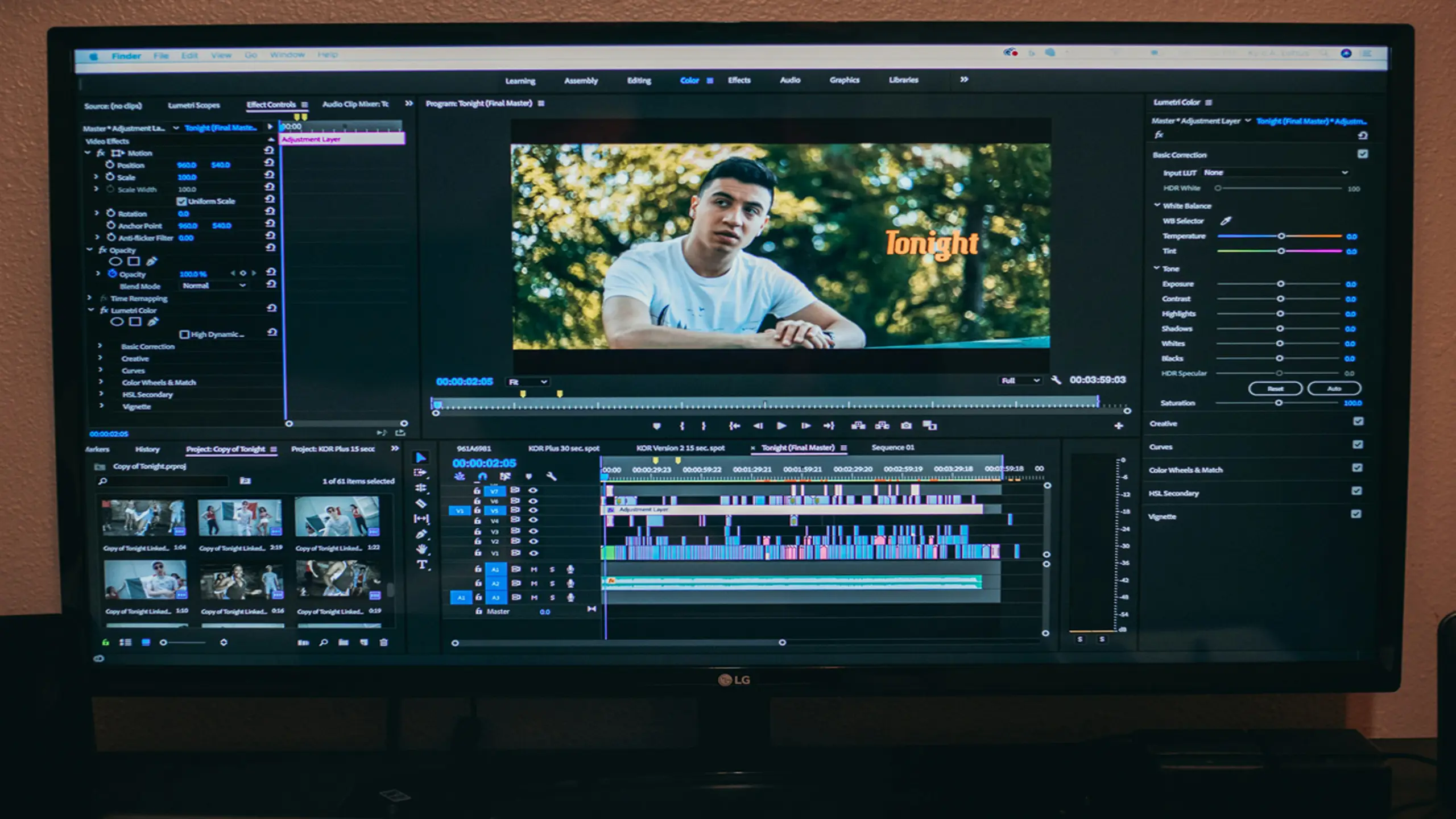
## Case Studies. How Editing Changed the Final Product
Some of the most iconic video projects in history owe their success not to the way they were shot, but to how they were *edited*. Editing has the power to rewrite tone, fix broken narratives, enhance emotional depth, and completely change how a story is received. When things don’t go as planned during production, or even when they do, great editing can turn raw footage into something truly extraordinary.
A classic example is the original *Blade Runner*. The theatrical version, director’s cut, and final cut all tell the same core story, but each version feels dramatically different, thanks to the editorial decisions made. The inclusion or removal of voiceover narration, changes in pacing, and tweaks to the final scene created radically different emotional interpretations. The editing didn’t just polish the film, it reshaped its meaning.
In the world of branded content and professional photography campaigns, editing often determines whether a project feels high-end and cinematic or flat and forgettable. For instance, a behind-the-scenes shoot of a fashion campaign might seem ordinary on set. But with tight editing, intercutting slow-motion sequences, layering audio from interviews, and enhancing visuals with color correction, it becomes a powerful story about identity, movement, and design. The transformation is not just visual, it’s emotional.
Documentaries, too, often come together in the edit suite. In media marketing consult projects where client testimonials or real-world case studies are involved, editors must sift through hours of interviews to create a coherent, persuasive narrative. They shape emotional arcs, build credibility, and highlight transformational moments, all while preserving authenticity. A well-edited documentary can make even the most mundane subject feel gripping.
We’ve seen similar transformations in music videos and social media marketing content. Raw footage of a band playing in a studio or an influencer walking through a product demo becomes emotionally charged and rhythmically engaging through precise cuts, seamless transitions, and aligned sound design. What starts as documentation ends as *experience*.
In one of our own projects at C&I Studios, a branded mini-documentary began as a collection of B-roll and interviews. Through thoughtful editorial structuring, we created a narrative that blended real human stories with bold visuals and emotional beats, turning the brand’s values into a visceral viewer experience.
These case studies prove one thing: editing isn’t post-production, it’s *final storytelling*. With the right editorial approach, good content becomes unforgettable content.
## Common Mistakes in Editing (and How to Avoid Them)
Even with powerful software and strong visuals, editing can fall flat if certain pitfalls aren’t avoided. These mistakes can disrupt the flow, dilute emotional impact, and confuse the audience, ultimately weakening the entire project. The difference between a polished, professional result and a clumsy or amateur cut often comes down to awareness of these common errors and how to sidestep them during the editorial process.
One of the most frequent mistakes is over-editing. This often shows up as excessive transitions, flashy effects, or overly rapid cuts that call attention to themselves. When viewers notice the editing rather than the story, immersion is lost.
This is especially problematic in SEO copywriting videos or client case studies where clarity and authenticity are key. The goal should always be to enhance the message, not distract from it. Simplicity often serves the emotion and pacing far better than a barrage of visual gimmicks.
Another common misstep is poor continuity. This includes visual inconsistencies (like sudden changes in lighting or position) or awkward cuts that make scenes feel jarring. In web maintenance and product-focused projects, continuity errors can confuse the message and make the brand appear careless. Editors must be detail-oriented, tracking every element from wardrobe to prop placement, and double-checking cuts for logical progression.
Inconsistent color grading is another silent killer of good editing. Especially in multi-camera shoots or footage gathered over several days, mismatched tones can make a video feel disjointed. In [video production](https://c-istudios.com/video-production-services/) for campaigns or documentaries, a consistent visual mood supports both emotional tone and brand identity. Skipping this step can flatten the look and reduce the professional feel.
Sound is often overlooked, but poorly mixed audio can ruin an otherwise well-edited video. Background hums, harsh transitions between clips, or unbalanced dialogue make the experience unpleasant. Editors working in creative marketing or client-facing deliverables should always prioritize clean audio, subtle music integration, and natural ambient layering to preserve viewer comfort and immersion.
Lastly, weak or nonexistent structure can derail even the most visually appealing content. Whether it’s a lack of buildup, missing climax, or abrupt ending, structural gaps reduce emotional payoff. In client-focused documentary film production or promotional content, editors must always shape the footage into a story arc, even if that arc has to be discovered in post.
Avoiding these pitfalls doesn’t just make the video look better, it ensures that the message lands, the story resonates, and the audience remembers what they watched.
## Measuring the Impact of Great Editing
Editing isn’t just an artistic process, it’s a measurable force that directly impacts how content performs. Whether you're producing a short-form ad, a branded documentary, or a full-scale feature, great editing improves viewer retention, engagement, and ultimately, conversion. Knowing *how* to measure this impact is just as important as knowing *how* to edit.
One of the clearest indicators of strong editing is viewer retention, how long people actually stay with your video. Sharp pacing, well-placed emotional cues, and satisfying storytelling arcs keep audiences watching. If viewers drop off in the first few seconds, it's often a sign that the opening lacked clarity or momentum. Editors in creative marketing teams frequently use tools like YouTube Analytics, Wistia, or Vimeo heat maps to track where engagement drops and where it spikes. These insights help them refine timing and structure in future edits.
Another key metric is click-through rate (CTR), especially for videos used in campaigns or embedded on landing pages. If the edit drives emotional resonance and builds interest, viewers are more likely to act, whether that’s clicking a link, subscribing, or making a purchase. In artist management & media creation or influencer-driven campaigns, this kind of engagement is often the difference between a successful piece and a wasted budget.
Editors also look at A/B testing results. By creating multiple versions of the same video with slight edits, such as different intros, alternate pacing, or varied calls-to-action, teams can see which version performs best. This is especially useful in web development environments where conversions are tied closely to visual storytelling. A tighter edit can improve UX just as much as a better layout or headline.
Feedback from clients and audiences also matters. Are people saying the video felt smooth and emotional, or was it “too long” or “a little confusing”? Qualitative responses often reveal whether the pacing and emotional tone truly worked. For editors working across platforms, be it web hosting, YouTube, or OTT platforms, this kind of feedback guides better editorial decisions.
Ultimately, when editing is done well, performance metrics align with storytelling goals. Engagement increases. Viewers stay longer. Brands communicate more effectively. In an era where every second counts, editors who understand both creative flow *and* data will always deliver content that connects, and converts.
## Work with C&I Studios
If you are planning a project like this, our team can take it from concept to final delivery. Explore our [film and TV production](https://c-istudios.com/film-and-tv-production/), browse [our work](https://c-istudios.com/our-work/) to see how we tell brand stories, and [get in touch](https://c-istudios.com/contact/) when you are ready to start.
Originally published June 5, 2025
---
*This content is from [C&I Studios](https://c-istudios.com), a full-service production company.*
---
# Why Color Consistency Is Crucial for Cinematic Storytelling
> Published: June 4, 2025
> Categories: Film & TV
> Source: https://c-istudios.com/why-color-consistency-is-crucial-for-cinematic-storytelling/
---
.cib{--paper:#1b1d1f;--ink:#fff;--body:#d5d7d9;--muted:#8b9096;--line:rgba(255,255,255,.12);--thumb:#2b2e31;--card:#212426;--accent:#c02b0a;--blue:#5B8FA8;--serif:'Playfair Display',Georgia,serif;--sans:'Poppins',-apple-system,sans-serif;--measure:900px;background:var(--paper);color:var(--body);font-family:var(--sans);line-height:1.6;position:relative;left:50%;transform:translateX(-50%);width:90vw;max-width:1920px}
.cib *{box-sizing:border-box}
.cib .kicker{max-width:var(--measure);margin:58px auto 0;padding:0 22px;font-size:12.5px;font-weight:700;letter-spacing:2.5px;text-transform:uppercase;color:var(--blue)}
.cib h1.cibh1{text-wrap:balance;font-family:var(--serif);font-weight:500;font-size:clamp(46px,6vw,72px);line-height:1.08;color:var(--ink);max-width:var(--measure);margin:18px auto 0;padding:0 22px;letter-spacing:-.5px}
.cib .metarow{max-width:var(--measure);margin:20px auto 0;padding:0 22px;color:var(--muted);font-size:14px}
.cib .hero{position:relative;width:100%;height:0;padding-bottom:56.25%;overflow:hidden;margin:48px auto 0;border-top:1px solid var(--line);border-bottom:1px solid var(--line)}
.cib .hero .ph{width:100%;aspect-ratio:16/9;background:var(--thumb);border-top:1px solid var(--line);border-bottom:1px solid var(--line);display:flex;align-items:center;justify-content:center;color:#7d8288;font-size:13px;text-align:center;padding:0 20px}
.cib .body{max-width:var(--measure);margin:12px auto 0;padding:52px 22px 6px}
.cib .body.lead p:first-child{font-size:23px;line-height:1.62;color:var(--ink)}
.cib .body p{font-size:18.5px;line-height:1.85;margin:0 0 30px;color:var(--body)}
.cib .body h2{text-wrap:balance;font-family:var(--serif);font-weight:500;font-size:clamp(32px,4vw,48px);line-height:1.22;color:var(--ink);margin:70px 0 20px;letter-spacing:-.3px}
.cib .body h3{text-wrap:balance;font-family:var(--sans);font-weight:600;font-size:22px;color:var(--ink);margin:38px 0 8px}
.cib .body a{color:var(--ink);text-decoration:underline;text-decoration-color:rgba(255,255,255,.4);text-underline-offset:3px}
.cib .body a:hover{text-decoration-color:var(--ink)}
.cib .ctable{width:100%;border-collapse:collapse;margin:16px 0 30px;font-size:16px}
.cib .ctable th{background:#000;color:#fff;text-align:left;padding:10px 12px;font-family:var(--sans)}
.cib .ctable td{padding:10px 12px;border-bottom:1px solid var(--line);color:var(--body)}
.cib .inimg{position:relative;width:100%;height:0;padding-bottom:56.25%;overflow:hidden;margin:72px auto;border-top:1px solid var(--line);border-bottom:1px solid var(--line)}
.cib .inimg .ph{width:100%;aspect-ratio:16/9;background:var(--thumb);border-top:1px solid var(--line);border-bottom:1px solid var(--line);display:flex;align-items:center;justify-content:center;color:#7d8288;font-size:13px}
.cib .origpub{max-width:var(--measure);margin:60px auto 0;padding:26px 22px 0;border-top:1px solid var(--line);color:var(--muted);font-size:13.5px}
.cib .related{max-width:1200px;margin:64px auto 0;padding:34px 22px 76px}
.cib .related h3{font-family:var(--sans);font-size:12.5px;letter-spacing:2px;text-transform:uppercase;color:var(--ink);margin:0 0 24px}
.cib .grid{display:grid;grid-template-columns:repeat(3,1fr);gap:28px}
.cib .rc{background:var(--card);border:1px solid var(--line);display:block;text-decoration:none;color:inherit;transition:border-color .15s}
.cib a.rc:hover{border-color:rgba(255,255,255,.5)}
.cib .rc .thumb{position:relative;width:100%;height:0;padding-bottom:56.25%;background:var(--thumb);overflow:hidden}
.cib .rc .thumb img{position:absolute!important;top:0!important;left:0!important;width:100%!important;height:100%!important;object-fit:cover!important;margin:0!important}
.cib .rc .cc{padding:14px 15px 17px}
.cib .rc .rt{font-family:var(--serif);font-weight:500;font-size:16px;line-height:1.3;color:var(--ink);margin:0 0 6px}
.cib .rc .rm{font-size:11px;letter-spacing:1px;text-transform:uppercase;color:var(--muted)}
.cib img{margin:0!important;padding:0!important;display:block!important;vertical-align:top;max-width:100%}
.cib .hero img,.cib .inimg img{position:absolute!important;top:0!important;left:0!important;width:100%!important;height:100%!important;object-fit:cover!important;margin:0!important;padding:0!important;border:0!important;display:block!important;aspect-ratio:auto!important}
.cib .hero+.body{padding-top:36px}
@media(max-width:760px){.cib .grid{grid-template-columns:1fr}.cib .body h2{margin:52px 0 16px}.cib .body p{font-size:17.5px}.cib .inimg,.cib .hero{margin-top:44px}}
.cib .vembed{max-width:var(--measure);margin:44px auto;padding:0 22px}.cib .vembed .vwrap{position:relative;width:100%;height:0;padding-bottom:56.25%}.cib .vembed .vwrap iframe{position:absolute;top:0;left:0;width:100%;height:100%;border:0}
Film & TV
# Why Color Consistency Is Crucial for Cinematic Storytelling
14 min read

Color is one of the most powerful storytelling tools in cinema, often shaping how we feel long before we realize it. Whether it’s the cool blues of a tense thriller or the warm hues of a nostalgic drama, filmmakers rely on color to guide emotion, establish setting, and build continuity. But it’s not just about making things look good; maintaining a consistent color palette is essential for sustaining immersion and narrative clarity. When color shifts unpredictably, it disrupts the story’s flow and weakens its emotional impact. That’s why color consistency isn’t just an aesthetic choice; it’s a storytelling necessity.

## The Role of Color in Cinematic Language
Color has always been more than just a stylistic choice in filmmaking. It’s a powerful narrative device, kind of visual shorthand that conveys emotion, tone, and subtext without uttering a single word. In modern video production gea**r**, filmmakers have access to sophisticated color profiles and calibration tools that allow them to craft highly intentional palettes. These tools are not just about aesthetics, they are foundational to how a story is told.
One of the most iconic uses of color as cinematic language comes from *The Matrix*, where a green tint was deliberately applied to scenes set in the virtual world. This subtle visual cue instantly signaled to the audience that reality had shifted. In contrast, the real world was portrayed with cooler, desaturated tones to distinguish it emotionally and thematically. This wasn’t just creative marketing, color was used as a storytelling infrastructure.
Wes Anderson provides another masterclass in visual storytelling through color. His signature use of pastels and symmetry isn’t just quirky design; it creates a feeling of nostalgia, control, and sometimes emotional detachment. His films are instantly recognizable because his color choices are so consistent and intentional. This kind of color discipline is a hallmark of strong feature film mastering & delivery.
Color also plays a vital role in [documentary film production](https://c-istudios.com/documentary-film-production/), where authenticity is key. Even though documentaries aim to reflect reality, filmmakers still use color grading to create mood, enhance clarity, or unify footage from multiple sources. For example, a documentary on climate change might use cooler tones to convey urgency and somberness, while one about childhood education might favor warmer hues to evoke hope and vitality. Here again, color functions as a subtle but strategic narrative tool.
The psychological response to color is well documented. Red often triggers alertness, urgency, or passion. Blue can evoke calmness, intelligence, or isolation. Yellow might bring energy, but also anxiety if overused. When filmmakers align these responses with the arc of the story, the viewer’s emotional journey becomes more immersive and coherent.
Ultimately, color is a language the brain processes almost instantly, before any dialogue is spoken or action unfolds. In a saturated content landscape, the ability to use color effectively can be the difference between forgettable and unforgettable. For any filmmaker serious about their craft, mastering this language is not optional; it’s essential.
## How Color Consistency Strengthens Storytelling
Color consistency isn’t just a technical preference’s one of the most important tools for maintaining emotional and narrative cohesion across an entire production. When color palettes are thoughtfully applied and maintained throughout a film, they help audiences connect subconsciously with the story’s tone, rhythm, and progression. Inconsistent color, on the other hand, disrupts immersion and can unintentionally signal mood shifts that weren’t part of the original intent.
Consider a scene transition in a character-driven drama. If the lighting and grading shift from warm amber tones to suddenly cool blue without narrative justification, the audience may feel confused or emotionally disconnected. But when the color palette is maintained intentionally, a soft golden hue tracks a character’s journey through healing, it reinforces the story without a word being spoken. This seamless visual storytelling is the result of deliberate planning in [content creation](https://c-istudios.com/content-creation-services/) and post-production workflows.
In the realm of video production, consistency becomes even more critical when scenes are shot over different days, in different lighting environments, or with different cameras. The job of the colorist is to unify these elements into a coherent visual flow. This is where video production gear, such as calibrated monitors, color charts, and LUTs (Look-Up Tables), comes into play. With these tools, filmmakers ensure that no matter the filming conditions, the story’s visual identity remains intact.
Color consistency also helps define and reinforce genre conventions. A horror film might consistently use desaturated blues and greens to build tension and unease. A romantic period drama may lean into soft, warm pastels to evoke nostalgia and intimacy. These visual signatures make the story immediately recognizable within its genre while creating emotional familiarity. In this way, creative marketing teams often use consistent color branding in trailers, posters, and social campaigns to build audience anticipation and recognition.
Moreover, in multi-format storytelling, such as when a film expands into branded shorts, behind-the-scenes documentaries, or companion pieces, consistent color treatment ensures visual unity across all content. This is especially important in long-term documentary film production projects where footage may span years.
In short, color consistency provides a framework for emotional stability, aesthetic coherence, and narrative clarity. It keeps the audience grounded in the world you’ve created, whether it’s a single short film or a sprawling episodic series.
## Understanding the Workflow. From On-Set to Post
Maintaining color consistency in cinematic storytelling is not something that happens by accident’s the result of a carefully coordinated workflow that begins in pre-production and continues through post. Every department, from camera crew to editors, must work in sync to ensure that the film’s visual tone remains aligned from the first day of shooting to final delivery. This level of coordination is essential in [professional video production](https://c-istudios.com/video-production-services/) environments.
It starts on set. Cinematographers and directors often use mood boards and color scripts to establish a palette before filming even begins. These reference tools guide decisions about lighting, wardrobe, set design, and location. On shoot days, color charts and light meters are used alongside high-end video production gear to ensure footage is captured under controlled and replicable lighting conditions. Camera settings such as white balance, ISO, and color profiles must be consistent across all scenes, especially when multiple cameras or units are involved.
From there, the footage moves to post-production, where colorists begin the delicate task of matching and grading every frame. Using software like DaVinci Resolve or Adobe Premiere, they apply LUTs (Look-Up Tables) that reflect the film’s desired tone. Here, [VFX compositing & animation](https://c-istudios.com/vfx-compositing-and-animation-services/) teams may also contribute, blending CGI elements with live-action footage. To maintain visual realism, all digital effects must adhere to the same color logic established during the shoot. Even the shadows and reflections in CGI need to match the lighting and tone of the surrounding environment.
This workflow is especially critical in high-end feature film mastering & delivery, where the final product must hold up across multiple formats and screens, from theater projection to mobile streaming. A film might look perfect in the editing suite but appear overly dark or saturated on a consumer screen if calibration and format conversion aren’t handled properly.
In collaborative productions, such as those involving documentary film production, [music video](https://c-istudios.com/video-production-services/music-video-production/)s, or commercial shoots, asset sharing between teams makes color consistency even more vulnerable. That’s why clear communication and centralized color guidelines are non-negotiable.
Ultimately, consistency in color isn’t just a post-production polish, it’s a workflow discipline. When every step of production is aligned, the result is a cohesive, immersive visual experience that enhances storytelling and strengthens emotional impact across every frame.
## Color Grading and Emotional Resonance
Color grading is where the emotional heartbeat of a film is often solidified. While cinematography captures the story, grading refines how the audience feels it. In this stage, raw footage is transformed into a polished visual narrative, shaping tension, softness, vibrancy, or darkness, depending on the desired impact. For storytellers in film & [TV production](https://c-istudios.com/film-and-tv-production/), color grading becomes an emotional instrument that speaks without dialogue.
Take, for instance, the difference between a cool, bluish grade and a warm, golden one. The former often communicates isolation, detachment, or suspense, commonly seen in thrillers or dystopian settings. The latter evokes nostalgia, comfort, and human connection, which is ideal for dramas and romance. These emotional cues are baked into the color palette and help guide the viewer’s reaction moment by moment.
In documentary film production, color grading is often more restrained but still critical. A documentary about injustice might lean into stark, contrast-heavy tones to convey urgency, while one about environmental beauty might feature soft greens and blues to create a meditative rhythm. Whether dramatic or subtle, the color grading choices serve to deepen the emotional tone without distracting from the truth being told.
For those working in content creation, understanding emotional color language can dramatically affect how a piece is received. Whether crafting a product video, a brand film, or a web series, the right color choices amplify the intended message. Warm, saturated tones may increase viewer trust and relatability. Cooler tones might suggest modernity, seriousness, or professionalism. The audience may not consciously recognize these signals, but they will absolutely feel them.
Modern grading tools give creators more control than ever. Software like DaVinci Resolve, Final Cut Pro, and Adobe Premiere allows precise adjustments to saturation, contrast, and hue. Even with limited budgets, creators can now apply cinematic color treatments that used to be exclusive to major studios. For those involved in artist management & media creation, this capability is a game-changer, allowing for emotionally resonant visuals that match the tone of the artist or brand.
Color grading is not just about “making things look good,” it’s about making them *feel* right. Done well, it creates emotional continuity, strengthens character arcs, and ensures that every frame supports the story being told.

## Mistakes to Avoid. Inconsistencies That Break the Spell
Color consistency can elevate a production, but even small mistakes can unravel the entire visual experience. For filmmakers and creators working across platforms, the most common errors aren’t just technical slip-ups; they’re often the result of poor planning or communication. Understanding what to avoid is as essential as knowing what to implement.
One of the biggest offenders is mismatched lighting. Scenes shot on different days, in different lighting conditions, or with improper color temperature settings can create visual breaks that feel jarring. Even if the audience doesn’t consciously notice, these shifts can disrupt immersion. That’s why [video production gear](https://c-istudios.com/video-production-gear-list/), especially calibrated monitors, color meters, and consistent lighting rigs, is critical from day one. When overlooked, these inconsistencies show up later in post-production, making them much harder (and more expensive) to fix.
Another pitfall lies in post-production itself. Over-grading or under-grading footage is surprisingly common. An overuse of saturation or contrast can make a scene feel artificial, while flat, untreated footage may seem lifeless or incomplete. Worse yet, these inconsistencies often sneak in when different editors or colorists handle various sections of the film without a shared reference. In larger productions, especially in documentary film production or branded content, it’s essential to have a unified visual guide or color script.
Technology-related mistakes also play a role. If the content is intended for distribution across multiple devices and platforms, failing to test on different screens can lead to skewed visuals. A grade that looks rich and balanced on a studio monitor might appear washed out on a tablet or overly contrasted on a phone. This is where knowledge of web development, web hosting, and web maintenance becomes important, especially when delivering color-sensitive media to audiences via streaming platforms or brand websites.
A subtle but damaging mistake is ignoring brand or project identity. In creative marketing and TV show pitching, color serves as a branding tool. If the palette shifts dramatically between a trailer, a website teaser, and the final episode, audiences lose visual trust. Consistency reinforces professional identity and helps content feel premium, even when budgets are lean.
## Case Studies. When Color Consistency Made or Broke the Experience
The real-world impact of color consistency becomes most visible when we examine how it plays out in finished projects, both successful and flawed. In one recent example, a U.S. congressional campaign used a tightly controlled visual strategy to establish trust with voters.
From campaign videos to social media graphics, the color palette was thoughtfully applied across every touchpoint. Warm neutrals and soft blues were selected to evoke transparency, optimism, and stability. Each piece of video content was graded to match that palette, aligning visually with the candidate’s core message.
The result was more than just attractive visuals, it was a cohesive identity that resonated with audiences on an emotional level. Higher video watch times and increased grassroots donations reflected the subtle power of a consistent color strategy in political storytelling. In the competitive arena of [political campaigns](https://c-istudios.com/political-campaign-services/), that visual alignment can be the difference between forgettable and memorable.
By contrast, a promising documentary film production centered on grassroots education in underserved regions revealed how a lack of color consistency can undercut even the strongest stories. Filmed over several years using different gear and settings, the footage varied widely in tone, from warm, saturated daytime scenes to cold, desaturated interviews.
In post-production, the team failed to apply a unified grading strategy, and as a result, the film felt disjointed. Despite a compelling narrative, test audiences noted the visual inconsistency as a barrier to emotional engagement. What could have been a powerful, moving documentary came across as uneven and unfinished. The lesson was clear: without a consistent visual tone, the emotional rhythm suffers.
On the other hand, an independent filmmaker with limited funding proved just how much can be achieved through careful color planning. Using modest video production gear and accessible editing tools, the filmmaker established a consistent color palette tied closely to character arcs and emotional themes. From location selection to lighting and wardrobe, every decision was made with color harmony in mind.
The result was a visually stunning film that screened at several festivals and caught the attention of distributors. What set the film apart wasn’t the budget; it was the discipline. That same discipline became a valuable asset in their creative marketing and media marketing consulting efforts, proving that color consistency is not only an artistic strength but a strategic one.
## Cross-Platform Considerations. Web, Mobile, and Streaming
In today’s fragmented viewing landscape, content rarely lives in just one place. A film or video may be watched in a theater, on a phone, via a laptop, or streamed through a smart TV. Each platform presents unique challenges in maintaining visual fidelity, especially when it comes to color.
Without careful adjustments, the same beautifully graded film that looks stunning in a studio could appear overly dark, washed out, or distorted elsewhere. This is where understanding cross-platform delivery becomes essential to preserving color consistency, and by extension, storytelling clarity.
Color looks different depending on the screen’s size, brightness, calibration, and color profile. A grade that feels rich and balanced on a calibrated monitor can look oversaturated on a phone or pale on a budget TV. That’s why filmmakers and editors must test their footage across devices before locking the final grade. Especially in **[video & audio live streaming](https://c-istudios.com/video-audio-live-streaming/)**, where compression algorithms often strip out subtle color data, it becomes crucial to design a grade that holds up under bandwidth and resolution fluctuations.
Equally important is how content is hosted and delivered. Inconsistent color rendering can result not only from poor grading but also from improper web development, web hosting, or web maintenance. Hosting platforms may alter playback settings or transcode files into color-degrading formats. If you’re embedding video on your own site, choosing the right encoding format and player becomes part of your creative process. Even the background color of a website or mobile app can visually clash with your video’s palette if not properly coordinated.
For those involved in content creation or brand storytelling, these considerations extend far beyond film. A branded video that looks consistent on YouTube but appears off-color on Instagram undermines trust in the visual identity. When your audience spans different platforms, visual consistency becomes part of your reputation. Whether it's a product launch, a campaign video, or a full-length feature, the color experience should feel seamless from screen to screen.
In an era where viewers swipe from cinematic trailers to TikTok in seconds, your ability to control the color experience across formats is a mark of professionalism. Every screen is a stage, and consistent color across them ensures that your story lands with the same emotional and aesthetic power, every single time.
## Work with C&I Studios
If you are planning a project like this, our team can take it from concept to final delivery. Explore our [film and TV production](https://c-istudios.com/film-and-tv-production/), browse [our work](https://c-istudios.com/our-work/) to see how we tell brand stories, and [get in touch](https://c-istudios.com/contact/) when you are ready to start.
Originally published June 4, 2025
---
*This content is from [C&I Studios](https://c-istudios.com), a full-service production company.*
---
# The Future of Video Production: Integrating AI to Boost Advertising Impact
> Published: June 3, 2025
> Categories: Commercial & Brand
> Source: https://c-istudios.com/the-future-of-video-production-integrating-ai-to-boost-advertising-impact/
---
.cib{--paper:#1b1d1f;--ink:#fff;--body:#d5d7d9;--muted:#8b9096;--line:rgba(255,255,255,.12);--thumb:#2b2e31;--card:#212426;--accent:#c02b0a;--blue:#5B8FA8;--serif:'Playfair Display',Georgia,serif;--sans:'Poppins',-apple-system,sans-serif;--measure:900px;background:var(--paper);color:var(--body);font-family:var(--sans);line-height:1.6;position:relative;left:50%;transform:translateX(-50%);width:90vw;max-width:1920px}
.cib *{box-sizing:border-box}
.cib .kicker{max-width:var(--measure);margin:58px auto 0;padding:0 22px;font-size:12.5px;font-weight:700;letter-spacing:2.5px;text-transform:uppercase;color:var(--blue)}
.cib h1.cibh1{text-wrap:balance;font-family:var(--serif);font-weight:500;font-size:clamp(46px,6vw,72px);line-height:1.08;color:var(--ink);max-width:var(--measure);margin:18px auto 0;padding:0 22px;letter-spacing:-.5px}
.cib .metarow{max-width:var(--measure);margin:20px auto 0;padding:0 22px;color:var(--muted);font-size:14px}
.cib .hero{position:relative;width:100%;height:0;padding-bottom:56.25%;overflow:hidden;margin:48px auto 0;border-top:1px solid var(--line);border-bottom:1px solid var(--line)}
.cib .hero .ph{width:100%;aspect-ratio:16/9;background:var(--thumb);border-top:1px solid var(--line);border-bottom:1px solid var(--line);display:flex;align-items:center;justify-content:center;color:#7d8288;font-size:13px;text-align:center;padding:0 20px}
.cib .body{max-width:var(--measure);margin:12px auto 0;padding:52px 22px 6px}
.cib .body.lead p:first-child{font-size:23px;line-height:1.62;color:var(--ink)}
.cib .body p{font-size:18.5px;line-height:1.85;margin:0 0 30px;color:var(--body)}
.cib .body h2{text-wrap:balance;font-family:var(--serif);font-weight:500;font-size:clamp(32px,4vw,48px);line-height:1.22;color:var(--ink);margin:70px 0 20px;letter-spacing:-.3px}
.cib .body h3{text-wrap:balance;font-family:var(--sans);font-weight:600;font-size:22px;color:var(--ink);margin:38px 0 8px}
.cib .body a{color:var(--ink);text-decoration:underline;text-decoration-color:rgba(255,255,255,.4);text-underline-offset:3px}
.cib .body a:hover{text-decoration-color:var(--ink)}
.cib .ctable{width:100%;border-collapse:collapse;margin:16px 0 30px;font-size:16px}
.cib .ctable th{background:#000;color:#fff;text-align:left;padding:10px 12px;font-family:var(--sans)}
.cib .ctable td{padding:10px 12px;border-bottom:1px solid var(--line);color:var(--body)}
.cib .inimg{position:relative;width:100%;height:0;padding-bottom:56.25%;overflow:hidden;margin:72px auto;border-top:1px solid var(--line);border-bottom:1px solid var(--line)}
.cib .inimg .ph{width:100%;aspect-ratio:16/9;background:var(--thumb);border-top:1px solid var(--line);border-bottom:1px solid var(--line);display:flex;align-items:center;justify-content:center;color:#7d8288;font-size:13px}
.cib .origpub{max-width:var(--measure);margin:60px auto 0;padding:26px 22px 0;border-top:1px solid var(--line);color:var(--muted);font-size:13.5px}
.cib .related{max-width:1200px;margin:64px auto 0;padding:34px 22px 76px}
.cib .related h3{font-family:var(--sans);font-size:12.5px;letter-spacing:2px;text-transform:uppercase;color:var(--ink);margin:0 0 24px}
.cib .grid{display:grid;grid-template-columns:repeat(3,1fr);gap:28px}
.cib .rc{background:var(--card);border:1px solid var(--line);display:block;text-decoration:none;color:inherit;transition:border-color .15s}
.cib a.rc:hover{border-color:rgba(255,255,255,.5)}
.cib .rc .thumb{position:relative;width:100%;height:0;padding-bottom:56.25%;background:var(--thumb);overflow:hidden}
.cib .rc .thumb img{position:absolute!important;top:0!important;left:0!important;width:100%!important;height:100%!important;object-fit:cover!important;margin:0!important}
.cib .rc .cc{padding:14px 15px 17px}
.cib .rc .rt{font-family:var(--serif);font-weight:500;font-size:16px;line-height:1.3;color:var(--ink);margin:0 0 6px}
.cib .rc .rm{font-size:11px;letter-spacing:1px;text-transform:uppercase;color:var(--muted)}
.cib img{margin:0!important;padding:0!important;display:block!important;vertical-align:top;max-width:100%}
.cib .hero img,.cib .inimg img{position:absolute!important;top:0!important;left:0!important;width:100%!important;height:100%!important;object-fit:cover!important;margin:0!important;padding:0!important;border:0!important;display:block!important;aspect-ratio:auto!important}
.cib .hero+.body{padding-top:36px}
@media(max-width:760px){.cib .grid{grid-template-columns:1fr}.cib .body h2{margin:52px 0 16px}.cib .body p{font-size:17.5px}.cib .inimg,.cib .hero{margin-top:44px}}
.cib .vembed{max-width:var(--measure);margin:44px auto;padding:0 22px}.cib .vembed .vwrap{position:relative;width:100%;height:0;padding-bottom:56.25%}.cib .vembed .vwrap iframe{position:absolute;top:0;left:0;width:100%;height:100%;border:0}
Commercial & Brand
# The Future of Video Production. Integrating AI to Boost Advertising Impact
16 min read

The landscape of visual storytelling is undergoing a profound shift as artificial intelligence begins to reshape how videos are conceptualized, created, and distributed. What was once a manual, time-intensive process driven solely by human input is now evolving into a dynamic collaboration between technology and creativity.
This transformation is especially evident in the world of advertising, where speed, precision, and personalization are critical. As AI continues to advance, it’s not just changing workflows; it’s challenging long-standing assumptions about creativity and control.

## Why AI Matters in Modern Advertising
In recent years, the global advertising industry has seen a dramatic uptick in the adoption of artificial intelligence, and the numbers speak for themselves. Projections suggest the AI in the advertising market will surge to $407 billion by 2027, underscoring its role as a central force in reshaping how campaigns are developed and deployed.
This growth is driven by brands seeking smarter, faster, and more impactful ways to reach audiences across platforms. Whether it’s optimizing campaign performance or generating creative assets, AI’s expanding role in advertising is no longer a distant trend; it’s a core strategy.
One of the most compelling reasons AI is gaining ground is its undeniable impact on efficiency. By significantly cutting both production time and cost, AI empowers small brands and large agencies alike to operate with leaner budgets and faster turnarounds.
A compelling example is Kalshi’s viral political ad, which cost just $2,000 to create using generative AI tools, far less than the tens of thousands typically spent on such content. This shift allows advertisers to test more variations, localize content quickly, and stretch creative output without ballooning costs.
Even more transformative is AI’s capacity for personalization at scale. Traditional advertising often relies on a few generic versions of a campaign, but AI-powered platforms can dynamically tailor visuals, messaging, and pacing for specific demographics or even individuals. From AI-generated scripts to auto-edited highlight reels optimized for TikTok, these technologies allow advertisers to fine-tune their messaging in real time.
AI systems can analyze user behavior and instantly adjust creative elements, delivering a level of relevance that manual workflows simply can’t achieve. This approach enhances not just click-through rates but long-term engagement.
The convergence of automation, personalization, and creative strategy is what sets AI apart in the advertising space. It’s not just about replacing human labor; it’s about expanding what’s possible in content creation, lowering barriers to entry, and enabling a more agile and adaptive advertising model.
As agencies look to the future, embracing these technologies is becoming less of a competitive edge and more of a survival strategy in an increasingly data-driven media landscape.
## Core AI Technologies Driving Video Production
At the heart of AI’s influence in advertising is a suite of transformative technologies now embedded across the **[video production](https://c-istudios.com/video-production-services/)** pipeline. Chief among them is generative AI, which is revolutionizing everything from script development to shot composition. What once required hours of brainstorming and manual planning can now be generated in minutes.
AI tools like Runway and Synthesia can create scene outlines, develop storyboards, and even simulate voiceovers, helping production teams pre-visualize the final cut with stunning clarity. These tools are especially valuable in film & [TV production](https://c-istudios.com/film-and-tv-production/), where efficiency during pre-production can make or break a budget.
Another major driver is the rise of machine learning and agentic AI, which are powering real-time tools for VFX compositing & animation. These algorithms can intelligently interpret raw footage and automate tasks such as motion tracking, rotoscoping, and asset generation.
Editors and designers now work alongside these AI systems to enhance visual complexity while reducing time spent on repetitive manual adjustments. This has led to more streamlined workflows, particularly in sectors like political campaigns and documentary film production, where tight deadlines often limit creative scope.
Computer vision is another technology propelling this shift, especially when combined with deepfake algorithms. While the term “deepfake” often carries ethical concerns, its underlying technology offers enormous utility in feature film mastering & delivery.
AI can now convincingly sync dubbed audio to actors’ lips, allowing brands to localize content for international markets without additional filming. It also enables facial corrections and continuity fixes that would have previously required costly reshoots, helping maintain visual consistency across complex productions.
Meanwhile, virtual reality (VR) and augmented reality (AR) are integrating seamlessly with AI to transform interactive content. From immersive brand experiences to virtual product placements, these technologies are no longer niche experiments.
AI enhances these environments by automating object tracking, voice recognition, and scene analysis, making video & audio live streaming events more dynamic and engaging. These innovations are particularly impactful in social media marketing, where attention spans are short and visual novelty is crucial.
Together, these core technologies redefine what’s possible in modern advertising. By streamlining workflows, expanding creative possibilities, and enhancing technical precision, they allow agencies to create more sophisticated, emotionally resonant content faster and at lower cost. As adoption increases, mastery of these tools will become essential for staying relevant in an evolving media economy.
## AI Across the Advertising Production Pipeline
The integration of AI into advertising doesn’t just affect isolated tasks; it transforms every phase of the [video production](https://c-istudios.com/video-production-services/) pipeline from concept to final delivery. These changes allow agencies and production teams to deliver more targeted, engaging, and cost-effective content with significantly reduced turnaround times.
Pre-production is one of the most dramatically affected stages. AI can now assist with everything from moodboard generation to TV show pitching by rapidly compiling data on viewer preferences and successful formats. Scriptwriting software powered by generative AI can draft compelling narratives in seconds, while visual layout tools generate intelligent storyboards based on brand tone and previous campaign successes. Teams can also use AI for branding & graphic design, ensuring a campaign’s visual identity remains consistent and effective across channels.
During the production phase, AI is beginning to enhance everything from camera setup to lighting design. Smart **[video production gear](https://c-istudios.com/video-production-gear-list/)** can now auto-calibrate based on the environment, ensuring optimal exposure and color balance without constant manual input. Real-time feedback systems adjust lighting setups based on AI-detected subject movement or emotion recognition, particularly valuable in live environments such as political campaigns or video & audio live streaming sessions.
The post-production stage has perhaps seen the most rapid evolution. Automated tools now handle everything from editing and scene transitions to sound mixing and audio engineering. For instance, AI-driven editing suites can identify the most emotionally impactful moments in footage and generate highlight reels tailored for specific platforms like Instagram Reels or YouTube Shorts.
Advanced tools also support VFX compositing & animation, allowing editors to create cinematic-level graphics without needing a massive effects team. These innovations have proven especially useful in documentary film production, where editors work with hours of raw footage and tight schedules.
Finally, in the distribution and optimization phase, AI shines in localizing content and maximizing campaign performance. AI can create dozens of regionalized ad versions, automatically adjusting language, tone, and visuals to suit local cultures. For marketers, this means better engagement and ROI with less manual effort. AI also supports cross-platform optimization, tailoring content dimensions and lengths for different formats, something critical for success in social media marketing.
The result is an advertising production model that is more nimble, responsive, and creatively ambitious. Agencies that leverage AI across each stage not only improve output quality but also unlock new opportunities in creative marketing, personalization, and rapid iteration that were previously impossible.
## Personalization & Targeting at Scale
Perhaps one of the most powerful advantages AI offers the advertising world is its unmatched ability to personalize content at scale. Traditional campaigns rely on a one-size-fits-all approach, often limiting engagement. But with AI, advertisers can now create adaptive, hyper-relevant experiences for specific demographics or even individual users, making personalization a performance driver, not just a marketing buzzword.
AI-powered tools can analyze real-time user data to inform the structure, tone, and visuals of a campaign. This data might include browsing behavior, purchase history, or even geolocation, which can then be used to dynamically generate personalized video ads.
A fitness brand, for instance, can show different messages to a 25-year-old in Karachi and a 45-year-old in London, using the same base footage but with tailored messaging, soundtrack, and end screens. This precision is incredibly useful in content creation for high-stakes campaigns like **[political campaigns](https://c-istudios.com/political-campaign-services/)**, where relevance is critical for conversion.
Platforms like Meta and Google are investing heavily in this direction, aiming to automate every stage of the ad creation and delivery process. These tools use AI not only to generate multiple ad versions but also to A/B test and deploy the highest-performing combinations automatically. This integration is a game-changer for media marketing consult teams that previously had to guess or manually test what resonates best with their audience.
One standout example is Omneky, which uses AI to create and manage entire ad campaigns across platforms like TikTok, Facebook, and Google. Their system continuously analyzes results and feeds them back into the creative process, ensuring each iteration of the campaign is smarter than the last. Such systems don’t just automate, they learn and adapt, pushing personalization further with each cycle.
For agencies handling large volumes of client content, AI personalization tools reduce overhead and increase impact. The key is not just personalization itself, but the scalability of that personalization. With the help of AI, a single creative team can now manage the workload of what used to require an entire studio, from scripting and shooting to feature film mastering & delivery, and distribution. This new model enables leaner teams to serve bigger clients and deliver results that feel personal and immediate.
In today’s saturated media landscape, relevance wins. AI makes relevance scalable, measurable, and repeatable. That’s why personalization is no longer optional; it’s essential for any forward-thinking advertising strategy.
## ROI & Cost Benefits
One of the most compelling incentives for integrating AI into video production is its undeniable return on investment. In a field where time is money and scale is essential, AI-driven workflows dramatically reduce costs while boosting both quality and speed. Brands and agencies can now achieve high-caliber output at a fraction of the traditional budget.
Take, for example, the viral political ad created by Kalshi for only $2,000 using AI tools. In a conventional setting, such a project could have easily cost upward of $50,000. This shift is not limited to niche campaigns. Major brands are now employing AI to streamline entire pipelines, from content creation and audio engineering to final delivery, cutting weeks off production timelines and saving thousands in overhead.
These savings are not just financial. Time-to-market has also improved drastically. Faster content cycles allow brands to respond more quickly to trends, news, and customer behavior. In creative marketing, being the first to react can mean the difference between viral success and missed opportunity.
What’s more, AI empowers leaner teams to do more with less. A single editor equipped with the right tools can now handle work that previously required a team of five. From auto-generated subtitles and cuts to automated color grading and feature film mastering & delivery, AI reduces friction in every phase of the process.
Even backend operations like web maintenance, web hosting, and campaign tracking benefit from AI integration. Systems can identify underperforming assets, reallocate budget, and optimize placements across platforms without human intervention. These efficiencies unlock higher returns, allowing agencies to reinvest in strategic services such as branding & graphic design or SEO copywriting.
For clients and studios alike, the economic argument is clear. AI lowers cost per project, improves campaign reach, and accelerates revenue generation, making it an essential component in any forward-thinking advertising strategy.

## Challenges & Ethical Considerations
While the benefits of AI in video production are impressive, the integration of these technologies brings a range of challenges that cannot be ignored. One of the most pressing concerns is the potential displacement of creative professionals. Editors, writers, designers, and even voice actors are seeing parts of their workflow replaced or augmented by algorithms. This is especially significant in areas like **[artist management & media creation](https://c-istudios.com/artist-management-and-media-creation/)**, where human talent has historically been the core asset.
Another major concern is authenticity. With tools capable of creating near-perfect replicas of voices and faces, the rise of deepfake technology has blurred the line between fact and fiction. While these tools offer practical benefits in film & TV production and localized documentary film production, they also pose serious ethical risks. A growing number of agencies and consumers are calling for transparency in how AI-generated media is labeled and used.
Trust is fragile in the digital age, and the misuse of AI can backfire spectacularly. Brands that use AI-generated content without clearly communicating its nature may face backlash, especially in high-stakes areas like political campaigns. There have already been instances where AI-generated voices or visuals were mistaken for real people, leading to misinformation and public outcry.
Data privacy is another issue at the forefront. AI tools rely on enormous datasets, often scraped from public sources, which raises questions about consent and ownership. Agencies must be careful not to infringe on copyright laws or use data without proper licensing. For organizations offering media marketing consult services, this represents a growing area of compliance risk.
Finally, as AI continues to evolve, the need for clear regulatory frameworks becomes more urgent. Industry leaders and policymakers must collaborate to create ethical guidelines that support innovation while protecting the public. This includes defining boundaries for social media marketing, setting standards for AI-generated professional photography, and outlining safe uses for real-time video & audio live streaming enhancements.
In this evolving environment, ethical leadership and transparency will determine which brands thrive and which fall behind. The challenge is not just adopting AI but doing so responsibly, with respect for human creativity, truth, and fairness.
## Emerging Trends & Innovations
As AI continues to advance, it is not just improving existing workflows it is also enabling entirely new formats and possibilities within video production and advertising. One of the most exciting areas of growth is the intersection of AI with immersive media experiences. Technologies like augmented reality (AR) and virtual reality (VR) are now being fused with AI to create interactive, data-driven brand experiences that were unthinkable a few years ago.
Brands are increasingly using AR filters, VR simulations, and AI-generated avatars to deepen audience engagement. When paired with web development strategies and real-time analytics, these immersive ads can adapt in response to user behavior, creating highly personalized marketing journeys. This has significant implications for sectors like creative marketing and **[social media marketing](https://c-istudios.com/social-media-marketing-services/)**, where keeping the audience’s attention is more challenging than ever.
AI is also reshaping video & audio live streaming. Tools can now auto-adjust framing, lighting, and sound levels based on real-time environmental data. This makes livestreamed events more polished and accessible without requiring large crews. Innovations like AI-powered voice dubbing allow brands to host global launches or webinars in multiple languages with minimal human input. These capabilities are particularly useful for businesses engaged in media marketing consulting services or high-visibility political campaigns.
Another trend is the rise of virtual product placement. Instead of planning for static ad space, AI can now insert branded content into videos post-production, even retroactively. This means older footage can be re-monetized, and campaigns can remain flexible. Combined with VFX compositing & animation, the result is seamless integration that feels native to the viewer experience.
The democratization of film & TV production is another notable shift. Platforms like Runway, Pika, and Descript are putting high-end editing, audio engineering, and animation tools into the hands of small creators and startups.
## How Brands & Agencies Should Adapt
As AI becomes more deeply embedded in every aspect of advertising, brands and agencies must rethink how they operate. Rather than viewing AI as a threat to creativity, the most forward-thinking teams are treating it as a collaborator, a powerful assistant that can elevate their work. The key lies in blending human vision with AI precision.
The first step is investing in tools and training. Agencies that offer content creation, branding & graphic design, or audio engineering must equip their teams with AI-powered platforms that enhance creative output without replacing it. This includes adopting editing software that leverages machine learning, integrating AI in web development and web hosting, and using automation to streamline routine tasks.
Equally important is upskilling your team. Writers, editors, marketers, and designers should learn how to work alongside AI systems, using them to amplify ideas, not replace them. Understanding prompt engineering, data labeling, and AI feedback loops will soon be as essential as knowing how to use Adobe Creative Suite. This is particularly true in roles involving artist management & media creation, where balancing tech and talent is key.
Hybrid workflows are proving especially effective. For example, an AI might draft a script based on previous campaign data, but a human editor fine-tunes the tone and pacing. Or, a team may use AI to automate subtitles and basic editing while focusing their energy on complex transitions or emotionally resonant scenes in a feature film mastering & delivery project. This partnership model retains creative integrity while improving efficiency.
Brands should also evaluate how AI fits into their long-term positioning. Integrating AI across media marketing consulting and SEO copywriting services will not only optimize campaigns but also future-proof their operations. Agencies that showcase their fluency in these tools can win higher-value clients seeking innovative and scalable solutions.
Adapting to AI is not a one-time shift. It requires a cultural change, a mindset that values experimentation, iteration, and lifelong learning. Agencies that embrace this philosophy will not only survive the AI revolution, they’ll lead it.
## Future Outlook & Predictions
Looking ahead, the role of AI in video production and advertising is expected to deepen in ways that will redefine the entire creative landscape. Rather than serving as a mere automation tool, AI is poised to become a true creative collaborator, a dynamic partner in brainstorming, execution, and optimization.
One key development is the evolution of AI as a “co-pilot” in the creative process. Platforms like Vimeo and Adobe are already building AI into their editing suites, allowing real-time suggestions for cut sequences, transitions, and visual effects. This signals a shift toward integrated workflows that balance speed and quality, especially important in areas like film & TV production and documentary film production.
We’re also likely to see widespread democratization of high-level content creation. As AI-powered tools become more affordable and user-friendly, smaller teams and independent creators will gain access to capabilities that were once exclusive to major studios. This includes advanced **[VFX compositing & animation](https://c-istudios.com/vfx-compositing-and-animation-services/)**, audio engineering, and multi-language video & audio live streaming, making the playing field more even for content that needs global reach.
On the marketing side, personalization will reach new heights. Ads will not only adapt to demographics but respond to individual behavior in real-time. AI will continuously optimize delivery across platforms and feed insights back into creative direction, a cycle that will make agencies more agile and adaptive. This creates a powerful opportunity for those offering creative marketing, SEO copywriting, and web maintenance services to evolve their offerings in smarter, data-driven ways.
However, success in this future depends on more than just adopting tools. It requires intentionality. Brands and agencies that center ethics, transparency, and human insight will stand out in a sea of AI-generated noise. The technology will be available to everyone, but trust, originality, and storytelling will remain the real differentiators.
## Work with C&I Studios
If you are planning a project like this, our team can take it from concept to final delivery. Explore our [video production services](https://c-istudios.com/video-production-services/), browse [our work](https://c-istudios.com/our-work/) to see how we tell brand stories, and [get in touch](https://c-istudios.com/contact/) when you are ready to start.
Originally published June 3, 2025
---
*This content is from [C&I Studios](https://c-istudios.com), a full-service production company.*
---
# The Art of Color Grading: How We Give Films Their Final Look
> Published: June 3, 2025
> Categories: Post & VFX
> Source: https://c-istudios.com/color-grading-how-we-give-films-their-final-look/
---
.cib{--paper:#1b1d1f;--ink:#fff;--body:#d5d7d9;--muted:#8b9096;--line:rgba(255,255,255,.12);--thumb:#2b2e31;--card:#212426;--accent:#c02b0a;--blue:#5B8FA8;--serif:'Playfair Display',Georgia,serif;--sans:'Poppins',-apple-system,sans-serif;--measure:900px;background:var(--paper);color:var(--body);font-family:var(--sans);line-height:1.6;position:relative;left:50%;transform:translateX(-50%);width:90vw;max-width:1920px}
.cib *{box-sizing:border-box}
.cib .kicker{max-width:var(--measure);margin:58px auto 0;padding:0 22px;font-size:12.5px;font-weight:700;letter-spacing:2.5px;text-transform:uppercase;color:var(--blue)}
.cib h1.cibh1{text-wrap:balance;font-family:var(--serif);font-weight:500;font-size:clamp(46px,6vw,72px);line-height:1.08;color:var(--ink);max-width:var(--measure);margin:18px auto 0;padding:0 22px;letter-spacing:-.5px}
.cib .metarow{max-width:var(--measure);margin:20px auto 0;padding:0 22px;color:var(--muted);font-size:14px}
.cib .hero{position:relative;width:100%;height:0;padding-bottom:56.25%;overflow:hidden;margin:48px auto 0;border-top:1px solid var(--line);border-bottom:1px solid var(--line)}
.cib .hero .ph{width:100%;aspect-ratio:16/9;background:var(--thumb);border-top:1px solid var(--line);border-bottom:1px solid var(--line);display:flex;align-items:center;justify-content:center;color:#7d8288;font-size:13px;text-align:center;padding:0 20px}
.cib .body{max-width:var(--measure);margin:12px auto 0;padding:52px 22px 6px}
.cib .body.lead p:first-child{font-size:23px;line-height:1.62;color:var(--ink)}
.cib .body p{font-size:18.5px;line-height:1.85;margin:0 0 30px;color:var(--body)}
.cib .body h2{text-wrap:balance;font-family:var(--serif);font-weight:500;font-size:clamp(32px,4vw,48px);line-height:1.22;color:var(--ink);margin:70px 0 20px;letter-spacing:-.3px}
.cib .body h3{text-wrap:balance;font-family:var(--sans);font-weight:600;font-size:22px;color:var(--ink);margin:38px 0 8px}
.cib .body a{color:var(--ink);text-decoration:underline;text-decoration-color:rgba(255,255,255,.4);text-underline-offset:3px}
.cib .body a:hover{text-decoration-color:var(--ink)}
.cib .ctable{width:100%;border-collapse:collapse;margin:16px 0 30px;font-size:16px}
.cib .ctable th{background:#000;color:#fff;text-align:left;padding:10px 12px;font-family:var(--sans)}
.cib .ctable td{padding:10px 12px;border-bottom:1px solid var(--line);color:var(--body)}
.cib .inimg{position:relative;width:100%;height:0;padding-bottom:56.25%;overflow:hidden;margin:72px auto;border-top:1px solid var(--line);border-bottom:1px solid var(--line)}
.cib .inimg .ph{width:100%;aspect-ratio:16/9;background:var(--thumb);border-top:1px solid var(--line);border-bottom:1px solid var(--line);display:flex;align-items:center;justify-content:center;color:#7d8288;font-size:13px}
.cib .origpub{max-width:var(--measure);margin:60px auto 0;padding:26px 22px 0;border-top:1px solid var(--line);color:var(--muted);font-size:13.5px}
.cib .related{max-width:1200px;margin:64px auto 0;padding:34px 22px 76px}
.cib .related h3{font-family:var(--sans);font-size:12.5px;letter-spacing:2px;text-transform:uppercase;color:var(--ink);margin:0 0 24px}
.cib .grid{display:grid;grid-template-columns:repeat(3,1fr);gap:28px}
.cib .rc{background:var(--card);border:1px solid var(--line);display:block;text-decoration:none;color:inherit;transition:border-color .15s}
.cib a.rc:hover{border-color:rgba(255,255,255,.5)}
.cib .rc .thumb{position:relative;width:100%;height:0;padding-bottom:56.25%;background:var(--thumb);overflow:hidden}
.cib .rc .thumb img{position:absolute!important;top:0!important;left:0!important;width:100%!important;height:100%!important;object-fit:cover!important;margin:0!important}
.cib .rc .cc{padding:14px 15px 17px}
.cib .rc .rt{font-family:var(--serif);font-weight:500;font-size:16px;line-height:1.3;color:var(--ink);margin:0 0 6px}
.cib .rc .rm{font-size:11px;letter-spacing:1px;text-transform:uppercase;color:var(--muted)}
.cib img{margin:0!important;padding:0!important;display:block!important;vertical-align:top;max-width:100%}
.cib .hero img,.cib .inimg img{position:absolute!important;top:0!important;left:0!important;width:100%!important;height:100%!important;object-fit:cover!important;margin:0!important;padding:0!important;border:0!important;display:block!important;aspect-ratio:auto!important}
.cib .hero+.body{padding-top:36px}
@media(max-width:760px){.cib .grid{grid-template-columns:1fr}.cib .body h2{margin:52px 0 16px}.cib .body p{font-size:17.5px}.cib .inimg,.cib .hero{margin-top:44px}}
.cib .vembed{max-width:var(--measure);margin:44px auto;padding:0 22px}.cib .vembed .vwrap{position:relative;width:100%;height:0;padding-bottom:56.25%}.cib .vembed .vwrap iframe{position:absolute;top:0;left:0;width:100%;height:100%;border:0}
Post & VFX
# The Art of Color Grading. How We Give Films Their Final Look
15 min read
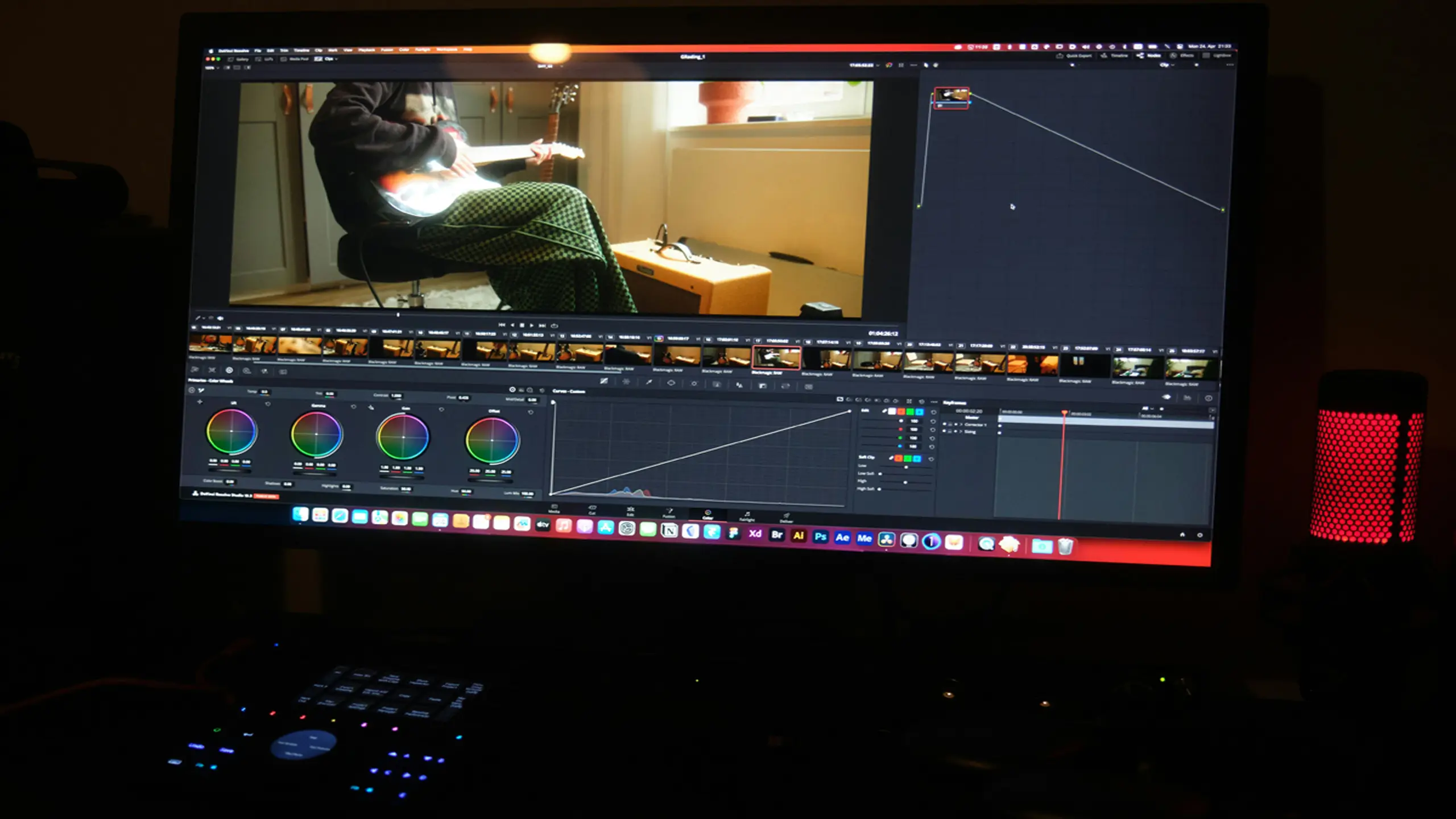
Color grading is the unsung hero behind the visual magic of cinema and television. It’s the final stage in post-production where colors are refined, tones are balanced, and the overall aesthetic is crafted to fit the story’s emotional arc.
Whether it’s the gritty green hues of a dystopian world or the warm glow of a nostalgic drama, color grading helps shape how we feel about what we see on screen. It does more than correct color, it sets the mood, enhances emotion, and ensures visual consistency. In essence, it’s how raw footage becomes a fully realized visual experience.
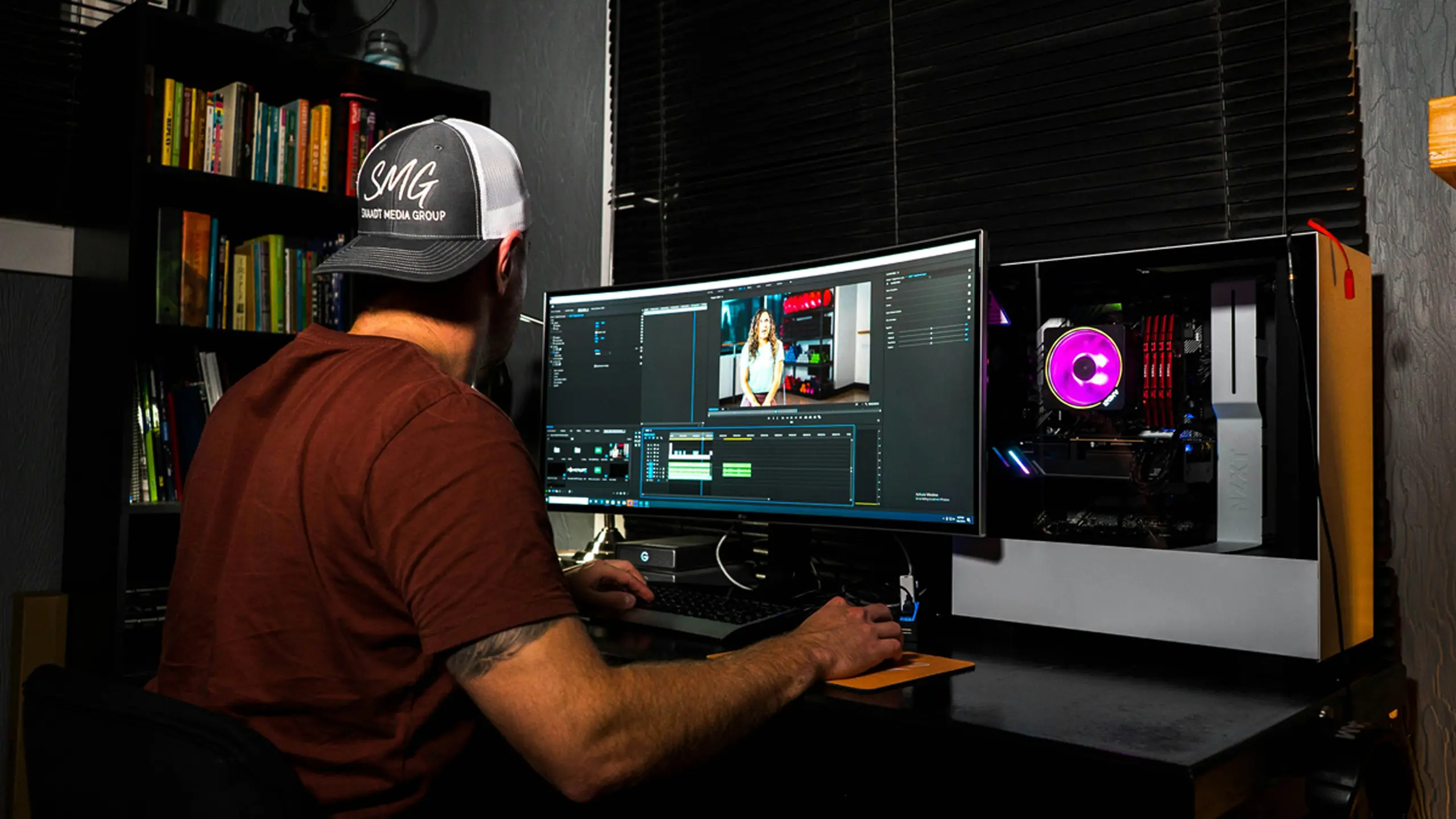
## The Evolution of Color Grading in Film
** **Color grading has come a long way since the early days of cinema, when filmmakers had little control over the hues that appeared on screen. In the analog era, color timing involved physically adjusting the exposure of film during the printing process, an incredibly manual and limited method. Technicians would chemically process film reels in darkrooms, making tiny adjustments to achieve the desired look. This early form of grading was more about technical correction than artistic intention, and the results varied greatly depending on the lab and the tools available.
The digital revolution changed everything. With the rise of non-linear editing systems and digital intermediate processes in the late 1990s, colorists were suddenly equipped with powerful tools that allowed frame-by-frame adjustments without degrading the image. Software like DaVinci Resolve, Adobe SpeedGrade, and Baselight made it possible to manipulate brightness, contrast, and color tone with extreme precision. What once took hours in a lab could now be done with a mouse and a stylus, ushering in a new era of creative freedom in video production.
Technology didn’t just make the process faster, it transformed the role of color grading from a technical step to a crucial part of storytelling. Iconic films like *The Matrix* used green tints to separate the simulated world from reality, while *Amélie* employed saturated reds and yellows to create a whimsical, romantic atmosphere. These weren’t just visual choices, they were narrative tools that helped audiences feel more connected to the story.
As tools evolved, so did expectations. Today’s audiences are more visually literate and sensitive to color than ever before. This has raised the bar for post-production teams who now see [feature film mastering & delivery](https://c-istudios.com/feature-film-mastering-and-delivery/) as a layered, collaborative process. Directors, cinematographers, and colorists work together to create a consistent visual language that supports the emotional tone of the film.
For brands and creatives alike, the rise of color grading also opened new doors in creative marketing. From short-form ads to long-form storytelling, color grading is now used to build mood, establish identity, and guide viewer perception. What started as a technical fix has become a storytelling artform, one that defines the visual era we live in today.
## Why Color Grading Matters
Color is one of the most powerful yet understated tools in visual storytelling. Through deliberate color choices, filmmakers can guide a viewer’s emotions, emphasize character development, and deepen thematic impact, all without a single word of dialogue. This is where color grading becomes critical. It’s not just about making a film look polished; it’s about shaping how a story is *felt*. When used thoughtfully, color grading can communicate mood, foreshadow events, and add psychological depth to every frame.
Different genres rely heavily on distinct color palettes to support their narrative goals. Horror films often lean toward desaturated or cold tones, blues, greens, and greys, to evoke dread, discomfort, or isolation. In contrast, romantic films typically embrace warmer hues like soft pinks, glowing ambers, and rich reds to create a sense of intimacy and emotional vulnerability. Political dramas or historical pieces might use more neutral, earth-toned palettes to reinforce a serious, grounded atmosphere. These choices aren’t random, they are crafted during the grading process to align perfectly with a director’s vision.
Even within the same film, color grading plays a vital role in maintaining visual and emotional consistency across scenes. Imagine a movie that shifts abruptly in tone without a matching shift in color, it would feel jarring, disjointed, and emotionally confusing. Grading ensures that lighting changes, camera filters, and different locations still feel like part of the same cohesive world. It smooths out visual differences and supports continuity from scene to scene, helping the audience stay immersed in the story.
In documentary film production, color grading can elevate real-world footage, making it more visually engaging while preserving authenticity. It helps balance natural lighting inconsistencies, especially in field shoots where control over the environment is limited. Whether you're spotlighting climate change or profiling a political leader, grading helps define the tone, urgent, somber, or hopeful, that frames the narrative.
Color grading also plays a powerful role in high-stakes visual work like political campaigns and [VFX compositing & animation](https://c-istudios.com/vfx-compositing-and-animation-services/). Campaign ads, for instance, are often meticulously graded to either humanize a candidate or create urgency around an issue. In VFX-heavy productions, grading ensures that animated or CGI elements blend seamlessly with live-action footage, preserving the believability of the visual world.
Ultimately, color grading is where technical precision meets emotional storytelling. It allows filmmakers, brands, and creators to use color as a narrative language, one that viewers instinctively understand, even if they don’t consciously notice it.
## The Colorist’s Toolbox. Software, Tools, and Techniques
Color grading may look like magic on screen, but behind every cinematic image is a set of powerful tools and a skilled colorist who knows how to use them. With the evolution of post-production software, grading is no longer reserved for big-budget studios. Independent filmmakers, YouTubers, and brand marketers now have access to professional-grade tools that can dramatically elevate the visual quality of their content.
Among the most widely used platforms are DaVinci Resolve, Adobe Premiere Pro, and Baselight. DaVinci Resolve is especially popular in [professional video production](https://c-istudios.com/video-production-services/) environments due to its advanced color tools and node-based workflow. Adobe Premiere offers tighter integration with other Adobe tools like After Effects, making it ideal for editors who need a fluid pipeline. Baselight, while more niche, is known for its robust capabilities in high-end theatrical and broadcast projects. Choosing the right platform often depends on the type of project, budget, and the editor’s comfort level with the interface.
Beyond software, the colorist’s toolbox includes essential techniques and terms that form the language of color grading. Scopes, like waveform monitors and vectorscopes, help assess exposure, contrast, and color balance objectively. They are indispensable when aiming for broadcast-legal output or consistency across deliverables. LUTs (Look-Up Tables) are pre-designed color profiles that apply a specific look to footage instantly, serving as a starting point or a final touch. Masks allow colorists to isolate and adjust specific areas of the frame, such as brightening a character’s face or darkening a distracting background. Keyframes, on the other hand, are used to animate changes over time, such as gradually shifting color temperature to match a setting sun.
It’s also important to distinguish between color correction and color grading. Correction comes first and involves fixing issues in exposure, white balance, or saturation to achieve a “neutral” baseline. Grading follows, where creative decisions are made to establish the mood, tone, and visual identity. While correction is about technical accuracy, grading is about artistic expression.
Modern video production gear has made this process even more precise, with high-resolution monitors, color calibration tools, and control surfaces providing tactile feedback for better accuracy. When paired with expert audio engineering, these visual enhancements help maintain viewer engagement across platforms.
For brands or creators unsure of where to begin, a media marketing consult can provide valuable insights on how color can be aligned with campaign goals, audience psychology, and platform-specific needs. Whether for film, commercial, or web content, the right tools, and the right hands, make all the difference.
## Color Theory in Practice
Color isn’t just decoration, it’s a language. In film & [TV production](https://c-istudios.com/film-and-tv-production/), every hue, tone, and shade can influence how the audience feels, interprets a scene, or connects with a character. This is the foundation of color theory in practice: using psychological and emotional cues embedded in color to deepen the story’s impact. Whether in a drama series, a political thriller, or a brand video, intentional color choices help shape perception at a subconscious level.
One of the most important decisions in color grading is the use of warm versus cool tones. Warm tones, reds, oranges, yellows, often evoke emotions like passion, nostalgia, comfort, or energy. They’re commonly used in romantic scenes, family memories, or upbeat brand messaging. On the other hand, cool tones, blues, greens, purples, can suggest calm, detachment, mystery, or tension. They dominate in sci-fi, horror, or emotionally distant characters. Skilled colorists use this dichotomy to control the emotional atmosphere of each frame.
Saturation and contrast also play crucial roles. High saturation can make a scene feel vibrant and full of life, while desaturated or muted palettes can evoke sadness, isolation, or realism. Similarly, contrast levels can signal intensity or softness, sharp contrast is often used in action or suspense, whereas low contrast might suit a dream sequence or intimate dialogue. In content creation, these tools are vital for telling stories that stick.
Real-world examples show how effective this theory can be. In *Breaking Bad*, the yellow filter used in desert scenes emphasizes heat, danger, and the alien nature of Walter White’s double life. In *Euphoria*, saturated neon purples and blues underscore the emotional chaos and heightened reality of the teenage experience. Even in [TV show pitching](https://c-istudios.com/tv-show-pitch/), a sample reel graded with the right tone can communicate a show's entire genre and target audience before a single line is spoken.
Outside of traditional film, color theory is just as critical in branding & graphic design. Think of how companies use color to build identity: red for urgency and passion (Coca-Cola), blue for trust and calm (Facebook), or green for growth and sustainability (Spotify). When applying these principles to moving images, creators can make their brand feel instantly recognizable and emotionally resonant.
Whether in long-form storytelling or short-form branded content, mastering the art of color theory enhances visual strategy. It bridges the gap between what’s seen and what’s felt, making every second of screen time more meaningful and memorable.

## From Dailies to Final Look. The Grading Workflow
Color grading doesn’t begin with a finished edit, it begins with the dailies. These are the raw, ungraded clips pulled from the camera each day during shooting. The grading process often starts here, with the colorist reviewing footage to get a sense of exposure, color consistency, and the cinematographer’s intentions. A temporary grade or “look” might even be applied early to guide editing. But this is just the beginning of a highly collaborative, multi-step process that ends with a film’s final visual identity.
Once the rough cut is locked by the editor, the colorist begins the real work. At this stage, the director and director of photography (DP) usually sit down with the colorist to discuss the project’s visual goals. Together, they define a base look, warm and nostalgic, cool and gritty, or perhaps stylized with unique color schemes. This collaborative effort ensures the color supports the story, not just the aesthetic. It’s a key aspect of [artist management & media creation](https://c-istudios.com/artist-management-and-media-creation/), where the creative vision of multiple departments is brought into harmony.
With the look established, the colorist begins shot-by-shot grading. This is where footage is corrected for exposure, white balance, and color cast, then graded to match the intended tone. Meanwhile, the colorist must maintain continuity across multiple camera setups, lighting environments, and locations. The work becomes especially complex when coordinating with VFX teams. For any shots involving visual effects or animation, the grade must blend seamlessly with added elements. That’s why color grading is often closely aligned with both editing and VFX compositing workflows.
The role of audio engineering is also connected to grading, though it might seem separate at first. Emotional beats, sound cues, and music timing often inform how color transitions are applied. For instance, a shift from warm to cold tones may sync with a dramatic sound cue or music change, enhancing the narrative impact. Color and sound must complement each other to avoid sensory dissonance, especially in key emotional scenes.
Finally, once the full film or video is graded and approved, the colorist prepares it for feature film mastering & delivery. This includes rendering high-quality exports in various formats for theatrical, streaming, broadcast, or social media. Different platforms require different color spaces and compression standards, making the final step both technical and precise.
From first shot to final frame, the grading workflow ensures that every detail, every hue and highlight, reinforces the story’s emotional core.
## Matching the Grade to the Message
Color grading is not one-size-fits-all. The way a [music video](https://c-istudios.com/video-production-services/music-video-production/) is graded will differ drastically from a political ad or a non-profit documentary. That’s because color grading must always serve the *message*, and different messages require different emotional tones, narrative pacing, and audience expectations. Whether the goal is persuasion, education, or pure entertainment, the colorist’s job is to enhance the emotional resonance of the story while staying true to the intended tone and visual identity.
In documentary film production, for instance, the goal is often to maintain realism while guiding emotional interpretation. Naturalistic tones with slight enhancements, like warm highlights for empathy or cooler tones for tension, can help documentaries stay authentic without feeling flat or lifeless.
A documentary about environmental collapse might use desaturated, bluish tones to emphasize seriousness and urgency, whereas one focusing on community revival might favor brighter, earthy tones to instill hope and positivity. The color grade becomes a subtle but powerful way to help the viewer connect emotionally while maintaining journalistic integrity.
In contrast, political advertisements are more calculated and stylized. Color grading is often used in creative marketing strategy to provoke an immediate reaction. Warm tones can humanize a candidate, while desaturated or cold tones might be used to depict opposition or highlight societal issues. The stakes are high and the airtime is short, so the visual message has to land instantly. Here, every second counts, and every frame must reflect the core values and messaging of the campaign.
Commercials, especially those destined for social media marketing, often lean heavily on vibrant, dynamic color grades. Eye-catching contrast and saturation are essential for stopping the scroll. Brands use consistent color palettes to reinforce identity, think Coca-Cola red or Apple’s white-and-gray minimalism. Color grading must align with the brand’s lookbook, product design, and target demographics, ensuring a consistent visual experience across all channels.
Tone consistency is especially important across multi-platform content. A brand might release a 30-second spot on Instagram, a 2-minute brand story on YouTube, and a behind-the-scenes reel on TikTok. Each of these needs its own pacing and format, but the grade should make them feel like part of the same visual family. When done well, grading enhances recognition and reinforces trust.
Ultimately, color grading is a storytelling device that links visual design with emotional impact. When aligned with audience expectations and message clarity, it transforms media into a cohesive and unforgettable experience.
## Color Grading for Multi-Platform Delivery
In today’s content-driven world, videos are no longer created for just one screen, they’re made for *every* screen. From cinematic theaters to smartphones, smart TVs, and social platforms, content is consumed across an ever-expanding landscape. That’s why color grading for multi-platform delivery is no longer optional, it’s essential.
A grade that looks perfect in a theater might fall flat on a mobile device if it’s not properly adapted. Delivering a consistent visual experience across formats requires technical precision, platform awareness, and a clear understanding of how color translates from one device to another.
Grading for cinema is often done in high dynamic range (HDR) and wide color gamuts, like DCI-P3 or Rec. 2020, to match the projection capabilities of theaters. The image is rich, immersive, and designed for a large screen in a darkened environment. However, when the same footage is repurposed for the web, the colorist must account for different viewing conditions, smaller screens, varying lighting, and inconsistent calibration. This often requires exporting different versions in Rec. 709, the standard for most online and TV content.
For mobile and social platforms, saturation and brightness may be pushed slightly to compensate for outdoor viewing and smaller screens. TikTok, Instagram, and YouTube all compress and reprocess videos differently, so the grade needs to be tested and optimized for those platforms. A beautifully muted tone might look perfect on a laptop but appear washed out on an iPhone due to brightness settings or compression. Successful [video & audio live streaming](https://c-istudios.com/video-audio-live-streaming/) campaigns also benefit from grading adjustments that ensure skin tones and brand colors appear consistent during real-time broadcasts, even when internet quality fluctuates.
Color space conversions are a major part of the delivery pipeline. Moving between Rec. 709, Rec. 2020, and sRGB requires careful management to prevent color shifts and clipping. LUTs or manual grading tweaks are often used to maintain visual fidelity.
Additionally, knowing your web hosting and web development environment matters. Some hosting platforms or CMSs may compress videos more than others, further altering how colors display. A brand’s hero video might look crisp on Vimeo but slightly degraded on an embedded player hosted elsewhere.
Ultimately, color grading for multi-platform delivery is about maintaining the *integrity* of the visual message across every format. Whether you’re premiering in theaters, launching on Instagram, or embedding on a custom-built site, the grade should remain cohesive and compelling, no matter where or how it’s viewed.
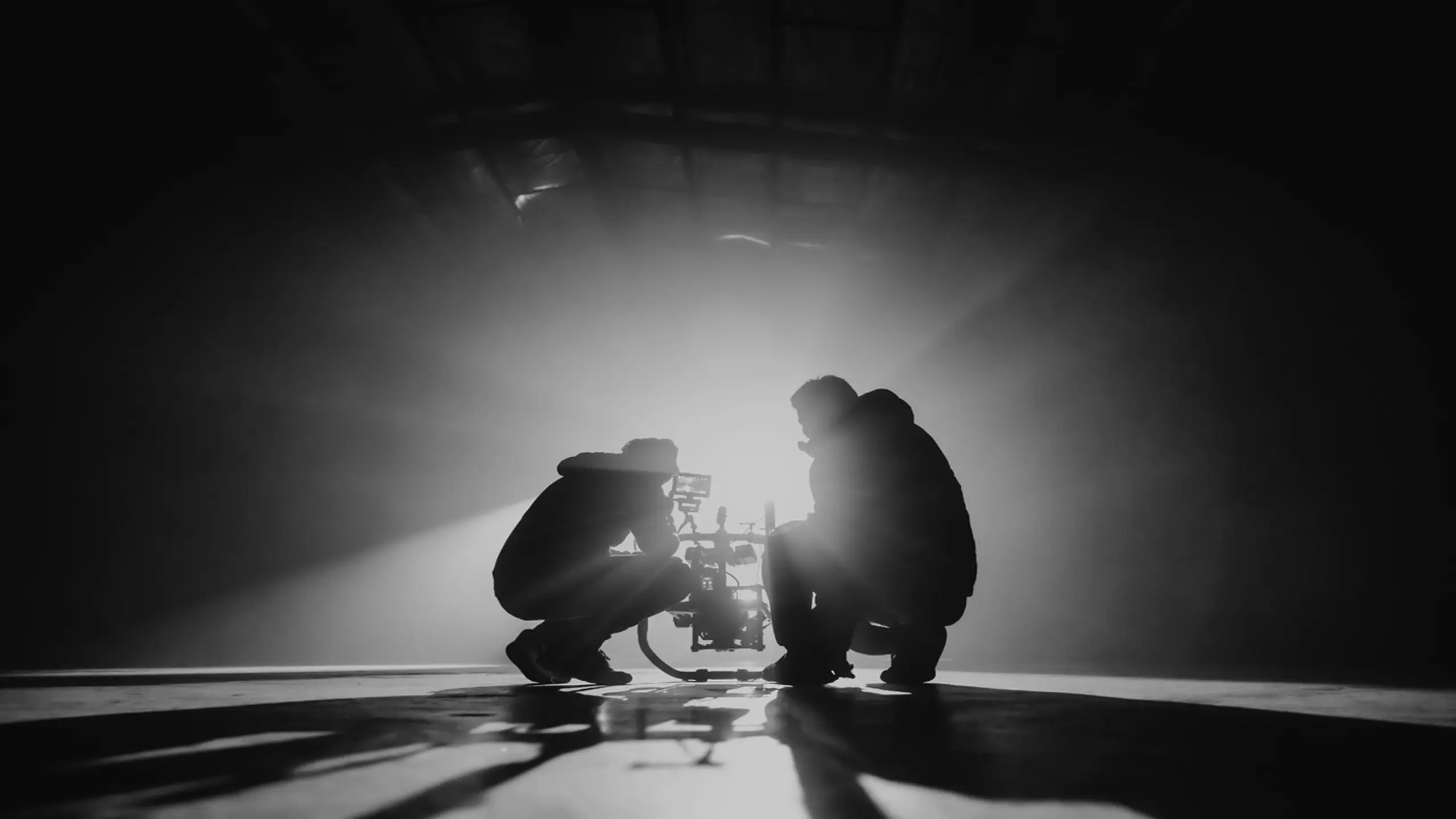
## Conclusion
Color grading is where technical precision and artistic vision come together to shape powerful, lasting impressions. It enhances storytelling, strengthens brand identity, and ensures your visuals resonate across every platform.
At C&I Studios, we understand how to make color work for you, whether it’s part of a larger media marketing consult or tied into your campaign’s professional photography and production strategy. Take a look at our **[portfolio](https://c-istudios.com/our-work/)** to see how we’ve brought visual narratives to life. Learn more about our full range of **[services](https://c-istudios.com/film-production-services/)**, or **[contact us](https://c-istudios.com/contact/) **to start your next project.
## Work with C&I Studios
If you are planning a project like this, our team can take it from concept to final delivery. Explore our [post-production services](https://c-istudios.com/post-production-services/), browse [our work](https://c-istudios.com/our-work/) to see how we tell brand stories, and [get in touch](https://c-istudios.com/contact/) when you are ready to start.
Originally published June 3, 2025
---
*This content is from [C&I Studios](https://c-istudios.com), a full-service production company.*
---
# Why AI-Powered Video Editing is the Next Big Thing in Advertising
> Published: June 3, 2025
> Categories: Web & Tech
> Source: https://c-istudios.com/why-ai-powered-video-editing-is-the-next-big-thing-in-advertising/
---
.cib{--paper:#1b1d1f;--ink:#fff;--body:#d5d7d9;--muted:#8b9096;--line:rgba(255,255,255,.12);--thumb:#2b2e31;--card:#212426;--accent:#c02b0a;--blue:#5B8FA8;--serif:'Playfair Display',Georgia,serif;--sans:'Poppins',-apple-system,sans-serif;--measure:900px;background:var(--paper);color:var(--body);font-family:var(--sans);line-height:1.6;position:relative;left:50%;transform:translateX(-50%);width:90vw;max-width:1920px}
.cib *{box-sizing:border-box}
.cib .kicker{max-width:var(--measure);margin:58px auto 0;padding:0 22px;font-size:12.5px;font-weight:700;letter-spacing:2.5px;text-transform:uppercase;color:var(--blue)}
.cib h1.cibh1{text-wrap:balance;font-family:var(--serif);font-weight:500;font-size:clamp(46px,6vw,72px);line-height:1.08;color:var(--ink);max-width:var(--measure);margin:18px auto 0;padding:0 22px;letter-spacing:-.5px}
.cib .metarow{max-width:var(--measure);margin:20px auto 0;padding:0 22px;color:var(--muted);font-size:14px}
.cib .hero{position:relative;width:100%;height:0;padding-bottom:56.25%;overflow:hidden;margin:48px auto 0;border-top:1px solid var(--line);border-bottom:1px solid var(--line)}
.cib .hero .ph{width:100%;aspect-ratio:16/9;background:var(--thumb);border-top:1px solid var(--line);border-bottom:1px solid var(--line);display:flex;align-items:center;justify-content:center;color:#7d8288;font-size:13px;text-align:center;padding:0 20px}
.cib .body{max-width:var(--measure);margin:12px auto 0;padding:52px 22px 6px}
.cib .body.lead p:first-child{font-size:23px;line-height:1.62;color:var(--ink)}
.cib .body p{font-size:18.5px;line-height:1.85;margin:0 0 30px;color:var(--body)}
.cib .body h2{text-wrap:balance;font-family:var(--serif);font-weight:500;font-size:clamp(32px,4vw,48px);line-height:1.22;color:var(--ink);margin:70px 0 20px;letter-spacing:-.3px}
.cib .body h3{text-wrap:balance;font-family:var(--sans);font-weight:600;font-size:22px;color:var(--ink);margin:38px 0 8px}
.cib .body a{color:var(--ink);text-decoration:underline;text-decoration-color:rgba(255,255,255,.4);text-underline-offset:3px}
.cib .body a:hover{text-decoration-color:var(--ink)}
.cib .ctable{width:100%;border-collapse:collapse;margin:16px 0 30px;font-size:16px}
.cib .ctable th{background:#000;color:#fff;text-align:left;padding:10px 12px;font-family:var(--sans)}
.cib .ctable td{padding:10px 12px;border-bottom:1px solid var(--line);color:var(--body)}
.cib .inimg{position:relative;width:100%;height:0;padding-bottom:56.25%;overflow:hidden;margin:72px auto;border-top:1px solid var(--line);border-bottom:1px solid var(--line)}
.cib .inimg .ph{width:100%;aspect-ratio:16/9;background:var(--thumb);border-top:1px solid var(--line);border-bottom:1px solid var(--line);display:flex;align-items:center;justify-content:center;color:#7d8288;font-size:13px}
.cib .origpub{max-width:var(--measure);margin:60px auto 0;padding:26px 22px 0;border-top:1px solid var(--line);color:var(--muted);font-size:13.5px}
.cib .related{max-width:1200px;margin:64px auto 0;padding:34px 22px 76px}
.cib .related h3{font-family:var(--sans);font-size:12.5px;letter-spacing:2px;text-transform:uppercase;color:var(--ink);margin:0 0 24px}
.cib .grid{display:grid;grid-template-columns:repeat(3,1fr);gap:28px}
.cib .rc{background:var(--card);border:1px solid var(--line);display:block;text-decoration:none;color:inherit;transition:border-color .15s}
.cib a.rc:hover{border-color:rgba(255,255,255,.5)}
.cib .rc .thumb{position:relative;width:100%;height:0;padding-bottom:56.25%;background:var(--thumb);overflow:hidden}
.cib .rc .thumb img{position:absolute!important;top:0!important;left:0!important;width:100%!important;height:100%!important;object-fit:cover!important;margin:0!important}
.cib .rc .cc{padding:14px 15px 17px}
.cib .rc .rt{font-family:var(--serif);font-weight:500;font-size:16px;line-height:1.3;color:var(--ink);margin:0 0 6px}
.cib .rc .rm{font-size:11px;letter-spacing:1px;text-transform:uppercase;color:var(--muted)}
.cib img{margin:0!important;padding:0!important;display:block!important;vertical-align:top;max-width:100%}
.cib .hero img,.cib .inimg img{position:absolute!important;top:0!important;left:0!important;width:100%!important;height:100%!important;object-fit:cover!important;margin:0!important;padding:0!important;border:0!important;display:block!important;aspect-ratio:auto!important}
.cib .hero+.body{padding-top:36px}
@media(max-width:760px){.cib .grid{grid-template-columns:1fr}.cib .body h2{margin:52px 0 16px}.cib .body p{font-size:17.5px}.cib .inimg,.cib .hero{margin-top:44px}}
.cib .vembed{max-width:var(--measure);margin:44px auto;padding:0 22px}.cib .vembed .vwrap{position:relative;width:100%;height:0;padding-bottom:56.25%}.cib .vembed .vwrap iframe{position:absolute;top:0;left:0;width:100%;height:100%;border:0}
Web & Tech
# Why AI-Powered Video Editing is the Next Big Thing in Advertising
14 min read
The advertising industry is undergoing a radical transformation, driven by the rapid rise of artificial intelligence. What once required hours of manual labor and creative guesswork can now be streamlined with remarkable precision and speed. At the heart of this change is AI-powered video editing, a toolset that's making it easier than ever to create, modify, and deliver compelling visual content.
From real-time editing suggestions to automatic scene cuts and voice syncing, AI is changing how brands tell their stories. With faster workflows, smarter tools, and unprecedented personalization, this shift is redefining what’s possible in modern advertising.
## The Rise of AI in Video Production
The journey of video editing has come a long way, from razor blades and tape in analog studios to cloud-based platforms running machine learning algorithms. In the early days of film & [TV production](https://c-istudios.com/film-and-tv-production/), editing was a manual process requiring physical film cuts, long render times, and massive editing suites packed with bulky **[video production gear](https://c-istudios.com/video-production-gear-list/)**. With the digital revolution in the 1990s and 2000s, non-linear editing tools like Final Cut Pro and Adobe Premiere transformed workflows, allowing editors to cut, layer, and rearrange footage on digital timelines. This was the first big leap, but today’s leap into AI is even bigger.
AI-powered editing platforms like Runway, Adobe Sensei, and Pictory.ai are rewriting the rules. These tools don’t just speed up the process, they understand it. Runway can remove backgrounds from video without a green screen. Adobe Sensei suggests cuts, improves lighting, and enhances audio clarity with near-human intuition.
Pictory.ai can generate short promotional clips from long-form videos using automatic highlight detection. These tools analyze footage using deep learning models trained on thousands of hours of content, learning what “good” editing looks like.
At its core, AI video editing tools work by recognizing patterns in visuals, audio, and storytelling. They identify scenes, expressions, voice shifts, and even emotions to determine where to cut, what to enhance, and how to pace the content. While traditional editing might take several days or weeks, AI can accomplish a rough cut in minutes, sometimes seconds, freeing up creators to focus on storytelling instead of slogging through timelines.
The benefits are undeniable. Automation eliminates repetitive tasks like trimming silences, syncing voiceovers, or adding captions. Speed improves drastically, making it easier to meet fast campaign deadlines or push out timely content during trending moments. Costs drop as smaller teams can produce more without hiring large post-production crews or renting expensive [video production](https://c-istudios.com/video-production-services/) gear.
Most importantly, AI doesn’t replace human editors, it empowers them. In the world of creative marketing, where freshness, speed, and authenticity matter more than polish, AI offers a competitive edge. Brands can now test multiple versions of an ad, auto-generate cuts for different platforms, and scale storytelling like never before. As AI continues to evolve, it’s not just enhancing the tools, it’s redefining the creative process itself in film & TV production.
## Why AI Video Editing Is Game-Changing for Advertising
AI is revolutionizing advertising by turning what was once a linear, time-intensive process into a scalable, data-driven engine for growth. At the center of this shift is the ability to personalize content on a level that was never possible before.
Traditional ad editing required a single creative version that tried to appeal to everyone. AI, on the other hand, enables brands to create multiple variations of the same ad, each tailored to specific demographics, behaviors, and preferences. This hyper-personalization allows advertisers to deliver messages that resonate more deeply with their audience.
AI also accelerates campaign launches by automating labor-intensive tasks like scene selection, transitions, voice syncing, and even script structuring. Once raw footage is uploaded, platforms can auto-generate polished video drafts ready for immediate feedback or distribution. This is a massive advantage for agencies and brands who need to respond quickly to trends, seasonal shifts, or sudden opportunities. Instead of weeks, you’re looking at hours, or less, to launch a video campaign.
The real magic, though, happens when AI tools are integrated with real-time performance data. Modern advertising thrives on analytics. When a video is published across platforms, whether on social media, email campaigns, or embedded via [video & audio live streaming](https://c-istudios.com/video-audio-live-streaming/), AI algorithms can measure engagement, watch times, drop-off points, and conversion data. Based on these insights, the AI can suggest edits, change the pacing, or adjust visuals to improve performance. The process becomes cyclical: content is created, measured, refined, and redeployed, at a pace no human team could match.
For agencies offering media marketing consult services, this opens the door to more agile client solutions. Rather than relying on long production pipelines, they can now deliver fast-turnaround edits backed by performance metrics. It also benefits content strategists and SEO copywriting experts, who can align video content with keyword data and search trends, ensuring every frame serves a marketing purpose.
AI-powered video editing doesn't just change how ads are made, it transforms the entire advertising mindset. It turns one-time campaigns into living, evolving assets. In a world where attention spans are shrinking and competition is rising, the ability to iterate, test, and scale creative video quickly isn’t just helpful, it’s essential. And AI makes it possible.
## Unlocking Creative Possibilities With AI Tools
One of the biggest misconceptions about AI in advertising is that it dulls creativity. In reality, the opposite is true. AI-powered video editing tools are not replacing creativity, they’re amplifying it. By automating the repetitive and technical aspects of editing, these tools free creators to focus more deeply on storytelling, emotion, and visual impact. For brands and agencies rooted in **[creative marketing](https://c-istudios.com/creative-marketing-services/)**, this shift opens up an entirely new level of possibility.
Imagine starting a project with an AI-generated mood board tailored to your brand tone, audience insights, and trending aesthetics. Tools like Runway and Magisto offer built-in style templates that can instantly match your desired look and feel.
AI doesn’t just process footage, it understands the narrative you’re trying to tell. With built-in scene recognition, AI can suggest transitions, adjust lighting, and even recommend music based on tone and pacing. This gives creators a powerful jumpstart, especially in fast-paced commercial or documentary film production environments.
AI also makes creative editing more accessible for industries like political campaigns, where messaging needs to be sharp, timely, and emotionally resonant. Campaign teams can produce dozens of versions of a video speech tailored to specific regions, issues, or voter concerns, without re-editing from scratch. Similarly, brands can push out personalized holiday ads, product launches, or limited-time offers with only a few clicks. The efficiency is game-changing, but so is the scale of personalization.
In artist management & media creation, AI is emerging as a collaborative partner. Artists and influencers can input their raw footage and get back multiple draft edits optimized for different platforms, from YouTube to TikTok to Reels. AI tools can even simulate different visual effects or propose storyboard edits, helping creators make bolder stylistic decisions with less technical burden.
For designers, editors, and agencies involved in branding & graphic design, AI integration with video editing platforms means tighter alignment between motion graphics and brand identity. Logos can be animated, color schemes auto-matched, and on-screen text styled to spec, all powered by smart presets that adapt dynamically to video content.
Ultimately, AI tools are not here to replace human intuition but to enhance it. They streamline the technical and expand the artistic. In the evolving world of digital advertising, these tools are becoming essential allies in pushing creative boundaries without sacrificing efficiency or impact.
## AI vs. Traditional Editing. What’s the Real Difference?
The difference between traditional editing and AI-powered editing is not just about tools, it’s about time, scale, and strategic advantage. Traditional workflows in film & TV production are often manual, linear, and heavily reliant on the editor’s technical skill and availability. While human editors bring intuition, emotion, and artistry to the table, they’re limited by how fast they can work and how many versions they can produce. AI changes that equation entirely.
With AI-powered editing, brands and agencies can move from a slow, handcrafted approach to a smart, iterative process that responds in real time. A project that may have taken weeks of back-and-forth revisions, such as syncing footage, cutting scenes, adjusting transitions, and tweaking audio, can now be handled in hours. AI tools automate these mechanical tasks and flag issues like lighting inconsistencies, awkward silences, or off-brand visuals long before they reach final review.
In terms of cost, the impact is just as striking. Traditional editing often requires a full post-production team, expensive video production gear, and dedicated studio time. AI tools eliminate many of these resource burdens. Smaller teams, solo creators, and startups can now produce high-quality video content without the overhead typically associated with professional production. This opens up access to creative marketing on a scale that was once reserved for larger agencies or corporations with deep pockets.
Where AI truly shines, though, is in scalability and adaptability. Traditional editing might yield one polished final version of a video. AI can generate dozens of variations tailored for different audience segments, platforms, or objectives. A single source video can be transformed into vertical formats for Instagram, square versions for Facebook, landscape edits for YouTube, and snippet reels for TikTok, all automatically optimized for performance.
Even in audio engineering, AI tools can clean background noise, balance levels, and enhance speech clarity without the need for a dedicated sound technician. Voiceovers can be matched with lip-sync precision or translated into multiple languages to serve global audiences.
In the modern advertising landscape, where speed and personalization drive results, relying solely on traditional editing methods is no longer enough. AI doesn’t diminish the creative process, it amplifies it by handling the tedious parts, enabling human editors to focus on storytelling and strategy. The result? Faster output, higher quality, and more impactful campaigns, at a fraction of the cost.
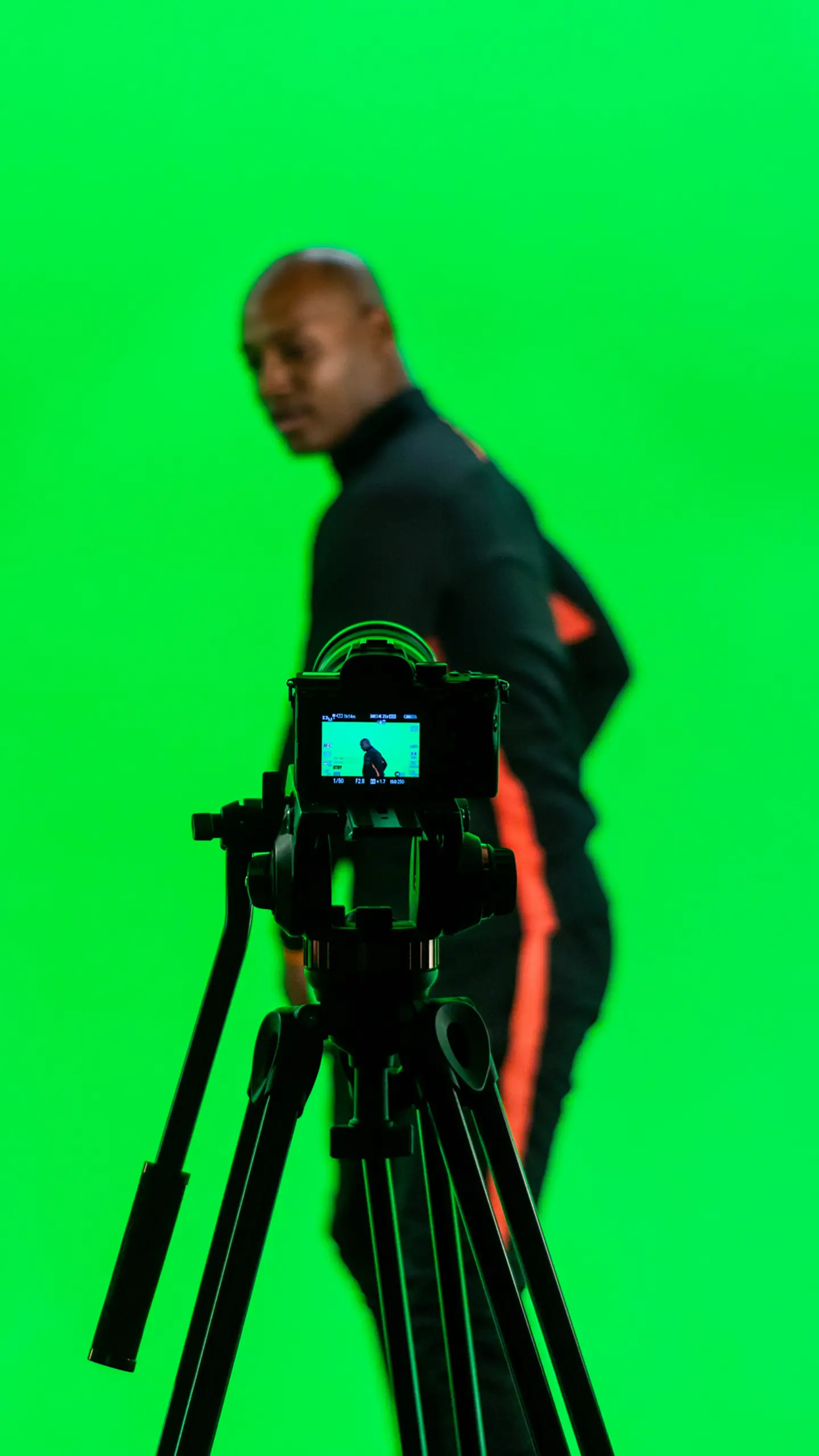
## Use Cases. How Agencies and Brands Are Already Using AI Editing
AI video editing is no longer a futuristic concept, it’s already being used by agencies, startups, and global brands to transform how they communicate with audiences. From social content to corporate branding, companies are integrating AI into their workflows to gain speed, scale, and sharper performance. The most forward-thinking teams are not just testing AI tools, they're building their entire content strategy around them.
Take social media marketing as a prime example. Platforms like TikTok, Instagram Reels, and YouTube Shorts demand high volumes of engaging, bite-sized content. AI makes it possible to create these fast-paced videos in bulk without compromising on quality.
A brand can shoot a single piece of long-form footage and use AI to instantly identify and extract key moments, apply trendy visual effects, and reformat the content for each social channel. The result is a steady stream of content tailored to platform-specific trends, delivered in record time.
In the world of TV show pitching and branded entertainment, AI is helping teams produce polished concept trailers, mood reels, and teaser cuts at the ideation stage. Instead of waiting for traditional editing cycles, producers and creators can generate visual drafts for meetings, investor decks, or pilot proposals using AI-powered scene generation and styling tools. This kind of speed in early-stage development is giving studios a huge competitive edge.
Agencies managing professional photography or commercial shoots are also leveraging AI to streamline post-production. Once footage is captured, AI tools can auto-sync audio, recommend visual transitions, and even generate captions in multiple languages. This is especially useful in campaign environments where rapid turnaround and localization are crucial.
Corporate teams and content creators involved in internal communications, recruitment videos, and onboarding tutorials are turning to AI to speed up production. For instance, training teams can now input a slide deck and voice script, and AI will assemble it into a polished explainer video within minutes, complete with transitions, subtitles, and branding.
Even influencer partnerships and artist management & media creation workflows are shifting. Talent managers can help creators produce multiple branded video versions for different sponsors or audiences, powered by AI personalization.
These use cases show a clear pattern: AI doesn’t just save time, it creates entirely new ways to communicate, pitch, and scale content. In an attention economy where speed and clarity drive engagement, AI is helping brands stay ahead of the curve while delivering results that feel both human and high-tech.
## The Role of AI in Multi-Platform Distribution
In today’s fragmented media landscape, brands no longer create content for just one platform. A single campaign must perform across Instagram, YouTube, LinkedIn, TikTok, email, and even company websites, each with its own format, dimensions, and audience behavior. This makes multi-platform distribution a daunting task using traditional methods. But AI-powered video editing is turning that challenge into an opportunity.
One of the most valuable benefits of AI is auto-formatting. Once a master video is uploaded, AI tools can instantly reframe and resize it for any platform. For example, a 16:9 horizontal video for YouTube can be cropped and centered to become a vertical video for Instagram Reels or TikTok. The AI automatically identifies the visual focus, like a speaker’s face or a product demo, and adjusts the frame accordingly, saving creators from having to manually redo the same edits for each channel.
AI tools also streamline subtitle generation and translation, which are critical for accessibility and international reach. With just a click, video content can be subtitled in multiple languages using AI speech recognition.
This eliminates the need for manual transcription and costly third-party translation services, making it easier to localize content for global campaigns. These features are especially useful for international video & audio live streaming events or product launches that need rapid post-event recaps across markets.
In the realm of web, AI’s integration with web development, web hosting, and web maintenance platforms is growing fast. Brands can now auto-embed optimized video content on their websites that adjusts in resolution, file size, and even thumbnail selection based on user device and connection speed. This results in faster load times, higher engagement, and better SEO performance.
Marketing teams that rely on **[content creation](https://c-istudios.com/content-creation-services/)** strategies are also using AI to version and distribute video automatically based on audience segmentation. For instance, different versions of the same ad can be served to different user groups, executives, creatives, Gen Z, or parents, each with slight changes in music, pace, or messaging, all rendered automatically.
This level of customization used to require multiple video editors and weeks of work. Now, with AI, it happens in minutes. Multi-platform distribution has gone from being a bottleneck to a competitive advantage. Brands that adopt AI editing aren’t just reaching more people, they’re reaching the right people, in the right format, at the right time.
## Overcoming Skepticism. Addressing Concerns Around AI Editing
Despite its growing popularity, AI video editing still faces skepticism from creatives, agencies, and brands alike. Concerns often revolve around creativity, control, ethics, and accuracy. Can a machine understand storytelling? Will AI strip away the human touch from emotionally resonant campaigns? These are valid questions, but the reality is more nuanced. When used responsibly, AI becomes a powerful creative ally, not a threat.
One major concern is that AI lacks emotional intelligence, that it cannot understand the subtlety required in crafting compelling brand stories. But AI doesn’t operate in a vacuum. It learns from thousands of hours of human-edited content and recognizes patterns that typically resonate with audiences.
This means it can propose cuts, sequences, and transitions that are likely to perform well, especially in fast-paced advertising environments. Still, it’s the human editor who makes the final call, guiding the AI and fine-tuning results. In this sense, AI is a collaborator, not a replacement.
Ethical concerns also surface around bias and content misuse. Since AI models learn from preexisting data, they may unintentionally replicate stereotypes or misrepresentations. To mitigate this, leading platforms are building transparency tools and bias-detection algorithms directly into their systems. Creators, especially those involved in creative marketing and artist management & media creation, must stay proactive in reviewing AI outputs to ensure messages are inclusive and responsible.
Another common worry is loss of control. Traditional editors are used to making precise, frame-by-frame decisions, and fear that AI automation may feel like handing over the creative wheel. However, most AI platforms are customizable. Editors can input style preferences, brand guidelines, or visual examples, and the AI will follow suit. This not only enhances workflow but ensures the final product aligns with brand identity and emotional goals.
Even technical accuracy can be a concern, particularly when AI handles film & TV production or client-facing commercial content. But today’s tools have advanced to the point of detecting continuity issues, correcting poor lighting, and stabilizing shaky footage, all faster than manual review. Plus, innovations in audio engineering help clean dialogue, reduce background noise, and adjust levels without professional sound booths.
In short, the skepticism surrounding AI is natural, but it’s often based on outdated assumptions. AI is not here to replace creatives; it’s here to elevate their work. When used with intention and oversight, it delivers faster results, reduces burnout, and unlocks creative possibilities that traditional workflows simply can’t match.
## Work with C&I Studios
If you are planning a project like this, our team can take it from concept to final delivery. Explore our [AI video services](https://c-istudios.com/ai-video-services/), browse [our work](https://c-istudios.com/our-work/) to see how we tell brand stories, and [get in touch](https://c-istudios.com/contact/) when you are ready to start.
Originally published June 3, 2025
---
*This content is from [C&I Studios](https://c-istudios.com), a full-service production company.*
---
# How Our Editors Collaborate with Directors
> Published: June 2, 2025
> Categories: Film & TV
> Source: https://c-istudios.com/collaboration-in-short-film-how-our-editors/
---
.cib{--paper:#1b1d1f;--ink:#fff;--body:#d5d7d9;--muted:#8b9096;--line:rgba(255,255,255,.12);--thumb:#2b2e31;--card:#212426;--accent:#c02b0a;--blue:#5B8FA8;--serif:'Playfair Display',Georgia,serif;--sans:'Poppins',-apple-system,sans-serif;--measure:900px;background:var(--paper);color:var(--body);font-family:var(--sans);line-height:1.6;position:relative;left:50%;transform:translateX(-50%);width:90vw;max-width:1920px}
.cib *{box-sizing:border-box}
.cib .kicker{max-width:var(--measure);margin:58px auto 0;padding:0 22px;font-size:12.5px;font-weight:700;letter-spacing:2.5px;text-transform:uppercase;color:var(--blue)}
.cib h1.cibh1{text-wrap:balance;font-family:var(--serif);font-weight:500;font-size:clamp(46px,6vw,72px);line-height:1.08;color:var(--ink);max-width:var(--measure);margin:18px auto 0;padding:0 22px;letter-spacing:-.5px}
.cib .metarow{max-width:var(--measure);margin:20px auto 0;padding:0 22px;color:var(--muted);font-size:14px}
.cib .hero{position:relative;width:100%;height:0;padding-bottom:56.25%;overflow:hidden;margin:48px auto 0;border-top:1px solid var(--line);border-bottom:1px solid var(--line)}
.cib .hero .ph{width:100%;aspect-ratio:16/9;background:var(--thumb);border-top:1px solid var(--line);border-bottom:1px solid var(--line);display:flex;align-items:center;justify-content:center;color:#7d8288;font-size:13px;text-align:center;padding:0 20px}
.cib .body{max-width:var(--measure);margin:12px auto 0;padding:52px 22px 6px}
.cib .body.lead p:first-child{font-size:23px;line-height:1.62;color:var(--ink)}
.cib .body p{font-size:18.5px;line-height:1.85;margin:0 0 30px;color:var(--body)}
.cib .body h2{text-wrap:balance;font-family:var(--serif);font-weight:500;font-size:clamp(32px,4vw,48px);line-height:1.22;color:var(--ink);margin:70px 0 20px;letter-spacing:-.3px}
.cib .body h3{text-wrap:balance;font-family:var(--sans);font-weight:600;font-size:22px;color:var(--ink);margin:38px 0 8px}
.cib .body a{color:var(--ink);text-decoration:underline;text-decoration-color:rgba(255,255,255,.4);text-underline-offset:3px}
.cib .body a:hover{text-decoration-color:var(--ink)}
.cib .ctable{width:100%;border-collapse:collapse;margin:16px 0 30px;font-size:16px}
.cib .ctable th{background:#000;color:#fff;text-align:left;padding:10px 12px;font-family:var(--sans)}
.cib .ctable td{padding:10px 12px;border-bottom:1px solid var(--line);color:var(--body)}
.cib .inimg{position:relative;width:100%;height:0;padding-bottom:56.25%;overflow:hidden;margin:72px auto;border-top:1px solid var(--line);border-bottom:1px solid var(--line)}
.cib .inimg .ph{width:100%;aspect-ratio:16/9;background:var(--thumb);border-top:1px solid var(--line);border-bottom:1px solid var(--line);display:flex;align-items:center;justify-content:center;color:#7d8288;font-size:13px}
.cib .origpub{max-width:var(--measure);margin:60px auto 0;padding:26px 22px 0;border-top:1px solid var(--line);color:var(--muted);font-size:13.5px}
.cib .related{max-width:1200px;margin:64px auto 0;padding:34px 22px 76px}
.cib .related h3{font-family:var(--sans);font-size:12.5px;letter-spacing:2px;text-transform:uppercase;color:var(--ink);margin:0 0 24px}
.cib .grid{display:grid;grid-template-columns:repeat(3,1fr);gap:28px}
.cib .rc{background:var(--card);border:1px solid var(--line);display:block;text-decoration:none;color:inherit;transition:border-color .15s}
.cib a.rc:hover{border-color:rgba(255,255,255,.5)}
.cib .rc .thumb{position:relative;width:100%;height:0;padding-bottom:56.25%;background:var(--thumb);overflow:hidden}
.cib .rc .thumb img{position:absolute!important;top:0!important;left:0!important;width:100%!important;height:100%!important;object-fit:cover!important;margin:0!important}
.cib .rc .cc{padding:14px 15px 17px}
.cib .rc .rt{font-family:var(--serif);font-weight:500;font-size:16px;line-height:1.3;color:var(--ink);margin:0 0 6px}
.cib .rc .rm{font-size:11px;letter-spacing:1px;text-transform:uppercase;color:var(--muted)}
.cib img{margin:0!important;padding:0!important;display:block!important;vertical-align:top;max-width:100%}
.cib .hero img,.cib .inimg img{position:absolute!important;top:0!important;left:0!important;width:100%!important;height:100%!important;object-fit:cover!important;margin:0!important;padding:0!important;border:0!important;display:block!important;aspect-ratio:auto!important}
.cib .hero+.body{padding-top:36px}
@media(max-width:760px){.cib .grid{grid-template-columns:1fr}.cib .body h2{margin:52px 0 16px}.cib .body p{font-size:17.5px}.cib .inimg,.cib .hero{margin-top:44px}}
.cib .vembed{max-width:var(--measure);margin:44px auto;padding:0 22px}.cib .vembed .vwrap{position:relative;width:100%;height:0;padding-bottom:56.25%}.cib .vembed .vwrap iframe{position:absolute;top:0;left:0;width:100%;height:100%;border:0}
Film & TV
# How Our Editors Collaborate with Directors
28 min read
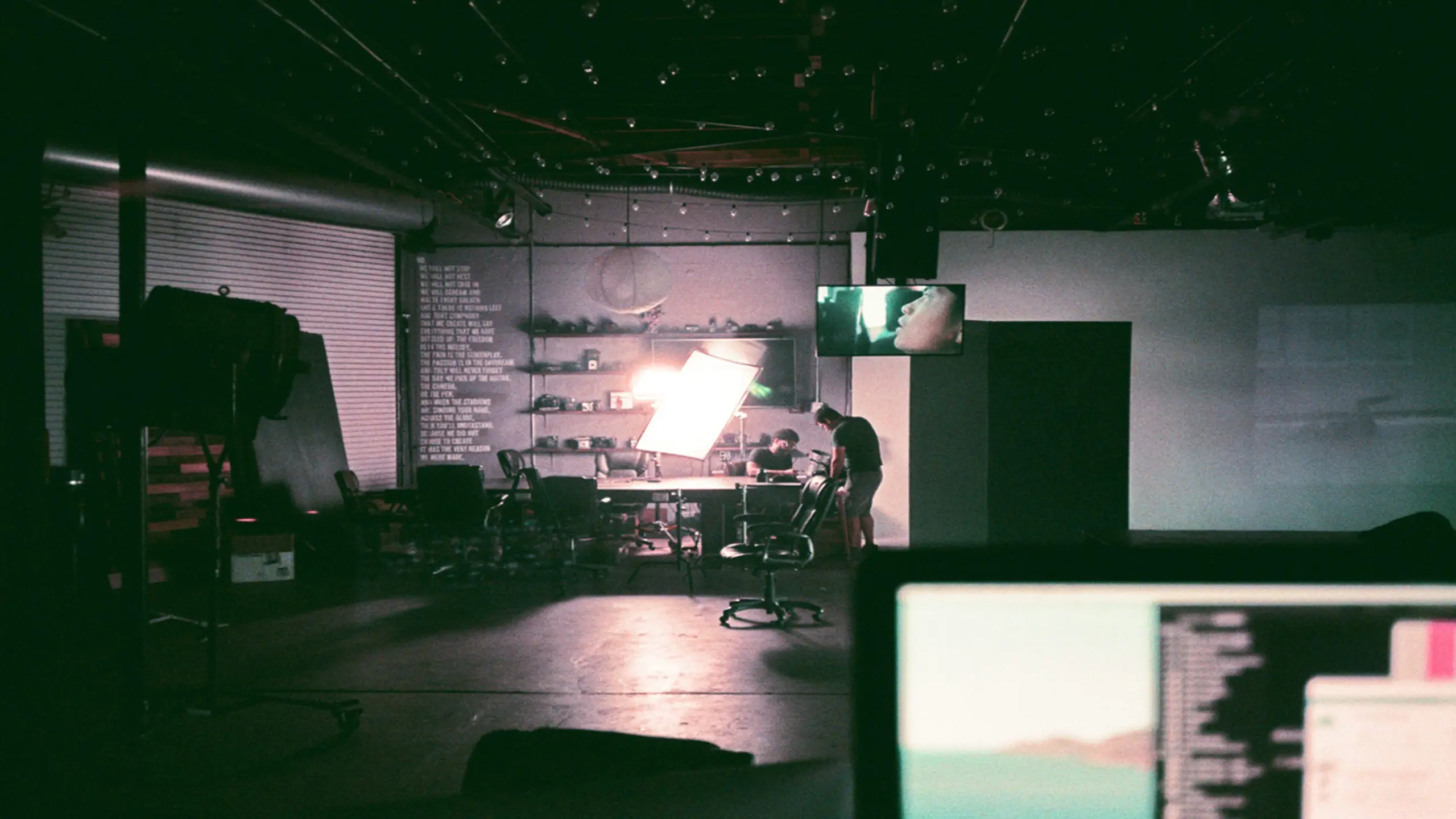
What audiences see on screen is the result of more than just a strong script or great camera work, it’s the product of deep creative collaboration. Among the most crucial relationships in modern content creation is the one between directors and editors. This partnership shapes the tone, rhythm, and emotion of a project long before the final cut.
As storytelling demands increase across formats, from branded videos to full-length films, the editor's role has expanded into every stage of the production process. This article explores how that collaboration unfolds and why it’s essential in today’s evolving film & [TV production](https://c-istudios.com/film-and-tv-production/) landscape.

## Why Editor-Director Collaboration Matters
Successful productions rely on more than high-end cameras or talented actors. They thrive on the strength of behind-the-scenes partnerships. Among the most defining of these is the connection between the director and the editor. Their creative alignment can shape a project’s emotional tone and determine whether the audience feels immersed or disconnected.
An editor brings structure to a director’s vision. The role extends beyond assembling scenes. It involves refining pacing, building tension, and crafting a rhythm that fits the story’s mood. With a strong collaborative foundation, both creatives engage in a dynamic process that turns scattered footage into intentional storytelling.
This synergy becomes especially important in narrative-heavy formats. When working on unscripted genres, such as **[documentary film production](https://c-istudios.com/documentary-film-production/)**, editors must identify a clear story arc from massive amounts of footage. Close collaboration with the director is essential for guiding these decisions and maintaining authenticity throughout the process.
Projects with political messaging add another layer of complexity. Tight timelines, sensitive subjects, and rapid changes require editors and directors to be perfectly aligned. Each cut must reinforce the intended message while maintaining emotional clarity. Trust and communication are critical under this kind of pressure.
Even within film & TV production campaigns and brand storytelling, the editor-director relationship determines visual consistency. Projects like multi-episode web series or seasonal ad sets require a shared creative approach. When aligned, the result is a smooth and professional viewer experience.
At the final delivery stage, the connection remains strong. Directors offer final input while editors manage export formats, pacing tweaks, and technical compliance. This shared oversight ensures the end result feels polished and platform-ready.
What emerges from this collaboration is more than a finished product. It is a carefully shaped experience, guided by two perspectives working in sync. The process strengthens narrative cohesion, improves turnaround times, and leads to more impactful audience engagement.
## The Pre-Production Connection
Many people assume that editors only step in once filming wraps, but that’s no longer the case in professional workflows. More often, editors are involved early in the process to support creative alignment and prevent downstream bottlenecks. When directors bring editors into the fold during pre-production, they gain a valuable partner who can help plan for the edit while the project is still on paper.
A well-informed editor can flag potential pacing issues, suggest shot coverage that supports smoother transitions, and offer input on how certain scenes might flow better with intentional visual setups. This input during the planning stage reduces the need for costly reshoots and time-consuming reworks later. It also helps directors approach shoots with a post-production strategy in mind, making the entire process more cohesive from the start.
Storyboarding sessions benefit tremendously when editors contribute. These visual outlines become a shared language between departments, helping both director and editor align on tone, structure, and scene progression. Editors may also work alongside script supervisors to prepare scene breakdowns that inform shooting schedules and anticipate key narrative beats that require special attention.
This kind of early collaboration is particularly valuable in TV show pitching, where directors need to sell not just a story, but a well-thought-out execution plan. Editors can provide rough cut samples or assemble teaser trailers using prior footage, which makes the pitch more dynamic and credible. Their technical and narrative foresight strengthens the creative vision and increases the likelihood of approval from producers or investors.
Early editorial involvement also plays a key role in branded content and campaign ideation. For example, during a media marketing consult, directors and editors might work together to map out deliverable formats, call-to-action placements, and multi-platform cuts before production begins. This ensures that what gets filmed will meet the specific needs of various distribution channels, including social media, broadcast, and web.
When editors are treated as strategic collaborators from day one, the result is tighter execution, fewer revisions, and a clearer path to delivering content that lands with impact. It’s not just about trimming footage later. It’s about helping shape the creative roadmap before the first scene is ever shot.
## In the Editing Room. A Shared Creative Language
Once production wraps and footage arrives, the editing room becomes the core of creative decision-making. This is where the vision takes shape, and the collaboration between editor and director intensifies. A shared creative language becomes essential. Both parties need to communicate clearly and fluidly about narrative goals, pacing adjustments, visual tone, and emotional resonance.
Editors translate raw footage into meaning. They sort through countless takes, choose the strongest performances, and arrange scenes with intention. But none of this happens in a vacuum. Directors guide the process by sharing notes, references, and emotional cues. When both sides understand each other’s shorthand, the edit becomes less about technical assembly and more about storytelling finesse.
One key tool for alignment is the use of dailies. These are the unedited clips from each shooting day. When directors and editors review dailies together, they can identify standout shots early, make immediate decisions about reshoots if needed, and maintain momentum. This constant feedback loop accelerates progress and ensures that creative intent stays intact.
Working on projects that involve complex visuals or layered effects further deepens the need for collaboration. For example, in **[VFX compositing & animation](https://c-istudios.com/vfx-compositing-and-animation-services/)**, editors must leave space, timing, and visual cues that integrate seamlessly with effects teams. Directors rely on editors not just to assemble footage, but to anticipate how visuals will evolve in post-production.
In stylistic content such as [music video](https://c-istudios.com/video-production-services/music-video-production/)s, branded films, or digital campaigns, the edit sets the visual rhythm. Editors and directors often sit side by side, exploring variations in pacing, transitions, and timing that define the final tone. With clear communication, they can test creative ideas quickly and land on the strongest version of a scene.
Sound design also enters the mix. Editors begin laying down temp tracks and transitions while directors offer input on timing, emotion, and energy. These early sound decisions affect the pacing of the entire piece, and they often guide the final work of composers and audio engineering specialists.
The editing room is more than a workspace. It is a creative lab where direction, performance, and post-production elements converge. When editors and directors communicate well, they unlock storytelling possibilities that elevate every frame.
## Tools That Enhance Collaboration
Modern production workflows thrive on speed, precision, and seamless communication. For editors and directors, that means relying on collaborative tools that bridge creative vision with real-time execution. These platforms remove guesswork and streamline feedback, helping teams stay aligned no matter where they are.
Cloud-based editing tools have redefined what’s possible during post-production. With services like Frame.io, Adobe Team Projects, and DaVinci Resolve Cloud, directors can now leave time-stamped comments directly on video timelines. Editors respond quickly, apply changes in real time, and eliminate the need for long email threads or delayed meetings. This workflow brings clarity, especially on fast-moving projects with tight turnaround times.
Screen sharing and remote review platforms further close the gap between teams working in different locations. Directors can watch cuts as they happen, provide verbal feedback during live sessions, and even annotate footage while speaking to the editor. This level of interactivity maintains momentum and reduces revision cycles, allowing creative decisions to happen as naturally as they would in person.
For productions involving live content, having a strong infrastructure is key. Whether it's a commercial shoot or a hybrid event, real-time coordination between editing and directing is supported by reliable **[video production gear](https://c-istudios.com/video-production-gear-list/)**. This includes high-speed storage arrays, calibrated monitors, and cloud backups to prevent data loss. Hardware choices play a direct role in how efficiently editors and directors can collaborate under pressure.
In web-first projects or campaigns that require rapid deployment, teams often integrate editing platforms with web development and content management systems. Editors can prepare export-ready versions tailored for online formats while developers ensure smooth integration across landing pages, banners, or email campaigns. Having that sync between creative and technical teams ensures every asset is optimized for its final destination.
The tools alone don’t guarantee strong collaboration, but when used intentionally, they amplify the human connection behind great editing. By reducing technical friction and allowing feedback to flow freely, these platforms make it easier for directors and editors to co-create in real time, even when separated by geography or schedules.
Ultimately, the best tools support, not replace, the collaborative energy that drives every creative project forward.
## Handling Creative Conflicts
Even in the most aligned teams, creative conflict is inevitable. Editors and directors bring different perspectives to the same footage. One might focus on emotional tone while the other prioritizes pacing or visual continuity. Rather than seeing this as a hurdle, the best teams treat creative tension as a tool for refining ideas.
A thoughtful editorial process involves plenty of negotiation. Editors might suggest cutting a scene for clarity, while a director insists on keeping it for emotional weight. These disagreements open the door for deeper discussions about what truly serves the story. When trust exists, feedback becomes constructive instead of personal.
To navigate these situations, successful collaborators set expectations early. Directors who share a clear vision, and invite interpretation, give editors the freedom to explore different options. Editors who remain open to feedback and stay focused on storytelling are better positioned to propose edits that elevate the narrative without sidelining the original vision.
Reference cuts, lookbooks, and creative briefs all help provide context. When conflict arises, these assets can ground conversations in shared goals instead of subjective taste. Reviewing alternative versions side by side also makes it easier to identify what’s working and where compromise is possible.
In fast-paced environments like **[creative marketing](https://c-istudios.com/creative-marketing-services/)**, quick decisions are often required. Editors must act with speed, but also with sensitivity to the brand’s voice and the director’s creative lead. In these cases, building a shorthand for revisions and trusting each other’s instincts helps maintain quality without getting stuck in creative deadlock.
Projects with layered responsibilities, such as artist management & media creation, introduce even more voices to the table. Navigating feedback from talent, producers, and agencies means editors and directors must align tightly to serve the project’s core message while keeping stakeholders satisfied. A united editorial front helps filter and prioritize external input without diluting the creative intent.
Conflict, when managed respectfully, can sharpen a story rather than stall it. The goal isn’t to avoid disagreement, but to harness it for better outcomes. When editors and directors maintain open communication and a shared commitment to the vision, creative friction becomes part of the storytelling process, not a disruption to it.
## Genre-Specific Editing Dynamics
Every genre has its own rhythm, tone, and creative demands. Editors and directors must adapt their collaboration style depending on the project’s format and audience expectations. A shared understanding of genre conventions helps the team make informed decisions that strengthen the final narrative.
In comedy, timing is everything. A joke that lands too early or too late can fall flat. Editors and directors often work closely to fine-tune the pace of dialogue, cut reactions for maximum effect, and test alternate versions to see what gets the best response. The ability to move frames by milliseconds can completely change the impact of a scene.
For documentaries, authenticity is paramount. Editors must preserve the truth of what was captured while structuring footage into a clear, compelling arc. Directors help shape the overarching narrative, but much of the storytelling happens in the edit bay. This genre demands high levels of collaboration to ensure that emotional beats feel real, not manufactured. Shared values around transparency and nuance are essential in documentary film production.
Drama projects require a strong sense of emotional timing. Editors work with directors to balance silence and tension, explore pacing shifts, and support character development. Subtle decisions, such as holding on a character’s expression for an extra moment, can make a lasting impression when aligned with the director’s vision.
In fast-moving content such as commercials or brand videos, the visual message must be delivered quickly and clearly. Editors and directors focus on clarity, flow, and energy. Every second matters. Collaborative decisions often revolve around how to simplify messaging without sacrificing style. This is especially important in projects involving SEO copywriting, where visual cuts must support key text or voiceovers being used across web platforms.
Even within genres like action or horror, technical coordination becomes vital. Editors must manage rhythm, sound design, and visual pacing in sync with the director’s intended atmosphere. Effective use of effects, jump cuts, or sound drops often hinges on deep creative alignment between both parties.
No matter the genre, flexibility and trust remain the constants. Editors who understand genre language and directors who respect the editor’s technical instincts create work that feels cohesive, purposeful, and tonally correct. The collaboration shifts shape, but never loses its importance.
## Deliverables, Deadlines, and Distribution
The final phase of post-production is where creative vision meets logistical reality. Editors and directors must collaborate closely to ensure that the final product meets technical requirements, creative expectations, and platform-specific standards. This stage is about precision, communication, and preparation.
Editors handle much of the technical groundwork. They format timelines, manage frame rates, optimize sound levels, and prepare the final render settings based on where the content will appear. Directors, meanwhile, perform quality control, reviewing color grades, approving transitions, and ensuring the final cut reflects the intended tone. When both roles are aligned, the export process becomes streamlined and stress-free.
Different platforms require different versions. A project destined for theaters might demand a full-resolution master file, while social media cuts need to be short, snappy, and subtitled. Editors and directors work together to adapt pacing, framing, and even music cues to suit the context. Staying organized during this stage helps reduce errors and ensures each version stays true to the core message.
In high-stakes environments such as **[feature film mastering & delivery](https://c-istudios.com/feature-film-mastering-and-delivery/)**, precision is non-negotiable. Frame accuracy, audio sync, closed captioning, and color profiles must meet distributor specifications. Editors manage these details, but the director’s input on final tweaks is essential. Together, they maintain creative quality while checking all the technical boxes for delivery.
Web-based distribution presents its own set of challenges. Content destined for brand websites, email campaigns, or landing pages must be tested for loading speed, device compatibility, and playback integrity. Editors often coordinate with development teams to ensure export formats align with hosting specs. Collaborations that include web hosting considerations from the start tend to avoid last-minute rework or playback issues.
For content going live, such as virtual events or digital premieres, timing is everything. Editors prepare show files while directors oversee flow and transitions. Together, they run rehearsals, check cues, and confirm backup systems are in place. Having a shared checklist and an open channel of communication reduces the risk of errors during broadcast or launch.
Final delivery is more than just hitting “export.” It’s about preserving the integrity of the creative vision across every screen, every platform, and every version. When editors and directors stay aligned through this final mile, they ensure the work lands exactly as it was intended.
## Conclusion
Strong storytelling is never the product of one person, it’s the result of skilled collaboration. When editors and directors work in sync from the earliest planning stages to final delivery, the creative process becomes more efficient, more focused, and more impactful. This partnership shapes the pace, tone, and clarity of every project, from feature films to branded content.
To see how our team approaches [video production](https://c-istudios.com/video-production-services/) with precision and care, explore our**[portfolio](https://c-istudios.com/our-work/)**. For a full view of our capabilities, visit our**[services](https://c-istudios.com/film-production-services/)** page.
Ready to start a conversation?**[Contact us](https://c-istudios.com/contact/)** today.
# Short Film Production. Tips and Best Practices
Short films have a unique allure. They offer filmmakers the opportunity to create powerful, thought-provoking stories in a limited amount of time. Whether it’s a personal narrative or an experimental concept, the ability to evoke emotion, convey meaning, and captivate an audience in just a few minutes is a skill that every filmmaker strives to master.
In this blog, we’ll explore essential *short film production* tips and best practices that can help turn your vision into a finished project. From crafting a compelling script to mastering the nuances of editing, we’ll cover the crucial aspects of *producing short films* that will set you on the path to success. Whether you're a beginner or an experienced filmmaker, understanding these production basics will empower you to create impactful films that resonate with your audience.

## Why Short Films Are Important in the Film Industry
Short films have seen a remarkable surge in popularity in recent years. With the rise of digital platforms like YouTube, Vimeo, and social media, they’ve become an accessible and impactful medium for filmmakers. In contrast to full-length features, short films allow creators to experiment with different styles, themes, and narratives, often taking risks that might not be possible in longer formats. This flexibility is one of the key reasons why short films are not only popular among audiences but are also a vital part of the filmmaking industry.
For aspiring filmmakers, short films are often the first stepping stone toward a larger career. They provide a space to refine skills, experiment with storytelling, and build a portfolio. Many successful filmmakers, including Christopher Nolan, Guillermo del Toro, and Martin Scorsese, started their careers by producing short films. These early works often served as tests for their talents, allowing them to showcase their unique vision and style to the world.
The role of short films extends beyond personal career development, they are an integral part of the film festival circuit. Prestigious festivals like Sundance, Cannes, and TIFF regularly showcase short films, offering creators the opportunity to gain international exposure. Winning or being selected for such festivals can open doors to further opportunities, including funding for future projects or collaboration with established industry professionals.
Moreover, the emergence of digital streaming platforms has significantly expanded the reach of short films. Platforms such as Netflix, Amazon Prime Video, and various indie film streaming services are increasingly adding short films to their offerings. This democratization of distribution means that short filmmakers now have more options to share their work with global audiences, giving them access to a broader range of viewers than ever before.
Short films are not just stepping stones, they are powerful tools that help filmmakers hone their craft, gain recognition, and reach global audiences. Their growing role in both traditional and digital film industries ensures they will continue to be an important part of the filmmaking landscape.
## Defining Your Vision and Purpose
When embarking on *short film production*, one of the first steps is defining your vision and purpose. Without a clear vision, the production process can become directionless, resulting in a project that feels unfocused or fails to resonate with audiences. The vision of your short film is the backbone that shapes every creative decision, from the script to the final edit.
Start by clarifying the message or theme you want to convey. What story do you want to tell, and why is it important? This is the foundation of your film’s purpose. Whether you want to raise awareness about a social issue, evoke a particular emotion, or simply entertain, the central theme should guide your decisions throughout the production process.
Next, [understanding your target audience](https://www.semrush.com/blog/audience-analysis/?g_acctid=851-605-1869&g_adid=683861103737&g_adgroupid=168155428701&g_network=g&g_adtype=search&g_campaign=US_SRCH_DSA_Blog_EN&g_keyword=&g_keywordid=dsa-2263819779759&g_campaignid=21962554712&kw=&cmp=US_SRCH_DSA_Blog_EN&label=dsa_pagefeed&Network=g&Device=c&utm_content=683861103737&kwid=dsa-2263819779759&cmpid=21962554712&agpid=168155428701&BU=Core&extid=235419628661&adpos=&matchtype=&gad_source=1&gad_campaignid=21962554712&gbraid=0AAAAADiv3HQimHflrjc1s9CssOvcU1ZbZ&gclid=CjwKCAjwgb_CBhBMEiwA0p3oOOZ2YKb3mkcwLcACGB-F0fvbgyX0W-wNtHq97IqmifRz0y2DNyEA4xoCUYYQAvD_BwE) is crucial. Are you creating a short film for a niche group of viewers, or is it meant for a more general audience? Defining your audience demographics, age, interests, cultural background, will influence the tone, style, and content of your film. For instance, a short film for children may have a more whimsical and colorful style, while one targeting adult viewers may explore darker, more complex themes.
Finding a balance between creative expression and audience appeal is key to a successful short film. While it’s important to stay true to your artistic vision, you must also consider the viewing experience of your audience. A film that is too niche or obscure may not resonate with a wider audience, but a film that panders to popular trends may lose its creative authenticity. Striking a balance between these two elements ensures your short film is both personally fulfilling and engaging for viewers.
In *short film production*, having a clear purpose also means knowing your film’s structure, pacing, and emotional journey. Whether your goal is to leave the audience with a thought-provoking question or simply to entertain, each element of the film, from the opening shot to the final frame, should serve that purpose. Your vision acts as a map, helping you navigate the decisions that will lead to a cohesive and meaningful end product.
By defining your vision and purpose early in the process, you lay the groundwork for a successful short film that resonates with both you as the creator and the audience who experiences it.
## Writing a Powerful and Concise Script
A great short film script has the power to engage audiences in a short amount of time, packing an emotional punch and delivering a clear message. When writing a script for a short film, it’s essential to keep it concise, focusing on the core elements that drive the story. Short films typically range from 5 to 30 minutes, which means every scene and line must serve the narrative.
First, a short film script must have strong, well-defined characters, even if there’s only a small cast. The audience should quickly connect with these characters and understand their motivations. The key is to show rather than tell, use visual storytelling to convey personality and emotion. Since there’s limited time, every action and line of dialogue should reveal something essential about the character’s journey.
To condense complex ideas into a limited runtime, focus on the core conflict and theme. Avoid subplots and extraneous details. A simple, powerful story often leaves a more lasting impact than an overly complicated one. Consider the central message or theme you want to communicate, and let that drive the narrative forward. Tightening your script down to its essentials ensures that your story doesn’t get lost in unnecessary complexities.
Balancing dialogue, action, and visual storytelling is crucial in short film production. Dialogue should be meaningful but sparing, too much talking can slow down the pacing. Action scenes can help convey emotions or advance the plot without the need for exposition. Visuals are especially important in short films, as they tell much of the story. Cinematic imagery, symbolism, and shot composition can elevate your short film script, creating a visually dynamic experience for the audience.
For beginner screenwriters, various resources can help bring your script to life. Screenwriting software like Final Draft or Celtx is a great way to format your script professionally. Free resources, including screenwriting templates and guides, are available online to help you structure your script. Studying successful short film scripts can also be helpful in understanding how brevity and clarity are achieved in short-form storytelling.
Writing a great short film script is about clarity, brevity, and impact. By focusing on the core elements and utilizing resources to aid in structure, you can craft a compelling narrative that resonates within a short runtime.
## Planning and Pre-Production Essentials
Before you begin filming, effective planning and pre-production are essential to ensure a smooth and successful *short film production*. The process of pre-production involves meticulous preparation, which sets the foundation for every step that follows. A detailed production plan is key to keeping everything organized and on track. Organization and collaboration in short film will make or break the production process.
Start by developing a comprehensive production plan that covers all aspects of the film, from scheduling to budgeting. Break down the production timeline into phases, pre-production, production, and post-production, and allocate enough time for each. Create a shot list, storyboard, and production schedule to outline each day's tasks. Having a clear plan ensures you won’t overlook crucial details, helping you stay on schedule and avoid unexpected problems.
Assembling the right team is also critical for a successful short film production. This includes not only the director and producer but also key crew members like cinematographers, sound designers, costume designers, and editors. Building a team of passionate professionals who share your vision can elevate the quality of the film. Additionally, casting is an essential part of pre-production, selecting actors who bring your characters to life and understand the tone of your film is crucial for capturing the emotional depth you want to convey.
Creating a feasible budget for your short film is one of the most practical aspects of pre-production. Even if you’re working with limited funds, a realistic budget will help you allocate resources wisely. Consider all costs, equipment rental, location fees, costumes, transportation, and any post-production expenses. If you’re working with a small budget, prioritize key areas, like the quality of the script, cinematography, and sound, which can make a big impact on the overall film.
Location scouting is another vital part of pre-production. The right location can set the tone for your film and enhance the storytelling. It’s important to visit potential locations early and assess logistical factors, such as lighting, space, and sound. Obtaining the necessary permits and permissions for filming is also essential, as filming without proper authorization can cause delays or legal complications.
By focusing on a detailed production plan, assembling a capable team, creating a realistic budget, and securing ideal locations, you ensure that your short film production process runs smoothly, helping your creative vision come to life.
## Mastering Filming Techniques for Short Films
In short film production, maximizing limited resources, whether it's time, budget, or equipment, requires creativity and strategic planning. Since short films typically have tight budgets, filmmakers often work with minimal gear and a small crew. This constraint can push filmmakers to be more resourceful, using what they have in innovative ways to tell their stories effectively.
One of the key aspects of filming on a budget is focusing on essential elements, like lighting and sound, that can drastically impact the quality of your film. Lighting is an essential tool for creating mood, atmosphere, and a sense of realism. Even with basic equipment, such as a couple of inexpensive lights or natural light sources, you can create dynamic visuals. For instance, using backlighting to silhouette characters or a well-placed fill light can add depth to a scene. Additionally, the position and intensity of light can alter the tone of your film, setting it apart visually without additional costs.
Sound is just as important as the visuals in short film production. Capturing clear, high-quality sound on set will save time and effort in post-production. Invest in good microphones, like lavaliers or shotgun mics, to ensure your dialogue is crisp and clear. If recording live sound is difficult, it’s possible to create a rich soundscape through foley sound effects and a sound library during post-production.
Cinematography plays a major role in elevating the film’s quality. While large equipment may not always be available, small and portable cameras can still capture beautiful shots. Utilize handheld shots, dolly tracks, or simple crane shots (which can be made with DIY rigs) to achieve dynamic camera movements. Emphasizing framing and composition, such as using the rule of thirds or leading lines, can make the simplest shots look visually stunning.
Filming on a budget also means getting creative with locations. Instead of renting an expensive venue, use free or low-cost locations that align with the story's mood. If you're filming in a public space, consider how you can adapt to the environment to create a compelling backdrop.
Iconic short films like *Lights Out* (2013) demonstrate innovative filmmaking on a low budget, using simple techniques such as lighting and sound design to build tension. By thinking outside the box, you can achieve impressive results with the resources you have.

## Editing and Post-Production Tips
Editing and post-production are where collaboration in short film truly comes together, shaping the pacing, tone, and emotional impact. Editing serves as the final touch in storytelling, ensuring the rhythm flows seamlessly from scene to scene. The first step in the editing process is to review all footage and select the best takes. Prioritize keeping the film lean and focused, especially in short films where every second counts. Avoid lengthy scenes that don't directly contribute to the narrative.
The pacing of your film is one of the most critical elements in editing. Short films often rely on quick storytelling, and editing ensures that the film maintains a natural rhythm. Whether you’re speeding up the pace to build suspense or slowing down for emotional weight, the editing process should complement the story’s tone. For instance, quick cuts between scenes can create a sense of urgency, while longer shots can allow the audience to emotionally connect with the character or situation.
Music and sound effects are essential tools for adding emotional depth to your short film. A well-chosen soundtrack or ambient sounds can evoke specific emotions in the audience. For instance, a quiet, suspenseful scene can be amplified with a subtle, tension-building score.
In post-production, music not only enhances the atmosphere but also guides the audience’s emotional journey. If you’re on a budget, look for royalty-free music or collaborate with indie musicians who are open to working for less. Sound effects, whether from foley artists or digital libraries, can also improve realism and add richness to the film’s audio landscape.
Visual effects (VFX) and color grading can enhance your short film’s aesthetic, but it’s important to know your limits in terms of budget and time. If you’re working with basic resources, focus on the storytelling aspects and rely on practical effects where possible.
For instance, shooting in locations with natural lighting can save on expensive lighting setups. For color grading, free or affordable software like DaVinci Resolve or Adobe Premiere Pro can achieve stunning results with minimal effort. These tools allow you to enhance the mood of your scenes by adjusting the contrast, saturation, and overall color scheme.
Using professional software tools can streamline the post-production process and allow for more precise editing. Programs like Adobe Premiere Pro, Final Cut Pro, or even free editing tools like HitFilm Express are powerful tools for cutting, color grading, and adding effects to your footage.
By paying attention to pacing, using music and sound effectively, and leveraging affordable editing software, you can bring your short film to life with emotional depth and professional polish.
## Marketing and Distributing Your Short Film
Marketing and distributing your short film can be just as important as the production itself. Without the right promotion, even the best short film may go unnoticed. Crafting a strong promotion strategy is essential for gaining an audience and ensuring your film reaches the right viewers.
Social media is one of the most powerful tools for promoting your short film. Platforms like Instagram, Twitter, and Facebook allow filmmakers to showcase behind-the-scenes footage, teasers, and release updates. By consistently engaging with your audience through posts, polls, and video clips, you can create anticipation before the film’s release. Hashtags related to your film's themes, genre, and the filmmaking process can also help increase visibility. Additionally, consider creating a dedicated website or blog to keep your audience updated and provide more in-depth information about the film.
Online platforms like YouTube and Vimeo offer free distribution options for short films. These platforms provide wide access to global audiences, and many filmmakers use them to showcase their work and build a following. Vimeo, in particular, offers a professional space for filmmakers and may be more appealing for those wanting to present their work in a higher-quality format. YouTube, on the other hand, is excellent for reaching a broader, more diverse audience.
Film festivals remain a crucial avenue for showcasing short films. Festivals provide recognition and exposure, often leading to opportunities for larger projects or industry connections. Research the right festivals for your film based on its genre, target audience, and style. Many festivals offer online submissions and screenings, making it easier than ever to reach potential viewers and critics. Winning or being shortlisted in a prestigious festival can also boost your credibility as a filmmaker.
Measuring success is key to understanding the impact of your film. Audience feedback, reviews, and social media engagement can provide valuable insights into how your short film resonates. Many platforms also provide analytics on views, watch times, and geographic reach, helping filmmakers understand who is watching and how engaged they are with the content.
## Final Tips for Aspiring Short Filmmakers
As you embark on your short film production journey, remember the key tips discussed in this blog: start with a strong concept, focus on a concise and powerful script, and make the most of your resources during filming. Planning and pre-production are vital, as they set the foundation for the smooth execution of your project. Use creativity in filming and editing, and make sure your post-production reflects the story’s emotional tone.
Don’t forget that marketing and distribution are crucial components in getting your film seen by audiences. Whether you’re utilizing social media, film festivals, or online platforms, effective promotion is key to reaching a wider audience.
Filmmaking is a continuous learning process, and it’s okay to make mistakes along the way. Embrace your creativity, experiment with new ideas, and learn from each project. The more you practice, the better you’ll become at navigating the complexities of short film production.
Finally, take action today! Your film may be just a concept in your mind, but with determination and effort, it can become a reality. Start small, keep learning, and who knows? Your short film might be the next big hit on a film festival circuit or online platform.
## Work with C&I Studios
If you are planning a project like this, our team can take it from concept to final delivery. Explore our [film and TV production](https://c-istudios.com/film-and-tv-production/), browse [our work](https://c-istudios.com/our-work/) to see how we tell brand stories, and [get in touch](https://c-istudios.com/contact/) when you are ready to start.
Originally published June 2, 2025
---
*This content is from [C&I Studios](https://c-istudios.com), a full-service production company.*
---
# 7-Ton Grip Truck
> Published: December 20, 2024
> Categories: Film & TV
> Source: https://c-istudios.com/7-ton-grip-truck/
---
.cib{--paper:#1b1d1f;--ink:#fff;--body:#d5d7d9;--muted:#8b9096;--line:rgba(255,255,255,.12);--thumb:#2b2e31;--card:#212426;--accent:#c02b0a;--blue:#5B8FA8;--serif:'Playfair Display',Georgia,serif;--sans:'Poppins',-apple-system,sans-serif;--measure:900px;background:var(--paper);color:var(--body);font-family:var(--sans);line-height:1.6;position:relative;left:50%;transform:translateX(-50%);width:90vw;max-width:1920px}
.cib *{box-sizing:border-box}
.cib .kicker{max-width:var(--measure);margin:58px auto 0;padding:0 22px;font-size:12.5px;font-weight:700;letter-spacing:2.5px;text-transform:uppercase;color:var(--blue)}
.cib h1.cibh1{text-wrap:balance;font-family:var(--serif);font-weight:500;font-size:clamp(46px,6vw,72px);line-height:1.08;color:var(--ink);max-width:var(--measure);margin:18px auto 0;padding:0 22px;letter-spacing:-.5px}
.cib .metarow{max-width:var(--measure);margin:20px auto 0;padding:0 22px;color:var(--muted);font-size:14px}
.cib .hero{position:relative;width:100%;height:0;padding-bottom:56.25%;overflow:hidden;margin:48px auto 0;border-top:1px solid var(--line);border-bottom:1px solid var(--line)}
.cib .hero .ph{width:100%;aspect-ratio:16/9;background:var(--thumb);border-top:1px solid var(--line);border-bottom:1px solid var(--line);display:flex;align-items:center;justify-content:center;color:#7d8288;font-size:13px;text-align:center;padding:0 20px}
.cib .body{max-width:var(--measure);margin:12px auto 0;padding:52px 22px 6px}
.cib .body.lead p:first-child{font-size:23px;line-height:1.62;color:var(--ink)}
.cib .body p{font-size:18.5px;line-height:1.85;margin:0 0 30px;color:var(--body)}
.cib .body h2{text-wrap:balance;font-family:var(--serif);font-weight:500;font-size:clamp(32px,4vw,48px);line-height:1.22;color:var(--ink);margin:70px 0 20px;letter-spacing:-.3px}
.cib .body h3{text-wrap:balance;font-family:var(--sans);font-weight:600;font-size:22px;color:var(--ink);margin:38px 0 8px}
.cib .body a{color:var(--ink);text-decoration:underline;text-decoration-color:rgba(255,255,255,.4);text-underline-offset:3px}
.cib .body a:hover{text-decoration-color:var(--ink)}
.cib .ctable{width:100%;border-collapse:collapse;margin:16px 0 30px;font-size:16px}
.cib .ctable th{background:#000;color:#fff;text-align:left;padding:10px 12px;font-family:var(--sans)}
.cib .ctable td{padding:10px 12px;border-bottom:1px solid var(--line);color:var(--body)}
.cib .inimg{position:relative;width:100%;height:0;padding-bottom:56.25%;overflow:hidden;margin:72px auto;border-top:1px solid var(--line);border-bottom:1px solid var(--line)}
.cib .inimg .ph{width:100%;aspect-ratio:16/9;background:var(--thumb);border-top:1px solid var(--line);border-bottom:1px solid var(--line);display:flex;align-items:center;justify-content:center;color:#7d8288;font-size:13px}
.cib .origpub{max-width:var(--measure);margin:60px auto 0;padding:26px 22px 0;border-top:1px solid var(--line);color:var(--muted);font-size:13.5px}
.cib .related{max-width:1200px;margin:64px auto 0;padding:34px 22px 76px}
.cib .related h3{font-family:var(--sans);font-size:12.5px;letter-spacing:2px;text-transform:uppercase;color:var(--ink);margin:0 0 24px}
.cib .grid{display:grid;grid-template-columns:repeat(3,1fr);gap:28px}
.cib .rc{background:var(--card);border:1px solid var(--line);display:block;text-decoration:none;color:inherit;transition:border-color .15s}
.cib a.rc:hover{border-color:rgba(255,255,255,.5)}
.cib .rc .thumb{position:relative;width:100%;height:0;padding-bottom:56.25%;background:var(--thumb);overflow:hidden}
.cib .rc .thumb img{position:absolute!important;top:0!important;left:0!important;width:100%!important;height:100%!important;object-fit:cover!important;margin:0!important}
.cib .rc .cc{padding:14px 15px 17px}
.cib .rc .rt{font-family:var(--serif);font-weight:500;font-size:16px;line-height:1.3;color:var(--ink);margin:0 0 6px}
.cib .rc .rm{font-size:11px;letter-spacing:1px;text-transform:uppercase;color:var(--muted)}
.cib img{margin:0!important;padding:0!important;display:block!important;vertical-align:top;max-width:100%}
.cib .hero img,.cib .inimg img{position:absolute!important;top:0!important;left:0!important;width:100%!important;height:100%!important;object-fit:cover!important;margin:0!important;padding:0!important;border:0!important;display:block!important;aspect-ratio:auto!important}
.cib .hero+.body{padding-top:36px}
@media(max-width:760px){.cib .grid{grid-template-columns:1fr}.cib .body h2{margin:52px 0 16px}.cib .body p{font-size:17.5px}.cib .inimg,.cib .hero{margin-top:44px}}
.cib .vembed{max-width:var(--measure);margin:44px auto;padding:0 22px}.cib .vembed .vwrap{position:relative;width:100%;height:0;padding-bottom:56.25%}.cib .vembed .vwrap iframe{position:absolute;top:0;left:0;width:100%;height:100%;border:0}
Film & TV
# 7-Ton Grip Truck
2 min read


## CAMERA
- Arri Alexa Mini LF Camera
- RED Monstro 8K VV Camera (x2)
- RED Komodo 6k Camera
- RED One Mysterium-X 4K Camera
- RED Dragon Camera
- RED Raven Camera
- RED V-Raptor Camera
- FUJIFILM X-T3 Mirrorless Digital Camera
- Dji Mavic Pro
- DJI Mavic 2 Pro
- DJI Osmo Action (x2)
- Go Pro Hero 7 (x5)
- Insta360 Pro Spherical VR 360 8K Camera
- Insta360 X3 360° Camera
## LENSES
- Canon 24mm Pancake Lens
- Canon 50mm f/1.4 Lens
- Canon 50mm f/1.8 Lens
- Canon EF 100mm f/2.8 Macro USM Lens
- Canon EF 70-200mm f/2.8L IS III USM Lens (x2)
- Helios 44-2 58mm Lens
- Leica Summicron-M 50mm f/2 Lens
- Sigma 18-35mm f/1.8 DC HSM Art Lens for Canon EF
- Sigma 18-35 T.20 High Speed Zoom Lens
- Sigma 35mm f/1.4 Lens
- Sigma 35mm T1.5 FF High-Speed Prime EF Mount
- Sigma 50-100 T2.0 High Speed Zoom Lens
- Sigma 50mm 1:1.4 Lens
- Sigma Zoom Telephoto 80-400mm f/4.5-5.6
- Tokina 11-16mm F/2.8 ATX Pro DX II Lens for Canon APS-C (DX) Digital SLR Cameras
- Tokina 40mm T1.5 Cinema Vista Prime Lens (EF Mount)
- Tokina 50mm T1.5 Cinema Vista Prime Lens (EF Mount)
- Tokina 85mm T1.5 Cinema Vista Prime Lens (EF Mount)
- Tokina SD 11-16 F2.8 (IF) DX ATX PRO Lens
- BLAZAR LENS Remus 45mm T2.0 Full-Frame 1.5x Anamorphic 3-Lens ARRI PL, Amber Flare)
- BLAZAR LENS Remus 65mm T2.0 Full-Frame 1.5x Anamorphic 3-Lens (ARRI PL, Amber Flare)
- BLAZAR LENS Remus 100mm T2.0 Full-Frame 1.5x Anamorphic 3-Lens (ARRI PL, Amber Flare)
- Rokinon Xeen 85mm T1.5 Cine Lens for Canon EF-Mount
- Rokinon Xeen 24mm T1.5 Cine Lens for Canon EF-Mount
- Rokinon Xeen 35mm T1.5 Cine Lens for Canon EF-Mount
- Rokinon Xeen 50mm T1.5 Cine Lens for Micro Four Thirds System
## CAMERA ACCESSORIES
- Apple Mini DisplayPort to Firewire Adapter
- Ace 30' Measuring Tape
- A-Clamp Medium (x6)
- Blackmagic Design Micro Converter HDMI to SDI 3G (with Power Supply) (x7)
- Blackmagic Design Micro Converter SDI to HDMI 3G (with Power Supply) (x4)
- Bongo Ties 6pk
- BreakerBatt (Sony L - Series) (x2)
- DSMC AC Power Adapter 7-pin LEMO to Power Brick (x2)
- D-tap Splitter Male to 4 Port Dtap Female Power Supply for V-Mount Camera Battery
- China Marker, Red/Black
- Cable Ties 2" 10pk
- Cable Ties 6" 24pk
- Cable Ties 8" (x24)
- NUCLEUS WLC-T03M (Iris)
- NUCLEUS WLC-T03M (Focus) (x2)
- NUCLEUS-M WLC-T03M - FIZ Hand Unit (x3)
- Fomito NP-F Dummy Battery to V-Lock V Mount Plate for Sony F970 F750 F550 Battery to Camera Monitor Neewer F100 FEELWORLD FW568 F5 T7, LED Video Light CN160 CN216 YN300 II YN-600 W260 (x2)
- HDMI Cable 7'
- HDMI Cable 5' (x2)
- HDMI Cable 1'
- Husky Utility Knife
- Husky Precision Screwdriver Set (18-Piece)
- Klein Tools Electrical Test Kit with Voltage and Receptacle Tester
- Leatherman Multi-Tool (x4)
- L-Key Set, Hex SAE 9-Piece (x2)
- L-Key Set, Hex Metric 9-Piece (x2)
- OCONNOR O-Box Matte Box (x3)
- RED USB C Male to USB 3.0 Male Cable 24"
- Redrock Micro Microremote Wireless Bundle
- Rubber Band (x24)
- Scissor Set (S,M,L)
- SDI Cable 50'
- SDI Cable 25'
- SDI Cable 3" (x3)
- SDI Cable 6" (x2)
- SDI Cable 12" (x4)
- SDI Cable 18" (x2)
- SDI Cable 3'
- SDI Cable 5'
- SDI Cable 15'
- SmallRig Left Side Wooden Grip with Arri Rosette
- Tilta Nucleus-M Wireless Lens Control System
- Victagen 18650 Battery Charger Combo 3.7V, VICTAGEN Universal Smart Chargers for Rechargeable Li-ion Batteries 26650 22650 21700 14500 10440 RCR123, Ni-MH Ni-C
- Victagen 18650 Battery 3200mAh (x10)
- WOODEN CAMERA Cage for 7" SmallHD Monitor w/ V-Mount Battery Plate
- Freefly Tero
- Movi 10 Freefly Gimbal Stabilizer
- Movi Pro Freefly Gimbal Stabilizer
## Batteries
- Core SWX Hypercore NEO 150 Mini 147Wh Lithium-Ion Battery (V-Mount) (x6)
- Core SWX NANO Micro 147Wh Lithium-Ion Battery (V-Mount) (x8)
- Dynacore DM-155A Battery Brick
- GLOBAL DYNAMICS UNITED 98Wh Mini V-Mount Battery (x11)
- Hypercore NEO 150 BATTERY BRICK
- Kastar Canon BP-980G Battery (x2)
- LITH LM-155S(R) V-Mount Battery (x8)
- MIADY V-Mount Battery (x2)
- RED DIGITAL CINEMA RED Brick Battery (x5)
- RED DIGITAL CINEMA REDVOLT Battery (x3)
- RED DIGITAL CINEMA REDVOLT V-Mount Battery (x4)
- Sony BP-GL65 V MOUNT BATTERY BRICK
- Sony NP-F970 Lithium Battery (x2)
- WATSON PRO VM 95 NE V-Mount Battery (x2)
## Filters
- NiSi 4 x 5.65 Blue Flare FX
- NiSi 4x5.65 IR ND 0.6 Filter
- NiSi 4x5.65 IR ND 0.9 Filter
- NiSi 4x5.65 IR ND 1.2 Filter
- NiSi 4x5.65 IR ND 2.1 Filter
- Schneider Kreuznach 4x5.65 Digicon 1/4
- Tiffen 4 x 5.65" Neutral Density 0.6 Filter (2-Stop)
- Tiffen 4 x 5.65" Neutral Density 0.9 Filter (3-Stop)
- Tiffen 4 x 5.65" Neutral Density 1.2 Filter (4-Stop)
- Tiffen 4 x 5.65" Polarizer
- Tiffen Black Pro Mist 4x5.6 Filter 2
- Tiffen Black Pro Mist 4x5.6 Filter 1
- Tiffen Black Pro Mist 4x5.6 Filter 1/2
- Tiffen Black Pro Mist 4x5.6 Filter 1/8
## Tripods
- Cartoni Gamma Tripod w/ Head 100mm Aluminum (x3)
## Wireless
- Teradek Cube 655 H.264 HD Encoder (x2)
- Teradek Bolt 750 LT Receiver/ Transmitter Set (x2)
- Teradek Bolt 300 Receiver (x4)
- Teradek Bolt 300 Transmitter (x2)
- Hollyland Mars 400S PRO SDI/HDMI Wireless Video Transmission System
## Monitors
- SmallHD 701 Lite 7" HD HDMI LCD Monitor
- SmallHD 702 Bright 7" Full HD On-Camera Monitor
- SmallHD 2403 Monitor
- SmallHD Cine 24" 4K High-Bright Monitor (x2)
- FeelWorld LUT7S 7" 3D LUT 4K HDMI and SDI Monitor (x2)
## PROMPTER
- Prompter People Proline Plus 19" HB Teleprompter with 19" Reversing Monitor
## LIGHTING & ELECTRIC
- Aputure Accent B7C Smart Bulb (x10)
- Aputure 600x Light with V-Mount Plate
- Aputure LS C300d II Daylight LED with V-Mount Battery Plate (x2)
- Aputure Light Storm LS C120D II LED Light Kit with V-Mount Battery Plate
- Aputure Light Dome II (34.8") (x2)
- Aputure Lantern
- Aputure Light OctaDome 120 Bowens Mount Octagonal Softbox with Grid (47.2")
- Arri 1000w Fresnel
- Astera light kit 7pk
- Arri 650w Fresnel (x3)
- Kino Flo Diva Lite 401 Light
- Ledgo Bi-Color Flood Shoot-Through LED Ring Light
- Litepanels 1x1 LS Bi-Color LED Flood Light (x2)
- Litepanels Gemini Light (x2)
- Quasar Science Q20 Q-Lion Switch Lithium-Ion Linear LED Lamp (24") (x2)
- Quasar Science Q5 Q-Lion Switch Lithium-Ion Linear LED Lamp (7") (x2)
- SAVAGE VLOGGER Ring Light LED 16"
- 100ft Stinger (x2)
- 50ft Stinger (x 4)
- 25ft Stinger (x 10)
- Osha Power Cable 5'
## GRIP
- Combo stand with wheels (x3)
- Combo stand (x4)
- Low boy combo stand (x4)
- Baby combo stands (x2)
- C-stand (x19)
- Baby C-stand
- Sandbag(x10)
- Apple Box Set (x2)
- Apple Box full (x2)
- Floppies 4x4 solid (x10)
- Ultra bounce 4x4 (x2)
- Silk 4x4
- Magic cloth 4x4 (x2)
- Magic cloth 12x
- Magic cloth 8x
- Unbleached muslin floppies 4x4 (x2)
- Black solid 2x4
- Scrim 2x4
- 12ft square tube (x4)
- 8ft square tube (x8)
- 12ft square tube (x4)
- 8ft square tube (x8)
- Frame parts
- Crate of wedges
- Skateboard wheels
- Big ben clamp (x2)
- Quacker clamp (x4)
- Cartellini (2x)
- Kessler slider kit
- Kessler slider wheels
- Dana Dolly kit
- Dana Dolly wheels
- 10ft straight track (x10)
- 12ft straight track (x2)
- 8ft Speed rail (x4)
- 6ft Speed rail
- 4ft Speed rail
- A-Clamps medium (x18)
- A-Clamps small (x2)
- Gator clamps (x5)
- C-47 (x25)
- Industrial fan
- Hazer machine (x2)
- Roll black gaff tape (x4)
- Roll white gaff tape
- Doorway dolly
- Menace arm kit
- Jib (x2)
- .6 ND gel
- .9 ND gel
- 1.2 ND gel
- OTC gel
- Tents (x4)
- Apollo Inovativ 52 (x2)
- Muscle cart
- Taco cart
- Math Pole (x2)
- Stinger dolly cart
- muscle cart
- taco cart
- Math Pole (x2)
- stinger dolly cart
## SOUND
- 1/8" Stereo Female to 1/8" Stereo Male (12-15')
- 12" BNC to 1/8" Sync Cable
- 3-Pin XLR Female to 3.5mm RA Stereo Mini-Plug Cable (1.5')
- 3.5mm Male to Right-Angle 3.5mm Male Stereo Audio Cable (1')
- 4ports D-tap P-tap Splitter Cable
- Auray Boom Pole Holder
- Auray SHM-SD1 Shockmount
- BlueFin 2 Antenna (x2)
- Comtek FPM-216 Field Program Monitoring Kit
- Denecke TS-C Compact Time Code Slate (x2)
- Dynex 1/8" Dual Splitter for Headphones
- Hirose 4Pin Male to Anton Bauer D-Tap for Zoom F8 Sound Devices 633/644/688 (Straight Cable) (x2)
- K-Tek Klassic Boompole with Internal XLR Cable (x4)
- Kopul Stereo Right-Angle 1/8" Male Mini-Jack to XLR Male Cable (1.5')
- Mini XLR Female 3 Pin to Dual XLR Male 3 Pin Mini Y-Cable (6")
- MONOPRICE Female 3 pin XLR to Male 3 pin XLR 1ft
- Monster Cable S-100 1/4" Instrument Cable 12 ft
- Neutrik Coiled Jumper Cable for Boompole- XLR 3-Pin Female to XLR 3-Pin Male (1.5-9')
- Neutrik Female XLR Split into 2 Dual Phono RCA Cable
- Neutrik Male XLR Split into 2 Dual Phono RCA Cable
- Neutrik XLR 3 Pin Male to 1/8" Jack (18") (x2)
- Neutrik XLR Female to XLR Female Adapter
- Porta Brace ATV-Z8 Audio Tactical Vest for Zoom F8 Portable Recorder
- RED DIGITAL CINEMA 3BNC-to-00B Sync Cable
- Red DSMC Battery Belt Clip
- Remote Audio CABNC1/4 12" Timecode Adapter Cable (x2)
- Rycote Windjammer for MKH 416 (x2)
- Schoeps Colette Series Supercardioid Microphone Set (Gray) B
- Sennheiser Blimp MZW 70-1 (x2)
- Sennheiser ew 100-ENG G3 Wireless Receiver
- Sennheiser ew 100-ENG G3 Wireless Transmitter
- Sennheiser ew 100-ENG G4 Wireless Receiver
- Sennheiser ew 100-ENG G4 Wireless Transmitter
- Sennheiser MKH416-P48U3 SHORT SHOTGUN MIC
- Sennheiser ME 67 Shotgun Microphone
- Sennheiser Shotgun Mount MZS 20-1 (x2)
- SONY MDR-7506 PROF Folding Headphone (LRG) (x4)
- Sterling Audio 4 Channel Professional Headphone Amplifier
- Tentacle 3.5mm Right-Angle to 3.5mm Right-Angle Cable
- Tentacle Sync E Timecode Generator with Bluetooth (x11)
- Tentacle Sync Tentacle to 1/4" Jack Cable (16")
- Tentacle Sync Tentacle to ALEXA Mini Cable (Right Angle 12")
- Tentacle Sync Tentacle to RED Cable (16") (x5)
- Tentacle Sync Tentacle to RED ONE Cable (16")
- TISINO 1/8 inch Mini Jack to 2 XLR Male Y Splitter (6')
- Whirlwind IMP 2 Standard Direct Box
- XLR 3 Pin Male to RCA Male Cable (1.5')
- XLR Male Cable to Mini XLR Female 1ft (x2)
- XLR Microphone Cable 25'. Black (x2)
- Zaxcom QRX235 4-Channel Receiver
- Zaxcom TRXLA3.5 Transmitter (x2)
- ZaxMote WIFI Dongle
- Zoom AD-19D 12V AC Adapter for F4 & F8
- Zoom F8 Multi-Track Field Recorder
- Zoom F4 Multi-Track Field Recorder
- Zoom F4 Mixer Power Adapter
- Zoom Protective Case for F8n, F8 & F4 Field Recorders
## COMMUNICATION
- Hollyland Solidcom C1 Pro Full-Duplex ENC Wireless Intercom System with 7 Headsets (1.9 GHz)
- Motorola CP200d UHF Digital/Analog Radio (X4)
[Camera](#camera)
[Lenses](#lenses)
[Camera Accessories](#camera-accessories)
[Batteries](#batteries)
[Filters](#filters)
[Tripods](#tripods)
[Wireless](#wireless)
[Monitors](#monitors)
[Prompter](#prompter)
[Lighting and Electric](#lighting-and-electric)
[Grip](#grip)
[Sound](#sound)
[Communication](#communication)
## Work with C&I Studios
If you are planning a project like this, our team can take it from concept to final delivery. Explore our [film and TV production](https://c-istudios.com/film-and-tv-production/), browse [our work](https://c-istudios.com/our-work/) to see how we tell brand stories, and [get in touch](https://c-istudios.com/contact/) when you are ready to start.
Originally published December 20, 2024
---
*This content is from [C&I Studios](https://c-istudios.com), a full-service production company.*
---
# The Future of Feature Film Production: Trends and Innovations in the Industry
> Published: December 14, 2024
> Categories: Film & TV
> Source: https://c-istudios.com/the-future-of-feature-film-production-trends-and-innovations-in-the-industry/
---
.cib{--paper:#1b1d1f;--ink:#fff;--body:#d5d7d9;--muted:#8b9096;--line:rgba(255,255,255,.12);--thumb:#2b2e31;--card:#212426;--accent:#c02b0a;--blue:#5B8FA8;--serif:'Playfair Display',Georgia,serif;--sans:'Poppins',-apple-system,sans-serif;--measure:900px;background:var(--paper);color:var(--body);font-family:var(--sans);line-height:1.6;position:relative;left:50%;transform:translateX(-50%);width:90vw;max-width:1920px}
.cib *{box-sizing:border-box}
.cib .kicker{max-width:var(--measure);margin:58px auto 0;padding:0 22px;font-size:12.5px;font-weight:700;letter-spacing:2.5px;text-transform:uppercase;color:var(--blue)}
.cib h1.cibh1{text-wrap:balance;font-family:var(--serif);font-weight:500;font-size:clamp(46px,6vw,72px);line-height:1.08;color:var(--ink);max-width:var(--measure);margin:18px auto 0;padding:0 22px;letter-spacing:-.5px}
.cib .metarow{max-width:var(--measure);margin:20px auto 0;padding:0 22px;color:var(--muted);font-size:14px}
.cib .hero{position:relative;width:100%;height:0;padding-bottom:56.25%;overflow:hidden;margin:48px auto 0;border-top:1px solid var(--line);border-bottom:1px solid var(--line)}
.cib .hero .ph{width:100%;aspect-ratio:16/9;background:var(--thumb);border-top:1px solid var(--line);border-bottom:1px solid var(--line);display:flex;align-items:center;justify-content:center;color:#7d8288;font-size:13px;text-align:center;padding:0 20px}
.cib .body{max-width:var(--measure);margin:12px auto 0;padding:52px 22px 6px}
.cib .body.lead p:first-child{font-size:23px;line-height:1.62;color:var(--ink)}
.cib .body p{font-size:18.5px;line-height:1.85;margin:0 0 30px;color:var(--body)}
.cib .body h2{text-wrap:balance;font-family:var(--serif);font-weight:500;font-size:clamp(32px,4vw,48px);line-height:1.22;color:var(--ink);margin:70px 0 20px;letter-spacing:-.3px}
.cib .body h3{text-wrap:balance;font-family:var(--sans);font-weight:600;font-size:22px;color:var(--ink);margin:38px 0 8px}
.cib .body a{color:var(--ink);text-decoration:underline;text-decoration-color:rgba(255,255,255,.4);text-underline-offset:3px}
.cib .body a:hover{text-decoration-color:var(--ink)}
.cib .ctable{width:100%;border-collapse:collapse;margin:16px 0 30px;font-size:16px}
.cib .ctable th{background:#000;color:#fff;text-align:left;padding:10px 12px;font-family:var(--sans)}
.cib .ctable td{padding:10px 12px;border-bottom:1px solid var(--line);color:var(--body)}
.cib .inimg{position:relative;width:100%;height:0;padding-bottom:56.25%;overflow:hidden;margin:72px auto;border-top:1px solid var(--line);border-bottom:1px solid var(--line)}
.cib .inimg .ph{width:100%;aspect-ratio:16/9;background:var(--thumb);border-top:1px solid var(--line);border-bottom:1px solid var(--line);display:flex;align-items:center;justify-content:center;color:#7d8288;font-size:13px}
.cib .origpub{max-width:var(--measure);margin:60px auto 0;padding:26px 22px 0;border-top:1px solid var(--line);color:var(--muted);font-size:13.5px}
.cib .related{max-width:1200px;margin:64px auto 0;padding:34px 22px 76px}
.cib .related h3{font-family:var(--sans);font-size:12.5px;letter-spacing:2px;text-transform:uppercase;color:var(--ink);margin:0 0 24px}
.cib .grid{display:grid;grid-template-columns:repeat(3,1fr);gap:28px}
.cib .rc{background:var(--card);border:1px solid var(--line);display:block;text-decoration:none;color:inherit;transition:border-color .15s}
.cib a.rc:hover{border-color:rgba(255,255,255,.5)}
.cib .rc .thumb{position:relative;width:100%;height:0;padding-bottom:56.25%;background:var(--thumb);overflow:hidden}
.cib .rc .thumb img{position:absolute!important;top:0!important;left:0!important;width:100%!important;height:100%!important;object-fit:cover!important;margin:0!important}
.cib .rc .cc{padding:14px 15px 17px}
.cib .rc .rt{font-family:var(--serif);font-weight:500;font-size:16px;line-height:1.3;color:var(--ink);margin:0 0 6px}
.cib .rc .rm{font-size:11px;letter-spacing:1px;text-transform:uppercase;color:var(--muted)}
.cib img{margin:0!important;padding:0!important;display:block!important;vertical-align:top;max-width:100%}
.cib .hero img,.cib .inimg img{position:absolute!important;top:0!important;left:0!important;width:100%!important;height:100%!important;object-fit:cover!important;margin:0!important;padding:0!important;border:0!important;display:block!important;aspect-ratio:auto!important}
.cib .hero+.body{padding-top:36px}
@media(max-width:760px){.cib .grid{grid-template-columns:1fr}.cib .body h2{margin:52px 0 16px}.cib .body p{font-size:17.5px}.cib .inimg,.cib .hero{margin-top:44px}}
.cib .vembed{max-width:var(--measure);margin:44px auto;padding:0 22px}.cib .vembed .vwrap{position:relative;width:100%;height:0;padding-bottom:56.25%}.cib .vembed .vwrap iframe{position:absolute;top:0;left:0;width:100%;height:100%;border:0}
Film & TV
# The Future of Feature Film Production. Trends and Innovations in the Industry
3 min read

Feature film production is evolving faster than ever, fueled by rapid technological advancements that are reshaping the way stories are told and experienced. The digital transformation has had a profound impact on film & [TV production](https://c-istudios.com/film-and-tv-production/), opening up new creative possibilities and streamlining workflows across every stage of the filmmaking process.
Emerging trends in [VFX compositing & animation](https://c-istudios.com/vfx-compositing-and-animation-services/), [video production gear](https://c-istudios.com/video-production-services/), and [content creation](https://c-istudios.com/video-production-services/) are redefining the future of feature film production. Technologies like AI, virtual production, and innovative storytelling methods are enabling filmmakers to create immersive, dynamic, and interactive cinematic experiences that captivate modern audiences.
## How AI and Automation Are Transforming Feature Film Production
[Artificial intelligence](https://www.forbes.com/sites/neilsahota/2024/03/08/the-ai-takeover-in-cinema-how-movie-studios-use-artificial-intelligence/) is playing a pivotal role in feature film production, revolutionizing both [video production](https://c-istudios.com/video-production-services/) and post-production processes. From automating tedious tasks like editing, color grading, and sound design to assisting with script analysis and SEO copywriting, AI empowers filmmakers to focus more on the creative aspects of their projects.
In particular, AI-assisted [feature film mastering & delivery](https://c-istudios.com/feature-film-mastering-and-delivery/) has streamlined post-production workflows. Tools can automatically optimize audio levels and adjust color grading to match the director’s vision, ensuring a polished final product that meets industry standards.
Beyond the production set, AI's role extends into media marketing consulting strategies. By analyzing vast amounts of data, AI-driven analytics provide insights into audience engagement, helping filmmakers craft more effective marketing campaigns and better target their intended viewers.
## Virtual Production and LED Stages. A New Era for Feature Films
Virtual production marks one of the most significant shifts in feature film production technology. By replacing traditional green screens with immersive LED stages, filmmakers can create dynamic, real-time environments that enhance performances and streamline VFX compositing & animation processes.
### The Benefits of Virtual Production Technology
Using LED stages allows for real-time rendering of backgrounds and visual effects, reducing the need for extensive post-production work. Video production gear, including high-resolution cameras and motion capture systems, plays a vital role in capturing stunning visuals within these virtual environments.
Case studies, like *The Mandalorian*, showcase how major productions are leveraging virtual production to achieve groundbreaking visuals while reducing reliance on location shoots. This method not only shortens production timelines but also offers greater creative flexibility.
## Independent Filmmaking and Streaming Platforms. New Opportunities in Feature Film Production
Streaming platforms like Netflix, Hulu, and Amazon Prime Video are transforming traditional feature film production and distribution models. Independent filmmakers now have more opportunities than ever to reach global audiences without relying on major studios.
Documentary film production, in particular, has thrived in this new landscape, with streaming services heavily investing in original nonfiction content. Filmmakers are also utilizing crowdfunding platforms and social media marketing strategies to fundraise, build loyal audiences, and promote their films effectively.
Strong web hosting and consistent web maintenance have become crucial for filmmakers who want to ensure their content is accessible and performing optimally on various streaming and digital platforms.
## Innovations in Cinematography, Audio Engineering, and Production Gear
The evolution of feature film production is closely tied to advancements in video production gear and sound technologies. High-resolution cameras (4K, 8K) and drone cinematography have become essential tools, offering filmmakers sharper images, dynamic aerial footage, and greater storytelling flexibility.
In audio engineering, technologies like 3D audio and spatial sound are enhancing viewer immersion by creating realistic, three-dimensional soundscapes. This is particularly important for action films, horror, and science fiction, where sound is crucial to the storytelling experience.
AI-driven audio post-production tools are also streamlining tasks like noise reduction and mastering, allowing sound engineers to focus on the creative dimensions of their mixes.
## Branding, Marketing, and Artist Management in Feature Film Production
Strong branding & graphic design have become critical to the success of modern feature film production. Eye-catching logos, movie posters, and promotional materials help films establish a unique identity and capture the attention of audiences in an oversaturated market.
Creative marketing strategies, such as social media campaigns and influencer partnerships, are helping films break into international markets. Meanwhile, artist management & media creation agencies play an essential role in assembling talented creative teams, ensuring that filmmakers have the right collaborators to bring their visions to life.
## Work with C&I Studios
If you are planning a project like this, our team can take it from concept to final delivery. Explore our [film and TV production](https://c-istudios.com/film-and-tv-production/), browse [our work](https://c-istudios.com/our-work/) to see how we tell brand stories, and [get in touch](https://c-istudios.com/contact/) when you are ready to start.
Originally published December 14, 2024
---
*This content is from [C&I Studios](https://c-istudios.com), a full-service production company.*
---
# Short Film Production: Tips and Best Practices
> Published: December 14, 2024
> Categories: Film & TV
> Source: https://c-istudios.com/short-film-production-tips-and-best-practices/
---
Short films have a unique allure. They offer filmmakers the opportunity to create powerful, thought-provoking stories in a limited amount of time. Whether it’s a personal narrative or an experimental concept, the ability to evoke emotion, convey meaning, and captivate an audience in just a few minutes is a skill that every filmmaker strives to master.
In this blog, we’ll explore essential *short film production* tips and best practices that can help turn your vision into a finished project. From crafting a compelling script to mastering the nuances of editing, we’ll cover the crucial aspects of *producing short films* that will set you on the path to success. Whether you're a beginner or an experienced filmmaker, understanding these production basics will empower you to create impactful films that resonate with your audience.
## Why Short Films Are Important in the Film Industry
Short films have seen a remarkable surge in popularity in recent years. With the rise of digital platforms like YouTube, Vimeo, and social media, they’ve become an accessible and impactful medium for filmmakers. In contrast to full-length features, short films allow creators to experiment with different styles, themes, and narratives, often taking risks that might not be possible in longer formats. This flexibility is one of the key reasons why short films are not only popular among audiences but are also a vital part of the filmmaking industry.
For aspiring filmmakers, short films are often the first stepping stone toward a larger career. They provide a space to refine skills, experiment with storytelling, and build a [portfolio](https://c-istudios.com/our-work/). Many successful filmmakers, including Christopher Nolan, Guillermo del Toro, and Martin Scorsese, started their careers by producing short films. These early works often served as tests for their talents, allowing them to showcase their unique vision and style to the world.
The role of short films extends beyond personal career development—they are an integral part of the film festival circuit. Prestigious festivals like Sundance, Cannes, and TIFF regularly showcase short films, offering creators the opportunity to gain international exposure. Winning or being selected for such festivals can open doors to further opportunities, including funding for future projects or collaboration with established industry professionals.
Moreover, the emergence of digital streaming platforms has significantly expanded the reach of short films. Platforms such as Netflix, Amazon Prime Video, and various indie film streaming services are increasingly adding short films to their offerings. This democratization of distribution means that short filmmakers now have more options to share their work with global audiences, giving them access to a broader range of viewers than ever before.
Short films are not just stepping stones—they are powerful tools that help filmmakers hone their craft, gain recognition, and reach global audiences. Their growing role in both traditional and digital film industries ensures they will continue to be an important part of the filmmaking landscape.
## Defining Your Vision and Purpose
When embarking on *short film production*, one of the first steps is defining your vision and purpose. Without a clear vision, the production process can become directionless, resulting in a project that feels unfocused or fails to resonate with audiences. The vision of your short film is the backbone that shapes every creative decision, from the script to the final edit.
Start by clarifying the message or theme you want to convey. What story do you want to tell, and why is it important? This is the foundation of your film’s purpose. Whether you want to raise awareness about a social issue, evoke a particular emotion, or simply entertain, the central theme should guide your decisions throughout the production process.
Next, understanding your target audience is crucial. Are you creating a short film for a niche group of viewers, or is it meant for a more general audience? Defining your audience demographics—age, interests, cultural background—will influence the tone, style, and content of your film. For instance, a short film for children may have a more whimsical and colorful style, while one targeting adult viewers may explore darker, more complex themes.
Finding a balance between creative expression and audience appeal is key to a successful short film. While it’s important to stay true to your artistic vision, you must also consider the viewing experience of your audience. A film that is too niche or obscure may not resonate with a wider audience, but a film that panders to popular trends may lose its creative authenticity. Striking a balance between these two elements ensures your short film is both personally fulfilling and engaging for viewers.
In *short film production*, having a clear purpose also means knowing your film’s structure, pacing, and emotional journey. Whether your goal is to leave the audience with a thought-provoking question or simply to entertain, each element of the film—from the opening shot to the final frame—should serve that purpose. Your vision acts as a map, helping you navigate the decisions that will lead to a cohesive and meaningful end product.
By defining your vision and purpose early in the process, you lay the groundwork for a successful short film that resonates with both you as the creator and the audience who experiences it.
## Writing a Powerful and Concise Script
A great short film script has the power to engage audiences in a short amount of time, packing an emotional punch and delivering a clear message. When writing a script for a short film, it’s essential to keep it concise, focusing on the core elements that drive the story. Short films typically range from 5 to 30 minutes, which means every scene and line must serve the narrative.
First, a short film script must have strong, well-defined characters, even if there’s only a small cast. The audience should quickly connect with these characters and understand their motivations. The key is to show rather than tell—use visual storytelling to convey personality and emotion. Since there’s limited time, every action and line of dialogue should reveal something essential about the character’s journey.
To condense complex ideas into a limited runtime, focus on the core conflict and theme. Avoid subplots and extraneous details. A simple, powerful story often leaves a more lasting impact than an overly complicated one. Consider the central message or theme you want to communicate, and let that drive the narrative forward. Tightening your script down to its essentials ensures that your story doesn’t get lost in unnecessary complexities.
Balancing dialogue, action, and visual storytelling is crucial in short film production. Dialogue should be meaningful but sparing—too much talking can slow down the pacing. Action scenes can help convey emotions or advance the plot without the need for exposition. Visuals are especially important in short films, as they tell much of the story. Cinematic imagery, symbolism, and shot composition can elevate your short film script, creating a visually dynamic experience for the audience.
For beginner screenwriters, various resources can help bring your script to life. Screenwriting software like Final Draft or Celtx is a great way to format your script professionally. Free resources, including screenwriting templates and guides, are available online to help you structure your script. Studying successful short film scripts can also be helpful in understanding how brevity and clarity are achieved in short-form storytelling.
Writing a great short film script is about clarity, brevity, and impact. By focusing on the core elements and utilizing resources to aid in structure, you can craft a compelling narrative that resonates within a short runtime.
## Planning and Pre-Production Essentials
Before you begin filming, effective planning and pre-production are essential to ensure a smooth and successful *short film production*. The process of pre-production involves meticulous preparation, which sets the foundation for every step that follows. A detailed production plan is key to keeping everything organized and on track.
Start by developing a comprehensive production plan that covers all aspects of the film, from scheduling to budgeting. Break down the production timeline into phases—pre-production, production, and post-production—and allocate enough time for each. Create a shot list, storyboard, and production schedule to outline each day's tasks. Having a clear plan ensures you won’t overlook crucial details, helping you stay on schedule and avoid unexpected problems.
Assembling the right team is also critical for a successful short film production. This includes not only the director and producer but also key crew members like cinematographers, sound designers, costume designers, and editors. Building a team of passionate professionals who share your vision can elevate the quality of the film. Additionally, casting is an essential part of pre-production—selecting actors who bring your characters to life and understand the tone of your film is crucial for capturing the emotional depth you want to convey.
Creating a feasible budget for your short film is one of the most practical aspects of pre-production. Even if you’re working with limited funds, a realistic budget will help you allocate resources wisely. Consider all costs—equipment rental, location fees, costumes, transportation, and any post-production expenses. If you’re working with a small budget, prioritize key areas, like the quality of the script, cinematography, and sound, which can make a big impact on the overall film.
Location scouting is another vital part of pre-production. The right location can set the tone for your film and enhance the storytelling. It’s important to visit potential locations early and assess logistical factors, such as lighting, space, and sound. Obtaining the necessary permits and permissions for filming is also essential, as filming without proper authorization can cause delays or legal complications.
By focusing on a detailed production plan, assembling a capable team, creating a realistic budget, and securing ideal locations, you ensure that your short film production process runs smoothly, helping your creative vision come to life.
## Mastering Filming Techniques for Short Films
In short film production, maximizing limited resources—whether it's time, budget, or equipment—requires creativity and strategic planning. Since short films typically have tight budgets, filmmakers often work with minimal gear and a small crew. This constraint can push filmmakers to be more resourceful, using what they have in innovative ways to tell their stories effectively.
One of the key aspects of filming on a budget is focusing on essential elements, like lighting and sound, that can drastically impact the quality of your film. Lighting is an essential tool for creating mood, atmosphere, and a sense of realism. Even with basic equipment, such as a couple of inexpensive lights or natural light sources, you can create dynamic visuals. For instance, using backlighting to silhouette characters or a well-placed fill light can add depth to a scene. Additionally, the position and intensity of light can alter the tone of your film, setting it apart visually without additional costs.
Sound is just as important as the visuals in short film production. Capturing clear, high-quality sound on set will save time and effort in post-production. Invest in good microphones, like lavaliers or shotgun mics, to ensure your dialogue is crisp and clear. If recording live sound is difficult, it’s possible to create a rich soundscape through foley sound effects and a sound library during post-production.
Cinematography plays a major role in elevating the film’s quality. While large equipment may not always be available, small and portable cameras can still capture beautiful shots. Utilize handheld shots, dolly tracks, or simple crane shots (which can be made with DIY rigs) to achieve dynamic camera movements. Emphasizing framing and composition, such as using the rule of thirds or leading lines, can make the simplest shots look visually stunning.
Filming on a budget also means getting creative with locations. Instead of renting an expensive venue, use free or low-cost locations that align with the story's mood. If you're filming in a public space, consider how you can adapt to the environment to create a compelling backdrop.
Iconic short films like *Lights Out* (2013) demonstrate innovative filmmaking on a low budget, using simple techniques such as lighting and sound design to build tension. By thinking outside the box, you can achieve impressive results with the resources you have.
## Editing and Post-Production Tips
Editing and post-production are where a short film truly comes together, shaping the pacing, tone, and emotional impact. Editing serves as the final touch in storytelling, ensuring the rhythm flows seamlessly from scene to scene. The first step in the editing process is to review all footage and select the best takes. Prioritize keeping the film lean and focused, especially in short films where every second counts. Avoid lengthy scenes that don't directly contribute to the narrative.
The pacing of your film is one of the most critical elements in editing. Short films often rely on quick storytelling, and editing ensures that the film maintains a natural rhythm. Whether you’re speeding up the pace to build suspense or slowing down for emotional weight, the editing process should complement the story’s tone. For instance, quick cuts between scenes can create a sense of urgency, while longer shots can allow the audience to emotionally connect with the character or situation.
Music and sound effects are essential tools for adding emotional depth to your short film. A well-chosen soundtrack or ambient sounds can evoke specific emotions in the audience. For instance, a quiet, suspenseful scene can be amplified with a subtle, tension-building score.
In post-production, music not only enhances the atmosphere but also guides the audience’s emotional journey. If you’re on a budget, look for royalty-free music or collaborate with indie musicians who are open to working for less. Sound effects—whether from foley artists or digital libraries—can also improve realism and add richness to the film’s audio landscape.
Visual effects (VFX) and color grading can enhance your short film’s aesthetic, but it’s important to know your limits in terms of budget and time. If you’re working with basic resources, focus on the storytelling aspects and rely on practical effects where possible.
For instance, shooting in locations with natural lighting can save on expensive lighting setups. For color grading, free or affordable software like DaVinci Resolve or Adobe Premiere Pro can achieve stunning results with minimal effort. These tools allow you to enhance the mood of your scenes by adjusting the contrast, saturation, and overall color scheme.
Using professional software tools can streamline the post-production process and allow for more precise editing. Programs like Adobe Premiere Pro, Final Cut Pro, or even free editing tools like HitFilm Express are powerful tools for cutting, color grading, and adding effects to your footage.
By paying attention to pacing, using music and sound effectively, and leveraging affordable editing software, you can bring your short film to life with emotional depth and professional polish.
## Marketing and Distributing Your Short Film
Marketing and distributing your short film can be just as important as the production itself. Without the right promotion, even the best short film may go unnoticed. Crafting a strong promotion strategy is essential for gaining an audience and ensuring your film reaches the right viewers.
Social media is one of the most powerful tools for promoting your short film. Platforms like Instagram, Twitter, and Facebook allow filmmakers to showcase behind-the-scenes footage, teasers, and release updates. By consistently engaging with your audience through posts, polls, and video clips, you can create anticipation before the film’s release. Hashtags related to your film's themes, genre, and the filmmaking process can also help increase visibility. Additionally, consider creating a dedicated website or blog to keep your audience updated and provide more in-depth information about the film.
Online platforms like YouTube and Vimeo offer free distribution options for short films. These platforms provide wide access to global audiences, and many filmmakers use them to showcase their work and build a following. Vimeo, in particular, offers a professional space for filmmakers and may be more appealing for those wanting to present their work in a higher-quality format. YouTube, on the other hand, is excellent for reaching a broader, more diverse audience.
Film festivals remain a crucial avenue for showcasing short films. Festivals provide recognition and exposure, often leading to opportunities for larger projects or industry connections. Research the right festivals for your film based on its genre, target audience, and style. Many festivals offer online submissions and screenings, making it easier than ever to reach potential viewers and critics. Winning or being shortlisted in a prestigious festival can also boost your credibility as a filmmaker.
Measuring success is key to understanding the impact of your film. Audience feedback, reviews, and social media engagement can provide valuable insights into how your short film resonates. Many platforms also provide analytics on views, watch times, and geographic reach, helping filmmakers understand who is watching and how engaged they are with the content.
## Final Tips for Aspiring Short Filmmakers
As you embark on your short film production journey, remember the key tips discussed in this blog: start with a strong concept, focus on a concise and powerful script, and make the most of your resources during filming. Planning and pre-production are vital, as they set the foundation for the smooth execution of your project. Use creativity in filming and editing, and make sure your post-production reflects the story’s emotional tone.
Don’t forget that marketing and distribution are crucial components in getting your film seen by audiences. Whether you’re utilizing social media, film festivals, or online platforms, effective promotion is key to reaching a wider audience.
Filmmaking is a continuous learning process, and it’s okay to make mistakes along the way. Embrace your creativity, experiment with new ideas, and learn from each project. The more you practice, the better you’ll become at navigating the complexities of short film production.
Finally, take action today! Your film may be just a concept in your mind, but with determination and effort, it can become a reality. Start small, keep learning, and who knows? Your short film might be the next big hit on a film festival circuit or online platform.
## Conclusion
Short films have the remarkable ability to leave a lasting impression, offering filmmakers a unique platform to tell powerful stories in a limited timeframe. By applying the best practices and tips we've discussed, you'll be well-equipped to bring your vision to life.
At C&I Studios, we believe in the power of creativity and are here to support you on your filmmaking journey.
If you're ready to get started or need help along the way, feel free to [contact us](https://c-istudios.com/contact/). The world of short films awaits—go ahead and create your masterpiece! Check out our services and [portfolio](https://c-istudios.com/our-work/) for more insights into what we do.
# Short Film Production: Tips and Best Practices
Short films have a unique allure. They offer filmmakers the opportunity to create powerful, thought-provoking stories in a limited amount of time. Whether it’s a personal narrative or an experimental concept, the ability to evoke emotion, convey meaning, and captivate an audience in just a few minutes is a skill that every filmmaker strives to master.
In this blog, we’ll explore essential *short film production* tips and best practices that can help turn your vision into a finished project. From crafting a compelling script to mastering the nuances of editing, we’ll cover the crucial aspects of *producing short films* that will set you on the path to success. Whether you're a beginner or an experienced filmmaker, understanding these production basics will empower you to create impactful films that resonate with your audience.
## Why Short Films Are Important in the Film Industry
Short films have seen a remarkable surge in popularity in recent years. With the rise of digital platforms like YouTube, Vimeo, and social media, they’ve become an accessible and impactful medium for filmmakers. In contrast to full-length features, short films allow creators to experiment with different styles, themes, and narratives, often taking risks that might not be possible in longer formats. This flexibility is one of the key reasons why short films are not only popular among audiences but are also a vital part of the filmmaking industry.
For aspiring filmmakers, short films are often the first stepping stone toward a larger career. They provide a space to refine skills, experiment with storytelling, and build a portfolio. Many successful filmmakers, including Christopher Nolan, Guillermo del Toro, and Martin Scorsese, started their careers by producing short films. These early works often served as tests for their talents, allowing them to showcase their unique vision and style to the world.
The role of short films extends beyond personal career development—they are an integral part of the film festival circuit. Prestigious festivals like Sundance, Cannes, and TIFF regularly showcase short films, offering creators the opportunity to gain international exposure. Winning or being selected for such festivals can open doors to further opportunities, including funding for future projects or collaboration with established industry professionals.
Moreover, the emergence of digital streaming platforms has significantly expanded the reach of short films. Platforms such as Netflix, Amazon Prime Video, and various indie film streaming services are increasingly adding short films to their offerings. This democratization of distribution means that short filmmakers now have more options to share their work with global audiences, giving them access to a broader range of viewers than ever before.
Short films are not just stepping stones—they are powerful tools that help filmmakers hone their craft, gain recognition, and reach global audiences. Their growing role in both traditional and digital film industries ensures they will continue to be an important part of the filmmaking landscape.
## Defining Your Vision and Purpose
When embarking on *short film production*, one of the first steps is defining your vision and purpose. Without a clear vision, the production process can become directionless, resulting in a project that feels unfocused or fails to resonate with audiences. The vision of your short film is the backbone that shapes every creative decision, from the script to the final edit.
Start by clarifying the message or theme you want to convey. What story do you want to tell, and why is it important? This is the foundation of your film’s purpose. Whether you want to raise awareness about a social issue, evoke a particular emotion, or simply entertain, the central theme should guide your decisions throughout the production process.
Next, understanding your target audience is crucial. Are you creating a short film for a niche group of viewers, or is it meant for a more general audience? Defining your audience demographics—age, interests, cultural background—will influence the tone, style, and content of your film. For instance, a short film for children may have a more whimsical and colorful style, while one targeting adult viewers may explore darker, more complex themes.
Finding a balance between creative expression and audience appeal is key to a successful short film. While it’s important to stay true to your artistic vision, you must also consider the viewing experience of your audience. A film that is too niche or obscure may not resonate with a wider audience, but a film that panders to popular trends may lose its creative authenticity. Striking a balance between these two elements ensures your short film is both personally fulfilling and engaging for viewers.
In *short film production*, having a clear purpose also means knowing your film’s structure, pacing, and emotional journey. Whether your goal is to leave the audience with a thought-provoking question or simply to entertain, each element of the film—from the opening shot to the final frame—should serve that purpose. Your vision acts as a map, helping you navigate the decisions that will lead to a cohesive and meaningful end product.
By defining your vision and purpose early in the process, you lay the groundwork for a successful short film that resonates with both you as the creator and the audience who experiences it.
## Writing a Powerful and Concise Script
A great short film script has the power to engage audiences in a short amount of time, packing an emotional punch and delivering a clear message. When writing a script for a short film, it’s essential to keep it concise, focusing on the core elements that drive the story. Short films typically range from 5 to 30 minutes, which means every scene and line must serve the narrative.
First, a short film script must have strong, well-defined characters, even if there’s only a small cast. The audience should quickly connect with these characters and understand their motivations. The key is to show rather than tell—use visual storytelling to convey personality and emotion. Since there’s limited time, every action and line of dialogue should reveal something essential about the character’s journey.
To condense complex ideas into a limited runtime, focus on the core conflict and theme. Avoid subplots and extraneous details. A simple, powerful story often leaves a more lasting impact than an overly complicated one. Consider the central message or theme you want to communicate, and let that drive the narrative forward. Tightening your script down to its essentials ensures that your story doesn’t get lost in unnecessary complexities.
Balancing dialogue, action, and visual storytelling is crucial in short film production. Dialogue should be meaningful but sparing—too much talking can slow down the pacing. Action scenes can help convey emotions or advance the plot without the need for exposition. Visuals are especially important in short films, as they tell much of the story. Cinematic imagery, symbolism, and shot composition can elevate your short film script, creating a visually dynamic experience for the audience.
For beginner screenwriters, various resources can help bring your script to life. Screenwriting software like Final Draft or Celtx is a great way to format your script professionally. Free resources, including screenwriting templates and guides, are available online to help you structure your script. Studying successful short film scripts can also be helpful in understanding how brevity and clarity are achieved in short-form storytelling.
Writing a great short film script is about clarity, brevity, and impact. By focusing on the core elements and utilizing resources to aid in structure, you can craft a compelling narrative that resonates within a short runtime.
## Planning and Pre-Production Essentials
Before you begin filming, effective planning and pre-production are essential to ensure a smooth and successful *short film production*. The process of pre-production involves meticulous preparation, which sets the foundation for every step that follows. A detailed production plan is key to keeping everything organized and on track.
Start by developing a comprehensive production plan that covers all aspects of the film, from scheduling to budgeting. Break down the production timeline into phases—pre-production, production, and post-production—and allocate enough time for each. Create a shot list, storyboard, and production schedule to outline each day's tasks. Having a clear plan ensures you won’t overlook crucial details, helping you stay on schedule and avoid unexpected problems.
Assembling the right team is also critical for a successful short film production. This includes not only the director and producer but also key crew members like cinematographers, sound designers, costume designers, and editors. Building a team of passionate professionals who share your vision can elevate the quality of the film. Additionally, casting is an essential part of pre-production—selecting actors who bring your characters to life and understand the tone of your film is crucial for capturing the emotional depth you want to convey.
Creating a feasible budget for your short film is one of the most practical aspects of pre-production. Even if you’re working with limited funds, a realistic budget will help you allocate resources wisely. Consider all costs—equipment rental, location fees, costumes, transportation, and any post-production expenses. If you’re working with a small budget, prioritize key areas, like the quality of the script, cinematography, and sound, which can make a big impact on the overall film.
Location scouting is another vital part of pre-production. The right location can set the tone for your film and enhance the storytelling. It’s important to visit potential locations early and assess logistical factors, such as lighting, space, and sound. Obtaining the necessary permits and permissions for filming is also essential, as filming without proper authorization can cause delays or legal complications.
By focusing on a detailed production plan, assembling a capable team, creating a realistic budget, and securing ideal locations, you ensure that your short film production process runs smoothly, helping your creative vision come to life.
## Mastering Filming Techniques for Short Films
In short film production, maximizing limited resources—whether it's time, budget, or equipment—requires creativity and strategic planning. Since short films typically have tight budgets, filmmakers often work with minimal gear and a small crew. This constraint can push filmmakers to be more resourceful, using what they have in innovative ways to tell their stories effectively.
One of the key aspects of filming on a budget is focusing on essential elements, like lighting and sound, that can drastically impact the quality of your film. Lighting is an essential tool for creating mood, atmosphere, and a sense of realism. Even with basic equipment, such as a couple of inexpensive lights or natural light sources, you can create dynamic visuals. For instance, using backlighting to silhouette characters or a well-placed fill light can add depth to a scene. Additionally, the position and intensity of light can alter the tone of your film, setting it apart visually without additional costs.
Sound is just as important as the visuals in short film production. Capturing clear, high-quality sound on set will save time and effort in post-production. Invest in good microphones, like lavaliers or shotgun mics, to ensure your dialogue is crisp and clear. If recording live sound is difficult, it’s possible to create a rich soundscape through foley sound effects and a sound library during post-production.
Cinematography plays a major role in elevating the film’s quality. While large equipment may not always be available, small and portable cameras can still capture beautiful shots. Utilize handheld shots, dolly tracks, or simple crane shots (which can be made with DIY rigs) to achieve dynamic camera movements. Emphasizing framing and composition, such as using the rule of thirds or leading lines, can make the simplest shots look visually stunning.
Filming on a budget also means getting creative with locations. Instead of renting an expensive venue, use free or low-cost locations that align with the story's mood. If you're filming in a public space, consider how you can adapt to the environment to create a compelling backdrop.
Iconic short films like *Lights Out* (2013) demonstrate innovative filmmaking on a low budget, using simple techniques such as lighting and sound design to build tension. By thinking outside the box, you can achieve impressive results with the resources you have.
## Editing and Post-Production Tips
Editing and post-production are where a short film truly comes together, shaping the pacing, tone, and emotional impact. Editing serves as the final touch in storytelling, ensuring the rhythm flows seamlessly from scene to scene. The first step in the editing process is to review all footage and select the best takes. Prioritize keeping the film lean and focused, especially in short films where every second counts. Avoid lengthy scenes that don't directly contribute to the narrative.
The pacing of your film is one of the most critical elements in editing. Short films often rely on quick storytelling, and editing ensures that the film maintains a natural rhythm. Whether you’re speeding up the pace to build suspense or slowing down for emotional weight, the editing process should complement the story’s tone. For instance, quick cuts between scenes can create a sense of urgency, while longer shots can allow the audience to emotionally connect with the character or situation.
Music and sound effects are essential tools for adding emotional depth to your short film. A well-chosen soundtrack or ambient sounds can evoke specific emotions in the audience. For instance, a quiet, suspenseful scene can be amplified with a subtle, tension-building score.
In post-production, music not only enhances the atmosphere but also guides the audience’s emotional journey. If you’re on a budget, look for royalty-free music or collaborate with indie musicians who are open to working for less. Sound effects—whether from foley artists or digital libraries—can also improve realism and add richness to the film’s audio landscape.
Visual effects (VFX) and color grading can enhance your short film’s aesthetic, but it’s important to know your limits in terms of budget and time. If you’re working with basic resources, focus on the storytelling aspects and rely on practical effects where possible.
For instance, shooting in locations with natural lighting can save on expensive lighting setups. For color grading, free or affordable software like DaVinci Resolve or Adobe Premiere Pro can achieve stunning results with minimal effort. These tools allow you to enhance the mood of your scenes by adjusting the contrast, saturation, and overall color scheme.
Using professional software tools can streamline the post-production process and allow for more precise editing. Programs like Adobe Premiere Pro, Final Cut Pro, or even free editing tools like HitFilm Express are powerful tools for cutting, color grading, and adding effects to your footage.
By paying attention to pacing, using music and sound effectively, and leveraging affordable editing software, you can bring your short film to life with emotional depth and professional polish.
## Marketing and Distributing Your Short Film
Marketing and distributing your short film can be just as important as the production itself. Without the right promotion, even the best short film may go unnoticed. Crafting a strong promotion strategy is essential for gaining an audience and ensuring your film reaches the right viewers.
Social media is one of the most powerful tools for promoting your short film. Platforms like Instagram, Twitter, and Facebook allow filmmakers to showcase behind-the-scenes footage, teasers, and release updates. By consistently engaging with your audience through posts, polls, and video clips, you can create anticipation before the film’s release. Hashtags related to your film's themes, genre, and the filmmaking process can also help increase visibility. Additionally, consider creating a dedicated website or blog to keep your audience updated and provide more in-depth information about the film.
Online platforms like YouTube and Vimeo offer free distribution options for short films. These platforms provide wide access to global audiences, and many filmmakers use them to showcase their work and build a following. Vimeo, in particular, offers a professional space for filmmakers and may be more appealing for those wanting to present their work in a higher-quality format. YouTube, on the other hand, is excellent for reaching a broader, more diverse audience.
Film festivals remain a crucial avenue for showcasing short films. Festivals provide recognition and exposure, often leading to opportunities for larger projects or industry connections. Research the right festivals for your film based on its genre, target audience, and style. Many festivals offer online submissions and screenings, making it easier than ever to reach potential viewers and critics. Winning or being shortlisted in a prestigious festival can also boost your credibility as a filmmaker.
Measuring success is key to understanding the impact of your film. Audience feedback, reviews, and social media engagement can provide valuable insights into how your short film resonates. Many platforms also provide analytics on views, watch times, and geographic reach, helping filmmakers understand who is watching and how engaged they are with the content.
## Final Tips for Aspiring Short Filmmakers
As you embark on your short film production journey, remember the key tips discussed in this blog: start with a strong concept, focus on a concise and powerful script, and make the most of your resources during filming. Planning and pre-production are vital, as they set the foundation for the smooth execution of your project. Use creativity in filming and editing, and make sure your post-production reflects the story’s emotional tone.
Don’t forget that marketing and distribution are crucial components in getting your film seen by audiences. Whether you’re utilizing social media, film festivals, or online platforms, effective promotion is key to reaching a wider audience.
Filmmaking is a continuous learning process, and it’s okay to make mistakes along the way. Embrace your creativity, experiment with new ideas, and learn from each project. The more you practice, the better you’ll become at navigating the complexities of short film production.
Finally, take action today! Your film may be just a concept in your mind, but with determination and effort, it can become a reality. Start small, keep learning, and who knows? Your short film might be the next big hit on a film festival circuit or online platform.
## Conclusion
Short films have the remarkable ability to leave a lasting impression, offering filmmakers a unique platform to tell powerful stories in a limited timeframe. By applying the best practices and tips we've discussed, you'll be well-equipped to bring your vision to life.
At C&I Studios, we believe in the power of creativity and are here to support you on your filmmaking journey.
If you're ready to get started or need help along the way, feel free to [contact us](https://c-istudios.com/contact/). The world of short films awaits—go ahead and create your masterpiece! Check out our services and [portfolio](https://c-istudios.com/our-work/) for more insights into what we do.
**Related Services:** [Video Production](https://c-istudios.com/video-production-services/) | [Film & TV Production](https://c-istudios.com/film-and-tv-production/) | [Our Work](https://c-istudios.com/our-work/) | [Contact Us](https://c-istudios.com/contact/)
### Related Reading
---
*This content is from [C&I Studios](https://c-istudios.com), a full-service production company.*
---
# Best Practices for Color Grading in Feature Film Mastering
> Published: December 13, 2024
> Categories: Commercial & Brand
> Source: https://c-istudios.com/best-practices-for-color-grading-in-feature-film-mastering/
---
.cib{--paper:#1b1d1f;--ink:#fff;--body:#d5d7d9;--muted:#8b9096;--line:rgba(255,255,255,.12);--thumb:#2b2e31;--card:#212426;--accent:#c02b0a;--blue:#5B8FA8;--serif:'Playfair Display',Georgia,serif;--sans:'Poppins',-apple-system,sans-serif;--measure:900px;background:var(--paper);color:var(--body);font-family:var(--sans);line-height:1.6;position:relative;left:50%;transform:translateX(-50%);width:90vw;max-width:1920px}
.cib *{box-sizing:border-box}
.cib .kicker{max-width:var(--measure);margin:58px auto 0;padding:0 22px;font-size:12.5px;font-weight:700;letter-spacing:2.5px;text-transform:uppercase;color:var(--blue)}
.cib h1.cibh1{text-wrap:balance;font-family:var(--serif);font-weight:500;font-size:clamp(46px,6vw,72px);line-height:1.08;color:var(--ink);max-width:var(--measure);margin:18px auto 0;padding:0 22px;letter-spacing:-.5px}
.cib .metarow{max-width:var(--measure);margin:20px auto 0;padding:0 22px;color:var(--muted);font-size:14px}
.cib .hero{position:relative;width:100%;height:0;padding-bottom:56.25%;overflow:hidden;margin:48px auto 0;border-top:1px solid var(--line);border-bottom:1px solid var(--line)}
.cib .hero .ph{width:100%;aspect-ratio:16/9;background:var(--thumb);border-top:1px solid var(--line);border-bottom:1px solid var(--line);display:flex;align-items:center;justify-content:center;color:#7d8288;font-size:13px;text-align:center;padding:0 20px}
.cib .body{max-width:var(--measure);margin:12px auto 0;padding:52px 22px 6px}
.cib .body.lead p:first-child{font-size:23px;line-height:1.62;color:var(--ink)}
.cib .body p{font-size:18.5px;line-height:1.85;margin:0 0 30px;color:var(--body)}
.cib .body h2{text-wrap:balance;font-family:var(--serif);font-weight:500;font-size:clamp(32px,4vw,48px);line-height:1.22;color:var(--ink);margin:70px 0 20px;letter-spacing:-.3px}
.cib .body h3{text-wrap:balance;font-family:var(--sans);font-weight:600;font-size:22px;color:var(--ink);margin:38px 0 8px}
.cib .body a{color:var(--ink);text-decoration:underline;text-decoration-color:rgba(255,255,255,.4);text-underline-offset:3px}
.cib .body a:hover{text-decoration-color:var(--ink)}
.cib .ctable{width:100%;border-collapse:collapse;margin:16px 0 30px;font-size:16px}
.cib .ctable th{background:#000;color:#fff;text-align:left;padding:10px 12px;font-family:var(--sans)}
.cib .ctable td{padding:10px 12px;border-bottom:1px solid var(--line);color:var(--body)}
.cib .inimg{position:relative;width:100%;height:0;padding-bottom:56.25%;overflow:hidden;margin:72px auto;border-top:1px solid var(--line);border-bottom:1px solid var(--line)}
.cib .inimg .ph{width:100%;aspect-ratio:16/9;background:var(--thumb);border-top:1px solid var(--line);border-bottom:1px solid var(--line);display:flex;align-items:center;justify-content:center;color:#7d8288;font-size:13px}
.cib .origpub{max-width:var(--measure);margin:60px auto 0;padding:26px 22px 0;border-top:1px solid var(--line);color:var(--muted);font-size:13.5px}
.cib .related{max-width:1200px;margin:64px auto 0;padding:34px 22px 76px}
.cib .related h3{font-family:var(--sans);font-size:12.5px;letter-spacing:2px;text-transform:uppercase;color:var(--ink);margin:0 0 24px}
.cib .grid{display:grid;grid-template-columns:repeat(3,1fr);gap:28px}
.cib .rc{background:var(--card);border:1px solid var(--line);display:block;text-decoration:none;color:inherit;transition:border-color .15s}
.cib a.rc:hover{border-color:rgba(255,255,255,.5)}
.cib .rc .thumb{position:relative;width:100%;height:0;padding-bottom:56.25%;background:var(--thumb);overflow:hidden}
.cib .rc .thumb img{position:absolute!important;top:0!important;left:0!important;width:100%!important;height:100%!important;object-fit:cover!important;margin:0!important}
.cib .rc .cc{padding:14px 15px 17px}
.cib .rc .rt{font-family:var(--serif);font-weight:500;font-size:16px;line-height:1.3;color:var(--ink);margin:0 0 6px}
.cib .rc .rm{font-size:11px;letter-spacing:1px;text-transform:uppercase;color:var(--muted)}
.cib img{margin:0!important;padding:0!important;display:block!important;vertical-align:top;max-width:100%}
.cib .hero img,.cib .inimg img{position:absolute!important;top:0!important;left:0!important;width:100%!important;height:100%!important;object-fit:cover!important;margin:0!important;padding:0!important;border:0!important;display:block!important;aspect-ratio:auto!important}
.cib .hero+.body{padding-top:36px}
@media(max-width:760px){.cib .grid{grid-template-columns:1fr}.cib .body h2{margin:52px 0 16px}.cib .body p{font-size:17.5px}.cib .inimg,.cib .hero{margin-top:44px}}
.cib .vembed{max-width:var(--measure);margin:44px auto;padding:0 22px}.cib .vembed .vwrap{position:relative;width:100%;height:0;padding-bottom:56.25%}.cib .vembed .vwrap iframe{position:absolute;top:0;left:0;width:100%;height:100%;border:0}
Commercial & Brand
# Best Practices for Color Grading in Feature Film Mastering
21 min read

Color grading is the process of adjusting and enhancing the colors in a film to achieve a desired look or mood. It plays a crucial role in feature film mastering & delivery, ensuring that the visuals align with the director’s vision and support the storytelling.
By manipulating hues, contrasts, and brightness, color grading enhances the mood and emotional tone of a scene, elevating the overall visual appeal in film & [TV production](https://c-istudios.com/film-and-tv-production/).
VFX compositing & animation work in tandem with color grading to create immersive and visually striking effects. Professional tools, techniques, and expertise in [video production](https://c-istudios.com/video-production-services/) are essential to achieving high-quality, polished results.
## The Importance of Color Grading in Feature Films
Color grading plays a pivotal role in feature film mastering & delivery, shaping the way the audience perceives a film. By adjusting the color balance, saturation, and contrast, color grading can evoke specific emotional responses, enhancing the overall narrative experience.
For instance, a warmer tone might evoke comfort and nostalgia, while cooler tones can create a sense of detachment or unease. This emotional engagement is crucial in [film & TV production](https://c-istudios.com/film-and-tv-production/), where visual storytelling and mood are often as important as the narrative itself.
The difference between color correction and color grading in content creation is essential for understanding their roles in filmmaking. Color correction is the process of adjusting the raw footage to match a consistent color temperature and correct exposure issues.
On the other hand, color grading goes a step further by creatively manipulating colors to reflect the desired mood and aesthetic of the film. It’s an artistic process that transforms the visual tone, enhancing the viewer’s emotional connection to the story.
Different genres make distinct use of color palettes to enhance their themes and atmospheres. For example, horror films often employ desaturated or dark tones with hints of red or green to create tension and unease. In drama, warm tones may be used to evoke intimacy and emotion, while sci-fi often relies on cooler, more futuristic hues to reflect advanced technology or alien environments. The careful use of color palettes in each genre helps guide the audience’s emotional journey and adds depth to the visual experience.
Professional photography plays a key role in creating reference images for color grading. Cinematographers often capture test shots that serve as benchmarks for the desired look.
These reference images provide a foundation for the colorist to begin their work, ensuring consistency and alignment with the director’s vision. By using professional photography, filmmakers ensure that color grading aligns with the overall aesthetic goals of the production, ultimately enhancing the visual storytelling process.
## Essential Tools and Software for Color Grading
Several industry-standard tools are essential for color grading, each offering unique features and capabilities. DaVinci Resolve is widely regarded as one of the most powerful color grading platforms, providing advanced features such as precise control over color wheels, curves, and masks.
Adobe Premiere Pro is another popular tool, offering integration with other Adobe products and a user-friendly interface for those looking to create high-quality grades without a steep learning curve. Baselight is a professional-grade software often used in larger productions, offering cutting-edge features for colorists working on high-end films and television shows.
VFX compositing & animation software integrates seamlessly with color grading tools, allowing colorists to fine-tune and enhance visual effects. This integration ensures that the final grade complements the visual effects, whether it’s compositing multiple shots together or adding complex animation. By syncing color grading with [VFX compositing & animation](https://c-istudios.com/vfx-compositing-and-animation-services/), filmmakers can create a cohesive visual experience that ties together the live-action footage and digital effects.
The importance of video production gear for accurate color capture cannot be overstated. High-quality cameras and monitors are crucial for ensuring that the color information recorded is true to the filmmaker’s vision. Video production gear that offers high dynamic range (HDR) and accurate color representation allows for a more precise and consistent grading process, which is essential for achieving a polished final product.
Finally, audio engineering plays a role in maintaining a consistent audio-visual balance. As color grading enhances the visual impact of the film, audio engineering ensures that the sound matches the mood and tone set by the visuals.
A balanced audio-visual experience helps maintain immersion and reinforces the emotional tone of the film, making both elements work in harmony to enhance the audience’s engagement with the story. In feature film mastering & delivery, achieving this balance is critical to creating a professional-quality product.
## The Science Behind Color Theory in Film
Color theory plays a fundamental role in film & TV production, as it has a profound impact on audience perception and emotional engagement. Color psychology is the study of how colors influence our emotions and behaviors.
In filmmaking, directors and colorists use this knowledge to evoke specific feelings in the audience, from warmth and comfort to tension and unease. For instance, red can signify danger or passion, while blue might evoke calmness or sadness. By strategically using color, filmmakers can enhance storytelling and guide the emotional journey of the audience.
The principles of [branding & graphic design](https://c-istudios.com/branding-and-graphic-design-services/) are directly applicable to film color grading. Much like how brands use color schemes to create a strong, recognizable identity, filmmakers use color grading to craft a visual style that aligns with the narrative and tone of the film.
Colors help reinforce the themes of the film and make it more memorable. Just as brands carefully select their color palettes to convey a particular image or message, filmmakers choose specific hues to underline the message and mood of the story.
In the context of political campaigns and commercials, color grading is used strategically to influence how the audience perceives the message. For example, patriotic colors like red, white, and blue are often used in political campaigns to evoke feelings of trust and loyalty.
Similarly, commercials use color to elicit a desired emotional response, such as using bright, vibrant colors to convey excitement and energy, or soft pastels to promote calmness and relaxation.
Common color schemes include complementary, monochromatic, and analogous palettes. A complementary palette uses colors opposite each other on the color wheel, such as red and green, to create contrast and make elements stand out.
A monochromatic palette utilizes varying shades of a single color, creating harmony and simplicity. An analogous palette, on the other hand, uses colors next to each other on the color wheel, providing a sense of unity and coherence. These color schemes are essential tools for colorists in creating a visually cohesive and emotionally resonant film.
## Best Practices for Achieving a Cinematic Look
Achieving a cinematic look in film requires attention to detail, and one of the most important tools in this process is LUTs (Look-Up Tables). LUTs are essential for ensuring consistency in color grading across different shots and scenes.
By applying a LUT, filmmakers can maintain a cohesive visual style, even if the shots were captured under different lighting conditions. This is especially important in film & TV production, where continuity and consistency in visual aesthetics are crucial to maintaining the audience’s immersion in the story.
The role of feature film mastering & delivery in ensuring color accuracy across platforms cannot be understated. During the mastering process, the final color grade is adjusted to ensure that it appears accurately on various devices and in different environments.
Whether the film is being projected in a theater, watched on home television, or streamed online, [feature film mastering & delivery](https://c-istudios.com/feature-film-mastering-and-delivery/) ensures that the color grading remains consistent and true to the filmmaker’s vision. This process guarantees that the visual integrity of the film is preserved, regardless of how it is viewed.
Balancing contrast, saturation, and exposure is also key to achieving a polished and professional cinematic look. Too much contrast can make the image harsh and difficult to watch, while too little contrast can make the film feel flat and unengaging.
Similarly, the right level of saturation helps create vibrancy without overwhelming the viewer, and proper exposure ensures that details are visible in both highlights and shadows. These elements must be carefully balanced to create a visually pleasing and dynamic look.
Media marketing consult services play a vital role in aligning film visuals with marketing strategies. By ensuring that the film’s aesthetic matches the branding of the marketing campaign, creative marketing can amplify the film’s appeal. For instance, the colors and mood established in the film’s visuals must align with the promotional materials to create a cohesive brand image. This alignment is crucial for attracting the target audience and ensuring the film’s success across various platforms.
## Matching Color Grading to Genre and Theme
Color grading is a powerful tool in film & TV production, helping to shape the mood, tone, and overall aesthetic of a film. In documentary film production, the goal is typically to maintain realism and authenticity.
As a result, the color grading is often more subtle and natural, with an emphasis on preserving the true colors of the environment and people. This approach allows the audience to connect emotionally with the subject matter without feeling manipulated by the visuals. In contrast, scripted films have more flexibility in their grading style, as color grading is used to enhance the artistic vision and narrative direction.
In action films, high-contrast grading is often used to amplify the intensity and drama of fast-paced sequences. The sharp contrast between light and shadow helps emphasize the action and adds a sense of urgency to the visuals.
On the other hand, dramas typically utilize more muted tones to evoke a sense of calm or introspection, allowing the focus to remain on the characters and their emotions. These grading choices are carefully crafted to align with the story and to evoke the intended emotional responses from the audience.
Video & audio live streaming also benefits from real-time color adjustments, especially during live broadcasts. In live events, lighting conditions can change quickly, and [video & audio live streaming](https://c-istudios.com/video-audio-live-streaming/) requires on-the-fly adjustments to ensure that the visual elements remain consistent and high-quality. Whether it’s adjusting exposure for a bright outdoor scene or modifying contrast during a darker moment, these real-time tweaks ensure that the audience enjoys a smooth and visually appealing experience.
Case studies of popular films demonstrate how effective color grading can enhance storytelling. For example, Mad Max: Fury Road utilized high-saturation color grading to create a vivid, intense world, while The Revenant used muted, earthy tones to evoke a raw, immersive wilderness experience. These examples show how color grading can be used as a storytelling tool, helping to enhance the visual language of the film.
## Color Grading for Different Distribution Platforms
Color grading must often be adjusted depending on the distribution platform, as different mediums display visuals in varying ways. For a theatrical release, the color grading is typically optimized for the large, high-resolution screens found in movie theaters. This means that the grading might feature more saturated colors and a greater range of contrast to take full advantage of the cinematic experience.
However, for streaming platforms, adjustments are needed to ensure that the colors look just as vibrant on home televisions, laptops, and mobile devices. Streaming platforms often have different technical specifications and color grading must be adapted to account for the various screen sizes and resolutions.
The role of web development is critical when optimizing visuals for digital content. Proper [web development](https://c-istudios.com/web-development-services/) ensures that film assets, including color-graded footage, are displayed accurately across different digital platforms.
Responsive web design is key to ensuring that content scales appropriately, maintaining the intended look of the visuals regardless of screen size. With the rise of high-definition and 4K streaming, web developers play an integral role in ensuring that films and TV shows look sharp and consistent on digital devices.
Web hosting and web maintenance also contribute to maintaining high-quality film assets. High-quality web hosting ensures that digital content, including film assets, loads quickly and maintains visual integrity during streaming. Regular web maintenance ensures that any technical issues, such as pixelation or slow load times, are addressed promptly, preserving the viewing experience.
Feature film mastering & delivery ensures that the final version of a film meets the required specifications for different platforms. This includes color grading adjustments for the specific characteristics of each distribution method, ensuring that the film retains its visual integrity, whether viewed in a theater or streamed online.
## Emerging Trends in Color Grading
The world of color grading is evolving rapidly with the rise of AI-powered color grading tools and automation. These advanced technologies are streamlining the process of color grading by automatically adjusting exposure, contrast, and color balance to achieve the desired look. AI tools can analyze footage and apply preset styles or adjust color grading based on the mood or tone of the scene, saving colorists valuable time. This technology also helps smaller productions achieve high-quality results without requiring a highly experienced colorist. As these tools continue to improve, they will play a key role in film & TV production, enabling more consistent and efficient color grading.
The integration of HDR (High Dynamic Range) is another significant trend in modern film & TV production. HDR enhances the contrast between the lightest and darkest areas of the image, allowing for more detailed and vibrant visuals.
This technology has become increasingly popular in feature films, TV shows, and streaming content, providing a more immersive viewing experience. With HDR, filmmakers can bring out rich details in shadows and highlights, making the visuals pop. As more devices support HDR, it’s becoming a standard for high-end productions, and feature film mastering & delivery ensures that the final product is optimized for the best possible display.
In today’s digital landscape, [SEO copywriting](https://c-istudios.com/seo-copywriting-services/) plays a crucial role in promoting color grading services. As the demand for high-quality color grading increases, businesses offering these services must leverage SEO strategies to reach potential clients. Well-optimized website content with relevant keywords helps these businesses get noticed by filmmakers, production companies, and content creators searching for color-grading solutions.
TV show pitching also benefits from strong visual aesthetics, including excellent color grading. A well-executed color grade can help set the tone and visual identity of the show, making it more appealing to networks and streaming platforms. When pitching a new TV show, having polished, high-quality visuals that demonstrate an understanding of color grading can make a significant difference.
## What Are Brand Guidelines?
Brand guidelines are a set of rules and standards that govern how a company’s brand should be represented visually and verbally. They serve as a comprehensive framework, ensuring consistency in messaging, design, and tone across all platforms and communication channels.
Core components of brand guidelines typically include logo usage, color palette, typography, and tone of voice. For businesses, from video production companies to political campaigns, brand guidelines are essential in maintaining a unified and professional identity. These guidelines set the foundation for how a company presents itself, ensuring that every piece of content resonates with its target audience.
Branding & graphic design play a pivotal role in shaping the visual identity of a business. A well-designed logo, consistent color schemes, and the appropriate use of typography all contribute to creating a cohesive and recognizable brand. These elements help form the backbone of a company's identity, making it instantly identifiable and fostering trust among customers. Brand guidelines are distinct from brand identity.
While brand identity refers to the visual elements and messaging that define a company, [brand](https://c-istudios.com/branding-and-graphic-design-services/) guidelines outline how these elements should be used to maintain consistency and clarity. This distinction is crucial for companies to ensure their branding remains coherent across various platforms, from digital media to physical marketing materials.
For political campaigns, where every message is critical, having clearly defined brand guidelines ensures that all communications remain aligned with the campaign’s values and objectives. Likewise, for businesses focused on creative marketing, clear guidelines help maintain a consistent message that engages the target audience and builds brand loyalty.
## Key Elements of Brand Guidelines
Effective brand guidelines cover several key elements to ensure a consistent and professional brand presence. Logo usage is one of the most critical components, defining how and where the logo should be applied, as well as the necessary spacing and variations. Consistent and correct logo usage helps ensure that the brand is always presented clearly and professionally, whether on a website, marketing materials, or social media profiles.
Another essential aspect of brand guidelines is the color palette. Defining primary and secondary brand colors ensures consistency in visual design, allowing for a cohesive brand appearance across all platforms. Colors evoke emotions and associations, so choosing the right palette is vital for communicating the right message and fostering brand recognition.
Similarly, typography plays an important role in brand identity, with guidelines specifying the fonts to be used across digital and print media. The right typography ensures readability, strengthens the brand’s personality, and creates a seamless visual experience for the audience.
Imagery and iconography are also crucial to brand consistency. [Professional photography](https://c-istudios.com/professional-photography-services/) and VFX compositing & animation contribute to brand visuals by ensuring that the images and graphics used align with the overall aesthetic and message of the brand. High-quality visuals create a more engaging and memorable brand experience, which is essential in today’s visually-driven digital world.
Lastly, tone and messaging are foundational to brand consistency. Clear guidelines on how to communicate with the audience ensure that SEO copywriting and content strategy are aligned with the brand’s voice.
Whether it’s through social media posts, blog articles, or marketing materials, the tone should always reflect the brand’s values and resonate with its target audience. Consistent messaging builds trust and helps establish a strong relationship between the brand and its customers.
## Why Brand Guidelines Matter for Businesses
Brand guidelines are essential for maintaining uniformity across content creation efforts, ensuring that every piece of media reflects the brand’s identity and values. These guidelines ensure that visuals, messaging, and tone remain consistent, regardless of the platform or medium.
For businesses in film & TV production, brand guidelines are particularly important in maintaining a consistent branding experience across video content. Whether it’s a promotional video, a TV commercial, or a full-length film, these guidelines ensure that the brand is presented coherently, aligning with the visual identity and messaging across all production stages.
Media marketing consult services play a significant role in refining branding strategies. These services help businesses establish clear, actionable guidelines that align with their goals and target audience. A strong brand foundation built through [media marketing consultation](https://c-istudios.com/media-marketing-consultation-services/) ensures that businesses can effectively communicate their message across all channels, including traditional marketing and digital platforms.
The importance of brand guidelines extends to video & audio live streaming, where maintaining a consistent brand presentation is crucial. In the fast-paced environment of live streaming, adhering to brand guidelines ensures that all visual and audio elements, whether in a webcast, live event, or stream, remain aligned with the company’s identity.
From graphics and animations to music and dialogue, brand consistency across video & audio live streaming is essential for delivering a professional, cohesive experience that resonates with viewers and strengthens brand recognition.
## Developing Strong Brand Guidelines
Creating effective brand guidelines begins with understanding the unique needs of the business and the target audience. The first step in developing strong guidelines is to define the core elements of the brand, including its mission, values, and visual identity.
Branding & graphic design teams collaborate to establish this identity, ensuring that the logo, color palette, typography, and imagery all align with the business’s overall vision and messaging. The process involves careful consideration of how these elements work together to create a cohesive and recognizable brand.
Web development also plays a crucial role in implementing brand guidelines across websites. It ensures that the company’s online presence reflects the brand identity through consistent visual elements, user interface design, and messaging. The website should mirror the guidelines for logos, colors, fonts, and overall layout to create a seamless brand experience for visitors.
As a brand evolves, the [content creation](https://c-istudios.com/content-creation-services/) and creative marketing teams must work together to keep the brand guidelines up to date, reflecting any changes in the company’s direction or new trends in the industry. Regular updates help keep the brand relevant and adaptable in a rapidly changing market.
Best practices for keeping guidelines relevant include regular reviews, feedback from key stakeholders, and adaptability to new platforms and technologies. Whether it's for digital marketing, social media, or print, ensuring that brand guidelines evolve alongside the business’s growth and goals is key to maintaining a strong, consistent brand presence.
## Implementing Brand Guidelines Across Different Media
Brand guidelines play a crucial role in ensuring consistency across various media platforms, particularly in [social media marketing](https://c-istudios.com/social-media-marketing-services/) campaigns. By adhering to these guidelines, businesses can maintain a unified voice, design, and message, helping to build trust and recognition with their audience. Whether it’s through Facebook, Instagram, or Twitter, following a consistent set of visual elements and messaging ensures that the brand resonates across all digital touchpoints.
In documentary film production, brand guidelines are adapted to reflect the tone and purpose of the content while maintaining the brand’s identity. The visuals, music, and overall presentation must align with the brand’s core values to create a seamless narrative experience.
This adherence to guidelines is vital, as it keeps the documentary's message consistent with the company’s branding, ensuring that the audience recognizes and engages with the brand.
Artist management & media creation play a key role in ensuring that talent and creative professionals align with the brand values during production. By collaborating closely with the creative team, artist management ensures that every actor, musician, or director brings the brand’s identity to life on screen, helping to maintain consistency throughout the production process.
Additionally, maintaining brand consistency is critical across online platforms, particularly through web maintenance. Regular updates to the website and digital assets ensure that all online content adheres to brand guidelines. Whether it’s through imagery, color schemes, or messaging, web maintenance ensures that the brand’s presence online remains strong and cohesive across all platforms.
## The Role of Brand Guidelines in Digital Marketing
In the world of digital marketing, brand guidelines help ensure that SEO copywriting remains aligned with the brand’s tone and messaging. Whether it's for website copy, blog posts, or social media content, SEO copywriting ensures that keywords and phrases are used effectively while maintaining the brand’s voice. By adhering to these guidelines, businesses can ensure that their messaging is consistent and optimized for search engines, while still sounding authentic and on-brand.
Web hosting and UX/UI design also rely on brand guidelines to maintain a cohesive and user-friendly digital experience. From website structure and layout to button styles and navigation, aligning the design with brand guidelines ensures a seamless experience for the user, reflecting the company’s identity at every digital touchpoint. Consistent web hosting practices also ensure that websites load efficiently and perform optimally, helping to reinforce the brand’s professional image.
The impact of [feature film mastering & delivery](https://c-istudios.com/feature-film-mastering-and-delivery/) on branded video content is significant. By adhering to brand guidelines, filmmakers ensure that every element, visuals, sound, and messaging, remains consistent throughout the video. This attention to detail helps create branded video content that resonates with the target audience, ensuring that the final product aligns with the company’s core values and messaging.
Finally, in TV show pitching and branded presentations, following brand guidelines is essential to ensure that the content aligns with the brand’s identity.
Whether pitching a new series or creating a branded presentation for investors, sticking to the brand guidelines ensures that the messaging remains on-point and the visuals reflect the brand’s image and tone. This consistency is key to building a strong and recognizable brand in the competitive entertainment industry.
## Maintaining and Updating Brand Guidelines
Maintaining and updating brand guidelines is crucial for ensuring that a company’s identity remains relevant and effective as it evolves. One of the key aspects of this ongoing process is web maintenance, which ensures that a company’s digital assets, including websites and online content, reflect the most current brand standards.
As businesses grow and adapt, their online presence must align with any updates to the brand’s visual and messaging elements. Regular web maintenance guarantees that all digital platforms stay consistent with the latest branding changes, ensuring a seamless experience for visitors across different channels.
Additionally, content creation plays a significant role in keeping brand guidelines up to date. As trends in social media, technology, and consumer preferences shift, businesses need to adjust their content strategy accordingly.
Updating the tone, style, and visual elements in content creation ensures that the brand remains relevant and resonates with its audience. This constant evolution helps maintain brand consistency while addressing changes in market demands.
Media marketing consult services can help businesses refine their brand guidelines by providing expertise on how to adapt and fine-tune these elements. Consultants work closely with businesses to analyze market trends, target audience shifts, and new communication channels, ensuring that the brand stays fresh and aligned with its goals.
These services provide valuable insights into how businesses can adapt their branding strategies, improving customer engagement and visibility. By collaborating with media marketing consult professionals, companies ensure that their brand guidelines are not just maintained, but continuously optimized for success.
Branding & graphic design also play a vital role in adapting brand guidelines to industry trends. As design trends evolve, it’s essential that a company’s visual identity reflects modern aesthetics while remaining true to the brand’s core values. Whether it’s a new logo design, an updated color palette, or refreshed typography, [branding & graphic design](https://c-istudios.com/branding-and-graphic-design-services/) professionals ensure that these changes are seamlessly integrated into the overall branding strategy.
## Work with C&I Studios
If you are planning a project like this, our team can take it from concept to final delivery. Explore our [video production services](https://c-istudios.com/video-production-services/), browse [our work](https://c-istudios.com/our-work/) to see how we tell brand stories, and [get in touch](https://c-istudios.com/contact/) when you are ready to start.
Originally published December 13, 2024
---
*This content is from [C&I Studios](https://c-istudios.com), a full-service production company.*
---
# How to Produce a Documentary. A Real Walkthrough
> Published: December 13, 2024
> Categories: Film & TV
> Source: https://c-istudios.com/how-to-produce-a-documentary-that-engages-audiences/
---
.cib{--paper:#1b1d1f;--ink:#fff;--body:#d5d7d9;--muted:#8b9096;--line:rgba(255,255,255,.12);--thumb:#2b2e31;--card:#212426;--accent:#c02b0a;--blue:#5B8FA8;--serif:'Playfair Display',Georgia,serif;--sans:'Poppins',-apple-system,sans-serif;--measure:900px;background:var(--paper);color:var(--body);font-family:var(--sans);line-height:1.6;position:relative;left:50%;transform:translateX(-50%);width:90vw;max-width:1920px}.cib *{box-sizing:border-box}.cib .kicker{max-width:var(--measure);margin:58px auto 0;padding:0 22px;font-size:12.5px;font-weight:700;letter-spacing:2.5px;text-transform:uppercase;color:var(--blue)}.cib h1.cibh1{font-family:var(--serif);font-weight:500;font-size:clamp(46px,6vw,72px);line-height:1.08;color:var(--ink);max-width:var(--measure);margin:18px auto 0;padding:0 22px;letter-spacing:-.5px}.cib .metarow{max-width:var(--measure);margin:20px auto 0;padding:0 22px;color:var(--muted);font-size:14px}.cib .hero{position:relative;width:100%;height:0;padding-bottom:56.25%;overflow:hidden;margin:48px auto 0;border-top:1px solid var(--line);border-bottom:1px solid var(--line)}.cib .hero .ph{width:100%;aspect-ratio:16/9;background:var(--thumb);border-top:1px solid var(--line);border-bottom:1px solid var(--line);display:flex;align-items:center;justify-content:center;color:#7d8288;font-size:13px;text-align:center;padding:0 20px}.cib .body{max-width:var(--measure);margin:12px auto 0;padding:52px 22px 6px}.cib .body.lead p:first-child{font-size:23px;line-height:1.62;color:var(--ink)}.cib .body p{font-size:18.5px;line-height:1.85;margin:0 0 30px;color:var(--body)}.cib .body h2{font-family:var(--serif);font-weight:500;font-size:clamp(32px,4vw,48px);line-height:1.22;color:var(--ink);margin:70px 0 20px;letter-spacing:-.3px}.cib .body h3{font-family:var(--sans);font-weight:600;font-size:22px;color:var(--ink);margin:38px 0 8px}.cib .body a{color:var(--ink);text-decoration:underline;text-decoration-color:rgba(255,255,255,.4);text-underline-offset:3px}.cib .body a:hover{text-decoration-color:var(--ink)}.cib .ctable{width:100%;border-collapse:collapse;margin:16px 0 30px;font-size:16px}.cib .ctable th{background:#000;color:#fff;text-align:left;padding:10px 12px;font-family:var(--sans)}.cib .ctable td{padding:10px 12px;border-bottom:1px solid var(--line);color:var(--body)}.cib .inimg{position:relative;width:100%;height:0;padding-bottom:56.25%;overflow:hidden;margin:72px auto;border-top:1px solid var(--line);border-bottom:1px solid var(--line)}.cib .inimg .ph{width:100%;aspect-ratio:16/9;background:var(--thumb);border-top:1px solid var(--line);border-bottom:1px solid var(--line);display:flex;align-items:center;justify-content:center;color:#7d8288;font-size:13px}.cib .origpub{max-width:var(--measure);margin:60px auto 0;padding:26px 22px 0;border-top:1px solid var(--line);color:var(--muted);font-size:13.5px}.cib .related{max-width:1200px;margin:64px auto 0;padding:34px 22px 76px}.cib .related h3{font-family:var(--sans);font-size:12.5px;letter-spacing:2px;text-transform:uppercase;color:var(--ink);margin:0 0 24px}.cib .grid{display:grid;grid-template-columns:repeat(3,1fr);gap:28px}.cib .rc{background:var(--card);border:1px solid var(--line);display:block;text-decoration:none;color:inherit;transition:border-color .15s}.cib a.rc:hover{border-color:rgba(255,255,255,.5)}.cib .rc .thumb{position:relative;width:100%;height:0;padding-bottom:56.25%;background:var(--thumb);overflow:hidden}.cib .rc .thumb img{position:absolute!important;top:0!important;left:0!important;width:100%!important;height:100%!important;object-fit:cover!important;margin:0!important}.cib .rc .cc{padding:14px 15px 17px}.cib .rc .rt{font-family:var(--serif);font-weight:500;font-size:16px;line-height:1.3;color:var(--ink);margin:0 0 6px}.cib .rc .rm{font-size:11px;letter-spacing:1px;text-transform:uppercase;color:var(--muted)}.cib img{margin:0!important;padding:0!important;display:block!important;vertical-align:top;max-width:100%}.cib .hero img,.cib .inimg img{position:absolute!important;top:0!important;left:0!important;width:100%!important;height:100%!important;object-fit:cover!important;margin:0!important;padding:0!important;border:0!important;display:block!important;aspect-ratio:auto!important}.cib .hero+.body{padding-top:36px}@media(max-width:760px){.cib .grid{grid-template-columns:1fr}.cib .body h2{margin:52px 0 16px}.cib .body p{font-size:17.5px}.cib .inimg,.cib .hero{margin-top:44px}}
Film & TV
# How to Produce a Documentary. A Real Walkthrough
12 min read · Updated August 26, 2026
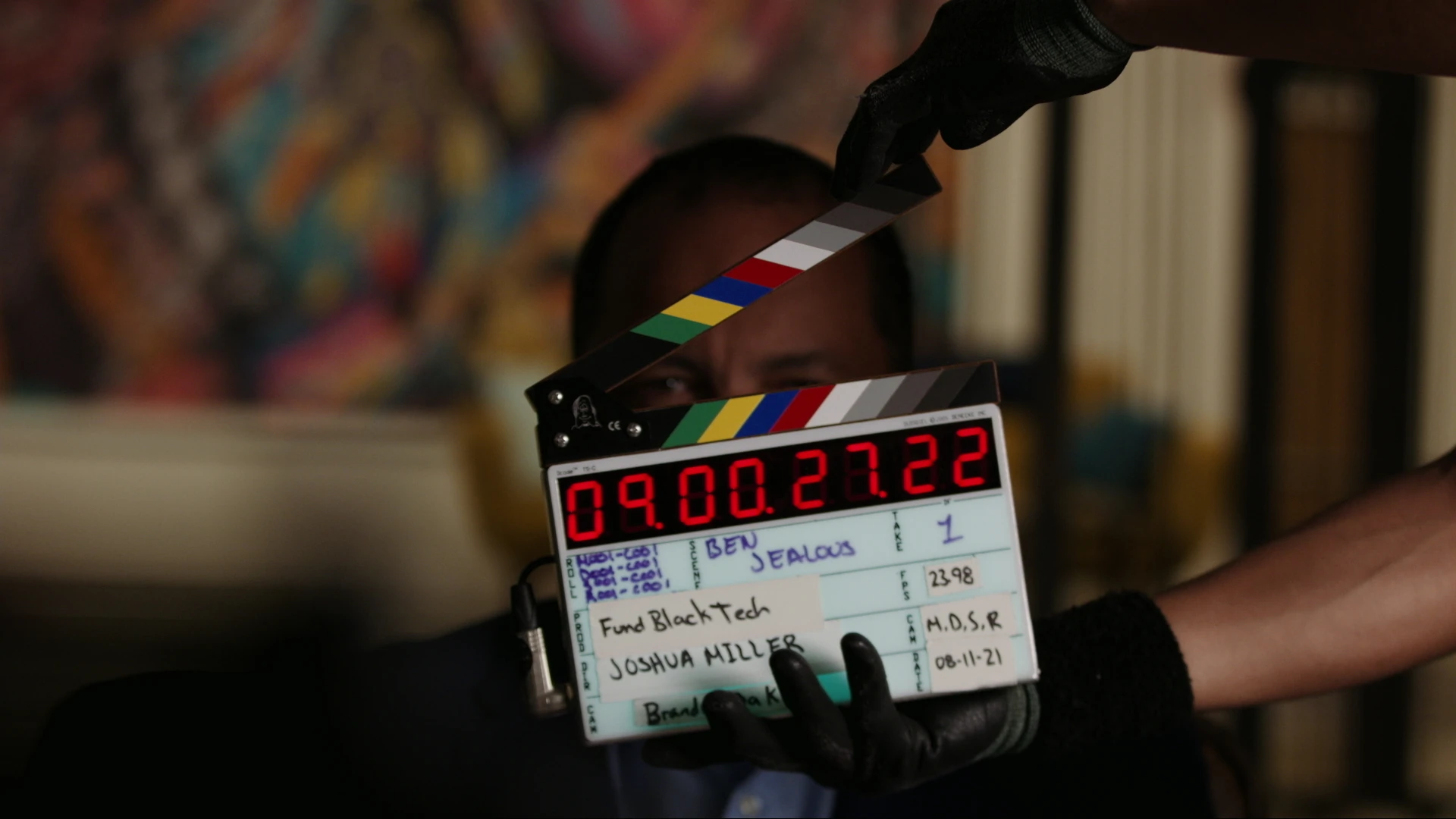
Most guides on how to produce a documentary describe a process. This one describes a production. Fund Black Tech, the series C&I Films shot about who gets funded in technology, ran three years from the first shoot in March 2021 to pickups in 2024. Twelve people sat down with us across New York, Los Angeles and Washington DC. What came back fills close to 23 terabytes of RED raw across nineteen drives, and the edit is still running. Below is the order the work actually happened in, including the parts that took the longest and never show up on screen.
## How to produce a documentary, in the order the work happens
Feature documentaries do not move in a straight line the way a commercial does. Development and production overlap for years, and post starts before the last interview is shot. Still, the work has a shape, so look at the whole of it before you price any one piece.
Phase
What it actually involves
What it looked like on Fund Black Tech
Development
Finding the question, testing whether anyone will answer it on camera
An idea and nothing more, for months
Outreach and scheduling
Cold emails, calls, follow ups, holding a crew against a date that is not locked
Weeks of coordination per interview day
Scouting and set design
Walking the room, hearing the room, dressing it, building it if a venue will not work
Rented locations dressed properly, plus full sets built in our Los Angeles studio
Research and scripting
A separate line of questions for every subject, on one theme
Twelve scripts, one theme
Production
Crew, cameras, sound, and one sitting per person
Twelve interview days, the largest running five cameras plus a separate audio recorder
Data management
Offloads, checksums, redundancy, labelling
Close to 23 TB of RED raw across nineteen drives
Archival and clearance
Sourcing, verifying and clearing anything you did not shoot
Public domain material on Tulsa in 1921, the Freedman’s Bank and the Great Migration
Post
Transcribe, score, assemble, restructure, cut down, grade, mix
A first assembly past three hours, then eight chapters, then a selects edit
If you want the shorter version of this arc without the production detail, our post on [documentary filmmaking from concept to final cut](https://c-istudios.com/documentary-filmmaking-from-concept-to-final-cut/) covers the same ground at a higher altitude.
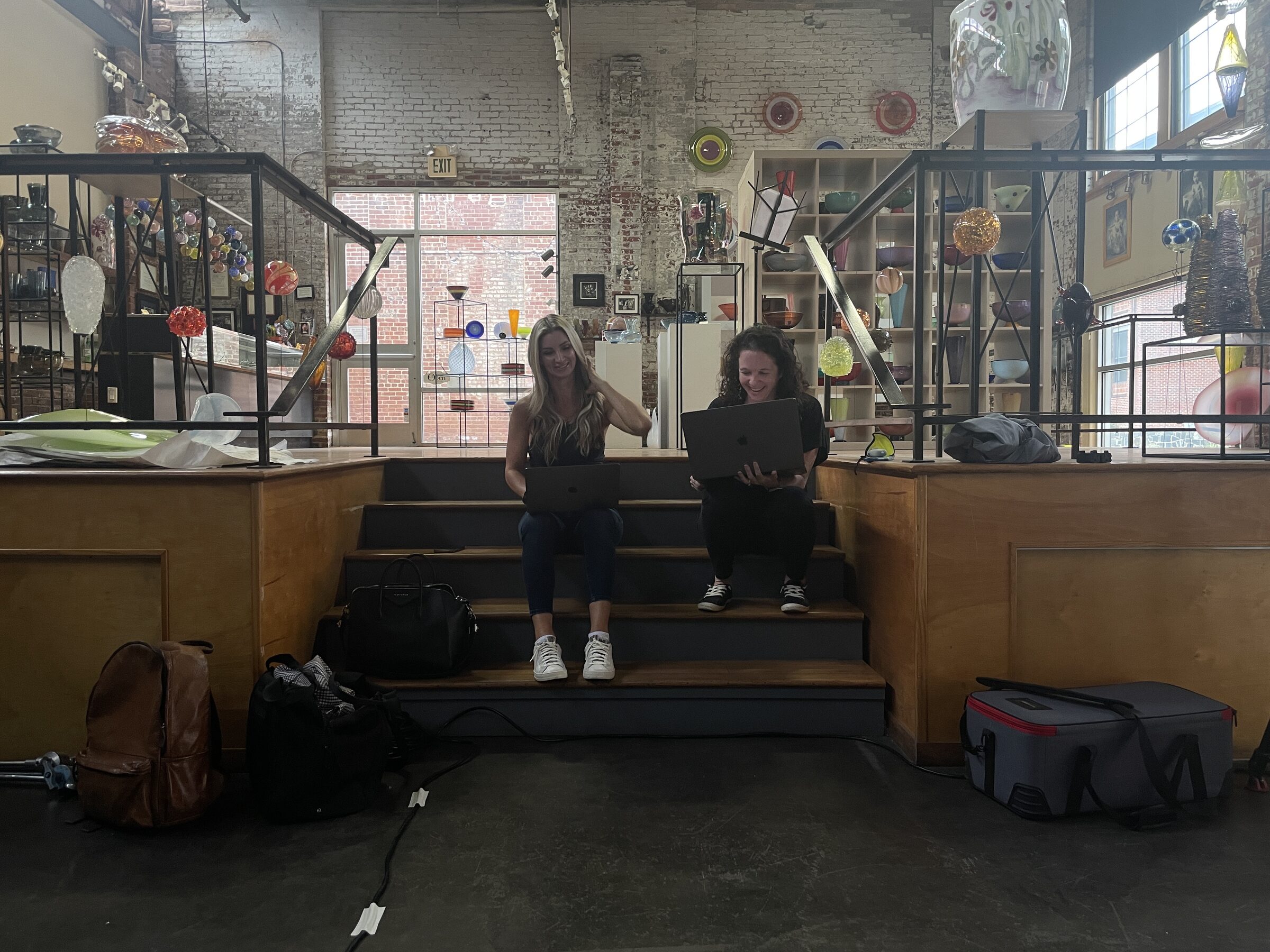
## Booking the people is the real first job
Everything people write about how to produce a documentary starts with the idea. In practice it starts with access. Nothing exists until somebody agrees to be in it. Every interview in the series started as an email or a phone call to a person who had no particular reason to hand us a day of their time. Most took several rounds of back and forth before a date existed at all.
That is its own job, and it is the one first time producers underestimate. You are keeping lines open with a dozen busy people at once. You are following up often enough to matter without becoming a nuisance. You get a confirmation, then a schedule moves and you get it again. Meanwhile you are holding a crew and a location against a date that is not truly locked until the morning it happens.
One interview day sits on top of weeks of that. Build it into the schedule as real work with a real owner, because if you treat outreach as an administrative task squeezed between shoot days, the calendar will simply not fill.
A practical rule from this production. Never book a crew and a location off a verbal yes. Wait for a written confirmation with a date and a call time, and re confirm it the week of. Cancelling a crew costs money. Cancelling a subject costs you the subject, because the second ask is always harder than the first.
## Scout the room before you promise the shot
The people in this series were spread across the country, so we went to them. Every city meant scouting first, walking the space, working out where a camera could live and what the room was going to sound like once it was full of gear and people.
Sound is what kills documentary locations, not light. A room with a hard ceiling, a busy street outside, or an air handler you cannot switch off will fight you for the whole day, and no amount of grading fixes it later. Stand in the room, be quiet for sixty seconds, and listen. That minute has saved us more days than any piece of equipment.
Then the set has to be dressed. It has to be visually interesting for two hours and comfortable for the person sitting in it, and both of those have to be true inside whatever window the location will give you. Some of the interviews were shot on sets we built from the ground up in our [Los Angeles studio](https://c-istudios.com/studio-rentals/), which let us design the room around the conversation instead of working around what a venue would let us move. Across the production it ran as a balance of the two.
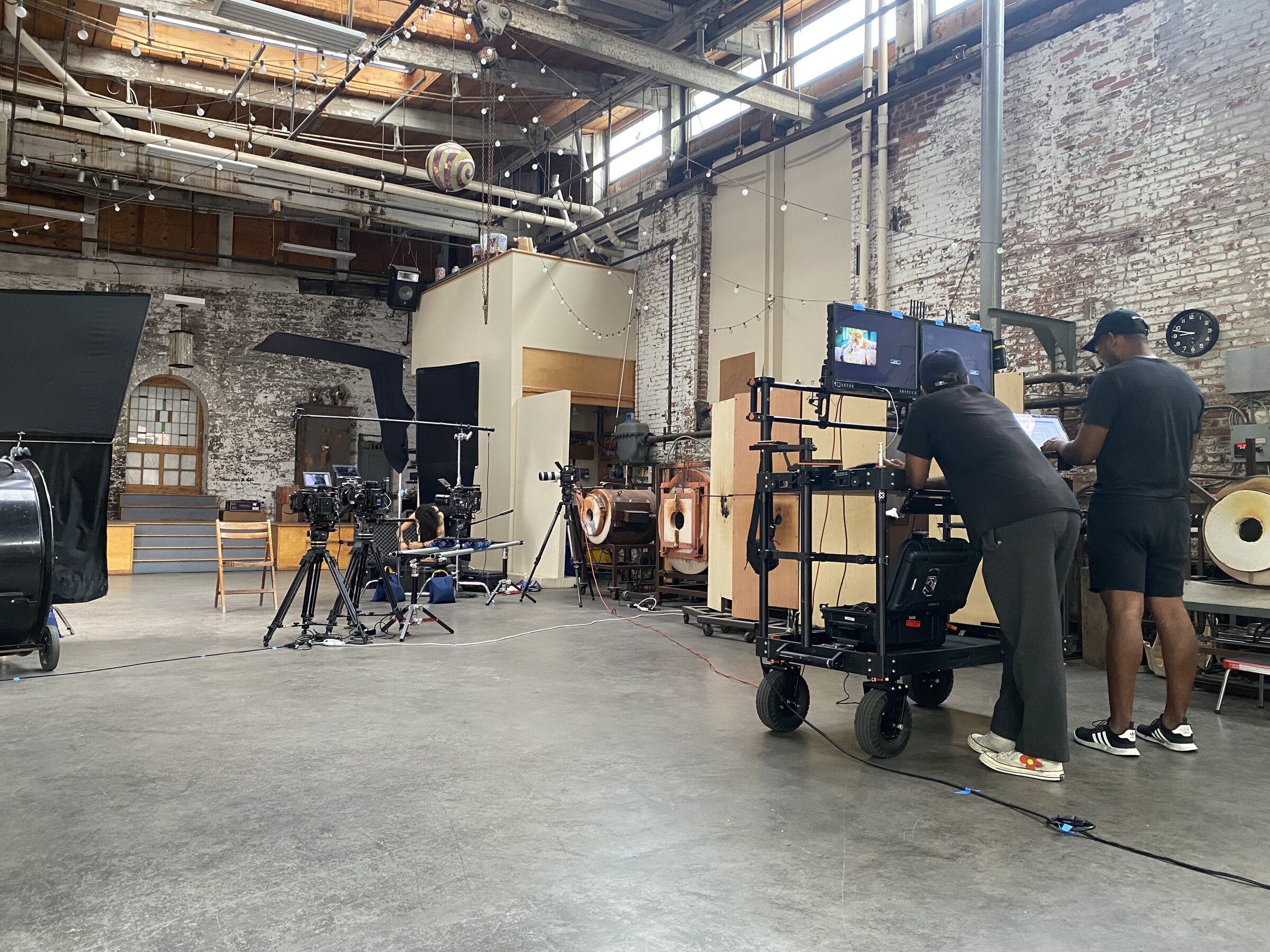
## Write twelve scripts, not one
We conducted twelve interviews, each across a full production day. The questions carried the same sentiment on purpose, because the series had to stay on one theme. Everything else changed.
Every person got their own script, and we studied each of them before they walked in. What they had built. Where their story met the money. What they were actually in a position to answer, and what they would only be guessing at. This was never a copy paste scenario, and it would have shown on camera if we had run it like one.
The tell is easy to spot in a finished film. When every subject answers the same six questions, the cut turns into a survey, and a survey has no shape. When each person is asked the thing only they can answer, the same theme comes back twelve different ways and the edit has somewhere to go.
Prep also buys you permission. People can hear whether you have done the reading in the first two minutes, and what they decide about you in those two minutes sets the ceiling for everything after it.
## The interview day, and why nobody gets it on the first take
The goal on an interview day is to keep the person comfortable enough that they open up in front of the camera. Somebody who feels stuck on a stage gives you a performance. We wanted the opposite, which meant the room, the chair, the light and the number of people standing around all had to work toward the same thing.
Coverage scales to the conversation. A straightforward sit down runs two cameras, a wide and a tight, with a dedicated sound mixer. The largest setup on this production ran five cameras and a separate audio recorder at the same time, and came back as two full drives from one sitting. That is a lot of gear for one person in a chair, and it is necessary for the same reason. After traveling, coordinating schedules, hauling gear and setting the scene, you get one sitting. Asking somebody to go back and repeat the thing they finally said is rarely an option, and if a camera missed it, it is gone.
Over prepare when shooting time is limited. Cover every angle, pay attention, and make the most of the window you have.
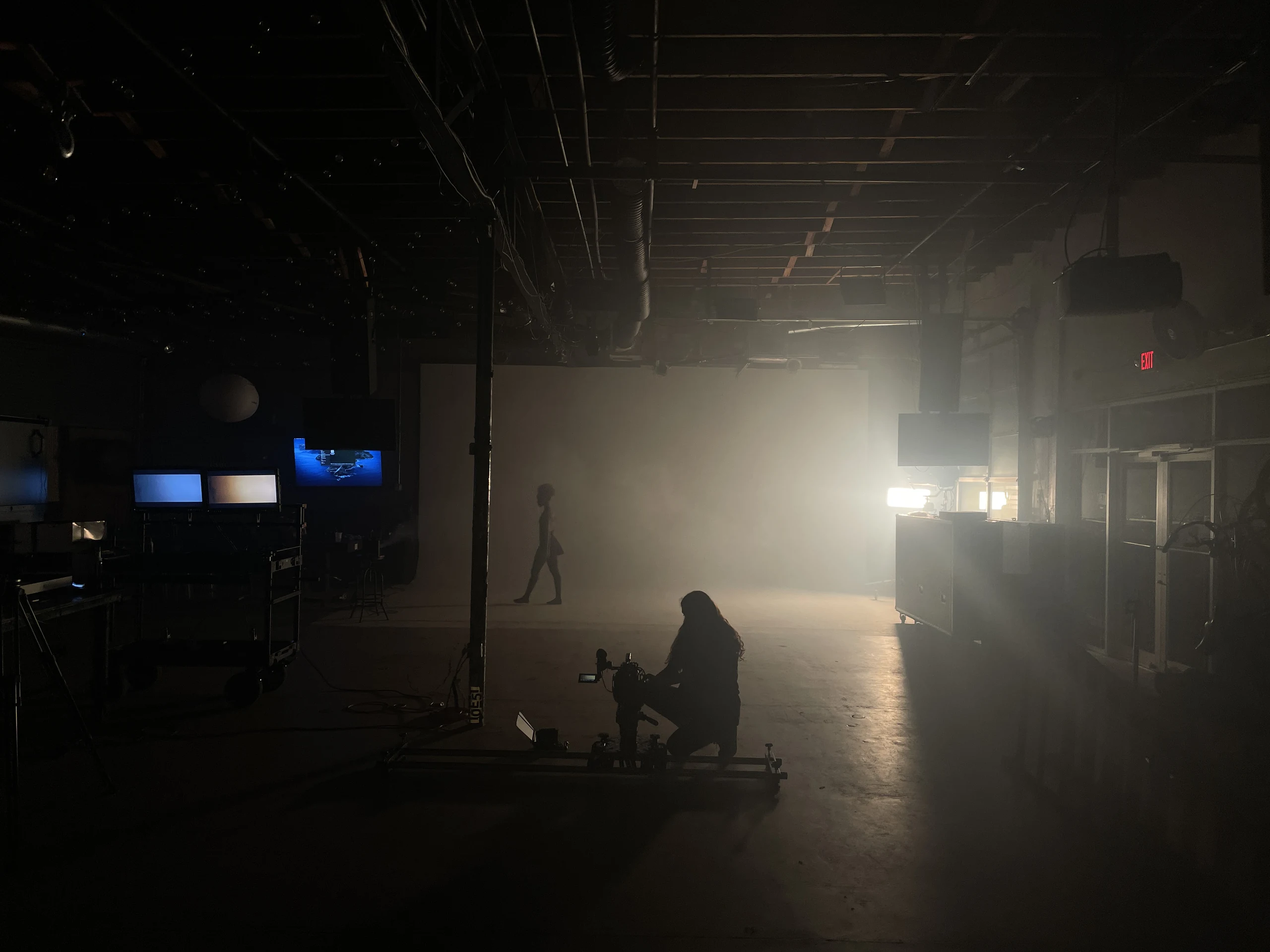
## Data management is a production department, not an afterthought
Close to 23 terabytes of RED raw across nineteen drives is not a filing problem, it is a production department. On every shoot day a DIT station backed up media as it came off the cards, and the naming and the redundancy were decided before the first offload, not after.
The rule we hold to is simple. Footage exists on two drives before a card is formatted, and a card is never formatted on set if there is any way to avoid it. Cards are cheap next to a day you cannot reshoot. Label by subject and date at the moment of offload, because a folder called DAY 3 CAM B means nothing eighteen months later when you are looking for one line somebody said.
Three years is long enough for drives to fail, for a naming convention to drift, and for the person who set it up to move on to another project. Write the convention down. Keep it boring.
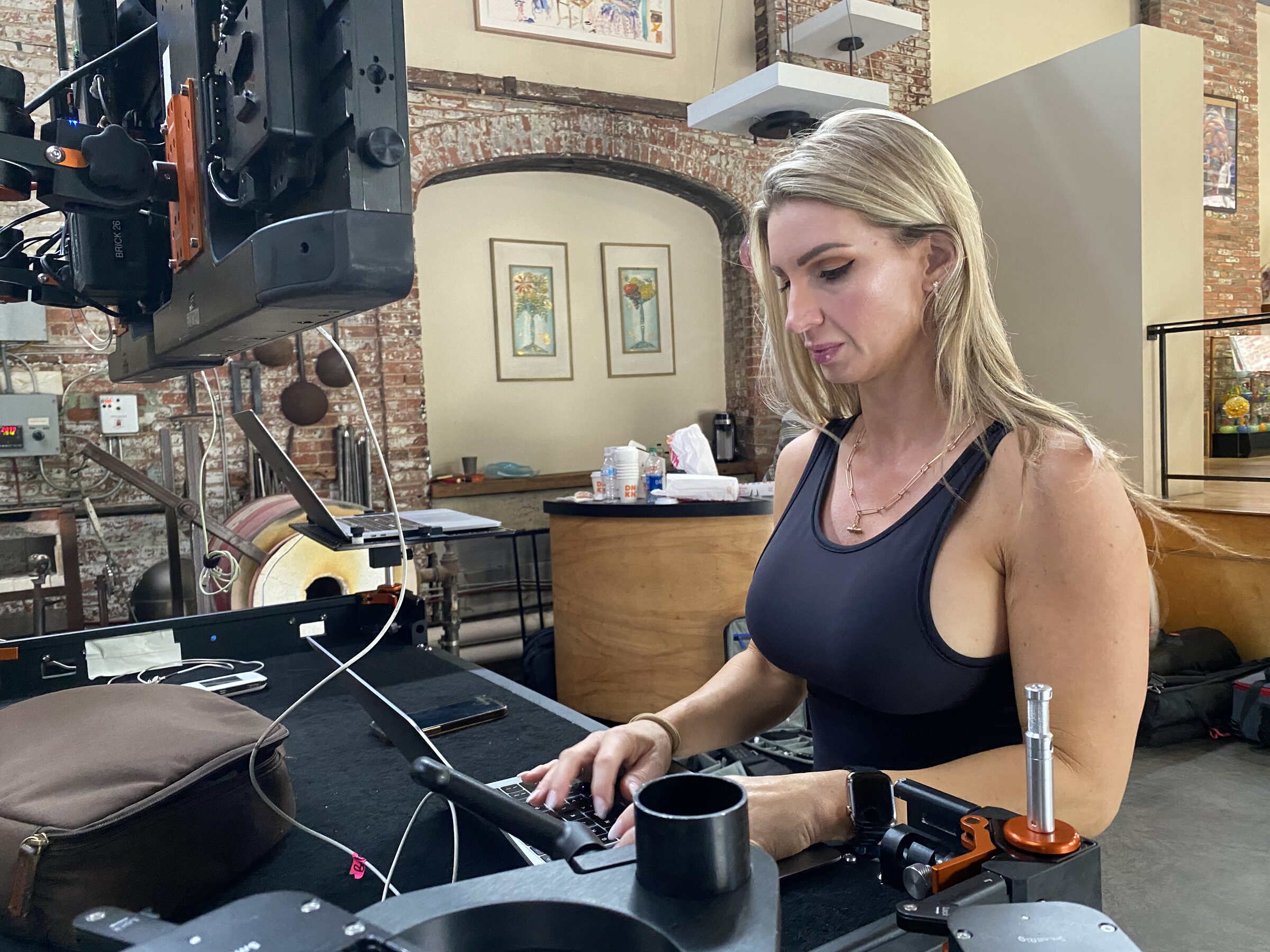
## Archival is a second production running in parallel
Most documentaries need material nobody on the crew shot. On this one that meant historical photographs and footage, and the research ran alongside production rather than waiting for it.
Public domain is where a documentary budget survives. We cleared material on Tulsa in 1921, the Freedman’s Bank and the Great Migration, sourced from public collections rather than licensed libraries. The [Library of Congress](https://www.loc.gov/) is the first stop for American archival work and most of what it holds is free to use, though you still have to verify each item rather than assume the whole collection is clear.
Track provenance for every asset as you go. Where it came from, what its status is, and the link that proves it. A delivery or a festival will ask, and reconstructing that list at the end from memory is miserable. If something is not clearly in the public domain, either license it properly or work out whether your use is defensible, and the [United States Copyright Office fair use index](https://www.copyright.gov/fair-use/) is a better starting point than an opinion in a forum.
## Post starts with transcripts, not a timeline
The instinct is to open an edit and start cutting. On a long documentary that is how you lose a month. Every interview on this production was transcribed and scored line by line before a frame was cut.
Scoring means reading the transcript and marking what is usable, what is strong, and what is the one line that could open or close a chapter. It is slow and it feels like it is not editing. It is the highest leverage work in the whole process, because it turns fifty hours of footage into a document you can actually think with. Search a transcript and you find the moment in seconds. Scrub a timeline and you spend the afternoon.
From there the shape came in stages. The first full assembly ran past three hours. That version was never going to be the film, and it was not supposed to be. It was pulled apart into eight chapters, reordered, and cut down again into a selects edit. Structure on a documentary is discovered in the edit, which is exactly why the assembly has to exist before anyone argues about the order.
## Color and sound are what make it one film
Twelve interviews shot across three years, in different rooms, on different days, under different light, all have to end up looking like one film. The harder part is matching. Five cameras on a single interview, and decades of archival material cut in beside them, all have to sit in the same picture without an audience noticing the joins.
The grade runs one interview at a time, node by node, until the skin tone and the room agree with each other. Then it starts again on the next one. There is no batch operation that does this, which is why color on a long documentary is measured in weeks rather than days.
Sound gets the same treatment and usually gets less credit. Room tone changes between locations, and a mix that does not smooth those transitions makes a film feel assembled even when the picture is perfect. Our [post production services](https://c-istudios.com/post-production-services/) cover editing, color, sound and delivery in house, which on a project this long is less about convenience and more about the film never having to leave the building to be finished.
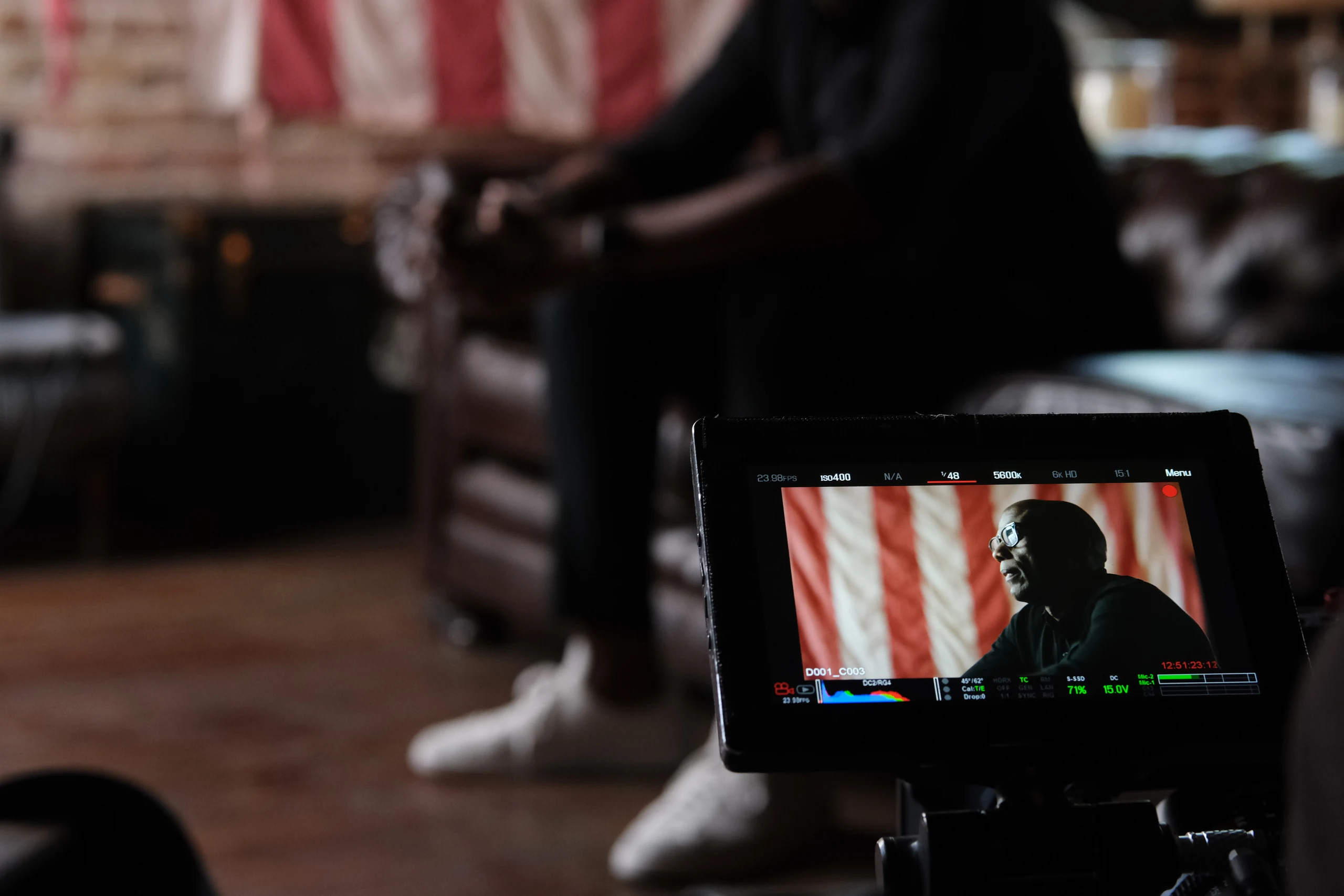
## The parts audiences never see are the parts that decide the film
If there is one thing to take from all of this on how to produce a documentary, it is that the visible work is the smaller half. Documentary work is different from commercial work in one specific way. There is no script to fall back on and no second take of an honest answer, so the room has to be ready before anyone sits down. On this production the crew built and lit every interview set in advance, tested sound in the space, and then kept the set quiet enough that a person could talk for two hours without noticing the cameras.
That preparation is invisible in the finished film and it is the thing that decides whether the film feels true. It is also why continuity of crew matters more on a documentary than on almost any other format. The team on the first shoot day was the team on the last, three years apart, and that consistency shows up in the cut in ways an audience notices without knowing why.
## Frequently asked questions
### How long does it take to produce a documentary?
Longer than any schedule you write at the start. Feature documentaries are measured in years, not weeks. Fund Black Tech shot from March 2021 to 2024 and is still finishing. A short documentary or a branded documentary piece can run a few months end to end. The variable is almost never the shoot, it is access, scheduling and the length of the edit.
### How many people do you need on a documentary crew?
Less than most people expect on the day, more than most people expect across the project. A sit down interview can run with a director, a director of photography and a sound mixer. Add a gaffer, a grip, a DIT and a producer and you have covered almost every documentary shoot day we have run.
### What does a documentary cost?
It is driven by shoot days, travel, archival licensing and how long the edit runs. Scope it honestly at the start rather than discovering it in month eight. We wrote a separate piece on [documentary filmmaking on a budget](https://c-istudios.com/documentary-filmmaking-on-a-budget-tips-for-cost-effective-production/) that goes through where the money actually goes.
### Do you need permission to use archival footage?
Usually yes, unless it is genuinely in the public domain. Verify each item individually rather than trusting a collection level claim, keep a record of where every asset came from, and clear anything you are unsure about before it is locked into a cut.
### Should you shoot interviews on location or build a set?
Both work and we used both. A built set gives you control over look and sound and a consistent result across many shoot days. A real location gives you context an audience reads instantly. The deciding factor is usually the room’s sound and how much of it you are allowed to change.
### How do you keep twelve interviews feeling like one film?
It comes down to three things. The same crew across the schedule, a set and lighting approach that carries between locations, and a grade that matches every interview back to a single look. Miss any one of those and the film reads as a collection of conversations.
## Bring your documentary to C&I Studios
C&I Studios handles [documentary film production](https://c-istudios.com/documentary-film-production/) end to end, from the first set build through the interviews, the location days and the color work. Our studio is a 30,000 square foot facility in Los Angeles, with offices in Fort Lauderdale and New York and crew that travels, which is how a production spread across three cities and three years stays consistent. The same team also handles film and television production and broader video work when a project needs more than one format.
You can watch the trailer and see how the whole apparatus described here came together on the [Fund Black Tech](https://c-istudios.com/portfolio/fund-black-tech/) project page, or look at [For Niko](https://c-istudios.com/portfolio/for-niko/) and [Community Land Trust](https://c-istudios.com/portfolio/community-land-trust/) for shorter form documentary work. When you are ready to talk about a project, [get in touch](https://c-istudios.com/contact/) and we will scope it properly.
Originally published December 13, 2024
### Keep reading
[
Documentary Filmmaking: From Concept to Final Cut
Film & TV](https://c-istudios.com/documentary-filmmaking-from-concept-to-final-cut/)[
Choosing a Documentary Production Company
Film & TV](https://c-istudios.com/documentary-production-company/)[
Documentary Video Production Trends
Film & TV](https://c-istudios.com/documentary-video-production-trends/)
---
*This content is from [C&I Studios](https://c-istudios.com), a full-service production company.*
---
# What to Expect During Television Production
> Published: December 12, 2024
> Categories: Film & TV
> Source: https://c-istudios.com/what-to-expect-during-television-production/
---
.cib{--paper:#1b1d1f;--ink:#fff;--body:#d5d7d9;--muted:#8b9096;--line:rgba(255,255,255,.12);--thumb:#2b2e31;--card:#212426;--accent:#c02b0a;--blue:#5B8FA8;--serif:'Playfair Display',Georgia,serif;--sans:'Poppins',-apple-system,sans-serif;--measure:900px;background:var(--paper);color:var(--body);font-family:var(--sans);line-height:1.6;position:relative;left:50%;transform:translateX(-50%);width:90vw;max-width:1920px}
.cib *{box-sizing:border-box}
.cib .kicker{max-width:var(--measure);margin:58px auto 0;padding:0 22px;font-size:12.5px;font-weight:700;letter-spacing:2.5px;text-transform:uppercase;color:var(--blue)}
.cib h1.cibh1{text-wrap:balance;font-family:var(--serif);font-weight:500;font-size:clamp(46px,6vw,72px);line-height:1.08;color:var(--ink);max-width:var(--measure);margin:18px auto 0;padding:0 22px;letter-spacing:-.5px}
.cib .metarow{max-width:var(--measure);margin:20px auto 0;padding:0 22px;color:var(--muted);font-size:14px}
.cib .hero{position:relative;width:100%;height:0;padding-bottom:56.25%;overflow:hidden;margin:48px auto 0;border-top:1px solid var(--line);border-bottom:1px solid var(--line)}
.cib .hero .ph{width:100%;aspect-ratio:16/9;background:var(--thumb);border-top:1px solid var(--line);border-bottom:1px solid var(--line);display:flex;align-items:center;justify-content:center;color:#7d8288;font-size:13px;text-align:center;padding:0 20px}
.cib .body{max-width:var(--measure);margin:12px auto 0;padding:52px 22px 6px}
.cib .body.lead p:first-child{font-size:23px;line-height:1.62;color:var(--ink)}
.cib .body p{font-size:18.5px;line-height:1.85;margin:0 0 30px;color:var(--body)}
.cib .body h2{text-wrap:balance;font-family:var(--serif);font-weight:500;font-size:clamp(32px,4vw,48px);line-height:1.22;color:var(--ink);margin:70px 0 20px;letter-spacing:-.3px}
.cib .body h3{text-wrap:balance;font-family:var(--sans);font-weight:600;font-size:22px;color:var(--ink);margin:38px 0 8px}
.cib .body a{color:var(--ink);text-decoration:underline;text-decoration-color:rgba(255,255,255,.4);text-underline-offset:3px}
.cib .body a:hover{text-decoration-color:var(--ink)}
.cib .ctable{width:100%;border-collapse:collapse;margin:16px 0 30px;font-size:16px}
.cib .ctable th{background:#000;color:#fff;text-align:left;padding:10px 12px;font-family:var(--sans)}
.cib .ctable td{padding:10px 12px;border-bottom:1px solid var(--line);color:var(--body)}
.cib .inimg{position:relative;width:100%;height:0;padding-bottom:56.25%;overflow:hidden;margin:72px auto;border-top:1px solid var(--line);border-bottom:1px solid var(--line)}
.cib .inimg .ph{width:100%;aspect-ratio:16/9;background:var(--thumb);border-top:1px solid var(--line);border-bottom:1px solid var(--line);display:flex;align-items:center;justify-content:center;color:#7d8288;font-size:13px}
.cib .origpub{max-width:var(--measure);margin:60px auto 0;padding:26px 22px 0;border-top:1px solid var(--line);color:var(--muted);font-size:13.5px}
.cib .related{max-width:1200px;margin:64px auto 0;padding:34px 22px 76px}
.cib .related h3{font-family:var(--sans);font-size:12.5px;letter-spacing:2px;text-transform:uppercase;color:var(--ink);margin:0 0 24px}
.cib .grid{display:grid;grid-template-columns:repeat(3,1fr);gap:28px}
.cib .rc{background:var(--card);border:1px solid var(--line);display:block;text-decoration:none;color:inherit;transition:border-color .15s}
.cib a.rc:hover{border-color:rgba(255,255,255,.5)}
.cib .rc .thumb{position:relative;width:100%;height:0;padding-bottom:56.25%;background:var(--thumb);overflow:hidden}
.cib .rc .thumb img{position:absolute!important;top:0!important;left:0!important;width:100%!important;height:100%!important;object-fit:cover!important;margin:0!important}
.cib .rc .cc{padding:14px 15px 17px}
.cib .rc .rt{font-family:var(--serif);font-weight:500;font-size:16px;line-height:1.3;color:var(--ink);margin:0 0 6px}
.cib .rc .rm{font-size:11px;letter-spacing:1px;text-transform:uppercase;color:var(--muted)}
.cib img{margin:0!important;padding:0!important;display:block!important;vertical-align:top;max-width:100%}
.cib .hero img,.cib .inimg img{position:absolute!important;top:0!important;left:0!important;width:100%!important;height:100%!important;object-fit:cover!important;margin:0!important;padding:0!important;border:0!important;display:block!important;aspect-ratio:auto!important}
.cib .hero+.body{padding-top:36px}
@media(max-width:760px){.cib .grid{grid-template-columns:1fr}.cib .body h2{margin:52px 0 16px}.cib .body p{font-size:17.5px}.cib .inimg,.cib .hero{margin-top:44px}}
.cib .vembed{max-width:var(--measure);margin:44px auto;padding:0 22px}.cib .vembed .vwrap{position:relative;width:100%;height:0;padding-bottom:56.25%}.cib .vembed .vwrap iframe{position:absolute;top:0;left:0;width:100%;height:100%;border:0}
Film & TV
# What to Expect During Television Production
18 min read
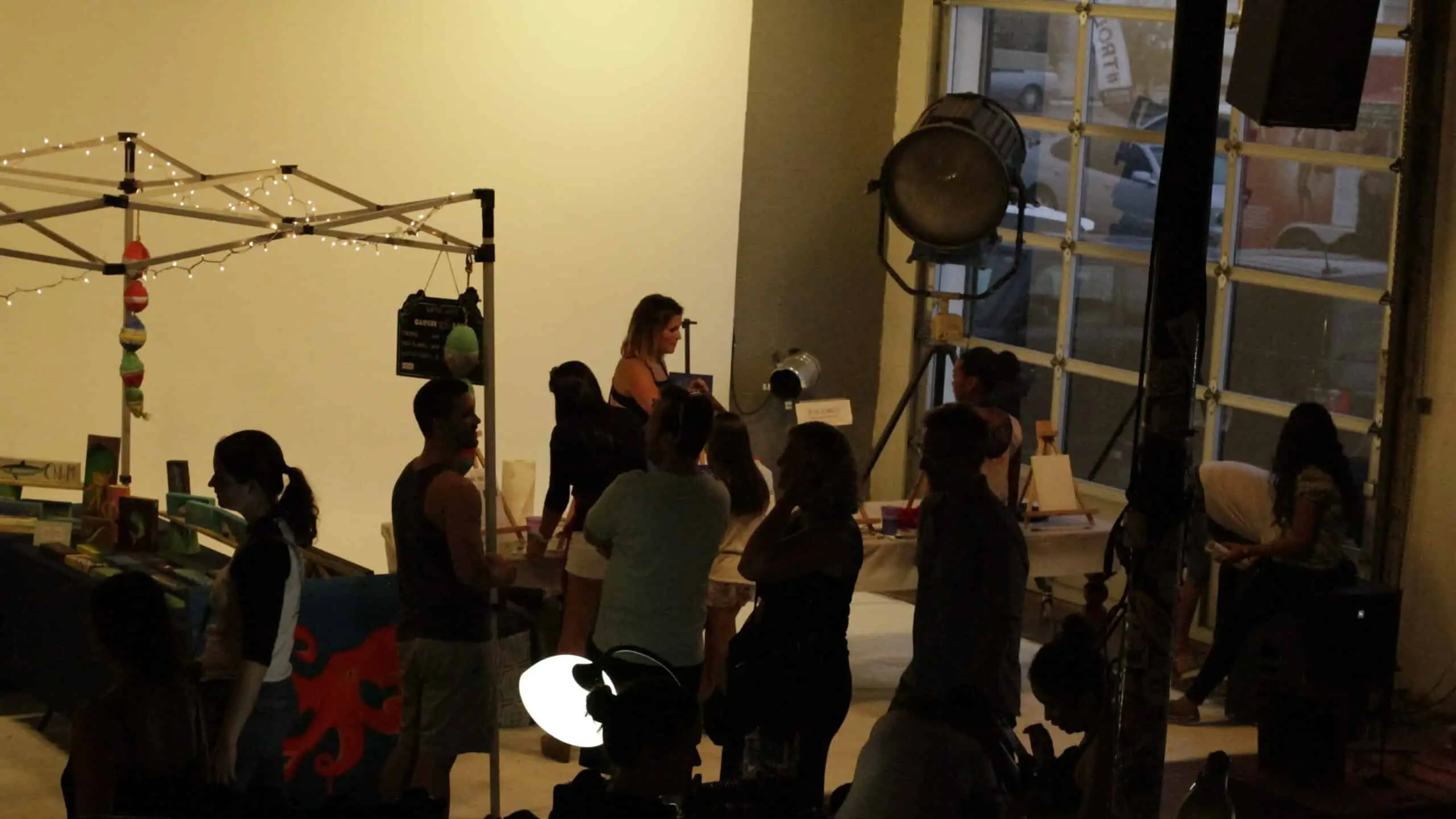
Television production is a dynamic and intricate process that brings ideas to life on screen. From conceptualizing the storyline to delivering the final broadcast, it involves a coordinated effort from multiple professionals, each playing a crucial role in shaping the outcome. The magic of television lies in its ability to captivate audiences, inform, and entertain, and much of this magic stems from the meticulous process of production.
Understanding television production is essential for anyone aspiring to enter the industry or simply curious about how their favorite TV shows are made. It’s not just about cameras and actors; it’s a complex blend of creative vision, technical expertise, and detailed planning.
This article delves into the stages of the [TV production](https://c-istudios.com/film-and-tv-production/) process, examines the roles and responsibilities involved, and highlights what to expect during this transformative journey from idea to screen.
## Concept Development and Pre-Production
Every television project begins with an idea. This could be a script for a drama, a pitch for a reality show, or a concept for a documentary. During the concept development phase, creators outline the vision for the show, identifying the target audience, genre, and format. This stage often includes drafting scripts, creating storyboards, and conducting initial research.
Once the concept is refined, pre-production begins. Pre-production is one of the most critical phases in the TV production process. It involves detailed planning and preparation to ensure the production runs smoothly. Key activities during this stage include assembling a production team, scouting locations, casting actors, and finalizing the script.
A production team typically comprises a director, producers, writers, and technical crew. Each member has a specific role in ensuring the vision for the show aligns with practical and creative goals. For instance, the director oversees the artistic aspects, while the producer manages logistics and finances.
Casting is another vital component of pre-production. Finding the right talent to bring characters to life can significantly impact the success of a show. Producers and directors often hold auditions or seek established actors for prominent roles. Similarly, location scouting ensures that the settings reflect the story’s tone and authenticity. Whether filming in a bustling city or a remote countryside, choosing the right backdrop adds depth to the narrative.
Budgeting and scheduling are equally crucial at this stage. Creating a realistic budget and a detailed production timeline helps avoid potential pitfalls during filming. This phase sets the foundation for the production, ensuring that every aspect is carefully planned and ready for execution.
## Production. Lights, Camera, Action
The production phase is where the magic happens, cameras roll, scenes are performed, and the vision begins to take shape. This stage of television production involves the actual filming or recording of the show. It’s a bustling environment where creativity meets precision, as every detail is captured on camera.
During production, the director plays a central role in guiding the cast and crew to ensure the scenes align with the creative vision. Actors deliver performances based on the script, while cinematographers handle the technical aspects of filming, including camera angles, lighting, and framing. Sound engineers ensure dialogue and ambient sounds are recorded clearly, while set designers and costume teams create immersive environments.
One of the most challenging aspects of the TV production process is maintaining efficiency without compromising quality. Filming schedules are often tight, and unexpected challenges, such as weather conditions or technical issues, can cause delays. To overcome these obstacles, production teams rely on meticulous planning and adaptability.
Multi-camera setups are commonly used in television production, particularly for live shows or sitcoms. This approach allows for simultaneous capturing of multiple angles, reducing the need for repeated takes. In contrast, single-camera setups, often used for dramas and documentaries, offer greater flexibility in framing and storytelling.
While the production phase is exciting and dynamic, it’s also demanding. Long hours on set, precise coordination, and a relentless focus on detail are required to ensure every scene meets the desired standard. This phase lays the groundwork for the next stage, post-production, where raw footage is transformed into a polished final product.
## Post-Production. The Art of Refinement
Once filming is complete, the post-production phase begins. This stage involves editing the raw footage, adding visual and sound effects, and fine-tuning every aspect of the show to ensure it’s ready for broadcast. Post-production is a meticulous process that combines technical expertise with creative decision-making.
Editors play a pivotal role during this stage, working closely with the director to shape the narrative. They review hours of footage, selecting the best takes and arranging them to create a cohesive storyline. Transitions, pacing, and continuity are key considerations, ensuring the final product flows seamlessly from start to finish.
Sound design is another critical component of post-production. Sound engineers enhance dialogue clarity, add background scores, and incorporate sound effects to enrich the viewing experience. For instance, in a suspenseful scene, subtle audio cues can heighten tension, while vibrant music can amplify joyous moments.
Visual effects (VFX) teams contribute by adding digital enhancements or creating entirely computer-generated scenes. From explosions to fantastical landscapes, VFX can transform ordinary footage into extraordinary visuals. Similarly, color grading adjusts the hues and tones of the footage, ensuring consistency and enhancing the overall aesthetic.
The final step in post-production is assembling the complete episode or show. This includes adding opening and closing credits, adhering to broadcasting standards, and ensuring the content meets quality benchmarks. The result is a polished product ready for distribution, whether it’s aired on television or streamed online.
## The Importance of the Production Timeline
A well-structured production timeline is the backbone of successful television production. It outlines each phase of the process, ensuring every task is completed on schedule. From pre-production planning to post-production refinement, adhering to a timeline minimizes disruptions and keeps the project on track.
In the TV production process, timelines often vary depending on the type of show. For instance, live broadcasts operate on tight schedules, with minimal room for error, while scripted dramas may have more flexible timelines to accommodate creative adjustments. Regardless of the format, effective time management is crucial for delivering a high-quality product within budget.
One of the challenges in managing a production timeline is coordinating multiple teams and tasks. Delays in one phase can have a cascading effect on subsequent stages, leading to increased costs and missed deadlines. To mitigate these risks, producers often use project management tools and software to track progress, allocate resources, and address potential issues proactively.
A well-executed timeline not only ensures efficiency but also allows room for creativity. By establishing clear deadlines and milestones, production teams can focus on bringing their artistic vision to life without compromising on quality or innovation.
## Collaboration and Teamwork in Television Production
Television production is a collaborative effort that requires seamless coordination among various departments. From writers and directors to camera operators and editors, each team member plays a vital role in bringing the project to fruition. Effective communication and teamwork are essential for ensuring the production runs smoothly.
One of the hallmarks of successful TV show production is the ability to adapt to unforeseen challenges. Whether it’s a last-minute script change or a technical glitch, production teams must work together to find solutions and keep the project on track. This adaptability often stems from a strong sense of camaraderie and mutual respect among team members.
Leadership also plays a crucial role in fostering collaboration. Directors and producers set the tone for the project, guiding the team toward a shared vision while addressing individual concerns. Clear communication, constructive feedback, and a positive working environment contribute to a productive and harmonious atmosphere on set.
Ultimately, the collaborative nature of television production is what makes it a rewarding and dynamic process. By combining diverse talents and perspectives, production teams can create compelling and impactful content that resonates with audiences worldwide.
## Challenges and Rewards of Television Production
Like any creative endeavor, television production comes with its share of challenges. Tight budgets, demanding schedules, and unpredictable variables such as weather or technical issues can test even the most experienced production teams. However, these challenges are often outweighed by the rewards of bringing a story to life and connecting with audiences.
One of the most significant challenges in TV show production is balancing artistic vision with practical constraints. Creators must find innovative ways to achieve their goals within the limitations of time, resources, and technology. For example, a director may need to adjust their vision to fit a budget without compromising the story’s essence. Tight schedules often require multi-tasking and efficiency, and maintaining the creative quality during such high-pressure situations is no small feat.
Another common challenge is meeting audience expectations. With the abundance of content available today, viewers have high standards and diverse preferences. Ensuring a show stands out while appealing to its target audience requires a deep understanding of storytelling and market trends. Additionally, the pressure to keep content fresh and relevant can push production teams to continuously innovate, adapting their methods to the latest audience preferences and cultural shifts.
Despite these hurdles, the rewards of television production are immense. The satisfaction of seeing a project come to life, the joy of entertaining and inspiring audiences, and the pride of contributing to the creative arts make the effort worthwhile. For many, the challenges are part of the journey, fueling growth and innovation in the industry. These moments of triumph, whether during production or the final broadcast, highlight the enduring impact of storytelling on both creators and viewers alike.
## The Future of Television Production
As technology continues to evolve, the future of television production promises exciting possibilities. Advances in artificial intelligence, virtual reality, and streaming platforms are reshaping the industry, offering new tools and opportunities for creators.
AI-powered tools are streamlining various aspects of the TV production process, from script analysis to post-production editing. These technologies not only enhance efficiency but also open doors for creative experimentation, allowing creators to push the boundaries of storytelling. AI can also predict viewer preferences based on data, enabling creators to tailor content to specific demographics and improve audience engagement.
Virtual and augmented reality are also making their mark on television production. These technologies enable immersive experiences, allowing audiences to interact with content in unprecedented ways. For example, VR can transport viewers into the story world, while AR can enhance live broadcasts with real-time graphics and effects. These tools are being used not only for entertainment but also for educational programming, providing unique opportunities to blend storytelling with learning.
Streaming platforms are revolutionizing the way content is distributed and consumed. With the rise of on-demand viewing, creators have greater flexibility to experiment with formats, genres, and storytelling techniques. This shift is also fostering a more globalized industry, where diverse voices and perspectives can reach audiences worldwide. Additionally, streaming analytics provide valuable insights, enabling producers to understand viewer behavior and adapt content accordingly.
As the industry continues to innovate, the core principles of television production remain unchanged: creativity, collaboration, and a commitment to quality. By embracing new technologies and staying true to these values, creators can continue to produce content that captivates and inspires while pushing the boundaries of traditional television.
## What to Expect During Television Production
Television production is a dynamic and intricate process that brings ideas to life on screen. From conceptualizing the storyline to delivering the final broadcast, it involves a coordinated effort from multiple professionals, each playing a crucial role in shaping the outcome. The magic of television lies in its ability to captivate audiences, inform, and entertain, and much of this magic stems from the meticulous process of production.
Understanding television production is essential for anyone aspiring to enter the industry or simply curious about how their favorite TV shows are made. It’s not just about cameras and actors; it’s a complex blend of creative vision, technical expertise, and detailed planning.
This article delves into the stages of the TV production process, examines the roles and responsibilities involved, and highlights what to expect during this transformative journey from idea to screen.
## Concept Development and Pre-Production
Every television project begins with an idea. This could be a script for a drama, a pitch for a reality show, or a concept for a documentary. During the concept development phase, creators outline the vision for the show, identifying the target audience, genre, and format. This stage often includes drafting scripts, creating storyboards, and conducting initial research.
Once the concept is refined, pre-production begins. Pre-production is one of the most critical phases in the TV production process. It involves detailed planning and preparation to ensure the production runs smoothly. Key activities during this stage include assembling a production team, scouting locations, casting actors, and finalizing the script.
A production team typically comprises a director, producers, writers, and technical crew. Each member has a specific role in ensuring the vision for the show aligns with practical and creative goals. For instance, the director oversees the artistic aspects, while the producer manages logistics and finances.
Casting is another vital component of pre-production. Finding the right talent to bring characters to life can significantly impact the success of a show. Producers and directors often hold auditions or seek established actors for prominent roles. Similarly, location scouting ensures that the settings reflect the story’s tone and authenticity. Whether filming in a bustling city or a remote countryside, choosing the right backdrop adds depth to the narrative.
Budgeting and scheduling are equally crucial at this stage. Creating a realistic budget and a detailed production timeline helps avoid potential pitfalls during filming. This phase sets the foundation for the production, ensuring that every aspect is carefully planned and ready for execution.
## Production. Lights, Camera, Action
The production phase is where the magic happens, cameras roll, scenes are performed, and the vision begins to take shape. This stage of television production involves the actual filming or recording of the show. It’s a bustling environment where creativity meets precision, as every detail is captured on camera.
During production, the director plays a central role in guiding the cast and crew to ensure the scenes align with the creative vision. Actors deliver performances based on the script, while cinematographers handle the technical aspects of filming, including camera angles, lighting, and framing. Sound engineers ensure dialogue and ambient sounds are recorded clearly, while set designers and costume teams create immersive environments.
One of the most challenging aspects of the TV production process is maintaining efficiency without compromising quality. Filming schedules are often tight, and unexpected challenges, such as weather conditions or technical issues, can cause delays. To overcome these obstacles, production teams rely on meticulous planning and adaptability.
Multi-camera setups are commonly used in television production, particularly for live shows or sitcoms. This approach allows for simultaneous capturing of multiple angles, reducing the need for repeated takes. In contrast, single-camera setups, often used for dramas and documentaries, offer greater flexibility in framing and storytelling.
While the production phase is exciting and dynamic, it’s also demanding. Long hours on set, precise coordination, and a relentless focus on detail are required to ensure every scene meets the desired standard. This phase lays the groundwork for the next stage, post-production, where raw footage is transformed into a polished final product.
## Post-Production. The Art of Refinement
Once filming is complete, the post-production phase begins. This stage involves editing the raw footage, adding visual and sound effects, and fine-tuning every aspect of the show to ensure it’s ready for broadcast. Post-production is a meticulous process that combines technical expertise with creative decision-making.
Editors play a pivotal role during this stage, working closely with the director to shape the narrative. They review hours of footage, selecting the best takes and arranging them to create a cohesive storyline. Transitions, pacing, and continuity are key considerations, ensuring the final product flows seamlessly from start to finish.
Sound design is another critical component of post-production. Sound engineers enhance dialogue clarity, add background scores, and incorporate sound effects to enrich the viewing experience. For instance, in a suspenseful scene, subtle audio cues can heighten tension, while vibrant music can amplify joyous moments.
Visual effects (VFX) teams contribute by adding digital enhancements or creating entirely computer-generated scenes. From explosions to fantastical landscapes, VFX can transform ordinary footage into extraordinary visuals. Similarly, color grading adjusts the hues and tones of the footage, ensuring consistency and enhancing the overall aesthetic.
The final step in post-production is assembling the complete episode or show. This includes adding opening and closing credits, adhering to broadcasting standards, and ensuring the content meets quality benchmarks. The result is a polished product ready for distribution, whether it’s aired on television or streamed online.
## The Importance of the Production Timeline
A well-structured production timeline is the backbone of successful television production. It outlines each phase of the process, ensuring every task is completed on schedule. From pre-production planning to post-production refinement, adhering to a timeline minimizes disruptions and keeps the project on track.
In the TV production process, timelines often vary depending on the type of show. For instance, live broadcasts operate on tight schedules, with minimal room for error, while scripted dramas may have more flexible timelines to accommodate creative adjustments. Regardless of the format, effective time management is crucial for delivering a high-quality product within budget.
One of the challenges in managing a production timeline is coordinating multiple teams and tasks. Delays in one phase can have a cascading effect on subsequent stages, leading to increased costs and missed deadlines. To mitigate these risks, producers often use project management tools and software to track progress, allocate resources, and address potential issues proactively.
A well-executed timeline not only ensures efficiency but also allows room for creativity. By establishing clear deadlines and milestones, production teams can focus on bringing their artistic vision to life without compromising on quality or innovation.
## Collaboration and Teamwork in Television Production
Television production is a collaborative effort that requires seamless coordination among various departments. From writers and directors to camera operators and editors, each team member plays a vital role in bringing the project to fruition. Effective communication and teamwork are essential for ensuring the production runs smoothly.
One of the hallmarks of successful TV show production is the ability to adapt to unforeseen challenges. Whether it’s a last-minute script change or a technical glitch, production teams must work together to find solutions and keep the project on track. This adaptability often stems from a strong sense of camaraderie and mutual respect among team members.
Leadership also plays a crucial role in fostering collaboration. Directors and producers set the tone for the project, guiding the team toward a shared vision while addressing individual concerns. Clear communication, constructive feedback, and a positive working environment contribute to a productive and harmonious atmosphere on set.
Ultimately, the collaborative nature of television production is what makes it a rewarding and dynamic process. By combining diverse talents and perspectives, production teams can create compelling and impactful content that resonates with audiences worldwide.
## Challenges and Rewards of Television Production
Like any creative endeavor, television production comes with its share of challenges. Tight budgets, demanding schedules, and unpredictable variables such as weather or technical issues can test even the most experienced production teams. However, these challenges are often outweighed by the rewards of bringing a story to life and connecting with audiences.
One of the most significant challenges in TV show production is balancing artistic vision with practical constraints. Creators must find innovative ways to achieve their goals within the limitations of time, resources, and technology. For example, a director may need to adjust their vision to fit a budget without compromising the story’s essence. Tight schedules often require multi-tasking and efficiency, and maintaining the creative quality during such high-pressure situations is no small feat.
Another common challenge is meeting audience expectations. With the abundance of content available today, viewers have high standards and diverse preferences. Ensuring a show stands out while appealing to its target audience requires a deep understanding of storytelling and market trends. Additionally, the pressure to keep content fresh and relevant can push production teams to continuously innovate, adapting their methods to the latest audience preferences and cultural shifts.
Despite these hurdles, the rewards of television production are immense. The satisfaction of seeing a project come to life, the joy of entertaining and inspiring audiences, and the pride of contributing to the creative arts make the effort worthwhile. For many, the challenges are part of the journey, fueling growth and innovation in the industry. These moments of triumph, whether during production or the final broadcast, highlight the enduring impact of storytelling on both creators and viewers alike.
## The Future of Television Production
As technology continues to evolve, the future of television production promises exciting possibilities. Advances in artificial intelligence, virtual reality, and streaming platforms are reshaping the industry, offering new tools and opportunities for creators.
AI-powered tools are streamlining various aspects of the TV production process, from script analysis to post-production editing. These technologies not only enhance efficiency but also open doors for creative experimentation, allowing creators to push the boundaries of storytelling. AI can also predict viewer preferences based on data, enabling creators to tailor content to specific demographics and improve audience engagement.
Virtual and augmented reality are also making their mark on television production. These technologies enable immersive experiences, allowing audiences to interact with content in unprecedented ways. For example, VR can transport viewers into the story world, while AR can enhance live broadcasts with real-time graphics and effects. These tools are being used not only for entertainment but also for educational programming, providing unique opportunities to blend storytelling with learning.
Streaming platforms are revolutionizing the way content is distributed and consumed. With the rise of on-demand viewing, creators have greater flexibility to experiment with formats, genres, and storytelling techniques. This shift is also fostering a more globalized industry, where diverse voices and perspectives can reach audiences worldwide. Additionally, streaming analytics provide valuable insights, enabling producers to understand viewer behavior and adapt content accordingly.
As the industry continues to innovate, the core principles of television production remain unchanged: creativity, collaboration, and a commitment to quality. By embracing new technologies and staying true to these values, creators can continue to produce content that captivates and inspires while pushing the boundaries of traditional television.
## Work with C&I Studios
If you are planning a project like this, our team can take it from concept to final delivery. Explore our [film and TV production](https://c-istudios.com/film-and-tv-production/), browse [our work](https://c-istudios.com/our-work/) to see how we tell brand stories, and [get in touch](https://c-istudios.com/contact/) when you are ready to start.
Originally published December 12, 2024
---
*This content is from [C&I Studios](https://c-istudios.com), a full-service production company.*
---
# The Role of Brand Guidelines: Ensuring Consistency and Clarity
> Published: December 12, 2024
> Categories: Commercial & Brand
> Source: https://c-istudios.com/the-role-of-brand-guidelines-ensuring-consistency-and-clarity/
---
.cib{--paper:#1b1d1f;--ink:#fff;--body:#d5d7d9;--muted:#8b9096;--line:rgba(255,255,255,.12);--thumb:#2b2e31;--card:#212426;--accent:#c02b0a;--blue:#5B8FA8;--serif:'Playfair Display',Georgia,serif;--sans:'Poppins',-apple-system,sans-serif;--measure:900px;background:var(--paper);color:var(--body);font-family:var(--sans);line-height:1.6;position:relative;left:50%;transform:translateX(-50%);width:90vw;max-width:1920px}
.cib *{box-sizing:border-box}
.cib .kicker{max-width:var(--measure);margin:58px auto 0;padding:0 22px;font-size:12.5px;font-weight:700;letter-spacing:2.5px;text-transform:uppercase;color:var(--blue)}
.cib h1.cibh1{text-wrap:balance;font-family:var(--serif);font-weight:500;font-size:clamp(46px,6vw,72px);line-height:1.08;color:var(--ink);max-width:var(--measure);margin:18px auto 0;padding:0 22px;letter-spacing:-.5px}
.cib .metarow{max-width:var(--measure);margin:20px auto 0;padding:0 22px;color:var(--muted);font-size:14px}
.cib .hero{position:relative;width:100%;height:0;padding-bottom:56.25%;overflow:hidden;margin:48px auto 0;border-top:1px solid var(--line);border-bottom:1px solid var(--line)}
.cib .hero .ph{width:100%;aspect-ratio:16/9;background:var(--thumb);border-top:1px solid var(--line);border-bottom:1px solid var(--line);display:flex;align-items:center;justify-content:center;color:#7d8288;font-size:13px;text-align:center;padding:0 20px}
.cib .body{max-width:var(--measure);margin:12px auto 0;padding:52px 22px 6px}
.cib .body.lead p:first-child{font-size:23px;line-height:1.62;color:var(--ink)}
.cib .body p{font-size:18.5px;line-height:1.85;margin:0 0 30px;color:var(--body)}
.cib .body h2{text-wrap:balance;font-family:var(--serif);font-weight:500;font-size:clamp(32px,4vw,48px);line-height:1.22;color:var(--ink);margin:70px 0 20px;letter-spacing:-.3px}
.cib .body h3{text-wrap:balance;font-family:var(--sans);font-weight:600;font-size:22px;color:var(--ink);margin:38px 0 8px}
.cib .body a{color:var(--ink);text-decoration:underline;text-decoration-color:rgba(255,255,255,.4);text-underline-offset:3px}
.cib .body a:hover{text-decoration-color:var(--ink)}
.cib .ctable{width:100%;border-collapse:collapse;margin:16px 0 30px;font-size:16px}
.cib .ctable th{background:#000;color:#fff;text-align:left;padding:10px 12px;font-family:var(--sans)}
.cib .ctable td{padding:10px 12px;border-bottom:1px solid var(--line);color:var(--body)}
.cib .inimg{position:relative;width:100%;height:0;padding-bottom:56.25%;overflow:hidden;margin:72px auto;border-top:1px solid var(--line);border-bottom:1px solid var(--line)}
.cib .inimg .ph{width:100%;aspect-ratio:16/9;background:var(--thumb);border-top:1px solid var(--line);border-bottom:1px solid var(--line);display:flex;align-items:center;justify-content:center;color:#7d8288;font-size:13px}
.cib .origpub{max-width:var(--measure);margin:60px auto 0;padding:26px 22px 0;border-top:1px solid var(--line);color:var(--muted);font-size:13.5px}
.cib .related{max-width:1200px;margin:64px auto 0;padding:34px 22px 76px}
.cib .related h3{font-family:var(--sans);font-size:12.5px;letter-spacing:2px;text-transform:uppercase;color:var(--ink);margin:0 0 24px}
.cib .grid{display:grid;grid-template-columns:repeat(3,1fr);gap:28px}
.cib .rc{background:var(--card);border:1px solid var(--line);display:block;text-decoration:none;color:inherit;transition:border-color .15s}
.cib a.rc:hover{border-color:rgba(255,255,255,.5)}
.cib .rc .thumb{position:relative;width:100%;height:0;padding-bottom:56.25%;background:var(--thumb);overflow:hidden}
.cib .rc .thumb img{position:absolute!important;top:0!important;left:0!important;width:100%!important;height:100%!important;object-fit:cover!important;margin:0!important}
.cib .rc .cc{padding:14px 15px 17px}
.cib .rc .rt{font-family:var(--serif);font-weight:500;font-size:16px;line-height:1.3;color:var(--ink);margin:0 0 6px}
.cib .rc .rm{font-size:11px;letter-spacing:1px;text-transform:uppercase;color:var(--muted)}
.cib img{margin:0!important;padding:0!important;display:block!important;vertical-align:top;max-width:100%}
.cib .hero img,.cib .inimg img{position:absolute!important;top:0!important;left:0!important;width:100%!important;height:100%!important;object-fit:cover!important;margin:0!important;padding:0!important;border:0!important;display:block!important;aspect-ratio:auto!important}
.cib .hero+.body{padding-top:36px}
@media(max-width:760px){.cib .grid{grid-template-columns:1fr}.cib .body h2{margin:52px 0 16px}.cib .body p{font-size:17.5px}.cib .inimg,.cib .hero{margin-top:44px}}
.cib .vembed{max-width:var(--measure);margin:44px auto;padding:0 22px}.cib .vembed .vwrap{position:relative;width:100%;height:0;padding-bottom:56.25%}.cib .vembed .vwrap iframe{position:absolute;top:0;left:0;width:100%;height:100%;border:0}
Commercial & Brand
# The Role of Brand Guidelines. Ensuring Consistency and Clarity
19 min read
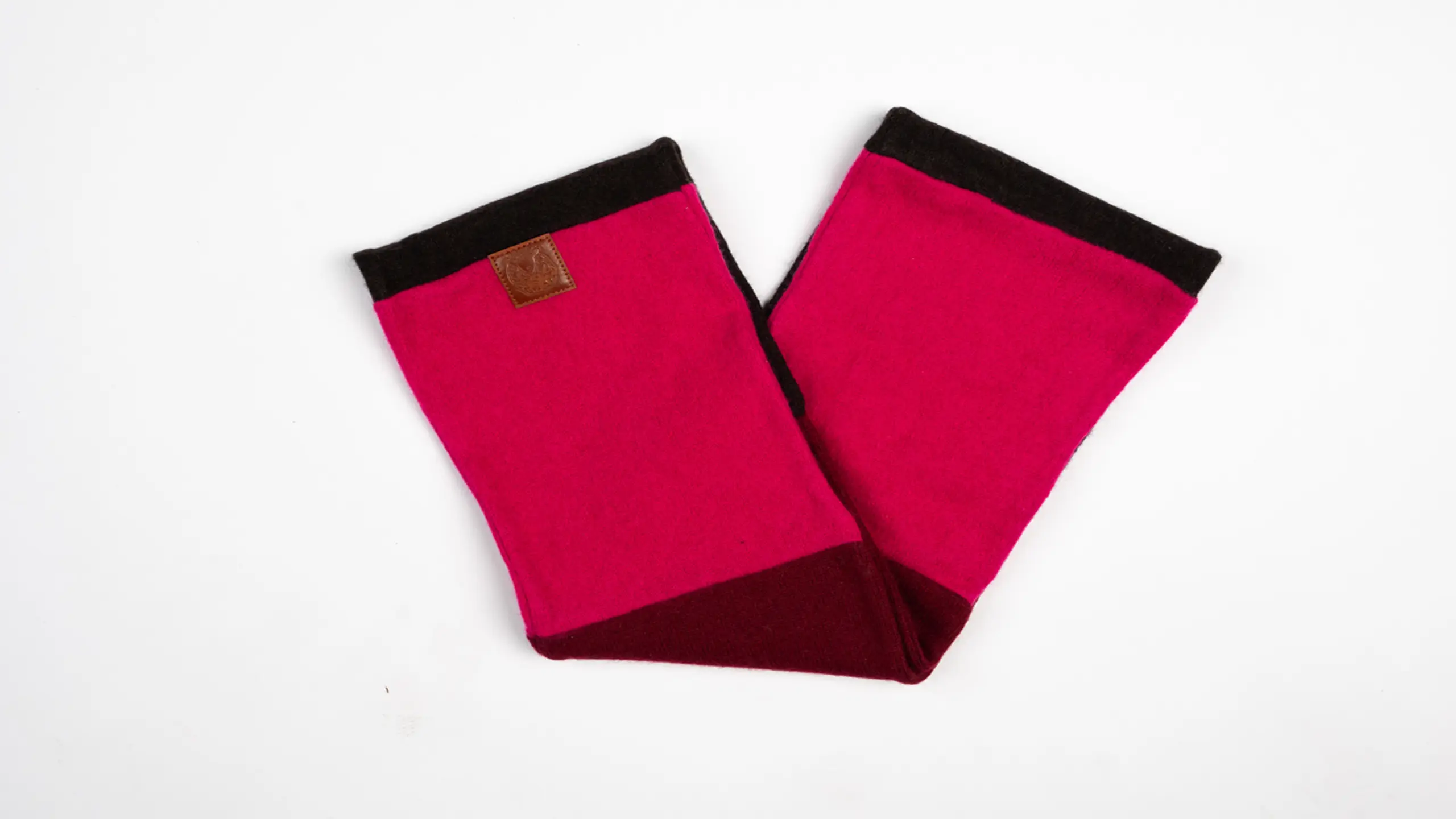
Brand guidelines are a set of rules and standards that define how a company’s brand should be presented across all platforms. They are crucial for maintaining consistency, ensuring that every piece of content reflects the company’s values and identity. Branding & graphic design play a key role in creating a visual identity that resonates with the audience, helping to establish trust and recognition.
Well-structured brand guidelines are essential for content creation and creative marketing, providing a foundation for cohesive messaging. Furthermore, social media marketing relies on these guidelines to maintain consistency across various platforms, ensuring the brand's message remains unified and strong.
## What Are Brand Guidelines?
Brand guidelines are a set of rules and standards that govern how a company’s brand should be represented visually and verbally. They serve as a comprehensive framework, ensuring consistency in messaging, design, and tone across all platforms and communication channels.
Core components of brand guidelines typically include logo usage, color palette, typography, and tone of voice. For businesses, from [video production](https://c-istudios.com/video-production-services/) companies to political campaigns, brand guidelines are essential in maintaining a unified and professional identity. These guidelines set the foundation for how a company presents itself, ensuring that every piece of content resonates with its target audience.
Branding & graphic design play a pivotal role in shaping the visual identity of a business. A well-designed logo, consistent color schemes, and the appropriate use of typography all contribute to creating a cohesive and recognizable brand. These elements help form the backbone of a company's identity, making it instantly identifiable and fostering trust among customers. Brand guidelines are distinct from brand identity.
While brand identity refers to the visual elements and messaging that define a company, [brand](https://c-istudios.com/branding-and-graphic-design-services/) guidelines outline how these elements should be used to maintain consistency and clarity. This distinction is crucial for companies to ensure their branding remains coherent across various platforms, from digital media to physical marketing materials.
For political campaigns, where every message is critical, having clearly defined brand guidelines ensures that all communications remain aligned with the campaign’s values and objectives. Likewise, for businesses focused on creative marketing, clear guidelines help maintain a consistent message that engages the target audience and builds brand loyalty.
## Key Elements of Brand Guidelines
Effective brand guidelines cover several key elements to ensure a consistent and professional brand presence. Logo usage is one of the most critical components, defining how and where the logo should be applied, as well as the necessary spacing and variations. Consistent and correct logo usage helps ensure that the brand is always presented clearly and professionally, whether on a website, marketing materials, or social media profiles.
Another essential aspect of brand guidelines is the color palette. Defining primary and secondary brand colors ensures consistency in visual design, allowing for a cohesive brand appearance across all platforms. Colors evoke emotions and associations, so choosing the right palette is vital for communicating the right message and fostering brand recognition.
Similarly, typography plays an important role in brand identity, with guidelines specifying the fonts to be used across digital and print media. The right typography ensures readability, strengthens the brand’s personality, and creates a seamless visual experience for the audience.
Imagery and iconography are also crucial to brand consistency. [Professional photography](https://c-istudios.com/professional-photography-services/) and VFX compositing & animation contribute to brand visuals by ensuring that the images and graphics used align with the overall aesthetic and message of the brand. High-quality visuals create a more engaging and memorable brand experience, which is essential in today’s visually-driven digital world.
Lastly, tone and messaging are foundational to brand consistency. Clear guidelines on how to communicate with the audience ensure that SEO copywriting and content strategy are aligned with the brand’s voice.
Whether it’s through social media posts, blog articles, or marketing materials, the tone should always reflect the brand’s values and resonate with its target audience. Consistent messaging builds trust and helps establish a strong relationship between the brand and its customers.
## Why Brand Guidelines Matter for Businesses
Brand guidelines are essential for maintaining uniformity across content creation efforts, ensuring that every piece of media reflects the brand’s identity and values. These guidelines ensure that visuals, messaging, and tone remain consistent, regardless of the platform or medium.
For businesses in film & [TV production](https://c-istudios.com/film-and-tv-production/), brand guidelines are particularly important in maintaining a consistent branding experience across video content. Whether it’s a promotional video, a TV commercial, or a full-length film, these guidelines ensure that the brand is presented coherently, aligning with the visual identity and messaging across all production stages.
Media marketing consult services play a significant role in refining branding strategies. These services help businesses establish clear, actionable guidelines that align with their goals and target audience. A strong brand foundation built through [media marketing consultation](https://c-istudios.com/media-marketing-consultation-services/) ensures that businesses can effectively communicate their message across all channels, including traditional marketing and digital platforms.
The importance of brand guidelines extends to video & audio live streaming, where maintaining a consistent brand presentation is crucial. In the fast-paced environment of live streaming, adhering to brand guidelines ensures that all visual and audio elements, whether in a webcast, live event, or stream, remain aligned with the company’s identity.
From graphics and animations to music and dialogue, brand consistency across video & audio live streaming is essential for delivering a professional, cohesive experience that resonates with viewers and strengthens brand recognition.
## Developing Strong Brand Guidelines
Creating effective brand guidelines begins with understanding the unique needs of the business and the target audience. The first step in developing strong guidelines is to define the core elements of the brand, including its mission, values, and visual identity.
Branding & graphic design teams collaborate to establish this identity, ensuring that the logo, color palette, typography, and imagery all align with the business’s overall vision and messaging. The process involves careful consideration of how these elements work together to create a cohesive and recognizable brand.
Web development also plays a crucial role in implementing brand guidelines across websites. It ensures that the company’s online presence reflects the brand identity through consistent visual elements, user interface design, and messaging. The website should mirror the guidelines for logos, colors, fonts, and overall layout to create a seamless brand experience for visitors.
As a brand evolves, the [content creation](https://c-istudios.com/content-creation-services/) and creative marketing teams must work together to keep the brand guidelines up to date, reflecting any changes in the company’s direction or new trends in the industry. Regular updates help keep the brand relevant and adaptable in a rapidly changing market.
Best practices for keeping guidelines relevant include regular reviews, feedback from key stakeholders, and adaptability to new platforms and technologies. Whether it's for digital marketing, social media, or print, ensuring that brand guidelines evolve alongside the business’s growth and goals is key to maintaining a strong, consistent brand presence.
## Implementing Brand Guidelines Across Different Media
Brand guidelines play a crucial role in ensuring consistency across various media platforms, particularly in [social media marketing](https://c-istudios.com/social-media-marketing-services/) campaigns. By adhering to these guidelines, businesses can maintain a unified voice, design, and message, helping to build trust and recognition with their audience. Whether it’s through Facebook, Instagram, or Twitter, following a consistent set of visual elements and messaging ensures that the brand resonates across all digital touchpoints.
In documentary film production, brand guidelines are adapted to reflect the tone and purpose of the content while maintaining the brand’s identity. The visuals, music, and overall presentation must align with the brand’s core values to create a seamless narrative experience.
This adherence to guidelines is vital, as it keeps the documentary's message consistent with the company’s branding, ensuring that the audience recognizes and engages with the brand.
Artist management & media creation play a key role in ensuring that talent and creative professionals align with the brand values during production. By collaborating closely with the creative team, artist management ensures that every actor, musician, or director brings the brand’s identity to life on screen, helping to maintain consistency throughout the production process.
Additionally, maintaining brand consistency is critical across online platforms, particularly through web maintenance. Regular updates to the website and digital assets ensure that all online content adheres to brand guidelines. Whether it’s through imagery, color schemes, or messaging, web maintenance ensures that the brand’s presence online remains strong and cohesive across all platforms.
## The Role of Brand Guidelines in Digital Marketing
In the world of digital marketing, brand guidelines help ensure that SEO copywriting remains aligned with the brand’s tone and messaging. Whether it's for website copy, blog posts, or social media content, SEO copywriting ensures that keywords and phrases are used effectively while maintaining the brand’s voice. By adhering to these guidelines, businesses can ensure that their messaging is consistent and optimized for search engines, while still sounding authentic and on-brand.
Web hosting and UX/UI design also rely on brand guidelines to maintain a cohesive and user-friendly digital experience. From website structure and layout to button styles and navigation, aligning the design with brand guidelines ensures a seamless experience for the user, reflecting the company’s identity at every digital touchpoint. Consistent web hosting practices also ensure that websites load efficiently and perform optimally, helping to reinforce the brand’s professional image.
The impact of [feature film mastering & delivery](https://c-istudios.com/feature-film-mastering-and-delivery/) on branded video content is significant. By adhering to brand guidelines, filmmakers ensure that every element, visuals, sound, and messaging, remains consistent throughout the video. This attention to detail helps create branded video content that resonates with the target audience, ensuring that the final product aligns with the company’s core values and messaging.
Finally, in TV show pitching and branded presentations, following brand guidelines is essential to ensure that the content aligns with the brand’s identity.
Whether pitching a new series or creating a branded presentation for investors, sticking to the brand guidelines ensures that the messaging remains on-point and the visuals reflect the brand’s image and tone. This consistency is key to building a strong and recognizable brand in the competitive entertainment industry.
## Maintaining and Updating Brand Guidelines
Maintaining and updating brand guidelines is crucial for ensuring that a company’s identity remains relevant and effective as it evolves. One of the key aspects of this ongoing process is web maintenance, which ensures that a company’s digital assets, including websites and online content, reflect the most current brand standards.
As businesses grow and adapt, their online presence must align with any updates to the brand’s visual and messaging elements. Regular web maintenance guarantees that all digital platforms stay consistent with the latest branding changes, ensuring a seamless experience for visitors across different channels.
Additionally, content creation plays a significant role in keeping brand guidelines up to date. As trends in social media, technology, and consumer preferences shift, businesses need to adjust their content strategy accordingly.
Updating the tone, style, and visual elements in content creation ensures that the brand remains relevant and resonates with its audience. This constant evolution helps maintain brand consistency while addressing changes in market demands.
Media marketing consult services can help businesses refine their brand guidelines by providing expertise on how to adapt and fine-tune these elements. Consultants work closely with businesses to analyze market trends, target audience shifts, and new communication channels, ensuring that the brand stays fresh and aligned with its goals.
These services provide valuable insights into how businesses can adapt their branding strategies, improving customer engagement and visibility. By collaborating with media marketing consult professionals, companies ensure that their brand guidelines are not just maintained, but continuously optimized for success.
Branding & graphic design also play a vital role in adapting brand guidelines to industry trends. As design trends evolve, it’s essential that a company’s visual identity reflects modern aesthetics while remaining true to the brand’s core values. Whether it’s a new logo design, an updated color palette, or refreshed typography, [branding & graphic design](https://c-istudios.com/branding-and-graphic-design-services/) professionals ensure that these changes are seamlessly integrated into the overall branding strategy.
## What Are Brand Guidelines?
Brand guidelines are a set of rules and standards that govern how a company’s brand should be represented visually and verbally. They serve as a comprehensive framework, ensuring consistency in messaging, design, and tone across all platforms and communication channels.
Core components of brand guidelines typically include logo usage, color palette, typography, and tone of voice. For businesses, from video production companies to political campaigns, brand guidelines are essential in maintaining a unified and professional identity. These guidelines set the foundation for how a company presents itself, ensuring that every piece of content resonates with its target audience.
Branding & graphic design play a pivotal role in shaping the visual identity of a business. A well-designed logo, consistent color schemes, and the appropriate use of typography all contribute to creating a cohesive and recognizable brand. These elements help form the backbone of a company's identity, making it instantly identifiable and fostering trust among customers. Brand guidelines are distinct from brand identity.
While brand identity refers to the visual elements and messaging that define a company, [brand](https://c-istudios.com/branding-and-graphic-design-services/) guidelines outline how these elements should be used to maintain consistency and clarity. This distinction is crucial for companies to ensure their branding remains coherent across various platforms, from digital media to physical marketing materials.
For political campaigns, where every message is critical, having clearly defined brand guidelines ensures that all communications remain aligned with the campaign’s values and objectives. Likewise, for businesses focused on creative marketing, clear guidelines help maintain a consistent message that engages the target audience and builds brand loyalty.
## Key Elements of Brand Guidelines
Effective brand guidelines cover several key elements to ensure a consistent and professional brand presence. Logo usage is one of the most critical components, defining how and where the logo should be applied, as well as the necessary spacing and variations. Consistent and correct logo usage helps ensure that the brand is always presented clearly and professionally, whether on a website, marketing materials, or social media profiles.
Another essential aspect of brand guidelines is the color palette. Defining primary and secondary brand colors ensures consistency in visual design, allowing for a cohesive brand appearance across all platforms. Colors evoke emotions and associations, so choosing the right palette is vital for communicating the right message and fostering brand recognition.
Similarly, typography plays an important role in brand identity, with guidelines specifying the fonts to be used across digital and print media. The right typography ensures readability, strengthens the brand’s personality, and creates a seamless visual experience for the audience.
Imagery and iconography are also crucial to brand consistency. [Professional photography](https://c-istudios.com/professional-photography-services/) and VFX compositing & animation contribute to brand visuals by ensuring that the images and graphics used align with the overall aesthetic and message of the brand. High-quality visuals create a more engaging and memorable brand experience, which is essential in today’s visually-driven digital world.
Lastly, tone and messaging are foundational to brand consistency. Clear guidelines on how to communicate with the audience ensure that SEO copywriting and content strategy are aligned with the brand’s voice.
Whether it’s through social media posts, blog articles, or marketing materials, the tone should always reflect the brand’s values and resonate with its target audience. Consistent messaging builds trust and helps establish a strong relationship between the brand and its customers.
## Why Brand Guidelines Matter for Businesses
Brand guidelines are essential for maintaining uniformity across content creation efforts, ensuring that every piece of media reflects the brand’s identity and values. These guidelines ensure that visuals, messaging, and tone remain consistent, regardless of the platform or medium.
For businesses in film & TV production, brand guidelines are particularly important in maintaining a consistent branding experience across video content. Whether it’s a promotional video, a TV commercial, or a full-length film, these guidelines ensure that the brand is presented coherently, aligning with the visual identity and messaging across all production stages.
Media marketing consult services play a significant role in refining branding strategies. These services help businesses establish clear, actionable guidelines that align with their goals and target audience. A strong brand foundation built through [media marketing consultation](https://c-istudios.com/media-marketing-consultation-services/) ensures that businesses can effectively communicate their message across all channels, including traditional marketing and digital platforms.
The importance of brand guidelines extends to video & audio live streaming, where maintaining a consistent brand presentation is crucial. In the fast-paced environment of live streaming, adhering to brand guidelines ensures that all visual and audio elements, whether in a webcast, live event, or stream, remain aligned with the company’s identity.
From graphics and animations to music and dialogue, brand consistency across video & audio live streaming is essential for delivering a professional, cohesive experience that resonates with viewers and strengthens brand recognition.
## Developing Strong Brand Guidelines
Creating effective brand guidelines begins with understanding the unique needs of the business and the target audience. The first step in developing strong guidelines is to define the core elements of the brand, including its mission, values, and visual identity.
Branding & graphic design teams collaborate to establish this identity, ensuring that the logo, color palette, typography, and imagery all align with the business’s overall vision and messaging. The process involves careful consideration of how these elements work together to create a cohesive and recognizable brand.
Web development also plays a crucial role in implementing brand guidelines across websites. It ensures that the company’s online presence reflects the brand identity through consistent visual elements, user interface design, and messaging. The website should mirror the guidelines for logos, colors, fonts, and overall layout to create a seamless brand experience for visitors.
As a brand evolves, the [content creation](https://c-istudios.com/content-creation-services/) and creative marketing teams must work together to keep the brand guidelines up to date, reflecting any changes in the company’s direction or new trends in the industry. Regular updates help keep the brand relevant and adaptable in a rapidly changing market.
Best practices for keeping guidelines relevant include regular reviews, feedback from key stakeholders, and adaptability to new platforms and technologies. Whether it's for digital marketing, social media, or print, ensuring that brand guidelines evolve alongside the business’s growth and goals is key to maintaining a strong, consistent brand presence.
## Implementing Brand Guidelines Across Different Media
Brand guidelines play a crucial role in ensuring consistency across various media platforms, particularly in [social media marketing](https://c-istudios.com/social-media-marketing-services/) campaigns. By adhering to these guidelines, businesses can maintain a unified voice, design, and message, helping to build trust and recognition with their audience. Whether it’s through Facebook, Instagram, or Twitter, following a consistent set of visual elements and messaging ensures that the brand resonates across all digital touchpoints.
In documentary film production, brand guidelines are adapted to reflect the tone and purpose of the content while maintaining the brand’s identity. The visuals, music, and overall presentation must align with the brand’s core values to create a seamless narrative experience.
This adherence to guidelines is vital, as it keeps the documentary's message consistent with the company’s branding, ensuring that the audience recognizes and engages with the brand.
Artist management & media creation play a key role in ensuring that talent and creative professionals align with the brand values during production. By collaborating closely with the creative team, artist management ensures that every actor, musician, or director brings the brand’s identity to life on screen, helping to maintain consistency throughout the production process.
Additionally, maintaining brand consistency is critical across online platforms, particularly through web maintenance. Regular updates to the website and digital assets ensure that all online content adheres to brand guidelines. Whether it’s through imagery, color schemes, or messaging, web maintenance ensures that the brand’s presence online remains strong and cohesive across all platforms.
## The Role of Brand Guidelines in Digital Marketing
In the world of digital marketing, brand guidelines help ensure that SEO copywriting remains aligned with the brand’s tone and messaging. Whether it's for website copy, blog posts, or social media content, SEO copywriting ensures that keywords and phrases are used effectively while maintaining the brand’s voice. By adhering to these guidelines, businesses can ensure that their messaging is consistent and optimized for search engines, while still sounding authentic and on-brand.
Web hosting and UX/UI design also rely on brand guidelines to maintain a cohesive and user-friendly digital experience. From website structure and layout to button styles and navigation, aligning the design with brand guidelines ensures a seamless experience for the user, reflecting the company’s identity at every digital touchpoint. Consistent web hosting practices also ensure that websites load efficiently and perform optimally, helping to reinforce the brand’s professional image.
The impact of [feature film mastering & delivery](https://c-istudios.com/feature-film-mastering-and-delivery/) on branded video content is significant. By adhering to brand guidelines, filmmakers ensure that every element, visuals, sound, and messaging, remains consistent throughout the video. This attention to detail helps create branded video content that resonates with the target audience, ensuring that the final product aligns with the company’s core values and messaging.
Finally, in TV show pitching and branded presentations, following brand guidelines is essential to ensure that the content aligns with the brand’s identity.
Whether pitching a new series or creating a branded presentation for investors, sticking to the brand guidelines ensures that the messaging remains on-point and the visuals reflect the brand’s image and tone. This consistency is key to building a strong and recognizable brand in the competitive entertainment industry.
## Maintaining and Updating Brand Guidelines
Maintaining and updating brand guidelines is crucial for ensuring that a company’s identity remains relevant and effective as it evolves. One of the key aspects of this ongoing process is web maintenance, which ensures that a company’s digital assets, including websites and online content, reflect the most current brand standards.
As businesses grow and adapt, their online presence must align with any updates to the brand’s visual and messaging elements. Regular web maintenance guarantees that all digital platforms stay consistent with the latest branding changes, ensuring a seamless experience for visitors across different channels.
Additionally, content creation plays a significant role in keeping brand guidelines up to date. As trends in social media, technology, and consumer preferences shift, businesses need to adjust their content strategy accordingly.
Updating the tone, style, and visual elements in content creation ensures that the brand remains relevant and resonates with its audience. This constant evolution helps maintain brand consistency while addressing changes in market demands.
Media marketing consult services can help businesses refine their brand guidelines by providing expertise on how to adapt and fine-tune these elements. Consultants work closely with businesses to analyze market trends, target audience shifts, and new communication channels, ensuring that the brand stays fresh and aligned with its goals.
These services provide valuable insights into how businesses can adapt their branding strategies, improving customer engagement and visibility. By collaborating with media marketing consult professionals, companies ensure that their brand guidelines are not just maintained, but continuously optimized for success.
Branding & graphic design also play a vital role in adapting brand guidelines to industry trends. As design trends evolve, it’s essential that a company’s visual identity reflects modern aesthetics while remaining true to the brand’s core values. Whether it’s a new logo design, an updated color palette, or refreshed typography, [branding & graphic design](https://c-istudios.com/branding-and-graphic-design-services/) professionals ensure that these changes are seamlessly integrated into the overall branding strategy.
## Work with C&I Studios
If you are planning a project like this, our team can take it from concept to final delivery. Explore our [video production services](https://c-istudios.com/video-production-services/), browse [our work](https://c-istudios.com/our-work/) to see how we tell brand stories, and [get in touch](https://c-istudios.com/contact/) when you are ready to start.
Originally published December 12, 2024
---
*This content is from [C&I Studios](https://c-istudios.com), a full-service production company.*
---
# Narrative Visual Media: Why It Matters for Storytelling
> Published: December 11, 2024
> Categories: Film & TV
> Source: https://c-istudios.com/narrative-visual-media-why-it-matters-for-storytelling/
---
.cib{--paper:#1b1d1f;--ink:#fff;--body:#d5d7d9;--muted:#8b9096;--line:rgba(255,255,255,.12);--thumb:#2b2e31;--card:#212426;--accent:#c02b0a;--blue:#5B8FA8;--serif:'Playfair Display',Georgia,serif;--sans:'Poppins',-apple-system,sans-serif;--measure:900px;background:var(--paper);color:var(--body);font-family:var(--sans);line-height:1.6;position:relative;left:50%;transform:translateX(-50%);width:90vw;max-width:1920px}
.cib *{box-sizing:border-box}
.cib .kicker{max-width:var(--measure);margin:58px auto 0;padding:0 22px;font-size:12.5px;font-weight:700;letter-spacing:2.5px;text-transform:uppercase;color:var(--blue)}
.cib h1.cibh1{text-wrap:balance;font-family:var(--serif);font-weight:500;font-size:clamp(46px,6vw,72px);line-height:1.08;color:var(--ink);max-width:var(--measure);margin:18px auto 0;padding:0 22px;letter-spacing:-.5px}
.cib .metarow{max-width:var(--measure);margin:20px auto 0;padding:0 22px;color:var(--muted);font-size:14px}
.cib .hero{position:relative;width:100%;height:0;padding-bottom:56.25%;overflow:hidden;margin:48px auto 0;border-top:1px solid var(--line);border-bottom:1px solid var(--line)}
.cib .hero .ph{width:100%;aspect-ratio:16/9;background:var(--thumb);border-top:1px solid var(--line);border-bottom:1px solid var(--line);display:flex;align-items:center;justify-content:center;color:#7d8288;font-size:13px;text-align:center;padding:0 20px}
.cib .body{max-width:var(--measure);margin:12px auto 0;padding:52px 22px 6px}
.cib .body.lead p:first-child{font-size:23px;line-height:1.62;color:var(--ink)}
.cib .body p{font-size:18.5px;line-height:1.85;margin:0 0 30px;color:var(--body)}
.cib .body h2{text-wrap:balance;font-family:var(--serif);font-weight:500;font-size:clamp(32px,4vw,48px);line-height:1.22;color:var(--ink);margin:70px 0 20px;letter-spacing:-.3px}
.cib .body h3{text-wrap:balance;font-family:var(--sans);font-weight:600;font-size:22px;color:var(--ink);margin:38px 0 8px}
.cib .body a{color:var(--ink);text-decoration:underline;text-decoration-color:rgba(255,255,255,.4);text-underline-offset:3px}
.cib .body a:hover{text-decoration-color:var(--ink)}
.cib .ctable{width:100%;border-collapse:collapse;margin:16px 0 30px;font-size:16px}
.cib .ctable th{background:#000;color:#fff;text-align:left;padding:10px 12px;font-family:var(--sans)}
.cib .ctable td{padding:10px 12px;border-bottom:1px solid var(--line);color:var(--body)}
.cib .inimg{position:relative;width:100%;height:0;padding-bottom:56.25%;overflow:hidden;margin:72px auto;border-top:1px solid var(--line);border-bottom:1px solid var(--line)}
.cib .inimg .ph{width:100%;aspect-ratio:16/9;background:var(--thumb);border-top:1px solid var(--line);border-bottom:1px solid var(--line);display:flex;align-items:center;justify-content:center;color:#7d8288;font-size:13px}
.cib .origpub{max-width:var(--measure);margin:60px auto 0;padding:26px 22px 0;border-top:1px solid var(--line);color:var(--muted);font-size:13.5px}
.cib .related{max-width:1200px;margin:64px auto 0;padding:34px 22px 76px}
.cib .related h3{font-family:var(--sans);font-size:12.5px;letter-spacing:2px;text-transform:uppercase;color:var(--ink);margin:0 0 24px}
.cib .grid{display:grid;grid-template-columns:repeat(3,1fr);gap:28px}
.cib .rc{background:var(--card);border:1px solid var(--line);display:block;text-decoration:none;color:inherit;transition:border-color .15s}
.cib a.rc:hover{border-color:rgba(255,255,255,.5)}
.cib .rc .thumb{position:relative;width:100%;height:0;padding-bottom:56.25%;background:var(--thumb);overflow:hidden}
.cib .rc .thumb img{position:absolute!important;top:0!important;left:0!important;width:100%!important;height:100%!important;object-fit:cover!important;margin:0!important}
.cib .rc .cc{padding:14px 15px 17px}
.cib .rc .rt{font-family:var(--serif);font-weight:500;font-size:16px;line-height:1.3;color:var(--ink);margin:0 0 6px}
.cib .rc .rm{font-size:11px;letter-spacing:1px;text-transform:uppercase;color:var(--muted)}
.cib img{margin:0!important;padding:0!important;display:block!important;vertical-align:top;max-width:100%}
.cib .hero img,.cib .inimg img{position:absolute!important;top:0!important;left:0!important;width:100%!important;height:100%!important;object-fit:cover!important;margin:0!important;padding:0!important;border:0!important;display:block!important;aspect-ratio:auto!important}
.cib .hero+.body{padding-top:36px}
@media(max-width:760px){.cib .grid{grid-template-columns:1fr}.cib .body h2{margin:52px 0 16px}.cib .body p{font-size:17.5px}.cib .inimg,.cib .hero{margin-top:44px}}
.cib .vembed{max-width:var(--measure);margin:44px auto;padding:0 22px}.cib .vembed .vwrap{position:relative;width:100%;height:0;padding-bottom:56.25%}.cib .vembed .vwrap iframe{position:absolute;top:0;left:0;width:100%;height:100%;border:0}
Film & TV
# Narrative Visual Media. Why It Matters for Storytelling
19 min read
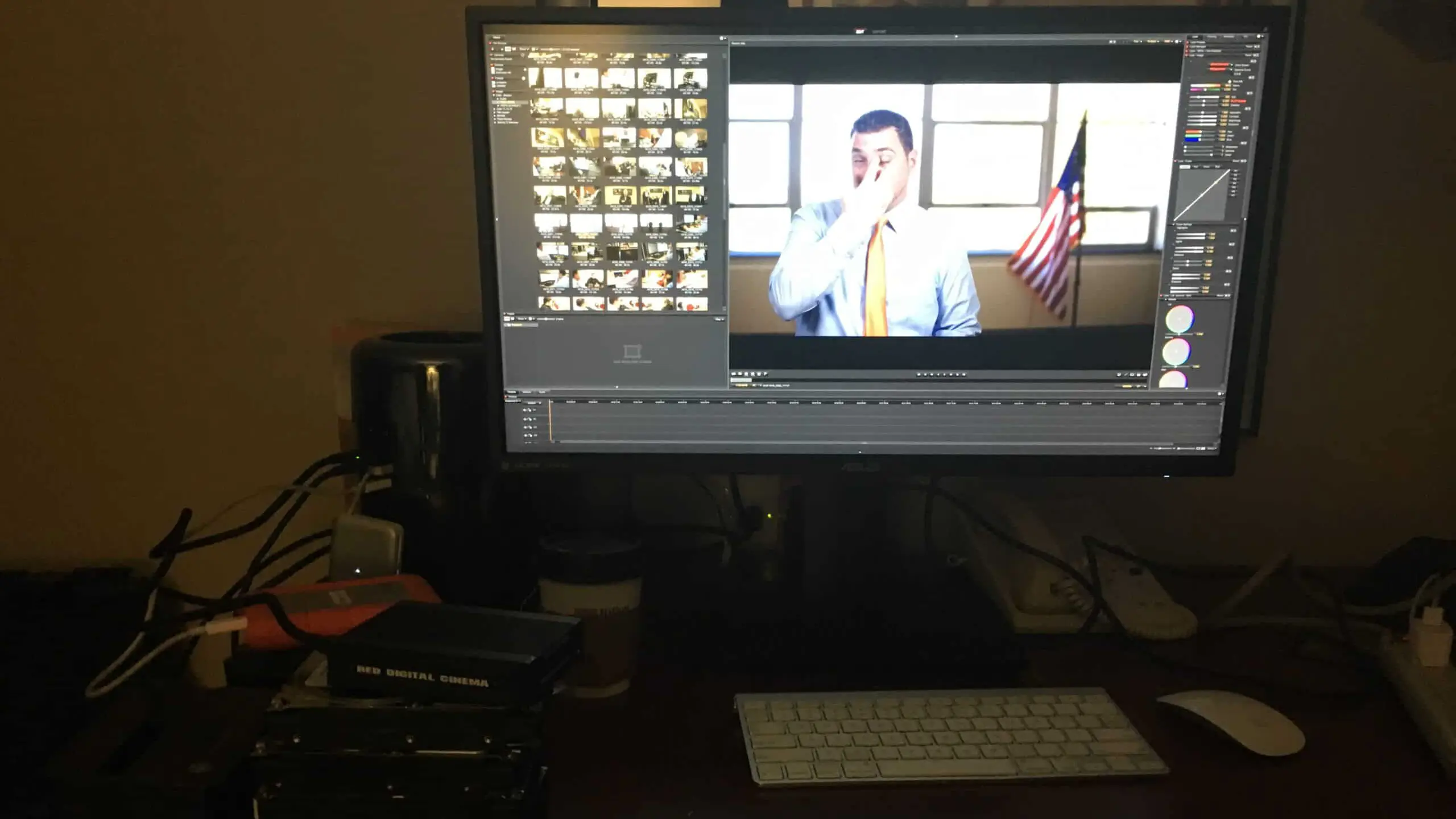
Storytelling has always been at the heart of human connection. From ancient oral traditions to contemporary films, the power of a compelling narrative lies in its ability to evoke emotions, convey messages, and create shared experiences. In today’s dynamic and ever-evolving landscape of media, narrative visual media has emerged as a cornerstone for storytelling. By blending visual elements with narrative depth, this medium captivates audiences, making stories more engaging and memorable.
The importance of narrative visual media cannot be overstated. It combines the universal appeal of storytelling with the sensory power of visuals, enabling creators to communicate complex ideas and emotions effectively. Whether through films, television, or digital content, this form of media transforms abstract concepts into tangible experiences, fostering a deeper connection between the storyteller and the audience.
In this exploration, we delve into the significance of narrative visual media, the techniques that define it, and its transformative role in modern storytelling.
## The Power of Visual Storytelling in Media
Visual storytelling is one of the most effective ways to communicate ideas and emotions. Unlike written or spoken narratives, it leverages imagery to create an immediate and visceral impact. The combination of visuals with a structured narrative allows for greater immersion, helping audiences connect with the story on a personal level. This is particularly evident in the world of cinema, where every frame contributes to the unfolding narrative, creating a tapestry of meaning and emotion.
Media production has evolved significantly over the years, enabling creators to experiment with various techniques to enhance visual storytelling. Advances in technology, such as high-definition cameras, CGI, and virtual reality, have expanded the possibilities of what can be achieved visually. These innovations allow for greater precision in crafting images that resonate with viewers, adding layers of depth and complexity to the narrative.
The influence of visual storytelling extends beyond traditional media. In advertising, for instance, brands rely heavily on visual elements to convey their message quickly and effectively. A single image or a brief video can evoke emotions and communicate values, leaving a lasting impression on the audience. Similarly, in social media platforms, where attention spans are limited, visual storytelling has become the preferred method of engagement. The ability to craft a compelling visual narrative is now an essential skill for creators in all domains of media production.
## The Role of Film Narrative Techniques
Film narrative techniques play a pivotal role in shaping the effectiveness of narrative visual media. These techniques guide how stories are structured and presented, influencing how audiences perceive and interpret the narrative. From the use of symbolism to the manipulation of time and space, filmmakers employ a variety of methods to create meaning and evoke emotional responses.
One of the most fundamental techniques is the three-act structure, which divides a narrative into setup, confrontation, and resolution. This framework provides a clear progression, ensuring that the story unfolds in a logical and engaging manner. Within this structure, filmmakers use visual cues, such as lighting, color, and composition, to emphasize key moments and themes. For example, dark lighting might signify danger or mystery, while vibrant colors could evoke joy or excitement.
Another essential technique is the use of montage, where a series of images or scenes are juxtaposed to convey a specific idea or emotion. This method is particularly effective in compressing time, allowing filmmakers to show the progression of events or the development of characters without lengthy exposition. Montages are often accompanied by music, further enhancing their emotional impact.
Editing is another crucial aspect of film narrative techniques. The way scenes are cut and arranged can significantly influence the pacing and rhythm of a story. Quick cuts create a sense of urgency and tension, while longer takes allow for reflection and immersion. Sound design also plays a vital role in shaping the narrative. The use of diegetic and non-diegetic sounds, those originating from the story world and those added externally, can add layers of meaning and guide the audience’s emotional journey.
Through these techniques, narrative visual media becomes a powerful tool for storytelling, capable of conveying complex ideas and emotions in ways that words alone cannot achieve.
## Media Production and the Evolution of Visual Narratives
The landscape of media production has undergone profound changes over the past century, shaping the way visual narratives are created and consumed. From the early days of silent films to the advent of streaming platforms, each technological advancement has brought new opportunities and challenges for storytellers.
In the early 20th century, the introduction of sound revolutionized cinema, allowing for the integration of dialogue and music into visual storytelling. This innovation paved the way for more complex and nuanced narratives, as filmmakers could now use audio elements to complement and enhance their visuals. Similarly, the development of color film added another dimension to storytelling, enabling creators to use color symbolism to evoke specific emotions and themes.
The rise of digital technology in the late 20th and early 21st centuries marked another significant milestone in media production. Digital cameras and editing software made filmmaking more accessible, allowing independent creators to produce high-quality content without the need for expensive equipment. This democratization of media production has led to a proliferation of diverse voices and perspectives, enriching the landscape of narrative visual media.
Streaming platforms like Netflix, Hulu, and YouTube have further transformed the way visual narratives are distributed and consumed. These platforms provide a global stage for creators, enabling them to reach audiences across the world. The shift from traditional broadcast models to on-demand streaming has also influenced the structure and pacing of visual narratives, as creators now have more flexibility to experiment with formats and storytelling techniques.
## The Intersection of Visual Storytelling and Technology
Technology has always been a driving force behind the evolution of narrative visual media. From the invention of the camera to the emergence of virtual reality, technological advancements have continually expanded the possibilities of visual storytelling.
One of the most exciting developments in recent years is the rise of virtual and augmented reality. These technologies allow for fully immersive storytelling experiences, where audiences can explore narrative worlds in unprecedented ways. In VR, viewers are not mere spectators but active participants, free to navigate the story world and uncover its layers at their own pace. This level of interactivity opens up new possibilities for narrative depth and engagement.
Artificial intelligence is another transformative technology shaping the future of visual storytelling. AI-powered tools can assist in various aspects of media production, from scriptwriting to editing. For example, algorithms can analyze audience preferences and suggest narrative elements that are likely to resonate with specific demographics. AI can also automate tedious tasks, such as color grading or sound mixing, freeing up creators to focus on the artistic aspects of storytelling.
The integration of these technologies into media production is not without challenges. Issues such as accessibility, affordability, and ethical considerations must be addressed to ensure that the benefits of these advancements are shared equitably. Nonetheless, the potential of technology to enhance narrative visual media is undeniable, promising a future where storytelling is more immersive, inclusive, and impactful than ever before.
## Cultural Impact of Narrative Visual Media
The cultural impact of narrative visual media cannot be overstated. Stories told through visual media have the power to shape societal values, challenge norms, and inspire change. Films, television shows, and digital content often reflect the zeitgeist of their time, offering insights into the collective consciousness of a society.
One of the most significant cultural contributions of visual storytelling is its ability to foster empathy. By presenting stories from diverse perspectives, visual media can break down barriers and build understanding among different communities. For example, films like *Schindler’s List* and *Moonlight* offer deeply personal narratives that shed light on historical and contemporary issues, encouraging viewers to reflect on their own beliefs and biases.
Visual storytelling also serves as a powerful tool for activism and advocacy. Documentaries, in particular, have a long history of raising awareness about social and environmental issues. Films like *An Inconvenient Truth* and *13th* have sparked global conversations and inspired action, demonstrating the potential of narrative visual media to drive meaningful change.
In addition to its social impact, visual storytelling plays a crucial role in preserving cultural heritage. Through films and other forms of media, stories, traditions, and histories can be documented and shared with future generations. By doing so, filmmakers not only entertain but also provide a vital link between the past, present, and future, ensuring that diverse cultures and identities remain alive and accessible.
The archival function of visual media acts as a cultural repository, allowing younger generations to explore and embrace their heritage. It also serves as a bridge that connects global audiences, fostering appreciation and understanding across different societies. This capacity of visual media to both document and unite makes it an invaluable tool in a rapidly globalizing world, where cultural preservation often faces challenges from homogenization and digital fragmentation.
The ongoing efforts to digitize and restore classic films further underscore its critical role in celebrating and preserving cultural identities, even as societies evolve.
## The Business of Narrative Visual Media
The production and distribution of narrative visual media are not just artistic endeavors but also significant economic activities. The global entertainment industry generates billions of dollars annually, driven largely by the demand for compelling visual narratives. From blockbuster films to viral videos, the success of visual storytelling hinges on its ability to capture and retain audience attention.
Marketing plays a crucial role in the business of visual storytelling. A well-crafted trailer, poster, or social media campaign can generate buzz and anticipation, driving audiences to theaters or streaming platforms. Understanding audience preferences and viewing habits is essential for creating content that resonates and performs well commercially.
The rise of subscription-based streaming platforms has also reshaped the economics of media production. By providing creators with direct access to global audiences, these platforms have reduced the reliance on traditional distribution channels. This shift has enabled greater creative freedom, as filmmakers can now produce niche content without the constraints of mainstream market demands.
Despite these opportunities, the business of narrative visual media is not without challenges. Competition for audience attention is fierce, and the rapid pace of technological change requires constant adaptation. However, for creators who can navigate these challenges, the rewards are immense, both in terms of artistic fulfillment and financial success.
## The Future of Narrative Visual Media
As we look to the future, the potential of narrative visual media to transform storytelling is boundless. Emerging technologies, shifting audience expectations, and a growing emphasis on inclusivity are set to redefine the landscape of visual narratives.
One of the most promising trends is the integration of data-driven insights into storytelling. By analyzing viewer preferences and engagement patterns, creators can tailor their narratives to better connect with their audiences. This personalized approach has the potential to deepen audience engagement and foster stronger emotional connections.
Another significant trend is the rise of cross-platform storytelling. With the proliferation of digital devices, audiences now consume content across multiple screens and formats. This shift has led to the development of transmedia narratives, where a single story unfolds across films, games, books, and social media. This approach not only enhances the storytelling experience but also creates new opportunities for audience interaction and participation.
Finally, the future of narrative visual media will be shaped by a commitment to diversity and inclusion. As audiences demand more representation in the stories they consume, creators are increasingly prioritizing diverse voices and perspectives. This shift not only enriches the narrative landscape but also ensures that visual media remains relevant and reflective of the world it seeks to represent.
## Narrative Visual Media. Why It Matters for Storytelling
Storytelling has always been at the heart of human connection. From ancient oral traditions to contemporary films, the power of a compelling narrative lies in its ability to evoke emotions, convey messages, and create shared experiences. In today’s dynamic and ever-evolving landscape of media, narrative visual media has emerged as a cornerstone for storytelling. By blending visual elements with narrative depth, this medium captivates audiences, making stories more engaging and memorable.
The importance of narrative visual media cannot be overstated. It combines the universal appeal of storytelling with the sensory power of visuals, enabling creators to communicate complex ideas and emotions effectively. Whether through films, television, or digital content, this form of media transforms abstract concepts into tangible experiences, fostering a deeper connection between the storyteller and the audience.
In this exploration, we delve into the significance of narrative visual media, the techniques that define it, and its transformative role in modern storytelling.
## The Power of Visual Storytelling in Media
Visual storytelling is one of the most effective ways to communicate ideas and emotions. Unlike written or spoken narratives, it leverages imagery to create an immediate and visceral impact. The combination of visuals with a structured narrative allows for greater immersion, helping audiences connect with the story on a personal level. This is particularly evident in the world of cinema, where every frame contributes to the unfolding narrative, creating a tapestry of meaning and emotion.
Media production has evolved significantly over the years, enabling creators to experiment with various techniques to enhance visual storytelling. Advances in technology, such as high-definition cameras, CGI, and virtual reality, have expanded the possibilities of what can be achieved visually. These innovations allow for greater precision in crafting images that resonate with viewers, adding layers of depth and complexity to the narrative.
The influence of visual storytelling extends beyond traditional media. In advertising, for instance, brands rely heavily on visual elements to convey their message quickly and effectively. A single image or a brief video can evoke emotions and communicate values, leaving a lasting impression on the audience. Similarly, in social media platforms, where attention spans are limited, visual storytelling has become the preferred method of engagement. The ability to craft a compelling visual narrative is now an essential skill for creators in all domains of media production.
## The Role of Film Narrative Techniques
Film narrative techniques play a pivotal role in shaping the effectiveness of narrative visual media. These techniques guide how stories are structured and presented, influencing how audiences perceive and interpret the narrative. From the use of symbolism to the manipulation of time and space, filmmakers employ a variety of methods to create meaning and evoke emotional responses.
One of the most fundamental techniques is the three-act structure, which divides a narrative into setup, confrontation, and resolution. This framework provides a clear progression, ensuring that the story unfolds in a logical and engaging manner. Within this structure, filmmakers use visual cues, such as lighting, color, and composition, to emphasize key moments and themes. For example, dark lighting might signify danger or mystery, while vibrant colors could evoke joy or excitement.
Another essential technique is the use of montage, where a series of images or scenes are juxtaposed to convey a specific idea or emotion. This method is particularly effective in compressing time, allowing filmmakers to show the progression of events or the development of characters without lengthy exposition. Montages are often accompanied by music, further enhancing their emotional impact.
Editing is another crucial aspect of film narrative techniques. The way scenes are cut and arranged can significantly influence the pacing and rhythm of a story. Quick cuts create a sense of urgency and tension, while longer takes allow for reflection and immersion. Sound design also plays a vital role in shaping the narrative. The use of diegetic and non-diegetic sounds, those originating from the story world and those added externally, can add layers of meaning and guide the audience’s emotional journey.
Through these techniques, narrative visual media becomes a powerful tool for storytelling, capable of conveying complex ideas and emotions in ways that words alone cannot achieve.
## Media Production and the Evolution of Visual Narratives
The landscape of media production has undergone profound changes over the past century, shaping the way visual narratives are created and consumed. From the early days of silent films to the advent of streaming platforms, each technological advancement has brought new opportunities and challenges for storytellers.
In the early 20th century, the introduction of sound revolutionized cinema, allowing for the integration of dialogue and music into visual storytelling. This innovation paved the way for more complex and nuanced narratives, as filmmakers could now use audio elements to complement and enhance their visuals. Similarly, the development of color film added another dimension to storytelling, enabling creators to use color symbolism to evoke specific emotions and themes.
The rise of digital technology in the late 20th and early 21st centuries marked another significant milestone in media production. Digital cameras and editing software made filmmaking more accessible, allowing independent creators to produce high-quality content without the need for expensive equipment. This democratization of media production has led to a proliferation of diverse voices and perspectives, enriching the landscape of narrative visual media.
Streaming platforms like Netflix, Hulu, and YouTube have further transformed the way visual narratives are distributed and consumed. These platforms provide a global stage for creators, enabling them to reach audiences across the world. The shift from traditional broadcast models to on-demand streaming has also influenced the structure and pacing of visual narratives, as creators now have more flexibility to experiment with formats and storytelling techniques.
## The Intersection of Visual Storytelling and Technology
Technology has always been a driving force behind the evolution of narrative visual media. From the invention of the camera to the emergence of virtual reality, technological advancements have continually expanded the possibilities of visual storytelling.
One of the most exciting developments in recent years is the rise of virtual and augmented reality. These technologies allow for fully immersive storytelling experiences, where audiences can explore narrative worlds in unprecedented ways. In VR, viewers are not mere spectators but active participants, free to navigate the story world and uncover its layers at their own pace. This level of interactivity opens up new possibilities for narrative depth and engagement.
Artificial intelligence is another transformative technology shaping the future of visual storytelling. AI-powered tools can assist in various aspects of media production, from scriptwriting to editing. For example, algorithms can analyze audience preferences and suggest narrative elements that are likely to resonate with specific demographics. AI can also automate tedious tasks, such as color grading or sound mixing, freeing up creators to focus on the artistic aspects of storytelling.
The integration of these technologies into media production is not without challenges. Issues such as accessibility, affordability, and ethical considerations must be addressed to ensure that the benefits of these advancements are shared equitably. Nonetheless, the potential of technology to enhance narrative visual media is undeniable, promising a future where storytelling is more immersive, inclusive, and impactful than ever before.
## Cultural Impact of Narrative Visual Media
The cultural impact of narrative visual media cannot be overstated. Stories told through visual media have the power to shape societal values, challenge norms, and inspire change. Films, television shows, and digital content often reflect the zeitgeist of their time, offering insights into the collective consciousness of a society.
One of the most significant cultural contributions of visual storytelling is its ability to foster empathy. By presenting stories from diverse perspectives, visual media can break down barriers and build understanding among different communities. For example, films like *Schindler’s List* and *Moonlight* offer deeply personal narratives that shed light on historical and contemporary issues, encouraging viewers to reflect on their own beliefs and biases.
Visual storytelling also serves as a powerful tool for activism and advocacy. Documentaries, in particular, have a long history of raising awareness about social and environmental issues. Films like *An Inconvenient Truth* and *13th* have sparked global conversations and inspired action, demonstrating the potential of narrative visual media to drive meaningful change.
In addition to its social impact, visual storytelling plays a crucial role in preserving cultural heritage. Through films and other forms of media, stories, traditions, and histories can be documented and shared with future generations. By doing so, filmmakers not only entertain but also provide a vital link between the past, present, and future, ensuring that diverse cultures and identities remain alive and accessible.
The archival function of visual media acts as a cultural repository, allowing younger generations to explore and embrace their heritage. It also serves as a bridge that connects global audiences, fostering appreciation and understanding across different societies. This capacity of visual media to both document and unite makes it an invaluable tool in a rapidly globalizing world, where cultural preservation often faces challenges from homogenization and digital fragmentation.
The ongoing efforts to digitize and restore classic films further underscore its critical role in celebrating and preserving cultural identities, even as societies evolve.
## The Business of Narrative Visual Media
The production and distribution of narrative visual media are not just artistic endeavors but also significant economic activities. The global entertainment industry generates billions of dollars annually, driven largely by the demand for compelling visual narratives. From blockbuster films to viral videos, the success of visual storytelling hinges on its ability to capture and retain audience attention.
Marketing plays a crucial role in the business of visual storytelling. A well-crafted trailer, poster, or social media campaign can generate buzz and anticipation, driving audiences to theaters or streaming platforms. Understanding audience preferences and viewing habits is essential for creating content that resonates and performs well commercially.
The rise of subscription-based streaming platforms has also reshaped the economics of media production. By providing creators with direct access to global audiences, these platforms have reduced the reliance on traditional distribution channels. This shift has enabled greater creative freedom, as filmmakers can now produce niche content without the constraints of mainstream market demands.
Despite these opportunities, the business of narrative visual media is not without challenges. Competition for audience attention is fierce, and the rapid pace of technological change requires constant adaptation. However, for creators who can navigate these challenges, the rewards are immense, both in terms of artistic fulfillment and financial success.
## The Future of Narrative Visual Media
As we look to the future, the potential of narrative visual media to transform storytelling is boundless. Emerging technologies, shifting audience expectations, and a growing emphasis on inclusivity are set to redefine the landscape of visual narratives.
One of the most promising trends is the integration of data-driven insights into storytelling. By analyzing viewer preferences and engagement patterns, creators can tailor their narratives to better connect with their audiences. This personalized approach has the potential to deepen audience engagement and foster stronger emotional connections.
Another significant trend is the rise of cross-platform storytelling. With the proliferation of digital devices, audiences now consume content across multiple screens and formats. This shift has led to the development of transmedia narratives, where a single story unfolds across films, games, books, and social media. This approach not only enhances the storytelling experience but also creates new opportunities for audience interaction and participation.
Finally, the future of narrative visual media will be shaped by a commitment to diversity and inclusion. As audiences demand more representation in the stories they consume, creators are increasingly prioritizing diverse voices and perspectives. This shift not only enriches the narrative landscape but also ensures that visual media remains relevant and reflective of the world it seeks to represent.
## Work with C&I Studios
If you are planning a project like this, our team can take it from concept to final delivery. Explore our [film and TV production](https://c-istudios.com/film-and-tv-production/), browse [our work](https://c-istudios.com/our-work/) to see how we tell brand stories, and [get in touch](https://c-istudios.com/contact/) when you are ready to start.
Originally published December 11, 2024
---
*This content is from [C&I Studios](https://c-istudios.com), a full-service production company.*
---
# ADR Techniques: Tips for Seamless Dialogue Replacement in Post-Production
> Published: December 11, 2024
> Categories: Film & TV
> Source: https://c-istudios.com/adr-techniques-tips-for-seamless-dialogue-replacement-in-post-production/
---
.cib{--paper:#1b1d1f;--ink:#fff;--body:#d5d7d9;--muted:#8b9096;--line:rgba(255,255,255,.12);--thumb:#2b2e31;--card:#212426;--accent:#c02b0a;--blue:#5B8FA8;--serif:'Playfair Display',Georgia,serif;--sans:'Poppins',-apple-system,sans-serif;--measure:900px;background:var(--paper);color:var(--body);font-family:var(--sans);line-height:1.6;position:relative;left:50%;transform:translateX(-50%);width:90vw;max-width:1920px}
.cib *{box-sizing:border-box}
.cib .kicker{max-width:var(--measure);margin:58px auto 0;padding:0 22px;font-size:12.5px;font-weight:700;letter-spacing:2.5px;text-transform:uppercase;color:var(--blue)}
.cib h1.cibh1{text-wrap:balance;font-family:var(--serif);font-weight:500;font-size:clamp(46px,6vw,72px);line-height:1.08;color:var(--ink);max-width:var(--measure);margin:18px auto 0;padding:0 22px;letter-spacing:-.5px}
.cib .metarow{max-width:var(--measure);margin:20px auto 0;padding:0 22px;color:var(--muted);font-size:14px}
.cib .hero{position:relative;width:100%;height:0;padding-bottom:56.25%;overflow:hidden;margin:48px auto 0;border-top:1px solid var(--line);border-bottom:1px solid var(--line)}
.cib .hero .ph{width:100%;aspect-ratio:16/9;background:var(--thumb);border-top:1px solid var(--line);border-bottom:1px solid var(--line);display:flex;align-items:center;justify-content:center;color:#7d8288;font-size:13px;text-align:center;padding:0 20px}
.cib .body{max-width:var(--measure);margin:12px auto 0;padding:52px 22px 6px}
.cib .body.lead p:first-child{font-size:23px;line-height:1.62;color:var(--ink)}
.cib .body p{font-size:18.5px;line-height:1.85;margin:0 0 30px;color:var(--body)}
.cib .body h2{text-wrap:balance;font-family:var(--serif);font-weight:500;font-size:clamp(32px,4vw,48px);line-height:1.22;color:var(--ink);margin:70px 0 20px;letter-spacing:-.3px}
.cib .body h3{text-wrap:balance;font-family:var(--sans);font-weight:600;font-size:22px;color:var(--ink);margin:38px 0 8px}
.cib .body a{color:var(--ink);text-decoration:underline;text-decoration-color:rgba(255,255,255,.4);text-underline-offset:3px}
.cib .body a:hover{text-decoration-color:var(--ink)}
.cib .ctable{width:100%;border-collapse:collapse;margin:16px 0 30px;font-size:16px}
.cib .ctable th{background:#000;color:#fff;text-align:left;padding:10px 12px;font-family:var(--sans)}
.cib .ctable td{padding:10px 12px;border-bottom:1px solid var(--line);color:var(--body)}
.cib .inimg{position:relative;width:100%;height:0;padding-bottom:56.25%;overflow:hidden;margin:72px auto;border-top:1px solid var(--line);border-bottom:1px solid var(--line)}
.cib .inimg .ph{width:100%;aspect-ratio:16/9;background:var(--thumb);border-top:1px solid var(--line);border-bottom:1px solid var(--line);display:flex;align-items:center;justify-content:center;color:#7d8288;font-size:13px}
.cib .origpub{max-width:var(--measure);margin:60px auto 0;padding:26px 22px 0;border-top:1px solid var(--line);color:var(--muted);font-size:13.5px}
.cib .related{max-width:1200px;margin:64px auto 0;padding:34px 22px 76px}
.cib .related h3{font-family:var(--sans);font-size:12.5px;letter-spacing:2px;text-transform:uppercase;color:var(--ink);margin:0 0 24px}
.cib .grid{display:grid;grid-template-columns:repeat(3,1fr);gap:28px}
.cib .rc{background:var(--card);border:1px solid var(--line);display:block;text-decoration:none;color:inherit;transition:border-color .15s}
.cib a.rc:hover{border-color:rgba(255,255,255,.5)}
.cib .rc .thumb{position:relative;width:100%;height:0;padding-bottom:56.25%;background:var(--thumb);overflow:hidden}
.cib .rc .thumb img{position:absolute!important;top:0!important;left:0!important;width:100%!important;height:100%!important;object-fit:cover!important;margin:0!important}
.cib .rc .cc{padding:14px 15px 17px}
.cib .rc .rt{font-family:var(--serif);font-weight:500;font-size:16px;line-height:1.3;color:var(--ink);margin:0 0 6px}
.cib .rc .rm{font-size:11px;letter-spacing:1px;text-transform:uppercase;color:var(--muted)}
.cib img{margin:0!important;padding:0!important;display:block!important;vertical-align:top;max-width:100%}
.cib .hero img,.cib .inimg img{position:absolute!important;top:0!important;left:0!important;width:100%!important;height:100%!important;object-fit:cover!important;margin:0!important;padding:0!important;border:0!important;display:block!important;aspect-ratio:auto!important}
.cib .hero+.body{padding-top:36px}
@media(max-width:760px){.cib .grid{grid-template-columns:1fr}.cib .body h2{margin:52px 0 16px}.cib .body p{font-size:17.5px}.cib .inimg,.cib .hero{margin-top:44px}}
.cib .vembed{max-width:var(--measure);margin:44px auto;padding:0 22px}.cib .vembed .vwrap{position:relative;width:100%;height:0;padding-bottom:56.25%}.cib .vembed .vwrap iframe{position:absolute;top:0;left:0;width:100%;height:100%;border:0}
Film & TV
# ADR Techniques. Tips for Seamless Dialogue Replacement in Post-Production
9 min read
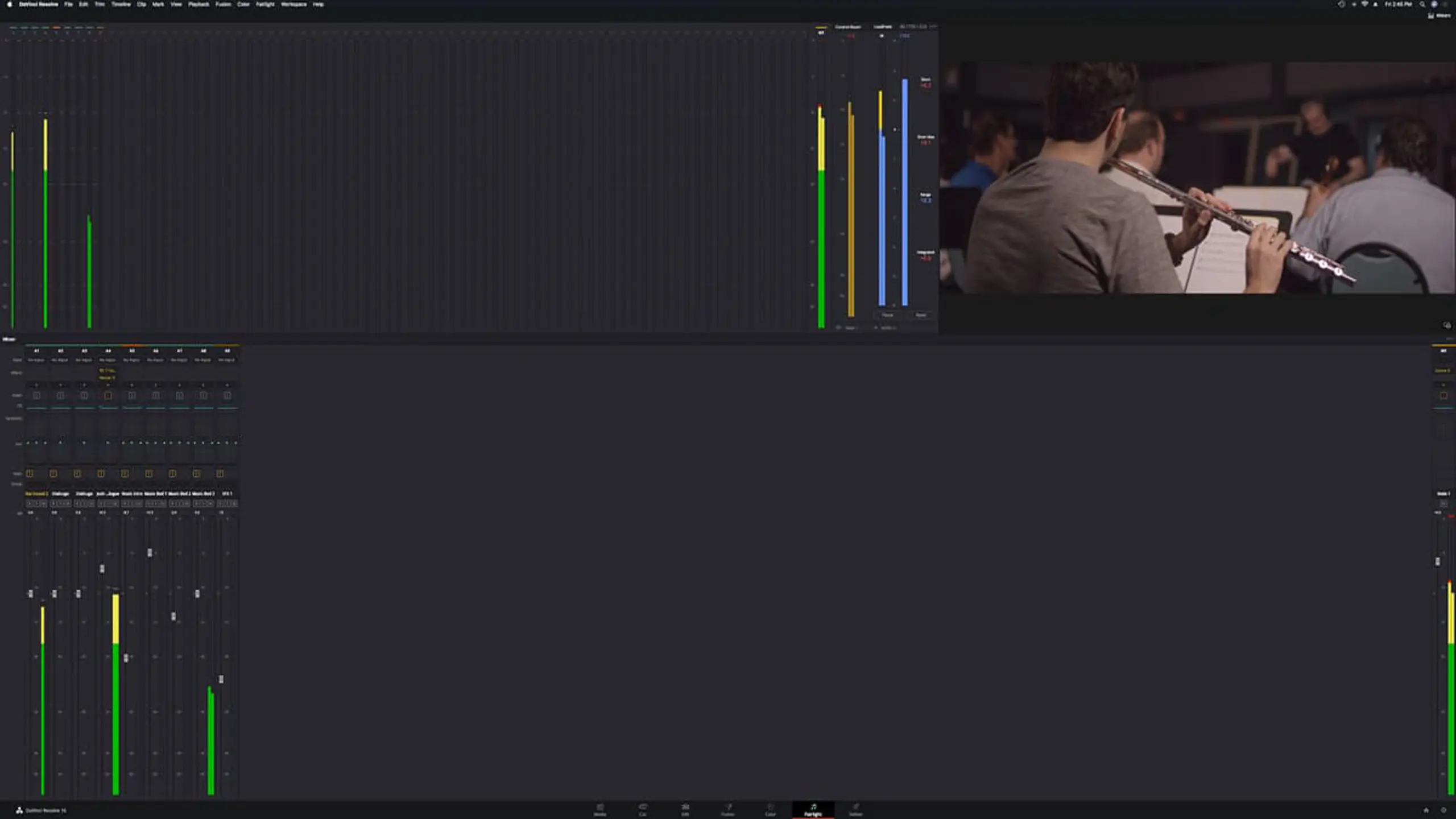
## ADR Techniques. Tips for Seamless Dialogue Replacement in Post-Production
Automated Dialogue Replacement (ADR) is a critical process in film & [TV production](https://c-istudios.com/film-and-tv-production/) that involves re-recording dialogue in a controlled studio environment to replace poor-quality audio captured during filming. ADR improves dialogue clarity, fixing sound issues such as background noise or unwanted distortion, and ensuring the dialogue is crisp and intelligible.
Audio engineering and [video production](https://c-istudios.com/video-production-services/) gear play a crucial role in achieving high-quality ADR, as they ensure the re-recorded dialogue seamlessly blends with the rest of the audio. The growing use of ADR is particularly notable in documentary film production, feature film mastering & delivery, and political campaigns, where clear dialogue is essential.
## Understanding ADR and Its Importance
Automated Dialogue Replacement (ADR) is a technique used in film & TV production to replace poor-quality or inaudible dialogue recorded on set. Unlike live sound recording, ADR involves actors re-recording their lines in a studio under controlled conditions.
This process is often used when background noise, poor audio capture, or creative choices make the original dialogue unusable. Audio engineering plays a vital role in ensuring that the ADR is natural-sounding and integrates seamlessly with the rest of the audio. By using specialized tools, engineers can adjust pitch, tone, and volume to match the original performance.
ADR contributes significantly to [content creation](https://c-istudios.com/content-creation-services/) by improving dialogue clarity and enhancing the overall audience experience. Whether it's fixing issues from a noisy environment or creating a more polished final product, ADR ensures that the dialogue is crisp and clear.
This is especially important in feature film mastering & delivery, where perfect synchronization between sound and visuals is essential for delivering a professional-quality film. Without ADR, many productions would suffer from distractions caused by poor audio quality, which could disrupt the storytelling and reduce audience engagement. By using ADR, filmmakers can ensure a consistent and immersive viewing experience.
## The ADR Process. Step-by-Step Breakdown
The ADR process begins during pre-production planning, where filmmakers decide when and how to schedule ADR sessions. It’s typically planned after the film’s rough cut has been assembled, allowing the director and sound team to identify specific scenes where dialogue needs to be replaced. Scheduling ADR in advance is essential to ensure that the necessary talent, [video production gear](https://c-istudios.com/video-production-gear-list/), and studio time are available for recording.
When recording ADR, the right video production gear and a soundproof environment are crucial for achieving high-quality results. A professional studio setup, complete with high-quality microphones, sound mixers, and noise isolation, ensures that the newly recorded dialogue matches the clarity and tone of the original. This equipment allows audio engineering teams to capture the best possible sound, with minimal interference from external noises.
One of the most important aspects of ADR is matching the re-recorded lines to the on-screen lip movements for natural synchronization. This requires careful attention from both the actor and the sound engineer, ensuring that the timing of the dialogue aligns perfectly with the character's movements. This process is a key part of film & TV production and plays a significant role in maintaining the film’s realism and immersion.
In addition to technical considerations, artist management & media creation is also essential during ADR sessions. Actors must be directed to match their original performance, while artist management ensures that actors are prepared and comfortable during the session.
This collaboration between the director, sound engineer, and the actor is crucial for achieving the best possible result and ensuring that the ADR contributes seamlessly to the final production.
## Best Practices for Capturing ADR Performances
Directing actors for authentic and emotive ADR performances requires a deep understanding of the character's emotions and motivations. To capture true-to-character dialogue, directors should guide actors through the emotional nuances of the scene, ensuring their delivery aligns with the overall tone of the film.
Consistency in voice tone, pacing, and delivery is essential, as any discrepancy between the ADR and the original performance can break the immersion. Using high-quality audio engineering techniques, sound engineers ensure that the ADR matches the original dialogue seamlessly, with perfect balance in tone, volume, and clarity.
The importance of professional photography and [branding & graphic design](https://c-istudios.com/branding-and-graphic-design-services/) in marketing ADR-driven projects cannot be overstated. When films are focused on high-quality ADR or voice work, their visual presentation needs to reflect this attention to detail.
Effective creative marketing utilizes striking visuals to promote ADR-driven projects, ensuring that the work receives the recognition it deserves. Well-designed promotional materials, such as posters or digital content, should highlight the unique sound aspects of the film, ensuring audiences appreciate the high level of craftsmanship involved in the ADR process.
## Synchronizing ADR with Visuals for Realism
Achieving perfect lip sync in ADR is a critical part of ensuring a seamless viewing experience. VFX compositing & animation techniques are often used to match the ADR to the actor's on-screen movements. By using visual effects, audio can be synchronized with the character’s lip movements to create a natural and believable performance.
This meticulous attention to detail enhances realism, helping the audience remain immersed in the film’s world without being distracted by discrepancies between sound and visuals.
Waveform analysis and precise timing adjustments are vital tools in syncing ADR to the visuals. Sound engineers use these tools to ensure the re-recorded dialogue aligns perfectly with the lip movements while making adjustments for timing and pacing. These adjustments are essential to maintaining the authenticity of the scene, whether it's an intimate conversation or a high-energy action sequence.
In the realm of feature film mastering & delivery, AI tools are increasingly being used to enhance ADR precision. These tools analyze both the audio and visual tracks, making real-time adjustments to improve synchronization and ensure a flawless final product.
AI-assisted audio engineering tools can help refine the ADR, adjusting for any slight inconsistencies in timing, volume, or tone. Additionally, web development plays a crucial role in creating training resources for professionals in the ADR field. Online platforms and educational materials help sound engineers and filmmakers stay updated on the latest ADR techniques and tools, fostering continuous improvement in the industry. Through these advancements, film & TV production continues to refine the ADR process, ensuring that the final product remains high-quality and immersive for audiences.
## Using ADR for Different Film Genres
ADR techniques vary greatly depending on the genre of the film. In documentary film production, the focus is on maintaining a sense of authenticity and realism. Here, ADR is often used sparingly to fix technical audio issues or to replace dialogue in scenes where the original sound was compromised, ensuring that the film’s voice remains natural and true to its subject matter.
In contrast, action films often require more extensive ADR due to the loud, chaotic environments on set. Here, ADR helps to ensure clear, impactful dialogue while balancing high-energy sound effects and music. Animated projects rely heavily on ADR to align voice performances with the character’s lip movements, often with significant creative direction to match the animation style.
ADR in such contexts ensures that any discrepancies in the audio, whether due to environmental noise or live recording challenges, are corrected to maintain clarity and impact. In live-recorded footage, ADR helps to align the final audio with the visuals for a professional result, ensuring that the audience clearly hears the speaker's message.
Case studies, such as film & TV production projects that successfully used ADR for improved storytelling, demonstrate its potential. For example, The Revenant used ADR effectively to enhance the emotional intensity of certain scenes by re-recording dialogue with greater clarity and precision, improving the viewer's connection to the characters.
The role of [media marketing](https://c-istudios.com/media-marketing-consultation-services/) consultation also becomes crucial in positioning ADR-based productions for success. A strong marketing strategy that highlights the quality of ADR and sound design can elevate a film’s perception, drawing attention to its professional audio work and attracting a larger audience.
## ADR Editing and Mixing Techniques
Blending ADR seamlessly into existing audio tracks requires careful editing and mixing techniques. [Audio engineering](https://c-istudios.com/audio-engineering-services/) professionals use advanced tools to ensure that the re-recorded dialogue matches the original performance in both tone and timing. The ADR must sound natural and consistent with the environmental sounds and background music in the scene, which is achieved through precise sound layering and careful mixing.
Noise reduction is one of the key techniques used in ADR editing to eliminate unwanted sounds, such as background hums or echoes. Once the dialogue has been cleaned up, equalization is applied to match the tone of the original dialogue, ensuring that the re-recorded voice sounds like it was captured in the same environment.
Spatial audio techniques are used to enhance the depth and directionality of sound, ensuring that ADR blends seamlessly with the background and creates a natural, immersive auditory experience for the audience.
In the world of video & audio live streaming, real-time ADR adjustments are vital for live broadcasts or events where immediate corrections are required. This technology allows engineers to tweak audio levels and sync dialogue in real-time, ensuring that the broadcast maintains audio-visual coherence.
Similarly, web maintenance plays a significant role in ensuring that ADR-driven films remain accessible on streaming platforms. Regular updates and troubleshooting ensure that the films maintain their high-quality audio and are delivered without technical interruptions.
## The Future of ADR in Post-Production
The future of ADR in post-production is being shaped by advancements in AI-powered tools and automation. These technologies are revolutionizing how ADR is created and integrated into films. AI-powered ADR tools can now analyze scenes, detect audio issues, and even suggest alternative dialogue lines that match the actor’s performance.
This automation not only speeds up the ADR process but also helps streamline post-production workflows, enabling sound engineers to focus on more creative aspects of audio enhancement. As these AI tools improve, ADR will become even more efficient and accessible, pushing the boundaries of what is possible in [film & TV production](https://c-istudios.com/film-and-tv-production/).
The growing demand for ADR is particularly evident in TV show pitching and streaming productions. As the television industry continues to evolve with streaming platforms gaining more prominence, there is an increasing need for high-quality audio in television shows. ADR ensures that dialogue is clear, consistent, and free from distractions, making it crucial in creating a polished final product for distribution. The demand for ADR in these productions is expected to rise as more TV shows rely on post-production processes to perfect their sound quality and engage viewers.
To promote ADR-based film services, SEO copywriting plays a crucial role. As more filmmakers and production companies look to improve the audio quality of their films, effective SEO copywriting helps them find the right solutions.
By using targeted keywords related to ADR, sound design, and feature film mastering & delivery, SEO strategies increase visibility for businesses offering these specialized services. Well-crafted content can highlight the importance of ADR, educate potential clients on its benefits, and drive traffic to service providers.
The role of web hosting in distributing high-quality ADR-enhanced content cannot be understated. As streaming services and digital distribution platforms continue to grow, web hosting ensures that films and TV shows with ADR are delivered to audiences in optimal quality. Reliable hosting solutions guarantee that high-fidelity audio remains intact during streaming, ensuring that viewers experience the film as intended.
## Work with C&I Studios
If you are planning a project like this, our team can take it from concept to final delivery. Explore our [film and TV production](https://c-istudios.com/film-and-tv-production/), browse [our work](https://c-istudios.com/our-work/) to see how we tell brand stories, and [get in touch](https://c-istudios.com/contact/) when you are ready to start.
Originally published December 11, 2024
---
*This content is from [C&I Studios](https://c-istudios.com), a full-service production company.*
---
# The Importance of Mixing and Mastering in Film Production
> Published: December 10, 2024
> Categories: Film & TV
> Source: https://c-istudios.com/the-importance-of-mixing-and-mastering-in-film-production/
---
.cib{--paper:#1b1d1f;--ink:#fff;--body:#d5d7d9;--muted:#8b9096;--line:rgba(255,255,255,.12);--thumb:#2b2e31;--card:#212426;--accent:#c02b0a;--blue:#5B8FA8;--serif:'Playfair Display',Georgia,serif;--sans:'Poppins',-apple-system,sans-serif;--measure:900px;background:var(--paper);color:var(--body);font-family:var(--sans);line-height:1.6;position:relative;left:50%;transform:translateX(-50%);width:90vw;max-width:1920px}
.cib *{box-sizing:border-box}
.cib .kicker{max-width:var(--measure);margin:58px auto 0;padding:0 22px;font-size:12.5px;font-weight:700;letter-spacing:2.5px;text-transform:uppercase;color:var(--blue)}
.cib h1.cibh1{text-wrap:balance;font-family:var(--serif);font-weight:500;font-size:clamp(46px,6vw,72px);line-height:1.08;color:var(--ink);max-width:var(--measure);margin:18px auto 0;padding:0 22px;letter-spacing:-.5px}
.cib .metarow{max-width:var(--measure);margin:20px auto 0;padding:0 22px;color:var(--muted);font-size:14px}
.cib .hero{position:relative;width:100%;height:0;padding-bottom:56.25%;overflow:hidden;margin:48px auto 0;border-top:1px solid var(--line);border-bottom:1px solid var(--line)}
.cib .hero .ph{width:100%;aspect-ratio:16/9;background:var(--thumb);border-top:1px solid var(--line);border-bottom:1px solid var(--line);display:flex;align-items:center;justify-content:center;color:#7d8288;font-size:13px;text-align:center;padding:0 20px}
.cib .body{max-width:var(--measure);margin:12px auto 0;padding:52px 22px 6px}
.cib .body.lead p:first-child{font-size:23px;line-height:1.62;color:var(--ink)}
.cib .body p{font-size:18.5px;line-height:1.85;margin:0 0 30px;color:var(--body)}
.cib .body h2{text-wrap:balance;font-family:var(--serif);font-weight:500;font-size:clamp(32px,4vw,48px);line-height:1.22;color:var(--ink);margin:70px 0 20px;letter-spacing:-.3px}
.cib .body h3{text-wrap:balance;font-family:var(--sans);font-weight:600;font-size:22px;color:var(--ink);margin:38px 0 8px}
.cib .body a{color:var(--ink);text-decoration:underline;text-decoration-color:rgba(255,255,255,.4);text-underline-offset:3px}
.cib .body a:hover{text-decoration-color:var(--ink)}
.cib .ctable{width:100%;border-collapse:collapse;margin:16px 0 30px;font-size:16px}
.cib .ctable th{background:#000;color:#fff;text-align:left;padding:10px 12px;font-family:var(--sans)}
.cib .ctable td{padding:10px 12px;border-bottom:1px solid var(--line);color:var(--body)}
.cib .inimg{position:relative;width:100%;height:0;padding-bottom:56.25%;overflow:hidden;margin:72px auto;border-top:1px solid var(--line);border-bottom:1px solid var(--line)}
.cib .inimg .ph{width:100%;aspect-ratio:16/9;background:var(--thumb);border-top:1px solid var(--line);border-bottom:1px solid var(--line);display:flex;align-items:center;justify-content:center;color:#7d8288;font-size:13px}
.cib .origpub{max-width:var(--measure);margin:60px auto 0;padding:26px 22px 0;border-top:1px solid var(--line);color:var(--muted);font-size:13.5px}
.cib .related{max-width:1200px;margin:64px auto 0;padding:34px 22px 76px}
.cib .related h3{font-family:var(--sans);font-size:12.5px;letter-spacing:2px;text-transform:uppercase;color:var(--ink);margin:0 0 24px}
.cib .grid{display:grid;grid-template-columns:repeat(3,1fr);gap:28px}
.cib .rc{background:var(--card);border:1px solid var(--line);display:block;text-decoration:none;color:inherit;transition:border-color .15s}
.cib a.rc:hover{border-color:rgba(255,255,255,.5)}
.cib .rc .thumb{position:relative;width:100%;height:0;padding-bottom:56.25%;background:var(--thumb);overflow:hidden}
.cib .rc .thumb img{position:absolute!important;top:0!important;left:0!important;width:100%!important;height:100%!important;object-fit:cover!important;margin:0!important}
.cib .rc .cc{padding:14px 15px 17px}
.cib .rc .rt{font-family:var(--serif);font-weight:500;font-size:16px;line-height:1.3;color:var(--ink);margin:0 0 6px}
.cib .rc .rm{font-size:11px;letter-spacing:1px;text-transform:uppercase;color:var(--muted)}
.cib img{margin:0!important;padding:0!important;display:block!important;vertical-align:top;max-width:100%}
.cib .hero img,.cib .inimg img{position:absolute!important;top:0!important;left:0!important;width:100%!important;height:100%!important;object-fit:cover!important;margin:0!important;padding:0!important;border:0!important;display:block!important;aspect-ratio:auto!important}
.cib .hero+.body{padding-top:36px}
@media(max-width:760px){.cib .grid{grid-template-columns:1fr}.cib .body h2{margin:52px 0 16px}.cib .body p{font-size:17.5px}.cib .inimg,.cib .hero{margin-top:44px}}
.cib .vembed{max-width:var(--measure);margin:44px auto;padding:0 22px}.cib .vembed .vwrap{position:relative;width:100%;height:0;padding-bottom:56.25%}.cib .vembed .vwrap iframe{position:absolute;top:0;left:0;width:100%;height:100%;border:0}
Film & TV
# The Importance of Mixing and Mastering in Film Production
19 min read
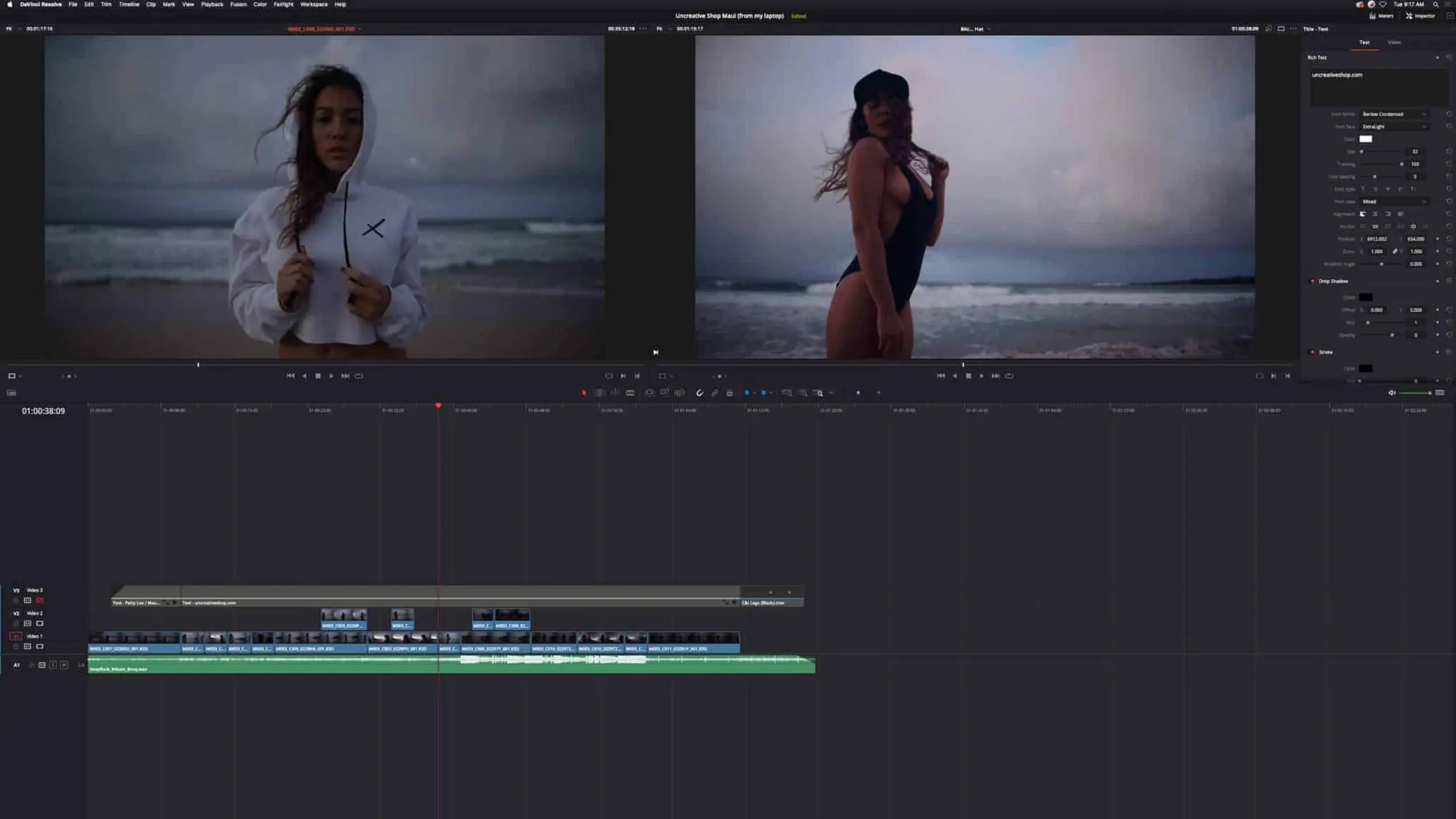
In the world of filmmaking, visuals are often the first thing that comes to mind. Yet, sound plays an equally, if not more, crucial role in creating an immersive cinematic experience. The processes of mixing and mastering films are essential to achieving professional-quality audio that captivates audiences and enhances storytelling. While mixing focuses on balancing dialogue, music, and sound effects, mastering ensures audio consistency across different platforms and playback systems.
Sound can elevate a scene, building tension, evoking emotions, and guiding the viewer through the narrative. From subtle background noises to heart-thumping soundtracks, every detail contributes to the final experience. This blog explores the importance of mixing and mastering films, breaking down their processes, challenges, and emerging trends, and why prioritizing high-quality sound is vital for filmmakers striving to leave a lasting impact.
## What is Mixing and Mastering in Film Production?
At its core, mixing and mastering in [film production](https://c-istudios.com/film-and-tv-production/) are two distinct yet complementary processes that refine audio to its highest quality. Mixing involves balancing and adjusting various audio elements, such as dialogue, sound effects, and music, to ensure they work harmoniously. The goal is to create clarity and cohesion, enabling viewers to fully engage with the film’s narrative.
Mastering, on the other hand, is the final step in the post-production audio process. It involves fine-tuning the mixed audio to ensure it translates well across all playback systems, from cinema speakers to streaming devices. Mastering enhances audio quality by applying final equalization (EQ), compression, and volume adjustments.
The two processes complement each other seamlessly. While mixing focuses on perfecting the individual components, mastering ensures the entire soundscape is polished and optimized for various formats. For example, during mixing, a scene’s dialogue might be adjusted to sit perfectly against a swelling musical score. In mastering, the overall loudness and tonal balance are refined so the scene sounds consistent whether played in a theater or on a smartphone.
By balancing elements through mixing and finalizing the audio through mastering, filmmakers ensure their audience experiences sound in its most impactful form, making these processes indispensable to **f**ilm sound production. Mixing ensures the individual elements of sound, dialogue, music, and effects, are harmonized, while mastering gives the final polish, ensuring consistency and professionalism across different playback mediums. Together, these processes turn raw sound into an immersive auditory experience that supports and enhances visual storytelling.
## The Role of Audio in Enhancing Cinematic Experience
Audio plays a transformative role in filmmaking. It builds atmosphere, evokes emotions, and immerses viewers in the story’s world. High-quality sound design and audio mastering elevate storytelling, turning ordinary scenes into unforgettable moments.
Consider films like *Dunkirk* and *A Quiet Place*. In *Dunkirk*, Hans Zimmer’s ticking-clock soundtrack intensifies the tension, while subtle sound effects, like distant gunfire and roaring planes, create a sense of urgency. *A Quiet Place*, on the other hand, relies on minimal dialogue and heightened ambient sounds to build suspense and terror. These examples demonstrate how sound enhances mood and keeps audiences on the edge of their seats.
Mixing and mastering films ensure that every auditory detail, from dialogue clarity to the depth of a soundtrack, works cohesively. Without proper film sound production, these elements could clash or get lost, reducing the emotional impact of a scene.
Moreover, mastering plays a critical role in audience immersion. Consistent sound levels and optimized audio ensure the viewer remains engaged without being distracted by sudden volume spikes or muffled dialogue. This seamless integration of sound elevates a film’s overall quality, making it more memorable and impactful. By utilizing the full range of the sound spectrum, filmmakers can transport viewers into their cinematic worlds, transforming a simple narrative into a sensory experience that lingers long after the credits roll.
## The Process of Mixing Audio for Films
The process of mixing audio is both an art and a science, requiring a skilled ear and technical expertise. It begins with organizing the raw audio tracks from the production phase. These tracks typically include dialogue, ambient sounds, music, and special effects. The mixing process involves adjusting levels, applying equalization (EQ), panning, and dynamics to ensure clarity and balance.
Dialogue is a primary focus during mixing. It must remain intelligible and prominent without overpowering other elements. For instance, in a dramatic conversation layered with a musical score, the dialogue needs to be clear while the music supports the scene’s emotion. The mixer ensures that every word is audible and resonates with the intended emotional tone.
Sound effects and ambient noise also require careful attention. These elements enrich the film’s realism and atmosphere. For example, in a bustling city scene, the sound of honking cars, footsteps, and distant chatter must blend naturally without overwhelming the dialogue. By crafting a layered and dynamic soundscape, the mixer ensures each element contributes to the viewer’s immersion.
Professional tools like Pro Tools and Logic Pro are commonly used for post-production audio mixing. These software platforms offer advanced features for precise adjustments and creative sound design. With these tools, filmmakers can ensure their audio matches the visual storytelling, creating a cohesive experience.
Moreover, advancements in plug-ins and AI-driven enhancements allow for faster, more efficient workflows, enabling mixers to focus on the creative aspects of sound rather than repetitive tasks.
## The Importance of Mastering in Film Production
While mixing focuses on the individual components of audio, mastering is the final step that brings everything together. Audio mastering ensures that the mixed tracks sound polished and consistent across all playback systems. This process is particularly crucial for films that will be viewed in diverse environments, such as theaters, televisions, and streaming platforms.
Mastering involves several steps, including applying final EQ to balance frequencies, compression to control dynamic range, and loudness optimization to meet industry standards. These adjustments ensure that a film’s audio is not only high-quality but also adaptable to different playback systems. During mastering, engineers also fine-tune elements like stereo width and phase coherence, ensuring a balanced and immersive listening experience.
For instance, a scene mastered for cinema may sound vastly different on a home theater system without proper adjustments. Mastering bridges this gap, ensuring the audience experiences the film as intended, regardless of the medium. It also enhances the film’s overall professionalism, leaving a lasting impression on viewers. Additionally, mastering guarantees that the audio maintains its impact and integrity across streaming platforms, which often compress sound files for efficiency.
Without mastering, even the best-mixed audio can fall short. This final step is what transforms great sound into exceptional sound, solidifying its importance in mixing and mastering films. By investing in mastering, filmmakers ensure their projects reach the audience with clarity, consistency, and emotional resonance, regardless of the playback environment.
## Challenges in Mixing and Mastering Films
Audio post-production comes with its fair share of challenges. One common obstacle is dealing with background noise or uneven levels in recorded audio. For instance, on-location shoots often result in unwanted sounds, such as wind or traffic, that must be cleaned up during mixing. Advanced noise reduction tools and manual adjustments are often necessary to address these issues effectively.
Another challenge lies in balancing artistic vision with technical requirements. Filmmakers may have a specific sound design in mind, but achieving it within the constraints of the mixing and mastering processes can be difficult. For example, creating a dynamic soundscape while ensuring clarity across all elements requires meticulous effort. Collaboration between directors and sound engineers is essential to align artistic goals with technical possibilities.
Budget and time constraints also pose significant hurdles. High-quality film sound production demands skilled professionals and advanced tools, which can strain a project’s resources. Tight deadlines can lead to compromises in the mixing or mastering phases, potentially affecting the final product’s quality. However, strategic planning and prioritization of critical sound elements can help mitigate these challenges, ensuring the best possible outcome within available resources.
## Tools and Technologies for Mixing and Mastering Films
The advancement of technology has revolutionized mixing and mastering films, providing filmmakers with powerful tools to achieve professional results. Industry-standard software like Pro Tools, Logic Pro, and Adobe Audition offers extensive features for sound design, mixing, and mastering. These platforms provide a range of plug-ins, from virtual equalizers to reverb emulators, enabling sound engineers to create intricate and immersive audio landscapes.
Hardware also plays a crucial role in film sound production. High-quality mixing consoles, audio interfaces, and studio monitors provide precise control and accurate playback during the post-production process. For instance, mixing consoles allow engineers to adjust multiple tracks simultaneously, streamlining the workflow. Studio monitors, designed for flat frequency response, ensure that the sound is reproduced accurately, allowing engineers to identify and address potential issues.
Emerging trends, such as AI-driven tools, are further enhancing the audio post-production process. AI can assist with tasks like noise reduction, audio cleanup, and even intelligent EQ adjustments, saving time and improving efficiency. AI-powered mastering services, like LANDR, offer automated solutions that are especially beneficial for independent filmmakers with limited budgets. As technology continues to evolve, these tools are becoming more accessible, empowering indie filmmakers to achieve high-quality sound on limited budgets.
## The Impact of High-Quality Sound on Film Success
Sound is a critical component of a film’s success. Films like *Inception* and *Gravity* are celebrated not only for their visuals but also for their exceptional sound design and mastering. In *Inception*, the deep, resonant tones of Hans Zimmer’s score intensify the film’s dreamlike atmosphere, while *Gravity* uses sound to create an immersive sense of space and isolation.
Audiences notice poor-quality audio immediately. Muffled dialogue or inconsistent sound levels can disrupt immersion and diminish the film’s impact. Investing in mixing and mastering films ensures a polished final product that captivates viewers and stands out in a competitive industry. The exceptional sound design elevates a film’s artistic value, transforming it from a simple visual narrative into a multisensory experience that resonates with viewers on a deeper level.
## Tips for Filmmakers. Getting the Most Out of Your Audio
To achieve professional-quality sound, filmmakers should collaborate closely with sound engineers during post-production. Clear communication of the project’s vision helps ensure the audio aligns with the intended narrative and emotional tone.
Early planning is another critical factor. Incorporating sound design into the pre-production process allows filmmakers to anticipate challenges and allocate resources effectively. For instance, recording clean audio on set reduces the need for extensive cleanup during mixing. Employing on-set sound professionals ensures the captured audio is of high quality, minimizing post-production complications.
Testing audio across different playback systems is essential to ensure consistency. By evaluating how the audio sounds in theaters, on televisions, and on mobile devices, filmmakers can identify and address potential issues before release. This step ensures that the final product delivers a consistent experience for all viewers, regardless of their chosen medium.
Finally, working with experienced professionals can make a significant difference. Skilled sound engineers bring technical expertise and creative insights that elevate the overall quality of film sound production. Investing in high-caliber collaborators not only ensures superior results but also streamlines the entire post-production process, saving time and resources in the long run.
## Future Trends in Post-Production Audio
The future of mixing and mastering films is shaped by emerging technologies and evolving audience expectations. Immersive audio formats like Dolby Atmos and spatial audio are gaining popularity, offering viewers a more dynamic and realistic listening experience. These formats provide three-dimensional soundscapes that enhance the sense of presence and depth, creating an unparalleled cinematic experience.
For indie filmmakers, the growing availability of accessible tools is a game-changer. Affordable software and AI-driven solutions enable small teams to achieve professional-quality sound without extensive resources. This democratization of technology is opening new opportunities for creative storytelling. Innovations in real-time collaboration tools also allow teams to work together seamlessly, regardless of geographical constraints, further streamlining the post-production process.
Looking ahead, innovations in sound production are likely to focus on enhancing realism and interactivity. As virtual and augmented reality technologies continue to evolve, post-production audio will play a crucial role in creating fully immersive experiences. From interactive audio environments to adaptive soundscapes, the possibilities for storytelling through sound are expanding, promising exciting developments for filmmakers and audiences alike.
## The Importance of Mixing and Mastering in Film Production
In the world of filmmaking, visuals are often the first thing that comes to mind. Yet, sound plays an equally, if not more, crucial role in creating an immersive cinematic experience. The processes of mixing and mastering films are essential to achieving professional-quality audio that captivates audiences and enhances storytelling. While mixing focuses on balancing dialogue, music, and sound effects, mastering ensures audio consistency across different platforms and playback systems.
Sound can elevate a scene, building tension, evoking emotions, and guiding the viewer through the narrative. From subtle background noises to heart-thumping soundtracks, every detail contributes to the final experience. This blog explores the importance of mixing and mastering films, breaking down their processes, challenges, and emerging trends, and why prioritizing high-quality sound is vital for filmmakers striving to leave a lasting impact.
## What is Mixing and Mastering in Film Production?
At its core, mixing and mastering in film production are two distinct yet complementary processes that refine audio to its highest quality. Mixing involves balancing and adjusting various audio elements, such as dialogue, sound effects, and music, to ensure they work harmoniously. The goal is to create clarity and cohesion, enabling viewers to fully engage with the film’s narrative.
Mastering, on the other hand, is the final step in the post-production audio process. It involves fine-tuning the mixed audio to ensure it translates well across all playback systems, from cinema speakers to streaming devices. Mastering enhances audio quality by applying final equalization (EQ), compression, and volume adjustments.
The two processes complement each other seamlessly. While mixing focuses on perfecting the individual components, mastering ensures the entire soundscape is polished and optimized for various formats. For example, during mixing, a scene’s dialogue might be adjusted to sit perfectly against a swelling musical score. In mastering, the overall loudness and tonal balance are refined so the scene sounds consistent whether played in a theater or on a smartphone.
By balancing elements through mixing and finalizing the audio through mastering, filmmakers ensure their audience experiences sound in its most impactful form, making these processes indispensable to **f**ilm sound production. Mixing ensures the individual elements of sound, dialogue, music, and effects, are harmonized, while mastering gives the final polish, ensuring consistency and professionalism across different playback mediums. Together, these processes turn raw sound into an immersive auditory experience that supports and enhances visual storytelling.
## The Role of Audio in Enhancing Cinematic Experience
Audio plays a transformative role in filmmaking. It builds atmosphere, evokes emotions, and immerses viewers in the story’s world. High-quality sound design and audio mastering elevate storytelling, turning ordinary scenes into unforgettable moments.
Consider films like *Dunkirk* and *A Quiet Place*. In *Dunkirk*, Hans Zimmer’s ticking-clock soundtrack intensifies the tension, while subtle sound effects, like distant gunfire and roaring planes, create a sense of urgency. *A Quiet Place*, on the other hand, relies on minimal dialogue and heightened ambient sounds to build suspense and terror. These examples demonstrate how sound enhances mood and keeps audiences on the edge of their seats.
Mixing and mastering films ensure that every auditory detail, from dialogue clarity to the depth of a soundtrack, works cohesively. Without proper film sound production, these elements could clash or get lost, reducing the emotional impact of a scene.
Moreover, mastering plays a critical role in audience immersion. Consistent sound levels and optimized audio ensure the viewer remains engaged without being distracted by sudden volume spikes or muffled dialogue. This seamless integration of sound elevates a film’s overall quality, making it more memorable and impactful. By utilizing the full range of the sound spectrum, filmmakers can transport viewers into their cinematic worlds, transforming a simple narrative into a sensory experience that lingers long after the credits roll.
## The Process of Mixing Audio for Films
The process of mixing audio is both an art and a science, requiring a skilled ear and technical expertise. It begins with organizing the raw audio tracks from the production phase. These tracks typically include dialogue, ambient sounds, music, and special effects. The mixing process involves adjusting levels, applying equalization (EQ), panning, and dynamics to ensure clarity and balance.
Dialogue is a primary focus during mixing. It must remain intelligible and prominent without overpowering other elements. For instance, in a dramatic conversation layered with a musical score, the dialogue needs to be clear while the music supports the scene’s emotion. The mixer ensures that every word is audible and resonates with the intended emotional tone.
Sound effects and ambient noise also require careful attention. These elements enrich the film’s realism and atmosphere. For example, in a bustling city scene, the sound of honking cars, footsteps, and distant chatter must blend naturally without overwhelming the dialogue. By crafting a layered and dynamic soundscape, the mixer ensures each element contributes to the viewer’s immersion.
Professional tools like Pro Tools and Logic Pro are commonly used for post-production audio mixing. These software platforms offer advanced features for precise adjustments and creative sound design. With these tools, filmmakers can ensure their audio matches the visual storytelling, creating a cohesive experience.
Moreover, advancements in plug-ins and AI-driven enhancements allow for faster, more efficient workflows, enabling mixers to focus on the creative aspects of sound rather than repetitive tasks.
## The Importance of Mastering in Film Production
While mixing focuses on the individual components of audio, mastering is the final step that brings everything together. Audio mastering ensures that the mixed tracks sound polished and consistent across all playback systems. This process is particularly crucial for films that will be viewed in diverse environments, such as theaters, televisions, and streaming platforms.
Mastering involves several steps, including applying final EQ to balance frequencies, compression to control dynamic range, and loudness optimization to meet industry standards. These adjustments ensure that a film’s audio is not only high-quality but also adaptable to different playback systems. During mastering, engineers also fine-tune elements like stereo width and phase coherence, ensuring a balanced and immersive listening experience.
For instance, a scene mastered for cinema may sound vastly different on a home theater system without proper adjustments. Mastering bridges this gap, ensuring the audience experiences the film as intended, regardless of the medium. It also enhances the film’s overall professionalism, leaving a lasting impression on viewers. Additionally, mastering guarantees that the audio maintains its impact and integrity across streaming platforms, which often compress sound files for efficiency.
Without mastering, even the best-mixed audio can fall short. This final step is what transforms great sound into exceptional sound, solidifying its importance in mixing and mastering films. By investing in mastering, filmmakers ensure their projects reach the audience with clarity, consistency, and emotional resonance, regardless of the playback environment.
## Challenges in Mixing and Mastering Films
Audio post-production comes with its fair share of challenges. One common obstacle is dealing with background noise or uneven levels in recorded audio. For instance, on-location shoots often result in unwanted sounds, such as wind or traffic, that must be cleaned up during mixing. Advanced noise reduction tools and manual adjustments are often necessary to address these issues effectively.
Another challenge lies in balancing artistic vision with technical requirements. Filmmakers may have a specific sound design in mind, but achieving it within the constraints of the mixing and mastering processes can be difficult. For example, creating a dynamic soundscape while ensuring clarity across all elements requires meticulous effort. Collaboration between directors and sound engineers is essential to align artistic goals with technical possibilities.
Budget and time constraints also pose significant hurdles. High-quality film sound production demands skilled professionals and advanced tools, which can strain a project’s resources. Tight deadlines can lead to compromises in the mixing or mastering phases, potentially affecting the final product’s quality. However, strategic planning and prioritization of critical sound elements can help mitigate these challenges, ensuring the best possible outcome within available resources.
## Tools and Technologies for Mixing and Mastering Films
The advancement of technology has revolutionized mixing and mastering films, providing filmmakers with powerful tools to achieve professional results. Industry-standard software like Pro Tools, Logic Pro, and Adobe Audition offers extensive features for sound design, mixing, and mastering. These platforms provide a range of plug-ins, from virtual equalizers to reverb emulators, enabling sound engineers to create intricate and immersive audio landscapes.
Hardware also plays a crucial role in film sound production. High-quality mixing consoles, audio interfaces, and studio monitors provide precise control and accurate playback during the post-production process. For instance, mixing consoles allow engineers to adjust multiple tracks simultaneously, streamlining the workflow. Studio monitors, designed for flat frequency response, ensure that the sound is reproduced accurately, allowing engineers to identify and address potential issues.
Emerging trends, such as AI-driven tools, are further enhancing the audio post-production process. AI can assist with tasks like noise reduction, audio cleanup, and even intelligent EQ adjustments, saving time and improving efficiency. AI-powered mastering services, like LANDR, offer automated solutions that are especially beneficial for independent filmmakers with limited budgets. As technology continues to evolve, these tools are becoming more accessible, empowering indie filmmakers to achieve high-quality sound on limited budgets.
## The Impact of High-Quality Sound on Film Success
Sound is a critical component of a film’s success. Films like *Inception* and *Gravity* are celebrated not only for their visuals but also for their exceptional sound design and mastering. In *Inception*, the deep, resonant tones of Hans Zimmer’s score intensify the film’s dreamlike atmosphere, while *Gravity* uses sound to create an immersive sense of space and isolation.
Audiences notice poor-quality audio immediately. Muffled dialogue or inconsistent sound levels can disrupt immersion and diminish the film’s impact. Investing in mixing and mastering films ensures a polished final product that captivates viewers and stands out in a competitive industry. The exceptional sound design elevates a film’s artistic value, transforming it from a simple visual narrative into a multisensory experience that resonates with viewers on a deeper level.
## Tips for Filmmakers. Getting the Most Out of Your Audio
To achieve professional-quality sound, filmmakers should collaborate closely with sound engineers during post-production. Clear communication of the project’s vision helps ensure the audio aligns with the intended narrative and emotional tone.
Early planning is another critical factor. Incorporating sound design into the pre-production process allows filmmakers to anticipate challenges and allocate resources effectively. For instance, recording clean audio on set reduces the need for extensive cleanup during mixing. Employing on-set sound professionals ensures the captured audio is of high quality, minimizing post-production complications.
Testing audio across different playback systems is essential to ensure consistency. By evaluating how the audio sounds in theaters, on televisions, and on mobile devices, filmmakers can identify and address potential issues before release. This step ensures that the final product delivers a consistent experience for all viewers, regardless of their chosen medium.
Finally, working with experienced professionals can make a significant difference. Skilled sound engineers bring technical expertise and creative insights that elevate the overall quality of film sound production. Investing in high-caliber collaborators not only ensures superior results but also streamlines the entire post-production process, saving time and resources in the long run.
## Future Trends in Post-Production Audio
The future of mixing and mastering films is shaped by emerging technologies and evolving audience expectations. Immersive audio formats like Dolby Atmos and spatial audio are gaining popularity, offering viewers a more dynamic and realistic listening experience. These formats provide three-dimensional soundscapes that enhance the sense of presence and depth, creating an unparalleled cinematic experience.
For indie filmmakers, the growing availability of accessible tools is a game-changer. Affordable software and AI-driven solutions enable small teams to achieve professional-quality sound without extensive resources. This democratization of technology is opening new opportunities for creative storytelling. Innovations in real-time collaboration tools also allow teams to work together seamlessly, regardless of geographical constraints, further streamlining the post-production process.
Looking ahead, innovations in sound production are likely to focus on enhancing realism and interactivity. As virtual and augmented reality technologies continue to evolve, post-production audio will play a crucial role in creating fully immersive experiences. From interactive audio environments to adaptive soundscapes, the possibilities for storytelling through sound are expanding, promising exciting developments for filmmakers and audiences alike.
## Work with C&I Studios
If you are planning a project like this, our team can take it from concept to final delivery. Explore our [film and TV production](https://c-istudios.com/film-and-tv-production/), browse [our work](https://c-istudios.com/our-work/) to see how we tell brand stories, and [get in touch](https://c-istudios.com/contact/) when you are ready to start.
Originally published December 10, 2024
---
*This content is from [C&I Studios](https://c-istudios.com), a full-service production company.*
---
# The Role of Audio in Film: Understanding Its Importance and Impact
> Published: December 10, 2024
> Categories: Film & TV
> Source: https://c-istudios.com/the-role-of-audio-in-film-understanding-its-importance-and-impact/
---
.cib{--paper:#1b1d1f;--ink:#fff;--body:#d5d7d9;--muted:#8b9096;--line:rgba(255,255,255,.12);--thumb:#2b2e31;--card:#212426;--accent:#c02b0a;--blue:#5B8FA8;--serif:'Playfair Display',Georgia,serif;--sans:'Poppins',-apple-system,sans-serif;--measure:900px;background:var(--paper);color:var(--body);font-family:var(--sans);line-height:1.6;position:relative;left:50%;transform:translateX(-50%);width:90vw;max-width:1920px}
.cib *{box-sizing:border-box}
.cib .kicker{max-width:var(--measure);margin:58px auto 0;padding:0 22px;font-size:12.5px;font-weight:700;letter-spacing:2.5px;text-transform:uppercase;color:var(--blue)}
.cib h1.cibh1{text-wrap:balance;font-family:var(--serif);font-weight:500;font-size:clamp(46px,6vw,72px);line-height:1.08;color:var(--ink);max-width:var(--measure);margin:18px auto 0;padding:0 22px;letter-spacing:-.5px}
.cib .metarow{max-width:var(--measure);margin:20px auto 0;padding:0 22px;color:var(--muted);font-size:14px}
.cib .hero{position:relative;width:100%;height:0;padding-bottom:56.25%;overflow:hidden;margin:48px auto 0;border-top:1px solid var(--line);border-bottom:1px solid var(--line)}
.cib .hero .ph{width:100%;aspect-ratio:16/9;background:var(--thumb);border-top:1px solid var(--line);border-bottom:1px solid var(--line);display:flex;align-items:center;justify-content:center;color:#7d8288;font-size:13px;text-align:center;padding:0 20px}
.cib .body{max-width:var(--measure);margin:12px auto 0;padding:52px 22px 6px}
.cib .body.lead p:first-child{font-size:23px;line-height:1.62;color:var(--ink)}
.cib .body p{font-size:18.5px;line-height:1.85;margin:0 0 30px;color:var(--body)}
.cib .body h2{text-wrap:balance;font-family:var(--serif);font-weight:500;font-size:clamp(32px,4vw,48px);line-height:1.22;color:var(--ink);margin:70px 0 20px;letter-spacing:-.3px}
.cib .body h3{text-wrap:balance;font-family:var(--sans);font-weight:600;font-size:22px;color:var(--ink);margin:38px 0 8px}
.cib .body a{color:var(--ink);text-decoration:underline;text-decoration-color:rgba(255,255,255,.4);text-underline-offset:3px}
.cib .body a:hover{text-decoration-color:var(--ink)}
.cib .ctable{width:100%;border-collapse:collapse;margin:16px 0 30px;font-size:16px}
.cib .ctable th{background:#000;color:#fff;text-align:left;padding:10px 12px;font-family:var(--sans)}
.cib .ctable td{padding:10px 12px;border-bottom:1px solid var(--line);color:var(--body)}
.cib .inimg{position:relative;width:100%;height:0;padding-bottom:56.25%;overflow:hidden;margin:72px auto;border-top:1px solid var(--line);border-bottom:1px solid var(--line)}
.cib .inimg .ph{width:100%;aspect-ratio:16/9;background:var(--thumb);border-top:1px solid var(--line);border-bottom:1px solid var(--line);display:flex;align-items:center;justify-content:center;color:#7d8288;font-size:13px}
.cib .origpub{max-width:var(--measure);margin:60px auto 0;padding:26px 22px 0;border-top:1px solid var(--line);color:var(--muted);font-size:13.5px}
.cib .related{max-width:1200px;margin:64px auto 0;padding:34px 22px 76px}
.cib .related h3{font-family:var(--sans);font-size:12.5px;letter-spacing:2px;text-transform:uppercase;color:var(--ink);margin:0 0 24px}
.cib .grid{display:grid;grid-template-columns:repeat(3,1fr);gap:28px}
.cib .rc{background:var(--card);border:1px solid var(--line);display:block;text-decoration:none;color:inherit;transition:border-color .15s}
.cib a.rc:hover{border-color:rgba(255,255,255,.5)}
.cib .rc .thumb{position:relative;width:100%;height:0;padding-bottom:56.25%;background:var(--thumb);overflow:hidden}
.cib .rc .thumb img{position:absolute!important;top:0!important;left:0!important;width:100%!important;height:100%!important;object-fit:cover!important;margin:0!important}
.cib .rc .cc{padding:14px 15px 17px}
.cib .rc .rt{font-family:var(--serif);font-weight:500;font-size:16px;line-height:1.3;color:var(--ink);margin:0 0 6px}
.cib .rc .rm{font-size:11px;letter-spacing:1px;text-transform:uppercase;color:var(--muted)}
.cib img{margin:0!important;padding:0!important;display:block!important;vertical-align:top;max-width:100%}
.cib .hero img,.cib .inimg img{position:absolute!important;top:0!important;left:0!important;width:100%!important;height:100%!important;object-fit:cover!important;margin:0!important;padding:0!important;border:0!important;display:block!important;aspect-ratio:auto!important}
.cib .hero+.body{padding-top:36px}
@media(max-width:760px){.cib .grid{grid-template-columns:1fr}.cib .body h2{margin:52px 0 16px}.cib .body p{font-size:17.5px}.cib .inimg,.cib .hero{margin-top:44px}}
.cib .vembed{max-width:var(--measure);margin:44px auto;padding:0 22px}.cib .vembed .vwrap{position:relative;width:100%;height:0;padding-bottom:56.25%}.cib .vembed .vwrap iframe{position:absolute;top:0;left:0;width:100%;height:100%;border:0}
Film & TV
# The Role of Audio in Film. Understanding Its Importance and Impact
18 min read
Audio plays an integral role in [film and TV production](https://c-istudios.com/film-and-tv-production/), significantly shaping the way stories are told and experienced. It is much more than a background element, audio influences the emotional and psychological journey of the audience, helping to establish tone, tension, and connection with the narrative.
Sound design, dialogue, and music are key components that bring depth to the storytelling process, enhancing the overall atmosphere of a scene.
Advances in VFX compositing and animation, as well as feature film mastering and delivery, now rely heavily on high-quality audio to create immersive, multidimensional experiences, making it an indispensable part of modern filmmaking.
## The Fundamentals of Audio in Film
In film & TV production, audio is composed of key elements that together create a rich, immersive experience. The primary components of film audio include dialogue, sound effects (SFX), music, and ambient noise. Dialogue conveys character emotions and drives the narrative forward, while SFX enhances realism or adds dramatic emphasis.
Music can set the tone or reinforce themes, and ambient noise establishes the environment of a scene, grounding the audience in the setting. Audio engineering plays a pivotal role in achieving professional-quality sound by mixing and balancing these elements to create a cohesive and emotionally resonant experience.
The role of audio engineering goes beyond simple sound recording. It involves intricate processes such as equalization, compression, and mastering to ensure that every element is crisp, clear, and appropriately balanced. This is where [video production gear](https://c-istudios.com/video-production-gear-list/) becomes essential.
High-quality microphones, sound mixers, and recording equipment capture sound accurately, preserving the nuances of every sound source. Whether it's a whisper or a thunderous explosion, the fidelity of these sounds is critical to conveying the intended impact on the audience.
Feature film mastering & delivery also relies heavily on sound, ensuring clarity, balance, and consistency throughout the film. Audio mastering ensures that all sound elements, dialogue, music, and effects, are in harmony with each other, no matter the medium or playback device. This level of refinement is what distinguishes professional productions from lower-quality sound mixes, making mastering a crucial part of film & TV production.
## How Sound Enhances Storytelling in Film
Sound is a powerful tool in film & TV production, playing a vital role in establishing mood, tone, and atmosphere. It can invoke emotions, set the stage for a scene, or even influence how the audience perceives characters.
The psychological impact of different sound elements is profound, consider how suspenseful music heightens tension, or how a sudden silence amplifies a moment of shock. This dynamic relationship between sound and emotion is central to storytelling, guiding the audience’s reactions and engagement with the plot.
Content creation often incorporates soundscapes to amplify the narrative, with each audio element carefully chosen to complement the visuals. In some scenes, the sound design itself tells part of the story, offering clues or creating contrast with the on-screen action.
In documentary film production, sound is used strategically to maintain realism, often utilizing both natural and recorded sounds to enhance the authenticity of the subject matter. Whether capturing the sounds of nature or the voice of an interviewee, these audio elements ground the film in reality, offering the audience a sense of immediacy and presence.
A documentary's [professional photography](https://c-istudios.com/professional-photography-services/) is paired with sound to form a comprehensive sensory experience that heightens the impact of the story being told. By weaving these sound elements together, filmmakers can create a compelling, authentic narrative that resonates deeply with viewers.
## The Science Behind Sound Design
The technical aspects of sound design are critical to the immersive experience of film & TV production. Foley effects and synthesized sounds are among the primary techniques used in crafting a detailed soundscape. Foley artists recreate every day sounds like footsteps or rustling clothing, adding realism to a scene. Meanwhile, synthesized sounds are used to create unique, often otherworldly effects, such as the hum of futuristic technology or fantastical creatures. The careful combination of these sound elements is essential in building a cohesive auditory world that aligns with the visuals.
In VFX compositing & animation, sound plays a crucial role in enhancing the believability of visual effects. Whether it's the roar of an explosion or the soft rustle of a character’s cape, sound complements visual action to make it feel grounded in reality. VFX compositors and animators work closely with sound designers to ensure that the timing and intensity of sounds match the on-screen action, creating a seamless and immersive experience for the viewer.
Audio engineering in post-production involves the complex process of layering sounds to achieve the desired emotional effect. Multiple layers of audio, including dialogue, SFX, and ambient noise, are carefully adjusted to ensure clarity and impact. This process is particularly important in [film & TV production](https://c-istudios.com/film-and-tv-production/), where sound must be meticulously mixed to create a balanced auditory experience.
Feature film mastering & delivery ensures that the final audio mix is synchronized with the visuals, maintaining consistency and ensuring that the audience experiences the intended emotional journey. This level of detail is what makes the audio in high-quality films feel so natural and believable.
## The Impact of Music and Score in Film
Film scores are integral to elevating storytelling by evoking powerful emotions in the audience. Music has the ability to amplify a scene's emotional weight, making moments more poignant or thrilling. The score is often used to underline a film’s themes, using specific motifs or musical cues to guide the emotional tone throughout the story.
For example, a swelling orchestral piece can create feelings of grandeur, while a minimalist score might evoke introspection and tension. These musical cues become synonymous with the narrative, helping the audience emotionally connect with the film.
The role of music also extends to reinforcing character themes and marking transitions between different parts of the story. Each character may have a unique musical motif, which grows and evolves throughout the film. For instance, a hero’s theme might begin softly, building to a triumphant crescendo as the character faces their ultimate challenge.
Additionally, music plays a crucial part in marking transitions, whether it's a shift in setting, time, or mood. Through media marketing consultation and [creative marketing](https://c-istudios.com/creative-marketing-services/), music is often used to shape the promotional strategy of a film, with catchy scores becoming iconic and adding to the film's legacy.
Artist management & media creation is essential when securing the right compositions for films. Composers must align their creative visions with the director’s needs, ensuring that the score complements the narrative. In film & TV production, this collaboration is essential for ensuring that the music not only fits the emotional tone but also enhances the storytelling.
Some of the most iconic movie scores, such as John Williams' work on "Star Wars" or Hans Zimmer’s compositions for "Inception," have left lasting impacts on how audiences perceive and connect with films. These scores transcend the films themselves, becoming part of popular culture and leaving an indelible mark on the viewer's experience.
## Dialogue and Sound Mixing for Clarity
Sound mixing plays a crucial role in this process, as it integrates dialogue with the background audio, ensuring that the voices remain distinct without being overpowered by sound effects or music. [Audio engineering](https://c-istudios.com/audio-engineering-services/) techniques, such as noise reduction and equalization, are employed to remove unwanted background noise and enhance vocal delivery, providing a polished and professional sound.
For video & audio live streaming, real-time audio balancing is key to maintaining audio clarity during a broadcast. As live content is streamed, audio engineers adjust the sound levels dynamically to ensure that dialogue remains intelligible and balanced against any background sounds or music. This process is especially important in environments where background noise or unpredictable sounds may interfere with the broadcast.
One of the challenges in audio engineering is balancing dialogue with environmental sounds in action-packed scenes. In such sequences, the intensity of sound effects, such as explosions or car chases, can easily overpower the dialogue.
Skilled sound mixers must ensure that the dialogue is still audible while maintaining the immersive effect of the action sounds, creating a seamless audio experience. This delicate balance is achieved through precise mixing and the careful application of compression, equalization, and volume automation.
## Audio in Different Film Genres
Sound design plays a unique role across different film & TV production genres, influencing how a film feels and how the audience responds. In horror films, sound is used to build tension, often relying on unsettling sound effects and eerie silence to create suspense.
In action films, powerful sound effects and dynamic music heighten the excitement, while in drama, subtle audio cues such as soft music and ambient sounds are used to reflect emotional depth. In sci-fi films, sound design often involves futuristic or alien sounds that immerse the viewer in another world, pushing the boundaries of what is possible with sound.
The role of sound effects and immersive audio is particularly important in animation and [VFX compositing & animation](https://c-istudios.com/vfx-compositing-and-animation-services/), where sound enhances the fantastical visuals and brings the animated world to life. Whether it’s the swoosh of a superhero’s cape or the magical chime of a fantastical object, the sound effects must align with the animation to create a cohesive and believable experience. The creative use of sound is essential in making the animation feel real, despite its exaggerated visuals.
In documentary film production, sound is used more naturally to maintain authenticity and realism. Political campaigns often use sound strategically to invoke emotion and reinforce key messages. Whether through speeches, ambient sounds from rallies, or carefully selected music, the audio works in tandem with the visuals to persuade and motivate the audience.
In contrast, mainstream cinema often employs more stylized soundscapes to amplify the storytelling experience. Real-world examples of how sound is manipulated to evoke specific responses can be seen in films like "Jaws" (where the ominous music signals the shark's presence) or in political documentaries, where sound amplifies key messages and emotional appeals.
## The Future of Audio in Film Production
The future of audio engineering in film & TV production is exciting, with emerging trends pushing the boundaries of sound design and its integration into storytelling. One of the most groundbreaking developments is the use of AI-generated sound design. Artificial intelligence is increasingly being employed to create realistic and unique soundscapes, allowing for quicker production timelines and more innovative audio effects. AI tools can analyze a scene’s mood, setting, and action to generate appropriate sounds, giving sound designers more time to focus on the creative aspects of the audio.
Another major trend is the integration of spatial and immersive audio, which is revolutionizing the way audiences experience films. With advancements in surround sound and binaural audio, filmmakers can now craft a 3D cinematic experience where sound moves around the listener, creating a truly immersive environment.
This technology is particularly powerful in genres like horror or action, where the sense of presence and realism can heighten tension and excitement. As audio technology continues to evolve, this level of immersion will only deepen, bringing new dimensions to storytelling.
In today’s digital landscape, SEO copywriting and web development are playing crucial roles in promoting audio-heavy films. With the increasing consumption of films and content online, SEO strategies are vital in helping productions reach broader audiences.
Regular web maintenance keeps the websites and platforms running smoothly, guaranteeing that audio-heavy films maintain their integrity when viewed online. As the demand for higher-quality streaming increases, both in terms of visuals and sound, advancements in these areas will continue to support the growing need for accessible, top-notch cinematic experiences.
## The Fundamentals of Audio in Film
In film & TV production, audio is composed of key elements that together create a rich, immersive experience. The primary components of film audio include dialogue, sound effects (SFX), music, and ambient noise. Dialogue conveys character emotions and drives the narrative forward, while SFX enhances realism or adds dramatic emphasis.
Music can set the tone or reinforce themes, and ambient noise establishes the environment of a scene, grounding the audience in the setting. Audio engineering plays a pivotal role in achieving professional-quality sound by mixing and balancing these elements to create a cohesive and emotionally resonant experience.
The role of audio engineering goes beyond simple sound recording. It involves intricate processes such as equalization, compression, and mastering to ensure that every element is crisp, clear, and appropriately balanced. This is where [video production gear](https://c-istudios.com/video-production-gear-list/) becomes essential.
High-quality microphones, sound mixers, and recording equipment capture sound accurately, preserving the nuances of every sound source. Whether it's a whisper or a thunderous explosion, the fidelity of these sounds is critical to conveying the intended impact on the audience.
Feature film mastering & delivery also relies heavily on sound, ensuring clarity, balance, and consistency throughout the film. Audio mastering ensures that all sound elements, dialogue, music, and effects, are in harmony with each other, no matter the medium or playback device. This level of refinement is what distinguishes professional productions from lower-quality sound mixes, making mastering a crucial part of film & TV production.
## How Sound Enhances Storytelling in Film
Sound is a powerful tool in film & TV production, playing a vital role in establishing mood, tone, and atmosphere. It can invoke emotions, set the stage for a scene, or even influence how the audience perceives characters.
The psychological impact of different sound elements is profound, consider how suspenseful music heightens tension, or how a sudden silence amplifies a moment of shock. This dynamic relationship between sound and emotion is central to storytelling, guiding the audience’s reactions and engagement with the plot.
Content creation often incorporates soundscapes to amplify the narrative, with each audio element carefully chosen to complement the visuals. In some scenes, the sound design itself tells part of the story, offering clues or creating contrast with the on-screen action.
In documentary film production, sound is used strategically to maintain realism, often utilizing both natural and recorded sounds to enhance the authenticity of the subject matter. Whether capturing the sounds of nature or the voice of an interviewee, these audio elements ground the film in reality, offering the audience a sense of immediacy and presence.
A documentary's [professional photography](https://c-istudios.com/professional-photography-services/) is paired with sound to form a comprehensive sensory experience that heightens the impact of the story being told. By weaving these sound elements together, filmmakers can create a compelling, authentic narrative that resonates deeply with viewers.
## The Science Behind Sound Design
The technical aspects of sound design are critical to the immersive experience of film & TV production. Foley effects and synthesized sounds are among the primary techniques used in crafting a detailed soundscape. Foley artists recreate every day sounds like footsteps or rustling clothing, adding realism to a scene. Meanwhile, synthesized sounds are used to create unique, often otherworldly effects, such as the hum of futuristic technology or fantastical creatures. The careful combination of these sound elements is essential in building a cohesive auditory world that aligns with the visuals.
In VFX compositing & animation, sound plays a crucial role in enhancing the believability of visual effects. Whether it's the roar of an explosion or the soft rustle of a character’s cape, sound complements visual action to make it feel grounded in reality. VFX compositors and animators work closely with sound designers to ensure that the timing and intensity of sounds match the on-screen action, creating a seamless and immersive experience for the viewer.
Audio engineering in post-production involves the complex process of layering sounds to achieve the desired emotional effect. Multiple layers of audio, including dialogue, SFX, and ambient noise, are carefully adjusted to ensure clarity and impact. This process is particularly important in [film & TV production](https://c-istudios.com/film-and-tv-production/), where sound must be meticulously mixed to create a balanced auditory experience.
Feature film mastering & delivery ensures that the final audio mix is synchronized with the visuals, maintaining consistency and ensuring that the audience experiences the intended emotional journey. This level of detail is what makes the audio in high-quality films feel so natural and believable.
## The Impact of Music and Score in Film
Film scores are integral to elevating storytelling by evoking powerful emotions in the audience. Music has the ability to amplify a scene's emotional weight, making moments more poignant or thrilling. The score is often used to underline a film’s themes, using specific motifs or musical cues to guide the emotional tone throughout the story.
For example, a swelling orchestral piece can create feelings of grandeur, while a minimalist score might evoke introspection and tension. These musical cues become synonymous with the narrative, helping the audience emotionally connect with the film.
The role of music also extends to reinforcing character themes and marking transitions between different parts of the story. Each character may have a unique musical motif, which grows and evolves throughout the film. For instance, a hero’s theme might begin softly, building to a triumphant crescendo as the character faces their ultimate challenge.
Additionally, music plays a crucial part in marking transitions, whether it's a shift in setting, time, or mood. Through media marketing consultation and [creative marketing](https://c-istudios.com/creative-marketing-services/), music is often used to shape the promotional strategy of a film, with catchy scores becoming iconic and adding to the film's legacy.
Artist management & media creation is essential when securing the right compositions for films. Composers must align their creative visions with the director’s needs, ensuring that the score complements the narrative. In film & TV production, this collaboration is essential for ensuring that the music not only fits the emotional tone but also enhances the storytelling.
Some of the most iconic movie scores, such as John Williams' work on "Star Wars" or Hans Zimmer’s compositions for "Inception," have left lasting impacts on how audiences perceive and connect with films. These scores transcend the films themselves, becoming part of popular culture and leaving an indelible mark on the viewer's experience.
## Dialogue and Sound Mixing for Clarity
Sound mixing plays a crucial role in this process, as it integrates dialogue with the background audio, ensuring that the voices remain distinct without being overpowered by sound effects or music. [Audio engineering](https://c-istudios.com/audio-engineering-services/) techniques, such as noise reduction and equalization, are employed to remove unwanted background noise and enhance vocal delivery, providing a polished and professional sound.
For video & audio live streaming, real-time audio balancing is key to maintaining audio clarity during a broadcast. As live content is streamed, audio engineers adjust the sound levels dynamically to ensure that dialogue remains intelligible and balanced against any background sounds or music. This process is especially important in environments where background noise or unpredictable sounds may interfere with the broadcast.
One of the challenges in audio engineering is balancing dialogue with environmental sounds in action-packed scenes. In such sequences, the intensity of sound effects, such as explosions or car chases, can easily overpower the dialogue.
Skilled sound mixers must ensure that the dialogue is still audible while maintaining the immersive effect of the action sounds, creating a seamless audio experience. This delicate balance is achieved through precise mixing and the careful application of compression, equalization, and volume automation.
## Audio in Different Film Genres
Sound design plays a unique role across different film & TV production genres, influencing how a film feels and how the audience responds. In horror films, sound is used to build tension, often relying on unsettling sound effects and eerie silence to create suspense.
In action films, powerful sound effects and dynamic music heighten the excitement, while in drama, subtle audio cues such as soft music and ambient sounds are used to reflect emotional depth. In sci-fi films, sound design often involves futuristic or alien sounds that immerse the viewer in another world, pushing the boundaries of what is possible with sound.
The role of sound effects and immersive audio is particularly important in animation and [VFX compositing & animation](https://c-istudios.com/vfx-compositing-and-animation-services/), where sound enhances the fantastical visuals and brings the animated world to life. Whether it’s the swoosh of a superhero’s cape or the magical chime of a fantastical object, the sound effects must align with the animation to create a cohesive and believable experience. The creative use of sound is essential in making the animation feel real, despite its exaggerated visuals.
In documentary film production, sound is used more naturally to maintain authenticity and realism. Political campaigns often use sound strategically to invoke emotion and reinforce key messages. Whether through speeches, ambient sounds from rallies, or carefully selected music, the audio works in tandem with the visuals to persuade and motivate the audience.
In contrast, mainstream cinema often employs more stylized soundscapes to amplify the storytelling experience. Real-world examples of how sound is manipulated to evoke specific responses can be seen in films like "Jaws" (where the ominous music signals the shark's presence) or in political documentaries, where sound amplifies key messages and emotional appeals.
## The Future of Audio in Film Production
The future of audio engineering in film & TV production is exciting, with emerging trends pushing the boundaries of sound design and its integration into storytelling. One of the most groundbreaking developments is the use of AI-generated sound design. Artificial intelligence is increasingly being employed to create realistic and unique soundscapes, allowing for quicker production timelines and more innovative audio effects. AI tools can analyze a scene’s mood, setting, and action to generate appropriate sounds, giving sound designers more time to focus on the creative aspects of the audio.
Another major trend is the integration of spatial and immersive audio, which is revolutionizing the way audiences experience films. With advancements in surround sound and binaural audio, filmmakers can now craft a 3D cinematic experience where sound moves around the listener, creating a truly immersive environment.
This technology is particularly powerful in genres like horror or action, where the sense of presence and realism can heighten tension and excitement. As audio technology continues to evolve, this level of immersion will only deepen, bringing new dimensions to storytelling.
In today’s digital landscape, SEO copywriting and web development are playing crucial roles in promoting audio-heavy films. With the increasing consumption of films and content online, SEO strategies are vital in helping productions reach broader audiences.
Regular web maintenance keeps the websites and platforms running smoothly, guaranteeing that audio-heavy films maintain their integrity when viewed online. As the demand for higher-quality streaming increases, both in terms of visuals and sound, advancements in these areas will continue to support the growing need for accessible, top-notch cinematic experiences.
## Work with C&I Studios
If you are planning a project like this, our team can take it from concept to final delivery. Explore our [film and TV production](https://c-istudios.com/film-and-tv-production/), browse [our work](https://c-istudios.com/our-work/) to see how we tell brand stories, and [get in touch](https://c-istudios.com/contact/) when you are ready to start.
Originally published December 10, 2024
---
*This content is from [C&I Studios](https://c-istudios.com), a full-service production company.*
---
# Video SEO for Mobile: Ensuring Optimization for Smartphone Users
> Published: December 9, 2024
> Categories: Web & Tech
> Source: https://c-istudios.com/video-seo-for-mobile-ensuring-optimization-for-smartphone-users/
---
.cib{--paper:#1b1d1f;--ink:#fff;--body:#d5d7d9;--muted:#8b9096;--line:rgba(255,255,255,.12);--thumb:#2b2e31;--card:#212426;--accent:#c02b0a;--blue:#5B8FA8;--serif:'Playfair Display',Georgia,serif;--sans:'Poppins',-apple-system,sans-serif;--measure:900px;background:var(--paper);color:var(--body);font-family:var(--sans);line-height:1.6;position:relative;left:50%;transform:translateX(-50%);width:90vw;max-width:1920px}
.cib *{box-sizing:border-box}
.cib .kicker{max-width:var(--measure);margin:58px auto 0;padding:0 22px;font-size:12.5px;font-weight:700;letter-spacing:2.5px;text-transform:uppercase;color:var(--blue)}
.cib h1.cibh1{text-wrap:balance;font-family:var(--serif);font-weight:500;font-size:clamp(46px,6vw,72px);line-height:1.08;color:var(--ink);max-width:var(--measure);margin:18px auto 0;padding:0 22px;letter-spacing:-.5px}
.cib .metarow{max-width:var(--measure);margin:20px auto 0;padding:0 22px;color:var(--muted);font-size:14px}
.cib .hero{position:relative;width:100%;height:0;padding-bottom:56.25%;overflow:hidden;margin:48px auto 0;border-top:1px solid var(--line);border-bottom:1px solid var(--line)}
.cib .hero .ph{width:100%;aspect-ratio:16/9;background:var(--thumb);border-top:1px solid var(--line);border-bottom:1px solid var(--line);display:flex;align-items:center;justify-content:center;color:#7d8288;font-size:13px;text-align:center;padding:0 20px}
.cib .body{max-width:var(--measure);margin:12px auto 0;padding:52px 22px 6px}
.cib .body.lead p:first-child{font-size:23px;line-height:1.62;color:var(--ink)}
.cib .body p{font-size:18.5px;line-height:1.85;margin:0 0 30px;color:var(--body)}
.cib .body h2{text-wrap:balance;font-family:var(--serif);font-weight:500;font-size:clamp(32px,4vw,48px);line-height:1.22;color:var(--ink);margin:70px 0 20px;letter-spacing:-.3px}
.cib .body h3{text-wrap:balance;font-family:var(--sans);font-weight:600;font-size:22px;color:var(--ink);margin:38px 0 8px}
.cib .body a{color:var(--ink);text-decoration:underline;text-decoration-color:rgba(255,255,255,.4);text-underline-offset:3px}
.cib .body a:hover{text-decoration-color:var(--ink)}
.cib .ctable{width:100%;border-collapse:collapse;margin:16px 0 30px;font-size:16px}
.cib .ctable th{background:#000;color:#fff;text-align:left;padding:10px 12px;font-family:var(--sans)}
.cib .ctable td{padding:10px 12px;border-bottom:1px solid var(--line);color:var(--body)}
.cib .inimg{position:relative;width:100%;height:0;padding-bottom:56.25%;overflow:hidden;margin:72px auto;border-top:1px solid var(--line);border-bottom:1px solid var(--line)}
.cib .inimg .ph{width:100%;aspect-ratio:16/9;background:var(--thumb);border-top:1px solid var(--line);border-bottom:1px solid var(--line);display:flex;align-items:center;justify-content:center;color:#7d8288;font-size:13px}
.cib .origpub{max-width:var(--measure);margin:60px auto 0;padding:26px 22px 0;border-top:1px solid var(--line);color:var(--muted);font-size:13.5px}
.cib .related{max-width:1200px;margin:64px auto 0;padding:34px 22px 76px}
.cib .related h3{font-family:var(--sans);font-size:12.5px;letter-spacing:2px;text-transform:uppercase;color:var(--ink);margin:0 0 24px}
.cib .grid{display:grid;grid-template-columns:repeat(3,1fr);gap:28px}
.cib .rc{background:var(--card);border:1px solid var(--line);display:block;text-decoration:none;color:inherit;transition:border-color .15s}
.cib a.rc:hover{border-color:rgba(255,255,255,.5)}
.cib .rc .thumb{position:relative;width:100%;height:0;padding-bottom:56.25%;background:var(--thumb);overflow:hidden}
.cib .rc .thumb img{position:absolute!important;top:0!important;left:0!important;width:100%!important;height:100%!important;object-fit:cover!important;margin:0!important}
.cib .rc .cc{padding:14px 15px 17px}
.cib .rc .rt{font-family:var(--serif);font-weight:500;font-size:16px;line-height:1.3;color:var(--ink);margin:0 0 6px}
.cib .rc .rm{font-size:11px;letter-spacing:1px;text-transform:uppercase;color:var(--muted)}
.cib img{margin:0!important;padding:0!important;display:block!important;vertical-align:top;max-width:100%}
.cib .hero img,.cib .inimg img{position:absolute!important;top:0!important;left:0!important;width:100%!important;height:100%!important;object-fit:cover!important;margin:0!important;padding:0!important;border:0!important;display:block!important;aspect-ratio:auto!important}
.cib .hero+.body{padding-top:36px}
@media(max-width:760px){.cib .grid{grid-template-columns:1fr}.cib .body h2{margin:52px 0 16px}.cib .body p{font-size:17.5px}.cib .inimg,.cib .hero{margin-top:44px}}
.cib .vembed{max-width:var(--measure);margin:44px auto;padding:0 22px}.cib .vembed .vwrap{position:relative;width:100%;height:0;padding-bottom:56.25%}.cib .vembed .vwrap iframe{position:absolute;top:0;left:0;width:100%;height:100%;border:0}
Web & Tech
# Video SEO for Mobile. Ensuring Optimization for Smartphone Users
14 min read

In today’s digital landscape, mobile devices have become the primary way people consume video content. With millions of videos competing for attention, optimizing for mobile search engines is no longer optional, it’s essential. Video SEO ensures that videos are discoverable, load quickly, and provide an excellent viewing experience on smartphones and tablets.
Mobile optimization directly impacts video visibility, engagement rates, and overall performance in search rankings. Factors like page speed, responsive design, and metadata play a crucial role in how well a video performs. By tailoring content for mobile-first indexing, businesses, and content creators can maximize reach and retention.
This article explores the key aspects of Video SEO for Mobile, including best practices for optimization, platform-specific strategies, and the role of technical elements like compression and captions. Whether you're a brand, marketer, or content creator, mastering mobile video SEO can give you a competitive edge in today’s fast-paced digital world.
## The Growing Dominance of Mobile Video Consumption
The rise of mobile video consumption has transformed how audiences engage with digital content. Recent statistics show that over 75% of all video plays occur on mobile devices, making smartphones the dominant platform for video marketing.
This shift is driven by the widespread use of social media, short-form content platforms, and the growing preference for on-the-go entertainment. As a result, businesses must adapt their video strategies to cater specifically to mobile users, ensuring seamless playback, fast loading times, and engaging storytelling.
Prioritizing mobile-first video content is no longer an option, it’s a necessity. With mobile-first indexing now a standard for search engines, brands that fail to optimize their video content risk lower visibility and engagement. This means that everything from video format to aspect ratio must align with mobile consumption habits. Vertical and square videos, for instance, perform better on platforms like Instagram and TikTok, while YouTube favors 16:9 horizontal videos.
High-quality [video production](https://c-istudios.com/video-production-services/) plays a crucial role in ensuring that content is visually appealing and accessible on mobile devices. Factors such as resolution, file compression, and adaptive streaming technology determine how smoothly a video plays on different screen sizes and internet speeds. Professional production techniques ensure that videos maintain sharpness and clarity without excessive buffering or slow load times.
Additionally, creative marketing is essential in attracting and retaining mobile viewers. Attention spans are shorter on mobile, so videos must capture interest within the first few seconds. Eye-catching visuals, dynamic edits, and compelling hooks help keep users engaged, increasing watch time and improving SEO rankings.
## Mobile Video SEO Best Practices
Optimizing videos for mobile search goes beyond production quality, it requires strategic branding & graphic design to make content stand out in crowded search results. Thumbnails and titles are often the first things users see, making them crucial elements of mobile SEO. Bold, high-contrast thumbnails, clear branding, and concise but intriguing titles encourage more clicks, improving engagement metrics that influence rankings.
SEO copywriting is another vital component of mobile video optimization. Well-crafted descriptions, captions, and closed captions enhance accessibility while incorporating relevant keywords naturally.
These text elements provide search engines with valuable context, helping videos rank higher in mobile search results and YouTube recommendations. Additionally, captions cater to users who watch videos without sound, a common behavior on mobile platforms.
Metadata optimization is key to improving mobile search visibility. Tags, categories, and structured data markup help search engines understand video content and recommend it to the right audience. Including relevant keywords in these elements increases the chances of appearing in search results and suggested video feeds.
Finally, fast-loading videos are critical for mobile SEO success. Slow-loading content leads to high bounce rates, negatively affecting rankings. Compressing video files without sacrificing quality, using a mobile-friendly hosting solution, and leveraging content delivery networks (CDNs) can enhance load speeds and provide a better user experience.
## Video Formatting and Compression for Faster Load Times
Mobile users expect fast-loading videos and seamless playback, making video compression and formatting critical for a smooth experience. Slow-loading videos often lead to high bounce rates, negatively affecting search rankings and user engagement. Since mobile networks vary in speed, ensuring that videos load quickly, even on slower connections, is essential for maintaining viewer retention.
Choosing the right file format is crucial for balancing quality and performance. Formats like MP4 (H.264) and WebM are widely supported and optimized for mobile streaming. Compression techniques such as bitrate optimization and adaptive streaming ensure that videos maintain clarity without excessive file sizes. These strategies prevent buffering issues while preserving visual appeal.
A media marketing consult can help businesses determine the best optimization techniques based on their target audience and platform requirements. Professionals analyze factors like audience device preferences, content type, and hosting solutions to create an effective video SEO strategy.
Additionally, web hosting plays a significant role in video performance. Using a [content](https://c-istudios.com/content-creation-services/) delivery network (CDN) distributes videos across multiple servers worldwide, reducing latency and enhancing playback speed. Proper hosting solutions ensure that mobile users experience minimal delays, resulting in higher engagement and improved SEO performance.
## Optimizing Video Thumbnails and CTAs for Mobile
A well-designed video thumbnail is the first thing users notice before clicking on a video. Thumbnails act as a visual preview, influencing whether a viewer will engage with the content. Research shows that videos with eye-catching, high-quality thumbnails achieve significantly higher click-through rates (CTR) compared to those without. A successful thumbnail should be bright, clear, and emotionally compelling, prompting curiosity and engagement.
Professional photography plays a key role in creating high-quality thumbnails. Instead of relying on auto-generated stills from a video, designers, and marketers often use custom images that are carefully framed and edited. This approach enhances visual appeal and ensures brand consistency across all video content. Thumbnails featuring faces with expressive emotions tend to perform exceptionally well, as they establish an instant connection with viewers.
An effective call-to-action (CTA) encourages users to take the next step, whether it's subscribing, visiting a website, or making a purchase. CTAs should be mobile-friendly, using concise text and bold, readable fonts. Placement is crucial, whether it appears in the video itself, as an overlay, or within the description, it should be easily tappable and clearly visible on smaller screens.
Additionally, [artist management & media creation](https://c-istudios.com/artist-management-and-media-creation/) play a role in tailoring video content for specific audiences. Understanding audience demographics, interests, and behaviors allows businesses to design targeted thumbnails and CTAs that resonate with mobile users. This strategic approach increases engagement, encourages shares, and enhances the overall success of mobile video campaigns.
## Leveraging Mobile-Friendly Video Platforms
Optimizing videos for mobile-first platforms like YouTube, Instagram, TikTok, and Facebook is crucial for maximizing reach and engagement. Each platform has its own algorithm, content format, and audience behavior, which means videos must be tailored accordingly.
For instance, TikTok and Instagram Reels prioritize short-form vertical videos, while YouTube Shorts allows for both short and long-form content with a different ranking system. Understanding these differences helps creators craft content that fits seamlessly into each ecosystem.
Each platform’s algorithm favors specific engagement metrics, such as watch time, likes, shares, and comments. YouTube’s algorithm, for example, prioritizes high retention rates, while Instagram and TikTok push content that generates rapid engagement within the first few hours. Effective documentary [film production](https://c-istudios.com/film-and-tv-production/) techniques can elevate mobile videos, making them more compelling and shareable, helping them stand out in crowded feeds.
Using the right [video production](https://c-istudios.com/video-production-services/) gear is also essential in mobile video content creation. High-resolution cameras, stabilizers, and professional lighting enhance video quality, making content more visually appealing and competitive. Even smartphone footage can achieve a professional look with the right gear and post-production techniques.
To maximize performance, creators should continuously analyze video engagement data. Testing different formats, lengths, and styles ensures that videos align with user preferences on each platform. Adjusting strategies based on performance insights leads to better visibility and stronger audience connections.
## Measuring Video Performance and Adjusting Strategies
Tracking key performance indicators (KPIs) is essential for assessing video effectiveness on mobile platforms. Important KPIs include watch time, click-through rate (CTR), audience retention, and conversion rates. High retention signals to platforms that content is engaging, leading to better ranking and wider reach.
Various tools help analyze engagement and refine video strategies. YouTube Analytics, Facebook Insights, and TikTok Analytics offer detailed performance reports, revealing trends in audience behavior. Google Analytics can also be used to track how mobile videos contribute to website traffic and conversions. These insights guide content adjustments for better results.
Incorporating feature film mastering & delivery techniques ensures final videos are optimized for different screen sizes and resolutions. Color grading, sound mixing, and resolution adjustments play a critical role in maintaining high-quality visuals across devices. These refinements create a polished final product that enhances user experience.
Additionally, [web development](https://c-istudios.com/web-development-services/) plays a role in mobile video SEO. Embedding videos on fast-loading, mobile-friendly websites improves search rankings and engagement. Optimized video landing pages can also drive more traffic and conversions, making technical SEO and UX design integral to video marketing success.
## The Growing Dominance of Mobile Video Consumption
The rise of mobile video consumption has transformed how audiences engage with digital content. Recent statistics show that over 75% of all video plays occur on mobile devices, making smartphones the dominant platform for video marketing.
This shift is driven by the widespread use of social media, short-form content platforms, and the growing preference for on-the-go entertainment. As a result, businesses must adapt their video strategies to cater specifically to mobile users, ensuring seamless playback, fast loading times, and engaging storytelling.
Prioritizing mobile-first video content is no longer an option, it’s a necessity. With mobile-first indexing now a standard for search engines, brands that fail to optimize their video content risk lower visibility and engagement. This means that everything from video format to aspect ratio must align with mobile consumption habits. Vertical and square videos, for instance, perform better on platforms like Instagram and TikTok, while YouTube favors 16:9 horizontal videos.
High-quality [video production](https://c-istudios.com/video-production-services/) plays a crucial role in ensuring that content is visually appealing and accessible on mobile devices. Factors such as resolution, file compression, and adaptive streaming technology determine how smoothly a video plays on different screen sizes and internet speeds. Professional production techniques ensure that videos maintain sharpness and clarity without excessive buffering or slow load times.
Additionally, creative marketing is essential in attracting and retaining mobile viewers. Attention spans are shorter on mobile, so videos must capture interest within the first few seconds. Eye-catching visuals, dynamic edits, and compelling hooks help keep users engaged, increasing watch time and improving SEO rankings.
## Mobile Video SEO Best Practices
Optimizing videos for mobile search goes beyond production quality, it requires strategic branding & graphic design to make content stand out in crowded search results. Thumbnails and titles are often the first things users see, making them crucial elements of mobile SEO. Bold, high-contrast thumbnails, clear branding, and concise but intriguing titles encourage more clicks, improving engagement metrics that influence rankings.
SEO copywriting is another vital component of mobile video optimization. Well-crafted descriptions, captions, and closed captions enhance accessibility while incorporating relevant keywords naturally.
These text elements provide search engines with valuable context, helping videos rank higher in mobile search results and YouTube recommendations. Additionally, captions cater to users who watch videos without sound, a common behavior on mobile platforms.
Metadata optimization is key to improving mobile search visibility. Tags, categories, and structured data markup help search engines understand video content and recommend it to the right audience. Including relevant keywords in these elements increases the chances of appearing in search results and suggested video feeds.
Finally, fast-loading videos are critical for mobile SEO success. Slow-loading content leads to high bounce rates, negatively affecting rankings. Compressing video files without sacrificing quality, using a mobile-friendly hosting solution, and leveraging content delivery networks (CDNs) can enhance load speeds and provide a better user experience.
## Video Formatting and Compression for Faster Load Times
Mobile users expect fast-loading videos and seamless playback, making video compression and formatting critical for a smooth experience. Slow-loading videos often lead to high bounce rates, negatively affecting search rankings and user engagement. Since mobile networks vary in speed, ensuring that videos load quickly, even on slower connections, is essential for maintaining viewer retention.
Choosing the right file format is crucial for balancing quality and performance. Formats like MP4 (H.264) and WebM are widely supported and optimized for mobile streaming. Compression techniques such as bitrate optimization and adaptive streaming ensure that videos maintain clarity without excessive file sizes. These strategies prevent buffering issues while preserving visual appeal.
A media marketing consult can help businesses determine the best optimization techniques based on their target audience and platform requirements. Professionals analyze factors like audience device preferences, content type, and hosting solutions to create an effective video SEO strategy.
Additionally, web hosting plays a significant role in video performance. Using a [content](https://c-istudios.com/content-creation-services/) delivery network (CDN) distributes videos across multiple servers worldwide, reducing latency and enhancing playback speed. Proper hosting solutions ensure that mobile users experience minimal delays, resulting in higher engagement and improved SEO performance.
## Optimizing Video Thumbnails and CTAs for Mobile
A well-designed video thumbnail is the first thing users notice before clicking on a video. Thumbnails act as a visual preview, influencing whether a viewer will engage with the content. Research shows that videos with eye-catching, high-quality thumbnails achieve significantly higher click-through rates (CTR) compared to those without. A successful thumbnail should be bright, clear, and emotionally compelling, prompting curiosity and engagement.
Professional photography plays a key role in creating high-quality thumbnails. Instead of relying on auto-generated stills from a video, designers, and marketers often use custom images that are carefully framed and edited. This approach enhances visual appeal and ensures brand consistency across all video content. Thumbnails featuring faces with expressive emotions tend to perform exceptionally well, as they establish an instant connection with viewers.
An effective call-to-action (CTA) encourages users to take the next step, whether it's subscribing, visiting a website, or making a purchase. CTAs should be mobile-friendly, using concise text and bold, readable fonts. Placement is crucial, whether it appears in the video itself, as an overlay, or within the description, it should be easily tappable and clearly visible on smaller screens.
Additionally, [artist management & media creation](https://c-istudios.com/artist-management-and-media-creation/) play a role in tailoring video content for specific audiences. Understanding audience demographics, interests, and behaviors allows businesses to design targeted thumbnails and CTAs that resonate with mobile users. This strategic approach increases engagement, encourages shares, and enhances the overall success of mobile video campaigns.
## Leveraging Mobile-Friendly Video Platforms
Optimizing videos for mobile-first platforms like YouTube, Instagram, TikTok, and Facebook is crucial for maximizing reach and engagement. Each platform has its own algorithm, content format, and audience behavior, which means videos must be tailored accordingly.
For instance, TikTok and Instagram Reels prioritize short-form vertical videos, while YouTube Shorts allows for both short and long-form content with a different ranking system. Understanding these differences helps creators craft content that fits seamlessly into each ecosystem.
Each platform’s algorithm favors specific engagement metrics, such as watch time, likes, shares, and comments. YouTube’s algorithm, for example, prioritizes high retention rates, while Instagram and TikTok push content that generates rapid engagement within the first few hours. Effective documentary film production techniques can elevate mobile videos, making them more compelling and shareable, helping them stand out in crowded feeds.
Using the right [video production](https://c-istudios.com/video-production-services/) gear is also essential in mobile video content creation. High-resolution cameras, stabilizers, and professional lighting enhance video quality, making content more visually appealing and competitive. Even smartphone footage can achieve a professional look with the right gear and post-production techniques.
To maximize performance, creators should continuously analyze video engagement data. Testing different formats, lengths, and styles ensures that videos align with user preferences on each platform. Adjusting strategies based on performance insights leads to better visibility and stronger audience connections.
## Measuring Video Performance and Adjusting Strategies
Tracking key performance indicators (KPIs) is essential for assessing video effectiveness on mobile platforms. Important KPIs include watch time, click-through rate (CTR), audience retention, and conversion rates. High retention signals to platforms that content is engaging, leading to better ranking and wider reach.
Various tools help analyze engagement and refine video strategies. YouTube Analytics, Facebook Insights, and TikTok Analytics offer detailed performance reports, revealing trends in audience behavior. Google Analytics can also be used to track how mobile videos contribute to website traffic and conversions. These insights guide content adjustments for better results.
Incorporating feature film mastering & delivery techniques ensures final videos are optimized for different screen sizes and resolutions. Color grading, sound mixing, and resolution adjustments play a critical role in maintaining high-quality visuals across devices. These refinements create a polished final product that enhances user experience.
Additionally, [web development](https://c-istudios.com/web-development-services/) plays a role in mobile video SEO. Embedding videos on fast-loading, mobile-friendly websites improves search rankings and engagement. Optimized video landing pages can also drive more traffic and conversions, making technical SEO and UX design integral to video marketing success.
## Work with C&I Studios
If you are planning a project like this, our team can take it from concept to final delivery. Explore our [AI video services](https://c-istudios.com/ai-video-services/), browse [our work](https://c-istudios.com/our-work/) to see how we tell brand stories, and [get in touch](https://c-istudios.com/contact/) when you are ready to start.
Originally published December 9, 2024
---
*This content is from [C&I Studios](https://c-istudios.com), a full-service production company.*
---
# How to Compose and Score Music for Film
> Published: December 9, 2024
> Categories: Film & TV
> Source: https://c-istudios.com/how-to-compose-and-score-music-for-film/
---
.cib{--paper:#1b1d1f;--ink:#fff;--body:#d5d7d9;--muted:#8b9096;--line:rgba(255,255,255,.12);--thumb:#2b2e31;--card:#212426;--accent:#c02b0a;--blue:#5B8FA8;--serif:'Playfair Display',Georgia,serif;--sans:'Poppins',-apple-system,sans-serif;--measure:900px;background:var(--paper);color:var(--body);font-family:var(--sans);line-height:1.6;position:relative;left:50%;transform:translateX(-50%);width:90vw;max-width:1920px}
.cib *{box-sizing:border-box}
.cib .kicker{max-width:var(--measure);margin:58px auto 0;padding:0 22px;font-size:12.5px;font-weight:700;letter-spacing:2.5px;text-transform:uppercase;color:var(--blue)}
.cib h1.cibh1{text-wrap:balance;font-family:var(--serif);font-weight:500;font-size:clamp(46px,6vw,72px);line-height:1.08;color:var(--ink);max-width:var(--measure);margin:18px auto 0;padding:0 22px;letter-spacing:-.5px}
.cib .metarow{max-width:var(--measure);margin:20px auto 0;padding:0 22px;color:var(--muted);font-size:14px}
.cib .hero{position:relative;width:100%;height:0;padding-bottom:56.25%;overflow:hidden;margin:48px auto 0;border-top:1px solid var(--line);border-bottom:1px solid var(--line)}
.cib .hero .ph{width:100%;aspect-ratio:16/9;background:var(--thumb);border-top:1px solid var(--line);border-bottom:1px solid var(--line);display:flex;align-items:center;justify-content:center;color:#7d8288;font-size:13px;text-align:center;padding:0 20px}
.cib .body{max-width:var(--measure);margin:12px auto 0;padding:52px 22px 6px}
.cib .body.lead p:first-child{font-size:23px;line-height:1.62;color:var(--ink)}
.cib .body p{font-size:18.5px;line-height:1.85;margin:0 0 30px;color:var(--body)}
.cib .body h2{text-wrap:balance;font-family:var(--serif);font-weight:500;font-size:clamp(32px,4vw,48px);line-height:1.22;color:var(--ink);margin:70px 0 20px;letter-spacing:-.3px}
.cib .body h3{text-wrap:balance;font-family:var(--sans);font-weight:600;font-size:22px;color:var(--ink);margin:38px 0 8px}
.cib .body a{color:var(--ink);text-decoration:underline;text-decoration-color:rgba(255,255,255,.4);text-underline-offset:3px}
.cib .body a:hover{text-decoration-color:var(--ink)}
.cib .ctable{width:100%;border-collapse:collapse;margin:16px 0 30px;font-size:16px}
.cib .ctable th{background:#000;color:#fff;text-align:left;padding:10px 12px;font-family:var(--sans)}
.cib .ctable td{padding:10px 12px;border-bottom:1px solid var(--line);color:var(--body)}
.cib .inimg{position:relative;width:100%;height:0;padding-bottom:56.25%;overflow:hidden;margin:72px auto;border-top:1px solid var(--line);border-bottom:1px solid var(--line)}
.cib .inimg .ph{width:100%;aspect-ratio:16/9;background:var(--thumb);border-top:1px solid var(--line);border-bottom:1px solid var(--line);display:flex;align-items:center;justify-content:center;color:#7d8288;font-size:13px}
.cib .origpub{max-width:var(--measure);margin:60px auto 0;padding:26px 22px 0;border-top:1px solid var(--line);color:var(--muted);font-size:13.5px}
.cib .related{max-width:1200px;margin:64px auto 0;padding:34px 22px 76px}
.cib .related h3{font-family:var(--sans);font-size:12.5px;letter-spacing:2px;text-transform:uppercase;color:var(--ink);margin:0 0 24px}
.cib .grid{display:grid;grid-template-columns:repeat(3,1fr);gap:28px}
.cib .rc{background:var(--card);border:1px solid var(--line);display:block;text-decoration:none;color:inherit;transition:border-color .15s}
.cib a.rc:hover{border-color:rgba(255,255,255,.5)}
.cib .rc .thumb{position:relative;width:100%;height:0;padding-bottom:56.25%;background:var(--thumb);overflow:hidden}
.cib .rc .thumb img{position:absolute!important;top:0!important;left:0!important;width:100%!important;height:100%!important;object-fit:cover!important;margin:0!important}
.cib .rc .cc{padding:14px 15px 17px}
.cib .rc .rt{font-family:var(--serif);font-weight:500;font-size:16px;line-height:1.3;color:var(--ink);margin:0 0 6px}
.cib .rc .rm{font-size:11px;letter-spacing:1px;text-transform:uppercase;color:var(--muted)}
.cib img{margin:0!important;padding:0!important;display:block!important;vertical-align:top;max-width:100%}
.cib .hero img,.cib .inimg img{position:absolute!important;top:0!important;left:0!important;width:100%!important;height:100%!important;object-fit:cover!important;margin:0!important;padding:0!important;border:0!important;display:block!important;aspect-ratio:auto!important}
.cib .hero+.body{padding-top:36px}
@media(max-width:760px){.cib .grid{grid-template-columns:1fr}.cib .body h2{margin:52px 0 16px}.cib .body p{font-size:17.5px}.cib .inimg,.cib .hero{margin-top:44px}}
.cib .vembed{max-width:var(--measure);margin:44px auto;padding:0 22px}.cib .vembed .vwrap{position:relative;width:100%;height:0;padding-bottom:56.25%}.cib .vembed .vwrap iframe{position:absolute;top:0;left:0;width:100%;height:100%;border:0}
Film & TV
# How to Compose and Score Music for Film
26 min read

The art of film music is a vital element in storytelling, capable of transforming scenes into emotionally charged, unforgettable moments. Whether it’s the triumphant swell of an orchestra or the eerie hum of a single instrument, music enhances the narrative, shaping how audiences connect with the story.
Composers and filmmakers collaborate closely to evoke emotions, set the tone, and highlight pivotal moments within a film. This dynamic partnership is the heart of the process of composing and scoring music for film, a blend of creativity and technical precision that ensures the music complements the visuals seamlessly.
In this guide, we’ll explore the essential steps involved in crafting an impactful score. From breaking down the narrative choosing the right instruments to sync music with scenes and producing the final soundtrack, you’ll gain insight into the techniques and strategies that bring cinematic music to life.
## Understanding the Role of Music in Film
Music in the film serves as a powerful tool that shapes the emotional and narrative experience for the audience. It has the unique ability to convey emotions, guide viewers’ attention, and create an atmosphere that enhances the storytelling. For instance, an intense orchestral score can amplify tension in a climactic moment, while a soft piano melody can evoke deep empathy for a character.
Different types of film scoring play distinct roles in crafting a film's musical identity. Themes are recurring musical pieces that represent specific characters, ideas, or settings, while leitmotifs, a subset of themes, signal key moments or changes in a character’s journey. Background scoring, on the other hand, operates subtly, supporting the scene without drawing attention to itself. Each type of scoring contributes to a cohesive narrative structure.
Movie soundtracks also play a pivotal role in making films memorable. Iconic scores, such as John Williams’ themes for *Star Wars* or Hans Zimmer’s work in *Inception*, demonstrate how music becomes synonymous with the story itself. These soundtracks not only enhance the viewing experience but also leave lasting impressions on audiences, elevating a film’s cultural significance.
History is filled with examples of groundbreaking film scoring that redefined the role of music in cinema. Bernard Herrmann’s suspenseful strings in *Psycho*, Ennio Morricone’s haunting melodies in *The Good, the Bad, and the Ugly*, and Max Steiner’s dramatic compositions in *Gone with the Wind* exemplify how music can shape the narrative and atmosphere. These scores showcase the transformative power of music in film, emphasizing its role as a core storytelling element.
## Breaking Down the Film's Narrative and Themes
A compelling score begins with a deep understanding of the film’s narrative and themes. Analyzing the script is an essential first step in film music composition, as it allows composers to grasp the story’s emotional arc and underlying messages. This analysis ensures the music aligns with the director’s vision and enhances the storytelling.
Identifying key themes, emotions, and transitions in the narrative is crucial. For example, a dramatic transformation in a character’s arc might call for a shifting musical tone, while a recurring theme could underscore pivotal moments. By pinpointing these elements, composers can craft music that mirrors the film’s emotional beats.
The relationship between film music composition and storytelling is inherently collaborative. Music not only enhances visual scenes but also conveys subtext and character depth. For instance, a melancholy melody can reveal a character’s inner turmoil, even when it’s not explicitly shown on screen. Similarly, music can foreshadow events, subtly preparing the audience for what’s to come.
Examples of music-enhancing character arcs abound in cinema. Take, for instance, the somber yet hopeful piano theme in *The Shawshank Redemption*, which underscores Andy’s resilience and ultimate triumph. Or consider the triumphant score in *The Lion King*’s "Circle of Life" sequence, which celebrates the grandeur of life’s cycles. These instances illustrate how music can elevate plot developments, adding emotional weight and narrative cohesion.
By breaking down the narrative and themes, composers can ensure their music serves as more than just an accompaniment, it becomes an integral part of the film’s storytelling fabric, resonating with audiences on a deeper level.
## Choosing the Right Instruments and Styles
Instrumentation and music styles are fundamental in shaping the tone and emotion of a film. The choice of instruments can evoke specific feelings, enhance scenes, and define the overall mood of the story. For instance, a solo violin might convey sorrow and intimacy, while a full orchestra can create grandeur and intensity. Composers must carefully select instruments and styles to complement the narrative’s emotional arc.
Movie soundtracks often draw on three primary styles: orchestral, electronic, and hybrid. Orchestral scores, like those in *The Lord of the Rings*, are known for their rich, immersive sound that lends itself to epic storytelling. Electronic music, as seen in *Tron: Legacy*, creates futuristic and edgy atmospheres with synthesizers and digital effects.
Hybrid styles, which combine orchestral and electronic elements, are increasingly popular in modern film scoring due to their versatility and dynamic range. These approaches enable composers to tailor their scores to the film’s genre and narrative needs.
Cultural and historical contexts also play a significant role in film music composition. For instance, a historical drama set in ancient China might feature traditional Chinese instruments like the guzheng, while a Western might incorporate twangy guitars and harmonicas to evoke a rugged, frontier atmosphere. Understanding these cultural nuances helps composers create authentic and contextually appropriate scores.
Experimenting with unconventional instruments can make a score stand out. Hans Zimmer’s use of a massive pipe organ in *Interstellar* added a cosmic, otherworldly dimension to the film’s soundscape. Similarly, incorporating sounds from everyday objects or blending genres can lead to unique and memorable movie soundtracks. Composers should not shy away from innovation, as it often leads to groundbreaking music that enhances storytelling.
By understanding the emotional power of instrumentation and exploring diverse styles, composers can craft scores that resonate deeply with audiences and elevate the cinematic experience.
## Collaborating with Directors and Producers
Collaboration is the cornerstone of a successful film-scoring process. Effective communication between the composer, director, and producers ensures that the music aligns with the film’s creative vision. This collaboration begins with detailed discussions about the narrative, characters, and the emotional tone the score should convey.
Aligning the musical direction with the film’s tone and pacing requires active listening and adaptability. Composers must understand the director’s perspective while also contributing their creative insights. For example, a suspenseful thriller may demand a score that builds tension through subtle crescendos, while a romantic drama may call for soft, melodic themes. Sharing rough drafts and initial compositions early in the process helps align expectations.
Handling feedback and revisions is a natural part of film scoring. Directors and producers may request changes to refine how the music complements specific scenes. A professional composer views feedback as an opportunity to enhance the score and ensure it serves the story effectively. Iterative revisions often lead to a polished and cohesive final product.
Examples of successful composer-director collaborations highlight the impact of this partnership. John Williams’ long-standing collaboration with Steven Spielberg resulted in legendary scores for films like *Jurassic Park* and *E.T.*, where the music became an iconic part of the storytelling. Similarly, Hans Zimmer and Christopher Nolan’s partnership has produced unforgettable movie soundtracks that perfectly align with the visual and emotional themes of films like *Inception* and *The Dark Knight*.
By fostering open communication, respecting creative input, and embracing collaboration, composers can deliver scores that not only complement the film but also leave a lasting impression on audiences.
## Writing Themes and Leitmotifs
Themes and leitmotifs are powerful tools in movie soundtracks that help connect audiences to characters, emotions, and settings. A theme is a recurring musical idea that defines the overall tone or emotion of a film, while a leitmotif is a specific melodic phrase associated with a particular character, location, or concept. Together, they create a musical identity that enhances storytelling and provides continuity throughout the film.
Composing effective themes and leitmotifs requires an understanding of the narrative’s emotional core. For instance, a heroic character may have a bold and uplifting theme, while a tragic figure could be represented by a sorrowful melody. These recurring musical ideas must be distinct and memorable, yet flexible enough to evolve with the character or story. This adaptability is what makes film music composition both challenging and rewarding.
Balancing thematic music with background scoring is essential. While themes and leitmotifs can highlight significant moments, background scoring provides subtle support, ensuring the music enhances the scene without overpowering it. For example, in a dialogue-heavy scene, a subdued score might emphasize tension or intimacy without distracting from the conversation. This balance allows the themes to shine at critical moments without overwhelming the narrative flow.
Iconic leitmotifs in film scoring demonstrate their impact. John Williams’ Imperial March in *Star Wars* is an instantly recognizable leitmotif that embodies the menace of Darth Vader. Similarly, Howard Shore’s themes in *The Lord of the Rings* create a rich musical tapestry that represents different factions, locations, and emotions. These examples showcase how well-crafted themes and leitmotifs elevate a film’s emotional resonance.
By skillfully blending themes, leitmotifs, and background scoring, composers can craft movie soundtracks that leave lasting impressions on audiences while enriching the cinematic experience.
## Syncing Music to Scenes
Syncing music to scenes is a critical aspect of film music composition, as it ensures that the score aligns perfectly with the visuals. This synchronization enhances the storytelling by reinforcing the emotions and actions on screen. Composing music that aligns with visual cues, such as transitions, movements, or changes in mood, requires a keen sense of timing and collaboration with the director.
Timing music with dialogue, action, and emotional beats involves precise techniques. For instance, a sudden crescendo can emphasize a dramatic revelation, while a decrescendo can signal a reflective pause. Action scenes might require rhythmic, fast-paced scoring to match on-screen intensity, while quieter moments benefit from slower, more introspective music. These elements ensure that the score amplifies the emotional impact without overshadowing the visuals.
Software and tools play a vital role in achieving perfect synchronization. Digital audio workstations (DAWs) like Logic Pro, Cubase, or Pro Tools allow composers to work directly with video timelines. This integration helps in aligning music to specific frames and transitions. Additionally, MIDI controllers and virtual instruments provide flexibility in creating and adjusting compositions. These tools are indispensable for professional film music composition.
The role of temp tracks in the scoring process cannot be overlooked. Directors often use temporary music during the editing phase to convey the desired tone or pacing of a scene. While temp tracks can guide composers, they should be approached as a reference rather than a constraint, allowing room for originality and creativity in the final film scoring.
By mastering synchronization techniques, leveraging technology, and understanding the narrative demands, composers can ensure their music aligns seamlessly with the film. This integration is what transforms a score into an essential part of the cinematic experience, elevating both the visuals and the storytelling.
## Recording and Producing the Score
Recording and producing the score is where the composer’s vision takes tangible form, transforming written notes into an auditory masterpiece. This phase can involve live musicians, digital tools, or a combination of both, depending on the project’s requirements and budget. Recording with live musicians offers an organic and dynamic quality, as seen in many orchestral movie soundtracks, while digital tools like virtual instruments and synthesizers provide flexibility and cost-efficiency.
For high-quality results within budget constraints, careful planning is essential. If live musicians are involved, hiring skilled performers for specific sessions rather than an entire orchestra can save costs. Similarly, leveraging pre-recorded samples and mixing them with live recordings can create a rich and authentic sound. For entirely digital scores, investing in professional-grade sound libraries and plugins ensures that the music maintains cinematic quality. These steps are key in producing a compelling film music composition without overspending.
Post-production tasks like mixing and mastering are critical to refining the score. Mixing involves balancing individual elements of the music, such as instruments, effects, and dynamics, to ensure clarity and cohesion. Mastering adds the final polish, optimizing the sound for various playback formats, including theaters and streaming platforms. Both stages require technical expertise and should not be overlooked, as they significantly impact the quality of the movie soundtrack.
Collaboration with sound designers enhances the overall audio experience of a film. While the composer focuses on the music, sound designers handle effects like ambient noises and foley. Close communication between the two ensures that music and sound effects complement rather than compete with each other, resulting in a cohesive auditory landscape that enriches the storytelling.
By combining creativity with strategic production techniques, composers can deliver a polished score that resonates with audiences and elevates the film’s emotional impact.
## Licensing and Copyright Considerations
Navigating copyright laws is a crucial aspect of film music composition, as it ensures that composers and filmmakers comply with legal standards while protecting their creative work. For original compositions, copyright ownership typically belongs to the composer unless otherwise specified in a contract. This ownership grants the creator exclusive rights to reproduce, distribute, and perform the music, making proper documentation vital.
When using pre-existing music in movie soundtracks, licensing is required. There are two main types of licenses: synchronization licenses for pairing music with visuals and master use licenses for using specific recordings. Platforms like Musicbed and Epidemic Sound offer pre-cleared tracks for quick licensing. However, filmmakers must ensure they acquire both licenses to avoid legal complications.
For composers, protecting original work is essential. Registering compositions with copyright offices or organizations like ASCAP or BMI ensures formal recognition of ownership. Contracts should clearly outline usage rights, royalties, and credit terms, providing security for both the composer and the filmmaker. Including these agreements in the film scoring workflow prevents misunderstandings and safeguards intellectual property.
Proper licensing and copyright adherence benefit all parties involved. Filmmakers gain legal and ethical clarity, while composers retain control over their creations. By prioritizing these considerations, creators can focus on producing outstanding movie soundtracks without the risk of disputes.
## Tips for Aspiring Film Composers
For aspiring composers, breaking into the world of film music composition requires a blend of creativity, persistence, and strategic effort. A strong portfolio is the cornerstone of any successful career. Start by scoring short films, student projects, or independent productions.
These opportunities allow you to gain experience while showcasing your ability to align music with storytelling. Even personal projects, such as composing original pieces for mock film scenes, can help you build a diverse body of work. Sharing your music on platforms like SoundCloud or YouTube can attract attention from filmmakers, while a polished demo reel ensures you leave a lasting impression on potential collaborators.
Networking is equally critical for finding scoring opportunities. Attend film festivals, local screenings, and industry events to connect with directors, producers, and other creatives. Social media platforms, including LinkedIn and Instagram, can help you establish professional relationships and share y[our work](https://c-istudios.com/our-work/) with a broader audience.
Joining online communities focused on film scoring, such as those on Reddit or Facebook, provides a space to exchange ideas, learn from others, and discover new opportunities. Reaching out to independent filmmakers and offering your skills for their projects can lead to valuable collaborations and open doors to more prominent roles as your career progresses.
Adaptability is another key to success. Each film comes with its own unique narrative and emotional tone, requiring composers to embrace various genres and styles. Whether crafting an orchestral score for a historical drama or an electronic soundtrack for a sci-fi thriller, the ability to adapt to different storytelling needs is invaluable. Continuous learning is also essential. Staying updated with industry trends, new technologies, and emerging techniques ensures that you remain competitive in the dynamic world of film scoring.
Leverage the many resources available to enhance your skills and knowledge. Online courses from platforms like Berklee Online and MasterClass offer insights from industry experts, while tools such as Logic Pro, Cubase, and Pro Tools help you refine your technical abilities. Books on film music composition, like *On the Track* by Fred Karlin, provide in-depth knowledge about the art and craft of scoring.
By building a compelling portfolio, actively networking, staying adaptable, and continuously improving your craft, you can lay a strong foundation for a successful career in film music composition and find your voice in the industry.
## Understanding the Role of Music in Film
Music in the film serves as a powerful tool that shapes the emotional and narrative experience for the audience. It has the unique ability to convey emotions, guide viewers’ attention, and create an atmosphere that enhances the storytelling. For instance, an intense orchestral score can amplify tension in a climactic moment, while a soft piano melody can evoke deep empathy for a character.
Different types of film scoring play distinct roles in crafting a film's musical identity. Themes are recurring musical pieces that represent specific characters, ideas, or settings, while leitmotifs, a subset of themes, signal key moments or changes in a character’s journey. Background scoring, on the other hand, operates subtly, supporting the scene without drawing attention to itself. Each type of scoring contributes to a cohesive narrative structure.
Movie soundtracks also play a pivotal role in making films memorable. Iconic scores, such as John Williams’ themes for *Star Wars* or Hans Zimmer’s work in *Inception*, demonstrate how music becomes synonymous with the story itself. These soundtracks not only enhance the viewing experience but also leave lasting impressions on audiences, elevating a film’s cultural significance.
History is filled with examples of groundbreaking film scoring that redefined the role of music in cinema. Bernard Herrmann’s suspenseful strings in *Psycho*, Ennio Morricone’s haunting melodies in *The Good, the Bad, and the Ugly*, and Max Steiner’s dramatic compositions in *Gone with the Wind* exemplify how music can shape the narrative and atmosphere. These scores showcase the transformative power of music in film, emphasizing its role as a core storytelling element.
## Breaking Down the Film's Narrative and Themes
A compelling score begins with a deep understanding of the film’s narrative and themes. Analyzing the script is an essential first step in film music composition, as it allows composers to grasp the story’s emotional arc and underlying messages. This analysis ensures the music aligns with the director’s vision and enhances the storytelling.
Identifying key themes, emotions, and transitions in the narrative is crucial. For example, a dramatic transformation in a character’s arc might call for a shifting musical tone, while a recurring theme could underscore pivotal moments. By pinpointing these elements, composers can craft music that mirrors the film’s emotional beats.
The relationship between film music composition and storytelling is inherently collaborative. Music not only enhances visual scenes but also conveys subtext and character depth. For instance, a melancholy melody can reveal a character’s inner turmoil, even when it’s not explicitly shown on screen. Similarly, music can foreshadow events, subtly preparing the audience for what’s to come.
Examples of music-enhancing character arcs abound in cinema. Take, for instance, the somber yet hopeful piano theme in *The Shawshank Redemption*, which underscores Andy’s resilience and ultimate triumph. Or consider the triumphant score in *The Lion King*’s "Circle of Life" sequence, which celebrates the grandeur of life’s cycles. These instances illustrate how music can elevate plot developments, adding emotional weight and narrative cohesion.
By breaking down the narrative and themes, composers can ensure their music serves as more than just an accompaniment, it becomes an integral part of the film’s storytelling fabric, resonating with audiences on a deeper level.
## Choosing the Right Instruments and Styles
Instrumentation and music styles are fundamental in shaping the tone and emotion of a film. The choice of instruments can evoke specific feelings, enhance scenes, and define the overall mood of the story. For instance, a solo violin might convey sorrow and intimacy, while a full orchestra can create grandeur and intensity. Composers must carefully select instruments and styles to complement the narrative’s emotional arc.
Movie soundtracks often draw on three primary styles: orchestral, electronic, and hybrid. Orchestral scores, like those in *The Lord of the Rings*, are known for their rich, immersive sound that lends itself to epic storytelling. Electronic music, as seen in *Tron: Legacy*, creates futuristic and edgy atmospheres with synthesizers and digital effects.
Hybrid styles, which combine orchestral and electronic elements, are increasingly popular in modern film scoring due to their versatility and dynamic range. These approaches enable composers to tailor their scores to the film’s genre and narrative needs.
Cultural and historical contexts also play a significant role in film music composition. For instance, a historical drama set in ancient China might feature traditional Chinese instruments like the guzheng, while a Western might incorporate twangy guitars and harmonicas to evoke a rugged, frontier atmosphere. Understanding these cultural nuances helps composers create authentic and contextually appropriate scores.
Experimenting with unconventional instruments can make a score stand out. Hans Zimmer’s use of a massive pipe organ in *Interstellar* added a cosmic, otherworldly dimension to the film’s soundscape. Similarly, incorporating sounds from everyday objects or blending genres can lead to unique and memorable movie soundtracks. Composers should not shy away from innovation, as it often leads to groundbreaking music that enhances storytelling.
By understanding the emotional power of instrumentation and exploring diverse styles, composers can craft scores that resonate deeply with audiences and elevate the cinematic experience.
## Collaborating with Directors and Producers
Collaboration is the cornerstone of a successful film-scoring process. Effective communication between the composer, director, and producers ensures that the music aligns with the film’s creative vision. This collaboration begins with detailed discussions about the narrative, characters, and the emotional tone the score should convey.
Aligning the musical direction with the film’s tone and pacing requires active listening and adaptability. Composers must understand the director’s perspective while also contributing their creative insights. For example, a suspenseful thriller may demand a score that builds tension through subtle crescendos, while a romantic drama may call for soft, melodic themes. Sharing rough drafts and initial compositions early in the process helps align expectations.
Handling feedback and revisions is a natural part of film scoring. Directors and producers may request changes to refine how the music complements specific scenes. A professional composer views feedback as an opportunity to enhance the score and ensure it serves the story effectively. Iterative revisions often lead to a polished and cohesive final product.
Examples of successful composer-director collaborations highlight the impact of this partnership. John Williams’ long-standing collaboration with Steven Spielberg resulted in legendary scores for films like *Jurassic Park* and *E.T.*, where the music became an iconic part of the storytelling. Similarly, Hans Zimmer and Christopher Nolan’s partnership has produced unforgettable movie soundtracks that perfectly align with the visual and emotional themes of films like *Inception* and *The Dark Knight*.
By fostering open communication, respecting creative input, and embracing collaboration, composers can deliver scores that not only complement the film but also leave a lasting impression on audiences.
## Writing Themes and Leitmotifs
Themes and leitmotifs are powerful tools in movie soundtracks that help connect audiences to characters, emotions, and settings. A theme is a recurring musical idea that defines the overall tone or emotion of a film, while a leitmotif is a specific melodic phrase associated with a particular character, location, or concept. Together, they create a musical identity that enhances storytelling and provides continuity throughout the film.
Composing effective themes and leitmotifs requires an understanding of the narrative’s emotional core. For instance, a heroic character may have a bold and uplifting theme, while a tragic figure could be represented by a sorrowful melody. These recurring musical ideas must be distinct and memorable, yet flexible enough to evolve with the character or story. This adaptability is what makes film music composition both challenging and rewarding.
Balancing thematic music with background scoring is essential. While themes and leitmotifs can highlight significant moments, background scoring provides subtle support, ensuring the music enhances the scene without overpowering it. For example, in a dialogue-heavy scene, a subdued score might emphasize tension or intimacy without distracting from the conversation. This balance allows the themes to shine at critical moments without overwhelming the narrative flow.
Iconic leitmotifs in film scoring demonstrate their impact. John Williams’ Imperial March in *Star Wars* is an instantly recognizable leitmotif that embodies the menace of Darth Vader. Similarly, Howard Shore’s themes in *The Lord of the Rings* create a rich musical tapestry that represents different factions, locations, and emotions. These examples showcase how well-crafted themes and leitmotifs elevate a film’s emotional resonance.
By skillfully blending themes, leitmotifs, and background scoring, composers can craft movie soundtracks that leave lasting impressions on audiences while enriching the cinematic experience.
## Syncing Music to Scenes
Syncing music to scenes is a critical aspect of film music composition, as it ensures that the score aligns perfectly with the visuals. This synchronization enhances the storytelling by reinforcing the emotions and actions on screen. Composing music that aligns with visual cues, such as transitions, movements, or changes in mood, requires a keen sense of timing and collaboration with the director.
Timing music with dialogue, action, and emotional beats involves precise techniques. For instance, a sudden crescendo can emphasize a dramatic revelation, while a decrescendo can signal a reflective pause. Action scenes might require rhythmic, fast-paced scoring to match on-screen intensity, while quieter moments benefit from slower, more introspective music. These elements ensure that the score amplifies the emotional impact without overshadowing the visuals.
Software and tools play a vital role in achieving perfect synchronization. Digital audio workstations (DAWs) like Logic Pro, Cubase, or Pro Tools allow composers to work directly with video timelines. This integration helps in aligning music to specific frames and transitions. Additionally, MIDI controllers and virtual instruments provide flexibility in creating and adjusting compositions. These tools are indispensable for professional film music composition.
The role of temp tracks in the scoring process cannot be overlooked. Directors often use temporary music during the editing phase to convey the desired tone or pacing of a scene. While temp tracks can guide composers, they should be approached as a reference rather than a constraint, allowing room for originality and creativity in the final film scoring.
By mastering synchronization techniques, leveraging technology, and understanding the narrative demands, composers can ensure their music aligns seamlessly with the film. This integration is what transforms a score into an essential part of the cinematic experience, elevating both the visuals and the storytelling.
## Recording and Producing the Score
Recording and producing the score is where the composer’s vision takes tangible form, transforming written notes into an auditory masterpiece. This phase can involve live musicians, digital tools, or a combination of both, depending on the project’s requirements and budget. Recording with live musicians offers an organic and dynamic quality, as seen in many orchestral movie soundtracks, while digital tools like virtual instruments and synthesizers provide flexibility and cost-efficiency.
For high-quality results within budget constraints, careful planning is essential. If live musicians are involved, hiring skilled performers for specific sessions rather than an entire orchestra can save costs. Similarly, leveraging pre-recorded samples and mixing them with live recordings can create a rich and authentic sound. For entirely digital scores, investing in professional-grade sound libraries and plugins ensures that the music maintains cinematic quality. These steps are key in producing a compelling film music composition without overspending.
Post-production tasks like mixing and mastering are critical to refining the score. Mixing involves balancing individual elements of the music, such as instruments, effects, and dynamics, to ensure clarity and cohesion. Mastering adds the final polish, optimizing the sound for various playback formats, including theaters and streaming platforms. Both stages require technical expertise and should not be overlooked, as they significantly impact the quality of the movie soundtrack.
Collaboration with sound designers enhances the overall audio experience of a film. While the composer focuses on the music, sound designers handle effects like ambient noises and foley. Close communication between the two ensures that music and sound effects complement rather than compete with each other, resulting in a cohesive auditory landscape that enriches the storytelling.
By combining creativity with strategic production techniques, composers can deliver a polished score that resonates with audiences and elevates the film’s emotional impact.
## Licensing and Copyright Considerations
Navigating copyright laws is a crucial aspect of film music composition, as it ensures that composers and filmmakers comply with legal standards while protecting their creative work. For original compositions, copyright ownership typically belongs to the composer unless otherwise specified in a contract. This ownership grants the creator exclusive rights to reproduce, distribute, and perform the music, making proper documentation vital.
When using pre-existing music in movie soundtracks, licensing is required. There are two main types of licenses: synchronization licenses for pairing music with visuals and master use licenses for using specific recordings. Platforms like Musicbed and Epidemic Sound offer pre-cleared tracks for quick licensing. However, filmmakers must ensure they acquire both licenses to avoid legal complications.
For composers, protecting original work is essential. Registering compositions with copyright offices or organizations like ASCAP or BMI ensures formal recognition of ownership. Contracts should clearly outline usage rights, royalties, and credit terms, providing security for both the composer and the filmmaker. Including these agreements in the film scoring workflow prevents misunderstandings and safeguards intellectual property.
Proper licensing and copyright adherence benefit all parties involved. Filmmakers gain legal and ethical clarity, while composers retain control over their creations. By prioritizing these considerations, creators can focus on producing outstanding movie soundtracks without the risk of disputes.
## Tips for Aspiring Film Composers
For aspiring composers, breaking into the world of film music composition requires a blend of creativity, persistence, and strategic effort. A strong portfolio is the cornerstone of any successful career. Start by scoring short films, student projects, or independent productions.
These opportunities allow you to gain experience while showcasing your ability to align music with storytelling. Even personal projects, such as composing original pieces for mock film scenes, can help you build a diverse body of work. Sharing your music on platforms like SoundCloud or YouTube can attract attention from filmmakers, while a polished demo reel ensures you leave a lasting impression on potential collaborators.
Networking is equally critical for finding scoring opportunities. Attend film festivals, local screenings, and industry events to connect with directors, producers, and other creatives. Social media platforms, including LinkedIn and Instagram, can help you establish professional relationships and share your work with a broader audience.
Joining online communities focused on film scoring, such as those on Reddit or Facebook, provides a space to exchange ideas, learn from others, and discover new opportunities. Reaching out to independent filmmakers and offering your skills for their projects can lead to valuable collaborations and open doors to more prominent roles as your career progresses.
Adaptability is another key to success. Each film comes with its own unique narrative and emotional tone, requiring composers to embrace various genres and styles. Whether crafting an orchestral score for a historical drama or an electronic soundtrack for a sci-fi thriller, the ability to adapt to different storytelling needs is invaluable. Continuous learning is also essential. Staying updated with industry trends, new technologies, and emerging techniques ensures that you remain competitive in the dynamic world of film scoring.
Leverage the many resources available to enhance your skills and knowledge. Online courses from platforms like Berklee Online and MasterClass offer insights from industry experts, while tools such as Logic Pro, Cubase, and Pro Tools help you refine your technical abilities. Books on film music composition, like *On the Track* by Fred Karlin, provide in-depth knowledge about the art and craft of scoring.
By building a compelling portfolio, actively networking, staying adaptable, and continuously improving your craft, you can lay a strong foundation for a successful career in film music composition and find your voice in the industry.
## Work with C&I Studios
If you are planning a project like this, our team can take it from concept to final delivery. Explore our [film and TV production](https://c-istudios.com/film-and-tv-production/), browse [our work](https://c-istudios.com/our-work/) to see how we tell brand stories, and [get in touch](https://c-istudios.com/contact/) when you are ready to start.
Originally published December 9, 2024
---
*This content is from [C&I Studios](https://c-istudios.com), a full-service production company.*
---
# Digital vs. Print: Tailoring Graphic Design for Different Mediums
> Published: December 8, 2024
> Categories: Commercial & Brand
> Source: https://c-istudios.com/digital-vs-print-tailoring-graphic-design-for-different-mediums/
---
.cib{--paper:#1b1d1f;--ink:#fff;--body:#d5d7d9;--muted:#8b9096;--line:rgba(255,255,255,.12);--thumb:#2b2e31;--card:#212426;--accent:#c02b0a;--blue:#5B8FA8;--serif:'Playfair Display',Georgia,serif;--sans:'Poppins',-apple-system,sans-serif;--measure:900px;background:var(--paper);color:var(--body);font-family:var(--sans);line-height:1.6;position:relative;left:50%;transform:translateX(-50%);width:90vw;max-width:1920px}
.cib *{box-sizing:border-box}
.cib .kicker{max-width:var(--measure);margin:58px auto 0;padding:0 22px;font-size:12.5px;font-weight:700;letter-spacing:2.5px;text-transform:uppercase;color:var(--blue)}
.cib h1.cibh1{text-wrap:balance;font-family:var(--serif);font-weight:500;font-size:clamp(46px,6vw,72px);line-height:1.08;color:var(--ink);max-width:var(--measure);margin:18px auto 0;padding:0 22px;letter-spacing:-.5px}
.cib .metarow{max-width:var(--measure);margin:20px auto 0;padding:0 22px;color:var(--muted);font-size:14px}
.cib .hero{position:relative;width:100%;height:0;padding-bottom:56.25%;overflow:hidden;margin:48px auto 0;border-top:1px solid var(--line);border-bottom:1px solid var(--line)}
.cib .hero .ph{width:100%;aspect-ratio:16/9;background:var(--thumb);border-top:1px solid var(--line);border-bottom:1px solid var(--line);display:flex;align-items:center;justify-content:center;color:#7d8288;font-size:13px;text-align:center;padding:0 20px}
.cib .body{max-width:var(--measure);margin:12px auto 0;padding:52px 22px 6px}
.cib .body.lead p:first-child{font-size:23px;line-height:1.62;color:var(--ink)}
.cib .body p{font-size:18.5px;line-height:1.85;margin:0 0 30px;color:var(--body)}
.cib .body h2{text-wrap:balance;font-family:var(--serif);font-weight:500;font-size:clamp(32px,4vw,48px);line-height:1.22;color:var(--ink);margin:70px 0 20px;letter-spacing:-.3px}
.cib .body h3{text-wrap:balance;font-family:var(--sans);font-weight:600;font-size:22px;color:var(--ink);margin:38px 0 8px}
.cib .body a{color:var(--ink);text-decoration:underline;text-decoration-color:rgba(255,255,255,.4);text-underline-offset:3px}
.cib .body a:hover{text-decoration-color:var(--ink)}
.cib .ctable{width:100%;border-collapse:collapse;margin:16px 0 30px;font-size:16px}
.cib .ctable th{background:#000;color:#fff;text-align:left;padding:10px 12px;font-family:var(--sans)}
.cib .ctable td{padding:10px 12px;border-bottom:1px solid var(--line);color:var(--body)}
.cib .inimg{position:relative;width:100%;height:0;padding-bottom:56.25%;overflow:hidden;margin:72px auto;border-top:1px solid var(--line);border-bottom:1px solid var(--line)}
.cib .inimg .ph{width:100%;aspect-ratio:16/9;background:var(--thumb);border-top:1px solid var(--line);border-bottom:1px solid var(--line);display:flex;align-items:center;justify-content:center;color:#7d8288;font-size:13px}
.cib .origpub{max-width:var(--measure);margin:60px auto 0;padding:26px 22px 0;border-top:1px solid var(--line);color:var(--muted);font-size:13.5px}
.cib .related{max-width:1200px;margin:64px auto 0;padding:34px 22px 76px}
.cib .related h3{font-family:var(--sans);font-size:12.5px;letter-spacing:2px;text-transform:uppercase;color:var(--ink);margin:0 0 24px}
.cib .grid{display:grid;grid-template-columns:repeat(3,1fr);gap:28px}
.cib .rc{background:var(--card);border:1px solid var(--line);display:block;text-decoration:none;color:inherit;transition:border-color .15s}
.cib a.rc:hover{border-color:rgba(255,255,255,.5)}
.cib .rc .thumb{position:relative;width:100%;height:0;padding-bottom:56.25%;background:var(--thumb);overflow:hidden}
.cib .rc .thumb img{position:absolute!important;top:0!important;left:0!important;width:100%!important;height:100%!important;object-fit:cover!important;margin:0!important}
.cib .rc .cc{padding:14px 15px 17px}
.cib .rc .rt{font-family:var(--serif);font-weight:500;font-size:16px;line-height:1.3;color:var(--ink);margin:0 0 6px}
.cib .rc .rm{font-size:11px;letter-spacing:1px;text-transform:uppercase;color:var(--muted)}
.cib img{margin:0!important;padding:0!important;display:block!important;vertical-align:top;max-width:100%}
.cib .hero img,.cib .inimg img{position:absolute!important;top:0!important;left:0!important;width:100%!important;height:100%!important;object-fit:cover!important;margin:0!important;padding:0!important;border:0!important;display:block!important;aspect-ratio:auto!important}
.cib .hero+.body{padding-top:36px}
@media(max-width:760px){.cib .grid{grid-template-columns:1fr}.cib .body h2{margin:52px 0 16px}.cib .body p{font-size:17.5px}.cib .inimg,.cib .hero{margin-top:44px}}
.cib .vembed{max-width:var(--measure);margin:44px auto;padding:0 22px}.cib .vembed .vwrap{position:relative;width:100%;height:0;padding-bottom:56.25%}.cib .vembed .vwrap iframe{position:absolute;top:0;left:0;width:100%;height:100%;border:0}
Commercial & Brand
# Digital vs. Print. Tailoring Graphic Design for Different Mediums
16 min read
Graphic design plays a vital role in modern communication, whether in digital or print formats. While both mediums rely on strong visual storytelling, they differ significantly in terms of format, resolution, audience interaction, and technical requirements. Digital design is optimized for screens, allowing for interactivity and dynamic content, while print design focuses on high-quality physical output with fixed layouts and color accuracy.
Understanding these differences is crucial for designers and marketers looking to create impactful visuals that resonate with their target audience. Each medium requires a tailored approach to typography, color selection, and composition to ensure clarity and effectiveness.
This article explores the fundamental distinctions between digital and print design, key design principles for each, and best practices for adapting graphics across multiple platforms. By mastering these techniques, designers can create versatile, high-quality content that enhances brand presence and engagement in both digital and physical spaces.
## The Core Differences Between Digital and Print Design
Digital and print design serve different purposes and require unique approaches to ensure effective communication. One of the key distinctions lies in format and resolution. Digital designs are created for screens, meaning they use pixel-based resolutions that adjust dynamically across various devices.
Print designs, on the other hand, require fixed dimensions and high-resolution images (typically 300 DPI) to ensure clarity when printed. This fundamental difference influences how designers approach layouts, typography, and imagery.
Another major factor is audience engagement. Digital design allows for interactivity, animations, and multimedia elements that enhance user engagement. Websites, social media graphics, and video thumbnails can incorporate motion, hyperlinks, and dynamic content. In contrast, print design is static, relying solely on visual composition, paper quality, and tactile elements like embossing or foil stamping to capture attention. Understanding these engagement methods helps designers create materials that maximize impact in their respective formats.
The medium itself also affects design choices. On-screen graphics must be adaptable for different screen sizes and resolutions, requiring responsive design techniques.
Meanwhile, print materials must consider physical constraints such as margins, bleed areas, and paper texture, which can affect how colors and images appear in the final product. These factors play a crucial role in branding & graphic design, ensuring that visuals maintain their intended look and feel across both mediums.
Creative marketing strategies further bridge the gap between digital and print. A well-designed social media campaign can complement print materials like brochures or posters, creating a cohesive brand identity. By strategically integrating both mediums, businesses can reinforce their messaging and maintain consistency across all marketing channels.
## Understanding Color Theory for Digital and Print
Color plays a crucial role in both digital and print design, but the way colors are rendered and perceived varies significantly. The primary difference stems from color models: digital designs use the RGB (Red, Green, Blue) model, which creates colors through light emission, while print materials rely on the CMYK (Cyan, Magenta, Yellow, Black) model, which uses ink absorption. Because RGB colors can appear more vibrant on screens but may not translate accurately to print, designers must carefully adjust hues to ensure consistency.
For businesses, selecting the right color strategy is essential to maintaining brand identity across platforms. This is where [media marketing](https://c-istudios.com/media-marketing-consultation-services/) consult services become invaluable.
Experts can help brands choose color palettes that not only align with their identity but also remain consistent across digital and print formats. This is especially important when designing marketing materials such as logos, packaging, and advertisements.
Another challenge in color management is maintaining consistency between different mediums. Professional photography plays a crucial role in achieving accurate color reproduction, particularly in product photography and branding materials. High-quality images captured under controlled lighting conditions ensure that colors appear as intended across various platforms.
To achieve seamless color consistency, designers should use Pantone Matching System (PMS) colors, proof their designs before printing, and calibrate screens regularly. This attention to detail ensures that brand visuals remain cohesive, regardless of whether they are displayed on a website or printed on a billboard.
## Typography Considerations for Different Mediums
Typography plays a crucial role in both digital and print design, but the requirements for each medium vary significantly. In print, designers prioritize typefaces that remain legible at various sizes and in different lighting conditions.
Serif fonts, such as Times New Roman or Garamond, are often preferred for printed materials due to their readability in long-form content. In contrast, digital typography relies on sans-serif fonts like Arial or Roboto, which display more clearly on screens, especially at smaller sizes. The choice of typeface must align with the medium to enhance readability and maintain a cohesive brand identity.
Spacing, formatting, and readability considerations also differ between print and digital. In print, designers can control how text appears on the page, ensuring even spacing and kerning.
However, in digital design, text must adapt to multiple screen sizes and resolutions, requiring flexible layouts and responsive typography. Proper [SEO copywriting](https://c-istudios.com/seo-copywriting-services/) also influences digital typography by incorporating relevant keywords into headings and subheadings without compromising readability. A well-structured digital text improves both search engine rankings and user experience.
Another challenge is how typography interacts with the medium’s constraints. In print, designers must consider ink absorption, paper texture, and printing methods that can affect font clarity. Digital typography, on the other hand, must be optimized for different display technologies, from LCD screens to mobile devices.
Fonts that are too thin or overly decorative may not render well on lower-resolution screens. Web hosting platforms also play a role in typography by ensuring that digital assets, including web fonts, load quickly without affecting website performance.
Ultimately, typography in both digital and print must balance aesthetics with functionality. Designers should test fonts across different mediums and devices to maintain a consistent look and feel. Whether designing a billboard, website, or social media post, ensuring optimal readability and accessibility is key to delivering an effective message.
## Image Resolution and File Formats for Digital and Print
The resolution requirements for digital and print graphics differ significantly due to the nature of each medium. Print design relies on dots per inch (DPI) to ensure sharpness and clarity, with 300 DPI being the standard for high-quality prints.
Digital images, however, use pixels per inch (PPI), where a lower resolution (typically 72 PPI or 150 PPI) is sufficient for on-screen viewing. Misunderstanding these differences can lead to blurry, pixelated images when converting digital assets for print use.
File formats also play a crucial role in maintaining image quality. Print designers typically work with lossless formats like TIFF, EPS, or high-resolution PDFs to preserve detail. Digital designers, however, must optimize images for fast load times by using compressed formats such as JPEG or PNG.
Additionally, vector formats like SVG are essential for scalable web graphics, ensuring clarity across different screen sizes. [Artist management & media creation](https://c-istudios.com/artist-management-and-media-creation/) services help brands produce high-quality visuals that meet the specific requirements of each medium, ensuring consistency and professionalism.
Another consideration is color depth and compression. Print materials require CMYK color mode, which is better suited for physical reproduction, whereas digital designs use RGB to match screen displays. When converting between these formats, color accuracy can be lost if not handled properly. Proper calibration tools and software can help maintain consistency, preventing color shifts that could alter brand identity.
Finally, digital optimization is essential for maintaining web performance without sacrificing visual quality. High-resolution images can slow down website loading speeds, negatively impacting user experience and SEO rankings.
Using the right compression techniques and documentary [film production](https://c-istudios.com/film-and-tv-production/) expertise ensures that visuals remain sharp while being efficiently delivered online. By understanding the differences in resolution, file formats, and color modes, designers can tailor their work to suit both digital and print mediums effectively.
## Designing for User Experience. Digital vs. Print
User experience (UX) is a critical aspect of digital design, influencing how audiences interact with content across websites, apps, and social media. Digital design incorporates motion graphics and interactivity, allowing users to engage with elements dynamically.
Features like hover effects, scrolling animations, and clickable buttons enhance engagement and usability. [VFX compositing & animation](https://c-istudios.com/vfx-compositing-and-animation-services/) further elevate digital experiences, making content more visually compelling and immersive. By integrating these elements, designers can create a seamless and engaging journey for users navigating online platforms.
Print design, on the other hand, focuses on layout, tactile experience, and branding. The physical nature of print materials, such as brochures, magazines, and packaging, demands careful attention to spacing, texture, and color accuracy.
Unlike digital design, where users interact with screens, print relies on high-quality materials and precise typography to communicate messages effectively. Print design must be structured to guide the reader’s eye smoothly across the page without distractions.
Another key difference is how digital and print designs handle responsiveness. Digital content must be optimized for various screen sizes, from desktops to smartphones. This means designers must prioritize scalable typography, flexible grid systems, and adaptable layouts.
Meanwhile, print design remains static, requiring designers to ensure readability and clarity in a fixed format. The print medium also allows for more creative use of finishes, such as embossing, foil stamping, and textured paper, which contribute to the overall brand perception.
Incorporating video production gear into digital content enhances UX further, allowing designers to create multimedia experiences that captivate audiences. Video elements, animations, and interactive infographics increase engagement, making content more shareable and impactful. Unlike print, where engagement is passive, digital design encourages participation, keeping users immersed in the brand’s ecosystem.
## Printing Techniques and Digital Optimization Strategies
Print design requires an understanding of different printing methods, as they significantly impact the final product’s quality and cost. Offset printing, commonly used for high-volume projects, provides superior color accuracy and detail.
Digital printing, on the other hand, is more cost-effective for smaller runs and allows for variable data printing. Understanding these techniques ensures designers make informed decisions when preparing files for print production.
In digital design, optimization strategies are essential for ensuring high-quality visuals across devices. This includes compressing images for faster load times, using scalable vector graphics (SVGs), and implementing responsive layouts. By following these best practices, designers can create digital content that looks sharp and functions seamlessly across various platforms.
Feature film mastering & delivery plays a crucial role in maintaining high-quality visuals, particularly for digital campaigns incorporating video. Just as film professionals ensure optimal resolution and color grading in final video exports, digital designers must apply similar precision when optimizing graphics for different platforms. Properly formatted and exported designs prevent pixelation, blurring, or distortion.
From a [web development](https://c-istudios.com/web-development-services/) perspective, ensuring smooth integration of visuals into websites and apps is critical. Factors such as mobile-friendliness, fast loading speeds, and search engine optimization (SEO) all influence how well digital graphics perform online. Designers must collaborate with developers to create assets that balance aesthetics with technical efficiency, ensuring an engaging and responsive user experience.
## Understanding Content Creation Services
Content creation plays a crucial role in modern marketing and branding, helping businesses connect with their target audience through compelling and informative materials. Whether it’s website content, social media posts, blog articles, or multimedia assets, high-quality content enhances brand visibility and credibility.
There are various types of content services available, including written, visual, video, and audio-based formats. [SEO copywriting](https://c-istudios.com/seo-copywriting-services/) ensures that written content is optimized for search engines, improving discoverability and engagement.
Meanwhile, video production has become one of the most powerful tools in content marketing, capturing audience attention through engaging storytelling, product demonstrations, and behind-the-scenes brand footage.
Consistency in content quality is essential for maintaining brand identity and audience trust. Businesses must prioritize working with a service that can deliver well-structured, engaging, and search-engine-friendly content across multiple platforms. Understanding the different formats and their impact helps companies choose the right service provider to meet their goals.
## Key Factors to Consider When Choosing a Content Creation Service
Selecting the right content creation service requires careful evaluation of several key factors. Experience and industry expertise play a vital role in ensuring that the provider understands your business needs and can create content that resonates with your audience. A company with a proven track record in content marketing can offer valuable insights and innovative solutions.
Reviewing a provider’s professional photography and videography [portfolio](https://c-istudios.com/our-work/) can give businesses a sense of their creative capabilities.
High-quality visuals are essential for modern digital marketing, and a strong portfolio demonstrates the company’s ability to produce compelling [content](https://c-istudios.com/content-creation-services/). Additionally, analyzing their branding & graphic design work can help determine if their creative direction aligns with your brand’s identity.
Client testimonials and reviews offer further credibility. Feedback from previous clients provides valuable insights into the service provider’s reliability, efficiency, and overall quality of work. A content creation service with a strong reputation and positive client experiences is more likely to deliver exceptional results. Businesses should also assess the provider’s ability to scale their services based on their evolving content needs.
By thoroughly evaluating these factors, companies can select a content creation service that aligns with their brand’s goals and contributes to long-term success.
## The Role of Video and Visual Content in Marketing
In today's digital landscape, video production plays a central role in content marketing strategies. Videos engage audiences more effectively than static content, helping businesses create stronger emotional connections with their viewers. The power of visual storytelling through video production helps deliver messages quickly and in a captivating manner.
VFX compositing & animation can elevate video content even further, providing dynamic visual effects that capture attention and enhance user experience.
From creating 3D models to adding realistic motion graphics, animation can bring your content to life and make complex ideas easier to understand. Whether through an animated explainer video or enhanced visuals in a promotional clip, VFX enables brands to stand out in a crowded market.
Incorporating high-quality visuals, including [professional video production](https://c-istudios.com/video-production-services/) gear, ensures content resonates with audiences. The right combination of visuals, sound, and motion creates a cohesive and memorable message that builds brand loyalty, increases engagement, and boosts conversions.
A strong visual strategy can be the key differentiator in capturing attention and driving results.
## Understanding Pricing Models and Budget Considerations
When choosing a content creation service, understanding the pricing structure is crucial to ensuring a balance between cost and quality. There are various pricing models to consider, such as hourly rates, project-based pricing, or retainers.
Each model offers distinct advantages depending on the scope and complexity of the work. For example, project-based pricing is ideal for one-time campaigns, while retainers are a good fit for ongoing content creation needs.
Balancing cost with quality is important. While it may be tempting to choose a budget-friendly option, businesses should not compromise on the quality of content that aligns with their brand’s goals.
Always assess the value you are getting for the price, this includes evaluating the team's expertise, the tools they use (such as creative marketing strategies or media marketing consult services), and their ability to deliver high-quality results.
Moreover, hidden costs and contract terms should be considered carefully. Some providers may have additional fees for revisions, extra services, or expedited work. It's essential to clarify all terms in advance to avoid unexpected costs.
Ensure that the service agreement is transparent, with clear deliverables, timelines, and pricing breakdowns. By understanding these details, businesses can make informed decisions while staying within their budget.
## Evaluating Content Distribution and Optimization Strategies
Content distribution and optimization are crucial elements in ensuring that content reaches its intended audience and performs effectively across various platforms.
Optimizing content for different platforms, such as [social media marketing](https://c-istudios.com/social-media-marketing-services/), websites, and blogs, requires tailoring the format, messaging, and timing to fit the unique characteristics of each platform. For example, social media posts may require concise, visually engaging content, while blogs may demand in-depth, informative articles that keep readers engaged.
One key component of successful content optimization is SEO copywriting. This practice involves strategically integrating keywords, metadata, and optimized headlines to improve content discoverability and search engine rankings. Proper keyword integration ensures that content is easily found by the target audience, driving more organic traffic to the website.
Social media marketing plays an integral role in content distribution by leveraging platforms like Facebook, Instagram, Twitter, and LinkedIn to amplify content reach.
By strategically posting, sharing, and promoting content, businesses can drive engagement, encourage sharing, and increase brand visibility. Content distribution on social media not only boosts brand awareness but also fosters a community of loyal followers who engage with the brand’s messages.
Additionally, having the right web hosting infrastructure ensures that content is easily accessible to the audience. A reliable web hosting provider guarantees fast load times, seamless user experiences, and improved content delivery, contributing to better content performance across all platforms.
## Choosing Between In-House and Outsourced Content Creation
When deciding whether to create content in-house or outsource it to an agency, businesses must weigh the pros and cons of each approach. Hiring an in-house team provides more direct control over content production and allows for greater alignment with internal brand messaging. However, it also requires significant investments in talent acquisition, training, and management, as well as overhead costs for equipment and resources.
Outsourcing content creation to a professional agency can be more cost-effective and efficient, especially for businesses that need specialized skills or don’t have the resources to build an in-house team.
Outsourcing allows companies to tap into expert knowledge in areas like artist management & media creation, video production, and SEO copywriting without the burden of full-time employment and associated costs. Agencies also have the capacity to scale content production up or down as needed, making them a flexible option for growing businesses.
Efficiency is another key factor when choosing between in-house and outsourced content creation. Agencies are typically experienced in streamlining the [content creation](https://c-istudios.com/content-creation-services/) process, which can save time and resources. They have established workflows and access to tools that allow for faster turnaround times, ensuring timely content delivery.
Choosing a service provider that aligns with business goals is essential for maximizing content impact. Whether opting for an in-house team or outsourcing, businesses should ensure that the content creator understands the brand’s vision, tone, and values. It’s important to evaluate the quality of work, reliability, and ability to meet deadlines when selecting the best fit for content creation needs.
Additionally, considering web maintenance needs is critical, as the chosen provider should be able to support ongoing content updates and adjustments to keep the website or platform functioning smoothly.
## Measuring the Success of Content Creation Services
Evaluating the effectiveness of a content creation service requires tracking key performance indicators (KPIs) to measure engagement, reach, and overall impact.
Metrics such as website traffic, social media interactions, conversion rates, and audience retention help determine whether the content strategy is achieving its goals. By analyzing these insights, businesses can refine their content approach to maximize engagement and brand awareness.
Advanced analytics tools provide detailed reports on how content is performing across various platforms. These tools help businesses identify trends and optimize their strategies based on real-time data. Just as feature film mastering & delivery ensures a polished final product in the film industry, content creators must fine-tune their work before distribution to ensure maximum impact.
Similarly, [documentary film production](https://c-istudios.com/documentary-film-production/) teaches the value of storytelling and authenticity, key elements in crafting meaningful content that resonates with audiences. By leveraging data-driven insights, brands can create compelling narratives that drive higher engagement and long-term customer loyalty.
## Work with C&I Studios
If you are planning a project like this, our team can take it from concept to final delivery. Explore our [video production services](https://c-istudios.com/video-production-services/), browse [our work](https://c-istudios.com/our-work/) to see how we tell brand stories, and [get in touch](https://c-istudios.com/contact/) when you are ready to start.
Originally published December 8, 2024
---
*This content is from [C&I Studios](https://c-istudios.com), a full-service production company.*
---
# Essential Steps for Feature Film Pre-Production
> Published: December 8, 2024
> Categories: Film & TV
> Source: https://c-istudios.com/essential-steps-for-feature-film-pre-production/
---
.cib{--paper:#1b1d1f;--ink:#fff;--body:#d5d7d9;--muted:#8b9096;--line:rgba(255,255,255,.12);--thumb:#2b2e31;--card:#212426;--accent:#c02b0a;--blue:#5B8FA8;--serif:'Playfair Display',Georgia,serif;--sans:'Poppins',-apple-system,sans-serif;--measure:900px;background:var(--paper);color:var(--body);font-family:var(--sans);line-height:1.6;position:relative;left:50%;transform:translateX(-50%);width:90vw;max-width:1920px}
.cib *{box-sizing:border-box}
.cib .kicker{max-width:var(--measure);margin:58px auto 0;padding:0 22px;font-size:12.5px;font-weight:700;letter-spacing:2.5px;text-transform:uppercase;color:var(--blue)}
.cib h1.cibh1{text-wrap:balance;font-family:var(--serif);font-weight:500;font-size:clamp(46px,6vw,72px);line-height:1.08;color:var(--ink);max-width:var(--measure);margin:18px auto 0;padding:0 22px;letter-spacing:-.5px}
.cib .metarow{max-width:var(--measure);margin:20px auto 0;padding:0 22px;color:var(--muted);font-size:14px}
.cib .hero{position:relative;width:100%;height:0;padding-bottom:56.25%;overflow:hidden;margin:48px auto 0;border-top:1px solid var(--line);border-bottom:1px solid var(--line)}
.cib .hero .ph{width:100%;aspect-ratio:16/9;background:var(--thumb);border-top:1px solid var(--line);border-bottom:1px solid var(--line);display:flex;align-items:center;justify-content:center;color:#7d8288;font-size:13px;text-align:center;padding:0 20px}
.cib .body{max-width:var(--measure);margin:12px auto 0;padding:52px 22px 6px}
.cib .body.lead p:first-child{font-size:23px;line-height:1.62;color:var(--ink)}
.cib .body p{font-size:18.5px;line-height:1.85;margin:0 0 30px;color:var(--body)}
.cib .body h2{text-wrap:balance;font-family:var(--serif);font-weight:500;font-size:clamp(32px,4vw,48px);line-height:1.22;color:var(--ink);margin:70px 0 20px;letter-spacing:-.3px}
.cib .body h3{text-wrap:balance;font-family:var(--sans);font-weight:600;font-size:22px;color:var(--ink);margin:38px 0 8px}
.cib .body a{color:var(--ink);text-decoration:underline;text-decoration-color:rgba(255,255,255,.4);text-underline-offset:3px}
.cib .body a:hover{text-decoration-color:var(--ink)}
.cib .ctable{width:100%;border-collapse:collapse;margin:16px 0 30px;font-size:16px}
.cib .ctable th{background:#000;color:#fff;text-align:left;padding:10px 12px;font-family:var(--sans)}
.cib .ctable td{padding:10px 12px;border-bottom:1px solid var(--line);color:var(--body)}
.cib .inimg{position:relative;width:100%;height:0;padding-bottom:56.25%;overflow:hidden;margin:72px auto;border-top:1px solid var(--line);border-bottom:1px solid var(--line)}
.cib .inimg .ph{width:100%;aspect-ratio:16/9;background:var(--thumb);border-top:1px solid var(--line);border-bottom:1px solid var(--line);display:flex;align-items:center;justify-content:center;color:#7d8288;font-size:13px}
.cib .origpub{max-width:var(--measure);margin:60px auto 0;padding:26px 22px 0;border-top:1px solid var(--line);color:var(--muted);font-size:13.5px}
.cib .related{max-width:1200px;margin:64px auto 0;padding:34px 22px 76px}
.cib .related h3{font-family:var(--sans);font-size:12.5px;letter-spacing:2px;text-transform:uppercase;color:var(--ink);margin:0 0 24px}
.cib .grid{display:grid;grid-template-columns:repeat(3,1fr);gap:28px}
.cib .rc{background:var(--card);border:1px solid var(--line);display:block;text-decoration:none;color:inherit;transition:border-color .15s}
.cib a.rc:hover{border-color:rgba(255,255,255,.5)}
.cib .rc .thumb{position:relative;width:100%;height:0;padding-bottom:56.25%;background:var(--thumb);overflow:hidden}
.cib .rc .thumb img{position:absolute!important;top:0!important;left:0!important;width:100%!important;height:100%!important;object-fit:cover!important;margin:0!important}
.cib .rc .cc{padding:14px 15px 17px}
.cib .rc .rt{font-family:var(--serif);font-weight:500;font-size:16px;line-height:1.3;color:var(--ink);margin:0 0 6px}
.cib .rc .rm{font-size:11px;letter-spacing:1px;text-transform:uppercase;color:var(--muted)}
.cib img{margin:0!important;padding:0!important;display:block!important;vertical-align:top;max-width:100%}
.cib .hero img,.cib .inimg img{position:absolute!important;top:0!important;left:0!important;width:100%!important;height:100%!important;object-fit:cover!important;margin:0!important;padding:0!important;border:0!important;display:block!important;aspect-ratio:auto!important}
.cib .hero+.body{padding-top:36px}
@media(max-width:760px){.cib .grid{grid-template-columns:1fr}.cib .body h2{margin:52px 0 16px}.cib .body p{font-size:17.5px}.cib .inimg,.cib .hero{margin-top:44px}}
.cib .vembed{max-width:var(--measure);margin:44px auto;padding:0 22px}.cib .vembed .vwrap{position:relative;width:100%;height:0;padding-bottom:56.25%}.cib .vembed .vwrap iframe{position:absolute;top:0;left:0;width:100%;height:100%;border:0}
Film & TV
# Essential Steps for Feature Film Pre-Production
23 min read
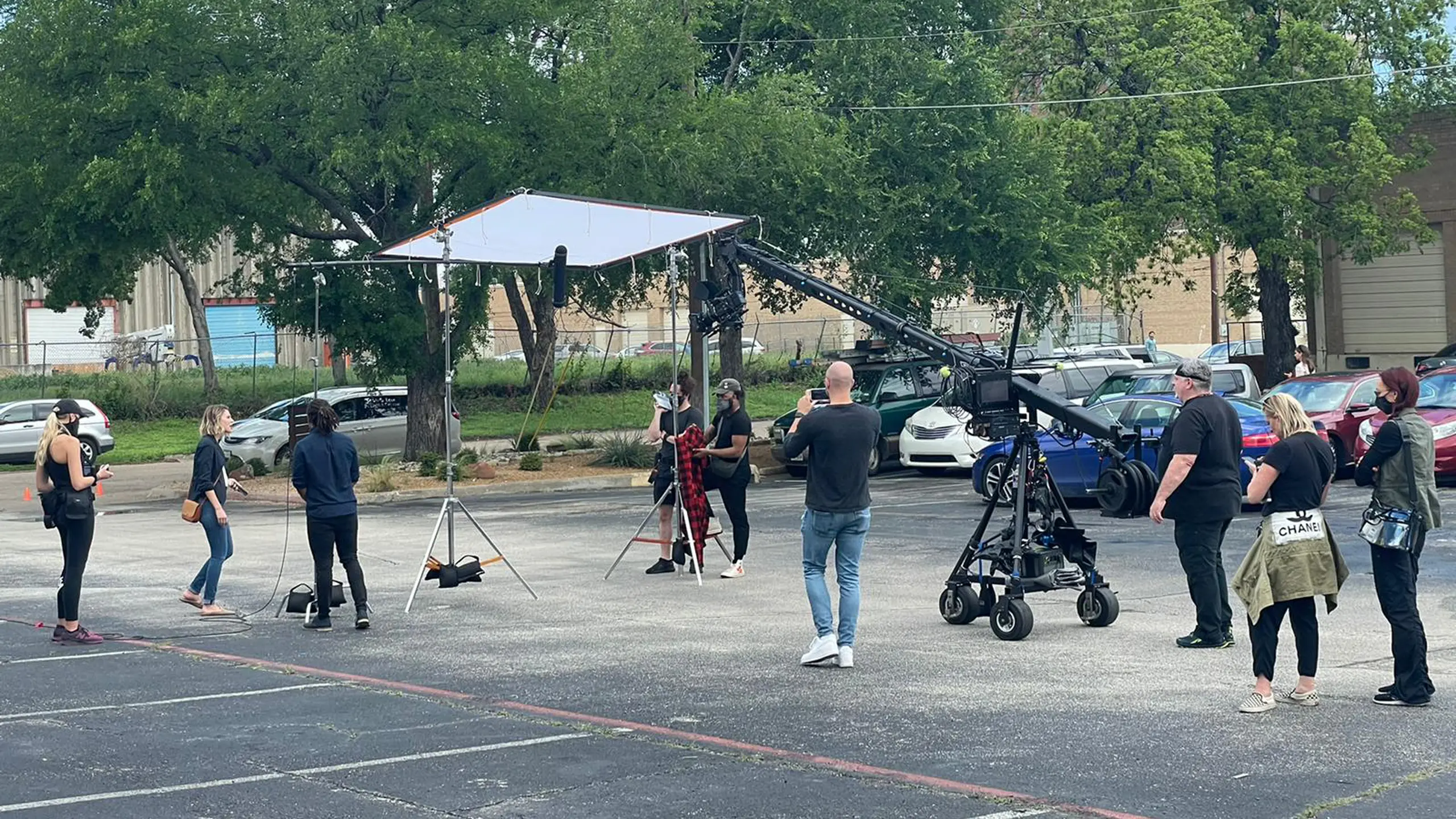
Feature film pre-production serves as the cornerstone of filmmaking, setting the stage for a smooth and successful production process. It encompasses all the foundational planning and coordination necessary to bring a cinematic vision to life. By addressing every detail, from assembling the right team to budgeting and location scouting, pre-production acts as the backbone, ensuring creative ideas are seamlessly translated into reality.
Effective pre-production is not just about organization; it’s a critical step to save time, minimize costs, and prevent unexpected hurdles during filming. With a thorough plan in place, filmmakers can focus on creativity and storytelling rather than troubleshooting issues on set.
In this guide, we’ll explore essential steps like script breakdowns, budgeting, casting, and technical setup. Whether you’re an experienced filmmaker or a newcomer, following these strategies will help you master the art of pre-production and set your feature film on the path to success.
## Understanding the Scope of Your Film
Defining the scope of your feature film is the critical first step in pre-production planning. It sets the foundation for every subsequent decision and ensures that your creative vision aligns with practical realities. The scope includes determining the genre, narrative style, and the scale of the production. Whether you’re working on a small indie project or a large-scale blockbuster, having a clear understanding of the film’s scope will shape the entire production journey.
Knowing your target audience is equally vital. Are you crafting a heartwarming family drama or an action-packed thriller? Understanding who you’re making the film for will influence the themes, tone, and overall execution. This clarity helps maintain a focused narrative that resonates with viewers.
Beyond the narrative, it’s crucial to pinpoint the core themes and artistic vision. What message do you want to convey? How should the audience feel while watching your film? These questions guide the creative process and ensure every scene aligns with the overall vision.
A well-structured project timeline acts as a high-level roadmap for your production. This timeline should include key milestones, from script finalization to post-production deadlines. Integrating a feature film pre-production checklist into this timeline ensures no critical step is overlooked. For instance, scouting locations and securing permits are tasks that require advanced planning.
Budget estimation is another essential aspect of understanding your film’s scope. Early in the process, identify fixed costs (like equipment rentals) and variable expenses (such as location fees). A clear budget not only helps allocate resources efficiently but also sets realistic expectations for what can be achieved. This step should be firmly rooted in pre-production planning to avoid overspending or cutting corners later.
Lastly, the film setup needed for production should be considered. Will you require special equipment or unique locations? Does the film call for elaborate set designs or advanced visual effects? Answering these questions early allows you to prepare adequately and prevent logistical surprises during filming.
## Assembling the Dream Team
Behind every successful feature film is a talented and cohesive team. Assembling the right crew during pre-production ensures that your vision is brought to life with professionalism and expertise. Each role, from the producer to the cinematographer, contributes to the success of the project.
The producer is often the first team member to onboard. They oversee the production’s logistics, ensuring that the budget, schedule, and overall project management align with the film’s goals. Next, the director plays a pivotal role in translating the script into a visual narrative. Their creative input shapes every aspect of the film.
The cinematographer collaborates closely with the director to establish the film’s visual style, while the art director focuses on set designs, props, and overall aesthetics. Other crucial roles include the sound designer, costume designer, and makeup artists, all of whom add depth and texture to the project.
Selecting the right team members requires careful consideration. Use a feature film pre-production checklist to outline the skills and experience required for each role. Look for professionals whose expertise complements the unique needs of your film. Scouting talent through industry networks or online platforms can help you find the perfect fit.
Clear communication is the key to maintaining harmony within the team. Regular meetings and collaborative tools can help everyone stay aligned on objectives. Encourage input from all departments, as fresh perspectives can enrich the creative process. Establishing shared goals early on fosters a sense of unity and commitment.
During pre-production planning, it’s essential to define team responsibilities clearly. Assigning specific tasks and milestones ensures accountability and prevents overlapping duties. This not only streamlines the workflow but also helps resolve potential conflicts before they arise.
Finally, the film setup must be addressed collaboratively. Team members should familiarize themselves with the shooting schedule, equipment requirements, and location details. This ensures that everyone is prepared and confident when production begins, setting the stage for a smooth and successful filmmaking process.
## Script Breakdown and Analysis
Breaking down the script is a cornerstone of effective pre-production planning. This process transforms a creative narrative into actionable elements, setting the groundwork for all logistical decisions. By analyzing the script thoroughly, filmmakers can identify key details such as locations, props, costumes, and characters. For example, a single scene may require a specific set design, unique props, and a particular time of day, details that must be meticulously planned in advance.
Tools and techniques play a significant role in simplifying this process. Modern script breakdown software, like StudioBinder or Celtx, allows filmmakers to tag and categorize elements such as props, camera setups, and actors for each scene. These tools also integrate seamlessly with the film setup, ensuring that all necessary equipment and resources are accounted for. A manual approach, such as color-coding elements in the script, can also be effective for smaller projects.
An essential step in this process is prioritizing the must-haves over the nice-to-haves. Filmmakers must differentiate between non-negotiable elements critical to the story and optional components that enhance the visual experience. For instance, a pivotal location for a dramatic climax is a must-have, while a luxury prop for a secondary scene may be adjustable. Including these priorities in the feature film pre-production checklist helps ensure the project stays within budget and on schedule.
Lastly, the script breakdown aids in scheduling and resource allocation. Identifying elements like the number of cast members required per scene or specific shooting locations allows for more efficient planning. With an actionable pre-production planning strategy, filmmakers can ensure that every aspect of the script is addressed, leaving no room for last-minute surprises during production.
## Budgeting and Financing
Budgeting is one of the most crucial steps in the feature film pre-production checklist, as it defines the financial boundaries for the entire project. A well-thought-out budget divides costs into fixed expenses, such as equipment rentals and location fees, and variable costs, like catering and transportation. Understanding these distinctions allows filmmakers to allocate funds strategically and avoid overspending.
Exploring funding sources is another key component of pre-production planning. Options include applying for grants, pitching to investors, or leveraging crowdfunding platforms like Kickstarter or Indiegogo. Each funding source has its requirements and timelines, so aligning them with the film's scope and schedule is essential for success.
Budget approval is a collaborative process involving key stakeholders like producers and investors. Once the budget is finalized, it’s vital to plan for contingencies. Unexpected expenses can arise during the film setup, such as weather-related delays or equipment malfunctions. Allocating a percentage of the budget for emergencies ensures that production can continue smoothly without financial strain.
By combining detailed planning, diverse funding sources, and strategic contingency measures, filmmakers can create a robust financial foundation. A comprehensive feature film pre-production checklist ensures that all budgetary elements are accounted for, paving the way for a well-executed production.
## Scouting and Securing Locations
Selecting the right filming locations is a crucial aspect of pre-production planning. Locations significantly influence the visual tone and authenticity of a feature film. The process begins with identifying potential spots that align with the script's requirements. This involves studying the script carefully and listing essential elements, such as urban or rural settings, architectural styles, or unique environmental features. Once shortlisted, these locations should be visited in person to assess their suitability.
During site visits, filmmakers should consider practical factors like lighting, sound interference, and space for equipment and crew. Additionally, incorporating location requirements into the film setup ensures that equipment compatibility and logistics are aligned. For instance, shooting in a remote area may necessitate generators for power or additional transportation resources. These considerations should be documented in the feature film pre-production checklist to streamline the process.
Negotiating contracts and securing permissions are next on the agenda. Each location may have specific rules and associated fees, which need to be clarified upfront. Whether dealing with private property owners or local authorities, clear communication and legal agreements are essential to avoid misunderstandings later. It’s also advisable to account for insurance coverage to protect against unforeseen damages during the shoot.
Logistical challenges such as accessibility, weather conditions, and local restrictions can impact the filming schedule. For example, a picturesque location may be ideal visually but difficult to access with heavy equipment. Weather unpredictability also poses risks, so contingency plans should be part of the pre-production planning phase. By addressing these challenges early and integrating solutions into the feature film pre-production checklist, filmmakers can avoid costly delays and ensure a seamless shoot.
## Casting the Right Talent
Casting is a critical step in pre-production planning, as the right actors bring characters to life and elevate the storytelling. The process begins with understanding each character’s requirements, including age, appearance, and personality traits. Filmmakers often rely on casting directors or agents to scout potential talent, ensuring a diverse pool of candidates that match the roles.
Auditions and callbacks are essential for evaluating actors’ suitability. During auditions, it’s important to test for chemistry between cast members, especially for scenes requiring strong interpersonal dynamics. Efficient scheduling of callbacks helps narrow down choices while maintaining momentum. Including this step in the feature film pre-production checklist ensures that no detail is overlooked during the selection process.
Once the ideal candidates are chosen, the next step is finalizing contracts. Agreements should outline payment terms, working hours, and other legal considerations to protect both parties. Scheduling rehearsals is equally crucial, especially for complex scenes or stunts. Rehearsals provide an opportunity for actors to align their performances with the director’s vision and refine key moments.
Effective casting doesn’t stop at signing contracts, it extends to building a supportive environment for the talent. Open communication between actors and the crew fosters trust and collaboration, ultimately contributing to the success of the production. By embedding these practices into pre-production planning and the feature film pre-production checklist, filmmakers can ensure a cast that not only fits the roles but also enhances the overall film quality.
## Designing the Look and Feel of Your Film
A film’s visual identity is pivotal in immersing the audience and conveying its narrative. The pre-production planning stage is where this identity takes shape through storyboarding and visual design. Storyboarding helps filmmakers map out each scene, providing a visual representation of how the narrative will unfold. This process ensures consistency in the film's look while serving as a guide for the crew during production.
Collaboration with the art and costume departments is essential in this phase. Art directors work on creating sets and selecting props that enhance the storytelling, while costume designers focus on clothing that reflects character traits and time periods. By integrating these elements into the feature film pre-production checklist, filmmakers can ensure that every visual detail is accounted for.
Color palettes play a significant role in setting the mood and tone of a film. For instance, warm tones may evoke feelings of nostalgia, while cooler hues can create a sense of tension or mystery. Props and set designs should also complement the narrative, whether it’s a historical drama requiring period-accurate artifacts or a futuristic sci-fi demanding innovative designs. During the pre-production planning process, these visual elements are meticulously chosen to ensure they align with the film’s themes and story.
Finally, regular communication between the director and visual teams fosters a unified vision. Sharing ideas and providing feedback during this stage allows for any necessary adjustments before production begins. This collaborative approach, combined with a comprehensive feature film pre-production checklist, ensures that the film’s aesthetic is both cohesive and impactful.
## Preparing the Shooting Schedule
A well-crafted shooting schedule is critical to the success of a feature film. It organizes the entire production process and ensures efficient use of time and resources. The first step in creating a shooting schedule is breaking down the script into individual scenes, considering factors like location, cast availability, and technical requirements. This breakdown forms the foundation of effective pre-production planning.
Balancing crew availability, locations, and daylight needs is a key aspect of scheduling. For instance, scenes requiring natural light must be timed to align with optimal daylight hours, while scenes involving specific actors should accommodate their availability. Including these considerations in the film, pre-production checklist ensures a smooth workflow and prevents unnecessary delays.
Scheduling software, such as Movie Magic or StudioBinder, can streamline this process. These tools help filmmakers organize scenes, assign tasks, and track progress in real-time. By integrating these technologies into the film setup, filmmakers can adapt quickly to any changes, whether it’s a weather delay or a last-minute location shift.
Flexibility is vital in shooting schedules. While planning is crucial, unexpected challenges often arise during production. Allocating buffer times and contingency days can help absorb these disruptions without derailing the project. Incorporating this flexibility into the pre-production planning process ensures that the schedule remains realistic and manageable.
By combining careful planning, technological tools, and adaptability, filmmakers can create a shooting schedule that keeps the production on track. Embedding these practices into the feature film pre-production checklist ensures that every scene is executed efficiently, contributing to a seamless and successful filmmaking experience.
## The Basics of Color Grading in Film
Color grading is the artistic process of adjusting the tones, colors, and overall visual aesthetics of a film to align with the director’s creative vision. It transforms raw footage into a polished masterpiece, enhancing the emotional impact of every scene. This aspect of visual storytelling has evolved dramatically over the years, beginning with physical techniques like tinting and toning in the early days of cinema. Films like *Gone with the Wind* and *The Wizard of Oz* set early standards for using color to captivate audiences, demonstrating how hues could add depth and meaning to stories.
With advancements in technology, film color grading transitioned into digital workflows, offering filmmakers precision and flexibility. Modern tools like [DaVinci Resolve](https://www.blackmagicdesign.com/products/davinciresolve/) and Adobe Premiere Pro enable creators to manipulate saturation, contrast, and brightness with ease. These tools not only make the process more efficient but also expand creative possibilities for independent filmmakers and blockbuster productions alike.
A critical distinction exists between color correction and color grading. While color correction focuses on rectifying technical issues such as exposure and white balance, color grading in the film is a creative endeavor that defines the mood and emotional tone of the story. For instance, *Mad Max: Fury Road* used bold, saturated hues to create its high-energy, apocalyptic visuals, showcasing the transformative power of grading.
Through the seamless integration of technology and creativity, color grading in film has become indispensable for elevating visual storytelling. It allows filmmakers to craft immersive cinematic experiences, ensuring that every frame contributes to the narrative.
## The Emotional Impact of Colors in Storytelling
Colors are one of the most powerful tools in visual storytelling, capable of evoking deep emotional responses. Filmmakers use the psychology of color to guide viewers’ feelings, with warm tones like reds and yellows symbolizing passion, energy, or danger, and cool tones like blues and greens reflecting calm, melancholy, or tension. For example, Guillermo del Toro’s *The Shape of Water* employed aquatic greens and blues to convey an ethereal and mysterious atmosphere, drawing viewers deeper into the narrative.
Film color grading amplifies these emotional cues, transforming a scene’s mood to match the story’s themes. In horror films, muted and desaturated palettes are used to create suspense, while romantic dramas lean into soft pastels to evoke tenderness and warmth. Through precise manipulation of color, filmmakers can create a sensory connection that enhances the story’s emotional depth.
The interplay between color correction and grading is essential in achieving these results. While color correction ensures technical accuracy, grading adds a layer of creativity that breathes life into the footage. A perfect example is Francis Ford Coppola’s *The Godfather*, where golden hues and shadowy contrasts underscore the themes of power and corruption.
In the end, the use of color grading in film not only enhances the visual appeal but also strengthens the emotional resonance of the story. By mastering this craft, filmmakers create unforgettable moments that linger in the audience’s minds long after the credits roll.
## Tools and Software for Color Grading
Modern filmmaking relies heavily on advanced tools and software to achieve professional-quality film color grading. Among the most popular options is DaVinci Resolve, widely recognized for its comprehensive suite of color grading tools. Its node-based interface allows for precise adjustments in contrast, saturation, and hues, making it a favorite for both high-budget productions and independent filmmakers.
Similarly, Adobe Premiere Pro offers a seamless integration of editing and color grading workflows. With its Lumetri Color panel, editors can enhance footage without switching between software. For macOS users, Final Cut Pro provides intuitive tools for quick grading, perfect for filmmakers prioritizing efficiency.
While these tools serve similar purposes, each has unique strengths. DaVinci Resolve is known for its industry-grade precision and flexibility, while Adobe Premiere Pro shines in its user-friendly interface and robust editing features. Final Cut Pro’s simplicity makes it ideal for creators seeking speed and ease. Additionally, plugins like Magic Bullet Suite and FilmConvert extend the capabilities of these platforms, offering creative LUTs (Look-Up Tables) and specialized grading presets.
Recent advancements in AI-driven tools have revolutionized the field, making color correction and grading more accessible. AI-powered software can analyze footage and suggest optimal adjustments, saving time and ensuring consistency. For example, tools like Colourlab AI and Runway ML allow filmmakers to replicate complex color styles or automatically match color tones across multiple shots. These innovations streamline workflows, empowering filmmakers to focus more on visual storytelling and less on technical complexities.
Whether creating a vivid dreamscape or a moody dystopian aesthetic, these tools enhance every stage of post-production. By combining traditional expertise with cutting-edge software, filmmakers can elevate their projects, ensuring every scene resonates emotionally and visually.
## The Role of Color Palettes in Film Genres
Color palettes are a cornerstone of effective visual storytelling, with each genre relying on distinct hues to convey tone and emotion. In romantic films, warm tones like soft pinks, oranges, and yellows evoke intimacy and optimism. Conversely, dystopian films often lean on desaturated and muted colors, creating a sense of bleakness and despair. For example, *The Road* employs washed-out grays and browns to reflect its post-apocalyptic setting.
In film color grading, genres like fantasy and adventure frequently use vibrant, saturated hues to create immersive, larger-than-life worlds. A prime example is *The Grand Budapest Hotel*, where Wes Anderson’s use of pastel palettes underscores the film’s whimsical and nostalgic tone. In contrast, sci-fi films like *The Matrix* utilize greenish hues to reinforce the artificial, computerized nature of their worlds.
Achieving these visual tones requires a delicate balance between color correction and creative grading. Color correction ensures consistency across scenes, while grading infuses the footage with the desired emotional weight. For instance, grading in horror films often emphasizes shadows and desaturation to instill unease, while comedies opt for brighter, more cheerful palettes to match their lighthearted themes.
By tailoring color palettes to genre-specific needs, filmmakers can heighten the narrative impact of their stories. The process of color grading in film not only enhances the aesthetic but also draws viewers deeper into the world being portrayed. Whether it’s the golden hues of a sunset in a romantic drama or the cold blues of a thriller, the right palette serves as a silent storyteller, reinforcing themes and emotions with every frame.
## Crafting Mood and Atmosphere Through Color
In filmmaking, the mood and atmosphere of a scene are often defined by its visual aesthetic. Through film color grading, filmmakers can evoke emotions, enhance tension, or create a sense of wonder, all while reinforcing the narrative. Grading goes beyond simple adjustments; it allows filmmakers to sculpt each scene’s visual tone by manipulating shadows, highlights, and saturation.
Shadows are often used to convey mystery or fear, while well-placed highlights can draw attention to key elements within a frame. Saturation plays a pivotal role in crafting atmospheres, muted tones can create a somber or gritty feel, while vibrant colors bring energy and excitement. For example, in *Blade Runner 2049*, the use of neon hues and deep shadows paints a dystopian future that feels both immersive and haunting. The interplay of contrast and brightness further heightens the film's mood, enhancing its futuristic noir aesthetic.
Brightness and contrast are also essential for creating depth and directing viewers' focus. Bright, high-contrast visuals like those in *La La Land* emphasize joy and romance, whereas low-light, low-contrast scenes, such as in *The Dark Knight*, underscore tension and foreboding. Vibrancy, on the other hand, breathes life into scenes, making colors pop or fade as needed to support the story's tone.
Through color grading in film, directors can align visuals with the emotional core of their narrative. For instance, the desaturated tones of *The Revenant* highlight the harshness of nature and the protagonist's struggle for survival. These deliberate choices in grading ensure that the visuals not only captivate the audience but also enrich the storytelling, making every frame a vital part of the cinematic experience.
## Color Grading for Character and Scene Development
Color grading is an invaluable tool for shaping character arcs and defining the emotional beats of a story. Through the use of color tones, filmmakers can illustrate a character's growth, transformation, or internal conflict. In *Joker*, for instance, the progression from muted greens and grays to bolder, more chaotic colors reflects Arthur Fleck's descent into madness. This subtle but impactful use of film color grading ensures the audience feels the emotional weight of the character's journey.
Distinct color tones are also instrumental in differentiating timelines or parallel storylines. For example, *Black Panther* contrasts the warm, golden tones of Wakanda’s prosperity with the cool, blue hues of Killmonger’s flashback scenes, emphasizing the stark differences between their experiences. This visual distinction helps the audience navigate the story while deepening their understanding of the characters’ motivations.
Color correction is equally critical for scene continuity, ensuring consistent lighting and color balance across shots. This foundational step sets the stage for creative grading, where filmmakers can layer in emotional depth and visual cues. For example, in *Eternal Sunshine of the Spotless Mind*, warm colors are used during Joel and Clementine's happy memories, while cooler tones dominate scenes of conflict and regret.
By carefully crafting color palettes and grading styles, filmmakers enhance both individual scenes and overarching narratives. The result is a cohesive visual language that not only captivates but also provides insight into the characters' inner worlds and the story’s evolution. Film color grading thus becomes a silent yet powerful storyteller, shaping the way audiences connect with the film.
## Common Mistakes and How to Avoid Them
Color grading in film is both an art and a science, requiring balance and precision to achieve the desired visual impact. However, common mistakes can undermine the storytelling and distract viewers. One frequent error is over-saturation, where colors appear unnaturally vibrant, making scenes look unrealistic or overly stylized. While bold colors can be impactful, subtlety is key to maintaining believability. Similarly, mismatched tones across scenes disrupt continuity, pulling audiences out of the narrative. For instance, inconsistent lighting or conflicting hues can make transitions jarring and visually disjointed.
To maintain a cohesive look, filmmakers should establish a color palette early in the project and stick to it throughout. Using reference frames or LUTs (Look-Up Tables) ensures consistency in tones and styles. It’s also crucial to start with proper color correction, addressing issues like exposure and white balance before diving into creative grading. Neglecting this foundational step can result in uneven visuals that are difficult to fix later in the workflow.
For beginners, a good practice is to avoid overcomplicating the process. Focus on subtle adjustments and test different looks before committing to a specific style. Experienced filmmakers can experiment with advanced techniques like isolating specific colors or using secondary corrections to highlight important elements in a scene. Tools like waveform monitors and histograms are invaluable for ensuring technical accuracy, helping filmmakers avoid issues like blown-out highlights or crushed shadows.
Ultimately, successful color grading in film requires a blend of technical expertise and creative vision. By addressing these common pitfalls and following best practices, filmmakers can create visuals that not only captivate but also complement the story being told.
## The Future of Film Color Grading
The future of film color grading is being shaped by technological advancements that are revolutionizing the way filmmakers approach visual storytelling. One significant trend is HDR (High Dynamic Range) grading, which enhances contrast and expands color ranges, allowing for richer, more lifelike visuals. With HDR, filmmakers can create stunningly vibrant scenes, such as the breathtaking landscapes in *The Mandalorian*, while preserving detail in both highlights and shadows.
AI-enhanced workflows are also transforming the industry. Tools like Colourlab AI and Adobe Sensei can analyze footage, match color tones across scenes, and even replicate the grading styles of specific films. This not only saves time but also enables filmmakers to achieve professional results with greater efficiency. Real-time grading during shooting is becoming increasingly accessible. Technologies, like live LUT previews, allow directors and cinematographers to see how their footage will look after grading, reducing guesswork and ensuring creative intent is maintained.
As immersive formats like VR and AR gain traction, the demand for dynamic color grading techniques is growing. These formats require adaptive grading to account for interactive environments and varying perspectives, presenting new challenges and opportunities for filmmakers. For instance, in VR storytelling, the color palette must guide the viewer’s focus while maintaining a natural, immersive feel.
Technological advancements are not just tools; they are enablers of new storytelling possibilities. The integration of AI and real-time capabilities is likely to blur the lines between production and post-production, giving filmmakers unprecedented creative control. As these innovations evolve, film color grading will continue to push boundaries, ensuring that visuals remain a powerful medium for captivating audiences.
## How to Master Color Grading for Your Film Projects
Mastering color grading in film requires a blend of technical skill, creative vision, and consistent practice. The journey begins with a solid understanding of the basics. Filmmakers should familiarize themselves with color theory and the emotional impact of hues on storytelling. Building a library of reference images or scenes from films that align with your desired aesthetic is a practical way to develop your visual style. These references serve as a guide, helping you understand how professional filmmakers use color to evoke mood and emotion.
For beginners, starting with accessible tools like DaVinci Resolve, Adobe Premiere Pro, or Final Cut Pro is essential. These platforms offer comprehensive features and tutorials, making it easier to learn grading techniques step by step. Begin by practicing color correction, as this ensures your footage is technically sound and consistent. Correcting issues like exposure, white balance, and saturation lays the foundation for creative grading. Without this step, achieving a polished final look becomes challenging.
Once the basics are in place, experiment with advanced tools and features. Use LUTs (Look-Up Tables) to apply pre-set looks to your footage, then tweak them to fit your specific vision. Explore features like secondary color correction, which allows you to isolate and enhance specific elements, such as skin tones or backgrounds. Advanced practitioners can also explore HDR workflows or AI-powered tools to achieve more dynamic and efficient results.
Continuous learning is key to mastery. Take advantage of resources like online tutorials, courses, and community forums, where you can learn from experienced colorists and troubleshoot challenges. Platforms like YouTube and specialized training sites often provide step-by-step guides for achieving cinematic looks.
Above all, practice regularly. The more you work with different styles, tones, and projects, the more intuitive grading will become. Remember that both color correction and grading are vital to enhancing visual storytelling, transforming raw footage into a cohesive, emotionally engaging experience. By combining technical knowledge with creative exploration, filmmakers can develop a unique grading style that elevates their projects to professional standards.
## Work with C&I Studios
If you are planning a project like this, our team can take it from concept to final delivery. Explore our [film and TV production](https://c-istudios.com/film-and-tv-production/), browse [our work](https://c-istudios.com/our-work/) to see how we tell brand stories, and [get in touch](https://c-istudios.com/contact/) when you are ready to start.
Originally published December 8, 2024
---
*This content is from [C&I Studios](https://c-istudios.com), a full-service production company.*
---
# Post-Production: Bringing Your Film to Life
> Published: December 7, 2024
> Categories: Film & TV
> Source: https://c-istudios.com/post-production-bringing-your-film-to-life/
---
.cib{--paper:#1b1d1f;--ink:#fff;--body:#d5d7d9;--muted:#8b9096;--line:rgba(255,255,255,.12);--thumb:#2b2e31;--card:#212426;--accent:#c02b0a;--blue:#5B8FA8;--serif:'Playfair Display',Georgia,serif;--sans:'Poppins',-apple-system,sans-serif;--measure:900px;background:var(--paper);color:var(--body);font-family:var(--sans);line-height:1.6;position:relative;left:50%;transform:translateX(-50%);width:90vw;max-width:1920px}
.cib *{box-sizing:border-box}
.cib .kicker{max-width:var(--measure);margin:58px auto 0;padding:0 22px;font-size:12.5px;font-weight:700;letter-spacing:2.5px;text-transform:uppercase;color:var(--blue)}
.cib h1.cibh1{text-wrap:balance;font-family:var(--serif);font-weight:500;font-size:clamp(46px,6vw,72px);line-height:1.08;color:var(--ink);max-width:var(--measure);margin:18px auto 0;padding:0 22px;letter-spacing:-.5px}
.cib .metarow{max-width:var(--measure);margin:20px auto 0;padding:0 22px;color:var(--muted);font-size:14px}
.cib .hero{position:relative;width:100%;height:0;padding-bottom:56.25%;overflow:hidden;margin:48px auto 0;border-top:1px solid var(--line);border-bottom:1px solid var(--line)}
.cib .hero .ph{width:100%;aspect-ratio:16/9;background:var(--thumb);border-top:1px solid var(--line);border-bottom:1px solid var(--line);display:flex;align-items:center;justify-content:center;color:#7d8288;font-size:13px;text-align:center;padding:0 20px}
.cib .body{max-width:var(--measure);margin:12px auto 0;padding:52px 22px 6px}
.cib .body.lead p:first-child{font-size:23px;line-height:1.62;color:var(--ink)}
.cib .body p{font-size:18.5px;line-height:1.85;margin:0 0 30px;color:var(--body)}
.cib .body h2{text-wrap:balance;font-family:var(--serif);font-weight:500;font-size:clamp(32px,4vw,48px);line-height:1.22;color:var(--ink);margin:70px 0 20px;letter-spacing:-.3px}
.cib .body h3{text-wrap:balance;font-family:var(--sans);font-weight:600;font-size:22px;color:var(--ink);margin:38px 0 8px}
.cib .body a{color:var(--ink);text-decoration:underline;text-decoration-color:rgba(255,255,255,.4);text-underline-offset:3px}
.cib .body a:hover{text-decoration-color:var(--ink)}
.cib .ctable{width:100%;border-collapse:collapse;margin:16px 0 30px;font-size:16px}
.cib .ctable th{background:#000;color:#fff;text-align:left;padding:10px 12px;font-family:var(--sans)}
.cib .ctable td{padding:10px 12px;border-bottom:1px solid var(--line);color:var(--body)}
.cib .inimg{position:relative;width:100%;height:0;padding-bottom:56.25%;overflow:hidden;margin:72px auto;border-top:1px solid var(--line);border-bottom:1px solid var(--line)}
.cib .inimg .ph{width:100%;aspect-ratio:16/9;background:var(--thumb);border-top:1px solid var(--line);border-bottom:1px solid var(--line);display:flex;align-items:center;justify-content:center;color:#7d8288;font-size:13px}
.cib .origpub{max-width:var(--measure);margin:60px auto 0;padding:26px 22px 0;border-top:1px solid var(--line);color:var(--muted);font-size:13.5px}
.cib .related{max-width:1200px;margin:64px auto 0;padding:34px 22px 76px}
.cib .related h3{font-family:var(--sans);font-size:12.5px;letter-spacing:2px;text-transform:uppercase;color:var(--ink);margin:0 0 24px}
.cib .grid{display:grid;grid-template-columns:repeat(3,1fr);gap:28px}
.cib .rc{background:var(--card);border:1px solid var(--line);display:block;text-decoration:none;color:inherit;transition:border-color .15s}
.cib a.rc:hover{border-color:rgba(255,255,255,.5)}
.cib .rc .thumb{position:relative;width:100%;height:0;padding-bottom:56.25%;background:var(--thumb);overflow:hidden}
.cib .rc .thumb img{position:absolute!important;top:0!important;left:0!important;width:100%!important;height:100%!important;object-fit:cover!important;margin:0!important}
.cib .rc .cc{padding:14px 15px 17px}
.cib .rc .rt{font-family:var(--serif);font-weight:500;font-size:16px;line-height:1.3;color:var(--ink);margin:0 0 6px}
.cib .rc .rm{font-size:11px;letter-spacing:1px;text-transform:uppercase;color:var(--muted)}
.cib img{margin:0!important;padding:0!important;display:block!important;vertical-align:top;max-width:100%}
.cib .hero img,.cib .inimg img{position:absolute!important;top:0!important;left:0!important;width:100%!important;height:100%!important;object-fit:cover!important;margin:0!important;padding:0!important;border:0!important;display:block!important;aspect-ratio:auto!important}
.cib .hero+.body{padding-top:36px}
@media(max-width:760px){.cib .grid{grid-template-columns:1fr}.cib .body h2{margin:52px 0 16px}.cib .body p{font-size:17.5px}.cib .inimg,.cib .hero{margin-top:44px}}
.cib .vembed{max-width:var(--measure);margin:44px auto;padding:0 22px}.cib .vembed .vwrap{position:relative;width:100%;height:0;padding-bottom:56.25%}.cib .vembed .vwrap iframe{position:absolute;top:0;left:0;width:100%;height:100%;border:0}
Film & TV
# Post-Production. Bringing Your Film to Life
24 min read

Film post-production is the magical phase where raw footage evolves into a captivating story. It’s the heartbeat of filmmaking, where scattered clips, sound bites, and visual elements are skillfully refined to create a seamless narrative. While filming captures the essence of the story, post-production breathes life into it, transforming creative vision into a cinematic masterpiece.
This critical stage isn’t just about editing; it’s a multifaceted process that includes fine-tuning audio, enhancing visuals, adding special effects, and perfecting the overall tone through color grading. Each step in the post-production stages plays a pivotal role in ensuring the film resonates with its audience.
In this article, we’ll explore the key phases of post-production, from organizing footage and film editing to the art of sound design and visual effects. By understanding these steps, you’ll see how post-production shapes a film’s final impact, making it ready to shine on the big screen.
## What is Film Post-Production?
Film post-production is the transformative phase where raw footage evolves into a fully realized film. It begins after the cameras stop rolling and focuses on refining the captured material to create a compelling narrative. Unlike pre-production, which deals with planning and logistics, or production, which captures the visuals and sound, post-production is about perfecting and enhancing every element to ensure a seamless, polished final product.
At the core of this stage is film editing, where editors sift through hours of footage, removing unnecessary scenes and piecing together the story with precision. This process defines the pacing and rhythm of the film, ensuring that every frame serves the narrative. Alongside editing, color grading is employed to fine-tune the visual tone, creating a consistent mood that aligns with the director's vision.
Post-production is inherently collaborative, involving various experts working together to bring the project to life. Editors shape the story, sound designers add depth with audio enhancements, and visual effects (VFX) artists push creative boundaries by introducing elements that are otherwise impossible to capture during filming. Colorists, meanwhile, refine the aesthetic by adjusting hues, contrast, and saturation to achieve a cinematic quality.
This phase is more than a technical process; it is where creativity meets precision. It transforms raw material into a cohesive, immersive experience, ensuring the film is ready to captivate its audience. Without post-production, a film remains incomplete, a mere collection of unpolished scenes lacking the magic that makes it memorable.
## Post-Production Stages. An Overview
The post-production stages represent a series of meticulous steps that collectively shape the raw footage into a polished cinematic masterpiece. It begins with ingesting and organizing the footage, where all recorded material is imported and cataloged. This step ensures editors can efficiently access and work with the content throughout the process.
Next comes film editing, where the narrative takes shape. Editors create a rough cut to establish the structure of the story, followed by a fine cut that polishes transitions, adjusts pacing, and eliminates any inconsistencies. Sound design and mixing are equally crucial, as audio elements such as dialogue, music, and sound effects are enhanced to add depth and emotion.
One of the most visually impactful stages is color grading, where the film’s tone and atmosphere are refined. This process balances colors, adjusts brightness, and enhances contrast to create a cohesive visual experience. Simultaneously, visual effects (VFX) and CGI bring creative visions to life by integrating elements that could not be captured during filming.
Finally, the project moves to output and distribution, where the film is formatted for theaters, streaming platforms, or other intended channels. Every stage is interconnected, with professionals collaborating to ensure the highest quality. These post-production stages are what elevate raw footage into a captivating story, making it ready for the world to experience.
## The Art of Film Editing
Film editing serves as the backbone of storytelling in the post-production stages, bridging the gap between raw footage and a seamless cinematic experience. It is through film editing that a narrative finds its structure, rhythm, and emotional depth. This art form determines how a story unfolds, guiding the audience's journey from scene to scene with precision and creativity.
At the heart of film editing are techniques like cuts, transitions, and pacing, each contributing to the flow of the story. Cuts, the most fundamental editing tool, remove unnecessary content while connecting key scenes. Whether it’s a jump cut for intensity or a match cut for smooth visual continuity, each decision shapes how viewers perceive the narrative. Transitions, such as fades, dissolves, or wipes, provide stylistic shifts between scenes, adding visual flair while maintaining the story's coherence. Pacing, meanwhile, determines the speed at which a film unfolds, influencing its tone and emotional impact. A fast-paced edit may evoke excitement, while slower transitions allow for reflection and character development.
Collaboration between the editor and director is crucial in achieving creative alignment. The director provides the vision, while the editor refines and translates that vision into a cohesive narrative. This partnership ensures that the essence of the story remains intact while exploring innovative ways to captivate the audience. A skilled editor knows when to follow the director’s guidance and when to push creative boundaries, finding the perfect balance between technical expertise and artistic intuition.
Through film editing, the magic of storytelling comes alive. Each frame is meticulously placed to evoke emotions, build tension, or provide relief. It is not just about assembling footage but about crafting a compelling narrative that resonates with viewers. Film editing transforms chaos into clarity, making it an indispensable part of the filmmaking process.
## Mastering Sound Design and Mixing
Sound is a powerful tool in the post-production stages, capable of enhancing visuals and immersing audiences in the story. Mastering sound design and mixing involves creating a rich auditory experience that complements and elevates the film’s narrative. This stage ensures that every sound, from subtle background effects to dynamic scores, is meticulously crafted and balanced.
Background scores and sound effects are integral to setting the mood and atmosphere of a film. A well-composed score can evoke emotions, build suspense, or provide a sense of wonder. Similarly, sound effects, like the rustling of leaves, a car engine’s roar, or footsteps on gravel, add realism, drawing viewers deeper into the world of the film. These elements, when synchronized seamlessly with visuals, heighten the storytelling experience.
Cleaning up audio tracks is another essential aspect of sound design. During filming, audio may pick up unwanted noises or inconsistencies. The post-production team works to eliminate these imperfections, ensuring clarity in dialogue and consistency in ambient sounds. This step is particularly vital for films with intricate soundscapes, where every detail contributes to the immersive experience.
Synchronizing dialogue and lip movements is a delicate yet critical task in sound mixing. Ensuring that spoken words align perfectly with the actors' lip movements maintains realism and prevents distractions for the audience. This process is especially important for films with dubbed audio or re-recorded dialogue.
By mastering sound design and mixing, filmmakers can create a cohesive blend of audio and visuals. Whether it’s the haunting silence before a climactic moment or the triumphant swell of a musical score, sound transforms scenes into memorable cinematic experiences. In the post-production stages, sound design is not merely an enhancement, it is a storyteller in its own right, enriching every frame with depth and emotion.
## The Power of Color Grading
Color grading is the process of enhancing and stylizing the colors of a film to create a specific mood or aesthetic. It is one of the most visually impactful steps in the post-production stages, allowing filmmakers to shape the emotional tone of their stories. By adjusting color tones, brightness, contrast, and saturation, color grading transforms raw footage into a polished, cinematic masterpiece that captivates viewers.
A distinction should be made between color correction and color grading. Color correction focuses on fixing technical issues, such as balancing exposure, removing color casts, and ensuring consistency across shots. This step lays the foundation for color grading, which is more creative and artistic. While color correction ensures the footage looks natural, color grading gives it a stylistic edge, aligning the visuals with the narrative’s mood. For instance, warm hues may evoke nostalgia or romance, while cooler tones can create tension or mystery.
To achieve professional-level results, filmmakers rely on advanced tools like DaVinci Resolve and Adobe Premiere Pro. DaVinci Resolve is renowned for its powerful grading features, offering precision controls and a wide range of creative effects. Adobe Premiere Pro, a staple in the industry, combines robust editing capabilities with intuitive color grading tools, making it accessible for both beginners and experts. These platforms empower filmmakers to fine-tune their visuals, ensuring every frame is visually striking.
Through color grading, filmmakers can transform ordinary footage into extraordinary art. It is a vital element in storytelling, helping to evoke emotions and immerse audiences in the film’s world. By mastering this technique, creators ensure that their vision comes to life in the most visually compelling way possible.
## Adding Visual Effects (VFX)
Visual effects (VFX) are a cornerstone of modern filmmaking, enabling stories to transcend the limitations of reality. In the post-production stages, VFX enhances storytelling by adding elements of realism or fantasy that are otherwise impossible to achieve during filming. From subtle enhancements like removing unwanted objects to grand creations like alien worlds or magical spells, VFX brings creative visions to life.
Key techniques in VFX include compositing, motion graphics, and CGI. Compositing combines multiple visual elements into a single frame, seamlessly blending live-action footage with digitally created components. Motion graphics add dynamic text, logos, or animated elements, often used for opening titles or explanatory visuals. CGI, or computer-generated imagery, creates entirely digital scenes or characters, enabling filmmakers to push the boundaries of imagination.
The role of VFX in modern blockbuster films is undeniable. Iconic franchises like *Avengers* or *Avatar* rely heavily on VFX to create immersive universes and awe-inspiring action sequences. Even in independent films, subtle VFX techniques enhance realism and production value, proving that visual effects are not limited to high-budget projects.
Throughout the post-production stages, VFX artists work closely with directors to ensure the effects align with the film’s vision. Their work involves intricate layering, precise timing, and creative ingenuity, blending technology with artistry to achieve breathtaking results.
By incorporating VFX, filmmakers elevate their storytelling, captivating audiences with visually stunning scenes. Whether it’s a futuristic cityscape or a character’s transformation, VFX is an essential tool in modern cinema, ensuring that the possibilities of storytelling remain limitless.
## Collaborating with a Post-Production Team
Teamwork is the backbone of film post-production, as it requires the coordinated efforts of skilled professionals to transform raw footage into a polished final product. Collaboration ensures that the director’s vision is realized through a harmonious blend of visuals, sound, and storytelling elements.
Key team members play distinct but interconnected roles in film post-production. Editors are at the forefront, piecing together scenes, adjusting pacing, and ensuring the narrative flows seamlessly. They work closely with the director to align the edits with the film's artistic vision. Sound engineers focus on creating an immersive audio experience, enhancing dialogue, integrating sound effects, and balancing background scores. Colorists, on the other hand, are responsible for color grading, which involves adjusting the visual tone and mood of the film to align with its narrative and aesthetic.
Effective communication is vital during this collaborative stage. Clear and consistent dialogue between team members ensures that all creative and technical decisions are aligned with the project’s goals. Directors should establish a clear vision early on, providing detailed feedback and reference materials to guide the team.
Regular review sessions allow for iterative improvements and ensure that everyone remains on the same page. Using collaborative tools like project management software or shared cloud platforms can streamline communication and keep track of progress.
By fostering a spirit of teamwork and maintaining open lines of communication, the film post-production team can overcome challenges and deliver a cohesive, high-quality final product that brings the director’s vision to life.
## Challenges in Film Post-Production
The post-production stages of filmmaking are not without their hurdles. Tight deadlines, budget constraints, and technical glitches are among the most common challenges that filmmakers face during this critical phase.
Deadlines often leave little room for error, forcing teams to work long hours under intense pressure. This can lead to burnout and compromises in quality. To tackle this, filmmakers should establish realistic schedules during the planning phase, allowing for contingencies. Prioritizing tasks and using efficient workflows, such as batch processing for edits or automating repetitive tasks, can also help meet tight timelines without sacrificing quality.
Budget constraints pose another significant challenge, especially for smaller productions. High costs for professional software, hardware, and skilled personnel can strain resources. To manage this, filmmakers can leverage cost-effective tools or open-source software without compromising on quality. Freelancers or outsourcing certain aspects of the post-production stages can also reduce expenses while maintaining professional standards.
Technical glitches, such as software crashes or corrupted files, can disrupt workflows and cause delays. To minimize these risks, it’s essential to maintain proper backups of all files and use reliable, industry-standard tools. Regularly updating software and hardware also ensures smooth operations throughout the post-production stages.
By proactively addressing these challenges with strategic planning and adaptive solutions, filmmakers can navigate the complexities of post-production and deliver a final product that meets both creative and logistical demands.
## Future Trends in Film Post-Production
The future of film post-production is being reshaped by technological advancements that are revolutionizing how movies are made. Innovations such as AI-powered editing tools, virtual production workflows, and remote collaboration platforms are streamlining processes, enhancing creativity, and enabling filmmakers to achieve results faster and more efficiently than ever before.
AI-powered editing tools are transforming the way editors work by automating repetitive tasks, such as organizing footage and generating rough cuts. These tools use machine learning algorithms to identify key moments, suggest scene arrangements, and even match color grading styles to maintain consistency throughout the film. By reducing the time spent on manual tasks, AI allows editors to focus more on the creative aspects of storytelling. Platforms like Adobe Premiere Pro and DaVinci Resolve are increasingly integrating AI features to cater to this growing demand.
Virtual production workflows are another game-changer in film post-production. By combining real-time rendering with green screen technology, filmmakers can visualize and manipulate digital environments during the production stage. This innovation extends into post-production by simplifying VFX integration, as pre-rendered elements reduce the workload for visual effects teams. Films like *The Mandalorian* have showcased the potential of virtual production, setting a new standard for immersive storytelling.
The rise of remote collaboration platforms is addressing the growing need for flexible workflows. Tools like Frame.io and cloud-based editing systems allow teams to work together seamlessly from different locations, enabling faster feedback loops and reducing logistical barriers. As the demand for global collaboration increases, these platforms are becoming indispensable in film post-production, especially for projects with distributed teams.
Looking ahead, the integration of AI, virtual production, and remote platforms will continue to shape the industry. These advancements not only enhance the efficiency of film post-production but also open up new creative possibilities, empowering filmmakers to push the boundaries of storytelling and deliver visually stunning, emotionally resonant films.
## The Basics of Color Grading in Film
Color grading is the artistic process of adjusting the tones, colors, and overall visual aesthetics of a film to align with the director’s creative vision. It transforms raw footage into a polished masterpiece, enhancing the emotional impact of every scene. This aspect of visual storytelling has evolved dramatically over the years, beginning with physical techniques like tinting and toning in the early days of cinema. Films like *Gone with the Wind* and *The Wizard of Oz* set early standards for using color to captivate audiences, demonstrating how hues could add depth and meaning to stories.
With advancements in technology, film color grading transitioned into digital workflows, offering filmmakers precision and flexibility. Modern tools like DaVinci Resolve and Adobe Premiere Pro enable creators to manipulate saturation, contrast, and brightness with ease. These tools not only make the process more efficient but also expand creative possibilities for independent filmmakers and blockbuster productions alike.
A critical distinction exists between color correction and color grading. While color correction focuses on rectifying technical issues such as exposure and white balance, color grading in the film is a creative endeavor that defines the mood and emotional tone of the story. For instance, *Mad Max: Fury Road* used bold, saturated hues to create its high-energy, apocalyptic visuals, showcasing the transformative power of grading.
Through the seamless integration of technology and creativity, color grading in film has become indispensable for elevating visual storytelling. It allows filmmakers to craft immersive cinematic experiences, ensuring that every frame contributes to the narrative.
## The Emotional Impact of Colors in Storytelling
Colors are one of the most powerful tools in visual storytelling, capable of evoking deep emotional responses. Filmmakers use the psychology of color to guide viewers’ feelings, with warm tones like reds and yellows symbolizing passion, energy, or danger, and cool tones like blues and greens reflecting calm, melancholy, or tension. For example, Guillermo del Toro’s *The Shape of Water* employed aquatic greens and blues to convey an ethereal and mysterious atmosphere, drawing viewers deeper into the narrative.
Film color grading amplifies these emotional cues, transforming a scene’s mood to match the story’s themes. In horror films, muted and desaturated palettes are used to create suspense, while romantic dramas lean into soft pastels to evoke tenderness and warmth. Through precise manipulation of color, filmmakers can create a sensory connection that enhances the story’s emotional depth.
The interplay between color correction and grading is essential in achieving these results. While color correction ensures technical accuracy, grading adds a layer of creativity that breathes life into the footage. A perfect example is Francis Ford Coppola’s *The Godfather*, where golden hues and shadowy contrasts underscore the themes of power and corruption.
In the end, the use of color grading in film not only enhances the visual appeal but also strengthens the emotional resonance of the story. By mastering this craft, filmmakers create unforgettable moments that linger in the audience’s minds long after the credits roll.
## Tools and Software for Color Grading
Modern filmmaking relies heavily on advanced tools and software to achieve professional-quality film color grading. Among the most popular options is DaVinci Resolve, widely recognized for its comprehensive suite of color grading tools. Its node-based interface allows for precise adjustments in contrast, saturation, and hues, making it a favorite for both high-budget productions and independent filmmakers.
Similarly, Adobe Premiere Pro offers a seamless integration of editing and color grading workflows. With its Lumetri Color panel, editors can enhance footage without switching between software. For macOS users, Final Cut Pro provides intuitive tools for quick grading, perfect for filmmakers prioritizing efficiency.
While these tools serve similar purposes, each has unique strengths. DaVinci Resolve is known for its industry-grade precision and flexibility, while Adobe Premiere Pro shines in its user-friendly interface and robust editing features. Final Cut Pro’s simplicity makes it ideal for creators seeking speed and ease. Additionally, plugins like Magic Bullet Suite and FilmConvert extend the capabilities of these platforms, offering creative LUTs (Look-Up Tables) and specialized grading presets.
Recent advancements in AI-driven tools have revolutionized the field, making color correction and grading more accessible. AI-powered software can analyze footage and suggest optimal adjustments, saving time and ensuring consistency. For example, tools like Colourlab AI and Runway ML allow filmmakers to replicate complex color styles or automatically match color tones across multiple shots. These innovations streamline workflows, empowering filmmakers to focus more on visual storytelling and less on technical complexities.
Whether creating a vivid dreamscape or a moody dystopian aesthetic, these tools enhance every stage of post-production. By combining traditional expertise with cutting-edge software, filmmakers can elevate their projects, ensuring every scene resonates emotionally and visually.
## The Role of Color Palettes in Film Genres
Color palettes are a cornerstone of effective visual storytelling, with each genre relying on distinct hues to convey tone and emotion. In romantic films, warm tones like soft pinks, oranges, and yellows evoke intimacy and optimism. Conversely, dystopian films often lean on desaturated and muted colors, creating a sense of bleakness and despair. For example, *The Road* employs washed-out grays and browns to reflect its post-apocalyptic setting.
In film color grading, genres like fantasy and adventure frequently use vibrant, saturated hues to create immersive, larger-than-life worlds. A prime example is *The Grand Budapest Hotel*, where Wes Anderson’s use of pastel palettes underscores the film’s whimsical and nostalgic tone. In contrast, sci-fi films like *The Matrix* utilize greenish hues to reinforce the artificial, computerized nature of their worlds.
Achieving these visual tones requires a delicate balance between color correction and creative grading. Color correction ensures consistency across scenes, while grading infuses the footage with the desired emotional weight. For instance, grading in horror films often emphasizes shadows and desaturation to instill unease, while comedies opt for brighter, more cheerful palettes to match their lighthearted themes.
By tailoring color palettes to genre-specific needs, filmmakers can heighten the narrative impact of their stories. The process of color grading in film not only enhances the aesthetic but also draws viewers deeper into the world being portrayed. Whether it’s the golden hues of a sunset in a romantic drama or the cold blues of a thriller, the right palette serves as a silent storyteller, reinforcing themes and emotions with every frame.
## Crafting Mood and Atmosphere Through Color
In filmmaking, the mood and atmosphere of a scene are often defined by its visual aesthetic. Through film color grading, filmmakers can evoke emotions, enhance tension, or create a sense of wonder, all while reinforcing the narrative. Grading goes beyond simple adjustments; it allows filmmakers to sculpt each scene’s visual tone by manipulating shadows, highlights, and saturation.
Shadows are often used to convey mystery or fear, while well-placed highlights can draw attention to key elements within a frame. Saturation plays a pivotal role in crafting atmospheres, muted tones can create a somber or gritty feel, while vibrant colors bring energy and excitement. For example, in *Blade Runner 2049*, the use of neon hues and deep shadows paints a dystopian future that feels both immersive and haunting. The interplay of contrast and brightness further heightens the film's mood, enhancing its futuristic noir aesthetic.
Brightness and contrast are also essential for creating depth and directing viewers' focus. Bright, high-contrast visuals like those in *La La Land* emphasize joy and romance, whereas low-light, low-contrast scenes, such as in *The Dark Knight*, underscore tension and foreboding. Vibrancy, on the other hand, breathes life into scenes, making colors pop or fade as needed to support the story's tone.
Through color grading in film, directors can align visuals with the emotional core of their narrative. For instance, the desaturated tones of *The Revenant* highlight the harshness of nature and the protagonist's struggle for survival. These deliberate choices in grading ensure that the visuals not only captivate the audience but also enrich the storytelling, making every frame a vital part of the cinematic experience.
## Color Grading for Character and Scene Development
Color grading is an invaluable tool for shaping character arcs and defining the emotional beats of a story. Through the use of color tones, filmmakers can illustrate a character's growth, transformation, or internal conflict. In *Joker*, for instance, the progression from muted greens and grays to bolder, more chaotic colors reflects Arthur Fleck's descent into madness. This subtle but impactful use of film color grading ensures the audience feels the emotional weight of the character's journey.
Distinct color tones are also instrumental in differentiating timelines or parallel storylines. For example, *Black Panther* contrasts the warm, golden tones of Wakanda’s prosperity with the cool, blue hues of Killmonger’s flashback scenes, emphasizing the stark differences between their experiences. This visual distinction helps the audience navigate the story while deepening their understanding of the characters’ motivations.
Color correction is equally critical for scene continuity, ensuring consistent lighting and color balance across shots. This foundational step sets the stage for creative grading, where filmmakers can layer in emotional depth and visual cues. For example, in *Eternal Sunshine of the Spotless Mind*, warm colors are used during Joel and Clementine's happy memories, while cooler tones dominate scenes of conflict and regret.
By carefully crafting color palettes and grading styles, filmmakers enhance both individual scenes and overarching narratives. The result is a cohesive visual language that not only captivates but also provides insight into the characters' inner worlds and the story’s evolution. Film color grading thus becomes a silent yet powerful storyteller, shaping the way audiences connect with the film.
## Common Mistakes and How to Avoid Them
Color grading in film is both an art and a science, requiring balance and precision to achieve the desired visual impact. However, common mistakes can undermine the storytelling and distract viewers. One frequent error is over-saturation, where colors appear unnaturally vibrant, making scenes look unrealistic or overly stylized. While bold colors can be impactful, subtlety is key to maintaining believability. Similarly, mismatched tones across scenes disrupt continuity, pulling audiences out of the narrative. For instance, inconsistent lighting or conflicting hues can make transitions jarring and visually disjointed.
To maintain a cohesive look, filmmakers should establish a color palette early in the project and stick to it throughout. Using reference frames or LUTs (Look-Up Tables) ensures consistency in tones and styles. It’s also crucial to start with proper color correction, addressing issues like exposure and white balance before diving into creative grading. Neglecting this foundational step can result in uneven visuals that are difficult to fix later in the workflow.
For beginners, a good practice is to avoid overcomplicating the process. Focus on subtle adjustments and test different looks before committing to a specific style. Experienced filmmakers can experiment with advanced techniques like isolating specific colors or using secondary corrections to highlight important elements in a scene. Tools like waveform monitors and histograms are invaluable for ensuring technical accuracy, helping filmmakers avoid issues like blown-out highlights or crushed shadows.
Ultimately, successful color grading in film requires a blend of technical expertise and creative vision. By addressing these common pitfalls and following best practices, filmmakers can create visuals that not only captivate but also complement the story being told.
## The Future of Film Color Grading
The future of film color grading is being shaped by technological advancements that are revolutionizing the way filmmakers approach visual storytelling. One significant trend is HDR (High Dynamic Range) grading, which enhances contrast and expands color ranges, allowing for richer, more lifelike visuals. With HDR, filmmakers can create stunningly vibrant scenes, such as the breathtaking landscapes in *The Mandalorian*, while preserving detail in both highlights and shadows.
AI-enhanced workflows are also transforming the industry. Tools like Colourlab AI and Adobe Sensei can analyze footage, match color tones across scenes, and even replicate the grading styles of specific films. This not only saves time but also enables filmmakers to achieve professional results with greater efficiency. Real-time grading during shooting is becoming increasingly accessible. Technologies, like live LUT previews, allow directors and cinematographers to see how their footage will look after grading, reducing guesswork and ensuring creative intent is maintained.
As immersive formats like VR and AR gain traction, the demand for dynamic color grading techniques is growing. These formats require adaptive grading to account for interactive environments and varying perspectives, presenting new challenges and opportunities for filmmakers. For instance, in VR storytelling, the color palette must guide the viewer’s focus while maintaining a natural, immersive feel.
Technological advancements are not just tools; they are enablers of new storytelling possibilities. The integration of AI and real-time capabilities is likely to blur the lines between production and post-production, giving filmmakers unprecedented creative control. As these innovations evolve, film color grading will continue to push boundaries, ensuring that visuals remain a powerful medium for captivating audiences.
## How to Master Color Grading for Your Film Projects
Mastering color grading in film requires a blend of technical skill, creative vision, and consistent practice. The journey begins with a solid understanding of the basics. Filmmakers should familiarize themselves with color theory and the emotional impact of hues on storytelling. Building a library of reference images or scenes from films that align with your desired aesthetic is a practical way to develop your visual style. These references serve as a guide, helping you understand how professional filmmakers use color to evoke mood and emotion.
For beginners, starting with accessible tools like DaVinci Resolve, Adobe Premiere Pro, or Final Cut Pro is essential. These platforms offer comprehensive features and tutorials, making it easier to learn grading techniques step by step. Begin by practicing color correction, as this ensures your footage is technically sound and consistent. Correcting issues like exposure, white balance, and saturation lays the foundation for creative grading. Without this step, achieving a polished final look becomes challenging.
Once the basics are in place, experiment with advanced tools and features. Use LUTs (Look-Up Tables) to apply pre-set looks to your footage, then tweak them to fit your specific vision. Explore features like secondary color correction, which allows you to isolate and enhance specific elements, such as skin tones or backgrounds. Advanced practitioners can also explore HDR workflows or AI-powered tools to achieve more dynamic and efficient results.
Continuous learning is key to mastery. Take advantage of resources like online tutorials, courses, and community forums, where you can learn from experienced colorists and troubleshoot challenges. Platforms like YouTube and specialized training sites often provide step-by-step guides for achieving cinematic looks.
Above all, practice regularly. The more you work with different styles, tones, and projects, the more intuitive grading will become. Remember that both color correction and grading are vital to enhancing visual storytelling, transforming raw footage into a cohesive, emotionally engaging experience. By combining technical knowledge with creative exploration, filmmakers can develop a unique grading style that elevates their projects to professional standards.
## Work with C&I Studios
If you are planning a project like this, our team can take it from concept to final delivery. Explore our [film and TV production](https://c-istudios.com/film-and-tv-production/), browse [our work](https://c-istudios.com/our-work/) to see how we tell brand stories, and [get in touch](https://c-istudios.com/contact/) when you are ready to start.
Originally published December 7, 2024
---
*This content is from [C&I Studios](https://c-istudios.com), a full-service production company.*
---
# The Art of Headline Writing: How to Create Click-Worthy Titles for Your Blog Posts
> Published: December 7, 2024
> Categories: Commercial & Brand
> Source: https://c-istudios.com/the-art-of-headline-writing-how-to-create-click-worthy-titles-for-your-blog-posts/
---
.cib{--paper:#1b1d1f;--ink:#fff;--body:#d5d7d9;--muted:#8b9096;--line:rgba(255,255,255,.12);--thumb:#2b2e31;--card:#212426;--accent:#c02b0a;--blue:#5B8FA8;--serif:'Playfair Display',Georgia,serif;--sans:'Poppins',-apple-system,sans-serif;--measure:900px;background:var(--paper);color:var(--body);font-family:var(--sans);line-height:1.6;position:relative;left:50%;transform:translateX(-50%);width:90vw;max-width:1920px}
.cib *{box-sizing:border-box}
.cib .kicker{max-width:var(--measure);margin:58px auto 0;padding:0 22px;font-size:12.5px;font-weight:700;letter-spacing:2.5px;text-transform:uppercase;color:var(--blue)}
.cib h1.cibh1{text-wrap:balance;font-family:var(--serif);font-weight:500;font-size:clamp(46px,6vw,72px);line-height:1.08;color:var(--ink);max-width:var(--measure);margin:18px auto 0;padding:0 22px;letter-spacing:-.5px}
.cib .metarow{max-width:var(--measure);margin:20px auto 0;padding:0 22px;color:var(--muted);font-size:14px}
.cib .hero{position:relative;width:100%;height:0;padding-bottom:56.25%;overflow:hidden;margin:48px auto 0;border-top:1px solid var(--line);border-bottom:1px solid var(--line)}
.cib .hero .ph{width:100%;aspect-ratio:16/9;background:var(--thumb);border-top:1px solid var(--line);border-bottom:1px solid var(--line);display:flex;align-items:center;justify-content:center;color:#7d8288;font-size:13px;text-align:center;padding:0 20px}
.cib .body{max-width:var(--measure);margin:12px auto 0;padding:52px 22px 6px}
.cib .body.lead p:first-child{font-size:23px;line-height:1.62;color:var(--ink)}
.cib .body p{font-size:18.5px;line-height:1.85;margin:0 0 30px;color:var(--body)}
.cib .body h2{text-wrap:balance;font-family:var(--serif);font-weight:500;font-size:clamp(32px,4vw,48px);line-height:1.22;color:var(--ink);margin:70px 0 20px;letter-spacing:-.3px}
.cib .body h3{text-wrap:balance;font-family:var(--sans);font-weight:600;font-size:22px;color:var(--ink);margin:38px 0 8px}
.cib .body a{color:var(--ink);text-decoration:underline;text-decoration-color:rgba(255,255,255,.4);text-underline-offset:3px}
.cib .body a:hover{text-decoration-color:var(--ink)}
.cib .ctable{width:100%;border-collapse:collapse;margin:16px 0 30px;font-size:16px}
.cib .ctable th{background:#000;color:#fff;text-align:left;padding:10px 12px;font-family:var(--sans)}
.cib .ctable td{padding:10px 12px;border-bottom:1px solid var(--line);color:var(--body)}
.cib .inimg{position:relative;width:100%;height:0;padding-bottom:56.25%;overflow:hidden;margin:72px auto;border-top:1px solid var(--line);border-bottom:1px solid var(--line)}
.cib .inimg .ph{width:100%;aspect-ratio:16/9;background:var(--thumb);border-top:1px solid var(--line);border-bottom:1px solid var(--line);display:flex;align-items:center;justify-content:center;color:#7d8288;font-size:13px}
.cib .origpub{max-width:var(--measure);margin:60px auto 0;padding:26px 22px 0;border-top:1px solid var(--line);color:var(--muted);font-size:13.5px}
.cib .related{max-width:1200px;margin:64px auto 0;padding:34px 22px 76px}
.cib .related h3{font-family:var(--sans);font-size:12.5px;letter-spacing:2px;text-transform:uppercase;color:var(--ink);margin:0 0 24px}
.cib .grid{display:grid;grid-template-columns:repeat(3,1fr);gap:28px}
.cib .rc{background:var(--card);border:1px solid var(--line);display:block;text-decoration:none;color:inherit;transition:border-color .15s}
.cib a.rc:hover{border-color:rgba(255,255,255,.5)}
.cib .rc .thumb{position:relative;width:100%;height:0;padding-bottom:56.25%;background:var(--thumb);overflow:hidden}
.cib .rc .thumb img{position:absolute!important;top:0!important;left:0!important;width:100%!important;height:100%!important;object-fit:cover!important;margin:0!important}
.cib .rc .cc{padding:14px 15px 17px}
.cib .rc .rt{font-family:var(--serif);font-weight:500;font-size:16px;line-height:1.3;color:var(--ink);margin:0 0 6px}
.cib .rc .rm{font-size:11px;letter-spacing:1px;text-transform:uppercase;color:var(--muted)}
.cib img{margin:0!important;padding:0!important;display:block!important;vertical-align:top;max-width:100%}
.cib .hero img,.cib .inimg img{position:absolute!important;top:0!important;left:0!important;width:100%!important;height:100%!important;object-fit:cover!important;margin:0!important;padding:0!important;border:0!important;display:block!important;aspect-ratio:auto!important}
.cib .hero+.body{padding-top:36px}
@media(max-width:760px){.cib .grid{grid-template-columns:1fr}.cib .body h2{margin:52px 0 16px}.cib .body p{font-size:17.5px}.cib .inimg,.cib .hero{margin-top:44px}}
.cib .vembed{max-width:var(--measure);margin:44px auto;padding:0 22px}.cib .vembed .vwrap{position:relative;width:100%;height:0;padding-bottom:56.25%}.cib .vembed .vwrap iframe{position:absolute;top:0;left:0;width:100%;height:100%;border:0}
Commercial & Brand
# The Art of Headline Writing. How to Create Click-Worthy Titles for Your Blog Posts
14 min read
A headline is the first impression a reader has of any piece of digital content, making it one of the most critical elements in attracting an audience. A compelling headline not only grabs attention but also influences whether a user will click, read, and engage with the content. In an era of endless information, where users scroll past countless articles, videos, and social media posts, an effective title can be the deciding factor between visibility and obscurity.
Crafting a powerful headline requires a balance of creativity, clarity, and strategy. It should spark curiosity, set the right expectations, and resonate with the target audience. From emotional triggers to SEO optimization, various techniques can enhance a headline’s effectiveness.
This article will explore the psychology behind clickable titles, proven headline structures, and best practices to ensure your content stands out in an oversaturated digital landscape.
## The Psychology Behind Click-Worthy Headlines
Headlines are more than just a few words at the top of an article, they are psychological triggers that influence how readers engage with content. A well-crafted headline taps into curiosity, making the reader feel like they must click to satisfy their need for information.
Headlines that create a sense of urgency, such as those that highlight limited-time opportunities or exclusive insights, further drive engagement. Additionally, emotional appeal, whether excitement, fear, or surprise, can make a headline more compelling and difficult to ignore.
Cognitive biases also play a significant role in headline effectiveness. The curiosity gap, where a headline provides just enough information to intrigue but not enough to satisfy, encourages readers to click for the full story.
Similarly, the anchoring effect, where a number or statistic in a headline sets expectations, is often used in listicle-style titles (e.g., “10 Proven Strategies to Write Headlines That Convert”). Understanding these psychological principles allows content creators to craft more engaging and effective headlines.
Beyond psychology, [creative marketing](https://c-istudios.com/creative-marketing-services/) techniques can further enhance headline appeal. By using powerful words, strong action verbs, and vivid imagery, headlines can evoke emotion and create an immediate connection with the audience.
Additionally, branding consistency is crucial, headlines should align with the tone and voice of a brand, reinforcing a recognizable identity across platforms. This is where branding & graphic design come into play, ensuring that headlines visually complement the brand’s aesthetic and messaging.
Ultimately, the best headlines are data-driven. A/B testing different variations and analyzing performance metrics can reveal what resonates most with a specific audience. By blending psychological insights with strategic marketing, businesses can create headlines that not only attract clicks but also foster meaningful engagement with their content.
## Types of Headlines and Their Purposes
Different types of headlines serve different purposes, and knowing when to use each style can significantly impact content performance. Listicle headlines, such as “7 Tips for Writing Click-Worthy Titles,” are popular because they provide structured, digestible information.
They appeal to readers who prefer clear takeaways and step-by-step guides. How-to headlines, like “How to Write Headlines That Boost Your SEO,” work well for educational and problem-solving content, attracting users who are looking for specific guidance.
Question-based headlines spark curiosity and directly address the reader’s interests. For example, “What Makes a Headline Truly Irresistible?” encourages the audience to seek answers, increasing the likelihood of engagement.
Meanwhile, provocative headlines, which challenge assumptions or make bold claims (e.g., “You’re Writing Headlines All Wrong, Here’s How to Fix It”), can generate discussion and drive clicks, especially on social media.
Refining headline strategies requires expertise in [media marketing](https://c-istudios.com/media-marketing-consultation-services/) consult services. Professionals in this field analyze audience behavior, search trends, and engagement metrics to optimize headline performance. They help content creators align their headlines with both brand goals and reader expectations, ensuring maximum visibility and impact.
Additionally, content creators in the entertainment and journalism industries often draw inspiration from documentary [film production](https://c-istudios.com/film-and-tv-production/) techniques. Just like a compelling documentary title must intrigue viewers while accurately reflecting its subject, a blog headline should strike a balance between creativity and clarity. The ability to craft headlines that resonate with audiences across different platforms is a skill that combines art, psychology, and data-driven strategy.
## Writing Headlines for SEO and Engagement
A strong headline not only grabs attention but also enhances search engine visibility. [SEO copywriting](https://c-istudios.com/seo-copywriting-services/) plays a crucial role in optimizing headlines by strategically incorporating relevant keywords while maintaining natural readability. A well-structured headline signals to search engines that the content is relevant to user queries, increasing its chances of ranking higher in search results.
Search engines and social media platforms assess headlines based on engagement metrics such as click-through rates, time spent on the page, and bounce rates. Platforms like Google, Facebook, and Twitter favor headlines that encourage interaction without resorting to clickbait tactics. A balance between clarity and intrigue is essential to ensure users get what they expect from the content.
Keyword placement in headlines should feel seamless rather than forced. Overstuffing headlines with keywords can harm readability and credibility. Instead, using long-tail keywords naturally within the headline improves SEO performance while keeping it appealing to human readers.
Additionally, website performance impacts how headlines rank. Proper web hosting ensures fast load times and a smooth user experience, preventing high bounce rates that could negatively affect a site's ranking. A well-optimized website, combined with engaging headlines, leads to better visibility and user retention.
## Power Words and Emotional Triggers in Headlines
The right words have the power to evoke emotions and drive action. Headlines that use powerful words, such as "exclusive," "unbelievable," or "shocking", capture attention and create an emotional connection with readers. Emotional triggers like fear, excitement, and curiosity make headlines more compelling, leading to higher engagement rates.
Different power words serve different purposes. Words like "effortless" and "ultimate" create a sense of ease and authority, while terms such as "limited time" and "last chance" add urgency. The right mix of emotional appeal and factual clarity ensures that headlines attract the right audience while maintaining credibility.
Beyond word choice, understanding a brand’s voice is essential in crafting impactful headlines. [Artist management & media creation](https://c-istudios.com/artist-management-and-media-creation/) services help businesses develop a consistent tone and messaging strategy that aligns with their target audience. A strong brand identity ensures that headlines remain both engaging and authentic.
The visual appeal also enhances headline effectiveness. Professional photography complements strong headlines by reinforcing their emotional impact. A compelling image paired with a powerful headline can significantly increase user engagement, making the content more memorable and shareable across digital platforms.
## A/B Testing and Analyzing Headline Performance
Creating an effective headline is not just about crafting something catchy, it’s about testing its impact on the audience. One way to enhance engagement is by integrating video production gear into content creation, ensuring that visuals and headlines work together to draw in viewers. For instance, a well-optimized video title paired with high-quality production can significantly boost click-through rates.
Tracking performance through tools like Google Analytics, social media insights, and A/B testing platforms helps determine which headlines resonate best. Testing different variations allows marketers to analyze user behavior, such as how long visitors stay on a page and whether they engage with the content. This data-driven approach is essential for refining headline strategies over time.
Another effective technique is experimenting with [VFX compositing & animation](https://c-istudios.com/vfx-compositing-and-animation-services/) in headline-driven video content. Animated graphics or dynamic text overlays can amplify the impact of a compelling title, making it more eye-catching on social media platforms.
A/B testing headlines should be an ongoing process, as audience preferences and search algorithms evolve. By continuously analyzing what works best, businesses can optimize their content strategy to maximize reach and engagement.
## Common Mistakes to Avoid in Headline Writing
While it’s essential to craft headlines that attract clicks, relying too heavily on clickbait or misleading tactics can backfire. Readers may feel deceived if the content doesn’t deliver on the promise of the headline, leading to higher bounce rates and diminished trust. Instead, clarity and relevance should be the priority, ensuring that the audience finds value in the content.
Another common mistake is making headlines overly complex or vague. If a title is too long or difficult to understand at a glance, users are less likely to engage. Simplicity, combined with strategic keyword placement, ensures that headlines are both readable and effective.
High-quality content should always support a strong headline. This is where [feature film mastering & delivery](https://c-istudios.com/feature-film-mastering-and-delivery/) plays a role in ensuring polished, professional visuals that align with the content’s promise. Whether it’s a blog post, video, or social media update, strong production value reinforces credibility and engagement.
Additionally, web development plays a key role in optimizing headlines for visibility. Ensuring that pages load quickly, metadata is optimized, and headlines appear correctly across devices helps maintain a seamless user experience. A well-structured website combined with compelling, well-tested headlines can significantly boost audience retention and search rankings.
## Understanding Content Creation Services
Content creation plays a crucial role in modern marketing and branding, helping businesses connect with their target audience through compelling and informative materials. Whether it’s website content, social media posts, blog articles, or multimedia assets, high-quality content enhances brand visibility and credibility.
There are various types of content services available, including written, visual, video, and audio-based formats. [SEO copywriting](https://c-istudios.com/seo-copywriting-services/) ensures that written content is optimized for search engines, improving discoverability and engagement.
Meanwhile, video production has become one of the most powerful tools in content marketing, capturing audience attention through engaging storytelling, product demonstrations, and behind-the-scenes brand footage.
Consistency in content quality is essential for maintaining brand identity and audience trust. Businesses must prioritize working with a service that can deliver well-structured, engaging, and search-engine-friendly content across multiple platforms. Understanding the different formats and their impact helps companies choose the right service provider to meet their goals.
## Key Factors to Consider When Choosing a Content Creation Service
Selecting the right content creation service requires careful evaluation of several key factors. Experience and industry expertise play a vital role in ensuring that the provider understands your business needs and can create content that resonates with your audience. A company with a proven track record in content marketing can offer valuable insights and innovative solutions.
Reviewing a provider’s professional photography and videography [portfolio](https://c-istudios.com/our-work/) can give businesses a sense of their creative capabilities.
High-quality visuals are essential for modern digital marketing, and a strong portfolio demonstrates the company’s ability to produce compelling [content](https://c-istudios.com/content-creation-services/). Additionally, analyzing their branding & graphic design work can help determine if their creative direction aligns with your brand’s identity.
Client testimonials and reviews offer further credibility. Feedback from previous clients provides valuable insights into the service provider’s reliability, efficiency, and overall quality of work. A content creation service with a strong reputation and positive client experiences is more likely to deliver exceptional results. Businesses should also assess the provider’s ability to scale their services based on their evolving content needs.
By thoroughly evaluating these factors, companies can select a content creation service that aligns with their brand’s goals and contributes to long-term success.
## The Role of Video and Visual Content in Marketing
In today's digital landscape, video production plays a central role in content marketing strategies. Videos engage audiences more effectively than static content, helping businesses create stronger emotional connections with their viewers. The power of visual storytelling through video production helps deliver messages quickly and in a captivating manner.
VFX compositing & animation can elevate video content even further, providing dynamic visual effects that capture attention and enhance user experience.
From creating 3D models to adding realistic motion graphics, animation can bring your content to life and make complex ideas easier to understand. Whether through an animated explainer video or enhanced visuals in a promotional clip, VFX enables brands to stand out in a crowded market.
Incorporating high-quality visuals, including [professional video production](https://c-istudios.com/video-production-services/) gear, ensures content resonates with audiences. The right combination of visuals, sound, and motion creates a cohesive and memorable message that builds brand loyalty, increases engagement, and boosts conversions.
A strong visual strategy can be the key differentiator in capturing attention and driving results.
## Understanding Pricing Models and Budget Considerations
When choosing a content creation service, understanding the pricing structure is crucial to ensuring a balance between cost and quality. There are various pricing models to consider, such as hourly rates, project-based pricing, or retainers.
Each model offers distinct advantages depending on the scope and complexity of the work. For example, project-based pricing is ideal for one-time campaigns, while retainers are a good fit for ongoing content creation needs.
Balancing cost with quality is important. While it may be tempting to choose a budget-friendly option, businesses should not compromise on the quality of content that aligns with their brand’s goals.
Always assess the value you are getting for the price, this includes evaluating the team's expertise, the tools they use (such as creative marketing strategies or media marketing consult services), and their ability to deliver high-quality results.
Moreover, hidden costs and contract terms should be considered carefully. Some providers may have additional fees for revisions, extra services, or expedited work. It's essential to clarify all terms in advance to avoid unexpected costs.
Ensure that the service agreement is transparent, with clear deliverables, timelines, and pricing breakdowns. By understanding these details, businesses can make informed decisions while staying within their budget.
## Evaluating Content Distribution and Optimization Strategies
Content distribution and optimization are crucial elements in ensuring that content reaches its intended audience and performs effectively across various platforms.
Optimizing content for different platforms, such as [social media marketing](https://c-istudios.com/social-media-marketing-services/), websites, and blogs, requires tailoring the format, messaging, and timing to fit the unique characteristics of each platform. For example, social media posts may require concise, visually engaging content, while blogs may demand in-depth, informative articles that keep readers engaged.
One key component of successful content optimization is SEO copywriting. This practice involves strategically integrating keywords, metadata, and optimized headlines to improve content discoverability and search engine rankings. Proper keyword integration ensures that content is easily found by the target audience, driving more organic traffic to the website.
Social media marketing plays an integral role in content distribution by leveraging platforms like Facebook, Instagram, Twitter, and LinkedIn to amplify content reach.
By strategically posting, sharing, and promoting content, businesses can drive engagement, encourage sharing, and increase brand visibility. Content distribution on social media not only boosts brand awareness but also fosters a community of loyal followers who engage with the brand’s messages.
Additionally, having the right web hosting infrastructure ensures that content is easily accessible to the audience. A reliable web hosting provider guarantees fast load times, seamless user experiences, and improved content delivery, contributing to better content performance across all platforms.
## Choosing Between In-House and Outsourced Content Creation
When deciding whether to create content in-house or outsource it to an agency, businesses must weigh the pros and cons of each approach. Hiring an in-house team provides more direct control over content production and allows for greater alignment with internal brand messaging. However, it also requires significant investments in talent acquisition, training, and management, as well as overhead costs for equipment and resources.
Outsourcing content creation to a professional agency can be more cost-effective and efficient, especially for businesses that need specialized skills or don’t have the resources to build an in-house team.
Outsourcing allows companies to tap into expert knowledge in areas like artist management & media creation, video production, and SEO copywriting without the burden of full-time employment and associated costs. Agencies also have the capacity to scale content production up or down as needed, making them a flexible option for growing businesses.
Efficiency is another key factor when choosing between in-house and outsourced content creation. Agencies are typically experienced in streamlining the [content creation](https://c-istudios.com/content-creation-services/) process, which can save time and resources. They have established workflows and access to tools that allow for faster turnaround times, ensuring timely content delivery.
Choosing a service provider that aligns with business goals is essential for maximizing content impact. Whether opting for an in-house team or outsourcing, businesses should ensure that the content creator understands the brand’s vision, tone, and values. It’s important to evaluate the quality of work, reliability, and ability to meet deadlines when selecting the best fit for content creation needs.
Additionally, considering web maintenance needs is critical, as the chosen provider should be able to support ongoing content updates and adjustments to keep the website or platform functioning smoothly.
## Measuring the Success of Content Creation Services
Evaluating the effectiveness of a content creation service requires tracking key performance indicators (KPIs) to measure engagement, reach, and overall impact.
Metrics such as website traffic, social media interactions, conversion rates, and audience retention help determine whether the content strategy is achieving its goals. By analyzing these insights, businesses can refine their content approach to maximize engagement and brand awareness.
Advanced analytics tools provide detailed reports on how content is performing across various platforms. These tools help businesses identify trends and optimize their strategies based on real-time data. Just as feature film mastering & delivery ensures a polished final product in the film industry, content creators must fine-tune their work before distribution to ensure maximum impact.
Similarly, [documentary film production](https://c-istudios.com/documentary-film-production/) teaches the value of storytelling and authenticity, key elements in crafting meaningful content that resonates with audiences. By leveraging data-driven insights, brands can create compelling narratives that drive higher engagement and long-term customer loyalty.
## Work with C&I Studios
If you are planning a project like this, our team can take it from concept to final delivery. Explore our [video production services](https://c-istudios.com/video-production-services/), browse [our work](https://c-istudios.com/our-work/) to see how we tell brand stories, and [get in touch](https://c-istudios.com/contact/) when you are ready to start.
Originally published December 7, 2024
---
*This content is from [C&I Studios](https://c-istudios.com), a full-service production company.*
---
# Documentary Filmmaking: From Concept to Final Cut
> Published: December 6, 2024
> Categories: Film & TV
> Source: https://c-istudios.com/documentary-filmmaking-from-concept-to-final-cut/
---
.cib{--paper:#1b1d1f;--ink:#fff;--body:#d5d7d9;--muted:#8b9096;--line:rgba(255,255,255,.12);--thumb:#2b2e31;--card:#212426;--accent:#c02b0a;--blue:#5B8FA8;--serif:'Playfair Display',Georgia,serif;--sans:'Poppins',-apple-system,sans-serif;--measure:900px;background:var(--paper);color:var(--body);font-family:var(--sans);line-height:1.6;position:relative;left:50%;transform:translateX(-50%);width:90vw;max-width:1920px}
.cib *{box-sizing:border-box}
.cib .kicker{max-width:var(--measure);margin:58px auto 0;padding:0 22px;font-size:12.5px;font-weight:700;letter-spacing:2.5px;text-transform:uppercase;color:var(--blue)}
.cib h1.cibh1{text-wrap:balance;font-family:var(--serif);font-weight:500;font-size:clamp(46px,6vw,72px);line-height:1.08;color:var(--ink);max-width:var(--measure);margin:18px auto 0;padding:0 22px;letter-spacing:-.5px}
.cib .metarow{max-width:var(--measure);margin:20px auto 0;padding:0 22px;color:var(--muted);font-size:14px}
.cib .hero{position:relative;width:100%;height:0;padding-bottom:56.25%;overflow:hidden;margin:48px auto 0;border-top:1px solid var(--line);border-bottom:1px solid var(--line)}
.cib .hero .ph{width:100%;aspect-ratio:16/9;background:var(--thumb);border-top:1px solid var(--line);border-bottom:1px solid var(--line);display:flex;align-items:center;justify-content:center;color:#7d8288;font-size:13px;text-align:center;padding:0 20px}
.cib .body{max-width:var(--measure);margin:12px auto 0;padding:52px 22px 6px}
.cib .body.lead p:first-child{font-size:23px;line-height:1.62;color:var(--ink)}
.cib .body p{font-size:18.5px;line-height:1.85;margin:0 0 30px;color:var(--body)}
.cib .body h2{text-wrap:balance;font-family:var(--serif);font-weight:500;font-size:clamp(32px,4vw,48px);line-height:1.22;color:var(--ink);margin:70px 0 20px;letter-spacing:-.3px}
.cib .body h3{text-wrap:balance;font-family:var(--sans);font-weight:600;font-size:22px;color:var(--ink);margin:38px 0 8px}
.cib .body a{color:var(--ink);text-decoration:underline;text-decoration-color:rgba(255,255,255,.4);text-underline-offset:3px}
.cib .body a:hover{text-decoration-color:var(--ink)}
.cib .ctable{width:100%;border-collapse:collapse;margin:16px 0 30px;font-size:16px}
.cib .ctable th{background:#000;color:#fff;text-align:left;padding:10px 12px;font-family:var(--sans)}
.cib .ctable td{padding:10px 12px;border-bottom:1px solid var(--line);color:var(--body)}
.cib .inimg{position:relative;width:100%;height:0;padding-bottom:56.25%;overflow:hidden;margin:72px auto;border-top:1px solid var(--line);border-bottom:1px solid var(--line)}
.cib .inimg .ph{width:100%;aspect-ratio:16/9;background:var(--thumb);border-top:1px solid var(--line);border-bottom:1px solid var(--line);display:flex;align-items:center;justify-content:center;color:#7d8288;font-size:13px}
.cib .origpub{max-width:var(--measure);margin:60px auto 0;padding:26px 22px 0;border-top:1px solid var(--line);color:var(--muted);font-size:13.5px}
.cib .related{max-width:1200px;margin:64px auto 0;padding:34px 22px 76px}
.cib .related h3{font-family:var(--sans);font-size:12.5px;letter-spacing:2px;text-transform:uppercase;color:var(--ink);margin:0 0 24px}
.cib .grid{display:grid;grid-template-columns:repeat(3,1fr);gap:28px}
.cib .rc{background:var(--card);border:1px solid var(--line);display:block;text-decoration:none;color:inherit;transition:border-color .15s}
.cib a.rc:hover{border-color:rgba(255,255,255,.5)}
.cib .rc .thumb{position:relative;width:100%;height:0;padding-bottom:56.25%;background:var(--thumb);overflow:hidden}
.cib .rc .thumb img{position:absolute!important;top:0!important;left:0!important;width:100%!important;height:100%!important;object-fit:cover!important;margin:0!important}
.cib .rc .cc{padding:14px 15px 17px}
.cib .rc .rt{font-family:var(--serif);font-weight:500;font-size:16px;line-height:1.3;color:var(--ink);margin:0 0 6px}
.cib .rc .rm{font-size:11px;letter-spacing:1px;text-transform:uppercase;color:var(--muted)}
.cib img{margin:0!important;padding:0!important;display:block!important;vertical-align:top;max-width:100%}
.cib .hero img,.cib .inimg img{position:absolute!important;top:0!important;left:0!important;width:100%!important;height:100%!important;object-fit:cover!important;margin:0!important;padding:0!important;border:0!important;display:block!important;aspect-ratio:auto!important}
.cib .hero+.body{padding-top:36px}
@media(max-width:760px){.cib .grid{grid-template-columns:1fr}.cib .body h2{margin:52px 0 16px}.cib .body p{font-size:17.5px}.cib .inimg,.cib .hero{margin-top:44px}}
.cib .vembed{max-width:var(--measure);margin:44px auto;padding:0 22px}.cib .vembed .vwrap{position:relative;width:100%;height:0;padding-bottom:56.25%}.cib .vembed .vwrap iframe{position:absolute;top:0;left:0;width:100%;height:100%;border:0}
Film & TV
# Documentary Filmmaking. From Concept to Final Cut
27 min read
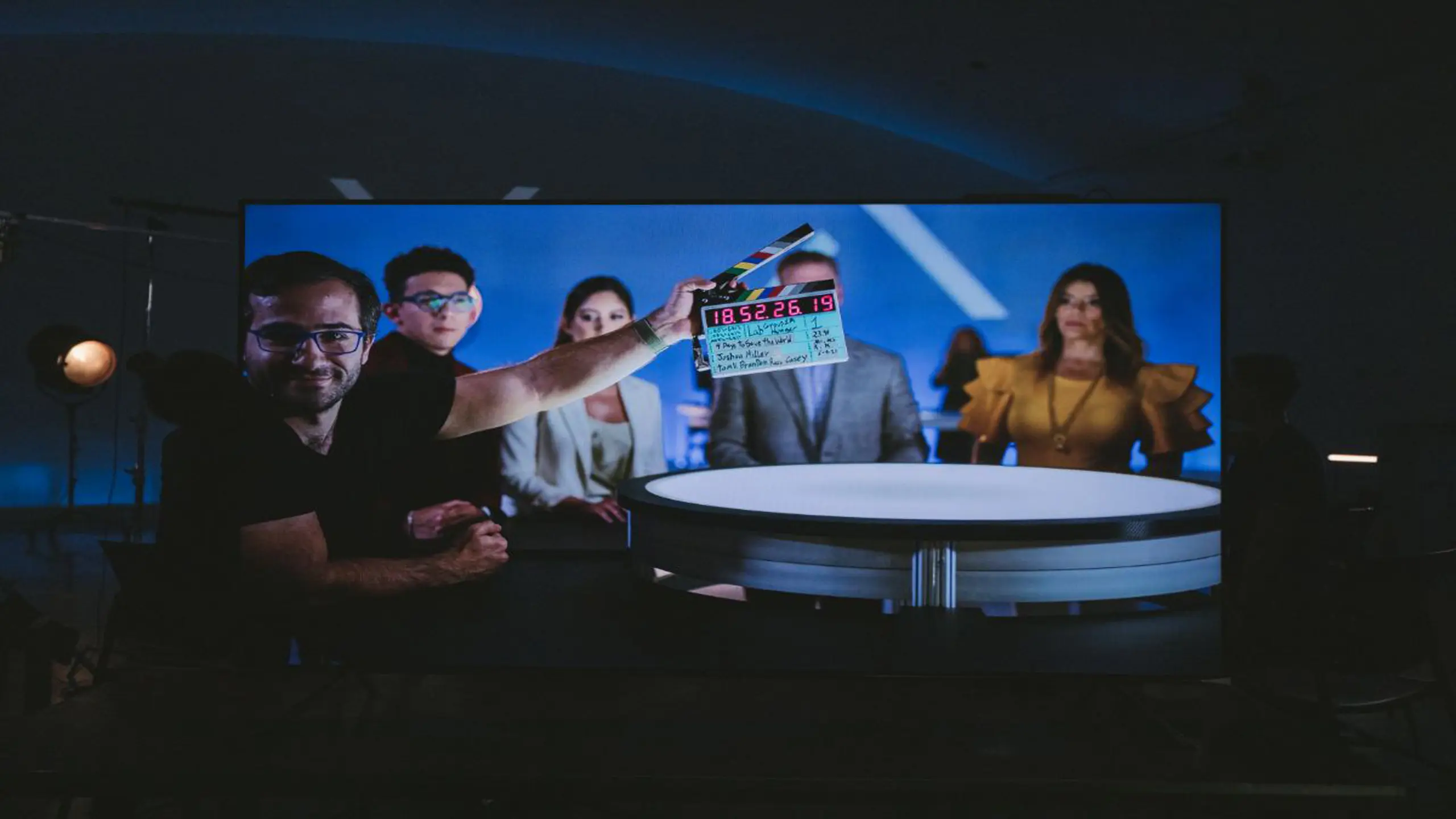
Documentary filmmaking is a unique art form that blends creativity with a commitment to truth. Unlike fictional storytelling, it captures real-life events, people, and issues, offering viewers a window into untold stories and hidden perspectives. This genre allows filmmakers to shine a light on critical topics, from social justice to environmental conservation, while pushing creative boundaries to engage and inspire audiences.
However, the journey of creating a documentary is anything but straightforward. From developing a compelling concept to navigating logistical and ethical challenges, filmmakers must balance authenticity with storytelling craft. The process demands meticulous planning, adaptability, and a vision that drives the narrative from the first idea to the final cut.
In this blog, we’ll explore every step of the documentary filmmaking process, from conceptualizing the story to mastering the art of post-production. Whether you’re a seasoned filmmaker or a curious beginner, this guide will illuminate the path to bringing your vision to life.
## What is Documentary Filmmaking?
Documentary filmmaking is the craft of capturing real-life events, people, and stories to create a cinematic experience that educates, informs, and inspires. Unlike fictional films that rely on scripts and actors, documentaries are rooted in reality, focusing on authenticity and truth.
They serve as powerful tools for exploring social issues, preserving historical moments, and providing fresh perspectives on the world around us. At its core, documentary filmmaking combines factual storytelling with creative techniques to engage audiences emotionally and intellectually.
What distinguishes documentaries from other film genres is their foundation in the real world. While fictional films can fabricate scenarios and characters, documentaries strive to reflect life as it is. Even when creative elements like reenactments or animation are used, the focus remains on presenting genuine stories and experiences. This commitment to authenticity allows documentaries to resonate deeply with viewers, often sparking conversations and influencing change.
Over the years, documentary filmmaking has evolved into a dynamic and versatile art form. Early documentaries were primarily educational, serving as historical records or ethnographic studies. Today, they encompass a wide range of storytelling styles, such as expository, observational, participatory, reflexive, and performative approaches.
Expository documentaries use narration to deliver facts and insights, while observational films capture events as they naturally unfold. Participatory documentaries involve the filmmaker in the narrative, and reflexive works focus on the filmmaking process itself. Performative documentaries, on the other hand, prioritize personal experiences and emotional engagement. These diverse styles allow filmmakers to choose the best approach for their subject matter, enhancing the impact of their storytelling.
Making documentaries has become more accessible with advancements in technology. Portable cameras, affordable editing software, and online platforms have opened the door for aspiring filmmakers to share their stories with a global audience. This accessibility has broadened the scope of documentary filmmaking, allowing for a greater variety of voices and perspectives to emerge.
The art of making documentaries is not just about presenting facts; it’s about weaving them into compelling narratives that captivate and inform. By blending creativity with authenticity, documentary filmmakers have the unique ability to preserve truth while crafting stories that leave a lasting impact on audiences worldwide.
## Developing the Concept. Finding Your Story
Every great documentary begins with a compelling story. The concept is the foundation of the entire filmmaking process, and finding the right subject is crucial to creating a powerful and meaningful narrative. In documentary filmmaking, a strong story often stems from topics that resonate emotionally or address significant societal issues. Filmmakers must identify subjects that not only interest them personally but also hold universal appeal, ensuring their work connects with diverse audiences.
Research plays a pivotal role in developing the concept. Once a story idea is identified, a thorough investigation is needed to gather facts, understand the subject deeply, and uncover unique angles. This phase often involves interviews, archival research, and fieldwork to ensure the story is authentic and well-rounded.
For instance, exploring an environmental issue may require speaking to experts, visiting affected areas, and analyzing historical data. Effective pre-production planning ensures that filmmakers are equipped with the information and resources needed to tell the story convincingly.
A well-chosen concept also benefits from emotional resonance and relevance. The most impactful documentaries often highlight themes that evoke empathy or challenge conventional perspectives. For example, films like *An Inconvenient Truth* brought attention to climate change, while *13th* examined systemic racism in the U.S. These documentaries succeeded because their stories were both urgent and thought-provoking, inspiring audiences to reflect and take action.
Finding a unique angle is another critical aspect of developing the concept. Iconic documentaries often stand out because they offer fresh perspectives or delve into topics rarely explored. A filmmaker's personal connection to the subject can also add depth and authenticity to the narrative. Whether it’s uncovering an untold story or shedding new light on a familiar issue, the concept must have a clear purpose and direction.
In documentary filmmaking, the story isn’t just about what is being told, it’s also about how it’s told. By investing time and effort in finding a compelling story, filmmakers lay the groundwork for a documentary that captivates audiences and leaves a lasting impact.
## Pre-Production. Planning the Documentary
Pre-production is the backbone of any successful documentary filmmaking project. This phase is where the foundation of the documentary is laid, ensuring a clear vision and a seamless process from start to finish. A detailed outline and script are essential tools in this phase. Although documentaries often rely on real-life events, having a structured plan helps maintain focus and ensures that the narrative flows cohesively.
The outline should highlight key themes, pivotal moments, and potential interviews, while the script provides a framework for the filmmaker to follow during shooting. Even if the story evolves during filming, this initial roadmap is invaluable.
Budgeting and securing funding are also critical aspects of pre-production. Documentaries, whether independently produced or supported by production companies, require financial resources for equipment, travel, permits, and post-production. Funding options include grants, crowdfunding campaigns, partnerships with organizations, or pitching to streaming platforms. A realistic budget helps prevent financial setbacks and allows the filmmaker to prioritize spending on essential elements that will elevate the quality of the documentary.
Another important consideration during pre-production is obtaining permission and adhering to ethical standards. Researching sensitive topics or filming in restricted areas often requires legal clearances or permissions from relevant authorities. Ethical considerations are equally significant, especially when dealing with vulnerable populations or controversial subjects. Respecting the privacy and consent of interviewees ensures the credibility of the project and builds trust with the audience.
Building a team is the final step in pre-production. Documentary filmmaking is a collaborative effort, requiring skilled individuals to handle various roles. The director oversees the creative vision, while the producer manages logistics and budgeting.
A cinematographer ensures the visuals align with the storytelling, while sound engineers capture high-quality audio. Depending on the scope of the project, editors, researchers, and production assistants may also be involved. Assembling a dedicated team with a shared passion for the subject ensures that the documentary is produced with professionalism and efficiency.
## Shooting Your Documentary. Techniques and Challenges
Shooting a documentary is where the vision takes shape, and the raw materials for storytelling are created. Choosing the right equipment is a crucial step. While high-end cameras and microphones can enhance production quality, accessibility, and portability are often prioritized in documentary filmmaking. Lightweight cameras and compact audio equipment allow filmmakers to adapt to dynamic environments and capture spontaneous moments effectively.
Capturing authentic moments requires a balance between planned shots and improvisation. A shot list can guide the filmmaker to cover essential visuals, but remaining flexible allows for unexpected yet powerful moments to be recorded. Whether it’s a candid reaction or a spontaneous event, these unplanned elements often add depth and realism to the story.
Filmmakers face numerous challenges during the shooting phase, including logistical hurdles, unpredictable weather, and gaining access to certain locations. For instance, filming in remote or politically sensitive areas may require additional permissions or careful navigation of local customs. Adaptability and problem-solving are vital skills for overcoming these obstacles and ensuring the project stays on track.
Cinematographic techniques play a significant role in enhancing storytelling. Camera angles, framing, and lighting can evoke emotions or highlight critical aspects of the narrative. For example, close-up shots can capture raw emotions during interviews, while wide-angle shots can contextualize the subject within a larger environment. The use of natural light or intentional lighting setups further enhances the aesthetic quality of the footage.
By combining technical expertise with creative instincts, filmmakers can ensure that the shooting phase delivers visually compelling and emotionally resonant material, setting the stage for a powerful documentary.
## Documentary Post-Production. Crafting the Narrative
Documentary post-production is where the raw footage captured during filming is transformed into a compelling and cohesive story. This phase is vital in shaping the documentary's final product, as it involves refining the narrative, enhancing visual and auditory elements, and ensuring the film resonates with its intended audience. Post-production is not just about stitching clips together; it’s about breathing life into the story and creating an emotional connection with viewers.
Editing is the backbone of this process. It begins with reviewing hours of footage to identify the most impactful moments that align with the documentary’s core themes. The editor then organizes the selected clips into a coherent flow, ensuring that the story unfolds naturally and keeps the audience engaged. Establishing tone is equally critical; whether the documentary aims to be somber, uplifting, or provocative, the tone guides the audience’s emotional journey. Effective editing creates a rhythm that maintains interest and builds momentum toward the conclusion.
Sound design, voiceovers, and music are other key elements that elevate the narrative. High-quality sound enhances immersion, while carefully chosen music underscores emotional beats and amplifies the story’s impact. Voiceovers provide context, introduce new ideas, or tie scenes together, guiding the audience through the narrative. For example, a reflective voiceover can deepen the emotional resonance of a powerful scene, while ambient sounds can transport viewers directly into the environment being depicted.
Modern tools and software play a significant role in post-production. Programs like Adobe Premiere Pro, Final Cut Pro, and DaVinci Resolve offer advanced features for editing, color grading, and sound mixing. These tools enable filmmakers to achieve a polished and professional finish, regardless of budget constraints. With the integration of AI in editing software, tasks like sorting footage or enhancing audio have become faster and more efficient, allowing filmmakers to focus on creative decisions.
Ultimately, documentary post-production is about turning raw material into a narrative that captivates, informs, and inspires. By combining technical expertise with artistic vision, this phase ensures that the story reaches its full potential.
## Film Editing. Breathing Life into Your Story
Film editing is an intricate process that refines raw footage into a seamless and impactful story. In documentary filmmaking, editing serves as the final creative touch that transforms unorganized clips into a narrative that captivates and informs. This process requires meticulous attention to detail and a deep understanding of storytelling.
One of the primary techniques used in film editing is the montage, where multiple shots are pieced together to convey a concept or show progression over time. Cuts and transitions also play a crucial role, guiding the audience smoothly from one scene to the next. For instance, hard cuts can create a sense of urgency, while fade-outs evoke reflection or closure. Pacing is another essential element; it determines how the story unfolds, balancing fast-paced sequences with slower, contemplative moments to maintain viewer engagement.
Rhythm is equally important in editing, as it sets the emotional tone of the documentary. A well-edited film maintains a flow that feels natural, ensuring that every scene contributes to the overarching narrative. For example, juxtaposing contrasting scenes can highlight conflicts or amplify the impact of key moments. Similarly, lingering on a poignant shot can evoke deeper emotional responses from the audience.
Collaboration between the director and editor is pivotal in achieving the documentary’s vision. While the director provides creative input and a clear narrative direction, the editor brings technical expertise and a fresh perspective to the material. This partnership ensures that the final product aligns with the filmmaker’s intentions while enhancing its storytelling potential.
Many iconic documentaries are celebrated for their masterful editing. For instance, *The Thin Blue Line* revolutionized documentary editing with its use of stylized reenactments and visual storytelling to investigate a murder case. Similarly, *Amy*, a documentary about Amy Winehouse, skillfully blended archival footage with interviews to craft an intimate and emotional portrayal of the singer’s life.
In the hands of a skilled editor, film editing becomes a transformative process that shapes the raw elements of a documentary into a powerful and unforgettable story. By combining technical proficiency with creative artistry, editing ensures that the final film leaves a lasting impression on its audience.
## Adding the Finishing Touches. Sound and Visual Effects
The finishing touches in documentary filmmaking are crucial to transforming the project into a polished, professional product that captivates the audience. This stage focuses on refining the auditory and visual elements, ensuring a seamless and immersive experience.
Audio plays a critical role in enhancing the documentary’s impact. Mixing and mastering are essential processes to balance sound levels, ensuring that dialogue, background audio, and music complement each other without overwhelming the narrative. Automatic Dialogue Replacement (ADR) may also be used to re-record dialogue in a controlled environment to improve clarity or correct issues captured during filming.
High-quality sound is non-negotiable; even the most stunning visuals can fall flat without an equally compelling audio experience. Ambient sound effects, subtle transitions, and layered soundtracks further enrich the viewing experience by drawing the audience deeper into the story.
Visual effects and color grading are equally important in maintaining a cohesive and professional aesthetic. Visual effects can subtly enhance the documentary, such as adding maps, graphics, or animations to illustrate complex ideas or data. Color grading, meanwhile, ensures visual consistency across scenes, correcting lighting imbalances and enhancing the film's mood. For instance, a vibrant color palette might evoke optimism, while muted tones could emphasize seriousness. These elements combine to create a visual identity that aligns with the documentary’s themes.
The final polishing process ties everything together. This includes checking for continuity errors, refining transitions, and ensuring that all visual and auditory components work in harmony. The goal is to produce a seamless flow that keeps the audience engaged. At this stage, feedback from test screenings can be invaluable. Honest reactions from a small group of viewers can highlight areas for improvement, allowing the filmmaker to make final adjustments before release.
## Distributing Your Documentary. Reaching Your Audience
Once the documentary is complete, the next challenge is finding the right audience and ensuring the film reaches them effectively. Distribution is a vital step that determines the documentary’s success and impact.
Film festivals are a traditional and effective route for distribution, offering filmmakers a platform to showcase their work to critics, industry professionals, and potential distributors. Prestigious festivals like Sundance, Tribeca, and IDFA (International Documentary Film Festival Amsterdam) can significantly boost a film's visibility. Beyond festivals, awards and recognition often lead to partnerships with streaming platforms or theatrical releases.
Online platforms have revolutionized the way documentaries are distributed. Services like Netflix, Amazon Prime, and YouTube allow filmmakers to reach a global audience. Self-distribution through platforms such as Vimeo On Demand or even crowdfunding sites like Kickstarter enables independent filmmakers to retain control over their projects. Online distribution is not only cost-effective but also highly accessible, making it a popular choice for both emerging and established filmmakers.
Building an online presence is another critical component of distribution. A dedicated website, engaging social media accounts, and email newsletters help create buzz around the film. Social media platforms like Instagram, Twitter, and Facebook are excellent tools for connecting with potential viewers and sharing behind-the-scenes content, trailers, and updates. Collaborating with influencers or activists relevant to the documentary’s subject can amplify its reach and credibility.
Marketing strategies are essential for maximizing the film’s impact. A compelling trailer, professional poster design, and strategic release timing can generate interest and anticipation. Press releases and media outreach can secure coverage in blogs, magazines, and news outlets, further broadening the film’s audience. Hosting live Q&A sessions or panel discussions with the filmmakers and featured subjects can also engage viewers directly, creating a deeper connection with the story.
Distribution is more than just getting the documentary to audiences, it’s about ensuring the film leaves a lasting impression. By leveraging a combination of traditional and modern strategies, filmmakers can ensure their work resonates with viewers, sparks conversations, and achieves its intended impact.
## Challenges and Rewards of Documentary Filmmaking
Documentary filmmaking is a journey filled with both challenges and profound rewards. The process of bringing real-life stories to the screen often involves navigating obstacles that test a filmmaker's creativity, resilience, and determination.
One of the most significant challenges is securing funding. Unlike commercial films, which often have clear profit potential, documentaries rely on grants, crowdfunding, and sponsorships, which can be difficult to obtain. Budget constraints can limit the quality of equipment, travel opportunities, and even post-production enhancements, requiring filmmakers to make strategic compromises.
Gaining access to subjects and locations is another common hurdle. Filmmakers may face resistance when covering sensitive or controversial topics, with individuals or organizations unwilling to participate or permit filming. Ethical dilemmas can also arise, particularly when dealing with vulnerable populations or private matters. Balancing the need for authenticity with respect for privacy requires careful negotiation and sensitivity.
Time constraints further complicate the process. Documentaries often involve extended periods of research, shooting, and editing, which can take months or even years. Unexpected delays, such as logistical issues or changes in the story’s direction, can disrupt timelines and budgets. Staying adaptable and resourceful is essential for overcoming these obstacles.
Despite these challenges, the rewards of documentary filmmaking are immense. Few art forms offer the opportunity to influence minds and spark meaningful conversations as documentaries do. By telling untold stories and shedding light on important issues, filmmakers can inspire action, challenge societal norms, and contribute to lasting change. Documentaries like *Blackfish* and *The Act of Killing* have transformed public perception and driven social movements, showcasing the medium's power to create impact.
For aspiring filmmakers, staying inspired and persistent is key to overcoming challenges. Passion for the subject matter can fuel the motivation needed to push through difficulties. Surrounding oneself with a supportive team and network of peers can provide encouragement and practical advice. Embracing flexibility and being open to unexpected shifts in the story or process often leads to creative breakthroughs.
In the end, the rewards of documentary filmmaking outweigh the challenges. The ability to capture real-life stories, touch hearts, and leave a lasting legacy makes this art form both challenging and profoundly fulfilling.
## The Basics of Color Grading in Film
Color grading is the artistic process of adjusting the tones, colors, and overall visual aesthetics of a film to align with the director’s creative vision. It transforms raw footage into a polished masterpiece, enhancing the emotional impact of every scene. This aspect of visual storytelling has evolved dramatically over the years, beginning with physical techniques like tinting and toning in the early days of cinema. Films like *Gone with the Wind* and *The Wizard of Oz* set early standards for using color to captivate audiences, demonstrating how hues could add depth and meaning to stories.
With advancements in technology, film color grading transitioned into digital workflows, offering filmmakers precision and flexibility. Modern tools like DaVinci Resolve and Adobe Premiere Pro enable creators to manipulate saturation, contrast, and brightness with ease. These tools not only make the process more efficient but also expand creative possibilities for independent filmmakers and blockbuster productions alike.
A critical distinction exists between color correction and color grading. While color correction focuses on rectifying technical issues such as exposure and white balance, color grading in the film is a creative endeavor that defines the mood and emotional tone of the story. For instance, *Mad Max: Fury Road* used bold, saturated hues to create its high-energy, apocalyptic visuals, showcasing the transformative power of grading.
Through the seamless integration of technology and creativity, color grading in film has become indispensable for elevating visual storytelling. It allows filmmakers to craft immersive cinematic experiences, ensuring that every frame contributes to the narrative.
## The Emotional Impact of Colors in Storytelling
Colors are one of the most powerful tools in visual storytelling, capable of evoking deep emotional responses. Filmmakers use the psychology of color to guide viewers’ feelings, with warm tones like reds and yellows symbolizing passion, energy, or danger, and cool tones like blues and greens reflecting calm, melancholy, or tension. For example, Guillermo del Toro’s *The Shape of Water* employed aquatic greens and blues to convey an ethereal and mysterious atmosphere, drawing viewers deeper into the narrative.
Film color grading amplifies these emotional cues, transforming a scene’s mood to match the story’s themes. In horror films, muted and desaturated palettes are used to create suspense, while romantic dramas lean into soft pastels to evoke tenderness and warmth. Through precise manipulation of color, filmmakers can create a sensory connection that enhances the story’s emotional depth.
The interplay between color correction and grading is essential in achieving these results. While color correction ensures technical accuracy, grading adds a layer of creativity that breathes life into the footage. A perfect example is Francis Ford Coppola’s *The Godfather*, where golden hues and shadowy contrasts underscore the themes of power and corruption.
In the end, the use of color grading in film not only enhances the visual appeal but also strengthens the emotional resonance of the story. By mastering this craft, filmmakers create unforgettable moments that linger in the audience’s minds long after the credits roll.
## Tools and Software for Color Grading
Modern filmmaking relies heavily on advanced tools and software to achieve professional-quality film color grading. Among the most popular options is DaVinci Resolve, widely recognized for its comprehensive suite of color grading tools. Its node-based interface allows for precise adjustments in contrast, saturation, and hues, making it a favorite for both high-budget productions and independent filmmakers.
Similarly, Adobe Premiere Pro offers a seamless integration of editing and color grading workflows. With its Lumetri Color panel, editors can enhance footage without switching between software. For macOS users, Final Cut Pro provides intuitive tools for quick grading, perfect for filmmakers prioritizing efficiency.
While these tools serve similar purposes, each has unique strengths. DaVinci Resolve is known for its industry-grade precision and flexibility, while Adobe Premiere Pro shines in its user-friendly interface and robust editing features. Final Cut Pro’s simplicity makes it ideal for creators seeking speed and ease. Additionally, plugins like Magic Bullet Suite and FilmConvert extend the capabilities of these platforms, offering creative LUTs (Look-Up Tables) and specialized grading presets.
Recent advancements in AI-driven tools have revolutionized the field, making color correction and grading more accessible. AI-powered software can analyze footage and suggest optimal adjustments, saving time and ensuring consistency. For example, tools like Colourlab AI and Runway ML allow filmmakers to replicate complex color styles or automatically match color tones across multiple shots. These innovations streamline workflows, empowering filmmakers to focus more on visual storytelling and less on technical complexities.
Whether creating a vivid dreamscape or a moody dystopian aesthetic, these tools enhance every stage of post-production. By combining traditional expertise with cutting-edge software, filmmakers can elevate their projects, ensuring every scene resonates emotionally and visually.
## The Role of Color Palettes in Film Genres
Color palettes are a cornerstone of effective visual storytelling, with each genre relying on distinct hues to convey tone and emotion. In romantic films, warm tones like soft pinks, oranges, and yellows evoke intimacy and optimism. Conversely, dystopian films often lean on desaturated and muted colors, creating a sense of bleakness and despair. For example, *The Road* employs washed-out grays and browns to reflect its post-apocalyptic setting.
In film color grading, genres like fantasy and adventure frequently use vibrant, saturated hues to create immersive, larger-than-life worlds. A prime example is *The Grand Budapest Hotel*, where Wes Anderson’s use of pastel palettes underscores the film’s whimsical and nostalgic tone. In contrast, sci-fi films like *The Matrix* utilize greenish hues to reinforce the artificial, computerized nature of their worlds.
Achieving these visual tones requires a delicate balance between color correction and creative grading. Color correction ensures consistency across scenes, while grading infuses the footage with the desired emotional weight. For instance, grading in horror films often emphasizes shadows and desaturation to instill unease, while comedies opt for brighter, more cheerful palettes to match their lighthearted themes.
By tailoring color palettes to genre-specific needs, filmmakers can heighten the narrative impact of their stories. The process of color grading in film not only enhances the aesthetic but also draws viewers deeper into the world being portrayed. Whether it’s the golden hues of a sunset in a romantic drama or the cold blues of a thriller, the right palette serves as a silent storyteller, reinforcing themes and emotions with every frame.
## Crafting Mood and Atmosphere Through Color
In filmmaking, the mood and atmosphere of a scene are often defined by its visual aesthetic. Through film color grading, filmmakers can evoke emotions, enhance tension, or create a sense of wonder, all while reinforcing the narrative. Grading goes beyond simple adjustments; it allows filmmakers to sculpt each scene’s visual tone by manipulating shadows, highlights, and saturation.
Shadows are often used to convey mystery or fear, while well-placed highlights can draw attention to key elements within a frame. Saturation plays a pivotal role in crafting atmospheres, muted tones can create a somber or gritty feel, while vibrant colors bring energy and excitement. For example, in *Blade Runner 2049*, the use of neon hues and deep shadows paints a dystopian future that feels both immersive and haunting. The interplay of contrast and brightness further heightens the film's mood, enhancing its futuristic noir aesthetic.
Brightness and contrast are also essential for creating depth and directing viewers' focus. Bright, high-contrast visuals like those in *La La Land* emphasize joy and romance, whereas low-light, low-contrast scenes, such as in *The Dark Knight*, underscore tension and foreboding. Vibrancy, on the other hand, breathes life into scenes, making colors pop or fade as needed to support the story's tone.
Through color grading in film, directors can align visuals with the emotional core of their narrative. For instance, the desaturated tones of *The Revenant* highlight the harshness of nature and the protagonist's struggle for survival. These deliberate choices in grading ensure that the visuals not only captivate the audience but also enrich the storytelling, making every frame a vital part of the cinematic experience.
## Color Grading for Character and Scene Development
Color grading is an invaluable tool for shaping character arcs and defining the emotional beats of a story. Through the use of color tones, filmmakers can illustrate a character's growth, transformation, or internal conflict. In *Joker*, for instance, the progression from muted greens and grays to bolder, more chaotic colors reflects Arthur Fleck's descent into madness. This subtle but impactful use of film color grading ensures the audience feels the emotional weight of the character's journey.
Distinct color tones are also instrumental in differentiating timelines or parallel storylines. For example, *Black Panther* contrasts the warm, golden tones of Wakanda’s prosperity with the cool, blue hues of Killmonger’s flashback scenes, emphasizing the stark differences between their experiences. This visual distinction helps the audience navigate the story while deepening their understanding of the characters’ motivations.
Color correction is equally critical for scene continuity, ensuring consistent lighting and color balance across shots. This foundational step sets the stage for creative grading, where filmmakers can layer in emotional depth and visual cues. For example, in *Eternal Sunshine of the Spotless Mind*, warm colors are used during Joel and Clementine's happy memories, while cooler tones dominate scenes of conflict and regret.
By carefully crafting color palettes and grading styles, filmmakers enhance both individual scenes and overarching narratives. The result is a cohesive visual language that not only captivates but also provides insight into the characters' inner worlds and the story’s evolution. Film color grading thus becomes a silent yet powerful storyteller, shaping the way audiences connect with the film.
## Common Mistakes and How to Avoid Them
Color grading in film is both an art and a science, requiring balance and precision to achieve the desired visual impact. However, common mistakes can undermine the storytelling and distract viewers. One frequent error is over-saturation, where colors appear unnaturally vibrant, making scenes look unrealistic or overly stylized. While bold colors can be impactful, subtlety is key to maintaining believability. Similarly, mismatched tones across scenes disrupt continuity, pulling audiences out of the narrative. For instance, inconsistent lighting or conflicting hues can make transitions jarring and visually disjointed.
To maintain a cohesive look, filmmakers should establish a color palette early in the project and stick to it throughout. Using reference frames or LUTs (Look-Up Tables) ensures consistency in tones and styles. It’s also crucial to start with proper color correction, addressing issues like exposure and white balance before diving into creative grading. Neglecting this foundational step can result in uneven visuals that are difficult to fix later in the workflow.
For beginners, a good practice is to avoid overcomplicating the process. Focus on subtle adjustments and test different looks before committing to a specific style. Experienced filmmakers can experiment with advanced techniques like isolating specific colors or using secondary corrections to highlight important elements in a scene. Tools like waveform monitors and histograms are invaluable for ensuring technical accuracy, helping filmmakers avoid issues like blown-out highlights or crushed shadows.
Ultimately, successful color grading in film requires a blend of technical expertise and creative vision. By addressing these common pitfalls and following best practices, filmmakers can create visuals that not only captivate but also complement the story being told.
## The Future of Film Color Grading
The future of film color grading is being shaped by technological advancements that are revolutionizing the way filmmakers approach visual storytelling. One significant trend is HDR (High Dynamic Range) grading, which enhances contrast and expands color ranges, allowing for richer, more lifelike visuals. With HDR, filmmakers can create stunningly vibrant scenes, such as the breathtaking landscapes in *The Mandalorian*, while preserving detail in both highlights and shadows.
AI-enhanced workflows are also transforming the industry. Tools like Colourlab AI and Adobe Sensei can analyze footage, match color tones across scenes, and even replicate the grading styles of specific films. This not only saves time but also enables filmmakers to achieve professional results with greater efficiency. Real-time grading during shooting is becoming increasingly accessible. Technologies, like live LUT previews, allow directors and cinematographers to see how their footage will look after grading, reducing guesswork and ensuring creative intent is maintained.
As immersive formats like VR and AR gain traction, the demand for dynamic color grading techniques is growing. These formats require adaptive grading to account for interactive environments and varying perspectives, presenting new challenges and opportunities for filmmakers. For instance, in VR storytelling, the color palette must guide the viewer’s focus while maintaining a natural, immersive feel.
Technological advancements are not just tools; they are enablers of new storytelling possibilities. The integration of AI and real-time capabilities is likely to blur the lines between production and post-production, giving filmmakers unprecedented creative control. As these innovations evolve, film color grading will continue to push boundaries, ensuring that visuals remain a powerful medium for captivating audiences.
## How to Master Color Grading for Your Film Projects
Mastering color grading in film requires a blend of technical skill, creative vision, and consistent practice. The journey begins with a solid understanding of the basics. Filmmakers should familiarize themselves with color theory and the emotional impact of hues on storytelling. Building a library of reference images or scenes from films that align with your desired aesthetic is a practical way to develop your visual style. These references serve as a guide, helping you understand how professional filmmakers use color to evoke mood and emotion.
For beginners, starting with accessible tools like DaVinci Resolve, Adobe Premiere Pro, or Final Cut Pro is essential. These platforms offer comprehensive features and tutorials, making it easier to learn grading techniques step by step. Begin by practicing color correction, as this ensures your footage is technically sound and consistent. Correcting issues like exposure, white balance, and saturation lays the foundation for creative grading. Without this step, achieving a polished final look becomes challenging.
Once the basics are in place, experiment with advanced tools and features. Use LUTs (Look-Up Tables) to apply pre-set looks to your footage, then tweak them to fit your specific vision. Explore features like secondary color correction, which allows you to isolate and enhance specific elements, such as skin tones or backgrounds. Advanced practitioners can also explore HDR workflows or AI-powered tools to achieve more dynamic and efficient results.
Continuous learning is key to mastery. Take advantage of resources like online tutorials, courses, and community forums, where you can learn from experienced colorists and troubleshoot challenges. Platforms like YouTube and specialized training sites often provide step-by-step guides for achieving cinematic looks.
Above all, practice regularly. The more you work with different styles, tones, and projects, the more intuitive grading will become. Remember that both color correction and grading are vital to enhancing visual storytelling, transforming raw footage into a cohesive, emotionally engaging experience. By combining technical knowledge with creative exploration, filmmakers can develop a unique grading style that elevates their projects to professional standards.
## Work with C&I Studios
If you are planning a project like this, our team can take it from concept to final delivery. Explore our [film and TV production](https://c-istudios.com/film-and-tv-production/), browse [our work](https://c-istudios.com/our-work/) to see how we tell brand stories, and [get in touch](https://c-istudios.com/contact/) when you are ready to start.
Originally published December 6, 2024
---
*This content is from [C&I Studios](https://c-istudios.com), a full-service production company.*
---
# Reality TV Formula: Putting Together a Show that Sells
> Published: December 6, 2024
> Categories: Commercial & Brand
> Source: https://c-istudios.com/reality-tv-formula-putting-together-a-show-that-sells/
---
.cib{--paper:#1b1d1f;--ink:#fff;--body:#d5d7d9;--muted:#8b9096;--line:rgba(255,255,255,.12);--thumb:#2b2e31;--card:#212426;--accent:#c02b0a;--blue:#5B8FA8;--serif:'Playfair Display',Georgia,serif;--sans:'Poppins',-apple-system,sans-serif;--measure:900px;background:var(--paper);color:var(--body);font-family:var(--sans);line-height:1.6;position:relative;left:50%;transform:translateX(-50%);width:90vw;max-width:1920px}
.cib *{box-sizing:border-box}
.cib .kicker{max-width:var(--measure);margin:58px auto 0;padding:0 22px;font-size:12.5px;font-weight:700;letter-spacing:2.5px;text-transform:uppercase;color:var(--blue)}
.cib h1.cibh1{text-wrap:balance;font-family:var(--serif);font-weight:500;font-size:clamp(46px,6vw,72px);line-height:1.08;color:var(--ink);max-width:var(--measure);margin:18px auto 0;padding:0 22px;letter-spacing:-.5px}
.cib .metarow{max-width:var(--measure);margin:20px auto 0;padding:0 22px;color:var(--muted);font-size:14px}
.cib .hero{position:relative;width:100%;height:0;padding-bottom:56.25%;overflow:hidden;margin:48px auto 0;border-top:1px solid var(--line);border-bottom:1px solid var(--line)}
.cib .hero .ph{width:100%;aspect-ratio:16/9;background:var(--thumb);border-top:1px solid var(--line);border-bottom:1px solid var(--line);display:flex;align-items:center;justify-content:center;color:#7d8288;font-size:13px;text-align:center;padding:0 20px}
.cib .body{max-width:var(--measure);margin:12px auto 0;padding:52px 22px 6px}
.cib .body.lead p:first-child{font-size:23px;line-height:1.62;color:var(--ink)}
.cib .body p{font-size:18.5px;line-height:1.85;margin:0 0 30px;color:var(--body)}
.cib .body h2{text-wrap:balance;font-family:var(--serif);font-weight:500;font-size:clamp(32px,4vw,48px);line-height:1.22;color:var(--ink);margin:70px 0 20px;letter-spacing:-.3px}
.cib .body h3{text-wrap:balance;font-family:var(--sans);font-weight:600;font-size:22px;color:var(--ink);margin:38px 0 8px}
.cib .body a{color:var(--ink);text-decoration:underline;text-decoration-color:rgba(255,255,255,.4);text-underline-offset:3px}
.cib .body a:hover{text-decoration-color:var(--ink)}
.cib .ctable{width:100%;border-collapse:collapse;margin:16px 0 30px;font-size:16px}
.cib .ctable th{background:#000;color:#fff;text-align:left;padding:10px 12px;font-family:var(--sans)}
.cib .ctable td{padding:10px 12px;border-bottom:1px solid var(--line);color:var(--body)}
.cib .inimg{position:relative;width:100%;height:0;padding-bottom:56.25%;overflow:hidden;margin:72px auto;border-top:1px solid var(--line);border-bottom:1px solid var(--line)}
.cib .inimg .ph{width:100%;aspect-ratio:16/9;background:var(--thumb);border-top:1px solid var(--line);border-bottom:1px solid var(--line);display:flex;align-items:center;justify-content:center;color:#7d8288;font-size:13px}
.cib .origpub{max-width:var(--measure);margin:60px auto 0;padding:26px 22px 0;border-top:1px solid var(--line);color:var(--muted);font-size:13.5px}
.cib .related{max-width:1200px;margin:64px auto 0;padding:34px 22px 76px}
.cib .related h3{font-family:var(--sans);font-size:12.5px;letter-spacing:2px;text-transform:uppercase;color:var(--ink);margin:0 0 24px}
.cib .grid{display:grid;grid-template-columns:repeat(3,1fr);gap:28px}
.cib .rc{background:var(--card);border:1px solid var(--line);display:block;text-decoration:none;color:inherit;transition:border-color .15s}
.cib a.rc:hover{border-color:rgba(255,255,255,.5)}
.cib .rc .thumb{position:relative;width:100%;height:0;padding-bottom:56.25%;background:var(--thumb);overflow:hidden}
.cib .rc .thumb img{position:absolute!important;top:0!important;left:0!important;width:100%!important;height:100%!important;object-fit:cover!important;margin:0!important}
.cib .rc .cc{padding:14px 15px 17px}
.cib .rc .rt{font-family:var(--serif);font-weight:500;font-size:16px;line-height:1.3;color:var(--ink);margin:0 0 6px}
.cib .rc .rm{font-size:11px;letter-spacing:1px;text-transform:uppercase;color:var(--muted)}
.cib img{margin:0!important;padding:0!important;display:block!important;vertical-align:top;max-width:100%}
.cib .hero img,.cib .inimg img{position:absolute!important;top:0!important;left:0!important;width:100%!important;height:100%!important;object-fit:cover!important;margin:0!important;padding:0!important;border:0!important;display:block!important;aspect-ratio:auto!important}
.cib .hero+.body{padding-top:36px}
@media(max-width:760px){.cib .grid{grid-template-columns:1fr}.cib .body h2{margin:52px 0 16px}.cib .body p{font-size:17.5px}.cib .inimg,.cib .hero{margin-top:44px}}
.cib .vembed{max-width:var(--measure);margin:44px auto;padding:0 22px}.cib .vembed .vwrap{position:relative;width:100%;height:0;padding-bottom:56.25%}.cib .vembed .vwrap iframe{position:absolute;top:0;left:0;width:100%;height:100%;border:0}
Commercial & Brand
# Reality TV Formula. Putting Together a Show that Sells
17 min read
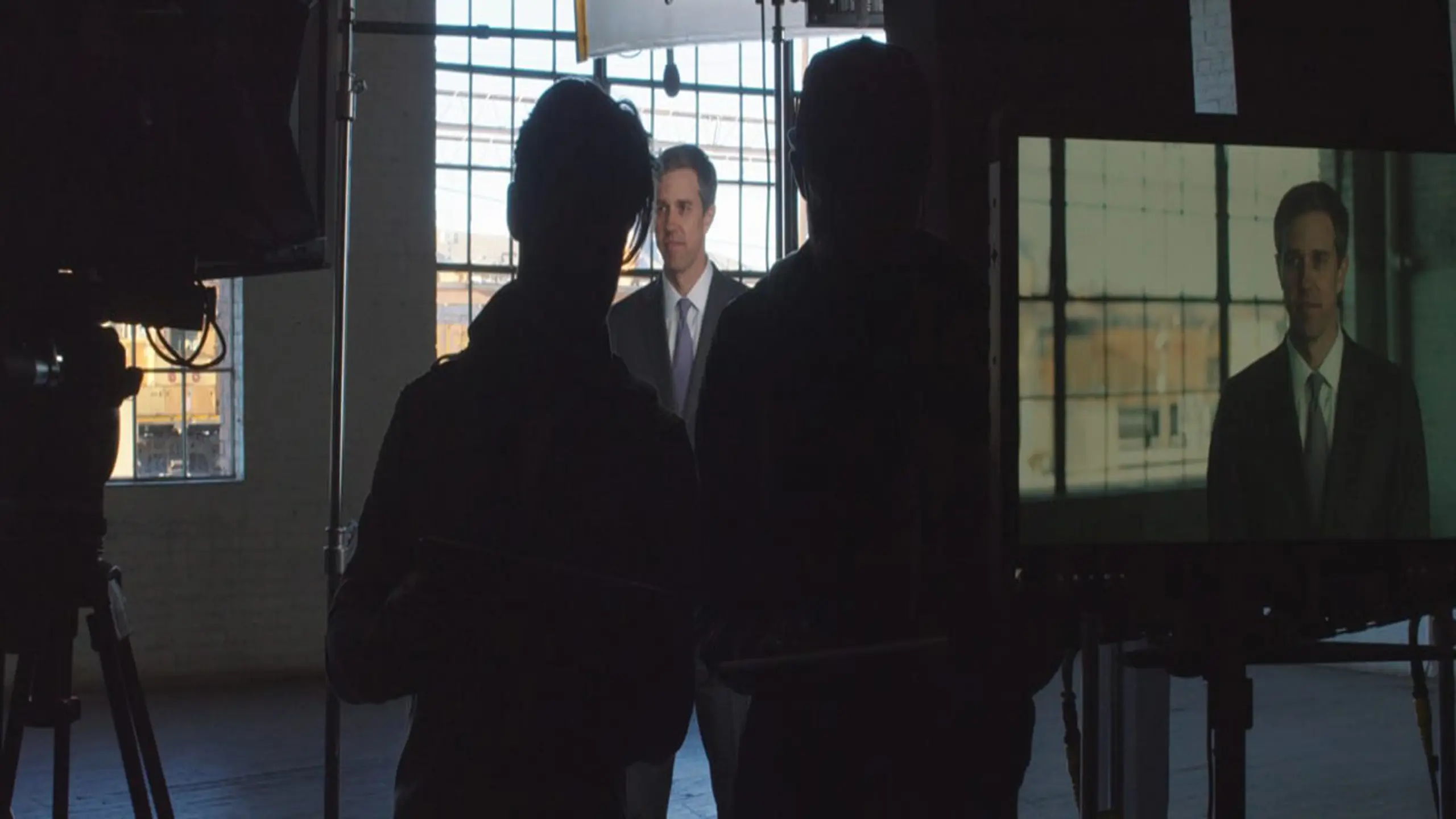
Reality TV has become one of the most influential genres in modern entertainment, captivating audiences with unscripted drama, competition, and real-life storytelling. The formula for a successful reality show is more than just placing cameras in front of people, it requires careful planning, engaging narratives, and a deep understanding of audience expectations. Whether it’s a competition-based format, a docu-series, or a social experiment, each successful show follows a well-crafted structure that keeps viewers invested.
This article explores the key components of reality TV, from concept development to production and marketing, providing insight into what it takes to create a show that not only attracts audiences but also sells to networks and streaming platforms.
Want a real number for your own show? Upload your script for an instant budget estimate ↓
## Understanding the Core Elements of Reality TV
A successful reality TV show thrives on three key elements, drama, authenticity, and relatability. Drama fuels the emotional highs and lows that keep audiences hooked, whether through intense competition, unexpected plot twists, or compelling character conflicts.
Authenticity ensures that the show resonates with viewers, making them feel connected to the participants and their journeys. Relatability allows audiences to see themselves in the cast members, their struggles, and their victories, fostering a deeper emotional investment in the show. These elements work together to create a show that not only entertains but also encourages fan engagement.
Creative marketing plays a crucial role in shaping how a reality show is perceived by its target audience. From teasers and trailers to [social media](https://c-istudios.com/social-media-marketing-services/) campaigns, marketing strategies are designed to generate buzz before a show even airs.
A well-executed marketing campaign can create anticipation, drive viewership, and ensure a show’s success in an increasingly competitive media landscape. Strategic use of social media, influencer partnerships, and viral promotional tactics can amplify reach and engagement.
Another critical component of a reality TV show’s success is branding & graphic design. A strong visual identity helps the show stand out in a crowded entertainment market. Everything from the show’s logo, typography, and promotional posters to the on-screen graphics and set design contributes to brand recognition. A reality show with a distinct and visually appealing brand identity is more likely to attract loyal viewers, secure sponsorship deals, and expand into merchandise or spin-offs.
To maintain audience engagement over multiple seasons, producers must continuously evolve the show’s format while preserving its core elements. By refining storylines, introducing new challenges, and keeping the competition fresh, reality TV creators can keep audiences invested for the long term.
## Crafting a Unique Concept and Format
With so many reality TV shows competing for attention, developing a fresh and compelling idea is essential. The most successful shows begin with a unique premise that sets them apart from others in the genre.
Producers must ask: What makes this show different? Why will audiences care? Whether it’s an extreme survival challenge, an innovative talent competition, or a heartwarming makeover series, the concept must have a hook that grabs viewers immediately. Creativity in format design ensures a show’s longevity and adaptability across different markets.
Choosing the right genre is another key decision in shaping a reality show. Genres such as competition-based series, dating shows, docuseries, and lifestyle programs all have specific storytelling techniques and audience expectations.
For example, a competition show thrives on high-stakes challenges, while a docuseries focuses on personal narratives and real-life issues. Producers must align their concept with the right genre to maximize its appeal and create a seamless viewing experience.
Working with a [media marketing](https://c-istudios.com/media-marketing-consultation-services/) consultation can help producers refine their concept and positioning. Industry experts provide valuable insights into current trends, audience demographics, and distribution strategies. They assist in shaping the show's identity, ensuring it aligns with market demands while maintaining originality. Their expertise can also help craft compelling pitch decks for networks, increasing the likelihood of securing funding and distribution deals.
For reality shows with a strong storytelling component, documentary film production techniques can elevate the content. High-quality cinematography, immersive storytelling, and well-edited footage enhance the overall viewing experience. Whether capturing raw emotions in a dating show or documenting real-life struggles in a social experiment, documentary-style filmmaking adds depth and credibility to the narrative, making the content more impactful and engaging.
## Casting the Right Participants
Casting is one of the most crucial factors in determining the success of a reality TV show. The right mix of personalities can elevate the drama, create compelling dynamics, and keep viewers engaged.
Whether it’s a competition show, a dating series, or a docuseries, the cast members must be relatable, entertaining, and, most importantly, able to carry the storyline naturally. A well-cast show can lead to viral moments, strong fan followings, and a lasting impact on pop culture.
Diversity and authenticity are key aspects of a successful reality show cast. A varied cast that represents different backgrounds, lifestyles, and perspectives helps broaden the show's appeal and fosters deeper audience connections. Viewers want to see themselves reflected on screen, and when they do, they are more likely to remain engaged and invested in the characters’ journeys. This diversity also creates dynamic interactions that add depth and unpredictability to the show’s narrative.
The process of selecting the right participants often involves extensive [artist management & media creation](https://c-istudios.com/artist-management-and-media-creation/) strategies. Casting directors and production teams work together to scout, audition, and refine their choices based on market research, audience preferences, and network requirements. Beyond raw personality, factors such as social media presence, previous media experience, and on-screen charisma play a significant role in final casting decisions.
Once the cast is selected, professional photography is essential for promotional materials. High-quality headshots, teaser images, and pre-show interviews help introduce contestants to the audience and build excitement before the show airs. These visuals are used in press releases, social media campaigns, and marketing materials, setting the stage for a successful launch.
## Scripting vs. Unscripted. Finding the Right Balance
One of the biggest challenges in reality [TV production](https://c-istudios.com/film-and-tv-production/) is deciding how much of the show should be scripted. While the appeal of reality TV lies in its unpredictability, producers often guide storylines to ensure maximum entertainment value. Completely unscripted shows run the risk of becoming unstructured or losing momentum, while overly scripted shows may feel inauthentic and lose audience trust.
To strike the right balance, reality TV producers employ storytelling techniques that allow for organic interactions while maintaining a structured narrative. Confessionals, for example, offer participants a chance to reflect on events in a way that enhances drama and provides deeper insight into their thoughts. Editing also plays a critical role in shaping the final product, amplifying key moments, and crafting an engaging viewing experience.
Additionally, SEO copywriting plays a crucial role in promoting reality TV shows. Well-crafted show descriptions, episode summaries, and social media captions help attract online audiences and improve discoverability on search engines. Compelling written content can increase viewer interest, drive engagement, and enhance the show's digital presence.
Lastly, web hosting is vital for maintaining an official website where fans can access exclusive content, behind-the-scenes footage, and cast interviews. A well-optimized website provides an additional platform for audience interaction and helps create a loyal fan base beyond the television screen.
## Production Essentials. Cameras, Lighting, and Sound
A high-quality reality TV show requires more than just an engaging concept, it demands professional production to maintain a polished and immersive viewing experience.
The choice of video production gear plays a critical role in ensuring sharp visuals, clear audio, and seamless execution. From high-definition cameras to stabilizers and drones, the right equipment can enhance storytelling by capturing dynamic angles and cinematic shots that keep audiences engaged.
Lighting is another crucial element in production. Reality TV often involves unpredictable filming conditions, whether indoors or outdoors, making proper lighting setups essential for maintaining a consistent look. Softboxes, LED panels, and natural light manipulation techniques ensure that cast members are well-lit and the mood of each scene is properly conveyed. Good lighting prevents harsh shadows and overexposed footage, which can detract from the show's professional quality.
Sound quality is just as important as visuals. Viewers are quick to disengage if they struggle to hear dialogue clearly. Using lavalier microphones for individual cast members, shotgun mics for group scenes, and boom mics for controlled environments ensures crisp, interference-free audio. A well-balanced mix of background noise, music, and dialogue enhances the immersive experience, making the show feel more professional.
In post-production, [VFX compositing & animation](https://c-istudios.com/vfx-compositing-and-animation-services/) can be used to enhance the storytelling and overall production value. Whether it’s adding dramatic transitions, emphasizing reactions with visual effects, or integrating augmented reality elements, VFX can take reality TV to the next level. Even subtle effects, such as smoothing transitions between scenes or highlighting key moments with animated overlays, contribute to a more engaging and visually compelling show.
## Post-Production and Editing Strategies
The editing process is where a reality TV show truly comes to life. Raw footage is shaped into a compelling narrative, ensuring that pacing, emotional highs, and dramatic reveals are effectively executed.
Editors meticulously craft episodes by cutting unnecessary footage, arranging scenes for maximum impact, and balancing different storylines. Smooth and seamless editing is key to maintaining viewer interest, ensuring they stay hooked from episode to episode.
One of the most critical aspects of post-production is [feature film mastering & delivery](https://c-istudios.com/feature-film-mastering-and-delivery/), which ensures that the final product is polished and ready for broadcast or streaming. Mastering involves refining color grading, optimizing sound design, and ensuring that the footage meets industry standards for distribution. Without proper mastering, even the most well-shot scenes can appear inconsistent, reducing the show's overall quality.
Music, transitions, and pacing play a significant role in shaping the show’s emotional tone. Strategic use of background scores and sound effects heightens the drama, while well-timed transitions prevent awkward pauses or abrupt scene changes. Reality TV thrives on rhythm, and a well-edited episode seamlessly moves between high-energy moments and slower, more emotional scenes to keep the audience engaged.
Beyond television, the role of web development in post-production should not be overlooked. Many reality shows extend their reach through digital platforms, offering behind-the-scenes content, exclusive interviews, and interactive elements on dedicated websites. A well-designed website enhances viewer engagement and provides additional promotional opportunities, ensuring the show remains relevant beyond its on-air episodes.
## Marketing and Distributing a Reality Show
Securing the right distribution channels is essential for the success of a reality TV show. Whether through traditional broadcasting networks or digital streaming platforms, getting a show in front of the right audience requires strategic planning.
Networks look for marketable concepts with proven audience appeal, making it vital to have a strong pitch deck, a compelling trailer, and clear audience demographics. Digital streaming services, on the other hand, offer a more flexible route, allowing independent creators to reach global audiences without the constraints of network schedules.
In today's media landscape, [social media marketing](https://c-istudios.com/social-media-marketing-services/) plays a crucial role in generating buzz before, during, and after a show's release. Platforms like Instagram, TikTok, and YouTube provide opportunities for teasers, behind-the-scenes content, and audience interaction.
A well-planned social media campaign helps build anticipation and encourages fan engagement, turning viewers into active promoters of the show. Viral challenges, live Q&A sessions, and interactive polls can amplify the show's reach and boost its cultural relevance.
A strong online presence is equally important for marketing and branding. Official websites serve as hubs for exclusive content, cast information, and streaming links, helping fans stay connected.
However, maintaining an updated and functional website requires proper web maintenance to ensure fast loading speeds, mobile compatibility, and smooth user experience. Regular updates with fresh content, such as episode recaps, bonus clips, and interactive elements, can keep audiences engaged even between seasons.
By leveraging social media marketing and ensuring consistent web maintenance, producers can maximize their show’s impact and establish a loyal fanbase that keeps the buzz alive long after the final episode airs.
## Understanding Content Creation Services
Content creation plays a crucial role in modern marketing and branding, helping businesses connect with their target audience through compelling and informative materials. Whether it’s website content, social media posts, blog articles, or multimedia assets, high-quality content enhances brand visibility and credibility.
There are various types of content services available, including written, visual, video, and audio-based formats. [SEO copywriting](https://c-istudios.com/seo-copywriting-services/) ensures that written content is optimized for search engines, improving discoverability and engagement.
Meanwhile, video production has become one of the most powerful tools in content marketing, capturing audience attention through engaging storytelling, product demonstrations, and behind-the-scenes brand footage.
Consistency in content quality is essential for maintaining brand identity and audience trust. Businesses must prioritize working with a service that can deliver well-structured, engaging, and search-engine-friendly content across multiple platforms. Understanding the different formats and their impact helps companies choose the right service provider to meet their goals.
## Key Factors to Consider When Choosing a Content Creation Service
Selecting the right content creation service requires careful evaluation of several key factors. Experience and industry expertise play a vital role in ensuring that the provider understands your business needs and can create content that resonates with your audience. A company with a proven track record in content marketing can offer valuable insights and innovative solutions.
Reviewing a provider’s professional photography and videography [portfolio](https://c-istudios.com/our-work/) can give businesses a sense of their creative capabilities.
High-quality visuals are essential for modern digital marketing, and a strong portfolio demonstrates the company’s ability to produce compelling [content](https://c-istudios.com/content-creation-services/). Additionally, analyzing their branding & graphic design work can help determine if their creative direction aligns with your brand’s identity.
Client testimonials and reviews offer further credibility. Feedback from previous clients provides valuable insights into the service provider’s reliability, efficiency, and overall quality of work. A content creation service with a strong reputation and positive client experiences is more likely to deliver exceptional results. Businesses should also assess the provider’s ability to scale their services based on their evolving content needs.
By thoroughly evaluating these factors, companies can select a content creation service that aligns with their brand’s goals and contributes to long-term success.
## The Role of Video and Visual Content in Marketing
In today's digital landscape, video production plays a central role in content marketing strategies. Videos engage audiences more effectively than static content, helping businesses create stronger emotional connections with their viewers. The power of visual storytelling through video production helps deliver messages quickly and in a captivating manner.
VFX compositing & animation can elevate video content even further, providing dynamic visual effects that capture attention and enhance user experience.
From creating 3D models to adding realistic motion graphics, animation can bring your content to life and make complex ideas easier to understand. Whether through an animated explainer video or enhanced visuals in a promotional clip, VFX enables brands to stand out in a crowded market.
Incorporating high-quality visuals, including [professional video production](https://c-istudios.com/video-production-services/) gear, ensures content resonates with audiences. The right combination of visuals, sound, and motion creates a cohesive and memorable message that builds brand loyalty, increases engagement, and boosts conversions.
A strong visual strategy can be the key differentiator in capturing attention and driving results.
## Understanding Pricing Models and Budget Considerations
When choosing a content creation service, understanding the pricing structure is crucial to ensuring a balance between cost and quality. There are various pricing models to consider, such as hourly rates, project-based pricing, or retainers.
Each model offers distinct advantages depending on the scope and complexity of the work. For example, project-based pricing is ideal for one-time campaigns, while retainers are a good fit for ongoing content creation needs.
Balancing cost with quality is important. While it may be tempting to choose a budget-friendly option, businesses should not compromise on the quality of content that aligns with their brand’s goals.
Always assess the value you are getting for the price, this includes evaluating the team's expertise, the tools they use (such as creative marketing strategies or media marketing consult services), and their ability to deliver high-quality results.
Moreover, hidden costs and contract terms should be considered carefully. Some providers may have additional fees for revisions, extra services, or expedited work. It's essential to clarify all terms in advance to avoid unexpected costs.
Ensure that the service agreement is transparent, with clear deliverables, timelines, and pricing breakdowns. By understanding these details, businesses can make informed decisions while staying within their budget.
## Evaluating Content Distribution and Optimization Strategies
Content distribution and optimization are crucial elements in ensuring that content reaches its intended audience and performs effectively across various platforms.
Optimizing content for different platforms, such as [social media marketing](https://c-istudios.com/social-media-marketing-services/), websites, and blogs, requires tailoring the format, messaging, and timing to fit the unique characteristics of each platform. For example, social media posts may require concise, visually engaging content, while blogs may demand in-depth, informative articles that keep readers engaged.
One key component of successful content optimization is SEO copywriting. This practice involves strategically integrating keywords, metadata, and optimized headlines to improve content discoverability and search engine rankings. Proper keyword integration ensures that content is easily found by the target audience, driving more organic traffic to the website.
Social media marketing plays an integral role in content distribution by leveraging platforms like Facebook, Instagram, Twitter, and LinkedIn to amplify content reach.
By strategically posting, sharing, and promoting content, businesses can drive engagement, encourage sharing, and increase brand visibility. Content distribution on social media not only boosts brand awareness but also fosters a community of loyal followers who engage with the brand’s messages.
Additionally, having the right web hosting infrastructure ensures that content is easily accessible to the audience. A reliable web hosting provider guarantees fast load times, seamless user experiences, and improved content delivery, contributing to better content performance across all platforms.
## Choosing Between In-House and Outsourced Content Creation
When deciding whether to create content in-house or outsource it to an agency, businesses must weigh the pros and cons of each approach. Hiring an in-house team provides more direct control over content production and allows for greater alignment with internal brand messaging. However, it also requires significant investments in talent acquisition, training, and management, as well as overhead costs for equipment and resources.
Outsourcing content creation to a professional agency can be more cost-effective and efficient, especially for businesses that need specialized skills or don’t have the resources to build an in-house team.
Outsourcing allows companies to tap into expert knowledge in areas like artist management & media creation, video production, and SEO copywriting without the burden of full-time employment and associated costs. Agencies also have the capacity to scale content production up or down as needed, making them a flexible option for growing businesses.
Efficiency is another key factor when choosing between in-house and outsourced content creation. Agencies are typically experienced in streamlining the [content creation](https://c-istudios.com/content-creation-services/) process, which can save time and resources. They have established workflows and access to tools that allow for faster turnaround times, ensuring timely content delivery.
Choosing a service provider that aligns with business goals is essential for maximizing content impact. Whether opting for an in-house team or outsourcing, businesses should ensure that the content creator understands the brand’s vision, tone, and values. It’s important to evaluate the quality of work, reliability, and ability to meet deadlines when selecting the best fit for content creation needs.
Additionally, considering web maintenance needs is critical, as the chosen provider should be able to support ongoing content updates and adjustments to keep the website or platform functioning smoothly.
## Measuring the Success of Content Creation Services
Evaluating the effectiveness of a content creation service requires tracking key performance indicators (KPIs) to measure engagement, reach, and overall impact.
Metrics such as website traffic, social media interactions, conversion rates, and audience retention help determine whether the content strategy is achieving its goals. By analyzing these insights, businesses can refine their content approach to maximize engagement and brand awareness.
Advanced analytics tools provide detailed reports on how content is performing across various platforms. These tools help businesses identify trends and optimize their strategies based on real-time data. Just as feature film mastering & delivery ensures a polished final product in the film industry, content creators must fine-tune their work before distribution to ensure maximum impact.
Similarly, [documentary film production](https://c-istudios.com/documentary-film-production/) teaches the value of storytelling and authenticity, key elements in crafting meaningful content that resonates with audiences. By leveraging data-driven insights, brands can create compelling narratives that drive higher engagement and long-term customer loyalty.
## Work with C&I Studios
If you are planning a project like this, our team can take it from concept to final delivery. Explore our [video production services](https://c-istudios.com/video-production-services/), browse [our work](https://c-istudios.com/our-work/) to see how we tell brand stories, and [get in touch](https://c-istudios.com/contact/) when you are ready to start.
Originally published December 6, 2024
---
*This content is from [C&I Studios](https://c-istudios.com), a full-service production company.*
---
# How to Use Color Grading to Enhance Film Storytelling
> Published: December 5, 2024
> Categories: Film & TV
> Source: https://c-istudios.com/color-grading-enhances-film-storytelling/
---
.cib{--paper:#1b1d1f;--ink:#fff;--body:#d5d7d9;--muted:#8b9096;--line:rgba(255,255,255,.12);--thumb:#2b2e31;--card:#212426;--accent:#c02b0a;--blue:#5B8FA8;--serif:'Playfair Display',Georgia,serif;--sans:'Poppins',-apple-system,sans-serif;--measure:900px;background:var(--paper);color:var(--body);font-family:var(--sans);line-height:1.6;position:relative;left:50%;transform:translateX(-50%);width:90vw;max-width:1920px}
.cib *{box-sizing:border-box}
.cib .kicker{max-width:var(--measure);margin:58px auto 0;padding:0 22px;font-size:12.5px;font-weight:700;letter-spacing:2.5px;text-transform:uppercase;color:var(--blue)}
.cib h1.cibh1{text-wrap:balance;font-family:var(--serif);font-weight:500;font-size:clamp(46px,6vw,72px);line-height:1.08;color:var(--ink);max-width:var(--measure);margin:18px auto 0;padding:0 22px;letter-spacing:-.5px}
.cib .metarow{max-width:var(--measure);margin:20px auto 0;padding:0 22px;color:var(--muted);font-size:14px}
.cib .hero{position:relative;width:100%;height:0;padding-bottom:56.25%;overflow:hidden;margin:48px auto 0;border-top:1px solid var(--line);border-bottom:1px solid var(--line)}
.cib .hero .ph{width:100%;aspect-ratio:16/9;background:var(--thumb);border-top:1px solid var(--line);border-bottom:1px solid var(--line);display:flex;align-items:center;justify-content:center;color:#7d8288;font-size:13px;text-align:center;padding:0 20px}
.cib .body{max-width:var(--measure);margin:12px auto 0;padding:52px 22px 6px}
.cib .body.lead p:first-child{font-size:23px;line-height:1.62;color:var(--ink)}
.cib .body p{font-size:18.5px;line-height:1.85;margin:0 0 30px;color:var(--body)}
.cib .body h2{text-wrap:balance;font-family:var(--serif);font-weight:500;font-size:clamp(32px,4vw,48px);line-height:1.22;color:var(--ink);margin:70px 0 20px;letter-spacing:-.3px}
.cib .body h3{text-wrap:balance;font-family:var(--sans);font-weight:600;font-size:22px;color:var(--ink);margin:38px 0 8px}
.cib .body a{color:var(--ink);text-decoration:underline;text-decoration-color:rgba(255,255,255,.4);text-underline-offset:3px}
.cib .body a:hover{text-decoration-color:var(--ink)}
.cib .ctable{width:100%;border-collapse:collapse;margin:16px 0 30px;font-size:16px}
.cib .ctable th{background:#000;color:#fff;text-align:left;padding:10px 12px;font-family:var(--sans)}
.cib .ctable td{padding:10px 12px;border-bottom:1px solid var(--line);color:var(--body)}
.cib .inimg{position:relative;width:100%;height:0;padding-bottom:56.25%;overflow:hidden;margin:72px auto;border-top:1px solid var(--line);border-bottom:1px solid var(--line)}
.cib .inimg .ph{width:100%;aspect-ratio:16/9;background:var(--thumb);border-top:1px solid var(--line);border-bottom:1px solid var(--line);display:flex;align-items:center;justify-content:center;color:#7d8288;font-size:13px}
.cib .origpub{max-width:var(--measure);margin:60px auto 0;padding:26px 22px 0;border-top:1px solid var(--line);color:var(--muted);font-size:13.5px}
.cib .related{max-width:1200px;margin:64px auto 0;padding:34px 22px 76px}
.cib .related h3{font-family:var(--sans);font-size:12.5px;letter-spacing:2px;text-transform:uppercase;color:var(--ink);margin:0 0 24px}
.cib .grid{display:grid;grid-template-columns:repeat(3,1fr);gap:28px}
.cib .rc{background:var(--card);border:1px solid var(--line);display:block;text-decoration:none;color:inherit;transition:border-color .15s}
.cib a.rc:hover{border-color:rgba(255,255,255,.5)}
.cib .rc .thumb{position:relative;width:100%;height:0;padding-bottom:56.25%;background:var(--thumb);overflow:hidden}
.cib .rc .thumb img{position:absolute!important;top:0!important;left:0!important;width:100%!important;height:100%!important;object-fit:cover!important;margin:0!important}
.cib .rc .cc{padding:14px 15px 17px}
.cib .rc .rt{font-family:var(--serif);font-weight:500;font-size:16px;line-height:1.3;color:var(--ink);margin:0 0 6px}
.cib .rc .rm{font-size:11px;letter-spacing:1px;text-transform:uppercase;color:var(--muted)}
.cib img{margin:0!important;padding:0!important;display:block!important;vertical-align:top;max-width:100%}
.cib .hero img,.cib .inimg img{position:absolute!important;top:0!important;left:0!important;width:100%!important;height:100%!important;object-fit:cover!important;margin:0!important;padding:0!important;border:0!important;display:block!important;aspect-ratio:auto!important}
.cib .hero+.body{padding-top:36px}
@media(max-width:760px){.cib .grid{grid-template-columns:1fr}.cib .body h2{margin:52px 0 16px}.cib .body p{font-size:17.5px}.cib .inimg,.cib .hero{margin-top:44px}}
.cib .vembed{max-width:var(--measure);margin:44px auto;padding:0 22px}.cib .vembed .vwrap{position:relative;width:100%;height:0;padding-bottom:56.25%}.cib .vembed .vwrap iframe{position:absolute;top:0;left:0;width:100%;height:100%;border:0}
Film & TV
# How to Use Color Grading to Enhance Film Storytelling
25 min read

Visuals are the heart of storytelling in film, where every frame is a canvas that conveys emotion, mood, and meaning. Among the many tools available to filmmakers, color grading in the film stands out as a transformative process that enhances narratives by shaping the visual tone and atmosphere. While color correction ensures technical accuracy by balancing exposure, white levels, and color consistency, film color grading goes a step further, imbuing scenes with emotional depth and aesthetic cohesion.
Through careful manipulation of color, filmmakers can guide the audience’s emotions, build tension, or highlight key story elements. This art of visual storytelling has the power to immerse viewers, making every shade and hue a part of the story itself.
In this guide, we’ll explore how color grading in film unlocks new dimensions in storytelling, merging technical precision with creative brilliance to bring a director’s vision to life.
## The Basics of Color Grading in Film
Color grading is the artistic process of adjusting the tones, colors, and overall visual aesthetics of a film to align with the director’s creative vision. It transforms raw footage into a polished masterpiece, enhancing the emotional impact of every scene. This aspect of visual storytelling has evolved dramatically over the years, beginning with physical techniques like tinting and toning in the early days of cinema. Films like *Gone with the Wind* and *The Wizard of Oz* set early standards for using color to captivate audiences, demonstrating how hues could add depth and meaning to stories.
With advancements in technology, film color grading transitioned into digital workflows, offering filmmakers precision and flexibility. Modern tools like DaVinci Resolve and Adobe Premiere Pro enable creators to manipulate saturation, contrast, and brightness with ease. These tools not only make the process more efficient but also expand creative possibilities for independent filmmakers and blockbuster productions alike.
A critical distinction exists between color correction and color grading. While color correction focuses on rectifying technical issues such as exposure and white balance, color grading in the film is a creative endeavor that defines the mood and emotional tone of the story. For instance, *Mad Max: Fury Road* used bold, saturated hues to create its high-energy, apocalyptic visuals, showcasing the transformative power of grading.
Through the seamless integration of technology and creativity, color grading in film has become indispensable for elevating visual storytelling. It allows filmmakers to craft immersive cinematic experiences, ensuring that every frame contributes to the narrative.
## The Emotional Impact of Colors in Storytelling
Colors are one of the most powerful tools in visual storytelling, capable of evoking deep emotional responses. Filmmakers use the psychology of color to guide viewers’ feelings, with warm tones like reds and yellows symbolizing passion, energy, or danger, and cool tones like blues and greens reflecting calm, melancholy, or tension. For example, Guillermo del Toro’s *The Shape of Water* employed aquatic greens and blues to convey an ethereal and mysterious atmosphere, drawing viewers deeper into the narrative.
Film color grading amplifies these emotional cues, transforming a scene’s mood to match the story’s themes. In horror films, muted and desaturated palettes are used to create suspense, while romantic dramas lean into soft pastels to evoke tenderness and warmth. Through precise manipulation of color, filmmakers can create a sensory connection that enhances the story’s emotional depth.
The interplay between color correction and grading is essential in achieving these results. While color correction ensures technical accuracy, grading adds a layer of creativity that breathes life into the footage. A perfect example is Francis Ford Coppola’s *The Godfather*, where golden hues and shadowy contrasts underscore the themes of power and corruption.
In the end, the use of color grading in film not only enhances the visual appeal but also strengthens the emotional resonance of the story. By mastering this craft, filmmakers create unforgettable moments that linger in the audience’s minds long after the credits roll.
## Tools and Software for Color Grading
Modern filmmaking relies heavily on advanced tools and software to achieve professional-quality film color grading. Among the most popular options is DaVinci Resolve, widely recognized for its comprehensive suite of color grading tools. Its node-based interface allows for precise adjustments in contrast, saturation, and hues, making it a favorite for both high-budget productions and independent filmmakers.
Similarly, Adobe Premiere Pro offers a seamless integration of editing and color grading workflows. With its Lumetri Color panel, editors can enhance footage without switching between software. For macOS users, Final Cut Pro provides intuitive tools for quick grading, perfect for filmmakers prioritizing efficiency.
While these tools serve similar purposes, each has unique strengths. DaVinci Resolve is known for its industry-grade precision and flexibility, while Adobe Premiere Pro shines in its user-friendly interface and robust editing features. Final Cut Pro’s simplicity makes it ideal for creators seeking speed and ease. Additionally, plugins like Magic Bullet Suite and FilmConvert extend the capabilities of these platforms, offering creative LUTs (Look-Up Tables) and specialized grading presets.
Recent advancements in AI-driven tools have revolutionized the field, making color correction and grading more accessible. AI-powered software can analyze footage and suggest optimal adjustments, saving time and ensuring consistency. For example, tools like Colourlab AI and Runway ML allow filmmakers to replicate complex color styles or automatically match color tones across multiple shots. These innovations streamline workflows, empowering filmmakers to focus more on visual storytelling and less on technical complexities.
Whether creating a vivid dreamscape or a moody dystopian aesthetic, these tools enhance every stage of post-production. By combining traditional expertise with cutting-edge software, filmmakers can elevate their projects, ensuring every scene resonates emotionally and visually.
## The Role of Color Palettes in Film Genres
Color palettes are a cornerstone of effective visual storytelling, with each genre relying on distinct hues to convey tone and emotion. In romantic films, warm tones like soft pinks, oranges, and yellows evoke intimacy and optimism. Conversely, dystopian films often lean on desaturated and muted colors, creating a sense of bleakness and despair. For example, *The Road* employs washed-out grays and browns to reflect its post-apocalyptic setting.
In film color grading, genres like fantasy and adventure frequently use vibrant, saturated hues to create immersive, larger-than-life worlds. A prime example is *The Grand Budapest Hotel*, where Wes Anderson’s use of pastel palettes underscores the film’s whimsical and nostalgic tone. In contrast, sci-fi films like *The Matrix* utilize greenish hues to reinforce the artificial, computerized nature of their worlds.
Achieving these visual tones requires a delicate balance between color correction and creative grading. Color correction ensures consistency across scenes, while grading infuses the footage with the desired emotional weight. For instance, grading in horror films often emphasizes shadows and desaturation to instill unease, while comedies opt for brighter, more cheerful palettes to match their lighthearted themes.
By tailoring color palettes to genre-specific needs, filmmakers can heighten the narrative impact of their stories. The process of color grading in film not only enhances the aesthetic but also draws viewers deeper into the world being portrayed. Whether it’s the golden hues of a sunset in a romantic drama or the cold blues of a thriller, the right palette serves as a silent storyteller, reinforcing themes and emotions with every frame.
## Crafting Mood and Atmosphere Through Color
In filmmaking, the mood and atmosphere of a scene are often defined by its visual aesthetic. Through film color grading, filmmakers can evoke emotions, enhance tension, or create a sense of wonder, all while reinforcing the narrative. Grading goes beyond simple adjustments; it allows filmmakers to sculpt each scene’s visual tone by manipulating shadows, highlights, and saturation.
Shadows are often used to convey mystery or fear, while well-placed highlights can draw attention to key elements within a frame. Saturation plays a pivotal role in crafting atmospheres, muted tones can create a somber or gritty feel, while vibrant colors bring energy and excitement. For example, in *Blade Runner 2049*, the use of neon hues and deep shadows paints a dystopian future that feels both immersive and haunting. The interplay of contrast and brightness further heightens the film's mood, enhancing its futuristic noir aesthetic.
Brightness and contrast are also essential for creating depth and directing viewers' focus. Bright, high-contrast visuals like those in *La La Land* emphasize joy and romance, whereas low-light, low-contrast scenes, such as in *The Dark Knight*, underscore tension and foreboding. Vibrancy, on the other hand, breathes life into scenes, making colors pop or fade as needed to support the story's tone.
Through color grading in film, directors can align visuals with the emotional core of their narrative. For instance, the desaturated tones of *The Revenant* highlight the harshness of nature and the protagonist's struggle for survival. These deliberate choices in grading ensure that the visuals not only captivate the audience but also enrich the storytelling, making every frame a vital part of the cinematic experience.
## Color Grading for Character and Scene Development
Color grading is an invaluable tool for shaping character arcs and defining the emotional beats of a story. Through the use of color tones, filmmakers can illustrate a character's growth, transformation, or internal conflict. In *Joker*, for instance, the progression from muted greens and grays to bolder, more chaotic colors reflects Arthur Fleck's descent into madness. This subtle but impactful use of film color grading ensures the audience feels the emotional weight of the character's journey.
Distinct color tones are also instrumental in differentiating timelines or parallel storylines. For example, *Black Panther* contrasts the warm, golden tones of Wakanda’s prosperity with the cool, blue hues of Killmonger’s flashback scenes, emphasizing the stark differences between their experiences. This visual distinction helps the audience navigate the story while deepening their understanding of the characters’ motivations.
Color correction is equally critical for scene continuity, ensuring consistent lighting and color balance across shots. This foundational step sets the stage for creative grading, where filmmakers can layer in emotional depth and visual cues. For example, in *Eternal Sunshine of the Spotless Mind*, warm colors are used during Joel and Clementine's happy memories, while cooler tones dominate scenes of conflict and regret.
By carefully crafting color palettes and grading styles, filmmakers enhance both individual scenes and overarching narratives. The result is a cohesive visual language that not only captivates but also provides insight into the characters' inner worlds and the story’s evolution. Film color grading thus becomes a silent yet powerful storyteller, shaping the way audiences connect with the film.
## Common Mistakes and How to Avoid Them
Color grading in film is both an art and a science, requiring balance and precision to achieve the desired visual impact. However, common mistakes can undermine the storytelling and distract viewers. One frequent error is over-saturation, where colors appear unnaturally vibrant, making scenes look unrealistic or overly stylized. While bold colors can be impactful, subtlety is key to maintaining believability. Similarly, mismatched tones across scenes disrupt continuity, pulling audiences out of the narrative. For instance, inconsistent lighting or conflicting hues can make transitions jarring and visually disjointed.
To maintain a cohesive look, filmmakers should establish a color palette early in the project and stick to it throughout. Using reference frames or LUTs (Look-Up Tables) ensures consistency in tones and styles. It’s also crucial to start with proper color correction, addressing issues like exposure and white balance before diving into creative grading. Neglecting this foundational step can result in uneven visuals that are difficult to fix later in the workflow.
For beginners, a good practice is to avoid overcomplicating the process. Focus on subtle adjustments and test different looks before committing to a specific style. Experienced filmmakers can experiment with advanced techniques like isolating specific colors or using secondary corrections to highlight important elements in a scene. Tools like waveform monitors and histograms are invaluable for ensuring technical accuracy, helping filmmakers avoid issues like blown-out highlights or crushed shadows.
Ultimately, successful color grading in film requires a blend of technical expertise and creative vision. By addressing these common pitfalls and following best practices, filmmakers can create visuals that not only captivate but also complement the story being told.
## The Future of Film Color Grading
The future of film color grading is being shaped by technological advancements that are revolutionizing the way filmmakers approach visual storytelling. One significant trend is HDR (High Dynamic Range) grading, which enhances contrast and expands color ranges, allowing for richer, more lifelike visuals. With HDR, filmmakers can create stunningly vibrant scenes, such as the breathtaking landscapes in *The Mandalorian*, while preserving detail in both highlights and shadows.
AI-enhanced workflows are also transforming the industry. Tools like Colourlab AI and Adobe Sensei can analyze footage, match color tones across scenes, and even replicate the grading styles of specific films. This not only saves time but also enables filmmakers to achieve professional results with greater efficiency. Real-time grading during shooting is becoming increasingly accessible. Technologies, like live LUT previews, allow directors and cinematographers to see how their footage will look after grading, reducing guesswork and ensuring creative intent is maintained.
As immersive formats like VR and AR gain traction, the demand for dynamic color grading techniques is growing. These formats require adaptive grading to account for interactive environments and varying perspectives, presenting new challenges and opportunities for filmmakers. For instance, in VR storytelling, the color palette must guide the viewer’s focus while maintaining a natural, immersive feel.
Technological advancements are not just tools; they are enablers of new storytelling possibilities. The integration of AI and real-time capabilities is likely to blur the lines between production and post-production, giving filmmakers unprecedented creative control. As these innovations evolve, film color grading will continue to push boundaries, ensuring that visuals remain a powerful medium for captivating audiences.
## How to Master Color Grading for Your Film Projects
Mastering color grading in film requires a blend of technical skill, creative vision, and consistent practice. The journey begins with a solid understanding of the basics. Filmmakers should familiarize themselves with color theory and the emotional impact of hues on storytelling. Building a library of reference images or scenes from films that align with your desired aesthetic is a practical way to develop your visual style. These references serve as a guide, helping you understand how professional filmmakers use color to evoke mood and emotion.
For beginners, starting with accessible tools like DaVinci Resolve, Adobe Premiere Pro, or Final Cut Pro is essential. These platforms offer comprehensive features and tutorials, making it easier to learn grading techniques step by step. Begin by practicing color correction, as this ensures your footage is technically sound and consistent. Correcting issues like exposure, white balance, and saturation lays the foundation for creative grading. Without this step, achieving a polished final look becomes challenging.
Once the basics are in place, experiment with advanced tools and features. Use LUTs (Look-Up Tables) to apply pre-set looks to your footage, then tweak them to fit your specific vision. Explore features like secondary color correction, which allows you to isolate and enhance specific elements, such as skin tones or backgrounds. Advanced practitioners can also explore HDR workflows or AI-powered tools to achieve more dynamic and efficient results.
Continuous learning is key to mastery. Take advantage of resources like online tutorials, courses, and community forums, where you can learn from experienced colorists and troubleshoot challenges. Platforms like YouTube and specialized training sites often provide step-by-step guides for achieving cinematic looks.
Above all, practice regularly. The more you work with different styles, tones, and projects, the more intuitive grading will become. Remember that both color correction and grading are vital to enhancing visual storytelling, transforming raw footage into a cohesive, emotionally engaging experience. By combining technical knowledge with creative exploration, filmmakers can develop a unique grading style that elevates their projects to professional standards.
## The Basics of Color Grading in Film
Color grading is the artistic process of adjusting the tones, colors, and overall visual aesthetics of a film to align with the director’s creative vision. It transforms raw footage into a polished masterpiece, enhancing the emotional impact of every scene. This aspect of visual storytelling has evolved dramatically over the years, beginning with physical techniques like tinting and toning in the early days of cinema. Films like *Gone with the Wind* and *The Wizard of Oz* set early standards for using color to captivate audiences, demonstrating how hues could add depth and meaning to stories.
With advancements in technology, film color grading transitioned into digital workflows, offering filmmakers precision and flexibility. Modern tools like DaVinci Resolve and Adobe Premiere Pro enable creators to manipulate saturation, contrast, and brightness with ease. These tools not only make the process more efficient but also expand creative possibilities for independent filmmakers and blockbuster productions alike.
A critical distinction exists between color correction and color grading. While color correction focuses on rectifying technical issues such as exposure and white balance, color grading in the film is a creative endeavor that defines the mood and emotional tone of the story. For instance, *Mad Max: Fury Road* used bold, saturated hues to create its high-energy, apocalyptic visuals, showcasing the transformative power of grading.
Through the seamless integration of technology and creativity, color grading in film has become indispensable for elevating visual storytelling. It allows filmmakers to craft immersive cinematic experiences, ensuring that every frame contributes to the narrative.
## The Emotional Impact of Colors in Storytelling
Colors are one of the most powerful tools in visual storytelling, capable of evoking deep emotional responses. Filmmakers use the psychology of color to guide viewers’ feelings, with warm tones like reds and yellows symbolizing passion, energy, or danger, and cool tones like blues and greens reflecting calm, melancholy, or tension. For example, Guillermo del Toro’s *The Shape of Water* employed aquatic greens and blues to convey an ethereal and mysterious atmosphere, drawing viewers deeper into the narrative.
Film color grading amplifies these emotional cues, transforming a scene’s mood to match the story’s themes. In horror films, muted and desaturated palettes are used to create suspense, while romantic dramas lean into soft pastels to evoke tenderness and warmth. Through precise manipulation of color, filmmakers can create a sensory connection that enhances the story’s emotional depth.
The interplay between color correction and grading is essential in achieving these results. While color correction ensures technical accuracy, grading adds a layer of creativity that breathes life into the footage. A perfect example is Francis Ford Coppola’s *The Godfather*, where golden hues and shadowy contrasts underscore the themes of power and corruption.
In the end, the use of color grading in film not only enhances the visual appeal but also strengthens the emotional resonance of the story. By mastering this craft, filmmakers create unforgettable moments that linger in the audience’s minds long after the credits roll.
## Tools and Software for Color Grading
Modern filmmaking relies heavily on advanced tools and software to achieve professional-quality film color grading. Among the most popular options is DaVinci Resolve, widely recognized for its comprehensive suite of color grading tools. Its node-based interface allows for precise adjustments in contrast, saturation, and hues, making it a favorite for both high-budget productions and independent filmmakers.
Similarly, Adobe Premiere Pro offers a seamless integration of editing and color grading workflows. With its Lumetri Color panel, editors can enhance footage without switching between software. For macOS users, Final Cut Pro provides intuitive tools for quick grading, perfect for filmmakers prioritizing efficiency.
While these tools serve similar purposes, each has unique strengths. DaVinci Resolve is known for its industry-grade precision and flexibility, while Adobe Premiere Pro shines in its user-friendly interface and robust editing features. Final Cut Pro’s simplicity makes it ideal for creators seeking speed and ease. Additionally, plugins like Magic Bullet Suite and FilmConvert extend the capabilities of these platforms, offering creative LUTs (Look-Up Tables) and specialized grading presets.
Recent advancements in AI-driven tools have revolutionized the field, making color correction and grading more accessible. AI-powered software can analyze footage and suggest optimal adjustments, saving time and ensuring consistency. For example, tools like Colourlab AI and Runway ML allow filmmakers to replicate complex color styles or automatically match color tones across multiple shots. These innovations streamline workflows, empowering filmmakers to focus more on visual storytelling and less on technical complexities.
Whether creating a vivid dreamscape or a moody dystopian aesthetic, these tools enhance every stage of post-production. By combining traditional expertise with cutting-edge software, filmmakers can elevate their projects, ensuring every scene resonates emotionally and visually.
## The Role of Color Palettes in Film Genres
Color palettes are a cornerstone of effective visual storytelling, with each genre relying on distinct hues to convey tone and emotion. In romantic films, warm tones like soft pinks, oranges, and yellows evoke intimacy and optimism. Conversely, dystopian films often lean on desaturated and muted colors, creating a sense of bleakness and despair. For example, *The Road* employs washed-out grays and browns to reflect its post-apocalyptic setting.
In film color grading, genres like fantasy and adventure frequently use vibrant, saturated hues to create immersive, larger-than-life worlds. A prime example is *The Grand Budapest Hotel*, where Wes Anderson’s use of pastel palettes underscores the film’s whimsical and nostalgic tone. In contrast, sci-fi films like *The Matrix* utilize greenish hues to reinforce the artificial, computerized nature of their worlds.
Achieving these visual tones requires a delicate balance between color correction and creative grading. Color correction ensures consistency across scenes, while grading infuses the footage with the desired emotional weight. For instance, grading in horror films often emphasizes shadows and desaturation to instill unease, while comedies opt for brighter, more cheerful palettes to match their lighthearted themes.
By tailoring color palettes to genre-specific needs, filmmakers can heighten the narrative impact of their stories. The process of color grading in film not only enhances the aesthetic but also draws viewers deeper into the world being portrayed. Whether it’s the golden hues of a sunset in a romantic drama or the cold blues of a thriller, the right palette serves as a silent storyteller, reinforcing themes and emotions with every frame.
## Crafting Mood and Atmosphere Through Color
In filmmaking, the mood and atmosphere of a scene are often defined by its visual aesthetic. Through film color grading, filmmakers can evoke emotions, enhance tension, or create a sense of wonder, all while reinforcing the narrative. Grading goes beyond simple adjustments; it allows filmmakers to sculpt each scene’s visual tone by manipulating shadows, highlights, and saturation.
Shadows are often used to convey mystery or fear, while well-placed highlights can draw attention to key elements within a frame. Saturation plays a pivotal role in crafting atmospheres, muted tones can create a somber or gritty feel, while vibrant colors bring energy and excitement. For example, in *Blade Runner 2049*, the use of neon hues and deep shadows paints a dystopian future that feels both immersive and haunting. The interplay of contrast and brightness further heightens the film's mood, enhancing its futuristic noir aesthetic.
Brightness and contrast are also essential for creating depth and directing viewers' focus. Bright, high-contrast visuals like those in *La La Land* emphasize joy and romance, whereas low-light, low-contrast scenes, such as in *The Dark Knight*, underscore tension and foreboding. Vibrancy, on the other hand, breathes life into scenes, making colors pop or fade as needed to support the story's tone.
Through color grading in film, directors can align visuals with the emotional core of their narrative. For instance, the desaturated tones of *The Revenant* highlight the harshness of nature and the protagonist's struggle for survival. These deliberate choices in grading ensure that the visuals not only captivate the audience but also enrich the storytelling, making every frame a vital part of the cinematic experience.
## Color Grading for Character and Scene Development
Color grading is an invaluable tool for shaping character arcs and defining the emotional beats of a story. Through the use of color tones, filmmakers can illustrate a character's growth, transformation, or internal conflict. In *Joker*, for instance, the progression from muted greens and grays to bolder, more chaotic colors reflects Arthur Fleck's descent into madness. This subtle but impactful use of film color grading ensures the audience feels the emotional weight of the character's journey.
Distinct color tones are also instrumental in differentiating timelines or parallel storylines. For example, *Black Panther* contrasts the warm, golden tones of Wakanda’s prosperity with the cool, blue hues of Killmonger’s flashback scenes, emphasizing the stark differences between their experiences. This visual distinction helps the audience navigate the story while deepening their understanding of the characters’ motivations.
Color correction is equally critical for scene continuity, ensuring consistent lighting and color balance across shots. This foundational step sets the stage for creative grading, where filmmakers can layer in emotional depth and visual cues. For example, in *Eternal Sunshine of the Spotless Mind*, warm colors are used during Joel and Clementine's happy memories, while cooler tones dominate scenes of conflict and regret.
By carefully crafting color palettes and grading styles, filmmakers enhance both individual scenes and overarching narratives. The result is a cohesive visual language that not only captivates but also provides insight into the characters' inner worlds and the story’s evolution. Film color grading thus becomes a silent yet powerful storyteller, shaping the way audiences connect with the film.
## Common Mistakes and How to Avoid Them
Color grading in film is both an art and a science, requiring balance and precision to achieve the desired visual impact. However, common mistakes can undermine the storytelling and distract viewers. One frequent error is over-saturation, where colors appear unnaturally vibrant, making scenes look unrealistic or overly stylized. While bold colors can be impactful, subtlety is key to maintaining believability. Similarly, mismatched tones across scenes disrupt continuity, pulling audiences out of the narrative. For instance, inconsistent lighting or conflicting hues can make transitions jarring and visually disjointed.
To maintain a cohesive look, filmmakers should establish a color palette early in the project and stick to it throughout. Using reference frames or LUTs (Look-Up Tables) ensures consistency in tones and styles. It’s also crucial to start with proper color correction, addressing issues like exposure and white balance before diving into creative grading. Neglecting this foundational step can result in uneven visuals that are difficult to fix later in the workflow.
For beginners, a good practice is to avoid overcomplicating the process. Focus on subtle adjustments and test different looks before committing to a specific style. Experienced filmmakers can experiment with advanced techniques like isolating specific colors or using secondary corrections to highlight important elements in a scene. Tools like waveform monitors and histograms are invaluable for ensuring technical accuracy, helping filmmakers avoid issues like blown-out highlights or crushed shadows.
Ultimately, successful color grading in film requires a blend of technical expertise and creative vision. By addressing these common pitfalls and following best practices, filmmakers can create visuals that not only captivate but also complement the story being told.
## The Future of Film Color Grading
The future of film color grading is being shaped by technological advancements that are revolutionizing the way filmmakers approach visual storytelling. One significant trend is HDR (High Dynamic Range) grading, which enhances contrast and expands color ranges, allowing for richer, more lifelike visuals. With HDR, filmmakers can create stunningly vibrant scenes, such as the breathtaking landscapes in *The Mandalorian*, while preserving detail in both highlights and shadows.
AI-enhanced workflows are also transforming the industry. Tools like Colourlab AI and Adobe Sensei can analyze footage, match color tones across scenes, and even replicate the grading styles of specific films. This not only saves time but also enables filmmakers to achieve professional results with greater efficiency. Real-time grading during shooting is becoming increasingly accessible. Technologies, like live LUT previews, allow directors and cinematographers to see how their footage will look after grading, reducing guesswork and ensuring creative intent is maintained.
As immersive formats like VR and AR gain traction, the demand for dynamic color grading techniques is growing. These formats require adaptive grading to account for interactive environments and varying perspectives, presenting new challenges and opportunities for filmmakers. For instance, in VR storytelling, the color palette must guide the viewer’s focus while maintaining a natural, immersive feel.
Technological advancements are not just tools; they are enablers of new storytelling possibilities. The integration of AI and real-time capabilities is likely to blur the lines between production and post-production, giving filmmakers unprecedented creative control. As these innovations evolve, film color grading will continue to push boundaries, ensuring that visuals remain a powerful medium for captivating audiences.
## How to Master Color Grading for Your Film Projects
Mastering color grading in film requires a blend of technical skill, creative vision, and consistent practice. The journey begins with a solid understanding of the basics. Filmmakers should familiarize themselves with color theory and the emotional impact of hues on storytelling. Building a library of reference images or scenes from films that align with your desired aesthetic is a practical way to develop your visual style. These references serve as a guide, helping you understand how professional filmmakers use color to evoke mood and emotion.
For beginners, starting with accessible tools like DaVinci Resolve, Adobe Premiere Pro, or Final Cut Pro is essential. These platforms offer comprehensive features and tutorials, making it easier to learn grading techniques step by step. Begin by practicing color correction, as this ensures your footage is technically sound and consistent. Correcting issues like exposure, white balance, and saturation lays the foundation for creative grading. Without this step, achieving a polished final look becomes challenging.
Once the basics are in place, experiment with advanced tools and features. Use LUTs (Look-Up Tables) to apply pre-set looks to your footage, then tweak them to fit your specific vision. Explore features like secondary color correction, which allows you to isolate and enhance specific elements, such as skin tones or backgrounds. Advanced practitioners can also explore HDR workflows or AI-powered tools to achieve more dynamic and efficient results.
Continuous learning is key to mastery. Take advantage of resources like online tutorials, courses, and community forums, where you can learn from experienced colorists and troubleshoot challenges. Platforms like YouTube and specialized training sites often provide step-by-step guides for achieving cinematic looks.
Above all, practice regularly. The more you work with different styles, tones, and projects, the more intuitive grading will become. Remember that both color correction and grading are vital to enhancing visual storytelling, transforming raw footage into a cohesive, emotionally engaging experience. By combining technical knowledge with creative exploration, filmmakers can develop a unique grading style that elevates their projects to professional standards.
## Work with C&I Studios
If you are planning a project like this, our team can take it from concept to final delivery. Explore our [film and TV production](https://c-istudios.com/film-and-tv-production/), browse [our work](https://c-istudios.com/our-work/) to see how we tell brand stories, and [get in touch](https://c-istudios.com/contact/) when you are ready to start.
Originally published December 5, 2024
---
*This content is from [C&I Studios](https://c-istudios.com), a full-service production company.*
---
# The Role of Sound Design in TV Production
> Published: December 4, 2024
> Categories: Film & TV
> Source: https://c-istudios.com/the-role-of-sound-design-in-tv-production/
---
.cib{--paper:#1b1d1f;--ink:#fff;--body:#d5d7d9;--muted:#8b9096;--line:rgba(255,255,255,.12);--thumb:#2b2e31;--card:#212426;--accent:#c02b0a;--blue:#5B8FA8;--serif:'Playfair Display',Georgia,serif;--sans:'Poppins',-apple-system,sans-serif;--measure:900px;background:var(--paper);color:var(--body);font-family:var(--sans);line-height:1.6;position:relative;left:50%;transform:translateX(-50%);width:90vw;max-width:1920px}
.cib *{box-sizing:border-box}
.cib .kicker{max-width:var(--measure);margin:58px auto 0;padding:0 22px;font-size:12.5px;font-weight:700;letter-spacing:2.5px;text-transform:uppercase;color:var(--blue)}
.cib h1.cibh1{text-wrap:balance;font-family:var(--serif);font-weight:500;font-size:clamp(46px,6vw,72px);line-height:1.08;color:var(--ink);max-width:var(--measure);margin:18px auto 0;padding:0 22px;letter-spacing:-.5px}
.cib .metarow{max-width:var(--measure);margin:20px auto 0;padding:0 22px;color:var(--muted);font-size:14px}
.cib .hero{position:relative;width:100%;height:0;padding-bottom:56.25%;overflow:hidden;margin:48px auto 0;border-top:1px solid var(--line);border-bottom:1px solid var(--line)}
.cib .hero .ph{width:100%;aspect-ratio:16/9;background:var(--thumb);border-top:1px solid var(--line);border-bottom:1px solid var(--line);display:flex;align-items:center;justify-content:center;color:#7d8288;font-size:13px;text-align:center;padding:0 20px}
.cib .body{max-width:var(--measure);margin:12px auto 0;padding:52px 22px 6px}
.cib .body.lead p:first-child{font-size:23px;line-height:1.62;color:var(--ink)}
.cib .body p{font-size:18.5px;line-height:1.85;margin:0 0 30px;color:var(--body)}
.cib .body h2{text-wrap:balance;font-family:var(--serif);font-weight:500;font-size:clamp(32px,4vw,48px);line-height:1.22;color:var(--ink);margin:70px 0 20px;letter-spacing:-.3px}
.cib .body h3{text-wrap:balance;font-family:var(--sans);font-weight:600;font-size:22px;color:var(--ink);margin:38px 0 8px}
.cib .body a{color:var(--ink);text-decoration:underline;text-decoration-color:rgba(255,255,255,.4);text-underline-offset:3px}
.cib .body a:hover{text-decoration-color:var(--ink)}
.cib .ctable{width:100%;border-collapse:collapse;margin:16px 0 30px;font-size:16px}
.cib .ctable th{background:#000;color:#fff;text-align:left;padding:10px 12px;font-family:var(--sans)}
.cib .ctable td{padding:10px 12px;border-bottom:1px solid var(--line);color:var(--body)}
.cib .inimg{position:relative;width:100%;height:0;padding-bottom:56.25%;overflow:hidden;margin:72px auto;border-top:1px solid var(--line);border-bottom:1px solid var(--line)}
.cib .inimg .ph{width:100%;aspect-ratio:16/9;background:var(--thumb);border-top:1px solid var(--line);border-bottom:1px solid var(--line);display:flex;align-items:center;justify-content:center;color:#7d8288;font-size:13px}
.cib .origpub{max-width:var(--measure);margin:60px auto 0;padding:26px 22px 0;border-top:1px solid var(--line);color:var(--muted);font-size:13.5px}
.cib .related{max-width:1200px;margin:64px auto 0;padding:34px 22px 76px}
.cib .related h3{font-family:var(--sans);font-size:12.5px;letter-spacing:2px;text-transform:uppercase;color:var(--ink);margin:0 0 24px}
.cib .grid{display:grid;grid-template-columns:repeat(3,1fr);gap:28px}
.cib .rc{background:var(--card);border:1px solid var(--line);display:block;text-decoration:none;color:inherit;transition:border-color .15s}
.cib a.rc:hover{border-color:rgba(255,255,255,.5)}
.cib .rc .thumb{position:relative;width:100%;height:0;padding-bottom:56.25%;background:var(--thumb);overflow:hidden}
.cib .rc .thumb img{position:absolute!important;top:0!important;left:0!important;width:100%!important;height:100%!important;object-fit:cover!important;margin:0!important}
.cib .rc .cc{padding:14px 15px 17px}
.cib .rc .rt{font-family:var(--serif);font-weight:500;font-size:16px;line-height:1.3;color:var(--ink);margin:0 0 6px}
.cib .rc .rm{font-size:11px;letter-spacing:1px;text-transform:uppercase;color:var(--muted)}
.cib img{margin:0!important;padding:0!important;display:block!important;vertical-align:top;max-width:100%}
.cib .hero img,.cib .inimg img{position:absolute!important;top:0!important;left:0!important;width:100%!important;height:100%!important;object-fit:cover!important;margin:0!important;padding:0!important;border:0!important;display:block!important;aspect-ratio:auto!important}
.cib .hero+.body{padding-top:36px}
@media(max-width:760px){.cib .grid{grid-template-columns:1fr}.cib .body h2{margin:52px 0 16px}.cib .body p{font-size:17.5px}.cib .inimg,.cib .hero{margin-top:44px}}
.cib .vembed{max-width:var(--measure);margin:44px auto;padding:0 22px}.cib .vembed .vwrap{position:relative;width:100%;height:0;padding-bottom:56.25%}.cib .vembed .vwrap iframe{position:absolute;top:0;left:0;width:100%;height:100%;border:0}
Film & TV
# The Role of Sound Design in TV Production
25 min read
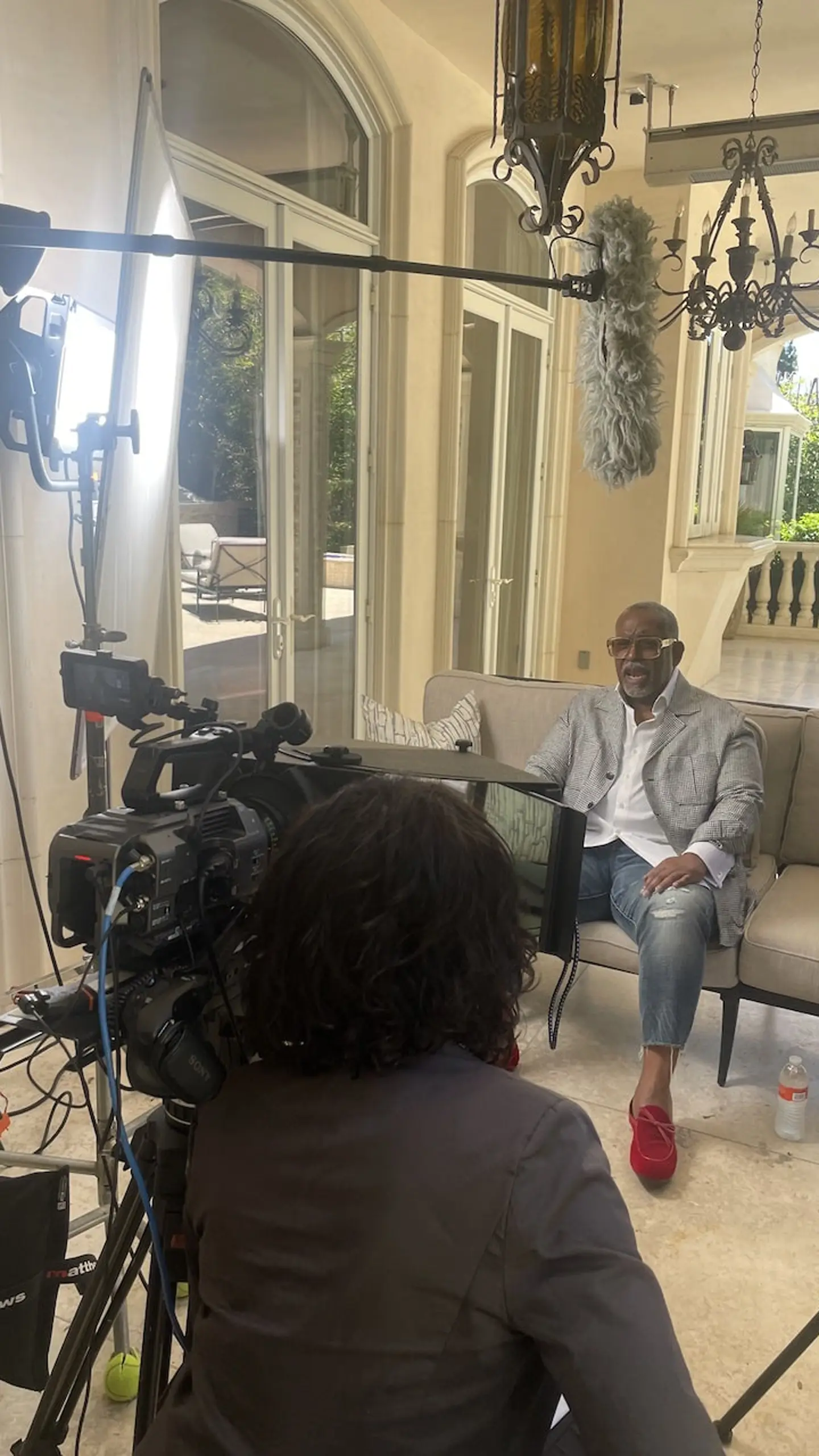
Sound design is the invisible force that transforms television from a visual medium into an immersive storytelling experience. By weaving together dialogue, sound effects, music, and ambient noise, sound design shapes how audiences perceive and connect with what they see on screen. In the world of [TV production](https://c-istudios.com/film-and-tv-production/), where storytelling must engage viewers episode after episode, audio plays a vital role in enhancing emotions, building tension, and bringing scenes to life.
Over the years, sound design for TV has evolved dramatically. From the early days of monophonic soundtracks to the modern era of multi-layered, high-definition audio, technological advancements have redefined how sound supports visual narratives. Today, immersive techniques and precise audio engineering have become essential tools for captivating audiences in an increasingly competitive entertainment landscape.
In this blog, we’ll explore how sound design for TV elevates storytelling, delves into its key components, and shapes the future of television production.
## What is Sound Design in TV Production?
Sound design for TV is the art and science of crafting auditory elements that enhance the storytelling experience. It involves creating and integrating various sound components, such as dialogue, sound effects, ambient noises, and music, into a cohesive auditory landscape that complements the visual elements on screen. While often invisible to the viewer, sound design is crucial for building atmosphere, conveying emotions, and immersing audiences in the world of the story.
Dialogue is the backbone of TV sound production, serving as the primary means of delivering the narrative. Ensuring dialogue clarity is critical, especially given the variety of devices on which people consume television content today. Sound effects, on the other hand, add layers of realism and drama, from the subtle rustling of leaves to the explosive intensity of an action sequence. Ambient sounds, like the hum of a busy café or the whisper of wind through trees, establish a sense of place and context, while music underscores emotional beats, amplifying tension, joy, or sorrow.
What sets sound design for TV apart from film and radio is the medium’s unique storytelling format. Television often relies on episodic narratives that require consistency in sound quality and style across multiple episodes, sometimes spanning years. This episodic structure also demands flexibility in audio design, as the tone and pacing can vary dramatically between episodes or even scenes. For example, a single show might shift from an intense action sequence to a quiet, introspective moment, requiring sound designers to adapt quickly while maintaining a seamless auditory experience.
Unlike film, which often benefits from larger budgets and longer production timelines, TV sound production operates under tighter constraints, including shorter turnaround times and varying budgets. Meanwhile, compared to radio, which is purely auditory, TV integrates sound as a supporting player to visuals, requiring careful synchronization to ensure that audio enhances rather than overshadows the imagery.
Designing soundscapes for TV is a meticulous process that blends creativity with technical precision. By integrating dialogue, effects, ambiance, and music into a balanced mix, sound designers create worlds that feel authentic and emotionally engaging. As TV continues to evolve with new genres and technologies, audio design remains an essential tool for captivating audiences and driving the medium forward.
## The Importance of Sound Design in Modern TV
Sound is an emotional language that transcends visuals, and in television, it plays a crucial role in shaping how stories are experienced. The intricate work of TV sound production doesn’t just enhance what is seen, it creates what is felt, connecting audiences to the characters, setting, and storyline on a deeper level. Whether it’s the suspenseful hum in a thriller or the uplifting chords in a heartfelt drama, sound has the power to evoke emotions that visuals alone cannot.
One of the most impactful innovations in recent years is immersive audio, which allows viewers to feel surrounded by sound, drawing them closer to the on-screen action. Through technologies like Dolby Atmos, sound design has moved beyond stereo channels to deliver a three-dimensional experience where every whisper, footstep, and explosion feels tangible. This level of detail helps build tension, establish atmosphere, and intensify dramatic moments, elevating the storytelling experience.
For example, the intense use of sound design in *Stranger Things* brought the eerie world of Upside Down to life, with haunting background scores and chilling sound effects amplifying its supernatural themes. Similarly, in *Game of Thrones*, the thunderous battle scenes and delicate character moments were enriched by meticulous soundscapes, creating a truly cinematic TV experience.
TV sound production also impacts character development. Subtle audio cues, like the low hum of suspenseful music or the sharp clang of a sword, help convey emotions, inner conflicts, and transformations that might otherwise go unnoticed. Sound designers carefully align these elements with the story’s pacing, guiding viewers through moments of tension, relief, or revelation.
Beyond individual shows, sound design is vital in anchoring a series’ identity. Signature sounds, such as the opening theme of *Breaking Bad* or the ominous score of *The X-Files*, become iconic, linking audiences emotionally to the narrative.
In a world where TV audiences demand immersive and engaging experiences, sound design stands as an integral pillar of modern storytelling. Through the fusion of immersive audio, meticulous audio design, and innovative technology, sound continues to redefine how television connects with its viewers, turning each episode into a captivating auditory journey.
## Key Elements of Sound Design in TV
Sound design in television relies on a blend of essential elements that work together to create an immersive audio experience. Dialogue, sound effects, ambient sounds, and music are the foundation of effective audio design, each contributing uniquely to the storytelling process.
Dialogue is perhaps the most critical component, serving as the primary medium for delivering the narrative and conveying the characters’ emotions. Ensuring clarity and relevance is paramount, as poorly recorded or mixed dialogue can break the audience's connection with the story. Sound designers carefully balance vocal levels, reduce background noise, and synchronize speech with visuals to maintain a seamless viewing experience. Whether it’s a whispered exchange in a drama or quick-witted banter in a comedy, dialogue must be crisp and intelligible across all listening environments.
Sound effects play an equally vital role, adding realism and enhancing the dramatic impact of scenes. From subtle cues like footsteps and rustling leaves to more pronounced sounds like explosions or thunder, these effects immerse viewers in the story’s environment. By carefully designing and layering sound effects, the audio design team creates a believable world that draws the audience deeper into the narrative.
Ambient sounds, on the other hand, build the atmosphere and establish a sense of place. These background noises, such as birds chirping in a park or distant traffic in a city, are often understated but crucial in grounding the story within its setting. Ambient audio sets the mood, enhances realism, and subtly influences how viewers perceive a scene.
Music is the emotional heartbeat of sound design, capable of setting the tone and evoking powerful reactions from the audience. A haunting score can heighten suspense, while an uplifting melody can underscore moments of joy or triumph. In audio design for TV, music is carefully composed or selected to complement the visuals and narrative, ensuring it enhances rather than overwhelms the on-screen action.
Together, these elements form the backbone of sound design in TV, shaping how stories are told and experienced. The balance and interplay between dialogue, effects, ambient sounds, and music ensure that every scene resonates with the audience, creating a truly immersive and memorable viewing experience.
## The Role of Technology in TV Sound Production
Advancements in audio technology have transformed the way sound is designed and produced for television. Modern tools and techniques have streamlined processes, enabling sound designers to craft intricate and highly detailed soundscapes that elevate storytelling.
At the heart of this evolution are Digital Audio Workstations (DAWs), which allow sound designers to record, edit, and mix audio with unparalleled precision. DAWs have revolutionized TV sound production, offering flexible tools for manipulating audio tracks, applying effects, and synchronizing sound with visuals.
Foley techniques remain a cornerstone of sound design, adding an extra layer of realism to on-screen actions. From footsteps to the rustling of fabric, Foley artists recreate everyday sounds in a controlled environment, ensuring they align perfectly with the visuals. This process not only enhances authenticity but also gives sound designers creative freedom to exaggerate or modify sounds for dramatic effect.
Artificial intelligence is also making significant inroads into audio design. AI-powered tools can analyze scenes and automatically suggest or generate sound effects, saving time and enabling designers to focus on creative decisions. AI algorithms can optimize audio for different playback environments, ensuring a consistent experience across devices like TVs, smartphones, and headphones.
Immersive audio technologies, such as Dolby Atmos, have taken TV sound design to new heights. By creating a three-dimensional sound field, these technologies allow viewers to experience sound as if it’s happening around them, rather than just from the screen. This level of immersion is especially impactful in action-packed scenes or dramatic moments, where spatial audio enhances the intensity and emotional connection.
These technological advancements have redefined the possibilities of sound design for TV, enabling creators to push boundaries and deliver richer, more engaging auditory experiences. As technology continues to evolve, the potential for even more innovative approaches to TV sound production is limitless.
## Collaboration in Sound Design for TV Production
Sound design for TV is a deeply collaborative process, requiring close coordination between directors, producers, sound designers, and other creative teams. Each contributor brings a unique perspective to the table, ensuring that the final product seamlessly integrates audio and visuals to enhance storytelling. This synergy is at the core of successful TV sound production, where every detail matters in creating a cohesive and immersive viewing experience.
Directors and producers set the creative vision, providing sound teams with a clear understanding of the story, characters, and emotions they aim to convey. This guidance helps sound designers align their work with the overall narrative, ensuring that every sound element, from dialogue clarity to ambient effects, serves a purpose. Frequent communication between these teams is essential for fine-tuning the audio elements and achieving the desired impact.
Sound designers and mixers work closely with editors to synchronize audio with visuals, ensuring timing and pacing are perfect. For instance, the timing of a dramatic sound effect or a subtle musical cue can significantly influence how a scene is perceived. Similarly, Foley artists collaborate with sound editors to recreate or enhance sounds, making them feel authentic and engaging.
The collaborative nature of audio design is particularly evident in projects requiring immersive audio. Advanced technologies like Dolby Atmos demand precise coordination between teams to achieve spatial audio effects that draw viewers into the scene. For example, in action sequences, sound designers work with visual effects teams to ensure explosions, gunfire, or environmental sounds align with on-screen movements.
Communication is the glue that holds these collaborative efforts together. Regular feedback loops, brainstorming sessions, and shared tools enable teams to refine their work and address challenges effectively. When creative teams function in harmony, the result is a rich, immersive audio experience that elevates the overall quality of the production.
## Challenges in Sound Design for TV
Despite its creative potential, sound design for TV comes with its fair share of challenges. Budget constraints often top the list, limiting the resources available for high-quality recording equipment, advanced software, or experienced sound professionals. Smaller productions may struggle to invest in immersive technologies like Dolby Atmos, forcing sound designers to achieve impactful results with minimal tools.
Tight deadlines are another major hurdle, particularly in episodic TV production, where schedules are often compressed to meet release dates. The fast-paced nature of the industry leaves little room for experimentation, requiring sound teams to work efficiently without compromising quality. Maintaining audio consistency across episodes can also be difficult, especially in long-running series where tonal shifts or changes in setting demand unique soundscapes.
Different genres present distinct challenges for sound designers. Sitcoms, for instance, rely heavily on crisp dialogue and subtle ambient sounds to keep the focus on comedic timing, while dramas often require intricate soundscapes to build tension and evoke emotions. Thrillers and action series demand immersive audio effects to heighten suspense and create a sense of realism, adding complexity to the design process.
Sound designers overcome these obstacles through innovation and adaptability. By leveraging digital tools like DAWs and AI-powered software, they streamline workflows and maximize efficiency. Collaboration between creative teams also plays a crucial role in addressing challenges, ensuring that budgetary or time constraints do not compromise the final product.
Ultimately, sound design for TV is a balancing act, requiring creativity, technical expertise, and problem-solving skills to navigate its challenges. Despite these hurdles, sound designers continue to push boundaries, delivering audio experiences that captivate and immerse audiences.
## The Future of Sound Design in TV Production
The future of sound design for TV is set to be shaped by technological advancements and evolving audience expectations. As television continues to push boundaries, sound design is emerging as a critical frontier for innovation. One of the most transformative trends is the increased adoption of immersive audio technologies like Dolby Atmos, which provides a three-dimensional sound experience.
These technologies create spatially rich soundscapes, immersing viewers in the action and making TV shows feel more cinematic than ever before. As audience demand for enhanced realism grows, immersive audio is poised to become a standard in TV sound production.
AI-driven sound editing is another game-changer for the industry. Artificial intelligence is already being used to automate repetitive tasks, such as cleaning up audio files or generating sound effects. In the future, AI could assist in creating entirely new soundscapes, analyzing scripts to suggest appropriate audio elements, or even mixing tracks dynamically based on real-time viewer preferences. This innovation will allow sound designers to focus more on creative storytelling while meeting the increasing demand for high-quality audio.
Virtual reality (VR) and augmented reality (AR) are also influencing the trajectory of audio design. As interactive and immersive content grows in popularity, TV sound production will need to adapt, integrating techniques from the gaming and VR industries. Designing audio for these platforms will require new approaches, such as crafting sounds that respond to user interactions or create a 360-degree auditory experience.
Education and specialized training will play a vital role in preparing the next generation of sound designers. As technology evolves, sound professionals will need to stay updated on industry-standard tools and techniques. Universities and training programs are already incorporating courses on immersive audio, AI-driven editing, and VR sound design into their curriculums. By equipping aspiring designers with both technical skills and storytelling expertise, the industry can ensure a steady pipeline of talent ready to tackle the challenges of tomorrow.
Ultimately, the future of sound design for TV lies in the hands of those who can harness cutting-edge technology while keeping audience engagement at the forefront. As innovation accelerates, sound design will continue to redefine the TV viewing experience, pushing creative and technical boundaries.
## Tips for Aspiring Sound Designers in TV
Breaking into the field of sound design for TV requires a blend of technical expertise, creative vision, and industry connections. Aspiring sound designers can set themselves up for success by focusing on a few key areas.
First, building strong technical skills is essential. Familiarity with industry-standard software such as Pro Tools, Logic Pro, and Adobe Audition is a must. Aspiring professionals should also learn how to operate Digital Audio Workstations (DAWs) effectively and gain experience with tools for sound editing, mixing, and mastering. Understanding the basics of audio design technologies, including spatial audio and AI-powered software, will provide a competitive edge.
Equally important is a deep understanding of storytelling principles. Great sound design doesn’t just fill the silence, it enhances the narrative. Aspiring designers should study how sound can evoke emotions, build tension, and guide the audience’s attention. Networking within the TV production industry is crucial for gaining opportunities. Attending industry events, joining professional organizations, and connecting with mentors can open doors to internships, freelance gigs, or full-time positions. Collaborating on student projects or indie productions is another way to build experience and demonstrate skills.
Finally, aspiring sound designers should stay adaptable and open to learning. The field of TV sound production is constantly evolving, and keeping up with trends like immersive audio and AI-driven tools will ensure long-term success. With the right combination of skills, passion, and connections, aspiring designers can carve out a rewarding career in this exciting field.
## What Defines a Narrative Short Film?
Narrative short films are a distinct and captivating medium of storytelling. Unlike experimental short films that prioritize abstract or avant-garde expression, narrative short films are structured around a clear storyline with a beginning, middle, and end. They focus on delivering a compelling plot within a limited runtime, making every element, from dialogue to visuals, pivotal in conveying the story effectively.
What sets narrative short films apart is their emphasis on character-driven narratives. These films revolve around relatable characters, whose emotions, decisions, and transformations serve as the backbone of the story. Whether it’s a tale of personal growth, a dramatic conflict, or a humorous escapade, these films prioritize engaging the audience emotionally within a concise format.
Storytelling in narrative short films requires brevity without sacrificing depth. Filmmakers must maximize their storytelling within 5 to 20 minutes, demanding creative use of visuals and sound to replace lengthy exposition. This makes narrative short film production a rewarding yet challenging process, where filmmakers must strike a balance between artistic expression and audience engagement.
In a world where attention spans are shrinking, narrative short films have gained popularity for their ability to tell profound stories in a fraction of the time it takes a feature film. By distilling complex ideas into short, impactful narratives, they provide a platform for emerging filmmakers to showcase their skills while connecting with viewers on an emotional level.
## The Art of Short Film Storytelling
Storytelling is the heart of any successful short film. Unlike feature-length productions, short films have limited time to develop their narrative, requiring precision and creativity to make a lasting impact. Mastering short film storytelling involves understanding how to convey an engaging plot in a condensed timeframe without losing the depth of characters or themes.
The first step is crafting a strong central idea or concept. In short films, simplicity is key. A clear and focused plot allows filmmakers to explore themes and emotions without overwhelming the audience. This includes choosing a theme that resonates, such as love, loss, or self-discovery, and building the narrative around it.
Conflict is another essential element. Whether it's an internal struggle, a clash between characters, or an external obstacle, conflict drives the story forward. The resolution should be impactful, leaving the audience with a sense of closure or something to ponder.
Short films often rely heavily on visual storytelling. Instead of lengthy dialogues, filmmakers use imagery, body language, and sound to convey emotions and advance the plot. Every frame and cut should serve a narrative purpose, ensuring that no screen time is wasted.
Finally, the use of narrative techniques such as flashbacks, foreshadowing, or nonlinear storytelling can add layers of depth. These techniques can make even a short runtime feel rich and immersive. By focusing on these strategies, filmmakers can elevate their narrative short film production to create unforgettable stories that resonate long after the credits roll.
## Developing Your Script. From Idea to Screenplay
The script is the blueprint of any great short film. Developing a script for a narrative short film involves distilling your ideas into a concise and compelling story while ensuring every element contributes to the overall narrative. This process requires creativity, discipline, and a focus on both artistic and practical aspects.
Start with a strong concept that is clear and manageable within a short runtime. Unlike feature-length films, short films thrive on simplicity. A focused plot with a single conflict or theme allows you to explore your story deeply without overwhelming the audience. Ensure that your idea has emotional resonance or a unique perspective to make it stand out.
Creating memorable characters is essential for engaging storytelling. Since you have limited time to develop them, focus on a few key traits and conflicts that define who they are. Avoid unnecessary backstories and instead, reveal character depth through their actions and dialogue. When writing dialogue, prioritize brevity and impact. Each line should either move the plot forward or deepen the audience's understanding of the characters.
Keep your audience and budget in mind while writing. A script with elaborate sets or large casts can be challenging to produce on a limited budget. By tailoring your story to available resources, you can avoid unnecessary complications during production.
Incorporate essential film production tips such as writing with visual storytelling in mind. Instead of relying on dialogue to explain everything, use actions, expressions, and settings to convey meaning. Additionally, format your screenplay professionally to ensure clarity for the cast and crew.
By focusing on these strategies, your script will serve as a strong foundation for your narrative short film, setting the stage for a successful production.
## Pre-Production Essentials. Laying the Foundation
Pre-production is the stage where your vision begins to take shape. It’s the planning phase that ensures a smooth and efficient shooting process, laying the groundwork for effective narrative short film production.
Casting is a crucial step. The right actors bring authenticity and depth to your characters. Hold auditions or reach out to local talent who can embody the emotional nuances of the role. Look for the chemistry between cast members to enhance on-screen dynamics.
Location scouting is another critical aspect. Choose locations that align with your story’s mood and practical requirements. Consider factors such as lighting, accessibility, and sound quality to avoid issues during filming.
Scheduling is vital for managing time and resources effectively. Create a detailed production schedule that includes shooting days, rehearsals, and contingency plans. Use scheduling tools or apps to coordinate with your team and ensure everyone is aligned.
Storyboarding and shot planning are indispensable for visualizing your film. A storyboard serves as a visual guide, illustrating key shots and transitions. It helps the director and cinematographer communicate their vision to the crew, reducing misunderstandings on set. Additionally, planning your shots in advance allows you to optimize shooting time and minimize unnecessary retakes.
Thorough pre-production also includes preparing a shot list, securing permits, renting equipment, and finalizing the budget. This meticulous planning process minimizes surprises during production, allowing you to focus on storytelling and creativity.
By investing time in pre-production, you ensure that your narrative short film stays on track, enabling a seamless transition from script to screen. A well-organized pre-production phase is the backbone of any successful short film project.
## Mastering Cinematic Techniques for Short Films
Cinematic techniques are the visual backbone of any short film. They elevate storytelling by translating the narrative into powerful imagery that captivates the audience. In a narrative short film, every frame must serve the story, making cinematography a vital component of production.
Camera angles and framing are essential tools for visual storytelling. The choice of angle, whether it’s a close-up to emphasize emotion or a wide shot to set the scene, affects how the audience perceives the story. Creative framing, such as using foreground objects or negative space, adds depth and symbolism to the narrative.
Lighting is another critical element. Proper lighting techniques help establish mood, enhance visual appeal, and guide the audience’s focus. For instance, soft lighting can evoke intimacy, while harsh shadows can create tension or mystery. Using practical lights, such as lamps or candles within the scene, can add a naturalistic feel to the visuals.
The concept of "cinematic language" refers to how visual elements like composition, color, and movement convey emotions and tone. A low-angle shot can make a character appear dominant, while a warm color palette can evoke nostalgia or comfort. Understanding this language allows filmmakers to communicate non-verbally, creating a richer narrative experience.
Incorporating narrative techniques visually can enhance the impact of storytelling. For example, techniques like montage editing can condense time, while parallel action can build suspense by showing simultaneous events. Symbolic imagery, such as a recurring object or motif, can add layers of meaning to the story.
Mastering cinematic techniques requires collaboration with a skilled cinematographer and a clear vision of how the visuals align with the narrative. By thoughtfully employing these tools, filmmakers can create a visually compelling short film that resonates with their audience.
## Directing. Bringing Your Vision to Life
The director plays a pivotal role in transforming the script into a cohesive and engaging film. In narrative short film production, the director’s responsibility extends beyond managing logistics; they are the creative leader who ensures every element aligns with the story’s vision.
A director’s primary role is guiding the actors. Since short films rely heavily on concise storytelling, actors must deliver nuanced performances that convey character depth quickly. Directors should hold rehearsals to explore the characters and refine their emotional arcs, ensuring the performances are authentic and impactful.
Collaboration with the crew is another critical aspect. The director must communicate their vision clearly to the cinematographer, production designer, and editor. For example, discussing shot composition and lighting can ensure that every frame supports the story’s tone and message. Regular meetings and detailed shot lists can help align the entire team.
Storytelling consistency is key to a successful short film. The director ensures that all creative elements, from costumes to sound design, contribute to the narrative’s coherence. Maintaining a consistent tone, whether it’s dramatic, comedic, or suspenseful, keeps the audience engaged and invested.
To enhance narrative short film production, directors should stay adaptable. Filmmaking often comes with unforeseen challenges, such as weather changes or equipment issues. A good director finds creative solutions without compromising the story’s integrity.
Finally, directors must keep the audience in mind. They should continuously evaluate whether each scene serves the narrative and engages the viewer. By focusing on storytelling, collaboration, and adaptability, directors can bring their vision to life and craft a short film that leaves a lasting impression.
## The Role of Editing in Crafting the Narrative
Editing is where a short film truly comes to life. It’s the final step in shaping the story, refining the pacing, and evoking the intended emotional responses. A skilled editor not only assembles the footage but also ensures that every cut serves the narrative, making the film cohesive and impactful.
Pacing is one of the most critical aspects of editing. In a short film, where every second counts, the editor must strike a balance between moving the story forward and giving the audience time to absorb key moments. Quick cuts can create urgency or excitement, while longer takes can build tension or highlight emotional depth.
Techniques like cutting for continuity ensure that the transitions between shots are seamless, helping the audience stay immersed in the story. For instance, matching action cuts, where a movement begins in one shot and continues in the next, create a smooth visual flow that enhances the viewing experience.
Editing also plays a pivotal role in building tension. Techniques such as cross-cutting between two simultaneous events can heighten suspense, while intentional pauses or lingering shots can create moments of unease or anticipation. These decisions contribute to the emotional resonance of the film.
Visual storytelling is enhanced through editing by carefully selecting which shots to include and how to order them. For example, juxtaposing contrasting images can convey symbolism or foreshadow events. The editor’s choices shape the narrative arc, ensuring that the story’s emotional beats land effectively.
Ultimately, the editor refines the narrative by trimming unnecessary footage, enhancing transitions, and ensuring that each scene aligns with the film’s overall vision. Through their work, the editor bridges the gap between raw footage and a polished narrative, making them an essential collaborator in narrative short film production.
## Distribution and Marketing. Getting Your Film Seen
Once your narrative short film is complete, the next challenge is getting it in front of an audience. Distribution and marketing are crucial for showcasing y[our work](https://c-istudios.com/our-work/), building your reputation, and potentially opening doors to future opportunities.
Submitting your film to festivals is one of the most effective ways to gain recognition. Research festivals that align with your film’s theme or genre, and tailor your submissions to their requirements. Festivals like Sundance, Tribeca, and Cannes Short Film Corner are prestigious platforms, while regional festivals offer more accessible opportunities for emerging filmmakers.
Online platforms are another powerful avenue for distribution. Websites like Vimeo and YouTube allow you to reach a global audience. For filmmakers seeking monetization, platforms like Amazon Prime Video or subscription-based services can provide additional revenue streams.
Creating a buzz around your film is essential for capturing attention. Social media is a cost-effective tool for promotion. Share behind-the-scenes content, character posters, or teasers to engage your audience before the release. A well-crafted trailer can serve as the centerpiece of your marketing strategy, offering a glimpse of your film’s story and tone to entice viewers.
Networking is another valuable strategy. Connect with influencers, bloggers, and industry professionals who can help amplify your film’s reach. Engaging with online communities dedicated to short films can also boost visibility.
Marketing completes the short film production process by ensuring your film doesn’t just sit on a hard drive but finds its audience. A thoughtful distribution and marketing plan can maximize your film’s impact, whether it’s winning festival awards, going viral online, or sparking conversations among viewers.
## Common Pitfalls and How to Avoid Them
Short film production comes with unique challenges, and many filmmakers fall into avoidable traps. Recognizing these pitfalls and addressing them proactively can make the difference between a successful project and one that struggles to resonate
One common mistake is attempting to pack too much into a short film. Complex storylines, excessive characters, or elaborate subplots can overwhelm the audience and dilute the narrative.
**Solution**: Simplify your story. Focus on a single, impactful theme or conflict and build your narrative around it. Remember, short films thrive on clarity and emotional resonance. Use concise dialogue and visual storytelling to convey depth without overexplaining.
Budget constraints can hinder production, especially if the script demands costly locations, props, or effects. Many filmmakers underestimate costs or fail to allocate resources efficiently.
**Solution**: Tailor your script to your budget. Write with accessible locations and minimalistic setups in mind. Use practical effects and local talent to keep costs low without sacrificing quality. Crowdfunding or seeking local grants can also provide additional financial support.
Rushed shooting schedules and disorganized production plans often lead to missed shots or compromised quality.
**Solution**: Invest time in pre-production. Create a detailed production schedule, storyboard every scene, and plan for contingencies. Allocate extra time for complex shots or unexpected delays.
Misunderstandings among the crew can derail a production. Lack of clear communication between the director, cast, and crew can result in inefficiency or creative conflicts.
**Solution**: Foster open communication and collaboration. Hold pre-production meetings to align everyone on the vision and workflow. Encourage feedback from team members to address potential issues early.
By addressing these challenges with practical film production tips, filmmakers can navigate the complexities of short film production and deliver a polished, impactful project.
## Work with C&I Studios
If you are planning a project like this, our team can take it from concept to final delivery. Explore our [film and TV production](https://c-istudios.com/film-and-tv-production/), browse [our work](https://c-istudios.com/our-work/) to see how we tell brand stories, and [get in touch](https://c-istudios.com/contact/) when you are ready to start.
Originally published December 4, 2024
---
*This content is from [C&I Studios](https://c-istudios.com), a full-service production company.*
---
# Choosing the Right Content Creation Service: Factors to Consider
> Published: December 3, 2024
> Categories: Commercial & Brand
> Source: https://c-istudios.com/choosing-the-right-content-creation-service-factors-to-consider/
---
.cib{--paper:#1b1d1f;--ink:#fff;--body:#d5d7d9;--muted:#8b9096;--line:rgba(255,255,255,.12);--thumb:#2b2e31;--card:#212426;--accent:#c02b0a;--blue:#5B8FA8;--serif:'Playfair Display',Georgia,serif;--sans:'Poppins',-apple-system,sans-serif;--measure:900px;background:var(--paper);color:var(--body);font-family:var(--sans);line-height:1.6;position:relative;left:50%;transform:translateX(-50%);width:90vw;max-width:1920px}
.cib *{box-sizing:border-box}
.cib .kicker{max-width:var(--measure);margin:58px auto 0;padding:0 22px;font-size:12.5px;font-weight:700;letter-spacing:2.5px;text-transform:uppercase;color:var(--blue)}
.cib h1.cibh1{text-wrap:balance;font-family:var(--serif);font-weight:500;font-size:clamp(46px,6vw,72px);line-height:1.08;color:var(--ink);max-width:var(--measure);margin:18px auto 0;padding:0 22px;letter-spacing:-.5px}
.cib .metarow{max-width:var(--measure);margin:20px auto 0;padding:0 22px;color:var(--muted);font-size:14px}
.cib .hero{position:relative;width:100%;height:0;padding-bottom:56.25%;overflow:hidden;margin:48px auto 0;border-top:1px solid var(--line);border-bottom:1px solid var(--line)}
.cib .hero .ph{width:100%;aspect-ratio:16/9;background:var(--thumb);border-top:1px solid var(--line);border-bottom:1px solid var(--line);display:flex;align-items:center;justify-content:center;color:#7d8288;font-size:13px;text-align:center;padding:0 20px}
.cib .body{max-width:var(--measure);margin:12px auto 0;padding:52px 22px 6px}
.cib .body.lead p:first-child{font-size:23px;line-height:1.62;color:var(--ink)}
.cib .body p{font-size:18.5px;line-height:1.85;margin:0 0 30px;color:var(--body)}
.cib .body h2{text-wrap:balance;font-family:var(--serif);font-weight:500;font-size:clamp(32px,4vw,48px);line-height:1.22;color:var(--ink);margin:70px 0 20px;letter-spacing:-.3px}
.cib .body h3{text-wrap:balance;font-family:var(--sans);font-weight:600;font-size:22px;color:var(--ink);margin:38px 0 8px}
.cib .body a{color:var(--ink);text-decoration:underline;text-decoration-color:rgba(255,255,255,.4);text-underline-offset:3px}
.cib .body a:hover{text-decoration-color:var(--ink)}
.cib .ctable{width:100%;border-collapse:collapse;margin:16px 0 30px;font-size:16px}
.cib .ctable th{background:#000;color:#fff;text-align:left;padding:10px 12px;font-family:var(--sans)}
.cib .ctable td{padding:10px 12px;border-bottom:1px solid var(--line);color:var(--body)}
.cib .inimg{position:relative;width:100%;height:0;padding-bottom:56.25%;overflow:hidden;margin:72px auto;border-top:1px solid var(--line);border-bottom:1px solid var(--line)}
.cib .inimg .ph{width:100%;aspect-ratio:16/9;background:var(--thumb);border-top:1px solid var(--line);border-bottom:1px solid var(--line);display:flex;align-items:center;justify-content:center;color:#7d8288;font-size:13px}
.cib .origpub{max-width:var(--measure);margin:60px auto 0;padding:26px 22px 0;border-top:1px solid var(--line);color:var(--muted);font-size:13.5px}
.cib .related{max-width:1200px;margin:64px auto 0;padding:34px 22px 76px}
.cib .related h3{font-family:var(--sans);font-size:12.5px;letter-spacing:2px;text-transform:uppercase;color:var(--ink);margin:0 0 24px}
.cib .grid{display:grid;grid-template-columns:repeat(3,1fr);gap:28px}
.cib .rc{background:var(--card);border:1px solid var(--line);display:block;text-decoration:none;color:inherit;transition:border-color .15s}
.cib a.rc:hover{border-color:rgba(255,255,255,.5)}
.cib .rc .thumb{position:relative;width:100%;height:0;padding-bottom:56.25%;background:var(--thumb);overflow:hidden}
.cib .rc .thumb img{position:absolute!important;top:0!important;left:0!important;width:100%!important;height:100%!important;object-fit:cover!important;margin:0!important}
.cib .rc .cc{padding:14px 15px 17px}
.cib .rc .rt{font-family:var(--serif);font-weight:500;font-size:16px;line-height:1.3;color:var(--ink);margin:0 0 6px}
.cib .rc .rm{font-size:11px;letter-spacing:1px;text-transform:uppercase;color:var(--muted)}
.cib img{margin:0!important;padding:0!important;display:block!important;vertical-align:top;max-width:100%}
.cib .hero img,.cib .inimg img{position:absolute!important;top:0!important;left:0!important;width:100%!important;height:100%!important;object-fit:cover!important;margin:0!important;padding:0!important;border:0!important;display:block!important;aspect-ratio:auto!important}
.cib .hero+.body{padding-top:36px}
@media(max-width:760px){.cib .grid{grid-template-columns:1fr}.cib .body h2{margin:52px 0 16px}.cib .body p{font-size:17.5px}.cib .inimg,.cib .hero{margin-top:44px}}
.cib .vembed{max-width:var(--measure);margin:44px auto;padding:0 22px}.cib .vembed .vwrap{position:relative;width:100%;height:0;padding-bottom:56.25%}.cib .vembed .vwrap iframe{position:absolute;top:0;left:0;width:100%;height:100%;border:0}
Commercial & Brand
# Choosing the Right Content Creation Service. Factors to Consider
14 min read
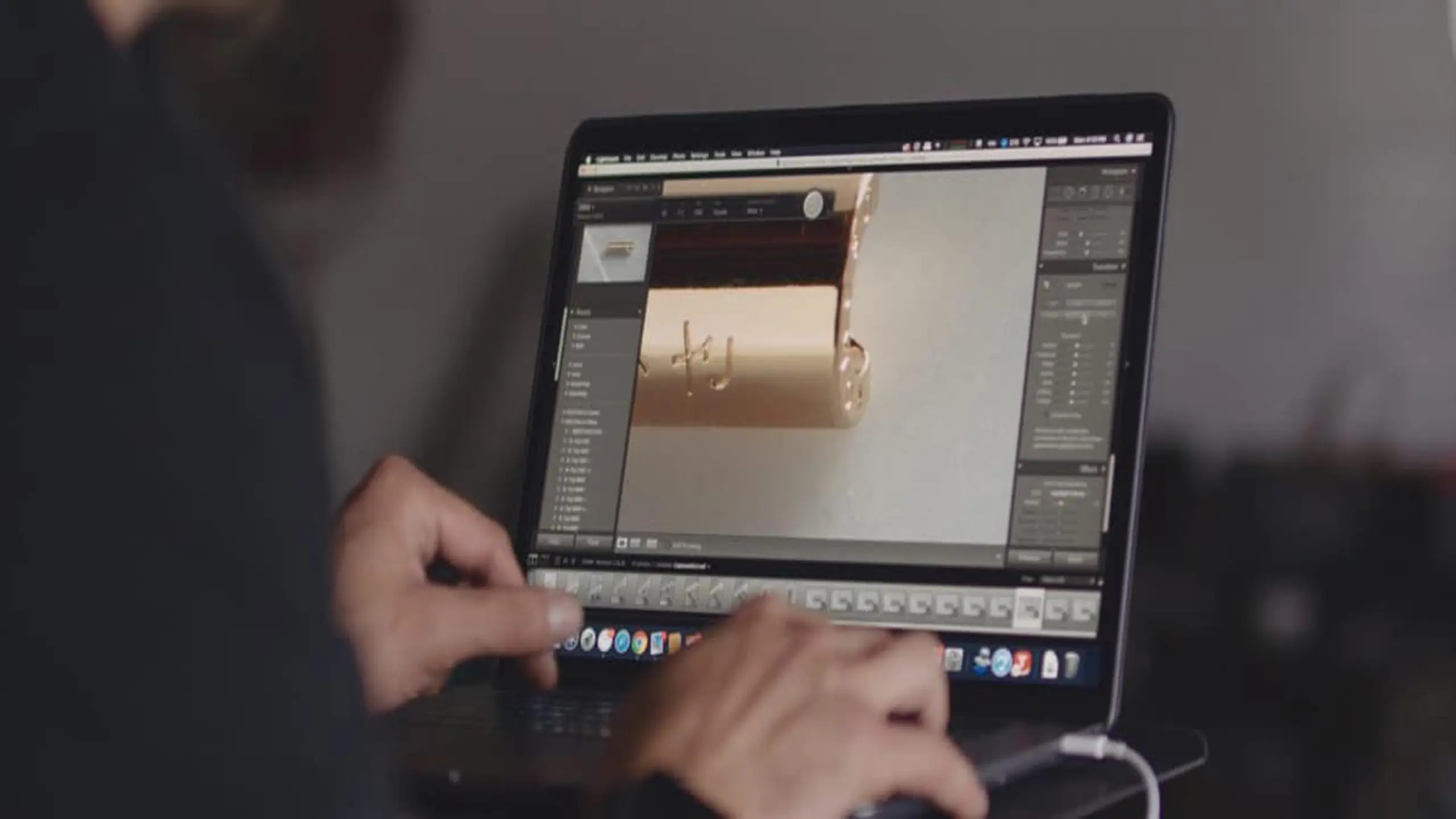
In today’s digital landscape, high-quality content is essential for businesses looking to engage their audience and build a strong brand presence. Whether for websites, social media, or marketing campaigns, well-crafted content helps attract, inform, and convert potential customers. However, not all content creation services are the same, and choosing the right provider can significantly impact a brand’s success.
Businesses must consider various factors, such as expertise, industry experience, and the ability to deliver consistent, engaging material.
This article explores key elements to evaluate when selecting a content creation service to ensure it aligns with a company's goals and needs.
## Understanding Content Creation Services
Content creation plays a crucial role in modern marketing and branding, helping businesses connect with their target audience through compelling and informative materials. Whether it’s website content, social media posts, blog articles, or multimedia assets, high-quality content enhances brand visibility and credibility.
There are various types of content services available, including written, visual, video, and audio-based formats. [SEO copywriting](https://c-istudios.com/seo-copywriting-services/) ensures that written content is optimized for search engines, improving discoverability and engagement.
Meanwhile, video production has become one of the most powerful tools in content marketing, capturing audience attention through engaging storytelling, product demonstrations, and behind-the-scenes brand footage.
Consistency in content quality is essential for maintaining brand identity and audience trust. Businesses must prioritize working with a service that can deliver well-structured, engaging, and search-engine-friendly content across multiple platforms. Understanding the different formats and their impact helps companies choose the right service provider to meet their goals.
## Key Factors to Consider When Choosing a Content Creation Service
Selecting the right content creation service requires careful evaluation of several key factors. Experience and industry expertise play a vital role in ensuring that the provider understands your business needs and can create content that resonates with your audience. A company with a proven track record in content marketing can offer valuable insights and innovative solutions.
Reviewing a provider’s professional photography and videography [portfolio](https://c-istudios.com/our-work/) can give businesses a sense of their creative capabilities.
High-quality visuals are essential for modern digital marketing, and a strong portfolio demonstrates the company’s ability to produce compelling [content](https://c-istudios.com/content-creation-services/). Additionally, analyzing their branding & graphic design work can help determine if their creative direction aligns with your brand’s identity.
Client testimonials and reviews offer further credibility. Feedback from previous clients provides valuable insights into the service provider’s reliability, efficiency, and overall quality of work. A content creation service with a strong reputation and positive client experiences is more likely to deliver exceptional results. Businesses should also assess the provider’s ability to scale their services based on their evolving content needs.
By thoroughly evaluating these factors, companies can select a content creation service that aligns with their brand’s goals and contributes to long-term success.
## The Role of Video and Visual Content in Marketing
In today's digital landscape, video production plays a central role in content marketing strategies. Videos engage audiences more effectively than static content, helping businesses create stronger emotional connections with their viewers. The power of visual storytelling through video production helps deliver messages quickly and in a captivating manner.
VFX compositing & animation can elevate video content even further, providing dynamic visual effects that capture attention and enhance user experience.
From creating 3D models to adding realistic motion graphics, animation can bring your content to life and make complex ideas easier to understand. Whether through an animated explainer video or enhanced visuals in a promotional clip, VFX enables brands to stand out in a crowded market.
Incorporating high-quality visuals, including [professional video production](https://c-istudios.com/video-production-services/) gear, ensures content resonates with audiences. The right combination of visuals, sound, and motion creates a cohesive and memorable message that builds brand loyalty, increases engagement, and boosts conversions.
A strong visual strategy can be the key differentiator in capturing attention and driving results.
## Understanding Pricing Models and Budget Considerations
When choosing a content creation service, understanding the pricing structure is crucial to ensuring a balance between cost and quality. There are various pricing models to consider, such as hourly rates, project-based pricing, or retainers.
Each model offers distinct advantages depending on the scope and complexity of the work. For example, project-based pricing is ideal for one-time campaigns, while retainers are a good fit for ongoing content creation needs.
Balancing cost with quality is important. While it may be tempting to choose a budget-friendly option, businesses should not compromise on the quality of content that aligns with their brand’s goals.
Always assess the value you are getting for the price, this includes evaluating the team's expertise, the tools they use (such as creative marketing strategies or media marketing consult services), and their ability to deliver high-quality results.
Moreover, hidden costs and contract terms should be considered carefully. Some providers may have additional fees for revisions, extra services, or expedited work. It's essential to clarify all terms in advance to avoid unexpected costs.
Ensure that the service agreement is transparent, with clear deliverables, timelines, and pricing breakdowns. By understanding these details, businesses can make informed decisions while staying within their budget.
## Evaluating Content Distribution and Optimization Strategies
Content distribution and optimization are crucial elements in ensuring that content reaches its intended audience and performs effectively across various platforms.
Optimizing content for different platforms, such as [social media marketing](https://c-istudios.com/social-media-marketing-services/), websites, and blogs, requires tailoring the format, messaging, and timing to fit the unique characteristics of each platform. For example, social media posts may require concise, visually engaging content, while blogs may demand in-depth, informative articles that keep readers engaged.
One key component of successful content optimization is SEO copywriting. This practice involves strategically integrating keywords, metadata, and optimized headlines to improve content discoverability and search engine rankings. Proper keyword integration ensures that content is easily found by the target audience, driving more organic traffic to the website.
Social media marketing plays an integral role in content distribution by leveraging platforms like Facebook, Instagram, Twitter, and LinkedIn to amplify content reach.
By strategically posting, sharing, and promoting content, businesses can drive engagement, encourage sharing, and increase brand visibility. Content distribution on social media not only boosts brand awareness but also fosters a community of loyal followers who engage with the brand’s messages.
Additionally, having the right web hosting infrastructure ensures that content is easily accessible to the audience. A reliable web hosting provider guarantees fast load times, seamless user experiences, and improved content delivery, contributing to better content performance across all platforms.
## Choosing Between In-House and Outsourced Content Creation
When deciding whether to create content in-house or outsource it to an agency, businesses must weigh the pros and cons of each approach. Hiring an in-house team provides more direct control over content production and allows for greater alignment with internal brand messaging. However, it also requires significant investments in talent acquisition, training, and management, as well as overhead costs for equipment and resources.
Outsourcing content creation to a professional agency can be more cost-effective and efficient, especially for businesses that need specialized skills or don’t have the resources to build an in-house team.
Outsourcing allows companies to tap into expert knowledge in areas like artist management & media creation, video production, and SEO copywriting without the burden of full-time employment and associated costs. Agencies also have the capacity to scale content production up or down as needed, making them a flexible option for growing businesses.
Efficiency is another key factor when choosing between in-house and outsourced content creation. Agencies are typically experienced in streamlining the [content creation](https://c-istudios.com/content-creation-services/) process, which can save time and resources. They have established workflows and access to tools that allow for faster turnaround times, ensuring timely content delivery.
Choosing a service provider that aligns with business goals is essential for maximizing content impact. Whether opting for an in-house team or outsourcing, businesses should ensure that the content creator understands the brand’s vision, tone, and values. It’s important to evaluate the quality of work, reliability, and ability to meet deadlines when selecting the best fit for content creation needs.
Additionally, considering web maintenance needs is critical, as the chosen provider should be able to support ongoing content updates and adjustments to keep the website or platform functioning smoothly.
## Measuring the Success of Content Creation Services
Evaluating the effectiveness of a content creation service requires tracking key performance indicators (KPIs) to measure engagement, reach, and overall impact.
Metrics such as website traffic, social media interactions, conversion rates, and audience retention help determine whether the content strategy is achieving its goals. By analyzing these insights, businesses can refine their content approach to maximize engagement and brand awareness.
Advanced analytics tools provide detailed reports on how content is performing across various platforms. These tools help businesses identify trends and optimize their strategies based on real-time data. Just as feature film mastering & delivery ensures a polished final product in the film industry, content creators must fine-tune their work before distribution to ensure maximum impact.
Similarly, [documentary film production](https://c-istudios.com/documentary-film-production/) teaches the value of storytelling and authenticity, key elements in crafting meaningful content that resonates with audiences. By leveraging data-driven insights, brands can create compelling narratives that drive higher engagement and long-term customer loyalty.
## Understanding Content Creation Services
Content creation plays a crucial role in modern marketing and branding, helping businesses connect with their target audience through compelling and informative materials. Whether it’s website content, social media posts, blog articles, or multimedia assets, high-quality content enhances brand visibility and credibility.
There are various types of content services available, including written, visual, video, and audio-based formats. [SEO copywriting](https://c-istudios.com/seo-copywriting-services/) ensures that written content is optimized for search engines, improving discoverability and engagement.
Meanwhile, video production has become one of the most powerful tools in content marketing, capturing audience attention through engaging storytelling, product demonstrations, and behind-the-scenes brand footage.
Consistency in content quality is essential for maintaining brand identity and audience trust. Businesses must prioritize working with a service that can deliver well-structured, engaging, and search-engine-friendly content across multiple platforms. Understanding the different formats and their impact helps companies choose the right service provider to meet their goals.
## Key Factors to Consider When Choosing a Content Creation Service
Selecting the right content creation service requires careful evaluation of several key factors. Experience and industry expertise play a vital role in ensuring that the provider understands your business needs and can create content that resonates with your audience. A company with a proven track record in content marketing can offer valuable insights and innovative solutions.
Reviewing a provider’s professional photography and videography portfolio can give businesses a sense of their creative capabilities.
High-quality visuals are essential for modern digital marketing, and a strong portfolio demonstrates the company’s ability to produce compelling [content](https://c-istudios.com/content-creation-services/). Additionally, analyzing their branding & graphic design work can help determine if their creative direction aligns with your brand’s identity.
Client testimonials and reviews offer further credibility. Feedback from previous clients provides valuable insights into the service provider’s reliability, efficiency, and overall quality of work. A content creation service with a strong reputation and positive client experiences is more likely to deliver exceptional results. Businesses should also assess the provider’s ability to scale their services based on their evolving content needs.
By thoroughly evaluating these factors, companies can select a content creation service that aligns with their brand’s goals and contributes to long-term success.
## The Role of Video and Visual Content in Marketing
In today's digital landscape, video production plays a central role in content marketing strategies. Videos engage audiences more effectively than static content, helping businesses create stronger emotional connections with their viewers. The power of visual storytelling through video production helps deliver messages quickly and in a captivating manner.
VFX compositing & animation can elevate video content even further, providing dynamic visual effects that capture attention and enhance user experience.
From creating 3D models to adding realistic motion graphics, animation can bring your content to life and make complex ideas easier to understand. Whether through an animated explainer video or enhanced visuals in a promotional clip, VFX enables brands to stand out in a crowded market.
Incorporating high-quality visuals, including professional video production gear, ensures content resonates with audiences. The right combination of visuals, sound, and motion creates a cohesive and memorable message that builds brand loyalty, increases engagement, and boosts conversions.
A strong visual strategy can be the key differentiator in capturing attention and driving results.
## Understanding Pricing Models and Budget Considerations
When choosing a content creation service, understanding the pricing structure is crucial to ensuring a balance between cost and quality. There are various pricing models to consider, such as hourly rates, project-based pricing, or retainers.
Each model offers distinct advantages depending on the scope and complexity of the work. For example, project-based pricing is ideal for one-time campaigns, while retainers are a good fit for ongoing content creation needs.
Balancing cost with quality is important. While it may be tempting to choose a budget-friendly option, businesses should not compromise on the quality of content that aligns with their brand’s goals.
Always assess the value you are getting for the price, this includes evaluating the team's expertise, the tools they use (such as creative marketing strategies or media marketing consult services), and their ability to deliver high-quality results.
Moreover, hidden costs and contract terms should be considered carefully. Some providers may have additional fees for revisions, extra services, or expedited work. It's essential to clarify all terms in advance to avoid unexpected costs.
Ensure that the service agreement is transparent, with clear deliverables, timelines, and pricing breakdowns. By understanding these details, businesses can make informed decisions while staying within their budget.
## Evaluating Content Distribution and Optimization Strategies
Content distribution and optimization are crucial elements in ensuring that content reaches its intended audience and performs effectively across various platforms.
Optimizing content for different platforms, such as [social media marketing](https://c-istudios.com/social-media-marketing-services/), websites, and blogs, requires tailoring the format, messaging, and timing to fit the unique characteristics of each platform. For example, social media posts may require concise, visually engaging content, while blogs may demand in-depth, informative articles that keep readers engaged.
One key component of successful content optimization is SEO copywriting. This practice involves strategically integrating keywords, metadata, and optimized headlines to improve content discoverability and search engine rankings. Proper keyword integration ensures that content is easily found by the target audience, driving more organic traffic to the website.
Social media marketing plays an integral role in content distribution by leveraging platforms like Facebook, Instagram, Twitter, and LinkedIn to amplify content reach.
By strategically posting, sharing, and promoting content, businesses can drive engagement, encourage sharing, and increase brand visibility. Content distribution on social media not only boosts brand awareness but also fosters a community of loyal followers who engage with the brand’s messages.
Additionally, having the right web hosting infrastructure ensures that content is easily accessible to the audience. A reliable web hosting provider guarantees fast load times, seamless user experiences, and improved content delivery, contributing to better content performance across all platforms.
## Choosing Between In-House and Outsourced Content Creation
When deciding whether to create content in-house or outsource it to an agency, businesses must weigh the pros and cons of each approach. Hiring an in-house team provides more direct control over content production and allows for greater alignment with internal brand messaging. However, it also requires significant investments in talent acquisition, training, and management, as well as overhead costs for equipment and resources.
Outsourcing content creation to a professional agency can be more cost-effective and efficient, especially for businesses that need specialized skills or don’t have the resources to build an in-house team.
Outsourcing allows companies to tap into expert knowledge in areas like artist management & media creation, video production, and SEO copywriting without the burden of full-time employment and associated costs. Agencies also have the capacity to scale content production up or down as needed, making them a flexible option for growing businesses.
Efficiency is another key factor when choosing between in-house and outsourced content creation. Agencies are typically experienced in streamlining the [content creation](https://c-istudios.com/content-creation-services/) process, which can save time and resources. They have established workflows and access to tools that allow for faster turnaround times, ensuring timely content delivery.
Choosing a service provider that aligns with business goals is essential for maximizing content impact. Whether opting for an in-house team or outsourcing, businesses should ensure that the content creator understands the brand’s vision, tone, and values. It’s important to evaluate the quality of work, reliability, and ability to meet deadlines when selecting the best fit for content creation needs.
Additionally, considering web maintenance needs is critical, as the chosen provider should be able to support ongoing content updates and adjustments to keep the website or platform functioning smoothly.
## Measuring the Success of Content Creation Services
Evaluating the effectiveness of a content creation service requires tracking key performance indicators (KPIs) to measure engagement, reach, and overall impact.
Metrics such as website traffic, social media interactions, conversion rates, and audience retention help determine whether the content strategy is achieving its goals. By analyzing these insights, businesses can refine their content approach to maximize engagement and brand awareness.
Advanced analytics tools provide detailed reports on how content is performing across various platforms. These tools help businesses identify trends and optimize their strategies based on real-time data. Just as feature film mastering & delivery ensures a polished final product in the film industry, content creators must fine-tune their work before distribution to ensure maximum impact.
Similarly, [documentary film production](https://c-istudios.com/documentary-film-production/) teaches the value of storytelling and authenticity, key elements in crafting meaningful content that resonates with audiences. By leveraging data-driven insights, brands can create compelling narratives that drive higher engagement and long-term customer loyalty.
## Work with C&I Studios
If you are planning a project like this, our team can take it from concept to final delivery. Explore our [video production services](https://c-istudios.com/video-production-services/), browse [our work](https://c-istudios.com/our-work/) to see how we tell brand stories, and [get in touch](https://c-istudios.com/contact/) when you are ready to start.
Originally published December 3, 2024
---
*This content is from [C&I Studios](https://c-istudios.com), a full-service production company.*
---
# Choosing the Right Equipment for Film Production
> Published: December 2, 2024
> Categories: Film & TV
> Source: https://c-istudios.com/choosing-the-right-equipment-for-film-production/
---
.cib{--paper:#1b1d1f;--ink:#fff;--body:#d5d7d9;--muted:#8b9096;--line:rgba(255,255,255,.12);--thumb:#2b2e31;--card:#212426;--accent:#c02b0a;--blue:#5B8FA8;--serif:'Playfair Display',Georgia,serif;--sans:'Poppins',-apple-system,sans-serif;--measure:900px;background:var(--paper);color:var(--body);font-family:var(--sans);line-height:1.6;position:relative;left:50%;transform:translateX(-50%);width:90vw;max-width:1920px}
.cib *{box-sizing:border-box}
.cib .kicker{max-width:var(--measure);margin:58px auto 0;padding:0 22px;font-size:12.5px;font-weight:700;letter-spacing:2.5px;text-transform:uppercase;color:var(--blue)}
.cib h1.cibh1{text-wrap:balance;font-family:var(--serif);font-weight:500;font-size:clamp(46px,6vw,72px);line-height:1.08;color:var(--ink);max-width:var(--measure);margin:18px auto 0;padding:0 22px;letter-spacing:-.5px}
.cib .metarow{max-width:var(--measure);margin:20px auto 0;padding:0 22px;color:var(--muted);font-size:14px}
.cib .hero{position:relative;width:100%;height:0;padding-bottom:56.25%;overflow:hidden;margin:48px auto 0;border-top:1px solid var(--line);border-bottom:1px solid var(--line)}
.cib .hero .ph{width:100%;aspect-ratio:16/9;background:var(--thumb);border-top:1px solid var(--line);border-bottom:1px solid var(--line);display:flex;align-items:center;justify-content:center;color:#7d8288;font-size:13px;text-align:center;padding:0 20px}
.cib .body{max-width:var(--measure);margin:12px auto 0;padding:52px 22px 6px}
.cib .body.lead p:first-child{font-size:23px;line-height:1.62;color:var(--ink)}
.cib .body p{font-size:18.5px;line-height:1.85;margin:0 0 30px;color:var(--body)}
.cib .body h2{text-wrap:balance;font-family:var(--serif);font-weight:500;font-size:clamp(32px,4vw,48px);line-height:1.22;color:var(--ink);margin:70px 0 20px;letter-spacing:-.3px}
.cib .body h3{text-wrap:balance;font-family:var(--sans);font-weight:600;font-size:22px;color:var(--ink);margin:38px 0 8px}
.cib .body a{color:var(--ink);text-decoration:underline;text-decoration-color:rgba(255,255,255,.4);text-underline-offset:3px}
.cib .body a:hover{text-decoration-color:var(--ink)}
.cib .ctable{width:100%;border-collapse:collapse;margin:16px 0 30px;font-size:16px}
.cib .ctable th{background:#000;color:#fff;text-align:left;padding:10px 12px;font-family:var(--sans)}
.cib .ctable td{padding:10px 12px;border-bottom:1px solid var(--line);color:var(--body)}
.cib .inimg{position:relative;width:100%;height:0;padding-bottom:56.25%;overflow:hidden;margin:72px auto;border-top:1px solid var(--line);border-bottom:1px solid var(--line)}
.cib .inimg .ph{width:100%;aspect-ratio:16/9;background:var(--thumb);border-top:1px solid var(--line);border-bottom:1px solid var(--line);display:flex;align-items:center;justify-content:center;color:#7d8288;font-size:13px}
.cib .origpub{max-width:var(--measure);margin:60px auto 0;padding:26px 22px 0;border-top:1px solid var(--line);color:var(--muted);font-size:13.5px}
.cib .related{max-width:1200px;margin:64px auto 0;padding:34px 22px 76px}
.cib .related h3{font-family:var(--sans);font-size:12.5px;letter-spacing:2px;text-transform:uppercase;color:var(--ink);margin:0 0 24px}
.cib .grid{display:grid;grid-template-columns:repeat(3,1fr);gap:28px}
.cib .rc{background:var(--card);border:1px solid var(--line);display:block;text-decoration:none;color:inherit;transition:border-color .15s}
.cib a.rc:hover{border-color:rgba(255,255,255,.5)}
.cib .rc .thumb{position:relative;width:100%;height:0;padding-bottom:56.25%;background:var(--thumb);overflow:hidden}
.cib .rc .thumb img{position:absolute!important;top:0!important;left:0!important;width:100%!important;height:100%!important;object-fit:cover!important;margin:0!important}
.cib .rc .cc{padding:14px 15px 17px}
.cib .rc .rt{font-family:var(--serif);font-weight:500;font-size:16px;line-height:1.3;color:var(--ink);margin:0 0 6px}
.cib .rc .rm{font-size:11px;letter-spacing:1px;text-transform:uppercase;color:var(--muted)}
.cib img{margin:0!important;padding:0!important;display:block!important;vertical-align:top;max-width:100%}
.cib .hero img,.cib .inimg img{position:absolute!important;top:0!important;left:0!important;width:100%!important;height:100%!important;object-fit:cover!important;margin:0!important;padding:0!important;border:0!important;display:block!important;aspect-ratio:auto!important}
.cib .hero+.body{padding-top:36px}
@media(max-width:760px){.cib .grid{grid-template-columns:1fr}.cib .body h2{margin:52px 0 16px}.cib .body p{font-size:17.5px}.cib .inimg,.cib .hero{margin-top:44px}}
.cib .vembed{max-width:var(--measure);margin:44px auto;padding:0 22px}.cib .vembed .vwrap{position:relative;width:100%;height:0;padding-bottom:56.25%}.cib .vembed .vwrap iframe{position:absolute;top:0;left:0;width:100%;height:100%;border:0}
Film & TV
# Choosing the Right Equipment for Film Production
28 min read
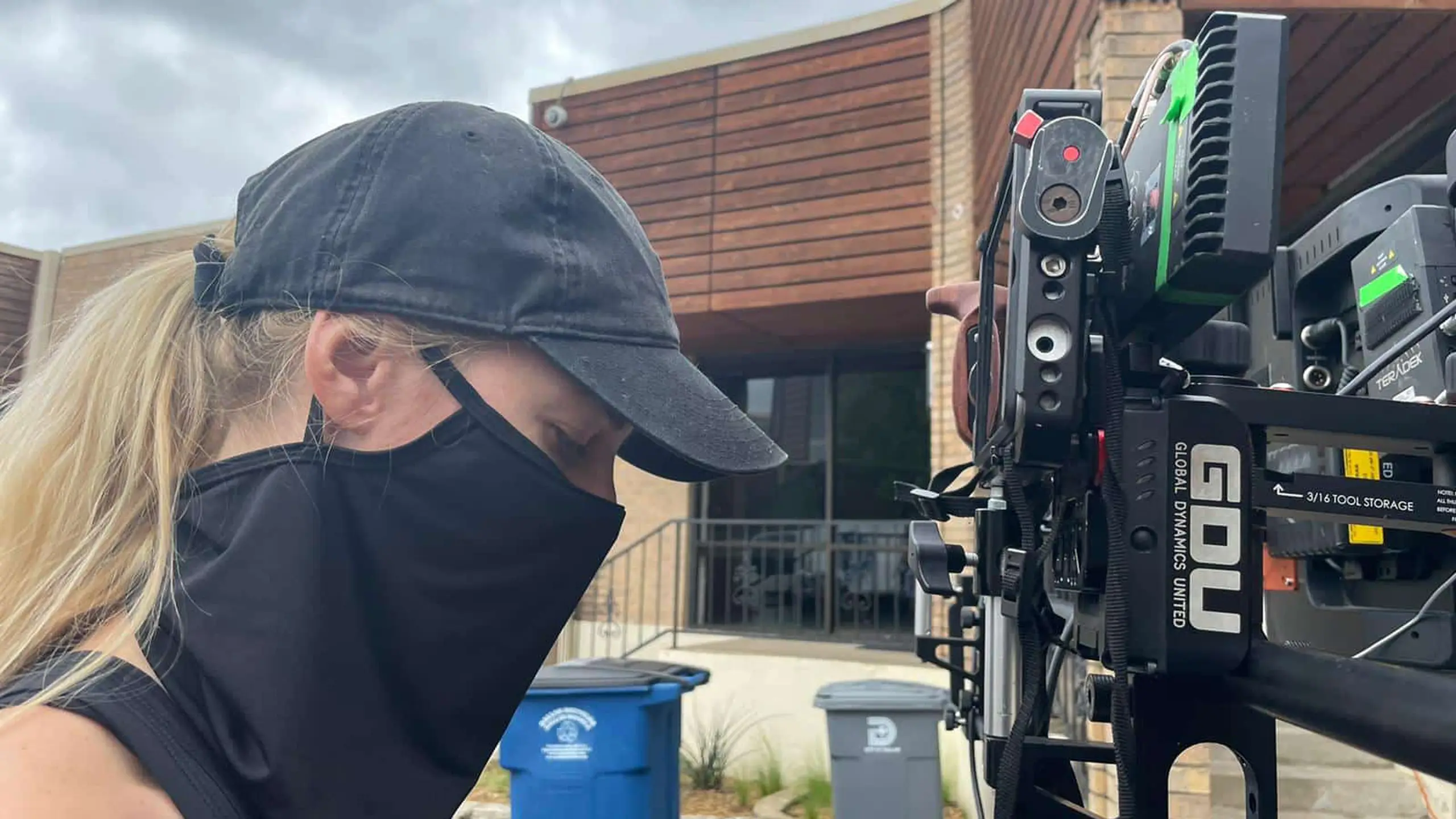
Selecting the right [film production](https://c-istudios.com/film-and-tv-production/) equipment is one of the most critical decisions a filmmaker can make. From capturing the perfect shot to ensuring seamless audio and lighting, the tools you choose can make or break your project. The right equipment doesn’t just enhance the visual and auditory quality of your film, it streamlines the entire production process, saving time and effort while maximizing creative potential.
Whether it’s a high-performance camera, professional lighting rigs, or precision audio gear, every piece of equipment plays a vital role in bringing your vision to life. Understanding the essentials and making informed choices can significantly impact the storytelling and overall success of your film. The right film production equipment is essential for crafting visually stunning and impactful films.
This guide will take you through the key categories of gear, cameras, lighting, sound, and more, to help you make confident, effective decisions for your next production.
## Why Choosing the Right Equipment Matters
Choosing the right production gear is essential for aligning with the project’s scope, budget, and creative vision. Each project comes with unique requirements, whether it's a short film, a documentary, or a full-length feature. The selection of tools must fit the specific demands of the story being told. A well-thought-out film equipment guide helps filmmakers prioritize quality while staying within their financial and logistical constraints.
Proper production gear plays a vital role in enhancing the overall production quality. High-quality equipment not only ensures visually compelling footage but also minimizes technical issues during filming. For instance, using reliable sound recording devices eliminates the need for extensive post-production corrections, while advanced lighting setups bring depth and dimension to every scene. Following a film equipment guide ensures a smoother workflow, allowing the crew to focus on creativity rather than troubleshooting problems on set.
Another key aspect of selecting the right production gear is its impact on efficiency. Time is often a critical resource during film shoots, and using appropriate tools helps save valuable hours. For example, lightweight and portable equipment can speed up transitions between locations, while specialized tools like gimbals and sliders enable quick setup for dynamic shots. A comprehensive film equipment guide equips filmmakers with the knowledge to optimize their workflow, ensuring that every shoot day is productive and effective.
Finally, proper production gear reduces technical challenges that can derail a project. Issues like poor lighting, unstable shots, or inconsistent audio can negatively impact the final product and require costly fixes. With a trusted film equipment guide, filmmakers can make informed decisions, avoiding equipment that might fail under demanding conditions. By aligning the right tools with the creative vision, filmmakers can bring their ideas to life with confidence and precision.
## Cameras for Film Production. Finding the Perfect Fit
Selecting the right camera is one of the most important steps in assembling production gear for a film. With options ranging from DSLRs to cinema cameras, understanding the strengths and limitations of each type is critical. DSLRs and mirrorless cameras are popular among indie filmmakers for their affordability and versatility, while cinema cameras are the go-to choice for professional productions. A detailed film equipment guide can help filmmakers navigate these choices based on their specific needs.
Top brands like ARRI, RED, and Sony dominate the industry, offering cameras tailored to a variety of projects. ARRI cameras, known for their cinematic quality, are ideal for high-budget productions, while RED cameras provide modular systems that allow customization. Sony cameras, on the other hand, are valued for their excellent low-light performance and portability. Comparing these brands in a film equipment guide ensures filmmakers can select the best tool for their story.
Key camera features like resolution, frame rates, and dynamic range should also influence the decision-making process. High-resolution cameras are essential for projects requiring detailed visuals, while higher frame rates are crucial for creating smooth slow-motion effects. A wide dynamic range allows for better handling of highlights and shadows, giving the footage a professional look. A well-researched film equipment guide ensures filmmakers understand these features and make informed decisions.
When building a collection of production gear, filmmakers must also consider the practicality of their camera choice. Portability, battery life, and compatibility with other equipment, such as lenses and stabilizers, are important factors. Cameras that integrate seamlessly into a complete film equipment guide allow for a cohesive production experience. Ultimately, finding the perfect camera requires balancing creative aspirations with the practical demands of the project.
## Essential Lenses. Capturing the Right Vision
Lenses are at the heart of any filmmaker’s toolkit, shaping the visual style and emotional tone of a film. While film production equipment like cameras captures the scene, lenses dictate how the audience experiences it. They determine depth, perspective, and focus, creating a visual language that communicates the film’s narrative. A well-curated film equipment guide often emphasizes the importance of selecting the right lenses for each project, as they are instrumental in defining the mood and aesthetic.
Prime lenses, known for their fixed focal lengths, are a staple of professional filmmaking. They offer superior image quality, better low-light performance, and greater control over depth of field, making them ideal for capturing cinematic visuals. On the other hand, zoom lenses provide flexibility with variable focal lengths, allowing filmmakers to adjust framing without changing the lens. These lenses are perfect for dynamic environments or projects requiring quick transitions between wide and close-up shots. Anamorphic lenses, often highlighted in a film equipment guide, create a distinctive widescreen look with beautiful lens flares, making them a favorite for epic or dramatic storytelling.
Choosing lenses involves aligning them with the film’s genre and setting. For example, a wide-angle lens is ideal for capturing expansive landscapes in adventure films, while a telephoto lens works well for isolating characters in emotional dramas. For action-packed scenes, a zoom lens enables swift adjustments, while prime lenses can enhance the intimacy of close-up shots in romantic or character-driven narratives. Consulting a film equipment guide ensures that filmmakers select lenses that complement the story and maximize creative impact.
Investing in high-quality lenses as part of your film production equipment not only enhances the visual quality but also adds versatility to your toolkit. The right lens choices can elevate storytelling by drawing attention to specific elements or creating a unique visual mood. With the guidance of a trusted film equipment guide, filmmakers can confidently choose lenses that capture their vision with precision and artistry, ensuring a compelling cinematic experience.
## Lighting Equipment. Shaping the Visual Atmosphere
Lighting is a powerful tool in filmmaking, directly influencing the story’s tone and emotional resonance. As a key component of film production equipment, lighting shapes how scenes are perceived, highlighting details and creating depth. Whether it’s a soft, warm glow to evoke intimacy or dramatic shadows for suspense, the right lighting transforms a scene into a work of art. A reliable film equipment guide is invaluable for understanding the nuances of lighting gear and setups.
Common lighting setups play a crucial role in storytelling. Key lighting provides the primary illumination, defining the subject and setting the overall tone. Fill lighting softens shadows, creating a balanced look, while backlighting adds depth and separation from the background. These elements, when combined effectively, enhance the visual narrative and guide the audience’s focus. Using the right production gear, such as modifiers like diffusers and softboxes, ensures a polished and professional result.
Modern lighting gear offers versatility and precision for filmmakers. LED panels are popular for their energy efficiency, adjustable color temperatures, and portability.Tungsten lights deliver consistent warm tones, ideal for indoor or dramatic scenes. Accessories like reflectors and flags, often mentioned in a film equipment guide, help control light direction and intensity, offering creative flexibility.
Incorporating the right lighting into your film production equipment enhances both technical quality and creative expression. From setting a scene’s mood to highlighting key details, lighting is essential in translating the filmmaker’s vision onto the screen. By consulting a trusted film equipment guide, filmmakers can choose lighting gear that meets their project’s needs, ensuring visually stunning results that captivate audiences.
## Sound and Audio Equipment. Capturing Crystal Clear Dialogue
In film production, sound quality is as vital as visuals in delivering a captivating experience. While audiences often forgive minor visual flaws, poor audio can quickly detract from the storytelling and break immersion. That’s why having reliable production gear for sound is non-negotiable. Dialogue, sound effects, and background ambiance all contribute to the narrative, making the choice of audio equipment a critical step in the filmmaking process. A trusted film equipment guide can help filmmakers identify the tools they need for clear and consistent sound.
Essential audio tools include boom microphones, wireless lavaliers, and field recorders. Boom microphones are excellent for capturing crisp dialogue in controlled environments, thanks to their directional capabilities that reduce background noise. For scenarios requiring discreet audio capture, wireless lavalier microphones are a perfect choice.
These compact devices provide freedom of movement for actors while maintaining high-quality sound. Field recorders, another cornerstone of any film equipment guide, offer reliable solutions for capturing audio in diverse settings. Their portability and fidelity make them indispensable for filmmakers working on both small and large-scale productions.
Achieving clean audio on set requires both the right tools and thoughtful execution. Proper microphone placement is key; for example, positioning the boom microphone as close as possible to the source ensures clarity while minimizing noise. Accessories such as windshields or foam covers help reduce environmental interference, especially in outdoor shoots.
For wireless lavaliers, careful placement avoids interference with clothing, ensuring a clear signal. Additionally, monitoring audio levels in real-time using headphones prevents issues from being discovered too late in post-production. A well-rounded film equipment guide often emphasizes these best practices for sound recording.
Investing in high-quality audio gear not only improves production value but also ensures that the final product resonates with audiences. Whether it’s dialogue that carries the story forward or ambient sound that sets the mood, clean and immersive audio is a cornerstone of effective storytelling. Following a film equipment guide allows filmmakers to select the right audio tools, ensuring that every project sounds as good as it looks.
## Grip and Support Gear. Ensuring Stability and Control
Stable and smooth camera movement is essential for professional-quality visuals, making grip and support gear an integral part of any filmmaker’s production gear. Tools like tripods, gimbals, sliders, and cranes are invaluable for achieving stability and dynamic shots. A comprehensive film equipment guide often highlights these tools for their ability to transform ordinary footage into cinematic artistry.
Tripods are the foundation of stable filmmaking, ideal for static shots or smooth panning during interviews and landscapes. Their versatility makes them a staple for filmmakers at any level. For more dynamic sequences, gimbals are indispensable. These motorized stabilizers allow for fluid camera movements, even during handheld or fast-paced shooting, resulting in polished visuals. Sliders, another essential tool found in a film equipment guide, enable precise horizontal movements, adding depth and motion to scenes. Cranes, by contrast, offer elevated perspectives and sweeping shots, making them perfect for dramatic or large-scale productions.
Professional grip gear also enhances creativity by enabling unique camera angles and movements. Dollies, for example, create seamless tracking shots, while jibs provide extended reach for capturing high or sweeping views. Suction mounts are particularly useful for securing cameras to unconventional surfaces, such as cars, expanding possibilities for dynamic action scenes. These tools, often highlighted in a film equipment guide, are invaluable for filmmakers looking to add versatility and professionalism to their projects.
Accessories like monopods, stabilizers, and C-stands further complement a filmmaker’s production gear, ensuring efficiency and flexibility on set. These tools enable quick adjustments, allowing filmmakers to focus on storytelling rather than troubleshooting equipment. Whether creating dramatic angles or smooth transitions, the right grip and support gear ensure that every shot contributes to the cinematic vision.
By selecting the appropriate tools through a trusted film equipment guide, filmmakers can elevate the quality of their work and explore innovative techniques. Grip and support gear not only provide stability and control but also unlock a new level of creativity, allowing filmmakers to execute their vision with precision and confidence.
## Post-Production Equipment. Tools for the Final Touches
Post-production is where the raw footage from a shoot transforms into a polished final product, making the right tools indispensable. While on-set production gear is essential for capturing high-quality material, post-production equipment ensures that the visual and auditory elements come together seamlessly. A good film equipment guide highlights the tools required for this critical phase, helping filmmakers achieve professional-grade results.
Editing software is the backbone of post-production, enabling filmmakers to cut and assemble footage, add effects, and refine the narrative flow. Programs like Adobe Premiere Pro, Final Cut Pro, and DaVinci Resolve are industry standards, offering powerful features for both beginners and professionals. Alongside editing, color grading tools play a crucial role in enhancing the film’s mood and aesthetic. Software like DaVinci Resolve excels in color correction, allowing precise adjustments to create vibrant, visually striking scenes.
Hardware is equally important in the post-production process. High-performance computers with fast processors and ample RAM ensure smooth editing and rendering, even with large video files. Monitors designed for color accuracy are vital for achieving consistent results across different display formats. External drives, another key component often mentioned in a film equipment guide, provide reliable storage solutions for safeguarding footage and project files.
Post-production tools work in harmony with on-set production gear, ensuring continuity and quality throughout the filmmaking process. For example, footage captured with high-resolution cameras benefits from advanced editing software capable of handling large file sizes. Similarly, audio recorded with professional equipment can be fine-tuned using post-production tools to ensure crisp, balanced sound.
By investing in the right post-production equipment, filmmakers can elevate their projects to a professional level. Leveraging insights from a trusted film equipment guide helps streamline the selection process, ensuring the tools chosen to align with the project’s creative and technical needs. Together, on-set and post-production gear form the foundation for a visually compelling and emotionally resonant film.
## Budgeting for Film Production Equipment. Getting the Best Value
Balancing quality and cost is one of the biggest challenges filmmakers face when assembling their production gear. The right tools can elevate a film’s quality, but overspending can strain a budget, particularly for indie filmmakers. A thoughtful approach to budgeting, guided by a reliable film equipment guide, can help filmmakers achieve the best value without compromising their creative vision.
Renting vs. buying is a key decision for filmmakers working with varying budgets. Renting is an excellent option for short-term projects, allowing access to high-end equipment without the upfront investment. This is especially useful for items like specialized cameras, lenses, or cranes, which might not be used frequently. On the other hand, purchasing commonly used gear, such as tripods or microphones, can be more cost-effective in the long run, especially for filmmakers who work on multiple projects.
For indie filmmakers or those working with limited funds, budget-friendly alternatives can provide substantial savings. Many brands offer entry-level cameras, lenses, and lighting kits that deliver impressive performance at a fraction of the cost of top-tier options. Used or refurbished equipment is another viable option, often highlighted in a film equipment guide, as it allows filmmakers to access professional-grade tools without overspending. Platforms like eBay or rental houses clearing out inventory can be great sources for such gear.
Maximizing value also involves strategic planning. Filmmakers should prioritize equipment that aligns closely with their project’s needs, avoiding unnecessary purchases. For instance, a small-scale indie film might benefit more from a versatile, mid-range camera than a high-end model designed for blockbuster productions.
Budgeting wisely doesn’t just save money, it ensures resources are allocated where they matter most, enhancing the overall quality of the project. By following a trusted film equipment guide, filmmakers can navigate the complexities of equipment selection with confidence, striking the perfect balance between cost and quality. This approach allows them to focus on what truly matters: bringing their creative vision to life.
## A Film Equipment Guide for Beginners. Where to Start
For aspiring filmmakers, selecting the right equipment can be a daunting task, but starting with a basic yet versatile kit is the key to success. A beginner-friendly camera, such as the Canon EOS Rebel series or Sony Alpha a6000, is a great starting point. These cameras for film offer manual controls and deliver impressive video quality without requiring a significant investment. As you gain experience, upgrading to a mid-range DSLR or mirrorless camera can provide greater flexibility and advanced features to suit more complex projects.
Pairing your camera with a versatile lens is essential. A 50mm prime lens, often referred to as the “nifty fifty,” is an excellent choice for beginners. It’s perfect for capturing sharp, cinematic shots and works well for interviews, portraits, and general filmmaking. For added versatility, a standard zoom lens can offer a range of focal lengths, making it easier to adapt to different shooting scenarios.
Audio is just as important as visuals in filmmaking, so investing in a reliable microphone is crucial. A shotgun microphone, such as the Rode VideoMic, is an affordable and effective option for capturing clear dialogue. For hands-free recording, a basic wireless Lavalier microphone can be a valuable addition to your kit.
Lighting also plays a pivotal role in creating professional-looking footage. Beginner filmmakers can start with LED panels, which are portable, adjustable, and easy to use. These lights can be paired with diffusers to create softer, more cinematic lighting effects.
As your skills and projects grow, consider upgrading individual pieces of gear to match your evolving needs. Transitioning to higher-quality cameras for film, acquiring specialized lenses, and expanding your audio and lighting options will help you tackle more ambitious projects. A thoughtful approach to equipment selection ensures a solid foundation for your filmmaking journey while allowing room for growth and creativity.
## Why Choosing the Right Equipment Matters
Choosing the right production gear is essential for aligning with the project’s scope, budget, and creative vision. Each project comes with unique requirements, whether it's a short film, a documentary, or a full-length feature. The selection of tools must fit the specific demands of the story being told. A well-thought-out film equipment guide helps filmmakers prioritize quality while staying within their financial and logistical constraints.
Proper production gear plays a vital role in enhancing the overall production quality. High-quality equipment not only ensures visually compelling footage but also minimizes technical issues during filming. For instance, using reliable sound recording devices eliminates the need for extensive post-production corrections, while advanced lighting setups bring depth and dimension to every scene. Following a film equipment guide ensures a smoother workflow, allowing the crew to focus on creativity rather than troubleshooting problems on set.
Another key aspect of selecting the right production gear is its impact on efficiency. Time is often a critical resource during film shoots, and using appropriate tools helps save valuable hours. For example, lightweight and portable equipment can speed up transitions between locations, while specialized tools like gimbals and sliders enable quick setup for dynamic shots. A comprehensive film equipment guide equips filmmakers with the knowledge to optimize their workflow, ensuring that every shoot day is productive and effective.
Finally, proper production gear reduces technical challenges that can derail a project. Issues like poor lighting, unstable shots, or inconsistent audio can negatively impact the final product and require costly fixes. With a trusted film equipment guide, filmmakers can make informed decisions, avoiding equipment that might fail under demanding conditions. By aligning the right tools with the creative vision, filmmakers can bring their ideas to life with confidence and precision.
## Cameras for Film Production. Finding the Perfect Fit
Selecting the right camera is one of the most important steps in assembling production gear for a film. With options ranging from DSLRs to cinema cameras, understanding the strengths and limitations of each type is critical. DSLRs and mirrorless cameras are popular among indie filmmakers for their affordability and versatility, while cinema cameras are the go-to choice for professional productions. A detailed film equipment guide can help filmmakers navigate these choices based on their specific needs.
Top brands like ARRI, RED, and Sony dominate the industry, offering cameras tailored to a variety of projects. ARRI cameras, known for their cinematic quality, are ideal for high-budget productions, while RED cameras provide modular systems that allow customization. Sony cameras, on the other hand, are valued for their excellent low-light performance and portability. Comparing these brands in a film equipment guide ensures filmmakers can select the best tool for their story.
Key camera features like resolution, frame rates, and dynamic range should also influence the decision-making process. High-resolution cameras are essential for projects requiring detailed visuals, while higher frame rates are crucial for creating smooth slow-motion effects. A wide dynamic range allows for better handling of highlights and shadows, giving the footage a professional look. A well-researched film equipment guide ensures filmmakers understand these features and make informed decisions.
When building a collection of production gear, filmmakers must also consider the practicality of their camera choice. Portability, battery life, and compatibility with other equipment, such as lenses and stabilizers, are important factors. Cameras that integrate seamlessly into a complete film equipment guide allow for a cohesive production experience. Ultimately, finding the perfect camera requires balancing creative aspirations with the practical demands of the project.
## Essential Lenses. Capturing the Right Vision
Lenses are at the heart of any filmmaker’s toolkit, shaping the visual style and emotional tone of a film. While film production equipment like cameras captures the scene, lenses dictate how the audience experiences it. They determine depth, perspective, and focus, creating a visual language that communicates the film’s narrative. A well-curated film equipment guide often emphasizes the importance of selecting the right lenses for each project, as they are instrumental in defining the mood and aesthetic.
Prime lenses, known for their fixed focal lengths, are a staple of professional filmmaking. They offer superior image quality, better low-light performance, and greater control over depth of field, making them ideal for capturing cinematic visuals. On the other hand, zoom lenses provide flexibility with variable focal lengths, allowing filmmakers to adjust framing without changing the lens. These lenses are perfect for dynamic environments or projects requiring quick transitions between wide and close-up shots. Anamorphic lenses, often highlighted in a film equipment guide, create a distinctive widescreen look with beautiful lens flares, making them a favorite for epic or dramatic storytelling.
Choosing lenses involves aligning them with the film’s genre and setting. For example, a wide-angle lens is ideal for capturing expansive landscapes in adventure films, while a telephoto lens works well for isolating characters in emotional dramas. For action-packed scenes, a zoom lens enables swift adjustments, while prime lenses can enhance the intimacy of close-up shots in romantic or character-driven narratives. Consulting a film equipment guide ensures that filmmakers select lenses that complement the story and maximize creative impact.
Investing in high-quality lenses as part of your film production equipment not only enhances the visual quality but also adds versatility to your toolkit. The right lens choices can elevate storytelling by drawing attention to specific elements or creating a unique visual mood. With the guidance of a trusted film equipment guide, filmmakers can confidently choose lenses that capture their vision with precision and artistry, ensuring a compelling cinematic experience.
## Lighting Equipment. Shaping the Visual Atmosphere
Lighting is a powerful tool in filmmaking, directly influencing the story’s tone and emotional resonance. As a key component of film production equipment, lighting shapes how scenes are perceived, highlighting details and creating depth. Whether it’s a soft, warm glow to evoke intimacy or dramatic shadows for suspense, the right lighting transforms a scene into a work of art. A reliable film equipment guide is invaluable for understanding the nuances of lighting gear and setups.
Common lighting setups play a crucial role in storytelling. Key lighting provides the primary illumination, defining the subject and setting the overall tone. Fill lighting softens shadows, creating a balanced look, while backlighting adds depth and separation from the background. These elements, when combined effectively, enhance the visual narrative and guide the audience’s focus. Using the right production gear, such as modifiers like diffusers and softboxes, ensures a polished and professional result.
Modern lighting gear offers versatility and precision for filmmakers. LED panels are popular for their energy efficiency, adjustable color temperatures, and portability.Tungsten lights deliver consistent warm tones, ideal for indoor or dramatic scenes. Accessories like reflectors and flags, often mentioned in a film equipment guide, help control light direction and intensity, offering creative flexibility.
Incorporating the right lighting into your film production equipment enhances both technical quality and creative expression. From setting a scene’s mood to highlighting key details, lighting is essential in translating the filmmaker’s vision onto the screen. By consulting a trusted film equipment guide, filmmakers can choose lighting gear that meets their project’s needs, ensuring visually stunning results that captivate audiences.
## Sound and Audio Equipment. Capturing Crystal Clear Dialogue
In film production, sound quality is as vital as visuals in delivering a captivating experience. While audiences often forgive minor visual flaws, poor audio can quickly detract from the storytelling and break immersion. That’s why having reliable production gear for sound is non-negotiable. Dialogue, sound effects, and background ambiance all contribute to the narrative, making the choice of audio equipment a critical step in the filmmaking process. A trusted film equipment guide can help filmmakers identify the tools they need for clear and consistent sound.
Essential audio tools include boom microphones, wireless lavaliers, and field recorders. Boom microphones are excellent for capturing crisp dialogue in controlled environments, thanks to their directional capabilities that reduce background noise. For scenarios requiring discreet audio capture, wireless lavalier microphones are a perfect choice.
These compact devices provide freedom of movement for actors while maintaining high-quality sound. Field recorders, another cornerstone of any film equipment guide, offer reliable solutions for capturing audio in diverse settings. Their portability and fidelity make them indispensable for filmmakers working on both small and large-scale productions.
Achieving clean audio on set requires both the right tools and thoughtful execution. Proper microphone placement is key; for example, positioning the boom microphone as close as possible to the source ensures clarity while minimizing noise. Accessories such as windshields or foam covers help reduce environmental interference, especially in outdoor shoots.
For wireless lavaliers, careful placement avoids interference with clothing, ensuring a clear signal. Additionally, monitoring audio levels in real-time using headphones prevents issues from being discovered too late in post-production. A well-rounded film equipment guide often emphasizes these best practices for sound recording.
Investing in high-quality audio gear not only improves production value but also ensures that the final product resonates with audiences. Whether it’s dialogue that carries the story forward or ambient sound that sets the mood, clean and immersive audio is a cornerstone of effective storytelling. Following a film equipment guide allows filmmakers to select the right audio tools, ensuring that every project sounds as good as it looks.
## Grip and Support Gear. Ensuring Stability and Control
Stable and smooth camera movement is essential for professional-quality visuals, making grip and support gear an integral part of any filmmaker’s production gear. Tools like tripods, gimbals, sliders, and cranes are invaluable for achieving stability and dynamic shots. A comprehensive film equipment guide often highlights these tools for their ability to transform ordinary footage into cinematic artistry.
Tripods are the foundation of stable filmmaking, ideal for static shots or smooth panning during interviews and landscapes. Their versatility makes them a staple for filmmakers at any level. For more dynamic sequences, gimbals are indispensable. These motorized stabilizers allow for fluid camera movements, even during handheld or fast-paced shooting, resulting in polished visuals. Sliders, another essential tool found in a film equipment guide, enable precise horizontal movements, adding depth and motion to scenes. Cranes, by contrast, offer elevated perspectives and sweeping shots, making them perfect for dramatic or large-scale productions.
Professional grip gear also enhances creativity by enabling unique camera angles and movements. Dollies, for example, create seamless tracking shots, while jibs provide extended reach for capturing high or sweeping views. Suction mounts are particularly useful for securing cameras to unconventional surfaces, such as cars, expanding possibilities for dynamic action scenes. These tools, often highlighted in a film equipment guide, are invaluable for filmmakers looking to add versatility and professionalism to their projects.
Accessories like monopods, stabilizers, and C-stands further complement a filmmaker’s production gear, ensuring efficiency and flexibility on set. These tools enable quick adjustments, allowing filmmakers to focus on storytelling rather than troubleshooting equipment. Whether creating dramatic angles or smooth transitions, the right grip and support gear ensure that every shot contributes to the cinematic vision.
By selecting the appropriate tools through a trusted film equipment guide, filmmakers can elevate the quality of their work and explore innovative techniques. Grip and support gear not only provide stability and control but also unlock a new level of creativity, allowing filmmakers to execute their vision with precision and confidence.
## Post-Production Equipment. Tools for the Final Touches
Post-production is where the raw footage from a shoot transforms into a polished final product, making the right tools indispensable. While on-set production gear is essential for capturing high-quality material, post-production equipment ensures that the visual and auditory elements come together seamlessly. A good film equipment guide highlights the tools required for this critical phase, helping filmmakers achieve professional-grade results.
Editing software is the backbone of post-production, enabling filmmakers to cut and assemble footage, add effects, and refine the narrative flow. Programs like Adobe Premiere Pro, Final Cut Pro, and DaVinci Resolve are industry standards, offering powerful features for both beginners and professionals. Alongside editing, color grading tools play a crucial role in enhancing the film’s mood and aesthetic. Software like DaVinci Resolve excels in color correction, allowing precise adjustments to create vibrant, visually striking scenes.
Hardware is equally important in the post-production process. High-performance computers with fast processors and ample RAM ensure smooth editing and rendering, even with large video files. Monitors designed for color accuracy are vital for achieving consistent results across different display formats. External drives, another key component often mentioned in a film equipment guide, provide reliable storage solutions for safeguarding footage and project files.
Post-production tools work in harmony with on-set production gear, ensuring continuity and quality throughout the filmmaking process. For example, footage captured with high-resolution cameras benefits from advanced editing software capable of handling large file sizes. Similarly, audio recorded with professional equipment can be fine-tuned using post-production tools to ensure crisp, balanced sound.
By investing in the right post-production equipment, filmmakers can elevate their projects to a professional level. Leveraging insights from a trusted film equipment guide helps streamline the selection process, ensuring the tools chosen to align with the project’s creative and technical needs. Together, on-set and post-production gear form the foundation for a visually compelling and emotionally resonant film.
## Budgeting for Film Production Equipment. Getting the Best Value
Balancing quality and cost is one of the biggest challenges filmmakers face when assembling their production gear. The right tools can elevate a film’s quality, but overspending can strain a budget, particularly for indie filmmakers. A thoughtful approach to budgeting, guided by a reliable film equipment guide, can help filmmakers achieve the best value without compromising their creative vision.
Renting vs. buying is a key decision for filmmakers working with varying budgets. Renting is an excellent option for short-term projects, allowing access to high-end equipment without the upfront investment. This is especially useful for items like specialized cameras, lenses, or cranes, which might not be used frequently. On the other hand, purchasing commonly used gear, such as tripods or microphones, can be more cost-effective in the long run, especially for filmmakers who work on multiple projects.
For indie filmmakers or those working with limited funds, budget-friendly alternatives can provide substantial savings. Many brands offer entry-level cameras, lenses, and lighting kits that deliver impressive performance at a fraction of the cost of top-tier options. Used or refurbished equipment is another viable option, often highlighted in a film equipment guide, as it allows filmmakers to access professional-grade tools without overspending. Platforms like eBay or rental houses clearing out inventory can be great sources for such gear.
Maximizing value also involves strategic planning. Filmmakers should prioritize equipment that aligns closely with their project’s needs, avoiding unnecessary purchases. For instance, a small-scale indie film might benefit more from a versatile, mid-range camera than a high-end model designed for blockbuster productions.
Budgeting wisely doesn’t just save money, it ensures resources are allocated where they matter most, enhancing the overall quality of the project. By following a trusted film equipment guide, filmmakers can navigate the complexities of equipment selection with confidence, striking the perfect balance between cost and quality. This approach allows them to focus on what truly matters: bringing their creative vision to life.
## A Film Equipment Guide for Beginners. Where to Start
For aspiring filmmakers, selecting the right equipment can be a daunting task, but starting with a basic yet versatile kit is the key to success. A beginner-friendly camera, such as the Canon EOS Rebel series or Sony Alpha a6000, is a great starting point. These cameras for film offer manual controls and deliver impressive video quality without requiring a significant investment. As you gain experience, upgrading to a mid-range DSLR or mirrorless camera can provide greater flexibility and advanced features to suit more complex projects.
Pairing your camera with a versatile lens is essential. A 50mm prime lens, often referred to as the “nifty fifty,” is an excellent choice for beginners. It’s perfect for capturing sharp, cinematic shots and works well for interviews, portraits, and general filmmaking. For added versatility, a standard zoom lens can offer a range of focal lengths, making it easier to adapt to different shooting scenarios.
Audio is just as important as visuals in filmmaking, so investing in a reliable microphone is crucial. A shotgun microphone, such as the Rode VideoMic, is an affordable and effective option for capturing clear dialogue. For hands-free recording, a basic wireless Lavalier microphone can be a valuable addition to your kit.
Lighting also plays a pivotal role in creating professional-looking footage. Beginner filmmakers can start with LED panels, which are portable, adjustable, and easy to use. These lights can be paired with diffusers to create softer, more cinematic lighting effects.
As your skills and projects grow, consider upgrading individual pieces of gear to match your evolving needs. Transitioning to higher-quality cameras for film, acquiring specialized lenses, and expanding your audio and lighting options will help you tackle more ambitious projects. A thoughtful approach to equipment selection ensures a solid foundation for your filmmaking journey while allowing room for growth and creativity.
## Work with C&I Studios
If you are planning a project like this, our team can take it from concept to final delivery. Explore our [film and TV production](https://c-istudios.com/film-and-tv-production/), browse [our work](https://c-istudios.com/our-work/) to see how we tell brand stories, and [get in touch](https://c-istudios.com/contact/) when you are ready to start.
Originally published December 2, 2024
---
*This content is from [C&I Studios](https://c-istudios.com), a full-service production company.*
---
# Composing for Visual Media: Music and Emotional Impact
> Published: December 1, 2024
> Categories: Film & TV
> Source: https://c-istudios.com/composing-for-visual-media-music-and-emotional-impact/
---
.cib{--paper:#1b1d1f;--ink:#fff;--body:#d5d7d9;--muted:#8b9096;--line:rgba(255,255,255,.12);--thumb:#2b2e31;--card:#212426;--accent:#c02b0a;--blue:#5B8FA8;--serif:'Playfair Display',Georgia,serif;--sans:'Poppins',-apple-system,sans-serif;--measure:900px;background:var(--paper);color:var(--body);font-family:var(--sans);line-height:1.6;position:relative;left:50%;transform:translateX(-50%);width:90vw;max-width:1920px}
.cib *{box-sizing:border-box}
.cib .kicker{max-width:var(--measure);margin:58px auto 0;padding:0 22px;font-size:12.5px;font-weight:700;letter-spacing:2.5px;text-transform:uppercase;color:var(--blue)}
.cib h1.cibh1{text-wrap:balance;font-family:var(--serif);font-weight:500;font-size:clamp(46px,6vw,72px);line-height:1.08;color:var(--ink);max-width:var(--measure);margin:18px auto 0;padding:0 22px;letter-spacing:-.5px}
.cib .metarow{max-width:var(--measure);margin:20px auto 0;padding:0 22px;color:var(--muted);font-size:14px}
.cib .hero{position:relative;width:100%;height:0;padding-bottom:56.25%;overflow:hidden;margin:48px auto 0;border-top:1px solid var(--line);border-bottom:1px solid var(--line)}
.cib .hero .ph{width:100%;aspect-ratio:16/9;background:var(--thumb);border-top:1px solid var(--line);border-bottom:1px solid var(--line);display:flex;align-items:center;justify-content:center;color:#7d8288;font-size:13px;text-align:center;padding:0 20px}
.cib .body{max-width:var(--measure);margin:12px auto 0;padding:52px 22px 6px}
.cib .body.lead p:first-child{font-size:23px;line-height:1.62;color:var(--ink)}
.cib .body p{font-size:18.5px;line-height:1.85;margin:0 0 30px;color:var(--body)}
.cib .body h2{text-wrap:balance;font-family:var(--serif);font-weight:500;font-size:clamp(32px,4vw,48px);line-height:1.22;color:var(--ink);margin:70px 0 20px;letter-spacing:-.3px}
.cib .body h3{text-wrap:balance;font-family:var(--sans);font-weight:600;font-size:22px;color:var(--ink);margin:38px 0 8px}
.cib .body a{color:var(--ink);text-decoration:underline;text-decoration-color:rgba(255,255,255,.4);text-underline-offset:3px}
.cib .body a:hover{text-decoration-color:var(--ink)}
.cib .ctable{width:100%;border-collapse:collapse;margin:16px 0 30px;font-size:16px}
.cib .ctable th{background:#000;color:#fff;text-align:left;padding:10px 12px;font-family:var(--sans)}
.cib .ctable td{padding:10px 12px;border-bottom:1px solid var(--line);color:var(--body)}
.cib .inimg{position:relative;width:100%;height:0;padding-bottom:56.25%;overflow:hidden;margin:72px auto;border-top:1px solid var(--line);border-bottom:1px solid var(--line)}
.cib .inimg .ph{width:100%;aspect-ratio:16/9;background:var(--thumb);border-top:1px solid var(--line);border-bottom:1px solid var(--line);display:flex;align-items:center;justify-content:center;color:#7d8288;font-size:13px}
.cib .origpub{max-width:var(--measure);margin:60px auto 0;padding:26px 22px 0;border-top:1px solid var(--line);color:var(--muted);font-size:13.5px}
.cib .related{max-width:1200px;margin:64px auto 0;padding:34px 22px 76px}
.cib .related h3{font-family:var(--sans);font-size:12.5px;letter-spacing:2px;text-transform:uppercase;color:var(--ink);margin:0 0 24px}
.cib .grid{display:grid;grid-template-columns:repeat(3,1fr);gap:28px}
.cib .rc{background:var(--card);border:1px solid var(--line);display:block;text-decoration:none;color:inherit;transition:border-color .15s}
.cib a.rc:hover{border-color:rgba(255,255,255,.5)}
.cib .rc .thumb{position:relative;width:100%;height:0;padding-bottom:56.25%;background:var(--thumb);overflow:hidden}
.cib .rc .thumb img{position:absolute!important;top:0!important;left:0!important;width:100%!important;height:100%!important;object-fit:cover!important;margin:0!important}
.cib .rc .cc{padding:14px 15px 17px}
.cib .rc .rt{font-family:var(--serif);font-weight:500;font-size:16px;line-height:1.3;color:var(--ink);margin:0 0 6px}
.cib .rc .rm{font-size:11px;letter-spacing:1px;text-transform:uppercase;color:var(--muted)}
.cib img{margin:0!important;padding:0!important;display:block!important;vertical-align:top;max-width:100%}
.cib .hero img,.cib .inimg img{position:absolute!important;top:0!important;left:0!important;width:100%!important;height:100%!important;object-fit:cover!important;margin:0!important;padding:0!important;border:0!important;display:block!important;aspect-ratio:auto!important}
.cib .hero+.body{padding-top:36px}
@media(max-width:760px){.cib .grid{grid-template-columns:1fr}.cib .body h2{margin:52px 0 16px}.cib .body p{font-size:17.5px}.cib .inimg,.cib .hero{margin-top:44px}}
.cib .vembed{max-width:var(--measure);margin:44px auto;padding:0 22px}.cib .vembed .vwrap{position:relative;width:100%;height:0;padding-bottom:56.25%}.cib .vembed .vwrap iframe{position:absolute;top:0;left:0;width:100%;height:100%;border:0}
Film & TV
# Composing for Visual Media. Music and Emotional Impact
27 min read
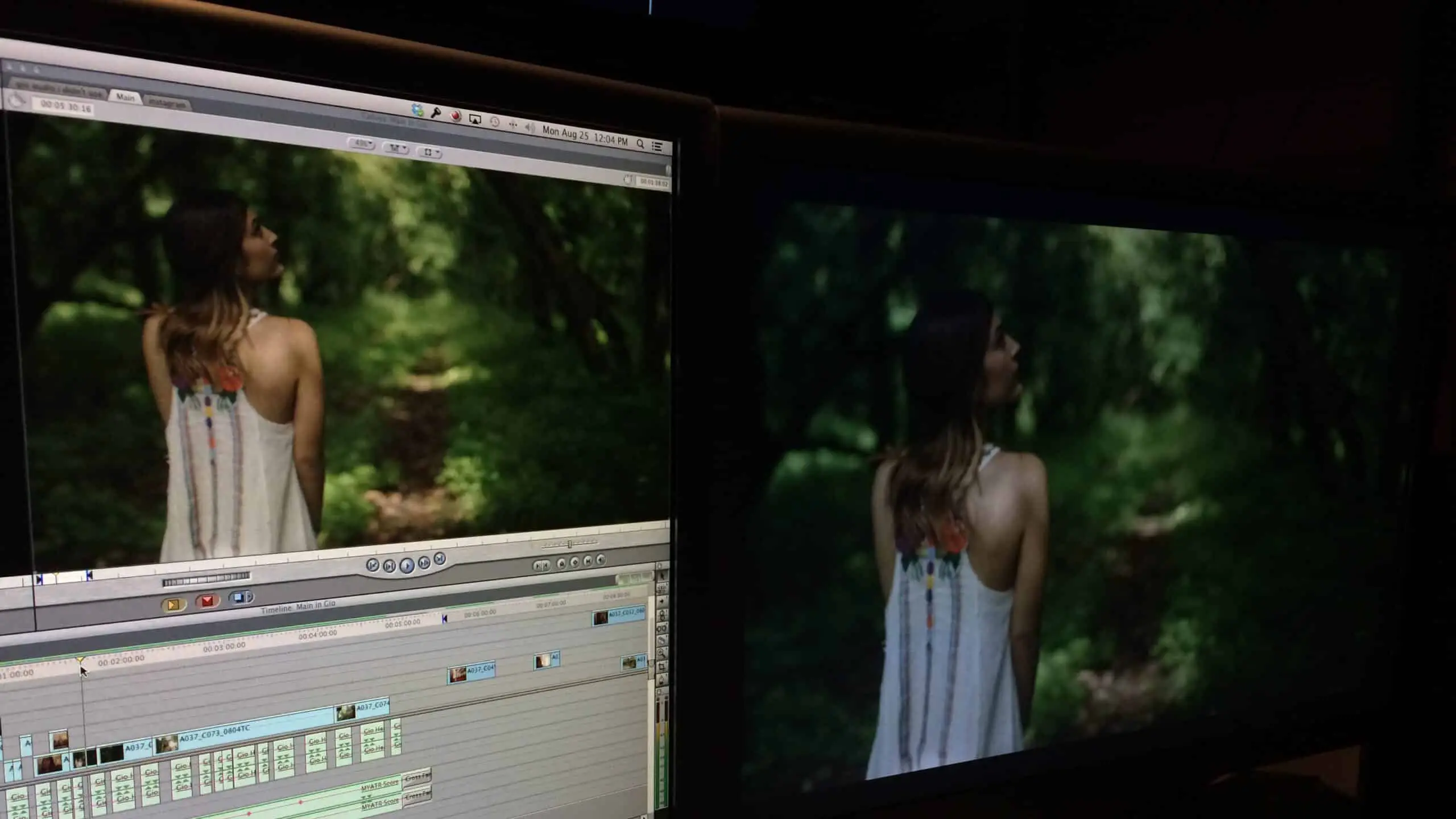
Music has a unique power to elevate visual storytelling, turning mere images into emotionally resonant experiences. Whether it’s the haunting strings in a suspenseful thriller or the soaring melodies in an epic fantasy, music breathes life into stories, guiding audiences through complex emotions and narratives. Its role goes beyond mere accompaniment, music shapes the way we perceive and connect with the visual world.
In this blog, we’ll explore how music transforms visual media, delving into its techniques, innovations, and future possibilities, while celebrating its timeless ability to move and inspire audiences.
## Understanding the Role of Music in Visual Media
Music is an indispensable element of visual storytelling, seamlessly weaving together the emotions, atmosphere, and pacing of a narrative. In the realm of media scoring, music acts as a bridge between the visuals on screen and the emotions of the audience, creating a profound connection that elevates the storytelling experience.
One of the most powerful ways music supports storytelling is through its ability to underscore a plot. Consider a suspenseful scene in a thriller: the rising tension, punctuated by ominous tones, primes the audience for an impending twist. On the other hand, a joyful reunion in a romantic drama is made more poignant with the warmth of a soft, melodious soundtrack. These emotional soundtracks not only guide viewers through the narrative but also amplify the visual elements, making each scene more impactful.
Soundtracks also play a significant role in engaging audiences by fostering emotional investment. Music can subtly cue viewers about a character's feelings or foreshadow a pivotal event, adding layers of depth that dialogue or visuals alone cannot convey. For example, the use of recurring musical themes, or leitmotifs, to represent characters or ideas enhances narrative cohesion and keeps the audience emotionally tethered to the story.
By adding a unique emotional layer to visual content, music transforms what might otherwise be a passive viewing experience into an immersive journey. This connection is a testament to the transformative power of media scoring and emotional soundtracks, which serve as vital tools in the hands of filmmakers and composers alike.
## The Psychological Effects of Music on Emotions
Music wields a remarkable influence over human emotions, often shaping how audiences perceive and react to visual media. The psychological interplay between sound and emotion is at the core of emotional soundtracks, which can evoke feelings as diverse as suspense, happiness, and sorrow.
At a fundamental level, music affects the brain through its tempo, rhythm, and harmony. Fast tempos and staccato rhythms can create excitement or anxiety, while slower, sustained notes might evoke introspection or sadness. Harmony also plays a key role; dissonance might suggest tension or unease, whereas consonance often conveys resolution and peace. This intricate relationship is the science behind the powerful impact of film music composition, which is designed to influence audience perception and mood.
For example, consider the role of music in heightening suspense during a chase scene. The escalating tempo and rhythmic intensity not only mirror the action on screen but also increase the viewer's heart rate, drawing them deeper into the moment. Similarly, a tender piano melody accompanying a heartfelt moment can elicit tears by tapping into universal feelings of love and vulnerability.
Soundtracks can also guide audiences in feeling specific emotions within a scene. By aligning with visual cues, music can subtly enhance tension in a horror film or bring a sense of triumph in an action-packed climax. These emotional nuances are a key element of film music composition, ensuring that the soundtrack amplifies the intended mood without overwhelming the narrative.
In essence, the psychological effects of music on emotions make it an invaluable tool in visual media, allowing composers to not only enhance storytelling but also forge a deeper connection with the audience. This symbiotic relationship between sound and visuals is what makes emotional soundtracks an irreplaceable component of the cinematic experience.
## Techniques in Crafting Music for Visual Media
Crafting music for visual media is a meticulous art that combines creativity with technical expertise. Composers use a variety of techniques to ensure their scores resonate with the narrative, establishing emotional connections that leave a lasting impression. In the context of composing for visual media, these techniques are carefully tailored to amplify the storytelling experience.
One powerful method is the use of leitmotifs, recurring musical themes associated with specific characters, settings, or emotions. These motifs provide a sense of continuity throughout the visual media, allowing the audience to subconsciously connect key moments. For instance, in Star Wars, John Williams’s leitmotifs, such as “The Imperial March,” are instantly recognizable and evoke specific emotions.
Key changes and dynamic shifts are another vital tool in a composer’s arsenal. Transitioning from a minor key to a major key can symbolize hope or resolution, while a sudden dynamic swell might signal a pivotal moment of conflict or revelation. These musical changes mirror the emotional trajectory of the narrative, ensuring that the score aligns with the visual cues on screen.
Instrument selection is equally crucial. Strings often convey romance or melancholy, while brass instruments evoke grandeur or heroism. Electronic instruments might suggest futuristic or dystopian themes. By selecting instruments that align with the themes and tone of the visual media, composers create a soundscape that feels organic to the story.
Iconic films like Inception showcase the brilliance of these techniques. Hans Zimmer’s use of a slowed-down rendition of Edith Piaf’s “Non, Je Ne Regrette Rien” in the score is a prime example of how music can intertwine with the narrative’s core concept. Such examples highlight the mastery of film music composition in creating memorable and emotionally engaging soundtracks.
## Collaboration Between Composers and Visual Media Creators
The relationship between composers and visual media creators is foundational to the success of any score. In composing for visual media, this collaboration ensures the music and visuals work in harmony to deliver a cohesive and impactful storytelling experience.
The synergy between directors and composers is paramount. Directors provide the creative vision, outlining the emotional beats and narrative arcs they want the music to support. Composers, in turn, translate these visual and emotional cues into sound. This partnership is a dialogue, where ideas flow back and forth to refine the score until it seamlessly integrates with the visuals.
Collaborative workflows are crucial to achieving this synergy. Early involvement of the composer in the production process allows for the alignment of the score with the script and cinematography. Techniques like temp tracks, temporary music used during editing, can provide a baseline for the composer while still leaving room for original creativity.
However, challenges often arise in translating visual concepts into sound. Directors may struggle to articulate their vision in musical terms, while composers may need to balance their creative instincts with the director's requirements. Effective communication is key to overcoming these hurdles. For example, sharing reference tracks or mood boards can help bridge the gap between creative ideas and technical execution.
When successfully executed, this collaboration results in scores that elevate the storytelling experience. Projects like The Lord of the Rings, where Howard Shore worked closely with Peter Jackson, showcase the power of media scoring in creating immersive worlds. The seamless integration of music and visuals exemplifies how composing for visual media thrives on strong partnerships between composers and creators.
## Scoring for Different Genres in Visual Media
Music in visual media is far from a one-size-fits-all endeavor. Each genre demands a unique musical approach to align with its thematic elements, pacing, and emotional undertones. The art of composing for visual media requires tailoring soundtracks to meet genre-specific expectations while enhancing the audience's connection to the story.
In dramas, music often emphasizes emotional depth and character development. Subtle piano melodies or string ensembles are commonly used to highlight poignant moments, creating an intimate connection with viewers. By contrast, action films thrive on dynamic and high-energy compositions. Fast tempos, heavy percussion, and driving rhythms amplify tension and keep the adrenaline flowing during high-stakes sequences.
Horror scores are distinct in their ability to evoke fear and unease. Unconventional techniques, like dissonant harmonies, sharp staccato strings, or eerie sound effects, create an unsettling atmosphere that keeps audiences on edge. Meanwhile, in the fantasy genre, composers often use grand orchestral arrangements to evoke a sense of wonder and transport audiences to otherworldly realms. Instruments like harps, flutes, and choirs contribute to a magical, ethereal soundscape.
Customizing soundtracks to match these genre-specific expectations is both an art and a science. A skilled composer knows how to balance tradition with innovation, ensuring that the music enhances the story while maintaining originality. For example, Hans Zimmer’s score for The Dark Knight redefined the action genre with its intense, minimalist themes, while Howard Shore’s music for The Lord of the Rings became synonymous with epic fantasy through its use of thematic leitmotifs and rich orchestration.
By adapting music to suit the unique requirements of each genre, composers ensure their scores resonate with audiences. This versatility is a hallmark of masterful film music composition, proving that music is an integral part of storytelling in every genre.
## The Evolution of Music in Film and Television
The journey of music in film and television has been one of constant evolution. From the earliest orchestral scores to today’s cutting-edge digital compositions, the art of media scoring has adapted to technological advancements and changing audience preferences, cementing its place as a core element of visual media.
In the early 20th century, live orchestras accompanied silent films, providing emotional cues and filling the void left by the absence of dialogue. With the advent of synchronized sound, composers like Max Steiner pioneered original scores that became integral to storytelling. Films like Gone with the Wind and King Kong showcased how music could enhance narrative depth and character arcs.
The mid-20th century saw the rise of iconic orchestral scores by legends such as John Williams and Ennio Morricone. These composers used sweeping melodies and intricate arrangements to create unforgettable soundscapes. However, as technology progressed, the landscape of composing for visual media began to shift. Synthesizers and electronic music gained popularity in the 1970s and 1980s, with scores like Vangelis’s Blade Runner and Giorgio Moroder’s Midnight Express introducing a futuristic, experimental edge.
Today, digital tools have transformed the way music is composed and produced. Software like DAWs (Digital Audio Workstations) enables composers to experiment with virtual instruments and manipulate soundscapes in ways that were once unimaginable. This transition has democratized media scoring, allowing even independent filmmakers to access high-quality soundtracks.
The growing influence of technology has also expanded the possibilities for musical expression. AI-generated compositions and hybrid scores combining orchestral and electronic elements are becoming increasingly popular. These advancements reflect how composers continue to push boundaries, ensuring that music evolves alongside visual media.
From orchestras to synthesizers, the evolution of film music composition mirrors the broader changes in the entertainment industry, proving that music is an ever-adapting art form that remains essential to storytelling.
## Emotional Soundtracks in Modern Media. Trends and Innovations
In the ever-evolving landscape of visual media, soundtracks have taken on new dimensions to meet the expectations of modern audiences. From the rise of minimalist compositions to the integration of cutting-edge technology, today’s emotional soundtracks reflect a blend of tradition and innovation that enhances storytelling and audience connection.
One notable trend in modern scoring is the shift towards minimalist music. Instead of grand, complex orchestrations, many contemporary soundtracks focus on simplicity, using sparse arrangements to evoke powerful emotions. Composers like Jóhann Jóhannsson and Hildur Guðnadóttir have popularized this approach in films such as Arrival and Joker. This trend allows audiences to focus more on the visuals and dialogue while still feeling the subtle emotional undertones provided by the score.
Electronic music has also made a significant impact on modern film music composition. With its versatility and ability to create unique soundscapes, electronic music has become a staple in science fiction, thrillers, and even dramas. Scores like Trent Reznor and Atticus Ross’s work for The Social Network showcase how electronic sounds can evoke both tension and intimacy.
The use of AI and virtual instruments is revolutionizing the way soundtracks are created. AI-driven tools can analyze scenes and suggest musical arrangements, while virtual instruments provide composers with endless possibilities for experimentation. These technologies have democratized access to high-quality compositions, enabling even indie creators to produce professional-grade emotional soundtracks.
Evolving audience preferences also play a critical role in shaping music trends. As viewers become more attuned to diverse storytelling methods, they expect soundtracks to be equally innovative. This demand has led to greater experimentation, with composers blending genres and integrating unconventional instruments to create fresh auditory experiences.
In this era of innovation, emotional soundtracks are redefining how music interacts with visual media, ensuring that the art of composition remains dynamic and impactful.
## Music in Emerging Media Platforms
As visual media expands beyond traditional formats, music continues to play a pivotal role in enhancing experiences across new platforms. From video games to virtual reality, the art of composing for visual media has adapted to meet the unique demands of these emerging formats.
In video games, music is integral to creating immersive environments. Unlike films or television, video games require dynamic scores that respond to player actions in real time. This interactivity allows composers to craft music that evolves with the gameplay, enhancing engagement and emotional impact. Iconic scores like Nobuo Uematsu’s work for the Final Fantasy series and Jeremy Soule’s compositions for The Elder Scrolls demonstrate the importance of adaptive music in gaming.
Web series and streaming platforms also rely heavily on media scoring to establish mood and tone. The episodic nature of web series allows for recurring musical themes that resonate with viewers, while shorter runtimes demand concise and impactful compositions. As streaming continues to dominate the entertainment landscape, composers must innovate to cater to diverse audiences.
Virtual reality (VR) presents an entirely new frontier for music in visual media. In VR, soundscapes need to be three-dimensional, immersing users in a fully realized world. Music in VR not only sets the mood but also enhances spatial awareness, making it a crucial component of the experience. Composers working in this medium face the unique challenge of balancing immersion with emotional resonance.
The rise of these platforms presents exciting opportunities for composers to expand their creative horizons. As the demand for diverse and innovative scores grows, the art of composing for visual media will continue to thrive, proving its adaptability and relevance in an ever-changing industry.
## The Future of Composing for Visual Media
The future of composing for visual media is poised to be as dynamic and innovative as the storytelling it supports. With advancements in technology and shifting audience expectations, the next era of music in visual storytelling will redefine how composers approach their craft, blending traditional techniques with groundbreaking innovations.
One major trend shaping the future is the increasing role of AI-driven composition tools. These tools analyze visual elements, narrative pacing, and emotional cues to generate music that aligns seamlessly with the story. While AI is unlikely to replace human creativity, it serves as a powerful aid for composers, speeding up workflows and offering new ideas. For instance, AI can suggest unique chord progressions or sound textures that composers might not have considered, enriching the creative process.
Hybrid soundtracks, which merge orchestral arrangements with electronic elements, are expected to dominate future media scoring. This combination allows composers to draw from the emotional depth of traditional instruments while incorporating the versatility and innovation of digital sounds. Films like Interstellar and Dune, which successfully blend these styles, have set a precedent for how hybrid scores can evoke powerful, otherworldly emotions, pushing boundaries in emotional soundtracks.
As audience tastes continue to evolve, so too will the expectations for music in visual media. Viewers are becoming more attuned to nuanced storytelling and, by extension, more discerning about the role of music in shaping their experience. This shift will challenge composers to experiment with unconventional instruments, cultural influences, and even non-musical soundscapes to craft scores that resonate on a deeper level.
At the heart of this evolution is the need for composers to embrace creativity and innovation. The tools of the future, AI, virtual instruments, and immersive sound technologies, will only enhance the artistic potential of human composers. By staying open to experimentation and adapting to emerging trends, composers can ensure their work remains relevant and impactful.
The future of composing for visual media lies in its ability to innovate while staying rooted in the emotional storytelling that defines its essence. As technology and creativity intersect, the art of composition will continue to inspire audiences and transform narratives, solidifying its place as an integral part of visual media’s evolution.
## Understanding the Role of Music in Visual Media
Music is an indispensable element of visual storytelling, seamlessly weaving together the emotions, atmosphere, and pacing of a narrative. In the realm of media scoring, music acts as a bridge between the visuals on screen and the emotions of the audience, creating a profound connection that elevates the storytelling experience.
One of the most powerful ways music supports storytelling is through its ability to underscore a plot. Consider a suspenseful scene in a thriller: the rising tension, punctuated by ominous tones, primes the audience for an impending twist. On the other hand, a joyful reunion in a romantic drama is made more poignant with the warmth of a soft, melodious soundtrack. These emotional soundtracks not only guide viewers through the narrative but also amplify the visual elements, making each scene more impactful.
Soundtracks also play a significant role in engaging audiences by fostering emotional investment. Music can subtly cue viewers about a character's feelings or foreshadow a pivotal event, adding layers of depth that dialogue or visuals alone cannot convey. For example, the use of recurring musical themes, or leitmotifs, to represent characters or ideas enhances narrative cohesion and keeps the audience emotionally tethered to the story.
By adding a unique emotional layer to visual content, music transforms what might otherwise be a passive viewing experience into an immersive journey. This connection is a testament to the transformative power of media scoring and emotional soundtracks, which serve as vital tools in the hands of filmmakers and composers alike.
## The Psychological Effects of Music on Emotions
Music wields a remarkable influence over human emotions, often shaping how audiences perceive and react to visual media. The psychological interplay between sound and emotion is at the core of emotional soundtracks, which can evoke feelings as diverse as suspense, happiness, and sorrow.
At a fundamental level, music affects the brain through its tempo, rhythm, and harmony. Fast tempos and staccato rhythms can create excitement or anxiety, while slower, sustained notes might evoke introspection or sadness. Harmony also plays a key role; dissonance might suggest tension or unease, whereas consonance often conveys resolution and peace. This intricate relationship is the science behind the powerful impact of film music composition, which is designed to influence audience perception and mood.
For example, consider the role of music in heightening suspense during a chase scene. The escalating tempo and rhythmic intensity not only mirror the action on screen but also increase the viewer's heart rate, drawing them deeper into the moment. Similarly, a tender piano melody accompanying a heartfelt moment can elicit tears by tapping into universal feelings of love and vulnerability.
Soundtracks can also guide audiences in feeling specific emotions within a scene. By aligning with visual cues, music can subtly enhance tension in a horror film or bring a sense of triumph in an action-packed climax. These emotional nuances are a key element of film music composition, ensuring that the soundtrack amplifies the intended mood without overwhelming the narrative.
In essence, the psychological effects of music on emotions make it an invaluable tool in visual media, allowing composers to not only enhance storytelling but also forge a deeper connection with the audience. This symbiotic relationship between sound and visuals is what makes emotional soundtracks an irreplaceable component of the cinematic experience.
## Techniques in Crafting Music for Visual Media
Crafting music for visual media is a meticulous art that combines creativity with technical expertise. Composers use a variety of techniques to ensure their scores resonate with the narrative, establishing emotional connections that leave a lasting impression. In the context of composing for visual media, these techniques are carefully tailored to amplify the storytelling experience.
One powerful method is the use of leitmotifs, recurring musical themes associated with specific characters, settings, or emotions. These motifs provide a sense of continuity throughout the visual media, allowing the audience to subconsciously connect key moments. For instance, in Star Wars, John Williams’s leitmotifs, such as “The Imperial March,” are instantly recognizable and evoke specific emotions.
Key changes and dynamic shifts are another vital tool in a composer’s arsenal. Transitioning from a minor key to a major key can symbolize hope or resolution, while a sudden dynamic swell might signal a pivotal moment of conflict or revelation. These musical changes mirror the emotional trajectory of the narrative, ensuring that the score aligns with the visual cues on screen.
Instrument selection is equally crucial. Strings often convey romance or melancholy, while brass instruments evoke grandeur or heroism. Electronic instruments might suggest futuristic or dystopian themes. By selecting instruments that align with the themes and tone of the visual media, composers create a soundscape that feels organic to the story.
Iconic films like Inception showcase the brilliance of these techniques. Hans Zimmer’s use of a slowed-down rendition of Edith Piaf’s “Non, Je Ne Regrette Rien” in the score is a prime example of how music can intertwine with the narrative’s core concept. Such examples highlight the mastery of film music composition in creating memorable and emotionally engaging soundtracks.
## Collaboration Between Composers and Visual Media Creators
The relationship between composers and visual media creators is foundational to the success of any score. In composing for visual media, this collaboration ensures the music and visuals work in harmony to deliver a cohesive and impactful storytelling experience.
The synergy between directors and composers is paramount. Directors provide the creative vision, outlining the emotional beats and narrative arcs they want the music to support. Composers, in turn, translate these visual and emotional cues into sound. This partnership is a dialogue, where ideas flow back and forth to refine the score until it seamlessly integrates with the visuals.
Collaborative workflows are crucial to achieving this synergy. Early involvement of the composer in the production process allows for the alignment of the score with the script and cinematography. Techniques like temp tracks, temporary music used during editing, can provide a baseline for the composer while still leaving room for original creativity.
However, challenges often arise in translating visual concepts into sound. Directors may struggle to articulate their vision in musical terms, while composers may need to balance their creative instincts with the director's requirements. Effective communication is key to overcoming these hurdles. For example, sharing reference tracks or mood boards can help bridge the gap between creative ideas and technical execution.
When successfully executed, this collaboration results in scores that elevate the storytelling experience. Projects like The Lord of the Rings, where Howard Shore worked closely with Peter Jackson, showcase the power of media scoring in creating immersive worlds. The seamless integration of music and visuals exemplifies how composing for visual media thrives on strong partnerships between composers and creators.
## Scoring for Different Genres in Visual Media
Music in visual media is far from a one-size-fits-all endeavor. Each genre demands a unique musical approach to align with its thematic elements, pacing, and emotional undertones. The art of composing for visual media requires tailoring soundtracks to meet genre-specific expectations while enhancing the audience's connection to the story.
In dramas, music often emphasizes emotional depth and character development. Subtle piano melodies or string ensembles are commonly used to highlight poignant moments, creating an intimate connection with viewers. By contrast, action films thrive on dynamic and high-energy compositions. Fast tempos, heavy percussion, and driving rhythms amplify tension and keep the adrenaline flowing during high-stakes sequences.
Horror scores are distinct in their ability to evoke fear and unease. Unconventional techniques, like dissonant harmonies, sharp staccato strings, or eerie sound effects, create an unsettling atmosphere that keeps audiences on edge. Meanwhile, in the fantasy genre, composers often use grand orchestral arrangements to evoke a sense of wonder and transport audiences to otherworldly realms. Instruments like harps, flutes, and choirs contribute to a magical, ethereal soundscape.
Customizing soundtracks to match these genre-specific expectations is both an art and a science. A skilled composer knows how to balance tradition with innovation, ensuring that the music enhances the story while maintaining originality. For example, Hans Zimmer’s score for The Dark Knight redefined the action genre with its intense, minimalist themes, while Howard Shore’s music for The Lord of the Rings became synonymous with epic fantasy through its use of thematic leitmotifs and rich orchestration.
By adapting music to suit the unique requirements of each genre, composers ensure their scores resonate with audiences. This versatility is a hallmark of masterful film music composition, proving that music is an integral part of storytelling in every genre.
## The Evolution of Music in Film and Television
The journey of music in film and television has been one of constant evolution. From the earliest orchestral scores to today’s cutting-edge digital compositions, the art of media scoring has adapted to technological advancements and changing audience preferences, cementing its place as a core element of visual media.
In the early 20th century, live orchestras accompanied silent films, providing emotional cues and filling the void left by the absence of dialogue. With the advent of synchronized sound, composers like Max Steiner pioneered original scores that became integral to storytelling. Films like Gone with the Wind and King Kong showcased how music could enhance narrative depth and character arcs.
The mid-20th century saw the rise of iconic orchestral scores by legends such as John Williams and Ennio Morricone. These composers used sweeping melodies and intricate arrangements to create unforgettable soundscapes. However, as technology progressed, the landscape of composing for visual media began to shift. Synthesizers and electronic music gained popularity in the 1970s and 1980s, with scores like Vangelis’s Blade Runner and Giorgio Moroder’s Midnight Express introducing a futuristic, experimental edge.
Today, digital tools have transformed the way music is composed and produced. Software like DAWs (Digital Audio Workstations) enables composers to experiment with virtual instruments and manipulate soundscapes in ways that were once unimaginable. This transition has democratized media scoring, allowing even independent filmmakers to access high-quality soundtracks.
The growing influence of technology has also expanded the possibilities for musical expression. AI-generated compositions and hybrid scores combining orchestral and electronic elements are becoming increasingly popular. These advancements reflect how composers continue to push boundaries, ensuring that music evolves alongside visual media.
From orchestras to synthesizers, the evolution of film music composition mirrors the broader changes in the entertainment industry, proving that music is an ever-adapting art form that remains essential to storytelling.
## Emotional Soundtracks in Modern Media. Trends and Innovations
In the ever-evolving landscape of visual media, soundtracks have taken on new dimensions to meet the expectations of modern audiences. From the rise of minimalist compositions to the integration of cutting-edge technology, today’s emotional soundtracks reflect a blend of tradition and innovation that enhances storytelling and audience connection.
One notable trend in modern scoring is the shift towards minimalist music. Instead of grand, complex orchestrations, many contemporary soundtracks focus on simplicity, using sparse arrangements to evoke powerful emotions. Composers like Jóhann Jóhannsson and Hildur Guðnadóttir have popularized this approach in films such as Arrival and Joker. This trend allows audiences to focus more on the visuals and dialogue while still feeling the subtle emotional undertones provided by the score.
Electronic music has also made a significant impact on modern film music composition. With its versatility and ability to create unique soundscapes, electronic music has become a staple in science fiction, thrillers, and even dramas. Scores like Trent Reznor and Atticus Ross’s work for The Social Network showcase how electronic sounds can evoke both tension and intimacy.
The use of AI and virtual instruments is revolutionizing the way soundtracks are created. AI-driven tools can analyze scenes and suggest musical arrangements, while virtual instruments provide composers with endless possibilities for experimentation. These technologies have democratized access to high-quality compositions, enabling even indie creators to produce professional-grade emotional soundtracks.
Evolving audience preferences also play a critical role in shaping music trends. As viewers become more attuned to diverse storytelling methods, they expect soundtracks to be equally innovative. This demand has led to greater experimentation, with composers blending genres and integrating unconventional instruments to create fresh auditory experiences.
In this era of innovation, emotional soundtracks are redefining how music interacts with visual media, ensuring that the art of composition remains dynamic and impactful.
## Music in Emerging Media Platforms
As visual media expands beyond traditional formats, music continues to play a pivotal role in enhancing experiences across new platforms. From video games to virtual reality, the art of composing for visual media has adapted to meet the unique demands of these emerging formats.
In video games, music is integral to creating immersive environments. Unlike films or television, video games require dynamic scores that respond to player actions in real time. This interactivity allows composers to craft music that evolves with the gameplay, enhancing engagement and emotional impact. Iconic scores like Nobuo Uematsu’s work for the Final Fantasy series and Jeremy Soule’s compositions for The Elder Scrolls demonstrate the importance of adaptive music in gaming.
Web series and streaming platforms also rely heavily on media scoring to establish mood and tone. The episodic nature of web series allows for recurring musical themes that resonate with viewers, while shorter runtimes demand concise and impactful compositions. As streaming continues to dominate the entertainment landscape, composers must innovate to cater to diverse audiences.
Virtual reality (VR) presents an entirely new frontier for music in visual media. In VR, soundscapes need to be three-dimensional, immersing users in a fully realized world. Music in VR not only sets the mood but also enhances spatial awareness, making it a crucial component of the experience. Composers working in this medium face the unique challenge of balancing immersion with emotional resonance.
The rise of these platforms presents exciting opportunities for composers to expand their creative horizons. As the demand for diverse and innovative scores grows, the art of composing for visual media will continue to thrive, proving its adaptability and relevance in an ever-changing industry.
## The Future of Composing for Visual Media
The future of composing for visual media is poised to be as dynamic and innovative as the storytelling it supports. With advancements in technology and shifting audience expectations, the next era of music in visual storytelling will redefine how composers approach their craft, blending traditional techniques with groundbreaking innovations.
One major trend shaping the future is the increasing role of AI-driven composition tools. These tools analyze visual elements, narrative pacing, and emotional cues to generate music that aligns seamlessly with the story. While AI is unlikely to replace human creativity, it serves as a powerful aid for composers, speeding up workflows and offering new ideas. For instance, AI can suggest unique chord progressions or sound textures that composers might not have considered, enriching the creative process.
Hybrid soundtracks, which merge orchestral arrangements with electronic elements, are expected to dominate future media scoring. This combination allows composers to draw from the emotional depth of traditional instruments while incorporating the versatility and innovation of digital sounds. Films like Interstellar and Dune, which successfully blend these styles, have set a precedent for how hybrid scores can evoke powerful, otherworldly emotions, pushing boundaries in emotional soundtracks.
As audience tastes continue to evolve, so too will the expectations for music in visual media. Viewers are becoming more attuned to nuanced storytelling and, by extension, more discerning about the role of music in shaping their experience. This shift will challenge composers to experiment with unconventional instruments, cultural influences, and even non-musical soundscapes to craft scores that resonate on a deeper level.
At the heart of this evolution is the need for composers to embrace creativity and innovation. The tools of the future, AI, virtual instruments, and immersive sound technologies, will only enhance the artistic potential of human composers. By staying open to experimentation and adapting to emerging trends, composers can ensure their work remains relevant and impactful.
The future of composing for visual media lies in its ability to innovate while staying rooted in the emotional storytelling that defines its essence. As technology and creativity intersect, the art of composition will continue to inspire audiences and transform narratives, solidifying its place as an integral part of visual media’s evolution.
## Work with C&I Studios
If you are planning a project like this, our team can take it from concept to final delivery. Explore our [film and TV production](https://c-istudios.com/film-and-tv-production/), browse [our work](https://c-istudios.com/our-work/) to see how we tell brand stories, and [get in touch](https://c-istudios.com/contact/) when you are ready to start.
Originally published December 1, 2024
---
*This content is from [C&I Studios](https://c-istudios.com), a full-service production company.*
---
# Navigational Design: Creating Intuitive Menus and Site Structures
> Published: December 1, 2024
> Categories: Film & TV
> Source: https://c-istudios.com/navigational-design-creating-intuitive-menus-and-site-structures/
---
.cib{--paper:#1b1d1f;--ink:#fff;--body:#d5d7d9;--muted:#8b9096;--line:rgba(255,255,255,.12);--thumb:#2b2e31;--card:#212426;--accent:#c02b0a;--blue:#5B8FA8;--serif:'Playfair Display',Georgia,serif;--sans:'Poppins',-apple-system,sans-serif;--measure:900px;background:var(--paper);color:var(--body);font-family:var(--sans);line-height:1.6;position:relative;left:50%;transform:translateX(-50%);width:90vw;max-width:1920px}
.cib *{box-sizing:border-box}
.cib .kicker{max-width:var(--measure);margin:58px auto 0;padding:0 22px;font-size:12.5px;font-weight:700;letter-spacing:2.5px;text-transform:uppercase;color:var(--blue)}
.cib h1.cibh1{text-wrap:balance;font-family:var(--serif);font-weight:500;font-size:clamp(46px,6vw,72px);line-height:1.08;color:var(--ink);max-width:var(--measure);margin:18px auto 0;padding:0 22px;letter-spacing:-.5px}
.cib .metarow{max-width:var(--measure);margin:20px auto 0;padding:0 22px;color:var(--muted);font-size:14px}
.cib .hero{position:relative;width:100%;height:0;padding-bottom:56.25%;overflow:hidden;margin:48px auto 0;border-top:1px solid var(--line);border-bottom:1px solid var(--line)}
.cib .hero .ph{width:100%;aspect-ratio:16/9;background:var(--thumb);border-top:1px solid var(--line);border-bottom:1px solid var(--line);display:flex;align-items:center;justify-content:center;color:#7d8288;font-size:13px;text-align:center;padding:0 20px}
.cib .body{max-width:var(--measure);margin:12px auto 0;padding:52px 22px 6px}
.cib .body.lead p:first-child{font-size:23px;line-height:1.62;color:var(--ink)}
.cib .body p{font-size:18.5px;line-height:1.85;margin:0 0 30px;color:var(--body)}
.cib .body h2{text-wrap:balance;font-family:var(--serif);font-weight:500;font-size:clamp(32px,4vw,48px);line-height:1.22;color:var(--ink);margin:70px 0 20px;letter-spacing:-.3px}
.cib .body h3{text-wrap:balance;font-family:var(--sans);font-weight:600;font-size:22px;color:var(--ink);margin:38px 0 8px}
.cib .body a{color:var(--ink);text-decoration:underline;text-decoration-color:rgba(255,255,255,.4);text-underline-offset:3px}
.cib .body a:hover{text-decoration-color:var(--ink)}
.cib .ctable{width:100%;border-collapse:collapse;margin:16px 0 30px;font-size:16px}
.cib .ctable th{background:#000;color:#fff;text-align:left;padding:10px 12px;font-family:var(--sans)}
.cib .ctable td{padding:10px 12px;border-bottom:1px solid var(--line);color:var(--body)}
.cib .inimg{position:relative;width:100%;height:0;padding-bottom:56.25%;overflow:hidden;margin:72px auto;border-top:1px solid var(--line);border-bottom:1px solid var(--line)}
.cib .inimg .ph{width:100%;aspect-ratio:16/9;background:var(--thumb);border-top:1px solid var(--line);border-bottom:1px solid var(--line);display:flex;align-items:center;justify-content:center;color:#7d8288;font-size:13px}
.cib .origpub{max-width:var(--measure);margin:60px auto 0;padding:26px 22px 0;border-top:1px solid var(--line);color:var(--muted);font-size:13.5px}
.cib .related{max-width:1200px;margin:64px auto 0;padding:34px 22px 76px}
.cib .related h3{font-family:var(--sans);font-size:12.5px;letter-spacing:2px;text-transform:uppercase;color:var(--ink);margin:0 0 24px}
.cib .grid{display:grid;grid-template-columns:repeat(3,1fr);gap:28px}
.cib .rc{background:var(--card);border:1px solid var(--line);display:block;text-decoration:none;color:inherit;transition:border-color .15s}
.cib a.rc:hover{border-color:rgba(255,255,255,.5)}
.cib .rc .thumb{position:relative;width:100%;height:0;padding-bottom:56.25%;background:var(--thumb);overflow:hidden}
.cib .rc .thumb img{position:absolute!important;top:0!important;left:0!important;width:100%!important;height:100%!important;object-fit:cover!important;margin:0!important}
.cib .rc .cc{padding:14px 15px 17px}
.cib .rc .rt{font-family:var(--serif);font-weight:500;font-size:16px;line-height:1.3;color:var(--ink);margin:0 0 6px}
.cib .rc .rm{font-size:11px;letter-spacing:1px;text-transform:uppercase;color:var(--muted)}
.cib img{margin:0!important;padding:0!important;display:block!important;vertical-align:top;max-width:100%}
.cib .hero img,.cib .inimg img{position:absolute!important;top:0!important;left:0!important;width:100%!important;height:100%!important;object-fit:cover!important;margin:0!important;padding:0!important;border:0!important;display:block!important;aspect-ratio:auto!important}
.cib .hero+.body{padding-top:36px}
@media(max-width:760px){.cib .grid{grid-template-columns:1fr}.cib .body h2{margin:52px 0 16px}.cib .body p{font-size:17.5px}.cib .inimg,.cib .hero{margin-top:44px}}
.cib .vembed{max-width:var(--measure);margin:44px auto;padding:0 22px}.cib .vembed .vwrap{position:relative;width:100%;height:0;padding-bottom:56.25%}.cib .vembed .vwrap iframe{position:absolute;top:0;left:0;width:100%;height:100%;border:0}
Film & TV
# Navigational Design. Creating Intuitive Menus and Site Structures
17 min read
Navigational design plays a crucial role in shaping user experience (UX) by ensuring that websites are easy to explore and interact with. A well-structured navigation system helps users find information quickly, reducing frustration and improving overall satisfaction. Intuitive menus and clear site structures enhance accessibility, allowing visitors to move seamlessly from one section to another without confusion. Poor navigation can lead to high bounce rates, while an effective layout keeps users engaged.
This article explores best practices for creating structured, user-friendly website navigation, focusing on strategies that enhance usability, streamline content organization, and improve overall site functionality.
## The Importance of Navigational Design in User Experience
A well-structured navigational design is essential for enhancing user engagement and ensuring that visitors can easily find what they need. Clear and organized website navigation reduces frustration, improves retention, and encourages users to explore more pages. When navigation is intuitive, visitors are more likely to stay longer, reducing bounce rates and increasing conversions.
An intuitive site structure plays a critical role in usability, guiding users through a seamless journey without unnecessary complexity. Websites that incorporate logical menu layouts and category hierarchies allow users to navigate effortlessly, enhancing their overall experience.
In digital platforms, branding & graphic design also contribute to navigational clarity by using visual cues, typography, and color schemes to direct users’ attention to key areas. Consistent branding elements across a website ensure familiarity, making it easier for users to interact with different sections.
Responsive navigation is another crucial factor in delivering a smooth user experience. With a growing number of users accessing websites on mobile devices, it is essential to design menus that function well across all screen sizes. Mobile-friendly navigation elements, such as collapsible menus and touch-friendly buttons, enhance accessibility. Additionally, a visually appealing and easy-to-use interface supports [creative marketing](https://c-istudios.com/creative-marketing-services/) efforts by keeping users engaged with the brand’s content.
An effective navigation system is not just about functionality, it also plays a role in marketing and brand identity. When businesses implement branding & graphic design strategies within their navigation, they reinforce their identity and create a more cohesive online presence. Well-placed menu structures and calls-to-action encourage visitors to explore services, products, or resources, supporting marketing goals.
By integrating clear branding & graphic design elements and focusing on creative marketing strategies, businesses can develop a navigation system that not only guides users but also strengthens their brand presence. Responsive design ensures accessibility across different devices, improving usability and driving better interactions.
## Principles of Effective Navigational Design
Effective navigational design is built on key principles such as simplicity, consistency, and clarity. A well-structured menu ensures that users can find information quickly without feeling overwhelmed. Keeping navigation simple means avoiding cluttered menus and limiting the number of choices per category. Consistency in labeling, menu placement, and design elements creates a seamless experience across all pages, improving usability.
A strong hierarchical site structure helps guide users to relevant content, ensuring that pages are logically connected. This approach not only enhances user experience but also supports SEO copywriting by creating clear pathways for search engines to index content effectively. Optimized navigation boosts visibility, making it easier for users to discover key pages.
Incorporating intuitive design choices further improves usability, leading to higher engagement and retention. Strategic use of categories, breadcrumbs, and call-to-action buttons can encourage deeper exploration.
Effective navigation plays a crucial role in social [media marketing](https://c-istudios.com/social-media-marketing-services/), ensuring that users can easily share content and interact with different platforms. By integrating structured menus and clear pathways, businesses can enhance both user satisfaction and online visibility.
## Creating Intuitive Menus for Seamless Navigation
Designing intuitive menus is essential for ensuring seamless website navigation. Menus serve as a roadmap, guiding users to relevant content with minimal effort. Implementing best practices, such as using drop-down menus, sticky menus, and mega menus, enhances accessibility and improves the browsing experience.
Drop-down menus help organize subcategories neatly, while sticky menus keep navigation options visible as users scroll. Mega menus work well for content-heavy sites, allowing for easy access to multiple sections at once.
Effective categorization and prioritization play a crucial role in structuring menus. Grouping related topics together ensures users can find what they need quickly. Thoughtful [content creation](https://c-istudios.com/content-creation-services/) also influences how menus are designed, as well-structured pages require logical navigation paths. A streamlined menu improves website usability, making it easier for visitors to locate services, products, or information.
Additionally, a strong media marketing consult strategy helps align menu structures with audience needs. Analyzing user behavior and search patterns allows businesses to optimize menus based on visitor expectations. A clear, intuitive menu keeps users engaged, reduces frustration, and improves overall site performance.
## Structuring a Website for Maximum Accessibility
A well-structured website is the foundation of a seamless user experience. Proper planning using wireframes and sitemaps helps organize content logically, ensuring visitors can navigate effortlessly.
Wireframes serve as visual blueprints that outline page layouts, while sitemaps define the hierarchy of pages, making it easier to structure content effectively. These elements are essential for both user navigation and search engine indexing, ensuring the site remains accessible and well-optimized.
Implementing effective internal linking strategies further improves website navigation by connecting related content and guiding users through a natural browsing path. Well-placed internal links enhance user engagement, encourage deeper exploration, and contribute to better web maintenance by keeping pages interconnected.
Another crucial aspect of accessibility is URL structuring and the use of breadcrumbs. A clean, descriptive URL structure improves readability and helps users understand the site’s hierarchy. Breadcrumbs provide a secondary navigation path, allowing visitors to track their journey and return to previous sections effortlessly. These features are particularly beneficial for e-commerce and content-heavy websites, where clear navigation is essential.
Reliable web hosting also plays a key role in maintaining website accessibility. A fast and secure hosting service ensures that navigation elements load quickly, reducing downtime and providing a smooth browsing experience. When paired with regular web maintenance, businesses can prevent broken links, optimize performance, and ensure all navigational components remain functional.
By integrating these strategies, websites can achieve maximum accessibility, delivering a user-friendly experience that enhances engagement and retention.
## Enhancing Navigational Design with Visual Elements
Visual elements play a crucial role in improving navigational design and making menus more engaging and user-friendly. Thoughtfully designed branding & graphic design elements, such as color schemes, typography, and icons, enhance menu usability by providing clear visual cues.
Consistent branding across navigation ensures familiarity, helping users quickly recognize important sections of a website. Well-designed icons and strategically placed buttons improve accessibility and guide users toward key content.
Incorporating [VFX compositing & animation](https://c-istudios.com/vfx-compositing-and-animation-services/) can further enhance user interactions by adding smooth transitions, hover effects, and animated drop-down menus. Subtle animations, such as fading or sliding effects, create a modern, polished experience without overwhelming the user. Interactive elements, like motion graphics, provide immediate feedback, making navigation feel dynamic and engaging.
By combining branding & graphic design with VFX compositing & animation, websites can create a more intuitive and visually appealing navigation system that improves the overall user experience.
## Testing and Optimizing Site Navigation
Creating an intuitive navigational design is only the first step, ongoing testing and optimization are essential for ensuring long-term success. One of the most effective ways to refine site navigation is through A/B testing, which allows businesses to compare different menu layouts, button placements, and call-to-action elements to determine what works best for user engagement.
Using heatmaps and user journey tracking provides deeper insights into how visitors interact with a website. Heatmaps highlight the most frequently clicked areas, showing which menu items or links attract the most attention. User journey tracking, on the other hand, maps out the paths visitors take, helping businesses optimize menu structures and improve content flow.
Additionally, SEO copywriting plays a crucial role in both searchability and usability. Well-structured navigation with clear, keyword-rich headings ensures search engines can index pages efficiently. Integrating [video production](https://c-istudios.com/video-production-services/) into navigation elements, such as interactive tutorials or background animations, can further enhance engagement by making the browsing experience more dynamic and informative.
By continuously testing and optimizing site navigation, businesses can create a seamless, user-friendly experience that improves both usability and search rankings.
## Successful Navigational Designs
Examining well-structured website navigation from leading brands provides valuable insights into effective UX strategies. For example, top websites in various industries, including documentary film production, focus on creating clear, easy-to-follow menus that lead users to key sections.
These brands prioritize intuitive site structures, using simple layouts with strategic categorization. A well-designed navigation system allows users to effortlessly find content, whether it’s exploring [portfolio](https://c-istudios.com/our-work/) items, discovering services, or reading about the company’s background.
Successful UX strategies often incorporate consistent visual elements and [feature film mastering & delivery](https://c-istudios.com/feature-film-mastering-and-delivery/) of content, ensuring users experience a seamless journey across all pages.
By keeping key actions, such as signing up, exploring services, or accessing resources, visible and easily accessible, these websites create a smooth experience for users at every step. Understanding how to structure content hierarchically and presenting menus that are clear and concise contribute to better interaction and overall user satisfaction.
However, there are valuable lessons to be learned from common navigational design mistakes. For instance, overcomplicating menu structures or using unclear labels can frustrate users and lead to higher bounce rates.
A major mistake many websites make is neglecting mobile navigation optimization, which is essential in today’s digital landscape. Another common issue is inconsistent design, where navigation elements vary too much across pages, leading to confusion.
By learning from successful examples and avoiding these pitfalls, businesses can craft navigational systems that not only improve user interaction but also strengthen their overall user experience (UX).
## What to Expect During Television Production
Television production is a dynamic and intricate process that brings ideas to life on screen. From conceptualizing the storyline to delivering the final broadcast, it involves a coordinated effort from multiple professionals, each playing a crucial role in shaping the outcome. The magic of television lies in its ability to captivate audiences, inform, and entertain, and much of this magic stems from the meticulous process of production.
Understanding television production is essential for anyone aspiring to enter the industry or simply curious about how their favorite TV shows are made. It’s not just about cameras and actors; it’s a complex blend of creative vision, technical expertise, and detailed planning.
This article delves into the stages of the [TV production](https://c-istudios.com/film-and-tv-production/) process, examines the roles and responsibilities involved, and highlights what to expect during this transformative journey from idea to screen.
## Concept Development and Pre-Production
Every television project begins with an idea. This could be a script for a drama, a pitch for a reality show, or a concept for a documentary. During the concept development phase, creators outline the vision for the show, identifying the target audience, genre, and format. This stage often includes drafting scripts, creating storyboards, and conducting initial research.
Once the concept is refined, pre-production begins. Pre-production is one of the most critical phases in the TV production process. It involves detailed planning and preparation to ensure the production runs smoothly. Key activities during this stage include assembling a production team, scouting locations, casting actors, and finalizing the script.
A production team typically comprises a director, producers, writers, and technical crew. Each member has a specific role in ensuring the vision for the show aligns with practical and creative goals. For instance, the director oversees the artistic aspects, while the producer manages logistics and finances.
Casting is another vital component of pre-production. Finding the right talent to bring characters to life can significantly impact the success of a show. Producers and directors often hold auditions or seek established actors for prominent roles. Similarly, location scouting ensures that the settings reflect the story’s tone and authenticity. Whether filming in a bustling city or a remote countryside, choosing the right backdrop adds depth to the narrative.
Budgeting and scheduling are equally crucial at this stage. Creating a realistic budget and a detailed production timeline helps avoid potential pitfalls during filming. This phase sets the foundation for the production, ensuring that every aspect is carefully planned and ready for execution.
## Production. Lights, Camera, Action
The production phase is where the magic happens, cameras roll, scenes are performed, and the vision begins to take shape. This stage of television production involves the actual filming or recording of the show. It’s a bustling environment where creativity meets precision, as every detail is captured on camera.
During production, the director plays a central role in guiding the cast and crew to ensure the scenes align with the creative vision. Actors deliver performances based on the script, while cinematographers handle the technical aspects of filming, including camera angles, lighting, and framing. Sound engineers ensure dialogue and ambient sounds are recorded clearly, while set designers and costume teams create immersive environments.
One of the most challenging aspects of the TV production process is maintaining efficiency without compromising quality. Filming schedules are often tight, and unexpected challenges, such as weather conditions or technical issues, can cause delays. To overcome these obstacles, production teams rely on meticulous planning and adaptability.
Multi-camera setups are commonly used in television production, particularly for live shows or sitcoms. This approach allows for simultaneous capturing of multiple angles, reducing the need for repeated takes. In contrast, single-camera setups, often used for dramas and documentaries, offer greater flexibility in framing and storytelling.
While the production phase is exciting and dynamic, it’s also demanding. Long hours on set, precise coordination, and a relentless focus on detail are required to ensure every scene meets the desired standard. This phase lays the groundwork for the next stage, post-production, where raw footage is transformed into a polished final product.
## Post-Production. The Art of Refinement
Once filming is complete, the post-production phase begins. This stage involves editing the raw footage, adding visual and sound effects, and fine-tuning every aspect of the show to ensure it’s ready for broadcast. Post-production is a meticulous process that combines technical expertise with creative decision-making.
Editors play a pivotal role during this stage, working closely with the director to shape the narrative. They review hours of footage, selecting the best takes and arranging them to create a cohesive storyline. Transitions, pacing, and continuity are key considerations, ensuring the final product flows seamlessly from start to finish.
Sound design is another critical component of post-production. Sound engineers enhance dialogue clarity, add background scores, and incorporate sound effects to enrich the viewing experience. For instance, in a suspenseful scene, subtle audio cues can heighten tension, while vibrant music can amplify joyous moments.
Visual effects (VFX) teams contribute by adding digital enhancements or creating entirely computer-generated scenes. From explosions to fantastical landscapes, VFX can transform ordinary footage into extraordinary visuals. Similarly, color grading adjusts the hues and tones of the footage, ensuring consistency and enhancing the overall aesthetic.
The final step in post-production is assembling the complete episode or show. This includes adding opening and closing credits, adhering to broadcasting standards, and ensuring the content meets quality benchmarks. The result is a polished product ready for distribution, whether it’s aired on television or streamed online.
## The Importance of the Production Timeline
A well-structured production timeline is the backbone of successful television production. It outlines each phase of the process, ensuring every task is completed on schedule. From pre-production planning to post-production refinement, adhering to a timeline minimizes disruptions and keeps the project on track.
In the TV production process, timelines often vary depending on the type of show. For instance, live broadcasts operate on tight schedules, with minimal room for error, while scripted dramas may have more flexible timelines to accommodate creative adjustments. Regardless of the format, effective time management is crucial for delivering a high-quality product within budget.
One of the challenges in managing a production timeline is coordinating multiple teams and tasks. Delays in one phase can have a cascading effect on subsequent stages, leading to increased costs and missed deadlines. To mitigate these risks, producers often use project management tools and software to track progress, allocate resources, and address potential issues proactively.
A well-executed timeline not only ensures efficiency but also allows room for creativity. By establishing clear deadlines and milestones, production teams can focus on bringing their artistic vision to life without compromising on quality or innovation.
## Collaboration and Teamwork in Television Production
Television production is a collaborative effort that requires seamless coordination among various departments. From writers and directors to camera operators and editors, each team member plays a vital role in bringing the project to fruition. Effective communication and teamwork are essential for ensuring the production runs smoothly.
One of the hallmarks of successful TV show production is the ability to adapt to unforeseen challenges. Whether it’s a last-minute script change or a technical glitch, production teams must work together to find solutions and keep the project on track. This adaptability often stems from a strong sense of camaraderie and mutual respect among team members.
Leadership also plays a crucial role in fostering collaboration. Directors and producers set the tone for the project, guiding the team toward a shared vision while addressing individual concerns. Clear communication, constructive feedback, and a positive working environment contribute to a productive and harmonious atmosphere on set.
Ultimately, the collaborative nature of television production is what makes it a rewarding and dynamic process. By combining diverse talents and perspectives, production teams can create compelling and impactful content that resonates with audiences worldwide.
## Challenges and Rewards of Television Production
Like any creative endeavor, television production comes with its share of challenges. Tight budgets, demanding schedules, and unpredictable variables such as weather or technical issues can test even the most experienced production teams. However, these challenges are often outweighed by the rewards of bringing a story to life and connecting with audiences.
One of the most significant challenges in TV show production is balancing artistic vision with practical constraints. Creators must find innovative ways to achieve their goals within the limitations of time, resources, and technology. For example, a director may need to adjust their vision to fit a budget without compromising the story’s essence. Tight schedules often require multi-tasking and efficiency, and maintaining the creative quality during such high-pressure situations is no small feat.
Another common challenge is meeting audience expectations. With the abundance of content available today, viewers have high standards and diverse preferences. Ensuring a show stands out while appealing to its target audience requires a deep understanding of storytelling and market trends. Additionally, the pressure to keep content fresh and relevant can push production teams to continuously innovate, adapting their methods to the latest audience preferences and cultural shifts.
Despite these hurdles, the rewards of television production are immense. The satisfaction of seeing a project come to life, the joy of entertaining and inspiring audiences, and the pride of contributing to the creative arts make the effort worthwhile. For many, the challenges are part of the journey, fueling growth and innovation in the industry. These moments of triumph, whether during production or the final broadcast, highlight the enduring impact of storytelling on both creators and viewers alike.
## The Future of Television Production
As technology continues to evolve, the future of television production promises exciting possibilities. Advances in artificial intelligence, virtual reality, and streaming platforms are reshaping the industry, offering new tools and opportunities for creators.
AI-powered tools are streamlining various aspects of the TV production process, from script analysis to post-production editing. These technologies not only enhance efficiency but also open doors for creative experimentation, allowing creators to push the boundaries of storytelling. AI can also predict viewer preferences based on data, enabling creators to tailor content to specific demographics and improve audience engagement.
Virtual and augmented reality are also making their mark on television production. These technologies enable immersive experiences, allowing audiences to interact with content in unprecedented ways. For example, VR can transport viewers into the story world, while AR can enhance live broadcasts with real-time graphics and effects. These tools are being used not only for entertainment but also for educational programming, providing unique opportunities to blend storytelling with learning.
Streaming platforms are revolutionizing the way content is distributed and consumed. With the rise of on-demand viewing, creators have greater flexibility to experiment with formats, genres, and storytelling techniques. This shift is also fostering a more globalized industry, where diverse voices and perspectives can reach audiences worldwide. Additionally, streaming analytics provide valuable insights, enabling producers to understand viewer behavior and adapt content accordingly.
As the industry continues to innovate, the core principles of television production remain unchanged: creativity, collaboration, and a commitment to quality. By embracing new technologies and staying true to these values, creators can continue to produce content that captivates and inspires while pushing the boundaries of traditional television.
## Work with C&I Studios
If you are planning a project like this, our team can take it from concept to final delivery. Explore our [film and TV production](https://c-istudios.com/film-and-tv-production/), browse [our work](https://c-istudios.com/our-work/) to see how we tell brand stories, and [get in touch](https://c-istudios.com/contact/) when you are ready to start.
Originally published December 1, 2024
---
*This content is from [C&I Studios](https://c-istudios.com), a full-service production company.*
---
# Financial Services and Video Marketing: Building Trust in a Complex Industry
> Published: November 29, 2024
> Categories: Commercial & Brand
> Source: https://c-istudios.com/financial-services-and-video-marketing-building-trust-in-a-complex-industry/
---
.cib{--paper:#1b1d1f;--ink:#fff;--body:#d5d7d9;--muted:#8b9096;--line:rgba(255,255,255,.12);--thumb:#2b2e31;--card:#212426;--accent:#c02b0a;--blue:#5B8FA8;--serif:'Playfair Display',Georgia,serif;--sans:'Poppins',-apple-system,sans-serif;--measure:900px;background:var(--paper);color:var(--body);font-family:var(--sans);line-height:1.6;position:relative;left:50%;transform:translateX(-50%);width:90vw;max-width:1920px}
.cib *{box-sizing:border-box}
.cib .kicker{max-width:var(--measure);margin:58px auto 0;padding:0 22px;font-size:12.5px;font-weight:700;letter-spacing:2.5px;text-transform:uppercase;color:var(--blue)}
.cib h1.cibh1{text-wrap:balance;font-family:var(--serif);font-weight:500;font-size:clamp(46px,6vw,72px);line-height:1.08;color:var(--ink);max-width:var(--measure);margin:18px auto 0;padding:0 22px;letter-spacing:-.5px}
.cib .metarow{max-width:var(--measure);margin:20px auto 0;padding:0 22px;color:var(--muted);font-size:14px}
.cib .hero{position:relative;width:100%;height:0;padding-bottom:56.25%;overflow:hidden;margin:48px auto 0;border-top:1px solid var(--line);border-bottom:1px solid var(--line)}
.cib .hero .ph{width:100%;aspect-ratio:16/9;background:var(--thumb);border-top:1px solid var(--line);border-bottom:1px solid var(--line);display:flex;align-items:center;justify-content:center;color:#7d8288;font-size:13px;text-align:center;padding:0 20px}
.cib .body{max-width:var(--measure);margin:12px auto 0;padding:52px 22px 6px}
.cib .body.lead p:first-child{font-size:23px;line-height:1.62;color:var(--ink)}
.cib .body p{font-size:18.5px;line-height:1.85;margin:0 0 30px;color:var(--body)}
.cib .body h2{text-wrap:balance;font-family:var(--serif);font-weight:500;font-size:clamp(32px,4vw,48px);line-height:1.22;color:var(--ink);margin:70px 0 20px;letter-spacing:-.3px}
.cib .body h3{text-wrap:balance;font-family:var(--sans);font-weight:600;font-size:22px;color:var(--ink);margin:38px 0 8px}
.cib .body a{color:var(--ink);text-decoration:underline;text-decoration-color:rgba(255,255,255,.4);text-underline-offset:3px}
.cib .body a:hover{text-decoration-color:var(--ink)}
.cib .ctable{width:100%;border-collapse:collapse;margin:16px 0 30px;font-size:16px}
.cib .ctable th{background:#000;color:#fff;text-align:left;padding:10px 12px;font-family:var(--sans)}
.cib .ctable td{padding:10px 12px;border-bottom:1px solid var(--line);color:var(--body)}
.cib .inimg{position:relative;width:100%;height:0;padding-bottom:56.25%;overflow:hidden;margin:72px auto;border-top:1px solid var(--line);border-bottom:1px solid var(--line)}
.cib .inimg .ph{width:100%;aspect-ratio:16/9;background:var(--thumb);border-top:1px solid var(--line);border-bottom:1px solid var(--line);display:flex;align-items:center;justify-content:center;color:#7d8288;font-size:13px}
.cib .origpub{max-width:var(--measure);margin:60px auto 0;padding:26px 22px 0;border-top:1px solid var(--line);color:var(--muted);font-size:13.5px}
.cib .related{max-width:1200px;margin:64px auto 0;padding:34px 22px 76px}
.cib .related h3{font-family:var(--sans);font-size:12.5px;letter-spacing:2px;text-transform:uppercase;color:var(--ink);margin:0 0 24px}
.cib .grid{display:grid;grid-template-columns:repeat(3,1fr);gap:28px}
.cib .rc{background:var(--card);border:1px solid var(--line);display:block;text-decoration:none;color:inherit;transition:border-color .15s}
.cib a.rc:hover{border-color:rgba(255,255,255,.5)}
.cib .rc .thumb{position:relative;width:100%;height:0;padding-bottom:56.25%;background:var(--thumb);overflow:hidden}
.cib .rc .thumb img{position:absolute!important;top:0!important;left:0!important;width:100%!important;height:100%!important;object-fit:cover!important;margin:0!important}
.cib .rc .cc{padding:14px 15px 17px}
.cib .rc .rt{font-family:var(--serif);font-weight:500;font-size:16px;line-height:1.3;color:var(--ink);margin:0 0 6px}
.cib .rc .rm{font-size:11px;letter-spacing:1px;text-transform:uppercase;color:var(--muted)}
.cib img{margin:0!important;padding:0!important;display:block!important;vertical-align:top;max-width:100%}
.cib .hero img,.cib .inimg img{position:absolute!important;top:0!important;left:0!important;width:100%!important;height:100%!important;object-fit:cover!important;margin:0!important;padding:0!important;border:0!important;display:block!important;aspect-ratio:auto!important}
.cib .hero+.body{padding-top:36px}
@media(max-width:760px){.cib .grid{grid-template-columns:1fr}.cib .body h2{margin:52px 0 16px}.cib .body p{font-size:17.5px}.cib .inimg,.cib .hero{margin-top:44px}}
.cib .vembed{max-width:var(--measure);margin:44px auto;padding:0 22px}.cib .vembed .vwrap{position:relative;width:100%;height:0;padding-bottom:56.25%}.cib .vembed .vwrap iframe{position:absolute;top:0;left:0;width:100%;height:100%;border:0}
Commercial & Brand
# Financial Services and Video Marketing. Building Trust in a Complex Industry
18 min read
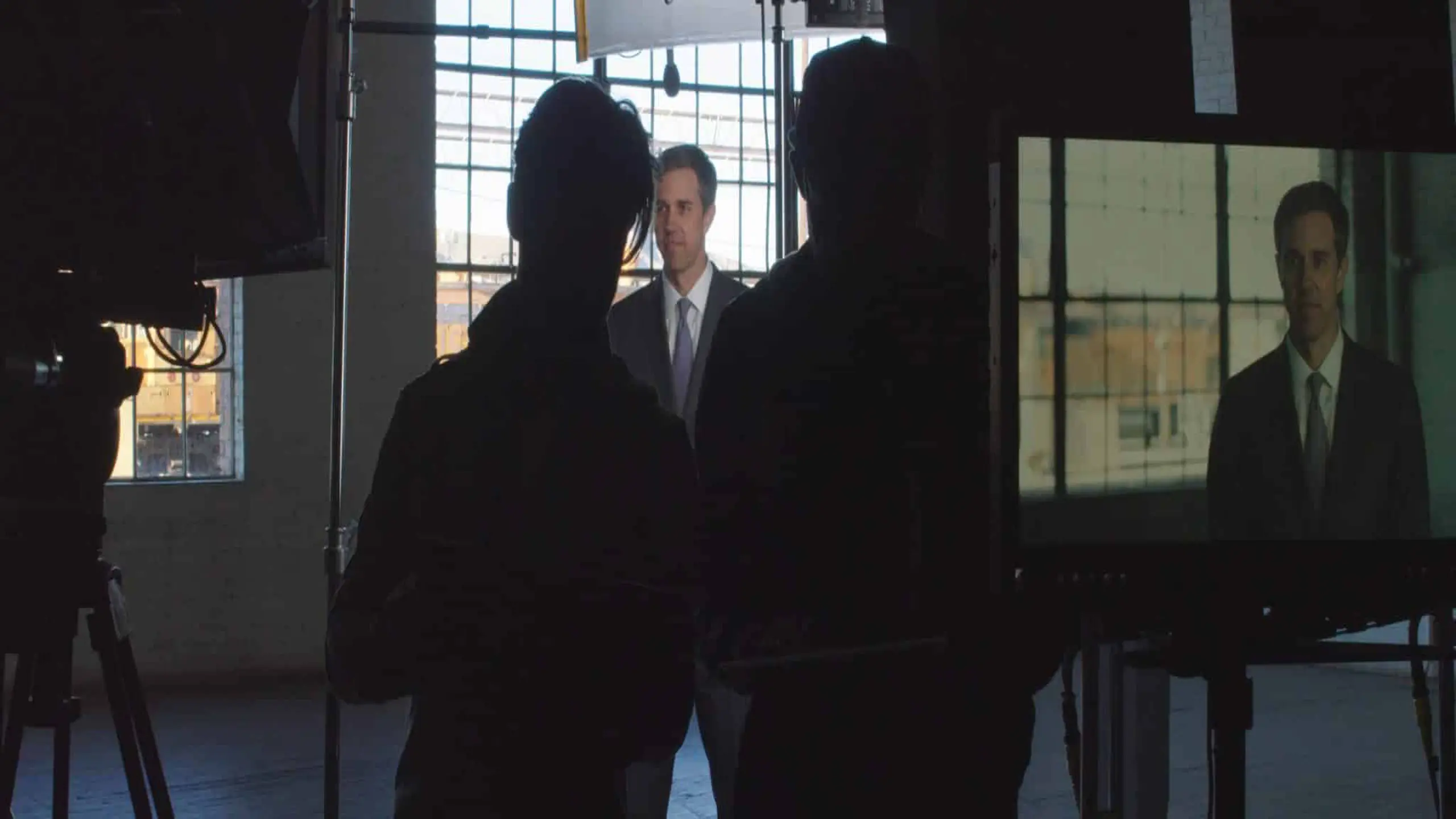
Building trust in the financial services industry is no easy task. With complex offerings and heightened consumer skepticism, financial institutions face the challenge of simplifying their messaging while projecting transparency and reliability. Traditional approaches often fall short, leaving room for innovative strategies to make a lasting impact.
This is where [video production](https://c-istudios.com/video-production-services/) and media marketing step in. Videos are a powerful medium for breaking down intricate financial concepts, humanizing brands, and showcasing authenticity. Through engaging visuals and clear narratives, financial institutions can connect with their audience on a deeper level, fostering trust and loyalty.
This article explores how video marketing has become an essential tool for financial services to communicate effectively and build lasting relationships with their customers.
## Why Trust Matters. Humanizing Financial Services
Trust is the cornerstone of any successful relationship, especially in the financial services industry. Customers rely on financial institutions to safeguard their investments, provide sound advice, and uphold their commitments. However, complex jargon, impersonal branding, and past industry scandals often create barriers that hinder trust. This makes humanizing financial services an essential strategy for building meaningful connections with clients.
Establishing trust in financial services often relies on visuals that convey authenticity and relatability, which is where [professional photography](https://c-istudios.com/professional-photography-services/) becomes essential. High-quality images of real employees, genuine client interactions, or community initiatives help humanize the brand.
For example, featuring warm, inviting portraits of financial advisors on a website makes the organization appear approachable and client-focused. This personalized touch encourages potential clients to see the institution as more than just a faceless entity.
Similarly, branding and graphic design help craft a visual identity that aligns with the brand’s values. From choosing calming color palettes to designing user-friendly layouts, these elements foster an emotional connection with the audience. For example, a financial institution targeting young professionals might use vibrant, modern designs to appear forward-thinking and accessible. Thoughtful visual branding communicates professionalism and credibility, which are critical components in gaining customer trust.
By integrating professional photography strategic branding and graphic design, financial services can bridge the gap between complexity and relatability, creating a lasting impression of trustworthiness and approachability.
## Educational Content. Simplifying Complex Financial Topics
The financial services industry is notorious for its complexity, often leaving clients feeling overwhelmed and unsure. Videos that break down intricate topics like mortgages, investment strategies, or retirement planning can significantly improve customer understanding and confidence. Educational content not only informs but also positions financial brands as knowledgeable and transparent, key factors in building trust.
Content creation is central to developing these educational videos. Scripts crafted with clarity and relevance ensure that complex ideas are explained in a way that resonates with the target audience. For example, a video series on personal budgeting could use simple language and real-life scenarios to make financial concepts more accessible. This approach positions the institution as a helpful partner in the customer’s financial journey.
Incorporating techniques from [documentary film production](https://c-istudios.com/documentary-film-production/) further enhances the impact of educational content. Documentaries excel in combining storytelling with factual information, making them an ideal format for financial education. For instance, a documentary-style video about the history of responsible lending practices could engage viewers while reinforcing the brand’s commitment to ethical operations.
By combining strategic content creation with insights from documentary [film production](https://c-istudios.com/film-and-tv-production/), financial services can deliver educational videos that simplify complex topics, build credibility, and empower clients to make informed decisions. This approach not only enhances customer understanding but also strengthens the brand’s reputation as a trusted advisor.
## Building Emotional Connections Through Storytelling
In the financial services industry, storytelling is a powerful way to create emotional connections with customers. By weaving narratives that resonate with the audience’s experiences and aspirations, financial brands can transform complex offerings into relatable, impactful messages. Stories humanize the brand, turning abstract services into tangible solutions for real-life problems.
Creative marketing is at the heart of this storytelling process. By identifying the pain points, goals, and values of their target audience, financial institutions can craft narratives that strike a chord.
For instance, a video featuring a young family achieving their dream of homeownership with the help of a mortgage service not only informs but also inspires viewers, leaving a lasting impression.
Artist management and media creation further elevate these narratives by ensuring that every aspect of production aligns with the story’s tone and purpose. Skilled teams manage casting, directing, and editing to bring the story to life. For example, featuring authentic testimonials from real customers, paired with evocative music and visuals, creates a compelling narrative that builds trust and emotional engagement.
By blending creative marketing strategies with expert artist management and media creation, financial brands can produce videos that not only educate but also connect emotionally. These narrative-driven videos resonate with audiences, fostering loyalty and strengthening the relationship between the brand and its customers.
## Leveraging Social Media for Financial Video Marketing
Social media platforms like LinkedIn, YouTube, and Instagram have become indispensable tools for financial video marketing. These platforms offer financial brands the ability to reach diverse audiences, from young professionals seeking investment advice to retirees exploring financial planning options. Videos designed for social media can deliver concise, visually engaging messages that capture attention in a crowded digital landscape.
Social media marketing services play a crucial role in amplifying the reach of these videos. By targeting specific demographics based on age, location, and interests, these services ensure that videos are seen by the right audience at the right time. For example, a LinkedIn campaign promoting a video on business loans can target entrepreneurs and small business owners, driving higher engagement and inquiries.
Social media strategies are further enhanced by optimizing video titles, descriptions, and tags for search engines through [SEO copywriting](https://c-istudios.com/seo-copywriting-services/). This approach uses clear and concise descriptions, paired with relevant keywords, to improve a video’s discoverability and ensure it ranks prominently in search results. For instance, a YouTube video titled “How to Start Saving for Retirement in Your 30s,” when supported by well-optimized tags, can attract viewers actively seeking financial guidance.
By leveraging social media marketing services and employing strategic SEO copywriting, financial brands can maximize the impact of their video marketing campaigns. These tools not only enhance visibility and engagement but also establish the brand as a trusted authority in the financial sector.
## Highlighting Security and Transparency in Videos
In financial services, trust is built on the pillars of security and transparency. Videos showcasing secure practices and clear communication are instrumental in reassuring clients about the safety of their investments and the integrity of the organization. Highlighting transparency in policies, processes, and outcomes through video content fosters confidence and credibility.
A professional [video production gear list](https://c-istudios.com/video-production-gear-list/) ensures that videos are visually and technically polished, reflecting the brand's professionalism. High-definition cameras, lighting equipment, and quality audio tools create a refined look that aligns with the expectations of a discerning audience.
For example, a video explaining cybersecurity measures in online banking can feature sharp visuals of security protocols, accompanied by professional narration for added clarity.
Audio engineering further enhances credibility by ensuring sound quality is impeccable. Clear voiceovers, balanced background music, and precise audio syncing prevent distractions and maintain viewer engagement. For instance, a video on fraud prevention might use subtle sound effects to emphasize key points while keeping the focus on the main message.
By combining expert audio engineering with a comprehensive video production gear list, financial brands can produce videos that not only convey transparency but also demonstrate their commitment to excellence, reassuring clients about the security of their services.
## Tailoring Video Formats for Different Financial Audiences
The financial services audience is diverse, ranging from young professionals exploring investment options to retirees planning their savings. Tailoring video formats to meet the needs and preferences of these varied demographics is essential for engagement and effectiveness. Videos such as animations, explainer content, and interactive tutorials are particularly effective in addressing this diversity.
Vfx compositing and animation allow financial brands to present complex data in visually appealing and easy-to-understand ways. For instance, an animated explainer video about compound interest can break down mathematical concepts into engaging visuals, making the topic accessible to a younger audience. By incorporating sleek animations and transitions, these videos captivate viewers while delivering valuable insights.
Web development ensures that these tailored videos are accessible and optimized for various platforms. Interactive elements like clickable charts, personalized video recommendations, and responsive designs enhance the user experience, making it easier for audiences to engage with content.
For example, a retirement planning website might feature a video series segmented by age groups, with interactive prompts guiding users to the content most relevant to their needs.
By leveraging vfx compositing and animation along with advanced [web development](https://c-istudios.com/web-development-services/), financial brands can create dynamic, audience-specific videos that deliver value and resonate with their target demographics. This personalized approach ensures that every viewer feels understood and engaged, strengthening their connection to the brand.
## Metrics for Success. Analyzing Video Marketing Impact
Understanding the effectiveness of video marketing requires analyzing key metrics such as watch time, click-through rates (CTR), audience retention, and conversions. These metrics provide insights into how audiences interact with video content and highlight areas for improvement.
For instance, high watch time and retention rates indicate that the content resonates with viewers, while low CTRs may suggest a need for more compelling calls to action.
Regular web maintenance ensures that video analytics tools function seamlessly, offering accurate and real-time insights. Updated platforms with integrated analytics enable financial brands to track user behavior, optimize load times, and address technical issues that could hinder performance. For example, embedding videos on a well-maintained landing page can improve page load speed, reducing bounce rates and increasing viewer engagement.
Additionally, [feature film mastering and delivery](https://c-istudios.com/feature-film-mastering-and-delivery/) techniques can enhance the quality and professionalism of video marketing campaigns. Polished visuals, balanced sound, and clear messaging elevate the overall production value, making videos more engaging and effective. For example, a financial institution launching a video series on wealth management could use feature film mastering techniques to ensure consistent quality across all episodes, building trust and authority in the process.
By leveraging regular web maintenance and incorporating feature film mastering and delivery techniques, financial brands can refine their video marketing strategies and drive measurable results, ensuring every video performs optimally and delivers value to its audience.
## Future Trends in Financial Video Marketing
The financial industry is poised to embrace emerging trends in video marketing, such as live streaming for real-time interaction, personalized video ads, and innovative storytelling formats. These trends reflect the growing demand for transparency, accessibility, and tailored experiences in financial services.
Live streaming, inspired by techniques from a [political campaign](https://c-istudios.com/political-campaign-services/), offers a unique opportunity to foster trust and engagement. Financial institutions can host live Q&A sessions, webinars, or product launches, allowing audiences to ask questions and receive immediate responses. For example, a live session on retirement planning could feature financial experts addressing audience concerns, showcasing the brand’s expertise and commitment to customer needs.
Audio live streaming adds another layer of accessibility, enabling institutions to reach clients who prefer audio content or have limited time to watch videos. Podcasts or live audio discussions on topics like saving strategies or market trends can establish the brand as a thought leader while building a loyal audience.
Personalized video ads are also becoming a game-changer. Using data-driven insights, financial brands can create tailored messages that address specific customer segments. For instance, an ad targeting young professionals might highlight investment apps, while a campaign for retirees could focus on pension planning.
By drawing inspiration from political campaigns and utilizing audio live streaming, financial institutions can stay ahead of the curve, delivering innovative, engaging, and customer-centric video marketing experiences that build trust and foster long-term relationships.
## Why Trust Matters. Humanizing Financial Services
Trust is the cornerstone of any successful relationship, especially in the financial services industry. Customers rely on financial institutions to safeguard their investments, provide sound advice, and uphold their commitments. However, complex jargon, impersonal branding, and past industry scandals often create barriers that hinder trust. This makes humanizing financial services an essential strategy for building meaningful connections with clients.
Establishing trust in financial services often relies on visuals that convey authenticity and relatability, which is where [professional photography](https://c-istudios.com/professional-photography-services/) becomes essential. High-quality images of real employees, genuine client interactions, or community initiatives help humanize the brand.
For example, featuring warm, inviting portraits of financial advisors on a website makes the organization appear approachable and client-focused. This personalized touch encourages potential clients to see the institution as more than just a faceless entity.
Similarly, branding and graphic design help craft a visual identity that aligns with the brand’s values. From choosing calming color palettes to designing user-friendly layouts, these elements foster an emotional connection with the audience. For example, a financial institution targeting young professionals might use vibrant, modern designs to appear forward-thinking and accessible. Thoughtful visual branding communicates professionalism and credibility, which are critical components in gaining customer trust.
By integrating professional photography strategic branding and graphic design, financial services can bridge the gap between complexity and relatability, creating a lasting impression of trustworthiness and approachability.
## Educational Content. Simplifying Complex Financial Topics
The financial services industry is notorious for its complexity, often leaving clients feeling overwhelmed and unsure. Videos that break down intricate topics like mortgages, investment strategies, or retirement planning can significantly improve customer understanding and confidence. Educational content not only informs but also positions financial brands as knowledgeable and transparent, key factors in building trust.
Content creation is central to developing these educational videos. Scripts crafted with clarity and relevance ensure that complex ideas are explained in a way that resonates with the target audience. For example, a video series on personal budgeting could use simple language and real-life scenarios to make financial concepts more accessible. This approach positions the institution as a helpful partner in the customer’s financial journey.
Incorporating techniques from [documentary film production](https://c-istudios.com/documentary-film-production/) further enhances the impact of educational content. Documentaries excel in combining storytelling with factual information, making them an ideal format for financial education. For instance, a documentary-style video about the history of responsible lending practices could engage viewers while reinforcing the brand’s commitment to ethical operations.
By combining strategic content creation with insights from documentary film production, financial services can deliver educational videos that simplify complex topics, build credibility, and empower clients to make informed decisions. This approach not only enhances customer understanding but also strengthens the brand’s reputation as a trusted advisor.
## Building Emotional Connections Through Storytelling
In the financial services industry, storytelling is a powerful way to create emotional connections with customers. By weaving narratives that resonate with the audience’s experiences and aspirations, financial brands can transform complex offerings into relatable, impactful messages. Stories humanize the brand, turning abstract services into tangible solutions for real-life problems.
Creative marketing is at the heart of this storytelling process. By identifying the pain points, goals, and values of their target audience, financial institutions can craft narratives that strike a chord.
For instance, a video featuring a young family achieving their dream of homeownership with the help of a mortgage service not only informs but also inspires viewers, leaving a lasting impression.
Artist management and media creation further elevate these narratives by ensuring that every aspect of production aligns with the story’s tone and purpose. Skilled teams manage casting, directing, and editing to bring the story to life. For example, featuring authentic testimonials from real customers, paired with evocative music and visuals, creates a compelling narrative that builds trust and emotional engagement.
By blending creative marketing strategies with expert artist management and media creation, financial brands can produce videos that not only educate but also connect emotionally. These narrative-driven videos resonate with audiences, fostering loyalty and strengthening the relationship between the brand and its customers.
## Leveraging Social Media for Financial Video Marketing
Social media platforms like LinkedIn, YouTube, and Instagram have become indispensable tools for financial video marketing. These platforms offer financial brands the ability to reach diverse audiences, from young professionals seeking investment advice to retirees exploring financial planning options. Videos designed for social media can deliver concise, visually engaging messages that capture attention in a crowded digital landscape.
Social media marketing services play a crucial role in amplifying the reach of these videos. By targeting specific demographics based on age, location, and interests, these services ensure that videos are seen by the right audience at the right time. For example, a LinkedIn campaign promoting a video on business loans can target entrepreneurs and small business owners, driving higher engagement and inquiries.
Social media strategies are further enhanced by optimizing video titles, descriptions, and tags for search engines through [SEO copywriting](https://c-istudios.com/seo-copywriting-services/). This approach uses clear and concise descriptions, paired with relevant keywords, to improve a video’s discoverability and ensure it ranks prominently in search results. For instance, a YouTube video titled “How to Start Saving for Retirement in Your 30s,” when supported by well-optimized tags, can attract viewers actively seeking financial guidance.
By leveraging social media marketing services and employing strategic SEO copywriting, financial brands can maximize the impact of their video marketing campaigns. These tools not only enhance visibility and engagement but also establish the brand as a trusted authority in the financial sector.
## Highlighting Security and Transparency in Videos
In financial services, trust is built on the pillars of security and transparency. Videos showcasing secure practices and clear communication are instrumental in reassuring clients about the safety of their investments and the integrity of the organization. Highlighting transparency in policies, processes, and outcomes through video content fosters confidence and credibility.
A professional [video production gear list](https://c-istudios.com/video-production-gear-list/) ensures that videos are visually and technically polished, reflecting the brand's professionalism. High-definition cameras, lighting equipment, and quality audio tools create a refined look that aligns with the expectations of a discerning audience.
For example, a video explaining cybersecurity measures in online banking can feature sharp visuals of security protocols, accompanied by professional narration for added clarity.
Audio engineering further enhances credibility by ensuring sound quality is impeccable. Clear voiceovers, balanced background music, and precise audio syncing prevent distractions and maintain viewer engagement. For instance, a video on fraud prevention might use subtle sound effects to emphasize key points while keeping the focus on the main message.
By combining expert audio engineering with a comprehensive video production gear list, financial brands can produce videos that not only convey transparency but also demonstrate their commitment to excellence, reassuring clients about the security of their services.
## Tailoring Video Formats for Different Financial Audiences
The financial services audience is diverse, ranging from young professionals exploring investment options to retirees planning their savings. Tailoring video formats to meet the needs and preferences of these varied demographics is essential for engagement and effectiveness. Videos such as animations, explainer content, and interactive tutorials are particularly effective in addressing this diversity.
Vfx compositing and animation allow financial brands to present complex data in visually appealing and easy-to-understand ways. For instance, an animated explainer video about compound interest can break down mathematical concepts into engaging visuals, making the topic accessible to a younger audience. By incorporating sleek animations and transitions, these videos captivate viewers while delivering valuable insights.
Web development ensures that these tailored videos are accessible and optimized for various platforms. Interactive elements like clickable charts, personalized video recommendations, and responsive designs enhance the user experience, making it easier for audiences to engage with content.
For example, a retirement planning website might feature a video series segmented by age groups, with interactive prompts guiding users to the content most relevant to their needs.
By leveraging vfx compositing and animation along with advanced [web development](https://c-istudios.com/web-development-services/), financial brands can create dynamic, audience-specific videos that deliver value and resonate with their target demographics. This personalized approach ensures that every viewer feels understood and engaged, strengthening their connection to the brand.
## Metrics for Success. Analyzing Video Marketing Impact
Understanding the effectiveness of video marketing requires analyzing key metrics such as watch time, click-through rates (CTR), audience retention, and conversions. These metrics provide insights into how audiences interact with video content and highlight areas for improvement.
For instance, high watch time and retention rates indicate that the content resonates with viewers, while low CTRs may suggest a need for more compelling calls to action.
Regular web maintenance ensures that video analytics tools function seamlessly, offering accurate and real-time insights. Updated platforms with integrated analytics enable financial brands to track user behavior, optimize load times, and address technical issues that could hinder performance. For example, embedding videos on a well-maintained landing page can improve page load speed, reducing bounce rates and increasing viewer engagement.
Additionally, [feature film mastering and delivery](https://c-istudios.com/feature-film-mastering-and-delivery/) techniques can enhance the quality and professionalism of video marketing campaigns. Polished visuals, balanced sound, and clear messaging elevate the overall production value, making videos more engaging and effective. For example, a financial institution launching a video series on wealth management could use feature film mastering techniques to ensure consistent quality across all episodes, building trust and authority in the process.
By leveraging regular web maintenance and incorporating feature film mastering and delivery techniques, financial brands can refine their video marketing strategies and drive measurable results, ensuring every video performs optimally and delivers value to its audience.
## Future Trends in Financial Video Marketing
The financial industry is poised to embrace emerging trends in video marketing, such as live streaming for real-time interaction, personalized video ads, and innovative storytelling formats. These trends reflect the growing demand for transparency, accessibility, and tailored experiences in financial services.
Live streaming, inspired by techniques from a [political campaign](https://c-istudios.com/political-campaign-services/), offers a unique opportunity to foster trust and engagement. Financial institutions can host live Q&A sessions, webinars, or product launches, allowing audiences to ask questions and receive immediate responses. For example, a live session on retirement planning could feature financial experts addressing audience concerns, showcasing the brand’s expertise and commitment to customer needs.
Audio live streaming adds another layer of accessibility, enabling institutions to reach clients who prefer audio content or have limited time to watch videos. Podcasts or live audio discussions on topics like saving strategies or market trends can establish the brand as a thought leader while building a loyal audience.
Personalized video ads are also becoming a game-changer. Using data-driven insights, financial brands can create tailored messages that address specific customer segments. For instance, an ad targeting young professionals might highlight investment apps, while a campaign for retirees could focus on pension planning.
By drawing inspiration from political campaigns and utilizing audio live streaming, financial institutions can stay ahead of the curve, delivering innovative, engaging, and customer-centric video marketing experiences that build trust and foster long-term relationships.
## Work with C&I Studios
If you are planning a project like this, our team can take it from concept to final delivery. Explore our [video production services](https://c-istudios.com/video-production-services/), browse [our work](https://c-istudios.com/our-work/) to see how we tell brand stories, and [get in touch](https://c-istudios.com/contact/) when you are ready to start.
Originally published November 29, 2024
---
*This content is from [C&I Studios](https://c-istudios.com), a full-service production company.*
---
# The Complete Guide to Feature Film Production
> Published: November 28, 2024
> Categories: Film & TV
> Source: https://c-istudios.com/the-complete-guide-to-feature-film-production/
---
.cib{--paper:#1b1d1f;--ink:#fff;--body:#d5d7d9;--muted:#8b9096;--line:rgba(255,255,255,.12);--thumb:#2b2e31;--card:#212426;--accent:#c02b0a;--blue:#5B8FA8;--serif:'Playfair Display',Georgia,serif;--sans:'Poppins',-apple-system,sans-serif;--measure:900px;background:var(--paper);color:var(--body);font-family:var(--sans);line-height:1.6;position:relative;left:50%;transform:translateX(-50%);width:90vw;max-width:1920px}
.cib *{box-sizing:border-box}
.cib .kicker{max-width:var(--measure);margin:58px auto 0;padding:0 22px;font-size:12.5px;font-weight:700;letter-spacing:2.5px;text-transform:uppercase;color:var(--blue)}
.cib h1.cibh1{text-wrap:balance;font-family:var(--serif);font-weight:500;font-size:clamp(46px,6vw,72px);line-height:1.08;color:var(--ink);max-width:var(--measure);margin:18px auto 0;padding:0 22px;letter-spacing:-.5px}
.cib .metarow{max-width:var(--measure);margin:20px auto 0;padding:0 22px;color:var(--muted);font-size:14px}
.cib .hero{position:relative;width:100%;height:0;padding-bottom:56.25%;overflow:hidden;margin:48px auto 0;border-top:1px solid var(--line);border-bottom:1px solid var(--line)}
.cib .hero .ph{width:100%;aspect-ratio:16/9;background:var(--thumb);border-top:1px solid var(--line);border-bottom:1px solid var(--line);display:flex;align-items:center;justify-content:center;color:#7d8288;font-size:13px;text-align:center;padding:0 20px}
.cib .body{max-width:var(--measure);margin:12px auto 0;padding:52px 22px 6px}
.cib .body.lead p:first-child{font-size:23px;line-height:1.62;color:var(--ink)}
.cib .body p{font-size:18.5px;line-height:1.85;margin:0 0 30px;color:var(--body)}
.cib .body h2{text-wrap:balance;font-family:var(--serif);font-weight:500;font-size:clamp(32px,4vw,48px);line-height:1.22;color:var(--ink);margin:70px 0 20px;letter-spacing:-.3px}
.cib .body h3{text-wrap:balance;font-family:var(--sans);font-weight:600;font-size:22px;color:var(--ink);margin:38px 0 8px}
.cib .body a{color:var(--ink);text-decoration:underline;text-decoration-color:rgba(255,255,255,.4);text-underline-offset:3px}
.cib .body a:hover{text-decoration-color:var(--ink)}
.cib .ctable{width:100%;border-collapse:collapse;margin:16px 0 30px;font-size:16px}
.cib .ctable th{background:#000;color:#fff;text-align:left;padding:10px 12px;font-family:var(--sans)}
.cib .ctable td{padding:10px 12px;border-bottom:1px solid var(--line);color:var(--body)}
.cib .inimg{position:relative;width:100%;height:0;padding-bottom:56.25%;overflow:hidden;margin:72px auto;border-top:1px solid var(--line);border-bottom:1px solid var(--line)}
.cib .inimg .ph{width:100%;aspect-ratio:16/9;background:var(--thumb);border-top:1px solid var(--line);border-bottom:1px solid var(--line);display:flex;align-items:center;justify-content:center;color:#7d8288;font-size:13px}
.cib .origpub{max-width:var(--measure);margin:60px auto 0;padding:26px 22px 0;border-top:1px solid var(--line);color:var(--muted);font-size:13.5px}
.cib .related{max-width:1200px;margin:64px auto 0;padding:34px 22px 76px}
.cib .related h3{font-family:var(--sans);font-size:12.5px;letter-spacing:2px;text-transform:uppercase;color:var(--ink);margin:0 0 24px}
.cib .grid{display:grid;grid-template-columns:repeat(3,1fr);gap:28px}
.cib .rc{background:var(--card);border:1px solid var(--line);display:block;text-decoration:none;color:inherit;transition:border-color .15s}
.cib a.rc:hover{border-color:rgba(255,255,255,.5)}
.cib .rc .thumb{position:relative;width:100%;height:0;padding-bottom:56.25%;background:var(--thumb);overflow:hidden}
.cib .rc .thumb img{position:absolute!important;top:0!important;left:0!important;width:100%!important;height:100%!important;object-fit:cover!important;margin:0!important}
.cib .rc .cc{padding:14px 15px 17px}
.cib .rc .rt{font-family:var(--serif);font-weight:500;font-size:16px;line-height:1.3;color:var(--ink);margin:0 0 6px}
.cib .rc .rm{font-size:11px;letter-spacing:1px;text-transform:uppercase;color:var(--muted)}
.cib img{margin:0!important;padding:0!important;display:block!important;vertical-align:top;max-width:100%}
.cib .hero img,.cib .inimg img{position:absolute!important;top:0!important;left:0!important;width:100%!important;height:100%!important;object-fit:cover!important;margin:0!important;padding:0!important;border:0!important;display:block!important;aspect-ratio:auto!important}
.cib .hero+.body{padding-top:36px}
@media(max-width:760px){.cib .grid{grid-template-columns:1fr}.cib .body h2{margin:52px 0 16px}.cib .body p{font-size:17.5px}.cib .inimg,.cib .hero{margin-top:44px}}
.cib .vembed{max-width:var(--measure);margin:44px auto;padding:0 22px}.cib .vembed .vwrap{position:relative;width:100%;height:0;padding-bottom:56.25%}.cib .vembed .vwrap iframe{position:absolute;top:0;left:0;width:100%;height:100%;border:0}
Film & TV
# The Complete Guide to Feature Film Production
18 min read

Feature films are the pinnacle of cinematic artistry, showcasing compelling stories brought to life through a meticulous and multifaceted production process. Whether it’s a high-budget blockbuster or an independent masterpiece, feature film production involves an intricate blend of creativity, planning, and technical expertise. It’s where storytelling meets visual and auditory craftsmanship to captivate audiences on a grand scale.
The journey of producing a feature film can be daunting yet incredibly rewarding. From conceptualizing a story to polishing the final cut, every stage demands precision and collaboration. In this guide, we delve into the film production process, explore the challenges of producing feature films, and shed light on how cinematic storytelling remains at the heart of this dynamic art form.
## Conceptualization. Crafting the Vision
Every feature film begins with a vision. This initial stage revolves around developing a story that resonates with audiences. Writers and creators often start by identifying themes, character arcs, and plot structures that form the backbone of the narrative.
A great story is not only engaging but also emotionally impactful, allowing viewers to connect with the characters and the world they inhabit. This phase is where the seeds of innovation are planted, as storytellers experiment with ideas that can redefine genres or introduce novel perspectives.
During this phase, screenwriters play a pivotal role. They translate abstract ideas into a screenplay, which serves as the blueprint for the entire production. Writing for feature films differs from other forms of storytelling as it requires visual elements to complement the narrative.
For instance, a scene’s setting and character actions often speak as much as the dialogue itself. Screenwriting workshops, script doctoring, and multiple drafts are common during this stage to ensure the story achieves its full potential. Collaborative feedback sessions with peers or industry professionals further refine the script, adding layers of depth and nuance.
Once the script is finalized, producers step in to assess its feasibility. They evaluate the story’s scope, estimated budget, and marketability. The producer’s role is crucial in aligning the creative vision with practical considerations, setting the stage for the next phases of production. This includes brainstorming ways to maximize resources and potentially partnering with stakeholders who share the passion for bringing the story to life.
Additionally, early planning for distribution and marketing begins here, ensuring that the conceptual foundation aligns with the audience’s expectations and trends in the cinematic world.
## Pre-Production. Building the Foundation
Pre-production is where the groundwork for feature film production is laid. This phase involves assembling a team, securing resources, and planning every detail to ensure the shoot runs smoothly. Key tasks during pre-production include casting, location scouting, and scheduling.
Casting directors collaborate with producers and directors to find actors who embody the characters envisioned in the script. This process often involves auditions, chemistry reads, and negotiations to secure talent. A strong cast can elevate a film’s storytelling, making this step critical to the production’s success.
Location scouting is another integral aspect of pre-production. Filmmakers seek environments that enhance the story’s authenticity and visual appeal. Whether it’s an urban landscape, a historical site, or a constructed set, the chosen locations must align with the narrative’s tone and aesthetic.
Production designers work alongside the director to conceptualize the film’s visual style. From costume design to set construction, every element is meticulously planned to ensure consistency and coherence. Simultaneously, the cinematographer collaborates with the director to determine the visual language of the film, including camera angles, lighting schemes, and color palettes.
Budgeting and scheduling are perhaps the most challenging aspects of pre-production. Producers must allocate resources effectively, balancing artistic ambitions with financial constraints. A detailed production timeline is created, outlining milestones and deadlines for each stage of the process.
Pre-production also requires developing backup plans for potential setbacks. Whether it’s weather changes affecting outdoor shoots or unforeseen logistical hurdles, having contingencies in place can prevent delays and keep the project on track. This stage is also when legal agreements, such as contracts with actors, crew, and locations, are finalized to ensure smooth operations.
## Production. Bringing the Story to Life
The production phase is where the vision materializes. Cameras roll, actors perform, and the crew work in unison to capture the essence of the story. This phase of the film production process is both exciting and demanding, requiring precision, creativity, and adaptability.
Directors are at the helm during production, guiding actors and crew to execute the creative vision. They collaborate closely with cinematographers to frame shots, adjust lighting, and capture scenes that align with the narrative’s tone. Actors bring characters to life, infusing emotion and depth into their performances. Meanwhile, sound engineers ensure dialogue and ambient sounds are recorded with clarity.
Production can be unpredictable. Weather conditions, logistical challenges, or unforeseen delays often require on-the-spot problem-solving. This is where the resilience and expertise of the production team come into play. A well-prepared crew can adapt to challenges while maintaining the integrity of the project.
Large-scale productions may involve elaborate sets, complex stunts, and advanced visual effects. Coordinating these elements demands precise planning and execution. For example, action sequences require stunt coordinators, safety protocols, and multiple camera setups to ensure both visual impact and safety.
Independent productions, while operating on smaller budgets, often showcase remarkable ingenuity. Limited resources drive filmmakers to find creative solutions, resulting in unique and innovative storytelling approaches.
Despite challenges, the creative freedom often found in smaller productions allows for daring narratives that resonate deeply with audiences. Moreover, these productions frequently highlight new talent and experimental styles that push the boundaries of traditional storytelling.
## Post-Production. Refining the Narrative
Once filming wraps, the focus shifts to post-production, the stage where raw footage is transformed into a polished feature film. This phase involves editing, sound design, visual effects, and color grading.
Editors play a crucial role in shaping the narrative. They sift through hours of footage to select the best takes, arrange scenes, and establish pacing. The editor’s work is integral to maintaining the story’s flow and emotional impact. Directors often collaborate closely with editors to ensure their vision is accurately realized.
Sound design is equally vital. From dialogue editing to creating atmospheric soundscapes, audio elements enhance the immersive quality of the film. Composers contribute by crafting musical scores that amplify the story’s emotional beats. For instance, a suspenseful sequence may be heightened by a tense orchestral arrangement, while a heartfelt scene might be accompanied by a poignant melody.
Visual effects (VFX) teams bring fantastical elements to life, whether it’s creating alien worlds, simulating explosions, or animating creatures. VFX must seamlessly integrate with live-action footage to maintain the film’s realism and believability. As technology advances, even modestly budgeted films can leverage impressive VFX, broadening creative possibilities for filmmakers.
Color grading is the final step in enhancing the film’s visual appeal. By adjusting hues, contrast, and brightness, colorists create a consistent aesthetic that aligns with the narrative’s tone. A well-graded film not only looks stunning but also reinforces the emotional impact of each scene. This meticulous attention to detail ensures the film resonates with audiences both visually and emotionally.
Editing often involves multiple iterations, with feedback loops between the director, producers, and test audiences. These refinements ensure the final cut resonates effectively with its intended audience, balancing artistic integrity with viewer expectations.
## Distribution and Marketing. Reaching the Audience
A feature film’s journey doesn’t end with post-production. Distribution and marketing are critical to ensuring the film reaches its intended audience. In today’s competitive landscape, a well-executed distribution strategy can make or break a film’s success.
Filmmakers typically choose between theatrical releases, streaming platforms, or film festivals as distribution channels. Each option has its advantages and challenges. Theatrical releases offer prestige and a communal viewing experience while streaming platforms provide global reach and accessibility. Film festivals, on the other hand, offer opportunities for networking and critical recognition.
Marketing campaigns play a pivotal role in generating buzz and attracting viewers. Trailers, posters, and social media promotions are crafted to highlight the film’s unique selling points. Engaging with audiences through behind-the-scenes content or interviews can also build anticipation and foster a loyal fanbase. Creative marketing strategies, such as interactive campaigns or collaborations with influencers, further amplify a film’s visibility in today’s digital age.
Navigating distribution agreements and negotiating deals requires a deep understanding of the industry. Producers often work with sales agents and distributors to secure the best possible outcome for the film. By leveraging analytics and audience insights, filmmakers can tailor their strategies to reach their target demographics more effectively.
Additionally, international distribution strategies are gaining prominence, ensuring films reach audiences across cultures and geographies.
## Challenges in Producing Feature Films
Producing feature films is a monumental task that comes with its fair share of challenges. Budget constraints, tight schedules, and unforeseen obstacles can test even the most seasoned filmmakers. However, overcoming these challenges is often what makes the process so rewarding.
Financing is one of the most significant hurdles in producing feature films. Securing funding requires a compelling pitch, a well-crafted business plan, and sometimes, a leap of faith from investors. Independent filmmakers often rely on crowdfunding, grants, or personal savings to bring their projects to life. The rise of streaming platforms has also opened new avenues for financing, with some platforms directly funding original content.
Another challenge is maintaining creative integrity while balancing commercial viability. Filmmakers must navigate studio expectations, audience preferences, and market trends without compromising their artistic vision. This delicate balance requires strategic decision-making and unwavering commitment to the story. Additionally, managing large teams with diverse roles and ensuring effective communication across departments is crucial to keeping the production on track.
Logistical challenges during production, such as coordinating large crews, managing time constraints, or dealing with location restrictions, demand meticulous planning and adaptability. The ability to anticipate potential issues and develop contingency plans is essential for a successful production.
Filmmakers who embrace flexibility often find innovative solutions, turning obstacles into opportunities to enhance their storytelling.
## The Art of Cinematic Storytelling
At its core, feature film production is about storytelling. Cinematic storytelling uses visual and auditory elements to evoke emotions, convey themes, and transport audiences into new worlds. From sweeping landscapes to intimate close-ups, every frame contributes to the narrative.
Directors and cinematographers collaborate to craft visually compelling scenes that enhance the story’s impact. Lighting, composition, and camera movements are carefully chosen to create mood and meaning. For instance, a handheld camera might convey a sense of immediacy and tension, while a wide shot might emphasize a character’s isolation.
Sound design and music further enrich the storytelling experience. A well-timed sound effect or a haunting score can evoke emotions that words alone cannot achieve. These elements work in harmony to create a cohesive and immersive narrative. Moreover, the synergy between visual and auditory components ensures the audience remains captivated from the opening scene to the closing credits.
Cinematic storytelling thrives on the subtle interplay between the seen and the unseen. It’s about what the audience feels but doesn’t explicitly observe, a lingering shadow, a poignant silence, or a fleeting glance that speaks volumes. These nuanced layers make feature films a timeless art form.
## What to Expect During Television Production
Television production is a dynamic and intricate process that brings ideas to life on screen. From conceptualizing the storyline to delivering the final broadcast, it involves a coordinated effort from multiple professionals, each playing a crucial role in shaping the outcome. The magic of television lies in its ability to captivate audiences, inform, and entertain, and much of this magic stems from the meticulous process of production.
Understanding television production is essential for anyone aspiring to enter the industry or simply curious about how their favorite TV shows are made. It’s not just about cameras and actors; it’s a complex blend of creative vision, technical expertise, and detailed planning.
This article delves into the stages of the [TV production](https://c-istudios.com/film-and-tv-production/) process, examines the roles and responsibilities involved, and highlights what to expect during this transformative journey from idea to screen.
## Concept Development and Pre-Production
Every television project begins with an idea. This could be a script for a drama, a pitch for a reality show, or a concept for a documentary. During the concept development phase, creators outline the vision for the show, identifying the target audience, genre, and format. This stage often includes drafting scripts, creating storyboards, and conducting initial research.
Once the concept is refined, pre-production begins. Pre-production is one of the most critical phases in the TV production process. It involves detailed planning and preparation to ensure the production runs smoothly. Key activities during this stage include assembling a production team, scouting locations, casting actors, and finalizing the script.
A production team typically comprises a director, producers, writers, and technical crew. Each member has a specific role in ensuring the vision for the show aligns with practical and creative goals. For instance, the director oversees the artistic aspects, while the producer manages logistics and finances.
Casting is another vital component of pre-production. Finding the right talent to bring characters to life can significantly impact the success of a show. Producers and directors often hold auditions or seek established actors for prominent roles. Similarly, location scouting ensures that the settings reflect the story’s tone and authenticity. Whether filming in a bustling city or a remote countryside, choosing the right backdrop adds depth to the narrative.
Budgeting and scheduling are equally crucial at this stage. Creating a realistic budget and a detailed production timeline helps avoid potential pitfalls during filming. This phase sets the foundation for the production, ensuring that every aspect is carefully planned and ready for execution.
## Production. Lights, Camera, Action
The production phase is where the magic happens, cameras roll, scenes are performed, and the vision begins to take shape. This stage of television production involves the actual filming or recording of the show. It’s a bustling environment where creativity meets precision, as every detail is captured on camera.
During production, the director plays a central role in guiding the cast and crew to ensure the scenes align with the creative vision. Actors deliver performances based on the script, while cinematographers handle the technical aspects of filming, including camera angles, lighting, and framing. Sound engineers ensure dialogue and ambient sounds are recorded clearly, while set designers and costume teams create immersive environments.
One of the most challenging aspects of the TV production process is maintaining efficiency without compromising quality. Filming schedules are often tight, and unexpected challenges, such as weather conditions or technical issues, can cause delays. To overcome these obstacles, production teams rely on meticulous planning and adaptability.
Multi-camera setups are commonly used in television production, particularly for live shows or sitcoms. This approach allows for simultaneous capturing of multiple angles, reducing the need for repeated takes. In contrast, single-camera setups, often used for dramas and documentaries, offer greater flexibility in framing and storytelling.
While the production phase is exciting and dynamic, it’s also demanding. Long hours on set, precise coordination, and a relentless focus on detail are required to ensure every scene meets the desired standard. This phase lays the groundwork for the next stage, post-production, where raw footage is transformed into a polished final product.
## Post-Production. The Art of Refinement
Once filming is complete, the post-production phase begins. This stage involves editing the raw footage, adding visual and sound effects, and fine-tuning every aspect of the show to ensure it’s ready for broadcast. Post-production is a meticulous process that combines technical expertise with creative decision-making.
Editors play a pivotal role during this stage, working closely with the director to shape the narrative. They review hours of footage, selecting the best takes and arranging them to create a cohesive storyline. Transitions, pacing, and continuity are key considerations, ensuring the final product flows seamlessly from start to finish.
Sound design is another critical component of post-production. Sound engineers enhance dialogue clarity, add background scores, and incorporate sound effects to enrich the viewing experience. For instance, in a suspenseful scene, subtle audio cues can heighten tension, while vibrant music can amplify joyous moments.
Visual effects (VFX) teams contribute by adding digital enhancements or creating entirely computer-generated scenes. From explosions to fantastical landscapes, VFX can transform ordinary footage into extraordinary visuals. Similarly, color grading adjusts the hues and tones of the footage, ensuring consistency and enhancing the overall aesthetic.
The final step in post-production is assembling the complete episode or show. This includes adding opening and closing credits, adhering to broadcasting standards, and ensuring the content meets quality benchmarks. The result is a polished product ready for distribution, whether it’s aired on television or streamed online.
## The Importance of the Production Timeline
A well-structured production timeline is the backbone of successful television production. It outlines each phase of the process, ensuring every task is completed on schedule. From pre-production planning to post-production refinement, adhering to a timeline minimizes disruptions and keeps the project on track.
In the TV production process, timelines often vary depending on the type of show. For instance, live broadcasts operate on tight schedules, with minimal room for error, while scripted dramas may have more flexible timelines to accommodate creative adjustments. Regardless of the format, effective time management is crucial for delivering a high-quality product within budget.
One of the challenges in managing a production timeline is coordinating multiple teams and tasks. Delays in one phase can have a cascading effect on subsequent stages, leading to increased costs and missed deadlines. To mitigate these risks, producers often use project management tools and software to track progress, allocate resources, and address potential issues proactively.
A well-executed timeline not only ensures efficiency but also allows room for creativity. By establishing clear deadlines and milestones, production teams can focus on bringing their artistic vision to life without compromising on quality or innovation.
## Collaboration and Teamwork in Television Production
Television production is a collaborative effort that requires seamless coordination among various departments. From writers and directors to camera operators and editors, each team member plays a vital role in bringing the project to fruition. Effective communication and teamwork are essential for ensuring the production runs smoothly.
One of the hallmarks of successful TV show production is the ability to adapt to unforeseen challenges. Whether it’s a last-minute script change or a technical glitch, production teams must work together to find solutions and keep the project on track. This adaptability often stems from a strong sense of camaraderie and mutual respect among team members.
Leadership also plays a crucial role in fostering collaboration. Directors and producers set the tone for the project, guiding the team toward a shared vision while addressing individual concerns. Clear communication, constructive feedback, and a positive working environment contribute to a productive and harmonious atmosphere on set.
Ultimately, the collaborative nature of television production is what makes it a rewarding and dynamic process. By combining diverse talents and perspectives, production teams can create compelling and impactful content that resonates with audiences worldwide.
## Challenges and Rewards of Television Production
Like any creative endeavor, television production comes with its share of challenges. Tight budgets, demanding schedules, and unpredictable variables such as weather or technical issues can test even the most experienced production teams. However, these challenges are often outweighed by the rewards of bringing a story to life and connecting with audiences.
One of the most significant challenges in TV show production is balancing artistic vision with practical constraints. Creators must find innovative ways to achieve their goals within the limitations of time, resources, and technology. For example, a director may need to adjust their vision to fit a budget without compromising the story’s essence. Tight schedules often require multi-tasking and efficiency, and maintaining the creative quality during such high-pressure situations is no small feat.
Another common challenge is meeting audience expectations. With the abundance of content available today, viewers have high standards and diverse preferences. Ensuring a show stands out while appealing to its target audience requires a deep understanding of storytelling and market trends. Additionally, the pressure to keep content fresh and relevant can push production teams to continuously innovate, adapting their methods to the latest audience preferences and cultural shifts.
Despite these hurdles, the rewards of television production are immense. The satisfaction of seeing a project come to life, the joy of entertaining and inspiring audiences, and the pride of contributing to the creative arts make the effort worthwhile. For many, the challenges are part of the journey, fueling growth and innovation in the industry. These moments of triumph, whether during production or the final broadcast, highlight the enduring impact of storytelling on both creators and viewers alike.
## The Future of Television Production
As technology continues to evolve, the future of television production promises exciting possibilities. Advances in artificial intelligence, virtual reality, and streaming platforms are reshaping the industry, offering new tools and opportunities for creators.
AI-powered tools are streamlining various aspects of the TV production process, from script analysis to post-production editing. These technologies not only enhance efficiency but also open doors for creative experimentation, allowing creators to push the boundaries of storytelling. AI can also predict viewer preferences based on data, enabling creators to tailor content to specific demographics and improve audience engagement.
Virtual and augmented reality are also making their mark on television production. These technologies enable immersive experiences, allowing audiences to interact with content in unprecedented ways. For example, VR can transport viewers into the story world, while AR can enhance live broadcasts with real-time graphics and effects. These tools are being used not only for entertainment but also for educational programming, providing unique opportunities to blend storytelling with learning.
Streaming platforms are revolutionizing the way content is distributed and consumed. With the rise of on-demand viewing, creators have greater flexibility to experiment with formats, genres, and storytelling techniques. This shift is also fostering a more globalized industry, where diverse voices and perspectives can reach audiences worldwide. Additionally, streaming analytics provide valuable insights, enabling producers to understand viewer behavior and adapt content accordingly.
As the industry continues to innovate, the core principles of television production remain unchanged: creativity, collaboration, and a commitment to quality. By embracing new technologies and staying true to these values, creators can continue to produce content that captivates and inspires while pushing the boundaries of traditional television.
## Work with C&I Studios
If you are planning a project like this, our team can take it from concept to final delivery. Explore our [film and TV production](https://c-istudios.com/film-and-tv-production/), browse [our work](https://c-istudios.com/our-work/) to see how we tell brand stories, and [get in touch](https://c-istudios.com/contact/) when you are ready to start.
Originally published November 28, 2024
---
*This content is from [C&I Studios](https://c-istudios.com), a full-service production company.*
---
# Avoiding Common Video SEO Mistakes: Pitfalls to Watch Out For
> Published: November 22, 2024
> Categories: Web & Tech
> Source: https://c-istudios.com/avoiding-common-video-seo-mistakes-pitfalls-to-watch-out-for/
---
.cib{--paper:#1b1d1f;--ink:#fff;--body:#d5d7d9;--muted:#8b9096;--line:rgba(255,255,255,.12);--thumb:#2b2e31;--card:#212426;--accent:#c02b0a;--blue:#5B8FA8;--serif:'Playfair Display',Georgia,serif;--sans:'Poppins',-apple-system,sans-serif;--measure:900px;background:var(--paper);color:var(--body);font-family:var(--sans);line-height:1.6;position:relative;left:50%;transform:translateX(-50%);width:90vw;max-width:1920px}
.cib *{box-sizing:border-box}
.cib .kicker{max-width:var(--measure);margin:58px auto 0;padding:0 22px;font-size:12.5px;font-weight:700;letter-spacing:2.5px;text-transform:uppercase;color:var(--blue)}
.cib h1.cibh1{text-wrap:balance;font-family:var(--serif);font-weight:500;font-size:clamp(46px,6vw,72px);line-height:1.08;color:var(--ink);max-width:var(--measure);margin:18px auto 0;padding:0 22px;letter-spacing:-.5px}
.cib .metarow{max-width:var(--measure);margin:20px auto 0;padding:0 22px;color:var(--muted);font-size:14px}
.cib .hero{position:relative;width:100%;height:0;padding-bottom:56.25%;overflow:hidden;margin:48px auto 0;border-top:1px solid var(--line);border-bottom:1px solid var(--line)}
.cib .hero .ph{width:100%;aspect-ratio:16/9;background:var(--thumb);border-top:1px solid var(--line);border-bottom:1px solid var(--line);display:flex;align-items:center;justify-content:center;color:#7d8288;font-size:13px;text-align:center;padding:0 20px}
.cib .body{max-width:var(--measure);margin:12px auto 0;padding:52px 22px 6px}
.cib .body.lead p:first-child{font-size:23px;line-height:1.62;color:var(--ink)}
.cib .body p{font-size:18.5px;line-height:1.85;margin:0 0 30px;color:var(--body)}
.cib .body h2{text-wrap:balance;font-family:var(--serif);font-weight:500;font-size:clamp(32px,4vw,48px);line-height:1.22;color:var(--ink);margin:70px 0 20px;letter-spacing:-.3px}
.cib .body h3{text-wrap:balance;font-family:var(--sans);font-weight:600;font-size:22px;color:var(--ink);margin:38px 0 8px}
.cib .body a{color:var(--ink);text-decoration:underline;text-decoration-color:rgba(255,255,255,.4);text-underline-offset:3px}
.cib .body a:hover{text-decoration-color:var(--ink)}
.cib .ctable{width:100%;border-collapse:collapse;margin:16px 0 30px;font-size:16px}
.cib .ctable th{background:#000;color:#fff;text-align:left;padding:10px 12px;font-family:var(--sans)}
.cib .ctable td{padding:10px 12px;border-bottom:1px solid var(--line);color:var(--body)}
.cib .inimg{position:relative;width:100%;height:0;padding-bottom:56.25%;overflow:hidden;margin:72px auto;border-top:1px solid var(--line);border-bottom:1px solid var(--line)}
.cib .inimg .ph{width:100%;aspect-ratio:16/9;background:var(--thumb);border-top:1px solid var(--line);border-bottom:1px solid var(--line);display:flex;align-items:center;justify-content:center;color:#7d8288;font-size:13px}
.cib .origpub{max-width:var(--measure);margin:60px auto 0;padding:26px 22px 0;border-top:1px solid var(--line);color:var(--muted);font-size:13.5px}
.cib .related{max-width:1200px;margin:64px auto 0;padding:34px 22px 76px}
.cib .related h3{font-family:var(--sans);font-size:12.5px;letter-spacing:2px;text-transform:uppercase;color:var(--ink);margin:0 0 24px}
.cib .grid{display:grid;grid-template-columns:repeat(3,1fr);gap:28px}
.cib .rc{background:var(--card);border:1px solid var(--line);display:block;text-decoration:none;color:inherit;transition:border-color .15s}
.cib a.rc:hover{border-color:rgba(255,255,255,.5)}
.cib .rc .thumb{position:relative;width:100%;height:0;padding-bottom:56.25%;background:var(--thumb);overflow:hidden}
.cib .rc .thumb img{position:absolute!important;top:0!important;left:0!important;width:100%!important;height:100%!important;object-fit:cover!important;margin:0!important}
.cib .rc .cc{padding:14px 15px 17px}
.cib .rc .rt{font-family:var(--serif);font-weight:500;font-size:16px;line-height:1.3;color:var(--ink);margin:0 0 6px}
.cib .rc .rm{font-size:11px;letter-spacing:1px;text-transform:uppercase;color:var(--muted)}
.cib img{margin:0!important;padding:0!important;display:block!important;vertical-align:top;max-width:100%}
.cib .hero img,.cib .inimg img{position:absolute!important;top:0!important;left:0!important;width:100%!important;height:100%!important;object-fit:cover!important;margin:0!important;padding:0!important;border:0!important;display:block!important;aspect-ratio:auto!important}
.cib .hero+.body{padding-top:36px}
@media(max-width:760px){.cib .grid{grid-template-columns:1fr}.cib .body h2{margin:52px 0 16px}.cib .body p{font-size:17.5px}.cib .inimg,.cib .hero{margin-top:44px}}
.cib .vembed{max-width:var(--measure);margin:44px auto;padding:0 22px}.cib .vembed .vwrap{position:relative;width:100%;height:0;padding-bottom:56.25%}.cib .vembed .vwrap iframe{position:absolute;top:0;left:0;width:100%;height:100%;border:0}
Web & Tech
# Avoiding Common Video SEO Mistakes. Pitfalls to Watch Out For
19 min read
In today’s digital landscape, video has become one of the most powerful tools for engaging audiences and driving traffic. With the rise of platforms like YouTube, TikTok, and Instagram, businesses are increasingly turning to video content to amplify their marketing efforts. However, simply creating a video is not enough to achieve success, optimization is key to ensuring that your content reaches the right audience.
Many creators unknowingly make mistakes that undermine their video’s potential, such as neglecting proper tagging, overlooking mobile compatibility, or using low-quality production techniques. These errors can significantly impact discoverability, viewer retention, and overall rankings. Understanding these common pitfalls is the first step toward mastering video SEO and leveraging its full potential to grow your brand.
## Ignoring Metadata. Titles, Descriptions, and Tags
Metadata serves as the backbone of video SEO, playing a crucial role in determining how easily your content can be discovered by audiences. Titles, descriptions, and tags are key components of metadata, acting as signals that help search engines understand the content of your video. Ignoring these elements can severely limit your video's visibility and reduce its chances of appearing in search results.
SEO copywriting is essential for crafting compelling and keyword-rich titles and descriptions that not only appeal to search engines but also capture viewers' attention. A well-written title should be concise, informative, and optimized with keywords that reflect the video’s main theme.
Descriptions, on the other hand, provide an opportunity to elaborate on the content, include additional keywords, and offer links to relevant resources or platforms. Effective [SEO copywriting](https://c-istudios.com/seo-copywriting-services/) ensures that your metadata is not just functional but also persuasive, boosting click-through rates and driving engagement.
Consistent branding and graphic design also play a critical role in enhancing click-through rates. Thumbnails, while not technically part of metadata, act as a visual counterpart to your title and description, making them an integral part of your video’s overall presentation. Using professional branding and graphic design ensures that thumbnails are eye-catching, on-brand, and appealing to your target audience. When metadata and visuals work in harmony, your video is more likely to stand out in a sea of competing content, improving discoverability and engagement.
## Poor Video Quality. Impact on User Retention and Rankings
The quality of your video can significantly influence user retention and rankings on search platforms. Low-quality visuals and poor audio often lead to a negative viewing experience, causing viewers to click away within seconds. This drop in engagement sends a signal to search algorithms that your content is not valuable, which in turn affects its ranking.
A comprehensive [video production](https://c-istudios.com/video-production-services/) gear list is essential for ensuring your videos meet professional standards. This list should include high-resolution cameras, quality lenses, stable tripods, and proper lighting equipment to capture sharp visuals. Without these tools, your video may appear grainy or poorly lit, which can deter viewers from continuing to watch.
Equally important is [audio engineering](https://c-istudios.com/audio-engineering-services/), which ensures that the sound quality matches the visual standard. Clear dialogue, balanced background music, and the absence of distracting noise are key components of professional audio. Poor sound quality can frustrate viewers and undermine the credibility of your content. Investing in professional microphones, sound mixers, and post-production audio editing tools is crucial for creating a polished product.
By prioritizing a well-prepared video production gear list and skilled audio engineering, you can deliver high-quality videos that retain viewers and boost rankings. High production values not only enhance the viewing experience but also signal to search engines that your content is reliable and worthy of a higher ranking.
## Neglecting Mobile Optimization
In an era where mobile devices dominate internet usage, optimizing videos for mobile viewing is no longer optional, it’s essential. Mobile users expect fast, seamless playback and content that adapts to their screen size.
Ignoring mobile optimization can lead to poor user experiences, increased bounce rates, and ultimately, lower search rankings. Ensuring videos load quickly and play smoothly across devices is critical for engaging audiences and maximizing reach.
Web development plays a crucial role in enabling responsive video playback. A well-designed website ensures that embedded videos adjust seamlessly to various screen sizes, maintaining quality and usability. Features such as adaptive streaming, where the video quality adjusts based on the viewer's internet connection, are key to keeping mobile users engaged. Optimized video formats, like MP4 or WebM, further enhance compatibility across devices.
Equally important is web hosting, which directly impacts the performance and accessibility of video content. Reliable [web hosting](https://c-istudios.com/web-hosting/) ensures fast load times and minimizes buffering, even during high traffic periods. Without adequate hosting solutions, videos may lag or fail to load, frustrating viewers and driving them away. By investing in responsive web development and robust web hosting, businesses can deliver a seamless mobile viewing experience, improving user satisfaction and video SEO performance.
## Overlooking Thumbnails and CTAs
Thumbnails and calls-to-action (CTAs) are often underestimated but play a vital role in video SEO and audience engagement. Thumbnails serve as the first visual impression of your video, influencing whether users click to watch. Meanwhile, CTAs guide viewers toward desired actions, such as subscribing, sharing, or visiting a website, making them essential for driving engagement and conversions.
Media marketing strategies elevate the effectiveness of thumbnails and CTAs by ensuring they are visually appealing and aligned with the video’s content. For instance, an impactful thumbnail might feature bold text, vibrant colors, and a clear focal point that conveys the video’s message at a glance. Thumbnails designed with [creative marketing](https://c-istudios.com/creative-marketing-services/) principles ensure consistency with the brand’s identity while catching the viewer's eye.
Similarly, CTAs crafted through creative marketing strategies can enhance user interaction. Placing CTAs strategically within the video, such as at the end or during key moments, encourages viewers to take action without disrupting the content flow. Paired with engaging on-screen graphics or compelling verbal prompts, these CTAs can significantly boost click-through rates and conversions.
By leveraging media marketing and creative marketing, businesses can maximize the impact of thumbnails and CTAs, improving both click-through rates and viewer retention. These elements, when executed effectively, not only enhance video SEO performance but also strengthen the connection between the audience and the content.
## Failing to Promote Videos Effectively
Creating great video content is only half the battle; effective promotion is key to ensuring your videos reach their intended audience. Social media marketing services provide powerful tools for amplifying video visibility, leveraging platforms like Facebook, Instagram, and YouTube to target specific demographics.
These services optimize the distribution of video content through targeted ads, organic posts, and strategic partnerships, ensuring that your videos capture the attention of viewers who are most likely to engage.
One way to understand the value of strategic video promotion is by drawing parallels to a [political campaign](https://c-istudios.com/political-campaign-services/). Political campaigns utilize data-driven strategies to identify and reach their audience, often tailoring messages to resonate with specific voter groups. Similarly, in video marketing, analyzing audience behavior and preferences helps craft promotional efforts that maximize reach and impact.
For example, short teaser videos or behind-the-scenes clips can generate buzz, while call-to-action prompts drive viewers to share the content or explore related materials.
By combining the analytical approach of a political campaign with the capabilities of social media marketing services, you can ensure that your video content is seen, shared, and remembered. Strategic promotion not only enhances video SEO rankings but also builds a stronger connection between your brand and its audience, paving the way for long-term engagement.
## Skipping Video Sitemaps and Structured Data
Neglecting the technical aspects of video SEO, such as sitemaps and structured data, can significantly hinder your content’s discoverability. Video sitemaps provide search engines with detailed information about your video content, including title, description, duration, and location. Structured data, on the other hand, enhances search engine understanding of your video’s context, improving its chances of appearing in rich snippets or video carousels. Without these elements, even the best video content may struggle to gain visibility in search results.
Regular web maintenance is critical for ensuring that video sitemaps and structured data remain up to date. As new videos are added or existing ones are updated, maintaining accurate metadata helps search engines index the content effectively. This proactive approach not only enhances visibility but also improves the overall performance of your website.
Additionally, proper planning with a comprehensive [video production gear list](https://c-istudios.com/video-production-gear-list/) supports the creation of high-quality videos that meet the technical requirements for optimal indexing. High-resolution visuals and clear audio enhance the viewing experience, which, combined with structured data, signals to search engines that your content is valuable and relevant.
By prioritizing web maintenance and using a well-detailed video production gear list, you can improve the discoverability of your videos, ensuring they reach their target audience and contribute to your overall SEO strategy. These technical optimizations, though often overlooked, are essential for maximizing the impact of your video marketing efforts.
## Neglecting Analytics and Feedback
Tracking video performance metrics is essential for refining strategies and maximizing the impact of your content. Metrics such as views, watch time, engagement rates, and click-through rates provide valuable insights into how your audience interacts with your videos. Ignoring these analytics means missing opportunities to identify what works, what doesn’t, and how to improve.
Artist management and media creation teams play a crucial role in leveraging these insights to fine-tune video strategies. By analyzing data, they can identify trends, such as which types of videos resonate most with the audience, and adjust future content accordingly. For example, if analytics reveal that shorter videos with dynamic visuals perform better, the team can prioritize creating similar formats to sustain engagement.
Metrics also inform the feature film mastering and delivery process. Understanding audience preferences can guide decisions in post-production, such as selecting the most impactful scenes for trailers or enhancing sound quality for a more immersive experience. Feedback from analytics can also influence the choice of delivery formats, ensuring that films are optimized for both traditional platforms and emerging digital channels.
By integrating analytics into the workflow, artist management and media creation teams can not only improve individual videos but also enhance broader strategies, including feature film mastering and delivery. This data-driven approach ensures that each piece of content is tailored to meet audience expectations and achieve maximum impact.
## Future Trends in Video SEO. Staying Ahead of the Curve
The world of video SEO is evolving rapidly, with new trends and technologies shaping the way content is discovered and consumed. One significant trend is the rise of AI-driven tools that optimize video content for search engines.
These tools can analyze audience behavior, suggest keywords, and even automate the creation of optimized metadata, saving time while improving rankings. Another emerging trend is interactive content, where viewers can engage directly with the video through clickable elements, polls, or choose-your-own-adventure narratives.
VFX compositing and animation are becoming increasingly important in aligning with these trends. As interactive and immersive content gains popularity, advanced visual effects and animations can enhance the viewing experience, making videos more engaging and shareable. For instance, interactive videos featuring dynamic [vfx compositing](https://c-istudios.com/vfx-compositing-and-animation-services/) can guide viewers to explore additional content or navigate within the video itself, improving retention and user interaction.
Documentary [film production](https://c-istudios.com/film-and-tv-production/) is also adapting to these trends, incorporating cutting-edge techniques to tell more compelling and visually rich stories. Interactive documentaries and AI-powered storytelling tools allow filmmakers to create unique, personalized experiences for their audiences. These innovations not only improve engagement but also open new opportunities for SEO optimization, as unique and high-quality content tends to rank higher on search engines.
By embracing advancements in vfx compositing and animation and adopting modern documentary film production techniques, creators can stay ahead in the competitive landscape of video SEO. These trends ensure that content remains relevant, engaging, and optimized for both current and future audiences.
## Ignoring Metadata. Titles, Descriptions, and Tags
Metadata serves as the backbone of video SEO, playing a crucial role in determining how easily your content can be discovered by audiences. Titles, descriptions, and tags are key components of metadata, acting as signals that help search engines understand the content of your video. Ignoring these elements can severely limit your video's visibility and reduce its chances of appearing in search results.
SEO copywriting is essential for crafting compelling and keyword-rich titles and descriptions that not only appeal to search engines but also capture viewers' attention. A well-written title should be concise, informative, and optimized with keywords that reflect the video’s main theme.
Descriptions, on the other hand, provide an opportunity to elaborate on the content, include additional keywords, and offer links to relevant resources or platforms. Effective [SEO copywriting](https://c-istudios.com/seo-copywriting-services/) ensures that your metadata is not just functional but also persuasive, boosting click-through rates and driving engagement.
Consistent branding and graphic design also play a critical role in enhancing click-through rates. Thumbnails, while not technically part of metadata, act as a visual counterpart to your title and description, making them an integral part of your video’s overall presentation. Using professional branding and graphic design ensures that thumbnails are eye-catching, on-brand, and appealing to your target audience. When metadata and visuals work in harmony, your video is more likely to stand out in a sea of competing content, improving discoverability and engagement.
## Poor Video Quality. Impact on User Retention and Rankings
The quality of your video can significantly influence user retention and rankings on search platforms. Low-quality visuals and poor audio often lead to a negative viewing experience, causing viewers to click away within seconds. This drop in engagement sends a signal to search algorithms that your content is not valuable, which in turn affects its ranking.
A comprehensive video production gear list is essential for ensuring your videos meet professional standards. This list should include high-resolution cameras, quality lenses, stable tripods, and proper lighting equipment to capture sharp visuals. Without these tools, your video may appear grainy or poorly lit, which can deter viewers from continuing to watch.
Equally important is [audio engineering](https://c-istudios.com/audio-engineering-services/), which ensures that the sound quality matches the visual standard. Clear dialogue, balanced background music, and the absence of distracting noise are key components of professional audio. Poor sound quality can frustrate viewers and undermine the credibility of your content. Investing in professional microphones, sound mixers, and post-production audio editing tools is crucial for creating a polished product.
By prioritizing a well-prepared video production gear list and skilled audio engineering, you can deliver high-quality videos that retain viewers and boost rankings. High production values not only enhance the viewing experience but also signal to search engines that your content is reliable and worthy of a higher ranking.
## Neglecting Mobile Optimization
In an era where mobile devices dominate internet usage, optimizing videos for mobile viewing is no longer optional, it’s essential. Mobile users expect fast, seamless playback and content that adapts to their screen size.
Ignoring mobile optimization can lead to poor user experiences, increased bounce rates, and ultimately, lower search rankings. Ensuring videos load quickly and play smoothly across devices is critical for engaging audiences and maximizing reach.
Web development plays a crucial role in enabling responsive video playback. A well-designed website ensures that embedded videos adjust seamlessly to various screen sizes, maintaining quality and usability. Features such as adaptive streaming, where the video quality adjusts based on the viewer's internet connection, are key to keeping mobile users engaged. Optimized video formats, like MP4 or WebM, further enhance compatibility across devices.
Equally important is web hosting, which directly impacts the performance and accessibility of video content. Reliable [web hosting](https://c-istudios.com/web-hosting/) ensures fast load times and minimizes buffering, even during high traffic periods. Without adequate hosting solutions, videos may lag or fail to load, frustrating viewers and driving them away. By investing in responsive web development and robust web hosting, businesses can deliver a seamless mobile viewing experience, improving user satisfaction and video SEO performance.
## Overlooking Thumbnails and CTAs
Thumbnails and calls-to-action (CTAs) are often underestimated but play a vital role in video SEO and audience engagement. Thumbnails serve as the first visual impression of your video, influencing whether users click to watch. Meanwhile, CTAs guide viewers toward desired actions, such as subscribing, sharing, or visiting a website, making them essential for driving engagement and conversions.
Media marketing strategies elevate the effectiveness of thumbnails and CTAs by ensuring they are visually appealing and aligned with the video’s content. For instance, an impactful thumbnail might feature bold text, vibrant colors, and a clear focal point that conveys the video’s message at a glance. Thumbnails designed with [creative marketing](https://c-istudios.com/creative-marketing-services/) principles ensure consistency with the brand’s identity while catching the viewer's eye.
Similarly, CTAs crafted through creative marketing strategies can enhance user interaction. Placing CTAs strategically within the video, such as at the end or during key moments, encourages viewers to take action without disrupting the content flow. Paired with engaging on-screen graphics or compelling verbal prompts, these CTAs can significantly boost click-through rates and conversions.
By leveraging media marketing and creative marketing, businesses can maximize the impact of thumbnails and CTAs, improving both click-through rates and viewer retention. These elements, when executed effectively, not only enhance video SEO performance but also strengthen the connection between the audience and the content.
## Failing to Promote Videos Effectively
Creating great video content is only half the battle; effective promotion is key to ensuring your videos reach their intended audience. Social media marketing services provide powerful tools for amplifying video visibility, leveraging platforms like Facebook, Instagram, and YouTube to target specific demographics.
These services optimize the distribution of video content through targeted ads, organic posts, and strategic partnerships, ensuring that your videos capture the attention of viewers who are most likely to engage.
One way to understand the value of strategic video promotion is by drawing parallels to a [political campaign](https://c-istudios.com/political-campaign-services/). Political campaigns utilize data-driven strategies to identify and reach their audience, often tailoring messages to resonate with specific voter groups. Similarly, in video marketing, analyzing audience behavior and preferences helps craft promotional efforts that maximize reach and impact.
For example, short teaser videos or behind-the-scenes clips can generate buzz, while call-to-action prompts drive viewers to share the content or explore related materials.
By combining the analytical approach of a political campaign with the capabilities of social media marketing services, you can ensure that your video content is seen, shared, and remembered. Strategic promotion not only enhances video SEO rankings but also builds a stronger connection between your brand and its audience, paving the way for long-term engagement.
## Skipping Video Sitemaps and Structured Data
Neglecting the technical aspects of video SEO, such as sitemaps and structured data, can significantly hinder your content’s discoverability. Video sitemaps provide search engines with detailed information about your video content, including title, description, duration, and location. Structured data, on the other hand, enhances search engine understanding of your video’s context, improving its chances of appearing in rich snippets or video carousels. Without these elements, even the best video content may struggle to gain visibility in search results.
Regular web maintenance is critical for ensuring that video sitemaps and structured data remain up to date. As new videos are added or existing ones are updated, maintaining accurate metadata helps search engines index the content effectively. This proactive approach not only enhances visibility but also improves the overall performance of your website.
Additionally, proper planning with a comprehensive [video production gear list](https://c-istudios.com/video-production-gear-list/) supports the creation of high-quality videos that meet the technical requirements for optimal indexing. High-resolution visuals and clear audio enhance the viewing experience, which, combined with structured data, signals to search engines that your content is valuable and relevant.
By prioritizing web maintenance and using a well-detailed video production gear list, you can improve the discoverability of your videos, ensuring they reach their target audience and contribute to your overall SEO strategy. These technical optimizations, though often overlooked, are essential for maximizing the impact of your video marketing efforts.
## Neglecting Analytics and Feedback
Tracking video performance metrics is essential for refining strategies and maximizing the impact of your content. Metrics such as views, watch time, engagement rates, and click-through rates provide valuable insights into how your audience interacts with your videos. Ignoring these analytics means missing opportunities to identify what works, what doesn’t, and how to improve.
Artist management and media creation teams play a crucial role in leveraging these insights to fine-tune video strategies. By analyzing data, they can identify trends, such as which types of videos resonate most with the audience, and adjust future content accordingly. For example, if analytics reveal that shorter videos with dynamic visuals perform better, the team can prioritize creating similar formats to sustain engagement.
Metrics also inform the feature film mastering and delivery process. Understanding audience preferences can guide decisions in post-production, such as selecting the most impactful scenes for trailers or enhancing sound quality for a more immersive experience. Feedback from analytics can also influence the choice of delivery formats, ensuring that films are optimized for both traditional platforms and emerging digital channels.
By integrating analytics into the workflow, artist management and media creation teams can not only improve individual videos but also enhance broader strategies, including feature film mastering and delivery. This data-driven approach ensures that each piece of content is tailored to meet audience expectations and achieve maximum impact.
## Future Trends in Video SEO. Staying Ahead of the Curve
The world of video SEO is evolving rapidly, with new trends and technologies shaping the way content is discovered and consumed. One significant trend is the rise of AI-driven tools that optimize video content for search engines.
These tools can analyze audience behavior, suggest keywords, and even automate the creation of optimized metadata, saving time while improving rankings. Another emerging trend is interactive content, where viewers can engage directly with the video through clickable elements, polls, or choose-your-own-adventure narratives.
VFX compositing and animation are becoming increasingly important in aligning with these trends. As interactive and immersive content gains popularity, advanced visual effects and animations can enhance the viewing experience, making videos more engaging and shareable. For instance, interactive videos featuring dynamic [vfx compositing](https://c-istudios.com/vfx-compositing-and-animation-services/) can guide viewers to explore additional content or navigate within the video itself, improving retention and user interaction.
Documentary film production is also adapting to these trends, incorporating cutting-edge techniques to tell more compelling and visually rich stories. Interactive documentaries and AI-powered storytelling tools allow filmmakers to create unique, personalized experiences for their audiences. These innovations not only improve engagement but also open new opportunities for SEO optimization, as unique and high-quality content tends to rank higher on search engines.
By embracing advancements in vfx compositing and animation and adopting modern documentary film production techniques, creators can stay ahead in the competitive landscape of video SEO. These trends ensure that content remains relevant, engaging, and optimized for both current and future audiences.
## Work with C&I Studios
If you are planning a project like this, our team can take it from concept to final delivery. Explore our [AI video services](https://c-istudios.com/ai-video-services/), browse [our work](https://c-istudios.com/our-work/) to see how we tell brand stories, and [get in touch](https://c-istudios.com/contact/) when you are ready to start.
Originally published November 22, 2024
---
*This content is from [C&I Studios](https://c-istudios.com), a full-service production company.*
---
# The Role of the Producer in Feature Film Production: Behind the Scenes Insights
> Published: November 21, 2024
> Categories: Film & TV
> Source: https://c-istudios.com/the-role-of-the-producer-in-feature-film-production-behind-the-scenes-insights/
---
.cib{--paper:#1b1d1f;--ink:#fff;--body:#d5d7d9;--muted:#8b9096;--line:rgba(255,255,255,.12);--thumb:#2b2e31;--card:#212426;--accent:#c02b0a;--blue:#5B8FA8;--serif:'Playfair Display',Georgia,serif;--sans:'Poppins',-apple-system,sans-serif;--measure:900px;background:var(--paper);color:var(--body);font-family:var(--sans);line-height:1.6;position:relative;left:50%;transform:translateX(-50%);width:90vw;max-width:1920px}
.cib *{box-sizing:border-box}
.cib .kicker{max-width:var(--measure);margin:58px auto 0;padding:0 22px;font-size:12.5px;font-weight:700;letter-spacing:2.5px;text-transform:uppercase;color:var(--blue)}
.cib h1.cibh1{text-wrap:balance;font-family:var(--serif);font-weight:500;font-size:clamp(46px,6vw,72px);line-height:1.08;color:var(--ink);max-width:var(--measure);margin:18px auto 0;padding:0 22px;letter-spacing:-.5px}
.cib .metarow{max-width:var(--measure);margin:20px auto 0;padding:0 22px;color:var(--muted);font-size:14px}
.cib .hero{position:relative;width:100%;height:0;padding-bottom:56.25%;overflow:hidden;margin:48px auto 0;border-top:1px solid var(--line);border-bottom:1px solid var(--line)}
.cib .hero .ph{width:100%;aspect-ratio:16/9;background:var(--thumb);border-top:1px solid var(--line);border-bottom:1px solid var(--line);display:flex;align-items:center;justify-content:center;color:#7d8288;font-size:13px;text-align:center;padding:0 20px}
.cib .body{max-width:var(--measure);margin:12px auto 0;padding:52px 22px 6px}
.cib .body.lead p:first-child{font-size:23px;line-height:1.62;color:var(--ink)}
.cib .body p{font-size:18.5px;line-height:1.85;margin:0 0 30px;color:var(--body)}
.cib .body h2{text-wrap:balance;font-family:var(--serif);font-weight:500;font-size:clamp(32px,4vw,48px);line-height:1.22;color:var(--ink);margin:70px 0 20px;letter-spacing:-.3px}
.cib .body h3{text-wrap:balance;font-family:var(--sans);font-weight:600;font-size:22px;color:var(--ink);margin:38px 0 8px}
.cib .body a{color:var(--ink);text-decoration:underline;text-decoration-color:rgba(255,255,255,.4);text-underline-offset:3px}
.cib .body a:hover{text-decoration-color:var(--ink)}
.cib .ctable{width:100%;border-collapse:collapse;margin:16px 0 30px;font-size:16px}
.cib .ctable th{background:#000;color:#fff;text-align:left;padding:10px 12px;font-family:var(--sans)}
.cib .ctable td{padding:10px 12px;border-bottom:1px solid var(--line);color:var(--body)}
.cib .inimg{position:relative;width:100%;height:0;padding-bottom:56.25%;overflow:hidden;margin:72px auto;border-top:1px solid var(--line);border-bottom:1px solid var(--line)}
.cib .inimg .ph{width:100%;aspect-ratio:16/9;background:var(--thumb);border-top:1px solid var(--line);border-bottom:1px solid var(--line);display:flex;align-items:center;justify-content:center;color:#7d8288;font-size:13px}
.cib .origpub{max-width:var(--measure);margin:60px auto 0;padding:26px 22px 0;border-top:1px solid var(--line);color:var(--muted);font-size:13.5px}
.cib .related{max-width:1200px;margin:64px auto 0;padding:34px 22px 76px}
.cib .related h3{font-family:var(--sans);font-size:12.5px;letter-spacing:2px;text-transform:uppercase;color:var(--ink);margin:0 0 24px}
.cib .grid{display:grid;grid-template-columns:repeat(3,1fr);gap:28px}
.cib .rc{background:var(--card);border:1px solid var(--line);display:block;text-decoration:none;color:inherit;transition:border-color .15s}
.cib a.rc:hover{border-color:rgba(255,255,255,.5)}
.cib .rc .thumb{position:relative;width:100%;height:0;padding-bottom:56.25%;background:var(--thumb);overflow:hidden}
.cib .rc .thumb img{position:absolute!important;top:0!important;left:0!important;width:100%!important;height:100%!important;object-fit:cover!important;margin:0!important}
.cib .rc .cc{padding:14px 15px 17px}
.cib .rc .rt{font-family:var(--serif);font-weight:500;font-size:16px;line-height:1.3;color:var(--ink);margin:0 0 6px}
.cib .rc .rm{font-size:11px;letter-spacing:1px;text-transform:uppercase;color:var(--muted)}
.cib img{margin:0!important;padding:0!important;display:block!important;vertical-align:top;max-width:100%}
.cib .hero img,.cib .inimg img{position:absolute!important;top:0!important;left:0!important;width:100%!important;height:100%!important;object-fit:cover!important;margin:0!important;padding:0!important;border:0!important;display:block!important;aspect-ratio:auto!important}
.cib .hero+.body{padding-top:36px}
@media(max-width:760px){.cib .grid{grid-template-columns:1fr}.cib .body h2{margin:52px 0 16px}.cib .body p{font-size:17.5px}.cib .inimg,.cib .hero{margin-top:44px}}
.cib .vembed{max-width:var(--measure);margin:44px auto;padding:0 22px}.cib .vembed .vwrap{position:relative;width:100%;height:0;padding-bottom:56.25%}.cib .vembed .vwrap iframe{position:absolute;top:0;left:0;width:100%;height:100%;border:0}
Film & TV
# The Role of the Producer in Feature Film Production. Behind the Scenes Insights
18 min read
In the world of [film and TV production](https://c-istudios.com/film-and-tv-production/), the producer plays a pivotal role, serving as the backbone of a project from its inception to its completion. Often referred to as the driving force behind a film, producers manage the creative and logistical aspects of production, ensuring the project stays on track, on budget, and aligned with its artistic vision.
Beyond managing schedules and finances, producers actively shape content creation by overseeing the development of scripts, assembling the creative team, and making critical decisions that influence the final product.
Whether it’s securing funding, coordinating with directors, or supervising post-production, the producer’s influence is felt in every frame of a feature film. Their ability to balance creativity with practical execution is what turns a concept into a cinematic masterpiece, underscoring their significance in the filmmaking process.
## Development Phase. Crafting the Foundation of a Feature Film
The development phase is where the foundation of a feature film is laid, and the producer’s responsibilities are at the forefront. At this stage, the producer collaborates with writers and directors to refine the film concept or prepare a compelling TV show pitch if the project targets networks or streaming platforms. A well-crafted pitch outlines the story, tone, and target audience, serving as a blueprint to attract investors and stakeholders.
Securing funding is another critical responsibility during development. Producers identify potential investors, negotiate deals, and allocate initial budgets to move the project forward. Here, [creative marketing](https://c-istudios.com/creative-marketing-services/) becomes an invaluable tool, helping producers present the project in a way that captures interest.
Promotional materials such as concept art, mood boards, and teasers are often created to visually communicate the film’s vision. These materials not only entice financiers but also attract key talent, such as directors, cinematographers, and lead actors, who align with the film’s creative direction.
By combining strategic planning with creative marketing, producers ensure the film has a strong foundation. This phase sets the stage for the rest of the production process, turning ideas into actionable plans that are ready to be realized.
## Pre-Production. Planning for Success
Once the development phase is complete, pre-production begins, a critical period where the producer transforms ideas into a practical plan. The first step involves assembling a creative team, which includes hiring directors, cinematographers, editors, and other essential crew members. Producers also finalize the budget, allocating resources to each department to ensure efficiency without compromising quality.
Branding and graphic design play a significant role during pre-production, especially for films that require a strong visual identity from the outset. For example, promotional materials such as logos, posters, and social media banners are designed to establish the film’s branding. These assets not only create consistency across promotional platforms but also help build anticipation before filming even begins.
Another important aspect of pre-production is selecting the right equipment using a comprehensive [video production gear list](https://c-istudios.com/video-production-gear-list/). This list includes cameras, lenses, lighting, and sound equipment tailored to the film’s specific needs. Ensuring the availability and quality of these tools is critical to maintaining a seamless production process. A detailed [video production](https://c-istudios.com/video-production-services/) gear list helps the producer avoid last-minute issues and ensures the crew is well-prepared when filming starts.
By carefully managing resources, leveraging branding and graphic design, and finalizing the video production gear list, producers lay the groundwork for a successful shoot. Pre-production is where logistical expertise and creative vision come together, setting the tone for the rest of the filmmaking journey.
## On Set. Overseeing the Film Shoot
The on-set phase of feature film production is where the producer’s organizational and problem-solving skills are tested daily. Producers act as the central point of communication, coordinating schedules, ensuring that all departments function cohesively, and addressing any unforeseen challenges.
Whether it’s managing delays, resolving conflicts among the crew, or adapting to unexpected circumstances like weather changes, the producer ensures that the shoot stays on track and within budget.
A key part of the producer’s role involves [artist management and media creation](https://c-istudios.com/artist-management-and-media-creation/). This includes supervising the creative team to maintain the artistic vision while ensuring efficiency. Managing actors and other on-screen talent requires balancing creative freedom with logistical constraints, fostering a collaborative environment. Additionally, media creation such as daily shoot reviews (rushes) helps the producer monitor progress and identify areas that need adjustment.
Equally critical is audio engineering, which ensures high-quality sound recording during filming. From dialogue clarity to ambient sound capture, professional audio engineering is essential to maintaining the production's overall quality. Neglecting this aspect can lead to costly post-production fixes.
By overseeing both artist management and media creation alongside audio engineering, the producer guarantees that the on-set process runs smoothly and delivers results aligned with the project’s vision.
## Post-Production. Bringing the Vision to Life
In post-production, the producer transitions from overseeing the shoot to supervising the tasks that bring the film to completion. This phase involves editing, sound mixing, and integrating visual effects, all of which require careful coordination. Producers work closely with editors to shape the narrative flow, ensuring that the final cut aligns with the director’s vision and maintains audience engagement.
VFX compositing and animation play a vital role in enhancing the film’s visual appeal. These techniques are used to create seamless effects, ranging from realistic environments to dynamic action sequences. For example, vfx compositing can combine multiple layers of footage to produce a cohesive final image, while animation adds elements like motion graphics or enhanced transitions that elevate the storytelling. The producer ensures that these processes are executed efficiently and meet the project’s creative standards.
The final step in this phase is [feature film mastering and delivery](https://c-istudios.com/feature-film-mastering-and-delivery/), which involves preparing the film for distribution in various formats, such as DCP (Digital Cinema Package) for theaters or digital files for online platforms. Producers oversee this process to guarantee that the film meets technical specifications and quality benchmarks required by distributors and film festivals.
By managing the complexities of vfx compositing and animation and overseeing feature film mastering and delivery, the producer ensures that the film leaves post-production polished and ready for audiences. This stage is where all the pieces come together, transforming the raw footage into a captivating cinematic experience.
## Managing Budget and Resources Effectively
Managing a film’s budget is one of the producer’s most critical responsibilities, as it ensures that resources are allocated efficiently throughout the production lifecycle. Effective budgeting starts with detailed planning, where producers break down costs into categories such as pre-production, filming, post-production, and marketing. Regular financial reviews help identify areas where adjustments can be made without compromising the project’s quality.
Media marketing plays a significant role in maximizing the impact of promotional efforts while staying within budget. For instance, a well-crafted media campaign can leverage cost-effective platforms like social media and targeted ads to reach a broader audience. By strategically allocating funds to high-impact promotions, producers can build anticipation for the film without overspending.
Additionally, efficient web hosting ensures that the film’s promotional materials, such as trailers, posters, and press kits, are easily accessible online. A robust [web hosting](https://c-istudios.com/web-hosting/) solution prevents downtime and ensures fast loading speeds, which are crucial for delivering a seamless user experience.
This is especially important when the film's website or online platforms serve as the primary hub for engaging with potential audiences or industry professionals. By combining strategic budget management with impactful media marketing and reliable web hosting, producers can optimize resources to achieve both creative and financial success.
## Navigating Challenges. Problem-Solving on the Fly
The production process is fraught with challenges, and a producer’s ability to adapt and resolve issues quickly is vital for keeping the project on track. Common challenges include delays caused by weather, scheduling conflicts, or technical difficulties, as well as creative disagreements among the team. Producers must act as mediators, ensuring that conflicts are resolved constructively and that the production timeline remains intact.
Problem-solving techniques in filmmaking often mirror those used in a [political campaign](https://c-istudios.com/political-campaign-services/), where rapid decision-making and adaptability are key. Just as campaign managers respond to unexpected events by reallocating resources or adjusting strategies, producers must remain flexible and ready to pivot when unforeseen issues arise. For example, if a key location becomes unavailable, the producer may need to secure an alternative quickly while minimizing disruptions to the schedule.
Similarly, lessons from audio live streaming can be applied to resolve on-set technical issues. In live streaming, teams must address sound or connectivity problems in real time to ensure a seamless broadcast. Producers can apply this same approach by proactively identifying potential risks and maintaining contingency plans for equipment malfunctions or other technical challenges.
By combining strategic thinking with creative problem-solving, producers can navigate the inevitable challenges of filmmaking with confidence. Drawing from techniques used in political campaigns and audio live streaming, they can turn obstacles into opportunities, ensuring that the production progresses smoothly and achieves its vision.
## Promoting the Film. The Producer’s Role in Marketing
A producer’s involvement doesn’t end with post-production; promoting the film is a crucial phase where they collaborate with marketing teams to build anticipation and attract audiences. Producers play an active role in developing strategies that align with the film’s target demographic, ensuring that promotional efforts effectively highlight the unique aspects of the project.
Social media marketing services are vital in amplifying the film’s reach. Platforms like Instagram, Facebook, and Twitter allow for targeted advertising, creating buzz around trailers, behind-the-scenes content, and release dates.
Producers often work with marketing experts to craft campaigns that resonate with audiences, leveraging trending hashtags, influencer partnerships, and interactive posts to maximize engagement. These strategies not only create excitement but also drive traffic to the film’s official pages and ticketing platforms.
Another key element is [SEO copywriting](https://c-istudios.com/seo-copywriting-services/), which enhances the discoverability of promotional content online. Optimized blog posts, press releases, and video descriptions ensure that the film ranks higher in search engine results, making it more accessible to potential viewers.
For instance, integrating keywords such as “award-winning thriller” or “must-watch indie drama” into descriptions boosts visibility and attracts organic traffic. By combining social media marketing services with strategic SEO copywriting, producers ensure that their film reaches the right audience and garners attention in a competitive market.
## The Future of Producing. Trends and Innovations
The landscape of film production is evolving rapidly, with emerging trends reshaping the role of producers. One significant trend is the growing prominence of documentary film production, which has surged in popularity due to its ability to address timely and impactful topics. Interactive documentaries that incorporate augmented reality or viewer-driven narratives are pushing creative boundaries, requiring producers to embrace new storytelling formats.
Another area of innovation is the rise of digital distribution models, supported by advanced [web development](https://c-istudios.com/web-development-services/). Producers are increasingly using websites and streaming platforms to showcase films directly to audiences, bypassing traditional theatrical releases.
Robust web development ensures these platforms are user-friendly, secure, and capable of handling high traffic during premieres. Features like subscription models, pay-per-view options, and integrated marketing tools are making online distribution a viable and lucrative option for filmmakers.
Additionally, producers are exploring cutting-edge technologies such as AI-driven editing and blockchain for transparent funding and rights management. These advancements streamline workflows, reduce costs, and open up new opportunities for collaboration.
By staying ahead of trends like documentary film production and leveraging innovative web development solutions, producers can navigate the changing industry landscape and continue to bring compelling stories to audiences worldwide.
## Development Phase. Crafting the Foundation of a Feature Film
The development phase is where the foundation of a feature film is laid, and the producer’s responsibilities are at the forefront. At this stage, the producer collaborates with writers and directors to refine the film concept or prepare a compelling TV show pitch if the project targets networks or streaming platforms. A well-crafted pitch outlines the story, tone, and target audience, serving as a blueprint to attract investors and stakeholders.
Securing funding is another critical responsibility during development. Producers identify potential investors, negotiate deals, and allocate initial budgets to move the project forward. Here, [creative marketing](https://c-istudios.com/creative-marketing-services/) becomes an invaluable tool, helping producers present the project in a way that captures interest.
Promotional materials such as concept art, mood boards, and teasers are often created to visually communicate the film’s vision. These materials not only entice financiers but also attract key talent, such as directors, cinematographers, and lead actors, who align with the film’s creative direction.
By combining strategic planning with creative marketing, producers ensure the film has a strong foundation. This phase sets the stage for the rest of the production process, turning ideas into actionable plans that are ready to be realized.
## Pre-Production. Planning for Success
Once the development phase is complete, pre-production begins, a critical period where the producer transforms ideas into a practical plan. The first step involves assembling a creative team, which includes hiring directors, cinematographers, editors, and other essential crew members. Producers also finalize the budget, allocating resources to each department to ensure efficiency without compromising quality.
Branding and graphic design play a significant role during pre-production, especially for films that require a strong visual identity from the outset. For example, promotional materials such as logos, posters, and social media banners are designed to establish the film’s branding. These assets not only create consistency across promotional platforms but also help build anticipation before filming even begins.
Another important aspect of pre-production is selecting the right equipment using a comprehensive [video production gear list](https://c-istudios.com/video-production-gear-list/). This list includes cameras, lenses, lighting, and sound equipment tailored to the film’s specific needs. Ensuring the availability and quality of these tools is critical to maintaining a seamless production process. A detailed video production gear list helps the producer avoid last-minute issues and ensures the crew is well-prepared when filming starts.
By carefully managing resources, leveraging branding and graphic design, and finalizing the video production gear list, producers lay the groundwork for a successful shoot. Pre-production is where logistical expertise and creative vision come together, setting the tone for the rest of the filmmaking journey.
## On Set. Overseeing the Film Shoot
The on-set phase of feature film production is where the producer’s organizational and problem-solving skills are tested daily. Producers act as the central point of communication, coordinating schedules, ensuring that all departments function cohesively, and addressing any unforeseen challenges.
Whether it’s managing delays, resolving conflicts among the crew, or adapting to unexpected circumstances like weather changes, the producer ensures that the shoot stays on track and within budget.
A key part of the producer’s role involves [artist management and media creation](https://c-istudios.com/artist-management-and-media-creation/). This includes supervising the creative team to maintain the artistic vision while ensuring efficiency. Managing actors and other on-screen talent requires balancing creative freedom with logistical constraints, fostering a collaborative environment. Additionally, media creation such as daily shoot reviews (rushes) helps the producer monitor progress and identify areas that need adjustment.
Equally critical is audio engineering, which ensures high-quality sound recording during filming. From dialogue clarity to ambient sound capture, professional audio engineering is essential to maintaining the production's overall quality. Neglecting this aspect can lead to costly post-production fixes.
By overseeing both artist management and media creation alongside audio engineering, the producer guarantees that the on-set process runs smoothly and delivers results aligned with the project’s vision.
## Post-Production. Bringing the Vision to Life
In post-production, the producer transitions from overseeing the shoot to supervising the tasks that bring the film to completion. This phase involves editing, sound mixing, and integrating visual effects, all of which require careful coordination. Producers work closely with editors to shape the narrative flow, ensuring that the final cut aligns with the director’s vision and maintains audience engagement.
VFX compositing and animation play a vital role in enhancing the film’s visual appeal. These techniques are used to create seamless effects, ranging from realistic environments to dynamic action sequences. For example, vfx compositing can combine multiple layers of footage to produce a cohesive final image, while animation adds elements like motion graphics or enhanced transitions that elevate the storytelling. The producer ensures that these processes are executed efficiently and meet the project’s creative standards.
The final step in this phase is [feature film mastering and delivery](https://c-istudios.com/feature-film-mastering-and-delivery/), which involves preparing the film for distribution in various formats, such as DCP (Digital Cinema Package) for theaters or digital files for online platforms. Producers oversee this process to guarantee that the film meets technical specifications and quality benchmarks required by distributors and film festivals.
By managing the complexities of vfx compositing and animation and overseeing feature film mastering and delivery, the producer ensures that the film leaves post-production polished and ready for audiences. This stage is where all the pieces come together, transforming the raw footage into a captivating cinematic experience.
## Managing Budget and Resources Effectively
Managing a film’s budget is one of the producer’s most critical responsibilities, as it ensures that resources are allocated efficiently throughout the production lifecycle. Effective budgeting starts with detailed planning, where producers break down costs into categories such as pre-production, filming, post-production, and marketing. Regular financial reviews help identify areas where adjustments can be made without compromising the project’s quality.
Media marketing plays a significant role in maximizing the impact of promotional efforts while staying within budget. For instance, a well-crafted media campaign can leverage cost-effective platforms like social media and targeted ads to reach a broader audience. By strategically allocating funds to high-impact promotions, producers can build anticipation for the film without overspending.
Additionally, efficient web hosting ensures that the film’s promotional materials, such as trailers, posters, and press kits, are easily accessible online. A robust [web hosting](https://c-istudios.com/web-hosting/) solution prevents downtime and ensures fast loading speeds, which are crucial for delivering a seamless user experience.
This is especially important when the film's website or online platforms serve as the primary hub for engaging with potential audiences or industry professionals. By combining strategic budget management with impactful media marketing and reliable web hosting, producers can optimize resources to achieve both creative and financial success.
## Navigating Challenges. Problem-Solving on the Fly
The production process is fraught with challenges, and a producer’s ability to adapt and resolve issues quickly is vital for keeping the project on track. Common challenges include delays caused by weather, scheduling conflicts, or technical difficulties, as well as creative disagreements among the team. Producers must act as mediators, ensuring that conflicts are resolved constructively and that the production timeline remains intact.
Problem-solving techniques in filmmaking often mirror those used in a [political campaign](https://c-istudios.com/political-campaign-services/), where rapid decision-making and adaptability are key. Just as campaign managers respond to unexpected events by reallocating resources or adjusting strategies, producers must remain flexible and ready to pivot when unforeseen issues arise. For example, if a key location becomes unavailable, the producer may need to secure an alternative quickly while minimizing disruptions to the schedule.
Similarly, lessons from audio live streaming can be applied to resolve on-set technical issues. In live streaming, teams must address sound or connectivity problems in real time to ensure a seamless broadcast. Producers can apply this same approach by proactively identifying potential risks and maintaining contingency plans for equipment malfunctions or other technical challenges.
By combining strategic thinking with creative problem-solving, producers can navigate the inevitable challenges of filmmaking with confidence. Drawing from techniques used in political campaigns and audio live streaming, they can turn obstacles into opportunities, ensuring that the production progresses smoothly and achieves its vision.
## Promoting the Film. The Producer’s Role in Marketing
A producer’s involvement doesn’t end with post-production; promoting the film is a crucial phase where they collaborate with marketing teams to build anticipation and attract audiences. Producers play an active role in developing strategies that align with the film’s target demographic, ensuring that promotional efforts effectively highlight the unique aspects of the project.
Social media marketing services are vital in amplifying the film’s reach. Platforms like Instagram, Facebook, and Twitter allow for targeted advertising, creating buzz around trailers, behind-the-scenes content, and release dates.
Producers often work with marketing experts to craft campaigns that resonate with audiences, leveraging trending hashtags, influencer partnerships, and interactive posts to maximize engagement. These strategies not only create excitement but also drive traffic to the film’s official pages and ticketing platforms.
Another key element is [SEO copywriting](https://c-istudios.com/seo-copywriting-services/), which enhances the discoverability of promotional content online. Optimized blog posts, press releases, and video descriptions ensure that the film ranks higher in search engine results, making it more accessible to potential viewers.
For instance, integrating keywords such as “award-winning thriller” or “must-watch indie drama” into descriptions boosts visibility and attracts organic traffic. By combining social media marketing services with strategic SEO copywriting, producers ensure that their film reaches the right audience and garners attention in a competitive market.
## The Future of Producing. Trends and Innovations
The landscape of film production is evolving rapidly, with emerging trends reshaping the role of producers. One significant trend is the growing prominence of documentary film production, which has surged in popularity due to its ability to address timely and impactful topics. Interactive documentaries that incorporate augmented reality or viewer-driven narratives are pushing creative boundaries, requiring producers to embrace new storytelling formats.
Another area of innovation is the rise of digital distribution models, supported by advanced [web development](https://c-istudios.com/web-development-services/). Producers are increasingly using websites and streaming platforms to showcase films directly to audiences, bypassing traditional theatrical releases.
Robust web development ensures these platforms are user-friendly, secure, and capable of handling high traffic during premieres. Features like subscription models, pay-per-view options, and integrated marketing tools are making online distribution a viable and lucrative option for filmmakers.
Additionally, producers are exploring cutting-edge technologies such as AI-driven editing and blockchain for transparent funding and rights management. These advancements streamline workflows, reduce costs, and open up new opportunities for collaboration.
By staying ahead of trends like documentary film production and leveraging innovative web development solutions, producers can navigate the changing industry landscape and continue to bring compelling stories to audiences worldwide.
## Work with C&I Studios
If you are planning a project like this, our team can take it from concept to final delivery. Explore our [film and TV production](https://c-istudios.com/film-and-tv-production/), browse [our work](https://c-istudios.com/our-work/) to see how we tell brand stories, and [get in touch](https://c-istudios.com/contact/) when you are ready to start.
Originally published November 21, 2024
---
*This content is from [C&I Studios](https://c-istudios.com), a full-service production company.*
---
# Mastering and Delivery for Film Festivals: Meeting Submission Requirements and Deadlines
> Published: November 20, 2024
> Categories: Post & VFX
> Source: https://c-istudios.com/mastering-and-delivery-for-film-festivals-meeting-submission-requirements-and-deadlines/
---
Explore Our Film Mastering Delivery Services
**Related Services:** [Audio Engineering](https://c-istudios.com/audio-engineering-services/) | [Composing Services](https://c-istudios.com/composing-services/)
### Related Reading
---
*This content is from [C&I Studios](https://c-istudios.com), a full-service production company.*
---
# Measuring Success: Key Metrics and Analytics in Social Media Marketing
> Published: November 19, 2024
> Categories: Commercial & Brand
> Source: https://c-istudios.com/measuring-success-key-metrics-and-analytics-in-social-media-marketing/
---
.cib{--paper:#1b1d1f;--ink:#fff;--body:#d5d7d9;--muted:#8b9096;--line:rgba(255,255,255,.12);--thumb:#2b2e31;--card:#212426;--accent:#c02b0a;--blue:#5B8FA8;--serif:'Playfair Display',Georgia,serif;--sans:'Poppins',-apple-system,sans-serif;--measure:900px;background:var(--paper);color:var(--body);font-family:var(--sans);line-height:1.6;position:relative;left:50%;transform:translateX(-50%);width:90vw;max-width:1920px}
.cib *{box-sizing:border-box}
.cib .kicker{max-width:var(--measure);margin:58px auto 0;padding:0 22px;font-size:12.5px;font-weight:700;letter-spacing:2.5px;text-transform:uppercase;color:var(--blue)}
.cib h1.cibh1{text-wrap:balance;font-family:var(--serif);font-weight:500;font-size:clamp(46px,6vw,72px);line-height:1.08;color:var(--ink);max-width:var(--measure);margin:18px auto 0;padding:0 22px;letter-spacing:-.5px}
.cib .metarow{max-width:var(--measure);margin:20px auto 0;padding:0 22px;color:var(--muted);font-size:14px}
.cib .hero{position:relative;width:100%;height:0;padding-bottom:56.25%;overflow:hidden;margin:48px auto 0;border-top:1px solid var(--line);border-bottom:1px solid var(--line)}
.cib .hero .ph{width:100%;aspect-ratio:16/9;background:var(--thumb);border-top:1px solid var(--line);border-bottom:1px solid var(--line);display:flex;align-items:center;justify-content:center;color:#7d8288;font-size:13px;text-align:center;padding:0 20px}
.cib .body{max-width:var(--measure);margin:12px auto 0;padding:52px 22px 6px}
.cib .body.lead p:first-child{font-size:23px;line-height:1.62;color:var(--ink)}
.cib .body p{font-size:18.5px;line-height:1.85;margin:0 0 30px;color:var(--body)}
.cib .body h2{text-wrap:balance;font-family:var(--serif);font-weight:500;font-size:clamp(32px,4vw,48px);line-height:1.22;color:var(--ink);margin:70px 0 20px;letter-spacing:-.3px}
.cib .body h3{text-wrap:balance;font-family:var(--sans);font-weight:600;font-size:22px;color:var(--ink);margin:38px 0 8px}
.cib .body a{color:var(--ink);text-decoration:underline;text-decoration-color:rgba(255,255,255,.4);text-underline-offset:3px}
.cib .body a:hover{text-decoration-color:var(--ink)}
.cib .ctable{width:100%;border-collapse:collapse;margin:16px 0 30px;font-size:16px}
.cib .ctable th{background:#000;color:#fff;text-align:left;padding:10px 12px;font-family:var(--sans)}
.cib .ctable td{padding:10px 12px;border-bottom:1px solid var(--line);color:var(--body)}
.cib .inimg{position:relative;width:100%;height:0;padding-bottom:56.25%;overflow:hidden;margin:72px auto;border-top:1px solid var(--line);border-bottom:1px solid var(--line)}
.cib .inimg .ph{width:100%;aspect-ratio:16/9;background:var(--thumb);border-top:1px solid var(--line);border-bottom:1px solid var(--line);display:flex;align-items:center;justify-content:center;color:#7d8288;font-size:13px}
.cib .origpub{max-width:var(--measure);margin:60px auto 0;padding:26px 22px 0;border-top:1px solid var(--line);color:var(--muted);font-size:13.5px}
.cib .related{max-width:1200px;margin:64px auto 0;padding:34px 22px 76px}
.cib .related h3{font-family:var(--sans);font-size:12.5px;letter-spacing:2px;text-transform:uppercase;color:var(--ink);margin:0 0 24px}
.cib .grid{display:grid;grid-template-columns:repeat(3,1fr);gap:28px}
.cib .rc{background:var(--card);border:1px solid var(--line);display:block;text-decoration:none;color:inherit;transition:border-color .15s}
.cib a.rc:hover{border-color:rgba(255,255,255,.5)}
.cib .rc .thumb{position:relative;width:100%;height:0;padding-bottom:56.25%;background:var(--thumb);overflow:hidden}
.cib .rc .thumb img{position:absolute!important;top:0!important;left:0!important;width:100%!important;height:100%!important;object-fit:cover!important;margin:0!important}
.cib .rc .cc{padding:14px 15px 17px}
.cib .rc .rt{font-family:var(--serif);font-weight:500;font-size:16px;line-height:1.3;color:var(--ink);margin:0 0 6px}
.cib .rc .rm{font-size:11px;letter-spacing:1px;text-transform:uppercase;color:var(--muted)}
.cib img{margin:0!important;padding:0!important;display:block!important;vertical-align:top;max-width:100%}
.cib .hero img,.cib .inimg img{position:absolute!important;top:0!important;left:0!important;width:100%!important;height:100%!important;object-fit:cover!important;margin:0!important;padding:0!important;border:0!important;display:block!important;aspect-ratio:auto!important}
.cib .hero+.body{padding-top:36px}
@media(max-width:760px){.cib .grid{grid-template-columns:1fr}.cib .body h2{margin:52px 0 16px}.cib .body p{font-size:17.5px}.cib .inimg,.cib .hero{margin-top:44px}}
.cib .vembed{max-width:var(--measure);margin:44px auto;padding:0 22px}.cib .vembed .vwrap{position:relative;width:100%;height:0;padding-bottom:56.25%}.cib .vembed .vwrap iframe{position:absolute;top:0;left:0;width:100%;height:100%;border:0}
Commercial & Brand
# Measuring Success. Key Metrics and Analytics in Social Media Marketing
18 min read

In today’s fast-paced digital landscape, social media marketing has become a cornerstone of brand growth and audience engagement. However, creating impactful campaigns requires more than just compelling visuals and catchy content, it demands a data-driven approach. Analytics play a critical role in shaping effective media marketing strategies by offering insights into audience behavior, preferences, and engagement patterns.
Through consistent measurement, businesses can identify what resonates with their audience, refine their content creation, and optimize future campaigns for maximum impact. By understanding key metrics, marketers not only boost engagement but also drive meaningful results, such as increased website traffic, lead generation, and conversions.
## Defining Social Media Success. Setting Clear Goals
Achieving success in social media marketing begins with defining clear and measurable goals. These objectives should align seamlessly with the overarching strategies of [creative marketing](https://c-istudios.com/creative-marketing-services/), ensuring a cohesive approach to brand visibility and engagement. Whether the aim is to increase followers, boost website traffic, or generate leads, setting well-defined targets provides a roadmap for success and a benchmark for evaluating performance.
Creative marketing thrives on well-articulated goals. For instance, if a campaign aims to promote a product launch, the focus might include increasing audience engagement and driving conversions through a mix of video content, compelling captions, and call-to-actions. These elements ensure the campaign remains dynamic while addressing specific audience needs and preferences.
A significant part of goal setting involves leveraging branding and graphic design to maintain consistency and visual appeal. Strong branding reinforces identity, ensuring that every post reflects the organization’s core message and values.
Similarly, high-quality graphic design, whether it’s striking visuals, eye-catching infographics, or cohesive templates, plays a pivotal role in leaving a lasting impression. By combining measurable goals with strategic creative marketing, brands can craft campaigns that resonate with their audience and achieve tangible results.
## Engagement Metrics. Understanding Audience Interaction
Engagement metrics are vital indicators of how well a social media campaign connects with its audience. Metrics such as likes, comments, shares, saves, and story interactions reveal the level of interest and participation from followers. Understanding these metrics allows marketers to refine their approach, focusing on content that resonates and fosters a sense of community.
Social media marketing services are instrumental in enhancing engagement by curating impactful and tailored content. These services analyze audience behavior, preferences, and trends to create posts that encourage interaction. For example, a campaign that uses polls, quizzes, or shareable videos is more likely to attract attention and prompt users to engage actively.
Additionally, [artist management and media creation](https://c-istudios.com/artist-management-and-media-creation/) contribute significantly to retaining audience interest. Professional management ensures that visuals, videos, and other creative assets align with the brand’s tone and style, while innovative media creation keeps the content fresh and appealing. A consistent flow of high-quality posts nurtures relationships with followers, encouraging them to like, comment, and share content more frequently.
By leveraging social media marketing services and artist management and media creation, businesses can track and optimize engagement metrics effectively. This ensures campaigns are not only engaging but also capable of building long-term relationships with their audience, driving sustained growth and loyalty.
## Reach and Impressions. Expanding Audience Awareness
In social media marketing, reach and impressions are two of the most critical metrics for tracking brand visibility. Reach refers to the number of unique users who see your content, while impressions measure the total number of times your content is displayed, regardless of whether it was clicked.
These metrics provide insight into how effectively a brand is penetrating its target audience and gaining visibility across social platforms. A high reach indicates that the content is resonating with a broad audience, while increasing impressions demonstrate consistent engagement.
[Video production](https://c-istudios.com/video-production-services/) plays a pivotal role in expanding reach and maximizing impressions. High-quality videos are inherently more engaging and shareable, which increases the likelihood of the content being seen by a wider audience. From creating eye-catching video ads to producing educational content or behind-the-scenes clips, professionally crafted videos ensure that the message stands out in a crowded digital space.
Equally important is SEO copywriting, which strategically enhances video descriptions, captions, and metadata to improve discoverability. Keywords optimized for search engines allow videos to rank higher on platforms like YouTube or social media search features.
This ensures that the content reaches users who are actively searching for related topics, further boosting visibility. By combining impactful video production with precise SEO copywriting, businesses can significantly improve their reach and impressions, creating a strong foundation for social media success.
## Conversion Metrics. Measuring Real ROI
While reach and impressions measure visibility, conversion metrics reveal the tangible impact of a social media campaign. These include click-through rates (CTR), lead generation, and direct purchases, which indicate how well the campaign is driving actionable results. Tracking these metrics allows businesses to assess their return on investment (ROI) and refine strategies to maximize outcomes.
Optimized web development is a crucial factor in supporting seamless conversions. A well-designed landing page ensures that users can navigate effortlessly, find information quickly, and complete actions such as signing up for newsletters or making purchases. Features like mobile responsiveness, intuitive layouts, and fast loading speeds enhance user experience and encourage conversions.
Similarly, reliable [web hosting](https://c-istudios.com/web-hosting/) plays a significant role in maintaining the performance and accessibility of campaign-linked websites. Downtime or slow loading speeds can deter users from completing actions, reducing the effectiveness of social campaigns. A robust web hosting service ensures that landing pages remain functional and responsive, even during periods of high traffic driven by successful campaigns.
By focusing on conversion metrics and investing in optimized web development and dependable web hosting, businesses can create a seamless user journey that converts social media engagement into measurable results, ultimately driving sustained growth and profitability.
## Advanced Metrics. Sentiment Analysis and Trends
Advanced metrics, such as sentiment analysis and trending topics, provide a deeper understanding of audience behavior and campaign performance in social media marketing. Sentiment analysis measures the tone and emotion behind user interactions, whether they are positive, negative, or neutral.
This insight helps businesses gauge how their content is being perceived, enabling them to adjust strategies to maintain a positive brand image. Meanwhile, tracking trending topics allows marketers to create timely and relevant content that aligns with current conversations, increasing their visibility and engagement.
These metrics are particularly valuable in scenarios like a [political campaign](https://c-istudios.com/political-campaign-services/), where public sentiment can make or break the success of messaging. Political marketers use sentiment analysis tools to monitor public reactions to speeches, ads, or policies, making real-time adjustments to refine their messaging. Similarly, businesses can apply these techniques to assess the effectiveness of their campaigns and ensure alignment with audience expectations.
Audio live streaming is another tool that enhances sentiment tracking and engagement with trends. Live streaming events, such as Q&A sessions or panel discussions, offer direct interaction with audiences, capturing their immediate feedback and emotional responses.
This real-time engagement provides a wealth of data for sentiment analysis, offering insights into audience preferences and concerns. By integrating advanced metrics with tools like audio live streaming, businesses can stay ahead of trends and connect more authentically with their audience.
## The Role of Multimedia Content in Analytics Success
Multimedia content is a powerful driver of success in social media analytics, as formats like videos, animations, and high-quality images tend to generate more engagement than text-based posts alone. Videos and animations captivate audiences with dynamic visuals, while professional images lend credibility and polish to campaigns. These elements not only attract attention but also encourage interactions such as likes, shares, and comments, all of which contribute to better analytics performance.
Vfx compositing and animation play a pivotal role in creating visually compelling content that stands out on crowded social feeds. For example, animations can illustrate complex concepts or add a layer of creativity to a product launch video, making it more shareable. [Vfx compositing](https://c-istudios.com/vfx-compositing-and-animation-services/) enhances this content by seamlessly integrating effects and transitions, elevating the overall production quality and appeal. These techniques help capture and retain audience attention, driving higher engagement rates and longer viewing times.
Equally important is professional photography, which ensures that static images meet the highest standards of quality and relevance. A professionally captured photo, whether for a product showcase or a behind-the-scenes glimpse of a campaign, can communicate trust and professionalism, encouraging viewers to engage with the content. High-resolution images are particularly effective on platforms like Instagram, where visual appeal is paramount.
By leveraging vfx compositing and animation alongside professional photography, businesses can create multimedia content that resonates with their audience and drives analytics success. These elements not only boost engagement metrics but also contribute to a more impactful and memorable social media presence.
## Real-Time Analytics and Agile Marketing
Real-time analytics have revolutionized social media marketing, enabling businesses to monitor campaign performance and make immediate adjustments to improve outcomes. Unlike traditional analytics, which provide data after the fact, real-time insights allow marketers to track engagement, reach, and audience reactions as they happen. This agility is crucial for optimizing strategies, especially in time-sensitive campaigns like product launches or seasonal promotions.
To support this level of responsiveness, regular web maintenance is essential. A well-maintained website ensures that all links, landing pages, and integrated tools perform seamlessly during active campaigns.
For instance, if a social media campaign directs users to a specific landing page, any issues with loading speed or broken links could deter potential customers, reducing the campaign’s effectiveness. Regular web maintenance minimizes these risks, ensuring that the website consistently supports agile marketing efforts.
In addition, the right video production gear list plays a key role in creating high-quality content quickly and efficiently. Agile marketing often requires rapid production of videos to respond to trends or audience feedback, and having the right equipment ensures that these videos maintain a professional standard. From cameras and lighting to editing software, a well-prepared video production gear list allows businesses to adapt their visual content strategy on the fly, meeting audience expectations while staying aligned with campaign goals.
By combining real-time analytics, thorough web maintenance, and a reliable video production gear list, businesses can execute agile campaigns that respond effectively to audience behavior and market trends, ensuring sustained engagement and success.
## Future of Social Media Analytics. AI and Automation
The future of social media analytics is being shaped by advancements in AI-powered tools and automation, offering unprecedented opportunities for efficiency and precision. AI enables marketers to process vast amounts of data quickly, uncovering actionable insights that were previously difficult to identify. These tools can predict audience behavior, suggest optimal posting times, and even automate content scheduling, freeing up time for creative strategy development.
Techniques like feature film mastering and delivery are also influencing the future of high-quality content creation in [media marketing](https://c-istudios.com/media-marketing-consultation-services/). Borrowed from the film industry, these techniques ensure that video content is optimized for multiple platforms, maintaining its quality regardless of where it’s viewed.
This is particularly important as social media platforms continue to evolve, each with its own technical requirements and audience preferences. High-definition videos with professional-grade sound not only enhance audience experience but also reflect a brand’s commitment to excellence.
AI-driven automation is further integrated with media marketing by allowing marketers to personalize content at scale. AI can analyze audience segments and tailor videos, captions, and calls-to-action to specific demographics, creating a more personalized and engaging experience. This combination of automation and customization ensures that campaigns remain relevant and effective, even as consumer expectations continue to grow.
By embracing AI-powered tools, feature film mastering and delivery, and automated media marketing solutions, businesses can stay ahead in the rapidly changing social media landscape. These advancements enable more accurate data analysis, streamlined processes, and the delivery of impactful, high-quality content that resonates with audiences and drives measurable results.
## Defining Social Media Success. Setting Clear Goals
Achieving success in social media marketing begins with defining clear and measurable goals. These objectives should align seamlessly with the overarching strategies of [creative marketing](https://c-istudios.com/creative-marketing-services/), ensuring a cohesive approach to brand visibility and engagement. Whether the aim is to increase followers, boost website traffic, or generate leads, setting well-defined targets provides a roadmap for success and a benchmark for evaluating performance.
Creative marketing thrives on well-articulated goals. For instance, if a campaign aims to promote a product launch, the focus might include increasing audience engagement and driving conversions through a mix of video content, compelling captions, and call-to-actions. These elements ensure the campaign remains dynamic while addressing specific audience needs and preferences.
A significant part of goal setting involves leveraging branding and graphic design to maintain consistency and visual appeal. Strong branding reinforces identity, ensuring that every post reflects the organization’s core message and values.
Similarly, high-quality graphic design, whether it’s striking visuals, eye-catching infographics, or cohesive templates, plays a pivotal role in leaving a lasting impression. By combining measurable goals with strategic creative marketing, brands can craft campaigns that resonate with their audience and achieve tangible results.
## Engagement Metrics. Understanding Audience Interaction
Engagement metrics are vital indicators of how well a social media campaign connects with its audience. Metrics such as likes, comments, shares, saves, and story interactions reveal the level of interest and participation from followers. Understanding these metrics allows marketers to refine their approach, focusing on content that resonates and fosters a sense of community.
Social media marketing services are instrumental in enhancing engagement by curating impactful and tailored content. These services analyze audience behavior, preferences, and trends to create posts that encourage interaction. For example, a campaign that uses polls, quizzes, or shareable videos is more likely to attract attention and prompt users to engage actively.
Additionally, [artist management and media creation](https://c-istudios.com/artist-management-and-media-creation/) contribute significantly to retaining audience interest. Professional management ensures that visuals, videos, and other creative assets align with the brand’s tone and style, while innovative media creation keeps the content fresh and appealing. A consistent flow of high-quality posts nurtures relationships with followers, encouraging them to like, comment, and share content more frequently.
By leveraging social media marketing services and artist management and media creation, businesses can track and optimize engagement metrics effectively. This ensures campaigns are not only engaging but also capable of building long-term relationships with their audience, driving sustained growth and loyalty.
## Reach and Impressions. Expanding Audience Awareness
In social media marketing, reach and impressions are two of the most critical metrics for tracking brand visibility. Reach refers to the number of unique users who see your content, while impressions measure the total number of times your content is displayed, regardless of whether it was clicked.
These metrics provide insight into how effectively a brand is penetrating its target audience and gaining visibility across social platforms. A high reach indicates that the content is resonating with a broad audience, while increasing impressions demonstrate consistent engagement.
Video production plays a pivotal role in expanding reach and maximizing impressions. High-quality videos are inherently more engaging and shareable, which increases the likelihood of the content being seen by a wider audience. From creating eye-catching video ads to producing educational content or behind-the-scenes clips, professionally crafted videos ensure that the message stands out in a crowded digital space.
Equally important is SEO copywriting, which strategically enhances video descriptions, captions, and metadata to improve discoverability. Keywords optimized for search engines allow videos to rank higher on platforms like YouTube or social media search features.
This ensures that the content reaches users who are actively searching for related topics, further boosting visibility. By combining impactful video production with precise SEO copywriting, businesses can significantly improve their reach and impressions, creating a strong foundation for social media success.
## Conversion Metrics. Measuring Real ROI
While reach and impressions measure visibility, conversion metrics reveal the tangible impact of a social media campaign. These include click-through rates (CTR), lead generation, and direct purchases, which indicate how well the campaign is driving actionable results. Tracking these metrics allows businesses to assess their return on investment (ROI) and refine strategies to maximize outcomes.
Optimized web development is a crucial factor in supporting seamless conversions. A well-designed landing page ensures that users can navigate effortlessly, find information quickly, and complete actions such as signing up for newsletters or making purchases. Features like mobile responsiveness, intuitive layouts, and fast loading speeds enhance user experience and encourage conversions.
Similarly, reliable [web hosting](https://c-istudios.com/web-hosting/) plays a significant role in maintaining the performance and accessibility of campaign-linked websites. Downtime or slow loading speeds can deter users from completing actions, reducing the effectiveness of social campaigns. A robust web hosting service ensures that landing pages remain functional and responsive, even during periods of high traffic driven by successful campaigns.
By focusing on conversion metrics and investing in optimized web development and dependable web hosting, businesses can create a seamless user journey that converts social media engagement into measurable results, ultimately driving sustained growth and profitability.
## Advanced Metrics. Sentiment Analysis and Trends
Advanced metrics, such as sentiment analysis and trending topics, provide a deeper understanding of audience behavior and campaign performance in social media marketing. Sentiment analysis measures the tone and emotion behind user interactions, whether they are positive, negative, or neutral.
This insight helps businesses gauge how their content is being perceived, enabling them to adjust strategies to maintain a positive brand image. Meanwhile, tracking trending topics allows marketers to create timely and relevant content that aligns with current conversations, increasing their visibility and engagement.
These metrics are particularly valuable in scenarios like a [political campaign](https://c-istudios.com/political-campaign-services/), where public sentiment can make or break the success of messaging. Political marketers use sentiment analysis tools to monitor public reactions to speeches, ads, or policies, making real-time adjustments to refine their messaging. Similarly, businesses can apply these techniques to assess the effectiveness of their campaigns and ensure alignment with audience expectations.
Audio live streaming is another tool that enhances sentiment tracking and engagement with trends. Live streaming events, such as Q&A sessions or panel discussions, offer direct interaction with audiences, capturing their immediate feedback and emotional responses.
This real-time engagement provides a wealth of data for sentiment analysis, offering insights into audience preferences and concerns. By integrating advanced metrics with tools like audio live streaming, businesses can stay ahead of trends and connect more authentically with their audience.
## The Role of Multimedia Content in Analytics Success
Multimedia content is a powerful driver of success in social media analytics, as formats like videos, animations, and high-quality images tend to generate more engagement than text-based posts alone. Videos and animations captivate audiences with dynamic visuals, while professional images lend credibility and polish to campaigns. These elements not only attract attention but also encourage interactions such as likes, shares, and comments, all of which contribute to better analytics performance.
Vfx compositing and animation play a pivotal role in creating visually compelling content that stands out on crowded social feeds. For example, animations can illustrate complex concepts or add a layer of creativity to a product launch video, making it more shareable. [Vfx compositing](https://c-istudios.com/vfx-compositing-and-animation-services/) enhances this content by seamlessly integrating effects and transitions, elevating the overall production quality and appeal. These techniques help capture and retain audience attention, driving higher engagement rates and longer viewing times.
Equally important is professional photography, which ensures that static images meet the highest standards of quality and relevance. A professionally captured photo, whether for a product showcase or a behind-the-scenes glimpse of a campaign, can communicate trust and professionalism, encouraging viewers to engage with the content. High-resolution images are particularly effective on platforms like Instagram, where visual appeal is paramount.
By leveraging vfx compositing and animation alongside professional photography, businesses can create multimedia content that resonates with their audience and drives analytics success. These elements not only boost engagement metrics but also contribute to a more impactful and memorable social media presence.
## Real-Time Analytics and Agile Marketing
Real-time analytics have revolutionized social media marketing, enabling businesses to monitor campaign performance and make immediate adjustments to improve outcomes. Unlike traditional analytics, which provide data after the fact, real-time insights allow marketers to track engagement, reach, and audience reactions as they happen. This agility is crucial for optimizing strategies, especially in time-sensitive campaigns like product launches or seasonal promotions.
To support this level of responsiveness, regular web maintenance is essential. A well-maintained website ensures that all links, landing pages, and integrated tools perform seamlessly during active campaigns.
For instance, if a social media campaign directs users to a specific landing page, any issues with loading speed or broken links could deter potential customers, reducing the campaign’s effectiveness. Regular web maintenance minimizes these risks, ensuring that the website consistently supports agile marketing efforts.
In addition, the right video production gear list plays a key role in creating high-quality content quickly and efficiently. Agile marketing often requires rapid production of videos to respond to trends or audience feedback, and having the right equipment ensures that these videos maintain a professional standard. From cameras and lighting to editing software, a well-prepared video production gear list allows businesses to adapt their visual content strategy on the fly, meeting audience expectations while staying aligned with campaign goals.
By combining real-time analytics, thorough web maintenance, and a reliable video production gear list, businesses can execute agile campaigns that respond effectively to audience behavior and market trends, ensuring sustained engagement and success.
## Future of Social Media Analytics. AI and Automation
The future of social media analytics is being shaped by advancements in AI-powered tools and automation, offering unprecedented opportunities for efficiency and precision. AI enables marketers to process vast amounts of data quickly, uncovering actionable insights that were previously difficult to identify. These tools can predict audience behavior, suggest optimal posting times, and even automate content scheduling, freeing up time for creative strategy development.
Techniques like feature film mastering and delivery are also influencing the future of high-quality content creation in [media marketing](https://c-istudios.com/media-marketing-consultation-services/). Borrowed from the film industry, these techniques ensure that video content is optimized for multiple platforms, maintaining its quality regardless of where it’s viewed.
This is particularly important as social media platforms continue to evolve, each with its own technical requirements and audience preferences. High-definition videos with professional-grade sound not only enhance audience experience but also reflect a brand’s commitment to excellence.
AI-driven automation is further integrated with media marketing by allowing marketers to personalize content at scale. AI can analyze audience segments and tailor videos, captions, and calls-to-action to specific demographics, creating a more personalized and engaging experience. This combination of automation and customization ensures that campaigns remain relevant and effective, even as consumer expectations continue to grow.
By embracing AI-powered tools, feature film mastering and delivery, and automated media marketing solutions, businesses can stay ahead in the rapidly changing social media landscape. These advancements enable more accurate data analysis, streamlined processes, and the delivery of impactful, high-quality content that resonates with audiences and drives measurable results.
## Work with C&I Studios
If you are planning a project like this, our team can take it from concept to final delivery. Explore our [video production services](https://c-istudios.com/video-production-services/), browse [our work](https://c-istudios.com/our-work/) to see how we tell brand stories, and [get in touch](https://c-istudios.com/contact/) when you are ready to start.
Originally published November 19, 2024
---
*This content is from [C&I Studios](https://c-istudios.com), a full-service production company.*
---
# The Evolution of Film Production Techniques
> Published: November 15, 2024
> Categories: Film & TV
> Source: https://c-istudios.com/the-evolution-of-film-production-techniques/
---
.cib{--paper:#1b1d1f;--ink:#fff;--body:#d5d7d9;--muted:#8b9096;--line:rgba(255,255,255,.12);--thumb:#2b2e31;--card:#212426;--accent:#c02b0a;--blue:#5B8FA8;--serif:'Playfair Display',Georgia,serif;--sans:'Poppins',-apple-system,sans-serif;--measure:900px;background:var(--paper);color:var(--body);font-family:var(--sans);line-height:1.6;position:relative;left:50%;transform:translateX(-50%);width:90vw;max-width:1920px}
.cib *{box-sizing:border-box}
.cib .kicker{max-width:var(--measure);margin:58px auto 0;padding:0 22px;font-size:12.5px;font-weight:700;letter-spacing:2.5px;text-transform:uppercase;color:var(--blue)}
.cib h1.cibh1{text-wrap:balance;font-family:var(--serif);font-weight:500;font-size:clamp(46px,6vw,72px);line-height:1.08;color:var(--ink);max-width:var(--measure);margin:18px auto 0;padding:0 22px;letter-spacing:-.5px}
.cib .metarow{max-width:var(--measure);margin:20px auto 0;padding:0 22px;color:var(--muted);font-size:14px}
.cib .hero{position:relative;width:100%;height:0;padding-bottom:56.25%;overflow:hidden;margin:48px auto 0;border-top:1px solid var(--line);border-bottom:1px solid var(--line)}
.cib .hero .ph{width:100%;aspect-ratio:16/9;background:var(--thumb);border-top:1px solid var(--line);border-bottom:1px solid var(--line);display:flex;align-items:center;justify-content:center;color:#7d8288;font-size:13px;text-align:center;padding:0 20px}
.cib .body{max-width:var(--measure);margin:12px auto 0;padding:52px 22px 6px}
.cib .body.lead p:first-child{font-size:23px;line-height:1.62;color:var(--ink)}
.cib .body p{font-size:18.5px;line-height:1.85;margin:0 0 30px;color:var(--body)}
.cib .body h2{text-wrap:balance;font-family:var(--serif);font-weight:500;font-size:clamp(32px,4vw,48px);line-height:1.22;color:var(--ink);margin:70px 0 20px;letter-spacing:-.3px}
.cib .body h3{text-wrap:balance;font-family:var(--sans);font-weight:600;font-size:22px;color:var(--ink);margin:38px 0 8px}
.cib .body a{color:var(--ink);text-decoration:underline;text-decoration-color:rgba(255,255,255,.4);text-underline-offset:3px}
.cib .body a:hover{text-decoration-color:var(--ink)}
.cib .ctable{width:100%;border-collapse:collapse;margin:16px 0 30px;font-size:16px}
.cib .ctable th{background:#000;color:#fff;text-align:left;padding:10px 12px;font-family:var(--sans)}
.cib .ctable td{padding:10px 12px;border-bottom:1px solid var(--line);color:var(--body)}
.cib .inimg{position:relative;width:100%;height:0;padding-bottom:56.25%;overflow:hidden;margin:72px auto;border-top:1px solid var(--line);border-bottom:1px solid var(--line)}
.cib .inimg .ph{width:100%;aspect-ratio:16/9;background:var(--thumb);border-top:1px solid var(--line);border-bottom:1px solid var(--line);display:flex;align-items:center;justify-content:center;color:#7d8288;font-size:13px}
.cib .origpub{max-width:var(--measure);margin:60px auto 0;padding:26px 22px 0;border-top:1px solid var(--line);color:var(--muted);font-size:13.5px}
.cib .related{max-width:1200px;margin:64px auto 0;padding:34px 22px 76px}
.cib .related h3{font-family:var(--sans);font-size:12.5px;letter-spacing:2px;text-transform:uppercase;color:var(--ink);margin:0 0 24px}
.cib .grid{display:grid;grid-template-columns:repeat(3,1fr);gap:28px}
.cib .rc{background:var(--card);border:1px solid var(--line);display:block;text-decoration:none;color:inherit;transition:border-color .15s}
.cib a.rc:hover{border-color:rgba(255,255,255,.5)}
.cib .rc .thumb{position:relative;width:100%;height:0;padding-bottom:56.25%;background:var(--thumb);overflow:hidden}
.cib .rc .thumb img{position:absolute!important;top:0!important;left:0!important;width:100%!important;height:100%!important;object-fit:cover!important;margin:0!important}
.cib .rc .cc{padding:14px 15px 17px}
.cib .rc .rt{font-family:var(--serif);font-weight:500;font-size:16px;line-height:1.3;color:var(--ink);margin:0 0 6px}
.cib .rc .rm{font-size:11px;letter-spacing:1px;text-transform:uppercase;color:var(--muted)}
.cib img{margin:0!important;padding:0!important;display:block!important;vertical-align:top;max-width:100%}
.cib .hero img,.cib .inimg img{position:absolute!important;top:0!important;left:0!important;width:100%!important;height:100%!important;object-fit:cover!important;margin:0!important;padding:0!important;border:0!important;display:block!important;aspect-ratio:auto!important}
.cib .hero+.body{padding-top:36px}
@media(max-width:760px){.cib .grid{grid-template-columns:1fr}.cib .body h2{margin:52px 0 16px}.cib .body p{font-size:17.5px}.cib .inimg,.cib .hero{margin-top:44px}}
.cib .vembed{max-width:var(--measure);margin:44px auto;padding:0 22px}.cib .vembed .vwrap{position:relative;width:100%;height:0;padding-bottom:56.25%}.cib .vembed .vwrap iframe{position:absolute;top:0;left:0;width:100%;height:100%;border:0}
Film & TV
# The Evolution of Film Production Techniques
25 min read
The art of filmmaking has evolved dramatically over the decades, with each era marked by groundbreaking innovations in [film production](https://c-istudios.com/film-and-tv-production/) techniques. From the earliest days of silent films to the visually stunning productions of today, these techniques have continuously redefined how stories are brought to life on screen. Exploring the evolution of film production techniques reveals a fascinating journey of creativity and technological progress, showcasing the endless possibilities of cinematic storytelling.
By understanding this progression, we gain a deeper appreciation for the craftsmanship that shapes the films we love.
** **
## The Birth of Film. Early Techniques and Innovations
The origins of filmmaking date back to the late 19th century, a time when technology and creativity converged to birth an entirely new art form. Early cinema pioneers like Thomas Edison and the Lumière Brothers played a pivotal role in laying the foundation for the industry.
Edison’s invention of the Kinetoscope in 1891 allowed viewers to watch short, looped films individually, while the Lumière Brothers took filmmaking to a broader audience with their first public screening in 1895, showcasing moving images to an enraptured crowd.
During this period, basic film production techniques were developed to capture and display motion. Hand-cranking cameras were the norm, requiring operators to maintain a consistent speed to ensure smooth playback.
Films were often short, lasting only a few minutes, and lacked synchronized sound, relying instead on live musicians or narrators to enhance the viewing experience. Silent films also used intertitles to convey dialogue and essential narrative points, a technique that became a hallmark of early cinema.
The limitations of early technology significantly influenced storytelling. Without sound or advanced visual effects, filmmakers relied heavily on exaggerated gestures, facial expressions, and visual symbolism to communicate emotions and plot. Sets were simplistic, and outdoor shoots were preferred due to the absence of adequate artificial lighting. Despite these constraints, filmmakers like Georges Méliès began experimenting with visual effects, using techniques such as stop-motion and multiple exposures to create fantastical worlds, as seen in his iconic film *A Trip to the Moon* (1902).
While rudimentary, these early innovations laid the groundwork for the cinematic techniques we see today. They also established cinema as a powerful medium capable of entertaining and moving audiences. The journey from these humble beginnings set the stage for more sophisticated advancements in the decades to come, cementing film production techniques as a cornerstone of cinematic evolution.
## The Rise of Sound. Transition from Silent to Talkies
The late 1920s marked a revolutionary shift in cinema with the introduction of synchronized sound, which fundamentally altered film techniques and the way stories were told. This era, known as the transition to "talkies," began with the release of *The Jazz Singer* in 1927. As the first feature-length film with synchronized dialogue, it demonstrated the immense potential of combining sound and visuals, captivating audiences and changing the course of filmmaking forever.
This new development brought both excitement and challenges. The inclusion of sound required significant changes to traditional **f**ilm techniques. Silent films, which had relied heavily on expressive acting and intertitles, now had to adapt to dialogue-driven narratives. This shift also impacted the way scenes were shot, as bulky sound equipment and microphones limited camera mobility. Filmmakers had to design enclosed soundstages to control acoustics, creating entirely new production environments.
While synchronized sound opened up creative possibilities, it also posed challenges for filmmakers and actors. Silent film stars, accustomed to exaggerated gestures, struggled to adapt to more naturalistic performances, and some saw their careers end. Moreover, technical issues such as poor synchronization and low-quality sound recordings plagued early productions, requiring filmmakers to refine these film techniques quickly.
Despite the hurdles, synchronized sound breathed new life into storytelling. It allowed for dynamic dialogue, sound effects, and musical scores that heightened the emotional impact of films. Classics like *The Jazz Singer* and *All Quiet on the Western Front* (1930) showcased how sound could amplify cinematic realism, pulling audiences deeper into the narrative.
The transition from silent films to talkies was a turning point in the evolution of film techniques. It not only elevated the technical and artistic possibilities of filmmaking but also solidified cinema as a dominant form of entertainment. This era laid the groundwork for modern filmmaking, demonstrating the transformative power of technological innovation in shaping cinematic history.
## The Golden Age of Hollywood. Advancements in Production
The 1930s to the 1950s marked the "Golden Age of Hollywood," a period of remarkable growth and innovation in filmmaking. This era saw the establishment of the studio system, where major studios like MGM, Warner Bros., and Paramount Pictures dominated the industry, shaping its artistic and commercial direction.
These studios invested heavily in infrastructure, creating iconic backlots and soundstages that allowed for more elaborate productions. Their influence was instrumental in advancing film production techniques, enabling filmmakers to create visually stunning and narratively rich films.
One of the most significant production advancements during this period was the introduction of Technicolor. While early films were predominantly black and white, Technicolor allowed for vibrant, lifelike hues that captivated audiences. Films like *The Wizard of Oz* (1939) and *Gone with the Wind* (1939) demonstrated the potential of color to enhance storytelling. Similarly, widescreen formats, such as Cinemascope, emerged in the 1950s to provide a more immersive viewing experience, making epic films like *Ben-Hur* (1959) and *The Ten Commandments* (1956) possible.
The Golden Age also saw the introduction of practical effects that added realism to on-screen action. Filmmakers developed techniques like rear projection for driving scenes, miniatures for large-scale destruction, and matte paintings for creating expansive landscapes. These innovations allowed for more ambitious storytelling, pushing the boundaries of what could be depicted on screen.
On-set innovations further revolutionized the filmmaking process. Advanced lighting rigs, cranes, and dollies enabled dynamic camera movements and precise control over visual composition. Meanwhile, sound recording technology improved, allowing for richer audio quality and synchronized musical scores that became integral to the cinematic experience.
The combination of these production advancements and the creative vision of filmmakers like Alfred Hitchcock and Billy Wilder made the Golden Age a defining moment in cinema history. By refining and expanding film production techniques, this era set new standards for storytelling and established a legacy of technical and artistic excellence that continues to inspire modern filmmakers.
## The New Wave Movements. Experimentation and Innovation
The 1960s and 1970s ushered in a new era of cinematic experimentation, spearheaded by the European New Wave movements. Filmmakers in countries like France, Italy, and Czechoslovakia rejected traditional storytelling norms and embraced bold, unconventional film techniques that prioritized personal expression over commercial appeal. The French New Wave, in particular, became synonymous with innovation, with directors like Jean-Luc Godard and François Truffaut leading the charge.
One of the hallmarks of this movement was the use of jump cuts, a technique that defied the seamless editing conventions of classical Hollywood. Godard’s *Breathless* (1960) showcased this approach, creating a fragmented and energetic narrative style that reflected the spontaneity of life. Handheld cameras became a signature tool, providing a sense of immediacy and intimacy. This shift away from polished, static shots to dynamic, raw visuals allowed for greater creative freedom.
Improvisation was another defining characteristic of New Wave cinema. Directors often allowed actors to deviate from scripts, resulting in naturalistic performances that resonated with audiences. This approach was a stark contrast to the rigid structures of Golden Age Hollywood, emphasizing authenticity and emotional depth.
The rise of auteur theory during this time also contributed to the movement's impact. Filmmakers like Truffaut and Ingmar Bergman viewed themselves as the primary creative force behind their films, with complete control over the visual and narrative elements. This philosophy celebrated the individuality of directors and encouraged them to push the boundaries of film techniques.
The influence of the New Wave extended beyond Europe, inspiring movements like New Hollywood in the United States. Directors such as Martin Scorsese and Francis Ford Coppola adopted its emphasis on artistic freedom and innovative storytelling. The legacy of this era lies in its fearless experimentation, which reshaped cinema and expanded the possibilities of film production techniques.
## The Digital Revolution. From Analog to Digital Filmmaking
The 1990s and 2000s marked a seismic shift in the filmmaking industry with the transition from physical film reels to digital formats. This change revolutionized film production techniques, offering unprecedented flexibility and efficiency to filmmakers.
Unlike traditional analog film, which required expensive reels and cumbersome processing, digital filmmaking allowed for instant playback, easier editing, and reduced costs. Movies such as *Star Wars: Episode II - Attack of the Clones* (2002) were among the first major productions to be shot entirely on digital cameras, setting a precedent for the industry.
One of the most transformative tools introduced during this period was Computer-Generated Imagery (CGI). This innovation became a cornerstone of modern filmmaking, enabling the creation of lifelike visuals that were previously unimaginable. Films like *Jurassic Park* (1993) demonstrated how CGI could bring dinosaurs to life, blending seamlessly with live-action footage. The technology expanded the creative possibilities for filmmakers, allowing them to craft expansive worlds and fantastical creatures with unmatched realism.
Digital editing further enhanced film production techniques, streamlining the post-production process. Non-linear editing systems like Avid and Final Cut Pro allowed editors to manipulate footage with precision, enabling complex transitions and effects that were difficult to achieve with traditional methods. Similarly, advancements in sound design revolutionized the auditory experience of cinema, enabling more immersive soundscapes and intricate layering of effects.
Another groundbreaking development was the use of virtual sets, which replaced the need for large-scale physical backdrops. By integrating actors into digitally created environments, filmmakers could construct elaborate settings at a fraction of the cost and effort. Movies like *The Phantom Menace* (1999) showcased this technology, paving the way for its widespread adoption.
These production advancements not only elevated the quality of major Hollywood productions but also made filmmaking more accessible to independent creators. The reduced costs of digital cameras and editing software allowed emerging filmmakers to produce high-quality content without the backing of large studios. This democratization of filmmaking gave rise to a new wave of independent films and online content, reshaping the industry and empowering storytellers worldwide.
## The Role of Technology in Modern Filmmaking
In the modern era, technology continues to drive innovation in filmmaking, introducing advanced tools and techniques that push the boundaries of creativity. Motion capture technology has become a game-changer in film production techniques, allowing filmmakers to translate human movements into digital characters with stunning realism. Films like *Avatar* (2009) revolutionized the use of motion capture, enabling the creation of the alien world of Pandora and its lifelike inhabitants.
Green screen technology has also become a staple in modern filmmaking, providing endless possibilities for immersive environments. By replacing green or blue backgrounds with digitally rendered landscapes, filmmakers can transport characters to fantastical worlds without leaving the studio. This technique has been crucial in producing films like *The Mandalorian*, which combines green screen technology with virtual LED stages for unparalleled realism.
Artificial Intelligence (AI) is another cutting-edge innovation reshaping film production techniques. AI is being used in various stages of production, from script analysis and predictive analytics to editing and visual effects. For example, AI-powered tools can analyze footage to identify the best shots, significantly reducing editing time. Additionally, machine learning algorithms can generate realistic crowd simulations, as seen in large-scale battle scenes.
The impact of these technologies extends beyond aesthetics, influencing how stories are conceptualized and produced. Filmmakers can now visualize entire scenes before shooting through previsualization software, ensuring precise execution of complex shots. This has streamlined the production process, saving both time and resources.
Films like *Avatar* and *The Mandalorian* exemplify how advanced film production techniques can elevate storytelling, offering audiences experiences that were once the stuff of imagination. As technology continues to evolve, the possibilities for modern filmmaking are virtually limitless. From AI-driven tools to augmented and virtual reality, the future of cinema promises even more innovative ways to captivate audiences and expand the boundaries of creative expression.
## The Evolution of Cinematography and Lighting Techniques
Cinematography and lighting have evolved dramatically, shaping the visual language of cinema and enriching storytelling through ever-advancing film production techniques. From early static cameras to today’s highly versatile equipment, the progress in camera technology has redefined how films are shot. Innovations like the Steadicam in the 1970s allowed for smooth tracking shots, while digital cameras in the 2000s revolutionized the industry by enabling filmmakers to shoot in various conditions without the constraints of film reels.
One of the most notable advancements in recent years is the use of drones in cinematography. These devices provide unparalleled flexibility for capturing dynamic aerial shots, previously achievable only with expensive helicopter rigs. Films like *Skyfall* and *The Wolf of Wall Street* have utilized drones to create visually stunning sequences that add depth and grandeur to storytelling. Similarly, the introduction of 3D cameras has expanded cinematic possibilities, allowing filmmakers to immerse audiences in three-dimensional worlds, as seen in groundbreaking films like *Avatar*.
Lighting techniques have also undergone significant transformations, enhancing the ability of filmmakers to manipulate mood and atmosphere. Early cinema relied on natural light or rudimentary studio setups, limiting creative options. Modern advancements in lighting equipment, such as LED lights and programmable rigs, have given filmmakers unparalleled control over illumination. LED technology, in particular, allows for precise color temperature adjustments, enabling scenes to evoke specific emotions.
The role of lighting in modern filmmaking extends beyond practicality; it has become a critical storytelling tool. Cinematic lighting techniques, such as chiaroscuro and high-key lighting, are used to emphasize characters’ emotions, direct audience focus, and create visually compelling scenes. For instance, noir films of the 1940s relied heavily on stark contrasts to convey tension, while contemporary films like *Blade Runner 2049* use dynamic lighting to craft atmospheric, futuristic settings.
The integration of these advanced film production techniques has elevated cinematography and lighting from technical necessities to artistic cornerstones. As technology continues to evolve, the possibilities for visual storytelling will only expand, ensuring that cinematography remains a driving force in filmmaking innovation.
## The Future of Film Production. Emerging Trends
The future of filmmaking is being shaped by groundbreaking innovations that promise to redefine film production techniques. One of the most exciting developments is the rise of virtual production, which combines real-time rendering with LED stages. This technology, popularized by projects like *The Mandalorian*, allows filmmakers to project realistic digital environments onto LED walls, eliminating the need for costly location shoots and providing actors with immersive sets to interact with.
Artificial Intelligence (AI) and machine learning are also transforming how films are made. AI tools are being used to streamline scriptwriting, with algorithms analyzing vast amounts of data to suggest plotlines, dialogue, and character arcs. In visual effects, machine learning can automate complex processes, such as facial de-aging and creating realistic crowd simulations. Editing has also been revolutionized, with AI-powered software capable of identifying the best shots and arranging them into cohesive sequences.
The democratization of filmmaking is another significant trend. Tools like smartphones equipped with advanced cameras and user-friendly online editing platforms have made it easier than ever for independent creators to produce high-quality content. This shift has lowered the barriers to entry, allowing diverse voices to contribute to the cinematic landscape.
Looking ahead, the integration of augmented reality (AR) and virtual reality (VR) is poised to revolutionize the way stories are told. These technologies promise interactive and immersive experiences, blurring the line between films and games. Additionally, advancements in quantum computing and neural rendering could unlock new possibilities for real-time effects and photorealistic visuals.
The future of film production techniques and production advancements holds immense promise, with technology continuing to push the boundaries of creativity. As tools become more accessible and powerful, filmmakers will have even greater opportunities to innovate, ensuring that cinema remains a dynamic and evolving art form.
## The Birth of Film. Early Techniques and Innovations
The origins of filmmaking date back to the late 19th century, a time when technology and creativity converged to birth an entirely new art form. Early cinema pioneers like Thomas Edison and the Lumière Brothers played a pivotal role in laying the foundation for the industry.
Edison’s invention of the Kinetoscope in 1891 allowed viewers to watch short, looped films individually, while the Lumière Brothers took filmmaking to a broader audience with their first public screening in 1895, showcasing moving images to an enraptured crowd.
During this period, basic film production techniques were developed to capture and display motion. Hand-cranking cameras were the norm, requiring operators to maintain a consistent speed to ensure smooth playback.
Films were often short, lasting only a few minutes, and lacked synchronized sound, relying instead on live musicians or narrators to enhance the viewing experience. Silent films also used intertitles to convey dialogue and essential narrative points, a technique that became a hallmark of early cinema.
The limitations of early technology significantly influenced storytelling. Without sound or advanced visual effects, filmmakers relied heavily on exaggerated gestures, facial expressions, and visual symbolism to communicate emotions and plot. Sets were simplistic, and outdoor shoots were preferred due to the absence of adequate artificial lighting. Despite these constraints, filmmakers like Georges Méliès began experimenting with visual effects, using techniques such as stop-motion and multiple exposures to create fantastical worlds, as seen in his iconic film *A Trip to the Moon* (1902).
While rudimentary, these early innovations laid the groundwork for the cinematic techniques we see today. They also established cinema as a powerful medium capable of entertaining and moving audiences. The journey from these humble beginnings set the stage for more sophisticated advancements in the decades to come, cementing film production techniques as a cornerstone of cinematic evolution.
## The Rise of Sound. Transition from Silent to Talkies
The late 1920s marked a revolutionary shift in cinema with the introduction of synchronized sound, which fundamentally altered film techniques and the way stories were told. This era, known as the transition to "talkies," began with the release of *The Jazz Singer* in 1927. As the first feature-length film with synchronized dialogue, it demonstrated the immense potential of combining sound and visuals, captivating audiences and changing the course of filmmaking forever.
This new development brought both excitement and challenges. The inclusion of sound required significant changes to traditional **f**ilm techniques. Silent films, which had relied heavily on expressive acting and intertitles, now had to adapt to dialogue-driven narratives. This shift also impacted the way scenes were shot, as bulky sound equipment and microphones limited camera mobility. Filmmakers had to design enclosed soundstages to control acoustics, creating entirely new production environments.
While synchronized sound opened up creative possibilities, it also posed challenges for filmmakers and actors. Silent film stars, accustomed to exaggerated gestures, struggled to adapt to more naturalistic performances, and some saw their careers end. Moreover, technical issues such as poor synchronization and low-quality sound recordings plagued early productions, requiring filmmakers to refine these film techniques quickly.
Despite the hurdles, synchronized sound breathed new life into storytelling. It allowed for dynamic dialogue, sound effects, and musical scores that heightened the emotional impact of films. Classics like *The Jazz Singer* and *All Quiet on the Western Front* (1930) showcased how sound could amplify cinematic realism, pulling audiences deeper into the narrative.
The transition from silent films to talkies was a turning point in the evolution of film techniques. It not only elevated the technical and artistic possibilities of filmmaking but also solidified cinema as a dominant form of entertainment. This era laid the groundwork for modern filmmaking, demonstrating the transformative power of technological innovation in shaping cinematic history.
## The Golden Age of Hollywood. Advancements in Production
The 1930s to the 1950s marked the "Golden Age of Hollywood," a period of remarkable growth and innovation in filmmaking. This era saw the establishment of the studio system, where major studios like MGM, Warner Bros., and Paramount Pictures dominated the industry, shaping its artistic and commercial direction.
These studios invested heavily in infrastructure, creating iconic backlots and soundstages that allowed for more elaborate productions. Their influence was instrumental in advancing film production techniques, enabling filmmakers to create visually stunning and narratively rich films.
One of the most significant production advancements during this period was the introduction of Technicolor. While early films were predominantly black and white, Technicolor allowed for vibrant, lifelike hues that captivated audiences. Films like *The Wizard of Oz* (1939) and *Gone with the Wind* (1939) demonstrated the potential of color to enhance storytelling. Similarly, widescreen formats, such as Cinemascope, emerged in the 1950s to provide a more immersive viewing experience, making epic films like *Ben-Hur* (1959) and *The Ten Commandments* (1956) possible.
The Golden Age also saw the introduction of practical effects that added realism to on-screen action. Filmmakers developed techniques like rear projection for driving scenes, miniatures for large-scale destruction, and matte paintings for creating expansive landscapes. These innovations allowed for more ambitious storytelling, pushing the boundaries of what could be depicted on screen.
On-set innovations further revolutionized the filmmaking process. Advanced lighting rigs, cranes, and dollies enabled dynamic camera movements and precise control over visual composition. Meanwhile, sound recording technology improved, allowing for richer audio quality and synchronized musical scores that became integral to the cinematic experience.
The combination of these production advancements and the creative vision of filmmakers like Alfred Hitchcock and Billy Wilder made the Golden Age a defining moment in cinema history. By refining and expanding film production techniques, this era set new standards for storytelling and established a legacy of technical and artistic excellence that continues to inspire modern filmmakers.
## The New Wave Movements. Experimentation and Innovation
The 1960s and 1970s ushered in a new era of cinematic experimentation, spearheaded by the European New Wave movements. Filmmakers in countries like France, Italy, and Czechoslovakia rejected traditional storytelling norms and embraced bold, unconventional film techniques that prioritized personal expression over commercial appeal. The French New Wave, in particular, became synonymous with innovation, with directors like Jean-Luc Godard and François Truffaut leading the charge.
One of the hallmarks of this movement was the use of jump cuts, a technique that defied the seamless editing conventions of classical Hollywood. Godard’s *Breathless* (1960) showcased this approach, creating a fragmented and energetic narrative style that reflected the spontaneity of life. Handheld cameras became a signature tool, providing a sense of immediacy and intimacy. This shift away from polished, static shots to dynamic, raw visuals allowed for greater creative freedom.
Improvisation was another defining characteristic of New Wave cinema. Directors often allowed actors to deviate from scripts, resulting in naturalistic performances that resonated with audiences. This approach was a stark contrast to the rigid structures of Golden Age Hollywood, emphasizing authenticity and emotional depth.
The rise of auteur theory during this time also contributed to the movement's impact. Filmmakers like Truffaut and Ingmar Bergman viewed themselves as the primary creative force behind their films, with complete control over the visual and narrative elements. This philosophy celebrated the individuality of directors and encouraged them to push the boundaries of film techniques.
The influence of the New Wave extended beyond Europe, inspiring movements like New Hollywood in the United States. Directors such as Martin Scorsese and Francis Ford Coppola adopted its emphasis on artistic freedom and innovative storytelling. The legacy of this era lies in its fearless experimentation, which reshaped cinema and expanded the possibilities of film production techniques.
## The Digital Revolution. From Analog to Digital Filmmaking
The 1990s and 2000s marked a seismic shift in the filmmaking industry with the transition from physical film reels to digital formats. This change revolutionized film production techniques, offering unprecedented flexibility and efficiency to filmmakers.
Unlike traditional analog film, which required expensive reels and cumbersome processing, digital filmmaking allowed for instant playback, easier editing, and reduced costs. Movies such as *Star Wars: Episode II - Attack of the Clones* (2002) were among the first major productions to be shot entirely on digital cameras, setting a precedent for the industry.
One of the most transformative tools introduced during this period was Computer-Generated Imagery (CGI). This innovation became a cornerstone of modern filmmaking, enabling the creation of lifelike visuals that were previously unimaginable. Films like *Jurassic Park* (1993) demonstrated how CGI could bring dinosaurs to life, blending seamlessly with live-action footage. The technology expanded the creative possibilities for filmmakers, allowing them to craft expansive worlds and fantastical creatures with unmatched realism.
Digital editing further enhanced film production techniques, streamlining the post-production process. Non-linear editing systems like Avid and Final Cut Pro allowed editors to manipulate footage with precision, enabling complex transitions and effects that were difficult to achieve with traditional methods. Similarly, advancements in sound design revolutionized the auditory experience of cinema, enabling more immersive soundscapes and intricate layering of effects.
Another groundbreaking development was the use of virtual sets, which replaced the need for large-scale physical backdrops. By integrating actors into digitally created environments, filmmakers could construct elaborate settings at a fraction of the cost and effort. Movies like *The Phantom Menace* (1999) showcased this technology, paving the way for its widespread adoption.
These production advancements not only elevated the quality of major Hollywood productions but also made filmmaking more accessible to independent creators. The reduced costs of digital cameras and editing software allowed emerging filmmakers to produce high-quality content without the backing of large studios. This democratization of filmmaking gave rise to a new wave of independent films and online content, reshaping the industry and empowering storytellers worldwide.
## The Role of Technology in Modern Filmmaking
In the modern era, technology continues to drive innovation in filmmaking, introducing advanced tools and techniques that push the boundaries of creativity. Motion capture technology has become a game-changer in film production techniques, allowing filmmakers to translate human movements into digital characters with stunning realism. Films like *Avatar* (2009) revolutionized the use of motion capture, enabling the creation of the alien world of Pandora and its lifelike inhabitants.
Green screen technology has also become a staple in modern filmmaking, providing endless possibilities for immersive environments. By replacing green or blue backgrounds with digitally rendered landscapes, filmmakers can transport characters to fantastical worlds without leaving the studio. This technique has been crucial in producing films like *The Mandalorian*, which combines green screen technology with virtual LED stages for unparalleled realism.
Artificial Intelligence (AI) is another cutting-edge innovation reshaping film production techniques. AI is being used in various stages of production, from script analysis and predictive analytics to editing and visual effects. For example, AI-powered tools can analyze footage to identify the best shots, significantly reducing editing time. Additionally, machine learning algorithms can generate realistic crowd simulations, as seen in large-scale battle scenes.
The impact of these technologies extends beyond aesthetics, influencing how stories are conceptualized and produced. Filmmakers can now visualize entire scenes before shooting through previsualization software, ensuring precise execution of complex shots. This has streamlined the production process, saving both time and resources.
Films like *Avatar* and *The Mandalorian* exemplify how advanced film production techniques can elevate storytelling, offering audiences experiences that were once the stuff of imagination. As technology continues to evolve, the possibilities for modern filmmaking are virtually limitless. From AI-driven tools to augmented and virtual reality, the future of cinema promises even more innovative ways to captivate audiences and expand the boundaries of creative expression.
## The Evolution of Cinematography and Lighting Techniques
Cinematography and lighting have evolved dramatically, shaping the visual language of cinema and enriching storytelling through ever-advancing film production techniques. From early static cameras to today’s highly versatile equipment, the progress in camera technology has redefined how films are shot. Innovations like the Steadicam in the 1970s allowed for smooth tracking shots, while digital cameras in the 2000s revolutionized the industry by enabling filmmakers to shoot in various conditions without the constraints of film reels.
One of the most notable advancements in recent years is the use of drones in cinematography. These devices provide unparalleled flexibility for capturing dynamic aerial shots, previously achievable only with expensive helicopter rigs. Films like *Skyfall* and *The Wolf of Wall Street* have utilized drones to create visually stunning sequences that add depth and grandeur to storytelling. Similarly, the introduction of 3D cameras has expanded cinematic possibilities, allowing filmmakers to immerse audiences in three-dimensional worlds, as seen in groundbreaking films like *Avatar*.
Lighting techniques have also undergone significant transformations, enhancing the ability of filmmakers to manipulate mood and atmosphere. Early cinema relied on natural light or rudimentary studio setups, limiting creative options. Modern advancements in lighting equipment, such as LED lights and programmable rigs, have given filmmakers unparalleled control over illumination. LED technology, in particular, allows for precise color temperature adjustments, enabling scenes to evoke specific emotions.
The role of lighting in modern filmmaking extends beyond practicality; it has become a critical storytelling tool. Cinematic lighting techniques, such as chiaroscuro and high-key lighting, are used to emphasize characters’ emotions, direct audience focus, and create visually compelling scenes. For instance, noir films of the 1940s relied heavily on stark contrasts to convey tension, while contemporary films like *Blade Runner 2049* use dynamic lighting to craft atmospheric, futuristic settings.
The integration of these advanced film production techniques has elevated cinematography and lighting from technical necessities to artistic cornerstones. As technology continues to evolve, the possibilities for visual storytelling will only expand, ensuring that cinematography remains a driving force in filmmaking innovation.
## The Future of Film Production. Emerging Trends
The future of filmmaking is being shaped by groundbreaking innovations that promise to redefine film production techniques. One of the most exciting developments is the rise of virtual production, which combines real-time rendering with LED stages. This technology, popularized by projects like *The Mandalorian*, allows filmmakers to project realistic digital environments onto LED walls, eliminating the need for costly location shoots and providing actors with immersive sets to interact with.
Artificial Intelligence (AI) and machine learning are also transforming how films are made. AI tools are being used to streamline scriptwriting, with algorithms analyzing vast amounts of data to suggest plotlines, dialogue, and character arcs. In visual effects, machine learning can automate complex processes, such as facial de-aging and creating realistic crowd simulations. Editing has also been revolutionized, with AI-powered software capable of identifying the best shots and arranging them into cohesive sequences.
The democratization of filmmaking is another significant trend. Tools like smartphones equipped with advanced cameras and user-friendly online editing platforms have made it easier than ever for independent creators to produce high-quality content. This shift has lowered the barriers to entry, allowing diverse voices to contribute to the cinematic landscape.
Looking ahead, the integration of augmented reality (AR) and virtual reality (VR) is poised to revolutionize the way stories are told. These technologies promise interactive and immersive experiences, blurring the line between films and games. Additionally, advancements in quantum computing and neural rendering could unlock new possibilities for real-time effects and photorealistic visuals.
The future of film production techniques and production advancements holds immense promise, with technology continuing to push the boundaries of creativity. As tools become more accessible and powerful, filmmakers will have even greater opportunities to innovate, ensuring that cinema remains a dynamic and evolving art form.
## Work with C&I Studios
If you are planning a project like this, our team can take it from concept to final delivery. Explore our [film and TV production](https://c-istudios.com/film-and-tv-production/), browse [our work](https://c-istudios.com/our-work/) to see how we tell brand stories, and [get in touch](https://c-istudios.com/contact/) when you are ready to start.
Originally published November 15, 2024
---
*This content is from [C&I Studios](https://c-istudios.com), a full-service production company.*
---
# Creating Engaging Visuals in Documentary Production
> Published: November 14, 2024
> Categories: Film & TV
> Source: https://c-istudios.com/creating-engaging-visuals-in-documentary-production/
---
.cib{--paper:#1b1d1f;--ink:#fff;--body:#d5d7d9;--muted:#8b9096;--line:rgba(255,255,255,.12);--thumb:#2b2e31;--card:#212426;--accent:#c02b0a;--blue:#5B8FA8;--serif:'Playfair Display',Georgia,serif;--sans:'Poppins',-apple-system,sans-serif;--measure:900px;background:var(--paper);color:var(--body);font-family:var(--sans);line-height:1.6;position:relative;left:50%;transform:translateX(-50%);width:90vw;max-width:1920px}
.cib *{box-sizing:border-box}
.cib .kicker{max-width:var(--measure);margin:58px auto 0;padding:0 22px;font-size:12.5px;font-weight:700;letter-spacing:2.5px;text-transform:uppercase;color:var(--blue)}
.cib h1.cibh1{text-wrap:balance;font-family:var(--serif);font-weight:500;font-size:clamp(46px,6vw,72px);line-height:1.08;color:var(--ink);max-width:var(--measure);margin:18px auto 0;padding:0 22px;letter-spacing:-.5px}
.cib .metarow{max-width:var(--measure);margin:20px auto 0;padding:0 22px;color:var(--muted);font-size:14px}
.cib .hero{position:relative;width:100%;height:0;padding-bottom:56.25%;overflow:hidden;margin:48px auto 0;border-top:1px solid var(--line);border-bottom:1px solid var(--line)}
.cib .hero .ph{width:100%;aspect-ratio:16/9;background:var(--thumb);border-top:1px solid var(--line);border-bottom:1px solid var(--line);display:flex;align-items:center;justify-content:center;color:#7d8288;font-size:13px;text-align:center;padding:0 20px}
.cib .body{max-width:var(--measure);margin:12px auto 0;padding:52px 22px 6px}
.cib .body.lead p:first-child{font-size:23px;line-height:1.62;color:var(--ink)}
.cib .body p{font-size:18.5px;line-height:1.85;margin:0 0 30px;color:var(--body)}
.cib .body h2{text-wrap:balance;font-family:var(--serif);font-weight:500;font-size:clamp(32px,4vw,48px);line-height:1.22;color:var(--ink);margin:70px 0 20px;letter-spacing:-.3px}
.cib .body h3{text-wrap:balance;font-family:var(--sans);font-weight:600;font-size:22px;color:var(--ink);margin:38px 0 8px}
.cib .body a{color:var(--ink);text-decoration:underline;text-decoration-color:rgba(255,255,255,.4);text-underline-offset:3px}
.cib .body a:hover{text-decoration-color:var(--ink)}
.cib .ctable{width:100%;border-collapse:collapse;margin:16px 0 30px;font-size:16px}
.cib .ctable th{background:#000;color:#fff;text-align:left;padding:10px 12px;font-family:var(--sans)}
.cib .ctable td{padding:10px 12px;border-bottom:1px solid var(--line);color:var(--body)}
.cib .inimg{position:relative;width:100%;height:0;padding-bottom:56.25%;overflow:hidden;margin:72px auto;border-top:1px solid var(--line);border-bottom:1px solid var(--line)}
.cib .inimg .ph{width:100%;aspect-ratio:16/9;background:var(--thumb);border-top:1px solid var(--line);border-bottom:1px solid var(--line);display:flex;align-items:center;justify-content:center;color:#7d8288;font-size:13px}
.cib .origpub{max-width:var(--measure);margin:60px auto 0;padding:26px 22px 0;border-top:1px solid var(--line);color:var(--muted);font-size:13.5px}
.cib .related{max-width:1200px;margin:64px auto 0;padding:34px 22px 76px}
.cib .related h3{font-family:var(--sans);font-size:12.5px;letter-spacing:2px;text-transform:uppercase;color:var(--ink);margin:0 0 24px}
.cib .grid{display:grid;grid-template-columns:repeat(3,1fr);gap:28px}
.cib .rc{background:var(--card);border:1px solid var(--line);display:block;text-decoration:none;color:inherit;transition:border-color .15s}
.cib a.rc:hover{border-color:rgba(255,255,255,.5)}
.cib .rc .thumb{position:relative;width:100%;height:0;padding-bottom:56.25%;background:var(--thumb);overflow:hidden}
.cib .rc .thumb img{position:absolute!important;top:0!important;left:0!important;width:100%!important;height:100%!important;object-fit:cover!important;margin:0!important}
.cib .rc .cc{padding:14px 15px 17px}
.cib .rc .rt{font-family:var(--serif);font-weight:500;font-size:16px;line-height:1.3;color:var(--ink);margin:0 0 6px}
.cib .rc .rm{font-size:11px;letter-spacing:1px;text-transform:uppercase;color:var(--muted)}
.cib img{margin:0!important;padding:0!important;display:block!important;vertical-align:top;max-width:100%}
.cib .hero img,.cib .inimg img{position:absolute!important;top:0!important;left:0!important;width:100%!important;height:100%!important;object-fit:cover!important;margin:0!important;padding:0!important;border:0!important;display:block!important;aspect-ratio:auto!important}
.cib .hero+.body{padding-top:36px}
@media(max-width:760px){.cib .grid{grid-template-columns:1fr}.cib .body h2{margin:52px 0 16px}.cib .body p{font-size:17.5px}.cib .inimg,.cib .hero{margin-top:44px}}
.cib .vembed{max-width:var(--measure);margin:44px auto;padding:0 22px}.cib .vembed .vwrap{position:relative;width:100%;height:0;padding-bottom:56.25%}.cib .vembed .vwrap iframe{position:absolute;top:0;left:0;width:100%;height:100%;border:0}
Film & TV
# Creating Engaging Visuals in Documentary Production
29 min read
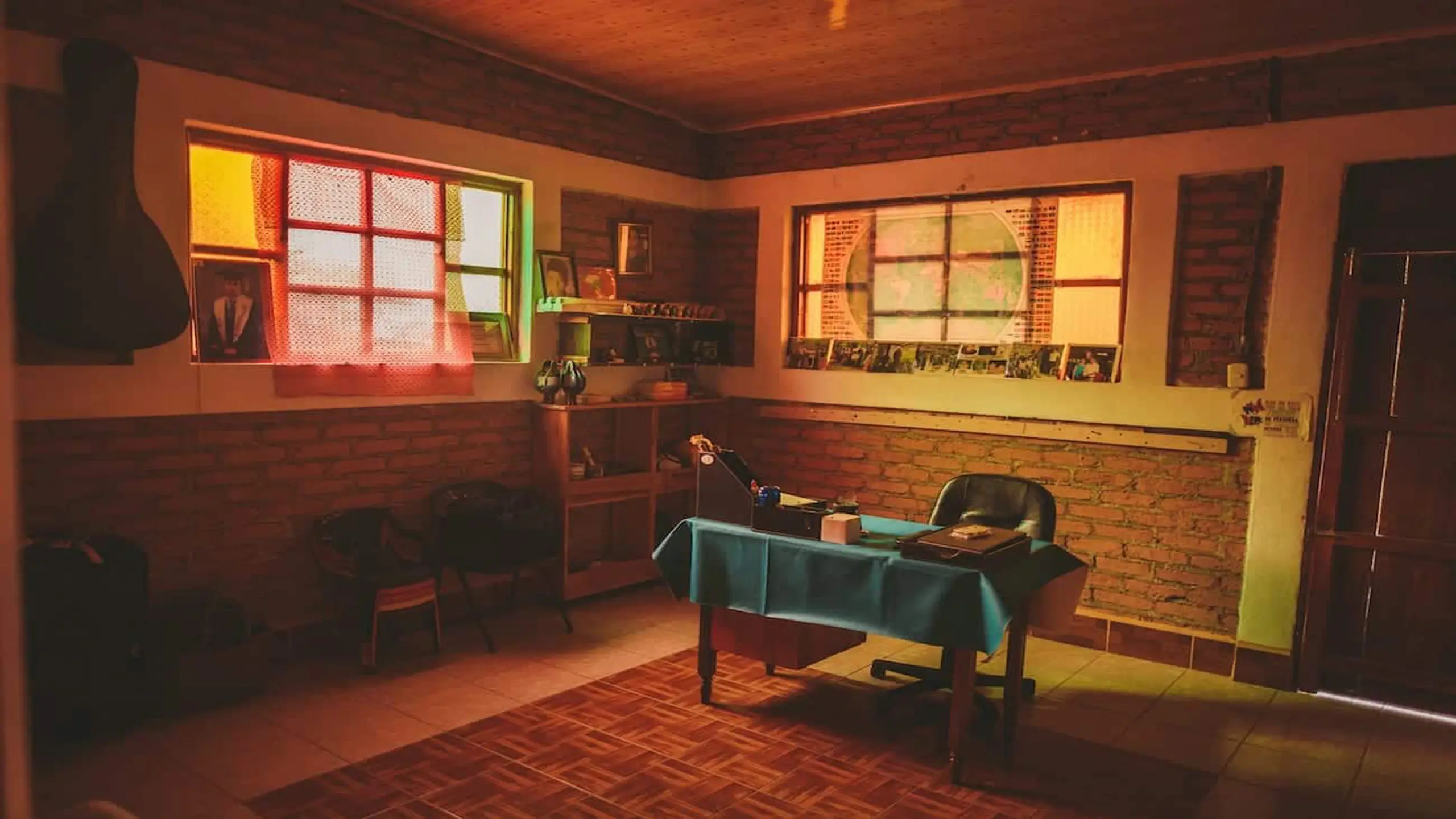
In the world of documentary filmmaking, visuals are far more than just images on a screen; they are the lifeblood of storytelling, capable of captivating audiences and conveying powerful narratives. Effective visuals in documentary production not only enhance the story but also immerse viewers in the subject matter, creating an emotional connection that words alone often cannot achieve. Whether it’s the sweeping shots of untouched landscapes or intimate close-ups that capture raw human emotion, documentary visuals bring authenticity and depth to the narrative.
This blog will explore the art and science of creating engaging visuals in documentary production, providing insights into the strategies, techniques, and tools that can elevate y[our work](https://c-istudios.com/our-work/). From pre-production planning to post-production refinement, we’ll uncover the secrets to crafting compelling visual storytelling that resonates with audiences and leaves a lasting impact. Let’s dive in and transform your documentary into a visual masterpiece!
## The Role of Visuals in Documentary Production
Visuals in documentary production are the heart of storytelling, providing a window into the world being portrayed. They are not merely supplementary to narration or interviews but an integral component that carries the narrative forward.
From stunning landscapes to intimate character close-ups, visuals establish the tone, set the mood, and guide the audience through the documentary's story. They communicate emotions and ideas that might otherwise remain inaccessible, giving depth to the subject matter and creating a profound connection with the viewers.
One of the most significant roles of visuals is their ability to capture and hold the audience's attention. In an age of short attention spans and abundant content, compelling visuals can make the difference between a forgettable documentary and one that leaves a lasting impression.
Well-composed frames, dynamic camera movements, and visually rich storytelling help retain the viewer’s interest, ensuring they remain engaged from start to finish. Visuals that resonate emotionally also deepen the audience's connection to the story, making it more impactful and memorable.
Moreover, visuals are vital for storytelling effectiveness. A well-executed sequence can convey complex ideas, cultural nuances, or historical events without excessive verbal explanation. For instance, a silent montage of a decaying industrial site can evoke themes of environmental neglect or economic decline more powerfully than words. Through the careful use of imagery, documentarians can evoke emotions, provoke thoughts, and inspire action.
In a competitive market, strong visuals can differentiate a documentary from others. Documentaries are not only judged by the strength of their content but also by the quality of their presentation. Eye-catching visuals are more likely to be shared, reviewed, and remembered, giving a documentary an edge in festivals and online platforms. Visuals that stand out demonstrate professionalism and artistic vision, creating a distinct identity for the film.
In essence, visuals in documentary production are more than an aesthetic choice, they are the narrative's backbone. Their ability to captivate, inform, and inspire makes them indispensable in creating compelling documentaries that resonate with audiences.
## Understanding Your Documentary's Visual Language
Creating a consistent visual language is essential for any documentary aiming to leave a lasting impression. Visual language refers to the coherent use of visual elements such as color, lighting, composition, and movement to communicate the film’s message and mood. This consistency not only enhances the storytelling but also ensures that every frame aligns with the documentary's overarching theme.
The tone, mood, and style of a documentary are heavily influenced by its visual language. For instance, a documentary exploring environmental crises might use muted tones and desaturated colors to convey despair and urgency, while a film about cultural celebrations could employ vibrant colors and dynamic camera movements to reflect joy and energy. These choices guide the audience’s emotional response and help reinforce the narrative’s intent.
A strong visual language also establishes the documentary's identity. This identity shapes the audience’s perception, making the documentary more relatable and engaging. For example, in a biographical documentary, using soft lighting and intimate close-ups can create a sense of familiarity with the subject, fostering a deeper connection with the viewer.
To align visuals with the documentary's theme, start with meticulous planning during pre-production. Develop a clear visual style guide that outlines color schemes, camera angles, and lighting preferences. This ensures consistency throughout the film. Incorporating visual motifs, recurring images or symbols, can also strengthen the narrative’s cohesiveness and emphasize key themes.
Experimentation is another critical aspect of refining visual language. Use test shots and trial sequences to explore how different visual elements contribute to the intended tone. Seek feedback during this process to ensure the visuals resonate with the story's goals.
## Pre-Production Planning for Engaging Visuals
Pre-production is the foundation of any successful documentary, particularly when it comes to achieving high-quality visuals. Careful planning ensures that every shot contributes meaningfully to the narrative, creating engaging content that captures the audience’s attention. This phase is where filmmakers establish the visual tone and structure that will guide the entire production process.
One of the critical aspects of pre-production is location scouting. Selecting visually compelling locations is vital for creating immersive visuals. Whether it’s the sweeping landscapes of a nature documentary or the intimate setting of a character-driven story, locations must align with the documentary’s theme. Scouting also helps identify practical considerations like lighting conditions, accessibility, and potential challenges, ensuring that the crew is prepared to capture the best visuals possible.
Another essential step is storyboard creation. A storyboard acts as a visual blueprint for the documentary, outlining key scenes and the intended camera angles, movements, and compositions. This not only saves time during shooting but also ensures that each shot aligns with the narrative and enhances visual storytelling. By pre-visualizing scenes, filmmakers can experiment with different visual ideas and refine them before production begins.
Shot lists are equally important for maintaining organization and efficiency during production. A well-prepared shot list breaks down the filming process into manageable tasks, prioritizing the most visually impactful scenes. It ensures that no critical shots are overlooked and helps the team stay focused on achieving the desired aesthetic.
Identifying visually compelling elements in the subject matter is another crucial pre-production task. Whether it’s the vibrant colors of a cultural festival, the intricate details of an artifact, or the raw emotion on a subject’s face, these elements create visuals that resonate with the audience. Focusing on these aspects during pre-production helps build a narrative that is both visually and emotionally engaging.
Incorporating engaging content starts with understanding the audience's preferences and expectations. Pre-production is the ideal time to consider how visuals will evoke curiosity, provoke thought, or stir emotions. By aligning every visual choice with the documentary’s purpose and audience, filmmakers can create a cohesive and compelling visual experience.
Ultimately, pre-production planning is the cornerstone of successful documentary filmmaking. By investing time and effort in scouting locations, creating storyboards, preparing shot lists, and identifying compelling visuals, filmmakers lay the groundwork for a documentary that captivates and inspires.
## Capturing Authenticity Through Cinematic Techniques
Authenticity is the soul of any documentary, and the right cinematic techniques can bring that authenticity to life. By using tools and methods that make visuals relatable and genuine, filmmakers can immerse audiences in the story and evoke powerful emotions.
One effective technique is the use of handheld cameras. This approach creates an unpolished, raw aesthetic that mirrors real-life experiences, making viewers feel as if they are part of the scene. Handheld shots are particularly effective in emotionally charged moments, as they capture the spontaneity and unpredictability of real events. For instance, the acclaimed documentary Hoop Dreams uses handheld shots to bring viewers closer to the struggles and triumphs of its subjects.
Natural lighting is another tool for enhancing authenticity. Unlike artificial lighting, natural light reflects the genuine atmosphere of a setting. This technique is especially impactful in outdoor scenes or intimate indoor environments. Documentaries like Honeyland masterfully utilize natural lighting to highlight the rural landscapes and humble living conditions of their subjects, creating visuals that feel both truthful and visually stunning.
Close-up shots are invaluable for capturing real-time emotions. A well-timed close-up can convey vulnerability, joy, or sorrow, allowing audiences to connect deeply with the subject. These shots emphasize the human aspect of the story, drawing attention to the subtle expressions and details that words might fail to express.
Capturing real-time emotions is one of the most powerful ways to enhance visual storytelling. Unlike scripted content, documentaries have the unique advantage of portraying genuine reactions and events as they unfold.
Filmmakers can achieve this by staying patient and observant, allowing moments to naturally develop in front of the camera. For example, the documentary The Act of Killing captures raw emotional moments that provide profound insights into the psyche of its subjects.
These techniques not only make visuals authentic but also elevate the overall narrative. When audiences see and feel the authenticity of a scene, they are more likely to engage with the story and its message.
##
## The Power of Visual Storytelling in Documentaries
Visual storytelling is the art of conveying ideas, emotions, and narratives through images rather than words. In documentaries, it serves as a unique tool to immerse audiences in the story, enabling them to feel and interpret the narrative in a deeply personal way. Unlike scripted films, where dialogue often drives the plot, documentaries rely on visuals to evoke understanding and emotional resonance.
One of the greatest strengths of visual storytelling is its ability to communicate complex emotions and ideas without verbal explanation. For instance, a sequence of desolate urban landscapes can convey themes of economic decline or societal neglect without a single word being spoken. By relying on the viewer's intuition and interpretation, visual storytelling encourages engagement and thought, creating a more immersive experience.
Imagery is particularly powerful in capturing human experiences. A close-up shot of a tear rolling down a subject’s cheek, or a montage of children playing in war-torn streets, can convey universal emotions of joy, despair, or hope. These visuals transcend language barriers, making documentaries accessible and relatable to diverse audiences.
Effective visual storytelling moments can be seen in acclaimed documentaries like Planet Earth II, where sweeping aerial shots of untouched wilderness tell a story of natural beauty and fragility. Similarly, 13th uses striking visuals, such as juxtaposed historical footage with modern-day events, to highlight the ongoing struggles for racial justice. These moments resonate because they engage the audience visually and emotionally, fostering a deeper connection with the subject matter.
The role of visual storytelling in documentaries is not just to inform but to inspire. By creating a visual narrative that complements the spoken or written content, filmmakers can emphasize key themes and ideas in a more impactful way. A well-executed visual story invites viewers to think critically, feel deeply, and take action.
In essence, visual storytelling is what transforms a documentary from a series of facts into a compelling narrative. Its ability to evoke emotion, provoke thought, and bridge cultural divides makes it an indispensable tool for documentary filmmakers.
## Enhancing Documentary Visuals with Technology
Advancements in technology have revolutionized how documentaries are created, offering filmmakers tools to enhance the quality and engagement of their visuals. From aerial perspectives to immersive experiences, technology has opened new doors for creativity in storytelling.
Drones have transformed documentary filmmaking by providing breathtaking aerial shots that were once impossible or prohibitively expensive to achieve. They allow filmmakers to capture expansive landscapes, dynamic movements, and unique perspectives that add depth and grandeur to their visuals. For instance, the documentary Free Solo uses drone footage to showcase the sheer scale of El Capitan, immersing viewers in the climber’s harrowing journey.
4K cameras have also become a game-changer, delivering stunning image quality that captures even the finest details. The clarity and richness of 4K visuals elevate the cinematic experience, making documentaries more engaging and visually striking. High-resolution footage is particularly beneficial for nature and wildlife documentaries, where every detail, be it a bird’s feather or a droplet of water, enhances the story.
Virtual reality (VR) is pushing the boundaries of documentary storytelling by offering immersive, 360-degree experiences. VR allows viewers to step into the documentary’s world, whether it’s walking through a refugee camp or exploring underwater ecosystems. Documentaries like Notes on Blindness: Into Darkness use VR to simulate the experience of blindness, creating a deeply personal and empathetic connection with the audience.
In post-production, editing software plays a pivotal role in enhancing visuals. Tools for color grading allow filmmakers to create specific moods or tones, from somber desaturation to vibrant palettes. Visual effects (VFX) can subtly enhance scenes, such as adding lighting effects or removing unwanted elements, without compromising authenticity.
Technology not only improves visual quality but also expands the ways stories can be told. Advanced tools give filmmakers the ability to experiment with styles and techniques, creating a unique visual identity for their documentaries. For example, time-lapse photography, slow-motion effects, and augmented reality are increasingly being used to add layers of depth to storytelling.
## Common Challenges in Creating Documentary Visuals and How to Overcome Them
Creating engaging visuals for documentaries is no easy feat. Filmmakers often face various challenges, including budget constraints, ethical dilemmas, and unpredictable weather conditions. Addressing these hurdles requires creativity, adaptability, and strategic planning.
Budget constraints are a common issue, particularly for independent filmmakers. High-quality equipment, crew, and travel can strain limited resources. To overcome this, filmmakers can prioritize essential equipment, such as versatile cameras and portable lighting setups. Renting equipment or collaborating with local crews can also reduce costs. Additionally, leveraging free or low-cost editing software and open-source tools can help maintain quality without overspending.
Ethical considerations present another significant challenge. Documentaries often delve into sensitive topics, requiring filmmakers to respect their subjects' privacy and dignity. To navigate this, clear communication and obtaining informed consent from participants are crucial. Filmmakers should also avoid sensationalism, ensuring that visuals are truthful and respectful. Consulting with advisors or experts on ethical filmmaking practices can provide valuable guidance.
Weather conditions can disrupt planned shoots, especially for outdoor scenes. To mitigate this, pre-production planning should include contingencies for adverse weather. Monitoring forecasts, securing backup indoor locations, and being flexible with the shooting schedule can help adapt to unexpected changes. Investing in weather-resistant equipment and protective gear also ensures that filming can continue under challenging conditions.
Adaptability is key to overcoming these challenges. Filmmakers must be prepared to adjust their approach, finding creative solutions to unforeseen problems. For instance, if a location becomes unavailable, finding an alternative that aligns with the documentary's theme can save time and resources.
By addressing these challenges proactively and embracing flexibility, filmmakers can maintain the quality and impact of their visuals, ensuring their documentaries resonate with audiences despite the obstacles.
## Post-Production. Refining Your Documentary Visuals
Post-production is where the raw footage comes to life, transforming into a cohesive and compelling visual narrative. This phase is essential for perfecting the visuals and ensuring they align seamlessly with the documentary's story and tone.
Editing techniques are fundamental to shaping the visual flow. Trimming unnecessary footage, arranging sequences for optimal pacing, and creating smooth transitions between scenes help maintain viewer engagement. Editing also allows filmmakers to highlight key moments, ensuring the visuals effectively support the narrative.
Pacing plays a critical role in enhancing the storytelling experience. A well-paced documentary balances slow, reflective moments with dynamic, action-packed scenes, creating an emotional rhythm that keeps the audience invested. For example, a slow montage can build anticipation, while quick cuts can convey urgency or excitement.
Sound design complements visuals by adding depth and atmosphere. Ambient sounds, music, and voiceovers enrich the storytelling, making the visuals more immersive and impactful. For instance, the subtle sound of rustling leaves can enhance a nature documentary, while a dramatic score can amplify emotional scenes.
Color grading is another crucial aspect of post-production. Adjusting the color tones of the footage can set the mood and reinforce the documentary’s themes. For example, desaturated tones can evoke a sense of melancholy, while vibrant colors can convey energy and optimism. Similarly, transitions such as fades, dissolves, or cuts can add polish and professionalism to the final product.
Post-production also offers the opportunity to correct visual imperfections, such as stabilizing shaky footage, adjusting exposure, or removing unwanted elements. These refinements elevate the overall quality, ensuring the documentary meets professional standards.
## Final Tips for Creating Engaging Visuals in Documentary Production
Creating engaging visuals in documentary production requires a blend of thoughtful planning, creative execution, and a commitment to constant improvement. Start by investing time in pre-production, as it lays the foundation for success.
Scouting visually rich locations, creating detailed storyboards, and preparing comprehensive shot lists ensure that every scene contributes meaningfully to the story. Focus on capturing elements that are visually and emotionally compelling, as they help connect your audience to the narrative.
Experimentation is a vital part of the process. Trying out different techniques, camera angles, and lighting setups can unlock creative possibilities you might not have considered initially. Tools like handheld cameras, natural lighting, and close-up shots can add authenticity and emotional depth to your visuals, while advanced technologies like drones, 4K cameras, and VR can take your storytelling to the next level.
Embrace feedback as an opportunity to refine your work. Sharing early drafts with trusted viewers provides valuable insights into how your visuals resonate and where adjustments might enhance their impact.
Ongoing learning is equally important. Study the works of accomplished filmmakers to understand their approach to visual storytelling. Stay updated on technological advancements and emerging trends in the industry to continuously improve your craft.
Post-production is another area where visuals can be elevated. Techniques like color grading, sound design, and precise editing ensure that the final product is polished and cohesive, maximizing its emotional and narrative impact.
Ultimately, the power of visuals lies in their ability to transcend words, creating a direct and profound connection with the audience. They are not just tools but the essence of your documentary’s story, driving engagement and leaving a lasting impression.
By planning meticulously, experimenting fearlessly, and committing to growth, you can master the art of creating visuals that captivate, inspire, and transform your documentaries into unforgettable experiences.
## The Role of Editing in Television Production
Editing is where raw footage transforms into a cohesive and compelling narrative, making it the cornerstone of any successful television production. At its core, TV editing is more than just cutting and rearranging scenes; it’s about weaving together a story that resonates with audiences. The editor's role is to shape pacing, define tone, and guide storytelling to evoke emotions and maintain engagement.
Pacing is crucial in television. In action-packed series, quick cuts and dynamic transitions maintain momentum, while slower, deliberate edits in dramas allow emotional depth to shine. For example, shows like Breaking Bad use masterful pacing to heighten tension, gradually building toward explosive climaxes. Similarly, Game of Thrones employed precise editing to balance intricate storylines while keeping viewers invested in its characters.
The tone is another critical element defined by editing. Comedy shows like The Office rely heavily on jump cuts and reaction shots to amplify humor, while horror series like Stranger Things use lingering edits and sound design to create suspense. By choosing the right techniques, editors can dictate how a scene feels and how the audience responds.
Storytelling is where editing truly shines. Editors decide what the audience sees and ensure the narrative unfolds seamlessly. Consider the non-linear storytelling in Westworld, where meticulous editing ensures that viewers remain intrigued without becoming confused. The artful arrangement of flashbacks, parallel storylines, and cliffhangers demonstrates how TV editing shapes viewer perception.
In essence, editing is not just technical; it’s a creative force that breathes life into television content. By defining pacing, tone, and storytelling, it transforms scattered footage into engaging TV content that captivates and delights. Without skilled editing, even the most visually stunning scenes can fall flat, underscoring its vital role in keeping audiences glued to their screens.
## Understanding Your Audience. Tailoring the Editing Style
Knowing your audience is the foundation of effective editing for television. Viewers' demographics, preferences, and expectations play a significant role in determining how content is edited. Editors must consider these factors to craft engaging TV content that resonates with the intended audience.
For dramas, audiences often expect emotional depth and intricate storylines. Slow pacing, subtle transitions, and intimate close-ups work well to draw viewers into the character's internal struggles. Conversely, reality TV caters to fast-paced entertainment seekers.
Quick cuts, exaggerated reaction shots, and dynamic montages are staples of this genre, ensuring high energy and constant engagement. Comedy, on the other hand, thrives on timing. Editors use abrupt cuts, visual gags, and synchronized music to maximize comedic impact.
Audience demographics further refine editing styles. Younger viewers may prefer fast-moving content with vibrant visuals and rapid transitions, reflecting their shorter attention spans. Older audiences often appreciate more deliberate pacing and classic editing techniques that emphasize storytelling over spectacle.
Cultural context also influences editing choices. For instance, Japanese TV shows often feature vibrant text overlays and exaggerated sound effects to engage viewers, while Western productions lean toward subtler editing styles. Understanding these cultural nuances allows editors to create content that feels relatable and immersive.
Consider the success of reality shows like Keeping Up with the Kardashians, where editing focuses on drama, humor, and cliffhangers to keep audiences coming back for more. In contrast, a show like The Crown relies on careful pacing and elegant transitions to appeal to its audience's appreciation for historical drama.
Ultimately, the key to successful TV editing lies in tailoring techniques to the audience’s tastes and expectations. By aligning editing styles with viewer preferences, editors ensure that their work results in engaging TV content that keeps audiences not only entertained but also emotionally invested in the story.
## Mastering Pacing and Timing
Pacing and timing are the silent storytellers of television, dictating how a narrative unfolds and keeping viewers engaged. In editing for television, these elements are paramount to ensuring the audience remains invested in the story from start to finish. An episode’s pace can mean the difference between binge-worthy content and a show that fails to hold attention.
Quick cuts are a go-to technique for action-packed sequences. By rapidly switching between shots, editors create an adrenaline-pumping rhythm that mirrors the intensity of the scene. For instance, shows like 24 and The Mandalorian excel at maintaining high-octane pacing, drawing viewers into their fast-moving plots.
On the other hand, lingering shots are ideal for emotional moments in dramas. By holding on to a character’s face or a pivotal scene, editors allow emotions to resonate, as seen in series like This Is Us.
Timing isn’t just about cutting scenes to fit a runtime, it’s about cutting at the exact moment to elicit maximum impact. This is where production editing plays a vital role. Editors meticulously analyze footage to synchronize cuts with beats of music, dialogue delivery, or even subtle gestures. For example, in Stranger Things, the seamless integration of soundtracks with character arcs elevates the emotional impact of key scenes.
Moreover, pacing varies within episodes to avoid monotony. Alternating between fast and slow sequences creates a natural ebb and flow that keeps audiences engaged. Editors also use pacing to build tension, slowly ramping up the rhythm before delivering a climactic payoff.
In production editing, timing extends to managing episode structure. Cliffhangers are strategically placed at the end of episodes to leave viewers eager for more. Similarly, montages compress time effectively, allowing the story to progress without dragging.
By mastering pacing and timing, editors ensure that every moment serves the narrative, creating engaging TV content that holds the audience's attention. This balance of speed, rhythm, and precision is what transforms raw footage into television gold.
## Visual Storytelling. Leveraging Camera Angles and Transitions
In television, visuals are just as important as dialogue in telling a story. Through TV editing, camera angles, transitions, and effects become powerful tools for enhancing narrative depth and engagement. Editors manipulate these elements to guide viewers’ emotions, focus attention, and create a seamless viewing experience.
Camera angles can drastically alter a scene's impact. Low angles convey power and dominance, as seen in Breaking Bad, where Walter White’s transformation is underscored by these perspectives.
High angles, on the other hand, suggest vulnerability, adding layers to emotional moments. Close-ups are equally impactful, allowing viewers to connect deeply with the characters’ emotions. For instance, Mad Men uses intimate close-ups to convey subtle shifts in Don Draper’s complex persona.
Transitions between scenes play a crucial role in maintaining narrative flow. Techniques like jump cuts emphasize urgency, as seen in Sherlock, where rapid transitions mirror the protagonist's fast-thinking mind. Fades are often used to signal the passage of time or to evoke a dreamlike quality, common in shows like Westworld.
Match cuts, where one scene transitions seamlessly into another by matching elements, are iconic for their creative storytelling. A memorable example is Breaking Bad’s use of a pizza spinning on the ground to transition into a rotating camera shot.
Visual effects further enhance storytelling. Subtle overlays, color grading, or slow motion can heighten a scene’s mood. For example, Stranger Things uses retro-inspired effects to transport viewers into its 1980s setting while amplifying its eerie atmosphere.
Similarly, Euphoria employs stylized effects to blur the lines between reality and emotion.
By leveraging these visual cues, editors transform raw footage into a cohesive, emotionally charged narrative. The choice of angles, transitions, and effects not only enhances the story but also immerses viewers in the world of the show.
Ultimately, TV editing relies on visual storytelling to captivate audiences. Every angle and transition is a brushstroke in the larger picture, turning a simple scene into engaging TV content that lingers in the minds of viewers long after the episode ends.
## Using Sound and Music to Enhance Engagement
Sound and music are the unsung heroes of editing for television, shaping the emotional landscape of a story and keeping audiences glued to their screens. While visuals capture attention, it’s often the auditory elements that sustain emotional engagement and elevate storytelling.
Background scores play a vital role in setting the tone of a scene. A suspenseful string section heightens tension, while a soft piano melody evokes melancholy. Iconic shows like Game of Thrones owe much of their emotional impact to their scores, which intensify dramatic moments and immerse viewers in the narrative. Similarly, in Stranger Things, retro-inspired synth music not only complements the visuals but also becomes a character in its own right, enhancing the show’s nostalgic atmosphere.
Silence, often underestimated, is another powerful tool. Strategic pauses create suspense, draw attention to key moments, and let emotions linger. In The Handmaid’s Tale, silence often precedes climactic reveals, amplifying the weight of each scene. Silence allows the audience to process a character’s emotions, making their struggles more relatable and impactful.
Sound effects also play a critical role in production editing. From the whoosh of a sword to the creak of a door, these auditory cues make scenes more immersive and believable. In action-packed series like The Mandalorian, sound effects are essential in heightening the intensity of battles and chases. Meanwhile, subtle ambient sounds, like birds chirping or distant traffic, help ground viewers in the world of the show.
Incorporating these elements into engaging TV content requires precision and creativity. Editors must synchronize sound with visuals to ensure every auditory cue enhances the story. For instance, in Breaking Bad, the sound of a meth lab bubbling in the background becomes an ominous motif, reinforcing the tension in Walter White’s descent into criminality.
Ultimately, sound and music are integral to the art of editing for television. Whether through a stirring score, a well-placed silence, or realistic sound effects, auditory elements enrich the viewing experience and create lasting emotional connections with the audience.
## Building Emotional Resonance Through Editing
Emotion is the heart of television storytelling, and editing for television plays a pivotal role in eliciting feelings that linger long after the credits roll. Through techniques like reaction shots, montages, and intercuts, editors manipulate emotions to create memorable scenes that deeply resonate with viewers.
Reaction shots are a cornerstone of emotional storytelling. A single look of despair, joy, or shock can convey volumes about a character's inner world. In shows like The Office, reaction shots are often used to comedic effect, breaking the fourth wall and drawing viewers into the joke. Conversely, in dramas like This Is Us, close-up reaction shots capture raw emotion, allowing viewers to empathize with the characters’ struggles.
Montages are another powerful tool for building emotional resonance. By condensing time and presenting a series of related images, montages evoke a sense of progression or nostalgia. Consider the training montages in Stranger Things, where Eleven’s growth is depicted through carefully arranged clips, accompanied by a stirring score. These sequences create an emotional bond with the character while advancing the narrative efficiently.
Intercuts, or parallel editing, heighten tension and emotion by juxtaposing two or more storylines. This technique is especially effective in shows like Breaking Bad, where simultaneous events are interwoven to create suspense. For instance, scenes of Walter White conducting a deal might be interspersed with his family anxiously waiting at home, amplifying the stakes and emotional weight of the situation.
Beyond these techniques, production editing ensures that emotions are not only conveyed but amplified. The timing of cuts, the use of slow motion, and even color grading all contribute to the emotional tone of a scene. A slow fade to black, for example, signals closure or despair, while a sudden cut to a reaction shot can shock or amuse viewers.
In the end, emotional resonance is what makes a TV show unforgettable. By leveraging techniques like reaction shots, montages, and intercuts, editors turn simple footage into engaging TV content that touches hearts and minds. This mastery of emotion through editing is what keeps audiences coming back, episode after episode.
## Balancing Creativity with Practical Constraints
Editing for television is as much about problem-solving as it is about creativity. Editors often face limitations such as tight deadlines, budget constraints, and content requirements, which can challenge their ability to produce engaging TV content. Despite these challenges, resourcefulness and adaptability help editors maintain a balance between creativity and practicality.
Deadlines are one of the most pressing challenges. In the fast-paced world of television production, editors often work under pressure to deliver episodes within a fixed timeline. This leaves little room for experimentation or trial and error. To address this, editors rely on efficient production editing workflows, such as using pre-built templates, automated processes, and well-organized project files to save time.
Budgets can also limit creative freedom. Expensive special effects, extensive reshoots, or elaborate transitions may not always be feasible. In such cases, editors turn to creative problem-solving. For instance, repurposing existing footage, using simple yet impactful transitions, or relying on sound design instead of costly visual effects can still produce high-quality results.
Despite these constraints, technology offers solutions that enable editors to stay creative while adhering to practical limits. Tools like Adobe Premiere Pro and DaVinci Resolve streamline editing processes with advanced features like automated color correction, real-time collaboration, and pre-designed effects libraries. Similarly, cloud-based platforms allow teams to share and edit footage remotely, saving time and reducing costs.
Moreover, editors often collaborate with directors and producers to prioritize essential elements of TV editing. By focusing on storytelling and character development, they ensure that the core emotional impact of the show remains intact, even if certain creative ideas must be scaled back.
Ultimately, balancing creativity with practical constraints is about making smart compromises. By leveraging technology, adopting efficient workflows, and staying flexible, editors can overcome limitations to create engaging TV content that resonates with audiences, no matter the challenges.
## The Impact of Emerging Technologies on TV Editing
Advancements in technology are revolutionizing editing for television, introducing tools and techniques that are reshaping storytelling and audience engagement. From AI-assisted editing to real-time rendering, these innovations are empowering editors to work faster and more creatively than ever before.
Artificial intelligence (AI) is at the forefront of these changes. AI-powered tools like Adobe Sensei and Blackmagic Design’s neural engine offer features such as automated scene detection, color grading, and even music selection.
These capabilities streamline production editing workflows, allowing editors to focus on more creative aspects of their craft. For example, AI can identify the best takes from hours of footage, significantly reducing the time spent on initial edits.
Real-time editing is another game-changer. With technologies like Unreal Engine, editors can integrate visual effects during production rather than waiting until post-production. This is particularly useful in shows like The Mandalorian, where virtual sets and real-time rendering create immersive environments on the spot. This approach not only saves time but also enhances the creative possibilities for TV editing.
Emerging trends also include cloud-based collaboration, which enables remote teams to work together seamlessly. Platforms like Frame.io allow editors, directors, and producers to review and provide feedback in real-time, accelerating the editing process and ensuring alignment across the production team.
These technological advancements are also changing how stories are told. With AI and real-time editing, editors can experiment with dynamic storytelling techniques, such as branching narratives or personalized content. For instance, interactive shows like Black Mirror: Bandersnatch demonstrates how technology enables viewers to influence the storyline, adding a new dimension to engaging TV content.
Looking to the future, the integration of virtual reality (VR) and augmented reality (AR) in television editing holds immense potential. Editors may soon craft immersive experiences that blur the lines between traditional TV and interactive media, further revolutionizing audience engagement.
## Best Practices for Aspiring Television Editors
Breaking into editing for television requires a unique blend of technical expertise, creative vision, and a strong foundation in storytelling. At its core, editing is about crafting a narrative that captivates and resonates with audiences.
Aspiring editors should focus on honing their ability to understand pacing, transitions, and visual storytelling, as these elements shape the emotional and narrative flow of television content. Watching TV shows critically, and analyzing how editors use timing and technique to create impact, is a great way to develop these skills.
Equally important is mastering industry-standard tools like Adobe Premiere Pro, Avid Media Composer, or DaVinci Resolve. Staying updated on advancements, including AI-powered features, can streamline workflows and enable greater creativity. Strong technical skills paired with a willingness to experiment will set you apart in this fast-paced field.
Collaboration is another cornerstone of success in production editing. Editors often work closely with directors, producers, and writers to bring their vision to life. Building strong communication skills and the ability to incorporate constructive feedback are essential for thriving in this team-oriented profession. Being detail-oriented is also crucial, as seamless transitions, precise timing, and synchronized sound can elevate an edit from good to exceptional.
To build a successful career, start by creating a portfolio that showcases your versatility and creativity. Highlight projects that demonstrate your ability to produce engaging TV content across genres, whether it’s drama, comedy, or reality television. Networking with professionals in the industry and seeking mentorship can open doors to valuable opportunities.
Above all, stay passionate and committed to your craft. Television editing is a challenging yet deeply rewarding field where every cut, sound effect, and transition contributes to a story that connects with audiences. With persistence and a focus on growth, you can make your mark as a skilled editor who brings stories to life on screen.
## Work with C&I Studios
If you are planning a project like this, our team can take it from concept to final delivery. Explore our [film and TV production](https://c-istudios.com/film-and-tv-production/), browse [our work](https://c-istudios.com/our-work/) to see how we tell brand stories, and [get in touch](https://c-istudios.com/contact/) when you are ready to start.
Originally published November 14, 2024
---
*This content is from [C&I Studios](https://c-istudios.com), a full-service production company.*
---
# Content Creation for SEO: Strategies for Improving Search Visibility
> Published: November 13, 2024
> Categories: Web & Tech
> Source: https://c-istudios.com/content-creation-for-seo-strategies-for-improving-search-visibility/
---
.cib{--paper:#1b1d1f;--ink:#fff;--body:#d5d7d9;--muted:#8b9096;--line:rgba(255,255,255,.12);--thumb:#2b2e31;--card:#212426;--accent:#c02b0a;--blue:#5B8FA8;--serif:'Playfair Display',Georgia,serif;--sans:'Poppins',-apple-system,sans-serif;--measure:900px;background:var(--paper);color:var(--body);font-family:var(--sans);line-height:1.6;position:relative;left:50%;transform:translateX(-50%);width:90vw;max-width:1920px}
.cib *{box-sizing:border-box}
.cib .kicker{max-width:var(--measure);margin:58px auto 0;padding:0 22px;font-size:12.5px;font-weight:700;letter-spacing:2.5px;text-transform:uppercase;color:var(--blue)}
.cib h1.cibh1{text-wrap:balance;font-family:var(--serif);font-weight:500;font-size:clamp(46px,6vw,72px);line-height:1.08;color:var(--ink);max-width:var(--measure);margin:18px auto 0;padding:0 22px;letter-spacing:-.5px}
.cib .metarow{max-width:var(--measure);margin:20px auto 0;padding:0 22px;color:var(--muted);font-size:14px}
.cib .hero{position:relative;width:100%;height:0;padding-bottom:56.25%;overflow:hidden;margin:48px auto 0;border-top:1px solid var(--line);border-bottom:1px solid var(--line)}
.cib .hero .ph{width:100%;aspect-ratio:16/9;background:var(--thumb);border-top:1px solid var(--line);border-bottom:1px solid var(--line);display:flex;align-items:center;justify-content:center;color:#7d8288;font-size:13px;text-align:center;padding:0 20px}
.cib .body{max-width:var(--measure);margin:12px auto 0;padding:52px 22px 6px}
.cib .body.lead p:first-child{font-size:23px;line-height:1.62;color:var(--ink)}
.cib .body p{font-size:18.5px;line-height:1.85;margin:0 0 30px;color:var(--body)}
.cib .body h2{text-wrap:balance;font-family:var(--serif);font-weight:500;font-size:clamp(32px,4vw,48px);line-height:1.22;color:var(--ink);margin:70px 0 20px;letter-spacing:-.3px}
.cib .body h3{text-wrap:balance;font-family:var(--sans);font-weight:600;font-size:22px;color:var(--ink);margin:38px 0 8px}
.cib .body a{color:var(--ink);text-decoration:underline;text-decoration-color:rgba(255,255,255,.4);text-underline-offset:3px}
.cib .body a:hover{text-decoration-color:var(--ink)}
.cib .ctable{width:100%;border-collapse:collapse;margin:16px 0 30px;font-size:16px}
.cib .ctable th{background:#000;color:#fff;text-align:left;padding:10px 12px;font-family:var(--sans)}
.cib .ctable td{padding:10px 12px;border-bottom:1px solid var(--line);color:var(--body)}
.cib .inimg{position:relative;width:100%;height:0;padding-bottom:56.25%;overflow:hidden;margin:72px auto;border-top:1px solid var(--line);border-bottom:1px solid var(--line)}
.cib .inimg .ph{width:100%;aspect-ratio:16/9;background:var(--thumb);border-top:1px solid var(--line);border-bottom:1px solid var(--line);display:flex;align-items:center;justify-content:center;color:#7d8288;font-size:13px}
.cib .origpub{max-width:var(--measure);margin:60px auto 0;padding:26px 22px 0;border-top:1px solid var(--line);color:var(--muted);font-size:13.5px}
.cib .related{max-width:1200px;margin:64px auto 0;padding:34px 22px 76px}
.cib .related h3{font-family:var(--sans);font-size:12.5px;letter-spacing:2px;text-transform:uppercase;color:var(--ink);margin:0 0 24px}
.cib .grid{display:grid;grid-template-columns:repeat(3,1fr);gap:28px}
.cib .rc{background:var(--card);border:1px solid var(--line);display:block;text-decoration:none;color:inherit;transition:border-color .15s}
.cib a.rc:hover{border-color:rgba(255,255,255,.5)}
.cib .rc .thumb{position:relative;width:100%;height:0;padding-bottom:56.25%;background:var(--thumb);overflow:hidden}
.cib .rc .thumb img{position:absolute!important;top:0!important;left:0!important;width:100%!important;height:100%!important;object-fit:cover!important;margin:0!important}
.cib .rc .cc{padding:14px 15px 17px}
.cib .rc .rt{font-family:var(--serif);font-weight:500;font-size:16px;line-height:1.3;color:var(--ink);margin:0 0 6px}
.cib .rc .rm{font-size:11px;letter-spacing:1px;text-transform:uppercase;color:var(--muted)}
.cib img{margin:0!important;padding:0!important;display:block!important;vertical-align:top;max-width:100%}
.cib .hero img,.cib .inimg img{position:absolute!important;top:0!important;left:0!important;width:100%!important;height:100%!important;object-fit:cover!important;margin:0!important;padding:0!important;border:0!important;display:block!important;aspect-ratio:auto!important}
.cib .hero+.body{padding-top:36px}
@media(max-width:760px){.cib .grid{grid-template-columns:1fr}.cib .body h2{margin:52px 0 16px}.cib .body p{font-size:17.5px}.cib .inimg,.cib .hero{margin-top:44px}}
.cib .vembed{max-width:var(--measure);margin:44px auto;padding:0 22px}.cib .vembed .vwrap{position:relative;width:100%;height:0;padding-bottom:56.25%}.cib .vembed .vwrap iframe{position:absolute;top:0;left:0;width:100%;height:100%;border:0}
Web & Tech
# Content Creation for SEO. Strategies for Improving Search Visibility
27 min read
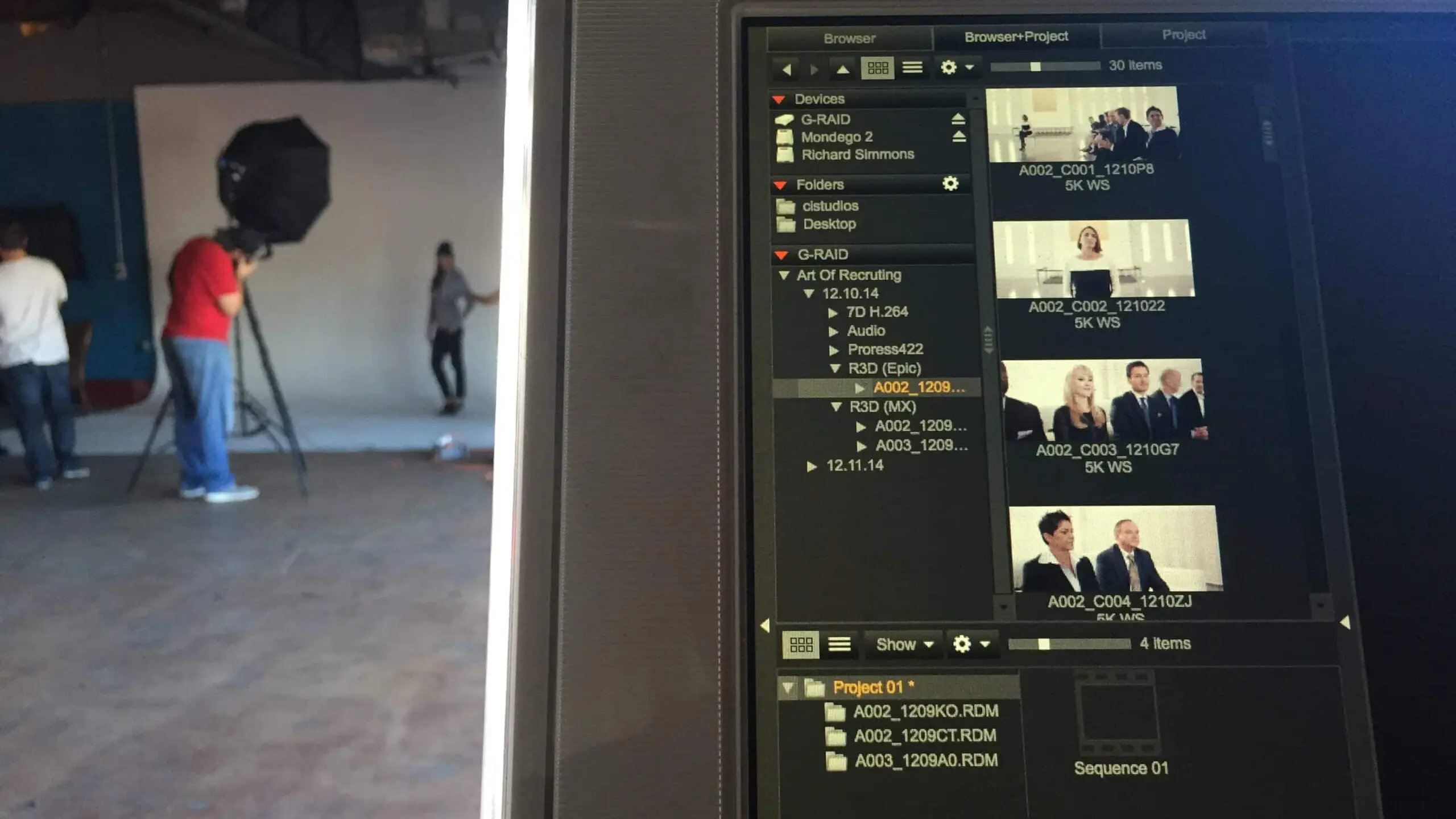
Content creation is more than just words on a page; it’s the foundation of a successful online presence, directly influencing how easily your audience can find you in the vast digital landscape. As search engines prioritize high-quality, relevant content, businesses need strategies that improve visibility to rise above the competition. But achieving this requires more than simply publishing posts. Strategic, SEO-focused content ensures that y[our work](https://c-istudios.com/our-work/) doesn’t just exist, it reaches and engages the people who need it most.
This article will explore how to create content that aligns with SEO best practices, from crafting high-quality pieces that resonate with readers to leveraging technical aspects that enhance search visibility. Throughout, you’ll find examples and insights that offer a clear path to creating optimized content, as well as links to resources like our C&I Studios portfolio and services page for those seeking a professional touch in their SEO journey.
## Understanding SEO Basics. Keywords, Algorithms, and Search Intent
To succeed in the digital landscape, understanding the core elements of [SEO copywriting](https://c-istudios.com/seo-copywriting-services/) is essential. At its heart, SEO is about creating content that aligns with search engines’ algorithms and meets users' needs, which in turn enhances search visibility. This starts with identifying and integrating relevant keywords.
Keywords are the terms that users enter into search engines, and they play a pivotal role in determining which content ranks highest. Effective keyword research focuses on finding words and phrases with high relevance and search volume but manageable competition, allowing content to stand out.
However, keywords alone aren’t enough. Search engines like Google continually evolve their algorithms to prioritize content that genuinely serves users. As a result, focusing on search intent, understanding the “why” behind a search, is key. Search intent typically falls into four categories: informational, navigational, transactional, and commercial investigation.
For example, someone searching “best [video production](https://c-istudios.com/video-production-services/) tools” likely seeks detailed information rather than a purchase link. By aligning content with the search intent, you make it more likely to appear in relevant searches, increasing search visibility and engagement.
Integrating SEO principles requires balancing keyword usage with content quality. Overstuffing keywords is counterproductive, as search engines penalize this behavior. Instead, the focus should be on creating a natural flow where keywords add value and meaning to the content.
For example, content that seamlessly mentions SEO copywriting and search visibility in the context of the topic shows both relevance and readability. This balanced approach helps ensure that search engines recognize your content as both relevant and high-quality, making it more likely to rank well and attract engaged readers.
## Creating High-Quality Content That Drives Engagement
Creating high-quality content is the cornerstone of any successful SEO strategy. Quality content captures attention, drives engagement, and keeps readers coming back for more. Several essential elements define high-quality content, starting with originality and relevance.
Original content, as opposed to duplicated or rewritten pieces, is favored by search engines and readers alike. Relevance, meanwhile, is achieved by aligning content with the topics and questions your audience cares about, ensuring that every piece provides genuine value.
Another core component of quality content is readability. Readers and search engines appreciate well-structured, easy-to-read material that presents ideas clearly. This is where SEO copywriting techniques can make a difference; using headers, bullet points, and concise paragraphs helps break up text, making it digestible and user-friendly.
Readable content also makes it easier for users to scan, find the information they need, and stay engaged. Proper layout and formatting, combined with elements like images or videos, can significantly enhance user experience.
Engagement is also boosted by content that resonates with readers on a personal level. Rather than generic information, aim for insights or perspectives that connect with readers' needs and interests. Whether it’s a how-to guide on [content creation](https://c-istudios.com/content-creation-services/) or a behind-the-scenes look at video production techniques, make sure your content is informative and meaningful.
Engaging, high-quality content not only improves search rankings but also fosters visitor retention, building long-term loyalty and trust with your audience. In today’s competitive online environment, quality content is what sets brands apart, driving visibility and ongoing interaction with audiences.
## The Importance of Keyword Research and Targeting
Effective keyword research is the foundation of any successful SEO strategy. By identifying high-impact keywords, you ensure that your content aligns with the terms people are actively searching for, boosting your chances of visibility and engagement.
The first step in this process is to use keyword research tools like Google Keyword Planner, Ahrefs, or SEMrush. These tools help pinpoint keywords that not only have significant search volume but also are relevant to your content’s focus. Using a blend of these tools provides a comprehensive view of which terms are worth targeting for your content.
A well-rounded keyword strategy involves balancing high and low-competition keywords. High-competition keywords, while popular, are often difficult to rank for, particularly for newer websites. Low-competition keywords, on the other hand, offer an opportunity to gain visibility more easily, as fewer websites are competing for them.
A good strategy is to include both types in your content, as high-competition keywords, like "professional photography", attract a broad audience, while niche terms like "[video production gear list](https://c-istudios.com/video-production-gear-list/)" draw specific, interested users. This combination enables content to reach a diverse range of searchers, contributing to both visibility and engagement.
Using keywords effectively in your SEO copywriting involves more than just inserting them into the text. They should appear naturally within headings, subheadings, and throughout the body in a way that feels seamless and informative.
Incorporating them into areas like the introduction, conclusion, and image descriptions further optimizes the content. For professional assistance with keyword strategy, explore our services at C&I Studios, where expert support can help you find and implement keywords that match your business goals.
## Structuring Content for Optimal SEO Performance
A well-structured piece of content isn’t just more appealing to readers, it’s also easier for search engines to understand and rank. In content creation, the use of headers, subheaders, bullet points, and multimedia elements plays a critical role in organizing information effectively.
By breaking down content into sections and using headers, readers can easily navigate through the article, while search engines can quickly identify key topics and subtopics. This is where [web development](https://c-istudios.com/web-development-services/) practices meet content strategy, creating a seamless experience that benefits both users and search engines.
Headers and subheaders, typically structured with H1, H2, and H3 tags, help to clearly outline the hierarchy of information. These tags signal to search engines the importance of each section, making it easier for algorithms to understand the primary topics.
In addition to headers, using bullet points can make information digestible, especially when listing steps or features. Bullet points improve readability, making it more likely that readers will stay on the page, engage with the content, and find the answers they’re seeking.
Multimedia elements like images, videos, and infographics add another layer of engagement and accessibility. For instance, embedding a video on video production techniques or using visuals for professional photography concepts can clarify complex points, enrich user experience, and make content more shareable. When optimizing multimedia, ensure that images have descriptive alt text and that videos are accompanied by transcripts or summaries, as these details can contribute to SEO performance.
Ultimately, structuring content with clear organization and multimedia not only helps users stay engaged but also signals to search engines that the content is high-quality and relevant. This boosts rankings, as well-structured content is easier to index, leading to higher visibility in search results.
## Leveraging Multimedia to Enhance SEO and Engagement
Incorporating multimedia elements such as images, videos, and infographics can significantly enhance both SEO and user engagement. In the digital landscape, visuals do more than add aesthetic appeal, they provide context, break up large blocks of text, and hold the viewer's attention.
For example, video production plays a key role in content creation today. Embedding relevant videos, whether educational or promotional, can increase the time users spend on a page, a metric search engines use to assess content quality. By keeping readers engaged, you’re signaling to search engines that your content is valuable and deserves a higher ranking.
One of the most effective uses of multimedia is through video content. Videos, especially when produced professionally, can convey complex information quickly and effectively. For instance, a how-to video on [audio live streaming](https://c-istudios.com/video-audio-live-streaming/) services not only serves as a practical guide but also engages users who prefer visual content over reading.
Videos can be further optimized by including transcriptions, which allow search engines to "read" the video content and improve keyword relevance on the page. Additionally, images with descriptive alt text not only enhance accessibility for users with visual impairments but also contribute to SEO, as search engines factor in alt text when indexing.
Infographics are another powerful tool for media marketing, allowing brands to communicate complex data in a visually digestible format. When used effectively, infographics can convey statistics, trends, or steps in a process, making it easier for readers to grasp critical information at a glance. Furthermore, infographics are highly shareable, increasing the chances of backlinks and social media shares, two factors that boost SEO performance.
In summary, integrating multimedia elements into your content strategy not only enriches the user experience but also enhances SEO. By embedding video production materials, audio live streaming content, and engaging infographics, you can make your content more attractive to users and search engines alike, ultimately driving higher rankings and improved engagement.
## Integrating Internal and External Links for Better Visibility
The strategic use of internal and external links is essential for improving SEO, user experience, and site authority. Internal links guide users to other relevant pages on your website, helping them find additional content that aligns with their interests.
For instance, linking to a [creative marketing](https://c-istudios.com/creative-marketing-services/) services page within an article on branding strategies keeps users engaged on your site longer. This not only improves user experience but also signals to search engines that your site has a wealth of interconnected, valuable content.
External links, on the other hand, add credibility to your content by connecting it to authoritative sources. Linking to credible sites as references can increase your site's perceived authority, as search engines tend to favor content that is well-researched and backed by trusted sources.
For example, in an article about media creation strategies, linking to studies or reputable articles on content marketing trends can reinforce the reliability of your information. However, it’s essential to strike a balance; overloading a page with external links can drive readers away, so use them sparingly and only when they genuinely add value to your content.
Integrating both types of links effectively involves a thoughtful approach. Internal links should direct users to related content that builds on the page they’re currently reading, encouraging them to explore your site further.
For example, a blog post discussing web maintenance could internally link to an article about web hosting, guiding the reader along a logical content path. Meanwhile, external links should lead to high-quality, relevant sources, helping to position your content as part of a larger, credible ecosystem.
Incorporating a balanced mix of internal and external links doesn’t just help readers navigate content more easily; it also boosts SEO. By providing value through these connections, you’re building a site that’s informative, interconnected, and respected by search engines, leading to better visibility and a more engaged audience.
## Utilizing SEO Tools and Analytics for Content Improvement
To create effective SEO copywriting and enhance content performance, utilizing SEO tools and analytics is essential. These tools provide insights into how well your content resonates with your audience, enabling you to refine strategies and maximize impact.
Popular SEO tools like Google Analytics and SEMrush allow you to track metrics such as traffic, bounce rate, and keyword performance. These insights reveal what’s working and where adjustments are needed, helping you to optimize your content for greater visibility.
For instance, Google Analytics provides in-depth data on user behavior, showing how visitors interact with your content, which pages they stay on the longest, and where they exit. This data can inform content strategy by highlighting which topics or formats perform best. In a blog post on branding and graphic design, for example, high engagement could signal a need for more visual or creative-focused content.
SEMrush, on the other hand, helps identify which keywords are driving traffic to your site and suggests high-impact keywords you may be missing. By tracking keywords like social media marketing services, you can see how effectively your content aligns with user search intent and adjust your strategy as needed.
Analytics also play a role in understanding the broader impact of content. Tracking backlinks, for instance, reveals which pieces are attracting external links from other sites, which boosts authority.
Similarly, monitoring engagement metrics helps identify content that resonates strongly with audiences. Based on these insights, you can fine-tune your web development approach, making structural changes to improve navigation or loading speed, both of which impact user experience and SEO.
Incorporating SEO tools and analytics into your workflow ensures a data-driven approach to content creation. By leveraging these insights, you can continuously improve your content, making it more targeted, impactful, and optimized for search engines and users alike.
## Optimizing Content for Mobile and Voice Search
With the rise of mobile and voice search, optimizing content for these formats is crucial for any modern SEO strategy. As more users access the internet on mobile devices, mobile SEO focuses on creating a seamless experience that caters to smaller screens and mobile navigation.
Key factors include responsive design, loading speed, and mobile-friendly layouts, all of which ensure that users can access content easily regardless of device. Implementing fast, reliable web hosting is essential here, as it directly impacts page loading times. A slow-loading page frustrates users, leading to higher bounce rates and lower search rankings.
Responsive design is at the core of mobile optimization. Content should adapt to fit any screen size, with images scaling appropriately and text remaining readable without zooming. This enhances the user experience and ensures that mobile visitors stay engaged. Consider simplifying navigation, as touch-based interactions are less precise than mouse clicks, and users should be able to access key information within a few taps.
Voice search optimization is another growing area in mobile SEO. As more people use voice-activated devices, such as smartphones and smart speakers, to search the web, content must cater to conversational, question-based queries.
Optimizing for voice search means understanding natural language and incorporating longer, question-based keywords, as users are more likely to ask full questions than type keywords alone. For example, instead of “web hosting benefits,” users may ask, “What are the benefits of reliable web hosting?”
Efficient web hosting and responsive design aren’t just technical enhancements; they’re foundational to a modern, user-friendly experience that prioritizes accessibility. By optimizing for both mobile and voice search, you’re positioning your content to reach a broader audience, improve user satisfaction, and ultimately, achieve higher rankings across search engines.
## Regular Content Updates and Maintenance for Ongoing SEO
Maintaining and updating content is a vital practice for achieving lasting visibility in search engine rankings. SEO is an ongoing process, and even well-optimized content requires periodic revisions to stay relevant.
This is where web maintenance plays a critical role, ensuring that your content doesn’t just fade over time but continues to attract and engage readers. By regularly revisiting and refreshing existing content, you signal to search engines that your site is active and providing up-to-date information, which can result in higher rankings.
One effective strategy is to update evergreen topics, content that remains relevant over long periods, such as how-to guides, tutorials, and foundational industry information. By adding new insights, examples, or updated statistics, you can keep evergreen content aligned with current trends and industry standards.
For instance, an article on SEO copywriting might be revised to include new keyword research techniques or SEO tools that have gained popularity. Regular updates prevent content from becoming stale and ensure it continues to meet users’ expectations and needs.
Refreshing outdated information is equally important. If content contains information that is no longer accurate, such as expired statistics, old screenshots, or references to discontinued tools, it can harm both user trust and search rankings. Search engines prioritize content that is current and valuable; by replacing outdated information with fresh, accurate details, you improve the user experience and demonstrate authority in your niche. For example, a post on web maintenance should be revised to reflect the latest security practices and optimization techniques, as these evolve rapidly.
Regularly updating content also allows you to re-evaluate and enhance on-page SEO elements, such as titles, meta descriptions, and internal links. Revising titles to be more engaging or adding new internal links to recent articles can increase the overall SEO effectiveness of your content. Additionally, by monitoring analytics, you can identify which articles are losing traction and use that data to guide updates, targeting content that has the potential to regain visibility and attract traffic.
## Understanding SEO Basics. Keywords, Algorithms, and Search Intent
To succeed in the digital landscape, understanding the core elements of [SEO copywriting](https://c-istudios.com/seo-copywriting-services/) is essential. At its heart, SEO is about creating content that aligns with search engines’ algorithms and meets users' needs, which in turn enhances search visibility. This starts with identifying and integrating relevant keywords.
Keywords are the terms that users enter into search engines, and they play a pivotal role in determining which content ranks highest. Effective keyword research focuses on finding words and phrases with high relevance and search volume but manageable competition, allowing content to stand out.
However, keywords alone aren’t enough. Search engines like Google continually evolve their algorithms to prioritize content that genuinely serves users. As a result, focusing on search intent, understanding the “why” behind a search, is key. Search intent typically falls into four categories: informational, navigational, transactional, and commercial investigation.
For example, someone searching “best video production tools” likely seeks detailed information rather than a purchase link. By aligning content with the search intent, you make it more likely to appear in relevant searches, increasing search visibility and engagement.
Integrating SEO principles requires balancing keyword usage with content quality. Overstuffing keywords is counterproductive, as search engines penalize this behavior. Instead, the focus should be on creating a natural flow where keywords add value and meaning to the content.
For example, content that seamlessly mentions SEO copywriting and search visibility in the context of the topic shows both relevance and readability. This balanced approach helps ensure that search engines recognize your content as both relevant and high-quality, making it more likely to rank well and attract engaged readers.
## Creating High-Quality Content That Drives Engagement
Creating high-quality content is the cornerstone of any successful SEO strategy. Quality content captures attention, drives engagement, and keeps readers coming back for more. Several essential elements define high-quality content, starting with originality and relevance.
Original content, as opposed to duplicated or rewritten pieces, is favored by search engines and readers alike. Relevance, meanwhile, is achieved by aligning content with the topics and questions your audience cares about, ensuring that every piece provides genuine value.
Another core component of quality content is readability. Readers and search engines appreciate well-structured, easy-to-read material that presents ideas clearly. This is where SEO copywriting techniques can make a difference; using headers, bullet points, and concise paragraphs helps break up text, making it digestible and user-friendly.
Readable content also makes it easier for users to scan, find the information they need, and stay engaged. Proper layout and formatting, combined with elements like images or videos, can significantly enhance user experience.
Engagement is also boosted by content that resonates with readers on a personal level. Rather than generic information, aim for insights or perspectives that connect with readers' needs and interests. Whether it’s a how-to guide on [content creation](https://c-istudios.com/content-creation-services/) or a behind-the-scenes look at video production techniques, make sure your content is informative and meaningful.
Engaging, high-quality content not only improves search rankings but also fosters visitor retention, building long-term loyalty and trust with your audience. In today’s competitive online environment, quality content is what sets brands apart, driving visibility and ongoing interaction with audiences.
## The Importance of Keyword Research and Targeting
Effective keyword research is the foundation of any successful SEO strategy. By identifying high-impact keywords, you ensure that your content aligns with the terms people are actively searching for, boosting your chances of visibility and engagement.
The first step in this process is to use keyword research tools like Google Keyword Planner, Ahrefs, or SEMrush. These tools help pinpoint keywords that not only have significant search volume but also are relevant to your content’s focus. Using a blend of these tools provides a comprehensive view of which terms are worth targeting for your content.
A well-rounded keyword strategy involves balancing high and low-competition keywords. High-competition keywords, while popular, are often difficult to rank for, particularly for newer websites. Low-competition keywords, on the other hand, offer an opportunity to gain visibility more easily, as fewer websites are competing for them.
A good strategy is to include both types in your content, as high-competition keywords, like "professional photography", attract a broad audience, while niche terms like "[video production gear list](https://c-istudios.com/video-production-gear-list/)" draw specific, interested users. This combination enables content to reach a diverse range of searchers, contributing to both visibility and engagement.
Using keywords effectively in your SEO copywriting involves more than just inserting them into the text. They should appear naturally within headings, subheadings, and throughout the body in a way that feels seamless and informative.
Incorporating them into areas like the introduction, conclusion, and image descriptions further optimizes the content. For professional assistance with keyword strategy, explore our services at C&I Studios, where expert support can help you find and implement keywords that match your business goals.
## Structuring Content for Optimal SEO Performance
A well-structured piece of content isn’t just more appealing to readers, it’s also easier for search engines to understand and rank. In content creation, the use of headers, subheaders, bullet points, and multimedia elements plays a critical role in organizing information effectively.
By breaking down content into sections and using headers, readers can easily navigate through the article, while search engines can quickly identify key topics and subtopics. This is where [web development](https://c-istudios.com/web-development-services/) practices meet content strategy, creating a seamless experience that benefits both users and search engines.
Headers and subheaders, typically structured with H1, H2, and H3 tags, help to clearly outline the hierarchy of information. These tags signal to search engines the importance of each section, making it easier for algorithms to understand the primary topics.
In addition to headers, using bullet points can make information digestible, especially when listing steps or features. Bullet points improve readability, making it more likely that readers will stay on the page, engage with the content, and find the answers they’re seeking.
Multimedia elements like images, videos, and infographics add another layer of engagement and accessibility. For instance, embedding a video on video production techniques or using visuals for professional photography concepts can clarify complex points, enrich user experience, and make content more shareable. When optimizing multimedia, ensure that images have descriptive alt text and that videos are accompanied by transcripts or summaries, as these details can contribute to SEO performance.
Ultimately, structuring content with clear organization and multimedia not only helps users stay engaged but also signals to search engines that the content is high-quality and relevant. This boosts rankings, as well-structured content is easier to index, leading to higher visibility in search results.
## Leveraging Multimedia to Enhance SEO and Engagement
Incorporating multimedia elements such as images, videos, and infographics can significantly enhance both SEO and user engagement. In the digital landscape, visuals do more than add aesthetic appeal, they provide context, break up large blocks of text, and hold the viewer's attention.
For example, video production plays a key role in content creation today. Embedding relevant videos, whether educational or promotional, can increase the time users spend on a page, a metric search engines use to assess content quality. By keeping readers engaged, you’re signaling to search engines that your content is valuable and deserves a higher ranking.
One of the most effective uses of multimedia is through video content. Videos, especially when produced professionally, can convey complex information quickly and effectively. For instance, a how-to video on [audio live streaming](https://c-istudios.com/video-audio-live-streaming/) services not only serves as a practical guide but also engages users who prefer visual content over reading.
Videos can be further optimized by including transcriptions, which allow search engines to "read" the video content and improve keyword relevance on the page. Additionally, images with descriptive alt text not only enhance accessibility for users with visual impairments but also contribute to SEO, as search engines factor in alt text when indexing.
Infographics are another powerful tool for media marketing, allowing brands to communicate complex data in a visually digestible format. When used effectively, infographics can convey statistics, trends, or steps in a process, making it easier for readers to grasp critical information at a glance. Furthermore, infographics are highly shareable, increasing the chances of backlinks and social media shares, two factors that boost SEO performance.
In summary, integrating multimedia elements into your content strategy not only enriches the user experience but also enhances SEO. By embedding video production materials, audio live streaming content, and engaging infographics, you can make your content more attractive to users and search engines alike, ultimately driving higher rankings and improved engagement.
## Integrating Internal and External Links for Better Visibility
The strategic use of internal and external links is essential for improving SEO, user experience, and site authority. Internal links guide users to other relevant pages on your website, helping them find additional content that aligns with their interests.
For instance, linking to a [creative marketing](https://c-istudios.com/creative-marketing-services/) services page within an article on branding strategies keeps users engaged on your site longer. This not only improves user experience but also signals to search engines that your site has a wealth of interconnected, valuable content.
External links, on the other hand, add credibility to your content by connecting it to authoritative sources. Linking to credible sites as references can increase your site's perceived authority, as search engines tend to favor content that is well-researched and backed by trusted sources.
For example, in an article about media creation strategies, linking to studies or reputable articles on content marketing trends can reinforce the reliability of your information. However, it’s essential to strike a balance; overloading a page with external links can drive readers away, so use them sparingly and only when they genuinely add value to your content.
Integrating both types of links effectively involves a thoughtful approach. Internal links should direct users to related content that builds on the page they’re currently reading, encouraging them to explore your site further.
For example, a blog post discussing web maintenance could internally link to an article about web hosting, guiding the reader along a logical content path. Meanwhile, external links should lead to high-quality, relevant sources, helping to position your content as part of a larger, credible ecosystem.
Incorporating a balanced mix of internal and external links doesn’t just help readers navigate content more easily; it also boosts SEO. By providing value through these connections, you’re building a site that’s informative, interconnected, and respected by search engines, leading to better visibility and a more engaged audience.
## Utilizing SEO Tools and Analytics for Content Improvement
To create effective SEO copywriting and enhance content performance, utilizing SEO tools and analytics is essential. These tools provide insights into how well your content resonates with your audience, enabling you to refine strategies and maximize impact.
Popular SEO tools like Google Analytics and SEMrush allow you to track metrics such as traffic, bounce rate, and keyword performance. These insights reveal what’s working and where adjustments are needed, helping you to optimize your content for greater visibility.
For instance, Google Analytics provides in-depth data on user behavior, showing how visitors interact with your content, which pages they stay on the longest, and where they exit. This data can inform content strategy by highlighting which topics or formats perform best. In a blog post on branding and graphic design, for example, high engagement could signal a need for more visual or creative-focused content.
SEMrush, on the other hand, helps identify which keywords are driving traffic to your site and suggests high-impact keywords you may be missing. By tracking keywords like social media marketing services, you can see how effectively your content aligns with user search intent and adjust your strategy as needed.
Analytics also play a role in understanding the broader impact of content. Tracking backlinks, for instance, reveals which pieces are attracting external links from other sites, which boosts authority.
Similarly, monitoring engagement metrics helps identify content that resonates strongly with audiences. Based on these insights, you can fine-tune your web development approach, making structural changes to improve navigation or loading speed, both of which impact user experience and SEO.
Incorporating SEO tools and analytics into your workflow ensures a data-driven approach to content creation. By leveraging these insights, you can continuously improve your content, making it more targeted, impactful, and optimized for search engines and users alike.
## Optimizing Content for Mobile and Voice Search
With the rise of mobile and voice search, optimizing content for these formats is crucial for any modern SEO strategy. As more users access the internet on mobile devices, mobile SEO focuses on creating a seamless experience that caters to smaller screens and mobile navigation.
Key factors include responsive design, loading speed, and mobile-friendly layouts, all of which ensure that users can access content easily regardless of device. Implementing fast, reliable web hosting is essential here, as it directly impacts page loading times. A slow-loading page frustrates users, leading to higher bounce rates and lower search rankings.
Responsive design is at the core of mobile optimization. Content should adapt to fit any screen size, with images scaling appropriately and text remaining readable without zooming. This enhances the user experience and ensures that mobile visitors stay engaged. Consider simplifying navigation, as touch-based interactions are less precise than mouse clicks, and users should be able to access key information within a few taps.
Voice search optimization is another growing area in mobile SEO. As more people use voice-activated devices, such as smartphones and smart speakers, to search the web, content must cater to conversational, question-based queries.
Optimizing for voice search means understanding natural language and incorporating longer, question-based keywords, as users are more likely to ask full questions than type keywords alone. For example, instead of “web hosting benefits,” users may ask, “What are the benefits of reliable web hosting?”
Efficient web hosting and responsive design aren’t just technical enhancements; they’re foundational to a modern, user-friendly experience that prioritizes accessibility. By optimizing for both mobile and voice search, you’re positioning your content to reach a broader audience, improve user satisfaction, and ultimately, achieve higher rankings across search engines.
## Regular Content Updates and Maintenance for Ongoing SEO
Maintaining and updating content is a vital practice for achieving lasting visibility in search engine rankings. SEO is an ongoing process, and even well-optimized content requires periodic revisions to stay relevant.
This is where web maintenance plays a critical role, ensuring that your content doesn’t just fade over time but continues to attract and engage readers. By regularly revisiting and refreshing existing content, you signal to search engines that your site is active and providing up-to-date information, which can result in higher rankings.
One effective strategy is to update evergreen topics, content that remains relevant over long periods, such as how-to guides, tutorials, and foundational industry information. By adding new insights, examples, or updated statistics, you can keep evergreen content aligned with current trends and industry standards.
For instance, an article on SEO copywriting might be revised to include new keyword research techniques or SEO tools that have gained popularity. Regular updates prevent content from becoming stale and ensure it continues to meet users’ expectations and needs.
Refreshing outdated information is equally important. If content contains information that is no longer accurate, such as expired statistics, old screenshots, or references to discontinued tools, it can harm both user trust and search rankings. Search engines prioritize content that is current and valuable; by replacing outdated information with fresh, accurate details, you improve the user experience and demonstrate authority in your niche. For example, a post on web maintenance should be revised to reflect the latest security practices and optimization techniques, as these evolve rapidly.
Regularly updating content also allows you to re-evaluate and enhance on-page SEO elements, such as titles, meta descriptions, and internal links. Revising titles to be more engaging or adding new internal links to recent articles can increase the overall SEO effectiveness of your content. Additionally, by monitoring analytics, you can identify which articles are losing traction and use that data to guide updates, targeting content that has the potential to regain visibility and attract traffic.
## Work with C&I Studios
If you are planning a project like this, our team can take it from concept to final delivery. Explore our [AI video services](https://c-istudios.com/ai-video-services/), browse [our work](https://c-istudios.com/our-work/) to see how we tell brand stories, and [get in touch](https://c-istudios.com/contact/) when you are ready to start.
Originally published November 13, 2024
---
*This content is from [C&I Studios](https://c-istudios.com), a full-service production company.*
---
# A Guide to Sound Mixing for Film and Television
> Published: November 13, 2024
> Categories: Film & TV
> Source: https://c-istudios.com/a-guide-to-sound-mixing-for-film-and-television/
---
.cib{--paper:#1b1d1f;--ink:#fff;--body:#d5d7d9;--muted:#8b9096;--line:rgba(255,255,255,.12);--thumb:#2b2e31;--card:#212426;--accent:#c02b0a;--blue:#5B8FA8;--serif:'Playfair Display',Georgia,serif;--sans:'Poppins',-apple-system,sans-serif;--measure:900px;background:var(--paper);color:var(--body);font-family:var(--sans);line-height:1.6;position:relative;left:50%;transform:translateX(-50%);width:90vw;max-width:1920px}
.cib *{box-sizing:border-box}
.cib .kicker{max-width:var(--measure);margin:58px auto 0;padding:0 22px;font-size:12.5px;font-weight:700;letter-spacing:2.5px;text-transform:uppercase;color:var(--blue)}
.cib h1.cibh1{text-wrap:balance;font-family:var(--serif);font-weight:500;font-size:clamp(46px,6vw,72px);line-height:1.08;color:var(--ink);max-width:var(--measure);margin:18px auto 0;padding:0 22px;letter-spacing:-.5px}
.cib .metarow{max-width:var(--measure);margin:20px auto 0;padding:0 22px;color:var(--muted);font-size:14px}
.cib .hero{position:relative;width:100%;height:0;padding-bottom:56.25%;overflow:hidden;margin:48px auto 0;border-top:1px solid var(--line);border-bottom:1px solid var(--line)}
.cib .hero .ph{width:100%;aspect-ratio:16/9;background:var(--thumb);border-top:1px solid var(--line);border-bottom:1px solid var(--line);display:flex;align-items:center;justify-content:center;color:#7d8288;font-size:13px;text-align:center;padding:0 20px}
.cib .body{max-width:var(--measure);margin:12px auto 0;padding:52px 22px 6px}
.cib .body.lead p:first-child{font-size:23px;line-height:1.62;color:var(--ink)}
.cib .body p{font-size:18.5px;line-height:1.85;margin:0 0 30px;color:var(--body)}
.cib .body h2{text-wrap:balance;font-family:var(--serif);font-weight:500;font-size:clamp(32px,4vw,48px);line-height:1.22;color:var(--ink);margin:70px 0 20px;letter-spacing:-.3px}
.cib .body h3{text-wrap:balance;font-family:var(--sans);font-weight:600;font-size:22px;color:var(--ink);margin:38px 0 8px}
.cib .body a{color:var(--ink);text-decoration:underline;text-decoration-color:rgba(255,255,255,.4);text-underline-offset:3px}
.cib .body a:hover{text-decoration-color:var(--ink)}
.cib .ctable{width:100%;border-collapse:collapse;margin:16px 0 30px;font-size:16px}
.cib .ctable th{background:#000;color:#fff;text-align:left;padding:10px 12px;font-family:var(--sans)}
.cib .ctable td{padding:10px 12px;border-bottom:1px solid var(--line);color:var(--body)}
.cib .inimg{position:relative;width:100%;height:0;padding-bottom:56.25%;overflow:hidden;margin:72px auto;border-top:1px solid var(--line);border-bottom:1px solid var(--line)}
.cib .inimg .ph{width:100%;aspect-ratio:16/9;background:var(--thumb);border-top:1px solid var(--line);border-bottom:1px solid var(--line);display:flex;align-items:center;justify-content:center;color:#7d8288;font-size:13px}
.cib .origpub{max-width:var(--measure);margin:60px auto 0;padding:26px 22px 0;border-top:1px solid var(--line);color:var(--muted);font-size:13.5px}
.cib .related{max-width:1200px;margin:64px auto 0;padding:34px 22px 76px}
.cib .related h3{font-family:var(--sans);font-size:12.5px;letter-spacing:2px;text-transform:uppercase;color:var(--ink);margin:0 0 24px}
.cib .grid{display:grid;grid-template-columns:repeat(3,1fr);gap:28px}
.cib .rc{background:var(--card);border:1px solid var(--line);display:block;text-decoration:none;color:inherit;transition:border-color .15s}
.cib a.rc:hover{border-color:rgba(255,255,255,.5)}
.cib .rc .thumb{position:relative;width:100%;height:0;padding-bottom:56.25%;background:var(--thumb);overflow:hidden}
.cib .rc .thumb img{position:absolute!important;top:0!important;left:0!important;width:100%!important;height:100%!important;object-fit:cover!important;margin:0!important}
.cib .rc .cc{padding:14px 15px 17px}
.cib .rc .rt{font-family:var(--serif);font-weight:500;font-size:16px;line-height:1.3;color:var(--ink);margin:0 0 6px}
.cib .rc .rm{font-size:11px;letter-spacing:1px;text-transform:uppercase;color:var(--muted)}
.cib img{margin:0!important;padding:0!important;display:block!important;vertical-align:top;max-width:100%}
.cib .hero img,.cib .inimg img{position:absolute!important;top:0!important;left:0!important;width:100%!important;height:100%!important;object-fit:cover!important;margin:0!important;padding:0!important;border:0!important;display:block!important;aspect-ratio:auto!important}
.cib .hero+.body{padding-top:36px}
@media(max-width:760px){.cib .grid{grid-template-columns:1fr}.cib .body h2{margin:52px 0 16px}.cib .body p{font-size:17.5px}.cib .inimg,.cib .hero{margin-top:44px}}
.cib .vembed{max-width:var(--measure);margin:44px auto;padding:0 22px}.cib .vembed .vwrap{position:relative;width:100%;height:0;padding-bottom:56.25%}.cib .vembed .vwrap iframe{position:absolute;top:0;left:0;width:100%;height:100%;border:0}
Film & TV
# A Guide to Sound Mixing for Film and Television
29 min read
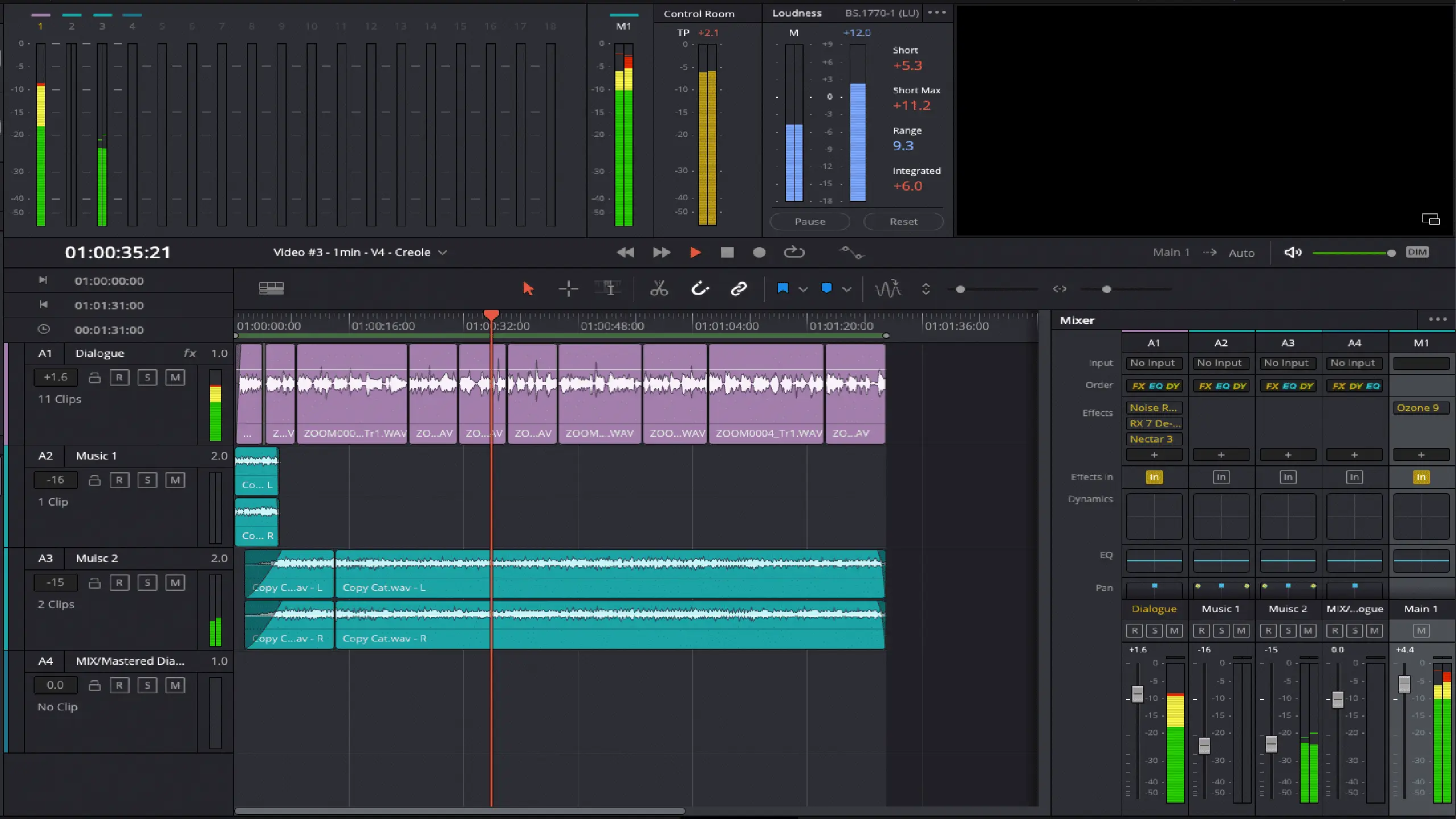
In the world of film and television, sound is more than just an accompaniment to visuals, it's a powerful storytelling tool that shapes the audience's emotions and immerses them in the narrative. From the subtle rustling of leaves to the thunderous roar of an action sequence, every sound must be carefully balanced to create an impactful viewing experience. This is where sound mixing for the film comes into play, blending dialogue, music, and effects to craft a seamless auditory journey.
Whether it’s the crisp clarity of dialogue in a drama or the dynamic soundscapes of TV sound production, a skilled sound mixer ensures every element works harmoniously. This guide will explore the essentials of sound mixing, the techniques that define the craft, and the tools used by professionals. By the end, you’ll understand how sound mixing transforms raw audio into a polished masterpiece that elevates the art of storytelling.
## What Is Sound Mixing in Film and Television?
Sound mixing is a critical phase in the post-production process, where audio elements are blended to achieve a balanced and cohesive soundtrack. It involves adjusting and layering dialogue, sound effects, background noise, and music to ensure each component complements the visual narrative. This process is key to creating an immersive experience, drawing audiences deeper into the story.
A common confusion arises between sound mixing and sound editing. While both are integral to audio production, they serve distinct purposes. Sound editing focuses on the selection, synchronization, and manipulation of audio clips, such as cutting and organizing sounds or cleaning up dialogue. In contrast, sound mixing happens after editing, where all these audio elements are fine-tuned and layered to achieve the desired balance and emotional impact.
In sound mixing for film, the audio must be optimized for various environments, from the booming surround sound of theaters to the quiet setting of home viewing. Techniques like dynamic range adjustments ensure that the dialogue remains clear even during intense scenes. Similarly, in TV sound production, mixers account for smaller speakers and varying volumes in living rooms, balancing clarity and quality for broadcast standards.
For instance, in a dramatic film scene, the rising tension may be underscored by subtle background music that grows louder as the intensity builds, without overpowering the dialogue or ambient effects. This precision is the hallmark of professional sound mixing. By seamlessly blending these elements, sound mixing not only enhances the emotional tone of a scene but also ensures that technical quality aligns with creative intent.
Through its meticulous attention to detail, sound mixing transforms raw audio into a polished, professional-grade soundscape, making it an indispensable part of the filmmaking and television production process.
## The Role of a Sound Mixer
The sound mixer is a pivotal figure in the production process, responsible for shaping the auditory experience of a film or television project. Their role begins in post-production, where they take raw audio elements and craft a soundscape that aligns with the director’s vision. From ensuring dialogue clarity to balancing sound effects and music, the sound mixer is the architect of the auditory narrative.
Collaboration lies at the heart of their work. Sound mixers work closely with directors to understand the emotional tone and pacing of scenes. They also coordinate with composers to integrate musical scores seamlessly and consult editors to address any issues in the raw audio. This teamwork ensures that every sound element fits harmoniously within the project.
For example, in a suspenseful thriller, the sound mixer might enhance a character’s footsteps by amplifying their intensity while lowering the volume of background noise to heighten tension. Similarly, in a comedy, they might balance upbeat background music with crystal-clear dialogue to maintain a lively, engaging tone.
Beyond creative decisions, sound mixers must also meet technical standards. They ensure that the audio complies with the required loudness levels for theatrical releases, streaming platforms, or television broadcasts. For TV sound production, this involves tailoring audio for smaller speakers, ensuring that all elements remain distinct and impactful even in less-than-ideal playback conditions.
Through their expertise, sound mixers influence the audience’s perception of a scene. A well-mixed film draws viewers into its world, making them feel every whispered confession or explosive action. In television, the sound mixer ensures consistency across episodes, enhancing the show’s overall quality.
Ultimately, the sound mixer’s role is both creative and technical, bridging the gap between artistic vision and practical execution to deliver an unforgettable auditory experience.
## Tools and Equipment for Sound Mixing
Sound mixing is a highly technical and creative process that requires the use of specialized tools and equipment to craft a polished and immersive auditory experience. At the center of this workflow are Digital Audio Workstations (DAWs), which serve as the primary platform for recording, editing, and blending audio tracks.
Popular DAWs like Pro Tools and Logic Pro dominate the industry due to their reliability, versatility, and extensive range of features. These platforms enable sound mixers to synchronize audio with visuals, layer multiple tracks seamlessly, and apply intricate effects to enhance the final mix.
Mixing consoles, whether digital or analog, play an equally critical role in the sound mixing process. These consoles offer sound mixers a hands-on approach to controlling volume levels, equalization, panning, and effects in real-time. They allow precise adjustments that are crucial for balancing audio elements during both the creative and technical phases of production. High-end consoles often integrate seamlessly with DAWs, combining tactile control with the precision of digital technology to streamline the mixing process.
In addition to DAWs and consoles, plugins significantly enhance the capabilities of sound mixing. These software add-ons expand the range of tools available for shaping audio. Equalization plugins, for example, are used to refine tonal balance, while compression tools help maintain consistent sound levels. Reverb plugins are frequently applied to simulate acoustic environments, adding depth and ambiance to a mix. Such tools are indispensable for perfecting complex audio mixing techniques.
The creation of authentic sound effects often involves Foley stages, controlled environments where everyday sounds, such as footsteps, rustling clothes, or the clinking of glasses, are recreated and recorded. These sounds are then layered into the mix, enhancing realism and bringing scenes to life.
Meanwhile, advancements in immersive audio technologies, such as Dolby Atmos, have introduced tools that enable sound mixers to position audio in three-dimensional spaces. This innovation has revolutionized both sound mixing for film and TV sound production, offering audiences a more engaging auditory experience.
By combining these tools and techniques, sound mixers can achieve high levels of precision and creativity. Whether crafting the subtle nuances of a dramatic scene or designing the dynamic soundscapes of an action-packed sequence, these technologies allow mixers to handle even the most complex projects efficiently and effectively.
From DAWs to Foley stages, each tool contributes to the meticulous art of sound mixing, ensuring that every element of the audio landscape aligns perfectly with the visual narrative.
## Key Elements of Sound Mixing
Sound mixing is a delicate balancing act that involves integrating several audio elements to create a cohesive and engaging auditory experience. The primary components include dialogue, sound effects, Foley, and music, each playing a crucial role in storytelling.
Dialogue is often considered the backbone of a mix, as it carries the narrative and delivers the emotional core of a scene. Ensuring dialogue is clear and intelligible, even in the presence of competing audio elements, is one of the key challenges in film audio mixing.
Sound effects contribute to the realism and texture of a scene. These can range from environmental sounds like rain or wind to more dynamic effects like explosions or machinery. Properly mixed sound effects enhance the viewer’s immersion, making every action feel vivid and believable.
Foley, on the other hand, provides a subtler layer of sound design. These manually created effects, such as footsteps or the rustle of clothing, are added to synchronize perfectly with the on-screen action, adding depth and authenticity to the soundscape.
Music serves as the emotional heartbeat of a film or television production. Whether it’s a sweeping orchestral score or a minimalistic ambient track, music amplifies the mood and tone of a scene. However, balancing music with other elements is critical to avoid overpowering dialogue or sound effects. This careful integration requires precise adjustments in volume, equalization, and spatial placement.
One of the most vital aspects of sound mixing is balancing these elements to achieve a seamless sound design. For example, in a climactic scene, the dialogue must remain audible despite the intensity of music and sound effects.
This is achieved through techniques like frequency carving, where specific audio frequencies are isolated to prevent overlap, ensuring that each element remains distinct. Additionally, the use of reverb and panning helps place sounds in a realistic spatial context, enhancing the viewer’s immersion.
In film audio mixing, the stakes are even higher as the audio must meet the high standards of theatrical sound systems. The dynamic range is meticulously adjusted to preserve clarity, from the softest whisper to the loudest explosion. Similarly, for TV sound production, mixers tailor the audio to suit smaller speakers and varying playback environments while maintaining the same level of emotional impact.
By expertly balancing dialogue, effects, Foley, and music, sound mixers create a unified auditory experience that complements the visual storytelling. This intricate interplay of elements is what transforms raw audio into a compelling narrative tool, leaving a lasting impression on the audience.
## Audio Mixing Techniques for Film and Television
Sound mixing is an intricate craft that relies on a variety of audio mixing techniques to balance and enhance the elements of a soundtrack. Key techniques such as EQ balancing, compression, reverb, and panning are fundamental to achieving a polished and immersive auditory experience.
EQ balancing, or equalization, involves adjusting the frequency content of audio to ensure clarity and harmony. For example, in dialogue-heavy scenes, mixers often reduce low-frequency rumble and boost midrange frequencies to make voices more intelligible. Similarly, music and sound effects are sculpted to avoid frequency clashes, ensuring that no element overshadows another.
Compression is another essential tool used to control the dynamic range of audio. It smoothens out the volume differences between loud and soft sounds, maintaining consistency throughout a scene. In film, this technique is crucial during action sequences where explosions and dialogue occur simultaneously. In TV sound production, compression is often used more aggressively to accommodate smaller speakers and environments with background noise, ensuring the audience doesn’t miss key audio details.
Reverb adds depth and a sense of space to audio, making sounds feel natural and connected to their environments. For instance, a cathedral scene may feature dialogue with a long reverb tail to reflect the vastness of the space, while an intimate close-up would have minimal reverb to maintain proximity to the characters. Reverb also helps blend Foley and effects seamlessly into the soundscape.
Panning creates a sense of movement and spatial orientation by distributing sounds across the stereo or surround channels. In a car chase scene, for example, panning can make the sound of an approaching vehicle travel from one side of the room to the other, heightening the viewer’s immersion.
The approach to these techniques varies significantly between film and television. In sound mixing for film, mixers take advantage of the wide dynamic range offered by theatrical sound systems, using subtle nuances to deliver an impactful experience. Conversely, TV mixers often work within a limited range, focusing on clarity and balance to suit diverse playback devices.
By tailoring these techniques to the specific needs of a project, sound mixers enhance storytelling, bringing emotion and depth to every scene. For example, a romantic scene may use soft compression and warm reverb to evoke intimacy, while a horror sequence might employ sudden shifts in dynamic range and eerie panning to create tension. These tools allow sound mixers to transform raw audio into a vibrant and cohesive narrative element.
## Challenges in Sound Mixing for Film and TV
Sound mixing for film and television is fraught with challenges that test both technical expertise and creative problem-solving. One of the most common hurdles is dealing with noisy environments. On-location recordings often include unwanted sounds, such as wind, traffic, or background chatter, which can interfere with dialogue clarity. While tools like noise reduction software help mitigate these issues, excessive use can degrade audio quality, requiring mixers to strike a delicate balance.
Achieving perfect synchronization between audio and visuals is another critical challenge. Dialogue must match the actors’ lip movements precisely, while sound effects and Foley need to align seamlessly with on-screen actions. In fast-paced scenes, such as fight sequences, even a slight mismatch can break the audience's immersion. Advanced software and automated syncing tools have made this task more manageable, but it still demands a sharp ear and attention to detail.
Balancing dynamic range is particularly challenging in sound mixing for film, where the contrast between the softest whispers and the loudest explosions must be preserved. In theaters, this range enhances the viewing experience, but for television, mixers must compress the audio to suit smaller speakers and inconsistent playback environments. This compression can compromise the richness of the soundtrack, requiring careful adjustments to maintain emotional impact.
Another obstacle is the evolving complexity of soundscapes in modern productions. Immersive audio formats like Dolby Atmos demand a multidimensional approach, where sound mixers must position audio elements in a three-dimensional space. While these formats elevate storytelling, they also require additional expertise and resources.
Advancements in technology have significantly alleviated some of these challenges. Noise reduction tools like iZotope RX allow mixers to isolate and remove unwanted sounds with precision. Automated dialogue replacement (ADR) systems streamline the process of re-recording dialogue in controlled studio settings, ensuring clarity. Additionally, AI-powered mixing tools can analyze audio tracks and suggest adjustments, speeding up workflows and enhancing accuracy.
Despite these innovations, sound mixing remains a craft that requires a human touch. A mixer’s ability to interpret the emotional and narrative needs of a scene often determines the quality of the final product. For example, in a war film, balancing chaotic battle sounds with a poignant musical score requires both technical mastery and artistic sensitivity.
By addressing these challenges with a blend of skill and technology, sound mixers ensure that every element of a film or television soundtrack contributes to a compelling and immersive experience.
## Trends in Sound Mixing for Modern Productions
The world of sound mixing is continuously evolving, with new technologies and techniques reshaping how audio is crafted for both film and television. Among the most significant trends are advancements in immersive audio formats like Dolby Atmos, the integration of AI-assisted mixing tools, and the growing demand for innovative soundscapes.
Dolby Atmos has revolutionized sound mixing for film by introducing multidimensional sound environments. Unlike traditional stereo or surround sound, Atmos allows mixers to position audio elements in a three-dimensional space. This creates an unparalleled sense of immersion, where sound can move dynamically around the audience, from a whisper traveling across the room to a plane flying overhead.
This technology is particularly impactful in theaters, where it enhances storytelling by placing viewers directly within the action. However, the adoption of Atmos is also growing in TV sound production, with streaming platforms like Netflix incorporating it to elevate the home viewing experience.
Immersive soundscapes have become another hallmark of modern productions. These go beyond conventional mixing by layering intricate environmental sounds, subtle Foley, and dynamic music to create richly textured auditory worlds. For instance, in fantasy or sci-fi films, sound mixers use immersive soundscapes to make alien environments feel tangible, blending natural and synthetic elements seamlessly.
AI-assisted mixing tools are another transformative trend. These tools analyze audio tracks and offer real-time suggestions for EQ adjustments, noise reduction, and dynamic balancing. By automating repetitive tasks, AI frees sound mixers to focus on the creative aspects of their craft. AI algorithms can learn a mixer’s preferences, streamlining workflows and ensuring consistency across projects.
The shift towards remote and hybrid workflows has also influenced sound mixing practices. Cloud-based platforms now enable mixers to collaborate with directors and editors across the globe, maintaining high-quality production standards despite physical distances. This flexibility is especially valuable in television, where tight schedules often require rapid turnaround times.
These innovations are reshaping the landscape of sound mixing for film and TV sound production, pushing creative boundaries while optimizing efficiency. As audiences continue to demand high-quality audio experiences, embracing these trends is essential for professionals looking to stay ahead in the industry.
## Tips for Aspiring Sound Mixers
For aspiring sound mixers, breaking into the industry requires a combination of technical skills, creative insight, and strategic networking. One of the most crucial steps is mastering industry-standard software such as Pro Tools, Logic Pro, or Adobe Audition.
These Digital Audio Workstations (DAWs) are the backbone of sound mixing for film and TV sound production. Familiarity with plugins for EQ, compression, reverb, and noise reduction is equally important, as these tools are indispensable in professional workflows.
Understanding the physics of sound is another key aspect of becoming a skilled mixer. A solid grasp of concepts like frequency, amplitude, and dynamic range will enable you to manipulate audio with precision. Online courses, tutorials, and hands-on practice are excellent ways to build this foundational knowledge.
Building a strong portfolio is essential for showcasing your skills to potential employers or clients. Start by working on smaller projects, such as student films, indie productions, or personal experiments. These provide valuable opportunities to practice and refine your craft while demonstrating your ability to deliver polished audio. Including before-and-after samples in your portfolio can be particularly effective in highlighting your expertise.
Gaining real-world experience is equally important. Internships or assistant roles in post-production studios offer a chance to learn from seasoned professionals while developing industry connections. Networking plays a critical role in the sound mixing industry, as many opportunities arise through word of mouth. Attend industry events, join professional associations, and connect with other creatives to expand your network.
Staying updated with trends and technologies is another crucial factor. Familiarize yourself with immersive formats like Dolby Atmos and explore how AI-assisted tools can streamline y[our work](https://c-istudios.com/our-work/)flow. As TV sound production and film audio mixing increasingly embrace these innovations, being ahead of the curve will make you a more competitive candidate.
Lastly, cultivating soft skills like communication and adaptability is vital. Sound mixers often collaborate with directors, editors, and composers, requiring the ability to interpret creative visions and translate them into technical solutions. Flexibility and a problem-solving mindset will help you navigate the challenges of tight deadlines and evolving client needs.
By investing in training, building experience, and establishing a network, aspiring sound mixers can position themselves for success in this dynamic and rewarding field.
## The Role of Editing in Television Production
Editing is where raw footage transforms into a cohesive and compelling narrative, making it the cornerstone of any successful television production. At its core, TV editing is more than just cutting and rearranging scenes; it’s about weaving together a story that resonates with audiences. The editor's role is to shape pacing, define tone, and guide storytelling to evoke emotions and maintain engagement.
Pacing is crucial in television. In action-packed series, quick cuts and dynamic transitions maintain momentum, while slower, deliberate edits in dramas allow emotional depth to shine. For example, shows like Breaking Bad use masterful pacing to heighten tension, gradually building toward explosive climaxes. Similarly, Game of Thrones employed precise editing to balance intricate storylines while keeping viewers invested in its characters.
The tone is another critical element defined by editing. Comedy shows like The Office rely heavily on jump cuts and reaction shots to amplify humor, while horror series like Stranger Things use lingering edits and sound design to create suspense. By choosing the right techniques, editors can dictate how a scene feels and how the audience responds.
Storytelling is where editing truly shines. Editors decide what the audience sees and ensure the narrative unfolds seamlessly. Consider the non-linear storytelling in Westworld, where meticulous editing ensures that viewers remain intrigued without becoming confused. The artful arrangement of flashbacks, parallel storylines, and cliffhangers demonstrates how TV editing shapes viewer perception.
In essence, editing is not just technical; it’s a creative force that breathes life into television content. By defining pacing, tone, and storytelling, it transforms scattered footage into engaging TV content that captivates and delights. Without skilled editing, even the most visually stunning scenes can fall flat, underscoring its vital role in keeping audiences glued to their screens.
## Understanding Your Audience. Tailoring the Editing Style
Knowing your audience is the foundation of effective editing for television. Viewers' demographics, preferences, and expectations play a significant role in determining how content is edited. Editors must consider these factors to craft engaging TV content that resonates with the intended audience.
For dramas, audiences often expect emotional depth and intricate storylines. Slow pacing, subtle transitions, and intimate close-ups work well to draw viewers into the character's internal struggles. Conversely, reality TV caters to fast-paced entertainment seekers.
Quick cuts, exaggerated reaction shots, and dynamic montages are staples of this genre, ensuring high energy and constant engagement. Comedy, on the other hand, thrives on timing. Editors use abrupt cuts, visual gags, and synchronized music to maximize comedic impact.
Audience demographics further refine editing styles. Younger viewers may prefer fast-moving content with vibrant visuals and rapid transitions, reflecting their shorter attention spans. Older audiences often appreciate more deliberate pacing and classic editing techniques that emphasize storytelling over spectacle.
Cultural context also influences editing choices. For instance, Japanese TV shows often feature vibrant text overlays and exaggerated sound effects to engage viewers, while Western productions lean toward subtler editing styles. Understanding these cultural nuances allows editors to create content that feels relatable and immersive.
Consider the success of reality shows like Keeping Up with the Kardashians, where editing focuses on drama, humor, and cliffhangers to keep audiences coming back for more. In contrast, a show like The Crown relies on careful pacing and elegant transitions to appeal to its audience's appreciation for historical drama.
Ultimately, the key to successful TV editing lies in tailoring techniques to the audience’s tastes and expectations. By aligning editing styles with viewer preferences, editors ensure that their work results in engaging TV content that keeps audiences not only entertained but also emotionally invested in the story.
## Mastering Pacing and Timing
Pacing and timing are the silent storytellers of television, dictating how a narrative unfolds and keeping viewers engaged. In editing for television, these elements are paramount to ensuring the audience remains invested in the story from start to finish. An episode’s pace can mean the difference between binge-worthy content and a show that fails to hold attention.
Quick cuts are a go-to technique for action-packed sequences. By rapidly switching between shots, editors create an adrenaline-pumping rhythm that mirrors the intensity of the scene. For instance, shows like 24 and The Mandalorian excel at maintaining high-octane pacing, drawing viewers into their fast-moving plots.
On the other hand, lingering shots are ideal for emotional moments in dramas. By holding on to a character’s face or a pivotal scene, editors allow emotions to resonate, as seen in series like This Is Us.
Timing isn’t just about cutting scenes to fit a runtime, it’s about cutting at the exact moment to elicit maximum impact. This is where production editing plays a vital role. Editors meticulously analyze footage to synchronize cuts with beats of music, dialogue delivery, or even subtle gestures. For example, in Stranger Things, the seamless integration of soundtracks with character arcs elevates the emotional impact of key scenes.
Moreover, pacing varies within episodes to avoid monotony. Alternating between fast and slow sequences creates a natural ebb and flow that keeps audiences engaged. Editors also use pacing to build tension, slowly ramping up the rhythm before delivering a climactic payoff.
In production editing, timing extends to managing episode structure. Cliffhangers are strategically placed at the end of episodes to leave viewers eager for more. Similarly, montages compress time effectively, allowing the story to progress without dragging.
By mastering pacing and timing, editors ensure that every moment serves the narrative, creating engaging TV content that holds the audience's attention. This balance of speed, rhythm, and precision is what transforms raw footage into television gold.
## Visual Storytelling. Leveraging Camera Angles and Transitions
In television, visuals are just as important as dialogue in telling a story. Through TV editing, camera angles, transitions, and effects become powerful tools for enhancing narrative depth and engagement. Editors manipulate these elements to guide viewers’ emotions, focus attention, and create a seamless viewing experience.
Camera angles can drastically alter a scene's impact. Low angles convey power and dominance, as seen in Breaking Bad, where Walter White’s transformation is underscored by these perspectives.
High angles, on the other hand, suggest vulnerability, adding layers to emotional moments. Close-ups are equally impactful, allowing viewers to connect deeply with the characters’ emotions. For instance, Mad Men uses intimate close-ups to convey subtle shifts in Don Draper’s complex persona.
Transitions between scenes play a crucial role in maintaining narrative flow. Techniques like jump cuts emphasize urgency, as seen in Sherlock, where rapid transitions mirror the protagonist's fast-thinking mind. Fades are often used to signal the passage of time or to evoke a dreamlike quality, common in shows like Westworld.
Match cuts, where one scene transitions seamlessly into another by matching elements, are iconic for their creative storytelling. A memorable example is Breaking Bad’s use of a pizza spinning on the ground to transition into a rotating camera shot.
Visual effects further enhance storytelling. Subtle overlays, color grading, or slow motion can heighten a scene’s mood. For example, Stranger Things uses retro-inspired effects to transport viewers into its 1980s setting while amplifying its eerie atmosphere.
Similarly, Euphoria employs stylized effects to blur the lines between reality and emotion.
By leveraging these visual cues, editors transform raw footage into a cohesive, emotionally charged narrative. The choice of angles, transitions, and effects not only enhances the story but also immerses viewers in the world of the show.
Ultimately, TV editing relies on visual storytelling to captivate audiences. Every angle and transition is a brushstroke in the larger picture, turning a simple scene into engaging TV content that lingers in the minds of viewers long after the episode ends.
## Using Sound and Music to Enhance Engagement
Sound and music are the unsung heroes of editing for television, shaping the emotional landscape of a story and keeping audiences glued to their screens. While visuals capture attention, it’s often the auditory elements that sustain emotional engagement and elevate storytelling.
Background scores play a vital role in setting the tone of a scene. A suspenseful string section heightens tension, while a soft piano melody evokes melancholy. Iconic shows like Game of Thrones owe much of their emotional impact to their scores, which intensify dramatic moments and immerse viewers in the narrative. Similarly, in Stranger Things, retro-inspired synth music not only complements the visuals but also becomes a character in its own right, enhancing the show’s nostalgic atmosphere.
Silence, often underestimated, is another powerful tool. Strategic pauses create suspense, draw attention to key moments, and let emotions linger. In The Handmaid’s Tale, silence often precedes climactic reveals, amplifying the weight of each scene. Silence allows the audience to process a character’s emotions, making their struggles more relatable and impactful.
Sound effects also play a critical role in production editing. From the whoosh of a sword to the creak of a door, these auditory cues make scenes more immersive and believable. In action-packed series like The Mandalorian, sound effects are essential in heightening the intensity of battles and chases. Meanwhile, subtle ambient sounds, like birds chirping or distant traffic, help ground viewers in the world of the show.
Incorporating these elements into engaging TV content requires precision and creativity. Editors must synchronize sound with visuals to ensure every auditory cue enhances the story. For instance, in Breaking Bad, the sound of a meth lab bubbling in the background becomes an ominous motif, reinforcing the tension in Walter White’s descent into criminality.
Ultimately, sound and music are integral to the art of editing for television. Whether through a stirring score, a well-placed silence, or realistic sound effects, auditory elements enrich the viewing experience and create lasting emotional connections with the audience.
## Building Emotional Resonance Through Editing
Emotion is the heart of television storytelling, and editing for television plays a pivotal role in eliciting feelings that linger long after the credits roll. Through techniques like reaction shots, montages, and intercuts, editors manipulate emotions to create memorable scenes that deeply resonate with viewers.
Reaction shots are a cornerstone of emotional storytelling. A single look of despair, joy, or shock can convey volumes about a character's inner world. In shows like The Office, reaction shots are often used to comedic effect, breaking the fourth wall and drawing viewers into the joke. Conversely, in dramas like This Is Us, close-up reaction shots capture raw emotion, allowing viewers to empathize with the characters’ struggles.
Montages are another powerful tool for building emotional resonance. By condensing time and presenting a series of related images, montages evoke a sense of progression or nostalgia. Consider the training montages in Stranger Things, where Eleven’s growth is depicted through carefully arranged clips, accompanied by a stirring score. These sequences create an emotional bond with the character while advancing the narrative efficiently.
Intercuts, or parallel editing, heighten tension and emotion by juxtaposing two or more storylines. This technique is especially effective in shows like Breaking Bad, where simultaneous events are interwoven to create suspense. For instance, scenes of Walter White conducting a deal might be interspersed with his family anxiously waiting at home, amplifying the stakes and emotional weight of the situation.
Beyond these techniques, production editing ensures that emotions are not only conveyed but amplified. The timing of cuts, the use of slow motion, and even color grading all contribute to the emotional tone of a scene. A slow fade to black, for example, signals closure or despair, while a sudden cut to a reaction shot can shock or amuse viewers.
In the end, emotional resonance is what makes a TV show unforgettable. By leveraging techniques like reaction shots, montages, and intercuts, editors turn simple footage into engaging TV content that touches hearts and minds. This mastery of emotion through editing is what keeps audiences coming back, episode after episode.
## Balancing Creativity with Practical Constraints
Editing for television is as much about problem-solving as it is about creativity. Editors often face limitations such as tight deadlines, budget constraints, and content requirements, which can challenge their ability to produce engaging TV content. Despite these challenges, resourcefulness and adaptability help editors maintain a balance between creativity and practicality.
Deadlines are one of the most pressing challenges. In the fast-paced world of television production, editors often work under pressure to deliver episodes within a fixed timeline. This leaves little room for experimentation or trial and error. To address this, editors rely on efficient production editing workflows, such as using pre-built templates, automated processes, and well-organized project files to save time.
Budgets can also limit creative freedom. Expensive special effects, extensive reshoots, or elaborate transitions may not always be feasible. In such cases, editors turn to creative problem-solving. For instance, repurposing existing footage, using simple yet impactful transitions, or relying on sound design instead of costly visual effects can still produce high-quality results.
Despite these constraints, technology offers solutions that enable editors to stay creative while adhering to practical limits. Tools like Adobe Premiere Pro and DaVinci Resolve streamline editing processes with advanced features like automated color correction, real-time collaboration, and pre-designed effects libraries. Similarly, cloud-based platforms allow teams to share and edit footage remotely, saving time and reducing costs.
Moreover, editors often collaborate with directors and producers to prioritize essential elements of TV editing. By focusing on storytelling and character development, they ensure that the core emotional impact of the show remains intact, even if certain creative ideas must be scaled back.
Ultimately, balancing creativity with practical constraints is about making smart compromises. By leveraging technology, adopting efficient workflows, and staying flexible, editors can overcome limitations to create engaging TV content that resonates with audiences, no matter the challenges.
## The Impact of Emerging Technologies on TV Editing
Advancements in technology are revolutionizing editing for television, introducing tools and techniques that are reshaping storytelling and audience engagement. From AI-assisted editing to real-time rendering, these innovations are empowering editors to work faster and more creatively than ever before.
Artificial intelligence (AI) is at the forefront of these changes. AI-powered tools like Adobe Sensei and Blackmagic Design’s neural engine offer features such as automated scene detection, color grading, and even music selection.
These capabilities streamline production editing workflows, allowing editors to focus on more creative aspects of their craft. For example, AI can identify the best takes from hours of footage, significantly reducing the time spent on initial edits.
Real-time editing is another game-changer. With technologies like Unreal Engine, editors can integrate visual effects during production rather than waiting until post-production. This is particularly useful in shows like The Mandalorian, where virtual sets and real-time rendering create immersive environments on the spot. This approach not only saves time but also enhances the creative possibilities for TV editing.
Emerging trends also include cloud-based collaboration, which enables remote teams to work together seamlessly. Platforms like Frame.io allow editors, directors, and producers to review and provide feedback in real-time, accelerating the editing process and ensuring alignment across the production team.
These technological advancements are also changing how stories are told. With AI and real-time editing, editors can experiment with dynamic storytelling techniques, such as branching narratives or personalized content. For instance, interactive shows like Black Mirror: Bandersnatch demonstrates how technology enables viewers to influence the storyline, adding a new dimension to engaging TV content.
Looking to the future, the integration of virtual reality (VR) and augmented reality (AR) in television editing holds immense potential. Editors may soon craft immersive experiences that blur the lines between traditional TV and interactive media, further revolutionizing audience engagement.
## Best Practices for Aspiring Television Editors
Breaking into editing for television requires a unique blend of technical expertise, creative vision, and a strong foundation in storytelling. At its core, editing is about crafting a narrative that captivates and resonates with audiences.
Aspiring editors should focus on honing their ability to understand pacing, transitions, and visual storytelling, as these elements shape the emotional and narrative flow of television content. Watching TV shows critically, and analyzing how editors use timing and technique to create impact, is a great way to develop these skills.
Equally important is mastering industry-standard tools like Adobe Premiere Pro, Avid Media Composer, or DaVinci Resolve. Staying updated on advancements, including AI-powered features, can streamline workflows and enable greater creativity. Strong technical skills paired with a willingness to experiment will set you apart in this fast-paced field.
Collaboration is another cornerstone of success in production editing. Editors often work closely with directors, producers, and writers to bring their vision to life. Building strong communication skills and the ability to incorporate constructive feedback are essential for thriving in this team-oriented profession. Being detail-oriented is also crucial, as seamless transitions, precise timing, and synchronized sound can elevate an edit from good to exceptional.
To build a successful career, start by creating a portfolio that showcases your versatility and creativity. Highlight projects that demonstrate your ability to produce engaging TV content across genres, whether it’s drama, comedy, or reality television. Networking with professionals in the industry and seeking mentorship can open doors to valuable opportunities.
Above all, stay passionate and committed to your craft. Television editing is a challenging yet deeply rewarding field where every cut, sound effect, and transition contributes to a story that connects with audiences. With persistence and a focus on growth, you can make your mark as a skilled editor who brings stories to life on screen.
## Work with C&I Studios
If you are planning a project like this, our team can take it from concept to final delivery. Explore our [film and TV production](https://c-istudios.com/film-and-tv-production/), browse [our work](https://c-istudios.com/our-work/) to see how we tell brand stories, and [get in touch](https://c-istudios.com/contact/) when you are ready to start.
Originally published November 13, 2024
---
*This content is from [C&I Studios](https://c-istudios.com), a full-service production company.*
---
# Lighting and Rendering in 3D Animation: Techniques for Realistic Visuals
> Published: November 12, 2024
> Categories: Post & VFX
> Source: https://c-istudios.com/lighting-and-rendering-in-3d-animation/
---
.cib{--paper:#1b1d1f;--ink:#fff;--body:#d5d7d9;--muted:#8b9096;--line:rgba(255,255,255,.12);--thumb:#2b2e31;--card:#212426;--accent:#c02b0a;--blue:#5B8FA8;--serif:'Playfair Display',Georgia,serif;--sans:'Poppins',-apple-system,sans-serif;--measure:900px;background:var(--paper);color:var(--body);font-family:var(--sans);line-height:1.6;position:relative;left:50%;transform:translateX(-50%);width:90vw;max-width:1920px}
.cib *{box-sizing:border-box}
.cib .kicker{max-width:var(--measure);margin:58px auto 0;padding:0 22px;font-size:12.5px;font-weight:700;letter-spacing:2.5px;text-transform:uppercase;color:var(--blue)}
.cib h1.cibh1{text-wrap:balance;font-family:var(--serif);font-weight:500;font-size:clamp(46px,6vw,72px);line-height:1.08;color:var(--ink);max-width:var(--measure);margin:18px auto 0;padding:0 22px;letter-spacing:-.5px}
.cib .metarow{max-width:var(--measure);margin:20px auto 0;padding:0 22px;color:var(--muted);font-size:14px}
.cib .hero{position:relative;width:100%;height:0;padding-bottom:56.25%;overflow:hidden;margin:48px auto 0;border-top:1px solid var(--line);border-bottom:1px solid var(--line)}
.cib .hero .ph{width:100%;aspect-ratio:16/9;background:var(--thumb);border-top:1px solid var(--line);border-bottom:1px solid var(--line);display:flex;align-items:center;justify-content:center;color:#7d8288;font-size:13px;text-align:center;padding:0 20px}
.cib .body{max-width:var(--measure);margin:12px auto 0;padding:52px 22px 6px}
.cib .body.lead p:first-child{font-size:23px;line-height:1.62;color:var(--ink)}
.cib .body p{font-size:18.5px;line-height:1.85;margin:0 0 30px;color:var(--body)}
.cib .body h2{text-wrap:balance;font-family:var(--serif);font-weight:500;font-size:clamp(32px,4vw,48px);line-height:1.22;color:var(--ink);margin:70px 0 20px;letter-spacing:-.3px}
.cib .body h3{text-wrap:balance;font-family:var(--sans);font-weight:600;font-size:22px;color:var(--ink);margin:38px 0 8px}
.cib .body a{color:var(--ink);text-decoration:underline;text-decoration-color:rgba(255,255,255,.4);text-underline-offset:3px}
.cib .body a:hover{text-decoration-color:var(--ink)}
.cib .ctable{width:100%;border-collapse:collapse;margin:16px 0 30px;font-size:16px}
.cib .ctable th{background:#000;color:#fff;text-align:left;padding:10px 12px;font-family:var(--sans)}
.cib .ctable td{padding:10px 12px;border-bottom:1px solid var(--line);color:var(--body)}
.cib .inimg{position:relative;width:100%;height:0;padding-bottom:56.25%;overflow:hidden;margin:72px auto;border-top:1px solid var(--line);border-bottom:1px solid var(--line)}
.cib .inimg .ph{width:100%;aspect-ratio:16/9;background:var(--thumb);border-top:1px solid var(--line);border-bottom:1px solid var(--line);display:flex;align-items:center;justify-content:center;color:#7d8288;font-size:13px}
.cib .origpub{max-width:var(--measure);margin:60px auto 0;padding:26px 22px 0;border-top:1px solid var(--line);color:var(--muted);font-size:13.5px}
.cib .related{max-width:1200px;margin:64px auto 0;padding:34px 22px 76px}
.cib .related h3{font-family:var(--sans);font-size:12.5px;letter-spacing:2px;text-transform:uppercase;color:var(--ink);margin:0 0 24px}
.cib .grid{display:grid;grid-template-columns:repeat(3,1fr);gap:28px}
.cib .rc{background:var(--card);border:1px solid var(--line);display:block;text-decoration:none;color:inherit;transition:border-color .15s}
.cib a.rc:hover{border-color:rgba(255,255,255,.5)}
.cib .rc .thumb{position:relative;width:100%;height:0;padding-bottom:56.25%;background:var(--thumb);overflow:hidden}
.cib .rc .thumb img{position:absolute!important;top:0!important;left:0!important;width:100%!important;height:100%!important;object-fit:cover!important;margin:0!important}
.cib .rc .cc{padding:14px 15px 17px}
.cib .rc .rt{font-family:var(--serif);font-weight:500;font-size:16px;line-height:1.3;color:var(--ink);margin:0 0 6px}
.cib .rc .rm{font-size:11px;letter-spacing:1px;text-transform:uppercase;color:var(--muted)}
.cib img{margin:0!important;padding:0!important;display:block!important;vertical-align:top;max-width:100%}
.cib .hero img,.cib .inimg img{position:absolute!important;top:0!important;left:0!important;width:100%!important;height:100%!important;object-fit:cover!important;margin:0!important;padding:0!important;border:0!important;display:block!important;aspect-ratio:auto!important}
.cib .hero+.body{padding-top:36px}
@media(max-width:760px){.cib .grid{grid-template-columns:1fr}.cib .body h2{margin:52px 0 16px}.cib .body p{font-size:17.5px}.cib .inimg,.cib .hero{margin-top:44px}}
.cib .vembed{max-width:var(--measure);margin:44px auto;padding:0 22px}.cib .vembed .vwrap{position:relative;width:100%;height:0;padding-bottom:56.25%}.cib .vembed .vwrap iframe{position:absolute;top:0;left:0;width:100%;height:100%;border:0}
Post & VFX
# Lighting and Rendering in 3D Animation. Techniques for Realistic Visuals
37 min read
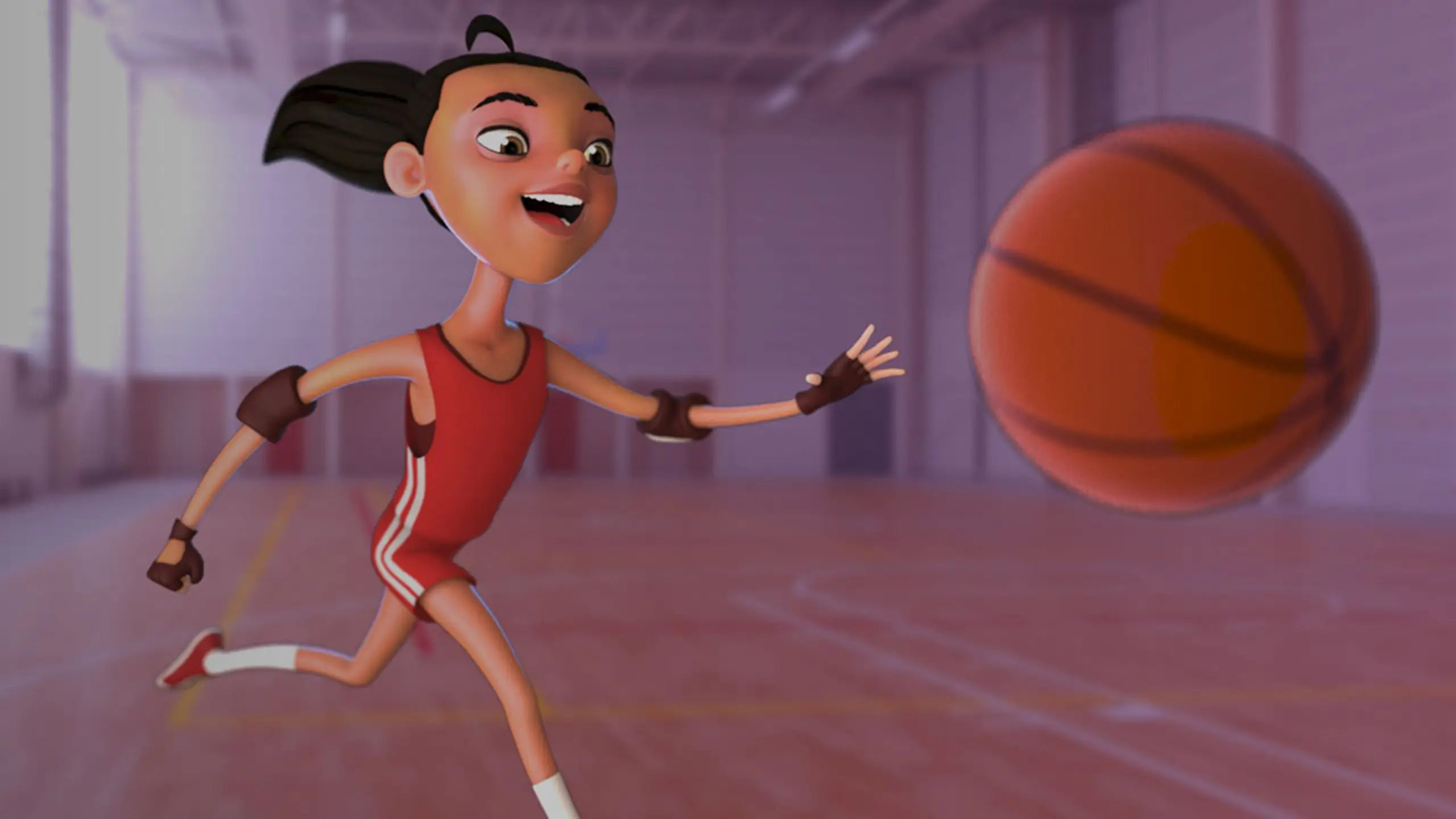
## Lighting and Rendering in 3D Animation. Techniques for Realistic Visuals
Lighting and rendering are the unsung heroes of 3D animation, transforming raw digital models into captivating scenes that feel almost tangible. These two components work hand in hand to create visuals that draw viewers into the heart of a story, enhancing realism, mood, and atmosphere. Whether it's a bright, whimsical world or a dark, moody landscape, the right lighting and rendering techniques bring depth and dimension to animated scenes.
For animators and production teams, mastering these techniques is key to producing high-quality visuals that stand out in competitive fields like film, television, and [video production](https://c-istudios.com/video-production-services/). In this article, we’ll explore the fundamental techniques behind lighting and rendering, uncovering how they help create compelling, realistic animations that elevate storytelling and connect with audiences on an emotional level.
## Fundamentals of Lighting in 3D Animation
In 3D animation, mastering lighting techniques is crucial to creating visuals that resonate with viewers. Effective lighting can convey emotions, highlight key elements, and build depth in a scene, which is essential for engaging [content creation](https://c-istudios.com/content-creation-services/). Three foundational lighting components, key light, fill light, and backlight, serve as the building blocks for most scenes.
The key light is the primary source of illumination in a scene, usually placed to one side of the subject to create highlights and shadows. This adds drama and directs the viewer's attention to the main focus. The fill light softens the shadows created by the key light, reducing harsh contrasts and giving a more balanced look.
Positioned opposite the key light, it’s often used to mimic soft, natural light, enhancing the realism critical in [film and TV production](https://c-istudios.com/film-and-tv-production/). Lastly, the backlight is positioned behind the subject, creating a subtle outline that separates it from the background, which adds depth and dimension, essential for scenes that demand a professional touch.
Together, these three types of lighting allow animators to build complex, lifelike scenes that align with industry standards in content creation. By experimenting with intensity, color, and positioning, animators can achieve diverse effects, from vibrant, cheerful settings to dark, atmospheric scenes. This understanding of lighting techniques serves as a foundation for creating immersive 3D animations that captivate audiences and drive effective storytelling.
## Types of Lighting. Natural, Artificial, and HDRI
In the world of 3D animation, choosing the right type of lighting is as important as the lighting setup itself. Different lighting types, natural, artificial, and HDRI lighting, offer unique attributes that bring a scene to life.
Natural lighting is often used to replicate sunlight or ambient outdoor conditions, lending a realistic and familiar feel to scenes. By adjusting the angle, color, and intensity, animators can simulate times of day or atmospheric conditions, enhancing the believability of their 3D rendering.
Artificial lighting mimics indoor or controlled light sources, such as lamps, streetlights, or studio lights. It provides precise control over the scene’s look, allowing for intentional contrast, color, and focus, which is invaluable for documentary film production and dramatic sequences. Artificial lighting can create intimate, focused scenes or intense, high-contrast visuals often used in feature film mastering and delivery.
HDRI lighting (High Dynamic Range Imaging) takes realism a step further by using real-world light data captured from 360-degree images. This technique allows animators to insert dynamic and nuanced lighting that interacts with objects in a scene as if they were in a real environment.
HDRI’s ability to provide detailed reflections and soft shadows creates a more immersive experience, ideal for high-quality 3D rendering. Each lighting type brings its own strengths to 3D animation, and combining them strategically can produce visuals that not only look realistic but also evoke strong emotional responses from viewers.
## Key Rendering Techniques for Realism
Achieving photorealism in 3D animation relies heavily on advanced rendering techniques that simulate how light interacts with objects. These techniques bring digital scenes to life, making them almost indistinguishable from real-world footage, crucial in [VFX compositing and animation](https://c-istudios.com/vfx-compositing-and-animation-services/) for high-stakes productions. Three primary methods stand out: ray tracing, path tracing, and real-time rendering.
Ray tracing is a technique that calculates the path of each light ray, simulating the way light reflects, refracts, and absorbs into various surfaces. This results in highly realistic shadows, reflections, and textures, giving scenes an unparalleled level of detail.
Because of its accuracy, ray tracing is widely used in media marketing and projects requiring lifelike visuals. Path tracing builds on ray tracing by adding additional light bounces, which captures even finer details in lighting interactions. Although more computationally demanding, path tracing produces soft, natural-looking shadows and accurate global illumination, which enhances realism in VFX compositing and animation.
Real-time rendering, commonly used in interactive applications like games, provides an optimized approach by reducing processing time while still maintaining quality. Real-time rendering is designed for speed, making it perfect for applications that require immediate feedback. This technique is pivotal for real-time media marketing presentations and VR environments where quick rendering times are essential.
Each of these rendering techniques plays a significant role in creating believable and visually engaging 3D animations. By selecting the right approach, animators can meet the specific needs of a project, ensuring that the final output is both immersive and true to the creator's vision.
## Shaders and Materials. Adding Texture and Detail
In 3D animation, the combination of material shaders and textures is essential to achieving a realistic appearance that draws audiences into the scene. Material shaders control how an object’s surface interacts with light, creating realistic textures that mimic real-world materials like wood, metal, glass, or fabric. This attention to detail not only makes objects look believable but also enhances the overall appeal in industries focused on branding and graphic design.
Shaders are typically broken down into categories like diffuse, specular, and transparent shaders, each designed to replicate specific surface properties. For example, diffuse shaders control the base color of an object, while specular shaders manage its reflectiveness, adding highlights that mimic the glossiness of materials like polished metals.
Transparent shaders, meanwhile, handle the subtleties of light passing through materials like glass or water. These varied shader types allow artists to add layers of complexity and realism to their animations, making them visually captivating for audiences and highly effective in social media marketing services.
To add even more depth, textures such as bump maps, normal maps, and displacement maps are applied to give surfaces a tactile quality. These textures simulate surface imperfections, such as scratches or roughness, enhancing the realism that material shaders bring to the scene.
For projects in branding and graphic design, where visual impact is key, these elements help establish a distinct, memorable aesthetic. When combined, shaders and textures elevate 3D models from flat, basic shapes to rich, detailed visuals that captivate viewers and add value to the animation in both marketing and social media contexts.
## Color Theory and Cinematic Lighting for Emotional Impact
Color and lighting are powerful storytelling tools in 3D animation, capable of evoking strong emotional responses that resonate with viewers. Color theory helps animators make deliberate choices that convey specific moods, using colors to create harmony, contrast, or tension.
For instance, warm tones like reds and oranges often evoke feelings of passion or energy, while cooler tones like blues and greens can create a calming or somber atmosphere. These choices play a crucial role in shaping viewer perception and are widely employed in [political campaign](https://c-istudios.com/political-campaign-services/) videos to guide emotions or highlight key messages.
Cinematic lighting further enhances this effect by controlling the intensity, direction, and color of light in a scene. High-contrast lighting, for example, can create drama and suspense, while soft lighting creates a relaxed, inviting look.
This control over light and shadow allows animators to set a mood that enhances the narrative, making it more immersive. This technique is often used in artist management projects to convey specific styles and aesthetics, aligning with the unique image of an artist or brand.
Combining color theory with cinematic lighting enables animators to create rich, visually engaging scenes that impact audiences on a deeper, emotional level. By carefully selecting colors and lighting styles, they can control the atmosphere of a scene, making it memorable and aligning it with the project's goals, whether it’s to persuade, entertain, or build a brand identity.
## Optimizing Rendering for Different Platforms
In today's digital landscape, 3D animations need to be versatile and adaptable across various platforms, from high-resolution displays to mobile devices. Rendering optimization ensures that animations retain their quality, regardless of the display size or resolution, making them accessible for everything from large-scale digital billboards to smaller screens like smartphones.
One approach to rendering optimization is adjusting resolution and texture detail based on the target platform. For high-resolution displays, such as those used in [video production gear lists](https://c-istudios.com/video-production-gear-list/), higher texture details and resolutions are necessary to maintain crisp visuals.
However, for mobile devices, reducing texture sizes and polygon counts helps streamline performance without compromising quality. Similarly, reducing unnecessary effects or layers can save on rendering time and processing power, particularly for web development and audio live streaming platforms where smooth playback is essential.
Another key factor is optimizing for various aspect ratios, as devices like tablets, phones, and monitors each have different display sizes. Responsive rendering adjusts the animation’s composition to fit each screen optimally, ensuring a seamless viewing experience across devices.
By balancing these technical elements, animators can make their work accessible to a broader audience, meeting the quality demands of high-end platforms while staying efficient for lower-powered devices.
Optimizing for different platforms not only enhances viewer experience but also allows animation projects to reach audiences across multiple digital spaces. Whether it’s for an interactive app, a social media post, or a high-end video production, fine-tuning animations for each environment is essential for achieving consistent, high-quality results.
## Post-Production Techniques in Lighting and Rendering
In 3D animation, post-production techniques are essential to refining and perfecting visuals, transforming a well-designed animation into a polished, professional-grade final product. This phase includes several crucial steps, such as color correction, compositing, and final rendering, each of which adds depth, balance, and clarity to the animation.
These techniques are akin to those used in fields like [TV show pitch](https://c-istudios.com/tv-show-pitch/) preparations, where visuals must be compelling and aligned with the creator’s vision, as well as in audio engineering, where sound quality is carefully fine-tuned to enhance the viewer’s experience.
Color correction is often the first step in post-production. It involves adjusting the colors to ensure consistency and to create the desired mood across all scenes. This process can range from subtle changes, like balancing skin tones or harmonizing hues, to dramatic shifts that create a specific atmosphere. By fine-tuning color and light balance, animators can unify scenes and reinforce visual themes, adding an extra layer of coherence and impact to the 3D animation.
Compositing follows, where multiple layers of rendered images, effects, and backgrounds are combined into a single cohesive scene. This technique allows animators to introduce additional visual elements like shadows, reflections, and environmental effects that enhance realism.
For instance, adding subtle glows, blurs, or fog can create a sense of depth or mystery, while lens flares or light rays can amplify a scene's drama. Compositing enables creators to introduce dynamic effects and finalize complex scenes, an approach that aligns with the high expectations of TV show pitches where every detail counts.
Finally, final rendering serves as the culmination of all adjustments made during post-production. Here, the fully composited animation is rendered at the highest quality possible, ensuring that colors, lighting, and effects appear crisp and vivid.
Animators may add subtle enhancements like sharpening, noise reduction, or contrast adjustments to produce a flawless visual result, ensuring the animation meets the standards for professional audio engineering and video presentations. Each frame undergoes meticulous checks to confirm that it holds up under scrutiny, whether on a large cinema screen or a mobile device.
## Lighting and Rendering in 3D Animation. Techniques for Realistic Visuals
Lighting and rendering are the unsung heroes of 3D animation, transforming raw digital models into captivating scenes that feel almost tangible. These two components work hand in hand to create visuals that draw viewers into the heart of a story, enhancing realism, mood, and atmosphere. Whether it's a bright, whimsical world or a dark, moody landscape, the right lighting and rendering techniques bring depth and dimension to animated scenes.
For animators and production teams, mastering these techniques is key to producing high-quality visuals that stand out in competitive fields like film, television, and video production. In this article, we’ll explore the fundamental techniques behind lighting and rendering, uncovering how they help create compelling, realistic animations that elevate storytelling and connect with audiences on an emotional level.
## Fundamentals of Lighting in 3D Animation
In 3D animation, mastering lighting techniques is crucial to creating visuals that resonate with viewers. Effective lighting can convey emotions, highlight key elements, and build depth in a scene, which is essential for engaging [content creation](https://c-istudios.com/content-creation-services/). Three foundational lighting components, key light, fill light, and backlight, serve as the building blocks for most scenes.
The key light is the primary source of illumination in a scene, usually placed to one side of the subject to create highlights and shadows. This adds drama and directs the viewer's attention to the main focus. The fill light softens the shadows created by the key light, reducing harsh contrasts and giving a more balanced look.
Positioned opposite the key light, it’s often used to mimic soft, natural light, enhancing the realism critical in film and TV production. Lastly, the backlight is positioned behind the subject, creating a subtle outline that separates it from the background, which adds depth and dimension, essential for scenes that demand a professional touch.
Together, these three types of lighting allow animators to build complex, lifelike scenes that align with industry standards in content creation. By experimenting with intensity, color, and positioning, animators can achieve diverse effects, from vibrant, cheerful settings to dark, atmospheric scenes. This understanding of lighting techniques serves as a foundation for creating immersive 3D animations that captivate audiences and drive effective storytelling.
## Types of Lighting. Natural, Artificial, and HDRI
In the world of 3D animation, choosing the right type of lighting is as important as the lighting setup itself. Different lighting types, natural, artificial, and HDRI lighting, offer unique attributes that bring a scene to life.
Natural lighting is often used to replicate sunlight or ambient outdoor conditions, lending a realistic and familiar feel to scenes. By adjusting the angle, color, and intensity, animators can simulate times of day or atmospheric conditions, enhancing the believability of their 3D rendering.
Artificial lighting mimics indoor or controlled light sources, such as lamps, streetlights, or studio lights. It provides precise control over the scene’s look, allowing for intentional contrast, color, and focus, which is invaluable for documentary film production and dramatic sequences. Artificial lighting can create intimate, focused scenes or intense, high-contrast visuals often used in feature film mastering and delivery.
HDRI lighting (High Dynamic Range Imaging) takes realism a step further by using real-world light data captured from 360-degree images. This technique allows animators to insert dynamic and nuanced lighting that interacts with objects in a scene as if they were in a real environment.
HDRI’s ability to provide detailed reflections and soft shadows creates a more immersive experience, ideal for high-quality 3D rendering. Each lighting type brings its own strengths to 3D animation, and combining them strategically can produce visuals that not only look realistic but also evoke strong emotional responses from viewers.
## Key Rendering Techniques for Realism
Achieving photorealism in 3D animation relies heavily on advanced rendering techniques that simulate how light interacts with objects. These techniques bring digital scenes to life, making them almost indistinguishable from real-world footage, crucial in [VFX compositing and animation](https://c-istudios.com/vfx-compositing-and-animation-services/) for high-stakes productions. Three primary methods stand out: ray tracing, path tracing, and real-time rendering.
Ray tracing is a technique that calculates the path of each light ray, simulating the way light reflects, refracts, and absorbs into various surfaces. This results in highly realistic shadows, reflections, and textures, giving scenes an unparalleled level of detail.
Because of its accuracy, ray tracing is widely used in media marketing and projects requiring lifelike visuals. Path tracing builds on ray tracing by adding additional light bounces, which captures even finer details in lighting interactions. Although more computationally demanding, path tracing produces soft, natural-looking shadows and accurate global illumination, which enhances realism in VFX compositing and animation.
Real-time rendering, commonly used in interactive applications like games, provides an optimized approach by reducing processing time while still maintaining quality. Real-time rendering is designed for speed, making it perfect for applications that require immediate feedback. This technique is pivotal for real-time media marketing presentations and VR environments where quick rendering times are essential.
Each of these rendering techniques plays a significant role in creating believable and visually engaging 3D animations. By selecting the right approach, animators can meet the specific needs of a project, ensuring that the final output is both immersive and true to the creator's vision.
## Shaders and Materials. Adding Texture and Detail
In 3D animation, the combination of material shaders and textures is essential to achieving a realistic appearance that draws audiences into the scene. Material shaders control how an object’s surface interacts with light, creating realistic textures that mimic real-world materials like wood, metal, glass, or fabric. This attention to detail not only makes objects look believable but also enhances the overall appeal in industries focused on branding and graphic design.
Shaders are typically broken down into categories like diffuse, specular, and transparent shaders, each designed to replicate specific surface properties. For example, diffuse shaders control the base color of an object, while specular shaders manage its reflectiveness, adding highlights that mimic the glossiness of materials like polished metals.
Transparent shaders, meanwhile, handle the subtleties of light passing through materials like glass or water. These varied shader types allow artists to add layers of complexity and realism to their animations, making them visually captivating for audiences and highly effective in social media marketing services.
To add even more depth, textures such as bump maps, normal maps, and displacement maps are applied to give surfaces a tactile quality. These textures simulate surface imperfections, such as scratches or roughness, enhancing the realism that material shaders bring to the scene.
For projects in branding and graphic design, where visual impact is key, these elements help establish a distinct, memorable aesthetic. When combined, shaders and textures elevate 3D models from flat, basic shapes to rich, detailed visuals that captivate viewers and add value to the animation in both marketing and social media contexts.
## Color Theory and Cinematic Lighting for Emotional Impact
Color and lighting are powerful storytelling tools in 3D animation, capable of evoking strong emotional responses that resonate with viewers. Color theory helps animators make deliberate choices that convey specific moods, using colors to create harmony, contrast, or tension.
For instance, warm tones like reds and oranges often evoke feelings of passion or energy, while cooler tones like blues and greens can create a calming or somber atmosphere. These choices play a crucial role in shaping viewer perception and are widely employed in [political campaign](https://c-istudios.com/political-campaign-services/) videos to guide emotions or highlight key messages.
Cinematic lighting further enhances this effect by controlling the intensity, direction, and color of light in a scene. High-contrast lighting, for example, can create drama and suspense, while soft lighting creates a relaxed, inviting look.
This control over light and shadow allows animators to set a mood that enhances the narrative, making it more immersive. This technique is often used in artist management projects to convey specific styles and aesthetics, aligning with the unique image of an artist or brand.
Combining color theory with cinematic lighting enables animators to create rich, visually engaging scenes that impact audiences on a deeper, emotional level. By carefully selecting colors and lighting styles, they can control the atmosphere of a scene, making it memorable and aligning it with the project's goals, whether it’s to persuade, entertain, or build a brand identity.
## Optimizing Rendering for Different Platforms
In today's digital landscape, 3D animations need to be versatile and adaptable across various platforms, from high-resolution displays to mobile devices. Rendering optimization ensures that animations retain their quality, regardless of the display size or resolution, making them accessible for everything from large-scale digital billboards to smaller screens like smartphones.
One approach to rendering optimization is adjusting resolution and texture detail based on the target platform. For high-resolution displays, such as those used in [video production gear lists](https://c-istudios.com/video-production-gear-list/), higher texture details and resolutions are necessary to maintain crisp visuals.
However, for mobile devices, reducing texture sizes and polygon counts helps streamline performance without compromising quality. Similarly, reducing unnecessary effects or layers can save on rendering time and processing power, particularly for web development and audio live streaming platforms where smooth playback is essential.
Another key factor is optimizing for various aspect ratios, as devices like tablets, phones, and monitors each have different display sizes. Responsive rendering adjusts the animation’s composition to fit each screen optimally, ensuring a seamless viewing experience across devices.
By balancing these technical elements, animators can make their work accessible to a broader audience, meeting the quality demands of high-end platforms while staying efficient for lower-powered devices.
Optimizing for different platforms not only enhances viewer experience but also allows animation projects to reach audiences across multiple digital spaces. Whether it’s for an interactive app, a social media post, or a high-end video production, fine-tuning animations for each environment is essential for achieving consistent, high-quality results.
## Post-Production Techniques in Lighting and Rendering
In 3D animation, post-production techniques are essential to refining and perfecting visuals, transforming a well-designed animation into a polished, professional-grade final product. This phase includes several crucial steps, such as color correction, compositing, and final rendering, each of which adds depth, balance, and clarity to the animation.
These techniques are akin to those used in fields like [TV show pitch](https://c-istudios.com/tv-show-pitch/) preparations, where visuals must be compelling and aligned with the creator’s vision, as well as in audio engineering, where sound quality is carefully fine-tuned to enhance the viewer’s experience.
Color correction is often the first step in post-production. It involves adjusting the colors to ensure consistency and to create the desired mood across all scenes. This process can range from subtle changes, like balancing skin tones or harmonizing hues, to dramatic shifts that create a specific atmosphere. By fine-tuning color and light balance, animators can unify scenes and reinforce visual themes, adding an extra layer of coherence and impact to the 3D animation.
Compositing follows, where multiple layers of rendered images, effects, and backgrounds are combined into a single cohesive scene. This technique allows animators to introduce additional visual elements like shadows, reflections, and environmental effects that enhance realism.
For instance, adding subtle glows, blurs, or fog can create a sense of depth or mystery, while lens flares or light rays can amplify a scene's drama. Compositing enables creators to introduce dynamic effects and finalize complex scenes, an approach that aligns with the high expectations of TV show pitches where every detail counts.
Finally, final rendering serves as the culmination of all adjustments made during post-production. Here, the fully composited animation is rendered at the highest quality possible, ensuring that colors, lighting, and effects appear crisp and vivid.
Animators may add subtle enhancements like sharpening, noise reduction, or contrast adjustments to produce a flawless visual result, ensuring the animation meets the standards for professional audio engineering and video presentations. Each frame undergoes meticulous checks to confirm that it holds up under scrutiny, whether on a large cinema screen or a mobile device.
## Fundamentals of Lighting in 3D Animation
In 3D animation, mastering lighting techniques is crucial to creating visuals that resonate with viewers. Effective lighting can convey emotions, highlight key elements, and build depth in a scene, which is essential for engaging [content creation](https://c-istudios.com/content-creation-services/). Three foundational lighting components, key light, fill light, and backlight, serve as the building blocks for most scenes.
The key light is the primary source of illumination in a scene, usually placed to one side of the subject to create highlights and shadows. This adds drama and directs the viewer's attention to the main focus. The fill light softens the shadows created by the key light, reducing harsh contrasts and giving a more balanced look.
Positioned opposite the key light, it’s often used to mimic soft, natural light, enhancing the realism critical in film and TV production. Lastly, the backlight is positioned behind the subject, creating a subtle outline that separates it from the background, which adds depth and dimension, essential for scenes that demand a professional touch.
Together, these three types of lighting allow animators to build complex, lifelike scenes that align with industry standards in content creation. By experimenting with intensity, color, and positioning, animators can achieve diverse effects, from vibrant, cheerful settings to dark, atmospheric scenes. This understanding of lighting techniques serves as a foundation for creating immersive 3D animations that captivate audiences and drive effective storytelling.
## Types of Lighting. Natural, Artificial, and HDRI
In the world of 3D animation, choosing the right type of lighting is as important as the lighting setup itself. Different lighting types, natural, artificial, and HDRI lighting, offer unique attributes that bring a scene to life.
Natural lighting is often used to replicate sunlight or ambient outdoor conditions, lending a realistic and familiar feel to scenes. By adjusting the angle, color, and intensity, animators can simulate times of day or atmospheric conditions, enhancing the believability of their 3D rendering.
Artificial lighting mimics indoor or controlled light sources, such as lamps, streetlights, or studio lights. It provides precise control over the scene’s look, allowing for intentional contrast, color, and focus, which is invaluable for documentary film production and dramatic sequences. Artificial lighting can create intimate, focused scenes or intense, high-contrast visuals often used in feature film mastering and delivery.
HDRI lighting (High Dynamic Range Imaging) takes realism a step further by using real-world light data captured from 360-degree images. This technique allows animators to insert dynamic and nuanced lighting that interacts with objects in a scene as if they were in a real environment.
HDRI’s ability to provide detailed reflections and soft shadows creates a more immersive experience, ideal for high-quality 3D rendering. Each lighting type brings its own strengths to 3D animation, and combining them strategically can produce visuals that not only look realistic but also evoke strong emotional responses from viewers.
## Key Rendering Techniques for Realism
Achieving photorealism in 3D animation relies heavily on advanced rendering techniques that simulate how light interacts with objects. These techniques bring digital scenes to life, making them almost indistinguishable from real-world footage, crucial in [VFX compositing and animation](https://c-istudios.com/vfx-compositing-and-animation-services/) for high-stakes productions. Three primary methods stand out: ray tracing, path tracing, and real-time rendering.
Ray tracing is a technique that calculates the path of each light ray, simulating the way light reflects, refracts, and absorbs into various surfaces. This results in highly realistic shadows, reflections, and textures, giving scenes an unparalleled level of detail.
Because of its accuracy, ray tracing is widely used in media marketing and projects requiring lifelike visuals. Path tracing builds on ray tracing by adding additional light bounces, which captures even finer details in lighting interactions. Although more computationally demanding, path tracing produces soft, natural-looking shadows and accurate global illumination, which enhances realism in VFX compositing and animation.
Real-time rendering, commonly used in interactive applications like games, provides an optimized approach by reducing processing time while still maintaining quality. Real-time rendering is designed for speed, making it perfect for applications that require immediate feedback. This technique is pivotal for real-time media marketing presentations and VR environments where quick rendering times are essential.
Each of these rendering techniques plays a significant role in creating believable and visually engaging 3D animations. By selecting the right approach, animators can meet the specific needs of a project, ensuring that the final output is both immersive and true to the creator's vision.
## Shaders and Materials. Adding Texture and Detail
In 3D animation, the combination of material shaders and textures is essential to achieving a realistic appearance that draws audiences into the scene. Material shaders control how an object’s surface interacts with light, creating realistic textures that mimic real-world materials like wood, metal, glass, or fabric. This attention to detail not only makes objects look believable but also enhances the overall appeal in industries focused on branding and graphic design.
Shaders are typically broken down into categories like diffuse, specular, and transparent shaders, each designed to replicate specific surface properties. For example, diffuse shaders control the base color of an object, while specular shaders manage its reflectiveness, adding highlights that mimic the glossiness of materials like polished metals.
Transparent shaders, meanwhile, handle the subtleties of light passing through materials like glass or water. These varied shader types allow artists to add layers of complexity and realism to their animations, making them visually captivating for audiences and highly effective in social media marketing services.
To add even more depth, textures such as bump maps, normal maps, and displacement maps are applied to give surfaces a tactile quality. These textures simulate surface imperfections, such as scratches or roughness, enhancing the realism that material shaders bring to the scene.
For projects in branding and graphic design, where visual impact is key, these elements help establish a distinct, memorable aesthetic. When combined, shaders and textures elevate 3D models from flat, basic shapes to rich, detailed visuals that captivate viewers and add value to the animation in both marketing and social media contexts.
## Color Theory and Cinematic Lighting for Emotional Impact
Color and lighting are powerful storytelling tools in 3D animation, capable of evoking strong emotional responses that resonate with viewers. Color theory helps animators make deliberate choices that convey specific moods, using colors to create harmony, contrast, or tension.
For instance, warm tones like reds and oranges often evoke feelings of passion or energy, while cooler tones like blues and greens can create a calming or somber atmosphere. These choices play a crucial role in shaping viewer perception and are widely employed in [political campaign](https://c-istudios.com/political-campaign-services/) videos to guide emotions or highlight key messages.
Cinematic lighting further enhances this effect by controlling the intensity, direction, and color of light in a scene. High-contrast lighting, for example, can create drama and suspense, while soft lighting creates a relaxed, inviting look.
This control over light and shadow allows animators to set a mood that enhances the narrative, making it more immersive. This technique is often used in artist management projects to convey specific styles and aesthetics, aligning with the unique image of an artist or brand.
Combining color theory with cinematic lighting enables animators to create rich, visually engaging scenes that impact audiences on a deeper, emotional level. By carefully selecting colors and lighting styles, they can control the atmosphere of a scene, making it memorable and aligning it with the project's goals, whether it’s to persuade, entertain, or build a brand identity.
## Optimizing Rendering for Different Platforms
In today's digital landscape, 3D animations need to be versatile and adaptable across various platforms, from high-resolution displays to mobile devices. Rendering optimization ensures that animations retain their quality, regardless of the display size or resolution, making them accessible for everything from large-scale digital billboards to smaller screens like smartphones.
One approach to rendering optimization is adjusting resolution and texture detail based on the target platform. For high-resolution displays, such as those used in [video production gear lists](https://c-istudios.com/video-production-gear-list/), higher texture details and resolutions are necessary to maintain crisp visuals.
However, for mobile devices, reducing texture sizes and polygon counts helps streamline performance without compromising quality. Similarly, reducing unnecessary effects or layers can save on rendering time and processing power, particularly for web development and audio live streaming platforms where smooth playback is essential.
Another key factor is optimizing for various aspect ratios, as devices like tablets, phones, and monitors each have different display sizes. Responsive rendering adjusts the animation’s composition to fit each screen optimally, ensuring a seamless viewing experience across devices.
By balancing these technical elements, animators can make their work accessible to a broader audience, meeting the quality demands of high-end platforms while staying efficient for lower-powered devices.
Optimizing for different platforms not only enhances viewer experience but also allows animation projects to reach audiences across multiple digital spaces. Whether it’s for an interactive app, a social media post, or a high-end video production, fine-tuning animations for each environment is essential for achieving consistent, high-quality results.
## Post-Production Techniques in Lighting and Rendering
In 3D animation, post-production techniques are essential to refining and perfecting visuals, transforming a well-designed animation into a polished, professional-grade final product. This phase includes several crucial steps, such as color correction, compositing, and final rendering, each of which adds depth, balance, and clarity to the animation.
These techniques are akin to those used in fields like [TV show pitch](https://c-istudios.com/tv-show-pitch/) preparations, where visuals must be compelling and aligned with the creator’s vision, as well as in audio engineering, where sound quality is carefully fine-tuned to enhance the viewer’s experience.
Color correction is often the first step in post-production. It involves adjusting the colors to ensure consistency and to create the desired mood across all scenes. This process can range from subtle changes, like balancing skin tones or harmonizing hues, to dramatic shifts that create a specific atmosphere. By fine-tuning color and light balance, animators can unify scenes and reinforce visual themes, adding an extra layer of coherence and impact to the 3D animation.
Compositing follows, where multiple layers of rendered images, effects, and backgrounds are combined into a single cohesive scene. This technique allows animators to introduce additional visual elements like shadows, reflections, and environmental effects that enhance realism.
For instance, adding subtle glows, blurs, or fog can create a sense of depth or mystery, while lens flares or light rays can amplify a scene's drama. Compositing enables creators to introduce dynamic effects and finalize complex scenes, an approach that aligns with the high expectations of TV show pitches where every detail counts.
Finally, final rendering serves as the culmination of all adjustments made during post-production. Here, the fully composited animation is rendered at the highest quality possible, ensuring that colors, lighting, and effects appear crisp and vivid.
Animators may add subtle enhancements like sharpening, noise reduction, or contrast adjustments to produce a flawless visual result, ensuring the animation meets the standards for professional audio engineering and video presentations. Each frame undergoes meticulous checks to confirm that it holds up under scrutiny, whether on a large cinema screen or a mobile device.
## Fundamentals of Lighting in 3D Animation
In 3D animation, mastering lighting techniques is crucial to creating visuals that resonate with viewers. Effective lighting can convey emotions, highlight key elements, and build depth in a scene, which is essential for engaging [content creation](https://c-istudios.com/content-creation-services/). Three foundational lighting components, key light, fill light, and backlight, serve as the building blocks for most scenes.
The key light is the primary source of illumination in a scene, usually placed to one side of the subject to create highlights and shadows. This adds drama and directs the viewer's attention to the main focus. The fill light softens the shadows created by the key light, reducing harsh contrasts and giving a more balanced look.
Positioned opposite the key light, it’s often used to mimic soft, natural light, enhancing the realism critical in film and TV production. Lastly, the backlight is positioned behind the subject, creating a subtle outline that separates it from the background, which adds depth and dimension, essential for scenes that demand a professional touch.
Together, these three types of lighting allow animators to build complex, lifelike scenes that align with industry standards in content creation. By experimenting with intensity, color, and positioning, animators can achieve diverse effects, from vibrant, cheerful settings to dark, atmospheric scenes. This understanding of lighting techniques serves as a foundation for creating immersive 3D animations that captivate audiences and drive effective storytelling.
## Types of Lighting. Natural, Artificial, and HDRI
In the world of 3D animation, choosing the right type of lighting is as important as the lighting setup itself. Different lighting types, natural, artificial, and HDRI lighting, offer unique attributes that bring a scene to life.
Natural lighting is often used to replicate sunlight or ambient outdoor conditions, lending a realistic and familiar feel to scenes. By adjusting the angle, color, and intensity, animators can simulate times of day or atmospheric conditions, enhancing the believability of their 3D rendering.
Artificial lighting mimics indoor or controlled light sources, such as lamps, streetlights, or studio lights. It provides precise control over the scene’s look, allowing for intentional contrast, color, and focus, which is invaluable for documentary film production and dramatic sequences. Artificial lighting can create intimate, focused scenes or intense, high-contrast visuals often used in feature film mastering and delivery.
HDRI lighting (High Dynamic Range Imaging) takes realism a step further by using real-world light data captured from 360-degree images. This technique allows animators to insert dynamic and nuanced lighting that interacts with objects in a scene as if they were in a real environment.
HDRI’s ability to provide detailed reflections and soft shadows creates a more immersive experience, ideal for high-quality 3D rendering. Each lighting type brings its own strengths to 3D animation, and combining them strategically can produce visuals that not only look realistic but also evoke strong emotional responses from viewers.
## Key Rendering Techniques for Realism
Achieving photorealism in 3D animation relies heavily on advanced rendering techniques that simulate how light interacts with objects. These techniques bring digital scenes to life, making them almost indistinguishable from real-world footage, crucial in [VFX compositing and animation](https://c-istudios.com/vfx-compositing-and-animation-services/) for high-stakes productions. Three primary methods stand out: ray tracing, path tracing, and real-time rendering.
Ray tracing is a technique that calculates the path of each light ray, simulating the way light reflects, refracts, and absorbs into various surfaces. This results in highly realistic shadows, reflections, and textures, giving scenes an unparalleled level of detail.
Because of its accuracy, ray tracing is widely used in media marketing and projects requiring lifelike visuals. Path tracing builds on ray tracing by adding additional light bounces, which captures even finer details in lighting interactions. Although more computationally demanding, path tracing produces soft, natural-looking shadows and accurate global illumination, which enhances realism in VFX compositing and animation.
Real-time rendering, commonly used in interactive applications like games, provides an optimized approach by reducing processing time while still maintaining quality. Real-time rendering is designed for speed, making it perfect for applications that require immediate feedback. This technique is pivotal for real-time media marketing presentations and VR environments where quick rendering times are essential.
Each of these rendering techniques plays a significant role in creating believable and visually engaging 3D animations. By selecting the right approach, animators can meet the specific needs of a project, ensuring that the final output is both immersive and true to the creator's vision.
## Shaders and Materials. Adding Texture and Detail
In 3D animation, the combination of material shaders and textures is essential to achieving a realistic appearance that draws audiences into the scene. Material shaders control how an object’s surface interacts with light, creating realistic textures that mimic real-world materials like wood, metal, glass, or fabric. This attention to detail not only makes objects look believable but also enhances the overall appeal in industries focused on branding and graphic design.
Shaders are typically broken down into categories like diffuse, specular, and transparent shaders, each designed to replicate specific surface properties. For example, diffuse shaders control the base color of an object, while specular shaders manage its reflectiveness, adding highlights that mimic the glossiness of materials like polished metals.
Transparent shaders, meanwhile, handle the subtleties of light passing through materials like glass or water. These varied shader types allow artists to add layers of complexity and realism to their animations, making them visually captivating for audiences and highly effective in social media marketing services.
To add even more depth, textures such as bump maps, normal maps, and displacement maps are applied to give surfaces a tactile quality. These textures simulate surface imperfections, such as scratches or roughness, enhancing the realism that material shaders bring to the scene.
For projects in branding and graphic design, where visual impact is key, these elements help establish a distinct, memorable aesthetic. When combined, shaders and textures elevate 3D models from flat, basic shapes to rich, detailed visuals that captivate viewers and add value to the animation in both marketing and social media contexts.
## Color Theory and Cinematic Lighting for Emotional Impact
Color and lighting are powerful storytelling tools in 3D animation, capable of evoking strong emotional responses that resonate with viewers. Color theory helps animators make deliberate choices that convey specific moods, using colors to create harmony, contrast, or tension.
For instance, warm tones like reds and oranges often evoke feelings of passion or energy, while cooler tones like blues and greens can create a calming or somber atmosphere. These choices play a crucial role in shaping viewer perception and are widely employed in [political campaign](https://c-istudios.com/political-campaign-services/) videos to guide emotions or highlight key messages.
Cinematic lighting further enhances this effect by controlling the intensity, direction, and color of light in a scene. High-contrast lighting, for example, can create drama and suspense, while soft lighting creates a relaxed, inviting look.
This control over light and shadow allows animators to set a mood that enhances the narrative, making it more immersive. This technique is often used in artist management projects to convey specific styles and aesthetics, aligning with the unique image of an artist or brand.
Combining color theory with cinematic lighting enables animators to create rich, visually engaging scenes that impact audiences on a deeper, emotional level. By carefully selecting colors and lighting styles, they can control the atmosphere of a scene, making it memorable and aligning it with the project's goals, whether it’s to persuade, entertain, or build a brand identity.
## Optimizing Rendering for Different Platforms
In today's digital landscape, 3D animations need to be versatile and adaptable across various platforms, from high-resolution displays to mobile devices. Rendering optimization ensures that animations retain their quality, regardless of the display size or resolution, making them accessible for everything from large-scale digital billboards to smaller screens like smartphones.
One approach to rendering optimization is adjusting resolution and texture detail based on the target platform. For high-resolution displays, such as those used in [video production gear lists](https://c-istudios.com/video-production-gear-list/), higher texture details and resolutions are necessary to maintain crisp visuals.
However, for mobile devices, reducing texture sizes and polygon counts helps streamline performance without compromising quality. Similarly, reducing unnecessary effects or layers can save on rendering time and processing power, particularly for web development and audio live streaming platforms where smooth playback is essential.
Another key factor is optimizing for various aspect ratios, as devices like tablets, phones, and monitors each have different display sizes. Responsive rendering adjusts the animation’s composition to fit each screen optimally, ensuring a seamless viewing experience across devices.
By balancing these technical elements, animators can make their work accessible to a broader audience, meeting the quality demands of high-end platforms while staying efficient for lower-powered devices.
Optimizing for different platforms not only enhances viewer experience but also allows animation projects to reach audiences across multiple digital spaces. Whether it’s for an interactive app, a social media post, or a high-end video production, fine-tuning animations for each environment is essential for achieving consistent, high-quality results.
## Post-Production Techniques in Lighting and Rendering
In 3D animation, post-production techniques are essential to refining and perfecting visuals, transforming a well-designed animation into a polished, professional-grade final product. This phase includes several crucial steps, such as color correction, compositing, and final rendering, each of which adds depth, balance, and clarity to the animation.
These techniques are akin to those used in fields like [TV show pitch](https://c-istudios.com/tv-show-pitch/) preparations, where visuals must be compelling and aligned with the creator’s vision, as well as in audio engineering, where sound quality is carefully fine-tuned to enhance the viewer’s experience.
Color correction is often the first step in post-production. It involves adjusting the colors to ensure consistency and to create the desired mood across all scenes. This process can range from subtle changes, like balancing skin tones or harmonizing hues, to dramatic shifts that create a specific atmosphere. By fine-tuning color and light balance, animators can unify scenes and reinforce visual themes, adding an extra layer of coherence and impact to the 3D animation.
Compositing follows, where multiple layers of rendered images, effects, and backgrounds are combined into a single cohesive scene. This technique allows animators to introduce additional visual elements like shadows, reflections, and environmental effects that enhance realism.
For instance, adding subtle glows, blurs, or fog can create a sense of depth or mystery, while lens flares or light rays can amplify a scene's drama. Compositing enables creators to introduce dynamic effects and finalize complex scenes, an approach that aligns with the high expectations of TV show pitches where every detail counts.
Finally, final rendering serves as the culmination of all adjustments made during post-production. Here, the fully composited animation is rendered at the highest quality possible, ensuring that colors, lighting, and effects appear crisp and vivid.
Animators may add subtle enhancements like sharpening, noise reduction, or contrast adjustments to produce a flawless visual result, ensuring the animation meets the standards for professional audio engineering and video presentations. Each frame undergoes meticulous checks to confirm that it holds up under scrutiny, whether on a large cinema screen or a mobile device.
## Work with C&I Studios
If you are planning a project like this, our team can take it from concept to final delivery. Explore our [post-production services](https://c-istudios.com/post-production-services/), browse [our work](https://c-istudios.com/our-work/) to see how we tell brand stories, and [get in touch](https://c-istudios.com/contact/) when you are ready to start.
Originally published November 12, 2024
---
*This content is from [C&I Studios](https://c-istudios.com), a full-service production company.*
---
# The Importance of Lighting in Film Production
> Published: November 12, 2024
> Categories: Film & TV
> Source: https://c-istudios.com/the-importance-of-lighting-in-film-production/
---
.cib{--paper:#1b1d1f;--ink:#fff;--body:#d5d7d9;--muted:#8b9096;--line:rgba(255,255,255,.12);--thumb:#2b2e31;--card:#212426;--accent:#c02b0a;--blue:#5B8FA8;--serif:'Playfair Display',Georgia,serif;--sans:'Poppins',-apple-system,sans-serif;--measure:900px;background:var(--paper);color:var(--body);font-family:var(--sans);line-height:1.6;position:relative;left:50%;transform:translateX(-50%);width:90vw;max-width:1920px}
.cib *{box-sizing:border-box}
.cib .kicker{max-width:var(--measure);margin:58px auto 0;padding:0 22px;font-size:12.5px;font-weight:700;letter-spacing:2.5px;text-transform:uppercase;color:var(--blue)}
.cib h1.cibh1{text-wrap:balance;font-family:var(--serif);font-weight:500;font-size:clamp(46px,6vw,72px);line-height:1.08;color:var(--ink);max-width:var(--measure);margin:18px auto 0;padding:0 22px;letter-spacing:-.5px}
.cib .metarow{max-width:var(--measure);margin:20px auto 0;padding:0 22px;color:var(--muted);font-size:14px}
.cib .hero{position:relative;width:100%;height:0;padding-bottom:56.25%;overflow:hidden;margin:48px auto 0;border-top:1px solid var(--line);border-bottom:1px solid var(--line)}
.cib .hero .ph{width:100%;aspect-ratio:16/9;background:var(--thumb);border-top:1px solid var(--line);border-bottom:1px solid var(--line);display:flex;align-items:center;justify-content:center;color:#7d8288;font-size:13px;text-align:center;padding:0 20px}
.cib .body{max-width:var(--measure);margin:12px auto 0;padding:52px 22px 6px}
.cib .body.lead p:first-child{font-size:23px;line-height:1.62;color:var(--ink)}
.cib .body p{font-size:18.5px;line-height:1.85;margin:0 0 30px;color:var(--body)}
.cib .body h2{text-wrap:balance;font-family:var(--serif);font-weight:500;font-size:clamp(32px,4vw,48px);line-height:1.22;color:var(--ink);margin:70px 0 20px;letter-spacing:-.3px}
.cib .body h3{text-wrap:balance;font-family:var(--sans);font-weight:600;font-size:22px;color:var(--ink);margin:38px 0 8px}
.cib .body a{color:var(--ink);text-decoration:underline;text-decoration-color:rgba(255,255,255,.4);text-underline-offset:3px}
.cib .body a:hover{text-decoration-color:var(--ink)}
.cib .ctable{width:100%;border-collapse:collapse;margin:16px 0 30px;font-size:16px}
.cib .ctable th{background:#000;color:#fff;text-align:left;padding:10px 12px;font-family:var(--sans)}
.cib .ctable td{padding:10px 12px;border-bottom:1px solid var(--line);color:var(--body)}
.cib .inimg{position:relative;width:100%;height:0;padding-bottom:56.25%;overflow:hidden;margin:72px auto;border-top:1px solid var(--line);border-bottom:1px solid var(--line)}
.cib .inimg .ph{width:100%;aspect-ratio:16/9;background:var(--thumb);border-top:1px solid var(--line);border-bottom:1px solid var(--line);display:flex;align-items:center;justify-content:center;color:#7d8288;font-size:13px}
.cib .origpub{max-width:var(--measure);margin:60px auto 0;padding:26px 22px 0;border-top:1px solid var(--line);color:var(--muted);font-size:13.5px}
.cib .related{max-width:1200px;margin:64px auto 0;padding:34px 22px 76px}
.cib .related h3{font-family:var(--sans);font-size:12.5px;letter-spacing:2px;text-transform:uppercase;color:var(--ink);margin:0 0 24px}
.cib .grid{display:grid;grid-template-columns:repeat(3,1fr);gap:28px}
.cib .rc{background:var(--card);border:1px solid var(--line);display:block;text-decoration:none;color:inherit;transition:border-color .15s}
.cib a.rc:hover{border-color:rgba(255,255,255,.5)}
.cib .rc .thumb{position:relative;width:100%;height:0;padding-bottom:56.25%;background:var(--thumb);overflow:hidden}
.cib .rc .thumb img{position:absolute!important;top:0!important;left:0!important;width:100%!important;height:100%!important;object-fit:cover!important;margin:0!important}
.cib .rc .cc{padding:14px 15px 17px}
.cib .rc .rt{font-family:var(--serif);font-weight:500;font-size:16px;line-height:1.3;color:var(--ink);margin:0 0 6px}
.cib .rc .rm{font-size:11px;letter-spacing:1px;text-transform:uppercase;color:var(--muted)}
.cib img{margin:0!important;padding:0!important;display:block!important;vertical-align:top;max-width:100%}
.cib .hero img,.cib .inimg img{position:absolute!important;top:0!important;left:0!important;width:100%!important;height:100%!important;object-fit:cover!important;margin:0!important;padding:0!important;border:0!important;display:block!important;aspect-ratio:auto!important}
.cib .hero+.body{padding-top:36px}
@media(max-width:760px){.cib .grid{grid-template-columns:1fr}.cib .body h2{margin:52px 0 16px}.cib .body p{font-size:17.5px}.cib .inimg,.cib .hero{margin-top:44px}}
.cib .vembed{max-width:var(--measure);margin:44px auto;padding:0 22px}.cib .vembed .vwrap{position:relative;width:100%;height:0;padding-bottom:56.25%}.cib .vembed .vwrap iframe{position:absolute;top:0;left:0;width:100%;height:100%;border:0}
Film & TV
# The Importance of Lighting in Film Production
23 min read
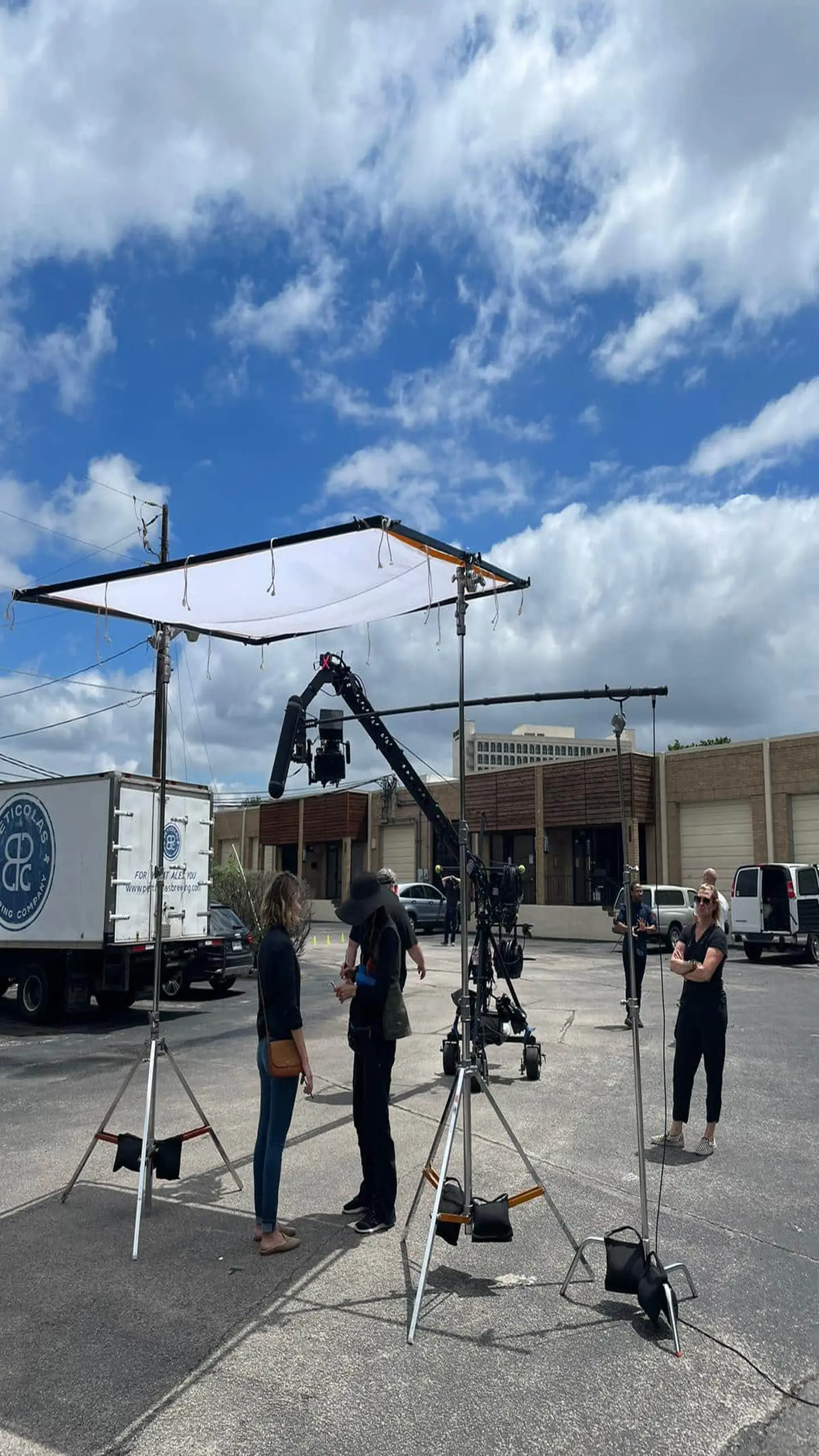
In the world of [film production](https://c-istudios.com/film-and-tv-production/), lighting is the silent storyteller, shaping every frame and guiding the audience’s emotions without uttering a single word. Whether it’s the haunting shadows of a suspenseful thriller or the warm glow of a romantic sunset, lighting transforms ordinary visuals into compelling narratives.
The importance of lighting in film production goes far beyond mere illumination, it defines the mood, sets the tone, and breathes life into the story. Through strategic use of cinematic lighting, directors and cinematographers craft unforgettable moments that linger in the minds of viewers. Techniques like high-key or low-key lighting and the careful manipulation of shadows and color palettes are pivotal in creating breathtaking film visuals.
As we delve deeper into the art and science of lighting, we’ll uncover how this vital element shapes storytelling, enhances emotions, and elevates the craft of filmmaking to new heights.
## The Role of Lighting in Visual Storytelling
Lighting is an indispensable element in film production, serving as a silent yet powerful storyteller. It guides the audience's perception, subtly influencing their understanding of the narrative and emotional connection to the characters and scenes. Through the careful interplay of light and shadow, filmmakers can emphasize specific elements within a frame, drawing the viewer’s attention to critical details or heightening the emotional impact of a moment.
Take, for instance, the tense atmosphere of a thriller. Here, low lighting with pronounced shadows can create a sense of unease and anticipation, signaling danger or mystery. On the other hand, a romantic scene may rely on soft, warm lighting to evoke intimacy and tenderness, enveloping the characters in a glow that mirrors their emotions. This nuanced use of lighting not only highlights the narrative but also immerses the audience deeper into the story's world.
Iconic moments in film history demonstrate the transformative power of lighting. Consider the dimly lit room in The Godfather, where shadows obscure much of Don Corleone’s face, creating an aura of power and secrecy. Similarly, the neon-drenched streets of Blade Runner are a masterclass in lighting’s ability to establish a unique visual identity, immersing viewers in a dystopian future. These examples highlight how lighting serves as a foundation for compelling film visuals, bringing layers of meaning and depth to every frame.
By shaping mood, directing focus, and enhancing the overall aesthetic, lighting elevates storytelling into an art form. It works in harmony with cinematography, set design, and other visual elements to create a cohesive narrative experience that resonates with viewers long after the credits roll.
## Types of Cinematic Lighting in Film Production
To achieve the visual storytelling magic seen in films, filmmakers rely on a range of lighting techniques, each with a specific purpose. At the heart of any scene is the key light, the primary source of illumination that determines the overall tone and mood.
Whether it’s a bright, high-key setup for a cheerful moment or a dim, low-key arrangement for suspense, the key light is the cornerstone of cinematic lighting. Complementing this is the fill light, which reduces shadows and ensures a balanced look. By softening harsh contrasts, it creates a natural, polished appearance without overwhelming the frame.
Backlighting is another essential technique, positioned behind the subject to create depth and separation from the background. This method is particularly effective for crafting striking silhouettes or adding a three-dimensional quality to the scene. Practical lighting, on the other hand, brings an authentic touch to the visuals. By incorporating visible light sources such as lamps, candles, or neon signs, filmmakers enhance the scene's realism and mood.
Filmmakers often combine these techniques with natural or artificial lighting to craft their desired aesthetic. Natural light, such as sunlight streaming through a window, lends authenticity and vibrancy, while artificial lighting provides precise control over the scene's look and feel.
Together, these tools allow filmmakers to shape their visuals in ways that elevate the narrative, ensuring that every shot contributes to the story's emotional and visual impact.
## Lighting Techniques and Their Impact on Film Visuals
Lighting techniques are a cornerstone of cinematic storytelling, each method contributing uniquely to the mood, tone, and depth of a film. High-key lighting, characterized by its bright and even illumination, is often used to create cheerful, dreamlike atmospheres.
This technique minimizes shadows and fosters a sense of openness and optimism, making it a staple in genres such as comedies and musicals. For instance, the vibrant, well-lit scenes in La La Land emphasize its romantic and fantastical themes, drawing viewers into a world of dreams and possibilities.
In contrast, low-key lighting operates at the other end of the spectrum, employing shadows and minimal light to evoke drama, mystery, or fear. Frequently seen in film noir and horror, this technique uses stark contrasts to heighten tension and intrigue.
Movies like The Dark Knight masterfully utilize low-key lighting to underscore the psychological complexity of characters and the overarching sense of danger. By embracing the interplay of light and shadow, low-key setups create an immersive, suspenseful visual language.
Color lighting is another transformative tool in a filmmaker's arsenal. The choice of colors, whether warm, cool, or bold, has profound emotional and psychological effects on audiences. Warm tones such as reds, oranges, and yellows often symbolize passion, energy, or warmth, while cool tones like blues and greens can evoke calmness, melancholy, or unease. Films like Her use soft, warm lighting to create an intimate, introspective atmosphere, while Blade Runner 2049 employs vibrant neon hues to craft a futuristic, alienating world.
These lighting techniques enhance storytelling by aligning the visuals with the narrative's emotional core. By selecting the right lighting approach for each scene, filmmakers can subtly guide the audience’s emotional response, ensuring the story resonates on a deeper level. The thoughtful application of high-key, low-key, and color lighting transforms the cinematic experience, making it more engaging and impactful.
## The Relationship Between Lighting and Mood in Films
Lighting plays a pivotal role in setting the mood of a film, shaping the audience's emotional journey. Choices in lighting design can evoke a range of emotions, from fear and tension to joy and nostalgia, making it a powerful storytelling device.
For example, in horror films, dim lighting with exaggerated shadows often creates an atmosphere of dread and suspense. The flickering glow of a candle or the ominous silhouette of a figure in the dark instantly communicates danger and unease, as seen in classics like The Exorcist.
In contrast, romantic films lean on soft, diffused lighting to convey warmth and intimacy. The gentle glow of sunset in Pride and Prejudice or the dreamy lighting in The Notebook enhances the emotional connection between characters, immersing viewers in the tenderness of their relationships. These lighting choices not only evoke emotions but also reinforce the genre’s themes, ensuring a consistent and immersive experience.
Consistency in mood is vital for storytelling. Abrupt shifts in lighting can disrupt the narrative flow and confuse the audience. By carefully aligning lighting techniques with the story's emotional arc, filmmakers maintain a cohesive tone throughout the film. For instance, a tragic drama might use muted lighting to sustain a somber mood, while an action-packed adventure might employ dynamic, high-contrast lighting to reflect the intensity of the plot.
Ultimately, lighting serves as a bridge between the story and its audience. By tapping into the emotional power of light, filmmakers craft visuals that resonate deeply, ensuring that every scene leaves a lasting impression. This careful orchestration of light and emotion underscores the profound relationship between lighting and mood, making it an indispensable tool in the art of filmmaking.
## Advances in Lighting Technology for Modern Film Production
Lighting technology has undergone a remarkable transformation, revolutionizing the way filmmakers approach visual storytelling. Traditional lighting methods, which relied on tungsten or HMI lights, have largely given way to LED and smart lighting systems.
These modern alternatives are not only more energy-efficient but also highly versatile. LEDs, for instance, allow for precise control over color temperature, intensity, and beam angle, enabling cinematographers to achieve specific looks without cumbersome setups. Smart lighting systems take this a step further by integrating wireless control, allowing for adjustments on the fly through apps or remote devices.
The integration of CGI and virtual production has further expanded the creative potential of cinematic lighting. In virtual production environments, like those used in The Mandalorian, LED walls display digitally rendered backgrounds that provide dynamic lighting in real time.
This technique eliminates the need for green screens and ensures that the lighting on actors matches the virtual environment perfectly. CGI-enhanced lighting also allows filmmakers to experiment with impossible scenarios, such as recreating the glow of alien suns or simulating complex reflections.
Modern lighting technologies also bring cost efficiency to film production. LED lights consume less power, generate less heat, and have longer lifespans compared to traditional lighting. These benefits reduce overall production costs, especially for long shoots. Additionally, smart lighting setups save time by streamlining adjustments, allowing crews to focus on creativity rather than logistics.
The advancements in lighting technology have opened new creative possibilities for filmmakers. From achieving intricate color effects to simulating complex environments, modern tools enable greater storytelling flexibility. As technology continues to evolve, the synergy between lighting and innovation will shape the future of film production, making the impossible visually achievable.
## Challenges of Lighting in Film Production and How to Overcome Them
While lighting is a vital component of filmmaking, it comes with its own set of challenges. Budget constraints often top the list, as high-quality lighting equipment can be expensive to purchase or rent. Independent filmmakers, in particular, may struggle to balance costs while achieving professional results.
Additionally, natural light, while cost-free, is highly unpredictable. Changes in weather or shifting daylight hours can disrupt shooting schedules and necessitate constant adjustments.
Setup time is another hurdle, especially for complex lighting rigs. Coordinating multiple lights to achieve a specific aesthetic can be time-consuming, delaying production and increasing costs. Moreover, managing power supply and cable arrangements on set adds to the logistical complexities, particularly for outdoor shoots.
Fortunately, innovative solutions can help overcome these challenges. For budget constraints, filmmakers can turn to affordable yet powerful LED lighting options, which are both energy-efficient and adaptable. Renting equipment instead of purchasing and exploring second-hand markets is also a practical way to minimize costs.
For natural light unpredictability, using reflectors, diffusers, and portable lights allows filmmakers to augment or mimic sunlight as needed. These tools provide flexibility without compromising the scene's authenticity.
To address the time-intensive nature of setups, pre-visualization tools and lighting simulations can streamline the process. Planning lighting arrangements in advance with 3D software reduces trial and error on set, saving valuable time. Wireless and battery-operated lighting systems also simplify logistics, particularly in challenging locations.
Ultimately, overcoming these challenges requires a combination of creativity, resourcefulness, and adaptability. By leveraging modern technology and practical solutions, filmmakers can turn lighting obstacles into opportunities, ensuring that their vision shines through, no matter the circumstances.
## Case Studies. Films That Mastered Lighting Techniques
Some of cinema’s most memorable moments owe their impact to masterful lighting techniques. Films like Blade Runner, La La Land, and The Godfather showcase how lighting can elevate storytelling and create a distinct visual identity. By analyzing these films, aspiring filmmakers can learn the profound impact of cinematic lighting on audience perception.
Blade Runner is a classic example of lighting used to build an immersive world. The film’s director, Ridley Scott, and cinematographer, Jordan Cronenweth, employed dramatic contrasts between light and shadow to capture the dystopian atmosphere.
Neon lighting in hues of blue, pink, and green bathes the streets of futuristic Los Angeles, creating a visual language that feels both otherworldly and grounded. The interplay of artificial light sources with shadowy corners emphasizes the film's themes of identity and morality, drawing the audience deeper into its layered narrative.
In stark contrast, La La Land uses lighting to craft a dreamy, romantic aesthetic. Cinematographer Linus Sandgren employed high-key lighting with vibrant colors to evoke a sense of whimsy and nostalgia. The use of spotlighting in musical numbers, such as “A Lovely Night” and “Audition,” isolates characters and highlights their emotional states. These carefully designed lighting choices underscore the film's balance between reality and fantasy, immersing viewers in its enchanting world.
The Godfather offers another dimension of lighting mastery, relying heavily on low-key setups to enhance the themes of power and secrecy. Gordon Willis, the cinematographer, earned the nickname “The Prince of Darkness” for his bold use of shadows. Faces partially obscured by darkness create a sense of mystery and moral ambiguity, amplifying the tension within the Corleone family dynamics. This deliberate manipulation of light and shadow remains a hallmark of cinematic storytelling.
Each of these films demonstrates how lighting transforms visuals into a narrative force, shaping how audiences experience and interpret the story. By studying these examples, filmmakers can see how intentional lighting choices resonate emotionally and visually with viewers.
## Tips for Aspiring Filmmakers to Master Cinematic Lighting
Mastering cinematic lighting is an essential skill for filmmakers, and it begins with a strong foundation of planning, experimentation, and continuous learning. Before stepping onto a set, filmmakers should plan their lighting setups based on the script and desired mood. Creating storyboards and using pre-visualization tools can help identify the best lighting techniques for each scene, saving time and ensuring consistency.
Experimentation is equally crucial. Beginners should practice with different lighting setups, such as three-point lighting, natural light, and practical lights, to understand how each element affects the overall visuals. Experimenting with color gels, diffusers, and reflectors allows filmmakers to explore the emotional and aesthetic effects of different lighting configurations.
Studying classic and contemporary films is another valuable step in the learning process. Observing how directors like Ridley Scott, Christopher Nolan, or Damien Chazelle use lighting can inspire creative approaches. Breaking down scenes frame by frame reveals the meticulous decisions that go into achieving specific moods and tones.
Resources for mastering lighting techniques are abundant. Online platforms like MasterClass, YouTube, and Skillshare offer tutorials that cover everything from basic setups to advanced techniques. Books like Painting with Light by John Alton provide timeless insights into cinematic lighting. Additionally, aspiring filmmakers can attend workshops or shadow experienced cinematographers to gain hands-on experience.
By combining planning, experimentation, and continuous study, filmmakers can develop the skills needed to master cinematic lighting. It’s not just about illuminating a scene, it’s about creating an emotional and visual experience that captivates the audience and brings the story to life.
## The Role of Lighting in Visual Storytelling
Lighting is an indispensable element in film production, serving as a silent yet powerful storyteller. It guides the audience's perception, subtly influencing their understanding of the narrative and emotional connection to the characters and scenes. Through the careful interplay of light and shadow, filmmakers can emphasize specific elements within a frame, drawing the viewer’s attention to critical details or heightening the emotional impact of a moment.
Take, for instance, the tense atmosphere of a thriller. Here, low lighting with pronounced shadows can create a sense of unease and anticipation, signaling danger or mystery. On the other hand, a romantic scene may rely on soft, warm lighting to evoke intimacy and tenderness, enveloping the characters in a glow that mirrors their emotions. This nuanced use of lighting not only highlights the narrative but also immerses the audience deeper into the story's world.
Iconic moments in film history demonstrate the transformative power of lighting. Consider the dimly lit room in The Godfather, where shadows obscure much of Don Corleone’s face, creating an aura of power and secrecy. Similarly, the neon-drenched streets of Blade Runner are a masterclass in lighting’s ability to establish a unique visual identity, immersing viewers in a dystopian future. These examples highlight how lighting serves as a foundation for compelling film visuals, bringing layers of meaning and depth to every frame.
By shaping mood, directing focus, and enhancing the overall aesthetic, lighting elevates storytelling into an art form. It works in harmony with cinematography, set design, and other visual elements to create a cohesive narrative experience that resonates with viewers long after the credits roll.
## Types of Cinematic Lighting in Film Production
To achieve the visual storytelling magic seen in films, filmmakers rely on a range of lighting techniques, each with a specific purpose. At the heart of any scene is the key light, the primary source of illumination that determines the overall tone and mood.
Whether it’s a bright, high-key setup for a cheerful moment or a dim, low-key arrangement for suspense, the key light is the cornerstone of cinematic lighting. Complementing this is the fill light, which reduces shadows and ensures a balanced look. By softening harsh contrasts, it creates a natural, polished appearance without overwhelming the frame.
Backlighting is another essential technique, positioned behind the subject to create depth and separation from the background. This method is particularly effective for crafting striking silhouettes or adding a three-dimensional quality to the scene. Practical lighting, on the other hand, brings an authentic touch to the visuals. By incorporating visible light sources such as lamps, candles, or neon signs, filmmakers enhance the scene's realism and mood.
Filmmakers often combine these techniques with natural or artificial lighting to craft their desired aesthetic. Natural light, such as sunlight streaming through a window, lends authenticity and vibrancy, while artificial lighting provides precise control over the scene's look and feel.
Together, these tools allow filmmakers to shape their visuals in ways that elevate the narrative, ensuring that every shot contributes to the story's emotional and visual impact.
## Lighting Techniques and Their Impact on Film Visuals
Lighting techniques are a cornerstone of cinematic storytelling, each method contributing uniquely to the mood, tone, and depth of a film. High-key lighting, characterized by its bright and even illumination, is often used to create cheerful, dreamlike atmospheres.
This technique minimizes shadows and fosters a sense of openness and optimism, making it a staple in genres such as comedies and musicals. For instance, the vibrant, well-lit scenes in La La Land emphasize its romantic and fantastical themes, drawing viewers into a world of dreams and possibilities.
In contrast, low-key lighting operates at the other end of the spectrum, employing shadows and minimal light to evoke drama, mystery, or fear. Frequently seen in film noir and horror, this technique uses stark contrasts to heighten tension and intrigue.
Movies like The Dark Knight masterfully utilize low-key lighting to underscore the psychological complexity of characters and the overarching sense of danger. By embracing the interplay of light and shadow, low-key setups create an immersive, suspenseful visual language.
Color lighting is another transformative tool in a filmmaker's arsenal. The choice of colors, whether warm, cool, or bold, has profound emotional and psychological effects on audiences. Warm tones such as reds, oranges, and yellows often symbolize passion, energy, or warmth, while cool tones like blues and greens can evoke calmness, melancholy, or unease. Films like Her use soft, warm lighting to create an intimate, introspective atmosphere, while Blade Runner 2049 employs vibrant neon hues to craft a futuristic, alienating world.
These lighting techniques enhance storytelling by aligning the visuals with the narrative's emotional core. By selecting the right lighting approach for each scene, filmmakers can subtly guide the audience’s emotional response, ensuring the story resonates on a deeper level. The thoughtful application of high-key, low-key, and color lighting transforms the cinematic experience, making it more engaging and impactful.
## The Relationship Between Lighting and Mood in Films
Lighting plays a pivotal role in setting the mood of a film, shaping the audience's emotional journey. Choices in lighting design can evoke a range of emotions, from fear and tension to joy and nostalgia, making it a powerful storytelling device.
For example, in horror films, dim lighting with exaggerated shadows often creates an atmosphere of dread and suspense. The flickering glow of a candle or the ominous silhouette of a figure in the dark instantly communicates danger and unease, as seen in classics like The Exorcist.
In contrast, romantic films lean on soft, diffused lighting to convey warmth and intimacy. The gentle glow of sunset in Pride and Prejudice or the dreamy lighting in The Notebook enhances the emotional connection between characters, immersing viewers in the tenderness of their relationships. These lighting choices not only evoke emotions but also reinforce the genre’s themes, ensuring a consistent and immersive experience.
Consistency in mood is vital for storytelling. Abrupt shifts in lighting can disrupt the narrative flow and confuse the audience. By carefully aligning lighting techniques with the story's emotional arc, filmmakers maintain a cohesive tone throughout the film. For instance, a tragic drama might use muted lighting to sustain a somber mood, while an action-packed adventure might employ dynamic, high-contrast lighting to reflect the intensity of the plot.
Ultimately, lighting serves as a bridge between the story and its audience. By tapping into the emotional power of light, filmmakers craft visuals that resonate deeply, ensuring that every scene leaves a lasting impression. This careful orchestration of light and emotion underscores the profound relationship between lighting and mood, making it an indispensable tool in the art of filmmaking.
## Advances in Lighting Technology for Modern Film Production
Lighting technology has undergone a remarkable transformation, revolutionizing the way filmmakers approach visual storytelling. Traditional lighting methods, which relied on tungsten or HMI lights, have largely given way to LED and smart lighting systems.
These modern alternatives are not only more energy-efficient but also highly versatile. LEDs, for instance, allow for precise control over color temperature, intensity, and beam angle, enabling cinematographers to achieve specific looks without cumbersome setups. Smart lighting systems take this a step further by integrating wireless control, allowing for adjustments on the fly through apps or remote devices.
The integration of CGI and virtual production has further expanded the creative potential of cinematic lighting. In virtual production environments, like those used in The Mandalorian, LED walls display digitally rendered backgrounds that provide dynamic lighting in real time.
This technique eliminates the need for green screens and ensures that the lighting on actors matches the virtual environment perfectly. CGI-enhanced lighting also allows filmmakers to experiment with impossible scenarios, such as recreating the glow of alien suns or simulating complex reflections.
Modern lighting technologies also bring cost efficiency to film production. LED lights consume less power, generate less heat, and have longer lifespans compared to traditional lighting. These benefits reduce overall production costs, especially for long shoots. Additionally, smart lighting setups save time by streamlining adjustments, allowing crews to focus on creativity rather than logistics.
The advancements in lighting technology have opened new creative possibilities for filmmakers. From achieving intricate color effects to simulating complex environments, modern tools enable greater storytelling flexibility. As technology continues to evolve, the synergy between lighting and innovation will shape the future of film production, making the impossible visually achievable.
## Challenges of Lighting in Film Production and How to Overcome Them
While lighting is a vital component of filmmaking, it comes with its own set of challenges. Budget constraints often top the list, as high-quality lighting equipment can be expensive to purchase or rent. Independent filmmakers, in particular, may struggle to balance costs while achieving professional results.
Additionally, natural light, while cost-free, is highly unpredictable. Changes in weather or shifting daylight hours can disrupt shooting schedules and necessitate constant adjustments.
Setup time is another hurdle, especially for complex lighting rigs. Coordinating multiple lights to achieve a specific aesthetic can be time-consuming, delaying production and increasing costs. Moreover, managing power supply and cable arrangements on set adds to the logistical complexities, particularly for outdoor shoots.
Fortunately, innovative solutions can help overcome these challenges. For budget constraints, filmmakers can turn to affordable yet powerful LED lighting options, which are both energy-efficient and adaptable. Renting equipment instead of purchasing and exploring second-hand markets is also a practical way to minimize costs.
For natural light unpredictability, using reflectors, diffusers, and portable lights allows filmmakers to augment or mimic sunlight as needed. These tools provide flexibility without compromising the scene's authenticity.
To address the time-intensive nature of setups, pre-visualization tools and lighting simulations can streamline the process. Planning lighting arrangements in advance with 3D software reduces trial and error on set, saving valuable time. Wireless and battery-operated lighting systems also simplify logistics, particularly in challenging locations.
Ultimately, overcoming these challenges requires a combination of creativity, resourcefulness, and adaptability. By leveraging modern technology and practical solutions, filmmakers can turn lighting obstacles into opportunities, ensuring that their vision shines through, no matter the circumstances.
## Case Studies. Films That Mastered Lighting Techniques
Some of cinema’s most memorable moments owe their impact to masterful lighting techniques. Films like Blade Runner, La La Land, and The Godfather showcase how lighting can elevate storytelling and create a distinct visual identity. By analyzing these films, aspiring filmmakers can learn the profound impact of cinematic lighting on audience perception.
Blade Runner is a classic example of lighting used to build an immersive world. The film’s director, Ridley Scott, and cinematographer, Jordan Cronenweth, employed dramatic contrasts between light and shadow to capture the dystopian atmosphere.
Neon lighting in hues of blue, pink, and green bathes the streets of futuristic Los Angeles, creating a visual language that feels both otherworldly and grounded. The interplay of artificial light sources with shadowy corners emphasizes the film's themes of identity and morality, drawing the audience deeper into its layered narrative.
In stark contrast, La La Land uses lighting to craft a dreamy, romantic aesthetic. Cinematographer Linus Sandgren employed high-key lighting with vibrant colors to evoke a sense of whimsy and nostalgia. The use of spotlighting in musical numbers, such as “A Lovely Night” and “Audition,” isolates characters and highlights their emotional states. These carefully designed lighting choices underscore the film's balance between reality and fantasy, immersing viewers in its enchanting world.
The Godfather offers another dimension of lighting mastery, relying heavily on low-key setups to enhance the themes of power and secrecy. Gordon Willis, the cinematographer, earned the nickname “The Prince of Darkness” for his bold use of shadows. Faces partially obscured by darkness create a sense of mystery and moral ambiguity, amplifying the tension within the Corleone family dynamics. This deliberate manipulation of light and shadow remains a hallmark of cinematic storytelling.
Each of these films demonstrates how lighting transforms visuals into a narrative force, shaping how audiences experience and interpret the story. By studying these examples, filmmakers can see how intentional lighting choices resonate emotionally and visually with viewers.
## Tips for Aspiring Filmmakers to Master Cinematic Lighting
Mastering cinematic lighting is an essential skill for filmmakers, and it begins with a strong foundation of planning, experimentation, and continuous learning. Before stepping onto a set, filmmakers should plan their lighting setups based on the script and desired mood. Creating storyboards and using pre-visualization tools can help identify the best lighting techniques for each scene, saving time and ensuring consistency.
Experimentation is equally crucial. Beginners should practice with different lighting setups, such as three-point lighting, natural light, and practical lights, to understand how each element affects the overall visuals. Experimenting with color gels, diffusers, and reflectors allows filmmakers to explore the emotional and aesthetic effects of different lighting configurations.
Studying classic and contemporary films is another valuable step in the learning process. Observing how directors like Ridley Scott, Christopher Nolan, or Damien Chazelle use lighting can inspire creative approaches. Breaking down scenes frame by frame reveals the meticulous decisions that go into achieving specific moods and tones.
Resources for mastering lighting techniques are abundant. Online platforms like MasterClass, YouTube, and Skillshare offer tutorials that cover everything from basic setups to advanced techniques. Books like Painting with Light by John Alton provide timeless insights into cinematic lighting. Additionally, aspiring filmmakers can attend workshops or shadow experienced cinematographers to gain hands-on experience.
By combining planning, experimentation, and continuous study, filmmakers can develop the skills needed to master cinematic lighting. It’s not just about illuminating a scene, it’s about creating an emotional and visual experience that captivates the audience and brings the story to life.
## Work with C&I Studios
If you are planning a project like this, our team can take it from concept to final delivery. Explore our [film and TV production](https://c-istudios.com/film-and-tv-production/), browse [our work](https://c-istudios.com/our-work/) to see how we tell brand stories, and [get in touch](https://c-istudios.com/contact/) when you are ready to start.
Originally published November 12, 2024
---
*This content is from [C&I Studios](https://c-istudios.com), a full-service production company.*
---
# Editing for Television: Techniques to Keep Audiences Engaged
> Published: November 11, 2024
> Categories: Film & TV
> Source: https://c-istudios.com/editing-for-television-techniques-to-keep-audiences-engaged/
---
.cib{--paper:#1b1d1f;--ink:#fff;--body:#d5d7d9;--muted:#8b9096;--line:rgba(255,255,255,.12);--thumb:#2b2e31;--card:#212426;--accent:#c02b0a;--blue:#5B8FA8;--serif:'Playfair Display',Georgia,serif;--sans:'Poppins',-apple-system,sans-serif;--measure:900px;background:var(--paper);color:var(--body);font-family:var(--sans);line-height:1.6;position:relative;left:50%;transform:translateX(-50%);width:90vw;max-width:1920px}
.cib *{box-sizing:border-box}
.cib .kicker{max-width:var(--measure);margin:58px auto 0;padding:0 22px;font-size:12.5px;font-weight:700;letter-spacing:2.5px;text-transform:uppercase;color:var(--blue)}
.cib h1.cibh1{text-wrap:balance;font-family:var(--serif);font-weight:500;font-size:clamp(46px,6vw,72px);line-height:1.08;color:var(--ink);max-width:var(--measure);margin:18px auto 0;padding:0 22px;letter-spacing:-.5px}
.cib .metarow{max-width:var(--measure);margin:20px auto 0;padding:0 22px;color:var(--muted);font-size:14px}
.cib .hero{position:relative;width:100%;height:0;padding-bottom:56.25%;overflow:hidden;margin:48px auto 0;border-top:1px solid var(--line);border-bottom:1px solid var(--line)}
.cib .hero .ph{width:100%;aspect-ratio:16/9;background:var(--thumb);border-top:1px solid var(--line);border-bottom:1px solid var(--line);display:flex;align-items:center;justify-content:center;color:#7d8288;font-size:13px;text-align:center;padding:0 20px}
.cib .body{max-width:var(--measure);margin:12px auto 0;padding:52px 22px 6px}
.cib .body.lead p:first-child{font-size:23px;line-height:1.62;color:var(--ink)}
.cib .body p{font-size:18.5px;line-height:1.85;margin:0 0 30px;color:var(--body)}
.cib .body h2{text-wrap:balance;font-family:var(--serif);font-weight:500;font-size:clamp(32px,4vw,48px);line-height:1.22;color:var(--ink);margin:70px 0 20px;letter-spacing:-.3px}
.cib .body h3{text-wrap:balance;font-family:var(--sans);font-weight:600;font-size:22px;color:var(--ink);margin:38px 0 8px}
.cib .body a{color:var(--ink);text-decoration:underline;text-decoration-color:rgba(255,255,255,.4);text-underline-offset:3px}
.cib .body a:hover{text-decoration-color:var(--ink)}
.cib .ctable{width:100%;border-collapse:collapse;margin:16px 0 30px;font-size:16px}
.cib .ctable th{background:#000;color:#fff;text-align:left;padding:10px 12px;font-family:var(--sans)}
.cib .ctable td{padding:10px 12px;border-bottom:1px solid var(--line);color:var(--body)}
.cib .inimg{position:relative;width:100%;height:0;padding-bottom:56.25%;overflow:hidden;margin:72px auto;border-top:1px solid var(--line);border-bottom:1px solid var(--line)}
.cib .inimg .ph{width:100%;aspect-ratio:16/9;background:var(--thumb);border-top:1px solid var(--line);border-bottom:1px solid var(--line);display:flex;align-items:center;justify-content:center;color:#7d8288;font-size:13px}
.cib .origpub{max-width:var(--measure);margin:60px auto 0;padding:26px 22px 0;border-top:1px solid var(--line);color:var(--muted);font-size:13.5px}
.cib .related{max-width:1200px;margin:64px auto 0;padding:34px 22px 76px}
.cib .related h3{font-family:var(--sans);font-size:12.5px;letter-spacing:2px;text-transform:uppercase;color:var(--ink);margin:0 0 24px}
.cib .grid{display:grid;grid-template-columns:repeat(3,1fr);gap:28px}
.cib .rc{background:var(--card);border:1px solid var(--line);display:block;text-decoration:none;color:inherit;transition:border-color .15s}
.cib a.rc:hover{border-color:rgba(255,255,255,.5)}
.cib .rc .thumb{position:relative;width:100%;height:0;padding-bottom:56.25%;background:var(--thumb);overflow:hidden}
.cib .rc .thumb img{position:absolute!important;top:0!important;left:0!important;width:100%!important;height:100%!important;object-fit:cover!important;margin:0!important}
.cib .rc .cc{padding:14px 15px 17px}
.cib .rc .rt{font-family:var(--serif);font-weight:500;font-size:16px;line-height:1.3;color:var(--ink);margin:0 0 6px}
.cib .rc .rm{font-size:11px;letter-spacing:1px;text-transform:uppercase;color:var(--muted)}
.cib img{margin:0!important;padding:0!important;display:block!important;vertical-align:top;max-width:100%}
.cib .hero img,.cib .inimg img{position:absolute!important;top:0!important;left:0!important;width:100%!important;height:100%!important;object-fit:cover!important;margin:0!important;padding:0!important;border:0!important;display:block!important;aspect-ratio:auto!important}
.cib .hero+.body{padding-top:36px}
@media(max-width:760px){.cib .grid{grid-template-columns:1fr}.cib .body h2{margin:52px 0 16px}.cib .body p{font-size:17.5px}.cib .inimg,.cib .hero{margin-top:44px}}
.cib .vembed{max-width:var(--measure);margin:44px auto;padding:0 22px}.cib .vembed .vwrap{position:relative;width:100%;height:0;padding-bottom:56.25%}.cib .vembed .vwrap iframe{position:absolute;top:0;left:0;width:100%;height:100%;border:0}
Film & TV
# Editing for Television. Techniques to Keep Audiences Engaged
29 min read
Editing is the heartbeat of television production, turning raw footage into captivating stories that hold viewers’ attention. In a world where countless options compete for audience loyalty, editing for television plays a pivotal role in creating compelling narratives that resonate emotionally. Whether it’s the sharp cuts of a thrilling drama or the seamless transitions in a reality show, the techniques of TV editing shape not only the story but also the viewer's experience.
The magic lies in crafting engaging TV content, maintaining pace, enhancing emotions, and ensuring coherence throughout the narrative. Beyond the artistry, production editing involves technical precision and a deep understanding of what captivates the audience.
In this blog, we’ll dive into the nuances of television editing, exploring techniques that elevate storytelling and keep audiences glued to their screens. From pacing and timing to emotional resonance, let’s uncover the secrets of engaging [TV production](https://c-istudios.com/film-and-tv-production/).
## The Role of Editing in Television Production
Editing is where raw footage transforms into a cohesive and compelling narrative, making it the cornerstone of any successful television production. At its core, TV editing is more than just cutting and rearranging scenes; it’s about weaving together a story that resonates with audiences. The editor's role is to shape pacing, define tone, and guide storytelling to evoke emotions and maintain engagement.
Pacing is crucial in television. In action-packed series, quick cuts and dynamic transitions maintain momentum, while slower, deliberate edits in dramas allow emotional depth to shine. For example, shows like Breaking Bad use masterful pacing to heighten tension, gradually building toward explosive climaxes. Similarly, Game of Thrones employed precise editing to balance intricate storylines while keeping viewers invested in its characters.
The tone is another critical element defined by editing. Comedy shows like The Office rely heavily on jump cuts and reaction shots to amplify humor, while horror series like Stranger Things use lingering edits and sound design to create suspense. By choosing the right techniques, editors can dictate how a scene feels and how the audience responds.
Storytelling is where editing truly shines. Editors decide what the audience sees and ensure the narrative unfolds seamlessly. Consider the non-linear storytelling in Westworld, where meticulous editing ensures that viewers remain intrigued without becoming confused. The artful arrangement of flashbacks, parallel storylines, and cliffhangers demonstrates how TV editing shapes viewer perception.
In essence, editing is not just technical; it’s a creative force that breathes life into television content. By defining pacing, tone, and storytelling, it transforms scattered footage into engaging TV content that captivates and delights. Without skilled editing, even the most visually stunning scenes can fall flat, underscoring its vital role in keeping audiences glued to their screens.
## Understanding Your Audience. Tailoring the Editing Style
Knowing your audience is the foundation of effective editing for television. Viewers' demographics, preferences, and expectations play a significant role in determining how content is edited. Editors must consider these factors to craft engaging TV content that resonates with the intended audience.
For dramas, audiences often expect emotional depth and intricate storylines. Slow pacing, subtle transitions, and intimate close-ups work well to draw viewers into the character's internal struggles. Conversely, reality TV caters to fast-paced entertainment seekers.
Quick cuts, exaggerated reaction shots, and dynamic montages are staples of this genre, ensuring high energy and constant engagement. Comedy, on the other hand, thrives on timing. Editors use abrupt cuts, visual gags, and synchronized music to maximize comedic impact.
Audience demographics further refine editing styles. Younger viewers may prefer fast-moving content with vibrant visuals and rapid transitions, reflecting their shorter attention spans. Older audiences often appreciate more deliberate pacing and classic editing techniques that emphasize storytelling over spectacle.
Cultural context also influences editing choices. For instance, Japanese TV shows often feature vibrant text overlays and exaggerated sound effects to engage viewers, while Western productions lean toward subtler editing styles. Understanding these cultural nuances allows editors to create content that feels relatable and immersive.
Consider the success of reality shows like Keeping Up with the Kardashians, where editing focuses on drama, humor, and cliffhangers to keep audiences coming back for more. In contrast, a show like The Crown relies on careful pacing and elegant transitions to appeal to its audience's appreciation for historical drama.
Ultimately, the key to successful TV editing lies in tailoring techniques to the audience’s tastes and expectations. By aligning editing styles with viewer preferences, editors ensure that their work results in engaging TV content that keeps audiences not only entertained but also emotionally invested in the story.
## Mastering Pacing and Timing
Pacing and timing are the silent storytellers of television, dictating how a narrative unfolds and keeping viewers engaged. In editing for television, these elements are paramount to ensuring the audience remains invested in the story from start to finish. An episode’s pace can mean the difference between binge-worthy content and a show that fails to hold attention.
Quick cuts are a go-to technique for action-packed sequences. By rapidly switching between shots, editors create an adrenaline-pumping rhythm that mirrors the intensity of the scene. For instance, shows like 24 and The Mandalorian excel at maintaining high-octane pacing, drawing viewers into their fast-moving plots.
On the other hand, lingering shots are ideal for emotional moments in dramas. By holding on to a character’s face or a pivotal scene, editors allow emotions to resonate, as seen in series like This Is Us.
Timing isn’t just about cutting scenes to fit a runtime, it’s about cutting at the exact moment to elicit maximum impact. This is where production editing plays a vital role. Editors meticulously analyze footage to synchronize cuts with beats of music, dialogue delivery, or even subtle gestures. For example, in Stranger Things, the seamless integration of soundtracks with character arcs elevates the emotional impact of key scenes.
Moreover, pacing varies within episodes to avoid monotony. Alternating between fast and slow sequences creates a natural ebb and flow that keeps audiences engaged. Editors also use pacing to build tension, slowly ramping up the rhythm before delivering a climactic payoff.
In production editing, timing extends to managing episode structure. Cliffhangers are strategically placed at the end of episodes to leave viewers eager for more. Similarly, montages compress time effectively, allowing the story to progress without dragging.
By mastering pacing and timing, editors ensure that every moment serves the narrative, creating engaging TV content that holds the audience's attention. This balance of speed, rhythm, and precision is what transforms raw footage into television gold.
## Visual Storytelling. Leveraging Camera Angles and Transitions
In television, visuals are just as important as dialogue in telling a story. Through TV editing, camera angles, transitions, and effects become powerful tools for enhancing narrative depth and engagement. Editors manipulate these elements to guide viewers’ emotions, focus attention, and create a seamless viewing experience.
Camera angles can drastically alter a scene's impact. Low angles convey power and dominance, as seen in Breaking Bad, where Walter White’s transformation is underscored by these perspectives.
High angles, on the other hand, suggest vulnerability, adding layers to emotional moments. Close-ups are equally impactful, allowing viewers to connect deeply with the characters’ emotions. For instance, Mad Men uses intimate close-ups to convey subtle shifts in Don Draper’s complex persona.
Transitions between scenes play a crucial role in maintaining narrative flow. Techniques like jump cuts emphasize urgency, as seen in Sherlock, where rapid transitions mirror the protagonist's fast-thinking mind. Fades are often used to signal the passage of time or to evoke a dreamlike quality, common in shows like Westworld.
Match cuts, where one scene transitions seamlessly into another by matching elements, are iconic for their creative storytelling. A memorable example is Breaking Bad’s use of a pizza spinning on the ground to transition into a rotating camera shot.
Visual effects further enhance storytelling. Subtle overlays, color grading, or slow motion can heighten a scene’s mood. For example, Stranger Things uses retro-inspired effects to transport viewers into its 1980s setting while amplifying its eerie atmosphere.
Similarly, Euphoria employs stylized effects to blur the lines between reality and emotion.
By leveraging these visual cues, editors transform raw footage into a cohesive, emotionally charged narrative. The choice of angles, transitions, and effects not only enhances the story but also immerses viewers in the world of the show.
Ultimately, TV editing relies on visual storytelling to captivate audiences. Every angle and transition is a brushstroke in the larger picture, turning a simple scene into engaging TV content that lingers in the minds of viewers long after the episode ends.
## Using Sound and Music to Enhance Engagement
Sound and music are the unsung heroes of editing for television, shaping the emotional landscape of a story and keeping audiences glued to their screens. While visuals capture attention, it’s often the auditory elements that sustain emotional engagement and elevate storytelling.
Background scores play a vital role in setting the tone of a scene. A suspenseful string section heightens tension, while a soft piano melody evokes melancholy. Iconic shows like Game of Thrones owe much of their emotional impact to their scores, which intensify dramatic moments and immerse viewers in the narrative. Similarly, in Stranger Things, retro-inspired synth music not only complements the visuals but also becomes a character in its own right, enhancing the show’s nostalgic atmosphere.
Silence, often underestimated, is another powerful tool. Strategic pauses create suspense, draw attention to key moments, and let emotions linger. In The Handmaid’s Tale, silence often precedes climactic reveals, amplifying the weight of each scene. Silence allows the audience to process a character’s emotions, making their struggles more relatable and impactful.
Sound effects also play a critical role in production editing. From the whoosh of a sword to the creak of a door, these auditory cues make scenes more immersive and believable. In action-packed series like The Mandalorian, sound effects are essential in heightening the intensity of battles and chases. Meanwhile, subtle ambient sounds, like birds chirping or distant traffic, help ground viewers in the world of the show.
Incorporating these elements into engaging TV content requires precision and creativity. Editors must synchronize sound with visuals to ensure every auditory cue enhances the story. For instance, in Breaking Bad, the sound of a meth lab bubbling in the background becomes an ominous motif, reinforcing the tension in Walter White’s descent into criminality.
Ultimately, sound and music are integral to the art of editing for television. Whether through a stirring score, a well-placed silence, or realistic sound effects, auditory elements enrich the viewing experience and create lasting emotional connections with the audience.
## Building Emotional Resonance Through Editing
Emotion is the heart of television storytelling, and editing for television plays a pivotal role in eliciting feelings that linger long after the credits roll. Through techniques like reaction shots, montages, and intercuts, editors manipulate emotions to create memorable scenes that deeply resonate with viewers.
Reaction shots are a cornerstone of emotional storytelling. A single look of despair, joy, or shock can convey volumes about a character's inner world. In shows like The Office, reaction shots are often used to comedic effect, breaking the fourth wall and drawing viewers into the joke. Conversely, in dramas like This Is Us, close-up reaction shots capture raw emotion, allowing viewers to empathize with the characters’ struggles.
Montages are another powerful tool for building emotional resonance. By condensing time and presenting a series of related images, montages evoke a sense of progression or nostalgia. Consider the training montages in Stranger Things, where Eleven’s growth is depicted through carefully arranged clips, accompanied by a stirring score. These sequences create an emotional bond with the character while advancing the narrative efficiently.
Intercuts, or parallel editing, heighten tension and emotion by juxtaposing two or more storylines. This technique is especially effective in shows like Breaking Bad, where simultaneous events are interwoven to create suspense. For instance, scenes of Walter White conducting a deal might be interspersed with his family anxiously waiting at home, amplifying the stakes and emotional weight of the situation.
Beyond these techniques, production editing ensures that emotions are not only conveyed but amplified. The timing of cuts, the use of slow motion, and even color grading all contribute to the emotional tone of a scene. A slow fade to black, for example, signals closure or despair, while a sudden cut to a reaction shot can shock or amuse viewers.
In the end, emotional resonance is what makes a TV show unforgettable. By leveraging techniques like reaction shots, montages, and intercuts, editors turn simple footage into engaging TV content that touches hearts and minds. This mastery of emotion through editing is what keeps audiences coming back, episode after episode.
## Balancing Creativity with Practical Constraints
Editing for television is as much about problem-solving as it is about creativity. Editors often face limitations such as tight deadlines, budget constraints, and content requirements, which can challenge their ability to produce engaging TV content. Despite these challenges, resourcefulness and adaptability help editors maintain a balance between creativity and practicality.
Deadlines are one of the most pressing challenges. In the fast-paced world of television production, editors often work under pressure to deliver episodes within a fixed timeline. This leaves little room for experimentation or trial and error. To address this, editors rely on efficient production editing workflows, such as using pre-built templates, automated processes, and well-organized project files to save time.
Budgets can also limit creative freedom. Expensive special effects, extensive reshoots, or elaborate transitions may not always be feasible. In such cases, editors turn to creative problem-solving. For instance, repurposing existing footage, using simple yet impactful transitions, or relying on sound design instead of costly visual effects can still produce high-quality results.
Despite these constraints, technology offers solutions that enable editors to stay creative while adhering to practical limits. Tools like Adobe Premiere Pro and DaVinci Resolve streamline editing processes with advanced features like automated color correction, real-time collaboration, and pre-designed effects libraries. Similarly, cloud-based platforms allow teams to share and edit footage remotely, saving time and reducing costs.
Moreover, editors often collaborate with directors and producers to prioritize essential elements of TV editing. By focusing on storytelling and character development, they ensure that the core emotional impact of the show remains intact, even if certain creative ideas must be scaled back.
Ultimately, balancing creativity with practical constraints is about making smart compromises. By leveraging technology, adopting efficient workflows, and staying flexible, editors can overcome limitations to create engaging TV content that resonates with audiences, no matter the challenges.
## The Impact of Emerging Technologies on TV Editing
Advancements in technology are revolutionizing editing for television, introducing tools and techniques that are reshaping storytelling and audience engagement. From AI-assisted editing to real-time rendering, these innovations are empowering editors to work faster and more creatively than ever before.
Artificial intelligence (AI) is at the forefront of these changes. AI-powered tools like Adobe Sensei and Blackmagic Design’s neural engine offer features such as automated scene detection, color grading, and even music selection.
These capabilities streamline production editing workflows, allowing editors to focus on more creative aspects of their craft. For example, AI can identify the best takes from hours of footage, significantly reducing the time spent on initial edits.
Real-time editing is another game-changer. With technologies like Unreal Engine, editors can integrate visual effects during production rather than waiting until post-production. This is particularly useful in shows like The Mandalorian, where virtual sets and real-time rendering create immersive environments on the spot. This approach not only saves time but also enhances the creative possibilities for TV editing.
Emerging trends also include cloud-based collaboration, which enables remote teams to work together seamlessly. Platforms like Frame.io allow editors, directors, and producers to review and provide feedback in real-time, accelerating the editing process and ensuring alignment across the production team.
These technological advancements are also changing how stories are told. With AI and real-time editing, editors can experiment with dynamic storytelling techniques, such as branching narratives or personalized content. For instance, interactive shows like Black Mirror: Bandersnatch demonstrates how technology enables viewers to influence the storyline, adding a new dimension to engaging TV content.
Looking to the future, the integration of virtual reality (VR) and augmented reality (AR) in television editing holds immense potential. Editors may soon craft immersive experiences that blur the lines between traditional TV and interactive media, further revolutionizing audience engagement.
## Best Practices for Aspiring Television Editors
Breaking into editing for television requires a unique blend of technical expertise, creative vision, and a strong foundation in storytelling. At its core, editing is about crafting a narrative that captivates and resonates with audiences.
Aspiring editors should focus on honing their ability to understand pacing, transitions, and visual storytelling, as these elements shape the emotional and narrative flow of television content. Watching TV shows critically, and analyzing how editors use timing and technique to create impact, is a great way to develop these skills.
Equally important is mastering industry-standard tools like Adobe Premiere Pro, Avid Media Composer, or DaVinci Resolve. Staying updated on advancements, including AI-powered features, can streamline workflows and enable greater creativity. Strong technical skills paired with a willingness to experiment will set you apart in this fast-paced field.
Collaboration is another cornerstone of success in production editing. Editors often work closely with directors, producers, and writers to bring their vision to life. Building strong communication skills and the ability to incorporate constructive feedback are essential for thriving in this team-oriented profession. Being detail-oriented is also crucial, as seamless transitions, precise timing, and synchronized sound can elevate an edit from good to exceptional.
To build a successful career, start by creating a portfolio that showcases your versatility and creativity. Highlight projects that demonstrate your ability to produce engaging TV content across genres, whether it’s drama, comedy, or reality television. Networking with professionals in the industry and seeking mentorship can open doors to valuable opportunities.
Above all, stay passionate and committed to your craft. Television editing is a challenging yet deeply rewarding field where every cut, sound effect, and transition contributes to a story that connects with audiences. With persistence and a focus on growth, you can make your mark as a skilled editor who brings stories to life on screen.
## The Role of Editing in Television Production
Editing is where raw footage transforms into a cohesive and compelling narrative, making it the cornerstone of any successful television production. At its core, TV editing is more than just cutting and rearranging scenes; it’s about weaving together a story that resonates with audiences. The editor's role is to shape pacing, define tone, and guide storytelling to evoke emotions and maintain engagement.
Pacing is crucial in television. In action-packed series, quick cuts and dynamic transitions maintain momentum, while slower, deliberate edits in dramas allow emotional depth to shine. For example, shows like Breaking Bad use masterful pacing to heighten tension, gradually building toward explosive climaxes. Similarly, Game of Thrones employed precise editing to balance intricate storylines while keeping viewers invested in its characters.
The tone is another critical element defined by editing. Comedy shows like The Office rely heavily on jump cuts and reaction shots to amplify humor, while horror series like Stranger Things use lingering edits and sound design to create suspense. By choosing the right techniques, editors can dictate how a scene feels and how the audience responds.
Storytelling is where editing truly shines. Editors decide what the audience sees and ensure the narrative unfolds seamlessly. Consider the non-linear storytelling in Westworld, where meticulous editing ensures that viewers remain intrigued without becoming confused. The artful arrangement of flashbacks, parallel storylines, and cliffhangers demonstrates how TV editing shapes viewer perception.
In essence, editing is not just technical; it’s a creative force that breathes life into television content. By defining pacing, tone, and storytelling, it transforms scattered footage into engaging TV content that captivates and delights. Without skilled editing, even the most visually stunning scenes can fall flat, underscoring its vital role in keeping audiences glued to their screens.
## Understanding Your Audience. Tailoring the Editing Style
Knowing your audience is the foundation of effective editing for television. Viewers' demographics, preferences, and expectations play a significant role in determining how content is edited. Editors must consider these factors to craft engaging TV content that resonates with the intended audience.
For dramas, audiences often expect emotional depth and intricate storylines. Slow pacing, subtle transitions, and intimate close-ups work well to draw viewers into the character's internal struggles. Conversely, reality TV caters to fast-paced entertainment seekers.
Quick cuts, exaggerated reaction shots, and dynamic montages are staples of this genre, ensuring high energy and constant engagement. Comedy, on the other hand, thrives on timing. Editors use abrupt cuts, visual gags, and synchronized music to maximize comedic impact.
Audience demographics further refine editing styles. Younger viewers may prefer fast-moving content with vibrant visuals and rapid transitions, reflecting their shorter attention spans. Older audiences often appreciate more deliberate pacing and classic editing techniques that emphasize storytelling over spectacle.
Cultural context also influences editing choices. For instance, Japanese TV shows often feature vibrant text overlays and exaggerated sound effects to engage viewers, while Western productions lean toward subtler editing styles. Understanding these cultural nuances allows editors to create content that feels relatable and immersive.
Consider the success of reality shows like Keeping Up with the Kardashians, where editing focuses on drama, humor, and cliffhangers to keep audiences coming back for more. In contrast, a show like The Crown relies on careful pacing and elegant transitions to appeal to its audience's appreciation for historical drama.
Ultimately, the key to successful TV editing lies in tailoring techniques to the audience’s tastes and expectations. By aligning editing styles with viewer preferences, editors ensure that their work results in engaging TV content that keeps audiences not only entertained but also emotionally invested in the story.
## Mastering Pacing and Timing
Pacing and timing are the silent storytellers of television, dictating how a narrative unfolds and keeping viewers engaged. In editing for television, these elements are paramount to ensuring the audience remains invested in the story from start to finish. An episode’s pace can mean the difference between binge-worthy content and a show that fails to hold attention.
Quick cuts are a go-to technique for action-packed sequences. By rapidly switching between shots, editors create an adrenaline-pumping rhythm that mirrors the intensity of the scene. For instance, shows like 24 and The Mandalorian excel at maintaining high-octane pacing, drawing viewers into their fast-moving plots.
On the other hand, lingering shots are ideal for emotional moments in dramas. By holding on to a character’s face or a pivotal scene, editors allow emotions to resonate, as seen in series like This Is Us.
Timing isn’t just about cutting scenes to fit a runtime, it’s about cutting at the exact moment to elicit maximum impact. This is where production editing plays a vital role. Editors meticulously analyze footage to synchronize cuts with beats of music, dialogue delivery, or even subtle gestures. For example, in Stranger Things, the seamless integration of soundtracks with character arcs elevates the emotional impact of key scenes.
Moreover, pacing varies within episodes to avoid monotony. Alternating between fast and slow sequences creates a natural ebb and flow that keeps audiences engaged. Editors also use pacing to build tension, slowly ramping up the rhythm before delivering a climactic payoff.
In production editing, timing extends to managing episode structure. Cliffhangers are strategically placed at the end of episodes to leave viewers eager for more. Similarly, montages compress time effectively, allowing the story to progress without dragging.
By mastering pacing and timing, editors ensure that every moment serves the narrative, creating engaging TV content that holds the audience's attention. This balance of speed, rhythm, and precision is what transforms raw footage into television gold.
## Visual Storytelling. Leveraging Camera Angles and Transitions
In television, visuals are just as important as dialogue in telling a story. Through TV editing, camera angles, transitions, and effects become powerful tools for enhancing narrative depth and engagement. Editors manipulate these elements to guide viewers’ emotions, focus attention, and create a seamless viewing experience.
Camera angles can drastically alter a scene's impact. Low angles convey power and dominance, as seen in Breaking Bad, where Walter White’s transformation is underscored by these perspectives.
High angles, on the other hand, suggest vulnerability, adding layers to emotional moments. Close-ups are equally impactful, allowing viewers to connect deeply with the characters’ emotions. For instance, Mad Men uses intimate close-ups to convey subtle shifts in Don Draper’s complex persona.
Transitions between scenes play a crucial role in maintaining narrative flow. Techniques like jump cuts emphasize urgency, as seen in Sherlock, where rapid transitions mirror the protagonist's fast-thinking mind. Fades are often used to signal the passage of time or to evoke a dreamlike quality, common in shows like Westworld.
Match cuts, where one scene transitions seamlessly into another by matching elements, are iconic for their creative storytelling. A memorable example is Breaking Bad’s use of a pizza spinning on the ground to transition into a rotating camera shot.
Visual effects further enhance storytelling. Subtle overlays, color grading, or slow motion can heighten a scene’s mood. For example, Stranger Things uses retro-inspired effects to transport viewers into its 1980s setting while amplifying its eerie atmosphere.
Similarly, Euphoria employs stylized effects to blur the lines between reality and emotion.
By leveraging these visual cues, editors transform raw footage into a cohesive, emotionally charged narrative. The choice of angles, transitions, and effects not only enhances the story but also immerses viewers in the world of the show.
Ultimately, TV editing relies on visual storytelling to captivate audiences. Every angle and transition is a brushstroke in the larger picture, turning a simple scene into engaging TV content that lingers in the minds of viewers long after the episode ends.
## Using Sound and Music to Enhance Engagement
Sound and music are the unsung heroes of editing for television, shaping the emotional landscape of a story and keeping audiences glued to their screens. While visuals capture attention, it’s often the auditory elements that sustain emotional engagement and elevate storytelling.
Background scores play a vital role in setting the tone of a scene. A suspenseful string section heightens tension, while a soft piano melody evokes melancholy. Iconic shows like Game of Thrones owe much of their emotional impact to their scores, which intensify dramatic moments and immerse viewers in the narrative. Similarly, in Stranger Things, retro-inspired synth music not only complements the visuals but also becomes a character in its own right, enhancing the show’s nostalgic atmosphere.
Silence, often underestimated, is another powerful tool. Strategic pauses create suspense, draw attention to key moments, and let emotions linger. In The Handmaid’s Tale, silence often precedes climactic reveals, amplifying the weight of each scene. Silence allows the audience to process a character’s emotions, making their struggles more relatable and impactful.
Sound effects also play a critical role in production editing. From the whoosh of a sword to the creak of a door, these auditory cues make scenes more immersive and believable. In action-packed series like The Mandalorian, sound effects are essential in heightening the intensity of battles and chases. Meanwhile, subtle ambient sounds, like birds chirping or distant traffic, help ground viewers in the world of the show.
Incorporating these elements into engaging TV content requires precision and creativity. Editors must synchronize sound with visuals to ensure every auditory cue enhances the story. For instance, in Breaking Bad, the sound of a meth lab bubbling in the background becomes an ominous motif, reinforcing the tension in Walter White’s descent into criminality.
Ultimately, sound and music are integral to the art of editing for television. Whether through a stirring score, a well-placed silence, or realistic sound effects, auditory elements enrich the viewing experience and create lasting emotional connections with the audience.
## Building Emotional Resonance Through Editing
Emotion is the heart of television storytelling, and editing for television plays a pivotal role in eliciting feelings that linger long after the credits roll. Through techniques like reaction shots, montages, and intercuts, editors manipulate emotions to create memorable scenes that deeply resonate with viewers.
Reaction shots are a cornerstone of emotional storytelling. A single look of despair, joy, or shock can convey volumes about a character's inner world. In shows like The Office, reaction shots are often used to comedic effect, breaking the fourth wall and drawing viewers into the joke. Conversely, in dramas like This Is Us, close-up reaction shots capture raw emotion, allowing viewers to empathize with the characters’ struggles.
Montages are another powerful tool for building emotional resonance. By condensing time and presenting a series of related images, montages evoke a sense of progression or nostalgia. Consider the training montages in Stranger Things, where Eleven’s growth is depicted through carefully arranged clips, accompanied by a stirring score. These sequences create an emotional bond with the character while advancing the narrative efficiently.
Intercuts, or parallel editing, heighten tension and emotion by juxtaposing two or more storylines. This technique is especially effective in shows like Breaking Bad, where simultaneous events are interwoven to create suspense. For instance, scenes of Walter White conducting a deal might be interspersed with his family anxiously waiting at home, amplifying the stakes and emotional weight of the situation.
Beyond these techniques, production editing ensures that emotions are not only conveyed but amplified. The timing of cuts, the use of slow motion, and even color grading all contribute to the emotional tone of a scene. A slow fade to black, for example, signals closure or despair, while a sudden cut to a reaction shot can shock or amuse viewers.
In the end, emotional resonance is what makes a TV show unforgettable. By leveraging techniques like reaction shots, montages, and intercuts, editors turn simple footage into engaging TV content that touches hearts and minds. This mastery of emotion through editing is what keeps audiences coming back, episode after episode.
## Balancing Creativity with Practical Constraints
Editing for television is as much about problem-solving as it is about creativity. Editors often face limitations such as tight deadlines, budget constraints, and content requirements, which can challenge their ability to produce engaging TV content. Despite these challenges, resourcefulness and adaptability help editors maintain a balance between creativity and practicality.
Deadlines are one of the most pressing challenges. In the fast-paced world of television production, editors often work under pressure to deliver episodes within a fixed timeline. This leaves little room for experimentation or trial and error. To address this, editors rely on efficient production editing workflows, such as using pre-built templates, automated processes, and well-organized project files to save time.
Budgets can also limit creative freedom. Expensive special effects, extensive reshoots, or elaborate transitions may not always be feasible. In such cases, editors turn to creative problem-solving. For instance, repurposing existing footage, using simple yet impactful transitions, or relying on sound design instead of costly visual effects can still produce high-quality results.
Despite these constraints, technology offers solutions that enable editors to stay creative while adhering to practical limits. Tools like Adobe Premiere Pro and DaVinci Resolve streamline editing processes with advanced features like automated color correction, real-time collaboration, and pre-designed effects libraries. Similarly, cloud-based platforms allow teams to share and edit footage remotely, saving time and reducing costs.
Moreover, editors often collaborate with directors and producers to prioritize essential elements of TV editing. By focusing on storytelling and character development, they ensure that the core emotional impact of the show remains intact, even if certain creative ideas must be scaled back.
Ultimately, balancing creativity with practical constraints is about making smart compromises. By leveraging technology, adopting efficient workflows, and staying flexible, editors can overcome limitations to create engaging TV content that resonates with audiences, no matter the challenges.
## The Impact of Emerging Technologies on TV Editing
Advancements in technology are revolutionizing editing for television, introducing tools and techniques that are reshaping storytelling and audience engagement. From AI-assisted editing to real-time rendering, these innovations are empowering editors to work faster and more creatively than ever before.
Artificial intelligence (AI) is at the forefront of these changes. AI-powered tools like Adobe Sensei and Blackmagic Design’s neural engine offer features such as automated scene detection, color grading, and even music selection.
These capabilities streamline production editing workflows, allowing editors to focus on more creative aspects of their craft. For example, AI can identify the best takes from hours of footage, significantly reducing the time spent on initial edits.
Real-time editing is another game-changer. With technologies like Unreal Engine, editors can integrate visual effects during production rather than waiting until post-production. This is particularly useful in shows like The Mandalorian, where virtual sets and real-time rendering create immersive environments on the spot. This approach not only saves time but also enhances the creative possibilities for TV editing.
Emerging trends also include cloud-based collaboration, which enables remote teams to work together seamlessly. Platforms like Frame.io allow editors, directors, and producers to review and provide feedback in real-time, accelerating the editing process and ensuring alignment across the production team.
These technological advancements are also changing how stories are told. With AI and real-time editing, editors can experiment with dynamic storytelling techniques, such as branching narratives or personalized content. For instance, interactive shows like Black Mirror: Bandersnatch demonstrates how technology enables viewers to influence the storyline, adding a new dimension to engaging TV content.
Looking to the future, the integration of virtual reality (VR) and augmented reality (AR) in television editing holds immense potential. Editors may soon craft immersive experiences that blur the lines between traditional TV and interactive media, further revolutionizing audience engagement.
## Best Practices for Aspiring Television Editors
Breaking into editing for television requires a unique blend of technical expertise, creative vision, and a strong foundation in storytelling. At its core, editing is about crafting a narrative that captivates and resonates with audiences.
Aspiring editors should focus on honing their ability to understand pacing, transitions, and visual storytelling, as these elements shape the emotional and narrative flow of television content. Watching TV shows critically, and analyzing how editors use timing and technique to create impact, is a great way to develop these skills.
Equally important is mastering industry-standard tools like Adobe Premiere Pro, Avid Media Composer, or DaVinci Resolve. Staying updated on advancements, including AI-powered features, can streamline workflows and enable greater creativity. Strong technical skills paired with a willingness to experiment will set you apart in this fast-paced field.
Collaboration is another cornerstone of success in production editing. Editors often work closely with directors, producers, and writers to bring their vision to life. Building strong communication skills and the ability to incorporate constructive feedback are essential for thriving in this team-oriented profession. Being detail-oriented is also crucial, as seamless transitions, precise timing, and synchronized sound can elevate an edit from good to exceptional.
To build a successful career, start by creating a portfolio that showcases your versatility and creativity. Highlight projects that demonstrate your ability to produce engaging TV content across genres, whether it’s drama, comedy, or reality television. Networking with professionals in the industry and seeking mentorship can open doors to valuable opportunities.
Above all, stay passionate and committed to your craft. Television editing is a challenging yet deeply rewarding field where every cut, sound effect, and transition contributes to a story that connects with audiences. With persistence and a focus on growth, you can make your mark as a skilled editor who brings stories to life on screen.
## Work with C&I Studios
If you are planning a project like this, our team can take it from concept to final delivery. Explore our [film and TV production](https://c-istudios.com/film-and-tv-production/), browse [our work](https://c-istudios.com/our-work/) to see how we tell brand stories, and [get in touch](https://c-istudios.com/contact/) when you are ready to start.
Originally published November 11, 2024
---
*This content is from [C&I Studios](https://c-istudios.com), a full-service production company.*
---
# The Art of Storytelling: Creating Narrative-Driven Content for Your Brand
> Published: November 9, 2024
> Categories: Commercial & Brand
> Source: https://c-istudios.com/the-art-of-storytelling-creating-narrative-driven-content-for-your-brand/
---
.cib{--paper:#1b1d1f;--ink:#fff;--body:#d5d7d9;--muted:#8b9096;--line:rgba(255,255,255,.12);--thumb:#2b2e31;--card:#212426;--accent:#c02b0a;--blue:#5B8FA8;--serif:'Playfair Display',Georgia,serif;--sans:'Poppins',-apple-system,sans-serif;--measure:900px;background:var(--paper);color:var(--body);font-family:var(--sans);line-height:1.6;position:relative;left:50%;transform:translateX(-50%);width:90vw;max-width:1920px}
.cib *{box-sizing:border-box}
.cib .kicker{max-width:var(--measure);margin:58px auto 0;padding:0 22px;font-size:12.5px;font-weight:700;letter-spacing:2.5px;text-transform:uppercase;color:var(--blue)}
.cib h1.cibh1{text-wrap:balance;font-family:var(--serif);font-weight:500;font-size:clamp(46px,6vw,72px);line-height:1.08;color:var(--ink);max-width:var(--measure);margin:18px auto 0;padding:0 22px;letter-spacing:-.5px}
.cib .metarow{max-width:var(--measure);margin:20px auto 0;padding:0 22px;color:var(--muted);font-size:14px}
.cib .hero{position:relative;width:100%;height:0;padding-bottom:56.25%;overflow:hidden;margin:48px auto 0;border-top:1px solid var(--line);border-bottom:1px solid var(--line)}
.cib .hero .ph{width:100%;aspect-ratio:16/9;background:var(--thumb);border-top:1px solid var(--line);border-bottom:1px solid var(--line);display:flex;align-items:center;justify-content:center;color:#7d8288;font-size:13px;text-align:center;padding:0 20px}
.cib .body{max-width:var(--measure);margin:12px auto 0;padding:52px 22px 6px}
.cib .body.lead p:first-child{font-size:23px;line-height:1.62;color:var(--ink)}
.cib .body p{font-size:18.5px;line-height:1.85;margin:0 0 30px;color:var(--body)}
.cib .body h2{text-wrap:balance;font-family:var(--serif);font-weight:500;font-size:clamp(32px,4vw,48px);line-height:1.22;color:var(--ink);margin:70px 0 20px;letter-spacing:-.3px}
.cib .body h3{text-wrap:balance;font-family:var(--sans);font-weight:600;font-size:22px;color:var(--ink);margin:38px 0 8px}
.cib .body a{color:var(--ink);text-decoration:underline;text-decoration-color:rgba(255,255,255,.4);text-underline-offset:3px}
.cib .body a:hover{text-decoration-color:var(--ink)}
.cib .ctable{width:100%;border-collapse:collapse;margin:16px 0 30px;font-size:16px}
.cib .ctable th{background:#000;color:#fff;text-align:left;padding:10px 12px;font-family:var(--sans)}
.cib .ctable td{padding:10px 12px;border-bottom:1px solid var(--line);color:var(--body)}
.cib .inimg{position:relative;width:100%;height:0;padding-bottom:56.25%;overflow:hidden;margin:72px auto;border-top:1px solid var(--line);border-bottom:1px solid var(--line)}
.cib .inimg .ph{width:100%;aspect-ratio:16/9;background:var(--thumb);border-top:1px solid var(--line);border-bottom:1px solid var(--line);display:flex;align-items:center;justify-content:center;color:#7d8288;font-size:13px}
.cib .origpub{max-width:var(--measure);margin:60px auto 0;padding:26px 22px 0;border-top:1px solid var(--line);color:var(--muted);font-size:13.5px}
.cib .related{max-width:1200px;margin:64px auto 0;padding:34px 22px 76px}
.cib .related h3{font-family:var(--sans);font-size:12.5px;letter-spacing:2px;text-transform:uppercase;color:var(--ink);margin:0 0 24px}
.cib .grid{display:grid;grid-template-columns:repeat(3,1fr);gap:28px}
.cib .rc{background:var(--card);border:1px solid var(--line);display:block;text-decoration:none;color:inherit;transition:border-color .15s}
.cib a.rc:hover{border-color:rgba(255,255,255,.5)}
.cib .rc .thumb{position:relative;width:100%;height:0;padding-bottom:56.25%;background:var(--thumb);overflow:hidden}
.cib .rc .thumb img{position:absolute!important;top:0!important;left:0!important;width:100%!important;height:100%!important;object-fit:cover!important;margin:0!important}
.cib .rc .cc{padding:14px 15px 17px}
.cib .rc .rt{font-family:var(--serif);font-weight:500;font-size:16px;line-height:1.3;color:var(--ink);margin:0 0 6px}
.cib .rc .rm{font-size:11px;letter-spacing:1px;text-transform:uppercase;color:var(--muted)}
.cib img{margin:0!important;padding:0!important;display:block!important;vertical-align:top;max-width:100%}
.cib .hero img,.cib .inimg img{position:absolute!important;top:0!important;left:0!important;width:100%!important;height:100%!important;object-fit:cover!important;margin:0!important;padding:0!important;border:0!important;display:block!important;aspect-ratio:auto!important}
.cib .hero+.body{padding-top:36px}
@media(max-width:760px){.cib .grid{grid-template-columns:1fr}.cib .body h2{margin:52px 0 16px}.cib .body p{font-size:17.5px}.cib .inimg,.cib .hero{margin-top:44px}}
.cib .vembed{max-width:var(--measure);margin:44px auto;padding:0 22px}.cib .vembed .vwrap{position:relative;width:100%;height:0;padding-bottom:56.25%}.cib .vembed .vwrap iframe{position:absolute;top:0;left:0;width:100%;height:100%;border:0}
Commercial & Brand
# The Art of Storytelling. Creating Narrative-Driven Content for Your Brand
21 min read
In an era of constant digital interaction, storytelling has become more than a creative tool, it's essential to branding. Stories offer a unique way for brands to engage their audiences on a personal level, transforming simple messages into memorable experiences.
Through well-crafted narratives, brands shape their identity, build trust, and cultivate lasting relationships with their customers. Rather than relying solely on traditional marketing tactics, storytelling allows brands to connect emotionally, giving audiences something to relate to and remember. By integrating authentic stories into their content, brands can foster genuine connections and stand out in a crowded market.
## Understanding Narrative-Driven Content. Core Elements of Effective Storytelling
Narrative-driven content goes beyond merely sharing information; it carefully weaves stories that captivate audiences and evoke emotional responses. At the heart of this approach are the essential storytelling elements: plot, characters, and emotion, which together build an immersive experience.
The plot serves as a roadmap, guiding audiences through a journey where the brand subtly addresses their needs, goals, or challenges. Characters, whether real or fictional, offer relatability and human connection, which invite audiences to see themselves within the story. Emotion connects these elements, making the content resonate on a deeper level, leading to lasting impressions and brand recall.
For effective creative marketing, blending these core elements is crucial. Narrative-driven content helps brands go beyond promoting products and services; it allows them to create experiences that align with their audience’s values and challenges.
This alignment fosters an emotional bond and trust, leading to increased engagement and loyalty. When brands tell stories that reflect their audience’s life experiences, they create a connection that goes beyond transactional interactions. Ultimately, this approach not only captivates audiences but also nurtures a community of loyal supporters who feel understood and valued by the brand.
## Defining Your Brand’s Unique Voice and Vision
Establishing a unique voice is one of the most critical aspects of effective branding. A strong brand voice allows the brand to stand out in a crowded marketplace and establish an identity that resonates with its audience on a personal level.
This voice should echo the brand’s mission, values, and vision, serving as an anchor that holds the brand’s messaging together across various platforms. A brand's voice isn’t just about words; it’s about tone, style, and perspective, and it should be apparent in everything from website copy to social media posts and [branding and graphic design](https://c-istudios.com/branding-and-graphic-design-services/).
The visuals, colors, and fonts chosen should be as representative of the brand's personality as the words used, creating a holistic brand identity that audiences can recognize immediately. When the voice is consistent and relatable, it builds trust with the audience, as they come to feel they "know" the brand.
As you define your brand voice, consider how SEO copywriting can play a role in amplifying your messaging. Effective SEO copywriting is about more than keyword integration; it's about crafting language that resonates with both human readers and search engines.
By aligning the brand's voice with strategic keywords, brands can ensure that their message reaches a broader audience without sacrificing authenticity. SEO-optimized copywriting helps the brand rank well in search results, increasing discoverability while staying true to its unique tone.
This blend of storytelling and SEO can create an appealing, human-centered narrative that brings in traffic while keeping readers engaged. Well-written SEO content doesn't just attract clicks; it builds a connection that keeps audiences returning for more, fostering a loyal customer base.
Moreover, aligning brand voice with vision creates a roadmap for the brand's journey. A clear vision conveys not only what the brand currently represents but also what it aims to become, setting expectations for future interactions and fostering a sense of excitement and anticipation.
This alignment between voice and vision reinforces the brand’s identity and aids in establishing a strong, authentic relationship with its audience. When audiences understand a brand’s purpose and feel connected to its voice, they are more likely to become engaged advocates, driving organic growth through word-of-mouth.
In today’s landscape, where consumers seek brands they can relate to and trust, defining a clear and unique voice, aligned with a visionary purpose, is more than just a marketing tactic, it’s a pathway to lasting success and impact.
## Crafting a Compelling Brand Story
Crafting a compelling brand story involves more than recounting the brand’s history; it’s about creating an emotional experience that communicates the brand’s values, purpose, and relevance to the audience's lives. This story should position the brand as an ally in the audience’s journey, addressing their needs, aspirations, and challenges.
To begin crafting this narrative, brands must first define their core values and how these resonate with their target audience. When these values align with the audience’s own beliefs, the brand becomes relatable, building a natural foundation of trust and loyalty.The brand story should be memorable and impactful, giving audiences a reason to care about what the brand stands for and the impact it hopes to make.
In this journey, problem-solving is an essential component. By positioning the brand as a “hero” that offers solutions to the audience’s pain points, the story becomes more relevant and meaningful. Instead of just describing what the brand does, this approach demonstrates how it serves the audience’s needs in a unique way, creating a bond through empathy and understanding.
A powerful structure to consider here is the hero’s journey, which follows a classic storytelling arc where the audience is taken through a transformational experience, with the brand helping them overcome obstacles to reach a positive outcome. This framework not only engages audiences but also provides a narrative path that fosters a deeper connection between the brand and its community.
Integrating professional photography within the storytelling framework enhances authenticity. Real, high-quality images that capture the brand in action help convey its personality and message visually, making the story feel genuine and accessible. Authentic imagery can bridge the gap between brand and audience, adding a layer of credibility and trust that enhances the emotional impact of the story.
Furthermore, social media marketing services play a vital role in amplifying this story, spreading the brand’s message across platforms where audiences spend their time. By sharing stories that resonate with the brand’s values and the audience’s needs, social media can cultivate a loyal following and foster a sense of community.
A well-crafted brand story is more than just a marketing tool; it’s an opportunity to build meaningful relationships with the audience. When the story reflects the brand’s values, provides solutions, and resonates emotionally, it doesn’t just communicate information, it creates an experience. Through this approach, brands can connect with audiences on a deeper level, fostering trust and loyalty that goes beyond mere transactions.
## Incorporating Visual Elements to Enhance Your Story
Visuals are a powerful tool in storytelling, adding depth and appeal that words alone cannot achieve. [Video production](https://c-istudios.com/video-production-services/)allows brands to bring their stories to life, capturing emotions and moments that resonate with audiences.
Whether it’s through documentary film production or dynamic visuals that showcase brand values, these elements make the story more tangible and memorable. Visual storytelling bridges the gap between brand and audience, making the experience more immersive.
Beyond video, professional photography adds layers to the narrative by capturing key moments and emotions that align with the brand message. For effective storytelling, brands should consider a [video production](https://c-istudios.com/video-production-services/) gear list that enables high-quality visual content.
Meanwhile, vfx compositing and animation can elevate visuals, especially when portraying complex concepts or creating a unique aesthetic that sets the brand apart. When thoughtfully integrated, these visual elements reinforce the brand story, ensuring it stays with the audience long after they engage with the content.
## Integrating Stories Across Digital Platforms
To maximize impact, a brand’s story needs to be adaptable and consistent across various digital platforms, ensuring it resonates with audiences wherever they engage. Crafting a seamless brand narrative across platforms begins with a cohesive strategy that aligns each digital channel with the brand’s voice and goals.
Web development is crucial for establishing a strong, centralized hub, usually the brand’s website, where the core story is housed. By integrating this narrative through design, content, and user experience, the website becomes the foundation for all other digital touchpoints.
For an effective presence, web hosting and web maintenance are essential to ensure that the website is always accessible and up-to-date, reinforcing the reliability and professionalism of the brand. [Social media marketing services](https://c-istudios.com/social-media-marketing-services/) play a vital role in extending this story, allowing brands to tailor content for specific audiences across platforms like Instagram, Facebook, and LinkedIn.
Integrating artist management and media creation enables brands to collaborate with influencers and content creators, adding authenticity and expanding reach. By maintaining a consistent narrative across all digital channels, brands can build stronger, more meaningful connections with their audiences.
## Leveraging Storytelling in Video and Audio Content
Video and audio storytelling have become key tools for brands aiming to captivate and engage their audiences in dynamic, memorable ways. Through mediums like feature film mastering and delivery, brands can share longer, in-depth stories that provide value and insight. Video content, whether it’s for commercials, documentaries, or product demonstrations, allows brands to communicate their values visually and emotionally, leaving a lasting impression.
In addition, [audio live streaming](https://c-istudios.com/video-audio-live-streaming/) and podcasts offer a personal touch, making audiences feel directly connected to the brand’s message. For certain brands, especially those in political campaigns or social causes, audio storytelling can foster a deeper, more intimate form of engagement. Incorporating [film and TV production](https://c-istudios.com/film-and-tv-production/) techniques elevates both audio and video content, giving it a polished, professional feel that enhances credibility.
Audio engineering is another vital element, ensuring that sound quality aligns with the brand’s standards and improves audience immersion. By mastering video and audio storytelling, brands can create a richer, more engaging narrative that resonates across various formats and channels.
## Evaluating and Refining Your Brand Story Over Time
A compelling brand story isn’t something created once and set aside; it’s a dynamic narrative that should evolve as the brand grows and its audience’s needs change. Periodically reassessing the brand story helps companies maintain relevance and keep their message in tune with evolving audience expectations and market trends.
This process starts with establishing key performance indicators (KPIs) to evaluate the story's effectiveness. Metrics such as click-through rates, social shares, engagement levels, and customer feedback offer valuable insights into how well the story resonates with the target audience.
Incorporating [media marketing](https://c-istudios.com/media-marketing-consultation-services/) techniques can greatly aid in this evaluation, providing a data-driven perspective on which parts of the story hold the audience's attention. Through analytics, brands can pinpoint specific aspects of the narrative that generate high engagement and make data-backed decisions about potential improvements. When brands understand what resonates, they can tailor their story to amplify these impactful elements.
Using creative marketing approaches like A/B testing for different storytelling formats allows brands to experiment with various narrative styles and content structures, keeping the story fresh and engaging.
Additionally, listening to customer feedback, through comments or surveys, offers direct insights into the audience’s perception. By continuously refining the brand story based on these insights, brands foster stronger connections, creating a narrative that is not only compelling but also enduring and adaptable.
## AI and Automation in Content Production
Artificial intelligence and automation have reshaped the way content is produced, making it faster, more efficient, and highly targeted. One of the most significant advancements is the use of [SEO copywriting](https://c-istudios.com/seo-copywriting-services/) tools powered by AI, which allow brands to generate content that is optimized for search engines and resonates with audiences.
AI-driven SEO copywriting can analyze vast amounts of data to suggest the best keywords, structure, and tone for any piece of content, ensuring it ranks well and captures user interest. This automation not only saves time but also elevates content quality, allowing creators to focus on strategy and creativity.
Creative marketing has also benefited immensely from AI and automation. AI can personalize marketing efforts by analyzing user behavior and preferences, delivering content that feels tailored to each individual.
For example, AI can segment audiences based on their interaction patterns and automatically serve customized content, like targeted ads, blog posts, or product recommendations, that aligns with their interests. This level of personalization helps brands foster deeper connections with users and improves engagement rates.
Automation in creative marketing extends to social media management, where AI tools can schedule posts, analyze engagement metrics, and recommend optimal posting times. These automated insights streamline workflows, allowing marketing teams to focus on creating impactful content rather than getting bogged down in manual tasks.
By incorporating SEO copywriting and creative marketing solutions powered by AI, brands can produce relevant, optimized, and personalized content at scale. This technology-driven approach not only increases efficiency but also enables content that is more aligned with user preferences, enhancing engagement and fostering brand loyalty.
## The Rise of Video Content and Live Streaming
In today’s content landscape, video has become an essential medium, capturing attention in a way that static content often can’t. With the growing accessibility of high-quality cameras and editing software, [video production](https://c-istudios.com/video-production-services/) is now a fundamental tool for brands looking to engage audiences.
Videos offer an immersive experience that combines visual and auditory elements, making them ideal for storytelling and conveying complex ideas in a digestible format. From product demos to behind-the-scenes insights, video production enables brands to showcase their personality and engage users in a memorable way.
Audio live streaming has also emerged as a powerful content format, providing real-time interaction between brands and their audiences. Unlike pre-recorded videos, live streams allow users to join conversations as they happen, ask questions, and provide immediate feedback.
This interaction fosters a sense of community, making audiences feel like active participants rather than passive viewers. Brands leverage audio live streaming for various purposes, including Q&A sessions, product launches, and live tutorials, all of which create a more dynamic and engaging experience.
The rise of video production and audio live streaming reflects a shift toward more interactive and personalized content. With platforms like YouTube, Instagram, and TikTok, brands can reach large audiences through short, captivating videos and live sessions that encourage viewers to engage. These formats are particularly effective in building trust, as they offer a transparent, authentic look at the brand.
As content consumption continues to evolve, video production and audio live streaming will remain invaluable tools for brands aiming to create meaningful connections. By integrating these formats into their content strategies, brands can stay relevant and foster genuine relationships with their audiences, ultimately enhancing user loyalty and brand recognition.
## Immersive Media. VR, AR, and Beyond
The advent of immersive media, particularly virtual reality (VR) and augmented reality (AR), has transformed how brands engage with audiences by offering a fully interactive and sensory-rich experience. Unlike traditional media, VR and AR allow users to explore and interact within virtual environments, creating a deeply engaging and memorable experience.
This trend in content creation goes beyond simple visuals, as it immerses users in a digital space that feels tangible, making it highly effective for storytelling, education, and brand engagement.
VFX compositing and animation are integral to creating these immersive virtual environments. Through advanced compositing techniques, designers can seamlessly blend real-world elements with digital visuals, making VR and AR experiences more lifelike and engaging. Animation adds another layer of dynamism, bringing characters, scenes, and interactive elements to life within these virtual spaces.
For example, a brand might use VFX compositing and animation to create a virtual showroom where users can “walk” through and explore products up close. This kind of immersive experience allows brands to showcase products or tell stories in a way that traditional media cannot achieve.
Supporting immersive media requires robust [web development](https://c-istudios.com/web-development-services/) capabilities. High-quality VR and AR experiences demand websites that can handle complex graphics, smooth transitions, and fast loading times to prevent lag or interruptions in the user experience.
Additionally, web developers play a crucial role in ensuring that these immersive features are optimized for various devices and platforms, allowing users to experience VR or AR content seamlessly, whether on a desktop or mobile device. As more brands adopt immersive media, web development will continue to be pivotal in delivering and supporting these content formats.
By leveraging VFX compositing and animation alongside strong web development, brands can create immersive experiences that captivate and engage users like never before. This trend represents a significant shift in how content is consumed, offering endless possibilities for creative expression and audience engagement.
## Content Personalization for Targeted Engagement
Content personalization has become a cornerstone of effective digital marketing, allowing brands to tailor experiences to individual preferences and behaviors. By personalizing content, brands can create a more relevant and engaging experience for users, fostering a deeper connection and driving long-term loyalty. Personalization involves delivering the right content to the right audience at the right time, making users feel seen and understood.
Social media marketing services play a significant role in implementing content personalization, particularly through targeted campaigns that segment audiences based on factors like age, interests, and engagement history.
For example, a brand might use social media marketing services to deliver unique [content](https://c-istudios.com/content-creation-services/) to different user segments, such as promotions for first-time buyers or loyalty rewards for returning customers. These tailored messages ensure that users receive content that resonates with their specific needs and interests, improving the likelihood of engagement.
Branding and graphic design further enhance the personalization experience by visually aligning content with user expectations and preferences. Through thoughtful branding, brands can create a consistent and cohesive look that appeals to specific audience segments, whether it’s through color schemes, typography, or imagery.
Graphic design helps bring these elements to life, creating visually compelling content that aligns with the brand’s identity and speaks to the target audience. For example, a fitness brand might use vibrant, energetic colors and bold fonts to appeal to an active audience, while a luxury brand might choose a sleek, minimalist design to attract high-end consumers.
Together, social media marketing services and branding and graphic design enable brands to deliver personalized content that not only captures attention but also encourages long-term engagement. By creating tailored experiences, brands can strengthen customer relationships and stand out in a crowded digital landscape, making personalization a crucial strategy for enhancing user engagement and driving business success.
## Documentary-Style Storytelling in Brand Content
In an age where consumers value transparency and authenticity, documentary-style storytelling has become a powerful tool for brands looking to create genuine connections with their audience.
Unlike traditional advertising, which often feels polished and promotional, documentary-style content allows brands to showcase real stories, behind-the-scenes moments, and unfiltered experiences. This approach fosters a sense of trust and relatability, as audiences feel they’re getting an honest look into the brand’s world.
Documentary film production is essential to creating this style of storytelling. By capturing real-life moments, interviews, and candid visuals, documentary techniques help convey authenticity and depth. Brands can use documentary film production to share customer testimonials, employee stories, or a glimpse into their production processes.
This approach humanizes the brand, showing that it’s more than just a business, there’s a story and purpose behind every product or service. For example, a brand might film the journey of a new product from conception to launch, giving audiences a sense of the care and dedication behind it.
Artist management and media creation also play a significant role in bringing these stories to life. Through artist management, brands can collaborate with talented creators who understand how to convey authenticity in a way that resonates with viewers.
[Media creation](https://c-istudios.com/artist-management-and-media-creation/) teams, including videographers, editors, and creative directors, work together to produce content that reflects the brand’s unique voice while remaining true to the documentary style. These professionals ensure that each story is told in a way that captivates audiences while staying authentic to the brand’s values.
By combining documentary film production with skilled artist management and media creation, brands can create content that feels real, relatable, and deeply engaging. This style of storytelling has proven to be effective in building trust, as it resonates with audiences looking for authenticity in a highly commercialized world.
## Content Distribution. New Platforms and Strategies
With the rapid expansion of digital channels, content distribution has become more complex and essential to reaching broader audiences. To maximize visibility and engagement, brands need to adopt new platforms and innovative distribution strategies, ensuring that content is accessible, engaging, and tailored to each channel. As more users turn to diverse platforms for content, brands must stay adaptable and strategic in their approach to distribution.
The foundation of effective distribution lies in web hosting and [web maintenance](https://c-istudios.com/web-maintenance/). Reliable web hosting ensures that content is available and loads quickly across all platforms, which is crucial for retaining users and reducing bounce rates.
With the right web hosting solution, brands can handle high traffic volumes, especially during peak engagement times, such as product launches or live events. A robust hosting service also ensures that content, whether text, video, or interactive elements, is consistently accessible to users without lag or downtime.
Equally important is web maintenance, which involves regular updates and performance checks to keep the website optimized. Web maintenance ensures that the site’s structure and content are compatible with emerging distribution platforms and devices.
For instance, maintaining website responsiveness across mobile, desktop, and tablet interfaces is critical as more audiences access content on-the-go. Additionally, regular web maintenance helps secure the website from vulnerabilities, ensuring that content reaches users safely and without disruptions.
New platforms, such as emerging social media networks, streaming services, and niche content apps, are also influencing content distribution strategies. Brands are increasingly adopting multi-channel approaches, using a mix of established platforms like YouTube and Instagram, alongside niche networks tailored to specific audience segments.
Effective distribution strategies consider the unique engagement style of each platform, adapting content to fit the format and audience expectations, whether through short-form videos, live sessions, or image-driven posts.
By investing in reliable web hosting and proactive web maintenance, brands can ensure their content is accessible and adaptable to any platform. Combined with innovative distribution strategies, these practices help brands reach a wider audience, delivering content smoothly across all channels and enhancing their overall digital presence.
## High-Quality Visuals and Professional Photography
In content creation, high-quality visuals are essential to capturing audience attention and conveying a polished brand image. Strong visuals can transform a brand’s message, making it more engaging, memorable, and impactful. High-quality imagery not only enhances aesthetic appeal but also builds credibility, as consumers tend to trust brands that invest in professional and visually compelling content.
Professional photography plays a pivotal role in achieving this standard of visual excellence. Unlike stock photos, which can feel generic and lack authenticity, professional photography allows brands to tailor images to their unique style and voice.
Through custom photoshoots, brands can showcase their products, services, and team members in a way that aligns with their identity, creating a cohesive and authentic visual narrative. Professional photography also provides control over lighting, composition, and styling, ensuring each image aligns with the brand’s vision and stands out among competitors.
In addition to photography, [feature film mastering and delivery](https://c-istudios.com/feature-film-mastering-and-delivery/) techniques have entered the realm of digital content creation, especially as brands aim to deliver cinematic-quality visuals across various platforms. Originally used in the film industry to enhance video quality before distribution, feature film mastering ensures that every detail is refined, from color grading to sound quality.
Applying these techniques to branded content elevates the visual impact, making even short promotional videos or web content appear highly professional and engaging. Brands can use feature film mastering to create high-quality videos that leave a lasting impression, especially when targeting audiences on visual-centric platforms like YouTube or Instagram.
By integrating professional photography and feature film mastering and delivery into content strategies, brands can create visuals that not only capture attention but also convey a strong sense of professionalism and quality. In today’s digital landscape, where users are inundated with content, investing in these high-quality visuals can help brands stand out, communicate trustworthiness, and build a lasting connection with their audience.
## Future Trends. Sustainability and Ethical Content Creation
As content creation evolves, sustainability and ethics are emerging as key considerations for brands. Consumers are increasingly aware of the environmental and social impacts of their purchases, which extends to the content they engage with. Ethical content creation practices prioritize transparency, authenticity, and social responsibility, positioning brands as leaders in the movement toward a more conscientious digital landscape.
Sustainable content practices, such as reducing waste in physical media production and minimizing the carbon footprint of digital processes, are becoming more popular. Brands are rethinking their processes, from sourcing eco-friendly materials for photoshoots to optimizing digital content to reduce energy usage.
By prioritizing sustainability, brands demonstrate a commitment to environmental responsibility, resonating with eco-conscious audiences and building long-term trust.
Beyond environmental impact, ethical content also plays a significant role in shaping social conversations. Content has the power to influence public perception, making it a valuable tool in addressing important issues, including those central to a [political campaign](https://c-istudios.com/political-campaign-services/). Brands increasingly recognize the responsibility they hold when addressing topics related to social justice, equality, and sustainability.
For example, content that supports a political campaign for environmental change or highlights stories from underrepresented communities can make a meaningful impact while aligning the brand with progressive values.
Looking forward, brands will find opportunities to expand their influence through media, including innovative content like TV show pitches. By creating or sponsoring shows that reflect their values, brands can reach broader audiences and influence social discussions on a larger scale.
For instance, a brand might pitch a TV show that educates viewers on sustainable practices or explores the lives of inspirational figures in underrepresented communities. Such projects allow brands to contribute positively to societal narratives while expanding their reach and enhancing their reputation.
The future of content creation lies in sustainability, ethics, and social impact. By focusing on these trends and leveraging content for good, brands can position themselves as pioneers in a more thoughtful and responsible digital age.
## Work with C&I Studios
If you are planning a project like this, our team can take it from concept to final delivery. Explore our [video production services](https://c-istudios.com/video-production-services/), browse [our work](https://c-istudios.com/our-work/) to see how we tell brand stories, and [get in touch](https://c-istudios.com/contact/) when you are ready to start.
Originally published November 9, 2024
---
*This content is from [C&I Studios](https://c-istudios.com), a full-service production company.*
---
# Essential Skills Every Film Director Needs
> Published: November 9, 2024
> Categories: Film & TV
> Source: https://c-istudios.com/essential-skills-every-film-director-needs/
---
.cib{--paper:#1b1d1f;--ink:#fff;--body:#d5d7d9;--muted:#8b9096;--line:rgba(255,255,255,.12);--thumb:#2b2e31;--card:#212426;--accent:#c02b0a;--blue:#5B8FA8;--serif:'Playfair Display',Georgia,serif;--sans:'Poppins',-apple-system,sans-serif;--measure:900px;background:var(--paper);color:var(--body);font-family:var(--sans);line-height:1.6;position:relative;left:50%;transform:translateX(-50%);width:90vw;max-width:1920px}
.cib *{box-sizing:border-box}
.cib .kicker{max-width:var(--measure);margin:58px auto 0;padding:0 22px;font-size:12.5px;font-weight:700;letter-spacing:2.5px;text-transform:uppercase;color:var(--blue)}
.cib h1.cibh1{text-wrap:balance;font-family:var(--serif);font-weight:500;font-size:clamp(46px,6vw,72px);line-height:1.08;color:var(--ink);max-width:var(--measure);margin:18px auto 0;padding:0 22px;letter-spacing:-.5px}
.cib .metarow{max-width:var(--measure);margin:20px auto 0;padding:0 22px;color:var(--muted);font-size:14px}
.cib .hero{position:relative;width:100%;height:0;padding-bottom:56.25%;overflow:hidden;margin:48px auto 0;border-top:1px solid var(--line);border-bottom:1px solid var(--line)}
.cib .hero .ph{width:100%;aspect-ratio:16/9;background:var(--thumb);border-top:1px solid var(--line);border-bottom:1px solid var(--line);display:flex;align-items:center;justify-content:center;color:#7d8288;font-size:13px;text-align:center;padding:0 20px}
.cib .body{max-width:var(--measure);margin:12px auto 0;padding:52px 22px 6px}
.cib .body.lead p:first-child{font-size:23px;line-height:1.62;color:var(--ink)}
.cib .body p{font-size:18.5px;line-height:1.85;margin:0 0 30px;color:var(--body)}
.cib .body h2{text-wrap:balance;font-family:var(--serif);font-weight:500;font-size:clamp(32px,4vw,48px);line-height:1.22;color:var(--ink);margin:70px 0 20px;letter-spacing:-.3px}
.cib .body h3{text-wrap:balance;font-family:var(--sans);font-weight:600;font-size:22px;color:var(--ink);margin:38px 0 8px}
.cib .body a{color:var(--ink);text-decoration:underline;text-decoration-color:rgba(255,255,255,.4);text-underline-offset:3px}
.cib .body a:hover{text-decoration-color:var(--ink)}
.cib .ctable{width:100%;border-collapse:collapse;margin:16px 0 30px;font-size:16px}
.cib .ctable th{background:#000;color:#fff;text-align:left;padding:10px 12px;font-family:var(--sans)}
.cib .ctable td{padding:10px 12px;border-bottom:1px solid var(--line);color:var(--body)}
.cib .inimg{position:relative;width:100%;height:0;padding-bottom:56.25%;overflow:hidden;margin:72px auto;border-top:1px solid var(--line);border-bottom:1px solid var(--line)}
.cib .inimg .ph{width:100%;aspect-ratio:16/9;background:var(--thumb);border-top:1px solid var(--line);border-bottom:1px solid var(--line);display:flex;align-items:center;justify-content:center;color:#7d8288;font-size:13px}
.cib .origpub{max-width:var(--measure);margin:60px auto 0;padding:26px 22px 0;border-top:1px solid var(--line);color:var(--muted);font-size:13.5px}
.cib .related{max-width:1200px;margin:64px auto 0;padding:34px 22px 76px}
.cib .related h3{font-family:var(--sans);font-size:12.5px;letter-spacing:2px;text-transform:uppercase;color:var(--ink);margin:0 0 24px}
.cib .grid{display:grid;grid-template-columns:repeat(3,1fr);gap:28px}
.cib .rc{background:var(--card);border:1px solid var(--line);display:block;text-decoration:none;color:inherit;transition:border-color .15s}
.cib a.rc:hover{border-color:rgba(255,255,255,.5)}
.cib .rc .thumb{position:relative;width:100%;height:0;padding-bottom:56.25%;background:var(--thumb);overflow:hidden}
.cib .rc .thumb img{position:absolute!important;top:0!important;left:0!important;width:100%!important;height:100%!important;object-fit:cover!important;margin:0!important}
.cib .rc .cc{padding:14px 15px 17px}
.cib .rc .rt{font-family:var(--serif);font-weight:500;font-size:16px;line-height:1.3;color:var(--ink);margin:0 0 6px}
.cib .rc .rm{font-size:11px;letter-spacing:1px;text-transform:uppercase;color:var(--muted)}
.cib img{margin:0!important;padding:0!important;display:block!important;vertical-align:top;max-width:100%}
.cib .hero img,.cib .inimg img{position:absolute!important;top:0!important;left:0!important;width:100%!important;height:100%!important;object-fit:cover!important;margin:0!important;padding:0!important;border:0!important;display:block!important;aspect-ratio:auto!important}
.cib .hero+.body{padding-top:36px}
@media(max-width:760px){.cib .grid{grid-template-columns:1fr}.cib .body h2{margin:52px 0 16px}.cib .body p{font-size:17.5px}.cib .inimg,.cib .hero{margin-top:44px}}
.cib .vembed{max-width:var(--measure);margin:44px auto;padding:0 22px}.cib .vembed .vwrap{position:relative;width:100%;height:0;padding-bottom:56.25%}.cib .vembed .vwrap iframe{position:absolute;top:0;left:0;width:100%;height:100%;border:0}
Film & TV
# Essential Skills Every Film Director Needs
27 min read
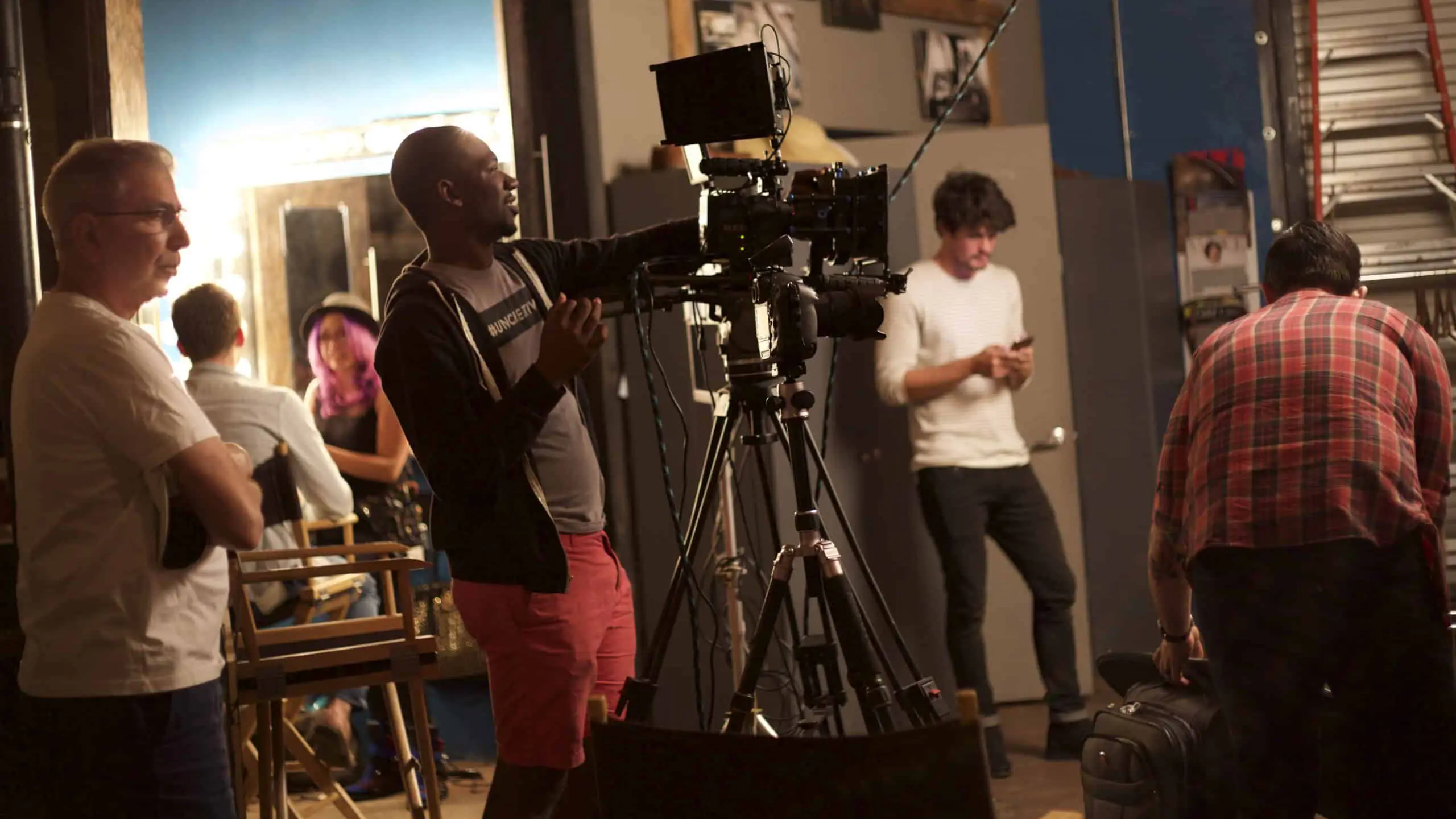
A film director is the creative force and visionary leader behind every successful movie, responsible for transforming scripts into compelling visual stories. From shaping a film's narrative to orchestrating seamless collaboration among cast and crew, the director's role is both demanding and rewarding. However, succeeding in this highly competitive field requires mastering a diverse set of "film director skills."
These skills go far beyond artistic vision, they encompass leadership, technical expertise, and the ability to adapt under pressure. Whether guiding actors to deliver their best performances or making split-second decisions on set, a director must wear many hats to bring a cinematic masterpiece to life.
In this blog, we’ll explore the essential skills every aspiring director needs, from storytelling and technical knowledge to team management and creative problem-solving. By mastering these fundamentals, you can take the first steps toward crafting unforgettable films.
## Vision and Storytelling Ability
A film director’s vision is the cornerstone of any cinematic masterpiece. This vision encompasses the tone, mood, and narrative style, providing a cohesive thread that binds every element of a film together. Whether it’s a poignant drama, a thrilling action sequence, or a whimsical fantasy, the director’s vision breathes life into the story, transforming words on a script into an immersive experience.
A deep understanding of story arcs and character development is crucial for directors. By mapping the journey of each character, directors can ensure their motivations and emotions resonate with the audience.
For instance, a well-crafted arc allows a hero’s transformation to unfold naturally, making their triumph or tragedy deeply impactful. Additionally, directors must consider the interplay between characters and how their relationships evolve throughout the narrative.
To refine these storytelling essentials, aspiring directors should immerse themselves in the art of screenwriting. Understanding the mechanics of a script, structure, pacing, and dialogue, helps directors interpret and adapt it effectively. Analyzing classic films is another invaluable exercise.
Iconic directors like Alfred Hitchcock and Akira Kurosawa exemplify how tone and visual style can elevate storytelling. Watching their works with a critical eye can inspire techniques for framing, lighting, and pacing that align with a unique directorial vision.
Practical exercises such as writing short scripts, creating storyboards, or collaborating on small projects can also sharpen storytelling skills. These activities provide hands-on experience in translating abstract ideas into tangible narratives, a key aspect of mastering "film director skills."
By combining artistic intuition with technical knowledge, directors can create films that captivate audiences and leave a lasting impression. A clear vision paired with robust storytelling essentials forms the foundation of a director’s craft, setting them apart in an ever-competitive industry.
## Leadership and Team Management
The role of a film director extends beyond artistic expression; it also demands exceptional leadership and team management skills. As the captain of the production ship, a director is responsible for uniting cast and crew under a shared vision. Effective coordination ensures that every department, from cinematography to costume design, works harmoniously to bring the story to life.
Strong communication skills are the backbone of directing techniques. A director must clearly articulate their vision while being open to feedback and collaboration. This balance fosters mutual respect and trust among team members. Delegation is equally critical; by entrusting responsibilities to department heads and trusting their expertise, directors can focus on the bigger picture without micromanaging.
Conflict resolution is another vital skill in a director’s arsenal. On a bustling film set, disagreements and unforeseen challenges are inevitable. A director who can remain calm, mediate disputes, and make decisive choices ensures the production stays on track.
To create a positive and productive set environment, directors can employ techniques such as daily briefings to align the team, providing constructive feedback, and celebrating small victories during production. Cultivating an atmosphere of encouragement motivates crew members and actors to perform at their best, even under pressure.
Leadership also involves understanding the unique needs of the cast. Each actor requires tailored guidance to embody their character authentically. By fostering an environment where actors feel supported, directors can inspire outstanding performances.
Mastering these directing essentials not only enhances the filmmaking process but also leaves a lasting impression on everyone involved. Great directors are remembered not just for their vision but for their ability to lead with empathy, clarity, and confidence. Ultimately, a well-led team is the foundation for turning creative dreams into cinematic reality.
## Technical Proficiency in Filmmaking
A director’s artistic vision is only as strong as their ability to communicate it effectively, and this requires a solid grasp of filmmaking’s technical aspects. Mastering the basics of cinematography, editing, and sound design allows directors to collaborate seamlessly with their team, ensuring their creative ideas are translated into a cohesive final product.
Cinematography is at the heart of visual storytelling. A director must understand the principles of framing, camera angles, lighting, and movement to convey the mood and tone of a scene. For instance, a close-up shot can capture raw emotion, while a wide angle establishes context and scale. Partnering effectively with the cinematographer requires knowing how to discuss these elements using technical terminology, ensuring the director’s vision is accurately captured.
Editing is where a film truly comes to life. Directors must understand pacing, continuity, and the emotional rhythm of a story to guide editors in assembling scenes. Similarly, sound design, an often overlooked aspect, plays a critical role in enhancing the viewing experience. Directors should be familiar with concepts such as diegetic and non-diegetic sound, Foley effects, and music scoring to create an immersive audio landscape.
Technical knowledge is one of the most important directing essentials because it bridges the gap between the creative and practical aspects of filmmaking. Without a clear understanding of these elements, a director may struggle to communicate effectively with their crew or face challenges in bringing their vision to life.
Aspiring directors can build technical expertise through hands-on experience and by utilizing modern resources. Online platforms like MasterClass and Skillshare offer courses on cinematography, editing, and sound design. Tools like Adobe Premiere Pro and DaVinci Resolve provide opportunities to experiment with editing, while practicing with entry-level cameras can help develop an eye for composition.
By mastering technical directing essentials, directors gain confidence in their ability to lead every aspect of the filmmaking process. This proficiency not only enhances their storytelling but also fosters trust and respect among their team, paving the way for a successful production.
## Creativity and Problem-Solving
Creativity and problem-solving are the lifeblood of a successful director’s career. Filmmaking is often unpredictable, and a director’s ability to think creatively under pressure can mean the difference between a stalled production and a cinematic masterpiece.
Challenges on set come in all shapes and sizes. For instance, imagine a sudden rainstorm during an outdoor shoot. A creative director might quickly pivot to shooting under a covered location or reframe the scene to incorporate the rain as a dramatic element. Similarly, budget constraints may inspire innovative solutions, such as using practical effects instead of costly CGI to achieve a particular look.
Nurturing creativity is essential for navigating these challenges. One effective method is brainstorming exercises. Directors can gather their team to explore alternative approaches to scenes, fostering collaboration and innovation. Improvisation techniques, both in performance and planning, also play a vital role. For example, encouraging actors to improvise dialogue can lead to unexpected, authentic moments that elevate a film.
Directors should also draw inspiration from diverse sources. Reading books, attending art exhibitions, and watching films across genres can spark new ideas and broaden their creative horizons. Keeping a journal for jotting down concepts and story ideas ensures that inspiration is never lost.
Equally important is developing a mindset that embraces challenges as opportunities for growth. Directors who view obstacles as puzzles to solve often discover unexpected breakthroughs. For example, the iconic shower scene in Psycho was shot with quick cuts due to technical limitations, yet it became one of the most memorable moments in cinema history.
These "film director skills" enable directors to remain resourceful, imaginative, and confident in the face of uncertainty. By combining creativity with problem-solving prowess, directors not only enhance their films but also inspire their teams to tackle challenges with enthusiasm and innovation. In an industry that thrives on the unexpected, these skills are the ultimate superpower for any director.
## Communication and Interpersonal Skills
Effective communication is at the heart of a director’s success. Clear and empathetic communication with actors and crew members ensures that everyone understands the vision for the film and feels motivated to contribute their best. A director’s ability to connect with their team fosters trust, collaboration, and a cohesive working environment.
One of the most important directing techniques for building trust is transparency. Directors who openly share their goals, expectations, and creative ideas invite their team to align with their vision. For example, explaining why a particular scene requires a certain lighting setup or performance nuance helps crew members and actors understand their role in the bigger picture.
Empathy is equally crucial in communication. Acknowledging the challenges actors and crew face during long shoots or demanding scenes builds goodwill and motivates them to push through difficulties. Simple gestures like asking for feedback, checking in on individual well-being, and celebrating small victories can go a long way in fostering morale.
Active listening is another cornerstone of communication in directing. During rehearsals, for instance, listening to actors’ interpretations of their roles can reveal fresh perspectives that enhance the narrative. Similarly, paying attention during production meetings allows directors to address concerns or suggestions from department heads promptly, ensuring smoother execution.
Directors can also inspire collaboration by using techniques such as creating a collaborative rehearsal space. For example, inviting actors to workshop scenes or improvising dialogue can uncover unexpected gems that elevate the story. With crew members, organizing daily briefings or walk-throughs ensures that everyone is on the same page and feels heard.
By mastering communication in directing, directors not only facilitate effective teamwork but also create a positive atmosphere that empowers everyone involved in the production. These skills are essential for translating creative visions into impactful films while earning the respect and trust of the entire team.
## Deep Understanding of Actors and Performance
One of a director’s key responsibilities is guiding actors to deliver authentic and emotionally resonant performances. To achieve this, directors must possess a deep understanding of character dynamics and the craft of acting itself. This understanding allows them to bridge the gap between the actor’s interpretation and the story’s requirements.
Directors begin by thoroughly analyzing scripts to understand characters on a deeper level. This involves identifying their motivations, emotional arcs, and relationships with other characters. For example, understanding why a character reacts angrily in a particular scene helps the director guide the actor to deliver that emotion convincingly. By immersing themselves in the script, directors can communicate character nuances to actors with clarity and confidence.
Working effectively with actors requires tailored approaches depending on their experience and style. With seasoned actors, directors can focus on refining subtleties in performance, offering suggestions rather than micromanaging.
For instance, suggesting a slight adjustment in tone or body language might bring a scene to life. On the other hand, newcomers may need more hands-on guidance, such as breaking down scenes into smaller beats or demonstrating the emotional intensity required for specific moments.
To foster collaboration, directors should create a safe space for actors to experiment. Rehearsals can serve as laboratories where actors feel free to explore different interpretations of their roles. Encouraging actors to ask questions or voice concerns about their characters can also uncover insights that enrich the performance.
Additionally, employing directing essentials like emotional triggers can be highly effective. For example, asking an actor to recall a personal experience similar to their character’s can help evoke genuine emotions on screen. However, it’s crucial for directors to be sensitive and respectful when employing such techniques.
By combining a deep understanding of characters with an empathetic approach to working with actors, directors can unlock performances that captivate audiences. This focus on performance is not only a cornerstone of "film directing tips" but also an essential skill that distinguishes great directors from the rest.
## Flexibility and Adaptability
Filmmaking is an art form built on creativity, but its process is often unpredictable. From unexpected weather changes to equipment failures, a director must be prepared to adapt quickly without compromising the vision for the film. Flexibility and adaptability are directing essentials, allowing directors to navigate challenges while keeping production on track.
For example, outdoor shoots are particularly susceptible to unpredictable conditions. A sudden downpour might require a director to shift to an indoor location or rewrite a scene to incorporate the rain as a dramatic element. Similarly, if a critical piece of equipment fails, a director must collaborate with their crew to find a workaround, such as using alternative lighting setups or rescheduling the shot.
Staying calm under pressure is a hallmark of adaptability in filmmaking. A director sets the tone for the entire crew; panic or indecision can ripple through the team, causing delays and morale issues. Instead, maintaining composure and focusing on solutions helps build confidence among cast and crew.
To enhance adaptability, directors should cultivate a problem-solving mindset. This includes brainstorming multiple contingencies during pre-production. For instance, having backup locations, additional props, or alternate schedules in place can reduce downtime when unexpected events occur. Regular communication with department heads ensures everyone is prepared for potential changes.
Practicing mindfulness and stress management techniques can also help directors remain focused in high-pressure situations. Techniques such as deep breathing or short meditation sessions during breaks can clear the mind and improve decision-making.
Adaptability in filmmaking is not just about handling crises; it’s about using challenges as opportunities to innovate. Many iconic scenes in film history arose from improvisation under difficult circumstances, proving that flexibility can often lead to creative breakthroughs. A director who embraces unpredictability as part of the filmmaking journey becomes a more resourceful and effective leader.
## Budgeting and Time Management
Working within budget constraints and meeting deadlines are two of the most critical challenges directors face. These "film director skills" are not just about cutting costs but about strategically managing resources to achieve the best possible outcome for the film.
Budgeting begins with understanding the financial parameters of the project. Directors collaborate with producers to allocate funds across various departments, such as cinematography, costumes, and special effects. Effective planning ensures that no single aspect overshadows others, maintaining a balanced production. For instance, saving costs on location rentals might free up funds for high-quality visual effects in post-production.
Time management is equally important in filmmaking. Tight shooting schedules require directors to prioritize tasks and maximize efficiency on set. For example, grouping scenes shot in the same location or featuring the same actors minimizes unnecessary transitions and reduces delays. Pre-production planning, such as creating detailed shot lists and storyboards, ensures that shooting days are well-structured and productive.
When unforeseen delays arise, a director’s ability to adjust the schedule without exceeding the budget becomes crucial. For example, if a shoot runs over time, the director might reschedule less critical scenes to ensure priority shots are completed. This requires constant communication with the production team to track progress and make real-time adjustments.
Directors must also foster a collaborative relationship with producers. Regular budget reviews and production meetings help identify potential issues early, allowing directors to adjust plans proactively. Transparency in discussing financial needs or constraints ensures mutual understanding and helps avoid conflicts.
To refine budgeting and time management skills, directors can leverage modern tools like scheduling software (e.g., Movie Magic or StudioBinder) and budgeting apps. These resources streamline planning and provide a clear overview of resources and timelines.
By mastering these directing essentials, directors can navigate the complexities of filmmaking without compromising creative vision. Striking the right balance between artistry and practicality is key to delivering a successful film on time and within budget, earning the trust and respect of both crew and stakeholders.
## Continuous Learning and Self-Improvement
The world of filmmaking is ever-evolving, with new technologies, techniques, and storytelling approaches constantly reshaping the industry. To stay competitive and relevant, directors must prioritize continuous learning. Embracing innovation and refining skills are not just "film directing tips" but essential practices for long-term success in a dynamic field.
One way to stay updated is by attending workshops and seminars. These events provide valuable insights into emerging trends, such as advancements in virtual production or AI-powered editing tools. Networking with peers at film festivals or industry meetups can also expose directors to fresh perspectives and collaborative opportunities. For those seeking more personalized guidance, mentorship from experienced filmmakers can be invaluable, offering tailored advice and constructive feedback.
Self-improvement doesn’t end with technical skills; it also involves nurturing a unique artistic voice. Directors should balance their growth with a commitment to their personal style. While learning new techniques, it’s important to integrate them in ways that enhance, rather than dilute, one’s creative identity.
Ultimately, continuous learning for directors is about embracing the mindset of a lifelong student. By staying curious, open to feedback, and willing to adapt, directors can keep their craft fresh and impactful while remaining true to their vision. This commitment to growth ensures not only career longevity but also the creation of films that resonate with audiences across generations.
## Understanding the Purpose of a Film Trailer
A film trailer serves as a powerful tool to introduce a movie to the world, acting as the ultimate pitch to potential audiences. Its role in film marketing cannot be overstated, as it has the ability to generate excitement, build anticipation, and drive ticket sales long before a movie hits theaters. In today’s saturated entertainment landscape, where countless films compete for attention, a well-executed trailer can make a movie stand out by offering a carefully crafted glimpse into its world.
Trailers come in various forms, each tailored to a specific purpose. Teasers, for instance, are short and evocative, designed to spark curiosity without revealing much about the plot. They are often released early in a film’s marketing campaign to lay the groundwork for future promotional efforts.
Full trailers, on the other hand, provide a deeper dive into the storyline, characters, and themes, offering viewers a clearer sense of what to expect. TV spots and social media promos cater to different platforms, delivering shorter, impactful snippets designed to capture attention quickly in a fast-paced digital environment.
Understanding the target audience is critical to crafting an effective trailer. Every element, from the tone and pacing to the choice of scenes, must resonate with the intended viewers. For instance, a romantic drama might highlight emotional moments and heartfelt dialogues, while an action-packed blockbuster would emphasize high-octane sequences and thrilling visuals.
This alignment ensures the trailer not only grabs attention but also appeals to those most likely to engage with the film. By offering just enough to captivate while leaving questions unanswered, a trailer serves as both an invitation and a promise, drawing audiences into the cinematic experience.
## Pre-Production. Setting the Foundation for Trailer Success
The journey to a compelling film trailer begins long before editing or visuals come into play. Pre-production is where the foundation for success is built, establishing the creative and strategic direction that guides the entire process.
This stage starts with defining clear goals for the trailer. Whether the aim is to tease a gripping narrative, showcase stunning visuals, or highlight a star-studded cast, these objectives serve as a roadmap, ensuring every decision aligns with the film’s overarching vision.
Selecting the right scenes is a critical part of this phase. Trailers rely on moments that grab attention, spark intrigue, and convey the essence of the story without giving too much away. This involves identifying standout visuals, emotionally charged dialogues, and key sequences that hint at conflict or resolution.
The challenge lies in striking the perfect balance, offering enough to entice while leaving audiences eager to learn more. The selected scenes must be cohesive and strategically arranged to create a compelling narrative arc that mirrors the film’s tone.
Collaboration plays a pivotal role in the pre-production process. Filmmakers, who bring deep insights into the story, characters, and cinematic vision, work closely with marketers who understand audience preferences and current trends. This partnership ensures that the trailer aligns with the film’s branding and appeals to its target demographic.
Decisions about pacing, music, and visuals all stem from this collaborative effort, with the ultimate goal of creating a trailer that not only captivates but also sets the stage for a successful marketing campaign. Pre-production is the crucial first step, laying the groundwork for a trailer that captures the heart of the film and resonates with audiences.
## Crafting a Strong Narrative Structure
A compelling film trailer is more than just a series of exciting scenes, it’s a miniature story with its own narrative arc. The three-act structure, a cornerstone of storytelling, is as vital to trailers as it is to feature films. This structure divides the trailer into three parts: an introduction, a build-up, and a climax.
In the introduction, the tone is set, key characters or elements are introduced, and the world of the film begins to take shape. The build-up escalates tension or stakes, offering glimpses of conflict or intrigue that propel the audience forward. Finally, the climax delivers a high-energy, dramatic sequence that leaves viewers eagerly anticipating the full story.
Even within the short runtime of a trailer, storytelling remains essential. A clear narrative structure helps create an emotional connection with the audience, guiding them through a journey that mirrors the film’s essence. It’s not just about showcasing impressive visuals but weaving those moments into a cohesive story. For instance, a trailer for a superhero movie might begin with the protagonist’s ordinary life, reveal a moment of transformation or conflict, and crescendo into action-packed scenes that tease the stakes without resolving them.
Balancing mystery and clarity is key to hooking viewers. A trailer should provide enough information to intrigue the audience, hinting at the film’s plot and themes, but without spoiling major twists or resolutions. Subtle hints, unanswered questions, and cliffhangers can heighten anticipation while leaving room for curiosity.
For example, dialogue snippets or visuals that raise questions, like “Why is this character in danger?” or “What’s the significance of that object?”, can be strategically included to draw viewers deeper into the narrative. By skillfully structuring the trailer and blending storytelling with mystery, filmmakers can craft a preview that not only excites but also lingers in the minds of audiences.
## Editing Techniques That Elevate Trailer Impact
Editing is the heartbeat of a film trailer, shaping raw footage into a polished, impactful preview. The principles of pacing, rhythm, and transitions are fundamental to effective trailer editing. Pacing controls the flow of the trailer, varying between slow, reflective moments and high-energy sequences to keep viewers engaged.
Rhythm, on the other hand, ensures that visual and audio elements sync harmoniously, creating a seamless viewing experience. Transitions, such as cuts, fades, and overlays, connect scenes fluidly while maintaining momentum and excitement.
The art of cutting scenes is crucial in trailer editing. Quick cuts can heighten tension and excitement, while longer shots allow viewers to absorb key moments or emotions. Fades and overlays, used sparingly, can add dramatic weight or create smooth transitions between scenes. For example, a fade-to-black paired with a sound effect can signal a shift in tone, building anticipation for what’s coming next. The goal is to keep the audience immersed without overwhelming them with chaotic edits.
Visual effects and color grading are also instrumental in elevating a trailer’s impact. Subtle enhancements, such as sharpening action sequences or adding atmospheric effects, can make scenes more visually striking. Color grading plays a significant role in setting the mood, warm tones might evoke nostalgia or romance, while cooler palettes lend themselves to mystery or tension. For instance, a sci-fi trailer might use metallic hues and high contrasts to convey a futuristic aesthetic, aligning the visual style with the genre.
Ultimately, trailer editing is about making every second count. Each cut, transition, and effect should serve a purpose, whether it’s building suspense, showcasing a character, or highlighting the stakes. By combining dynamic pacing, seamless transitions, and captivating visuals, editors create trailers that not only capture attention but also leave a lasting impression on audiences. The art of editing transforms scattered clips into a cohesive, emotionally engaging preview that embodies the spirit of the film.
## The Power of Music and Sound Design in Trailers
Music and sound design are the emotional backbone of a film trailer, transforming visuals into a gripping, immersive experience. The right audio choices can evoke excitement, suspense, or even nostalgia, allowing viewers to connect emotionally with the story in just a few seconds.
Selecting music that aligns with the trailer's tone is critical; for instance, an epic orchestral score works well for action-packed blockbusters, while a haunting piano melody might suit a psychological thriller. Music helps set the mood from the very first frame, anchoring the narrative and guiding the audience’s emotional journey.
Syncing audio with visual cues is another key element that elevates the impact of a trailer. The timing of musical beats, crescendos, or drops with pivotal moments in the visuals creates a seamless synergy that captures attention. For example, an intense beat drop timed with a sudden cut to an action sequence can heighten the drama and create a lasting impression.
Similarly, pairing slower, quieter music with emotional or introspective scenes allows viewers to absorb the depth of a character or storyline. This synchronization ensures that audio enhances, rather than distracts from, the visuals, amplifying the trailer's storytelling power.
Sound effects and voiceovers also play vital roles in crafting a memorable trailer. Sound effects, such as explosions, footsteps, or ambient noise, add texture and realism to scenes, drawing viewers deeper into the cinematic world. Strategic use of silence, contrasted with sharp sound bursts, can be just as impactful, creating moments of suspense or surprise.
Voiceovers, often featuring narration or character dialogue, provide context, hint at key plot points, and deliver memorable lines that resonate long after the trailer ends. Together, music, sound effects, and voiceovers create an audio tapestry that brings the visuals to life, ensuring the trailer captivates audiences both emotionally and sonically.
## Leveraging Promotional Video Trends
In an era dominated by digital media, film trailers are increasingly adapting to modern promotional trends to remain relevant and impactful. Incorporating cinematic title cards, text overlays, and dynamic visual elements has become a staple in contemporary trailers.
Title cards serve as powerful tools to deliver key information, such as the release date or cast highlights, while also breaking up the narrative flow. Text overlays, when paired with striking visuals, emphasize key themes or memorable quotes, ensuring they stick with viewers even in fast-paced edits.
One of the most significant trends in recent years is the rise of trailers optimized for social media platforms. Platforms like Instagram, TikTok, and YouTube have become primary channels for trailer distribution, encouraging formats that cater to mobile-first audiences.
Vertical trailers, for instance, maximize screen space on smartphones, while shorter, high-energy clips cater to viewers with limited attention spans. These trailers often begin with immediate, attention-grabbing moments, such as dramatic dialogue or explosive action, to hook viewers within the first few seconds.
Adapting trailers for different distribution channels is another critical consideration. A traditional cinema trailer might prioritize storytelling and extended scenes, while a social media trailer focuses on bite-sized, visually impactful moments designed to be shared.
Trailers for streaming platforms often highlight binge-worthy aspects, such as ensemble casts or cliffhanger moments, to entice viewers into watching an entire series or franchise. By embracing these modern trends, filmmakers can ensure their trailers reach and engage audiences across a variety of platforms, maximizing their promotional impact.
## Tips for Engaging Audiences with Visual and Emotional Appeal
A successful film trailer captivates viewers by seamlessly blending striking visuals with a compelling emotional narrative. The use of visually memorable moments is key to leaving a lasting impression.
Iconic imagery, such as breathtaking landscapes, dynamic action sequences, or intense close-ups, draws the audience's attention and creates moments they’ll associate with the film. These visuals act as the trailer’s anchor points, helping to create buzz and excitement that sticks in viewers’ minds long after the trailer ends.
Building suspense or excitement is another critical component of audience engagement. This can be achieved through careful pacing, starting with slower, tension-building scenes that gradually escalate to a climactic peak.
Techniques like revealing just enough of a pivotal moment without showing its resolution can create an air of mystery and intrigue. For instance, a sudden cut right before a dramatic event, paired with escalating music or sound effects, can leave viewers yearning for answers, compelling them to watch the full film.
Equally important are emotional hooks that resonate deeply with the audience. These moments tap into universal themes, such as love, sacrifice, or triumph, making the story relatable and impactful. A heartfelt dialogue, a powerful gaze between characters, or a moment of vulnerability can evoke empathy and connection.
Emotional appeal helps audiences invest in the characters and plot, transforming a trailer from a simple preview into an evocative experience. By strategically combining eye-catching visuals, expertly crafted suspense, and relatable emotional cues, filmmakers can ensure their trailers leave audiences both engaged and eager for more.
## Avoiding Common Mistakes in Trailer Production
While crafting a film trailer is an art, there are common pitfalls that can undermine its impact. One of the most frequent mistakes is overloading the trailer with too much information. Trailers are meant to tease, not tell the entire story.
Packing in excessive plot details, especially major twists or resolutions, can rob the audience of the joy of discovery. Effective trailers strike a balance, offering just enough to spark curiosity while keeping key plot points shrouded in mystery.
Poor editing choices can also detract from a trailer’s effectiveness. Disjointed transitions, uneven pacing, or abrupt cuts can confuse viewers and disrupt the flow of the narrative. For example, randomly assembling visually impressive scenes without a coherent structure might dazzle initially but ultimately fails to leave a meaningful impression. Skilled editing ensures the trailer flows smoothly, guiding the audience through its narrative arc while maintaining engagement.
Another significant mistake is failing to match the tone of the trailer to the film’s genre. A romantic comedy trailer that feels overly dark or a horror trailer that comes across as humorous can alienate its target audience and misrepresent the film. Consistency in tone, achieved through visuals, music, and pacing, ensures that the trailer aligns with viewer expectations and accurately conveys the film’s essence.
By avoiding these common missteps, filmmakers can create trailers that not only resonate with audiences but also serve as effective marketing tools, enticing viewers to explore the full story on screen. Attention to detail, a clear narrative structure, and an understanding of the film’s core identity are crucial to sidestepping these errors and delivering a trailer that truly shines.
## Measuring Success and Iterating for Improvement
A film trailer’s effectiveness can be measured by how well it resonates with audiences and drives interest in the movie. Analytics and audience feedback are essential tools for evaluating a trailer’s success.
Metrics such as view counts, engagement rates (likes, shares, comments), and click-through rates on digital platforms provide tangible data on how audiences are reacting. Social media sentiment analysis, gauging positive, negative, or neutral reactions, offers further insights into how well the trailer is connecting with its target demographic. These metrics help assess whether the trailer is generating the desired buzz and excitement.
Test screenings are another valuable method for gathering feedback. In controlled environments, viewers can offer insights into what works and what doesn’t, such as confusing narrative elements, pacing issues, or ineffective emotional hooks. These sessions often reveal subtle improvements that can make a significant difference in audience engagement.
Digital analytics also play a pivotal role in refining a trailer. Platforms like YouTube and social media provide data on audience retention, highlighting which parts of the trailer keep viewers engaged and where they drop off. These insights can inform edits to pacing, scene selection, or audio elements to enhance the trailer’s appeal.
Continuous improvement in trailer production requires staying updated with trends, audience preferences, and new technologies. Regularly analyzing the performance of previous trailers provides lessons for future projects, while experimenting with creative elements ensures fresh and innovative approaches.
By combining analytics, audience feedback, and a commitment to iteration, filmmakers can create trailers that not only captivate viewers but also maximize their promotional impact, driving more audiences to theaters or streaming platforms.
## Work with C&I Studios
If you are planning a project like this, our team can take it from concept to final delivery. Explore our [film and TV production](https://c-istudios.com/film-and-tv-production/), browse [our work](https://c-istudios.com/our-work/) to see how we tell brand stories, and [get in touch](https://c-istudios.com/contact/) when you are ready to start.
Originally published November 9, 2024
---
*This content is from [C&I Studios](https://c-istudios.com), a full-service production company.*
---
# Video Marketing for Tech Startups: Standing Out in a Crowded Market
> Published: November 8, 2024
> Categories: Commercial & Brand
> Source: https://c-istudios.com/video-marketing-for-tech-startups-standing-out-in-a-crowded-market/
---
.cib{--paper:#1b1d1f;--ink:#fff;--body:#d5d7d9;--muted:#8b9096;--line:rgba(255,255,255,.12);--thumb:#2b2e31;--card:#212426;--accent:#c02b0a;--blue:#5B8FA8;--serif:'Playfair Display',Georgia,serif;--sans:'Poppins',-apple-system,sans-serif;--measure:900px;background:var(--paper);color:var(--body);font-family:var(--sans);line-height:1.6;position:relative;left:50%;transform:translateX(-50%);width:90vw;max-width:1920px}
.cib *{box-sizing:border-box}
.cib .kicker{max-width:var(--measure);margin:58px auto 0;padding:0 22px;font-size:12.5px;font-weight:700;letter-spacing:2.5px;text-transform:uppercase;color:var(--blue)}
.cib h1.cibh1{text-wrap:balance;font-family:var(--serif);font-weight:500;font-size:clamp(46px,6vw,72px);line-height:1.08;color:var(--ink);max-width:var(--measure);margin:18px auto 0;padding:0 22px;letter-spacing:-.5px}
.cib .metarow{max-width:var(--measure);margin:20px auto 0;padding:0 22px;color:var(--muted);font-size:14px}
.cib .hero{position:relative;width:100%;height:0;padding-bottom:56.25%;overflow:hidden;margin:48px auto 0;border-top:1px solid var(--line);border-bottom:1px solid var(--line)}
.cib .hero .ph{width:100%;aspect-ratio:16/9;background:var(--thumb);border-top:1px solid var(--line);border-bottom:1px solid var(--line);display:flex;align-items:center;justify-content:center;color:#7d8288;font-size:13px;text-align:center;padding:0 20px}
.cib .body{max-width:var(--measure);margin:12px auto 0;padding:52px 22px 6px}
.cib .body.lead p:first-child{font-size:23px;line-height:1.62;color:var(--ink)}
.cib .body p{font-size:18.5px;line-height:1.85;margin:0 0 30px;color:var(--body)}
.cib .body h2{text-wrap:balance;font-family:var(--serif);font-weight:500;font-size:clamp(32px,4vw,48px);line-height:1.22;color:var(--ink);margin:70px 0 20px;letter-spacing:-.3px}
.cib .body h3{text-wrap:balance;font-family:var(--sans);font-weight:600;font-size:22px;color:var(--ink);margin:38px 0 8px}
.cib .body a{color:var(--ink);text-decoration:underline;text-decoration-color:rgba(255,255,255,.4);text-underline-offset:3px}
.cib .body a:hover{text-decoration-color:var(--ink)}
.cib .ctable{width:100%;border-collapse:collapse;margin:16px 0 30px;font-size:16px}
.cib .ctable th{background:#000;color:#fff;text-align:left;padding:10px 12px;font-family:var(--sans)}
.cib .ctable td{padding:10px 12px;border-bottom:1px solid var(--line);color:var(--body)}
.cib .inimg{position:relative;width:100%;height:0;padding-bottom:56.25%;overflow:hidden;margin:72px auto;border-top:1px solid var(--line);border-bottom:1px solid var(--line)}
.cib .inimg .ph{width:100%;aspect-ratio:16/9;background:var(--thumb);border-top:1px solid var(--line);border-bottom:1px solid var(--line);display:flex;align-items:center;justify-content:center;color:#7d8288;font-size:13px}
.cib .origpub{max-width:var(--measure);margin:60px auto 0;padding:26px 22px 0;border-top:1px solid var(--line);color:var(--muted);font-size:13.5px}
.cib .related{max-width:1200px;margin:64px auto 0;padding:34px 22px 76px}
.cib .related h3{font-family:var(--sans);font-size:12.5px;letter-spacing:2px;text-transform:uppercase;color:var(--ink);margin:0 0 24px}
.cib .grid{display:grid;grid-template-columns:repeat(3,1fr);gap:28px}
.cib .rc{background:var(--card);border:1px solid var(--line);display:block;text-decoration:none;color:inherit;transition:border-color .15s}
.cib a.rc:hover{border-color:rgba(255,255,255,.5)}
.cib .rc .thumb{position:relative;width:100%;height:0;padding-bottom:56.25%;background:var(--thumb);overflow:hidden}
.cib .rc .thumb img{position:absolute!important;top:0!important;left:0!important;width:100%!important;height:100%!important;object-fit:cover!important;margin:0!important}
.cib .rc .cc{padding:14px 15px 17px}
.cib .rc .rt{font-family:var(--serif);font-weight:500;font-size:16px;line-height:1.3;color:var(--ink);margin:0 0 6px}
.cib .rc .rm{font-size:11px;letter-spacing:1px;text-transform:uppercase;color:var(--muted)}
.cib img{margin:0!important;padding:0!important;display:block!important;vertical-align:top;max-width:100%}
.cib .hero img,.cib .inimg img{position:absolute!important;top:0!important;left:0!important;width:100%!important;height:100%!important;object-fit:cover!important;margin:0!important;padding:0!important;border:0!important;display:block!important;aspect-ratio:auto!important}
.cib .hero+.body{padding-top:36px}
@media(max-width:760px){.cib .grid{grid-template-columns:1fr}.cib .body h2{margin:52px 0 16px}.cib .body p{font-size:17.5px}.cib .inimg,.cib .hero{margin-top:44px}}
.cib .vembed{max-width:var(--measure);margin:44px auto;padding:0 22px}.cib .vembed .vwrap{position:relative;width:100%;height:0;padding-bottom:56.25%}.cib .vembed .vwrap iframe{position:absolute;top:0;left:0;width:100%;height:100%;border:0}
Commercial & Brand
# Video Marketing for Tech Startups. Standing Out in a Crowded Market
26 min read
In today’s competitive tech landscape, startups face the challenge of capturing attention in a market saturated with innovation. Video marketing has emerged as a powerful tool to help these startups build brand visibility and make a memorable impact. Unlike traditional content formats, video enables startups to communicate complex ideas in a clear, engaging, and visually compelling way, making it ideal for tech products that require some explanation.
By leveraging video production and targeted content creation, tech startups can effectively showcase their unique offerings, demonstrate product value, and connect with audiences on a deeper level.
As video content continues to dominate digital channels, startups that embrace video marketing not only stand out but also build trust and credibility with their audience, paving the way for sustained growth and brand recognition.
## Building Brand Identity Through Visual Storytelling
For tech startups aiming to carve out a distinctive presence, brand identity is paramount, and visual storytelling is a compelling way to build it. In video marketing, storytelling goes beyond showcasing products; it involves weaving a narrative that resonates with the audience, highlights brand values, and fosters an emotional connection. Through the power of visual storytelling, tech startups can communicate their mission, innovation, and unique qualities in a way that feels genuine and relatable.
Branding and graphic design are essential elements in creating this visual identity. By using consistent colors, fonts, and logos, startups can ensure that each video reflects their brand’s personality and makes a lasting impression. Thoughtful graphic design allows viewers to recognize the brand instantly, whether they’re watching a short social media clip or an in-depth product demo.
For example, a tech startup with a focus on environmental sustainability might use earthy colors and minimalist design elements to visually convey its values, making the brand identity clear and memorable.
Professional photography further elevates this storytelling, adding an authentic and polished touch to videos. High-quality imagery sets a standard of professionalism that can enhance trust and credibility, key factors for startups looking to establish themselves in a competitive market. Custom photography can showcase team members, product details, or the startup’s workspace, providing a behind-the-scenes look that adds depth to the brand story. These visuals make the brand more relatable and human, helping potential customers feel a personal connection.
Together, branding and graphic design combined with [professional photography](https://c-istudios.com/professional-photography-services/) create a cohesive and compelling brand identity that resonates with the audience. By investing in these elements, tech startups can use visual storytelling not only to attract attention but also to communicate their values and mission effectively. This approach builds recognition, loyalty, and trust, essential qualities for any startup aiming to stand out in the tech industry.
## Choosing the Right Platforms for Video Marketing
Selecting the right platforms is crucial for effective video marketing, especially for tech startups that need to reach targeted audiences with limited resources. Each platform offers unique features and audience demographics, making it important to align platform selection with marketing goals. For instance, YouTube, LinkedIn, and Instagram are popular choices, each catering to different types of viewers and engagement styles.
Social media marketing services can play a key role in navigating these platforms strategically. These services help startups tailor their video content to each platform, ensuring maximum impact and engagement. For example, Instagram’s Stories and Reels are ideal for short, visually striking content that captures attention quickly, while LinkedIn’s audience might respond better to longer, more detailed videos that convey expertise and professionalism.
A tailored approach ensures that each video resonates with the intended audience, leveraging platform-specific features like hashtags, live streaming, and sponsored posts for wider reach.
In addition to choosing the right platforms, reliable [web hosting](https://c-istudios.com/web-hosting/) is essential for seamless video delivery, especially when videos are embedded on the startup’s website or landing pages. Quality web hosting ensures that videos load quickly, providing a smooth user experience. Slow load times can deter viewers, so investing in strong web hosting is essential for keeping audiences engaged. A dependable hosting solution also supports high-quality video formats, ensuring that visuals remain crisp and professional.
By combining social media marketing services with robust web hosting, tech startups can deliver a consistent and accessible video experience across multiple platforms. This approach helps ensure that each video is not only seen by the right audience but also delivers a smooth, high-quality viewing experience, helping startups maximize the effectiveness of their video marketing efforts.
## Utilizing VFX and Animation for Product Demos
For tech startups, showcasing complex products in a way that is both engaging and easy to understand can be challenging. This is where VFX compositing and animation come into play, transforming technical concepts into visually appealing demonstrations that capture attention and simplify the message. By using VFX, startups can create immersive product demos that break down complex features into accessible visual elements, allowing audiences to grasp the product’s value quickly.
VFX compositing involves layering different visual elements, like graphics, animations, and real-life footage, to create a seamless, polished video. In product demos, this technique can highlight specific features, simulate processes, or show a product in action within various scenarios.
For example, a software startup might use VFX to show how its product functions across different devices, emphasizing the user interface and key functionalities. Animation, meanwhile, brings an added layer of engagement by animating user actions, interface interactions, and product features, making the demo both informative and captivating.
Creative marketing strategies integrate these visual elements to create compelling stories around the product. Rather than merely listing features, creative marketing with [VFX and animation](https://c-istudios.com/vfx-compositing-and-animation-services/) can illustrate the real-world applications and benefits of the product. This storytelling approach enables startups to engage audiences emotionally and intellectually, making the content more memorable.
An animated sequence that shows the impact of a product in a relatable scenario, for example, can resonate more deeply than text-based explanations alone. By utilizing VFX and animation in creative marketing, tech startups can capture the attention of potential users and communicate complex information clearly and effectively.
Together, VFX compositing and animation with creative marketing make product demos dynamic and appealing, turning technical details into visual stories that engage viewers and clarify product value. This approach not only highlights the innovation behind a product but also strengthens the brand's image as a forward-thinking and user-focused entity.
## Engaging Audiences with Live Streaming and Real-Time Interaction
Live streaming has become a powerful tool for tech startups, offering a direct line of engagement that traditional media can’t provide. Audio live streaming and video streaming allow startups to interact with audiences in real time, answer questions, and receive immediate feedback.
This level of accessibility helps build a sense of community and trust, as viewers feel more connected to the brand. For instance, live demos, Q&A sessions, or product launches provide unique opportunities to showcase transparency and authenticity.
To ensure high-quality live streaming, having the right [video production gear list](https://c-istudios.com/video-production-gear-list/) is essential. This list should include high-resolution cameras, reliable audio equipment, proper lighting, and a stable internet connection. Audio quality is especially crucial, as poor sound can lead to frustration and detract from the viewer experience.
Including equipment like external microphones and audio mixers can significantly enhance audio live streaming, ensuring that viewers hear every detail clearly. Lighting equipment, such as LED panels or ring lights, adds a professional touch by illuminating the scene, while a powerful internet connection ensures smooth streaming without lag or interruptions.
Real-time interaction during live streams fosters a deeper level of engagement, allowing brands to answer questions, address concerns, and personalize responses. This two-way communication builds trust and makes audiences feel valued, as their input is acknowledged immediately.
For example, a tech startup could host a live Q&A session about a new software feature, inviting users to ask questions and provide feedback on the spot. Such interaction not only builds community but also offers valuable insights into user needs and preferences, which can inform future product developments.
By leveraging audio live streaming and using a carefully curated video production gear list, tech startups can create an interactive and professional live streaming experience. This strategy not only engages viewers in real time but also strengthens brand credibility and loyalty, as audiences feel more connected and informed about the brand’s offerings.
## Incorporating SEO Strategies for Video Visibility
In today’s digital landscape, visibility is everything, and for tech startups, effective SEO copywriting and media marketing strategies are essential to ensure that their video content reaches a wide audience.
Unlike traditional SEO for written content, video SEO requires a unique set of practices tailored to improve ranking on search engines and video platforms like YouTube. With the right SEO approach, startups can boost their video’s discoverability, attract targeted viewers, and enhance engagement.
One of the most important aspects of video SEO is optimizing titles, descriptions, and tags with relevant keywords. Just as [SEO copywriting](https://c-istudios.com/seo-copywriting-services/) helps webpages rank in search results, carefully crafted, keyword-rich titles and descriptions make video content more visible to users searching for specific topics.
For example, if a tech startup produces a video about a new app feature, incorporating keywords like “app tutorial” or “app feature demo” in the title and description can help the video appear in related search results. Tags further categorize the content, signaling to search engines what the video is about and improving its chances of reaching interested viewers.
Media marketing also plays a crucial role in promoting videos across platforms and driving traffic back to the startup’s website or social media channels. By sharing video content through multiple media channels, such as social media posts, blog embeds, and email newsletters, startups can amplify their reach and enhance their video’s ranking signals.
Media marketing strategies should aim to create buzz around the video, encouraging shares and backlinks, which boost visibility and SEO performance. In addition, collaborating with influencers or industry partners to share video content can also increase its reach, exposing the brand to new audiences.
Effective SEO copywriting and media marketing work hand in hand to improve video visibility. While SEO techniques ensure that the video content is optimized for discovery, media marketing amplifies its reach, increasing the likelihood that users will engage with and share it. For tech startups, this dual approach maximizes video exposure and can significantly enhance brand awareness in a competitive digital landscape.
## Using Documentary-Style Content to Showcase Innovation
Documentary-style videos offer tech startups a powerful way to showcase their journey, innovations, and the people behind the brand. Unlike scripted commercials, documentary-style content provides an authentic look into the company’s values, mission, and daily operations, fostering trust and credibility among audiences. By sharing behind-the-scenes stories or capturing real moments, startups can humanize their brand, showing viewers the passion and dedication driving their innovation.
Documentary [film production](https://c-istudios.com/film-and-tv-production/) techniques, such as candid interviews, raw footage, and unscripted storytelling, help convey authenticity. For a tech startup, a documentary-style video might feature interviews with founders discussing challenges and milestones, or clips of the team collaborating on product development.
This format invites viewers to become part of the startup’s journey, allowing them to witness the effort and creativity involved in bringing ideas to life. Documentaries also serve as valuable content assets, as they can be shared across platforms, used in investor presentations, or highlighted on a website’s “About Us” page to enhance the brand’s story.
Artist management and media creation are integral to producing high-quality documentary-style content. Artist management involves coordinating and guiding the creative professionals involved in the production, from videographers to editors, ensuring that everyone works cohesively to capture the brand’s story authentically.
Media creation professionals bring the technical expertise needed to film and edit raw footage, transforming it into a cohesive, engaging narrative. These experts understand how to frame shots, use lighting, and edit scenes to convey a particular tone, capturing the brand’s unique voice.
Together, documentary film production with effective [artist management and media creation](https://c-istudios.com/artist-management-and-media-creation/) enable tech startups to produce content that resonates deeply with viewers. This approach allows brands to connect on a personal level, showing the real people and processes behind the scenes.
Documentary-style videos foster a sense of transparency and trust, making them an effective way for startups to differentiate themselves and showcase their commitment to innovation. By leveraging this style of storytelling, tech startups can strengthen their brand image and build long-term relationships with audiences who value authenticity.
## Evaluating Performance and Optimizing Video Content
For tech startups leveraging video marketing, evaluating performance is crucial to understanding what resonates with viewers and refining content strategies. Performance analytics provide insights into various metrics, such as engagement rates, shares, watch time, and conversions, that reveal how effectively video [content](https://c-istudios.com/content-creation-services/) is reaching and influencing its audience. By closely monitoring these metrics, startups can identify which videos are successful in driving engagement and where improvements can be made to boost results.
Metrics like engagement rates and shares indicate how well the content is capturing viewers’ attention and prompting interaction. High engagement often reflects relevance and quality, while shares can help extend the reach of a video to new audiences.
Conversion rates, on the other hand, measure the extent to which videos are driving desired actions, such as signing up for a newsletter, downloading an app, or purchasing a product. Analyzing these metrics helps startups determine the return on investment for their video marketing efforts and identify areas for optimization.
Web maintenance plays a vital role in ensuring that video content performs well across different platforms. Regular maintenance keeps websites up to date, secure, and capable of handling video content without lags or issues.
This involves optimizing video load speeds, ensuring compatibility across devices, and maintaining seamless integration with hosting platforms. If videos are embedded directly on the website, consistent web maintenance is essential to avoid interruptions that could negatively impact the user experience.
Audio engineering is another critical factor in optimizing video quality. Clear and high-quality audio can significantly improve viewer engagement, as poor sound quality often leads to a frustrating experience. Audio engineering ensures that the audio is balanced, crisp, and professional, whether it’s a voiceover, interview, or background music.
For example, startups can use audio engineering techniques to reduce background noise, adjust volume levels, or enhance voice clarity, all of which contribute to a more polished and enjoyable viewing experience.
By focusing on web maintenance and audio engineering, tech startups can ensure that their video content is not only visually compelling but also smooth and immersive. This attention to detail in performance and quality optimization elevates the viewer’s experience, ultimately supporting the video’s success in engaging and converting audiences.
## Scaling Video Marketing Efforts for Long-Term Success
For tech startups to achieve long-term success in video marketing, it’s essential to scale efforts strategically and invest in high-quality production. As the brand grows, scaling video marketing can involve more sophisticated production techniques, wider distribution channels, and exploring new content formats.
One way to elevate video quality is through [feature film mastering and delivery](https://c-istudios.com/feature-film-mastering-and-delivery/), a process that ensures that video content looks and sounds polished across all platforms. Originally used in cinema, feature film mastering can enhance video sharpness, color grading, and sound, making each piece feel professionally crafted and compelling for viewers.
A strategic approach to scaling may include collaborating with [professional video production](https://c-istudios.com/video-production-services/) studios to access advanced tools and industry expertise. Such partnerships allow startups to produce higher-caliber videos without the need for extensive in-house resources.
Additionally, working with experts in feature film mastering and delivery ensures that video content maintains a consistent quality standard, which is crucial as the brand expands its reach and aims to maintain a strong, professional image.
Another exciting strategy for scaling video marketing is pitching larger-scale content concepts, such as a tech-focused TV show pitch. A well-developed show could delve into the startup’s industry, explore the latest innovations, or even provide educational content for viewers.
By creating content in the format of a TV show, tech startups can position themselves as thought leaders, engaging viewers with high-quality episodes that showcase expertise and industry insights. This approach not only expands the brand’s visibility but also opens new revenue and partnership opportunities, elevating its impact in the market.
Combining feature film mastering and delivery with bold ideas like a TV show pitch provides tech startups with the tools to scale video marketing in a meaningful way. As the brand evolves, these strategies ensure that video content remains engaging, high-quality, and resonant with audiences, fostering deeper connections and long-term loyalty.
By continually refining and expanding their video marketing efforts, tech startups can stay competitive, adapt to changing trends, and build a lasting brand presence that stands out in a crowded digital landscape.
## AI and Automation in Content Production
Artificial intelligence and automation have reshaped the way content is produced, making it faster, more efficient, and highly targeted. One of the most significant advancements is the use of [SEO copywriting](https://c-istudios.com/seo-copywriting-services/) tools powered by AI, which allow brands to generate content that is optimized for search engines and resonates with audiences.
AI-driven SEO copywriting can analyze vast amounts of data to suggest the best keywords, structure, and tone for any piece of content, ensuring it ranks well and captures user interest. This automation not only saves time but also elevates content quality, allowing creators to focus on strategy and creativity.
Creative marketing has also benefited immensely from AI and automation. AI can personalize marketing efforts by analyzing user behavior and preferences, delivering content that feels tailored to each individual.
For example, AI can segment audiences based on their interaction patterns and automatically serve customized content, like targeted ads, blog posts, or product recommendations, that aligns with their interests. This level of personalization helps brands foster deeper connections with users and improves engagement rates.
Automation in creative marketing extends to social media management, where AI tools can schedule posts, analyze engagement metrics, and recommend optimal posting times. These automated insights streamline workflows, allowing marketing teams to focus on creating impactful content rather than getting bogged down in manual tasks.
By incorporating SEO copywriting and creative marketing solutions powered by AI, brands can produce relevant, optimized, and personalized content at scale. This technology-driven approach not only increases efficiency but also enables content that is more aligned with user preferences, enhancing engagement and fostering brand loyalty.
## The Rise of Video Content and Live Streaming
In today’s content landscape, video has become an essential medium, capturing attention in a way that static content often can’t. With the growing accessibility of high-quality cameras and editing software, [video production](https://c-istudios.com/video-production-services/) is now a fundamental tool for brands looking to engage audiences.
Videos offer an immersive experience that combines visual and auditory elements, making them ideal for storytelling and conveying complex ideas in a digestible format. From product demos to behind-the-scenes insights, video production enables brands to showcase their personality and engage users in a memorable way.
Audio live streaming has also emerged as a powerful content format, providing real-time interaction between brands and their audiences. Unlike pre-recorded videos, live streams allow users to join conversations as they happen, ask questions, and provide immediate feedback.
This interaction fosters a sense of community, making audiences feel like active participants rather than passive viewers. Brands leverage audio live streaming for various purposes, including Q&A sessions, product launches, and live tutorials, all of which create a more dynamic and engaging experience.
The rise of video production and audio live streaming reflects a shift toward more interactive and personalized content. With platforms like YouTube, Instagram, and TikTok, brands can reach large audiences through short, captivating videos and live sessions that encourage viewers to engage. These formats are particularly effective in building trust, as they offer a transparent, authentic look at the brand.
As content consumption continues to evolve, video production and audio live streaming will remain invaluable tools for brands aiming to create meaningful connections. By integrating these formats into their content strategies, brands can stay relevant and foster genuine relationships with their audiences, ultimately enhancing user loyalty and brand recognition.
## Immersive Media. VR, AR, and Beyond
The advent of immersive media, particularly virtual reality (VR) and augmented reality (AR), has transformed how brands engage with audiences by offering a fully interactive and sensory-rich experience. Unlike traditional media, VR and AR allow users to explore and interact within virtual environments, creating a deeply engaging and memorable experience.
This trend in content creation goes beyond simple visuals, as it immerses users in a digital space that feels tangible, making it highly effective for storytelling, education, and brand engagement.
VFX compositing and animation are integral to creating these immersive virtual environments. Through advanced compositing techniques, designers can seamlessly blend real-world elements with digital visuals, making VR and AR experiences more lifelike and engaging. Animation adds another layer of dynamism, bringing characters, scenes, and interactive elements to life within these virtual spaces.
For example, a brand might use VFX compositing and animation to create a virtual showroom where users can “walk” through and explore products up close. This kind of immersive experience allows brands to showcase products or tell stories in a way that traditional media cannot achieve.
Supporting immersive media requires robust [web development](https://c-istudios.com/web-development-services/) capabilities. High-quality VR and AR experiences demand websites that can handle complex graphics, smooth transitions, and fast loading times to prevent lag or interruptions in the user experience.
Additionally, web developers play a crucial role in ensuring that these immersive features are optimized for various devices and platforms, allowing users to experience VR or AR content seamlessly, whether on a desktop or mobile device. As more brands adopt immersive media, web development will continue to be pivotal in delivering and supporting these content formats.
By leveraging VFX compositing and animation alongside strong web development, brands can create immersive experiences that captivate and engage users like never before. This trend represents a significant shift in how content is consumed, offering endless possibilities for creative expression and audience engagement.
## Content Personalization for Targeted Engagement
Content personalization has become a cornerstone of effective digital marketing, allowing brands to tailor experiences to individual preferences and behaviors. By personalizing content, brands can create a more relevant and engaging experience for users, fostering a deeper connection and driving long-term loyalty. Personalization involves delivering the right content to the right audience at the right time, making users feel seen and understood.
Social media marketing services play a significant role in implementing content personalization, particularly through targeted campaigns that segment audiences based on factors like age, interests, and engagement history.
For example, a brand might use social media marketing services to deliver unique [content](https://c-istudios.com/content-creation-services/) to different user segments, such as promotions for first-time buyers or loyalty rewards for returning customers. These tailored messages ensure that users receive content that resonates with their specific needs and interests, improving the likelihood of engagement.
Branding and graphic design further enhance the personalization experience by visually aligning content with user expectations and preferences. Through thoughtful branding, brands can create a consistent and cohesive look that appeals to specific audience segments, whether it’s through color schemes, typography, or imagery.
Graphic design helps bring these elements to life, creating visually compelling content that aligns with the brand’s identity and speaks to the target audience. For example, a fitness brand might use vibrant, energetic colors and bold fonts to appeal to an active audience, while a luxury brand might choose a sleek, minimalist design to attract high-end consumers.
Together, social media marketing services and branding and graphic design enable brands to deliver personalized content that not only captures attention but also encourages long-term engagement. By creating tailored experiences, brands can strengthen customer relationships and stand out in a crowded digital landscape, making personalization a crucial strategy for enhancing user engagement and driving business success.
## Documentary-Style Storytelling in Brand Content
In an age where consumers value transparency and authenticity, documentary-style storytelling has become a powerful tool for brands looking to create genuine connections with their audience.
Unlike traditional advertising, which often feels polished and promotional, documentary-style content allows brands to showcase real stories, behind-the-scenes moments, and unfiltered experiences. This approach fosters a sense of trust and relatability, as audiences feel they’re getting an honest look into the brand’s world.
Documentary film production is essential to creating this style of storytelling. By capturing real-life moments, interviews, and candid visuals, documentary techniques help convey authenticity and depth. Brands can use documentary film production to share customer testimonials, employee stories, or a glimpse into their production processes.
This approach humanizes the brand, showing that it’s more than just a business, there’s a story and purpose behind every product or service. For example, a brand might film the journey of a new product from conception to launch, giving audiences a sense of the care and dedication behind it.
Artist management and media creation also play a significant role in bringing these stories to life. Through artist management, brands can collaborate with talented creators who understand how to convey authenticity in a way that resonates with viewers.
[Media creation](https://c-istudios.com/artist-management-and-media-creation/) teams, including videographers, editors, and creative directors, work together to produce content that reflects the brand’s unique voice while remaining true to the documentary style. These professionals ensure that each story is told in a way that captivates audiences while staying authentic to the brand’s values.
By combining documentary film production with skilled artist management and media creation, brands can create content that feels real, relatable, and deeply engaging. This style of storytelling has proven to be effective in building trust, as it resonates with audiences looking for authenticity in a highly commercialized world.
## Content Distribution. New Platforms and Strategies
With the rapid expansion of digital channels, content distribution has become more complex and essential to reaching broader audiences. To maximize visibility and engagement, brands need to adopt new platforms and innovative distribution strategies, ensuring that content is accessible, engaging, and tailored to each channel. As more users turn to diverse platforms for content, brands must stay adaptable and strategic in their approach to distribution.
The foundation of effective distribution lies in web hosting and [web maintenance](https://c-istudios.com/web-maintenance/). Reliable web hosting ensures that content is available and loads quickly across all platforms, which is crucial for retaining users and reducing bounce rates.
With the right web hosting solution, brands can handle high traffic volumes, especially during peak engagement times, such as product launches or live events. A robust hosting service also ensures that content, whether text, video, or interactive elements, is consistently accessible to users without lag or downtime.
Equally important is web maintenance, which involves regular updates and performance checks to keep the website optimized. Web maintenance ensures that the site’s structure and content are compatible with emerging distribution platforms and devices.
For instance, maintaining website responsiveness across mobile, desktop, and tablet interfaces is critical as more audiences access content on-the-go. Additionally, regular web maintenance helps secure the website from vulnerabilities, ensuring that content reaches users safely and without disruptions.
New platforms, such as emerging social media networks, streaming services, and niche content apps, are also influencing content distribution strategies. Brands are increasingly adopting multi-channel approaches, using a mix of established platforms like YouTube and Instagram, alongside niche networks tailored to specific audience segments.
Effective distribution strategies consider the unique engagement style of each platform, adapting content to fit the format and audience expectations, whether through short-form videos, live sessions, or image-driven posts.
By investing in reliable web hosting and proactive web maintenance, brands can ensure their content is accessible and adaptable to any platform. Combined with innovative distribution strategies, these practices help brands reach a wider audience, delivering content smoothly across all channels and enhancing their overall digital presence.
## High-Quality Visuals and Professional Photography
In content creation, high-quality visuals are essential to capturing audience attention and conveying a polished brand image. Strong visuals can transform a brand’s message, making it more engaging, memorable, and impactful. High-quality imagery not only enhances aesthetic appeal but also builds credibility, as consumers tend to trust brands that invest in professional and visually compelling content.
Professional photography plays a pivotal role in achieving this standard of visual excellence. Unlike stock photos, which can feel generic and lack authenticity, professional photography allows brands to tailor images to their unique style and voice.
Through custom photoshoots, brands can showcase their products, services, and team members in a way that aligns with their identity, creating a cohesive and authentic visual narrative. Professional photography also provides control over lighting, composition, and styling, ensuring each image aligns with the brand’s vision and stands out among competitors.
In addition to photography, [feature film mastering and delivery](https://c-istudios.com/feature-film-mastering-and-delivery/) techniques have entered the realm of digital content creation, especially as brands aim to deliver cinematic-quality visuals across various platforms. Originally used in the film industry to enhance video quality before distribution, feature film mastering ensures that every detail is refined, from color grading to sound quality.
Applying these techniques to branded content elevates the visual impact, making even short promotional videos or web content appear highly professional and engaging. Brands can use feature film mastering to create high-quality videos that leave a lasting impression, especially when targeting audiences on visual-centric platforms like YouTube or Instagram.
By integrating professional photography and feature film mastering and delivery into content strategies, brands can create visuals that not only capture attention but also convey a strong sense of professionalism and quality. In today’s digital landscape, where users are inundated with content, investing in these high-quality visuals can help brands stand out, communicate trustworthiness, and build a lasting connection with their audience.
## Future Trends. Sustainability and Ethical Content Creation
As content creation evolves, sustainability and ethics are emerging as key considerations for brands. Consumers are increasingly aware of the environmental and social impacts of their purchases, which extends to the content they engage with. Ethical content creation practices prioritize transparency, authenticity, and social responsibility, positioning brands as leaders in the movement toward a more conscientious digital landscape.
Sustainable content practices, such as reducing waste in physical media production and minimizing the carbon footprint of digital processes, are becoming more popular. Brands are rethinking their processes, from sourcing eco-friendly materials for photoshoots to optimizing digital content to reduce energy usage.
By prioritizing sustainability, brands demonstrate a commitment to environmental responsibility, resonating with eco-conscious audiences and building long-term trust.
Beyond environmental impact, ethical content also plays a significant role in shaping social conversations. Content has the power to influence public perception, making it a valuable tool in addressing important issues, including those central to a [political campaign](https://c-istudios.com/political-campaign-services/). Brands increasingly recognize the responsibility they hold when addressing topics related to social justice, equality, and sustainability.
For example, content that supports a political campaign for environmental change or highlights stories from underrepresented communities can make a meaningful impact while aligning the brand with progressive values.
Looking forward, brands will find opportunities to expand their influence through media, including innovative content like TV show pitches. By creating or sponsoring shows that reflect their values, brands can reach broader audiences and influence social discussions on a larger scale.
For instance, a brand might pitch a TV show that educates viewers on sustainable practices or explores the lives of inspirational figures in underrepresented communities. Such projects allow brands to contribute positively to societal narratives while expanding their reach and enhancing their reputation.
The future of content creation lies in sustainability, ethics, and social impact. By focusing on these trends and leveraging content for good, brands can position themselves as pioneers in a more thoughtful and responsible digital age.
## Work with C&I Studios
If you are planning a project like this, our team can take it from concept to final delivery. Explore our [video production services](https://c-istudios.com/video-production-services/), browse [our work](https://c-istudios.com/our-work/) to see how we tell brand stories, and [get in touch](https://c-istudios.com/contact/) when you are ready to start.
Originally published November 8, 2024
---
*This content is from [C&I Studios](https://c-istudios.com), a full-service production company.*
---
# How to Craft an Engaging Film Trailer
> Published: November 8, 2024
> Categories: Film & TV
> Source: https://c-istudios.com/how-to-craft-an-engaging-film-trailer/
---
.cib{--paper:#1b1d1f;--ink:#fff;--body:#d5d7d9;--muted:#8b9096;--line:rgba(255,255,255,.12);--thumb:#2b2e31;--card:#212426;--accent:#c02b0a;--blue:#5B8FA8;--serif:'Playfair Display',Georgia,serif;--sans:'Poppins',-apple-system,sans-serif;--measure:900px;background:var(--paper);color:var(--body);font-family:var(--sans);line-height:1.6;position:relative;left:50%;transform:translateX(-50%);width:90vw;max-width:1920px}
.cib *{box-sizing:border-box}
.cib .kicker{max-width:var(--measure);margin:58px auto 0;padding:0 22px;font-size:12.5px;font-weight:700;letter-spacing:2.5px;text-transform:uppercase;color:var(--blue)}
.cib h1.cibh1{text-wrap:balance;font-family:var(--serif);font-weight:500;font-size:clamp(46px,6vw,72px);line-height:1.08;color:var(--ink);max-width:var(--measure);margin:18px auto 0;padding:0 22px;letter-spacing:-.5px}
.cib .metarow{max-width:var(--measure);margin:20px auto 0;padding:0 22px;color:var(--muted);font-size:14px}
.cib .hero{position:relative;width:100%;height:0;padding-bottom:56.25%;overflow:hidden;margin:48px auto 0;border-top:1px solid var(--line);border-bottom:1px solid var(--line)}
.cib .hero .ph{width:100%;aspect-ratio:16/9;background:var(--thumb);border-top:1px solid var(--line);border-bottom:1px solid var(--line);display:flex;align-items:center;justify-content:center;color:#7d8288;font-size:13px;text-align:center;padding:0 20px}
.cib .body{max-width:var(--measure);margin:12px auto 0;padding:52px 22px 6px}
.cib .body.lead p:first-child{font-size:23px;line-height:1.62;color:var(--ink)}
.cib .body p{font-size:18.5px;line-height:1.85;margin:0 0 30px;color:var(--body)}
.cib .body h2{text-wrap:balance;font-family:var(--serif);font-weight:500;font-size:clamp(32px,4vw,48px);line-height:1.22;color:var(--ink);margin:70px 0 20px;letter-spacing:-.3px}
.cib .body h3{text-wrap:balance;font-family:var(--sans);font-weight:600;font-size:22px;color:var(--ink);margin:38px 0 8px}
.cib .body a{color:var(--ink);text-decoration:underline;text-decoration-color:rgba(255,255,255,.4);text-underline-offset:3px}
.cib .body a:hover{text-decoration-color:var(--ink)}
.cib .ctable{width:100%;border-collapse:collapse;margin:16px 0 30px;font-size:16px}
.cib .ctable th{background:#000;color:#fff;text-align:left;padding:10px 12px;font-family:var(--sans)}
.cib .ctable td{padding:10px 12px;border-bottom:1px solid var(--line);color:var(--body)}
.cib .inimg{position:relative;width:100%;height:0;padding-bottom:56.25%;overflow:hidden;margin:72px auto;border-top:1px solid var(--line);border-bottom:1px solid var(--line)}
.cib .inimg .ph{width:100%;aspect-ratio:16/9;background:var(--thumb);border-top:1px solid var(--line);border-bottom:1px solid var(--line);display:flex;align-items:center;justify-content:center;color:#7d8288;font-size:13px}
.cib .origpub{max-width:var(--measure);margin:60px auto 0;padding:26px 22px 0;border-top:1px solid var(--line);color:var(--muted);font-size:13.5px}
.cib .related{max-width:1200px;margin:64px auto 0;padding:34px 22px 76px}
.cib .related h3{font-family:var(--sans);font-size:12.5px;letter-spacing:2px;text-transform:uppercase;color:var(--ink);margin:0 0 24px}
.cib .grid{display:grid;grid-template-columns:repeat(3,1fr);gap:28px}
.cib .rc{background:var(--card);border:1px solid var(--line);display:block;text-decoration:none;color:inherit;transition:border-color .15s}
.cib a.rc:hover{border-color:rgba(255,255,255,.5)}
.cib .rc .thumb{position:relative;width:100%;height:0;padding-bottom:56.25%;background:var(--thumb);overflow:hidden}
.cib .rc .thumb img{position:absolute!important;top:0!important;left:0!important;width:100%!important;height:100%!important;object-fit:cover!important;margin:0!important}
.cib .rc .cc{padding:14px 15px 17px}
.cib .rc .rt{font-family:var(--serif);font-weight:500;font-size:16px;line-height:1.3;color:var(--ink);margin:0 0 6px}
.cib .rc .rm{font-size:11px;letter-spacing:1px;text-transform:uppercase;color:var(--muted)}
.cib img{margin:0!important;padding:0!important;display:block!important;vertical-align:top;max-width:100%}
.cib .hero img,.cib .inimg img{position:absolute!important;top:0!important;left:0!important;width:100%!important;height:100%!important;object-fit:cover!important;margin:0!important;padding:0!important;border:0!important;display:block!important;aspect-ratio:auto!important}
.cib .hero+.body{padding-top:36px}
@media(max-width:760px){.cib .grid{grid-template-columns:1fr}.cib .body h2{margin:52px 0 16px}.cib .body p{font-size:17.5px}.cib .inimg,.cib .hero{margin-top:44px}}
.cib .vembed{max-width:var(--measure);margin:44px auto;padding:0 22px}.cib .vembed .vwrap{position:relative;width:100%;height:0;padding-bottom:56.25%}.cib .vembed .vwrap iframe{position:absolute;top:0;left:0;width:100%;height:100%;border:0}
Film & TV
# How to Craft an Engaging Film Trailer
26 min read
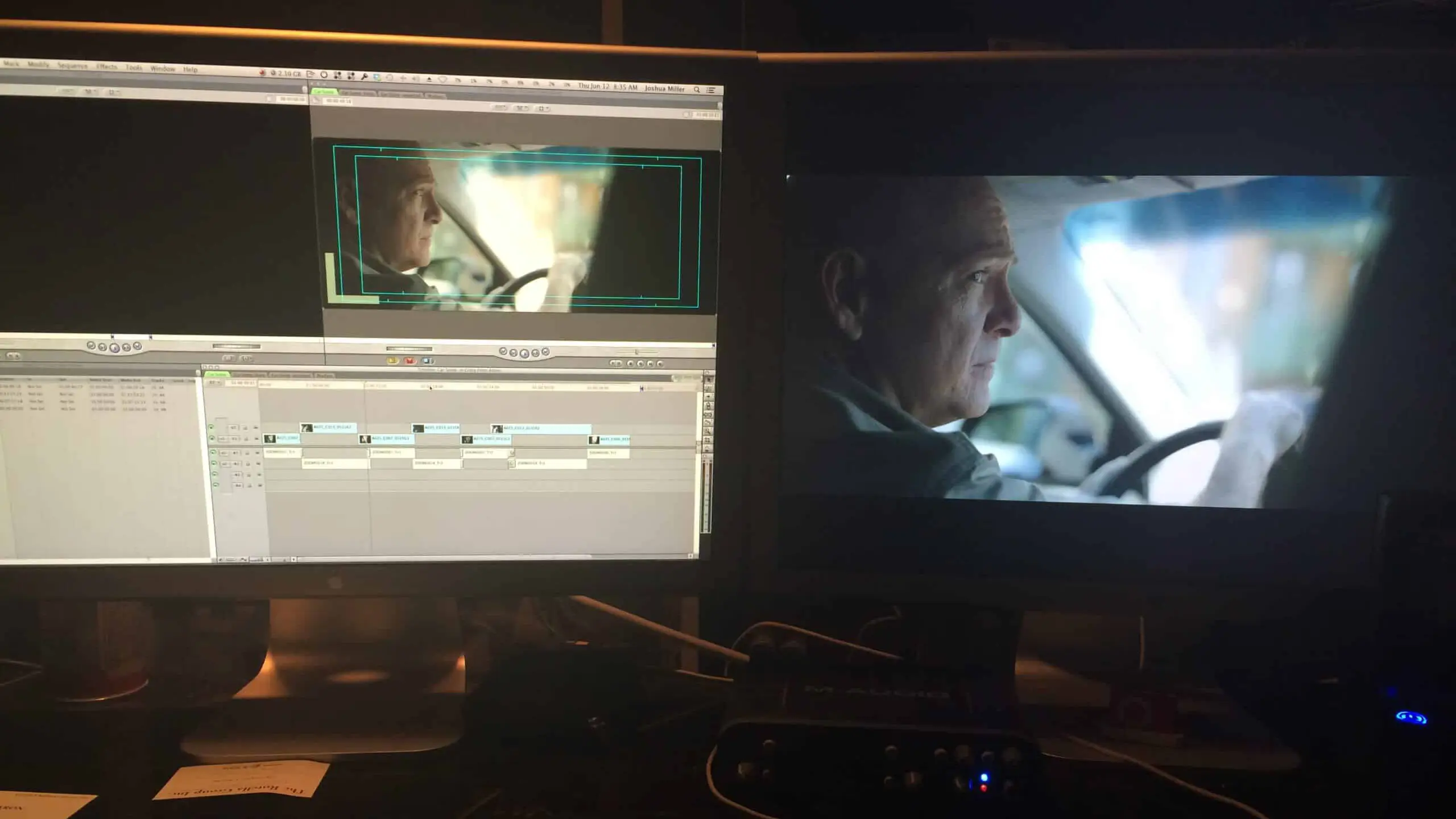
In the ever-competitive world of cinema, a well-crafted trailer can be the difference between a film that captivates audiences and one that fades into obscurity. Film trailer production is not just about splicing together a few exciting scenes, it’s an intricate art form that blends storytelling, editing, and visual appeal to create a compelling first impression.
A trailer serves as a film’s handshake to the world, sparking curiosity and building anticipation while offering just enough to leave viewers wanting more. By understanding the nuances of trailer editing, creating trailers that evoke emotion, and leveraging the power of promotional videos, filmmakers can transform their marketing efforts and draw audiences into their story.
In this article, we’ll explore the essential steps to crafting an engaging film trailer, from narrative structure and editing techniques to sound design and visual trends. Let’s dive into the magic behind the scenes.
## Understanding the Purpose of a Film Trailer
A film trailer serves as a powerful tool to introduce a movie to the world, acting as the ultimate pitch to potential audiences. Its role in film marketing cannot be overstated, as it has the ability to generate excitement, build anticipation, and drive ticket sales long before a movie hits theaters. In today’s saturated entertainment landscape, where countless films compete for attention, a well-executed trailer can make a movie stand out by offering a carefully crafted glimpse into its world.
Trailers come in various forms, each tailored to a specific purpose. Teasers, for instance, are short and evocative, designed to spark curiosity without revealing much about the plot. They are often released early in a film’s marketing campaign to lay the groundwork for future promotional efforts.
Full trailers, on the other hand, provide a deeper dive into the storyline, characters, and themes, offering viewers a clearer sense of what to expect. TV spots and social media promos cater to different platforms, delivering shorter, impactful snippets designed to capture attention quickly in a fast-paced digital environment.
Understanding the target audience is critical to crafting an effective trailer. Every element, from the tone and pacing to the choice of scenes, must resonate with the intended viewers. For instance, a romantic drama might highlight emotional moments and heartfelt dialogues, while an action-packed blockbuster would emphasize high-octane sequences and thrilling visuals.
This alignment ensures the trailer not only grabs attention but also appeals to those most likely to engage with the film. By offering just enough to captivate while leaving questions unanswered, a trailer serves as both an invitation and a promise, drawing audiences into the cinematic experience.
## Pre-Production. Setting the Foundation for Trailer Success
The journey to a compelling film trailer begins long before editing or visuals come into play. Pre-production is where the foundation for success is built, establishing the creative and strategic direction that guides the entire process.
This stage starts with defining clear goals for the trailer. Whether the aim is to tease a gripping narrative, showcase stunning visuals, or highlight a star-studded cast, these objectives serve as a roadmap, ensuring every decision aligns with the film’s overarching vision.
Selecting the right scenes is a critical part of this phase. Trailers rely on moments that grab attention, spark intrigue, and convey the essence of the story without giving too much away. This involves identifying standout visuals, emotionally charged dialogues, and key sequences that hint at conflict or resolution.
The challenge lies in striking the perfect balance, offering enough to entice while leaving audiences eager to learn more. The selected scenes must be cohesive and strategically arranged to create a compelling narrative arc that mirrors the film’s tone.
Collaboration plays a pivotal role in the pre-production process. Filmmakers, who bring deep insights into the story, characters, and cinematic vision, work closely with marketers who understand audience preferences and current trends. This partnership ensures that the trailer aligns with the film’s branding and appeals to its target demographic.
Decisions about pacing, music, and visuals all stem from this collaborative effort, with the ultimate goal of creating a trailer that not only captivates but also sets the stage for a successful marketing campaign. Pre-production is the crucial first step, laying the groundwork for a trailer that captures the heart of the film and resonates with audiences.
## Crafting a Strong Narrative Structure
A compelling film trailer is more than just a series of exciting scenes, it’s a miniature story with its own narrative arc. The three-act structure, a cornerstone of storytelling, is as vital to trailers as it is to feature films. This structure divides the trailer into three parts: an introduction, a build-up, and a climax.
In the introduction, the tone is set, key characters or elements are introduced, and the world of the film begins to take shape. The build-up escalates tension or stakes, offering glimpses of conflict or intrigue that propel the audience forward. Finally, the climax delivers a high-energy, dramatic sequence that leaves viewers eagerly anticipating the full story.
Even within the short runtime of a trailer, storytelling remains essential. A clear narrative structure helps create an emotional connection with the audience, guiding them through a journey that mirrors the film’s essence. It’s not just about showcasing impressive visuals but weaving those moments into a cohesive story. For instance, a trailer for a superhero movie might begin with the protagonist’s ordinary life, reveal a moment of transformation or conflict, and crescendo into action-packed scenes that tease the stakes without resolving them.
Balancing mystery and clarity is key to hooking viewers. A trailer should provide enough information to intrigue the audience, hinting at the film’s plot and themes, but without spoiling major twists or resolutions. Subtle hints, unanswered questions, and cliffhangers can heighten anticipation while leaving room for curiosity.
For example, dialogue snippets or visuals that raise questions, like “Why is this character in danger?” or “What’s the significance of that object?”, can be strategically included to draw viewers deeper into the narrative. By skillfully structuring the trailer and blending storytelling with mystery, filmmakers can craft a preview that not only excites but also lingers in the minds of audiences.
## Editing Techniques That Elevate Trailer Impact
Editing is the heartbeat of a film trailer, shaping raw footage into a polished, impactful preview. The principles of pacing, rhythm, and transitions are fundamental to effective trailer editing. Pacing controls the flow of the trailer, varying between slow, reflective moments and high-energy sequences to keep viewers engaged.
Rhythm, on the other hand, ensures that visual and audio elements sync harmoniously, creating a seamless viewing experience. Transitions, such as cuts, fades, and overlays, connect scenes fluidly while maintaining momentum and excitement.
The art of cutting scenes is crucial in trailer editing. Quick cuts can heighten tension and excitement, while longer shots allow viewers to absorb key moments or emotions. Fades and overlays, used sparingly, can add dramatic weight or create smooth transitions between scenes. For example, a fade-to-black paired with a sound effect can signal a shift in tone, building anticipation for what’s coming next. The goal is to keep the audience immersed without overwhelming them with chaotic edits.
Visual effects and color grading are also instrumental in elevating a trailer’s impact. Subtle enhancements, such as sharpening action sequences or adding atmospheric effects, can make scenes more visually striking. Color grading plays a significant role in setting the mood, warm tones might evoke nostalgia or romance, while cooler palettes lend themselves to mystery or tension. For instance, a sci-fi trailer might use metallic hues and high contrasts to convey a futuristic aesthetic, aligning the visual style with the genre.
Ultimately, trailer editing is about making every second count. Each cut, transition, and effect should serve a purpose, whether it’s building suspense, showcasing a character, or highlighting the stakes. By combining dynamic pacing, seamless transitions, and captivating visuals, editors create trailers that not only capture attention but also leave a lasting impression on audiences. The art of editing transforms scattered clips into a cohesive, emotionally engaging preview that embodies the spirit of the film.
## The Power of Music and Sound Design in Trailers
Music and sound design are the emotional backbone of a film trailer, transforming visuals into a gripping, immersive experience. The right audio choices can evoke excitement, suspense, or even nostalgia, allowing viewers to connect emotionally with the story in just a few seconds.
Selecting music that aligns with the trailer's tone is critical; for instance, an epic orchestral score works well for action-packed blockbusters, while a haunting piano melody might suit a psychological thriller. Music helps set the mood from the very first frame, anchoring the narrative and guiding the audience’s emotional journey.
Syncing audio with visual cues is another key element that elevates the impact of a trailer. The timing of musical beats, crescendos, or drops with pivotal moments in the visuals creates a seamless synergy that captures attention. For example, an intense beat drop timed with a sudden cut to an action sequence can heighten the drama and create a lasting impression.
Similarly, pairing slower, quieter music with emotional or introspective scenes allows viewers to absorb the depth of a character or storyline. This synchronization ensures that audio enhances, rather than distracts from, the visuals, amplifying the trailer's storytelling power.
Sound effects and voiceovers also play vital roles in crafting a memorable trailer. Sound effects, such as explosions, footsteps, or ambient noise, add texture and realism to scenes, drawing viewers deeper into the cinematic world. Strategic use of silence, contrasted with sharp sound bursts, can be just as impactful, creating moments of suspense or surprise.
Voiceovers, often featuring narration or character dialogue, provide context, hint at key plot points, and deliver memorable lines that resonate long after the trailer ends. Together, music, sound effects, and voiceovers create an audio tapestry that brings the visuals to life, ensuring the trailer captivates audiences both emotionally and sonically.
## Leveraging Promotional Video Trends
In an era dominated by digital media, film trailers are increasingly adapting to modern promotional trends to remain relevant and impactful. Incorporating cinematic title cards, text overlays, and dynamic visual elements has become a staple in contemporary trailers.
Title cards serve as powerful tools to deliver key information, such as the release date or cast highlights, while also breaking up the narrative flow. Text overlays, when paired with striking visuals, emphasize key themes or memorable quotes, ensuring they stick with viewers even in fast-paced edits.
One of the most significant trends in recent years is the rise of trailers optimized for social media platforms. Platforms like Instagram, TikTok, and YouTube have become primary channels for trailer distribution, encouraging formats that cater to mobile-first audiences.
Vertical trailers, for instance, maximize screen space on smartphones, while shorter, high-energy clips cater to viewers with limited attention spans. These trailers often begin with immediate, attention-grabbing moments, such as dramatic dialogue or explosive action, to hook viewers within the first few seconds.
Adapting trailers for different distribution channels is another critical consideration. A traditional cinema trailer might prioritize storytelling and extended scenes, while a social media trailer focuses on bite-sized, visually impactful moments designed to be shared.
Trailers for streaming platforms often highlight binge-worthy aspects, such as ensemble casts or cliffhanger moments, to entice viewers into watching an entire series or franchise. By embracing these modern trends, filmmakers can ensure their trailers reach and engage audiences across a variety of platforms, maximizing their promotional impact.
## Tips for Engaging Audiences with Visual and Emotional Appeal
A successful film trailer captivates viewers by seamlessly blending striking visuals with a compelling emotional narrative. The use of visually memorable moments is key to leaving a lasting impression.
Iconic imagery, such as breathtaking landscapes, dynamic action sequences, or intense close-ups, draws the audience's attention and creates moments they’ll associate with the film. These visuals act as the trailer’s anchor points, helping to create buzz and excitement that sticks in viewers’ minds long after the trailer ends.
Building suspense or excitement is another critical component of audience engagement. This can be achieved through careful pacing, starting with slower, tension-building scenes that gradually escalate to a climactic peak.
Techniques like revealing just enough of a pivotal moment without showing its resolution can create an air of mystery and intrigue. For instance, a sudden cut right before a dramatic event, paired with escalating music or sound effects, can leave viewers yearning for answers, compelling them to watch the full film.
Equally important are emotional hooks that resonate deeply with the audience. These moments tap into universal themes, such as love, sacrifice, or triumph, making the story relatable and impactful. A heartfelt dialogue, a powerful gaze between characters, or a moment of vulnerability can evoke empathy and connection.
Emotional appeal helps audiences invest in the characters and plot, transforming a trailer from a simple preview into an evocative experience. By strategically combining eye-catching visuals, expertly crafted suspense, and relatable emotional cues, filmmakers can ensure their trailers leave audiences both engaged and eager for more.
## Avoiding Common Mistakes in Trailer Production
While crafting a film trailer is an art, there are common pitfalls that can undermine its impact. One of the most frequent mistakes is overloading the trailer with too much information. Trailers are meant to tease, not tell the entire story.
Packing in excessive plot details, especially major twists or resolutions, can rob the audience of the joy of discovery. Effective trailers strike a balance, offering just enough to spark curiosity while keeping key plot points shrouded in mystery.
Poor editing choices can also detract from a trailer’s effectiveness. Disjointed transitions, uneven pacing, or abrupt cuts can confuse viewers and disrupt the flow of the narrative. For example, randomly assembling visually impressive scenes without a coherent structure might dazzle initially but ultimately fails to leave a meaningful impression. Skilled editing ensures the trailer flows smoothly, guiding the audience through its narrative arc while maintaining engagement.
Another significant mistake is failing to match the tone of the trailer to the film’s genre. A romantic comedy trailer that feels overly dark or a horror trailer that comes across as humorous can alienate its target audience and misrepresent the film. Consistency in tone, achieved through visuals, music, and pacing, ensures that the trailer aligns with viewer expectations and accurately conveys the film’s essence.
By avoiding these common missteps, filmmakers can create trailers that not only resonate with audiences but also serve as effective marketing tools, enticing viewers to explore the full story on screen. Attention to detail, a clear narrative structure, and an understanding of the film’s core identity are crucial to sidestepping these errors and delivering a trailer that truly shines.
## Measuring Success and Iterating for Improvement
A film trailer’s effectiveness can be measured by how well it resonates with audiences and drives interest in the movie. Analytics and audience feedback are essential tools for evaluating a trailer’s success.
Metrics such as view counts, engagement rates (likes, shares, comments), and click-through rates on digital platforms provide tangible data on how audiences are reacting. Social media sentiment analysis, gauging positive, negative, or neutral reactions, offers further insights into how well the trailer is connecting with its target demographic. These metrics help assess whether the trailer is generating the desired buzz and excitement.
Test screenings are another valuable method for gathering feedback. In controlled environments, viewers can offer insights into what works and what doesn’t, such as confusing narrative elements, pacing issues, or ineffective emotional hooks. These sessions often reveal subtle improvements that can make a significant difference in audience engagement.
Digital analytics also play a pivotal role in refining a trailer. Platforms like YouTube and social media provide data on audience retention, highlighting which parts of the trailer keep viewers engaged and where they drop off. These insights can inform edits to pacing, scene selection, or audio elements to enhance the trailer’s appeal.
Continuous improvement in trailer production requires staying updated with trends, audience preferences, and new technologies. Regularly analyzing the performance of previous trailers provides lessons for future projects, while experimenting with creative elements ensures fresh and innovative approaches.
By combining analytics, audience feedback, and a commitment to iteration, filmmakers can create trailers that not only captivate viewers but also maximize their promotional impact, driving more audiences to theaters or streaming platforms.
## Understanding the Purpose of a Film Trailer
A film trailer serves as a powerful tool to introduce a movie to the world, acting as the ultimate pitch to potential audiences. Its role in film marketing cannot be overstated, as it has the ability to generate excitement, build anticipation, and drive ticket sales long before a movie hits theaters. In today’s saturated entertainment landscape, where countless films compete for attention, a well-executed trailer can make a movie stand out by offering a carefully crafted glimpse into its world.
Trailers come in various forms, each tailored to a specific purpose. Teasers, for instance, are short and evocative, designed to spark curiosity without revealing much about the plot. They are often released early in a film’s marketing campaign to lay the groundwork for future promotional efforts.
Full trailers, on the other hand, provide a deeper dive into the storyline, characters, and themes, offering viewers a clearer sense of what to expect. TV spots and social media promos cater to different platforms, delivering shorter, impactful snippets designed to capture attention quickly in a fast-paced digital environment.
Understanding the target audience is critical to crafting an effective trailer. Every element, from the tone and pacing to the choice of scenes, must resonate with the intended viewers. For instance, a romantic drama might highlight emotional moments and heartfelt dialogues, while an action-packed blockbuster would emphasize high-octane sequences and thrilling visuals.
This alignment ensures the trailer not only grabs attention but also appeals to those most likely to engage with the film. By offering just enough to captivate while leaving questions unanswered, a trailer serves as both an invitation and a promise, drawing audiences into the cinematic experience.
## Pre-Production. Setting the Foundation for Trailer Success
The journey to a compelling film trailer begins long before editing or visuals come into play. Pre-production is where the foundation for success is built, establishing the creative and strategic direction that guides the entire process.
This stage starts with defining clear goals for the trailer. Whether the aim is to tease a gripping narrative, showcase stunning visuals, or highlight a star-studded cast, these objectives serve as a roadmap, ensuring every decision aligns with the film’s overarching vision.
Selecting the right scenes is a critical part of this phase. Trailers rely on moments that grab attention, spark intrigue, and convey the essence of the story without giving too much away. This involves identifying standout visuals, emotionally charged dialogues, and key sequences that hint at conflict or resolution.
The challenge lies in striking the perfect balance, offering enough to entice while leaving audiences eager to learn more. The selected scenes must be cohesive and strategically arranged to create a compelling narrative arc that mirrors the film’s tone.
Collaboration plays a pivotal role in the pre-production process. Filmmakers, who bring deep insights into the story, characters, and cinematic vision, work closely with marketers who understand audience preferences and current trends. This partnership ensures that the trailer aligns with the film’s branding and appeals to its target demographic.
Decisions about pacing, music, and visuals all stem from this collaborative effort, with the ultimate goal of creating a trailer that not only captivates but also sets the stage for a successful marketing campaign. Pre-production is the crucial first step, laying the groundwork for a trailer that captures the heart of the film and resonates with audiences.
## Crafting a Strong Narrative Structure
A compelling film trailer is more than just a series of exciting scenes, it’s a miniature story with its own narrative arc. The three-act structure, a cornerstone of storytelling, is as vital to trailers as it is to feature films. This structure divides the trailer into three parts: an introduction, a build-up, and a climax.
In the introduction, the tone is set, key characters or elements are introduced, and the world of the film begins to take shape. The build-up escalates tension or stakes, offering glimpses of conflict or intrigue that propel the audience forward. Finally, the climax delivers a high-energy, dramatic sequence that leaves viewers eagerly anticipating the full story.
Even within the short runtime of a trailer, storytelling remains essential. A clear narrative structure helps create an emotional connection with the audience, guiding them through a journey that mirrors the film’s essence. It’s not just about showcasing impressive visuals but weaving those moments into a cohesive story. For instance, a trailer for a superhero movie might begin with the protagonist’s ordinary life, reveal a moment of transformation or conflict, and crescendo into action-packed scenes that tease the stakes without resolving them.
Balancing mystery and clarity is key to hooking viewers. A trailer should provide enough information to intrigue the audience, hinting at the film’s plot and themes, but without spoiling major twists or resolutions. Subtle hints, unanswered questions, and cliffhangers can heighten anticipation while leaving room for curiosity.
For example, dialogue snippets or visuals that raise questions, like “Why is this character in danger?” or “What’s the significance of that object?”, can be strategically included to draw viewers deeper into the narrative. By skillfully structuring the trailer and blending storytelling with mystery, filmmakers can craft a preview that not only excites but also lingers in the minds of audiences.
## Editing Techniques That Elevate Trailer Impact
Editing is the heartbeat of a film trailer, shaping raw footage into a polished, impactful preview. The principles of pacing, rhythm, and transitions are fundamental to effective trailer editing. Pacing controls the flow of the trailer, varying between slow, reflective moments and high-energy sequences to keep viewers engaged.
Rhythm, on the other hand, ensures that visual and audio elements sync harmoniously, creating a seamless viewing experience. Transitions, such as cuts, fades, and overlays, connect scenes fluidly while maintaining momentum and excitement.
The art of cutting scenes is crucial in trailer editing. Quick cuts can heighten tension and excitement, while longer shots allow viewers to absorb key moments or emotions. Fades and overlays, used sparingly, can add dramatic weight or create smooth transitions between scenes. For example, a fade-to-black paired with a sound effect can signal a shift in tone, building anticipation for what’s coming next. The goal is to keep the audience immersed without overwhelming them with chaotic edits.
Visual effects and color grading are also instrumental in elevating a trailer’s impact. Subtle enhancements, such as sharpening action sequences or adding atmospheric effects, can make scenes more visually striking. Color grading plays a significant role in setting the mood, warm tones might evoke nostalgia or romance, while cooler palettes lend themselves to mystery or tension. For instance, a sci-fi trailer might use metallic hues and high contrasts to convey a futuristic aesthetic, aligning the visual style with the genre.
Ultimately, trailer editing is about making every second count. Each cut, transition, and effect should serve a purpose, whether it’s building suspense, showcasing a character, or highlighting the stakes. By combining dynamic pacing, seamless transitions, and captivating visuals, editors create trailers that not only capture attention but also leave a lasting impression on audiences. The art of editing transforms scattered clips into a cohesive, emotionally engaging preview that embodies the spirit of the film.
## The Power of Music and Sound Design in Trailers
Music and sound design are the emotional backbone of a film trailer, transforming visuals into a gripping, immersive experience. The right audio choices can evoke excitement, suspense, or even nostalgia, allowing viewers to connect emotionally with the story in just a few seconds.
Selecting music that aligns with the trailer's tone is critical; for instance, an epic orchestral score works well for action-packed blockbusters, while a haunting piano melody might suit a psychological thriller. Music helps set the mood from the very first frame, anchoring the narrative and guiding the audience’s emotional journey.
Syncing audio with visual cues is another key element that elevates the impact of a trailer. The timing of musical beats, crescendos, or drops with pivotal moments in the visuals creates a seamless synergy that captures attention. For example, an intense beat drop timed with a sudden cut to an action sequence can heighten the drama and create a lasting impression.
Similarly, pairing slower, quieter music with emotional or introspective scenes allows viewers to absorb the depth of a character or storyline. This synchronization ensures that audio enhances, rather than distracts from, the visuals, amplifying the trailer's storytelling power.
Sound effects and voiceovers also play vital roles in crafting a memorable trailer. Sound effects, such as explosions, footsteps, or ambient noise, add texture and realism to scenes, drawing viewers deeper into the cinematic world. Strategic use of silence, contrasted with sharp sound bursts, can be just as impactful, creating moments of suspense or surprise.
Voiceovers, often featuring narration or character dialogue, provide context, hint at key plot points, and deliver memorable lines that resonate long after the trailer ends. Together, music, sound effects, and voiceovers create an audio tapestry that brings the visuals to life, ensuring the trailer captivates audiences both emotionally and sonically.
## Leveraging Promotional Video Trends
In an era dominated by digital media, film trailers are increasingly adapting to modern promotional trends to remain relevant and impactful. Incorporating cinematic title cards, text overlays, and dynamic visual elements has become a staple in contemporary trailers.
Title cards serve as powerful tools to deliver key information, such as the release date or cast highlights, while also breaking up the narrative flow. Text overlays, when paired with striking visuals, emphasize key themes or memorable quotes, ensuring they stick with viewers even in fast-paced edits.
One of the most significant trends in recent years is the rise of trailers optimized for social media platforms. Platforms like Instagram, TikTok, and YouTube have become primary channels for trailer distribution, encouraging formats that cater to mobile-first audiences.
Vertical trailers, for instance, maximize screen space on smartphones, while shorter, high-energy clips cater to viewers with limited attention spans. These trailers often begin with immediate, attention-grabbing moments, such as dramatic dialogue or explosive action, to hook viewers within the first few seconds.
Adapting trailers for different distribution channels is another critical consideration. A traditional cinema trailer might prioritize storytelling and extended scenes, while a social media trailer focuses on bite-sized, visually impactful moments designed to be shared.
Trailers for streaming platforms often highlight binge-worthy aspects, such as ensemble casts or cliffhanger moments, to entice viewers into watching an entire series or franchise. By embracing these modern trends, filmmakers can ensure their trailers reach and engage audiences across a variety of platforms, maximizing their promotional impact.
## Tips for Engaging Audiences with Visual and Emotional Appeal
A successful film trailer captivates viewers by seamlessly blending striking visuals with a compelling emotional narrative. The use of visually memorable moments is key to leaving a lasting impression.
Iconic imagery, such as breathtaking landscapes, dynamic action sequences, or intense close-ups, draws the audience's attention and creates moments they’ll associate with the film. These visuals act as the trailer’s anchor points, helping to create buzz and excitement that sticks in viewers’ minds long after the trailer ends.
Building suspense or excitement is another critical component of audience engagement. This can be achieved through careful pacing, starting with slower, tension-building scenes that gradually escalate to a climactic peak.
Techniques like revealing just enough of a pivotal moment without showing its resolution can create an air of mystery and intrigue. For instance, a sudden cut right before a dramatic event, paired with escalating music or sound effects, can leave viewers yearning for answers, compelling them to watch the full film.
Equally important are emotional hooks that resonate deeply with the audience. These moments tap into universal themes, such as love, sacrifice, or triumph, making the story relatable and impactful. A heartfelt dialogue, a powerful gaze between characters, or a moment of vulnerability can evoke empathy and connection.
Emotional appeal helps audiences invest in the characters and plot, transforming a trailer from a simple preview into an evocative experience. By strategically combining eye-catching visuals, expertly crafted suspense, and relatable emotional cues, filmmakers can ensure their trailers leave audiences both engaged and eager for more.
## Avoiding Common Mistakes in Trailer Production
While crafting a film trailer is an art, there are common pitfalls that can undermine its impact. One of the most frequent mistakes is overloading the trailer with too much information. Trailers are meant to tease, not tell the entire story.
Packing in excessive plot details, especially major twists or resolutions, can rob the audience of the joy of discovery. Effective trailers strike a balance, offering just enough to spark curiosity while keeping key plot points shrouded in mystery.
Poor editing choices can also detract from a trailer’s effectiveness. Disjointed transitions, uneven pacing, or abrupt cuts can confuse viewers and disrupt the flow of the narrative. For example, randomly assembling visually impressive scenes without a coherent structure might dazzle initially but ultimately fails to leave a meaningful impression. Skilled editing ensures the trailer flows smoothly, guiding the audience through its narrative arc while maintaining engagement.
Another significant mistake is failing to match the tone of the trailer to the film’s genre. A romantic comedy trailer that feels overly dark or a horror trailer that comes across as humorous can alienate its target audience and misrepresent the film. Consistency in tone, achieved through visuals, music, and pacing, ensures that the trailer aligns with viewer expectations and accurately conveys the film’s essence.
By avoiding these common missteps, filmmakers can create trailers that not only resonate with audiences but also serve as effective marketing tools, enticing viewers to explore the full story on screen. Attention to detail, a clear narrative structure, and an understanding of the film’s core identity are crucial to sidestepping these errors and delivering a trailer that truly shines.
## Measuring Success and Iterating for Improvement
A film trailer’s effectiveness can be measured by how well it resonates with audiences and drives interest in the movie. Analytics and audience feedback are essential tools for evaluating a trailer’s success.
Metrics such as view counts, engagement rates (likes, shares, comments), and click-through rates on digital platforms provide tangible data on how audiences are reacting. Social media sentiment analysis, gauging positive, negative, or neutral reactions, offers further insights into how well the trailer is connecting with its target demographic. These metrics help assess whether the trailer is generating the desired buzz and excitement.
Test screenings are another valuable method for gathering feedback. In controlled environments, viewers can offer insights into what works and what doesn’t, such as confusing narrative elements, pacing issues, or ineffective emotional hooks. These sessions often reveal subtle improvements that can make a significant difference in audience engagement.
Digital analytics also play a pivotal role in refining a trailer. Platforms like YouTube and social media provide data on audience retention, highlighting which parts of the trailer keep viewers engaged and where they drop off. These insights can inform edits to pacing, scene selection, or audio elements to enhance the trailer’s appeal.
Continuous improvement in trailer production requires staying updated with trends, audience preferences, and new technologies. Regularly analyzing the performance of previous trailers provides lessons for future projects, while experimenting with creative elements ensures fresh and innovative approaches.
By combining analytics, audience feedback, and a commitment to iteration, filmmakers can create trailers that not only captivate viewers but also maximize their promotional impact, driving more audiences to theaters or streaming platforms.
## Work with C&I Studios
If you are planning a project like this, our team can take it from concept to final delivery. Explore our [film and TV production](https://c-istudios.com/film-and-tv-production/), browse [our work](https://c-istudios.com/our-work/) to see how we tell brand stories, and [get in touch](https://c-istudios.com/contact/) when you are ready to start.
Originally published November 8, 2024
---
*This content is from [C&I Studios](https://c-istudios.com), a full-service production company.*
---
# The Future of Content Creation: Trends and Innovations Shaping the Industry
> Published: November 7, 2024
> Categories: Commercial & Brand
> Source: https://c-istudios.com/the-future-of-content-creation-trends-and-innovations-shaping-the-industry/
---
.cib{--paper:#1b1d1f;--ink:#fff;--body:#d5d7d9;--muted:#8b9096;--line:rgba(255,255,255,.12);--thumb:#2b2e31;--card:#212426;--accent:#c02b0a;--blue:#5B8FA8;--serif:'Playfair Display',Georgia,serif;--sans:'Poppins',-apple-system,sans-serif;--measure:900px;background:var(--paper);color:var(--body);font-family:var(--sans);line-height:1.6;position:relative;left:50%;transform:translateX(-50%);width:90vw;max-width:1920px}
.cib *{box-sizing:border-box}
.cib .kicker{max-width:var(--measure);margin:58px auto 0;padding:0 22px;font-size:12.5px;font-weight:700;letter-spacing:2.5px;text-transform:uppercase;color:var(--blue)}
.cib h1.cibh1{text-wrap:balance;font-family:var(--serif);font-weight:500;font-size:clamp(46px,6vw,72px);line-height:1.08;color:var(--ink);max-width:var(--measure);margin:18px auto 0;padding:0 22px;letter-spacing:-.5px}
.cib .metarow{max-width:var(--measure);margin:20px auto 0;padding:0 22px;color:var(--muted);font-size:14px}
.cib .hero{position:relative;width:100%;height:0;padding-bottom:56.25%;overflow:hidden;margin:48px auto 0;border-top:1px solid var(--line);border-bottom:1px solid var(--line)}
.cib .hero .ph{width:100%;aspect-ratio:16/9;background:var(--thumb);border-top:1px solid var(--line);border-bottom:1px solid var(--line);display:flex;align-items:center;justify-content:center;color:#7d8288;font-size:13px;text-align:center;padding:0 20px}
.cib .body{max-width:var(--measure);margin:12px auto 0;padding:52px 22px 6px}
.cib .body.lead p:first-child{font-size:23px;line-height:1.62;color:var(--ink)}
.cib .body p{font-size:18.5px;line-height:1.85;margin:0 0 30px;color:var(--body)}
.cib .body h2{text-wrap:balance;font-family:var(--serif);font-weight:500;font-size:clamp(32px,4vw,48px);line-height:1.22;color:var(--ink);margin:70px 0 20px;letter-spacing:-.3px}
.cib .body h3{text-wrap:balance;font-family:var(--sans);font-weight:600;font-size:22px;color:var(--ink);margin:38px 0 8px}
.cib .body a{color:var(--ink);text-decoration:underline;text-decoration-color:rgba(255,255,255,.4);text-underline-offset:3px}
.cib .body a:hover{text-decoration-color:var(--ink)}
.cib .ctable{width:100%;border-collapse:collapse;margin:16px 0 30px;font-size:16px}
.cib .ctable th{background:#000;color:#fff;text-align:left;padding:10px 12px;font-family:var(--sans)}
.cib .ctable td{padding:10px 12px;border-bottom:1px solid var(--line);color:var(--body)}
.cib .inimg{position:relative;width:100%;height:0;padding-bottom:56.25%;overflow:hidden;margin:72px auto;border-top:1px solid var(--line);border-bottom:1px solid var(--line)}
.cib .inimg .ph{width:100%;aspect-ratio:16/9;background:var(--thumb);border-top:1px solid var(--line);border-bottom:1px solid var(--line);display:flex;align-items:center;justify-content:center;color:#7d8288;font-size:13px}
.cib .origpub{max-width:var(--measure);margin:60px auto 0;padding:26px 22px 0;border-top:1px solid var(--line);color:var(--muted);font-size:13.5px}
.cib .related{max-width:1200px;margin:64px auto 0;padding:34px 22px 76px}
.cib .related h3{font-family:var(--sans);font-size:12.5px;letter-spacing:2px;text-transform:uppercase;color:var(--ink);margin:0 0 24px}
.cib .grid{display:grid;grid-template-columns:repeat(3,1fr);gap:28px}
.cib .rc{background:var(--card);border:1px solid var(--line);display:block;text-decoration:none;color:inherit;transition:border-color .15s}
.cib a.rc:hover{border-color:rgba(255,255,255,.5)}
.cib .rc .thumb{position:relative;width:100%;height:0;padding-bottom:56.25%;background:var(--thumb);overflow:hidden}
.cib .rc .thumb img{position:absolute!important;top:0!important;left:0!important;width:100%!important;height:100%!important;object-fit:cover!important;margin:0!important}
.cib .rc .cc{padding:14px 15px 17px}
.cib .rc .rt{font-family:var(--serif);font-weight:500;font-size:16px;line-height:1.3;color:var(--ink);margin:0 0 6px}
.cib .rc .rm{font-size:11px;letter-spacing:1px;text-transform:uppercase;color:var(--muted)}
.cib img{margin:0!important;padding:0!important;display:block!important;vertical-align:top;max-width:100%}
.cib .hero img,.cib .inimg img{position:absolute!important;top:0!important;left:0!important;width:100%!important;height:100%!important;object-fit:cover!important;margin:0!important;padding:0!important;border:0!important;display:block!important;aspect-ratio:auto!important}
.cib .hero+.body{padding-top:36px}
@media(max-width:760px){.cib .grid{grid-template-columns:1fr}.cib .body h2{margin:52px 0 16px}.cib .body p{font-size:17.5px}.cib .inimg,.cib .hero{margin-top:44px}}
.cib .vembed{max-width:var(--measure);margin:44px auto;padding:0 22px}.cib .vembed .vwrap{position:relative;width:100%;height:0;padding-bottom:56.25%}.cib .vembed .vwrap iframe{position:absolute;top:0;left:0;width:100%;height:100%;border:0}
Commercial & Brand
# The Future of Content Creation. Trends and Innovations Shaping the Industry
25 min read

Content creation has undergone a profound transformation in recent years, fueled by rapid advancements in technology and shifting consumer expectations. What once centered around simple blog posts and static visuals has evolved into a dynamic field that includes immersive media, real-time engagement, and AI-driven personalization. For brands, keeping pace with these changes is not just beneficial, it’s essential to stay relevant in a crowded digital landscape.
As audiences grow more selective, innovative approaches are needed to capture attention and foster genuine connections. Media marketing plays a pivotal role here, as it allows brands to reach and engage audiences through various creative formats and platforms.
By embracing new trends and technologies, brands can create impactful, resonant content that meets the demands of today’s consumers and builds lasting relationships.
## AI and Automation in Content Production
Artificial intelligence and automation have reshaped the way content is produced, making it faster, more efficient, and highly targeted. One of the most significant advancements is the use of [SEO copywriting](https://c-istudios.com/seo-copywriting-services/) tools powered by AI, which allow brands to generate content that is optimized for search engines and resonates with audiences.
AI-driven SEO copywriting can analyze vast amounts of data to suggest the best keywords, structure, and tone for any piece of content, ensuring it ranks well and captures user interest. This automation not only saves time but also elevates content quality, allowing creators to focus on strategy and creativity.
Creative marketing has also benefited immensely from AI and automation. AI can personalize marketing efforts by analyzing user behavior and preferences, delivering content that feels tailored to each individual.
For example, AI can segment audiences based on their interaction patterns and automatically serve customized content, like targeted ads, blog posts, or product recommendations, that aligns with their interests. This level of personalization helps brands foster deeper connections with users and improves engagement rates.
Automation in creative marketing extends to social media management, where AI tools can schedule posts, analyze engagement metrics, and recommend optimal posting times. These automated insights streamline workflows, allowing marketing teams to focus on creating impactful content rather than getting bogged down in manual tasks.
By incorporating SEO copywriting and creative marketing solutions powered by AI, brands can produce relevant, optimized, and personalized content at scale. This technology-driven approach not only increases efficiency but also enables content that is more aligned with user preferences, enhancing engagement and fostering brand loyalty.
## The Rise of Video Content and Live Streaming
In today’s content landscape, video has become an essential medium, capturing attention in a way that static content often can’t. With the growing accessibility of high-quality cameras and editing software, [video production](https://c-istudios.com/video-production-services/) is now a fundamental tool for brands looking to engage audiences.
Videos offer an immersive experience that combines visual and auditory elements, making them ideal for storytelling and conveying complex ideas in a digestible format. From product demos to behind-the-scenes insights, [video production](https://c-istudios.com/video-production-services/) enables brands to showcase their personality and engage users in a memorable way.
Audio live streaming has also emerged as a powerful content format, providing real-time interaction between brands and their audiences. Unlike pre-recorded videos, live streams allow users to join conversations as they happen, ask questions, and provide immediate feedback.
This interaction fosters a sense of community, making audiences feel like active participants rather than passive viewers. Brands leverage audio live streaming for various purposes, including Q&A sessions, product launches, and live tutorials, all of which create a more dynamic and engaging experience.
The rise of video production and audio live streaming reflects a shift toward more interactive and personalized content. With platforms like YouTube, Instagram, and TikTok, brands can reach large audiences through short, captivating videos and live sessions that encourage viewers to engage. These formats are particularly effective in building trust, as they offer a transparent, authentic look at the brand.
As content consumption continues to evolve, video production and audio live streaming will remain invaluable tools for brands aiming to create meaningful connections. By integrating these formats into their content strategies, brands can stay relevant and foster genuine relationships with their audiences, ultimately enhancing user loyalty and brand recognition.
## Immersive Media. VR, AR, and Beyond
The advent of immersive media, particularly virtual reality (VR) and augmented reality (AR), has transformed how brands engage with audiences by offering a fully interactive and sensory-rich experience. Unlike traditional media, VR and AR allow users to explore and interact within virtual environments, creating a deeply engaging and memorable experience.
This trend in content creation goes beyond simple visuals, as it immerses users in a digital space that feels tangible, making it highly effective for storytelling, education, and brand engagement.
VFX compositing and animation are integral to creating these immersive virtual environments. Through advanced compositing techniques, designers can seamlessly blend real-world elements with digital visuals, making VR and AR experiences more lifelike and engaging. Animation adds another layer of dynamism, bringing characters, scenes, and interactive elements to life within these virtual spaces.
For example, a brand might use VFX compositing and animation to create a virtual showroom where users can “walk” through and explore products up close. This kind of immersive experience allows brands to showcase products or tell stories in a way that traditional media cannot achieve.
Supporting immersive media requires robust [web development](https://c-istudios.com/web-development-services/) capabilities. High-quality VR and AR experiences demand websites that can handle complex graphics, smooth transitions, and fast loading times to prevent lag or interruptions in the user experience.
Additionally, web developers play a crucial role in ensuring that these immersive features are optimized for various devices and platforms, allowing users to experience VR or AR content seamlessly, whether on a desktop or mobile device. As more brands adopt immersive media, web development will continue to be pivotal in delivering and supporting these content formats.
By leveraging VFX compositing and animation alongside strong web development, brands can create immersive experiences that captivate and engage users like never before. This trend represents a significant shift in how content is consumed, offering endless possibilities for creative expression and audience engagement.
## Content Personalization for Targeted Engagement
Content personalization has become a cornerstone of effective digital marketing, allowing brands to tailor experiences to individual preferences and behaviors. By personalizing content, brands can create a more relevant and engaging experience for users, fostering a deeper connection and driving long-term loyalty. Personalization involves delivering the right content to the right audience at the right time, making users feel seen and understood.
Social media marketing services play a significant role in implementing content personalization, particularly through targeted campaigns that segment audiences based on factors like age, interests, and engagement history.
For example, a brand might use social media marketing services to deliver unique [content](https://c-istudios.com/content-creation-services/) to different user segments, such as promotions for first-time buyers or loyalty rewards for returning customers. These tailored messages ensure that users receive content that resonates with their specific needs and interests, improving the likelihood of engagement.
Branding and graphic design further enhance the personalization experience by visually aligning content with user expectations and preferences. Through thoughtful branding, brands can create a consistent and cohesive look that appeals to specific audience segments, whether it’s through color schemes, typography, or imagery.
Graphic design helps bring these elements to life, creating visually compelling content that aligns with the brand’s identity and speaks to the target audience. For example, a fitness brand might use vibrant, energetic colors and bold fonts to appeal to an active audience, while a luxury brand might choose a sleek, minimalist design to attract high-end consumers.
Together, social media marketing services and branding and graphic design enable brands to deliver personalized content that not only captures attention but also encourages long-term engagement. By creating tailored experiences, brands can strengthen customer relationships and stand out in a crowded digital landscape, making personalization a crucial strategy for enhancing user engagement and driving business success.
## Documentary-Style Storytelling in Brand Content
In an age where consumers value transparency and authenticity, documentary-style storytelling has become a powerful tool for brands looking to create genuine connections with their audience.
Unlike traditional advertising, which often feels polished and promotional, documentary-style content allows brands to showcase real stories, behind-the-scenes moments, and unfiltered experiences. This approach fosters a sense of trust and relatability, as audiences feel they’re getting an honest look into the brand’s world.
Documentary [film production](https://c-istudios.com/film-and-tv-production/) is essential to creating this style of storytelling. By capturing real-life moments, interviews, and candid visuals, documentary techniques help convey authenticity and depth. Brands can use documentary film production to share customer testimonials, employee stories, or a glimpse into their production processes.
This approach humanizes the brand, showing that it’s more than just a business, there’s a story and purpose behind every product or service. For example, a brand might film the journey of a new product from conception to launch, giving audiences a sense of the care and dedication behind it.
Artist management and media creation also play a significant role in bringing these stories to life. Through artist management, brands can collaborate with talented creators who understand how to convey authenticity in a way that resonates with viewers.
[Media creation](https://c-istudios.com/artist-management-and-media-creation/) teams, including videographers, editors, and creative directors, work together to produce content that reflects the brand’s unique voice while remaining true to the documentary style. These professionals ensure that each story is told in a way that captivates audiences while staying authentic to the brand’s values.
By combining documentary film production with skilled artist management and media creation, brands can create content that feels real, relatable, and deeply engaging. This style of storytelling has proven to be effective in building trust, as it resonates with audiences looking for authenticity in a highly commercialized world.
## Content Distribution. New Platforms and Strategies
With the rapid expansion of digital channels, content distribution has become more complex and essential to reaching broader audiences. To maximize visibility and engagement, brands need to adopt new platforms and innovative distribution strategies, ensuring that content is accessible, engaging, and tailored to each channel. As more users turn to diverse platforms for content, brands must stay adaptable and strategic in their approach to distribution.
The foundation of effective distribution lies in web hosting and [web maintenance](https://c-istudios.com/web-maintenance/). Reliable web hosting ensures that content is available and loads quickly across all platforms, which is crucial for retaining users and reducing bounce rates.
With the right web hosting solution, brands can handle high traffic volumes, especially during peak engagement times, such as product launches or live events. A robust hosting service also ensures that content, whether text, video, or interactive elements, is consistently accessible to users without lag or downtime.
Equally important is web maintenance, which involves regular updates and performance checks to keep the website optimized. Web maintenance ensures that the site’s structure and content are compatible with emerging distribution platforms and devices.
For instance, maintaining website responsiveness across mobile, desktop, and tablet interfaces is critical as more audiences access content on-the-go. Additionally, regular web maintenance helps secure the website from vulnerabilities, ensuring that content reaches users safely and without disruptions.
New platforms, such as emerging social media networks, streaming services, and niche content apps, are also influencing content distribution strategies. Brands are increasingly adopting multi-channel approaches, using a mix of established platforms like YouTube and Instagram, alongside niche networks tailored to specific audience segments.
Effective distribution strategies consider the unique engagement style of each platform, adapting content to fit the format and audience expectations, whether through short-form videos, live sessions, or image-driven posts.
By investing in reliable web hosting and proactive web maintenance, brands can ensure their content is accessible and adaptable to any platform. Combined with innovative distribution strategies, these practices help brands reach a wider audience, delivering content smoothly across all channels and enhancing their overall digital presence.
## High-Quality Visuals and Professional Photography
In content creation, high-quality visuals are essential to capturing audience attention and conveying a polished brand image. Strong visuals can transform a brand’s message, making it more engaging, memorable, and impactful. High-quality imagery not only enhances aesthetic appeal but also builds credibility, as consumers tend to trust brands that invest in professional and visually compelling content.
Professional photography plays a pivotal role in achieving this standard of visual excellence. Unlike stock photos, which can feel generic and lack authenticity, professional photography allows brands to tailor images to their unique style and voice.
Through custom photoshoots, brands can showcase their products, services, and team members in a way that aligns with their identity, creating a cohesive and authentic visual narrative. Professional photography also provides control over lighting, composition, and styling, ensuring each image aligns with the brand’s vision and stands out among competitors.
In addition to photography, [feature film mastering and delivery](https://c-istudios.com/feature-film-mastering-and-delivery/) techniques have entered the realm of digital content creation, especially as brands aim to deliver cinematic-quality visuals across various platforms. Originally used in the film industry to enhance video quality before distribution, feature film mastering ensures that every detail is refined, from color grading to sound quality.
Applying these techniques to branded content elevates the visual impact, making even short promotional videos or web content appear highly professional and engaging. Brands can use feature film mastering to create high-quality videos that leave a lasting impression, especially when targeting audiences on visual-centric platforms like YouTube or Instagram.
By integrating professional photography and feature film mastering and delivery into content strategies, brands can create visuals that not only capture attention but also convey a strong sense of professionalism and quality. In today’s digital landscape, where users are inundated with content, investing in these high-quality visuals can help brands stand out, communicate trustworthiness, and build a lasting connection with their audience.
## Future Trends. Sustainability and Ethical Content Creation
As content creation evolves, sustainability and ethics are emerging as key considerations for brands. Consumers are increasingly aware of the environmental and social impacts of their purchases, which extends to the content they engage with. Ethical content creation practices prioritize transparency, authenticity, and social responsibility, positioning brands as leaders in the movement toward a more conscientious digital landscape.
Sustainable content practices, such as reducing waste in physical media production and minimizing the carbon footprint of digital processes, are becoming more popular. Brands are rethinking their processes, from sourcing eco-friendly materials for photoshoots to optimizing digital content to reduce energy usage.
By prioritizing sustainability, brands demonstrate a commitment to environmental responsibility, resonating with eco-conscious audiences and building long-term trust.
Beyond environmental impact, ethical content also plays a significant role in shaping social conversations. Content has the power to influence public perception, making it a valuable tool in addressing important issues, including those central to a [political campaign](https://c-istudios.com/political-campaign-services/). Brands increasingly recognize the responsibility they hold when addressing topics related to social justice, equality, and sustainability.
For example, content that supports a political campaign for environmental change or highlights stories from underrepresented communities can make a meaningful impact while aligning the brand with progressive values.
Looking forward, brands will find opportunities to expand their influence through media, including innovative content like TV show pitches. By creating or sponsoring shows that reflect their values, brands can reach broader audiences and influence social discussions on a larger scale.
For instance, a brand might pitch a TV show that educates viewers on sustainable practices or explores the lives of inspirational figures in underrepresented communities. Such projects allow brands to contribute positively to societal narratives while expanding their reach and enhancing their reputation.
The future of content creation lies in sustainability, ethics, and social impact. By focusing on these trends and leveraging content for good, brands can position themselves as pioneers in a more thoughtful and responsible digital age.
## AI and Automation in Content Production
Artificial intelligence and automation have reshaped the way content is produced, making it faster, more efficient, and highly targeted. One of the most significant advancements is the use of [SEO copywriting](https://c-istudios.com/seo-copywriting-services/) tools powered by AI, which allow brands to generate content that is optimized for search engines and resonates with audiences.
AI-driven SEO copywriting can analyze vast amounts of data to suggest the best keywords, structure, and tone for any piece of content, ensuring it ranks well and captures user interest. This automation not only saves time but also elevates content quality, allowing creators to focus on strategy and creativity.
Creative marketing has also benefited immensely from AI and automation. AI can personalize marketing efforts by analyzing user behavior and preferences, delivering content that feels tailored to each individual.
For example, AI can segment audiences based on their interaction patterns and automatically serve customized content, like targeted ads, blog posts, or product recommendations, that aligns with their interests. This level of personalization helps brands foster deeper connections with users and improves engagement rates.
Automation in creative marketing extends to social media management, where AI tools can schedule posts, analyze engagement metrics, and recommend optimal posting times. These automated insights streamline workflows, allowing marketing teams to focus on creating impactful content rather than getting bogged down in manual tasks.
By incorporating SEO copywriting and creative marketing solutions powered by AI, brands can produce relevant, optimized, and personalized content at scale. This technology-driven approach not only increases efficiency but also enables content that is more aligned with user preferences, enhancing engagement and fostering brand loyalty.
## The Rise of Video Content and Live Streaming
In today’s content landscape, video has become an essential medium, capturing attention in a way that static content often can’t. With the growing accessibility of high-quality cameras and editing software, [video production](https://c-istudios.com/video-production-services/) is now a fundamental tool for brands looking to engage audiences.
Videos offer an immersive experience that combines visual and auditory elements, making them ideal for storytelling and conveying complex ideas in a digestible format. From product demos to behind-the-scenes insights, video production enables brands to showcase their personality and engage users in a memorable way.
Audio live streaming has also emerged as a powerful content format, providing real-time interaction between brands and their audiences. Unlike pre-recorded videos, live streams allow users to join conversations as they happen, ask questions, and provide immediate feedback.
This interaction fosters a sense of community, making audiences feel like active participants rather than passive viewers. Brands leverage audio live streaming for various purposes, including Q&A sessions, product launches, and live tutorials, all of which create a more dynamic and engaging experience.
The rise of video production and audio live streaming reflects a shift toward more interactive and personalized content. With platforms like YouTube, Instagram, and TikTok, brands can reach large audiences through short, captivating videos and live sessions that encourage viewers to engage. These formats are particularly effective in building trust, as they offer a transparent, authentic look at the brand.
As content consumption continues to evolve, video production and audio live streaming will remain invaluable tools for brands aiming to create meaningful connections. By integrating these formats into their content strategies, brands can stay relevant and foster genuine relationships with their audiences, ultimately enhancing user loyalty and brand recognition.
## Immersive Media. VR, AR, and Beyond
The advent of immersive media, particularly virtual reality (VR) and augmented reality (AR), has transformed how brands engage with audiences by offering a fully interactive and sensory-rich experience. Unlike traditional media, VR and AR allow users to explore and interact within virtual environments, creating a deeply engaging and memorable experience.
This trend in content creation goes beyond simple visuals, as it immerses users in a digital space that feels tangible, making it highly effective for storytelling, education, and brand engagement.
VFX compositing and animation are integral to creating these immersive virtual environments. Through advanced compositing techniques, designers can seamlessly blend real-world elements with digital visuals, making VR and AR experiences more lifelike and engaging. Animation adds another layer of dynamism, bringing characters, scenes, and interactive elements to life within these virtual spaces.
For example, a brand might use VFX compositing and animation to create a virtual showroom where users can “walk” through and explore products up close. This kind of immersive experience allows brands to showcase products or tell stories in a way that traditional media cannot achieve.
Supporting immersive media requires robust [web development](https://c-istudios.com/web-development-services/) capabilities. High-quality VR and AR experiences demand websites that can handle complex graphics, smooth transitions, and fast loading times to prevent lag or interruptions in the user experience.
Additionally, web developers play a crucial role in ensuring that these immersive features are optimized for various devices and platforms, allowing users to experience VR or AR content seamlessly, whether on a desktop or mobile device. As more brands adopt immersive media, web development will continue to be pivotal in delivering and supporting these content formats.
By leveraging VFX compositing and animation alongside strong web development, brands can create immersive experiences that captivate and engage users like never before. This trend represents a significant shift in how content is consumed, offering endless possibilities for creative expression and audience engagement.
## Content Personalization for Targeted Engagement
Content personalization has become a cornerstone of effective digital marketing, allowing brands to tailor experiences to individual preferences and behaviors. By personalizing content, brands can create a more relevant and engaging experience for users, fostering a deeper connection and driving long-term loyalty. Personalization involves delivering the right content to the right audience at the right time, making users feel seen and understood.
Social media marketing services play a significant role in implementing content personalization, particularly through targeted campaigns that segment audiences based on factors like age, interests, and engagement history.
For example, a brand might use social media marketing services to deliver unique [content](https://c-istudios.com/content-creation-services/) to different user segments, such as promotions for first-time buyers or loyalty rewards for returning customers. These tailored messages ensure that users receive content that resonates with their specific needs and interests, improving the likelihood of engagement.
Branding and graphic design further enhance the personalization experience by visually aligning content with user expectations and preferences. Through thoughtful branding, brands can create a consistent and cohesive look that appeals to specific audience segments, whether it’s through color schemes, typography, or imagery.
Graphic design helps bring these elements to life, creating visually compelling content that aligns with the brand’s identity and speaks to the target audience. For example, a fitness brand might use vibrant, energetic colors and bold fonts to appeal to an active audience, while a luxury brand might choose a sleek, minimalist design to attract high-end consumers.
Together, social media marketing services and branding and graphic design enable brands to deliver personalized content that not only captures attention but also encourages long-term engagement. By creating tailored experiences, brands can strengthen customer relationships and stand out in a crowded digital landscape, making personalization a crucial strategy for enhancing user engagement and driving business success.
## Documentary-Style Storytelling in Brand Content
In an age where consumers value transparency and authenticity, documentary-style storytelling has become a powerful tool for brands looking to create genuine connections with their audience.
Unlike traditional advertising, which often feels polished and promotional, documentary-style content allows brands to showcase real stories, behind-the-scenes moments, and unfiltered experiences. This approach fosters a sense of trust and relatability, as audiences feel they’re getting an honest look into the brand’s world.
Documentary film production is essential to creating this style of storytelling. By capturing real-life moments, interviews, and candid visuals, documentary techniques help convey authenticity and depth. Brands can use documentary film production to share customer testimonials, employee stories, or a glimpse into their production processes.
This approach humanizes the brand, showing that it’s more than just a business, there’s a story and purpose behind every product or service. For example, a brand might film the journey of a new product from conception to launch, giving audiences a sense of the care and dedication behind it.
Artist management and media creation also play a significant role in bringing these stories to life. Through artist management, brands can collaborate with talented creators who understand how to convey authenticity in a way that resonates with viewers.
[Media creation](https://c-istudios.com/artist-management-and-media-creation/) teams, including videographers, editors, and creative directors, work together to produce content that reflects the brand’s unique voice while remaining true to the documentary style. These professionals ensure that each story is told in a way that captivates audiences while staying authentic to the brand’s values.
By combining documentary film production with skilled artist management and media creation, brands can create content that feels real, relatable, and deeply engaging. This style of storytelling has proven to be effective in building trust, as it resonates with audiences looking for authenticity in a highly commercialized world.
## Content Distribution. New Platforms and Strategies
With the rapid expansion of digital channels, content distribution has become more complex and essential to reaching broader audiences. To maximize visibility and engagement, brands need to adopt new platforms and innovative distribution strategies, ensuring that content is accessible, engaging, and tailored to each channel. As more users turn to diverse platforms for content, brands must stay adaptable and strategic in their approach to distribution.
The foundation of effective distribution lies in web hosting and [web maintenance](https://c-istudios.com/web-maintenance/). Reliable web hosting ensures that content is available and loads quickly across all platforms, which is crucial for retaining users and reducing bounce rates.
With the right web hosting solution, brands can handle high traffic volumes, especially during peak engagement times, such as product launches or live events. A robust hosting service also ensures that content, whether text, video, or interactive elements, is consistently accessible to users without lag or downtime.
Equally important is web maintenance, which involves regular updates and performance checks to keep the website optimized. Web maintenance ensures that the site’s structure and content are compatible with emerging distribution platforms and devices.
For instance, maintaining website responsiveness across mobile, desktop, and tablet interfaces is critical as more audiences access content on-the-go. Additionally, regular web maintenance helps secure the website from vulnerabilities, ensuring that content reaches users safely and without disruptions.
New platforms, such as emerging social media networks, streaming services, and niche content apps, are also influencing content distribution strategies. Brands are increasingly adopting multi-channel approaches, using a mix of established platforms like YouTube and Instagram, alongside niche networks tailored to specific audience segments.
Effective distribution strategies consider the unique engagement style of each platform, adapting content to fit the format and audience expectations, whether through short-form videos, live sessions, or image-driven posts.
By investing in reliable web hosting and proactive web maintenance, brands can ensure their content is accessible and adaptable to any platform. Combined with innovative distribution strategies, these practices help brands reach a wider audience, delivering content smoothly across all channels and enhancing their overall digital presence.
## High-Quality Visuals and Professional Photography
In content creation, high-quality visuals are essential to capturing audience attention and conveying a polished brand image. Strong visuals can transform a brand’s message, making it more engaging, memorable, and impactful. High-quality imagery not only enhances aesthetic appeal but also builds credibility, as consumers tend to trust brands that invest in professional and visually compelling content.
Professional photography plays a pivotal role in achieving this standard of visual excellence. Unlike stock photos, which can feel generic and lack authenticity, professional photography allows brands to tailor images to their unique style and voice.
Through custom photoshoots, brands can showcase their products, services, and team members in a way that aligns with their identity, creating a cohesive and authentic visual narrative. Professional photography also provides control over lighting, composition, and styling, ensuring each image aligns with the brand’s vision and stands out among competitors.
In addition to photography, [feature film mastering and delivery](https://c-istudios.com/feature-film-mastering-and-delivery/) techniques have entered the realm of digital content creation, especially as brands aim to deliver cinematic-quality visuals across various platforms. Originally used in the film industry to enhance video quality before distribution, feature film mastering ensures that every detail is refined, from color grading to sound quality.
Applying these techniques to branded content elevates the visual impact, making even short promotional videos or web content appear highly professional and engaging. Brands can use feature film mastering to create high-quality videos that leave a lasting impression, especially when targeting audiences on visual-centric platforms like YouTube or Instagram.
By integrating professional photography and feature film mastering and delivery into content strategies, brands can create visuals that not only capture attention but also convey a strong sense of professionalism and quality. In today’s digital landscape, where users are inundated with content, investing in these high-quality visuals can help brands stand out, communicate trustworthiness, and build a lasting connection with their audience.
## Future Trends. Sustainability and Ethical Content Creation
As content creation evolves, sustainability and ethics are emerging as key considerations for brands. Consumers are increasingly aware of the environmental and social impacts of their purchases, which extends to the content they engage with. Ethical content creation practices prioritize transparency, authenticity, and social responsibility, positioning brands as leaders in the movement toward a more conscientious digital landscape.
Sustainable content practices, such as reducing waste in physical media production and minimizing the carbon footprint of digital processes, are becoming more popular. Brands are rethinking their processes, from sourcing eco-friendly materials for photoshoots to optimizing digital content to reduce energy usage.
By prioritizing sustainability, brands demonstrate a commitment to environmental responsibility, resonating with eco-conscious audiences and building long-term trust.
Beyond environmental impact, ethical content also plays a significant role in shaping social conversations. Content has the power to influence public perception, making it a valuable tool in addressing important issues, including those central to a [political campaign](https://c-istudios.com/political-campaign-services/). Brands increasingly recognize the responsibility they hold when addressing topics related to social justice, equality, and sustainability.
For example, content that supports a political campaign for environmental change or highlights stories from underrepresented communities can make a meaningful impact while aligning the brand with progressive values.
Looking forward, brands will find opportunities to expand their influence through media, including innovative content like TV show pitches. By creating or sponsoring shows that reflect their values, brands can reach broader audiences and influence social discussions on a larger scale.
For instance, a brand might pitch a TV show that educates viewers on sustainable practices or explores the lives of inspirational figures in underrepresented communities. Such projects allow brands to contribute positively to societal narratives while expanding their reach and enhancing their reputation.
The future of content creation lies in sustainability, ethics, and social impact. By focusing on these trends and leveraging content for good, brands can position themselves as pioneers in a more thoughtful and responsible digital age.
## Work with C&I Studios
If you are planning a project like this, our team can take it from concept to final delivery. Explore our [video production services](https://c-istudios.com/video-production-services/), browse [our work](https://c-istudios.com/our-work/) to see how we tell brand stories, and [get in touch](https://c-istudios.com/contact/) when you are ready to start.
Originally published November 7, 2024
---
*This content is from [C&I Studios](https://c-istudios.com), a full-service production company.*
---
# The Benefits of Using a Studio for Television Production
> Published: November 7, 2024
> Categories: Film & TV
> Source: https://c-istudios.com/the-benefits-of-using-a-studio-for-television-production/
---
.cib{--paper:#1b1d1f;--ink:#fff;--body:#d5d7d9;--muted:#8b9096;--line:rgba(255,255,255,.12);--thumb:#2b2e31;--card:#212426;--accent:#c02b0a;--blue:#5B8FA8;--serif:'Playfair Display',Georgia,serif;--sans:'Poppins',-apple-system,sans-serif;--measure:900px;background:var(--paper);color:var(--body);font-family:var(--sans);line-height:1.6;position:relative;left:50%;transform:translateX(-50%);width:90vw;max-width:1920px}
.cib *{box-sizing:border-box}
.cib .kicker{max-width:var(--measure);margin:58px auto 0;padding:0 22px;font-size:12.5px;font-weight:700;letter-spacing:2.5px;text-transform:uppercase;color:var(--blue)}
.cib h1.cibh1{text-wrap:balance;font-family:var(--serif);font-weight:500;font-size:clamp(46px,6vw,72px);line-height:1.08;color:var(--ink);max-width:var(--measure);margin:18px auto 0;padding:0 22px;letter-spacing:-.5px}
.cib .metarow{max-width:var(--measure);margin:20px auto 0;padding:0 22px;color:var(--muted);font-size:14px}
.cib .hero{position:relative;width:100%;height:0;padding-bottom:56.25%;overflow:hidden;margin:48px auto 0;border-top:1px solid var(--line);border-bottom:1px solid var(--line)}
.cib .hero .ph{width:100%;aspect-ratio:16/9;background:var(--thumb);border-top:1px solid var(--line);border-bottom:1px solid var(--line);display:flex;align-items:center;justify-content:center;color:#7d8288;font-size:13px;text-align:center;padding:0 20px}
.cib .body{max-width:var(--measure);margin:12px auto 0;padding:52px 22px 6px}
.cib .body.lead p:first-child{font-size:23px;line-height:1.62;color:var(--ink)}
.cib .body p{font-size:18.5px;line-height:1.85;margin:0 0 30px;color:var(--body)}
.cib .body h2{text-wrap:balance;font-family:var(--serif);font-weight:500;font-size:clamp(32px,4vw,48px);line-height:1.22;color:var(--ink);margin:70px 0 20px;letter-spacing:-.3px}
.cib .body h3{text-wrap:balance;font-family:var(--sans);font-weight:600;font-size:22px;color:var(--ink);margin:38px 0 8px}
.cib .body a{color:var(--ink);text-decoration:underline;text-decoration-color:rgba(255,255,255,.4);text-underline-offset:3px}
.cib .body a:hover{text-decoration-color:var(--ink)}
.cib .ctable{width:100%;border-collapse:collapse;margin:16px 0 30px;font-size:16px}
.cib .ctable th{background:#000;color:#fff;text-align:left;padding:10px 12px;font-family:var(--sans)}
.cib .ctable td{padding:10px 12px;border-bottom:1px solid var(--line);color:var(--body)}
.cib .inimg{position:relative;width:100%;height:0;padding-bottom:56.25%;overflow:hidden;margin:72px auto;border-top:1px solid var(--line);border-bottom:1px solid var(--line)}
.cib .inimg .ph{width:100%;aspect-ratio:16/9;background:var(--thumb);border-top:1px solid var(--line);border-bottom:1px solid var(--line);display:flex;align-items:center;justify-content:center;color:#7d8288;font-size:13px}
.cib .origpub{max-width:var(--measure);margin:60px auto 0;padding:26px 22px 0;border-top:1px solid var(--line);color:var(--muted);font-size:13.5px}
.cib .related{max-width:1200px;margin:64px auto 0;padding:34px 22px 76px}
.cib .related h3{font-family:var(--sans);font-size:12.5px;letter-spacing:2px;text-transform:uppercase;color:var(--ink);margin:0 0 24px}
.cib .grid{display:grid;grid-template-columns:repeat(3,1fr);gap:28px}
.cib .rc{background:var(--card);border:1px solid var(--line);display:block;text-decoration:none;color:inherit;transition:border-color .15s}
.cib a.rc:hover{border-color:rgba(255,255,255,.5)}
.cib .rc .thumb{position:relative;width:100%;height:0;padding-bottom:56.25%;background:var(--thumb);overflow:hidden}
.cib .rc .thumb img{position:absolute!important;top:0!important;left:0!important;width:100%!important;height:100%!important;object-fit:cover!important;margin:0!important}
.cib .rc .cc{padding:14px 15px 17px}
.cib .rc .rt{font-family:var(--serif);font-weight:500;font-size:16px;line-height:1.3;color:var(--ink);margin:0 0 6px}
.cib .rc .rm{font-size:11px;letter-spacing:1px;text-transform:uppercase;color:var(--muted)}
.cib img{margin:0!important;padding:0!important;display:block!important;vertical-align:top;max-width:100%}
.cib .hero img,.cib .inimg img{position:absolute!important;top:0!important;left:0!important;width:100%!important;height:100%!important;object-fit:cover!important;margin:0!important;padding:0!important;border:0!important;display:block!important;aspect-ratio:auto!important}
.cib .hero+.body{padding-top:36px}
@media(max-width:760px){.cib .grid{grid-template-columns:1fr}.cib .body h2{margin:52px 0 16px}.cib .body p{font-size:17.5px}.cib .inimg,.cib .hero{margin-top:44px}}
.cib .vembed{max-width:var(--measure);margin:44px auto;padding:0 22px}.cib .vembed .vwrap{position:relative;width:100%;height:0;padding-bottom:56.25%}.cib .vembed .vwrap iframe{position:absolute;top:0;left:0;width:100%;height:100%;border:0}
Film & TV
# The Benefits of Using a Studio for Television Production
25 min read
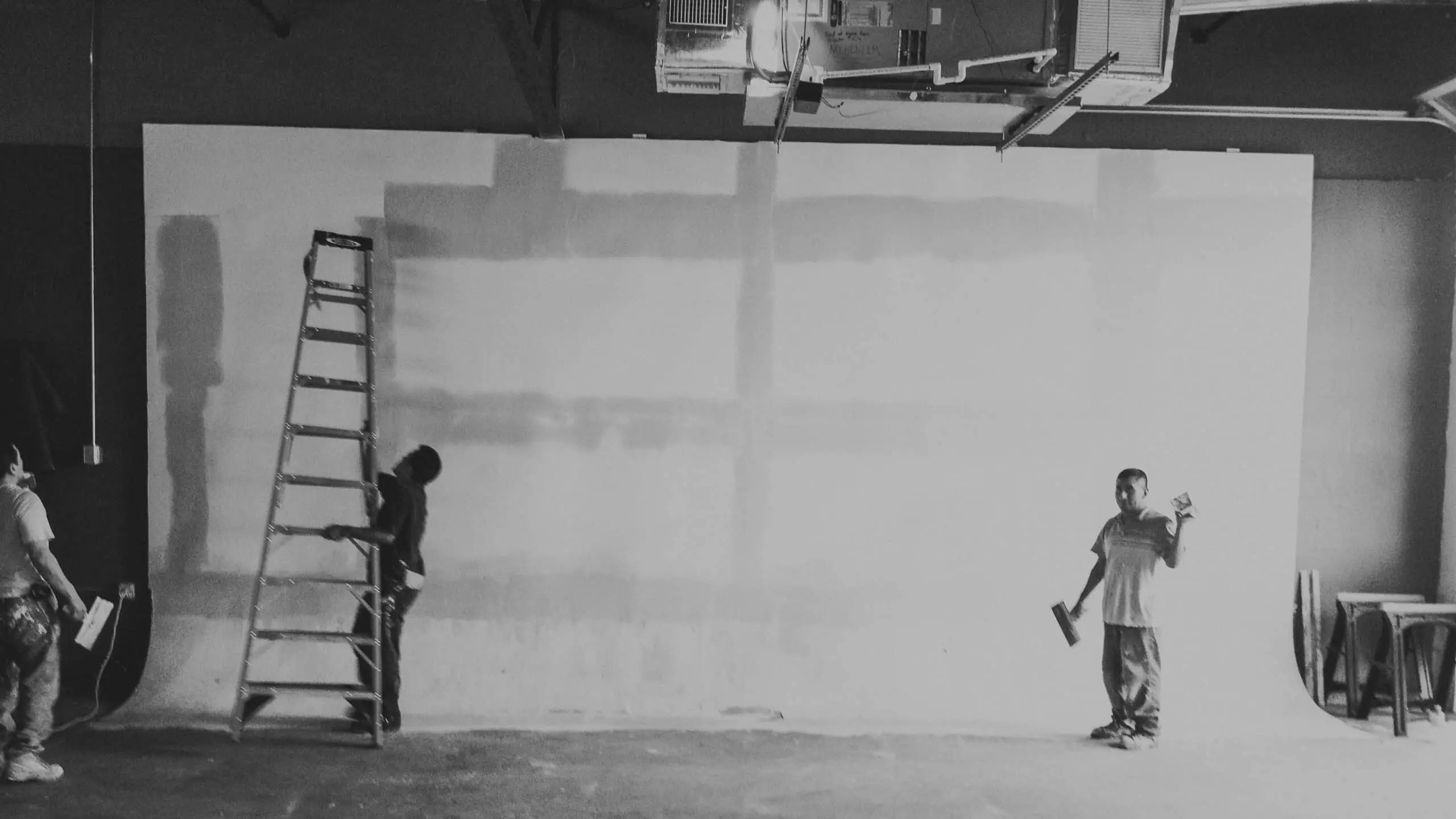
In the world of modern television, where content quality and viewer engagement are paramount, a television production studio plays a critical role. These purpose-built spaces are designed to bring creative visions to life with the precision and professionalism that audiences expect. Producing TV content outside a professional studio often presents significant challenges, from inconsistent sound quality to lighting issues and logistical hurdles that can derail a project’s timeline and budget.
A television production studio provides a controlled environment equipped with state-of-the-art technology, expert staff, and customizable sets to overcome these challenges seamlessly. Beyond solving technical difficulties, studios serve as creative hubs, offering flexibility and efficiency that elevate the entire production process. Whether it’s a talk show, a drama, or live news, the right studio enhances production quality and ensures a polished final product. Let’s explore why leveraging studio production is essential for creating outstanding television content.
## What Defines a Professional Television Production Studio?
A professional television production studio is much more than a room with cameras and lights, it’s a purpose-built environment designed to cater to every aspect of [TV production](https://c-istudios.com/film-and-tv-production/). At its core, a professional TV studio integrates advanced infrastructure, specialized tools, and a seamless workflow to ensure high-quality content creation.
Key elements of a professional studio include soundproofing, which eliminates external noise and ensures pristine audio recording. Proper lighting systems, often incorporating adjustable rigs and customizable settings, allow creators to achieve the perfect ambiance for any scene or show. The studio’s technical backbone includes advanced control rooms equipped with video switchers, sound mixers, and live editing capabilities to enhance production efficiency.
The concept of studio production revolves around a controlled space where creativity meets technology. Studios provide the flexibility to design and build TV sets tailored to specific shows, from talk shows and game shows to dramatic series. Unlike outdoor or makeshift setups, studios enable productions to operate without disruptions caused by weather or environmental factors.
Moreover, a professional TV studio offers access to high-quality cameras, teleprompters, green screens, and advanced post-production facilities. This infrastructure ensures that every visual and audio element aligns with the creative vision. For example, green screen technology allows studios to transport the audience to any location virtually, while multiple camera setups enable dynamic shots and angles.
In summary, a professional television production studio is defined by its state-of-the-art equipment, tailored environments, and technical expertise. It provides the ideal foundation for producing high-quality television content, enabling creators to focus on storytelling and creativity without worrying about technical challenges.
## Enhanced Production Quality. The Technical Edge of Studios
One of the most significant benefits of working in a television production studio is the ability to achieve superior production quality through advanced technical capabilities. Studios are equipped with cutting-edge tools and technologies that set them apart from on-location or makeshift production setups.
Professional TV studios feature state-of-the-art cameras capable of capturing high-resolution visuals with exceptional clarity. These cameras often come with interchangeable lenses, allowing for versatile shots ranging from wide-angle views to close-ups.
In tandem with these cameras, studios provide advanced lighting setups that enhance the visual quality of scenes. With adjustable lighting grids, producers can create everything from a bright, lively atmosphere for a game show to a moody, dramatic ambiance for a crime series.
Sound quality is another critical factor that studios excel in. With dedicated soundproofing and acoustically optimized designs, studios ensure clear and consistent audio, free from ambient noise. High-end microphones, mixers, and audio editing software further refine the auditory experience, which is crucial for engaging viewers.
The controlled environment of a studio also contributes to maintaining production consistency. Unlike outdoor shoots that are subject to unpredictable weather, lighting changes, and noise, studio production allows for uninterrupted workflows. This level of control is invaluable when producing content on tight schedules and budgets.
Professional studios enable the creation of custom TV sets that align perfectly with the show’s branding and narrative. From elaborate talk show stages to realistic replicas of outdoor settings, studios make it possible to create immersive visuals without logistical constraints. These custom-built sets not only enhance the viewing experience but also streamline production processes by having everything centralized in one location.
## Creative Flexibility and Versatility in Studio Production
One of the most remarkable advantages of a television production studio is the creative flexibility it offers. Unlike outdoor locations or ad-hoc setups, a studio provides a blank canvas that can be adapted to meet various creative needs, fostering innovation and experimentation.
Professional studios are equipped to accommodate a wide range of production requirements, from talk shows and sitcoms to live broadcasts and music performances. The key to this versatility lies in the ability to build and customize TV sets tailored to specific shows or scenes. Whether creating a futuristic backdrop for a sci-fi series or a cozy living room for a family drama, studios enable producers to craft immersive worlds that captivate audiences.
Another hallmark of studio creativity is the seamless integration of advanced technologies like green screens and virtual sets. These tools allow producers to transport viewers to virtually any location without leaving the studio. For example, a news program can place anchors against a backdrop of real-time global events, while a children’s show can create fantastical landscapes brimming with animated elements.
Studios also provide a controlled environment where lighting, sound, and other technical aspects can be precisely managed. This control enhances creativity by eliminating constraints often faced in unpredictable outdoor settings, such as fluctuating lighting or weather disruptions. For instance, a live concert recording in a studio ensures consistent sound quality and visually stunning shots, regardless of external factors.
Creativity thrives further in studios because of the availability of modular set pieces and versatile layouts. For example, a single studio can host a game show in the morning, convert into a cooking show set by afternoon, and transform into a dramatic courtroom scene by evening. This level of adaptability reduces logistical headaches and streamlines production schedules, freeing up resources to focus on storytelling and artistry.
In essence, a well-equipped television production studio is a playground for creativity, offering the tools and flexibility required to bring any concept to life. From customized sets to cutting-edge technology, studios empower producers and directors to realize their visions with precision and flair.
## Cost-Effectiveness in Long-Term TV Production
While a television production studio may seem like a significant upfront investment, it often proves to be a cost-effective choice in the long run, particularly for regular TV content creation. Studios provide numerous financial advantages compared to outdoor or makeshift settings, saving time and money at various stages of production.
One major cost-saving factor is the elimination of equipment rental expenses. Professional studios are typically equipped with high-quality cameras, lighting, and sound systems, reducing the need to source these tools separately. This built-in infrastructure not only cuts costs but also ensures that production teams have access to the latest technologies without additional expenses.
Weather-related delays are another area where studios shine. Outdoor shoots often face interruptions due to unpredictable weather, leading to rescheduling and increased costs for crew, talent, and equipment rentals. In contrast, studio production takes place in a controlled environment, ensuring uninterrupted workflows and avoiding the financial pitfalls of delays.
Post-production costs can also be significantly reduced when working in a professional studio. High-quality recording equipment and soundproofing minimize the need for extensive audio and video editing to fix issues caused by poor recording conditions. This results in faster turnaround times and lower post-production expenses.
Moreover, the ability to reuse studio spaces and sets for multiple productions adds to the cost-effectiveness. For example, a single TV set can be slightly modified and used across different shows, reducing the need for new builds. Studios also streamline logistics, as all necessary resources, from equipment to technical staff, are centralized, eliminating transportation and setup costs associated with outdoor shoots.
For regular TV content creators, the consistent savings achieved through studio production make it a smart long-term investment. Producers can allocate their budgets more effectively, channeling resources into areas like talent acquisition or creative enhancements rather than grappling with logistical and environmental uncertainties.
In summary, the controlled environment, built-in resources, and reusability of a television production studio make it a financially savvy choice for long-term productions. By minimizing unforeseen expenses and optimizing workflows, studios not only enhance production quality but also help creators maximize their budgets effectively.
## Professional Support and Expertise in TV Studios
A significant advantage of working in a professional TV studio is access to a team of skilled professionals who specialize in various aspects of television production. From experienced technicians and creative directors to talented set designers and sound engineers, a studio provides the expertise needed to ensure a seamless and high-quality production process.
Technicians in professional studios manage advanced equipment, including cameras, lighting, and audio systems, ensuring optimal performance during filming. Their technical proficiency not only enhances production quality but also minimizes errors that could disrupt the process. For instance, sound engineers ensure clear and balanced audio, while lighting technicians create the perfect ambiance for every scene.
Directors and producers benefit greatly from the collaborative environment of a studio. The in-house teams often include creative experts who can offer insights and suggestions to elevate the production’s visual and narrative appeal. Whether it's fine-tuning a camera angle or designing a TV set that aligns with the show’s theme, this collective expertise adds immense value to the final product.
Set designers are another crucial component of a professional TV studio. With access to a wide range of props, backdrops, and materials, they can quickly construct elaborate sets that would be difficult to achieve in outdoor locations. Their ability to craft detailed and immersive environments saves time and enhances the production’s aesthetic quality.
Additionally, the controlled environment of a studio allows professionals to work efficiently, reducing the likelihood of on-set issues. The presence of a dedicated team ensures that problems, such as technical glitches or lighting adjustments, are addressed promptly, preventing delays and costly reshoots.
## Time Efficiency. Streamlined TV Production Processes
Producing television content is often a race against time, with tight schedules and deadlines dictating every phase of the process. A professional TV studio significantly enhances time efficiency by providing a centralized, well-equipped space where all aspects of production come together seamlessly.
One of the key advantages of studio setups is the availability of pre-installed equipment and infrastructure. Lighting rigs, sound systems, and cameras are ready for immediate use, eliminating the time-consuming task of setting up and testing equipment from scratch. This allows production teams to focus on creative tasks rather than logistics, speeding up the overall workflow.
Studios also streamline pre-production processes. Set construction, for instance, can be completed in advance within the studio, ensuring everything is ready before filming begins. Customizable TV sets can be built and adjusted quickly, accommodating changes without disrupting the schedule. This flexibility saves significant time compared to outdoor locations, where setup can be hindered by weather, transportation issues, or lack of resources.
During filming, the controlled environment of a studio ensures uninterrupted progress. Unlike outdoor shoots, which are subject to delays caused by fluctuating weather or external noise, studio production allows for consistent lighting, sound, and visual conditions. This consistency reduces the need for multiple takes and extensive post-production corrections, further accelerating timelines.
Professional studios often have in-house teams of experts who work in sync to optimize production speed. For example, technicians can address technical issues immediately, while directors and producers have access to advanced tools for real-time editing and monitoring. This collaborative setup minimizes downtime and keeps the production moving efficiently.
Post-production is also expedited in studio environments. High-quality recordings made in a studio require less editing, as issues like background noise, lighting inconsistencies, or technical glitches are already addressed during filming. This reduces the time and effort needed to prepare the final product for broadcast.
## Controlled Environment for Seamless Production
One of the standout benefits of a television production studio is the ability to provide a fully controlled environment that ensures smooth, uninterrupted production. Unlike outdoor shoots or temporary setups, studios are designed to eliminate external disturbances and create an ideal setting for professional filming.
Soundproofing is a critical feature of professional TV studios. These spaces are acoustically treated to prevent external noises, such as traffic, weather, or construction sounds, from interfering with recordings. This ensures crystal-clear audio, which is vital for dialogue-heavy productions like talk shows or dramas. In addition, soundproofing allows for higher focus during filming, enabling cast and crew to work without distractions.
Temperature control is another significant advantage. Studios are equipped with HVAC systems that maintain a comfortable environment, regardless of external weather conditions. This is especially important during long shoots, where consistent temperatures can prevent overheating from production lights and ensure that everyone on set remains comfortable and productive.
Perhaps the most obvious benefit of a studio is its independence from weather-related disruptions. Outdoor shoots often face delays due to rain, wind, or changing light conditions. In a television production studio, these factors are entirely mitigated. Productions can proceed on schedule without the risk of unforeseen weather interruptions, ensuring deadlines are met and budgets stay on track.
Moreover, the controlled environment of a studio extends to lighting and visual consistency. Studios allow for precise control over lighting, enabling producers to replicate the same look and feel across multiple scenes or episodes. This level of consistency is difficult to achieve in outdoor or makeshift locations, where natural lighting is unpredictable.
Studios also eliminate logistical challenges like transporting equipment or setting up temporary shelters. Everything needed for a production, lighting rigs, cameras, audio systems, and even customizable TV sets, is available on-site, reducing the risk of technical issues and minimizing setup time.
In summary, a television production studio provides an unparalleled level of control, from soundproofing and temperature regulation to eliminating weather dependencies. This controlled environment ensures seamless production, enhancing focus, efficiency, and overall productivity for every TV project.
## Scalability for Large-Scale Productions
A major advantage of a television production studio is its scalability, allowing it to accommodate productions of varying sizes, from intimate talk shows to elaborate, large-scale productions. Studios are designed with flexibility in mind, making them a versatile option for creators with diverse needs.
Small-scale productions, such as interviews or promotional content, can be easily managed within a compact studio space. These productions benefit from the availability of customizable TV sets, which can be designed to fit specific themes or branding requirements. The modular nature of many studio setups ensures that even small productions look polished and professional, without requiring excessive resources.
On the other end of the spectrum, large-scale productions, such as game shows, reality TV, or live events, rely heavily on the infrastructure and space provided by professional studios. For example, a studio equipped with multiple stages can host simultaneous filming sessions for different segments of a show. This not only saves time but also allows for efficient use of space and resources.
Studio production also supports complex productions that require advanced technology, such as green screens, virtual sets, or high-resolution video walls. For instance, a studio producing a high-budget drama can construct intricate sets that seamlessly blend physical elements with digital effects, creating immersive worlds for viewers. This combination of physical and virtual scalability makes studios indispensable for ambitious projects.
Additionally, the ability to accommodate large crews and extensive equipment is a key benefit of a professional TV studio. From providing ample space for lighting rigs and camera tracks to ensuring comfortable facilities for cast and crew, studios are built to handle the demands of large-scale productions. This scalability is further enhanced by in-house technical teams who manage complex setups and ensure everything runs smoothly.
Notable examples of large-scale productions include popular game shows like Jeopardy! or live talent competitions like America’s Got Talent. These shows rely on the versatility and infrastructure of professional studios to execute intricate staging, dynamic lighting, and real-time audience interactions.
## The Role of Television Studios in the Future of TV Production
As the television industry evolves, the role of the television production studio remains central to shaping the future of TV content. Emerging technologies like virtual sets, augmented reality, and advanced green screen techniques are revolutionizing how studios operate, making them even more indispensable for modern productions.
One significant trend is the integration of virtual sets powered by LED screens and real-time rendering technologies. These setups allow producers to create immersive environments without constructing physical sets, saving time and costs while offering limitless creative possibilities. For instance, a talk show can be filmed in a studio but appear as if it's happening in a futuristic cityscape or an exotic outdoor location.
Green screen technology has also advanced significantly, enabling seamless blending of live actors with computer-generated imagery (CGI). This technology is particularly beneficial for high-budget dramas, fantasy series, or news programs requiring dynamic, real-time backgrounds. By combining green screens with motion tracking and 3D effects, studios can transport audiences to any setting imaginable, enhancing storytelling and visual appeal.
Another groundbreaking development is the use of artificial intelligence and machine learning in studio production workflows. AI-driven systems can automate lighting adjustments, sound optimization, and even post-production edits, streamlining processes and reducing human error. This technology empowers television production studios to produce content faster while maintaining high standards of quality.
Furthermore, studios are increasingly equipped with tools for remote production, allowing directors and technicians to control aspects of the shoot from different locations. This is particularly useful for global productions, enabling collaboration across time zones without requiring everyone to be physically present.
As these advancements continue to redefine television production, the importance of a television production studio as a controlled and technology-driven environment grows. Studios provide the infrastructure and adaptability necessary to leverage these innovations, ensuring that TV content keeps pace with audience expectations and industry trends.
## The Evolution of Special Effects in TV
Special effects have been an integral part of television since its inception, creating moments that captivate and transport audiences beyond the ordinary. Initially, practical effects, using physical props, makeup, and mechanical techniques, dominated the television landscape. Classic shows like Doctor Who in the 1960s relied heavily on these techniques, employing innovative methods to produce alien worlds and futuristic technology on modest budgets. These effects, though limited by technology, paved the way for greater advancements.
The digital revolution of the late 20th century ushered in a new era of visual storytelling. The advent of computer-generated imagery (CGI) enabled creators to craft scenes that were previously impossible to realize. Iconic TV shows like Star Trek: The Next Generation showcased early uses of digital effects, introducing viewers to the potential of CGI-enhanced visuals. While primitive by today’s standards, these efforts marked a crucial turning point.
Fast forward to the present, and CGI has become the gold standard for television production. Unlike traditional practical effects, which could be constrained by physical limitations, CGI allows creators to generate expansive worlds, intricate characters, and dynamic environments with unparalleled precision. For instance, shows like Game of Thrones and The Mandalorian have demonstrated how CGI can transform television into a medium rivaling the cinematic experience.
This evolution has not only elevated the visual appeal of TV but also democratized creativity. Productions of all scales can now leverage CGI tools, ensuring that visual storytelling continues to break boundaries and inspire audiences worldwide.
## How CGI Shapes Modern Television Storytelling
In today’s competitive entertainment landscape, compelling storytelling goes hand in hand with visually immersive worlds, and CGI plays a pivotal role in achieving this balance. Modern audiences crave experiences that transcend reality, and CGI enables television creators to meet these expectations by crafting intricate environments, larger-than-life creatures, and spectacular action sequences.
Take The Witcher, for instance, which uses CGI to bring its magical creatures and vast fantasy landscapes to life. Similarly, stranger things leverages CGI to create the eerie and otherworldly "Upside Down," a visual centerpiece of the show’s narrative. These examples highlight how CGI in television enhances storytelling, allowing complex narratives to be told with greater depth and visual authenticity.
However, successful storytelling requires more than visual spectacle. The most impactful shows use CGI as a tool to complement the narrative rather than overshadow it. The balance between storytelling and spectacle is key, as evidenced by the mandalorian. While its CGI-generated environments and characters are breathtaking, the series ensures that emotional arcs and character development remain at the forefront.
Ultimately, CGI shapes modern television storytelling by expanding the creative possibilities available to writers, directors, and producers. It provides the means to visualize ambitious ideas, ensuring that the stories audiences love are not only told but vividly brought to life.
## The Role of Computer Graphics in TV Production
Computer graphics have revolutionized television production, providing creators with the ability to realize ambitious ideas with unprecedented precision and efficiency. Unlike traditional practical effects, which rely on physical props, models, and manual techniques, CGI enables the seamless creation of vast landscapes, detailed characters, and dynamic action sequences that were once impossible or prohibitively expensive.
One of the most significant advantages computer graphics bring to TV production is flexibility. Creators can design fantastical worlds or historical settings without the logistical challenges of location scouting or building extensive sets. For instance, shows like the mandalorian employ real-time CGI and virtual backdrops, allowing producers to film in controlled environments while maintaining visual authenticity. Additionally, CGI ensures consistency across episodes, enabling smooth continuity even in complex productions.
The workflow of integrating CGI into live-action scenes is a meticulous process. It typically begins with pre-visualization, where artists create digital storyboards or animatics to outline the CGI elements. During filming, green screens, motion capture suits, or digital markers are used to capture performances and placeholders for CGI integration.
In post-production, these placeholders are replaced with fully rendered computer-generated visuals, blending them seamlessly with the live-action footage. Advanced rendering software and techniques, such as real-time rendering, accelerate this process, reducing production delays.
CGI also has distinct advantages over traditional effects. Practical effects can be limited by scale, realism, and adaptability, whereas CGI offers limitless creative possibilities. It is also more cost-effective in the long term, as digital assets can be reused and adapted for different scenes or episodes. Furthermore, CGI minimizes safety risks associated with physical stunts or pyrotechnics, as these can now be simulated digitally.
In essence, computer graphics have become an indispensable tool in modern TV production, unlocking creativity while streamlining workflows and enhancing visual storytelling.
## Challenges of Using CGI in Television
While CGI has transformed television production, it is not without its challenges. One of the most pressing issues is budget constraints. Unlike big-budget films, most television productions operate on tighter financial margins, limiting the extent and quality of CGI that can be used. High-quality CGI requires specialized software, skilled professionals, and significant rendering time, all of which drive up costs.
Technical limitations also pose significant challenges. Television production schedules are often much shorter than those for films, leaving less time for detailed CGI work. This can lead to rushed or subpar effects, which may diminish the overall quality of the show. Integrating CGI into live-action footage requires cutting-edge hardware and software, which can strain smaller production teams.
Audience expectations further complicate matters. Modern viewers, accustomed to blockbuster-level visual effects, demand realism and precision in TV shows. If CGI falls short of these standards, it risks breaking the audience's immersion. The "uncanny valley" issue, where digital characters or effects appear almost but not quite realistic, can also undermine the emotional impact of a scene.
Despite these challenges, many TV productions find innovative ways to balance quality and cost. Shows like the mandalorian and stranger things use advanced techniques like real-time rendering and modular production pipelines to maximize the efficiency of their CGI workflows. By prioritizing storytelling and carefully selecting scenes where CGI has the most impact, creators can overcome these hurdles and deliver visually stunning content within their constraints.
In summary, while CGI in television offers incredible opportunities, it also demands careful planning, resource allocation, and technical expertise to address its inherent challenges.
## Pioneering TV Shows That Revolutionized Visual Effects
The evolution of CGI in television has been marked by groundbreaking shows that pushed the boundaries of what is visually possible on the small screen. These series not only captivated audiences but also set new standards for storytelling and visual artistry.
One of the most iconic examples is game of thrones. From its sweeping battle scenes to the awe-inspiring dragons, the show utilized CGI to create a richly detailed fantasy world. The dragons, in particular, became a symbol of the show’s visual prowess, seamlessly blending with live-action elements to evoke both wonder and fear. This level of CGI sophistication raised expectations for what television could achieve, proving that TV visuals could rival blockbuster films.
The mandalorian revolutionized visual effects by incorporating a cutting-edge technique known as virtual production. Using massive LED screens and real-time rendering technology, the show projected CGI environments directly onto the set, allowing actors to perform within immersive digital landscapes. This innovation not only enhanced visual realism but also streamlined production processes, saving time and costs.
These pioneering shows left an indelible impact on the television industry. They demonstrated that high-quality CGI could elevate storytelling, enabling creators to imagine and realize complex worlds. Their success also inspired networks and streaming platforms to invest in advanced visual effects, leading to a surge in ambitious, CGI-heavy productions.
Recognition and accolades further underscored the importance of visual effects in these shows. Game of thrones received multiple Emmy Awards for Outstanding Special Visual Effects, while the mandalorian earned similar accolades, solidifying its place as a technological and creative trailblazer. These awards not only celebrated the artistry of CGI but also highlighted its role in transforming television into a medium of unparalleled visual innovation.
## Collaboration Between VFX Studios and TV Producers
The creation of visually stunning television requires seamless collaboration between production teams and visual effects (VFX) studios. This partnership is essential to ensure that CGI elements enhance the storytelling while remaining cohesive with the live-action components.
The process begins with pre-visualization, a critical planning phase where VFX artists and producers map out CGI-heavy scenes using digital storyboards or animatics. This step helps align creative visions, ensuring that everyone involved, from directors to actors, understands how the final scenes will look. For example, in stranger things, pre-visualization was instrumental in designing the "Mind Flayer" creature and the eerie "Upside Down" world.
During production, close collaboration between on-set teams and VFX studios is vital. VFX supervisors often work on location to guide the filming of CGI-integrated scenes, ensuring that lighting, angles, and movements align with the digital elements. For instance, the mandalorian used a technique called "StageCraft," where VFX teams rendered CGI environments in real-time to assist directors in framing shots.
Post-production is where the magic truly happens. VFX artists refine and integrate computer-generated elements into the footage, using advanced software and rendering tools. This phase often involves multiple rounds of feedback between producers and VFX teams to ensure the final visuals meet creative and technical standards.
Successful collaborations are evident in shows like stranger things, where the integration of CGI with live-action scenes has been universally praised. The show’s producers and VFX artists worked hand-in-hand to create a visually cohesive experience, from designing terrifying creatures to crafting otherworldly environments. Such partnerships highlight the importance of communication, planning, and shared creative vision.
Ultimately, the collaboration between VFX studios and TV producers is the backbone of CGI success in television. By leveraging each other’s expertise, they bring bold ideas to life, transforming ambitious scripts into visually captivating narratives.
## Future Trends in CGI and TV Special Effects
The future of CGI and special effects in television is poised for transformative innovations, driven by cutting-edge technologies and evolving audience demands. Among the most exciting developments is the rise of real-time rendering, which is revolutionizing how visual effects are created and integrated into productions.
Real-time rendering allows CGI to be generated and manipulated instantly, enabling on-set adjustments that save time and costs. This technology, famously used in the mandalorian, allows filmmakers to project digital environments onto LED screens in real time, providing immersive backdrops that replace traditional green screens.
AI-driven computer graphics are another game-changer in the industry. Artificial intelligence is increasingly being used to automate complex visual effects tasks, such as texture generation, scene simulations, and character animations.
This not only speeds up production timelines but also enables greater precision and creativity. AI tools can analyze data from past projects to suggest improvements or simulate realistic effects, such as lifelike facial expressions or dynamic environmental changes, enhancing the overall quality of CGI in television.
Virtual production techniques, which combine real-time rendering with advanced motion capture and pre-visualization, are reshaping how television shows are made. These methods blur the line between pre-production and production, allowing creators to experiment with visuals during filming rather than waiting until post-production. This integration fosters collaboration between departments and ensures that CGI elements align seamlessly with live-action components.
Looking ahead, the future of CGI in television is bright with possibilities. We can expect even more realistic digital humans, interactive environments, and AI-generated effects that adapt in real-time to storytelling needs. The increasing affordability of these technologies will also democratize access, enabling smaller studios to produce high-quality visuals that compete with major productions.
Ultimately, the convergence of real-time rendering, AI, and virtual production heralds a new era of creativity and efficiency, ensuring that television continues to captivate audiences with groundbreaking visual effects.
## CGI’s Role in Expanding Global TV Audiences
High-quality visual effects play a crucial role in expanding the global reach of television shows, attracting audiences from diverse cultural and linguistic backgrounds. Stunning CGI transcends language barriers, creating a universal appeal that draws viewers into richly crafted worlds and narratives.
One prime example of CGI’s international success is the witcher. With its fantastical creatures, epic battles, and immersive landscapes, the show captured the imaginations of audiences worldwide. Similarly, the animated series arcane uses breathtaking CGI to blend steampunk and fantasy aesthetics, earning critical acclaim and a massive global fanbase. These productions demonstrate how visual effects serve as a universal language, allowing stories to resonate across borders.
Streaming platforms have further amplified this trend, driving demand for CGI-heavy content. Companies like Netflix, Amazon Prime, and Disney+ prioritize visually stunning shows to attract and retain subscribers from around the world. For instance, the mandalorian and Stranger Things leverage CGI to create cinematic experiences that appeal to international viewers, boosting their popularity and cultural impact.
CGI also enables localized storytelling with global appeal. Productions can adapt visuals to reflect diverse cultures while maintaining a high-quality aesthetic. This adaptability allows shows to connect with audiences in different regions, fostering inclusivity and engagement.
In essence, CGI in television not only enhances the visual experience but also bridges cultural divides, expanding the reach and impact of TV shows on a global scale. As technology continues to advance, the power of visual effects to unite audiences worldwide will only grow.
## Work with C&I Studios
If you are planning a project like this, our team can take it from concept to final delivery. Explore our [film and TV production](https://c-istudios.com/film-and-tv-production/), browse [our work](https://c-istudios.com/our-work/) to see how we tell brand stories, and [get in touch](https://c-istudios.com/contact/) when you are ready to start.
Originally published November 7, 2024
---
*This content is from [C&I Studios](https://c-istudios.com), a full-service production company.*
---
# Effective Storyboarding for Feature Films
> Published: November 6, 2024
> Categories: Film & TV
> Source: https://c-istudios.com/effective-storyboarding-for-feature-films/
---
.cib{--paper:#1b1d1f;--ink:#fff;--body:#d5d7d9;--muted:#8b9096;--line:rgba(255,255,255,.12);--thumb:#2b2e31;--card:#212426;--accent:#c02b0a;--blue:#5B8FA8;--serif:'Playfair Display',Georgia,serif;--sans:'Poppins',-apple-system,sans-serif;--measure:900px;background:var(--paper);color:var(--body);font-family:var(--sans);line-height:1.6;position:relative;left:50%;transform:translateX(-50%);width:90vw;max-width:1920px}
.cib *{box-sizing:border-box}
.cib .kicker{max-width:var(--measure);margin:58px auto 0;padding:0 22px;font-size:12.5px;font-weight:700;letter-spacing:2.5px;text-transform:uppercase;color:var(--blue)}
.cib h1.cibh1{text-wrap:balance;font-family:var(--serif);font-weight:500;font-size:clamp(46px,6vw,72px);line-height:1.08;color:var(--ink);max-width:var(--measure);margin:18px auto 0;padding:0 22px;letter-spacing:-.5px}
.cib .metarow{max-width:var(--measure);margin:20px auto 0;padding:0 22px;color:var(--muted);font-size:14px}
.cib .hero{position:relative;width:100%;height:0;padding-bottom:56.25%;overflow:hidden;margin:48px auto 0;border-top:1px solid var(--line);border-bottom:1px solid var(--line)}
.cib .hero .ph{width:100%;aspect-ratio:16/9;background:var(--thumb);border-top:1px solid var(--line);border-bottom:1px solid var(--line);display:flex;align-items:center;justify-content:center;color:#7d8288;font-size:13px;text-align:center;padding:0 20px}
.cib .body{max-width:var(--measure);margin:12px auto 0;padding:52px 22px 6px}
.cib .body.lead p:first-child{font-size:23px;line-height:1.62;color:var(--ink)}
.cib .body p{font-size:18.5px;line-height:1.85;margin:0 0 30px;color:var(--body)}
.cib .body h2{text-wrap:balance;font-family:var(--serif);font-weight:500;font-size:clamp(32px,4vw,48px);line-height:1.22;color:var(--ink);margin:70px 0 20px;letter-spacing:-.3px}
.cib .body h3{text-wrap:balance;font-family:var(--sans);font-weight:600;font-size:22px;color:var(--ink);margin:38px 0 8px}
.cib .body a{color:var(--ink);text-decoration:underline;text-decoration-color:rgba(255,255,255,.4);text-underline-offset:3px}
.cib .body a:hover{text-decoration-color:var(--ink)}
.cib .ctable{width:100%;border-collapse:collapse;margin:16px 0 30px;font-size:16px}
.cib .ctable th{background:#000;color:#fff;text-align:left;padding:10px 12px;font-family:var(--sans)}
.cib .ctable td{padding:10px 12px;border-bottom:1px solid var(--line);color:var(--body)}
.cib .inimg{position:relative;width:100%;height:0;padding-bottom:56.25%;overflow:hidden;margin:72px auto;border-top:1px solid var(--line);border-bottom:1px solid var(--line)}
.cib .inimg .ph{width:100%;aspect-ratio:16/9;background:var(--thumb);border-top:1px solid var(--line);border-bottom:1px solid var(--line);display:flex;align-items:center;justify-content:center;color:#7d8288;font-size:13px}
.cib .origpub{max-width:var(--measure);margin:60px auto 0;padding:26px 22px 0;border-top:1px solid var(--line);color:var(--muted);font-size:13.5px}
.cib .related{max-width:1200px;margin:64px auto 0;padding:34px 22px 76px}
.cib .related h3{font-family:var(--sans);font-size:12.5px;letter-spacing:2px;text-transform:uppercase;color:var(--ink);margin:0 0 24px}
.cib .grid{display:grid;grid-template-columns:repeat(3,1fr);gap:28px}
.cib .rc{background:var(--card);border:1px solid var(--line);display:block;text-decoration:none;color:inherit;transition:border-color .15s}
.cib a.rc:hover{border-color:rgba(255,255,255,.5)}
.cib .rc .thumb{position:relative;width:100%;height:0;padding-bottom:56.25%;background:var(--thumb);overflow:hidden}
.cib .rc .thumb img{position:absolute!important;top:0!important;left:0!important;width:100%!important;height:100%!important;object-fit:cover!important;margin:0!important}
.cib .rc .cc{padding:14px 15px 17px}
.cib .rc .rt{font-family:var(--serif);font-weight:500;font-size:16px;line-height:1.3;color:var(--ink);margin:0 0 6px}
.cib .rc .rm{font-size:11px;letter-spacing:1px;text-transform:uppercase;color:var(--muted)}
.cib img{margin:0!important;padding:0!important;display:block!important;vertical-align:top;max-width:100%}
.cib .hero img,.cib .inimg img{position:absolute!important;top:0!important;left:0!important;width:100%!important;height:100%!important;object-fit:cover!important;margin:0!important;padding:0!important;border:0!important;display:block!important;aspect-ratio:auto!important}
.cib .hero+.body{padding-top:36px}
@media(max-width:760px){.cib .grid{grid-template-columns:1fr}.cib .body h2{margin:52px 0 16px}.cib .body p{font-size:17.5px}.cib .inimg,.cib .hero{margin-top:44px}}
.cib .vembed{max-width:var(--measure);margin:44px auto;padding:0 22px}.cib .vembed .vwrap{position:relative;width:100%;height:0;padding-bottom:56.25%}.cib .vembed .vwrap iframe{position:absolute;top:0;left:0;width:100%;height:100%;border:0}
Film & TV
# Effective Storyboarding for Feature Films
26 min read

Storyboarding is a critical step in the filmmaking process, providing a visual blueprint for the entire film. It involves sketching out scenes, framing each shot, and planning the flow of the narrative, allowing directors and production teams to map out their vision before filming begins. When it comes to storyboarding feature films, the process becomes even more essential, as it helps define the pacing, camera angles, and overall visual style of the movie.
This blog will explore the key steps involved in creating a film storyboard, offering valuable storyboarding tips to improve the process and maximize its impact. We will dive into the benefits of visual planning, from preventing costly mistakes to ensuring a seamless production process. Whether you're a seasoned filmmaker or just starting out, mastering storyboarding is crucial to bringing your cinematic ideas to life.
## What is Storyboarding in Feature Films?
Storyboarding is the process of visually mapping out a film’s scenes and sequences through a series of drawings or illustrations, each representing a shot or key moment in the story. In the context of feature filmmaking, storyboarding acts as a crucial planning tool, providing a clear, step-by-step guide to how the narrative will unfold on screen. For directors, it is a means to communicate their vision with the entire production team, ensuring that everyone, from cinematographers to set designers, shares a unified understanding of the project.
Unlike simple sketches, a film storyboard incorporates specific details such as camera angles, movements, transitions, and notes on action or dialogue within a scene. This makes it a comprehensive visual roadmap that minimizes ambiguity and enhances creative collaboration. For producers, storyboarding ensures logistical alignment, helping with budget allocation, time management, and resource planning.
Although storyboarding is used across different industries, its application in feature films differs significantly from other mediums such as animations or commercials. In animation, storyboards often replace live-action shoots, as animators use them as a direct reference for creating scenes.
Commercials, on the other hand, use concise storyboards focusing on short-form storytelling. In contrast, feature films require extensive storyboards that capture the depth, pacing, and complexity of a longer narrative. For example, blockbuster films like The Lord of the Rings trilogy and Star Wars heavily relied on detailed storyboards to bring intricate battle sequences and special effects to life.
The importance of storyboarding becomes even more apparent when considering its impact on iconic films. Alfred Hitchcock, famously known for his meticulous pre-visualization process, storyboarded every shot of his thriller Psycho, ensuring that each scene delivered the desired suspense and emotion. Similarly, animated classics such as The Lion King began as thousands of storyboard sketches, which laid the foundation for the film’s stunning visual sequences.
By serving as a bridge between a director’s vision and its practical execution, storyboarding transforms ideas into actionable steps, making it an indispensable tool for feature filmmaking.
## The Role of Storyboarding in Visual Planning
Storyboarding plays a pivotal role in the visual planning of feature films, serving as the backbone of a film’s aesthetic and narrative structure. Through the detailed depiction of scenes, it allows filmmakers to visualize every aspect of the film before stepping onto the set, ensuring that creative ideas align with practical execution.
One of the primary ways storyboarding enhances visual planning is by mapping out camera angles, sequences, and transitions. Each frame in a storyboard specifies not only the composition of a shot but also its relationship with preceding and following frames. This ensures that transitions between scenes are seamless, creating a coherent flow that enhances storytelling. For example, action-heavy sequences like car chases or fight scenes demand precise choreography, which can only be pre-visualized effectively through a detailed storyboard.
In addition to improving scene transitions, storyboarding is instrumental in pre-visualizing complex scenes. For instance, films that rely on heavy visual effects, such as Avatar or The Avengers, require extensive pre-planning to integrate live-action footage with CGI. Storyboards help directors and visual effects teams coordinate these elements, ensuring that all components align seamlessly during post-production.
Moreover, storyboarding provides a space for experimentation. Filmmakers can test out multiple variations of a scene, experimenting with angles, lighting, and composition without the financial risk of reshoots. This iterative process not only refines the visual language of the film but also saves time and resources.
Another crucial aspect of storyboarding in visual planning is its ability to communicate the director’s vision clearly to the entire production team. A well-constructed storyboard eliminates confusion and fosters collaboration among departments, from costume and set design to cinematography and editing. This unified understanding is especially valuable in big-budget productions, where miscommunication can lead to costly delays.
In summary, storyboarding is an essential component of visual planning in feature films, enabling filmmakers to refine their creative ideas, streamline production, and ensure a polished final product. Its ability to pre-visualize and experiment with complex scenes solidifies its role as a cornerstone of modern filmmaking.
## Steps to Create a Film Storyboard
Creating a film storyboard is a systematic process that translates the written script into a visual guide, providing a clear roadmap for the production team. The process begins with breaking down the script into manageable parts. This involves reading the script carefully to identify scenes, sequences, and significant narrative beats. Key moments, such as dramatic turning points or action-heavy sequences, should be highlighted to ensure they are visually represented in the storyboard.
Once the script is broken down, the next step is to identify key scenes and beats. These are the moments that are essential to the story’s progression and require detailed visual planning. Focusing on these critical elements helps streamline the process and prevents the storyboard from becoming cluttered with unnecessary details.
After pinpointing these moments, filmmakers begin sketching frames. Each frame represents a specific shot, complete with notes on camera angles, character actions, dialogue, and other essential details. These sketches can be as simple or detailed as needed, depending on the project and the team’s familiarity with the process.
Refining the storyboard is the final creative step. Filmmakers review the sketches for clarity and consistency, ensuring that the visual narrative flows smoothly. This stage is crucial for spotting potential issues, such as unclear transitions or gaps in storytelling, and addressing them before production begins. Practical examples, such as a car chase sequence, illustrate how details like shot duration, angles, and action timing can be communicated effectively through the storyboard.
Both traditional sketching and digital tools can be used for storyboarding. Traditional methods, such as pencil and paper, are flexible and require minimal resources, while digital tools like Storyboarder or Toon Boom Storyboard Pro offer advanced features such as animation previews and collaborative editing. Filmmakers often choose the method that best suits their workflow, with many blending both approaches for optimal results. By following this structured process, filmmakers can create a storyboard that effectively communicates their vision and facilitates a smooth production.
## Essential Elements of a Strong Storyboard
A strong storyboard is essential for ensuring a film's visual narrative is clear and compelling. One of the key elements that make a storyboard effective is its composition and framing. Each frame should clearly depict the intended shot, showing how characters, props, and settings are arranged within the scene. Proper framing not only conveys the mood but also guides the audience’s attention to the most critical aspects of the shot.
Clarity is another vital component. The visuals should be easy to interpret, even by team members unfamiliar with the director’s vision. Accompanying notes that specify camera movements, character actions, and dialogue further enhance the clarity and utility of the storyboard.
A smooth depiction of scene transitions is equally important. The storyboard should flow seamlessly from one frame to the next, providing a clear sense of how the film will progress. Abrupt or disjointed transitions can confuse the production team and disrupt the story's pacing.
Consistency with the director’s vision is what ties everything together. The storyboard must align with the tone, style, and themes of the film, ensuring that every shot contributes to the overall narrative. It serves as a visual blueprint that all departments can follow, from cinematography to set design.
Common mistakes to avoid include overloading frames with unnecessary details, inconsistent framing, or failing to communicate essential information. These errors can lead to misinterpretation and wasted time during production. By focusing on composition, clarity, smooth transitions, and consistency, filmmakers can create a storyboard that serves as a powerful tool for realizing their creative vision.
## Tools and Software for Storyboarding Feature Films
In the digital age, filmmakers have access to a variety of tools and software that simplify and enhance the storyboarding process. Among the most popular options is Toon Boom Storyboard Pro, a comprehensive software designed for professional use. This tool provides a robust set of features, including timeline-based editing, camera movement simulation, and compatibility with industry-standard animation pipelines. It is ideal for large-scale projects but comes with a steep learning curve and a significant cost, making it best suited for experienced filmmakers and teams with larger budgets.
Another widely used option is FrameForge, a pre-visualization tool that allows users to create 3D storyboards. With its ability to simulate real-world camera angles, lens choices, and lighting setups, FrameForge is particularly beneficial for productions involving complex sequences or specific technical requirements. While it offers powerful features, its interface can be overwhelming for beginners, and its 3D capabilities might feel excessive for simpler projects.
For those looking for a free alternative, Storyboarder by Wonder Unit provides an accessible yet powerful solution. This open-source software is lightweight, intuitive, and ideal for quick sketches and initial planning. While it lacks the advanced features of premium tools, it is perfect for independent filmmakers and small projects.
When comparing software to traditional methods, the primary advantage of digital tools lies in their ability to streamline visual planning. Digital storyboards are easier to edit, share, and collaborate on, making them ideal for dynamic production environments.
They also integrate seamlessly with other filmmaking tools, enabling smoother transitions between pre-production and production phases. However, traditional methods, such as pencil and paper, offer unmatched flexibility and spontaneity, often appealing to filmmakers who value a hands-on, tactile approach. The choice between the two depends on the filmmaker’s preference, project scale, and team dynamics.
Ultimately, whether using advanced software or sticking to traditional techniques, leveraging the right tools can significantly enhance the storyboarding process, ensuring that filmmakers stay organized and aligned with their creative vision.
## Storyboarding Tips for Filmmakers
Creating an effective storyboard requires more than technical skills; it demands a thoughtful approach that balances creativity with practicality. One of the most essential storyboarding tips is to start with rough sketches and refine them later. The initial phase is about capturing the essence of the scene rather than perfecting the details. Quick, loose drawings help filmmakers focus on the broader narrative flow without getting bogged down in minutiae.
Focusing on key frames rather than every single shot is another crucial tip. Highlighting pivotal moments, such as scene transitions, emotional beats, or action peaks, provides a clear roadmap while leaving room for flexibility during filming. Overloading the storyboard with unnecessary frames can complicate the process and dilute its effectiveness.
Collaboration is vital in storyboarding. Filmmakers should actively involve cinematographers, production designers, and other key team members. This ensures that the storyboard aligns with both the creative vision and the practical requirements of the shoot. Input from these collaborators can lead to innovative solutions and a more cohesive final product.
Color coding is an excellent technique for enhancing clarity and organization. Assigning specific colors to elements like camera movements, dialogue, or action helps teams quickly interpret the storyboard. For example, using red for action sequences and blue for dialogue creates a visual shorthand that streamlines communication.
Testing for flow and continuity is the final step to ensure the storyboard serves its purpose. Filmmakers should review the sequence of frames to confirm that the narrative flows smoothly and that transitions are logical. This review process allows for adjustments before committing to costly production efforts.
By starting with rough sketches, focusing on key frames, collaborating with team members, using color coding, and testing for continuity, filmmakers can create storyboards that are not only visually compelling but also highly functional. These storyboarding tips help bridge the gap between creative vision and practical execution, making the entire filmmaking process more efficient and effective.
## How Storyboarding Saves Time and Budget
Storyboarding is a vital pre-visualization tool that not only brings creative ideas to life but also plays a significant role in streamlining production, saving time, and reducing costs. By visually mapping out scenes in advance, storyboarding ensures that the director’s vision is clearly communicated to the entire team.
This prevents miscommunication, which can lead to costly mistakes on set. When every department, be it cinematography, set design, or visual effects, understands the intended outcome, they can work cohesively toward the same goal, avoiding unnecessary delays or confusion.
One of the most significant ways storyboarding saves money is by minimizing reshoots. Without a clear plan, filmmakers might overlook details during filming, leading to poorly executed shots that need to be redone later. Storyboards eliminate this risk by ensuring that every shot is pre-planned, reviewed, and approved before the cameras start rolling. This is particularly crucial for scenes involving special effects or complex stunts, where reshoots can be prohibitively expensive.
Effective storyboarding also optimizes production schedules. By breaking down the script into visual sequences, filmmakers can prioritize shots based on location, actors’ availability, or technical requirements. This level of organization reduces downtime on set and ensures that resources are used efficiently. For example, Peter Jackson’s The Lord of the Rings trilogy relied heavily on detailed storyboarding to coordinate its sprawling production, which involved multiple units filming simultaneously across different locations.
Another notable example is Alfred Hitchcock’s Psycho. The infamous shower scene was meticulously storyboarded to ensure that every camera angle and cut delivered maximum impact. This level of planning not only achieved the desired artistic effect but also prevented wasted effort, keeping the production on schedule and within budget.
## Challenges in Storyboarding Feature Films
Storyboarding for feature films is a complex process that comes with its own set of challenges. One of the most common difficulties is translating intricate scenes into visual frames. Action-packed sequences, such as car chases or battle scenes, often involve numerous moving parts and require precise planning.
Capturing these dynamics in a storyboard while maintaining clarity can be daunting. To overcome this, filmmakers can break such scenes into smaller segments, focusing on key moments and transitions rather than attempting to illustrate every detail.
Balancing creativity with logistical constraints is another significant challenge. While storyboards serve as a creative guide, they must also account for practical limitations such as budget, location, and available technology.
For example, a filmmaker might envision an elaborate tracking shot but later discover it is impractical due to equipment constraints. Collaboration between the director, cinematographer, and production designer can help reconcile these differences, ensuring that the storyboard reflects both the creative vision and real-world feasibility.
Handling changes mid-production is a challenge that many filmmakers face. Unforeseen circumstances, such as weather disruptions or changes in actor availability, often require adjustments to the original plan. These changes can disrupt the continuity of the storyboard, leading to confusion and delays.
To address this, filmmakers should maintain a degree of flexibility in their storyboarding process. Using digital tools like Toon Boom Storyboard Pro or FrameForge allows for quick edits and updates, ensuring that the storyboard evolves alongside the production.
Real-world examples highlight how these challenges can be tackled. In Mad Max: Fury Road, director George Miller faced the daunting task of visualizing high-octane action sequences. By meticulously storyboarding every frame and working closely with the stunt team, he was able to execute his vision while adhering to production constraints. Similarly, the team behind Inception navigated complex dream sequences by breaking them into manageable visual components, ensuring clarity and cohesion despite the film’s layered narrative.
In summary, while storyboarding feature films presents challenges such as translating complexity, balancing creativity with logistics, and adapting to changes, these obstacles can be overcome through careful planning, collaboration, and the use of flexible tools. By addressing these challenges head-on, filmmakers can ensure their storyboards remain a reliable foundation for successful productions.
## Future Trends in Storyboarding for Feature Films
The future of storyboarding for feature films is being shaped by advancements in technology, particularly the integration of AI, virtual reality (VR), and augmented reality (AR). These innovations are transforming how filmmakers approach pre-visualization, making the process faster, more efficient, and increasingly immersive.
One of the most exciting advancements is the emergence of AI-assisted storyboarding tools. These systems use machine learning algorithms to analyze scripts and automatically generate initial storyboard drafts. By identifying key scenes, characters, and actions, AI can create a rough visual representation of the narrative in a fraction of the time it would take manually.
Tools like ScriptHop and Storyboard AI are already showing promise in this area, offering filmmakers a head start on the storyboarding process. This allows creators to focus more on refining their vision rather than starting from scratch.
Another trend gaining traction is the integration of VR and AR into the pre-visualization process. VR enables directors to step into a virtual version of their storyboard, exploring scenes from within a fully immersive environment. This technology helps filmmakers understand spatial relationships, test camera angles, and experiment with blocking in a way that traditional 2D storyboards cannot.
Similarly, AR allows filmmakers to overlay storyboard elements onto real-world environments, bridging the gap between planning and on-set execution. For example, a director could use AR to visualize how a specific shot will look in an actual location, streamlining the production design process.
AI is also playing a growing role in streamlining the creative process beyond just sketching frames. Intelligent tools can assist with optimizing shot composition, suggesting alternative angles, or even simulating lighting effects. These capabilities reduce the need for trial and error, enabling more precise planning from the outset. As AI becomes more sophisticated, it could evolve into a collaborative partner in the creative process, generating ideas and offering insights based on cinematic trends or past projects.
In summary, the future of storyboarding for feature films lies in leveraging cutting-edge technologies like AI, VR, and AR. These advancements promise to make the storyboarding process more intuitive, collaborative, and immersive, paving the way for new levels of creativity and efficiency in filmmaking.
## The Evolution of Special Effects in TV
Special effects have been an integral part of television since its inception, creating moments that captivate and transport audiences beyond the ordinary. Initially, practical effects, using physical props, makeup, and mechanical techniques, dominated the television landscape. Classic shows like Doctor Who in the 1960s relied heavily on these techniques, employing innovative methods to produce alien worlds and futuristic technology on modest budgets. These effects, though limited by technology, paved the way for greater advancements.
The digital revolution of the late 20th century ushered in a new era of visual storytelling. The advent of computer-generated imagery (CGI) enabled creators to craft scenes that were previously impossible to realize. Iconic TV shows like Star Trek: The Next Generation showcased early uses of digital effects, introducing viewers to the potential of CGI-enhanced visuals. While primitive by today’s standards, these efforts marked a crucial turning point.
Fast forward to the present, and CGI has become the gold standard for television production. Unlike traditional practical effects, which could be constrained by physical limitations, CGI allows creators to generate expansive worlds, intricate characters, and dynamic environments with unparalleled precision. For instance, shows like Game of Thrones and The Mandalorian have demonstrated how CGI can transform television into a medium rivaling the cinematic experience.
This evolution has not only elevated the visual appeal of TV but also democratized creativity. Productions of all scales can now leverage CGI tools, ensuring that visual storytelling continues to break boundaries and inspire audiences worldwide.
## How CGI Shapes Modern Television Storytelling
In today’s competitive entertainment landscape, compelling storytelling goes hand in hand with visually immersive worlds, and CGI plays a pivotal role in achieving this balance. Modern audiences crave experiences that transcend reality, and CGI enables television creators to meet these expectations by crafting intricate environments, larger-than-life creatures, and spectacular action sequences.
Take The Witcher, for instance, which uses CGI to bring its magical creatures and vast fantasy landscapes to life. Similarly, stranger things leverages CGI to create the eerie and otherworldly "Upside Down," a visual centerpiece of the show’s narrative. These examples highlight how CGI in television enhances storytelling, allowing complex narratives to be told with greater depth and visual authenticity.
However, successful storytelling requires more than visual spectacle. The most impactful shows use CGI as a tool to complement the narrative rather than overshadow it. The balance between storytelling and spectacle is key, as evidenced by the mandalorian. While its CGI-generated environments and characters are breathtaking, the series ensures that emotional arcs and character development remain at the forefront.
Ultimately, CGI shapes modern television storytelling by expanding the creative possibilities available to writers, directors, and producers. It provides the means to visualize ambitious ideas, ensuring that the stories audiences love are not only told but vividly brought to life.
## The Role of Computer Graphics in TV Production
Computer graphics have revolutionized television production, providing creators with the ability to realize ambitious ideas with unprecedented precision and efficiency. Unlike traditional practical effects, which rely on physical props, models, and manual techniques, CGI enables the seamless creation of vast landscapes, detailed characters, and dynamic action sequences that were once impossible or prohibitively expensive.
One of the most significant advantages computer graphics bring to [TV production](https://c-istudios.com/film-and-tv-production/) is flexibility. Creators can design fantastical worlds or historical settings without the logistical challenges of location scouting or building extensive sets. For instance, shows like the mandalorian employ real-time CGI and virtual backdrops, allowing producers to film in controlled environments while maintaining visual authenticity. Additionally, CGI ensures consistency across episodes, enabling smooth continuity even in complex productions.
The workflow of integrating CGI into live-action scenes is a meticulous process. It typically begins with pre-visualization, where artists create digital storyboards or animatics to outline the CGI elements. During filming, green screens, motion capture suits, or digital markers are used to capture performances and placeholders for CGI integration.
In post-production, these placeholders are replaced with fully rendered computer-generated visuals, blending them seamlessly with the live-action footage. Advanced rendering software and techniques, such as real-time rendering, accelerate this process, reducing production delays.
CGI also has distinct advantages over traditional effects. Practical effects can be limited by scale, realism, and adaptability, whereas CGI offers limitless creative possibilities. It is also more cost-effective in the long term, as digital assets can be reused and adapted for different scenes or episodes. Furthermore, CGI minimizes safety risks associated with physical stunts or pyrotechnics, as these can now be simulated digitally.
In essence, computer graphics have become an indispensable tool in modern TV production, unlocking creativity while streamlining workflows and enhancing visual storytelling.
## Challenges of Using CGI in Television
While CGI has transformed television production, it is not without its challenges. One of the most pressing issues is budget constraints. Unlike big-budget films, most television productions operate on tighter financial margins, limiting the extent and quality of CGI that can be used. High-quality CGI requires specialized software, skilled professionals, and significant rendering time, all of which drive up costs.
Technical limitations also pose significant challenges. Television production schedules are often much shorter than those for films, leaving less time for detailed CGI work. This can lead to rushed or subpar effects, which may diminish the overall quality of the show. Integrating CGI into live-action footage requires cutting-edge hardware and software, which can strain smaller production teams.
Audience expectations further complicate matters. Modern viewers, accustomed to blockbuster-level visual effects, demand realism and precision in TV shows. If CGI falls short of these standards, it risks breaking the audience's immersion. The "uncanny valley" issue, where digital characters or effects appear almost but not quite realistic, can also undermine the emotional impact of a scene.
Despite these challenges, many TV productions find innovative ways to balance quality and cost. Shows like the mandalorian and stranger things use advanced techniques like real-time rendering and modular production pipelines to maximize the efficiency of their CGI workflows. By prioritizing storytelling and carefully selecting scenes where CGI has the most impact, creators can overcome these hurdles and deliver visually stunning content within their constraints.
In summary, while CGI in television offers incredible opportunities, it also demands careful planning, resource allocation, and technical expertise to address its inherent challenges.
## Pioneering TV Shows That Revolutionized Visual Effects
The evolution of CGI in television has been marked by groundbreaking shows that pushed the boundaries of what is visually possible on the small screen. These series not only captivated audiences but also set new standards for storytelling and visual artistry.
One of the most iconic examples is game of thrones. From its sweeping battle scenes to the awe-inspiring dragons, the show utilized CGI to create a richly detailed fantasy world. The dragons, in particular, became a symbol of the show’s visual prowess, seamlessly blending with live-action elements to evoke both wonder and fear. This level of CGI sophistication raised expectations for what television could achieve, proving that TV visuals could rival blockbuster films.
The mandalorian revolutionized visual effects by incorporating a cutting-edge technique known as virtual production. Using massive LED screens and real-time rendering technology, the show projected CGI environments directly onto the set, allowing actors to perform within immersive digital landscapes. This innovation not only enhanced visual realism but also streamlined production processes, saving time and costs.
These pioneering shows left an indelible impact on the television industry. They demonstrated that high-quality CGI could elevate storytelling, enabling creators to imagine and realize complex worlds. Their success also inspired networks and streaming platforms to invest in advanced visual effects, leading to a surge in ambitious, CGI-heavy productions.
Recognition and accolades further underscored the importance of visual effects in these shows. Game of thrones received multiple Emmy Awards for Outstanding Special Visual Effects, while the mandalorian earned similar accolades, solidifying its place as a technological and creative trailblazer. These awards not only celebrated the artistry of CGI but also highlighted its role in transforming television into a medium of unparalleled visual innovation.
## Collaboration Between VFX Studios and TV Producers
The creation of visually stunning television requires seamless collaboration between production teams and visual effects (VFX) studios. This partnership is essential to ensure that CGI elements enhance the storytelling while remaining cohesive with the live-action components.
The process begins with pre-visualization, a critical planning phase where VFX artists and producers map out CGI-heavy scenes using digital storyboards or animatics. This step helps align creative visions, ensuring that everyone involved, from directors to actors, understands how the final scenes will look. For example, in stranger things, pre-visualization was instrumental in designing the "Mind Flayer" creature and the eerie "Upside Down" world.
During production, close collaboration between on-set teams and VFX studios is vital. VFX supervisors often work on location to guide the filming of CGI-integrated scenes, ensuring that lighting, angles, and movements align with the digital elements. For instance, the mandalorian used a technique called "StageCraft," where VFX teams rendered CGI environments in real-time to assist directors in framing shots.
Post-production is where the magic truly happens. VFX artists refine and integrate computer-generated elements into the footage, using advanced software and rendering tools. This phase often involves multiple rounds of feedback between producers and VFX teams to ensure the final visuals meet creative and technical standards.
Successful collaborations are evident in shows like stranger things, where the integration of CGI with live-action scenes has been universally praised. The show’s producers and VFX artists worked hand-in-hand to create a visually cohesive experience, from designing terrifying creatures to crafting otherworldly environments. Such partnerships highlight the importance of communication, planning, and shared creative vision.
Ultimately, the collaboration between VFX studios and TV producers is the backbone of CGI success in television. By leveraging each other’s expertise, they bring bold ideas to life, transforming ambitious scripts into visually captivating narratives.
## Future Trends in CGI and TV Special Effects
The future of CGI and special effects in television is poised for transformative innovations, driven by cutting-edge technologies and evolving audience demands. Among the most exciting developments is the rise of real-time rendering, which is revolutionizing how visual effects are created and integrated into productions.
Real-time rendering allows CGI to be generated and manipulated instantly, enabling on-set adjustments that save time and costs. This technology, famously used in the mandalorian, allows filmmakers to project digital environments onto LED screens in real time, providing immersive backdrops that replace traditional green screens.
AI-driven computer graphics are another game-changer in the industry. Artificial intelligence is increasingly being used to automate complex visual effects tasks, such as texture generation, scene simulations, and character animations.
This not only speeds up production timelines but also enables greater precision and creativity. AI tools can analyze data from past projects to suggest improvements or simulate realistic effects, such as lifelike facial expressions or dynamic environmental changes, enhancing the overall quality of CGI in television.
Virtual production techniques, which combine real-time rendering with advanced motion capture and pre-visualization, are reshaping how television shows are made. These methods blur the line between pre-production and production, allowing creators to experiment with visuals during filming rather than waiting until post-production. This integration fosters collaboration between departments and ensures that CGI elements align seamlessly with live-action components.
Looking ahead, the future of CGI in television is bright with possibilities. We can expect even more realistic digital humans, interactive environments, and AI-generated effects that adapt in real-time to storytelling needs. The increasing affordability of these technologies will also democratize access, enabling smaller studios to produce high-quality visuals that compete with major productions.
Ultimately, the convergence of real-time rendering, AI, and virtual production heralds a new era of creativity and efficiency, ensuring that television continues to captivate audiences with groundbreaking visual effects.
## CGI’s Role in Expanding Global TV Audiences
High-quality visual effects play a crucial role in expanding the global reach of television shows, attracting audiences from diverse cultural and linguistic backgrounds. Stunning CGI transcends language barriers, creating a universal appeal that draws viewers into richly crafted worlds and narratives.
One prime example of CGI’s international success is the witcher. With its fantastical creatures, epic battles, and immersive landscapes, the show captured the imaginations of audiences worldwide. Similarly, the animated series arcane uses breathtaking CGI to blend steampunk and fantasy aesthetics, earning critical acclaim and a massive global fanbase. These productions demonstrate how visual effects serve as a universal language, allowing stories to resonate across borders.
Streaming platforms have further amplified this trend, driving demand for CGI-heavy content. Companies like Netflix, Amazon Prime, and Disney+ prioritize visually stunning shows to attract and retain subscribers from around the world. For instance, the mandalorian and Stranger Things leverage CGI to create cinematic experiences that appeal to international viewers, boosting their popularity and cultural impact.
CGI also enables localized storytelling with global appeal. Productions can adapt visuals to reflect diverse cultures while maintaining a high-quality aesthetic. This adaptability allows shows to connect with audiences in different regions, fostering inclusivity and engagement.
In essence, CGI in television not only enhances the visual experience but also bridges cultural divides, expanding the reach and impact of TV shows on a global scale. As technology continues to advance, the power of visual effects to unite audiences worldwide will only grow.
## Work with C&I Studios
If you are planning a project like this, our team can take it from concept to final delivery. Explore our [film and TV production](https://c-istudios.com/film-and-tv-production/), browse [our work](https://c-istudios.com/our-work/) to see how we tell brand stories, and [get in touch](https://c-istudios.com/contact/) when you are ready to start.
Originally published November 6, 2024
---
*This content is from [C&I Studios](https://c-istudios.com), a full-service production company.*
---
# Winning Back Inactive Subscribers: Strategies for Reengagement and Retention
> Published: November 6, 2024
> Categories: Commercial & Brand
> Source: https://c-istudios.com/winning-back-inactive-subscribers-strategies-for-reengagement-and-retention/
---
.cib{--paper:#1b1d1f;--ink:#fff;--body:#d5d7d9;--muted:#8b9096;--line:rgba(255,255,255,.12);--thumb:#2b2e31;--card:#212426;--accent:#c02b0a;--blue:#5B8FA8;--serif:'Playfair Display',Georgia,serif;--sans:'Poppins',-apple-system,sans-serif;--measure:900px;background:var(--paper);color:var(--body);font-family:var(--sans);line-height:1.6;position:relative;left:50%;transform:translateX(-50%);width:90vw;max-width:1920px}
.cib *{box-sizing:border-box}
.cib .kicker{max-width:var(--measure);margin:58px auto 0;padding:0 22px;font-size:12.5px;font-weight:700;letter-spacing:2.5px;text-transform:uppercase;color:var(--blue)}
.cib h1.cibh1{text-wrap:balance;font-family:var(--serif);font-weight:500;font-size:clamp(46px,6vw,72px);line-height:1.08;color:var(--ink);max-width:var(--measure);margin:18px auto 0;padding:0 22px;letter-spacing:-.5px}
.cib .metarow{max-width:var(--measure);margin:20px auto 0;padding:0 22px;color:var(--muted);font-size:14px}
.cib .hero{position:relative;width:100%;height:0;padding-bottom:56.25%;overflow:hidden;margin:48px auto 0;border-top:1px solid var(--line);border-bottom:1px solid var(--line)}
.cib .hero .ph{width:100%;aspect-ratio:16/9;background:var(--thumb);border-top:1px solid var(--line);border-bottom:1px solid var(--line);display:flex;align-items:center;justify-content:center;color:#7d8288;font-size:13px;text-align:center;padding:0 20px}
.cib .body{max-width:var(--measure);margin:12px auto 0;padding:52px 22px 6px}
.cib .body.lead p:first-child{font-size:23px;line-height:1.62;color:var(--ink)}
.cib .body p{font-size:18.5px;line-height:1.85;margin:0 0 30px;color:var(--body)}
.cib .body h2{text-wrap:balance;font-family:var(--serif);font-weight:500;font-size:clamp(32px,4vw,48px);line-height:1.22;color:var(--ink);margin:70px 0 20px;letter-spacing:-.3px}
.cib .body h3{text-wrap:balance;font-family:var(--sans);font-weight:600;font-size:22px;color:var(--ink);margin:38px 0 8px}
.cib .body a{color:var(--ink);text-decoration:underline;text-decoration-color:rgba(255,255,255,.4);text-underline-offset:3px}
.cib .body a:hover{text-decoration-color:var(--ink)}
.cib .ctable{width:100%;border-collapse:collapse;margin:16px 0 30px;font-size:16px}
.cib .ctable th{background:#000;color:#fff;text-align:left;padding:10px 12px;font-family:var(--sans)}
.cib .ctable td{padding:10px 12px;border-bottom:1px solid var(--line);color:var(--body)}
.cib .inimg{position:relative;width:100%;height:0;padding-bottom:56.25%;overflow:hidden;margin:72px auto;border-top:1px solid var(--line);border-bottom:1px solid var(--line)}
.cib .inimg .ph{width:100%;aspect-ratio:16/9;background:var(--thumb);border-top:1px solid var(--line);border-bottom:1px solid var(--line);display:flex;align-items:center;justify-content:center;color:#7d8288;font-size:13px}
.cib .origpub{max-width:var(--measure);margin:60px auto 0;padding:26px 22px 0;border-top:1px solid var(--line);color:var(--muted);font-size:13.5px}
.cib .related{max-width:1200px;margin:64px auto 0;padding:34px 22px 76px}
.cib .related h3{font-family:var(--sans);font-size:12.5px;letter-spacing:2px;text-transform:uppercase;color:var(--ink);margin:0 0 24px}
.cib .grid{display:grid;grid-template-columns:repeat(3,1fr);gap:28px}
.cib .rc{background:var(--card);border:1px solid var(--line);display:block;text-decoration:none;color:inherit;transition:border-color .15s}
.cib a.rc:hover{border-color:rgba(255,255,255,.5)}
.cib .rc .thumb{position:relative;width:100%;height:0;padding-bottom:56.25%;background:var(--thumb);overflow:hidden}
.cib .rc .thumb img{position:absolute!important;top:0!important;left:0!important;width:100%!important;height:100%!important;object-fit:cover!important;margin:0!important}
.cib .rc .cc{padding:14px 15px 17px}
.cib .rc .rt{font-family:var(--serif);font-weight:500;font-size:16px;line-height:1.3;color:var(--ink);margin:0 0 6px}
.cib .rc .rm{font-size:11px;letter-spacing:1px;text-transform:uppercase;color:var(--muted)}
.cib img{margin:0!important;padding:0!important;display:block!important;vertical-align:top;max-width:100%}
.cib .hero img,.cib .inimg img{position:absolute!important;top:0!important;left:0!important;width:100%!important;height:100%!important;object-fit:cover!important;margin:0!important;padding:0!important;border:0!important;display:block!important;aspect-ratio:auto!important}
.cib .hero+.body{padding-top:36px}
@media(max-width:760px){.cib .grid{grid-template-columns:1fr}.cib .body h2{margin:52px 0 16px}.cib .body p{font-size:17.5px}.cib .inimg,.cib .hero{margin-top:44px}}
.cib .vembed{max-width:var(--measure);margin:44px auto;padding:0 22px}.cib .vembed .vwrap{position:relative;width:100%;height:0;padding-bottom:56.25%}.cib .vembed .vwrap iframe{position:absolute;top:0;left:0;width:100%;height:100%;border:0}
Commercial & Brand
# Winning Back Inactive Subscribers. Strategies for Reengagement and Retention
25 min read
User-centered design has become a cornerstone of modern web development, focusing on creating websites that resonate with users' needs, preferences, and behaviors. Unlike traditional design approaches that prioritize aesthetics or technical features alone, user-centered design aims to craft an experience that feels intuitive, engaging, and accessible to a diverse audience. By placing users at the heart of every design decision, developers and designers can build websites that not only look good but are also easy to navigate and satisfying to use.
This approach goes beyond mere functionality, ensuring that each element, from layout to navigation, is tailored to offer a seamless, enjoyable experience. Embracing user-centered design ultimately transforms websites into platforms that foster connection, trust, and loyalty among users, setting a new standard for web experiences that truly serve their audience.
## Understanding the Core Principles of User-Centered Design
User-centered design revolves around core principles that prioritize usability, accessibility, and empathy, essential aspects that set the foundation for successful web development. In modern web development, the ultimate goal is to create a website that is not only functional but also intuitive and welcoming for all users, regardless of their backgrounds or abilities. To achieve this, designers incorporate a few key principles that bring a user-centered approach to life.
Usability ensures that every interaction on the site is straightforward and logical, helping users find what they need with minimal effort. A usable website reduces friction and improves the overall user journey, making it crucial for retaining visitors and building trust. In [web development](https://c-istudios.com/web-development-services/), usability is often achieved by simplifying navigation, making calls to action visible, and organizing information in a way that guides users naturally.
Accessibility is another core aspect, ensuring that websites are designed for users of all abilities. This principle goes beyond legal compliance; it’s about respecting and valuing each user’s experience. Elements like alt text for images, readable fonts, color contrast, and keyboard navigation contribute to a site’s accessibility, ensuring that it’s inclusive and welcoming. In the competitive landscape of web development, accessibility often determines a website's reach and impact, as it allows a wider audience to engage with the content.
Empathy is at the heart of user-centered design. It requires designers and developers to deeply understand the audience’s needs, expectations, and potential challenges. By empathizing with users, designers can make informed decisions about the site’s layout, tone, and overall experience.
This is where content creation plays a critical role, as it allows websites to connect with users on a personal level. When content creation is approached with empathy, it reflects a genuine understanding of what users are searching for, helping to build a meaningful connection that keeps them engaged and satisfied.
Incorporating these core principles into web development isn’t just beneficial, it’s essential for creating websites that truly resonate with their audience. By focusing on usability, accessibility, and empathy, user-centered design sets the stage for an enriching and impactful online experience.
## Researching User Needs for Effective Design
Understanding user needs is a foundational step in creating effective, user-centered designs. This process often begins with research methods like surveys, interviews, and analytics, which allow designers to gather valuable insights about their target audience. By using these methods, developers can identify users' preferences, pain points, and expectations, shaping a design that genuinely aligns with their needs.
Surveys provide quantitative data, helping designers understand common behaviors and trends among a larger audience. For instance, a survey might reveal that users prefer specific features, styles, or functionalities, which can then be prioritized in the design process.
On the other hand, interviews are invaluable for collecting qualitative data, offering deeper insights into user motivations and emotions. Through interviews, designers gain a more nuanced understanding of what users find frustrating or enjoyable, allowing them to craft a more intuitive experience.
In addition to these research methods, integrating [media marketing](https://c-istudios.com/media-marketing-consultation-services/) and [video production](https://c-istudios.com/video-production-services/) can further enhance engagement by appealing to users’ interests and preferred content formats. Media marketing strategies enable designers to reach the right audience by understanding where and how users interact with digital content. Knowing which platforms users frequent, what type of content resonates, and how they respond to different formats can guide the design to better meet users where they are.
For instance, if research reveals that users are highly engaged with video content, then incorporating video production within the website can make it more engaging and accessible. Video elements like tutorials, product demonstrations, or behind-the-scenes content offer a visually rich and interactive experience that draws users in and keeps them engaged.
By combining traditional research methods with media marketing insights and video production, designers can create a more personalized, user-friendly design. This approach allows web development to go beyond mere functionality, aligning every aspect with users’ preferences for a genuinely impactful experience.
## Implementing Responsive Design to Enhance User Experience
In today’s digital landscape, responsive design is a non-negotiable aspect of web development. With users accessing websites across various devices, from smartphones and tablets to desktop computers, it’s essential to create a design that adapts seamlessly to different screen sizes. Responsive design ensures that a website remains user-friendly, visually appealing, and fully functional, regardless of the device being used.
Responsive design involves optimizing layouts, images, and navigation elements to adjust dynamically across devices. For instance, a website’s navigation menu might be simplified on smaller screens, or images might be resized to fit appropriately on different devices. This flexibility improves accessibility, allowing users to interact with the site in a way that feels natural and intuitive, whether they’re using a smartphone or a desktop computer.
Supporting a responsive design requires consistent web hosting and web maintenance to keep the website functional and up-to-date. [Web hosting](https://c-istudios.com/web-hosting/) plays a critical role in delivering a fast and reliable experience, regardless of how users access the site. A good hosting service ensures that the website loads quickly on all devices, which is essential for user satisfaction and retention.
Equally important is web maintenance, which involves regular updates and performance checks to ensure the website continues to function optimally across all devices. As new devices and screen sizes emerge, websites need to be adjusted to remain accessible and engaging. Regular maintenance keeps the design responsive, updating elements that may require optimization or fixing any issues that could affect the user experience.
By prioritizing responsive design in web development, businesses can offer a cohesive and accessible experience that meets the diverse needs of modern users, helping to build trust, engagement, and loyalty across all platforms.
## Balancing Visual Appeal and Functionality
In user-centered design, achieving a balance between visual appeal and functionality is essential. A website should captivate users through its aesthetics while also providing an intuitive and seamless experience that enables them to achieve their goals. Striking this balance means ensuring that the design elements enhance rather than hinder usability, creating a site that’s both beautiful and effective.
Branding and graphic design play a crucial role in establishing the visual identity of a website. Through cohesive color schemes, fonts, and imagery, branding communicates the website’s personality and values, fostering an immediate connection with users. For instance, a minimalist design with a neutral color palette may appeal to professional users, while a vibrant, dynamic layout could attract a younger audience.
High-quality images can create a lasting impact, making the site feel more polished and credible. For instance, original images of products, services, or team members can help users feel more connected to the brand, creating trust and familiarity. Using [professional photography](https://c-istudios.com/professional-photography-services/) also enables designers to control the visual narrative, ensuring that images reinforce the brand’s message and contribute positively to the user experience.
However, visual elements should not overpower functionality. A visually appealing site can only be successful if it’s easy to navigate and user-friendly. For example, intuitive layouts, clear buttons, and accessible menus ensure that users can find information quickly and efficiently. Combining branding and graphic design with a strong focus on functionality creates a harmonious interface that serves both aesthetic and practical purposes.
By balancing aesthetics with functionality, user-centered design allows websites to create a welcoming environment that aligns with users’ needs and brand values. When branding and graphic design work alongside professional photography, they support an interface that’s not only visually pleasing but also genuinely useful, offering users an experience that’s both memorable and easy to navigate.
## Designing Intuitive Navigation and Site Structure
Clear navigation and a logical site structure are the backbone of a user-centered design. These elements are essential for guiding users through a website effortlessly, helping them locate information quickly without frustration. An intuitive site structure ensures that users can engage with the website seamlessly, enhancing their experience and encouraging them to explore further.
Effective navigation starts with simplifying the user’s journey. Primary menu items should be prominently displayed, with clear labels that indicate what users can expect from each section. A well-designed navigation system helps users understand where they are on the site and how they can access relevant content, reducing cognitive load and increasing user satisfaction.
Social media marketing services can also play a pivotal role in driving traffic to a well-structured, user-friendly website. When users encounter links to the website on social media platforms, they’re often looking for a quick way to find relevant information or engage with the brand’s offerings.
An intuitive site structure makes this experience more enjoyable, as users who arrive through [social media](https://c-istudios.com/social-media-marketing-services/) can immediately locate what they need. By streamlining site navigation, brands can maximize the effectiveness of social media marketing services, converting social media visitors into engaged website users.
Social media often serves as an introduction to the brand, so when users land on a well-organized site, they’re more likely to explore and return. For example, linking to specific sections, like product pages or blog articles, within social media posts can guide users directly to relevant content, ensuring a smooth transition from social platforms to the website.
Incorporating intuitive navigation and a logical site structure in user-centered design strengthens the overall user experience, making it easier for users to interact with the website and encouraging them to return. Paired with effective social media marketing services, these elements can amplify a website’s impact, attracting more visitors and fostering long-term engagement.
## Leveraging User Feedback for Continuous Improvement
User feedback is invaluable in the ongoing process of refining a website’s design. In user-centered design, feedback serves as a compass, guiding developers on where adjustments or improvements may be necessary to enhance user experience.
By regularly collecting feedback from users, whether through surveys, usability testing, or direct interactions, developers gain insights into what’s working well and what could be improved. This iterative approach allows for continual optimization, ensuring that the design remains relevant and aligned with user expectations.
Iterative improvements are essential in keeping a website responsive to changing user needs and industry trends. For instance, feedback might reveal that a particular feature is confusing or that users are struggling with navigation. In response, developers can make incremental adjustments to address these issues, creating a smoother and more enjoyable user experience.
Audio engineering can play a significant role in enhancing accessibility, particularly for users with disabilities. By integrating audio features, such as narrated content, text-to-speech functionality, or audio cues for navigation, websites become more inclusive and user-friendly.
For example, narrated guides can assist visually impaired users, providing an alternative way to consume information. Audio cues can also help users navigate the site without relying solely on visual elements. This approach is especially beneficial in contexts where accessibility is a priority, such as educational or government websites, where inclusivity is essential.
Combining user feedback with [audio engineering](https://c-istudios.com/audio-engineering-services/) capabilities not only improves the design but also broadens the reach of the website. By making the site accessible to a diverse audience, developers ensure that it meets a wider range of needs, ultimately enhancing the user-centered design’s impact. Continuous improvements based on feedback, supported by audio features, contribute to a design that’s adaptable, responsive, and genuinely user-centered.
## Enhancing SEO Through User-Centered Design
User-centered design doesn’t just improve the on-site experience; it also has a significant impact on search engine optimization (SEO). When a website is designed with the user in mind, it naturally leads to better engagement metrics, like longer time on page and reduced bounce rates, which are factors search engines consider for ranking. Focusing on usability, accessibility, and content relevance helps websites rank higher in search results, as these elements demonstrate a strong commitment to quality in the eyes of search engines.
SEO copywriting is an essential tool in this strategy. By crafting content that resonates with the user while strategically integrating relevant keywords, websites can rank for search terms that matter to their audience. [SEO copywriting](https://c-istudios.com/seo-copywriting-services/) aligns closely with user-centered design because it prioritizes readability and relevance, ensuring that users find content informative and engaging. Instead of stuffing keywords, effective SEO copywriting incorporates keywords naturally, making the content flow smoothly while enhancing search engine visibility.
Creative marketing further amplifies this effect by helping to promote content that’s crafted with the user in mind. Whether through engaging blog posts, social media content, or multimedia elements, creative marketing strategies focus on connecting with users in meaningful ways.
For example, a website with a strong design foundation can leverage creative marketing to share visually appealing infographics or video content, attracting and retaining users. These strategies also drive more inbound traffic, increasing the website’s authority and relevance over time.
By keeping users at the forefront of both the design and content strategies, websites can achieve a dual benefit: enhancing user experience and improving search rankings. This holistic approach strengthens the site’s online presence, as users find value in both the content and the ease of interaction, leading to sustained engagement and better SEO performance.
## The Future of User-Centered Design in Web Development
The landscape of user-centered design is rapidly evolving, as new technologies and user expectations drive continual innovation in web development. As we look to the future, several trends are set to redefine how websites engage with users. These trends go beyond basic usability to create immersive, personalized, and interactive experiences that resonate on a deeper level. Embracing these advancements will enable developers to craft websites that don’t just meet user needs but actively anticipate and exceed them.
One of the exciting applications in this evolution is feature film mastering and other high-end media elements that can enrich the digital experience. Traditionally used in the film industry, feature film mastering involves refining and enhancing visuals, sound, and overall production quality to provide a highly polished final product.
In web development, the integration of film-quality visuals and audio elements is gaining traction, offering users a more cinematic experience. Imagine a website that incorporates interactive storytelling with film-grade effects, where users can engage with [content](https://c-istudios.com/content-creation-services/) in a way that feels as immersive as watching a feature film. This approach not only captivates audiences but also differentiates websites in a competitive digital space.
As artificial intelligence (AI) and machine learning become more accessible, these technologies will further elevate user-centered design by enabling personalization on an unprecedented scale. Websites can adapt dynamically to individual user behaviors and preferences, delivering content and layouts tailored specifically for each visitor.
For instance, AI can analyze a user’s interactions and suggest relevant content or adjust the site’s layout to optimize engagement. This level of customization, combined with high-quality media such as feature film mastering techniques, can create experiences that feel uniquely crafted for each user.
Another emerging trend in user-centered design is the emphasis on immersive and interactive elements, such as augmented reality (AR) and virtual reality (VR). These technologies allow users to engage with content in new and innovative ways, such as exploring 3D product models, virtual showrooms, or interactive tutorials.
## Concluson
User-centered design is transforming web development by emphasizing accessibility, usability, and a deep understanding of user needs. As trends like immersive media and AI-driven customization shape the future, websites are becoming more interactive and personalized, enhancing user engagement in powerful ways. Companies that prioritize user-centered design can create memorable online experiences, setting themselves apart in a competitive digital landscape. By blending innovation with a focus on users, businesses can achieve a seamless balance of aesthetics and functionality, meeting the evolving expectations of their audience.
For brands seeking professional support in content creation and engagement, C&I Studios offers a range of tailored services to elevate reengagement strategies. From innovative media solutions to impactful storytelling, C&I Studios’ expertise helps brands connect with their audience more effectively.
Explore our[portfolio](https://c-istudios.com/our-work/) for examples of past successes, or[contact us](https://c-istudios.com/contact/) to start a conversation about your project needs.
In today’s competitive digital landscape, keeping subscribers engaged is essential for maintaining a thriving, sustainable brand. Over time, even the most loyal subscribers can become inactive, often due to changes in interests or being overwhelmed by content. Winning back these inactive subscribers is not only cost-effective compared to acquiring new ones but also reinforces a brand’s existing community and value.
Reengagement strategies focus on reigniting interest and reminding subscribers why they initially connected with the brand. Through a mix of creative outreach and personalized content, brands can rebuild connections and bring subscribers back into the fold, ultimately boosting retention and fostering long-term loyalty.
## Identifying Inactive Subscribers. Metrics and Indicators
Identifying inactive subscribers is a crucial first step in any reengagement strategy, allowing brands to pinpoint which users have lost interest and to understand why. This process typically begins by examining engagement metrics, such as open rates, click-through rates, and time spent on pages, that help highlight user activity levels. Low engagement across these indicators can signal inactivity, prompting a closer look at ways to reengage.
Website analytics are also invaluable for identifying inactive subscribers. Data such as last login date, number of sessions, and user interactions with various pages offer insights into which subscribers are slipping away. Robust [web hosting](https://c-istudios.com/web-hosting/) platforms play a significant role in supporting these data-driven efforts. High-quality web hosting ensures that analytics tools run smoothly, enabling accurate and real-time data collection to identify inactive users efficiently.
SEO copywriting is another important aspect that can aid in spotting patterns among inactive subscribers. By analyzing which keywords and content draw in users initially, brands can develop a clearer picture of what resonates with their audience. When subscribers stop engaging with certain types of content, it may indicate that the content or messaging no longer aligns with their needs.
This insight allows brands to refine their approach, leveraging SEO copywriting to create more engaging and targeted content that can help bring inactive users back. The strategic use of keywords not only boosts search engine visibility but also aligns content with what users are genuinely interested in.
Combining these analytics with effective web hosting and SEO copywriting practices provides brands with a powerful toolkit for identifying and understanding inactive subscribers. By closely monitoring engagement metrics and refining content to better align with user preferences, brands can lay the groundwork for meaningful reengagement strategies that address user interests and preferences.
## Creating Personalized Reengagement Campaigns
Crafting personalized reengagement campaigns is one of the most effective ways to win back inactive subscribers, as it demonstrates a brand’s commitment to understanding and addressing their specific needs. Personalized campaigns can take various forms, including email, SMS, and social media messages tailored to individual user preferences. This personal touch makes subscribers feel valued and encourages them to reconnect with the brand.
Social media marketing services play a vital role in supporting these reengagement efforts, especially when targeting subscribers across multiple platforms. By analyzing [social media](https://c-istudios.com/social-media-marketing-services/) behavior, brands can understand what type of content resonates with different segments of their audience.
This insight helps create targeted messages that are more likely to capture subscribers' attention and prompt them to take action. Through social media marketing services, brands can also track engagement on these platforms, helping refine future reengagement strategies.
Creative marketing is equally essential in developing reengagement content that feels fresh and relevant. Rather than simply recycling previous messages, creative marketing involves designing unique visuals, videos, and copy that connect with subscribers on an emotional level.
For instance, a reengagement email might include a personalized video message or an eye-catching infographic tailored to the subscriber’s previous interactions with the brand. This creative approach to reengagement ensures that messages feel distinctive and engaging, which can be particularly effective in rekindling interest.
By combining social media marketing services with creative marketing, brands can develop personalized reengagement campaigns that resonate deeply with inactive subscribers. This approach goes beyond generic messaging, allowing brands to leverage data-driven insights to craft content that speaks directly to individual interests and preferences, fostering a stronger connection that encourages subscribers to reengage.
## Incentivizing Returning Subscribers with Exclusive Offers
Offering exclusive incentives is a powerful way to rekindle interest among inactive subscribers. By creating tailored offers like discounts, sneak peeks, or loyalty programs, brands give subscribers a compelling reason to reengage. These incentives not only add value but also make subscribers feel appreciated and valued, which can help rebuild a stronger connection.
Visual appeal plays a crucial role in the success of these offers, as a well-designed presentation can make an incentive feel more exciting and desirable. [Branding and graphic design](https://c-istudios.com/branding-and-graphic-design-services/) are essential in creating visually cohesive and appealing campaigns. For instance, exclusive offer emails or landing pages should feature consistent brand colors, fonts, and visuals that reflect the brand’s personality. A professional, visually pleasing design makes the offer feel premium and credible, enhancing the likelihood that subscribers will take advantage of it.
Incorporating professional photography further elevates the appeal of these campaigns. High-quality images can make a discount or offer feel more tangible and enticing. For example, if the incentive is an exclusive sneak peek at a new product, professional photography can highlight the product’s best features, making it irresistible to subscribers.
Additionally, personalized images, such as photos of items similar to those subscribers have previously engaged with, help create a sense of familiarity, connecting the offer to the subscriber’s unique interests.
By blending branding and graphic design with professional photography, brands can make their exclusive offers visually impactful, enticing inactive subscribers to return. This approach ensures that incentives not only catch the eye but also reinforce the brand’s identity, ultimately encouraging reengagement through both appeal and value.
## Leveraging Multimedia Content for Engagement
In the digital age, multimedia content has become one of the most effective ways to engage audiences, and it can be especially impactful for reengaging inactive subscribers. Video content, live streams, and interactive webinars offer immersive experiences that draw users in, providing a dynamic way to reconnect with the brand.
Video production is a powerful tool in this regard, as videos can convey a wealth of information in an engaging, visual format. Whether it’s a product tutorial, a behind-the-scenes look, or an announcement of new services, video content allows brands to communicate their message in a more engaging way. [Video production](https://c-istudios.com/video-production-services/) can be used in email campaigns, social media, or on the website to remind inactive subscribers of the brand’s value and update them on new offerings or changes.
Audio live streaming takes engagement a step further by creating real-time interactive experiences. Live streams allow subscribers to participate in discussions, ask questions, and receive instant responses from the brand, fostering a sense of connection and immediacy.
For instance, a brand might host a live Q&A session, product demo, or exclusive event to reengage subscribers, making them feel like an integral part of the community. This real-time engagement can be particularly appealing to subscribers who may have felt disconnected or forgotten.
Both video production and audio live streaming offer versatile ways to reach inactive subscribers, allowing brands to create content that feels fresh, interactive, and engaging. By leveraging multimedia content, brands can tap into a broader range of engagement methods, transforming reengagement strategies into experiences that feel immersive and memorable.
## Using Feedback Loops to Improve Retention Strategies
Creating an effective retention strategy relies heavily on understanding what users want and need, and feedback loops are an invaluable tool in this process. By regularly gathering feedback from subscribers, brands gain insights into what motivates users, what obstacles they face, and how they feel about the brand’s offerings. This feedback can be collected through surveys, polls, and interactive content like quizzes or comment sections, allowing subscribers to share their thoughts and experiences openly.
Content creation plays a key role in making these feedback methods engaging and accessible. For example, well-crafted surveys with simple language and visual elements can make the feedback process feel less like a chore and more like a conversation. [Content creation](https://c-istudios.com/content-creation-services/) that encourages user interaction not only gathers insights but also reminds subscribers of the brand’s presence in a positive way, reinforcing their connection to the brand.
Audio engineering can further enhance feedback collection by improving accessibility, making it easier for a broader audience to participate. For instance, surveys or polls can include audio prompts or descriptions, helping those with visual impairments or reading difficulties to engage fully.
Additionally, audio recordings or voice notes from subscribers can provide richer, more nuanced feedback that text alone may not capture. By using audio engineering to make feedback loops inclusive and accessible, brands can gather insights from a more diverse user base, enhancing their understanding of subscriber needs.
Incorporating audio engineering into feedback methods, alongside strategic content creation, ensures that feedback loops are not only effective but also inclusive and engaging. This approach allows brands to continually refine their reengagement strategies based on real user input, creating a more adaptive and responsive retention framework.
## Automating Reengagement Efforts for Consistency
In the fast-paced digital landscape, consistency is critical for retaining subscribers and keeping inactive users connected to the brand. Automation offers an efficient way to maintain this consistency by scheduling reengagement efforts such as emails, notifications, and social media messages at regular intervals. Automated reminders ensure that inactive subscribers receive gentle nudges to reconnect, without overwhelming brand resources.
Effective web development plays a vital role in supporting automated reengagement campaigns. A well-developed website integrates with CRM tools, allowing for the scheduling of personalized messages based on subscriber activity.
For instance, an automated email campaign could send targeted messages to subscribers who haven’t engaged with the brand for a certain period, gently encouraging them to return. [Web development](https://c-istudios.com/web-development-services/) tools enable brands to segment their audiences, ensuring that reengagement content is tailored to specific groups based on their behavior and preferences.
Web maintenance is equally essential in ensuring that automated systems run smoothly. Regular maintenance checks allow brands to identify and fix any issues with automated workflows, ensuring that messages are sent out on time and that data collection remains accurate.
If automation systems are not well-maintained, delays, errors, or outdated messages could disrupt reengagement efforts, potentially frustrating subscribers. Web maintenance also ensures that subscriber information is kept secure, building trust with users who expect their data to be managed responsibly.
By combining web development with web maintenance, brands can create a robust automated reengagement system that keeps subscribers engaged consistently and effectively. Automation, backed by well-maintained technology, offers a reliable way to sustain long-term connections with subscribers, maximizing retention and reinforcing brand loyalty without requiring constant manual effort.
## Building a Community to Foster Long-Term Engagement
Creating a sense of community is a powerful way to foster long-term engagement with subscribers. A brand community brings people together around shared interests, values, and goals, turning casual subscribers into loyal advocates who feel personally connected to the brand. When subscribers feel part of a community, they’re more likely to stay engaged, share content, and contribute to discussions, reinforcing their connection with the brand.
Artist management and media creation can play a significant role in building this community by developing [content](https://c-istudios.com/content-creation-services/) that feels personal and relatable. By showcasing the creators, artists, or influencers behind a brand, companies can humanize their message, making it easier for subscribers to form a connection. Regular updates, behind-the-scenes insights, and interactive content give subscribers a peek into the brand’s creative process, making them feel like valued insiders rather than just passive observers.
Documentary [film production](https://c-istudios.com/film-and-tv-production/) can also strengthen a brand’s community-focused content strategy. Documentaries and short films about the brand’s journey, values, or mission provide a deeper story that resonates with audiences.
For instance, a documentary could explore how the brand makes an impact in the industry or supports its community. By sharing these narratives, brands foster an emotional connection with subscribers, who can see the brand’s values in action. Such storytelling encourages subscribers to stay involved, knowing they are part of something meaningful.
Combining artist management and media creation with documentary film production creates an engaging, story-driven content strategy that appeals to subscribers on a deeper level. This approach turns the brand into more than just a service or product provider, it becomes a community hub where like-minded people can connect, support, and engage with content that reflects their shared values and interests.
## Measuring Success and Adjusting Strategies
Assessing the success of reengagement campaigns is essential for understanding what resonates with subscribers and identifying areas for improvement. Measuring success involves tracking key metrics such as open rates, click-through rates, conversion rates, and retention rates. These data points provide insights into which campaigns have successfully reconnected with inactive subscribers and which may need adjustment.
Feature film mastering techniques can enhance content quality, making reengagement campaigns more impactful. By applying techniques used in film mastering, brands can refine audio and visual elements in their content, ensuring a polished and professional look that grabs subscribers’ attention. For instance, mastering videos for clarity and optimizing sound quality can make video content feel more immersive, enhancing the subscriber experience and encouraging them to stay engaged.
Media marketing also plays a pivotal role in refining reengagement strategies. Through data-driven marketing, brands can analyze how subscribers respond to different types of content across platforms, enabling adjustments to better match audience preferences.
Media marketing insights can reveal trends in user engagement, helping brands understand which content formats, topics, or channels are most effective for reengagement. By combining this knowledge with [feature film mastering](https://c-istudios.com/feature-film-mastering-and-delivery/) techniques, brands can produce high-quality, targeted content that feels relevant and valuable to subscribers.
By using feature film mastering to enhance production quality and media marketing to guide strategic adjustments, brands can create a continuous feedback loop that strengthens reengagement efforts. This data-informed approach ensures that reengagement campaigns remain relevant and effective, adapting to changing subscriber preferences and maximizing long-term retention.
## Work with C&I Studios
If you are planning a project like this, our team can take it from concept to final delivery. Explore our [video production services](https://c-istudios.com/video-production-services/), browse [our work](https://c-istudios.com/our-work/) to see how we tell brand stories, and [get in touch](https://c-istudios.com/contact/) when you are ready to start.
Originally published November 6, 2024
---
*This content is from [C&I Studios](https://c-istudios.com), a full-service production company.*
---
# The Power of Storytelling: Using Narrative to Connect with Your Subscribers
> Published: November 4, 2024
> Categories: Commercial & Brand
> Source: https://c-istudios.com/the-power-of-storytelling-using-narrative-to-connect-with-your-subscribers/
---
.cib{--paper:#1b1d1f;--ink:#fff;--body:#d5d7d9;--muted:#8b9096;--line:rgba(255,255,255,.12);--thumb:#2b2e31;--card:#212426;--accent:#c02b0a;--blue:#5B8FA8;--serif:'Playfair Display',Georgia,serif;--sans:'Poppins',-apple-system,sans-serif;--measure:900px;background:var(--paper);color:var(--body);font-family:var(--sans);line-height:1.6;position:relative;left:50%;transform:translateX(-50%);width:90vw;max-width:1920px}
.cib *{box-sizing:border-box}
.cib .kicker{max-width:var(--measure);margin:58px auto 0;padding:0 22px;font-size:12.5px;font-weight:700;letter-spacing:2.5px;text-transform:uppercase;color:var(--blue)}
.cib h1.cibh1{text-wrap:balance;font-family:var(--serif);font-weight:500;font-size:clamp(46px,6vw,72px);line-height:1.08;color:var(--ink);max-width:var(--measure);margin:18px auto 0;padding:0 22px;letter-spacing:-.5px}
.cib .metarow{max-width:var(--measure);margin:20px auto 0;padding:0 22px;color:var(--muted);font-size:14px}
.cib .hero{position:relative;width:100%;height:0;padding-bottom:56.25%;overflow:hidden;margin:48px auto 0;border-top:1px solid var(--line);border-bottom:1px solid var(--line)}
.cib .hero .ph{width:100%;aspect-ratio:16/9;background:var(--thumb);border-top:1px solid var(--line);border-bottom:1px solid var(--line);display:flex;align-items:center;justify-content:center;color:#7d8288;font-size:13px;text-align:center;padding:0 20px}
.cib .body{max-width:var(--measure);margin:12px auto 0;padding:52px 22px 6px}
.cib .body.lead p:first-child{font-size:23px;line-height:1.62;color:var(--ink)}
.cib .body p{font-size:18.5px;line-height:1.85;margin:0 0 30px;color:var(--body)}
.cib .body h2{text-wrap:balance;font-family:var(--serif);font-weight:500;font-size:clamp(32px,4vw,48px);line-height:1.22;color:var(--ink);margin:70px 0 20px;letter-spacing:-.3px}
.cib .body h3{text-wrap:balance;font-family:var(--sans);font-weight:600;font-size:22px;color:var(--ink);margin:38px 0 8px}
.cib .body a{color:var(--ink);text-decoration:underline;text-decoration-color:rgba(255,255,255,.4);text-underline-offset:3px}
.cib .body a:hover{text-decoration-color:var(--ink)}
.cib .ctable{width:100%;border-collapse:collapse;margin:16px 0 30px;font-size:16px}
.cib .ctable th{background:#000;color:#fff;text-align:left;padding:10px 12px;font-family:var(--sans)}
.cib .ctable td{padding:10px 12px;border-bottom:1px solid var(--line);color:var(--body)}
.cib .inimg{position:relative;width:100%;height:0;padding-bottom:56.25%;overflow:hidden;margin:72px auto;border-top:1px solid var(--line);border-bottom:1px solid var(--line)}
.cib .inimg .ph{width:100%;aspect-ratio:16/9;background:var(--thumb);border-top:1px solid var(--line);border-bottom:1px solid var(--line);display:flex;align-items:center;justify-content:center;color:#7d8288;font-size:13px}
.cib .origpub{max-width:var(--measure);margin:60px auto 0;padding:26px 22px 0;border-top:1px solid var(--line);color:var(--muted);font-size:13.5px}
.cib .related{max-width:1200px;margin:64px auto 0;padding:34px 22px 76px}
.cib .related h3{font-family:var(--sans);font-size:12.5px;letter-spacing:2px;text-transform:uppercase;color:var(--ink);margin:0 0 24px}
.cib .grid{display:grid;grid-template-columns:repeat(3,1fr);gap:28px}
.cib .rc{background:var(--card);border:1px solid var(--line);display:block;text-decoration:none;color:inherit;transition:border-color .15s}
.cib a.rc:hover{border-color:rgba(255,255,255,.5)}
.cib .rc .thumb{position:relative;width:100%;height:0;padding-bottom:56.25%;background:var(--thumb);overflow:hidden}
.cib .rc .thumb img{position:absolute!important;top:0!important;left:0!important;width:100%!important;height:100%!important;object-fit:cover!important;margin:0!important}
.cib .rc .cc{padding:14px 15px 17px}
.cib .rc .rt{font-family:var(--serif);font-weight:500;font-size:16px;line-height:1.3;color:var(--ink);margin:0 0 6px}
.cib .rc .rm{font-size:11px;letter-spacing:1px;text-transform:uppercase;color:var(--muted)}
.cib img{margin:0!important;padding:0!important;display:block!important;vertical-align:top;max-width:100%}
.cib .hero img,.cib .inimg img{position:absolute!important;top:0!important;left:0!important;width:100%!important;height:100%!important;object-fit:cover!important;margin:0!important;padding:0!important;border:0!important;display:block!important;aspect-ratio:auto!important}
.cib .hero+.body{padding-top:36px}
@media(max-width:760px){.cib .grid{grid-template-columns:1fr}.cib .body h2{margin:52px 0 16px}.cib .body p{font-size:17.5px}.cib .inimg,.cib .hero{margin-top:44px}}
.cib .vembed{max-width:var(--measure);margin:44px auto;padding:0 22px}.cib .vembed .vwrap{position:relative;width:100%;height:0;padding-bottom:56.25%}.cib .vembed .vwrap iframe{position:absolute;top:0;left:0;width:100%;height:100%;border:0}
Commercial & Brand
# The Power of Storytelling. Using Narrative to Connect with Your Subscribers
26 min read
In today’s digital landscape, capturing attention is both a challenge and an art. Audiences are bombarded with countless messages daily, so standing out requires more than just delivering information, it requires a connection. This is where the power of storytelling shines. Stories don’t just convey data; they inspire, engage, and evoke emotions that can turn casual viewers into loyal subscribers.
For brands, storytelling has become an essential tool in creating authentic and meaningful bonds with their audience. Through well-crafted narratives, brands can express their values, share their journey, and invite subscribers to be part of their stories. In this article, we’ll explore how storytelling can transform content from ordinary to unforgettable, creating relationships that go beyond transactions and forge lasting connections. Let’s dive into the art of storytelling and uncover the secrets to connecting with your audience in impactful ways.
## The Psychology Behind Storytelling. Why It Works
Stories have been a part of human culture for thousands of years, influencing how we perceive the world and connect with each other. At the core, storytelling taps into fundamental aspects of the brain that trigger emotional engagement, relatability, and memory retention.
Unlike straightforward data or facts, a well-told story resonates with people on a deeper level. It’s why people remember tales over time, and why brands that incorporate storytelling effectively can build a stronger emotional bond with their audience.
One reason storytelling is so effective is due to its power to make abstract concepts relatable. When a brand shares its journey through [video production](https://c-istudios.com/video-production-services/) or through social media marketing services, it moves beyond simply promoting products or services, it invites viewers into a shared experience.
This sense of shared experience is what fosters loyalty. People are naturally drawn to content that feels like it speaks directly to them and reflects aspects of their own experiences, values, and aspirations.
Moreover, storytelling activates multiple areas of the brain, enhancing memory. When information is conveyed as part of a narrative, it becomes easier for the brain to store and retrieve that information.
For instance, a customer may forget specific features about a product, but they’ll likely remember a compelling story about how it made a difference in someone’s life. In digital marketing, using storytelling with [video production](https://c-istudios.com/video-production-services/) amplifies this effect by adding visual and auditory cues that further strengthen memory.
In the end, storytelling serves as a powerful strategy for brands aiming to connect on a more profound level. By crafting messages that evoke emotion and relate to the audience’s own lives, brands can create lasting memories and nurture a sense of trust. This is the psychology behind storytelling, a blend of emotion, relatability, and lasting impact that makes stories the cornerstone of effective, engaging content.
## Crafting Your Brand’s Unique Narrative
Creating a unique brand story goes beyond a catchy tagline or logo; it’s about expressing the soul of your brand in a way that feels real and resonates with your audience.
A well-defined narrative gives depth and meaning to what your brand represents and why it exists, creating a powerful connection with those who interact with it. This is where [branding and graphic design](https://c-istudios.com/branding-and-graphic-design-services/) play a crucial role, they’re the visual representations of your brand’s story, helping set the tone and context for how your audience perceives you.
To start crafting a unique narrative, begin by identifying the core values that define your brand. What is the purpose that drives your business? What do you want your customers to feel and think when they engage with you? Answering these questions lays the groundwork for a story that feels authentic.
With tools like branding and graphic design, brands can shape visual elements that reinforce this identity. For instance, a company that values creativity might choose vibrant colors and bold designs that reflect its innovative spirit.
Next, think about how artist management and media creation can be incorporated into your brand narrative. By showcasing the people behind the brand or sharing insights into the creative process, you add a human element that audiences can relate to. This not only builds trust but also adds depth to your narrative, making your brand feel more approachable and genuine.
Ultimately, your narrative should feel like a journey that subscribers are invited to join. Whether you’re launching a new product, creating content for social media, or developing your website, let your story guide every decision. A consistent and unique narrative will not only attract new subscribers but also keep them engaged and invested in the story of your brand.
Through artist management and media creation elements, every interaction becomes an opportunity to reinforce your brand’s personality, values, and mission. In the crowded digital space, a compelling brand story is what helps you stand out, forming a lasting connection with your audience that goes beyond just business.
## Elements of a Compelling Story. Building Blocks for Success
A compelling story is one that captivates, engages, and leaves a lasting impact on the audience. There are several core elements that contribute to this effect: characters, conflict, resolution, and authenticity. Each of these building blocks plays a vital role in creating stories that feel genuine and relatable, qualities that are essential in today’s content-driven world.
Characters are the heart of any story. They provide the audience with someone to relate to, empathize with, and cheer for. Even in brand storytelling, the characters could be the brand itself, the team, or even the customers whose lives have been positively impacted by the product or service. Creating relatable, humanized characters helps to bridge the gap between the brand and the audience, making the story more personal and engaging.
Conflict is another crucial element. It introduces tension and makes the story dynamic, drawing readers in as they seek to understand and anticipate what will happen next. The conflict doesn’t need to be dramatic or intense; it could be as simple as a challenge the brand faced or a problem a customer encountered.
This aspect of storytelling also aligns well with [SEO copywriting](https://c-istudios.com/seo-copywriting-services/) strategies, as relatable challenges make the content more searchable and engaging. Plus, when positioned effectively, keywords can naturally fit into these story arcs, enhancing the brand’s visibility.
The resolution brings the story full circle, offering a sense of closure and satisfaction. In brand narratives, the resolution could be the successful delivery of a service or the impact a product has on a customer’s life. For instance, if a company specializes in feature film mastering and delivery, the resolution might highlight how their expertise has elevated the final production quality, allowing creators to share polished, high-impact work with their audience.
Lastly, authenticity is key to making stories believable and relatable. Audiences today can easily detect insincerity, so a story that feels genuine is more likely to resonate. Authenticity builds trust, helping brands connect with their audience on a deeper level. When crafting content, remember that it’s not about perfection; it’s about real, human experiences that people can relate to. With well-crafted characters, engaging conflicts, satisfying resolutions, and authentic storytelling, brands can create stories that not only entertain but also leave a meaningful impression.
## Using Visual and Audio Elements to Enhance Your Story
In the digital age, storytelling is no longer confined to words alone. Adding visual and audio elements brings stories to life, making them more immersive and memorable. Integrating these elements strategically can transform a narrative, engaging audiences in a multi-sensory experience that deepens the impact of your message.
Visuals like images, animations, and graphics can amplify the story’s message, providing context and adding emotional weight. For instance, using vfx compositing and animation allows creators to craft visually stunning scenes that capture attention and convey complex ideas in a more accessible way.
Animation can be particularly useful for explaining abstract concepts or for creating a mood that resonates with the story. When done right, these elements not only enhance storytelling but also help viewers understand and feel the story on a visceral level.
Sound is another powerful tool that can evoke emotion, set the tone, and create an atmosphere that words alone might not achieve. Think about the impact of music in film, it often shapes the audience’s emotional response to scenes.
For brands, [audio engineering](https://c-istudios.com/audio-engineering-services/) can be used to layer in sound effects, music, or narration that complements the visual elements. Whether it’s the soft background music in a heartfelt testimonial video or sound effects in an animated brand story, audio adds a dimension of immersion, making the story more engaging.
Together, visual and audio elements create a cohesive experience that enhances the narrative and makes it more memorable. This multi-dimensional approach not only captivates audiences but also helps retain their attention for longer periods. When used effectively, these elements can bridge the gap between storytelling and brand messaging, leaving a strong, lasting impression.
Incorporating these tools is especially important in today’s competitive digital landscape, where audiences have high expectations for production quality and creativity. By mastering vfx compositing and animation and audio engineering techniques, brands can elevate their stories and set themselves apart from competitors.
Ultimately, visuals and audio can turn a good story into a powerful one, engaging subscribers on multiple levels and ensuring that the brand’s message lingers in their minds well after the story ends.
## The Role of Video Production in Storytelling
Video production has become a cornerstone in modern storytelling, transforming brand messages into immersive experiences. Unlike text or static images, video combines motion, sound, and visuals, creating a powerful tool to captivate audiences and deepen engagement. Through skillful use of a [video production gear list](https://c-istudios.com/video-production-gear-list/), brands can capture high-quality footage that brings their stories to life, allowing viewers to connect on a more personal level.
At its best, video allows brands to convey emotions, expressions, and settings in ways that static images or words alone can’t achieve. Whether it’s a behind-the-scenes glimpse into the brand’s journey, a compelling product demonstration, or a heartfelt testimonial, each element can be carefully crafted to communicate the brand’s values and mission. [Film and TV production](https://c-istudios.com/film-and-tv-production/) techniques such as framing, lighting, and sound design enhance the storytelling experience, helping to evoke specific feelings and create memorable moments for viewers.
Moreover, video production is versatile, it can be adapted to suit different platforms and audience preferences. From short social media clips to full-length YouTube documentaries, video stories can be tailored to fit the content consumption habits of the target audience.
This flexibility enables brands to reach a broader audience while maintaining a consistent narrative across channels. For instance, creating a video production gear list for behind-the-scenes footage can foster transparency, allowing audiences to see the hard work and passion that goes into each project, building trust and loyalty.
In a crowded digital landscape, video production stands out as one of the most effective ways to capture attention and engage audiences. By investing in quality production and storytelling techniques, brands can create videos that are not only visually appealing but also emotionally resonant, bridging the gap between brand and consumer. Video, when used thoughtfully, has the power to make stories unforgettable, fostering a deeper and more lasting connection with viewers.
## Creating Content with Emotional Impact
Building an emotional connection through storytelling is one of the most effective ways to foster loyalty and engagement. When brands connect with their audience on an emotional level, they create relationships that go beyond mere transactions. This approach resonates deeply, encouraging subscribers to become advocates for the brand. Achieving this level of connection requires a combination of thoughtful storytelling and an understanding of what makes audiences care.
One powerful technique is focusing on real-life narratives. Sharing genuine stories that reflect the brand’s journey, values, or positive impact on people’s lives can create a strong emotional pull. For instance, documentary film production allows brands to document real events, people, or causes, showing authenticity and creating empathy.
Documentaries can highlight customer experiences, environmental efforts, or social causes, fostering a sense of purpose that resonates with viewers. By presenting real, relatable situations, brands can evoke feelings of trust and connection, helping audiences see the brand as more than just a business.
In addition, effective creative marketing can enhance emotional impact. By integrating visuals, sound, and language that align with the audience’s values and interests, brands can amplify the story’s emotional resonance.
Techniques like close-up shots of expressions, ambient background music, and carefully crafted dialogue all contribute to the overall impact of the content. Every element, from tone to color scheme, should be chosen with the aim of reinforcing the emotions the brand wishes to convey.
To create truly impactful content, it’s also important to consider the purpose behind each story. Every piece of content should have a clear emotional objective, whether it’s inspiring hope, excitement, or empathy. When brands align their storytelling with emotions that resonate with their audience, they can drive engagement and create lasting bonds.
Ultimately, content with emotional impact isn’t just memorable; it’s transformative, inspiring subscribers to connect with the brand on a deeper level and champion its message.
## The Digital Advantage. Sharing Your Story Across Platforms
In today’s interconnected world, storytelling is no longer confined to a single medium. Brands now have the ability to share their stories across multiple platforms, each offering unique opportunities to engage and connect with audiences.
From social media to email newsletters and websites, each platform has its own strengths, allowing brands to craft a multi-faceted narrative that reaches subscribers wherever they are.
Social media platforms, for instance, excel at providing quick, digestible content that can spark interest and drive engagement. With the help of [social media marketing services](https://c-istudios.com/social-media-marketing-services/), brands can tailor their stories to fit the fast-paced environment of social platforms, using shorter videos, infographics, and interactive content that draws viewers in instantly. By adapting stories for each platform’s format, brands can maximize their reach and create consistent engagement.
For a more in-depth storytelling approach, websites serve as a central hub. Through web development, brands can build dedicated landing pages or blog posts that delve deeper into their narratives.
Here, subscribers can explore the brand’s story, mission, and values in more detail, creating a space for those who want to fully immerse themselves in the brand’s journey. Meanwhile, email provides a personalized touch, delivering exclusive content that makes subscribers feel like part of an inner circle.
A multi-platform approach to storytelling not only broadens reach but also ensures that each subscriber experiences the brand story in a format that resonates with them. By strategically adapting narratives for different channels, brands can maintain a cohesive story while optimizing for the strengths of each platform. This digital advantage empowers brands to create an omnichannel presence, keeping subscribers engaged and connected at every touchpoint.
## Storytelling for Social Change. Engaging Subscribers in Your Mission
Storytelling is a powerful tool for inspiring change, especially when brands use their narratives to support meaningful causes. By aligning stories with social or environmental missions, brands can encourage subscribers to join them in making a difference, transforming passive readers into active participants. This approach not only builds a strong sense of community but also fosters loyalty among subscribers who share the brand’s values.
When storytelling supports a [political campaign](https://c-istudios.com/political-campaign-services/) or social initiative, it helps humanize the cause, making complex issues relatable and accessible. Stories allow brands to highlight the real-life impact of their efforts, giving subscribers a personal connection to the mission. For example, sharing stories of individuals positively affected by the cause can evoke empathy and motivate subscribers to support the campaign.
Media marketing plays a vital role here by spreading these stories to a wide audience. Through strategic content creation and distribution, brands can ensure that their mission resonates on a larger scale, attracting individuals who may not have previously been aware of the cause. By using emotionally compelling stories, brands can make their mission feel urgent and relevant, increasing subscriber involvement.
Ultimately, storytelling for social change allows brands to leverage their influence for the greater good. By sharing authentic stories that resonate emotionally, they can inspire subscribers to become allies in the mission, creating a collective impact that extends beyond the brand itself.
## The Psychology Behind Storytelling. Why It Works
Stories have been a part of human culture for thousands of years, influencing how we perceive the world and connect with each other. At the core, storytelling taps into fundamental aspects of the brain that trigger emotional engagement, relatability, and memory retention.
Unlike straightforward data or facts, a well-told story resonates with people on a deeper level. It’s why people remember tales over time, and why brands that incorporate storytelling effectively can build a stronger emotional bond with their audience.
One reason storytelling is so effective is due to its power to make abstract concepts relatable. When a brand shares its journey through [video production](https://c-istudios.com/video-production-services/) or through social media marketing services, it moves beyond simply promoting products or services, it invites viewers into a shared experience.
This sense of shared experience is what fosters loyalty. People are naturally drawn to content that feels like it speaks directly to them and reflects aspects of their own experiences, values, and aspirations.
Moreover, storytelling activates multiple areas of the brain, enhancing memory. When information is conveyed as part of a narrative, it becomes easier for the brain to store and retrieve that information.
For instance, a customer may forget specific features about a product, but they’ll likely remember a compelling story about how it made a difference in someone’s life. In digital marketing, using storytelling with video production amplifies this effect by adding visual and auditory cues that further strengthen memory.
In the end, storytelling serves as a powerful strategy for brands aiming to connect on a more profound level. By crafting messages that evoke emotion and relate to the audience’s own lives, brands can create lasting memories and nurture a sense of trust. This is the psychology behind storytelling, a blend of emotion, relatability, and lasting impact that makes stories the cornerstone of effective, engaging content.
## Crafting Your Brand’s Unique Narrative
Creating a unique brand story goes beyond a catchy tagline or logo; it’s about expressing the soul of your brand in a way that feels real and resonates with your audience.
A well-defined narrative gives depth and meaning to what your brand represents and why it exists, creating a powerful connection with those who interact with it. This is where [branding and graphic design](https://c-istudios.com/branding-and-graphic-design-services/) play a crucial role, they’re the visual representations of your brand’s story, helping set the tone and context for how your audience perceives you.
To start crafting a unique narrative, begin by identifying the core values that define your brand. What is the purpose that drives your business? What do you want your customers to feel and think when they engage with you? Answering these questions lays the groundwork for a story that feels authentic.
With tools like branding and graphic design, brands can shape visual elements that reinforce this identity. For instance, a company that values creativity might choose vibrant colors and bold designs that reflect its innovative spirit.
Next, think about how artist management and media creation can be incorporated into your brand narrative. By showcasing the people behind the brand or sharing insights into the creative process, you add a human element that audiences can relate to. This not only builds trust but also adds depth to your narrative, making your brand feel more approachable and genuine.
Ultimately, your narrative should feel like a journey that subscribers are invited to join. Whether you’re launching a new product, creating content for social media, or developing your website, let your story guide every decision. A consistent and unique narrative will not only attract new subscribers but also keep them engaged and invested in the story of your brand.
Through artist management and media creation elements, every interaction becomes an opportunity to reinforce your brand’s personality, values, and mission. In the crowded digital space, a compelling brand story is what helps you stand out, forming a lasting connection with your audience that goes beyond just business.
## Elements of a Compelling Story. Building Blocks for Success
A compelling story is one that captivates, engages, and leaves a lasting impact on the audience. There are several core elements that contribute to this effect: characters, conflict, resolution, and authenticity. Each of these building blocks plays a vital role in creating stories that feel genuine and relatable, qualities that are essential in today’s content-driven world.
Characters are the heart of any story. They provide the audience with someone to relate to, empathize with, and cheer for. Even in brand storytelling, the characters could be the brand itself, the team, or even the customers whose lives have been positively impacted by the product or service. Creating relatable, humanized characters helps to bridge the gap between the brand and the audience, making the story more personal and engaging.
Conflict is another crucial element. It introduces tension and makes the story dynamic, drawing readers in as they seek to understand and anticipate what will happen next. The conflict doesn’t need to be dramatic or intense; it could be as simple as a challenge the brand faced or a problem a customer encountered.
This aspect of storytelling also aligns well with [SEO copywriting](https://c-istudios.com/seo-copywriting-services/) strategies, as relatable challenges make the content more searchable and engaging. Plus, when positioned effectively, keywords can naturally fit into these story arcs, enhancing the brand’s visibility.
The resolution brings the story full circle, offering a sense of closure and satisfaction. In brand narratives, the resolution could be the successful delivery of a service or the impact a product has on a customer’s life. For instance, if a company specializes in feature film mastering and delivery, the resolution might highlight how their expertise has elevated the final production quality, allowing creators to share polished, high-impact work with their audience.
Lastly, authenticity is key to making stories believable and relatable. Audiences today can easily detect insincerity, so a story that feels genuine is more likely to resonate. Authenticity builds trust, helping brands connect with their audience on a deeper level. When crafting content, remember that it’s not about perfection; it’s about real, human experiences that people can relate to. With well-crafted characters, engaging conflicts, satisfying resolutions, and authentic storytelling, brands can create stories that not only entertain but also leave a meaningful impression.
## Using Visual and Audio Elements to Enhance Your Story
In the digital age, storytelling is no longer confined to words alone. Adding visual and audio elements brings stories to life, making them more immersive and memorable. Integrating these elements strategically can transform a narrative, engaging audiences in a multi-sensory experience that deepens the impact of your message.
Visuals like images, animations, and graphics can amplify the story’s message, providing context and adding emotional weight. For instance, using vfx compositing and animation allows creators to craft visually stunning scenes that capture attention and convey complex ideas in a more accessible way.
Animation can be particularly useful for explaining abstract concepts or for creating a mood that resonates with the story. When done right, these elements not only enhance storytelling but also help viewers understand and feel the story on a visceral level.
Sound is another powerful tool that can evoke emotion, set the tone, and create an atmosphere that words alone might not achieve. Think about the impact of music in film, it often shapes the audience’s emotional response to scenes.
For brands, [audio engineering](https://c-istudios.com/audio-engineering-services/) can be used to layer in sound effects, music, or narration that complements the visual elements. Whether it’s the soft background music in a heartfelt testimonial video or sound effects in an animated brand story, audio adds a dimension of immersion, making the story more engaging.
Together, visual and audio elements create a cohesive experience that enhances the narrative and makes it more memorable. This multi-dimensional approach not only captivates audiences but also helps retain their attention for longer periods. When used effectively, these elements can bridge the gap between storytelling and brand messaging, leaving a strong, lasting impression.
Incorporating these tools is especially important in today’s competitive digital landscape, where audiences have high expectations for production quality and creativity. By mastering vfx compositing and animation and audio engineering techniques, brands can elevate their stories and set themselves apart from competitors.
Ultimately, visuals and audio can turn a good story into a powerful one, engaging subscribers on multiple levels and ensuring that the brand’s message lingers in their minds well after the story ends.
## The Role of Video Production in Storytelling
Video production has become a cornerstone in modern storytelling, transforming brand messages into immersive experiences. Unlike text or static images, video combines motion, sound, and visuals, creating a powerful tool to captivate audiences and deepen engagement. Through skillful use of a [video production gear list](https://c-istudios.com/video-production-gear-list/), brands can capture high-quality footage that brings their stories to life, allowing viewers to connect on a more personal level.
At its best, video allows brands to convey emotions, expressions, and settings in ways that static images or words alone can’t achieve. Whether it’s a behind-the-scenes glimpse into the brand’s journey, a compelling product demonstration, or a heartfelt testimonial, each element can be carefully crafted to communicate the brand’s values and mission. Film and TV production techniques such as framing, lighting, and sound design enhance the storytelling experience, helping to evoke specific feelings and create memorable moments for viewers.
Moreover, video production is versatile, it can be adapted to suit different platforms and audience preferences. From short social media clips to full-length YouTube documentaries, video stories can be tailored to fit the content consumption habits of the target audience.
This flexibility enables brands to reach a broader audience while maintaining a consistent narrative across channels. For instance, creating a video production gear list for behind-the-scenes footage can foster transparency, allowing audiences to see the hard work and passion that goes into each project, building trust and loyalty.
In a crowded digital landscape, video production stands out as one of the most effective ways to capture attention and engage audiences. By investing in quality production and storytelling techniques, brands can create videos that are not only visually appealing but also emotionally resonant, bridging the gap between brand and consumer. Video, when used thoughtfully, has the power to make stories unforgettable, fostering a deeper and more lasting connection with viewers.
## Creating Content with Emotional Impact
Building an emotional connection through storytelling is one of the most effective ways to foster loyalty and engagement. When brands connect with their audience on an emotional level, they create relationships that go beyond mere transactions. This approach resonates deeply, encouraging subscribers to become advocates for the brand. Achieving this level of connection requires a combination of thoughtful storytelling and an understanding of what makes audiences care.
One powerful technique is focusing on real-life narratives. Sharing genuine stories that reflect the brand’s journey, values, or positive impact on people’s lives can create a strong emotional pull. For instance, documentary film production allows brands to document real events, people, or causes, showing authenticity and creating empathy.
Documentaries can highlight customer experiences, environmental efforts, or social causes, fostering a sense of purpose that resonates with viewers. By presenting real, relatable situations, brands can evoke feelings of trust and connection, helping audiences see the brand as more than just a business.
In addition, effective creative marketing can enhance emotional impact. By integrating visuals, sound, and language that align with the audience’s values and interests, brands can amplify the story’s emotional resonance.
Techniques like close-up shots of expressions, ambient background music, and carefully crafted dialogue all contribute to the overall impact of the content. Every element, from tone to color scheme, should be chosen with the aim of reinforcing the emotions the brand wishes to convey.
To create truly impactful content, it’s also important to consider the purpose behind each story. Every piece of content should have a clear emotional objective, whether it’s inspiring hope, excitement, or empathy. When brands align their storytelling with emotions that resonate with their audience, they can drive engagement and create lasting bonds.
Ultimately, content with emotional impact isn’t just memorable; it’s transformative, inspiring subscribers to connect with the brand on a deeper level and champion its message.
## The Digital Advantage. Sharing Your Story Across Platforms
In today’s interconnected world, storytelling is no longer confined to a single medium. Brands now have the ability to share their stories across multiple platforms, each offering unique opportunities to engage and connect with audiences.
From social media to email newsletters and websites, each platform has its own strengths, allowing brands to craft a multi-faceted narrative that reaches subscribers wherever they are.
Social media platforms, for instance, excel at providing quick, digestible content that can spark interest and drive engagement. With the help of [social media marketing services](https://c-istudios.com/social-media-marketing-services/), brands can tailor their stories to fit the fast-paced environment of social platforms, using shorter videos, infographics, and interactive content that draws viewers in instantly. By adapting stories for each platform’s format, brands can maximize their reach and create consistent engagement.
For a more in-depth storytelling approach, websites serve as a central hub. Through web development, brands can build dedicated landing pages or blog posts that delve deeper into their narratives.
Here, subscribers can explore the brand’s story, mission, and values in more detail, creating a space for those who want to fully immerse themselves in the brand’s journey. Meanwhile, email provides a personalized touch, delivering exclusive content that makes subscribers feel like part of an inner circle.
A multi-platform approach to storytelling not only broadens reach but also ensures that each subscriber experiences the brand story in a format that resonates with them. By strategically adapting narratives for different channels, brands can maintain a cohesive story while optimizing for the strengths of each platform. This digital advantage empowers brands to create an omnichannel presence, keeping subscribers engaged and connected at every touchpoint.
## Storytelling for Social Change. Engaging Subscribers in Your Mission
Storytelling is a powerful tool for inspiring change, especially when brands use their narratives to support meaningful causes. By aligning stories with social or environmental missions, brands can encourage subscribers to join them in making a difference, transforming passive readers into active participants. This approach not only builds a strong sense of community but also fosters loyalty among subscribers who share the brand’s values.
When storytelling supports a [political campaign](https://c-istudios.com/political-campaign-services/) or social initiative, it helps humanize the cause, making complex issues relatable and accessible. Stories allow brands to highlight the real-life impact of their efforts, giving subscribers a personal connection to the mission. For example, sharing stories of individuals positively affected by the cause can evoke empathy and motivate subscribers to support the campaign.
Media marketing plays a vital role here by spreading these stories to a wide audience. Through strategic content creation and distribution, brands can ensure that their mission resonates on a larger scale, attracting individuals who may not have previously been aware of the cause. By using emotionally compelling stories, brands can make their mission feel urgent and relevant, increasing subscriber involvement.
Ultimately, storytelling for social change allows brands to leverage their influence for the greater good. By sharing authentic stories that resonate emotionally, they can inspire subscribers to become allies in the mission, creating a collective impact that extends beyond the brand itself.
## Work with C&I Studios
If you are planning a project like this, our team can take it from concept to final delivery. Explore our [video production services](https://c-istudios.com/video-production-services/), browse [our work](https://c-istudios.com/our-work/) to see how we tell brand stories, and [get in touch](https://c-istudios.com/contact/) when you are ready to start.
Originally published November 4, 2024
---
*This content is from [C&I Studios](https://c-istudios.com), a full-service production company.*
---
# Producing a Feature Film: From Script to Screen
> Published: November 4, 2024
> Categories: Film & TV
> Source: https://c-istudios.com/producing-a-feature-film-from-script-to-screen/
---
.cib{--paper:#1b1d1f;--ink:#fff;--body:#d5d7d9;--muted:#8b9096;--line:rgba(255,255,255,.12);--thumb:#2b2e31;--card:#212426;--accent:#c02b0a;--blue:#5B8FA8;--serif:'Playfair Display',Georgia,serif;--sans:'Poppins',-apple-system,sans-serif;--measure:900px;background:var(--paper);color:var(--body);font-family:var(--sans);line-height:1.6;position:relative;left:50%;transform:translateX(-50%);width:90vw;max-width:1920px}
.cib *{box-sizing:border-box}
.cib .kicker{max-width:var(--measure);margin:58px auto 0;padding:0 22px;font-size:12.5px;font-weight:700;letter-spacing:2.5px;text-transform:uppercase;color:var(--blue)}
.cib h1.cibh1{text-wrap:balance;font-family:var(--serif);font-weight:500;font-size:clamp(46px,6vw,72px);line-height:1.08;color:var(--ink);max-width:var(--measure);margin:18px auto 0;padding:0 22px;letter-spacing:-.5px}
.cib .metarow{max-width:var(--measure);margin:20px auto 0;padding:0 22px;color:var(--muted);font-size:14px}
.cib .hero{position:relative;width:100%;height:0;padding-bottom:56.25%;overflow:hidden;margin:48px auto 0;border-top:1px solid var(--line);border-bottom:1px solid var(--line)}
.cib .hero .ph{width:100%;aspect-ratio:16/9;background:var(--thumb);border-top:1px solid var(--line);border-bottom:1px solid var(--line);display:flex;align-items:center;justify-content:center;color:#7d8288;font-size:13px;text-align:center;padding:0 20px}
.cib .body{max-width:var(--measure);margin:12px auto 0;padding:52px 22px 6px}
.cib .body.lead p:first-child{font-size:23px;line-height:1.62;color:var(--ink)}
.cib .body p{font-size:18.5px;line-height:1.85;margin:0 0 30px;color:var(--body)}
.cib .body h2{text-wrap:balance;font-family:var(--serif);font-weight:500;font-size:clamp(32px,4vw,48px);line-height:1.22;color:var(--ink);margin:70px 0 20px;letter-spacing:-.3px}
.cib .body h3{text-wrap:balance;font-family:var(--sans);font-weight:600;font-size:22px;color:var(--ink);margin:38px 0 8px}
.cib .body a{color:var(--ink);text-decoration:underline;text-decoration-color:rgba(255,255,255,.4);text-underline-offset:3px}
.cib .body a:hover{text-decoration-color:var(--ink)}
.cib .ctable{width:100%;border-collapse:collapse;margin:16px 0 30px;font-size:16px}
.cib .ctable th{background:#000;color:#fff;text-align:left;padding:10px 12px;font-family:var(--sans)}
.cib .ctable td{padding:10px 12px;border-bottom:1px solid var(--line);color:var(--body)}
.cib .inimg{position:relative;width:100%;height:0;padding-bottom:56.25%;overflow:hidden;margin:72px auto;border-top:1px solid var(--line);border-bottom:1px solid var(--line)}
.cib .inimg .ph{width:100%;aspect-ratio:16/9;background:var(--thumb);border-top:1px solid var(--line);border-bottom:1px solid var(--line);display:flex;align-items:center;justify-content:center;color:#7d8288;font-size:13px}
.cib .origpub{max-width:var(--measure);margin:60px auto 0;padding:26px 22px 0;border-top:1px solid var(--line);color:var(--muted);font-size:13.5px}
.cib .related{max-width:1200px;margin:64px auto 0;padding:34px 22px 76px}
.cib .related h3{font-family:var(--sans);font-size:12.5px;letter-spacing:2px;text-transform:uppercase;color:var(--ink);margin:0 0 24px}
.cib .grid{display:grid;grid-template-columns:repeat(3,1fr);gap:28px}
.cib .rc{background:var(--card);border:1px solid var(--line);display:block;text-decoration:none;color:inherit;transition:border-color .15s}
.cib a.rc:hover{border-color:rgba(255,255,255,.5)}
.cib .rc .thumb{position:relative;width:100%;height:0;padding-bottom:56.25%;background:var(--thumb);overflow:hidden}
.cib .rc .thumb img{position:absolute!important;top:0!important;left:0!important;width:100%!important;height:100%!important;object-fit:cover!important;margin:0!important}
.cib .rc .cc{padding:14px 15px 17px}
.cib .rc .rt{font-family:var(--serif);font-weight:500;font-size:16px;line-height:1.3;color:var(--ink);margin:0 0 6px}
.cib .rc .rm{font-size:11px;letter-spacing:1px;text-transform:uppercase;color:var(--muted)}
.cib img{margin:0!important;padding:0!important;display:block!important;vertical-align:top;max-width:100%}
.cib .hero img,.cib .inimg img{position:absolute!important;top:0!important;left:0!important;width:100%!important;height:100%!important;object-fit:cover!important;margin:0!important;padding:0!important;border:0!important;display:block!important;aspect-ratio:auto!important}
.cib .hero+.body{padding-top:36px}
@media(max-width:760px){.cib .grid{grid-template-columns:1fr}.cib .body h2{margin:52px 0 16px}.cib .body p{font-size:17.5px}.cib .inimg,.cib .hero{margin-top:44px}}
.cib .vembed{max-width:var(--measure);margin:44px auto;padding:0 22px}.cib .vembed .vwrap{position:relative;width:100%;height:0;padding-bottom:56.25%}.cib .vembed .vwrap iframe{position:absolute;top:0;left:0;width:100%;height:100%;border:0}
Film & TV
# Producing a Feature Film. From Script to Screen
25 min read
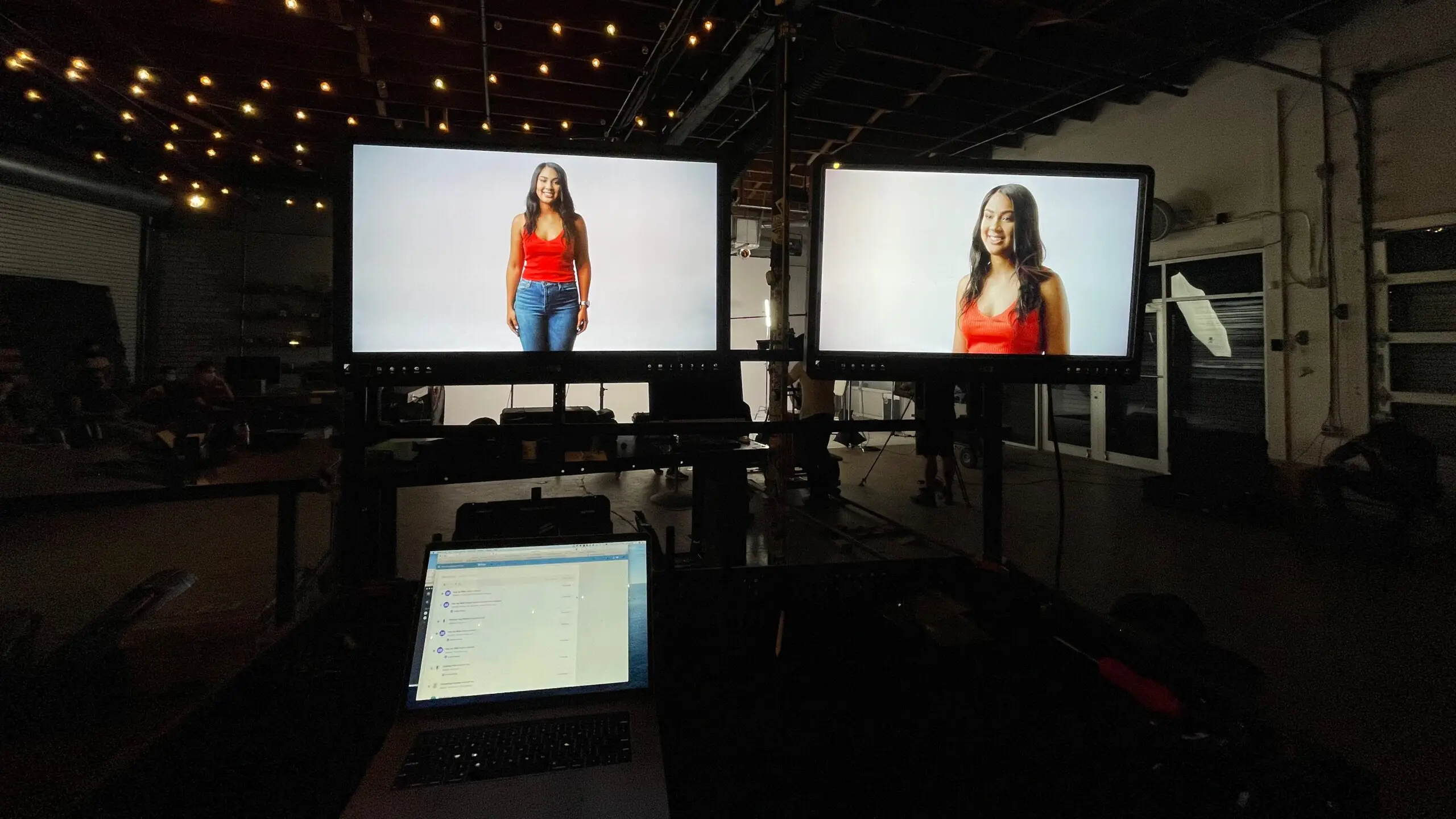
Creating a feature film is an extraordinary journey, transforming a simple idea into a cinematic masterpiece. This process, known as the feature film production process, involves a harmonious blend of creativity, technical expertise, and meticulous planning. For aspiring filmmakers and industry professionals, understanding this intricate process is essential to bring their vision to life successfully.
From crafting a compelling script to orchestrating the final edits, each stage of filmmaking requires careful attention and collaboration. This guide will walk you through the essential film production stages, offering a comprehensive overview of how an idea evolves into a screen-ready feature. Whether you're new to the industry or refining your craft, this feature film guide will provide valuable insights to navigate the complexities of the filmmaking process.
Embark on this exploration of the feature film production process to discover the artistry, challenges, and rewards of producing a feature film from script to screen.
## Crafting the Vision. Script Development
A well-written script is the foundation of the feature film production process, serving as the blueprint for everything that follows. It outlines the story, characters, and dialogue, guiding the cast and crew to bring the vision to life. The importance of this step cannot be overstated; it’s where the magic begins.
The journey starts with brainstorming ideas. Filmmakers and writers often draw inspiration from personal experiences, historical events, or imaginative worlds. Once the concept is clear, the process of writing drafts begins. A first draft is rarely perfect, so rewrites are essential to refine the story. Collaboration is also crucial during this phase; sharing drafts with trusted peers or mentors allows for constructive feedback to enhance the script's quality.
The role of the screenwriter is pivotal. Screenwriters translate raw ideas into compelling narratives, focusing on structure, pacing, and character development. Tools like Final Draft, Celtx, or Scrivener simplify the screenwriting process, offering templates and features tailored for film scripts.
Once the script reaches a satisfactory stage, it undergoes polishing. This involves fine-tuning dialogue, ensuring logical continuity, and removing unnecessary scenes. The final step is creating the shooting script, which includes technical notes, such as camera angles and scene breakdowns. This version acts as a guide during production, ensuring that the director and crew have a clear roadmap for execution.
With a polished script in hand, the production team can move forward, confident that they have a strong foundation for the film.
## Pre-Production. Laying the Groundwork
The pre-production phase is where ideas transform into actionable plans, making it a critical step in the filmmaking process. This stage involves detailed preparation to ensure a smooth production, minimizing potential issues during filming.
Budgeting is one of the first tasks tackled during pre-production. Filmmakers must estimate costs for every aspect of production, from hiring the cast and crew to equipment, locations, and post-production expenses. A well-structured budget keeps the project financially feasible.
Scheduling is another vital component. A production calendar is created to outline shooting dates, timelines for pre-production tasks, and deadlines for deliverables. This helps the team stay on track and prioritize effectively.
Assembling the right production team is crucial. The director, producers, cinematographer, and other key personnel are brought on board, each contributing their expertise to realize the creative vision. Alongside this, casting begins to match actors to roles that align with the script’s characters.
Location scouting follows, identifying settings that align with the story's visual needs. Securing permits is essential to ensure legal access to filming sites, avoiding disruptions during production.
Storyboarding and pre-visualization tools are integral to this phase. Storyboards visually map out each scene, offering a clear picture of how the film will unfold. Digital tools like FrameForge or Storyboarder allow filmmakers to create precise visualizations, helping directors plan camera angles, movements, and compositions in advance.
Pre-production ensures that every detail is planned, creating a strong foundation for the next stage: principal photography. With a well-prepared team and clear vision, the filmmaking process moves one step closer to completion.
## Assembling the Dream Team. Key Roles in Film Production
No feature film can come to life without a skilled and dedicated team working behind the scenes. Each member of the production crew plays a critical role in transforming the script into a cinematic masterpiece. Assembling this dream team is an essential part of the feature film production process, as their collaboration drives the entire project forward.
The director is the creative leader of the production. They interpret the script, guide the actors, and make critical decisions about the film’s visual and emotional tone. Their vision serves as the compass for the entire team, ensuring every aspect aligns with the story.
The producer handles the logistical and financial aspects of the film. They oversee budgeting, scheduling, and resource allocation, ensuring the production stays on track. Producers are the glue that holds the project together, balancing creative aspirations with practical realities.
The cinematographer, or director of photography (DP), is responsible for the film's visual style. Working closely with the director, the DP plans and executes the camera angles, lighting setups, and shot compositions that bring the story to life.
Actors embody the characters, bringing depth and emotion to the narrative. Their performances are vital to engaging the audience and making the story resonate. A strong relationship between the director and the actors is crucial for delivering authentic portrayals.
The editor shapes the final film during post-production. They piece together footage, refine transitions, and establish pacing. Their work ensures the story flows seamlessly from one scene to the next.
Clear communication and role allocation are vital during this stage. A well-structured hierarchy and open channels of communication help the team work efficiently and avoid misunderstandings. When each member knows their role and collaborates effectively, the filmmaking process becomes a harmonious symphony of creativity and precision.
## The Shoot. Principal Photography
Principal photography is the heart of the feature film production process, the stage where the story is captured on camera. This phase is marked by long days, intense focus, and creative energy as the cast and crew work to translate the script into visuals.
Day-to-day operations on set revolve around shooting scenes as planned during pre-production. The director coordinates with the cinematographer, ensuring that the shots align with the creative vision. Actors rehearse and perform their scenes, while the production team manages equipment, lighting, and set design.
Schedules are tightly managed to maximize efficiency. Each day, a call sheet outlines the scenes to be shot, the required cast and crew, and other logistical details. Staying on schedule is essential to avoid costly delays, but flexibility is often needed to adapt to unforeseen challenges.
Advanced camera equipment and techniques are used to achieve the desired shots. High-resolution cameras, drones, and stabilizers enable filmmakers to capture cinematic visuals. Lighting plays a crucial role in setting the mood, with careful adjustments made to achieve the perfect atmosphere for each scene.
Challenges are inevitable during principal photography. Maintaining continuity, ensuring that details like props, costumes, and lighting remain consistent across shots, requires constant vigilance. Unexpected issues, such as weather changes or technical malfunctions, often arise and must be addressed swiftly to avoid disrupting the shoot.
Principal photography is the most visible part of the filmmaking process, but it relies heavily on the groundwork laid in pre-production. When executed effectively, it provides the raw material needed for post-production to shape the final masterpiece. This phase embodies the teamwork, creativity, and problem-solving that define filmmaking.
## Post-Production. Bringing the Film to Life
Post-production is where the raw footage captured during principal photography transforms into a polished, cohesive film. This stage is a cornerstone of the film production stages, requiring precision, creativity, and collaboration. It’s here that the vision truly comes to life, merging visuals, sound, and effects into a seamless cinematic experience.
The editing process begins with assembling the footage into a rough cut. The editor works closely with the director to choose the best takes, arrange scenes in the correct order, and establish the film's pacing. Smooth transitions between scenes are crucial to maintaining the audience's engagement and ensuring the story flows naturally.
Visual effects (VFX) enhance the film by adding elements that couldn’t be captured during filming. This might include CGI creatures, explosions, or subtle background enhancements. Visual effects teams work meticulously to integrate these elements seamlessly into the film, maintaining believability and artistic integrity.
Sound design is another vital component of post-production. Sound designers create and mix audio elements like dialogue, background noise, and special effects. Adding layers of sound helps immerse viewers in the film’s world. At this stage, the soundtrack or score is also incorporated, enhancing the film’s emotional impact.
Color grading is the final visual step, adjusting the film's color palette to create a specific tone or mood. This process ensures consistency across scenes, whether it’s the warmth of a sunrise or the starkness of a dramatic night scene.
Collaboration is key during post-production. The editor, director, and sound designer work closely to align their efforts with the film's creative vision. Regular feedback loops ensure that every element contributes to a cohesive final product.
Post-production is where technical precision meets artistic vision, culminating in a film ready to captivate audiences. A strong post-production process can elevate a film, turning raw footage into a masterpiece.
## Marketing and Promotion. Creating Buzz for Your Feature Film
A well-executed marketing strategy is essential to ensure your film reaches its intended audience. In this stage of the filmmaking process, the focus shifts from creation to connection, building excitement and anticipation for the release.
Creating a compelling trailer is one of the most effective ways to showcase the film’s appeal. The trailer should highlight key moments, introduce the tone, and give a glimpse of the story without revealing too much. A well-crafted trailer serves as the cornerstone of a successful promotional campaign.
Leveraging social media is another powerful tool for generating buzz. Platforms like Instagram, Twitter, and TikTok allow filmmakers to share behind-the-scenes content, teasers, and updates. Engaging with fans through interactive posts or Q&A sessions builds a sense of community and anticipation.
Attending film festivals is invaluable for exposure. Festivals provide a platform to showcase the film to critics, distributors, and enthusiastic audiences. Winning awards or receiving positive reviews at these events can significantly boost the film's visibility and credibility.
Public relations and media coverage play a crucial role in amplifying the film's reach. Securing interviews, reviews, and feature stories in newspapers, blogs, or entertainment websites helps spread the word. Partnerships with influencers or industry personalities can also generate excitement and broaden the audience base.
Marketing doesn’t end with the film’s release. Post-release strategies, such as exclusive screenings, merchandise sales, and engaging with fan discussions, help maintain momentum.
By combining creativity, strategic planning, and engagement, a solid marketing and promotion campaign ensures that your feature film makes a memorable impact, both on screen and in the minds of its audience.
## Distribution. Sharing Your Vision with the World
Distribution is the pivotal stage where a filmmaker's vision reaches audiences, transforming a completed film into an experience shared globally. Traditionally, theatrical releases have been the gold standard for showcasing feature films. Screening in cinemas offers a grand, communal experience that brings audiences together.
However, securing a theatrical release often requires partnering with established distributors who handle negotiations with theater chains, advertising, and logistics. For independent filmmakers, this route can be challenging but rewarding, as theatrical runs still carry a sense of prestige and cultural impact.
In recent years, digital distribution has revolutionized the way films are shared. Streaming platforms such as Netflix, Amazon Prime, and Hulu provide filmmakers with unparalleled global reach and accessibility. These platforms cater not only to mainstream audiences but also to niche markets, offering opportunities for films that might struggle in traditional theatrical settings.
For smaller-scale productions, platforms like Vimeo On Demand and YouTube allow creators to connect directly with their audience, maintaining greater control over their work while reducing distribution overheads. Video-on-demand (VOD) services like iTunes and Google Play also provide flexibility, enabling viewers to rent or purchase films at their convenience, giving filmmakers more control over pricing and release strategies.
Film festivals serve as a crucial gateway for filmmakers seeking broader distribution. Festivals such as Sundance, Cannes, and Toronto International Film Festival provide a platform to showcase films to distributors, critics, and industry insiders. A positive reception at these festivals often leads to distribution deals, awards, and increased visibility. Moreover, the prestige of a well-regarded festival can significantly enhance a film’s marketability.
Navigating distribution requires careful attention to rights management and profit-sharing agreements. Filmmakers must understand the terms of their contracts to protect their creative work and ensure fair revenue splits. Whether choosing traditional or digital channels, a strategic distribution plan tailored to the film’s audience and goals is key to successfully sharing the filmmaker’s vision with the world.
## Challenges and Lessons Learned in Feature Film Production
The process of creating a feature film is as demanding as it is rewarding, with challenges that test even the most experienced filmmakers. Budget constraints are a common hurdle, particularly for independent projects, where resources are often stretched thin.
Securing adequate funding for cast, crew, equipment, and post-production requires creativity and persistence. Many filmmakers turn to crowdfunding, grants, or sponsorships to bridge financial gaps, while careful budgeting and prioritization ensure that critical expenses are covered.
Tight deadlines are another significant challenge. The production schedule often leaves little room for delays, making efficiency and organization paramount. However, unforeseen setbacks such as bad weather, technical malfunctions, or last-minute changes can disrupt even the best-laid plans. Building flexibility into the schedule and fostering clear communication among team members can help navigate these disruptions without compromising the project.
Creative differences can also arise during production. With so many stakeholders involved, from directors and producers to actors and crew, maintaining a unified vision can be difficult. Open communication and mutual respect are essential to resolving disagreements, as is having a clear leadership structure to guide decision-making. Ensuring that everyone feels heard while prioritizing the film’s overall vision helps maintain harmony on set.
Logistical issues, from securing filming locations to managing equipment, are an inevitable part of filmmaking. Contingency plans and experienced problem-solving can mitigate these challenges. Filmmakers who anticipate potential obstacles and prepare alternatives are better equipped to keep production on track.
Despite these difficulties, each challenge offers valuable lessons. Filmmakers often emerge from the production process with sharper problem-solving skills, improved teamwork, and a deeper understanding of their craft. Overcoming obstacles builds resilience and fosters creativity, shaping filmmakers into more resourceful and adaptive professionals. These experiences not only enrich future projects but also highlight the passion and determination required to bring a feature film to life.
## The Future of Feature Film Production. Trends and Innovations
The feature film production process is undergoing a transformation, driven by groundbreaking technologies and forward-thinking practices that are redefining the way films are made. Emerging trends such as virtual production, artificial intelligence (AI), and sustainability initiatives are at the forefront, offering filmmakers new tools and approaches to bring their visions to life while addressing the challenges of traditional methods.
Virtual production has emerged as a game-changing innovation, allowing filmmakers to combine real-time computer-generated imagery (CGI) with live-action elements. Technologies like LED volume stages, popularized by productions such as The Mandalorian, enable directors to create immersive, dynamic environments without the need for extensive location shoots.
This not only reduces costs but also offers unparalleled creative flexibility, letting filmmakers adjust lighting, scenery, and camera angles in real time. By blending virtual and physical worlds seamlessly, virtual production is reshaping how stories are told.
AI is playing an increasingly prominent role in filmmaking. From scriptwriting assistance to advanced video editing tools, AI is streamlining processes and unlocking creative possibilities. AI-powered algorithms can analyze audience preferences to predict trends, helping filmmakers tailor content to viewer demands.
AI can assist in casting, visual effects, and even real-time scene optimization, making production more efficient and precise. While AI will never replace human creativity, its ability to enhance workflows is undeniable.
Sustainability practices are also becoming a key focus in the industry. With growing awareness of environmental impact, filmmakers are adopting greener production methods. Using renewable energy sources on set, reducing single-use plastics, and minimizing waste are now common practices. Virtual production and digital workflows further contribute to sustainability by reducing the need for travel and physical materials. These efforts reflect a broader commitment to balancing creativity with environmental responsibility.
Technology as a whole is reshaping the feature film production process. Advanced cameras with higher resolutions, drone cinematography, and motion-capture technology are elevating the quality of visuals. Cloud-based collaboration tools enable teams to work seamlessly across continents, breaking down geographical barriers. These advancements not only make filmmaking more accessible but also allow for greater experimentation and innovation.
Looking ahead, the evolution of the filmmaking process promises to be as exciting as the stories being told. As technology continues to advance, filmmakers will have even more tools to push creative boundaries, blending traditional techniques with cutting-edge innovations. The future of feature film production will be defined by a harmonious balance between artistry, technology, and sustainability, ensuring that the magic of cinema continues to captivate audiences for generations to come.
## The Evolution of Special Effects in TV
Special effects have been an integral part of television since its inception, creating moments that captivate and transport audiences beyond the ordinary. Initially, practical effects, using physical props, makeup, and mechanical techniques, dominated the television landscape. Classic shows like Doctor Who in the 1960s relied heavily on these techniques, employing innovative methods to produce alien worlds and futuristic technology on modest budgets. These effects, though limited by technology, paved the way for greater advancements.
The digital revolution of the late 20th century ushered in a new era of visual storytelling. The advent of computer-generated imagery (CGI) enabled creators to craft scenes that were previously impossible to realize. Iconic TV shows like Star Trek: The Next Generation showcased early uses of digital effects, introducing viewers to the potential of CGI-enhanced visuals. While primitive by today’s standards, these efforts marked a crucial turning point.
Fast forward to the present, and CGI has become the gold standard for television production. Unlike traditional practical effects, which could be constrained by physical limitations, CGI allows creators to generate expansive worlds, intricate characters, and dynamic environments with unparalleled precision. For instance, shows like Game of Thrones and The Mandalorian have demonstrated how CGI can transform television into a medium rivaling the cinematic experience.
This evolution has not only elevated the visual appeal of TV but also democratized creativity. Productions of all scales can now leverage CGI tools, ensuring that visual storytelling continues to break boundaries and inspire audiences worldwide.
## How CGI Shapes Modern Television Storytelling
In today’s competitive entertainment landscape, compelling storytelling goes hand in hand with visually immersive worlds, and CGI plays a pivotal role in achieving this balance. Modern audiences crave experiences that transcend reality, and CGI enables television creators to meet these expectations by crafting intricate environments, larger-than-life creatures, and spectacular action sequences.
Take The Witcher, for instance, which uses CGI to bring its magical creatures and vast fantasy landscapes to life. Similarly, stranger things leverages CGI to create the eerie and otherworldly "Upside Down," a visual centerpiece of the show’s narrative. These examples highlight how CGI in television enhances storytelling, allowing complex narratives to be told with greater depth and visual authenticity.
However, successful storytelling requires more than visual spectacle. The most impactful shows use CGI as a tool to complement the narrative rather than overshadow it. The balance between storytelling and spectacle is key, as evidenced by the mandalorian. While its CGI-generated environments and characters are breathtaking, the series ensures that emotional arcs and character development remain at the forefront.
Ultimately, CGI shapes modern television storytelling by expanding the creative possibilities available to writers, directors, and producers. It provides the means to visualize ambitious ideas, ensuring that the stories audiences love are not only told but vividly brought to life.
## The Role of Computer Graphics in TV Production
Computer graphics have revolutionized television production, providing creators with the ability to realize ambitious ideas with unprecedented precision and efficiency. Unlike traditional practical effects, which rely on physical props, models, and manual techniques, CGI enables the seamless creation of vast landscapes, detailed characters, and dynamic action sequences that were once impossible or prohibitively expensive.
One of the most significant advantages computer graphics bring to [TV production](https://c-istudios.com/film-and-tv-production/) is flexibility. Creators can design fantastical worlds or historical settings without the logistical challenges of location scouting or building extensive sets. For instance, shows like the mandalorian employ real-time CGI and virtual backdrops, allowing producers to film in controlled environments while maintaining visual authenticity. Additionally, CGI ensures consistency across episodes, enabling smooth continuity even in complex productions.
The workflow of integrating CGI into live-action scenes is a meticulous process. It typically begins with pre-visualization, where artists create digital storyboards or animatics to outline the CGI elements. During filming, green screens, motion capture suits, or digital markers are used to capture performances and placeholders for CGI integration.
In post-production, these placeholders are replaced with fully rendered computer-generated visuals, blending them seamlessly with the live-action footage. Advanced rendering software and techniques, such as real-time rendering, accelerate this process, reducing production delays.
CGI also has distinct advantages over traditional effects. Practical effects can be limited by scale, realism, and adaptability, whereas CGI offers limitless creative possibilities. It is also more cost-effective in the long term, as digital assets can be reused and adapted for different scenes or episodes. Furthermore, CGI minimizes safety risks associated with physical stunts or pyrotechnics, as these can now be simulated digitally.
In essence, computer graphics have become an indispensable tool in modern TV production, unlocking creativity while streamlining workflows and enhancing visual storytelling.
## Challenges of Using CGI in Television
While CGI has transformed television production, it is not without its challenges. One of the most pressing issues is budget constraints. Unlike big-budget films, most television productions operate on tighter financial margins, limiting the extent and quality of CGI that can be used. High-quality CGI requires specialized software, skilled professionals, and significant rendering time, all of which drive up costs.
Technical limitations also pose significant challenges. Television production schedules are often much shorter than those for films, leaving less time for detailed CGI work. This can lead to rushed or subpar effects, which may diminish the overall quality of the show. Integrating CGI into live-action footage requires cutting-edge hardware and software, which can strain smaller production teams.
Audience expectations further complicate matters. Modern viewers, accustomed to blockbuster-level visual effects, demand realism and precision in TV shows. If CGI falls short of these standards, it risks breaking the audience's immersion. The "uncanny valley" issue, where digital characters or effects appear almost but not quite realistic, can also undermine the emotional impact of a scene.
Despite these challenges, many TV productions find innovative ways to balance quality and cost. Shows like the mandalorian and stranger things use advanced techniques like real-time rendering and modular production pipelines to maximize the efficiency of their CGI workflows. By prioritizing storytelling and carefully selecting scenes where CGI has the most impact, creators can overcome these hurdles and deliver visually stunning content within their constraints.
In summary, while CGI in television offers incredible opportunities, it also demands careful planning, resource allocation, and technical expertise to address its inherent challenges.
## Pioneering TV Shows That Revolutionized Visual Effects
The evolution of CGI in television has been marked by groundbreaking shows that pushed the boundaries of what is visually possible on the small screen. These series not only captivated audiences but also set new standards for storytelling and visual artistry.
One of the most iconic examples is game of thrones. From its sweeping battle scenes to the awe-inspiring dragons, the show utilized CGI to create a richly detailed fantasy world. The dragons, in particular, became a symbol of the show’s visual prowess, seamlessly blending with live-action elements to evoke both wonder and fear. This level of CGI sophistication raised expectations for what television could achieve, proving that TV visuals could rival blockbuster films.
The mandalorian revolutionized visual effects by incorporating a cutting-edge technique known as virtual production. Using massive LED screens and real-time rendering technology, the show projected CGI environments directly onto the set, allowing actors to perform within immersive digital landscapes. This innovation not only enhanced visual realism but also streamlined production processes, saving time and costs.
These pioneering shows left an indelible impact on the television industry. They demonstrated that high-quality CGI could elevate storytelling, enabling creators to imagine and realize complex worlds. Their success also inspired networks and streaming platforms to invest in advanced visual effects, leading to a surge in ambitious, CGI-heavy productions.
Recognition and accolades further underscored the importance of visual effects in these shows. Game of thrones received multiple Emmy Awards for Outstanding Special Visual Effects, while the mandalorian earned similar accolades, solidifying its place as a technological and creative trailblazer. These awards not only celebrated the artistry of CGI but also highlighted its role in transforming television into a medium of unparalleled visual innovation.
## Collaboration Between VFX Studios and TV Producers
The creation of visually stunning television requires seamless collaboration between production teams and visual effects (VFX) studios. This partnership is essential to ensure that CGI elements enhance the storytelling while remaining cohesive with the live-action components.
The process begins with pre-visualization, a critical planning phase where VFX artists and producers map out CGI-heavy scenes using digital storyboards or animatics. This step helps align creative visions, ensuring that everyone involved, from directors to actors, understands how the final scenes will look. For example, in stranger things, pre-visualization was instrumental in designing the "Mind Flayer" creature and the eerie "Upside Down" world.
During production, close collaboration between on-set teams and VFX studios is vital. VFX supervisors often work on location to guide the filming of CGI-integrated scenes, ensuring that lighting, angles, and movements align with the digital elements. For instance, the mandalorian used a technique called "StageCraft," where VFX teams rendered CGI environments in real-time to assist directors in framing shots.
Post-production is where the magic truly happens. VFX artists refine and integrate computer-generated elements into the footage, using advanced software and rendering tools. This phase often involves multiple rounds of feedback between producers and VFX teams to ensure the final visuals meet creative and technical standards.
Successful collaborations are evident in shows like stranger things, where the integration of CGI with live-action scenes has been universally praised. The show’s producers and VFX artists worked hand-in-hand to create a visually cohesive experience, from designing terrifying creatures to crafting otherworldly environments. Such partnerships highlight the importance of communication, planning, and shared creative vision.
Ultimately, the collaboration between VFX studios and TV producers is the backbone of CGI success in television. By leveraging each other’s expertise, they bring bold ideas to life, transforming ambitious scripts into visually captivating narratives.
## Future Trends in CGI and TV Special Effects
The future of CGI and special effects in television is poised for transformative innovations, driven by cutting-edge technologies and evolving audience demands. Among the most exciting developments is the rise of real-time rendering, which is revolutionizing how visual effects are created and integrated into productions.
Real-time rendering allows CGI to be generated and manipulated instantly, enabling on-set adjustments that save time and costs. This technology, famously used in the mandalorian, allows filmmakers to project digital environments onto LED screens in real time, providing immersive backdrops that replace traditional green screens.
AI-driven computer graphics are another game-changer in the industry. Artificial intelligence is increasingly being used to automate complex visual effects tasks, such as texture generation, scene simulations, and character animations.
This not only speeds up production timelines but also enables greater precision and creativity. AI tools can analyze data from past projects to suggest improvements or simulate realistic effects, such as lifelike facial expressions or dynamic environmental changes, enhancing the overall quality of CGI in television.
Virtual production techniques, which combine real-time rendering with advanced motion capture and pre-visualization, are reshaping how television shows are made. These methods blur the line between pre-production and production, allowing creators to experiment with visuals during filming rather than waiting until post-production. This integration fosters collaboration between departments and ensures that CGI elements align seamlessly with live-action components.
Looking ahead, the future of CGI in television is bright with possibilities. We can expect even more realistic digital humans, interactive environments, and AI-generated effects that adapt in real-time to storytelling needs. The increasing affordability of these technologies will also democratize access, enabling smaller studios to produce high-quality visuals that compete with major productions.
Ultimately, the convergence of real-time rendering, AI, and virtual production heralds a new era of creativity and efficiency, ensuring that television continues to captivate audiences with groundbreaking visual effects.
## CGI’s Role in Expanding Global TV Audiences
High-quality visual effects play a crucial role in expanding the global reach of television shows, attracting audiences from diverse cultural and linguistic backgrounds. Stunning CGI transcends language barriers, creating a universal appeal that draws viewers into richly crafted worlds and narratives.
One prime example of CGI’s international success is the witcher. With its fantastical creatures, epic battles, and immersive landscapes, the show captured the imaginations of audiences worldwide. Similarly, the animated series arcane uses breathtaking CGI to blend steampunk and fantasy aesthetics, earning critical acclaim and a massive global fanbase. These productions demonstrate how visual effects serve as a universal language, allowing stories to resonate across borders.
Streaming platforms have further amplified this trend, driving demand for CGI-heavy content. Companies like Netflix, Amazon Prime, and Disney+ prioritize visually stunning shows to attract and retain subscribers from around the world. For instance, the mandalorian and Stranger Things leverage CGI to create cinematic experiences that appeal to international viewers, boosting their popularity and cultural impact.
CGI also enables localized storytelling with global appeal. Productions can adapt visuals to reflect diverse cultures while maintaining a high-quality aesthetic. This adaptability allows shows to connect with audiences in different regions, fostering inclusivity and engagement.
In essence, CGI in television not only enhances the visual experience but also bridges cultural divides, expanding the reach and impact of TV shows on a global scale. As technology continues to advance, the power of visual effects to unite audiences worldwide will only grow.
## Work with C&I Studios
If you are planning a project like this, our team can take it from concept to final delivery. Explore our [film and TV production](https://c-istudios.com/film-and-tv-production/), browse [our work](https://c-istudios.com/our-work/) to see how we tell brand stories, and [get in touch](https://c-istudios.com/contact/) when you are ready to start.
Originally published November 4, 2024
---
*This content is from [C&I Studios](https://c-istudios.com), a full-service production company.*
---
# Video Marketing for Real Estate: Selling Properties in Every Market
> Published: November 3, 2024
> Categories: Commercial & Brand
> Source: https://c-istudios.com/video-marketing-for-real-estate-selling-properties-in-every-market/
---
.cib{--paper:#1b1d1f;--ink:#fff;--body:#d5d7d9;--muted:#8b9096;--line:rgba(255,255,255,.12);--thumb:#2b2e31;--card:#212426;--accent:#c02b0a;--blue:#5B8FA8;--serif:'Playfair Display',Georgia,serif;--sans:'Poppins',-apple-system,sans-serif;--measure:900px;background:var(--paper);color:var(--body);font-family:var(--sans);line-height:1.6;position:relative;left:50%;transform:translateX(-50%);width:90vw;max-width:1920px}
.cib *{box-sizing:border-box}
.cib .kicker{max-width:var(--measure);margin:58px auto 0;padding:0 22px;font-size:12.5px;font-weight:700;letter-spacing:2.5px;text-transform:uppercase;color:var(--blue)}
.cib h1.cibh1{text-wrap:balance;font-family:var(--serif);font-weight:500;font-size:clamp(46px,6vw,72px);line-height:1.08;color:var(--ink);max-width:var(--measure);margin:18px auto 0;padding:0 22px;letter-spacing:-.5px}
.cib .metarow{max-width:var(--measure);margin:20px auto 0;padding:0 22px;color:var(--muted);font-size:14px}
.cib .hero{position:relative;width:100%;height:0;padding-bottom:56.25%;overflow:hidden;margin:48px auto 0;border-top:1px solid var(--line);border-bottom:1px solid var(--line)}
.cib .hero .ph{width:100%;aspect-ratio:16/9;background:var(--thumb);border-top:1px solid var(--line);border-bottom:1px solid var(--line);display:flex;align-items:center;justify-content:center;color:#7d8288;font-size:13px;text-align:center;padding:0 20px}
.cib .body{max-width:var(--measure);margin:12px auto 0;padding:52px 22px 6px}
.cib .body.lead p:first-child{font-size:23px;line-height:1.62;color:var(--ink)}
.cib .body p{font-size:18.5px;line-height:1.85;margin:0 0 30px;color:var(--body)}
.cib .body h2{text-wrap:balance;font-family:var(--serif);font-weight:500;font-size:clamp(32px,4vw,48px);line-height:1.22;color:var(--ink);margin:70px 0 20px;letter-spacing:-.3px}
.cib .body h3{text-wrap:balance;font-family:var(--sans);font-weight:600;font-size:22px;color:var(--ink);margin:38px 0 8px}
.cib .body a{color:var(--ink);text-decoration:underline;text-decoration-color:rgba(255,255,255,.4);text-underline-offset:3px}
.cib .body a:hover{text-decoration-color:var(--ink)}
.cib .ctable{width:100%;border-collapse:collapse;margin:16px 0 30px;font-size:16px}
.cib .ctable th{background:#000;color:#fff;text-align:left;padding:10px 12px;font-family:var(--sans)}
.cib .ctable td{padding:10px 12px;border-bottom:1px solid var(--line);color:var(--body)}
.cib .inimg{position:relative;width:100%;height:0;padding-bottom:56.25%;overflow:hidden;margin:72px auto;border-top:1px solid var(--line);border-bottom:1px solid var(--line)}
.cib .inimg .ph{width:100%;aspect-ratio:16/9;background:var(--thumb);border-top:1px solid var(--line);border-bottom:1px solid var(--line);display:flex;align-items:center;justify-content:center;color:#7d8288;font-size:13px}
.cib .origpub{max-width:var(--measure);margin:60px auto 0;padding:26px 22px 0;border-top:1px solid var(--line);color:var(--muted);font-size:13.5px}
.cib .related{max-width:1200px;margin:64px auto 0;padding:34px 22px 76px}
.cib .related h3{font-family:var(--sans);font-size:12.5px;letter-spacing:2px;text-transform:uppercase;color:var(--ink);margin:0 0 24px}
.cib .grid{display:grid;grid-template-columns:repeat(3,1fr);gap:28px}
.cib .rc{background:var(--card);border:1px solid var(--line);display:block;text-decoration:none;color:inherit;transition:border-color .15s}
.cib a.rc:hover{border-color:rgba(255,255,255,.5)}
.cib .rc .thumb{position:relative;width:100%;height:0;padding-bottom:56.25%;background:var(--thumb);overflow:hidden}
.cib .rc .thumb img{position:absolute!important;top:0!important;left:0!important;width:100%!important;height:100%!important;object-fit:cover!important;margin:0!important}
.cib .rc .cc{padding:14px 15px 17px}
.cib .rc .rt{font-family:var(--serif);font-weight:500;font-size:16px;line-height:1.3;color:var(--ink);margin:0 0 6px}
.cib .rc .rm{font-size:11px;letter-spacing:1px;text-transform:uppercase;color:var(--muted)}
.cib img{margin:0!important;padding:0!important;display:block!important;vertical-align:top;max-width:100%}
.cib .hero img,.cib .inimg img{position:absolute!important;top:0!important;left:0!important;width:100%!important;height:100%!important;object-fit:cover!important;margin:0!important;padding:0!important;border:0!important;display:block!important;aspect-ratio:auto!important}
.cib .hero+.body{padding-top:36px}
@media(max-width:760px){.cib .grid{grid-template-columns:1fr}.cib .body h2{margin:52px 0 16px}.cib .body p{font-size:17.5px}.cib .inimg,.cib .hero{margin-top:44px}}
.cib .vembed{max-width:var(--measure);margin:44px auto;padding:0 22px}.cib .vembed .vwrap{position:relative;width:100%;height:0;padding-bottom:56.25%}.cib .vembed .vwrap iframe{position:absolute;top:0;left:0;width:100%;height:100%;border:0}
Commercial & Brand
# Video Marketing for Real Estate. Selling Properties in Every Market
29 min read
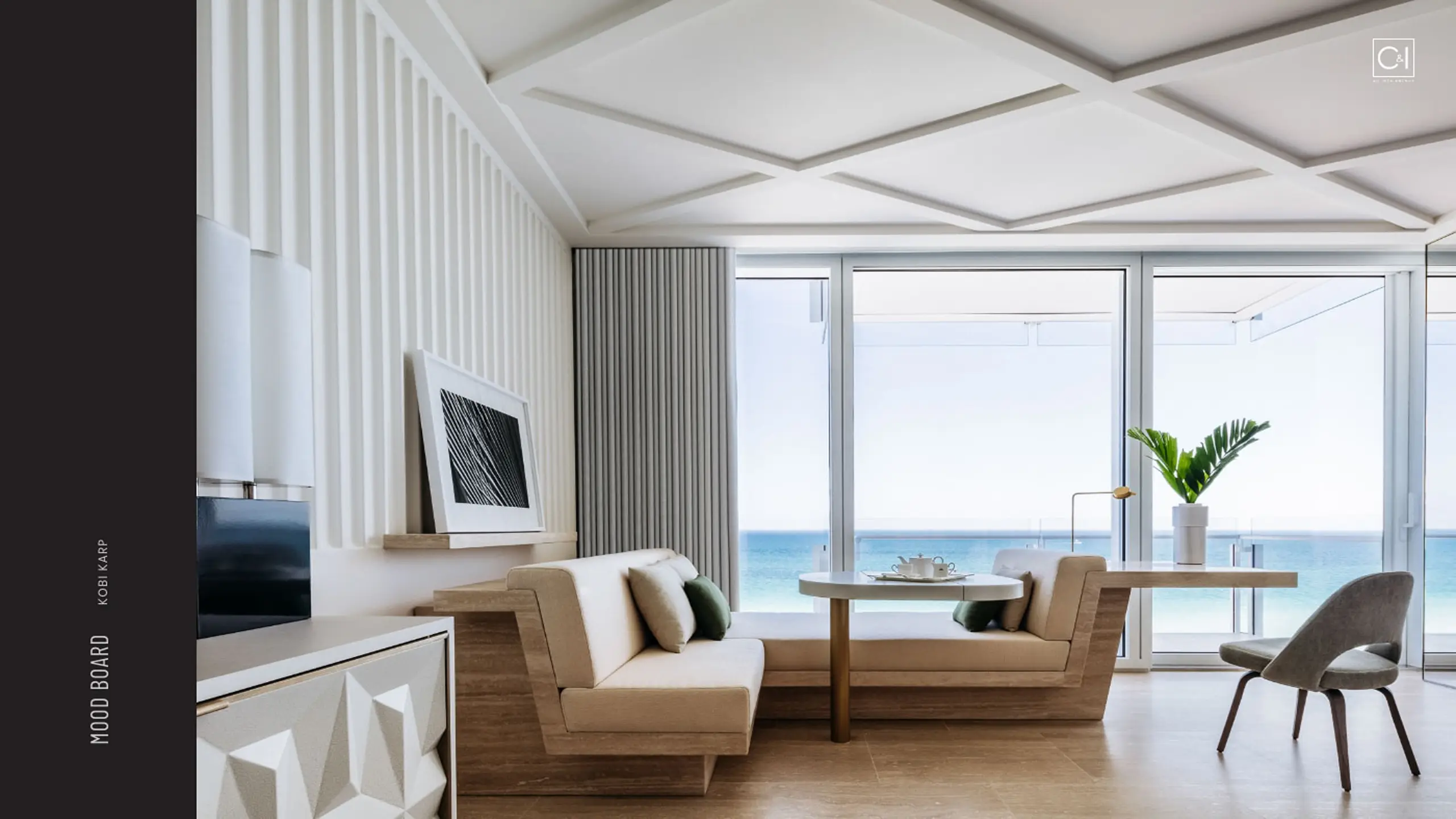
In today’s fast-paced digital world, real estate professionals face an ever-evolving challenge: capturing and maintaining the attention of potential buyers in a crowded marketplace. With buyers now expecting a visually engaging experience before they even set foot on a property, traditional listing photos and descriptions simply aren’t enough. Enter video marketing, a dynamic, immersive tool that’s transforming the way properties are showcased, allowing agents to tell a property’s story with emotion, precision, and style.
Video content not only enhances a property’s appeal but also builds trust, giving buyers a sense of the space, location, and lifestyle it offers. From virtual tours that make viewers feel as though they’re walking through the property to neighborhood highlights that offer a taste of the community, video marketing goes beyond visuals; it creates an experience.
For real estate agents looking to broaden their reach and close deals in diverse markets, video marketing has become an invaluable strategy to stand out, appeal to remote buyers, and ultimately, accelerate sales. As the demand for quality real estate content rises, the influence of video will only continue to grow, reshaping the real estate industry’s approach to connecting with its audience.
## Understanding Buyer Behavior. Why Video Sells Homes Faster
In the digital age, buyers are drawn to engaging, visually rich content, and in real estate, this trend is particularly impactful. Studies show that potential buyers are far more likely to be captivated by visual storytelling than by static images or text-heavy listings.
This shift underscores the value of using video to capture and retain attention, creating an emotional connection that often drives decision-making. Real estate videos can convey the ambiance of a home, allowing viewers to envision themselves within the space, which is something still images simply cannot achieve.
Content creation plays a significant role in this process, as agents can tailor videos to highlight the unique attributes of each property. For instance, incorporating high-quality footage of spacious living rooms, scenic views, or detailed kitchen finishes enables buyers to grasp a property’s potential more clearly. Beyond showcasing physical attributes, the video also adds a human touch. By featuring agent introductions or client testimonials, real estate professionals can establish credibility and foster trust, which is essential in guiding prospective buyers toward a purchase.
Moreover, social media marketing services amplify the reach of these videos, ensuring they connect with the right audience. Platforms like Instagram, Facebook, and YouTube are ideal for sharing real estate videos due to their visual nature and vast user base. Through targeted advertising and organic reach, agents can present properties to a wide array of potential buyers, from local to international markets.
Incorporating elements like VFX compositing and animation further enhances engagement, making videos memorable and providing a competitive edge in an increasingly digital market. By leveraging these strategies, real estate agents can transform simple listings into compelling narratives that resonate with buyers on a personal level, accelerating the path from interest to investment.
## Essential Video Types for Real Estate Marketing
In the realm of real estate marketing, variety is key when it comes to video content. Each type of video serves a unique purpose, catering to different aspects of the buyer’s journey and adding value to the property presentation. One of the most popular and effective types is the property tour.
Through professional photography and videography, property tours offer a comprehensive view of the home, guiding viewers from room to room and showcasing the best features. These videos provide a realistic impression of the space, giving buyers confidence in the property even before they visit in person.
Another essential type is the client testimonial video. These videos add credibility by featuring satisfied clients who share their positive experiences, thus building trust with potential buyers. For agencies looking to emphasize community appeal, videos that highlight local amenities, such as parks, schools, and dining options, are invaluable.
By giving prospective buyers a glimpse into the surrounding area, real estate professionals can help them envision the lifestyle that comes with the home. This type of content is especially powerful when crafted with documentary [film production](https://c-istudios.com/film-and-tv-production/) techniques, creating a sense of authenticity and connection.
Agent introduction videos are also increasingly popular. These videos humanize the brand, allowing agents to personally connect with viewers by introducing themselves, explaining their approach, and discussing the benefits of the property. This personal touch can make a lasting impression, positioning the agent as not only a professional but also someone approachable and trustworthy.
Each of these video types, property tours, testimonials, community highlights, and agent introductions, brings a unique dimension to real estate marketing. They collectively enhance the buyer’s understanding and perception of the property while helping real estate agents create a professional image that builds credibility. Together, they form a comprehensive video strategy that appeals to various buyer needs, helping properties stand out and attract the right audience in any market.
## Planning Your Video Content Strategy
A successful video marketing strategy begins with a well-organized plan that aligns with your goals, audience, and brand identity. Developing this plan involves several critical steps that ensure your content resonates with potential buyers and effectively showcases the properties you represent.
Start by identifying your target audience. Knowing who you want to reach helps guide the tone, style, and content of each video. For instance, a high-end property may require a different presentation than a cozy starter home. Once your audience is defined, it’s time to dive into content scheduling.
Creating a consistent posting schedule builds momentum, keeping your listings top of mind for potential buyers. Planning in advance also allows for timely releases, such as launching new listings or featuring seasonal properties, ensuring your videos remain relevant.
Crafting branded videos is equally essential. Each video should reflect your agency’s unique personality and values, achieved through branding and graphic design elements. From your logo to your color palette, cohesive branding makes your content instantly recognizable and reinforces your professional image.
Consider incorporating [creative marketing](https://c-istudios.com/creative-marketing-services/) techniques, such as story-driven content or dynamic visuals, to captivate viewers and build a memorable brand identity. This approach not only engages potential buyers but also positions your agency as a leader in real estate marketing.
Lastly, monitor and adjust your strategy based on performance analytics. Track viewer engagement, click-through rates, and conversion rates to gauge what resonates with your audience.
Use these insights to refine future videos, creating a feedback loop that continuously improves your content. By following this structured approach, you create a video marketing plan that effectively reaches and engages your audience, elevating your brand and setting your properties apart in a competitive market.
## Equipment Essentials for High-Quality Real Estate Videos
Creating high-quality real estate videos requires the right tools to produce clear, captivating content that highlights a property’s best features. Investing in the right [video production gear list](https://c-istudios.com/video-production-gear-list/) can make all the difference in creating professional, polished videos that attract buyers and enhance your agency’s image.
First, let’s discuss the camera. A high-definition DSLR or mirrorless camera is essential for capturing crisp, detailed footage. These cameras often offer excellent low-light performance, which is useful when shooting indoors.
A wide-angle lens is also valuable, allowing you to capture more of each room in a single shot and giving potential buyers a more comprehensive view of the space. For stabilization, consider using a tripod or gimbal. Shaky footage can detract from a video’s quality, so a stabilizer ensures smooth, professional-looking shots that enhance the viewer’s experience.
Sound quality is another crucial factor. Clear audio can make a video feel more immersive, and this is where audio engineering comes into play. Consider using an external microphone to capture crisp voiceovers or on-screen narration, which can help narrate the property’s features or highlight specific details.
For voiceovers, a Lavalier or shotgun microphone works well, while wireless options offer flexibility for recording on location. Adding background music or ambient sounds further enhances the mood and can subtly influence a buyer’s impression of the property.
Lighting is equally important, especially for interior shots. Natural light is ideal, but if it’s limited, softbox lighting kits or LED panels can help illuminate spaces evenly. Proper lighting brings out the colors and textures of a room, making the space appear inviting and vibrant.
Finally, for those looking to elevate their production value further, drones can be a game-changer. Drones provide aerial footage, showcasing the property’s exterior and surroundings from unique angles, which is particularly useful for large properties or scenic locations.
For agents seeking additional support or professional-grade equipment,offer a comprehensive range of tools and expertise. By equipping yourself with the right gear and mastering basic audio engineering and lighting techniques, you can produce high-quality videos that capture buyers' attention and elevate the presentation of every listing.
## How to Enhance Engagement with Live Streaming and Virtual Tours
Live streaming and virtual tours are transformative tools in real estate marketing, providing buyers with the ability to explore properties from anywhere in the world. For remote buyers who may not be able to visit a property in person, these digital experiences offer an interactive way to engage with listings in real-time, making them feel as though they’re there in person.
Through live streaming tours and virtual open houses, real estate agents can showcase every corner of a property while directly addressing questions and concerns from prospective buyers, creating a personal and immersive experience.
Audio live streaming adds a layer of depth to these virtual tours, ensuring that viewers don’t just see the property but also experience it with clear, real-time audio. This can include live narration that guides viewers through each room, highlighting features like high ceilings or modern finishes. With [audio live streaming](https://c-istudios.com/video-audio-live-streaming/), agents can add valuable commentary, share details that might not be visually apparent, and respond to queries on the spot, making the session more engaging and informative.
In addition to real-time audio, reliable web hosting is essential for a seamless virtual tour experience. High-quality web hosting ensures that the video and audio feed remains smooth and uninterrupted, regardless of where viewers are tuning in from.
Using a robust web hosting solution helps maintain a professional image, as buffering or poor-quality video can quickly detract from the tour’s effectiveness. With proper web hosting, agents can confidently hold virtual open houses that draw in remote viewers, providing a high-quality viewing experience that builds trust and interest.
These virtual experiences have the power to expand an agent’s reach beyond the local market. By investing in live streaming and virtual tours, real estate professionals can attract out-of-town buyers, reach a wider audience, and create memorable property showcases. As more buyers become comfortable with digital experiences, live streaming, and virtual tours represent valuable assets for real estate agents looking to make a lasting impact.
## Leveraging Social Media for Real Estate Video Marketing
Social media has become a powerhouse for real estate marketing, with platforms like Instagram, Facebook, and YouTube offering unparalleled opportunities to reach a vast audience. By leveraging [social media marketing services](https://c-istudios.com/social-media-marketing-services/), real estate agents can showcase properties through engaging videos, reaching prospective buyers where they spend much of their time online. With the right strategies, social media not only amplifies video content but also drives leads and builds brand awareness.
To maximize the reach and effectiveness of videos on social platforms, creating SEO-friendly captions and hashtags is crucial. Well-optimized SEO copywriting ensures that your videos rank well in searches, making them easier for potential buyers to find.
For instance, using specific keywords related to property location, type, or unique features in the video description can improve visibility. Hashtags such as #LuxuryHomes, #DreamHome, or location-based tags help attract targeted viewers who are more likely to be interested in the listing.
Instagram and Facebook allow real estate agents to connect with audiences through stories, posts, and live videos. Instagram’s carousel feature, for instance, is ideal for sharing multiple aspects of a property in a single post, while Instagram Stories and Reels offer quick, engaging snapshots of listings.
Facebook's marketplace and groups are also valuable for local targeting, giving agents access to community-driven audiences. YouTube, with its search-friendly format, serves as an excellent platform for long-form property tours, market insights, and testimonials. By using a combination of these platforms, agents can engage with buyers on multiple fronts.
Finally, consider running paid ad campaigns to further boost video reach. Paid ads on these platforms allow for highly specific audience targeting based on demographics, interests, and behaviors, making it easier to connect with individuals who are more likely to be interested in your listings.
Together, social media and SEO copywriting techniques can dramatically increase a real estate video’s reach, helping agents make a lasting impression and connect with potential buyers more effectively.
## The Role of Creative Marketing in Real Estate Branding
In the competitive world of real estate, standing out requires more than just showcasing properties, it demands a unique and memorable brand identity. This is where creative marketing plays a vital role, helping real estate agencies develop a distinctive voice and aesthetic that resonates with potential buyers.
Creative marketing for real estate involves strategically crafting video content that doesn’t just sell a property but also reflects the agency’s personality and values, making each listing feel unique and tailored.
One way to achieve this is through [artist management and media creation](https://c-istudios.com/artist-management-and-media-creation/). By collaborating with skilled videographers, photographers, and content creators, real estate agencies can ensure that every video is polished, professional, and aligned with their brand.
This may include specific color schemes, signature music, or storytelling styles that convey a consistent message across all content. An agency that adopts a unique visual identity can capture attention and leave a lasting impression on viewers, making it easier for potential buyers to remember them among competitors.
Creative marketing also involves infusing videos with storytelling techniques that engage viewers on a deeper level. Rather than simply showing a home, a creatively crafted video might highlight the lifestyle associated with living there, showcasing nearby amenities, neighborhood activities, or architectural history.
This storytelling approach makes the video more compelling and gives potential buyers an emotional connection to the property. By managing this creative process carefully, real estate professionals can elevate their brand, transforming each property video into a cohesive piece of their marketing puzzle.
Ultimately, creative marketing and artist management help real estate agencies build brand recognition, connect with audiences on a personal level, and ensure that properties remain memorable. By investing in creativity and brand alignment, real estate professionals not only enhance the appeal of their listings but also build a brand that buyers can trust and recognize, setting themselves apart in a crowded market.
## Tips for SEO Optimization in Real Estate Video Content
To maximize the impact of real estate video content, it’s essential to optimize it for search engines. Proper [SEO copywriting](https://c-istudios.com/seo-copywriting-services/) can help real estate videos rank higher in search results, making them more accessible to potential buyers actively searching for properties.
The first step is to conduct keyword research to identify terms that potential buyers are likely to use, such as location-based keywords, property types, and unique features. These keywords should be naturally integrated into the video title, description, and tags, ensuring that search engines recognize the content's relevance.
A compelling video title that incorporates primary keywords can significantly boost the video’s visibility. Pair this with a detailed meta description that provides context, such as highlighting special property features or neighborhood appeal. Both the title and description should be crafted to appeal to search algorithms as well as to entice viewers to click and watch.
For enhanced SEO, embedding videos within property listing websites is an excellent strategy. By placing videos directly on property pages, agents can increase the time visitors spend on the site, signaling to search engines that the content is valuable.
Web development tools can be used to streamline this process, making it easy to embed videos with optimized code that enhances website speed and responsiveness. A well-integrated video can not only improve search rankings but also provide potential buyers with a rich, engaging viewing experience directly on the listing site.
By focusing on SEO optimization, real estate professionals can expand the reach of their video content, ensuring it attracts more viewers and potential leads, ultimately enhancing the property’s market presence.
## Measuring the Success of Your Real Estate Video Campaigns
To ensure that video marketing efforts are effective in the real estate industry, it’s essential to track key performance indicators (KPIs) that reflect how well the content is resonating with viewers.
Analyzing these metrics helps real estate professionals understand what types of content are most engaging, which platforms perform best, and how well videos are converting views into leads. By focusing on these indicators, agents can make informed decisions to refine future content, making it more targeted and impactful.
One of the primary KPIs to monitor is view rate, which measures the number of times a video has been watched. A high view rate suggests that the video is successfully capturing attention, while a lower rate might indicate that adjustments in thumbnail design, video title, or placement are needed.
Engagement is another critical metric, including likes, shares, comments, and time spent watching. High engagement rates signal that viewers find the content valuable and are more likely to remember the agency, strengthening brand recognition. Comments and shares, in particular, suggest that viewers feel connected enough to the content to interact with it and even recommend it to others, which can significantly expand its reach.
For real estate professionals, the conversion rate is also essential, showing how many viewers ultimately become leads or clients. Tracking conversions reveals how effectively the video content motivates potential buyers to take the next step, whether that’s filling out a contact form, signing up for a newsletter, or scheduling a property tour. Understanding conversion rates allows agents to evaluate the true business impact of their video marketing campaigns.
Lastly, the quality and delivery of the video content itself, often compared to feature film mastering and delivery, can influence overall performance. High-quality production values make a positive impression on viewers, making it more likely they’ll watch through to the end and consider the agency reputable.
Poor video quality, on the other hand, may cause viewers to click away. For top-tier real estate campaigns, partnering with professional [media marketing](https://c-istudios.com/media-marketing-consultation-services/) firms, like those that offer feature film mastering, can ensure the production meets the highest standards.
By regularly tracking these KPIs and refining their video strategies based on insights, real estate agents can improve their content’s effectiveness, better connect with their target audience, and ultimately drive more successful property transactions.
## Understanding Buyer Behavior. Why Video Sells Homes Faster
In the digital age, buyers are drawn to engaging, visually rich content, and in real estate, this trend is particularly impactful. Studies show that potential buyers are far more likely to be captivated by visual storytelling than by static images or text-heavy listings.
This shift underscores the value of using video to capture and retain attention, creating an emotional connection that often drives decision-making. Real estate videos can convey the ambiance of a home, allowing viewers to envision themselves within the space, which is something still images simply cannot achieve.
Content creation plays a significant role in this process, as agents can tailor videos to highlight the unique attributes of each property. For instance, incorporating high-quality footage of spacious living rooms, scenic views, or detailed kitchen finishes enables buyers to grasp a property’s potential more clearly. Beyond showcasing physical attributes, the video also adds a human touch. By featuring agent introductions or client testimonials, real estate professionals can establish credibility and foster trust, which is essential in guiding prospective buyers toward a purchase.
Moreover, social media marketing services amplify the reach of these videos, ensuring they connect with the right audience. Platforms like Instagram, Facebook, and YouTube are ideal for sharing real estate videos due to their visual nature and vast user base. Through targeted advertising and organic reach, agents can present properties to a wide array of potential buyers, from local to international markets.
Incorporating elements like VFX compositing and animation further enhances engagement, making videos memorable and providing a competitive edge in an increasingly digital market. By leveraging these strategies, real estate agents can transform simple listings into compelling narratives that resonate with buyers on a personal level, accelerating the path from interest to investment.
## Essential Video Types for Real Estate Marketing
In the realm of real estate marketing, variety is key when it comes to video content. Each type of video serves a unique purpose, catering to different aspects of the buyer’s journey and adding value to the property presentation. One of the most popular and effective types is the property tour.
Through professional photography and videography, property tours offer a comprehensive view of the home, guiding viewers from room to room and showcasing the best features. These videos provide a realistic impression of the space, giving buyers confidence in the property even before they visit in person.
Another essential type is the client testimonial video. These videos add credibility by featuring satisfied clients who share their positive experiences, thus building trust with potential buyers. For agencies looking to emphasize community appeal, videos that highlight local amenities, such as parks, schools, and dining options, are invaluable.
By giving prospective buyers a glimpse into the surrounding area, real estate professionals can help them envision the lifestyle that comes with the home. This type of content is especially powerful when crafted with documentary film production techniques, creating a sense of authenticity and connection.
Agent introduction videos are also increasingly popular. These videos humanize the brand, allowing agents to personally connect with viewers by introducing themselves, explaining their approach, and discussing the benefits of the property. This personal touch can make a lasting impression, positioning the agent as not only a professional but also someone approachable and trustworthy.
Each of these video types, property tours, testimonials, community highlights, and agent introductions, brings a unique dimension to real estate marketing. They collectively enhance the buyer’s understanding and perception of the property while helping real estate agents create a professional image that builds credibility. Together, they form a comprehensive video strategy that appeals to various buyer needs, helping properties stand out and attract the right audience in any market.
## Planning Your Video Content Strategy
A successful video marketing strategy begins with a well-organized plan that aligns with your goals, audience, and brand identity. Developing this plan involves several critical steps that ensure your content resonates with potential buyers and effectively showcases the properties you represent.
Start by identifying your target audience. Knowing who you want to reach helps guide the tone, style, and content of each video. For instance, a high-end property may require a different presentation than a cozy starter home. Once your audience is defined, it’s time to dive into content scheduling.
Creating a consistent posting schedule builds momentum, keeping your listings top of mind for potential buyers. Planning in advance also allows for timely releases, such as launching new listings or featuring seasonal properties, ensuring your videos remain relevant.
Crafting branded videos is equally essential. Each video should reflect your agency’s unique personality and values, achieved through branding and graphic design elements. From your logo to your color palette, cohesive branding makes your content instantly recognizable and reinforces your professional image.
Consider incorporating [creative marketing](https://c-istudios.com/creative-marketing-services/) techniques, such as story-driven content or dynamic visuals, to captivate viewers and build a memorable brand identity. This approach not only engages potential buyers but also positions your agency as a leader in real estate marketing.
Lastly, monitor and adjust your strategy based on performance analytics. Track viewer engagement, click-through rates, and conversion rates to gauge what resonates with your audience.
Use these insights to refine future videos, creating a feedback loop that continuously improves your content. By following this structured approach, you create a video marketing plan that effectively reaches and engages your audience, elevating your brand and setting your properties apart in a competitive market.
## Equipment Essentials for High-Quality Real Estate Videos
Creating high-quality real estate videos requires the right tools to produce clear, captivating content that highlights a property’s best features. Investing in the right [video production gear list](https://c-istudios.com/video-production-gear-list/) can make all the difference in creating professional, polished videos that attract buyers and enhance your agency’s image.
First, let’s discuss the camera. A high-definition DSLR or mirrorless camera is essential for capturing crisp, detailed footage. These cameras often offer excellent low-light performance, which is useful when shooting indoors.
A wide-angle lens is also valuable, allowing you to capture more of each room in a single shot and giving potential buyers a more comprehensive view of the space. For stabilization, consider using a tripod or gimbal. Shaky footage can detract from a video’s quality, so a stabilizer ensures smooth, professional-looking shots that enhance the viewer’s experience.
Sound quality is another crucial factor. Clear audio can make a video feel more immersive, and this is where audio engineering comes into play. Consider using an external microphone to capture crisp voiceovers or on-screen narration, which can help narrate the property’s features or highlight specific details.
For voiceovers, a Lavalier or shotgun microphone works well, while wireless options offer flexibility for recording on location. Adding background music or ambient sounds further enhances the mood and can subtly influence a buyer’s impression of the property.
Lighting is equally important, especially for interior shots. Natural light is ideal, but if it’s limited, softbox lighting kits or LED panels can help illuminate spaces evenly. Proper lighting brings out the colors and textures of a room, making the space appear inviting and vibrant.
Finally, for those looking to elevate their production value further, drones can be a game-changer. Drones provide aerial footage, showcasing the property’s exterior and surroundings from unique angles, which is particularly useful for large properties or scenic locations.
For agents seeking additional support or professional-grade equipment,offer a comprehensive range of tools and expertise. By equipping yourself with the right gear and mastering basic audio engineering and lighting techniques, you can produce high-quality videos that capture buyers' attention and elevate the presentation of every listing.
## How to Enhance Engagement with Live Streaming and Virtual Tours
Live streaming and virtual tours are transformative tools in real estate marketing, providing buyers with the ability to explore properties from anywhere in the world. For remote buyers who may not be able to visit a property in person, these digital experiences offer an interactive way to engage with listings in real-time, making them feel as though they’re there in person.
Through live streaming tours and virtual open houses, real estate agents can showcase every corner of a property while directly addressing questions and concerns from prospective buyers, creating a personal and immersive experience.
Audio live streaming adds a layer of depth to these virtual tours, ensuring that viewers don’t just see the property but also experience it with clear, real-time audio. This can include live narration that guides viewers through each room, highlighting features like high ceilings or modern finishes. With [audio live streaming](https://c-istudios.com/video-audio-live-streaming/), agents can add valuable commentary, share details that might not be visually apparent, and respond to queries on the spot, making the session more engaging and informative.
In addition to real-time audio, reliable web hosting is essential for a seamless virtual tour experience. High-quality web hosting ensures that the video and audio feed remains smooth and uninterrupted, regardless of where viewers are tuning in from.
Using a robust web hosting solution helps maintain a professional image, as buffering or poor-quality video can quickly detract from the tour’s effectiveness. With proper web hosting, agents can confidently hold virtual open houses that draw in remote viewers, providing a high-quality viewing experience that builds trust and interest.
These virtual experiences have the power to expand an agent’s reach beyond the local market. By investing in live streaming and virtual tours, real estate professionals can attract out-of-town buyers, reach a wider audience, and create memorable property showcases. As more buyers become comfortable with digital experiences, live streaming, and virtual tours represent valuable assets for real estate agents looking to make a lasting impact.
## Leveraging Social Media for Real Estate Video Marketing
Social media has become a powerhouse for real estate marketing, with platforms like Instagram, Facebook, and YouTube offering unparalleled opportunities to reach a vast audience. By leveraging [social media marketing services](https://c-istudios.com/social-media-marketing-services/), real estate agents can showcase properties through engaging videos, reaching prospective buyers where they spend much of their time online. With the right strategies, social media not only amplifies video content but also drives leads and builds brand awareness.
To maximize the reach and effectiveness of videos on social platforms, creating SEO-friendly captions and hashtags is crucial. Well-optimized SEO copywriting ensures that your videos rank well in searches, making them easier for potential buyers to find.
For instance, using specific keywords related to property location, type, or unique features in the video description can improve visibility. Hashtags such as #LuxuryHomes, #DreamHome, or location-based tags help attract targeted viewers who are more likely to be interested in the listing.
Instagram and Facebook allow real estate agents to connect with audiences through stories, posts, and live videos. Instagram’s carousel feature, for instance, is ideal for sharing multiple aspects of a property in a single post, while Instagram Stories and Reels offer quick, engaging snapshots of listings.
Facebook's marketplace and groups are also valuable for local targeting, giving agents access to community-driven audiences. YouTube, with its search-friendly format, serves as an excellent platform for long-form property tours, market insights, and testimonials. By using a combination of these platforms, agents can engage with buyers on multiple fronts.
Finally, consider running paid ad campaigns to further boost video reach. Paid ads on these platforms allow for highly specific audience targeting based on demographics, interests, and behaviors, making it easier to connect with individuals who are more likely to be interested in your listings.
Together, social media and SEO copywriting techniques can dramatically increase a real estate video’s reach, helping agents make a lasting impression and connect with potential buyers more effectively.
## The Role of Creative Marketing in Real Estate Branding
In the competitive world of real estate, standing out requires more than just showcasing properties, it demands a unique and memorable brand identity. This is where creative marketing plays a vital role, helping real estate agencies develop a distinctive voice and aesthetic that resonates with potential buyers.
Creative marketing for real estate involves strategically crafting video content that doesn’t just sell a property but also reflects the agency’s personality and values, making each listing feel unique and tailored.
One way to achieve this is through [artist management and media creation](https://c-istudios.com/artist-management-and-media-creation/). By collaborating with skilled videographers, photographers, and content creators, real estate agencies can ensure that every video is polished, professional, and aligned with their brand.
This may include specific color schemes, signature music, or storytelling styles that convey a consistent message across all content. An agency that adopts a unique visual identity can capture attention and leave a lasting impression on viewers, making it easier for potential buyers to remember them among competitors.
Creative marketing also involves infusing videos with storytelling techniques that engage viewers on a deeper level. Rather than simply showing a home, a creatively crafted video might highlight the lifestyle associated with living there, showcasing nearby amenities, neighborhood activities, or architectural history.
This storytelling approach makes the video more compelling and gives potential buyers an emotional connection to the property. By managing this creative process carefully, real estate professionals can elevate their brand, transforming each property video into a cohesive piece of their marketing puzzle.
Ultimately, creative marketing and artist management help real estate agencies build brand recognition, connect with audiences on a personal level, and ensure that properties remain memorable. By investing in creativity and brand alignment, real estate professionals not only enhance the appeal of their listings but also build a brand that buyers can trust and recognize, setting themselves apart in a crowded market.
## Tips for SEO Optimization in Real Estate Video Content
To maximize the impact of real estate video content, it’s essential to optimize it for search engines. Proper [SEO copywriting](https://c-istudios.com/seo-copywriting-services/) can help real estate videos rank higher in search results, making them more accessible to potential buyers actively searching for properties.
The first step is to conduct keyword research to identify terms that potential buyers are likely to use, such as location-based keywords, property types, and unique features. These keywords should be naturally integrated into the video title, description, and tags, ensuring that search engines recognize the content's relevance.
A compelling video title that incorporates primary keywords can significantly boost the video’s visibility. Pair this with a detailed meta description that provides context, such as highlighting special property features or neighborhood appeal. Both the title and description should be crafted to appeal to search algorithms as well as to entice viewers to click and watch.
For enhanced SEO, embedding videos within property listing websites is an excellent strategy. By placing videos directly on property pages, agents can increase the time visitors spend on the site, signaling to search engines that the content is valuable.
Web development tools can be used to streamline this process, making it easy to embed videos with optimized code that enhances website speed and responsiveness. A well-integrated video can not only improve search rankings but also provide potential buyers with a rich, engaging viewing experience directly on the listing site.
By focusing on SEO optimization, real estate professionals can expand the reach of their video content, ensuring it attracts more viewers and potential leads, ultimately enhancing the property’s market presence.
## Measuring the Success of Your Real Estate Video Campaigns
To ensure that video marketing efforts are effective in the real estate industry, it’s essential to track key performance indicators (KPIs) that reflect how well the content is resonating with viewers.
Analyzing these metrics helps real estate professionals understand what types of content are most engaging, which platforms perform best, and how well videos are converting views into leads. By focusing on these indicators, agents can make informed decisions to refine future content, making it more targeted and impactful.
One of the primary KPIs to monitor is view rate, which measures the number of times a video has been watched. A high view rate suggests that the video is successfully capturing attention, while a lower rate might indicate that adjustments in thumbnail design, video title, or placement are needed.
Engagement is another critical metric, including likes, shares, comments, and time spent watching. High engagement rates signal that viewers find the content valuable and are more likely to remember the agency, strengthening brand recognition. Comments and shares, in particular, suggest that viewers feel connected enough to the content to interact with it and even recommend it to others, which can significantly expand its reach.
For real estate professionals, the conversion rate is also essential, showing how many viewers ultimately become leads or clients. Tracking conversions reveals how effectively the video content motivates potential buyers to take the next step, whether that’s filling out a contact form, signing up for a newsletter, or scheduling a property tour. Understanding conversion rates allows agents to evaluate the true business impact of their video marketing campaigns.
Lastly, the quality and delivery of the video content itself, often compared to feature film mastering and delivery, can influence overall performance. High-quality production values make a positive impression on viewers, making it more likely they’ll watch through to the end and consider the agency reputable.
Poor video quality, on the other hand, may cause viewers to click away. For top-tier real estate campaigns, partnering with professional [media marketing](https://c-istudios.com/media-marketing-consultation-services/) firms, like those that offer feature film mastering, can ensure the production meets the highest standards.
By regularly tracking these KPIs and refining their video strategies based on insights, real estate agents can improve their content’s effectiveness, better connect with their target audience, and ultimately drive more successful property transactions.
## Work with C&I Studios
If you are planning a project like this, our team can take it from concept to final delivery. Explore our [video production services](https://c-istudios.com/video-production-services/), browse [our work](https://c-istudios.com/our-work/) to see how we tell brand stories, and [get in touch](https://c-istudios.com/contact/) when you are ready to start.
Originally published November 3, 2024
---
*This content is from [C&I Studios](https://c-istudios.com), a full-service production company.*
---
# Using CGI and Special Effects in Television Production
> Published: November 2, 2024
> Categories: Post & VFX
> Source: https://c-istudios.com/using-cgi-and-special-effects-in-television-production/
---
.cib{--paper:#1b1d1f;--ink:#fff;--body:#d5d7d9;--muted:#8b9096;--line:rgba(255,255,255,.12);--thumb:#2b2e31;--card:#212426;--accent:#c02b0a;--blue:#5B8FA8;--serif:'Playfair Display',Georgia,serif;--sans:'Poppins',-apple-system,sans-serif;--measure:900px;background:var(--paper);color:var(--body);font-family:var(--sans);line-height:1.6;position:relative;left:50%;transform:translateX(-50%);width:90vw;max-width:1920px}
.cib *{box-sizing:border-box}
.cib .kicker{max-width:var(--measure);margin:58px auto 0;padding:0 22px;font-size:12.5px;font-weight:700;letter-spacing:2.5px;text-transform:uppercase;color:var(--blue)}
.cib h1.cibh1{text-wrap:balance;font-family:var(--serif);font-weight:500;font-size:clamp(46px,6vw,72px);line-height:1.08;color:var(--ink);max-width:var(--measure);margin:18px auto 0;padding:0 22px;letter-spacing:-.5px}
.cib .metarow{max-width:var(--measure);margin:20px auto 0;padding:0 22px;color:var(--muted);font-size:14px}
.cib .hero{position:relative;width:100%;height:0;padding-bottom:56.25%;overflow:hidden;margin:48px auto 0;border-top:1px solid var(--line);border-bottom:1px solid var(--line)}
.cib .hero .ph{width:100%;aspect-ratio:16/9;background:var(--thumb);border-top:1px solid var(--line);border-bottom:1px solid var(--line);display:flex;align-items:center;justify-content:center;color:#7d8288;font-size:13px;text-align:center;padding:0 20px}
.cib .body{max-width:var(--measure);margin:12px auto 0;padding:52px 22px 6px}
.cib .body.lead p:first-child{font-size:23px;line-height:1.62;color:var(--ink)}
.cib .body p{font-size:18.5px;line-height:1.85;margin:0 0 30px;color:var(--body)}
.cib .body h2{text-wrap:balance;font-family:var(--serif);font-weight:500;font-size:clamp(32px,4vw,48px);line-height:1.22;color:var(--ink);margin:70px 0 20px;letter-spacing:-.3px}
.cib .body h3{text-wrap:balance;font-family:var(--sans);font-weight:600;font-size:22px;color:var(--ink);margin:38px 0 8px}
.cib .body a{color:var(--ink);text-decoration:underline;text-decoration-color:rgba(255,255,255,.4);text-underline-offset:3px}
.cib .body a:hover{text-decoration-color:var(--ink)}
.cib .ctable{width:100%;border-collapse:collapse;margin:16px 0 30px;font-size:16px}
.cib .ctable th{background:#000;color:#fff;text-align:left;padding:10px 12px;font-family:var(--sans)}
.cib .ctable td{padding:10px 12px;border-bottom:1px solid var(--line);color:var(--body)}
.cib .inimg{position:relative;width:100%;height:0;padding-bottom:56.25%;overflow:hidden;margin:72px auto;border-top:1px solid var(--line);border-bottom:1px solid var(--line)}
.cib .inimg .ph{width:100%;aspect-ratio:16/9;background:var(--thumb);border-top:1px solid var(--line);border-bottom:1px solid var(--line);display:flex;align-items:center;justify-content:center;color:#7d8288;font-size:13px}
.cib .origpub{max-width:var(--measure);margin:60px auto 0;padding:26px 22px 0;border-top:1px solid var(--line);color:var(--muted);font-size:13.5px}
.cib .related{max-width:1200px;margin:64px auto 0;padding:34px 22px 76px}
.cib .related h3{font-family:var(--sans);font-size:12.5px;letter-spacing:2px;text-transform:uppercase;color:var(--ink);margin:0 0 24px}
.cib .grid{display:grid;grid-template-columns:repeat(3,1fr);gap:28px}
.cib .rc{background:var(--card);border:1px solid var(--line);display:block;text-decoration:none;color:inherit;transition:border-color .15s}
.cib a.rc:hover{border-color:rgba(255,255,255,.5)}
.cib .rc .thumb{position:relative;width:100%;height:0;padding-bottom:56.25%;background:var(--thumb);overflow:hidden}
.cib .rc .thumb img{position:absolute!important;top:0!important;left:0!important;width:100%!important;height:100%!important;object-fit:cover!important;margin:0!important}
.cib .rc .cc{padding:14px 15px 17px}
.cib .rc .rt{font-family:var(--serif);font-weight:500;font-size:16px;line-height:1.3;color:var(--ink);margin:0 0 6px}
.cib .rc .rm{font-size:11px;letter-spacing:1px;text-transform:uppercase;color:var(--muted)}
.cib img{margin:0!important;padding:0!important;display:block!important;vertical-align:top;max-width:100%}
.cib .hero img,.cib .inimg img{position:absolute!important;top:0!important;left:0!important;width:100%!important;height:100%!important;object-fit:cover!important;margin:0!important;padding:0!important;border:0!important;display:block!important;aspect-ratio:auto!important}
.cib .hero+.body{padding-top:36px}
@media(max-width:760px){.cib .grid{grid-template-columns:1fr}.cib .body h2{margin:52px 0 16px}.cib .body p{font-size:17.5px}.cib .inimg,.cib .hero{margin-top:44px}}
.cib .vembed{max-width:var(--measure);margin:44px auto;padding:0 22px}.cib .vembed .vwrap{position:relative;width:100%;height:0;padding-bottom:56.25%}.cib .vembed .vwrap iframe{position:absolute;top:0;left:0;width:100%;height:100%;border:0}
Post & VFX
# Using CGI and Special Effects in Television Production
22 min read
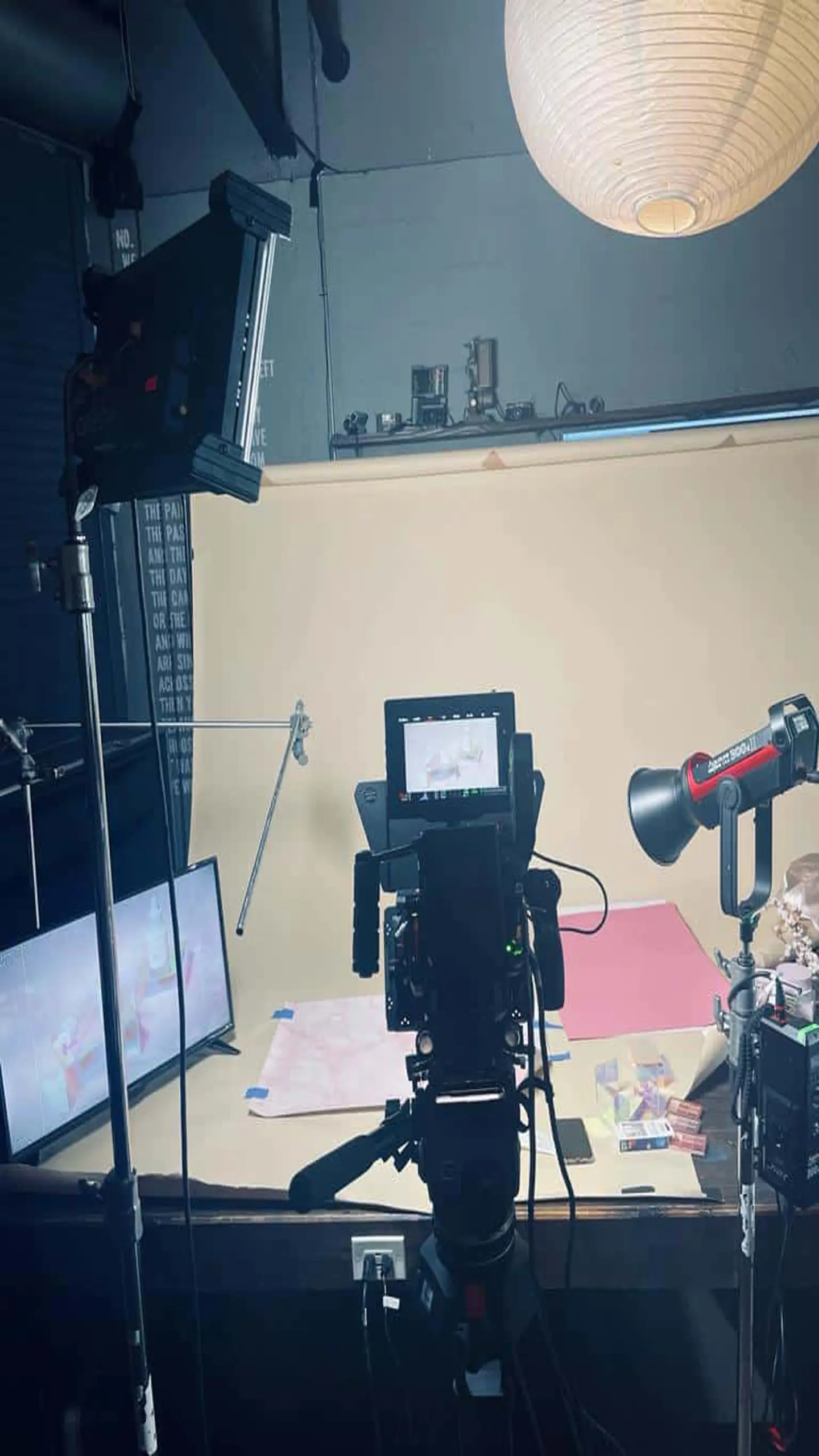
Television production has come a long way from its humble beginnings, evolving from basic sets and practical effects to the breathtaking visuals we see today. The integration of Computer-Generated Imagery (CGI) marked a pivotal moment in this transformation, reshaping the way stories are told on the small screen. Early experiments with CGI introduced audiences to new possibilities, but today, its use has become a cornerstone of modern television.
From immersive fantasy realms to hyper-realistic recreations of historical events, CGI in television allows creators to push the boundaries of imagination, turning ambitious concepts into visual masterpieces. Special effects, combined with cutting-edge technology, bring characters, settings, and action sequences to life in ways that were once unimaginable. As the demand for visually stunning content grows, the role of CGI continues to expand, proving indispensable to storytelling in today’s entertainment landscape.
## The Evolution of Special Effects in TV
Special effects have been an integral part of television since its inception, creating moments that captivate and transport audiences beyond the ordinary. Initially, practical effects, using physical props, makeup, and mechanical techniques, dominated the television landscape. Classic shows like Doctor Who in the 1960s relied heavily on these techniques, employing innovative methods to produce alien worlds and futuristic technology on modest budgets. These effects, though limited by technology, paved the way for greater advancements.
The digital revolution of the late 20th century ushered in a new era of visual storytelling. The advent of computer-generated imagery (CGI) enabled creators to craft scenes that were previously impossible to realize. Iconic TV shows like Star Trek: The Next Generation showcased early uses of digital effects, introducing viewers to the potential of CGI-enhanced visuals. While primitive by today’s standards, these efforts marked a crucial turning point.
Fast forward to the present, and CGI has become the gold standard for television production. Unlike traditional practical effects, which could be constrained by physical limitations, CGI allows creators to generate expansive worlds, intricate characters, and dynamic environments with unparalleled precision. For instance, shows like Game of Thrones and The Mandalorian have demonstrated how CGI can transform television into a medium rivaling the cinematic experience.
This evolution has not only elevated the visual appeal of TV but also democratized creativity. Productions of all scales can now leverage CGI tools, ensuring that visual storytelling continues to break boundaries and inspire audiences worldwide.
## How CGI Shapes Modern Television Storytelling
In today’s competitive entertainment landscape, compelling storytelling goes hand in hand with visually immersive worlds, and CGI plays a pivotal role in achieving this balance. Modern audiences crave experiences that transcend reality, and CGI enables television creators to meet these expectations by crafting intricate environments, larger-than-life creatures, and spectacular action sequences.
Take The Witcher, for instance, which uses CGI to bring its magical creatures and vast fantasy landscapes to life. Similarly, stranger things leverages CGI to create the eerie and otherworldly "Upside Down," a visual centerpiece of the show’s narrative. These examples highlight how CGI in television enhances storytelling, allowing complex narratives to be told with greater depth and visual authenticity.
However, successful storytelling requires more than visual spectacle. The most impactful shows use CGI as a tool to complement the narrative rather than overshadow it. The balance between storytelling and spectacle is key, as evidenced by the mandalorian. While its CGI-generated environments and characters are breathtaking, the series ensures that emotional arcs and character development remain at the forefront.
Ultimately, CGI shapes modern television storytelling by expanding the creative possibilities available to writers, directors, and producers. It provides the means to visualize ambitious ideas, ensuring that the stories audiences love are not only told but vividly brought to life.
## The Role of Computer Graphics in TV Production
Computer graphics have revolutionized television production, providing creators with the ability to realize ambitious ideas with unprecedented precision and efficiency. Unlike traditional practical effects, which rely on physical props, models, and manual techniques, CGI enables the seamless creation of vast landscapes, detailed characters, and dynamic action sequences that were once impossible or prohibitively expensive.
One of the most significant advantages computer graphics bring to [TV production](https://c-istudios.com/film-and-tv-production/) is flexibility. Creators can design fantastical worlds or historical settings without the logistical challenges of location scouting or building extensive sets. For instance, shows like the mandalorian employ real-time CGI and virtual backdrops, allowing producers to film in controlled environments while maintaining visual authenticity. Additionally, CGI ensures consistency across episodes, enabling smooth continuity even in complex productions.
The workflow of integrating CGI into live-action scenes is a meticulous process. It typically begins with pre-visualization, where artists create digital storyboards or animatics to outline the CGI elements. During filming, green screens, motion capture suits, or digital markers are used to capture performances and placeholders for CGI integration.
In post-production, these placeholders are replaced with fully rendered computer-generated visuals, blending them seamlessly with the live-action footage. Advanced rendering software and techniques, such as real-time rendering, accelerate this process, reducing production delays.
CGI also has distinct advantages over traditional effects. Practical effects can be limited by scale, realism, and adaptability, whereas CGI offers limitless creative possibilities. It is also more cost-effective in the long term, as digital assets can be reused and adapted for different scenes or episodes. Furthermore, CGI minimizes safety risks associated with physical stunts or pyrotechnics, as these can now be simulated digitally.
In essence, computer graphics have become an indispensable tool in modern TV production, unlocking creativity while streamlining workflows and enhancing visual storytelling.
## Challenges of Using CGI in Television
While CGI has transformed television production, it is not without its challenges. One of the most pressing issues is budget constraints. Unlike big-budget films, most television productions operate on tighter financial margins, limiting the extent and quality of CGI that can be used. High-quality CGI requires specialized software, skilled professionals, and significant rendering time, all of which drive up costs.
Technical limitations also pose significant challenges. Television production schedules are often much shorter than those for films, leaving less time for detailed CGI work. This can lead to rushed or subpar effects, which may diminish the overall quality of the show. Integrating CGI into live-action footage requires cutting-edge hardware and software, which can strain smaller production teams.
Audience expectations further complicate matters. Modern viewers, accustomed to blockbuster-level visual effects, demand realism and precision in TV shows. If CGI falls short of these standards, it risks breaking the audience's immersion. The "uncanny valley" issue, where digital characters or effects appear almost but not quite realistic, can also undermine the emotional impact of a scene.
Despite these challenges, many TV productions find innovative ways to balance quality and cost. Shows like the mandalorian and stranger things use advanced techniques like real-time rendering and modular production pipelines to maximize the efficiency of their CGI workflows. By prioritizing storytelling and carefully selecting scenes where CGI has the most impact, creators can overcome these hurdles and deliver visually stunning content within their constraints.
In summary, while CGI in television offers incredible opportunities, it also demands careful planning, resource allocation, and technical expertise to address its inherent challenges.
## Pioneering TV Shows That Revolutionized Visual Effects
The evolution of CGI in television has been marked by groundbreaking shows that pushed the boundaries of what is visually possible on the small screen. These series not only captivated audiences but also set new standards for storytelling and visual artistry.
One of the most iconic examples is game of thrones. From its sweeping battle scenes to the awe-inspiring dragons, the show utilized CGI to create a richly detailed fantasy world. The dragons, in particular, became a symbol of the show’s visual prowess, seamlessly blending with live-action elements to evoke both wonder and fear. This level of CGI sophistication raised expectations for what television could achieve, proving that TV visuals could rival blockbuster films.
The mandalorian revolutionized visual effects by incorporating a cutting-edge technique known as virtual production. Using massive LED screens and real-time rendering technology, the show projected CGI environments directly onto the set, allowing actors to perform within immersive digital landscapes. This innovation not only enhanced visual realism but also streamlined production processes, saving time and costs.
These pioneering shows left an indelible impact on the television industry. They demonstrated that high-quality CGI could elevate storytelling, enabling creators to imagine and realize complex worlds. Their success also inspired networks and streaming platforms to invest in advanced visual effects, leading to a surge in ambitious, CGI-heavy productions.
Recognition and accolades further underscored the importance of visual effects in these shows. Game of thrones received multiple Emmy Awards for Outstanding Special Visual Effects, while the mandalorian earned similar accolades, solidifying its place as a technological and creative trailblazer. These awards not only celebrated the artistry of CGI but also highlighted its role in transforming television into a medium of unparalleled visual innovation.
## Collaboration Between VFX Studios and TV Producers
The creation of visually stunning television requires seamless collaboration between production teams and visual effects (VFX) studios. This partnership is essential to ensure that CGI elements enhance the storytelling while remaining cohesive with the live-action components.
The process begins with pre-visualization, a critical planning phase where VFX artists and producers map out CGI-heavy scenes using digital storyboards or animatics. This step helps align creative visions, ensuring that everyone involved, from directors to actors, understands how the final scenes will look. For example, in stranger things, pre-visualization was instrumental in designing the "Mind Flayer" creature and the eerie "Upside Down" world.
During production, close collaboration between on-set teams and VFX studios is vital. VFX supervisors often work on location to guide the filming of CGI-integrated scenes, ensuring that lighting, angles, and movements align with the digital elements. For instance, the mandalorian used a technique called "StageCraft," where VFX teams rendered CGI environments in real-time to assist directors in framing shots.
Post-production is where the magic truly happens. VFX artists refine and integrate computer-generated elements into the footage, using advanced software and rendering tools. This phase often involves multiple rounds of feedback between producers and VFX teams to ensure the final visuals meet creative and technical standards.
Successful collaborations are evident in shows like stranger things, where the integration of CGI with live-action scenes has been universally praised. The show’s producers and VFX artists worked hand-in-hand to create a visually cohesive experience, from designing terrifying creatures to crafting otherworldly environments. Such partnerships highlight the importance of communication, planning, and shared creative vision.
Ultimately, the collaboration between VFX studios and TV producers is the backbone of CGI success in television. By leveraging each other’s expertise, they bring bold ideas to life, transforming ambitious scripts into visually captivating narratives.
## Future Trends in CGI and TV Special Effects
The future of CGI and special effects in television is poised for transformative innovations, driven by cutting-edge technologies and evolving audience demands. Among the most exciting developments is the rise of real-time rendering, which is revolutionizing how visual effects are created and integrated into productions.
Real-time rendering allows CGI to be generated and manipulated instantly, enabling on-set adjustments that save time and costs. This technology, famously used in the mandalorian, allows filmmakers to project digital environments onto LED screens in real time, providing immersive backdrops that replace traditional green screens.
AI-driven computer graphics are another game-changer in the industry. Artificial intelligence is increasingly being used to automate complex visual effects tasks, such as texture generation, scene simulations, and character animations.
This not only speeds up production timelines but also enables greater precision and creativity. AI tools can analyze data from past projects to suggest improvements or simulate realistic effects, such as lifelike facial expressions or dynamic environmental changes, enhancing the overall quality of CGI in television.
Virtual production techniques, which combine real-time rendering with advanced motion capture and pre-visualization, are reshaping how television shows are made. These methods blur the line between pre-production and production, allowing creators to experiment with visuals during filming rather than waiting until post-production. This integration fosters collaboration between departments and ensures that CGI elements align seamlessly with live-action components.
Looking ahead, the future of CGI in television is bright with possibilities. We can expect even more realistic digital humans, interactive environments, and AI-generated effects that adapt in real-time to storytelling needs. The increasing affordability of these technologies will also democratize access, enabling smaller studios to produce high-quality visuals that compete with major productions.
Ultimately, the convergence of real-time rendering, AI, and virtual production heralds a new era of creativity and efficiency, ensuring that television continues to captivate audiences with groundbreaking visual effects.
## CGI’s Role in Expanding Global TV Audiences
High-quality visual effects play a crucial role in expanding the global reach of television shows, attracting audiences from diverse cultural and linguistic backgrounds. Stunning CGI transcends language barriers, creating a universal appeal that draws viewers into richly crafted worlds and narratives.
One prime example of CGI’s international success is the witcher. With its fantastical creatures, epic battles, and immersive landscapes, the show captured the imaginations of audiences worldwide. Similarly, the animated series arcane uses breathtaking CGI to blend steampunk and fantasy aesthetics, earning critical acclaim and a massive global fanbase. These productions demonstrate how visual effects serve as a universal language, allowing stories to resonate across borders.
Streaming platforms have further amplified this trend, driving demand for CGI-heavy content. Companies like Netflix, Amazon Prime, and Disney+ prioritize visually stunning shows to attract and retain subscribers from around the world. For instance, the mandalorian and Stranger Things leverage CGI to create cinematic experiences that appeal to international viewers, boosting their popularity and cultural impact.
CGI also enables localized storytelling with global appeal. Productions can adapt visuals to reflect diverse cultures while maintaining a high-quality aesthetic. This adaptability allows shows to connect with audiences in different regions, fostering inclusivity and engagement.
In essence, CGI in television not only enhances the visual experience but also bridges cultural divides, expanding the reach and impact of TV shows on a global scale. As technology continues to advance, the power of visual effects to unite audiences worldwide will only grow.
## The Evolution of Special Effects in TV
Special effects have been an integral part of television since its inception, creating moments that captivate and transport audiences beyond the ordinary. Initially, practical effects, using physical props, makeup, and mechanical techniques, dominated the television landscape. Classic shows like Doctor Who in the 1960s relied heavily on these techniques, employing innovative methods to produce alien worlds and futuristic technology on modest budgets. These effects, though limited by technology, paved the way for greater advancements.
The digital revolution of the late 20th century ushered in a new era of visual storytelling. The advent of computer-generated imagery (CGI) enabled creators to craft scenes that were previously impossible to realize. Iconic TV shows like Star Trek: The Next Generation showcased early uses of digital effects, introducing viewers to the potential of CGI-enhanced visuals. While primitive by today’s standards, these efforts marked a crucial turning point.
Fast forward to the present, and CGI has become the gold standard for television production. Unlike traditional practical effects, which could be constrained by physical limitations, CGI allows creators to generate expansive worlds, intricate characters, and dynamic environments with unparalleled precision. For instance, shows like Game of Thrones and The Mandalorian have demonstrated how CGI can transform television into a medium rivaling the cinematic experience.
This evolution has not only elevated the visual appeal of TV but also democratized creativity. Productions of all scales can now leverage CGI tools, ensuring that visual storytelling continues to break boundaries and inspire audiences worldwide.
## How CGI Shapes Modern Television Storytelling
In today’s competitive entertainment landscape, compelling storytelling goes hand in hand with visually immersive worlds, and CGI plays a pivotal role in achieving this balance. Modern audiences crave experiences that transcend reality, and CGI enables television creators to meet these expectations by crafting intricate environments, larger-than-life creatures, and spectacular action sequences.
Take The Witcher, for instance, which uses CGI to bring its magical creatures and vast fantasy landscapes to life. Similarly, stranger things leverages CGI to create the eerie and otherworldly "Upside Down," a visual centerpiece of the show’s narrative. These examples highlight how CGI in television enhances storytelling, allowing complex narratives to be told with greater depth and visual authenticity.
However, successful storytelling requires more than visual spectacle. The most impactful shows use CGI as a tool to complement the narrative rather than overshadow it. The balance between storytelling and spectacle is key, as evidenced by the mandalorian. While its CGI-generated environments and characters are breathtaking, the series ensures that emotional arcs and character development remain at the forefront.
Ultimately, CGI shapes modern television storytelling by expanding the creative possibilities available to writers, directors, and producers. It provides the means to visualize ambitious ideas, ensuring that the stories audiences love are not only told but vividly brought to life.
## The Role of Computer Graphics in TV Production
Computer graphics have revolutionized television production, providing creators with the ability to realize ambitious ideas with unprecedented precision and efficiency. Unlike traditional practical effects, which rely on physical props, models, and manual techniques, CGI enables the seamless creation of vast landscapes, detailed characters, and dynamic action sequences that were once impossible or prohibitively expensive.
One of the most significant advantages computer graphics bring to TV production is flexibility. Creators can design fantastical worlds or historical settings without the logistical challenges of location scouting or building extensive sets. For instance, shows like the mandalorian employ real-time CGI and virtual backdrops, allowing producers to film in controlled environments while maintaining visual authenticity. Additionally, CGI ensures consistency across episodes, enabling smooth continuity even in complex productions.
The workflow of integrating CGI into live-action scenes is a meticulous process. It typically begins with pre-visualization, where artists create digital storyboards or animatics to outline the CGI elements. During filming, green screens, motion capture suits, or digital markers are used to capture performances and placeholders for CGI integration.
In post-production, these placeholders are replaced with fully rendered computer-generated visuals, blending them seamlessly with the live-action footage. Advanced rendering software and techniques, such as real-time rendering, accelerate this process, reducing production delays.
CGI also has distinct advantages over traditional effects. Practical effects can be limited by scale, realism, and adaptability, whereas CGI offers limitless creative possibilities. It is also more cost-effective in the long term, as digital assets can be reused and adapted for different scenes or episodes. Furthermore, CGI minimizes safety risks associated with physical stunts or pyrotechnics, as these can now be simulated digitally.
In essence, computer graphics have become an indispensable tool in modern TV production, unlocking creativity while streamlining workflows and enhancing visual storytelling.
## Challenges of Using CGI in Television
While CGI has transformed television production, it is not without its challenges. One of the most pressing issues is budget constraints. Unlike big-budget films, most television productions operate on tighter financial margins, limiting the extent and quality of CGI that can be used. High-quality CGI requires specialized software, skilled professionals, and significant rendering time, all of which drive up costs.
Technical limitations also pose significant challenges. Television production schedules are often much shorter than those for films, leaving less time for detailed CGI work. This can lead to rushed or subpar effects, which may diminish the overall quality of the show. Integrating CGI into live-action footage requires cutting-edge hardware and software, which can strain smaller production teams.
Audience expectations further complicate matters. Modern viewers, accustomed to blockbuster-level visual effects, demand realism and precision in TV shows. If CGI falls short of these standards, it risks breaking the audience's immersion. The "uncanny valley" issue, where digital characters or effects appear almost but not quite realistic, can also undermine the emotional impact of a scene.
Despite these challenges, many TV productions find innovative ways to balance quality and cost. Shows like the mandalorian and stranger things use advanced techniques like real-time rendering and modular production pipelines to maximize the efficiency of their CGI workflows. By prioritizing storytelling and carefully selecting scenes where CGI has the most impact, creators can overcome these hurdles and deliver visually stunning content within their constraints.
In summary, while CGI in television offers incredible opportunities, it also demands careful planning, resource allocation, and technical expertise to address its inherent challenges.
## Pioneering TV Shows That Revolutionized Visual Effects
The evolution of CGI in television has been marked by groundbreaking shows that pushed the boundaries of what is visually possible on the small screen. These series not only captivated audiences but also set new standards for storytelling and visual artistry.
One of the most iconic examples is game of thrones. From its sweeping battle scenes to the awe-inspiring dragons, the show utilized CGI to create a richly detailed fantasy world. The dragons, in particular, became a symbol of the show’s visual prowess, seamlessly blending with live-action elements to evoke both wonder and fear. This level of CGI sophistication raised expectations for what television could achieve, proving that TV visuals could rival blockbuster films.
The mandalorian revolutionized visual effects by incorporating a cutting-edge technique known as virtual production. Using massive LED screens and real-time rendering technology, the show projected CGI environments directly onto the set, allowing actors to perform within immersive digital landscapes. This innovation not only enhanced visual realism but also streamlined production processes, saving time and costs.
These pioneering shows left an indelible impact on the television industry. They demonstrated that high-quality CGI could elevate storytelling, enabling creators to imagine and realize complex worlds. Their success also inspired networks and streaming platforms to invest in advanced visual effects, leading to a surge in ambitious, CGI-heavy productions.
Recognition and accolades further underscored the importance of visual effects in these shows. Game of thrones received multiple Emmy Awards for Outstanding Special Visual Effects, while the mandalorian earned similar accolades, solidifying its place as a technological and creative trailblazer. These awards not only celebrated the artistry of CGI but also highlighted its role in transforming television into a medium of unparalleled visual innovation.
## Collaboration Between VFX Studios and TV Producers
The creation of visually stunning television requires seamless collaboration between production teams and visual effects (VFX) studios. This partnership is essential to ensure that CGI elements enhance the storytelling while remaining cohesive with the live-action components.
The process begins with pre-visualization, a critical planning phase where VFX artists and producers map out CGI-heavy scenes using digital storyboards or animatics. This step helps align creative visions, ensuring that everyone involved, from directors to actors, understands how the final scenes will look. For example, in stranger things, pre-visualization was instrumental in designing the "Mind Flayer" creature and the eerie "Upside Down" world.
During production, close collaboration between on-set teams and VFX studios is vital. VFX supervisors often work on location to guide the filming of CGI-integrated scenes, ensuring that lighting, angles, and movements align with the digital elements. For instance, the mandalorian used a technique called "StageCraft," where VFX teams rendered CGI environments in real-time to assist directors in framing shots.
Post-production is where the magic truly happens. VFX artists refine and integrate computer-generated elements into the footage, using advanced software and rendering tools. This phase often involves multiple rounds of feedback between producers and VFX teams to ensure the final visuals meet creative and technical standards.
Successful collaborations are evident in shows like stranger things, where the integration of CGI with live-action scenes has been universally praised. The show’s producers and VFX artists worked hand-in-hand to create a visually cohesive experience, from designing terrifying creatures to crafting otherworldly environments. Such partnerships highlight the importance of communication, planning, and shared creative vision.
Ultimately, the collaboration between VFX studios and TV producers is the backbone of CGI success in television. By leveraging each other’s expertise, they bring bold ideas to life, transforming ambitious scripts into visually captivating narratives.
## Future Trends in CGI and TV Special Effects
The future of CGI and special effects in television is poised for transformative innovations, driven by cutting-edge technologies and evolving audience demands. Among the most exciting developments is the rise of real-time rendering, which is revolutionizing how visual effects are created and integrated into productions.
Real-time rendering allows CGI to be generated and manipulated instantly, enabling on-set adjustments that save time and costs. This technology, famously used in the mandalorian, allows filmmakers to project digital environments onto LED screens in real time, providing immersive backdrops that replace traditional green screens.
AI-driven computer graphics are another game-changer in the industry. Artificial intelligence is increasingly being used to automate complex visual effects tasks, such as texture generation, scene simulations, and character animations.
This not only speeds up production timelines but also enables greater precision and creativity. AI tools can analyze data from past projects to suggest improvements or simulate realistic effects, such as lifelike facial expressions or dynamic environmental changes, enhancing the overall quality of CGI in television.
Virtual production techniques, which combine real-time rendering with advanced motion capture and pre-visualization, are reshaping how television shows are made. These methods blur the line between pre-production and production, allowing creators to experiment with visuals during filming rather than waiting until post-production. This integration fosters collaboration between departments and ensures that CGI elements align seamlessly with live-action components.
Looking ahead, the future of CGI in television is bright with possibilities. We can expect even more realistic digital humans, interactive environments, and AI-generated effects that adapt in real-time to storytelling needs. The increasing affordability of these technologies will also democratize access, enabling smaller studios to produce high-quality visuals that compete with major productions.
Ultimately, the convergence of real-time rendering, AI, and virtual production heralds a new era of creativity and efficiency, ensuring that television continues to captivate audiences with groundbreaking visual effects.
## CGI’s Role in Expanding Global TV Audiences
High-quality visual effects play a crucial role in expanding the global reach of television shows, attracting audiences from diverse cultural and linguistic backgrounds. Stunning CGI transcends language barriers, creating a universal appeal that draws viewers into richly crafted worlds and narratives.
One prime example of CGI’s international success is the witcher. With its fantastical creatures, epic battles, and immersive landscapes, the show captured the imaginations of audiences worldwide. Similarly, the animated series arcane uses breathtaking CGI to blend steampunk and fantasy aesthetics, earning critical acclaim and a massive global fanbase. These productions demonstrate how visual effects serve as a universal language, allowing stories to resonate across borders.
Streaming platforms have further amplified this trend, driving demand for CGI-heavy content. Companies like Netflix, Amazon Prime, and Disney+ prioritize visually stunning shows to attract and retain subscribers from around the world. For instance, the mandalorian and Stranger Things leverage CGI to create cinematic experiences that appeal to international viewers, boosting their popularity and cultural impact.
CGI also enables localized storytelling with global appeal. Productions can adapt visuals to reflect diverse cultures while maintaining a high-quality aesthetic. This adaptability allows shows to connect with audiences in different regions, fostering inclusivity and engagement.
In essence, CGI in television not only enhances the visual experience but also bridges cultural divides, expanding the reach and impact of TV shows on a global scale. As technology continues to advance, the power of visual effects to unite audiences worldwide will only grow.
## Work with C&I Studios
If you are planning a project like this, our team can take it from concept to final delivery. Explore our [post-production services](https://c-istudios.com/post-production-services/), browse [our work](https://c-istudios.com/our-work/) to see how we tell brand stories, and [get in touch](https://c-istudios.com/contact/) when you are ready to start.
Originally published November 2, 2024
---
*This content is from [C&I Studios](https://c-istudios.com), a full-service production company.*
---
# Color Psychology in Branding: Choosing the Right Palette for Your Brand
> Published: November 2, 2024
> Categories: Commercial & Brand
> Source: https://c-istudios.com/color-psychology-in-branding-choosing-the-right-palette-for-your-brand/
---
.cib{--paper:#1b1d1f;--ink:#fff;--body:#d5d7d9;--muted:#8b9096;--line:rgba(255,255,255,.12);--thumb:#2b2e31;--card:#212426;--accent:#c02b0a;--blue:#5B8FA8;--serif:'Playfair Display',Georgia,serif;--sans:'Poppins',-apple-system,sans-serif;--measure:900px;background:var(--paper);color:var(--body);font-family:var(--sans);line-height:1.6;position:relative;left:50%;transform:translateX(-50%);width:90vw;max-width:1920px}
.cib *{box-sizing:border-box}
.cib .kicker{max-width:var(--measure);margin:58px auto 0;padding:0 22px;font-size:12.5px;font-weight:700;letter-spacing:2.5px;text-transform:uppercase;color:var(--blue)}
.cib h1.cibh1{text-wrap:balance;font-family:var(--serif);font-weight:500;font-size:clamp(46px,6vw,72px);line-height:1.08;color:var(--ink);max-width:var(--measure);margin:18px auto 0;padding:0 22px;letter-spacing:-.5px}
.cib .metarow{max-width:var(--measure);margin:20px auto 0;padding:0 22px;color:var(--muted);font-size:14px}
.cib .hero{position:relative;width:100%;height:0;padding-bottom:56.25%;overflow:hidden;margin:48px auto 0;border-top:1px solid var(--line);border-bottom:1px solid var(--line)}
.cib .hero .ph{width:100%;aspect-ratio:16/9;background:var(--thumb);border-top:1px solid var(--line);border-bottom:1px solid var(--line);display:flex;align-items:center;justify-content:center;color:#7d8288;font-size:13px;text-align:center;padding:0 20px}
.cib .body{max-width:var(--measure);margin:12px auto 0;padding:52px 22px 6px}
.cib .body.lead p:first-child{font-size:23px;line-height:1.62;color:var(--ink)}
.cib .body p{font-size:18.5px;line-height:1.85;margin:0 0 30px;color:var(--body)}
.cib .body h2{text-wrap:balance;font-family:var(--serif);font-weight:500;font-size:clamp(32px,4vw,48px);line-height:1.22;color:var(--ink);margin:70px 0 20px;letter-spacing:-.3px}
.cib .body h3{text-wrap:balance;font-family:var(--sans);font-weight:600;font-size:22px;color:var(--ink);margin:38px 0 8px}
.cib .body a{color:var(--ink);text-decoration:underline;text-decoration-color:rgba(255,255,255,.4);text-underline-offset:3px}
.cib .body a:hover{text-decoration-color:var(--ink)}
.cib .ctable{width:100%;border-collapse:collapse;margin:16px 0 30px;font-size:16px}
.cib .ctable th{background:#000;color:#fff;text-align:left;padding:10px 12px;font-family:var(--sans)}
.cib .ctable td{padding:10px 12px;border-bottom:1px solid var(--line);color:var(--body)}
.cib .inimg{position:relative;width:100%;height:0;padding-bottom:56.25%;overflow:hidden;margin:72px auto;border-top:1px solid var(--line);border-bottom:1px solid var(--line)}
.cib .inimg .ph{width:100%;aspect-ratio:16/9;background:var(--thumb);border-top:1px solid var(--line);border-bottom:1px solid var(--line);display:flex;align-items:center;justify-content:center;color:#7d8288;font-size:13px}
.cib .origpub{max-width:var(--measure);margin:60px auto 0;padding:26px 22px 0;border-top:1px solid var(--line);color:var(--muted);font-size:13.5px}
.cib .related{max-width:1200px;margin:64px auto 0;padding:34px 22px 76px}
.cib .related h3{font-family:var(--sans);font-size:12.5px;letter-spacing:2px;text-transform:uppercase;color:var(--ink);margin:0 0 24px}
.cib .grid{display:grid;grid-template-columns:repeat(3,1fr);gap:28px}
.cib .rc{background:var(--card);border:1px solid var(--line);display:block;text-decoration:none;color:inherit;transition:border-color .15s}
.cib a.rc:hover{border-color:rgba(255,255,255,.5)}
.cib .rc .thumb{position:relative;width:100%;height:0;padding-bottom:56.25%;background:var(--thumb);overflow:hidden}
.cib .rc .thumb img{position:absolute!important;top:0!important;left:0!important;width:100%!important;height:100%!important;object-fit:cover!important;margin:0!important}
.cib .rc .cc{padding:14px 15px 17px}
.cib .rc .rt{font-family:var(--serif);font-weight:500;font-size:16px;line-height:1.3;color:var(--ink);margin:0 0 6px}
.cib .rc .rm{font-size:11px;letter-spacing:1px;text-transform:uppercase;color:var(--muted)}
.cib img{margin:0!important;padding:0!important;display:block!important;vertical-align:top;max-width:100%}
.cib .hero img,.cib .inimg img{position:absolute!important;top:0!important;left:0!important;width:100%!important;height:100%!important;object-fit:cover!important;margin:0!important;padding:0!important;border:0!important;display:block!important;aspect-ratio:auto!important}
.cib .hero+.body{padding-top:36px}
@media(max-width:760px){.cib .grid{grid-template-columns:1fr}.cib .body h2{margin:52px 0 16px}.cib .body p{font-size:17.5px}.cib .inimg,.cib .hero{margin-top:44px}}
.cib .vembed{max-width:var(--measure);margin:44px auto;padding:0 22px}.cib .vembed .vwrap{position:relative;width:100%;height:0;padding-bottom:56.25%}.cib .vembed .vwrap iframe{position:absolute;top:0;left:0;width:100%;height:100%;border:0}
Commercial & Brand
# Color Psychology in Branding. Choosing the Right Palette for Your Brand
17 min read

Color psychology is a powerful tool that shapes how consumers perceive brands, often making the difference between a fleeting glance and a lasting connection. In branding, color isn’t just an aesthetic choice; it’s a strategic decision that taps into the emotions, memories, and associations people subconsciously attach to certain hues. A well-chosen color palette can evoke trust, excitement, calm, or even urgency, influencing consumer behavior in ways that resonate deeply with a brand's identity and message.
Brands leverage color psychology to communicate their essence without words, subtly guiding how audiences feel about their products or services. For instance, a calming blue may evoke a sense of reliability, while a bold red can stir excitement or urgency.
Understanding how color shapes perception allows brands to create a more intentional connection with their audiences, fostering trust and loyalty through a visual language that speaks directly to human emotions. In this article, we’ll explore how brands can choose colors thoughtfully, ensuring they reflect the values and appeal to the instincts of their target audience.
## The Science Behind Color Perception and Brand Association
Color perception is deeply rooted in psychology, shaping our responses to brands and influencing our purchasing decisions, often without us realizing it. Colors tap into innate emotional responses and can subtly drive how people feel about a brand. This is why [branding and graphic design](https://c-istudios.com/branding-and-graphic-design-services/) strategies frequently prioritize color choice as one of the foundational elements in a brand’s identity.
When used thoughtfully, color can convey specific traits and emotions that align with a brand’s values. For instance, blue is often associated with trust and dependability, which is why it’s frequently found in brands within the finance and tech industries. In contrast, red can evoke excitement, urgency, or passion, making it popular in media marketing and retail, where brands aim to create a sense of urgency or boldness.
Colors can become instantly recognizable and forge deep associations over time, solidifying a brand’s position in the consumer’s mind. Companies that understand the impact of color on perception use it to their advantage, selecting palettes that resonate with their target audience and shape how they’re perceived, from being seen as innovative to approachable, or luxurious to eco-friendly.
## Understanding the Role of Each Color in Branding
Each color in branding plays a distinct role in shaping consumer perception, evoking specific emotions that help establish a brand's personality. Primary colors, red, blue, and yellow, are particularly powerful in [content creation](https://c-istudios.com/content-creation-services/) as they stand out visually and elicit strong reactions.
Red, for example, conveys passion, energy, and urgency, making it a preferred choice for brands in the food and retail sectors aiming to grab immediate attention. Meanwhile, blue, with its associations with calmness, reliability, and trust, is ideal for tech companies and healthcare providers who seek to inspire confidence.
Secondary colors add nuance to branding and offer unique emotional cues. Green is often associated with health, nature, and sustainability, while purple suggests luxury and creativity, lending itself well to brands in beauty and wellness or high-end services.
Orange, with its warm, energetic tone, conveys enthusiasm and approachability, which works well for social-oriented brands or social media marketing services focused on engagement. By thoughtfully selecting these colors and understanding the feelings they evoke, brands can craft a palette that authentically represents their values and appeals directly to the emotions of their target audience.
## Aligning Color Choices with Brand Identity
Selecting the right colors for a brand goes beyond aesthetics; it requires a strategic alignment with the brand's personality and values. For businesses aiming to establish a strong connection with their audience, choosing colors that represent their core identity can significantly enhance their impact.
Brands looking to convey trustworthiness, for example, often lean toward shades of blue and grey, as these colors evoke reliability and professionalism. This approach is common in financial services, where the priority is creating a dependable image.
For brands with a creative edge, like professional photography and [creative marketing](https://c-istudios.com/creative-marketing-services/) agencies, vibrant and unique color schemes may better reflect their innovative spirit. Bold colors like purple, teal, or even neon hues can signal creativity and originality, helping these brands stand out in a competitive market.
Alternatively, eco-conscious brands often turn to green and earthy tones to represent sustainability and a commitment to the environment. By aligning color choices with brand values, companies can foster an authentic connection with their target audience and build a memorable, cohesive brand identity that resonates with their ideals and missions.
## Psychological Impact of Color in Different Industries
Colors are powerful symbols that communicate industry-specific messages, subtly guiding consumer perceptions and expectations. Different industries leverage colors to craft an identity that aligns with their core message and values.
For example, tech companies often adopt blue for its association with trust and reliability, helping them to communicate stability and security in a constantly evolving field. Similarly, eco-friendly brands use green to symbolize environmental consciousness, reinforcing a connection with nature and sustainability.
In the entertainment sector, [video production](https://c-istudios.com/video-production-services/) and branding and graphic design benefit greatly from vibrant, attention-grabbing colors. Red, often used in the food and beverage industry to stimulate appetite and excitement, is also common in entertainment and film promotions, where it creates urgency and dynamism. For fields like [film and TV production](https://c-istudios.com/film-and-tv-production/) and documentary film production, color can be used to establish mood and narrative, adding depth to storytelling and enhancing viewer engagement.
Documentary producers might choose muted tones to reflect realism and credibility, while feature film marketing may rely on a mix of colors to represent diverse genres, from horror (using dark, moody colors) to romance (using warm pastels). By selecting color schemes that speak directly to their audience's expectations, each industry can strengthen its brand identity and deliver a compelling, visually resonant experience.
## Cultural Influences on Color Perception
Color perception is highly influenced by cultural background, which plays a significant role in shaping how different audiences interpret brand colors. Colors that might evoke positive emotions, trust, or celebration in one culture could convey entirely different or even negative meanings in another.
For example, in Western cultures, white is often linked to purity, weddings, and new beginnings, representing fresh starts and hope. However, in various parts of East Asia, white is traditionally associated with mourning and is commonly worn at funerals, symbolizing loss.
This contrast highlights the importance of cultural sensitivity in branding, as brands targeting global audiences need to consider these diverse interpretations to avoid miscommunication and ensure their colors resonate appropriately across regions.
Similarly, red is viewed as a color of luck and prosperity in China, but in some Western contexts, it can indicate danger or caution. Brands with a global audience must be aware of these cultural nuances to ensure their color choices resonate positively with diverse demographics.
For companies involved in [artist management and media creation](https://c-istudios.com/artist-management-and-media-creation/), understanding these cultural differences is especially crucial. Global brands should select colors that balance their core identity with regional interpretations, perhaps by customizing color schemes for different markets.
Tools like market research and A/B testing can help determine how audiences from various regions respond to specific colors. SEO copywriting can assist in localizing content to align with culturally relevant themes, enhancing engagement and trust across regions. By respecting cultural color perceptions, brands can cultivate a more inclusive, globally appealing presence that aligns with diverse cultural expectations.
## Crafting a Color Palette that Resonates
Building a cohesive color palette is essential for brands aiming to convey a clear, recognizable identity across all platforms. The first step in creating a color palette is to define the brand’s core values and audience preferences.
Identifying whether the brand aims to be seen as innovative, traditional, bold, or approachable will guide initial color choices. Brands targeting younger, vibrant audiences may lean toward brighter, contrasting colors, while those in professional or conservative fields often choose neutral and muted tones.
Once the core colors are chosen, brands can use design tools like Adobe Color or Coolors to refine and expand their palettes. These tools allow companies to explore complementary and analogous color combinations, ensuring the palette feels harmonious and balanced.
For brands with a digital presence, consistency across all channels, including websites and social media, is critical. In fields like web development and branding and graphic design, color uniformity helps reinforce brand recognition and credibility.
Testing the color palette’s appeal, such as through focus groups or online surveys, provides valuable insights into how well it resonates with the target audience. Crafting a palette that aligns with brand goals and industry standards ultimately strengthens a brand's visual identity and appeal.
## The Importance of Color Consistency Across Digital and Physical Media
In today’s multi-platform landscape, maintaining color consistency is essential for brands to establish a cohesive identity across digital and physical media. Whether a brand is showcased on its website, through social media marketing services, in print materials, or even via [audio live streaming](https://c-istudios.com/video-audio-live-streaming/) platforms, using a consistent color scheme strengthens brand recognition and fosters trust with the audience. When brands display a unified color palette across platforms, they reinforce their identity and make their visual presence more memorable, which is crucial for building a loyal following.
Inconsistent color representation, on the other hand, can weaken a brand's image and create confusion among consumers. Imagine a brand whose logo appears in different shades on various platforms due to a lack of standardized color settings. This inconsistency can make the brand seem unprofessional or fragmented, potentially leading to a disconnect with the audience.
Brands often invest in standardized guidelines to ensure uniformity across platforms, covering specifications for digital channels as well as print media. For teams involved in [video production](https://c-istudios.com/video-production-services/) gear list or any brand asset creation, adhering to these guidelines is crucial for a seamless visual experience. A unified color approach not only boosts brand credibility but also allows for a more coherent, impactful presentation, which enhances consumer trust and brand loyalty.
## Future Trends in Color Psychology and Branding
The world of color psychology in branding is evolving, with new trends shaping the way brands connect with audiences through visual storytelling. Minimalistic color schemes are gaining popularity as brands look to simplify their visual identities, focusing on clean, monochromatic designs that feel modern and elegant. This approach allows for a bold presentation while reducing visual clutter, making it especially effective for high-end brands and professional services.
Advances in technology are also influencing color choices. For instance, [vfx compositing and animation](https://c-istudios.com/vfx-compositing-and-animation-services/) techniques enable brands to explore dynamic color transitions and gradients, adding a new level of visual engagement, especially in digital marketing campaigns. In industries like media marketing and feature film mastering and delivery, brands are experimenting with animated, interactive color effects that capture attention and create memorable experiences.
As augmented reality (AR) and virtual reality (VR) become more integrated into branding, color psychology will play a significant role in designing immersive environments that appeal to users’ senses and emotions. These trends suggest that brands embracing innovative, tech-driven color applications will have an edge, creating deeper emotional connections with consumers in an increasingly digital world.
## The Science Behind Color Perception and Brand Association
Color perception is deeply rooted in psychology, shaping our responses to brands and influencing our purchasing decisions, often without us realizing it. Colors tap into innate emotional responses and can subtly drive how people feel about a brand. This is why [branding and graphic design](https://c-istudios.com/branding-and-graphic-design-services/) strategies frequently prioritize color choice as one of the foundational elements in a brand’s identity.
When used thoughtfully, color can convey specific traits and emotions that align with a brand’s values. For instance, blue is often associated with trust and dependability, which is why it’s frequently found in brands within the finance and tech industries. In contrast, red can evoke excitement, urgency, or passion, making it popular in media marketing and retail, where brands aim to create a sense of urgency or boldness.
Colors can become instantly recognizable and forge deep associations over time, solidifying a brand’s position in the consumer’s mind. Companies that understand the impact of color on perception use it to their advantage, selecting palettes that resonate with their target audience and shape how they’re perceived, from being seen as innovative to approachable, or luxurious to eco-friendly.
## Understanding the Role of Each Color in Branding
Each color in branding plays a distinct role in shaping consumer perception, evoking specific emotions that help establish a brand's personality. Primary colors, red, blue, and yellow, are particularly powerful in [content creation](https://c-istudios.com/content-creation-services/) as they stand out visually and elicit strong reactions.
Red, for example, conveys passion, energy, and urgency, making it a preferred choice for brands in the food and retail sectors aiming to grab immediate attention. Meanwhile, blue, with its associations with calmness, reliability, and trust, is ideal for tech companies and healthcare providers who seek to inspire confidence.
Secondary colors add nuance to branding and offer unique emotional cues. Green is often associated with health, nature, and sustainability, while purple suggests luxury and creativity, lending itself well to brands in beauty and wellness or high-end services.
Orange, with its warm, energetic tone, conveys enthusiasm and approachability, which works well for social-oriented brands or social media marketing services focused on engagement. By thoughtfully selecting these colors and understanding the feelings they evoke, brands can craft a palette that authentically represents their values and appeals directly to the emotions of their target audience.
## Aligning Color Choices with Brand Identity
Selecting the right colors for a brand goes beyond aesthetics; it requires a strategic alignment with the brand's personality and values. For businesses aiming to establish a strong connection with their audience, choosing colors that represent their core identity can significantly enhance their impact.
Brands looking to convey trustworthiness, for example, often lean toward shades of blue and grey, as these colors evoke reliability and professionalism. This approach is common in financial services, where the priority is creating a dependable image.
For brands with a creative edge, like professional photography and [creative marketing](https://c-istudios.com/creative-marketing-services/) agencies, vibrant and unique color schemes may better reflect their innovative spirit. Bold colors like purple, teal, or even neon hues can signal creativity and originality, helping these brands stand out in a competitive market.
Alternatively, eco-conscious brands often turn to green and earthy tones to represent sustainability and a commitment to the environment. By aligning color choices with brand values, companies can foster an authentic connection with their target audience and build a memorable, cohesive brand identity that resonates with their ideals and missions.
## Psychological Impact of Color in Different Industries
Colors are powerful symbols that communicate industry-specific messages, subtly guiding consumer perceptions and expectations. Different industries leverage colors to craft an identity that aligns with their core message and values.
For example, tech companies often adopt blue for its association with trust and reliability, helping them to communicate stability and security in a constantly evolving field. Similarly, eco-friendly brands use green to symbolize environmental consciousness, reinforcing a connection with nature and sustainability.
In the entertainment sector, [video production](https://c-istudios.com/video-production-services/) and branding and graphic design benefit greatly from vibrant, attention-grabbing colors. Red, often used in the food and beverage industry to stimulate appetite and excitement, is also common in entertainment and film promotions, where it creates urgency and dynamism. For fields like film and TV production and documentary film production, color can be used to establish mood and narrative, adding depth to storytelling and enhancing viewer engagement.
Documentary producers might choose muted tones to reflect realism and credibility, while feature film marketing may rely on a mix of colors to represent diverse genres, from horror (using dark, moody colors) to romance (using warm pastels). By selecting color schemes that speak directly to their audience's expectations, each industry can strengthen its brand identity and deliver a compelling, visually resonant experience.
## Cultural Influences on Color Perception
Color perception is highly influenced by cultural background, which plays a significant role in shaping how different audiences interpret brand colors. Colors that might evoke positive emotions, trust, or celebration in one culture could convey entirely different or even negative meanings in another.
For example, in Western cultures, white is often linked to purity, weddings, and new beginnings, representing fresh starts and hope. However, in various parts of East Asia, white is traditionally associated with mourning and is commonly worn at funerals, symbolizing loss.
This contrast highlights the importance of cultural sensitivity in branding, as brands targeting global audiences need to consider these diverse interpretations to avoid miscommunication and ensure their colors resonate appropriately across regions.
Similarly, red is viewed as a color of luck and prosperity in China, but in some Western contexts, it can indicate danger or caution. Brands with a global audience must be aware of these cultural nuances to ensure their color choices resonate positively with diverse demographics.
For companies involved in [artist management and media creation](https://c-istudios.com/artist-management-and-media-creation/), understanding these cultural differences is especially crucial. Global brands should select colors that balance their core identity with regional interpretations, perhaps by customizing color schemes for different markets.
Tools like market research and A/B testing can help determine how audiences from various regions respond to specific colors. SEO copywriting can assist in localizing content to align with culturally relevant themes, enhancing engagement and trust across regions. By respecting cultural color perceptions, brands can cultivate a more inclusive, globally appealing presence that aligns with diverse cultural expectations.
## Crafting a Color Palette that Resonates
Building a cohesive color palette is essential for brands aiming to convey a clear, recognizable identity across all platforms. The first step in creating a color palette is to define the brand’s core values and audience preferences.
Identifying whether the brand aims to be seen as innovative, traditional, bold, or approachable will guide initial color choices. Brands targeting younger, vibrant audiences may lean toward brighter, contrasting colors, while those in professional or conservative fields often choose neutral and muted tones.
Once the core colors are chosen, brands can use design tools like Adobe Color or Coolors to refine and expand their palettes. These tools allow companies to explore complementary and analogous color combinations, ensuring the palette feels harmonious and balanced.
For brands with a digital presence, consistency across all channels, including websites and social media, is critical. In fields like web development and branding and graphic design, color uniformity helps reinforce brand recognition and credibility.
Testing the color palette’s appeal, such as through focus groups or online surveys, provides valuable insights into how well it resonates with the target audience. Crafting a palette that aligns with brand goals and industry standards ultimately strengthens a brand's visual identity and appeal.
## The Importance of Color Consistency Across Digital and Physical Media
In today’s multi-platform landscape, maintaining color consistency is essential for brands to establish a cohesive identity across digital and physical media. Whether a brand is showcased on its website, through social media marketing services, in print materials, or even via [audio live streaming](https://c-istudios.com/video-audio-live-streaming/) platforms, using a consistent color scheme strengthens brand recognition and fosters trust with the audience. When brands display a unified color palette across platforms, they reinforce their identity and make their visual presence more memorable, which is crucial for building a loyal following.
Inconsistent color representation, on the other hand, can weaken a brand's image and create confusion among consumers. Imagine a brand whose logo appears in different shades on various platforms due to a lack of standardized color settings. This inconsistency can make the brand seem unprofessional or fragmented, potentially leading to a disconnect with the audience.
Brands often invest in standardized guidelines to ensure uniformity across platforms, covering specifications for digital channels as well as print media. For teams involved in video production gear list or any brand asset creation, adhering to these guidelines is crucial for a seamless visual experience. A unified color approach not only boosts brand credibility but also allows for a more coherent, impactful presentation, which enhances consumer trust and brand loyalty.
## Future Trends in Color Psychology and Branding
The world of color psychology in branding is evolving, with new trends shaping the way brands connect with audiences through visual storytelling. Minimalistic color schemes are gaining popularity as brands look to simplify their visual identities, focusing on clean, monochromatic designs that feel modern and elegant. This approach allows for a bold presentation while reducing visual clutter, making it especially effective for high-end brands and professional services.
Advances in technology are also influencing color choices. For instance, [vfx compositing and animation](https://c-istudios.com/vfx-compositing-and-animation-services/) techniques enable brands to explore dynamic color transitions and gradients, adding a new level of visual engagement, especially in digital marketing campaigns. In industries like media marketing and feature film mastering and delivery, brands are experimenting with animated, interactive color effects that capture attention and create memorable experiences.
As augmented reality (AR) and virtual reality (VR) become more integrated into branding, color psychology will play a significant role in designing immersive environments that appeal to users’ senses and emotions. These trends suggest that brands embracing innovative, tech-driven color applications will have an edge, creating deeper emotional connections with consumers in an increasingly digital world.
## Work with C&I Studios
If you are planning a project like this, our team can take it from concept to final delivery. Explore our [video production services](https://c-istudios.com/video-production-services/), browse [our work](https://c-istudios.com/our-work/) to see how we tell brand stories, and [get in touch](https://c-istudios.com/contact/) when you are ready to start.
Originally published November 2, 2024
---
*This content is from [C&I Studios](https://c-istudios.com), a full-service production company.*
---
# The Role of Visual Media in Modern Marketing Campaigns
> Published: November 1, 2024
> Categories: Commercial & Brand
> Source: https://c-istudios.com/the-role-of-visual-media-in-modern-marketing-campaigns/
---
.cib{--paper:#1b1d1f;--ink:#fff;--body:#d5d7d9;--muted:#8b9096;--line:rgba(255,255,255,.12);--thumb:#2b2e31;--card:#212426;--accent:#c02b0a;--blue:#5B8FA8;--serif:'Playfair Display',Georgia,serif;--sans:'Poppins',-apple-system,sans-serif;--measure:900px;background:var(--paper);color:var(--body);font-family:var(--sans);line-height:1.6;position:relative;left:50%;transform:translateX(-50%);width:90vw;max-width:1920px}
.cib *{box-sizing:border-box}
.cib .kicker{max-width:var(--measure);margin:58px auto 0;padding:0 22px;font-size:12.5px;font-weight:700;letter-spacing:2.5px;text-transform:uppercase;color:var(--blue)}
.cib h1.cibh1{text-wrap:balance;font-family:var(--serif);font-weight:500;font-size:clamp(46px,6vw,72px);line-height:1.08;color:var(--ink);max-width:var(--measure);margin:18px auto 0;padding:0 22px;letter-spacing:-.5px}
.cib .metarow{max-width:var(--measure);margin:20px auto 0;padding:0 22px;color:var(--muted);font-size:14px}
.cib .hero{position:relative;width:100%;height:0;padding-bottom:56.25%;overflow:hidden;margin:48px auto 0;border-top:1px solid var(--line);border-bottom:1px solid var(--line)}
.cib .hero .ph{width:100%;aspect-ratio:16/9;background:var(--thumb);border-top:1px solid var(--line);border-bottom:1px solid var(--line);display:flex;align-items:center;justify-content:center;color:#7d8288;font-size:13px;text-align:center;padding:0 20px}
.cib .body{max-width:var(--measure);margin:12px auto 0;padding:52px 22px 6px}
.cib .body.lead p:first-child{font-size:23px;line-height:1.62;color:var(--ink)}
.cib .body p{font-size:18.5px;line-height:1.85;margin:0 0 30px;color:var(--body)}
.cib .body h2{text-wrap:balance;font-family:var(--serif);font-weight:500;font-size:clamp(32px,4vw,48px);line-height:1.22;color:var(--ink);margin:70px 0 20px;letter-spacing:-.3px}
.cib .body h3{text-wrap:balance;font-family:var(--sans);font-weight:600;font-size:22px;color:var(--ink);margin:38px 0 8px}
.cib .body a{color:var(--ink);text-decoration:underline;text-decoration-color:rgba(255,255,255,.4);text-underline-offset:3px}
.cib .body a:hover{text-decoration-color:var(--ink)}
.cib .ctable{width:100%;border-collapse:collapse;margin:16px 0 30px;font-size:16px}
.cib .ctable th{background:#000;color:#fff;text-align:left;padding:10px 12px;font-family:var(--sans)}
.cib .ctable td{padding:10px 12px;border-bottom:1px solid var(--line);color:var(--body)}
.cib .inimg{position:relative;width:100%;height:0;padding-bottom:56.25%;overflow:hidden;margin:72px auto;border-top:1px solid var(--line);border-bottom:1px solid var(--line)}
.cib .inimg .ph{width:100%;aspect-ratio:16/9;background:var(--thumb);border-top:1px solid var(--line);border-bottom:1px solid var(--line);display:flex;align-items:center;justify-content:center;color:#7d8288;font-size:13px}
.cib .origpub{max-width:var(--measure);margin:60px auto 0;padding:26px 22px 0;border-top:1px solid var(--line);color:var(--muted);font-size:13.5px}
.cib .related{max-width:1200px;margin:64px auto 0;padding:34px 22px 76px}
.cib .related h3{font-family:var(--sans);font-size:12.5px;letter-spacing:2px;text-transform:uppercase;color:var(--ink);margin:0 0 24px}
.cib .grid{display:grid;grid-template-columns:repeat(3,1fr);gap:28px}
.cib .rc{background:var(--card);border:1px solid var(--line);display:block;text-decoration:none;color:inherit;transition:border-color .15s}
.cib a.rc:hover{border-color:rgba(255,255,255,.5)}
.cib .rc .thumb{position:relative;width:100%;height:0;padding-bottom:56.25%;background:var(--thumb);overflow:hidden}
.cib .rc .thumb img{position:absolute!important;top:0!important;left:0!important;width:100%!important;height:100%!important;object-fit:cover!important;margin:0!important}
.cib .rc .cc{padding:14px 15px 17px}
.cib .rc .rt{font-family:var(--serif);font-weight:500;font-size:16px;line-height:1.3;color:var(--ink);margin:0 0 6px}
.cib .rc .rm{font-size:11px;letter-spacing:1px;text-transform:uppercase;color:var(--muted)}
.cib img{margin:0!important;padding:0!important;display:block!important;vertical-align:top;max-width:100%}
.cib .hero img,.cib .inimg img{position:absolute!important;top:0!important;left:0!important;width:100%!important;height:100%!important;object-fit:cover!important;margin:0!important;padding:0!important;border:0!important;display:block!important;aspect-ratio:auto!important}
.cib .hero+.body{padding-top:36px}
@media(max-width:760px){.cib .grid{grid-template-columns:1fr}.cib .body h2{margin:52px 0 16px}.cib .body p{font-size:17.5px}.cib .inimg,.cib .hero{margin-top:44px}}
.cib .vembed{max-width:var(--measure);margin:44px auto;padding:0 22px}.cib .vembed .vwrap{position:relative;width:100%;height:0;padding-bottom:56.25%}.cib .vembed .vwrap iframe{position:absolute;top:0;left:0;width:100%;height:100%;border:0}
Commercial & Brand
# The Role of Visual Media in Modern Marketing Campaigns
24 min read
Marketing has undergone a profound transformation over the decades, evolving from simple print ads to multifaceted campaigns that leverage the power of technology and creativity. In this digital-first era, visual media has emerged as the cornerstone of successful marketing strategies. From eye-catching videos to captivating infographics, visual content grabs attention, evokes emotions, and drives consumer engagement like never before.
Visual media in marketing refers to the use of imagery, videos, and other graphic elements to convey a brand’s message, tell a compelling story, and connect with audiences across various platforms. Its significance lies in its ability to transcend language barriers, simplify complex ideas, and resonate with today’s fast-paced consumers.
In this article, we’ll explore the role of visual media in modern marketing campaigns, uncover key trends, and provide actionable insights into leveraging visual storytelling to create impactful and memorable campaigns.
## The Shift from Text-Based to Visual Storytelling
In the era of information overload, consumer preferences have shifted dramatically from text-heavy content to visuals that are quicker and easier to digest. Studies show that people process visual information 60,000 times faster than text, making visual media a vital tool in capturing attention and driving engagement. Social media platforms like Instagram, TikTok, and YouTube have amplified this trend, with users favoring short videos, striking images, and infographics over lengthy textual posts.
The key to effective visual storytelling lies in its ability to create emotional connections. Visual media evokes feelings, memories, and aspirations that resonate with audiences on a personal level. A well-crafted video or image can communicate a brand’s message more powerfully than words alone. For instance, a heartfelt video ad can inspire action, while an infographic simplifies complex ideas into an engaging, shareable format.
Several brands have successfully transitioned from text-heavy strategies to visually-driven campaigns. Coca-Cola, for example, shifted from traditional print ads to video-driven campaigns like “Share a Coke,” which used personalized bottles to tell individual stories. Similarly, Airbnb utilizes stunning visuals and user-generated content to create a sense of belonging and adventure.
By presenting relatable narratives through images and videos, brands can forge deeper connections with their audiences. As consumer preferences continue to evolve, businesses that embrace the shift to visual storytelling will stand out in an increasingly competitive landscape.
## Key Components of Visual Media Campaigns
Effective visual media campaigns integrate diverse elements to captivate audiences and deliver impactful results. Among these, marketing films stand out as a powerful tool for storytelling. These cinematic productions go beyond traditional advertisements, offering a deeper narrative that resonates emotionally with viewers. They create memorable experiences, as seen in campaigns like Apple’s product launches, which seamlessly blend innovation and lifestyle to leave a lasting impression.
Infographics, on the other hand, simplify complex information into visually appealing formats. By combining data and design, they make content more accessible and engaging, especially for audiences seeking quick insights. Infographics are widely used in B2B marketing, educational content, and social media campaigns, where clarity and shareability are key. Their effectiveness lies in their ability to distill detailed concepts into digestible, visually striking pieces.
[Video production](https://c-istudios.com/video-production-services/) marketing serves as the cornerstone of brand storytelling. High-quality videos, such as explainer videos, product demonstrations, and testimonials, not only enhance credibility but also foster a deeper connection with audiences. For instance, Dollar Shave Club’s launch video gained massive traction due to its engaging and relatable storytelling. The versatility of video content makes it indispensable for campaigns across platforms like YouTube, Instagram, and TikTok, where algorithms favor visual content.
Interactive visuals, including augmented reality (AR) and virtual reality (VR), are redefining how consumers engage with brands. AR tools, like IKEA’s app that allows users to visualize furniture in their homes, offer practical, hands-on interactions. VR, on the other hand, immerses users in branded environments, providing unforgettable experiences. These technologies are at the forefront of innovation, enabling brands to stand out in an increasingly saturated market.
By incorporating marketing films, infographics, high-quality videos, and interactive visuals, brands can create comprehensive campaigns that drive engagement, enhance brand recognition, and deliver measurable results. These components work synergistically to elevate the impact of visual media in marketing, ensuring a competitive edge in today’s dynamic landscape.
## Role of Visual Media Across Marketing Channels
Visual media plays a pivotal role in shaping the success of modern marketing campaigns, particularly across the diverse array of digital channels available today. By aligning with audience preferences for visual-first content, brands can create cohesive, impactful campaigns that resonate with users wherever they interact with the brand.
Social media platforms such as Instagram, TikTok, and YouTube exemplify the dominance of visual media. Instagram thrives on high-quality images and videos, with features like Stories, Reels, and carousels driving engagement. TikTok’s short-form video format has redefined how brands connect with younger audiences, emphasizing creativity and authenticity.
YouTube, as a video-centric platform, enables brands to produce long-form content such as tutorials, testimonials, and product reviews, reaching millions globally. These platforms prioritize visual content in their algorithms, meaning well-crafted visuals are essential for visibility and engagement.
Beyond social media, visual media is critical in email marketing. Emails with visual elements such as infographics, gifs, or videos significantly boost click-through rates and engagement compared to plain-text emails. A compelling header image or embedded video can convey a brand’s message quickly, enticing recipients to act. For example, embedding a product demo video in an email can instantly communicate the value of a product, making the email more effective.
Web design also heavily relies on visual media to create user-friendly experiences. Elements like hero images, animations, and interactive visuals guide users, keeping them engaged and driving conversions. Websites that incorporate striking visuals maintain a professional and modern appeal, which builds trust and credibility. Moreover, visuals improve user retention by simplifying navigation and highlighting calls to action effectively.
Consistency is another significant advantage of visual media. By using cohesive visual elements such as branded color schemes, logos, and design styles across all channels, brands can establish a unified identity. This consistency reinforces brand recognition and trust, as audiences encounter familiar visuals across social media, email campaigns, and websites. For instance, a brand’s Instagram ad featuring a specific visual style should align seamlessly with the visuals on its landing page to create a cohesive experience.
## Benefits of Using Visual Media in Modern Campaigns
The integration of visual media in modern marketing campaigns offers numerous advantages that make it an indispensable tool for brands seeking to connect with audiences in meaningful ways. Its unique ability to capture attention and convey messages effectively has transformed how businesses approach their campaigns.
One of the most significant benefits of visual media is its ability to drive higher engagement rates and shareability. Audiences are naturally drawn to visually appealing content, such as vibrant images, videos, and infographics. On platforms like Instagram and TikTok, engaging visuals not only capture attention but also encourage interactions through likes, comments, and shares. Viral marketing campaigns often rely on shareable visual content to amplify their reach, allowing brands to connect with millions organically.
Visual media also enhances brand recall and trust. Studies show that people remember visuals far better than text, making visual storytelling an effective way to leave a lasting impression. A well-crafted video or infographic can communicate a brand’s core message in seconds, building a stronger connection with audiences. Additionally, consistent use of high-quality visuals reinforces a brand’s professionalism, fostering trust and credibility.
Another key advantage of visual media is its versatility in reaching diverse audience demographics. Visual content transcends language barriers, making it ideal for global campaigns. For instance, an eye-catching image or a humorous video can resonate with audiences across different cultures without the need for extensive translation. Visual media also adapts well to various platforms, ensuring that brands can tailor their messages to suit the preferences of specific audience segments.
Incorporating visual media also has a direct impact on SEO performance. Video content, in particular, is highly favored by search engines. Websites with embedded videos tend to rank higher in search results, as videos increase dwell time and reduce bounce rates. Moreover, optimized video content on platforms like YouTube can drive significant traffic back to a brand’s website, enhancing overall visibility. Proper use of tags, descriptions, and keywords in video production further strengthens SEO efforts.
From fostering engagement to boosting SEO, visual media is a powerful tool that enables brands to connect with audiences, enhance their online presence, and achieve measurable results. Its ability to adapt to various platforms and demographics ensures that it remains a cornerstone of successful modern marketing campaigns.
## Challenges in Implementing Visual Media
While visual media is undeniably effective in modern marketing campaigns, its implementation comes with significant challenges that marketers must navigate to achieve success. Understanding and addressing these obstacles is crucial for maximizing the impact of visual content.
One of the primary challenges is the cost and resource intensiveness of high-quality video production. Creating professional-grade visuals requires skilled teams, specialized equipment, and post-production tools, all of which can strain budgets, particularly for smaller businesses. Additionally, the time investment in planning, shooting, and editing can delay campaign rollouts, affecting overall marketing timelines.
Balancing creativity with brand identity is another hurdle. While innovative visuals capture attention, they must align with the brand’s messaging and values to maintain consistency. Straying too far in an attempt to be creative can confuse audiences and dilute the brand’s image. Marketers must strike a balance between standing out and staying true to their identity.
Technical difficulties in maintaining cross-platform compatibility further complicate the implementation of visual media. Different platforms have varying specifications for image and video formats, resolutions, and dimensions. Ensuring that content appears optimized and seamless across platforms like Instagram, YouTube, and TikTok requires meticulous planning and execution, which can be resource-heavy.
Finally, audience fatigue from overly saturated media campaigns poses a significant challenge. With countless brands vying for attention using similar visual strategies, audiences can become desensitized to repetitive or uninspired content. To overcome this, marketers need to consistently innovate, crafting unique and engaging visuals that stand out without overwhelming viewers.
By recognizing these challenges and developing strategic solutions, brands can successfully harness the power of visual media while navigating its complexities.
## Strategies for Effective Use of Visual Media
To maximize the impact of visual media in marketing campaigns, brands must adopt a strategic approach that ensures alignment with their goals, resonates with audiences, and leverages innovative trends. Here are some key strategies for effectively utilizing visual media.
First, aligning visuals with campaign goals and audience expectations is essential. Every piece of visual content should serve a specific purpose, whether it’s building brand awareness, driving conversions, or fostering engagement. Understanding the target audience’s preferences, behaviors, and cultural nuances ensures that visuals resonate and evoke the desired response. For example, a lighthearted animation might work well for younger audiences, while a polished, cinematic video may appeal to professionals in a B2B setting.
Investing in professional [video production](https://c-istudios.com/video-production-services/) tools and expertise is another critical step. High-quality visuals are no longer optional in today’s competitive landscape. Brands should prioritize working with skilled video producers, graphic designers, and animators to create content that is both visually appealing and technically flawless. Tools like Adobe Premiere Pro, Final Cut Pro, or Canva can enhance production quality and streamline the creative process.
Measuring success through analytics and refining strategies is vital for continuous improvement. Platforms like YouTube, Instagram, and Google Analytics provide insights into how visual content performs, including metrics like views, shares, engagement rates, and click-through rates. By analyzing this data, marketers can identify what resonates with their audience and adjust their campaigns accordingly.
Adopting trends such as short-form videos and 3D animations can also help brands stay relevant. Short videos, especially on platforms like TikTok and Instagram Reels, are highly engaging and shareable, making them ideal for capturing attention in a short span. Meanwhile, 3D animations add depth and interactivity to visuals, creating memorable experiences that differentiate brands from their competitors.
## Emerging Trends in Visual Media for Marketing
The landscape of visual media in marketing is constantly evolving, with new trends shaping how brands engage with audiences. As technology advances and consumer preferences shift, staying ahead of these trends is essential for maintaining relevance and impact.
One of the most transformative trends is AI-driven visual content generation. Tools powered by artificial intelligence, such as DALL·E and Canva’s AI features, allow brands to quickly create high-quality visuals at scale. From automating video editing to generating custom graphics, AI reduces production time and costs while enabling personalized content tailored to specific audience segments.
The rise of ephemeral content, such as Instagram Stories, Snapchat Snaps, and TikTok Reels, has revolutionized how brands communicate. These short-lived, informal visuals create a sense of urgency and exclusivity, driving higher engagement. They also allow brands to connect with audiences in real time, sharing behind-the-scenes glimpses or promoting limited-time offers. This trend reflects the growing preference for authentic and relatable content over polished perfection.
Live-streaming and user-generated content (UGC) are also gaining traction. Live video formats on platforms like Facebook, YouTube, and Twitch foster real-time interaction, enhancing authenticity and trust. UGC, where customers share their own experiences with a product or service, amplifies brand reach and credibility. For example, brands often encourage customers to create videos or posts featuring their products, turning satisfied users into advocates.
Another emerging focus is the role of sustainability in visual marketing. As consumers become increasingly eco-conscious, brands are adopting environmentally friendly production processes for their visuals. This includes using green-screen technology, reducing on-location shoots, and leveraging digital tools to minimize waste. Highlighting these efforts in campaigns not only aligns with consumer values but also strengthens brand reputation.
## Future of Visual Media in Marketing Campaigns
The future of visual media in marketing promises to be transformative, driven by technological advancements and evolving consumer behaviors. As visuals continue to dominate how brands communicate, they are poised to play an even more significant role in shaping consumer decisions and experiences.
Visual media is expected to further influence consumer behaviors by enhancing personalization and engagement. AI and data analytics will enable brands to tailor visuals to individual preferences, creating hyper-personalized campaigns that feel uniquely relevant to each viewer. This level of customization will deepen emotional connections, fostering loyalty and trust while driving purchase decisions.
The integration of cutting-edge technologies will revolutionize visual media. Holograms, for instance, could redefine how products are showcased, offering life-sized, interactive 3D visuals in physical stores or events.
Similarly, the metaverse presents a new frontier for immersive brand experiences, where consumers can explore virtual environments, interact with products, and even make purchases, all within a digital realm. These innovations will blur the lines between physical and virtual, creating memorable, multi-sensory campaigns.
Amid these advancements, maintaining authenticity will remain critical. While technology offers exciting opportunities, overly polished or impersonal visuals can alienate audiences seeking genuine connections. Brands must strike a balance by using technology to enhance, not replace, the human element of their messaging. For example, combining AR or holograms with relatable storytelling can deliver cutting-edge yet meaningful experiences.
The future of visual media lies at the intersection of creativity, technology, and authenticity. As consumers increasingly demand innovative yet trustworthy content, brands that embrace emerging technologies while staying true to their core values will thrive. By leveraging the power of visual media to inspire, inform, and connect, marketers will continue to shape consumer behaviors and redefine the possibilities of modern marketing.
## The Shift from Text-Based to Visual Storytelling
In the era of information overload, consumer preferences have shifted dramatically from text-heavy content to visuals that are quicker and easier to digest. Studies show that people process visual information 60,000 times faster than text, making visual media a vital tool in capturing attention and driving engagement. Social media platforms like Instagram, TikTok, and YouTube have amplified this trend, with users favoring short videos, striking images, and infographics over lengthy textual posts.
The key to effective visual storytelling lies in its ability to create emotional connections. Visual media evokes feelings, memories, and aspirations that resonate with audiences on a personal level. A well-crafted video or image can communicate a brand’s message more powerfully than words alone. For instance, a heartfelt video ad can inspire action, while an infographic simplifies complex ideas into an engaging, shareable format.
Several brands have successfully transitioned from text-heavy strategies to visually-driven campaigns. Coca-Cola, for example, shifted from traditional print ads to video-driven campaigns like “Share a Coke,” which used personalized bottles to tell individual stories. Similarly, Airbnb utilizes stunning visuals and user-generated content to create a sense of belonging and adventure.
By presenting relatable narratives through images and videos, brands can forge deeper connections with their audiences. As consumer preferences continue to evolve, businesses that embrace the shift to visual storytelling will stand out in an increasingly competitive landscape.
## Key Components of Visual Media Campaigns
Effective visual media campaigns integrate diverse elements to captivate audiences and deliver impactful results. Among these, marketing films stand out as a powerful tool for storytelling. These cinematic productions go beyond traditional advertisements, offering a deeper narrative that resonates emotionally with viewers. They create memorable experiences, as seen in campaigns like Apple’s product launches, which seamlessly blend innovation and lifestyle to leave a lasting impression.
Infographics, on the other hand, simplify complex information into visually appealing formats. By combining data and design, they make content more accessible and engaging, especially for audiences seeking quick insights. Infographics are widely used in B2B marketing, educational content, and social media campaigns, where clarity and shareability are key. Their effectiveness lies in their ability to distill detailed concepts into digestible, visually striking pieces.
Video production marketing serves as the cornerstone of brand storytelling. High-quality videos, such as explainer videos, product demonstrations, and testimonials, not only enhance credibility but also foster a deeper connection with audiences. For instance, Dollar Shave Club’s launch video gained massive traction due to its engaging and relatable storytelling. The versatility of video content makes it indispensable for campaigns across platforms like YouTube, Instagram, and TikTok, where algorithms favor visual content.
Interactive visuals, including augmented reality (AR) and virtual reality (VR), are redefining how consumers engage with brands. AR tools, like IKEA’s app that allows users to visualize furniture in their homes, offer practical, hands-on interactions. VR, on the other hand, immerses users in branded environments, providing unforgettable experiences. These technologies are at the forefront of innovation, enabling brands to stand out in an increasingly saturated market.
By incorporating marketing films, infographics, high-quality videos, and interactive visuals, brands can create comprehensive campaigns that drive engagement, enhance brand recognition, and deliver measurable results. These components work synergistically to elevate the impact of visual media in marketing, ensuring a competitive edge in today’s dynamic landscape.
## Role of Visual Media Across Marketing Channels
Visual media plays a pivotal role in shaping the success of modern marketing campaigns, particularly across the diverse array of digital channels available today. By aligning with audience preferences for visual-first content, brands can create cohesive, impactful campaigns that resonate with users wherever they interact with the brand.
Social media platforms such as Instagram, TikTok, and YouTube exemplify the dominance of visual media. Instagram thrives on high-quality images and videos, with features like Stories, Reels, and carousels driving engagement. TikTok’s short-form video format has redefined how brands connect with younger audiences, emphasizing creativity and authenticity.
YouTube, as a video-centric platform, enables brands to produce long-form content such as tutorials, testimonials, and product reviews, reaching millions globally. These platforms prioritize visual content in their algorithms, meaning well-crafted visuals are essential for visibility and engagement.
Beyond social media, visual media is critical in email marketing. Emails with visual elements such as infographics, gifs, or videos significantly boost click-through rates and engagement compared to plain-text emails. A compelling header image or embedded video can convey a brand’s message quickly, enticing recipients to act. For example, embedding a product demo video in an email can instantly communicate the value of a product, making the email more effective.
Web design also heavily relies on visual media to create user-friendly experiences. Elements like hero images, animations, and interactive visuals guide users, keeping them engaged and driving conversions. Websites that incorporate striking visuals maintain a professional and modern appeal, which builds trust and credibility. Moreover, visuals improve user retention by simplifying navigation and highlighting calls to action effectively.
Consistency is another significant advantage of visual media. By using cohesive visual elements such as branded color schemes, logos, and design styles across all channels, brands can establish a unified identity. This consistency reinforces brand recognition and trust, as audiences encounter familiar visuals across social media, email campaigns, and websites. For instance, a brand’s Instagram ad featuring a specific visual style should align seamlessly with the visuals on its landing page to create a cohesive experience.
## Benefits of Using Visual Media in Modern Campaigns
The integration of visual media in modern marketing campaigns offers numerous advantages that make it an indispensable tool for brands seeking to connect with audiences in meaningful ways. Its unique ability to capture attention and convey messages effectively has transformed how businesses approach their campaigns.
One of the most significant benefits of visual media is its ability to drive higher engagement rates and shareability. Audiences are naturally drawn to visually appealing content, such as vibrant images, videos, and infographics. On platforms like Instagram and TikTok, engaging visuals not only capture attention but also encourage interactions through likes, comments, and shares. Viral marketing campaigns often rely on shareable visual content to amplify their reach, allowing brands to connect with millions organically.
Visual media also enhances brand recall and trust. Studies show that people remember visuals far better than text, making visual storytelling an effective way to leave a lasting impression. A well-crafted video or infographic can communicate a brand’s core message in seconds, building a stronger connection with audiences. Additionally, consistent use of high-quality visuals reinforces a brand’s professionalism, fostering trust and credibility.
Another key advantage of visual media is its versatility in reaching diverse audience demographics. Visual content transcends language barriers, making it ideal for global campaigns. For instance, an eye-catching image or a humorous video can resonate with audiences across different cultures without the need for extensive translation. Visual media also adapts well to various platforms, ensuring that brands can tailor their messages to suit the preferences of specific audience segments.
Incorporating visual media also has a direct impact on SEO performance. Video content, in particular, is highly favored by search engines. Websites with embedded videos tend to rank higher in search results, as videos increase dwell time and reduce bounce rates. Moreover, optimized video content on platforms like YouTube can drive significant traffic back to a brand’s website, enhancing overall visibility. Proper use of tags, descriptions, and keywords in video production further strengthens SEO efforts.
From fostering engagement to boosting SEO, visual media is a powerful tool that enables brands to connect with audiences, enhance their online presence, and achieve measurable results. Its ability to adapt to various platforms and demographics ensures that it remains a cornerstone of successful modern marketing campaigns.
## Challenges in Implementing Visual Media
While visual media is undeniably effective in modern marketing campaigns, its implementation comes with significant challenges that marketers must navigate to achieve success. Understanding and addressing these obstacles is crucial for maximizing the impact of visual content.
One of the primary challenges is the cost and resource intensiveness of high-quality video production. Creating professional-grade visuals requires skilled teams, specialized equipment, and post-production tools, all of which can strain budgets, particularly for smaller businesses. Additionally, the time investment in planning, shooting, and editing can delay campaign rollouts, affecting overall marketing timelines.
Balancing creativity with brand identity is another hurdle. While innovative visuals capture attention, they must align with the brand’s messaging and values to maintain consistency. Straying too far in an attempt to be creative can confuse audiences and dilute the brand’s image. Marketers must strike a balance between standing out and staying true to their identity.
Technical difficulties in maintaining cross-platform compatibility further complicate the implementation of visual media. Different platforms have varying specifications for image and video formats, resolutions, and dimensions. Ensuring that content appears optimized and seamless across platforms like Instagram, YouTube, and TikTok requires meticulous planning and execution, which can be resource-heavy.
Finally, audience fatigue from overly saturated media campaigns poses a significant challenge. With countless brands vying for attention using similar visual strategies, audiences can become desensitized to repetitive or uninspired content. To overcome this, marketers need to consistently innovate, crafting unique and engaging visuals that stand out without overwhelming viewers.
By recognizing these challenges and developing strategic solutions, brands can successfully harness the power of visual media while navigating its complexities.
## Strategies for Effective Use of Visual Media
To maximize the impact of visual media in marketing campaigns, brands must adopt a strategic approach that ensures alignment with their goals, resonates with audiences, and leverages innovative trends. Here are some key strategies for effectively utilizing visual media.
First, aligning visuals with campaign goals and audience expectations is essential. Every piece of visual content should serve a specific purpose, whether it’s building brand awareness, driving conversions, or fostering engagement. Understanding the target audience’s preferences, behaviors, and cultural nuances ensures that visuals resonate and evoke the desired response. For example, a lighthearted animation might work well for younger audiences, while a polished, cinematic video may appeal to professionals in a B2B setting.
Investing in professional [video production](https://c-istudios.com/video-production-services/) tools and expertise is another critical step. High-quality visuals are no longer optional in today’s competitive landscape. Brands should prioritize working with skilled video producers, graphic designers, and animators to create content that is both visually appealing and technically flawless. Tools like Adobe Premiere Pro, Final Cut Pro, or Canva can enhance production quality and streamline the creative process.
Measuring success through analytics and refining strategies is vital for continuous improvement. Platforms like YouTube, Instagram, and Google Analytics provide insights into how visual content performs, including metrics like views, shares, engagement rates, and click-through rates. By analyzing this data, marketers can identify what resonates with their audience and adjust their campaigns accordingly.
Adopting trends such as short-form videos and 3D animations can also help brands stay relevant. Short videos, especially on platforms like TikTok and Instagram Reels, are highly engaging and shareable, making them ideal for capturing attention in a short span. Meanwhile, 3D animations add depth and interactivity to visuals, creating memorable experiences that differentiate brands from their competitors.
## Emerging Trends in Visual Media for Marketing
The landscape of visual media in marketing is constantly evolving, with new trends shaping how brands engage with audiences. As technology advances and consumer preferences shift, staying ahead of these trends is essential for maintaining relevance and impact.
One of the most transformative trends is AI-driven visual content generation. Tools powered by artificial intelligence, such as DALL·E and Canva’s AI features, allow brands to quickly create high-quality visuals at scale. From automating video editing to generating custom graphics, AI reduces production time and costs while enabling personalized content tailored to specific audience segments.
The rise of ephemeral content, such as Instagram Stories, Snapchat Snaps, and TikTok Reels, has revolutionized how brands communicate. These short-lived, informal visuals create a sense of urgency and exclusivity, driving higher engagement. They also allow brands to connect with audiences in real time, sharing behind-the-scenes glimpses or promoting limited-time offers. This trend reflects the growing preference for authentic and relatable content over polished perfection.
Live-streaming and user-generated content (UGC) are also gaining traction. Live video formats on platforms like Facebook, YouTube, and Twitch foster real-time interaction, enhancing authenticity and trust. UGC, where customers share their own experiences with a product or service, amplifies brand reach and credibility. For example, brands often encourage customers to create videos or posts featuring their products, turning satisfied users into advocates.
Another emerging focus is the role of sustainability in visual marketing. As consumers become increasingly eco-conscious, brands are adopting environmentally friendly production processes for their visuals. This includes using green-screen technology, reducing on-location shoots, and leveraging digital tools to minimize waste. Highlighting these efforts in campaigns not only aligns with consumer values but also strengthens brand reputation.
## Future of Visual Media in Marketing Campaigns
The future of visual media in marketing promises to be transformative, driven by technological advancements and evolving consumer behaviors. As visuals continue to dominate how brands communicate, they are poised to play an even more significant role in shaping consumer decisions and experiences.
Visual media is expected to further influence consumer behaviors by enhancing personalization and engagement. AI and data analytics will enable brands to tailor visuals to individual preferences, creating hyper-personalized campaigns that feel uniquely relevant to each viewer. This level of customization will deepen emotional connections, fostering loyalty and trust while driving purchase decisions.
The integration of cutting-edge technologies will revolutionize visual media. Holograms, for instance, could redefine how products are showcased, offering life-sized, interactive 3D visuals in physical stores or events.
Similarly, the metaverse presents a new frontier for immersive brand experiences, where consumers can explore virtual environments, interact with products, and even make purchases, all within a digital realm. These innovations will blur the lines between physical and virtual, creating memorable, multi-sensory campaigns.
Amid these advancements, maintaining authenticity will remain critical. While technology offers exciting opportunities, overly polished or impersonal visuals can alienate audiences seeking genuine connections. Brands must strike a balance by using technology to enhance, not replace, the human element of their messaging. For example, combining AR or holograms with relatable storytelling can deliver cutting-edge yet meaningful experiences.
The future of visual media lies at the intersection of creativity, technology, and authenticity. As consumers increasingly demand innovative yet trustworthy content, brands that embrace emerging technologies while staying true to their core values will thrive. By leveraging the power of visual media to inspire, inform, and connect, marketers will continue to shape consumer behaviors and redefine the possibilities of modern marketing.
## Work with C&I Studios
If you are planning a project like this, our team can take it from concept to final delivery. Explore our [video production services](https://c-istudios.com/video-production-services/), browse [our work](https://c-istudios.com/our-work/) to see how we tell brand stories, and [get in touch](https://c-istudios.com/contact/) when you are ready to start.
Originally published November 1, 2024
---
*This content is from [C&I Studios](https://c-istudios.com), a full-service production company.*
---
# Special Effects and CGI: Enhancing Visuals in Modern Feature Film Production
> Published: November 1, 2024
> Categories: Post & VFX
> Source: https://c-istudios.com/special-effects-and-cgi-enhancing-visuals-in-modern-feature-film-production/
---
.cib{--paper:#1b1d1f;--ink:#fff;--body:#d5d7d9;--muted:#8b9096;--line:rgba(255,255,255,.12);--thumb:#2b2e31;--card:#212426;--accent:#c02b0a;--blue:#5B8FA8;--serif:'Playfair Display',Georgia,serif;--sans:'Poppins',-apple-system,sans-serif;--measure:900px;background:var(--paper);color:var(--body);font-family:var(--sans);line-height:1.6;position:relative;left:50%;transform:translateX(-50%);width:90vw;max-width:1920px}
.cib *{box-sizing:border-box}
.cib .kicker{max-width:var(--measure);margin:58px auto 0;padding:0 22px;font-size:12.5px;font-weight:700;letter-spacing:2.5px;text-transform:uppercase;color:var(--blue)}
.cib h1.cibh1{text-wrap:balance;font-family:var(--serif);font-weight:500;font-size:clamp(46px,6vw,72px);line-height:1.08;color:var(--ink);max-width:var(--measure);margin:18px auto 0;padding:0 22px;letter-spacing:-.5px}
.cib .metarow{max-width:var(--measure);margin:20px auto 0;padding:0 22px;color:var(--muted);font-size:14px}
.cib .hero{position:relative;width:100%;height:0;padding-bottom:56.25%;overflow:hidden;margin:48px auto 0;border-top:1px solid var(--line);border-bottom:1px solid var(--line)}
.cib .hero .ph{width:100%;aspect-ratio:16/9;background:var(--thumb);border-top:1px solid var(--line);border-bottom:1px solid var(--line);display:flex;align-items:center;justify-content:center;color:#7d8288;font-size:13px;text-align:center;padding:0 20px}
.cib .body{max-width:var(--measure);margin:12px auto 0;padding:52px 22px 6px}
.cib .body.lead p:first-child{font-size:23px;line-height:1.62;color:var(--ink)}
.cib .body p{font-size:18.5px;line-height:1.85;margin:0 0 30px;color:var(--body)}
.cib .body h2{text-wrap:balance;font-family:var(--serif);font-weight:500;font-size:clamp(32px,4vw,48px);line-height:1.22;color:var(--ink);margin:70px 0 20px;letter-spacing:-.3px}
.cib .body h3{text-wrap:balance;font-family:var(--sans);font-weight:600;font-size:22px;color:var(--ink);margin:38px 0 8px}
.cib .body a{color:var(--ink);text-decoration:underline;text-decoration-color:rgba(255,255,255,.4);text-underline-offset:3px}
.cib .body a:hover{text-decoration-color:var(--ink)}
.cib .ctable{width:100%;border-collapse:collapse;margin:16px 0 30px;font-size:16px}
.cib .ctable th{background:#000;color:#fff;text-align:left;padding:10px 12px;font-family:var(--sans)}
.cib .ctable td{padding:10px 12px;border-bottom:1px solid var(--line);color:var(--body)}
.cib .inimg{position:relative;width:100%;height:0;padding-bottom:56.25%;overflow:hidden;margin:72px auto;border-top:1px solid var(--line);border-bottom:1px solid var(--line)}
.cib .inimg .ph{width:100%;aspect-ratio:16/9;background:var(--thumb);border-top:1px solid var(--line);border-bottom:1px solid var(--line);display:flex;align-items:center;justify-content:center;color:#7d8288;font-size:13px}
.cib .origpub{max-width:var(--measure);margin:60px auto 0;padding:26px 22px 0;border-top:1px solid var(--line);color:var(--muted);font-size:13.5px}
.cib .related{max-width:1200px;margin:64px auto 0;padding:34px 22px 76px}
.cib .related h3{font-family:var(--sans);font-size:12.5px;letter-spacing:2px;text-transform:uppercase;color:var(--ink);margin:0 0 24px}
.cib .grid{display:grid;grid-template-columns:repeat(3,1fr);gap:28px}
.cib .rc{background:var(--card);border:1px solid var(--line);display:block;text-decoration:none;color:inherit;transition:border-color .15s}
.cib a.rc:hover{border-color:rgba(255,255,255,.5)}
.cib .rc .thumb{position:relative;width:100%;height:0;padding-bottom:56.25%;background:var(--thumb);overflow:hidden}
.cib .rc .thumb img{position:absolute!important;top:0!important;left:0!important;width:100%!important;height:100%!important;object-fit:cover!important;margin:0!important}
.cib .rc .cc{padding:14px 15px 17px}
.cib .rc .rt{font-family:var(--serif);font-weight:500;font-size:16px;line-height:1.3;color:var(--ink);margin:0 0 6px}
.cib .rc .rm{font-size:11px;letter-spacing:1px;text-transform:uppercase;color:var(--muted)}
.cib img{margin:0!important;padding:0!important;display:block!important;vertical-align:top;max-width:100%}
.cib .hero img,.cib .inimg img{position:absolute!important;top:0!important;left:0!important;width:100%!important;height:100%!important;object-fit:cover!important;margin:0!important;padding:0!important;border:0!important;display:block!important;aspect-ratio:auto!important}
.cib .hero+.body{padding-top:36px}
@media(max-width:760px){.cib .grid{grid-template-columns:1fr}.cib .body h2{margin:52px 0 16px}.cib .body p{font-size:17.5px}.cib .inimg,.cib .hero{margin-top:44px}}
.cib .vembed{max-width:var(--measure);margin:44px auto;padding:0 22px}.cib .vembed .vwrap{position:relative;width:100%;height:0;padding-bottom:56.25%}.cib .vembed .vwrap iframe{position:absolute;top:0;left:0;width:100%;height:100%;border:0}
Post & VFX
# Special Effects and CGI. Enhancing Visuals in Modern Feature Film Production
19 min read

Special effects have come a long way from the simple yet captivating illusions of early cinema. In the beginning, filmmakers relied on practical techniques, miniature models, puppetry, and clever camera tricks, to transport audiences to other worlds and conjure larger-than-life spectacles. Over time, as technology advanced, so did the possibilities for storytelling on screen. The arrival of computer-generated imagery (CGI) transformed the landscape, allowing filmmakers to render impossible scenes with unprecedented precision and scale.
Today, CGI and visual effects (VFX) are integral to nearly every genre, expanding creative horizons and reshaping how stories are told. These innovations enable seamless integration between live-action and digital effects, helping to create immersive, visually striking experiences. As we continue to witness rapid advancements in digital technology, the art of special effects in cinema remains at the forefront of modern storytelling, enhancing the emotional and visual impact of films worldwide.
##
## The Art of CGI. Core Techniques and Tools
In the world of modern filmmaking, [VFX compositing and animation](https://c-istudios.com/vfx-compositing-and-animation-services/) are essential tools that elevate visual storytelling. CGI begins with foundational techniques such as motion capture, which captures an actor’s movements to create lifelike digital characters. By placing sensors on a performer, animators translate these physical movements into digital form, breathing life into characters and creatures that would be impossible to achieve practically.
3D modeling is another cornerstone of CGI, allowing artists to sculpt digital objects and environments with incredible detail. Using digital sculpting software, artists can fine-tune textures, lighting, and shadows, crafting highly realistic visuals that blend seamlessly into live-action scenes.
The tools used in CGI have evolved rapidly, with software such as Autodesk Maya and Blender pushing boundaries in VFX compositing and animation. These platforms offer a range of tools, from real-time rendering to complex simulations, that help filmmakers execute their vision with precision.
In addition to visual elements, audio engineering is essential in merging sound with digital visuals in post-production. This process involves meticulously syncing sound effects, dialogue, music, and ambient noises to the corresponding visual actions, heightening the film’s emotional impact.
Each auditory cue, from footsteps to background scores, is crafted to align perfectly with on-screen movements, building a cohesive narrative flow that draws viewers deeper into the story. Through this precise integration of sound and visuals, audio engineering transforms simple sequences into immersive experiences, allowing audiences to feel as if they’re part of the unfolding cinematic world envisioned by the filmmaker.
## Integrating CGI and Practical Effects. Balancing Realism and Fantasy
The fusion of CGI and practical effects is a hallmark of modern filmmaking, blending the spectacle of fantasy with the believability of realism. CGI allows for limitless creativity, crafting worlds and creatures that could never exist in reality, while practical effects anchor these digital elements with a sense of physicality.
By using techniques like prosthetics, miniatures, and live-action stunts, filmmakers add texture and depth that make scenes feel tactile and authentic. This combination brings characters and environments to life in a way that captivates audiences, enhancing both the emotional impact and the immersive experience of the story on screen.
However, by layering CGI on top of these real-world elements, filmmakers can push the boundaries further, creating environments and scenarios that transcend practical limitations. This blend allows modern films to maintain a sense of realism, even as they dive into fantastical realms.
Feature film mastering plays a crucial role in this process, as it ensures that the final product, from visual effects to sound design, appears cohesive and polished. Moreover, the use of [creative marketing](https://c-istudios.com/creative-marketing-services/) enhances audience engagement, particularly for visually driven films that rely on CGI for appeal.
Through digital channels, these visuals are shared in promotional content, trailers, and social media campaigns, drawing viewers into the spectacle. This synergy between practical and digital effects not only enhances the visual quality but also immerses audiences in worlds where the line between reality and imagination is delightfully blurred.
## Post-Production. The Role of CGI in Refining Visual Quality
In the post-production phase, CGI serves as an indispensable tool in refining and perfecting the visual quality of films. This process goes beyond merely adding special effects; it involves intricate steps like color correction, VFX compositing, and animation to ensure that every scene achieves a cohesive look and feel. Color correction, for instance, allows filmmakers to adjust the tones and hues of each frame, giving the film a polished, consistent aesthetic that enhances the emotional impact of each scene.
The role of feature film mastering and delivery is crucial here, as it combines these CGI elements with sound and visual enhancements to deliver a high-quality finished product. VFX compositing merges digital assets seamlessly with live-action footage, creating a flawless visual experience where each effect looks as though it belongs in the real world.
In addition to visual improvements, content creation through CGI is instrumental in maintaining engagement, as it allows for the addition of details that enrich the story. Together, these processes contribute to a high standard of [film and TV production](https://c-istudios.com/film-and-tv-production/), ensuring that audiences experience a truly immersive cinematic journey.
## The Role of CGI in Expanding Creative Horizons
CGI has revolutionized the way stories are told on screen, enabling filmmakers to stretch the boundaries of imagination and bring previously unachievable visions to life. By integrating [branding and graphic design](https://c-istudios.com/branding-and-graphic-design-services/) elements, CGI allows creators to establish unique visual identities that resonate with audiences and enhance the storytelling experience.
From constructing fantastical landscapes to animating larger-than-life creatures, CGI empowers directors to venture into uncharted creative territory, creating narratives that captivate viewers on a deeper level.
Companies like C&I Studios leverage creative marketing branding and graphic design to enrich their visual content, making it not only engaging but also highly shareable across various platforms.
By focusing on the synergy between CGI and visual storytelling, C&I Studios demonstrates how effective content creation can amplify a brand's message, offering audiences an immersive experience that transcends traditional media. As CGI technology continues to evolve, the scope of creative possibilities expands, allowing filmmakers to push the envelope and produce content that resonates both visually and emotionally with global audiences.
## Audio and Visual Synchronization in CGI
Achieving flawless synchronization between audio and CGI visuals is a critical aspect of immersive filmmaking. In modern productions, particularly in genres such as documentary film production, the use of CGI must align perfectly with [audio engineering](https://c-istudios.com/audio-engineering-services/) to create a believable and engaging experience for audiences.
This involves intricate layering of sound effects, ambient noises, and dialogues that match the animated visuals, ensuring that every auditory cue feels organic and in sync with what’s happening on screen.
Audio live-streaming technology further enhances this synchronization, allowing real-time audio integration during live productions, a technique especially useful for interactive media projects. By seamlessly blending CGI with live audio elements, filmmakers can create experiences that are not only visually stunning but also auditorily immersive.
Additionally, artist management and media creation play vital roles in orchestrating this harmony. With professional artists and engineers working together, the end result is a polished production where every detail, from soundscapes to animations, aligns perfectly, delivering a seamless viewing experience that holds audiences' attention and enhances storytelling.
## CGI in Various Genres. Horror, Sci-Fi, and Fantasy
CGI has redefined genre-specific filmmaking by enabling creators to cater to the unique stylistic demands of genres like horror, sci-fi, and fantasy. Each genre leverages [media marketing](https://c-istudios.com/media-marketing-consultation-services/) and visual elements differently to create distinct atmospheres.
In horror, for instance, CGI is used to render eerie creatures and supernatural entities that evoke fear. Through digital manipulation, filmmakers can create chilling visuals, from grotesque monsters to unsettling atmospheres, that would be impossible or too costly to achieve practically.
In sci-fi, CGI plays a crucial role in world-building, helping filmmakers create futuristic landscapes, advanced technologies, and alien species that captivate audiences. This genre often calls for intricate visual effects that bring imaginative concepts to life, aligning with professional photography techniques to capture these CGI elements with cinematic precision.
In fantasy, CGI is used to conjure mythical creatures, magical realms, and epic battles, building immersive worlds that transport viewers beyond reality. Media marketing supports these genres by making such striking CGI images and scenes shareable, drawing interest and anticipation among potential viewers. Together, CGI and genre-specific storytelling create a visual language that enhances audience engagement, enriching the narrative experience across diverse cinematic landscapes.
## Marketing and Audience Engagement through CGI
CGI has revolutionized film visuals and significantly influenced marketing strategies and audience engagement. Stunning CGI effects make films instantly appealing and highly shareable across digital platforms, boosting their visibility and audience reach.
Social media marketing leverages CGI-driven visuals to create excitement around the film, often showcasing iconic scenes, characters, or settings to attract online attention. Studios use short clips or teasers of these CGI highlights to captivate viewers, enhancing interest even before the film’s release. With eye-catching CGI moments, platforms like Instagram, TikTok, and YouTube become ideal avenues to engage viewers, creating a dynamic buzz that elevates audience anticipation..
Beyond social media, SEO copywriting plays a vital role in expanding a film’s online reach, making it easier for viewers to discover movies with standout CGI effects. By integrating targeted keywords that emphasize a film's unique CGI elements, studios can enhance search engine rankings and improve discoverability for those seeking immersive visuals and compelling storylines.
This approach not only drives more traffic to official websites but also directs audiences to trailers, behind-the-scenes footage, and exclusive content, keeping them engaged from their very first click. When studios leverage SEO copywriting alongside CGI-driven media marketing, they create a powerful synergy where engaging visuals are supported by strategically crafted text, ultimately attracting and sustaining audience interest across multiple platforms.
Additionally, incorporating keywords tied to social media marketing services and content creation helps align the film’s promotional content with trending searches, boosting visibility across Google, YouTube, and other search engines.
For studios, this blend of SEO and CGI offers a way to enhance organic reach, building a buzz that drives interest and anticipation. With targeted SEO strategies, studios create a continuous loop of engagement where audiences discover, explore, and share CGI-enhanced films, deepening their connection with the cinematic experience.
## The Future of CGI. Trends and Innovations
As CGI technology advances, filmmaking is entering an exciting new era, set to elevate
storytelling and audience engagement. Emerging innovations are pushing the limits of creativity, allowing filmmakers to craft more immersive and emotionally resonant experiences. Among the most groundbreaking developments are virtual reality (VR) and AI-driven effects, which enable unprecedented levels of realism and interaction.
VR transports viewers into three-dimensional worlds, making them active participants in the narrative, while AI-powered CGI creates lifelike characters and dynamic environments. Together, these technologies are blurring the lines between the screen and reality, fundamentally changing the landscape of digital storytelling.
Virtual reality enables viewers to step directly into the cinematic world, experiencing CGI environments and characters in an interactive, immersive way. Similarly, AI-powered effects automate parts of the CGI creation process, enhancing efficiency and allowing for more complex, detailed visuals that would take much longer to produce manually.
The future of CGI is also tied closely to [web development](https://c-istudios.com/web-development-services/), as web-based technologies allow for enhanced online viewing experiences and interactive elements in film promotion. Furthermore, the advancements in [video production](https://c-istudios.com/video-production-services/) gear play a crucial role in driving these trends forward.
With next-generation cameras, rendering software, and specialized equipment, filmmakers can achieve higher-quality CGI at lower costs, making advanced visual effects more accessible for a broader range of productions. These tools and technologies will continue to expand the creative possibilities in feature film production, enabling filmmakers to craft visually stunning, immersive worlds that captivate audiences like never before.
## Understanding Your Audience for Personalized Campaigns
To craft effective email campaigns, understanding your audience’s needs, preferences, and behaviors is the foundational step. This knowledge allows you to create messages that resonate, making recipients more likely to engage. Personalization goes beyond merely addressing recipients by name; it involves tailoring the content to reflect their interests, past interactions, and demographic details.
One of the key strategies for achieving personalization is audience segmentation. Segmenting your email list based on factors like demographics, purchase history, and engagement level allows for more relevant and targeted content. For example, segmenting by engagement can help you differentiate between active users and those needing re-engagement, enabling you to customize content that caters to their specific needs. Segmentation can also be behavior-based, focusing on actions such as clicks, downloads, or cart abandonments. This ensures your content is relevant, timely, and valuable.
In addition to segmentation, leveraging data-driven insights is crucial for improving engagement. This involves analyzing metrics like open rates, click-through rates, and conversion rates to understand what types of content perform best with different segments. Integrating techniques from [SEO copywriting](https://c-istudios.com/seo-copywriting-services/) can enhance email performance further by ensuring that your messages are crafted to be clear, compelling, and optimized for searchability, increasing the chances of recipients finding your content relevant and engaging.
Using social media marketing services to gather insights can also aid personalization efforts. Social media analytics provide a wealth of information about user behavior, preferences, and trending topics, which can then be mirrored in email campaigns to maintain consistency across digital platforms. By using these techniques, you can foster deeper connections with your audience, drive higher engagement, and ultimately achieve better results.
## Crafting Attention-Grabbing Subject Lines
The subject line is one of the most critical elements of any email marketing campaign, as it serves as the gateway to the rest of your content. An engaging subject line can make the difference between an opened email and one that ends up in the trash.
To create subject lines that capture attention, focus on being concise, clear, and curiosity-driven. A subject line should ideally be under 50 characters to accommodate mobile users and should spark interest immediately. For example, phrases that hint at exclusivity, urgency, or value can compel users to open the email.
A recommended strategy for improving subject line effectiveness is A/B testing. This technique involves testing two or more versions of a subject line with a sample audience to determine which one yields the best results in terms of open rates.
For instance, you could test a direct subject line like “20% Off on All Purchases” against a more curiosity-driven one like “Don’t Miss Out on This Limited-Time Deal!” This approach allows for data-driven decisions, optimizing subject lines based on real user responses.
Incorporating elements of creative marketing is also essential for crafting subject lines that stand out. Using humor, emojis, or puns can add a playful twist, making your emails feel more personal and less like standard marketing messages.
However, it’s important to align the tone with your brand’s identity to maintain consistency. Meanwhile, effective [branding and graphic design](https://c-istudios.com/branding-and-graphic-design-services/) should be reflected in the overall email format. The subject line should set expectations that align with the email’s content and visuals, ensuring a cohesive user experience.
By focusing on these strategies, you can significantly increase the likelihood of your emails being opened, read, and acted upon, leading to improved engagement and campaign success.
## The Power of Personalization and Dynamic Content
Personalization has evolved into a vital component of email marketing, making emails more relevant and engaging for recipients. Simple personalization strategies like using the recipient's name in the greeting can significantly enhance open rates.
However, more advanced techniques, such as tailored product recommendations based on past behaviors or preferences, can drive even stronger engagement. For instance, an email recommending products that the recipient has viewed or added to their cart but not purchased can encourage conversions.
Behavior-triggered emails, such as welcome emails, birthday offers, or cart abandonment reminders, are another powerful personalization strategy. These emails are triggered automatically by the user’s actions or specific milestones, creating timely and relevant communication that feels tailored to individual needs. They not only enhance the customer experience but also lead to higher conversion rates since they align with the recipient's current interests and behaviors.
Beyond traditional personalization, dynamic content offers a more flexible approach to crafting emails that adapt in real-time based on user interactions. Dynamic content allows different elements within an email, like images, offers, or calls to action, to change based on the recipient's profile data or interactions with previous emails.
For instance, an email could display different images for users interested in [artist management and media creation](https://c-istudios.com/artist-management-and-media-creation/) compared to those drawn to professional photography. This approach keeps the content fresh, relevant and aligned with users' interests, leading to higher click-through rates and overall engagement.
By implementing both personalization and dynamic content strategies, brands can deliver more relevant experiences, enhance customer loyalty, and drive meaningful results in email marketing campaigns.
## Creating Engaging Visuals and Layouts
Visuals play a crucial role in boosting the engagement of email campaigns. Incorporating elements like images, GIFs, and videos can make emails more appealing and interactive, encouraging recipients to explore further.
High-quality visuals, such as professionally taken photos or well-designed graphics, help convey the message more effectively and create an emotional connection with the audience. For example, [video production](https://c-istudios.com/video-production-services/) in emails can showcase product features or deliver a compelling story, increasing the likelihood of a click-through.
Choosing the right layout is equally important for enhancing user experience and readability. Layouts like the Z-pattern or inverted pyramid are common structures that guide readers' attention effectively. The Z-pattern starts at the top left, moves horizontally to the right, then diagonally to the bottom left, and ends at the bottom right.
This layout is ideal for newsletters, as it aligns with natural reading patterns, keeping readers engaged. The inverted pyramid structure, with a clear headline, compelling visuals, and a strong call-to-action, leads the user’s focus downward, encouraging quick responses.
Implementing techniques like vfx compositing and animation can add a dynamic edge to email content, making it more interactive. Animated GIFs, for example, can demonstrate a product in action or provide a sneak peek of an event, making the email more visually engaging. However, it's important to balance animation and still visuals to avoid overwhelming the recipient.
An effective combination of visuals and layouts ensures that emails are not only engaging but also easy to navigate. By strategically incorporating video production and vfx compositing, you can create emails that stand out in the inbox and drive meaningful engagement.
## Crafting Compelling Calls-to-Action (CTAs)
A well-designed call-to-action (CTA) is one of the most critical elements of a successful email marketing campaign. It serves as the final nudge that encourages recipients to take the desired action, such as making a purchase, signing up for a webinar, or downloading a resource.
For CTAs to be effective, they must use action-oriented language that clearly communicates what the reader should do next. Phrases like "Buy Now," "Register Today," or "Get Started" work well because they provide clear direction and prompt users to act.
The design of the CTA also plays a significant role in its effectiveness. CTAs should stand out visually within the email, using contrasting colors, bold fonts, or buttons to draw attention.
For example, a bright, bold button at the end of a promotional email about an [audio engineering](https://c-istudios.com/audio-engineering-services/)service can encourage clicks more effectively than a simple text link. Placement matters too; placing a CTA above the fold or repeating it at the end of the email increases the likelihood of clicks.
Creating a sense of urgency is another powerful tactic for boosting engagement. Adding phrases like “Limited Time Offer,” “Only a Few Spots Left,” or “Act Now!” can motivate recipients to take immediate action. In campaigns promoting time-sensitive content, such as a TV show pitch or an exclusive event, urgent language combined with a strong CTA can drive faster responses and higher conversion rates.
By implementing these best practices, email marketers can design CTAs that not only stand out but also encourage users to take action, making campaigns more effective and conversion-focused.
## Optimizing Email Campaigns for Mobile Devices
With a significant number of users accessing emails on mobile devices, optimizing email campaigns for mobile has become crucial. The first step toward mobile optimization is implementing a responsive design that adapts to different screen sizes and resolutions. This ensures that the email looks and functions well on smartphones, tablets, and desktops alike, providing a seamless user experience.
A key element of mobile optimization is using shorter subject lines that fit within the limited character count visible on smaller screens. Ideally, subject lines should be under 50 characters to prevent them from being cut off, ensuring that the message is clear and compelling even on mobile devices.
In addition, emails should feature scannable content, making it easier for readers to digest information quickly. This can be achieved by using bullet points, short paragraphs, and headings that break up the content, allowing users to find what they’re interested in more efficiently.
Effective mobile optimization also involves making CTAs mobile-friendly by ensuring they are large enough to be easily clicked on smaller screens. Testing emails across various devices and platforms is essential to guarantee a consistent experience. Additionally, considering web development factors like loading speed is important, as heavy images or slow-loading elements can hinder user engagement on mobile devices.
Moreover, mobile optimization should account for factors like web hosting compatibility, ensuring that emails load promptly and display correctly. This helps maintain user engagement and keeps the email experience smooth and accessible across all devices. By focusing on these mobile-centric strategies, marketers can maximize the reach and effectiveness of their email campaigns.
## Utilizing Automation and A/B Testing for Better Results
Automation plays a crucial role in streamlining email marketing campaigns, enabling marketers to send timely, relevant, and personalized content with minimal manual effort. By setting up automated workflows, you can trigger emails based on user actions or specific milestones.
For instance, welcome emails can be automatically sent when a new user subscribes, while cart abandonment emails can be triggered when a user leaves items in their cart without completing the purchase. This type of trigger-based email strategy not only improves engagement but also boosts conversion rates by reaching users at the right moment.
In scenarios like [feature film mastering and delivery](https://c-istudios.com/feature-film-mastering-and-delivery/), where time-sensitive communication is key, automation helps ensure that messages are sent promptly, maintaining the momentum of the campaign.
Another benefit of automation is that it allows for continuous engagement without requiring constant monitoring. Automated drip campaigns, for example, can nurture leads over time by delivering a series of pre-planned emails based on user behavior or engagement levels.
This ensures a consistent flow of communication, helping marketers maintain a connection with subscribers while focusing on other tasks like web maintenance or campaign strategy refinement.
Alongside automation, A/B testing is a critical tool for optimizing email campaign performance. A/B testing involves comparing two or more versions of an email element, such as subject lines, CTAs, visuals, or layout, to determine which version resonates best with the audience.
For example, testing different subject lines can help identify whether recipients respond better to curiosity-driven headlines or direct offers. Similarly, A/B testing CTAs (e.g., “Get Your Free E-book” vs. “
Download Now”) can reveal which language drives higher click-through rates. By regularly testing and analyzing the results, marketers can make data-driven decisions that lead to higher engagement and conversions.
A/B testing can also be applied to the overall layout and design of emails. Variations in text placement, image use, or even color schemes can influence how recipients interact with the content.
For example, testing different content arrangements for emails promoting feature film mastering and delivery services might reveal that one design encourages more click-throughs than another. It’s essential to conduct A/B tests incrementally, changing only one variable at a time to isolate what impacts performance.
By integrating automation with regular A/B testing, email campaigns can be continuously refined and optimized. This approach not only improves engagement rates but also ensures that the campaigns remain aligned with user preferences and behavior, ultimately enhancing overall performance.
## Work with C&I Studios
If you are planning a project like this, our team can take it from concept to final delivery. Explore our [post-production services](https://c-istudios.com/post-production-services/), browse [our work](https://c-istudios.com/our-work/) to see how we tell brand stories, and [get in touch](https://c-istudios.com/contact/) when you are ready to start.
Originally published November 1, 2024
---
*This content is from [C&I Studios](https://c-istudios.com), a full-service production company.*
---
# Nonprofit Success Stories: How Video Marketing Transforms Organizations
> Published: October 30, 2024
> Categories: Commercial & Brand
> Source: https://c-istudios.com/nonprofit-success-stories-how-video-marketing-transforms-organizations/
---
.cib{--paper:#1b1d1f;--ink:#fff;--body:#d5d7d9;--muted:#8b9096;--line:rgba(255,255,255,.12);--thumb:#2b2e31;--card:#212426;--accent:#c02b0a;--blue:#5B8FA8;--serif:'Playfair Display',Georgia,serif;--sans:'Poppins',-apple-system,sans-serif;--measure:900px;background:var(--paper);color:var(--body);font-family:var(--sans);line-height:1.6;position:relative;left:50%;transform:translateX(-50%);width:90vw;max-width:1920px}
.cib *{box-sizing:border-box}
.cib .kicker{max-width:var(--measure);margin:58px auto 0;padding:0 22px;font-size:12.5px;font-weight:700;letter-spacing:2.5px;text-transform:uppercase;color:var(--blue)}
.cib h1.cibh1{text-wrap:balance;font-family:var(--serif);font-weight:500;font-size:clamp(46px,6vw,72px);line-height:1.08;color:var(--ink);max-width:var(--measure);margin:18px auto 0;padding:0 22px;letter-spacing:-.5px}
.cib .metarow{max-width:var(--measure);margin:20px auto 0;padding:0 22px;color:var(--muted);font-size:14px}
.cib .hero{position:relative;width:100%;height:0;padding-bottom:56.25%;overflow:hidden;margin:48px auto 0;border-top:1px solid var(--line);border-bottom:1px solid var(--line)}
.cib .hero .ph{width:100%;aspect-ratio:16/9;background:var(--thumb);border-top:1px solid var(--line);border-bottom:1px solid var(--line);display:flex;align-items:center;justify-content:center;color:#7d8288;font-size:13px;text-align:center;padding:0 20px}
.cib .body{max-width:var(--measure);margin:12px auto 0;padding:52px 22px 6px}
.cib .body.lead p:first-child{font-size:23px;line-height:1.62;color:var(--ink)}
.cib .body p{font-size:18.5px;line-height:1.85;margin:0 0 30px;color:var(--body)}
.cib .body h2{text-wrap:balance;font-family:var(--serif);font-weight:500;font-size:clamp(32px,4vw,48px);line-height:1.22;color:var(--ink);margin:70px 0 20px;letter-spacing:-.3px}
.cib .body h3{text-wrap:balance;font-family:var(--sans);font-weight:600;font-size:22px;color:var(--ink);margin:38px 0 8px}
.cib .body a{color:var(--ink);text-decoration:underline;text-decoration-color:rgba(255,255,255,.4);text-underline-offset:3px}
.cib .body a:hover{text-decoration-color:var(--ink)}
.cib .ctable{width:100%;border-collapse:collapse;margin:16px 0 30px;font-size:16px}
.cib .ctable th{background:#000;color:#fff;text-align:left;padding:10px 12px;font-family:var(--sans)}
.cib .ctable td{padding:10px 12px;border-bottom:1px solid var(--line);color:var(--body)}
.cib .inimg{position:relative;width:100%;height:0;padding-bottom:56.25%;overflow:hidden;margin:72px auto;border-top:1px solid var(--line);border-bottom:1px solid var(--line)}
.cib .inimg .ph{width:100%;aspect-ratio:16/9;background:var(--thumb);border-top:1px solid var(--line);border-bottom:1px solid var(--line);display:flex;align-items:center;justify-content:center;color:#7d8288;font-size:13px}
.cib .origpub{max-width:var(--measure);margin:60px auto 0;padding:26px 22px 0;border-top:1px solid var(--line);color:var(--muted);font-size:13.5px}
.cib .related{max-width:1200px;margin:64px auto 0;padding:34px 22px 76px}
.cib .related h3{font-family:var(--sans);font-size:12.5px;letter-spacing:2px;text-transform:uppercase;color:var(--ink);margin:0 0 24px}
.cib .grid{display:grid;grid-template-columns:repeat(3,1fr);gap:28px}
.cib .rc{background:var(--card);border:1px solid var(--line);display:block;text-decoration:none;color:inherit;transition:border-color .15s}
.cib a.rc:hover{border-color:rgba(255,255,255,.5)}
.cib .rc .thumb{position:relative;width:100%;height:0;padding-bottom:56.25%;background:var(--thumb);overflow:hidden}
.cib .rc .thumb img{position:absolute!important;top:0!important;left:0!important;width:100%!important;height:100%!important;object-fit:cover!important;margin:0!important}
.cib .rc .cc{padding:14px 15px 17px}
.cib .rc .rt{font-family:var(--serif);font-weight:500;font-size:16px;line-height:1.3;color:var(--ink);margin:0 0 6px}
.cib .rc .rm{font-size:11px;letter-spacing:1px;text-transform:uppercase;color:var(--muted)}
.cib img{margin:0!important;padding:0!important;display:block!important;vertical-align:top;max-width:100%}
.cib .hero img,.cib .inimg img{position:absolute!important;top:0!important;left:0!important;width:100%!important;height:100%!important;object-fit:cover!important;margin:0!important;padding:0!important;border:0!important;display:block!important;aspect-ratio:auto!important}
.cib .hero+.body{padding-top:36px}
@media(max-width:760px){.cib .grid{grid-template-columns:1fr}.cib .body h2{margin:52px 0 16px}.cib .body p{font-size:17.5px}.cib .inimg,.cib .hero{margin-top:44px}}
.cib .vembed{max-width:var(--measure);margin:44px auto;padding:0 22px}.cib .vembed .vwrap{position:relative;width:100%;height:0;padding-bottom:56.25%}.cib .vembed .vwrap iframe{position:absolute;top:0;left:0;width:100%;height:100%;border:0}
Commercial & Brand
# Nonprofit Success Stories. How Video Marketing Transforms Organizations
20 min read
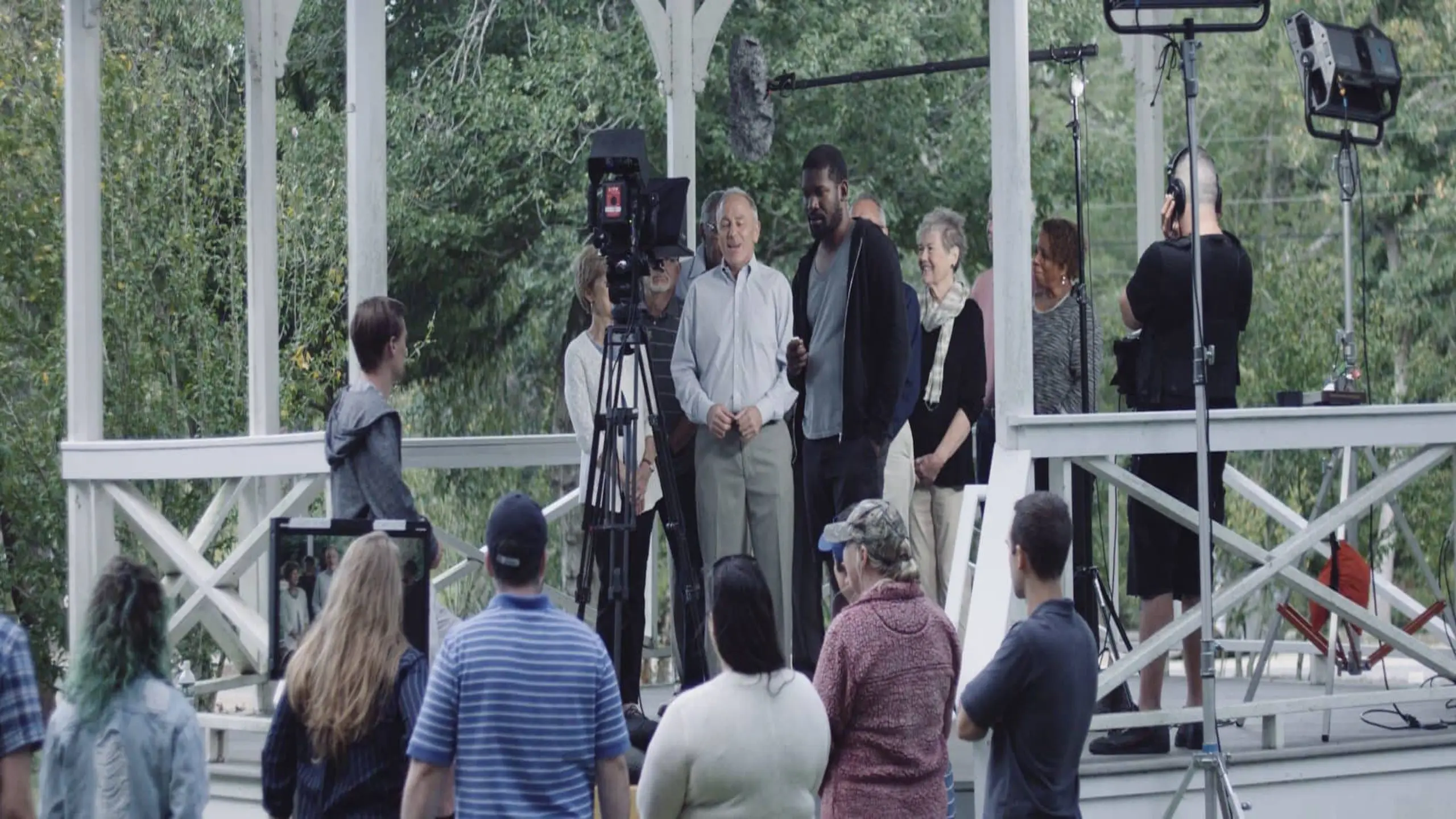
Video marketing has become a transformative force for nonprofit organizations. With its ability to engage, inform, and inspire, video marketing has shifted how nonprofits communicate their missions, connect with audiences, and drive action. By integrating [video production](https://c-istudios.com/video-production-services/), creative marketing, and branding strategies, nonprofits have amplified their impact significantly.
This article delves into how video marketing is transforming nonprofit organizations, showcasing strategies that have driven success and emphasizing the role of creative marketing in making missions visible and impactful.
## The Power of Storytelling in Nonprofit Video Marketing
At the heart of video marketing lies the power of storytelling, an essential element that drives engagement and connects emotionally with audiences. Nonprofits, regardless of their focus, often deal with complex and deeply human issues, making them ideal subjects for compelling video production.
For nonprofits, storytelling through video offers several advantages. Emotional engagement is one of the primary benefits, as video enables viewers to see and feel the impact of a nonprofit’s work. This approach makes the cause personal, fostering a deeper connection with the audience. When nonprofits create short documentary-style videos that highlight the journey of a beneficiary, the organization’s impact becomes more tangible and relatable.
Clarity of message is another key advantage. Unlike written content, video offers visual cues that simplify complex issues, helping viewers better understand the nonprofit's mission and activities. For example, statistical data presented through infographics in a video format can be more accessible and memorable than numbers alone. Additionally, videos can demonstrate real-life scenarios that showcase the organization’s efforts, such as footage of volunteers in action or beneficiaries expressing their gratitude.
Expanding reach is another benefit of video marketing for nonprofits. Videos can be distributed across various platforms, including social media, websites, email campaigns, and even [live streaming](https://c-istudios.com/video-audio-live-streaming/) events. This versatility ensures that nonprofits can engage with different segments of their audience, whether local supporters or global donors.
By harnessing the power of social media and SEO copywriting, nonprofits can make their video content more discoverable, thereby increasing their visibility and engagement.
## How Video Production Enhances Nonprofit Campaigns
The process of video production in nonprofits involves several critical steps that ensure the final product aligns with the organization's goals and message. Nonprofits often collaborate with professional [content creation](https://c-istudios.com/content-creation-services/) teams to produce high-quality videos that accurately reflect their mission and values. This collaboration often includes brainstorming sessions, scriptwriting, filming, and post-production activities like VFX compositing and animation to add special effects that make the video more engaging.
Nonprofits use a variety of video types to support their campaigns. Promotional videos serve to raise awareness about specific causes, providing a compelling narrative that explains why the cause is urgent and how people can help. Similarly, testimonial videos featuring beneficiaries or volunteers can be powerful tools for illustrating the real-world impact of the organization’s work.
Nonprofits have also found success in producing documentary [film production](https://c-istudios.com/film-and-tv-production/) videos, which allow for an in-depth exploration of issues and showcase the comprehensive efforts being made to address them.
Another growing trend in nonprofit video marketing is feature film mastering and delivery. Some organizations have ventured into creating feature-length documentaries or films that detail specific causes, showcasing their long-term impact and engaging a wider audience. These films not only generate awareness but also offer opportunities for fundraising, as screenings can be paired with donation drives or discussions.
## Leveraging Video for Fundraising Campaigns
Fundraising is a core function for most nonprofits, and video marketing has proven to be one of the most effective tools for driving donations. By combining emotional storytelling with clear calls to action, nonprofits can create videos that compel viewers to donate. For instance, a short video demonstrating the impact of a specific donation amount can encourage viewers to contribute more generously.
The use of [political campaign](https://c-istudios.com/political-campaign-services/) strategies in video marketing has also become popular among nonprofits, particularly those focused on advocacy and policy change. By adopting video techniques used in political campaigns, such as targeted messaging and persuasive content, nonprofits can mobilize supporters more effectively. Videos that highlight pressing issues and call for immediate action are more likely to inspire viewers to donate, sign petitions, or attend rallies.
Live-streaming fundraising events have also gained traction among nonprofits. Platforms like YouTube Live and Facebook Live allow organizations to host real-time fundraising events, showcasing activities such as marathons, auctions, or community events. By engaging with viewers directly, nonprofits can create a sense of urgency and encourage real-time donations. This approach is especially useful for nonprofits with limited budgets, as it allows them to reach a wider audience without significant investment in traditional media.
## The Role of Social Media and Creative Marketing in Video Campaigns
Social media has become a crucial component of nonprofit video marketing. Platforms like Facebook, Instagram, Twitter, and LinkedIn offer nonprofits the opportunity to share video content widely and engage with their audience on a personal level. With the integration of social media marketing strategies, nonprofits can ensure that their video content reaches the right audience and generates meaningful interactions. This approach involves not only creating engaging video content but also using targeted ads, hashtags, and strategic posting schedules to maximize reach and engagement.
Creative marketing is essential to make nonprofit video campaigns stand out. By collaborating with professionals in content creation, audio engineering, and [professional photography](https://c-istudios.com/professional-photography-services/), nonprofits can produce visually appealing videos that captivate viewers. Additionally, the use of animation can make videos more engaging, especially when trying to explain complex concepts or visualize abstract ideas related to the nonprofit’s work.
Nonprofits have also begun to explore the potential of web development to enhance their video campaigns. By integrating video into their websites, nonprofits can offer a more immersive experience for visitors.
For example, creating a dedicated video page or adding video testimonials to the homepage can make the site more interactive and encourage visitors to learn more about the organization’s work. Regular web maintenance ensures that the videos load quickly and remain accessible, contributing to a positive user experience.
## Video Marketing Gear and Technical Considerations for Nonprofits
Successful video marketing for nonprofits requires the right equipment and technical expertise. Nonprofits often need to invest in a basic video production gear list that includes cameras, microphones, lighting, and editing software. While professional-grade equipment can be costly, there are cost-effective alternatives that still deliver quality results. Many organizations have found success with smartphones, affordable cameras, and free editing software, demonstrating that impactful videos can be produced on a budget.
For nonprofits that aim to create high-quality video content regularly, it may be worthwhile to invest in professional [audio engineering](https://c-istudios.com/audio-engineering-services/) services. Clear audio is a crucial aspect of video production, as poor sound quality can detract from the message and reduce viewer engagement. Working with audio engineers ensures that the sound is crisp, clear, and aligned with the video’s visuals, creating a more polished final product.
## The Future of Video Marketing in the Nonprofit Sector
As technology continues to evolve, so too will video marketing strategies for nonprofits. Virtual reality (VR) and augmented reality (AR) are emerging as potential tools for nonprofits to create more immersive and interactive video experiences.
Imagine a VR video that allows donors to "walk" through a village that benefits from clean water projects, providing a firsthand look at the impact of their contributions. These technologies, though currently more expensive, are likely to become more accessible over time, offering new ways for nonprofits to engage their audience.
Moreover, the integration of web hosting and web maintenance services with video marketing efforts can enhance the overall digital strategy for nonprofits. Hosting videos directly on the organization’s website not only ensures a seamless user experience but also improves search engine rankings. Combined with effective [SEO copywriting](https://c-istudios.com/seo-copywriting-services/), video content can become a powerful driver of organic traffic, helping nonprofits reach a broader audience without relying solely on paid advertising.
Another area of growth for nonprofit video marketing is the development of content specifically tailored for television. While many nonprofits focus on digital platforms, pitching video content for TV show segments or even developing a [TV show pitch](https://c-istudios.com/tv-show-pitch/) that aligns with the organization’s mission can open up new avenues for awareness and funding.
## Measuring the Impact of Video Marketing for Nonprofits
One of the key advantages of video marketing is its measurable impact. For nonprofits, understanding this impact is critical for refining strategies and demonstrating results to stakeholders. Analytics tools on platforms like YouTube, Facebook, and Instagram provide data on viewer demographics, engagement rates, watch times, and more. By analyzing these metrics, nonprofits can determine which videos are most effective in achieving their goals, such as raising awareness, driving website traffic, or increasing donations.
For example, a nonprofit might use video analytics to identify which videos generate the most shares and comments, indicating a strong emotional connection with viewers. This insight helps organizations focus on creating similar content, ensuring consistency in messaging and engagement.
Measuring the conversion rates of call-to-action (CTA) prompts embedded in videos, like donation buttons or links to petition pages, can also reveal the effectiveness of specific campaigns. Tracking these metrics not only supports the optimization of video content but also aids in securing funding, as nonprofits can present data-backed results to donors and sponsors.
Moreover, incorporating [branding](https://c-istudios.com/branding-and-graphic-design-services/) into video content enhances the likelihood of sustained engagement. Videos that consistently reflect the organization’s visual identity, tone, and messaging foster stronger brand recognition and trust. As nonprofits build a library of branded video content, they create a cohesive narrative that reinforces their mission.
Additionally, as nonprofits continue to improve their video marketing strategies, incorporating elements like artist management, using well-known advocates or spokespeople in videos, can further elevate engagement and impact.
## Using Video Marketing for Advocacy and Policy Change
Beyond fundraising and awareness, video marketing has proven to be a powerful tool for advocacy and influencing policy change. By creating impactful advocacy videos, nonprofits can communicate urgent issues directly to policymakers, media outlets, and the public, encouraging swift action. Advocacy videos often feature compelling stories, interviews, and on-the-ground footage that illustrate the urgent need for policy change or increased support for a specific cause.
For instance, a nonprofit focused on environmental conservation might produce a video that showcases the devastating effects of deforestation in a specific region. By combining professional photography with video footage, the organization can craft a visual narrative that emphasizes the need for legislative action. The nonprofit could also create a TV show pitch or shorter video segments tailored for news media, increasing the chances of broader media coverage and public awareness.
In addition, leveraging video for advocacy campaigns requires a strategic approach to media marketing. Nonprofits must consider timing, audience targeting, and messaging consistency to ensure that their advocacy videos reach the right audience at the right time. For example, releasing advocacy videos during a legislative session or a relevant global event can enhance the chances of attracting policymakers' attention.
By integrating web development and web hosting strategies, nonprofits can create dedicated landing pages that host advocacy videos alongside petitions, policy briefs, and donation links, enabling viewers to take immediate action.
Nonprofits have also found success in incorporating [web maintenance](https://c-istudios.com/web-maintenance/) as part of their advocacy efforts. Keeping advocacy videos updated with the latest information, statistics, and developments ensures that the content remains relevant and continues to inspire action over time. This approach not only drives immediate impact but also builds long-term support for the nonprofit’s advocacy agenda.
## Conclusion
At C&I Studios, we believe that video marketing is more than just a tool; it's a catalyst for change. It allows us to communicate our mission, engage supporters, and make a real impact. We’ve seen firsthand how video can transform a nonprofit’s approach, from crafting emotional stories to driving advocacy campaigns. [Our work](https://c-istudios.com/our-work/) with nonprofits reflects our dedication to content creation, creative marketing, and innovative video solutions that amplify missions and resonate deeply with audiences.
If you’re interested in learning more, please explore our services to see what we offer. For a closer look at the stories we’ve told, visit our [portfolio](https://c-istudios.com/our-work/), where you’ll find examples of how we’ve brought various causes to life.
Ready to transform your nonprofit’s outreach with impactful video marketing? [Contact us](https://c-istudios.com/contact/) directly to discuss your vision and explore how we can collaborate. Together, we can use video as a force for good, creating meaningful change one frame at a time.
Video marketing has become a transformative force for nonprofit organizations. With its ability to engage, inform, and inspire, video marketing has shifted how nonprofits communicate their missions, connect with audiences, and drive action. By integrating video production, creative marketing, and branding strategies, nonprofits have amplified their impact significantly.
This article delves into how video marketing is transforming nonprofit organizations, showcasing strategies that have driven success and emphasizing the role of creative marketing in making missions visible and impactful.
## The Power of Storytelling in Nonprofit Video Marketing
At the heart of video marketing lies the power of storytelling, an essential element that drives engagement and connects emotionally with audiences. Nonprofits, regardless of their focus, often deal with complex and deeply human issues, making them ideal subjects for compelling video production.
For nonprofits, storytelling through video offers several advantages. Emotional engagement is one of the primary benefits, as video enables viewers to see and feel the impact of a nonprofit’s work. This approach makes the cause personal, fostering a deeper connection with the audience. When nonprofits create short documentary-style videos that highlight the journey of a beneficiary, the organization’s impact becomes more tangible and relatable.
Clarity of message is another key advantage. Unlike written content, video offers visual cues that simplify complex issues, helping viewers better understand the nonprofit's mission and activities. For example, statistical data presented through infographics in a video format can be more accessible and memorable than numbers alone. Additionally, videos can demonstrate real-life scenarios that showcase the organization’s efforts, such as footage of volunteers in action or beneficiaries expressing their gratitude.
Expanding reach is another benefit of video marketing for nonprofits. Videos can be distributed across various platforms, including social media, websites, email campaigns, and even [live streaming](https://c-istudios.com/video-audio-live-streaming/) events. This versatility ensures that nonprofits can engage with different segments of their audience, whether local supporters or global donors.
By harnessing the power of social media and SEO copywriting, nonprofits can make their video content more discoverable, thereby increasing their visibility and engagement.
## How Video Production Enhances Nonprofit Campaigns
The process of video production in nonprofits involves several critical steps that ensure the final product aligns with the organization's goals and message. Nonprofits often collaborate with professional [content creation](https://c-istudios.com/content-creation-services/) teams to produce high-quality videos that accurately reflect their mission and values. This collaboration often includes brainstorming sessions, scriptwriting, filming, and post-production activities like VFX compositing and animation to add special effects that make the video more engaging.
Nonprofits use a variety of video types to support their campaigns. Promotional videos serve to raise awareness about specific causes, providing a compelling narrative that explains why the cause is urgent and how people can help. Similarly, testimonial videos featuring beneficiaries or volunteers can be powerful tools for illustrating the real-world impact of the organization’s work.
Nonprofits have also found success in producing documentary film production videos, which allow for an in-depth exploration of issues and showcase the comprehensive efforts being made to address them.
Another growing trend in nonprofit video marketing is feature film mastering and delivery. Some organizations have ventured into creating feature-length documentaries or films that detail specific causes, showcasing their long-term impact and engaging a wider audience. These films not only generate awareness but also offer opportunities for fundraising, as screenings can be paired with donation drives or discussions.
## Leveraging Video for Fundraising Campaigns
Fundraising is a core function for most nonprofits, and video marketing has proven to be one of the most effective tools for driving donations. By combining emotional storytelling with clear calls to action, nonprofits can create videos that compel viewers to donate. For instance, a short video demonstrating the impact of a specific donation amount can encourage viewers to contribute more generously.
The use of [political campaign](https://c-istudios.com/political-campaign-services/) strategies in video marketing has also become popular among nonprofits, particularly those focused on advocacy and policy change. By adopting video techniques used in political campaigns, such as targeted messaging and persuasive content, nonprofits can mobilize supporters more effectively. Videos that highlight pressing issues and call for immediate action are more likely to inspire viewers to donate, sign petitions, or attend rallies.
Live-streaming fundraising events have also gained traction among nonprofits. Platforms like YouTube Live and Facebook Live allow organizations to host real-time fundraising events, showcasing activities such as marathons, auctions, or community events. By engaging with viewers directly, nonprofits can create a sense of urgency and encourage real-time donations. This approach is especially useful for nonprofits with limited budgets, as it allows them to reach a wider audience without significant investment in traditional media.
## The Role of Social Media and Creative Marketing in Video Campaigns
Social media has become a crucial component of nonprofit video marketing. Platforms like Facebook, Instagram, Twitter, and LinkedIn offer nonprofits the opportunity to share video content widely and engage with their audience on a personal level. With the integration of social media marketing strategies, nonprofits can ensure that their video content reaches the right audience and generates meaningful interactions. This approach involves not only creating engaging video content but also using targeted ads, hashtags, and strategic posting schedules to maximize reach and engagement.
Creative marketing is essential to make nonprofit video campaigns stand out. By collaborating with professionals in content creation, audio engineering, and [professional photography](https://c-istudios.com/professional-photography-services/), nonprofits can produce visually appealing videos that captivate viewers. Additionally, the use of animation can make videos more engaging, especially when trying to explain complex concepts or visualize abstract ideas related to the nonprofit’s work.
Nonprofits have also begun to explore the potential of web development to enhance their video campaigns. By integrating video into their websites, nonprofits can offer a more immersive experience for visitors.
For example, creating a dedicated video page or adding video testimonials to the homepage can make the site more interactive and encourage visitors to learn more about the organization’s work. Regular web maintenance ensures that the videos load quickly and remain accessible, contributing to a positive user experience.
## Video Marketing Gear and Technical Considerations for Nonprofits
Successful video marketing for nonprofits requires the right equipment and technical expertise. Nonprofits often need to invest in a basic video production gear list that includes cameras, microphones, lighting, and editing software. While professional-grade equipment can be costly, there are cost-effective alternatives that still deliver quality results. Many organizations have found success with smartphones, affordable cameras, and free editing software, demonstrating that impactful videos can be produced on a budget.
For nonprofits that aim to create high-quality video content regularly, it may be worthwhile to invest in professional [audio engineering](https://c-istudios.com/audio-engineering-services/) services. Clear audio is a crucial aspect of video production, as poor sound quality can detract from the message and reduce viewer engagement. Working with audio engineers ensures that the sound is crisp, clear, and aligned with the video’s visuals, creating a more polished final product.
## The Future of Video Marketing in the Nonprofit Sector
As technology continues to evolve, so too will video marketing strategies for nonprofits. Virtual reality (VR) and augmented reality (AR) are emerging as potential tools for nonprofits to create more immersive and interactive video experiences.
Imagine a VR video that allows donors to "walk" through a village that benefits from clean water projects, providing a firsthand look at the impact of their contributions. These technologies, though currently more expensive, are likely to become more accessible over time, offering new ways for nonprofits to engage their audience.
Moreover, the integration of web hosting and web maintenance services with video marketing efforts can enhance the overall digital strategy for nonprofits. Hosting videos directly on the organization’s website not only ensures a seamless user experience but also improves search engine rankings. Combined with effective [SEO copywriting](https://c-istudios.com/seo-copywriting-services/), video content can become a powerful driver of organic traffic, helping nonprofits reach a broader audience without relying solely on paid advertising.
Another area of growth for nonprofit video marketing is the development of content specifically tailored for television. While many nonprofits focus on digital platforms, pitching video content for TV show segments or even developing a [TV show pitch](https://c-istudios.com/tv-show-pitch/) that aligns with the organization’s mission can open up new avenues for awareness and funding.
## Measuring the Impact of Video Marketing for Nonprofits
One of the key advantages of video marketing is its measurable impact. For nonprofits, understanding this impact is critical for refining strategies and demonstrating results to stakeholders. Analytics tools on platforms like YouTube, Facebook, and Instagram provide data on viewer demographics, engagement rates, watch times, and more. By analyzing these metrics, nonprofits can determine which videos are most effective in achieving their goals, such as raising awareness, driving website traffic, or increasing donations.
For example, a nonprofit might use video analytics to identify which videos generate the most shares and comments, indicating a strong emotional connection with viewers. This insight helps organizations focus on creating similar content, ensuring consistency in messaging and engagement.
Measuring the conversion rates of call-to-action (CTA) prompts embedded in videos, like donation buttons or links to petition pages, can also reveal the effectiveness of specific campaigns. Tracking these metrics not only supports the optimization of video content but also aids in securing funding, as nonprofits can present data-backed results to donors and sponsors.
Moreover, incorporating [branding](https://c-istudios.com/branding-and-graphic-design-services/) into video content enhances the likelihood of sustained engagement. Videos that consistently reflect the organization’s visual identity, tone, and messaging foster stronger brand recognition and trust. As nonprofits build a library of branded video content, they create a cohesive narrative that reinforces their mission.
Additionally, as nonprofits continue to improve their video marketing strategies, incorporating elements like artist management, using well-known advocates or spokespeople in videos, can further elevate engagement and impact.
## Using Video Marketing for Advocacy and Policy Change
Beyond fundraising and awareness, video marketing has proven to be a powerful tool for advocacy and influencing policy change. By creating impactful advocacy videos, nonprofits can communicate urgent issues directly to policymakers, media outlets, and the public, encouraging swift action. Advocacy videos often feature compelling stories, interviews, and on-the-ground footage that illustrate the urgent need for policy change or increased support for a specific cause.
For instance, a nonprofit focused on environmental conservation might produce a video that showcases the devastating effects of deforestation in a specific region. By combining professional photography with video footage, the organization can craft a visual narrative that emphasizes the need for legislative action. The nonprofit could also create a TV show pitch or shorter video segments tailored for news media, increasing the chances of broader media coverage and public awareness.
In addition, leveraging video for advocacy campaigns requires a strategic approach to media marketing. Nonprofits must consider timing, audience targeting, and messaging consistency to ensure that their advocacy videos reach the right audience at the right time. For example, releasing advocacy videos during a legislative session or a relevant global event can enhance the chances of attracting policymakers' attention.
By integrating web development and web hosting strategies, nonprofits can create dedicated landing pages that host advocacy videos alongside petitions, policy briefs, and donation links, enabling viewers to take immediate action.
Nonprofits have also found success in incorporating [web maintenance](https://c-istudios.com/web-maintenance/) as part of their advocacy efforts. Keeping advocacy videos updated with the latest information, statistics, and developments ensures that the content remains relevant and continues to inspire action over time. This approach not only drives immediate impact but also builds long-term support for the nonprofit’s advocacy agenda.
## Conclusion
At C&I Studios, we believe that video marketing is more than just a tool; it's a catalyst for change. It allows us to communicate our mission, engage supporters, and make a real impact. We’ve seen firsthand how video can transform a nonprofit’s approach, from crafting emotional stories to driving advocacy campaigns. Our work with nonprofits reflects our dedication to content creation, creative marketing, and innovative video solutions that amplify missions and resonate deeply with audiences.
If you’re interested in learning more, please explore our services to see what we offer. For a closer look at the stories we’ve told, visit our [portfolio](https://c-istudios.com/our-work/), where you’ll find examples of how we’ve brought various causes to life.
Ready to transform your nonprofit’s outreach with impactful video marketing? [Contact us](https://c-istudios.com/contact/) directly to discuss your vision and explore how we can collaborate. Together, we can use video as a force for good, creating meaningful change one frame at a time.
## Work with C&I Studios
If you are planning a project like this, our team can take it from concept to final delivery. Explore our [video production services](https://c-istudios.com/video-production-services/), browse [our work](https://c-istudios.com/our-work/) to see how we tell brand stories, and [get in touch](https://c-istudios.com/contact/) when you are ready to start.
Originally published October 30, 2024
---
*This content is from [C&I Studios](https://c-istudios.com), a full-service production company.*
---
# Retail Revolution: How Video Marketing Drives Sales in Every Niche
> Published: October 28, 2024
> Categories: Commercial & Brand
> Source: https://c-istudios.com/retail-revolution-how-video-marketing-drives-sales-in-every-niche/
---
.cib{--paper:#1b1d1f;--ink:#fff;--body:#d5d7d9;--muted:#8b9096;--line:rgba(255,255,255,.12);--thumb:#2b2e31;--card:#212426;--accent:#c02b0a;--blue:#5B8FA8;--serif:'Playfair Display',Georgia,serif;--sans:'Poppins',-apple-system,sans-serif;--measure:900px;background:var(--paper);color:var(--body);font-family:var(--sans);line-height:1.6;position:relative;left:50%;transform:translateX(-50%);width:90vw;max-width:1920px}
.cib *{box-sizing:border-box}
.cib .kicker{max-width:var(--measure);margin:58px auto 0;padding:0 22px;font-size:12.5px;font-weight:700;letter-spacing:2.5px;text-transform:uppercase;color:var(--blue)}
.cib h1.cibh1{text-wrap:balance;font-family:var(--serif);font-weight:500;font-size:clamp(46px,6vw,72px);line-height:1.08;color:var(--ink);max-width:var(--measure);margin:18px auto 0;padding:0 22px;letter-spacing:-.5px}
.cib .metarow{max-width:var(--measure);margin:20px auto 0;padding:0 22px;color:var(--muted);font-size:14px}
.cib .hero{position:relative;width:100%;height:0;padding-bottom:56.25%;overflow:hidden;margin:48px auto 0;border-top:1px solid var(--line);border-bottom:1px solid var(--line)}
.cib .hero .ph{width:100%;aspect-ratio:16/9;background:var(--thumb);border-top:1px solid var(--line);border-bottom:1px solid var(--line);display:flex;align-items:center;justify-content:center;color:#7d8288;font-size:13px;text-align:center;padding:0 20px}
.cib .body{max-width:var(--measure);margin:12px auto 0;padding:52px 22px 6px}
.cib .body.lead p:first-child{font-size:23px;line-height:1.62;color:var(--ink)}
.cib .body p{font-size:18.5px;line-height:1.85;margin:0 0 30px;color:var(--body)}
.cib .body h2{text-wrap:balance;font-family:var(--serif);font-weight:500;font-size:clamp(32px,4vw,48px);line-height:1.22;color:var(--ink);margin:70px 0 20px;letter-spacing:-.3px}
.cib .body h3{text-wrap:balance;font-family:var(--sans);font-weight:600;font-size:22px;color:var(--ink);margin:38px 0 8px}
.cib .body a{color:var(--ink);text-decoration:underline;text-decoration-color:rgba(255,255,255,.4);text-underline-offset:3px}
.cib .body a:hover{text-decoration-color:var(--ink)}
.cib .ctable{width:100%;border-collapse:collapse;margin:16px 0 30px;font-size:16px}
.cib .ctable th{background:#000;color:#fff;text-align:left;padding:10px 12px;font-family:var(--sans)}
.cib .ctable td{padding:10px 12px;border-bottom:1px solid var(--line);color:var(--body)}
.cib .inimg{position:relative;width:100%;height:0;padding-bottom:56.25%;overflow:hidden;margin:72px auto;border-top:1px solid var(--line);border-bottom:1px solid var(--line)}
.cib .inimg .ph{width:100%;aspect-ratio:16/9;background:var(--thumb);border-top:1px solid var(--line);border-bottom:1px solid var(--line);display:flex;align-items:center;justify-content:center;color:#7d8288;font-size:13px}
.cib .origpub{max-width:var(--measure);margin:60px auto 0;padding:26px 22px 0;border-top:1px solid var(--line);color:var(--muted);font-size:13.5px}
.cib .related{max-width:1200px;margin:64px auto 0;padding:34px 22px 76px}
.cib .related h3{font-family:var(--sans);font-size:12.5px;letter-spacing:2px;text-transform:uppercase;color:var(--ink);margin:0 0 24px}
.cib .grid{display:grid;grid-template-columns:repeat(3,1fr);gap:28px}
.cib .rc{background:var(--card);border:1px solid var(--line);display:block;text-decoration:none;color:inherit;transition:border-color .15s}
.cib a.rc:hover{border-color:rgba(255,255,255,.5)}
.cib .rc .thumb{position:relative;width:100%;height:0;padding-bottom:56.25%;background:var(--thumb);overflow:hidden}
.cib .rc .thumb img{position:absolute!important;top:0!important;left:0!important;width:100%!important;height:100%!important;object-fit:cover!important;margin:0!important}
.cib .rc .cc{padding:14px 15px 17px}
.cib .rc .rt{font-family:var(--serif);font-weight:500;font-size:16px;line-height:1.3;color:var(--ink);margin:0 0 6px}
.cib .rc .rm{font-size:11px;letter-spacing:1px;text-transform:uppercase;color:var(--muted)}
.cib img{margin:0!important;padding:0!important;display:block!important;vertical-align:top;max-width:100%}
.cib .hero img,.cib .inimg img{position:absolute!important;top:0!important;left:0!important;width:100%!important;height:100%!important;object-fit:cover!important;margin:0!important;padding:0!important;border:0!important;display:block!important;aspect-ratio:auto!important}
.cib .hero+.body{padding-top:36px}
@media(max-width:760px){.cib .grid{grid-template-columns:1fr}.cib .body h2{margin:52px 0 16px}.cib .body p{font-size:17.5px}.cib .inimg,.cib .hero{margin-top:44px}}
.cib .vembed{max-width:var(--measure);margin:44px auto;padding:0 22px}.cib .vembed .vwrap{position:relative;width:100%;height:0;padding-bottom:56.25%}.cib .vembed .vwrap iframe{position:absolute;top:0;left:0;width:100%;height:100%;border:0}
Commercial & Brand
# Retail Revolution. How Video Marketing Drives Sales in Every Niche
21 min read
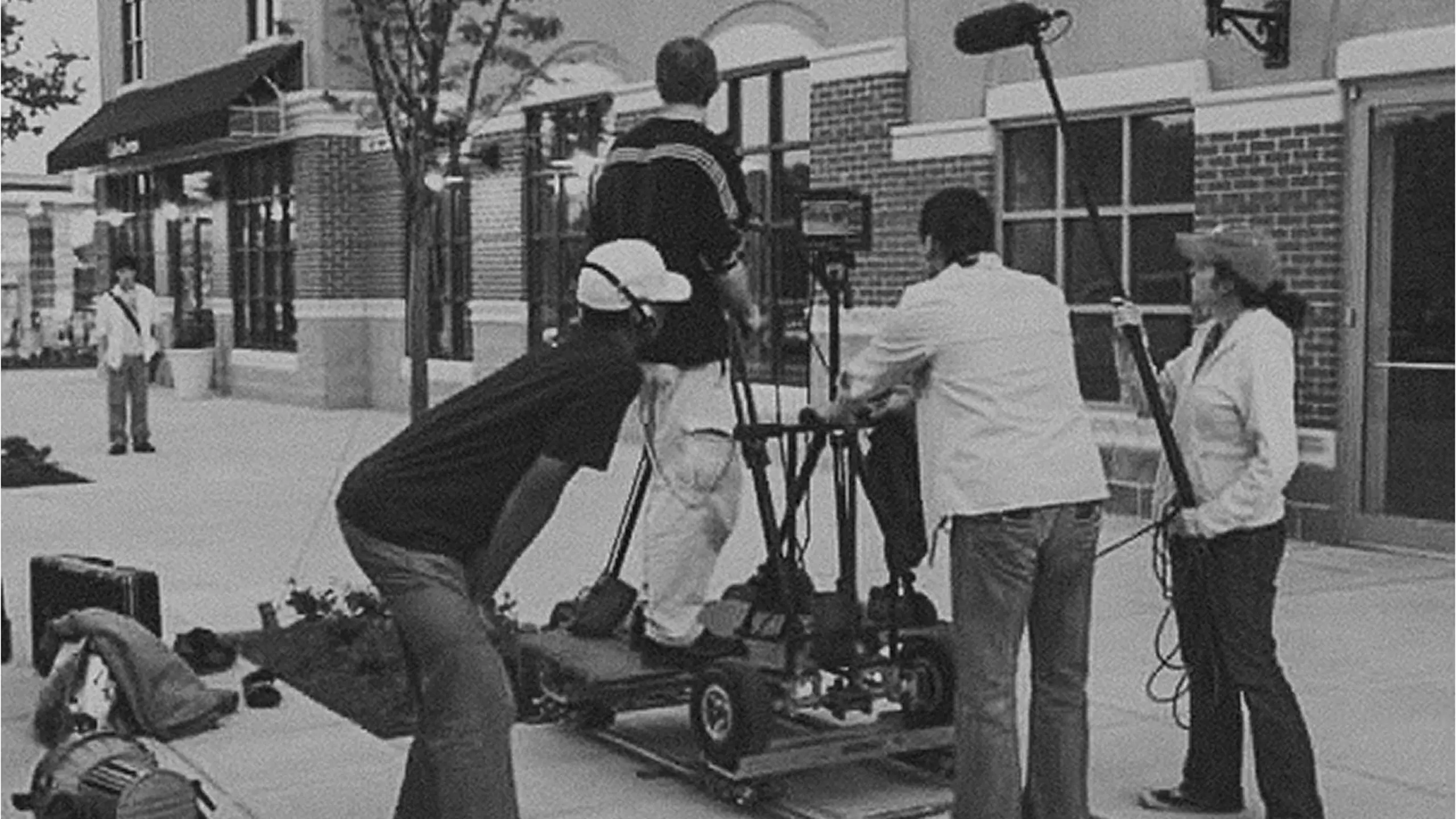
Video marketing is transforming the retail industry, creating a revolution across diverse niches. As digital consumption grows, video has emerged as a crucial element in marketing strategies, helping brands connect with audiences more effectively than ever before. It offers a dynamic and engaging medium that not only attracts attention but also sustains interest through storytelling, visuals, and interactivity.
In today’s competitive market, video marketing goes beyond traditional advertisements. It drives sales by showcasing products in action, sharing customer experiences, and providing how-to guides, all of which encourage viewers to make informed purchase decisions. Additionally, video content enhances brand visibility by capturing audiences on popular platforms like YouTube, Instagram, and TikTok, which thrive on video-based interactions.
The integration of video marketing in retail campaigns is not just about boosting sales; it's also about building a recognizable and trusted brand identity. By enabling brands to communicate their values and connect emotionally with customers, video marketing is proving to be an indispensable tool in the evolving retail landscape. As more retailers adopt this strategy, the revolution in video-driven sales continues to gain momentum.
## The Importance of Video Marketing in Retail
In the retail industry, video marketing has evolved from a trendy marketing tactic to a must-have strategy that significantly influences consumer behavior and loyalty. With its compelling blend of visuals, sound, and storytelling, video captures attention quickly and retains it longer than other content forms.
In today’s digital age, customers are bombarded with information, making it crucial for brands to present messages that resonate instantly. Videos excel in this aspect, providing an immersive experience that simplifies complex information and presents products in an appealing way.
One of the major reasons video marketing has become vital in retail is its role in building brand loyalty. Customers often connect emotionally with brands that tell stories aligning with their values, and video is the ideal medium for creating these stories. For example, a behind-the-scenes video of a product’s development process can make customers feel more connected to the brand, fostering trust and repeat purchases.
Moreover, video’s psychological appeal is well-documented. Studies indicate that consumers are more likely to recall video content than text-based content. The visual and auditory elements engage multiple senses, making it easier to influence buying decisions. Brands that utilize [social media marketing services](https://c-istudios.com/social-media-marketing-services/) can amplify the reach of their video campaigns across platforms like Instagram and TikTok, where short, engaging videos thrive.
Creative marketing in video is also essential. By incorporating compelling visuals, high-quality graphics, and branding and graphic design, retailers can create memorable impressions. Videos that are professionally crafted convey credibility, making them more persuasive in guiding customer choices. In an era where authenticity matters, video content helps bridge the gap between brands and consumers, making it a cornerstone of modern retail strategies.
## Leveraging Video for Different Retail Niches
Video marketing is versatile, making it suitable for various retail niches, from e-commerce and luxury goods to food and fashion. Each segment can utilize video in unique ways to enhance engagement and boost sales.
For e-commerce, product demonstration videos allow potential buyers to see products in action, improving purchase confidence. Similarly, unboxing videos have become extremely popular, especially for beauty and tech products, as they build excitement and provide a tangible sense of the product's value.
Luxury brands can use video marketing to emphasize exclusivity and high-quality craftsmanship. Techniques like [feature film mastering and delivery](https://c-istudios.com/feature-film-mastering-and-delivery/) are employed to present luxury goods in a cinematic, high-resolution format that resonates with discerning audiences. The fashion industry, on the other hand, can benefit from professional photography integrated into video campaigns, such as lookbooks and runway footage, to showcase collections dynamically.
Retailers in the food sector can use recipe videos or behind-the-scenes footage of chefs preparing dishes to create a sense of authenticity and trust. For businesses focused on the arts, artist management and media creation through video can highlight talent while emphasizing the creative process. Meanwhile, service-based retail niches like real estate, beauty salons, or wellness centers can use customer testimonial videos to build credibility.
Tailoring video strategies to align with the needs of different segments not only enhances relevance but also boosts conversion rates. By customizing content for specific audiences and platforms, brands can maximize the impact of their video marketing efforts. As more retailers embrace video, the need for niche-specific approaches becomes even more critical in maintaining competitiveness and driving sales.
## Video Content Types That Drive Sales
Different types of video content play pivotal roles in driving sales across the retail industry, thanks to their ability to inform, engage, and convert potential customers. Among these, explainer videos are highly effective. They break down product features, benefits, and usage in a straightforward, digestible format.
By simplifying complex concepts, explainer videos enhance understanding and help potential customers make informed decisions. This content type is particularly useful for tech, health, and financial retail products.
Tutorials are another valuable video format that offers step-by-step guidance on how to use products or services. By demonstrating utility in real-life scenarios, tutorials not only educate customers but also foster confidence, making viewers more likely to proceed with purchases. For instance, beauty brands leverage tutorials to show makeup application techniques, which has become a key driver of sales in the cosmetics sector.
Live streaming is emerging as a powerful tool in retail video marketing. Real-time interaction allows brands to showcase products directly while engaging viewers with Q&A sessions, exclusive discounts, and live demos. The authenticity of [audio live streaming](https://c-istudios.com/video-audio-live-streaming/) enhances trust, while the immediacy of live broadcasts creates a sense of urgency, leading to impulse purchases.
User-generated content (UGC) is another impactful video type. Customers sharing their experiences with products creates social proof, which is influential in driving sales. UGC comes across as more genuine and relatable than brand-generated content, making it a valuable addition to any retail strategy. Retailers often encourage customers to submit their videos by running contests or creating branded hashtags, leading to higher engagement and brand loyalty.
Interactive videos enhance viewer engagement by allowing users to participate through clickable elements, decision-based paths, and embedded quizzes. This interaction not only boosts interest but also guides users down the sales funnel. For brands focusing on entertainment or educational content, VFX compositing and animation add an extra layer of appeal, making videos more visually captivating.
Short video formats, such as reels and stories, are popular on social media platforms like Instagram and TikTok. These short, snappy videos work well for promoting flash sales, new arrivals, and time-sensitive offers. Their brevity keeps viewers engaged while delivering impactful messages quickly, driving sales effectively.
## Video Marketing Platforms. Choosing the Right One
Choosing the right platform is essential for maximizing the effectiveness of video marketing strategies. Each platform offers unique features, audience demographics, and content preferences, making it vital to tailor your strategy accordingly.
YouTube is one of the leading platforms for retail video marketing, offering vast reach and a variety of video formats, from explainer videos to tutorials and product reviews. With its search-driven nature, YouTube also supports SEO efforts, making it ideal for long-form content like product demos and TV show pitches.
Instagram is well-suited for short-form content like reels and stories. Its visual-centric approach makes it perfect for lifestyle brands, fashion, and beauty, enabling brands to showcase their products through captivating visuals.
Retailers can also use Instagram for live streaming and interactive videos, making it a versatile platform. Videos on Instagram are most effective when they leverage strong [branding and graphic design](https://c-istudios.com/branding-and-graphic-design-services/) elements, making them visually appealing.
TikTok is rapidly gaining traction in retail marketing due to its massive user base and engagement rates. The platform’s algorithm favors engaging and trendy content, making it ideal for promoting products through challenges, UGC, and creative content formats. Retailers targeting Gen Z audiences often focus on catchy, quick, and interactive videos on TikTok to drive conversions. To succeed on TikTok, brands need a solid [video production](https://c-istudios.com/video-production-services/) gear list to ensure high-quality content.
Facebook remains a crucial platform for video marketing, particularly for older demographics. It supports a range of video formats, from live streaming to long-form videos and interactive elements.
Facebook's extensive analytics tools also help brands measure video performance and adjust strategies effectively. For brands focusing on customer interaction and feedback, Facebook can be leveraged for community engagement and customer service videos.
Incorporating tailored strategies for each platform ensures the videos align with audience behaviors, thereby enhancing engagement and driving sales. Effective video marketing requires not only strong web development skills to optimize content for different platforms but also consistent tracking and refining of video strategies to ensure they meet marketing goals.
## SEO Optimization for Video Content
Video SEO is vital for increasing the visibility of video content, making it easier for audiences to discover and engage with. Effective SEO practices ensure that video content ranks higher on search engines, thereby driving organic traffic and boosting conversion rates.
One of the primary strategies for optimizing video content is incorporating keyword-rich titles. Titles that accurately reflect the video’s content and include relevant keywords can improve click-through rates and rankings on platforms like YouTube and Google.
Another essential strategy is adding video transcripts. Transcripts provide search engines with text-based content to index, increasing the chances of a video appearing in search results.
They also enhance accessibility, ensuring that content reaches a broader audience, including those with hearing impairments. Optimized descriptions are equally important. Writing compelling video descriptions that include targeted keywords helps search engines understand the video’s context, further enhancing its discoverability.
Data analytics plays a critical role in refining video SEO. By analyzing metrics like watch time, bounce rates, and click-through rates, marketers can identify which elements of their videos are performing well and which need improvement. This information can then be used to adjust SEO strategies, such as modifying keywords, enhancing video thumbnails, or experimenting with different call-to-action phrases to increase engagement.
Strong [SEO copywriting](https://c-istudios.com/seo-copywriting-services/) can further optimize video landing pages, integrating relevant keywords naturally while ensuring high-quality content. Additionally, technical aspects like web hosting and web maintenance are crucial.
Fast, reliable hosting improves page load speed, while regular maintenance ensures that embedded videos function correctly across devices and browsers. Together, these practices contribute to better rankings and increased audience retention, making video SEO a powerful tool for boosting brand visibility and sales.
## How Video Builds Customer Trust and Brand Loyalty
Video marketing is a potent tool for building brand trust and fostering customer loyalty. Through authentic storytelling, brands can communicate their values, mission, and culture in ways that resonate emotionally with viewers. Videos that share genuine stories about the brand’s origins, team members, or product development processes help humanize the brand, making it more relatable and trustworthy.
Transparency in video content also contributes to trust-building. Behind-the-scenes videos, for instance, provide an inside look at the brand's operations, showcasing its commitment to quality and ethical practices. By giving customers a glimpse of the real people behind the brand, these videos create a stronger emotional connection, encouraging repeat purchases.
Personalized videos enhance customer experience by catering to individual preferences and needs. For example, sending a personalized thank-you video after a purchase or a custom product recommendation video can make customers feel valued. This personal touch not only strengthens the customer-brand relationship but also increases the likelihood of repeat purchases.
Customer testimonials are another powerful video format for building trust. When potential customers see real people sharing positive experiences, it establishes social proof, which is a significant driver of purchasing decisions. Incorporating testimonials into [social media marketing services](https://c-istudios.com/social-media-marketing-services/) campaigns extends the reach of this authentic content, encouraging broader engagement and fostering loyalty.
Content creation for videos must focus on delivering value to the customer, whether through educational tips, helpful how-to guides, or inspiring stories. Consistent video communication through platforms like YouTube and Instagram reinforces brand identity, keeping it top-of-mind and cultivating long-term loyalty.
Effective use of media marketing in video campaigns not only builds trust but also drives advocacy, as loyal customers are more likely to share compelling video content within their networks. In this way, video becomes a catalyst not just for customer retention but also for expanding brand reach through word-of-mouth marketing.
## Measuring the Impact of Video Marketing in Retail
To gauge the effectiveness of video marketing in retail, several key metrics are essential. Click-through rates (CTR) indicate how well video thumbnails and titles are attracting viewers, while engagement rates, measured by likes, shares, and comments, reflect the level of audience interaction.
Conversion rates determine how many viewers take desired actions, such as making a purchase or signing up for a newsletter, providing direct insight into sales impact. Return on investment (ROI) is the ultimate indicator of a campaign’s financial success, comparing total revenue generated to the cost of production and promotion.
Tracking tools like Google Analytics, YouTube Analytics, and social media platform insights help analyze video performance. They provide data on audience demographics, average watch duration, and viewer drop-off points.
This allows marketers to adjust video strategies for better results. Incorporating [creative marketing](https://c-istudios.com/creative-marketing-services/) tactics, such as A/B testing video formats and styles, can further optimize campaigns.
Web development tools help ensure videos are accessible and load quickly, while audio engineering enhances sound quality, making videos more engaging and professional. Together, these tools and metrics form a comprehensive approach to measuring and refining the impact of video marketing in retail.
## The Importance of Video Marketing in Retail
In the retail industry, video marketing has evolved from a trendy marketing tactic to a must-have strategy that significantly influences consumer behavior and loyalty. With its compelling blend of visuals, sound, and storytelling, video captures attention quickly and retains it longer than other content forms.
In today’s digital age, customers are bombarded with information, making it crucial for brands to present messages that resonate instantly. Videos excel in this aspect, providing an immersive experience that simplifies complex information and presents products in an appealing way.
One of the major reasons video marketing has become vital in retail is its role in building brand loyalty. Customers often connect emotionally with brands that tell stories aligning with their values, and video is the ideal medium for creating these stories. For example, a behind-the-scenes video of a product’s development process can make customers feel more connected to the brand, fostering trust and repeat purchases.
Moreover, video’s psychological appeal is well-documented. Studies indicate that consumers are more likely to recall video content than text-based content. The visual and auditory elements engage multiple senses, making it easier to influence buying decisions. Brands that utilize [social media marketing services](https://c-istudios.com/social-media-marketing-services/) can amplify the reach of their video campaigns across platforms like Instagram and TikTok, where short, engaging videos thrive.
Creative marketing in video is also essential. By incorporating compelling visuals, high-quality graphics, and branding and graphic design, retailers can create memorable impressions. Videos that are professionally crafted convey credibility, making them more persuasive in guiding customer choices. In an era where authenticity matters, video content helps bridge the gap between brands and consumers, making it a cornerstone of modern retail strategies.
## Leveraging Video for Different Retail Niches
Video marketing is versatile, making it suitable for various retail niches, from e-commerce and luxury goods to food and fashion. Each segment can utilize video in unique ways to enhance engagement and boost sales.
For e-commerce, product demonstration videos allow potential buyers to see products in action, improving purchase confidence. Similarly, unboxing videos have become extremely popular, especially for beauty and tech products, as they build excitement and provide a tangible sense of the product's value.
Luxury brands can use video marketing to emphasize exclusivity and high-quality craftsmanship. Techniques like [feature film mastering and delivery](https://c-istudios.com/feature-film-mastering-and-delivery/) are employed to present luxury goods in a cinematic, high-resolution format that resonates with discerning audiences. The fashion industry, on the other hand, can benefit from professional photography integrated into video campaigns, such as lookbooks and runway footage, to showcase collections dynamically.
Retailers in the food sector can use recipe videos or behind-the-scenes footage of chefs preparing dishes to create a sense of authenticity and trust. For businesses focused on the arts, artist management and media creation through video can highlight talent while emphasizing the creative process. Meanwhile, service-based retail niches like real estate, beauty salons, or wellness centers can use customer testimonial videos to build credibility.
Tailoring video strategies to align with the needs of different segments not only enhances relevance but also boosts conversion rates. By customizing content for specific audiences and platforms, brands can maximize the impact of their video marketing efforts. As more retailers embrace video, the need for niche-specific approaches becomes even more critical in maintaining competitiveness and driving sales.
## Video Content Types That Drive Sales
Different types of video content play pivotal roles in driving sales across the retail industry, thanks to their ability to inform, engage, and convert potential customers. Among these, explainer videos are highly effective. They break down product features, benefits, and usage in a straightforward, digestible format.
By simplifying complex concepts, explainer videos enhance understanding and help potential customers make informed decisions. This content type is particularly useful for tech, health, and financial retail products.
Tutorials are another valuable video format that offers step-by-step guidance on how to use products or services. By demonstrating utility in real-life scenarios, tutorials not only educate customers but also foster confidence, making viewers more likely to proceed with purchases. For instance, beauty brands leverage tutorials to show makeup application techniques, which has become a key driver of sales in the cosmetics sector.
Live streaming is emerging as a powerful tool in retail video marketing. Real-time interaction allows brands to showcase products directly while engaging viewers with Q&A sessions, exclusive discounts, and live demos. The authenticity of [audio live streaming](https://c-istudios.com/video-audio-live-streaming/) enhances trust, while the immediacy of live broadcasts creates a sense of urgency, leading to impulse purchases.
User-generated content (UGC) is another impactful video type. Customers sharing their experiences with products creates social proof, which is influential in driving sales. UGC comes across as more genuine and relatable than brand-generated content, making it a valuable addition to any retail strategy. Retailers often encourage customers to submit their videos by running contests or creating branded hashtags, leading to higher engagement and brand loyalty.
Interactive videos enhance viewer engagement by allowing users to participate through clickable elements, decision-based paths, and embedded quizzes. This interaction not only boosts interest but also guides users down the sales funnel. For brands focusing on entertainment or educational content, VFX compositing and animation add an extra layer of appeal, making videos more visually captivating.
Short video formats, such as reels and stories, are popular on social media platforms like Instagram and TikTok. These short, snappy videos work well for promoting flash sales, new arrivals, and time-sensitive offers. Their brevity keeps viewers engaged while delivering impactful messages quickly, driving sales effectively.
## Video Marketing Platforms. Choosing the Right One
Choosing the right platform is essential for maximizing the effectiveness of video marketing strategies. Each platform offers unique features, audience demographics, and content preferences, making it vital to tailor your strategy accordingly.
YouTube is one of the leading platforms for retail video marketing, offering vast reach and a variety of video formats, from explainer videos to tutorials and product reviews. With its search-driven nature, YouTube also supports SEO efforts, making it ideal for long-form content like product demos and TV show pitches.
Instagram is well-suited for short-form content like reels and stories. Its visual-centric approach makes it perfect for lifestyle brands, fashion, and beauty, enabling brands to showcase their products through captivating visuals.
Retailers can also use Instagram for live streaming and interactive videos, making it a versatile platform. Videos on Instagram are most effective when they leverage strong [branding and graphic design](https://c-istudios.com/branding-and-graphic-design-services/) elements, making them visually appealing.
TikTok is rapidly gaining traction in retail marketing due to its massive user base and engagement rates. The platform’s algorithm favors engaging and trendy content, making it ideal for promoting products through challenges, UGC, and creative content formats. Retailers targeting Gen Z audiences often focus on catchy, quick, and interactive videos on TikTok to drive conversions. To succeed on TikTok, brands need a solid video production gear list to ensure high-quality content.
Facebook remains a crucial platform for video marketing, particularly for older demographics. It supports a range of video formats, from live streaming to long-form videos and interactive elements.
Facebook's extensive analytics tools also help brands measure video performance and adjust strategies effectively. For brands focusing on customer interaction and feedback, Facebook can be leveraged for community engagement and customer service videos.
Incorporating tailored strategies for each platform ensures the videos align with audience behaviors, thereby enhancing engagement and driving sales. Effective video marketing requires not only strong web development skills to optimize content for different platforms but also consistent tracking and refining of video strategies to ensure they meet marketing goals.
## SEO Optimization for Video Content
Video SEO is vital for increasing the visibility of video content, making it easier for audiences to discover and engage with. Effective SEO practices ensure that video content ranks higher on search engines, thereby driving organic traffic and boosting conversion rates.
One of the primary strategies for optimizing video content is incorporating keyword-rich titles. Titles that accurately reflect the video’s content and include relevant keywords can improve click-through rates and rankings on platforms like YouTube and Google.
Another essential strategy is adding video transcripts. Transcripts provide search engines with text-based content to index, increasing the chances of a video appearing in search results.
They also enhance accessibility, ensuring that content reaches a broader audience, including those with hearing impairments. Optimized descriptions are equally important. Writing compelling video descriptions that include targeted keywords helps search engines understand the video’s context, further enhancing its discoverability.
Data analytics plays a critical role in refining video SEO. By analyzing metrics like watch time, bounce rates, and click-through rates, marketers can identify which elements of their videos are performing well and which need improvement. This information can then be used to adjust SEO strategies, such as modifying keywords, enhancing video thumbnails, or experimenting with different call-to-action phrases to increase engagement.
Strong [SEO copywriting](https://c-istudios.com/seo-copywriting-services/) can further optimize video landing pages, integrating relevant keywords naturally while ensuring high-quality content. Additionally, technical aspects like web hosting and web maintenance are crucial.
Fast, reliable hosting improves page load speed, while regular maintenance ensures that embedded videos function correctly across devices and browsers. Together, these practices contribute to better rankings and increased audience retention, making video SEO a powerful tool for boosting brand visibility and sales.
## How Video Builds Customer Trust and Brand Loyalty
Video marketing is a potent tool for building brand trust and fostering customer loyalty. Through authentic storytelling, brands can communicate their values, mission, and culture in ways that resonate emotionally with viewers. Videos that share genuine stories about the brand’s origins, team members, or product development processes help humanize the brand, making it more relatable and trustworthy.
Transparency in video content also contributes to trust-building. Behind-the-scenes videos, for instance, provide an inside look at the brand's operations, showcasing its commitment to quality and ethical practices. By giving customers a glimpse of the real people behind the brand, these videos create a stronger emotional connection, encouraging repeat purchases.
Personalized videos enhance customer experience by catering to individual preferences and needs. For example, sending a personalized thank-you video after a purchase or a custom product recommendation video can make customers feel valued. This personal touch not only strengthens the customer-brand relationship but also increases the likelihood of repeat purchases.
Customer testimonials are another powerful video format for building trust. When potential customers see real people sharing positive experiences, it establishes social proof, which is a significant driver of purchasing decisions. Incorporating testimonials into [social media marketing services](https://c-istudios.com/social-media-marketing-services/) campaigns extends the reach of this authentic content, encouraging broader engagement and fostering loyalty.
Content creation for videos must focus on delivering value to the customer, whether through educational tips, helpful how-to guides, or inspiring stories. Consistent video communication through platforms like YouTube and Instagram reinforces brand identity, keeping it top-of-mind and cultivating long-term loyalty.
Effective use of media marketing in video campaigns not only builds trust but also drives advocacy, as loyal customers are more likely to share compelling video content within their networks. In this way, video becomes a catalyst not just for customer retention but also for expanding brand reach through word-of-mouth marketing.
## Measuring the Impact of Video Marketing in Retail
To gauge the effectiveness of video marketing in retail, several key metrics are essential. Click-through rates (CTR) indicate how well video thumbnails and titles are attracting viewers, while engagement rates, measured by likes, shares, and comments, reflect the level of audience interaction.
Conversion rates determine how many viewers take desired actions, such as making a purchase or signing up for a newsletter, providing direct insight into sales impact. Return on investment (ROI) is the ultimate indicator of a campaign’s financial success, comparing total revenue generated to the cost of production and promotion.
Tracking tools like Google Analytics, YouTube Analytics, and social media platform insights help analyze video performance. They provide data on audience demographics, average watch duration, and viewer drop-off points.
This allows marketers to adjust video strategies for better results. Incorporating [creative marketing](https://c-istudios.com/creative-marketing-services/) tactics, such as A/B testing video formats and styles, can further optimize campaigns.
Web development tools help ensure videos are accessible and load quickly, while audio engineering enhances sound quality, making videos more engaging and professional. Together, these tools and metrics form a comprehensive approach to measuring and refining the impact of video marketing in retail.
## Work with C&I Studios
If you are planning a project like this, our team can take it from concept to final delivery. Explore our [video production services](https://c-istudios.com/video-production-services/), browse [our work](https://c-istudios.com/our-work/) to see how we tell brand stories, and [get in touch](https://c-istudios.com/contact/) when you are ready to start.
Originally published October 28, 2024
---
*This content is from [C&I Studios](https://c-istudios.com), a full-service production company.*
---
# Video Marketing: Connecting with Business Clients Across Sectors
> Published: October 26, 2024
> Categories: Commercial & Brand
> Source: https://c-istudios.com/web-design-psychology-understanding-user-behavior-and-decision-making/
---
.cib{--paper:#1b1d1f;--ink:#fff;--body:#d5d7d9;--muted:#8b9096;--line:rgba(255,255,255,.12);--thumb:#2b2e31;--card:#212426;--accent:#c02b0a;--blue:#5B8FA8;--serif:'Playfair Display',Georgia,serif;--sans:'Poppins',-apple-system,sans-serif;--measure:900px;background:var(--paper);color:var(--body);font-family:var(--sans);line-height:1.6;position:relative;left:50%;transform:translateX(-50%);width:90vw;max-width:1920px}
.cib *{box-sizing:border-box}
.cib .kicker{max-width:var(--measure);margin:58px auto 0;padding:0 22px;font-size:12.5px;font-weight:700;letter-spacing:2.5px;text-transform:uppercase;color:var(--blue)}
.cib h1.cibh1{text-wrap:balance;font-family:var(--serif);font-weight:500;font-size:clamp(46px,6vw,72px);line-height:1.08;color:var(--ink);max-width:var(--measure);margin:18px auto 0;padding:0 22px;letter-spacing:-.5px}
.cib .metarow{max-width:var(--measure);margin:20px auto 0;padding:0 22px;color:var(--muted);font-size:14px}
.cib .hero{position:relative;width:100%;height:0;padding-bottom:56.25%;overflow:hidden;margin:48px auto 0;border-top:1px solid var(--line);border-bottom:1px solid var(--line)}
.cib .hero .ph{width:100%;aspect-ratio:16/9;background:var(--thumb);border-top:1px solid var(--line);border-bottom:1px solid var(--line);display:flex;align-items:center;justify-content:center;color:#7d8288;font-size:13px;text-align:center;padding:0 20px}
.cib .body{max-width:var(--measure);margin:12px auto 0;padding:52px 22px 6px}
.cib .body.lead p:first-child{font-size:23px;line-height:1.62;color:var(--ink)}
.cib .body p{font-size:18.5px;line-height:1.85;margin:0 0 30px;color:var(--body)}
.cib .body h2{text-wrap:balance;font-family:var(--serif);font-weight:500;font-size:clamp(32px,4vw,48px);line-height:1.22;color:var(--ink);margin:70px 0 20px;letter-spacing:-.3px}
.cib .body h3{text-wrap:balance;font-family:var(--sans);font-weight:600;font-size:22px;color:var(--ink);margin:38px 0 8px}
.cib .body a{color:var(--ink);text-decoration:underline;text-decoration-color:rgba(255,255,255,.4);text-underline-offset:3px}
.cib .body a:hover{text-decoration-color:var(--ink)}
.cib .ctable{width:100%;border-collapse:collapse;margin:16px 0 30px;font-size:16px}
.cib .ctable th{background:#000;color:#fff;text-align:left;padding:10px 12px;font-family:var(--sans)}
.cib .ctable td{padding:10px 12px;border-bottom:1px solid var(--line);color:var(--body)}
.cib .inimg{position:relative;width:100%;height:0;padding-bottom:56.25%;overflow:hidden;margin:72px auto;border-top:1px solid var(--line);border-bottom:1px solid var(--line)}
.cib .inimg .ph{width:100%;aspect-ratio:16/9;background:var(--thumb);border-top:1px solid var(--line);border-bottom:1px solid var(--line);display:flex;align-items:center;justify-content:center;color:#7d8288;font-size:13px}
.cib .origpub{max-width:var(--measure);margin:60px auto 0;padding:26px 22px 0;border-top:1px solid var(--line);color:var(--muted);font-size:13.5px}
.cib .related{max-width:1200px;margin:64px auto 0;padding:34px 22px 76px}
.cib .related h3{font-family:var(--sans);font-size:12.5px;letter-spacing:2px;text-transform:uppercase;color:var(--ink);margin:0 0 24px}
.cib .grid{display:grid;grid-template-columns:repeat(3,1fr);gap:28px}
.cib .rc{background:var(--card);border:1px solid var(--line);display:block;text-decoration:none;color:inherit;transition:border-color .15s}
.cib a.rc:hover{border-color:rgba(255,255,255,.5)}
.cib .rc .thumb{position:relative;width:100%;height:0;padding-bottom:56.25%;background:var(--thumb);overflow:hidden}
.cib .rc .thumb img{position:absolute!important;top:0!important;left:0!important;width:100%!important;height:100%!important;object-fit:cover!important;margin:0!important}
.cib .rc .cc{padding:14px 15px 17px}
.cib .rc .rt{font-family:var(--serif);font-weight:500;font-size:16px;line-height:1.3;color:var(--ink);margin:0 0 6px}
.cib .rc .rm{font-size:11px;letter-spacing:1px;text-transform:uppercase;color:var(--muted)}
.cib img{margin:0!important;padding:0!important;display:block!important;vertical-align:top;max-width:100%}
.cib .hero img,.cib .inimg img{position:absolute!important;top:0!important;left:0!important;width:100%!important;height:100%!important;object-fit:cover!important;margin:0!important;padding:0!important;border:0!important;display:block!important;aspect-ratio:auto!important}
.cib .hero+.body{padding-top:36px}
@media(max-width:760px){.cib .grid{grid-template-columns:1fr}.cib .body h2{margin:52px 0 16px}.cib .body p{font-size:17.5px}.cib .inimg,.cib .hero{margin-top:44px}}
.cib .vembed{max-width:var(--measure);margin:44px auto;padding:0 22px}.cib .vembed .vwrap{position:relative;width:100%;height:0;padding-bottom:56.25%}.cib .vembed .vwrap iframe{position:absolute;top:0;left:0;width:100%;height:100%;border:0}
Commercial & Brand
# Video Marketing. Connecting with Business Clients Across Sectors
23 min read
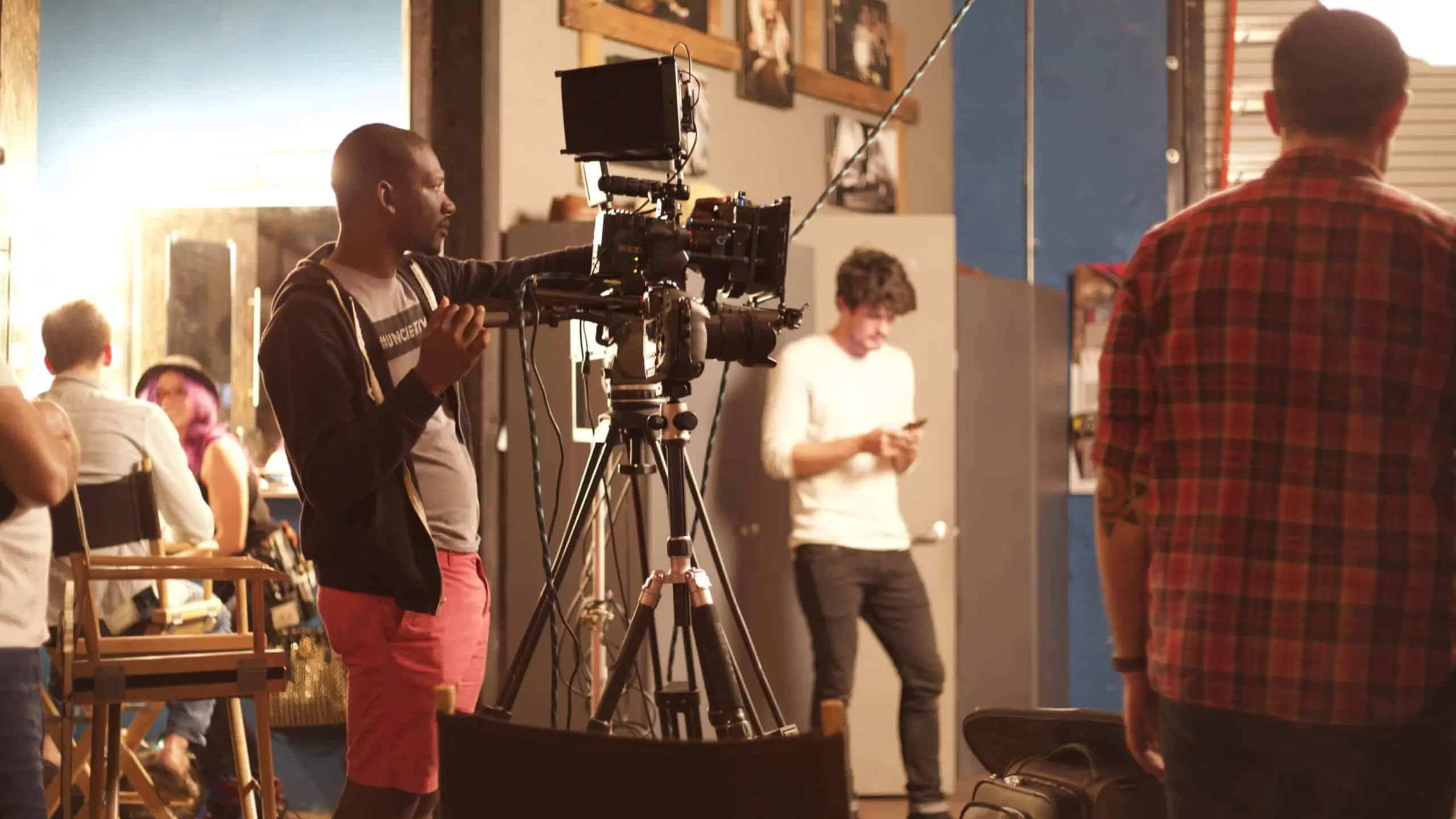
Video marketing has become an integral part of the B2B landscape, offering businesses a powerful way to engage, inform, and build relationships with clients across different sectors. By using engaging video content, companies can not only enhance their brand presence but also effectively communicate complex products, services, or concepts.
Video allows for clear, dynamic storytelling that can resonate more deeply than text-based materials, making it an essential tool for simplifying business processes and bridging communication gaps between companies. As B2B interactions often involve multiple decision-makers, well-crafted video strategies can streamline messaging, making it more accessible and impactful.
This evolving medium serves as a versatile solution, driving better understanding, trust, and conversion in professional relationships.
## Why Video Marketing is Crucial in B2B
In the B2B sector, video marketing has emerged as a highly effective tool for communicating complex offerings. Unlike traditional marketing formats, videos can present intricate details in a clear, engaging manner, making it easier for businesses to understand products, services, or solutions. Whether it’s demonstrating a software’s functionality or illustrating a logistics solution, videos make technical content accessible.
Content creation is a core component of video marketing. It can be tailored to match specific industry needs, allowing B2B marketers to craft messages that resonate with different sectors. For example, an IT solutions provider might use detailed tutorial videos, while a manufacturing company may opt for factory walkthroughs to showcase their operations. By aligning [content creation](https://c-istudios.com/content-creation-services/) with the audience’s specific pain points, businesses can create meaningful connections and demonstrate their expertise.
Moreover, creative marketing strategies play a significant role in maximizing the impact of B2B video marketing. These strategies utilize storytelling, visuals, and other creative elements to capture attention and foster engagement.
Unlike standard corporate communication, creative marketing through video is more memorable, driving higher engagement rates and longer-lasting impressions. Story-driven videos, like brand narratives or customer success stories, help businesses establish trust and authority, turning abstract concepts into relatable experiences.
By integrating video marketing into B2B strategies, companies can enhance relationship-building, streamline communication, and support decision-making processes. As a result, videos contribute to stronger brand visibility and improved lead conversion across different sectors.
## Types of B2B Videos to Connect with Clients
B2B marketers employ a variety of video types to engage potential clients and simplify their messages. Among the most effective are explainer videos, product demos, and VFX compositing and animation.
Explainer videos are concise videos that break down technical products or services into easy-to-understand content. They’re perfect for simplifying complex offerings, making them digestible for the target audience. For example, a tech company might use animated explainer videos to illustrate how its software improves operational efficiency. These videos are particularly effective at nurturing leads and driving decision-making, as they clarify the value proposition quickly and engagingly.
Product demos showcase a product’s features and real-life applications. These videos allow potential clients to see how the product functions, providing a practical look at its benefits. Demos often include step-by-step guides, emphasizing ease of use and highlighting unique features. B2B companies use these videos to overcome objections and build trust, as they let viewers envision the product in their own workflows.
[VFX compositing and animation](https://c-istudios.com/vfx-compositing-and-animation-services/) add a visually compelling layer to B2B communication, especially for complex ideas that may be hard to convey through live-action alone. For instance, engineering or medical industries often use 3D animations to depict intricate mechanisms or procedures that are otherwise challenging to visualize. This not only enhances understanding but also captivates viewers' attention, making abstract concepts tangible and memorable.
By using these varied video types, B2B companies can better explain their offerings, clarify value propositions, and build trust with potential clients. This diverse approach to video marketing drives deeper engagement and encourages stronger client relationships across sectors
## Personalized Video Content for Targeted Engagement
In the B2B space, personalized video content has become a powerful tool for engaging key decision-makers. Unlike generic video campaigns, personalized videos allow companies to tailor their messages based on specific client needs, industries, or roles, creating more relevant and impactful communication. This approach makes the viewer feel valued, increasing the likelihood of engagement. For example, a software company targeting healthcare providers might create customized videos that highlight industry-specific features and use cases, enhancing resonance and clarity
The integration of B2B marketing automation has further amplified the effectiveness of personalized video content. By using automation tools, businesses can distribute personalized videos at scale, making it feasible to target large volumes of potential clients without sacrificing customization.
Automated workflows allow videos to be tailored based on data-driven insights such as client demographics, industry sector, or even individual behavior patterns, resulting in a more strategic approach to video delivery. This combination of personalization and automation ensures that the right content reaches the right person at the right time, maximizing engagement.
.
Moreover, personalization significantly boosts engagement and conversion rates in B2B video strategies. By addressing individual pain points and needs, personalized videos drive stronger responses from viewers. A personalized greeting, mentioning the recipient’s name, or addressing specific challenges within the video content can lead to higher click-through and response rates. In fact, research indicates that personalized videos can increase conversion rates by up to 30%, as they create a sense of direct communication and trust
.
Ultimately, personalized video combined with B2B marketing automation enhances the overall customer experience. It not only fosters deeper relationships but also accelerates the buyer’s journey by delivering content that resonates on a personal level. By leveraging these tactics, B2B companies can build stronger client connections, increase lead quality, and drive faster decision-making.
## Leveraging Social Media and Digital Platforms
Distributing videos effectively across [social media](https://c-istudios.com/social-media-marketing-services/) and digital platforms is crucial for B2B marketing success. Platforms like LinkedIn, YouTube, and Instagram offer unique opportunities to engage target audiences. LinkedIn, for example, is a premier channel for reaching decision-makers, offering video formats that facilitate professional networking and industry-specific communication.
YouTube, as the second-largest search engine, is ideal for hosting longer video content like product demos or educational videos. Meanwhile, Instagram is useful for short, visually appealing content that can capture attention quickly, even in a B2B context.
To maximize video reach and engagement, businesses can utilize social media marketing services. These services help optimize video distribution through targeted campaigns, audience segmentation, and strategic ad placements, ensuring that videos reach the most relevant audiences.
They also aid in analyzing performance metrics, allowing businesses to refine their strategies and improve engagement rates. By using social media marketing services, B2B brands can increase visibility and drive meaningful interactions, building stronger relationships with potential clients.
SEO copywriting plays a pivotal role in enhancing video discoverability across digital platforms. Effective SEO copywriting involves optimizing video titles, descriptions, and tags with relevant keywords, making it easier for search engines to index and rank the content.
For example, a B2B company sharing a product demo video on YouTube should include keywords related to the product’s core features, as well as industry-specific terms in the video description. This not only boosts search rankings but also increases click-through rates, as viewers are more likely to engage with content that matches their search intent.
Combining strategic social media marketing services with strong SEO copywriting creates a more comprehensive approach to B2B video marketing. It ensures that videos are not only distributed effectively but are also easy to find, thus increasing the chances of reaching the right audience. By focusing on both the technical and promotional aspects of video marketing, B2B companies can enhance engagement, drive traffic, and ultimately achieve better results in lead generation and conversion.
## Integrating Videos in the B2B Sales Funnel
In the B2B sales funnel, videos serve as a versatile tool that can effectively guide potential clients through different stages, from awareness to conversion. As prospects progress through the funnel, videos can be tailored to meet their evolving needs, offering relevant information that aligns with each stage.
At the top of the funnel, videos like educational explainers or thought leadership pieces can raise awareness and spark interest. In the middle, product demos and case studies help nurture prospects by showcasing tangible solutions. For the final stages, testimonials and success stories provide reassurance, aiding the decision-making process.
Video is also a powerful medium for lead generation. By creating engaging, informative content, B2B marketers can attract potential clients who are actively searching for solutions. Short videos on landing pages, for example, can increase conversion rates by capturing attention and providing immediate insights into a product or service. Additionally, gated video content, where users provide their information in exchange for access, can help collect leads while simultaneously offering valuable content.
As leads are captured, videos can nurture these prospects further through personalized messaging. By segmenting audiences based on factors like industry, company size, or past interactions, marketers can create tailored videos that speak directly to a prospect’s unique pain points.
For instance, a personalized product demo sent to a potential client addressing their specific challenges has a much higher chance of engagement than a generic one. This approach not only improves engagement but also accelerates the movement of leads through the funnel.
Embedding videos in email marketing campaigns is another effective strategy that can significantly boost open rates and click-through rates. Research shows that including the word "video" in an email subject line can increase open rates by up to 19%. Furthermore, video thumbnails in emails act as a visual call-to-action, prompting recipients to engage more actively. For B2B companies, embedding personalized video messages in welcome emails or follow-up sequences can make a substantial difference in nurturing leads and driving conversions.
Several successful B2B campaigns have demonstrated the impact of video in the sales funnel. For instance, companies in the tech sector have used a combination of explainer videos, client testimonials, and personalized demos to nurture leads, achieving conversion rates that are 30% higher than campaigns without video content. These examples highlight how a well-integrated video strategy not only captures leads but also effectively nurtures them, leading to stronger client relationships and higher conversion rates.
By leveraging video across all stages of the B2B sales funnel, marketers can create more engaging, informative, and personalized experiences that drive meaningful interactions and conversions.
## Maximizing ROI with Budget-Conscious Video Strategies
Creating high-quality B2B video content doesn’t have to be expensive. By adopting budget-conscious video strategies, businesses can maximize their return on investment (ROI) without compromising on production quality. Effective planning is key, starting with defining clear goals for each video project. Whether the goal is to generate leads, explain complex products, or support client onboarding, having a focused strategy helps allocate resources more efficiently and ensures the content aligns with business objectives.
Optimizing the [video production gear list](https://c-istudios.com/video-production-gear-list/) is one of the most practical ways to manage costs while maintaining quality. Rather than investing heavily in advanced equipment, companies can use cost-effective alternatives. For instance, high-resolution smartphone cameras and affordable lighting setups can still deliver professional results. Additionally, businesses can rent specialized equipment only when needed, saving on upfront costs. For post-production, using free or low-cost editing software can help keep expenses in check while delivering polished final cuts.
Tracking and measuring the ROI of video marketing is essential to understand its effectiveness in B2B sectors. The ROI can be gauged through various metrics such as video views, engagement rates, lead conversions, and even sales generated from video campaigns.
Analytics tools can help track viewer behavior, including watch time, click-through rates, and conversion rates, offering insights into which videos perform best and which need adjustments. This data-driven approach allows businesses to refine their strategies and allocate budgets toward the most impactful video content, ensuring better results.
By planning strategically, optimizing the [video production](https://c-istudios.com/video-production-services/) gear list, and closely monitoring performance, B2B companies can achieve strong video marketing ROI without overspending. This approach ensures that video remains a sustainable, high-impact component of the overall marketing strategy, driving engagement and conversions even on a limited budget.
## The Future of B2B Video Marketing
The future of B2B video marketing is set to be dynamic, with emerging trends that promise to enhance client engagement and communication. One of the most notable trends is the growing use of live streaming and real-time interaction. Live video allows businesses to host product launches, webinars, and Q&A sessions, offering an authentic and direct line of communication with potential clients.
This format not only increases transparency but also helps build trust and authority in real-time. For B2B brands, incorporating live interactions within their marketing strategies will be essential for maintaining competitiveness in a more interactive digital landscape.
Another emerging format is [documentary film production](https://c-istudios.com/documentary-film-production/), which is gaining traction as a tool for corporate storytelling. Unlike traditional B2B videos, documentaries focus on in-depth narratives that highlight a company’s journey, values, and impact. For instance, a company could create a documentary-style video to showcase its sustainable manufacturing process or corporate social responsibility initiatives. This format provides an authentic, human-centric view of the brand, making it easier for clients to connect emotionally with its mission and vision. As businesses continue to look for ways to differentiate themselves, using documentary [film production](https://c-istudios.com/film-and-tv-production/) for storytelling will likely become a key strategy in B2B marketing.
Video is also finding a place in political campaign strategies within the B2B sector, particularly for influencing policy-related decisions or communicating with government agencies and stakeholders. Videos designed for political campaigns can be used to demonstrate a company’s thought leadership on policy issues, explain regulatory impacts on the industry, or highlight a brand’s advocacy for specific causes.
As companies engage in more public-facing initiatives that require clear messaging to policy-makers, video will play a pivotal role in making complex political issues more accessible and persuasive.
Looking ahead, B2B video marketing will continue to evolve toward more immersive experiences, such as virtual reality (VR) or 360-degree videos, which offer viewers a more interactive way to explore products or services. The emphasis on personalization and real-time communication will also grow, with videos becoming increasingly data-driven to deliver highly targeted messages to specific audiences.
By adapting to these trends, like live streaming, documentary film production, and integrating video into political campaign strategies, B2B companies can strengthen client relationships, improve engagement, and stay ahead in a competitive market.
## Why Video Marketing is Crucial in B2B
In the B2B sector, video marketing has emerged as a highly effective tool for communicating complex offerings. Unlike traditional marketing formats, videos can present intricate details in a clear, engaging manner, making it easier for businesses to understand products, services, or solutions. Whether it’s demonstrating a software’s functionality or illustrating a logistics solution, videos make technical content accessible.
Content creation is a core component of video marketing. It can be tailored to match specific industry needs, allowing B2B marketers to craft messages that resonate with different sectors. For example, an IT solutions provider might use detailed tutorial videos, while a manufacturing company may opt for factory walkthroughs to showcase their operations. By aligning [content creation](https://c-istudios.com/content-creation-services/) with the audience’s specific pain points, businesses can create meaningful connections and demonstrate their expertise.
Moreover, creative marketing strategies play a significant role in maximizing the impact of B2B video marketing. These strategies utilize storytelling, visuals, and other creative elements to capture attention and foster engagement.
Unlike standard corporate communication, creative marketing through video is more memorable, driving higher engagement rates and longer-lasting impressions. Story-driven videos, like brand narratives or customer success stories, help businesses establish trust and authority, turning abstract concepts into relatable experiences.
By integrating video marketing into B2B strategies, companies can enhance relationship-building, streamline communication, and support decision-making processes. As a result, videos contribute to stronger brand visibility and improved lead conversion across different sectors.
## Types of B2B Videos to Connect with Clients
B2B marketers employ a variety of video types to engage potential clients and simplify their messages. Among the most effective are explainer videos, product demos, and VFX compositing and animation.
Explainer videos are concise videos that break down technical products or services into easy-to-understand content. They’re perfect for simplifying complex offerings, making them digestible for the target audience. For example, a tech company might use animated explainer videos to illustrate how its software improves operational efficiency. These videos are particularly effective at nurturing leads and driving decision-making, as they clarify the value proposition quickly and engagingly.
Product demos showcase a product’s features and real-life applications. These videos allow potential clients to see how the product functions, providing a practical look at its benefits. Demos often include step-by-step guides, emphasizing ease of use and highlighting unique features. B2B companies use these videos to overcome objections and build trust, as they let viewers envision the product in their own workflows.
[VFX compositing and animation](https://c-istudios.com/vfx-compositing-and-animation-services/) add a visually compelling layer to B2B communication, especially for complex ideas that may be hard to convey through live-action alone. For instance, engineering or medical industries often use 3D animations to depict intricate mechanisms or procedures that are otherwise challenging to visualize. This not only enhances understanding but also captivates viewers' attention, making abstract concepts tangible and memorable.
By using these varied video types, B2B companies can better explain their offerings, clarify value propositions, and build trust with potential clients. This diverse approach to video marketing drives deeper engagement and encourages stronger client relationships across sectors
## Personalized Video Content for Targeted Engagement
In the B2B space, personalized video content has become a powerful tool for engaging key decision-makers. Unlike generic video campaigns, personalized videos allow companies to tailor their messages based on specific client needs, industries, or roles, creating more relevant and impactful communication. This approach makes the viewer feel valued, increasing the likelihood of engagement. For example, a software company targeting healthcare providers might create customized videos that highlight industry-specific features and use cases, enhancing resonance and clarity
The integration of B2B marketing automation has further amplified the effectiveness of personalized video content. By using automation tools, businesses can distribute personalized videos at scale, making it feasible to target large volumes of potential clients without sacrificing customization.
Automated workflows allow videos to be tailored based on data-driven insights such as client demographics, industry sector, or even individual behavior patterns, resulting in a more strategic approach to video delivery. This combination of personalization and automation ensures that the right content reaches the right person at the right time, maximizing engagement.
.
Moreover, personalization significantly boosts engagement and conversion rates in B2B video strategies. By addressing individual pain points and needs, personalized videos drive stronger responses from viewers. A personalized greeting, mentioning the recipient’s name, or addressing specific challenges within the video content can lead to higher click-through and response rates. In fact, research indicates that personalized videos can increase conversion rates by up to 30%, as they create a sense of direct communication and trust
.
Ultimately, personalized video combined with B2B marketing automation enhances the overall customer experience. It not only fosters deeper relationships but also accelerates the buyer’s journey by delivering content that resonates on a personal level. By leveraging these tactics, B2B companies can build stronger client connections, increase lead quality, and drive faster decision-making.
## Leveraging Social Media and Digital Platforms
Distributing videos effectively across [social media](https://c-istudios.com/social-media-marketing-services/) and digital platforms is crucial for B2B marketing success. Platforms like LinkedIn, YouTube, and Instagram offer unique opportunities to engage target audiences. LinkedIn, for example, is a premier channel for reaching decision-makers, offering video formats that facilitate professional networking and industry-specific communication.
YouTube, as the second-largest search engine, is ideal for hosting longer video content like product demos or educational videos. Meanwhile, Instagram is useful for short, visually appealing content that can capture attention quickly, even in a B2B context.
To maximize video reach and engagement, businesses can utilize social media marketing services. These services help optimize video distribution through targeted campaigns, audience segmentation, and strategic ad placements, ensuring that videos reach the most relevant audiences.
They also aid in analyzing performance metrics, allowing businesses to refine their strategies and improve engagement rates. By using social media marketing services, B2B brands can increase visibility and drive meaningful interactions, building stronger relationships with potential clients.
SEO copywriting plays a pivotal role in enhancing video discoverability across digital platforms. Effective SEO copywriting involves optimizing video titles, descriptions, and tags with relevant keywords, making it easier for search engines to index and rank the content.
For example, a B2B company sharing a product demo video on YouTube should include keywords related to the product’s core features, as well as industry-specific terms in the video description. This not only boosts search rankings but also increases click-through rates, as viewers are more likely to engage with content that matches their search intent.
Combining strategic social media marketing services with strong SEO copywriting creates a more comprehensive approach to B2B video marketing. It ensures that videos are not only distributed effectively but are also easy to find, thus increasing the chances of reaching the right audience. By focusing on both the technical and promotional aspects of video marketing, B2B companies can enhance engagement, drive traffic, and ultimately achieve better results in lead generation and conversion.
## Integrating Videos in the B2B Sales Funnel
In the B2B sales funnel, videos serve as a versatile tool that can effectively guide potential clients through different stages, from awareness to conversion. As prospects progress through the funnel, videos can be tailored to meet their evolving needs, offering relevant information that aligns with each stage.
At the top of the funnel, videos like educational explainers or thought leadership pieces can raise awareness and spark interest. In the middle, product demos and case studies help nurture prospects by showcasing tangible solutions. For the final stages, testimonials and success stories provide reassurance, aiding the decision-making process.
Video is also a powerful medium for lead generation. By creating engaging, informative content, B2B marketers can attract potential clients who are actively searching for solutions. Short videos on landing pages, for example, can increase conversion rates by capturing attention and providing immediate insights into a product or service. Additionally, gated video content, where users provide their information in exchange for access, can help collect leads while simultaneously offering valuable content.
As leads are captured, videos can nurture these prospects further through personalized messaging. By segmenting audiences based on factors like industry, company size, or past interactions, marketers can create tailored videos that speak directly to a prospect’s unique pain points.
For instance, a personalized product demo sent to a potential client addressing their specific challenges has a much higher chance of engagement than a generic one. This approach not only improves engagement but also accelerates the movement of leads through the funnel.
Embedding videos in email marketing campaigns is another effective strategy that can significantly boost open rates and click-through rates. Research shows that including the word "video" in an email subject line can increase open rates by up to 19%. Furthermore, video thumbnails in emails act as a visual call-to-action, prompting recipients to engage more actively. For B2B companies, embedding personalized video messages in welcome emails or follow-up sequences can make a substantial difference in nurturing leads and driving conversions.
Several successful B2B campaigns have demonstrated the impact of video in the sales funnel. For instance, companies in the tech sector have used a combination of explainer videos, client testimonials, and personalized demos to nurture leads, achieving conversion rates that are 30% higher than campaigns without video content. These examples highlight how a well-integrated video strategy not only captures leads but also effectively nurtures them, leading to stronger client relationships and higher conversion rates.
By leveraging video across all stages of the B2B sales funnel, marketers can create more engaging, informative, and personalized experiences that drive meaningful interactions and conversions.
## Maximizing ROI with Budget-Conscious Video Strategies
Creating high-quality B2B video content doesn’t have to be expensive. By adopting budget-conscious video strategies, businesses can maximize their return on investment (ROI) without compromising on production quality. Effective planning is key, starting with defining clear goals for each video project. Whether the goal is to generate leads, explain complex products, or support client onboarding, having a focused strategy helps allocate resources more efficiently and ensures the content aligns with business objectives.
Optimizing the [video production gear list](https://c-istudios.com/video-production-gear-list/) is one of the most practical ways to manage costs while maintaining quality. Rather than investing heavily in advanced equipment, companies can use cost-effective alternatives. For instance, high-resolution smartphone cameras and affordable lighting setups can still deliver professional results. Additionally, businesses can rent specialized equipment only when needed, saving on upfront costs. For post-production, using free or low-cost editing software can help keep expenses in check while delivering polished final cuts.
Tracking and measuring the ROI of video marketing is essential to understand its effectiveness in B2B sectors. The ROI can be gauged through various metrics such as video views, engagement rates, lead conversions, and even sales generated from video campaigns.
Analytics tools can help track viewer behavior, including watch time, click-through rates, and conversion rates, offering insights into which videos perform best and which need adjustments. This data-driven approach allows businesses to refine their strategies and allocate budgets toward the most impactful video content, ensuring better results.
By planning strategically, optimizing the video production gear list, and closely monitoring performance, B2B companies can achieve strong video marketing ROI without overspending. This approach ensures that video remains a sustainable, high-impact component of the overall marketing strategy, driving engagement and conversions even on a limited budget.
## The Future of B2B Video Marketing
The future of B2B video marketing is set to be dynamic, with emerging trends that promise to enhance client engagement and communication. One of the most notable trends is the growing use of live streaming and real-time interaction. Live video allows businesses to host product launches, webinars, and Q&A sessions, offering an authentic and direct line of communication with potential clients.
This format not only increases transparency but also helps build trust and authority in real-time. For B2B brands, incorporating live interactions within their marketing strategies will be essential for maintaining competitiveness in a more interactive digital landscape.
Another emerging format is [documentary film production](https://c-istudios.com/documentary-film-production/), which is gaining traction as a tool for corporate storytelling. Unlike traditional B2B videos, documentaries focus on in-depth narratives that highlight a company’s journey, values, and impact. For instance, a company could create a documentary-style video to showcase its sustainable manufacturing process or corporate social responsibility initiatives. This format provides an authentic, human-centric view of the brand, making it easier for clients to connect emotionally with its mission and vision. As businesses continue to look for ways to differentiate themselves, using documentary film production for storytelling will likely become a key strategy in B2B marketing.
Video is also finding a place in political campaign strategies within the B2B sector, particularly for influencing policy-related decisions or communicating with government agencies and stakeholders. Videos designed for political campaigns can be used to demonstrate a company’s thought leadership on policy issues, explain regulatory impacts on the industry, or highlight a brand’s advocacy for specific causes.
As companies engage in more public-facing initiatives that require clear messaging to policy-makers, video will play a pivotal role in making complex political issues more accessible and persuasive.
Looking ahead, B2B video marketing will continue to evolve toward more immersive experiences, such as virtual reality (VR) or 360-degree videos, which offer viewers a more interactive way to explore products or services. The emphasis on personalization and real-time communication will also grow, with videos becoming increasingly data-driven to deliver highly targeted messages to specific audiences.
By adapting to these trends, like live streaming, documentary film production, and integrating video into political campaign strategies, B2B companies can strengthen client relationships, improve engagement, and stay ahead in a competitive market.
## Work with C&I Studios
If you are planning a project like this, our team can take it from concept to final delivery. Explore our [video production services](https://c-istudios.com/video-production-services/), browse [our work](https://c-istudios.com/our-work/) to see how we tell brand stories, and [get in touch](https://c-istudios.com/contact/) when you are ready to start.
Originally published October 26, 2024
---
*This content is from [C&I Studios](https://c-istudios.com), a full-service production company.*
---
# Budgeting for Success: Managing Finances in Feature Film Production
> Published: October 24, 2024
> Categories: Commercial & Brand
> Source: https://c-istudios.com/budgeting-for-success-managing-finances-in-feature-film-production/
---
.cib{--paper:#1b1d1f;--ink:#fff;--body:#d5d7d9;--muted:#8b9096;--line:rgba(255,255,255,.12);--thumb:#2b2e31;--card:#212426;--accent:#c02b0a;--blue:#5B8FA8;--serif:'Playfair Display',Georgia,serif;--sans:'Poppins',-apple-system,sans-serif;--measure:900px;background:var(--paper);color:var(--body);font-family:var(--sans);line-height:1.6;position:relative;left:50%;transform:translateX(-50%);width:90vw;max-width:1920px}
.cib *{box-sizing:border-box}
.cib .kicker{max-width:var(--measure);margin:58px auto 0;padding:0 22px;font-size:12.5px;font-weight:700;letter-spacing:2.5px;text-transform:uppercase;color:var(--blue)}
.cib h1.cibh1{text-wrap:balance;font-family:var(--serif);font-weight:500;font-size:clamp(46px,6vw,72px);line-height:1.08;color:var(--ink);max-width:var(--measure);margin:18px auto 0;padding:0 22px;letter-spacing:-.5px}
.cib .metarow{max-width:var(--measure);margin:20px auto 0;padding:0 22px;color:var(--muted);font-size:14px}
.cib .hero{position:relative;width:100%;height:0;padding-bottom:56.25%;overflow:hidden;margin:48px auto 0;border-top:1px solid var(--line);border-bottom:1px solid var(--line)}
.cib .hero .ph{width:100%;aspect-ratio:16/9;background:var(--thumb);border-top:1px solid var(--line);border-bottom:1px solid var(--line);display:flex;align-items:center;justify-content:center;color:#7d8288;font-size:13px;text-align:center;padding:0 20px}
.cib .body{max-width:var(--measure);margin:12px auto 0;padding:52px 22px 6px}
.cib .body.lead p:first-child{font-size:23px;line-height:1.62;color:var(--ink)}
.cib .body p{font-size:18.5px;line-height:1.85;margin:0 0 30px;color:var(--body)}
.cib .body h2{text-wrap:balance;font-family:var(--serif);font-weight:500;font-size:clamp(32px,4vw,48px);line-height:1.22;color:var(--ink);margin:70px 0 20px;letter-spacing:-.3px}
.cib .body h3{text-wrap:balance;font-family:var(--sans);font-weight:600;font-size:22px;color:var(--ink);margin:38px 0 8px}
.cib .body a{color:var(--ink);text-decoration:underline;text-decoration-color:rgba(255,255,255,.4);text-underline-offset:3px}
.cib .body a:hover{text-decoration-color:var(--ink)}
.cib .ctable{width:100%;border-collapse:collapse;margin:16px 0 30px;font-size:16px}
.cib .ctable th{background:#000;color:#fff;text-align:left;padding:10px 12px;font-family:var(--sans)}
.cib .ctable td{padding:10px 12px;border-bottom:1px solid var(--line);color:var(--body)}
.cib .inimg{position:relative;width:100%;height:0;padding-bottom:56.25%;overflow:hidden;margin:72px auto;border-top:1px solid var(--line);border-bottom:1px solid var(--line)}
.cib .inimg .ph{width:100%;aspect-ratio:16/9;background:var(--thumb);border-top:1px solid var(--line);border-bottom:1px solid var(--line);display:flex;align-items:center;justify-content:center;color:#7d8288;font-size:13px}
.cib .origpub{max-width:var(--measure);margin:60px auto 0;padding:26px 22px 0;border-top:1px solid var(--line);color:var(--muted);font-size:13.5px}
.cib .related{max-width:1200px;margin:64px auto 0;padding:34px 22px 76px}
.cib .related h3{font-family:var(--sans);font-size:12.5px;letter-spacing:2px;text-transform:uppercase;color:var(--ink);margin:0 0 24px}
.cib .grid{display:grid;grid-template-columns:repeat(3,1fr);gap:28px}
.cib .rc{background:var(--card);border:1px solid var(--line);display:block;text-decoration:none;color:inherit;transition:border-color .15s}
.cib a.rc:hover{border-color:rgba(255,255,255,.5)}
.cib .rc .thumb{position:relative;width:100%;height:0;padding-bottom:56.25%;background:var(--thumb);overflow:hidden}
.cib .rc .thumb img{position:absolute!important;top:0!important;left:0!important;width:100%!important;height:100%!important;object-fit:cover!important;margin:0!important}
.cib .rc .cc{padding:14px 15px 17px}
.cib .rc .rt{font-family:var(--serif);font-weight:500;font-size:16px;line-height:1.3;color:var(--ink);margin:0 0 6px}
.cib .rc .rm{font-size:11px;letter-spacing:1px;text-transform:uppercase;color:var(--muted)}
.cib img{margin:0!important;padding:0!important;display:block!important;vertical-align:top;max-width:100%}
.cib .hero img,.cib .inimg img{position:absolute!important;top:0!important;left:0!important;width:100%!important;height:100%!important;object-fit:cover!important;margin:0!important;padding:0!important;border:0!important;display:block!important;aspect-ratio:auto!important}
.cib .hero+.body{padding-top:36px}
@media(max-width:760px){.cib .grid{grid-template-columns:1fr}.cib .body h2{margin:52px 0 16px}.cib .body p{font-size:17.5px}.cib .inimg,.cib .hero{margin-top:44px}}
.cib .vembed{max-width:var(--measure);margin:44px auto;padding:0 22px}.cib .vembed .vwrap{position:relative;width:100%;height:0;padding-bottom:56.25%}.cib .vembed .vwrap iframe{position:absolute;top:0;left:0;width:100%;height:100%;border:0}
Commercial & Brand
# Budgeting for Success. Managing Finances in Feature Film Production
20 min read


## Public Sector
This blog will adopt a structured approach inspired by C&I Studios’ step-by-step guide to [TV production](https://c-istudios.com/film-and-tv-production/), providing insights into each phase of the budgeting process. By understanding how financial planning shapes a film’s journey, producers can better manage resources, address unexpected challenges, and ultimately deliver a successful feature film.
## Initial Budget Breakdown. Pre-Production Planning
The pre-production phase is where financial planning truly begins, as it lays the foundation for the entire production process. This stage involves comprehensive [content creation](https://c-istudios.com/content-creation-services/) planning, including costs for location scouting, script breakdown, casting, equipment rentals, and crew hiring.
During location scouting, production teams must budget for travel, permits, and insurance. Investing in professional photography early on ensures that promotional materials can be developed alongside the film, optimizing marketing efforts.
Utilizing budgeting tools such as Movie Magic or other industry-specific software can help accurately estimate these costs, avoiding overspending and allowing adjustments before the actual production starts. These tools provide a granular breakdown of expenses, enabling filmmakers to analyze costs at every level, from equipment rentals to crew salaries. These tools allow for real-time updates, making it easier to identify areas where funds can be reallocated to meet unforeseen demands.
Effective financial planning not only streamlines resource allocation but also sets a clear path for creative marketing, ensuring that the project maintains quality without unnecessary financial strain. Furthermore, incorporating budgeting tools early in pre-production can enhance team collaboration by providing a transparent view of available funds, which helps with decision-making across departments. This strategic approach fosters financial discipline and reduces the risk of budget overruns, ultimately supporting the film's artistic vision while keeping costs in check.
## Allocating Funds Across Production Phases
Efficient distribution of funds across all production phases is critical for maintaining control over production costs. During this phase, it’s essential to allocate resources effectively among key areas, including camera rentals, [audio engineering](https://c-istudios.com/audio-engineering-services/), set design, and VFX compositing and animation. Balancing expenses is crucial, as over-allocation in one area may compromise the quality in another, such as feature film mastering and delivery, which is vital to achieving a polished final product.
Budgeting software like Filmustage can assist in tracking real-time expenses, providing insights into where adjustments are necessary. These tools also help with generating detailed financial reports that break down costs into specific categories, such as crew wages, location fees, and equipment rentals.
This level of detail enables filmmakers to identify areas where resources may be over- or under-utilized, facilitating more informed financial decisions. Regular monitoring of expenses through these platforms allows for proactive financial management, helping to maintain production quality and ensure that all funds are used strategically.
Additionally, automated notifications for potential budget overruns allow for timely interventions, preventing costly delays. By maintaining transparency and updating the budget as production progresses, these tools promote a well-organized and financially sound workflow that benefits the entire team.
## Essential Elements of Production Budgeting
An effective film production budget should comprehensively cover all necessary components, starting with the [video production gear list](https://c-istudios.com/video-production-gear-list/). This list includes essential equipment like cameras, lighting, and sound gear, ensuring that every aspect of filming is accounted for.
Proper budgeting for these items can significantly impact the production's technical quality. It’s important to differentiate between rented and purchased gear, as rentals often provide cost savings and access to high-end equipment without the long-term investment.
Other crucial expenses include insurance, permits, and fees, which are often overlooked but essential for smooth production. Adequate insurance ensures coverage against potential accidents, equipment damage, or delays, mitigating unexpected financial hits. Permits for locations must be obtained well in advance, as delays can lead to additional costs.
Allocating funds for branding and graphic design helps establish a strong visual identity for the film, which is vital in both the pre-release and marketing phases. This includes creating promotional assets like posters, social media graphics, trailers, and website design, all of which enhance the film’s appeal.
In addition, incorporating graphic design into set elements (e.g., props, signage, or costumes) can further reinforce the film’s branding. Investing in consistent marketing materials not only builds audience anticipation but also supports broader media marketing strategies, making the film more recognizable across platforms.
Artist management costs must be factored in, covering contracts, talent fees, and any required services related to talent representation. Effective fund allocation ensures that all creative and technical needs are met without overspending. Using tools like Filmustage for budgeting helps in managing funds across different areas, providing a clear overview that guides financial decisions and maximizes production quality.
## Managing On-Set Costs Efficiently
Managing on-set costs efficiently is crucial to keeping the overall budget under control. Daily expenses such as transportation, catering, and accommodation can quickly add up, so strategic planning is necessary. For example, leasing vehicles for the entire duration of the shoot can be more cost-effective than daily rentals. Bulk buying of catering supplies can reduce food costs, while partnering with local vendors can further minimize expenses.
Incorporating audio live streaming tools on set can help streamline communication and monitoring, reducing the need for additional staff and ensuring seamless coordination. These tools enable real-time transmission of audio, which is especially beneficial during complex scenes where instant feedback is crucial.
Directors, sound engineers, and production teams can monitor the audio remotely, allowing for quicker decision-making and adjustments. This approach not only keeps technical costs manageable but also maintains production efficiency by reducing downtime during retakes or set changes.
Using live streaming tools enhances remote collaboration, enabling off-site team members, such as editors or producers, to provide feedback promptly. This minimizes the back-and-forth often associated with reviewing footage, keeping the workflow smooth and efficient.
Implementing these technologies also supports post-production by providing higher-quality sound capture, reducing the need for costly re-recordings and edits. Overall, integrating live streaming solutions contributes to both cost-effectiveness and a more connected production environment.
Moreover, media marketing during production, such as social media updates, behind-the-scenes footage, and live streaming, can build early interest and keep the cast and crew engaged. Setting aside a portion of the budget for regular team gatherings or morale-boosting activities can enhance productivity and keep the team motivated. Allocating funds specifically for these daily expenses allows for smooth operations while adhering to the broader financial plan of the production.
## Post-Production Budgeting. Transforming the Raw Footage
Post-production is where the initial raw footage is polished into a complete film, but it’s also one of the most cost-intensive phases. This stage includes several key activities: editing, [VFX compositing and animation](https://c-istudios.com/vfx-compositing-and-animation-services/), audio mixing, color grading, and feature film mastering. Each of these elements requires specialized expertise and software, making it crucial to allocate sufficient funds while maintaining cost efficiency.
Editing is the first step, requiring software, skilled editors, and often multiple revisions to achieve the desired narrative flow. It’s essential to budget for both offline (initial cut) and online (final edit) stages.
Following this, VFX compositing and animation add the necessary visual elements that enhance the film’s realism or artistic expression. Given the expense of high-quality VFX, it’s advisable to allocate a dedicated portion of the budget here, while using software tools like Filmustage to track these expenses in real-time.
Audio mixing includes dialogue synchronization, sound effects, and background music integration, all of which are vital to creating an immersive viewing experience. Budgeting for top-tier sound design tools and professionals can prevent audio discrepancies that often result in costly rework. After that, color grading helps to establish the visual tone and mood of the film. It’s important to budget for professional colorists who can deliver cinematic visuals.
Finally, feature film mastering and delivery prepares the film for distribution. This step includes digital mastering, duplication, and secure delivery to distribution platforms. Using specialized software for budget tracking ensures that funds are used effectively, helping maintain a balance between quality and cost during the post-production phase.
##
## Contingency Planning for Unexpected Costs
Even with meticulous planning, unforeseen costs can arise during any stage of film production. This is why setting aside a contingency fund, typically 10-15% of the total budget, is vital. Such a fund serves as a financial buffer for unexpected expenses like equipment failures, location changes due to weather, or last-minute reshoots.
Proper management of a contingency fund involves ongoing monitoring and adjustment. If unexpected expenses arise, such as an equipment breakdown, it’s important to evaluate the urgency and impact on the project’s timeline before reallocating funds.
If the expense is essential, adjusting the budget by deprioritizing less critical items can help maintain financial stability. This process of financial adjustments ensures that production quality is preserved without jeopardizing the overall budget.
Filmustage and other budgeting tools can be useful in this phase by allowing real-time tracking and alerts for overspending, which helps producers react promptly to emerging costs. By keeping the production team informed of any budget adjustments, it’s possible to maintain transparency and align priorities throughout the production process. An effective contingency plan not only safeguards the production but also minimizes potential disruptions, ensuring the project’s financial health from start to finish.
## Funding Sources for Feature Film Production
Securing adequate funding is a fundamental step in bringing a film project to life. There are multiple avenues for funding, each with distinct benefits and challenges. One popular option is crowdfunding, which allows filmmakers to raise money directly from fans and early supporters. Platforms like Kickstarter and Indiegogo provide visibility and can simultaneously generate buzz for the film. A successful crowdfunding campaign often involves presenting a strong [TV show pitch](https://c-istudios.com/tv-show-pitch/) or film concept, engaging visuals, and clear budget breakdowns to attract backers.
Grants and subsidies are another valuable resource, often offered by government entities, arts organizations, or film funds. These sources can provide non-repayable support, making them an attractive option for many filmmakers. Understanding the eligibility criteria and application process for grants is essential for maximizing this funding route.
Engaging in investor involvement can provide significant financial backing, but it typically requires a well-prepared business plan that outlines financial projections, potential returns, and strategic budget allocation. This approach often involves pitching the film to investors with clear budget figures and profitability scenarios. Tools like Filmustage can help prepare compelling presentations that highlight financial details, increasing the likelihood of attracting investors.
## Final Review and Monitoring. Ensuring Financial Success
The success of a film production often depends on continuous financial review and budget monitoring. Regular budget reviews help in identifying potential overspending and allow for timely financial adjustments to keep the project on track. It’s crucial to conduct frequent audits, comparing projected costs to actual expenses, and making necessary changes based on the film's evolving needs.
Effective budget monitoring tools, like Filmustage, enable real-time tracking, providing insights into areas of financial strain or surplus.The clear documentation and [SEO copywriting](https://c-istudios.com/seo-copywriting-services/) for marketing and funding purposes help maintain transparency with stakeholders. Regular communication through updates and reports fosters trust and ensures everyone involved remains informed about the financial health of the project.
Finally, incorporating strategies for web maintenance and promotional efforts helps ensure smooth post-production, marketing, and distribution. A well-managed budget that spans from initial planning to the final product not only supports the film’s creative vision but also enhances its market reach and financial success.
## Benefits of Video Marketing for Educational Institutions
Video marketing offers numerous benefits to educational institutions, making it a powerful tool for engaging students and enhancing their learning experiences.
By integrating dynamic content creation strategies, institutions can present information in a more relatable and captivating manner, which significantly boosts student engagement. Video content caters to the diverse learning styles of students, utilizing visuals, sound, and storytelling elements to make complex concepts more digestible. This dynamic approach not only grabs the attention of students but also aids in improving knowledge retention, as visual memory tends to be stronger than text-based memory.
Moreover, incorporating [creative marketing](https://c-istudios.com/creative-marketing-services/) into video campaigns helps align educational content with student preferences. Students today are accustomed to consuming video content across digital platforms, making video marketing an effective strategy to capture their interest. By blending educational goals with visually appealing content, institutions can create a more enjoyable and impactful learning environment. For instance, animated explainer videos can simplify challenging subjects, while testimonial videos from alumni can inspire prospective students by showcasing real-life success stories.
The role of social media marketing services is crucial in amplifying the reach of educational videos. Social media channels serve as vital platforms for sharing and distributing video content to a wider audience. These platforms enable educational institutions to connect not only with current students but also with potential students, parents, and the broader community.
By leveraging these services, schools and universities can ensure that their videos reach the right audiences, encouraging engagement through likes, shares, and comments.
## Types of Videos That Work Best for Schools and Universities
Various types of videos can be particularly effective for educational institutions, each serving a unique purpose in enhancing learning and engagement. One of the most common forms is documentary film production, which allows schools to tell compelling stories about their history, culture, or impact on the community.
These documentaries not only engage current students but also serve as powerful marketing tools for attracting new students. Similarly, explainer videos are highly beneficial, simplifying complex topics and making them easier to understand through animations, graphics, and clear narratives.
Campus tours, which offer virtual glimpses of the school environment, are another popular video format. They provide prospective students with a first-hand look at facilities, fostering a sense of familiarity before they even step foot on campus. Incorporating strong [branding and graphic design](https://c-istudios.com/branding-and-graphic-design-services/) elements into these videos ensures that the institution's identity is consistently represented, creating a recognizable and appealing visual experience for viewers. Whether it’s through logos, color schemes, or visual motifs, effective branding strengthens the institution’s presence and helps build trust with the audience.
Live classes, recorded lectures, and audio live streaming are other successful video formats that facilitate continuous learning. Live classes create a sense of immediacy, encouraging real-time interaction between students and instructors, while recorded lectures offer flexibility, allowing students to review material at their own pace. Audio live streaming, on the other hand, can be used to broadcast events, lectures, or announcements, making it easy for the audience to stay informed, even remotely. Testimonials and interviews are also valuable formats, providing personal insights from students, faculty, and alumni.
By sharing these diverse video formats, educational institutions can address various learning needs and preferences, making education more accessible and engaging for all students.
## Planning a Successful Video Marketing Strategy
Creating a successful video marketing strategy for educational institutions involves a well-defined plan that ensures the content is both engaging and aligned with educational objectives.
The first step is to identify the target audience, which can range from current students and parents to prospective students, alumni, and even faculty members. Understanding the audience’s preferences, behaviors, and needs is crucial, as it helps in tailoring the video content to resonate with them effectively.
Next, setting clear and achievable goals is essential. Educational institutions need to determine what they aim to achieve with video marketing, whether it’s boosting enrollment, enhancing brand visibility, or improving student engagement. These goals should be specific, measurable, and time-bound, allowing for better tracking and analysis of campaign performance.
The production phase is a critical component of the strategy, as the quality of video content directly impacts engagement. Leveraging [professional photography](https://c-istudios.com/professional-photography-services/) is vital during the filming process to capture high-quality visuals that make the videos more appealing. Incorporating feature film mastering and delivery can further enhance the quality, ensuring that the final video is polished and ready for distribution across various channels.
This process involves fine-tuning elements like color grading, sound mixing, and format adjustments to achieve a professional-grade output. High production quality not only maintains the institution's reputation but also retains the viewer’s attention for longer periods.
Aligning video content with educational objectives is another best practice. Videos should support the institution’s broader mission, whether by highlighting academic programs, promoting student success stories, or showcasing unique campus facilities. Storyboarding and scripting can help structure the content effectively, ensuring that it flows logically and covers key topics.
## Effective Video Production Techniques for Educational Content
Producing high-quality educational videos requires an understanding of the fundamentals of [video production](https://c-istudios.com/video-production-services/) and a focus on techniques that make content visually engaging and educational.
The [video production](https://c-istudios.com/video-production-services/) process typically begins with scripting, where the content is structured to communicate clear and concise information. A strong script forms the foundation for effective storytelling, helping to convey complex ideas in a digestible manner. Once the script is finalized, the production moves to film, where camera angles, lighting, and sound play crucial roles in ensuring that the video is both visually and audibly clear.
One of the advanced techniques that can significantly enhance educational videos is the use of vfx compositing and animation. Integrating visual effects and animations can transform abstract concepts into tangible visuals, making them easier for students to grasp. For example, complex scientific theories or historical events can be animated to illustrate processes or timelines in an engaging way.
Animations can be used not just to entertain, but also to educate by breaking down information step-by-step. For subjects that require intricate details, like biology or physics, animation serves as a practical tool to demonstrate processes that are hard to capture through regular video footage.
Visuals and graphics also play a major role in video content creation. Using infographics, charts, and diagrams within videos can simplify information and provide a quick overview of key topics. Integrating these elements keeps viewers engaged and helps reinforce the learning material. Additionally, incorporating well-crafted transitions, music, and voiceovers can make educational videos more dynamic and hold viewers' attention for longer durations.
Overall, video production techniques that prioritize high-quality visuals, combined with vfx compositing and animation, can significantly enhance the educational value of the content. By creating informative and visually appealing videos, educational institutions can effectively engage their audiences, making learning more accessible and enjoyable.
## Integrating Video Marketing with Digital Platforms
To maximize the impact of video marketing, educational institutions must effectively integrate video content into their overall web development strategies. By embedding video [content](https://c-istudios.com/content-creation-services/) directly onto their websites and learning management systems (LMS), institutions can create a more interactive and engaging user experience.
This integration allows students, parents, and faculty to access educational videos easily, whether they are instructional clips, campus tours, or promotional content. For websites, adding videos to landing pages can increase visitor retention rates and improve the overall appeal of the site. Similarly, integrating videos within LMS platforms can enhance online courses, making lessons more dynamic and interactive for students.
The technical backbone of this integration is web hosting. Reliable web hosting ensures that video content loads quickly and plays seamlessly, which is crucial for maintaining viewer engagement. Slow-loading or glitchy videos can frustrate users and diminish the effectiveness of video marketing efforts. Institutions must choose hosting solutions that offer sufficient bandwidth, fast servers, and video-friendly features.
Additionally, using Content Delivery Networks (CDNs) as part of the hosting strategy can help deliver video content more efficiently by distributing it across multiple servers, reducing buffering times.
Optimizing video for digital platforms also requires careful consideration of file formats, resolution, and mobile compatibility. Videos should be optimized for both desktop and mobile viewing, ensuring that the content is accessible to users on various devices. Embedding video on webpages using player interfaces that are intuitive and user-friendly can also enhance the user experience.
Furthermore, incorporating video analytics tools within the website framework can provide valuable insights into viewer behavior, helping institutions understand what types of content are resonating with their audience. This data-driven approach enables educational institutions to refine their video marketing strategies, making them more effective over time.
## Promoting Educational Videos Across Channels
Once video content is created, the next step is to promote it effectively across multiple channels using social media marketing services. Platforms like YouTube, Instagram, Facebook, and LinkedIn offer diverse opportunities for reaching different segments of the audience. Educational institutions can use these platforms to share a wide range of video content, from short-form clips that drive awareness to longer, in-depth videos that support learning objectives. By consistently posting videos and engaging with the audience through comments, likes, and shares, institutions can foster a sense of community and encourage participation.
Social media marketing services also play a critical role in targeting specific demographics, such as prospective students, parents, or alumni. Through targeted ad campaigns and sponsored posts, schools and universities can ensure that their video content reaches the intended audience. Collaborations with influencers in the education sector can further amplify reach and credibility, allowing institutions to tap into existing follower bases.
A crucial aspect of video promotion is [SEO copywriting](https://c-istudios.com/seo-copywriting-services/), which helps ensure that educational videos are easily discoverable by search engines. By including relevant keywords in video titles, descriptions, and tags, institutions can increase the likelihood of their videos appearing in search results. This is particularly important for platforms like YouTube, where search visibility directly impacts video views. Moreover, using keyword-rich transcripts and closed captions can further boost search engine rankings, making it easier for potential viewers to find the content.
Incorporating SEO copywriting techniques within video promotion strategies also includes sharing video links on websites, blogs, and email newsletters, driving traffic back to the main video content. With the right combination of social media marketing and SEO efforts, educational institutions can significantly increase the reach and impact of their video campaigns, making them more accessible and effective in meeting their engagement goals.
## Challenges and Solutions in Video Marketing for Education
While video marketing holds great potential for educational institutions, it also comes with several challenges that can hinder its implementation. One of the most common obstacles is budget constraints.
Producing high-quality videos often requires significant financial resources, which can be a barrier for many schools, especially those with limited funding. Another challenge is the need for technical expertise, as effective [video production](https://c-istudios.com/video-production-services/) demands skills in filming, editing, and post-production. Furthermore, maintaining content consistency across multiple videos can be difficult, especially when aiming to ensure a unified message and brand identity.
To address budget constraints, educational institutions can adopt low-cost creative marketing strategies. For example, instead of producing high-budget videos, schools can create engaging content using smartphone cameras and free editing software, focusing on authenticity rather than high-end production.
Additionally, creative marketing techniques like repurposing existing content can help extend the lifespan of video assets, making them more cost-effective. For instance, a recorded lecture can be segmented into smaller videos, or campus tour footage can be repurposed into promotional clips.
Technical issues, particularly related to sound quality, can be tackled with audio engineering solutions. Good sound is critical to delivering a clear and professional video, as poor audio quality can quickly drive viewers away, regardless of the visual content. Institutions can invest in basic audio equipment like lapel microphones or use audio-editing software to enhance the sound quality of videos.
Partnering with experts in audio engineering can ensure that the sound is clear and impactful, whether it’s for voiceovers, interviews, or background music. Moreover, training internal staff or students in basic video production and editing skills can help maintain content consistency, enabling schools to produce videos that adhere to a consistent tone and quality.
## Future Trends in Video Marketing for Educational Institutions
As video marketing continues to evolve, educational institutions must stay ahead by embracing emerging trends that enhance engagement and learning outcomes. One of the most promising developments is the use of AI-driven content creation. Artificial intelligence tools can assist in generating video scripts, editing footage, and even personalizing content for different student segments, making video marketing more efficient and tailored.
Interactive video formats are also gaining popularity, providing students with an active role in their learning journey. These videos allow viewers to make decisions, answer questions, or explore topics further through embedded links, making the learning experience more engaging and participatory. Educational institutions can use interactive video to conduct virtual quizzes, scenario-based learning, or interactive storytelling, which can significantly enhance the learning process.
Looking towards more advanced strategies, institutions might consider exploring a TV show pitch to create larger visibility. This approach involves developing a full-fledged video series centered around educational themes, campus life, or student success stories. Such a series can be pitched to local TV networks or hosted on online streaming platforms, significantly broadening the institution’s reach.
Furthermore, artist management and [media creation](https://c-istudios.com/artist-management-and-media-creation/) can be utilized for collaborative video projects that engage not only students and faculty but also creative professionals from outside the institution. By collaborating with filmmakers, graphic designers, and content creators, educational institutions can produce high-quality, professional videos that elevate their brand and create deeper community engagement.
Adopting these trends will require schools to stay agile, experiment with new formats, and continuously gather feedback from students and faculty to refine their video marketing strategies. As technology continues to shape the future of education, leveraging these emerging trends will enable institutions to offer more interactive, personalized, and impactful learning experiences through video marketing.
## Work with C&I Studios
If you are planning a project like this, our team can take it from concept to final delivery. Explore our [video production services](https://c-istudios.com/video-production-services/), browse [our work](https://c-istudios.com/our-work/) to see how we tell brand stories, and [get in touch](https://c-istudios.com/contact/) when you are ready to start.
Originally published October 24, 2024
---
*This content is from [C&I Studios](https://c-istudios.com), a full-service production company.*
---
# Exploring Virtual Cameras in 3D Animation: Creating Cinematic Shots
> Published: October 23, 2024
> Categories: Film & TV
> Source: https://c-istudios.com/exploring-virtual-cameras-in-3d-animation-creating-cinematic-shots/
---
.cib{--paper:#1b1d1f;--ink:#fff;--body:#d5d7d9;--muted:#8b9096;--line:rgba(255,255,255,.12);--thumb:#2b2e31;--card:#212426;--accent:#c02b0a;--blue:#5B8FA8;--serif:'Playfair Display',Georgia,serif;--sans:'Poppins',-apple-system,sans-serif;--measure:900px;background:var(--paper);color:var(--body);font-family:var(--sans);line-height:1.6;position:relative;left:50%;transform:translateX(-50%);width:90vw;max-width:1920px}
.cib *{box-sizing:border-box}
.cib .kicker{max-width:var(--measure);margin:58px auto 0;padding:0 22px;font-size:12.5px;font-weight:700;letter-spacing:2.5px;text-transform:uppercase;color:var(--blue)}
.cib h1.cibh1{text-wrap:balance;font-family:var(--serif);font-weight:500;font-size:clamp(46px,6vw,72px);line-height:1.08;color:var(--ink);max-width:var(--measure);margin:18px auto 0;padding:0 22px;letter-spacing:-.5px}
.cib .metarow{max-width:var(--measure);margin:20px auto 0;padding:0 22px;color:var(--muted);font-size:14px}
.cib .hero{position:relative;width:100%;height:0;padding-bottom:56.25%;overflow:hidden;margin:48px auto 0;border-top:1px solid var(--line);border-bottom:1px solid var(--line)}
.cib .hero .ph{width:100%;aspect-ratio:16/9;background:var(--thumb);border-top:1px solid var(--line);border-bottom:1px solid var(--line);display:flex;align-items:center;justify-content:center;color:#7d8288;font-size:13px;text-align:center;padding:0 20px}
.cib .body{max-width:var(--measure);margin:12px auto 0;padding:52px 22px 6px}
.cib .body.lead p:first-child{font-size:23px;line-height:1.62;color:var(--ink)}
.cib .body p{font-size:18.5px;line-height:1.85;margin:0 0 30px;color:var(--body)}
.cib .body h2{text-wrap:balance;font-family:var(--serif);font-weight:500;font-size:clamp(32px,4vw,48px);line-height:1.22;color:var(--ink);margin:70px 0 20px;letter-spacing:-.3px}
.cib .body h3{text-wrap:balance;font-family:var(--sans);font-weight:600;font-size:22px;color:var(--ink);margin:38px 0 8px}
.cib .body a{color:var(--ink);text-decoration:underline;text-decoration-color:rgba(255,255,255,.4);text-underline-offset:3px}
.cib .body a:hover{text-decoration-color:var(--ink)}
.cib .ctable{width:100%;border-collapse:collapse;margin:16px 0 30px;font-size:16px}
.cib .ctable th{background:#000;color:#fff;text-align:left;padding:10px 12px;font-family:var(--sans)}
.cib .ctable td{padding:10px 12px;border-bottom:1px solid var(--line);color:var(--body)}
.cib .inimg{position:relative;width:100%;height:0;padding-bottom:56.25%;overflow:hidden;margin:72px auto;border-top:1px solid var(--line);border-bottom:1px solid var(--line)}
.cib .inimg .ph{width:100%;aspect-ratio:16/9;background:var(--thumb);border-top:1px solid var(--line);border-bottom:1px solid var(--line);display:flex;align-items:center;justify-content:center;color:#7d8288;font-size:13px}
.cib .origpub{max-width:var(--measure);margin:60px auto 0;padding:26px 22px 0;border-top:1px solid var(--line);color:var(--muted);font-size:13.5px}
.cib .related{max-width:1200px;margin:64px auto 0;padding:34px 22px 76px}
.cib .related h3{font-family:var(--sans);font-size:12.5px;letter-spacing:2px;text-transform:uppercase;color:var(--ink);margin:0 0 24px}
.cib .grid{display:grid;grid-template-columns:repeat(3,1fr);gap:28px}
.cib .rc{background:var(--card);border:1px solid var(--line);display:block;text-decoration:none;color:inherit;transition:border-color .15s}
.cib a.rc:hover{border-color:rgba(255,255,255,.5)}
.cib .rc .thumb{position:relative;width:100%;height:0;padding-bottom:56.25%;background:var(--thumb);overflow:hidden}
.cib .rc .thumb img{position:absolute!important;top:0!important;left:0!important;width:100%!important;height:100%!important;object-fit:cover!important;margin:0!important}
.cib .rc .cc{padding:14px 15px 17px}
.cib .rc .rt{font-family:var(--serif);font-weight:500;font-size:16px;line-height:1.3;color:var(--ink);margin:0 0 6px}
.cib .rc .rm{font-size:11px;letter-spacing:1px;text-transform:uppercase;color:var(--muted)}
.cib img{margin:0!important;padding:0!important;display:block!important;vertical-align:top;max-width:100%}
.cib .hero img,.cib .inimg img{position:absolute!important;top:0!important;left:0!important;width:100%!important;height:100%!important;object-fit:cover!important;margin:0!important;padding:0!important;border:0!important;display:block!important;aspect-ratio:auto!important}
.cib .hero+.body{padding-top:36px}
@media(max-width:760px){.cib .grid{grid-template-columns:1fr}.cib .body h2{margin:52px 0 16px}.cib .body p{font-size:17.5px}.cib .inimg,.cib .hero{margin-top:44px}}
.cib .vembed{max-width:var(--measure);margin:44px auto;padding:0 22px}.cib .vembed .vwrap{position:relative;width:100%;height:0;padding-bottom:56.25%}.cib .vembed .vwrap iframe{position:absolute;top:0;left:0;width:100%;height:100%;border:0}
Film & TV
# Exploring Virtual Cameras in 3D Animation. Creating Cinematic Shots
21 min read

In the realm of 3D animation, virtual cameras are essential tools that replicate the dynamics of real-world cinematography within digital environments. These cameras allow creators to frame, angle, and move through scenes with unprecedented precision, offering a level of flexibility that traditional cameras cannot achieve.
By simulating various camera movements and effects, virtual cameras play a crucial role in enhancing the visual storytelling process, making it more immersive and engaging. They are not only central to producing cinematic shots in animated films but also in other digital content, including video games, simulations, and VR experiences. This technology not only streamlines production workflows but also expands creative possibilities, making it an indispensable asset in modern digital filmmaking**.**
** **
## How Virtual Cameras Enhance Cinematic Shots
Virtual cameras play a pivotal role in achieving cinematic shots by simulating a wide range of real-world camera movements and techniques in 3D environments. Unlike traditional cameras, which are bound by physical constraints, virtual cameras offer filmmakers the flexibility to explore any perspective, angle, or movement, thus elevating the visual quality in [film and TV production](https://c-istudios.com/film-and-tv-production/). By replicating techniques like tracking, zoom, and dolly movements, virtual cameras enable animators to create dynamic, fluid scenes that captivate audiences.
Popular software tools like Unreal Engine and Unity are central to this process. These tools have specialized features for vfx compositing and animation, allowing filmmakers to incorporate realistic camera effects such as lens distortion, motion blur, and depth of field adjustments.
For instance, Unreal Engine’s “Cine Camera” offers functionalities like adjustable aperture, shutter speed, and focal length, providing users with a near-realistic simulation of actual cinematic lenses. Unity’s “Cinemachine” offers seamless blending between camera shots, automated tracking, and dynamic transitions, helping creators achieve fluid storytelling.
Moreover, virtual cameras allow for complex camera movements that would be challenging or impossible with physical setups. For instance, they can perform rapid, fluid camera motions, such as a sweeping dolly shot through crowded scenes or a dynamic zoom-in during action sequences.
These capabilities enhance the storytelling process by enabling immersive, intense, and highly expressive visual sequences. As a result, virtual cameras not only streamline the vfx compositing workflow but also enable creators to craft more visually compelling narratives, enhancing the viewer's experience.
## Key Components of Virtual Camera Setup
Creating a compelling shot in 3D animation involves mastering the core elements of virtual camera setup, including focal length, aspect ratio, and depth of field. These elements define the composition, scale, and focus of a scene, directly influencing how it is perceived by the audience. Just as in [professional photography](https://c-istudios.com/professional-photography-services/), focal length affects the framing and perspective of the shot. For example, a wide focal length can emphasize a sense of space and depth, while a longer focal length compresses space and focuses attention on specific subjects.
The aspect ratio of the camera also plays a crucial role in setting the scene’s visual style. In many [film and TV production](https://c-istudios.com/film-and-tv-production/)s, the choice of aspect ratio is vital for establishing the overall look and feel of the narrative. For instance, a 16:9 ratio is often used for widescreen formats, creating a more cinematic experience, while a 4:3 ratio can be used for a more vintage or retro effect. Virtual cameras allow for precise aspect ratio adjustments, ensuring the scene aligns with the desired visual tone.
Depth of field is another key component that enhances storytelling by directing the viewer’s focus. By adjusting the aperture, virtual cameras can blur backgrounds or foregrounds, creating a more dramatic effect and emphasizing the subject of the scene.
Techniques such as motion smoothing and blur also contribute to a more natural and fluid visual experience, simulating real-world cinematography techniques and further enriching the visual storytelling in animations. This mirrors techniques used in professional photography, where controlling the focus is fundamental to composing visually striking images.
## Techniques for Creating Cinematic Effects with Virtual Cameras
Virtual cameras are instrumental in achieving a wide range of cinematic effects by simulating real-world camera movements like panning, tilting, and dynamic tracking. These techniques not only enhance the visual appeal but also contribute significantly to [content creation](https://c-istudios.com/content-creation-services/) by driving narrative and emotional engagement in animations and short films.
Panning, for example, is often used to reveal a broader scene, slowly introducing viewers to the surroundings and providing context. This technique works well in scenes that require a gradual build-up of suspense or tension.
Similarly, tilting, a vertical camera movement, adds a sense of height and scale, making it particularly useful for emphasizing tall structures or characters, thus creating a more immersive experience. These movements help establish a distinct visual style, shaping how audiences perceive the story and its characters.
Dynamic camera movements, such as tracking shots, play a pivotal role in conveying action or emotion. In documentary film production, these movements can be adapted to follow a subject or capture real-time events more effectively.
For instance, using a virtual dolly shot in an animated documentary can replicate the feeling of walking alongside the subject, providing a sense of realism that enriches the narrative. By incorporating these techniques, creators can build a stronger emotional connection with viewers, making them feel more involved in the unfolding story.
Virtual cameras also offer greater control over timing and transitions, allowing for more fluid storytelling in both artistic and commercial projects. These techniques are highly adaptable, making them valuable across various forms of digital media, from animated features to short films, enhancing the overall visual quality and impact of the production.
## Advanced Tools and Software for Virtual Camera Animation
The creation of complex 3D animations with virtual cameras is heavily reliant on advanced tools like Unity's Cinemachine and Unreal’s Cine Camera. These tools facilitate real-time virtual production, allowing creators to visualize and adjust camera angles, movements, and transitions while scenes are being animated.
This workflow not only streamlines the animation process but also allows for immediate feedback, making it easier to fine-tune shots and ensure the desired cinematic effects are achieved.Unity’s Cinemachine offers automated camera control, enabling features like tracking, blending between shots, and maintaining focus on subjects during dynamic movements.
This flexibility makes it a popular choice for developing projects that demand smooth and engaging camera transitions, such as animations for [mdiea marketing](https://c-istudios.com/media-marketing-consultation-services/) campaigns. Unreal’s Cine Camera, on the other hand, provides more in-depth control over lens settings, exposure, and camera movements, making it ideal for crafting realistic and detailed shots in high-quality 3D environments.
These tools are also essential for creative marketing, enabling the production of visually compelling animations that align with branding strategies. By incorporating virtual camera techniques, marketers can create visually striking ads, promotional videos, and interactive media that capture audience attention. Real-time rendering capabilities in software like Unreal and Unity allow creators to make last-minute adjustments to scenes, ensuring that the final output meets both creative and technical requirements.
Whether used for commercial animations, short films, or experimental projects, virtual camera tools are crucial for achieving efficient, flexible, and high-quality productions that cater to the evolving demands of digital storytelling.
## Integrating Virtual Cameras in Real-time Production
Virtual cameras have become increasingly vital in real-time production, especially in interactive 3D experiences and [audio live streaming](https://c-istudios.com/video-audio-live-streaming/). These cameras allow for the seamless integration of digital elements into real-time broadcasts, enhancing the immersion and realism of the experience.
For example, virtual cameras are often used in live streaming to create dynamic angles and engaging visuals, adding depth to audio-focused events like concerts, podcasts, or live talks. The flexibility of virtual cameras also makes it easier to shift between different perspectives without disrupting the flow, thus enriching the storytelling aspect of live events.
Moreover, virtual cameras can be synchronized with physical camera movements, a technique often employed in hybrid productions that combine live-action and CGI elements. This synchronization is essential for achieving realistic parallax effects and matching digital assets to real-world footage.
For instance, in political campaigns, virtual cameras are used to overlay real-time graphics and data visualizations onto live footage, making information delivery more impactful. Similarly, in feature film mastering and delivery, syncing virtual and physical cameras helps maintain consistency in visual effects, ensuring that CGI blends seamlessly with live-action shots.
This level of integration is also crucial for creating immersive storytelling experiences, where the synchronization between virtual and physical cameras provides audiences with a more cohesive visual narrative. The ability to blend these camera systems allows creators to explore new forms of storytelling, from interactive films to immersive virtual reality projects, thereby pushing the boundaries of digital media production.
## Overcoming Challenges in Virtual Cinematography
Despite their benefits, virtual cameras in 3D animation present unique challenges, such as frame rate inconsistencies, render times, and discrepancies in visual output. One of the primary issues is maintaining high frame rates while capturing complex scenes with multiple moving elements. Slow frame rates can affect the smoothness of motion, which is critical for achieving realistic camera movements.
To address these challenges, improving synchronization between animation software and hardware setups is vital. By optimizing hardware configurations, such as using high-performance GPUs, creators can reduce render times and enhance real-time feedback.
Upgrading software tools to ensure compatibility with the latest graphics engines can minimize discrepancies in visual output. This approach not only helps maintain fluidity in animation but also ensures that the visual elements align properly during production.
Furthermore, achieving consistent visual quality across various platforms is crucial for interactive projects, where web development plays a key role. By implementing responsive design and adaptive rendering techniques, developers can ensure that animations maintain their quality across different devices and browsers. This consistency is especially important in branding and graphic design, where virtual cameras are used to create product animations and promotional content that align with brand aesthetics.
Balancing these elements effectively ensures that virtual cinematography maintains its visual appeal while adapting to diverse production environments.
## Storytelling and Narrative Development with Virtual Cameras
Virtual cameras are powerful tools for enhancing storytelling by offering unique perspectives that shape the viewer's engagement with the narrative. By simulating point-of-view (POV) shots, animators can place viewers directly in the character’s shoes, creating a sense of intimacy and identification.
These shots help convey the character’s emotions, thoughts, and reactions more effectively, making stories more immersive and relatable. For instance, switching between a character's POV and third-person shots can dynamically shift the viewer’s perception, enhancing the depth and complexity of the narrative.
Dynamic perspectives made possible by virtual cameras also play a crucial role in [TV show pitches](https://c-istudios.com/tv-show-pitch/) and pilot episodes. When pitching a show, creators often use virtual cameras to demonstrate the visual style and tone of the series.
Techniques like sweeping aerial shots, rapid zooms, and immersive close-ups can be used to create a compelling visual narrative that captures the essence of the proposed series. For example, using a virtual camera to simulate a dramatic dolly shot can effectively convey the tension and pacing of a potential TV scene, thereby making the pitch more visually engaging and memorable.
Moreover, virtual cameras contribute significantly to media creation and artist management by offering more creative freedom during production. Directors and creators can experiment with different camera angles, lighting setups, and narrative structures without the limitations of physical hardware.
This flexibility allows for real-time adjustments, enabling a more collaborative approach between artists, directors, and producers. Additionally, virtual cameras can be used to create promotional materials, such as behind-the-scenes content or interactive media experiences, that support the marketing efforts of films, TV shows, or digital campaigns.
By enabling more interactive and visually rich storytelling methods, virtual cameras not only enhance narrative development but also broaden the scope of visual media, making it possible to create stories that are both compelling and engaging across different formats.
## Benefits of Video Marketing for Educational Institutions
Video marketing offers numerous benefits to educational institutions, making it a powerful tool for engaging students and enhancing their learning experiences.
By integrating dynamic content creation strategies, institutions can present information in a more relatable and captivating manner, which significantly boosts student engagement. Video content caters to the diverse learning styles of students, utilizing visuals, sound, and storytelling elements to make complex concepts more digestible. This dynamic approach not only grabs the attention of students but also aids in improving knowledge retention, as visual memory tends to be stronger than text-based memory.
Moreover, incorporating [creative marketing](https://c-istudios.com/creative-marketing-services/) into video campaigns helps align educational content with student preferences. Students today are accustomed to consuming video content across digital platforms, making video marketing an effective strategy to capture their interest. By blending educational goals with visually appealing content, institutions can create a more enjoyable and impactful learning environment. For instance, animated explainer videos can simplify challenging subjects, while testimonial videos from alumni can inspire prospective students by showcasing real-life success stories.
The role of social media marketing services is crucial in amplifying the reach of educational videos. Social media channels serve as vital platforms for sharing and distributing video content to a wider audience. These platforms enable educational institutions to connect not only with current students but also with potential students, parents, and the broader community.
By leveraging these services, schools and universities can ensure that their videos reach the right audiences, encouraging engagement through likes, shares, and comments.
## Types of Videos That Work Best for Schools and Universities
Various types of videos can be particularly effective for educational institutions, each serving a unique purpose in enhancing learning and engagement. One of the most common forms is documentary film production, which allows schools to tell compelling stories about their history, culture, or impact on the community.
These documentaries not only engage current students but also serve as powerful marketing tools for attracting new students. Similarly, explainer videos are highly beneficial, simplifying complex topics and making them easier to understand through animations, graphics, and clear narratives.
Campus tours, which offer virtual glimpses of the school environment, are another popular video format. They provide prospective students with a first-hand look at facilities, fostering a sense of familiarity before they even step foot on campus. Incorporating strong [branding and graphic design](https://c-istudios.com/branding-and-graphic-design-services/) elements into these videos ensures that the institution's identity is consistently represented, creating a recognizable and appealing visual experience for viewers. Whether it’s through logos, color schemes, or visual motifs, effective branding strengthens the institution’s presence and helps build trust with the audience.
Live classes, recorded lectures, and audio live streaming are other successful video formats that facilitate continuous learning. Live classes create a sense of immediacy, encouraging real-time interaction between students and instructors, while recorded lectures offer flexibility, allowing students to review material at their own pace. Audio live streaming, on the other hand, can be used to broadcast events, lectures, or announcements, making it easy for the audience to stay informed, even remotely. Testimonials and interviews are also valuable formats, providing personal insights from students, faculty, and alumni.
By sharing these diverse video formats, educational institutions can address various learning needs and preferences, making education more accessible and engaging for all students.
## Planning a Successful Video Marketing Strategy
Creating a successful video marketing strategy for educational institutions involves a well-defined plan that ensures the content is both engaging and aligned with educational objectives.
The first step is to identify the target audience, which can range from current students and parents to prospective students, alumni, and even faculty members. Understanding the audience’s preferences, behaviors, and needs is crucial, as it helps in tailoring the video content to resonate with them effectively.
Next, setting clear and achievable goals is essential. Educational institutions need to determine what they aim to achieve with video marketing, whether it’s boosting enrollment, enhancing brand visibility, or improving student engagement. These goals should be specific, measurable, and time-bound, allowing for better tracking and analysis of campaign performance.
The production phase is a critical component of the strategy, as the quality of video content directly impacts engagement. Leveraging [professional photography](https://c-istudios.com/professional-photography-services/) is vital during the filming process to capture high-quality visuals that make the videos more appealing. Incorporating feature film mastering and delivery can further enhance the quality, ensuring that the final video is polished and ready for distribution across various channels.
This process involves fine-tuning elements like color grading, sound mixing, and format adjustments to achieve a professional-grade output. High production quality not only maintains the institution's reputation but also retains the viewer’s attention for longer periods.
Aligning video content with educational objectives is another best practice. Videos should support the institution’s broader mission, whether by highlighting academic programs, promoting student success stories, or showcasing unique campus facilities. Storyboarding and scripting can help structure the content effectively, ensuring that it flows logically and covers key topics.
## Effective Video Production Techniques for Educational Content
Producing high-quality educational videos requires an understanding of the fundamentals of [video production](https://c-istudios.com/video-production-services/) and a focus on techniques that make content visually engaging and educational.
The [video production](https://c-istudios.com/video-production-services/) process typically begins with scripting, where the content is structured to communicate clear and concise information. A strong script forms the foundation for effective storytelling, helping to convey complex ideas in a digestible manner. Once the script is finalized, the production moves to film, where camera angles, lighting, and sound play crucial roles in ensuring that the video is both visually and audibly clear.
One of the advanced techniques that can significantly enhance educational videos is the use of vfx compositing and animation. Integrating visual effects and animations can transform abstract concepts into tangible visuals, making them easier for students to grasp. For example, complex scientific theories or historical events can be animated to illustrate processes or timelines in an engaging way.
Animations can be used not just to entertain, but also to educate by breaking down information step-by-step. For subjects that require intricate details, like biology or physics, animation serves as a practical tool to demonstrate processes that are hard to capture through regular video footage.
Visuals and graphics also play a major role in video content creation. Using infographics, charts, and diagrams within videos can simplify information and provide a quick overview of key topics. Integrating these elements keeps viewers engaged and helps reinforce the learning material. Additionally, incorporating well-crafted transitions, music, and voiceovers can make educational videos more dynamic and hold viewers' attention for longer durations.
Overall, video production techniques that prioritize high-quality visuals, combined with vfx compositing and animation, can significantly enhance the educational value of the content. By creating informative and visually appealing videos, educational institutions can effectively engage their audiences, making learning more accessible and enjoyable.
## Integrating Video Marketing with Digital Platforms
To maximize the impact of video marketing, educational institutions must effectively integrate video content into their overall web development strategies. By embedding video [content](https://c-istudios.com/content-creation-services/) directly onto their websites and learning management systems (LMS), institutions can create a more interactive and engaging user experience.
This integration allows students, parents, and faculty to access educational videos easily, whether they are instructional clips, campus tours, or promotional content. For websites, adding videos to landing pages can increase visitor retention rates and improve the overall appeal of the site. Similarly, integrating videos within LMS platforms can enhance online courses, making lessons more dynamic and interactive for students.
The technical backbone of this integration is web hosting. Reliable web hosting ensures that video content loads quickly and plays seamlessly, which is crucial for maintaining viewer engagement. Slow-loading or glitchy videos can frustrate users and diminish the effectiveness of video marketing efforts. Institutions must choose hosting solutions that offer sufficient bandwidth, fast servers, and video-friendly features.
Additionally, using Content Delivery Networks (CDNs) as part of the hosting strategy can help deliver video content more efficiently by distributing it across multiple servers, reducing buffering times.
Optimizing video for digital platforms also requires careful consideration of file formats, resolution, and mobile compatibility. Videos should be optimized for both desktop and mobile viewing, ensuring that the content is accessible to users on various devices. Embedding video on webpages using player interfaces that are intuitive and user-friendly can also enhance the user experience.
Furthermore, incorporating video analytics tools within the website framework can provide valuable insights into viewer behavior, helping institutions understand what types of content are resonating with their audience. This data-driven approach enables educational institutions to refine their video marketing strategies, making them more effective over time.
## Promoting Educational Videos Across Channels
Once video content is created, the next step is to promote it effectively across multiple channels using social media marketing services. Platforms like YouTube, Instagram, Facebook, and LinkedIn offer diverse opportunities for reaching different segments of the audience. Educational institutions can use these platforms to share a wide range of video content, from short-form clips that drive awareness to longer, in-depth videos that support learning objectives. By consistently posting videos and engaging with the audience through comments, likes, and shares, institutions can foster a sense of community and encourage participation.
Social media marketing services also play a critical role in targeting specific demographics, such as prospective students, parents, or alumni. Through targeted ad campaigns and sponsored posts, schools and universities can ensure that their video content reaches the intended audience. Collaborations with influencers in the education sector can further amplify reach and credibility, allowing institutions to tap into existing follower bases.
A crucial aspect of video promotion is [SEO copywriting](https://c-istudios.com/seo-copywriting-services/), which helps ensure that educational videos are easily discoverable by search engines. By including relevant keywords in video titles, descriptions, and tags, institutions can increase the likelihood of their videos appearing in search results. This is particularly important for platforms like YouTube, where search visibility directly impacts video views. Moreover, using keyword-rich transcripts and closed captions can further boost search engine rankings, making it easier for potential viewers to find the content.
Incorporating SEO copywriting techniques within video promotion strategies also includes sharing video links on websites, blogs, and email newsletters, driving traffic back to the main video content. With the right combination of social media marketing and SEO efforts, educational institutions can significantly increase the reach and impact of their video campaigns, making them more accessible and effective in meeting their engagement goals.
## Challenges and Solutions in Video Marketing for Education
While video marketing holds great potential for educational institutions, it also comes with several challenges that can hinder its implementation. One of the most common obstacles is budget constraints.
Producing high-quality videos often requires significant financial resources, which can be a barrier for many schools, especially those with limited funding. Another challenge is the need for technical expertise, as effective [video production](https://c-istudios.com/video-production-services/) demands skills in filming, editing, and post-production. Furthermore, maintaining content consistency across multiple videos can be difficult, especially when aiming to ensure a unified message and brand identity.
To address budget constraints, educational institutions can adopt low-cost creative marketing strategies. For example, instead of producing high-budget videos, schools can create engaging content using smartphone cameras and free editing software, focusing on authenticity rather than high-end production.
Additionally, creative marketing techniques like repurposing existing content can help extend the lifespan of video assets, making them more cost-effective. For instance, a recorded lecture can be segmented into smaller videos, or campus tour footage can be repurposed into promotional clips.
Technical issues, particularly related to sound quality, can be tackled with audio engineering solutions. Good sound is critical to delivering a clear and professional video, as poor audio quality can quickly drive viewers away, regardless of the visual content. Institutions can invest in basic audio equipment like lapel microphones or use audio-editing software to enhance the sound quality of videos.
Partnering with experts in audio engineering can ensure that the sound is clear and impactful, whether it’s for voiceovers, interviews, or background music. Moreover, training internal staff or students in basic video production and editing skills can help maintain content consistency, enabling schools to produce videos that adhere to a consistent tone and quality.
## Future Trends in Video Marketing for Educational Institutions
As video marketing continues to evolve, educational institutions must stay ahead by embracing emerging trends that enhance engagement and learning outcomes. One of the most promising developments is the use of AI-driven content creation. Artificial intelligence tools can assist in generating video scripts, editing footage, and even personalizing content for different student segments, making video marketing more efficient and tailored.
Interactive video formats are also gaining popularity, providing students with an active role in their learning journey. These videos allow viewers to make decisions, answer questions, or explore topics further through embedded links, making the learning experience more engaging and participatory. Educational institutions can use interactive video to conduct virtual quizzes, scenario-based learning, or interactive storytelling, which can significantly enhance the learning process.
Looking towards more advanced strategies, institutions might consider exploring a TV show pitch to create larger visibility. This approach involves developing a full-fledged video series centered around educational themes, campus life, or student success stories. Such a series can be pitched to local TV networks or hosted on online streaming platforms, significantly broadening the institution’s reach.
Furthermore, artist management and [media creation](https://c-istudios.com/artist-management-and-media-creation/) can be utilized for collaborative video projects that engage not only students and faculty but also creative professionals from outside the institution. By collaborating with filmmakers, graphic designers, and content creators, educational institutions can produce high-quality, professional videos that elevate their brand and create deeper community engagement.
Adopting these trends will require schools to stay agile, experiment with new formats, and continuously gather feedback from students and faculty to refine their video marketing strategies. As technology continues to shape the future of education, leveraging these emerging trends will enable institutions to offer more interactive, personalized, and impactful learning experiences through video marketing.
## Work with C&I Studios
If you are planning a project like this, our team can take it from concept to final delivery. Explore our [film and TV production](https://c-istudios.com/film-and-tv-production/), browse [our work](https://c-istudios.com/our-work/) to see how we tell brand stories, and [get in touch](https://c-istudios.com/contact/) when you are ready to start.
Originally published October 23, 2024
---
*This content is from [C&I Studios](https://c-istudios.com), a full-service production company.*
---
# The Psychology of Shape: How Form Impacts Brand Perception
> Published: October 22, 2024
> Categories: Commercial & Brand
> Source: https://c-istudios.com/the-psychology-of-shape-how-form-impacts-brand-perception/
---
.cib{--paper:#1b1d1f;--ink:#fff;--body:#d5d7d9;--muted:#8b9096;--line:rgba(255,255,255,.12);--thumb:#2b2e31;--card:#212426;--accent:#c02b0a;--blue:#5B8FA8;--serif:'Playfair Display',Georgia,serif;--sans:'Poppins',-apple-system,sans-serif;--measure:900px;background:var(--paper);color:var(--body);font-family:var(--sans);line-height:1.6;position:relative;left:50%;transform:translateX(-50%);width:90vw;max-width:1920px}
.cib *{box-sizing:border-box}
.cib .kicker{max-width:var(--measure);margin:58px auto 0;padding:0 22px;font-size:12.5px;font-weight:700;letter-spacing:2.5px;text-transform:uppercase;color:var(--blue)}
.cib h1.cibh1{text-wrap:balance;font-family:var(--serif);font-weight:500;font-size:clamp(46px,6vw,72px);line-height:1.08;color:var(--ink);max-width:var(--measure);margin:18px auto 0;padding:0 22px;letter-spacing:-.5px}
.cib .metarow{max-width:var(--measure);margin:20px auto 0;padding:0 22px;color:var(--muted);font-size:14px}
.cib .hero{position:relative;width:100%;height:0;padding-bottom:56.25%;overflow:hidden;margin:48px auto 0;border-top:1px solid var(--line);border-bottom:1px solid var(--line)}
.cib .hero .ph{width:100%;aspect-ratio:16/9;background:var(--thumb);border-top:1px solid var(--line);border-bottom:1px solid var(--line);display:flex;align-items:center;justify-content:center;color:#7d8288;font-size:13px;text-align:center;padding:0 20px}
.cib .body{max-width:var(--measure);margin:12px auto 0;padding:52px 22px 6px}
.cib .body.lead p:first-child{font-size:23px;line-height:1.62;color:var(--ink)}
.cib .body p{font-size:18.5px;line-height:1.85;margin:0 0 30px;color:var(--body)}
.cib .body h2{text-wrap:balance;font-family:var(--serif);font-weight:500;font-size:clamp(32px,4vw,48px);line-height:1.22;color:var(--ink);margin:70px 0 20px;letter-spacing:-.3px}
.cib .body h3{text-wrap:balance;font-family:var(--sans);font-weight:600;font-size:22px;color:var(--ink);margin:38px 0 8px}
.cib .body a{color:var(--ink);text-decoration:underline;text-decoration-color:rgba(255,255,255,.4);text-underline-offset:3px}
.cib .body a:hover{text-decoration-color:var(--ink)}
.cib .ctable{width:100%;border-collapse:collapse;margin:16px 0 30px;font-size:16px}
.cib .ctable th{background:#000;color:#fff;text-align:left;padding:10px 12px;font-family:var(--sans)}
.cib .ctable td{padding:10px 12px;border-bottom:1px solid var(--line);color:var(--body)}
.cib .inimg{position:relative;width:100%;height:0;padding-bottom:56.25%;overflow:hidden;margin:72px auto;border-top:1px solid var(--line);border-bottom:1px solid var(--line)}
.cib .inimg .ph{width:100%;aspect-ratio:16/9;background:var(--thumb);border-top:1px solid var(--line);border-bottom:1px solid var(--line);display:flex;align-items:center;justify-content:center;color:#7d8288;font-size:13px}
.cib .origpub{max-width:var(--measure);margin:60px auto 0;padding:26px 22px 0;border-top:1px solid var(--line);color:var(--muted);font-size:13.5px}
.cib .related{max-width:1200px;margin:64px auto 0;padding:34px 22px 76px}
.cib .related h3{font-family:var(--sans);font-size:12.5px;letter-spacing:2px;text-transform:uppercase;color:var(--ink);margin:0 0 24px}
.cib .grid{display:grid;grid-template-columns:repeat(3,1fr);gap:28px}
.cib .rc{background:var(--card);border:1px solid var(--line);display:block;text-decoration:none;color:inherit;transition:border-color .15s}
.cib a.rc:hover{border-color:rgba(255,255,255,.5)}
.cib .rc .thumb{position:relative;width:100%;height:0;padding-bottom:56.25%;background:var(--thumb);overflow:hidden}
.cib .rc .thumb img{position:absolute!important;top:0!important;left:0!important;width:100%!important;height:100%!important;object-fit:cover!important;margin:0!important}
.cib .rc .cc{padding:14px 15px 17px}
.cib .rc .rt{font-family:var(--serif);font-weight:500;font-size:16px;line-height:1.3;color:var(--ink);margin:0 0 6px}
.cib .rc .rm{font-size:11px;letter-spacing:1px;text-transform:uppercase;color:var(--muted)}
.cib img{margin:0!important;padding:0!important;display:block!important;vertical-align:top;max-width:100%}
.cib .hero img,.cib .inimg img{position:absolute!important;top:0!important;left:0!important;width:100%!important;height:100%!important;object-fit:cover!important;margin:0!important;padding:0!important;border:0!important;display:block!important;aspect-ratio:auto!important}
.cib .hero+.body{padding-top:36px}
@media(max-width:760px){.cib .grid{grid-template-columns:1fr}.cib .body h2{margin:52px 0 16px}.cib .body p{font-size:17.5px}.cib .inimg,.cib .hero{margin-top:44px}}
.cib .vembed{max-width:var(--measure);margin:44px auto;padding:0 22px}.cib .vembed .vwrap{position:relative;width:100%;height:0;padding-bottom:56.25%}.cib .vembed .vwrap iframe{position:absolute;top:0;left:0;width:100%;height:100%;border:0}
Commercial & Brand
# The Psychology of Shape. How Form Impacts Brand Perception
21 min read

Shapes play a fundamental role in shaping brand identity and influencing consumer perception. They are not just design elements but powerful tools that evoke specific emotions and associations. Whether bold and structured or soft and organic, the forms chosen for a brand's visuals can communicate values, establish trust, and enhance recognition.
By strategically integrating shapes into logos, packaging, and advertisements, brands can create a distinct identity that resonates with their target audience. These visual elements work subconsciously, guiding how consumers feel and respond, ultimately impacting their choices and loyalty.
Understanding this psychological impact of shapes allows brands to craft messages that are not only visually appealing but also emotionally engaging, setting the foundation for stronger connections with audiences.
## Understanding the Role of Shapes in Brand Communication
Shapes are vital components of brand communication, each conveying unique messages and emotions. Geometric shapes like circles, squares, and triangles often communicate structure, reliability, and efficiency. Circles, in particular, symbolize unity and community, making them ideal for fostering a sense of togetherness in branding.
Organic shapes, with their natural and free-flowing forms, evoke warmth, creativity, and a human touch, making the brand feel approachable. Abstract shapes, meanwhile, are versatile and often used to represent innovation or futuristic concepts, offering brands a distinct and memorable identity.
In the realm of [creative marketing](https://c-istudios.com/creative-marketing-services/), the strategic use of shapes can make a brand more appealing by aligning with its core values. For instance, rounded shapes often appear in campaigns designed to evoke comfort, while angular shapes emphasize precision or ambition.
Similarly, professional photography leverages shape composition to enhance visual storytelling. Whether it’s the symmetrical alignment of objects or the dynamic arrangement of forms in a frame, the right use of shapes can make photographs more impactful and aligned with brand narratives.
By utilizing these shapes effectively, brands can create consistent and engaging communication that resonates with their target audiences, ultimately driving better brand recognition and consumer loyalty.
## Psychological Impact of Geometric Shapes in Branding
Geometric shapes, such as squares, rectangles, and triangles, play a significant role in establishing brand perception. Each shape carries a distinct psychological impact that can influence how consumers view and engage with a brand.
Squares and rectangles are associated with stability, professionalism, and strength, making them popular in corporate branding. They symbolize trust and reliability, which can be particularly effective in industries focused on efficiency, like tech and finance. Triangles, on the other hand, often convey ambition, progress, and power. Depending on their orientation, they can suggest movement, upward growth, or a sense of direction.
The use of geometric shapes is also prominent in [video production](https://c-istudios.com/video-production-services/), where structured compositions often create a sense of order and clarity. For example, rectangular frames and grid-like layouts in videos establish a sense of professionalism, making the content feel more organized and authoritative. In social media marketing services, geometric shapes help maintain visual consistency, making content more memorable and instantly recognizable.
From Instagram grids to ad templates, the use of these shapes is not just a design choice but a psychological strategy to make brands feel more trustworthy and credible. Integrating these shapes thoughtfully into brand visuals can significantly boost consumer engagement, trust, and loyalty.
## Organic Shapes and Their Influence on Brand Perception
Organic shapes, characterized by circles, ovals, and curvy lines, play a pivotal role in shaping brand perception. These soft, natural forms evoke feelings of warmth, friendliness, and comfort, creating a sense of approachability. Unlike geometric shapes, which are structured and precise, organic shapes feel more fluid and human, making them particularly effective in building emotional connections with audiences.
In content creation, brands use organic shapes to establish a sense of authenticity and relatability. For instance, rounded icons, wavy patterns, and soft edges in digital designs contribute to a welcoming and engaging experience for users. These shapes can make websites, ads, and social media visuals feel more personable, encouraging deeper consumer interaction.
Organic shapes are also prominent in [documentary film production](https://c-istudios.com/documentary-film-production/), where the emphasis is on authenticity and human connection. The use of curvy lines and rounded forms in opening sequences, graphics, and lower thirds of documentaries helps to convey the storytelling tone, making it more intimate and compelling.
Brands that integrate organic shapes into their visual identity can create a more positive and relatable image. From logos to marketing materials, these shapes promote a sense of ease, making audiences feel more comfortable with the brand.
This strategic use of organic shapes not only enhances aesthetic appeal but also builds trust, as it aligns with the natural inclination of consumers to connect with more human-like, friendly elements.
## Abstract Shapes and Their Role in Modern Brand Design
Abstract shapes, with their non-traditional, unconventional forms, introduce a sense of creativity, uniqueness, and innovation in branding. Unlike geometric or organic shapes, abstract forms do not follow a specific pattern, allowing brands to express bold ideas and differentiate themselves in a crowded market. These shapes are particularly effective in conveying a sense of modernity and forward-thinking, making them essential in contemporary branding strategies.
In artist management and media creation, abstract shapes are used to represent artistic freedom and innovation. For instance, vibrant, irregular patterns can be found in promotional materials for artists, signaling creativity and originality. By employing abstract designs, brands within the creative industries can capture attention and establish a memorable identity.
Similarly, [VFX compositing and animation](https://c-istudios.com/vfx-compositing-and-animation-services/) frequently rely on abstract shapes to create visually dynamic and futuristic effects. In animated films, abstract forms add surrealism and innovation, supporting the narrative by conveying complex themes and emotions that might be challenging to express through literal imagery.
The presence of abstract shapes also emphasizes a modern brand personality. These shapes are prominently displayed in digital [portfolio](https://c-istudios.com/our-work/)s to showcase innovative projects, such as those found in the Portfolio, making a brand’s visual language more compelling and distinct. Abstract shapes contribute to a unique brand identity that resonates with consumers seeking something different, thereby fostering engagement and brand loyalty.
## How Form Affects Consumer Emotions and Decision-Making
Shapes have a profound impact on consumer psychology, directly influencing emotions, brand recall, and purchase decisions. The psychological response to shapes is rooted in both instinctive and cultural associations. When brands use specific shapes, they are intentionally designing experiences that evoke particular emotions, shaping how consumers perceive and interact with them.
Circular shapes, for example, are often linked to comfort, unity, and calmness. This is why many wellness brands, financial institutions, and social networks use circles in their logos or interfaces, they communicate safety, community, and openness, which make users feel welcome and secure.
In contrast, sharp and angular forms like triangles, hexagons, or even zigzag patterns communicate excitement, energy, or urgency. These shapes are commonly used in tech branding, athletic products, or industries that emphasize innovation and progress. They create a sense of dynamism that can stimulate excitement or even urgency, prompting faster decision-making among consumers.
In web development, the strategic use of shapes plays a critical role in enhancing user experience. Rounded buttons, soft-edged icons, and circular navigation elements make websites feel more welcoming, motivating users to explore further.
Meanwhile, structured, grid-like layouts with rectangular blocks bring order and clarity to digital interfaces. These shapes help organize content and guide users through complex information, improving their overall navigation experience. By designing with these shapes, web developers create a more intuitive and user-friendly interface that aligns with brand values while improving engagement rates.
The concept of shapes extends beyond visual design; it is also reflected in [audio engineering](https://c-istudios.com/audio-engineering-services/). Just as visual forms influence emotions, audio shapes (or the characteristics of sound waves) can create specific emotional responses. Rounded, smooth tones in sound design or audio branding can generate a calm and relaxing atmosphere, echoing the comforting feel of circular shapes.
By leveraging shapes in both visual and auditory experiences, brands can optimize consumer interactions and foster deeper engagement. This strategic integration of shapes across interfaces and sensory touchpoints reinforces brand messages, boosts consumer recall, and increases conversion rates.
As a result, brands that utilize shape psychology effectively can create stronger emotional bonds with their audiences, leading to better brand loyalty and long-term success.
## Incorporating Shapes into Brand Strategy for Consistency
Consistency is a crucial aspect of effective branding, and shapes play a central role in maintaining a cohesive visual identity across all channels. By integrating specific shapes into logos, websites, packaging, and advertisements, brands can ensure a unified look that aids in brand recall.
This consistency extends beyond visuals to written content, as well. In SEO copywriting, for example, content structure often mirrors visual shapes, using clear, easy-to-follow formats (like bullet points or headers) to guide the reader’s eye, similar to how visual elements guide perception.
Shapes also play a significant role in creating a memorable [TV show pitch](https://c-istudios.com/tv-show-pitch/). A well-designed pitch incorporates shapes in its visual presentation to establish a recognizable theme and identity that resonates with producers and audiences. Shapes within a pitch deck or promotional material can align with the show's tone, setting a clear and consistent visual language that reflects its core concept.
By maintaining a consistent use of shapes, brands can enhance their storytelling across all mediums, creating a more memorable and impactful presence in the minds of their audience. This strategic alignment of visual elements with brand messaging helps in building trust, fostering loyalty, and ultimately driving brand success.
## Successful Use of Shapes in Branding
The strategic use of shapes has been a cornerstone for many successful brands, significantly enhancing their perception and recognition. Renowned companies have leveraged specific shapes to establish strong emotional connections with their audiences, illustrating the power of form in branding.
For instance, Apple’s iconic logo, a simple, rounded apple shape, symbolizes innovation, creativity, and approachability, making the brand easily recognizable and widely loved. Similarly, Nike’s swoosh, with its fluid, abstract form, conveys speed, movement, and victory, aligning perfectly with the brand’s ethos.
In feature film mastering and delivery, shapes play a crucial role in the design of visual elements like title sequences, promotional graphics, and even DVD/Blu-ray packaging. Geometric shapes, such as rectangles and squares, are often used to create a sense of structure and professionalism, while organic or abstract shapes may appear in animated intros to add creativity and emotional appeal. These forms help create a cohesive identity for films, allowing them to communicate themes effectively and set the desired tone before the actual viewing experience begins.
In [political campaigns](https://c-istudios.com/political-campaign-services/), shapes are deliberately chosen to evoke trust, authority, or dynamism. Campaign logos often use shapes like stars, circles, and flags to create a sense of patriotism, unity, or leadership. For example, Barack Obama’s 2008 campaign logo featured a circular "O" that symbolized a rising sun, evoking hope and a new beginning.
This simple yet powerful use of shape significantly contributed to the campaign’s success by fostering a positive emotional response from voters. Similarly, in more recent campaigns, angular shapes have been used to symbolize progress and urgency, effectively aligning with the messaging strategies of political movements.
These examples highlight how feature film mastering and delivery and political campaigns effectively use shapes to create a compelling visual identity that resonates with their target audiences.
By incorporating thoughtfully chosen shapes, brands and campaigns not only enhance their aesthetic appeal but also reinforce the psychological impact that shapes have on perception. This consistent and strategic use of forms helps shape public perception, build trust, and establish a memorable presence, ultimately leading to greater success and influence.
## Benefits of Video Marketing for Educational Institutions
Video marketing offers numerous benefits to educational institutions, making it a powerful tool for engaging students and enhancing their learning experiences.
By integrating dynamic content creation strategies, institutions can present information in a more relatable and captivating manner, which significantly boosts student engagement. Video content caters to the diverse learning styles of students, utilizing visuals, sound, and storytelling elements to make complex concepts more digestible. This dynamic approach not only grabs the attention of students but also aids in improving knowledge retention, as visual memory tends to be stronger than text-based memory.
Moreover, incorporating [creative marketing](https://c-istudios.com/creative-marketing-services/) into video campaigns helps align educational content with student preferences. Students today are accustomed to consuming video content across digital platforms, making video marketing an effective strategy to capture their interest. By blending educational goals with visually appealing content, institutions can create a more enjoyable and impactful learning environment. For instance, animated explainer videos can simplify challenging subjects, while testimonial videos from alumni can inspire prospective students by showcasing real-life success stories.
The role of social media marketing services is crucial in amplifying the reach of educational videos. Social media channels serve as vital platforms for sharing and distributing video content to a wider audience. These platforms enable educational institutions to connect not only with current students but also with potential students, parents, and the broader community.
By leveraging these services, schools and universities can ensure that their videos reach the right audiences, encouraging engagement through likes, shares, and comments.
## Types of Videos That Work Best for Schools and Universities
Various types of videos can be particularly effective for educational institutions, each serving a unique purpose in enhancing learning and engagement. One of the most common forms is documentary [film production](https://c-istudios.com/film-and-tv-production/), which allows schools to tell compelling stories about their history, culture, or impact on the community.
These documentaries not only engage current students but also serve as powerful marketing tools for attracting new students. Similarly, explainer videos are highly beneficial, simplifying complex topics and making them easier to understand through animations, graphics, and clear narratives.
Campus tours, which offer virtual glimpses of the school environment, are another popular video format. They provide prospective students with a first-hand look at facilities, fostering a sense of familiarity before they even step foot on campus. Incorporating strong [branding and graphic design](https://c-istudios.com/branding-and-graphic-design-services/) elements into these videos ensures that the institution's identity is consistently represented, creating a recognizable and appealing visual experience for viewers. Whether it’s through logos, color schemes, or visual motifs, effective branding strengthens the institution’s presence and helps build trust with the audience.
Live classes, recorded lectures, and audio live streaming are other successful video formats that facilitate continuous learning. Live classes create a sense of immediacy, encouraging real-time interaction between students and instructors, while recorded lectures offer flexibility, allowing students to review material at their own pace. Audio live streaming, on the other hand, can be used to broadcast events, lectures, or announcements, making it easy for the audience to stay informed, even remotely. Testimonials and interviews are also valuable formats, providing personal insights from students, faculty, and alumni.
By sharing these diverse video formats, educational institutions can address various learning needs and preferences, making education more accessible and engaging for all students.
## Planning a Successful Video Marketing Strategy
Creating a successful video marketing strategy for educational institutions involves a well-defined plan that ensures the content is both engaging and aligned with educational objectives.
The first step is to identify the target audience, which can range from current students and parents to prospective students, alumni, and even faculty members. Understanding the audience’s preferences, behaviors, and needs is crucial, as it helps in tailoring the video content to resonate with them effectively.
Next, setting clear and achievable goals is essential. Educational institutions need to determine what they aim to achieve with video marketing, whether it’s boosting enrollment, enhancing brand visibility, or improving student engagement. These goals should be specific, measurable, and time-bound, allowing for better tracking and analysis of campaign performance.
The production phase is a critical component of the strategy, as the quality of video content directly impacts engagement. Leveraging [professional photography](https://c-istudios.com/professional-photography-services/) is vital during the filming process to capture high-quality visuals that make the videos more appealing. Incorporating feature film mastering and delivery can further enhance the quality, ensuring that the final video is polished and ready for distribution across various channels.
This process involves fine-tuning elements like color grading, sound mixing, and format adjustments to achieve a professional-grade output. High production quality not only maintains the institution's reputation but also retains the viewer’s attention for longer periods.
Aligning video content with educational objectives is another best practice. Videos should support the institution’s broader mission, whether by highlighting academic programs, promoting student success stories, or showcasing unique campus facilities. Storyboarding and scripting can help structure the content effectively, ensuring that it flows logically and covers key topics.
## Effective Video Production Techniques for Educational Content
Producing high-quality educational videos requires an understanding of the fundamentals of [video production](https://c-istudios.com/video-production-services/) and a focus on techniques that make content visually engaging and educational.
The [video production](https://c-istudios.com/video-production-services/) process typically begins with scripting, where the content is structured to communicate clear and concise information. A strong script forms the foundation for effective storytelling, helping to convey complex ideas in a digestible manner. Once the script is finalized, the production moves to film, where camera angles, lighting, and sound play crucial roles in ensuring that the video is both visually and audibly clear.
One of the advanced techniques that can significantly enhance educational videos is the use of vfx compositing and animation. Integrating visual effects and animations can transform abstract concepts into tangible visuals, making them easier for students to grasp. For example, complex scientific theories or historical events can be animated to illustrate processes or timelines in an engaging way.
Animations can be used not just to entertain, but also to educate by breaking down information step-by-step. For subjects that require intricate details, like biology or physics, animation serves as a practical tool to demonstrate processes that are hard to capture through regular video footage.
Visuals and graphics also play a major role in video content creation. Using infographics, charts, and diagrams within videos can simplify information and provide a quick overview of key topics. Integrating these elements keeps viewers engaged and helps reinforce the learning material. Additionally, incorporating well-crafted transitions, music, and voiceovers can make educational videos more dynamic and hold viewers' attention for longer durations.
Overall, video production techniques that prioritize high-quality visuals, combined with vfx compositing and animation, can significantly enhance the educational value of the content. By creating informative and visually appealing videos, educational institutions can effectively engage their audiences, making learning more accessible and enjoyable.
## Integrating Video Marketing with Digital Platforms
To maximize the impact of video marketing, educational institutions must effectively integrate video content into their overall web development strategies. By embedding video [content](https://c-istudios.com/content-creation-services/) directly onto their websites and learning management systems (LMS), institutions can create a more interactive and engaging user experience.
This integration allows students, parents, and faculty to access educational videos easily, whether they are instructional clips, campus tours, or promotional content. For websites, adding videos to landing pages can increase visitor retention rates and improve the overall appeal of the site. Similarly, integrating videos within LMS platforms can enhance online courses, making lessons more dynamic and interactive for students.
The technical backbone of this integration is web hosting. Reliable web hosting ensures that video content loads quickly and plays seamlessly, which is crucial for maintaining viewer engagement. Slow-loading or glitchy videos can frustrate users and diminish the effectiveness of video marketing efforts. Institutions must choose hosting solutions that offer sufficient bandwidth, fast servers, and video-friendly features.
Additionally, using Content Delivery Networks (CDNs) as part of the hosting strategy can help deliver video content more efficiently by distributing it across multiple servers, reducing buffering times.
Optimizing video for digital platforms also requires careful consideration of file formats, resolution, and mobile compatibility. Videos should be optimized for both desktop and mobile viewing, ensuring that the content is accessible to users on various devices. Embedding video on webpages using player interfaces that are intuitive and user-friendly can also enhance the user experience.
Furthermore, incorporating video analytics tools within the website framework can provide valuable insights into viewer behavior, helping institutions understand what types of content are resonating with their audience. This data-driven approach enables educational institutions to refine their video marketing strategies, making them more effective over time.
## Promoting Educational Videos Across Channels
Once video content is created, the next step is to promote it effectively across multiple channels using social media marketing services. Platforms like YouTube, Instagram, Facebook, and LinkedIn offer diverse opportunities for reaching different segments of the audience. Educational institutions can use these platforms to share a wide range of video content, from short-form clips that drive awareness to longer, in-depth videos that support learning objectives. By consistently posting videos and engaging with the audience through comments, likes, and shares, institutions can foster a sense of community and encourage participation.
Social media marketing services also play a critical role in targeting specific demographics, such as prospective students, parents, or alumni. Through targeted ad campaigns and sponsored posts, schools and universities can ensure that their video content reaches the intended audience. Collaborations with influencers in the education sector can further amplify reach and credibility, allowing institutions to tap into existing follower bases.
A crucial aspect of video promotion is [SEO copywriting](https://c-istudios.com/seo-copywriting-services/), which helps ensure that educational videos are easily discoverable by search engines. By including relevant keywords in video titles, descriptions, and tags, institutions can increase the likelihood of their videos appearing in search results. This is particularly important for platforms like YouTube, where search visibility directly impacts video views. Moreover, using keyword-rich transcripts and closed captions can further boost search engine rankings, making it easier for potential viewers to find the content.
Incorporating SEO copywriting techniques within video promotion strategies also includes sharing video links on websites, blogs, and email newsletters, driving traffic back to the main video content. With the right combination of social media marketing and SEO efforts, educational institutions can significantly increase the reach and impact of their video campaigns, making them more accessible and effective in meeting their engagement goals.
## Challenges and Solutions in Video Marketing for Education
While video marketing holds great potential for educational institutions, it also comes with several challenges that can hinder its implementation. One of the most common obstacles is budget constraints.
Producing high-quality videos often requires significant financial resources, which can be a barrier for many schools, especially those with limited funding. Another challenge is the need for technical expertise, as effective [video production](https://c-istudios.com/video-production-services/) demands skills in filming, editing, and post-production. Furthermore, maintaining content consistency across multiple videos can be difficult, especially when aiming to ensure a unified message and brand identity.
To address budget constraints, educational institutions can adopt low-cost creative marketing strategies. For example, instead of producing high-budget videos, schools can create engaging content using smartphone cameras and free editing software, focusing on authenticity rather than high-end production.
Additionally, creative marketing techniques like repurposing existing content can help extend the lifespan of video assets, making them more cost-effective. For instance, a recorded lecture can be segmented into smaller videos, or campus tour footage can be repurposed into promotional clips.
Technical issues, particularly related to sound quality, can be tackled with audio engineering solutions. Good sound is critical to delivering a clear and professional video, as poor audio quality can quickly drive viewers away, regardless of the visual content. Institutions can invest in basic audio equipment like lapel microphones or use audio-editing software to enhance the sound quality of videos.
Partnering with experts in audio engineering can ensure that the sound is clear and impactful, whether it’s for voiceovers, interviews, or background music. Moreover, training internal staff or students in basic video production and editing skills can help maintain content consistency, enabling schools to produce videos that adhere to a consistent tone and quality.
## Future Trends in Video Marketing for Educational Institutions
As video marketing continues to evolve, educational institutions must stay ahead by embracing emerging trends that enhance engagement and learning outcomes. One of the most promising developments is the use of AI-driven content creation. Artificial intelligence tools can assist in generating video scripts, editing footage, and even personalizing content for different student segments, making video marketing more efficient and tailored.
Interactive video formats are also gaining popularity, providing students with an active role in their learning journey. These videos allow viewers to make decisions, answer questions, or explore topics further through embedded links, making the learning experience more engaging and participatory. Educational institutions can use interactive video to conduct virtual quizzes, scenario-based learning, or interactive storytelling, which can significantly enhance the learning process.
Looking towards more advanced strategies, institutions might consider exploring a TV show pitch to create larger visibility. This approach involves developing a full-fledged video series centered around educational themes, campus life, or student success stories. Such a series can be pitched to local TV networks or hosted on online streaming platforms, significantly broadening the institution’s reach.
Furthermore, artist management and [media creation](https://c-istudios.com/artist-management-and-media-creation/) can be utilized for collaborative video projects that engage not only students and faculty but also creative professionals from outside the institution. By collaborating with filmmakers, graphic designers, and content creators, educational institutions can produce high-quality, professional videos that elevate their brand and create deeper community engagement.
Adopting these trends will require schools to stay agile, experiment with new formats, and continuously gather feedback from students and faculty to refine their video marketing strategies. As technology continues to shape the future of education, leveraging these emerging trends will enable institutions to offer more interactive, personalized, and impactful learning experiences through video marketing.
## Work with C&I Studios
If you are planning a project like this, our team can take it from concept to final delivery. Explore our [video production services](https://c-istudios.com/video-production-services/), browse [our work](https://c-istudios.com/our-work/) to see how we tell brand stories, and [get in touch](https://c-istudios.com/contact/) when you are ready to start.
Originally published October 22, 2024
---
*This content is from [C&I Studios](https://c-istudios.com), a full-service production company.*
---
# The Future of Livestream Production: Trends and Innovations to Watch
> Published: October 21, 2024
> Categories: Commercial & Brand
> Source: https://c-istudios.com/the-future-of-livestream-production-trends-and-innovations-to-watch/
---
.cib{--paper:#1b1d1f;--ink:#fff;--body:#d5d7d9;--muted:#8b9096;--line:rgba(255,255,255,.12);--thumb:#2b2e31;--card:#212426;--accent:#c02b0a;--blue:#5B8FA8;--serif:'Playfair Display',Georgia,serif;--sans:'Poppins',-apple-system,sans-serif;--measure:900px;background:var(--paper);color:var(--body);font-family:var(--sans);line-height:1.6;position:relative;left:50%;transform:translateX(-50%);width:90vw;max-width:1920px}
.cib *{box-sizing:border-box}
.cib .kicker{max-width:var(--measure);margin:58px auto 0;padding:0 22px;font-size:12.5px;font-weight:700;letter-spacing:2.5px;text-transform:uppercase;color:var(--blue)}
.cib h1.cibh1{text-wrap:balance;font-family:var(--serif);font-weight:500;font-size:clamp(46px,6vw,72px);line-height:1.08;color:var(--ink);max-width:var(--measure);margin:18px auto 0;padding:0 22px;letter-spacing:-.5px}
.cib .metarow{max-width:var(--measure);margin:20px auto 0;padding:0 22px;color:var(--muted);font-size:14px}
.cib .hero{position:relative;width:100%;height:0;padding-bottom:56.25%;overflow:hidden;margin:48px auto 0;border-top:1px solid var(--line);border-bottom:1px solid var(--line)}
.cib .hero .ph{width:100%;aspect-ratio:16/9;background:var(--thumb);border-top:1px solid var(--line);border-bottom:1px solid var(--line);display:flex;align-items:center;justify-content:center;color:#7d8288;font-size:13px;text-align:center;padding:0 20px}
.cib .body{max-width:var(--measure);margin:12px auto 0;padding:52px 22px 6px}
.cib .body.lead p:first-child{font-size:23px;line-height:1.62;color:var(--ink)}
.cib .body p{font-size:18.5px;line-height:1.85;margin:0 0 30px;color:var(--body)}
.cib .body h2{text-wrap:balance;font-family:var(--serif);font-weight:500;font-size:clamp(32px,4vw,48px);line-height:1.22;color:var(--ink);margin:70px 0 20px;letter-spacing:-.3px}
.cib .body h3{text-wrap:balance;font-family:var(--sans);font-weight:600;font-size:22px;color:var(--ink);margin:38px 0 8px}
.cib .body a{color:var(--ink);text-decoration:underline;text-decoration-color:rgba(255,255,255,.4);text-underline-offset:3px}
.cib .body a:hover{text-decoration-color:var(--ink)}
.cib .ctable{width:100%;border-collapse:collapse;margin:16px 0 30px;font-size:16px}
.cib .ctable th{background:#000;color:#fff;text-align:left;padding:10px 12px;font-family:var(--sans)}
.cib .ctable td{padding:10px 12px;border-bottom:1px solid var(--line);color:var(--body)}
.cib .inimg{position:relative;width:100%;height:0;padding-bottom:56.25%;overflow:hidden;margin:72px auto;border-top:1px solid var(--line);border-bottom:1px solid var(--line)}
.cib .inimg .ph{width:100%;aspect-ratio:16/9;background:var(--thumb);border-top:1px solid var(--line);border-bottom:1px solid var(--line);display:flex;align-items:center;justify-content:center;color:#7d8288;font-size:13px}
.cib .origpub{max-width:var(--measure);margin:60px auto 0;padding:26px 22px 0;border-top:1px solid var(--line);color:var(--muted);font-size:13.5px}
.cib .related{max-width:1200px;margin:64px auto 0;padding:34px 22px 76px}
.cib .related h3{font-family:var(--sans);font-size:12.5px;letter-spacing:2px;text-transform:uppercase;color:var(--ink);margin:0 0 24px}
.cib .grid{display:grid;grid-template-columns:repeat(3,1fr);gap:28px}
.cib .rc{background:var(--card);border:1px solid var(--line);display:block;text-decoration:none;color:inherit;transition:border-color .15s}
.cib a.rc:hover{border-color:rgba(255,255,255,.5)}
.cib .rc .thumb{position:relative;width:100%;height:0;padding-bottom:56.25%;background:var(--thumb);overflow:hidden}
.cib .rc .thumb img{position:absolute!important;top:0!important;left:0!important;width:100%!important;height:100%!important;object-fit:cover!important;margin:0!important}
.cib .rc .cc{padding:14px 15px 17px}
.cib .rc .rt{font-family:var(--serif);font-weight:500;font-size:16px;line-height:1.3;color:var(--ink);margin:0 0 6px}
.cib .rc .rm{font-size:11px;letter-spacing:1px;text-transform:uppercase;color:var(--muted)}
.cib img{margin:0!important;padding:0!important;display:block!important;vertical-align:top;max-width:100%}
.cib .hero img,.cib .inimg img{position:absolute!important;top:0!important;left:0!important;width:100%!important;height:100%!important;object-fit:cover!important;margin:0!important;padding:0!important;border:0!important;display:block!important;aspect-ratio:auto!important}
.cib .hero+.body{padding-top:36px}
@media(max-width:760px){.cib .grid{grid-template-columns:1fr}.cib .body h2{margin:52px 0 16px}.cib .body p{font-size:17.5px}.cib .inimg,.cib .hero{margin-top:44px}}
.cib .vembed{max-width:var(--measure);margin:44px auto;padding:0 22px}.cib .vembed .vwrap{position:relative;width:100%;height:0;padding-bottom:56.25%}.cib .vembed .vwrap iframe{position:absolute;top:0;left:0;width:100%;height:100%;border:0}
Commercial & Brand
# The Future of Livestream Production. Trends and Innovations to Watch
24 min read
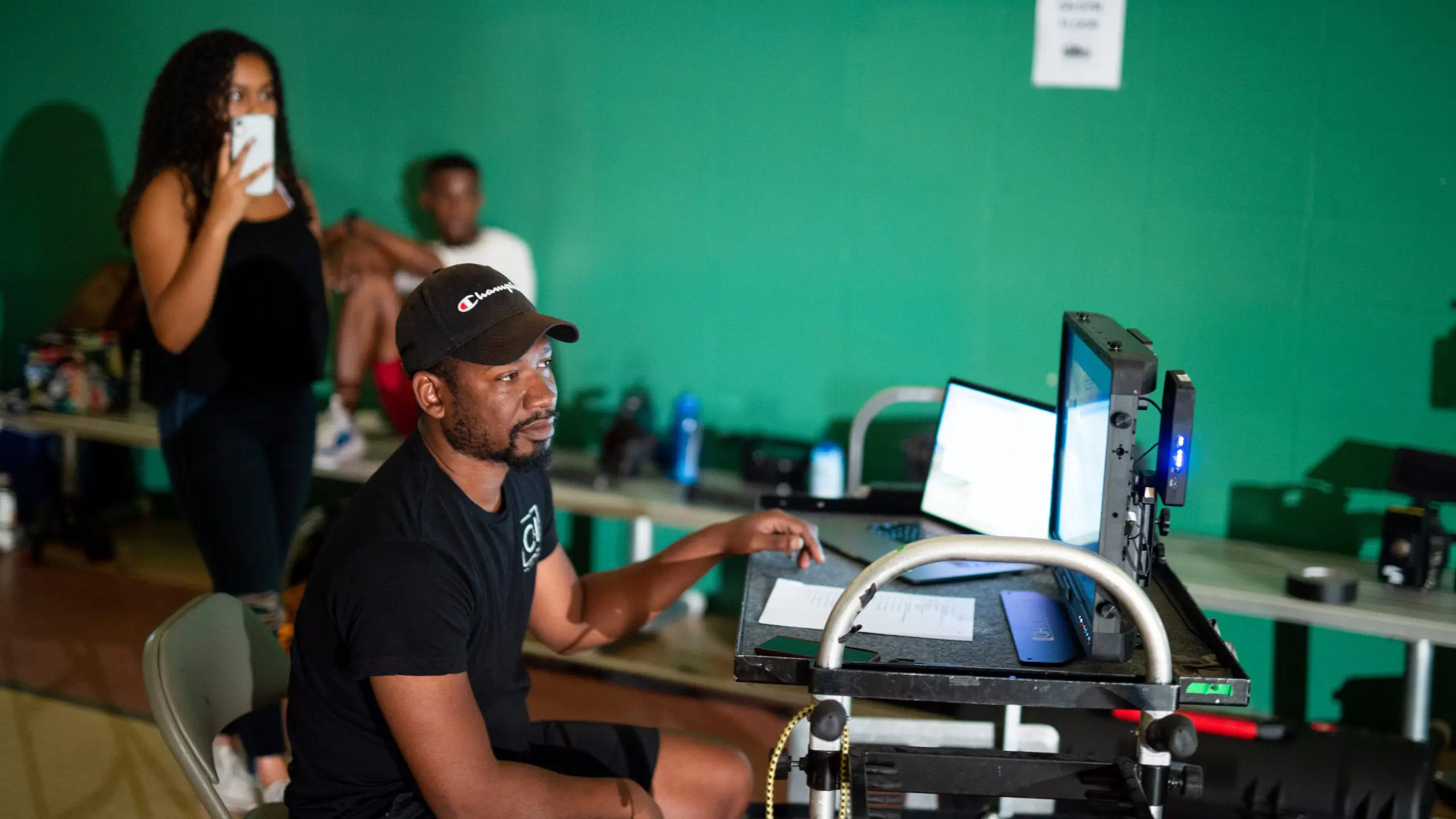
Live streaming has transformed the way we consume content, emerging as a vital tool for engagement in today’s digital landscape. With its ability to connect audiences in real-time, livestreaming has become essential for brands, influencers, and organizations aiming to reach wider audiences and foster community interaction.
The journey of live streaming technology began with simple broadcasts over the internet, but it has since evolved into a sophisticated medium that encompasses high-definition video, interactive features, and multi-platform integration.
As we look ahead, several trends are set to redefine livestream production. These innovations promise to enhance the viewer experience, increase accessibility, and broaden the scope of content that can be delivered live. Understanding these trends is crucial for anyone looking to stay relevant in the ever-changing world of digital media.
## Technological Advancements in Livestreaming
The landscape of live streaming is rapidly evolving, driven by the latest innovations in [video production gear](https://c-istudios.com/video-production-gear-list/). Today's cameras are not only more compact and portable but also feature advanced capabilities such as high dynamic range (HDR) and 4K resolution. These enhancements allow creators to deliver exceptional clarity and vibrancy, making their broadcasts visually appealing.
Brands and influencers are increasingly adopting DSLRs and mirrorless cameras equipped with interchangeable lenses, enabling them to adapt their setups for different environments, whether it’s a professional studio or an outdoor event.
In addition to cameras, advancements in microphone technology have revolutionized the way audio is captured during live streams. Lapel mics, shotgun microphones, and USB microphones have become essential tools for ensuring crisp and clear sound. These devices can effectively eliminate background noise and capture the speaker’s voice with precision, significantly improving overall production quality.
Furthermore, software solutions, such as audio mixing and streaming applications, allow creators to blend multiple audio sources seamlessly. This means that hosts can incorporate music, sound effects, or guest speakers into their streams, creating a more dynamic viewing experience.
Audio engineering also plays a pivotal role in enhancing livestream quality. Skilled audio engineers employ various techniques to optimize sound during broadcasts, including mixing, sound design, and mastering. By carefully adjusting audio levels and applying effects, they ensure that every element of the stream, from the host’s voice to background music, complements one another effectively. This attention to detail is vital in keeping the audience engaged and preventing audio issues that could detract from the overall experience.
In summary, the technological advancements in [video production](https://c-istudios.com/video-production-services/) gear and audio engineering are setting new standards for live stream quality. As creators harness these tools and embrace the benefits of improved connectivity, we can expect a more immersive and interactive viewing experience that will captivate audiences across various platforms.
## The Rise of Interactive Livestreams
As live streaming continues to gain popularity, the rise of interactive live streams is transforming audience engagement in profound ways. Traditional broadcasts often relied on one-way communication, where the host presented content without any direct interaction with viewers.
However, the introduction of interactive features has fundamentally changed this dynamic. Tools such as live polls, real-time Q&A sessions, and audience feedback mechanisms empower viewers to participate actively in the content being presented. This shift not only makes the experience more engaging but also fosters a sense of community among participants, encouraging them to connect with both the host and each other.
One of the most effective ways to engage audiences is through live polling. This feature allows viewers to express their opinions or preferences on various topics in real time, creating an engaging dialogue between the host and the audience.
For example, during a livestream focused on product launches, a brand can use polls to gauge viewer interest in different features or designs, allowing them to tailor their messaging accordingly. This level of interaction not only keeps viewers engaged but also provides valuable insights for brands.
The effectiveness of [media marketing](https://c-istudios.com/media-marketing-consultation-services/) strategies in promoting these interactive formats cannot be overstated. Brands that harness the power of live streaming often experience increased viewer retention and engagement. By incorporating interactive elements, they can build a more loyal audience, which translates into higher conversion rates and brand loyalty.
For instance, a beauty brand might host a live tutorial while encouraging viewers to ask questions and share their experiences in the comments. This creates a more personalized experience, making the audience feel valued and heard.
As the demand for interactive content continues to grow, brands that embrace these innovative formats will likely find themselves at the forefront of the digital landscape.
## Live streaming for Diverse Content Types
Live streaming has become an essential tool across various industries, transforming how content is created, shared, and consumed. In the entertainment sector, livestreaming events such as concerts, movie premieres, and behind-the-scenes access have gained popularity.
These broadcasts allow fans to engage with their favorite artists and experience events in real time, regardless of their physical location. Major music festivals have embraced live streaming to reach global audiences, enabling viewers to experience the excitement and energy of live performances from the comfort of their homes.
In the realm of education, livestreaming has proven to be a powerful medium for delivering lectures, workshops, and seminars. Educators can reach students across different locations, facilitating remote learning and engagement.
Many institutions have adopted livestreaming for guest lectures and interactive classes, allowing students to ask questions and participate actively in discussions. This not only enhances the learning experience but also broadens access to quality education.
Another significant area where livestreaming is making an impact is in [political campaigns](https://c-istudios.com/political-campaign-services/). Candidates and political organizations utilize live streaming to connect directly with voters, allowing for real-time interaction and feedback. This strategy has become increasingly important, particularly during election cycles, as it enables politicians to showcase their policies, answer questions, and engage with constituents in a more personal and transparent manner.
Focusing on documentary [film production](https://c-istudios.com/film-and-tv-production/), livestreaming offers a unique avenue for filmmakers to share their creative processes with audiences. Documentarians can broadcast live events, interviews, and behind-the-scenes footage, providing viewers with an authentic glimpse into the filmmaking journey.
This not only generates interest in the final product but also allows filmmakers to gather real-time feedback and engage with their audience during the production phase. Such transparency can enhance audience investment in the project and create a more profound connection with the film’s themes and narratives.
In summary, the versatility of live streaming has made it a valuable tool across various content types, including entertainment, education, politics, and documentary filmmaking. As industries continue to explore innovative ways to leverage this technology, the possibilities for engaging and immersive experiences are limitless.
## Monetization Strategies for Livestreaming
As live streaming grows in popularity, content creators and brands are increasingly exploring various monetization strategies to capitalize on their broadcasts. One of the most common methods is through subscriptions, where viewers pay a recurring fee to access exclusive content, live events, or ad-free experiences. Platforms like Patreon and Twitch have pioneered this model, allowing creators to build sustainable income streams while fostering community engagement.
Another lucrative avenue is sponsorships. Brands are eager to partner with popular live streamers to promote their products or services during broadcasts.
This collaboration often involves integrating brand messages naturally within the content, ensuring that viewers receive valuable information while remaining entertained. The effectiveness of [creative marketing](https://c-istudios.com/creative-marketing-services/) plays a crucial role in attracting these sponsorships. By developing unique and compelling content that resonates with their audience, creators can demonstrate their value to potential sponsors and create mutually beneficial partnerships.
In addition to subscriptions and sponsorships, advertisements remain a key monetization strategy. Many livestream platforms offer ad placements during broadcasts, providing creators with an additional revenue stream. However, striking a balance between monetization and viewer experience is vital; excessive ads can deter audiences from tuning in.
Therefore, effective branding and graphic design are essential in establishing a professional and recognizable live-streaming channel. Creators should focus on developing cohesive branding elements, such as logos, color schemes, and graphics, that reflect their identity and appeal to their target audience.
Branding goes beyond aesthetics; it involves creating a narrative that resonates with viewers. By clearly defining their mission and values, creators can attract audiences who align with their brand. This connection can lead to increased loyalty and engagement, ultimately boosting monetization efforts. Additionally, well-designed promotional materials can enhance the perceived value of live-streamed content, making sponsorships and advertising more attractive to potential partners.
By leveraging creative marketing techniques and focusing on effective branding and graphic design, content creators can build successful and sustainable live-streaming channels that resonate with audiences and attract lucrative partnerships.
As the live streaming landscape continues to evolve, those who adapt their monetization strategies will be best positioned for success.
## The Role of AI and Automation in Livestream Production
The integration of AI and automation into livestream production is revolutionizing the way content is created, managed, and delivered. By leveraging AI technologies, producers can streamline various aspects of the production process, making it more efficient and less labor-intensive.
For instance, AI-driven software can automate camera operations, adjusting angles and focusing based on real-time analysis of the action occurring on-screen. This technology reduces the need for multiple camera operators, allowing smaller teams to produce high-quality live streams with minimal effort.
AI also plays a significant role in enhancing the overall viewer experience through advanced data analysis. By analyzing viewer behavior and preferences, AI tools can provide insights that inform content creation and distribution strategies. For example, AI can help identify the best times to stream, the most engaging content formats, and even tailor recommendations for viewers, thereby increasing audience retention and engagement.
Moreover, the impact of [VFX compositing and animation](https://c-istudios.com/vfx-compositing-and-animation-services/) in live streams cannot be overstated. These technologies allow creators to add dynamic visual elements that elevate the production quality and captivate audiences. From lower thirds that display real-time information to animated transitions between segments, VFX can make live streams more engaging and professional.
As AI continues to advance, we can expect even more sophisticated applications of VFX in real-time environments, such as augmented reality overlays that enhance the storytelling aspect of live streams.
Looking ahead, future trends in web development will further improve the capabilities of streaming platforms. Innovations such as adaptive bitrate streaming will ensure that viewers receive the best possible quality based on their internet connection, enhancing the overall viewing experience.
Furthermore, the use of AI in web development can optimize content delivery networks, ensuring minimal latency and buffering during live broadcasts. As these technologies evolve, they will allow for even more seamless and interactive livestream experiences, setting new standards for audience engagement.
## Content Distribution and Accessibility
The effectiveness of live streaming hinges not only on the quality of the broadcast but also on its distribution and accessibility. One of the critical components of successful live streaming is robust web hosting solutions. High-quality web hosting ensures that streams can handle large volumes of traffic without interruptions or delays.
With the increasing popularity of live streams, having a reliable hosting provider can make the difference between a seamless experience and one filled with buffering and connectivity issues. This reliability is essential for creators and brands looking to maintain their audience's attention and engagement.
In addition to strong web hosting, effective [web maintenance](https://c-istudios.com/web-maintenance/) strategies are vital for ensuring smooth streaming experiences. Regular maintenance tasks, such as software updates, security checks, and performance monitoring, help prevent technical glitches that could disrupt live broadcasts.
Moreover, having a well-maintained website enhances user experience by providing easy navigation and quick access to past livestreams, promoting greater viewer engagement over time.
Another critical aspect of content distribution is ensuring that live streams are accessible to a broader audience. Implementing accessibility features, such as closed captioning, sign language interpretation, and audio descriptions, makes content more inclusive for viewers with disabilities. These features not only enhance the viewer experience for individuals with disabilities but also broaden the potential audience for live streams, allowing creators to reach more people.
Furthermore, optimizing live streams for various platforms, such as social media, mobile devices, and smart TVs, ensures that content is available to viewers wherever they are. By making live streams easily shareable and adaptable for different formats, creators can maximize their reach and impact.
By investing in reliable web hosting, implementing regular web maintenance, and ensuring that content is accessible to all viewers, creators can significantly enhance their livestreaming efforts and foster a more engaged audience.
## Best Practices for Successful Livestreaming
To ensure successful live streaming, creators must adhere to essential best practices that enhance the overall quality and viewer experience. Effective [video production](https://c-istudios.com/video-production-services/) is at the heart of any successful livestream. First and foremost, it is crucial to have a well-planned script and outline for the event.
This preparation not only helps keep the content organized but also ensures that the presenter can deliver key messages clearly and confidently. Additionally, using high-quality equipment, such as cameras, microphones, and lighting, greatly enhances the production value, making the stream more visually appealing and engaging for viewers.
Another important aspect of successful live streaming is the inclusion of interactive elements, such as live polls or Q&A sessions, which can significantly enhance audience engagement.
This interaction keeps viewers involved and encourages them to participate actively rather than passively consuming content. Moreover, testing all equipment and internet connections before going live is vital to avoid technical glitches that could detract from the viewing experience.
The role of SEO copywriting is also essential in promoting livestream events. Creators should optimize their event descriptions, titles, and promotional materials using relevant keywords to improve search engine visibility.
Crafting compelling titles and descriptions not only helps attract viewers but also increases the chances of being discovered by new audiences searching for related content. Utilizing social media platforms and email newsletters to promote upcoming livestreams can further boost attendance and engagement.
A comprehensive checklist for preparing a successful livestream should include: confirming the date and time, testing all equipment (audio and video), ensuring a stable internet connection, preparing engaging content, promoting the event on social media, and creating backup plans for potential technical issues.
By following this checklist, creators can enhance their chances of delivering a seamless and successful livestream that captivates their audience.
## Future Predictions for Livestream Production
As the landscape of live streaming continues to evolve, several future trends are anticipated to shape the industry. One of the most significant developments is the integration of advanced technologies that enhance the overall production quality. Innovations in artist management and media creation will play a crucial role in this transformation.
As more creators collaborate with professionals in these fields, we can expect a rise in sophisticated content that leverages high-quality production techniques, resulting in more engaging live streams.
Another trend to watch is the growing emphasis on interactivity and viewer participation. Future livestreams will likely incorporate augmented reality (AR) and virtual reality (VR) elements, providing immersive experiences that allow viewers to engage with the content in ways previously unimaginable.
Furthermore, live streaming has the potential to revolutionize [feature film mastering and delivery](https://c-istudios.com/feature-film-mastering-and-delivery/). As streaming technology becomes more advanced, filmmakers may choose to release films through live events, allowing audiences to experience premieres in real-time.
This model not only creates buzz around new releases but also provides filmmakers with valuable real-time feedback from their audience. Such innovations could lead to a paradigm shift in how films are marketed and distributed, ultimately transforming the traditional film release strategy.
In essence, the future of live stream production is poised for exciting developments driven by technological advancements and changing audience expectations. By staying ahead of these trends and leveraging the expertise of professionals in artist management and media creation, creators can position themselves for success in the evolving landscape of live streaming.
As the demand for high-quality, engaging, and interactive content continues to grow, embracing these changes will be crucial for those looking to thrive in this dynamic industry.
## Benefits of Video Marketing for Educational Institutions
Video marketing offers numerous benefits to educational institutions, making it a powerful tool for engaging students and enhancing their learning experiences.
By integrating dynamic content creation strategies, institutions can present information in a more relatable and captivating manner, which significantly boosts student engagement. Video content caters to the diverse learning styles of students, utilizing visuals, sound, and storytelling elements to make complex concepts more digestible. This dynamic approach not only grabs the attention of students but also aids in improving knowledge retention, as visual memory tends to be stronger than text-based memory.
Moreover, incorporating [creative marketing](https://c-istudios.com/creative-marketing-services/) into video campaigns helps align educational content with student preferences. Students today are accustomed to consuming video content across digital platforms, making video marketing an effective strategy to capture their interest. By blending educational goals with visually appealing content, institutions can create a more enjoyable and impactful learning environment. For instance, animated explainer videos can simplify challenging subjects, while testimonial videos from alumni can inspire prospective students by showcasing real-life success stories.
The role of social media marketing services is crucial in amplifying the reach of educational videos. Social media channels serve as vital platforms for sharing and distributing video content to a wider audience. These platforms enable educational institutions to connect not only with current students but also with potential students, parents, and the broader community.
By leveraging these services, schools and universities can ensure that their videos reach the right audiences, encouraging engagement through likes, shares, and comments.
## Types of Videos That Work Best for Schools and Universities
Various types of videos can be particularly effective for educational institutions, each serving a unique purpose in enhancing learning and engagement. One of the most common forms is documentary film production, which allows schools to tell compelling stories about their history, culture, or impact on the community.
These documentaries not only engage current students but also serve as powerful marketing tools for attracting new students. Similarly, explainer videos are highly beneficial, simplifying complex topics and making them easier to understand through animations, graphics, and clear narratives.
Campus tours, which offer virtual glimpses of the school environment, are another popular video format. They provide prospective students with a first-hand look at facilities, fostering a sense of familiarity before they even step foot on campus. Incorporating strong [branding and graphic design](https://c-istudios.com/branding-and-graphic-design-services/) elements into these videos ensures that the institution's identity is consistently represented, creating a recognizable and appealing visual experience for viewers. Whether it’s through logos, color schemes, or visual motifs, effective branding strengthens the institution’s presence and helps build trust with the audience.
Live classes, recorded lectures, and audio live streaming are other successful video formats that facilitate continuous learning. Live classes create a sense of immediacy, encouraging real-time interaction between students and instructors, while recorded lectures offer flexibility, allowing students to review material at their own pace. Audio live streaming, on the other hand, can be used to broadcast events, lectures, or announcements, making it easy for the audience to stay informed, even remotely. Testimonials and interviews are also valuable formats, providing personal insights from students, faculty, and alumni.
By sharing these diverse video formats, educational institutions can address various learning needs and preferences, making education more accessible and engaging for all students.
## Planning a Successful Video Marketing Strategy
Creating a successful video marketing strategy for educational institutions involves a well-defined plan that ensures the content is both engaging and aligned with educational objectives.
The first step is to identify the target audience, which can range from current students and parents to prospective students, alumni, and even faculty members. Understanding the audience’s preferences, behaviors, and needs is crucial, as it helps in tailoring the video content to resonate with them effectively.
Next, setting clear and achievable goals is essential. Educational institutions need to determine what they aim to achieve with video marketing, whether it’s boosting enrollment, enhancing brand visibility, or improving student engagement. These goals should be specific, measurable, and time-bound, allowing for better tracking and analysis of campaign performance.
The production phase is a critical component of the strategy, as the quality of video content directly impacts engagement. Leveraging [professional photography](https://c-istudios.com/professional-photography-services/) is vital during the filming process to capture high-quality visuals that make the videos more appealing. Incorporating feature film mastering and delivery can further enhance the quality, ensuring that the final video is polished and ready for distribution across various channels.
This process involves fine-tuning elements like color grading, sound mixing, and format adjustments to achieve a professional-grade output. High production quality not only maintains the institution's reputation but also retains the viewer’s attention for longer periods.
Aligning video content with educational objectives is another best practice. Videos should support the institution’s broader mission, whether by highlighting academic programs, promoting student success stories, or showcasing unique campus facilities. Storyboarding and scripting can help structure the content effectively, ensuring that it flows logically and covers key topics.
## Effective Video Production Techniques for Educational Content
Producing high-quality educational videos requires an understanding of the fundamentals of video production and a focus on techniques that make content visually engaging and educational.
The [video production](https://c-istudios.com/video-production-services/) process typically begins with scripting, where the content is structured to communicate clear and concise information. A strong script forms the foundation for effective storytelling, helping to convey complex ideas in a digestible manner. Once the script is finalized, the production moves to film, where camera angles, lighting, and sound play crucial roles in ensuring that the video is both visually and audibly clear.
One of the advanced techniques that can significantly enhance educational videos is the use of vfx compositing and animation. Integrating visual effects and animations can transform abstract concepts into tangible visuals, making them easier for students to grasp. For example, complex scientific theories or historical events can be animated to illustrate processes or timelines in an engaging way.
Animations can be used not just to entertain, but also to educate by breaking down information step-by-step. For subjects that require intricate details, like biology or physics, animation serves as a practical tool to demonstrate processes that are hard to capture through regular video footage.
Visuals and graphics also play a major role in video content creation. Using infographics, charts, and diagrams within videos can simplify information and provide a quick overview of key topics. Integrating these elements keeps viewers engaged and helps reinforce the learning material. Additionally, incorporating well-crafted transitions, music, and voiceovers can make educational videos more dynamic and hold viewers' attention for longer durations.
Overall, video production techniques that prioritize high-quality visuals, combined with vfx compositing and animation, can significantly enhance the educational value of the content. By creating informative and visually appealing videos, educational institutions can effectively engage their audiences, making learning more accessible and enjoyable.
## Integrating Video Marketing with Digital Platforms
To maximize the impact of video marketing, educational institutions must effectively integrate video content into their overall web development strategies. By embedding video [content](https://c-istudios.com/content-creation-services/) directly onto their websites and learning management systems (LMS), institutions can create a more interactive and engaging user experience.
This integration allows students, parents, and faculty to access educational videos easily, whether they are instructional clips, campus tours, or promotional content. For websites, adding videos to landing pages can increase visitor retention rates and improve the overall appeal of the site. Similarly, integrating videos within LMS platforms can enhance online courses, making lessons more dynamic and interactive for students.
The technical backbone of this integration is web hosting. Reliable web hosting ensures that video content loads quickly and plays seamlessly, which is crucial for maintaining viewer engagement. Slow-loading or glitchy videos can frustrate users and diminish the effectiveness of video marketing efforts. Institutions must choose hosting solutions that offer sufficient bandwidth, fast servers, and video-friendly features.
Additionally, using Content Delivery Networks (CDNs) as part of the hosting strategy can help deliver video content more efficiently by distributing it across multiple servers, reducing buffering times.
Optimizing video for digital platforms also requires careful consideration of file formats, resolution, and mobile compatibility. Videos should be optimized for both desktop and mobile viewing, ensuring that the content is accessible to users on various devices. Embedding video on webpages using player interfaces that are intuitive and user-friendly can also enhance the user experience.
Furthermore, incorporating video analytics tools within the website framework can provide valuable insights into viewer behavior, helping institutions understand what types of content are resonating with their audience. This data-driven approach enables educational institutions to refine their video marketing strategies, making them more effective over time.
## Promoting Educational Videos Across Channels
Once video content is created, the next step is to promote it effectively across multiple channels using social media marketing services. Platforms like YouTube, Instagram, Facebook, and LinkedIn offer diverse opportunities for reaching different segments of the audience. Educational institutions can use these platforms to share a wide range of video content, from short-form clips that drive awareness to longer, in-depth videos that support learning objectives. By consistently posting videos and engaging with the audience through comments, likes, and shares, institutions can foster a sense of community and encourage participation.
Social media marketing services also play a critical role in targeting specific demographics, such as prospective students, parents, or alumni. Through targeted ad campaigns and sponsored posts, schools and universities can ensure that their video content reaches the intended audience. Collaborations with influencers in the education sector can further amplify reach and credibility, allowing institutions to tap into existing follower bases.
A crucial aspect of video promotion is [SEO copywriting](https://c-istudios.com/seo-copywriting-services/), which helps ensure that educational videos are easily discoverable by search engines. By including relevant keywords in video titles, descriptions, and tags, institutions can increase the likelihood of their videos appearing in search results. This is particularly important for platforms like YouTube, where search visibility directly impacts video views. Moreover, using keyword-rich transcripts and closed captions can further boost search engine rankings, making it easier for potential viewers to find the content.
Incorporating SEO copywriting techniques within video promotion strategies also includes sharing video links on websites, blogs, and email newsletters, driving traffic back to the main video content. With the right combination of social media marketing and SEO efforts, educational institutions can significantly increase the reach and impact of their video campaigns, making them more accessible and effective in meeting their engagement goals.
## Challenges and Solutions in Video Marketing for Education
While video marketing holds great potential for educational institutions, it also comes with several challenges that can hinder its implementation. One of the most common obstacles is budget constraints.
Producing high-quality videos often requires significant financial resources, which can be a barrier for many schools, especially those with limited funding. Another challenge is the need for technical expertise, as effective [video production](https://c-istudios.com/video-production-services/) demands skills in filming, editing, and post-production. Furthermore, maintaining content consistency across multiple videos can be difficult, especially when aiming to ensure a unified message and brand identity.
To address budget constraints, educational institutions can adopt low-cost creative marketing strategies. For example, instead of producing high-budget videos, schools can create engaging content using smartphone cameras and free editing software, focusing on authenticity rather than high-end production.
Additionally, creative marketing techniques like repurposing existing content can help extend the lifespan of video assets, making them more cost-effective. For instance, a recorded lecture can be segmented into smaller videos, or campus tour footage can be repurposed into promotional clips.
Technical issues, particularly related to sound quality, can be tackled with audio engineering solutions. Good sound is critical to delivering a clear and professional video, as poor audio quality can quickly drive viewers away, regardless of the visual content. Institutions can invest in basic audio equipment like lapel microphones or use audio-editing software to enhance the sound quality of videos.
Partnering with experts in audio engineering can ensure that the sound is clear and impactful, whether it’s for voiceovers, interviews, or background music. Moreover, training internal staff or students in basic video production and editing skills can help maintain content consistency, enabling schools to produce videos that adhere to a consistent tone and quality.
## Future Trends in Video Marketing for Educational Institutions
As video marketing continues to evolve, educational institutions must stay ahead by embracing emerging trends that enhance engagement and learning outcomes. One of the most promising developments is the use of AI-driven content creation. Artificial intelligence tools can assist in generating video scripts, editing footage, and even personalizing content for different student segments, making video marketing more efficient and tailored.
Interactive video formats are also gaining popularity, providing students with an active role in their learning journey. These videos allow viewers to make decisions, answer questions, or explore topics further through embedded links, making the learning experience more engaging and participatory. Educational institutions can use interactive video to conduct virtual quizzes, scenario-based learning, or interactive storytelling, which can significantly enhance the learning process.
Looking towards more advanced strategies, institutions might consider exploring a TV show pitch to create larger visibility. This approach involves developing a full-fledged video series centered around educational themes, campus life, or student success stories. Such a series can be pitched to local TV networks or hosted on online streaming platforms, significantly broadening the institution’s reach.
Furthermore, artist management and [media creation](https://c-istudios.com/artist-management-and-media-creation/) can be utilized for collaborative video projects that engage not only students and faculty but also creative professionals from outside the institution. By collaborating with filmmakers, graphic designers, and content creators, educational institutions can produce high-quality, professional videos that elevate their brand and create deeper community engagement.
Adopting these trends will require schools to stay agile, experiment with new formats, and continuously gather feedback from students and faculty to refine their video marketing strategies. As technology continues to shape the future of education, leveraging these emerging trends will enable institutions to offer more interactive, personalized, and impactful learning experiences through video marketing.
## Work with C&I Studios
If you are planning a project like this, our team can take it from concept to final delivery. Explore our [video production services](https://c-istudios.com/video-production-services/), browse [our work](https://c-istudios.com/our-work/) to see how we tell brand stories, and [get in touch](https://c-istudios.com/contact/) when you are ready to start.
Originally published October 21, 2024
---
*This content is from [C&I Studios](https://c-istudios.com), a full-service production company.*
---
# Video Marketing for Educational Institutions: Strategies for Engagement
> Published: October 20, 2024
> Categories: Commercial & Brand
> Source: https://c-istudios.com/video-marketing-for-educational-institutions-strategies-for-engagement/
---
.cib{--paper:#1b1d1f;--ink:#fff;--body:#d5d7d9;--muted:#8b9096;--line:rgba(255,255,255,.12);--thumb:#2b2e31;--card:#212426;--accent:#c02b0a;--blue:#5B8FA8;--serif:'Playfair Display',Georgia,serif;--sans:'Poppins',-apple-system,sans-serif;--measure:900px;background:var(--paper);color:var(--body);font-family:var(--sans);line-height:1.6;position:relative;left:50%;transform:translateX(-50%);width:90vw;max-width:1920px}
.cib *{box-sizing:border-box}
.cib .kicker{max-width:var(--measure);margin:58px auto 0;padding:0 22px;font-size:12.5px;font-weight:700;letter-spacing:2.5px;text-transform:uppercase;color:var(--blue)}
.cib h1.cibh1{text-wrap:balance;font-family:var(--serif);font-weight:500;font-size:clamp(46px,6vw,72px);line-height:1.08;color:var(--ink);max-width:var(--measure);margin:18px auto 0;padding:0 22px;letter-spacing:-.5px}
.cib .metarow{max-width:var(--measure);margin:20px auto 0;padding:0 22px;color:var(--muted);font-size:14px}
.cib .hero{position:relative;width:100%;height:0;padding-bottom:56.25%;overflow:hidden;margin:48px auto 0;border-top:1px solid var(--line);border-bottom:1px solid var(--line)}
.cib .hero .ph{width:100%;aspect-ratio:16/9;background:var(--thumb);border-top:1px solid var(--line);border-bottom:1px solid var(--line);display:flex;align-items:center;justify-content:center;color:#7d8288;font-size:13px;text-align:center;padding:0 20px}
.cib .body{max-width:var(--measure);margin:12px auto 0;padding:52px 22px 6px}
.cib .body.lead p:first-child{font-size:23px;line-height:1.62;color:var(--ink)}
.cib .body p{font-size:18.5px;line-height:1.85;margin:0 0 30px;color:var(--body)}
.cib .body h2{text-wrap:balance;font-family:var(--serif);font-weight:500;font-size:clamp(32px,4vw,48px);line-height:1.22;color:var(--ink);margin:70px 0 20px;letter-spacing:-.3px}
.cib .body h3{text-wrap:balance;font-family:var(--sans);font-weight:600;font-size:22px;color:var(--ink);margin:38px 0 8px}
.cib .body a{color:var(--ink);text-decoration:underline;text-decoration-color:rgba(255,255,255,.4);text-underline-offset:3px}
.cib .body a:hover{text-decoration-color:var(--ink)}
.cib .ctable{width:100%;border-collapse:collapse;margin:16px 0 30px;font-size:16px}
.cib .ctable th{background:#000;color:#fff;text-align:left;padding:10px 12px;font-family:var(--sans)}
.cib .ctable td{padding:10px 12px;border-bottom:1px solid var(--line);color:var(--body)}
.cib .inimg{position:relative;width:100%;height:0;padding-bottom:56.25%;overflow:hidden;margin:72px auto;border-top:1px solid var(--line);border-bottom:1px solid var(--line)}
.cib .inimg .ph{width:100%;aspect-ratio:16/9;background:var(--thumb);border-top:1px solid var(--line);border-bottom:1px solid var(--line);display:flex;align-items:center;justify-content:center;color:#7d8288;font-size:13px}
.cib .origpub{max-width:var(--measure);margin:60px auto 0;padding:26px 22px 0;border-top:1px solid var(--line);color:var(--muted);font-size:13.5px}
.cib .related{max-width:1200px;margin:64px auto 0;padding:34px 22px 76px}
.cib .related h3{font-family:var(--sans);font-size:12.5px;letter-spacing:2px;text-transform:uppercase;color:var(--ink);margin:0 0 24px}
.cib .grid{display:grid;grid-template-columns:repeat(3,1fr);gap:28px}
.cib .rc{background:var(--card);border:1px solid var(--line);display:block;text-decoration:none;color:inherit;transition:border-color .15s}
.cib a.rc:hover{border-color:rgba(255,255,255,.5)}
.cib .rc .thumb{position:relative;width:100%;height:0;padding-bottom:56.25%;background:var(--thumb);overflow:hidden}
.cib .rc .thumb img{position:absolute!important;top:0!important;left:0!important;width:100%!important;height:100%!important;object-fit:cover!important;margin:0!important}
.cib .rc .cc{padding:14px 15px 17px}
.cib .rc .rt{font-family:var(--serif);font-weight:500;font-size:16px;line-height:1.3;color:var(--ink);margin:0 0 6px}
.cib .rc .rm{font-size:11px;letter-spacing:1px;text-transform:uppercase;color:var(--muted)}
.cib img{margin:0!important;padding:0!important;display:block!important;vertical-align:top;max-width:100%}
.cib .hero img,.cib .inimg img{position:absolute!important;top:0!important;left:0!important;width:100%!important;height:100%!important;object-fit:cover!important;margin:0!important;padding:0!important;border:0!important;display:block!important;aspect-ratio:auto!important}
.cib .hero+.body{padding-top:36px}
@media(max-width:760px){.cib .grid{grid-template-columns:1fr}.cib .body h2{margin:52px 0 16px}.cib .body p{font-size:17.5px}.cib .inimg,.cib .hero{margin-top:44px}}
.cib .vembed{max-width:var(--measure);margin:44px auto;padding:0 22px}.cib .vembed .vwrap{position:relative;width:100%;height:0;padding-bottom:56.25%}.cib .vembed .vwrap iframe{position:absolute;top:0;left:0;width:100%;height:100%;border:0}
Commercial & Brand
# Video Marketing for Educational Institutions. Strategies for Engagement
23 min read

In recent years, video has become one of the most powerful tools for communication, transcending industries and changing the way people interact with content. In the realm of education, the integration of video is proving to be a game-changer. It offers educational institutions an engaging way to connect with students, improve learning experiences, and communicate their message effectively.
As students increasingly prefer visual content over traditional text, video emerges as a natural fit to enhance both teaching and learning. It offers a dynamic approach that can break down complex concepts, personalize learning journeys, and foster better understanding.
This article delves into how educational institutions can harness the potential of video marketing, exploring strategies, techniques, and future trends that can make video an integral part of educational engagement.
## Benefits of Video Marketing for Educational Institutions
Video marketing offers numerous benefits to educational institutions, making it a powerful tool for engaging students and enhancing their learning experiences.
By integrating dynamic content creation strategies, institutions can present information in a more relatable and captivating manner, which significantly boosts student engagement. Video content caters to the diverse learning styles of students, utilizing visuals, sound, and storytelling elements to make complex concepts more digestible. This dynamic approach not only grabs the attention of students but also aids in improving knowledge retention, as visual memory tends to be stronger than text-based memory.
Moreover, incorporating [creative marketing](https://c-istudios.com/creative-marketing-services/) into video campaigns helps align educational content with student preferences. Students today are accustomed to consuming video content across digital platforms, making video marketing an effective strategy to capture their interest. By blending educational goals with visually appealing content, institutions can create a more enjoyable and impactful learning environment. For instance, animated explainer videos can simplify challenging subjects, while testimonial videos from alumni can inspire prospective students by showcasing real-life success stories.
The role of social media marketing services is crucial in amplifying the reach of educational videos. Social media channels serve as vital platforms for sharing and distributing video content to a wider audience. These platforms enable educational institutions to connect not only with current students but also with potential students, parents, and the broader community.
By leveraging these services, schools and universities can ensure that their videos reach the right audiences, encouraging engagement through likes, shares, and comments.
## Types of Videos That Work Best for Schools and Universities
Various types of videos can be particularly effective for educational institutions, each serving a unique purpose in enhancing learning and engagement. One of the most common forms is documentary [film production](https://c-istudios.com/film-and-tv-production/), which allows schools to tell compelling stories about their history, culture, or impact on the community.
These documentaries not only engage current students but also serve as powerful marketing tools for attracting new students. Similarly, explainer videos are highly beneficial, simplifying complex topics and making them easier to understand through animations, graphics, and clear narratives.
Campus tours, which offer virtual glimpses of the school environment, are another popular video format. They provide prospective students with a first-hand look at facilities, fostering a sense of familiarity before they even step foot on campus. Incorporating strong [branding and graphic design](https://c-istudios.com/branding-and-graphic-design-services/) elements into these videos ensures that the institution's identity is consistently represented, creating a recognizable and appealing visual experience for viewers. Whether it’s through logos, color schemes, or visual motifs, effective branding strengthens the institution’s presence and helps build trust with the audience.
Live classes, recorded lectures, and audio live streaming are other successful video formats that facilitate continuous learning. Live classes create a sense of immediacy, encouraging real-time interaction between students and instructors, while recorded lectures offer flexibility, allowing students to review material at their own pace. Audio live streaming, on the other hand, can be used to broadcast events, lectures, or announcements, making it easy for the audience to stay informed, even remotely. Testimonials and interviews are also valuable formats, providing personal insights from students, faculty, and alumni.
By sharing these diverse video formats, educational institutions can address various learning needs and preferences, making education more accessible and engaging for all students.
## Planning a Successful Video Marketing Strategy
Creating a successful video marketing strategy for educational institutions involves a well-defined plan that ensures the content is both engaging and aligned with educational objectives.
The first step is to identify the target audience, which can range from current students and parents to prospective students, alumni, and even faculty members. Understanding the audience’s preferences, behaviors, and needs is crucial, as it helps in tailoring the video content to resonate with them effectively.
Next, setting clear and achievable goals is essential. Educational institutions need to determine what they aim to achieve with video marketing, whether it’s boosting enrollment, enhancing brand visibility, or improving student engagement. These goals should be specific, measurable, and time-bound, allowing for better tracking and analysis of campaign performance.
The production phase is a critical component of the strategy, as the quality of video content directly impacts engagement. Leveraging [professional photography](https://c-istudios.com/professional-photography-services/) is vital during the filming process to capture high-quality visuals that make the videos more appealing. Incorporating feature film mastering and delivery can further enhance the quality, ensuring that the final video is polished and ready for distribution across various channels.
This process involves fine-tuning elements like color grading, sound mixing, and format adjustments to achieve a professional-grade output. High production quality not only maintains the institution's reputation but also retains the viewer’s attention for longer periods.
Aligning video content with educational objectives is another best practice. Videos should support the institution’s broader mission, whether by highlighting academic programs, promoting student success stories, or showcasing unique campus facilities. Storyboarding and scripting can help structure the content effectively, ensuring that it flows logically and covers key topics.
## Effective Video Production Techniques for Educational Content
Producing high-quality educational videos requires an understanding of the fundamentals of [video production](https://c-istudios.com/video-production-services/) and a focus on techniques that make content visually engaging and educational.
The [video production](https://c-istudios.com/video-production-services/) process typically begins with scripting, where the content is structured to communicate clear and concise information. A strong script forms the foundation for effective storytelling, helping to convey complex ideas in a digestible manner. Once the script is finalized, the production moves to film, where camera angles, lighting, and sound play crucial roles in ensuring that the video is both visually and audibly clear.
One of the advanced techniques that can significantly enhance educational videos is the use of vfx compositing and animation. Integrating visual effects and animations can transform abstract concepts into tangible visuals, making them easier for students to grasp. For example, complex scientific theories or historical events can be animated to illustrate processes or timelines in an engaging way.
Animations can be used not just to entertain, but also to educate by breaking down information step-by-step. For subjects that require intricate details, like biology or physics, animation serves as a practical tool to demonstrate processes that are hard to capture through regular video footage.
Visuals and graphics also play a major role in video content creation. Using infographics, charts, and diagrams within videos can simplify information and provide a quick overview of key topics. Integrating these elements keeps viewers engaged and helps reinforce the learning material. Additionally, incorporating well-crafted transitions, music, and voiceovers can make educational videos more dynamic and hold viewers' attention for longer durations.
Overall, video production techniques that prioritize high-quality visuals, combined with vfx compositing and animation, can significantly enhance the educational value of the content. By creating informative and visually appealing videos, educational institutions can effectively engage their audiences, making learning more accessible and enjoyable.
## Integrating Video Marketing with Digital Platforms
To maximize the impact of video marketing, educational institutions must effectively integrate video content into their overall web development strategies. By embedding video [content](https://c-istudios.com/content-creation-services/) directly onto their websites and learning management systems (LMS), institutions can create a more interactive and engaging user experience.
This integration allows students, parents, and faculty to access educational videos easily, whether they are instructional clips, campus tours, or promotional content. For websites, adding videos to landing pages can increase visitor retention rates and improve the overall appeal of the site. Similarly, integrating videos within LMS platforms can enhance online courses, making lessons more dynamic and interactive for students.
The technical backbone of this integration is web hosting. Reliable web hosting ensures that video content loads quickly and plays seamlessly, which is crucial for maintaining viewer engagement. Slow-loading or glitchy videos can frustrate users and diminish the effectiveness of video marketing efforts. Institutions must choose hosting solutions that offer sufficient bandwidth, fast servers, and video-friendly features.
Additionally, using Content Delivery Networks (CDNs) as part of the hosting strategy can help deliver video content more efficiently by distributing it across multiple servers, reducing buffering times.
Optimizing video for digital platforms also requires careful consideration of file formats, resolution, and mobile compatibility. Videos should be optimized for both desktop and mobile viewing, ensuring that the content is accessible to users on various devices. Embedding video on webpages using player interfaces that are intuitive and user-friendly can also enhance the user experience.
Furthermore, incorporating video analytics tools within the website framework can provide valuable insights into viewer behavior, helping institutions understand what types of content are resonating with their audience. This data-driven approach enables educational institutions to refine their video marketing strategies, making them more effective over time.
## Promoting Educational Videos Across Channels
Once video content is created, the next step is to promote it effectively across multiple channels using social media marketing services. Platforms like YouTube, Instagram, Facebook, and LinkedIn offer diverse opportunities for reaching different segments of the audience. Educational institutions can use these platforms to share a wide range of video content, from short-form clips that drive awareness to longer, in-depth videos that support learning objectives. By consistently posting videos and engaging with the audience through comments, likes, and shares, institutions can foster a sense of community and encourage participation.
Social media marketing services also play a critical role in targeting specific demographics, such as prospective students, parents, or alumni. Through targeted ad campaigns and sponsored posts, schools and universities can ensure that their video content reaches the intended audience. Collaborations with influencers in the education sector can further amplify reach and credibility, allowing institutions to tap into existing follower bases.
A crucial aspect of video promotion is [SEO copywriting](https://c-istudios.com/seo-copywriting-services/), which helps ensure that educational videos are easily discoverable by search engines. By including relevant keywords in video titles, descriptions, and tags, institutions can increase the likelihood of their videos appearing in search results. This is particularly important for platforms like YouTube, where search visibility directly impacts video views. Moreover, using keyword-rich transcripts and closed captions can further boost search engine rankings, making it easier for potential viewers to find the content.
Incorporating SEO copywriting techniques within video promotion strategies also includes sharing video links on websites, blogs, and email newsletters, driving traffic back to the main video content. With the right combination of social media marketing and SEO efforts, educational institutions can significantly increase the reach and impact of their video campaigns, making them more accessible and effective in meeting their engagement goals.
## Challenges and Solutions in Video Marketing for Education
While video marketing holds great potential for educational institutions, it also comes with several challenges that can hinder its implementation. One of the most common obstacles is budget constraints.
Producing high-quality videos often requires significant financial resources, which can be a barrier for many schools, especially those with limited funding. Another challenge is the need for technical expertise, as effective [video production](https://c-istudios.com/video-production-services/) demands skills in filming, editing, and post-production. Furthermore, maintaining content consistency across multiple videos can be difficult, especially when aiming to ensure a unified message and brand identity.
To address budget constraints, educational institutions can adopt low-cost creative marketing strategies. For example, instead of producing high-budget videos, schools can create engaging content using smartphone cameras and free editing software, focusing on authenticity rather than high-end production.
Additionally, creative marketing techniques like repurposing existing content can help extend the lifespan of video assets, making them more cost-effective. For instance, a recorded lecture can be segmented into smaller videos, or campus tour footage can be repurposed into promotional clips.
Technical issues, particularly related to sound quality, can be tackled with audio engineering solutions. Good sound is critical to delivering a clear and professional video, as poor audio quality can quickly drive viewers away, regardless of the visual content. Institutions can invest in basic audio equipment like lapel microphones or use audio-editing software to enhance the sound quality of videos.
Partnering with experts in audio engineering can ensure that the sound is clear and impactful, whether it’s for voiceovers, interviews, or background music. Moreover, training internal staff or students in basic video production and editing skills can help maintain content consistency, enabling schools to produce videos that adhere to a consistent tone and quality.
## Future Trends in Video Marketing for Educational Institutions
As video marketing continues to evolve, educational institutions must stay ahead by embracing emerging trends that enhance engagement and learning outcomes. One of the most promising developments is the use of AI-driven content creation. Artificial intelligence tools can assist in generating video scripts, editing footage, and even personalizing content for different student segments, making video marketing more efficient and tailored.
Interactive video formats are also gaining popularity, providing students with an active role in their learning journey. These videos allow viewers to make decisions, answer questions, or explore topics further through embedded links, making the learning experience more engaging and participatory. Educational institutions can use interactive video to conduct virtual quizzes, scenario-based learning, or interactive storytelling, which can significantly enhance the learning process.
Looking towards more advanced strategies, institutions might consider exploring a TV show pitch to create larger visibility. This approach involves developing a full-fledged video series centered around educational themes, campus life, or student success stories. Such a series can be pitched to local TV networks or hosted on online streaming platforms, significantly broadening the institution’s reach.
Furthermore, artist management and [media creation](https://c-istudios.com/artist-management-and-media-creation/) can be utilized for collaborative video projects that engage not only students and faculty but also creative professionals from outside the institution. By collaborating with filmmakers, graphic designers, and content creators, educational institutions can produce high-quality, professional videos that elevate their brand and create deeper community engagement.
Adopting these trends will require schools to stay agile, experiment with new formats, and continuously gather feedback from students and faculty to refine their video marketing strategies. As technology continues to shape the future of education, leveraging these emerging trends will enable institutions to offer more interactive, personalized, and impactful learning experiences through video marketing.
## Benefits of Video Marketing for Educational Institutions
Video marketing offers numerous benefits to educational institutions, making it a powerful tool for engaging students and enhancing their learning experiences.
By integrating dynamic content creation strategies, institutions can present information in a more relatable and captivating manner, which significantly boosts student engagement. Video content caters to the diverse learning styles of students, utilizing visuals, sound, and storytelling elements to make complex concepts more digestible. This dynamic approach not only grabs the attention of students but also aids in improving knowledge retention, as visual memory tends to be stronger than text-based memory.
Moreover, incorporating [creative marketing](https://c-istudios.com/creative-marketing-services/) into video campaigns helps align educational content with student preferences. Students today are accustomed to consuming video content across digital platforms, making video marketing an effective strategy to capture their interest. By blending educational goals with visually appealing content, institutions can create a more enjoyable and impactful learning environment. For instance, animated explainer videos can simplify challenging subjects, while testimonial videos from alumni can inspire prospective students by showcasing real-life success stories.
The role of social media marketing services is crucial in amplifying the reach of educational videos. Social media channels serve as vital platforms for sharing and distributing video content to a wider audience. These platforms enable educational institutions to connect not only with current students but also with potential students, parents, and the broader community.
By leveraging these services, schools and universities can ensure that their videos reach the right audiences, encouraging engagement through likes, shares, and comments.
## Types of Videos That Work Best for Schools and Universities
Various types of videos can be particularly effective for educational institutions, each serving a unique purpose in enhancing learning and engagement. One of the most common forms is documentary film production, which allows schools to tell compelling stories about their history, culture, or impact on the community.
These documentaries not only engage current students but also serve as powerful marketing tools for attracting new students. Similarly, explainer videos are highly beneficial, simplifying complex topics and making them easier to understand through animations, graphics, and clear narratives.
Campus tours, which offer virtual glimpses of the school environment, are another popular video format. They provide prospective students with a first-hand look at facilities, fostering a sense of familiarity before they even step foot on campus. Incorporating strong [branding and graphic design](https://c-istudios.com/branding-and-graphic-design-services/) elements into these videos ensures that the institution's identity is consistently represented, creating a recognizable and appealing visual experience for viewers. Whether it’s through logos, color schemes, or visual motifs, effective branding strengthens the institution’s presence and helps build trust with the audience.
Live classes, recorded lectures, and audio live streaming are other successful video formats that facilitate continuous learning. Live classes create a sense of immediacy, encouraging real-time interaction between students and instructors, while recorded lectures offer flexibility, allowing students to review material at their own pace. Audio live streaming, on the other hand, can be used to broadcast events, lectures, or announcements, making it easy for the audience to stay informed, even remotely. Testimonials and interviews are also valuable formats, providing personal insights from students, faculty, and alumni.
By sharing these diverse video formats, educational institutions can address various learning needs and preferences, making education more accessible and engaging for all students.
## Planning a Successful Video Marketing Strategy
Creating a successful video marketing strategy for educational institutions involves a well-defined plan that ensures the content is both engaging and aligned with educational objectives.
The first step is to identify the target audience, which can range from current students and parents to prospective students, alumni, and even faculty members. Understanding the audience’s preferences, behaviors, and needs is crucial, as it helps in tailoring the video content to resonate with them effectively.
Next, setting clear and achievable goals is essential. Educational institutions need to determine what they aim to achieve with video marketing, whether it’s boosting enrollment, enhancing brand visibility, or improving student engagement. These goals should be specific, measurable, and time-bound, allowing for better tracking and analysis of campaign performance.
The production phase is a critical component of the strategy, as the quality of video content directly impacts engagement. Leveraging [professional photography](https://c-istudios.com/professional-photography-services/) is vital during the filming process to capture high-quality visuals that make the videos more appealing. Incorporating feature film mastering and delivery can further enhance the quality, ensuring that the final video is polished and ready for distribution across various channels.
This process involves fine-tuning elements like color grading, sound mixing, and format adjustments to achieve a professional-grade output. High production quality not only maintains the institution's reputation but also retains the viewer’s attention for longer periods.
Aligning video content with educational objectives is another best practice. Videos should support the institution’s broader mission, whether by highlighting academic programs, promoting student success stories, or showcasing unique campus facilities. Storyboarding and scripting can help structure the content effectively, ensuring that it flows logically and covers key topics.
## Effective Video Production Techniques for Educational Content
Producing high-quality educational videos requires an understanding of the fundamentals of video production and a focus on techniques that make content visually engaging and educational.
The [video production](https://c-istudios.com/video-production-services/) process typically begins with scripting, where the content is structured to communicate clear and concise information. A strong script forms the foundation for effective storytelling, helping to convey complex ideas in a digestible manner. Once the script is finalized, the production moves to film, where camera angles, lighting, and sound play crucial roles in ensuring that the video is both visually and audibly clear.
One of the advanced techniques that can significantly enhance educational videos is the use of vfx compositing and animation. Integrating visual effects and animations can transform abstract concepts into tangible visuals, making them easier for students to grasp. For example, complex scientific theories or historical events can be animated to illustrate processes or timelines in an engaging way.
Animations can be used not just to entertain, but also to educate by breaking down information step-by-step. For subjects that require intricate details, like biology or physics, animation serves as a practical tool to demonstrate processes that are hard to capture through regular video footage.
Visuals and graphics also play a major role in video content creation. Using infographics, charts, and diagrams within videos can simplify information and provide a quick overview of key topics. Integrating these elements keeps viewers engaged and helps reinforce the learning material. Additionally, incorporating well-crafted transitions, music, and voiceovers can make educational videos more dynamic and hold viewers' attention for longer durations.
Overall, video production techniques that prioritize high-quality visuals, combined with vfx compositing and animation, can significantly enhance the educational value of the content. By creating informative and visually appealing videos, educational institutions can effectively engage their audiences, making learning more accessible and enjoyable.
## Integrating Video Marketing with Digital Platforms
To maximize the impact of video marketing, educational institutions must effectively integrate video content into their overall web development strategies. By embedding video [content](https://c-istudios.com/content-creation-services/) directly onto their websites and learning management systems (LMS), institutions can create a more interactive and engaging user experience.
This integration allows students, parents, and faculty to access educational videos easily, whether they are instructional clips, campus tours, or promotional content. For websites, adding videos to landing pages can increase visitor retention rates and improve the overall appeal of the site. Similarly, integrating videos within LMS platforms can enhance online courses, making lessons more dynamic and interactive for students.
The technical backbone of this integration is web hosting. Reliable web hosting ensures that video content loads quickly and plays seamlessly, which is crucial for maintaining viewer engagement. Slow-loading or glitchy videos can frustrate users and diminish the effectiveness of video marketing efforts. Institutions must choose hosting solutions that offer sufficient bandwidth, fast servers, and video-friendly features.
Additionally, using Content Delivery Networks (CDNs) as part of the hosting strategy can help deliver video content more efficiently by distributing it across multiple servers, reducing buffering times.
Optimizing video for digital platforms also requires careful consideration of file formats, resolution, and mobile compatibility. Videos should be optimized for both desktop and mobile viewing, ensuring that the content is accessible to users on various devices. Embedding video on webpages using player interfaces that are intuitive and user-friendly can also enhance the user experience.
Furthermore, incorporating video analytics tools within the website framework can provide valuable insights into viewer behavior, helping institutions understand what types of content are resonating with their audience. This data-driven approach enables educational institutions to refine their video marketing strategies, making them more effective over time.
## Promoting Educational Videos Across Channels
Once video content is created, the next step is to promote it effectively across multiple channels using social media marketing services. Platforms like YouTube, Instagram, Facebook, and LinkedIn offer diverse opportunities for reaching different segments of the audience. Educational institutions can use these platforms to share a wide range of video content, from short-form clips that drive awareness to longer, in-depth videos that support learning objectives. By consistently posting videos and engaging with the audience through comments, likes, and shares, institutions can foster a sense of community and encourage participation.
Social media marketing services also play a critical role in targeting specific demographics, such as prospective students, parents, or alumni. Through targeted ad campaigns and sponsored posts, schools and universities can ensure that their video content reaches the intended audience. Collaborations with influencers in the education sector can further amplify reach and credibility, allowing institutions to tap into existing follower bases.
A crucial aspect of video promotion is [SEO copywriting](https://c-istudios.com/seo-copywriting-services/), which helps ensure that educational videos are easily discoverable by search engines. By including relevant keywords in video titles, descriptions, and tags, institutions can increase the likelihood of their videos appearing in search results. This is particularly important for platforms like YouTube, where search visibility directly impacts video views. Moreover, using keyword-rich transcripts and closed captions can further boost search engine rankings, making it easier for potential viewers to find the content.
Incorporating SEO copywriting techniques within video promotion strategies also includes sharing video links on websites, blogs, and email newsletters, driving traffic back to the main video content. With the right combination of social media marketing and SEO efforts, educational institutions can significantly increase the reach and impact of their video campaigns, making them more accessible and effective in meeting their engagement goals.
## Challenges and Solutions in Video Marketing for Education
While video marketing holds great potential for educational institutions, it also comes with several challenges that can hinder its implementation. One of the most common obstacles is budget constraints.
Producing high-quality videos often requires significant financial resources, which can be a barrier for many schools, especially those with limited funding. Another challenge is the need for technical expertise, as effective [video production](https://c-istudios.com/video-production-services/) demands skills in filming, editing, and post-production. Furthermore, maintaining content consistency across multiple videos can be difficult, especially when aiming to ensure a unified message and brand identity.
To address budget constraints, educational institutions can adopt low-cost creative marketing strategies. For example, instead of producing high-budget videos, schools can create engaging content using smartphone cameras and free editing software, focusing on authenticity rather than high-end production.
Additionally, creative marketing techniques like repurposing existing content can help extend the lifespan of video assets, making them more cost-effective. For instance, a recorded lecture can be segmented into smaller videos, or campus tour footage can be repurposed into promotional clips.
Technical issues, particularly related to sound quality, can be tackled with audio engineering solutions. Good sound is critical to delivering a clear and professional video, as poor audio quality can quickly drive viewers away, regardless of the visual content. Institutions can invest in basic audio equipment like lapel microphones or use audio-editing software to enhance the sound quality of videos.
Partnering with experts in audio engineering can ensure that the sound is clear and impactful, whether it’s for voiceovers, interviews, or background music. Moreover, training internal staff or students in basic video production and editing skills can help maintain content consistency, enabling schools to produce videos that adhere to a consistent tone and quality.
## Future Trends in Video Marketing for Educational Institutions
As video marketing continues to evolve, educational institutions must stay ahead by embracing emerging trends that enhance engagement and learning outcomes. One of the most promising developments is the use of AI-driven content creation. Artificial intelligence tools can assist in generating video scripts, editing footage, and even personalizing content for different student segments, making video marketing more efficient and tailored.
Interactive video formats are also gaining popularity, providing students with an active role in their learning journey. These videos allow viewers to make decisions, answer questions, or explore topics further through embedded links, making the learning experience more engaging and participatory. Educational institutions can use interactive video to conduct virtual quizzes, scenario-based learning, or interactive storytelling, which can significantly enhance the learning process.
Looking towards more advanced strategies, institutions might consider exploring a TV show pitch to create larger visibility. This approach involves developing a full-fledged video series centered around educational themes, campus life, or student success stories. Such a series can be pitched to local TV networks or hosted on online streaming platforms, significantly broadening the institution’s reach.
Furthermore, artist management and [media creation](https://c-istudios.com/artist-management-and-media-creation/) can be utilized for collaborative video projects that engage not only students and faculty but also creative professionals from outside the institution. By collaborating with filmmakers, graphic designers, and content creators, educational institutions can produce high-quality, professional videos that elevate their brand and create deeper community engagement.
Adopting these trends will require schools to stay agile, experiment with new formats, and continuously gather feedback from students and faculty to refine their video marketing strategies. As technology continues to shape the future of education, leveraging these emerging trends will enable institutions to offer more interactive, personalized, and impactful learning experiences through video marketing.
## Work with C&I Studios
If you are planning a project like this, our team can take it from concept to final delivery. Explore our [video production services](https://c-istudios.com/video-production-services/), browse [our work](https://c-istudios.com/our-work/) to see how we tell brand stories, and [get in touch](https://c-istudios.com/contact/) when you are ready to start.
Originally published October 20, 2024
---
*This content is from [C&I Studios](https://c-istudios.com), a full-service production company.*
---
# Video Content Creation: Tips for Engaging and Captivating Audiences
> Published: October 17, 2024
> Categories: Commercial & Brand
> Source: https://c-istudios.com/video-content-creation-tips-for-engaging-and-captivating-audiences/
---
.cib{--paper:#1b1d1f;--ink:#fff;--body:#d5d7d9;--muted:#8b9096;--line:rgba(255,255,255,.12);--thumb:#2b2e31;--card:#212426;--accent:#c02b0a;--blue:#5B8FA8;--serif:'Playfair Display',Georgia,serif;--sans:'Poppins',-apple-system,sans-serif;--measure:900px;background:var(--paper);color:var(--body);font-family:var(--sans);line-height:1.6;position:relative;left:50%;transform:translateX(-50%);width:90vw;max-width:1920px}
.cib *{box-sizing:border-box}
.cib .kicker{max-width:var(--measure);margin:58px auto 0;padding:0 22px;font-size:12.5px;font-weight:700;letter-spacing:2.5px;text-transform:uppercase;color:var(--blue)}
.cib h1.cibh1{text-wrap:balance;font-family:var(--serif);font-weight:500;font-size:clamp(46px,6vw,72px);line-height:1.08;color:var(--ink);max-width:var(--measure);margin:18px auto 0;padding:0 22px;letter-spacing:-.5px}
.cib .metarow{max-width:var(--measure);margin:20px auto 0;padding:0 22px;color:var(--muted);font-size:14px}
.cib .hero{position:relative;width:100%;height:0;padding-bottom:56.25%;overflow:hidden;margin:48px auto 0;border-top:1px solid var(--line);border-bottom:1px solid var(--line)}
.cib .hero .ph{width:100%;aspect-ratio:16/9;background:var(--thumb);border-top:1px solid var(--line);border-bottom:1px solid var(--line);display:flex;align-items:center;justify-content:center;color:#7d8288;font-size:13px;text-align:center;padding:0 20px}
.cib .body{max-width:var(--measure);margin:12px auto 0;padding:52px 22px 6px}
.cib .body.lead p:first-child{font-size:23px;line-height:1.62;color:var(--ink)}
.cib .body p{font-size:18.5px;line-height:1.85;margin:0 0 30px;color:var(--body)}
.cib .body h2{text-wrap:balance;font-family:var(--serif);font-weight:500;font-size:clamp(32px,4vw,48px);line-height:1.22;color:var(--ink);margin:70px 0 20px;letter-spacing:-.3px}
.cib .body h3{text-wrap:balance;font-family:var(--sans);font-weight:600;font-size:22px;color:var(--ink);margin:38px 0 8px}
.cib .body a{color:var(--ink);text-decoration:underline;text-decoration-color:rgba(255,255,255,.4);text-underline-offset:3px}
.cib .body a:hover{text-decoration-color:var(--ink)}
.cib .ctable{width:100%;border-collapse:collapse;margin:16px 0 30px;font-size:16px}
.cib .ctable th{background:#000;color:#fff;text-align:left;padding:10px 12px;font-family:var(--sans)}
.cib .ctable td{padding:10px 12px;border-bottom:1px solid var(--line);color:var(--body)}
.cib .inimg{position:relative;width:100%;height:0;padding-bottom:56.25%;overflow:hidden;margin:72px auto;border-top:1px solid var(--line);border-bottom:1px solid var(--line)}
.cib .inimg .ph{width:100%;aspect-ratio:16/9;background:var(--thumb);border-top:1px solid var(--line);border-bottom:1px solid var(--line);display:flex;align-items:center;justify-content:center;color:#7d8288;font-size:13px}
.cib .origpub{max-width:var(--measure);margin:60px auto 0;padding:26px 22px 0;border-top:1px solid var(--line);color:var(--muted);font-size:13.5px}
.cib .related{max-width:1200px;margin:64px auto 0;padding:34px 22px 76px}
.cib .related h3{font-family:var(--sans);font-size:12.5px;letter-spacing:2px;text-transform:uppercase;color:var(--ink);margin:0 0 24px}
.cib .grid{display:grid;grid-template-columns:repeat(3,1fr);gap:28px}
.cib .rc{background:var(--card);border:1px solid var(--line);display:block;text-decoration:none;color:inherit;transition:border-color .15s}
.cib a.rc:hover{border-color:rgba(255,255,255,.5)}
.cib .rc .thumb{position:relative;width:100%;height:0;padding-bottom:56.25%;background:var(--thumb);overflow:hidden}
.cib .rc .thumb img{position:absolute!important;top:0!important;left:0!important;width:100%!important;height:100%!important;object-fit:cover!important;margin:0!important}
.cib .rc .cc{padding:14px 15px 17px}
.cib .rc .rt{font-family:var(--serif);font-weight:500;font-size:16px;line-height:1.3;color:var(--ink);margin:0 0 6px}
.cib .rc .rm{font-size:11px;letter-spacing:1px;text-transform:uppercase;color:var(--muted)}
.cib img{margin:0!important;padding:0!important;display:block!important;vertical-align:top;max-width:100%}
.cib .hero img,.cib .inimg img{position:absolute!important;top:0!important;left:0!important;width:100%!important;height:100%!important;object-fit:cover!important;margin:0!important;padding:0!important;border:0!important;display:block!important;aspect-ratio:auto!important}
.cib .hero+.body{padding-top:36px}
@media(max-width:760px){.cib .grid{grid-template-columns:1fr}.cib .body h2{margin:52px 0 16px}.cib .body p{font-size:17.5px}.cib .inimg,.cib .hero{margin-top:44px}}
.cib .vembed{max-width:var(--measure);margin:44px auto;padding:0 22px}.cib .vembed .vwrap{position:relative;width:100%;height:0;padding-bottom:56.25%}.cib .vembed .vwrap iframe{position:absolute;top:0;left:0;width:100%;height:100%;border:0}
Commercial & Brand
# Video Content Creation. Tips for Engaging and Captivating Audiences
11 min read
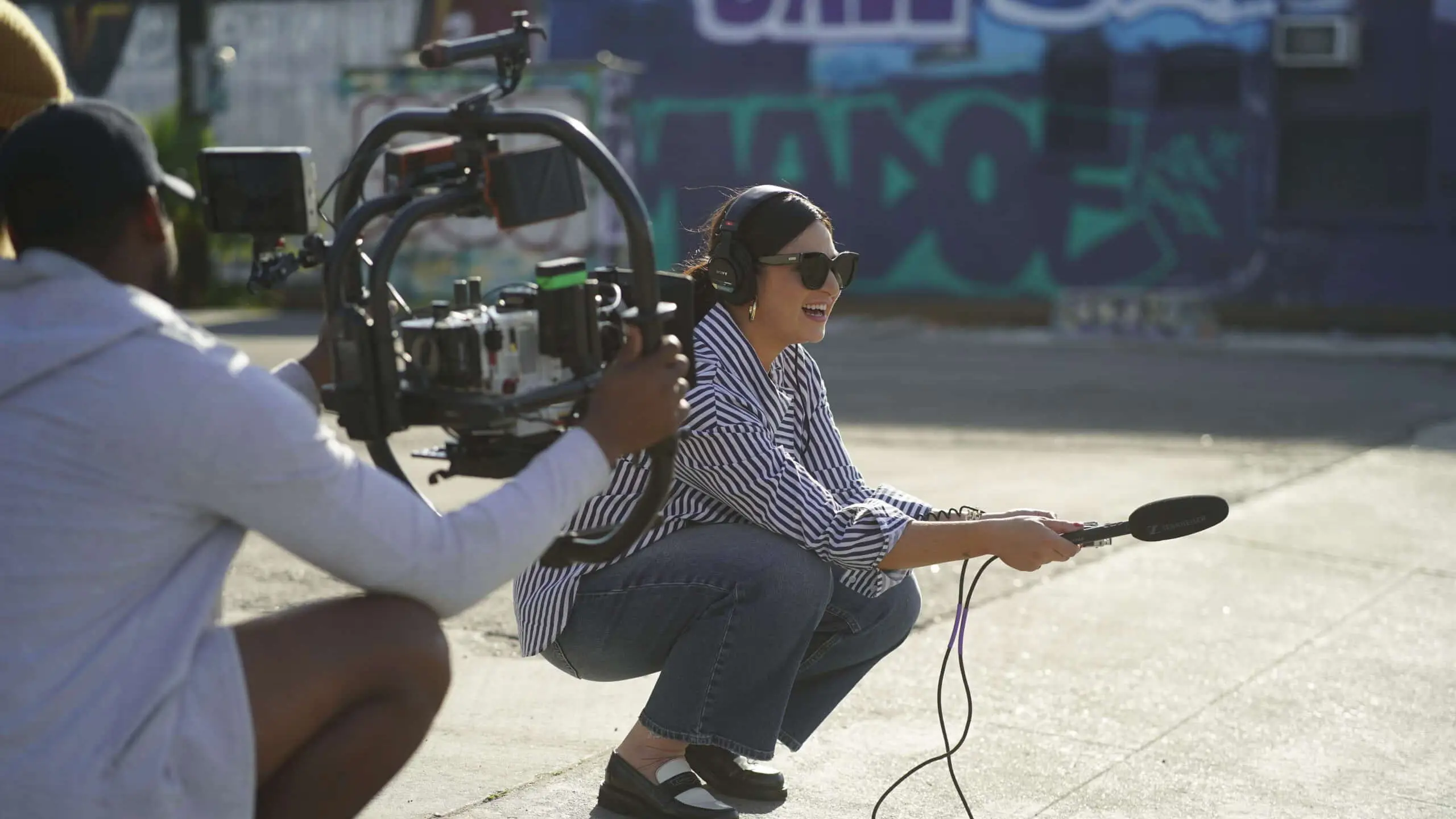
## Video Content Creation. Tips for Engaging and Captivating Audiences
In today’s digital age, the role of content in driving online success cannot be overstated. As businesses and brands increasingly move their operations online, quality content has become the foundation of effective digital marketing strategies. Whether through blogs, videos, or social media, the ability to produce engaging, informative, and visually captivating content is key to capturing the attention of modern audiences.
Companies like C&I Studios, with their expertise in creative services such as [video production](https://c-istudios.com/video-production-services/) and multimedia content creation, are leading the charge in helping businesses stand out in a crowded digital marketplace. High-quality content not only enhances brand visibility but also builds trust and credibility with consumers, making it a critical component for thriving in today’s competitive environment. As the demand for original and impactful content continues to grow, businesses must prioritize content creation to stay relevant and successful in their industries.
## The Impact of Content Creation on Brand Authority and Trust
Consistently producing high-quality, informative content is one of the most effective ways to establish a brand as a trusted authority in its industry. By providing valuable insights and solutions to your audience’s pain points, you position your brand as a thought leader, which helps build credibility and trust over time. High-quality content acts as a beacon for customers who are searching for reliable information, making your brand their go-to resource.
Incorporating branding and graphic design into your content strategy can further solidify your brand identity, making it recognizable and memorable. Visual elements that align with your brand’s message enhance the professionalism and impact of your content, while [artist management and media creation](https://c-istudios.com/artist-management-and-media-creation/) ensure that the content produced is not only visually appealing but also speaks directly to the target audience’s needs and interests.
An excellent example of this approach can be seen in C&I Studios’ media marketing efforts. Their expertise in managing media across multiple platforms elevates brands by creating content that resonates with audiences, ensuring consistent messaging and high engagement. By handling everything from professional photography to creative marketing, C&I Studios helps businesses maintain their brand’s voice while effectively reaching potential customers.
When audiences see consistent, high-quality content from a brand, their trust in the brand naturally grows. Over time, this builds loyalty, which can lead to higher customer retention rates and long-term business success. In today’s crowded digital space, standing out through well-crafted content that builds trust is essential for growth and sustainability.
## Driving Organic Traffic Through SEO-Optimized Content
To increase online visibility, [SEO copywriting](https://c-istudios.com/seo-copywriting-services/) is crucial for ensuring that content reaches its target audience. Search engines prioritize websites that consistently update their content with fresh, relevant information. By optimizing content for search engines through keyword integration, quality backlinks, and clear structuring, brands can drive more organic traffic to their websites. This not only improves the site’s search engine rankings but also attracts a more qualified audience.
Incorporating effective web development practices can also play a significant role in SEO. Search engines value websites that provide a seamless user experience, which means factors like fast loading times, mobile responsiveness, and intuitive navigation are just as important as the content itself. C&I Studios takes a comprehensive approach by offering both web hosting and web development services, ensuring that the technical aspects of a brand’s online presence are fully optimized for search engines.
For brands looking to improve their SEO performance, keyword research is essential. Identifying high-volume, low-competition keywords and incorporating them naturally into content can significantly enhance a brand’s online visibility. Additionally, structuring content with proper headings, meta descriptions, and internal links further improves SEO and ensures that users, as well as search engines, can navigate the content effectively.
By partnering with a team like C&I Studios, brands can ensure their content not only meets the needs of their audience but also adheres to SEO best practices. With a focus on delivering high-quality content through web hosting and optimized web development, C&I Studios helps businesses achieve better search rankings and drive more organic traffic to their websites. This integrated approach is key to thriving in the ever-competitive digital marketing space.
## Types of Content That Resonate. Blogs, Video, and Interactive Media
Different types of content appeal to different audience segments, making it essential for brands to diversify their content strategies. Blogs are a staple of content marketing, providing in-depth information and improving SEO, while videos have become increasingly popular due to their engaging and easily digestible nature. Interactive media, such as quizzes or infographics, allow audiences to engage more deeply with content, enhancing user experience.
One of the most effective content formats today is [video production](https://c-istudios.com/video-production-services/), which has proven to capture attention and convey messages quickly. Brands like C&I Studios specialize in creating high-quality video content tailored to their clients’ needs.
From promotional videos to educational clips, video production capabilities help brands stand out in a competitive digital landscape. With their expertise in audio live streaming, they also offer businesses opportunities to engage in real-time with their audience, creating dynamic interactions that are hard to achieve through static content.
Tailoring content formats to the audience’s consumption habits is crucial for success. Younger demographics may prefer short-form videos on platforms like TikTok or Instagram, while professionals might engage more with long-form blog posts or webinars.
Knowing your audience and adapting your content strategy accordingly ensures that your brand message resonates across multiple platforms. C&I Studios’ multimedia content creation services provide the flexibility needed for brands to deliver their message in the most effective format, allowing for consistent brand presence and audience engagement.
## The Role of Visual Storytelling in Capturing Audience Attention
Visual storytelling has become an integral part of content marketing, leveraging the power of imagery and video to create compelling narratives that resonate with audiences. [Film and TV production](https://c-istudios.com/film-and-tv-production/) are particularly effective tools for delivering complex messages in an engaging format. Through carefully crafted stories, brands can evoke emotions, communicate values, and build a deeper connection with their audience. C&I Studios has been at the forefront of this trend, producing high-quality film and TV content that aligns with brand messaging and helps companies establish a strong visual identity.
In addition to film, professional photography plays a vital role in content creation. High-quality images can instantly convey professionalism and attract audience attention. Whether it's for social media, websites, or marketing campaigns, visuals are often the first touchpoint with consumers. C&I Studios excels in professional photography, helping brands create visually appealing content that reflects their values and enhances their storytelling efforts.
Another crucial aspect of visual storytelling is the use of [VFX compositing and animation.](https://c-istudios.com/vfx-compositing-and-animation-services/) These techniques add a layer of creativity and sophistication to visual content, making it more engaging and memorable. Whether it's enhancing a promotional video or bringing a static image to life, VFX and animation can help brands differentiate themselves from the competition.
C&I Studios leverages these tools to create standout content that not only captures attention but also leaves a lasting impression on viewers. Through their innovative approach, they help brands tell their stories in visually compelling ways that captivate and convert their audience.
## Building Brand Loyalty Through Engaging Content
Engaging content is the cornerstone of building strong, long-lasting relationships with your audience. When a brand consistently delivers content that resonates with its target market, it fosters a deeper emotional connection, which naturally translates into brand loyalty. Content that speaks to the audience’s needs, values, and interests encourages them to return to your brand time and again.
One of the most effective ways to nurture this connection is through social media marketing services. Social platforms provide brands with the perfect opportunity to interact directly with their audience in real-time.
By utilizing creative and interactive content, brands can spark conversations, encourage engagement, and build a community of loyal followers. [Creative marketing](https://c-istudios.com/creative-marketing-services/) strategies to drive engagement on platforms like Instagram, Facebook, and YouTube. Through high-quality videos, graphics, and live interactions, they help brands maintain a dynamic presence that keeps audiences coming back.
To transform one-time visitors into long-term followers, it’s essential to keep content fresh and varied. Interactive content like polls, Q&A sessions, behind-the-scenes footage, and user-generated content initiatives can significantly boost engagement. Incorporating visual elements like videos and eye-catching images further enhances the appeal of the content.
Turning passive consumers into active participants helps build trust and loyalty. Over time, consistent engagement will not only enhance brand loyalty but also convert these followers into advocates who will promote your brand within their own networks. Brands that prioritize engaging content lay the foundation for a loyal, long-term customer base that drives business growth.
## Content Creation as a Lead Generation Tool
Quality content is one of the most powerful tools for generating leads. By offering valuable information that addresses the needs and challenges of your target audience, you naturally attract potential customers and move them through the sales funnel. Informative content establishes trust, and when paired with strategic media marketing, it becomes a lead-generation machine.
Effective SEO copywriting is crucial for making sure your content is discoverable by the right audience. Optimized blog posts, articles, and landing pages that use relevant keywords can increase organic traffic and help guide visitors toward conversions.
C&I Studios integrates SEO strategies with their web maintenance services to ensure that the content remains relevant and optimized over time. Regular content updates and proper SEO techniques help improve a brand’s search engine ranking, leading to higher visibility and more opportunities for lead generation.
A key tactic in converting visitors into leads is the strategic placement of calls-to-action (CTAs) within your content. CTAs prompt readers to take the next step, whether that’s signing up for a newsletter, downloading a resource, or making a purchase.
Clear and compelling CTAs placed throughout your content can guide your audience toward the desired action. C&I Studios expertly incorporates CTAs into their content marketing efforts, ensuring that every piece of content has the potential to generate leads.
Content creation doesn’t just attract leads; it nurtures them. By providing consistent, valuable content over time, brands can move leads through the funnel, from awareness to consideration and finally to conversion. Brands that invest in a comprehensive content strategy like C&I Studios offer, combining SEO copywriting with web maintenance, will find themselves in a stronger position to capture and convert leads.
## How Quality Content Supports Other Marketing Efforts
High-quality content not only stands alone but also plays a crucial role in amplifying other marketing strategies. From email marketing to paid advertising and even political campaigns, content acts as a unifying force that enhances the overall impact of these initiatives. Well-crafted content provides a consistent message across different platforms, creating a seamless brand experience that resonates with the audience.
In political campaigns, for instance, content helps articulate messages, convey key issues, and connect with voters on an emotional level. Whether it’s through blogs, videos, or social media posts, a strong content strategy ensures that the message reaches the right people.
The ability to tailor content for specific audiences, like voters or supporters, makes it a powerful tool in any [political campaign](https://c-istudios.com/political-campaign-services/). Cross-platform content promotion, where content is shared across email newsletters, social media, and even paid ads, reinforces messaging and boosts engagement.
C&I Studios, known for its excellence in content creation, brings its experience in feature film mastering and delivery into play to support integrated marketing efforts. By combining their expertise in film production with content marketing strategies, they create high-quality videos and multimedia content that can be repurposed across various marketing channels. This cross-platform strategy ensures that whether the content appears in an email campaign, social media, or a paid advertisement, it remains consistent, polished, and effective.
Ultimately, by leveraging content in different marketing efforts, brands can ensure that every aspect of their strategy is working in harmony to achieve the desired result. Content acts as a bridge between various channels, amplifying the overall message and increasing the effectiveness of each campaign.
## Measuring the Success of Content Creation
To ensure that content is driving meaningful results, it is essential to track key performance indicators (KPIs) like website traffic, engagement rates, and conversions. These metrics provide insight into how well content is resonating with the audience and contributing to business goals. A well-executed content strategy should be continuously monitored and refined based on data-driven insights to maximize its effectiveness.
One of the most important aspects of content performance measurement is SEO copywriting. By analyzing how well content ranks in search engine results and how much organic traffic it drives, brands can gauge the effectiveness of their SEO efforts. Tools like Google Analytics, SEMrush, and Ahrefs allow businesses to track keyword performance, monitor backlinks, and identify content that brings the most value to their audience.
Another crucial factor in measuring content success is web performance, which is directly influenced by web hosting. A well-optimized website with fast loading times and reliable uptime is essential for delivering content smoothly.
C&I Studios offers comprehensive [web hosting](https://c-istudios.com/web-hosting/) and development solutions that ensure a seamless user experience, helping brands retain traffic and convert visitors into customers. Their approach ensures that both the technical and creative aspects of content creation are aligned to deliver optimal results.
To refine content strategies further, brands should also focus on engagement metrics. Monitoring time on page, bounce rates, social shares, and comments can offer insights into how audiences are interacting with content. Armed with this data, brands can tweak and optimize their content to better meet their audience’s needs, increasing the chances of higher conversions and long-term success.
## Work with C&I Studios
If you are planning a project like this, our team can take it from concept to final delivery. Explore our [video production services](https://c-istudios.com/video-production-services/), browse [our work](https://c-istudios.com/our-work/) to see how we tell brand stories, and [get in touch](https://c-istudios.com/contact/) when you are ready to start.
Originally published October 17, 2024
---
*This content is from [C&I Studios](https://c-istudios.com), a full-service production company.*
---
# The Anatomy of a Successful Email: Design Tips for Maximum Impact
> Published: October 16, 2024
> Categories: Commercial & Brand
> Source: https://c-istudios.com/the-anatomy-of-a-successful-email-design-tips-for-maximum-impact/
---
.cib{--paper:#1b1d1f;--ink:#fff;--body:#d5d7d9;--muted:#8b9096;--line:rgba(255,255,255,.12);--thumb:#2b2e31;--card:#212426;--accent:#c02b0a;--blue:#5B8FA8;--serif:'Playfair Display',Georgia,serif;--sans:'Poppins',-apple-system,sans-serif;--measure:900px;background:var(--paper);color:var(--body);font-family:var(--sans);line-height:1.6;position:relative;left:50%;transform:translateX(-50%);width:90vw;max-width:1920px}
.cib *{box-sizing:border-box}
.cib .kicker{max-width:var(--measure);margin:58px auto 0;padding:0 22px;font-size:12.5px;font-weight:700;letter-spacing:2.5px;text-transform:uppercase;color:var(--blue)}
.cib h1.cibh1{text-wrap:balance;font-family:var(--serif);font-weight:500;font-size:clamp(46px,6vw,72px);line-height:1.08;color:var(--ink);max-width:var(--measure);margin:18px auto 0;padding:0 22px;letter-spacing:-.5px}
.cib .metarow{max-width:var(--measure);margin:20px auto 0;padding:0 22px;color:var(--muted);font-size:14px}
.cib .hero{position:relative;width:100%;height:0;padding-bottom:56.25%;overflow:hidden;margin:48px auto 0;border-top:1px solid var(--line);border-bottom:1px solid var(--line)}
.cib .hero .ph{width:100%;aspect-ratio:16/9;background:var(--thumb);border-top:1px solid var(--line);border-bottom:1px solid var(--line);display:flex;align-items:center;justify-content:center;color:#7d8288;font-size:13px;text-align:center;padding:0 20px}
.cib .body{max-width:var(--measure);margin:12px auto 0;padding:52px 22px 6px}
.cib .body.lead p:first-child{font-size:23px;line-height:1.62;color:var(--ink)}
.cib .body p{font-size:18.5px;line-height:1.85;margin:0 0 30px;color:var(--body)}
.cib .body h2{text-wrap:balance;font-family:var(--serif);font-weight:500;font-size:clamp(32px,4vw,48px);line-height:1.22;color:var(--ink);margin:70px 0 20px;letter-spacing:-.3px}
.cib .body h3{text-wrap:balance;font-family:var(--sans);font-weight:600;font-size:22px;color:var(--ink);margin:38px 0 8px}
.cib .body a{color:var(--ink);text-decoration:underline;text-decoration-color:rgba(255,255,255,.4);text-underline-offset:3px}
.cib .body a:hover{text-decoration-color:var(--ink)}
.cib .ctable{width:100%;border-collapse:collapse;margin:16px 0 30px;font-size:16px}
.cib .ctable th{background:#000;color:#fff;text-align:left;padding:10px 12px;font-family:var(--sans)}
.cib .ctable td{padding:10px 12px;border-bottom:1px solid var(--line);color:var(--body)}
.cib .inimg{position:relative;width:100%;height:0;padding-bottom:56.25%;overflow:hidden;margin:72px auto;border-top:1px solid var(--line);border-bottom:1px solid var(--line)}
.cib .inimg .ph{width:100%;aspect-ratio:16/9;background:var(--thumb);border-top:1px solid var(--line);border-bottom:1px solid var(--line);display:flex;align-items:center;justify-content:center;color:#7d8288;font-size:13px}
.cib .origpub{max-width:var(--measure);margin:60px auto 0;padding:26px 22px 0;border-top:1px solid var(--line);color:var(--muted);font-size:13.5px}
.cib .related{max-width:1200px;margin:64px auto 0;padding:34px 22px 76px}
.cib .related h3{font-family:var(--sans);font-size:12.5px;letter-spacing:2px;text-transform:uppercase;color:var(--ink);margin:0 0 24px}
.cib .grid{display:grid;grid-template-columns:repeat(3,1fr);gap:28px}
.cib .rc{background:var(--card);border:1px solid var(--line);display:block;text-decoration:none;color:inherit;transition:border-color .15s}
.cib a.rc:hover{border-color:rgba(255,255,255,.5)}
.cib .rc .thumb{position:relative;width:100%;height:0;padding-bottom:56.25%;background:var(--thumb);overflow:hidden}
.cib .rc .thumb img{position:absolute!important;top:0!important;left:0!important;width:100%!important;height:100%!important;object-fit:cover!important;margin:0!important}
.cib .rc .cc{padding:14px 15px 17px}
.cib .rc .rt{font-family:var(--serif);font-weight:500;font-size:16px;line-height:1.3;color:var(--ink);margin:0 0 6px}
.cib .rc .rm{font-size:11px;letter-spacing:1px;text-transform:uppercase;color:var(--muted)}
.cib img{margin:0!important;padding:0!important;display:block!important;vertical-align:top;max-width:100%}
.cib .hero img,.cib .inimg img{position:absolute!important;top:0!important;left:0!important;width:100%!important;height:100%!important;object-fit:cover!important;margin:0!important;padding:0!important;border:0!important;display:block!important;aspect-ratio:auto!important}
.cib .hero+.body{padding-top:36px}
@media(max-width:760px){.cib .grid{grid-template-columns:1fr}.cib .body h2{margin:52px 0 16px}.cib .body p{font-size:17.5px}.cib .inimg,.cib .hero{margin-top:44px}}
.cib .vembed{max-width:var(--measure);margin:44px auto;padding:0 22px}.cib .vembed .vwrap{position:relative;width:100%;height:0;padding-bottom:56.25%}.cib .vembed .vwrap iframe{position:absolute;top:0;left:0;width:100%;height:100%;border:0}
Commercial & Brand
# The Anatomy of a Successful Email. Design Tips for Maximum Impact
19 min read

In today’s digital landscape, email marketing remains one of the most powerful tools for businesses to engage with their audience. However, with countless emails flooding inboxes daily, well-crafted design is essential to stand out and capture attention. The right email design directly influences how recipients engage with the content, impacting click-through rates, conversions, and overall campaign success.
A thoughtful approach to design helps deliver the message more effectively, guiding the reader's focus and enhancing the user experience. By aligning design elements with brand identity and ensuring the content is clear and visually appealing, businesses can significantly increase engagement. Whether for product announcements or media campaigns, a well-planned design can be the difference between an email that’s opened and one that’s ignored.
## Understanding Your Audience. Personalization & Relevance
To create successful email campaigns, understanding your audience is crucial. Personalization and relevance play a vital role in making emails more engaging and effective. By segmenting your audience based on behavior, demographics, and preferences, you can deliver content that resonates with each group. This is where [artist management and media creation](https://c-istudios.com/artist-management-and-media-creation/) come in. By analyzing audience behavior, much like understanding an artist’s unique audience, you can tailor your email campaigns to different interests, increasing the chances of meaningful engagement.
SEO copywriting is another powerful tool in personalization. Well-optimized content not only helps your emails stand out but also ensures the message is clear and targeted to specific segments. Tailoring the content through relevant keywords and personalized messages helps capture attention and build rapport with your readers. Whether you're promoting entertainment events, political campaigns, or product releases, writing with a focus on relevance ensures that your content reaches the right people.
In industries like entertainment or political campaigns, where media creation and dynamic content reign supreme, personalized emails are even more critical. For example, in artist management, sending a targeted email promoting a new album release to fans based on past engagement is far more effective than sending a generic message to everyone. Personalization drives higher open rates, and segmented campaigns often see more clicks and conversions. Therefore, knowing your audience, personalizing content, and making use of SEO copywriting can transform an ordinary email campaign into a powerful tool for engagement.
## Creating a Strong First Impression. The Header and Subject Line
The header and subject line are the first elements recipients notice when they open an email, making them key components of a successful campaign. A well-designed header sets the tone, while a captivating subject line draws the recipient in. By integrating branding and graphic design, you create a sense of familiarity and professionalism that reflects your brand’s identity. Consistency in these design elements reinforces brand recognition, which is crucial for long-term success.
For instance, in the same way that a TV show pitch needs to grab attention from the outset, email headers and subject lines must immediately engage the reader. Crafting a subject line that sparks curiosity or offers value, without being overly promotional, can significantly impact open rates. A clean and visually appealing header can further encourage recipients to scroll down and engage with the content. This combination of strong [branding and graphic design](https://c-istudios.com/branding-and-graphic-design-services/) is essential in creating a cohesive and professional look that supports your overall message.
First impressions matter in the world of emails, much like in a TV show pitch. Recipients decide in seconds whether to open an email or scroll past it, so those few initial moments are key. A strong, clear subject line paired with an effective header layout can drastically improve the likelihood of your email being read and acted upon.
## Crafting Effective Body Content. Clear, Scannable, and Engaging
The body of your email must be structured for maximum readability and engagement. Just as in web development, where the clarity of a website’s layout enhances user experience, your email's content should be easy to navigate. Long blocks of text can overwhelm readers, so breaking your message into short, digestible paragraphs is crucial. Scannability is key, users often skim emails before deciding whether to engage with them fully.
Using bullet points is an excellent way to highlight important details quickly, ensuring that your content is easy to absorb. This mirrors principles in [web development](https://c-istudios.com/web-development-services/) where information is organized logically to keep visitors on the page longer. Similarly, a well-structured email body can guide readers through your message smoothly, without confusion or unnecessary friction.
Another factor to consider is how your email performs across devices. Web hosting plays a significant role in email load times, ensuring that images and content display correctly whether viewed on a mobile phone, tablet, or desktop. Emails with large, unoptimized files can slow down load times, reducing the likelihood of your audience staying engaged. Optimizing images and using a minimalist design approach ensures fast load times, just as web hosting ensures a website performs seamlessly across platforms.
## Design Elements That Drive Engagement. Images, Colors, and Fonts
Design elements like images, colors, and fonts significantly influence how readers engage with your emails. Video production and high-quality images can enhance your message, making it more visually appealing and encouraging higher click-through rates. However, balance is key, overloading your email with large visuals can slow load times and make the content harder to process. Including strategic visuals, like well-placed videos or images related to your brand, can greatly enhance user engagement.
Using professional photography instead of generic stock images can give your emails a polished, authentic feel that resonates with your audience. High-quality images capture attention, and when combined with concise copy, they create a more dynamic and visually appealing experience. Remember to optimize these visuals for web to ensure fast loading times, especially on mobile devices.
When it comes to colors and fonts, choosing a palette that aligns with your brand identity is crucial. Bold colors can make your call-to-action (CTA) buttons pop, while softer tones can guide the reader's eye through the content without overwhelming them.
Like in video production, where color grading impacts the emotional tone, email design benefits from thoughtful use of colors to evoke desired responses. Similarly, the right fonts contribute to readability and brand cohesion, ensuring that your emails are not only visually appealing but also functional and on-brand.
## The Importance of Responsive Design. Mobile Optimization
With a large percentage of users checking emails on mobile devices, ensuring that your emails are optimized for mobile is no longer optional, it's a necessity. Mobile responsiveness ensures that your emails look appealing and function seamlessly, regardless of the device used to view them. This is where web maintenance and continuous testing come into play. Just as regular [web maintenance](https://c-istudios.com/web-maintenance/) keeps a website performing optimally across browsers, consistent testing ensures your email design adapts to different screen sizes and devices.
A responsive design ensures that elements like images, text, and buttons automatically adjust to fit the screen without distortion or cropping. For example, images should resize to avoid forcing the user to zoom in, and CTAs should remain easy to tap. Using responsive templates that scale down on smaller screens can make the user experience more enjoyable and keep readers engaged.
Incorporating creative marketing strategies into your email design can also help drive conversions. For example, a mobile-first approach that prioritizes key information and minimizes load times can result in higher engagement rates. Many successful creative marketing campaigns leverage mobile-optimized emails to promote offers and products, making it easy for users to take action without switching devices or experiencing slow load times.
## Compelling CTAs. How to Drive Action with Design
A compelling call-to-action (CTA) is a critical element in driving email engagement and conversions. Similar to how [audio engineering](https://c-istudios.com/audio-engineering-services/) focuses on creating clear, seamless sound, designing effective CTAs involves crafting a clear and visually prominent pathway for the recipient to follow. The design of your CTA buttons should catch the reader’s eye, using contrasting colors and concise, action-oriented language.
Just as audio engineering creates a smooth listening experience, a well-designed CTA guides users toward a specific action without distractions. The button should be bold, easily clickable, and placed strategically within the email, such as near the top and again at the end of the content.
Social media marketing services often integrate CTAs across multiple platforms to ensure consistency in messaging and encourage users to take the desired action. In emails, CTAs should be aligned with your overall social media marketing strategy, creating a seamless transition from email to other channels like landing pages or social platforms. Successful campaigns ensure that CTAs are clear and accessible across both emails and other online touchpoints, maximizing the chances of conversion.
## Testing & Optimizing Your Email Design for Maximum Impact
A/B testing is a critical process in optimizing email campaigns, allowing you to test different elements such as layout, subject lines, and CTAs to see what resonates most with your audience. Much like in feature film mastering and delivery, where every detail must be tested and refined to ensure a high-quality final product, email campaigns also require constant fine-tuning. Testing different variations helps you discover what layout or design choices lead to higher open rates, click-through rates, and conversions.
By running A/B tests on your email subject lines, you can identify the tone, length, and wording that generate the most engagement. Similarly, testing the placement and design of CTAs can reveal which versions prompt more clicks. This process mirrors the meticulous checks performed in feature film mastering and delivery, where repeated tests ensure the final output meets the desired quality.
Optimization doesn’t stop at testing. Analyzing metrics such as open rates and bounce rates is key to continuous improvement. Just like keeping a video production gear list updated for high-quality production, you should regularly update your design strategies based on performance data. Tools that provide insights into how different audiences engage with your emails can inform future decisions, ensuring your campaigns are always optimized for maximum impact.
## Avoiding Common Design Pitfalls and Improving Deliverability
Design mistakes can severely impact the performance of your emails, much like how errors in documentary [film production](https://c-istudios.com/film-and-tv-production/) can affect the integrity of the final film. Overloading emails with excessive visuals, failing to optimize for mobile, or using spam trigger words are common pitfalls that can reduce deliverability and engagement.
To ensure your emails avoid these traps, it’s important to keep your design simple and clean. Using too many large images or complex layouts can slow loading times and cause emails to be clipped or flagged by spam filters. This is similar to the precision required in documentary film production, where every frame must serve the narrative purpose without adding unnecessary clutter. Ensuring each design element contributes to the message helps maintain clarity and effectiveness.
In email campaigns for a political campaign, avoiding these design pitfalls is particularly important. Credibility is key, and mistakes such as misleading subject lines or poor mobile compatibility can damage trust. If a political email lands in the spam folder, it risks losing its audience entirely, much like an ineffective campaign strategy would fail to gain voter engagement. Ensuring your design is streamlined and delivers content effectively can significantly improve both deliverability and engagement.
## Understanding Your Audience. The Key to Engagement
To craft blog posts that truly resonate, it’s crucial to understand who you are writing for. The foundation of [creative marketing](https://c-istudios.com/creative-marketing-services/) is to identify your target audience and tailor your content to meet their needs, interests, and pain points. This process begins with thorough audience research, which can involve analyzing demographics, psychographics, and user behavior. Tools like Google Analytics or social media insights can help gather data on your audience, providing a clearer picture of their preferences.
Creating reader personas is a technique that transforms data into a tangible representation of your audience. These personas highlight specific traits such as age, profession, and interests, allowing you to craft content that speaks directly to them. For instance, a blog post targeting young entrepreneurs may focus on quick, actionable business tips, while a post aimed at seasoned professionals might delve deeper into industry trends.
Incorporating feedback is another crucial step in refining your content. Through social media marketing services, you can gather comments, likes, and shares as indicators of how well your content is performing. Use this feedback to adjust your tone, format, or topics. Additionally, storytelling and interactive elements like polls, quizzes, or comment sections can significantly enhance engagement.
People are naturally drawn to stories, and weaving personal anecdotes into your posts fosters a connection with your readers. Engaging readers through interaction not only deepens their connection with your content but also signals to search engines that your blog is valuable and relevant.
By fully understanding and engaging with your audience, you set the stage for more effective blog posts that deliver both quality and value.
## Crafting a Strong Headline. Your First Hook
Your headline is the first, and often only, chance to grab a reader’s attention. It needs to be powerful enough to stand out amidst the vast content online, yet concise and clear. A well-crafted headline contributes not only to the post’s engagement but also to its SEO performance. Incorporating [branding and graphic design](https://c-istudios.com/branding-and-graphic-design-services/) elements into your headline creation process can enhance visual appeal and clarity, making your headlines more attractive to potential readers.
When crafting a headline, focus on making it keyword-rich without sounding forced. For instance, if you’re writing about the benefits of web development for businesses, a headline like “10 Ways Web Development Can Transform Your Business” immediately highlights value and includes a primary keyword. Using numbers, actionable language, and attention-grabbing words like "How to," "Ultimate," or "Essential" can also increase click-through rates.
Successful examples can often be found in industries like video production or TV show pitches, where attention to detail is crucial. A headline such as “5 Key Elements to a Successful TV Show Pitch” immediately promises actionable insights, making it difficult for the target audience to resist clicking. Similarly, video production blogs might use compelling headlines such as “The Ultimate Guide to [Professional Video Production](https://c-istudios.com/video-production-services/) Gear.”
## Writing Engaging Introductions. Capturing Attention Immediately
The introduction of your blog post is your chance to make a strong first impression. In just a few sentences, you need to capture the reader's attention and convince them to keep reading. A well-written introduction sets the tone for the rest of the post, helping establish credibility and interest. In today’s fast-paced world, where readers quickly decide whether to stay or leave a page, your introduction must be concise and engaging.
One way to achieve this is by starting with a compelling [media marketing](https://c-istudios.com/media-marketing-consultation-services/) question that resonates with your audience’s needs. For instance, “Are you struggling to gain traction in a crowded digital marketplace?” Such questions immediately hook the reader by addressing a problem they want to solve. You can also open with powerful statistics: “Did you know that 80% of consumers prefer engaging with brands that offer personalized content?” This approach appeals to data-driven readers and showcases the value of your post from the start.
Personal anecdotes are another powerful tool. Sharing a brief story relevant to the topic not only humanizes your content but also establishes a connection with your readers. For example, a story about the challenges faced during a feature film mastering and delivery project could serve as an intriguing introduction to a post about overcoming obstacles in creative projects.
However, keeping your introduction concise is key. Readers are more likely to drop off if the introduction feels too long or irrelevant. Stick to a few powerful sentences that hint at the main points of the article. This keeps the content engaging and relevant, enticing readers to dive into the body of the post for more valuable insights.
## Structuring Your Content for SEO and Readability
The way you structure your content has a significant impact on both user engagement and search engine optimization (SEO). Proper [SEO copywriting](https://c-istudios.com/seo-copywriting-services/) not only draws in readers but also helps search engines understand the relevance of your content. One of the most effective ways to improve readability is through clear sections, subheadings, and bullet points. This breaks up the text, making it easier for readers to scan and absorb key information without feeling overwhelmed.
Subheadings play a critical role in organizing your content. By using descriptive headings and subheadings (e.g., web maintenance best practices), you provide readers with a roadmap of your post while helping search engines understand the structure of your content. Breaking content into smaller sections also boosts SEO by encouraging longer on-page times, which search engines recognize as a positive signal.
To further optimize content, it’s essential to integrate keywords naturally. Overloading your blog post with repetitive keywords (a practice known as keyword stuffing) can harm readability and lower your SEO ranking. Instead, focus on incorporating primary and secondary keywords in a seamless way, such as within subheadings, the first 100 words of your post, and meta descriptions. For example, instead of repeating "SEO copywriting" excessively, alternate with phrases like "writing for SEO" or "SEO-driven content creation."
Another crucial aspect of structuring content for SEO is internal linking. This involves linking to other relevant content within your website. Internal links improve navigation and help search engines index your pages more effectively.
Lastly, don’t forget to optimize your metadata, including title tags, meta descriptions, and image alt text. Metadata serves as a brief summary for search engines and readers alike, helping boost your visibility on search results pages. By structuring your content in this organized and SEO-friendly manner, you ensure that your blog post is both engaging and discoverable.
## Incorporating Visuals and Multimedia. Enhancing Engagement
Visuals play a crucial role in enhancing reader engagement and breaking up large blocks of text, making your blog post more dynamic and digestible. Integrating elements like images, videos, infographics, and custom graphics not only improves readability but also adds depth to your content. High-quality professional photography or graphics related to your topic can capture attention and help illustrate key points more effectively than text alone.
Incorporating video production into your blog can further boost engagement. For example, short video clips or explainer videos about complex topics can hold a reader’s attention longer, while animated elements like [VFX compositing and animation](https://c-istudios.com/vfx-compositing-and-animation-services/) can visually communicate difficult concepts in a more accessible way.
Consider using multimedia like video interviews, documentary clips, or even live streaming to bring a more dynamic and interactive element to your post. This could include a behind-the-scenes look at a video production process or showcasing real-world applications through case studies.
Optimizing these visuals for SEO is also essential. Search engines cannot "see" images or videos, but they can read metadata like alt text, captions, and file names. Ensure all images and videos are optimized with relevant keywords in their alt descriptions, such as "professional photography for branding" or "intro to VFX compositing." Compressing images to ensure faster load times is vital, as slow-loading content can negatively impact both user experience and SEO rankings.
Integrating well-optimized multimedia not only keeps readers engaged but also improves your site’s SEO. High-quality visuals, whether in the form of images, infographics, or videos, create a more immersive and engaging reading experience while boosting your visibility in search engines.
## Optimizing for SEO. Keywords, Meta Descriptions, and Links
SEO is the cornerstone of increasing your blog’s visibility on search engines, and there are several key tactics that can help. Proper keyword placement is fundamental, but it’s important to use keywords naturally within your content.
Tools like Yoast or Google Analytics can assist with placing keywords in optimal locations, such as the title, first 100 words, and throughout your subheadings. Instead of relying solely on primary keywords, such as “web hosting,” you should use synonyms or related terms like “cloud hosting” or “website management” to avoid keyword stuffing while enhancing relevance.
A well-crafted meta description is another important SEO element. This brief summary should incorporate your focus keyword, like "video production gear list", and entice readers with a clear and engaging description of your blog post. Meta descriptions serve as the snippet readers see in search engine results, and they can significantly impact click-through rates when done well.
Internal and external linking are equally crucial. Internal links guide readers to other relevant content on your website, such as a related blog post or a [video production gear list](https://c-istudios.com/video-production-gear-list/), boosting your site's authority and helping readers explore more of your offerings. External links, on the other hand, direct users to high-authority external resources, lending credibility to your content and signaling to search engines that your blog is well-researched and trustworthy.
Finally, performing detailed keyword research is essential to uncover terms your target audience is searching for. Tools like Google’s Keyword Planner or SEMrush can help identify high-ranking keywords and long-tail search terms, which can be integrated into your content seamlessly. Optimizing your blog with these SEO strategies ensures that it ranks higher in search results, attracting more readers and driving consistent traffic to your website.
## The Importance of Consistency and Regular Updates
Consistency in publishing and regularly updating your blog posts are essential practices for both SEO optimization and user engagement. Just like crafting a successful [TV show pitch](https://c-istudios.com/tv-show-pitch/), where timing and delivery are key, maintaining a consistent blog schedule keeps your content fresh and relevant. This ongoing activity signals to search engines that your site is active, which increases the likelihood of being crawled more frequently and ranked higher in search results.
Creating a consistent publishing schedule through an editorial calendar helps ensure that content is released regularly, whether it’s weekly, bi-weekly, or monthly. This consistency is vital for keeping your audience engaged.
Much like in audio engineering, where small tweaks and adjustments are continuously made to enhance sound quality, timely updates to your blog posts can refine their performance and keep them relevant. An editorial calendar also allows you to strategically plan content around important events, trends, or industry changes, making your posts more timely and useful for readers.
Beyond maintaining a schedule, updating older content is just as critical. As new trends emerge or your business offerings change, posts that may have performed well a year ago could now be outdated.
For instance, revising a post about the latest tools in TV show production ensures that your content stays current and continues to deliver value to your audience. Updating older posts with new data or better audio engineering techniques can attract new traffic, as refreshed content tends to rank higher in search engines.
Search engines favor sites that are actively managed, and regularly updating your blog ensures that your content doesn’t become stale. It signals relevancy, which can lead to improved search rankings.
Similar to how timely updates in the film or music production industries maintain audience interest, consistently updating and publishing fresh content enhances user engagement and keeps your blog relevant. Maintaining this steady stream of quality content is a cornerstone of successful blog management, boosting both SEO performance and audience loyalty.
## Work with C&I Studios
If you are planning a project like this, our team can take it from concept to final delivery. Explore our [video production services](https://c-istudios.com/video-production-services/), browse [our work](https://c-istudios.com/our-work/) to see how we tell brand stories, and [get in touch](https://c-istudios.com/contact/) when you are ready to start.
Originally published October 16, 2024
---
*This content is from [C&I Studios](https://c-istudios.com), a full-service production company.*
---
# Crafting Compelling Blog Posts: Tips for Engaging Readers and Boosting SEO
> Published: October 15, 2024
> Categories: Web & Tech
> Source: https://c-istudios.com/crafting-compelling-blog-posts-tips-for-engaging-readers-and-boosting-seo/
---
.cib{--paper:#1b1d1f;--ink:#fff;--body:#d5d7d9;--muted:#8b9096;--line:rgba(255,255,255,.12);--thumb:#2b2e31;--card:#212426;--accent:#c02b0a;--blue:#5B8FA8;--serif:'Playfair Display',Georgia,serif;--sans:'Poppins',-apple-system,sans-serif;--measure:900px;background:var(--paper);color:var(--body);font-family:var(--sans);line-height:1.6;position:relative;left:50%;transform:translateX(-50%);width:90vw;max-width:1920px}
.cib *{box-sizing:border-box}
.cib .kicker{max-width:var(--measure);margin:58px auto 0;padding:0 22px;font-size:12.5px;font-weight:700;letter-spacing:2.5px;text-transform:uppercase;color:var(--blue)}
.cib h1.cibh1{text-wrap:balance;font-family:var(--serif);font-weight:500;font-size:clamp(46px,6vw,72px);line-height:1.08;color:var(--ink);max-width:var(--measure);margin:18px auto 0;padding:0 22px;letter-spacing:-.5px}
.cib .metarow{max-width:var(--measure);margin:20px auto 0;padding:0 22px;color:var(--muted);font-size:14px}
.cib .hero{position:relative;width:100%;height:0;padding-bottom:56.25%;overflow:hidden;margin:48px auto 0;border-top:1px solid var(--line);border-bottom:1px solid var(--line)}
.cib .hero .ph{width:100%;aspect-ratio:16/9;background:var(--thumb);border-top:1px solid var(--line);border-bottom:1px solid var(--line);display:flex;align-items:center;justify-content:center;color:#7d8288;font-size:13px;text-align:center;padding:0 20px}
.cib .body{max-width:var(--measure);margin:12px auto 0;padding:52px 22px 6px}
.cib .body.lead p:first-child{font-size:23px;line-height:1.62;color:var(--ink)}
.cib .body p{font-size:18.5px;line-height:1.85;margin:0 0 30px;color:var(--body)}
.cib .body h2{text-wrap:balance;font-family:var(--serif);font-weight:500;font-size:clamp(32px,4vw,48px);line-height:1.22;color:var(--ink);margin:70px 0 20px;letter-spacing:-.3px}
.cib .body h3{text-wrap:balance;font-family:var(--sans);font-weight:600;font-size:22px;color:var(--ink);margin:38px 0 8px}
.cib .body a{color:var(--ink);text-decoration:underline;text-decoration-color:rgba(255,255,255,.4);text-underline-offset:3px}
.cib .body a:hover{text-decoration-color:var(--ink)}
.cib .ctable{width:100%;border-collapse:collapse;margin:16px 0 30px;font-size:16px}
.cib .ctable th{background:#000;color:#fff;text-align:left;padding:10px 12px;font-family:var(--sans)}
.cib .ctable td{padding:10px 12px;border-bottom:1px solid var(--line);color:var(--body)}
.cib .inimg{position:relative;width:100%;height:0;padding-bottom:56.25%;overflow:hidden;margin:72px auto;border-top:1px solid var(--line);border-bottom:1px solid var(--line)}
.cib .inimg .ph{width:100%;aspect-ratio:16/9;background:var(--thumb);border-top:1px solid var(--line);border-bottom:1px solid var(--line);display:flex;align-items:center;justify-content:center;color:#7d8288;font-size:13px}
.cib .origpub{max-width:var(--measure);margin:60px auto 0;padding:26px 22px 0;border-top:1px solid var(--line);color:var(--muted);font-size:13.5px}
.cib .related{max-width:1200px;margin:64px auto 0;padding:34px 22px 76px}
.cib .related h3{font-family:var(--sans);font-size:12.5px;letter-spacing:2px;text-transform:uppercase;color:var(--ink);margin:0 0 24px}
.cib .grid{display:grid;grid-template-columns:repeat(3,1fr);gap:28px}
.cib .rc{background:var(--card);border:1px solid var(--line);display:block;text-decoration:none;color:inherit;transition:border-color .15s}
.cib a.rc:hover{border-color:rgba(255,255,255,.5)}
.cib .rc .thumb{position:relative;width:100%;height:0;padding-bottom:56.25%;background:var(--thumb);overflow:hidden}
.cib .rc .thumb img{position:absolute!important;top:0!important;left:0!important;width:100%!important;height:100%!important;object-fit:cover!important;margin:0!important}
.cib .rc .cc{padding:14px 15px 17px}
.cib .rc .rt{font-family:var(--serif);font-weight:500;font-size:16px;line-height:1.3;color:var(--ink);margin:0 0 6px}
.cib .rc .rm{font-size:11px;letter-spacing:1px;text-transform:uppercase;color:var(--muted)}
.cib img{margin:0!important;padding:0!important;display:block!important;vertical-align:top;max-width:100%}
.cib .hero img,.cib .inimg img{position:absolute!important;top:0!important;left:0!important;width:100%!important;height:100%!important;object-fit:cover!important;margin:0!important;padding:0!important;border:0!important;display:block!important;aspect-ratio:auto!important}
.cib .hero+.body{padding-top:36px}
@media(max-width:760px){.cib .grid{grid-template-columns:1fr}.cib .body h2{margin:52px 0 16px}.cib .body p{font-size:17.5px}.cib .inimg,.cib .hero{margin-top:44px}}
.cib .vembed{max-width:var(--measure);margin:44px auto;padding:0 22px}.cib .vembed .vwrap{position:relative;width:100%;height:0;padding-bottom:56.25%}.cib .vembed .vwrap iframe{position:absolute;top:0;left:0;width:100%;height:100%;border:0}
Web & Tech
# Crafting Compelling Blog Posts. Tips for Engaging Readers and Boosting SEO
20 min read

In today’s digital landscape, a compelling blog post is one of the most powerful tools for capturing readers’ attention and improving a website's visibility. Blog posts serve a dual purpose: they offer valuable content that engages readers while simultaneously aligning with search engine algorithms to drive traffic.
This balance is essential for businesses looking to boost their online presence and connect with a wider audience. A well-crafted blog post not only educates or entertains but also fulfills specific SEO criteria, ensuring that the content reaches the right audience. In this guide, we will explore key strategies for creating engaging, SEO-friendly blog content that captivates readers and enhances discoverability.
## Understanding Your Audience. The Key to Engagement
To craft blog posts that truly resonate, it’s crucial to understand who you are writing for. The foundation of [creative marketing](https://c-istudios.com/creative-marketing-services/) is to identify your target audience and tailor your content to meet their needs, interests, and pain points. This process begins with thorough audience research, which can involve analyzing demographics, psychographics, and user behavior. Tools like Google Analytics or social media insights can help gather data on your audience, providing a clearer picture of their preferences.
Creating reader personas is a technique that transforms data into a tangible representation of your audience. These personas highlight specific traits such as age, profession, and interests, allowing you to craft content that speaks directly to them. For instance, a blog post targeting young entrepreneurs may focus on quick, actionable business tips, while a post aimed at seasoned professionals might delve deeper into industry trends.
Incorporating feedback is another crucial step in refining your content. Through social media marketing services, you can gather comments, likes, and shares as indicators of how well your content is performing. Use this feedback to adjust your tone, format, or topics. Additionally, storytelling and interactive elements like polls, quizzes, or comment sections can significantly enhance engagement.
People are naturally drawn to stories, and weaving personal anecdotes into your posts fosters a connection with your readers. Engaging readers through interaction not only deepens their connection with your content but also signals to search engines that your blog is valuable and relevant.
By fully understanding and engaging with your audience, you set the stage for more effective blog posts that deliver both quality and value.
## Crafting a Strong Headline. Your First Hook
Your headline is the first, and often only, chance to grab a reader’s attention. It needs to be powerful enough to stand out amidst the vast content online, yet concise and clear. A well-crafted headline contributes not only to the post’s engagement but also to its SEO performance. Incorporating [branding and graphic design](https://c-istudios.com/branding-and-graphic-design-services/) elements into your headline creation process can enhance visual appeal and clarity, making your headlines more attractive to potential readers.
When crafting a headline, focus on making it keyword-rich without sounding forced. For instance, if you’re writing about the benefits of web development for businesses, a headline like “10 Ways Web Development Can Transform Your Business” immediately highlights value and includes a primary keyword. Using numbers, actionable language, and attention-grabbing words like "How to," "Ultimate," or "Essential" can also increase click-through rates.
Successful examples can often be found in industries like video production or TV show pitches, where attention to detail is crucial. A headline such as “5 Key Elements to a Successful TV Show Pitch” immediately promises actionable insights, making it difficult for the target audience to resist clicking. Similarly, video production blogs might use compelling headlines such as “The Ultimate Guide to [Professional Video Production](https://c-istudios.com/video-production-services/) Gear.”
## Writing Engaging Introductions. Capturing Attention Immediately
The introduction of your blog post is your chance to make a strong first impression. In just a few sentences, you need to capture the reader's attention and convince them to keep reading. A well-written introduction sets the tone for the rest of the post, helping establish credibility and interest. In today’s fast-paced world, where readers quickly decide whether to stay or leave a page, your introduction must be concise and engaging.
One way to achieve this is by starting with a compelling [media marketing](https://c-istudios.com/media-marketing-consultation-services/) question that resonates with your audience’s needs. For instance, “Are you struggling to gain traction in a crowded digital marketplace?” Such questions immediately hook the reader by addressing a problem they want to solve. You can also open with powerful statistics: “Did you know that 80% of consumers prefer engaging with brands that offer personalized content?” This approach appeals to data-driven readers and showcases the value of your post from the start.
Personal anecdotes are another powerful tool. Sharing a brief story relevant to the topic not only humanizes your content but also establishes a connection with your readers. For example, a story about the challenges faced during a feature film mastering and delivery project could serve as an intriguing introduction to a post about overcoming obstacles in creative projects.
However, keeping your introduction concise is key. Readers are more likely to drop off if the introduction feels too long or irrelevant. Stick to a few powerful sentences that hint at the main points of the article. This keeps the content engaging and relevant, enticing readers to dive into the body of the post for more valuable insights.
## Structuring Your Content for SEO and Readability
The way you structure your content has a significant impact on both user engagement and search engine optimization (SEO). Proper [SEO copywriting](https://c-istudios.com/seo-copywriting-services/) not only draws in readers but also helps search engines understand the relevance of your content. One of the most effective ways to improve readability is through clear sections, subheadings, and bullet points. This breaks up the text, making it easier for readers to scan and absorb key information without feeling overwhelmed.
Subheadings play a critical role in organizing your content. By using descriptive headings and subheadings (e.g., web maintenance best practices), you provide readers with a roadmap of your post while helping search engines understand the structure of your content. Breaking content into smaller sections also boosts SEO by encouraging longer on-page times, which search engines recognize as a positive signal.
To further optimize content, it’s essential to integrate keywords naturally. Overloading your blog post with repetitive keywords (a practice known as keyword stuffing) can harm readability and lower your SEO ranking. Instead, focus on incorporating primary and secondary keywords in a seamless way, such as within subheadings, the first 100 words of your post, and meta descriptions. For example, instead of repeating "SEO copywriting" excessively, alternate with phrases like "writing for SEO" or "SEO-driven content creation."
Another crucial aspect of structuring content for SEO is internal linking. This involves linking to other relevant content within your website. Internal links improve navigation and help search engines index your pages more effectively.
Lastly, don’t forget to optimize your metadata, including title tags, meta descriptions, and image alt text. Metadata serves as a brief summary for search engines and readers alike, helping boost your visibility on search results pages. By structuring your content in this organized and SEO-friendly manner, you ensure that your blog post is both engaging and discoverable.
## Incorporating Visuals and Multimedia. Enhancing Engagement
Visuals play a crucial role in enhancing reader engagement and breaking up large blocks of text, making your blog post more dynamic and digestible. Integrating elements like images, videos, infographics, and custom graphics not only improves readability but also adds depth to your content. High-quality professional photography or graphics related to your topic can capture attention and help illustrate key points more effectively than text alone.
Incorporating video production into your blog can further boost engagement. For example, short video clips or explainer videos about complex topics can hold a reader’s attention longer, while animated elements like [VFX compositing and animation](https://c-istudios.com/vfx-compositing-and-animation-services/) can visually communicate difficult concepts in a more accessible way.
Consider using multimedia like video interviews, documentary clips, or even live streaming to bring a more dynamic and interactive element to your post. This could include a behind-the-scenes look at a video production process or showcasing real-world applications through case studies.
Optimizing these visuals for SEO is also essential. Search engines cannot "see" images or videos, but they can read metadata like alt text, captions, and file names. Ensure all images and videos are optimized with relevant keywords in their alt descriptions, such as "professional photography for branding" or "intro to VFX compositing." Compressing images to ensure faster load times is vital, as slow-loading content can negatively impact both user experience and SEO rankings.
Integrating well-optimized multimedia not only keeps readers engaged but also improves your site’s SEO. High-quality visuals, whether in the form of images, infographics, or videos, create a more immersive and engaging reading experience while boosting your visibility in search engines.
## Optimizing for SEO. Keywords, Meta Descriptions, and Links
SEO is the cornerstone of increasing your blog’s visibility on search engines, and there are several key tactics that can help. Proper keyword placement is fundamental, but it’s important to use keywords naturally within your content.
Tools like Yoast or Google Analytics can assist with placing keywords in optimal locations, such as the title, first 100 words, and throughout your subheadings. Instead of relying solely on primary keywords, such as “web hosting,” you should use synonyms or related terms like “cloud hosting” or “website management” to avoid keyword stuffing while enhancing relevance.
A well-crafted meta description is another important SEO element. This brief summary should incorporate your focus keyword, like "video production gear list", and entice readers with a clear and engaging description of your blog post. Meta descriptions serve as the snippet readers see in search engine results, and they can significantly impact click-through rates when done well.
Internal and external linking are equally crucial. Internal links guide readers to other relevant content on your website, such as a related blog post or a [video production gear list](https://c-istudios.com/video-production-gear-list/), boosting your site's authority and helping readers explore more of your offerings. External links, on the other hand, direct users to high-authority external resources, lending credibility to your content and signaling to search engines that your blog is well-researched and trustworthy.
Finally, performing detailed keyword research is essential to uncover terms your target audience is searching for. Tools like Google’s Keyword Planner or SEMrush can help identify high-ranking keywords and long-tail search terms, which can be integrated into your content seamlessly. Optimizing your blog with these SEO strategies ensures that it ranks higher in search results, attracting more readers and driving consistent traffic to your website.
## The Importance of Consistency and Regular Updates
Consistency in publishing and regularly updating your blog posts are essential practices for both SEO optimization and user engagement. Just like crafting a successful [TV show pitch](https://c-istudios.com/tv-show-pitch/), where timing and delivery are key, maintaining a consistent blog schedule keeps your content fresh and relevant. This ongoing activity signals to search engines that your site is active, which increases the likelihood of being crawled more frequently and ranked higher in search results.
Creating a consistent publishing schedule through an editorial calendar helps ensure that content is released regularly, whether it’s weekly, bi-weekly, or monthly. This consistency is vital for keeping your audience engaged.
Much like in audio engineering, where small tweaks and adjustments are continuously made to enhance sound quality, timely updates to your blog posts can refine their performance and keep them relevant. An editorial calendar also allows you to strategically plan content around important events, trends, or industry changes, making your posts more timely and useful for readers.
Beyond maintaining a schedule, updating older content is just as critical. As new trends emerge or your business offerings change, posts that may have performed well a year ago could now be outdated.
For instance, revising a post about the latest tools in TV show production ensures that your content stays current and continues to deliver value to your audience. Updating older posts with new data or better audio engineering techniques can attract new traffic, as refreshed content tends to rank higher in search engines.
Search engines favor sites that are actively managed, and regularly updating your blog ensures that your content doesn’t become stale. It signals relevancy, which can lead to improved search rankings.
Similar to how timely updates in the film or music production industries maintain audience interest, consistently updating and publishing fresh content enhances user engagement and keeps your blog relevant. Maintaining this steady stream of quality content is a cornerstone of successful blog management, boosting both SEO performance and audience loyalty.
## Understanding Your Audience. The Key to Engagement
To craft blog posts that truly resonate, it’s crucial to understand who you are writing for. The foundation of [creative marketing](https://c-istudios.com/creative-marketing-services/) is to identify your target audience and tailor your content to meet their needs, interests, and pain points. This process begins with thorough audience research, which can involve analyzing demographics, psychographics, and user behavior. Tools like Google Analytics or social media insights can help gather data on your audience, providing a clearer picture of their preferences.
Creating reader personas is a technique that transforms data into a tangible representation of your audience. These personas highlight specific traits such as age, profession, and interests, allowing you to craft content that speaks directly to them. For instance, a blog post targeting young entrepreneurs may focus on quick, actionable business tips, while a post aimed at seasoned professionals might delve deeper into industry trends.
Incorporating feedback is another crucial step in refining your content. Through social media marketing services, you can gather comments, likes, and shares as indicators of how well your content is performing. Use this feedback to adjust your tone, format, or topics. Additionally, storytelling and interactive elements like polls, quizzes, or comment sections can significantly enhance engagement.
People are naturally drawn to stories, and weaving personal anecdotes into your posts fosters a connection with your readers. Engaging readers through interaction not only deepens their connection with your content but also signals to search engines that your blog is valuable and relevant.
By fully understanding and engaging with your audience, you set the stage for more effective blog posts that deliver both quality and value.
## Crafting a Strong Headline. Your First Hook
Your headline is the first, and often only, chance to grab a reader’s attention. It needs to be powerful enough to stand out amidst the vast content online, yet concise and clear. A well-crafted headline contributes not only to the post’s engagement but also to its SEO performance. Incorporating [branding and graphic design](https://c-istudios.com/branding-and-graphic-design-services/) elements into your headline creation process can enhance visual appeal and clarity, making your headlines more attractive to potential readers.
When crafting a headline, focus on making it keyword-rich without sounding forced. For instance, if you’re writing about the benefits of web development for businesses, a headline like “10 Ways Web Development Can Transform Your Business” immediately highlights value and includes a primary keyword. Using numbers, actionable language, and attention-grabbing words like "How to," "Ultimate," or "Essential" can also increase click-through rates.
Successful examples can often be found in industries like video production or TV show pitches, where attention to detail is crucial. A headline such as “5 Key Elements to a Successful TV Show Pitch” immediately promises actionable insights, making it difficult for the target audience to resist clicking. Similarly, video production blogs might use compelling headlines such as “The Ultimate Guide to Professional Video Production Gear.”
## Writing Engaging Introductions. Capturing Attention Immediately
The introduction of your blog post is your chance to make a strong first impression. In just a few sentences, you need to capture the reader's attention and convince them to keep reading. A well-written introduction sets the tone for the rest of the post, helping establish credibility and interest. In today’s fast-paced world, where readers quickly decide whether to stay or leave a page, your introduction must be concise and engaging.
One way to achieve this is by starting with a compelling [media marketing](https://c-istudios.com/media-marketing-consultation-services/) question that resonates with your audience’s needs. For instance, “Are you struggling to gain traction in a crowded digital marketplace?” Such questions immediately hook the reader by addressing a problem they want to solve. You can also open with powerful statistics: “Did you know that 80% of consumers prefer engaging with brands that offer personalized content?” This approach appeals to data-driven readers and showcases the value of your post from the start.
Personal anecdotes are another powerful tool. Sharing a brief story relevant to the topic not only humanizes your content but also establishes a connection with your readers. For example, a story about the challenges faced during a feature film mastering and delivery project could serve as an intriguing introduction to a post about overcoming obstacles in creative projects.
However, keeping your introduction concise is key. Readers are more likely to drop off if the introduction feels too long or irrelevant. Stick to a few powerful sentences that hint at the main points of the article. This keeps the content engaging and relevant, enticing readers to dive into the body of the post for more valuable insights.
## Structuring Your Content for SEO and Readability
The way you structure your content has a significant impact on both user engagement and search engine optimization (SEO). Proper [SEO copywriting](https://c-istudios.com/seo-copywriting-services/) not only draws in readers but also helps search engines understand the relevance of your content. One of the most effective ways to improve readability is through clear sections, subheadings, and bullet points. This breaks up the text, making it easier for readers to scan and absorb key information without feeling overwhelmed.
Subheadings play a critical role in organizing your content. By using descriptive headings and subheadings (e.g., web maintenance best practices), you provide readers with a roadmap of your post while helping search engines understand the structure of your content. Breaking content into smaller sections also boosts SEO by encouraging longer on-page times, which search engines recognize as a positive signal.
To further optimize content, it’s essential to integrate keywords naturally. Overloading your blog post with repetitive keywords (a practice known as keyword stuffing) can harm readability and lower your SEO ranking. Instead, focus on incorporating primary and secondary keywords in a seamless way, such as within subheadings, the first 100 words of your post, and meta descriptions. For example, instead of repeating "SEO copywriting" excessively, alternate with phrases like "writing for SEO" or "SEO-driven content creation."
Another crucial aspect of structuring content for SEO is internal linking. This involves linking to other relevant content within your website. Internal links improve navigation and help search engines index your pages more effectively.
Lastly, don’t forget to optimize your metadata, including title tags, meta descriptions, and image alt text. Metadata serves as a brief summary for search engines and readers alike, helping boost your visibility on search results pages. By structuring your content in this organized and SEO-friendly manner, you ensure that your blog post is both engaging and discoverable.
## Incorporating Visuals and Multimedia. Enhancing Engagement
Visuals play a crucial role in enhancing reader engagement and breaking up large blocks of text, making your blog post more dynamic and digestible. Integrating elements like images, videos, infographics, and custom graphics not only improves readability but also adds depth to your content. High-quality professional photography or graphics related to your topic can capture attention and help illustrate key points more effectively than text alone.
Incorporating video production into your blog can further boost engagement. For example, short video clips or explainer videos about complex topics can hold a reader’s attention longer, while animated elements like [VFX compositing and animation](https://c-istudios.com/vfx-compositing-and-animation-services/) can visually communicate difficult concepts in a more accessible way.
Consider using multimedia like video interviews, documentary clips, or even live streaming to bring a more dynamic and interactive element to your post. This could include a behind-the-scenes look at a video production process or showcasing real-world applications through case studies.
Optimizing these visuals for SEO is also essential. Search engines cannot "see" images or videos, but they can read metadata like alt text, captions, and file names. Ensure all images and videos are optimized with relevant keywords in their alt descriptions, such as "professional photography for branding" or "intro to VFX compositing." Compressing images to ensure faster load times is vital, as slow-loading content can negatively impact both user experience and SEO rankings.
Integrating well-optimized multimedia not only keeps readers engaged but also improves your site’s SEO. High-quality visuals, whether in the form of images, infographics, or videos, create a more immersive and engaging reading experience while boosting your visibility in search engines.
## Optimizing for SEO. Keywords, Meta Descriptions, and Links
SEO is the cornerstone of increasing your blog’s visibility on search engines, and there are several key tactics that can help. Proper keyword placement is fundamental, but it’s important to use keywords naturally within your content.
Tools like Yoast or Google Analytics can assist with placing keywords in optimal locations, such as the title, first 100 words, and throughout your subheadings. Instead of relying solely on primary keywords, such as “web hosting,” you should use synonyms or related terms like “cloud hosting” or “website management” to avoid keyword stuffing while enhancing relevance.
A well-crafted meta description is another important SEO element. This brief summary should incorporate your focus keyword, like "video production gear list", and entice readers with a clear and engaging description of your blog post. Meta descriptions serve as the snippet readers see in search engine results, and they can significantly impact click-through rates when done well.
Internal and external linking are equally crucial. Internal links guide readers to other relevant content on your website, such as a related blog post or a [video production gear list](https://c-istudios.com/video-production-gear-list/), boosting your site's authority and helping readers explore more of your offerings. External links, on the other hand, direct users to high-authority external resources, lending credibility to your content and signaling to search engines that your blog is well-researched and trustworthy.
Finally, performing detailed keyword research is essential to uncover terms your target audience is searching for. Tools like Google’s Keyword Planner or SEMrush can help identify high-ranking keywords and long-tail search terms, which can be integrated into your content seamlessly. Optimizing your blog with these SEO strategies ensures that it ranks higher in search results, attracting more readers and driving consistent traffic to your website.
## The Importance of Consistency and Regular Updates
Consistency in publishing and regularly updating your blog posts are essential practices for both SEO optimization and user engagement. Just like crafting a successful [TV show pitch](https://c-istudios.com/tv-show-pitch/), where timing and delivery are key, maintaining a consistent blog schedule keeps your content fresh and relevant. This ongoing activity signals to search engines that your site is active, which increases the likelihood of being crawled more frequently and ranked higher in search results.
Creating a consistent publishing schedule through an editorial calendar helps ensure that content is released regularly, whether it’s weekly, bi-weekly, or monthly. This consistency is vital for keeping your audience engaged.
Much like in audio engineering, where small tweaks and adjustments are continuously made to enhance sound quality, timely updates to your blog posts can refine their performance and keep them relevant. An editorial calendar also allows you to strategically plan content around important events, trends, or industry changes, making your posts more timely and useful for readers.
Beyond maintaining a schedule, updating older content is just as critical. As new trends emerge or your business offerings change, posts that may have performed well a year ago could now be outdated.
For instance, revising a post about the latest tools in TV show production ensures that your content stays current and continues to deliver value to your audience. Updating older posts with new data or better audio engineering techniques can attract new traffic, as refreshed content tends to rank higher in search engines.
Search engines favor sites that are actively managed, and regularly updating your blog ensures that your content doesn’t become stale. It signals relevancy, which can lead to improved search rankings.
Similar to how timely updates in the film or music production industries maintain audience interest, consistently updating and publishing fresh content enhances user engagement and keeps your blog relevant. Maintaining this steady stream of quality content is a cornerstone of successful blog management, boosting both SEO performance and audience loyalty.
## Work with C&I Studios
If you are planning a project like this, our team can take it from concept to final delivery. Explore our [AI video services](https://c-istudios.com/ai-video-services/), browse [our work](https://c-istudios.com/our-work/) to see how we tell brand stories, and [get in touch](https://c-istudios.com/contact/) when you are ready to start.
Originally published October 15, 2024
---
*This content is from [C&I Studios](https://c-istudios.com), a full-service production company.*
---
# Video Marketing in Manufacturing: Showcasing Products and Processes
> Published: October 14, 2024
> Categories: Commercial & Brand
> Source: https://c-istudios.com/video-marketing-in-manufacturing-showcasing-products-and-processes/
---
.cib{--paper:#1b1d1f;--ink:#fff;--body:#d5d7d9;--muted:#8b9096;--line:rgba(255,255,255,.12);--thumb:#2b2e31;--card:#212426;--accent:#c02b0a;--blue:#5B8FA8;--serif:'Playfair Display',Georgia,serif;--sans:'Poppins',-apple-system,sans-serif;--measure:900px;background:var(--paper);color:var(--body);font-family:var(--sans);line-height:1.6;position:relative;left:50%;transform:translateX(-50%);width:90vw;max-width:1920px}
.cib *{box-sizing:border-box}
.cib .kicker{max-width:var(--measure);margin:58px auto 0;padding:0 22px;font-size:12.5px;font-weight:700;letter-spacing:2.5px;text-transform:uppercase;color:var(--blue)}
.cib h1.cibh1{text-wrap:balance;font-family:var(--serif);font-weight:500;font-size:clamp(46px,6vw,72px);line-height:1.08;color:var(--ink);max-width:var(--measure);margin:18px auto 0;padding:0 22px;letter-spacing:-.5px}
.cib .metarow{max-width:var(--measure);margin:20px auto 0;padding:0 22px;color:var(--muted);font-size:14px}
.cib .hero{position:relative;width:100%;height:0;padding-bottom:56.25%;overflow:hidden;margin:48px auto 0;border-top:1px solid var(--line);border-bottom:1px solid var(--line)}
.cib .hero .ph{width:100%;aspect-ratio:16/9;background:var(--thumb);border-top:1px solid var(--line);border-bottom:1px solid var(--line);display:flex;align-items:center;justify-content:center;color:#7d8288;font-size:13px;text-align:center;padding:0 20px}
.cib .body{max-width:var(--measure);margin:12px auto 0;padding:52px 22px 6px}
.cib .body.lead p:first-child{font-size:23px;line-height:1.62;color:var(--ink)}
.cib .body p{font-size:18.5px;line-height:1.85;margin:0 0 30px;color:var(--body)}
.cib .body h2{text-wrap:balance;font-family:var(--serif);font-weight:500;font-size:clamp(32px,4vw,48px);line-height:1.22;color:var(--ink);margin:70px 0 20px;letter-spacing:-.3px}
.cib .body h3{text-wrap:balance;font-family:var(--sans);font-weight:600;font-size:22px;color:var(--ink);margin:38px 0 8px}
.cib .body a{color:var(--ink);text-decoration:underline;text-decoration-color:rgba(255,255,255,.4);text-underline-offset:3px}
.cib .body a:hover{text-decoration-color:var(--ink)}
.cib .ctable{width:100%;border-collapse:collapse;margin:16px 0 30px;font-size:16px}
.cib .ctable th{background:#000;color:#fff;text-align:left;padding:10px 12px;font-family:var(--sans)}
.cib .ctable td{padding:10px 12px;border-bottom:1px solid var(--line);color:var(--body)}
.cib .inimg{position:relative;width:100%;height:0;padding-bottom:56.25%;overflow:hidden;margin:72px auto;border-top:1px solid var(--line);border-bottom:1px solid var(--line)}
.cib .inimg .ph{width:100%;aspect-ratio:16/9;background:var(--thumb);border-top:1px solid var(--line);border-bottom:1px solid var(--line);display:flex;align-items:center;justify-content:center;color:#7d8288;font-size:13px}
.cib .origpub{max-width:var(--measure);margin:60px auto 0;padding:26px 22px 0;border-top:1px solid var(--line);color:var(--muted);font-size:13.5px}
.cib .related{max-width:1200px;margin:64px auto 0;padding:34px 22px 76px}
.cib .related h3{font-family:var(--sans);font-size:12.5px;letter-spacing:2px;text-transform:uppercase;color:var(--ink);margin:0 0 24px}
.cib .grid{display:grid;grid-template-columns:repeat(3,1fr);gap:28px}
.cib .rc{background:var(--card);border:1px solid var(--line);display:block;text-decoration:none;color:inherit;transition:border-color .15s}
.cib a.rc:hover{border-color:rgba(255,255,255,.5)}
.cib .rc .thumb{position:relative;width:100%;height:0;padding-bottom:56.25%;background:var(--thumb);overflow:hidden}
.cib .rc .thumb img{position:absolute!important;top:0!important;left:0!important;width:100%!important;height:100%!important;object-fit:cover!important;margin:0!important}
.cib .rc .cc{padding:14px 15px 17px}
.cib .rc .rt{font-family:var(--serif);font-weight:500;font-size:16px;line-height:1.3;color:var(--ink);margin:0 0 6px}
.cib .rc .rm{font-size:11px;letter-spacing:1px;text-transform:uppercase;color:var(--muted)}
.cib img{margin:0!important;padding:0!important;display:block!important;vertical-align:top;max-width:100%}
.cib .hero img,.cib .inimg img{position:absolute!important;top:0!important;left:0!important;width:100%!important;height:100%!important;object-fit:cover!important;margin:0!important;padding:0!important;border:0!important;display:block!important;aspect-ratio:auto!important}
.cib .hero+.body{padding-top:36px}
@media(max-width:760px){.cib .grid{grid-template-columns:1fr}.cib .body h2{margin:52px 0 16px}.cib .body p{font-size:17.5px}.cib .inimg,.cib .hero{margin-top:44px}}
.cib .vembed{max-width:var(--measure);margin:44px auto;padding:0 22px}.cib .vembed .vwrap{position:relative;width:100%;height:0;padding-bottom:56.25%}.cib .vembed .vwrap iframe{position:absolute;top:0;left:0;width:100%;height:100%;border:0}
Commercial & Brand
# Video Marketing in Manufacturing. Showcasing Products and Processes
19 min read

Video marketing has become an indispensable tool in the manufacturing industry, playing a crucial role in how companies present their products and operations. With the rise of digital content consumption, manufacturers can leverage videos to engage both business clients and consumers, offering a dynamic and visual experience that written content alone cannot achieve.
Through detailed product demonstrations, factory tours, and behind-the-scenes looks at processes, videos allow manufacturers to build trust, transparency, and a deeper understanding of their offerings. As the industry evolves, incorporating video marketing helps manufacturers not only showcase their technical expertise but also strengthen their brand identity and customer relationships, making it an essential component of modern manufacturing strategies.
## The Benefits of Using Video to Showcase Manufacturing Processes
Content creation plays a pivotal role in effectively demonstrating the intricacies of manufacturing processes. Unlike static images or text-based explanations, videos provide a dynamic way to showcase how products are made, offering detailed insights into each step. This visual format allows manufacturers to present complex processes in a clear, engaging manner, helping potential clients and customers better understand the value and quality of the final product.
A key advantage of video is the ability to build transparency and trust with audiences. When combined with professional photography, videos offer a polished, high-quality depiction of the manufacturing environment, highlighting the technical expertise behind each product. For instance, a well-produced video can emphasize the precision of machinery or the craftsmanship involved in assembly, which strengthens a company’s credibility.
By presenting behind-the-scenes content, manufacturers can offer an authentic view of their operations, showcasing everything from production lines to safety measures. This type of content not only educates the audience but also reinforces a sense of openness and reliability.
Moreover, using video to show technical processes helps manufacturers bridge the gap between what happens on the factory floor and what the end user sees. For example, if a company specializes in custom parts, a video can walk viewers through the unique challenges and innovations involved in their production. This deeper insight can be a powerful differentiator in a competitive market. Ultimately, **content creation** through video fosters a stronger connection with audiences by demonstrating both transparency and technical proficiency.
## Key Types of Videos for Manufacturing Companies
For manufacturers looking to capitalize on the power of video marketing, understanding the various types of videos available is crucial. [Video production](https://c-istudios.com/video-production-services/) offers several formats, each serving distinct purposes in showcasing products and processes. One popular type is the product demonstration video, which allows manufacturers to highlight key features and demonstrate how their products perform in real-world applications. This type of video helps potential customers visualize how a product can solve their specific challenges, increasing the likelihood of a purchase.
Another valuable format is the virtual factory tour, which invites viewers to explore the manufacturing environment without physically being there. This type of video is particularly effective for industries where clients are interested in seeing how things are made, from raw materials to the final product. By offering an inside look at the factory floor, these tours build credibility and demonstrate a commitment to quality.
How-it’s-made videos are another engaging option. These videos focus on the production process from start to finish, giving viewers a comprehensive understanding of what goes into the products they buy. For manufacturers with highly technical processes, incorporating vfx compositing and animation can be extremely beneficial. These tools enable the creation of 3D product visualizations and process simulations that simplify complex information, making it more accessible to a wider audience.
An essential element of successful video production is ensuring the right tools are used. A detailed video production gear list is crucial for maintaining professional quality, especially when dealing with large industrial environments that require specialized equipment like drones, high-resolution cameras, and precision lighting.
Ensuring all necessary gear is on hand guarantees that the final product meets the high standards expected by both the manufacturer and the audience. By investing in the right equipment and production techniques, manufacturers can create impactful videos that resonate with their target audience.
## Leveraging Product Demonstrations to Drive Sales
Product demonstrations are a powerful tool for manufacturing companies looking to boost sales by showcasing their products in real-world applications. These videos provide potential customers with a tangible view of how a product works, addressing common questions and concerns upfront. By visually demonstrating the product’s functionality, manufacturers can build confidence in buyers, reducing hesitation and increasing the likelihood of a purchase. Seeing a product in action helps customers understand its value, making product demonstrations a key driver in the decision-making process.
To further enhance the impact of these videos, manufacturers can employ feature film mastering and delivery techniques to elevate production quality. High-end video production values, such as sharp editing, clear visuals, and dynamic sound design, ensure that the product demo not only informs but captivates the viewer. These techniques can be particularly beneficial for complex or high-tech products where a smooth and professional presentation is crucial to conveying their sophistication.
In addition to production quality, SEO copywriting plays a vital role in maximizing the reach of product demonstration videos. Optimizing video titles, descriptions, and tags with relevant keywords ensures that the content ranks highly on search engines like Google and platforms like YouTube.
Effective SEO copywriting increases visibility, allowing more potential customers to find the demo organically. It’s also important to create engaging video thumbnails and descriptions that encourage clicks, as these factors can further enhance a video’s performance in search results. By combining high production quality with targeted SEO strategies, manufacturers can ensure their product demos drive both engagement and sales.
## Behind-the-Scenes Content. Building Trust Through Transparency
Behind-the-scenes content is a powerful way for manufacturers to foster trust and authenticity with their audiences. By offering a glimpse into their production processes, companies can show the human side of manufacturing, which often strengthens customer relationships. This type of content provides transparency, allowing potential buyers to see firsthand how products are made and the care that goes into ensuring quality and safety at every step.
Repurposing this behind-the-scenes footage for [social media marketing services](https://c-istudios.com/social-media-marketing-services/) can further extend its reach. By sharing snippets across platforms like Instagram, LinkedIn, and Facebook, manufacturers can engage a broad audience, from industry peers to potential clients.
Social media also allows for real-time interaction, giving companies the opportunity to respond to questions or comments directly, further enhancing customer trust. Behind-the-scenes videos on social media can act as a continual reminder of the company’s commitment to transparency, while also positioning the brand as approachable and reliable.
Additionally, incorporating creative marketing strategies can amplify the effectiveness of behind-the-scenes content. For instance, blending humor, storytelling, or highlighting the people behind the production process can make the content more relatable and memorable.
By humanizing the brand in this way, manufacturers can create deeper emotional connections with their audience, leading to stronger customer loyalty. Combining creativity with transparency in marketing helps position manufacturers not just as providers of products, but as companies with values, culture, and a commitment to quality, ultimately driving long-term brand loyalty and customer engagement.
## Virtual Factory Tours. Bringing the Plant to the Customer
Virtual factory tours have emerged as a growing trend in the manufacturing sector, offering potential clients a unique and immersive experience. These tours allow users to explore production facilities from the comfort of their own homes or offices, providing an in-depth look at the processes, machinery, and safety standards in place. As more manufacturers embrace digital solutions, virtual tours serve as an effective tool for showcasing operations while eliminating geographical barriers.
To successfully implement virtual factory tours, manufacturers need to ensure seamless integration into their websites. This requires robust web development capabilities, as the tour must be easy to navigate and visually engaging. High-quality visuals, interactive features, and a user-friendly interface are essential components of a well-designed virtual tour. In addition, leveraging [web hosting](https://c-istudios.com/web-hosting/) services is crucial to maintaining a smooth and uninterrupted user experience, especially when handling large volumes of data, such as high-resolution videos and 3D models.
Another key aspect of virtual factory tours is the use of professional audio engineering for voiceovers. Clear, articulate narration enhances the viewer's experience by providing informative insights as they explore different parts of the factory. Well-produced audio not only adds a layer of professionalism but also ensures that the content is accessible to a wider audience. By combining high-quality visual and audio elements, manufacturers can create an immersive virtual experience that effectively engages potential clients and builds trust in their operations.
## Using Customer Testimonials to Boost Credibility
Customer testimonial videos are one of the most effective ways for manufacturers to build trust and credibility. When potential customers see real clients discussing their positive experiences with a product or service, it creates a sense of authenticity and reliability that written testimonials often lack. These videos provide social proof, reassuring prospective buyers that the manufacturer delivers on its promises.
To make testimonial videos even more impactful, manufacturers can incorporate documentary [film production](https://c-istudios.com/film-and-tv-production/) techniques. By focusing on authentic storytelling, these videos can capture genuine customer experiences and emotions, presenting them in a compelling and engaging way. High-quality production, including well-lit shots, natural sound, and real-life context, ensures that the testimonials resonate with viewers, making them more likely to influence buying decisions.
In addition to recorded testimonials, [audio live streaming](https://c-istudios.com/video-audio-live-streaming/) offers another layer of engagement. Live-streamed Q&A sessions with satisfied customers can provide real-time feedback and interaction, allowing manufacturers to address potential buyers' concerns directly.
This interactive element adds immediacy and transparency, further enhancing the credibility of the testimonials. By leveraging both documentary-style testimonials and live streaming, manufacturers can build stronger relationships with their audience and significantly boost their brand's reputation.
## Best Practices for Distributing Video Content
Effectively distributing video content is essential for maximizing its impact and reaching the right audience. Manufacturers can use multiple platforms such as YouTube, LinkedIn, and their own websites to ensure their videos are accessible to diverse audiences.
YouTube, being the second-largest search engine, is ideal for hosting long-form content like product demonstrations or virtual tours. [Video production](https://c-istudios.com/video-production-services/) quality is key here, as professional, engaging videos are more likely to gain traction and visibility. LinkedIn, on the other hand, is excellent for B2B marketing, allowing manufacturers to showcase their expertise and build connections within the industry.
A multi-channel media marketing strategy ensures that video content reaches the broadest possible audience. Instead of relying on a single platform, manufacturers should distribute their videos across various channels, including social media, email campaigns, and their own websites.
Each platform has its own audience, and by tailoring content for each one, manufacturers can optimize engagement. For example, LinkedIn posts can highlight technical aspects and industry insights, while social media platforms like Instagram or Facebook are ideal for more visually driven, bite-sized content.
Repurposing video content is another effective way to extend its reach. Full-length videos can be broken down into shorter snippets for social media, capturing attention quickly and encouraging viewers to visit the website for more information.
For example, a 3-minute product demo can be edited into 15-second teasers, perfect for Instagram stories or Facebook ads. Transcribing videos into blog posts or integrating them into email newsletters can cater to audiences who prefer reading or want additional information alongside the video.
To ensure success, it's also important to track performance metrics across platforms, such as views, engagement rates, and conversions, to refine the media marketing strategy and focus on the channels delivering the best results. By implementing these best practices, manufacturers can fully leverage the power of video to enhance brand visibility and drive business growth.
## Why Welcome Emails Matter. Building Trust from the Start
First impressions are incredibly powerful, especially in the world of digital communication. When a new subscriber receives a welcome email, it sets the foundation for how they perceive the brand moving forward. A well-timed and thoughtful welcome email can establish trust, build rapport, and encourage further engagement with the brand. The psychology behind this is simple: people are more likely to trust and engage with brands that make an effort to connect with them in meaningful ways right from the start.
Industries like social media marketing services and [artist management and media creation](https://c-istudios.com/artist-management-and-media-creation/) rely heavily on building strong relationships with their audience. For them, a welcome email isn't just an introduction; it's a strategic tool to foster long-term loyalty. For example, professional photography brands often use visually stunning welcome emails to highlight their unique services, immediately capturing the attention of potential clients.
In addition, the use of SEO copywriting plays a pivotal role in creating an engaging welcome email. With the right keywords and a compelling narrative, brands can guide subscribers to take desired actions, whether it’s exploring more about the brand or following them on social media. A well-written email can transform a curious subscriber into a loyal customer by offering them something valuable, all while making them feel seen and appreciated.
## Key Elements of a Winning Welcome Email
To craft a welcome email that resonates with subscribers, certain key elements need to be carefully considered. One of the first and most important aspects is the subject line. A compelling subject line is critical in grabbing the subscriber’s attention and encouraging them to open the email. It should be creative, clear, and indicative of what the reader will find inside.
Next comes personalization, which can significantly enhance the email’s effectiveness. By addressing the recipient by name and tailoring content to their preferences or actions, the email feels more relevant and engaging. Industries that rely on [branding and graphic design](https://c-istudios.com/branding-and-graphic-design-services/) often use personalized visuals to make the email even more compelling. For instance, a branding agency might incorporate unique designs that reflect the subscriber’s interest in particular styles or aesthetics.
The call to action (CTA) is another vital component of any winning welcome email. Whether it’s a button leading to a website, a special offer, or an invitation to learn more, the CTA needs to be clear and easy to follow. A great example can be seen in creative marketing approaches, where businesses use CTAs that encourage further exploration of their services.
Visual elements such as images, video production, or even professional photography can make the email more dynamic and appealing. Embedding a short video introduction about the brand or showcasing a gallery of services helps subscribers better understand what the brand offers. Whether it's a creative agency or a content-driven brand, a well-crafted welcome email that combines SEO copywriting with compelling visuals can set the stage for a lasting and engaging customer relationship.
## Personalization. Why and How to Tailor Emails to Subscribers
Personalization in email marketing has become a powerful tool for making a lasting impression on subscribers. A personalized email goes beyond addressing the recipient by name; it involves using data and insights to create a message that feels uniquely tailored to each individual. In today's digital age, consumers expect brands to cater to their preferences, interests, and behaviors. This is why personalization is crucial in building strong relationships and increasing engagement.
For industries like artist management and media creation, personalization is key to maintaining a strong connection with their audience. By leveraging subscriber data, such as past interactions or preferences, these brands can craft emails that resonate deeply with each recipient. For example, a music manager might send personalized content about upcoming shows based on the subscriber’s location or listening history, fostering a sense of exclusivity and relevance.
Another effective use of personalization is within [political campaigns](https://c-istudios.com/political-campaign-services/). By using segmentation and dynamic content, political organizations can send emails that address specific issues or topics relevant to each recipient. For instance, voters in one region may receive tailored emails that discuss local policies, while another group receives content focusing on national issues. This targeted approach increases the likelihood of engagement and action, as the email content feels directly relevant to the recipient's interests and concerns.
Personalization techniques such as dynamic content (where content changes based on subscriber data) and segmentation (grouping subscribers based on characteristics like behavior, demographics, or interests) can transform a generic email into a personalized experience. By understanding the subscriber's journey, brands can deliver highly relevant and timely emails that build trust and loyalty, ultimately driving better results.
## Incorporating Visual Content. Images, Videos, and Animation
Incorporating visual content in welcome emails is a highly effective way to captivate your audience and increase engagement. Visual elements such as images, videos, and even [vfx compositing and animation](https://c-istudios.com/vfx-compositing-and-animation-services/) can make your email not only more visually appealing but also more memorable. In a crowded inbox, the use of compelling visuals helps your brand stand out and keeps subscribers engaged.
One of the most powerful forms of visual content in email marketing is video production. By embedding short, engaging videos in your welcome emails, you provide recipients with a dynamic way to learn about your brand, services, or products. Videos can tell a story far more effectively than text alone, helping to create an emotional connection with your audience. Whether it's a behind-the-scenes video or a quick brand overview, this content can leave a lasting impression and encourage further interaction.
VFX compositing and animation are additional tools that can add flair to your welcome emails. By integrating animated elements, you can guide the reader's attention to key areas of your email, such as the call-to-action (CTA) or a special promotion. These visual enhancements not only make your emails more interactive but also improve click-through rates by making them more engaging.
For professionals in fields like video production gear lists or media marketing, visual content is essential for showcasing their work. A case study could involve a [video production company](https://c-istudios.com/video-production-services/) using embedded video gear demos in their welcome emails to provide subscribers with a unique insight into their services. Similarly, professional photography brands might include stunning image galleries within their welcome emails to immediately capture the recipient's attention.
Ultimately, the strategic use of visuals, whether through video production, VFX compositing, or high-quality images, can significantly boost the effectiveness of your welcome emails, making them not only informative but also visually compelling. This approach will increase click-through rates, enhance engagement, and leave a strong impression on your subscribers.
## Crafting a Clear and Compelling Call to Action (CTA)
The call to action (CTA) is one of the most crucial components of any welcome email, guiding subscribers toward a desired action, whether it's downloading content, visiting a website, or making a purchase. A clear and compelling CTA is the bridge between your email and the next step in the customer’s journey, and it must be designed with both clarity and purpose.
Effective CTAs are a blend of strategic web development and creative marketing. From a technical perspective, proper CTA placement is key. CTAs should be positioned prominently within the email, ensuring they are easy to spot without overwhelming the reader.
Well-designed buttons, contrasted with the rest of the email, can draw the reader’s eye toward the action you want them to take. Web development teams often ensure these CTAs are responsive, functioning seamlessly across devices, while creative marketing teams focus on the wording and design to make the CTA more appealing and engaging.
For instance, in industries like documentary film production, a CTA might encourage the viewer to watch a trailer or explore upcoming projects. Similarly, TV show pitches often use compelling CTAs that drive recipients to learn more about the concept or participate in market research. The key to success lies in making the CTA not only clear but also enticing, giving subscribers a reason to click and take the next step.
## Timing and Frequency. When and How Often to Send Welcome Emails
The timing and frequency of welcome emails play a significant role in maximizing engagement. Sending your welcome email at the right moment, typically immediately after a subscriber signs up, helps maintain momentum and excitement about your brand. A delay in sending can reduce interest and engagement.
In industries like feature film mastering and delivery, timing is everything. When new subscribers sign up, they are most engaged within the first 48 hours. Sending a welcome email within this timeframe can significantly increase open rates and click-throughs. Similarly, timing can be crucial for businesses using SEO copywriting in their email campaigns, as immediate follow-up with subscribers ensures relevance and captures attention while the interest is still fresh.
In terms of frequency, a welcome email series is often more effective than a single email. For example, after the initial welcome email, follow-up emails might include additional information about the brand, exclusive offers, or ways to stay connected. Brands should strike a balance, sending enough emails to stay top of mind without overwhelming the recipient.
The right frequency will depend on the industry and audience; for feature film mastering and delivery, frequent updates might be necessary, while a lighter touch could work better for other fields. Ultimately, well-timed and spaced emails foster long-term engagement and keep subscribers connected with your brand.
## Optimizing Welcome Emails for Mobile Users
With more than half of all emails being opened on mobile devices, optimizing welcome emails for mobile users is essential for ensuring maximum engagement. A mobile-optimized design is no longer a luxury but a necessity, given the increasing reliance on smartphones for communication and online activities. A poorly designed email that doesn't render well on smaller screens can lead to high bounce rates and lost opportunities to engage with subscribers.
Web development plays a key role in creating mobile-optimized emails. One of the most important techniques is ensuring that the email design is responsive, meaning it automatically adjusts to different screen sizes. This can include scalable fonts, images that resize properly, and layouts that shift based on the device being used. A responsive design guarantees that the content remains clear, legible, and visually appealing, regardless of the device.
Another critical aspect of mobile email optimization is the use of touch-friendly elements, such as large, easy-to-click buttons for calls to action (CTAs). These buttons should be placed prominently and spaced appropriately to avoid accidental clicks. [Media marketing](https://c-istudios.com/media-marketing-consultation-services/) professionals often incorporate mobile-specific design elements like shorter paragraphs and simplified images to ensure that their emails are easily digestible on small screens.
In industries like professional photography, where visual elements are crucial, optimizing images to load quickly on mobile devices without sacrificing quality is essential. Fast-loading emails lead to better user experiences and increased engagement, helping businesses connect effectively with their mobile audience.
## Measuring Success. Key Metrics to Track the Effectiveness of Welcome Emails
Tracking the effectiveness of your welcome emails is vital to refining your strategy and ensuring long-term success. Several key metrics provide insights into how well your emails are performing, including open rates, click-through rates, and conversion rates.
For professionals in media marketing, open rates are the first indicator of success. A high open rate suggests that the subject line and timing of the email are effective in grabbing attention. SEO copywriting can play a critical role here, as well-crafted subject lines and preheader text can encourage subscribers to open the email.
Click-through rates (CTR) measure how many recipients clicked on links or buttons within the email. This metric indicates the relevance of your content and the effectiveness of your CTA design. Brands using SEO copywriting often see higher CTRs when their email content is aligned with the keywords that attracted subscribers in the first place.
Finally, conversion rates show how many recipients completed the desired action after clicking through, whether it’s making a purchase, signing up for a webinar, or downloading content. By analyzing this data, brands can adjust their email strategies to better meet their audience’s needs. For example, media marketing professionals might refine the email’s visual content or tone based on conversion performance, ensuring their next campaign delivers even better results.
## Work with C&I Studios
If you are planning a project like this, our team can take it from concept to final delivery. Explore our [video production services](https://c-istudios.com/video-production-services/), browse [our work](https://c-istudios.com/our-work/) to see how we tell brand stories, and [get in touch](https://c-istudios.com/contact/) when you are ready to start.
Originally published October 14, 2024
---
*This content is from [C&I Studios](https://c-istudios.com), a full-service production company.*
---
# Email Compliance 101: Understanding and Adhering to Anti-Spam Laws
> Published: October 13, 2024
> Categories: Commercial & Brand
> Source: https://c-istudios.com/email-compliance-101-understanding-and-adhering-to-anti-spam-laws/
---
.cib{--paper:#1b1d1f;--ink:#fff;--body:#d5d7d9;--muted:#8b9096;--line:rgba(255,255,255,.12);--thumb:#2b2e31;--card:#212426;--accent:#c02b0a;--blue:#5B8FA8;--serif:'Playfair Display',Georgia,serif;--sans:'Poppins',-apple-system,sans-serif;--measure:900px;background:var(--paper);color:var(--body);font-family:var(--sans);line-height:1.6;position:relative;left:50%;transform:translateX(-50%);width:90vw;max-width:1920px}
.cib *{box-sizing:border-box}
.cib .kicker{max-width:var(--measure);margin:58px auto 0;padding:0 22px;font-size:12.5px;font-weight:700;letter-spacing:2.5px;text-transform:uppercase;color:var(--blue)}
.cib h1.cibh1{text-wrap:balance;font-family:var(--serif);font-weight:500;font-size:clamp(46px,6vw,72px);line-height:1.08;color:var(--ink);max-width:var(--measure);margin:18px auto 0;padding:0 22px;letter-spacing:-.5px}
.cib .metarow{max-width:var(--measure);margin:20px auto 0;padding:0 22px;color:var(--muted);font-size:14px}
.cib .hero{position:relative;width:100%;height:0;padding-bottom:56.25%;overflow:hidden;margin:48px auto 0;border-top:1px solid var(--line);border-bottom:1px solid var(--line)}
.cib .hero .ph{width:100%;aspect-ratio:16/9;background:var(--thumb);border-top:1px solid var(--line);border-bottom:1px solid var(--line);display:flex;align-items:center;justify-content:center;color:#7d8288;font-size:13px;text-align:center;padding:0 20px}
.cib .body{max-width:var(--measure);margin:12px auto 0;padding:52px 22px 6px}
.cib .body.lead p:first-child{font-size:23px;line-height:1.62;color:var(--ink)}
.cib .body p{font-size:18.5px;line-height:1.85;margin:0 0 30px;color:var(--body)}
.cib .body h2{text-wrap:balance;font-family:var(--serif);font-weight:500;font-size:clamp(32px,4vw,48px);line-height:1.22;color:var(--ink);margin:70px 0 20px;letter-spacing:-.3px}
.cib .body h3{text-wrap:balance;font-family:var(--sans);font-weight:600;font-size:22px;color:var(--ink);margin:38px 0 8px}
.cib .body a{color:var(--ink);text-decoration:underline;text-decoration-color:rgba(255,255,255,.4);text-underline-offset:3px}
.cib .body a:hover{text-decoration-color:var(--ink)}
.cib .ctable{width:100%;border-collapse:collapse;margin:16px 0 30px;font-size:16px}
.cib .ctable th{background:#000;color:#fff;text-align:left;padding:10px 12px;font-family:var(--sans)}
.cib .ctable td{padding:10px 12px;border-bottom:1px solid var(--line);color:var(--body)}
.cib .inimg{position:relative;width:100%;height:0;padding-bottom:56.25%;overflow:hidden;margin:72px auto;border-top:1px solid var(--line);border-bottom:1px solid var(--line)}
.cib .inimg .ph{width:100%;aspect-ratio:16/9;background:var(--thumb);border-top:1px solid var(--line);border-bottom:1px solid var(--line);display:flex;align-items:center;justify-content:center;color:#7d8288;font-size:13px}
.cib .origpub{max-width:var(--measure);margin:60px auto 0;padding:26px 22px 0;border-top:1px solid var(--line);color:var(--muted);font-size:13.5px}
.cib .related{max-width:1200px;margin:64px auto 0;padding:34px 22px 76px}
.cib .related h3{font-family:var(--sans);font-size:12.5px;letter-spacing:2px;text-transform:uppercase;color:var(--ink);margin:0 0 24px}
.cib .grid{display:grid;grid-template-columns:repeat(3,1fr);gap:28px}
.cib .rc{background:var(--card);border:1px solid var(--line);display:block;text-decoration:none;color:inherit;transition:border-color .15s}
.cib a.rc:hover{border-color:rgba(255,255,255,.5)}
.cib .rc .thumb{position:relative;width:100%;height:0;padding-bottom:56.25%;background:var(--thumb);overflow:hidden}
.cib .rc .thumb img{position:absolute!important;top:0!important;left:0!important;width:100%!important;height:100%!important;object-fit:cover!important;margin:0!important}
.cib .rc .cc{padding:14px 15px 17px}
.cib .rc .rt{font-family:var(--serif);font-weight:500;font-size:16px;line-height:1.3;color:var(--ink);margin:0 0 6px}
.cib .rc .rm{font-size:11px;letter-spacing:1px;text-transform:uppercase;color:var(--muted)}
.cib img{margin:0!important;padding:0!important;display:block!important;vertical-align:top;max-width:100%}
.cib .hero img,.cib .inimg img{position:absolute!important;top:0!important;left:0!important;width:100%!important;height:100%!important;object-fit:cover!important;margin:0!important;padding:0!important;border:0!important;display:block!important;aspect-ratio:auto!important}
.cib .hero+.body{padding-top:36px}
@media(max-width:760px){.cib .grid{grid-template-columns:1fr}.cib .body h2{margin:52px 0 16px}.cib .body p{font-size:17.5px}.cib .inimg,.cib .hero{margin-top:44px}}
.cib .vembed{max-width:var(--measure);margin:44px auto;padding:0 22px}.cib .vembed .vwrap{position:relative;width:100%;height:0;padding-bottom:56.25%}.cib .vembed .vwrap iframe{position:absolute;top:0;left:0;width:100%;height:100%;border:0}
Commercial & Brand
# Email Compliance 101. Understanding and Adhering to Anti-Spam Laws
19 min read

In today’s digital marketing landscape, email compliance plays a crucial role in maintaining the trust of your audience while avoiding legal pitfalls. As businesses increasingly rely on email as a key communication tool, following anti-spam regulations is essential for protecting both your brand’s reputation and your customers' privacy.
Various countries have introduced strict regulations to govern how businesses send marketing emails, with prominent laws such as the CAN-SPAM Act in the U.S., GDPR in Europe, and CASL in Canada setting the standards for consent and content requirements. Adhering to these laws ensures that businesses stay compliant while effectively reaching their target audience. In sectors like media marketing and content creation, following these guidelines is even more important to maintain transparency and build long-lasting relationships with customers.
## Key Anti-Spam Laws Marketers Should Know
Understanding and complying with anti-spam regulations is essential for marketers operating in different regions. These laws are designed to protect consumers from unwanted emails and ensure transparency in communication.
One of the most well-known regulations is the CAN-SPAM Act in the United States. This law requires businesses to include an unsubscribe functionality in every email, avoid misleading headers, and provide truthful content. Failure to comply can result in hefty fines and damage to a company's reputation.
In Europe, the GDPR (General Data Protection Regulation) emphasizes the importance of obtaining explicit consent before sending marketing emails. It also enforces strict data protection rules. One of the ways businesses can stay compliant is by ensuring that their [SEO copywriting](https://c-istudios.com/seo-copywriting-services/) clearly informs users about how their data will be used and offers easy opt-out options.
Canada's CASL (Canadian Anti-Spam Law) requires businesses to obtain express consent from recipients before sending any commercial electronic messages, including emails. This means that individuals must actively agree to receive communications, typically through opt-in forms or explicit confirmation.
CASL also regulates transactional emails, such as order confirmations or service notifications, ensuring they contain only necessary information without promotional content unless consent has been obtained. Non-compliance with CASL can lead to significant financial penalties, with fines reaching up to $10 million for severe violations. The law emphasizes transparency and user control, offering detailed guidelines on what constitutes legal communication, how to document consent, and how to manage opt-outs effectively.
Incorporating these regulations into creative marketing strategies, including social media marketing services, is vital for staying compliant while delivering effective campaigns. By aligning content with legal requirements, marketers can engage customers without the risk of penalties.
## The Importance of Obtaining Consent Before Sending Emails
Obtaining proper consent is the foundation of compliant email marketing. Sending emails without permission not only damages your brand but can also lead to legal repercussions under various anti-spam laws.
There are two main types of consent: explicit and implicit. Under the GDPR, businesses must obtain explicit consent, meaning that recipients must clearly agree to receive emails. This typically involves a clear opt-in form where users actively choose to subscribe. CASL, on the other hand, recognizes implicit consent in certain situations, such as when there's an existing business relationship. However, explicit consent is still the gold standard under most regulations.
Creating an engaging and compliant opt-in process is key to building trust with your audience. Using branding and graphic design, businesses can design attractive, easy-to-understand opt-in forms that encourage users to subscribe without feeling misled. This approach is especially important in industries like [media marketing](https://c-istudios.com/media-marketing-consultation-services/) and political campaigns, where transparency is crucial.
Clearly communicating opt-in terms is essential to ensure that subscribers understand exactly what they are agreeing to when they sign up for your emails. This means presenting terms in a transparent, easy-to-understand format, typically including details about the type and frequency of emails they will receive.
Clear communication not only boosts compliance with regulations like GDPR and CASL, but it also fosters trust between your brand and subscribers. When users know what to expect, they are more likely to remain engaged and responsive, ultimately building a more loyal and involved email list. Transparent opt-ins create a positive relationship that reduces unsubscribes and spam complaints, enhancing overall email performance.
## Crafting Compliant Marketing Emails. Best Practices
Writing effective email content that adheres to anti-spam laws is crucial to avoiding penalties and maintaining your brand’s credibility. The first rule is to ensure your subject lines are honest and not misleading. Misleading subject lines not only result in high unsubscribe rates but also violate regulations like the CAN-SPAM Act.
Your email’s body content should be transparent, honest, and straightforward. Clearly communicate the purpose of the email, and avoid using deceptive language or hidden terms. This helps build trust with your audience while keeping your emails legally compliant.
The unsubscribe link is a crucial component of compliant email marketing. It must be easily accessible, clearly visible, and functional in every email sent. Providing a seamless, one-click option for users to opt-out without any hurdles is not only required by laws like the CAN-SPAM Act and GDPR, but it also enhances user trust and satisfaction.
Complicated or hidden unsubscribe processes can frustrate recipients and lead to higher spam complaints. By offering a simple and quick opt-out mechanism, businesses ensure they maintain a clean, engaged email list, improving deliverability rates and ensuring that only genuinely interested subscribers remain on the list.
Incorporating SEO copywriting techniques can enhance your email’s visibility while staying compliant. Your copy should be optimized for keywords without overstuffing, and it must respect all regulations regarding the collection of user data and consent.
The use of multimedia, like videos or visuals from your video production gear list, can enhance engagement without violating compliance. These elements should complement the message and not detract from transparency. Leveraging web hosting and web development services can ensure that your opt-out functionality works properly and that your emails remain accessible and compliant across all devices.
## The Role of Email Service Providers in Compliance
Choosing the right email service provider (ESP) is essential for maintaining email compliance. Providers like Mailchimp, Constant Contact, and others offer built-in tools that automate compliance features such as opt-outs, proper header formats, and unsubscribe functionality. These automated systems simplify the process of meeting legal requirements, ensuring that every email sent complies with the CAN-SPAM Act and other relevant laws.
One important feature to look for in an ESP is integration with other creative services. For instance, if you're involved in podcasting, an ESP that supports [audio engineering](https://c-istudios.com/audio-engineering-services/) might be valuable for including audio elements in your emails. Similarly, if your marketing involves visual content like VFX compositing and animation, your ESP should offer tools to easily embed multimedia in a compliant way.
Regular web maintenance is another critical factor in ensuring ongoing compliance. An up-to-date system helps prevent technical issues with opt-out mechanisms or outdated privacy policies, which can otherwise lead to non-compliance. With reliable email service providers, automated systems are in place to ensure that your email campaigns run smoothly and comply with evolving regulations.
By utilizing these features, businesses can focus on crafting engaging content while trusting their provider to manage the technicalities of compliance.
## Monitoring and Managing Email Lists for Compliance
Effective email list management is essential for maintaining compliance with anti-spam regulations. Regularly updating and cleaning your email lists helps ensure that you are only sending emails to engaged and consenting recipients, which reduces the likelihood of spam complaints or legal violations. Old or unresponsive contacts should be removed from your lists to keep your data fresh and compliant with laws like GDPR and CASL.
Segmentation is a powerful tool for improving both the effectiveness and compliance of your email campaigns. By dividing your list into smaller, targeted groups based on user preferences, behavior, or demographics, you can tailor your content to specific audiences. This not only boosts engagement and reduces bounce rates but also ensures that your campaigns are more lawful and less likely to trigger spam filters.
Various tools are available for email list management, making it easier to organize, update, and maintain compliant lists. Many email service providers offer automation features that can assist with segmenting lists and tracking consent status. Additionally, incorporating compelling visuals created through professional photography can enhance your email content while ensuring that your campaigns remain engaging and within legal boundaries.
## Handling Complaints and Legal Risks in Non-Compliant Emails
Sending non-compliant emails can expose businesses to a variety of legal risks, including hefty fines, being blacklisted by email service providers, and damaging your reputation. These consequences arise from violations such as sending unsolicited emails, failing to include an unsubscribe link, or misleading recipients with deceptive content.
When a spam complaint is filed, it’s crucial to act quickly and responsibly. Ensuring that your unsubscribe link is functional and easy to find is one of the first steps in mitigating these risks. A broken or hidden unsubscribe option can escalate complaints and result in further penalties under laws like the CAN-SPAM Act and CASL.
To further minimize risk, businesses can work with experts in [artist management and media creation](https://c-istudios.com/artist-management-and-media-creation/) to design email campaigns that adhere to all regulations. These professionals can help you create transparent and user-friendly content that complies with all relevant laws while also resonating with your audience.
In cases where a company faces significant legal challenges due to non-compliance, seeking legal advice is highly recommended. A legal professional can guide you through resolving violations and implementing better compliance strategies moving forward. Proactively addressing issues can save businesses from more severe penalties and ensure that future email campaigns remain within the bounds of the law.
## Tools and Technologies for Staying Compliant
Leveraging the right email automation platforms and compliance tools is essential for staying up to date with anti-spam laws and maintaining the integrity of your email marketing campaigns. These tools help streamline the process of managing consent, tracking user preferences, and automating key compliance features, such as unsubscribe links and data protection.
Email automation platforms like Mailchimp and HubSpot are widely used to ensure compliance. They offer features such as automatic opt-out management, email segmentation, and tools to verify explicit consent from users. Privacy policy generators and consent form plugins can assist in creating transparent policies that align with laws like GDPR and CASL, giving your audience clarity on how their data is being used.
In more creative industries, such as film and media, tools used for feature film mastering and delivery can be seamlessly integrated into email marketing campaigns. These tools allow businesses involved in [content creation](https://c-istudios.com/content-creation-services/) to distribute promotional materials efficiently while staying compliant with legal guidelines. For instance, sharing high-quality trailers or behind-the-scenes videos can enhance audience engagement, but these materials need to be sent in line with anti-spam laws.
Maintaining compliance requires ongoing attention to changing regulations, which is where continuous web development plays a crucial role. As laws evolve, businesses must update their systems and websites to ensure that their opt-in processes, privacy policies, and user data management remain compliant. Regular web maintenance is critical for updating these features as regulations are frequently updated.
Moreover, using video production technologies can enhance the content in promotional emails while keeping compliance in mind. Embedding video content, whether it's for a political campaign or a media marketing effort, must be handled carefully to avoid violating regulations. These tools ensure smoother integration of visuals in emails, enhancing audience engagement without compromising on compliance.
## Why Welcome Emails Matter. Building Trust from the Start
First impressions are incredibly powerful, especially in the world of digital communication. When a new subscriber receives a welcome email, it sets the foundation for how they perceive the brand moving forward. A well-timed and thoughtful welcome email can establish trust, build rapport, and encourage further engagement with the brand. The psychology behind this is simple: people are more likely to trust and engage with brands that make an effort to connect with them in meaningful ways right from the start.
Industries like social media marketing services and [artist management and media creation](https://c-istudios.com/artist-management-and-media-creation/) rely heavily on building strong relationships with their audience. For them, a welcome email isn't just an introduction; it's a strategic tool to foster long-term loyalty. For example, professional photography brands often use visually stunning welcome emails to highlight their unique services, immediately capturing the attention of potential clients.
In addition, the use of SEO copywriting plays a pivotal role in creating an engaging welcome email. With the right keywords and a compelling narrative, brands can guide subscribers to take desired actions, whether it’s exploring more about the brand or following them on social media. A well-written email can transform a curious subscriber into a loyal customer by offering them something valuable, all while making them feel seen and appreciated.
## Key Elements of a Winning Welcome Email
To craft a welcome email that resonates with subscribers, certain key elements need to be carefully considered. One of the first and most important aspects is the subject line. A compelling subject line is critical in grabbing the subscriber’s attention and encouraging them to open the email. It should be creative, clear, and indicative of what the reader will find inside.
Next comes personalization, which can significantly enhance the email’s effectiveness. By addressing the recipient by name and tailoring content to their preferences or actions, the email feels more relevant and engaging. Industries that rely on [branding and graphic design](https://c-istudios.com/branding-and-graphic-design-services/) often use personalized visuals to make the email even more compelling. For instance, a branding agency might incorporate unique designs that reflect the subscriber’s interest in particular styles or aesthetics.
The call to action (CTA) is another vital component of any winning welcome email. Whether it’s a button leading to a website, a special offer, or an invitation to learn more, the CTA needs to be clear and easy to follow. A great example can be seen in creative marketing approaches, where businesses use CTAs that encourage further exploration of their services.
Visual elements such as images, video production, or even professional photography can make the email more dynamic and appealing. Embedding a short video introduction about the brand or showcasing a gallery of services helps subscribers better understand what the brand offers. Whether it's a creative agency or a content-driven brand, a well-crafted welcome email that combines SEO copywriting with compelling visuals can set the stage for a lasting and engaging customer relationship.
## Personalization. Why and How to Tailor Emails to Subscribers
Personalization in email marketing has become a powerful tool for making a lasting impression on subscribers. A personalized email goes beyond addressing the recipient by name; it involves using data and insights to create a message that feels uniquely tailored to each individual. In today's digital age, consumers expect brands to cater to their preferences, interests, and behaviors. This is why personalization is crucial in building strong relationships and increasing engagement.
For industries like artist management and media creation, personalization is key to maintaining a strong connection with their audience. By leveraging subscriber data, such as past interactions or preferences, these brands can craft emails that resonate deeply with each recipient. For example, a music manager might send personalized content about upcoming shows based on the subscriber’s location or listening history, fostering a sense of exclusivity and relevance.
Another effective use of personalization is within [political campaigns](https://c-istudios.com/political-campaign-services/). By using segmentation and dynamic content, political organizations can send emails that address specific issues or topics relevant to each recipient. For instance, voters in one region may receive tailored emails that discuss local policies, while another group receives content focusing on national issues. This targeted approach increases the likelihood of engagement and action, as the email content feels directly relevant to the recipient's interests and concerns.
Personalization techniques such as dynamic content (where content changes based on subscriber data) and segmentation (grouping subscribers based on characteristics like behavior, demographics, or interests) can transform a generic email into a personalized experience. By understanding the subscriber's journey, brands can deliver highly relevant and timely emails that build trust and loyalty, ultimately driving better results.
## Incorporating Visual Content. Images, Videos, and Animation
Incorporating visual content in welcome emails is a highly effective way to captivate your audience and increase engagement. Visual elements such as images, videos, and even [vfx compositing and animation](https://c-istudios.com/vfx-compositing-and-animation-services/) can make your email not only more visually appealing but also more memorable. In a crowded inbox, the use of compelling visuals helps your brand stand out and keeps subscribers engaged.
One of the most powerful forms of visual content in email marketing is video production. By embedding short, engaging videos in your welcome emails, you provide recipients with a dynamic way to learn about your brand, services, or products. Videos can tell a story far more effectively than text alone, helping to create an emotional connection with your audience. Whether it's a behind-the-scenes video or a quick brand overview, this content can leave a lasting impression and encourage further interaction.
VFX compositing and animation are additional tools that can add flair to your welcome emails. By integrating animated elements, you can guide the reader's attention to key areas of your email, such as the call-to-action (CTA) or a special promotion. These visual enhancements not only make your emails more interactive but also improve click-through rates by making them more engaging.
For professionals in fields like video production gear lists or media marketing, visual content is essential for showcasing their work. A case study could involve a [video production company](https://c-istudios.com/video-production-services/) using embedded video gear demos in their welcome emails to provide subscribers with a unique insight into their services. Similarly, professional photography brands might include stunning image galleries within their welcome emails to immediately capture the recipient's attention.
Ultimately, the strategic use of visuals, whether through video production, VFX compositing, or high-quality images, can significantly boost the effectiveness of your welcome emails, making them not only informative but also visually compelling. This approach will increase click-through rates, enhance engagement, and leave a strong impression on your subscribers.
## Crafting a Clear and Compelling Call to Action (CTA)
The call to action (CTA) is one of the most crucial components of any welcome email, guiding subscribers toward a desired action, whether it's downloading content, visiting a website, or making a purchase. A clear and compelling CTA is the bridge between your email and the next step in the customer’s journey, and it must be designed with both clarity and purpose.
Effective CTAs are a blend of strategic web development and creative marketing. From a technical perspective, proper CTA placement is key. CTAs should be positioned prominently within the email, ensuring they are easy to spot without overwhelming the reader.
Well-designed buttons, contrasted with the rest of the email, can draw the reader’s eye toward the action you want them to take. Web development teams often ensure these CTAs are responsive, functioning seamlessly across devices, while creative marketing teams focus on the wording and design to make the CTA more appealing and engaging.
For instance, in industries like documentary film production, a CTA might encourage the viewer to watch a trailer or explore upcoming projects. Similarly, TV show pitches often use compelling CTAs that drive recipients to learn more about the concept or participate in market research. The key to success lies in making the CTA not only clear but also enticing, giving subscribers a reason to click and take the next step.
## Timing and Frequency. When and How Often to Send Welcome Emails
The timing and frequency of welcome emails play a significant role in maximizing engagement. Sending your welcome email at the right moment, typically immediately after a subscriber signs up, helps maintain momentum and excitement about your brand. A delay in sending can reduce interest and engagement.
In industries like feature film mastering and delivery, timing is everything. When new subscribers sign up, they are most engaged within the first 48 hours. Sending a welcome email within this timeframe can significantly increase open rates and click-throughs. Similarly, timing can be crucial for businesses using SEO copywriting in their email campaigns, as immediate follow-up with subscribers ensures relevance and captures attention while the interest is still fresh.
In terms of frequency, a welcome email series is often more effective than a single email. For example, after the initial welcome email, follow-up emails might include additional information about the brand, exclusive offers, or ways to stay connected. Brands should strike a balance, sending enough emails to stay top of mind without overwhelming the recipient.
The right frequency will depend on the industry and audience; for feature film mastering and delivery, frequent updates might be necessary, while a lighter touch could work better for other fields. Ultimately, well-timed and spaced emails foster long-term engagement and keep subscribers connected with your brand.
## Optimizing Welcome Emails for Mobile Users
With more than half of all emails being opened on mobile devices, optimizing welcome emails for mobile users is essential for ensuring maximum engagement. A mobile-optimized design is no longer a luxury but a necessity, given the increasing reliance on smartphones for communication and online activities. A poorly designed email that doesn't render well on smaller screens can lead to high bounce rates and lost opportunities to engage with subscribers.
Web development plays a key role in creating mobile-optimized emails. One of the most important techniques is ensuring that the email design is responsive, meaning it automatically adjusts to different screen sizes. This can include scalable fonts, images that resize properly, and layouts that shift based on the device being used. A responsive design guarantees that the content remains clear, legible, and visually appealing, regardless of the device.
Another critical aspect of mobile email optimization is the use of touch-friendly elements, such as large, easy-to-click buttons for calls to action (CTAs). These buttons should be placed prominently and spaced appropriately to avoid accidental clicks. [Media marketing](https://c-istudios.com/media-marketing-consultation-services/) professionals often incorporate mobile-specific design elements like shorter paragraphs and simplified images to ensure that their emails are easily digestible on small screens.
In industries like professional photography, where visual elements are crucial, optimizing images to load quickly on mobile devices without sacrificing quality is essential. Fast-loading emails lead to better user experiences and increased engagement, helping businesses connect effectively with their mobile audience.
## Measuring Success. Key Metrics to Track the Effectiveness of Welcome Emails
Tracking the effectiveness of your welcome emails is vital to refining your strategy and ensuring long-term success. Several key metrics provide insights into how well your emails are performing, including open rates, click-through rates, and conversion rates.
For professionals in media marketing, open rates are the first indicator of success. A high open rate suggests that the subject line and timing of the email are effective in grabbing attention. SEO copywriting can play a critical role here, as well-crafted subject lines and preheader text can encourage subscribers to open the email.
Click-through rates (CTR) measure how many recipients clicked on links or buttons within the email. This metric indicates the relevance of your content and the effectiveness of your CTA design. Brands using SEO copywriting often see higher CTRs when their email content is aligned with the keywords that attracted subscribers in the first place.
Finally, conversion rates show how many recipients completed the desired action after clicking through, whether it’s making a purchase, signing up for a webinar, or downloading content. By analyzing this data, brands can adjust their email strategies to better meet their audience’s needs. For example, media marketing professionals might refine the email’s visual content or tone based on conversion performance, ensuring their next campaign delivers even better results.
## Work with C&I Studios
If you are planning a project like this, our team can take it from concept to final delivery. Explore our [video production services](https://c-istudios.com/video-production-services/), browse [our work](https://c-istudios.com/our-work/) to see how we tell brand stories, and [get in touch](https://c-istudios.com/contact/) when you are ready to start.
Originally published October 13, 2024
---
*This content is from [C&I Studios](https://c-istudios.com), a full-service production company.*
---
# Media Marketing Consultation: Unlocking Your Brand's Potential
> Published: October 12, 2024
> Categories: Commercial & Brand
> Source: https://c-istudios.com/media-marketing-consultation-unlocking-your-brands-potential/
---
.cib{--paper:#1b1d1f;--ink:#fff;--body:#d5d7d9;--muted:#8b9096;--line:rgba(255,255,255,.12);--thumb:#2b2e31;--card:#212426;--accent:#c02b0a;--blue:#5B8FA8;--serif:'Playfair Display',Georgia,serif;--sans:'Poppins',-apple-system,sans-serif;--measure:900px;background:var(--paper);color:var(--body);font-family:var(--sans);line-height:1.6;position:relative;left:50%;transform:translateX(-50%);width:90vw;max-width:1920px}
.cib *{box-sizing:border-box}
.cib .kicker{max-width:var(--measure);margin:58px auto 0;padding:0 22px;font-size:12.5px;font-weight:700;letter-spacing:2.5px;text-transform:uppercase;color:var(--blue)}
.cib h1.cibh1{text-wrap:balance;font-family:var(--serif);font-weight:500;font-size:clamp(46px,6vw,72px);line-height:1.08;color:var(--ink);max-width:var(--measure);margin:18px auto 0;padding:0 22px;letter-spacing:-.5px}
.cib .metarow{max-width:var(--measure);margin:20px auto 0;padding:0 22px;color:var(--muted);font-size:14px}
.cib .hero{position:relative;width:100%;height:0;padding-bottom:56.25%;overflow:hidden;margin:48px auto 0;border-top:1px solid var(--line);border-bottom:1px solid var(--line)}
.cib .hero .ph{width:100%;aspect-ratio:16/9;background:var(--thumb);border-top:1px solid var(--line);border-bottom:1px solid var(--line);display:flex;align-items:center;justify-content:center;color:#7d8288;font-size:13px;text-align:center;padding:0 20px}
.cib .body{max-width:var(--measure);margin:12px auto 0;padding:52px 22px 6px}
.cib .body.lead p:first-child{font-size:23px;line-height:1.62;color:var(--ink)}
.cib .body p{font-size:18.5px;line-height:1.85;margin:0 0 30px;color:var(--body)}
.cib .body h2{text-wrap:balance;font-family:var(--serif);font-weight:500;font-size:clamp(32px,4vw,48px);line-height:1.22;color:var(--ink);margin:70px 0 20px;letter-spacing:-.3px}
.cib .body h3{text-wrap:balance;font-family:var(--sans);font-weight:600;font-size:22px;color:var(--ink);margin:38px 0 8px}
.cib .body a{color:var(--ink);text-decoration:underline;text-decoration-color:rgba(255,255,255,.4);text-underline-offset:3px}
.cib .body a:hover{text-decoration-color:var(--ink)}
.cib .ctable{width:100%;border-collapse:collapse;margin:16px 0 30px;font-size:16px}
.cib .ctable th{background:#000;color:#fff;text-align:left;padding:10px 12px;font-family:var(--sans)}
.cib .ctable td{padding:10px 12px;border-bottom:1px solid var(--line);color:var(--body)}
.cib .inimg{position:relative;width:100%;height:0;padding-bottom:56.25%;overflow:hidden;margin:72px auto;border-top:1px solid var(--line);border-bottom:1px solid var(--line)}
.cib .inimg .ph{width:100%;aspect-ratio:16/9;background:var(--thumb);border-top:1px solid var(--line);border-bottom:1px solid var(--line);display:flex;align-items:center;justify-content:center;color:#7d8288;font-size:13px}
.cib .origpub{max-width:var(--measure);margin:60px auto 0;padding:26px 22px 0;border-top:1px solid var(--line);color:var(--muted);font-size:13.5px}
.cib .related{max-width:1200px;margin:64px auto 0;padding:34px 22px 76px}
.cib .related h3{font-family:var(--sans);font-size:12.5px;letter-spacing:2px;text-transform:uppercase;color:var(--ink);margin:0 0 24px}
.cib .grid{display:grid;grid-template-columns:repeat(3,1fr);gap:28px}
.cib .rc{background:var(--card);border:1px solid var(--line);display:block;text-decoration:none;color:inherit;transition:border-color .15s}
.cib a.rc:hover{border-color:rgba(255,255,255,.5)}
.cib .rc .thumb{position:relative;width:100%;height:0;padding-bottom:56.25%;background:var(--thumb);overflow:hidden}
.cib .rc .thumb img{position:absolute!important;top:0!important;left:0!important;width:100%!important;height:100%!important;object-fit:cover!important;margin:0!important}
.cib .rc .cc{padding:14px 15px 17px}
.cib .rc .rt{font-family:var(--serif);font-weight:500;font-size:16px;line-height:1.3;color:var(--ink);margin:0 0 6px}
.cib .rc .rm{font-size:11px;letter-spacing:1px;text-transform:uppercase;color:var(--muted)}
.cib img{margin:0!important;padding:0!important;display:block!important;vertical-align:top;max-width:100%}
.cib .hero img,.cib .inimg img{position:absolute!important;top:0!important;left:0!important;width:100%!important;height:100%!important;object-fit:cover!important;margin:0!important;padding:0!important;border:0!important;display:block!important;aspect-ratio:auto!important}
.cib .hero+.body{padding-top:36px}
@media(max-width:760px){.cib .grid{grid-template-columns:1fr}.cib .body h2{margin:52px 0 16px}.cib .body p{font-size:17.5px}.cib .inimg,.cib .hero{margin-top:44px}}
.cib .vembed{max-width:var(--measure);margin:44px auto;padding:0 22px}.cib .vembed .vwrap{position:relative;width:100%;height:0;padding-bottom:56.25%}.cib .vembed .vwrap iframe{position:absolute;top:0;left:0;width:100%;height:100%;border:0}
Commercial & Brand
# Media Marketing Consultation. Unlocking Your Brand's Potential
20 min read

In today’s fast-paced digital world, standing out as a brand requires more than just a great product or service, it demands a strategic approach to media marketing. Media marketing consultation offers businesses the expertise and insights needed to navigate an increasingly complex media landscape.
From enhancing visibility on social platforms to refining brand messaging and leveraging innovative digital tools, media consultants provide a roadmap to unlocking a brand’s full potential. By working closely with businesses, they craft personalized strategies that resonate with target audiences and align with business goals, ensuring brands not only survive but thrive in competitive markets.
## Why Media Marketing Consultation is Crucial for Brand Success
In today's digital age, [media marketing](https://c-istudios.com/media-marketing-consultation-services/) has become essential for driving brand success. With countless businesses competing for attention, companies need a strategic approach to stand out, engage their audiences, and build lasting customer relationships. This is where media marketing consultation comes into play, offering expert insights and solutions to optimize marketing efforts across multiple platforms.
One of the key roles of a media marketing consultant is to help businesses navigate the complex media landscape. Whether it's social media, email marketing, or traditional advertising, each channel requires a tailored approach. Consultants analyze the business’s current strategies and identify opportunities for improvement.
They can suggest innovative ways to utilize content creation to enhance brand visibility and consumer engagement. This might involve creating compelling blog posts, engaging videos, or interactive social media campaigns that resonate with the target audience.
By refining messaging and leveraging the latest digital tools, consultants ensure that businesses not only capture attention but also convert potential customers into loyal advocates. Additionally, media marketing consultation helps brands stay agile in response to industry trends, allowing them to pivot when necessary and remain competitive.
In summary, businesses that invest in media marketing consultation benefit from improved visibility, more effective engagement, and ultimately, increased revenue. By developing comprehensive marketing strategies, consultants guide businesses toward sustainable brand success in the ever-evolving marketplace.
## Building a Strong Brand Identity Through Consultation
A strong and consistent brand identity is the cornerstone of any successful business. Media marketing consultation plays a pivotal role in helping companies build and maintain a unique identity that resonates with their target audience. A brand is much more than a logo or a tagline, it's the emotional connection that customers feel with a business, and this connection is fostered through thoughtful branding efforts.
Through consultation, businesses can refine their brand messaging, ensuring that it is clear, cohesive, and aligned with their core values. [Creative marketing](https://c-istudios.com/creative-marketing-services/) strategies are essential in crafting a narrative that sets the brand apart from competitors. This includes everything from the design of the brand’s visual elements to the tone of voice used in communication. Consultants work closely with companies to create branding guidelines that ensure consistency across all channels, helping to build trust and recognition.
Moreover, the role of graphic design in brand identity cannot be overstated. Media consultants often emphasize the importance of professional graphic design and branding materials, from logos and websites to marketing collateral. They ensure that every visual aspect of the brand reflects its personality and appeals to the intended audience. Professional photography, for example, can be used to create visuals that leave a lasting impression, further reinforcing the brand's identity.
By investing in media marketing consultation, businesses can develop a strong, cohesive brand identity that not only attracts new customers but also fosters loyalty among existing ones. The result is a brand that stands out in the market, consistently delivering a clear message and memorable experiences.
## Tailoring Content Creation for Maximum Impact
In the world of media marketing, high-quality [content creation](https://c-istudios.com/content-creation-services/)is essential for engaging audiences and driving conversions. Media marketing consultants play a crucial role in guiding businesses toward creating impactful content that resonates with their target market. Whether it's crafting compelling stories or producing eye-catching visuals, consultants ensure that every piece of content is strategically aligned with the brand's goals and audience expectations.
A key aspect of content creation is video production, which has become a dominant format in digital marketing. Videos provide a dynamic way to convey messages, tell brand stories, and engage viewers across platforms.
Consultants help businesses leverage video production to maximize their marketing efforts by producing various types of content, such as promotional videos, explainer videos, and even documentary [film production](https://c-istudios.com/film-and-tv-production/) that aligns with the brand’s voice and values. By incorporating high-quality video content, businesses can effectively capture attention and increase brand awareness.
SEO copywriting is vital for driving organic traffic to a brand’s website and improving search engine rankings. Media consultants help businesses craft SEO-optimized content that not only ranks well but also appeals to readers. From blog posts to website copy, every piece is tailored to target specific keywords and meet the needs of potential customers. Effective SEO copywriting improves visibility, making it easier for audiences to find and engage with the brand.
Consultants also emphasize the importance of a cohesive content strategy. They guide businesses in producing content that is not only visually appealing but also informative and valuable to the audience. By focusing on content creation that addresses the pain points and interests of the target market, businesses can build stronger relationships with their audience and foster long-term loyalty.
## Enhancing Digital Presence Through Social Media Marketing Services
In the modern digital landscape, a strong social media presence is essential for businesses aiming to stay competitive. [Social media marketing services](https://c-istudios.com/social-media-marketing-services/) are a key component of media marketing consultation, offering businesses expert advice on how to optimize their digital presence and drive engagement. Consultants help companies navigate the fast-paced world of social media, ensuring that their profiles and content are not only visually appealing but also aligned with their overall brand strategy.
Consultants begin by optimizing social media profiles, making sure that branding elements, bios, and visuals are consistent across platforms. This consistency strengthens brand identity and builds recognition. Furthermore, social media campaigns designed by consultants often include a blend of content creation such as videos, images, and written posts, all crafted to spark engagement and foster a sense of community. Whether through giveaways, polls, or interactive stories, engaging content is crucial to attracting and retaining followers.
In addition, influencer partnerships are often leveraged as a strategy for expanding reach. Influencers help brands connect with broader audiences, lending credibility and authenticity to marketing efforts. Media consultants identify the right influencers whose audience aligns with the brand’s goals, ensuring partnerships that maximize ROI.
Similarly, user-generated content is another powerful tool consultants encourage businesses to use. By encouraging customers to share their experiences with the brand, businesses can create a genuine connection with their audience, boosting trust and engagement.
The role of social media marketing services extends beyond just content creation. Consultants also help businesses monitor performance, making data-driven decisions to improve their campaigns. By tracking metrics such as likes, shares, and comments, as well as conversions, businesses can continuously refine their strategies. This kind of digital transformation helps companies stay agile in a constantly evolving social media landscape.
Ultimately, media marketing consultation ensures that businesses not only have a strong digital presence but also one that is continuously optimized for success.
## Leveraging Data and Analytics in Media Consultation
In today’s competitive landscape, data-driven marketing is essential for creating effective media strategies that yield measurable results. Media marketing consultants use data analytics to tailor marketing approaches, ensuring that every effort is optimized for maximum impact. By analyzing key performance metrics like engagement, conversions, and reach, consultants can help businesses refine their strategies, leading to better decision-making and higher returns on investment (ROI).
Data analytics allows consultants to understand what works and what doesn’t in a brand’s current media strategy. For example, they can track engagement metrics such as likes, shares, comments, and website visits to identify content that resonates with the audience. This data provides valuable insights into audience behavior, allowing consultants to adjust messaging, formats, and delivery platforms for greater effectiveness. Whether it’s a social media campaign or a video marketing effort, data ensures that each element is fine-tuned for optimal results.
Additionally, tracking conversions, the number of users who take desired actions, such as making a purchase or signing up for a newsletter, helps businesses measure the direct impact of their media efforts on revenue generation. Media consultants use conversion data to optimize marketing funnels, ensuring that potential customers move smoothly from initial awareness to final conversion.
Moreover, reach data reveals how many people are exposed to a brand’s content across various platforms. Consultants analyze this information to determine the effectiveness of media distribution channels and recommend adjustments to ensure that the brand’s message is reaching the right audience. By combining insights from multiple data points, consultants can create a data-driven marketing strategy that is both efficient and cost-effective.
## Effective Crisis Management and Brand Reputation Control
No business is immune to unexpected challenges, which is why crisis management is an essential component of media marketing consultation. When negative publicity or public relations mishaps occur, how a company responds can significantly impact its brand reputation. Media marketing consultants play a critical role in helping businesses navigate these situations by crafting well-thought-out media strategies that protect and preserve their brand image.
A key aspect of crisis management is being proactive. Consultants work with businesses to prepare for potential crises by establishing protocols for communication and response. This includes identifying key spokespeople, creating holding statements, and ensuring that the brand’s messaging is consistent and transparent. Having a plan in place allows businesses to act quickly and confidently when a crisis arises, minimizing damage to their reputation.
When a crisis does occur, consultants help manage the situation by controlling the narrative. They guide businesses in delivering timely and appropriate messages to the public, ensuring that all communications are aligned with the brand’s values. Whether through press releases, social media updates, or direct customer outreach, clear and consistent communication helps to reassure stakeholders and mitigate the fallout from negative events.
Moreover, after the initial crisis is resolved, media consultants assist in the recovery process by rebuilding trust with the audience. They may recommend long-term strategies, such as highlighting positive brand initiatives, showcasing customer testimonials, or launching campaigns that reinforce the brand’s commitment to its customers.
In conclusion, effective crisis management and brand reputation control are essential for businesses to maintain trust and credibility. Media marketing consultants provide the expertise needed to handle crises with care and ensure that the brand emerges stronger.
## Harnessing Emerging Technologies in Media Consultation
Emerging technologies are transforming the landscape of media marketing by offering businesses innovative tools to stay ahead in a highly competitive market. Media marketing consultants play a key role in integrating these technologies into marketing strategies, ensuring that companies not only adapt but thrive in this rapidly changing environment.
One area where consultants provide significant value is in video production. Advanced video production gear, such as 4K cameras, drones, and sophisticated lighting setups, enables businesses to create visually stunning content that captivates audiences.
Media consultants guide companies in selecting the right video production gear list for their needs, whether they are producing short promotional clips or full-scale feature films. Additionally, high-end post-production tools, including [VFX compositing and animation](https://c-istudios.com/vfx-compositing-and-animation-services/), allow for seamless editing and the creation of dynamic, engaging content that sets businesses apart from their competitors.
Another technological advancement reshaping the industry is feature film mastering and delivery. For businesses involved in creating high-quality long-form content, mastering and delivering films for various platforms, whether for cinema, streaming services, or digital downloads, requires precision and expertise.
Media consultants help ensure that the content is not only mastered to the highest standards but also delivered efficiently across the right platforms, maximizing reach and impact. With innovations in film mastering, businesses can now cater to diverse global audiences with ease.
Web development is another crucial area where emerging technologies are revolutionizing media marketing. From cutting-edge website designs to interactive features that engage users, consultants work with businesses to build a strong digital presence.
Incorporating AI-driven chatbots, personalized user experiences, and responsive design ensures that companies offer their audiences seamless navigation and valuable interactions, boosting both traffic and conversions. Advanced web tools also make it easier for businesses to maintain and update their online presence, allowing for faster implementation of marketing campaigns.
Incorporating these technological innovations allows businesses to remain competitive in a digital-first world. Media marketing consultants are indispensable in helping companies harness the potential of these tools, whether through web development, advanced video production techniques, or feature film mastering and delivery, to create cutting-edge content and offer superior digital experiences to their audience. As technology continues to evolve, the integration of these advancements into marketing strategies will be critical for sustained growth and success.
## Why Welcome Emails Matter. Building Trust from the Start
First impressions are incredibly powerful, especially in the world of digital communication. When a new subscriber receives a welcome email, it sets the foundation for how they perceive the brand moving forward. A well-timed and thoughtful welcome email can establish trust, build rapport, and encourage further engagement with the brand. The psychology behind this is simple: people are more likely to trust and engage with brands that make an effort to connect with them in meaningful ways right from the start.
Industries like social media marketing services and [artist management and media creation](https://c-istudios.com/artist-management-and-media-creation/) rely heavily on building strong relationships with their audience. For them, a welcome email isn't just an introduction; it's a strategic tool to foster long-term loyalty. For example, professional photography brands often use visually stunning welcome emails to highlight their unique services, immediately capturing the attention of potential clients.
In addition, the use of SEO copywriting plays a pivotal role in creating an engaging welcome email. With the right keywords and a compelling narrative, brands can guide subscribers to take desired actions, whether it’s exploring more about the brand or following them on social media. A well-written email can transform a curious subscriber into a loyal customer by offering them something valuable, all while making them feel seen and appreciated.
## Key Elements of a Winning Welcome Email
To craft a welcome email that resonates with subscribers, certain key elements need to be carefully considered. One of the first and most important aspects is the subject line. A compelling subject line is critical in grabbing the subscriber’s attention and encouraging them to open the email. It should be creative, clear, and indicative of what the reader will find inside.
Next comes personalization, which can significantly enhance the email’s effectiveness. By addressing the recipient by name and tailoring content to their preferences or actions, the email feels more relevant and engaging. Industries that rely on [branding and graphic design](https://c-istudios.com/branding-and-graphic-design-services/) often use personalized visuals to make the email even more compelling. For instance, a branding agency might incorporate unique designs that reflect the subscriber’s interest in particular styles or aesthetics.
The call to action (CTA) is another vital component of any winning welcome email. Whether it’s a button leading to a website, a special offer, or an invitation to learn more, the CTA needs to be clear and easy to follow. A great example can be seen in creative marketing approaches, where businesses use CTAs that encourage further exploration of their services.
Visual elements such as images, video production, or even professional photography can make the email more dynamic and appealing. Embedding a short video introduction about the brand or showcasing a gallery of services helps subscribers better understand what the brand offers. Whether it's a creative agency or a content-driven brand, a well-crafted welcome email that combines SEO copywriting with compelling visuals can set the stage for a lasting and engaging customer relationship.
## Personalization. Why and How to Tailor Emails to Subscribers
Personalization in email marketing has become a powerful tool for making a lasting impression on subscribers. A personalized email goes beyond addressing the recipient by name; it involves using data and insights to create a message that feels uniquely tailored to each individual. In today's digital age, consumers expect brands to cater to their preferences, interests, and behaviors. This is why personalization is crucial in building strong relationships and increasing engagement.
For industries like artist management and media creation, personalization is key to maintaining a strong connection with their audience. By leveraging subscriber data, such as past interactions or preferences, these brands can craft emails that resonate deeply with each recipient. For example, a music manager might send personalized content about upcoming shows based on the subscriber’s location or listening history, fostering a sense of exclusivity and relevance.
Another effective use of personalization is within [political campaigns](https://c-istudios.com/political-campaign-services/). By using segmentation and dynamic content, political organizations can send emails that address specific issues or topics relevant to each recipient. For instance, voters in one region may receive tailored emails that discuss local policies, while another group receives content focusing on national issues. This targeted approach increases the likelihood of engagement and action, as the email content feels directly relevant to the recipient's interests and concerns.
Personalization techniques such as dynamic content (where content changes based on subscriber data) and segmentation (grouping subscribers based on characteristics like behavior, demographics, or interests) can transform a generic email into a personalized experience. By understanding the subscriber's journey, brands can deliver highly relevant and timely emails that build trust and loyalty, ultimately driving better results.
## Incorporating Visual Content. Images, Videos, and Animation
Incorporating visual content in welcome emails is a highly effective way to captivate your audience and increase engagement. Visual elements such as images, videos, and even [vfx compositing and animation](https://c-istudios.com/vfx-compositing-and-animation-services/) can make your email not only more visually appealing but also more memorable. In a crowded inbox, the use of compelling visuals helps your brand stand out and keeps subscribers engaged.
One of the most powerful forms of visual content in email marketing is video production. By embedding short, engaging videos in your welcome emails, you provide recipients with a dynamic way to learn about your brand, services, or products. Videos can tell a story far more effectively than text alone, helping to create an emotional connection with your audience. Whether it's a behind-the-scenes video or a quick brand overview, this content can leave a lasting impression and encourage further interaction.
VFX compositing and animation are additional tools that can add flair to your welcome emails. By integrating animated elements, you can guide the reader's attention to key areas of your email, such as the call-to-action (CTA) or a special promotion. These visual enhancements not only make your emails more interactive but also improve click-through rates by making them more engaging.
For professionals in fields like video production gear lists or media marketing, visual content is essential for showcasing their work. A case study could involve a [video production company](https://c-istudios.com/video-production-services/) using embedded video gear demos in their welcome emails to provide subscribers with a unique insight into their services. Similarly, professional photography brands might include stunning image galleries within their welcome emails to immediately capture the recipient's attention.
Ultimately, the strategic use of visuals, whether through video production, VFX compositing, or high-quality images, can significantly boost the effectiveness of your welcome emails, making them not only informative but also visually compelling. This approach will increase click-through rates, enhance engagement, and leave a strong impression on your subscribers.
## Crafting a Clear and Compelling Call to Action (CTA)
The call to action (CTA) is one of the most crucial components of any welcome email, guiding subscribers toward a desired action, whether it's downloading content, visiting a website, or making a purchase. A clear and compelling CTA is the bridge between your email and the next step in the customer’s journey, and it must be designed with both clarity and purpose.
Effective CTAs are a blend of strategic web development and creative marketing. From a technical perspective, proper CTA placement is key. CTAs should be positioned prominently within the email, ensuring they are easy to spot without overwhelming the reader.
Well-designed buttons, contrasted with the rest of the email, can draw the reader’s eye toward the action you want them to take. Web development teams often ensure these CTAs are responsive, functioning seamlessly across devices, while creative marketing teams focus on the wording and design to make the CTA more appealing and engaging.
For instance, in industries like documentary film production, a CTA might encourage the viewer to watch a trailer or explore upcoming projects. Similarly, TV show pitches often use compelling CTAs that drive recipients to learn more about the concept or participate in market research. The key to success lies in making the CTA not only clear but also enticing, giving subscribers a reason to click and take the next step.
## Timing and Frequency. When and How Often to Send Welcome Emails
The timing and frequency of welcome emails play a significant role in maximizing engagement. Sending your welcome email at the right moment, typically immediately after a subscriber signs up, helps maintain momentum and excitement about your brand. A delay in sending can reduce interest and engagement.
In industries like feature film mastering and delivery, timing is everything. When new subscribers sign up, they are most engaged within the first 48 hours. Sending a welcome email within this timeframe can significantly increase open rates and click-throughs. Similarly, timing can be crucial for businesses using SEO copywriting in their email campaigns, as immediate follow-up with subscribers ensures relevance and captures attention while the interest is still fresh.
In terms of frequency, a welcome email series is often more effective than a single email. For example, after the initial welcome email, follow-up emails might include additional information about the brand, exclusive offers, or ways to stay connected. Brands should strike a balance, sending enough emails to stay top of mind without overwhelming the recipient.
The right frequency will depend on the industry and audience; for feature film mastering and delivery, frequent updates might be necessary, while a lighter touch could work better for other fields. Ultimately, well-timed and spaced emails foster long-term engagement and keep subscribers connected with your brand.
## Optimizing Welcome Emails for Mobile Users
With more than half of all emails being opened on mobile devices, optimizing welcome emails for mobile users is essential for ensuring maximum engagement. A mobile-optimized design is no longer a luxury but a necessity, given the increasing reliance on smartphones for communication and online activities. A poorly designed email that doesn't render well on smaller screens can lead to high bounce rates and lost opportunities to engage with subscribers.
Web development plays a key role in creating mobile-optimized emails. One of the most important techniques is ensuring that the email design is responsive, meaning it automatically adjusts to different screen sizes. This can include scalable fonts, images that resize properly, and layouts that shift based on the device being used. A responsive design guarantees that the content remains clear, legible, and visually appealing, regardless of the device.
Another critical aspect of mobile email optimization is the use of touch-friendly elements, such as large, easy-to-click buttons for calls to action (CTAs). These buttons should be placed prominently and spaced appropriately to avoid accidental clicks. [Media marketing](https://c-istudios.com/media-marketing-consultation-services/) professionals often incorporate mobile-specific design elements like shorter paragraphs and simplified images to ensure that their emails are easily digestible on small screens.
In industries like professional photography, where visual elements are crucial, optimizing images to load quickly on mobile devices without sacrificing quality is essential. Fast-loading emails lead to better user experiences and increased engagement, helping businesses connect effectively with their mobile audience.
## Measuring Success. Key Metrics to Track the Effectiveness of Welcome Emails
Tracking the effectiveness of your welcome emails is vital to refining your strategy and ensuring long-term success. Several key metrics provide insights into how well your emails are performing, including open rates, click-through rates, and conversion rates.
For professionals in media marketing, open rates are the first indicator of success. A high open rate suggests that the subject line and timing of the email are effective in grabbing attention. SEO copywriting can play a critical role here, as well-crafted subject lines and preheader text can encourage subscribers to open the email.
Click-through rates (CTR) measure how many recipients clicked on links or buttons within the email. This metric indicates the relevance of your content and the effectiveness of your CTA design. Brands using SEO copywriting often see higher CTRs when their email content is aligned with the keywords that attracted subscribers in the first place.
Finally, conversion rates show how many recipients completed the desired action after clicking through, whether it’s making a purchase, signing up for a webinar, or downloading content. By analyzing this data, brands can adjust their email strategies to better meet their audience’s needs. For example, media marketing professionals might refine the email’s visual content or tone based on conversion performance, ensuring their next campaign delivers even better results.
## Work with C&I Studios
If you are planning a project like this, our team can take it from concept to final delivery. Explore our [video production services](https://c-istudios.com/video-production-services/), browse [our work](https://c-istudios.com/our-work/) to see how we tell brand stories, and [get in touch](https://c-istudios.com/contact/) when you are ready to start.
Originally published October 12, 2024
---
*This content is from [C&I Studios](https://c-istudios.com), a full-service production company.*
---
# Welcome Emails That Wow: Strategies for Making a Lasting First Impression
> Published: October 11, 2024
> Categories: Commercial & Brand
> Source: https://c-istudios.com/welcome-emails-that-wow-strategies-for-making-a-lasting-first-impression/
---
.cib{--paper:#1b1d1f;--ink:#fff;--body:#d5d7d9;--muted:#8b9096;--line:rgba(255,255,255,.12);--thumb:#2b2e31;--card:#212426;--accent:#c02b0a;--blue:#5B8FA8;--serif:'Playfair Display',Georgia,serif;--sans:'Poppins',-apple-system,sans-serif;--measure:900px;background:var(--paper);color:var(--body);font-family:var(--sans);line-height:1.6;position:relative;left:50%;transform:translateX(-50%);width:90vw;max-width:1920px}
.cib *{box-sizing:border-box}
.cib .kicker{max-width:var(--measure);margin:58px auto 0;padding:0 22px;font-size:12.5px;font-weight:700;letter-spacing:2.5px;text-transform:uppercase;color:var(--blue)}
.cib h1.cibh1{text-wrap:balance;font-family:var(--serif);font-weight:500;font-size:clamp(46px,6vw,72px);line-height:1.08;color:var(--ink);max-width:var(--measure);margin:18px auto 0;padding:0 22px;letter-spacing:-.5px}
.cib .metarow{max-width:var(--measure);margin:20px auto 0;padding:0 22px;color:var(--muted);font-size:14px}
.cib .hero{position:relative;width:100%;height:0;padding-bottom:56.25%;overflow:hidden;margin:48px auto 0;border-top:1px solid var(--line);border-bottom:1px solid var(--line)}
.cib .hero .ph{width:100%;aspect-ratio:16/9;background:var(--thumb);border-top:1px solid var(--line);border-bottom:1px solid var(--line);display:flex;align-items:center;justify-content:center;color:#7d8288;font-size:13px;text-align:center;padding:0 20px}
.cib .body{max-width:var(--measure);margin:12px auto 0;padding:52px 22px 6px}
.cib .body.lead p:first-child{font-size:23px;line-height:1.62;color:var(--ink)}
.cib .body p{font-size:18.5px;line-height:1.85;margin:0 0 30px;color:var(--body)}
.cib .body h2{text-wrap:balance;font-family:var(--serif);font-weight:500;font-size:clamp(32px,4vw,48px);line-height:1.22;color:var(--ink);margin:70px 0 20px;letter-spacing:-.3px}
.cib .body h3{text-wrap:balance;font-family:var(--sans);font-weight:600;font-size:22px;color:var(--ink);margin:38px 0 8px}
.cib .body a{color:var(--ink);text-decoration:underline;text-decoration-color:rgba(255,255,255,.4);text-underline-offset:3px}
.cib .body a:hover{text-decoration-color:var(--ink)}
.cib .ctable{width:100%;border-collapse:collapse;margin:16px 0 30px;font-size:16px}
.cib .ctable th{background:#000;color:#fff;text-align:left;padding:10px 12px;font-family:var(--sans)}
.cib .ctable td{padding:10px 12px;border-bottom:1px solid var(--line);color:var(--body)}
.cib .inimg{position:relative;width:100%;height:0;padding-bottom:56.25%;overflow:hidden;margin:72px auto;border-top:1px solid var(--line);border-bottom:1px solid var(--line)}
.cib .inimg .ph{width:100%;aspect-ratio:16/9;background:var(--thumb);border-top:1px solid var(--line);border-bottom:1px solid var(--line);display:flex;align-items:center;justify-content:center;color:#7d8288;font-size:13px}
.cib .origpub{max-width:var(--measure);margin:60px auto 0;padding:26px 22px 0;border-top:1px solid var(--line);color:var(--muted);font-size:13.5px}
.cib .related{max-width:1200px;margin:64px auto 0;padding:34px 22px 76px}
.cib .related h3{font-family:var(--sans);font-size:12.5px;letter-spacing:2px;text-transform:uppercase;color:var(--ink);margin:0 0 24px}
.cib .grid{display:grid;grid-template-columns:repeat(3,1fr);gap:28px}
.cib .rc{background:var(--card);border:1px solid var(--line);display:block;text-decoration:none;color:inherit;transition:border-color .15s}
.cib a.rc:hover{border-color:rgba(255,255,255,.5)}
.cib .rc .thumb{position:relative;width:100%;height:0;padding-bottom:56.25%;background:var(--thumb);overflow:hidden}
.cib .rc .thumb img{position:absolute!important;top:0!important;left:0!important;width:100%!important;height:100%!important;object-fit:cover!important;margin:0!important}
.cib .rc .cc{padding:14px 15px 17px}
.cib .rc .rt{font-family:var(--serif);font-weight:500;font-size:16px;line-height:1.3;color:var(--ink);margin:0 0 6px}
.cib .rc .rm{font-size:11px;letter-spacing:1px;text-transform:uppercase;color:var(--muted)}
.cib img{margin:0!important;padding:0!important;display:block!important;vertical-align:top;max-width:100%}
.cib .hero img,.cib .inimg img{position:absolute!important;top:0!important;left:0!important;width:100%!important;height:100%!important;object-fit:cover!important;margin:0!important;padding:0!important;border:0!important;display:block!important;aspect-ratio:auto!important}
.cib .hero+.body{padding-top:36px}
@media(max-width:760px){.cib .grid{grid-template-columns:1fr}.cib .body h2{margin:52px 0 16px}.cib .body p{font-size:17.5px}.cib .inimg,.cib .hero{margin-top:44px}}
.cib .vembed{max-width:var(--measure);margin:44px auto;padding:0 22px}.cib .vembed .vwrap{position:relative;width:100%;height:0;padding-bottom:56.25%}.cib .vembed .vwrap iframe{position:absolute;top:0;left:0;width:100%;height:100%;border:0}
Commercial & Brand
# Welcome Emails That Wow. Strategies for Making a Lasting First Impression
20 min read

In today's fast-paced digital landscape, the first impression a brand makes is often through its welcome email. This initial interaction is a crucial moment, offering an opportunity to set the tone for future communication, build trust, and establish a connection with new subscribers. A well-crafted welcome email does more than just say hello, it introduces the brand’s voice, values, and offerings, while guiding the recipient toward meaningful engagement.
From e-commerce to creative industries, such as content creation and graphic design, a compelling welcome email can significantly boost the likelihood of long-term customer relationships. By making the most of this first touchpoint, brands can effectively foster loyalty, encourage conversions, and pave the way for ongoing interaction.
## Why Welcome Emails Matter. Building Trust from the Start
First impressions are incredibly powerful, especially in the world of digital communication. When a new subscriber receives a welcome email, it sets the foundation for how they perceive the brand moving forward. A well-timed and thoughtful welcome email can establish trust, build rapport, and encourage further engagement with the brand. The psychology behind this is simple: people are more likely to trust and engage with brands that make an effort to connect with them in meaningful ways right from the start.
Industries like social media marketing services and [artist management and media creation](https://c-istudios.com/artist-management-and-media-creation/) rely heavily on building strong relationships with their audience. For them, a welcome email isn't just an introduction; it's a strategic tool to foster long-term loyalty. For example, professional photography brands often use visually stunning welcome emails to highlight their unique services, immediately capturing the attention of potential clients.
In addition, the use of SEO copywriting plays a pivotal role in creating an engaging welcome email. With the right keywords and a compelling narrative, brands can guide subscribers to take desired actions, whether it’s exploring more about the brand or following them on social media. A well-written email can transform a curious subscriber into a loyal customer by offering them something valuable, all while making them feel seen and appreciated.
## Key Elements of a Winning Welcome Email
To craft a welcome email that resonates with subscribers, certain key elements need to be carefully considered. One of the first and most important aspects is the subject line. A compelling subject line is critical in grabbing the subscriber’s attention and encouraging them to open the email. It should be creative, clear, and indicative of what the reader will find inside.
Next comes personalization, which can significantly enhance the email’s effectiveness. By addressing the recipient by name and tailoring content to their preferences or actions, the email feels more relevant and engaging. Industries that rely on [branding and graphic design](https://c-istudios.com/branding-and-graphic-design-services/) often use personalized visuals to make the email even more compelling. For instance, a branding agency might incorporate unique designs that reflect the subscriber’s interest in particular styles or aesthetics.
The call to action (CTA) is another vital component of any winning welcome email. Whether it’s a button leading to a website, a special offer, or an invitation to learn more, the CTA needs to be clear and easy to follow. A great example can be seen in creative marketing approaches, where businesses use CTAs that encourage further exploration of their services.
Visual elements such as images, video production, or even professional photography can make the email more dynamic and appealing. Embedding a short video introduction about the brand or showcasing a gallery of services helps subscribers better understand what the brand offers. Whether it's a creative agency or a content-driven brand, a well-crafted welcome email that combines SEO copywriting with compelling visuals can set the stage for a lasting and engaging customer relationship.
## Personalization. Why and How to Tailor Emails to Subscribers
Personalization in email marketing has become a powerful tool for making a lasting impression on subscribers. A personalized email goes beyond addressing the recipient by name; it involves using data and insights to create a message that feels uniquely tailored to each individual. In today's digital age, consumers expect brands to cater to their preferences, interests, and behaviors. This is why personalization is crucial in building strong relationships and increasing engagement.
For industries like artist management and media creation, personalization is key to maintaining a strong connection with their audience. By leveraging subscriber data, such as past interactions or preferences, these brands can craft emails that resonate deeply with each recipient. For example, a music manager might send personalized content about upcoming shows based on the subscriber’s location or listening history, fostering a sense of exclusivity and relevance.
Another effective use of personalization is within [political campaigns](https://c-istudios.com/political-campaign-services/). By using segmentation and dynamic content, political organizations can send emails that address specific issues or topics relevant to each recipient. For instance, voters in one region may receive tailored emails that discuss local policies, while another group receives content focusing on national issues. This targeted approach increases the likelihood of engagement and action, as the email content feels directly relevant to the recipient's interests and concerns.
Personalization techniques such as dynamic content (where content changes based on subscriber data) and segmentation (grouping subscribers based on characteristics like behavior, demographics, or interests) can transform a generic email into a personalized experience. By understanding the subscriber's journey, brands can deliver highly relevant and timely emails that build trust and loyalty, ultimately driving better results.
## Incorporating Visual Content. Images, Videos, and Animation
Incorporating visual content in welcome emails is a highly effective way to captivate your audience and increase engagement. Visual elements such as images, videos, and even [vfx compositing and animation](https://c-istudios.com/vfx-compositing-and-animation-services/) can make your email not only more visually appealing but also more memorable. In a crowded inbox, the use of compelling visuals helps your brand stand out and keeps subscribers engaged.
One of the most powerful forms of visual content in email marketing is video production. By embedding short, engaging videos in your welcome emails, you provide recipients with a dynamic way to learn about your brand, services, or products. Videos can tell a story far more effectively than text alone, helping to create an emotional connection with your audience. Whether it's a behind-the-scenes video or a quick brand overview, this content can leave a lasting impression and encourage further interaction.
VFX compositing and animation are additional tools that can add flair to your welcome emails. By integrating animated elements, you can guide the reader's attention to key areas of your email, such as the call-to-action (CTA) or a special promotion. These visual enhancements not only make your emails more interactive but also improve click-through rates by making them more engaging.
For professionals in fields like video production gear lists or media marketing, visual content is essential for showcasing their work. A case study could involve a [video production company](https://c-istudios.com/video-production-services/) using embedded video gear demos in their welcome emails to provide subscribers with a unique insight into their services. Similarly, professional photography brands might include stunning image galleries within their welcome emails to immediately capture the recipient's attention.
Ultimately, the strategic use of visuals, whether through video production, VFX compositing, or high-quality images, can significantly boost the effectiveness of your welcome emails, making them not only informative but also visually compelling. This approach will increase click-through rates, enhance engagement, and leave a strong impression on your subscribers.
## Crafting a Clear and Compelling Call to Action (CTA)
The call to action (CTA) is one of the most crucial components of any welcome email, guiding subscribers toward a desired action, whether it's downloading content, visiting a website, or making a purchase. A clear and compelling CTA is the bridge between your email and the next step in the customer’s journey, and it must be designed with both clarity and purpose.
Effective CTAs are a blend of strategic web development and creative marketing. From a technical perspective, proper CTA placement is key. CTAs should be positioned prominently within the email, ensuring they are easy to spot without overwhelming the reader.
Well-designed buttons, contrasted with the rest of the email, can draw the reader’s eye toward the action you want them to take. Web development teams often ensure these CTAs are responsive, functioning seamlessly across devices, while creative marketing teams focus on the wording and design to make the CTA more appealing and engaging.
For instance, in industries like documentary [film production](https://c-istudios.com/film-and-tv-production/), a CTA might encourage the viewer to watch a trailer or explore upcoming projects. Similarly, TV show pitches often use compelling CTAs that drive recipients to learn more about the concept or participate in market research. The key to success lies in making the CTA not only clear but also enticing, giving subscribers a reason to click and take the next step.
## Timing and Frequency. When and How Often to Send Welcome Emails
The timing and frequency of welcome emails play a significant role in maximizing engagement. Sending your welcome email at the right moment, typically immediately after a subscriber signs up, helps maintain momentum and excitement about your brand. A delay in sending can reduce interest and engagement.
In industries like feature film mastering and delivery, timing is everything. When new subscribers sign up, they are most engaged within the first 48 hours. Sending a welcome email within this timeframe can significantly increase open rates and click-throughs. Similarly, timing can be crucial for businesses using SEO copywriting in their email campaigns, as immediate follow-up with subscribers ensures relevance and captures attention while the interest is still fresh.
In terms of frequency, a welcome email series is often more effective than a single email. For example, after the initial welcome email, follow-up emails might include additional information about the brand, exclusive offers, or ways to stay connected. Brands should strike a balance, sending enough emails to stay top of mind without overwhelming the recipient.
The right frequency will depend on the industry and audience; for feature film mastering and delivery, frequent updates might be necessary, while a lighter touch could work better for other fields. Ultimately, well-timed and spaced emails foster long-term engagement and keep subscribers connected with your brand.
## Optimizing Welcome Emails for Mobile Users
With more than half of all emails being opened on mobile devices, optimizing welcome emails for mobile users is essential for ensuring maximum engagement. A mobile-optimized design is no longer a luxury but a necessity, given the increasing reliance on smartphones for communication and online activities. A poorly designed email that doesn't render well on smaller screens can lead to high bounce rates and lost opportunities to engage with subscribers.
Web development plays a key role in creating mobile-optimized emails. One of the most important techniques is ensuring that the email design is responsive, meaning it automatically adjusts to different screen sizes. This can include scalable fonts, images that resize properly, and layouts that shift based on the device being used. A responsive design guarantees that the content remains clear, legible, and visually appealing, regardless of the device.
Another critical aspect of mobile email optimization is the use of touch-friendly elements, such as large, easy-to-click buttons for calls to action (CTAs). These buttons should be placed prominently and spaced appropriately to avoid accidental clicks. [Media marketing](https://c-istudios.com/media-marketing-consultation-services/) professionals often incorporate mobile-specific design elements like shorter paragraphs and simplified images to ensure that their emails are easily digestible on small screens.
In industries like professional photography, where visual elements are crucial, optimizing images to load quickly on mobile devices without sacrificing quality is essential. Fast-loading emails lead to better user experiences and increased engagement, helping businesses connect effectively with their mobile audience.
## Measuring Success. Key Metrics to Track the Effectiveness of Welcome Emails
Tracking the effectiveness of your welcome emails is vital to refining your strategy and ensuring long-term success. Several key metrics provide insights into how well your emails are performing, including open rates, click-through rates, and conversion rates.
For professionals in media marketing, open rates are the first indicator of success. A high open rate suggests that the subject line and timing of the email are effective in grabbing attention. SEO copywriting can play a critical role here, as well-crafted subject lines and preheader text can encourage subscribers to open the email.
Click-through rates (CTR) measure how many recipients clicked on links or buttons within the email. This metric indicates the relevance of your content and the effectiveness of your CTA design. Brands using SEO copywriting often see higher CTRs when their email content is aligned with the keywords that attracted subscribers in the first place.
Finally, conversion rates show how many recipients completed the desired action after clicking through, whether it’s making a purchase, signing up for a webinar, or downloading content. By analyzing this data, brands can adjust their email strategies to better meet their audience’s needs. For example, media marketing professionals might refine the email’s visual content or tone based on conversion performance, ensuring their next campaign delivers even better results.
## Why Welcome Emails Matter. Building Trust from the Start
First impressions are incredibly powerful, especially in the world of digital communication. When a new subscriber receives a welcome email, it sets the foundation for how they perceive the brand moving forward. A well-timed and thoughtful welcome email can establish trust, build rapport, and encourage further engagement with the brand. The psychology behind this is simple: people are more likely to trust and engage with brands that make an effort to connect with them in meaningful ways right from the start.
Industries like social media marketing services and [artist management and media creation](https://c-istudios.com/artist-management-and-media-creation/) rely heavily on building strong relationships with their audience. For them, a welcome email isn't just an introduction; it's a strategic tool to foster long-term loyalty. For example, professional photography brands often use visually stunning welcome emails to highlight their unique services, immediately capturing the attention of potential clients.
In addition, the use of SEO copywriting plays a pivotal role in creating an engaging welcome email. With the right keywords and a compelling narrative, brands can guide subscribers to take desired actions, whether it’s exploring more about the brand or following them on social media. A well-written email can transform a curious subscriber into a loyal customer by offering them something valuable, all while making them feel seen and appreciated.
## Key Elements of a Winning Welcome Email
To craft a welcome email that resonates with subscribers, certain key elements need to be carefully considered. One of the first and most important aspects is the subject line. A compelling subject line is critical in grabbing the subscriber’s attention and encouraging them to open the email. It should be creative, clear, and indicative of what the reader will find inside.
Next comes personalization, which can significantly enhance the email’s effectiveness. By addressing the recipient by name and tailoring content to their preferences or actions, the email feels more relevant and engaging. Industries that rely on [branding and graphic design](https://c-istudios.com/branding-and-graphic-design-services/) often use personalized visuals to make the email even more compelling. For instance, a branding agency might incorporate unique designs that reflect the subscriber’s interest in particular styles or aesthetics.
The call to action (CTA) is another vital component of any winning welcome email. Whether it’s a button leading to a website, a special offer, or an invitation to learn more, the CTA needs to be clear and easy to follow. A great example can be seen in creative marketing approaches, where businesses use CTAs that encourage further exploration of their services.
Visual elements such as images, video production, or even professional photography can make the email more dynamic and appealing. Embedding a short video introduction about the brand or showcasing a gallery of services helps subscribers better understand what the brand offers. Whether it's a creative agency or a content-driven brand, a well-crafted welcome email that combines SEO copywriting with compelling visuals can set the stage for a lasting and engaging customer relationship.
## Personalization. Why and How to Tailor Emails to Subscribers
Personalization in email marketing has become a powerful tool for making a lasting impression on subscribers. A personalized email goes beyond addressing the recipient by name; it involves using data and insights to create a message that feels uniquely tailored to each individual. In today's digital age, consumers expect brands to cater to their preferences, interests, and behaviors. This is why personalization is crucial in building strong relationships and increasing engagement.
For industries like artist management and media creation, personalization is key to maintaining a strong connection with their audience. By leveraging subscriber data, such as past interactions or preferences, these brands can craft emails that resonate deeply with each recipient. For example, a music manager might send personalized content about upcoming shows based on the subscriber’s location or listening history, fostering a sense of exclusivity and relevance.
Another effective use of personalization is within [political campaigns](https://c-istudios.com/political-campaign-services/). By using segmentation and dynamic content, political organizations can send emails that address specific issues or topics relevant to each recipient. For instance, voters in one region may receive tailored emails that discuss local policies, while another group receives content focusing on national issues. This targeted approach increases the likelihood of engagement and action, as the email content feels directly relevant to the recipient's interests and concerns.
Personalization techniques such as dynamic content (where content changes based on subscriber data) and segmentation (grouping subscribers based on characteristics like behavior, demographics, or interests) can transform a generic email into a personalized experience. By understanding the subscriber's journey, brands can deliver highly relevant and timely emails that build trust and loyalty, ultimately driving better results.
## Incorporating Visual Content. Images, Videos, and Animation
Incorporating visual content in welcome emails is a highly effective way to captivate your audience and increase engagement. Visual elements such as images, videos, and even [vfx compositing and animation](https://c-istudios.com/vfx-compositing-and-animation-services/) can make your email not only more visually appealing but also more memorable. In a crowded inbox, the use of compelling visuals helps your brand stand out and keeps subscribers engaged.
One of the most powerful forms of visual content in email marketing is video production. By embedding short, engaging videos in your welcome emails, you provide recipients with a dynamic way to learn about your brand, services, or products. Videos can tell a story far more effectively than text alone, helping to create an emotional connection with your audience. Whether it's a behind-the-scenes video or a quick brand overview, this content can leave a lasting impression and encourage further interaction.
VFX compositing and animation are additional tools that can add flair to your welcome emails. By integrating animated elements, you can guide the reader's attention to key areas of your email, such as the call-to-action (CTA) or a special promotion. These visual enhancements not only make your emails more interactive but also improve click-through rates by making them more engaging.
For professionals in fields like video production gear lists or media marketing, visual content is essential for showcasing their work. A case study could involve a video production company using embedded video gear demos in their welcome emails to provide subscribers with a unique insight into their services. Similarly, professional photography brands might include stunning image galleries within their welcome emails to immediately capture the recipient's attention.
Ultimately, the strategic use of visuals, whether through video production, VFX compositing, or high-quality images, can significantly boost the effectiveness of your welcome emails, making them not only informative but also visually compelling. This approach will increase click-through rates, enhance engagement, and leave a strong impression on your subscribers.
## Crafting a Clear and Compelling Call to Action (CTA)
The call to action (CTA) is one of the most crucial components of any welcome email, guiding subscribers toward a desired action, whether it's downloading content, visiting a website, or making a purchase. A clear and compelling CTA is the bridge between your email and the next step in the customer’s journey, and it must be designed with both clarity and purpose.
Effective CTAs are a blend of strategic web development and creative marketing. From a technical perspective, proper CTA placement is key. CTAs should be positioned prominently within the email, ensuring they are easy to spot without overwhelming the reader.
Well-designed buttons, contrasted with the rest of the email, can draw the reader’s eye toward the action you want them to take. Web development teams often ensure these CTAs are responsive, functioning seamlessly across devices, while creative marketing teams focus on the wording and design to make the CTA more appealing and engaging.
For instance, in industries like documentary film production, a CTA might encourage the viewer to watch a trailer or explore upcoming projects. Similarly, TV show pitches often use compelling CTAs that drive recipients to learn more about the concept or participate in market research. The key to success lies in making the CTA not only clear but also enticing, giving subscribers a reason to click and take the next step.
## Timing and Frequency. When and How Often to Send Welcome Emails
The timing and frequency of welcome emails play a significant role in maximizing engagement. Sending your welcome email at the right moment, typically immediately after a subscriber signs up, helps maintain momentum and excitement about your brand. A delay in sending can reduce interest and engagement.
In industries like feature film mastering and delivery, timing is everything. When new subscribers sign up, they are most engaged within the first 48 hours. Sending a welcome email within this timeframe can significantly increase open rates and click-throughs. Similarly, timing can be crucial for businesses using SEO copywriting in their email campaigns, as immediate follow-up with subscribers ensures relevance and captures attention while the interest is still fresh.
In terms of frequency, a welcome email series is often more effective than a single email. For example, after the initial welcome email, follow-up emails might include additional information about the brand, exclusive offers, or ways to stay connected. Brands should strike a balance, sending enough emails to stay top of mind without overwhelming the recipient.
The right frequency will depend on the industry and audience; for feature film mastering and delivery, frequent updates might be necessary, while a lighter touch could work better for other fields. Ultimately, well-timed and spaced emails foster long-term engagement and keep subscribers connected with your brand.
## Optimizing Welcome Emails for Mobile Users
With more than half of all emails being opened on mobile devices, optimizing welcome emails for mobile users is essential for ensuring maximum engagement. A mobile-optimized design is no longer a luxury but a necessity, given the increasing reliance on smartphones for communication and online activities. A poorly designed email that doesn't render well on smaller screens can lead to high bounce rates and lost opportunities to engage with subscribers.
Web development plays a key role in creating mobile-optimized emails. One of the most important techniques is ensuring that the email design is responsive, meaning it automatically adjusts to different screen sizes. This can include scalable fonts, images that resize properly, and layouts that shift based on the device being used. A responsive design guarantees that the content remains clear, legible, and visually appealing, regardless of the device.
Another critical aspect of mobile email optimization is the use of touch-friendly elements, such as large, easy-to-click buttons for calls to action (CTAs). These buttons should be placed prominently and spaced appropriately to avoid accidental clicks. [Media marketing](https://c-istudios.com/media-marketing-consultation-services/) professionals often incorporate mobile-specific design elements like shorter paragraphs and simplified images to ensure that their emails are easily digestible on small screens.
In industries like professional photography, where visual elements are crucial, optimizing images to load quickly on mobile devices without sacrificing quality is essential. Fast-loading emails lead to better user experiences and increased engagement, helping businesses connect effectively with their mobile audience.
## Measuring Success. Key Metrics to Track the Effectiveness of Welcome Emails
Tracking the effectiveness of your welcome emails is vital to refining your strategy and ensuring long-term success. Several key metrics provide insights into how well your emails are performing, including open rates, click-through rates, and conversion rates.
For professionals in media marketing, open rates are the first indicator of success. A high open rate suggests that the subject line and timing of the email are effective in grabbing attention. SEO copywriting can play a critical role here, as well-crafted subject lines and preheader text can encourage subscribers to open the email.
Click-through rates (CTR) measure how many recipients clicked on links or buttons within the email. This metric indicates the relevance of your content and the effectiveness of your CTA design. Brands using SEO copywriting often see higher CTRs when their email content is aligned with the keywords that attracted subscribers in the first place.
Finally, conversion rates show how many recipients completed the desired action after clicking through, whether it’s making a purchase, signing up for a webinar, or downloading content. By analyzing this data, brands can adjust their email strategies to better meet their audience’s needs. For example, media marketing professionals might refine the email’s visual content or tone based on conversion performance, ensuring their next campaign delivers even better results.
## Work with C&I Studios
If you are planning a project like this, our team can take it from concept to final delivery. Explore our [video production services](https://c-istudios.com/video-production-services/), browse [our work](https://c-istudios.com/our-work/) to see how we tell brand stories, and [get in touch](https://c-istudios.com/contact/) when you are ready to start.
Originally published October 11, 2024
---
*This content is from [C&I Studios](https://c-istudios.com), a full-service production company.*
---
# The Future of VFX and 3D Animation: Trends and Innovations to Watch
> Published: October 10, 2024
> Categories: Film & TV
> Source: https://c-istudios.com/the-future-of-vfx-and-3d-animation-trends-and-innovations-to-watch/
---
.cib{--paper:#1b1d1f;--ink:#fff;--body:#d5d7d9;--muted:#8b9096;--line:rgba(255,255,255,.12);--thumb:#2b2e31;--card:#212426;--accent:#c02b0a;--blue:#5B8FA8;--serif:'Playfair Display',Georgia,serif;--sans:'Poppins',-apple-system,sans-serif;--measure:900px;background:var(--paper);color:var(--body);font-family:var(--sans);line-height:1.6;position:relative;left:50%;transform:translateX(-50%);width:90vw;max-width:1920px}
.cib *{box-sizing:border-box}
.cib .kicker{max-width:var(--measure);margin:58px auto 0;padding:0 22px;font-size:12.5px;font-weight:700;letter-spacing:2.5px;text-transform:uppercase;color:var(--blue)}
.cib h1.cibh1{text-wrap:balance;font-family:var(--serif);font-weight:500;font-size:clamp(46px,6vw,72px);line-height:1.08;color:var(--ink);max-width:var(--measure);margin:18px auto 0;padding:0 22px;letter-spacing:-.5px}
.cib .metarow{max-width:var(--measure);margin:20px auto 0;padding:0 22px;color:var(--muted);font-size:14px}
.cib .hero{position:relative;width:100%;height:0;padding-bottom:56.25%;overflow:hidden;margin:48px auto 0;border-top:1px solid var(--line);border-bottom:1px solid var(--line)}
.cib .hero .ph{width:100%;aspect-ratio:16/9;background:var(--thumb);border-top:1px solid var(--line);border-bottom:1px solid var(--line);display:flex;align-items:center;justify-content:center;color:#7d8288;font-size:13px;text-align:center;padding:0 20px}
.cib .body{max-width:var(--measure);margin:12px auto 0;padding:52px 22px 6px}
.cib .body.lead p:first-child{font-size:23px;line-height:1.62;color:var(--ink)}
.cib .body p{font-size:18.5px;line-height:1.85;margin:0 0 30px;color:var(--body)}
.cib .body h2{text-wrap:balance;font-family:var(--serif);font-weight:500;font-size:clamp(32px,4vw,48px);line-height:1.22;color:var(--ink);margin:70px 0 20px;letter-spacing:-.3px}
.cib .body h3{text-wrap:balance;font-family:var(--sans);font-weight:600;font-size:22px;color:var(--ink);margin:38px 0 8px}
.cib .body a{color:var(--ink);text-decoration:underline;text-decoration-color:rgba(255,255,255,.4);text-underline-offset:3px}
.cib .body a:hover{text-decoration-color:var(--ink)}
.cib .ctable{width:100%;border-collapse:collapse;margin:16px 0 30px;font-size:16px}
.cib .ctable th{background:#000;color:#fff;text-align:left;padding:10px 12px;font-family:var(--sans)}
.cib .ctable td{padding:10px 12px;border-bottom:1px solid var(--line);color:var(--body)}
.cib .inimg{position:relative;width:100%;height:0;padding-bottom:56.25%;overflow:hidden;margin:72px auto;border-top:1px solid var(--line);border-bottom:1px solid var(--line)}
.cib .inimg .ph{width:100%;aspect-ratio:16/9;background:var(--thumb);border-top:1px solid var(--line);border-bottom:1px solid var(--line);display:flex;align-items:center;justify-content:center;color:#7d8288;font-size:13px}
.cib .origpub{max-width:var(--measure);margin:60px auto 0;padding:26px 22px 0;border-top:1px solid var(--line);color:var(--muted);font-size:13.5px}
.cib .related{max-width:1200px;margin:64px auto 0;padding:34px 22px 76px}
.cib .related h3{font-family:var(--sans);font-size:12.5px;letter-spacing:2px;text-transform:uppercase;color:var(--ink);margin:0 0 24px}
.cib .grid{display:grid;grid-template-columns:repeat(3,1fr);gap:28px}
.cib .rc{background:var(--card);border:1px solid var(--line);display:block;text-decoration:none;color:inherit;transition:border-color .15s}
.cib a.rc:hover{border-color:rgba(255,255,255,.5)}
.cib .rc .thumb{position:relative;width:100%;height:0;padding-bottom:56.25%;background:var(--thumb);overflow:hidden}
.cib .rc .thumb img{position:absolute!important;top:0!important;left:0!important;width:100%!important;height:100%!important;object-fit:cover!important;margin:0!important}
.cib .rc .cc{padding:14px 15px 17px}
.cib .rc .rt{font-family:var(--serif);font-weight:500;font-size:16px;line-height:1.3;color:var(--ink);margin:0 0 6px}
.cib .rc .rm{font-size:11px;letter-spacing:1px;text-transform:uppercase;color:var(--muted)}
.cib img{margin:0!important;padding:0!important;display:block!important;vertical-align:top;max-width:100%}
.cib .hero img,.cib .inimg img{position:absolute!important;top:0!important;left:0!important;width:100%!important;height:100%!important;object-fit:cover!important;margin:0!important;padding:0!important;border:0!important;display:block!important;aspect-ratio:auto!important}
.cib .hero+.body{padding-top:36px}
@media(max-width:760px){.cib .grid{grid-template-columns:1fr}.cib .body h2{margin:52px 0 16px}.cib .body p{font-size:17.5px}.cib .inimg,.cib .hero{margin-top:44px}}
.cib .vembed{max-width:var(--measure);margin:44px auto;padding:0 22px}.cib .vembed .vwrap{position:relative;width:100%;height:0;padding-bottom:56.25%}.cib .vembed .vwrap iframe{position:absolute;top:0;left:0;width:100%;height:100%;border:0}
Film & TV
# The Future of VFX and 3D Animation. Trends and Innovations to Watch
19 min read

Visual effects (VFX) and 3D animation have become crucial pillars in modern entertainment, transforming how stories are told across films, television, and advertising. These technologies allow creators to craft dynamic and immersive worlds, bringing imaginative visions to life with unprecedented realism. As the demand for visually stunning content grows, VFX and animation are no longer limited to blockbuster movies; they have become essential in a variety of mediums, including video games, virtual production, and even live events.
Emerging technologies like real-time rendering, virtual production, and AI-driven tools are revolutionizing the industry, making production faster, more flexible, and more creative. This ongoing evolution is shaping the future of entertainment and advertising, pushing the boundaries of what's visually possible.
## Real-Time Rendering. Enhancing Speed and Creativity
Real-time VFX is revolutionizing the world of animation and visual effects, significantly improving both speed and creative flexibility in production workflows. Traditionally, rendering high-quality VFX would take hours or even days for each frame, especially in complex scenes. However, with the advent of real-time rendering engines like Unreal Engine 5, artists and filmmakers can now view their work instantly, which accelerates the entire production process. This has been a game-changer in the [VFX compositing and animation](https://c-istudios.com/vfx-compositing-and-animation-services/) industry.
In real-time rendering, special effects, textures, lighting, and animations are processed instantly, allowing creators to make adjustments on the fly and see results in real-time. This greatly reduces post-production time and gives directors and visual effects artists more creative control over their scenes. For example, real-time engines enable the seamless integration of VFX with live-action footage, improving the storytelling process and enhancing the audience’s immersion.
One of the most notable impacts of real-time rendering is in feature film mastering and delivery. With real-time VFX, studios can render final shots at a much faster pace, which helps meet tight deadlines and reduce costs. This has been particularly important in today’s fast-paced entertainment landscape, where streaming platforms and media houses are in constant demand for high-quality content. For example, real-time rendering was key in the production of The Mandalorian, where virtual sets and effects were rendered in real-time, significantly cutting down the time needed to create complex scenes.
In addition to speeding up workflows, real-time VFX also opens up new creative possibilities. Directors can experiment with visual effects during pre-production, creating test shots that previously would have taken days to produce. As the technology continues to evolve, real-time VFX is set to become a standard in both feature film mastering and delivery, providing more efficient and creative ways to bring visual stories to life.
## Virtual Production. Bringing the Studio to Any Location
Virtual production is rapidly transforming the filmmaking process by combining digital sets, LED walls, and real-time VFX to create immersive environments that can be filmed in any location. This technology allows filmmakers to blend real-world elements with computer-generated imagery seamlessly, reducing the need for traditional physical sets. This shift offers incredible flexibility, as filmmakers can now capture complex scenes in controlled environments, saving time and resources.
In films like The Lion King and The Mandalorian, virtual production has replaced conventional production methods. Using massive LED walls and real-time rendering engines, these films were able to simulate realistic outdoor environments inside a studio, giving directors the ability to visualize and adjust scenes in real time. This innovation reduces post-production workload and enables more creative freedom.
Beyond film, virtual production has also found its place in [media marketing](https://c-istudios.com/media-marketing-consultation-services/) and advertising. Brands can now create intricate and dynamic commercials using virtual sets, cutting down on logistics and location-based constraints. These virtual sets offer complete control over lighting, backgrounds, and even weather conditions, making it easier for marketing teams to produce stunning visuals. For example, advertising campaigns are now blending digital elements with live-action footage to create more engaging content.
A key case study in this realm is the recent work by Harmon Entertainment, where virtual production was used to create highly interactive and visually captivating media for commercials and short films. This trend is expected to grow as more brands and production houses look for cost-effective, visually stunning solutions in media marketing.
In summary, virtual production is bringing the studio to any location, reducing costs, and expanding creative horizons. Its potential applications in media, marketing, and advertising are reshaping the industry, offering new possibilities for how content is created and consumed.
## AI and Machine Learning in Animation and VFX
The rise of AI-driven animation has dramatically altered the landscape of visual effects (VFX) and 3D animation. By integrating artificial intelligence (AI) and machine learning (ML) into the animation workflow, studios can automate complex and time-consuming tasks like rotoscoping (tracing over live-action footage) and motion capture. Traditionally, these tasks required meticulous manual effort, but AI has significantly improved their efficiency and precision.
For example, AI-driven animation tools can now analyze live-action footage and automatically create highly realistic 3D animations based on an actor's movements, drastically reducing the time it takes to produce lifelike characters. In addition, AI-powered software like
DeepMotion and RunwayML enables artists to generate detailed textures and accurate body movements using machine learning algorithms. This approach minimizes the need for manual intervention, allowing artists to focus on the creative aspects of their projects.
One of the biggest advantages of AI in VFX is how it enhances creative marketing. With tedious tasks automated, creators can direct more energy toward storytelling, world-building, and audience engagement. AI tools help generate unique, customized visuals that capture the attention of specific audiences. In [creative marketing](https://c-istudios.com/creative-marketing-services/), this allows for the rapid creation of highly personalized content that resonates with viewers, making campaigns more impactful and visually striking.
Moreover, AI and ML help bridge the gap between creativity and technology, enabling animators to use neural networks and deep learning models to predict realistic physics and interactions in animated environments. This technology has been integrated into creative marketing strategies, where fast, automated solutions are essential for delivering dynamic, attention-grabbing content. The combination of AI with creative tools has freed up artists to focus more on the strategic elements of campaigns rather than getting bogged down by technical details.
## Augmented Reality (AR) and Virtual Reality (VR) in Storytelling
The integration of AR (augmented reality) and VR (virtual reality) into VFX is pushing the boundaries of interactive storytelling. By blending virtual elements with the real world, AR and VR allow filmmakers and game designers to create immersive, multi-dimensional experiences that engage audiences in new and compelling ways. In [documentary film production](https://c-istudios.com/documentary-film-production/), AR brings historical events and distant locations to life, offering viewers an interactive way to explore narratives.
One of the primary applications of AR in storytelling is the overlay of digital imagery onto physical environments. For instance, AR technology enables real-time interactions with animated characters in the viewer's space, creating a seamless bridge between reality and fantasy. This immersive storytelling technique is also being used in gaming and movie industries, where viewers are no longer passive observers but active participants in the narrative.
Similarly, VR allows users to step inside virtual worlds. With tools like Oculus Rift and HTC Vive, audiences can explore fully immersive 3D environments. In documentary film production, this creates an unparalleled opportunity for interactive learning, where viewers can “travel” to ancient ruins or explore the depths of the ocean in real time. As the use of AR and VR grows, these technologies are likely to become a staple in modern storytelling across multiple formats.
Moreover, these interactive experiences are amplified by the growing demand for audio live streaming. As virtual tours and real-time interactions gain traction, the integration of immersive audio is crucial. With AR integration, creators can enhance the user's experience by delivering synchronized soundscapes that match the visual stimuli, offering deeper emotional engagement.
AR and VR technologies are set to transform not only films and games but also virtual tours and live events. For example, Starblast Animation has been pioneering the use of AR and VR in interactive media, allowing users to experience lifelike interactions in both real and fictional environments. As this technology evolves, it will continue to shape the future of storytelling, making it more immersive and participatory than ever before.
## Cross-Platform 3D Animation. From Mobile to Movies
The demand for cross-platform animation is rapidly increasing as audiences consume content on a variety of devices, from mobile phones to large TV screens. Animators are adapting their workflows to ensure their creations are compatible across different platforms, including social media, streaming services, and mobile apps.
This shift requires flexible design approaches, as content must scale seamlessly between various screen sizes without losing visual quality. Whether it’s a promotional ad on Instagram or a full-length animated feature on Netflix, the ability to create content that works across multiple platforms is crucial.
For instance, mobile devices typically demand shorter, faster-paced animations due to viewer habits, while television and cinema allow for more expansive and detailed storytelling. To address these differences, animators employ responsive design techniques that adjust resolution, frame rates, and aspect ratios based on the platform.
Equally important to the success of cross-platform animation is effective SEO copywriting. Tailored SEO strategies ensure that the animated content is discoverable on search engines and social media platforms. By incorporating relevant keywords, meta descriptions, and tags, SEO copywriting helps optimize content visibility and reach broader audiences. Moreover, carefully crafted descriptions and captions on platforms like YouTube or Instagram can boost engagement and drive viewership.
Animation studios like Starblast Animation are at the forefront of producing adaptable content that excels across different digital platforms, utilizing SEO strategies to enhance discoverability and engagement.
## Sustainability in VFX and Animation. Greening the Industry
As environmental consciousness grows, the animation and VFX industries are adopting sustainable animation practices to reduce their ecological footprint. From transitioning to energy-efficient hardware to implementing eco-friendly workflows, studios are taking steps to minimize their impact on the environment.
A prime example of sustainability in VFX is the reduction of waste during production processes like [professional photography](https://c-istudios.com/professional-photography-services/) and VFX compositing and animation. Studios are increasingly using digital tools to cut down on the use of physical sets and props, which traditionally created significant waste. This shift not only decreases material consumption but also reduces energy use by streamlining digital production pipelines.
Large VFX houses are also leading the way with green initiatives. For instance, companies are turning to renewable energy sources to power their studios and adopting cloud-based solutions to reduce the need for energy-intensive on-site servers. In addition, many studios are investing in sustainable data storage options, which further lowers their carbon footprint.
AcadeReality and other leading animation studios are prioritizing environmental goals alongside creative ones, demonstrating that sustainability can be an integral part of both VFX compositing and professional photography workflows. By continuing to innovate in this area, the industry is paving the way for a greener future, aligning artistic ambition with responsible environmental practices.
## Collaborative Workflows and Global Talent
The rise of cloud-based tools has significantly transformed the animation and VFX industries, enabling seamless remote collaboration among global teams. Previously, working across different time zones and geographical boundaries was a challenge, but with the advent of cloud-based platforms, studios can now share assets, communicate, and collaborate in real time. Tools like Frame.io and Shotgun allow artists, animators, and VFX professionals to work together on complex projects from anywhere in the world.
This shift toward remote collaboration has been particularly beneficial for large-scale productions, where multiple studios across different countries collaborate on various aspects of a film or commercial. For instance, studios like Starblast Animation and AcadeReality are utilizing cloud solutions to manage workflows and coordinate between international teams, ensuring that projects are delivered efficiently and on time.
Seamless web hosting and web development solutions also play a crucial role in enabling these real-time collaborations. Reliable hosting ensures that data, such as VFX assets and animations, can be shared quickly and securely. Furthermore, web development tailored to the needs of VFX and animation workflows enhances productivity, ensuring smooth access to digital assets, version control, and collaborative feedback processes. Without these technical foundations, remote collaboration in VFX would not be as effective.
## The Future of Hyper-Realism. Pushing Visual Boundaries
Hyper-realistic animation is pushing the limits of what’s possible in digital storytelling, making characters and environments appear indistinguishable from real life. This trend is driven by advancements in rendering technology, AI, and machine learning, enabling animators to create digital worlds that rival real-world environments. In films and video games, hyper-realism is not just about high-resolution textures but also about achieving lifelike lighting, shading, and physics simulations that make digital scenes more immersive.
Studios like Starblast Animation are leading this trend by employing cutting-edge techniques to create digital characters with intricate facial expressions and fluid body movements that mimic human behavior. These advancements are set to revolutionize storytelling, offering filmmakers and animators the ability to craft narratives where viewers can barely distinguish between reality and digital fiction.
Beyond entertainment, hyper-realistic animation has profound implications for other industries, such as branding and graphic design. Brands are increasingly leveraging hyper-realistic visuals in their marketing campaigns to offer more engaging, lifelike experiences.
For example, products are now being showcased in digital ads using 3D models that are indistinguishable from physical objects, giving consumers a true-to-life representation of what they are purchasing. Studios like Harmon Entertainment are utilizing these techniques to create powerful visual content for branding and graphic design, enhancing their clients' media presence and consumer engagement.
## The First Step in Crafting Resonant Stories
Crafting stories that resonate on social media begins with understanding your audience. Knowing their preferences, challenges, and values is crucial to creating narratives that capture attention and build connections. This is where branding and graphic design play a pivotal role, as these elements must reflect what appeals most to your audience.
To gather insights, various audience research techniques can be employed. Start by analyzing engagement metrics across your social media platforms, likes, comments, shares, and other forms of interaction provide clues about what content resonates most. You can also conduct surveys or use tools that offer demographic and psychographic data. By using [social media marketing services](https://c-istudios.com/social-media-marketing-services/)that provide in-depth analytics, you can paint a clearer picture of your audience's desires and pain points.
Once you've gathered this information, tailor your stories to meet the emotional and aspirational needs of your audience. For example, if your audience is primarily young professionals, they may respond more to stories of innovation and personal growth. Understanding these nuances enables you to craft stories that feel personal, relevant, and impactful, ensuring that your audience sees themselves reflected in your brand’s messaging.
## Crafting Authentic and Engaging Narratives
In the era of social media, authenticity is a cornerstone of successful storytelling. Audiences today can easily spot inauthentic content, making it more important than ever for brands to incorporate genuine values and experiences into their narratives. Authentic storytelling not only builds trust but also deepens emotional connections with your audience. Whether it’s through behind-the-scenes posts or sharing personal journeys, brands can use authenticity as a tool to engage meaningfully.
Professional photography can enhance the authenticity of your content by visually representing the real aspects of your brand, whether it’s unfiltered moments, candid shots, or realistic portrayals of your products and services. Paired with [SEO copywriting](https://c-istudios.com/seo-copywriting-services/), which ensures your message is both engaging and discoverable, your storytelling becomes even more effective.
Successful examples of authentic storytelling abound on platforms like Instagram and TikTok. Take brands like Patagonia, which highlights its commitment to environmental sustainability, or personal influencers who share daily life struggles. By staying true to their core values, these entities craft stories that resonate deeply with their audience, fostering loyalty and long-term engagement.
## The Visual Component. Using Images and Videos to Tell Stories
In the fast-paced world of social media, visual storytelling plays a pivotal role in capturing attention within seconds. High-quality images and videos not only grab the viewer's interest but also communicate messages faster and more effectively than text. This is where [video production](https://c-istudios.com/video-production-services/) becomes essential, allowing brands to present their stories in an engaging and dynamic way.
To ensure success, it’s crucial to follow best practices when using visuals in social media posts. High-resolution images and well-edited videos should be the foundation of your storytelling. Whether it's behind-the-scenes clips, product demonstrations, or customer testimonials, every piece of content should align with your brand’s identity. Additionally, incorporating vfx compositing and animation can bring an added layer of creativity, making your visuals stand out even more.
Platforms like Instagram Reels, TikTok, and YouTube offer prime opportunities for storytelling through video. Instagram Reels allows for short, impactful clips, while YouTube enables more in-depth narratives. TikTok, with its creative challenges and trends, gives brands a chance to connect with younger audiences through highly visual, engaging formats.
Finally, having the right tools for the job is key. A video production gear list ensures your team is equipped to create top-tier content. From cameras to lighting and editing software, the right gear helps maintain a professional look that reflects positively on your brand. Visual storytelling done right can elevate your social media presence, making your brand more memorable and relatable.
## Emotional Connection. Crafting Stories That Stir Emotions
Stories that evoke strong emotions often leave a lasting impression, making emotional storytelling a powerful tool for social media. Whether it’s joy, nostalgia, or triumph, emotion-driven narratives can dramatically increase engagement and memorability. This is why brands often rely on emotion to create viral content, as emotionally resonant stories are more likely to be shared and remembered.
In the world of documentary film production, emotions play a central role in connecting the audience to real-world issues or human experiences. Similarly, brands can use these techniques to tell stories that reflect their mission or values. For instance, campaigns like Nike’s "Just Do It" inspire through stories of perseverance and achievement, appealing to the audience's desire for personal success. The emotional arc of such stories makes them highly relatable and shareable.
Moreover, feature film mastering and delivery ensures that the technical quality of these emotionally charged stories is flawless, whether it’s in sound, color, or narrative flow. Brands that combine high-quality production with emotional storytelling can captivate their audience, encouraging both engagement and brand loyalty. By evoking feelings, your narrative not only drives action but also fosters a deeper, long-term connection with your audience.
## Building a Strong Story Arc. Structure Matters
At the heart of every compelling narrative lies a strong story arc. In social media storytelling, the arc, comprising an introduction, conflict, and resolution, plays a critical role in keeping the audience engaged. A well-structured story guides your followers through a journey, helping them connect more deeply with your message. [Creative marketing](https://c-istudios.com/creative-marketing-services/) often employs this structure to ensure that audiences feel emotionally invested, from the initial hook to the satisfying conclusion.
Brands like Dove and Apple have mastered the use of a strong story arc in their campaigns. Dove's "Real Beauty" campaign, for example, starts by introducing common insecurities, builds tension by exploring societal pressures, and resolves with messages of self-acceptance and empowerment. This type of structure creates a clear emotional trajectory, making the story relatable and memorable.
To maintain audience interest over time, consider using sequential posts or episodic content. Instagram Stories, Twitter threads, or YouTube series are excellent ways to break down a larger narrative into smaller, digestible pieces. This strategy not only builds anticipation but also allows you to maintain a consistent presence on social media. Incorporating web development tools to plan and execute your content calendar ensures a seamless delivery of your story, keeping followers engaged from start to finish.
## Leveraging Interactive Features for Immersive Storytelling
One of the most effective ways to elevate your storytelling on social media is through interactive features. Audio live streaming, polls, quizzes, and live sessions provide an opportunity for your audience to become active participants in your narrative, rather than passive viewers. By engaging followers in real-time, you foster a deeper connection and create a more immersive storytelling experience.
Platforms like Instagram Stories, Facebook Live, and Twitter polls allow for real-time interaction, making the audience feel more involved in the story. For instance, live Q&A sessions or behind-the-scenes tours via [audio live streaming](https://c-istudios.com/video-audio-live-streaming/) invite your followers to ask questions, offer feedback, or even influence the direction of your story. This level of engagement can create a sense of community, as audiences feel like they are part of the unfolding narrative.
Encouraging user-generated content is another powerful method of immersive storytelling. By asking your audience to share their own experiences or ideas related to your brand, you not only enrich your story but also demonstrate that you value their contributions. Brands like GoPro have effectively utilized this strategy by featuring user-generated videos in their marketing efforts, showcasing how real customers use their products. This form of media creation not only boosts engagement but also adds authenticity to your brand’s story, turning your audience into co-creators of your narrative.
## Measuring Success. Analytics and Feedback
To ensure your storytelling efforts are effective, it’s essential to use analytics tools to track performance. [Social media marketing services](https://c-istudios.com/social-media-marketing-services/) provide valuable insights that allow you to measure the impact of your stories across various platforms. By monitoring key metrics such as engagement rates, views, likes, shares, and conversion rates, you can determine which stories resonate most with your audience and adjust your strategy accordingly.
Engagement rates, in particular, reveal how well your audience is interacting with your content, while conversion rates show whether your storytelling is leading to desired actions, such as website visits or purchases. Using these insights, you can refine your storytelling approach to align with your audience’s preferences.
Additionally, web maintenance plays a crucial role in ensuring that your analytics tools and social media integrations are functioning smoothly. This allows you to gather accurate data consistently, making it easier to measure success over time. Feedback from comments, direct messages, and surveys also provides qualitative insights into how your audience perceives your stories, giving you further information to tailor your future narratives.
## Adaptation and Consistency. Evolving Your Narrative Across Platforms
As your brand’s presence grows across different platforms, it’s important to adapt your storytelling while maintaining consistency. Each social media platform, whether Instagram, Facebook, or TikTok, offers unique formats and audiences, requiring your brand to tailor its story accordingly. For example, while Instagram may focus on visually curated content, TikTok allows for more casual, short-form storytelling.
Artist management and brand identity play crucial roles in ensuring that the core elements of your narrative remain consistent, no matter the platform. A clear, unified story builds trust and recognition, helping your audience easily identify your brand’s message regardless of where they encounter it.
In the fast-paced world of social media, regular content updates are necessary to keep your audience engaged. Just like in a political campaign, consistency in posting and messaging can be the difference between retaining an audience and losing them. Planning content ahead of time, adapting it to different formats, and ensuring it aligns with your overall brand story helps keep your narrative cohesive while reaching diverse audiences across platforms.
## Work with C&I Studios
If you are planning a project like this, our team can take it from concept to final delivery. Explore our [film and TV production](https://c-istudios.com/film-and-tv-production/), browse [our work](https://c-istudios.com/our-work/) to see how we tell brand stories, and [get in touch](https://c-istudios.com/contact/) when you are ready to start.
Originally published October 10, 2024
---
*This content is from [C&I Studios](https://c-istudios.com), a full-service production company.*
---
# Voice Search Optimization: Adapting Your Content for the Age of Voice Assistants
> Published: October 9, 2024
> Categories: Commercial & Brand
> Source: https://c-istudios.com/voice-search-optimization-adapting-your-content-for-the-age-of-voice-assistants/
---
.cib{--paper:#1b1d1f;--ink:#fff;--body:#d5d7d9;--muted:#8b9096;--line:rgba(255,255,255,.12);--thumb:#2b2e31;--card:#212426;--accent:#c02b0a;--blue:#5B8FA8;--serif:'Playfair Display',Georgia,serif;--sans:'Poppins',-apple-system,sans-serif;--measure:900px;background:var(--paper);color:var(--body);font-family:var(--sans);line-height:1.6;position:relative;left:50%;transform:translateX(-50%);width:90vw;max-width:1920px}
.cib *{box-sizing:border-box}
.cib .kicker{max-width:var(--measure);margin:58px auto 0;padding:0 22px;font-size:12.5px;font-weight:700;letter-spacing:2.5px;text-transform:uppercase;color:var(--blue)}
.cib h1.cibh1{text-wrap:balance;font-family:var(--serif);font-weight:500;font-size:clamp(46px,6vw,72px);line-height:1.08;color:var(--ink);max-width:var(--measure);margin:18px auto 0;padding:0 22px;letter-spacing:-.5px}
.cib .metarow{max-width:var(--measure);margin:20px auto 0;padding:0 22px;color:var(--muted);font-size:14px}
.cib .hero{position:relative;width:100%;height:0;padding-bottom:56.25%;overflow:hidden;margin:48px auto 0;border-top:1px solid var(--line);border-bottom:1px solid var(--line)}
.cib .hero .ph{width:100%;aspect-ratio:16/9;background:var(--thumb);border-top:1px solid var(--line);border-bottom:1px solid var(--line);display:flex;align-items:center;justify-content:center;color:#7d8288;font-size:13px;text-align:center;padding:0 20px}
.cib .body{max-width:var(--measure);margin:12px auto 0;padding:52px 22px 6px}
.cib .body.lead p:first-child{font-size:23px;line-height:1.62;color:var(--ink)}
.cib .body p{font-size:18.5px;line-height:1.85;margin:0 0 30px;color:var(--body)}
.cib .body h2{text-wrap:balance;font-family:var(--serif);font-weight:500;font-size:clamp(32px,4vw,48px);line-height:1.22;color:var(--ink);margin:70px 0 20px;letter-spacing:-.3px}
.cib .body h3{text-wrap:balance;font-family:var(--sans);font-weight:600;font-size:22px;color:var(--ink);margin:38px 0 8px}
.cib .body a{color:var(--ink);text-decoration:underline;text-decoration-color:rgba(255,255,255,.4);text-underline-offset:3px}
.cib .body a:hover{text-decoration-color:var(--ink)}
.cib .ctable{width:100%;border-collapse:collapse;margin:16px 0 30px;font-size:16px}
.cib .ctable th{background:#000;color:#fff;text-align:left;padding:10px 12px;font-family:var(--sans)}
.cib .ctable td{padding:10px 12px;border-bottom:1px solid var(--line);color:var(--body)}
.cib .inimg{position:relative;width:100%;height:0;padding-bottom:56.25%;overflow:hidden;margin:72px auto;border-top:1px solid var(--line);border-bottom:1px solid var(--line)}
.cib .inimg .ph{width:100%;aspect-ratio:16/9;background:var(--thumb);border-top:1px solid var(--line);border-bottom:1px solid var(--line);display:flex;align-items:center;justify-content:center;color:#7d8288;font-size:13px}
.cib .origpub{max-width:var(--measure);margin:60px auto 0;padding:26px 22px 0;border-top:1px solid var(--line);color:var(--muted);font-size:13.5px}
.cib .related{max-width:1200px;margin:64px auto 0;padding:34px 22px 76px}
.cib .related h3{font-family:var(--sans);font-size:12.5px;letter-spacing:2px;text-transform:uppercase;color:var(--ink);margin:0 0 24px}
.cib .grid{display:grid;grid-template-columns:repeat(3,1fr);gap:28px}
.cib .rc{background:var(--card);border:1px solid var(--line);display:block;text-decoration:none;color:inherit;transition:border-color .15s}
.cib a.rc:hover{border-color:rgba(255,255,255,.5)}
.cib .rc .thumb{position:relative;width:100%;height:0;padding-bottom:56.25%;background:var(--thumb);overflow:hidden}
.cib .rc .thumb img{position:absolute!important;top:0!important;left:0!important;width:100%!important;height:100%!important;object-fit:cover!important;margin:0!important}
.cib .rc .cc{padding:14px 15px 17px}
.cib .rc .rt{font-family:var(--serif);font-weight:500;font-size:16px;line-height:1.3;color:var(--ink);margin:0 0 6px}
.cib .rc .rm{font-size:11px;letter-spacing:1px;text-transform:uppercase;color:var(--muted)}
.cib img{margin:0!important;padding:0!important;display:block!important;vertical-align:top;max-width:100%}
.cib .hero img,.cib .inimg img{position:absolute!important;top:0!important;left:0!important;width:100%!important;height:100%!important;object-fit:cover!important;margin:0!important;padding:0!important;border:0!important;display:block!important;aspect-ratio:auto!important}
.cib .hero+.body{padding-top:36px}
@media(max-width:760px){.cib .grid{grid-template-columns:1fr}.cib .body h2{margin:52px 0 16px}.cib .body p{font-size:17.5px}.cib .inimg,.cib .hero{margin-top:44px}}
.cib .vembed{max-width:var(--measure);margin:44px auto;padding:0 22px}.cib .vembed .vwrap{position:relative;width:100%;height:0;padding-bottom:56.25%}.cib .vembed .vwrap iframe{position:absolute;top:0;left:0;width:100%;height:100%;border:0}
Commercial & Brand
# Voice Search Optimization. Adapting Your Content for the Age of Voice Assistants
20 min read
In recent years, voice search has revolutionized how users interact with technology. Devices like Siri, Alexa, and Google Assistant have transformed the way people search for information, shop, and perform daily tasks. Instead of typing keywords into search engines, users can now speak naturally to their devices, expecting immediate and accurate responses. This shift has introduced a new dynamic in digital marketing, particularly when it comes to optimizing content.
The rise of voice search presents businesses with both challenges and opportunities. To stay competitive, brands need to adapt their online content to meet the growing demand for voice search compatibility. This article will guide businesses through effective strategies to optimize their content for voice search, ensuring they remain visible and relevant in an increasingly voice-driven world.
## The Rise of Voice Search. Market Trends and Statistics
In recent years, voice search trends have surged, transforming the way users interact with technology and digital content. The growing popularity of smart speakers, such as Amazon Echo, Google Home, and Apple HomePod, is a clear indicator of this shift.
In fact, as of 2023, it was estimated that over 55% of households in the U.S. alone owned at least one smart speaker, a figure that continues to rise globally. These devices, coupled with the increasing use of mobile devices that are equipped with voice search capabilities, are driving a major evolution in how searches are conducted.
The use of mobile devices for voice search is especially notable. Mobile voice searches are often location-based and conversational in nature, reflecting users’ need for quick, accurate information while on the go.
A large portion of these voice searches focuses on local businesses, highlighting the importance of localized SEO efforts for companies aiming to capitalize on this trend. Furthermore, experts predict that by 2025, voice searches will account for nearly half of all online search activities.
For businesses, the implications of these voice search trends are profound. Traditional SEO strategies, which often focus on short, direct keywords, are no longer sufficient. The shift toward voice-based search means companies must adapt by focusing on [content creation](https://c-istudios.com/content-creation-services/) that mirrors natural speech patterns.
This includes targeting long-tail keywords and crafting content that answers specific questions users are likely to ask their devices. Those who fail to optimize their content for this shift risk losing visibility in an increasingly competitive online space.
Additionally, businesses in fields like [video production](https://c-istudios.com/video-production-services/), media marketing, and professional photography should consider how their content can be optimized for voice search, ensuring their services are easily discoverable by users interacting with smart speakers and mobile devices.
## Understanding How Voice Search Works
At the heart of voice search technology lies natural language processing (NLP), a sophisticated branch of artificial intelligence designed to enable machines to comprehend and respond to human speech. Voice assistants like Siri, Alexa, and Google Assistant utilize NLP to interpret the conversational patterns of human language, allowing users to interact with their devices in a natural, seamless manner. Unlike traditional search, where queries are often reduced to fragmented keywords, voice search depends on understanding the intent behind complete sentences or questions, commonly referred to as conversational queries.
When a user asks, "What’s the best pizza place near me?" instead of typing “best pizza near me,” natural language processing allows the assistant to analyze not just the individual words but the context and purpose behind the query. This means voice assistants can interpret subtleties like tone, context, and even implied meaning, making it easier to provide a more accurate response. As NLP continues to evolve, voice assistants will become increasingly adept at handling complex questions and providing relevant, personalized answers.
One of the significant differences between voice search and traditional search lies in how users phrase their queries. In text searches, users tend to be more direct, using short-tail keywords like "cheap flights New York." In contrast, conversational queries tend to mimic natural speech and are often longer, such as “What are the cheapest flights from New York to Los Angeles?” This shift toward longer, more detailed queries means that businesses must adjust their SEO strategies accordingly. Content should be structured to answer these types of questions directly, preferably in a way that can be pulled into featured snippets, which are commonly used by voice assistants to provide immediate, spoken responses.
For industries such as web development or branding and graphic design, adopting a voice-search-friendly approach to content not only enhances user engagement but also increases the likelihood of being found through voice queries. By integrating natural language processing and focusing on answering conversational questions, businesses can ensure they remain competitive in the fast-evolving world of voice search.
## Optimizing Content for Voice Search. Key Strategies
To effectively optimize content for voice search, focusing on long-tail keywords and conversational language is crucial. Unlike traditional typed search queries, voice searches are typically longer and more specific. Users often phrase their queries as questions, using full sentences rather than a series of keywords.
Therefore, businesses need to incorporate long-tail keywords that mimic the natural way people speak. For example, instead of targeting [video production](https://c-istudios.com/video-production-services/) a more voice-search-friendly approach would be to include phrases like “How do I find a video production service near me?”
Another key strategy is to optimize content for featured snippets. Featured snippets, also known as position zero, are concise answers to search queries that appear at the top of Google’s search results. These are often read aloud by voice assistants. To improve the chances of being featured, content should be structured in a way that provides clear, direct answers to common questions.
For example, if a user asks, “What does a web development company do?” your content should include a brief, easy-to-understand explanation of web development services. Featured snippets are crucial in voice search because they often provide the sole response delivered by the voice assistant.
Creating FAQ content is another highly effective strategy for voice search optimization. FAQs mirror the way users naturally ask questions, making them perfect for answering voice search queries. By incorporating well-organized FAQ sections on websites, businesses can directly address the specific questions users are likely to ask their voice assistants. For instance, in industries like audio live streaming or web development, FAQs can address common queries such as “What equipment is needed for audio live streaming?” or “How long does it take to develop a website?”
By combining long-tail keywords, optimized content for featured snippets, and strategically placed FAQ content, businesses can significantly increase their chances of ranking highly in voice search results.
## Leveraging Local SEO for Voice Search
Local SEO plays a vital role in voice search, particularly for queries related to location-based services. Voice searches often prioritize local results, especially for users asking near-meter searches like “Where is the nearest professional photography studio?” or “Which graphic design services are available near me?” To capture these local voice searches, businesses must ensure their local SEO is fully optimized.
One of the most effective ways to do this is by utilizing Google My Business. Having an accurate and up-to-date Google My Business profile significantly boosts a business’s visibility in local voice search results. This profile should include essential information such as the business’s name, address, phone number, operating hours, and customer reviews. Since many voice searches are location-based, ensuring this information is consistent across all platforms will help voice assistants provide accurate results to users.
To optimize further for “near me” searches, businesses should include location-specific keywords in their content. For instance, a business specializing in [branding and graphic design](https://c-istudios.com/branding-and-graphic-design-services/) could include phrases like “best branding services in ” or “graphic designers near ” to target local queries. Ensuring that websites are mobile-friendly and load quickly is crucial, as a majority of voice searches are conducted on mobile devices.
Lastly, enhancing the online reputation through customer reviews and local citations can improve local SEO performance. Positive reviews not only build credibility but also increase the chances of being recommended by voice assistants during voice searches. For businesses in fields like professional photography or graphic design, encouraging satisfied clients to leave reviews can further enhance local visibility.
## Enhancing User Experience and Technical SEO for Voice Search
Optimizing for voice search requires a strong focus on mobile optimization as the majority of voice searches happen on mobile devices. Given that users frequently engage with voice assistants on their phones, ensuring that websites are mobile-friendly is crucial for both user experience and search engine rankings. A mobile-first approach involves designing websites with responsive layouts, so that content adapts seamlessly to different screen sizes, providing an optimal experience regardless of device. This not only improves user satisfaction but also plays a significant role in voice search rankings.
Page speed is another critical factor. Fast-loading websites improve the overall user experience, which is essential when users expect quick answers from voice searches. Pages that load slowly may negatively impact voice search results, as voice assistants prioritize delivering fast and relevant information. Optimizing images, minimizing JavaScript, and enabling browser caching are all effective strategies for enhancing page speed.
Incorporating technical SEO elements, such as schema markup, further enhances the accessibility of content for voice search. Schema markup is structured data that helps search engines understand the context and relevance of your website’s content, making it more likely to appear in featured snippets or voice search results. For businesses offering niche services like [TV show pitch](https://c-istudios.com/tv-show-pitch/) assistance or vfx compositing and animation, using schema for reviews, FAQs, or location data can greatly improve visibility.
Other important technical SEO considerations include ensuring the website is easily crawlable and implementing responsive design. This helps search engines efficiently index the site, ensuring that content is easily accessible for voice search queries. Structured data, like schema markup, allows voice assistants to pull concise and relevant answers from your website, making your content a go-to resource in the competitive voice search landscape.
By integrating mobile optimization, improving page speed, and leveraging technical SEO elements like schema and structured data, businesses can enhance their voice search visibility and overall user experience, positioning themselves to effectively meet the demands of voice search users.
## Creating Rich, Multimedia Content for Voice Search
In the evolving world of voice search, rich media, and multimedia content play a vital role in engaging users and improving search rankings. As voice assistants become more sophisticated, they increasingly pull content from sources that incorporate [video production](https://c-istudios.com/video-production-services/), infographics, and other media types.
For example, businesses involved in documentary [film production](https://c-istudios.com/film-and-tv-production/) or feature film mastering and delivery can optimize their multimedia content for voice search by embedding metadata and ensuring that all video files include transcripts. These elements make it easier for search engines to understand and index the content, improving the chances of being surfaced in voice queries.
Rich answers are crucial when optimizing for voice search. These are concise, clear responses to user queries, often featured in snippets at the top of search results, and are prime targets for voice assistants to read aloud. Creating multimedia-rich answers, such as video clips or audio segments accompanied by a transcript, enhances engagement and increases the likelihood that your content will be chosen by voice assistants. For instance, businesses in web hosting or SEO copywriting could create tutorial videos explaining their services, paired with transcripts that provide rich, detailed answers to common user questions.
To maximize visibility in voice search results, it’s essential to integrate SEO best practices, such as using structured data to tag multimedia elements. Doing so helps search engines understand the context of the video or image and increases the chances of being featured in a voice search result. Furthermore, creating engaging rich media content, like video clips for product demos or tutorials, enhances user interaction and retention.
For businesses offering services such as video production or web hosting, embedding transcriptions and metadata into multimedia content not only helps with traditional SEO but also makes this content more accessible to voice search technology. These strategies ensure that voice assistants can accurately interpret and deliver multimedia-based answers to user queries, improving both search visibility and user engagement.
By integrating multimedia content with strategic metadata and transcriptions, businesses can ensure their rich media is optimized for voice search, thus improving their online presence and engagement with a wider audience.
## Tracking and Measuring Success in Voice Search Optimization
To ensure the effectiveness of voice search optimization businesses must regularly track and measure their performance using a variety of analytics tools Tools such as Google Analytics, Ahrefs, and SEMrush are invaluable in monitoring key metrics that indicate the success of voice search strategies. These platforms provide insights into how users interact with a site, the types of queries driving traffic, and where improvements can be made. Google Analytics, for example, can help track organic search traffic from voice queries, giving businesses a clearer picture of how their content is performing in voice search results.
Key performance indicators (KPIs) for voice search optimization include metrics like organic traffic, the number of featured snippet rankings, and voice search query volume. Featured snippets, often known as "position zero," are especially important in voice search, as voice assistants tend to pull answers from these sections.
Tracking how often your content appears in featured snippets can provide insight into your visibility in voice search results. Additionally, monitoring query volume from voice searches, distinct from typed queries, helps businesses understand the impact of conversational keywords and adjust their content accordingly.
Regular performance tracking allows businesses to continuously refine their voice search strategies. For instance, if analytics show that certain long-tail keywords or FAQ content are driving more traffic, businesses can further optimize those areas. Alternatively, if certain queries aren’t performing as expected, adjustments such as improving page speed, enhancing technical SEO, or rewriting content to better match conversational queries might be necessary.
Using these analytics tools to track KPIs and regularly reviewing performance data ensures that businesses stay competitive in the evolving world of voice search. By identifying trends and making data-driven adjustments, companies can maximize their visibility in voice search results and enhance their overall SEO strategy. This approach ensures that businesses not only capture current voice search opportunities but are also well-positioned for future growth.
By leveraging local SEO and optimizing for Google My Business and “near me” searches, businesses can increase their visibility in voice search results, ensuring they are easily found by local customers.
## The First Step in Crafting Resonant Stories
Crafting stories that resonate on social media begins with understanding your audience. Knowing their preferences, challenges, and values is crucial to creating narratives that capture attention and build connections. This is where branding and graphic design play a pivotal role, as these elements must reflect what appeals most to your audience.
To gather insights, various audience research techniques can be employed. Start by analyzing engagement metrics across your social media platforms, likes, comments, shares, and other forms of interaction provide clues about what content resonates most. You can also conduct surveys or use tools that offer demographic and psychographic data. By using [social media marketing services](https://c-istudios.com/social-media-marketing-services/)that provide in-depth analytics, you can paint a clearer picture of your audience's desires and pain points.
Once you've gathered this information, tailor your stories to meet the emotional and aspirational needs of your audience. For example, if your audience is primarily young professionals, they may respond more to stories of innovation and personal growth. Understanding these nuances enables you to craft stories that feel personal, relevant, and impactful, ensuring that your audience sees themselves reflected in your brand’s messaging.
## Crafting Authentic and Engaging Narratives
In the era of social media, authenticity is a cornerstone of successful storytelling. Audiences today can easily spot inauthentic content, making it more important than ever for brands to incorporate genuine values and experiences into their narratives. Authentic storytelling not only builds trust but also deepens emotional connections with your audience. Whether it’s through behind-the-scenes posts or sharing personal journeys, brands can use authenticity as a tool to engage meaningfully.
Professional photography can enhance the authenticity of your content by visually representing the real aspects of your brand, whether it’s unfiltered moments, candid shots, or realistic portrayals of your products and services. Paired with [SEO copywriting](https://c-istudios.com/seo-copywriting-services/), which ensures your message is both engaging and discoverable, your storytelling becomes even more effective.
Successful examples of authentic storytelling abound on platforms like Instagram and TikTok. Take brands like Patagonia, which highlights its commitment to environmental sustainability, or personal influencers who share daily life struggles. By staying true to their core values, these entities craft stories that resonate deeply with their audience, fostering loyalty and long-term engagement.
## The Visual Component. Using Images and Videos to Tell Stories
In the fast-paced world of social media, visual storytelling plays a pivotal role in capturing attention within seconds. High-quality images and videos not only grab the viewer's interest but also communicate messages faster and more effectively than text. This is where [video production](https://c-istudios.com/video-production-services/) becomes essential, allowing brands to present their stories in an engaging and dynamic way.
To ensure success, it’s crucial to follow best practices when using visuals in social media posts. High-resolution images and well-edited videos should be the foundation of your storytelling. Whether it's behind-the-scenes clips, product demonstrations, or customer testimonials, every piece of content should align with your brand’s identity. Additionally, incorporating vfx compositing and animation can bring an added layer of creativity, making your visuals stand out even more.
Platforms like Instagram Reels, TikTok, and YouTube offer prime opportunities for storytelling through video. Instagram Reels allows for short, impactful clips, while YouTube enables more in-depth narratives. TikTok, with its creative challenges and trends, gives brands a chance to connect with younger audiences through highly visual, engaging formats.
Finally, having the right tools for the job is key. A video production gear list ensures your team is equipped to create top-tier content. From cameras to lighting and editing software, the right gear helps maintain a professional look that reflects positively on your brand. Visual storytelling done right can elevate your social media presence, making your brand more memorable and relatable.
## Emotional Connection. Crafting Stories That Stir Emotions
Stories that evoke strong emotions often leave a lasting impression, making emotional storytelling a powerful tool for social media. Whether it’s joy, nostalgia, or triumph, emotion-driven narratives can dramatically increase engagement and memorability. This is why brands often rely on emotion to create viral content, as emotionally resonant stories are more likely to be shared and remembered.
In the world of documentary film production, emotions play a central role in connecting the audience to real-world issues or human experiences. Similarly, brands can use these techniques to tell stories that reflect their mission or values. For instance, campaigns like Nike’s "Just Do It" inspire through stories of perseverance and achievement, appealing to the audience's desire for personal success. The emotional arc of such stories makes them highly relatable and shareable.
Moreover, feature film mastering and delivery ensures that the technical quality of these emotionally charged stories is flawless, whether it’s in sound, color, or narrative flow. Brands that combine high-quality production with emotional storytelling can captivate their audience, encouraging both engagement and brand loyalty. By evoking feelings, your narrative not only drives action but also fosters a deeper, long-term connection with your audience.
## Building a Strong Story Arc. Structure Matters
At the heart of every compelling narrative lies a strong story arc. In social media storytelling, the arc, comprising an introduction, conflict, and resolution, plays a critical role in keeping the audience engaged. A well-structured story guides your followers through a journey, helping them connect more deeply with your message. [Creative marketing](https://c-istudios.com/creative-marketing-services/) often employs this structure to ensure that audiences feel emotionally invested, from the initial hook to the satisfying conclusion.
Brands like Dove and Apple have mastered the use of a strong story arc in their campaigns. Dove's "Real Beauty" campaign, for example, starts by introducing common insecurities, builds tension by exploring societal pressures, and resolves with messages of self-acceptance and empowerment. This type of structure creates a clear emotional trajectory, making the story relatable and memorable.
To maintain audience interest over time, consider using sequential posts or episodic content. Instagram Stories, Twitter threads, or YouTube series are excellent ways to break down a larger narrative into smaller, digestible pieces. This strategy not only builds anticipation but also allows you to maintain a consistent presence on social media. Incorporating web development tools to plan and execute your content calendar ensures a seamless delivery of your story, keeping followers engaged from start to finish.
## Leveraging Interactive Features for Immersive Storytelling
One of the most effective ways to elevate your storytelling on social media is through interactive features. Audio live streaming, polls, quizzes, and live sessions provide an opportunity for your audience to become active participants in your narrative, rather than passive viewers. By engaging followers in real-time, you foster a deeper connection and create a more immersive storytelling experience.
Platforms like Instagram Stories, Facebook Live, and Twitter polls allow for real-time interaction, making the audience feel more involved in the story. For instance, live Q&A sessions or behind-the-scenes tours via [audio live streaming](https://c-istudios.com/video-audio-live-streaming/) invite your followers to ask questions, offer feedback, or even influence the direction of your story. This level of engagement can create a sense of community, as audiences feel like they are part of the unfolding narrative.
Encouraging user-generated content is another powerful method of immersive storytelling. By asking your audience to share their own experiences or ideas related to your brand, you not only enrich your story but also demonstrate that you value their contributions. Brands like GoPro have effectively utilized this strategy by featuring user-generated videos in their marketing efforts, showcasing how real customers use their products. This form of media creation not only boosts engagement but also adds authenticity to your brand’s story, turning your audience into co-creators of your narrative.
## Measuring Success. Analytics and Feedback
To ensure your storytelling efforts are effective, it’s essential to use analytics tools to track performance. [Social media marketing services](https://c-istudios.com/social-media-marketing-services/) provide valuable insights that allow you to measure the impact of your stories across various platforms. By monitoring key metrics such as engagement rates, views, likes, shares, and conversion rates, you can determine which stories resonate most with your audience and adjust your strategy accordingly.
Engagement rates, in particular, reveal how well your audience is interacting with your content, while conversion rates show whether your storytelling is leading to desired actions, such as website visits or purchases. Using these insights, you can refine your storytelling approach to align with your audience’s preferences.
Additionally, web maintenance plays a crucial role in ensuring that your analytics tools and social media integrations are functioning smoothly. This allows you to gather accurate data consistently, making it easier to measure success over time. Feedback from comments, direct messages, and surveys also provides qualitative insights into how your audience perceives your stories, giving you further information to tailor your future narratives.
## Adaptation and Consistency. Evolving Your Narrative Across Platforms
As your brand’s presence grows across different platforms, it’s important to adapt your storytelling while maintaining consistency. Each social media platform, whether Instagram, Facebook, or TikTok, offers unique formats and audiences, requiring your brand to tailor its story accordingly. For example, while Instagram may focus on visually curated content, TikTok allows for more casual, short-form storytelling.
Artist management and brand identity play crucial roles in ensuring that the core elements of your narrative remain consistent, no matter the platform. A clear, unified story builds trust and recognition, helping your audience easily identify your brand’s message regardless of where they encounter it.
In the fast-paced world of social media, regular content updates are necessary to keep your audience engaged. Just like in a political campaign, consistency in posting and messaging can be the difference between retaining an audience and losing them. Planning content ahead of time, adapting it to different formats, and ensuring it aligns with your overall brand story helps keep your narrative cohesive while reaching diverse audiences across platforms.
## Work with C&I Studios
If you are planning a project like this, our team can take it from concept to final delivery. Explore our [video production services](https://c-istudios.com/video-production-services/), browse [our work](https://c-istudios.com/our-work/) to see how we tell brand stories, and [get in touch](https://c-istudios.com/contact/) when you are ready to start.
Originally published October 9, 2024
---
*This content is from [C&I Studios](https://c-istudios.com), a full-service production company.*
---
# Best Platforms for Video SEO: YouTube vs. Other Hosting Options
> Published: October 7, 2024
> Categories: Web & Tech
> Source: https://c-istudios.com/best-platforms-for-video-seo-youtube-vs-other-hosting-options/
---
.cib{--paper:#1b1d1f;--ink:#fff;--body:#d5d7d9;--muted:#8b9096;--line:rgba(255,255,255,.12);--thumb:#2b2e31;--card:#212426;--accent:#c02b0a;--blue:#5B8FA8;--serif:'Playfair Display',Georgia,serif;--sans:'Poppins',-apple-system,sans-serif;--measure:900px;background:var(--paper);color:var(--body);font-family:var(--sans);line-height:1.6;position:relative;left:50%;transform:translateX(-50%);width:90vw;max-width:1920px}
.cib *{box-sizing:border-box}
.cib .kicker{max-width:var(--measure);margin:58px auto 0;padding:0 22px;font-size:12.5px;font-weight:700;letter-spacing:2.5px;text-transform:uppercase;color:var(--blue)}
.cib h1.cibh1{text-wrap:balance;font-family:var(--serif);font-weight:500;font-size:clamp(46px,6vw,72px);line-height:1.08;color:var(--ink);max-width:var(--measure);margin:18px auto 0;padding:0 22px;letter-spacing:-.5px}
.cib .metarow{max-width:var(--measure);margin:20px auto 0;padding:0 22px;color:var(--muted);font-size:14px}
.cib .hero{position:relative;width:100%;height:0;padding-bottom:56.25%;overflow:hidden;margin:48px auto 0;border-top:1px solid var(--line);border-bottom:1px solid var(--line)}
.cib .hero .ph{width:100%;aspect-ratio:16/9;background:var(--thumb);border-top:1px solid var(--line);border-bottom:1px solid var(--line);display:flex;align-items:center;justify-content:center;color:#7d8288;font-size:13px;text-align:center;padding:0 20px}
.cib .body{max-width:var(--measure);margin:12px auto 0;padding:52px 22px 6px}
.cib .body.lead p:first-child{font-size:23px;line-height:1.62;color:var(--ink)}
.cib .body p{font-size:18.5px;line-height:1.85;margin:0 0 30px;color:var(--body)}
.cib .body h2{text-wrap:balance;font-family:var(--serif);font-weight:500;font-size:clamp(32px,4vw,48px);line-height:1.22;color:var(--ink);margin:70px 0 20px;letter-spacing:-.3px}
.cib .body h3{text-wrap:balance;font-family:var(--sans);font-weight:600;font-size:22px;color:var(--ink);margin:38px 0 8px}
.cib .body a{color:var(--ink);text-decoration:underline;text-decoration-color:rgba(255,255,255,.4);text-underline-offset:3px}
.cib .body a:hover{text-decoration-color:var(--ink)}
.cib .ctable{width:100%;border-collapse:collapse;margin:16px 0 30px;font-size:16px}
.cib .ctable th{background:#000;color:#fff;text-align:left;padding:10px 12px;font-family:var(--sans)}
.cib .ctable td{padding:10px 12px;border-bottom:1px solid var(--line);color:var(--body)}
.cib .inimg{position:relative;width:100%;height:0;padding-bottom:56.25%;overflow:hidden;margin:72px auto;border-top:1px solid var(--line);border-bottom:1px solid var(--line)}
.cib .inimg .ph{width:100%;aspect-ratio:16/9;background:var(--thumb);border-top:1px solid var(--line);border-bottom:1px solid var(--line);display:flex;align-items:center;justify-content:center;color:#7d8288;font-size:13px}
.cib .origpub{max-width:var(--measure);margin:60px auto 0;padding:26px 22px 0;border-top:1px solid var(--line);color:var(--muted);font-size:13.5px}
.cib .related{max-width:1200px;margin:64px auto 0;padding:34px 22px 76px}
.cib .related h3{font-family:var(--sans);font-size:12.5px;letter-spacing:2px;text-transform:uppercase;color:var(--ink);margin:0 0 24px}
.cib .grid{display:grid;grid-template-columns:repeat(3,1fr);gap:28px}
.cib .rc{background:var(--card);border:1px solid var(--line);display:block;text-decoration:none;color:inherit;transition:border-color .15s}
.cib a.rc:hover{border-color:rgba(255,255,255,.5)}
.cib .rc .thumb{position:relative;width:100%;height:0;padding-bottom:56.25%;background:var(--thumb);overflow:hidden}
.cib .rc .thumb img{position:absolute!important;top:0!important;left:0!important;width:100%!important;height:100%!important;object-fit:cover!important;margin:0!important}
.cib .rc .cc{padding:14px 15px 17px}
.cib .rc .rt{font-family:var(--serif);font-weight:500;font-size:16px;line-height:1.3;color:var(--ink);margin:0 0 6px}
.cib .rc .rm{font-size:11px;letter-spacing:1px;text-transform:uppercase;color:var(--muted)}
.cib img{margin:0!important;padding:0!important;display:block!important;vertical-align:top;max-width:100%}
.cib .hero img,.cib .inimg img{position:absolute!important;top:0!important;left:0!important;width:100%!important;height:100%!important;object-fit:cover!important;margin:0!important;padding:0!important;border:0!important;display:block!important;aspect-ratio:auto!important}
.cib .hero+.body{padding-top:36px}
@media(max-width:760px){.cib .grid{grid-template-columns:1fr}.cib .body h2{margin:52px 0 16px}.cib .body p{font-size:17.5px}.cib .inimg,.cib .hero{margin-top:44px}}
.cib .vembed{max-width:var(--measure);margin:44px auto;padding:0 22px}.cib .vembed .vwrap{position:relative;width:100%;height:0;padding-bottom:56.25%}.cib .vembed .vwrap iframe{position:absolute;top:0;left:0;width:100%;height:100%;border:0}
Web & Tech
# Best Platforms for Video SEO. YouTube vs. Other Hosting Options
19 min read

## Public Sector
While YouTube is the most widely used video hosting platform, other options like Vimeo, Dailymotion, and even self-hosting solutions offer unique advantages and challenges. Choosing the right platform can greatly influence your video's search engine optimization success, affecting its reach, user engagement, and overall performance.
Understanding the nuances of each platform helps in making informed decisions that align with your content strategy and objectives.
## YouTube. The Giant in Video SEO
YouTube has become synonymous with video content, and for good reason, it dominates the video SEO landscape. With its massive global audience and deep integration with Google search, YouTube is the go-to platform for brands looking to improve their video SEO.
As the second largest search engine, YouTube allows businesses to leverage its wide reach, making it ideal for social [media marketing](https://c-istudios.com/social-media-marketing-services/) services. The platform's SEO benefits are bolstered by a sophisticated algorithm that prioritizes engagement metrics like watch time, likes, shares, and comments. These factors all work together to boost the visibility for videos and improve search rankings.
For businesses engaged in media marketing, YouTube’s seamless integration with Google Ads and social sharing tools makes it a powerful tool for promoting content. Additionally, YouTube's built-in analytics offer valuable insights into video performance, helping brands fine-tune their SEO strategy.
The platform’s vast user base also enhances brand visibility, making it easier for businesses to reach their target audience and increase engagement. Overall, YouTube's robust infrastructure, algorithm, and integration with advertising services make it a leader in video SEO, offering unmatched advantages for both organic and paid marketing strategies.
In addition to its vast audience and SEO capabilities, YouTube also provides several features that allow brands to enhance their content's discoverability and engagement. Tools like custom thumbnails, end screens, and playlists give creators more control over how their videos are presented and consumed.
Custom thumbnails, for example, can significantly increase click-through rates by providing a visually compelling preview of the content, while end screens help retain viewers by guiding them to more content within the same channel. Playlists, on the other hand, encourage binge-watching by organizing related videos, which can boost overall watch time, a key factor in YouTube’s ranking algorithm.
These features not only enhance the viewer's experience but also contribute to better performance in search rankings, making YouTube a versatile platform for optimizing video content across various stages of the customer journey.
## The Pros and Cons of Using Other Video Hosting Platforms
While YouTube is a dominant force, other platforms like Vimeo, Dailymotion, and Wistia provide alternative video hosting solutions with distinct features. Vimeo, for instance, is known for offering higher video quality and greater customization options, making it a popular choice for creative professionals.
However, these platforms often lack the widespread audience reach of YouTube. Additionally, the integration of monetization tools and analytics may differ, with some platforms offering fewer options for revenue generation or data analysis.
Web hosting plays a critical role in video SEO performance, especially when self-hosting is considered. Hosting videos directly on a website can improve site dwell time and offer greater control over the video player and design. However, it also requires more resources to maintain fast load times and reliable streaming, both of which are essential for optimizing SEO.
Platforms like Wistia offer tools specifically designed for video marketing, including in-depth analytics and calls to action, but they are more niche compared to YouTube.
The role of SEO copywriting also becomes increasingly important on these platforms, as crafting precise video descriptions and metadata is essential to ensuring discoverability. Ultimately, the decision between using a major platform like YouTube or an alternative [web hosting](https://c-istudios.com/web-hosting/) service depends on balancing control over content with the potential reach and engagement that each option provides.
## The Role of Customization in Video Hosting
Customization plays a pivotal role in how video hosting platforms support SEO strategies. Different platforms offer varying degrees of control over the appearance, functionality, and branding of video players.
For instance, Vimeo and Wistia provide advanced customization options, allowing businesses to incorporate their unique branding and graphic design elements directly into the video player. This enables companies to create a consistent brand experience that enhances viewer engagement and, ultimately, improves SEO performance.
The impact of branding and graphic design on video SEO cannot be overstated. A well-branded video not only boosts recognition but also increases the likelihood of viewers sharing it, which contributes to higher search rankings. In contrast, platforms like YouTube offer limited customization, with videos adopting YouTube’s default design and branding.
However, leveraging creative marketing strategies, such as custom thumbnails and tailored video descriptions, can significantly improve video visibility and SEO across any platform.
Brands can also optimize their video [content](https://c-istudios.com/content-creation-services/) by integrating creative marketing tactics like end screens, annotations, and interactive elements, which encourage viewer engagement and further enhance visibility.
For example, embedding clickable calls-to-action or links to other content within a video can drive traffic to a website, boosting both the video’s SEO and the site's overall performance. Customization, when used effectively, becomes a powerful tool for businesses looking to stand out in a crowded digital landscape.
## The Role of Embedding and Self-Hosting in Video SEO
When it comes to video SEO, deciding between embedding videos from third-party platforms or self-hosting them on your own website is a critical decision that influences both user experience and search rankings. Each approach presents its own set of challenges and opportunities, and the choice depends largely on your resources, goals, and technical capabilities.
Self-hosting videos offer a significant degree of control over the video player, site integration, and overall presentation. For businesses with specific branding needs or a desire to fully customize the user experience, self-hosting can be highly advantageous.
By self-hosting, companies have the ability to tailor the look and feel of the video player to match their brand’s aesthetics, offering a seamless visual experience that reinforces brand identity. This level of control extends to the integration of calls-to-action, lead capture forms, and other interactive elements directly within the video, which can boost engagement and drive conversions.
However, self-hosting requires substantial technical resources, particularly when it comes to ensuring smooth performance and fast loading times, both of which are essential for SEO. Poorly optimized self-hosted videos can slow down page load times, negatively affecting both user experience and search rankings. For businesses with a strong web development team, the investment can be worth it, as they can ensure that videos are optimized for performance.
This includes compressing video files to minimize bandwidth usage, setting up a content delivery network (CDN) to distribute video content efficiently, and using adaptive bitrate streaming to adjust video quality based on the user’s internet speed. These efforts help ensure that videos load quickly and play smoothly, which are key factors in improving user satisfaction and reducing bounce rates, both of which contribute to higher SEO rankings.
On the other hand, embedding videos from platforms like YouTube or Vimeo onto your website presents a more convenient and less resource-intensive option. These platforms take care of many technical aspects, such as video compression, hosting, and playback optimization, meaning you don’t have to worry about bandwidth or server load.
Embedding is as simple as copying and pasting a snippet of code into your website, making it an attractive option for businesses that lack the technical resources to manage self-hosted videos. In addition, YouTube and Vimeo have established reputations for reliability, ensuring that videos load quickly and play without buffering, regardless of the viewer's location or device.
## The Impact of Mobile Optimization on Video SEO
Mobile video consumption has surged dramatically in recent years, with more users than ever before watching content on their smartphones and tablets. This shift has made mobile optimization a critical factor in video SEO, as search engines like Google increasingly prioritize mobile-friendly content in their rankings.
Videos that are optimized for mobile devices not only load faster but are also easier to engage with, providing a seamless user experience. These factors, speed, ease of use, and interaction, directly influence how search engines rank video content, making mobile optimization essential for staying competitive in the digital space.
One of the most important aspects of mobile optimization is ensuring high-quality visuals. Mobile viewers often have less tolerance for poor video quality due to smaller screens and varying bandwidth conditions. This makes [professional photography](https://c-istudios.com/professional-photography-services/) and production quality non-negotiable elements of a successful mobile SEO strategy. Grainy, poorly lit, or shaky videos can deter users from watching, leading to higher bounce rates and lower engagement, which negatively impacts SEO performance.
By investing in professional-quality visuals, you can ensure that your videos capture and maintain viewers' attention, which is essential for driving engagement and improving rankings.
To achieve this level of quality, utilizing the right [video production](https://c-istudios.com/video-production-services/) gear list is essential. Cameras with reliable autofocus, good low-light performance, and high frame rates ensure smooth, sharp visuals that are crucial for mobile optimization. Stabilizers or gimbals can help eliminate shaky footage, and high-quality microphones capture clear audio, an often-overlooked aspect that contributes to overall viewer satisfaction.
These tools not only enhance the visual appeal of your videos but also contribute to better retention rates, which in turn signals to search engines that your content is valuable, further boosting SEO.
Beyond the technical aspects of video production, mobile optimization also involves incorporating mobile-friendly design elements into your content. This means using larger, readable text that is easy to view on small screens, ensuring intuitive navigation, and designing responsive layouts that adapt to various screen sizes.
A user-friendly design reduces the friction of interaction, encouraging users to spend more time on your site or video, thus improving SEO metrics such as session duration and engagement. Furthermore, integrating mobile-friendly calls-to-action and buttons ensures that viewers can interact with your content in a way that feels natural on mobile devices.
## Enhancing Video SEO with Analytics and Optimization Tools
Tracking and optimizing video SEO requires the use of platform-specific tools that offer insights into how your videos are performing. Platforms like YouTube Studio and Vimeo Analytics provide valuable data on viewer behavior, traffic sources, and engagement metrics, which can guide your video production strategy. By understanding which videos are performing well and why, you can adjust future content to align with viewer preferences and search trends.
Integrating [SEO copywriting](https://c-istudios.com/seo-copywriting-services/) into video descriptions, titles, and metadata is another crucial aspect of enhancing video SEO. Well-crafted descriptions with strategic keywords improve discoverability, while thoughtful metadata ensures that search engines can index and rank your videos accurately. For instance, including relevant keywords in your descriptions helps algorithms understand the content and context of your video, increasing its chances of appearing in relevant search results.
Best practices for SEO improvement involve consistently monitoring video performance using these analytics tools, identifying areas for growth, and optimizing content accordingly. Regularly updating descriptions, adjusting keywords, and experimenting with new formats are some of the continuous strategies that can lead to long-term SEO success. Through the combination of analytics and strategic SEO copywriting, brands can continuously refine their approach to video SEO.
## Leveraging Video SEO for Specific Industries
When it comes to video SEO, a one-size-fits-all approach rarely works across industries. Each industry has unique content requirements and audience behaviors, making it essential to tailor your platform choice and SEO strategy accordingly. For example, industries such as documentary film production, [film and TV production](https://c-istudios.com/film-and-tv-production/), and education each have different needs and objectives when it comes to video content.
For documentary film production, platforms like Vimeo might be more appropriate, as they offer higher-quality video resolution and greater customization for branding. This is particularly useful when filmmakers want to showcase the artistry and depth of their work without compromising quality. In contrast, [film and TV production](https://c-istudios.com/film-and-tv-production/) companies may benefit from YouTube’s massive reach and discoverability features, leveraging the platform’s search capabilities to build large audiences and attract potential collaborators or distributors.
Industries like education may benefit from a blend of both YouTube and self-hosting options. Educational videos tend to perform well on YouTube due to the platform’s large audience base and strong search functionality, while self-hosting allows for greater control over the user experience, especially when monetization and content restrictions are a concern.
To optimize video content within these industries, it's important to focus on industry-specific keywords and formats. For example, documentary filmmakers can include in-depth descriptions and storytelling keywords in their video titles and metadata, while those in film and TV production can highlight their projects using keywords like "behind-the-scenes" or "exclusive footage." Additionally, customizing video thumbnails, utilizing playlists, and embedding videos on industry-specific websites or blogs can further enhance video visibility.
## Understanding Search Engine Optimization (SEO) Basics
SEO is the process of optimizing a website to make it more visible on search engines like Google. It encompasses several key components: on-page SEO, off-page SEO, and technical SEO. On-page SEO involves optimizing content, headings, and meta descriptions, ensuring that they align with the target keywords.
Off-page SEO refers to activities like link building and social media engagement, which improve a website's authority. Lastly, technical SEO involves optimizing the website’s backend, including its structure, speed, and mobile-friendliness.
One of the most critical aspects of SEO is how [SEO copywriting](https://c-istudios.com/seo-copywriting-services/) ties into these components. Well-written content that incorporates relevant keywords helps improve on-page SEO by ensuring that search engines can identify the relevance of the page. At the same time, media marketing strategies like incorporating multimedia can boost both on-page and off-page SEO by encouraging backlinks and increasing engagement.
Copywriting also plays a significant role in aligning content with search intent. By understanding what users are searching for and how they phrase their queries, copywriters can craft content that answers those needs, increasing its relevance to both users and search engines. Through the integration of SEO copywriting into a broader SEO strategy, businesses can enhance their visibility and performance online.
## The Foundation of Successful SEO Copywriting
Effective SEO copywriting starts with thorough keyword research. Keywords are the foundation that determines how well a piece of content will rank in search engines. Understanding the terms people use to search for specific information is crucial for optimizing content. Tools like Google Keyword Planner, SEMrush, and Ahrefs can help identify high-ranking keywords, giving marketers insight into search volume, competition, and trends.
A comprehensive strategy involves identifying both short-tail and long-tail keywords. Short-tail keywords are general phrases like "photography," which may have a high search volume but intense competition. Long-tail keywords, such as "best professional photography tips for beginners," are more specific and often result in higher conversion rates due to their focus. Targeting these keywords can greatly improve the ranking potential of content.
Integrating industry-specific terms like professional photography and [creative marketing](https://c-istudios.com/creative-marketing-services/) is a smart way to optimize content for niche audiences. For example, a photography business might target “best cameras for professional photography” to rank for a specific query. Meanwhile, a marketing agency may use keywords like "best strategies for creative marketing" to capture relevant traffic.
By incorporating a mix of broad and targeted keywords into your SEO strategy, you ensure that your content is aligned with both popular searches and more specific, high-converting queries. Thoughtful keyword research not only drives traffic but ensures your content is optimized to reach your ideal audience effectively.
## Writing High-Quality Content That Drives Traffic
In the world of SEO copywriting, quality always trumps quantity. Search engines, particularly Google, prioritize content that provides value to users. Well-written, informative, and engaging content not only helps in ranking higher but also encourages users to spend more time on your site, reducing bounce rates and boosting SEO performance. Producing high-quality content allows you to naturally incorporate relevant keywords, improving the chances of ranking without keyword stuffing.
To write SEO-friendly content, it’s essential to focus on the user experience. Content should be engaging, addressing readers’ pain points, and offering solutions in a concise and digestible way. Using clear headings, bullet points, and lists helps break up text, making it easier to read while also improving SEO. Proper use of SEO copywriting strategies ensures that the content aligns with user intent and provides relevant information that both readers and search engines find valuable.
When creating content related to [video production](https://c-istudios.com/video-production-services/) or film and TV production, it’s important to optimize it for search engines by using targeted keywords. For instance, titles like “How to Start a Film Production Company” or “The Best Cameras for Video Production” can drive traffic if optimized with the right search terms. Additionally, including multimedia like video content can make articles more dynamic and engaging, improving dwell time and increasing the likelihood of ranking higher.
Effective use of headings, meta descriptions, and internal links within the content will also help maximize its impact. Headings should include relevant keywords, while meta descriptions should be concise yet descriptive, encouraging click-throughs. Internal links help guide users through your website, keeping them engaged and improving SEO by distributing link equity across various pages.
## Optimizing On-Page Elements for Higher Rankings
On-page optimization is one of the most critical aspects of [SEO copywriting](https://c-istudios.com/seo-copywriting-services/). It involves optimizing key elements like meta tags, headers, alt tags, and the URL structure to improve a website’s visibility on search engines. Meta tags, including meta titles and descriptions, should include primary keywords and give a clear summary of the content on the page. Headers (H1, H2, H3) should be structured logically and incorporate keywords to enhance readability for both users and search engines.
Integrating SEO into web development and web maintenance is essential for achieving higher rankings. A well-structured, fast-loading website improves user experience and helps search engines crawl and index pages more effectively. Clean, optimized code, mobile responsiveness, and fast-loading speeds are all crucial elements of a strong SEO strategy. Regularly updating and maintaining your website to ensure it stays compliant with SEO best practices is equally important.
Media creation plays a significant role in enhancing on-page SEO. Including optimized images, infographics, and videos not only engages users but also improves your SEO. When using images or videos, it’s vital to add descriptive alt-text that includes keywords, which allows search engines to better understand the content and rank it appropriately. This is especially important for media creation industries such as video production or photography, where images and videos are a major component of content.
Additionally, proper URL structuring ensures that URLs are clean, and concise, and include keywords, making it easier for search engines to understand the content of the page. By optimizing these on-page elements, you increase the chances of your content ranking higher, attracting more organic traffic to your website
.
## The Importance of Content-Length and Regular Updates
Studies have shown that long-form content often ranks better in search engines compared to shorter articles. This is primarily because long-form content allows for more in-depth exploration of a topic, providing greater value to the reader. It also gives opportunities to incorporate a wider range of keywords naturally, which enhances SEO copywriting efforts.
Content-length studies reveal that articles between 1,500 and 2,500 words tend to perform best, as they provide comprehensive information while keeping the reader engaged. Longer content tends to generate more backlinks, increasing its authority and helping it climb the search engine rankings.
Regularly updating content is equally important for maintaining relevance and visibility in search engines. Search engines favor fresh, updated content that reflects the latest trends and information. Businesses should review and refresh their existing content periodically to ensure that it remains accurate and aligned with current SEO best practices. Updating content also allows for the inclusion of new keywords or media that can improve its ranking potential.
When it comes to supporting long-form content, having a reliable web hosting solution is crucial. Websites that host a large volume of content, including images, videos, and infographics, need a hosting provider that can handle high traffic and ensure fast loading times. Slow websites can harm SEO efforts, as search engines penalize sites with poor performance. Choosing a web hosting service that offers scalability, security, and speed is essential for any business looking to maintain high rankings for content-heavy websites.
## The Role of Multimedia in SEO Copywriting. Boosting Engagement and Ranking
Multimedia elements such as videos, infographics, and images can significantly enhance the effectiveness of SEO copywriting by boosting user engagement and improving search engine rankings. Including multimedia in your content provides a more dynamic and interactive user experience, which increases the time visitors spend on your site. Search engines take this into account when ranking pages, as longer dwell times signal that the content is valuable to users.
For industries like video production and documentary film production, integrating multimedia is a natural fit. Videos, in particular, are highly engaging and can lead to higher conversion rates when optimized properly. Using video SEO techniques, such as optimizing video titles, descriptions, and tags with relevant keywords, can help content rank better on both search engines and platforms like YouTube. Furthermore, embedding these videos on your website can drive more traffic and improve overall rankings.
A video production gear list can also be a useful tool when creating video content for SEO purposes. By providing detailed information about the equipment used in your productions, you not only add value for readers interested in filmmaking but also target specific, high-intent keywords. For example, phrases like “best gear for video production” or “top camera equipment for documentary film” can attract a niche audience searching for this information.
Additionally, using alt-text and descriptive captions for images ensures that search engines can interpret the content of your multimedia, improving the overall SEO of the page. Properly optimized multimedia can also increase the chances of earning backlinks, as well-structured content with visuals is more likely to be shared. By leveraging the power of multimedia, businesses can enhance user engagement and boost their content’s ranking potential across search engines.
## Measuring the Success of SEO Copywriting Efforts
To ensure that SEO copywriting strategies are effective, it is essential to measure and analyze their performance regularly. Several tools can help monitor the impact of SEO efforts, providing insights into how well your content is performing and where improvements can be made. Some of the most widely used tools include Google Analytics, Google Search Console, and Ahrefs. These platforms offer a comprehensive overview of key metrics such as traffic, rankings, and user behavior on your website.
Google Analytics provides detailed information about user interactions with your site, such as the number of visitors, bounce rate, and average session duration. These metrics are essential for assessing the success of SEO copywriting.
A high bounce rate, for instance, could indicate that users are not finding your content relevant or engaging, while a long session duration suggests that users are spending time-consuming your content, which signals to search engines that your content is valuable.
Google Search Console offers insights into how your site is performing in search engine results. It provides data on keyword rankings, impressions, and click-through rates (CTR), helping you evaluate whether your content is driving organic traffic. Ahrefs, on the other hand, is an advanced tool for tracking backlinks, keyword rankings, and competitor analysis, offering additional insight into the effectiveness of your SEO copywriting.
For businesses utilizing audio content, such as podcasts or music production, [audio engineering](https://c-istudios.com/audio-engineering-services/) can also be optimized for SEO. Audio content can be transcribed and embedded with relevant keywords, increasing its visibility in search engines. Using proper file names, metadata, and audio descriptions can help audio content rank better.
For example, podcasts about audio engineering should include optimized titles, descriptions, and tags to improve their SEO performance. By using these tools and optimizing audio elements, businesses can accurately measure and enhance their SEO efforts, ensuring that their SEO copywriting strategies continue to drive results.
## Work with C&I Studios
If you are planning a project like this, our team can take it from concept to final delivery. Explore our [AI video services](https://c-istudios.com/ai-video-services/), browse [our work](https://c-istudios.com/our-work/) to see how we tell brand stories, and [get in touch](https://c-istudios.com/contact/) when you are ready to start.
Originally published October 7, 2024
---
*This content is from [C&I Studios](https://c-istudios.com), a full-service production company.*
---
# The Power of SEO Copywriting: Strategies for Ranking Higher in Search Engines
> Published: October 1, 2024
> Categories: Web & Tech
> Source: https://c-istudios.com/the-power-of-seo-copywriting-strategies-for-ranking-higher-in-search-engines/
---
.cib{--paper:#1b1d1f;--ink:#fff;--body:#d5d7d9;--muted:#8b9096;--line:rgba(255,255,255,.12);--thumb:#2b2e31;--card:#212426;--accent:#c02b0a;--blue:#5B8FA8;--serif:'Playfair Display',Georgia,serif;--sans:'Poppins',-apple-system,sans-serif;--measure:900px;background:var(--paper);color:var(--body);font-family:var(--sans);line-height:1.6;position:relative;left:50%;transform:translateX(-50%);width:90vw;max-width:1920px}
.cib *{box-sizing:border-box}
.cib .kicker{max-width:var(--measure);margin:58px auto 0;padding:0 22px;font-size:12.5px;font-weight:700;letter-spacing:2.5px;text-transform:uppercase;color:var(--blue)}
.cib h1.cibh1{text-wrap:balance;font-family:var(--serif);font-weight:500;font-size:clamp(46px,6vw,72px);line-height:1.08;color:var(--ink);max-width:var(--measure);margin:18px auto 0;padding:0 22px;letter-spacing:-.5px}
.cib .metarow{max-width:var(--measure);margin:20px auto 0;padding:0 22px;color:var(--muted);font-size:14px}
.cib .hero{position:relative;width:100%;height:0;padding-bottom:56.25%;overflow:hidden;margin:48px auto 0;border-top:1px solid var(--line);border-bottom:1px solid var(--line)}
.cib .hero .ph{width:100%;aspect-ratio:16/9;background:var(--thumb);border-top:1px solid var(--line);border-bottom:1px solid var(--line);display:flex;align-items:center;justify-content:center;color:#7d8288;font-size:13px;text-align:center;padding:0 20px}
.cib .body{max-width:var(--measure);margin:12px auto 0;padding:52px 22px 6px}
.cib .body.lead p:first-child{font-size:23px;line-height:1.62;color:var(--ink)}
.cib .body p{font-size:18.5px;line-height:1.85;margin:0 0 30px;color:var(--body)}
.cib .body h2{text-wrap:balance;font-family:var(--serif);font-weight:500;font-size:clamp(32px,4vw,48px);line-height:1.22;color:var(--ink);margin:70px 0 20px;letter-spacing:-.3px}
.cib .body h3{text-wrap:balance;font-family:var(--sans);font-weight:600;font-size:22px;color:var(--ink);margin:38px 0 8px}
.cib .body a{color:var(--ink);text-decoration:underline;text-decoration-color:rgba(255,255,255,.4);text-underline-offset:3px}
.cib .body a:hover{text-decoration-color:var(--ink)}
.cib .ctable{width:100%;border-collapse:collapse;margin:16px 0 30px;font-size:16px}
.cib .ctable th{background:#000;color:#fff;text-align:left;padding:10px 12px;font-family:var(--sans)}
.cib .ctable td{padding:10px 12px;border-bottom:1px solid var(--line);color:var(--body)}
.cib .inimg{position:relative;width:100%;height:0;padding-bottom:56.25%;overflow:hidden;margin:72px auto;border-top:1px solid var(--line);border-bottom:1px solid var(--line)}
.cib .inimg .ph{width:100%;aspect-ratio:16/9;background:var(--thumb);border-top:1px solid var(--line);border-bottom:1px solid var(--line);display:flex;align-items:center;justify-content:center;color:#7d8288;font-size:13px}
.cib .origpub{max-width:var(--measure);margin:60px auto 0;padding:26px 22px 0;border-top:1px solid var(--line);color:var(--muted);font-size:13.5px}
.cib .related{max-width:1200px;margin:64px auto 0;padding:34px 22px 76px}
.cib .related h3{font-family:var(--sans);font-size:12.5px;letter-spacing:2px;text-transform:uppercase;color:var(--ink);margin:0 0 24px}
.cib .grid{display:grid;grid-template-columns:repeat(3,1fr);gap:28px}
.cib .rc{background:var(--card);border:1px solid var(--line);display:block;text-decoration:none;color:inherit;transition:border-color .15s}
.cib a.rc:hover{border-color:rgba(255,255,255,.5)}
.cib .rc .thumb{position:relative;width:100%;height:0;padding-bottom:56.25%;background:var(--thumb);overflow:hidden}
.cib .rc .thumb img{position:absolute!important;top:0!important;left:0!important;width:100%!important;height:100%!important;object-fit:cover!important;margin:0!important}
.cib .rc .cc{padding:14px 15px 17px}
.cib .rc .rt{font-family:var(--serif);font-weight:500;font-size:16px;line-height:1.3;color:var(--ink);margin:0 0 6px}
.cib .rc .rm{font-size:11px;letter-spacing:1px;text-transform:uppercase;color:var(--muted)}
.cib img{margin:0!important;padding:0!important;display:block!important;vertical-align:top;max-width:100%}
.cib .hero img,.cib .inimg img{position:absolute!important;top:0!important;left:0!important;width:100%!important;height:100%!important;object-fit:cover!important;margin:0!important;padding:0!important;border:0!important;display:block!important;aspect-ratio:auto!important}
.cib .hero+.body{padding-top:36px}
@media(max-width:760px){.cib .grid{grid-template-columns:1fr}.cib .body h2{margin:52px 0 16px}.cib .body p{font-size:17.5px}.cib .inimg,.cib .hero{margin-top:44px}}
.cib .vembed{max-width:var(--measure);margin:44px auto;padding:0 22px}.cib .vembed .vwrap{position:relative;width:100%;height:0;padding-bottom:56.25%}.cib .vembed .vwrap iframe{position:absolute;top:0;left:0;width:100%;height:100%;border:0}
Web & Tech
# The Power of SEO Copywriting. Strategies for Ranking Higher in Search Engines
19 min read

In the ever-evolving digital landscape, businesses are constantly seeking ways to stand out and attract potential customers. SEO copywriting has emerged as a critical tool in this pursuit, blending the art of writing with the science of search engine optimization. By crafting content that not only engages readers but also aligns with search engine algorithms, businesses can enhance their visibility and drive more traffic to their websites.
This article will explore the various strategies and techniques involved in SEO copywriting, detailing how it can help businesses rank higher in search results, reach their target audience, and ultimately achieve their marketing goals. From understanding SEO basics to optimizing content for search engines, mastering this skill is essential for businesses aiming to thrive in today's competitive online environment.
## Understanding Search Engine Optimization (SEO) Basics
SEO is the process of optimizing a website to make it more visible on search engines like Google. It encompasses several key components: on-page SEO, off-page SEO, and technical SEO. On-page SEO involves optimizing content, headings, and meta descriptions, ensuring that they align with the target keywords.
Off-page SEO refers to activities like link building and social media engagement, which improve a website's authority. Lastly, technical SEO involves optimizing the website’s backend, including its structure, speed, and mobile-friendliness.
One of the most critical aspects of SEO is how [SEO copywriting](https://c-istudios.com/seo-copywriting-services/) ties into these components. Well-written content that incorporates relevant keywords helps improve on-page SEO by ensuring that search engines can identify the relevance of the page. At the same time, media marketing strategies like incorporating multimedia can boost both on-page and off-page SEO by encouraging backlinks and increasing engagement.
Copywriting also plays a significant role in aligning content with search intent. By understanding what users are searching for and how they phrase their queries, copywriters can craft content that answers those needs, increasing its relevance to both users and search engines. Through the integration of SEO copywriting into a broader SEO strategy, businesses can enhance their visibility and performance online.
## The Foundation of Successful SEO Copywriting
Effective SEO copywriting starts with thorough keyword research. Keywords are the foundation that determines how well a piece of content will rank in search engines. Understanding the terms people use to search for specific information is crucial for optimizing content. Tools like Google Keyword Planner, SEMrush, and Ahrefs can help identify high-ranking keywords, giving marketers insight into search volume, competition, and trends.
A comprehensive strategy involves identifying both short-tail and long-tail keywords. Short-tail keywords are general phrases like "photography," which may have a high search volume but intense competition. Long-tail keywords, such as "best professional photography tips for beginners," are more specific and often result in higher conversion rates due to their focus. Targeting these keywords can greatly improve the ranking potential of content.
Integrating industry-specific terms like professional photography and [creative marketing](https://c-istudios.com/creative-marketing-services/) is a smart way to optimize content for niche audiences. For example, a photography business might target “best cameras for professional photography” to rank for a specific query. Meanwhile, a marketing agency may use keywords like "best strategies for creative marketing" to capture relevant traffic.
By incorporating a mix of broad and targeted keywords into your SEO strategy, you ensure that your content is aligned with both popular searches and more specific, high-converting queries. Thoughtful keyword research not only drives traffic but ensures your content is optimized to reach your ideal audience effectively.
## Writing High-Quality Content That Drives Traffic
In the world of SEO copywriting, quality always trumps quantity. Search engines, particularly Google, prioritize content that provides value to users. Well-written, informative, and engaging content not only helps in ranking higher but also encourages users to spend more time on your site, reducing bounce rates and boosting SEO performance. Producing high-quality content allows you to naturally incorporate relevant keywords, improving the chances of ranking without keyword stuffing.
To write SEO-friendly content, it’s essential to focus on the user experience. Content should be engaging, addressing readers’ pain points, and offering solutions in a concise and digestible way. Using clear headings, bullet points, and lists helps break up text, making it easier to read while also improving SEO. Proper use of SEO copywriting strategies ensures that the content aligns with user intent and provides relevant information that both readers and search engines find valuable.
When creating content related to [video production](https://c-istudios.com/video-production-services/) or [film and TV production](https://c-istudios.com/film-and-tv-production/), it’s important to optimize it for search engines by using targeted keywords. For instance, titles like “How to Start a Film Production Company” or “The Best Cameras for [Video Production](https://c-istudios.com/video-production-services/)” can drive traffic if optimized with the right search terms. Additionally, including multimedia like video content can make articles more dynamic and engaging, improving dwell time and increasing the likelihood of ranking higher.
Effective use of headings, meta descriptions, and internal links within the content will also help maximize its impact. Headings should include relevant keywords, while meta descriptions should be concise yet descriptive, encouraging click-throughs. Internal links help guide users through your website, keeping them engaged and improving SEO by distributing link equity across various pages.
## Optimizing On-Page Elements for Higher Rankings
On-page optimization is one of the most critical aspects of [SEO copywriting](https://c-istudios.com/seo-copywriting-services/). It involves optimizing key elements like meta tags, headers, alt tags, and the URL structure to improve a website’s visibility on search engines. Meta tags, including meta titles and descriptions, should include primary keywords and give a clear summary of the content on the page. Headers (H1, H2, H3) should be structured logically and incorporate keywords to enhance readability for both users and search engines.
Integrating SEO into web development and web maintenance is essential for achieving higher rankings. A well-structured, fast-loading website improves user experience and helps search engines crawl and index pages more effectively. Clean, optimized code, mobile responsiveness, and fast-loading speeds are all crucial elements of a strong SEO strategy. Regularly updating and maintaining your website to ensure it stays compliant with SEO best practices is equally important.
Media creation plays a significant role in enhancing on-page SEO. Including optimized images, infographics, and videos not only engages users but also improves your SEO. When using images or videos, it’s vital to add descriptive alt-text that includes keywords, which allows search engines to better understand the content and rank it appropriately. This is especially important for media creation industries such as video production or photography, where images and videos are a major component of content.
Additionally, proper URL structuring ensures that URLs are clean, and concise, and include keywords, making it easier for search engines to understand the content of the page. By optimizing these on-page elements, you increase the chances of your content ranking higher, attracting more organic traffic to your website
.
## The Importance of Content-Length and Regular Updates
Studies have shown that long-form content often ranks better in search engines compared to shorter articles. This is primarily because long-form content allows for more in-depth exploration of a topic, providing greater value to the reader. It also gives opportunities to incorporate a wider range of keywords naturally, which enhances SEO copywriting efforts.
Content-length studies reveal that articles between 1,500 and 2,500 words tend to perform best, as they provide comprehensive information while keeping the reader engaged. Longer content tends to generate more backlinks, increasing its authority and helping it climb the search engine rankings.
Regularly updating content is equally important for maintaining relevance and visibility in search engines. Search engines favor fresh, updated content that reflects the latest trends and information. Businesses should review and refresh their existing content periodically to ensure that it remains accurate and aligned with current SEO best practices. Updating content also allows for the inclusion of new keywords or media that can improve its ranking potential.
When it comes to supporting long-form content, having a reliable web hosting solution is crucial. Websites that host a large volume of content, including images, videos, and infographics, need a hosting provider that can handle high traffic and ensure fast loading times. Slow websites can harm SEO efforts, as search engines penalize sites with poor performance. Choosing a web hosting service that offers scalability, security, and speed is essential for any business looking to maintain high rankings for content-heavy websites.
## The Role of Multimedia in SEO Copywriting. Boosting Engagement and Ranking
Multimedia elements such as videos, infographics, and images can significantly enhance the effectiveness of SEO copywriting by boosting user engagement and improving search engine rankings. Including multimedia in your content provides a more dynamic and interactive user experience, which increases the time visitors spend on your site. Search engines take this into account when ranking pages, as longer dwell times signal that the content is valuable to users.
For industries like video production and documentary film production, integrating multimedia is a natural fit. Videos, in particular, are highly engaging and can lead to higher conversion rates when optimized properly. Using video SEO techniques, such as optimizing video titles, descriptions, and tags with relevant keywords, can help content rank better on both search engines and platforms like YouTube. Furthermore, embedding these videos on your website can drive more traffic and improve overall rankings.
A video production gear list can also be a useful tool when creating video content for SEO purposes. By providing detailed information about the equipment used in your productions, you not only add value for readers interested in filmmaking but also target specific, high-intent keywords. For example, phrases like “best gear for video production” or “top camera equipment for documentary film” can attract a niche audience searching for this information.
Additionally, using alt-text and descriptive captions for images ensures that search engines can interpret the content of your multimedia, improving the overall SEO of the page. Properly optimized multimedia can also increase the chances of earning backlinks, as well-structured content with visuals is more likely to be shared. By leveraging the power of multimedia, businesses can enhance user engagement and boost their content’s ranking potential across search engines.
## Measuring the Success of SEO Copywriting Efforts
To ensure that SEO copywriting strategies are effective, it is essential to measure and analyze their performance regularly. Several tools can help monitor the impact of SEO efforts, providing insights into how well your content is performing and where improvements can be made. Some of the most widely used tools include Google Analytics, Google Search Console, and Ahrefs. These platforms offer a comprehensive overview of key metrics such as traffic, rankings, and user behavior on your website.
Google Analytics provides detailed information about user interactions with your site, such as the number of visitors, bounce rate, and average session duration. These metrics are essential for assessing the success of SEO copywriting.
A high bounce rate, for instance, could indicate that users are not finding your content relevant or engaging, while a long session duration suggests that users are spending time-consuming your content, which signals to search engines that your content is valuable.
Google Search Console offers insights into how your site is performing in search engine results. It provides data on keyword rankings, impressions, and click-through rates (CTR), helping you evaluate whether your content is driving organic traffic. Ahrefs, on the other hand, is an advanced tool for tracking backlinks, keyword rankings, and competitor analysis, offering additional insight into the effectiveness of your SEO copywriting.
For businesses utilizing audio content, such as podcasts or music production, [audio engineering](https://c-istudios.com/audio-engineering-services/) can also be optimized for SEO. Audio content can be transcribed and embedded with relevant keywords, increasing its visibility in search engines. Using proper file names, metadata, and audio descriptions can help audio content rank better.
For example, podcasts about audio engineering should include optimized titles, descriptions, and tags to improve their SEO performance. By using these tools and optimizing audio elements, businesses can accurately measure and enhance their SEO efforts, ensuring that their SEO copywriting strategies continue to drive results.
## Understanding Search Engine Optimization (SEO) Basics
SEO is the process of optimizing a website to make it more visible on search engines like Google. It encompasses several key components: on-page SEO, off-page SEO, and technical SEO. On-page SEO involves optimizing content, headings, and meta descriptions, ensuring that they align with the target keywords.
Off-page SEO refers to activities like link building and social media engagement, which improve a website's authority. Lastly, technical SEO involves optimizing the website’s backend, including its structure, speed, and mobile-friendliness.
One of the most critical aspects of SEO is how [SEO copywriting](https://c-istudios.com/seo-copywriting-services/) ties into these components. Well-written content that incorporates relevant keywords helps improve on-page SEO by ensuring that search engines can identify the relevance of the page. At the same time, media marketing strategies like incorporating multimedia can boost both on-page and off-page SEO by encouraging backlinks and increasing engagement.
Copywriting also plays a significant role in aligning content with search intent. By understanding what users are searching for and how they phrase their queries, copywriters can craft content that answers those needs, increasing its relevance to both users and search engines. Through the integration of SEO copywriting into a broader SEO strategy, businesses can enhance their visibility and performance online.
## The Foundation of Successful SEO Copywriting
Effective SEO copywriting starts with thorough keyword research. Keywords are the foundation that determines how well a piece of content will rank in search engines. Understanding the terms people use to search for specific information is crucial for optimizing content. Tools like Google Keyword Planner, SEMrush, and Ahrefs can help identify high-ranking keywords, giving marketers insight into search volume, competition, and trends.
A comprehensive strategy involves identifying both short-tail and long-tail keywords. Short-tail keywords are general phrases like "photography," which may have a high search volume but intense competition. Long-tail keywords, such as "best professional photography tips for beginners," are more specific and often result in higher conversion rates due to their focus. Targeting these keywords can greatly improve the ranking potential of content.
Integrating industry-specific terms like professional photography and [creative marketing](https://c-istudios.com/creative-marketing-services/) is a smart way to optimize content for niche audiences. For example, a photography business might target “best cameras for professional photography” to rank for a specific query. Meanwhile, a marketing agency may use keywords like "best strategies for creative marketing" to capture relevant traffic.
By incorporating a mix of broad and targeted keywords into your SEO strategy, you ensure that your content is aligned with both popular searches and more specific, high-converting queries. Thoughtful keyword research not only drives traffic but ensures your content is optimized to reach your ideal audience effectively.
## Writing High-Quality Content That Drives Traffic
In the world of SEO copywriting, quality always trumps quantity. Search engines, particularly Google, prioritize content that provides value to users. Well-written, informative, and engaging content not only helps in ranking higher but also encourages users to spend more time on your site, reducing bounce rates and boosting SEO performance. Producing high-quality content allows you to naturally incorporate relevant keywords, improving the chances of ranking without keyword stuffing.
To write SEO-friendly content, it’s essential to focus on the user experience. Content should be engaging, addressing readers’ pain points, and offering solutions in a concise and digestible way. Using clear headings, bullet points, and lists helps break up text, making it easier to read while also improving SEO. Proper use of SEO copywriting strategies ensures that the content aligns with user intent and provides relevant information that both readers and search engines find valuable.
When creating content related to [video production](https://c-istudios.com/video-production-services/) or film and TV production, it’s important to optimize it for search engines by using targeted keywords. For instance, titles like “How to Start a Film Production Company” or “The Best Cameras for Video Production” can drive traffic if optimized with the right search terms. Additionally, including multimedia like video content can make articles more dynamic and engaging, improving dwell time and increasing the likelihood of ranking higher.
Effective use of headings, meta descriptions, and internal links within the content will also help maximize its impact. Headings should include relevant keywords, while meta descriptions should be concise yet descriptive, encouraging click-throughs. Internal links help guide users through your website, keeping them engaged and improving SEO by distributing link equity across various pages.
## Optimizing On-Page Elements for Higher Rankings
On-page optimization is one of the most critical aspects of [SEO copywriting](https://c-istudios.com/seo-copywriting-services/). It involves optimizing key elements like meta tags, headers, alt tags, and the URL structure to improve a website’s visibility on search engines. Meta tags, including meta titles and descriptions, should include primary keywords and give a clear summary of the content on the page. Headers (H1, H2, H3) should be structured logically and incorporate keywords to enhance readability for both users and search engines.
Integrating SEO into web development and web maintenance is essential for achieving higher rankings. A well-structured, fast-loading website improves user experience and helps search engines crawl and index pages more effectively. Clean, optimized code, mobile responsiveness, and fast-loading speeds are all crucial elements of a strong SEO strategy. Regularly updating and maintaining your website to ensure it stays compliant with SEO best practices is equally important.
Media creation plays a significant role in enhancing on-page SEO. Including optimized images, infographics, and videos not only engages users but also improves your SEO. When using images or videos, it’s vital to add descriptive alt-text that includes keywords, which allows search engines to better understand the content and rank it appropriately. This is especially important for media creation industries such as video production or photography, where images and videos are a major component of content.
Additionally, proper URL structuring ensures that URLs are clean, and concise, and include keywords, making it easier for search engines to understand the content of the page. By optimizing these on-page elements, you increase the chances of your content ranking higher, attracting more organic traffic to your website
.
## The Importance of Content-Length and Regular Updates
Studies have shown that long-form content often ranks better in search engines compared to shorter articles. This is primarily because long-form content allows for more in-depth exploration of a topic, providing greater value to the reader. It also gives opportunities to incorporate a wider range of keywords naturally, which enhances SEO copywriting efforts.
Content-length studies reveal that articles between 1,500 and 2,500 words tend to perform best, as they provide comprehensive information while keeping the reader engaged. Longer content tends to generate more backlinks, increasing its authority and helping it climb the search engine rankings.
Regularly updating content is equally important for maintaining relevance and visibility in search engines. Search engines favor fresh, updated content that reflects the latest trends and information. Businesses should review and refresh their existing content periodically to ensure that it remains accurate and aligned with current SEO best practices. Updating content also allows for the inclusion of new keywords or media that can improve its ranking potential.
When it comes to supporting long-form content, having a reliable web hosting solution is crucial. Websites that host a large volume of content, including images, videos, and infographics, need a hosting provider that can handle high traffic and ensure fast loading times. Slow websites can harm SEO efforts, as search engines penalize sites with poor performance. Choosing a web hosting service that offers scalability, security, and speed is essential for any business looking to maintain high rankings for content-heavy websites.
## The Role of Multimedia in SEO Copywriting. Boosting Engagement and Ranking
Multimedia elements such as videos, infographics, and images can significantly enhance the effectiveness of SEO copywriting by boosting user engagement and improving search engine rankings. Including multimedia in your content provides a more dynamic and interactive user experience, which increases the time visitors spend on your site. Search engines take this into account when ranking pages, as longer dwell times signal that the content is valuable to users.
For industries like video production and documentary film production, integrating multimedia is a natural fit. Videos, in particular, are highly engaging and can lead to higher conversion rates when optimized properly. Using video SEO techniques, such as optimizing video titles, descriptions, and tags with relevant keywords, can help content rank better on both search engines and platforms like YouTube. Furthermore, embedding these videos on your website can drive more traffic and improve overall rankings.
A video production gear list can also be a useful tool when creating video content for SEO purposes. By providing detailed information about the equipment used in your productions, you not only add value for readers interested in filmmaking but also target specific, high-intent keywords. For example, phrases like “best gear for video production” or “top camera equipment for documentary film” can attract a niche audience searching for this information.
Additionally, using alt-text and descriptive captions for images ensures that search engines can interpret the content of your multimedia, improving the overall SEO of the page. Properly optimized multimedia can also increase the chances of earning backlinks, as well-structured content with visuals is more likely to be shared. By leveraging the power of multimedia, businesses can enhance user engagement and boost their content’s ranking potential across search engines.
## Measuring the Success of SEO Copywriting Efforts
To ensure that SEO copywriting strategies are effective, it is essential to measure and analyze their performance regularly. Several tools can help monitor the impact of SEO efforts, providing insights into how well your content is performing and where improvements can be made. Some of the most widely used tools include Google Analytics, Google Search Console, and Ahrefs. These platforms offer a comprehensive overview of key metrics such as traffic, rankings, and user behavior on your website.
Google Analytics provides detailed information about user interactions with your site, such as the number of visitors, bounce rate, and average session duration. These metrics are essential for assessing the success of SEO copywriting.
A high bounce rate, for instance, could indicate that users are not finding your content relevant or engaging, while a long session duration suggests that users are spending time-consuming your content, which signals to search engines that your content is valuable.
Google Search Console offers insights into how your site is performing in search engine results. It provides data on keyword rankings, impressions, and click-through rates (CTR), helping you evaluate whether your content is driving organic traffic. Ahrefs, on the other hand, is an advanced tool for tracking backlinks, keyword rankings, and competitor analysis, offering additional insight into the effectiveness of your SEO copywriting.
For businesses utilizing audio content, such as podcasts or music production, [audio engineering](https://c-istudios.com/audio-engineering-services/) can also be optimized for SEO. Audio content can be transcribed and embedded with relevant keywords, increasing its visibility in search engines. Using proper file names, metadata, and audio descriptions can help audio content rank better.
For example, podcasts about audio engineering should include optimized titles, descriptions, and tags to improve their SEO performance. By using these tools and optimizing audio elements, businesses can accurately measure and enhance their SEO efforts, ensuring that their SEO copywriting strategies continue to drive results.
## Work with C&I Studios
If you are planning a project like this, our team can take it from concept to final delivery. Explore our [AI video services](https://c-istudios.com/ai-video-services/), browse [our work](https://c-istudios.com/our-work/) to see how we tell brand stories, and [get in touch](https://c-istudios.com/contact/) when you are ready to start.
Originally published October 1, 2024
---
*This content is from [C&I Studios](https://c-istudios.com), a full-service production company.*
---
# Future Trends in Video SEO: Predictions and Insights for 2024 and Beyond
> Published: September 30, 2024
> Categories: Web & Tech
> Source: https://c-istudios.com/future-trends-in-video-seo-predictions-and-insights-for-2024-and-beyond/
---
.cib{--paper:#1b1d1f;--ink:#fff;--body:#d5d7d9;--muted:#8b9096;--line:rgba(255,255,255,.12);--thumb:#2b2e31;--card:#212426;--accent:#c02b0a;--blue:#5B8FA8;--serif:'Playfair Display',Georgia,serif;--sans:'Poppins',-apple-system,sans-serif;--measure:900px;background:var(--paper);color:var(--body);font-family:var(--sans);line-height:1.6;position:relative;left:50%;transform:translateX(-50%);width:90vw;max-width:1920px}
.cib *{box-sizing:border-box}
.cib .kicker{max-width:var(--measure);margin:58px auto 0;padding:0 22px;font-size:12.5px;font-weight:700;letter-spacing:2.5px;text-transform:uppercase;color:var(--blue)}
.cib h1.cibh1{text-wrap:balance;font-family:var(--serif);font-weight:500;font-size:clamp(46px,6vw,72px);line-height:1.08;color:var(--ink);max-width:var(--measure);margin:18px auto 0;padding:0 22px;letter-spacing:-.5px}
.cib .metarow{max-width:var(--measure);margin:20px auto 0;padding:0 22px;color:var(--muted);font-size:14px}
.cib .hero{position:relative;width:100%;height:0;padding-bottom:56.25%;overflow:hidden;margin:48px auto 0;border-top:1px solid var(--line);border-bottom:1px solid var(--line)}
.cib .hero .ph{width:100%;aspect-ratio:16/9;background:var(--thumb);border-top:1px solid var(--line);border-bottom:1px solid var(--line);display:flex;align-items:center;justify-content:center;color:#7d8288;font-size:13px;text-align:center;padding:0 20px}
.cib .body{max-width:var(--measure);margin:12px auto 0;padding:52px 22px 6px}
.cib .body.lead p:first-child{font-size:23px;line-height:1.62;color:var(--ink)}
.cib .body p{font-size:18.5px;line-height:1.85;margin:0 0 30px;color:var(--body)}
.cib .body h2{text-wrap:balance;font-family:var(--serif);font-weight:500;font-size:clamp(32px,4vw,48px);line-height:1.22;color:var(--ink);margin:70px 0 20px;letter-spacing:-.3px}
.cib .body h3{text-wrap:balance;font-family:var(--sans);font-weight:600;font-size:22px;color:var(--ink);margin:38px 0 8px}
.cib .body a{color:var(--ink);text-decoration:underline;text-decoration-color:rgba(255,255,255,.4);text-underline-offset:3px}
.cib .body a:hover{text-decoration-color:var(--ink)}
.cib .ctable{width:100%;border-collapse:collapse;margin:16px 0 30px;font-size:16px}
.cib .ctable th{background:#000;color:#fff;text-align:left;padding:10px 12px;font-family:var(--sans)}
.cib .ctable td{padding:10px 12px;border-bottom:1px solid var(--line);color:var(--body)}
.cib .inimg{position:relative;width:100%;height:0;padding-bottom:56.25%;overflow:hidden;margin:72px auto;border-top:1px solid var(--line);border-bottom:1px solid var(--line)}
.cib .inimg .ph{width:100%;aspect-ratio:16/9;background:var(--thumb);border-top:1px solid var(--line);border-bottom:1px solid var(--line);display:flex;align-items:center;justify-content:center;color:#7d8288;font-size:13px}
.cib .origpub{max-width:var(--measure);margin:60px auto 0;padding:26px 22px 0;border-top:1px solid var(--line);color:var(--muted);font-size:13.5px}
.cib .related{max-width:1200px;margin:64px auto 0;padding:34px 22px 76px}
.cib .related h3{font-family:var(--sans);font-size:12.5px;letter-spacing:2px;text-transform:uppercase;color:var(--ink);margin:0 0 24px}
.cib .grid{display:grid;grid-template-columns:repeat(3,1fr);gap:28px}
.cib .rc{background:var(--card);border:1px solid var(--line);display:block;text-decoration:none;color:inherit;transition:border-color .15s}
.cib a.rc:hover{border-color:rgba(255,255,255,.5)}
.cib .rc .thumb{position:relative;width:100%;height:0;padding-bottom:56.25%;background:var(--thumb);overflow:hidden}
.cib .rc .thumb img{position:absolute!important;top:0!important;left:0!important;width:100%!important;height:100%!important;object-fit:cover!important;margin:0!important}
.cib .rc .cc{padding:14px 15px 17px}
.cib .rc .rt{font-family:var(--serif);font-weight:500;font-size:16px;line-height:1.3;color:var(--ink);margin:0 0 6px}
.cib .rc .rm{font-size:11px;letter-spacing:1px;text-transform:uppercase;color:var(--muted)}
.cib img{margin:0!important;padding:0!important;display:block!important;vertical-align:top;max-width:100%}
.cib .hero img,.cib .inimg img{position:absolute!important;top:0!important;left:0!important;width:100%!important;height:100%!important;object-fit:cover!important;margin:0!important;padding:0!important;border:0!important;display:block!important;aspect-ratio:auto!important}
.cib .hero+.body{padding-top:36px}
@media(max-width:760px){.cib .grid{grid-template-columns:1fr}.cib .body h2{margin:52px 0 16px}.cib .body p{font-size:17.5px}.cib .inimg,.cib .hero{margin-top:44px}}
.cib .vembed{max-width:var(--measure);margin:44px auto;padding:0 22px}.cib .vembed .vwrap{position:relative;width:100%;height:0;padding-bottom:56.25%}.cib .vembed .vwrap iframe{position:absolute;top:0;left:0;width:100%;height:100%;border:0}
Web & Tech
# Future Trends in Video SEO. Predictions and Insights for 2024 and Beyond
16 min read
In today’s digital landscape, video content has become one of the most powerful tools for engaging audiences and driving online visibility. With the rise of platforms like YouTube, TikTok, and Instagram, video is no longer just an option but a necessity for brands looking to stand out. As consumers increasingly favor visual content, businesses must adapt by incorporating video into their marketing strategies.
However, the sheer volume of video content online presents a challenge, how can businesses ensure their videos are seen by the right audience? This is where Video SEO comes in. By optimizing videos for search engines, companies can enhance their visibility, improve rankings, and attract more traffic.
In 2024 and beyond, Video SEO will become even more critical as search engines refine their algorithms to prioritize rich media. For businesses aiming to stay competitive, investing in effective video SEO strategies will be key to achieving sustainable growth and capturing audience attention.
.
## AI-Powered Video SEO Optimization
The integration of artificial intelligence (AI) is revolutionizing video SEO strategies, transforming how businesses optimize their content for search engines. AI-driven tools automate critical processes such as keyword analysis, video transcription, and metadata generation, ensuring that videos are tailored to match user intent and conversational search patterns. AI can quickly process vast amounts of data to identify relevant trends, helping brands create more focused content that meets audience demands.
One of the significant advantages of AI is its ability to improve video content by enhancing [vfx compositing and animation](https://c-istudios.com/vfx-compositing-and-animation-services/). AI tools can analyze how viewers engage with videos and suggest visual enhancements that make them more appealing and engaging. This not only improves the user experience but also boosts SEO performance by increasing watch time and lowering bounce rates. By using AI, businesses can create dynamic, visually compelling content that stands out in search results.
AI also plays a pivotal role in optimizing videos for content creatio. From automating the process of generating subtitles to improving video thumbnails, AI enables businesses to fine-tune their videos for better search visibility. With AI, brands can ensure their videos are discoverable, engaging, and aligned with user search behavior, making it a crucial element of any successful video SEO strategy in the coming years.
## The Rise of Short-Form Video Content
The dominance of short-form video on platforms like TikTok, Instagram Reels, and YouTube Shorts has fundamentally changed how brands approach video marketing. These bite-sized videos are designed for quick consumption and are particularly optimized for mobile devices, making them a natural fit in an era where mobile-first indexing is prioritized by search engines. With the increasing preference for mobile content, short-form videos have become an integral part of SEO strategies due to their ability to capture high engagement rates and maintain user interest.
Short-form videos are favored by search algorithms because of their brevity and high potential for virality. Their ease of sharing and quick consumption lead to higher engagement rates, which directly contribute to improved SEO rankings. These videos are also ideal for capturing audiences' attention in today’s fast-paced digital landscape, where user attention spans are shorter than ever.
To leverage the power of short-form content for SEO, businesses are incorporating social media marketing services into their strategy, using platforms like TikTok and Instagram to distribute and promote their videos. This multi-platform approach ensures broader reach and better search visibility. By aligning short-form video content with trending topics and user interests, businesses can significantly boost their SEO performance while staying relevant to their audience.
## Enhanced Video Search Capabilities
The integration of advanced video search optimization techniques is transforming how search engines index and rank video content. One of the most notable advancements is the rise of voice search, which is increasingly becoming a popular way for users to find content.
As more consumers rely on voice-activated devices like Google Home and Amazon Alexa, optimizing video content for voice queries is critical. Videos must be aligned with natural language, as voice search tends to involve conversational phrases rather than traditional typed keywords.
Optimizing video content for voice search requires businesses to focus on adding accurate transcripts, ensuring clear and concise titles, and embedding relevant, long-tail keywords that reflect how users speak their queries. In addition, leveraging image search is another way videos can gain more visibility. With platforms like Google Lens allowing users to search via images, ensuring video thumbnails and other visual assets are optimized for search engines becomes essential.
Brands can benefit from these innovations by aligning their video strategies with media marketing and integrating creative [branding and graphic design](https://c-istudios.com/branding-and-graphic-design-services/). By doing so, businesses can create visually engaging content that not only ranks well but also resonates with target audiences. This approach allows brands to stay ahead of the curve by optimizing for emerging technologies and improving both user experience and SEO performance.
## The Role of High-Quality and Authentic Video Content
As competition for attention in the digital space intensifies, search engines are increasingly prioritizing high-quality, authentic video content in their rankings. Viewers today value genuine, relatable stories over highly polished, corporate-sounding videos. As a result, videos that demonstrate authenticity, such as user-generated content or real-life experiences, are more likely to engage audiences and rank higher in search results.
Businesses must invest in professional [video production](https://c-istudios.com/video-production-services/) to ensure their content meets the growing demand for quality. By incorporating elements like professional photography and cinematic production techniques, brands can create visually compelling videos that capture attention and build trust with viewers. This is especially important in industries that rely on visual storytelling, such as fashion, food, or travel.
Additionally, documentary film production plays a vital role in this trend. Documentaries allow brands to tell in-depth, authentic stories that resonate with their audiences on a deeper level. By showcasing real stories and experiences, businesses can build stronger connections with their viewers, enhancing both brand loyalty and SEO performance. By focusing on quality and authenticity, companies can ensure their videos not only rank well but also foster long-lasting relationships with their target audience.
## Interactive and Shoppable Videos for SEO
Interactive videos are becoming a powerful tool in modern video marketing, offering a dynamic way for viewers to engage with content. These videos allow users to participate in quizzes, polls, or interact with shoppable links directly within the video itself.
This format not only enhances the viewer experience but also increases engagement metrics like watch time, click-through rates, and conversions, factors that significantly boost SEO rankings. By embedding interactive elements, brands encourage users to spend more time on their content, which in turn signals to search engines that the video is valuable and relevant.
For e-commerce businesses, particularly those involved in web development and web hosting, interactive videos can act as a seamless shopping experience. Shoppable videos, where products can be purchased directly, reduce friction in the buyer's journey, boosting conversion rates and improving overall SEO performance.
By integrating interactive features, brands can increase engagement, reduce bounce rates, and drive more meaningful interactions with potential customers. This shift towards interactive content marks a new frontier in digital marketing, one that blends entertainment with functionality to maximize search engine visibility.
## Video Content Repurposing Across Multiple Platforms
In today’s fast-paced digital landscape, [content creation](https://c-istudios.com/content-creation-services/) doesn't end with the production of a single video. Repurposing video content across multiple platforms like YouTube, LinkedIn, Instagram, and even blog posts or podcasts is an increasingly popular strategy for improving cross-platform distribution and SEO performance. By adapting content to fit different platforms, brands can reach broader and more diverse audiences.
For example, a video posted on YouTube can be trimmed into shorter clips for Instagram Reels or TikTok, while the full version can be shared on LinkedIn for professional engagement. Additionally, converting videos into other formats, such as blog posts, infographics, or podcasts, extends the content’s reach and allows businesses to engage with various segments of their audience. Regularly updating old videos with new SEO strategies, keywords, and optimized metadata can also breathe new life into older content, further improving its ranking potential.
In industries like [film and TV production](https://c-istudios.com/film-and-tv-production/), this strategy is particularly effective. By repurposing content, such as through audio live streaming or feature film mastering and delivery, production companies can maximize the visibility and longevity of their projects across multiple formats. This approach not only enhances SEO but also strengthens brand presence across multiple channels, ensuring a consistent and engaging experience for audiences.
## Accessibility in Video SEO
In the evolving landscape of video accessibility, ensuring that content is accessible to all users, including those with disabilities, is not only an ethical imperative but also a critical factor in video SEO. As more people consume video content across various platforms, it's essential to create videos that cater to a broader audience, including those who rely on accessibility features like closed captions, subtitles, and audio descriptions. These features not only improve the viewing experience for users with hearing or visual impairments but also enhance SEO performance by providing additional text for search engines to index.
Closed captions and subtitles are vital tools for making videos more inclusive. They provide textual representation of spoken words and sound effects, helping users follow along even when they cannot hear the audio. From an SEO perspective, captions also offer opportunities for keyword optimization. By embedding [SEO copywriting](https://c-istudios.com/seo-copywriting-services/) techniques in captions and transcripts, businesses can ensure that their videos rank higher in search results, as search engines crawl this text to better understand the video content. This can significantly improve discoverability, especially when optimizing for keywords relevant to the brand or industry.
In addition to closed captions, audio descriptions are essential for viewers with visual impairments, providing a spoken description of visual elements in the video. Not only do these features make content more inclusive, but they also enhance viewer engagement, leading to longer watch times, improved retention rates, and, ultimately, better SEO rankings. By prioritizing accessibility, brands can ensure that their content reaches a wider audience while aligning with search engine algorithms that reward inclusive, engaging, and optimized content.
Incorporating accessibility into your video SEO strategy involves a thoughtful combination of keyword-rich captions and transcripts, ensuring your video content is not only inclusive but also optimized for search engines, allowing for greater reach and impact.
## AI-Powered Video SEO Optimization
The integration of artificial intelligence (AI) is revolutionizing video SEO strategies, transforming how businesses optimize their content for search engines. AI-driven tools automate critical processes such as keyword analysis, video transcription, and metadata generation, ensuring that videos are tailored to match user intent and conversational search patterns. AI can quickly process vast amounts of data to identify relevant trends, helping brands create more focused content that meets audience demands.
One of the significant advantages of AI is its ability to improve video content by enhancing [vfx compositing and animation](https://c-istudios.com/vfx-compositing-and-animation-services/). AI tools can analyze how viewers engage with videos and suggest visual enhancements that make them more appealing and engaging. This not only improves the user experience but also boosts SEO performance by increasing watch time and lowering bounce rates. By using AI, businesses can create dynamic, visually compelling content that stands out in search results.
AI also plays a pivotal role in optimizing videos for content creatio. From automating the process of generating subtitles to improving video thumbnails, AI enables businesses to fine-tune their videos for better search visibility. With AI, brands can ensure their videos are discoverable, engaging, and aligned with user search behavior, making it a crucial element of any successful video SEO strategy in the coming years.
## The Rise of Short-Form Video Content
The dominance of short-form video on platforms like TikTok, Instagram Reels, and YouTube Shorts has fundamentally changed how brands approach video marketing. These bite-sized videos are designed for quick consumption and are particularly optimized for mobile devices, making them a natural fit in an era where mobile-first indexing is prioritized by search engines. With the increasing preference for mobile content, short-form videos have become an integral part of SEO strategies due to their ability to capture high engagement rates and maintain user interest.
Short-form videos are favored by search algorithms because of their brevity and high potential for virality. Their ease of sharing and quick consumption lead to higher engagement rates, which directly contribute to improved SEO rankings. These videos are also ideal for capturing audiences' attention in today’s fast-paced digital landscape, where user attention spans are shorter than ever.
To leverage the power of short-form content for SEO, businesses are incorporating social media marketing services into their strategy, using platforms like TikTok and Instagram to distribute and promote their videos. This multi-platform approach ensures broader reach and better search visibility. By aligning short-form video content with trending topics and user interests, businesses can significantly boost their SEO performance while staying relevant to their audience.
## Enhanced Video Search Capabilities
The integration of advanced video search optimization techniques is transforming how search engines index and rank video content. One of the most notable advancements is the rise of voice search, which is increasingly becoming a popular way for users to find content.
As more consumers rely on voice-activated devices like Google Home and Amazon Alexa, optimizing video content for voice queries is critical. Videos must be aligned with natural language, as voice search tends to involve conversational phrases rather than traditional typed keywords.
Optimizing video content for voice search requires businesses to focus on adding accurate transcripts, ensuring clear and concise titles, and embedding relevant, long-tail keywords that reflect how users speak their queries. In addition, leveraging image search is another way videos can gain more visibility. With platforms like Google Lens allowing users to search via images, ensuring video thumbnails and other visual assets are optimized for search engines becomes essential.
Brands can benefit from these innovations by aligning their video strategies with media marketing and integrating creative [branding and graphic design](https://c-istudios.com/branding-and-graphic-design-services/). By doing so, businesses can create visually engaging content that not only ranks well but also resonates with target audiences. This approach allows brands to stay ahead of the curve by optimizing for emerging technologies and improving both user experience and SEO performance.
## The Role of High-Quality and Authentic Video Content
As competition for attention in the digital space intensifies, search engines are increasingly prioritizing high-quality, authentic video content in their rankings. Viewers today value genuine, relatable stories over highly polished, corporate-sounding videos. As a result, videos that demonstrate authenticity, such as user-generated content or real-life experiences, are more likely to engage audiences and rank higher in search results.
Businesses must invest in professional [video production](https://c-istudios.com/video-production-services/) to ensure their content meets the growing demand for quality. By incorporating elements like professional photography and cinematic production techniques, brands can create visually compelling videos that capture attention and build trust with viewers. This is especially important in industries that rely on visual storytelling, such as fashion, food, or travel.
Additionally, documentary film production plays a vital role in this trend. Documentaries allow brands to tell in-depth, authentic stories that resonate with their audiences on a deeper level. By showcasing real stories and experiences, businesses can build stronger connections with their viewers, enhancing both brand loyalty and SEO performance. By focusing on quality and authenticity, companies can ensure their videos not only rank well but also foster long-lasting relationships with their target audience.
## Interactive and Shoppable Videos for SEO
Interactive videos are becoming a powerful tool in modern video marketing, offering a dynamic way for viewers to engage with content. These videos allow users to participate in quizzes, polls, or interact with shoppable links directly within the video itself.
This format not only enhances the viewer experience but also increases engagement metrics like watch time, click-through rates, and conversions, factors that significantly boost SEO rankings. By embedding interactive elements, brands encourage users to spend more time on their content, which in turn signals to search engines that the video is valuable and relevant.
For e-commerce businesses, particularly those involved in web development and web hosting, interactive videos can act as a seamless shopping experience. Shoppable videos, where products can be purchased directly, reduce friction in the buyer's journey, boosting conversion rates and improving overall SEO performance.
By integrating interactive features, brands can increase engagement, reduce bounce rates, and drive more meaningful interactions with potential customers. This shift towards interactive content marks a new frontier in digital marketing, one that blends entertainment with functionality to maximize search engine visibility.
## Video Content Repurposing Across Multiple Platforms
In today’s fast-paced digital landscape, [content creation](https://c-istudios.com/content-creation-services/) doesn't end with the production of a single video. Repurposing video content across multiple platforms like YouTube, LinkedIn, Instagram, and even blog posts or podcasts is an increasingly popular strategy for improving cross-platform distribution and SEO performance. By adapting content to fit different platforms, brands can reach broader and more diverse audiences.
For example, a video posted on YouTube can be trimmed into shorter clips for Instagram Reels or TikTok, while the full version can be shared on LinkedIn for professional engagement. Additionally, converting videos into other formats, such as blog posts, infographics, or podcasts, extends the content’s reach and allows businesses to engage with various segments of their audience. Regularly updating old videos with new SEO strategies, keywords, and optimized metadata can also breathe new life into older content, further improving its ranking potential.
In industries like film and TV production, this strategy is particularly effective. By repurposing content, such as through audio live streaming or feature film mastering and delivery, production companies can maximize the visibility and longevity of their projects across multiple formats. This approach not only enhances SEO but also strengthens brand presence across multiple channels, ensuring a consistent and engaging experience for audiences.
## Accessibility in Video SEO
In the evolving landscape of video accessibility, ensuring that content is accessible to all users, including those with disabilities, is not only an ethical imperative but also a critical factor in video SEO. As more people consume video content across various platforms, it's essential to create videos that cater to a broader audience, including those who rely on accessibility features like closed captions, subtitles, and audio descriptions. These features not only improve the viewing experience for users with hearing or visual impairments but also enhance SEO performance by providing additional text for search engines to index.
Closed captions and subtitles are vital tools for making videos more inclusive. They provide textual representation of spoken words and sound effects, helping users follow along even when they cannot hear the audio. From an SEO perspective, captions also offer opportunities for keyword optimization. By embedding [SEO copywriting](https://c-istudios.com/seo-copywriting-services/) techniques in captions and transcripts, businesses can ensure that their videos rank higher in search results, as search engines crawl this text to better understand the video content. This can significantly improve discoverability, especially when optimizing for keywords relevant to the brand or industry.
In addition to closed captions, audio descriptions are essential for viewers with visual impairments, providing a spoken description of visual elements in the video. Not only do these features make content more inclusive, but they also enhance viewer engagement, leading to longer watch times, improved retention rates, and, ultimately, better SEO rankings. By prioritizing accessibility, brands can ensure that their content reaches a wider audience while aligning with search engine algorithms that reward inclusive, engaging, and optimized content.
Incorporating accessibility into your video SEO strategy involves a thoughtful combination of keyword-rich captions and transcripts, ensuring your video content is not only inclusive but also optimized for search engines, allowing for greater reach and impact.
## Work with C&I Studios
If you are planning a project like this, our team can take it from concept to final delivery. Explore our [AI video services](https://c-istudios.com/ai-video-services/), browse [our work](https://c-istudios.com/our-work/) to see how we tell brand stories, and [get in touch](https://c-istudios.com/contact/) when you are ready to start.
Originally published September 30, 2024
---
*This content is from [C&I Studios](https://c-istudios.com), a full-service production company.*
---
# Sound Design in Feature Films: Creating Immersive Audio Experiences
> Published: September 29, 2024
> Categories: Post & VFX
> Source: https://c-istudios.com/sound-design-in-feature-films-creating-immersive-audio-experiences/
---
.cib{--paper:#1b1d1f;--ink:#fff;--body:#d5d7d9;--muted:#8b9096;--line:rgba(255,255,255,.12);--thumb:#2b2e31;--card:#212426;--accent:#c02b0a;--blue:#5B8FA8;--serif:'Playfair Display',Georgia,serif;--sans:'Poppins',-apple-system,sans-serif;--measure:900px;background:var(--paper);color:var(--body);font-family:var(--sans);line-height:1.6;position:relative;left:50%;transform:translateX(-50%);width:90vw;max-width:1920px}
.cib *{box-sizing:border-box}
.cib .kicker{max-width:var(--measure);margin:58px auto 0;padding:0 22px;font-size:12.5px;font-weight:700;letter-spacing:2.5px;text-transform:uppercase;color:var(--blue)}
.cib h1.cibh1{text-wrap:balance;font-family:var(--serif);font-weight:500;font-size:clamp(46px,6vw,72px);line-height:1.08;color:var(--ink);max-width:var(--measure);margin:18px auto 0;padding:0 22px;letter-spacing:-.5px}
.cib .metarow{max-width:var(--measure);margin:20px auto 0;padding:0 22px;color:var(--muted);font-size:14px}
.cib .hero{position:relative;width:100%;height:0;padding-bottom:56.25%;overflow:hidden;margin:48px auto 0;border-top:1px solid var(--line);border-bottom:1px solid var(--line)}
.cib .hero .ph{width:100%;aspect-ratio:16/9;background:var(--thumb);border-top:1px solid var(--line);border-bottom:1px solid var(--line);display:flex;align-items:center;justify-content:center;color:#7d8288;font-size:13px;text-align:center;padding:0 20px}
.cib .body{max-width:var(--measure);margin:12px auto 0;padding:52px 22px 6px}
.cib .body.lead p:first-child{font-size:23px;line-height:1.62;color:var(--ink)}
.cib .body p{font-size:18.5px;line-height:1.85;margin:0 0 30px;color:var(--body)}
.cib .body h2{text-wrap:balance;font-family:var(--serif);font-weight:500;font-size:clamp(32px,4vw,48px);line-height:1.22;color:var(--ink);margin:70px 0 20px;letter-spacing:-.3px}
.cib .body h3{text-wrap:balance;font-family:var(--sans);font-weight:600;font-size:22px;color:var(--ink);margin:38px 0 8px}
.cib .body a{color:var(--ink);text-decoration:underline;text-decoration-color:rgba(255,255,255,.4);text-underline-offset:3px}
.cib .body a:hover{text-decoration-color:var(--ink)}
.cib .ctable{width:100%;border-collapse:collapse;margin:16px 0 30px;font-size:16px}
.cib .ctable th{background:#000;color:#fff;text-align:left;padding:10px 12px;font-family:var(--sans)}
.cib .ctable td{padding:10px 12px;border-bottom:1px solid var(--line);color:var(--body)}
.cib .inimg{position:relative;width:100%;height:0;padding-bottom:56.25%;overflow:hidden;margin:72px auto;border-top:1px solid var(--line);border-bottom:1px solid var(--line)}
.cib .inimg .ph{width:100%;aspect-ratio:16/9;background:var(--thumb);border-top:1px solid var(--line);border-bottom:1px solid var(--line);display:flex;align-items:center;justify-content:center;color:#7d8288;font-size:13px}
.cib .origpub{max-width:var(--measure);margin:60px auto 0;padding:26px 22px 0;border-top:1px solid var(--line);color:var(--muted);font-size:13.5px}
.cib .related{max-width:1200px;margin:64px auto 0;padding:34px 22px 76px}
.cib .related h3{font-family:var(--sans);font-size:12.5px;letter-spacing:2px;text-transform:uppercase;color:var(--ink);margin:0 0 24px}
.cib .grid{display:grid;grid-template-columns:repeat(3,1fr);gap:28px}
.cib .rc{background:var(--card);border:1px solid var(--line);display:block;text-decoration:none;color:inherit;transition:border-color .15s}
.cib a.rc:hover{border-color:rgba(255,255,255,.5)}
.cib .rc .thumb{position:relative;width:100%;height:0;padding-bottom:56.25%;background:var(--thumb);overflow:hidden}
.cib .rc .thumb img{position:absolute!important;top:0!important;left:0!important;width:100%!important;height:100%!important;object-fit:cover!important;margin:0!important}
.cib .rc .cc{padding:14px 15px 17px}
.cib .rc .rt{font-family:var(--serif);font-weight:500;font-size:16px;line-height:1.3;color:var(--ink);margin:0 0 6px}
.cib .rc .rm{font-size:11px;letter-spacing:1px;text-transform:uppercase;color:var(--muted)}
.cib img{margin:0!important;padding:0!important;display:block!important;vertical-align:top;max-width:100%}
.cib .hero img,.cib .inimg img{position:absolute!important;top:0!important;left:0!important;width:100%!important;height:100%!important;object-fit:cover!important;margin:0!important;padding:0!important;border:0!important;display:block!important;aspect-ratio:auto!important}
.cib .hero+.body{padding-top:36px}
@media(max-width:760px){.cib .grid{grid-template-columns:1fr}.cib .body h2{margin:52px 0 16px}.cib .body p{font-size:17.5px}.cib .inimg,.cib .hero{margin-top:44px}}
.cib .vembed{max-width:var(--measure);margin:44px auto;padding:0 22px}.cib .vembed .vwrap{position:relative;width:100%;height:0;padding-bottom:56.25%}.cib .vembed .vwrap iframe{position:absolute;top:0;left:0;width:100%;height:100%;border:0}
Post & VFX
# Sound Design in Feature Films. Creating Immersive Audio Experiences
22 min read

Sound design has played an essential role in transforming the cinematic experience from its early beginnings in silent films to the immersive spectacles we see today. In the early 20th century, sound was mostly an afterthought, with live orchestras accompanying silent films. However, the introduction of synchronized sound in the late 1920s revolutionized the film industry, allowing filmmakers to use sound to add emotional and narrative depth to their stories. Over the years, sound design has evolved into a critical component of [film and TV production](https://c-istudios.com/film-and-tv-production/), shaping how audiences perceive and engage with the visual narrative.
Today, content creation in sound design is as vital as any other visual aspect of filmmaking. From crisp dialogue to ambient soundscapes, each element contributes to the storytelling process, enhancing the viewer’s emotional connection to the story.
At C&I Studios, we specialize in crafting high-quality soundscapes that elevate both film and TV production, creating a fully immersive auditory experience.
## The Significance of Sound in Cinematic Storytelling
Sound has always played a fundamental role in cinema, shaping how audiences perceive and emotionally respond to a story. In the early days of filmmaking, movies were silent, with music often played live to accompany the visuals. However, with the advent of synchronized sound in the late 1920s, filmmakers quickly recognized how sound could enhance narrative depth and atmosphere.
Over the decades, sound design has become more sophisticated, with the advent of multi-channel formats like stereo and surround sound. Today, sound is an indispensable element in content creation, working alongside visual components to deliver a more immersive experience.
The fusion of visual and auditory elements in [film and TV production](https://c-istudios.com/film-and-tv-production/) allows filmmakers to evoke a wide range of emotions and reinforce the storytelling. Whether it’s the ominous low rumble of a distant threat or the high-pitched whine of a tension-filled moment, sound design amplifies what is happening on screen, drawing viewers into the narrative.
Furthermore, technological advancements such as digital sound mixing and spatial audio innovations like Dolby Atmos have revolutionized the way sound is produced and experienced, especially in the context of feature film mastering and delivery. These advancements allow for greater precision and creativity in how sound is layered and manipulated to create a fully immersive auditory environment.
## The Core Elements of Sound Design. Dialogue, Foley, and SFX
At the heart of sound design in feature films are three key components: dialogue, Foley sound, and sound effects (SFX). Each of these elements plays a distinct role in bringing the auditory experience to life. Dialogue is the most direct form of communication in film, serving as the primary vehicle for delivering the narrative. However, ensuring that dialogue is clear and audible while maintaining the appropriate emotional tone, requires skillful audio engineering.
Dialogue is often recorded in less-than-ideal conditions on set, and it falls to sound engineers to clean up background noise, and balance levels, and sometimes even re-record certain lines in post-production through a process known as Automated Dialogue Replacement (ADR).
Foley sound, on the other hand, refers to the reproduction of everyday sounds, footsteps, doors closing, objects being handled, created by Foley artists to enhance the realism of a scene. These sounds are often recorded in a studio setting and are meticulously synchronized with the on-screen action. Foley artists rely on creativity and precision to craft sounds that blend seamlessly into the visual narrative, adding a layer of authenticity that cannot be achieved through pre-recorded sound libraries.
Finally, sound effects (SFX) serve to heighten the emotional and physical intensity of a scene. Whether it's the sound of a car crash, an explosion, or the roar of a monster, SFX is designed to amplify the action on screen and create a more immersive experience for the viewer.
Many of these effects are created or enhanced through VFX compositing and animation, especially in films that involve complex visual effects like those found in sci-fi and action genres. The fusion of SFX with visual effects in post-production helps create a more cohesive and believable world for the audience, ensuring that every sound feels as real as the images on screen.
## The Magic of Foley Art. Creating Authentic Environmental Sounds
Foley art is an often-overlooked yet essential component of sound design, responsible for recreating the natural sounds that occur in everyday life. Foley artists bring a film to life by generating sounds that audiences expect to hear but are not always captured during filming. For instance, the rustle of clothing, footsteps on gravel, or the clinking of glassware are all crafted in post-production to match the action happening on screen.
In the controlled environment of a Foley studio, [audio engineering](https://c-istudios.com/audio-engineering-services/) ensures that the sounds are recorded with precision and clarity, devoid of any unintended background noise. This is particularly crucial in scenes where the sound must match the on-screen movement with perfect timing. By synchronizing these sounds with the visual elements, Foley artists contribute to the illusion that everything happening on screen is real and spontaneous.
Foley art goes beyond just matching sounds; it adds texture and depth to the auditory experience of a film. For example, a scene set in a rainy cityscape might feature not only the pattern of rain but also the sound of distant traffic, footsteps splashing through puddles, and the hum of city life in the background. All of these elements work together to create a fully immersive soundscape that draws viewers into the world of the film.
Artist management and media creation services play a crucial role in representing Foley artists and helping them gain recognition in the industry. By promoting their work and facilitating collaborations between sound professionals and production companies, these services ensure that Foley artists receive the credit and exposure they deserve for their vital contributions to filmmaking.
## Using Music to Amplify Narrative. Scores and Soundtracks
Music is one of the most powerful tools in sound design, capable of amplifying the emotional and narrative weight of a scene. In feature films, both original scores and pre-existing soundtracks are used to evoke specific emotions and reinforce the storytelling. A well-crafted score can set the tone for a film from the very beginning, while a carefully chosen soundtrack can transport the audience to a specific time or place, enhancing the authenticity of the narrative.
For example, the melancholic piano melodies in Interstellar heighten the sense of isolation and vastness in space, while the upbeat pop songs in guardians of the galaxy anchor the film in a nostalgic, retro aesthetic that contrasts with its futuristic setting. These musical choices are not incidental; they are carefully selected to evoke particular emotional responses from the audience and to guide them through the film's emotional beats.
In addition to reinforcing the narrative, music can serve as a form of branding and graphic design for a film. Iconic film scores, such as John Williams’ themes for Star Wars or Hans Zimmer’s work in The Dark Knight, become synonymous with the films themselves, making the music a key part of the film’s identity. [Creative marketing](https://c-istudios.com/creative-marketing-services/) teams often capitalize on these memorable scores in trailers, teasers, and promotional materials, using the music to create a strong association with the film and build anticipation among audiences.
The use of music in sound design is a deliberate and strategic choice that elevates the emotional impact of a film. By carefully selecting and integrating music, sound designers and filmmakers can enhance the storytelling and create an auditory experience that resonates with audiences long after the credits roll.
## Immersive Soundscapes. Crafting Atmosphere with Ambience and Environment
The creation of immersive soundscapes is a critical aspect of sound design that helps establish the tone, mood, and environment of a film. Soundscapes refer to the layering of ambient and environmental sounds that, when combined, create a realistic and emotionally engaging backdrop for the story. These sounds can range from the subtle hum of fluorescent lights in a quiet room to the roaring winds in a desolate landscape.
In films like Blade Runner 2049, the futuristic city is brought to life not only through visual effects but also through the intricate soundscape of whirring machinery, distant sirens, and the echo of footsteps in vast, empty spaces. The soundscape in this film creates a sense of isolation and alienation that complements the visual narrative.
Similarly, in horror films such as A Quiet Place, the near-total absence of sound plays a pivotal role in building tension and suspense. Every small noise becomes significant, making the audience hyper-aware of the dangers lurking in the silence.
Soundscapes are meticulously crafted through audio engineering techniques, including the use of reverb, delay, and equalization to ensure that each layer of sound contributes to the overall atmosphere. These techniques allow sound designers to create a sense of depth and space, making the environment feel more immersive and real.
In the field of film promotion, [SEO copywriting](https://c-istudios.com/seo-copywriting-services/) can be used to highlight the immersive nature of a film’s soundscape, drawing attention to how the auditory elements enhance the cinematic experience. Trailers and promotional content often emphasize the film’s sound design, particularly in genres like sci-fi and horror, where sound plays a significant role in creating atmosphere and tension. This approach not only attracts sound design enthusiasts but also engages a broader audience, making the film’s auditory experience a key selling point.
## Technological Innovations. Dolby Atmos, Binaural Sound, and Beyond
The ability to manipulate sounds in a 360-degree space makes Dolby Atmos a groundbreaking tool in modern cinema. This technology isn't limited to movie theaters, it's increasingly being integrated into home entertainment systems, smartphones, and even gaming, further enhancing how consumers engage with media across different platforms.
Another key innovation in the realm of audio is binaural sound. This technology simulates the way human ears naturally perceive sound, creating an illusion of three-dimensional audio in stereo headphones. Unlike traditional stereo, which only offers left and right channels, binaural recording captures spatial cues, making it feel as though sound is coming from various directions, including above and below the listener. Binaural sound is particularly effective in virtual reality (VR) environments, where accurate sound placement can significantly increase immersion.
While Dolby Atmos and binaural sound represent significant milestones, the future of sound design promises even more exciting innovations. Researchers are exploring object-based audio technologies, which allow sound to be treated as individual objects rather than tied to specific channels.
This will enable even greater precision and flexibility in sound placement, making experiences like live-streamed concerts or interactive films more lifelike. Additionally, artificial intelligence (AI) is being used to create adaptive soundscapes that respond to real-time events or user behavior, providing more dynamic and personalized audio experiences.
## Technological Innovations. Dolby Atmos, Binaural Sound, and Beyond
In the last few decades, technological advancements have dramatically transformed how sound is designed and experienced in films. One of the most significant innovations is Dolby Atmos, a multi-dimensional sound technology that allows audio to move freely in a three-dimensional space. Unlike traditional surround sound, which is limited to specific channels, Dolby Atmos enables sound designers to place audio elements with pinpoint precision. This creates an enveloping, immersive experience that makes viewers feel as if they are inside the film itself.
Dolby Atmos has been used to great effect in films such as Gravity, where the sound of debris crashing through space whirls around the audience, amplifying the intensity of the visual experience. This level of immersion has redefined how sound contributes to a film’s emotional impact.
Similarly, binaural sound simulates the way humans hear naturally, offering a 3D auditory experience when listened to on headphones. This technology is often used in virtual reality (VR) films and interactive media, where spatial sound is critical to creating a believable, immersive environment.
Beyond cinema, the use of immersive audio technologies is expanding to online streaming platforms and promotional websites. [Web development](https://c-istudios.com/web-development-services/) plays a crucial role in integrating these sound innovations into platforms like Netflix and Disney+, ensuring that the highest quality audio is accessible across devices. As these platforms increasingly support Dolby Atmos, viewers can enjoy a cinema-like sound experience from their homes.
Additionally, web hosting services must be robust enough to handle the high bandwidth demands of streaming films with advanced sound formats, ensuring seamless playback for audiences worldwide.
## The Role of Sound in Genre Films. Horror, Sci-Fi, and Drama
Sound design is not a uniform discipline; it varies widely depending on the genre of the film, with each genre demanding a distinct approach to auditory storytelling. In horror films, sound is often used to build suspense, creating an atmosphere of tension and fear. For instance, in A Quiet Place, silence is a key element, with small, sudden sounds like footsteps or whispers becoming crucial to the narrative. The absence of sound in horror films can be just as powerful as loud noises, forcing the audience to focus on every detail and increasing their anticipation for the next auditory shock.
In contrast, science fiction films rely heavily on futuristic and synthetic sounds to build their worlds. In Star Wars, the hum of lightsabers, the roar of spaceships, and the beeping of droids are all iconic sound effects that define the sci-fi genre. These sounds are often created through a combination of real-world recordings and digital manipulation, with [VFX compositing and animation](https://c-istudios.com/vfx-compositing-and-animation-services/) helping to blend these effects seamlessly with the visual components of the film. The unique soundscapes in sci-fi not only establish the setting but also enhance the otherworldly feel of the story.
Drama films, on the other hand, tend to use more subtle and realistic sound design. The focus in these films is often on dialogue and ambient sounds that reflect the everyday experiences of the characters. The sound of traffic in the background, the hum of a coffee shop, or the creak of a floorboard in a quiet room can all add layers of realism and emotional depth to the narrative.
Promoting films across genres requires tailored strategies. Media marketing for horror films may emphasize the tension created by sound design, while sci-fi films might showcase their futuristic soundscapes in trailers. SEO copywriting also plays a key role in drawing attention to these unique sound elements, helping to engage audiences by highlighting the immersive auditory experience that the film offers.
## Sound Design Challenges and Solutions in Modern Film Production
Modern film production presents unique challenges for sound designers, ranging from capturing clean audio on location to ensuring that all sound elements are properly balanced in post-production. One of the most common challenges is recording dialogue in noisy environments.
Whether it's an outdoor shoot with traffic noise or a crowded set with multiple sources of sound, capturing clear, high-quality audio can be difficult. This is where careful planning and the right [video production gear](https://c-istudios.com/video-production-gear-list/) come into play. Choosing the appropriate microphones, such as boom mics or lavalier mics, can make a significant difference in the quality of the recorded sound.
Another major challenge in sound design is the need to balance dialogue, sound effects, and music in a way that enhances the storytelling without overwhelming the audience. In many cases, sound designers must revisit the mix multiple times during post-production to ensure that each element is audible and contributes to the overall atmosphere of the film.
Planning for sound during the pre-production phase can help avoid many of these challenges. By creating a detailed [video production](https://c-istudios.com/video-production-services/) gear list and mapping out the sound requirements for each scene, filmmakers can ensure that the right equipment is on hand and that sound capture is optimized from the very beginning.
Additionally, ensuring that all audio files are properly maintained and stored throughout the production process is essential to preventing issues during editing and post-production. Robust web maintenance systems are often employed to manage these files, ensuring that they are easily accessible and protected from data loss.
By addressing these challenges through careful planning and the use of advanced sound technologies, filmmakers can ensure that their sound design is cohesive, and immersive, and enhances the overall cinematic experience.
## The Future of Sound Design. AI, VR, and Interactive Sound
As technology continues to advance, the future of sound design is being shaped by innovations such as artificial intelligence (AI), virtual reality (VR), and interactive soundscapes. AI-driven soundscapes are becoming increasingly popular in film and media, as AI can dynamically adapt sound based on real-time changes in the narrative or environment. This allows for more interactive and immersive sound experiences, especially in genres like gaming and VR, where the audience's movements and actions can influence the sound they hear.
In VR films, sound design plays a crucial role in creating a fully immersive experience. Unlike traditional films, where sound comes from specific directions, VR sound must be three-dimensional and respond to the viewer's movements. **Binaural audio** is often used to achieve this, as it mimics the way humans naturally hear sound in a 360-degree environment.
In addition to AI and VR, [audio live streaming](https://c-istudios.com/video-audio-live-streaming/) is another emerging trend in sound design. This technology is being used not only in films but also in live events, concerts, and even political broadcasts. By offering real-time, high-quality sound, audio live streaming is enhancing the way audiences experience live content, whether it’s a virtual film premiere or a live concert.
To support these cutting-edge sound experiences, robust web hosting services are essential. As films and media increasingly incorporate advanced audio technologies, web hosting platforms must be able to handle the bandwidth and complexity required for streaming high-quality sound. This is particularly important for VR and interactive films, where the audio must be delivered seamlessly to provide a fully immersive experience.
The future of sound design is undoubtedly exciting, with new technologies offering endless possibilities for creating more interactive and engaging auditory experiences. As AI, VR, and live streaming continue to evolve, the role of sound design in storytelling will only become more dynamic and essential.
## Fundamental Elements of Sound Design
The sound design in the film consists of three primary elements: dialogue, sound effects, and music. Each of these components plays a crucial role in shaping the auditory experience and enhancing the storytelling. Dialogue is the backbone of character interaction, conveying emotions and advancing the plot. It is meticulously crafted to ensure clarity and believability, often requiring careful attention to [audio engineering](https://c-istudios.com/audio-engineering-services/)to capture the nuances of performance.
Sound effects serve to create a sense of realism and immersion, transporting viewers into the film's environment. From the clang of swords to the distant roar of a crowd, sound effects help to construct a vivid auditory landscape that complements the visuals. Lastly, music sets the emotional tone of scenes, guiding the audience's feelings and reactions. Whether it's a sweeping orchestral score or an intimate piano piece, music enhances the overall impact of the film.
When combined effectively, these elements contribute to a cohesive narrative that captivates audiences. For instance, in documentary film production, the careful integration of these sound elements can provide authenticity and depth, enriching the viewer’s understanding of the subject matter. Similarly, during the feature film mastering and delivery phase, the balanced mix of dialogue, sound effects, and music is essential to ensuring that the final product meets the highest industry standards, making the cinematic experience memorable and engaging.
## The Sound Design Workflow
The sound design process involves several key stages, beginning with conception and culminating in the final mix. Initially, sound designers collaborate with directors and producers to outline the vision for the film's audio landscape. This phase includes determining the style and tone of sound elements, which will guide the entire production. Following this conceptualization, sound designers engage in [VFX compositing and animation](https://c-istudios.com/vfx-compositing-and-animation-services/) to integrate audio with visual effects seamlessly.
Once the initial sound design is drafted, the workflow transitions to recording and editing. This stage involves capturing dialogue, creating sound effects, and selecting music that aligns with the film's vision. Throughout the process, sound designers must remain adaptable, often revisiting previous stages to refine their work. Effective social media marketing services can also play a role here, as sharing behind-the-scenes insights on the sound design process can engage audiences and generate buzz around the film.
Collaboration between sound designers and other departments is vital for achieving a cohesive final product. Working closely with the cinematography and editing teams ensures that the audio complements the visual storytelling. Additionally, input from producers and directors is crucial for making creative decisions that enhance the film's overall narrative.
In the realm of artist management and media creation, fostering strong communication and collaboration across departments results in a more polished and impactful film. Furthermore, leveraging web development tools can aid in organizing and managing the sound design workflow, ensuring that all elements are aligned and effectively integrated.
## Tools and Techniques for Sound Design
In today's digital age, sound designers have access to a plethora of tools and techniques to enhance their craft. Essential software includes digital audio workstations (DAWs) such as Pro Tools, Logic Pro, and Ableton Live, which allow for comprehensive audio editing and mixing. Sound libraries provide a vast array of sound effects and samples that can be tailored to fit the film's unique needs. These tools are particularly important for projects involving [audio live streaming](https://c-istudios.com/video-audio-live-streaming/), where real-time sound design is crucial for maintaining audience engagement.
The video production gear list for sound designers typically includes microphones, audio interfaces, and headphones to ensure high-quality recordings. Utilizing high-fidelity equipment is essential for capturing clean dialogue and nuanced sound effects. Beyond traditional tools, innovative techniques such as spatial audio and ambisonics are becoming increasingly popular, allowing sound designers to create immersive audio experiences that envelop the viewer.
Moreover, sound designers can benefit from incorporating elements of branding and graphic design into their work. By understanding how audio and visuals interact, designers can craft soundscapes that are not only functional but also enhance the film's brand identity.
Techniques like sound motif development can establish a unique audio signature for a film, making it memorable to audiences. The principles of professional photography can inform sound design choices, as the way light and shadow influence visuals can parallel the emotional tones evoked through sound, creating a holistic sensory experience that resonates with viewers.
## The Importance of Audio Mixing and Mastering
Audio mixing is a crucial step in the sound design process, significantly impacting the overall delivery of a film. It involves blending various audio elements, dialogue, sound effects, and music, into a cohesive auditory experience. Effective mixing ensures that each sound element is balanced and can be clearly heard, allowing the audience to fully engage with the narrative.
Poorly mixed audio can distract from the story, diminish the emotional impact, and ultimately hinder the film's success. This is why understanding the principles of feature film mastering and delivery is vital for sound designers, as mastering is the final polish that ensures audio meets industry standards.
To achieve optimal sound levels, sound designers should adhere to several best practices. First, it is essential to monitor levels consistently throughout the mixing process, using meters to ensure that no element overpowers another. Implementing dynamic range compression can help maintain balance, while equalization (EQ) can be employed to enhance clarity and prevent muddiness in the mix.
Regularly referencing the mix against professional tracks can also provide valuable insights into achieving a polished sound. Furthermore, maintaining web maintenance for audio files is critical to ensure that any updates or changes are seamlessly integrated, avoiding technical issues that could disrupt the final product. By prioritizing audio mixing and mastering, filmmakers can create a soundscape that not only supports but elevates the cinematic experience.
## Surround Sound and Immersive Audio Experiences
Surround sound technology has revolutionized the way audiences experience films, creating an immersive audio environment that enhances engagement and emotional resonance. Unlike traditional stereo sound, surround sound utilizes multiple audio channels to envelop viewers in a 360-degree soundscape.
This technology is particularly effective in action sequences and dramatic moments, where precise audio placement can heighten tension and excitement. By exploring various [content creation](https://c-istudios.com/content-creation-services/) methods that incorporate surround sound, filmmakers can elevate their storytelling capabilities and provide audiences with an unforgettable experience.
Creating immersive audio experiences involves thoughtful design and implementation. Sound designers must consider the spatial relationship between audio elements and how they interact with the visual components of the film. Techniques such as Dolby Atmos allow for the precise placement of sound objects in a three-dimensional space, creating an unparalleled sense of realism.
The use of creative marketing strategies can help promote the unique audio features of a film, enticing audiences to seek out the immersive experience in theaters. By utilizing audio engineering principles, sound designers can craft soundscapes that not only complement the visuals but also invite the audience to feel as if they are part of the story, effectively transforming the way films are experienced.
## Challenges in Sound Design for Feature Films
Sound design for feature films comes with its own set of challenges that can impact the final product. Common issues include inconsistent audio levels, background noise, and difficulty in blending various sound elements cohesively. These challenges can detract from the overall viewing experience and may lead to frustration for both sound designers and filmmakers. In the context of [documentary film productio](https://c-istudios.com/documentary-film-production/)n, where authenticity and clarity are paramount, overcoming these issues becomes even more critical. Inaccurate sound can misrepresent the subject matter and detract from the emotional weight of the narrative, affecting viewer perception.
To navigate these challenges, sound designers can implement several strategies. First, conducting thorough pre-production planning can help identify potential audio issues before they arise. This includes creating detailed sound design plans that outline the necessary recordings and sound effects required for each scene. Additionally, investing in quality audio live-streaming equipment can minimize background noise during recording sessions.
Regularly testing and adjusting audio levels throughout the production process can also help maintain consistency. Finally, leveraging social media marketing services can be beneficial for gathering audience feedback and insights, enabling sound designers to make informed decisions that enhance the overall quality of the film’s audio.
## Trends in Sound Design for Film
The landscape of sound design is continually evolving, influenced by advancements in technology and changing audience expectations. Emerging trends such as immersive audio experiences, AI-driven sound design tools, and virtual reality integration are shaping the future of sound in film.
As filmmakers strive to create more engaging narratives, the incorporation of VFX compositing and animation into sound design practices is becoming increasingly common. This fusion allows for more dynamic storytelling, as sound effects and audio elements can be tailored to enhance visual sequences in innovative ways.
Technology also plays a crucial role in how sound design practices are evolving. The rise of video production software that integrates machine learning capabilities is streamlining the sound design process, allowing sound designers to work more efficiently. For example, AI tools can assist in sound editing and mixing, enabling designers to focus on creativity and narrative impact. Furthermore, the influence of artist management and media creation is notable, as sound designers collaborate more closely with filmmakers and marketing teams to ensure that audio aligns with the film's branding and messaging.
Effective web hosting solutions are essential for distributing high-quality audio files and engaging audiences through various online platforms. By staying attuned to these trends, sound designers can create compelling audio experiences that resonate with contemporary audiences and set the stage for future innovations in film.
## Work with C&I Studios
If you are planning a project like this, our team can take it from concept to final delivery. Explore our [post-production services](https://c-istudios.com/post-production-services/), browse [our work](https://c-istudios.com/our-work/) to see how we tell brand stories, and [get in touch](https://c-istudios.com/contact/) when you are ready to start.
Originally published September 29, 2024
---
*This content is from [C&I Studios](https://c-istudios.com), a full-service production company.*
---
# Responding to Feedback: Managing Reputation and Customer Service on Social Media
> Published: September 28, 2024
> Categories: Commercial & Brand
> Source: https://c-istudios.com/responding-to-feedback-managing-reputation-and-customer-service-on-social-media/
---
.cib{--paper:#1b1d1f;--ink:#fff;--body:#d5d7d9;--muted:#8b9096;--line:rgba(255,255,255,.12);--thumb:#2b2e31;--card:#212426;--accent:#c02b0a;--blue:#5B8FA8;--serif:'Playfair Display',Georgia,serif;--sans:'Poppins',-apple-system,sans-serif;--measure:900px;background:var(--paper);color:var(--body);font-family:var(--sans);line-height:1.6;position:relative;left:50%;transform:translateX(-50%);width:90vw;max-width:1920px}
.cib *{box-sizing:border-box}
.cib .kicker{max-width:var(--measure);margin:58px auto 0;padding:0 22px;font-size:12.5px;font-weight:700;letter-spacing:2.5px;text-transform:uppercase;color:var(--blue)}
.cib h1.cibh1{text-wrap:balance;font-family:var(--serif);font-weight:500;font-size:clamp(46px,6vw,72px);line-height:1.08;color:var(--ink);max-width:var(--measure);margin:18px auto 0;padding:0 22px;letter-spacing:-.5px}
.cib .metarow{max-width:var(--measure);margin:20px auto 0;padding:0 22px;color:var(--muted);font-size:14px}
.cib .hero{position:relative;width:100%;height:0;padding-bottom:56.25%;overflow:hidden;margin:48px auto 0;border-top:1px solid var(--line);border-bottom:1px solid var(--line)}
.cib .hero .ph{width:100%;aspect-ratio:16/9;background:var(--thumb);border-top:1px solid var(--line);border-bottom:1px solid var(--line);display:flex;align-items:center;justify-content:center;color:#7d8288;font-size:13px;text-align:center;padding:0 20px}
.cib .body{max-width:var(--measure);margin:12px auto 0;padding:52px 22px 6px}
.cib .body.lead p:first-child{font-size:23px;line-height:1.62;color:var(--ink)}
.cib .body p{font-size:18.5px;line-height:1.85;margin:0 0 30px;color:var(--body)}
.cib .body h2{text-wrap:balance;font-family:var(--serif);font-weight:500;font-size:clamp(32px,4vw,48px);line-height:1.22;color:var(--ink);margin:70px 0 20px;letter-spacing:-.3px}
.cib .body h3{text-wrap:balance;font-family:var(--sans);font-weight:600;font-size:22px;color:var(--ink);margin:38px 0 8px}
.cib .body a{color:var(--ink);text-decoration:underline;text-decoration-color:rgba(255,255,255,.4);text-underline-offset:3px}
.cib .body a:hover{text-decoration-color:var(--ink)}
.cib .ctable{width:100%;border-collapse:collapse;margin:16px 0 30px;font-size:16px}
.cib .ctable th{background:#000;color:#fff;text-align:left;padding:10px 12px;font-family:var(--sans)}
.cib .ctable td{padding:10px 12px;border-bottom:1px solid var(--line);color:var(--body)}
.cib .inimg{position:relative;width:100%;height:0;padding-bottom:56.25%;overflow:hidden;margin:72px auto;border-top:1px solid var(--line);border-bottom:1px solid var(--line)}
.cib .inimg .ph{width:100%;aspect-ratio:16/9;background:var(--thumb);border-top:1px solid var(--line);border-bottom:1px solid var(--line);display:flex;align-items:center;justify-content:center;color:#7d8288;font-size:13px}
.cib .origpub{max-width:var(--measure);margin:60px auto 0;padding:26px 22px 0;border-top:1px solid var(--line);color:var(--muted);font-size:13.5px}
.cib .related{max-width:1200px;margin:64px auto 0;padding:34px 22px 76px}
.cib .related h3{font-family:var(--sans);font-size:12.5px;letter-spacing:2px;text-transform:uppercase;color:var(--ink);margin:0 0 24px}
.cib .grid{display:grid;grid-template-columns:repeat(3,1fr);gap:28px}
.cib .rc{background:var(--card);border:1px solid var(--line);display:block;text-decoration:none;color:inherit;transition:border-color .15s}
.cib a.rc:hover{border-color:rgba(255,255,255,.5)}
.cib .rc .thumb{position:relative;width:100%;height:0;padding-bottom:56.25%;background:var(--thumb);overflow:hidden}
.cib .rc .thumb img{position:absolute!important;top:0!important;left:0!important;width:100%!important;height:100%!important;object-fit:cover!important;margin:0!important}
.cib .rc .cc{padding:14px 15px 17px}
.cib .rc .rt{font-family:var(--serif);font-weight:500;font-size:16px;line-height:1.3;color:var(--ink);margin:0 0 6px}
.cib .rc .rm{font-size:11px;letter-spacing:1px;text-transform:uppercase;color:var(--muted)}
.cib img{margin:0!important;padding:0!important;display:block!important;vertical-align:top;max-width:100%}
.cib .hero img,.cib .inimg img{position:absolute!important;top:0!important;left:0!important;width:100%!important;height:100%!important;object-fit:cover!important;margin:0!important;padding:0!important;border:0!important;display:block!important;aspect-ratio:auto!important}
.cib .hero+.body{padding-top:36px}
@media(max-width:760px){.cib .grid{grid-template-columns:1fr}.cib .body h2{margin:52px 0 16px}.cib .body p{font-size:17.5px}.cib .inimg,.cib .hero{margin-top:44px}}
.cib .vembed{max-width:var(--measure);margin:44px auto;padding:0 22px}.cib .vembed .vwrap{position:relative;width:100%;height:0;padding-bottom:56.25%}.cib .vembed .vwrap iframe{position:absolute;top:0;left:0;width:100%;height:100%;border:0}
Commercial & Brand
# Responding to Feedback. Managing Reputation and Customer Service on Social Media
17 min read


## Public Sector
By integrating social media marketing services, brands can effectively manage feedback, turning potential negative situations into opportunities for growth. Companies that excel at managing feedback not only enhance their reputation but also create loyal customer communities through strategic media marketing and creative marketing.
## Understanding the Role of Social Media in Brand Reputation
Social media plays a critical role in shaping the public image of a brand. In the digital age, where consumers actively engage with companies on platforms like Instagram, Twitter, and LinkedIn, social media has become one of the most visible and impactful elements of brand reputation.
One of the key challenges brands face is balancing transparency and control. Social media is a public forum, where anyone can leave feedback, and this openness is both a strength and a vulnerability for businesses. A single negative comment, if left unaddressed, can quickly spiral into a damaging narrative. On the other hand, positive engagement and carefully crafted responses can bolster the brand’s image and even turn critics into advocates.
Brands must recognize the importance of maintaining consistent [branding and graphic design](https://c-istudios.com/branding-and-graphic-design-services/) across all their social media platforms. Visual consistency contributes to building a recognizable and trustworthy brand identity. By incorporating professional photography and engaging visual content, businesses can create a polished image that resonates with their audience. When customers see a cohesive visual narrative, they are more likely to associate the brand with professionalism and quality.
Moreover, media creation plays a significant role in ensuring that brands remain visually and contextually relevant. Whether it's through compelling visuals or well-thought-out responses, businesses must ensure that their messaging aligns with their brand's values and tone. This helps in creating a unified brand voice that speaks to customers across all platforms, contributing to a stronger, more positive reputation.
When companies successfully leverage social media to their advantage, they are not just engaging with customers, they are managing the narrative around their brand. Every interaction, every post, and every piece of feedback becomes part of the brand story, making social media an invaluable tool for reputation management.
## The Importance of Quick and Effective Responses to Feedback
In the world of social media, speed is critical. Customers expect timely responses to their queries, concerns, and comments. A delay in addressing feedback can lead to frustration, negative sentiment, and potentially lost business.
For companies looking to thrive on social media, quick responses are essential to not only resolve issues but also to demonstrate that they value their customers' input. Timeliness in responding to feedback sends a message to consumers that the company is attentive and committed to delivering excellent customer service.
To aid in this, many businesses utilize web development tools to streamline their customer service workflows on social media platforms. These tools help companies manage large volumes of messages and feedback efficiently, ensuring no customer query goes unanswered.
Furthermore, businesses often invest in web hosting services that support the infrastructure necessary for real-time engagement. The technical framework behind the scenes is as critical as the public-facing responses, as it ensures that businesses can operate quickly and efficiently.
An integral aspect of customer service on social media is crafting responses that are not only quick but also thoughtful. This is where SEO copywriting plays a pivotal role. Well-written responses can rank highly in search engine results, improving the visibility of a company’s customer service efforts.
More importantly, well-crafted responses build trust and demonstrate empathy, showing customers that the business truly cares about resolving their issues. By combining prompt responses with carefully constructed messaging, companies can elevate their customer service and maintain a positive online reputation.
## Strategies for Addressing Negative Feedback on Social Media
Negative feedback is inevitable, especially for companies with a significant online presence. The way a company responds to criticism, however, can make a huge difference in how it is perceived.
Brands must understand that negative feedback, when handled correctly, can be an opportunity for improvement and growth. A calm, respectful, and solution-oriented response can turn a dissatisfied customer into a loyal one, while an aggressive or defensive approach can further escalate the situation.
One of the most effective ways to respond to negative feedback is through content creation. This could be in the form of a personalized message, a thoughtful blog post addressing common concerns, or even a video that offers clarity on a specific issue. Engaging in [social media marketing](https://c-istudios.com/social-media-marketing-services/) can help businesses refine their responses and create content that resonates with their audience. The aim should be to provide value to the customer and show that their feedback is taken seriously.
Furthermore, utilizing creative marketing strategies can help shift the conversation from negative to positive. For instance, businesses can acknowledge mistakes publicly and outline the steps they’re taking to rectify them.
This type of transparency often results in customers appreciating the honesty, which can lead to a shift in perception. Companies that approach negative feedback with humility and a genuine desire to improve are more likely to win over skeptical customers.
It is essential to remain professional in the face of harsh criticism. A defensive or dismissive attitude can be extremely detrimental, as it reflects poorly on the brand and could lead to further negative attention. Instead, businesses should focus on addressing the root cause of the issue and offering a constructive solution.
By turning negative feedback into an opportunity to engage with customers, companies can strengthen their brand’s reputation and demonstrate their commitment to continuous improvement.
## Using Social Listening Tools to Monitor and Manage Reputation
Social listening tools have become indispensable for businesses looking to maintain a strong online reputation. These tools allow brands to monitor conversations surrounding their company in real-time, providing insights into customer sentiment, common complaints, and emerging trends. By actively listening to what customers are saying, businesses can respond promptly to concerns and address potential issues before they escalate.
Many companies now use advanced technologies, including [video production](https://c-istudios.com/video-production-services/), [VFX compositing](https://c-istudios.com/vfx-compositing-and-animation-services/), and animation, to respond to feedback in creative ways. For example, video responses have become increasingly popular for addressing complex issues that require a more detailed explanation. These tools offer a dynamic and engaging way to communicate with customers, providing clarity and personal connection.
Additionally, web maintenance plays a crucial role in ensuring that social media channels and websites are running smoothly, making it easier to manage customer feedback. When businesses have efficient systems in place to monitor feedback, they can stay proactive in addressing any potential problems.
The combination of social listening and dynamic response strategies enables businesses to stay ahead of negative feedback and capitalize on positive interactions.
By understanding customer sentiment and reacting in a timely and thoughtful manner, businesses can reinforce their reputation as responsive and customer-focused.
## Integrating Customer Feedback into Product and Service Improvements
One of the most beneficial outcomes of actively responding to feedback on social media is the opportunity to integrate customer insights into the company’s product and service development process. Feedback collected through social media often highlights areas of a product or service that may require adjustment, giving companies the chance to improve offerings in real time.
In industries like artist management and media creation, customer feedback can play a pivotal role in shaping the end product. When businesses listen to what their audience is saying, they can create content that resonates more deeply with their target demographic. Moreover, listening to feedback helps identify areas of innovation and ensures that products and services stay relevant to customer needs.
For businesses involved in larger productions, such as feature [film mastering and delivery](https://c-istudios.com/feature-film-mastering-and-delivery/), listening to feedback is equally important. A company’s reputation can be influenced by how it responds to criticism, particularly if the final product is not up to the customer’s expectations. Integrating feedback can lead to changes that enhance future offerings, resulting in higher satisfaction levels and a stronger brand reputation.
The same applies to smaller-scale initiatives like pitching a TV show pitch, where consumer feedback can shape the overall direction of the project. By continuously improving based on feedback, companies demonstrate their commitment to evolving with their audience’s needs, further strengthening their reputation in the market.
## Humanizing Your Brand Through Customer Interaction
One of the most powerful ways to manage your reputation on social media is by humanizing your brand. Customers want to interact with real people, not faceless corporations. By injecting personality and empathy into responses, businesses can build stronger connections with their audience. Social media provides the perfect platform for humanizing a brand, as it allows for direct interaction between companies and their customers.
For instance, businesses involved in documentary film production often rely on storytelling to evoke emotion and connect with their audience. This same approach can be applied to customer service interactions. By framing responses as part of a larger narrative about the brand’s commitment to quality, companies can create deeper connections with their customers.
Moreover, the use of [audio engineering](https://c-istudios.com/audio-engineering-services/) in multimedia responses can enhance the personal touch. Audio elements like voice messages or video calls add an extra layer of engagement making the interaction feel more intimate and genuine. This strategy is often seen in political campaign tactics, where personal outreach and emotional appeal play a key role in gaining trust and support.
By engaging with customers in a relatable and human manner, brands can foster loyalty and trust, both of which are crucial for long-term success on social media.
## Building a Community Through Positive Engagement
Building a strong community around your brand is one of the most effective ways to manage your reputation on social media. By encouraging positive engagement and creating spaces for customer interaction, businesses can foster a sense of belonging among their audience. This can be achieved by hosting interactive events, asking for customer input, and highlighting user-generated content.
Using media marketing strategies, businesses can encourage customers to share their experiences and engage with the brand on a more personal level. Video creation, often made possible by a [video production gear list](https://c-istudios.com/video-production-gear-list/), is a great way to showcase loyal customers and reward them for their support. Highlighting customer stories in this way not only strengthens relationships but also promotes the brand in an authentic and engaging manner.
Positive engagement is also crucial for combating negative feedback. By building a strong, loyal community, businesses can rely on their customers to defend their brand in times of crisis.
Additionally, fostering community participation through creative marketing initiatives allows brands to continuously interact with their audience, creating a positive, active online presence that naturally mitigates reputational risks.
## Tracking Social Media Customer Service Performance
To understand the effectiveness of their customer service efforts on social media, businesses must measure key performance indicators (KPIs) that track their engagement and responsiveness. Metrics such as average response time, resolution rate, and customer satisfaction scores provide valuable insights into how well a brand is performing in the social media space.
Businesses often leverage [web development](https://c-istudios.com/web-development-services/) tools to automate the tracking of these KPIs, ensuring they are capturing the right data to inform their customer service strategies. Analyzing this data enables companies to refine their approach and ensure they are meeting customer expectations in a timely and effective manner.
Moreover, SEO copywriting plays an essential role in customer service performance. Well-optimized responses not only help resolve issues quickly but also boost the visibility of a brand’s customer service efforts. When businesses rank highly for positive feedback or well-handled disputes, it improves their online reputation and shows potential customers that they prioritize satisfaction.
By integrating these tools and services into their social media strategies, businesses can maintain a high standard of customer service while continuously improving their performance based on data-driven insights.
## Fundamental Elements of Sound Design
The sound design in the film consists of three primary elements: dialogue, sound effects, and music. Each of these components plays a crucial role in shaping the auditory experience and enhancing the storytelling. Dialogue is the backbone of character interaction, conveying emotions and advancing the plot. It is meticulously crafted to ensure clarity and believability, often requiring careful attention to [audio engineering](https://c-istudios.com/audio-engineering-services/)to capture the nuances of performance.
Sound effects serve to create a sense of realism and immersion, transporting viewers into the film's environment. From the clang of swords to the distant roar of a crowd, sound effects help to construct a vivid auditory landscape that complements the visuals. Lastly, music sets the emotional tone of scenes, guiding the audience's feelings and reactions. Whether it's a sweeping orchestral score or an intimate piano piece, music enhances the overall impact of the film.
When combined effectively, these elements contribute to a cohesive narrative that captivates audiences. For instance, in documentary film production, the careful integration of these sound elements can provide authenticity and depth, enriching the viewer’s understanding of the subject matter. Similarly, during the feature film mastering and delivery phase, the balanced mix of dialogue, sound effects, and music is essential to ensuring that the final product meets the highest industry standards, making the cinematic experience memorable and engaging.
## The Sound Design Workflow
The sound design process involves several key stages, beginning with conception and culminating in the final mix. Initially, sound designers collaborate with directors and producers to outline the vision for the film's audio landscape. This phase includes determining the style and tone of sound elements, which will guide the entire production. Following this conceptualization, sound designers engage in [VFX compositing and animation](https://c-istudios.com/vfx-compositing-and-animation-services/) to integrate audio with visual effects seamlessly.
Once the initial sound design is drafted, the workflow transitions to recording and editing. This stage involves capturing dialogue, creating sound effects, and selecting music that aligns with the film's vision. Throughout the process, sound designers must remain adaptable, often revisiting previous stages to refine their work. Effective social media marketing services can also play a role here, as sharing behind-the-scenes insights on the sound design process can engage audiences and generate buzz around the film.
Collaboration between sound designers and other departments is vital for achieving a cohesive final product. Working closely with the cinematography and editing teams ensures that the audio complements the visual storytelling. Additionally, input from producers and directors is crucial for making creative decisions that enhance the film's overall narrative.
In the realm of artist management and media creation, fostering strong communication and collaboration across departments results in a more polished and impactful film. Furthermore, leveraging web development tools can aid in organizing and managing the sound design workflow, ensuring that all elements are aligned and effectively integrated.
## Tools and Techniques for Sound Design
In today's digital age, sound designers have access to a plethora of tools and techniques to enhance their craft. Essential software includes digital audio workstations (DAWs) such as Pro Tools, Logic Pro, and Ableton Live, which allow for comprehensive audio editing and mixing. Sound libraries provide a vast array of sound effects and samples that can be tailored to fit the film's unique needs. These tools are particularly important for projects involving [audio live streaming](https://c-istudios.com/video-audio-live-streaming/), where real-time sound design is crucial for maintaining audience engagement.
The video production gear list for sound designers typically includes microphones, audio interfaces, and headphones to ensure high-quality recordings. Utilizing high-fidelity equipment is essential for capturing clean dialogue and nuanced sound effects. Beyond traditional tools, innovative techniques such as spatial audio and ambisonics are becoming increasingly popular, allowing sound designers to create immersive audio experiences that envelop the viewer.
Moreover, sound designers can benefit from incorporating elements of branding and graphic design into their work. By understanding how audio and visuals interact, designers can craft soundscapes that are not only functional but also enhance the film's brand identity.
Techniques like sound motif development can establish a unique audio signature for a film, making it memorable to audiences. The principles of professional photography can inform sound design choices, as the way light and shadow influence visuals can parallel the emotional tones evoked through sound, creating a holistic sensory experience that resonates with viewers.
## The Importance of Audio Mixing and Mastering
Audio mixing is a crucial step in the sound design process, significantly impacting the overall delivery of a film. It involves blending various audio elements, dialogue, sound effects, and music, into a cohesive auditory experience. Effective mixing ensures that each sound element is balanced and can be clearly heard, allowing the audience to fully engage with the narrative.
Poorly mixed audio can distract from the story, diminish the emotional impact, and ultimately hinder the film's success. This is why understanding the principles of feature film mastering and delivery is vital for sound designers, as mastering is the final polish that ensures audio meets industry standards.
To achieve optimal sound levels, sound designers should adhere to several best practices. First, it is essential to monitor levels consistently throughout the mixing process, using meters to ensure that no element overpowers another. Implementing dynamic range compression can help maintain balance, while equalization (EQ) can be employed to enhance clarity and prevent muddiness in the mix.
Regularly referencing the mix against professional tracks can also provide valuable insights into achieving a polished sound. Furthermore, maintaining web maintenance for audio files is critical to ensure that any updates or changes are seamlessly integrated, avoiding technical issues that could disrupt the final product. By prioritizing audio mixing and mastering, filmmakers can create a soundscape that not only supports but elevates the cinematic experience.
## Surround Sound and Immersive Audio Experiences
Surround sound technology has revolutionized the way audiences experience films, creating an immersive audio environment that enhances engagement and emotional resonance. Unlike traditional stereo sound, surround sound utilizes multiple audio channels to envelop viewers in a 360-degree soundscape.
This technology is particularly effective in action sequences and dramatic moments, where precise audio placement can heighten tension and excitement. By exploring various [content creation](https://c-istudios.com/content-creation-services/) methods that incorporate surround sound, filmmakers can elevate their storytelling capabilities and provide audiences with an unforgettable experience.
Creating immersive audio experiences involves thoughtful design and implementation. Sound designers must consider the spatial relationship between audio elements and how they interact with the visual components of the film. Techniques such as Dolby Atmos allow for the precise placement of sound objects in a three-dimensional space, creating an unparalleled sense of realism.
The use of creative marketing strategies can help promote the unique audio features of a film, enticing audiences to seek out the immersive experience in theaters. By utilizing audio engineering principles, sound designers can craft soundscapes that not only complement the visuals but also invite the audience to feel as if they are part of the story, effectively transforming the way films are experienced.
## Challenges in Sound Design for Feature Films
Sound design for feature films comes with its own set of challenges that can impact the final product. Common issues include inconsistent audio levels, background noise, and difficulty in blending various sound elements cohesively. These challenges can detract from the overall viewing experience and may lead to frustration for both sound designers and filmmakers. In the context of [documentary film productio](https://c-istudios.com/documentary-film-production/)n, where authenticity and clarity are paramount, overcoming these issues becomes even more critical. Inaccurate sound can misrepresent the subject matter and detract from the emotional weight of the narrative, affecting viewer perception.
To navigate these challenges, sound designers can implement several strategies. First, conducting thorough pre-production planning can help identify potential audio issues before they arise. This includes creating detailed sound design plans that outline the necessary recordings and sound effects required for each scene. Additionally, investing in quality audio live-streaming equipment can minimize background noise during recording sessions.
Regularly testing and adjusting audio levels throughout the production process can also help maintain consistency. Finally, leveraging social media marketing services can be beneficial for gathering audience feedback and insights, enabling sound designers to make informed decisions that enhance the overall quality of the film’s audio.
## Trends in Sound Design for Film
The landscape of sound design is continually evolving, influenced by advancements in technology and changing audience expectations. Emerging trends such as immersive audio experiences, AI-driven sound design tools, and virtual reality integration are shaping the future of sound in film.
As filmmakers strive to create more engaging narratives, the incorporation of VFX compositing and animation into sound design practices is becoming increasingly common. This fusion allows for more dynamic storytelling, as sound effects and audio elements can be tailored to enhance visual sequences in innovative ways.
Technology also plays a crucial role in how sound design practices are evolving. The rise of video production software that integrates machine learning capabilities is streamlining the sound design process, allowing sound designers to work more efficiently. For example, AI tools can assist in sound editing and mixing, enabling designers to focus on creativity and narrative impact. Furthermore, the influence of artist management and media creation is notable, as sound designers collaborate more closely with filmmakers and marketing teams to ensure that audio aligns with the film's branding and messaging.
Effective web hosting solutions are essential for distributing high-quality audio files and engaging audiences through various online platforms. By staying attuned to these trends, sound designers can create compelling audio experiences that resonate with contemporary audiences and set the stage for future innovations in film.
## Work with C&I Studios
If you are planning a project like this, our team can take it from concept to final delivery. Explore our [video production services](https://c-istudios.com/video-production-services/), browse [our work](https://c-istudios.com/our-work/) to see how we tell brand stories, and [get in touch](https://c-istudios.com/contact/) when you are ready to start.
Originally published September 28, 2024
---
*This content is from [C&I Studios](https://c-istudios.com), a full-service production company.*
---
# Audio Mixing for Genres: Techniques for Differentiating Sound in Action, Drama, Comedy, etc.
> Published: September 27, 2024
> Categories: Film & TV
> Source: https://c-istudios.com/audio-mixing-for-genres-techniques-for-differentiating-sound-in-action-drama-comedy-etc/
---
.cib{--paper:#1b1d1f;--ink:#fff;--body:#d5d7d9;--muted:#8b9096;--line:rgba(255,255,255,.12);--thumb:#2b2e31;--card:#212426;--accent:#c02b0a;--blue:#5B8FA8;--serif:'Playfair Display',Georgia,serif;--sans:'Poppins',-apple-system,sans-serif;--measure:900px;background:var(--paper);color:var(--body);font-family:var(--sans);line-height:1.6;position:relative;left:50%;transform:translateX(-50%);width:90vw;max-width:1920px}
.cib *{box-sizing:border-box}
.cib .kicker{max-width:var(--measure);margin:58px auto 0;padding:0 22px;font-size:12.5px;font-weight:700;letter-spacing:2.5px;text-transform:uppercase;color:var(--blue)}
.cib h1.cibh1{text-wrap:balance;font-family:var(--serif);font-weight:500;font-size:clamp(46px,6vw,72px);line-height:1.08;color:var(--ink);max-width:var(--measure);margin:18px auto 0;padding:0 22px;letter-spacing:-.5px}
.cib .metarow{max-width:var(--measure);margin:20px auto 0;padding:0 22px;color:var(--muted);font-size:14px}
.cib .hero{position:relative;width:100%;height:0;padding-bottom:56.25%;overflow:hidden;margin:48px auto 0;border-top:1px solid var(--line);border-bottom:1px solid var(--line)}
.cib .hero .ph{width:100%;aspect-ratio:16/9;background:var(--thumb);border-top:1px solid var(--line);border-bottom:1px solid var(--line);display:flex;align-items:center;justify-content:center;color:#7d8288;font-size:13px;text-align:center;padding:0 20px}
.cib .body{max-width:var(--measure);margin:12px auto 0;padding:52px 22px 6px}
.cib .body.lead p:first-child{font-size:23px;line-height:1.62;color:var(--ink)}
.cib .body p{font-size:18.5px;line-height:1.85;margin:0 0 30px;color:var(--body)}
.cib .body h2{text-wrap:balance;font-family:var(--serif);font-weight:500;font-size:clamp(32px,4vw,48px);line-height:1.22;color:var(--ink);margin:70px 0 20px;letter-spacing:-.3px}
.cib .body h3{text-wrap:balance;font-family:var(--sans);font-weight:600;font-size:22px;color:var(--ink);margin:38px 0 8px}
.cib .body a{color:var(--ink);text-decoration:underline;text-decoration-color:rgba(255,255,255,.4);text-underline-offset:3px}
.cib .body a:hover{text-decoration-color:var(--ink)}
.cib .ctable{width:100%;border-collapse:collapse;margin:16px 0 30px;font-size:16px}
.cib .ctable th{background:#000;color:#fff;text-align:left;padding:10px 12px;font-family:var(--sans)}
.cib .ctable td{padding:10px 12px;border-bottom:1px solid var(--line);color:var(--body)}
.cib .inimg{position:relative;width:100%;height:0;padding-bottom:56.25%;overflow:hidden;margin:72px auto;border-top:1px solid var(--line);border-bottom:1px solid var(--line)}
.cib .inimg .ph{width:100%;aspect-ratio:16/9;background:var(--thumb);border-top:1px solid var(--line);border-bottom:1px solid var(--line);display:flex;align-items:center;justify-content:center;color:#7d8288;font-size:13px}
.cib .origpub{max-width:var(--measure);margin:60px auto 0;padding:26px 22px 0;border-top:1px solid var(--line);color:var(--muted);font-size:13.5px}
.cib .related{max-width:1200px;margin:64px auto 0;padding:34px 22px 76px}
.cib .related h3{font-family:var(--sans);font-size:12.5px;letter-spacing:2px;text-transform:uppercase;color:var(--ink);margin:0 0 24px}
.cib .grid{display:grid;grid-template-columns:repeat(3,1fr);gap:28px}
.cib .rc{background:var(--card);border:1px solid var(--line);display:block;text-decoration:none;color:inherit;transition:border-color .15s}
.cib a.rc:hover{border-color:rgba(255,255,255,.5)}
.cib .rc .thumb{position:relative;width:100%;height:0;padding-bottom:56.25%;background:var(--thumb);overflow:hidden}
.cib .rc .thumb img{position:absolute!important;top:0!important;left:0!important;width:100%!important;height:100%!important;object-fit:cover!important;margin:0!important}
.cib .rc .cc{padding:14px 15px 17px}
.cib .rc .rt{font-family:var(--serif);font-weight:500;font-size:16px;line-height:1.3;color:var(--ink);margin:0 0 6px}
.cib .rc .rm{font-size:11px;letter-spacing:1px;text-transform:uppercase;color:var(--muted)}
.cib img{margin:0!important;padding:0!important;display:block!important;vertical-align:top;max-width:100%}
.cib .hero img,.cib .inimg img{position:absolute!important;top:0!important;left:0!important;width:100%!important;height:100%!important;object-fit:cover!important;margin:0!important;padding:0!important;border:0!important;display:block!important;aspect-ratio:auto!important}
.cib .hero+.body{padding-top:36px}
@media(max-width:760px){.cib .grid{grid-template-columns:1fr}.cib .body h2{margin:52px 0 16px}.cib .body p{font-size:17.5px}.cib .inimg,.cib .hero{margin-top:44px}}
.cib .vembed{max-width:var(--measure);margin:44px auto;padding:0 22px}.cib .vembed .vwrap{position:relative;width:100%;height:0;padding-bottom:56.25%}.cib .vembed .vwrap iframe{position:absolute;top:0;left:0;width:100%;height:100%;border:0}
Film & TV
# Audio Mixing for Genres. Techniques for Differentiating Sound in Action, Drama, Comedy, etc
18 min read

Audio mixing is a critical aspect of film and television production that significantly enhances the viewer's experience. It involves the careful combination of various audio elements, such as dialogue, sound effects, and music, into a cohesive final product. This process ensures that each component is balanced and complements the visual storytelling, allowing audiences to immerse themselves fully in the narrative.
In today's fast-paced media landscape, where content creation is at an all-time high, the quality of audio can make or break a production. A well-mixed soundtrack can evoke emotions, heighten tension, or provide comic relief, depending on the genre.
Whether it's an intense action sequence or a heartfelt dramatic moment, the role of audio mixing is paramount in guiding audience perception and engagement. As filmmakers and content creators strive for excellence, understanding the nuances of audio mixing becomes essential for producing high-quality video content that resonates with viewers.
## Understanding Genre-Specific Audio Mixing Techniques
The concept of genre is fundamental to audio mixing, as it dictates the distinct sound characteristics and mixing techniques that are appropriate for different types of content. Each genre, be it action, drama, or comedy, possesses unique audio requirements that play a significant role in shaping its storytelling and emotional impact. For [audio engineers](https://c-istudios.com/audio-engineering-services/) and content creators, grasping these nuances is essential for producing high-quality media that deeply resonates with audiences.
In the action genre, soundscapes are often high-energy and dynamic, designed to evoke adrenaline and excitement. This genre relies heavily on powerful sound effects, dramatic music, and carefully timed audio cues to enhance the fast-paced visuals.
The use of techniques like dynamic range compression helps maintain clarity while ensuring that the audio delivers the punch needed to engage viewers fully. By emphasizing sound design that aligns with thrilling sequences, audio professionals can create an immersive experience that keeps audiences on the edge of their seats.
Conversely, drama hinges on emotional depth, where dialogue clarity and ambient sounds are paramount. The subtlety in the audio mix is crucial for conveying complex emotions and character development. Ambient sounds enrich the narrative, creating a backdrop that supports the emotional arc.
Here, audio mixing techniques focus on balancing dialogue with softer sound elements, ensuring that the viewer can connect with the characters and the story being told. This approach is particularly relevant in documentary film production, where authenticity and emotional resonance are critical.
In the comedy genre, the timing of sound effects and music is vital for delivering humor effectively. Comedic timing relies on the precise placement of audio cues to enhance punchlines and create a lively atmosphere.
Mixing techniques in this genre often involve manipulating sound elements to maintain a lighthearted and engaging soundscape. By using playful sound effects and upbeat music, audio professionals can elevate the comedic experience, making it more relatable and enjoyable for audiences.
By exploring these diverse genres, audio professionals can adapt their mixing techniques to enhance the overall viewing experience. Understanding the emotional tone and pacing required for each genre allows them to create audio experiences that support the narrative and resonate with viewers. In today’s competitive media landscape, the integration of effective audio engineering practices is vital, especially in creative marketing efforts where capturing the audience’s attention is essential for success.
## Techniques for Action Genre
In the action genre, audio mixing plays a pivotal role in crafting an exhilarating auditory experience that complements the high-octane visuals. Key techniques focus on maximizing the dynamic range and employing sophisticated sound design to engage viewers fully.
Action sequences are characterized by high-impact sound effects and powerful musical scores, both of which are essential in elevating the adrenaline rush that action films are known for. Effective audio mixing in this genre often involves layering multiple audio elements, creating a rich tapestry of sound that enhances the film’s immersive quality.
One crucial technique for action audio mixing is the strategic use of dynamic range. By manipulating the differences between the loudest and quietest parts of the audio track, sound engineers can create an intense listening experience.
This technique ensures that explosions, gunfire, and other action sounds resonate with force, while quieter moments, such as character dialogue or ambient sounds, remain clear and distinct. This balance is essential for maintaining audience engagement throughout fast-paced scenes.
Additionally, creating tension and excitement can be amplified through methods like [audio live streaming](https://c-istudios.com/video-audio-live-streaming/). In this approach, real-time audio feedback is utilized to heighten the immediacy of the scene, allowing sound engineers to make on-the-fly adjustments that align with the unfolding visuals.
This dynamic method demands a high level of skill, as audio engineers must swiftly manipulate sound elements to ensure they complement the action effectively. The result is a seamless integration of sound and picture that keeps viewers on the edge of their seats.
The choice of tools and gear is also critical in achieving the desired sound in action audio mixing. Professionals in the field typically rely on high-quality microphones to capture crisp sound effects and dialogue. Advanced mixing consoles allow for intricate adjustments, while specialized software provides the versatility needed to manipulate sound in various ways. A well-curated [video production](https://c-istudios.com/video-production-services/) gear list tailored specifically for action sequences can significantly impact the final mix, ensuring that all elements work harmoniously to create an unforgettable auditory experience.
In conclusion, mastering the techniques of audio mixing in the action genre requires a keen understanding of sound dynamics, real-time adjustments, and the right equipment. When executed effectively, these techniques can transform action sequences into exhilarating experiences that resonate with audiences, making them feel like active participants in the story unfolding before them.
## Techniques for Drama Genre
In the drama genre, audio mixing plays a crucial role in enhancing dialogue clarity and emotional impact. The ability to convey the narrative and the motivations of characters hinges on precise mixing techniques that ensure every word is heard and understood by the audience. Clear dialogue is essential, as it allows viewers to engage fully with the story and develop a connection with the characters. Sound engineers must skillfully balance the dialogue with other audio elements, ensuring that it remains prominent without overshadowing background sounds or music.
Ambient sounds are another vital component in the audio mixing process for dramas. These subtle soundscapes create a rich auditory environment that supports the emotional arc of the characters. For instance, the gentle rustle of leaves or distant city sounds can set the tone for a scene, allowing viewers to feel immersed in the story’s context. By incorporating these ambient elements, audio professionals can transport audiences into the world of the narrative, enhancing their emotional investment and overall viewing experience.
Moreover, the use of subtle sound effects can further deepen the emotional resonance of a drama. Whether it's the soft sound of footsteps, a heartbeat, or a distant thunderstorm, these details contribute to the storytelling by reinforcing the mood and atmosphere. Such techniques are especially significant in documentary film production, where authenticity is paramount. The audience must feel a genuine connection to the subject matter, and well-mixed audio can evoke the necessary emotional responses.
In addition to these techniques, the integration of [professional photography](https://c-istudios.com/professional-photography-services/) can complement the audio experience, creating a visually and audibly compelling narrative. The synergy between high-quality visuals and effective sound design amplifies the impact of a dramatic piece, making it more engaging and memorable. As the visuals draw viewers in, the sound can enhance their emotional journey, enriching their connection to the story being told.
Ultimately, mastering audio mixing techniques in the drama genre requires an acute awareness of both dialogue and ambient sound. The goal is to create an immersive experience that allows audiences to connect deeply with the characters and their journeys. By focusing on clarity, subtlety, and emotional depth, audio engineers can significantly elevate the storytelling experience, making dramas resonate long after the credits roll.
## Techniques for Comedy Genre
In the comedy genre, audio mixing is pivotal for achieving effective comedic timing and rhythm. The success of a joke often relies on the precise placement of sound cues and the pacing of delivery. Well-timed sound effects can significantly amplify humor, creating moments that resonate with the audience. For sound engineers, this means being acutely aware of the nuances in comedic delivery, ensuring that punchlines hit their mark and that the overall sound supports the pacing of the jokes.
One of the key techniques in comedy audio mixing is the strategic use of sound effects. These effects can serve to heighten comedic moments, whether it’s a whimsical cartoonish sound accompanying a pratfall or a dramatic flourish underscoring a surprising twist.
Mixing professionals need to understand how different sounds can evoke various reactions, enhancing the humor by adding layers of depth to each scene. This thoughtful integration of sound elements creates a lively and engaging audio landscape that draws the audience into the comedic experience.
Music also plays a crucial role in amplifying the comedic effect. Upbeat and playful scores can set the tone for lighthearted moments, while sudden shifts in musical themes can signal comedic twists or reveal punchlines. Audio professionals often experiment with different musical styles to find the perfect fit for the scene, ensuring that the soundtrack contributes positively to the overall humor. By blending sound effects with music, they create a rich tapestry of audio that enhances the comedic experience.
The importance of sound in the comedy genre extends beyond mere entertainment; it also holds significance in areas such as media marketing and artist management. For content creators, sound becomes a vital aspect of brand identity.
The way a brand communicates its humor through audio can significantly influence audience engagement. Consistent use of specific sound effects or musical cues can create a recognizable brand audio signature, enhancing memorability and audience connection.
Ultimately, mastering audio mixing techniques in the comedy genre involves a delicate balance of timing, sound effects, and music. By focusing on these elements, audio engineers can craft a humorous soundscape that elevates the overall experience, ensuring that the laughter continues long after the scene ends. In the fast-paced world of media, where capturing attention is key, the right audio techniques can make all the difference in creating memorable comedic content that resonates with viewers.
## Balancing Sound Elements Across Genres
One of the core principles of audio mixing is the importance of equalization and mixing levels. Achieving a balanced sound is critical, especially when working across multiple genres. Each audio element, dialogue, music, and effects, must be carefully mixed to maintain clarity and prevent any one component from overpowering the others.
Strategies for maintaining this clarity include adjusting levels, applying EQ to enhance specific frequencies, and employing dynamic processing techniques to ensure a cohesive sound. This balance is vital for feature film mastering and delivery, where the final product must meet industry standards for audio quality. Effective [web development](https://c-istudios.com/web-development-services/)strategies can further enhance the online distribution of audio-visual content, ensuring it reaches a wider audience.
## Common Challenges in Genre-Specific Mixing
Audio mixing for different genres presents unique challenges, one of which is addressing overlapping sound elements. In action films, for example, the high volume of sound effects can clash with dialogue, making it difficult for audiences to follow the story. Identifying and resolving these conflicts is essential for maintaining the authenticity of the genre.
Solutions for achieving genre authenticity often involve collaboration between sound designers and directors to establish clear audio goals for each project. By understanding the specific requirements of each genre, audio professionals can create tailored mixing strategies that enhance the viewer's experience. This process is increasingly relevant in today’s media landscape, where web maintenance and social media marketing services are critical for promoting and distributing high-quality content.
## Future Trends in Audio Mixing Across Genres
The future of audio mixing is being shaped by continuous innovations in technology. Emerging tools and software are enhancing the audio mixing process, enabling audio engineers to achieve previously unattainable sound quality. These advancements are also driving changes in the requirements for different genres, as filmmakers seek to leverage new techniques to enhance their storytelling.
As new genres emerge and evolve, so do their specific audio requirements. For instance, the rise of virtual reality and interactive media is pushing the boundaries of traditional audio mixing techniques, demanding new approaches to sound design and engineering. Understanding these trends is essential for audio professionals, particularly those involved in VFX compositing and animation and SEO copywriting, as they navigate the complexities of modern audio production.
## Fundamental Elements of Sound Design
The sound design in the film consists of three primary elements: dialogue, sound effects, and music. Each of these components plays a crucial role in shaping the auditory experience and enhancing the storytelling. Dialogue is the backbone of character interaction, conveying emotions and advancing the plot. It is meticulously crafted to ensure clarity and believability, often requiring careful attention to [audio engineering](https://c-istudios.com/audio-engineering-services/)to capture the nuances of performance.
Sound effects serve to create a sense of realism and immersion, transporting viewers into the film's environment. From the clang of swords to the distant roar of a crowd, sound effects help to construct a vivid auditory landscape that complements the visuals. Lastly, music sets the emotional tone of scenes, guiding the audience's feelings and reactions. Whether it's a sweeping orchestral score or an intimate piano piece, music enhances the overall impact of the film.
When combined effectively, these elements contribute to a cohesive narrative that captivates audiences. For instance, in documentary film production, the careful integration of these sound elements can provide authenticity and depth, enriching the viewer’s understanding of the subject matter. Similarly, during the feature film mastering and delivery phase, the balanced mix of dialogue, sound effects, and music is essential to ensuring that the final product meets the highest industry standards, making the cinematic experience memorable and engaging.
## The Sound Design Workflow
The sound design process involves several key stages, beginning with conception and culminating in the final mix. Initially, sound designers collaborate with directors and producers to outline the vision for the film's audio landscape. This phase includes determining the style and tone of sound elements, which will guide the entire production. Following this conceptualization, sound designers engage in [VFX compositing and animation](https://c-istudios.com/vfx-compositing-and-animation-services/) to integrate audio with visual effects seamlessly.
Once the initial sound design is drafted, the workflow transitions to recording and editing. This stage involves capturing dialogue, creating sound effects, and selecting music that aligns with the film's vision. Throughout the process, sound designers must remain adaptable, often revisiting previous stages to refine their work. Effective social media marketing services can also play a role here, as sharing behind-the-scenes insights on the sound design process can engage audiences and generate buzz around the film.
Collaboration between sound designers and other departments is vital for achieving a cohesive final product. Working closely with the cinematography and editing teams ensures that the audio complements the visual storytelling. Additionally, input from producers and directors is crucial for making creative decisions that enhance the film's overall narrative.
In the realm of artist management and media creation, fostering strong communication and collaboration across departments results in a more polished and impactful film. Furthermore, leveraging web development tools can aid in organizing and managing the sound design workflow, ensuring that all elements are aligned and effectively integrated.
## Tools and Techniques for Sound Design
In today's digital age, sound designers have access to a plethora of tools and techniques to enhance their craft. Essential software includes digital audio workstations (DAWs) such as Pro Tools, Logic Pro, and Ableton Live, which allow for comprehensive audio editing and mixing. Sound libraries provide a vast array of sound effects and samples that can be tailored to fit the film's unique needs. These tools are particularly important for projects involving [audio live streaming](https://c-istudios.com/video-audio-live-streaming/), where real-time sound design is crucial for maintaining audience engagement.
The video production gear list for sound designers typically includes microphones, audio interfaces, and headphones to ensure high-quality recordings. Utilizing high-fidelity equipment is essential for capturing clean dialogue and nuanced sound effects. Beyond traditional tools, innovative techniques such as spatial audio and ambisonics are becoming increasingly popular, allowing sound designers to create immersive audio experiences that envelop the viewer.
Moreover, sound designers can benefit from incorporating elements of branding and graphic design into their work. By understanding how audio and visuals interact, designers can craft soundscapes that are not only functional but also enhance the film's brand identity.
Techniques like sound motif development can establish a unique audio signature for a film, making it memorable to audiences. The principles of professional photography can inform sound design choices, as the way light and shadow influence visuals can parallel the emotional tones evoked through sound, creating a holistic sensory experience that resonates with viewers.
## The Importance of Audio Mixing and Mastering
Audio mixing is a crucial step in the sound design process, significantly impacting the overall delivery of a film. It involves blending various audio elements, dialogue, sound effects, and music, into a cohesive auditory experience. Effective mixing ensures that each sound element is balanced and can be clearly heard, allowing the audience to fully engage with the narrative.
Poorly mixed audio can distract from the story, diminish the emotional impact, and ultimately hinder the film's success. This is why understanding the principles of feature film mastering and delivery is vital for sound designers, as mastering is the final polish that ensures audio meets industry standards.
To achieve optimal sound levels, sound designers should adhere to several best practices. First, it is essential to monitor levels consistently throughout the mixing process, using meters to ensure that no element overpowers another. Implementing dynamic range compression can help maintain balance, while equalization (EQ) can be employed to enhance clarity and prevent muddiness in the mix.
Regularly referencing the mix against professional tracks can also provide valuable insights into achieving a polished sound. Furthermore, maintaining web maintenance for audio files is critical to ensure that any updates or changes are seamlessly integrated, avoiding technical issues that could disrupt the final product. By prioritizing audio mixing and mastering, filmmakers can create a soundscape that not only supports but elevates the cinematic experience.
## Surround Sound and Immersive Audio Experiences
Surround sound technology has revolutionized the way audiences experience films, creating an immersive audio environment that enhances engagement and emotional resonance. Unlike traditional stereo sound, surround sound utilizes multiple audio channels to envelop viewers in a 360-degree soundscape.
This technology is particularly effective in action sequences and dramatic moments, where precise audio placement can heighten tension and excitement. By exploring various [content creation](https://c-istudios.com/content-creation-services/) methods that incorporate surround sound, filmmakers can elevate their storytelling capabilities and provide audiences with an unforgettable experience.
Creating immersive audio experiences involves thoughtful design and implementation. Sound designers must consider the spatial relationship between audio elements and how they interact with the visual components of the film. Techniques such as Dolby Atmos allow for the precise placement of sound objects in a three-dimensional space, creating an unparalleled sense of realism.
The use of creative marketing strategies can help promote the unique audio features of a film, enticing audiences to seek out the immersive experience in theaters. By utilizing audio engineering principles, sound designers can craft soundscapes that not only complement the visuals but also invite the audience to feel as if they are part of the story, effectively transforming the way films are experienced.
## Challenges in Sound Design for Feature Films
Sound design for feature films comes with its own set of challenges that can impact the final product. Common issues include inconsistent audio levels, background noise, and difficulty in blending various sound elements cohesively. These challenges can detract from the overall viewing experience and may lead to frustration for both sound designers and filmmakers. In the context of [documentary film productio](https://c-istudios.com/documentary-film-production/)n, where authenticity and clarity are paramount, overcoming these issues becomes even more critical. Inaccurate sound can misrepresent the subject matter and detract from the emotional weight of the narrative, affecting viewer perception.
To navigate these challenges, sound designers can implement several strategies. First, conducting thorough pre-production planning can help identify potential audio issues before they arise. This includes creating detailed sound design plans that outline the necessary recordings and sound effects required for each scene. Additionally, investing in quality audio live-streaming equipment can minimize background noise during recording sessions.
Regularly testing and adjusting audio levels throughout the production process can also help maintain consistency. Finally, leveraging social media marketing services can be beneficial for gathering audience feedback and insights, enabling sound designers to make informed decisions that enhance the overall quality of the film’s audio.
## Trends in Sound Design for Film
The landscape of sound design is continually evolving, influenced by advancements in technology and changing audience expectations. Emerging trends such as immersive audio experiences, AI-driven sound design tools, and virtual reality integration are shaping the future of sound in film.
As filmmakers strive to create more engaging narratives, the incorporation of VFX compositing and animation into sound design practices is becoming increasingly common. This fusion allows for more dynamic storytelling, as sound effects and audio elements can be tailored to enhance visual sequences in innovative ways.
Technology also plays a crucial role in how sound design practices are evolving. The rise of video production software that integrates machine learning capabilities is streamlining the sound design process, allowing sound designers to work more efficiently. For example, AI tools can assist in sound editing and mixing, enabling designers to focus on creativity and narrative impact. Furthermore, the influence of artist management and media creation is notable, as sound designers collaborate more closely with filmmakers and marketing teams to ensure that audio aligns with the film's branding and messaging.
Effective web hosting solutions are essential for distributing high-quality audio files and engaging audiences through various online platforms. By staying attuned to these trends, sound designers can create compelling audio experiences that resonate with contemporary audiences and set the stage for future innovations in film.
## Work with C&I Studios
If you are planning a project like this, our team can take it from concept to final delivery. Explore our [film and TV production](https://c-istudios.com/film-and-tv-production/), browse [our work](https://c-istudios.com/our-work/) to see how we tell brand stories, and [get in touch](https://c-istudios.com/contact/) when you are ready to start.
Originally published September 27, 2024
---
*This content is from [C&I Studios](https://c-istudios.com), a full-service production company.*
---
# Graphic Design Essentials: Principles for Effective Visual Communication
> Published: September 24, 2024
> Categories: Commercial & Brand
> Source: https://c-istudios.com/graphic-design-essentials-principles-for-effective-visual-communication/
---
.cib{--paper:#1b1d1f;--ink:#fff;--body:#d5d7d9;--muted:#8b9096;--line:rgba(255,255,255,.12);--thumb:#2b2e31;--card:#212426;--accent:#c02b0a;--blue:#5B8FA8;--serif:'Playfair Display',Georgia,serif;--sans:'Poppins',-apple-system,sans-serif;--measure:900px;background:var(--paper);color:var(--body);font-family:var(--sans);line-height:1.6;position:relative;left:50%;transform:translateX(-50%);width:90vw;max-width:1920px}
.cib *{box-sizing:border-box}
.cib .kicker{max-width:var(--measure);margin:58px auto 0;padding:0 22px;font-size:12.5px;font-weight:700;letter-spacing:2.5px;text-transform:uppercase;color:var(--blue)}
.cib h1.cibh1{text-wrap:balance;font-family:var(--serif);font-weight:500;font-size:clamp(46px,6vw,72px);line-height:1.08;color:var(--ink);max-width:var(--measure);margin:18px auto 0;padding:0 22px;letter-spacing:-.5px}
.cib .metarow{max-width:var(--measure);margin:20px auto 0;padding:0 22px;color:var(--muted);font-size:14px}
.cib .hero{position:relative;width:100%;height:0;padding-bottom:56.25%;overflow:hidden;margin:48px auto 0;border-top:1px solid var(--line);border-bottom:1px solid var(--line)}
.cib .hero .ph{width:100%;aspect-ratio:16/9;background:var(--thumb);border-top:1px solid var(--line);border-bottom:1px solid var(--line);display:flex;align-items:center;justify-content:center;color:#7d8288;font-size:13px;text-align:center;padding:0 20px}
.cib .body{max-width:var(--measure);margin:12px auto 0;padding:52px 22px 6px}
.cib .body.lead p:first-child{font-size:23px;line-height:1.62;color:var(--ink)}
.cib .body p{font-size:18.5px;line-height:1.85;margin:0 0 30px;color:var(--body)}
.cib .body h2{text-wrap:balance;font-family:var(--serif);font-weight:500;font-size:clamp(32px,4vw,48px);line-height:1.22;color:var(--ink);margin:70px 0 20px;letter-spacing:-.3px}
.cib .body h3{text-wrap:balance;font-family:var(--sans);font-weight:600;font-size:22px;color:var(--ink);margin:38px 0 8px}
.cib .body a{color:var(--ink);text-decoration:underline;text-decoration-color:rgba(255,255,255,.4);text-underline-offset:3px}
.cib .body a:hover{text-decoration-color:var(--ink)}
.cib .ctable{width:100%;border-collapse:collapse;margin:16px 0 30px;font-size:16px}
.cib .ctable th{background:#000;color:#fff;text-align:left;padding:10px 12px;font-family:var(--sans)}
.cib .ctable td{padding:10px 12px;border-bottom:1px solid var(--line);color:var(--body)}
.cib .inimg{position:relative;width:100%;height:0;padding-bottom:56.25%;overflow:hidden;margin:72px auto;border-top:1px solid var(--line);border-bottom:1px solid var(--line)}
.cib .inimg .ph{width:100%;aspect-ratio:16/9;background:var(--thumb);border-top:1px solid var(--line);border-bottom:1px solid var(--line);display:flex;align-items:center;justify-content:center;color:#7d8288;font-size:13px}
.cib .origpub{max-width:var(--measure);margin:60px auto 0;padding:26px 22px 0;border-top:1px solid var(--line);color:var(--muted);font-size:13.5px}
.cib .related{max-width:1200px;margin:64px auto 0;padding:34px 22px 76px}
.cib .related h3{font-family:var(--sans);font-size:12.5px;letter-spacing:2px;text-transform:uppercase;color:var(--ink);margin:0 0 24px}
.cib .grid{display:grid;grid-template-columns:repeat(3,1fr);gap:28px}
.cib .rc{background:var(--card);border:1px solid var(--line);display:block;text-decoration:none;color:inherit;transition:border-color .15s}
.cib a.rc:hover{border-color:rgba(255,255,255,.5)}
.cib .rc .thumb{position:relative;width:100%;height:0;padding-bottom:56.25%;background:var(--thumb);overflow:hidden}
.cib .rc .thumb img{position:absolute!important;top:0!important;left:0!important;width:100%!important;height:100%!important;object-fit:cover!important;margin:0!important}
.cib .rc .cc{padding:14px 15px 17px}
.cib .rc .rt{font-family:var(--serif);font-weight:500;font-size:16px;line-height:1.3;color:var(--ink);margin:0 0 6px}
.cib .rc .rm{font-size:11px;letter-spacing:1px;text-transform:uppercase;color:var(--muted)}
.cib img{margin:0!important;padding:0!important;display:block!important;vertical-align:top;max-width:100%}
.cib .hero img,.cib .inimg img{position:absolute!important;top:0!important;left:0!important;width:100%!important;height:100%!important;object-fit:cover!important;margin:0!important;padding:0!important;border:0!important;display:block!important;aspect-ratio:auto!important}
.cib .hero+.body{padding-top:36px}
@media(max-width:760px){.cib .grid{grid-template-columns:1fr}.cib .body h2{margin:52px 0 16px}.cib .body p{font-size:17.5px}.cib .inimg,.cib .hero{margin-top:44px}}
.cib .vembed{max-width:var(--measure);margin:44px auto;padding:0 22px}.cib .vembed .vwrap{position:relative;width:100%;height:0;padding-bottom:56.25%}.cib .vembed .vwrap iframe{position:absolute;top:0;left:0;width:100%;height:100%;border:0}
Commercial & Brand
# Graphic Design Essentials. Principles for Effective Visual Communication
21 min read

In today’s media-driven world, graphic design plays a pivotal role in shaping how we perceive and interact with visual content. Whether it’s through digital interfaces or traditional print materials, design elements influence everything from brand identity to user experience.
Graphic design has evolved from being a purely aesthetic discipline to becoming a key factor in communication strategies across industries. It enables businesses to convey their messages clearly, evoke emotions, and create memorable experiences that resonate with their target audiences.
Effective graphic design is not limited to creating visually appealing content; it also drives engagement, boosts brand recognition, and enhances marketing efforts. From social media campaigns to corporate branding, design helps to unify messaging and make content more compelling.
In this fast-paced digital age, visual communication is more important than ever, serving as a bridge between ideas and the audience. By understanding and applying the core principles of graphic design, businesses can ensure their message is both clear and visually striking, making it more likely to capture attention and drive action across various platforms.
## Core Principles of Graphic Design for Effective Communication
At the heart of effective branding and graphic design are fundamental principles that ensure a design communicates its message clearly and cohesively. These principles include balance, alignment, contrast, hierarchy, and proximity. Each one plays a crucial role in how a viewer perceives and processes visual information.
Balance ensures that no part of the design overpowers another, creating harmony in composition. Alignment provides structure and guides the viewer's eye through the content in a logical way. Contrast helps important elements stand out, making the message more impactful. Hierarchy organizes information by importance, guiding viewers to focus on key elements first. Proximity groups related items together, making the design easier to understand.
When applied to branding and graphic design, these principles help create consistent, recognizable visuals across various platforms. For example, in content creation for marketing campaigns, maintaining a balance between text, imagery, and colors ensures the message remains clear and engaging.
Professional photography further enhances these design principles by providing high-quality visuals that align with the brand’s identity. Well-composed photos can establish a strong visual hierarchy, making the design more compelling and authentic.
In industries like [film and TV production](https://c-istudios.com/film-and-tv-production/), where visuals are key, the combination of effective design principles and professional images can elevate both traditional and digital media presentations. Whether it's a website layout or a marketing brochure, these principles ensure that the design communicates effectively, leaving a lasting impression on the audience.
## The Role of Typography in Graphic Design
Typography is a critical element in [branding and graphic design](https://c-istudios.com/branding-and-graphic-design-services/) because it influences both the tone and the legibility of the content. The choice of typefaces, font sizes, and spacing can dramatically impact how a viewer perceives the brand and the message being communicated. Typography plays a significant role in setting the mood, whether it's professional, playful, or serious, and helps in defining the overall character of the design.
Different fonts are often used to express brand identity in creative marketing. For instance, bold and modern fonts might be chosen to portray a cutting-edge tech company, while elegant serif fonts may represent a luxury brand.
In the context of political campaigns, typography is essential for conveying authority and trust, ensuring the message resonates with the target audience. The careful selection of fonts, along with proper spacing and alignment, can make marketing materials more engaging and memorable.
In media marketing, typography helps emphasize key messages and call-to-action elements, ensuring that important information is easily digestible. Similarly, in web development, typography not only affects readability but also contributes to the overall user experience. When paired with SEO copywriting, effective typography improves online content by making it more accessible to both readers and search engines, enhancing a brand’s visibility.
Ultimately, typography is not just about aesthetics; it is a powerful tool for communicating ideas and shaping how a brand is perceived. When integrated effectively with other design elements, typography can elevate any project, from digital campaigns to printed materials.
## Color Theory and Its Impact on Visual Communication
Color theory plays a vital role in branding and graphic design by influencing how audiences perceive and engage with visual content. Different colors evoke different emotional responses, shaping the viewer’s connection to a brand or message.
For instance, warm colors like red and orange can convey energy and passion, while cooler tones like blue and green evoke calmness and trust. This psychological effect of color impacts how people react to a brand and can be a decisive factor in creating a lasting impression.
When designing for social media marketing services, color palettes are carefully chosen to align with the brand's identity and target audience. Bold, vibrant colors might be used for a youthful, energetic brand, while softer, more neutral tones may be selected for a more sophisticated appeal. These choices are critical for fostering brand recognition and encouraging user interaction across digital platforms.
Color theory also plays a crucial role in [video production](https://c-istudios.com/video-production-services/) and feature film mastering and delivery. Filmmakers use color grading to evoke specific emotions and enhance storytelling. For instance, a warm color palette might be used in a romantic film to emphasize intimacy, while cool tones could dominate a suspense thriller to build tension. Color schemes help convey mood and direct audience focus within a scene.
In digital spaces, color is directly linked to audience retention and brand loyalty. A well-executed color palette can make content more visually appealing and memorable, strengthening the connection between the brand and its audience. By using color strategically, graphic designers help brands create a cohesive visual language that resonates with viewers across platforms.
## Imagery and Visual Storytelling in Graphic Design
Imagery is a powerful tool in branding and graphic design, playing a key role in visual storytelling and helping to build emotional connections with audiences. Whether it’s [professional photography](https://c-istudios.com/professional-photography-services/) or illustrations, images are often the first element to capture attention and convey a message.
In industries like documentary film production, the use of compelling imagery is essential to conveying the real-life narratives at the core of the content. Professional photography and video are used to create authenticity and deepen the viewer’s emotional connection to the story. Similarly, in a TV show pitch, imagery helps bring the concept to life, allowing stakeholders to visualize the potential of the show before production begins.
Graphic designers curate visuals carefully, ensuring that each image aligns with the brand's message and overall narrative. By combining impactful imagery with other design elements like typography and color, they can effectively communicate complex ideas in a simplified visual format. For example, in social media marketing services, visuals are crafted to engage users quickly, encouraging likes, shares, and interaction, which helps grow brand visibility.
Visual storytelling also plays an increasing role in artist management, where designers create marketing materials that reflect the artist’s identity and vision. High-quality imagery combined with design principles can transform abstract ideas into tangible, memorable visuals that resonate with audiences. Through thoughtful image selection and curation, graphic design allows brands and artists alike to tell their stories in ways that words alone cannot.
## The Intersection of Graphic Design and Branding
Branding and graphic design go hand-in-hand when it comes to reinforcing brand identity. Consistent visual elements such as logos, color schemes, typography, and imagery help brands establish a recognizable presence. Graphic design creates a visual language that conveys the brand’s values, tone, and message across all platforms.
For instance, companies that prioritize creative marketing rely on strong design to stand out in competitive markets. Successful branding strategies often feature design elements that remain consistent across various touchpoints, such as packaging, advertising campaigns, and digital content. These visual elements reinforce the brand’s identity, helping to build recognition and customer loyalty.
A key example can be seen in media marketing, where design plays a pivotal role in conveying a brand’s message. From website layouts to social media posts, the use of cohesive visuals can significantly enhance the effectiveness of marketing campaigns. [Content creation](https://c-istudios.com/content-creation-services/) benefits greatly from this visual consistency, ensuring that each piece of media aligns with the brand’s overall strategy.
In digital environments, design is essential for building user-friendly interfaces. Web development and web maintenance services all rely heavily on graphic design to create websites that are not only visually appealing but also intuitive to navigate.
A well-designed website can elevate a brand’s credibility and encourage users to engage with content, whether through purchasing products or exploring more of the brand’s offerings. Effective graphic design ensures that these digital platforms serve as extensions of the brand’s identity, offering users a seamless and engaging experience.
## Design for Web and Digital Platforms. UX/UI Essentials
In today’s digital world, web development and design are essential for creating seamless, user-friendly experiences that engage audiences. Graphic design plays a critical role in shaping both user experience (UX) and user interface (UI) design, ensuring that websites and apps are functional, aesthetically pleasing, and easy to navigate.
UX/UI design involves more than just making a site look good. It's about creating a digital space where users can intuitively find the information they need and engage with the brand. This includes the placement of visuals, buttons, menus, and content, all of which contribute to a smooth and enjoyable user experience. For instance, well-structured pages and clear navigation bars ensure users can easily browse a website, enhancing both their experience and the brand’s credibility.
A crucial aspect of web design today is responsive design, which ensures that content looks and functions well across all devices, from desktop to mobile. Responsive design is key to ensuring users have a positive experience regardless of how they access a website. This is particularly important in [web hosting](https://c-istudios.com/web-hosting/) and web maintenance, where updates and technical adjustments need to account for changes in how audiences consume content.
Design also plays a role in integrating multimedia elements like video. For example, a video production gear list or media assets are carefully incorporated into the design to enhance functionality and aesthetics without overwhelming the user.
A well-balanced design enhances storytelling, ensuring that the content, visuals, and interactive elements work together harmoniously. By focusing on UX/UI principles, graphic design ensures that websites are not only visually appealing but also drive engagement and conversion across platforms.
## Motion Graphics and Animation in Visual Communication)
In both digital and traditional media, motion graphics and vfx compositing have become essential tools for enhancing storytelling. By adding movement and dynamic visuals to static designs, motion graphics engage viewers more effectively, allowing brands to communicate complex messages in a short amount of time. [Vfx compositing and animation](https://c-istudios.com/vfx-compositing-and-animation-services/) further enrich visual narratives, blending live-action footage with digital elements to create immersive experiences, whether for film, TV, or online platforms.
Animation has become particularly significant in industries such as film and TV production, documentary film production, and even political campaigns. In film and TV, animation helps bring imaginative worlds to life, while in documentary production, motion graphics can be used to explain data or visualize historical events in a compelling way. In political campaigns, animation provides a creative method for delivering messages in an engaging format, helping to break through the clutter of traditional political ads.
Motion graphics and animation are also gaining traction in social media marketing services, where capturing attention in a saturated content space is a constant challenge. Animated posts, stories, and ads perform exceptionally well in grabbing user attention quickly and encouraging interaction.
Audio engineering and sound design are crucial in creating cohesive multimedia experiences, ensuring that visuals and sound work together harmoniously to enhance the viewer’s engagement with the content. This blend of motion and sound deepens the emotional impact of the message, making it more memorable and effective.
## The Future of Graphic Design. Trends and Emerging Technologies
The future of branding and graphic design is rapidly evolving with the introduction of emerging technologies. AI-driven design, augmented reality (AR), and virtual reality (VR) are transforming how designers approach content creation.
AI tools are streamlining workflows by automating repetitive design tasks, allowing designers to focus on more creative aspects. Meanwhile, AR and VR are opening new dimensions in video production and web development, enabling brands to create interactive and immersive experiences that captivate their audiences.
In content creation, AR and VR allow users to engage with products and services in more dynamic ways. For example, AR can be used to overlay digital elements in the real world, providing users with an interactive shopping experience or immersive brand engagement. VR, on the other hand, transports users into entirely new environments, creating opportunities for virtual tours, product demonstrations, or immersive storytelling that were previously unimaginable.
As these technologies continue to advance, they will undoubtedly reshape the landscape of [branding and graphic design](https://c-istudios.com/branding-and-graphic-design-services/), pushing the boundaries of interactivity and user experience. Brands will increasingly use AR and VR to create personalized, experiential marketing campaigns that leave lasting impressions on their target audiences.
Emerging trends also highlight the growing importance of audio live streaming, SEO copywriting, and integrated video production gear lists. These elements are essential in creating immersive and comprehensive multimedia campaigns that extend across various digital platforms.
As the demand for interactive and engaging content grows, the role of graphic design will continue to expand, integrating more advanced technology and media to create innovative visual experiences that drive audience engagement and brand loyalty.
## Core Principles of Graphic Design for Effective Communication
At the heart of effective branding and graphic design are fundamental principles that ensure a design communicates its message clearly and cohesively. These principles include balance, alignment, contrast, hierarchy, and proximity. Each one plays a crucial role in how a viewer perceives and processes visual information.
Balance ensures that no part of the design overpowers another, creating harmony in composition. Alignment provides structure and guides the viewer's eye through the content in a logical way. Contrast helps important elements stand out, making the message more impactful. Hierarchy organizes information by importance, guiding viewers to focus on key elements first. Proximity groups related items together, making the design easier to understand.
When applied to branding and graphic design, these principles help create consistent, recognizable visuals across various platforms. For example, in content creation for marketing campaigns, maintaining a balance between text, imagery, and colors ensures the message remains clear and engaging.
Professional photography further enhances these design principles by providing high-quality visuals that align with the brand’s identity. Well-composed photos can establish a strong visual hierarchy, making the design more compelling and authentic.
In industries like film and TV production, where visuals are key, the combination of effective design principles and professional images can elevate both traditional and digital media presentations. Whether it's a website layout or a marketing brochure, these principles ensure that the design communicates effectively, leaving a lasting impression on the audience.
## The Role of Typography in Graphic Design
Typography is a critical element in [branding and graphic design](https://c-istudios.com/branding-and-graphic-design-services/) because it influences both the tone and the legibility of the content. The choice of typefaces, font sizes, and spacing can dramatically impact how a viewer perceives the brand and the message being communicated. Typography plays a significant role in setting the mood, whether it's professional, playful, or serious, and helps in defining the overall character of the design.
Different fonts are often used to express brand identity in creative marketing. For instance, bold and modern fonts might be chosen to portray a cutting-edge tech company, while elegant serif fonts may represent a luxury brand.
In the context of political campaigns, typography is essential for conveying authority and trust, ensuring the message resonates with the target audience. The careful selection of fonts, along with proper spacing and alignment, can make marketing materials more engaging and memorable.
In media marketing, typography helps emphasize key messages and call-to-action elements, ensuring that important information is easily digestible. Similarly, in web development, typography not only affects readability but also contributes to the overall user experience. When paired with SEO copywriting, effective typography improves online content by making it more accessible to both readers and search engines, enhancing a brand’s visibility.
Ultimately, typography is not just about aesthetics; it is a powerful tool for communicating ideas and shaping how a brand is perceived. When integrated effectively with other design elements, typography can elevate any project, from digital campaigns to printed materials.
## Color Theory and Its Impact on Visual Communication
Color theory plays a vital role in branding and graphic design by influencing how audiences perceive and engage with visual content. Different colors evoke different emotional responses, shaping the viewer’s connection to a brand or message.
For instance, warm colors like red and orange can convey energy and passion, while cooler tones like blue and green evoke calmness and trust. This psychological effect of color impacts how people react to a brand and can be a decisive factor in creating a lasting impression.
When designing for social media marketing services, color palettes are carefully chosen to align with the brand's identity and target audience. Bold, vibrant colors might be used for a youthful, energetic brand, while softer, more neutral tones may be selected for a more sophisticated appeal. These choices are critical for fostering brand recognition and encouraging user interaction across digital platforms.
Color theory also plays a crucial role in video production and feature film mastering and delivery. Filmmakers use color grading to evoke specific emotions and enhance storytelling. For instance, a warm color palette might be used in a romantic film to emphasize intimacy, while cool tones could dominate a suspense thriller to build tension. Color schemes help convey mood and direct audience focus within a scene.
In digital spaces, color is directly linked to audience retention and brand loyalty. A well-executed color palette can make content more visually appealing and memorable, strengthening the connection between the brand and its audience. By using color strategically, graphic designers help brands create a cohesive visual language that resonates with viewers across platforms.
## Imagery and Visual Storytelling in Graphic Design
Imagery is a powerful tool in branding and graphic design, playing a key role in visual storytelling and helping to build emotional connections with audiences. Whether it’s [professional photography](https://c-istudios.com/professional-photography-services/) or illustrations, images are often the first element to capture attention and convey a message.
In industries like documentary film production, the use of compelling imagery is essential to conveying the real-life narratives at the core of the content. Professional photography and video are used to create authenticity and deepen the viewer’s emotional connection to the story. Similarly, in a TV show pitch, imagery helps bring the concept to life, allowing stakeholders to visualize the potential of the show before production begins.
Graphic designers curate visuals carefully, ensuring that each image aligns with the brand's message and overall narrative. By combining impactful imagery with other design elements like typography and color, they can effectively communicate complex ideas in a simplified visual format. For example, in social media marketing services, visuals are crafted to engage users quickly, encouraging likes, shares, and interaction, which helps grow brand visibility.
Visual storytelling also plays an increasing role in artist management, where designers create marketing materials that reflect the artist’s identity and vision. High-quality imagery combined with design principles can transform abstract ideas into tangible, memorable visuals that resonate with audiences. Through thoughtful image selection and curation, graphic design allows brands and artists alike to tell their stories in ways that words alone cannot.
## The Intersection of Graphic Design and Branding
Branding and graphic design go hand-in-hand when it comes to reinforcing brand identity. Consistent visual elements such as logos, color schemes, typography, and imagery help brands establish a recognizable presence. Graphic design creates a visual language that conveys the brand’s values, tone, and message across all platforms.
For instance, companies that prioritize creative marketing rely on strong design to stand out in competitive markets. Successful branding strategies often feature design elements that remain consistent across various touchpoints, such as packaging, advertising campaigns, and digital content. These visual elements reinforce the brand’s identity, helping to build recognition and customer loyalty.
A key example can be seen in media marketing, where design plays a pivotal role in conveying a brand’s message. From website layouts to social media posts, the use of cohesive visuals can significantly enhance the effectiveness of marketing campaigns. [Content creation](https://c-istudios.com/content-creation-services/) benefits greatly from this visual consistency, ensuring that each piece of media aligns with the brand’s overall strategy.
In digital environments, design is essential for building user-friendly interfaces. Web development and web maintenance services all rely heavily on graphic design to create websites that are not only visually appealing but also intuitive to navigate.
A well-designed website can elevate a brand’s credibility and encourage users to engage with content, whether through purchasing products or exploring more of the brand’s offerings. Effective graphic design ensures that these digital platforms serve as extensions of the brand’s identity, offering users a seamless and engaging experience.
## Design for Web and Digital Platforms. UX/UI Essentials
In today’s digital world, web development and design are essential for creating seamless, user-friendly experiences that engage audiences. Graphic design plays a critical role in shaping both user experience (UX) and user interface (UI) design, ensuring that websites and apps are functional, aesthetically pleasing, and easy to navigate.
UX/UI design involves more than just making a site look good. It's about creating a digital space where users can intuitively find the information they need and engage with the brand. This includes the placement of visuals, buttons, menus, and content, all of which contribute to a smooth and enjoyable user experience. For instance, well-structured pages and clear navigation bars ensure users can easily browse a website, enhancing both their experience and the brand’s credibility.
A crucial aspect of web design today is responsive design, which ensures that content looks and functions well across all devices, from desktop to mobile. Responsive design is key to ensuring users have a positive experience regardless of how they access a website. This is particularly important in [web hosting](https://c-istudios.com/web-hosting/) and web maintenance, where updates and technical adjustments need to account for changes in how audiences consume content.
Design also plays a role in integrating multimedia elements like video. For example, a video production gear list or media assets are carefully incorporated into the design to enhance functionality and aesthetics without overwhelming the user.
A well-balanced design enhances storytelling, ensuring that the content, visuals, and interactive elements work together harmoniously. By focusing on UX/UI principles, graphic design ensures that websites are not only visually appealing but also drive engagement and conversion across platforms.
## Motion Graphics and Animation in Visual Communication)
In both digital and traditional media, motion graphics and vfx compositing have become essential tools for enhancing storytelling. By adding movement and dynamic visuals to static designs, motion graphics engage viewers more effectively, allowing brands to communicate complex messages in a short amount of time. [Vfx compositing and animation](https://c-istudios.com/vfx-compositing-and-animation-services/) further enrich visual narratives, blending live-action footage with digital elements to create immersive experiences, whether for film, TV, or online platforms.
Animation has become particularly significant in industries such as film and TV production, documentary film production, and even political campaigns. In film and TV, animation helps bring imaginative worlds to life, while in documentary production, motion graphics can be used to explain data or visualize historical events in a compelling way. In political campaigns, animation provides a creative method for delivering messages in an engaging format, helping to break through the clutter of traditional political ads.
Motion graphics and animation are also gaining traction in social media marketing services, where capturing attention in a saturated content space is a constant challenge. Animated posts, stories, and ads perform exceptionally well in grabbing user attention quickly and encouraging interaction.
Audio engineering and sound design are crucial in creating cohesive multimedia experiences, ensuring that visuals and sound work together harmoniously to enhance the viewer’s engagement with the content. This blend of motion and sound deepens the emotional impact of the message, making it more memorable and effective.
## The Future of Graphic Design. Trends and Emerging Technologies
The future of branding and graphic design is rapidly evolving with the introduction of emerging technologies. AI-driven design, augmented reality (AR), and virtual reality (VR) are transforming how designers approach content creation.
AI tools are streamlining workflows by automating repetitive design tasks, allowing designers to focus on more creative aspects. Meanwhile, AR and VR are opening new dimensions in video production and web development, enabling brands to create interactive and immersive experiences that captivate their audiences.
In content creation, AR and VR allow users to engage with products and services in more dynamic ways. For example, AR can be used to overlay digital elements in the real world, providing users with an interactive shopping experience or immersive brand engagement. VR, on the other hand, transports users into entirely new environments, creating opportunities for virtual tours, product demonstrations, or immersive storytelling that were previously unimaginable.
As these technologies continue to advance, they will undoubtedly reshape the landscape of [branding and graphic design](https://c-istudios.com/branding-and-graphic-design-services/), pushing the boundaries of interactivity and user experience. Brands will increasingly use AR and VR to create personalized, experiential marketing campaigns that leave lasting impressions on their target audiences.
Emerging trends also highlight the growing importance of audio live streaming, SEO copywriting, and integrated video production gear lists. These elements are essential in creating immersive and comprehensive multimedia campaigns that extend across various digital platforms.
As the demand for interactive and engaging content grows, the role of graphic design will continue to expand, integrating more advanced technology and media to create innovative visual experiences that drive audience engagement and brand loyalty.
## Work with C&I Studios
If you are planning a project like this, our team can take it from concept to final delivery. Explore our [video production services](https://c-istudios.com/video-production-services/), browse [our work](https://c-istudios.com/our-work/) to see how we tell brand stories, and [get in touch](https://c-istudios.com/contact/) when you are ready to start.
Originally published September 24, 2024
---
*This content is from [C&I Studios](https://c-istudios.com), a full-service production company.*
---
# Maximizing Engagement Metrics for Higher Video SEO Rankings
> Published: September 22, 2024
> Categories: Web & Tech
> Source: https://c-istudios.com/maximizing-engagement-metrics-for-higher-video-seo-rankings/
---
.cib{--paper:#1b1d1f;--ink:#fff;--body:#d5d7d9;--muted:#8b9096;--line:rgba(255,255,255,.12);--thumb:#2b2e31;--card:#212426;--accent:#c02b0a;--blue:#5B8FA8;--serif:'Playfair Display',Georgia,serif;--sans:'Poppins',-apple-system,sans-serif;--measure:900px;background:var(--paper);color:var(--body);font-family:var(--sans);line-height:1.6;position:relative;left:50%;transform:translateX(-50%);width:90vw;max-width:1920px}
.cib *{box-sizing:border-box}
.cib .kicker{max-width:var(--measure);margin:58px auto 0;padding:0 22px;font-size:12.5px;font-weight:700;letter-spacing:2.5px;text-transform:uppercase;color:var(--blue)}
.cib h1.cibh1{text-wrap:balance;font-family:var(--serif);font-weight:500;font-size:clamp(46px,6vw,72px);line-height:1.08;color:var(--ink);max-width:var(--measure);margin:18px auto 0;padding:0 22px;letter-spacing:-.5px}
.cib .metarow{max-width:var(--measure);margin:20px auto 0;padding:0 22px;color:var(--muted);font-size:14px}
.cib .hero{position:relative;width:100%;height:0;padding-bottom:56.25%;overflow:hidden;margin:48px auto 0;border-top:1px solid var(--line);border-bottom:1px solid var(--line)}
.cib .hero .ph{width:100%;aspect-ratio:16/9;background:var(--thumb);border-top:1px solid var(--line);border-bottom:1px solid var(--line);display:flex;align-items:center;justify-content:center;color:#7d8288;font-size:13px;text-align:center;padding:0 20px}
.cib .body{max-width:var(--measure);margin:12px auto 0;padding:52px 22px 6px}
.cib .body.lead p:first-child{font-size:23px;line-height:1.62;color:var(--ink)}
.cib .body p{font-size:18.5px;line-height:1.85;margin:0 0 30px;color:var(--body)}
.cib .body h2{text-wrap:balance;font-family:var(--serif);font-weight:500;font-size:clamp(32px,4vw,48px);line-height:1.22;color:var(--ink);margin:70px 0 20px;letter-spacing:-.3px}
.cib .body h3{text-wrap:balance;font-family:var(--sans);font-weight:600;font-size:22px;color:var(--ink);margin:38px 0 8px}
.cib .body a{color:var(--ink);text-decoration:underline;text-decoration-color:rgba(255,255,255,.4);text-underline-offset:3px}
.cib .body a:hover{text-decoration-color:var(--ink)}
.cib .ctable{width:100%;border-collapse:collapse;margin:16px 0 30px;font-size:16px}
.cib .ctable th{background:#000;color:#fff;text-align:left;padding:10px 12px;font-family:var(--sans)}
.cib .ctable td{padding:10px 12px;border-bottom:1px solid var(--line);color:var(--body)}
.cib .inimg{position:relative;width:100%;height:0;padding-bottom:56.25%;overflow:hidden;margin:72px auto;border-top:1px solid var(--line);border-bottom:1px solid var(--line)}
.cib .inimg .ph{width:100%;aspect-ratio:16/9;background:var(--thumb);border-top:1px solid var(--line);border-bottom:1px solid var(--line);display:flex;align-items:center;justify-content:center;color:#7d8288;font-size:13px}
.cib .origpub{max-width:var(--measure);margin:60px auto 0;padding:26px 22px 0;border-top:1px solid var(--line);color:var(--muted);font-size:13.5px}
.cib .related{max-width:1200px;margin:64px auto 0;padding:34px 22px 76px}
.cib .related h3{font-family:var(--sans);font-size:12.5px;letter-spacing:2px;text-transform:uppercase;color:var(--ink);margin:0 0 24px}
.cib .grid{display:grid;grid-template-columns:repeat(3,1fr);gap:28px}
.cib .rc{background:var(--card);border:1px solid var(--line);display:block;text-decoration:none;color:inherit;transition:border-color .15s}
.cib a.rc:hover{border-color:rgba(255,255,255,.5)}
.cib .rc .thumb{position:relative;width:100%;height:0;padding-bottom:56.25%;background:var(--thumb);overflow:hidden}
.cib .rc .thumb img{position:absolute!important;top:0!important;left:0!important;width:100%!important;height:100%!important;object-fit:cover!important;margin:0!important}
.cib .rc .cc{padding:14px 15px 17px}
.cib .rc .rt{font-family:var(--serif);font-weight:500;font-size:16px;line-height:1.3;color:var(--ink);margin:0 0 6px}
.cib .rc .rm{font-size:11px;letter-spacing:1px;text-transform:uppercase;color:var(--muted)}
.cib img{margin:0!important;padding:0!important;display:block!important;vertical-align:top;max-width:100%}
.cib .hero img,.cib .inimg img{position:absolute!important;top:0!important;left:0!important;width:100%!important;height:100%!important;object-fit:cover!important;margin:0!important;padding:0!important;border:0!important;display:block!important;aspect-ratio:auto!important}
.cib .hero+.body{padding-top:36px}
@media(max-width:760px){.cib .grid{grid-template-columns:1fr}.cib .body h2{margin:52px 0 16px}.cib .body p{font-size:17.5px}.cib .inimg,.cib .hero{margin-top:44px}}
.cib .vembed{max-width:var(--measure);margin:44px auto;padding:0 22px}.cib .vembed .vwrap{position:relative;width:100%;height:0;padding-bottom:56.25%}.cib .vembed .vwrap iframe{position:absolute;top:0;left:0;width:100%;height:100%;border:0}
Web & Tech
# Maximizing Engagement Metrics for Higher Video SEO Rankings
24 min read

In today’s digital landscape, video content has emerged as a powerful tool for reaching and engaging audiences. With more users consuming video than ever before, search engines like Google and YouTube prioritize video content in their ranking algorithms.
As a result, Video SEO has become essential for businesses and creators aiming to stand out in a crowded online space. Successful Video SEO goes beyond simply uploading content, it involves strategically optimizing videos to enhance their visibility and engagement.
Engagement metrics, such as watch time, click-through rates, and audience interaction, play a critical role in determining how well a video ranks. Videos that hold viewers' attention and prompt interactions are more likely to be promoted by search engines.
By focusing on improving these metrics, creators can significantly boost their chances of achieving higher rankings and reaching wider audiences. This article will explore how to maximize engagement metrics to improve video SEO rankings, helping creators leverage their content for greater impact.
## Key Engagement Metrics That Influence Video SEO Rankings
In the realm of [video production](https://c-istudios.com/video-production-services/), certain engagement metrics hold significant power when it comes to influencing Video SEO rankings. These metrics act as indicators of how well your content resonates with viewers and directly affect its visibility on platforms like YouTube or Google. By understanding and optimizing these metrics, creators and businesses can greatly improve their video content's search performance.
Watch time is one of the most critical metrics for Video SEO. It measures the total amount of time viewers spend watching your video, signaling to search algorithms that your content is valuable and engaging.
Longer watch times tend to result in higher rankings, as search engines prioritize content that keeps viewers on the platform. Closely linked to watch time is audience retention, which tracks how long people continue to watch your video before clicking away. High audience retention indicates that the content is both relevant and engaging, key factors in improving rankings.
Another essential metric is the click-through rate (CTR), which measures the percentage of people who click on your video after seeing its thumbnail or title. Crafting compelling video titles and eye-catching thumbnails, often part of [SEO copywriting](https://c-istudios.com/seo-copywriting-services/)and creative marketing strategies, can boost CTR and ultimately enhance SEO performance.
Additionally, comments, likes, and shares are strong indicators of viewer engagement. Videos that prompt viewers to interact through comments or share the content on social media platforms tend to perform better in search rankings, as they signify active user participation.
Effective content creation that captures attention and encourages interaction is crucial for driving up these metrics. Implementing social media marketing services to promote videos across platforms can also enhance engagement. Sharing content on social media helps increase visibility, which in turn leads to more interaction, further solidifying the link between strong media marketing strategies and SEO success.
By consistently optimizing these engagement metrics, video creators can significantly boost their content's performance in search rankings, ensuring a broader reach and lasting impact.
## Crafting High-Quality Video Content to Boost Engagement
Creating high-quality video content is essential for boosting viewer engagement, which directly impacts video SEO rankings. When developing content, focusing on elements that increase watch time and audience retention is key. High engagement not only keeps viewers watching but also signals to search engines that the content is relevant, boosting its discoverability.
One of the most important techniques for improving watch time is storytelling. A well-structured narrative keeps viewers hooked, encouraging them to watch until the end. Whether it's a tutorial, documentary, or promotional content, an engaging story can significantly enhance audience retention. Additionally, clear, concise messaging and a smooth flow throughout the video are essential for maintaining viewer interest.
Visual quality also plays a crucial role in capturing and retaining attention. High-definition video, professional lighting, and sharp visuals immediately draw viewers in. Integrating professional photography and vfx compositing and animation can add depth to your video, elevating its production value.
For instance, sharp and compelling imagery paired with creative visual effects can transform ordinary content into a more captivating experience. These high-quality visuals not only engage viewers but also reflect positively on your brand, encouraging further interaction.
Branding and graphic design are equally important in building a cohesive video experience that resonates with viewers. Consistent branding throughout the video, from logo placements to color schemes, strengthens brand identity and fosters connection. Well-executed graphic design elements, such as dynamic text overlays or animated transitions, can enhance the professional feel of a video, making it more memorable and shareable.
C&I Studios excels in crafting videos that masterfully blend these elements. From their [portfolio](https://c-istudios.com/our-work/) of visually stunning projects, they’ve demonstrated a deep understanding of how [video production](https://c-istudios.com/video-production-services/) quality can directly affect audience engagement. Their success in combining high-quality visuals, strong narratives, and seamless branding provides a blueprint for anyone looking to improve their video content for higher engagement and SEO performance.
By focusing on high-quality visuals and thoughtful content creation, video producers can capture audience attention and significantly boost their engagement metrics, ultimately leading to better SEO outcomes.
## Optimizing Video Titles, Descriptions, and Thumbnails for Maximum Click-Through Rates
Crafting compelling video titles, descriptions, and thumbnails is crucial for increasing click-through rates (CTR), which significantly impacts Video SEO rankings. These elements serve as the first impression for potential viewers, influencing their decision to click on your video or scroll past it. Effective use of SEO copywriting and strategic visual design can make all the difference in capturing attention.
SEO copywriting techniques are essential when crafting video titles. A title should be both engaging and keyword-optimized to ensure that it appeals to both search algorithms and viewers. The title needs to be concise, clearly describing the video content while sparking curiosity. Incorporating target keywords without making the title feel unnatural or forced is key. For example, if your video showcases a behind-the-scenes look at a [video production gear list](https://c-istudios.com/video-production-gear-list/), using keywords like "Essential Video Production Gear" can help the video rank higher while still being engaging.
Thumbnails also play a pivotal role in driving CTR. A well-designed thumbnail that visually represents the video’s content while piquing interest can significantly increase the likelihood of clicks. Thumbnails should be clear, high-quality, and often feature bold, readable text or close-up images that connect emotionally with the audience.
The role of creative marketing is essential here, as it helps in conceptualizing thumbnail designs that resonate with the target audience. Bright colors, clear subject focus, and cohesive branding can contribute to a thumbnail that stands out on a crowded feed.
In addition to titles and thumbnails, crafting engaging video descriptions is another crucial aspect of optimizing CTR. The video description provides an opportunity to include relevant keywords, further boosting the video’s SEO.
Using SEO copywriting within descriptions to summarize the content, highlight important points, and include relevant links, like to your video production gear list, can drive engagement. It’s important to make descriptions informative yet concise, incorporating keywords naturally while providing viewers with a clear idea of what to expect from the video.
By focusing on creating clickable titles, eye-catching thumbnails, and keyword-rich descriptions, video creators can significantly enhance their CTR, leading to improved rankings and greater overall engagement.
## Leveraging Social Media to Amplify Engagement Metrics
Social media platforms offer unparalleled opportunities to extend the reach of your video content and amplify engagement metrics, making them crucial tools for enhancing Video SEO performance. Effective [social media marketing services](https://c-istudios.com/social-media-marketing-services/) can help businesses and creators promote their videos, drive more views, and foster deeper interaction with audiences across multiple platforms.
One of the key strategies to boost engagement is utilizing platforms like Instagram, YouTube, and Facebook to share video content widely. Each platform has unique features that can be leveraged to maximize visibility. On Instagram, for example, creators can use stories, reels, and IGTV to distribute short video clips that tease the full content, encouraging followers to click through and watch the entire video.
On YouTube, optimizing your video with relevant tags, playlists, and collaborations with influencers can increase exposure and views. Facebook’s video sharing tools, including Watch Parties and direct sharing in groups, can create community engagement around your content.
Another powerful way to drive engagement is through real-time interaction, which is where audio live streaming and live video play a significant role. Platforms like Instagram Live, YouTube Live, and Facebook Live allow creators to broadcast live videos and engage with their audience in real time.
Incorporating audio live streaming during these sessions can enhance the viewer experience, making it more immersive and interactive. This type of content encourages instant feedback, likes, shares, and comments, significantly boosting engagement metrics. Real-time interaction through live video is a proven strategy to build a more engaged audience while improving SEO rankings.
C&I Studios excels in helping clients maximize their social media presence through tailored social media marketing services. From strategizing content distribution to optimizing posts for engagement, they offer comprehensive support that helps businesses and creators amplify their reach. Their expertise in crafting compelling video content combined with media marketing efforts ensures that videos perform at their best across social platforms, further boosting visibility and engagement metrics.
By leveraging social media strategically and incorporating live video techniques, creators can significantly increase their video views and engagement, ultimately driving better Video SEO performance.
## Enhancing Video SEO with Captions, Subtitles, and Transcriptions
Adding closed captions, subtitles, and transcriptions to your video content can significantly enhance its SEO performance while improving viewer engagement. These elements not only make your videos more accessible to a broader audience, including those with hearing impairments, but they also provide a way for search engines to index your content more effectively. This, in turn, boosts your video’s visibility and ranking in search results.
Closed captions and subtitles have been shown to increase engagement metrics, such as watch time and retention, by offering viewers the flexibility to watch videos in sound-sensitive environments. In noisy or quiet spaces, subtitles ensure that your message is clearly conveyed, even if the sound is muted. This added convenience can keep viewers watching for longer, directly improving your video’s SEO.
From an SEO perspective, captions and transcriptions give search engines more data to index. Unlike video content, which is hard for search engines to crawl directly, captions and transcripts provide text that search engines can analyze to determine the relevance of your video. This can improve how your video ranks for targeted keywords, driving more organic traffic to your content.
There are several tools and strategies available to generate accurate captions and transcriptions. Many video platforms, like YouTube, offer automatic captioning, but for higher accuracy, manual editing or using third-party services is recommended.
Tools such as Rev.com and Otter.ai provide reliable transcription and captioning services. Integrating these features into your video workflow ensures your content is accessible, SEO-friendly, and more engaging.
The role of web development is also critical in enhancing Video SEO. SEO-optimized video content can be embedded into websites with proper metadata, schema markup, and mobile responsiveness to maximize its reach.
High-quality web hosting ensures that video content loads quickly and smoothly, providing users with an optimal viewing experience. This combination of technical integration and accessibility is key to achieving top-tier SEO performance.
C&I Studios offers expertise in web development, web maintenance, and web hosting, ensuring that video content is not only optimized for engagement but also embedded seamlessly into client websites. Their attention to both creative and technical elements of SEO makes them a valuable partner in improving video performance across platforms.
By leveraging captions, subtitles, and thoughtful web integration, businesses and creators can boost their Video SEO while creating a more accessible and engaging viewing experience.
## Encouraging Audience Interaction. Comments, Likes, and Shares
Audience interaction plays a pivotal role in boosting engagement metrics like comments, likes, and shares, which in turn elevate Video SEO rankings. A video that sparks conversation or encourages viewers to engage with the content signals to platforms like YouTube and Facebook that the video is valuable, helping it rank higher. By leveraging creative marketing strategies, you can encourage meaningful interactions that not only enhance the viewer experience but also improve your content's visibility.
One effective approach to fostering engagement is through the use of contests, giveaways, and polls. These strategies incentivize viewers to comment, like, and share the video for a chance to win something or have their opinions heard.
For example, you might run a contest where participants must comment or share the video to enter, creating a snowball effect that can rapidly increase visibility. Calls-to-action (CTAs) at the end of the video, such as asking viewers to leave their thoughts in the comments or share the video if they found it valuable, are simple yet powerful tools to prompt interaction.
Another key aspect of driving engagement is incorporating specific engagement techniques within the video itself. Directly addressing viewers with questions or encouraging them to respond to prompts can create a two-way conversation, increasing the likelihood of comments.
Similarly, creating "like challenges" or inviting viewers to share the video to support a cause can stimulate interaction. These techniques reflect a level of creative marketing that goes beyond traditional approaches, making the viewer feel like an active participant in the video.
Managing and interacting with your audience is equally important. Much [like artist management and media creation](https://c-istudios.com/artist-management-and-media-creation/), which requires consistent communication and relationship-building, video creators need to nurture their relationship with viewers. Responding to comments, acknowledging viewer input, and fostering a sense of community can further encourage interaction. When audiences feel heard and valued, they are more likely to continue engaging with your content in the future.
C&I Studios has a proven track record of producing interactive videos that drive engagement. Their portfolio includes projects that demonstrate the power of well-placed CTAs, engaging content, and seamless audience interaction, leading to significant boosts in likes, shares, and comments.
By implementing thoughtful creative marketing techniques and actively managing your audience, you can encourage the types of interactions that will enhance your Video SEO and strengthen your connection with viewers.
## Using Analytics to Improve Future Video Performance
Tracking and analyzing video engagement metrics is a key step in refining content and improving future video performance. By closely monitoring metrics such as watch time, retention rates, likes, shares, and comments, creators can gain valuable insights into what resonates with their audience and adjust their strategies accordingly. Data-driven decision-making not only helps improve the quality of future videos but also enhances overall media marketing efforts, ultimately boosting Video SEO rankings.
Watch time and audience retention are two of the most important metrics to monitor. Watch time measures the total duration viewers spend watching your content, while retention tracks how long viewers stay engaged before clicking away.
High retention rates suggest that your content is holding viewers’ attention, which is crucial for SEO. Low retention, on the other hand, may indicate that your video needs better pacing, more engaging visuals, or clearer messaging. By analyzing these metrics, creators can adjust future videos to improve audience engagement.
Another key metric to track is viewer interaction, likes, comments, and shares. These are strong indicators of how well your video is resonating with your audience. Analyzing these interactions can help refine content creation and distribution strategies. For example, if certain topics or styles of videos consistently garner more engagement, that data can inform your future content calendar, ensuring that you’re producing videos that meet audience expectations.
A/B testing is an invaluable tool for optimizing video elements like titles, descriptions, and thumbnails. By creating two variations of a video with slight differences in these components, you can determine which version performs better in terms of clicks and engagement. This iterative approach, often tied to SEO copywriting, helps fine-tune content to maximize results. Testing different keywords, visual elements, or CTAs within descriptions can significantly improve Video SEO performance.
C&I Studios is deeply committed to leveraging data to improve video outcomes. Their expertise in media marketing and SEO copywriting ensures that every video is optimized based on in-depth analytics. From refining video titles to using data to craft more engaging descriptions, C&I Studios utilizes data-driven strategies to consistently enhance video performance and engagement.
By tracking key metrics and using data to inform future content creation, creators can significantly improve their video SEO and ensure that their content continues to resonate with their target audience.
## The Role of Optimized Product Descriptions
Optimized product descriptions are key to ensuring products are discoverable by potential customers through search engines. SEO copywriting plays a critical role in enhancing the visibility of product listings by strategically incorporating relevant keywords.
These keywords not only help search engines index your product pages but also guide users to your site when they search for specific items. Well-optimized descriptions that follow [SEO copywriting](https://c-istudios.com/seo-copywriting-services/) best practices are more likely to rank higher on search engine results pages (SERPs), leading to increased traffic and sales.
The quality of the product description itself is equally important. Descriptions must be concise, engaging, and persuasive while providing enough information for the customer to make an informed decision. Striking a balance between being informative and succinct can enhance the shopping experience.
Thoughtful keyword placement throughout the text ensures search engines and customers understand the product’s relevance. The tone of the description, whether formal, casual, or technical, should align with the brand’s overall voice to create consistency, which in turn builds trust and encourages conversions.
Incorporating relevant product details and using the correct tone can significantly boost conversion rates, as it leads to a better understanding of the product’s features and benefits. When these factors are aligned, customers are more likely to proceed with their purchase.
Furthermore, modern web development tools can optimize product listings by improving the functionality and layout of product pages. Features such as easy-to-navigate menus, filters, and search bars allow customers to find the right products faster, enhancing user experience.
Integration with content management systems (CMS) like WordPress or Shopify ensures that SEO-driven product descriptions are presented effectively and can be easily updated. These tools streamline the process, helping businesses manage large inventories while keeping product descriptions fresh and relevant.
## Best Practices for Writing Product Descriptions
Crafting compelling product descriptions requires a combination of technical knowledge and creativity. One of the most effective tips is to use professional photography alongside written content to provide a visual complement to the description. High-quality images add value to the product and give customers a more accurate understanding of what they’re buying, reinforcing the written details.
When writing product descriptions, it's crucial to effectively communicate both features and benefits. A product’s features are its physical attributes, but the benefits explain how those features solve a customer’s problem or improve their life. By framing descriptions around the customer’s needs, businesses can create a stronger connection, making the product more appealing.
Leveraging principles of creative marketing also enhances product descriptions. Creativity in copywriting helps brands stand out from competitors. Incorporating storytelling or a unique brand voice in the description can make a product feel more relatable and engaging. Additionally, [media marketing](https://c-istudios.com/media-marketing-consultation-services/) techniques such as using compelling calls-to-action (CTAs) or appealing to emotions can drive customer decisions.
Customer testimonials and reviews act as valuable social proof, enhancing the credibility of the product. Incorporating snippets of positive feedback into product descriptions reassures potential buyers about the quality and reliability of the item. This approach taps into the psychology of trust, which is crucial in online purchasing decisions.
Finally, structure matters. Clear headings, bullet points, and easy-to-scan sections make the description more digestible for users. In a world where consumers often skim content, organizing information effectively ensures that key points are conveyed quickly and clearly, improving the likelihood of a purchase. By combining professional photography, customer reviews, and creative marketing techniques, product descriptions can significantly enhance engagement and conversion rates.
## The Power of High-Quality Product Imagery)
High-quality product imagery plays an essential role in building customer trust and driving sales in the competitive world of e-commerce. [Professional photography](https://c-istudios.com/professional-photography-services/) elevates the perceived value of a product, making it appear more desirable and credible.
Clear, well-lit images allow customers to visualize what they’re purchasing, which is crucial in an online environment where they can't physically interact with the product. This not only boosts customer confidence but also reduces the likelihood of returns, as the product is accurately represented.
Using high-resolution images, especially those showing products from multiple angles, significantly enhances the customer experience. When customers can examine every detail of a product, they are better equipped to make informed purchasing decisions. This immersive experience mimics the physical shopping experience, leading to higher conversion rates.
Consistent branding is vital for maintaining a cohesive brand identity across all product images. Each photo should align with the overall brand aesthetic, reinforcing brand values and personality.
Graphic design principles, such as color schemes, lighting, and composition, are key to creating visually appealing images that align with your brand’s identity. A consistent visual theme across product images strengthens brand recognition and loyalty, making customers more likely to return.
To create stunning product visuals, businesses can leverage tools and software such as Adobe Photoshop, Lightroom, and Canva. These tools allow for professional editing, ensuring that each image is sharp, properly colored, and free of distractions. Additionally, using advanced photography techniques, such as focus stacking or lightbox photography, can make products look even more attractive by highlighting details that matter most to customers. In this way, a blend of professional photography and thoughtful graphic design can significantly impact how a brand is perceived and increase customer trust, leading to higher sales.
## Enhancing Product Imagery with VFX and Animation
In industries where static images may not fully capture the intricacies of a product,[VFX compositing and animation](https://c-istudios.com/vfx-compositing-and-animation-services/) can transform the way customers interact with product visuals. By using visual effects (VFX) to enhance imagery, brands can create dynamic representations of their products, offering a richer and more engaging experience for potential buyers. This approach is especially effective for complex products, such as electronics or machinery, where moving parts or internal components may need to be showcased.
VFX compositing allows for the integration of multiple visual elements to create seamless, high-quality images that offer an enhanced view of a product’s features. By layering effects and incorporating animations, businesses can bring products to life in ways that static images simply cannot.
For example, animated sequences like 360-degree views or exploded views give customers a complete understanding of the product, allowing them to see how various components fit together or function. These interactive visuals improve product comprehension and create a more immersive shopping experience, leading to higher customer engagement.
Beyond product animations, businesses can leverage techniques borrowed from feature film mastering and delivery to ensure optimal presentation quality. These advanced methods involve ensuring that animations are rendered at the highest resolution, with color accuracy and smooth playback, so that the product looks its best across all devices and platforms. By borrowing from film industry standards, businesses can ensure that their animated product visuals meet the high expectations of today’s consumers.
Feature film mastering and delivery techniques can streamline the optimization of visuals across different platforms, ensuring that product animations load quickly and display effectively, whether on a mobile device, desktop or even in augmented reality (AR) settings. By embracing VFX compositing and animation, e-commerce brands can not only elevate their product imagery but also enhance the overall user experience, offering customers a closer, more detailed look at their offerings and driving purchasing decisions.
## Video Content in E-commerce. More Than Just Static Images
Video content is increasingly playing a vital role in showcasing products in e-commerce, going beyond static images to offer dynamic, engaging representations. [Video production](https://c-istudios.com/video-production-services/) allows businesses to create content such as unboxing videos, product demos, and instructional guides that provide customers with a comprehensive understanding of the product.
These videos allow potential buyers to see the product in action, showcasing features and use cases that are difficult to convey through text or images alone. Unboxing videos, for instance, can build excitement and anticipation, while instructional guides simplify complex products, making them more accessible to a wider audience.
Audio engineering plays a crucial role in elevating the quality of these videos. Clear, well-balanced audio enhances the overall viewing experience and ensures that key information is effectively communicated.
Poor sound quality can detract from an otherwise excellent video, while properly engineered sound reinforces the professionalism of the production. From crisp voiceovers to background music that complements the product's aesthetic, audio engineering can make a significant difference in how a video is perceived.
Well-produced videos do more than just present a product, they actively engage customers and contribute to higher retention rates on e-commerce platforms. Engaging videos keep users on product pages longer, increasing the likelihood of a purchase.
Moreover, these videos are often shared on social media and other platforms, expanding the product’s reach and drawing more potential buyers to the site. According to studies, shoppers who watch videos are much more likely to convert than those who don’t, highlighting the power of video content in driving sales.
Successful video marketing campaigns in e-commerce, such as Dollar Shave Club's viral launch video, have shown how video production can create lasting brand impressions and drive customer acquisition. Similarly, brands in this space use product demo videos to showcase the technology behind their products, creating an emotional connection that goes beyond simple product features.
## The Role of Social Media in Showcasing Products
Social media marketing services have become essential for distributing product descriptions and imagery to broader audiences, helping e-commerce businesses expand their reach. Platforms like Instagram, Pinterest, and TikTok provide excellent opportunities for visually-driven product showcasing.
With millions of active users across these platforms, social media offers brands a way to engage with potential customers in real-time, building relationships and driving sales. By leveraging these platforms, e-commerce companies can present their products in a format that encourages discovery and purchase, particularly through the use of highly visual posts and stories.
Instagram, with its emphasis on visual content, is perfect for showcasing product imagery, lifestyle shots, and short product videos. E-commerce brands can use Instagram’s shopping features to tag products directly in their posts, making it easy for users to click through and make a purchase.
Pinterest, another visually oriented platform, allows brands to create curated boards where users can discover new products while browsing for inspiration. Both platforms support long-term brand building and immediate sales, making them indispensable for e-commerce companies.
Artist management and media creation play a pivotal role in curating a brand’s social media presence. Effective media creation ensures that the visuals posted align with the brand's identity and message, from product photography to video content.
Well-managed content strategy, overseen by professionals in artist management, can amplify a brand’s social media efforts by creating a cohesive and engaging online presence. This curation is essential for maintaining consistency in tone, style, and branding across platforms, which, in turn, helps build customer trust and loyalty.
By using social media marketing services, brands can craft targeted campaigns that speak directly to their audiences, employing tactics such as influencer partnerships, paid advertising, and user-generated content. These campaigns not only drive traffic to product pages but also create a sense of community around the brand, encouraging long-term customer loyalty and repeat purchases. Social media has become a powerful tool for e-commerce, offering unparalleled opportunities to showcase products and connect with customers.
## SEO Strategies for Optimizing Descriptions and Images
Effective SEO copywriting is essential for improving the visibility of product descriptions and boosting their ranking on search engines. When writing product descriptions, it's important to focus on relevant keywords that potential customers are likely to use in their searches.
These keywords should be incorporated naturally into the product title, description, meta descriptions, and even headers to ensure that search engines understand the context and relevance of the content. [SEO copywriting](https://c-istudios.com/seo-copywriting-services/) should prioritize clarity and conciseness, providing valuable information to both search engines and users. Descriptions that are too vague or keyword-stuffed may result in lower rankings and reduced customer trust.
Optimizing images is equally important to improve both user experience and search engine optimization (SEO). Using alt text for images helps search engines identify the content of the images, contributing to better rankings. Alt text also improves accessibility by providing a description of the image for users with visual impairments.
Furthermore, optimizing the image file size and format ensures faster page load times, which is a crucial factor for both user satisfaction and SEO. Large images can slow down your site, negatively impacting the user experience and leading to higher bounce rates. By reducing image file sizes through compression or choosing efficient formats such as WebP, you can strike a balance between high-quality visuals and fast loading speeds.
Selecting the right web hosting is another technical factor that indirectly influences SEO. Reliable web hosting ensures that product pages and images load quickly and consistently, regardless of traffic spikes. Hosting performance and uptime are critical for maintaining site speed, which directly affects how search engines rank your site.
Search engines favor fast-loading websites, so investing in a high-performance hosting solution that offers scalability, uptime guarantees, and fast server response times can significantly boost your site's SEO. Ultimately, optimizing product descriptions and images through SEO copywriting, alt text, and proper image optimization, combined with choosing the right web hosting, can help improve search engine rankings, enhance the user experience, and drive more conversions.
## Work with C&I Studios
If you are planning a project like this, our team can take it from concept to final delivery. Explore our [AI video services](https://c-istudios.com/ai-video-services/), browse [our work](https://c-istudios.com/our-work/) to see how we tell brand stories, and [get in touch](https://c-istudios.com/contact/) when you are ready to start.
Originally published September 22, 2024
---
*This content is from [C&I Studios](https://c-istudios.com), a full-service production company.*
---
# Content Creation for E-commerce: Optimizing Product Descriptions and Imagery
> Published: September 21, 2024
> Categories: Commercial & Brand
> Source: https://c-istudios.com/content-creation-for-e-commerce-optimizing-product-descriptions-and-imagery/
---
.cib{--paper:#1b1d1f;--ink:#fff;--body:#d5d7d9;--muted:#8b9096;--line:rgba(255,255,255,.12);--thumb:#2b2e31;--card:#212426;--accent:#c02b0a;--blue:#5B8FA8;--serif:'Playfair Display',Georgia,serif;--sans:'Poppins',-apple-system,sans-serif;--measure:900px;background:var(--paper);color:var(--body);font-family:var(--sans);line-height:1.6;position:relative;left:50%;transform:translateX(-50%);width:90vw;max-width:1920px}
.cib *{box-sizing:border-box}
.cib .kicker{max-width:var(--measure);margin:58px auto 0;padding:0 22px;font-size:12.5px;font-weight:700;letter-spacing:2.5px;text-transform:uppercase;color:var(--blue)}
.cib h1.cibh1{text-wrap:balance;font-family:var(--serif);font-weight:500;font-size:clamp(46px,6vw,72px);line-height:1.08;color:var(--ink);max-width:var(--measure);margin:18px auto 0;padding:0 22px;letter-spacing:-.5px}
.cib .metarow{max-width:var(--measure);margin:20px auto 0;padding:0 22px;color:var(--muted);font-size:14px}
.cib .hero{position:relative;width:100%;height:0;padding-bottom:56.25%;overflow:hidden;margin:48px auto 0;border-top:1px solid var(--line);border-bottom:1px solid var(--line)}
.cib .hero .ph{width:100%;aspect-ratio:16/9;background:var(--thumb);border-top:1px solid var(--line);border-bottom:1px solid var(--line);display:flex;align-items:center;justify-content:center;color:#7d8288;font-size:13px;text-align:center;padding:0 20px}
.cib .body{max-width:var(--measure);margin:12px auto 0;padding:52px 22px 6px}
.cib .body.lead p:first-child{font-size:23px;line-height:1.62;color:var(--ink)}
.cib .body p{font-size:18.5px;line-height:1.85;margin:0 0 30px;color:var(--body)}
.cib .body h2{text-wrap:balance;font-family:var(--serif);font-weight:500;font-size:clamp(32px,4vw,48px);line-height:1.22;color:var(--ink);margin:70px 0 20px;letter-spacing:-.3px}
.cib .body h3{text-wrap:balance;font-family:var(--sans);font-weight:600;font-size:22px;color:var(--ink);margin:38px 0 8px}
.cib .body a{color:var(--ink);text-decoration:underline;text-decoration-color:rgba(255,255,255,.4);text-underline-offset:3px}
.cib .body a:hover{text-decoration-color:var(--ink)}
.cib .ctable{width:100%;border-collapse:collapse;margin:16px 0 30px;font-size:16px}
.cib .ctable th{background:#000;color:#fff;text-align:left;padding:10px 12px;font-family:var(--sans)}
.cib .ctable td{padding:10px 12px;border-bottom:1px solid var(--line);color:var(--body)}
.cib .inimg{position:relative;width:100%;height:0;padding-bottom:56.25%;overflow:hidden;margin:72px auto;border-top:1px solid var(--line);border-bottom:1px solid var(--line)}
.cib .inimg .ph{width:100%;aspect-ratio:16/9;background:var(--thumb);border-top:1px solid var(--line);border-bottom:1px solid var(--line);display:flex;align-items:center;justify-content:center;color:#7d8288;font-size:13px}
.cib .origpub{max-width:var(--measure);margin:60px auto 0;padding:26px 22px 0;border-top:1px solid var(--line);color:var(--muted);font-size:13.5px}
.cib .related{max-width:1200px;margin:64px auto 0;padding:34px 22px 76px}
.cib .related h3{font-family:var(--sans);font-size:12.5px;letter-spacing:2px;text-transform:uppercase;color:var(--ink);margin:0 0 24px}
.cib .grid{display:grid;grid-template-columns:repeat(3,1fr);gap:28px}
.cib .rc{background:var(--card);border:1px solid var(--line);display:block;text-decoration:none;color:inherit;transition:border-color .15s}
.cib a.rc:hover{border-color:rgba(255,255,255,.5)}
.cib .rc .thumb{position:relative;width:100%;height:0;padding-bottom:56.25%;background:var(--thumb);overflow:hidden}
.cib .rc .thumb img{position:absolute!important;top:0!important;left:0!important;width:100%!important;height:100%!important;object-fit:cover!important;margin:0!important}
.cib .rc .cc{padding:14px 15px 17px}
.cib .rc .rt{font-family:var(--serif);font-weight:500;font-size:16px;line-height:1.3;color:var(--ink);margin:0 0 6px}
.cib .rc .rm{font-size:11px;letter-spacing:1px;text-transform:uppercase;color:var(--muted)}
.cib img{margin:0!important;padding:0!important;display:block!important;vertical-align:top;max-width:100%}
.cib .hero img,.cib .inimg img{position:absolute!important;top:0!important;left:0!important;width:100%!important;height:100%!important;object-fit:cover!important;margin:0!important;padding:0!important;border:0!important;display:block!important;aspect-ratio:auto!important}
.cib .hero+.body{padding-top:36px}
@media(max-width:760px){.cib .grid{grid-template-columns:1fr}.cib .body h2{margin:52px 0 16px}.cib .body p{font-size:17.5px}.cib .inimg,.cib .hero{margin-top:44px}}
.cib .vembed{max-width:var(--measure);margin:44px auto;padding:0 22px}.cib .vembed .vwrap{position:relative;width:100%;height:0;padding-bottom:56.25%}.cib .vembed .vwrap iframe{position:absolute;top:0;left:0;width:100%;height:100%;border:0}
Commercial & Brand
# Content Creation for E-commerce. Optimizing Product Descriptions and Imagery
22 min read

Video has become a powerful tool in the travel industry, revolutionizing content creation and how destinations are marketed to potential travelers. Unlike static images, videos offer immersive experiences that transport viewers to different locations, igniting their desire to explore. The dynamic combination of visuals, sound, and storytelling captures the essence of a destination in ways that photos cannot, inspiring wanderlust and influencing travel decisions.
Modern [video production](https://c-istudios.com/video-production-services/) techniques, including drone footage, slow motion, and time-lapse, have elevated the quality of travel marketing, allowing brands to create cinematic content that engages audiences on a deeper level. These videos evoke emotions and connect viewers with experiences, enticing them to visit new places.
The travel industry has seen a significant shift towards video content, with trends like virtual reality, short-form videos, and influencer collaborations shaping how brands use video to engage and inspire global audiences.
## The Rise of Short-Form Video Content in Travel Marketing
In recent years, short-form video content has gained immense popularity in the travel industry, particularly on platforms like TikTok, Instagram Reels, and YouTube Shorts. These platforms thrive on quick, engaging content that captures viewers' attention within seconds, making them ideal for showcasing bite-sized travel experiences. Short-form videos allow travel brands and creators to highlight stunning destinations, thrilling activities, and unique cultural experiences in just a few moments, leaving viewers inspired to explore more.
Creative marketing plays a key role in the success of these short-form videos. Travel marketers leverage visually appealing snippets, from breathtaking landscapes to exhilarating adventures, to create an immediate emotional connection with viewers. The fast-paced, captivating nature of short-form videos makes them more likely to be shared and go viral, exponentially increasing the visibility of a destination or travel service. Quick transitions, vibrant colors, and soundtracks that align with the energy of the video are commonly used tactics to enhance viewer engagement.
Social media marketing services are essential in distributing and promoting short-form travel videos. These services allow travel brands to target specific demographics and audiences through paid campaigns, influencer partnerships, and strategic content placement.
For example, a travel brand might use Instagram Reels to showcase hidden gems in a particular destination while using TikTok for behind-the-scenes [content](https://c-istudios.com/content-creation-services/) of travel influencers exploring the same area. Social media marketing services can optimize the reach and impact of these videos by utilizing targeted ads, ensuring they appear on the feeds of users who are likely to engage with travel-related content.
To create impactful short-form video content that triggers wanderlust, it’s important to focus on several key elements. First, start with an attention-grabbing hook, whether it's a stunning vista, an unexpected adventure, or a unique cultural moment.
Since short-form videos typically range from 15 to 60 seconds, every frame should be visually compelling and tell a story in an efficient yet emotionally engaging way. Using engaging captions or calls to action can also prompt viewers to learn more about the destination or service being featured. Additionally, keeping videos authentic and relatable by featuring real travelers and spontaneous moments can help build a stronger connection with the audience.
## Long-Form Travel Videos. Documentaries and Vlogs
Long-form travel videos, such as documentaries and vlogs, provide an immersive way to explore destinations and engage viewers through compelling storytelling. [Documentary film production](https://c-istudios.com/documentary-film-production/) techniques are commonly used in these videos to delve deeper into the culture, history, and experiences of a place.
By capturing authentic interactions with locals, scenic landscapes, and unique activities, long-form videos transport viewers on a journey, offering a more thorough understanding of a destination. These films often include interviews, voiceovers, and stunning visuals, creating an emotional narrative that resonates with the audience.
In recent years, travel vlogs have surged in popularity, providing a more personal connection between content creators and their viewers. Vlogs enable storytellers to share their travel experiences in a raw, unscripted way, fostering viewer engagement through relatability and real-time exploration. The conversational tone and behind-the-scenes footage typical of vlogs offer viewers a sense of companionship, allowing them to vicariously live through the traveler's eyes. Whether it’s solo adventures, group travel, or niche travel experiences, vlogs create a platform for deeper storytelling that goes beyond the surface-level highlights of short-form content.
To produce high-quality travel documentaries or vlogs, having the right equipment is essential. A video production gear list for professional travel videos typically includes a reliable camera with high-resolution capabilities, portable tripods, external microphones for capturing clear audio, and drones for aerial footage. Additional tools, such as action cameras for adventure shots or stabilizers for smooth motion, can enhance the production value. Lightweight, compact gear is ideal for travel shoots, ensuring mobility without compromising quality.
Long-form travel videos allow for more in-depth storytelling, offering a richer, more emotional connection between the viewer and the destination. By spending more time on each subject, travel brands and creators can highlight the intricate details that make a place special, building a lasting bond with the audience. These videos not only inspire wanderlust but also foster a deeper understanding of diverse cultures, encouraging viewers to explore the world with curiosity and respect.
## Virtual Reality (VR) and 360-degree Travel Videos
As technology continues to evolve, vfx compositing and animation are increasingly being used to enhance virtual travel experiences. Virtual reality (VR) and 360-degree videos offer viewers the opportunity to immerse themselves in a destination without physically being there.
These innovative formats allow users to explore a location interactively, providing a sense of presence that standard video formats cannot achieve. By incorporating [vfx compositing and animation](https://c-istudios.com/vfx-compositing-and-animation-services/), creators can add visual effects and seamless transitions that enhance the realism of the experience, making the virtual journey feel even more authentic.
The use of VR and 360-degree videos is growing rapidly in the travel industry, with many travel brands and tourism boards embracing these technologies to inspire potential travelers. From virtual tours of famous landmarks to interactive walk-throughs of exotic locations, these videos allow viewers to "travel" from the comfort of their homes.
For instance, a VR tour of the Great Wall of China can provide a 360-degree panoramic view, enabling users to look around and experience the location as if they were physically present. This immersive experience can spark wanderlust and encourage viewers to plan future trips.
Web development plays a crucial role in integrating VR travel videos into user-friendly websites and mobile apps. A well-designed website should allow users to easily navigate and access VR content, whether through a VR headset or a mobile device. Smooth functionality and fast load times are essential to ensure that the experience is seamless and immersive. Additionally, travel brands can use web apps or microsites dedicated to VR content, allowing users to explore destinations in a highly interactive environment.
The benefits of virtual travel content extend beyond the technology’s novelty. VR and 360-degree videos are especially valuable in situations where physical travel may be restricted, such as during a global pandemic or for individuals with mobility issues. These immersive experiences can still inspire wanderlust by offering a taste of what it’s like to explore new destinations, motivating viewers to visit the places in person when circumstances allow.
## The Importance of Branding and Graphic Design in Travel Videos
Branding and graphic design play a crucial role in making travel videos not only visually captivating but also memorable and cohesive. In an industry where aesthetics matter, having a strong brand identity that is reflected in video content helps travel brands stand out from the competition. Cohesive branding ensures that every video, whether it’s a short social media clip or a full-length documentary, aligns with the brand’s voice, colors, and values. This consistency creates recognition and trust among viewers, making the travel brand more memorable and appealing.
Professional photography complements video content, bringing an extra layer of visual excellence to travel campaigns. Stunning images of landscapes, cityscapes, or cultural experiences can be integrated into video content to enhance storytelling and capture the essence of a destination. Professional photography provides high-quality stills that can be repurposed for thumbnails, social media posts, or website banners, ensuring visual continuity across all platforms.
To maintain consistent branding across video content and social media, it’s essential to adhere to a unified visual identity. This includes using a consistent color palette, fonts, and overall aesthetic that aligns with the brand’s core message. Integrating elements such as logos, signature typography, and visual motifs into travel videos reinforces the brand’s identity, making it instantly recognizable to viewers. For instance, placing a brand logo subtly in the corner of a video or using on-screen text in the brand’s signature font can create cohesion without being intrusive.
Incorporating branding and graphic design best practices, such as maintaining a clean and consistent visual language, ensures that travel videos resonate with the audience while reinforcing brand recognition. By combining high-quality [professional photography](https://c-istudios.com/professional-photography-services/) with these design elements, travel brands can produce visually stunning, cohesive campaigns that effectively inspire wanderlust.
## Destination-Specific Content. Targeting Niche Audiences
Creating destination-specific travel videos tailored to niche audiences requires strategic media marketing and content planning. By using [media marketing](https://c-istudios.com/media-marketing-consultation-services/) strategies, travel brands can create videos that highlight the unique aspects of a destination, catering to travelers with specific interests. Whether it's an eco-tourism video for nature enthusiasts or a city-focused video targeting urban explorers, knowing your audience and tailoring the content accordingly ensures higher engagement and relevance.
SEO copywriting is essential for ensuring these travel videos are easily discoverable by the intended audience. Writing SEO-optimized video descriptions, tags, and titles helps the content rank higher on search engines and video platforms like YouTube. For instance, including specific keywords like "eco-friendly travel in Costa Rica" or "luxury retreats in Bali" makes it more likely that users searching for those topics will find the videos.
Creating hyper-local content is another effective way to engage niche audiences interested in specific destinations. Hyper-local content focuses on the unique culture, food, landmarks, and activities of a particular location, appealing directly to viewers who are researching or passionate about visiting those areas. This content can be particularly useful for smaller, less-known destinations looking to attract international tourists or for promoting off-the-beaten-path experiences in well-known locales.
Successful examples of destination-specific video campaigns include tourism boards that create content tailored to specific groups, such as adventure seekers, history buffs, or wellness travelers. For instance, VisitScotland’s video campaign highlights niche activities like wild swimming or hiking the Highlands, targeting outdoor enthusiasts, while Dubai Tourism focuses on luxury shopping and desert adventures for affluent travelers.
By using media marketing strategies and SEO copywriting to optimize travel video content, brands can effectively reach niche audiences interested in specific destinations or types of experiences. Hyper-local content allows travel brands to differentiate themselves and offer valuable insights that speak directly to travelers’ interests, leading to higher engagement and potential bookings.
## Influencer Collaborations in Travel Videos
Influencer collaborations have become a cornerstone of travel video content creation, as influencers bring authenticity, creativity, and a built-in audience to the partnership. Travel brands collaborate with influencers and travel creators to produce high-quality videos that showcase destinations in a relatable and engaging manner. These partnerships allow travel brands to leverage the influencer’s storytelling skills, personality, and audience trust, resulting in content that feels more genuine than traditional advertisements.
Artist management and media creation play a key role in facilitating these influencer partnerships. [Artist management](https://c-istudios.com/artist-management-and-media-creation/) teams help select influencers whose content style, tone, and audience align with the travel brand’s objectives. They ensure that influencers understand the brand’s message and maintain consistency with the brand's visual identity and tone of voice.
Through media creation strategies, these collaborations are designed to produce compelling, high-quality video content that resonates with target audiences, whether it’s a vlog-style exploration of a city or an immersive adventure series.
In addition, social media marketing services help travel brands amplify the reach of influencer-produced travel content. These services provide targeted promotion on platforms like Instagram, YouTube, and TikTok, where influencers typically have a strong presence.
Paid ads, boosted posts, and cross-promotions can increase visibility, driving engagement with the influencer’s audience while also reaching new potential travelers. These strategies allow travel brands to maximize the impact of influencer campaigns, ensuring the content reaches the right demographic at the right time.
To create successful influencer partnerships, brands must carefully select influencers whose content and values align with their own. This alignment ensures that the content feels authentic and relatable to the influencer’s audience while effectively promoting the travel destination.
Brands should assess the influencer’s engagement rate, audience demographics, and content style to determine whether they’re a good fit. For instance, a luxury travel brand might collaborate with an influencer known for high-end experiences, while an adventure travel company might seek out influencers who specialize in outdoor activities.
## The Power of Live Streaming in Travel Marketing
Live streaming has become an increasingly popular tool in travel marketing, offering real-time engagement and immersive experiences to viewers. [Audio live streaming](https://c-istudios.com/video-audio-live-streaming/) and live video platforms allow travel brands to showcase destinations, events, and adventures as they unfold, creating a sense of immediacy and excitement. These live experiences are highly engaging, as they provide viewers with an unfiltered glimpse into a location, making them feel like they are part of the journey.
By incorporating live video, brands can showcase exclusive events, live tours, or interactive Q&A sessions that allow viewers to ask questions in real time. For example, a travel brand might livestream a festival in a foreign country or a guided tour of a famous landmark, offering viewers the opportunity to experience these events as if they were physically there. This immediate access to travel experiences builds excitement and can inspire spontaneous trip planning.
One notable example of live streaming in travel marketing is the use of live video to showcase events like parades, cultural festivals, or concerts. Viewers get a front-row seat to these events, engaging with the culture and atmosphere in real time.
Similarly, travel influencers and vloggers often use live streams to bring their followers along on their adventures, whether it’s hiking a mountain or exploring a local market. This direct connection with the audience allows them to share their experiences and respond to questions or comments on the spot, creating a two-way interaction that enhances viewer engagement.
The benefits of live streaming are significant, with real-time audience interaction and immediate feedback being some of the greatest advantages. This engagement can increase loyalty and inspire viewers to act quickly, such as booking a trip or exploring more information about the destination.
## The Role of Optimized Product Descriptions
Optimized product descriptions are key to ensuring products are discoverable by potential customers through search engines. SEO copywriting plays a critical role in enhancing the visibility of product listings by strategically incorporating relevant keywords.
These keywords not only help search engines index your product pages but also guide users to your site when they search for specific items. Well-optimized descriptions that follow [SEO copywriting](https://c-istudios.com/seo-copywriting-services/) best practices are more likely to rank higher on search engine results pages (SERPs), leading to increased traffic and sales.
The quality of the product description itself is equally important. Descriptions must be concise, engaging, and persuasive while providing enough information for the customer to make an informed decision. Striking a balance between being informative and succinct can enhance the shopping experience.
Thoughtful keyword placement throughout the text ensures search engines and customers understand the product’s relevance. The tone of the description, whether formal, casual, or technical, should align with the brand’s overall voice to create consistency, which in turn builds trust and encourages conversions.
Incorporating relevant product details and using the correct tone can significantly boost conversion rates, as it leads to a better understanding of the product’s features and benefits. When these factors are aligned, customers are more likely to proceed with their purchase.
Furthermore, modern web development tools can optimize product listings by improving the functionality and layout of product pages. Features such as easy-to-navigate menus, filters, and search bars allow customers to find the right products faster, enhancing user experience.
Integration with content management systems (CMS) like WordPress or Shopify ensures that SEO-driven product descriptions are presented effectively and can be easily updated. These tools streamline the process, helping businesses manage large inventories while keeping product descriptions fresh and relevant.
## Best Practices for Writing Product Descriptions
Crafting compelling product descriptions requires a combination of technical knowledge and creativity. One of the most effective tips is to use professional photography alongside written content to provide a visual complement to the description. High-quality images add value to the product and give customers a more accurate understanding of what they’re buying, reinforcing the written details.
When writing product descriptions, it's crucial to effectively communicate both features and benefits. A product’s features are its physical attributes, but the benefits explain how those features solve a customer’s problem or improve their life. By framing descriptions around the customer’s needs, businesses can create a stronger connection, making the product more appealing.
Leveraging principles of creative marketing also enhances product descriptions. Creativity in copywriting helps brands stand out from competitors. Incorporating storytelling or a unique brand voice in the description can make a product feel more relatable and engaging. Additionally, [media marketing](https://c-istudios.com/media-marketing-consultation-services/) techniques such as using compelling calls-to-action (CTAs) or appealing to emotions can drive customer decisions.
Customer testimonials and reviews act as valuable social proof, enhancing the credibility of the product. Incorporating snippets of positive feedback into product descriptions reassures potential buyers about the quality and reliability of the item. This approach taps into the psychology of trust, which is crucial in online purchasing decisions.
Finally, structure matters. Clear headings, bullet points, and easy-to-scan sections make the description more digestible for users. In a world where consumers often skim content, organizing information effectively ensures that key points are conveyed quickly and clearly, improving the likelihood of a purchase. By combining professional photography, customer reviews, and creative marketing techniques, product descriptions can significantly enhance engagement and conversion rates.
## The Power of High-Quality Product Imagery)
High-quality product imagery plays an essential role in building customer trust and driving sales in the competitive world of e-commerce. [Professional photography](https://c-istudios.com/professional-photography-services/) elevates the perceived value of a product, making it appear more desirable and credible.
Clear, well-lit images allow customers to visualize what they’re purchasing, which is crucial in an online environment where they can't physically interact with the product. This not only boosts customer confidence but also reduces the likelihood of returns, as the product is accurately represented.
Using high-resolution images, especially those showing products from multiple angles, significantly enhances the customer experience. When customers can examine every detail of a product, they are better equipped to make informed purchasing decisions. This immersive experience mimics the physical shopping experience, leading to higher conversion rates.
Consistent branding is vital for maintaining a cohesive brand identity across all product images. Each photo should align with the overall brand aesthetic, reinforcing brand values and personality.
Graphic design principles, such as color schemes, lighting, and composition, are key to creating visually appealing images that align with your brand’s identity. A consistent visual theme across product images strengthens brand recognition and loyalty, making customers more likely to return.
To create stunning product visuals, businesses can leverage tools and software such as Adobe Photoshop, Lightroom, and Canva. These tools allow for professional editing, ensuring that each image is sharp, properly colored, and free of distractions. Additionally, using advanced photography techniques, such as focus stacking or lightbox photography, can make products look even more attractive by highlighting details that matter most to customers. In this way, a blend of professional photography and thoughtful graphic design can significantly impact how a brand is perceived and increase customer trust, leading to higher sales.
## Enhancing Product Imagery with VFX and Animation
In industries where static images may not fully capture the intricacies of a product,[VFX compositing and animation](https://c-istudios.com/vfx-compositing-and-animation-services/) can transform the way customers interact with product visuals. By using visual effects (VFX) to enhance imagery, brands can create dynamic representations of their products, offering a richer and more engaging experience for potential buyers. This approach is especially effective for complex products, such as electronics or machinery, where moving parts or internal components may need to be showcased.
VFX compositing allows for the integration of multiple visual elements to create seamless, high-quality images that offer an enhanced view of a product’s features. By layering effects and incorporating animations, businesses can bring products to life in ways that static images simply cannot.
For example, animated sequences like 360-degree views or exploded views give customers a complete understanding of the product, allowing them to see how various components fit together or function. These interactive visuals improve product comprehension and create a more immersive shopping experience, leading to higher customer engagement.
Beyond product animations, businesses can leverage techniques borrowed from feature film mastering and delivery to ensure optimal presentation quality. These advanced methods involve ensuring that animations are rendered at the highest resolution, with color accuracy and smooth playback, so that the product looks its best across all devices and platforms. By borrowing from film industry standards, businesses can ensure that their animated product visuals meet the high expectations of today’s consumers.
Feature film mastering and delivery techniques can streamline the optimization of visuals across different platforms, ensuring that product animations load quickly and display effectively, whether on a mobile device, desktop or even in augmented reality (AR) settings. By embracing VFX compositing and animation, e-commerce brands can not only elevate their product imagery but also enhance the overall user experience, offering customers a closer, more detailed look at their offerings and driving purchasing decisions.
## Video Content in E-commerce. More Than Just Static Images
Video content is increasingly playing a vital role in showcasing products in e-commerce, going beyond static images to offer dynamic, engaging representations. [Video production](https://c-istudios.com/video-production-services/) allows businesses to create content such as unboxing videos, product demos, and instructional guides that provide customers with a comprehensive understanding of the product.
These videos allow potential buyers to see the product in action, showcasing features and use cases that are difficult to convey through text or images alone. Unboxing videos, for instance, can build excitement and anticipation, while instructional guides simplify complex products, making them more accessible to a wider audience.
Audio engineering plays a crucial role in elevating the quality of these videos. Clear, well-balanced audio enhances the overall viewing experience and ensures that key information is effectively communicated.
Poor sound quality can detract from an otherwise excellent video, while properly engineered sound reinforces the professionalism of the production. From crisp voiceovers to background music that complements the product's aesthetic, audio engineering can make a significant difference in how a video is perceived.
Well-produced videos do more than just present a product, they actively engage customers and contribute to higher retention rates on e-commerce platforms. Engaging videos keep users on product pages longer, increasing the likelihood of a purchase.
Moreover, these videos are often shared on social media and other platforms, expanding the product’s reach and drawing more potential buyers to the site. According to studies, shoppers who watch videos are much more likely to convert than those who don’t, highlighting the power of video content in driving sales.
Successful video marketing campaigns in e-commerce, such as Dollar Shave Club's viral launch video, have shown how video production can create lasting brand impressions and drive customer acquisition. Similarly, brands in this space use product demo videos to showcase the technology behind their products, creating an emotional connection that goes beyond simple product features.
## The Role of Social Media in Showcasing Products
Social media marketing services have become essential for distributing product descriptions and imagery to broader audiences, helping e-commerce businesses expand their reach. Platforms like Instagram, Pinterest, and TikTok provide excellent opportunities for visually-driven product showcasing.
With millions of active users across these platforms, social media offers brands a way to engage with potential customers in real-time, building relationships and driving sales. By leveraging these platforms, e-commerce companies can present their products in a format that encourages discovery and purchase, particularly through the use of highly visual posts and stories.
Instagram, with its emphasis on visual content, is perfect for showcasing product imagery, lifestyle shots, and short product videos. E-commerce brands can use Instagram’s shopping features to tag products directly in their posts, making it easy for users to click through and make a purchase.
Pinterest, another visually oriented platform, allows brands to create curated boards where users can discover new products while browsing for inspiration. Both platforms support long-term brand building and immediate sales, making them indispensable for e-commerce companies.
Artist management and media creation play a pivotal role in curating a brand’s social media presence. Effective media creation ensures that the visuals posted align with the brand's identity and message, from product photography to video content.
Well-managed content strategy, overseen by professionals in artist management, can amplify a brand’s social media efforts by creating a cohesive and engaging online presence. This curation is essential for maintaining consistency in tone, style, and branding across platforms, which, in turn, helps build customer trust and loyalty.
By using social media marketing services, brands can craft targeted campaigns that speak directly to their audiences, employing tactics such as influencer partnerships, paid advertising, and user-generated content. These campaigns not only drive traffic to product pages but also create a sense of community around the brand, encouraging long-term customer loyalty and repeat purchases. Social media has become a powerful tool for e-commerce, offering unparalleled opportunities to showcase products and connect with customers.
## SEO Strategies for Optimizing Descriptions and Images
Effective SEO copywriting is essential for improving the visibility of product descriptions and boosting their ranking on search engines. When writing product descriptions, it's important to focus on relevant keywords that potential customers are likely to use in their searches.
These keywords should be incorporated naturally into the product title, description, meta descriptions, and even headers to ensure that search engines understand the context and relevance of the content. [SEO copywriting](https://c-istudios.com/seo-copywriting-services/) should prioritize clarity and conciseness, providing valuable information to both search engines and users. Descriptions that are too vague or keyword-stuffed may result in lower rankings and reduced customer trust.
Optimizing images is equally important to improve both user experience and search engine optimization (SEO). Using alt text for images helps search engines identify the content of the images, contributing to better rankings. Alt text also improves accessibility by providing a description of the image for users with visual impairments.
Furthermore, optimizing the image file size and format ensures faster page load times, which is a crucial factor for both user satisfaction and SEO. Large images can slow down your site, negatively impacting the user experience and leading to higher bounce rates. By reducing image file sizes through compression or choosing efficient formats such as WebP, you can strike a balance between high-quality visuals and fast loading speeds.
Selecting the right web hosting is another technical factor that indirectly influences SEO. Reliable web hosting ensures that product pages and images load quickly and consistently, regardless of traffic spikes. Hosting performance and uptime are critical for maintaining site speed, which directly affects how search engines rank your site.
Search engines favor fast-loading websites, so investing in a high-performance hosting solution that offers scalability, uptime guarantees, and fast server response times can significantly boost your site's SEO. Ultimately, optimizing product descriptions and images through SEO copywriting, alt text, and proper image optimization, combined with choosing the right web hosting, can help improve search engine rankings, enhance the user experience, and drive more conversions.
## Work with C&I Studios
If you are planning a project like this, our team can take it from concept to final delivery. Explore our [video production services](https://c-istudios.com/video-production-services/), browse [our work](https://c-istudios.com/our-work/) to see how we tell brand stories, and [get in touch](https://c-istudios.com/contact/) when you are ready to start.
Originally published September 21, 2024
---
*This content is from [C&I Studios](https://c-istudios.com), a full-service production company.*
---
# Ensuring Accessibility in Livestream Productions: Closed Captioning and More
> Published: September 20, 2024
> Categories: Web & Tech
> Source: https://c-istudios.com/ensuring-accessibility-in-livestream-productions-closed-captioning-and-more/
---
.cib{--paper:#1b1d1f;--ink:#fff;--body:#d5d7d9;--muted:#8b9096;--line:rgba(255,255,255,.12);--thumb:#2b2e31;--card:#212426;--accent:#c02b0a;--blue:#5B8FA8;--serif:'Playfair Display',Georgia,serif;--sans:'Poppins',-apple-system,sans-serif;--measure:900px;background:var(--paper);color:var(--body);font-family:var(--sans);line-height:1.6;position:relative;left:50%;transform:translateX(-50%);width:90vw;max-width:1920px}
.cib *{box-sizing:border-box}
.cib .kicker{max-width:var(--measure);margin:58px auto 0;padding:0 22px;font-size:12.5px;font-weight:700;letter-spacing:2.5px;text-transform:uppercase;color:var(--blue)}
.cib h1.cibh1{text-wrap:balance;font-family:var(--serif);font-weight:500;font-size:clamp(46px,6vw,72px);line-height:1.08;color:var(--ink);max-width:var(--measure);margin:18px auto 0;padding:0 22px;letter-spacing:-.5px}
.cib .metarow{max-width:var(--measure);margin:20px auto 0;padding:0 22px;color:var(--muted);font-size:14px}
.cib .hero{position:relative;width:100%;height:0;padding-bottom:56.25%;overflow:hidden;margin:48px auto 0;border-top:1px solid var(--line);border-bottom:1px solid var(--line)}
.cib .hero .ph{width:100%;aspect-ratio:16/9;background:var(--thumb);border-top:1px solid var(--line);border-bottom:1px solid var(--line);display:flex;align-items:center;justify-content:center;color:#7d8288;font-size:13px;text-align:center;padding:0 20px}
.cib .body{max-width:var(--measure);margin:12px auto 0;padding:52px 22px 6px}
.cib .body.lead p:first-child{font-size:23px;line-height:1.62;color:var(--ink)}
.cib .body p{font-size:18.5px;line-height:1.85;margin:0 0 30px;color:var(--body)}
.cib .body h2{text-wrap:balance;font-family:var(--serif);font-weight:500;font-size:clamp(32px,4vw,48px);line-height:1.22;color:var(--ink);margin:70px 0 20px;letter-spacing:-.3px}
.cib .body h3{text-wrap:balance;font-family:var(--sans);font-weight:600;font-size:22px;color:var(--ink);margin:38px 0 8px}
.cib .body a{color:var(--ink);text-decoration:underline;text-decoration-color:rgba(255,255,255,.4);text-underline-offset:3px}
.cib .body a:hover{text-decoration-color:var(--ink)}
.cib .ctable{width:100%;border-collapse:collapse;margin:16px 0 30px;font-size:16px}
.cib .ctable th{background:#000;color:#fff;text-align:left;padding:10px 12px;font-family:var(--sans)}
.cib .ctable td{padding:10px 12px;border-bottom:1px solid var(--line);color:var(--body)}
.cib .inimg{position:relative;width:100%;height:0;padding-bottom:56.25%;overflow:hidden;margin:72px auto;border-top:1px solid var(--line);border-bottom:1px solid var(--line)}
.cib .inimg .ph{width:100%;aspect-ratio:16/9;background:var(--thumb);border-top:1px solid var(--line);border-bottom:1px solid var(--line);display:flex;align-items:center;justify-content:center;color:#7d8288;font-size:13px}
.cib .origpub{max-width:var(--measure);margin:60px auto 0;padding:26px 22px 0;border-top:1px solid var(--line);color:var(--muted);font-size:13.5px}
.cib .related{max-width:1200px;margin:64px auto 0;padding:34px 22px 76px}
.cib .related h3{font-family:var(--sans);font-size:12.5px;letter-spacing:2px;text-transform:uppercase;color:var(--ink);margin:0 0 24px}
.cib .grid{display:grid;grid-template-columns:repeat(3,1fr);gap:28px}
.cib .rc{background:var(--card);border:1px solid var(--line);display:block;text-decoration:none;color:inherit;transition:border-color .15s}
.cib a.rc:hover{border-color:rgba(255,255,255,.5)}
.cib .rc .thumb{position:relative;width:100%;height:0;padding-bottom:56.25%;background:var(--thumb);overflow:hidden}
.cib .rc .thumb img{position:absolute!important;top:0!important;left:0!important;width:100%!important;height:100%!important;object-fit:cover!important;margin:0!important}
.cib .rc .cc{padding:14px 15px 17px}
.cib .rc .rt{font-family:var(--serif);font-weight:500;font-size:16px;line-height:1.3;color:var(--ink);margin:0 0 6px}
.cib .rc .rm{font-size:11px;letter-spacing:1px;text-transform:uppercase;color:var(--muted)}
.cib img{margin:0!important;padding:0!important;display:block!important;vertical-align:top;max-width:100%}
.cib .hero img,.cib .inimg img{position:absolute!important;top:0!important;left:0!important;width:100%!important;height:100%!important;object-fit:cover!important;margin:0!important;padding:0!important;border:0!important;display:block!important;aspect-ratio:auto!important}
.cib .hero+.body{padding-top:36px}
@media(max-width:760px){.cib .grid{grid-template-columns:1fr}.cib .body h2{margin:52px 0 16px}.cib .body p{font-size:17.5px}.cib .inimg,.cib .hero{margin-top:44px}}
.cib .vembed{max-width:var(--measure);margin:44px auto;padding:0 22px}.cib .vembed .vwrap{position:relative;width:100%;height:0;padding-bottom:56.25%}.cib .vembed .vwrap iframe{position:absolute;top:0;left:0;width:100%;height:100%;border:0}
Web & Tech
# Ensuring Accessibility in Livestream Productions. Closed Captioning and More
24 min read

In today's rapidly evolving digital landscape, accessibility has become a critical component of inclusive media experiences. Livestreaming, in particular, has transformed how content is consumed, allowing real-time interaction with global audiences. However, this format can present challenges for individuals with hearing or visual impairments, limiting their ability to fully engage with the content. To address this, content creators are increasingly adopting features like closed captioning and audio descriptions.
These tools ensure that livestreams are accessible to a wider range of viewers, promoting inclusivity while enhancing the overall user experience. Companies like C&I Studios have emerged as leaders in this space, offering innovative solutions that integrate accessibility into their [video production](https://c-istudios.com/video-production-services/) and content creation services, ensuring that everyone, regardless of ability, can participate in the digital conversation.
## What is Closed Captioning and Why It Matters in Livestreams
Closed captioning is the process of displaying text on a video screen that represents both the spoken words and non-verbal sounds, like music cues or sound effects. Originally developed in the 1970s for television, closed captions were designed to make media accessible to the deaf and hard-of-hearing community. Over the years, their utility has expanded to serve a broader audience, including those who watch videos in sound-sensitive environments or who prefer to consume media with captions for clarity.
The importance of closed captioning goes beyond mere accessibility. Many viewers now rely on captions to enhance comprehension, particularly in cases where the audio may be unclear, where content is in a non-native language, or where viewers are watching in noisy surroundings.
Research shows that captions improve user engagement, with many viewers more likely to watch videos to completion when captions are included. This makes closed captioning a crucial tool in maximizing audience reach and retention, especially for live events where real-time interaction is key.
From a legal standpoint, closed captioning is mandatory for many types of media, particularly in the U.S. under the Americans with Disabilities Act (ADA) and Federal Communications Commission (FCC) guidelines. These laws require that all public-facing media content be accessible to people with disabilities, including those with hearing impairments. Failure to provide captions for livestreams can result in legal penalties, making it a non-negotiable aspect of digital media production.
In [film production](https://c-istudios.com/film-and-tv-production/), particularly during feature film mastering and delivery, captions are carefully synchronized with the film's audio and visual elements to ensure accuracy and readability. This process is not unlike livestream captioning, where the text must be generated and displayed in real time.
Both scenarios require precision and attention to detail to ensure that the content remains accessible to all viewers. Ultimately, whether it's a blockbuster film or a livestream event, closed captioning plays an essential role in ensuring that content can be enjoyed by as many people as possible.
## The Technology Behind Livestream Captioning. Human vs. Automated Solutions
In livestream captioning, two primary methods are used to generate real-time text: human transcription services and automated speech recognition (ASR) technologies. Each approach has distinct advantages and drawbacks, and the choice often depends on the specific needs of the event and the resources available.
Human transcription services involve skilled professionals who listen to live audio and manually transcribe it into text. This method tends to offer the highest level of accuracy, particularly in handling complex language, technical terms, and varying accents.
Human transcriptionists can also adapt quickly to unexpected changes in the dialogue or event flow, ensuring that the captions remain relevant and clear. However, this level of precision comes at a cost. Human captioners are typically more expensive than automated systems and may not always be available on short notice for impromptu livestreams.
On the other hand, automated speech recognition (ASR) solutions are a faster and more affordable alternative. ASR systems, such as EEG's Lexi, leverage artificial intelligence to convert spoken language into text in real time. These systems can achieve impressive accuracy rates, particularly in controlled environments with clear audio, minimal background noise, and speakers with neutral accents. However, ASR can struggle with more complex or noisy scenarios, and accuracy may suffer if conditions are less than ideal. Despite this, ASR systems are often preferred for large-scale or frequent events due to their lower cost and scalability.
One of the key benefits of ASR systems is their ability to integrate seamlessly with other digital tools, such as SEO copywriting frameworks, enabling captions to enhance the discoverability of livestream content. Additionally, ASR technology can work alongside creative tools, such as [vfx compositing and animation](https://c-istudios.com/vfx-compositing-and-animation-services/), making it a valuable asset in modern video production workflows.
Regardless of the method used, it is essential to maintain an updated video production gear list to ensure that all captioning technology integrates smoothly with livestream setups. High-quality microphones, reliable network connections, and advanced captioning software are all necessary components for achieving the best possible results, ensuring that both human and automated captioning methods deliver high-quality, accessible livestreams.
## Challenges in Implementing Closed Captions in Livestreams
Implementing closed captions in livestream production presents several technical and logistical hurdles. One of the primary challenges is ensuring accuracy in real-time captions, especially in the face of poor audio quality, background noise, or speakers with heavy accents.
Livestreams often occur in dynamic environments where sound clarity can be compromised, making it difficult for automated captioning systems to maintain high levels of accuracy. For instance, ASR (Automated Speech Recognition) tools may struggle with rapid or unclear speech, causing delays or incorrect transcriptions. In these situations, human captioners may be more effective, but the cost and availability of these services can become prohibitive, especially for smaller productions.
Another layer of complexity arises during livestreams of politically charged content, such as a [political campaign](https://c-istudios.com/political-campaign-services/) event. These broadcasts often involve nuanced language, technical jargon, and sensitive material that must be accurately transcribed in real time to avoid misinterpretation. The stakes are high in such scenarios, as any errors in captions could lead to miscommunication or unintended controversy. In addition, political events typically involve multiple speakers, fast-paced exchanges, and overlapping dialogue, making the task of providing timely, accurate captions even more difficult.
Social media marketing services also face unique challenges when incorporating captions into live content. Social media platforms like Facebook, Instagram, and YouTube Live often rely on automated captioning systems to generate real-time text. While convenient, these systems are not flawless.
Viewers may encounter garbled or incomplete captions, especially when livestreams are produced in less controlled environments. To mitigate these issues, social media marketers must ensure they use high-quality audio equipment and test captioning systems prior to live events. Additionally, providing an option for post-broadcast corrections can help maintain the credibility and accuracy of the content.
Despite these obstacles, improving the accuracy and reliability of closed captions is crucial. It not only enhances engagement for all viewers but also increases reach, making content more accessible to a broader audience, including those watching in sound-sensitive environments or those who rely on captions for comprehension. Addressing these challenges through proper planning and the use of reliable technology can help livestream producers achieve a higher standard of accessibility.
## Beyond Captions. Additional Accessibility Features in Livestreams
While closed captions are essential, there are several other features that enhance the accessibility of livestream productions, particularly for individuals with visual impairments. One such feature is audio descriptions, where a narrator provides verbal descriptions of important visual elements in the stream.
This ensures that visually impaired viewers can understand the context and visual actions taking place. Similar to captions, audio descriptions require careful synchronization with the content to ensure that they do not overlap with important dialogue or sound effects.
In addition to audio descriptions, text-to-speech services offer another layer of accessibility by converting written content, such as live chat interactions or onscreen text, into spoken words. This tool can be particularly useful in livestreams with significant text-based information or presentations, allowing all users, regardless of their visual ability, to access the full scope of the content. Integrating these features not only benefits those with disabilities but also enhances the overall user experience for all viewers.
Audio live streaming is another method of increasing accessibility, especially for events such as conferences, concerts, or panel discussions. By offering an audio-only stream, producers enable users with low internet bandwidth or visual impairments to still participate in the live event.
This approach is particularly effective in reaching audiences who may struggle with video content or who are tuning in from various environments, making an audio-based alternative a practical and valuable option for wider accessibility. Integrating [audio live streaming](https://c-istudios.com/video-audio-live-streaming/) into these events ensures that more users can engage with the content, regardless of their viewing limitations.
Companies like C&I Studios, with their expertise in artist management and media creation, ensure that livestreams not only meet accessibility standards but also offer engaging, inclusive experiences for all viewers. By adopting a strategic approach to accessibility, they weave these features into the creative process from the ground up. This integration of accessibility into creative marketing efforts reflects a broader commitment to inclusivity, showcasing how accessibility can align with the artistic and business goals of a livestream.
Incorporating these tools into livestreams demonstrates a forward-thinking approach to accessibility. Features like audio descriptions, text-to-speech, and audio live streaming not only comply with accessibility regulations but also enhance the overall viewer experience, ensuring that the livestream is engaging and accessible to all. By embracing these additional features, companies ensure that their content is inclusive, far-reaching, and impactful.
## Platform-Specific Captioning Capabilities and Integration
Different streaming platforms like YouTube, Twitch, and Facebook Live offer varied levels of support for closed captioning, and understanding these differences is crucial for seamless integration in livestream production.
YouTube provides robust captioning support, allowing creators to upload pre-written caption files or use its automatic speech recognition (ASR) system for real-time captions. For best results, it’s recommended to review and edit auto-generated captions to ensure accuracy. Twitch, primarily a gaming platform, allows third-party tools for live captioning, requiring integration with external services, making it somewhat less user-friendly compared to YouTube. Meanwhile, Facebook Live supports both automatic and manual captions, offering creators flexibility depending on their resources and audience needs.
Customizing captions on these platforms is where web development plays a vital role. Many creators benefit from using third-party applications that allow custom captioning styles, ensuring that fonts, colors, and placements align with their branding.
This customization also enhances user experience, particularly for audiences with visual impairments. For instance, during a [TV show pitch](https://c-istudios.com/tv-show-pitch/)or live discussions, captions need to be legible and positioned properly to avoid obstructing key visual elements, ensuring that viewers fully engage with both the visual and textual content.
Reliable web hosting is another critical component for smooth captioning delivery. Livestreams are bandwidth-intensive, and captions must sync seamlessly with audio and video to avoid delays. High-quality hosting services ensure there are no interruptions or lags, which is crucial for providing an uninterrupted, accessible viewing experience.
By adhering to these platform-specific best practices and ensuring technical stability through web hosting, livestream producers can provide an inclusive experience for their audience, no matter the platform.
## Legal Considerations. ADA Compliance and Global Accessibility Laws
Ensuring accessibility in livestream production is not just good practice; it’s a legal requirement under various accessibility laws. In the United States, the Americans with Disabilities Act (ADA) mandates that video content, including livestreams, be accessible to individuals with disabilities. The Federal Communications Commission (FCC) also enforces strict guidelines, requiring accurate and timely captions for live broadcasts.
Failure to comply with these regulations can lead to legal consequences, including fines or lawsuits. Similarly, in other parts of the world, such as the United Kingdom and the European Union, accessibility laws like the UK's Equality Act and the EU’s Web Accessibility Directive require digital media to be accessible to all, including through closed captioning and audio descriptions. Non-compliance can result in penalties, reputational damage, and exclusion of a significant portion of the audience.
Beyond the legal obligations, accessible content is also a key part of effective media marketing. Ensuring that captions are visible and easy to use often involves thoughtful [branding and graphic design](https://c-istudios.com/branding-and-graphic-design-services/). For example, accessible features such as clearly labeled caption buttons, intuitive interfaces, and readable fonts all contribute to an inclusive viewing experience, while also reinforcing brand identity. Well-designed captions make it easier for viewers to engage with the content, improving both accessibility and overall user satisfaction.
The ongoing maintenance of accessibility features is equally important. Web maintenance ensures that captioning systems stay up to date with evolving platform requirements and technology updates. Regular testing of captioning tools, reviewing ADA compliance, and adjusting designs for new platforms are all essential parts of maintaining an inclusive digital presence.
By aligning branding and graphic design with accessibility laws and prioritizing web maintenance, livestream producers can ensure their content meets legal standards while providing a better experience for all users.
## Best Practices for Captioning Livestreams. Accuracy and Customization
Ensuring accurate and customizable captions for livestream production is critical for accessibility and viewer engagement. One of the most effective ways to improve caption accuracy is by working with professional stenographers who can transcribe speech in real time with a high level of precision. For planned events, preparing scripts in advance allows stenographers or automated systems to anticipate content, ensuring seamless transcription of technical terms or complex dialogue.
High-quality audio engineering plays a significant role in boosting caption accuracy. Clear, crisp sound minimizes errors in automatic speech recognition (ASR) systems, as poor audio quality often results in garbled or incorrect captions. Reducing background noise and ensuring that each speaker’s voice is clear and well-modulated can significantly enhance real-time transcription, whether human or machine-based.
Customization of captions is equally important. Using captioning tools that allow creators to adjust fonts, colors, and placement ensures that captions don’t obstruct the visual content. This is especially valuable in productions that incorporate professional photography, where visuals are a key component of the user experience. Properly formatted captions not only improve accessibility but also maintain the visual integrity of the livestream.
By integrating these best practices into livestream setups, media creators can ensure that their content is accessible and enjoyable for all viewers.
## The Future of Accessibility in Livestream Productions. Innovations and Trends
The future of livestream production is rapidly evolving, with emerging technologies set to transform how accessibility features, such as captions, are delivered. AI-driven captioning systems are becoming increasingly sophisticated, enabling real-time captioning with enhanced accuracy through machine learning algorithms. These systems learn context and adapt to diverse accents, improving their effectiveness in complex live events.
Real-time translation technologies are also breaking new ground, allowing livestream captions to be translated instantly into multiple languages. This innovation opens up livestream content to global audiences, making it more inclusive than ever. For live events, especially in fields like [documentary film production](https://c-istudios.com/documentary-film-production/) or feature film mastering, this technology ensures that viewers worldwide can engage with the content, regardless of language barriers.
Second-screen solutions are another promising trend, offering viewers the option to access captions or translations on a secondary device. This enhances accessibility without cluttering the main screen, especially useful in visually demanding productions like documentaries or live events.
Looking forward, advancements in web hosting and feature film mastering will further integrate these innovations, allowing for smoother, more accessible livestreams. As technology progresses, accessibility features like captions will not only meet legal standards but will also elevate the overall viewer experience, making content more inclusive and engaging for global audiences.
## What is Closed Captioning and Why It Matters in Livestreams
Closed captioning is the process of displaying text on a video screen that represents both the spoken words and non-verbal sounds, like music cues or sound effects. Originally developed in the 1970s for television, closed captions were designed to make media accessible to the deaf and hard-of-hearing community. Over the years, their utility has expanded to serve a broader audience, including those who watch videos in sound-sensitive environments or who prefer to consume media with captions for clarity.
The importance of closed captioning goes beyond mere accessibility. Many viewers now rely on captions to enhance comprehension, particularly in cases where the audio may be unclear, where content is in a non-native language, or where viewers are watching in noisy surroundings.
Research shows that captions improve user engagement, with many viewers more likely to watch videos to completion when captions are included. This makes closed captioning a crucial tool in maximizing audience reach and retention, especially for live events where real-time interaction is key.
From a legal standpoint, closed captioning is mandatory for many types of media, particularly in the U.S. under the Americans with Disabilities Act (ADA) and Federal Communications Commission (FCC) guidelines. These laws require that all public-facing media content be accessible to people with disabilities, including those with hearing impairments. Failure to provide captions for livestreams can result in legal penalties, making it a non-negotiable aspect of digital media production.
In film production, particularly during feature film mastering and delivery, captions are carefully synchronized with the film's audio and visual elements to ensure accuracy and readability. This process is not unlike livestream captioning, where the text must be generated and displayed in real time.
Both scenarios require precision and attention to detail to ensure that the content remains accessible to all viewers. Ultimately, whether it's a blockbuster film or a livestream event, closed captioning plays an essential role in ensuring that content can be enjoyed by as many people as possible.
## The Technology Behind Livestream Captioning. Human vs. Automated Solutions
In livestream captioning, two primary methods are used to generate real-time text: human transcription services and automated speech recognition (ASR) technologies. Each approach has distinct advantages and drawbacks, and the choice often depends on the specific needs of the event and the resources available.
Human transcription services involve skilled professionals who listen to live audio and manually transcribe it into text. This method tends to offer the highest level of accuracy, particularly in handling complex language, technical terms, and varying accents.
Human transcriptionists can also adapt quickly to unexpected changes in the dialogue or event flow, ensuring that the captions remain relevant and clear. However, this level of precision comes at a cost. Human captioners are typically more expensive than automated systems and may not always be available on short notice for impromptu livestreams.
On the other hand, automated speech recognition (ASR) solutions are a faster and more affordable alternative. ASR systems, such as EEG's Lexi, leverage artificial intelligence to convert spoken language into text in real time. These systems can achieve impressive accuracy rates, particularly in controlled environments with clear audio, minimal background noise, and speakers with neutral accents. However, ASR can struggle with more complex or noisy scenarios, and accuracy may suffer if conditions are less than ideal. Despite this, ASR systems are often preferred for large-scale or frequent events due to their lower cost and scalability.
One of the key benefits of ASR systems is their ability to integrate seamlessly with other digital tools, such as SEO copywriting frameworks, enabling captions to enhance the discoverability of livestream content. Additionally, ASR technology can work alongside creative tools, such as [vfx compositing and animation](https://c-istudios.com/vfx-compositing-and-animation-services/), making it a valuable asset in modern video production workflows.
Regardless of the method used, it is essential to maintain an updated video production gear list to ensure that all captioning technology integrates smoothly with livestream setups. High-quality microphones, reliable network connections, and advanced captioning software are all necessary components for achieving the best possible results, ensuring that both human and automated captioning methods deliver high-quality, accessible livestreams.
## Challenges in Implementing Closed Captions in Livestreams
Implementing closed captions in livestream production presents several technical and logistical hurdles. One of the primary challenges is ensuring accuracy in real-time captions, especially in the face of poor audio quality, background noise, or speakers with heavy accents.
Livestreams often occur in dynamic environments where sound clarity can be compromised, making it difficult for automated captioning systems to maintain high levels of accuracy. For instance, ASR (Automated Speech Recognition) tools may struggle with rapid or unclear speech, causing delays or incorrect transcriptions. In these situations, human captioners may be more effective, but the cost and availability of these services can become prohibitive, especially for smaller productions.
Another layer of complexity arises during livestreams of politically charged content, such as a [political campaign](https://c-istudios.com/political-campaign-services/) event. These broadcasts often involve nuanced language, technical jargon, and sensitive material that must be accurately transcribed in real time to avoid misinterpretation. The stakes are high in such scenarios, as any errors in captions could lead to miscommunication or unintended controversy. In addition, political events typically involve multiple speakers, fast-paced exchanges, and overlapping dialogue, making the task of providing timely, accurate captions even more difficult.
Social media marketing services also face unique challenges when incorporating captions into live content. Social media platforms like Facebook, Instagram, and YouTube Live often rely on automated captioning systems to generate real-time text. While convenient, these systems are not flawless.
Viewers may encounter garbled or incomplete captions, especially when livestreams are produced in less controlled environments. To mitigate these issues, social media marketers must ensure they use high-quality audio equipment and test captioning systems prior to live events. Additionally, providing an option for post-broadcast corrections can help maintain the credibility and accuracy of the content.
Despite these obstacles, improving the accuracy and reliability of closed captions is crucial. It not only enhances engagement for all viewers but also increases reach, making content more accessible to a broader audience, including those watching in sound-sensitive environments or those who rely on captions for comprehension. Addressing these challenges through proper planning and the use of reliable technology can help livestream producers achieve a higher standard of accessibility.
## Beyond Captions. Additional Accessibility Features in Livestreams
While closed captions are essential, there are several other features that enhance the accessibility of livestream productions, particularly for individuals with visual impairments. One such feature is audio descriptions, where a narrator provides verbal descriptions of important visual elements in the stream.
This ensures that visually impaired viewers can understand the context and visual actions taking place. Similar to captions, audio descriptions require careful synchronization with the content to ensure that they do not overlap with important dialogue or sound effects.
In addition to audio descriptions, text-to-speech services offer another layer of accessibility by converting written content, such as live chat interactions or onscreen text, into spoken words. This tool can be particularly useful in livestreams with significant text-based information or presentations, allowing all users, regardless of their visual ability, to access the full scope of the content. Integrating these features not only benefits those with disabilities but also enhances the overall user experience for all viewers.
Audio live streaming is another method of increasing accessibility, especially for events such as conferences, concerts, or panel discussions. By offering an audio-only stream, producers enable users with low internet bandwidth or visual impairments to still participate in the live event.
This approach is particularly effective in reaching audiences who may struggle with video content or who are tuning in from various environments, making an audio-based alternative a practical and valuable option for wider accessibility. Integrating [audio live streaming](https://c-istudios.com/video-audio-live-streaming/) into these events ensures that more users can engage with the content, regardless of their viewing limitations.
Companies like C&I Studios, with their expertise in artist management and media creation, ensure that livestreams not only meet accessibility standards but also offer engaging, inclusive experiences for all viewers. By adopting a strategic approach to accessibility, they weave these features into the creative process from the ground up. This integration of accessibility into creative marketing efforts reflects a broader commitment to inclusivity, showcasing how accessibility can align with the artistic and business goals of a livestream.
Incorporating these tools into livestreams demonstrates a forward-thinking approach to accessibility. Features like audio descriptions, text-to-speech, and audio live streaming not only comply with accessibility regulations but also enhance the overall viewer experience, ensuring that the livestream is engaging and accessible to all. By embracing these additional features, companies ensure that their content is inclusive, far-reaching, and impactful.
## Platform-Specific Captioning Capabilities and Integration
Different streaming platforms like YouTube, Twitch, and Facebook Live offer varied levels of support for closed captioning, and understanding these differences is crucial for seamless integration in livestream production.
YouTube provides robust captioning support, allowing creators to upload pre-written caption files or use its automatic speech recognition (ASR) system for real-time captions. For best results, it’s recommended to review and edit auto-generated captions to ensure accuracy. Twitch, primarily a gaming platform, allows third-party tools for live captioning, requiring integration with external services, making it somewhat less user-friendly compared to YouTube. Meanwhile, Facebook Live supports both automatic and manual captions, offering creators flexibility depending on their resources and audience needs.
Customizing captions on these platforms is where web development plays a vital role. Many creators benefit from using third-party applications that allow custom captioning styles, ensuring that fonts, colors, and placements align with their branding.
This customization also enhances user experience, particularly for audiences with visual impairments. For instance, during a [TV show pitch](https://c-istudios.com/tv-show-pitch/)or live discussions, captions need to be legible and positioned properly to avoid obstructing key visual elements, ensuring that viewers fully engage with both the visual and textual content.
Reliable web hosting is another critical component for smooth captioning delivery. Livestreams are bandwidth-intensive, and captions must sync seamlessly with audio and video to avoid delays. High-quality hosting services ensure there are no interruptions or lags, which is crucial for providing an uninterrupted, accessible viewing experience.
By adhering to these platform-specific best practices and ensuring technical stability through web hosting, livestream producers can provide an inclusive experience for their audience, no matter the platform.
## Legal Considerations. ADA Compliance and Global Accessibility Laws
Ensuring accessibility in livestream production is not just good practice; it’s a legal requirement under various accessibility laws. In the United States, the Americans with Disabilities Act (ADA) mandates that video content, including livestreams, be accessible to individuals with disabilities. The Federal Communications Commission (FCC) also enforces strict guidelines, requiring accurate and timely captions for live broadcasts.
Failure to comply with these regulations can lead to legal consequences, including fines or lawsuits. Similarly, in other parts of the world, such as the United Kingdom and the European Union, accessibility laws like the UK's Equality Act and the EU’s Web Accessibility Directive require digital media to be accessible to all, including through closed captioning and audio descriptions. Non-compliance can result in penalties, reputational damage, and exclusion of a significant portion of the audience.
Beyond the legal obligations, accessible content is also a key part of effective media marketing. Ensuring that captions are visible and easy to use often involves thoughtful [branding and graphic design](https://c-istudios.com/branding-and-graphic-design-services/). For example, accessible features such as clearly labeled caption buttons, intuitive interfaces, and readable fonts all contribute to an inclusive viewing experience, while also reinforcing brand identity. Well-designed captions make it easier for viewers to engage with the content, improving both accessibility and overall user satisfaction.
The ongoing maintenance of accessibility features is equally important. Web maintenance ensures that captioning systems stay up to date with evolving platform requirements and technology updates. Regular testing of captioning tools, reviewing ADA compliance, and adjusting designs for new platforms are all essential parts of maintaining an inclusive digital presence.
By aligning branding and graphic design with accessibility laws and prioritizing web maintenance, livestream producers can ensure their content meets legal standards while providing a better experience for all users.
## Best Practices for Captioning Livestreams. Accuracy and Customization
Ensuring accurate and customizable captions for livestream production is critical for accessibility and viewer engagement. One of the most effective ways to improve caption accuracy is by working with professional stenographers who can transcribe speech in real time with a high level of precision. For planned events, preparing scripts in advance allows stenographers or automated systems to anticipate content, ensuring seamless transcription of technical terms or complex dialogue.
High-quality audio engineering plays a significant role in boosting caption accuracy. Clear, crisp sound minimizes errors in automatic speech recognition (ASR) systems, as poor audio quality often results in garbled or incorrect captions. Reducing background noise and ensuring that each speaker’s voice is clear and well-modulated can significantly enhance real-time transcription, whether human or machine-based.
Customization of captions is equally important. Using captioning tools that allow creators to adjust fonts, colors, and placement ensures that captions don’t obstruct the visual content. This is especially valuable in productions that incorporate professional photography, where visuals are a key component of the user experience. Properly formatted captions not only improve accessibility but also maintain the visual integrity of the livestream.
By integrating these best practices into livestream setups, media creators can ensure that their content is accessible and enjoyable for all viewers.
## The Future of Accessibility in Livestream Productions. Innovations and Trends
The future of livestream production is rapidly evolving, with emerging technologies set to transform how accessibility features, such as captions, are delivered. AI-driven captioning systems are becoming increasingly sophisticated, enabling real-time captioning with enhanced accuracy through machine learning algorithms. These systems learn context and adapt to diverse accents, improving their effectiveness in complex live events.
Real-time translation technologies are also breaking new ground, allowing livestream captions to be translated instantly into multiple languages. This innovation opens up livestream content to global audiences, making it more inclusive than ever. For live events, especially in fields like [documentary film production](https://c-istudios.com/documentary-film-production/) or feature film mastering, this technology ensures that viewers worldwide can engage with the content, regardless of language barriers.
Second-screen solutions are another promising trend, offering viewers the option to access captions or translations on a secondary device. This enhances accessibility without cluttering the main screen, especially useful in visually demanding productions like documentaries or live events.
Looking forward, advancements in web hosting and feature film mastering will further integrate these innovations, allowing for smoother, more accessible livestreams. As technology progresses, accessibility features like captions will not only meet legal standards but will also elevate the overall viewer experience, making content more inclusive and engaging for global audiences.
## Work with C&I Studios
If you are planning a project like this, our team can take it from concept to final delivery. Explore our [AI video services](https://c-istudios.com/ai-video-services/), browse [our work](https://c-istudios.com/our-work/) to see how we tell brand stories, and [get in touch](https://c-istudios.com/contact/) when you are ready to start.
Originally published September 20, 2024
---
*This content is from [C&I Studios](https://c-istudios.com), a full-service production company.*
---
# Guest Blogging for SEO: Tips for Securing High-Quality Backlinks
> Published: September 19, 2024
> Categories: Web & Tech
> Source: https://c-istudios.com/guest-blogging-for-seo-tips-for-securing-high-quality-backlinks/
---
.cib{--paper:#1b1d1f;--ink:#fff;--body:#d5d7d9;--muted:#8b9096;--line:rgba(255,255,255,.12);--thumb:#2b2e31;--card:#212426;--accent:#c02b0a;--blue:#5B8FA8;--serif:'Playfair Display',Georgia,serif;--sans:'Poppins',-apple-system,sans-serif;--measure:900px;background:var(--paper);color:var(--body);font-family:var(--sans);line-height:1.6;position:relative;left:50%;transform:translateX(-50%);width:90vw;max-width:1920px}
.cib *{box-sizing:border-box}
.cib .kicker{max-width:var(--measure);margin:58px auto 0;padding:0 22px;font-size:12.5px;font-weight:700;letter-spacing:2.5px;text-transform:uppercase;color:var(--blue)}
.cib h1.cibh1{text-wrap:balance;font-family:var(--serif);font-weight:500;font-size:clamp(46px,6vw,72px);line-height:1.08;color:var(--ink);max-width:var(--measure);margin:18px auto 0;padding:0 22px;letter-spacing:-.5px}
.cib .metarow{max-width:var(--measure);margin:20px auto 0;padding:0 22px;color:var(--muted);font-size:14px}
.cib .hero{position:relative;width:100%;height:0;padding-bottom:56.25%;overflow:hidden;margin:48px auto 0;border-top:1px solid var(--line);border-bottom:1px solid var(--line)}
.cib .hero .ph{width:100%;aspect-ratio:16/9;background:var(--thumb);border-top:1px solid var(--line);border-bottom:1px solid var(--line);display:flex;align-items:center;justify-content:center;color:#7d8288;font-size:13px;text-align:center;padding:0 20px}
.cib .body{max-width:var(--measure);margin:12px auto 0;padding:52px 22px 6px}
.cib .body.lead p:first-child{font-size:23px;line-height:1.62;color:var(--ink)}
.cib .body p{font-size:18.5px;line-height:1.85;margin:0 0 30px;color:var(--body)}
.cib .body h2{text-wrap:balance;font-family:var(--serif);font-weight:500;font-size:clamp(32px,4vw,48px);line-height:1.22;color:var(--ink);margin:70px 0 20px;letter-spacing:-.3px}
.cib .body h3{text-wrap:balance;font-family:var(--sans);font-weight:600;font-size:22px;color:var(--ink);margin:38px 0 8px}
.cib .body a{color:var(--ink);text-decoration:underline;text-decoration-color:rgba(255,255,255,.4);text-underline-offset:3px}
.cib .body a:hover{text-decoration-color:var(--ink)}
.cib .ctable{width:100%;border-collapse:collapse;margin:16px 0 30px;font-size:16px}
.cib .ctable th{background:#000;color:#fff;text-align:left;padding:10px 12px;font-family:var(--sans)}
.cib .ctable td{padding:10px 12px;border-bottom:1px solid var(--line);color:var(--body)}
.cib .inimg{position:relative;width:100%;height:0;padding-bottom:56.25%;overflow:hidden;margin:72px auto;border-top:1px solid var(--line);border-bottom:1px solid var(--line)}
.cib .inimg .ph{width:100%;aspect-ratio:16/9;background:var(--thumb);border-top:1px solid var(--line);border-bottom:1px solid var(--line);display:flex;align-items:center;justify-content:center;color:#7d8288;font-size:13px}
.cib .origpub{max-width:var(--measure);margin:60px auto 0;padding:26px 22px 0;border-top:1px solid var(--line);color:var(--muted);font-size:13.5px}
.cib .related{max-width:1200px;margin:64px auto 0;padding:34px 22px 76px}
.cib .related h3{font-family:var(--sans);font-size:12.5px;letter-spacing:2px;text-transform:uppercase;color:var(--ink);margin:0 0 24px}
.cib .grid{display:grid;grid-template-columns:repeat(3,1fr);gap:28px}
.cib .rc{background:var(--card);border:1px solid var(--line);display:block;text-decoration:none;color:inherit;transition:border-color .15s}
.cib a.rc:hover{border-color:rgba(255,255,255,.5)}
.cib .rc .thumb{position:relative;width:100%;height:0;padding-bottom:56.25%;background:var(--thumb);overflow:hidden}
.cib .rc .thumb img{position:absolute!important;top:0!important;left:0!important;width:100%!important;height:100%!important;object-fit:cover!important;margin:0!important}
.cib .rc .cc{padding:14px 15px 17px}
.cib .rc .rt{font-family:var(--serif);font-weight:500;font-size:16px;line-height:1.3;color:var(--ink);margin:0 0 6px}
.cib .rc .rm{font-size:11px;letter-spacing:1px;text-transform:uppercase;color:var(--muted)}
.cib img{margin:0!important;padding:0!important;display:block!important;vertical-align:top;max-width:100%}
.cib .hero img,.cib .inimg img{position:absolute!important;top:0!important;left:0!important;width:100%!important;height:100%!important;object-fit:cover!important;margin:0!important;padding:0!important;border:0!important;display:block!important;aspect-ratio:auto!important}
.cib .hero+.body{padding-top:36px}
@media(max-width:760px){.cib .grid{grid-template-columns:1fr}.cib .body h2{margin:52px 0 16px}.cib .body p{font-size:17.5px}.cib .inimg,.cib .hero{margin-top:44px}}
.cib .vembed{max-width:var(--measure);margin:44px auto;padding:0 22px}.cib .vembed .vwrap{position:relative;width:100%;height:0;padding-bottom:56.25%}.cib .vembed .vwrap iframe{position:absolute;top:0;left:0;width:100%;height:100%;border:0}
Web & Tech
# Guest Blogging for SEO. Tips for Securing High-Quality Backlinks
23 min read

Guest blogging has become a highly effective strategy for enhancing a website’s visibility and authority. By contributing valuable content to other reputable websites, businesses and individuals can gain exposure to new audiences while also improving their own search engine rankings. One of the primary benefits of guest blogging is the opportunity to earn backlinks, links from external sites that point back to your own. These backlinks are crucial for improving a website’s domain authority, which in turn helps boost its rankings in search engine results.
Beyond just acquiring backlinks, guest blogging allows you to establish yourself as an authority in your niche, build relationships with other industry leaders, and drive targeted traffic to your site. The success of guest blogging lies not just in creating great content, but also in ensuring that the content is optimized for both readers and search engines. A well-structured and engaging guest post can significantly increase its impact, much like the approach seen in the C&I Studios blog, which prioritizes both engagement and optimization for SEO.
## Identifying High-Authority Websites for Guest Blogging
argeting high-authority websites for guest blogging is crucial for maximizing the benefits of your efforts. A backlink from a reputable, well-established site carries significantly more weight in improving your search engine rankings than links from low-authority sources. High-authority websites typically have a strong domain authority, a measure of how well a site is likely to rank in search engine results, which in turn boosts the credibility and ranking of your site.
There are several tools and methods to identify websites with strong domain authority. Platforms like Moz, Ahrefs, and SEMrush offer domain authority scores and backlink profiles, allowing you to evaluate the quality of potential guest blog hosts. Additionally, checking the site's traffic, engagement levels, and overall reputation within your industry helps ensure that your content reaches an audience that will resonate with your brand.
When assessing potential websites, it’s essential to consider the relevance of the audience. Even if a website has high domain authority, its audience must align with your target demographic to ensure your guest blog generates meaningful traffic and engagement. You want to publish on sites where the readers are interested in the products or services you offer, which can lead to stronger connections and conversions.
In addition to content relevance, [branding and graphic design](https://c-istudios.com/branding-and-graphic-design-services/) play a significant role in enhancing your credibility when guest blogging. A cohesive and professional brand image in your guest posts, including logo usage, consistent color schemes, and thoughtful design, helps readers recognize your brand more easily and builds trust. Proper branding and graphic design not only support a polished appearance but also reinforce the message of your blog.
For those seeking to improve their own website’s authority and attractiveness to guest bloggers, Services can assist with web development and design that enhance site performance and user experience. A well-developed and professional site encourages top-tier blogs to accept your guest contributions, making your blog more appealing to high-authority hosts.
## Crafting a Winning Guest Blog Pitch
A well-crafted pitch is the first step to securing a guest blogging opportunity. Tailoring your pitch to the specific blog host you’re reaching out to is crucial for standing out from the crowd. A generic, mass-sent email will likely be ignored, while a personalized pitch that demonstrates a clear understanding of the host’s audience and content style shows that you’re serious about providing value.
Personalizing your pitch involves more than just addressing the recipient by name. Take the time to familiarize yourself with their blog, its tone, and the type of content that resonates with their readers. Highlighting specific posts and explaining how your guest blog will complement their existing content shows that you’ve done your research. This attention to detail will significantly increase the likelihood of your pitch being accepted.
Another key aspect of your pitch is showcasing your unique [creative marketing](https://c-istudios.com/creative-marketing-services/) skills and expertise. Emphasize what sets you apart, whether it’s a fresh perspective, specialized knowledge, or an innovative approach to the topic. Offering content that aligns with the blog’s goals while bringing something new to the table helps you stand out as a valuable contributor.
In addition to demonstrating your creative strengths, it’s important to leverage social media marketing services to strengthen your pitch. Offering to promote the guest blog on your own social media platforms or via a targeted media marketing strategy can make your pitch more attractive to the host. Showcasing your previous guest blog work, engagement rates, and social media presence adds credibility and positions you as an authority in your niche.
Finally, make sure you are easily accessible for collaboration. A clear and professional contact page like the one on demonstrates approachability and readiness for future guest blogging opportunities. This level of professionalism ensures that hosts can confidently collaborate with you on valuable content creation.
## Creating High-Quality Content for Guest Blogs
When crafting content for guest blogs, the key to success lies in producing engaging and valuable material that resonates with the host site’s audience. Start by understanding the tone, style, and preferences of the blog’s readers. This ensures that your guest content aligns with their expectations, while also offering a fresh perspective or additional value that encourages engagement.
Integrating multimedia elements like [video production](https://c-istudios.com/video-production-services/) can significantly enhance your guest blog’s appeal. Videos and visuals are powerful tools for conveying complex information in an engaging way. Whether through product demos, how-to videos, or behind-the-scenes content, including videos can make your blog post more dynamic and interactive, capturing the audience’s attention more effectively than text alone. [Content creation](https://c-istudios.com/content-creation-services/) that incorporates high-quality visuals and multimedia increases the like of shares and further backlinks.
Quality is essential for long-lasting value. Avoid the temptation to churn out multiple posts quickly in favor of ensuring each piece is thorough, insightful, and tailored to the needs of the audience. In guest blogging, one well-crafted, impactful post will deliver far more value than several mediocre ones.
As you create content, naturally weaving in backlinks is an essential part of the process. Backlinks should support the flow of the content and provide additional value to the reader, rather than appearing forced or promotional. Links should ideally point to relevant, authoritative sources or additional material that expands on your topic.
By following a similar approach in your guest blog, you can ensure that your content stands out and provides long-term SEO benefits for both the host site and your own.
## Incorporating SEO Best Practices in Guest Blogging
Incorporating SEO best practices into your guest blogs is crucial for maximizing their visibility and effectiveness. [SEO copywriting](https://c-istudios.com/seo-copywriting-services/)plays a major role in making your guest post rank well in search engines, which in turn drives more traffic to both the host site and your own. Effective SEO copywriting involves striking a balance between engaging the reader and optimizing the content with the right keywords.
Start with thorough keyword research to identify terms that the target audience is searching for. Use tools like Google Keyword Planner or Ahrefs to determine relevant keywords with good search volume but moderate competition. Strategically place these keywords in key areas of your post, such as the title, subheadings, and throughout the body content, while ensuring they integrate naturally to maintain readability.
On-page SEO is equally important. Ensure your post includes properly optimized meta descriptions, alt texts for any images, and internal links that enhance user experience. Structuring your content with clear headings and subheadings also improves readability and SEO ranking. Additionally, SEO-friendly formatting like bullet points, short paragraphs, and proper use of keywords improves the overall quality of the post for search engines and readers alike.
Another key factor that affects the SEO impact of guest blogs is web hosting performance. Slow-loading pages can lead to higher bounce rates and lower rankings, even if the content is well-optimized. Fast, reliable web hosting supports quicker page loading times, which is essential for SEO success. For example, web hosting services ensure that your content loads quickly, thereby improving its ranking potential and user experience.
By combining SEO copywriting with robust technical elements like reliable hosting, your guest blog will be well-positioned to rank higher on search engines, ultimately benefiting both your site and the host blog.
## Leveraging Backlinks for Maximum SEO Impact
Backlinks are one of the most critical elements in improving your search engine rankings. Search engines like Google view backlinks from reputable websites as endorsements, which can significantly boost the authority and visibility of your website. The higher the quality and relevance of the backlinks you earn, the more likely your site is to rank higher in search results.
One way to maximize the SEO value of your backlinks is by optimizing your anchor texts, the clickable text that hyperlinks to another page. Anchor texts should be concise, relevant, and descriptive of the content on the linked page. Using keyword-rich anchor texts can improve your link's SEO value without appearing forced or spammy. However, be mindful of over-optimization; varying your anchor text with branded and generic terms ensures a more natural backlink profile.
To maintain the effectiveness of your backlinks, consistent [web maintenance](https://c-istudios.com/web-maintenance/) is crucial. Regularly monitor the quality of your backlinks to ensure thathey remain relevant and from reputable sources. Poor-quality backlinks or links from spammy websites can hurt your SEO performance. Tools like Google Search Console and Ahrefs allow you to track your backlink profile and disavow harmful links if necessary.
In addition, effective web development strategies can enhance the authority of the target pages where your backlinks point. Ensure that your website is fast, secure, and mobile-friendly, as these factors contribute to higher search rankings. A well-developed website increases user engagement, reduces bounce rates, and makes your pages more valuable in the eyes of search engines.
For professional support in this area, consider the web development and web maintenance services . A well-developed and consistently maintained website attracts high-quality backlinks and helps sustain long-term SEO success.
## Promoting Your Guest Blogs for Extended Reach
Once you’ve successfully published a guest blog, promoting it across multiple platforms is essential to maximize its reach and impact. By increasing exposure, you improve the chances of attracting new readers, generating traffic, and earning additional backlinks.
Using social media marketing services is one of the most effective ways to share your guest blogs and drive traffic. Platforms like Facebook, Twitter, LinkedIn, and Instagram allow you to reach a broader audience, engage with potential readers, and encourage them to visit the host blog. Tailoring your social media posts to the interests of your audience and including attention-grabbing visuals or video snippets can further enhance engagement.
In addition to social media, media marketing strategies like email marketing and paid ads can be valuable tools for extending the reach of your guest blog. Consistent media marketing not only brings in more readers but also increases the chances of securing backlinks from other websites. When other bloggers or industry leaders come across your guest post, they may link back to it, further improving your SEO.
Another effective approach is to leverage influencers or industry leaders to amplify your guest blog’s reach. By building relationships with key figures in your niche and asking them to share or comment on your post, you can tap into their audience and boost your blog's credibility. Collaborating with influencers not only broadens your reach but also helps you gain valuable backlinks from authoritative sources.
For tailored assistance in creating targeted media marketing campaigns to promote your content, consider exploring the services provided by C&I Studios. Their expertise in social media marketing services and multimedia campaigns can help you maximize the visibility and impact of your guest blogs.
## Building Long-Term Relationships with Blog Hosts
Building and nurturing long-term relationships with blog hosts is essential for sustained guest blogging success. Instead of viewing guest blogging as a one-time opportunity, focusing on creating ongoing partnerships can lead to consistent backlink opportunities and further collaboration. By establishing trust and delivering high-quality content regularly, you can become a go-to contributor for the blog, benefiting both parties.
One way to continue contributing valuable content is to align future posts with the blog's evolving themes and audience interests. Stay updated on the host site’s content strategy and engage in ongoing communication with the blog owner to understand what types of posts are performing well. This ensures that your contributions remain relevant and appealing to their readers, solidifying your role as a trusted guest author.
Offering additional services like artist management and media creation or professional photography can enrich future guest blogs and set your content apart. High-quality visuals or well-crafted media elements can significantly elevate the presentation and engagement of your guest posts. These services not only enhance the value of your contributions but also provide the host with unique content that other guest authors might not offer.
Developing win-win partnerships can extend beyond guest blogs. You may collaborate on other content, like social media campaigns or multimedia projects, creating mutual benefits and strengthening your connection. These partnerships often result in recurring backlink opportunities, as the host will naturally reference y[our work](https://c-istudios.com/our-work/) in future posts.
For a great example of long-term collaboration and successful media projects, explore the C&I Studios portfolio, which showcases how various clients have benefited from sustained creative partnerships. The portfolio highlights high-quality work across multiple projects, demonstrating the value of nurturing relationships over time.
## Tracking and Measuring the Success of Your Guest Blogging Efforts
To maximize the effectiveness of your guest blogging efforts, it's crucial to track and measure your results using analytics tools. Regularly evaluating the performance of your guest blog posts helps you identify which strategies are driving success and which need adjustment.
Key metrics to monitor include backlink quality, referral traffic, SEO improvements, and domain authority. High-quality backlinks from authoritative sites are a valuable asset, so focus on the relevance and reputation of the sites linking back to you. In addition, tracking referral traffic shows how many visitors are coming to your site as a result of your guest post, giving you insight into how engaging your content was for the host site's audience.
Tools like web hosting analytics can monitor the performance of the pages that link back to your site. These tools provide data on traffic sources, user behavior, and page load times, allowing you to assess the overall impact of your guest blogging campaigns. Fast and reliable web hosting ensures that the linked pages perform well, minimizing bounce rates and enhancing SEO value.
Incorporating video production and interactive content on your blog can further engage visitors, keeping them on your site longer and reducing bounce rates. Engaging, multimedia-rich content not only improves user experience but also supports long-term SEO success by encouraging visitors to explore more of your site
.
## Identifying High-Authority Websites for Guest Blogging
argeting high-authority websites for guest blogging is crucial for maximizing the benefits of your efforts. A backlink from a reputable, well-established site carries significantly more weight in improving your search engine rankings than links from low-authority sources. High-authority websites typically have a strong domain authority, a measure of how well a site is likely to rank in search engine results, which in turn boosts the credibility and ranking of your site.
There are several tools and methods to identify websites with strong domain authority. Platforms like Moz, Ahrefs, and SEMrush offer domain authority scores and backlink profiles, allowing you to evaluate the quality of potential guest blog hosts. Additionally, checking the site's traffic, engagement levels, and overall reputation within your industry helps ensure that your content reaches an audience that will resonate with your brand.
When assessing potential websites, it’s essential to consider the relevance of the audience. Even if a website has high domain authority, its audience must align with your target demographic to ensure your guest blog generates meaningful traffic and engagement. You want to publish on sites where the readers are interested in the products or services you offer, which can lead to stronger connections and conversions.
In addition to content relevance, [branding and graphic design](https://c-istudios.com/branding-and-graphic-design-services/) play a significant role in enhancing your credibility when guest blogging. A cohesive and professional brand image in your guest posts, including logo usage, consistent color schemes, and thoughtful design, helps readers recognize your brand more easily and builds trust. Proper branding and graphic design not only support a polished appearance but also reinforce the message of your blog.
For those seeking to improve their own website’s authority and attractiveness to guest bloggers, Services can assist with web development and design that enhance site performance and user experience. A well-developed and professional site encourages top-tier blogs to accept your guest contributions, making your blog more appealing to high-authority hosts.
## Crafting a Winning Guest Blog Pitch
A well-crafted pitch is the first step to securing a guest blogging opportunity. Tailoring your pitch to the specific blog host you’re reaching out to is crucial for standing out from the crowd. A generic, mass-sent email will likely be ignored, while a personalized pitch that demonstrates a clear understanding of the host’s audience and content style shows that you’re serious about providing value.
Personalizing your pitch involves more than just addressing the recipient by name. Take the time to familiarize yourself with their blog, its tone, and the type of content that resonates with their readers. Highlighting specific posts and explaining how your guest blog will complement their existing content shows that you’ve done your research. This attention to detail will significantly increase the likelihood of your pitch being accepted.
Another key aspect of your pitch is showcasing your unique [creative marketing](https://c-istudios.com/creative-marketing-services/) skills and expertise. Emphasize what sets you apart, whether it’s a fresh perspective, specialized knowledge, or an innovative approach to the topic. Offering content that aligns with the blog’s goals while bringing something new to the table helps you stand out as a valuable contributor.
In addition to demonstrating your creative strengths, it’s important to leverage social media marketing services to strengthen your pitch. Offering to promote the guest blog on your own social media platforms or via a targeted media marketing strategy can make your pitch more attractive to the host. Showcasing your previous guest blog work, engagement rates, and social media presence adds credibility and positions you as an authority in your niche.
Finally, make sure you are easily accessible for collaboration. A clear and professional contact page like the one on demonstrates approachability and readiness for future guest blogging opportunities. This level of professionalism ensures that hosts can confidently collaborate with you on valuable content creation.
## Creating High-Quality Content for Guest Blogs
When crafting content for guest blogs, the key to success lies in producing engaging and valuable material that resonates with the host site’s audience. Start by understanding the tone, style, and preferences of the blog’s readers. This ensures that your guest content aligns with their expectations, while also offering a fresh perspective or additional value that encourages engagement.
Integrating multimedia elements like video production can significantly enhance your guest blog’s appeal. Videos and visuals are powerful tools for conveying complex information in an engaging way. Whether through product demos, how-to videos, or behind-the-scenes content, including videos can make your blog post more dynamic and interactive, capturing the audience’s attention more effectively than text alone. [Content creation](https://c-istudios.com/content-creation-services/) that incorporates high-quality visuals and multimedia increases the like of shares and further backlinks.
Quality is essential for long-lasting value. Avoid the temptation to churn out multiple posts quickly in favor of ensuring each piece is thorough, insightful, and tailored to the needs of the audience. In guest blogging, one well-crafted, impactful post will deliver far more value than several mediocre ones.
As you create content, naturally weaving in backlinks is an essential part of the process. Backlinks should support the flow of the content and provide additional value to the reader, rather than appearing forced or promotional. Links should ideally point to relevant, authoritative sources or additional material that expands on your topic.
By following a similar approach in your guest blog, you can ensure that your content stands out and provides long-term SEO benefits for both the host site and your own.
## Incorporating SEO Best Practices in Guest Blogging
Incorporating SEO best practices into your guest blogs is crucial for maximizing their visibility and effectiveness. [SEO copywriting](https://c-istudios.com/seo-copywriting-services/)plays a major role in making your guest post rank well in search engines, which in turn drives more traffic to both the host site and your own. Effective SEO copywriting involves striking a balance between engaging the reader and optimizing the content with the right keywords.
Start with thorough keyword research to identify terms that the target audience is searching for. Use tools like Google Keyword Planner or Ahrefs to determine relevant keywords with good search volume but moderate competition. Strategically place these keywords in key areas of your post, such as the title, subheadings, and throughout the body content, while ensuring they integrate naturally to maintain readability.
On-page SEO is equally important. Ensure your post includes properly optimized meta descriptions, alt texts for any images, and internal links that enhance user experience. Structuring your content with clear headings and subheadings also improves readability and SEO ranking. Additionally, SEO-friendly formatting like bullet points, short paragraphs, and proper use of keywords improves the overall quality of the post for search engines and readers alike.
Another key factor that affects the SEO impact of guest blogs is web hosting performance. Slow-loading pages can lead to higher bounce rates and lower rankings, even if the content is well-optimized. Fast, reliable web hosting supports quicker page loading times, which is essential for SEO success. For example, web hosting services ensure that your content loads quickly, thereby improving its ranking potential and user experience.
By combining SEO copywriting with robust technical elements like reliable hosting, your guest blog will be well-positioned to rank higher on search engines, ultimately benefiting both your site and the host blog.
## Leveraging Backlinks for Maximum SEO Impact
Backlinks are one of the most critical elements in improving your search engine rankings. Search engines like Google view backlinks from reputable websites as endorsements, which can significantly boost the authority and visibility of your website. The higher the quality and relevance of the backlinks you earn, the more likely your site is to rank higher in search results.
One way to maximize the SEO value of your backlinks is by optimizing your anchor texts, the clickable text that hyperlinks to another page. Anchor texts should be concise, relevant, and descriptive of the content on the linked page. Using keyword-rich anchor texts can improve your link's SEO value without appearing forced or spammy. However, be mindful of over-optimization; varying your anchor text with branded and generic terms ensures a more natural backlink profile.
To maintain the effectiveness of your backlinks, consistent [web maintenance](https://c-istudios.com/web-maintenance/) is crucial. Regularly monitor the quality of your backlinks to ensure that they remain relevant and from reputable sources. Poor-quality backlinks or links from spammy websites can hurt your SEO performance. Tools like Google Search Console and Ahrefs allow you to track your backlink profile and disavow harmful links if necessary.
In addition, effective web development strategies can enhance the authority of the target pages where your backlinks point. Ensure that your website is fast, secure, and mobile-friendly, as these factors contribute to higher search rankings. A well-developed website increases user engagement, reduces bounce rates, and makes your pages more valuable in the eyes of search engines.
For professional support in this area, consider the web development and web maintenance services . A well-developed and consistently maintained website attracts high-quality backlinks and helps sustain long-term SEO success.
## Promoting Your Guest Blogs for Extended Reach
Once you’ve successfully published a guest blog, promoting it across multiple platforms is essential to maximize its reach and impact. By increasing exposure, you improve the chances of attracting new readers, generating traffic, and earning additional backlinks.
Using social media marketing services is one of the most effective ways to share your guest blogs and drive traffic. Platforms like Facebook, Twitter, LinkedIn, and Instagram allow you to reach a broader audience, engage with potential readers, and encourage them to visit the host blog. Tailoring your social media posts to the interests of your audience and including attention-grabbing visuals or video snippets can further enhance engagement.
In addition to social media, media marketing strategies like email marketing and paid ads can be valuable tools for extending the reach of your guest blog. Consistent media marketing not only brings in more readers but also increases the chances of securing backlinks from other websites. When other bloggers or industry leaders come across your guest post, they may link back to it, further improving your SEO.
Another effective approach is to leverage influencers or industry leaders to amplify your guest blog’s reach. By building relationships with key figures in your niche and asking them to share or comment on your post, you can tap into their audience and boost your blog's credibility. Collaborating with influencers not only broadens your reach but also helps you gain valuable backlinks from authoritative sources.
For tailored assistance in creating targeted media marketing campaigns to promote your content, consider exploring the services provided by C&I Studios. Their expertise in social media marketing services and multimedia campaigns can help you maximize the visibility and impact of your guest blogs.
## Building Long-Term Relationships with Blog Hosts
Building and nurturing long-term relationships with blog hosts is essential for sustained guest blogging success. Instead of viewing guest blogging as a one-time opportunity, focusing on creating ongoing partnerships can lead to consistent backlink opportunities and further collaboration. By establishing trust and delivering high-quality content regularly, you can become a go-to contributor for the blog, benefiting both parties.
One way to continue contributing valuable content is to align future posts with the blog's evolving themes and audience interests. Stay updated on the host site’s content strategy and engage in ongoing communication with the blog owner to understand what types of posts are performing well. This ensures that your contributions remain relevant and appealing to their readers, solidifying your role as a trusted guest author.
Offering additional services like artist management and media creation or professional photography can enrich future guest blogs and set your content apart. High-quality visuals or well-crafted media elements can significantly elevate the presentation and engagement of your guest posts. These services not only enhance the value of your contributions but also provide the host with unique content that other guest authors might not offer.
Developing win-win partnerships can extend beyond guest blogs. You may collaborate on other content, like social media campaigns or multimedia projects, creating mutual benefits and strengthening your connection. These partnerships often result in recurring backlink opportunities, as the host will naturally reference your work in future posts.
For a great example of long-term collaboration and successful media projects, explore the C&I Studios portfolio, which showcases how various clients have benefited from sustained creative partnerships. The portfolio highlights high-quality work across multiple projects, demonstrating the value of nurturing relationships over time.
## Tracking and Measuring the Success of Your Guest Blogging Efforts
To maximize the effectiveness of your guest blogging efforts, it's crucial to track and measure your results using analytics tools. Regularly evaluating the performance of your guest blog posts helps you identify which strategies are driving success and which need adjustment.
Key metrics to monitor include backlink quality, referral traffic, SEO improvements, and domain authority. High-quality backlinks from authoritative sites are a valuable asset, so focus on the relevance and reputation of the sites linking back to you. In addition, tracking referral traffic shows how many visitors are coming to your site as a result of your guest post, giving you insight into how engaging your content was for the host site's audience.
Tools like web hosting analytics can monitor the performance of the pages that link back to your site. These tools provide data on traffic sources, user behavior, and page load times, allowing you to assess the overall impact of your guest blogging campaigns. Fast and reliable web hosting ensures that the linked pages perform well, minimizing bounce rates and enhancing SEO value.
Incorporating video production and interactive content on your blog can further engage visitors, keeping them on your site longer and reducing bounce rates. Engaging, multimedia-rich content not only improves user experience but also supports long-term SEO success by encouraging visitors to explore more of your site
.
## Work with C&I Studios
If you are planning a project like this, our team can take it from concept to final delivery. Explore our [AI video services](https://c-istudios.com/ai-video-services/), browse [our work](https://c-istudios.com/our-work/) to see how we tell brand stories, and [get in touch](https://c-istudios.com/contact/) when you are ready to start.
Originally published September 19, 2024
---
*This content is from [C&I Studios](https://c-istudios.com), a full-service production company.*
---
# Travel Industry Trends: Using Video to Inspire Wanderlust
> Published: September 17, 2024
> Categories: Commercial & Brand
> Source: https://c-istudios.com/travel-industry-trends-using-video-to-inspire-wanderlust/
---
.cib{--paper:#1b1d1f;--ink:#fff;--body:#d5d7d9;--muted:#8b9096;--line:rgba(255,255,255,.12);--thumb:#2b2e31;--card:#212426;--accent:#c02b0a;--blue:#5B8FA8;--serif:'Playfair Display',Georgia,serif;--sans:'Poppins',-apple-system,sans-serif;--measure:900px;background:var(--paper);color:var(--body);font-family:var(--sans);line-height:1.6;position:relative;left:50%;transform:translateX(-50%);width:90vw;max-width:1920px}
.cib *{box-sizing:border-box}
.cib .kicker{max-width:var(--measure);margin:58px auto 0;padding:0 22px;font-size:12.5px;font-weight:700;letter-spacing:2.5px;text-transform:uppercase;color:var(--blue)}
.cib h1.cibh1{text-wrap:balance;font-family:var(--serif);font-weight:500;font-size:clamp(46px,6vw,72px);line-height:1.08;color:var(--ink);max-width:var(--measure);margin:18px auto 0;padding:0 22px;letter-spacing:-.5px}
.cib .metarow{max-width:var(--measure);margin:20px auto 0;padding:0 22px;color:var(--muted);font-size:14px}
.cib .hero{position:relative;width:100%;height:0;padding-bottom:56.25%;overflow:hidden;margin:48px auto 0;border-top:1px solid var(--line);border-bottom:1px solid var(--line)}
.cib .hero .ph{width:100%;aspect-ratio:16/9;background:var(--thumb);border-top:1px solid var(--line);border-bottom:1px solid var(--line);display:flex;align-items:center;justify-content:center;color:#7d8288;font-size:13px;text-align:center;padding:0 20px}
.cib .body{max-width:var(--measure);margin:12px auto 0;padding:52px 22px 6px}
.cib .body.lead p:first-child{font-size:23px;line-height:1.62;color:var(--ink)}
.cib .body p{font-size:18.5px;line-height:1.85;margin:0 0 30px;color:var(--body)}
.cib .body h2{text-wrap:balance;font-family:var(--serif);font-weight:500;font-size:clamp(32px,4vw,48px);line-height:1.22;color:var(--ink);margin:70px 0 20px;letter-spacing:-.3px}
.cib .body h3{text-wrap:balance;font-family:var(--sans);font-weight:600;font-size:22px;color:var(--ink);margin:38px 0 8px}
.cib .body a{color:var(--ink);text-decoration:underline;text-decoration-color:rgba(255,255,255,.4);text-underline-offset:3px}
.cib .body a:hover{text-decoration-color:var(--ink)}
.cib .ctable{width:100%;border-collapse:collapse;margin:16px 0 30px;font-size:16px}
.cib .ctable th{background:#000;color:#fff;text-align:left;padding:10px 12px;font-family:var(--sans)}
.cib .ctable td{padding:10px 12px;border-bottom:1px solid var(--line);color:var(--body)}
.cib .inimg{position:relative;width:100%;height:0;padding-bottom:56.25%;overflow:hidden;margin:72px auto;border-top:1px solid var(--line);border-bottom:1px solid var(--line)}
.cib .inimg .ph{width:100%;aspect-ratio:16/9;background:var(--thumb);border-top:1px solid var(--line);border-bottom:1px solid var(--line);display:flex;align-items:center;justify-content:center;color:#7d8288;font-size:13px}
.cib .origpub{max-width:var(--measure);margin:60px auto 0;padding:26px 22px 0;border-top:1px solid var(--line);color:var(--muted);font-size:13.5px}
.cib .related{max-width:1200px;margin:64px auto 0;padding:34px 22px 76px}
.cib .related h3{font-family:var(--sans);font-size:12.5px;letter-spacing:2px;text-transform:uppercase;color:var(--ink);margin:0 0 24px}
.cib .grid{display:grid;grid-template-columns:repeat(3,1fr);gap:28px}
.cib .rc{background:var(--card);border:1px solid var(--line);display:block;text-decoration:none;color:inherit;transition:border-color .15s}
.cib a.rc:hover{border-color:rgba(255,255,255,.5)}
.cib .rc .thumb{position:relative;width:100%;height:0;padding-bottom:56.25%;background:var(--thumb);overflow:hidden}
.cib .rc .thumb img{position:absolute!important;top:0!important;left:0!important;width:100%!important;height:100%!important;object-fit:cover!important;margin:0!important}
.cib .rc .cc{padding:14px 15px 17px}
.cib .rc .rt{font-family:var(--serif);font-weight:500;font-size:16px;line-height:1.3;color:var(--ink);margin:0 0 6px}
.cib .rc .rm{font-size:11px;letter-spacing:1px;text-transform:uppercase;color:var(--muted)}
.cib img{margin:0!important;padding:0!important;display:block!important;vertical-align:top;max-width:100%}
.cib .hero img,.cib .inimg img{position:absolute!important;top:0!important;left:0!important;width:100%!important;height:100%!important;object-fit:cover!important;margin:0!important;padding:0!important;border:0!important;display:block!important;aspect-ratio:auto!important}
.cib .hero+.body{padding-top:36px}
@media(max-width:760px){.cib .grid{grid-template-columns:1fr}.cib .body h2{margin:52px 0 16px}.cib .body p{font-size:17.5px}.cib .inimg,.cib .hero{margin-top:44px}}
.cib .vembed{max-width:var(--measure);margin:44px auto;padding:0 22px}.cib .vembed .vwrap{position:relative;width:100%;height:0;padding-bottom:56.25%}.cib .vembed .vwrap iframe{position:absolute;top:0;left:0;width:100%;height:100%;border:0}
Commercial & Brand
# Travel Industry Trends. Using Video to Inspire Wanderlust
23 min read

Video has become a powerful tool in the travel industry, revolutionizing content creation and how destinations are marketed to potential travelers. Unlike static images, videos offer immersive experiences that transport viewers to different locations, igniting their desire to explore. The dynamic combination of visuals, sound, and storytelling captures the essence of a destination in ways that photos cannot, inspiring wanderlust and influencing travel decisions.
Modern [video production](https://c-istudios.com/video-production-services/) techniques, including drone footage, slow motion, and time-lapse, have elevated the quality of travel marketing, allowing brands to create cinematic content that engages audiences on a deeper level. These videos evoke emotions and connect viewers with experiences, enticing them to visit new places.
The travel industry has seen a significant shift towards video content, with trends like virtual reality, short-form videos, and influencer collaborations shaping how brands use video to engage and inspire global audiences.
## The Rise of Short-Form Video Content in Travel Marketing
In recent years, short-form video content has gained immense popularity in the travel industry, particularly on platforms like TikTok, Instagram Reels, and YouTube Shorts. These platforms thrive on quick, engaging content that captures viewers' attention within seconds, making them ideal for showcasing bite-sized travel experiences. Short-form videos allow travel brands and creators to highlight stunning destinations, thrilling activities, and unique cultural experiences in just a few moments, leaving viewers inspired to explore more.
Creative marketing plays a key role in the success of these short-form videos. Travel marketers leverage visually appealing snippets, from breathtaking landscapes to exhilarating adventures, to create an immediate emotional connection with viewers. The fast-paced, captivating nature of short-form videos makes them more likely to be shared and go viral, exponentially increasing the visibility of a destination or travel service. Quick transitions, vibrant colors, and soundtracks that align with the energy of the video are commonly used tactics to enhance viewer engagement.
Social media marketing services are essential in distributing and promoting short-form travel videos. These services allow travel brands to target specific demographics and audiences through paid campaigns, influencer partnerships, and strategic content placement.
For example, a travel brand might use Instagram Reels to showcase hidden gems in a particular destination while using TikTok for behind-the-scenes [content](https://c-istudios.com/content-creation-services/) of travel influencers exploring the same area. Social media marketing services can optimize the reach and impact of these videos by utilizing targeted ads, ensuring they appear on the feeds of users who are likely to engage with travel-related content.
To create impactful short-form video content that triggers wanderlust, it’s important to focus on several key elements. First, start with an attention-grabbing hook, whether it's a stunning vista, an unexpected adventure, or a unique cultural moment.
Since short-form videos typically range from 15 to 60 seconds, every frame should be visually compelling and tell a story in an efficient yet emotionally engaging way. Using engaging captions or calls to action can also prompt viewers to learn more about the destination or service being featured. Additionally, keeping videos authentic and relatable by featuring real travelers and spontaneous moments can help build a stronger connection with the audience.
## Long-Form Travel Videos. Documentaries and Vlogs
Long-form travel videos, such as documentaries and vlogs, provide an immersive way to explore destinations and engage viewers through compelling storytelling. [Documentary film production](https://c-istudios.com/documentary-film-production/) techniques are commonly used in these videos to delve deeper into the culture, history, and experiences of a place.
By capturing authentic interactions with locals, scenic landscapes, and unique activities, long-form videos transport viewers on a journey, offering a more thorough understanding of a destination. These films often include interviews, voiceovers, and stunning visuals, creating an emotional narrative that resonates with the audience.
In recent years, travel vlogs have surged in popularity, providing a more personal connection between content creators and their viewers. Vlogs enable storytellers to share their travel experiences in a raw, unscripted way, fostering viewer engagement through relatability and real-time exploration. The conversational tone and behind-the-scenes footage typical of vlogs offer viewers a sense of companionship, allowing them to vicariously live through the traveler's eyes. Whether it’s solo adventures, group travel, or niche travel experiences, vlogs create a platform for deeper storytelling that goes beyond the surface-level highlights of short-form content.
To produce high-quality travel documentaries or vlogs, having the right equipment is essential. A video production gear list for professional travel videos typically includes a reliable camera with high-resolution capabilities, portable tripods, external microphones for capturing clear audio, and drones for aerial footage. Additional tools, such as action cameras for adventure shots or stabilizers for smooth motion, can enhance the production value. Lightweight, compact gear is ideal for travel shoots, ensuring mobility without compromising quality.
Long-form travel videos allow for more in-depth storytelling, offering a richer, more emotional connection between the viewer and the destination. By spending more time on each subject, travel brands and creators can highlight the intricate details that make a place special, building a lasting bond with the audience. These videos not only inspire wanderlust but also foster a deeper understanding of diverse cultures, encouraging viewers to explore the world with curiosity and respect.
## Virtual Reality (VR) and 360-degree Travel Videos
As technology continues to evolve, vfx compositing and animation are increasingly being used to enhance virtual travel experiences. Virtual reality (VR) and 360-degree videos offer viewers the opportunity to immerse themselves in a destination without physically being there.
These innovative formats allow users to explore a location interactively, providing a sense of presence that standard video formats cannot achieve. By incorporating [vfx compositing and animation](https://c-istudios.com/vfx-compositing-and-animation-services/), creators can add visual effects and seamless transitions that enhance the realism of the experience, making the virtual journey feel even more authentic.
The use of VR and 360-degree videos is growing rapidly in the travel industry, with many travel brands and tourism boards embracing these technologies to inspire potential travelers. From virtual tours of famous landmarks to interactive walk-throughs of exotic locations, these videos allow viewers to "travel" from the comfort of their homes.
For instance, a VR tour of the Great Wall of China can provide a 360-degree panoramic view, enabling users to look around and experience the location as if they were physically present. This immersive experience can spark wanderlust and encourage viewers to plan future trips.
Web development plays a crucial role in integrating VR travel videos into user-friendly websites and mobile apps. A well-designed website should allow users to easily navigate and access VR content, whether through a VR headset or a mobile device. Smooth functionality and fast load times are essential to ensure that the experience is seamless and immersive. Additionally, travel brands can use web apps or microsites dedicated to VR content, allowing users to explore destinations in a highly interactive environment.
The benefits of virtual travel content extend beyond the technology’s novelty. VR and 360-degree videos are especially valuable in situations where physical travel may be restricted, such as during a global pandemic or for individuals with mobility issues. These immersive experiences can still inspire wanderlust by offering a taste of what it’s like to explore new destinations, motivating viewers to visit the places in person when circumstances allow.
## The Importance of Branding and Graphic Design in Travel Videos
Branding and graphic design play a crucial role in making travel videos not only visually captivating but also memorable and cohesive. In an industry where aesthetics matter, having a strong brand identity that is reflected in video content helps travel brands stand out from the competition. Cohesive branding ensures that every video, whether it’s a short social media clip or a full-length documentary, aligns with the brand’s voice, colors, and values. This consistency creates recognition and trust among viewers, making the travel brand more memorable and appealing.
Professional photography complements video content, bringing an extra layer of visual excellence to travel campaigns. Stunning images of landscapes, cityscapes, or cultural experiences can be integrated into video content to enhance storytelling and capture the essence of a destination. Professional photography provides high-quality stills that can be repurposed for thumbnails, social media posts, or website banners, ensuring visual continuity across all platforms.
To maintain consistent branding across video content and social media, it’s essential to adhere to a unified visual identity. This includes using a consistent color palette, fonts, and overall aesthetic that aligns with the brand’s core message. Integrating elements such as logos, signature typography, and visual motifs into travel videos reinforces the brand’s identity, making it instantly recognizable to viewers. For instance, placing a brand logo subtly in the corner of a video or using on-screen text in the brand’s signature font can create cohesion without being intrusive.
Incorporating branding and graphic design best practices, such as maintaining a clean and consistent visual language, ensures that travel videos resonate with the audience while reinforcing brand recognition. By combining high-quality [professional photography](https://c-istudios.com/professional-photography-services/) with these design elements, travel brands can produce visually stunning, cohesive campaigns that effectively inspire wanderlust.
## Destination-Specific Content. Targeting Niche Audiences
Creating destination-specific travel videos tailored to niche audiences requires strategic media marketing and content planning. By using [media marketing](https://c-istudios.com/media-marketing-consultation-services/) strategies, travel brands can create videos that highlight the unique aspects of a destination, catering to travelers with specific interests. Whether it's an eco-tourism video for nature enthusiasts or a city-focused video targeting urban explorers, knowing your audience and tailoring the content accordingly ensures higher engagement and relevance.
SEO copywriting is essential for ensuring these travel videos are easily discoverable by the intended audience. Writing SEO-optimized video descriptions, tags, and titles helps the content rank higher on search engines and video platforms like YouTube. For instance, including specific keywords like "eco-friendly travel in Costa Rica" or "luxury retreats in Bali" makes it more likely that users searching for those topics will find the videos.
Creating hyper-local content is another effective way to engage niche audiences interested in specific destinations. Hyper-local content focuses on the unique culture, food, landmarks, and activities of a particular location, appealing directly to viewers who are researching or passionate about visiting those areas. This content can be particularly useful for smaller, less-known destinations looking to attract international tourists or for promoting off-the-beaten-path experiences in well-known locales.
Successful examples of destination-specific video campaigns include tourism boards that create content tailored to specific groups, such as adventure seekers, history buffs, or wellness travelers. For instance, VisitScotland’s video campaign highlights niche activities like wild swimming or hiking the Highlands, targeting outdoor enthusiasts, while Dubai Tourism focuses on luxury shopping and desert adventures for affluent travelers.
By using media marketing strategies and SEO copywriting to optimize travel video content, brands can effectively reach niche audiences interested in specific destinations or types of experiences. Hyper-local content allows travel brands to differentiate themselves and offer valuable insights that speak directly to travelers’ interests, leading to higher engagement and potential bookings.
## Influencer Collaborations in Travel Videos
Influencer collaborations have become a cornerstone of travel video content creation, as influencers bring authenticity, creativity, and a built-in audience to the partnership. Travel brands collaborate with influencers and travel creators to produce high-quality videos that showcase destinations in a relatable and engaging manner. These partnerships allow travel brands to leverage the influencer’s storytelling skills, personality, and audience trust, resulting in content that feels more genuine than traditional advertisements.
Artist management and media creation play a key role in facilitating these influencer partnerships. [Artist management](https://c-istudios.com/artist-management-and-media-creation/) teams help select influencers whose content style, tone, and audience align with the travel brand’s objectives. They ensure that influencers understand the brand’s message and maintain consistency with the brand's visual identity and tone of voice.
Through media creation strategies, these collaborations are designed to produce compelling, high-quality video content that resonates with target audiences, whether it’s a vlog-style exploration of a city or an immersive adventure series.
In addition, social media marketing services help travel brands amplify the reach of influencer-produced travel content. These services provide targeted promotion on platforms like Instagram, YouTube, and TikTok, where influencers typically have a strong presence.
Paid ads, boosted posts, and cross-promotions can increase visibility, driving engagement with the influencer’s audience while also reaching new potential travelers. These strategies allow travel brands to maximize the impact of influencer campaigns, ensuring the content reaches the right demographic at the right time.
To create successful influencer partnerships, brands must carefully select influencers whose content and values align with their own. This alignment ensures that the content feels authentic and relatable to the influencer’s audience while effectively promoting the travel destination.
Brands should assess the influencer’s engagement rate, audience demographics, and content style to determine whether they’re a good fit. For instance, a luxury travel brand might collaborate with an influencer known for high-end experiences, while an adventure travel company might seek out influencers who specialize in outdoor activities.
## The Power of Live Streaming in Travel Marketing
Live streaming has become an increasingly popular tool in travel marketing, offering real-time engagement and immersive experiences to viewers. [Audio live streaming](https://c-istudios.com/video-audio-live-streaming/) and live video platforms allow travel brands to showcase destinations, events, and adventures as they unfold, creating a sense of immediacy and excitement. These live experiences are highly engaging, as they provide viewers with an unfiltered glimpse into a location, making them feel like they are part of the journey.
By incorporating live video, brands can showcase exclusive events, live tours, or interactive Q&A sessions that allow viewers to ask questions in real time. For example, a travel brand might livestream a festival in a foreign country or a guided tour of a famous landmark, offering viewers the opportunity to experience these events as if they were physically there. This immediate access to travel experiences builds excitement and can inspire spontaneous trip planning.
One notable example of live streaming in travel marketing is the use of live video to showcase events like parades, cultural festivals, or concerts. Viewers get a front-row seat to these events, engaging with the culture and atmosphere in real time.
Similarly, travel influencers and vloggers often use live streams to bring their followers along on their adventures, whether it’s hiking a mountain or exploring a local market. This direct connection with the audience allows them to share their experiences and respond to questions or comments on the spot, creating a two-way interaction that enhances viewer engagement.
The benefits of live streaming are significant, with real-time audience interaction and immediate feedback being some of the greatest advantages. This engagement can increase loyalty and inspire viewers to act quickly, such as booking a trip or exploring more information about the destination.
## Understanding Your Audience. Research and Insights
Creating compelling video content for diverse audiences begins with a deep understanding of who your audience is and what they care about. Audience segmentation is key to breaking down your viewers into distinct groups based on factors such as age, gender, interests, location, and cultural background.
Each of these segments has unique preferences and behaviors, which should be reflected in your content strategy. For example, younger audiences might prefer short-form, fast-paced videos on TikTok, while older demographics may engage more with informative long-form content on platforms like YouTube or Facebook.
Analytics platforms can provide insights into how different segments interact with your content, their viewing habits, and which platforms they prefer. You can also track engagement metrics like watch time, likes, shares, and comments to better understand what resonates with your audience. Beyond analytics, social listening tools allow you to monitor online conversations and trends, providing a broader understanding of your audience’s interests and concerns.
In addition to general media tools, social media marketing services offer targeted solutions for understanding and engaging specific audience segments. These services enable brands to create highly personalized campaigns that target certain demographics with precision. For instance, running paid campaigns on Facebook or Instagram allows you to tailor video content based on audience data like age, location, and interests, ensuring your message reaches the right people at the right time. These insights can help guide your [content creation](https://c-istudios.com/content-creation-services/) process and ensure you’re delivering the type of content that will resonate most with your audience.
Developing detailed audience personas is another effective way to ensure your video content appeals to each demographic. A persona is a fictional profile of an ideal viewer, created using real data from your audience research. These personas help content creators map out specific audience needs, motivations, and pain points. By tailoring video content to address these needs, you can create more relevant and engaging material for each segment of your audience.
Finally, it’s important to tailor your video content to different platforms. Each platform has its own audience behaviors and best practices, so what works on YouTube may not be as effective on Instagram or TikTok. Understanding the nuances of each platform and aligning your content format, style, and messaging accordingly will ensure that your video content performs well and connects with viewers across diverse platforms.
By using media marketing and social media marketing services, brands can gather deep insights into their audience, craft tailored video content, and optimize engagement across multiple channels.
## Crafting Inclusive and Authentic Stories
Crafting inclusive and authentic stories is essential for creating video content that resonates with a wide and diverse audience. Authentic storytelling reflects the real experiences, cultures, and perspectives of different groups, allowing viewers to connect on a deeper level. Audiences are increasingly drawn to content that feels genuine, where diverse voices and backgrounds are represented in ways that are true to their lived experiences, rather than superficial or stereotypical portrayals.
Documentary [film production](https://c-istudios.com/film-and-tv-production/) techniques can be highly effective in bringing out these authentic voices. Documentaries are known for their raw, real-life storytelling, which can be applied to other types of video content as well. Using techniques such as interviews, observational footage, and on-location shoots can create a sense of intimacy and realism that resonates with audiences. Highlighting real people and genuine stories fosters trust and empathy, making your content more relatable and impactful.
In crafting these stories, [branding and graphic design](https://c-istudios.com/branding-and-graphic-design-services/) play a crucial role in ensuring visual and narrative cohesion. Thoughtful design choices, such as typography, color schemes, and imagery, should align with the story being told and the audience it’s aimed at. For example, a video series focused on urban youth culture might feature bold, vibrant colors and dynamic visuals, while a documentary-style piece on environmental issues may use more muted tones and natural imagery.
Importantly, when telling stories about diverse groups, it’s critical to avoid stereotypes and tokenism. Stereotypes can alienate the very audiences you’re trying to engage, leading to backlash or disengagement. Instead, focus on portraying characters and communities with depth and complexity.
Ensure that your content offers fair and meaningful representation, showing people as individuals with unique stories rather than caricatures. Inclusive storytelling not only attracts a broader audience but also fosters a positive, respectful relationship with all viewers.
## Customizing Visual Elements for Different Demographics
Creating compelling video content for diverse audiences requires a keen understanding of how visual elements like color, style, and design can impact viewers. Branding and graphic design play a crucial role in shaping how your content is perceived by different demographics. Color schemes, for instance, evoke certain emotions and cultural associations. Bright, vibrant colors may appeal more to younger audiences, while more subdued tones can create a sense of sophistication that resonates with older or more formal viewers.
VFX compositing and animation can enhance your visual storytelling, adding layers of depth and emotion to your content. High-quality photography brings authenticity and clarity to visuals, helping audiences connect more deeply with your message.
Meanwhile, [VFX compositing and animation](https://c-istudios.com/vfx-compositing-and-animation-services/) allow you to create imaginative, visually stunning content that can engage younger audiences or highlight complex concepts in an accessible way. These tools are especially effective in educational content, commercials, and social campaigns, where visual appeal is critical to maintaining viewer interest.
Visual choices can either attract or alienate segments of your audience, depending on their cultural relevance. For instance, the use of certain colors, symbols, or images may resonate strongly with one demographic but feel off-putting or irrelevant to another. Cultural sensitivity is crucial when making design decisions, as it shows respect for the backgrounds and identities of your audience.
By considering how different visual elements are perceived by various demographics, you can create content that appeals to a broad and diverse audience. For example, animated videos with vibrant visuals may resonate well with younger, digitally-native audiences, while sleek, minimalist designs may appeal to professionals or older viewers. Customizing your video’s visual components to suit your audience’s preferences is key to making a deeper connection and fostering engagement.
## Video Formats. Choosing the Right Style for Your Audience
Choosing the right video format is essential to capturing and retaining your audience's attention. Different formats, such as short-form, long-form, live, and pre-recorded content, each serve distinct purposes and cater to specific audience preferences. For example, short-form content, like Instagram Reels or TikTok videos, is ideal for younger audiences with shorter attention spans. On the other hand, long-form content, such as YouTube documentaries or webinars, appeals to viewers who are seeking in-depth information or entertainment.
The growing trend of audio live streaming also opens new opportunities for content creators. Live streaming audio allows for real-time interaction, making it a powerful tool for audience engagement, especially in educational or discussion-based formats. Podcasts, radio-style shows, and Q&A sessions can benefit from live audio, creating a sense of immediacy and intimacy with your audience. For certain demographics, particularly those who value community and interaction, audio live streaming can add a new dimension to your video content strategy.
Understanding audience behavior through data analysis and segmentation allows you to determine which format will have the most impact. For instance, if your target audience prefers quick, consumable content, short videos with dynamic visuals might be the best option. On the other hand, if your audience appreciates deep dives into topics, long-form interviews or educational content could work better. [Creative marketing](https://c-istudios.com/creative-marketing-services/) strategies also help decide when and where to release these formats to maximize engagement.
Finally, choosing the right format means understanding how each platform and audience segment consumes content. For example, vertical videos may work better for mobile-centric platforms like TikTok or Instagram, while horizontal formats are more suitable for desktop and YouTube viewing.
By aligning the format with the consumption habits of your audience, you ensure that your content reaches its full potential, effectively capturing attention and fostering long-term viewer engagement.
## Multilingual and Accessible Content. Reaching a Global Audience
To engage a global audience, ensuring your video content is multilingual and accessible is crucial. Subtitling, dubbing, and translating videos are essential tools for overcoming language barriers and expanding your content’s reach. Subtitles not only make your video accessible to non-native speakers but also aid viewers with hearing impairments.
Dubbing allows audiences to experience your content in their native language, creating a more immersive experience. For a truly global approach, it’s important to localize content, considering cultural differences in language and tone.
Web development plays a key role in supporting multilingual video content across platforms. A well-designed website or video player should allow users to choose their preferred language for both audio and subtitles. Implementing language toggles or auto-detecting the user’s location can enhance user experience. Additionally, having a multilingual site ensures that your video content is easily accessible to global audiences, further enhancing engagement and reach.
Incorporating [SEO copywriting](https://c-istudios.com/seo-copywriting-services/) into your video strategy helps ensure that your content is discoverable by global audiences through search engines. By optimizing your video descriptions, titles, and metadata with keywords in multiple languages, you increase the likelihood that users from different regions will find your content.
Crafting SEO-friendly copy that accounts for linguistic and cultural differences improves search rankings across different regions and languages, making your content visible to a wider audience.
Accessibility features such as closed captions and audio descriptions are also essential in making your videos inclusive. Closed captions not only help people with hearing impairments but also improve the user experience for viewers watching in environments where sound isn't ideal.
Audio descriptions, on the other hand, provide narration for visually impaired viewers by describing the visual elements of the video. These features ensure that everyone, regardless of ability or language, can engage with your content, enhancing both its reach and inclusivity.
## Using Data and Analytics to Optimize Video Performance
Tracking and analyzing video performance is vital for understanding how well your content resonates with audiences. Analytics tools across platforms such as YouTube, Facebook, and Instagram provide detailed insights into viewer behavior, helping you gauge the success of your content. By examining data like watch time, view counts, and audience demographics, you can make informed decisions about which types of content are most effective.
Social media marketing services can offer deeper insights into the performance of your video content. These services analyze user engagement, social shares, and interactions, helping you refine your video content strategy. For instance, if analytics reveal that your audience drops off after a certain point in the video, you can adjust future content to better retain attention. Additionally, by understanding which demographics engage most with your content, you can tailor your messaging and format to align with their preferences.
Web hosting plays a critical role in ensuring a seamless video experience. Poor load times, buffering, or slow playback can frustrate viewers and lead to lower engagement. Choosing the right [web hosting](https://c-istudios.com/web-hosting/) provider ensures your videos are delivered smoothly across different regions, allowing you to reach a global audience without technical issues. Fast, reliable hosting supports smooth playback, even in regions with slower internet speeds, improving the overall user experience and keeping viewers engaged.
When analyzing video performance, key metrics such as engagement, retention, and conversion rates should be closely monitored. Engagement metrics include likes, shares, and comments, which indicate how actively viewers are interacting with your content. Retention rates show how long viewers are watching, highlighting the content’s effectiveness in keeping attention. Conversion rates measure how well your videos are turning viewers into leads or customers, a critical metric for evaluating the overall impact of your content strategy.
By leveraging insights from social media marketing and ensuring strong performance through reliable web hosting, you can optimize your video content for better engagement, retention, and conversions across various platforms. This data-driven approach ensures that your video content continues to evolve and succeed.
## Cross-Promoting Video Content Across Multiple Channels
To maximize the visibility of your video content, cross-promotion across multiple platforms is essential. Each platform, from YouTube to social media channels like Instagram, TikTok, and LinkedIn, offers unique opportunities to engage different audiences. By tailoring your content and strategy to each platform’s strengths, you can broaden your reach and increase engagement.
Media marketing plays a key role in building an audience for video content across these channels. It involves creating a cohesive strategy that aligns your brand’s voice and messaging while utilizing the nuances of each platform. For example, YouTube is ideal for long-form content like tutorials, interviews, or web series, while Instagram and TikTok are better suited for short, snappy videos with high visual appeal. A solid media marketing plan ensures that your content is not only visible but also relevant to the audience on each platform.
Creative marketing strategies help amplify the effectiveness of cross-promotion. One approach is to tease longer videos with shorter, attention-grabbing clips or behind-the-scenes snippets on platforms like Instagram or TikTok, encouraging viewers to watch the full video on YouTube or another main channel. By leveraging the strengths of each platform, such as Instagram Stories or TikTok trends, you can drive traffic back to your core content, building excitement and anticipation around new releases.
Repurposing content for different platforms is another best practice for cross-promotion. Instead of creating entirely new videos for each platform, you can adapt existing [content](https://c-istudios.com/content-creation-services/)to fit the format and audience of each channel. For example, a 10-minute interview on YouTube could be edited down to a one-minute highlight reel for Instagram or turned into a quick, engaging clip for TikTok. LinkedIn, meanwhile, may be better suited for professional, insight-driven content drawn from the same video.
Adjusting video styles and formats to each platform is essential for maximizing engagement. Vertical videos work best on Instagram and TikTok, while horizontal videos are more suitable for YouTube and Facebook. Understanding platform-specific trends and audience behaviors, such as TikTok’s preference for quick, engaging content or LinkedIn’s focus on professional, educational material, helps ensure your videos are optimized for success.
By incorporating media marketing and creative marketing strategies, and adjusting your content for each platform, you can effectively cross-promote video content across multiple channels. This approach will expand your audience, boost engagement, and ensure that your content has the greatest possible impact across the digital landscape.
## Work with C&I Studios
If you are planning a project like this, our team can take it from concept to final delivery. Explore our [video production services](https://c-istudios.com/video-production-services/), browse [our work](https://c-istudios.com/our-work/) to see how we tell brand stories, and [get in touch](https://c-istudios.com/contact/) when you are ready to start.
Originally published September 17, 2024
---
*This content is from [C&I Studios](https://c-istudios.com), a full-service production company.*
---
# Podcast Branding and Artwork: Designing Visuals that Reflect Your Show's Identity
> Published: September 15, 2024
> Categories: Commercial & Brand
> Source: https://c-istudios.com/podcast-branding-and-artwork-designing-visuals-that-reflect-your-shows-identity/
---
.cib{--paper:#1b1d1f;--ink:#fff;--body:#d5d7d9;--muted:#8b9096;--line:rgba(255,255,255,.12);--thumb:#2b2e31;--card:#212426;--accent:#c02b0a;--blue:#5B8FA8;--serif:'Playfair Display',Georgia,serif;--sans:'Poppins',-apple-system,sans-serif;--measure:900px;background:var(--paper);color:var(--body);font-family:var(--sans);line-height:1.6;position:relative;left:50%;transform:translateX(-50%);width:90vw;max-width:1920px}
.cib *{box-sizing:border-box}
.cib .kicker{max-width:var(--measure);margin:58px auto 0;padding:0 22px;font-size:12.5px;font-weight:700;letter-spacing:2.5px;text-transform:uppercase;color:var(--blue)}
.cib h1.cibh1{text-wrap:balance;font-family:var(--serif);font-weight:500;font-size:clamp(46px,6vw,72px);line-height:1.08;color:var(--ink);max-width:var(--measure);margin:18px auto 0;padding:0 22px;letter-spacing:-.5px}
.cib .metarow{max-width:var(--measure);margin:20px auto 0;padding:0 22px;color:var(--muted);font-size:14px}
.cib .hero{position:relative;width:100%;height:0;padding-bottom:56.25%;overflow:hidden;margin:48px auto 0;border-top:1px solid var(--line);border-bottom:1px solid var(--line)}
.cib .hero .ph{width:100%;aspect-ratio:16/9;background:var(--thumb);border-top:1px solid var(--line);border-bottom:1px solid var(--line);display:flex;align-items:center;justify-content:center;color:#7d8288;font-size:13px;text-align:center;padding:0 20px}
.cib .body{max-width:var(--measure);margin:12px auto 0;padding:52px 22px 6px}
.cib .body.lead p:first-child{font-size:23px;line-height:1.62;color:var(--ink)}
.cib .body p{font-size:18.5px;line-height:1.85;margin:0 0 30px;color:var(--body)}
.cib .body h2{text-wrap:balance;font-family:var(--serif);font-weight:500;font-size:clamp(32px,4vw,48px);line-height:1.22;color:var(--ink);margin:70px 0 20px;letter-spacing:-.3px}
.cib .body h3{text-wrap:balance;font-family:var(--sans);font-weight:600;font-size:22px;color:var(--ink);margin:38px 0 8px}
.cib .body a{color:var(--ink);text-decoration:underline;text-decoration-color:rgba(255,255,255,.4);text-underline-offset:3px}
.cib .body a:hover{text-decoration-color:var(--ink)}
.cib .ctable{width:100%;border-collapse:collapse;margin:16px 0 30px;font-size:16px}
.cib .ctable th{background:#000;color:#fff;text-align:left;padding:10px 12px;font-family:var(--sans)}
.cib .ctable td{padding:10px 12px;border-bottom:1px solid var(--line);color:var(--body)}
.cib .inimg{position:relative;width:100%;height:0;padding-bottom:56.25%;overflow:hidden;margin:72px auto;border-top:1px solid var(--line);border-bottom:1px solid var(--line)}
.cib .inimg .ph{width:100%;aspect-ratio:16/9;background:var(--thumb);border-top:1px solid var(--line);border-bottom:1px solid var(--line);display:flex;align-items:center;justify-content:center;color:#7d8288;font-size:13px}
.cib .origpub{max-width:var(--measure);margin:60px auto 0;padding:26px 22px 0;border-top:1px solid var(--line);color:var(--muted);font-size:13.5px}
.cib .related{max-width:1200px;margin:64px auto 0;padding:34px 22px 76px}
.cib .related h3{font-family:var(--sans);font-size:12.5px;letter-spacing:2px;text-transform:uppercase;color:var(--ink);margin:0 0 24px}
.cib .grid{display:grid;grid-template-columns:repeat(3,1fr);gap:28px}
.cib .rc{background:var(--card);border:1px solid var(--line);display:block;text-decoration:none;color:inherit;transition:border-color .15s}
.cib a.rc:hover{border-color:rgba(255,255,255,.5)}
.cib .rc .thumb{position:relative;width:100%;height:0;padding-bottom:56.25%;background:var(--thumb);overflow:hidden}
.cib .rc .thumb img{position:absolute!important;top:0!important;left:0!important;width:100%!important;height:100%!important;object-fit:cover!important;margin:0!important}
.cib .rc .cc{padding:14px 15px 17px}
.cib .rc .rt{font-family:var(--serif);font-weight:500;font-size:16px;line-height:1.3;color:var(--ink);margin:0 0 6px}
.cib .rc .rm{font-size:11px;letter-spacing:1px;text-transform:uppercase;color:var(--muted)}
.cib img{margin:0!important;padding:0!important;display:block!important;vertical-align:top;max-width:100%}
.cib .hero img,.cib .inimg img{position:absolute!important;top:0!important;left:0!important;width:100%!important;height:100%!important;object-fit:cover!important;margin:0!important;padding:0!important;border:0!important;display:block!important;aspect-ratio:auto!important}
.cib .hero+.body{padding-top:36px}
@media(max-width:760px){.cib .grid{grid-template-columns:1fr}.cib .body h2{margin:52px 0 16px}.cib .body p{font-size:17.5px}.cib .inimg,.cib .hero{margin-top:44px}}
.cib .vembed{max-width:var(--measure);margin:44px auto;padding:0 22px}.cib .vembed .vwrap{position:relative;width:100%;height:0;padding-bottom:56.25%}.cib .vembed .vwrap iframe{position:absolute;top:0;left:0;width:100%;height:100%;border:0}
Commercial & Brand
# Podcast Branding and Artwork. Designing Visuals that Reflect Your Show's Identity
23 min read

In today’s highly competitive podcasting landscape, content alone is not enough to capture and retain an audience. Visual branding plays a crucial role in defining the identity of your podcast, allowing it to stand out among thousands of others. Well-executed branding and graphic design can make an immediate impact, drawing listeners in before they even press play.
A cohesive visual identity not only enhances recognition but also fosters a stronger connection with your audience. By ensuring your branding is consistent across platforms, you create a memorable, unified experience that strengthens your podcast’s presence and appeal in a crowded marketplace.
## Understanding Your Podcast’s Identity. Defining Your Brand
Before you dive into the visual aspects of your podcast’s branding, it’s essential to clarify the core elements that define your show’s identity. This begins with understanding the message you want to convey, the tone that reflects your content, and the audience you’re trying to reach. A podcast’s identity should align with its core themes, whether it’s educational, entertaining, inspirational, or niche-specific.
Creative marketing principles can guide you in shaping the emotional and visual identity of your podcast. Start by asking key questions: What do you want your audience to feel when they see your branding? What message should your visuals convey at first glance?
Whether you aim to come across as bold and edgy or calm and intellectual, your branding should evoke emotions that resonate with your podcast’s message. Using creative marketing strategies, such as mood boards or visual inspiration, can help you refine the emotional and aesthetic tone of your brand, making it easier to translate into visuals.
In addition, consider leveraging artist management and [media creation](https://c-istudios.com/artist-management-and-media-creation/) strategies to ensure that your podcast’s identity is in sync with its visual elements. For example, if your podcast frequently features guest interviews, your branding should highlight the diversity of perspectives your show offers.
Alternatively, if your podcast is deeply connected to a specific industry or community, your visuals should reflect that niche through relevant imagery, fonts, and colors. Collaborating with designers or media creators can help align your visual identity with the broader scope of your podcast’s message.
Once your core identity is defined, you can begin creating a visual brand that reflects your podcast’s unique perspective. Consistency is key: your cover art, social media visuals, and promotional materials should all share a similar style and aesthetic to reinforce your podcast’s identity.
Every color, font, and image used in your branding should contribute to a unified visual experience that aligns with your podcast’s message. This holistic approach ensures that your podcast is immediately recognizable and resonates with your audience across all platforms.
## Key Elements of Podcast Branding. Colors, Fonts, and Style
To create a compelling and cohesive visual brand for your podcast, focusing on key design elements such as colors, fonts, and style is essential. These components are the foundation of branding and graphic design and play a significant role in how your podcast is perceived by your audience.
Color schemes are a powerful tool in conveying the tone and subject matter of your podcast. The colors you choose should resonate with the mood and message of your show. For example, bold, vibrant colors might suit an energetic, entertainment-focused podcast, while softer, muted tones may be more appropriate for a calm, educational series.
Additionally, color psychology can help you select hues that evoke specific emotions or associations, such as trust, excitement, or calmness. Choosing a primary color palette and sticking to it across all branding materials helps create visual consistency and aids in brand recognition.
Fonts and typography are equally crucial in podcast branding. The right font choice can communicate professionalism, playfulness, or seriousness, depending on your podcast’s theme. Serif fonts, with their traditional feel, may be ideal for a historical or factual podcast, while sans-serif fonts offer a modern, sleek look for contemporary or tech-focused shows.
High-quality images or custom artwork can enhance your podcast’s identity and help set it apart from the competition. If your podcast involves interviews or features prominent guests, using [professional photography](https://c-istudios.com/professional-photography-services/) of the hosts or interviewees can personalize your branding. For fictional or narrative-driven podcasts, incorporating illustrations that reflect key themes or characters can make your artwork more visually engaging and unique.
Your podcast’s website, social media profiles, and episode covers should all maintain the same color schemes, typography, and imagery. This uniformity in design strengthens your podcast’s visual identity, making it easily recognizable no matter where it appears. Each time your audience interacts with your podcast visually, they should have a cohesive and familiar experience.
## Designing Podcast Cover Art. The Face of Your Show
Podcast cover art is the first visual interaction potential listeners have with your show, making it one of the most critical aspects of your [content creation](https://c-istudios.com/content-creation-services/) strategy. Whether someone stumbles across your podcast on Spotify, Apple Podcasts, or another platform, the cover art serves as an introduction and often determines whether they choose to click and listen. In a sea of podcasts, compelling cover art can be the deciding factor in attracting new listeners.
To create effective cover art, certain best practices in branding and graphic design should be followed to ensure your artwork is clear, engaging, and visually appealing. One of the key elements is visual hierarchy. This refers to the arrangement of elements to guide the viewer’s attention, ensuring the most important information, like the podcast’s title, stands out.
Color contrast is another essential element in creating engaging cover art. High contrast between the background and text ensures that your title is easy to read, even on small screens. Additionally, using contrasting colors within the design can help make the artwork more dynamic and eye-catching. Consider choosing colors that align with your podcast’s tone, bright, bold colors for energetic, lively podcasts, or more muted, minimalist tones for serious, contemplative shows. This approach ensures that your branding and graphic design effectively communicate the essence of your podcast to potential listeners.
Your cover art should also reflect the overall tone and subject matter of your podcast. If your podcast is fun and humorous, the artwork should exude that energy with playful designs and fonts. Conversely, a podcast that focuses on educational content or serious topics may benefit from a more professional and subdued design.
In this way, the visual elements of your cover art, such as colors, typography, and images, should align with your branding to appeal to your target audience. Consistency in your visual identity helps create a cohesive brand that people can easily recognize and relate to.
When designing podcast cover art, it’s also important to account for platform-specific specifications. Each platform, such as Spotify or Apple Podcasts, has guidelines for cover art dimensions, usually recommending a square image with dimensions of at least 1400 x 1400 pixels.
Ensuring your design fits these specifications while maintaining clarity and legibility is key to ensuring your cover art looks its best across all platforms. Testing your cover art at smaller resolutions can help you fine-tune details, ensuring it remains clear and engaging even when reduced in size.
## Incorporating Motion Graphics and Animation in Podcast Branding
In today’s digital landscape, podcasts are no longer just about audiovisual content play an increasingly important role in their promotion and branding. A growing trend among podcasters is the use of [VFX compositing and animation](https://c-istudios.com/vfx-compositing-and-animation-services/) to create dynamic visuals that elevate the brand’s identity.
By incorporating motion graphics and animation into promotional videos, podcasters can capture attention in a way that static images alone cannot. These animated elements help convey the tone and personality of the show while adding a polished, professional touch to your marketing efforts.
Motion graphics can be used effectively for teaser clips and trailers that promote upcoming episodes or major announcements. These short, animated clips, shared on social media or video platforms, offer a glimpse of what listeners can expect while making your content more engaging.
Incorporating these techniques into your podcast’s promotional strategy is not only visually appealing but also highly shareable. Short, well-crafted motion graphics are more likely to be shared across social media platforms, broadening your podcast’s reach and visibility. Furthermore, these animations can be customized to reflect your podcast’s unique branding, including its color scheme, fonts, and style, ensuring a cohesive look across all promotional materials.
By exploring the creative possibilities of vfx compositing and animation, you can add a modern, engaging layer to your podcast’s branding that complements and elevates the audio experience.
## Leveraging Social Media for Podcast Branding
Social media has become one of the most powerful tools for promoting and expanding your podcast’s reach. To effectively use social media, it’s important to create a consistent brand across all platforms, ensuring your podcast is instantly recognizable whether a listener interacts with it on Instagram, Twitter, Facebook, or TikTok.
Consistency in [branding and graphic design](https://c-istudios.com/branding-and-graphic-design-services/), from profile pictures and banners to post formats, helps build a cohesive identity that reinforces your podcast's tone and visual elements, making it easy for followers to identify your content amidst the noise of social media.
By utilizing paid ads and targeted campaigns, you can reach a wider audience, especially those who may not be actively searching for new podcasts. These services help you tailor campaigns to specific demographics, ensuring that your podcast is reaching people who are most likely to engage with your content. With the right strategies, you can increase engagement, drive traffic to your podcast episodes, and grow your listener base effectively.
Cross-promotion on social media is another powerful tactic to reinforce your podcast’s branding. Collaborating with other podcasts, influencers, or brands that share a similar audience allows you to tap into new listener bases while also building authority in your niche.
Cross-promotion can include guest appearances, shout-outs, or even collaborative social media campaigns where both parties promote each other’s content. These partnerships not only broaden your reach but also align your podcast with trusted voices in your field, reinforcing your brand’s credibility.
Creative marketing is at the heart of producing shareable content that reflects your podcast’s visual identity. This includes creating engaging, visually appealing posts that are aligned with your podcast’s theme and aesthetic. For example, behind-the-scenes content, audiograms (short video clips with podcast audio), and visually striking episode announcements can be shared across platforms.
When these posts are designed with your podcast’s unique branding in mind, they are more likely to be shared by your audience, increasing your visibility organically. Creative marketing involves thinking outside the box to create interactive content, such as polls, Q&A sessions, and contests, which engage followers and encourage them to participate and share.
By leveraging social media marketing services and focusing on creative marketing, you can expand your podcast’s reach, foster deeper connections with your audience, and reinforce your visual branding across various platforms. The key is to maintain a consistent, engaging presence on social media, which serves as an extension of your podcast’s identity and helps grow your listener base organically.
## Optimizing Your Podcast Website. Visuals and User Experience
A well-designed podcast website is a crucial component of your overall branding strategy. Not only does it serve as a hub for all your podcast content, but it also provides a professional platform for potential listeners, sponsors, and collaborators to engage with your show. Effective [web development](https://c-istudios.com/web-development-services/) is essential to creating a user-friendly website that aligns with your podcast’s visual identity and offers an intuitive browsing experience.
Incorporating your podcast’s branding and graphic design into the website’s layout ensures a cohesive visual experience for visitors. Your color scheme, fonts, and imagery should be consistent with the branding used across social media and podcast platforms, reinforcing your show’s identity.
From your homepage to individual episode pages, the design should reflect your podcast’s tone and style, creating a visually appealing environment that engages visitors. Well-placed logos, banners, and other brand elements will help make your site instantly recognizable as part of your podcast’s overall presence.
Choosing a reliable web hosting solution is another critical aspect of ensuring your website runs smoothly. A poorly hosted website that loads slowly or experiences frequent downtime can deter visitors and reduce your credibility.
Opt for web hosting services that offer high uptime guarantees and can handle traffic spikes, especially if you’re planning to release new episodes or promotions that may drive higher-than-usual traffic. With the right hosting provider, you can ensure your website is accessible, fast, and efficient for users across all devices.
Best practices for integrating podcast content into your website include making episodes easy to find and stream directly from your site. Embedding a podcast player that supports all major platforms allows visitors to listen without having to leave your page, improving user retention.
Ensure that your website is mobile-friendly, as many users will access it via smartphones or tablets. Thoughtful web development and seamless integration of branding and graphic design will create a polished, user-friendly website that not only enhances your podcast’s visual identity but also provides an enjoyable experience for your audience.
## Podcast Merchandising. Extending Your Visual Brand
Merchandising is an excellent way to extend your podcast’s visual identity while deepening the connection with your audience. Creating branded merchandise, such as T-shirts, mugs, posters, and more, allows you to offer your listeners tangible items that represent your podcast. In doing so, you strengthen your brand presence and provide loyal fans with a way to support and promote your show.
The success of podcast merchandise heavily relies on thoughtful branding and graphic design. The products you create should visually align with your podcast’s identity, using your established color palette, logo, and typography. Whether it's a bold, minimalistic design or a more playful and vibrant style, ensuring that your merchandise reflects the tone and subject matter of your podcast is essential.
For instance, a comedy podcast might use quirky, fun designs, while a serious, educational podcast could opt for a more refined and professional aesthetic. Graphic design plays a key role in making your merchandise visually appealing and instantly recognizable to your audience.
Once you have developed your merchandise, [media marketing](https://c-istudios.com/media-marketing-consultation-services/) strategies are crucial for promoting these items and increasing engagement with your listeners. Social media platforms, podcast episodes, and your website are great channels for sharing product announcements, special promotions, and limited-time offers. You can also encourage your audience to share photos of themselves using or wearing the merchandise, further expanding your brand’s reach.
Offering merchandise that is aligned with your podcast’s overall tone and identity is essential for maintaining a cohesive brand image. Merchandise that doesn’t fit your show’s style or audience could feel disjointed and fail to resonate with fans. For example, if your podcast has a serious or professional theme, flashy or overly playful designs may not connect with your audience. It’s essential to stay true to your podcast’s ethos, ensuring the products reflect its core values and tone.
When done right, podcast merchandise not only provides an additional revenue stream but also serves as an extension of your show’s branding. The careful integration of branding and graphic design into products, combined with strategic media marketing, can enhance listener engagement, boost loyalty, and further establish your podcast as a recognizable and reputable brand.
By creating well-designed, meaningful merchandise, you give your audience a way to actively participate in and promote your podcast’s community, fostering deeper connections in the process.
## Prepping for Film Festivals. Crafting a Festival-Ready Feature Film
Once your film has been shot, the real work of preparing it for film festivals begins. The post-production phase is crucial in ensuring your film meets the standards and expectations of festival judges. High-quality [feature film mastering and delivery](https://c-istudios.com/feature-film-mastering-and-delivery/) is essential, as festivals often have stringent technical requirements.
Mastering your film involves perfecting the audio and video elements to ensure clarity, sharpness, and overall professional quality. Whether you’re submitting your film to a small regional festival or a major international event, these technical aspects can determine whether your film is accepted or passed over.
Beyond the technical, a strong branding and graphic design strategy is necessary to make your film stand out. This includes creating a visually compelling poster, a memorable logo, and cohesive branding across all promotional materials. A well-designed website, trailers, and social media presence all contribute to building a recognizable visual identity for your film. These elements help grab the attention of festival programmers, potential distributors, and audiences alike. A distinct and professional look will ensure your film is remembered, even in a crowded lineup.
Crafting a compelling narrative is another essential element when prepping for festivals. While technical aspects matter, the story you tell is what will ultimately resonate with audiences and judges. Focus on fine-tuning your film’s pacing, character development, and emotional impact. Ensure the story is clear and compelling from start to finish, as festival judges watch hundreds of films and will immediately notice strong, cohesive storytelling.
Finally, timing is everything when it comes to festival submissions. Research various festivals to identify which ones align best with your film’s genre, theme, and target audience. Be mindful of submission deadlines and plan ahead to avoid missing key dates.
Submitting your film early can sometimes offer a better chance of being noticed, as programmers may have more time to consider your work. By focusing on both the technical and creative aspects and being strategic about festival submissions, you set your film up for the best chance of success.
## The Film Festival Circuit. Which Festivals Are Right for Your Film?
With thousands of film festivals held worldwide, deciding which ones are right for your film can be overwhelming. Festivals range from prestigious A-list events like Cannes, Venice, and Sundance to more niche, genre-specific festivals. Understanding which circuit fits your film is crucial to reaching the right audience and maximizing your film’s potential.
For filmmakers working in documentary film production, there are specific festivals that cater to this genre, such as Hot Docs in Canada or the International Documentary Film Festival Amsterdam (IDFA). These festivals offer a unique platform for documentaries, ensuring that your film reaches a dedicated and engaged audience.
If you’re working in fiction, on the other hand, you may target festivals that specialize in narrative films, or even specific genres like horror, science fiction, or comedy. Festivals such as Fantasia in Montreal focus on genre films, making them ideal for filmmakers with niche projects.
When assessing which festivals are the right fit for your film, it’s important to consider not just the prestige of the event, but the potential audience and impact. Larger festivals may offer more exposure but can also be more competitive. Smaller, regional festivals can offer a more intimate setting, with better chances of getting noticed and winning awards, which can serve as stepping stones to larger festivals.
Starting small and building momentum can be an effective strategy. Regional festivals, mid-level events, and online festivals are a great way to gain initial exposure, collect feedback, and establish your film’s credibility. As your film gains traction, you may find it easier to get into higher-tier festivals. Ultimately, understanding your film’s audience and genre will guide you in selecting the festivals that offer the most strategic benefits for your project.
## Submitting Your Film. Application Tips and Best Practices
Submitting your film to festivals requires more than just sending in a screener. You need a complete submission package that grabs attention and conveys the professionalism of your project. A strong submission typically includes a well-edited trailer, a press kit, and a compelling poster. These elements give festival programmers a sense of your film’s tone, style, and appeal. High-quality trailers and eye-catching posters not only help sell your film but also leave a lasting impression.
In the digital age, social media marketing services play a significant role in boosting your film’s visibility during the submission process. Promoting your film on social platforms like Instagram, Twitter, and Facebook can create a buzz and help build an audience even before it’s accepted into festivals.
Using targeted social media campaigns can ensure your film gains traction and attention from both festival organizers and potential viewers. By maintaining an active and engaging online presence, you increase your chances of standing out in a competitive festival landscape.
Writing a compelling synopsis and logline is another key aspect of the submission process. A strong logline quickly conveys the essence of your film and captures interest. Incorporating [SEO copywriting](https://c-istudios.com/seo-copywriting-services/) strategies into your synopsis and film descriptions can also improve your film’s discoverability, especially if the festival has an online catalog or submission platform. Use relevant keywords and phrases that reflect your film’s genre and themes to increase the chances of being found by festival programmers or even distributors browsing through festival entries.
Networking with filmmaker communities, both online and in-person, can provide valuable insider knowledge about festivals. Joining forums, attending festival-related events, and speaking with other filmmakers can offer tips on which festivals might be the best fit for your project. These connections can help you navigate the sometimes tricky submission process and increase your chances of success.
## Networking at Film Festivals. Maximizing Connections
Attending film festivals is about more than just screening your film; it’s an invaluable opportunity to network with industry professionals. Successful networking can help you connect with distributors, agents, and journalists, opening doors for your film’s future distribution. Effective [artist management and media creation](https://c-istudios.com/artist-management-and-media-creation/) play a vital role in making these connections meaningful. Before attending the festival, work with your team to ensure you have promotional materials ready, such as business cards, a professional portfolio, and a pitch for your film that you can easily present to potential partners.
First impressions matter. When attending festival events, like mixers, panels, or after-parties, be prepared to talk about your film confidently and concisely. Focus on delivering key points that highlight your film’s uniqueness, making it memorable to industry professionals who likely hear hundreds of pitches during the festival. Distributors and agents are always on the lookout for new projects, and your ability to succinctly communicate your film’s potential can make all the difference.
To increase your film’s visibility, leverage media marketing strategies. Attend press interviews, participate in panel discussions, and make the most of any media coverage opportunities available at the festival. Whether it's being interviewed by a film blog or participating in a live Q&A after your screening, these moments can help generate buzz around your film and establish you as a filmmaker to watch.
Following up after the festival is equally important in maintaining the connections you’ve made. Send personalized emails to the individuals you’ve met, referencing your conversations and expressing your interest in future collaborations.
Consistent and respectful follow-up can nurture these relationships, turning casual introductions into potential business opportunities. The festival may end, but the relationships and conversations you’ve started can lead to long-term partnerships and, ultimately, open doors for wider distribution and success for your film.
## Distribution Options Post-Festival. Traditional vs. Digital Platforms
After the festival circuit, one of the most critical decisions a filmmaker faces is how to distribute their film. Traditional distribution channels like theatrical releases remain popular, especially for films with a wide appeal, but digital platforms are quickly becoming a dominant force.
Filmmakers now have more options than ever to get their work in front of audiences. The choice between traditional and digital distribution, or a hybrid model that incorporates both, depends on the nature of the film and its target audience.
Building an online presence is key to digital distribution. This is where [web hosting](https://c-istudios.com/web-hosting/) and web development come into play. An official website serves as a central hub for your film, offering trailers, background information, and purchase or streaming links.
Effective web development ensures your site is optimized for all devices and includes engaging visuals that reflect the tone of your film. Solid web hosting ensures your site can handle high traffic, especially when your film is being promoted or released.
Self-distribution through platforms like Vimeo On Demand or direct sales from your website can be appealing because it allows filmmakers to retain control and a larger share of the profits. However, this method often requires significant marketing efforts and doesn’t always reach a wide audience.
In contrast, securing a distribution deal with a major platform like Netflix or Amazon Prime offers broader visibility but often comes with less control and a more modest revenue share. Filmmakers should weigh the benefits of exposure against the potential limitations in revenue and creative control.
Hybrid distribution strategies are becoming increasingly popular, blending theatrical releases with digital distribution. This approach allows filmmakers to reach multiple audiences simultaneously, maximizing their film's exposure while still maintaining control over certain aspects of distribution. By combining traditional and digital methods, filmmakers can benefit from the best of both worlds, ensuring their film reaches its full potential across a variety of platforms.
## Film Sales Agents and Distribution Deals. What to Expect
A film sales agent can play a pivotal role in securing distribution deals and ensuring your film gets seen by the right audience. These agents act as intermediaries between filmmakers and distributors, negotiating contracts and advocating for your film in the marketplace. Working with a sales agent can help filmmakers navigate the complex world of distribution, especially if you're aiming for international deals or multiple platforms.
One key aspect of working with sales agents is negotiating fair terms with distributors. Distribution deals often involve revenue-sharing models where the filmmaker receives a percentage of the profits from the film’s sales or rentals. Understanding these models and ensuring you get a favorable split is critical to maximizing your financial return. It's essential to review contract details carefully and, if needed, seek legal advice to avoid pitfalls.
Creative marketing is also crucial in positioning your film for better distribution deals. Sales agents often rely on the marketability of your film, which is where a strong marketing campaign can make a difference. By leveraging [creative marketing](https://c-istudios.com/creative-marketing-services/) strategies, such as crafting compelling trailers, engaging with audiences on social media, and securing press coverage, you can enhance your film’s appeal to distributors. The more buzz your film generates, the easier it becomes for sales agents to secure lucrative deals.
Finally, having a solid [video production](https://c-istudios.com/video-production-services/) portfolio can build your credibility with sales agents and distributors. This portfolio showcases your technical skills, creativity, and previous projects, giving agents confidence that you can deliver high-quality work. Whether you’ve worked on short films, commercials, or feature films, a well-rounded portfolio demonstrates your capabilities and commitment to excellence in video production, making it easier to close deals with reputable distributors.
## Marketing Your Film After Festivals. Reaching a Global Audience
Once your film has made its mark at festivals, the next step is to capitalize on the buzz and momentum to reach a broader, global audience. This is where effective [media marketing](https://c-istudios.com/media-marketing-consultation-services/) comes into play. By using strategic marketing tactics, you can maintain excitement about your film long after the festival circuit ends. It’s essential to build upon the visibility created during the festivals and continue promoting your film through various channels.
One of the most impactful tools in post-festival marketing is professional photography. High-quality images are essential for creating posters, press kits, and social media content.
Engaging visuals are critical in capturing attention and conveying the tone and style of your film. Whether you’re designing promotional materials or posting on Instagram, professional-grade photos help present your film in the best light and make it stand out in a crowded market.
Social media continues to be one of the most powerful tools for reaching a global audience. Leveraging platforms like Instagram, Twitter, and Facebook allows you to interact with fans and keep them engaged with regular updates, behind-the-scenes content, and announcements about screenings or releases.
Additionally, incorporating influencer marketing and cross-promotions with relevant brands or filmmakers can help amplify your reach. Influencers, particularly those within the film or entertainment industry, can introduce your film to a wider audience, boosting its visibility.
Participating in international festivals and platforms is another key strategy for expanding your film's audience beyond local or national borders. Many filmmakers overlook the importance of global exposure, but with the rise of streaming platforms and virtual festivals, reaching a worldwide audience has never been more accessible.
Attending international festivals not only opens doors for distribution deals in other countries but also increases your film’s prestige and visibility on a global scale. By utilizing media marketing and professional photography, and strategically promoting your film through both digital and international channels, you can ensure that your film reaches its full potential, connecting with audiences around the world.
## Work with C&I Studios
If you are planning a project like this, our team can take it from concept to final delivery. Explore our [video production services](https://c-istudios.com/video-production-services/), browse [our work](https://c-istudios.com/our-work/) to see how we tell brand stories, and [get in touch](https://c-istudios.com/contact/) when you are ready to start.
Originally published September 15, 2024
---
*This content is from [C&I Studios](https://c-istudios.com), a full-service production company.*
---
# Film Festivals and Distribution: Navigating the Path to Getting Your Feature Film Seen
> Published: September 14, 2024
> Categories: Film & TV
> Source: https://c-istudios.com/film-festivals-and-distribution-navigating-the-path-to-getting-your-feature-film-seen/
---
.cib{--paper:#1b1d1f;--ink:#fff;--body:#d5d7d9;--muted:#8b9096;--line:rgba(255,255,255,.12);--thumb:#2b2e31;--card:#212426;--accent:#c02b0a;--blue:#5B8FA8;--serif:'Playfair Display',Georgia,serif;--sans:'Poppins',-apple-system,sans-serif;--measure:900px;background:var(--paper);color:var(--body);font-family:var(--sans);line-height:1.6;position:relative;left:50%;transform:translateX(-50%);width:90vw;max-width:1920px}
.cib *{box-sizing:border-box}
.cib .kicker{max-width:var(--measure);margin:58px auto 0;padding:0 22px;font-size:12.5px;font-weight:700;letter-spacing:2.5px;text-transform:uppercase;color:var(--blue)}
.cib h1.cibh1{text-wrap:balance;font-family:var(--serif);font-weight:500;font-size:clamp(46px,6vw,72px);line-height:1.08;color:var(--ink);max-width:var(--measure);margin:18px auto 0;padding:0 22px;letter-spacing:-.5px}
.cib .metarow{max-width:var(--measure);margin:20px auto 0;padding:0 22px;color:var(--muted);font-size:14px}
.cib .hero{position:relative;width:100%;height:0;padding-bottom:56.25%;overflow:hidden;margin:48px auto 0;border-top:1px solid var(--line);border-bottom:1px solid var(--line)}
.cib .hero .ph{width:100%;aspect-ratio:16/9;background:var(--thumb);border-top:1px solid var(--line);border-bottom:1px solid var(--line);display:flex;align-items:center;justify-content:center;color:#7d8288;font-size:13px;text-align:center;padding:0 20px}
.cib .body{max-width:var(--measure);margin:12px auto 0;padding:52px 22px 6px}
.cib .body.lead p:first-child{font-size:23px;line-height:1.62;color:var(--ink)}
.cib .body p{font-size:18.5px;line-height:1.85;margin:0 0 30px;color:var(--body)}
.cib .body h2{text-wrap:balance;font-family:var(--serif);font-weight:500;font-size:clamp(32px,4vw,48px);line-height:1.22;color:var(--ink);margin:70px 0 20px;letter-spacing:-.3px}
.cib .body h3{text-wrap:balance;font-family:var(--sans);font-weight:600;font-size:22px;color:var(--ink);margin:38px 0 8px}
.cib .body a{color:var(--ink);text-decoration:underline;text-decoration-color:rgba(255,255,255,.4);text-underline-offset:3px}
.cib .body a:hover{text-decoration-color:var(--ink)}
.cib .ctable{width:100%;border-collapse:collapse;margin:16px 0 30px;font-size:16px}
.cib .ctable th{background:#000;color:#fff;text-align:left;padding:10px 12px;font-family:var(--sans)}
.cib .ctable td{padding:10px 12px;border-bottom:1px solid var(--line);color:var(--body)}
.cib .inimg{position:relative;width:100%;height:0;padding-bottom:56.25%;overflow:hidden;margin:72px auto;border-top:1px solid var(--line);border-bottom:1px solid var(--line)}
.cib .inimg .ph{width:100%;aspect-ratio:16/9;background:var(--thumb);border-top:1px solid var(--line);border-bottom:1px solid var(--line);display:flex;align-items:center;justify-content:center;color:#7d8288;font-size:13px}
.cib .origpub{max-width:var(--measure);margin:60px auto 0;padding:26px 22px 0;border-top:1px solid var(--line);color:var(--muted);font-size:13.5px}
.cib .related{max-width:1200px;margin:64px auto 0;padding:34px 22px 76px}
.cib .related h3{font-family:var(--sans);font-size:12.5px;letter-spacing:2px;text-transform:uppercase;color:var(--ink);margin:0 0 24px}
.cib .grid{display:grid;grid-template-columns:repeat(3,1fr);gap:28px}
.cib .rc{background:var(--card);border:1px solid var(--line);display:block;text-decoration:none;color:inherit;transition:border-color .15s}
.cib a.rc:hover{border-color:rgba(255,255,255,.5)}
.cib .rc .thumb{position:relative;width:100%;height:0;padding-bottom:56.25%;background:var(--thumb);overflow:hidden}
.cib .rc .thumb img{position:absolute!important;top:0!important;left:0!important;width:100%!important;height:100%!important;object-fit:cover!important;margin:0!important}
.cib .rc .cc{padding:14px 15px 17px}
.cib .rc .rt{font-family:var(--serif);font-weight:500;font-size:16px;line-height:1.3;color:var(--ink);margin:0 0 6px}
.cib .rc .rm{font-size:11px;letter-spacing:1px;text-transform:uppercase;color:var(--muted)}
.cib img{margin:0!important;padding:0!important;display:block!important;vertical-align:top;max-width:100%}
.cib .hero img,.cib .inimg img{position:absolute!important;top:0!important;left:0!important;width:100%!important;height:100%!important;object-fit:cover!important;margin:0!important;padding:0!important;border:0!important;display:block!important;aspect-ratio:auto!important}
.cib .hero+.body{padding-top:36px}
@media(max-width:760px){.cib .grid{grid-template-columns:1fr}.cib .body h2{margin:52px 0 16px}.cib .body p{font-size:17.5px}.cib .inimg,.cib .hero{margin-top:44px}}
.cib .vembed{max-width:var(--measure);margin:44px auto;padding:0 22px}.cib .vembed .vwrap{position:relative;width:100%;height:0;padding-bottom:56.25%}.cib .vembed .vwrap iframe{position:absolute;top:0;left:0;width:100%;height:100%;border:0}
Film & TV
# Film Festivals and Distribution. Navigating the Path to Getting Your Feature Film Seen
22 min read

In today’s rapidly evolving entertainment industry, getting a feature film noticed can be a daunting task, especially for independent filmmakers. The traditional methods of distribution have changed significantly with the rise of digital platforms, but one element that remains crucial is the film festival circuit.
Film festivals provide a unique opportunity for filmmakers to showcase their work to an audience of industry professionals, critics, and potential distributors. These events not only serve as a platform to screen films but also offer invaluable networking opportunities, helping filmmakers connect with people who can further their careers.
For independent filmmakers, in particular, festivals are often the first step in gaining visibility and credibility in an increasingly competitive marketplace. The exposure that comes with being featured at a festival can lead to distribution deals, awards, and the chance to expand the film’s reach globally. In an industry where standing out is essential, film festivals remain a key pathway to success.
## Prepping for Film Festivals. Crafting a Festival-Ready Feature Film
Once your film has been shot, the real work of preparing it for film festivals begins. The post-production phase is crucial in ensuring your film meets the standards and expectations of festival judges. High-quality [feature film mastering and delivery](https://c-istudios.com/feature-film-mastering-and-delivery/) is essential, as festivals often have stringent technical requirements.
Mastering your film involves perfecting the audio and video elements to ensure clarity, sharpness, and overall professional quality. Whether you’re submitting your film to a small regional festival or a major international event, these technical aspects can determine whether your film is accepted or passed over.
Beyond the technical, a strong branding and graphic design strategy is necessary to make your film stand out. This includes creating a visually compelling poster, a memorable logo, and cohesive branding across all promotional materials. A well-designed website, trailers, and social media presence all contribute to building a recognizable visual identity for your film. These elements help grab the attention of festival programmers, potential distributors, and audiences alike. A distinct and professional look will ensure your film is remembered, even in a crowded lineup.
Crafting a compelling narrative is another essential element when prepping for festivals. While technical aspects matter, the story you tell is what will ultimately resonate with audiences and judges. Focus on fine-tuning your film’s pacing, character development, and emotional impact. Ensure the story is clear and compelling from start to finish, as festival judges watch hundreds of films and will immediately notice strong, cohesive storytelling.
Finally, timing is everything when it comes to festival submissions. Research various festivals to identify which ones align best with your film’s genre, theme, and target audience. Be mindful of submission deadlines and plan ahead to avoid missing key dates.
Submitting your film early can sometimes offer a better chance of being noticed, as programmers may have more time to consider y[our work](https://c-istudios.com/our-work/). By focusing on both the technical and creative aspects and being strategic about festival submissions, you set your film up for the best chance of success.
## The Film Festival Circuit. Which Festivals Are Right for Your Film?
With thousands of film festivals held worldwide, deciding which ones are right for your film can be overwhelming. Festivals range from prestigious A-list events like Cannes, Venice, and Sundance to more niche, genre-specific festivals. Understanding which circuit fits your film is crucial to reaching the right audience and maximizing your film’s potential.
For filmmakers working in documentary film production, there are specific festivals that cater to this genre, such as Hot Docs in Canada or the International Documentary Film Festival Amsterdam (IDFA). These festivals offer a unique platform for documentaries, ensuring that your film reaches a dedicated and engaged audience.
If you’re working in fiction, on the other hand, you may target festivals that specialize in narrative films, or even specific genres like horror, science fiction, or comedy. Festivals such as Fantasia in Montreal focus on genre films, making them ideal for filmmakers with niche projects.
When assessing which festivals are the right fit for your film, it’s important to consider not just the prestige of the event, but the potential audience and impact. Larger festivals may offer more exposure but can also be more competitive. Smaller, regional festivals can offer a more intimate setting, with better chances of getting noticed and winning awards, which can serve as stepping stones to larger festivals.
Starting small and building momentum can be an effective strategy. Regional festivals, mid-level events, and online festivals are a great way to gain initial exposure, collect feedback, and establish your film’s credibility. As your film gains traction, you may find it easier to get into higher-tier festivals. Ultimately, understanding your film’s audience and genre will guide you in selecting the festivals that offer the most strategic benefits for your project.
## Submitting Your Film. Application Tips and Best Practices
Submitting your film to festivals requires more than just sending in a screener. You need a complete submission package that grabs attention and conveys the professionalism of your project. A strong submission typically includes a well-edited trailer, a press kit, and a compelling poster. These elements give festival programmers a sense of your film’s tone, style, and appeal. High-quality trailers and eye-catching posters not only help sell your film but also leave a lasting impression.
In the digital age, social media marketing services play a significant role in boosting your film’s visibility during the submission process. Promoting your film on social platforms like Instagram, Twitter, and Facebook can create a buzz and help build an audience even before it’s accepted into festivals.
Using targeted social media campaigns can ensure your film gains traction and attention from both festival organizers and potential viewers. By maintaining an active and engaging online presence, you increase your chances of standing out in a competitive festival landscape.
Writing a compelling synopsis and logline is another key aspect of the submission process. A strong logline quickly conveys the essence of your film and captures interest. Incorporating [SEO copywriting](https://c-istudios.com/seo-copywriting-services/) strategies into your synopsis and film descriptions can also improve your film’s discoverability, especially if the festival has an online catalog or submission platform. Use relevant keywords and phrases that reflect your film’s genre and themes to increase the chances of being found by festival programmers or even distributors browsing through festival entries.
Networking with filmmaker communities, both online and in-person, can provide valuable insider knowledge about festivals. Joining forums, attending festival-related events, and speaking with other filmmakers can offer tips on which festivals might be the best fit for your project. These connections can help you navigate the sometimes tricky submission process and increase your chances of success.
## Networking at Film Festivals. Maximizing Connections
Attending film festivals is about more than just screening your film; it’s an invaluable opportunity to network with industry professionals. Successful networking can help you connect with distributors, agents, and journalists, opening doors for your film’s future distribution. Effective [artist management and media creation](https://c-istudios.com/artist-management-and-media-creation/) play a vital role in making these connections meaningful. Before attending the festival, work with your team to ensure you have promotional materials ready, such as business cards, a professional portfolio, and a pitch for your film that you can easily present to potential partners.
First impressions matter. When attending festival events, like mixers, panels, or after-parties, be prepared to talk about your film confidently and concisely. Focus on delivering key points that highlight your film’s uniqueness, making it memorable to industry professionals who likely hear hundreds of pitches during the festival. Distributors and agents are always on the lookout for new projects, and your ability to succinctly communicate your film’s potential can make all the difference.
To increase your film’s visibility, leverage media marketing strategies. Attend press interviews, participate in panel discussions, and make the most of any media coverage opportunities available at the festival. Whether it's being interviewed by a film blog or participating in a live Q&A after your screening, these moments can help generate buzz around your film and establish you as a filmmaker to watch.
Following up after the festival is equally important in maintaining the connections you’ve made. Send personalized emails to the individuals you’ve met, referencing your conversations and expressing your interest in future collaborations.
Consistent and respectful follow-up can nurture these relationships, turning casual introductions into potential business opportunities. The festival may end, but the relationships and conversations you’ve started can lead to long-term partnerships and, ultimately, open doors for wider distribution and success for your film.
## Distribution Options Post-Festival. Traditional vs. Digital Platforms
After the festival circuit, one of the most critical decisions a filmmaker faces is how to distribute their film. Traditional distribution channels like theatrical releases remain popular, especially for films with a wide appeal, but digital platforms are quickly becoming a dominant force.
Filmmakers now have more options than ever to get their work in front of audiences. The choice between traditional and digital distribution, or a hybrid model that incorporates both, depends on the nature of the film and its target audience.
Building an online presence is key to digital distribution. This is where [web hosting](https://c-istudios.com/web-hosting/) and web development come into play. An official website serves as a central hub for your film, offering trailers, background information, and purchase or streaming links.
Effective web development ensures your site is optimized for all devices and includes engaging visuals that reflect the tone of your film. Solid web hosting ensures your site can handle high traffic, especially when your film is being promoted or released.
Self-distribution through platforms like Vimeo On Demand or direct sales from your website can be appealing because it allows filmmakers to retain control and a larger share of the profits. However, this method often requires significant marketing efforts and doesn’t always reach a wide audience.
In contrast, securing a distribution deal with a major platform like Netflix or Amazon Prime offers broader visibility but often comes with less control and a more modest revenue share. Filmmakers should weigh the benefits of exposure against the potential limitations in revenue and creative control.
Hybrid distribution strategies are becoming increasingly popular, blending theatrical releases with digital distribution. This approach allows filmmakers to reach multiple audiences simultaneously, maximizing their film's exposure while still maintaining control over certain aspects of distribution. By combining traditional and digital methods, filmmakers can benefit from the best of both worlds, ensuring their film reaches its full potential across a variety of platforms.
## Film Sales Agents and Distribution Deals. What to Expect
A film sales agent can play a pivotal role in securing distribution deals and ensuring your film gets seen by the right audience. These agents act as intermediaries between filmmakers and distributors, negotiating contracts and advocating for your film in the marketplace. Working with a sales agent can help filmmakers navigate the complex world of distribution, especially if you're aiming for international deals or multiple platforms.
One key aspect of working with sales agents is negotiating fair terms with distributors. Distribution deals often involve revenue-sharing models where the filmmaker receives a percentage of the profits from the film’s sales or rentals. Understanding these models and ensuring you get a favorable split is critical to maximizing your financial return. It's essential to review contract details carefully and, if needed, seek legal advice to avoid pitfalls.
Creative marketing is also crucial in positioning your film for better distribution deals. Sales agents often rely on the marketability of your film, which is where a strong marketing campaign can make a difference. By leveraging [creative marketing](https://c-istudios.com/creative-marketing-services/) strategies, such as crafting compelling trailers, engaging with audiences on social media, and securing press coverage, you can enhance your film’s appeal to distributors. The more buzz your film generates, the easier it becomes for sales agents to secure lucrative deals.
Finally, having a solid [video production](https://c-istudios.com/video-production-services/) portfolio can build your credibility with sales agents and distributors. This portfolio showcases your technical skills, creativity, and previous projects, giving agents confidence that you can deliver high-quality work. Whether you’ve worked on short films, commercials, or feature films, a well-rounded portfolio demonstrates your capabilities and commitment to excellence in video production, making it easier to close deals with reputable distributors.
## Marketing Your Film After Festivals. Reaching a Global Audience
Once your film has made its mark at festivals, the next step is to capitalize on the buzz and momentum to reach a broader, global audience. This is where effective [media marketing](https://c-istudios.com/media-marketing-consultation-services/) comes into play. By using strategic marketing tactics, you can maintain excitement about your film long after the festival circuit ends. It’s essential to build upon the visibility created during the festivals and continue promoting your film through various channels.
One of the most impactful tools in post-festival marketing is professional photography. High-quality images are essential for creating posters, press kits, and social media content.
Engaging visuals are critical in capturing attention and conveying the tone and style of your film. Whether you’re designing promotional materials or posting on Instagram, professional-grade photos help present your film in the best light and make it stand out in a crowded market.
Social media continues to be one of the most powerful tools for reaching a global audience. Leveraging platforms like Instagram, Twitter, and Facebook allows you to interact with fans and keep them engaged with regular updates, behind-the-scenes content, and announcements about screenings or releases.
Additionally, incorporating influencer marketing and cross-promotions with relevant brands or filmmakers can help amplify your reach. Influencers, particularly those within the film or entertainment industry, can introduce your film to a wider audience, boosting its visibility.
Participating in international festivals and platforms is another key strategy for expanding your film's audience beyond local or national borders. Many filmmakers overlook the importance of global exposure, but with the rise of streaming platforms and virtual festivals, reaching a worldwide audience has never been more accessible.
Attending international festivals not only opens doors for distribution deals in other countries but also increases your film’s prestige and visibility on a global scale. By utilizing media marketing and professional photography, and strategically promoting your film through both digital and international channels, you can ensure that your film reaches its full potential, connecting with audiences around the world.
## Prepping for Film Festivals. Crafting a Festival-Ready Feature Film
Once your film has been shot, the real work of preparing it for film festivals begins. The post-production phase is crucial in ensuring your film meets the standards and expectations of festival judges. High-quality [feature film mastering and delivery](https://c-istudios.com/feature-film-mastering-and-delivery/) is essential, as festivals often have stringent technical requirements.
Mastering your film involves perfecting the audio and video elements to ensure clarity, sharpness, and overall professional quality. Whether you’re submitting your film to a small regional festival or a major international event, these technical aspects can determine whether your film is accepted or passed over.
Beyond the technical, a strong branding and graphic design strategy is necessary to make your film stand out. This includes creating a visually compelling poster, a memorable logo, and cohesive branding across all promotional materials. A well-designed website, trailers, and social media presence all contribute to building a recognizable visual identity for your film. These elements help grab the attention of festival programmers, potential distributors, and audiences alike. A distinct and professional look will ensure your film is remembered, even in a crowded lineup.
Crafting a compelling narrative is another essential element when prepping for festivals. While technical aspects matter, the story you tell is what will ultimately resonate with audiences and judges. Focus on fine-tuning your film’s pacing, character development, and emotional impact. Ensure the story is clear and compelling from start to finish, as festival judges watch hundreds of films and will immediately notice strong, cohesive storytelling.
Finally, timing is everything when it comes to festival submissions. Research various festivals to identify which ones align best with your film’s genre, theme, and target audience. Be mindful of submission deadlines and plan ahead to avoid missing key dates.
Submitting your film early can sometimes offer a better chance of being noticed, as programmers may have more time to consider your work. By focusing on both the technical and creative aspects and being strategic about festival submissions, you set your film up for the best chance of success.
## The Film Festival Circuit. Which Festivals Are Right for Your Film?
With thousands of film festivals held worldwide, deciding which ones are right for your film can be overwhelming. Festivals range from prestigious A-list events like Cannes, Venice, and Sundance to more niche, genre-specific festivals. Understanding which circuit fits your film is crucial to reaching the right audience and maximizing your film’s potential.
For filmmakers working in documentary film production, there are specific festivals that cater to this genre, such as Hot Docs in Canada or the International Documentary Film Festival Amsterdam (IDFA). These festivals offer a unique platform for documentaries, ensuring that your film reaches a dedicated and engaged audience.
If you’re working in fiction, on the other hand, you may target festivals that specialize in narrative films, or even specific genres like horror, science fiction, or comedy. Festivals such as Fantasia in Montreal focus on genre films, making them ideal for filmmakers with niche projects.
When assessing which festivals are the right fit for your film, it’s important to consider not just the prestige of the event, but the potential audience and impact. Larger festivals may offer more exposure but can also be more competitive. Smaller, regional festivals can offer a more intimate setting, with better chances of getting noticed and winning awards, which can serve as stepping stones to larger festivals.
Starting small and building momentum can be an effective strategy. Regional festivals, mid-level events, and online festivals are a great way to gain initial exposure, collect feedback, and establish your film’s credibility. As your film gains traction, you may find it easier to get into higher-tier festivals. Ultimately, understanding your film’s audience and genre will guide you in selecting the festivals that offer the most strategic benefits for your project.
## Submitting Your Film. Application Tips and Best Practices
Submitting your film to festivals requires more than just sending in a screener. You need a complete submission package that grabs attention and conveys the professionalism of your project. A strong submission typically includes a well-edited trailer, a press kit, and a compelling poster. These elements give festival programmers a sense of your film’s tone, style, and appeal. High-quality trailers and eye-catching posters not only help sell your film but also leave a lasting impression.
In the digital age, social media marketing services play a significant role in boosting your film’s visibility during the submission process. Promoting your film on social platforms like Instagram, Twitter, and Facebook can create a buzz and help build an audience even before it’s accepted into festivals.
Using targeted social media campaigns can ensure your film gains traction and attention from both festival organizers and potential viewers. By maintaining an active and engaging online presence, you increase your chances of standing out in a competitive festival landscape.
Writing a compelling synopsis and logline is another key aspect of the submission process. A strong logline quickly conveys the essence of your film and captures interest. Incorporating [SEO copywriting](https://c-istudios.com/seo-copywriting-services/) strategies into your synopsis and film descriptions can also improve your film’s discoverability, especially if the festival has an online catalog or submission platform. Use relevant keywords and phrases that reflect your film’s genre and themes to increase the chances of being found by festival programmers or even distributors browsing through festival entries.
Networking with filmmaker communities, both online and in-person, can provide valuable insider knowledge about festivals. Joining forums, attending festival-related events, and speaking with other filmmakers can offer tips on which festivals might be the best fit for your project. These connections can help you navigate the sometimes tricky submission process and increase your chances of success.
## Networking at Film Festivals. Maximizing Connections
Attending film festivals is about more than just screening your film; it’s an invaluable opportunity to network with industry professionals. Successful networking can help you connect with distributors, agents, and journalists, opening doors for your film’s future distribution. Effective [artist management and media creation](https://c-istudios.com/artist-management-and-media-creation/) play a vital role in making these connections meaningful. Before attending the festival, work with your team to ensure you have promotional materials ready, such as business cards, a professional portfolio, and a pitch for your film that you can easily present to potential partners.
First impressions matter. When attending festival events, like mixers, panels, or after-parties, be prepared to talk about your film confidently and concisely. Focus on delivering key points that highlight your film’s uniqueness, making it memorable to industry professionals who likely hear hundreds of pitches during the festival. Distributors and agents are always on the lookout for new projects, and your ability to succinctly communicate your film’s potential can make all the difference.
To increase your film’s visibility, leverage media marketing strategies. Attend press interviews, participate in panel discussions, and make the most of any media coverage opportunities available at the festival. Whether it's being interviewed by a film blog or participating in a live Q&A after your screening, these moments can help generate buzz around your film and establish you as a filmmaker to watch.
Following up after the festival is equally important in maintaining the connections you’ve made. Send personalized emails to the individuals you’ve met, referencing your conversations and expressing your interest in future collaborations.
Consistent and respectful follow-up can nurture these relationships, turning casual introductions into potential business opportunities. The festival may end, but the relationships and conversations you’ve started can lead to long-term partnerships and, ultimately, open doors for wider distribution and success for your film.
## Distribution Options Post-Festival. Traditional vs. Digital Platforms
After the festival circuit, one of the most critical decisions a filmmaker faces is how to distribute their film. Traditional distribution channels like theatrical releases remain popular, especially for films with a wide appeal, but digital platforms are quickly becoming a dominant force.
Filmmakers now have more options than ever to get their work in front of audiences. The choice between traditional and digital distribution, or a hybrid model that incorporates both, depends on the nature of the film and its target audience.
Building an online presence is key to digital distribution. This is where [web hosting](https://c-istudios.com/web-hosting/) and web development come into play. An official website serves as a central hub for your film, offering trailers, background information, and purchase or streaming links.
Effective web development ensures your site is optimized for all devices and includes engaging visuals that reflect the tone of your film. Solid web hosting ensures your site can handle high traffic, especially when your film is being promoted or released.
Self-distribution through platforms like Vimeo On Demand or direct sales from your website can be appealing because it allows filmmakers to retain control and a larger share of the profits. However, this method often requires significant marketing efforts and doesn’t always reach a wide audience.
In contrast, securing a distribution deal with a major platform like Netflix or Amazon Prime offers broader visibility but often comes with less control and a more modest revenue share. Filmmakers should weigh the benefits of exposure against the potential limitations in revenue and creative control.
Hybrid distribution strategies are becoming increasingly popular, blending theatrical releases with digital distribution. This approach allows filmmakers to reach multiple audiences simultaneously, maximizing their film's exposure while still maintaining control over certain aspects of distribution. By combining traditional and digital methods, filmmakers can benefit from the best of both worlds, ensuring their film reaches its full potential across a variety of platforms.
## Film Sales Agents and Distribution Deals. What to Expect
A film sales agent can play a pivotal role in securing distribution deals and ensuring your film gets seen by the right audience. These agents act as intermediaries between filmmakers and distributors, negotiating contracts and advocating for your film in the marketplace. Working with a sales agent can help filmmakers navigate the complex world of distribution, especially if you're aiming for international deals or multiple platforms.
One key aspect of working with sales agents is negotiating fair terms with distributors. Distribution deals often involve revenue-sharing models where the filmmaker receives a percentage of the profits from the film’s sales or rentals. Understanding these models and ensuring you get a favorable split is critical to maximizing your financial return. It's essential to review contract details carefully and, if needed, seek legal advice to avoid pitfalls.
Creative marketing is also crucial in positioning your film for better distribution deals. Sales agents often rely on the marketability of your film, which is where a strong marketing campaign can make a difference. By leveraging [creative marketing](https://c-istudios.com/creative-marketing-services/) strategies, such as crafting compelling trailers, engaging with audiences on social media, and securing press coverage, you can enhance your film’s appeal to distributors. The more buzz your film generates, the easier it becomes for sales agents to secure lucrative deals.
Finally, having a solid video production portfolio can build your credibility with sales agents and distributors. This portfolio showcases your technical skills, creativity, and previous projects, giving agents confidence that you can deliver high-quality work. Whether you’ve worked on short films, commercials, or feature films, a well-rounded portfolio demonstrates your capabilities and commitment to excellence in video production, making it easier to close deals with reputable distributors.
## Marketing Your Film After Festivals. Reaching a Global Audience
Once your film has made its mark at festivals, the next step is to capitalize on the buzz and momentum to reach a broader, global audience. This is where effective [media marketing](https://c-istudios.com/media-marketing-consultation-services/) comes into play. By using strategic marketing tactics, you can maintain excitement about your film long after the festival circuit ends. It’s essential to build upon the visibility created during the festivals and continue promoting your film through various channels.
One of the most impactful tools in post-festival marketing is professional photography. High-quality images are essential for creating posters, press kits, and social media content.
Engaging visuals are critical in capturing attention and conveying the tone and style of your film. Whether you’re designing promotional materials or posting on Instagram, professional-grade photos help present your film in the best light and make it stand out in a crowded market.
Social media continues to be one of the most powerful tools for reaching a global audience. Leveraging platforms like Instagram, Twitter, and Facebook allows you to interact with fans and keep them engaged with regular updates, behind-the-scenes content, and announcements about screenings or releases.
Additionally, incorporating influencer marketing and cross-promotions with relevant brands or filmmakers can help amplify your reach. Influencers, particularly those within the film or entertainment industry, can introduce your film to a wider audience, boosting its visibility.
Participating in international festivals and platforms is another key strategy for expanding your film's audience beyond local or national borders. Many filmmakers overlook the importance of global exposure, but with the rise of streaming platforms and virtual festivals, reaching a worldwide audience has never been more accessible.
Attending international festivals not only opens doors for distribution deals in other countries but also increases your film’s prestige and visibility on a global scale. By utilizing media marketing and professional photography, and strategically promoting your film through both digital and international channels, you can ensure that your film reaches its full potential, connecting with audiences around the world.
## Work with C&I Studios
If you are planning a project like this, our team can take it from concept to final delivery. Explore our [film and TV production](https://c-istudios.com/film-and-tv-production/), browse [our work](https://c-istudios.com/our-work/) to see how we tell brand stories, and [get in touch](https://c-istudios.com/contact/) when you are ready to start.
Originally published September 14, 2024
---
*This content is from [C&I Studios](https://c-istudios.com), a full-service production company.*
---
# Navigating Rebranding: Strategies for Successful Brand Refreshes
> Published: September 12, 2024
> Categories: Commercial & Brand
> Source: https://c-istudios.com/navigating-rebranding-strategies-for-successful-brand-refreshes/
---
.cib{--paper:#1b1d1f;--ink:#fff;--body:#d5d7d9;--muted:#8b9096;--line:rgba(255,255,255,.12);--thumb:#2b2e31;--card:#212426;--accent:#c02b0a;--blue:#5B8FA8;--serif:'Playfair Display',Georgia,serif;--sans:'Poppins',-apple-system,sans-serif;--measure:900px;background:var(--paper);color:var(--body);font-family:var(--sans);line-height:1.6;position:relative;left:50%;transform:translateX(-50%);width:90vw;max-width:1920px}
.cib *{box-sizing:border-box}
.cib .kicker{max-width:var(--measure);margin:58px auto 0;padding:0 22px;font-size:12.5px;font-weight:700;letter-spacing:2.5px;text-transform:uppercase;color:var(--blue)}
.cib h1.cibh1{text-wrap:balance;font-family:var(--serif);font-weight:500;font-size:clamp(46px,6vw,72px);line-height:1.08;color:var(--ink);max-width:var(--measure);margin:18px auto 0;padding:0 22px;letter-spacing:-.5px}
.cib .metarow{max-width:var(--measure);margin:20px auto 0;padding:0 22px;color:var(--muted);font-size:14px}
.cib .hero{position:relative;width:100%;height:0;padding-bottom:56.25%;overflow:hidden;margin:48px auto 0;border-top:1px solid var(--line);border-bottom:1px solid var(--line)}
.cib .hero .ph{width:100%;aspect-ratio:16/9;background:var(--thumb);border-top:1px solid var(--line);border-bottom:1px solid var(--line);display:flex;align-items:center;justify-content:center;color:#7d8288;font-size:13px;text-align:center;padding:0 20px}
.cib .body{max-width:var(--measure);margin:12px auto 0;padding:52px 22px 6px}
.cib .body.lead p:first-child{font-size:23px;line-height:1.62;color:var(--ink)}
.cib .body p{font-size:18.5px;line-height:1.85;margin:0 0 30px;color:var(--body)}
.cib .body h2{text-wrap:balance;font-family:var(--serif);font-weight:500;font-size:clamp(32px,4vw,48px);line-height:1.22;color:var(--ink);margin:70px 0 20px;letter-spacing:-.3px}
.cib .body h3{text-wrap:balance;font-family:var(--sans);font-weight:600;font-size:22px;color:var(--ink);margin:38px 0 8px}
.cib .body a{color:var(--ink);text-decoration:underline;text-decoration-color:rgba(255,255,255,.4);text-underline-offset:3px}
.cib .body a:hover{text-decoration-color:var(--ink)}
.cib .ctable{width:100%;border-collapse:collapse;margin:16px 0 30px;font-size:16px}
.cib .ctable th{background:#000;color:#fff;text-align:left;padding:10px 12px;font-family:var(--sans)}
.cib .ctable td{padding:10px 12px;border-bottom:1px solid var(--line);color:var(--body)}
.cib .inimg{position:relative;width:100%;height:0;padding-bottom:56.25%;overflow:hidden;margin:72px auto;border-top:1px solid var(--line);border-bottom:1px solid var(--line)}
.cib .inimg .ph{width:100%;aspect-ratio:16/9;background:var(--thumb);border-top:1px solid var(--line);border-bottom:1px solid var(--line);display:flex;align-items:center;justify-content:center;color:#7d8288;font-size:13px}
.cib .origpub{max-width:var(--measure);margin:60px auto 0;padding:26px 22px 0;border-top:1px solid var(--line);color:var(--muted);font-size:13.5px}
.cib .related{max-width:1200px;margin:64px auto 0;padding:34px 22px 76px}
.cib .related h3{font-family:var(--sans);font-size:12.5px;letter-spacing:2px;text-transform:uppercase;color:var(--ink);margin:0 0 24px}
.cib .grid{display:grid;grid-template-columns:repeat(3,1fr);gap:28px}
.cib .rc{background:var(--card);border:1px solid var(--line);display:block;text-decoration:none;color:inherit;transition:border-color .15s}
.cib a.rc:hover{border-color:rgba(255,255,255,.5)}
.cib .rc .thumb{position:relative;width:100%;height:0;padding-bottom:56.25%;background:var(--thumb);overflow:hidden}
.cib .rc .thumb img{position:absolute!important;top:0!important;left:0!important;width:100%!important;height:100%!important;object-fit:cover!important;margin:0!important}
.cib .rc .cc{padding:14px 15px 17px}
.cib .rc .rt{font-family:var(--serif);font-weight:500;font-size:16px;line-height:1.3;color:var(--ink);margin:0 0 6px}
.cib .rc .rm{font-size:11px;letter-spacing:1px;text-transform:uppercase;color:var(--muted)}
.cib img{margin:0!important;padding:0!important;display:block!important;vertical-align:top;max-width:100%}
.cib .hero img,.cib .inimg img{position:absolute!important;top:0!important;left:0!important;width:100%!important;height:100%!important;object-fit:cover!important;margin:0!important;padding:0!important;border:0!important;display:block!important;aspect-ratio:auto!important}
.cib .hero+.body{padding-top:36px}
@media(max-width:760px){.cib .grid{grid-template-columns:1fr}.cib .body h2{margin:52px 0 16px}.cib .body p{font-size:17.5px}.cib .inimg,.cib .hero{margin-top:44px}}
.cib .vembed{max-width:var(--measure);margin:44px auto;padding:0 22px}.cib .vembed .vwrap{position:relative;width:100%;height:0;padding-bottom:56.25%}.cib .vembed .vwrap iframe{position:absolute;top:0;left:0;width:100%;height:100%;border:0}
Commercial & Brand
# Navigating Rebranding. Strategies for Successful Brand Refreshes
17 min read
In today’s fast-paced and ever-evolving market, brands are constantly faced with the challenge of staying relevant. A brand that resonated with consumers a decade ago may no longer align with current preferences, technological advancements, or cultural shifts. This is where rebranding becomes essential. Companies choose to undergo a brand refresh to modernize their image, appeal to new audiences, or differentiate themselves from growing competition.
A successful rebrand isn't just about updating logos or slogans; it’s about aligning the brand with evolving market dynamics. Consumer behaviors change, technology advances and industries shift, rebranding helps businesses stay in sync with these developments. Elements like video production, content creation, and media marketing now play a critical role in crafting and communicating a refreshed brand identity. By staying ahead of trends, a rebrand can ensure a company remains competitive and continues to engage effectively with its audience.
## Assessing the Need for Rebranding. Knowing When to Refresh
Rebranding is not always necessary, but there are key indicators that a refresh could benefit your business. One of the most significant reasons is business growth. As companies expand or enter new markets, their branding may no longer reflect their updated vision, services, or offerings. Outdated messaging is another crucial signal. If your brand’s message no longer resonates with your target audience, or if the visual identity looks old-fashioned, it may be time to rebrand.
Additionally, changing demographics can also prompt the need for a rebrand. As your audience evolves, your brand must adapt to new consumer behaviors, preferences, and expectations. Tools like [branding and graphic design](https://c-istudios.com/branding-and-graphic-design-services/) are essential in evaluating your current brand perception. These strategies can help assess how customers engage with your brand, allowing you to understand whether your message needs a refresh to maintain relevance.
By leveraging audience engagement data, you can assess whether your brand resonates with your target demographic. A thorough analysis of your digital presence, including content performance and customer feedback, provides the insight necessary to decide if rebranding is the right step. When done strategically, a brand refresh can reignite customer interest and position your company for continued success.
## Establishing Clear Goals for Your Brand Refresh
Before embarking on a rebrand, it’s crucial to establish clear, measurable goals. Whether the aim is to enhance brand awareness or reposition your company within the marketplace, having specific objectives ensures that your efforts are focused and effective. Improving brand recognition might involve updating visual elements and expanding digital marketing efforts, while repositioning may require a shift in messaging or targeting a new customer base.
Social media marketing services are instrumental in achieving these goals. A strong social media presence increases engagement and allows you to connect directly with your audience, while a well-designed website reflects your updated brand identity and enhances user experience. In addition, incorporating modern digital tools like [audio live streaming](https://c-istudios.com/video-audio-live-streaming/) can boost interaction, and feature film mastering and delivery can enhance the overall professionalism of your brand’s digital presence.
Having a solid digital strategy that encompasses these elements ensures that your brand refresh not only improves brand awareness but also strengthens your digital presence in an increasingly competitive landscape. By setting measurable goals, your rebrand can have a lasting impact on both your business and its long-term growth trajectory.
## Defining Your New Brand Identity. Core Elements to Focus On
One of the most critical steps in a successful rebranding effort is defining your new brand identity. This involves carefully choosing core visual and communicative elements that will resonate with your target audience and represent your brand's personality. Start by focusing on the essentials: logo, color scheme, typography, and tone of voice. Each of these components should work together to convey the new direction of your brand.
Branding and graphic design play a pivotal role in crafting these visual elements. A thoughtfully designed logo and a modern color palette can immediately communicate the essence of your new brand. Additionally, [professional photography](https://c-istudios.com/professional-photography-services/) enhances the authenticity and aesthetic appeal of your marketing materials, from websites to social media.
In today’s digital age, incorporating dynamic visual elements such as vfx compositing and animation can take your brand identity to the next level. These tools are particularly valuable for digital campaigns, where engaging visuals and creative animations can capture attention and leave a lasting impression on your audience. By focusing on these core elements, your new brand identity will be cohesive, modern, and reflective of your company’s goals and values.
## Creative Marketing and Media Creation. Leveraging Content for a Stronger Brand
To fully bring your new brand to life, creative marketing is essential in shaping a compelling narrative. Creative marketing strategies allow your brand to engage audiences through captivating and meaningful content that resonates on an emotional level. Whether through advertisements, social media, or digital content, the brand narrative should consistently reflect your refreshed identity.
A key aspect of this process is leveraging video production and documentary [film production](https://c-istudios.com/film-and-tv-production/) to tell the story behind your brand. These formats allow you to engage customers on a deeper level by showcasing your company's journey, values, and vision. Visual storytelling through videos and documentaries can humanize your brand, creating a stronger connection with your audience. This approach has been proven to increase engagement and brand loyalty.
In addition to creative content, maintaining a cohesive brand experience across platforms is crucial. Reliable web hosting and regular web maintenance ensure that your online presence is seamless and accessible.
A well-maintained website reflects professionalism and guarantees that your new brand narrative is effectively communicated to users. By utilizing these tools and strategies, your [creative marketing](https://c-istudios.com/creative-marketing-services/) efforts will successfully build a strong, cohesive brand story that resonates with consumers and drives engagement.
Through storytelling and attention to detail, your content will serve as the cornerstone of your rebranding, enhancing both your visibility and your connection with your audience.
## Ensuring Brand Consistency Across All Platforms
Maintaining brand consistency is crucial when undergoing a rebrand. Ensuring that your brand’s voice, visuals, and messaging are aligned across all platforms, both digital and traditional, is essential for building trust and recognition with your audience. Whether a consumer interacts with your brand via social media, your website, or a printed advertisement, they should experience the same tone and visual identity, reinforcing your brand’s message.
To achieve this consistency, social media marketing services and [media marketing](https://c-istudios.com/media-marketing-consultation-services/) play vital roles. These platforms allow you to communicate directly with your audience while providing opportunities to present cohesive visual and textual content. Regular engagement on social media ensures that your brand maintains its presence and voice in a dynamic, fast-moving environment.
Another important tool in achieving unified messaging is SEO copywriting. Effective SEO copy not only helps your brand rank higher in search engines but also ensures that the messaging across your website, blog, and social media is consistent. By aligning these components, you’ll create a seamless brand experience, enhancing customer trust and brand loyalty. Ultimately, a unified and consistent brand presence leads to increased audience engagement and a stronger, more memorable identity.
## Integrating New Technology into Your Rebrand
To stay competitive in today’s rapidly evolving market, brands must integrate modern technology into their rebranding strategies. Technologies such as advanced [audio engineering](https://c-istudios.com/audio-engineering-services/) help modernize your brand’s image and provide high-quality, immersive content that resonates with a tech-savvy audience. These tools elevate the production quality of your visual content, making your brand appear more professional and innovative.
Innovative platforms like audio live streaming and interactive content allow brands to connect with a digital audience in real time, fostering immediate engagement and building stronger relationships with consumers. Live streaming events or behind-the-scenes content can provide unique opportunities for customers to interact with your brand directly, creating an engaging and memorable experience.
Incorporating new technologies also extends to web development and TV show pitch methods. A well-designed, intuitive website serves as the foundation of your digital presence, ensuring that your audience can easily interact with your brand. TV show pitches, particularly in media-heavy industries, can create new opportunities for exposure and storytelling, further solidifying your brand’s presence. By embracing digital innovation, your rebrand will not only modernize your image but also position you for long-term success.
## Leveraging Data and Analytics for Continuous Improvement
A successful rebrand doesn’t end once the new logo is revealed or the updated website goes live. Continuous monitoring through data analytics is essential to track the impact of your rebranding efforts and make necessary adjustments over time.
Analytics provide valuable insights into how your audience is responding to the changes, including engagement levels, website traffic, and social media interactions. By regularly assessing this data, you can refine your strategies to better meet your business goals.
Utilizing tools like social media marketing services allows you to track performance across various platforms. These services offer analytics that highlights which types of posts are generating the most engagement, helping you fine-tune your content to resonate with your audience. Similarly, [SEO copywriting](https://c-istudios.com/seo-copywriting-services/)plays a critical role in improving your brand’s search visibility and tracking keywords that drive traffic to your site. By analyzing keyword performance, you can adjust your content to boost organic reach and ensure your rebrand is performing optimally.
In addition to tracking performance, regular web maintenance is crucial for maintaining a positive user experience. A well-maintained website that loads quickly is easy to navigate, and provides relevant content keeps users engaged and supports your brand’s credibility. Continuous performance tracking and optimization through data analytics will ensure that your rebrand remains effective and adaptable to future challenges.
## Building Customer Trust Post-Rebrand
Rebranding can sometimes create uncertainty for existing customers, which is why building and regaining customer trust is a key focus post-rebranding. One effective strategy is maintaining transparency throughout the rebranding process.
Clearly communicating why changes were made and how they will benefit your customers can go a long way toward rebuilding trust. Engaging with your audience directly through social media, surveys, and customer support channels further strengthens this relationship.
Fostering long-term customer relationships can be achieved through thoughtful [content creation](https://c-istudios.com/content-creation-services/) and targeted media marketing. By delivering consistent and valuable content, whether in the form of blog posts, videos, or social media updates, you reaffirm your brand’s commitment to its audience. Additionally, personalized content that speaks directly to your customer’s needs and preferences can make them feel valued and heard.
The combination of branding graphic design and [professional video production](https://c-istudios.com/video-production-services/) plays a significant role in creating a consistent and trustworthy image. High-quality visuals and well-produced videos not only communicate professionalism but also help establish a reliable and cohesive brand identity. T
These elements show that your brand is invested in delivering top-tier content and experiences, fostering deeper engagement strategies and long-term customer loyalty. By focusing on these tactics, you can successfully rebuild trust and solidify your brand’s position in the marketplace.
## Assessing the Need for Rebranding. Knowing When to Refresh
Rebranding is not always necessary, but there are key indicators that a refresh could benefit your business. One of the most significant reasons is business growth. As companies expand or enter new markets, their branding may no longer reflect their updated vision, services, or offerings. Outdated messaging is another crucial signal. If your brand’s message no longer resonates with your target audience, or if the visual identity looks old-fashioned, it may be time to rebrand.
Additionally, changing demographics can also prompt the need for a rebrand. As your audience evolves, your brand must adapt to new consumer behaviors, preferences, and expectations. Tools like [branding and graphic design](https://c-istudios.com/branding-and-graphic-design-services/) are essential in evaluating your current brand perception. These strategies can help assess how customers engage with your brand, allowing you to understand whether your message needs a refresh to maintain relevance.
By leveraging audience engagement data, you can assess whether your brand resonates with your target demographic. A thorough analysis of your digital presence, including content performance and customer feedback, provides the insight necessary to decide if rebranding is the right step. When done strategically, a brand refresh can reignite customer interest and position your company for continued success.
## Establishing Clear Goals for Your Brand Refresh
Before embarking on a rebrand, it’s crucial to establish clear, measurable goals. Whether the aim is to enhance brand awareness or reposition your company within the marketplace, having specific objectives ensures that your efforts are focused and effective. Improving brand recognition might involve updating visual elements and expanding digital marketing efforts, while repositioning may require a shift in messaging or targeting a new customer base.
Social media marketing services are instrumental in achieving these goals. A strong social media presence increases engagement and allows you to connect directly with your audience, while a well-designed website reflects your updated brand identity and enhances user experience. In addition, incorporating modern digital tools like [audio live streaming](https://c-istudios.com/video-audio-live-streaming/) can boost interaction, and feature film mastering and delivery can enhance the overall professionalism of your brand’s digital presence.
Having a solid digital strategy that encompasses these elements ensures that your brand refresh not only improves brand awareness but also strengthens your digital presence in an increasingly competitive landscape. By setting measurable goals, your rebrand can have a lasting impact on both your business and its long-term growth trajectory.
## Defining Your New Brand Identity. Core Elements to Focus On
One of the most critical steps in a successful rebranding effort is defining your new brand identity. This involves carefully choosing core visual and communicative elements that will resonate with your target audience and represent your brand's personality. Start by focusing on the essentials: logo, color scheme, typography, and tone of voice. Each of these components should work together to convey the new direction of your brand.
Branding and graphic design play a pivotal role in crafting these visual elements. A thoughtfully designed logo and a modern color palette can immediately communicate the essence of your new brand. Additionally, [professional photography](https://c-istudios.com/professional-photography-services/) enhances the authenticity and aesthetic appeal of your marketing materials, from websites to social media.
In today’s digital age, incorporating dynamic visual elements such as vfx compositing and animation can take your brand identity to the next level. These tools are particularly valuable for digital campaigns, where engaging visuals and creative animations can capture attention and leave a lasting impression on your audience. By focusing on these core elements, your new brand identity will be cohesive, modern, and reflective of your company’s goals and values.
## Creative Marketing and Media Creation. Leveraging Content for a Stronger Brand
To fully bring your new brand to life, creative marketing is essential in shaping a compelling narrative. Creative marketing strategies allow your brand to engage audiences through captivating and meaningful content that resonates on an emotional level. Whether through advertisements, social media, or digital content, the brand narrative should consistently reflect your refreshed identity.
A key aspect of this process is leveraging video production and documentary film production to tell the story behind your brand. These formats allow you to engage customers on a deeper level by showcasing your company's journey, values, and vision. Visual storytelling through videos and documentaries can humanize your brand, creating a stronger connection with your audience. This approach has been proven to increase engagement and brand loyalty.
In addition to creative content, maintaining a cohesive brand experience across platforms is crucial. Reliable web hosting and regular web maintenance ensure that your online presence is seamless and accessible.
A well-maintained website reflects professionalism and guarantees that your new brand narrative is effectively communicated to users. By utilizing these tools and strategies, your [creative marketing](https://c-istudios.com/creative-marketing-services/) efforts will successfully build a strong, cohesive brand story that resonates with consumers and drives engagement.
Through storytelling and attention to detail, your content will serve as the cornerstone of your rebranding, enhancing both your visibility and your connection with your audience.
## Ensuring Brand Consistency Across All Platforms
Maintaining brand consistency is crucial when undergoing a rebrand. Ensuring that your brand’s voice, visuals, and messaging are aligned across all platforms, both digital and traditional, is essential for building trust and recognition with your audience. Whether a consumer interacts with your brand via social media, your website, or a printed advertisement, they should experience the same tone and visual identity, reinforcing your brand’s message.
To achieve this consistency, social media marketing services and [media marketing](https://c-istudios.com/media-marketing-consultation-services/) play vital roles. These platforms allow you to communicate directly with your audience while providing opportunities to present cohesive visual and textual content. Regular engagement on social media ensures that your brand maintains its presence and voice in a dynamic, fast-moving environment.
Another important tool in achieving unified messaging is SEO copywriting. Effective SEO copy not only helps your brand rank higher in search engines but also ensures that the messaging across your website, blog, and social media is consistent. By aligning these components, you’ll create a seamless brand experience, enhancing customer trust and brand loyalty. Ultimately, a unified and consistent brand presence leads to increased audience engagement and a stronger, more memorable identity.
## Integrating New Technology into Your Rebrand
To stay competitive in today’s rapidly evolving market, brands must integrate modern technology into their rebranding strategies. Technologies such as advanced [audio engineering](https://c-istudios.com/audio-engineering-services/) help modernize your brand’s image and provide high-quality, immersive content that resonates with a tech-savvy audience. These tools elevate the production quality of your visual content, making your brand appear more professional and innovative.
Innovative platforms like audio live streaming and interactive content allow brands to connect with a digital audience in real time, fostering immediate engagement and building stronger relationships with consumers. Live streaming events or behind-the-scenes content can provide unique opportunities for customers to interact with your brand directly, creating an engaging and memorable experience.
Incorporating new technologies also extends to web development and TV show pitch methods. A well-designed, intuitive website serves as the foundation of your digital presence, ensuring that your audience can easily interact with your brand. TV show pitches, particularly in media-heavy industries, can create new opportunities for exposure and storytelling, further solidifying your brand’s presence. By embracing digital innovation, your rebrand will not only modernize your image but also position you for long-term success.
## Leveraging Data and Analytics for Continuous Improvement
A successful rebrand doesn’t end once the new logo is revealed or the updated website goes live. Continuous monitoring through data analytics is essential to track the impact of your rebranding efforts and make necessary adjustments over time.
Analytics provide valuable insights into how your audience is responding to the changes, including engagement levels, website traffic, and social media interactions. By regularly assessing this data, you can refine your strategies to better meet your business goals.
Utilizing tools like social media marketing services allows you to track performance across various platforms. These services offer analytics that highlights which types of posts are generating the most engagement, helping you fine-tune your content to resonate with your audience. Similarly, [SEO copywriting](https://c-istudios.com/seo-copywriting-services/)plays a critical role in improving your brand’s search visibility and tracking keywords that drive traffic to your site. By analyzing keyword performance, you can adjust your content to boost organic reach and ensure your rebrand is performing optimally.
In addition to tracking performance, regular web maintenance is crucial for maintaining a positive user experience. A well-maintained website that loads quickly is easy to navigate, and provides relevant content keeps users engaged and supports your brand’s credibility. Continuous performance tracking and optimization through data analytics will ensure that your rebrand remains effective and adaptable to future challenges.
## Building Customer Trust Post-Rebrand
Rebranding can sometimes create uncertainty for existing customers, which is why building and regaining customer trust is a key focus post-rebranding. One effective strategy is maintaining transparency throughout the rebranding process.
Clearly communicating why changes were made and how they will benefit your customers can go a long way toward rebuilding trust. Engaging with your audience directly through social media, surveys, and customer support channels further strengthens this relationship.
Fostering long-term customer relationships can be achieved through thoughtful [content creation](https://c-istudios.com/content-creation-services/) and targeted media marketing. By delivering consistent and valuable content, whether in the form of blog posts, videos, or social media updates, you reaffirm your brand’s commitment to its audience. Additionally, personalized content that speaks directly to your customer’s needs and preferences can make them feel valued and heard.
The combination of branding graphic design and professional video production plays a significant role in creating a consistent and trustworthy image. High-quality visuals and well-produced videos not only communicate professionalism but also help establish a reliable and cohesive brand identity. T
These elements show that your brand is invested in delivering top-tier content and experiences, fostering deeper engagement strategies and long-term customer loyalty. By focusing on these tactics, you can successfully rebuild trust and solidify your brand’s position in the marketplace.
## Work with C&I Studios
If you are planning a project like this, our team can take it from concept to final delivery. Explore our [video production services](https://c-istudios.com/video-production-services/), browse [our work](https://c-istudios.com/our-work/) to see how we tell brand stories, and [get in touch](https://c-istudios.com/contact/) when you are ready to start.
Originally published September 12, 2024
---
*This content is from [C&I Studios](https://c-istudios.com), a full-service production company.*
---
# Collaborative Filmmaking: Building a Strong Team for Feature Film Production
> Published: September 11, 2024
> Categories: Film & TV
> Source: https://c-istudios.com/collaborative-filmmaking-building-a-strong-team-for-feature-film-production/
---
.cib{--paper:#1b1d1f;--ink:#fff;--body:#d5d7d9;--muted:#8b9096;--line:rgba(255,255,255,.12);--thumb:#2b2e31;--card:#212426;--accent:#c02b0a;--blue:#5B8FA8;--serif:'Playfair Display',Georgia,serif;--sans:'Poppins',-apple-system,sans-serif;--measure:900px;background:var(--paper);color:var(--body);font-family:var(--sans);line-height:1.6;position:relative;left:50%;transform:translateX(-50%);width:90vw;max-width:1920px}
.cib *{box-sizing:border-box}
.cib .kicker{max-width:var(--measure);margin:58px auto 0;padding:0 22px;font-size:12.5px;font-weight:700;letter-spacing:2.5px;text-transform:uppercase;color:var(--blue)}
.cib h1.cibh1{text-wrap:balance;font-family:var(--serif);font-weight:500;font-size:clamp(46px,6vw,72px);line-height:1.08;color:var(--ink);max-width:var(--measure);margin:18px auto 0;padding:0 22px;letter-spacing:-.5px}
.cib .metarow{max-width:var(--measure);margin:20px auto 0;padding:0 22px;color:var(--muted);font-size:14px}
.cib .hero{position:relative;width:100%;height:0;padding-bottom:56.25%;overflow:hidden;margin:48px auto 0;border-top:1px solid var(--line);border-bottom:1px solid var(--line)}
.cib .hero .ph{width:100%;aspect-ratio:16/9;background:var(--thumb);border-top:1px solid var(--line);border-bottom:1px solid var(--line);display:flex;align-items:center;justify-content:center;color:#7d8288;font-size:13px;text-align:center;padding:0 20px}
.cib .body{max-width:var(--measure);margin:12px auto 0;padding:52px 22px 6px}
.cib .body.lead p:first-child{font-size:23px;line-height:1.62;color:var(--ink)}
.cib .body p{font-size:18.5px;line-height:1.85;margin:0 0 30px;color:var(--body)}
.cib .body h2{text-wrap:balance;font-family:var(--serif);font-weight:500;font-size:clamp(32px,4vw,48px);line-height:1.22;color:var(--ink);margin:70px 0 20px;letter-spacing:-.3px}
.cib .body h3{text-wrap:balance;font-family:var(--sans);font-weight:600;font-size:22px;color:var(--ink);margin:38px 0 8px}
.cib .body a{color:var(--ink);text-decoration:underline;text-decoration-color:rgba(255,255,255,.4);text-underline-offset:3px}
.cib .body a:hover{text-decoration-color:var(--ink)}
.cib .ctable{width:100%;border-collapse:collapse;margin:16px 0 30px;font-size:16px}
.cib .ctable th{background:#000;color:#fff;text-align:left;padding:10px 12px;font-family:var(--sans)}
.cib .ctable td{padding:10px 12px;border-bottom:1px solid var(--line);color:var(--body)}
.cib .inimg{position:relative;width:100%;height:0;padding-bottom:56.25%;overflow:hidden;margin:72px auto;border-top:1px solid var(--line);border-bottom:1px solid var(--line)}
.cib .inimg .ph{width:100%;aspect-ratio:16/9;background:var(--thumb);border-top:1px solid var(--line);border-bottom:1px solid var(--line);display:flex;align-items:center;justify-content:center;color:#7d8288;font-size:13px}
.cib .origpub{max-width:var(--measure);margin:60px auto 0;padding:26px 22px 0;border-top:1px solid var(--line);color:var(--muted);font-size:13.5px}
.cib .related{max-width:1200px;margin:64px auto 0;padding:34px 22px 76px}
.cib .related h3{font-family:var(--sans);font-size:12.5px;letter-spacing:2px;text-transform:uppercase;color:var(--ink);margin:0 0 24px}
.cib .grid{display:grid;grid-template-columns:repeat(3,1fr);gap:28px}
.cib .rc{background:var(--card);border:1px solid var(--line);display:block;text-decoration:none;color:inherit;transition:border-color .15s}
.cib a.rc:hover{border-color:rgba(255,255,255,.5)}
.cib .rc .thumb{position:relative;width:100%;height:0;padding-bottom:56.25%;background:var(--thumb);overflow:hidden}
.cib .rc .thumb img{position:absolute!important;top:0!important;left:0!important;width:100%!important;height:100%!important;object-fit:cover!important;margin:0!important}
.cib .rc .cc{padding:14px 15px 17px}
.cib .rc .rt{font-family:var(--serif);font-weight:500;font-size:16px;line-height:1.3;color:var(--ink);margin:0 0 6px}
.cib .rc .rm{font-size:11px;letter-spacing:1px;text-transform:uppercase;color:var(--muted)}
.cib img{margin:0!important;padding:0!important;display:block!important;vertical-align:top;max-width:100%}
.cib .hero img,.cib .inimg img{position:absolute!important;top:0!important;left:0!important;width:100%!important;height:100%!important;object-fit:cover!important;margin:0!important;padding:0!important;border:0!important;display:block!important;aspect-ratio:auto!important}
.cib .hero+.body{padding-top:36px}
@media(max-width:760px){.cib .grid{grid-template-columns:1fr}.cib .body h2{margin:52px 0 16px}.cib .body p{font-size:17.5px}.cib .inimg,.cib .hero{margin-top:44px}}
.cib .vembed{max-width:var(--measure);margin:44px auto;padding:0 22px}.cib .vembed .vwrap{position:relative;width:100%;height:0;padding-bottom:56.25%}.cib .vembed .vwrap iframe{position:absolute;top:0;left:0;width:100%;height:100%;border:0}
Film & TV
# Collaborative Filmmaking. Building a Strong Team for Feature Film Production
23 min read
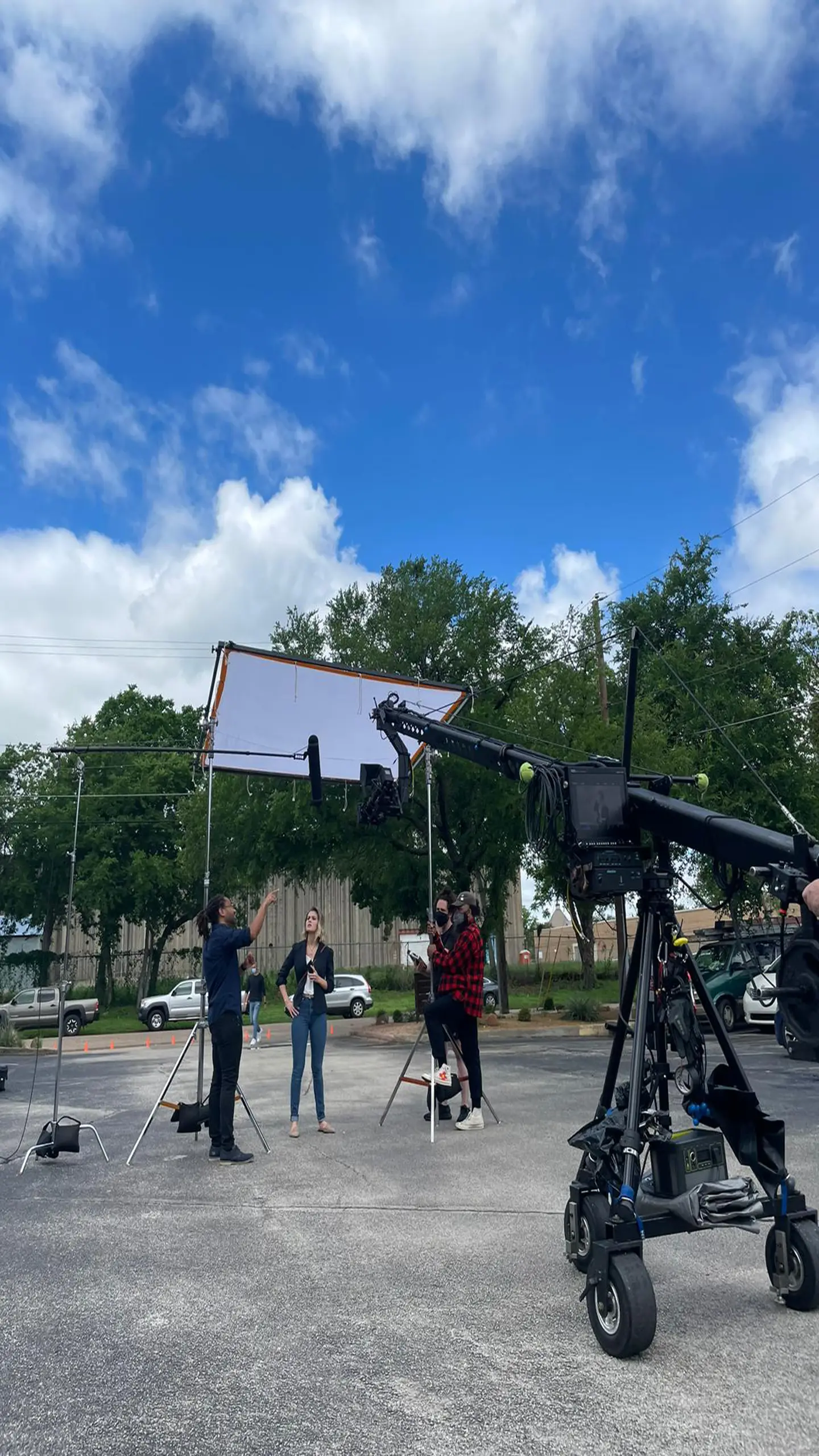
Filmmaking is a deeply collaborative art form that brings together a diverse group of talented individuals working toward a common goal: transforming a story into a visual experience. From the initial concept to the final cut, the process relies heavily on the combined efforts of a creative and technical team, including directors, producers, cinematographers, editors, and many more. Each person brings their unique expertise to the table, ensuring that every aspect of the film, from visuals to sound, aligns seamlessly.
In feature [film production](https://c-istudios.com/film-and-tv-production/), team dynamics are critical. A well-functioning team not only ensures the smooth execution of the project but also enhances the film’s creative potential. This article will explore the essential components of building a strong filmmaking team, covering key roles, pre-production preparation, and strategies for overcoming challenges, all while focusing on the power of collaboration to create successful films.
## Key Roles in a Film Production Team
A feature film is a complex project that requires the coordinated efforts of many individuals, each bringing their unique expertise to the production. Some of the most crucial roles include the Director, Producer, Cinematographer, Editor, and Sound Designer. Each plays an essential part in turning the script into a cinematic experience.
The Director is the creative force behind the film, responsible for shaping the narrative and guiding the cast and crew to realize their vision. They work closely with the Producer, who handles the logistics, financing, and organizational aspects of the project, ensuring everything stays on track and within budget. Without a producer’s meticulous planning, even the most creative projects can fall apart due to practical issues.
The Cinematographer (or Director of Photography) is in charge of the visual look of the film. They decide on camera angles, lighting, and shot composition to match the director's vision, making sure each frame visually communicates the story. Using a well-thought-out [video production gear list](https://c-istudios.com/video-production-gear-list/), they ensure the right equipment is in place to achieve the desired visual effect.
The Editor plays a pivotal role in post-production, shaping hours of raw footage into a coherent and compelling narrative. Editors work closely with the director to ensure the pacing and rhythm of the film are in line with the story’s emotional beats.
Finally, the Sound Designer is responsible for creating the audio landscape of the film. From capturing dialogue on set to adding ambient sounds and special audio effects, their work is crucial in immersing the audience in the film’s world. The final product, delivered as part of the feature film mastering and delivery process, reflects the combined efforts of these key roles, all working in harmony.
For a film to succeed, the collaboration between these departments must be seamless. Effective communication ensures that the camera, lighting, and sound departments can work in sync, allowing the director’s vision to come to life smoothly on set and in post-production.
## Pre-Production. Laying the Foundation for Team Collaboration
Pre-production is the cornerstone of any successful film project. During this phase, the foundation for team collaboration is laid by developing a detailed plan that encompasses all aspects of the production, from scheduling to budgeting.
One of the first steps in pre-production is creating a comprehensive schedule. This includes breaking down the script into individual scenes, identifying key elements such as locations, props, and costumes, and ensuring that every team member is aware of their responsibilities.
The use of project management tools like Trello or Monday.com can be incredibly helpful in this process, allowing teams to track tasks and communicate effectively. This is particularly important when working on complex projects that involve various departments like [video production](https://c-istudios.com/video-production-services/) or web development to ensure everything runs smoothly.
Budgeting is another crucial aspect of pre-production. A well-structured budget ensures that resources are allocated efficiently, preventing delays or disruptions during filming. Producers often use specialized software to manage the budget and forecast potential issues. By involving key team members in the budgeting process early on, it’s possible to address potential challenges collaboratively.
Establishing early collaborations among departments is vital to creating a cohesive production. For example, the cinematographer and production designer may work together to determine the visual style of the film, while the sound designer might collaborate with the director to discuss how sound will enhance the storytelling. These early collaborations ensure that each department’s work complements the others.
Effective communication during pre-production can prevent many issues down the line. For instance, a clear line of communication between the producer and the director can help avoid misunderstandings regarding the film’s scope or direction. The importance of early collaboration is highlighted in successful productions where departments work together from the start to bring the director's vision to life smoothly.
In summary, pre-production is where the groundwork for a successful film is laid. With detailed planning, efficient communication, and collaborative efforts between departments, filmmakers can set the stage for a smooth and creative production process.
## Building a Creative Team Culture
Creating a strong team culture in film production is essential for fostering creativity and collaboration. A cohesive environment where team members feel valued and motivated can significantly enhance the quality of the final product. One of the key elements of building this culture is encouraging open communication and cross-departmental collaboration.
To foster a culture where creativity and teamwork thrive, it’s important to establish an atmosphere of trust and openness. Team members should feel comfortable sharing ideas and providing constructive feedback without fear of judgment. Encouraging regular check-ins and creative brainstorming sessions can help achieve this.
For example, during pre-production, departments such as branding and graphic design may collaborate closely with the cinematography team to align the visual elements of the film with the director’s vision. This type of collaboration ensures that every team member is working toward a unified goal.
Open communication is also essential for smooth collaboration across departments. Tools such as Slack or Google Meet can facilitate real-time conversations, ensuring that everyone stays in sync, regardless of their specific role in the production. It’s also helpful to hold team meetings where each department shares its progress, ensuring transparency and allowing for cross-departmental feedback.
A unified creative vision is crucial for maintaining harmony in a production. This vision, led by the director, should resonate with all team members, from the cast to the post-production crew.
When each team member understands and aligns with the film’s goals, it enhances not only productivity but also creative input. [Creative marketing](https://c-istudios.com/creative-marketing-services/) plays a role here, as it ensures that the project’s public image matches the internal creative goals, further uniting the team around a single objective.
In summary, a strong team culture built on communication, trust, and a unified vision will enhance both the creative and operational aspects of film production, ultimately leading to a more successful project.
## Challenges of Teamwork in Film Production & Overcoming Them
Collaboration in film production often comes with its own set of challenges. Whether it’s a [documentary film production](https://c-istudios.com/documentary-film-production/) or a large-scale feature, teams face common hurdles like budget constraints, miscommunication, and tight deadlines.
One of the most significant challenges is managing the budget. In many productions, particularly independent films or documentaries, budget limitations can restrict the resources available to the team.
To overcome this, producers often have to be creative with the allocation of funds, such as bartering services, renting equipment, or seeking alternative funding methods like crowdfunding. Keeping departments informed about budget realities and involving them in decision-making can foster a collaborative atmosphere, even when resources are tight.
Miscommunication is another challenge that can slow down production. When different departments, such as camera, sound, and post-production, aren’t in sync, it can lead to delays, reshoots, and frustration.
Using clear communication tools and holding regular briefings can help bridge these gaps. For example, during a political campaign documentary, where timelines and messaging can be particularly sensitive, ensuring that all departments understand the film’s narrative goals is crucial.
Maintaining morale during difficult times, such as long shooting days or technical failures, is also challenging. Productivity can suffer if the team feels overworked or underappreciated. Successful production teams use strategies like rotating responsibilities, offering incentives, and ensuring that each department has input in critical decisions. These strategies help maintain energy and focus, even under tough conditions.
For instance, on the set of a documentary film, where filming schedules often depend on unpredictable real-world events, team collaboration and flexibility become key. Having contingency plans and remaining adaptable allows production to continue smoothly despite challenges.
In summary, overcoming collaboration challenges in film production requires clear communication, creative problem-solving, and maintaining morale, all of which contribute to a more resilient and efficient production team.
## Utilizing Technology for Better Collaboration
Technology has revolutionized how film production teams collaborate, making it easier for individuals to work together, even when they are in different locations. The rise of digital tools has enabled filmmakers to manage complex projects more efficiently and keep the entire team on the same page, whether during pre-production, shooting, or post-production.
For instance, remote collaboration has become more common with the use of cloud-based platforms like Frame.io. This software allows team members to review footage, leave comments, and make edits in real-time, regardless of their physical location.
Similarly, tools like Trello and Slack help streamline communication and project management, ensuring that everyone stays updated on task progress and deadlines. These platforms make it easier for teams to stay organized and minimize miscommunication during hectic production schedules.
In post-production, the integration of VFX compositing and animation has also benefited from technological advancements. Cloud-based platforms such as Autodesk ShotGrid and CineSync enable VFX teams to work collaboratively from different parts of the world, reviewing visual effects in real time and offering feedback instantly. This reduces the need for lengthy back-and-forth communications and allows teams to make quick adjustments, ensuring that the final product matches the director's vision.
For productions involving audio live streaming, technology plays an essential role in ensuring that sound is captured and transmitted efficiently during live events. Platforms like Zoom or OBS Studio can be used for remote live streaming, enabling live audio monitoring and adjustments, which keeps both sound engineers and directors informed of any necessary changes.
In summary, the use of technology in filmmaking has significantly enhanced collaboration. From pre-production planning to post-production VFX work, digital tools and cloud-based platforms allow teams to work more efficiently, reduce delays, and maintain creative control throughout the entire filmmaking process.
## Managing Conflict in a Film Production Team
In a film production team, conflicts are inevitable due to the high-stress environment, tight deadlines, and the collaboration of creative minds with diverse perspectives. Effectively managing and resolving these conflicts early is crucial to maintaining a smooth production.
The first step to addressing conflict is early identification. Clear communication channels, such as regular team meetings and feedback sessions, can help spot issues before they escalate. When conflicts arise, whether it's between the production crew or creative leads, it's important to address them quickly to prevent negative impacts on the production timeline or team morale.
Techniques for maintaining harmony within a diverse group of creatives often involve setting clear expectations from the beginning. For example, in media marketing [artist management, and media creation](https://c-istudios.com/artist-management-and-media-creation/), where various departments must collaborate closely, it's essential that everyone understands their roles and responsibilities. A strong leader, such as the producer or director, can mediate conflicts by facilitating open discussions, ensuring that each team member feels heard while also steering the team toward the common goal.
Conflict resolution can also involve restructuring tasks or reassigning roles if necessary. When tensions arise, a balanced approach that considers the strengths and limitations of each team member can help maintain harmony. For example, if a cinematographer and production designer disagree on set design, a compromise that satisfies the film's visual and technical needs can often be achieved through collaborative brainstorming or involving a neutral third party.
Real-life examples in filmmaking highlight the importance of conflict management. During the production of large-scale films like. In the Lord of the Rings, the team faced creative disagreements, but clear communication and a shared commitment to the project helped resolve these issues. By maintaining open dialogue and ensuring everyone was aligned with the film’s vision, the team was able to overcome these challenges.
In conclusion, managing conflicts in a film production team requires early identification, open communication, and proactive solutions to ensure that creativity and productivity are not compromised.
## Post-Production. Collaboration for Polished Results
Post-production is a critical phase in filmmaking where various departments, such as editors, sound designers, and VFX artists, work together to shape the final film. This collaboration requires clear communication and meticulous coordination to ensure that the film's visual and auditory elements are seamlessly integrated, delivering a polished result.
The Editor plays a central role during post-production, responsible for organizing and trimming the raw footage into a coherent narrative. Their collaboration with the Sound Designer is essential to ensure that the visuals and audio complement one another. For example, the timing of dialogue, sound effects, and music must sync perfectly with the edited footage.
Without this coordination, scenes may feel disjointed, and the overall viewing experience could suffer. The editor works closely with the sound team, which may include [audio engineering](https://c-istudios.com/audio-engineering-services/) experts who adjust the sound levels and enhance audio quality, ensuring that every sound is crisp and clear.
Meanwhile, VFX artists add the final layer of visual magic to the film. Whether it's creating complex animations or integrating visual effects, their work is often interwoven with the editor’s timeline.
For instance, visual effects may need to be adjusted after the initial editing cuts, requiring constant communication between the VFX team and the editor to ensure consistency. This back-and-forth process can be time-intensive, but effective communication between departments minimizes the chances of reshoots or extended editing sessions.
To further ensure a smooth workflow, cloud-based platforms like Frame.io and ShotGrid are often used to share footage, sound designs, and VFX drafts across teams in real-time. These tools allow for immediate feedback and corrections, keeping everyone aligned throughout the process.
The final step in post-production is feature film mastering, a meticulous process that ensures the film meets cinematic standards before it is distributed. This includes color grading, adjusting sound levels, and ensuring that the visual effects are rendered in their highest quality. In this phase, professional tools are used to ensure that the film’s professional photography and audio engineering efforts result in a polished product that looks and sounds pristine on the big screen.
In summary, post-production is a collaborative effort that relies on the expertise of editors, sound designers, and VFX artists. Clear communication and advanced tools ensure that each department’s work integrates smoothly, producing a final product that meets cinematic expectations.
## Key Roles in a Film Production Team
A feature film is a complex project that requires the coordinated efforts of many individuals, each bringing their unique expertise to the production. Some of the most crucial roles include the Director, Producer, Cinematographer, Editor, and Sound Designer. Each plays an essential part in turning the script into a cinematic experience.
The Director is the creative force behind the film, responsible for shaping the narrative and guiding the cast and crew to realize their vision. They work closely with the Producer, who handles the logistics, financing, and organizational aspects of the project, ensuring everything stays on track and within budget. Without a producer’s meticulous planning, even the most creative projects can fall apart due to practical issues.
The Cinematographer (or Director of Photography) is in charge of the visual look of the film. They decide on camera angles, lighting, and shot composition to match the director's vision, making sure each frame visually communicates the story. Using a well-thought-out [video production gear list](https://c-istudios.com/video-production-gear-list/), they ensure the right equipment is in place to achieve the desired visual effect.
The Editor plays a pivotal role in post-production, shaping hours of raw footage into a coherent and compelling narrative. Editors work closely with the director to ensure the pacing and rhythm of the film are in line with the story’s emotional beats.
Finally, the Sound Designer is responsible for creating the audio landscape of the film. From capturing dialogue on set to adding ambient sounds and special audio effects, their work is crucial in immersing the audience in the film’s world. The final product, delivered as part of the feature film mastering and delivery process, reflects the combined efforts of these key roles, all working in harmony.
For a film to succeed, the collaboration between these departments must be seamless. Effective communication ensures that the camera, lighting, and sound departments can work in sync, allowing the director’s vision to come to life smoothly on set and in post-production.
## Pre-Production. Laying the Foundation for Team Collaboration
Pre-production is the cornerstone of any successful film project. During this phase, the foundation for team collaboration is laid by developing a detailed plan that encompasses all aspects of the production, from scheduling to budgeting.
One of the first steps in pre-production is creating a comprehensive schedule. This includes breaking down the script into individual scenes, identifying key elements such as locations, props, and costumes, and ensuring that every team member is aware of their responsibilities.
The use of project management tools like Trello or Monday.com can be incredibly helpful in this process, allowing teams to track tasks and communicate effectively. This is particularly important when working on complex projects that involve various departments like [video production](https://c-istudios.com/video-production-services/) or web development to ensure everything runs smoothly.
Budgeting is another crucial aspect of pre-production. A well-structured budget ensures that resources are allocated efficiently, preventing delays or disruptions during filming. Producers often use specialized software to manage the budget and forecast potential issues. By involving key team members in the budgeting process early on, it’s possible to address potential challenges collaboratively.
Establishing early collaborations among departments is vital to creating a cohesive production. For example, the cinematographer and production designer may work together to determine the visual style of the film, while the sound designer might collaborate with the director to discuss how sound will enhance the storytelling. These early collaborations ensure that each department’s work complements the others.
Effective communication during pre-production can prevent many issues down the line. For instance, a clear line of communication between the producer and the director can help avoid misunderstandings regarding the film’s scope or direction. The importance of early collaboration is highlighted in successful productions where departments work together from the start to bring the director's vision to life smoothly.
In summary, pre-production is where the groundwork for a successful film is laid. With detailed planning, efficient communication, and collaborative efforts between departments, filmmakers can set the stage for a smooth and creative production process.
## Building a Creative Team Culture
Creating a strong team culture in film production is essential for fostering creativity and collaboration. A cohesive environment where team members feel valued and motivated can significantly enhance the quality of the final product. One of the key elements of building this culture is encouraging open communication and cross-departmental collaboration.
To foster a culture where creativity and teamwork thrive, it’s important to establish an atmosphere of trust and openness. Team members should feel comfortable sharing ideas and providing constructive feedback without fear of judgment. Encouraging regular check-ins and creative brainstorming sessions can help achieve this.
For example, during pre-production, departments such as branding and graphic design may collaborate closely with the cinematography team to align the visual elements of the film with the director’s vision. This type of collaboration ensures that every team member is working toward a unified goal.
Open communication is also essential for smooth collaboration across departments. Tools such as Slack or Google Meet can facilitate real-time conversations, ensuring that everyone stays in sync, regardless of their specific role in the production. It’s also helpful to hold team meetings where each department shares its progress, ensuring transparency and allowing for cross-departmental feedback.
A unified creative vision is crucial for maintaining harmony in a production. This vision, led by the director, should resonate with all team members, from the cast to the post-production crew.
When each team member understands and aligns with the film’s goals, it enhances not only productivity but also creative input. [Creative marketing](https://c-istudios.com/creative-marketing-services/) plays a role here, as it ensures that the project’s public image matches the internal creative goals, further uniting the team around a single objective.
In summary, a strong team culture built on communication, trust, and a unified vision will enhance both the creative and operational aspects of film production, ultimately leading to a more successful project.
## Challenges of Teamwork in Film Production & Overcoming Them
Collaboration in film production often comes with its own set of challenges. Whether it’s a [documentary film production](https://c-istudios.com/documentary-film-production/) or a large-scale feature, teams face common hurdles like budget constraints, miscommunication, and tight deadlines.
One of the most significant challenges is managing the budget. In many productions, particularly independent films or documentaries, budget limitations can restrict the resources available to the team.
To overcome this, producers often have to be creative with the allocation of funds, such as bartering services, renting equipment, or seeking alternative funding methods like crowdfunding. Keeping departments informed about budget realities and involving them in decision-making can foster a collaborative atmosphere, even when resources are tight.
Miscommunication is another challenge that can slow down production. When different departments, such as camera, sound, and post-production, aren’t in sync, it can lead to delays, reshoots, and frustration.
Using clear communication tools and holding regular briefings can help bridge these gaps. For example, during a political campaign documentary, where timelines and messaging can be particularly sensitive, ensuring that all departments understand the film’s narrative goals is crucial.
Maintaining morale during difficult times, such as long shooting days or technical failures, is also challenging. Productivity can suffer if the team feels overworked or underappreciated. Successful production teams use strategies like rotating responsibilities, offering incentives, and ensuring that each department has input in critical decisions. These strategies help maintain energy and focus, even under tough conditions.
For instance, on the set of a documentary film, where filming schedules often depend on unpredictable real-world events, team collaboration and flexibility become key. Having contingency plans and remaining adaptable allows production to continue smoothly despite challenges.
In summary, overcoming collaboration challenges in film production requires clear communication, creative problem-solving, and maintaining morale, all of which contribute to a more resilient and efficient production team.
## Utilizing Technology for Better Collaboration
Technology has revolutionized how film production teams collaborate, making it easier for individuals to work together, even when they are in different locations. The rise of digital tools has enabled filmmakers to manage complex projects more efficiently and keep the entire team on the same page, whether during pre-production, shooting, or post-production.
For instance, remote collaboration has become more common with the use of cloud-based platforms like Frame.io. This software allows team members to review footage, leave comments, and make edits in real-time, regardless of their physical location.
Similarly, tools like Trello and Slack help streamline communication and project management, ensuring that everyone stays updated on task progress and deadlines. These platforms make it easier for teams to stay organized and minimize miscommunication during hectic production schedules.
In post-production, the integration of VFX compositing and animation has also benefited from technological advancements. Cloud-based platforms such as Autodesk ShotGrid and CineSync enable VFX teams to work collaboratively from different parts of the world, reviewing visual effects in real time and offering feedback instantly. This reduces the need for lengthy back-and-forth communications and allows teams to make quick adjustments, ensuring that the final product matches the director's vision.
For productions involving audio live streaming, technology plays an essential role in ensuring that sound is captured and transmitted efficiently during live events. Platforms like Zoom or OBS Studio can be used for remote live streaming, enabling live audio monitoring and adjustments, which keeps both sound engineers and directors informed of any necessary changes.
In summary, the use of technology in filmmaking has significantly enhanced collaboration. From pre-production planning to post-production VFX work, digital tools and cloud-based platforms allow teams to work more efficiently, reduce delays, and maintain creative control throughout the entire filmmaking process.
## Managing Conflict in a Film Production Team
In a film production team, conflicts are inevitable due to the high-stress environment, tight deadlines, and the collaboration of creative minds with diverse perspectives. Effectively managing and resolving these conflicts early is crucial to maintaining a smooth production.
The first step to addressing conflict is early identification. Clear communication channels, such as regular team meetings and feedback sessions, can help spot issues before they escalate. When conflicts arise, whether it's between the production crew or creative leads, it's important to address them quickly to prevent negative impacts on the production timeline or team morale.
Techniques for maintaining harmony within a diverse group of creatives often involve setting clear expectations from the beginning. For example, in media marketing [artist management, and media creation](https://c-istudios.com/artist-management-and-media-creation/), where various departments must collaborate closely, it's essential that everyone understands their roles and responsibilities. A strong leader, such as the producer or director, can mediate conflicts by facilitating open discussions, ensuring that each team member feels heard while also steering the team toward the common goal.
Conflict resolution can also involve restructuring tasks or reassigning roles if necessary. When tensions arise, a balanced approach that considers the strengths and limitations of each team member can help maintain harmony. For example, if a cinematographer and production designer disagree on set design, a compromise that satisfies the film's visual and technical needs can often be achieved through collaborative brainstorming or involving a neutral third party.
Real-life examples in filmmaking highlight the importance of conflict management. During the production of large-scale films like. In the Lord of the Rings, the team faced creative disagreements, but clear communication and a shared commitment to the project helped resolve these issues. By maintaining open dialogue and ensuring everyone was aligned with the film’s vision, the team was able to overcome these challenges.
In conclusion, managing conflicts in a film production team requires early identification, open communication, and proactive solutions to ensure that creativity and productivity are not compromised.
## Post-Production. Collaboration for Polished Results
Post-production is a critical phase in filmmaking where various departments, such as editors, sound designers, and VFX artists, work together to shape the final film. This collaboration requires clear communication and meticulous coordination to ensure that the film's visual and auditory elements are seamlessly integrated, delivering a polished result.
The Editor plays a central role during post-production, responsible for organizing and trimming the raw footage into a coherent narrative. Their collaboration with the Sound Designer is essential to ensure that the visuals and audio complement one another. For example, the timing of dialogue, sound effects, and music must sync perfectly with the edited footage.
Without this coordination, scenes may feel disjointed, and the overall viewing experience could suffer. The editor works closely with the sound team, which may include [audio engineering](https://c-istudios.com/audio-engineering-services/) experts who adjust the sound levels and enhance audio quality, ensuring that every sound is crisp and clear.
Meanwhile, VFX artists add the final layer of visual magic to the film. Whether it's creating complex animations or integrating visual effects, their work is often interwoven with the editor’s timeline.
For instance, visual effects may need to be adjusted after the initial editing cuts, requiring constant communication between the VFX team and the editor to ensure consistency. This back-and-forth process can be time-intensive, but effective communication between departments minimizes the chances of reshoots or extended editing sessions.
To further ensure a smooth workflow, cloud-based platforms like Frame.io and ShotGrid are often used to share footage, sound designs, and VFX drafts across teams in real-time. These tools allow for immediate feedback and corrections, keeping everyone aligned throughout the process.
The final step in post-production is feature film mastering, a meticulous process that ensures the film meets cinematic standards before it is distributed. This includes color grading, adjusting sound levels, and ensuring that the visual effects are rendered in their highest quality. In this phase, professional tools are used to ensure that the film’s professional photography and audio engineering efforts result in a polished product that looks and sounds pristine on the big screen.
In summary, post-production is a collaborative effort that relies on the expertise of editors, sound designers, and VFX artists. Clear communication and advanced tools ensure that each department’s work integrates smoothly, producing a final product that meets cinematic expectations.
## Work with C&I Studios
If you are planning a project like this, our team can take it from concept to final delivery. Explore our [film and TV production](https://c-istudios.com/film-and-tv-production/), browse [our work](https://c-istudios.com/our-work/) to see how we tell brand stories, and [get in touch](https://c-istudios.com/contact/) when you are ready to start.
Originally published September 11, 2024
---
*This content is from [C&I Studios](https://c-istudios.com), a full-service production company.*
---
# Branding for Social Impact: Designing Campaigns for Change
> Published: September 10, 2024
> Categories: Commercial & Brand
> Source: https://c-istudios.com/branding-for-social-impact-designing-campaigns-for-change/
---
.cib{--paper:#1b1d1f;--ink:#fff;--body:#d5d7d9;--muted:#8b9096;--line:rgba(255,255,255,.12);--thumb:#2b2e31;--card:#212426;--accent:#c02b0a;--blue:#5B8FA8;--serif:'Playfair Display',Georgia,serif;--sans:'Poppins',-apple-system,sans-serif;--measure:900px;background:var(--paper);color:var(--body);font-family:var(--sans);line-height:1.6;position:relative;left:50%;transform:translateX(-50%);width:90vw;max-width:1920px}
.cib *{box-sizing:border-box}
.cib .kicker{max-width:var(--measure);margin:58px auto 0;padding:0 22px;font-size:12.5px;font-weight:700;letter-spacing:2.5px;text-transform:uppercase;color:var(--blue)}
.cib h1.cibh1{text-wrap:balance;font-family:var(--serif);font-weight:500;font-size:clamp(46px,6vw,72px);line-height:1.08;color:var(--ink);max-width:var(--measure);margin:18px auto 0;padding:0 22px;letter-spacing:-.5px}
.cib .metarow{max-width:var(--measure);margin:20px auto 0;padding:0 22px;color:var(--muted);font-size:14px}
.cib .hero{position:relative;width:100%;height:0;padding-bottom:56.25%;overflow:hidden;margin:48px auto 0;border-top:1px solid var(--line);border-bottom:1px solid var(--line)}
.cib .hero .ph{width:100%;aspect-ratio:16/9;background:var(--thumb);border-top:1px solid var(--line);border-bottom:1px solid var(--line);display:flex;align-items:center;justify-content:center;color:#7d8288;font-size:13px;text-align:center;padding:0 20px}
.cib .body{max-width:var(--measure);margin:12px auto 0;padding:52px 22px 6px}
.cib .body.lead p:first-child{font-size:23px;line-height:1.62;color:var(--ink)}
.cib .body p{font-size:18.5px;line-height:1.85;margin:0 0 30px;color:var(--body)}
.cib .body h2{text-wrap:balance;font-family:var(--serif);font-weight:500;font-size:clamp(32px,4vw,48px);line-height:1.22;color:var(--ink);margin:70px 0 20px;letter-spacing:-.3px}
.cib .body h3{text-wrap:balance;font-family:var(--sans);font-weight:600;font-size:22px;color:var(--ink);margin:38px 0 8px}
.cib .body a{color:var(--ink);text-decoration:underline;text-decoration-color:rgba(255,255,255,.4);text-underline-offset:3px}
.cib .body a:hover{text-decoration-color:var(--ink)}
.cib .ctable{width:100%;border-collapse:collapse;margin:16px 0 30px;font-size:16px}
.cib .ctable th{background:#000;color:#fff;text-align:left;padding:10px 12px;font-family:var(--sans)}
.cib .ctable td{padding:10px 12px;border-bottom:1px solid var(--line);color:var(--body)}
.cib .inimg{position:relative;width:100%;height:0;padding-bottom:56.25%;overflow:hidden;margin:72px auto;border-top:1px solid var(--line);border-bottom:1px solid var(--line)}
.cib .inimg .ph{width:100%;aspect-ratio:16/9;background:var(--thumb);border-top:1px solid var(--line);border-bottom:1px solid var(--line);display:flex;align-items:center;justify-content:center;color:#7d8288;font-size:13px}
.cib .origpub{max-width:var(--measure);margin:60px auto 0;padding:26px 22px 0;border-top:1px solid var(--line);color:var(--muted);font-size:13.5px}
.cib .related{max-width:1200px;margin:64px auto 0;padding:34px 22px 76px}
.cib .related h3{font-family:var(--sans);font-size:12.5px;letter-spacing:2px;text-transform:uppercase;color:var(--ink);margin:0 0 24px}
.cib .grid{display:grid;grid-template-columns:repeat(3,1fr);gap:28px}
.cib .rc{background:var(--card);border:1px solid var(--line);display:block;text-decoration:none;color:inherit;transition:border-color .15s}
.cib a.rc:hover{border-color:rgba(255,255,255,.5)}
.cib .rc .thumb{position:relative;width:100%;height:0;padding-bottom:56.25%;background:var(--thumb);overflow:hidden}
.cib .rc .thumb img{position:absolute!important;top:0!important;left:0!important;width:100%!important;height:100%!important;object-fit:cover!important;margin:0!important}
.cib .rc .cc{padding:14px 15px 17px}
.cib .rc .rt{font-family:var(--serif);font-weight:500;font-size:16px;line-height:1.3;color:var(--ink);margin:0 0 6px}
.cib .rc .rm{font-size:11px;letter-spacing:1px;text-transform:uppercase;color:var(--muted)}
.cib img{margin:0!important;padding:0!important;display:block!important;vertical-align:top;max-width:100%}
.cib .hero img,.cib .inimg img{position:absolute!important;top:0!important;left:0!important;width:100%!important;height:100%!important;object-fit:cover!important;margin:0!important;padding:0!important;border:0!important;display:block!important;aspect-ratio:auto!important}
.cib .hero+.body{padding-top:36px}
@media(max-width:760px){.cib .grid{grid-template-columns:1fr}.cib .body h2{margin:52px 0 16px}.cib .body p{font-size:17.5px}.cib .inimg,.cib .hero{margin-top:44px}}
.cib .vembed{max-width:var(--measure);margin:44px auto;padding:0 22px}.cib .vembed .vwrap{position:relative;width:100%;height:0;padding-bottom:56.25%}.cib .vembed .vwrap iframe{position:absolute;top:0;left:0;width:100%;height:100%;border:0}
Commercial & Brand
# Branding for Social Impact. Designing Campaigns for Change
17 min read

Branding has evolved far beyond its traditional role in commerce, becoming a powerful tool for driving social change. As organizations and movements strive to address pressing societal issues, branding has taken on a new significance in shaping perceptions, raising awareness, and inspiring action.
Whether it’s through activism, nonprofit work, or political campaigns, branding for social impact seeks to connect with audiences on a deeper, emotional level. By crafting compelling narratives and visual identities, these campaigns can leave a lasting impression and mobilize communities to support meaningful causes.
From the way logos and colors evoke emotions to the strategic use of storytelling, branding has the potential to create long-term, positive change in society. It is no longer confined to the business world but is increasingly being used as a force for good, amplifying voices and sparking movements that resonate with people around the globe.
## Setting Clear Objectives for Your Social Impact Campaign
Before embarking on any social impact campaign, it is crucial to set clear, measurable objectives. Without well-defined goals, a campaign can lose focus and fail to resonate with its intended audience. Start by identifying the core social issue or cause you want to address. A strong mission statement will serve as the foundation for the campaign, outlining the change you want to see in society.
Next, it’s essential to align these goals with measurable outcomes, particularly through [social media marketing services](https://c-istudios.com/social-media-marketing-services/). Social media platforms provide an ideal space to reach a wide audience, and setting specific targets for engagement, reach, and action will help guide the campaign. For example, defining metrics such as shares, likes, or petitions signed ensures that you can track progress.
Media marketing also plays a vital role in amplifying your message. By utilizing various channels, from traditional media outlets to digital campaigns, you can increase visibility and awareness of your cause. Clear objectives, combined with a focused media strategy, help to ensure your campaign drives real impact and lasting change.
## Understanding and Connecting with Your Target Audience
A successful social impact campaign hinges on understanding and connecting with your target audience. Whether it's a [political campaign](https://c-istudios.com/political-campaign-services/) or an initiative for social change, it's crucial to know who you are speaking to and what matters most to them. Audience research allows you to gather valuable insights into their values, concerns, and demographics.
To create meaningful connections, it’s essential to leverage data. Analyzing online behaviors, conducting surveys, and monitoring engagement metrics can help tailor the campaign to resonate with your audience emotionally. Personalizing your content to reflect their interests and concerns strengthens this bond.
When crafting your message, effective SEO copywriting ensures that your content is not only emotionally resonant but also discoverable by search engines. Optimizing for the right keywords and structuring your content strategically allows your campaign to reach the right people at the right time, driving awareness and action. By understanding your audience and speaking directly to their needs, your social impact campaign can achieve a broader and more meaningful impact.
## Building a Powerful Visual Identity for Social Change
A strong visual identity is essential for any social impact campaign, as it helps create a lasting impression on the audience and communicates the campaign’s values. Effective [branding and graphic design](https://c-istudios.com/branding-and-graphic-design-services/) play a central role in shaping how people perceive a cause.
Elements such as logos, color schemes, and typography must reflect the core message of the campaign while being visually appealing and memorable. A well-designed visual identity can instantly evoke emotions, making it easier for people to connect with the cause on a personal level.
In addition to design, professional photography is key to visual storytelling. High-quality images humanize social issues and capture real-life moments that resonate with viewers. Powerful visuals can inspire empathy and encourage people to take action, making professional photography an invaluable tool for communicating the human aspect of a cause.
Consistency in visual identity across all platforms is crucial. Whether it's on social media, websites, or printed materials, maintaining uniformity in design and imagery ensures that the campaign is instantly recognizable. This cohesive approach to branding and graphic design reinforces the message and fosters trust and familiarity with the audience, which is essential for long-term engagement and support.
## Crafting Compelling Content for Maximum Engagement
At the heart of any successful social impact campaign lies powerful, relatable content that resonates with the audience. [Content creation](https://c-istudios.com/content-creation-services/) plays a pivotal role in telling the stories behind a cause, enabling campaigns to move people emotionally and inspire them to take action. Authenticity is key, campaigns need to present real issues and experiences that align with the values of the audience.
One of the most effective ways to do this is through [video production](https://c-istudios.com/video-production-services/). Videos allow campaigns to showcase real stories in a way that’s dynamic and engaging, whether it’s a testimonial, a documentary-style feature, or a short social media clip. These formats are highly shareable and can spread a message rapidly, creating viral moments that drive awareness.
To achieve maximum engagement, it's crucial that content creation reflects the values and needs of the audience. From compelling narratives to clear calls to action, content should evoke empathy and inspire viewers to become advocates for the cause. Thoughtful, impactful video production and storytelling can motivate audiences to not only engage but also share the message with their own networks, amplifying the campaign’s reach.
## Leveraging Social Media Platforms to Amplify Your Message
In today’s digital age, social media has become a powerful tool for promoting social impact campaigns and reaching a wide audience. Utilizing social media marketing services enables organizations to spread their message effectively across platforms like Instagram, Facebook, and YouTube. These services provide the tools and strategies needed to optimize content for each platform, ensuring that the campaign reaches the right audience and maximizes engagement.
Choosing the right social media platforms is crucial to the success of any campaign. For example, Instagram’s visual appeal is perfect for storytelling through images and videos, while Facebook allows for more in-depth posts and discussions. YouTube, with its video-centric format, is ideal for showcasing longer narratives. By strategically using [social media marketing services](https://c-istudios.com/social-media-marketing-services/), campaigns can amplify their message across multiple channels, increasing visibility and impact.
Audio live streaming has emerged as a valuable tool for engaging with audiences in real time. Platforms such as Instagram Live, Facebook Live, or Clubhouse allow campaigns to host discussions, Q&A sessions, or events, creating an immediate connection with followers. This real-time interaction fosters a sense of community and encourages participation, making audio live streaming a dynamic addition to any social impact strategy.
## Collaborating with Influencers and Ambassadors for Greater Reach
Partnering with influencers and ambassadors is an effective strategy to broaden the reach of your social impact campaign. Influencers who align with the cause can help raise awareness by tapping into their loyal audiences, who often trust their recommendations. The process of [artist management and media creation](https://c-istudios.com/artist-management-and-media-creation/) ensures that these collaborations are meaningful and well-executed, enhancing the campaign’s visibility.
Identifying the right ambassadors requires careful consideration of their values, audience, and credibility. Whether they are celebrities, social media influencers, or grassroots advocates, it’s important that their personal brand resonates with the mission of the campaign. Successful partnerships are built on shared beliefs and goals, making it easier to communicate the message to a broader, engaged audience.
The role of media marketing in managing these collaborations is vital. By leveraging the ambassador’s platform, the campaign can amplify its reach and credibility, bringing more attention to the cause. Effective artist management and media creation ensure that the influencer’s content aligns with the campaign’s objectives while fostering a long-term relationship that continues to support the mission.
## Measuring and Analyzing Campaign Impact
Tracking the performance of a social impact campaign is essential for understanding its effectiveness and making necessary adjustments. Key metrics such as engagement rates, conversion rates, and reach help assess whether the campaign is meeting its goals. Tools like Google Analytics and social media insights offer real-time data on audience interactions, showing which aspects of the campaign resonate most with followers.
Web development plays a crucial role in ensuring that the campaign’s online presence is optimized for maximum visibility. A well-designed website helps drive traffic and allows for seamless user experiences, encouraging visitors to engage with the campaign. Integrating tracking tools into the website allows for the collection of valuable data, such as page views, time spent on the site, and conversion metrics.
Continuous optimization through web maintenance is equally important. Regularly updating content, fixing bugs, and ensuring the site’s performance helps maintain a strong online presence.
This ongoing web maintenance ensures that the campaign adapts to evolving trends and keeps users engaged. By analyzing data-driven insights, campaign strategies can be adjusted in real time to improve performance and better meet the goals of the social impact initiative.
## Maximizing Campaign Impact through Video and Film Production
Video content has become one of the most effective mediums for amplifying social impact messages. High-quality video production and [documentary film production](https://c-istudios.com/documentary-film-production/) have the power to engage audiences on a deeper level, making complex issues more relatable through storytelling. Documentaries, in particular, can bring attention to social causes by showcasing real-life stories, struggles, and solutions.
Creating a successful video starts with having the right tools. A comprehensive video production gear list is essential to ensure the technical quality of the film, from cameras and lighting to sound equipment. Professional gear elevates the production value and ensures the video resonates with a wide audience, capturing their attention and driving action.
Documentary [film production](https://c-istudios.com/film-and-tv-production/) is an effective way to educate and inform the public about specific social issues. By presenting facts in an emotionally engaging format, these films can inspire action and build empathy. When done right, documentaries raise awareness and encourage viewers to get involved in the cause, making them an invaluable tool for social impact campaigns.
## The Future of Branding for Social Impact
As the world becomes more interconnected and issues like climate change, social justice, and global inequality continue to grow, branding for social impact will evolve to meet these challenges. Future trends in this field will see organizations adopting more sophisticated [creative marketing](https://c-istudios.com/creative-marketing-services/) strategies to engage audiences in new and innovative ways. Social impact branding will no longer be an afterthought but a core element of how companies and nonprofits position themselves in the market, influencing how they communicate their values and missions.
The role of branding and graphic design will also continue to expand, integrating with emerging technologies to create more interactive and immersive experiences. Digital platforms, from augmented reality (AR) to virtual reality (VR), will allow for dynamic engagement, offering audiences new ways to interact with campaigns. As these technologies become more accessible, the lines between physical and digital branding will blur, enabling organizations to build deeper emotional connections with their supporters.
Looking ahead, future technologies like AI-driven content personalization, blockchain for transparency, and data-driven storytelling will likely shape the direction of social impact campaigns. As branding and graphic design evolve to adapt to these changes, campaigns will become more tailored, ensuring that messaging resonates more powerfully with target audiences. By staying ahead of technological trends, social impact branding will continue to drive meaningful change and inspire action on a global scale.
## Setting Clear Objectives for Your Social Impact Campaign
Before embarking on any social impact campaign, it is crucial to set clear, measurable objectives. Without well-defined goals, a campaign can lose focus and fail to resonate with its intended audience. Start by identifying the core social issue or cause you want to address. A strong mission statement will serve as the foundation for the campaign, outlining the change you want to see in society.
Next, it’s essential to align these goals with measurable outcomes, particularly through [social media marketing services](https://c-istudios.com/social-media-marketing-services/). Social media platforms provide an ideal space to reach a wide audience, and setting specific targets for engagement, reach, and action will help guide the campaign. For example, defining metrics such as shares, likes, or petitions signed ensures that you can track progress.
Media marketing also plays a vital role in amplifying your message. By utilizing various channels, from traditional media outlets to digital campaigns, you can increase visibility and awareness of your cause. Clear objectives, combined with a focused media strategy, help to ensure your campaign drives real impact and lasting change.
## Understanding and Connecting with Your Target Audience
A successful social impact campaign hinges on understanding and connecting with your target audience. Whether it's a [political campaign](https://c-istudios.com/political-campaign-services/) or an initiative for social change, it's crucial to know who you are speaking to and what matters most to them. Audience research allows you to gather valuable insights into their values, concerns, and demographics.
To create meaningful connections, it’s essential to leverage data. Analyzing online behaviors, conducting surveys, and monitoring engagement metrics can help tailor the campaign to resonate with your audience emotionally. Personalizing your content to reflect their interests and concerns strengthens this bond.
When crafting your message, effective SEO copywriting ensures that your content is not only emotionally resonant but also discoverable by search engines. Optimizing for the right keywords and structuring your content strategically allows your campaign to reach the right people at the right time, driving awareness and action. By understanding your audience and speaking directly to their needs, your social impact campaign can achieve a broader and more meaningful impact.
## Building a Powerful Visual Identity for Social Change
A strong visual identity is essential for any social impact campaign, as it helps create a lasting impression on the audience and communicates the campaign’s values. Effective [branding and graphic design](https://c-istudios.com/branding-and-graphic-design-services/) play a central role in shaping how people perceive a cause.
Elements such as logos, color schemes, and typography must reflect the core message of the campaign while being visually appealing and memorable. A well-designed visual identity can instantly evoke emotions, making it easier for people to connect with the cause on a personal level.
In addition to design, professional photography is key to visual storytelling. High-quality images humanize social issues and capture real-life moments that resonate with viewers. Powerful visuals can inspire empathy and encourage people to take action, making professional photography an invaluable tool for communicating the human aspect of a cause.
Consistency in visual identity across all platforms is crucial. Whether it's on social media, websites, or printed materials, maintaining uniformity in design and imagery ensures that the campaign is instantly recognizable. This cohesive approach to branding and graphic design reinforces the message and fosters trust and familiarity with the audience, which is essential for long-term engagement and support.
## Crafting Compelling Content for Maximum Engagement
At the heart of any successful social impact campaign lies powerful, relatable content that resonates with the audience. [Content creation](https://c-istudios.com/content-creation-services/) plays a pivotal role in telling the stories behind a cause, enabling campaigns to move people emotionally and inspire them to take action. Authenticity is key, campaigns need to present real issues and experiences that align with the values of the audience.
One of the most effective ways to do this is through video production. Videos allow campaigns to showcase real stories in a way that’s dynamic and engaging, whether it’s a testimonial, a documentary-style feature, or a short social media clip. These formats are highly shareable and can spread a message rapidly, creating viral moments that drive awareness.
To achieve maximum engagement, it's crucial that content creation reflects the values and needs of the audience. From compelling narratives to clear calls to action, content should evoke empathy and inspire viewers to become advocates for the cause. Thoughtful, impactful video production and storytelling can motivate audiences to not only engage but also share the message with their own networks, amplifying the campaign’s reach.
## Leveraging Social Media Platforms to Amplify Your Message
In today’s digital age, social media has become a powerful tool for promoting social impact campaigns and reaching a wide audience. Utilizing social media marketing services enables organizations to spread their message effectively across platforms like Instagram, Facebook, and YouTube. These services provide the tools and strategies needed to optimize content for each platform, ensuring that the campaign reaches the right audience and maximizes engagement.
Choosing the right social media platforms is crucial to the success of any campaign. For example, Instagram’s visual appeal is perfect for storytelling through images and videos, while Facebook allows for more in-depth posts and discussions. YouTube, with its video-centric format, is ideal for showcasing longer narratives. By strategically using [social media marketing services](https://c-istudios.com/social-media-marketing-services/), campaigns can amplify their message across multiple channels, increasing visibility and impact.
Audio live streaming has emerged as a valuable tool for engaging with audiences in real time. Platforms such as Instagram Live, Facebook Live, or Clubhouse allow campaigns to host discussions, Q&A sessions, or events, creating an immediate connection with followers. This real-time interaction fosters a sense of community and encourages participation, making audio live streaming a dynamic addition to any social impact strategy.
## Collaborating with Influencers and Ambassadors for Greater Reach
Partnering with influencers and ambassadors is an effective strategy to broaden the reach of your social impact campaign. Influencers who align with the cause can help raise awareness by tapping into their loyal audiences, who often trust their recommendations. The process of [artist management and media creation](https://c-istudios.com/artist-management-and-media-creation/) ensures that these collaborations are meaningful and well-executed, enhancing the campaign’s visibility.
Identifying the right ambassadors requires careful consideration of their values, audience, and credibility. Whether they are celebrities, social media influencers, or grassroots advocates, it’s important that their personal brand resonates with the mission of the campaign. Successful partnerships are built on shared beliefs and goals, making it easier to communicate the message to a broader, engaged audience.
The role of media marketing in managing these collaborations is vital. By leveraging the ambassador’s platform, the campaign can amplify its reach and credibility, bringing more attention to the cause. Effective artist management and media creation ensure that the influencer’s content aligns with the campaign’s objectives while fostering a long-term relationship that continues to support the mission.
## Measuring and Analyzing Campaign Impact
Tracking the performance of a social impact campaign is essential for understanding its effectiveness and making necessary adjustments. Key metrics such as engagement rates, conversion rates, and reach help assess whether the campaign is meeting its goals. Tools like Google Analytics and social media insights offer real-time data on audience interactions, showing which aspects of the campaign resonate most with followers.
Web development plays a crucial role in ensuring that the campaign’s online presence is optimized for maximum visibility. A well-designed website helps drive traffic and allows for seamless user experiences, encouraging visitors to engage with the campaign. Integrating tracking tools into the website allows for the collection of valuable data, such as page views, time spent on the site, and conversion metrics.
Continuous optimization through web maintenance is equally important. Regularly updating content, fixing bugs, and ensuring the site’s performance helps maintain a strong online presence.
This ongoing web maintenance ensures that the campaign adapts to evolving trends and keeps users engaged. By analyzing data-driven insights, campaign strategies can be adjusted in real time to improve performance and better meet the goals of the social impact initiative.
## Maximizing Campaign Impact through Video and Film Production
Video content has become one of the most effective mediums for amplifying social impact messages. High-quality video production and [documentary film production](https://c-istudios.com/documentary-film-production/) have the power to engage audiences on a deeper level, making complex issues more relatable through storytelling. Documentaries, in particular, can bring attention to social causes by showcasing real-life stories, struggles, and solutions.
Creating a successful video starts with having the right tools. A comprehensive video production gear list is essential to ensure the technical quality of the film, from cameras and lighting to sound equipment. Professional gear elevates the production value and ensures the video resonates with a wide audience, capturing their attention and driving action.
Documentary film production is an effective way to educate and inform the public about specific social issues. By presenting facts in an emotionally engaging format, these films can inspire action and build empathy. When done right, documentaries raise awareness and encourage viewers to get involved in the cause, making them an invaluable tool for social impact campaigns.
## The Future of Branding for Social Impact
As the world becomes more interconnected and issues like climate change, social justice, and global inequality continue to grow, branding for social impact will evolve to meet these challenges. Future trends in this field will see organizations adopting more sophisticated [creative marketing](https://c-istudios.com/creative-marketing-services/) strategies to engage audiences in new and innovative ways. Social impact branding will no longer be an afterthought but a core element of how companies and nonprofits position themselves in the market, influencing how they communicate their values and missions.
The role of branding and graphic design will also continue to expand, integrating with emerging technologies to create more interactive and immersive experiences. Digital platforms, from augmented reality (AR) to virtual reality (VR), will allow for dynamic engagement, offering audiences new ways to interact with campaigns. As these technologies become more accessible, the lines between physical and digital branding will blur, enabling organizations to build deeper emotional connections with their supporters.
Looking ahead, future technologies like AI-driven content personalization, blockchain for transparency, and data-driven storytelling will likely shape the direction of social impact campaigns. As branding and graphic design evolve to adapt to these changes, campaigns will become more tailored, ensuring that messaging resonates more powerfully with target audiences. By staying ahead of technological trends, social impact branding will continue to drive meaningful change and inspire action on a global scale.
## Work with C&I Studios
If you are planning a project like this, our team can take it from concept to final delivery. Explore our [video production services](https://c-istudios.com/video-production-services/), browse [our work](https://c-istudios.com/our-work/) to see how we tell brand stories, and [get in touch](https://c-istudios.com/contact/) when you are ready to start.
Originally published September 10, 2024
---
*This content is from [C&I Studios](https://c-istudios.com), a full-service production company.*
---
# SEO Copywriting for Local Businesses: Strategies for Improving Local Search Rankings
> Published: September 6, 2024
> Categories: Web & Tech
> Source: https://c-istudios.com/seo-copywriting-for-local-businesses-strategies-for-improving-local-search-rankings/
---
.cib{--paper:#1b1d1f;--ink:#fff;--body:#d5d7d9;--muted:#8b9096;--line:rgba(255,255,255,.12);--thumb:#2b2e31;--card:#212426;--accent:#c02b0a;--blue:#5B8FA8;--serif:'Playfair Display',Georgia,serif;--sans:'Poppins',-apple-system,sans-serif;--measure:900px;background:var(--paper);color:var(--body);font-family:var(--sans);line-height:1.6;position:relative;left:50%;transform:translateX(-50%);width:90vw;max-width:1920px}
.cib *{box-sizing:border-box}
.cib .kicker{max-width:var(--measure);margin:58px auto 0;padding:0 22px;font-size:12.5px;font-weight:700;letter-spacing:2.5px;text-transform:uppercase;color:var(--blue)}
.cib h1.cibh1{text-wrap:balance;font-family:var(--serif);font-weight:500;font-size:clamp(46px,6vw,72px);line-height:1.08;color:var(--ink);max-width:var(--measure);margin:18px auto 0;padding:0 22px;letter-spacing:-.5px}
.cib .metarow{max-width:var(--measure);margin:20px auto 0;padding:0 22px;color:var(--muted);font-size:14px}
.cib .hero{position:relative;width:100%;height:0;padding-bottom:56.25%;overflow:hidden;margin:48px auto 0;border-top:1px solid var(--line);border-bottom:1px solid var(--line)}
.cib .hero .ph{width:100%;aspect-ratio:16/9;background:var(--thumb);border-top:1px solid var(--line);border-bottom:1px solid var(--line);display:flex;align-items:center;justify-content:center;color:#7d8288;font-size:13px;text-align:center;padding:0 20px}
.cib .body{max-width:var(--measure);margin:12px auto 0;padding:52px 22px 6px}
.cib .body.lead p:first-child{font-size:23px;line-height:1.62;color:var(--ink)}
.cib .body p{font-size:18.5px;line-height:1.85;margin:0 0 30px;color:var(--body)}
.cib .body h2{text-wrap:balance;font-family:var(--serif);font-weight:500;font-size:clamp(32px,4vw,48px);line-height:1.22;color:var(--ink);margin:70px 0 20px;letter-spacing:-.3px}
.cib .body h3{text-wrap:balance;font-family:var(--sans);font-weight:600;font-size:22px;color:var(--ink);margin:38px 0 8px}
.cib .body a{color:var(--ink);text-decoration:underline;text-decoration-color:rgba(255,255,255,.4);text-underline-offset:3px}
.cib .body a:hover{text-decoration-color:var(--ink)}
.cib .ctable{width:100%;border-collapse:collapse;margin:16px 0 30px;font-size:16px}
.cib .ctable th{background:#000;color:#fff;text-align:left;padding:10px 12px;font-family:var(--sans)}
.cib .ctable td{padding:10px 12px;border-bottom:1px solid var(--line);color:var(--body)}
.cib .inimg{position:relative;width:100%;height:0;padding-bottom:56.25%;overflow:hidden;margin:72px auto;border-top:1px solid var(--line);border-bottom:1px solid var(--line)}
.cib .inimg .ph{width:100%;aspect-ratio:16/9;background:var(--thumb);border-top:1px solid var(--line);border-bottom:1px solid var(--line);display:flex;align-items:center;justify-content:center;color:#7d8288;font-size:13px}
.cib .origpub{max-width:var(--measure);margin:60px auto 0;padding:26px 22px 0;border-top:1px solid var(--line);color:var(--muted);font-size:13.5px}
.cib .related{max-width:1200px;margin:64px auto 0;padding:34px 22px 76px}
.cib .related h3{font-family:var(--sans);font-size:12.5px;letter-spacing:2px;text-transform:uppercase;color:var(--ink);margin:0 0 24px}
.cib .grid{display:grid;grid-template-columns:repeat(3,1fr);gap:28px}
.cib .rc{background:var(--card);border:1px solid var(--line);display:block;text-decoration:none;color:inherit;transition:border-color .15s}
.cib a.rc:hover{border-color:rgba(255,255,255,.5)}
.cib .rc .thumb{position:relative;width:100%;height:0;padding-bottom:56.25%;background:var(--thumb);overflow:hidden}
.cib .rc .thumb img{position:absolute!important;top:0!important;left:0!important;width:100%!important;height:100%!important;object-fit:cover!important;margin:0!important}
.cib .rc .cc{padding:14px 15px 17px}
.cib .rc .rt{font-family:var(--serif);font-weight:500;font-size:16px;line-height:1.3;color:var(--ink);margin:0 0 6px}
.cib .rc .rm{font-size:11px;letter-spacing:1px;text-transform:uppercase;color:var(--muted)}
.cib img{margin:0!important;padding:0!important;display:block!important;vertical-align:top;max-width:100%}
.cib .hero img,.cib .inimg img{position:absolute!important;top:0!important;left:0!important;width:100%!important;height:100%!important;object-fit:cover!important;margin:0!important;padding:0!important;border:0!important;display:block!important;aspect-ratio:auto!important}
.cib .hero+.body{padding-top:36px}
@media(max-width:760px){.cib .grid{grid-template-columns:1fr}.cib .body h2{margin:52px 0 16px}.cib .body p{font-size:17.5px}.cib .inimg,.cib .hero{margin-top:44px}}
.cib .vembed{max-width:var(--measure);margin:44px auto;padding:0 22px}.cib .vembed .vwrap{position:relative;width:100%;height:0;padding-bottom:56.25%}.cib .vembed .vwrap iframe{position:absolute;top:0;left:0;width:100%;height:100%;border:0}
Web & Tech
# SEO Copywriting for Local Businesses. Strategies for Improving Local Search Rankings
26 min read
In today’s digital landscape, content creation has become more critical than ever for businesses aiming to thrive. The shift from traditional marketing to digital strategies has placed high-quality content at the core of successful brand communication. Effective content not only engages and informs but also plays a pivotal role in driving business success by building brand authority, fostering customer loyalty, and enhancing visibility in a crowded market.
As businesses increasingly rely on digital channels to reach their audience, the importance of strategic content creation continues to grow, making it an indispensable tool in modern marketing.
## Understanding Quality Content. What Sets It Apart?
In an era where consumers are inundated with information, the importance of quality content cannot be overstated. Quality content is not just about creating material that is aesthetically pleasing or keyword-rich; it’s about producing content that resonates with the audience, provides real value, and stands out in a crowded digital landscape. But what exactly constitutes quality content? To answer this, we must delve into several key characteristics that define high-quality content: relevance, uniqueness, authority, and optimization.
Relevance is perhaps the most fundamental characteristic of quality content. Content must be directly aligned with the needs, interests, and pain points of the target audience. This means understanding the audience on a deep level, knowing what they are searching for, and providing content that meets those needs.
For instance, if a brand is targeting young professionals interested in digital marketing, the content should be tailored to address specific challenges and opportunities within that field. This could include in-depth articles on the latest SEO trends, case studies on successful campaigns, or tips on effective [SEO copywriting](https://c-istudios.com/seo-copywriting-services/). The more relevant the content, the more likely it is to engage and retain the audience's attention.
Uniqueness is another critical factor that sets quality content apart. In a digital world saturated with information, content must offer something new or present familiar information in a fresh and engaging way. This could mean providing a unique perspective on a trending topic, presenting original research, or offering insights that are not readily available elsewhere. For example, professional photography used within content can greatly enhance its uniqueness by providing custom visuals that are directly relevant to the subject matter, rather than relying on generic stock images. Unique content not only attracts attention but also encourages sharing, which can amplify its reach and impact.
Authority is also a defining feature of quality content. Content that is well-researched, accurate, and supported by credible sources establishes the author and brand as experts in their field. This is particularly important in industries where trust is paramount, such as healthcare, finance, or technology.
Authoritative content is more likely to be referenced, shared, and trusted by the audience, which in turn enhances the brand's reputation. Authority is often built over time through consistent publication of high-quality content, but it can also be bolstered by including expert opinions, citing reliable sources, and demonstrating a deep understanding of the subject matter.
Quality content is defined by its relevance, uniqueness, authority, and optimization. It is content that resonates with the audience, offers something new, and is both trustworthy and accessible. In a digital landscape where content is king, these characteristics are essential for standing out and achieving long-term success.
## The Role of Content Creation in Brand Building
Content creation plays an integral role in the development and reinforcement of a strong brand identity. In today's highly competitive market, where consumers are bombarded with countless messages daily, consistent and high-quality content is essential for distinguishing a brand from its competitors. Through well-crafted content, brands can convey their values, communicate their message, and establish a unique voice that resonates with their target audience.
For instance, a company focused on sustainability might consistently produce content that highlights its eco-friendly practices, educates consumers about environmental issues, and promotes products that are aligned with these values. This not only reinforces the brand’s commitment to sustainability but also attracts like-minded consumers who share these values.
Consistency in content creation is another crucial factor in building a strong brand identity. When a brand consistently delivers content that aligns with its core message and values, it becomes more recognizable and trustworthy to consumers. Over time, this consistency helps to establish a coherent brand image that consumers can easily identify and relate to. For example, a brand that consistently uses specific visual elements, such as certain colors, fonts, and imagery, across all its content, supported by effective branding and graphic design, creates a visual identity that is immediately recognizable. This visual consistency, coupled with a consistent tone of voice and messaging, reinforces the brand's identity in the minds of consumers.
By providing valuable and relevant content, brands can position themselves as authorities in their industry, which helps to build credibility. [Creative marketing](https://c-istudios.com/creative-marketing-services/) strategies that engage and entertain the audience further enhance this relationship.
For instance, a brand that regularly publishes insightful articles or engaging videos on topics relevant to its audience not only provides value but also demonstrates a deep understanding of the audience's needs and interests. This, in turn, fosters a sense of trust and loyalty, as consumers are more likely to engage with and support brands that consistently deliver valuable content.
content creation is vital for brand building as it helps convey a brand's values, ensures consistency in messaging, and fosters trust and loyalty among consumers. Through strategic use of branding and graphic design, coupled with creative marketing efforts, brands can create a strong, recognizable identity that resonates with their target audience and drives long-term success.
## Driving Audience Engagement through Content
Engaging an audience is more than just getting views or likes; it’s about fostering meaningful interactions that build relationships and encourage long-term loyalty. In a digital landscape dominated by fleeting attention spans, creating content that resonates deeply with your audience is essential. Successful engagement hinges on understanding your audience, employing the right strategies, and leveraging the tools at your disposal, such as social media marketing services and creative content production.
One of the most effective strategies for driving audience engagement is creating content that is both relevant and valuable to your target audience. This begins with a deep understanding of who your audience is, what their interests are, and what problems they need to solve.
For instance, a brand that specializes in artist management and media creation can engage its audience by producing content that provides insights into the creative industry, offers tips for emerging artists, or showcases success stories. By addressing the specific needs and interests of their audience, brands can create content that not only captures attention but also fosters a deeper connection.
Social media platforms are invaluable for driving engagement, as they offer direct lines of communication between brands and their audiences. [Social media marketing](https://c-istudios.com/social-media-marketing-services/) services play a critical role here, as they help brands craft and distribute content that is optimized for each platform.
High-quality content is the foundation of successful audience engagement. When content is well-crafted, visually appealing, and emotionally resonant, it naturally encourages sharing and discussion, extending its reach beyond the initial audience. This creates a ripple effect, where engaged users become advocates for the brand, sharing content with their networks and further amplifying its impact.
By leveraging social media marketing services and focusing on creating content that resonates on a deep level, brands can build lasting relationships with their audience, foster loyalty, and encourage long-term interactions that benefit both the brand and its consumers.
## Enhancing SEO with Quality Content
Quality content is a cornerstone of successful search engine optimization (SEO), playing a pivotal role in how well a website ranks on search engine results pages (SERPs). In a digital ecosystem where visibility is crucial, the integration of quality content into a broader SEO strategy is essential for driving organic traffic and ensuring sustained online success. The impact of quality content on SEO can be understood by examining several key factors: keyword usage, content structure, and the incorporation of multimedia elements.
Keywords remain at the heart of SEO, guiding search engines in determining the relevance of content to user queries. However, keyword stuffing, an outdated tactic of overloading content with target keywords, can now harm SEO efforts rather than help.
Instead, [SEO copywriting](https://c-istudios.com/seo-copywriting-services/) focuses on naturally incorporating keywords into content, ensuring that they align with user intent and contribute to a meaningful narrative.
Well-researched and strategically placed keywords within the content can significantly enhance its discoverability by search engines, leading to better rankings. The key is to use keywords where they fit organically within the text, such as in titles, headers, and meta descriptions, without compromising the readability and flow of the content.
The structure of content also plays a vital role in SEO. Search engines prioritize content that is well-organized and easy to navigate. This involves using clear headings, subheadings, and bullet points where appropriate, allowing both users and search engines to quickly grasp the main points.
A well-structured piece of content is more likely to be read in its entirety, leading to lower bounce rates, a metric that search engines use to gauge the relevance and quality of content. Moreover, content structure ties closely with web development practices, such as ensuring that pages load quickly and are mobile-friendly, both of which are critical to retaining user engagement and improving SEO performance.
Incorporating multimedia elements like videos, images, and infographics into content is another powerful way to boost SEO. Multimedia elements not only enhance user engagement but also provide additional opportunities for optimization. For instance, adding alt text to images allows search engines to understand what the images depict, contributing to the overall SEO value of the content.
Quality content is integral to effective SEO. By focusing on SEO copywriting that naturally incorporates keywords, ensuring a well-structured content layout, and integrating multimedia elements, businesses can significantly improve their search engine rankings. These practices not only make the content more attractive to search engines but also enhance the user experience, driving better engagement and, ultimately, higher visibility in search results.
## Content as a Tool for Lead Generation and Conversion
In the digital marketing landscape, content is not merely a tool for brand awareness; it is also a powerful driver of lead generation and conversion. By strategically crafting content that aligns with the various stages of the sales funnel, businesses can effectively guide potential customers from initial interest to final purchase, transforming casual visitors into loyal customers.
At the top of the funnel, content plays a crucial role in attracting potential leads by addressing their needs and interests. This is where blogs, educational articles, and informative videos come into play, providing valuable insights that capture the audience’s attention. However, as visitors move further down the funnel, the content must evolve to guide them towards making a purchase. This is where calls-to-action (CTAs) and landing pages become essential.
Effective CTAs are integral to content that converts. These prompts, which encourage users to take a specific action, such as signing up for a newsletter, downloading a free eBook, or requesting a consultation, are strategically placed within the content to capture leads. For instance, a well-crafted blog post on web hosting could include a CTA urging readers to "Learn more about our premium web hosting services," directing them to a landing page designed to convert interest into action.
Landing pages are critical in this conversion process. These pages are focused on a single objective, turning a visitor into a lead or customer. A successful landing page is clear, concise, and compelling, with a strong value proposition and a simple form to capture essential information.
For example, a landing page for a web maintenance service might emphasize the benefits of regular updates and security checks, with a CTA offering a free website audit. By providing a clear and immediate benefit, such as a free service or valuable information, landing pages can effectively convert visitors who are already interested in the services being offered.
Moreover, [content](https://c-istudios.com/content-creation-services/)that nurtures leads through the middle and bottom of the funnel is crucial for maintaining engagement and moving prospects closer to a purchase decision. Email marketing campaigns that deliver targeted content based on a lead’s previous interactions are highly effective in this regard.
In conclusion, content is a powerful tool for lead generation and conversion, guiding potential customers through the sales funnel with strategic CTAs, well-designed landing pages, and nurturing content. By aligning content with the customer’s journey and providing clear pathways to conversion, businesses can effectively turn visitors into leads and leads into loyal customers, driving long-term success.
## Leveraging Different Content Types. From Blogs to Videos
In today’s multifaceted digital landscape, leveraging various content types is crucial for reaching different segments of an audience and fulfilling diverse marketing objectives. From [video production](https://c-istudios.com/video-production-services/) to audio live streaming, each content format offers unique advantages and serves specific purposes within a comprehensive marketing strategy.
Blogs remain a cornerstone of content marketing due to their versatility and effectiveness in driving organic traffic. Well-researched and SEO-optimized blogs can attract a wide audience, providing valuable information that educates and informs. For instance, a company specializing in digital marketing might publish a blog on the latest SEO trends, offering actionable insights that attract marketers looking to improve their strategies. Blogs are particularly effective at the top of the sales funnel, where they can introduce potential customers to a brand and provide the initial touchpoint in a longer customer journey.
Video production has become increasingly important as video content continues to dominate digital platforms. Videos are highly engaging and can convey complex information quickly and effectively. Whether it's a product demonstration, a customer testimonial, or an explainer video, this format appeals to a wide audience and is particularly effective on social media platforms.
A company might use a podcast to discuss industry trends, interview experts, or share stories that resonate with their audience. [Audio live streaming](https://c-istudios.com/video-audio-live-streaming/) adds an interactive element, allowing real-time engagement with listeners, which can foster a deeper connection with the audience.
Infographics offer another powerful content type, particularly when it comes to simplifying complex data or processes. By combining visuals with concise information, infographics can make dense topics more accessible and engaging. They are highly shareable on social media, which can help to extend the reach of the content and attract new audiences.
Leveraging a mix of content types, from blogs to videos and podcasts, is essential for reaching different audience segments and achieving varied marketing goals. Each format has its strengths, and when used strategically, they can complement one another to create a cohesive and effective content marketing strategy that drives engagement, builds brand awareness, and supports long-term business objectives.
## Success Stories in Content Marketing
Content marketing has proven to be a powerful tool for businesses across various industries, driving significant growth and establishing brands as leaders in their fields. Real-life examples of companies that have effectively leveraged content creation demonstrate the impact of strategic content marketing on achieving remarkable success.
One notable example is the work done by a media company specializing in [documentary film production](https://c-istudios.com/documentary-film-production/). This company used content marketing to not only promote their documentaries but also to build a loyal audience base that actively engaged with their brand. By producing high-quality behind-the-scenes content, insightful interviews with directors and producers, and engaging promotional materials, they managed to create a buzz around their projects long before the films were released.
This content strategy not only boosted the viewership of their documentaries but also positioned the company as a thought leader in the film industry. The key takeaway from this success story is the importance of building anticipation and engaging the audience through consistent, high-quality content that adds value beyond the primary product.
Another example involves a post-production company specializing in feature film mastering and delivery. Recognizing the need to differentiate themselves in a competitive market, they developed a content marketing strategy focused on educational content. They produced detailed guides, case studies, and video tutorials that demystified the complex processes involved in mastering and delivering feature films.
These case studies highlight the effectiveness of content marketing in building brand authority, engaging audiences, and driving business growth. Whether through documentary [film production](https://c-istudios.com/film-and-tv-production/) or feature film mastering and delivery, the consistent creation and distribution of valuable content can lead to significant success.
## Creating a Sustainable Content Strategy
Creating a sustainable content strategy is crucial for any business looking to maintain a consistent online presence and achieve long-term success. A sustainable content strategy is one that not only meets immediate goals but also supports ongoing growth and adaptation to changing market conditions.
For example, if the goal is to pitch a new television series, a [TV show pitch](https://c-istudios.com/tv-show-pitch/) should include a variety of content types, such as teasers, character introductions, and thematic explorations, all designed to build anticipation and engage potential viewers. This planning phase also includes outlining a video production gear list to ensure that all necessary resources are available to produce high-quality content.
Consistency is another cornerstone of a sustainable content strategy. Regularly publishing content that aligns with the brand’s voice and values helps maintain audience engagement and reinforces the brand identity. A content calendar can be an invaluable tool in this regard, helping to schedule content releases and ensuring that there is a steady flow of material to keep the audience engaged.
Continuous improvement is the final key to sustainability. This involves regularly reviewing the performance of content, and using tools such as analytics platforms to measure engagement, reach, and conversion rates. By assessing what works and what doesn’t, businesses can refine their content strategy over time, focusing on what resonates most with their audience. This iterative process ensures that the content strategy remains relevant and effective, even as market conditions and audience preferences evolve.
## The Role of Keywords in Local SEO
When it comes to improving local search rankings, SEO copywriting relies heavily on effective keyword research. Understanding what local customers are searching for and targeting those specific terms is crucial to appearing in relevant search results. Local-specific keywords are essential because they help connect small businesses with nearby customers who are actively looking for their products or services.
Using tools like Google Keyword Planner, businesses can identify high-traffic search terms that include geographic qualifiers. For example, a bakery in Miami would benefit from using keywords like "best bakery in Miami" or "Miami custom cakes." These localized long-tail keywords increase the likelihood of ranking for specific queries related to a business’s location, making it easier for potential customers to find them.
Additionally, incorporating location-specific terms into headers, meta descriptions, and throughout the body of the content boosts visibility in local search results. This strategy goes hand in hand with [content creation](https://c-istudios.com/content-creation-services/), as crafting content around these keywords ensures relevance. Tying in aspects of branding and graphic design, such as creating locally focused visuals or graphics, can further enhance a business’s appeal and searchability.
Furthermore, combining keyword research with creative marketing efforts allows businesses to improve their visibility across different platforms. For instance, local businesses can craft blog posts that focus on regional topics or community events, incorporating relevant keywords. By focusing on what their local audience is searching for, businesses can achieve higher rankings in search results and make their content more relatable and engaging.
## Crafting High-Quality, Relevant Content for Local Audiences
For local businesses, crafting high-quality content that resonates with their specific audience is key to effective [SEO copywriting](https://c-istudios.com/seo-copywriting-services/). Rather than producing generic content, businesses should tailor their message to match the needs, interests, and behaviors of their local customers. This is where content creation becomes an indispensable tool in local SEO strategies.
One way to elevate local content is by integrating professional photography and video content. Visual content not only captures attention but also provides a more engaging experience for website visitors. For example, a local restaurant could feature high-quality images of its dishes or a video tour of its space.
This not only improves user engagement but also signals to search engines that the site is providing valuable content. Additionally, well-optimized images and videos with location-specific alt tags can improve search rankings.
Content must also address the unique challenges and interests of the local audience. Blog posts, service pages, and landing pages that answer common local questions or highlight specific regional services can greatly improve local search visibility. For instance, a plumbing service might create a blog post titled "How to Prepare Your Pipes for Winter in Chicago," which speaks directly to the local climate and common customer concerns.
Social media marketing services also play a crucial role in local content strategies. Promoting locally relevant content on social platforms helps businesses engage with their community and drive traffic back to their website. Linking social media efforts with SEO content, such as sharing a blog post about a local event or promotion, can further boost local visibility.
By using these strategies and referring to examples like C&I Studios’ [portfolio](https://c-istudios.com/our-work/), businesses can see how incorporating different media formats, such as videos, photos, and written content, can enhance their local SEO efforts. A well-rounded content strategy will ensure that businesses remain visible to their local audience, build brand loyalty, and continue to attract local customers.
## Optimizing Metadata for Local Search
Optimizing metadata, such as title tags, meta descriptions, and headers, is a key component of SEO copywriting for improving local search visibility. These elements provide search engines with the necessary context about your website’s content, helping them understand its relevance to specific queries. For local businesses, integrating local-specific keywords into metadata can significantly boost rankings in local searches.
Title tags are one of the first things search engines and users see, so it’s crucial to include both your primary keyword and a location. For instance, a bakery in Chicago might use a title tag like "Best Bakery in Chicago | Fresh Pastries Daily." Similarly, meta descriptions should be compelling, and concise, and include local terms to encourage clicks from users searching for nearby services.
Headers (H1, H2, H3 tags) should also be optimized with relevant keywords, helping search engines to better understand the structure of your content. For example, using "Top Photography Services in Miami" as an H1 tag on a local business page can help improve relevance for location-based searches.
Effective metadata optimization requires strong web development and web maintenance practices. Ensuring that your website’s structure is well-organized and that metadata is properly implemented allows search engines to crawl and index your pages more efficiently. [Web development](https://c-istudios.com/web-development-services/) plays a role in ensuring the site’s framework supports proper SEO efforts, from clean coding to mobile responsiveness. On the other hand, web maintenance ensures that metadata stays updated, links remain functional, and any technical issues that might impact rankings are swiftly resolved.
A great example of metadata optimization can be seen on the C&I Studios website. Their title tags and meta descriptions effectively highlight their creative marketing and service locations, making it easier for search engines to connect their offerings with local searches. By following these best practices, businesses can optimize their metadata and enhance their visibility in local search results.
## Leveraging Google My Business for Local SEO Success
A well-optimized Google My Business (GMB) profile is one of the most powerful tools for improving local search rankings. GMB allows businesses to directly manage how they appear in Google Search and Maps, making it an essential part of any local SEO strategy. To maximize its effectiveness, it’s important to ensure that all fields in the profile are filled out accurately and with the right information.
Businesses should start by verifying their location and including detailed information, such as business hours, services offered, and high-quality images. Using relevant keywords within the business description can help improve visibility in local search results. For example, a media company might include terms like "Miami-based [media marketing](https://c-istudios.com/media-marketing-consultation-services/) agency" to attract local searches.
Regularly posting updates and engaging with customers through GMB can also boost local rankings. Sharing news, events, and offers helps keep the business profile active and relevant. For businesses in the creative space, GMB posts can be an excellent place to showcase video production or documentary film production projects. This gives potential customers a better understanding of the business’s offerings and attracts more engagement.
C&I Studios’ services can assist in optimizing and maintaining GMB profiles to ensure all key elements are in place. By leveraging expert creative marketing strategies, businesses can maintain a strong local presence and ensure their profile stands out in search results.
## Building Local Backlinks and Citations
In local SEO, backlinks play a crucial role in improving search visibility. When other websites link to your business’s site, it signals to search engines that your content is valuable and trustworthy. For local businesses, building backlinks from other local websites, directories, and community pages is especially important for enhancing SEO copywriting efforts.
Citations, mentions of your business name, address, and phone number in local directories or review platforms, also contribute to local SEO success. Ensuring consistency across all citations is key, as search engines rely on this information to validate a business's authenticity and relevance to the local community. Listing your business on popular local directories and engaging with review platforms can significantly improve local rankings.
Partnering with other local businesses for collaborations or sponsorships can be a strategic way to earn valuable backlinks. For example, a local restaurant could collaborate with a nearby event venue, earning a backlink from their website.
It's also essential to ensure that these backlinks lead to a stable, reliable website. This is where web hosting and proper website maintenance come into play. A business's website should be fast, secure, and well-maintained to ensure a positive user experience, as search engines factor these elements into the ranking. By maintaining a professional website and earning backlinks from local partners, businesses can strengthen their online presence and improve local search rankings.
## Creating Locally Targeted Landing Pages
Creating separate, locally targeted landing pages is a powerful strategy for boosting local SEO. By developing unique pages tailored to specific cities or regions, businesses can cater to local audiences and improve their chances of appearing in location-based search queries. These landing pages serve as specialized content hubs, addressing the needs and interests of the local community while providing relevant information about the services a business offers.
For each region, businesses should focus on content creation that resonates with the local audience. This includes incorporating local keywords, referencing local landmarks or events, and providing tailored offers or promotions specific to that area. For example, a company offering [political campaign](https://c-istudios.com/political-campaign-services/) management services could create a landing page specifically for voters or candidates in a certain city, highlighting the unique political climate or challenges of that region.
Landing pages are also effective for promoting niche services, such as artist management and media creation, where targeting a specific geographic area is critical. By personalizing the content and calls to action for each city or neighborhood, businesses can significantly increase their relevance to local searchers.
Looking at C&I Studios’ portfolio, businesses can see how creative landing pages are designed to engage local audiences. By combining professional web design, web development, and customized content, businesses can create landing pages that not only improve local SEO but also convert visitors into customers by offering localized value.
## Integrating Local SEO with Social Media Marketing
Social media marketing services are an essential component of any comprehensive local SEO strategy. Social media signals, such as likes, shares, and comments, can influence a business’s local search rankings. When local customers engage with a business on social platforms, it increases the business’s credibility and visibility in both social feeds and search results.
Promoting location-specific events or services through social media, such as offering [audio live streaming](https://c-istudios.com/video-audio-live-streaming/) for local events, can drive significant traffic back to the business’s website. By sharing content that highlights these events, businesses can encourage local engagement while also improving their SEO through increased traffic and social signals.
To further enhance local SEO, businesses should ensure that social media posts include links back to relevant local landing pages. This not only directs interested social media users to the website but also reinforces the connection between social content and web presence, boosting both in search rankings.
Using SEO copywriting techniques within social media posts, such as including local keywords and hashtags, can further help businesses gain traction in local searches. Sharing locally focused blog posts, promotions, or news through social channels can drive traffic to the website and improve its search engine performance.
Overall, integrating social media marketing services with local SEO helps businesses build stronger relationships with their community while enhancing both their digital presence and search rankings.
## Mobile Optimization for Local Search
In today’s digital landscape, having a mobile-optimized website is critical for improving local SEO. With a significant number of local searches happening on mobile devices, businesses need to ensure their websites provide a seamless experience on smartphones and tablets. A mobile-friendly site not only enhances the user experience but also contributes to better rankings in search engines, which prioritize mobile-optimized websites.
Key features of mobile optimization include responsive web development, fast load times, and easy navigation. A responsive design ensures that the website automatically adjusts to fit any screen size, providing a smooth browsing experience.
Fast load times are also essential, as slow-loading pages can lead to higher bounce rates and lower search rankings. Simplified navigation allows users to easily find the information they need, which is especially important for local searches when users are looking for quick answers.
In addition, businesses should consider integrating video production and [professional photography](https://c-istudios.com/professional-photography-services/) content into their mobile-optimized websites. High-quality visuals that load quickly and adjust to mobile screens can engage users while ensuring that the site remains visually appealing and functional. For instance, a local real estate business might showcase a video tour of a property or use professional images to attract potential buyers.
From expert web development to ensuring that multimedia content is optimized for mobile devices, C&I Studios can support businesses in their efforts to improve local search rankings.
## Tracking and Measuring Local SEO Success
Tracking the success of local SEO strategies is essential for understanding what works and where improvements are needed. Tools like Google Analytics and GMB insights provide valuable data on how a business’s website is performing in local searches. By monitoring metrics such as organic traffic, local search rankings, and conversion rates, businesses can gain insights into the effectiveness of their [SEO copywriting](https://c-istudios.com/seo-copywriting-services/) and content efforts.
Google Analytics allows businesses to track traffic sources, including how many visitors come from local searches. This data can reveal which landing pages are driving the most engagement and how users are interacting with the site. GMB insights provide additional information, such as the number of searches that led to the business profile, customer actions (calls, clicks, and directions), and how users found the business.
Maintaining a website’s health is just as important as tracking its performance. Businesses must invest in reliable web hosting and regular web maintenance to ensure that their website remains fast, secure, and functional. Poor site performance can negatively impact search rankings, as search engines prioritize well-maintained websites that offer a good user experience.
From ensuring high-quality web hosting to providing ongoing web maintenance, C&I Studios ensures that local businesses can maintain an optimized, high-performing website, ultimately leading to improved search visibility and sustained success.
## Work with C&I Studios
If you are planning a project like this, our team can take it from concept to final delivery. Explore our [AI video services](https://c-istudios.com/ai-video-services/), browse [our work](https://c-istudios.com/our-work/) to see how we tell brand stories, and [get in touch](https://c-istudios.com/contact/) when you are ready to start.
Originally published September 6, 2024
---
*This content is from [C&I Studios](https://c-istudios.com), a full-service production company.*
---
# Texturing and Shading in 3D Animation: Adding Depth and Detail to Models
> Published: September 5, 2024
> Categories: Post & VFX
> Source: https://c-istudios.com/texturing-and-shading-in-3d-animation-adding-depth-and-detail-to-models/
---
.cib{--paper:#1b1d1f;--ink:#fff;--body:#d5d7d9;--muted:#8b9096;--line:rgba(255,255,255,.12);--thumb:#2b2e31;--card:#212426;--accent:#c02b0a;--blue:#5B8FA8;--serif:'Playfair Display',Georgia,serif;--sans:'Poppins',-apple-system,sans-serif;--measure:900px;background:var(--paper);color:var(--body);font-family:var(--sans);line-height:1.6;position:relative;left:50%;transform:translateX(-50%);width:90vw;max-width:1920px}
.cib *{box-sizing:border-box}
.cib .kicker{max-width:var(--measure);margin:58px auto 0;padding:0 22px;font-size:12.5px;font-weight:700;letter-spacing:2.5px;text-transform:uppercase;color:var(--blue)}
.cib h1.cibh1{text-wrap:balance;font-family:var(--serif);font-weight:500;font-size:clamp(46px,6vw,72px);line-height:1.08;color:var(--ink);max-width:var(--measure);margin:18px auto 0;padding:0 22px;letter-spacing:-.5px}
.cib .metarow{max-width:var(--measure);margin:20px auto 0;padding:0 22px;color:var(--muted);font-size:14px}
.cib .hero{position:relative;width:100%;height:0;padding-bottom:56.25%;overflow:hidden;margin:48px auto 0;border-top:1px solid var(--line);border-bottom:1px solid var(--line)}
.cib .hero .ph{width:100%;aspect-ratio:16/9;background:var(--thumb);border-top:1px solid var(--line);border-bottom:1px solid var(--line);display:flex;align-items:center;justify-content:center;color:#7d8288;font-size:13px;text-align:center;padding:0 20px}
.cib .body{max-width:var(--measure);margin:12px auto 0;padding:52px 22px 6px}
.cib .body.lead p:first-child{font-size:23px;line-height:1.62;color:var(--ink)}
.cib .body p{font-size:18.5px;line-height:1.85;margin:0 0 30px;color:var(--body)}
.cib .body h2{text-wrap:balance;font-family:var(--serif);font-weight:500;font-size:clamp(32px,4vw,48px);line-height:1.22;color:var(--ink);margin:70px 0 20px;letter-spacing:-.3px}
.cib .body h3{text-wrap:balance;font-family:var(--sans);font-weight:600;font-size:22px;color:var(--ink);margin:38px 0 8px}
.cib .body a{color:var(--ink);text-decoration:underline;text-decoration-color:rgba(255,255,255,.4);text-underline-offset:3px}
.cib .body a:hover{text-decoration-color:var(--ink)}
.cib .ctable{width:100%;border-collapse:collapse;margin:16px 0 30px;font-size:16px}
.cib .ctable th{background:#000;color:#fff;text-align:left;padding:10px 12px;font-family:var(--sans)}
.cib .ctable td{padding:10px 12px;border-bottom:1px solid var(--line);color:var(--body)}
.cib .inimg{position:relative;width:100%;height:0;padding-bottom:56.25%;overflow:hidden;margin:72px auto;border-top:1px solid var(--line);border-bottom:1px solid var(--line)}
.cib .inimg .ph{width:100%;aspect-ratio:16/9;background:var(--thumb);border-top:1px solid var(--line);border-bottom:1px solid var(--line);display:flex;align-items:center;justify-content:center;color:#7d8288;font-size:13px}
.cib .origpub{max-width:var(--measure);margin:60px auto 0;padding:26px 22px 0;border-top:1px solid var(--line);color:var(--muted);font-size:13.5px}
.cib .related{max-width:1200px;margin:64px auto 0;padding:34px 22px 76px}
.cib .related h3{font-family:var(--sans);font-size:12.5px;letter-spacing:2px;text-transform:uppercase;color:var(--ink);margin:0 0 24px}
.cib .grid{display:grid;grid-template-columns:repeat(3,1fr);gap:28px}
.cib .rc{background:var(--card);border:1px solid var(--line);display:block;text-decoration:none;color:inherit;transition:border-color .15s}
.cib a.rc:hover{border-color:rgba(255,255,255,.5)}
.cib .rc .thumb{position:relative;width:100%;height:0;padding-bottom:56.25%;background:var(--thumb);overflow:hidden}
.cib .rc .thumb img{position:absolute!important;top:0!important;left:0!important;width:100%!important;height:100%!important;object-fit:cover!important;margin:0!important}
.cib .rc .cc{padding:14px 15px 17px}
.cib .rc .rt{font-family:var(--serif);font-weight:500;font-size:16px;line-height:1.3;color:var(--ink);margin:0 0 6px}
.cib .rc .rm{font-size:11px;letter-spacing:1px;text-transform:uppercase;color:var(--muted)}
.cib img{margin:0!important;padding:0!important;display:block!important;vertical-align:top;max-width:100%}
.cib .hero img,.cib .inimg img{position:absolute!important;top:0!important;left:0!important;width:100%!important;height:100%!important;object-fit:cover!important;margin:0!important;padding:0!important;border:0!important;display:block!important;aspect-ratio:auto!important}
.cib .hero+.body{padding-top:36px}
@media(max-width:760px){.cib .grid{grid-template-columns:1fr}.cib .body h2{margin:52px 0 16px}.cib .body p{font-size:17.5px}.cib .inimg,.cib .hero{margin-top:44px}}
.cib .vembed{max-width:var(--measure);margin:44px auto;padding:0 22px}.cib .vembed .vwrap{position:relative;width:100%;height:0;padding-bottom:56.25%}.cib .vembed .vwrap iframe{position:absolute;top:0;left:0;width:100%;height:100%;border:0}
Post & VFX
# Texturing and Shading in 3D Animation. Adding Depth and Detail to Models
22 min read

In today’s rapidly evolving digital landscape, 3D animation has become a cornerstone of visual storytelling, transforming the way audiences experience content. Whether it's in blockbuster films, television shows, or digital media, the ability to create lifelike models and immersive environments through 3D animation has elevated the art of production. Central to this process are the techniques of texturing and shading, which play a vital role in bringing flat models to life.
These techniques allow animators to add intricate details and create depth, making characters, objects, and environments more believable and engaging. Through the meticulous application of textures and the interplay of light and surfaces, 3D animation transcends its technical roots to deliver powerful, visually compelling narratives.
## Understanding Texturing in 3D Animation
Texturing is a key component of 3D animation, allowing artists to apply surface details to models and create the illusion of depth and realism. Essentially, textures are 2D images placed on 3D models, adding color and complexity to otherwise plain surfaces. This process is crucial in [VFX compositing and animation](https://c-istudios.com/vfx-compositing-and-animation-services/), where achieving lifelike characters and environments is essential for immersive storytelling.
Different types of textures, such as diffuse maps, which provide basic color and surface details, and bump maps, which simulate small surface irregularities, help enhance realism. More advanced textures, like displacement maps, can even modify the geometry of the model, adding intricate details like cracks and crevices.
Texture mapping is vital for mimicking various materials without increasing the model's complexity, making it an essential tool in artist management and media creation. Programs like Substance Painter and Adobe Photoshop allow artists to craft detailed textures, while software like Blender and Maya helps them map these textures onto models.
At C&I Studios, texturing is integral to their content creation process. Whether for film, TV, or commercials, they use advanced techniques to bring models and environments to life, ensuring every project is visually compelling and aligns with their focus on pushing creative boundaries in vfx compositing and animation.
##
## Shading. The Science of Light and Surface Interaction
Shading is a vital aspect of 3D animation, determining how light and shadows interact with a model's surface to create realism. While texturing provides color and detail, shading defines how these textures respond to light, bringing depth and dimension to the scene. The combination of texturing and shading is crucial for lifelike visuals, as both work together to portray objects under different lighting conditions.
At the heart of shading are shaders, algorithms that control how materials reflect light. Different types of shaders, such as Phong and Blinn, offer unique effects, from shiny surfaces to more accurate reflections. The most widely used shader today is Physically Based Rendering (PBR), which mimics real-world lighting behavior and is essential for maintaining consistent lighting across complex scenes, particularly in feature film mastering and delivery.
Shading is especially important in mediums like [documentary film production](https://c-istudios.com/documentary-film-production/) and feature films, where realistic lighting is key to immersing the audience. Accurate shading simulates natural light interactions, enhancing the mood and believability of both animated and live-action scenes. Techniques like light baking and ambient occlusion are often used to optimize shading, reducing rendering times without sacrificing quality.
At C&I Studios, shading is carefully applied to enhance their [video production](https://c-istudios.com/video-production-services/) projects. Whether working on films or commercials, they leverage advanced shading techniques to ensure their visuals are not only striking but also optimized for performance, delivering polished, high-quality results across all media platforms.
## The Role of Texturing and Shading in Realistic Character Design
In 3D animation, texturing and shading are essential for creating lifelike characters that resonate with audiences. Texturing adds surface details like skin pores, wrinkles, and fabrics, while shading defines how light interacts with these textures, adding depth and realism. Together, these techniques are critical in artist management and media creation, transforming simple models into expressive, detailed characters.
In [film and TV production](https://c-istudios.com/film-and-tv-production/), these elements are crucial for making animated characters blend seamlessly with live-action footage. A meticulous approach to texturing ensures that every detail, from facial features to clothing, feels authentic. Shading enhances this by simulating how light and shadows play across the character’s surface, bringing them to life in a visually compelling way.
One challenge in creating lifelike characters is maintaining texture quality at different camera angles and distances. High-resolution textures and precise shading are needed to ensure characters look realistic in all scenarios.
Additionally, achieving the right balance between stylized and realistic texturing is key for various artistic visions. At C&I Studios, this balance ensures characters fit both the narrative and media creation goals, contributing to engaging and believable character design.
## Texturing and Shading in Environmental Design
In 3D animation, creating detailed and realistic environments is as crucial as character design. Texturing and shading play a significant role in bringing landscapes, architecture, and backgrounds to life, contributing to the overall believability and immersion of a scene.
By applying high-quality textures and sophisticated shading techniques, animators can craft environments that look and feel real, whether in a natural setting or a futuristic cityscape. These environments serve as the stage for stories and characters, and their realism enhances the viewer’s connection to the narrative.
There are key differences between character texturing and environmental texturing. Character texturing tends to focus on smaller, more detailed areas, like skin pores or clothing, whereas environmental texturing involves much larger surfaces, such as terrains, skies, and buildings.
The challenge in environmental design lies in ensuring that large surfaces retain their detail and realism without appearing repetitive or artificial. Techniques such as tiling textures and procedural texturing help address this by allowing large, seamless textures to be applied to expansive areas without visible patterns.
In creative marketing, realistic 3D environments are invaluable for crafting immersive and engaging campaigns. Whether it’s creating a virtual set for a product launch or designing an interactive space for a brand, detailed environments contribute to a strong visual narrative that captures the audience’s attention.
By using lifelike textures and accurate shading, marketers can transport users to entirely new worlds, enhancing the emotional impact of the campaign. For instance, C&I Studios uses its expertise in texturing and shading to create stunning environments that elevate its [creative marketing](https://c-istudios.com/creative-marketing-services/) projects, whether for film, commercial advertising, or digital media.
Beyond film and marketing, 3D environments are increasingly important in web development. Interactive websites, virtual tours, and 3D models embedded into web pages can significantly enhance user engagement. Detailed 3D environments, crafted with the same precision in texturing and shading as those used in film, can be integrated into websites to create a rich, interactive experience.
This is particularly beneficial for brands seeking to stand out in a crowded digital space. By incorporating 3D elements into web development, companies can offer visitors a unique and visually stunning experience that holds their attention and promotes interaction.
## Optimizing Textures and Shading for Performance in Animation
In 3D animation, balancing high-quality visuals with optimized performance is essential, especially in large-scale projects like [audio live streaming](https://c-istudios.com/video-audio-live-streaming/) or interactive media. High-resolution textures and detailed shading can create stunning visuals, but they also demand significant computing power and can lead to longer render times or sluggish performance. Optimizing both textures and shading is key to achieving the desired quality while maintaining smooth, efficient workflows.
One primary way to manage this balance is by controlling texture resolution. High-resolution textures add fine details to a model, but they can also consume vast amounts of memory, particularly in complex scenes. By using lower-resolution textures for background elements or distant objects, animators can maintain visual clarity in key areas while improving overall performance.
Light maps are another critical tool in optimizing animation. They allow lighting information to be pre-baked into textures, reducing the need for real-time calculations during rendering and improving efficiency.
Texture atlases are another optimization technique, combining multiple textures into a single file, which reduces the number of texture calls during rendering. This consolidation can significantly decrease memory usage and improve render times, especially in large-scale animations where numerous textures are involved, such as in audio live-streaming projects. The smoother the performance, the more seamless the viewing experience, which is crucial for live content delivery.
In the realm of SEO copywriting and web-based services, optimized animations are key to enhancing both user experience and search engine rankings. Poorly optimized textures and shaders can increase page load times, negatively affecting SEO performance and user retention.
For web-based animations, optimizing shading and texture size ensures fast loading without compromising visual appeal, which is critical for improving SEO metrics. Faster load times lead to better engagement, lower bounce rates, and higher search engine rankings, all of which contribute to the success of digital marketing efforts.
Optimization is woven into their approach to animation and content creation, ensuring that high-quality textures and shading are delivered without sacrificing performance. Whether in audio live streaming setups or web-based projects, their optimized workflows allow them to create visually stunning content while maintaining fast, efficient performance across platforms.
## Texturing and Shading in VFX. Blending the Real with the Virtual
In vfx compositing and animation, texturing, and shading are essential for seamlessly integrating computer-generated imagery (CGI) with real-life footage. These techniques provide the visual glue that makes digital assets, such as characters, environments, or effects, blend naturally with live-action elements in film and TV production. By carefully applying textures and shading, animators can ensure that CGI elements mimic the physical properties of real-world objects, from the roughness of a stone wall to the reflective surfaces of water or glass.
The significance of texturing in visual effects lies in its ability to add intricate details to CGI models, making them appear as though they belong within the same physical space as the live-action footage. In [film and TV production](https://c-istudios.com/film-and-tv-production/), this is critical for maintaining the illusion of reality, especially in scenes where CGI characters interact with human actors or realistic environments. For example, diffuse maps add color and surface detail, while specular and bump maps control how light reflects and how surfaces respond to texture variations, all contributing to a seamless blend between digital and physical elements.
Shading, on the other hand, plays a crucial role in simulating how light interacts with these textured models. By using advanced shaders like Physically Based Rendering (PBR), visual effects artists can create realistic lighting effects that make digital objects respond to light and shadow in ways that match real-life elements.
This is particularly important in vfx compositing and animation, where consistent lighting between CGI and live-action footage is vital for a cohesive visual experience. Whether it's the soft shadow on a CGI character’s face or the shimmering reflection on a digital car, shading ensures that these effects look as if they belong in the real-world setting captured on film.
High-end productions showcase the power of texturing and shading through stunning visual effects. Films like Avatar or Avengers: Endgame are prime examples, where texturing and shading brought CGI characters and environments to life in a way that was indistinguishable from real-world elements. These productions pushed the boundaries of film and TV production, using intricate textures and advanced shading to create breathtakingly immersive worlds.
Texturing and shading are integral components of their visual effects pipeline. The studio utilizes industry-leading tools and techniques to craft realistic CGI elements that blend seamlessly with live-action footage in both commercial and cinematic projects. Whether it's adding depth to a character model or enhancing a digital environment, C&I Studios ensures that its approach to vfx compositing and animation maintains the highest level of realism, contributing to visually captivating and emotionally impactful stories.
## Future Trends in Texturing and Shading
The future of texturing and shading in 3D animation is being shaped by rapid advancements in technology, particularly through innovations like AI-driven textures and procedural shading. These emerging technologies are revolutionizing the way artists create and apply textures, offering more flexibility, efficiency, and realism than ever before.
AI-driven texture generation uses machine learning to automatically create highly detailed and realistic surface patterns, allowing artists to focus more on creative direction rather than manual design. Similarly, procedural shading enables the creation of textures and surface details through algorithms, which means that textures can be generated dynamically and adapted to changing conditions within the scene.
Advancements in hardware and software are also pushing the boundaries of what’s possible in 3D animation. As processing power continues to increase, animators can now render more complex textures and more accurate shading in real time.
This results in higher-quality visual effects with faster turnaround times, which is particularly beneficial for industries like film and TV production. Additionally, software tools are becoming more sophisticated, offering built-in features for physically-based rendering (PBR) and volumetric shading, which further enhance the realism of digital environments and models.
These technological advancements are set to significantly impact social media marketing services as well. As interactive 3D elements become more accessible and easier to integrate into marketing campaigns, brands will be able to create highly engaging, immersive experiences for their audiences.
For instance, the use of realistic 3D product models in online ads or interactive virtual tours on social media platforms will become more common, offering consumers a richer, more interactive way to engage with content. This evolution is particularly relevant for businesses relying on web hosting services, as the integration of 3D models and animations will demand fast, reliable hosting solutions to ensure seamless delivery of these dynamic elements.
The team is always exploring the latest trends in texturing and shading to stay at the forefront of industry innovation. Their forward-thinking approach ensures that they are well-equipped to meet the growing demand for high-quality, interactive 3D content in both social media marketing services and traditional film production.
By adopting AI-driven techniques and incorporating cutting-edge hardware, C&I Studios not only enhances the realism of their projects but also delivers visually captivating content that is optimized for future media platforms. These innovations will enable businesses to create more compelling digital experiences, further blurring the line between the real and virtual worlds in the realm of 3D animation.
## Understanding Texturing in 3D Animation
Texturing is a key component of 3D animation, allowing artists to apply surface details to models and create the illusion of depth and realism. Essentially, textures are 2D images placed on 3D models, adding color and complexity to otherwise plain surfaces. This process is crucial in [vfx compositing and animation](https://c-istudios.com/vfx-compositing-and-animation-services/), where achieving lifelike characters and environments is essential for immersive storytelling.
Different types of textures, such as diffuse maps, which provide basic color and surface details, and bump maps, which simulate small surface irregularities, help enhance realism. More advanced textures, like displacement maps, can even modify the geometry of the model, adding intricate details like cracks and crevices.
Texture mapping is vital for mimicking various materials without increasing the model's complexity, making it an essential tool in artist management and media creation. Programs like Substance Painter and Adobe Photoshop allow artists to craft detailed textures, while software like Blender and Maya helps them map these textures onto models.
At C&I Studios, texturing is integral to their content creation process. Whether for film, TV, or commercials, they use advanced techniques to bring models and environments to life, ensuring every project is visually compelling and aligns with their focus on pushing creative boundaries in vfx compositing and animation.
##
## Shading. The Science of Light and Surface Interaction
Shading is a vital aspect of 3D animation, determining how light and shadows interact with a model's surface to create realism. While texturing provides color and detail, shading defines how these textures respond to light, bringing depth and dimension to the scene. The combination of texturing and shading is crucial for lifelike visuals, as both work together to portray objects under different lighting conditions.
At the heart of shading are shaders, algorithms that control how materials reflect light. Different types of shaders, such as Phong and Blinn, offer unique effects, from shiny surfaces to more accurate reflections. The most widely used shader today is Physically Based Rendering (PBR), which mimics real-world lighting behavior and is essential for maintaining consistent lighting across complex scenes, particularly in feature film mastering and delivery.
Shading is especially important in mediums like [documentary film production](https://c-istudios.com/documentary-film-production/) and feature films, where realistic lighting is key to immersing the audience. Accurate shading simulates natural light interactions, enhancing the mood and believability of both animated and live-action scenes. Techniques like light baking and ambient occlusion are often used to optimize shading, reducing rendering times without sacrificing quality.
At C&I Studios, shading is carefully applied to enhance their video production projects. Whether working on films or commercials, they leverage advanced shading techniques to ensure their visuals are not only striking but also optimized for performance, delivering polished, high-quality results across all media platforms.
## The Role of Texturing and Shading in Realistic Character Design
In 3D animation, texturing and shading are essential for creating lifelike characters that resonate with audiences. Texturing adds surface details like skin pores, wrinkles, and fabrics, while shading defines how light interacts with these textures, adding depth and realism. Together, these techniques are critical in artist management and media creation, transforming simple models into expressive, detailed characters.
In film and TV production, these elements are crucial for making animated characters blend seamlessly with live-action footage. A meticulous approach to texturing ensures that every detail, from facial features to clothing, feels authentic. Shading enhances this by simulating how light and shadows play across the character’s surface, bringing them to life in a visually compelling way.
One challenge in creating lifelike characters is maintaining texture quality at different camera angles and distances. High-resolution textures and precise shading are needed to ensure characters look realistic in all scenarios.
Additionally, achieving the right balance between stylized and realistic texturing is key for various artistic visions. At C&I Studios, this balance ensures characters fit both the narrative and media creation goals, contributing to engaging and believable character design.
## Texturing and Shading in Environmental Design
In 3D animation, creating detailed and realistic environments is as crucial as character design. Texturing and shading play a significant role in bringing landscapes, architecture, and backgrounds to life, contributing to the overall believability and immersion of a scene.
By applying high-quality textures and sophisticated shading techniques, animators can craft environments that look and feel real, whether in a natural setting or a futuristic cityscape. These environments serve as the stage for stories and characters, and their realism enhances the viewer’s connection to the narrative.
There are key differences between character texturing and environmental texturing. Character texturing tends to focus on smaller, more detailed areas, like skin pores or clothing, whereas environmental texturing involves much larger surfaces, such as terrains, skies, and buildings.
The challenge in environmental design lies in ensuring that large surfaces retain their detail and realism without appearing repetitive or artificial. Techniques such as tiling textures and procedural texturing help address this by allowing large, seamless textures to be applied to expansive areas without visible patterns.
In creative marketing, realistic 3D environments are invaluable for crafting immersive and engaging campaigns. Whether it’s creating a virtual set for a product launch or designing an interactive space for a brand, detailed environments contribute to a strong visual narrative that captures the audience’s attention.
By using lifelike textures and accurate shading, marketers can transport users to entirely new worlds, enhancing the emotional impact of the campaign. For instance, C&I Studios uses its expertise in texturing and shading to create stunning environments that elevate its [creative marketing](https://c-istudios.com/creative-marketing-services/) projects, whether for film, commercial advertising, or digital media.
Beyond film and marketing, 3D environments are increasingly important in web development. Interactive websites, virtual tours, and 3D models embedded into web pages can significantly enhance user engagement. Detailed 3D environments, crafted with the same precision in texturing and shading as those used in film, can be integrated into websites to create a rich, interactive experience.
This is particularly beneficial for brands seeking to stand out in a crowded digital space. By incorporating 3D elements into web development, companies can offer visitors a unique and visually stunning experience that holds their attention and promotes interaction.
## Optimizing Textures and Shading for Performance in Animation
In 3D animation, balancing high-quality visuals with optimized performance is essential, especially in large-scale projects like [audio live streaming](https://c-istudios.com/video-audio-live-streaming/) or interactive media. High-resolution textures and detailed shading can create stunning visuals, but they also demand significant computing power and can lead to longer render times or sluggish performance. Optimizing both textures and shading is key to achieving the desired quality while maintaining smooth, efficient workflows.
One primary way to manage this balance is by controlling texture resolution. High-resolution textures add fine details to a model, but they can also consume vast amounts of memory, particularly in complex scenes. By using lower-resolution textures for background elements or distant objects, animators can maintain visual clarity in key areas while improving overall performance.
Light maps are another critical tool in optimizing animation. They allow lighting information to be pre-baked into textures, reducing the need for real-time calculations during rendering and improving efficiency.
Texture atlases are another optimization technique, combining multiple textures into a single file, which reduces the number of texture calls during rendering. This consolidation can significantly decrease memory usage and improve render times, especially in large-scale animations where numerous textures are involved, such as in audio live-streaming projects. The smoother the performance, the more seamless the viewing experience, which is crucial for live content delivery.
In the realm of SEO copywriting and web-based services, optimized animations are key to enhancing both user experience and search engine rankings. Poorly optimized textures and shaders can increase page load times, negatively affecting SEO performance and user retention.
For web-based animations, optimizing shading and texture size ensures fast loading without compromising visual appeal, which is critical for improving SEO metrics. Faster load times lead to better engagement, lower bounce rates, and higher search engine rankings, all of which contribute to the success of digital marketing efforts.
Optimization is woven into their approach to animation and content creation, ensuring that high-quality textures and shading are delivered without sacrificing performance. Whether in audio live streaming setups or web-based projects, their optimized workflows allow them to create visually stunning content while maintaining fast, efficient performance across platforms.
## Texturing and Shading in VFX. Blending the Real with the Virtual
In vfx compositing and animation, texturing, and shading are essential for seamlessly integrating computer-generated imagery (CGI) with real-life footage. These techniques provide the visual glue that makes digital assets, such as characters, environments, or effects, blend naturally with live-action elements in film and TV production. By carefully applying textures and shading, animators can ensure that CGI elements mimic the physical properties of real-world objects, from the roughness of a stone wall to the reflective surfaces of water or glass.
The significance of texturing in visual effects lies in its ability to add intricate details to CGI models, making them appear as though they belong within the same physical space as the live-action footage. In [film and TV production](https://c-istudios.com/film-and-tv-production/), this is critical for maintaining the illusion of reality, especially in scenes where CGI characters interact with human actors or realistic environments. For example, diffuse maps add color and surface detail, while specular and bump maps control how light reflects and how surfaces respond to texture variations, all contributing to a seamless blend between digital and physical elements.
Shading, on the other hand, plays a crucial role in simulating how light interacts with these textured models. By using advanced shaders like Physically Based Rendering (PBR), visual effects artists can create realistic lighting effects that make digital objects respond to light and shadow in ways that match real-life elements.
This is particularly important in vfx compositing and animation, where consistent lighting between CGI and live-action footage is vital for a cohesive visual experience. Whether it's the soft shadow on a CGI character’s face or the shimmering reflection on a digital car, shading ensures that these effects look as if they belong in the real-world setting captured on film.
High-end productions showcase the power of texturing and shading through stunning visual effects. Films like Avatar or Avengers: Endgame are prime examples, where texturing and shading brought CGI characters and environments to life in a way that was indistinguishable from real-world elements. These productions pushed the boundaries of film and TV production, using intricate textures and advanced shading to create breathtakingly immersive worlds.
Texturing and shading are integral components of their visual effects pipeline. The studio utilizes industry-leading tools and techniques to craft realistic CGI elements that blend seamlessly with live-action footage in both commercial and cinematic projects. Whether it's adding depth to a character model or enhancing a digital environment, C&I Studios ensures that its approach to VFX compositing and animation maintains the highest level of realism, contributing to visually captivating and emotionally impactful stories.
## Future Trends in Texturing and Shading
The future of texturing and shading in 3D animation is being shaped by rapid advancements in technology, particularly through innovations like AI-driven textures and procedural shading. These emerging technologies are revolutionizing the way artists create and apply textures, offering more flexibility, efficiency, and realism than ever before.
AI-driven texture generation uses machine learning to automatically create highly detailed and realistic surface patterns, allowing artists to focus more on creative direction rather than manual design. Similarly, procedural shading enables the creation of textures and surface details through algorithms, which means that textures can be generated dynamically and adapted to changing conditions within the scene.
Advancements in hardware and software are also pushing the boundaries of what’s possible in 3D animation. As processing power continues to increase, animators can now render more complex textures and more accurate shading in real time.
This results in higher-quality visual effects with faster turnaround times, which is particularly beneficial for industries like film and TV production. Additionally, software tools are becoming more sophisticated, offering built-in features for physically-based rendering (PBR) and volumetric shading, which further enhance the realism of digital environments and models.
These technological advancements are set to significantly impact social media marketing services as well. As interactive 3D elements become more accessible and easier to integrate into marketing campaigns, brands will be able to create highly engaging, immersive experiences for their audiences.
For instance, the use of realistic 3D product models in online ads or interactive virtual tours on social media platforms will become more common, offering consumers a richer, more interactive way to engage with content. This evolution is particularly relevant for businesses relying on web hosting services, as the integration of 3D models and animations will demand fast, reliable hosting solutions to ensure seamless delivery of these dynamic elements.
The team is always exploring the latest trends in texturing and shading to stay at the forefront of industry innovation. Their forward-thinking approach ensures that they are well-equipped to meet the growing demand for high-quality, interactive 3D content in both social media marketing services and traditional film production.
By adopting AI-driven techniques and incorporating cutting-edge hardware, C&I Studios not only enhances the realism of their projects but also delivers visually captivating content that is optimized for future media platforms. These innovations will enable businesses to create more compelling digital experiences, further blurring the line between the real and virtual worlds in the realm of 3D animation.
## Work with C&I Studios
If you are planning a project like this, our team can take it from concept to final delivery. Explore our [post-production services](https://c-istudios.com/post-production-services/), browse [our work](https://c-istudios.com/our-work/) to see how we tell brand stories, and [get in touch](https://c-istudios.com/contact/) when you are ready to start.
Originally published September 5, 2024
---
*This content is from [C&I Studios](https://c-istudios.com), a full-service production company.*
---
# The Art of Storytelling: Creating Narratives That Resonate on Social Media
> Published: September 4, 2024
> Categories: Film & TV
> Source: https://c-istudios.com/the-art-of-storytelling-creating-narratives-that-resonate-on-social-media/
---
.cib{--paper:#1b1d1f;--ink:#fff;--body:#d5d7d9;--muted:#8b9096;--line:rgba(255,255,255,.12);--thumb:#2b2e31;--card:#212426;--accent:#c02b0a;--blue:#5B8FA8;--serif:'Playfair Display',Georgia,serif;--sans:'Poppins',-apple-system,sans-serif;--measure:900px;background:var(--paper);color:var(--body);font-family:var(--sans);line-height:1.6;position:relative;left:50%;transform:translateX(-50%);width:90vw;max-width:1920px}
.cib *{box-sizing:border-box}
.cib .kicker{max-width:var(--measure);margin:58px auto 0;padding:0 22px;font-size:12.5px;font-weight:700;letter-spacing:2.5px;text-transform:uppercase;color:var(--blue)}
.cib h1.cibh1{text-wrap:balance;font-family:var(--serif);font-weight:500;font-size:clamp(46px,6vw,72px);line-height:1.08;color:var(--ink);max-width:var(--measure);margin:18px auto 0;padding:0 22px;letter-spacing:-.5px}
.cib .metarow{max-width:var(--measure);margin:20px auto 0;padding:0 22px;color:var(--muted);font-size:14px}
.cib .hero{position:relative;width:100%;height:0;padding-bottom:56.25%;overflow:hidden;margin:48px auto 0;border-top:1px solid var(--line);border-bottom:1px solid var(--line)}
.cib .hero .ph{width:100%;aspect-ratio:16/9;background:var(--thumb);border-top:1px solid var(--line);border-bottom:1px solid var(--line);display:flex;align-items:center;justify-content:center;color:#7d8288;font-size:13px;text-align:center;padding:0 20px}
.cib .body{max-width:var(--measure);margin:12px auto 0;padding:52px 22px 6px}
.cib .body.lead p:first-child{font-size:23px;line-height:1.62;color:var(--ink)}
.cib .body p{font-size:18.5px;line-height:1.85;margin:0 0 30px;color:var(--body)}
.cib .body h2{text-wrap:balance;font-family:var(--serif);font-weight:500;font-size:clamp(32px,4vw,48px);line-height:1.22;color:var(--ink);margin:70px 0 20px;letter-spacing:-.3px}
.cib .body h3{text-wrap:balance;font-family:var(--sans);font-weight:600;font-size:22px;color:var(--ink);margin:38px 0 8px}
.cib .body a{color:var(--ink);text-decoration:underline;text-decoration-color:rgba(255,255,255,.4);text-underline-offset:3px}
.cib .body a:hover{text-decoration-color:var(--ink)}
.cib .ctable{width:100%;border-collapse:collapse;margin:16px 0 30px;font-size:16px}
.cib .ctable th{background:#000;color:#fff;text-align:left;padding:10px 12px;font-family:var(--sans)}
.cib .ctable td{padding:10px 12px;border-bottom:1px solid var(--line);color:var(--body)}
.cib .inimg{position:relative;width:100%;height:0;padding-bottom:56.25%;overflow:hidden;margin:72px auto;border-top:1px solid var(--line);border-bottom:1px solid var(--line)}
.cib .inimg .ph{width:100%;aspect-ratio:16/9;background:var(--thumb);border-top:1px solid var(--line);border-bottom:1px solid var(--line);display:flex;align-items:center;justify-content:center;color:#7d8288;font-size:13px}
.cib .origpub{max-width:var(--measure);margin:60px auto 0;padding:26px 22px 0;border-top:1px solid var(--line);color:var(--muted);font-size:13.5px}
.cib .related{max-width:1200px;margin:64px auto 0;padding:34px 22px 76px}
.cib .related h3{font-family:var(--sans);font-size:12.5px;letter-spacing:2px;text-transform:uppercase;color:var(--ink);margin:0 0 24px}
.cib .grid{display:grid;grid-template-columns:repeat(3,1fr);gap:28px}
.cib .rc{background:var(--card);border:1px solid var(--line);display:block;text-decoration:none;color:inherit;transition:border-color .15s}
.cib a.rc:hover{border-color:rgba(255,255,255,.5)}
.cib .rc .thumb{position:relative;width:100%;height:0;padding-bottom:56.25%;background:var(--thumb);overflow:hidden}
.cib .rc .thumb img{position:absolute!important;top:0!important;left:0!important;width:100%!important;height:100%!important;object-fit:cover!important;margin:0!important}
.cib .rc .cc{padding:14px 15px 17px}
.cib .rc .rt{font-family:var(--serif);font-weight:500;font-size:16px;line-height:1.3;color:var(--ink);margin:0 0 6px}
.cib .rc .rm{font-size:11px;letter-spacing:1px;text-transform:uppercase;color:var(--muted)}
.cib img{margin:0!important;padding:0!important;display:block!important;vertical-align:top;max-width:100%}
.cib .hero img,.cib .inimg img{position:absolute!important;top:0!important;left:0!important;width:100%!important;height:100%!important;object-fit:cover!important;margin:0!important;padding:0!important;border:0!important;display:block!important;aspect-ratio:auto!important}
.cib .hero+.body{padding-top:36px}
@media(max-width:760px){.cib .grid{grid-template-columns:1fr}.cib .body h2{margin:52px 0 16px}.cib .body p{font-size:17.5px}.cib .inimg,.cib .hero{margin-top:44px}}
.cib .vembed{max-width:var(--measure);margin:44px auto;padding:0 22px}.cib .vembed .vwrap{position:relative;width:100%;height:0;padding-bottom:56.25%}.cib .vembed .vwrap iframe{position:absolute;top:0;left:0;width:100%;height:100%;border:0}
Film & TV
# The Art of Storytelling. Creating Narratives That Resonate on Social Media
16 min read
In today's digital landscape, storytelling has evolved into a powerful tool for content creation and media marketing. Stories are central to human connection, shaping how we understand and engage with the world around us. On social media, storytelling goes beyond simple promotion; it becomes a medium for brands and creators to forge emotional bonds with their audiences.
Through well-crafted narratives, brands can build trust, evoke emotions, and foster lasting relationships. Crafting authentic, relatable stories allows brands to stand out in a crowded space, creating a more meaningful and resonant connection with their followers.
## The First Step in Crafting Resonant Stories
Crafting stories that resonate on social media begins with understanding your audience. Knowing their preferences, challenges, and values is crucial to creating narratives that capture attention and build connections. This is where branding and graphic design play a pivotal role, as these elements must reflect what appeals most to your audience.
To gather insights, various audience research techniques can be employed. Start by analyzing engagement metrics across your social media platforms, likes, comments, shares, and other forms of interaction provide clues about what content resonates most. You can also conduct surveys or use tools that offer demographic and psychographic data. By using [social media marketing services](https://c-istudios.com/social-media-marketing-services/)that provide in-depth analytics, you can paint a clearer picture of your audience's desires and pain points.
Once you've gathered this information, tailor your stories to meet the emotional and aspirational needs of your audience. For example, if your audience is primarily young professionals, they may respond more to stories of innovation and personal growth. Understanding these nuances enables you to craft stories that feel personal, relevant, and impactful, ensuring that your audience sees themselves reflected in your brand’s messaging.
## Crafting Authentic and Engaging Narratives
In the era of social media, authenticity is a cornerstone of successful storytelling. Audiences today can easily spot inauthentic content, making it more important than ever for brands to incorporate genuine values and experiences into their narratives. Authentic storytelling not only builds trust but also deepens emotional connections with your audience. Whether it’s through behind-the-scenes posts or sharing personal journeys, brands can use authenticity as a tool to engage meaningfully.
Professional photography can enhance the authenticity of your content by visually representing the real aspects of your brand, whether it’s unfiltered moments, candid shots, or realistic portrayals of your products and services. Paired with [SEO copywriting](https://c-istudios.com/seo-copywriting-services/), which ensures your message is both engaging and discoverable, your storytelling becomes even more effective.
Successful examples of authentic storytelling abound on platforms like Instagram and TikTok. Take brands like Patagonia, which highlights its commitment to environmental sustainability, or personal influencers who share daily life struggles. By staying true to their core values, these entities craft stories that resonate deeply with their audience, fostering loyalty and long-term engagement.
## The Visual Component. Using Images and Videos to Tell Stories
In the fast-paced world of social media, visual storytelling plays a pivotal role in capturing attention within seconds. High-quality images and videos not only grab the viewer's interest but also communicate messages faster and more effectively than text. This is where [video production](https://c-istudios.com/video-production-services/) becomes essential, allowing brands to present their stories in an engaging and dynamic way.
To ensure success, it’s crucial to follow best practices when using visuals in social media posts. High-resolution images and well-edited videos should be the foundation of your storytelling. Whether it's behind-the-scenes clips, product demonstrations, or customer testimonials, every piece of content should align with your brand’s identity. Additionally, incorporating vfx compositing and animation can bring an added layer of creativity, making your visuals stand out even more.
Platforms like Instagram Reels, TikTok, and YouTube offer prime opportunities for storytelling through video. Instagram Reels allows for short, impactful clips, while YouTube enables more in-depth narratives. TikTok, with its creative challenges and trends, gives brands a chance to connect with younger audiences through highly visual, engaging formats.
Finally, having the right tools for the job is key. A [video production](https://c-istudios.com/video-production-services/) gear list ensures your team is equipped to create top-tier content. From cameras to lighting and editing software, the right gear helps maintain a professional look that reflects positively on your brand. Visual storytelling done right can elevate your social media presence, making your brand more memorable and relatable.
## Emotional Connection. Crafting Stories That Stir Emotions
Stories that evoke strong emotions often leave a lasting impression, making emotional storytelling a powerful tool for social media. Whether it’s joy, nostalgia, or triumph, emotion-driven narratives can dramatically increase engagement and memorability. This is why brands often rely on emotion to create viral content, as emotionally resonant stories are more likely to be shared and remembered.
In the world of documentary [film production](https://c-istudios.com/film-and-tv-production/), emotions play a central role in connecting the audience to real-world issues or human experiences. Similarly, brands can use these techniques to tell stories that reflect their mission or values. For instance, campaigns like Nike’s "Just Do It" inspire through stories of perseverance and achievement, appealing to the audience's desire for personal success. The emotional arc of such stories makes them highly relatable and shareable.
Moreover, feature film mastering and delivery ensures that the technical quality of these emotionally charged stories is flawless, whether it’s in sound, color, or narrative flow. Brands that combine high-quality production with emotional storytelling can captivate their audience, encouraging both engagement and brand loyalty. By evoking feelings, your narrative not only drives action but also fosters a deeper, long-term connection with your audience.
## Building a Strong Story Arc. Structure Matters
At the heart of every compelling narrative lies a strong story arc. In social media storytelling, the arc, comprising an introduction, conflict, and resolution, plays a critical role in keeping the audience engaged. A well-structured story guides your followers through a journey, helping them connect more deeply with your message. [Creative marketing](https://c-istudios.com/creative-marketing-services/) often employs this structure to ensure that audiences feel emotionally invested, from the initial hook to the satisfying conclusion.
Brands like Dove and Apple have mastered the use of a strong story arc in their campaigns. Dove's "Real Beauty" campaign, for example, starts by introducing common insecurities, builds tension by exploring societal pressures, and resolves with messages of self-acceptance and empowerment. This type of structure creates a clear emotional trajectory, making the story relatable and memorable.
To maintain audience interest over time, consider using sequential posts or episodic content. Instagram Stories, Twitter threads, or YouTube series are excellent ways to break down a larger narrative into smaller, digestible pieces. This strategy not only builds anticipation but also allows you to maintain a consistent presence on social media. Incorporating web development tools to plan and execute your content calendar ensures a seamless delivery of your story, keeping followers engaged from start to finish.
## Leveraging Interactive Features for Immersive Storytelling
One of the most effective ways to elevate your storytelling on social media is through interactive features. Audio live streaming, polls, quizzes, and live sessions provide an opportunity for your audience to become active participants in your narrative, rather than passive viewers. By engaging followers in real-time, you foster a deeper connection and create a more immersive storytelling experience.
Platforms like Instagram Stories, Facebook Live, and Twitter polls allow for real-time interaction, making the audience feel more involved in the story. For instance, live Q&A sessions or behind-the-scenes tours via [audio live streaming](https://c-istudios.com/video-audio-live-streaming/) invite your followers to ask questions, offer feedback, or even influence the direction of your story. This level of engagement can create a sense of community, as audiences feel like they are part of the unfolding narrative.
Encouraging user-generated content is another powerful method of immersive storytelling. By asking your audience to share their own experiences or ideas related to your brand, you not only enrich your story but also demonstrate that you value their contributions. Brands like GoPro have effectively utilized this strategy by featuring user-generated videos in their marketing efforts, showcasing how real customers use their products. This form of media creation not only boosts engagement but also adds authenticity to your brand’s story, turning your audience into co-creators of your narrative.
## Measuring Success. Analytics and Feedback
To ensure your storytelling efforts are effective, it’s essential to use analytics tools to track performance. [Social media marketing services](https://c-istudios.com/social-media-marketing-services/) provide valuable insights that allow you to measure the impact of your stories across various platforms. By monitoring key metrics such as engagement rates, views, likes, shares, and conversion rates, you can determine which stories resonate most with your audience and adjust your strategy accordingly.
Engagement rates, in particular, reveal how well your audience is interacting with your content, while conversion rates show whether your storytelling is leading to desired actions, such as website visits or purchases. Using these insights, you can refine your storytelling approach to align with your audience’s preferences.
Additionally, web maintenance plays a crucial role in ensuring that your analytics tools and social media integrations are functioning smoothly. This allows you to gather accurate data consistently, making it easier to measure success over time. Feedback from comments, direct messages, and surveys also provides qualitative insights into how your audience perceives your stories, giving you further information to tailor your future narratives.
## Adaptation and Consistency. Evolving Your Narrative Across Platforms
As your brand’s presence grows across different platforms, it’s important to adapt your storytelling while maintaining consistency. Each social media platform, whether Instagram, Facebook, or TikTok, offers unique formats and audiences, requiring your brand to tailor its story accordingly. For example, while Instagram may focus on visually curated content, TikTok allows for more casual, short-form storytelling.
Artist management and brand identity play crucial roles in ensuring that the core elements of your narrative remain consistent, no matter the platform. A clear, unified story builds trust and recognition, helping your audience easily identify your brand’s message regardless of where they encounter it.
In the fast-paced world of social media, regular content updates are necessary to keep your audience engaged. Just like in a political campaign, consistency in posting and messaging can be the difference between retaining an audience and losing them. Planning content ahead of time, adapting it to different formats, and ensuring it aligns with your overall brand story helps keep your narrative cohesive while reaching diverse audiences across platforms.
## The First Step in Crafting Resonant Stories
Crafting stories that resonate on social media begins with understanding your audience. Knowing their preferences, challenges, and values is crucial to creating narratives that capture attention and build connections. This is where branding and graphic design play a pivotal role, as these elements must reflect what appeals most to your audience.
To gather insights, various audience research techniques can be employed. Start by analyzing engagement metrics across your social media platforms, likes, comments, shares, and other forms of interaction provide clues about what content resonates most. You can also conduct surveys or use tools that offer demographic and psychographic data. By using [social media marketing services](https://c-istudios.com/social-media-marketing-services/)that provide in-depth analytics, you can paint a clearer picture of your audience's desires and pain points.
Once you've gathered this information, tailor your stories to meet the emotional and aspirational needs of your audience. For example, if your audience is primarily young professionals, they may respond more to stories of innovation and personal growth. Understanding these nuances enables you to craft stories that feel personal, relevant, and impactful, ensuring that your audience sees themselves reflected in your brand’s messaging.
## Crafting Authentic and Engaging Narratives
In the era of social media, authenticity is a cornerstone of successful storytelling. Audiences today can easily spot inauthentic content, making it more important than ever for brands to incorporate genuine values and experiences into their narratives. Authentic storytelling not only builds trust but also deepens emotional connections with your audience. Whether it’s through behind-the-scenes posts or sharing personal journeys, brands can use authenticity as a tool to engage meaningfully.
Professional photography can enhance the authenticity of your content by visually representing the real aspects of your brand, whether it’s unfiltered moments, candid shots, or realistic portrayals of your products and services. Paired with [SEO copywriting](https://c-istudios.com/seo-copywriting-services/), which ensures your message is both engaging and discoverable, your storytelling becomes even more effective.
Successful examples of authentic storytelling abound on platforms like Instagram and TikTok. Take brands like Patagonia, which highlights its commitment to environmental sustainability, or personal influencers who share daily life struggles. By staying true to their core values, these entities craft stories that resonate deeply with their audience, fostering loyalty and long-term engagement.
## The Visual Component. Using Images and Videos to Tell Stories
In the fast-paced world of social media, visual storytelling plays a pivotal role in capturing attention within seconds. High-quality images and videos not only grab the viewer's interest but also communicate messages faster and more effectively than text. This is where [video production](https://c-istudios.com/video-production-services/) becomes essential, allowing brands to present their stories in an engaging and dynamic way.
To ensure success, it’s crucial to follow best practices when using visuals in social media posts. High-resolution images and well-edited videos should be the foundation of your storytelling. Whether it's behind-the-scenes clips, product demonstrations, or customer testimonials, every piece of content should align with your brand’s identity. Additionally, incorporating vfx compositing and animation can bring an added layer of creativity, making your visuals stand out even more.
Platforms like Instagram Reels, TikTok, and YouTube offer prime opportunities for storytelling through video. Instagram Reels allows for short, impactful clips, while YouTube enables more in-depth narratives. TikTok, with its creative challenges and trends, gives brands a chance to connect with younger audiences through highly visual, engaging formats.
Finally, having the right tools for the job is key. A video production gear list ensures your team is equipped to create top-tier content. From cameras to lighting and editing software, the right gear helps maintain a professional look that reflects positively on your brand. Visual storytelling done right can elevate your social media presence, making your brand more memorable and relatable.
## Emotional Connection. Crafting Stories That Stir Emotions
Stories that evoke strong emotions often leave a lasting impression, making emotional storytelling a powerful tool for social media. Whether it’s joy, nostalgia, or triumph, emotion-driven narratives can dramatically increase engagement and memorability. This is why brands often rely on emotion to create viral content, as emotionally resonant stories are more likely to be shared and remembered.
In the world of documentary film production, emotions play a central role in connecting the audience to real-world issues or human experiences. Similarly, brands can use these techniques to tell stories that reflect their mission or values. For instance, campaigns like Nike’s "Just Do It" inspire through stories of perseverance and achievement, appealing to the audience's desire for personal success. The emotional arc of such stories makes them highly relatable and shareable.
Moreover, feature film mastering and delivery ensures that the technical quality of these emotionally charged stories is flawless, whether it’s in sound, color, or narrative flow. Brands that combine high-quality production with emotional storytelling can captivate their audience, encouraging both engagement and brand loyalty. By evoking feelings, your narrative not only drives action but also fosters a deeper, long-term connection with your audience.
## Building a Strong Story Arc. Structure Matters
At the heart of every compelling narrative lies a strong story arc. In social media storytelling, the arc, comprising an introduction, conflict, and resolution, plays a critical role in keeping the audience engaged. A well-structured story guides your followers through a journey, helping them connect more deeply with your message. [Creative marketing](https://c-istudios.com/creative-marketing-services/) often employs this structure to ensure that audiences feel emotionally invested, from the initial hook to the satisfying conclusion.
Brands like Dove and Apple have mastered the use of a strong story arc in their campaigns. Dove's "Real Beauty" campaign, for example, starts by introducing common insecurities, builds tension by exploring societal pressures, and resolves with messages of self-acceptance and empowerment. This type of structure creates a clear emotional trajectory, making the story relatable and memorable.
To maintain audience interest over time, consider using sequential posts or episodic content. Instagram Stories, Twitter threads, or YouTube series are excellent ways to break down a larger narrative into smaller, digestible pieces. This strategy not only builds anticipation but also allows you to maintain a consistent presence on social media. Incorporating web development tools to plan and execute your content calendar ensures a seamless delivery of your story, keeping followers engaged from start to finish.
## Leveraging Interactive Features for Immersive Storytelling
One of the most effective ways to elevate your storytelling on social media is through interactive features. Audio live streaming, polls, quizzes, and live sessions provide an opportunity for your audience to become active participants in your narrative, rather than passive viewers. By engaging followers in real-time, you foster a deeper connection and create a more immersive storytelling experience.
Platforms like Instagram Stories, Facebook Live, and Twitter polls allow for real-time interaction, making the audience feel more involved in the story. For instance, live Q&A sessions or behind-the-scenes tours via [audio live streaming](https://c-istudios.com/video-audio-live-streaming/) invite your followers to ask questions, offer feedback, or even influence the direction of your story. This level of engagement can create a sense of community, as audiences feel like they are part of the unfolding narrative.
Encouraging user-generated content is another powerful method of immersive storytelling. By asking your audience to share their own experiences or ideas related to your brand, you not only enrich your story but also demonstrate that you value their contributions. Brands like GoPro have effectively utilized this strategy by featuring user-generated videos in their marketing efforts, showcasing how real customers use their products. This form of media creation not only boosts engagement but also adds authenticity to your brand’s story, turning your audience into co-creators of your narrative.
## Measuring Success. Analytics and Feedback
To ensure your storytelling efforts are effective, it’s essential to use analytics tools to track performance. [Social media marketing services](https://c-istudios.com/social-media-marketing-services/) provide valuable insights that allow you to measure the impact of your stories across various platforms. By monitoring key metrics such as engagement rates, views, likes, shares, and conversion rates, you can determine which stories resonate most with your audience and adjust your strategy accordingly.
Engagement rates, in particular, reveal how well your audience is interacting with your content, while conversion rates show whether your storytelling is leading to desired actions, such as website visits or purchases. Using these insights, you can refine your storytelling approach to align with your audience’s preferences.
Additionally, web maintenance plays a crucial role in ensuring that your analytics tools and social media integrations are functioning smoothly. This allows you to gather accurate data consistently, making it easier to measure success over time. Feedback from comments, direct messages, and surveys also provides qualitative insights into how your audience perceives your stories, giving you further information to tailor your future narratives.
## Adaptation and Consistency. Evolving Your Narrative Across Platforms
As your brand’s presence grows across different platforms, it’s important to adapt your storytelling while maintaining consistency. Each social media platform, whether Instagram, Facebook, or TikTok, offers unique formats and audiences, requiring your brand to tailor its story accordingly. For example, while Instagram may focus on visually curated content, TikTok allows for more casual, short-form storytelling.
Artist management and brand identity play crucial roles in ensuring that the core elements of your narrative remain consistent, no matter the platform. A clear, unified story builds trust and recognition, helping your audience easily identify your brand’s message regardless of where they encounter it.
In the fast-paced world of social media, regular content updates are necessary to keep your audience engaged. Just like in a political campaign, consistency in posting and messaging can be the difference between retaining an audience and losing them. Planning content ahead of time, adapting it to different formats, and ensuring it aligns with your overall brand story helps keep your narrative cohesive while reaching diverse audiences across platforms.
## Work with C&I Studios
If you are planning a project like this, our team can take it from concept to final delivery. Explore our [film and TV production](https://c-istudios.com/film-and-tv-production/), browse [our work](https://c-istudios.com/our-work/) to see how we tell brand stories, and [get in touch](https://c-istudios.com/contact/) when you are ready to start.
Originally published September 4, 2024
---
*This content is from [C&I Studios](https://c-istudios.com), a full-service production company.*
---
# Understanding Soundscapes: Creating Immersive Audio Environments for Film
> Published: September 3, 2024
> Categories: Film & TV
> Source: https://c-istudios.com/understanding-soundscapes-creating-immersive-audio-environments-for-film/
---
.cib{--paper:#1b1d1f;--ink:#fff;--body:#d5d7d9;--muted:#8b9096;--line:rgba(255,255,255,.12);--thumb:#2b2e31;--card:#212426;--accent:#c02b0a;--blue:#5B8FA8;--serif:'Playfair Display',Georgia,serif;--sans:'Poppins',-apple-system,sans-serif;--measure:900px;background:var(--paper);color:var(--body);font-family:var(--sans);line-height:1.6;position:relative;left:50%;transform:translateX(-50%);width:90vw;max-width:1920px}
.cib *{box-sizing:border-box}
.cib .kicker{max-width:var(--measure);margin:58px auto 0;padding:0 22px;font-size:12.5px;font-weight:700;letter-spacing:2.5px;text-transform:uppercase;color:var(--blue)}
.cib h1.cibh1{text-wrap:balance;font-family:var(--serif);font-weight:500;font-size:clamp(46px,6vw,72px);line-height:1.08;color:var(--ink);max-width:var(--measure);margin:18px auto 0;padding:0 22px;letter-spacing:-.5px}
.cib .metarow{max-width:var(--measure);margin:20px auto 0;padding:0 22px;color:var(--muted);font-size:14px}
.cib .hero{position:relative;width:100%;height:0;padding-bottom:56.25%;overflow:hidden;margin:48px auto 0;border-top:1px solid var(--line);border-bottom:1px solid var(--line)}
.cib .hero .ph{width:100%;aspect-ratio:16/9;background:var(--thumb);border-top:1px solid var(--line);border-bottom:1px solid var(--line);display:flex;align-items:center;justify-content:center;color:#7d8288;font-size:13px;text-align:center;padding:0 20px}
.cib .body{max-width:var(--measure);margin:12px auto 0;padding:52px 22px 6px}
.cib .body.lead p:first-child{font-size:23px;line-height:1.62;color:var(--ink)}
.cib .body p{font-size:18.5px;line-height:1.85;margin:0 0 30px;color:var(--body)}
.cib .body h2{text-wrap:balance;font-family:var(--serif);font-weight:500;font-size:clamp(32px,4vw,48px);line-height:1.22;color:var(--ink);margin:70px 0 20px;letter-spacing:-.3px}
.cib .body h3{text-wrap:balance;font-family:var(--sans);font-weight:600;font-size:22px;color:var(--ink);margin:38px 0 8px}
.cib .body a{color:var(--ink);text-decoration:underline;text-decoration-color:rgba(255,255,255,.4);text-underline-offset:3px}
.cib .body a:hover{text-decoration-color:var(--ink)}
.cib .ctable{width:100%;border-collapse:collapse;margin:16px 0 30px;font-size:16px}
.cib .ctable th{background:#000;color:#fff;text-align:left;padding:10px 12px;font-family:var(--sans)}
.cib .ctable td{padding:10px 12px;border-bottom:1px solid var(--line);color:var(--body)}
.cib .inimg{position:relative;width:100%;height:0;padding-bottom:56.25%;overflow:hidden;margin:72px auto;border-top:1px solid var(--line);border-bottom:1px solid var(--line)}
.cib .inimg .ph{width:100%;aspect-ratio:16/9;background:var(--thumb);border-top:1px solid var(--line);border-bottom:1px solid var(--line);display:flex;align-items:center;justify-content:center;color:#7d8288;font-size:13px}
.cib .origpub{max-width:var(--measure);margin:60px auto 0;padding:26px 22px 0;border-top:1px solid var(--line);color:var(--muted);font-size:13.5px}
.cib .related{max-width:1200px;margin:64px auto 0;padding:34px 22px 76px}
.cib .related h3{font-family:var(--sans);font-size:12.5px;letter-spacing:2px;text-transform:uppercase;color:var(--ink);margin:0 0 24px}
.cib .grid{display:grid;grid-template-columns:repeat(3,1fr);gap:28px}
.cib .rc{background:var(--card);border:1px solid var(--line);display:block;text-decoration:none;color:inherit;transition:border-color .15s}
.cib a.rc:hover{border-color:rgba(255,255,255,.5)}
.cib .rc .thumb{position:relative;width:100%;height:0;padding-bottom:56.25%;background:var(--thumb);overflow:hidden}
.cib .rc .thumb img{position:absolute!important;top:0!important;left:0!important;width:100%!important;height:100%!important;object-fit:cover!important;margin:0!important}
.cib .rc .cc{padding:14px 15px 17px}
.cib .rc .rt{font-family:var(--serif);font-weight:500;font-size:16px;line-height:1.3;color:var(--ink);margin:0 0 6px}
.cib .rc .rm{font-size:11px;letter-spacing:1px;text-transform:uppercase;color:var(--muted)}
.cib img{margin:0!important;padding:0!important;display:block!important;vertical-align:top;max-width:100%}
.cib .hero img,.cib .inimg img{position:absolute!important;top:0!important;left:0!important;width:100%!important;height:100%!important;object-fit:cover!important;margin:0!important;padding:0!important;border:0!important;display:block!important;aspect-ratio:auto!important}
.cib .hero+.body{padding-top:36px}
@media(max-width:760px){.cib .grid{grid-template-columns:1fr}.cib .body h2{margin:52px 0 16px}.cib .body p{font-size:17.5px}.cib .inimg,.cib .hero{margin-top:44px}}
.cib .vembed{max-width:var(--measure);margin:44px auto;padding:0 22px}.cib .vembed .vwrap{position:relative;width:100%;height:0;padding-bottom:56.25%}.cib .vembed .vwrap iframe{position:absolute;top:0;left:0;width:100%;height:100%;border:0}
Film & TV
# Understanding Soundscapes. Creating Immersive Audio Environments for Film
26 min read

In filmmaking, sound is much more than just dialogue or background music; it is a powerful tool that shapes the viewer's entire experience. Soundscapes, which encompass the full range of auditory elements within a film, play a crucial role in creating an immersive environment that draws the audience deeper into the story.
By carefully designing and layering sounds, such as ambient noises, sound effects, and music, filmmakers can evoke emotions, build tension, and guide the audience’s attention, making scenes more dynamic and memorable. Soundscapes enhance the storytelling process, transforming visual narratives into richer, more engaging experiences that resonate on a deeper emotional level.
## The Evolution of Audio in Film
The journey of sound in cinema is a fascinating evolution that has transformed the way stories are told on the big screen. In the early days of filmmaking, the absence of synchronized sound meant that silent films relied heavily on visual storytelling, often accompanied by live music and sound effects played in theaters to enhance the viewing experience. This period laid the foundation for the importance of audio in cinema, as filmmakers experimented with ways to integrate sound into their visual narratives.
The transition from silent films to "talkies" in the late 1920s marked a revolutionary moment in the evolution of audio. The introduction of synchronized sound allowed for dialogue, music, and sound effects to be integrated directly into the film, forever changing the cinematic landscape. Films like The Jazz Singer showcased the potential of this new technology, creating a more immersive and emotionally engaging experience for audiences.
As technology progressed, the development of cinematic soundscapes became more sophisticated. The 1950s saw the introduction of stereo sound, which allowed filmmakers to create a more immersive auditory environment by positioning sounds spatially within the frame.
This was further enhanced in the 1970s with the advent of surround sound, which utilized multiple audio channels to create a three-dimensional sound field. Iconic films like Star Wars were among the first to use Dolby Stereo technology, setting new standards for what was possible in cinematic audio.
In recent years, the emergence of Dolby Atmos has pushed the boundaries of traditional surround sound, introducing height channels that allow sound to move freely around the audience in a three-dimensional space. This innovation has enabled sound designers to create more dynamic and enveloping cinematic soundscapes, enhancing the realism and emotional impact of the film. Today, the use of advanced sound design techniques, combined with the latest technology, allows filmmakers to craft audio environments that are not only immersive but also integral to the storytelling process, taking audiences on a sensory journey like never before.
## Core Elements of an Immersive Soundscape
Creating an immersive soundscape in film involves a delicate balance of various audio elements, each contributing to the overall auditory environment that enhances the visual storytelling. The four core components of a soundscape, ambient sound, sound effects, dialogue, and music, work in harmony to draw the audience into the world of the film.
Ambient sound forms the backdrop of a scene, providing a sense of place and atmosphere. These sounds, which can range from the subtle rustling of leaves to the distant hum of city traffic, help to establish the setting and mood. By carefully selecting and layering ambient sounds, sound designers can create a realistic and immersive environment that feels authentic to the viewer.
Sound effects are another crucial element, adding depth and realism to the action on screen. Whether it's the sharp crack of a gunshot or the eerie creaking of a door, sound effects can significantly enhance the intensity and emotional impact of a scene. In modern filmmaking, [vfx compositing and animation](https://c-istudios.com/vfx-compositing-and-animation-services/) often work in tandem with sound effects to create seamless and believable sequences that captivate the audience.
Dialogue is perhaps the most direct way that sound communicates with the audience. It conveys the story, reveals character intentions, and drives the narrative forward. The clarity and quality of dialogue are paramount, requiring precise audio engineering to ensure that it is neither overpowered by other sounds nor lost in the mix. Techniques such as EQ adjustment, dynamic processing, and noise reduction are often employed to achieve this balance.
Finally, music plays a vital role in setting the tone and emotional resonance of a film. A well-composed score can elevate a scene, subtly guiding the audience's emotional response and reinforcing the themes of the narrative. Music often acts as an invisible thread that ties the various elements of the soundscape together, creating a cohesive auditory experience that supports the visual storytelling.
Together, these elements form the backbone of an immersive soundscape, each contributing its unique qualities to the overall auditory environment. By skillfully blending these components, filmmakers can create rich, layered soundscapes that not only complement the visual aspects of the film but also enhance the audience's emotional and sensory experience.
## Techniques for Creating Immersive Soundscapes
Creating immersive soundscapes requires a combination of creativity, technical skill, and a deep understanding of how sound influences the audience’s perception of a film. The process begins with layering sounds to create depth and complexity. By stacking multiple audio elements, such as ambient noise, dialogue, and sound effects, sound designers can build a rich auditory environment that feels three-dimensional. This technique allows for subtle details to emerge in the soundscape, which enhances the realism and immersion of the scene.
One of the most powerful tools in modern sound design is spatial audio technology like Dolby Atmos. Unlike traditional surround sound, which operates on a horizontal plane, Dolby Atmos introduces height channels, allowing sound to move freely around the audience in a 3D space. This creates a more dynamic and realistic auditory experience, as sounds can originate from above, below, or all around the listener.
For example, in a scene with a helicopter flying overhead, Dolby Atmos can place the sound of the rotors directly above the audience, enhancing the sense of presence and tension. This innovation is essential for [content creatio](https://c-istudios.com/content-creation-services/)n in today’s [video production](https://c-istudios.com/video-production-services/), where immersive audio plays a crucial role in storytelling.
Another key aspect of creating immersive soundscapes is the use of diegetic and non-diegetic sounds. Diegetic sounds are those that originate within the film’s world, such as character dialogue or the noise of a bustling street. These sounds ground the audience in the reality of the scene.
Non-diegetic sounds, on the other hand, include elements like background scores or a narrator’s voice, which exist outside of the film's world and are used to evoke emotions or underscore a theme. Balancing these elements is crucial in guiding the audience’s emotional journey through the narrative. For instance, a suspenseful scene might feature minimal diegetic sound, with a subtle non-diegetic score building tension in the background.
Technology plays a vital role in achieving these immersive effects. Advanced mixing software and digital audio workstations (DAWs) provide sound designers with the tools to manipulate audio with precision. These platforms allow for the intricate adjustment of volume, panning, and equalization, ensuring that every element of the soundscape contributes effectively to the overall experience. DAWs also enable the integration of various sound design techniques, such as reverb and delay, to simulate real-world acoustics or create otherworldly effects.
In the realm of video production and content creation, these techniques are essential for delivering high-quality audio that captivates audiences. Whether for a blockbuster film or a documentary, the ability to craft an immersive soundscape can significantly enhance the storytelling, making the content more engaging and memorable. As technology continues to advance, sound designers will have even more tools at their disposal to push the boundaries of what is possible in cinematic audio, creating soundscapes that are not only heard but felt.
## The Role of Soundscapes in Different Film Genres
The approach to soundscapes varies significantly across different film genres, with each genre requiring a unique auditory strategy to enhance the viewer’s experience. In horror films, soundscapes are often designed to evoke fear and build tension. Techniques such as the use of silence, sudden loud noises, and eerie ambient sounds are employed to keep the audience on edge. The subtle creaking of a door or the distant howl of wind can create a sense of unease, making the visuals more disturbing and the narrative more gripping.
In drama, soundscapes play a more nuanced role, focusing on enhancing the emotional depth of the story. Here, the balance between dialogue, ambient sounds, and music is crucial. A well-crafted soundscape in a drama might use soft, emotive music to underscore a poignant moment, or natural ambient sounds to immerse the audience in the character’s world. This careful orchestration of sound elements helps to convey the character’s inner emotions and the overall tone of the film.
Science fiction films often employ soundscapes that are rich in futuristic or otherworldly sounds, created using a combination of synthesized effects and advanced sound design techniques. These soundscapes are integral in transporting the audience to new worlds, making the setting feel both alien and believable. For example, the hum of advanced technology or the echo of vast, empty spaceships contributes to the immersion, making the science fiction universe feel tangible and lived-in.
In documentary [film production](https://c-istudios.com/film-and-tv-production/), soundscapes serve to reinforce the realism and authenticity of the narrative. Natural sounds, recorded on location, are often used to immerse viewers in the environment being depicted. Whether it's the sounds of a bustling city or the serene noises of nature, these elements help ground the documentary in reality. Additionally, in [feature film mastering and delivery](https://c-istudios.com/feature-film-mastering-and-delivery/), the final mix of these soundscapes must ensure clarity and impact across various viewing platforms, preserving the director’s vision and the story’s emotional resonance.
Overall, the role of soundscapes in different genres is to enhance the thematic elements of the story, making the film’s world more immersive and the narrative more impactful.
## Challenges in Designing Soundscapes
Designing immersive soundscapes is a complex task that requires balancing various elements to create a cohesive and engaging auditory experience. One of the primary challenges sound designers face is balancing sound with visual elements.
The audio must complement the visuals without overpowering them, ensuring that dialogue remains clear and sound effects enhance the action rather than distract from it. Achieving this balance often requires meticulous mixing and careful consideration of how each sound element interacts with the on-screen action.
Another significant challenge is ensuring clarity across different playback systems. A soundscape that sounds perfect in a professional studio may not translate well to a home theater system, a smartphone, or a laptop speaker. This discrepancy can result in a loss of immersion for the audience.
To address this, sound designers must test their mixes on various playback devices, making adjustments to ensure that the sound remains clear and impactful regardless of the medium. This step is crucial in both [creative marketing](https://c-istudios.com/creative-marketing-services/)and, where content is often consumed on a wide range of devices and platforms.
Maintaining audience immersion is another hurdle. A well-crafted soundscape should draw the viewer into the film's world, but this can be difficult to achieve if the audio elements are not perfectly synchronized with the visuals or if there are noticeable inconsistencies in the sound. For example, abrupt changes in audio levels or poorly integrated sound effects can break the illusion, pulling the audience out of the experience. Continuous refinement and attention to detail are essential to maintain the seamless quality of the soundscape.
Additionally, accessibility and inclusivity are becoming increasingly important considerations in sound design. Designers must ensure that their work is accessible to all audiences, including those with hearing impairments. This can involve creating soundscapes that are effective even at lower volumes, providing subtitles or closed captions, and considering the frequency ranges that might be difficult for some listeners to perceive. By incorporating these considerations, sound designers not only enhance the inclusivity of their work but also align with broader creative marketing strategies that emphasize reaching a diverse audience.
## Case Study. Impactful Soundscapes in Iconic Films
Soundscapes have played a pivotal role in some of the most iconic films, setting benchmarks in the industry and inspiring future filmmakers. These soundscapes are often celebrated not just for their creativity, but for how they enhance the narrative and emotional depth of the films.
For instance, in certain science fiction films, soundscapes have been used to create immersive, otherworldly environments that transport audiences to entirely different realms. The use of synthesized sounds and layered audio effects helps to build a unique auditory landscape that complements the visual spectacle, making the fictional world feel tangible and lived-in. This approach has had a lasting impact on [media marketing](https://c-istudios.com/media-marketing-consultation-services/), influencing how trailers and promotional materials are crafted to highlight the immersive audio experience of the film.
In dramatic films, soundscapes are often more subtle, focusing on enhancing the emotional undercurrents of the narrative. Through the careful blending of ambient sounds, dialogue, and music, filmmakers can subtly influence the audience's emotional response to a scene.
This technique is particularly evident in films where the soundscape is designed to mirror the inner turmoil of a character, using audio cues to provide deeper insight into their psychological state. Such innovative uses of sound have not only set new standards for sound design but have also been extensively studied in professional photography and film courses, where the interplay between sound and visual storytelling is a key area of focus.
In horror films, the soundscape is crucial for building tension and fear. The strategic use of silence, sudden loud noises, and unsettling ambient sounds can manipulate the audience's emotions, creating a sense of dread and anticipation. These techniques have become staples of the genre, influencing not just films but also other forms of media, including video games and virtual reality experiences. The success of these soundscapes in generating fear and maintaining suspense has solidified their place in the canon of iconic film sound design.
Overall, these examples demonstrate the profound impact that well-crafted soundscapes can have on a film's success. By setting industry benchmarks, these iconic films have influenced how sound is used across various forms of media, underscoring the importance of soundscapes in creating memorable and emotionally resonant storytelling.
## The Future of Soundscapes in Film
The future of soundscapes in film is being shaped by rapid advancements in technology, particularly in the realms of virtual reality (VR) and augmented reality (AR). These technologies are pushing the boundaries of traditional sound design, allowing for the creation of audio environments that are more immersive and interactive than ever before. In VR, for instance, soundscapes are not just layered over visuals but are integral to the experience, with audio that responds to the user's movements and interactions within the virtual world. This creates a fully immersive experience where sound plays a crucial role in guiding the viewer's attention and enhancing the sense of presence.
Augmented reality (AR) is also opening up new possibilities for sound design in film. In AR, soundscapes can interact with the physical environment, blending real-world sounds with digital audio elements. This fusion creates a unique auditory experience that can enhance storytelling in innovative ways.
For example, an AR application could overlay a historical soundscape onto a real-world location, allowing users to experience the past in a deeply immersive way. As these technologies become more mainstream, they are likely to influence not only film but also web hosting platforms and [social media marketing services](https://c-istudios.com/social-media-marketing-services/), where immersive audio could become a key component of user engagement and content delivery.
Looking ahead, the integration of artificial intelligence (AI) and machine learning in sound design is another trend that promises to revolutionize the creation of soundscapes. AI can analyze vast amounts of audio data to create realistic sound environments, automate the mixing process, and even generate adaptive soundscapes that change in real time based on the viewer's reactions or actions within a film or interactive experience. These advancements will enable filmmakers to craft more personalized and responsive audio experiences, further blurring the line between the digital and physical worlds.
As these technologies continue to evolve, the future of soundscapes in film will undoubtedly become more dynamic, interactive, and integrated, offering filmmakers new ways to engage audiences and tell stories through sound.
## The Evolution of Audio in Film
The journey of sound in cinema is a fascinating evolution that has transformed the way stories are told on the big screen. In the early days of filmmaking, the absence of synchronized sound meant that silent films relied heavily on visual storytelling, often accompanied by live music and sound effects played in theaters to enhance the viewing experience. This period laid the foundation for the importance of audio in cinema, as filmmakers experimented with ways to integrate sound into their visual narratives.
The transition from silent films to "talkies" in the late 1920s marked a revolutionary moment in the evolution of audio. The introduction of synchronized sound allowed for dialogue, music, and sound effects to be integrated directly into the film, forever changing the cinematic landscape. Films like The Jazz Singer showcased the potential of this new technology, creating a more immersive and emotionally engaging experience for audiences.
As technology progressed, the development of cinematic soundscapes became more sophisticated. The 1950s saw the introduction of stereo sound, which allowed filmmakers to create a more immersive auditory environment by positioning sounds spatially within the frame.
This was further enhanced in the 1970s with the advent of surround sound, which utilized multiple audio channels to create a three-dimensional sound field. Iconic films like Star Wars were among the first to use Dolby Stereo technology, setting new standards for what was possible in cinematic audio.
In recent years, the emergence of Dolby Atmos has pushed the boundaries of traditional surround sound, introducing height channels that allow sound to move freely around the audience in a three-dimensional space. This innovation has enabled sound designers to create more dynamic and enveloping cinematic soundscapes, enhancing the realism and emotional impact of the film. Today, the use of advanced sound design techniques, combined with the latest technology, allows filmmakers to craft audio environments that are not only immersive but also integral to the storytelling process, taking audiences on a sensory journey like never before.
## Core Elements of an Immersive Soundscape
Creating an immersive soundscape in film involves a delicate balance of various audio elements, each contributing to the overall auditory environment that enhances the visual storytelling. The four core components of a soundscape, ambient sound, sound effects, dialogue, and music, work in harmony to draw the audience into the world of the film.
Ambient sound forms the backdrop of a scene, providing a sense of place and atmosphere. These sounds, which can range from the subtle rustling of leaves to the distant hum of city traffic, help to establish the setting and mood. By carefully selecting and layering ambient sounds, sound designers can create a realistic and immersive environment that feels authentic to the viewer.
Sound effects are another crucial element, adding depth and realism to the action on screen. Whether it's the sharp crack of a gunshot or the eerie creaking of a door, sound effects can significantly enhance the intensity and emotional impact of a scene. In modern filmmaking, [vfx compositing and animation](https://c-istudios.com/vfx-compositing-and-animation-services/) often work in tandem with sound effects to create seamless and believable sequences that captivate the audience.
Dialogue is perhaps the most direct way that sound communicates with the audience. It conveys the story, reveals character intentions, and drives the narrative forward. The clarity and quality of dialogue are paramount, requiring precise audio engineering to ensure that it is neither overpowered by other sounds nor lost in the mix. Techniques such as EQ adjustment, dynamic processing, and noise reduction are often employed to achieve this balance.
Finally, music plays a vital role in setting the tone and emotional resonance of a film. A well-composed score can elevate a scene, subtly guiding the audience's emotional response and reinforcing the themes of the narrative. Music often acts as an invisible thread that ties the various elements of the soundscape together, creating a cohesive auditory experience that supports the visual storytelling.
Together, these elements form the backbone of an immersive soundscape, each contributing its unique qualities to the overall auditory environment. By skillfully blending these components, filmmakers can create rich, layered soundscapes that not only complement the visual aspects of the film but also enhance the audience's emotional and sensory experience.
## Techniques for Creating Immersive Soundscapes
Creating immersive soundscapes requires a combination of creativity, technical skill, and a deep understanding of how sound influences the audience’s perception of a film. The process begins with layering sounds to create depth and complexity. By stacking multiple audio elements, such as ambient noise, dialogue, and sound effects, sound designers can build a rich auditory environment that feels three-dimensional. This technique allows for subtle details to emerge in the soundscape, which enhances the realism and immersion of the scene.
One of the most powerful tools in modern sound design is spatial audio technology like Dolby Atmos. Unlike traditional surround sound, which operates on a horizontal plane, Dolby Atmos introduces height channels, allowing sound to move freely around the audience in a 3D space. This creates a more dynamic and realistic auditory experience, as sounds can originate from above, below, or all around the listener.
For example, in a scene with a helicopter flying overhead, Dolby Atmos can place the sound of the rotors directly above the audience, enhancing the sense of presence and tension. This innovation is essential for [content creatio](https://c-istudios.com/content-creation-services/)n in today’s video production, where immersive audio plays a crucial role in storytelling.
Another key aspect of creating immersive soundscapes is the use of diegetic and non-diegetic sounds. Diegetic sounds are those that originate within the film’s world, such as character dialogue or the noise of a bustling street. These sounds ground the audience in the reality of the scene.
Non-diegetic sounds, on the other hand, include elements like background scores or a narrator’s voice, which exist outside of the film's world and are used to evoke emotions or underscore a theme. Balancing these elements is crucial in guiding the audience’s emotional journey through the narrative. For instance, a suspenseful scene might feature minimal diegetic sound, with a subtle non-diegetic score building tension in the background.
Technology plays a vital role in achieving these immersive effects. Advanced mixing software and digital audio workstations (DAWs) provide sound designers with the tools to manipulate audio with precision. These platforms allow for the intricate adjustment of volume, panning, and equalization, ensuring that every element of the soundscape contributes effectively to the overall experience. DAWs also enable the integration of various sound design techniques, such as reverb and delay, to simulate real-world acoustics or create otherworldly effects.
In the realm of video production and content creation, these techniques are essential for delivering high-quality audio that captivates audiences. Whether for a blockbuster film or a documentary, the ability to craft an immersive soundscape can significantly enhance the storytelling, making the content more engaging and memorable. As technology continues to advance, sound designers will have even more tools at their disposal to push the boundaries of what is possible in cinematic audio, creating soundscapes that are not only heard but felt.
## The Role of Soundscapes in Different Film Genres
The approach to soundscapes varies significantly across different film genres, with each genre requiring a unique auditory strategy to enhance the viewer’s experience. In horror films, soundscapes are often designed to evoke fear and build tension. Techniques such as the use of silence, sudden loud noises, and eerie ambient sounds are employed to keep the audience on edge. The subtle creaking of a door or the distant howl of wind can create a sense of unease, making the visuals more disturbing and the narrative more gripping.
In drama, soundscapes play a more nuanced role, focusing on enhancing the emotional depth of the story. Here, the balance between dialogue, ambient sounds, and music is crucial. A well-crafted soundscape in a drama might use soft, emotive music to underscore a poignant moment, or natural ambient sounds to immerse the audience in the character’s world. This careful orchestration of sound elements helps to convey the character’s inner emotions and the overall tone of the film.
Science fiction films often employ soundscapes that are rich in futuristic or otherworldly sounds, created using a combination of synthesized effects and advanced sound design techniques. These soundscapes are integral in transporting the audience to new worlds, making the setting feel both alien and believable. For example, the hum of advanced technology or the echo of vast, empty spaceships contributes to the immersion, making the science fiction universe feel tangible and lived-in.
In documentary film production, soundscapes serve to reinforce the realism and authenticity of the narrative. Natural sounds, recorded on location, are often used to immerse viewers in the environment being depicted. Whether it's the sounds of a bustling city or the serene noises of nature, these elements help ground the documentary in reality. Additionally, in [feature film mastering and delivery](https://c-istudios.com/feature-film-mastering-and-delivery/), the final mix of these soundscapes must ensure clarity and impact across various viewing platforms, preserving the director’s vision and the story’s emotional resonance.
Overall, the role of soundscapes in different genres is to enhance the thematic elements of the story, making the film’s world more immersive and the narrative more impactful.
## Challenges in Designing Soundscapes
Designing immersive soundscapes is a complex task that requires balancing various elements to create a cohesive and engaging auditory experience. One of the primary challenges sound designers face is balancing sound with visual elements.
The audio must complement the visuals without overpowering them, ensuring that dialogue remains clear and sound effects enhance the action rather than distract from it. Achieving this balance often requires meticulous mixing and careful consideration of how each sound element interacts with the on-screen action.
Another significant challenge is ensuring clarity across different playback systems. A soundscape that sounds perfect in a professional studio may not translate well to a home theater system, a smartphone, or a laptop speaker. This discrepancy can result in a loss of immersion for the audience.
To address this, sound designers must test their mixes on various playback devices, making adjustments to ensure that the sound remains clear and impactful regardless of the medium. This step is crucial in both [creative marketing](https://c-istudios.com/creative-marketing-services/)and, where content is often consumed on a wide range of devices and platforms.
Maintaining audience immersion is another hurdle. A well-crafted soundscape should draw the viewer into the film's world, but this can be difficult to achieve if the audio elements are not perfectly synchronized with the visuals or if there are noticeable inconsistencies in the sound. For example, abrupt changes in audio levels or poorly integrated sound effects can break the illusion, pulling the audience out of the experience. Continuous refinement and attention to detail are essential to maintain the seamless quality of the soundscape.
Additionally, accessibility and inclusivity are becoming increasingly important considerations in sound design. Designers must ensure that their work is accessible to all audiences, including those with hearing impairments. This can involve creating soundscapes that are effective even at lower volumes, providing subtitles or closed captions, and considering the frequency ranges that might be difficult for some listeners to perceive. By incorporating these considerations, sound designers not only enhance the inclusivity of their work but also align with broader creative marketing strategies that emphasize reaching a diverse audience.
## Case Study. Impactful Soundscapes in Iconic Films
Soundscapes have played a pivotal role in some of the most iconic films, setting benchmarks in the industry and inspiring future filmmakers. These soundscapes are often celebrated not just for their creativity, but for how they enhance the narrative and emotional depth of the films.
For instance, in certain science fiction films, soundscapes have been used to create immersive, otherworldly environments that transport audiences to entirely different realms. The use of synthesized sounds and layered audio effects helps to build a unique auditory landscape that complements the visual spectacle, making the fictional world feel tangible and lived-in. This approach has had a lasting impact on [media marketing](https://c-istudios.com/media-marketing-consultation-services/), influencing how trailers and promotional materials are crafted to highlight the immersive audio experience of the film.
In dramatic films, soundscapes are often more subtle, focusing on enhancing the emotional undercurrents of the narrative. Through the careful blending of ambient sounds, dialogue, and music, filmmakers can subtly influence the audience's emotional response to a scene.
This technique is particularly evident in films where the soundscape is designed to mirror the inner turmoil of a character, using audio cues to provide deeper insight into their psychological state. Such innovative uses of sound have not only set new standards for sound design but have also been extensively studied in professional photography and film courses, where the interplay between sound and visual storytelling is a key area of focus.
In horror films, the soundscape is crucial for building tension and fear. The strategic use of silence, sudden loud noises, and unsettling ambient sounds can manipulate the audience's emotions, creating a sense of dread and anticipation. These techniques have become staples of the genre, influencing not just films but also other forms of media, including video games and virtual reality experiences. The success of these soundscapes in generating fear and maintaining suspense has solidified their place in the canon of iconic film sound design.
Overall, these examples demonstrate the profound impact that well-crafted soundscapes can have on a film's success. By setting industry benchmarks, these iconic films have influenced how sound is used across various forms of media, underscoring the importance of soundscapes in creating memorable and emotionally resonant storytelling.
## The Future of Soundscapes in Film
The future of soundscapes in film is being shaped by rapid advancements in technology, particularly in the realms of virtual reality (VR) and augmented reality (AR). These technologies are pushing the boundaries of traditional sound design, allowing for the creation of audio environments that are more immersive and interactive than ever before. In VR, for instance, soundscapes are not just layered over visuals but are integral to the experience, with audio that responds to the user's movements and interactions within the virtual world. This creates a fully immersive experience where sound plays a crucial role in guiding the viewer's attention and enhancing the sense of presence.
Augmented reality (AR) is also opening up new possibilities for sound design in film. In AR, soundscapes can interact with the physical environment, blending real-world sounds with digital audio elements. This fusion creates a unique auditory experience that can enhance storytelling in innovative ways.
For example, an AR application could overlay a historical soundscape onto a real-world location, allowing users to experience the past in a deeply immersive way. As these technologies become more mainstream, they are likely to influence not only film but also web hosting platforms and [social media marketing services](https://c-istudios.com/social-media-marketing-services/), where immersive audio could become a key component of user engagement and content delivery.
Looking ahead, the integration of artificial intelligence (AI) and machine learning in sound design is another trend that promises to revolutionize the creation of soundscapes. AI can analyze vast amounts of audio data to create realistic sound environments, automate the mixing process, and even generate adaptive soundscapes that change in real time based on the viewer's reactions or actions within a film or interactive experience. These advancements will enable filmmakers to craft more personalized and responsive audio experiences, further blurring the line between the digital and physical worlds.
As these technologies continue to evolve, the future of soundscapes in film will undoubtedly become more dynamic, interactive, and integrated, offering filmmakers new ways to engage audiences and tell stories through sound.
## Work with C&I Studios
If you are planning a project like this, our team can take it from concept to final delivery. Explore our [film and TV production](https://c-istudios.com/film-and-tv-production/), browse [our work](https://c-istudios.com/our-work/) to see how we tell brand stories, and [get in touch](https://c-istudios.com/contact/) when you are ready to start.
Originally published September 3, 2024
---
*This content is from [C&I Studios](https://c-istudios.com), a full-service production company.*
---
# Collaboration in Feature Film Mastering: Best Practices for Post-Production Teams
> Published: September 1, 2024
> Categories: Post & VFX
> Source: https://c-istudios.com/collaboration-in-feature-film-mastering-best-practices-for-post-production-teams/
---
.cib{--paper:#1b1d1f;--ink:#fff;--body:#d5d7d9;--muted:#8b9096;--line:rgba(255,255,255,.12);--thumb:#2b2e31;--card:#212426;--accent:#c02b0a;--blue:#5B8FA8;--serif:'Playfair Display',Georgia,serif;--sans:'Poppins',-apple-system,sans-serif;--measure:900px;background:var(--paper);color:var(--body);font-family:var(--sans);line-height:1.6;position:relative;left:50%;transform:translateX(-50%);width:90vw;max-width:1920px}
.cib *{box-sizing:border-box}
.cib .kicker{max-width:var(--measure);margin:58px auto 0;padding:0 22px;font-size:12.5px;font-weight:700;letter-spacing:2.5px;text-transform:uppercase;color:var(--blue)}
.cib h1.cibh1{text-wrap:balance;font-family:var(--serif);font-weight:500;font-size:clamp(46px,6vw,72px);line-height:1.08;color:var(--ink);max-width:var(--measure);margin:18px auto 0;padding:0 22px;letter-spacing:-.5px}
.cib .metarow{max-width:var(--measure);margin:20px auto 0;padding:0 22px;color:var(--muted);font-size:14px}
.cib .hero{position:relative;width:100%;height:0;padding-bottom:56.25%;overflow:hidden;margin:48px auto 0;border-top:1px solid var(--line);border-bottom:1px solid var(--line)}
.cib .hero .ph{width:100%;aspect-ratio:16/9;background:var(--thumb);border-top:1px solid var(--line);border-bottom:1px solid var(--line);display:flex;align-items:center;justify-content:center;color:#7d8288;font-size:13px;text-align:center;padding:0 20px}
.cib .body{max-width:var(--measure);margin:12px auto 0;padding:52px 22px 6px}
.cib .body.lead p:first-child{font-size:23px;line-height:1.62;color:var(--ink)}
.cib .body p{font-size:18.5px;line-height:1.85;margin:0 0 30px;color:var(--body)}
.cib .body h2{text-wrap:balance;font-family:var(--serif);font-weight:500;font-size:clamp(32px,4vw,48px);line-height:1.22;color:var(--ink);margin:70px 0 20px;letter-spacing:-.3px}
.cib .body h3{text-wrap:balance;font-family:var(--sans);font-weight:600;font-size:22px;color:var(--ink);margin:38px 0 8px}
.cib .body a{color:var(--ink);text-decoration:underline;text-decoration-color:rgba(255,255,255,.4);text-underline-offset:3px}
.cib .body a:hover{text-decoration-color:var(--ink)}
.cib .ctable{width:100%;border-collapse:collapse;margin:16px 0 30px;font-size:16px}
.cib .ctable th{background:#000;color:#fff;text-align:left;padding:10px 12px;font-family:var(--sans)}
.cib .ctable td{padding:10px 12px;border-bottom:1px solid var(--line);color:var(--body)}
.cib .inimg{position:relative;width:100%;height:0;padding-bottom:56.25%;overflow:hidden;margin:72px auto;border-top:1px solid var(--line);border-bottom:1px solid var(--line)}
.cib .inimg .ph{width:100%;aspect-ratio:16/9;background:var(--thumb);border-top:1px solid var(--line);border-bottom:1px solid var(--line);display:flex;align-items:center;justify-content:center;color:#7d8288;font-size:13px}
.cib .origpub{max-width:var(--measure);margin:60px auto 0;padding:26px 22px 0;border-top:1px solid var(--line);color:var(--muted);font-size:13.5px}
.cib .related{max-width:1200px;margin:64px auto 0;padding:34px 22px 76px}
.cib .related h3{font-family:var(--sans);font-size:12.5px;letter-spacing:2px;text-transform:uppercase;color:var(--ink);margin:0 0 24px}
.cib .grid{display:grid;grid-template-columns:repeat(3,1fr);gap:28px}
.cib .rc{background:var(--card);border:1px solid var(--line);display:block;text-decoration:none;color:inherit;transition:border-color .15s}
.cib a.rc:hover{border-color:rgba(255,255,255,.5)}
.cib .rc .thumb{position:relative;width:100%;height:0;padding-bottom:56.25%;background:var(--thumb);overflow:hidden}
.cib .rc .thumb img{position:absolute!important;top:0!important;left:0!important;width:100%!important;height:100%!important;object-fit:cover!important;margin:0!important}
.cib .rc .cc{padding:14px 15px 17px}
.cib .rc .rt{font-family:var(--serif);font-weight:500;font-size:16px;line-height:1.3;color:var(--ink);margin:0 0 6px}
.cib .rc .rm{font-size:11px;letter-spacing:1px;text-transform:uppercase;color:var(--muted)}
.cib img{margin:0!important;padding:0!important;display:block!important;vertical-align:top;max-width:100%}
.cib .hero img,.cib .inimg img{position:absolute!important;top:0!important;left:0!important;width:100%!important;height:100%!important;object-fit:cover!important;margin:0!important;padding:0!important;border:0!important;display:block!important;aspect-ratio:auto!important}
.cib .hero+.body{padding-top:36px}
@media(max-width:760px){.cib .grid{grid-template-columns:1fr}.cib .body h2{margin:52px 0 16px}.cib .body p{font-size:17.5px}.cib .inimg,.cib .hero{margin-top:44px}}
.cib .vembed{max-width:var(--measure);margin:44px auto;padding:0 22px}.cib .vembed .vwrap{position:relative;width:100%;height:0;padding-bottom:56.25%}.cib .vembed .vwrap iframe{position:absolute;top:0;left:0;width:100%;height:100%;border:0}
Post & VFX
# Collaboration in Feature Film Mastering. Best Practices for Post-Production Teams
25 min read
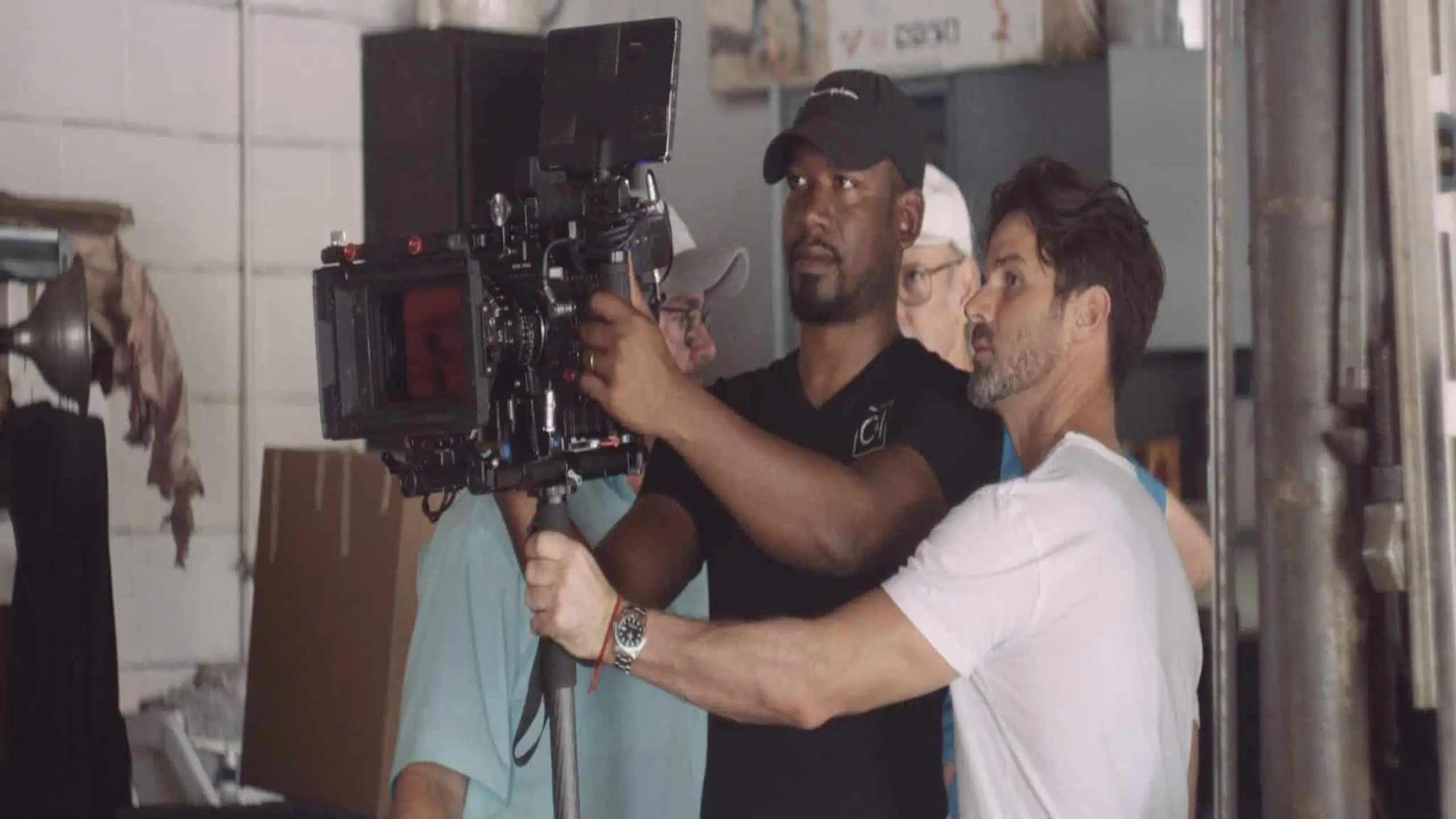

## Public Sector
The success of these teams hinges on effective collaboration, where each member's expertise contributes to the creation of a cohesive and impactful final product. Such collaboration is vital for producing not only a visually stunning film but also one that resonates with audiences through its quality and attention to detail. This synergy ultimately leads to successful [video production](https://c-istudios.com/video-production-services/) and content creation that captivates and engages viewers.
## Setting Up a Collaborative Environment. Tools and Technology
Creating a collaborative environment in feature film mastering necessitates the use of advanced tools and technology tailored to the unique needs of post-production teams. The advent of cloud-based platforms like Frame.io and MediaSilo has revolutionized how these teams work together, enabling real-time communication and seamless sharing of assets across different locations.
These platforms are designed to accommodate the complex workflows of [video production](https://c-istudios.com/video-production-services/), allowing team members to collaborate on tasks such as vfx compositing and animation, editing, and audio engineering without the limitations of physical proximity.
The integration of such tools into the post-production process ensures that all team members are on the same page, reducing the risk of miscommunication and enhancing efficiency. For instance, Frame.io allows editors, colorists, and directors to provide frame-accurate feedback, ensuring that creative decisions are executed precisely as intended.
Similarly, MediaSilo offers a secure, centralized repository where assets can be stored, managed, and accessed by authorized personnel, thereby maintaining version control and protecting the integrity of the project.
Beyond just file sharing, these tools support a range of functions that are crucial to the post-production workflow. This includes the ability to annotate frames, track changes, and manage different versions of the project, all of which contribute to a more organized and efficient production process.
The use of collaborative tools also facilitates the integration of various aspects of content creation, such as branding and graphic design, into the film's overall aesthetic, ensuring a consistent visual and auditory experience.
Moreover, these technologies enable post-production teams to maintain a high level of productivity even when working remotely, which has become increasingly important in the current global landscape. By leveraging the capabilities of cloud-based platforms, teams can continue to collaborate effectively, ensuring that the final product meets the highest standards of quality and creativity.
## Best Practices for Remote Collaboration in Post-Production
In the modern landscape of feature film mastering, remote collaboration has become not just an option but a necessity. With post-production teams often spread across different locations and time zones, adopting best practices for remote collaboration is crucial to maintaining the integrity and efficiency of the production process. The foundation of successful remote collaboration lies in choosing the right tools and establishing clear communication protocols.
Firstly, selecting reliable video conferencing tools such as Zoom, Microsoft Teams, or Google Meet is essential. These platforms not only facilitate regular meetings but also allow for screen sharing and real-time feedback, which are vital when discussing edits, visual effects, or sound design. Integrating these tools into the daily workflow ensures that all team members can stay connected and aligned on the project’s goals.
In addition to video conferencing, project management tools like Trello and Asana play a significant role in organizing tasks and tracking progress. These platforms enable teams to create detailed workflows, assign responsibilities, and set deadlines, which is particularly useful when managing complex post-production processes. By providing a clear overview of the project’s status, these tools help prevent delays and ensure that all aspects of the production are moving forward smoothly.
Moreover, the importance of a stable internet connection cannot be overstated in remote collaboration. A reliable connection ensures that large files, such as raw footage or high-resolution renders, can be uploaded and shared without interruptions.
This is where investment in high-quality [video production gear](https://c-istudios.com/video-production-gear-list/) and infrastructure becomes essential. For teams working in remote or less urbanized areas, using wired connections or dedicated bandwidth for uploads and downloads can prevent disruptions and keep production on track.
Another critical aspect of remote collaboration is maintaining a creative environment despite physical separation. Encouraging open communication, regular feedback sessions, and creative brainstorming can help keep the team’s energy and creativity high. This approach not only enhances the quality of the final product but also fosters a collaborative spirit, ensuring that all team members feel valued and motivated to contribute their best work.
By implementing these best practices, post-production teams can overcome the challenges of remote collaboration, ensuring that the final product is as polished and professional as it would be if all team members were working in the same physical location.
## Workflow Management. From Raw Footage to Final Delivery
Effective workflow management is the backbone of successful [feature film mastering.](https://c-istudios.com/feature-film-mastering-and-delivery/) The journey from raw footage to the final delivery involves numerous stages, each requiring meticulous attention to detail and seamless collaboration among post-production teams. Understanding and optimizing this workflow is essential for ensuring that the final product meets both the creative vision and technical standards required for distribution.
The process begins with the ingestion of raw footage, where all the material shot during production is transferred to a central storage system. This is where the role of advanced file management tools, such as those provided by Postpace.io and Shift, becomes crucial. These platforms allow for the organization of footage based on various parameters, making it easier for editors and other team members to access the clips they need at any given time.
Once the footage is organized, the editing process begins. This stage involves assembling the raw clips into a coherent narrative, adding transitions, and refining the pacing of the film. During this phase, collaboration between editors and directors is paramount. Tools like Frame.io facilitate this collaboration by allowing directors to review and comment on edits in real time, ensuring that the creative vision is maintained throughout the process.
Following the editing stage, the film undergoes a series of post-production processes, including vfx compositing and animation, color grading, and sound design. Each of these processes requires specialized skills and tools, and effective workflow management ensures that these tasks are completed in a logical sequence. For instance, sound design and audio engineering typically follow the final edit, allowing sound effects and music to be perfectly synchronized with the visuals.
As the project progresses through these stages, maintaining version control is essential to avoid confusion and ensure that all team members are working on the most up-to-date file. This is where platforms like MediaSilo come into play, providing a centralized location for storing and managing all project assets. By using such platforms, teams can track changes, manage different versions of the project, and ensure that the final product is delivered without any discrepancies.
Finally, the mastering stage involves preparing the final audio and video files for distribution. This includes ensuring that the files meet the technical specifications required by various distribution platforms, whether for cinema release, streaming services, or physical media. Once this is completed, the film is ready for delivery, marking the culmination of a complex but well-managed workflow that ensures the highest quality in the final product.
## Enhancing Collaboration Between Creative and Technical Teams
The successful mastering of a feature film depends not only on the technical proficiency of the post-production teams but also on the effective collaboration between the [creative marketing](https://c-istudios.com/creative-marketing-services/) and technical departments. This synergy is crucial in ensuring that the film's artistic vision is fully realized while meeting the technical standards required for high-quality distribution.
Creative teams, including directors, editors, and designers, are primarily focused on the film's narrative, visual style, and overall aesthetic. On the other hand, technical teams, such as sound engineers, colorists, and VFX artists, are responsible for translating this vision into a polished final product. The collaboration between these teams must be seamless, with each side respecting and understanding the other's contributions
.
One of the key ways to enhance this collaboration is through the use of integrated platforms that allow for real-time feedback and communication. Tools like Frame.io enable directors to review visual effects or color grading as they are being applied, providing immediate feedback to the technical team. This real-time interaction ensures that any creative adjustments can be made quickly, without disrupting the overall workflow.
Another important aspect of this collaboration is the alignment of creative goals with technical capabilities. For example, a director may have a specific vision for a scene that requires advanced VFX techniques. In such cases, the technical team needs to provide input on what is feasible within the given time and budget constraints. By involving the technical team early in the creative process, potential challenges can be identified and addressed before they become major obstacles.
Regular communication and feedback sessions are also vital in maintaining alignment between creative and technical teams. These sessions provide an opportunity for both sides to share their perspectives, discuss any issues, and ensure that the project is progressing according to plan. This collaborative approach not only enhances the quality of the final product but also fosters a positive working environment where all team members feel valued and motivated to contribute their best work.
## Security and Data Management in Collaborative Post-Production
In the realm of feature film mastering, the security and management of data are paramount concerns. As post-production teams handle sensitive and often highly confidential material, implementing robust data security measures is crucial to protecting intellectual property and ensuring the integrity of the project.
One of the primary challenges in collaborative post-production is the secure storage and transfer of large files, such as raw footage, sound files, and visual effects elements. Platforms like security and data management in collaborative post-production In the realm of feature film mastering, the security and management of data are paramount concerns. As post-production teams handle sensitive and often highly confidential material, implementing robust data security measures is crucial to protecting intellectual property and ensuring the integrity of the project
.
One of the primary challenges in collaborative post-production is the secure storage and transfer of large files, such as raw footage, sound files, and visual effects elements. Platforms like Postpace.io and Shift offer secure, centralized storage solutions that protect these assets through advanced encryption and access control measures.
Effective [web maintenance](https://c-istudios.com/web-maintenance/) is also critical in ensuring that these platforms remain secure and operational, providing teams with reliable access to their project files. By storing all project files in a single, secure location, these platforms help teams maintain strict control over who can access and modify the content, thereby reducing the risk of unauthorized access or data breaches.
Moreover, these platforms provide features such as watermarking and version control, which are essential for tracking changes and ensuring that the latest version of the project is always available to team members. Watermarking, in particular, serves as a deterrent against unauthorized distribution, as it embeds a unique identifier into the content that can be traced back to the original source. This not only protects the project from potential leaks but also ensures that any breaches can be quickly identified and addressed.
In addition to securing the data itself, it is equally important to manage the data effectively. This involves organizing files in a way that allows team members to quickly locate and access the materials they need. Platforms like MediaSilo excel in this regard, offering robust file management systems that support metadata tagging and advanced search capabilities. This ensures that all team members can efficiently navigate the project’s assets, reducing the time spent searching for files and minimizing the risk of errors.
Overall, by implementing secure and efficient data management practices, post-production teams can safeguard their projects from potential threats while ensuring a smooth and organized workflow. This not only protects the creative integrity of the project but also contributes to the successful completion of the feature film mastering process.
## Challenges and Solutions in Post-Production Collaboration
Post-production collaboration in feature film mastering is fraught with challenges that can hinder the efficiency and quality of the final product. These challenges often stem from miscommunication, time zone differences, and software compatibility issues, all of which can disrupt the workflow and delay the project’s completion. However, by identifying these obstacles early and implementing strategic solutions, post-production teams can overcome them and ensure a smooth collaborative process.
Miscommunication is one of the most common challenges in post-production collaboration, especially when teams are spread across different locations. This can lead to misunderstandings regarding creative direction, technical specifications, and deadlines. To mitigate this, it is crucial to establish clear communication protocols from the outset.
Regular meetings, detailed project documentation, and the use of collaborative tools that track comments and revisions can help keep everyone on the same page. Platforms like Frame.io and Shift offer features that facilitate clear and consistent communication, allowing team members to provide feedback and updates in real time.
Time zone differences pose another significant challenge, particularly when working with international teams. Coordinating meetings and ensuring that work progresses smoothly despite these differences requires careful planning and flexibility. One effective solution is to implement a rolling schedule where tasks are handed off between teams in different time zones, ensuring continuous progress on the project.
Software compatibility issues can also disrupt the post-production process, especially when team members use different tools and platforms. This can lead to delays and errors in file transfers and project integration.
To address this, it is essential to standardize the tools and software used across the team. Where this is not possible, employing cross-platform solutions or converters that ensure compatibility between different software can help minimize disruptions.
By proactively addressing these challenges through strategic planning and the use of collaborative tools, post-production teams can enhance their efficiency and ensure the successful completion of the feature film mastering process.
## Case Studies of Successful Collaboration in Feature Film Mastering
While real-world case studies provide valuable insights, this section will explore generalized examples of how successful collaboration has led to high-quality outcomes in feature film mastering. These hypothetical scenarios underscore the importance of seamless communication, robust workflow management, and the integration of diverse skills within post-production teams.
Consider a scenario where a film’s post-production involves teams spread across multiple continents, each responsible for different aspects of the process, editing in Los Angeles, sound design in London, and VFX in Mumbai. The key to their success lies in the early adoption of a collaborative platform like Frame.io.
By using such a tool, the director in Los Angeles can review the latest VFX work from Mumbai in real time, providing immediate feedback and ensuring that the creative vision is realized without delay. The sound design team in London can simultaneously sync their audio tracks with the latest visual edits, maintaining perfect synchronization across all elements of the film.
In another example, a post-production team faces the challenge of integrating a complex sequence of visual effects into a film. This sequence involves multiple layers of [VFX compositing and animation](https://c-istudios.com/vfx-compositing-and-animation-services/), each requiring precise timing and color grading.
By utilizing a platform like MediaSilo, the team can manage different versions of the sequence, track changes, and ensure that all edits are accurately reflected in the final cut. This organized approach not only saves time but also ensures that the final product meets the highest standards of quality.
These examples highlight how effective collaboration and the use of the right tools can lead to successful outcomes in feature film mastering. By integrating the skills of various specialists and maintaining clear communication throughout the process, post-production teams can overcome challenges and deliver a polished final product that stands out in the competitive world of cinema.
These hypothetical scenarios, while not real case studies, illustrate the principles and practices that lead to successful collaboration in feature film mastering, providing a roadmap for teams looking to achieve similar results.
## Setting Up a Collaborative Environment. Tools and Technology
Creating a collaborative environment in feature film mastering necessitates the use of advanced tools and technology tailored to the unique needs of post-production teams. The advent of cloud-based platforms like Frame.io and MediaSilo has revolutionized how these teams work together, enabling real-time communication and seamless sharing of assets across different locations.
These platforms are designed to accommodate the complex workflows of [video production](https://c-istudios.com/video-production-services/), allowing team members to collaborate on tasks such as vfx compositing and animation, editing, and audio engineering without the limitations of physical proximity.
The integration of such tools into the post-production process ensures that all team members are on the same page, reducing the risk of miscommunication and enhancing efficiency. For instance, Frame.io allows editors, colorists, and directors to provide frame-accurate feedback, ensuring that creative decisions are executed precisely as intended.
Similarly, MediaSilo offers a secure, centralized repository where assets can be stored, managed, and accessed by authorized personnel, thereby maintaining version control and protecting the integrity of the project.
Beyond just file sharing, these tools support a range of functions that are crucial to the post-production workflow. This includes the ability to annotate frames, track changes, and manage different versions of the project, all of which contribute to a more organized and efficient production process.
The use of collaborative tools also facilitates the integration of various aspects of content creation, such as branding and graphic design, into the film's overall aesthetic, ensuring a consistent visual and auditory experience.
Moreover, these technologies enable post-production teams to maintain a high level of productivity even when working remotely, which has become increasingly important in the current global landscape. By leveraging the capabilities of cloud-based platforms, teams can continue to collaborate effectively, ensuring that the final product meets the highest standards of quality and creativity.
## Best Practices for Remote Collaboration in Post-Production
In the modern landscape of feature film mastering, remote collaboration has become not just an option but a necessity. With post-production teams often spread across different locations and time zones, adopting best practices for remote collaboration is crucial to maintaining the integrity and efficiency of the production process. The foundation of successful remote collaboration lies in choosing the right tools and establishing clear communication protocols.
Firstly, selecting reliable video conferencing tools such as Zoom, Microsoft Teams, or Google Meet is essential. These platforms not only facilitate regular meetings but also allow for screen sharing and real-time feedback, which are vital when discussing edits, visual effects, or sound design. Integrating these tools into the daily workflow ensures that all team members can stay connected and aligned on the project’s goals.
In addition to video conferencing, project management tools like Trello and Asana play a significant role in organizing tasks and tracking progress. These platforms enable teams to create detailed workflows, assign responsibilities, and set deadlines, which is particularly useful when managing complex post-production processes. By providing a clear overview of the project’s status, these tools help prevent delays and ensure that all aspects of the production are moving forward smoothly.
Moreover, the importance of a stable internet connection cannot be overstated in remote collaboration. A reliable connection ensures that large files, such as raw footage or high-resolution renders, can be uploaded and shared without interruptions.
This is where investment in high-quality [video production gear](https://c-istudios.com/video-production-gear-list/) and infrastructure becomes essential. For teams working in remote or less urbanized areas, using wired connections or dedicated bandwidth for uploads and downloads can prevent disruptions and keep production on track.
Another critical aspect of remote collaboration is maintaining a creative environment despite physical separation. Encouraging open communication, regular feedback sessions, and creative brainstorming can help keep the team’s energy and creativity high. This approach not only enhances the quality of the final product but also fosters a collaborative spirit, ensuring that all team members feel valued and motivated to contribute their best work.
By implementing these best practices, post-production teams can overcome the challenges of remote collaboration, ensuring that the final product is as polished and professional as it would be if all team members were working in the same physical location.
## Workflow Management. From Raw Footage to Final Delivery
Effective workflow management is the backbone of successful [feature film mastering.](https://c-istudios.com/feature-film-mastering-and-delivery/) The journey from raw footage to the final delivery involves numerous stages, each requiring meticulous attention to detail and seamless collaboration among post-production teams. Understanding and optimizing this workflow is essential for ensuring that the final product meets both the creative vision and technical standards required for distribution.
The process begins with the ingestion of raw footage, where all the material shot during production is transferred to a central storage system. This is where the role of advanced file management tools, such as those provided by Postpace.io and Shift, becomes crucial. These platforms allow for the organization of footage based on various parameters, making it easier for editors and other team members to access the clips they need at any given time.
Once the footage is organized, the editing process begins. This stage involves assembling the raw clips into a coherent narrative, adding transitions, and refining the pacing of the film. During this phase, collaboration between editors and directors is paramount. Tools like Frame.io facilitate this collaboration by allowing directors to review and comment on edits in real time, ensuring that the creative vision is maintained throughout the process.
Following the editing stage, the film undergoes a series of post-production processes, including vfx compositing and animation, color grading, and sound design. Each of these processes requires specialized skills and tools, and effective workflow management ensures that these tasks are completed in a logical sequence. For instance, sound design and audio engineering typically follow the final edit, allowing sound effects and music to be perfectly synchronized with the visuals.
As the project progresses through these stages, maintaining version control is essential to avoid confusion and ensure that all team members are working on the most up-to-date file. This is where platforms like MediaSilo come into play, providing a centralized location for storing and managing all project assets. By using such platforms, teams can track changes, manage different versions of the project, and ensure that the final product is delivered without any discrepancies.
Finally, the mastering stage involves preparing the final audio and video files for distribution. This includes ensuring that the files meet the technical specifications required by various distribution platforms, whether for cinema release, streaming services, or physical media. Once this is completed, the film is ready for delivery, marking the culmination of a complex but well-managed workflow that ensures the highest quality in the final product.
## Enhancing Collaboration Between Creative and Technical Teams
The successful mastering of a feature film depends not only on the technical proficiency of the post-production teams but also on the effective collaboration between the [creative marketing](https://c-istudios.com/creative-marketing-services/) and technical departments. This synergy is crucial in ensuring that the film's artistic vision is fully realized while meeting the technical standards required for high-quality distribution.
Creative teams, including directors, editors, and designers, are primarily focused on the film's narrative, visual style, and overall aesthetic. On the other hand, technical teams, such as sound engineers, colorists, and VFX artists, are responsible for translating this vision into a polished final product. The collaboration between these teams must be seamless, with each side respecting and understanding the other's contributions
.
One of the key ways to enhance this collaboration is through the use of integrated platforms that allow for real-time feedback and communication. Tools like Frame.io enable directors to review visual effects or color grading as they are being applied, providing immediate feedback to the technical team. This real-time interaction ensures that any creative adjustments can be made quickly, without disrupting the overall workflow.
Another important aspect of this collaboration is the alignment of creative goals with technical capabilities. For example, a director may have a specific vision for a scene that requires advanced VFX techniques. In such cases, the technical team needs to provide input on what is feasible within the given time and budget constraints. By involving the technical team early in the creative process, potential challenges can be identified and addressed before they become major obstacles.
Regular communication and feedback sessions are also vital in maintaining alignment between creative and technical teams. These sessions provide an opportunity for both sides to share their perspectives, discuss any issues, and ensure that the project is progressing according to plan. This collaborative approach not only enhances the quality of the final product but also fosters a positive working environment where all team members feel valued and motivated to contribute their best work.
## Security and Data Management in Collaborative Post-Production
In the realm of feature film mastering, the security and management of data are paramount concerns. As post-production teams handle sensitive and often highly confidential material, implementing robust data security measures is crucial to protecting intellectual property and ensuring the integrity of the project.
One of the primary challenges in collaborative post-production is the secure storage and transfer of large files, such as raw footage, sound files, and visual effects elements. Platforms like security and data management in collaborative post-production In the realm of feature film mastering, the security and management of data are paramount concerns. As post-production teams handle sensitive and often highly confidential material, implementing robust data security measures is crucial to protecting intellectual property and ensuring the integrity of the project
.
One of the primary challenges in collaborative post-production is the secure storage and transfer of large files, such as raw footage, sound files, and visual effects elements. Platforms like Postpace.io and Shift offer secure, centralized storage solutions that protect these assets through advanced encryption and access control measures.
Effective [web maintenance](https://c-istudios.com/web-maintenance/) is also critical in ensuring that these platforms remain secure and operational, providing teams with reliable access to their project files. By storing all project files in a single, secure location, these platforms help teams maintain strict control over who can access and modify the content, thereby reducing the risk of unauthorized access or data breaches.
Moreover, these platforms provide features such as watermarking and version control, which are essential for tracking changes and ensuring that the latest version of the project is always available to team members. Watermarking, in particular, serves as a deterrent against unauthorized distribution, as it embeds a unique identifier into the content that can be traced back to the original source. This not only protects the project from potential leaks but also ensures that any breaches can be quickly identified and addressed.
In addition to securing the data itself, it is equally important to manage the data effectively. This involves organizing files in a way that allows team members to quickly locate and access the materials they need. Platforms like MediaSilo excel in this regard, offering robust file management systems that support metadata tagging and advanced search capabilities. This ensures that all team members can efficiently navigate the project’s assets, reducing the time spent searching for files and minimizing the risk of errors.
Overall, by implementing secure and efficient data management practices, post-production teams can safeguard their projects from potential threats while ensuring a smooth and organized workflow. This not only protects the creative integrity of the project but also contributes to the successful completion of the feature film mastering process.
## Challenges and Solutions in Post-Production Collaboration
Post-production collaboration in feature film mastering is fraught with challenges that can hinder the efficiency and quality of the final product. These challenges often stem from miscommunication, time zone differences, and software compatibility issues, all of which can disrupt the workflow and delay the project’s completion. However, by identifying these obstacles early and implementing strategic solutions, post-production teams can overcome them and ensure a smooth collaborative process.
Miscommunication is one of the most common challenges in post-production collaboration, especially when teams are spread across different locations. This can lead to misunderstandings regarding creative direction, technical specifications, and deadlines. To mitigate this, it is crucial to establish clear communication protocols from the outset.
Regular meetings, detailed project documentation, and the use of collaborative tools that track comments and revisions can help keep everyone on the same page. Platforms like Frame.io and Shift offer features that facilitate clear and consistent communication, allowing team members to provide feedback and updates in real time.
Time zone differences pose another significant challenge, particularly when working with international teams. Coordinating meetings and ensuring that work progresses smoothly despite these differences requires careful planning and flexibility. One effective solution is to implement a rolling schedule where tasks are handed off between teams in different time zones, ensuring continuous progress on the project.
Software compatibility issues can also disrupt the post-production process, especially when team members use different tools and platforms. This can lead to delays and errors in file transfers and project integration.
To address this, it is essential to standardize the tools and software used across the team. Where this is not possible, employing cross-platform solutions or converters that ensure compatibility between different software can help minimize disruptions.
By proactively addressing these challenges through strategic planning and the use of collaborative tools, post-production teams can enhance their efficiency and ensure the successful completion of the feature film mastering process.
## Case Studies of Successful Collaboration in Feature Film Mastering
While real-world case studies provide valuable insights, this section will explore generalized examples of how successful collaboration has led to high-quality outcomes in feature film mastering. These hypothetical scenarios underscore the importance of seamless communication, robust workflow management, and the integration of diverse skills within post-production teams.
Consider a scenario where a film’s post-production involves teams spread across multiple continents, each responsible for different aspects of the process, editing in Los Angeles, sound design in London, and VFX in Mumbai. The key to their success lies in the early adoption of a collaborative platform like Frame.io.
By using such a tool, the director in Los Angeles can review the latest VFX work from Mumbai in real time, providing immediate feedback and ensuring that the creative vision is realized without delay. The sound design team in London can simultaneously sync their audio tracks with the latest visual edits, maintaining perfect synchronization across all elements of the film.
In another example, a post-production team faces the challenge of integrating a complex sequence of visual effects into a film. This sequence involves multiple layers of [VFX compositing and animation](https://c-istudios.com/vfx-compositing-and-animation-services/), each requiring precise timing and color grading.
By utilizing a platform like MediaSilo, the team can manage different versions of the sequence, track changes, and ensure that all edits are accurately reflected in the final cut. This organized approach not only saves time but also ensures that the final product meets the highest standards of quality.
These examples highlight how effective collaboration and the use of the right tools can lead to successful outcomes in feature film mastering. By integrating the skills of various specialists and maintaining clear communication throughout the process, post-production teams can overcome challenges and deliver a polished final product that stands out in the competitive world of cinema.
These hypothetical scenarios, while not real case studies, illustrate the principles and practices that lead to successful collaboration in feature film mastering, providing a roadmap for teams looking to achieve similar results.
## Work with C&I Studios
If you are planning a project like this, our team can take it from concept to final delivery. Explore our [post-production services](https://c-istudios.com/post-production-services/), browse [our work](https://c-istudios.com/our-work/) to see how we tell brand stories, and [get in touch](https://c-istudios.com/contact/) when you are ready to start.
Originally published September 1, 2024
---
*This content is from [C&I Studios](https://c-istudios.com), a full-service production company.*
---
# Growing Your Following: Strategies for Increasing Reach and Building a Community
> Published: August 29, 2024
> Categories: Commercial & Brand
> Source: https://c-istudios.com/growing-your-following-strategies-for-increasing-reach-and-building-a-community/
---
.cib{--paper:#1b1d1f;--ink:#fff;--body:#d5d7d9;--muted:#8b9096;--line:rgba(255,255,255,.12);--thumb:#2b2e31;--card:#212426;--accent:#c02b0a;--blue:#5B8FA8;--serif:'Playfair Display',Georgia,serif;--sans:'Poppins',-apple-system,sans-serif;--measure:900px;background:var(--paper);color:var(--body);font-family:var(--sans);line-height:1.6;position:relative;left:50%;transform:translateX(-50%);width:90vw;max-width:1920px}
.cib *{box-sizing:border-box}
.cib .kicker{max-width:var(--measure);margin:58px auto 0;padding:0 22px;font-size:12.5px;font-weight:700;letter-spacing:2.5px;text-transform:uppercase;color:var(--blue)}
.cib h1.cibh1{text-wrap:balance;font-family:var(--serif);font-weight:500;font-size:clamp(46px,6vw,72px);line-height:1.08;color:var(--ink);max-width:var(--measure);margin:18px auto 0;padding:0 22px;letter-spacing:-.5px}
.cib .metarow{max-width:var(--measure);margin:20px auto 0;padding:0 22px;color:var(--muted);font-size:14px}
.cib .hero{position:relative;width:100%;height:0;padding-bottom:56.25%;overflow:hidden;margin:48px auto 0;border-top:1px solid var(--line);border-bottom:1px solid var(--line)}
.cib .hero .ph{width:100%;aspect-ratio:16/9;background:var(--thumb);border-top:1px solid var(--line);border-bottom:1px solid var(--line);display:flex;align-items:center;justify-content:center;color:#7d8288;font-size:13px;text-align:center;padding:0 20px}
.cib .body{max-width:var(--measure);margin:12px auto 0;padding:52px 22px 6px}
.cib .body.lead p:first-child{font-size:23px;line-height:1.62;color:var(--ink)}
.cib .body p{font-size:18.5px;line-height:1.85;margin:0 0 30px;color:var(--body)}
.cib .body h2{text-wrap:balance;font-family:var(--serif);font-weight:500;font-size:clamp(32px,4vw,48px);line-height:1.22;color:var(--ink);margin:70px 0 20px;letter-spacing:-.3px}
.cib .body h3{text-wrap:balance;font-family:var(--sans);font-weight:600;font-size:22px;color:var(--ink);margin:38px 0 8px}
.cib .body a{color:var(--ink);text-decoration:underline;text-decoration-color:rgba(255,255,255,.4);text-underline-offset:3px}
.cib .body a:hover{text-decoration-color:var(--ink)}
.cib .ctable{width:100%;border-collapse:collapse;margin:16px 0 30px;font-size:16px}
.cib .ctable th{background:#000;color:#fff;text-align:left;padding:10px 12px;font-family:var(--sans)}
.cib .ctable td{padding:10px 12px;border-bottom:1px solid var(--line);color:var(--body)}
.cib .inimg{position:relative;width:100%;height:0;padding-bottom:56.25%;overflow:hidden;margin:72px auto;border-top:1px solid var(--line);border-bottom:1px solid var(--line)}
.cib .inimg .ph{width:100%;aspect-ratio:16/9;background:var(--thumb);border-top:1px solid var(--line);border-bottom:1px solid var(--line);display:flex;align-items:center;justify-content:center;color:#7d8288;font-size:13px}
.cib .origpub{max-width:var(--measure);margin:60px auto 0;padding:26px 22px 0;border-top:1px solid var(--line);color:var(--muted);font-size:13.5px}
.cib .related{max-width:1200px;margin:64px auto 0;padding:34px 22px 76px}
.cib .related h3{font-family:var(--sans);font-size:12.5px;letter-spacing:2px;text-transform:uppercase;color:var(--ink);margin:0 0 24px}
.cib .grid{display:grid;grid-template-columns:repeat(3,1fr);gap:28px}
.cib .rc{background:var(--card);border:1px solid var(--line);display:block;text-decoration:none;color:inherit;transition:border-color .15s}
.cib a.rc:hover{border-color:rgba(255,255,255,.5)}
.cib .rc .thumb{position:relative;width:100%;height:0;padding-bottom:56.25%;background:var(--thumb);overflow:hidden}
.cib .rc .thumb img{position:absolute!important;top:0!important;left:0!important;width:100%!important;height:100%!important;object-fit:cover!important;margin:0!important}
.cib .rc .cc{padding:14px 15px 17px}
.cib .rc .rt{font-family:var(--serif);font-weight:500;font-size:16px;line-height:1.3;color:var(--ink);margin:0 0 6px}
.cib .rc .rm{font-size:11px;letter-spacing:1px;text-transform:uppercase;color:var(--muted)}
.cib img{margin:0!important;padding:0!important;display:block!important;vertical-align:top;max-width:100%}
.cib .hero img,.cib .inimg img{position:absolute!important;top:0!important;left:0!important;width:100%!important;height:100%!important;object-fit:cover!important;margin:0!important;padding:0!important;border:0!important;display:block!important;aspect-ratio:auto!important}
.cib .hero+.body{padding-top:36px}
@media(max-width:760px){.cib .grid{grid-template-columns:1fr}.cib .body h2{margin:52px 0 16px}.cib .body p{font-size:17.5px}.cib .inimg,.cib .hero{margin-top:44px}}
.cib .vembed{max-width:var(--measure);margin:44px auto;padding:0 22px}.cib .vembed .vwrap{position:relative;width:100%;height:0;padding-bottom:56.25%}.cib .vembed .vwrap iframe{position:absolute;top:0;left:0;width:100%;height:100%;border:0}
Commercial & Brand
# Growing Your Following. Strategies for Increasing Reach and Building a Community
9 min read
In today’s digital landscape, growing a loyal following is crucial for any brand, business, or individual looking to make a lasting impact. A strong, engaged audience not only amplifies your message but also drives organic growth and long-term success. However, building and nurturing such a community requires more than just attracting followers; it demands a strategic approach that fosters genuine connections and encourages active participation.
Whether you're starting from scratch or looking to expand an existing audience, understanding the key principles of community building is essential for increasing your reach and creating a thriving online presence. This article explores various strategies that can help you effectively grow your following and build a supportive community around your brand.
## Understanding Your Target Audience
To effectively grow your following and build a strong community, it's essential to first understand who your target audience is. Identifying and defining your target audience involves researching demographic factors such as age, gender, location, and interests, as well as psychographic aspects like values, attitudes, and lifestyle choices. This deep understanding allows you to tailor your [content creation](https://c-istudios.com/content-creation-services/) efforts to resonate with specific segments, making your messages more relevant and impactful.
Tailored content is more likely to engage your audience because it speaks directly to their needs and desires. When you create content that aligns with your audience's interests, you not only attract followers but also retain them, building long-term loyalty. This approach also allows for more personalized interactions, which can significantly enhance user engagement.
In addition to tailored content, strategic media marketing plays a crucial role in reaching and engaging the right audience. By leveraging data-driven marketing techniques, you can ensure that your content is delivered to those most likely to connect with it.
This combination of targeted content creation and precise media marketing strategies helps to effectively grow your community by attracting the right people to your brand and keeping them engaged over time.
## Leveraging Social Media Platforms for Maximum Reach
Social media platforms are powerful tools for expanding your reach and building a vibrant community. Each platform offers unique opportunities to connect with different audience segments, so understanding how to use them effectively is key to maximizing your growth potential.
Best practices for using social media include consistent posting, engaging with followers, and utilizing platform-specific features such as stories, reels, and live streaming to keep your audience interested and engaged.
Incorporating creative marketing techniques into your social media strategy can further boost engagement and follower count. Creative marketing involves thinking outside the box to develop content that not only informs but also entertains and inspires your audience.
This could include visually striking graphics, interactive polls, behind-the-scenes videos, or user-generated content that showcases your followers' involvement with your brand.
Utilizing professional social media marketing services can significantly amplify your brand's presence. These services provide expert insights into the latest social media trends and tools, helping you optimize your strategies for each platform.
By combining a creative approach with professional marketing expertise, you can enhance your brand's visibility, attract more followers, and foster a community that actively engages with your content.
## The Power of Consistent Content Creation
Consistency is a key factor in building a loyal audience. When you consistently produce high-quality content, you reinforce your brand's message and establish a reliable presence that your audience can depend on. Regular posting not only keeps your followers engaged but also increases the chances of your content being shared, which can help grow your reach.
A significant aspect of maintaining consistency in content creation is the integration of strong [branding and graphic design](https://c-istudios.com/branding-and-graphic-design-services/). These elements ensure that every piece of content you produce is visually cohesive and instantly recognizable as part of your brand. This visual consistency helps build brand recognition and reinforces your brand's identity, making it easier for your audience to connect with and remember your content.
To achieve this level of consistency, it's essential to develop a content calendar that aligns with your brand’s voice and goals. A content calendar helps you plan and organize your posts, ensuring that you maintain a steady flow of content across all platforms.
It also allows you to strategically time your content to coincide with key dates or events that are relevant to your audience, further enhancing engagement and loyalty. By committing to a consistent content creation schedule supported by cohesive branding and design, you can build a strong, loyal audience over time.
## Engaging with Your Audience. Building Relationships
Engagement is the cornerstone of building a strong community around your brand. It's not enough to simply post content; you need to actively interact with your audience to create meaningful connections.
Engaging with your followers through comments, direct messages, and social media interactions helps to humanize your brand and fosters a sense of community. This ongoing interaction builds trust and loyalty, which are essential for sustaining long-term relationships with your audience.
Professional photography and [video production](https://c-istudios.com/video-production-services/) play a critical role in engaging your followers. High-quality visuals are more likely to capture attention and encourage interaction, whether through likes, shares, or comments.
For example, professional photography can elevate your social media posts, making them more visually appealing and shareable. Similarly, engaging video content, such as behind-the-scenes clips or tutorials, can draw viewers in and prompt them to engage with your brand.
Top brands often employ a variety of successful engagement tactics, such as hosting live Q&A sessions, running contests, or featuring user-generated content. These strategies not only encourage participation but also make your audience feel valued and appreciated. By combining these interactive strategies with high-quality visual content, you can build a strong, engaged community that is invested in your brand and its success.
## Utilizing Influencer Partnerships to Expand Reach
Influencer partnerships can be a powerful tool for expanding your brand’s reach and connecting with a broader audience. Selecting the right influencers involves more than just choosing someone with a large following; it’s crucial to find individuals whose values and audience align with your brand.
When the fit is right, influencer marketing can significantly impact your brand’s growth and enhance your [SEO copywriting](https://c-istudios.com/seo-copywriting-services/) efforts by driving traffic and improving search engine rankings through authentic content.
To create successful partnerships, start by identifying influencers who share your brand’s vision and have an engaged, relevant audience. Collaboration can take many forms, from product reviews and sponsored posts to more in-depth projects like content co-creation or social media takeovers. These partnerships should be designed to resonate with your audience, providing value while also promoting your brand in a genuine way.
Effective artist management and media creation strategies are essential for coordinating these collaborations. This includes managing the relationship with influencers, ensuring that the content aligns with your brand’s message, and tracking the performance of these campaigns. By leveraging the right influencers and creating strategic partnerships, you can tap into new audience segments, boost brand visibility, and drive meaningful engagement.
## Hosting Events and Webinars to Foster Community
##
Hosting live events and webinars is an excellent way to build a sense of community around your brand. These events provide a platform for direct interaction with your audience, offering them value while also deepening their connection to your brand. Whether it’s a product launch, a workshop, or an educational webinar, these events can significantly enhance your brand’s visibility and credibility.
To ensure a successful event, it’s important to focus on the technical aspects, including audio live streaming and [web developmen](https://c-istudios.com/web-development-services/)t. High-quality audio and video are crucial for keeping your audience engaged, so investing in reliable streaming technology is essential. Additionally, a well-developed event landing page can help with registration, provide necessary information, and serve as a hub for post-event content.
Promotion is another key factor in maximizing attendance. Utilize your social media platforms, email newsletters, and partnerships with influencers to spread the word about your event.
Offering incentives, such as early-bird registration discounts or exclusive content, can also drive interest. By carefully planning and executing these events, you can foster a strong community, increase engagement, and build lasting relationships with your audience.
## Monitoring Analytics to Refine Your Strategies
Tracking and analyzing data is crucial for measuring the success of your strategies and ensuring consistent growth and engagement. By monitoring analytics, you gain valuable insights into how your audience interacts with your content, which can guide you in refining your approach to achieve better results.
Whether you’re focusing on website traffic, social media engagement, or video views, understanding these metrics helps you make informed decisions that drive your brand forward.
Utilizing tools provided by web hosting platforms allows you to gather comprehensive data on visitor behavior, site performance, and conversion rates. This data can reveal which content resonates most with your audience, where users drop off, and what elements might need improvement.
Additionally, tracking the performance of your visual content with the help of a [video production gear list](https://c-istudios.com/video-production-gear-list/) can provide insights into the effectiveness of your video marketing efforts. High-quality production combined with data-driven strategies can significantly enhance viewer retention and engagement.
Once you’ve gathered and analyzed the data, it’s time to adjust your strategies accordingly. This might involve tweaking your content calendar, experimenting with different formats, or optimizing your website for better performance.
By continuously refining your approach based on analytical insights, you can ensure that your efforts are aligned with your growth objectives and that you’re consistently moving towards your goals.
## Encouraging User-Generated Content for Organic Growth
User-generated content (UGC) is a powerful tool for driving organic growth and fostering community engagement. When your audience creates and shares content related to your brand, it not only amplifies your reach but also builds trust and authenticity. Encouraging UGC through [creative marketing](https://c-istudios.com/creative-marketing-services/) campaigns can help you tap into this potential, transforming your customers into brand advocates.
To effectively encourage UGC, it’s essential to create campaigns that inspire your audience to participate. This could involve running contests, launching branded hashtags, or creating challenges that resonate with your community. Highlighting the best user submissions and featuring them on your social media channels or website can also motivate others to join in.
The use of vfx compositing and animation can further enhance UGC, making it more engaging and visually appealing. For example, incorporating animated elements into user-generated videos or creating dynamic overlays can elevate the content, making it more shareable and impactful.
Several brands have successfully leveraged UGC by integrating it into their broader marketing strategies. For instance, by encouraging customers to share their experiences with a specific product or service, and then using those stories in their marketing campaigns, brands can create a cycle of engagement that fuels organic growth. By fostering a strong community of creators and contributors, your brand can benefit from increased visibility, authenticity, and loyalty.
## Work with C&I Studios
If you are planning a project like this, our team can take it from concept to final delivery. Explore our [video production services](https://c-istudios.com/video-production-services/), browse [our work](https://c-istudios.com/our-work/) to see how we tell brand stories, and [get in touch](https://c-istudios.com/contact/) when you are ready to start.
Originally published August 29, 2024
---
*This content is from [C&I Studios](https://c-istudios.com), a full-service production company.*
---
# Creating Immersive Audio Experiences: Best Practices in Surround Sound Mixing for Feature Films
> Published: August 28, 2024
> Categories: Film & TV
> Source: https://c-istudios.com/creating-immersive-audio-experiences-best-practices-in-surround-sound-mixing-for-feature-films/
---
.cib{--paper:#1b1d1f;--ink:#fff;--body:#d5d7d9;--muted:#8b9096;--line:rgba(255,255,255,.12);--thumb:#2b2e31;--card:#212426;--accent:#c02b0a;--blue:#5B8FA8;--serif:'Playfair Display',Georgia,serif;--sans:'Poppins',-apple-system,sans-serif;--measure:900px;background:var(--paper);color:var(--body);font-family:var(--sans);line-height:1.6;position:relative;left:50%;transform:translateX(-50%);width:90vw;max-width:1920px}
.cib *{box-sizing:border-box}
.cib .kicker{max-width:var(--measure);margin:58px auto 0;padding:0 22px;font-size:12.5px;font-weight:700;letter-spacing:2.5px;text-transform:uppercase;color:var(--blue)}
.cib h1.cibh1{text-wrap:balance;font-family:var(--serif);font-weight:500;font-size:clamp(46px,6vw,72px);line-height:1.08;color:var(--ink);max-width:var(--measure);margin:18px auto 0;padding:0 22px;letter-spacing:-.5px}
.cib .metarow{max-width:var(--measure);margin:20px auto 0;padding:0 22px;color:var(--muted);font-size:14px}
.cib .hero{position:relative;width:100%;height:0;padding-bottom:56.25%;overflow:hidden;margin:48px auto 0;border-top:1px solid var(--line);border-bottom:1px solid var(--line)}
.cib .hero .ph{width:100%;aspect-ratio:16/9;background:var(--thumb);border-top:1px solid var(--line);border-bottom:1px solid var(--line);display:flex;align-items:center;justify-content:center;color:#7d8288;font-size:13px;text-align:center;padding:0 20px}
.cib .body{max-width:var(--measure);margin:12px auto 0;padding:52px 22px 6px}
.cib .body.lead p:first-child{font-size:23px;line-height:1.62;color:var(--ink)}
.cib .body p{font-size:18.5px;line-height:1.85;margin:0 0 30px;color:var(--body)}
.cib .body h2{text-wrap:balance;font-family:var(--serif);font-weight:500;font-size:clamp(32px,4vw,48px);line-height:1.22;color:var(--ink);margin:70px 0 20px;letter-spacing:-.3px}
.cib .body h3{text-wrap:balance;font-family:var(--sans);font-weight:600;font-size:22px;color:var(--ink);margin:38px 0 8px}
.cib .body a{color:var(--ink);text-decoration:underline;text-decoration-color:rgba(255,255,255,.4);text-underline-offset:3px}
.cib .body a:hover{text-decoration-color:var(--ink)}
.cib .ctable{width:100%;border-collapse:collapse;margin:16px 0 30px;font-size:16px}
.cib .ctable th{background:#000;color:#fff;text-align:left;padding:10px 12px;font-family:var(--sans)}
.cib .ctable td{padding:10px 12px;border-bottom:1px solid var(--line);color:var(--body)}
.cib .inimg{position:relative;width:100%;height:0;padding-bottom:56.25%;overflow:hidden;margin:72px auto;border-top:1px solid var(--line);border-bottom:1px solid var(--line)}
.cib .inimg .ph{width:100%;aspect-ratio:16/9;background:var(--thumb);border-top:1px solid var(--line);border-bottom:1px solid var(--line);display:flex;align-items:center;justify-content:center;color:#7d8288;font-size:13px}
.cib .origpub{max-width:var(--measure);margin:60px auto 0;padding:26px 22px 0;border-top:1px solid var(--line);color:var(--muted);font-size:13.5px}
.cib .related{max-width:1200px;margin:64px auto 0;padding:34px 22px 76px}
.cib .related h3{font-family:var(--sans);font-size:12.5px;letter-spacing:2px;text-transform:uppercase;color:var(--ink);margin:0 0 24px}
.cib .grid{display:grid;grid-template-columns:repeat(3,1fr);gap:28px}
.cib .rc{background:var(--card);border:1px solid var(--line);display:block;text-decoration:none;color:inherit;transition:border-color .15s}
.cib a.rc:hover{border-color:rgba(255,255,255,.5)}
.cib .rc .thumb{position:relative;width:100%;height:0;padding-bottom:56.25%;background:var(--thumb);overflow:hidden}
.cib .rc .thumb img{position:absolute!important;top:0!important;left:0!important;width:100%!important;height:100%!important;object-fit:cover!important;margin:0!important}
.cib .rc .cc{padding:14px 15px 17px}
.cib .rc .rt{font-family:var(--serif);font-weight:500;font-size:16px;line-height:1.3;color:var(--ink);margin:0 0 6px}
.cib .rc .rm{font-size:11px;letter-spacing:1px;text-transform:uppercase;color:var(--muted)}
.cib img{margin:0!important;padding:0!important;display:block!important;vertical-align:top;max-width:100%}
.cib .hero img,.cib .inimg img{position:absolute!important;top:0!important;left:0!important;width:100%!important;height:100%!important;object-fit:cover!important;margin:0!important;padding:0!important;border:0!important;display:block!important;aspect-ratio:auto!important}
.cib .hero+.body{padding-top:36px}
@media(max-width:760px){.cib .grid{grid-template-columns:1fr}.cib .body h2{margin:52px 0 16px}.cib .body p{font-size:17.5px}.cib .inimg,.cib .hero{margin-top:44px}}
.cib .vembed{max-width:var(--measure);margin:44px auto;padding:0 22px}.cib .vembed .vwrap{position:relative;width:100%;height:0;padding-bottom:56.25%}.cib .vembed .vwrap iframe{position:absolute;top:0;left:0;width:100%;height:100%;border:0}
Film & TV
# Creating Immersive Audio Experiences. Best Practices in Surround Sound Mixing for Feature Films
13 min read


## Public Sector
From the early days of mono and stereo sound to the advanced surround sound systems used today, the evolution of audio technology has been driven by the desire to create a more lifelike and engaging cinematic experience.
In feature films, where every detail contributes to the storytelling, mastering the art of surround sound mixing is essential. It’s not just about placing sound in the right speaker; it’s about crafting an auditory landscape that enhances the emotional and psychological impact of the story.
This article delves into the best practices for creating immersive audio experiences through surround sound mixing, offering insights into the techniques and technologies that bring feature films to life. Whether you’re a seasoned audio engineer or a filmmaker looking to enhance your production, understanding the intricacies of surround sound is key to delivering an unforgettable cinematic experience.
## Understanding the Technical Foundations of Surround Sound
Surround sound has become an essential aspect of creating immersive audio experiences in modern cinema. Understanding the various surround sound formats is crucial for achieving the desired audio effects in a feature film. The most common formats include 5.1 and 7.1 surround sound systems, as well as the more advanced Dolby Atmos.
Each of these formats offers a different level of audio immersion, with 5.1 consisting of five speakers and one subwoofer, while 7.1 adds two additional rear speakers. Dolby Atmos, on the other hand, goes beyond these configurations by allowing sound to be placed anywhere in a three-dimensional space, offering a truly immersive experience.
Setting up a surround sound system requires a deep understanding of its key components. These typically include speakers placed strategically around the listening area, a subwoofer for low-frequency effects, and an audio receiver to process the sound. Proper [audio engineering](https://c-istudios.com/audio-engineering-services/) techniques are crucial during this setup to ensure that each speaker delivers sound precisely as intended.
This involves calibrating the system for the specific room where the sound will be experienced, taking into account factors like speaker placement, room acoustics, and sound reflection.
When it comes to the actual mixing of surround sound, having the right tools from a [video production](https://c-istudios.com/video-production-services/) gear list is essential. High-quality microphones, audio interfaces, and mixing consoles are just a few of the tools that audio engineers rely on to capture and manipulate sound effectively.
Additionally, specialized software for surround sound mixing allows engineers to position sounds accurately within the three-dimensional space, ensuring that the audio experience aligns perfectly with the visual narrative. Understanding these technical foundations is the first step in mastering surround sound mixing for feature films
.
## Production Planning for Sound Design
In the world of [film and TV production](https://c-istudios.com/film-and-tv-production/), sound design is not something that should be considered an afterthought. Effective sound design begins in the pre-production phase, where careful planning can make all the difference in the final audio experience. This planning involves not only the technical aspects of sound but also its creative integration into the film’s narrative.
Early sound design planning allows filmmakers and sound designers to align their goals from the outset. This involves discussing the film's tone, setting, and key scenes to determine how sound can enhance the storytelling.
For instance, a horror film might require a soundscape that builds tension and unease, while an action film might focus on dynamic sound effects that complement the on-screen explosions and chases. By involving the sound team early in the [content creation](https://c-istudios.com/content-creation-services/) process, the film’s audio can be designed to reinforce the narrative, making it a more cohesive and impactful experience for the audience.
Collaboration is key during this stage. Directors, producers, and sound engineers must work closely to ensure that the sound design supports the film’s vision. This can involve everything from scouting locations for optimal sound recording conditions to designing sound effects that match the film's visual style.
When sound design is integrated into the film’s structure from the beginning, it becomes a powerful tool for enhancing the audience's emotional and psychological engagement with the story. This proactive approach in pre-production sets the stage for successful sound mixing and ultimately, a more immersive cinematic experience.
## Recording Techniques for Immersive Audio
Capturing high-quality sound is crucial to creating an immersive audio experience in feature films. Whether on set or in a studio, the right techniques can make a significant difference in the clarity and impact of the sound.
One of the best practices for achieving this is to use a range of microphones suited to different sound sources. For instance, directional microphones are ideal for isolating dialogue, while omnidirectional microphones can capture the ambient sounds that contribute to the film’s overall atmosphere.
Recording in complex environments, such as outdoor locations or bustling sets, presents unique challenges. Here, [audio live-streaming](https://c-istudios.com/video-audio-live-streaming/) techniques come into play. These techniques are designed to handle real-time sound capture while maintaining high quality.
This approach is particularly useful for live scenes where capturing the spontaneity and authenticity of sound is essential. Ensuring that sound engineers are equipped with portable, high-quality recording equipment can significantly improve the outcome in these challenging environments.
Incorporating professional photography into the sound recording process can further enhance the overall sensory experience. While sound and visual elements are often treated separately, the coordination between these two can lead to more synchronized and impactful scenes. For instance, capturing the right visual angles while recording sound can help ensure that the audio matches the on-screen action more precisely. This synergy between sight and sound is what creates a truly immersive experience for the audience, making both elements more powerful when they work in tandem.
## Mixing and Balancing Sound Elements
Once the sound has been recorded, the next critical step is to mix and balance the various audio elements to create a cohesive and immersive experience. This process involves carefully blending dialogue, sound effects, and background music so that each element complements the others without overwhelming the audience. A step-by-step approach is essential in achieving the right balance and ensuring that the final audio track supports the film’s narrative effectively.
The first step in this process is to prioritize the clarity of dialogue, as it is often the most important element in conveying the story. [Feature film mastering and delivery](https://c-istudios.com/feature-film-mastering-and-delivery/) standards demand that dialogue is clear and easily understood, even in scenes with heavy sound effects or background music.
Achieving this balance requires advanced audio engineering techniques, such as using equalization (EQ) to enhance speech frequencies and applying dynamic range compression to maintain consistent dialogue levels.
After the dialogue is balanced, attention shifts to integrating sound effects and background music. Sound effects should enhance the on-screen action without distracting from the dialogue, while music should underscore the emotional tone of the scene. The use of panning, reverb, and other spatial audio techniques can help place sounds in the correct part of the surround sound field, adding depth and realism to the audio.
Finally, the overall mix is polished through the mastering process, ensuring that the audio meets the required standards for feature film mastering and delivery. This final step ensures that the sound is optimized for various playback environments, from cinema theaters to home viewing setups.
## Incorporating Foley and Sound Effects in Surround Sound
Foley artists play an essential role in creating realistic and immersive soundscapes, especially when working with surround sound. Their craft involves recording everyday sounds, such as footsteps, rustling clothes, or clinking glassware, in sync with the film’s visual elements to enhance the auditory experience.
These sounds, when integrated into a surround sound mix, can make the difference between a flat, two-dimensional audio experience and one that envelops the audience, drawing them deeper into the story.
In documentary film production, the use of Foley is particularly crucial. Documentaries often rely on natural and authentic sound to build credibility and convey real-life events with emotional depth.
By incorporating Foley sounds into the surround sound mix, filmmakers can recreate environments with precision, whether it’s the quiet rustle of leaves in a forest or the bustling noise of a city street. This attention to detail helps viewers feel as though they are part of the narrative, experiencing the locations and events firsthand.
Moreover, immersive sound design can significantly enhance [creative marketing](https://c-istudios.com/creative-marketing-services/) efforts. In commercials and branded content, the use of Foley and carefully crafted sound effects can capture the audience's attention and leave a lasting impression.
Surround sound amplifies these effects, making advertisements more engaging and memorable. For instance, the sound of a product in use, amplified by surround sound, can make a promotional video more impactful, leading to better brand recall and a stronger emotional connection with the audience.
## Enhancing Surround Sound with VFX and Animation
The integration of vfx compositing and animation with surround sound is a powerful tool for creating fully immersive cinematic experiences. Visual effects, when synchronized with high-quality surround sound, can elevate the audience’s experience by making the on-screen action more dynamic and engaging.
For example, in scenes involving explosions, magical spells, or futuristic technology, the combination of striking visuals and perfectly timed audio cues can transport viewers into another world.
Effective synchronization of audio with visual effects is key to achieving this level of immersion. Sound designers work closely with VFX teams to ensure that every audio cue aligns perfectly with the visual elements.
This might involve creating specific sound effects that match the motion and texture of animated elements or using surround sound techniques to give a sense of directionality to sounds, making them seem as though they are emanating from a particular point in the visual space. This collaboration between sound and visual effects is essential in making the final product seamless and believable.
Promoting these immersive experiences through [social media marketing services](https://c-istudios.com/social-media-marketing-services/)is another crucial aspect. With the rise of online platforms, sharing short clips or teasers that showcase the blend of surround sound and VFX can generate significant interest and excitement. These promotional efforts can highlight the technical sophistication and creativity involved in the production, attracting a wider audience.
Leveraging social media platforms allows filmmakers and brands to engage with viewers, offering behind-the-scenes insights into how these complex sound and visual effects were achieved, further enhancing the appeal and reach of the content.
## Troubleshooting Common Issues in Surround Sound Mixing
In the realm of audio engineering, achieving the perfect surround sound mix can be fraught with challenges. One of the most common issues is maintaining consistent audio levels across all channels, which is critical to ensuring that the audience experiences a balanced and immersive soundscape.
Problems such as phase issues, where sounds become out of sync or cancel each other out, can detract from the overall quality. To resolve these, sound engineers often employ tools like phase meters and real-time analyzers to identify and correct inconsistencies during the mixing process.
Another significant challenge is ensuring that the surround sound mix translates well across different playback environments and platforms. This is where [web maintenance](https://c-istudios.com/web-maintenance/)plays a crucial role.
For content that is streamed or hosted online, maintaining consistent sound quality across various devices and internet speeds is essential. Sound engineers must account for the fact that audio may be played back on anything from a home theater system to a pair of basic laptop speakers.
Therefore, thorough testing and adjustments are necessary to maintain clarity and balance, ensuring that the immersive experience is not compromised regardless of the playback setup.
Additionally, working in challenging environments, such as outdoor locations or acoustically poor spaces, requires specific strategies to maintain audio clarity. Using high-quality microphones, proper placement, and isolation techniques can mitigate background noise and reverb.
Moreover, post-production tools can be employed to clean up the audio, but the key lies in getting the best possible recordings on-site. These proactive measures in audio engineering help ensure that the final surround sound mix is clear, balanced, and immersive, providing the audience with the intended audio experience.
## Future Trends in Surround Sound and Immersive Audio
As technology continues to evolve, the future of surround sound and immersive audio is set to be shaped by several exciting trends. The integration of [artist management and media creation](https://c-istudios.com/artist-management-and-media-creation/) into the development of immersive audio experiences is becoming increasingly important.
Artists and media creators are now working more closely with sound engineers to push the boundaries of what is possible in audio, exploring new ways to engage audiences. This collaboration is leading to the creation of more innovative and personalized soundscapes, tailored to the unique vision of each project.
Emerging technologies, such as spatial audio and object-based sound, are also driving the future of surround sound. These advancements allow for more precise control over how sound is placed and moves within a space, creating a more dynamic and lifelike audio experience.
For instance, with object-based sound, individual sounds can be treated as separate entities, enabling them to be manipulated independently of one another within the surround sound mix. This technology is particularly beneficial in virtual reality (VR) and augmented reality (AR) applications, where the realism of the audio can significantly enhance the user's immersion.
In this evolving landscape, branding and graphic design are playing a critical role in how immersive audio is presented and perceived by audiences. As films and media increasingly rely on complex sound design to tell their stories, the visual elements that accompany these experiences must also evolve. Branding and graphic design now extend beyond traditional visuals to include the auditory identity of a brand or production.
For example, how a brand’s audio is experienced in surround sound can influence audience perceptions and emotional connections. This synergy between sound and visual design is setting new standards for how immersive audio experiences are crafted and delivered, ensuring they resonate deeply with audiences both emotionally and intellectually.
## Case Studies. Successful Surround Sound Integration in Films
Surround sound has played a pivotal role in elevating the storytelling of numerous films, providing an immersive audio experience that draws audiences deeper into the narrative. One such example is in [documentary film production](https://c-istudios.com/documentary-film-production/), where surround sound has been used to create a more engaging and realistic portrayal of events.
A notable case is the documentary "Apollo 11," where the integration of historical audio recordings with modern surround sound techniques allowed viewers to feel as if they were part of the space mission. The careful placement of sounds, such as the roar of rocket engines or the ambient noise of mission control, created a sense of immersion that was both educational and emotionally impactful.
In the realm of video production, the film "Gravity" is another exemplary case study of successful surround sound integration. The film’s sound design utilized the 7.1 surround sound format to create a vast, empty atmosphere that mirrored the desolation of space.
The use of directional sound, where the audio moved around the audience in sync with the visual action, was key to the film’s tension and emotional weight. This innovative approach not only heightened the viewer's sensory experience but also demonstrated the potential of surround sound to enhance narrative depth in feature films.
These case studies offer valuable lessons for future sound design practices. They highlight the importance of aligning sound design with the narrative and thematic goals of a project, whether in documentary film production.
By studying these examples, sound engineers and filmmakers can gain insights into how to leverage surround sound effectively, using it not just as a technical enhancement, but as a crucial storytelling tool that enriches the viewer’s experience.
## Work with C&I Studios
If you are planning a project like this, our team can take it from concept to final delivery. Explore our [film and TV production](https://c-istudios.com/film-and-tv-production/), browse [our work](https://c-istudios.com/our-work/) to see how we tell brand stories, and [get in touch](https://c-istudios.com/contact/) when you are ready to start.
Originally published August 28, 2024
---
*This content is from [C&I Studios](https://c-istudios.com), a full-service production company.*
---
# Long-Form vs. Short-Form Content: Choosing the Right Format for Your Blog
> Published: August 27, 2024
> Categories: Commercial & Brand
> Source: https://c-istudios.com/long-form-vs-short-form-content-choosing-the-right-format-for-your-blog/
---
.cib{--paper:#1b1d1f;--ink:#fff;--body:#d5d7d9;--muted:#8b9096;--line:rgba(255,255,255,.12);--thumb:#2b2e31;--card:#212426;--accent:#c02b0a;--blue:#5B8FA8;--serif:'Playfair Display',Georgia,serif;--sans:'Poppins',-apple-system,sans-serif;--measure:900px;background:var(--paper);color:var(--body);font-family:var(--sans);line-height:1.6;position:relative;left:50%;transform:translateX(-50%);width:90vw;max-width:1920px}
.cib *{box-sizing:border-box}
.cib .kicker{max-width:var(--measure);margin:58px auto 0;padding:0 22px;font-size:12.5px;font-weight:700;letter-spacing:2.5px;text-transform:uppercase;color:var(--blue)}
.cib h1.cibh1{text-wrap:balance;font-family:var(--serif);font-weight:500;font-size:clamp(46px,6vw,72px);line-height:1.08;color:var(--ink);max-width:var(--measure);margin:18px auto 0;padding:0 22px;letter-spacing:-.5px}
.cib .metarow{max-width:var(--measure);margin:20px auto 0;padding:0 22px;color:var(--muted);font-size:14px}
.cib .hero{position:relative;width:100%;height:0;padding-bottom:56.25%;overflow:hidden;margin:48px auto 0;border-top:1px solid var(--line);border-bottom:1px solid var(--line)}
.cib .hero .ph{width:100%;aspect-ratio:16/9;background:var(--thumb);border-top:1px solid var(--line);border-bottom:1px solid var(--line);display:flex;align-items:center;justify-content:center;color:#7d8288;font-size:13px;text-align:center;padding:0 20px}
.cib .body{max-width:var(--measure);margin:12px auto 0;padding:52px 22px 6px}
.cib .body.lead p:first-child{font-size:23px;line-height:1.62;color:var(--ink)}
.cib .body p{font-size:18.5px;line-height:1.85;margin:0 0 30px;color:var(--body)}
.cib .body h2{text-wrap:balance;font-family:var(--serif);font-weight:500;font-size:clamp(32px,4vw,48px);line-height:1.22;color:var(--ink);margin:70px 0 20px;letter-spacing:-.3px}
.cib .body h3{text-wrap:balance;font-family:var(--sans);font-weight:600;font-size:22px;color:var(--ink);margin:38px 0 8px}
.cib .body a{color:var(--ink);text-decoration:underline;text-decoration-color:rgba(255,255,255,.4);text-underline-offset:3px}
.cib .body a:hover{text-decoration-color:var(--ink)}
.cib .ctable{width:100%;border-collapse:collapse;margin:16px 0 30px;font-size:16px}
.cib .ctable th{background:#000;color:#fff;text-align:left;padding:10px 12px;font-family:var(--sans)}
.cib .ctable td{padding:10px 12px;border-bottom:1px solid var(--line);color:var(--body)}
.cib .inimg{position:relative;width:100%;height:0;padding-bottom:56.25%;overflow:hidden;margin:72px auto;border-top:1px solid var(--line);border-bottom:1px solid var(--line)}
.cib .inimg .ph{width:100%;aspect-ratio:16/9;background:var(--thumb);border-top:1px solid var(--line);border-bottom:1px solid var(--line);display:flex;align-items:center;justify-content:center;color:#7d8288;font-size:13px}
.cib .origpub{max-width:var(--measure);margin:60px auto 0;padding:26px 22px 0;border-top:1px solid var(--line);color:var(--muted);font-size:13.5px}
.cib .related{max-width:1200px;margin:64px auto 0;padding:34px 22px 76px}
.cib .related h3{font-family:var(--sans);font-size:12.5px;letter-spacing:2px;text-transform:uppercase;color:var(--ink);margin:0 0 24px}
.cib .grid{display:grid;grid-template-columns:repeat(3,1fr);gap:28px}
.cib .rc{background:var(--card);border:1px solid var(--line);display:block;text-decoration:none;color:inherit;transition:border-color .15s}
.cib a.rc:hover{border-color:rgba(255,255,255,.5)}
.cib .rc .thumb{position:relative;width:100%;height:0;padding-bottom:56.25%;background:var(--thumb);overflow:hidden}
.cib .rc .thumb img{position:absolute!important;top:0!important;left:0!important;width:100%!important;height:100%!important;object-fit:cover!important;margin:0!important}
.cib .rc .cc{padding:14px 15px 17px}
.cib .rc .rt{font-family:var(--serif);font-weight:500;font-size:16px;line-height:1.3;color:var(--ink);margin:0 0 6px}
.cib .rc .rm{font-size:11px;letter-spacing:1px;text-transform:uppercase;color:var(--muted)}
.cib img{margin:0!important;padding:0!important;display:block!important;vertical-align:top;max-width:100%}
.cib .hero img,.cib .inimg img{position:absolute!important;top:0!important;left:0!important;width:100%!important;height:100%!important;object-fit:cover!important;margin:0!important;padding:0!important;border:0!important;display:block!important;aspect-ratio:auto!important}
.cib .hero+.body{padding-top:36px}
@media(max-width:760px){.cib .grid{grid-template-columns:1fr}.cib .body h2{margin:52px 0 16px}.cib .body p{font-size:17.5px}.cib .inimg,.cib .hero{margin-top:44px}}
.cib .vembed{max-width:var(--measure);margin:44px auto;padding:0 22px}.cib .vembed .vwrap{position:relative;width:100%;height:0;padding-bottom:56.25%}.cib .vembed .vwrap iframe{position:absolute;top:0;left:0;width:100%;height:100%;border:0}
Commercial & Brand
# Long-Form vs. Short-Form Content. Choosing the Right Format for Your Blog
12 min read


## Public Sector
One of the biggest decisions content creators face is choosing between long-form and short-form content. Each format serves different purposes, targets varying audiences, and influences engagement in unique ways. This article delves into the pros and cons of both formats, helping you determine which is best suited for your blog’s goals and audience
.
## Defining Long-Form Content. What It Is and Why It Works
Long-form content is generally defined as blog posts or articles that exceed 1,500 words, offering in-depth coverage of a particular topic. The value of long-form content lies in its ability to provide comprehensive information, often diving deep into concepts that shorter pieces only touch upon.
This type of content creation is essential for establishing authority on a subject, as it allows writers to present well-researched, detailed insights that hold the reader's attention over an extended period.
One of the primary reasons long-form content performs better for [SEO copywriting](https://c-istudios.com/seo-copywriting-services/) is the opportunity to integrate more keywords naturally throughout the piece. Search engines prioritize content that offers substantial information and engages users for a longer time, which improves rankings. Additionally, long-form content has a greater chance of being shared on social platforms, cited by other blogs, and linked back to, which further enhances its SEO performance.
Industries that rely on educating their audience, such as finance, healthcare, and technology, tend to benefit most from long-form content. These sectors often deal with complex subjects that require thorough explanation, making longer articles an ideal format for guiding readers through detailed processes or offering expert opinions. For instance, a tech company might produce a comprehensive guide on AI developments, not just to inform but to solidify its position as a thought leader in the industry.
By providing value in the form of depth and quality, long-form content creates a lasting impact, helping build trust with the audience while improving organic search rankings. It's an essential strategy for businesses looking to establish authority and drive long-term engagement.
## Defining Short-Form Content. When Less Is More
Short-form content, typically defined as content under 1,000 words, serves a different but equally important purpose in the world of [creative marketing.](https://c-istudios.com/creative-marketing-services/) Its brevity makes it ideal for quick consumption, which aligns perfectly with today’s fast-paced digital environment.
This format works exceptionally well for bite-sized pieces of information, such as news updates, summaries, or introductory posts that offer value without demanding too much time from the reader.
One area where short-form content thrives is in social media marketing services. Platforms like Instagram, Twitter, and LinkedIn are built around brief, impactful messaging. Short-form content allows brands to engage audiences with concise, visually appealing posts that grab attention in the midst of a constantly refreshing feed. For example, a brand might use short-form videos or infographics to deliver promotional messages or highlight the benefits of a new product.
Short-form content is especially effective when the goal is to deliver a targeted message quickly. By focusing on the most critical points, it enables businesses to convey key information without overwhelming their audience. This makes it an excellent tool for creative marketing strategies that aim to capture attention and drive action in a short amount of time.
However, while the format is brief, crafting effective short-form content requires a clear understanding of the target audience and the ability to communicate essential ideas concisely.
For instance, writing a punchy social media post that resonates with your audience demands just as much thought as developing a long-form article. The key to success with short-form content is ensuring that every word counts and contributes to the overall goal of the content.
## SEO and Engagement. Which Format Is Better for Search Engines?
When it comes to SEO performance, both long-form and short-form content have their unique strengths. In the realm of SEO copywriting, long-form content typically performs better because it allows for the integration of a broader range of keywords and key phrases. This type of content also tends to have higher word counts, which means more opportunities to naturally incorporate related terms, thus increasing relevance in search engine algorithms.
Long-form articles often result in longer dwell times, the amount of time a visitor spends on a page, which is a key metric used by search engines like Google to assess the quality and relevance of content.
When visitors stay engaged with your long-form content, it signals to search engines that the page offers valuable information, which can lead to better rankings. Long-form content also tends to earn more backlinks, as comprehensive pieces are more likely to be cited as authoritative sources by other websites.
Short-form content can also excel in certain SEO environments, particularly in contexts where searchers are looking for quick answers or concise information. Short-form content is easier to digest, which can lead to higher click-through rates, especially when paired with effective SEO copywriting. For example, short blogs or summaries that directly answer frequently searched questions can perform well in search rankings by offering immediate value to the user.
Multimedia elements, such as [video production](https://c-istudios.com/video-production-services/), can greatly enhance both long-form and short-form content. Videos provide an engaging way to break up text and keep readers on the page longer, which boosts SEO metrics like dwell time and bounce rate.
For example, embedding a short explainer video in a long-form blog post can make complex information easier to understand while increasing engagement. Likewise, short-form content paired with videos can deliver impactful messages quickly, making the combination a powerful tool for enhancing SEO performance across various content lengths.
## Audience Preferences. When to Use Long-Form and When to Use Short-Form
Understanding your audience's behavior and preferences is crucial in deciding whether to use long-form or short-form content. The decision should always be guided by how your audience consumes content and the type of value they are seeking.
For instance, if your target audience consists of industry professionals looking for in-depth analysis, long-form content is likely the better choice. This is because they are more willing to invest time in [content creation](https://c-istudios.com/content-creation-services/) that provides comprehensive insights and expertise.
On the other hand, if your audience prefers quick takeaways and digestible bits of information, such as in consumer-focused niches, short-form content may be more effective. Shorter blogs, listicles, and summaries tend to resonate better with readers who are looking for immediate solutions or inspiration without delving too deeply into a topic.
Visual elements, like professional photography, play an important role in both long-form and short-form content. Well-placed images can help break up text in longer posts, making the content more engaging and easier to read.
High-quality visuals also have the power to enhance short-form content by delivering a message quickly and effectively. For example, a well-composed photograph in a short blog post can convey emotion or context that might take several paragraphs to explain through text alone.
Incorporating content creation strategies that align with audience preferences ensures that your blog remains engaging and relevant, whether you're offering a 2,000-word deep dive into a topic or a quick 500-word tip guide. Balancing these formats effectively, while considering your audience's needs, will help maximize both engagement and conversion.
## Analyzing Content Goals. What Do You Want to Achieve?
The choice between long-form and short-form content often depends on your specific content goals. Whether you're aiming to drive traffic, increase brand awareness, or boost conversions, the format you choose should align with your overall [media marketing](https://c-istudios.com/media-marketing-consultation-services/) strategy. For instance, long-form content is ideal for building thought leadership and driving organic traffic through in-depth guides and resources. When your goal is to engage your audience for longer periods and build trust, long-form content shines by offering detailed insights that keep readers coming back.
Conversely, short-form content can be more effective for campaigns that prioritize quick brand recognition or social media engagement. Shorter pieces are perfect for media marketing strategies focused on increasing immediate visibility or encouraging a quick call to action, such as signing up for a newsletter or downloading a lead magnet. By being concise and direct, short-form content allows for rapid content consumption and action.
Branding and graphic design also play a pivotal role in how content is presented and received, regardless of its length. In long-form content, well-designed infographics and visual elements can break up text and make complex information more digestible.
In short-form content, impactful design can communicate your brand message quickly and effectively. Whether you are using branded headers, custom graphics, or even simple color schemes, your branding and graphic design should enhance the readability and visual appeal of your content. This not only helps in keeping the audience engaged but also reinforces your brand's identity throughout the content experience.
## The Role of Multimedia in Long-Form and Short-Form Content
Multimedia elements are essential for enhancing both long-form and short-form content. Integrating visuals, videos, and audio can significantly improve engagement and help convey information more effectively.
In long-form content, embedding videos or including audio clips can offer an additional layer of value, allowing readers to interact with the content in different ways. For example, an explainer video or podcast episode can complement a detailed blog post, providing a richer, more immersive experience.
For short-form content, multimedia can play an equally important role. Videos and graphics help to quickly communicate the message in a format that is easy to digest. When attention spans are short, a well-produced video or striking image can capture interest and convey the essence of the content within seconds. Having the right video production gear list ensures that these elements are of high quality, which is critical for maintaining professionalism and impact. Investing in good audio engineering also ensures that sound quality is clear, enhancing user experience, especially in multimedia-heavy formats like podcasts or video blogs.
Whether you're integrating multimedia into a long-form article or a quick, engaging post, using the right tools and technologies, such as a well-prepared video production gear list and top-notch [audio engineering](https://c-istudios.com/audio-engineering-services/), is key to producing content that stands out. Multimedia not only enriches the user experience but also improves engagement and retention, making it a powerful tool for content creators in any format.
## Crafting Long-Form Content for Evergreen Value
Creating long-form content that holds evergreen value requires a strategic approach, much like producing a compelling piece in [film and TV production](https://c-istudios.com/film-and-tv-production/). Evergreen content is designed to remain relevant and informative over time, continuing to attract and engage readers long after it’s been published.
To achieve this, it’s important to focus on topics that address fundamental issues or ongoing interests within your industry, allowing the content to serve as a long-term resource for your audience.
Drawing inspiration from documentary film production, long-form content should be built around a strong narrative. Documentaries captivate audiences by weaving together in-depth research, personal stories, and factual information, and this approach works just as effectively in written content.
When crafting long-form content, structure it like a well-paced documentary: introduce the topic, develop the narrative through evidence and examples, and bring it to a satisfying conclusion that offers actionable insights or a call to action.
To ensure readability and engagement, break up the content into digestible sections with clear headings and subheadings. Incorporating visuals, such as infographics or video clips, can also maintain reader interest over lengthy articles. In the same way that [film and TV production](https://c-istudios.com/film-and-tv-production/) keeps viewers engaged through pacing and variety, long-form content should be carefully structured to keep readers engaged from start to finish.
By focusing on timeless, well-researched topics and presenting them in an engaging format, your long-form content can become a valuable asset that continues to drive traffic and engagement for years.
## Crafting Short-Form Content for Quick Wins
Short-form content is ideal for quick, impactful wins, especially in fast-paced environments like a [political campaign](https://c-istudios.com/political-campaign-services/) or during an audio live streaming event. The key to crafting effective short-form content lies in delivering a punchy, clear message that grabs attention immediately. Whether you’re providing a campaign update or reacting to live events, short-form content needs to be concise while still conveying essential information.
In the context of a political campaign, for example, updates via social media or quick blog posts can be used to keep your audience informed and engaged. Short-form content allows you to maintain
## Balancing Both Formats in Your Content Strategy
Incorporating both long-form and short-form content into your content strategy offers a more well-rounded and effective approach. Each format serves a distinct purpose, and when used together, they can create a dynamic content ecosystem that caters to different audience needs. Relying on only one format can be limiting, but a balanced strategy allows for greater flexibility, adapting to various marketing goals and consumer behaviors.
Creative marketing thrives on diversity, blending in-depth, informative articles with shorter, attention-grabbing pieces. This flexibility helps ensure that your audience stays engaged whether they're looking for a quick tip or a comprehensive guide.
For example, a blog post that offers a long-form analysis of industry trends can be complemented by a series of short, actionable insights shared on social media. [Media marketing](https://c-istudios.com/media-marketing-consultation-services/) strategies also benefit from this balance by using long-form content to build authority and thought leadership while employing short-form content to quickly capture and maintain audience interest across different platforms.
Successful blogs like HubSpot, for instance, use both formats effectively, publishing detailed guides alongside concise tips and tricks, which maximizes both search engine visibility and user engagement. The ability to appeal to both readers seeking in-depth information and those preferring quick takeaways ensures that your content reaches a wider audience and meets varied content consumption preferences.
Conclusion
Deciding between long-form and short-form content ultimately comes down to your blog’s objectives and your audience’s preferences. Both formats have their strengths: long-form content helps build authority and provides in-depth value, while short-form content is ideal for quick engagement and maintaining a consistent presence. Understanding your goals and aligning your content format accordingly will help you create a more effective and successful blog.
At C&I Studios, we offer expert guidance in content creation and media marketing to help you optimize your blog strategy. Explore our services for more details on how we can support your content efforts, take a look at our [portfolio](https://c-istudios.com/our-work/) to see our past successes, or reach out to us via our [contact us](https://c-istudios.com/contact/) to start building your content strategy today.
For more information on industry standards and best practices, visit the [American Marketing Association](https://www.ama.org/).
## Work with C&I Studios
If you are planning a project like this, our team can take it from concept to final delivery. Explore our [video production services](https://c-istudios.com/video-production-services/), browse [our work](https://c-istudios.com/our-work/) to see how we tell brand stories, and [get in touch](https://c-istudios.com/contact/) when you are ready to start.
Originally published August 27, 2024
---
*This content is from [C&I Studios](https://c-istudios.com), a full-service production company.*
---
# Audio Engineering Basics: Getting Started in the World of Sound Design
> Published: August 24, 2024
> Categories: Post & VFX
> Source: https://c-istudios.com/audio-engineering-basics-getting-started-in-the-world-of-sound-design/
---
.cib{--paper:#1b1d1f;--ink:#fff;--body:#d5d7d9;--muted:#8b9096;--line:rgba(255,255,255,.12);--thumb:#2b2e31;--card:#212426;--accent:#c02b0a;--blue:#5B8FA8;--serif:'Playfair Display',Georgia,serif;--sans:'Poppins',-apple-system,sans-serif;--measure:900px;background:var(--paper);color:var(--body);font-family:var(--sans);line-height:1.6;position:relative;left:50%;transform:translateX(-50%);width:90vw;max-width:1920px}
.cib *{box-sizing:border-box}
.cib .kicker{max-width:var(--measure);margin:58px auto 0;padding:0 22px;font-size:12.5px;font-weight:700;letter-spacing:2.5px;text-transform:uppercase;color:var(--blue)}
.cib h1.cibh1{text-wrap:balance;font-family:var(--serif);font-weight:500;font-size:clamp(46px,6vw,72px);line-height:1.08;color:var(--ink);max-width:var(--measure);margin:18px auto 0;padding:0 22px;letter-spacing:-.5px}
.cib .metarow{max-width:var(--measure);margin:20px auto 0;padding:0 22px;color:var(--muted);font-size:14px}
.cib .hero{position:relative;width:100%;height:0;padding-bottom:56.25%;overflow:hidden;margin:48px auto 0;border-top:1px solid var(--line);border-bottom:1px solid var(--line)}
.cib .hero .ph{width:100%;aspect-ratio:16/9;background:var(--thumb);border-top:1px solid var(--line);border-bottom:1px solid var(--line);display:flex;align-items:center;justify-content:center;color:#7d8288;font-size:13px;text-align:center;padding:0 20px}
.cib .body{max-width:var(--measure);margin:12px auto 0;padding:52px 22px 6px}
.cib .body.lead p:first-child{font-size:23px;line-height:1.62;color:var(--ink)}
.cib .body p{font-size:18.5px;line-height:1.85;margin:0 0 30px;color:var(--body)}
.cib .body h2{text-wrap:balance;font-family:var(--serif);font-weight:500;font-size:clamp(32px,4vw,48px);line-height:1.22;color:var(--ink);margin:70px 0 20px;letter-spacing:-.3px}
.cib .body h3{text-wrap:balance;font-family:var(--sans);font-weight:600;font-size:22px;color:var(--ink);margin:38px 0 8px}
.cib .body a{color:var(--ink);text-decoration:underline;text-decoration-color:rgba(255,255,255,.4);text-underline-offset:3px}
.cib .body a:hover{text-decoration-color:var(--ink)}
.cib .ctable{width:100%;border-collapse:collapse;margin:16px 0 30px;font-size:16px}
.cib .ctable th{background:#000;color:#fff;text-align:left;padding:10px 12px;font-family:var(--sans)}
.cib .ctable td{padding:10px 12px;border-bottom:1px solid var(--line);color:var(--body)}
.cib .inimg{position:relative;width:100%;height:0;padding-bottom:56.25%;overflow:hidden;margin:72px auto;border-top:1px solid var(--line);border-bottom:1px solid var(--line)}
.cib .inimg .ph{width:100%;aspect-ratio:16/9;background:var(--thumb);border-top:1px solid var(--line);border-bottom:1px solid var(--line);display:flex;align-items:center;justify-content:center;color:#7d8288;font-size:13px}
.cib .origpub{max-width:var(--measure);margin:60px auto 0;padding:26px 22px 0;border-top:1px solid var(--line);color:var(--muted);font-size:13.5px}
.cib .related{max-width:1200px;margin:64px auto 0;padding:34px 22px 76px}
.cib .related h3{font-family:var(--sans);font-size:12.5px;letter-spacing:2px;text-transform:uppercase;color:var(--ink);margin:0 0 24px}
.cib .grid{display:grid;grid-template-columns:repeat(3,1fr);gap:28px}
.cib .rc{background:var(--card);border:1px solid var(--line);display:block;text-decoration:none;color:inherit;transition:border-color .15s}
.cib a.rc:hover{border-color:rgba(255,255,255,.5)}
.cib .rc .thumb{position:relative;width:100%;height:0;padding-bottom:56.25%;background:var(--thumb);overflow:hidden}
.cib .rc .thumb img{position:absolute!important;top:0!important;left:0!important;width:100%!important;height:100%!important;object-fit:cover!important;margin:0!important}
.cib .rc .cc{padding:14px 15px 17px}
.cib .rc .rt{font-family:var(--serif);font-weight:500;font-size:16px;line-height:1.3;color:var(--ink);margin:0 0 6px}
.cib .rc .rm{font-size:11px;letter-spacing:1px;text-transform:uppercase;color:var(--muted)}
.cib img{margin:0!important;padding:0!important;display:block!important;vertical-align:top;max-width:100%}
.cib .hero img,.cib .inimg img{position:absolute!important;top:0!important;left:0!important;width:100%!important;height:100%!important;object-fit:cover!important;margin:0!important;padding:0!important;border:0!important;display:block!important;aspect-ratio:auto!important}
.cib .hero+.body{padding-top:36px}
@media(max-width:760px){.cib .grid{grid-template-columns:1fr}.cib .body h2{margin:52px 0 16px}.cib .body p{font-size:17.5px}.cib .inimg,.cib .hero{margin-top:44px}}
.cib .vembed{max-width:var(--measure);margin:44px auto;padding:0 22px}.cib .vembed .vwrap{position:relative;width:100%;height:0;padding-bottom:56.25%}.cib .vembed .vwrap iframe{position:absolute;top:0;left:0;width:100%;height:100%;border:0}
Post & VFX
# Audio Engineering Basics. Getting Started in the World of Sound Design
12 min read
Audio engineering and sound design are integral components of modern media production, playing a crucial role in everything from films and music to live events and podcasts. At its core, audio engineering involves the technical aspects of recording, mixing, and reproducing sound, ensuring that the final audio is clear, balanced, and engaging.
Sound design, on the other hand, is the creative process of crafting soundscapes that enhance the storytelling experience, adding depth and emotion to visual media. Whether you’re just starting out or looking to refine your skills, understanding the basics of audio engineering and sound design is essential for creating compelling audio that captivates your audience.
## Understanding Sound Waves and Acoustics
In audio engineering, the fundamental building blocks of sound revolve around concepts such as frequency, amplitude, and waveforms. Frequency, measured in hertz (Hz), determines the pitch of a sound, whether it is high or low.
Amplitude refers to the intensity or volume of the sound wave, dictating how loud or soft the sound appears to listeners. Waveforms, which visually represent the shape of sound waves, indicate how sound changes over time, providing insight into its tonal quality and texture.
Acoustics, on the other hand, explains how sound behaves when it interacts with different environments. This is crucial for content creation, whether you're recording in a controlled studio or an open environment. Sound waves reflect, absorb, or diffuse depending on the materials and surfaces they encounter.
For example, hard surfaces like tile or glass reflect sound, creating reverberations, while soft materials like carpet or acoustic panels absorb sound, reducing echo. Understanding how sound waves behave in various spaces helps [audio engineering](https://c-istudios.com/audio-engineering-services/) professionals manipulate the environment to capture clean and precise audio.
Mastering the fundamentals of sound waves and acoustics is essential for successful content creation. This knowledge allows engineers to make informed decisions when setting up microphones, arranging recording spaces, or adjusting sound levels in post-production. By shaping the acoustic environment, engineers can ensure their sound design complements the visuals and narrative, contributing to a seamless and immersive experience.
## Essential Tools for Audio Engineering
Successful audio engineering begins with assembling a solid foundation of essential tools. A well-rounded [video production gear lis](https://c-istudios.com/video-production-gear-list/)t should start with high-quality microphones, as they are critical for capturing clear sound.
Dynamic microphones are robust and ideal for capturing loud sounds or live events, while condenser microphones are sensitive and great for detailed, studio-quality recordings. Choosing the right microphone for the job depends on the type of sound being captured and the recording environment.
Mixers and audio interfaces are equally vital in audio engineering. Mixers allow engineers to manage and adjust audio from multiple sources, blending different tracks into a cohesive whole.
Audio interfaces convert analog sound into digital signals that can be manipulated within a Digital Audio Workstation (DAW). DAWs, such as Pro Tools or Ableton Live, are software platforms where engineers edit, mix, and master their recordings. These tools offer advanced capabilities for processing sound, adding effects, and ensuring that the final audio is polished and professional.
Monitors and headphones are another critical part of the [video production](https://c-istudios.com/video-production-services/) gear list. Studio monitors provide a flat, uncolored representation of the audio, allowing engineers to hear the true quality of the sound.
Professional-grade headphones are equally important for fine-tuning audio details investing in the right tools and understanding how they function within the broader landscape of audio engineering, professionals can achieve high-quality sound that enhances their projects across various media.
## Recording Techniques. Capturing High-Quality Audio
Capturing high-quality audio requires a combination of the right tools, knowledge of the environment, and technique. Whether recording in a controlled studio or in an unpredictable outdoor setting, the principles of audio engineering remain consistent: proper microphone placement, attention to acoustics, and minimizing unwanted noise.
When working indoors, engineers must consider factors such as room acoustics and reverberation, using techniques like soundproofing or baffling to reduce reflections and echoes. Outdoors, wind protection, and isolating the microphone from environmental noise become critical.
Audio live streaming introduces a unique set of challenges compared to traditional recording. In live streaming, engineers must manage real-time audio capture and transmission, ensuring that the sound remains clear and uninterrupted.
There is no room for post-production fixes, making live adjustments crucial to maintaining audio quality. Effective [audio live streaming](https://c-istudios.com/video-audio-live-streaming/) involves monitoring sound levels constantly, using dynamic range compressors to prevent clipping, and having backup audio sources in place in case of failure. The immediacy of live streaming requires a sharp ear and the ability to troubleshoot on the fly.
Interestingly, professional photography and audio engineering often intersect when creating multimedia experiences, such as corporate events, concerts, or documentaries. Just as photographers carefully compose a shot to capture the best lighting and angles, audio engineers position microphones to capture the best sound quality.
Both disciplines rely on understanding their environments, whether it’s the interplay of light or sound waves, to produce a polished, immersive final product. Together, they elevate the overall quality of a production, ensuring that visuals and sound complement one another to create a seamless experience.
## Editing and Mixing Audio for Clarity and Impact
Editing and mixing audio is where the magic of [film and TV production](https://c-istudios.com/film-and-tv-production/) truly begins to take shape. This process starts by organizing and cleaning up the recorded audio. Engineers first remove unwanted noise, pops, or distortions, ensuring a clean foundation for the mix.
They then arrange the audio tracks, whether they be dialogue, music, or sound effects, to create a balanced soundscape. The goal is to ensure that each element supports the overall narrative without overpowering others, whether it's in a podcast, music track, or full-scale film production.
During the mixing phase, engineers work to achieve clarity and impact in the audio. This involves balancing the levels of each audio track so that no single element dominates. Compression and equalization tools are used to manage dynamic range and frequency balance, ensuring that the sound is consistent across different playback systems. In [feature film mastering and delivery](https://c-istudios.com/feature-film-mastering-and-delivery/), mastering takes this a step further by refining the final audio mix, ensuring that it meets industry standards and performs well in all environments, from cinemas to streaming platforms.
Mastering also involves preparing the audio for different formats and distribution channels. For example, a film’s sound may need to be delivered in both stereo and surround sound formats, requiring special attention to detail in the mixing and mastering processes.
By applying feature film mastering and delivery techniques, audio engineers ensure that the final product not only sounds great but also meets the technical requirements for various platforms, maintaining quality and consistency whether the audio is heard on a home theater system or a mobile device.
## The Role of Foley and Sound Effects in Sound Design
Foley and sound effects play an essential role in sound design bringing realism and immersion to various media, including documentary film production. Foley involves recreating everyday sounds, such as footsteps, rustling clothes, or clinking glassware, that might not have been captured during the actual recording of the visuals.
In documentaries, where authenticity is key, Foley helps enhance the viewer's connection to the narrative by reinforcing the natural sounds of the environment. This meticulous process of sound creation ensures that each auditory element is perfectly synchronized with the on-screen action, adding depth to the storytelling.
Techniques for creating Foley sounds often involve improvisation and creativity. Foley artists use a variety of tools and objects to mimic sounds; for example, crumpling cellophane can simulate the sound of fire crackling, while snapping a celery stick can resemble the sound of breaking bones.
Once the sounds are created, they are layered and integrated into the multimedia project during post-production. This synchronization is key in [documentary film production](https://c-istudios.com/documentary-film-production/), where the sounds must complement the narrative without distracting from the visual content.
Creative marketing also heavily relies on well-designed sound effects to engage audiences in ads, promos, and branded content. Sound design in marketing often amplifies emotional impact, using Foley and other sound effects to create memorable and captivating auditory experiences.
For instance, a well-placed sound effect in an advertisement can enhance the appeal of a product, making the experience more engaging and persuasive. By incorporating sound effects thoughtfully, creative marketing professionals can craft campaigns that resonate more deeply with their audiences and stand out in a crowded marketplace.
## Understanding Surround Sound and Spatial Audio
Surround sound and spatial audio are advanced technologies that have revolutionized the way we experience audio in media. Surround sound creates a multi-dimensional auditory experience by using multiple speakers placed around the listener, typically in a 5.1 or 7.1 configuration.
This technique ensures that sound comes from different directions, closely mimicking how we hear in real life. Spatial audio, on the other hand, takes this a step further by simulating how sound interacts in a 3D space. It adjusts according to the listener’s position, providing an even more immersive and lifelike experience.
In vfx compositing and animation, surround sound and spatial audio are critical for creating a fully immersive environment. Whether it’s the roar of an explosion in an action scene or the subtle ambient noises of a bustling city, these techniques add realism to the visuals and help transport the audience into the world being depicted.
For instance, in a battle scene, surround sound ensures that the audience can hear bullets whizzing past from all directions, while spatial audio allows them to perceive the distance and location of various elements, enhancing the overall viewing experience.
Social media marketing services are also leveraging spatial audio for interactive campaigns. With the rise of virtual reality (VR) and augmented reality (AR), spatial audio has become an essential tool in creating engaging and immersive brand experiences.
Campaigns now often feature 360-degree video and spatial sound, allowing users to explore content from all angles while the audio dynamically shifts in response to their movements. This level of interactivity enhances user engagement and makes the marketing experience more memorable, ultimately helping brands connect with audiences in innovative ways.
## Mastering Audio. Finalizing Your Sound for Different Platforms
Mastering audio is a critical final step in the audio engineering process, ensuring that sound quality is optimized for various platforms, such as streaming services, theaters, and radio broadcasts. Each platform has specific requirements, and mastering ensures that the audio remains consistent and impactful across different playback environments.
For instance, mastering for a cinematic release involves ensuring that the audio can fill a large theater while maintaining clarity, whereas mastering for streaming platforms requires balancing audio so that it sounds good on everything from high-end sound systems to standard laptop speakers.
Feature film mastering and delivery involves refining the overall sound mix to meet professional standards and adjusting the dynamic range and frequency balance to suit each platform’s needs.
For example, a theater mix may emphasize surround sound and subwoofer frequencies, while a streaming mix will focus on stereo optimization. The goal is to ensure that the audio is uniform and provides the same emotional impact regardless of where or how the audience consumes the content.
Incorporating advanced audio engineering techniques is essential for achieving the best possible results. This includes techniques like equalization to balance frequencies, compression to control dynamic range, and limiting to avoid distortion. By applying these advanced methods during [feature film mastering and delivery](https://c-istudios.com/feature-film-mastering-and-delivery/), engineers can ensure that the final product meets technical specifications and maintains high-quality sound across all platforms.
## Troubleshooting Common Audio Issues in Sound Design
Common audio issues, such as distortion, background noise, and echo, can negatively affect the quality of sound in sound design and can disrupt the overall listening experience. Distortion occurs when the audio levels are too high, leading to unwanted clipping, while background noise can be introduced from the environment or equipment during recording. Echo and reverb issues, often caused by recording in acoustically untreated spaces, can muddy the sound and reduce clarity.
To combat these issues, proactive steps during the audio engineering process are essential. Proper microphone placement, setting correct levels during recording, and using pop filters can prevent distortion and unwanted noise. If these problems persist in post-production, tools such as noise reduction software and equalizers can help clean up the audio.
In the digital age, web maintenance plays a crucial role in maintaining online audio quality, especially for live and recorded streams. Streaming platforms rely on consistent internet bandwidth and proper encoding settings to ensure that audio is transmitted clearly. Regular [web maintenance](https://c-istudios.com/web-maintenance/) checks, such as optimizing the hosting environment and monitoring server performance, are key to ensuring that audio quality remains uncompromised during online delivery. Whether managing a live audio stream or delivering high-quality sound for on-demand content, attention to both technical and engineering aspects ensures a superior audio experience for the audience.
## Future Trends in Audio Engineering and Sound Design
The future of audio engineering and sound design is being shaped by rapid technological advancements, particularly in AI-driven sound design and virtual reality (VR) audio. AI is revolutionizing sound design by enabling machines to analyze audio patterns and generate complex soundscapes autonomously.
This allows sound designers to focus on more creative elements while the technology handles repetitive tasks like noise reduction and sound enhancement. In VR audio, spatial sound is becoming a key player, where audio is placed within a 3D space and dynamically adjusts as users move through virtual environments. This creates an immersive experience that enhances the realism of gaming, entertainment, and even training simulations.
The evolving landscape of artist management and media creation is also pivotal in guiding these trends. Artists and sound designers are increasingly collaborating with AI developers and immersive technology specialists to push the boundaries of what’s possible in audio.
Artist management teams play a crucial role in facilitating these collaborations, ensuring that the integration of new technologies aligns with the artist's creative vision and media goals. As these tools become more accessible, they allow for innovative approaches to storytelling, branding, and content creation.
Moreover, SEO copywriting is becoming an important element in sound design, especially in the context of branded content and digital marketing. As voice search and podcasts continue to rise in popularity, audio content needs to be optimized for discoverability.
This involves embedding keywords naturally into audio scripts and ensuring that sound content aligns with SEO strategies to enhance digital presence. Integrating [SEO copywriting](https://c-istudios.com/seo-copywriting-services/) into sound design ensures that audio content not only sounds good but also reaches a broader audience through search engines, improving visibility and engagement.
## Work with C&I Studios
If you are planning a project like this, our team can take it from concept to final delivery. Explore our [post-production services](https://c-istudios.com/post-production-services/), browse [our work](https://c-istudios.com/our-work/) to see how we tell brand stories, and [get in touch](https://c-istudios.com/contact/) when you are ready to start.
Originally published August 24, 2024
---
*This content is from [C&I Studios](https://c-istudios.com), a full-service production company.*
---
# Delivering Seamless Livestreams: The Importance of Technical Support Services
> Published: August 23, 2024
> Categories: Web & Tech
> Source: https://c-istudios.com/delivering-seamless-livestreams-the-importance-of-technical-support-services/
---
.cib{--paper:#1b1d1f;--ink:#fff;--body:#d5d7d9;--muted:#8b9096;--line:rgba(255,255,255,.12);--thumb:#2b2e31;--card:#212426;--accent:#c02b0a;--blue:#5B8FA8;--serif:'Playfair Display',Georgia,serif;--sans:'Poppins',-apple-system,sans-serif;--measure:900px;background:var(--paper);color:var(--body);font-family:var(--sans);line-height:1.6;position:relative;left:50%;transform:translateX(-50%);width:90vw;max-width:1920px}
.cib *{box-sizing:border-box}
.cib .kicker{max-width:var(--measure);margin:58px auto 0;padding:0 22px;font-size:12.5px;font-weight:700;letter-spacing:2.5px;text-transform:uppercase;color:var(--blue)}
.cib h1.cibh1{text-wrap:balance;font-family:var(--serif);font-weight:500;font-size:clamp(46px,6vw,72px);line-height:1.08;color:var(--ink);max-width:var(--measure);margin:18px auto 0;padding:0 22px;letter-spacing:-.5px}
.cib .metarow{max-width:var(--measure);margin:20px auto 0;padding:0 22px;color:var(--muted);font-size:14px}
.cib .hero{position:relative;width:100%;height:0;padding-bottom:56.25%;overflow:hidden;margin:48px auto 0;border-top:1px solid var(--line);border-bottom:1px solid var(--line)}
.cib .hero .ph{width:100%;aspect-ratio:16/9;background:var(--thumb);border-top:1px solid var(--line);border-bottom:1px solid var(--line);display:flex;align-items:center;justify-content:center;color:#7d8288;font-size:13px;text-align:center;padding:0 20px}
.cib .body{max-width:var(--measure);margin:12px auto 0;padding:52px 22px 6px}
.cib .body.lead p:first-child{font-size:23px;line-height:1.62;color:var(--ink)}
.cib .body p{font-size:18.5px;line-height:1.85;margin:0 0 30px;color:var(--body)}
.cib .body h2{text-wrap:balance;font-family:var(--serif);font-weight:500;font-size:clamp(32px,4vw,48px);line-height:1.22;color:var(--ink);margin:70px 0 20px;letter-spacing:-.3px}
.cib .body h3{text-wrap:balance;font-family:var(--sans);font-weight:600;font-size:22px;color:var(--ink);margin:38px 0 8px}
.cib .body a{color:var(--ink);text-decoration:underline;text-decoration-color:rgba(255,255,255,.4);text-underline-offset:3px}
.cib .body a:hover{text-decoration-color:var(--ink)}
.cib .ctable{width:100%;border-collapse:collapse;margin:16px 0 30px;font-size:16px}
.cib .ctable th{background:#000;color:#fff;text-align:left;padding:10px 12px;font-family:var(--sans)}
.cib .ctable td{padding:10px 12px;border-bottom:1px solid var(--line);color:var(--body)}
.cib .inimg{position:relative;width:100%;height:0;padding-bottom:56.25%;overflow:hidden;margin:72px auto;border-top:1px solid var(--line);border-bottom:1px solid var(--line)}
.cib .inimg .ph{width:100%;aspect-ratio:16/9;background:var(--thumb);border-top:1px solid var(--line);border-bottom:1px solid var(--line);display:flex;align-items:center;justify-content:center;color:#7d8288;font-size:13px}
.cib .origpub{max-width:var(--measure);margin:60px auto 0;padding:26px 22px 0;border-top:1px solid var(--line);color:var(--muted);font-size:13.5px}
.cib .related{max-width:1200px;margin:64px auto 0;padding:34px 22px 76px}
.cib .related h3{font-family:var(--sans);font-size:12.5px;letter-spacing:2px;text-transform:uppercase;color:var(--ink);margin:0 0 24px}
.cib .grid{display:grid;grid-template-columns:repeat(3,1fr);gap:28px}
.cib .rc{background:var(--card);border:1px solid var(--line);display:block;text-decoration:none;color:inherit;transition:border-color .15s}
.cib a.rc:hover{border-color:rgba(255,255,255,.5)}
.cib .rc .thumb{position:relative;width:100%;height:0;padding-bottom:56.25%;background:var(--thumb);overflow:hidden}
.cib .rc .thumb img{position:absolute!important;top:0!important;left:0!important;width:100%!important;height:100%!important;object-fit:cover!important;margin:0!important}
.cib .rc .cc{padding:14px 15px 17px}
.cib .rc .rt{font-family:var(--serif);font-weight:500;font-size:16px;line-height:1.3;color:var(--ink);margin:0 0 6px}
.cib .rc .rm{font-size:11px;letter-spacing:1px;text-transform:uppercase;color:var(--muted)}
.cib img{margin:0!important;padding:0!important;display:block!important;vertical-align:top;max-width:100%}
.cib .hero img,.cib .inimg img{position:absolute!important;top:0!important;left:0!important;width:100%!important;height:100%!important;object-fit:cover!important;margin:0!important;padding:0!important;border:0!important;display:block!important;aspect-ratio:auto!important}
.cib .hero+.body{padding-top:36px}
@media(max-width:760px){.cib .grid{grid-template-columns:1fr}.cib .body h2{margin:52px 0 16px}.cib .body p{font-size:17.5px}.cib .inimg,.cib .hero{margin-top:44px}}
.cib .vembed{max-width:var(--measure);margin:44px auto;padding:0 22px}.cib .vembed .vwrap{position:relative;width:100%;height:0;padding-bottom:56.25%}.cib .vembed .vwrap iframe{position:absolute;top:0;left:0;width:100%;height:100%;border:0}
Web & Tech
# Delivering Seamless Livestreams. The Importance of Technical Support Services
11 min read

In recent years, live streaming has evolved from a niche technology into a mainstream medium used across various industries, from entertainment and education to corporate events and social media. With the rapid expansion of digital platforms, live streaming offers brands, creators, and organizations a way to connect with audiences in real time, providing an immersive and interactive experience that traditional media cannot match.
Whether it’s a concert, a product launch, or a virtual conference, the need for flawless execution during a livestream is more critical than ever. As the demand for high-quality live streams increases, so does the necessity for robust technical support services to ensure everything runs smoothly. This article will explore the essential role that technical support plays in delivering seamless live streams and how it contributes to creating engaging and professional live events across industries.
## The Technical Foundation of Livestreaming
A successful livestream requires a solid technical foundation, which involves a combination of hardware, software, and infrastructure. At the heart of any live stream is the [video production gear list](https://c-istudios.com/video-production-gear-list/), the collection of cameras, lighting, microphones, and encoding equipment used to capture and broadcast the event in real-time. High-quality gear ensures that the video and audio are clear, professional, and able to engage viewers without technical distractions.
Equally important is the role of web hosting in live streaming. A reliable web hosting service can handle the heavy demands of streaming, especially when dealing with large audiences. Without strong web hosting, even the best video production gear list can’t prevent potential issues like buffering, lag, or total stream failure.
For live streams to function smoothly, the infrastructure must be capable of supporting high-definition video, fast data transfer, and secure connections. Ensuring these elements are in place sets the stage for a professional and engaging livestream, no matter the industry or platform being used.
## Common Technical Challenges in Livestreaming
While live streaming can create exciting opportunities to connect with audiences in real time, it also presents a number of technical challenges. One of the most common issues is poor audio quality, which can be just as detrimental to the viewer experience as low-quality video.
This is where audio engineering comes into play. A skilled audio engineer ensures that microphones, sound levels, and audio inputs are managed correctly, minimizing the risk of echoes, static, or uneven sound distribution. Effective audio engineering can make the difference between a professional-sounding live stream and one that drives viewers away due to poor sound quality.
Another frequent challenge is ensuring that the live-streamed content is accessible and responsive across various devices. This is where [web development](https://c-istudios.com/web-development-services/)plays a critical role. A well-developed platform ensures that the live stream is compatible with different screen sizes, operating systems, and browsers, avoiding issues like slow load times or crashing websites.
Additionally, web development solutions help optimize the user interface, ensuring that interactive features like live chats or viewer polls function smoothly. Addressing these technical challenges in advance is essential to delivering a successful, seamless live stream.
## Pre-Event Technical Support. Preparation for Flawless Streams
The success of any livestream begins with thorough preparation. Content creation teams and technical support staff must collaborate closely to ensure that the creative aspects of the event align with the technical capabilities.
This involves everything from pre-recording segments to designing on-screen graphics and ensuring that all multimedia elements are ready for the stream. Pre-event technical checks should be conducted well in advance, including testing cameras, microphones, streaming software, and internet connections. This is critical for avoiding any surprises once the event goes live.
Another key area of focus is ensuring that all branding and marketing efforts are consistent across the livestream. Creative marketing plays a vital role here, as it helps develop the visual identity of the event.
From choosing the right fonts and colors to creating animated logos and transitions, the technical team works hand-in-hand with marketing to ensure that the live stream reflects the brand’s identity. By aligning[creative marketing](https://c-istudios.com/creative-marketing-services/) with technical support, brands can guarantee a seamless experience that is both visually appealing and free of technical hiccups.
Pre-event rehearsals are also essential in identifying potential issues before the stream goes live. Technical issues, such as latency, poor audio synchronization, or connectivity problems, can be resolved during these rehearsals. By conducting dry runs and simulating the live environment, the technical support team can anticipate and address any challenges that may arise, ensuring a smooth and professional broadcast.
The collaboration between the content creation team and the creative marketing team helps maintain the integrity of the brand while providing an engaging experience for the audience. This thorough preparation minimizes the risk of errors and enhances the overall quality of the live stream, setting the stage for a successful event.
## On-the-Spot Technical Support During Livestreams
Even with meticulous planning, issues can still arise during a live broadcast, which is why having on-the-spot technical support is crucial. Audio live streaming is one of the areas that require constant monitoring during the event. Live audio issues can be particularly disruptive, with problems like microphone feedback, inconsistent volume levels, or sudden audio cutouts detracting from the viewer experience.
A dedicated audio technician should be present throughout the event to adjust audio levels, manage sound feeds, and address any issues as they occur. This real-time support ensures that the audio live streaming remains clear and professional.
In addition to audio management, on-the-spot technical support plays a vital role in maintaining the overall flow of the live stream. The technical team must be prepared to respond quickly to any disruptions, whether they involve streaming quality, camera feeds, or internet connections. Quick and effective troubleshooting prevents minor issues from escalating into larger problems that could damage the event's credibility.
The impact of technical difficulties on a livestream can be significant, affecting not only the audience's experience but also the brand's reputation. This is where media marketing strategies come into play. If an issue occurs during the stream, quick and transparent communication with the audience can help maintain trust.
For instance, providing real-time updates through social media or chat platforms can reassure viewers that the issue is being addressed. In this way, [media marketing](https://c-istudios.com/media-marketing-consultation-services/) can mitigate the potential fallout from technical challenges, keeping the audience engaged and informed despite any setbacks.
## Leveraging Technical Support for Interactive Livestreams
Interactive elements have become increasingly popular in live streams, allowing brands to engage with their audiences in real time. Whether through live polls, Q&A sessions, or real-time chat interactions, these features help create a more dynamic and engaging experience for viewers.
However, integrating interactive elements adds complexity to the live stream, making technical support more crucial than ever. The team behind the scenes must ensure that these features function smoothly and without interruption, allowing viewers to participate seamlessly.
Social media marketing services play a significant role in amplifying the reach of interactive livestreams. Platforms like Instagram, Facebook, and YouTube provide various tools to incorporate interactive elements such as live comments, reactions, and even virtual gifts.
These interactions boost engagement and extend the visibility of the live stream across multiple channels. To ensure this works without glitches, the technical team must be familiar with the integration of social media APIs and software that supports real-time interaction. This not only enhances viewer experience but also helps brands achieve higher levels of engagement and visibility.
Meanwhile, SEO copywriting is another critical component of interactive livestreams. Crafting optimized descriptions, titles, and tags ensures that the livestream ranks well on search engines, increasing the chances of it being discovered by new audiences. By integrating interactive features with strong [SEO copywriting](https://c-istudios.com/seo-copywriting-services/) strategies, brands can maximize both the engagement and reach of their livestreams.
Technical support teams must work hand-in-hand with social media marketing services and SEO specialists to create a seamless, engaging, and optimized livestream experience that not only keeps viewers engaged but also drives traffic to the brand’s online platforms.
## Post-Event Technical Support and Troubleshooting
Once a live stream ends, the work doesn’t stop. Post-event technical support plays a vital role in ensuring that the content can be repurposed and remains accessible to audiences. One critical aspect is web maintenance, ensuring that recorded versions of the live stream are hosted efficiently on the website, with stable playback and optimal performance.
Whether through embedding the video on the brand’s site or ensuring it remains available on platforms like YouTube or Vimeo, [web maintenance](https://c-istudios.com/web-maintenance/) ensures that the content continues to serve its purpose long after the live event.
Another important consideration is the quality of the final product. In a manner similar to feature film mastering and delivery, the post-livestream process may involve editing, polishing, and preparing the video for future use.
Technical support teams must ensure that any rough edges from the live stream are smoothed out, audio and video are synchronized correctly, and the final product is exported in the best possible quality for both online and offline distribution. This level of attention to detail ensures that the content can be used for marketing, training, or internal purposes long after the live broadcast.
Troubleshooting post-event issues is also essential. This might include fixing any glitches that occurred during the stream, addressing any playback issues, or resolving user complaints regarding video accessibility. The goal of post-event technical support is to ensure the recorded content continues to deliver value while minimizing technical issues for future use.
## The Role of Technical Support in Hybrid Events
Hybrid events, which combine both in-person and virtual experiences, have gained popularity in recent years. These events pose unique challenges for technical support, as they require the coordination of both physical and virtual elements to create a cohesive experience for all attendees.
Ensuring that the live-streamed portion of a hybrid event runs smoothly while managing the on-site production demands careful planning and execution. The technical team must seamlessly integrate the live feed with the in-person event, handling everything from audio-visual setups to real-time audience interaction.
For hybrid events, [film and TV production](https://c-istudios.com/film-and-tv-production/) principles often come into play. High-quality visuals are a key aspect of maintaining engagement, both for the in-person audience and those watching remotely.
This is where professional-grade cameras, lighting, and editing equipment are crucial. In addition, the technical support team must ensure that any visuals being live-streamed are of the same high standard as the in-person elements, helping to maintain a consistent viewing experience across both formats.
Moreover, professional photography can play a complementary role in hybrid events, capturing high-quality stills that can be used for post-event promotion, marketing materials, and social media.
These images, alongside the live stream content, contribute to the overall branding and messaging of the event. By blending elements with [professional photography,](https://c-istudios.com/professional-photography-services/) the technical support team can ensure a polished, visually appealing hybrid event that resonates with both live and virtual audiences.
## Ensuring Livestream Security and Compliance
As livestreaming continues to grow in popularity, so does the importance of ensuring the security and compliance of these broadcasts. Video production teams must work closely with technical support to safeguard streams from potential threats, such as hacking, unauthorized access, or piracy.
This is especially important for high-profile events, corporate meetings, or any livestream involving sensitive content. Implementing encryption protocols, secure login systems, and multi-factor authentication are just some of the measures that can help protect live streams from breaches.
Web hosting also plays a critical role in maintaining live stream security. Reliable web hosting providers offer features such as DDoS protection, which helps defend against malicious attacks aimed at disrupting the stream.
Additionally, secure servers ensure that live streams are delivered without unauthorized interruptions, giving both the content creators and the audience peace of mind. For live streams that need to meet industry-specific regulations, such as financial reporting, government meetings, or healthcare-related broadcasts, compliance with data protection laws is also critical.
By incorporating these security measures, [video production](https://c-istudios.com/video-production-services/) teams can ensure that live streams are not only seamless but also safe and compliant. The combination of secure web hosting and robust technical support makes certain that streams remain protected from external threats, ensuring that brands and organizations can confidently share their content with a global audience.
## Future Trends in Livestream Technical Support
As technology continues to evolve, so do the capabilities of live streams, leading to new and exciting possibilities for technical support teams. One of the emerging trends in live streaming is the integration[of VFX of compositing and animation](https://c-istudios.com/vfx-compositing-and-animation-services/) into live broadcasts. This trend allows brands and creators to incorporate dynamic visuals and special effects in real-time, enhancing the visual appeal of their live streams.
From animated overlays to live augmented reality (AR) effects, these advancements create a more engaging and immersive experience for viewers. Technical support teams must stay ahead of these trends, learning to integrate these new technologies seamlessly into livestream setups.
Another key development is the ongoing refinement of audio engineering for live streams. As audio becomes an increasingly important aspect of audience engagement, new tools and techniques are emerging to ensure high-quality sound.
Technologies such as spatial audio and AI-powered noise reduction are making their way into live streaming, allowing for clearer, more immersive soundscapes that enhance the viewer experience. Technical support teams specializing in audio engineering must familiarize themselves with these advancements to ensure that live streams sound as good as they look.
Looking forward, the future of technical support for livestreams will likely involve greater automation and AI-driven solutions. Automated systems for monitoring stream quality, detecting potential issues, and making real-time adjustments are becoming more common, reducing the need for constant manual oversight. As these tools evolve, they will allow technical teams to focus on more creative aspects of live stream production while ensuring that the stream remains technically flawless.
## Work with C&I Studios
If you are planning a project like this, our team can take it from concept to final delivery. Explore our [AI video services](https://c-istudios.com/ai-video-services/), browse [our work](https://c-istudios.com/our-work/) to see how we tell brand stories, and [get in touch](https://c-istudios.com/contact/) when you are ready to start.
Originally published August 23, 2024
---
*This content is from [C&I Studios](https://c-istudios.com), a full-service production company.*
---
# Navigating the World of Digital Cinema Packages (DCPs) for Feature Films
> Published: August 19, 2024
> Categories: Film & TV
> Source: https://c-istudios.com/navigating-the-world-of-digital-cinema-packages-dcps-for-feature-films/
---
.cib{--paper:#1b1d1f;--ink:#fff;--body:#d5d7d9;--muted:#8b9096;--line:rgba(255,255,255,.12);--thumb:#2b2e31;--card:#212426;--accent:#c02b0a;--blue:#5B8FA8;--serif:'Playfair Display',Georgia,serif;--sans:'Poppins',-apple-system,sans-serif;--measure:900px;background:var(--paper);color:var(--body);font-family:var(--sans);line-height:1.6;position:relative;left:50%;transform:translateX(-50%);width:90vw;max-width:1920px}
.cib *{box-sizing:border-box}
.cib .kicker{max-width:var(--measure);margin:58px auto 0;padding:0 22px;font-size:12.5px;font-weight:700;letter-spacing:2.5px;text-transform:uppercase;color:var(--blue)}
.cib h1.cibh1{text-wrap:balance;font-family:var(--serif);font-weight:500;font-size:clamp(46px,6vw,72px);line-height:1.08;color:var(--ink);max-width:var(--measure);margin:18px auto 0;padding:0 22px;letter-spacing:-.5px}
.cib .metarow{max-width:var(--measure);margin:20px auto 0;padding:0 22px;color:var(--muted);font-size:14px}
.cib .hero{position:relative;width:100%;height:0;padding-bottom:56.25%;overflow:hidden;margin:48px auto 0;border-top:1px solid var(--line);border-bottom:1px solid var(--line)}
.cib .hero .ph{width:100%;aspect-ratio:16/9;background:var(--thumb);border-top:1px solid var(--line);border-bottom:1px solid var(--line);display:flex;align-items:center;justify-content:center;color:#7d8288;font-size:13px;text-align:center;padding:0 20px}
.cib .body{max-width:var(--measure);margin:12px auto 0;padding:52px 22px 6px}
.cib .body.lead p:first-child{font-size:23px;line-height:1.62;color:var(--ink)}
.cib .body p{font-size:18.5px;line-height:1.85;margin:0 0 30px;color:var(--body)}
.cib .body h2{text-wrap:balance;font-family:var(--serif);font-weight:500;font-size:clamp(32px,4vw,48px);line-height:1.22;color:var(--ink);margin:70px 0 20px;letter-spacing:-.3px}
.cib .body h3{text-wrap:balance;font-family:var(--sans);font-weight:600;font-size:22px;color:var(--ink);margin:38px 0 8px}
.cib .body a{color:var(--ink);text-decoration:underline;text-decoration-color:rgba(255,255,255,.4);text-underline-offset:3px}
.cib .body a:hover{text-decoration-color:var(--ink)}
.cib .ctable{width:100%;border-collapse:collapse;margin:16px 0 30px;font-size:16px}
.cib .ctable th{background:#000;color:#fff;text-align:left;padding:10px 12px;font-family:var(--sans)}
.cib .ctable td{padding:10px 12px;border-bottom:1px solid var(--line);color:var(--body)}
.cib .inimg{position:relative;width:100%;height:0;padding-bottom:56.25%;overflow:hidden;margin:72px auto;border-top:1px solid var(--line);border-bottom:1px solid var(--line)}
.cib .inimg .ph{width:100%;aspect-ratio:16/9;background:var(--thumb);border-top:1px solid var(--line);border-bottom:1px solid var(--line);display:flex;align-items:center;justify-content:center;color:#7d8288;font-size:13px}
.cib .origpub{max-width:var(--measure);margin:60px auto 0;padding:26px 22px 0;border-top:1px solid var(--line);color:var(--muted);font-size:13.5px}
.cib .related{max-width:1200px;margin:64px auto 0;padding:34px 22px 76px}
.cib .related h3{font-family:var(--sans);font-size:12.5px;letter-spacing:2px;text-transform:uppercase;color:var(--ink);margin:0 0 24px}
.cib .grid{display:grid;grid-template-columns:repeat(3,1fr);gap:28px}
.cib .rc{background:var(--card);border:1px solid var(--line);display:block;text-decoration:none;color:inherit;transition:border-color .15s}
.cib a.rc:hover{border-color:rgba(255,255,255,.5)}
.cib .rc .thumb{position:relative;width:100%;height:0;padding-bottom:56.25%;background:var(--thumb);overflow:hidden}
.cib .rc .thumb img{position:absolute!important;top:0!important;left:0!important;width:100%!important;height:100%!important;object-fit:cover!important;margin:0!important}
.cib .rc .cc{padding:14px 15px 17px}
.cib .rc .rt{font-family:var(--serif);font-weight:500;font-size:16px;line-height:1.3;color:var(--ink);margin:0 0 6px}
.cib .rc .rm{font-size:11px;letter-spacing:1px;text-transform:uppercase;color:var(--muted)}
.cib img{margin:0!important;padding:0!important;display:block!important;vertical-align:top;max-width:100%}
.cib .hero img,.cib .inimg img{position:absolute!important;top:0!important;left:0!important;width:100%!important;height:100%!important;object-fit:cover!important;margin:0!important;padding:0!important;border:0!important;display:block!important;aspect-ratio:auto!important}
.cib .hero+.body{padding-top:36px}
@media(max-width:760px){.cib .grid{grid-template-columns:1fr}.cib .body h2{margin:52px 0 16px}.cib .body p{font-size:17.5px}.cib .inimg,.cib .hero{margin-top:44px}}
.cib .vembed{max-width:var(--measure);margin:44px auto;padding:0 22px}.cib .vembed .vwrap{position:relative;width:100%;height:0;padding-bottom:56.25%}.cib .vembed .vwrap iframe{position:absolute;top:0;left:0;width:100%;height:100%;border:0}
Film & TV
# Navigating the World of Digital Cinema Packages (DCPs) for Feature Films
10 min read
Digital Cinema Packages, or DCPs, have become the industry standard for delivering films to theaters. As the transition from traditional film reels to digital projection has taken hold, understanding the role and importance of DCPs is critical for filmmakers at all levels. DCPs are carefully structured digital files that contain the audio, video, and metadata needed to project a film in a cinema setting.
They ensure that movies are played with the highest possible quality on digital screens, regardless of the location. In this article, we will explore the components, creation, distribution, and best practices for navigating DCPs, offering filmmakers a comprehensive guide to mastering this essential aspect of modern film distribution.
## Components of a Digital Cinema Package
A Digital Cinema Package (DCP) is essentially a collection of digital files carefully structured to provide a seamless cinema experience. At its core, the DCP includes video files encoded in JPEG 2000 format, audio tracks in uncompressed PCM format, and other essential data like subtitles, captions, and metadata.
This combination ensures that the film plays smoothly and at the highest quality in a cinema environment. Effective [content creation](https://c-istudios.com/content-creation-services/) for a DCP requires a balance between visual and auditory elements, ensuring each component works in harmony to enhance the viewer's experience.
Audio engineering is a critical part of the DCP creation process. The audio tracks must meet cinema standards, providing a clear and precise sound that resonates throughout the theater. In addition to the main audio, a DCP may also include auxiliary audio tracks for different languages, which are synced with the video for international screenings.
Metadata, which provides important technical information about the film, ensures the DCP is compatible with the digital cinema projector, allowing for smooth playback and accurate display of all elements, including subtitles and multi-channel sound.
## Creating a DCP. Step-by-Step Guide
Creating a DCP involves several precise steps that start with feature film mastering and delivery. The first stage in the process is preparing your film's final master. This is a high-quality, uncompressed version of your film that will serve as the source for the DCP creation. It's important to ensure that this master is polished and ready for projection, as any imperfections at this stage will be carried over into the DCP.
Once the master is prepared, the next step is to gather your [video production gear list](https://c-istudios.com/video-production-gear-list/) and the software needed to convert your film into the DCP format. DCP creation software, such as OpenDCP or DCP-o-matic, is essential for encoding the video and audio files into the necessary formats (JPEG 2000 for video and PCM for audio). In this process, you’ll also need to ensure that your video adheres to the correct frame rate, resolution, and aspect ratio for cinema projection.
After the files are encoded, they are assembled into the final DCP package, which includes XML files for synchronization and metadata that helps the cinema's digital projector identify and play the files correctly.
The final step is testing the DCP thoroughly to make sure everything, from the video quality to the sync between video and audio, plays back smoothly. Finally, the completed DCP is copied to a hard drive or USB drive for delivery to the theater, ensuring seamless feature film mastering and delivery to cinemas.
## Ensuring DCP Compliance with Industry Standards
When creating a Digital Cinema Package (DCP), one of the most crucial steps is ensuring that your film complies with industry standards. For [film and TV production](https://c-istudios.com/film-and-tv-production/), adhering to these standards guarantees that your film can be projected in any theater around the world without technical issues. DCPs are subject to strict formatting rules that cover video resolution, aspect ratio, audio quality, and encryption. Ensuring that these elements meet the required specifications is essential to avoid problems during screening.
One key component of DCP compliance is maintaining the proper aspect ratio and frame rate. Films intended for cinemas generally follow a specific format, such as 24 frames per second (fps) for a standard cinematic feel. Failing to conform to these formats could result in playback issues or distorted visuals.
Audio, too, must meet cinema standards, often requiring a 5.1 or 7.1 surround sound mix, which is where [creative marketing](https://c-istudios.com/creative-marketing-services/) can come into play. Tailoring your film’s audio and visuals to meet both technical standards and audience expectations can boost your film’s impact and marketability.
Additionally, encryption and security measures may be necessary to protect your content, especially when distributing your film internationally. Industry-standard encryption protocols ensure that only authorized theaters can access and project your film, safeguarding it from piracy. Ensuring your DCP is fully compliant with industry standards not only enhances the viewing experience but also provides peace of mind that your film and TV production will be screened as intended, maintaining the integrity of your artistic vision.
## DCP Distribution. Getting Your Film to Cinemas
Once your DCP is created and complies with industry standards, the next critical step is getting your film to cinemas. This is where [media marketing](https://c-istudios.com/media-marketing-consultation-services/) plays an essential role in promoting your film to theater chains, independent cinemas, and international festivals. Distribution involves not only the physical or digital delivery of the DCP but also making sure that your film is marketed effectively to ensure it reaches the widest possible audience.
Social media marketing services are particularly useful in generating buzz and driving interest in your film before it even reaches cinemas. Promoting your screenings through platforms like Instagram, Facebook, and Twitter can create anticipation and excitement, increasing the likelihood of strong box office numbers. In parallel, strategic media marketing campaigns can ensure your film garners attention from distributors and exhibitors, helping it secure screenings at prominent theaters.
From a logistical perspective, DCPs are typically delivered either physically via hard drives or digitally through secure online transfer services. Working with experienced distribution companies can streamline this process, ensuring that your film arrives at the theater ready for projection.
Coordinating with theater chains and festivals is key to ensuring that your DCP plays correctly and that your film gets the visibility it deserves. Combining the power of media marketing with effective DCP distribution can significantly enhance your film’s reach and success.
## DCPs for Independent Filmmakers
For independent filmmakers, especially those involved in documentary film production, navigating the world of Digital Cinema Packages (DCPs) can present unique challenges. Unlike major studios with access to vast resources, indie filmmakers often work within tighter budgets and with limited technical support. However, DCPs are still essential for ensuring that their films are screened in theaters at the highest quality.
One of the biggest obstacles for independent filmmakers is the cost associated with DCP creation. While larger studios can easily afford the advanced software and equipment needed for [video production](https://c-istudios.com/video-production-services/), independent creators may need to rely on more budget-friendly solutions.
Fortunately, there are affordable or even open-source DCP creation tools, such as DCP-o-matic, that allow filmmakers to produce high-quality DCPs without breaking the bank. These tools make it possible for independent films to be distributed widely, ensuring they meet the technical standards of theaters around the world.
Another key consideration for indie filmmakers is the aspect of customization. Independent films, especially documentaries, often require specific attention to detail regarding audio and visual synchronization. Documentaries may have multiple audio tracks, including interviews, narration, and ambient sound, all of which need to be carefully managed during the DCP process.
By carefully tailoring their DCPs, independent filmmakers can ensure that their documentary film production remains true to their vision while maintaining the technical quality needed for cinema exhibitions.
## Common Pitfalls and How to Avoid Them When Creating DCPs
Creating a Digital Cinema Package (DCP) involves many technical details, and mistakes can easily occur during the process, leading to poor quality or even failed screenings. One of the most common pitfalls is improper audio engineering. Sound issues such as unbalanced levels, distortion, or incorrect surround sound formatting can detract from the audience's experience. Ensuring the audio is mixed according to cinema standards, typically in 5.1 or 7.1 surround sound, is crucial. Proper testing before finalizing the DCP is one of the best ways to catch any audio issues early.
Another common mistake is related to video formatting. Using incorrect resolutions, aspect ratios, or frame rates can result in distorted or improperly displayed images on the cinema screen. For example, if a film is not formatted to the standard 24 frames per second, playback may be jittery or inconsistent. Testing the DCP on cinema-grade equipment before distribution can help to avoid such pitfalls.
Additionally, integrating web development skills into the DCP process can be beneficial for digital distribution. Many filmmakers are now delivering DCPs through secure online platforms, and a solid understanding of [web development](https://c-istudios.com/web-development-services/) ensures that files are transferred and managed securely.
Filmmakers can avoid common distribution errors, such as file corruption or compatibility issues, by employing the right digital tools and security measures. Being thorough during each step of the DCP creation and delivery process helps filmmakers avoid these pitfalls and ensures their content is delivered seamlessly to theaters.
## The Role of DCPs in the Future of Cinema
As the digital landscape continues to evolve, Digital Cinema Packages (DCPs) are playing a crucial role in shaping the future of cinema. With the rise of advanced technologies like [vfx compositing and animation](https://c-istudios.com/vfx-compositing-and-animation-services/), DCPs are becoming more dynamic and capable of handling increasingly complex visual and auditory content. These advancements allow filmmakers to push the boundaries of creativity while ensuring their films meet the high standards required for modern cinema projection.
The ability to incorporate intricate visual effects and high-resolution imagery into DCPs means that filmmakers working in [video production](https://c-istudios.com/video-production-services/) can now deliver stunning, visually complex films that maintain their integrity on the big screen.
For instance, with the integration of HDR (High Dynamic Range) and 4K resolution capabilities, DCPs are enabling a new level of detail and color accuracy in theaters, making films more immersive and visually captivating. This trend is particularly beneficial for genres like science fiction and fantasy, where vfx compositing and animation play a central role in storytelling.
Looking ahead, the future of DCPs will likely continue to evolve with the integration of emerging technologies such as virtual reality (VR) and augmented reality (AR). These innovations could potentially be encoded within DCPs, allowing for interactive and multi-sensory experiences within cinema environments.
As technology advances, filmmakers will need to stay updated on the latest trends in DCP creation and ensure their films are compatible with these cutting-edge developments, keeping cinema audiences engaged and entertained.
## Analyzing DCP Performance. Tracking and Evaluating Success
Once a Digital Cinema Package (DCP) has been created and distributed, it’s essential to track its performance and evaluate its success in theaters. This step is often overlooked, yet it plays a significant role in understanding how your film is received by audiences and where improvements can be made. By using media marketing analytics tools, filmmakers can gather data on box office performance, audience demographics, and engagement levels to assess how well their film is performing in various locations.
One of the primary metrics for evaluating a DCP’s success is audience engagement, which can be measured through ticket sales, reviews, and social media activity. Tracking these metrics helps filmmakers gauge whether their distribution strategy and media marketing efforts are effective. This data can also provide insights into which markets are responding best to the film, guiding future distribution plans.
Additionally, maintaining and updating DCPs is a crucial part of the post-release phase. This is where [web maintenance](https://c-istudios.com/web-maintenance/) comes into play, especially for digital distribution. Ensuring that DCPs are securely stored and accessible for theaters to download or stream is vital for ongoing success.
Filmmakers can also update DCPs with new edits, additional audio tracks, or updated subtitles as needed. Keeping a well-maintained digital infrastructure ensures that the film remains accessible and can continue to perform well across various platforms.
## Work with C&I Studios
If you are planning a project like this, our team can take it from concept to final delivery. Explore our [film and TV production](https://c-istudios.com/film-and-tv-production/), browse [our work](https://c-istudios.com/our-work/) to see how we tell brand stories, and [get in touch](https://c-istudios.com/contact/) when you are ready to start.
Originally published August 19, 2024
---
*This content is from [C&I Studios](https://c-istudios.com), a full-service production company.*
---
# Optimizing Video Titles and Descriptions for Improved SEO
> Published: August 18, 2024
> Categories: Web & Tech
> Source: https://c-istudios.com/optimizing-video-titles-and-descriptions-for-improved-seo/
---
.cib{--paper:#1b1d1f;--ink:#fff;--body:#d5d7d9;--muted:#8b9096;--line:rgba(255,255,255,.12);--thumb:#2b2e31;--card:#212426;--accent:#c02b0a;--blue:#5B8FA8;--serif:'Playfair Display',Georgia,serif;--sans:'Poppins',-apple-system,sans-serif;--measure:900px;background:var(--paper);color:var(--body);font-family:var(--sans);line-height:1.6;position:relative;left:50%;transform:translateX(-50%);width:90vw;max-width:1920px}
.cib *{box-sizing:border-box}
.cib .kicker{max-width:var(--measure);margin:58px auto 0;padding:0 22px;font-size:12.5px;font-weight:700;letter-spacing:2.5px;text-transform:uppercase;color:var(--blue)}
.cib h1.cibh1{text-wrap:balance;font-family:var(--serif);font-weight:500;font-size:clamp(46px,6vw,72px);line-height:1.08;color:var(--ink);max-width:var(--measure);margin:18px auto 0;padding:0 22px;letter-spacing:-.5px}
.cib .metarow{max-width:var(--measure);margin:20px auto 0;padding:0 22px;color:var(--muted);font-size:14px}
.cib .hero{position:relative;width:100%;height:0;padding-bottom:56.25%;overflow:hidden;margin:48px auto 0;border-top:1px solid var(--line);border-bottom:1px solid var(--line)}
.cib .hero .ph{width:100%;aspect-ratio:16/9;background:var(--thumb);border-top:1px solid var(--line);border-bottom:1px solid var(--line);display:flex;align-items:center;justify-content:center;color:#7d8288;font-size:13px;text-align:center;padding:0 20px}
.cib .body{max-width:var(--measure);margin:12px auto 0;padding:52px 22px 6px}
.cib .body.lead p:first-child{font-size:23px;line-height:1.62;color:var(--ink)}
.cib .body p{font-size:18.5px;line-height:1.85;margin:0 0 30px;color:var(--body)}
.cib .body h2{text-wrap:balance;font-family:var(--serif);font-weight:500;font-size:clamp(32px,4vw,48px);line-height:1.22;color:var(--ink);margin:70px 0 20px;letter-spacing:-.3px}
.cib .body h3{text-wrap:balance;font-family:var(--sans);font-weight:600;font-size:22px;color:var(--ink);margin:38px 0 8px}
.cib .body a{color:var(--ink);text-decoration:underline;text-decoration-color:rgba(255,255,255,.4);text-underline-offset:3px}
.cib .body a:hover{text-decoration-color:var(--ink)}
.cib .ctable{width:100%;border-collapse:collapse;margin:16px 0 30px;font-size:16px}
.cib .ctable th{background:#000;color:#fff;text-align:left;padding:10px 12px;font-family:var(--sans)}
.cib .ctable td{padding:10px 12px;border-bottom:1px solid var(--line);color:var(--body)}
.cib .inimg{position:relative;width:100%;height:0;padding-bottom:56.25%;overflow:hidden;margin:72px auto;border-top:1px solid var(--line);border-bottom:1px solid var(--line)}
.cib .inimg .ph{width:100%;aspect-ratio:16/9;background:var(--thumb);border-top:1px solid var(--line);border-bottom:1px solid var(--line);display:flex;align-items:center;justify-content:center;color:#7d8288;font-size:13px}
.cib .origpub{max-width:var(--measure);margin:60px auto 0;padding:26px 22px 0;border-top:1px solid var(--line);color:var(--muted);font-size:13.5px}
.cib .related{max-width:1200px;margin:64px auto 0;padding:34px 22px 76px}
.cib .related h3{font-family:var(--sans);font-size:12.5px;letter-spacing:2px;text-transform:uppercase;color:var(--ink);margin:0 0 24px}
.cib .grid{display:grid;grid-template-columns:repeat(3,1fr);gap:28px}
.cib .rc{background:var(--card);border:1px solid var(--line);display:block;text-decoration:none;color:inherit;transition:border-color .15s}
.cib a.rc:hover{border-color:rgba(255,255,255,.5)}
.cib .rc .thumb{position:relative;width:100%;height:0;padding-bottom:56.25%;background:var(--thumb);overflow:hidden}
.cib .rc .thumb img{position:absolute!important;top:0!important;left:0!important;width:100%!important;height:100%!important;object-fit:cover!important;margin:0!important}
.cib .rc .cc{padding:14px 15px 17px}
.cib .rc .rt{font-family:var(--serif);font-weight:500;font-size:16px;line-height:1.3;color:var(--ink);margin:0 0 6px}
.cib .rc .rm{font-size:11px;letter-spacing:1px;text-transform:uppercase;color:var(--muted)}
.cib img{margin:0!important;padding:0!important;display:block!important;vertical-align:top;max-width:100%}
.cib .hero img,.cib .inimg img{position:absolute!important;top:0!important;left:0!important;width:100%!important;height:100%!important;object-fit:cover!important;margin:0!important;padding:0!important;border:0!important;display:block!important;aspect-ratio:auto!important}
.cib .hero+.body{padding-top:36px}
@media(max-width:760px){.cib .grid{grid-template-columns:1fr}.cib .body h2{margin:52px 0 16px}.cib .body p{font-size:17.5px}.cib .inimg,.cib .hero{margin-top:44px}}
.cib .vembed{max-width:var(--measure);margin:44px auto;padding:0 22px}.cib .vembed .vwrap{position:relative;width:100%;height:0;padding-bottom:56.25%}.cib .vembed .vwrap iframe{position:absolute;top:0;left:0;width:100%;height:100%;border:0}
Web & Tech
# Optimizing Video Titles and Descriptions for Improved SEO
10 min read
In the digital landscape, video content has become a dominant force for capturing attention and driving engagement. Whether it’s on YouTube, Vimeo, or social media platforms, video content offers a unique way to communicate with audiences. However, just producing high-quality videos is not enough. To maximize the reach and visibility of video content, optimization for search engines is essential. This involves crafting effective titles and descriptions that not only capture the essence of the video but also align with how users search for content online.
In this article, we’ll explore strategies for optimizing video titles and descriptions to improve SEO performance and ensure that your videos reach the right audience.
## Understanding SEO Fundamentals for Video Content
To effectively optimize video titles and descriptions, it’s important to understand the fundamentals of SEO and how they apply to video content. [Video production](https://c-istudios.com/video-production-services/) is only part of the equation; ensuring that the content is discoverable by search engines is just as crucial.
Search engine optimization (SEO) for videos focuses on enhancing the visibility of your content by improving its ranking on platforms like Google, YouTube, and Vimeo. This is achieved through content creation strategies that incorporate relevant keywords, metadata, and user engagement metrics.
Search engines prioritize content that is both relevant and engaging, so the titles and descriptions of your videos play a pivotal role in determining where your content appears in search results. A well-optimized title and description help search engines understand the content of your video, making it more likely to be recommended to viewers searching for related topics.
Additionally, these elements impact user behavior, as engaging titles and descriptions encourage more clicks, which in turn signals to the platform that your content is valuable and should be ranked higher.
By focusing on the relationship between [video production](https://c-istudios.com/video-production-services/) and SEO, you can ensure that your videos not only attract viewers but also perform well in search rankings, ultimately driving more traffic to your content.
## Crafting Effective Video Titles
Creating compelling video titles is an art that blends SEO copywriting with creative marketing. A well-crafted title serves two main purposes: it captures the viewer's
attention and signals to search engines what the video is about. To strike this balance, it’s essential to focus on both keyword relevance and the emotional appeal of the title.
Begin by conducting keyword research to identify the terms your target audience is likely to search for. These keywords should be naturally integrated into the title, ideally near the beginning, to maximize their impact on search rankings. However, avoid stuffing titles with keywords, as this can come across as spammy and negatively affect both user experience and SEO performance.
In addition to incorporating keywords, the title should engage viewers on an emotional or intellectual level. [Creative marketing](https://c-istudios.com/creative-marketing-services/) techniques, such as using action words, questions, or value-driven statements, can increase the likelihood of a user clicking on the video. For instance, a title like “5 Easy Ways to Boost Your Productivity Today” not only includes relevant keywords but also promises immediate value to the viewer.
It’s also important to keep titles concise. Most platforms, like YouTube, limit titles to around 60 characters before they get cut off, so ensuring that the key information is presented upfront is critical. Combining SEO copywriting principles with a strong understanding of your audience's needs will help create titles that are both search engine-friendly and engaging for viewers.
## Writing Engaging Video Descriptions
A well-crafted video description is just as vital to the success of your video as the title. Descriptions help search engines understand the context of the video and play a crucial role in improving SEO performance. Effective [content creation](https://c-istudios.com/content-creation-services/) for video descriptions involves writing copy that not only incorporates relevant keywords but also provides viewers with a clear summary of what the video offers. It’s about striking the right balance between appealing to search engine algorithms and engaging the audience directly.
The structure of your video description should start with the most important information within the first 150 characters since this part will often be visible in search results. Including primary keywords naturally in this section ensures that search engines prioritize the content for relevant searches. But beyond just keywords, the description needs to hook viewers and encourage them to click, whether that’s through highlighting key takeaways, asking intriguing questions, or teasing valuable content.
For longer video descriptions, break down the information into short, easy-to-digest paragraphs or bullet points. Including a call to action within the description is another social media marketing service strategy that prompts viewers to interact further with your content, such as subscribing, liking, or visiting your website. Linking to related content or social media profiles not only extends the viewer’s journey but also contributes to better SEO through backlinking and improved user engagement.
Video descriptions should serve as an informative tool for both search engines and viewers, blending content creation with SEO best practices to maximize reach and visibility.
## Using Keywords Strategically
The strategic use of keywords is one of the cornerstones of effective SEO copywriting. For video titles and descriptions, this means integrating relevant search terms in a way that feels natural rather than forced. Start by researching the keywords that are most frequently associated with your video’s content, using tools like Google Keyword Planner or YouTube’s auto-suggestions to identify terms with high search volumes. Once identified, these keywords should be included in both the title and description without overstuffing.
When used correctly, keywords can significantly boost your video’s ranking in search engine results, which in turn can lead to higher click-through rates. However, it’s important to use keywords in a way that aligns with your [media marketing](https://c-istudios.com/media-marketing-consultation-services/) strategy. The goal isn’t to simply insert as many keywords as possible but to enhance the content in a way that feels organic to the viewer while signaling relevance to search engines.
A good rule of thumb is to focus on one or two primary keywords for the title and incorporate related keywords in the description. For instance, if the primary keyword is “how to create engaging content,” related terms like “content creation tips” or “content marketing strategies” could be included in the description to broaden the video’s visibility. This approach ensures that your video appears in multiple relevant searches without risking keyword redundancy or penalization by search algorithms.
## Incorporating Metadata and Tags
Metadata and tags play a critical role in helping search engines and video platforms categorize and recommend your content. They act as supplementary information that aids in improving your video’s SEO performance. Understanding how to optimize metadata is crucial for any effective [video production gear list](https://c-istudios.com/video-production-gear-list/), as it enhances visibility across multiple platforms, from YouTube to Vimeo and beyond.
Metadata includes elements such as the video’s title, description, tags, and even file names. One best practice in web development for video content is to ensure that all metadata fields are filled out completely and accurately. Tags are especially important because they provide additional context to search engines about the video’s subject matter. Think of tags as specific keywords or phrases that relate directly to the content of your video, helping it appear in relevant search results.
For example, a video about “filming techniques for beginners” could include tags such as “beginner camera setups,” “video editing tips,” or “shooting with a DSLR.” Including a wide variety of relevant tags ensures your video is categorized correctly and appears in related searches, expanding its reach. However, it’s essential to avoid irrelevant or misleading tags, as this can harm your SEO efforts.
## Leveraging Thumbnails and Visuals
While metadata and keywords play a significant role in SEO, the visuals, particularly thumbnails, are what catch the eye of potential viewers. A compelling thumbnail can drastically improve your video’s click-through rate, making it a crucial part of your overall optimization strategy. Professional[photography](https://c-istudios.com/professional-photography-services/) techniques can be employed to create visually appealing thumbnails that accurately represent the content of your video.
Thumbnails should not only be visually engaging but also align with your branding and graphic design elements to maintain a consistent look across your content. Using the same color palette, fonts, and logos throughout your thumbnails strengthens your brand’s visual identity and helps viewers recognize your content at a glance. Custom thumbnails that incorporate vibrant imagery and clear, bold text tend to outperform those that are automatically generated by the platform.
In addition to aesthetics, the relevancy of the thumbnail is vital. It should give viewers a clear idea of what to expect from the video without being misleading. For instance, if your video covers “how to master portrait photography,” the thumbnail should feature a professional photo related to portraiture, along with minimal text that emphasizes the main value proposition.
By combining branding and graphic design principles with professional photography, you create a visual package that attracts clicks and improves video performance.
## Analyzing Performance and Making Adjustments
Once your videos are optimized with the right titles, descriptions, metadata, and thumbnails, it’s essential to continuously monitor their performance. Tracking key metrics such as views, watch time, click-through rates, and engagement levels helps you understand the effectiveness of your media marketing efforts. By analyzing these metrics, you can identify patterns, trends, and areas that may need improvement.
There are numerous tools available, such as YouTube Analytics or Google Analytics, that provide insights into how your videos are performing. Regularly reviewing this data is crucial for refining your strategy. For example, if your videos are not receiving the expected click-through rates, this could indicate that your thumbnails or titles need to be more compelling.
On the other hand, if viewers are dropping off early, it may suggest that your content isn’t engaging them long enough. Adjusting these elements based on real-time data allows you to optimize future videos for better results.
Moreover, web maintenance practices ensure that your video content remains functional, accessible, and relevant over time. Updating old videos with new keywords, adjusting descriptions, or replacing outdated thumbnails can help refresh their visibility and relevance in search engines.
Regular maintenance ensures that your content continues to perform well in the long run, contributing to sustained traffic and engagement. Integrating ongoing analysis and adjustments into your [media marketing](https://c-istudios.com/social-media-marketing-services/)strategy is key to long-term success.
## Future Trends in Video SEO
The landscape of video SEO is continuously evolving, driven by advancements in technology and changes in user behavior. One significant trend is the rise of [vfx compositing and animation](https://c-istudios.com/vfx-compositing-and-animation-services/) in video content, which allows creators to produce more dynamic and engaging visuals. These innovations are increasingly influencing SEO as search engines begin to favor content that incorporates advanced visual elements. Videos that effectively use animation or VFX tend to have higher engagement rates, which in turn boosts their ranking on platforms like YouTube.
Social media marketing services are becoming more integrated with video SEO. Platforms such as Instagram, TikTok, and Facebook prioritize video content in their algorithms, making it essential for marketers to optimize their videos specifically for social media. Short-form videos, for example, are gaining traction and require distinct strategies compared to longer content. As these platforms continue to evolve, staying ahead of video SEO trends will involve creating content that is not only optimized for search engines but also tailored to the specific demands of social media algorithms.
Looking forward, it’s likely that artificial intelligence (AI) will play a larger role in SEO. AI-driven tools are beginning to assist creators in everything from keyword optimization to video production, further enhancing the precision of SEO strategies. To stay competitive, marketers must be prepared to embrace these technologies and adapt their approaches accordingly.
## Work with C&I Studios
If you are planning a project like this, our team can take it from concept to final delivery. Explore our [AI video services](https://c-istudios.com/ai-video-services/), browse [our work](https://c-istudios.com/our-work/) to see how we tell brand stories, and [get in touch](https://c-istudios.com/contact/) when you are ready to start.
Originally published August 18, 2024
---
*This content is from [C&I Studios](https://c-istudios.com), a full-service production company.*
---
# The Art of Foley: Creating Realistic Sound Effects for Film and Video
> Published: August 17, 2024
> Categories: Film & TV
> Source: https://c-istudios.com/the-art-of-foley-creating-realistic-sound-effects-for-film-and-video/
---
.cib{--paper:#1b1d1f;--ink:#fff;--body:#d5d7d9;--muted:#8b9096;--line:rgba(255,255,255,.12);--thumb:#2b2e31;--card:#212426;--accent:#c02b0a;--blue:#5B8FA8;--serif:'Playfair Display',Georgia,serif;--sans:'Poppins',-apple-system,sans-serif;--measure:900px;background:var(--paper);color:var(--body);font-family:var(--sans);line-height:1.6;position:relative;left:50%;transform:translateX(-50%);width:90vw;max-width:1920px}
.cib *{box-sizing:border-box}
.cib .kicker{max-width:var(--measure);margin:58px auto 0;padding:0 22px;font-size:12.5px;font-weight:700;letter-spacing:2.5px;text-transform:uppercase;color:var(--blue)}
.cib h1.cibh1{text-wrap:balance;font-family:var(--serif);font-weight:500;font-size:clamp(46px,6vw,72px);line-height:1.08;color:var(--ink);max-width:var(--measure);margin:18px auto 0;padding:0 22px;letter-spacing:-.5px}
.cib .metarow{max-width:var(--measure);margin:20px auto 0;padding:0 22px;color:var(--muted);font-size:14px}
.cib .hero{position:relative;width:100%;height:0;padding-bottom:56.25%;overflow:hidden;margin:48px auto 0;border-top:1px solid var(--line);border-bottom:1px solid var(--line)}
.cib .hero .ph{width:100%;aspect-ratio:16/9;background:var(--thumb);border-top:1px solid var(--line);border-bottom:1px solid var(--line);display:flex;align-items:center;justify-content:center;color:#7d8288;font-size:13px;text-align:center;padding:0 20px}
.cib .body{max-width:var(--measure);margin:12px auto 0;padding:52px 22px 6px}
.cib .body.lead p:first-child{font-size:23px;line-height:1.62;color:var(--ink)}
.cib .body p{font-size:18.5px;line-height:1.85;margin:0 0 30px;color:var(--body)}
.cib .body h2{text-wrap:balance;font-family:var(--serif);font-weight:500;font-size:clamp(32px,4vw,48px);line-height:1.22;color:var(--ink);margin:70px 0 20px;letter-spacing:-.3px}
.cib .body h3{text-wrap:balance;font-family:var(--sans);font-weight:600;font-size:22px;color:var(--ink);margin:38px 0 8px}
.cib .body a{color:var(--ink);text-decoration:underline;text-decoration-color:rgba(255,255,255,.4);text-underline-offset:3px}
.cib .body a:hover{text-decoration-color:var(--ink)}
.cib .ctable{width:100%;border-collapse:collapse;margin:16px 0 30px;font-size:16px}
.cib .ctable th{background:#000;color:#fff;text-align:left;padding:10px 12px;font-family:var(--sans)}
.cib .ctable td{padding:10px 12px;border-bottom:1px solid var(--line);color:var(--body)}
.cib .inimg{position:relative;width:100%;height:0;padding-bottom:56.25%;overflow:hidden;margin:72px auto;border-top:1px solid var(--line);border-bottom:1px solid var(--line)}
.cib .inimg .ph{width:100%;aspect-ratio:16/9;background:var(--thumb);border-top:1px solid var(--line);border-bottom:1px solid var(--line);display:flex;align-items:center;justify-content:center;color:#7d8288;font-size:13px}
.cib .origpub{max-width:var(--measure);margin:60px auto 0;padding:26px 22px 0;border-top:1px solid var(--line);color:var(--muted);font-size:13.5px}
.cib .related{max-width:1200px;margin:64px auto 0;padding:34px 22px 76px}
.cib .related h3{font-family:var(--sans);font-size:12.5px;letter-spacing:2px;text-transform:uppercase;color:var(--ink);margin:0 0 24px}
.cib .grid{display:grid;grid-template-columns:repeat(3,1fr);gap:28px}
.cib .rc{background:var(--card);border:1px solid var(--line);display:block;text-decoration:none;color:inherit;transition:border-color .15s}
.cib a.rc:hover{border-color:rgba(255,255,255,.5)}
.cib .rc .thumb{position:relative;width:100%;height:0;padding-bottom:56.25%;background:var(--thumb);overflow:hidden}
.cib .rc .thumb img{position:absolute!important;top:0!important;left:0!important;width:100%!important;height:100%!important;object-fit:cover!important;margin:0!important}
.cib .rc .cc{padding:14px 15px 17px}
.cib .rc .rt{font-family:var(--serif);font-weight:500;font-size:16px;line-height:1.3;color:var(--ink);margin:0 0 6px}
.cib .rc .rm{font-size:11px;letter-spacing:1px;text-transform:uppercase;color:var(--muted)}
.cib img{margin:0!important;padding:0!important;display:block!important;vertical-align:top;max-width:100%}
.cib .hero img,.cib .inimg img{position:absolute!important;top:0!important;left:0!important;width:100%!important;height:100%!important;object-fit:cover!important;margin:0!important;padding:0!important;border:0!important;display:block!important;aspect-ratio:auto!important}
.cib .hero+.body{padding-top:36px}
@media(max-width:760px){.cib .grid{grid-template-columns:1fr}.cib .body h2{margin:52px 0 16px}.cib .body p{font-size:17.5px}.cib .inimg,.cib .hero{margin-top:44px}}
.cib .vembed{max-width:var(--measure);margin:44px auto;padding:0 22px}.cib .vembed .vwrap{position:relative;width:100%;height:0;padding-bottom:56.25%}.cib .vembed .vwrap iframe{position:absolute;top:0;left:0;width:100%;height:100%;border:0}
Film & TV
# The Art of Foley. Creating Realistic Sound Effects for Film and Video
12 min read
- 12/08/20
Foley art is a crucial element of [film and TV production](https://c-istudios.com/film-and-tv-production/), dedicated to creating realistic sound effects that enhance the viewer's experience. This technique involves the reproduction of everyday sound effects that are added to film, video, and other media in post-production to create a sense of reality. Originally named after Jack Foley, a sound technician at Universal Studios in the 1920s, Foley art has evolved significantly since its inception. The practice has grown from simple sound replication to a sophisticated art form that involves intricate audio engineering techniques. Realistic sound effects are essential in immersing the audience into the story, making them an indispensable part of modern audio engineering.
#### Understanding Foley Artistry
Foley is defined as the reproduction of everyday sound effects that are added to film and video during post-production. It plays a unique role in the [content creation](https://c-istudios.com/content-creation-services/) process, distinct from other sound effects. While other sound effects might be created using libraries of pre-recorded sounds or synthesized electronically, Foley involves recording sounds live in sync with the on-screen action. This approach ensures that every footstep, rustle of clothing, or clink of glass matches the visual cues precisely, enhancing the realism of the scene.
The primary difference between Foley and other sound effects is its focus on [video production](https://c-istudios.com/video-production-services/)synchronization. Foley artists perform these sound effects in a studio setting, often using specialized equipment to mimic the sounds needed for a particular scene. Unlike generic sound libraries, Foley sound effects are crafted to match the specific actions and environments depicted in the film or video. This tailored approach helps in creating a more immersive auditory experience, making the audience feel as though they are truly part of the scene.
Foley art complements visual storytelling by adding a layer of auditory detail that supports the narrative. For instance, the sound of footsteps on gravel or the rustling of leaves in a forest scene can significantly enhance the atmosphere and realism of a film. This synchronization between sound and vision not only aids in storytelling but also ensures that the audience remains engaged and connected to the visual elements. By carefully crafting and integrating these sounds, Foley artists contribute to a richer, more believable cinematic experience.
## Essential Tools and Equipment for Foley
To create compelling and realistic sound effects, audio engineering relies heavily on specialized tools and equipment. Essential Foley equipment includes a variety of props and recording devices. Common tools in a Foley studio include different surfaces and materials such as gravel, sand, and wood for replicating footsteps and environmental sounds. These props are used to produce sounds that match those seen on screen. For example, walking on gravel in a studio can simulate footsteps on a similar surface in a film.
Setting up a Foley studio involves arranging a workspace that allows for precise and isolated recording. High-quality [video production gear list](https://c-istudios.com/video-production-gear-list/) should include a professional microphone setup, audio interface, and soundproofing materials to ensure that recorded sounds are clear and free from unwanted noise. The microphones are often placed at specific distances and angles to capture the nuances of the sounds being produced. Additionally, recording equipment should be calibrated to handle various sound frequencies and volumes, ensuring that the final output matches the required audio fidelity.
The importance of high-quality equipment cannot be overstated. Professional results depend on using the right tools to capture and reproduce sounds accurately. Subpar equipment can lead to distorted or insufficiently clear audio, which can detract from the overall quality of the film or video production. Investing in good equipment and maintaining it properly ensures that Foley artists can deliver precise and effective sound effects that enhance the viewer's experience.
## Techniques for Creating Realistic Sound Effects
Creating realistic sound effects in Foley involves detailed methods and techniques that are integral to content creation in[film and TV production](https://c-istudios.com/film-and-tv-production/). One common technique is replicating footsteps. Foley artists often use different types of surfaces such as sand, wood, or gravel to mimic the sounds of walking on various terrains. By adjusting the pace and pressure applied, artists can match the sound to the onscreen action, whether it’s a hurried walk or a slow, deliberate stride.
Another critical Foley technique is recreating door creaks. This involves using hinges and various door mechanisms in the studio to replicate the specific sound of a door opening or closing. Artists may experiment with different lubricants or adjustments to achieve the desired effect, ensuring it aligns perfectly with the visual cues of the scene.
Matching sound effects with onscreen action requires meticulous attention to detail. Foley artists synchronize the timing of the sound effects with the movements or interactions depicted in the film. This synchronization is crucial for maintaining realism and enhancing the immersion for the audience.
Creativity and improvisation play a significant role in Foley work. Artists often need to think outside the box to recreate unconventional sounds. For instance, the sound of a specific item breaking might be replicated using a variety of props and techniques, depending on the context and visual cues. The ability to creatively utilize available materials and adjust techniques based on the needs of the scene is what distinguishes exceptional Foley artists from their peers.
## Recording and Synchronizing Foley Sounds
Audio engineering is fundamental in recording Foley sounds accurately. The process starts with ensuring a controlled environment free from external noise. High-quality microphones and recording equipment are essential to capture the nuances of each sound effect. Techniques such as using shock mounts and pop filters can help minimize unwanted noise and interference, ensuring that the recorded sounds are clear and precise. Foley artists often work in dedicated soundproof studios designed to isolate sound and prevent it from being affected by external factors.
Synchronizing audio with video involves matching the recorded Foley sounds to the corresponding on-screen actions. This requires precise timing and a keen ear to ensure that every sound effect aligns perfectly with its visual counterpart. The synchronization process is often achieved using video editing software that allows for frame-by-frame adjustments. Tools such as digital audio workstations (DAWs) can help fine-tune the timing of Foley sounds to ensure they match the on-screen movements seamlessly.
Challenges in achieving precise timing include variations in frame rate, the complexity of sound interactions, and the need for exact matches between audio and visual elements. To overcome these challenges, Foley artists and sound editors may use time-stretching and pitch-shifting tools to adjust the sounds without distorting their quality. Regular communication between Foley artists and video editors is also crucial to ensure that the final mix maintains the intended emotional and dramatic impact.
## Integrating Foley into the Editing Process
Integrating Foley sounds into the film or video edit is a crucial step in the [VFX compositing and animation](https://c-istudios.com/vfx-compositing-and-animation-services/) process. The integration begins with placing the recorded Foley sounds into the appropriate tracks of the video edit. This involves aligning the sounds with the visual cues and ensuring they enhance the overall narrative without overwhelming other audio elements. The balance between Foley sounds, dialogue, and background music is key to creating a cohesive audio experience.
Media marketing strategies often influence how Foley is used in promotional materials. In the editing process, it’s essential to consider how the Foley sounds contribute to the overall media presentation. For instance, in trailers or teasers, Foley can be used to highlight dramatic moments and capture the audience’s attention. Properly integrated Foley can enhance the appeal and effectiveness of marketing materials by providing a richer, more immersive experience.
Tools and software used in the Foley integration process include professional audio editing platforms such as Pro Tools and Adobe Audition. These tools offer advanced features for mixing and balancing audio tracks, allowing sound editors to adjust the levels, equalize frequencies, and apply effects to ensure the Foley sounds blend seamlessly with other audio components. Proper use of these tools helps maintain a high standard of audio quality and ensures that the final product is polished and professional.
## The Role of Foley in Different Genres
Foley techniques play a crucial role across various film and TV production genres, each requiring unique approaches to sound design. In action films, for example, Foley artists often focus on creating intense and impactful sound effects, such as explosive crashes or high-speed chases. These sounds need to be dramatic and exaggerated to match the heightened action on screen. For drama, the emphasis might be on subtle, nuanced sounds that enhance the emotional depth of the scenes, like the soft rustling of clothing or the delicate clinking of glasses.
In the fantasy genre, [documentary film production](https://c-istudios.com/documentary-film-production/) techniques can be used to create otherworldly sound effects that contribute to the immersive experience. Foley artists might use unconventional methods to produce sounds that align with the fantastical elements of the film, such as magical spells or mythical creatures. Here, the role of creativity and experimentation is crucial, as the sounds need to transport the audience into a different realm.
Creative marketing strategies for video content also influence how Foley is applied. For commercials, Foley needs to be crisp and clear, enhancing product features or brand messaging without overshadowing the overall narrative. In documentaries, Foley serves to add authenticity and detail to real-life stories, subtly supporting the footage without drawing attention away from the subject matter. Adapting Foley techniques to suit different types of content ensures that the sound design complements and enhances the visual storytelling effectively.
## The Role of Foley in Different Genres
Foley techniques play a crucial role across various film and TV production genres, each requiring unique approaches to sound design. In action films, for example, Foley artists often focus on creating intense and impactful sound effects, such as explosive crashes or high-speed chases. These sounds need to be dramatic and exaggerated to match the heightened action on screen. For drama, the emphasis might be on subtle, nuanced sounds that enhance the emotional depth of the scenes, like the soft rustling of clothing or the delicate clinking of glasses.
In the fantasy genre, documentary film production techniques can be used to create otherworldly sound effects that contribute to the immersive experience. Foley artists might use unconventional methods to produce sounds that align with the fantastical elements of the film, such as magical spells or mythical creatures. Here, the role of creativity and experimentation is crucial, as the sounds need to transport the audience into a different realm.
Creative marketing strategies for video content also influence how Foley is applied. For commercials, Foley needs to be crisp and clear, enhancing product features or brand messaging without overshadowing the overall narrative. In documentaries, Foley serves to add authenticity and detail to real-life stories, subtly supporting the footage without drawing attention away from the subject matter. Adapting Foley techniques to suit different types of content ensures that the sound design complements and enhances the visual storytelling effectively.
## Innovations and Trends in Foley Art
The field of Foley art is continually evolving, driven by advancements in VFX compositing and animation and other technological innovations. One of the current trends is the integration of digital sound effects, which allow Foley artists to create and manipulate sounds with unprecedented precision. These digital tools offer extensive libraries of pre-recorded sounds that can be customized and combined to produce the desired effects, streamlining the Foley creation process.
The rise of social media marketing services has also influenced Foley art, as more content creators seek high-quality sound design for online platforms. The demand for engaging and professional audio in digital content has led to the development of new Foley techniques and tools tailored for quick and efficient production. This includes advancements in portable recording equipment and software designed for real-time sound manipulation.
Future directions in Foley art may see further integration with emerging technologies such as virtual reality (VR) and augmented reality (AR). These technologies offer new possibilities for immersive sound experiences, where Foley artists can create interactive audio environments that respond dynamically to user interactions. The continued advancement of audio engineering technologies promises to enhance Foley techniques, providing even more tools for creating realistic and captivating soundscapes.
## Challenges and Solutions in Foley Production
Foley production, while essential for creating realistic soundscapes in film and video, often comes with its own set of challenges. One significant hurdle is achieving high-quality sound effects in noisy or uncontrolled environments. For instance, capturing the sound of footsteps on various surfaces can be difficult when background noise interferes with the recording. To address this, Foley artists can use specialized professional photography techniques, such as isolation booths or soundproofing materials, to minimize external noise and ensure clean recordings.
Another challenge is ensuring that Foley sounds are consistent with the visual elements of the production. Matching sounds to specific actions or environments requires meticulous attention to detail and a deep understanding of both the [branding and graphic design](https://c-istudios.com/branding-and-graphic-design-services/) of the film or video. This involves aligning the sound effects with the on-screen action and ensuring that they complement the visual aesthetics without disrupting the viewer's immersion.
To overcome these challenges, Foley artists employ several best practices. For noisy environments, using high-quality audio engineering tools and techniques can help isolate and enhance the desired sounds. In terms of consistency, maintaining detailed notes and using a well-organized video production gear list can aid in accurately matching sound effects to visual cues. Additionally, regular communication with the production team ensures that Foley work aligns with the overall creative vision, leading to a more cohesive and effective final product.
## The Importance of Foley in Film and Video Projects
The role of Foley in film and video projects is crucial for achieving a polished and immersive final product. Content creation is greatly enhanced by high-quality Foley work, which adds depth and realism to the audio landscape. By incorporating carefully crafted sound effects, filmmakers can enrich the viewer's experience, making scenes more engaging and believable. Foley helps to bridge the gap between the visual and auditory elements, ensuring that every sound, whether it’s a door creaking or footsteps on gravel, matches the on-screen action precisely.
Investing in professional Foley services is invaluable for various types of projects. For example, in feature films, detailed Foley work can elevate the overall production quality, while in commercials, it can highlight product features and enhance brand messaging. The expertise of artist management and media creation professionals ensures that the sound effects contribute to a cohesive and compelling narrative, maximizing audience immersion and engagement.
## Work with C&I Studios
If you are planning a project like this, our team can take it from concept to final delivery. Explore our [film and TV production](https://c-istudios.com/film-and-tv-production/), browse [our work](https://c-istudios.com/our-work/) to see how we tell brand stories, and [get in touch](https://c-istudios.com/contact/) when you are ready to start.
Originally published August 17, 2024
---
*This content is from [C&I Studios](https://c-istudios.com), a full-service production company.*
---
# Creating Irresistible Offers: Tips for Driving Sales and Promotions Through Email
> Published: August 15, 2024
> Categories: Commercial & Brand
> Source: https://c-istudios.com/creating-irresistible-offers-tips-for-driving-sales-and-promotions-through-email/
---
.cib{--paper:#1b1d1f;--ink:#fff;--body:#d5d7d9;--muted:#8b9096;--line:rgba(255,255,255,.12);--thumb:#2b2e31;--card:#212426;--accent:#c02b0a;--blue:#5B8FA8;--serif:'Playfair Display',Georgia,serif;--sans:'Poppins',-apple-system,sans-serif;--measure:900px;background:var(--paper);color:var(--body);font-family:var(--sans);line-height:1.6;position:relative;left:50%;transform:translateX(-50%);width:90vw;max-width:1920px}
.cib *{box-sizing:border-box}
.cib .kicker{max-width:var(--measure);margin:58px auto 0;padding:0 22px;font-size:12.5px;font-weight:700;letter-spacing:2.5px;text-transform:uppercase;color:var(--blue)}
.cib h1.cibh1{text-wrap:balance;font-family:var(--serif);font-weight:500;font-size:clamp(46px,6vw,72px);line-height:1.08;color:var(--ink);max-width:var(--measure);margin:18px auto 0;padding:0 22px;letter-spacing:-.5px}
.cib .metarow{max-width:var(--measure);margin:20px auto 0;padding:0 22px;color:var(--muted);font-size:14px}
.cib .hero{position:relative;width:100%;height:0;padding-bottom:56.25%;overflow:hidden;margin:48px auto 0;border-top:1px solid var(--line);border-bottom:1px solid var(--line)}
.cib .hero .ph{width:100%;aspect-ratio:16/9;background:var(--thumb);border-top:1px solid var(--line);border-bottom:1px solid var(--line);display:flex;align-items:center;justify-content:center;color:#7d8288;font-size:13px;text-align:center;padding:0 20px}
.cib .body{max-width:var(--measure);margin:12px auto 0;padding:52px 22px 6px}
.cib .body.lead p:first-child{font-size:23px;line-height:1.62;color:var(--ink)}
.cib .body p{font-size:18.5px;line-height:1.85;margin:0 0 30px;color:var(--body)}
.cib .body h2{text-wrap:balance;font-family:var(--serif);font-weight:500;font-size:clamp(32px,4vw,48px);line-height:1.22;color:var(--ink);margin:70px 0 20px;letter-spacing:-.3px}
.cib .body h3{text-wrap:balance;font-family:var(--sans);font-weight:600;font-size:22px;color:var(--ink);margin:38px 0 8px}
.cib .body a{color:var(--ink);text-decoration:underline;text-decoration-color:rgba(255,255,255,.4);text-underline-offset:3px}
.cib .body a:hover{text-decoration-color:var(--ink)}
.cib .ctable{width:100%;border-collapse:collapse;margin:16px 0 30px;font-size:16px}
.cib .ctable th{background:#000;color:#fff;text-align:left;padding:10px 12px;font-family:var(--sans)}
.cib .ctable td{padding:10px 12px;border-bottom:1px solid var(--line);color:var(--body)}
.cib .inimg{position:relative;width:100%;height:0;padding-bottom:56.25%;overflow:hidden;margin:72px auto;border-top:1px solid var(--line);border-bottom:1px solid var(--line)}
.cib .inimg .ph{width:100%;aspect-ratio:16/9;background:var(--thumb);border-top:1px solid var(--line);border-bottom:1px solid var(--line);display:flex;align-items:center;justify-content:center;color:#7d8288;font-size:13px}
.cib .origpub{max-width:var(--measure);margin:60px auto 0;padding:26px 22px 0;border-top:1px solid var(--line);color:var(--muted);font-size:13.5px}
.cib .related{max-width:1200px;margin:64px auto 0;padding:34px 22px 76px}
.cib .related h3{font-family:var(--sans);font-size:12.5px;letter-spacing:2px;text-transform:uppercase;color:var(--ink);margin:0 0 24px}
.cib .grid{display:grid;grid-template-columns:repeat(3,1fr);gap:28px}
.cib .rc{background:var(--card);border:1px solid var(--line);display:block;text-decoration:none;color:inherit;transition:border-color .15s}
.cib a.rc:hover{border-color:rgba(255,255,255,.5)}
.cib .rc .thumb{position:relative;width:100%;height:0;padding-bottom:56.25%;background:var(--thumb);overflow:hidden}
.cib .rc .thumb img{position:absolute!important;top:0!important;left:0!important;width:100%!important;height:100%!important;object-fit:cover!important;margin:0!important}
.cib .rc .cc{padding:14px 15px 17px}
.cib .rc .rt{font-family:var(--serif);font-weight:500;font-size:16px;line-height:1.3;color:var(--ink);margin:0 0 6px}
.cib .rc .rm{font-size:11px;letter-spacing:1px;text-transform:uppercase;color:var(--muted)}
.cib img{margin:0!important;padding:0!important;display:block!important;vertical-align:top;max-width:100%}
.cib .hero img,.cib .inimg img{position:absolute!important;top:0!important;left:0!important;width:100%!important;height:100%!important;object-fit:cover!important;margin:0!important;padding:0!important;border:0!important;display:block!important;aspect-ratio:auto!important}
.cib .hero+.body{padding-top:36px}
@media(max-width:760px){.cib .grid{grid-template-columns:1fr}.cib .body h2{margin:52px 0 16px}.cib .body p{font-size:17.5px}.cib .inimg,.cib .hero{margin-top:44px}}
.cib .vembed{max-width:var(--measure);margin:44px auto;padding:0 22px}.cib .vembed .vwrap{position:relative;width:100%;height:0;padding-bottom:56.25%}.cib .vembed .vwrap iframe{position:absolute;top:0;left:0;width:100%;height:100%;border:0}
Commercial & Brand
# Creating Irresistible Offers. Tips for Driving Sales and Promotions Through Email
10 min read

Creating compelling email offers is essential for driving sales and engaging customers in today's competitive market. Effective email promotions not only capture attention but also motivate recipients to take action, such as making a purchase or signing up for a service. By carefully crafting your email offers, you can increase conversion rates and build stronger relationships with your audience.
In this article, we will explore key strategies for designing irresistible email offers, from understanding your audience and personalizing content to optimizing design and analyzing performance. These insights will help you create email campaigns that truly resonate with your subscribers.
## Understanding Your Audience. Tailoring Offers to Specific Segments
Segmenting your email list is crucial for delivering targeted promotions that resonate with different groups of recipients. By dividing your audience based on various factors like demographics, purchase history, or engagement levels, you can tailor your offers to meet the specific needs and preferences of each segment. This approach ensures that your promotions are relevant and compelling to the individuals who receive them.
One effective technique for understanding your audience is to analyze their behavior and preferences. Use data from previous campaigns and interactions to gain insights into what types of offers and content they respond to. For instance, if you notice that a particular segment of your audience engages more with discounts on specific products, you can create tailored offers highlighting those items. [Social media marketing](https://c-istudios.com/social-media-marketing-services/) can also provide valuable insights into audience interests and behaviors, allowing you to refine your email segmentation further.
Customize the visual elements of your emails to align with the interests and preferences of each group. For example, a segment interested in eco-friendly products may appreciate a clean, green-themed design that highlights your sustainable offerings. By aligning your email content and design with the preferences of your target audience, you increase the likelihood of engaging them effectively and driving conversions.
Personalizing your offers based on segment-specific data can significantly enhance their relevance. Address recipients by their names, and use past behavior to suggest products or services they are likely to be interested in. This level of personalization demonstrates that you understand their needs and preferences, making your offers more enticing and actionable. When done right, this approach not only boosts engagement but also fosters customer loyalty and long-term relationships.
## Crafting Engaging Subject Lines and Preheaders
Subject lines and preheaders are critical elements of email marketing that significantly influence open rates. They are the first impression your email makes on recipients, and crafting them effectively can determine whether your email gets opened or ignored. [SEO copywriting](https://c-istudios.com/seo-copywriting-services/) strategies play a key role in this process, as incorporating relevant keywords and compelling language can grab attention and entice readers to open your email.
To create attention-grabbing subject lines, focus on clarity and conciseness. Aim for a subject line that immediately communicates the value of the offer while sparking curiosity. For instance, phrases like “Exclusive 20% Off Just for You!” or “Discover Our New Product Line Today” can generate interest and drive opens. Avoid vague or overly complex subject lines that may confuse recipients or come across as spammy.
Preheaders, the text that appears next to or below the subject line in the inbox, should complement and enhance your subject line. This text provides additional context and can further entice recipients to open the email. Effective preheaders might include a brief description of the offer or a call to action, such as “Shop now for exclusive deals!” or “Limited-time offer, don’t miss out!” Combining a strong subject line with an engaging preheader increases the likelihood of your email catching the recipient’s eye and encouraging them to read further.
Examining successful subject lines and preheaders from various industries can provide inspiration for your own campaigns. For example, e-commerce brands might use subject lines like “Flash Sale: Up to 50% Off Everything!” while non-profits might opt for “Help Us Reach Our Goal, Donate Today!” These examples show how different approaches can be tailored to specific goals and audiences. By experimenting with various formats and analyzing the results, you can refine your approach and find what resonates best with your audience.
## Designing Visually Appealing Email Templates
Visual design is a fundamental aspect of email marketing that affects how recipients perceive and interact with your content. Well-designed email templates can enhance engagement, improve click-through rates, and reinforce your brand's identity. Incorporating [video production](https://c-istudios.com/video-production-services/) elements and [professional photography](https://c-istudios.com/professional-photography-services/) into your email templates can further elevate their visual appeal and effectiveness.
When designing email templates, start with a clean, organized layout that ensures readability and accessibility. Use a structured format with clear headings, subheadings, and concise paragraphs to make your content easy to scan. Incorporate high-quality images and graphics to complement your message and draw attention. Ensure that your template is responsive, meaning it displays well on both desktop and mobile devices, to reach a broader audience effectively.
Branding and graphic design are crucial for maintaining consistency and strengthening your brand’s visual identity. Use colors, fonts, and logos that align with your brand guidelines to create a cohesive look. This consistency helps reinforce brand recognition and builds trust with your audience. For instance, if your brand uses a specific color palette or logo, incorporate these elements into your email design to create a seamless experience for recipients.
Integrating video production elements, such as thumbnail images that link to video content, can significantly enhance your email’s visual appeal and engagement. Professional photography can also elevate the quality of your email visuals, making them more appealing and credible. By combining these elements thoughtfully, you can create visually compelling emails that capture attention and drive action.
## Using Compelling Copy to Drive Conversions
Crafting persuasive and engaging email copy is essential for driving conversions and achieving your marketing goals. Effective content creation involves understanding your audience and tailoring your message to resonate with their needs and interests. Start by writing compelling and relevant content that addresses the recipient’s pain points or desires. Use language that speaks directly to your audience and highlights the benefits of your offer.
A clear and motivating call-to-action (CTA) is crucial in guiding recipients toward the desired action. Your CTA should be prominent and action-oriented, using verbs that compel users to act immediately. For instance, phrases like “Shop Now,” “Get Your Discount,” or “Sign Up Today” can effectively drive conversions by making it clear what the recipient needs to do next. Ensure that the CTA is visually distinct within the email, using contrasting colors or buttons to draw attention.
Incorporating storytelling and emotional appeal into your email copy can further enhance its effectiveness. By sharing relatable stories or tapping into emotional triggers, you can create a stronger connection with your audience and motivate them to engage with your [content](https://c-istudios.com/content-creation-services/).
For example, an email campaign that tells the story of a customer’s journey or highlights the impact of a donation can make your message more compelling and memorable. By combining persuasive writing techniques with a well-crafted CTA and emotional appeal, you can drive higher conversion rates and achieve your marketing objectives.
## Timing and Frequency. Optimizing Email Delivery
The timing and frequency of your email play a significant role in determining the effectiveness of your campaigns. [Social media marketing services](https://c-istudios.com/social-media-marketing-services/) often emphasize the importance of aligning your email schedule with your audience's habits to maximize engagement. Analyzing past campaign performance and audience behavior can help identify the optimal times and frequencies for sending emails.
Different audiences have different peak engagement times, so it’s essential to test various sending times to find what works best for your specific audience. For instance, B2B audiences may engage more during weekdays, while B2C audiences might be more active on weekends or evenings. Tools and techniques for scheduling and automating email sends, such as email marketing software, can help streamline this process and ensure that your emails reach recipients at the right time.
Regularly reviewing and adjusting your email timing and frequency based on performance data can improve open rates and overall campaign effectiveness. By analyzing metrics such as open rates, click-through rates, and conversion rates, you can refine your email strategy to better meet your audience’s preferences and enhance your marketing results. Implementing a well-planned email schedule that aligns with audience behavior and using automation tools can optimize your email delivery and drive better outcomes
## Analyzing Performance Metrics. Measuring the Success of Your Offers
To assess the effectiveness of your email offers, it’s essential to track and analyze key performance metrics. Media marketing professionals often focus on metrics such as open rates, click-through rates, and conversion rates to gauge the success of their campaigns. Open rates provide insight into how well your subject lines and preheaders are performing in terms of getting recipients to open your emails.
Click-through rates measure how effectively your email content and calls-to-action encourage recipients to engage further. Conversion rates, on the other hand, track the percentage of recipients who complete the desired action, such as making a purchase or signing up for a webinar.
Leveraging analytics to refine and enhance future email campaigns is crucial for ongoing success. By regularly reviewing these metrics, you can identify patterns and trends that indicate what works well and what needs improvement. For instance, if you notice a low click-through rate, it may be a sign that your CTAs need to be more compelling or that the content isn’t resonating with your audience. Adjustments based on this data can help increase engagement and conversions in future campaigns. Integrating insights from [media marketing](https://c-istudios.com/media-marketing-consultation-services/) can further enhance the effectiveness of your strategies.
There are various tools and methods available for comprehensive performance analysis. Email marketing platforms often offer built-in analytics that allows you to monitor these metrics in real-time.
Additionally, you can use web maintenance tools to track how your email traffic converts to your website. Combining these insights helps you make data-driven decisions, optimize your email strategies, and ultimately improve the effectiveness of your promotional offers.
## Testing and Optimizing Email Campaigns
A/B testing is a crucial method for optimizing email campaigns and ensuring their effectiveness. By experimenting with different elements, such as subject lines, CTAs, and email content, you can determine which variations resonate best with your audience. **Content creation** professionals often use A/B testing to compare two versions of an email to see which one performs better in terms of open rates, click-through rates, and conversions.
Techniques for optimizing email campaigns based on A/B test results include analyzing the performance of each variation and implementing the best-performing elements into your broader strategy. For example, if one subject line significantly outperforms another, use it as a template for future campaigns. Similarly, if a particular CTA generates more clicks, incorporate similar approaches into other emails. Continuous testing allows you to refine your approach and adapt to evolving audience preferences.
Regularly optimizing your email marketing strategies through testing ensures that your campaigns remain relevant and effective. By systematically testing and analyzing different aspects of your emails, you can improve engagement rates and drive better results over time. Embracing a culture of experimentation and continuous improvement in your email marketing efforts helps maintain the effectiveness of your promotional offers and enhances overall campaign performance.
## Integrating Email Offers with Other Marketing Channels
Integrating email offers with broader marketing efforts is a strategic approach that enhances the impact of your campaigns. [Creative marketing](https://c-istudios.com/creative-marketing-services/) strategies often involve aligning email promotions with other channels such as social media, content marketing, and digital advertising.
By synchronizing your email offers with your social media campaigns, you create a unified message that reinforces your brand and extends your reach. For instance, promoting an exclusive email offer on your social media platforms can drive traffic to your emails and boost engagement.
A cohesive marketing approach maximizes the impact of your campaigns by ensuring that all channels work together harmoniously. This alignment helps in creating a seamless customer journey, where recipients encounter consistent messaging across different touchpoints. For example, if your email campaign promotes a special discount, complementary social media posts and blog content can provide additional context and encourage further interaction.
Successful multi-channel marketing integrations exemplify how this strategy can drive better results. Brands that effectively blend email marketing with other channels often see improved engagement and higher conversion rates. By leveraging various platforms to reinforce your offers, you create a comprehensive marketing ecosystem that enhances visibility and drives sales. This integrated approach not only amplifies your promotional efforts but also ensures that your messaging remains consistent and impactful across all channels.
## Work with C&I Studios
If you are planning a project like this, our team can take it from concept to final delivery. Explore our [video production services](https://c-istudios.com/video-production-services/), browse [our work](https://c-istudios.com/our-work/) to see how we tell brand stories, and [get in touch](https://c-istudios.com/contact/) when you are ready to start.
Originally published August 15, 2024
---
*This content is from [C&I Studios](https://c-istudios.com), a full-service production company.*
---
# How can nonprofits use video in their marketing plans?
> Published: August 14, 2024
> Categories: Commercial & Brand
> Source: https://c-istudios.com/how-can-nonprofits-use-video-in-their-marketing-plans/
---
.cib{--paper:#1b1d1f;--ink:#fff;--body:#d5d7d9;--muted:#8b9096;--line:rgba(255,255,255,.12);--thumb:#2b2e31;--card:#212426;--accent:#c02b0a;--blue:#5B8FA8;--serif:'Playfair Display',Georgia,serif;--sans:'Poppins',-apple-system,sans-serif;--measure:900px;background:var(--paper);color:var(--body);font-family:var(--sans);line-height:1.6;position:relative;left:50%;transform:translateX(-50%);width:90vw;max-width:1920px}
.cib *{box-sizing:border-box}
.cib .kicker{max-width:var(--measure);margin:58px auto 0;padding:0 22px;font-size:12.5px;font-weight:700;letter-spacing:2.5px;text-transform:uppercase;color:var(--blue)}
.cib h1.cibh1{text-wrap:balance;font-family:var(--serif);font-weight:500;font-size:clamp(46px,6vw,72px);line-height:1.08;color:var(--ink);max-width:var(--measure);margin:18px auto 0;padding:0 22px;letter-spacing:-.5px}
.cib .metarow{max-width:var(--measure);margin:20px auto 0;padding:0 22px;color:var(--muted);font-size:14px}
.cib .hero{position:relative;width:100%;height:0;padding-bottom:56.25%;overflow:hidden;margin:48px auto 0;border-top:1px solid var(--line);border-bottom:1px solid var(--line)}
.cib .hero .ph{width:100%;aspect-ratio:16/9;background:var(--thumb);border-top:1px solid var(--line);border-bottom:1px solid var(--line);display:flex;align-items:center;justify-content:center;color:#7d8288;font-size:13px;text-align:center;padding:0 20px}
.cib .body{max-width:var(--measure);margin:12px auto 0;padding:52px 22px 6px}
.cib .body.lead p:first-child{font-size:23px;line-height:1.62;color:var(--ink)}
.cib .body p{font-size:18.5px;line-height:1.85;margin:0 0 30px;color:var(--body)}
.cib .body h2{text-wrap:balance;font-family:var(--serif);font-weight:500;font-size:clamp(32px,4vw,48px);line-height:1.22;color:var(--ink);margin:70px 0 20px;letter-spacing:-.3px}
.cib .body h3{text-wrap:balance;font-family:var(--sans);font-weight:600;font-size:22px;color:var(--ink);margin:38px 0 8px}
.cib .body a{color:var(--ink);text-decoration:underline;text-decoration-color:rgba(255,255,255,.4);text-underline-offset:3px}
.cib .body a:hover{text-decoration-color:var(--ink)}
.cib .ctable{width:100%;border-collapse:collapse;margin:16px 0 30px;font-size:16px}
.cib .ctable th{background:#000;color:#fff;text-align:left;padding:10px 12px;font-family:var(--sans)}
.cib .ctable td{padding:10px 12px;border-bottom:1px solid var(--line);color:var(--body)}
.cib .inimg{position:relative;width:100%;height:0;padding-bottom:56.25%;overflow:hidden;margin:72px auto;border-top:1px solid var(--line);border-bottom:1px solid var(--line)}
.cib .inimg .ph{width:100%;aspect-ratio:16/9;background:var(--thumb);border-top:1px solid var(--line);border-bottom:1px solid var(--line);display:flex;align-items:center;justify-content:center;color:#7d8288;font-size:13px}
.cib .origpub{max-width:var(--measure);margin:60px auto 0;padding:26px 22px 0;border-top:1px solid var(--line);color:var(--muted);font-size:13.5px}
.cib .related{max-width:1200px;margin:64px auto 0;padding:34px 22px 76px}
.cib .related h3{font-family:var(--sans);font-size:12.5px;letter-spacing:2px;text-transform:uppercase;color:var(--ink);margin:0 0 24px}
.cib .grid{display:grid;grid-template-columns:repeat(3,1fr);gap:28px}
.cib .rc{background:var(--card);border:1px solid var(--line);display:block;text-decoration:none;color:inherit;transition:border-color .15s}
.cib a.rc:hover{border-color:rgba(255,255,255,.5)}
.cib .rc .thumb{position:relative;width:100%;height:0;padding-bottom:56.25%;background:var(--thumb);overflow:hidden}
.cib .rc .thumb img{position:absolute!important;top:0!important;left:0!important;width:100%!important;height:100%!important;object-fit:cover!important;margin:0!important}
.cib .rc .cc{padding:14px 15px 17px}
.cib .rc .rt{font-family:var(--serif);font-weight:500;font-size:16px;line-height:1.3;color:var(--ink);margin:0 0 6px}
.cib .rc .rm{font-size:11px;letter-spacing:1px;text-transform:uppercase;color:var(--muted)}
.cib img{margin:0!important;padding:0!important;display:block!important;vertical-align:top;max-width:100%}
.cib .hero img,.cib .inimg img{position:absolute!important;top:0!important;left:0!important;width:100%!important;height:100%!important;object-fit:cover!important;margin:0!important;padding:0!important;border:0!important;display:block!important;aspect-ratio:auto!important}
.cib .hero+.body{padding-top:36px}
@media(max-width:760px){.cib .grid{grid-template-columns:1fr}.cib .body h2{margin:52px 0 16px}.cib .body p{font-size:17.5px}.cib .inimg,.cib .hero{margin-top:44px}}
.cib .vembed{max-width:var(--measure);margin:44px auto;padding:0 22px}.cib .vembed .vwrap{position:relative;width:100%;height:0;padding-bottom:56.25%}.cib .vembed .vwrap iframe{position:absolute;top:0;left:0;width:100%;height:100%;border:0}
Commercial & Brand
# How can nonprofits use video in their marketing plans?
12 min read

- 12/08/20
Video has emerged as a transformative force in the realm of media marketing. For nonprofits, harnessing this powerful tool can significantly amplify their outreach and impact. The dynamic nature of video content allows organizations to convey their messages with emotional depth and clarity that static images or text alone often cannot achieve. Through compelling content creation, nonprofits can share their stories, showcase their achievements, and engage with their audiences on a deeper level.
Utilizing video in nonprofit marketing strategies offers numerous benefits. It enhances storytelling by bringing narratives to life, increases engagement through visually stimulating content, and fosters stronger connections with supporters.
This article will explore how nonprofits can leverage video to meet their objectives, from raising awareness to driving donations, and outline best practices for integrating video into their marketing plans.
## Defining Your Goals. What Nonprofits Can Achieve with Video
When incorporating video into their marketing plans, nonprofits must first define their goals. Video content can serve multiple purposes, such as raising awareness about important issues, increasing donations, and engaging with supporters in a meaningful way. Each of these objectives requires a strategic approach to [video production.](https://c-istudios.com/video-production-services/)
Raising awareness is a fundamental goal for many nonprofits. Videos that highlight the mission and impact of an organization can attract attention and inspire action. These videos should clearly communicate the nonprofit's cause and the difference it makes, often using real stories and testimonials to create a powerful emotional connection. Setting measurable objectives for such videos involves tracking metrics like view counts, shares, and audience feedback to gauge their effectiveness in spreading the message.
Increasing donations is another critical goal for nonprofits. Videos that include clear calls to action and showcase the direct impact of donations can motivate viewers to contribute. Effective [branding and graphic design](https://c-istudios.com/branding-and-graphic-design-services/)play a crucial role in these videos, ensuring that the nonprofit's identity and message are consistently presented. Strategies might include creating emotionally charged appeal videos or donor testimonials that highlight the benefits of giving.
Engaging supporters involves creating content that keeps the audience interested and involved with the nonprofit's activities. Engaging videos can include behind-the-scenes looks, updates on ongoing projects, or interactive elements like live Q&A sessions. Aligning these video goals with the nonprofit’s overall mission ensures that every piece of content supports broader strategic objectives, helping to build a cohesive and effective marketing approach.
## Selecting the Right Video Formats for Nonprofit Marketing
Choosing the appropriate video format is crucial for the success of a nonprofit's marketing strategy. Different types of videos, such as interviews, testimonials, and event highlights, offer unique advantages and cater to various audience needs. Social media marketing services can help nonprofits determine which format best aligns with their campaign goals and target audience.
Interviews are an effective way to feature key stakeholders, experts, or beneficiaries who can provide valuable insights and personal stories. These videos can help humanize the nonprofit and build credibility by showcasing the voices of those directly involved. [Video production](https://c-istudios.com/video-production-services/) gear list can guide nonprofits in selecting the right equipment to ensure high-quality interviews that effectively convey their message.
Testimonials are another powerful format. They offer authentic feedback from supporters or beneficiaries, which can significantly impact potential donors and supporters by illustrating the real-world effects of the nonprofit's work. Event highlights can capture key moments from fundraising events, awareness campaigns, or community activities, providing dynamic content that keeps the audience engaged and informed.
Each format serves different purposes and can be leveraged to meet specific objectives. For example, interviews might be used to build trust and authority, while event highlights can boost engagement and demonstrate the nonprofit's active presence in the community. Understanding the benefits of each format helps nonprofits craft content that resonates with their audience and supports their overarching marketing goals.
## Leveraging Social Media for Video Distribution
Promoting video content effectively on social media platforms is essential for maximizing reach and engagement. Platforms like Facebook, Instagram, and YouTube offer distinct opportunities for [content creation](https://c-istudios.com/content-creation-services/) and can significantly enhance the visibility of a nonprofit's message. Each platform has unique features and best practices for video distribution.
On Facebook, short, engaging videos that include captions and strong calls to action can perform well. Facebook's algorithm favors content that generates interactions, so videos should be designed to encourage likes, shares, and comments. Using Facebook Live for real-time updates or behind-the-scenes content can also create a sense of urgency and connection with the audience.
Instagram is ideal for visually striking content. Stories and Reels offer formats for quick, impactful videos that capture attention. Leveraging Instagram’s features, such as hashtags and geo-tags, can help increase the discoverability of the content. Engaging with followers through comments and direct messages can further amplify the reach and impact of the videos.
YouTube, being a dedicated video platform, allows for longer-form content and offers various tools for optimization. Including detailed descriptions, tags, and engaging thumbnails can enhance the video’s visibility. Creating a consistent posting schedule and engaging with the YouTube community can help build a loyal audience and boost the performance of the nonprofit’s videos.
By utilizing these strategies, nonprofits can effectively distribute their video content, increasing their reach and engagement while reinforcing their messages and goals. Social media marketing services can provide further guidance on optimizing video content for these platforms, ensuring that each piece of content aligns with the nonprofit's overall marketing strategy.
## Leveraging Social Media for Video Distribution
Promoting video content across various social media platforms is pivotal for enhancing visibility and engagement. Social media marketing services offer valuable strategies for maximizing the impact of videos on platforms like Facebook, Instagram, and YouTube. Each platform provides unique opportunities and features that can be harnessed to amplify a nonprofit's message effectively.
On Facebook, videos that are brief yet compelling can capture viewers' attention quickly. Creating content that encourages interaction, such as asking questions or including a strong call-to-action, can foster engagement. Facebook’s algorithm prioritizes content that generates likes, shares, and comments, so videos should be designed to drive these interactions. Live videos are particularly effective for real-time engagement, allowing nonprofits to showcase events, answer questions, or provide updates directly to their audience.
Instagram is an excellent platform for visually appealing and short-form content. Content creation on Instagram should focus on eye-catching visuals and concise messaging. Utilizing Stories and Reels can provide dynamic ways to share updates and behind-the-scenes glimpses. Engaging with followers through interactive features like polls and question stickers can further boost engagement and foster a sense of community. Employing relevant hashtags and geo-tags can also increase the visibility of videos to a broader audience.
YouTube, being a dedicated video platform, supports longer-form content and offers a range of optimization tools. Effective use of [video production](https://c-istudios.com/video-production-services/) techniques, such as high-quality visuals and clear, engaging narratives, is crucial. Optimizing video titles, descriptions, and tags with relevant keywords helps improve searchability. Consistent content uploads and active interaction with viewers through comments can build a loyal following and enhance the effectiveness of video campaigns.
By strategically leveraging these platforms, nonprofits can significantly increase the reach of their video content, engage with their audience more deeply, and amplify their messages effectively. Integrating these tactics into a cohesive social media strategy ensures that video content achieves its maximum potential.
## Incorporating Video into Fundraising Campaigns
Video is a powerful tool for enhancing fundraising efforts and engaging donors. Creative marketing strategies that integrate video can significantly boost the impact of fundraising campaigns. Videos can be used to tell compelling stories, showcase the impact of donations, and create emotional connections with potential supporters.
Effective fundraising videos often start with a strong, relatable narrative. Highlighting personal stories of individuals or communities affected by the nonprofit’s work can evoke empathy and motivate viewers to contribute. Video production techniques, such as high-quality visuals and clear, emotional storytelling, can make these narratives more impactful and memorable. Including a direct call-to-action within the video, such as a link to donate or a prompt to visit a fundraising page, can drive immediate responses from viewers.
Examples of successful video-driven fundraising campaigns include viral challenges, impactful testimonials, and live event coverage. For instance, campaigns that use videos to share behind-the-scenes looks at fundraising events or real-time updates on fundraising progress can generate excitement and encourage more participation.
Integrating video into online donation platforms can streamline the donation process and enhance user experience. Embedding videos on donation pages can provide additional context and reinforce the importance of the contribution. Utilizing [creative marketing](https://c-istudios.com/creative-marketing-services/) techniques to ensure the video content is aligned with the donation appeal can further boost engagement and conversion rates.
Incorporating video into fundraising strategies not only enhances the emotional appeal of campaigns but also leverages visual storytelling to drive donor action and support. Effective video production and creative marketing techniques are essential for maximizing the success of these efforts.
## Measuring the Impact. Analyzing Video Performance
To gauge the effectiveness of video content in nonprofit marketing, it's essential to track and analyze key metrics. Media marketing involves measuring various performance indicators such as views, engagement, and conversions to assess the success of video campaigns. Understanding these metrics provides insights into how well your videos are resonating with your audience and achieving your goals.
One crucial metric is the number of views, which indicates the reach of your video. However, views alone do not provide a complete picture of performance. Engagement metrics, including likes, shares, comments, and watch time, are equally important as they reflect how viewers are interacting with the content. Higher engagement rates typically suggest that the video is compelling and relevant to the audience. Conversions, such as clicks on calls-to-action or completed donations, are another critical metric for measuring the direct impact of your video on achieving specific goals.
Several tools and methods are available for analyzing video performance. Platforms like YouTube and Facebook offer built-in analytics that provide detailed information on view counts, engagement rates, and audience demographics. Additionally, using [SEO copywriting](https://c-istudios.com/seo-copywriting-services/) techniques can enhance video metadata to improve search visibility and track performance more accurately. Third-party analytics tools can also offer deeper insights and more granular data on video performance.
By leveraging these metrics, nonprofits can refine their video strategies and improve future campaigns. Analyzing performance data helps identify what works well and what needs adjustment, allowing organizations to optimize their content for better results. This ongoing evaluation and adaptation process ensures that video marketing efforts remain effective and aligned with organizational objectives.
## Ensuring Accessibility and Inclusivity in Nonprofit Videos
Creating accessible and inclusive videos is crucial for nonprofits aiming to reach and engage a diverse audience. Branding and graphic design play a significant role in ensuring that video content is accessible to all viewers, including those with disabilities. Implementing best practices for accessibility helps make your videos more inclusive and extends their reach.
One fundamental practice is adding subtitles or captions to videos. This ensures that individuals who are deaf or hard of hearing can understand the content. Additionally, providing audio descriptions helps viewers who are blind or visually impaired by describing the visual elements of the video. Both subtitles and audio descriptions contribute to a more inclusive viewing experience and demonstrate a commitment to accessibility.
Inclusivity in nonprofit videos also involves considering cultural and language differences. Providing translated subtitles or dubbing in multiple languages can make content more accessible to non-English speakers. Ensuring that visual elements are culturally sensitive and representative of diverse communities can also enhance engagement and relevance.
By incorporating these strategies, nonprofits can reach a broader audience and ensure that their messages are accessible to everyone. Video production techniques and thoughtful design choices contribute to creating content that resonates with and includes diverse groups. This approach not only aligns with best practices for accessibility but also enhances the overall impact of your video marketing efforts.
## Future Trends in Nonprofit Video Marketing
The realm of video marketing for nonprofits is rapidly evolving, influenced by advancements in technology and shifting audience expectations. Creative marketing strategies must adapt to these emerging trends to remain effective and engaging. Understanding these developments helps nonprofits stay ahead and maximize their impact through innovative video content.
One notable trend is the rise of interactive videos. This format allows viewers to engage directly with the content, such as choosing different story paths or interacting with embedded elements. For nonprofits, interactive videos can enhance engagement and make campaigns more memorable by involving the audience in the storytelling process. This level of interaction not only captures attention but also encourages deeper emotional connections with the cause.
Virtual Reality (VR) is another groundbreaking technology that is beginning to influence nonprofit video marketing. VR creates immersive experiences that transport viewers into different environments, providing a unique way to showcase projects or issues. For instance, a VR video could simulate the conditions of a disaster area or provide an immersive tour of a community project, offering a more impactful and empathetic understanding of the nonprofit's work.
Preparing for these future changes involves staying informed about technological advancements and adapting strategies accordingly. Nonprofits should invest in learning about new video technologies and experiment with incorporating them into their campaigns. By doing so, they can leverage these innovations to enhance their outreach efforts and maintain a competitive edge in the ever-evolving landscape of [media marketing](https://c-istudios.com/media-marketing-consultation-services/).
Adapting to these trends ensures that nonprofit video content remains relevant and compelling, continuing to drive engagement and support for their causes. Embracing new technologies and creative approaches not only enhances the effectiveness of video marketing strategies but also helps build a more engaging and responsive connection with the audience.
**Conclusion**
In conclusion, incorporating video into nonprofit marketing strategies offers unparalleled opportunities for engagement, storytelling, and fundraising. By leveraging various video formats and platforms, nonprofits can effectively amplify their messages and connect with their audiences on a deeper level. Staying informed about future trends, such as interactive videos and VR, ensures that video content remains innovative and impactful.
At [CIS Studio](https://c-istudios.com/), we specialize in creating compelling video content that helps nonprofits achieve their goals. Explore our services and [portfolio](https://c-istudios.com/our-work/) to see how we can support your next campaign, and [contact us](https://c-istudios.com/contact/) to start your project today.
## Work with C&I Studios
If you are planning a project like this, our team can take it from concept to final delivery. Explore our [video production services](https://c-istudios.com/video-production-services/), browse [our work](https://c-istudios.com/our-work/) to see how we tell brand stories, and [get in touch](https://c-istudios.com/contact/) when you are ready to start.
Originally published August 14, 2024
---
*This content is from [C&I Studios](https://c-istudios.com), a full-service production company.*
---
# Graphic Design in Content Creation: Enhancing Visual Appeal and Engagement
> Published: August 13, 2024
> Categories: Commercial & Brand
> Source: https://c-istudios.com/graphic-design-in-content-creation-enhancing-visual-appeal-and-engagement/
---
.cib{--paper:#1b1d1f;--ink:#fff;--body:#d5d7d9;--muted:#8b9096;--line:rgba(255,255,255,.12);--thumb:#2b2e31;--card:#212426;--accent:#c02b0a;--blue:#5B8FA8;--serif:'Playfair Display',Georgia,serif;--sans:'Poppins',-apple-system,sans-serif;--measure:900px;background:var(--paper);color:var(--body);font-family:var(--sans);line-height:1.6;position:relative;left:50%;transform:translateX(-50%);width:90vw;max-width:1920px}
.cib *{box-sizing:border-box}
.cib .kicker{max-width:var(--measure);margin:58px auto 0;padding:0 22px;font-size:12.5px;font-weight:700;letter-spacing:2.5px;text-transform:uppercase;color:var(--blue)}
.cib h1.cibh1{text-wrap:balance;font-family:var(--serif);font-weight:500;font-size:clamp(46px,6vw,72px);line-height:1.08;color:var(--ink);max-width:var(--measure);margin:18px auto 0;padding:0 22px;letter-spacing:-.5px}
.cib .metarow{max-width:var(--measure);margin:20px auto 0;padding:0 22px;color:var(--muted);font-size:14px}
.cib .hero{position:relative;width:100%;height:0;padding-bottom:56.25%;overflow:hidden;margin:48px auto 0;border-top:1px solid var(--line);border-bottom:1px solid var(--line)}
.cib .hero .ph{width:100%;aspect-ratio:16/9;background:var(--thumb);border-top:1px solid var(--line);border-bottom:1px solid var(--line);display:flex;align-items:center;justify-content:center;color:#7d8288;font-size:13px;text-align:center;padding:0 20px}
.cib .body{max-width:var(--measure);margin:12px auto 0;padding:52px 22px 6px}
.cib .body.lead p:first-child{font-size:23px;line-height:1.62;color:var(--ink)}
.cib .body p{font-size:18.5px;line-height:1.85;margin:0 0 30px;color:var(--body)}
.cib .body h2{text-wrap:balance;font-family:var(--serif);font-weight:500;font-size:clamp(32px,4vw,48px);line-height:1.22;color:var(--ink);margin:70px 0 20px;letter-spacing:-.3px}
.cib .body h3{text-wrap:balance;font-family:var(--sans);font-weight:600;font-size:22px;color:var(--ink);margin:38px 0 8px}
.cib .body a{color:var(--ink);text-decoration:underline;text-decoration-color:rgba(255,255,255,.4);text-underline-offset:3px}
.cib .body a:hover{text-decoration-color:var(--ink)}
.cib .ctable{width:100%;border-collapse:collapse;margin:16px 0 30px;font-size:16px}
.cib .ctable th{background:#000;color:#fff;text-align:left;padding:10px 12px;font-family:var(--sans)}
.cib .ctable td{padding:10px 12px;border-bottom:1px solid var(--line);color:var(--body)}
.cib .inimg{position:relative;width:100%;height:0;padding-bottom:56.25%;overflow:hidden;margin:72px auto;border-top:1px solid var(--line);border-bottom:1px solid var(--line)}
.cib .inimg .ph{width:100%;aspect-ratio:16/9;background:var(--thumb);border-top:1px solid var(--line);border-bottom:1px solid var(--line);display:flex;align-items:center;justify-content:center;color:#7d8288;font-size:13px}
.cib .origpub{max-width:var(--measure);margin:60px auto 0;padding:26px 22px 0;border-top:1px solid var(--line);color:var(--muted);font-size:13.5px}
.cib .related{max-width:1200px;margin:64px auto 0;padding:34px 22px 76px}
.cib .related h3{font-family:var(--sans);font-size:12.5px;letter-spacing:2px;text-transform:uppercase;color:var(--ink);margin:0 0 24px}
.cib .grid{display:grid;grid-template-columns:repeat(3,1fr);gap:28px}
.cib .rc{background:var(--card);border:1px solid var(--line);display:block;text-decoration:none;color:inherit;transition:border-color .15s}
.cib a.rc:hover{border-color:rgba(255,255,255,.5)}
.cib .rc .thumb{position:relative;width:100%;height:0;padding-bottom:56.25%;background:var(--thumb);overflow:hidden}
.cib .rc .thumb img{position:absolute!important;top:0!important;left:0!important;width:100%!important;height:100%!important;object-fit:cover!important;margin:0!important}
.cib .rc .cc{padding:14px 15px 17px}
.cib .rc .rt{font-family:var(--serif);font-weight:500;font-size:16px;line-height:1.3;color:var(--ink);margin:0 0 6px}
.cib .rc .rm{font-size:11px;letter-spacing:1px;text-transform:uppercase;color:var(--muted)}
.cib img{margin:0!important;padding:0!important;display:block!important;vertical-align:top;max-width:100%}
.cib .hero img,.cib .inimg img{position:absolute!important;top:0!important;left:0!important;width:100%!important;height:100%!important;object-fit:cover!important;margin:0!important;padding:0!important;border:0!important;display:block!important;aspect-ratio:auto!important}
.cib .hero+.body{padding-top:36px}
@media(max-width:760px){.cib .grid{grid-template-columns:1fr}.cib .body h2{margin:52px 0 16px}.cib .body p{font-size:17.5px}.cib .inimg,.cib .hero{margin-top:44px}}
.cib .vembed{max-width:var(--measure);margin:44px auto;padding:0 22px}.cib .vembed .vwrap{position:relative;width:100%;height:0;padding-bottom:56.25%}.cib .vembed .vwrap iframe{position:absolute;top:0;left:0;width:100%;height:100%;border:0}
Commercial & Brand
# Graphic Design in Content Creation. Enhancing Visual Appeal and Engagement
13 min read

- 12/08/20
Graphic design is a multifaceted discipline that combines artistry and functionality to communicate ideas visually. In [content creation](https://c-istudios.com/content-creation-services/), it plays a pivotal role by crafting compelling visuals that enhance engagement and convey messages effectively. By leveraging design principles, graphic design transforms textual and visual information into aesthetically pleasing and impactful media. The importance of visual appeal cannot be overstated, as it directly influences audience perception and interaction. Effective graphic design ensures that content is not only seen but also resonates with viewers, driving deeper engagement and creating a lasting impression.
## The Evolution of Graphic Design
Graphic design has undergone a remarkable transformation from its traditional roots to the digital era, reflecting broader changes in technology and media. Historically, graphic design was rooted in print media, with designers using manual techniques such as hand-drawn illustrations and typesetting. The advent of computers in the late 20th century marked a significant shift, introducing digital tools that revolutionized the field. Software like Adobe Photoshop and Illustrator enabled designers to experiment with new techniques and streamline their workflows, dramatically expanding the creative possibilities.
The rise of the internet and digital media further accelerated this evolution. [Media marketing](https://c-istudios.com/media-marketing-consultation-services/)has become increasingly visual, with businesses leveraging graphic design to capture attention in a crowded online space. The integration of design into digital platforms has made visuals a central component of online strategies, from website layouts to social media graphics. These changes have necessitated new skills and approaches, such as understanding responsive design for various devices and optimizing visuals for faster loading times.
[Video production](https://c-istudios.com/video-production-services/) has also influenced graphic design, with designers incorporating dynamic elements like animations and motion graphics to create engaging multimedia content. The blending of static and dynamic visuals in digital media has allowed for more interactive and immersive experiences. As technology continues to advance, graphic design tools and methodologies evolve, offering new ways to enhance visual communication.
## Key Elements of Effective Graphic Design
Graphic design hinges on a few core principles that guide its effectiveness. One fundamental principle is balance, which ensures that visual elements are evenly distributed across a design. This doesn’t mean symmetry but rather a sense of equilibrium that can be achieved through various means, such as size, color, and placement. Balance helps create a cohesive look that feels stable and harmonious.
Another crucial principle is contrast. Contrast involves using differences in color, size, and shape to make certain elements stand out. It helps in drawing attention to key areas of the design and improves readability. For instance, a bold, dark text on a light background is more readable than text that blends with the background. Contrast can also be used to emphasize important elements and create visual interest.
Alignment is another essential principle. Proper alignment ensures that all elements are positioned in a way that guides the viewer’s eye through the design. Aligning text and images properly creates a structured and organized appearance. It also helps in achieving a clean and professional look, which is crucial for effective [branding and graphic design](https://c-istudios.com/branding-and-graphic-design-services/).
Creating a visual hierarchy is crucial for guiding viewer attention. This involves arranging elements in a way that naturally leads the eye from the most important to the least important. By varying the size, color, and placement of elements, designers can create a clear path for the viewer to follow. For example, a larger headline at the top of a page draws attention first, while smaller body text provides additional details. This hierarchy helps in communicating the message efficiently and enhancing the overall creative marketing strategy.
Incorporating these principles ensures that graphic design is not only visually appealing but also functional. A well-balanced, high-contrast, and well-aligned design with a clear hierarchy can effectively capture and retain the viewer’s attention, making it a powerful tool in content creation and branding efforts.
## Graphic Design Tools and Software
Graphic design has been transformed by an array of powerful tools and software. Among the most essential are the applications within Adobe Creative Suite. Adobe Photoshop is renowned for its ability to edit and manipulate images with precision. It allows designers to create stunning visuals by adjusting colors, retouching photos, and adding effects. Adobe Illustrator is another key tool, particularly for creating vector graphics. Its scalability makes it ideal for designing logos and icons that need to maintain quality across different sizes.
Adobe InDesign is indispensable for layout design. It excels in creating multi-page documents, such as brochures and magazines, offering robust tools for typography and page arrangement. These applications are industry standards, providing a comprehensive suite for various graphic design needs.
When choosing the right tool for a project, several factors should be considered. First, the nature of the project determines the tool. For intricate image editing, Photoshop is preferable, while vector-based projects are better suited for Illustrator. Budget is another factor; while Adobe Creative Suite offers extensive features, it comes with a subscription cost. Alternatives like Affinity Designer or GIMP may offer lower-cost or free options, though they may lack some advanced features.
User experience is also important. Some tools may have a steeper learning curve, so choosing software that matches your skill level can improve efficiency. Additionally, compatibility with other tools and formats can affect workflow. Tools that integrate well with other software and platforms can streamline the design process, making them more effective for content creation.
Selecting the right graphic design tools is crucial for producing high-quality visuals that meet project goals. By understanding the capabilities of each tool and considering project requirements, designers can choose the best options to achieve their creative objectives.
## Integrating Graphic Design into Social Media Marketing
In today’s digital landscape, graphic design is essential for effective [social media marketing services](https://c-istudios.com/social-media-marketing-services/). Each social media platform has unique requirements and best practices for visual content. For Instagram, the focus is on high-quality, eye-catching images and stories that captivate users quickly. Vibrant colors, bold typography, and well-composed visuals can make a significant impact. Instagram’s visual nature demands creative marketing strategies that stand out in a user's feed.
On Facebook, where content diversity is greater, graphic design should balance promotional posts with engaging visuals. Facebook’s format allows for a mix of images, videos, and carousel ads. Using compelling visuals and clear calls to action can drive engagement. For example, creating visually appealing ads and posts that align with your brand’s messaging can enhance user interaction and drive traffic to your website.
Pinterest is a platform driven by inspiration, where users search for ideas and visually appealing content. Graphics should be designed with vertical formats to maximize space and capture attention. High-resolution images, engaging text overlays, and a consistent visual style can make pins more shareable and noticeable. Effective use of keywords in pin descriptions can also help improve visibility.
To increase engagement, consider incorporating interactive elements into your designs. Polls, quizzes, and call-to-action buttons can encourage user participation. Additionally, leveraging user-generated content can build community and enhance authenticity. Engaging with users through comments and direct messages, while maintaining a visually appealing and cohesive design, can foster a stronger connection with your audience.
[Creative marketing](https://c-istudios.com/creative-marketing-services/) strategies that utilize well-designed visuals not only attract attention but also drive higher engagement rates. By tailoring graphic design to each platform's strengths and audience preferences, businesses can enhance their social media presence and achieve better results from their campaigns.
## The Role of Graphic Design in Branding
Graphic design plays a pivotal role in shaping and maintaining a brand’s identity. Effective branding and graphic design creates a visual representation of a brand’s values and personality. Through consistent use of colors, typography, and imagery, graphic design helps establish a brand’s presence and make it recognizable. A well-designed logo, for instance, serves as a powerful symbol that encapsulates the brand's essence and sets it apart from competitors.
Maintaining visual consistency across various channels is crucial for successful branding. Whether on a website, social media, or printed materials, consistent design elements reinforce brand identity and build trust. Consistency in visuals, such as using the same color palette, fonts, and logo placements, ensures that the brand is easily identifiable and communicates a cohesive message.
Media marketing efforts benefit greatly from this visual consistency. When a brand’s visual identity is uniform, it strengthens its message and makes a more significant impact. For example, a brand that uses a specific color scheme and logo style across all its platforms creates a unified appearance that enhances recognition and credibility.
Graphic design also contributes to the emotional connection between a brand and its audience. Through thoughtful design, a brand can evoke specific emotions and associations, helping to foster loyalty and positive perceptions. Effective branding design not only attracts attention but also builds a strong, lasting impression that resonates with consumers.
## Graphic Design for Web and Mobile Platforms
Graphic design for web and mobile platforms requires careful consideration of both aesthetics and functionality. One fundamental aspect is responsive design, which ensures that visuals adapt seamlessly across different devices and screen sizes. This means designing flexible layouts that look good on everything from large desktop monitors to small smartphone screens. Using scalable vector graphics and fluid grids can help maintain visual integrity and usability on various devices.
When designing for web and mobile, user experience (UX) is paramount. Effective graphic design enhances UX by making navigation intuitive and engaging. This includes creating clear, visually appealing buttons, ensuring that text is readable, and optimizing load times with efficient graphics. [Content creation](https://c-istudios.com/content-creation-services/) should focus on clarity and ease of use, providing users with a smooth, enjoyable experience.
Another key consideration is accessibility. Designing with inclusivity in mind means using high-contrast colors for readability and ensuring that interactive elements are easily accessible to all users. This approach not only broadens your audience but also aligns with best practices for web development.
Visual hierarchy plays a crucial role in guiding users through a website or app. Prioritizing information through design elements like size, color, and placement helps users find what they need quickly. Incorporating user feedback into the design process can further refine the experience, making sure it meets the needs and preferences of your target audience.
## Trends and Innovations in Graphic Design
Graphic design is continually evolving, with new trends and innovations shaping the field. Currently, minimalism is a prominent trend, characterized by clean, simple designs that focus on essential elements. This approach enhances user experience by reducing clutter and making content more digestible. Creative marketing strategies often leverage minimalism to create striking, memorable visuals that stand out in a crowded digital landscape.
Another emerging trend is the use of 3D graphics. Advances in technology have made it possible to incorporate realistic three-dimensional elements into designs, adding depth and a sense of realism. This trend is particularly prevalent in web design and digital advertising, where 3D visuals can captivate users and create a more immersive experience.
Interactive designs are also gaining traction. Interactive elements like animations, hover effects, and scroll-triggered animations engage users and encourage them to interact with the content. These features not only make the experience more engaging but also help communicate information in a more dynamic way.
Looking ahead, [vfx compositing and animation](https://c-istudios.com/vfx-compositing-and-animation-services/) are expected to play a significant role in the future of graphic design. As technology advances, designers will have more tools at their disposal to create complex and visually stunning effects. The integration of augmented reality (AR) and virtual reality (VR) into graphic design will likely open new possibilities for immersive experiences, allowing users to interact with content in novel ways.
## Graphic Design for Web and Mobile Platforms
Graphic design for web and mobile platforms is critical to creating engaging and functional digital experiences. Key to this is responsive design, which ensures that visuals adapt fluidly to various screen sizes and devices. This involves using flexible grid layouts, scalable images, and media queries to ensure consistent appearance and functionality across desktops, tablets, and smartphones.
When designing for these platforms, enhancing user experience (UX) is essential. Effective graphic design improves UX by making interfaces intuitive and visually appealing. This includes creating clear navigation, using legible typography, and ensuring that interactive elements like buttons and links are easily accessible. Content creation should focus on clarity and simplicity, helping users navigate and interact with the site or app effortlessly.
Another important aspect is accessibility. Incorporating high-contrast colors, readable fonts, and alternative text for images ensures that all users, including those with disabilities, can engage with the content. Attention to these details not only broadens your audience but also aligns with best practices in web development.
**Trends and Innovations in Graphic Design**
Graphic design is influenced by various trends and innovations that push the boundaries of creativity. Currently, minimalism is a major trend, emphasizing simplicity and functionality. This approach uses clean lines, ample white space, and a limited color palette to create striking, effective visuals. Creative marketing often employs minimalism to make content more engaging and visually appealing.
3D graphics are also becoming increasingly popular. Advances in technology allow for the creation of realistic, three-dimensional visuals that add depth and interest to designs. This trend is prominent in web design and advertising, where 3D elements can capture attention and enhance user engagement.
Interactive designs are another emerging trend. Incorporating animations, hover effects, and scroll-triggered interactions can make digital experiences more dynamic and engaging. These interactive features encourage users to interact with content, enhancing their overall experience.
Looking to the future, vfx compositing and animation are expected to drive further innovation in graphic design. As technology evolves, designers will have access to more sophisticated tools for creating immersive and visually stunning effects. The integration of augmented reality (AR) and virtual reality (VR) will likely offer new opportunities for interactive and immersive design experiences.
## Challenges and Solutions in Graphic Design
Graphic design projects often come with a set of challenges that can impact the outcome if not addressed effectively. One common issue is balancing creativity with functionality. Designers are frequently tasked with creating visually appealing graphics while ensuring they serve their intended purpose. Striking this balance can be difficult, especially when working under constraints such as limited space or specific brand guidelines.
Another challenge is staying updated with the rapidly evolving design tools and technologies. As new software and techniques emerge, keeping up with these changes can be overwhelming. This requires ongoing learning and adaptation, which can be time-consuming and costly.
Professional photography integration into design projects presents its own set of challenges. Ensuring that images align with the overall design aesthetic and maintain high quality can be difficult, especially when working with varied sources. Inconsistent image quality or style can detract from the effectiveness of the design.
To overcome these challenges, several strategies can be employed. For balancing creativity and functionality, it’s essential to clearly define the project goals and target audience from the outset. This helps guide design decisions and ensures that the final product meets both aesthetic and practical requirements.
Staying current with design tools can be managed through continuous education and training. Many resources, including online courses and webinars, are available to help designers stay updated with the latest developments. Additionally, leveraging user-friendly design software can streamline the creative process.
When integrating [professional photography](https://c-istudios.com/professional-photography-services/), maintaining a consistent style and quality is crucial. Collaborating closely with photographers and setting clear expectations can help ensure that images fit seamlessly into the design. Regular reviews and adjustments during the design process can also help align visuals with the overall aesthetic.
By addressing these common challenges with targeted strategies, designers can achieve successful outcomes and create effective, engaging graphics.
## Work with C&I Studios
If you are planning a project like this, our team can take it from concept to final delivery. Explore our [video production services](https://c-istudios.com/video-production-services/), browse [our work](https://c-istudios.com/our-work/) to see how we tell brand stories, and [get in touch](https://c-istudios.com/contact/) when you are ready to start.
Originally published August 13, 2024
---
*This content is from [C&I Studios](https://c-istudios.com), a full-service production company.*
---
# Creating the Perfect Pitch Deck for Your TV Show Concept
> Published: August 11, 2024
> Categories: Film & TV
> Source: https://c-istudios.com/creating-the-perfect-pitch-deck-for-your-tv-show-concept/
---
.cib{--paper:#1b1d1f;--ink:#fff;--body:#d5d7d9;--muted:#8b9096;--line:rgba(255,255,255,.12);--thumb:#2b2e31;--card:#212426;--accent:#c02b0a;--blue:#5B8FA8;--serif:'Playfair Display',Georgia,serif;--sans:'Poppins',-apple-system,sans-serif;--measure:900px;background:var(--paper);color:var(--body);font-family:var(--sans);line-height:1.6;position:relative;left:50%;transform:translateX(-50%);width:90vw;max-width:1920px}
.cib *{box-sizing:border-box}
.cib .kicker{max-width:var(--measure);margin:58px auto 0;padding:0 22px;font-size:12.5px;font-weight:700;letter-spacing:2.5px;text-transform:uppercase;color:var(--blue)}
.cib h1.cibh1{text-wrap:balance;font-family:var(--serif);font-weight:500;font-size:clamp(46px,6vw,72px);line-height:1.08;color:var(--ink);max-width:var(--measure);margin:18px auto 0;padding:0 22px;letter-spacing:-.5px}
.cib .metarow{max-width:var(--measure);margin:20px auto 0;padding:0 22px;color:var(--muted);font-size:14px}
.cib .hero{position:relative;width:100%;height:0;padding-bottom:56.25%;overflow:hidden;margin:48px auto 0;border-top:1px solid var(--line);border-bottom:1px solid var(--line)}
.cib .hero .ph{width:100%;aspect-ratio:16/9;background:var(--thumb);border-top:1px solid var(--line);border-bottom:1px solid var(--line);display:flex;align-items:center;justify-content:center;color:#7d8288;font-size:13px;text-align:center;padding:0 20px}
.cib .body{max-width:var(--measure);margin:12px auto 0;padding:52px 22px 6px}
.cib .body.lead p:first-child{font-size:23px;line-height:1.62;color:var(--ink)}
.cib .body p{font-size:18.5px;line-height:1.85;margin:0 0 30px;color:var(--body)}
.cib .body h2{text-wrap:balance;font-family:var(--serif);font-weight:500;font-size:clamp(32px,4vw,48px);line-height:1.22;color:var(--ink);margin:70px 0 20px;letter-spacing:-.3px}
.cib .body h3{text-wrap:balance;font-family:var(--sans);font-weight:600;font-size:22px;color:var(--ink);margin:38px 0 8px}
.cib .body a{color:var(--ink);text-decoration:underline;text-decoration-color:rgba(255,255,255,.4);text-underline-offset:3px}
.cib .body a:hover{text-decoration-color:var(--ink)}
.cib .ctable{width:100%;border-collapse:collapse;margin:16px 0 30px;font-size:16px}
.cib .ctable th{background:#000;color:#fff;text-align:left;padding:10px 12px;font-family:var(--sans)}
.cib .ctable td{padding:10px 12px;border-bottom:1px solid var(--line);color:var(--body)}
.cib .inimg{position:relative;width:100%;height:0;padding-bottom:56.25%;overflow:hidden;margin:72px auto;border-top:1px solid var(--line);border-bottom:1px solid var(--line)}
.cib .inimg .ph{width:100%;aspect-ratio:16/9;background:var(--thumb);border-top:1px solid var(--line);border-bottom:1px solid var(--line);display:flex;align-items:center;justify-content:center;color:#7d8288;font-size:13px}
.cib .origpub{max-width:var(--measure);margin:60px auto 0;padding:26px 22px 0;border-top:1px solid var(--line);color:var(--muted);font-size:13.5px}
.cib .related{max-width:1200px;margin:64px auto 0;padding:34px 22px 76px}
.cib .related h3{font-family:var(--sans);font-size:12.5px;letter-spacing:2px;text-transform:uppercase;color:var(--ink);margin:0 0 24px}
.cib .grid{display:grid;grid-template-columns:repeat(3,1fr);gap:28px}
.cib .rc{background:var(--card);border:1px solid var(--line);display:block;text-decoration:none;color:inherit;transition:border-color .15s}
.cib a.rc:hover{border-color:rgba(255,255,255,.5)}
.cib .rc .thumb{position:relative;width:100%;height:0;padding-bottom:56.25%;background:var(--thumb);overflow:hidden}
.cib .rc .thumb img{position:absolute!important;top:0!important;left:0!important;width:100%!important;height:100%!important;object-fit:cover!important;margin:0!important}
.cib .rc .cc{padding:14px 15px 17px}
.cib .rc .rt{font-family:var(--serif);font-weight:500;font-size:16px;line-height:1.3;color:var(--ink);margin:0 0 6px}
.cib .rc .rm{font-size:11px;letter-spacing:1px;text-transform:uppercase;color:var(--muted)}
.cib img{margin:0!important;padding:0!important;display:block!important;vertical-align:top;max-width:100%}
.cib .hero img,.cib .inimg img{position:absolute!important;top:0!important;left:0!important;width:100%!important;height:100%!important;object-fit:cover!important;margin:0!important;padding:0!important;border:0!important;display:block!important;aspect-ratio:auto!important}
.cib .hero+.body{padding-top:36px}
@media(max-width:760px){.cib .grid{grid-template-columns:1fr}.cib .body h2{margin:52px 0 16px}.cib .body p{font-size:17.5px}.cib .inimg,.cib .hero{margin-top:44px}}
.cib .vembed{max-width:var(--measure);margin:44px auto;padding:0 22px}.cib .vembed .vwrap{position:relative;width:100%;height:0;padding-bottom:56.25%}.cib .vembed .vwrap iframe{position:absolute;top:0;left:0;width:100%;height:100%;border:0}
Film & TV
# Creating the Perfect Pitch Deck for Your TV Show Concept
9 min read
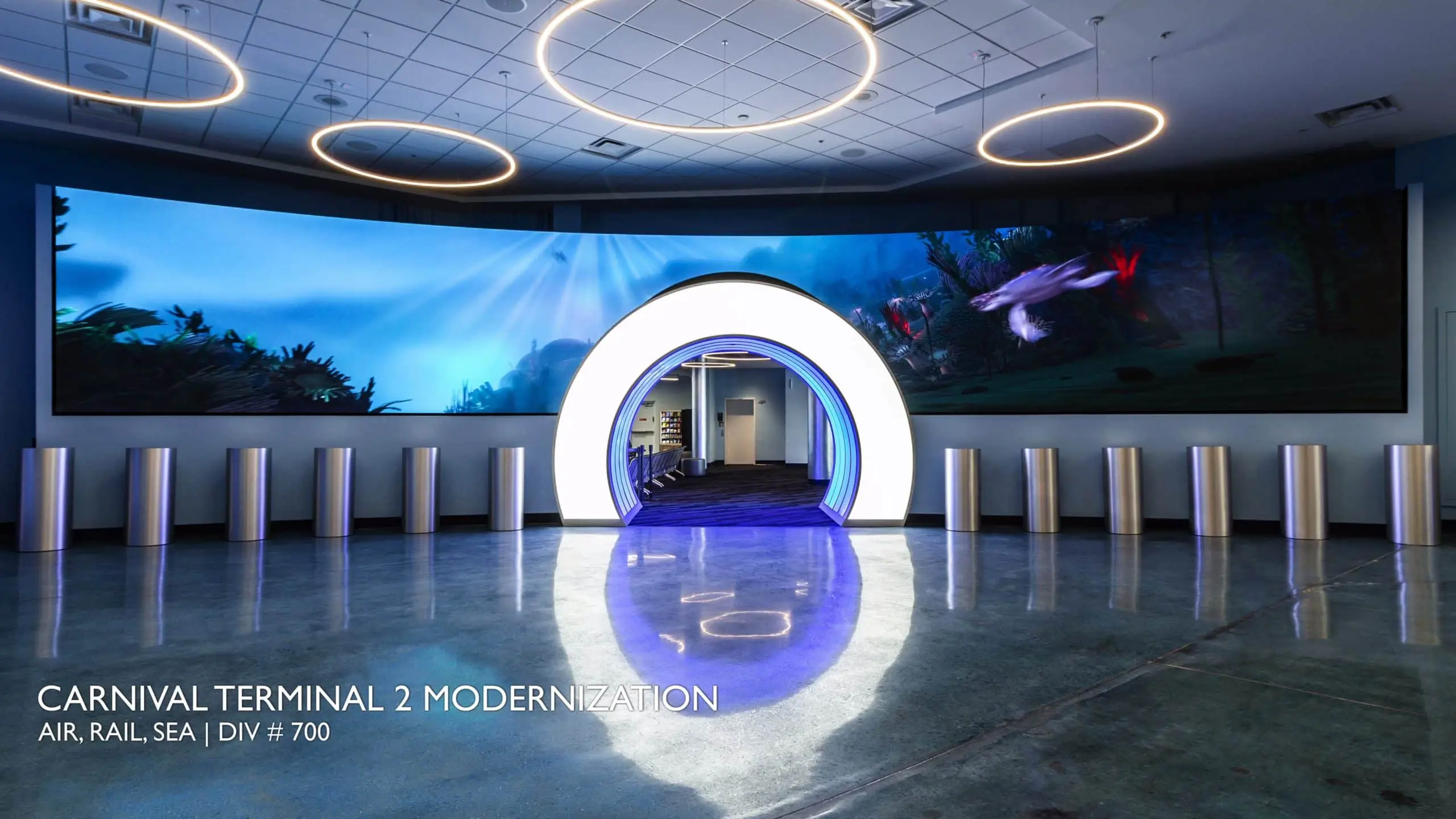
- 12/08/20
In the competitive world of [film and TV production](https://c-istudios.com/film-and-tv-production/), having a compelling TV show pitch is essential to stand out and capture the attention of producers, networks, and investors. A pitch deck serves as your show’s first impression, effectively communicating the vision, tone, and potential of your concept. It is not just a collection of ideas but a strategic tool in content creation that combines creativity with clarity to persuade decision-makers to greenlight your project.
A well-crafted pitch deck opens doors to countless opportunities in the [film and TV production](https://c-istudios.com/film-and-tv-production/)industry, acting as a blueprint that guides the development process while showcasing your concept's marketability and viability. It is an indispensable asset, especially in a field where decisions often hinge on how well an idea is presented, rather than just the idea itself.
This article aims to be your comprehensive guide to creating the perfect pitch deck for your TV show concept. From understanding the core components to incorporating visual elements, we will walk you through each step, ensuring your pitch is not only informative but also captivating and professional.
**Understanding the Core Components of a TV Show Pitch Deck**
Creating an effective TV show pitch requires a deep understanding of the essential components that make up a successful pitch deck. At its core, a pitch deck should include a logline, synopsis, character profiles, episode breakdown, and a season outline. Each of these elements plays a crucial role in conveying your show's narrative arc and potential longevity to stakeholders.
The logline, a brief yet powerful summary of your show, should capture the essence of your concept in a single, memorable sentence. This is often the first piece of information a producer or executive will see, so it needs to be impactful and concise. Following the logline, the synopsis provides a more detailed overview, offering a snapshot of the show’s main plot and themes. This section should hook the reader, making them want to know more.
Branding and graphic design are equally important in making your pitch deck visually appealing and memorable. The visual presentation of your pitch should reflect the tone and style of your show, using colors, fonts, and layouts that resonate with your concept. Incorporating elements of [creative marketing](https://c-istudios.com/creative-marketing-services/) can further enhance the presentation, ensuring your pitch stands out in a crowded market.
Want a real number for your own show? Upload your script for an instant budget estimate ↓
## Crafting a Compelling Logline and Synopsis
A well-crafted logline is a powerful tool in your pitch deck, serving as the first impression of your TV show concept. The logline must be concise, ideally one or two sentences, that distills the core idea of your show into a clear and engaging statement. To craft a logline that resonates, focus on the unique elements of your show, highlighting the main conflict, central characters, and the stakes involved. It should be intriguing enough to grab attention while providing a snapshot of what the audience can expect.
Once you have a strong logline, the next step is to expand it into a compelling synopsis. The synopsis should delve deeper into the narrative, providing an overview of the plot, setting, and tone of the show. This is where you highlight the unique angle of your show, what sets it apart from other concepts in the market. Be sure to introduce key characters and major story arcs, giving a sense of the show's direction and potential for growth.
In today's digital age, integrating [SEO copywriting](https://c-istudios.com/seo-copywriting-services/)into your pitch deck can make your TV show concept more discoverable online. This involves using relevant keywords and phrases that potential investors, producers, or fans might search for when looking for new content. By incorporating SEO-friendly language into your logline and synopsis, you not only enhance your pitch's online presence but also align it with broader media marketing strategies, increasing its chances of being noticed in a crowded field.
**Developing Character Profiles and Arcs**
Characters are the heart of any TV show, and developing detailed character profiles is essential to selling your concept. Each character profile should include a brief biography, personality traits, motivations, and relationships with other characters. This not only helps to define the characters but also gives insight into the dynamics that will drive the story. When creating these profiles, think about how each character contributes to the overall narrative and what makes them memorable and relatable to the audience.
Beyond individual profiles, outlining character arcs is crucial to showing the potential longevity of your show. A well-developed character arc demonstrates how a character changes over time, often in response to the events of the story. This growth should be evident across episodes and seasons, providing a roadmap for the character's journey. Highlighting these arcs in your pitch deck can help producers and executives see the long-term potential of your show, making it more appealing for development.
The role of [artist management and media creation](https://c-istudios.com/artist-management-and-media-creation/) is particularly significant in shaping these memorable characters. Effective content creation involves not only writing compelling characters but also thinking about how they will be portrayed on screen. This includes casting considerations, as well as how the characters’ personalities and stories are visually represented through costumes, settings, and even dialogue delivery. The synergy between artist management and media creation ensures that your characters are not only well-developed on paper but also brought to life in a way that resonates with the audience.
**Episode Structure and Season Outline**
## A well-structured episode is key to maintaining viewer engagement and ensuring the success of your TV show. Each episode should have a clear beginning, middle, and end, with a storyline that contributes to the overall narrative arc of the season. To keep the audience invested, it's essential to introduce conflict or a central problem early in the episode, followed by a series of developments that build tension, leading to a climax and resolution. Consistency in episode structure helps in setting the tone and pace of the show, making it easier for viewers to follow and become emotionally invested
The significance of a season outline cannot be overstated when pitching your TV show concept. A season outline provides a roadmap of how the story will progress over multiple episodes, showcasing the show's longevity and potential for future seasons. This outline should highlight key plot points, character developments, and any major twists or reveals that will keep the audience hooked. A well-thought-out season outline also demonstrates to producers and networks that you have a comprehensive vision for the show, increasing their confidence in your project's viability.
[Video production](https://c-istudios.com/video-production-services/) techniques play a crucial role in visualizing the flow of episodes and the season as a whole. Techniques such as storyboarding, animatics, and film and TV production tools can help you present your episode structure and season outline in a more dynamic and engaging way. For example, creating short teaser videos or animatics can provide a visual representation of key scenes or sequences, giving a clearer picture of how the show will unfold on screen.
**Visual Elements: Incorporating Mood Boards and Concept Art**
Visual elements are a powerful way to convey the tone, style, and atmosphere of your TV show concept. Mood boards and concept art serve as visual representations of your creative vision, helping to bring your show to life in the minds of potential investors and producers. Professional photography can be used to capture the aesthetic and emotional tone you want to achieve, whether it's the gritty realism of a crime drama or the vibrant world of a fantasy series. These images can be curated into mood boards that reflect the color palette, setting, and overall visual style of your show.
Vfx compositing and animation play a significant role in creating mood boards that go beyond static images. By incorporating elements of animation, you can add motion and depth to your visuals, making them more dynamic and engaging. [Vfx compositing](https://c-istudios.com/vfx-compositing-and-animation-services/) allows you to layer various elements, such as characters, backgrounds, and effects, to create a cohesive and immersive visual experience. This technique is particularly useful in illustrating complex scenes or fantastical elements that are central to your show's concept.
When presenting these visual elements in your pitch deck, it's important to ensure they complement the narrative and enhance the overall pitch. Each image or piece of concept art should serve a purpose, whether it's to illustrate a key scene, introduce a setting, or convey the show's mood. Organizing these visuals in a logical and aesthetically pleasing way can make your pitch deck more impactful and memorable.
## Financial Projections and Budgeting
Including a detailed budget in your pitch deck is essential for demonstrating the financial feasibility of your TV show concept. Investors and producers want to see that you have a clear understanding of the costs involved in producing the show, from pre-production through to post-production and marketing. A well-prepared budget should cover all aspects, including cast and crew salaries, location costs, equipment rentals, [feature film mastering and delivery,](https://c-istudios.com/feature-film-mastering-and-delivery/) and post-production expenses. This level of detail not only builds trust with potential investors but also shows that you have thoroughly planned every stage of production.
When creating financial projections, it's important to present figures that are both realistic and appealing to potential investors. This involves forecasting potential revenue streams, such as licensing deals, syndication, and international sales, as well as outlining any upfront costs. Demonstrating a clear return on investment (ROI) will make your project more attractive to financiers. Additionally, consider the long-term profitability of your show, including merchandise sales, streaming deals, and potential for spin-offs.
Media marketing plays a crucial role in your budgeting process. Allocating funds for marketing efforts is essential for ensuring your show reaches its target audience. This includes traditional advertising as well as digital campaigns that leverage social media and SEO strategies. Similarly, feature film mastering and delivery costs must be factored in to ensure the final product meets industry standards and is ready for distribution across multiple platforms.
**Preparing for the Pitch: Rehearsing and Refining**
Rehearsing your pitch is a crucial step in ensuring a confident and polished delivery. Practice allows you to refine your messaging, adjust your timing, and anticipate potential questions from your audience. Start by running through your pitch multiple times, both alone and in front of a small audience, to get comfortable with the content and flow. Pay attention to pacing, clarity, and tone to make sure your pitch is engaging and professional.
Audio engineering plays a significant role in creating a polished presentation. Whether you're pitching in person or remotely, high-quality audio can make a substantial difference in how your message is received. Ensure that your pitch is clear, well-modulated, and free from distractions. If you are using pre-recorded elements in your pitch, such as voice overs or sound design, professional [audio engineering](https://c-istudios.com/audio-engineering-services/) can enhance the overall quality, making your presentation more immersive and impactful.
Social media marketing services can also be invaluable in the preparation phase. These services can help you gather feedback on your pitch by testing key elements with a target audience or industry professionals. By leveraging social media platforms, you can conduct polls, share teaser content, or even run A/B tests to determine what resonates most with viewers. This feedback allows you to refine your pitch, ensuring it aligns with audience expectations and market trends.
## Work with C&I Studios
If you are planning a project like this, our team can take it from concept to final delivery. Explore our [film and TV production](https://c-istudios.com/film-and-tv-production/), browse [our work](https://c-istudios.com/our-work/) to see how we tell brand stories, and [get in touch](https://c-istudios.com/contact/) when you are ready to start.
Originally published August 11, 2024
---
*This content is from [C&I Studios](https://c-istudios.com), a full-service production company.*
---
# Understanding the Importance of Video SEO in Digital Marketing
> Published: August 10, 2024
> Categories: Web & Tech
> Source: https://c-istudios.com/understanding-the-importance-of-video-seo-in-digital-marketing/
---
.cib{--paper:#1b1d1f;--ink:#fff;--body:#d5d7d9;--muted:#8b9096;--line:rgba(255,255,255,.12);--thumb:#2b2e31;--card:#212426;--accent:#c02b0a;--blue:#5B8FA8;--serif:'Playfair Display',Georgia,serif;--sans:'Poppins',-apple-system,sans-serif;--measure:900px;background:var(--paper);color:var(--body);font-family:var(--sans);line-height:1.6;position:relative;left:50%;transform:translateX(-50%);width:90vw;max-width:1920px}
.cib *{box-sizing:border-box}
.cib .kicker{max-width:var(--measure);margin:58px auto 0;padding:0 22px;font-size:12.5px;font-weight:700;letter-spacing:2.5px;text-transform:uppercase;color:var(--blue)}
.cib h1.cibh1{text-wrap:balance;font-family:var(--serif);font-weight:500;font-size:clamp(46px,6vw,72px);line-height:1.08;color:var(--ink);max-width:var(--measure);margin:18px auto 0;padding:0 22px;letter-spacing:-.5px}
.cib .metarow{max-width:var(--measure);margin:20px auto 0;padding:0 22px;color:var(--muted);font-size:14px}
.cib .hero{position:relative;width:100%;height:0;padding-bottom:56.25%;overflow:hidden;margin:48px auto 0;border-top:1px solid var(--line);border-bottom:1px solid var(--line)}
.cib .hero .ph{width:100%;aspect-ratio:16/9;background:var(--thumb);border-top:1px solid var(--line);border-bottom:1px solid var(--line);display:flex;align-items:center;justify-content:center;color:#7d8288;font-size:13px;text-align:center;padding:0 20px}
.cib .body{max-width:var(--measure);margin:12px auto 0;padding:52px 22px 6px}
.cib .body.lead p:first-child{font-size:23px;line-height:1.62;color:var(--ink)}
.cib .body p{font-size:18.5px;line-height:1.85;margin:0 0 30px;color:var(--body)}
.cib .body h2{text-wrap:balance;font-family:var(--serif);font-weight:500;font-size:clamp(32px,4vw,48px);line-height:1.22;color:var(--ink);margin:70px 0 20px;letter-spacing:-.3px}
.cib .body h3{text-wrap:balance;font-family:var(--sans);font-weight:600;font-size:22px;color:var(--ink);margin:38px 0 8px}
.cib .body a{color:var(--ink);text-decoration:underline;text-decoration-color:rgba(255,255,255,.4);text-underline-offset:3px}
.cib .body a:hover{text-decoration-color:var(--ink)}
.cib .ctable{width:100%;border-collapse:collapse;margin:16px 0 30px;font-size:16px}
.cib .ctable th{background:#000;color:#fff;text-align:left;padding:10px 12px;font-family:var(--sans)}
.cib .ctable td{padding:10px 12px;border-bottom:1px solid var(--line);color:var(--body)}
.cib .inimg{position:relative;width:100%;height:0;padding-bottom:56.25%;overflow:hidden;margin:72px auto;border-top:1px solid var(--line);border-bottom:1px solid var(--line)}
.cib .inimg .ph{width:100%;aspect-ratio:16/9;background:var(--thumb);border-top:1px solid var(--line);border-bottom:1px solid var(--line);display:flex;align-items:center;justify-content:center;color:#7d8288;font-size:13px}
.cib .origpub{max-width:var(--measure);margin:60px auto 0;padding:26px 22px 0;border-top:1px solid var(--line);color:var(--muted);font-size:13.5px}
.cib .related{max-width:1200px;margin:64px auto 0;padding:34px 22px 76px}
.cib .related h3{font-family:var(--sans);font-size:12.5px;letter-spacing:2px;text-transform:uppercase;color:var(--ink);margin:0 0 24px}
.cib .grid{display:grid;grid-template-columns:repeat(3,1fr);gap:28px}
.cib .rc{background:var(--card);border:1px solid var(--line);display:block;text-decoration:none;color:inherit;transition:border-color .15s}
.cib a.rc:hover{border-color:rgba(255,255,255,.5)}
.cib .rc .thumb{position:relative;width:100%;height:0;padding-bottom:56.25%;background:var(--thumb);overflow:hidden}
.cib .rc .thumb img{position:absolute!important;top:0!important;left:0!important;width:100%!important;height:100%!important;object-fit:cover!important;margin:0!important}
.cib .rc .cc{padding:14px 15px 17px}
.cib .rc .rt{font-family:var(--serif);font-weight:500;font-size:16px;line-height:1.3;color:var(--ink);margin:0 0 6px}
.cib .rc .rm{font-size:11px;letter-spacing:1px;text-transform:uppercase;color:var(--muted)}
.cib img{margin:0!important;padding:0!important;display:block!important;vertical-align:top;max-width:100%}
.cib .hero img,.cib .inimg img{position:absolute!important;top:0!important;left:0!important;width:100%!important;height:100%!important;object-fit:cover!important;margin:0!important;padding:0!important;border:0!important;display:block!important;aspect-ratio:auto!important}
.cib .hero+.body{padding-top:36px}
@media(max-width:760px){.cib .grid{grid-template-columns:1fr}.cib .body h2{margin:52px 0 16px}.cib .body p{font-size:17.5px}.cib .inimg,.cib .hero{margin-top:44px}}
.cib .vembed{max-width:var(--measure);margin:44px auto;padding:0 22px}.cib .vembed .vwrap{position:relative;width:100%;height:0;padding-bottom:56.25%}.cib .vembed .vwrap iframe{position:absolute;top:0;left:0;width:100%;height:100%;border:0}
Web & Tech
# Understanding the Importance of Video SEO in Digital Marketing
9 min read
- 12/08/20
In the landscape of digital marketing, media marketing has evolved to encompass a wide range of strategies aimed at enhancing online visibility and engaging audiences. Among these strategies, [content creation](https://c-istudios.com/content-creation-services/) has taken on a pivotal role, with video content standing out as a particularly powerful tool. Video SEO, or search engine optimization for video content, is a crucial aspect of this strategy. It involves optimizing video elements to improve their visibility in search engine results and attract a larger audience.
Video SEO is not merely about uploading videos and hoping for the best. It requires a strategic approach to ensure that videos are discoverable and engaging. Effective video SEO practices can significantly enhance online visibility, as search engines increasingly prioritize video content in their results. Videos that are well-optimized for SEO are more likely to appear in search results, draw in viewers, and maintain high engagement rates.
This article will delve into how video SEO contributes to digital marketing success, examining key aspects such as optimization techniques, ranking factors, and the benefits of a well-integrated video SEO strategy.
## The Role of Video Content in Search Engine Rankings
The integration of [video production](https://c-istudios.com/video-production-services/) into SEO strategies has become essential for businesses aiming to improve their online presence. Videos have a significant impact on search engine rankings due to their ability to engage users and provide valuable content. Unlike traditional text-based content, videos can convey information more dynamically and are often favored by search engines for their richness and ability to retain viewer attention.
Search engines, like Google, use various algorithms to determine the relevance and quality of video content. Key factors include video metadata (titles, descriptions, and tags), user engagement metrics (such as watch time and interaction rates), and the quality of the video itself (resolution, audio clarity, etc.).[SEO copywriting](https://c-istudios.com/seo-copywriting-services/) plays a critical role in optimizing these elements. For instance, incorporating relevant keywords into video titles and descriptions can significantly enhance a video's discoverability.
Integrating video content into your overall SEO strategy offers several benefits. Videos can boost user engagement, increase dwell time on your site, and improve click-through rates from search engine results. By focusing on video SEO, you not only enhance your content's visibility but also drive higher traffic and engagement, contributing to a more robust digital marketing strategy.
## Optimizing Video Metadata for Better Visibility
When it comes to branding and graphic design in video content, one of the most crucial elements to focus on is video metadata. Video metadata encompasses various components such as titles, descriptions, and tags, all of which play a significant role in SEO. Properly optimized metadata ensures that your video is discoverable and can effectively attract and engage your target audience.
The optimization of video metadata starts with crafting an informative and engaging title. Titles should be clear, descriptive, and include relevant keywords that reflect the content of the video. For instance, a video about [social media marketing services](https://c-istudios.com/social-media-marketing-services/) should have a title that highlights both the service and the key benefits it provides. Similarly, the description should offer a detailed summary of the video's content, incorporating keywords naturally to improve search engine visibility. Tags, on the other hand, should include related keywords and phrases that potential viewers might use to find content on similar topics.
Effective metadata practices can significantly boost search visibility. For example, a well-optimized video on "How to Enhance Your Social Media Strategy" might use tags like "social media marketing," "content creation," and "digital strategy." This approach helps in reaching a broader audience and improving ranking in search results. By focusing on detailed and relevant metadata, you enhance the likelihood of your video being discovered and viewed by the right audience.
## Importance of Video Thumbnails and Titles
In the realm of [video production](https://c-istudios.com/video-production-services/) gear list and[creative marketing,](https://c-istudios.com/creative-marketing-services/) video thumbnails and titles are pivotal in driving viewer engagement. Thumbnails are the first visual impression viewers get of your video, making them crucial for attracting clicks. A compelling thumbnail should be visually appealing, relevant to the video content, and designed to stand out among other videos. Incorporating high-quality images, contrasting colors, and clear text can significantly increase a video's click-through rate.
Titles, similarly, play a key role in engaging potential viewers. An engaging title should not only be descriptive but also intriguing enough to spark curiosity. For instance, a title like "10 Essential Tips for Effective Social Media Marketing" is likely to attract attention and encourage clicks. Effective titles often include action verbs and specific benefits that resonate with viewers' needs or interests.
Both thumbnails and titles should align with the video's content to avoid misleading viewers, which can negatively impact viewer satisfaction and engagement. Ensuring that these elements are visually appealing and relevant helps in capturing viewers' attention and encourages higher interaction rates. In summary, well-crafted thumbnails and titles enhance the initial appeal of your video, driving more clicks and fostering better engagement with your audience.
## Leveraging Video Platforms and Social Media for SEO
In the landscape of social media marketing services and content creation, utilizing various video platforms is essential for maximizing SEO benefits. Platforms like YouTube and Vimeo offer unique advantages for boosting video visibility. YouTube, as the second largest search engine, provides significant opportunities for optimizing video content.
Key strategies include optimizing video titles, descriptions, and tags with relevant keywords, and utilizing YouTube's playlist feature to organize content and improve discoverability. Vimeo, on the other hand, is known for its high-quality video hosting and customization options, which can enhance brand presentation and user experience.
Additionally, social media sharing plays a crucial role in video SEO. Promoting video content across platforms such as Facebook, Instagram, and Twitter can drive traffic to your videos and increase their visibility. Engaging with audiences through these platforms helps build a community around your content, encouraging shares and interactions that further enhance SEO. The more your videos are shared and discussed on social media, the higher their potential ranking in search results. Integrating video content with your social media strategy not only improves SEO but also strengthens your overall digital presence.
## The Impact of Video Length and Quality on SEO
In the realm of video production and [media marketing](https://c-istudios.com/media-marketing-consultation-services/), both video length and quality significantly affect SEO outcomes. Video length influences viewer retention, a critical factor in SEO rankings. Shorter videos, typically under three minutes, often cater to audiences seeking quick, digestible content. However, longer videos that offer in-depth insights or comprehensive information can also perform well if they maintain viewer interest and engagement. The key is to balance video length with content relevance and viewer preferences to maximize retention and SEO benefits.
Quality, meanwhile, directly impacts user engagement and search visibility. High-resolution videos with clear audio and professional editing enhance the viewing experience, leading to higher engagement rates and positive user feedback. Quality content that provides value to viewers tends to have higher watch times, fewer drop-offs, and increased sharing. Ensuring that your videos are well-produced and offer substantial content can significantly boost their SEO performance. By balancing video length with high production standards, you can create content that not only attracts viewers but also performs well in search engine rankings.
## Analyzing Video Performance Metrics
When evaluating video production effectiveness, understanding key metrics is crucial. Tracking metrics such as views, engagement rates, and retention times provides insight into how well your videos are performing. Views indicate the reach of your content, while engagement rates measure how actively viewers interact with it through likes, comments, and shares. Retention metrics reveal how well your content holds the audience's attention, showing where viewers drop off or stay engaged throughout the video.
To refine your video SEO strategies, use these metrics to identify strengths and areas for improvement. For example, if engagement rates are low, it might suggest a need for more compelling content or a stronger call-to-action. Tools like Google Analytics, YouTube Analytics, and Vimeo's analytics platform offer valuable insights into these metrics. By regularly analyzing these data points, you can adjust your content strategies, optimize video SEO, and enhance overall performance.
## Integrating Video SEO with Your Overall Digital Marketing Strategy
Integrating content creation with SEO copywriting is essential for a cohesive digital marketing strategy. Aligning your video SEO efforts with broader marketing goals ensures that your video content supports and enhances your overall digital presence. Start by creating a unified content strategy where video content complements other digital marketing initiatives, such as blog posts, social media campaigns, and email marketing.
Incorporating video SEO into your digital marketing plan involves using consistent branding and messaging across all channels. For example, ensure that your video titles and descriptions are optimized with relevant keywords that align with your overall SEO strategy. This alignment helps in creating a cohesive brand narrative and improves search engine rankings. By integrating video SEO with other marketing initiatives, you can achieve a more comprehensive approach that drives better results across your digital platforms.
## Enhancing Video Engagement Through Interactive Features
To boost video production effectiveness, incorporating interactive features into your videos can significantly enhance user engagement. Interactive elements, such as clickable links, polls, and embedded forms, encourage viewers to interact directly with your content. For instance, using interactive end screens or annotations can direct viewers to additional resources, related videos, or calls to action. This not only keeps the audience engaged but also increases the likelihood of converting viewers into leads or customers.
Media marketing strategies benefit greatly from leveraging interactive video features. By integrating features such as quizzes or interactive infographics, you can make your content more engaging and informative. This approach helps to create a more immersive experience, which can lead to higher retention rates and increased viewer satisfaction. Furthermore, interactive videos can gather valuable data on viewer preferences and behaviors, providing insights that can be used to refine future content and marketing strategies.
Optimizing the use of interactive features also involves ensuring compatibility across various devices and platforms. Testing your interactive elements on different screen sizes and operating systems is crucial to delivering a seamless experience for all users. By focusing on these aspects, you can enhance the overall effectiveness of your video production gear list, ensuring that interactive features contribute positively to your video SEO and digital marketing goals.
## Future Trends in Video SEO
The landscape of creative marketing and media marketing is evolving rapidly, with emerging trends significantly shaping the future of video SEO. One of the most notable advancements is the integration of AI and machine learning technologies into video optimization processes. These innovations are transforming how we analyze viewer behavior and optimize video content. AI-driven tools now offer deeper insights into audience interactions, revealing precise data on viewer preferences, engagement patterns, and content effectiveness.
Machine learning algorithms are increasingly used to personalize content recommendations, ensuring viewers receive the most relevant and engaging videos based on their past interactions and preferences. As search engines become more sophisticated, they are better at understanding and ranking video content. This evolution means that keeping pace with these technological changes is crucial for maintaining a competitive edge in video SEO. The rise of interactive video features and advancements in [vfx compositing and animation](https://c-istudios.com/vfx-compositing-and-animation-services/) present new opportunities to engage viewers and enhance content appeal.
Staying informed about industry trends and technological advancements will enable you to adapt your strategies effectively. By incorporating these innovations into your video marketing approach, you can ensure your content remains relevant and optimized for search engines. Embracing these future trends will help improve your video SEO performance and digital visibility, allowing you to achieve better search rankings and increased engagement in an ever-evolving digital landscape.
## Work with C&I Studios
If you are planning a project like this, our team can take it from concept to final delivery. Explore our [AI video services](https://c-istudios.com/ai-video-services/), browse [our work](https://c-istudios.com/our-work/) to see how we tell brand stories, and [get in touch](https://c-istudios.com/contact/) when you are ready to start.
Originally published August 10, 2024
---
*This content is from [C&I Studios](https://c-istudios.com), a full-service production company.*
---
# Measuring Success: Key Metrics and Analytics for Evaluating Your Email Campaign Performance
> Published: August 9, 2024
> Categories: Commercial & Brand
> Source: https://c-istudios.com/measuring-success-key-metrics-and-analytics-for-evaluating-your-email-campaign-performance/
---
.cib{--paper:#1b1d1f;--ink:#fff;--body:#d5d7d9;--muted:#8b9096;--line:rgba(255,255,255,.12);--thumb:#2b2e31;--card:#212426;--accent:#c02b0a;--blue:#5B8FA8;--serif:'Playfair Display',Georgia,serif;--sans:'Poppins',-apple-system,sans-serif;--measure:900px;background:var(--paper);color:var(--body);font-family:var(--sans);line-height:1.6;position:relative;left:50%;transform:translateX(-50%);width:90vw;max-width:1920px}
.cib *{box-sizing:border-box}
.cib .kicker{max-width:var(--measure);margin:58px auto 0;padding:0 22px;font-size:12.5px;font-weight:700;letter-spacing:2.5px;text-transform:uppercase;color:var(--blue)}
.cib h1.cibh1{text-wrap:balance;font-family:var(--serif);font-weight:500;font-size:clamp(46px,6vw,72px);line-height:1.08;color:var(--ink);max-width:var(--measure);margin:18px auto 0;padding:0 22px;letter-spacing:-.5px}
.cib .metarow{max-width:var(--measure);margin:20px auto 0;padding:0 22px;color:var(--muted);font-size:14px}
.cib .hero{position:relative;width:100%;height:0;padding-bottom:56.25%;overflow:hidden;margin:48px auto 0;border-top:1px solid var(--line);border-bottom:1px solid var(--line)}
.cib .hero .ph{width:100%;aspect-ratio:16/9;background:var(--thumb);border-top:1px solid var(--line);border-bottom:1px solid var(--line);display:flex;align-items:center;justify-content:center;color:#7d8288;font-size:13px;text-align:center;padding:0 20px}
.cib .body{max-width:var(--measure);margin:12px auto 0;padding:52px 22px 6px}
.cib .body.lead p:first-child{font-size:23px;line-height:1.62;color:var(--ink)}
.cib .body p{font-size:18.5px;line-height:1.85;margin:0 0 30px;color:var(--body)}
.cib .body h2{text-wrap:balance;font-family:var(--serif);font-weight:500;font-size:clamp(32px,4vw,48px);line-height:1.22;color:var(--ink);margin:70px 0 20px;letter-spacing:-.3px}
.cib .body h3{text-wrap:balance;font-family:var(--sans);font-weight:600;font-size:22px;color:var(--ink);margin:38px 0 8px}
.cib .body a{color:var(--ink);text-decoration:underline;text-decoration-color:rgba(255,255,255,.4);text-underline-offset:3px}
.cib .body a:hover{text-decoration-color:var(--ink)}
.cib .ctable{width:100%;border-collapse:collapse;margin:16px 0 30px;font-size:16px}
.cib .ctable th{background:#000;color:#fff;text-align:left;padding:10px 12px;font-family:var(--sans)}
.cib .ctable td{padding:10px 12px;border-bottom:1px solid var(--line);color:var(--body)}
.cib .inimg{position:relative;width:100%;height:0;padding-bottom:56.25%;overflow:hidden;margin:72px auto;border-top:1px solid var(--line);border-bottom:1px solid var(--line)}
.cib .inimg .ph{width:100%;aspect-ratio:16/9;background:var(--thumb);border-top:1px solid var(--line);border-bottom:1px solid var(--line);display:flex;align-items:center;justify-content:center;color:#7d8288;font-size:13px}
.cib .origpub{max-width:var(--measure);margin:60px auto 0;padding:26px 22px 0;border-top:1px solid var(--line);color:var(--muted);font-size:13.5px}
.cib .related{max-width:1200px;margin:64px auto 0;padding:34px 22px 76px}
.cib .related h3{font-family:var(--sans);font-size:12.5px;letter-spacing:2px;text-transform:uppercase;color:var(--ink);margin:0 0 24px}
.cib .grid{display:grid;grid-template-columns:repeat(3,1fr);gap:28px}
.cib .rc{background:var(--card);border:1px solid var(--line);display:block;text-decoration:none;color:inherit;transition:border-color .15s}
.cib a.rc:hover{border-color:rgba(255,255,255,.5)}
.cib .rc .thumb{position:relative;width:100%;height:0;padding-bottom:56.25%;background:var(--thumb);overflow:hidden}
.cib .rc .thumb img{position:absolute!important;top:0!important;left:0!important;width:100%!important;height:100%!important;object-fit:cover!important;margin:0!important}
.cib .rc .cc{padding:14px 15px 17px}
.cib .rc .rt{font-family:var(--serif);font-weight:500;font-size:16px;line-height:1.3;color:var(--ink);margin:0 0 6px}
.cib .rc .rm{font-size:11px;letter-spacing:1px;text-transform:uppercase;color:var(--muted)}
.cib img{margin:0!important;padding:0!important;display:block!important;vertical-align:top;max-width:100%}
.cib .hero img,.cib .inimg img{position:absolute!important;top:0!important;left:0!important;width:100%!important;height:100%!important;object-fit:cover!important;margin:0!important;padding:0!important;border:0!important;display:block!important;aspect-ratio:auto!important}
.cib .hero+.body{padding-top:36px}
@media(max-width:760px){.cib .grid{grid-template-columns:1fr}.cib .body h2{margin:52px 0 16px}.cib .body p{font-size:17.5px}.cib .inimg,.cib .hero{margin-top:44px}}
.cib .vembed{max-width:var(--measure);margin:44px auto;padding:0 22px}.cib .vembed .vwrap{position:relative;width:100%;height:0;padding-bottom:56.25%}.cib .vembed .vwrap iframe{position:absolute;top:0;left:0;width:100%;height:100%;border:0}
Commercial & Brand
# Measuring Success. Key Metrics and Analytics for Evaluating Your Email Campaign Performance
10 min read
- 12/08/20
In the realm of media marketing, understanding how well your email campaigns perform is crucial for optimizing your strategy and achieving your goals. Effective content creation goes beyond crafting engaging emails; it requires rigorous analysis to measure success accurately. By tracking key email metrics, businesses can gain valuable insights into what resonates with their audience, refine their approach, and enhance overall campaign effectiveness.
Email campaign metrics provide a window into various aspects of performance, from how many recipients open your emails to how many take desired actions. Each metric offers a piece of the puzzle, helping marketers understand the strengths and weaknesses of their campaigns. The role of these metrics is to guide adjustments, ensuring that future campaigns are more targeted, relevant, and impactful. This continuous cycle of measuring and refining is essential for achieving sustained success in email marketing.
## Understanding Open Rate and Its Role in Engagement
The open rate is a fundamental metric in email marketing, reflecting the percentage of recipients who open your email. It serves as an indicator of how compelling your subject lines and sender name are to your audience. A high open rate often signifies that your [SEO copywriting](https://c-istudios.com/seo-copywriting-services/)is effective and that your subject lines capture attention.
Interpreting open rate data involves analyzing trends over time and comparing your performance against industry benchmarks. Understanding what drives higher open rates can help you refine your strategy. For instance, optimizing subject lines to be more engaging or personalized can significantly boost open rates. Additionally, timing your emails based on when your audience is most active can further enhance engagement. By focusing on these elements, you can improve how many recipients engage with your emails and thus increase the effectiveness of your campaigns.
## Measuring Interaction with Click-Through Rate (CTR)
Click-through rate (CTR) is a crucial metric in evaluating the effectiveness of your email campaigns. It measures the percentage of recipients who click on one or more links within your email, providing insights into how engaging and actionable your content is. A high CTR indicates that your email content, including [branding and graphic design](https://c-istudios.com/branding-and-graphic-design-services/), resonates with your audience and encourages them to take desired actions.
Analyzing your CTR involves looking at various factors to determine how effectively your emails drive user interaction. Assess whether your creative marketing efforts align with the content and whether your calls-to-action (CTAs) are compelling enough. CTR analysis helps identify which aspects of your email campaign are working and which areas need improvement.
To enhance CTR, focus on optimizing your CTAs by making them prominent, clear, and enticing. Ensure that the content linked to the CTA is highly relevant and valuable to your audience. Personalizing your email content to better meet the interests and needs of your recipients can also lead to higher click-through rates. By continually refining these elements, you can improve your email campaigns' ability to drive engagement and achieve better results.
## Tracking Successful Outcomes Through Conversion Rate
Conversion rate is a vital metric for assessing the overall success of your email campaigns. It measures the percentage of recipients who complete a desired action, such as making a purchase or signing up for a newsletter, after interacting with your email. This metric is crucial because it reflects how effectively your emails are driving tangible results, which directly impacts your content creation strategy and [media marketing](https://c-istudios.com/social-media-marketing-services/) efforts.
Calculating the conversion rate involves dividing the number of successful outcomes by the total number of email recipients, then multiplying by 100 to get a percentage. For example, if 50 recipients made a purchase out of 1,000 emails sent, the conversion rate would be 5%. This metric helps you understand how well your emails are converting leads into customers or achieving other goals, indicating the effectiveness of your campaign.
To boost your conversion rate, focus on targeted messaging that resonates with your audience and provides clear, compelling reasons to take action. Incorporate personalized content that addresses the recipient's needs and preferences, enhancing the relevance and appeal of your emails. Additionally, ensure that your landing pages are optimized and aligned with the email content to provide a seamless user experience. By implementing these best practices, you can improve your conversion rates and maximize the return on your email marketing investment.
## Identifying Delivery Issues with Bounce Rate
Bounce rate is a crucial metric that helps you gauge the effectiveness of your email delivery and the health of your email list. It represents the percentage of emails that could not be delivered to the recipient's inbox, either due to technical issues or invalid email addresses. Understanding and managing bounce rates is essential for ensuring the success of your [web development](https://c-istudios.com/web-development-services/) and web hosting strategies.
There are two types of bounces: soft bounces and hard bounces. Soft bounces occur when an email temporarily fails to reach the recipient's inbox due to issues like a full mailbox or a temporary server problem. Hard bounces, on the other hand, are permanent failures caused by invalid email addresses or blocked domains. Addressing hard bounces promptly is crucial, as they directly impact your sender reputation and can lead to your emails being marked as spam.
To effectively reduce bounce rates, regularly clean and verify your email list to remove invalid or inactive addresses. Implement email validation tools and maintain accurate records of your subscribers to minimize the risk of bounces. Additionally, monitor your email campaigns and adjust your web hosting and email sending practices to ensure better deliverability. By addressing these issues, you can enhance the overall performance of your email campaigns and improve engagement with your audience.
## Assessing List Health by Monitoring Unsubscribe Rate
The unsubscribe rate is a key indicator of the health of your email list and the effectiveness of your email marketing efforts. It measures the percentage of recipients who opt out of receiving further emails from you. A high unsubscribe rate can signal problems with your media marketing approach or [content creation](https://c-istudios.com/content-creation-services/) strategies, making it essential to address this metric to maintain a strong and engaged subscriber base.
Several factors can contribute to higher unsubscribe rates, including irrelevant content, overly frequent emails, or poor targeting. To mitigate these issues, focus on delivering high-quality, relevant content that meets the needs and preferences of your audience. Ensure that your email frequency aligns with subscriber expectations and avoid overwhelming them with excessive messages. Additionally, use segmentation and personalization techniques to tailor your content to specific audience segments, enhancing its relevance and appeal.
Maintaining a healthy subscriber list requires ongoing efforts to engage your audience effectively and address their concerns. By monitoring unsubscribe rates and implementing strategies to improve content relevance and email frequency, you can foster better relationships with your subscribers and enhance the overall performance of your email marketing campaigns.
## Analyzing Reader Behavior Through Engagement Metrics
Beyond the basic metrics of open rates and click-through rates, engagement metrics provide a deeper understanding of how recipients interact with your emails. These metrics include factors such as time spent reading, email forwarding, and interaction with embedded content. [Creative marketing](https://c-istudios.com/creative-marketing-services/) strategies can be fine-tuned by analyzing these deeper engagement indicators, giving you insights into how compelling and relevant your content is to your audience.
For instance, tracking the time spent reading an email helps gauge the effectiveness of your content in capturing and maintaining the recipient's attention. If readers spend more time engaging with your content, it suggests that your branding and graphic design efforts are resonating well. Email forwarding metrics reveal how often recipients share your content with others, providing an indication of your email's perceived value and relevance. Analyzing these behaviors allows you to refine your content and design strategies to better align with audience preferences.
By leveraging engagement metrics, you can adjust your email content to enhance readability and increase interaction. This might involve experimenting with different formats, adjusting content length, or incorporating more engaging visuals and calls to action. Using this data, tailor your creative marketing and content strategies to improve overall effectiveness and drive better results in your email campaigns.
**Evaluating Financial Success with ROI and Cost Metrics**
Evaluating the financial success of your email campaigns involves analyzing ROI (Return on Investment) and CPA (Cost Per Acquisition). These metrics help assess the profitability of your campaigns and the efficiency of your marketing spend. To calculate ROI, compare the revenue generated from your campaigns against the costs incurred, including SEO copywriting services and any expenses related to [video production](https://c-istudios.com/video-production-services/)or other elements.
ROI is calculated by dividing the net profit from your email campaign by the total cost of the campaign, then multiplying by 100 to get a percentage. CPA, on the other hand, measures the average cost required to acquire a new customer through your email campaign. Comparing these metrics to industry benchmarks helps you gauge how well your campaigns perform financially and identify areas for improvement.
To maximize ROI and reduce costs, focus on optimizing email automation and segmentation. Targeted campaigns that deliver personalized content to specific segments can improve response rates and reduce waste. Additionally, refining your email design and content based on performance data can enhance engagement and conversion rates, contributing to better financial outcomes.
## Integrating Analytics with Overall Marketing Strategy
Integrating email campaign metrics with your broader media marketing strategy is essential for a cohesive and effective approach. By aligning email metrics with your overall marketing objectives, you ensure that your email campaigns contribute meaningfully to your broader goals. This involves using insights from email analytics to inform decisions across various channels, such as social media, content marketing, and artist management and media creation.
For example, data from email campaigns can reveal valuable information about audience preferences and behavior, which can be applied to enhance other marketing strategies. If you notice specific trends in email engagement, such as particular content types that perform well, you can adapt these insights to your social media strategies or content creation efforts. This unified approach helps maintain consistency across all marketing channels and provides a more comprehensive view of your overall performance.
Adopting a cohesive marketing analytics strategy also facilitates better decision-making and optimizes resource allocation. By understanding how different marketing efforts interconnect, you can fine-tune your campaigns for maximum impact. This integrated approach ensures that all aspects of your marketing strategy work together harmoniously, providing more accurate and actionable insights.
**Future Trends in Email Campaign Metrics**
As the field of content creation evolves, so too do the methods for analyzing email campaign metrics. Emerging trends in email marketing analytics are reshaping how we evaluate campaign performance and effectiveness. One notable trend is the increasing use of advanced analytics and [social media marketing services](https://c-istudios.com/social-media-marketing-services/) to gain deeper insights into user behavior and preferences. These tools offer more granular data and predictive analytics, allowing for more precise targeting and personalization.
The role of artificial intelligence (AI) in email marketing is also growing. AI-powered tools can automate and optimize various aspects of email campaigns, from segmentation and content recommendations to performance analysis. Staying ahead of these trends requires a proactive approach to continually refine and adapt your email marketing strategies. By embracing new technologies and techniques, you can ensure that your campaigns remain effective and relevant in an ever-changing digital landscape.
To stay competitive, it's crucial to keep abreast of emerging trends and incorporate them into your email marketing efforts. This involves not only leveraging advanced analytics but also being open to new ideas and technologies that can enhance your campaign performance. Regularly reviewing and updating your strategies will help you maintain a cutting-edge approach and achieve sustained success.
**Conclusion**
Evaluating the success of your email campaigns involves a comprehensive understanding of various key metrics and analytics. From open rates to conversion rates, each metric provides valuable insights into how well your campaigns are performing and where improvements can be made. By focusing on metrics such as click-through rates, bounce rates, and engagement levels, you can refine your strategies and ensure your email marketing efforts are both effective and efficient. Tracking these metrics helps in making data-driven decisions, which is crucial for optimizing your campaigns and achieving your marketing goals.
At [C&I Studios](https://c-istudios.com/), we understand the importance of integrating email campaign metrics into your overall marketing strategy. Our team is dedicated to helping you leverage these insights to enhance your media marketing efforts and drive successful outcomes.
For more information on how we can assist with your email marketing and other digital strategies, feel free to explore our services, view our [portfolio](https://c-istudios.com/our-work/), or [contact us](https://c-istudios.com/contact/). For a broader look at our approach and expertise, visit our [website](https://c-istudios.com/).
## Work with C&I Studios
If you are planning a project like this, our team can take it from concept to final delivery. Explore our [video production services](https://c-istudios.com/video-production-services/), browse [our work](https://c-istudios.com/our-work/) to see how we tell brand stories, and [get in touch](https://c-istudios.com/contact/) when you are ready to start.
Originally published August 9, 2024
---
*This content is from [C&I Studios](https://c-istudios.com), a full-service production company.*
---
# Dialogue Editing 101: Essential Techniques for Crafting Clear and Natural Speech
> Published: August 7, 2024
> Categories: Film & TV
> Source: https://c-istudios.com/dialogue-editing-101-essential-techniques-for-crafting-clear-and-natural-speech/
---
.cib{--paper:#1b1d1f;--ink:#fff;--body:#d5d7d9;--muted:#8b9096;--line:rgba(255,255,255,.12);--thumb:#2b2e31;--card:#212426;--accent:#c02b0a;--blue:#5B8FA8;--serif:'Playfair Display',Georgia,serif;--sans:'Poppins',-apple-system,sans-serif;--measure:900px;background:var(--paper);color:var(--body);font-family:var(--sans);line-height:1.6;position:relative;left:50%;transform:translateX(-50%);width:90vw;max-width:1920px}
.cib *{box-sizing:border-box}
.cib .kicker{max-width:var(--measure);margin:58px auto 0;padding:0 22px;font-size:12.5px;font-weight:700;letter-spacing:2.5px;text-transform:uppercase;color:var(--blue)}
.cib h1.cibh1{text-wrap:balance;font-family:var(--serif);font-weight:500;font-size:clamp(46px,6vw,72px);line-height:1.08;color:var(--ink);max-width:var(--measure);margin:18px auto 0;padding:0 22px;letter-spacing:-.5px}
.cib .metarow{max-width:var(--measure);margin:20px auto 0;padding:0 22px;color:var(--muted);font-size:14px}
.cib .hero{position:relative;width:100%;height:0;padding-bottom:56.25%;overflow:hidden;margin:48px auto 0;border-top:1px solid var(--line);border-bottom:1px solid var(--line)}
.cib .hero .ph{width:100%;aspect-ratio:16/9;background:var(--thumb);border-top:1px solid var(--line);border-bottom:1px solid var(--line);display:flex;align-items:center;justify-content:center;color:#7d8288;font-size:13px;text-align:center;padding:0 20px}
.cib .body{max-width:var(--measure);margin:12px auto 0;padding:52px 22px 6px}
.cib .body.lead p:first-child{font-size:23px;line-height:1.62;color:var(--ink)}
.cib .body p{font-size:18.5px;line-height:1.85;margin:0 0 30px;color:var(--body)}
.cib .body h2{text-wrap:balance;font-family:var(--serif);font-weight:500;font-size:clamp(32px,4vw,48px);line-height:1.22;color:var(--ink);margin:70px 0 20px;letter-spacing:-.3px}
.cib .body h3{text-wrap:balance;font-family:var(--sans);font-weight:600;font-size:22px;color:var(--ink);margin:38px 0 8px}
.cib .body a{color:var(--ink);text-decoration:underline;text-decoration-color:rgba(255,255,255,.4);text-underline-offset:3px}
.cib .body a:hover{text-decoration-color:var(--ink)}
.cib .ctable{width:100%;border-collapse:collapse;margin:16px 0 30px;font-size:16px}
.cib .ctable th{background:#000;color:#fff;text-align:left;padding:10px 12px;font-family:var(--sans)}
.cib .ctable td{padding:10px 12px;border-bottom:1px solid var(--line);color:var(--body)}
.cib .inimg{position:relative;width:100%;height:0;padding-bottom:56.25%;overflow:hidden;margin:72px auto;border-top:1px solid var(--line);border-bottom:1px solid var(--line)}
.cib .inimg .ph{width:100%;aspect-ratio:16/9;background:var(--thumb);border-top:1px solid var(--line);border-bottom:1px solid var(--line);display:flex;align-items:center;justify-content:center;color:#7d8288;font-size:13px}
.cib .origpub{max-width:var(--measure);margin:60px auto 0;padding:26px 22px 0;border-top:1px solid var(--line);color:var(--muted);font-size:13.5px}
.cib .related{max-width:1200px;margin:64px auto 0;padding:34px 22px 76px}
.cib .related h3{font-family:var(--sans);font-size:12.5px;letter-spacing:2px;text-transform:uppercase;color:var(--ink);margin:0 0 24px}
.cib .grid{display:grid;grid-template-columns:repeat(3,1fr);gap:28px}
.cib .rc{background:var(--card);border:1px solid var(--line);display:block;text-decoration:none;color:inherit;transition:border-color .15s}
.cib a.rc:hover{border-color:rgba(255,255,255,.5)}
.cib .rc .thumb{position:relative;width:100%;height:0;padding-bottom:56.25%;background:var(--thumb);overflow:hidden}
.cib .rc .thumb img{position:absolute!important;top:0!important;left:0!important;width:100%!important;height:100%!important;object-fit:cover!important;margin:0!important}
.cib .rc .cc{padding:14px 15px 17px}
.cib .rc .rt{font-family:var(--serif);font-weight:500;font-size:16px;line-height:1.3;color:var(--ink);margin:0 0 6px}
.cib .rc .rm{font-size:11px;letter-spacing:1px;text-transform:uppercase;color:var(--muted)}
.cib img{margin:0!important;padding:0!important;display:block!important;vertical-align:top;max-width:100%}
.cib .hero img,.cib .inimg img{position:absolute!important;top:0!important;left:0!important;width:100%!important;height:100%!important;object-fit:cover!important;margin:0!important;padding:0!important;border:0!important;display:block!important;aspect-ratio:auto!important}
.cib .hero+.body{padding-top:36px}
@media(max-width:760px){.cib .grid{grid-template-columns:1fr}.cib .body h2{margin:52px 0 16px}.cib .body p{font-size:17.5px}.cib .inimg,.cib .hero{margin-top:44px}}
.cib .vembed{max-width:var(--measure);margin:44px auto;padding:0 22px}.cib .vembed .vwrap{position:relative;width:100%;height:0;padding-bottom:56.25%}.cib .vembed .vwrap iframe{position:absolute;top:0;left:0;width:100%;height:100%;border:0}
Film & TV
# Dialogue Editing 101. Essential Techniques for Crafting Clear and Natural Speech
9 min read
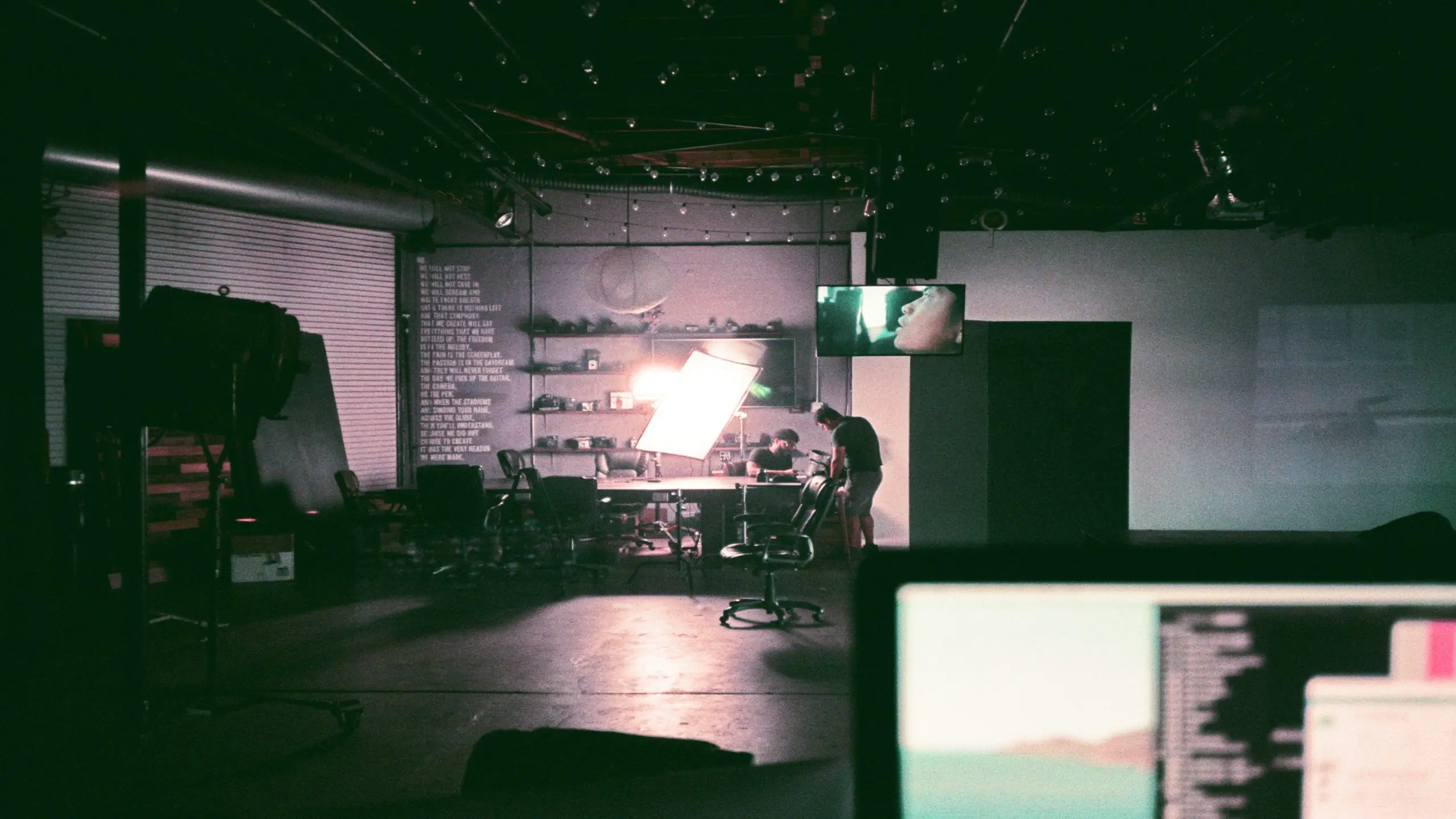
- 12/08/20
In the realm of [film and TV production](https://c-istudios.com/film-and-tv-production/), dialogue editing stands as a crucial element that shapes the auditory experience of any project. This process not only involves cleaning up and refining recorded dialogue but also ensures that the speech aligns seamlessly with the visual narrative. Proper audio engineering techniques are essential for achieving a professional sound quality that enhances the storytelling. By focusing on these aspects, dialogue editing helps create a clear and natural auditory experience, pivotal for engaging audiences effectively.
Effective dialogue editing requires an understanding of the subtle nuances in speech delivery and tone. Crafting clear dialogue is not just about removing distortions; it's about enhancing the performance to match the intended emotional impact of the scene. The role of dialogue editors is integral in ensuring that the spoken word enhances the overall cinematic experience, creating a seamless connection between the audio and visual elements.
## Understanding Dialogue Editing
Dialogue editing is a specialized field within the broader scope of audio post-production. It involves refining and polishing dialogue tracks to ensure clarity and coherence throughout a film or television show. In the context of [content creation](https://c-istudios.com/content-creation-services/), this process is crucial for maintaining the integrity of the narrative and ensuring that every spoken word is crisp and intelligible.
A well-executed dialogue edit contributes significantly to the viewer’s immersion in the story. The process often starts with cleaning up the raw audio, removing unwanted noise, and addressing inconsistencies. Unlike other aspects of [video production](https://c-istudios.com/video-production-services/), dialogue editing requires a meticulous approach to achieve the right balance between the spoken word and the accompanying soundscape.
Dialogue editing also involves syncing the audio with the visual elements, ensuring that the speech matches the on-screen actions and movements. This synchronization is vital for maintaining continuity and realism within the scene. The art of dialogue editing is not just technical but also creative, aiming to enhance the overall narrative by perfecting the auditory experience.
## Essential Tools for Dialogue Editing
For effective **dialogue editing**, having the right tools at your disposal is essential. [Audio engineering](https://c-istudios.com/audio-engineering-services/) tools such as digital audio workstations (DAWs) and specialized plugins are integral to this process. These tools facilitate the manipulation and enhancement of audio tracks, ensuring that dialogue remains clear and engaging.
A comprehensive [video production gear list](https://c-istudios.com/video-production-gear-list/) includes various software and hardware elements necessary for high-quality audio editing. For instance, DAWs like Pro Tools or Adobe Audition are commonly used in the industry for their advanced features and flexibility. Additionally, hardware like high-quality headphones and microphones play a crucial role in capturing and monitoring audio with precision.
Investing in the right tools not only improves the efficiency of the editing process but also enhances the final output, ensuring that the dialogue is perfectly aligned with the visual content. Modern advancements in [audio engineering](https://c-istudios.com/audio-engineering-services/) offer even more sophisticated options for achieving pristine audio quality, reflecting the importance of staying updated with the latest technology.
## Techniques for Cleaning Dialogue
Cleaning up dialogue involves several techniques to eliminate imperfections and improve overall audio quality. One of the primary tasks is to remove unwanted noise, which can distract from the clarity of the dialogue. Techniques such as noise reduction, equalization, and compression are employed to achieve this.
In the context of [film and TV production](https://c-istudios.com/film-and-tv-production/), ensuring that dialogue is free from background noise and echo is crucial. Audio engineering methods such as using noise gates and filters can help in addressing these issues. Additionally, careful attention to the placement and balance of dialogue tracks is necessary to maintain a natural and engaging audio experience.
Dialogue editors often use spectral editing tools to visualize and correct audio issues that are not immediately apparent. This advanced technique helps in addressing subtle noise and artifacts that may affect the dialogue’s clarity. Effective cleaning ensures that the final product is polished and professional, enhancing the viewer's overall experience.
## Creating Natural Speech with Dialogue Editing
Creating natural speech in dialogue editing involves several key practices. It’s essential to ensure that the dialogue flows naturally, matching the actors' performances and the overall tone of the project. This requires aligning the dialogue with the visual cues and ensuring that it complements the scene’s emotional and narrative elements.
When working on a [feature film](https://c-istudios.com/feature-film-mastering-and-delivery/), maintaining natural dialogue is critical for audience engagement. Techniques such as proper timing, adjusting pacing, and ensuring clear enunciation contribute to a more realistic and immersive experience. The goal is to make the dialogue sound as if it were recorded in the scene, enhancing the authenticity of the film.
Dialogue editors also pay close attention to the context of each scene, adjusting the dialogue to reflect the appropriate emotional tone and intensity. This attention to detail ensures that the dialogue not only sounds natural but also supports the storytelling effectively. The integration of natural speech helps in creating a compelling narrative that resonates with the audience.
## Managing Dialogue in Complex Scenes
Handling dialogue in complex scenes, such as those with multiple audio tracks or significant background noise, requires specialized techniques. In [VFX compositing and animation](https://c-istudios.com/vfx-compositing-and-animation-services/), synchronizing dialogue with visual effects presents additional challenges. Ensuring that dialogue remains clear amidst dynamic visual elements involves precise editing and mixing.
Media marketing strategies often highlight the quality of dialogue editing as a key feature of professional production. Effective management of dialogue in complex scenes ensures that the final product maintains high audio standards, contributing to a polished and professional presentation.
Dialogue editors must also manage the integration of dialogue with various sound effects and ambient noises, ensuring that the spoken words remain prominent and intelligible. This balancing act is crucial for maintaining the clarity and impact of the dialogue, especially in scenes with heavy sound design.
## Common Challenges and Solutions in Dialogue Editing
Dialogue editing is not without its challenges. Common issues include sync problems, inconsistent audio levels, and unwanted background noise. Addressing these challenges involves employing a variety of techniques and tools to ensure that the final dialogue tracks are clear and cohesive.
Solutions often involve using advanced audio engineering techniques to correct sync issues and balance audio levels. Additionally, leveraging tools such as noise reduction plugins and equalizers helps in resolving background noise problems. These solutions ensure that the dialogue remains intelligible and professionally presented, even in the face of common editing challenges.
Dialogue editors also rely on collaborative feedback from directors and sound designers to address and resolve specific issues. This collaborative approach ensures that the dialogue editing aligns with the overall vision of the project and meets high-quality standards.
## Training and Developing Skills for Dialogue Editors
Becoming proficient in dialogue editing requires a combination of formal training and practical experience. Essential skills include mastering audio editing software, understanding audio engineering principles, and developing a keen ear for detail.
Opportunities for skill development include specialized courses and workshops focused on film and TV production. Additionally, hands-on experience and mentorship can provide valuable insights and practical knowledge. Artist management and media creation can also play a role in supporting dialogue editors by providing opportunities for professional growth and development.
Dialogue editors should also stay updated with industry trends and advancements in technology to continually refine their skills. Continuous learning and adaptation are key to maintaining expertise in this evolving field, ensuring that editors remain competitive and effective.
## Balancing Dialogue with Ambient Sounds and Music
Balancing dialogue with ambient sounds and music is a crucial aspect of dialogue editing. Ensuring that dialogue remains clear and prominent while blending seamlessly with background sounds and music requires careful adjustment and mixing. The goal is to maintain the focus on spoken words without allowing other audio elements to overshadow them.
Using techniques such as sidechain compression can help in creating a dynamic balance between dialogue and background audio. This method involves lowering the volume of music or sound effects when dialogue is present, ensuring that the speech remains the focal point. Additionally, thoughtful EQ adjustments and volume automation can help in fine-tuning the audio balance, achieving a polished and cohesive sound mix that supports the narrative effectively.
## Integrating Dialogue with Sound Design and Effects
Integrating dialogue with sound design and effects is essential for creating a compelling and immersive audio experience. Sound design involves adding layers of audio elements, such as foley sounds, ambiance, and effects, which enhance the overall atmosphere of a scene. Properly blending these elements with dialogue ensures that the audio environment supports and enriches the spoken words without overshadowing them.
One key technique is layering. This involves combining dialogue with carefully chosen sound effects and background sounds to create a cohesive auditory experience. For instance, incorporating subtle ambient sounds can add depth to a scene, making it feel more realistic and engaging. Another technique is automated mixing, where adjustments are made dynamically to maintain the balance between dialogue and other audio elements. This ensures that dialogue remains clear and intelligible, even as the intensity of sound effects and music fluctuates.
Moreover, reverb and delay effects can be used strategically to place dialogue within a particular environment, enhancing the sense of space and immersion. By applying these effects thoughtfully, editors can create a seamless integration of dialogue with the overall sound design, ensuring that the audio supports the narrative and enhances the viewer’s emotional connection to the scene.
## Techniques for Enhancing Dialogue Clarity in Post-Production
Enhancing dialogue clarity in post-production involves several specialized techniques aimed at improving the intelligibility and impact of spoken words. One key technique is dialogue isolation, which is crucial when the original recording has background noise or overlapping sounds. Using advanced audio separation tools, editors can isolate the dialogue from unwanted sounds, ensuring that the speech is prominent and clear. This process often involves sophisticated algorithms that distinguish between different audio sources, allowing for more precise editing.
Another effective method is dialogue replacement or ADR (Automated Dialogue Replacement). When on-set recordings are compromised, ADR allows actors to re-record their lines in a controlled environment, ensuring pristine audio quality. This process involves matching the new recordings to the original lip movements and scene context, which can significantly enhance dialogue clarity and coherence.
Noise reduction techniques are also essential in post-production. By applying noise gates or spectral repair tools, editors can remove or minimize background noise that might obscure dialogue. These tools help in cleaning up audio tracks, making the dialogue stand out without losing the natural feel of the scene.
Incorporating these techniques effectively requires a delicate balance, ensuring that the dialogue remains natural and integrated into the scene while being clear and audible. By mastering these post-production methods, audio engineers can significantly improve the overall quality of the dialogue and enhance the viewer’s experience.
## The Future of Dialogue Editing
The field of dialogue editing is continually evolving, with advancements in technology shaping its future. Emerging trends include the integration of audio live streaming and advancements in [social media marketing services](https://c-istudios.com/social-media-marketing-services/)to enhance audio quality and reach.
As technology advances, tools and techniques for dialogue editing are becoming more sophisticated, offering new possibilities for achieving higher quality and more natural sound. The integration of these advancements promises to improve the efficiency and effectiveness of dialogue editing, ensuring that it continues to meet the evolving demands of the industry.
Dialogue editors will increasingly leverage machine learning and AI technologies to automate routine tasks and enhance audio quality. These innovations offer exciting opportunities for improving the precision and speed of dialogue editing, reflecting the dynamic nature of the field.
## Work with C&I Studios
If you are planning a project like this, our team can take it from concept to final delivery. Explore our [film and TV production](https://c-istudios.com/film-and-tv-production/), browse [our work](https://c-istudios.com/our-work/) to see how we tell brand stories, and [get in touch](https://c-istudios.com/contact/) when you are ready to start.
Originally published August 7, 2024
---
*This content is from [C&I Studios](https://c-istudios.com), a full-service production company.*
---
# Video Marketing in Agriculture: Cultivating Engagement in Rural Industries
> Published: August 4, 2024
> Categories: Commercial & Brand
> Source: https://c-istudios.com/video-marketing-in-agriculture-cultivating-engagement-in-rural-industries/
---
.cib{--paper:#1b1d1f;--ink:#fff;--body:#d5d7d9;--muted:#8b9096;--line:rgba(255,255,255,.12);--thumb:#2b2e31;--card:#212426;--accent:#c02b0a;--blue:#5B8FA8;--serif:'Playfair Display',Georgia,serif;--sans:'Poppins',-apple-system,sans-serif;--measure:900px;background:var(--paper);color:var(--body);font-family:var(--sans);line-height:1.6;position:relative;left:50%;transform:translateX(-50%);width:90vw;max-width:1920px}
.cib *{box-sizing:border-box}
.cib .kicker{max-width:var(--measure);margin:58px auto 0;padding:0 22px;font-size:12.5px;font-weight:700;letter-spacing:2.5px;text-transform:uppercase;color:var(--blue)}
.cib h1.cibh1{text-wrap:balance;font-family:var(--serif);font-weight:500;font-size:clamp(46px,6vw,72px);line-height:1.08;color:var(--ink);max-width:var(--measure);margin:18px auto 0;padding:0 22px;letter-spacing:-.5px}
.cib .metarow{max-width:var(--measure);margin:20px auto 0;padding:0 22px;color:var(--muted);font-size:14px}
.cib .hero{position:relative;width:100%;height:0;padding-bottom:56.25%;overflow:hidden;margin:48px auto 0;border-top:1px solid var(--line);border-bottom:1px solid var(--line)}
.cib .hero .ph{width:100%;aspect-ratio:16/9;background:var(--thumb);border-top:1px solid var(--line);border-bottom:1px solid var(--line);display:flex;align-items:center;justify-content:center;color:#7d8288;font-size:13px;text-align:center;padding:0 20px}
.cib .body{max-width:var(--measure);margin:12px auto 0;padding:52px 22px 6px}
.cib .body.lead p:first-child{font-size:23px;line-height:1.62;color:var(--ink)}
.cib .body p{font-size:18.5px;line-height:1.85;margin:0 0 30px;color:var(--body)}
.cib .body h2{text-wrap:balance;font-family:var(--serif);font-weight:500;font-size:clamp(32px,4vw,48px);line-height:1.22;color:var(--ink);margin:70px 0 20px;letter-spacing:-.3px}
.cib .body h3{text-wrap:balance;font-family:var(--sans);font-weight:600;font-size:22px;color:var(--ink);margin:38px 0 8px}
.cib .body a{color:var(--ink);text-decoration:underline;text-decoration-color:rgba(255,255,255,.4);text-underline-offset:3px}
.cib .body a:hover{text-decoration-color:var(--ink)}
.cib .ctable{width:100%;border-collapse:collapse;margin:16px 0 30px;font-size:16px}
.cib .ctable th{background:#000;color:#fff;text-align:left;padding:10px 12px;font-family:var(--sans)}
.cib .ctable td{padding:10px 12px;border-bottom:1px solid var(--line);color:var(--body)}
.cib .inimg{position:relative;width:100%;height:0;padding-bottom:56.25%;overflow:hidden;margin:72px auto;border-top:1px solid var(--line);border-bottom:1px solid var(--line)}
.cib .inimg .ph{width:100%;aspect-ratio:16/9;background:var(--thumb);border-top:1px solid var(--line);border-bottom:1px solid var(--line);display:flex;align-items:center;justify-content:center;color:#7d8288;font-size:13px}
.cib .origpub{max-width:var(--measure);margin:60px auto 0;padding:26px 22px 0;border-top:1px solid var(--line);color:var(--muted);font-size:13.5px}
.cib .related{max-width:1200px;margin:64px auto 0;padding:34px 22px 76px}
.cib .related h3{font-family:var(--sans);font-size:12.5px;letter-spacing:2px;text-transform:uppercase;color:var(--ink);margin:0 0 24px}
.cib .grid{display:grid;grid-template-columns:repeat(3,1fr);gap:28px}
.cib .rc{background:var(--card);border:1px solid var(--line);display:block;text-decoration:none;color:inherit;transition:border-color .15s}
.cib a.rc:hover{border-color:rgba(255,255,255,.5)}
.cib .rc .thumb{position:relative;width:100%;height:0;padding-bottom:56.25%;background:var(--thumb);overflow:hidden}
.cib .rc .thumb img{position:absolute!important;top:0!important;left:0!important;width:100%!important;height:100%!important;object-fit:cover!important;margin:0!important}
.cib .rc .cc{padding:14px 15px 17px}
.cib .rc .rt{font-family:var(--serif);font-weight:500;font-size:16px;line-height:1.3;color:var(--ink);margin:0 0 6px}
.cib .rc .rm{font-size:11px;letter-spacing:1px;text-transform:uppercase;color:var(--muted)}
.cib img{margin:0!important;padding:0!important;display:block!important;vertical-align:top;max-width:100%}
.cib .hero img,.cib .inimg img{position:absolute!important;top:0!important;left:0!important;width:100%!important;height:100%!important;object-fit:cover!important;margin:0!important;padding:0!important;border:0!important;display:block!important;aspect-ratio:auto!important}
.cib .hero+.body{padding-top:36px}
@media(max-width:760px){.cib .grid{grid-template-columns:1fr}.cib .body h2{margin:52px 0 16px}.cib .body p{font-size:17.5px}.cib .inimg,.cib .hero{margin-top:44px}}
.cib .vembed{max-width:var(--measure);margin:44px auto;padding:0 22px}.cib .vembed .vwrap{position:relative;width:100%;height:0;padding-bottom:56.25%}.cib .vembed .vwrap iframe{position:absolute;top:0;left:0;width:100%;height:100%;border:0}
Commercial & Brand
# Video Marketing in Agriculture. Cultivating Engagement in Rural Industries
12 min read

In an era where digital communication reigns supreme, the agricultural sector finds itself at a crossroads between tradition and innovation. Video marketing in agriculture has emerged as a powerful tool for bridging this gap, offering a dynamic medium to showcase the beauty, challenges, and innovations of rural industries. This form of marketing goes beyond mere promotion; it's about storytelling, education, and building connections with consumers and stakeholders alike.
As we delve into the world of agricultural video marketing, we'll explore how this medium is revolutionizing the way rural industries engage with their audiences, fostering understanding, and cultivating growth in an increasingly digital landscape.
## Benefits of Video Marketing in Agriculture
The adoption of video marketing in agriculture has ushered in a new era of engagement and communication for rural industries. This powerful medium offers a plethora of advantages that traditional marketing methods simply cannot match. One of the primary benefits of video marketing in agriculture is its ability to visually showcase products, processes, and landscapes in a way that text and static images cannot.
This visual storytelling creates an emotional connection with the audience, fostering a deeper understanding and appreciation for agricultural practices. The role of [media marketing consultation](https://c-istudios.com/media-marketing-consultation-services/) is crucial in harnessing the full potential of video marketing for agricultural businesses. These consultants can help farmers and rural industries develop strategies that resonate with their target audience, ensuring that the content is not only visually appealing but also strategically aligned with business goals.
This multi-channel approach maximizes reach and engagement, making video marketing a cost-effective solution for agricultural businesses of all sizes. Elements of Branding and Graphic Design integrated into agricultural videos can significantly enhance their impact. Consistent branding throughout video content helps in building brand recognition and recall, while thoughtful graphic design can make complex information.
This campaign not only garnered millions of views but also sparked important conversations about the role of agriculture in society. Another example is the "Thank a Farmer" video series by the American Farm Bureau Federation, which humanized farmers by sharing their personal stories and challenges. These videos not only educated the public about the realities of farming but also fostered a sense of gratitude for the hard work that goes into food production.
## Understanding the Audience in Rural Industries
To truly harness the power of video marketing in agriculture, it's crucial to have a deep understanding of the unique characteristics and needs of rural audiences. This understanding forms the foundation for creating content that resonates and engages effectively. Rural audiences often have a strong connection to their land, community, and traditions. They value authenticity, practicality, and straightforward communication.
When rural audiences see content that accurately represents their experiences and addresses their specific needs, it builds credibility and fosters a sense of connection with the brand or organization behind the video. The art of documentary [film production](https://c-istudios.com/film-and-tv-production/) offers a powerful way to capture the essence of rural life and agricultural practices.
By presenting authentic narratives, documentaries can bridge the gap between producers and consumers, fostering a greater understanding of the agricultural sector. Approaches in [creative marketing](https://c-istudios.com/creative-marketing-services/) are essential when targeting rural audiences. While these audiences appreciate straightforward communication, they also respond well to innovative and engaging content that breaks away from stereotypes.
In some areas, internet connectivity may be limited, so creating content that is accessible across various bandwidths and devices is crucial. This might involve producing shorter versions of videos for social media or offering downloadable options for offline viewing. Understanding the seasonality of agricultural work is another key factor. Video content should be timed to align with the agricultural calendar, addressing topics that are relevant to farmers' current activities and challenges.
## Planning Your Agricultural Video Marketing Strategy
Developing an effective video marketing strategy for agriculture requires careful planning and a deep understanding of both the industry and the target audience. The first step in this process is identifying the right content and themes for your agricultural videos. To begin, conduct thorough research to understand the current trends, challenges, and innovations in agriculture.
The goal is to identify topics that are not only relevant but also address pressing needs or interests within the agricultural community. Next, consider the unique selling points of your agricultural business or organization. What sets you apart from others in the industry? This could be anything from sustainable farming practices to innovative technology use or unique products. These differentiators should be at the core of your video content strategy.
Professional filming and editing can elevate even simple content, making it more engaging and shareable. Consider partnering with experienced professionals who understand both the technical aspects of video production and the nuances of agricultural storytelling. The use of[VFX compositing and animation](https://c-istudios.com/vfx-compositing-and-animation-services/) can be powerful tools in agricultural video marketing, especially when explaining complex concepts or processes.
When planning your content calendar, consider the cyclical nature of agriculture. Align your video releases with relevant seasons, events, or industry milestones. For example, videos about planting techniques would be most relevant in spring, while harvest-related content would be better suited for fall. Diversify your content types to keep your audience engaged.
Lastly, don't forget to integrate your video strategy with your overall marketing plan. Your videos should complement and reinforce your other marketing efforts, creating a cohesive brand message across all channels.
## Filming and Production Tips for Agricultural Videos
Creating high-quality agricultural videos requires careful planning and execution, especially given the unique challenges of filming in rural and outdoor settings. Before filming, thoroughly scout your locations. Look for visually appealing backgrounds that showcase the beauty of rural landscapes while avoiding potential distractions or hazards. Consider how the light changes throughout the day at your chosen locations.
The golden hours (just after sunrise and before sunset) often provide the most flattering light. For cloudy days or indoor shots, consider using portable LED lights to ensure subjects are well-lit. Wind is a common challenge in outdoor filming. Use windscreens on your microphones and consider using lavalier mics for interviews to minimize wind noise.
Use tripods for stationary shots and consider investing in a gimbal for smooth-moving shots, especially when showcasing large areas of farmland or following subjects as they work. Apply the rule of thirds to create visually appealing shots. When filming agricultural machinery or livestock, ensure you capture a variety of angles and perspectives to add visual interest. Gather plenty of supplementary footage (B-roll) to use as cutaways.
This could include close-ups of plants, wide shots of fields, or detailed shots of farming processes. B-roll adds depth to your videos and can cover edits in interview footage. Even in technical or educational videos, try to incorporate elements of storytelling. This could involve following a day in the life of a farmer or tracking the journey of a crop from seed to harvest. Be prepared for changing weather conditions.
Understanding composition, lighting, and framing from a photography perspective can greatly improve the visual appeal of your videos. Consider capturing high-quality still images during video shoots for use in other marketing materials. Editing is crucial in creating engaging agricultural videos. Keep the pacing appropriate for your content and audience.
## Showcasing Authenticity in Agricultural Videos
Authenticity is paramount in agricultural video marketing. Rural audiences, in particular, value genuine representations of their lifestyle and work. Instead of using actors, showcase actual farmers, farmhands, and agricultural professionals. Their genuine experiences and knowledge will resonate more deeply with your audience. Don't shy away from depicting the real challenges faced in agriculture.
Film in actual farm environments rather than staged sets. The authenticity of real working farms, with all their imperfections, is far more compelling than a perfectly manicured set. While it's important to have a plan, allow for spontaneous, unscripted moments. These natural interactions often provide the most genuine and relatable content.
Avoid overly technical jargon unless your target audience is specifically technical. Use language that is common in agricultural communities to maintain authenticity. The role of [audio engineering](https://c-istudios.com/audio-engineering-services/) is crucial in capturing the authentic sounds of agricultural environments. The hum of machinery, the rustling of crops, or the sounds of livestock can add depth and realism to your videos.
This might include weather-resistant cameras, portable audio recorders, and versatile lighting solutions. To avoid common pitfalls in agricultural video production, steer clear of over-romanticizing. While it's tempting to only show the picturesque aspects of farm life, avoid over-romanticizing. Balance beauty with reality. Avoid outdated stereotypes about farmers or rural life. Modern agriculture is diverse and technologically advanced. Respect the demanding schedules of agricultural work. Plan shoots around farming schedules and be flexible.
By focusing on authenticity, your agricultural videos will not only be more engaging but will also build trust with your audience, fostering a stronger connection between consumers and the agricultural industry.
## Leveraging Agricultural Videos Across Platforms
To maximize the impact of your agricultural videos, it's crucial to leverage them effectively across various platforms. Each platform has its unique characteristics and audience expectations, requiring a tailored approach to content distribution. As the second-largest search engine, YouTube is excellent for longer, more in-depth content. Create a dedicated channel for your agricultural videos, organizing them into playlists by topic.
Use SEO-friendly titles, descriptions, and tags to improve discoverability. Facebook's algorithm favors native video content. Share shorter versions of your videos directly on your page, and use Facebook Live for real-time interactions during significant farm events or Q&A sessions. Utilize Instagram Reels and Stories for quick, engaging snippets from your longer videos. Use relevant hashtags to increase reach and consider collaborating with agricultural influencers.
The importance of web development cannot be overstated in effectively showcasing your videos. Ensure your website is optimized for video playback, with fast loading times and mobile responsiveness. Consider creating a dedicated video gallery or integrating videos into relevant product or service pages. Regular [web maintenance](https://c-istudios.com/web-maintenance/) is essential to keep your video content fresh and accessible. Update your video gallery regularly, check for broken links, and ensure all videos are playing correctly across different devices and browsers.
To maximize the reach and impact of your agricultural videos, promote them across all your marketing channels, including email newsletters, print materials, and in-person events. If targeting international markets, consider creating versions with subtitles or voice-overs in different languages. Partner with agricultural influencers or respected figures in the farming community to expand your reach.
Extract key points from your videos to create infographics, blog posts, or social media graphics, extending the life of your content. Encourage sharing and discussions around your videos within agricultural online communities and forums. Resurface and re-promote older videos when they become seasonally relevant again. Share behind-the-scenes footage or bloopers on social media to add a personal touch and increase engagement.
Where possible, include interactive elements like polls or quizzes related to your video content to boost engagement. By strategically leveraging your agricultural videos across various platforms and incorporating them into a comprehensive digital marketing strategy, you can significantly increase their reach and impact, fostering greater engagement with both rural and urban audiences interested in agriculture.
## Measuring Success in Agricultural Video Marketing
Tracking the effectiveness of your agricultural videos is crucial for refining your strategy and ensuring a strong return on investment. Start by setting clear, measurable goals for your video marketing efforts. These could include increasing brand awareness, driving website traffic, generating leads, or boosting sales of specific products or services.
For awareness-focused campaigns, metrics like view count, watch time, and social shares are important. If lead generation is your goal, track click-through rates, form submissions, and conversion rates. For sales-oriented videos, monitor metrics like product page visits, add-to-cart actions, and completed purchases that can be attributed to video views.
YouTube Analytics, for example, offers insights into audience demographics, traffic sources, and viewer behavior. Facebook Insights provides data on engagement rates, reach, and audience retention. Utilize these platform-specific tools to gain a deeper understanding of how your videos are performing across different channels. The field of [social media marketing](https://c-istudios.com/social-media-marketing-services/) can be invaluable in helping you interpret this data and adjust your strategy accordingly. T
The importance of SEO copywriting in video marketing shouldn't be underestimated. Optimizing your video titles, descriptions, and tags with relevant keywords can significantly improve their discoverability in search engines and on video platforms. This can lead to increased organic views and a wider reach for your content.
As you analyze your video performance, look for patterns in the types of content that perform best. Are educational videos getting more engagement than promotional ones? Do shorter videos have higher completion rates? Use these insights to inform your future content planning and resource allocation.
It's also crucial to track the long-term impact of your video marketing efforts on broader business goals. This might involve analyzing changes in brand perception, customer loyalty, or market share over time. While these metrics can be more challenging to attribute directly to video marketing, they provide valuable context for understanding the overall impact of your efforts.
## Real-Life Applications and Success Stories
This multi-year video series showcased the stories of real farmers across the United States, highlighting their challenges, innovations, and contributions to their communities. The campaign successfully humanized modern farming practices and fostered a stronger connection between consumers and the agricultural industry.
Another impressive example comes from John Deere, which has leveraged video marketing to showcase its cutting-edge agricultural technology. Their "Farm Forward" video series combines stunning visuals of their machinery in action with informative content about precision agriculture and sustainable farming practices. This approach not only promotes their products but also positions John Deere as a thought leader in agricultural innovation.
The dairy industry has also seen success with video marketing. The California Milk Advisory Board's "Real California Milk" campaign used a series of short, humorous videos to highlight the quality and versatility of California dairy products. These videos, which often went viral on social media, helped to increase brand awareness and drive consumer preference for California dairy.
The realm of [political campaign](https://c-istudios.com/political-campaign-services/) strategies has also influenced agricultural video marketing. Many agricultural organizations have adopted similar tactics to raise awareness about policy issues affecting farmers. For example, the American Farm Bureau Federation has created compelling video content to educate the public and policymakers about the importance of trade agreements and farm bill provisions for the agricultural sector.
Another success story comes from an agricultural technology company that used animated explainer videos to demystify complex concepts like precision agriculture and IoT in farming. By making these topics accessible and engaging, they were able to generate leads and establish themselves as industry experts.
## Work with C&I Studios
If you are planning a project like this, our team can take it from concept to final delivery. Explore our [video production services](https://c-istudios.com/video-production-services/), browse [our work](https://c-istudios.com/our-work/) to see how we tell brand stories, and [get in touch](https://c-istudios.com/contact/) when you are ready to start.
Originally published August 4, 2024
---
*This content is from [C&I Studios](https://c-istudios.com), a full-service production company.*
---
# Influencer Marketing: Leveraging Social Media Celebrities to Promote Your Brand
> Published: August 3, 2024
> Categories: Commercial & Brand
> Source: https://c-istudios.com/influencer-marketing-leveraging-social-media-celebrities-to-promote-your-brand/
---
.cib{--paper:#1b1d1f;--ink:#fff;--body:#d5d7d9;--muted:#8b9096;--line:rgba(255,255,255,.12);--thumb:#2b2e31;--card:#212426;--accent:#c02b0a;--blue:#5B8FA8;--serif:'Playfair Display',Georgia,serif;--sans:'Poppins',-apple-system,sans-serif;--measure:900px;background:var(--paper);color:var(--body);font-family:var(--sans);line-height:1.6;position:relative;left:50%;transform:translateX(-50%);width:90vw;max-width:1920px}
.cib *{box-sizing:border-box}
.cib .kicker{max-width:var(--measure);margin:58px auto 0;padding:0 22px;font-size:12.5px;font-weight:700;letter-spacing:2.5px;text-transform:uppercase;color:var(--blue)}
.cib h1.cibh1{text-wrap:balance;font-family:var(--serif);font-weight:500;font-size:clamp(46px,6vw,72px);line-height:1.08;color:var(--ink);max-width:var(--measure);margin:18px auto 0;padding:0 22px;letter-spacing:-.5px}
.cib .metarow{max-width:var(--measure);margin:20px auto 0;padding:0 22px;color:var(--muted);font-size:14px}
.cib .hero{position:relative;width:100%;height:0;padding-bottom:56.25%;overflow:hidden;margin:48px auto 0;border-top:1px solid var(--line);border-bottom:1px solid var(--line)}
.cib .hero .ph{width:100%;aspect-ratio:16/9;background:var(--thumb);border-top:1px solid var(--line);border-bottom:1px solid var(--line);display:flex;align-items:center;justify-content:center;color:#7d8288;font-size:13px;text-align:center;padding:0 20px}
.cib .body{max-width:var(--measure);margin:12px auto 0;padding:52px 22px 6px}
.cib .body.lead p:first-child{font-size:23px;line-height:1.62;color:var(--ink)}
.cib .body p{font-size:18.5px;line-height:1.85;margin:0 0 30px;color:var(--body)}
.cib .body h2{text-wrap:balance;font-family:var(--serif);font-weight:500;font-size:clamp(32px,4vw,48px);line-height:1.22;color:var(--ink);margin:70px 0 20px;letter-spacing:-.3px}
.cib .body h3{text-wrap:balance;font-family:var(--sans);font-weight:600;font-size:22px;color:var(--ink);margin:38px 0 8px}
.cib .body a{color:var(--ink);text-decoration:underline;text-decoration-color:rgba(255,255,255,.4);text-underline-offset:3px}
.cib .body a:hover{text-decoration-color:var(--ink)}
.cib .ctable{width:100%;border-collapse:collapse;margin:16px 0 30px;font-size:16px}
.cib .ctable th{background:#000;color:#fff;text-align:left;padding:10px 12px;font-family:var(--sans)}
.cib .ctable td{padding:10px 12px;border-bottom:1px solid var(--line);color:var(--body)}
.cib .inimg{position:relative;width:100%;height:0;padding-bottom:56.25%;overflow:hidden;margin:72px auto;border-top:1px solid var(--line);border-bottom:1px solid var(--line)}
.cib .inimg .ph{width:100%;aspect-ratio:16/9;background:var(--thumb);border-top:1px solid var(--line);border-bottom:1px solid var(--line);display:flex;align-items:center;justify-content:center;color:#7d8288;font-size:13px}
.cib .origpub{max-width:var(--measure);margin:60px auto 0;padding:26px 22px 0;border-top:1px solid var(--line);color:var(--muted);font-size:13.5px}
.cib .related{max-width:1200px;margin:64px auto 0;padding:34px 22px 76px}
.cib .related h3{font-family:var(--sans);font-size:12.5px;letter-spacing:2px;text-transform:uppercase;color:var(--ink);margin:0 0 24px}
.cib .grid{display:grid;grid-template-columns:repeat(3,1fr);gap:28px}
.cib .rc{background:var(--card);border:1px solid var(--line);display:block;text-decoration:none;color:inherit;transition:border-color .15s}
.cib a.rc:hover{border-color:rgba(255,255,255,.5)}
.cib .rc .thumb{position:relative;width:100%;height:0;padding-bottom:56.25%;background:var(--thumb);overflow:hidden}
.cib .rc .thumb img{position:absolute!important;top:0!important;left:0!important;width:100%!important;height:100%!important;object-fit:cover!important;margin:0!important}
.cib .rc .cc{padding:14px 15px 17px}
.cib .rc .rt{font-family:var(--serif);font-weight:500;font-size:16px;line-height:1.3;color:var(--ink);margin:0 0 6px}
.cib .rc .rm{font-size:11px;letter-spacing:1px;text-transform:uppercase;color:var(--muted)}
.cib img{margin:0!important;padding:0!important;display:block!important;vertical-align:top;max-width:100%}
.cib .hero img,.cib .inimg img{position:absolute!important;top:0!important;left:0!important;width:100%!important;height:100%!important;object-fit:cover!important;margin:0!important;padding:0!important;border:0!important;display:block!important;aspect-ratio:auto!important}
.cib .hero+.body{padding-top:36px}
@media(max-width:760px){.cib .grid{grid-template-columns:1fr}.cib .body h2{margin:52px 0 16px}.cib .body p{font-size:17.5px}.cib .inimg,.cib .hero{margin-top:44px}}
.cib .vembed{max-width:var(--measure);margin:44px auto;padding:0 22px}.cib .vembed .vwrap{position:relative;width:100%;height:0;padding-bottom:56.25%}.cib .vembed .vwrap iframe{position:absolute;top:0;left:0;width:100%;height:100%;border:0}
Commercial & Brand
# Influencer Marketing. Leveraging Social Media Celebrities to Promote Your Brand
12 min read

Influencer marketing has become a pivotal strategy in the digital marketing landscape, enabling brands to connect with their target audiences authentically and engagingly. This approach harnesses the popularity and credibility of social media celebrities to promote products, services, or brand messages to their dedicated followers. As traditional advertising methods lose effectiveness due to ad-blockers and consumer skepticism, influencer marketing offers a more organic and relatable way to reach potential customers.
By leveraging the trust and engagement these influencers have cultivated, brands can tap into pre-existing networks of loyal consumers, enhancing their reach and credibility in a digital-first world.
## Benefits of Influencer Marketing
The advantages of using influencer marketing for brands are numerous and significant, making it an increasingly essential component of modern marketing strategies. One of the primary benefits is the ability to reach highly targeted audiences. Unlike traditional advertising methods that often cast a wide net, influencer marketing allows brands to connect with specific demographics that align closely with their ideal customer profile.
Influencer marketing also offers enhanced brand awareness and exposure. By collaborating with influencers who have large, engaged followings, brands can dramatically increase their visibility across various social media platforms. This exposure not only introduces the brand to new potential customers but also reinforces brand recognition among existing audiences.
Furthermore, influencer partnerships can lead to the creation of high-quality, authentic content that resonates with target audiences. Influencers are content creation experts, skilled at producing engaging material that their followers want to see. When they create content featuring a brand's products or services, it often feels more natural and less like a traditional advertisement, leading to higher engagement rates.
Successful influencer marketing campaigns abound across various industries. For instance, Daniel Wellington, a watch company, built its brand almost entirely through influencer [marketing](https://c-istudios.com/media-marketing-consultation-services/). By sending their watches to Instagram influencers and encouraging them to share photos wearing the products, the company grew from a small startup to a global brand valued at over $200 million in just a few years.
Another notable example is the "Share a Coke" campaign by Coca-Cola, which leveraged both macro and micro-influencers to create personalized content around their product. This campaign not only increased brand engagement but also led to a 2% increase in soft drink sales, reversing a decade-long decline in Coke consumption.
These examples demonstrate the potential of well-executed influencer marketing strategies to drive brand awareness, engagement, and ultimately, sales. As the digital landscape continues to evolve, brands that effectively leverage influencer partnerships will be well-positioned to connect with their target audiences in meaningful ways.
## Understanding the Psychology of Influencer Marketing
The effectiveness of influencer marketing is deeply rooted in psychological principles that explain why influencers are so persuasive and trustworthy to their followers. At its core, influencer marketing taps into the human desire for social connection and the tendency to seek guidance from those we admire or relate to.
One of the key psychological factors at play is social proof. This principle suggests that people are more likely to adopt behaviors or attitudes when they see others doing the same, especially if those others are perceived as similar to themselves or as experts. Influencers, by virtue of their large followings and perceived expertise in their niches, provide powerful social proof for the products and services they endorse.
Relatability is another crucial aspect of influencer psychology. Unlike traditional celebrities who may seem distant and unattainable, social media influencers often cultivate a more approachable and authentic persona. They share aspects of their daily lives, struggles, and successes, creating a sense of intimacy with their followers. This [c](https://c-istudios.com/creative-marketing-services/)[reative marketing](https://c-istudios.com/creative-marketing-services/) approach helps influencers build strong connections with their audience, making their endorsements more impactful and trustworthy.
The concept of authority also plays a significant role in the persuasiveness of influencers. Many influencers are perceived as experts in their fields, whether it's fashion, technology, fitness, or any other niche. This perceived expertise lends credibility to their recommendations and can significantly influence consumer decisions. According to the principle of authority in psychology, people are more likely to comply with requests or follow recommendations from figures they perceive as authoritative or knowledgeable.
The principle of consistency also comes into play in influencer marketing. Followers who have consistently engaged with an influencer's content and agreed with their opinions in the past are more likely to continue doing so, including when it comes to product recommendations. This psychological tendency to remain consistent with past behaviors and beliefs can make influencer recommendations particularly potent.
## Choosing the Right Influencers
Selecting the appropriate influencers for your brand is a critical step in ensuring the success of your influencer marketing campaign. The right partnership can significantly amplify your message and drive meaningful engagement, while a mismatch can lead to wasted resources and potentially negative brand associations. Here's a comprehensive guide to identifying and evaluating influencers who align with your brand values and marketing objectives.
**Define Your Goals and Target Audience:** Before beginning your search for influencers, clearly outline your campaign objectives and identify your target audience. Are you looking to increase brand awareness, drive sales, or boost engagement? Understanding these goals will help you narrow down the type of influencers who can best help you achieve them.
**Research Potential Influencers:** Use social media platforms, influencer marketing platforms, and industry-specific hashtags to find influencers in your niche. Look for content creators who consistently produce high-quality content that aligns with your brand's values and aesthetic.
**Evaluate Reach and Engagement:** While follower count is important, it shouldn't be the only metric you consider. Look at engagement rates (likes, comments, shares) to gauge how actively the influencer's audience interacts with their content. A smaller influencer with high engagement can often be more effective than a larger influencer with a passive audience.
**Assess Audience Demographics:** Ensure that the influencer's audience aligns with your target demographic. Many influencers can provide audience insights, including age, location, and interests. This information is crucial for ensuring that your message reaches the right people.
**Analyze Content Quality and Style:** Examine the influencer's content to ensure it matches your brand's tone and style. Look for creativity, consistency, and professionalism in their posts. High-quality content is essential, especially if you're in industries like [film and TV production](https://c-istudios.com/film-and-tv-production/) where visual appeal is paramount.
By following these steps and carefully evaluating potential influencers, you can identify partners who will effectively represent your brand and resonate with your target audience. Remember, the goal is to find influencers who not only have reach but also align with your brand values and can authentically integrate your products or services into their content.
## Crafting Effective Influencer Campaigns
Incorporating user-generated content into influencer campaigns can significantly extend the reach and impact of your marketing efforts. By encouraging influencers to involve their audience through contests, challenges, or hashtag campaigns, you create opportunities for followers to become active participants in the brand story. This not only increases engagement but also produces authentic content that can be repurposed across various marketing channels.
When developing influencer campaigns, it's crucial to consider the long-term potential of the partnership. Rather than focusing solely on one-off posts or short-term promotions, aim to build lasting relationships with influencers who align well with your brand. This approach allows for more authentic integrations and can lead to ongoing brand advocacy that feels natural to the influencer's audience.
In the realm of influencer marketing, transparency is paramount. Ensure that all sponsored content is clearly disclosed in accordance with legal requirements and platform guidelines. This transparency not only complies with regulations but also builds trust with the audience, who appreciate honesty in brand partnerships.
To maximize the impact of your influencer campaigns, consider leveraging [Video Production](https://c-istudios.com/video-production-services/) techniques. Video content tends to generate higher engagement rates across [social media](https://c-istudios.com/social-media-marketing-services/) platforms and allows for more dynamic storytelling. Collaborate with influencers to create compelling video content that showcases your product or service in action, provides valuable information, or entertains its audience in a way that aligns with your brand message.
Remember that the success of an influencer campaign often lies in its ability to provide value to the audience. Whether through entertainment, education, or inspiration, the content should offer something meaningful to viewers beyond just product promotion. Encourage influencers to create content that their audience will want to save, share, and return to, thereby extending the campaign's reach and longevity.
## Leveraging Multiple Platforms
In today's diverse digital landscape, a successful influencer marketing strategy often requires a multi-platform approach. Each social media platform offers unique features, audience demographics, and content formats that can be leveraged to maximize the reach and effectiveness of your campaigns.
YouTube offers a space for long-form content that can provide in-depth product reviews, tutorials, or behind-the-scenes looks at brand collaborations. Its status as the second-largest search engine also makes it valuable for SEO-driven content strategies. Influencers on YouTube often have highly engaged subscriber bases who trust their detailed opinions and recommendations, making it an excellent platform for building brand credibility and driving considered purchases.
LinkedIn, while not traditionally associated with influencer marketing, has become increasingly important for B2B brands and professional services. Thought leaders and industry experts on LinkedIn can provide valuable endorsements and insights that resonate with a professional audience. Content on this platform tends to focus on expertise, industry trends, and professional development, offering unique opportunities for brands in the B2B space.
Emerging platforms like Clubhouse or Twitch offer unique opportunities for niche audiences and specific industries. Clubhouse's audio-only format, for example, has gained traction among business and tech influencers, offering a space for in-depth discussions and Q&A sessions.
To effectively manage multi-platform campaigns, many brands turn to specialized [social media marketing](https://c-istudios.com/social-media-marketing-services/) that offers tools for content scheduling, cross-platform analytics, and performance tracking. These services can help maintain consistency in messaging and timing across various platforms while providing valuable insights into campaign performance.
By thoughtfully leveraging multiple platforms, brands can create a comprehensive influencer marketing strategy that reaches diverse audience segments, utilizes various content formats, and achieves a range of marketing objectives. This approach, when executed with consistency and creativity, can significantly enhance the overall impact and success of your influencer marketing efforts.
## Measuring Campaign Success
In the dynamic world of influencer marketing, measuring campaign success is crucial for understanding the return on investment (ROI) and refining future strategies. As the industry matures, brands and marketers are moving beyond simple metrics like follower counts and likes to more sophisticated methods of tracking and analyzing campaign performance.
One of the primary metrics for evaluating influencer campaign success is engagement rate. This metric looks at the level of interaction a post receives relative to the influencer's follower count. Engagement can include likes, comments, shares, and saves. A high engagement rate often indicates that the content resonated well with the audience and that the influencer's followers are actively interested in the brand or product being promoted.
Reach and impressions are also important metrics to consider. Reach refers to the number of unique users who saw the content, while impressions count the total number of times the content was displayed. These metrics give insight into the campaign's visibility and can be particularly useful when compared across different influencers or platforms.
Content performance metrics specific to each platform should also be considered. For example, on YouTube, watch time and audience retention rates can indicate how engaging the sponsored content was. On Instagram, Story completion rates and swipe-up actions (for accounts with this feature) can provide insights into audience interest and action.
As the influencer marketing landscape evolves, so do the tools and technologies available for measurement. Many brands are now utilizing influencer marketing platforms that offer comprehensive analytics dashboards. These platforms can aggregate data across multiple influencers and campaigns, providing a holistic view of performance and facilitating easier comparisons between different strategies or influencers.
It's important to note that while quantitative metrics are crucial, they should be balanced with qualitative analysis. This might include analyzing the quality of engagement (e.g., the nature of comments and discussions generated by the campaign) or assessing how well the influencer content aligns with brand values and messaging.
In the field of [web development](https://c-istudios.com/web-development-services/), tracking how influencer campaigns drive traffic to newly launched websites or specific landing pages can offer valuable insights. Metrics such as bounce rates, time on site, and page views per session from influencer-driven traffic can indicate how well the campaign aligns with the overall user experience strategy of the website.
By employing a comprehensive approach to measurement that combines quantitative metrics with qualitative insights, brands can gain a nuanced understanding of their influencer marketing performance. This data-driven approach not only justifies investment in influencer partnerships but also provides the insights necessary to continuously improve and refine influencer marketing strategies for maximum impact.
## Legal and Ethical Considerations
As influencer marketing continues to grow in prominence, navigating the legal and ethical landscape surrounding these partnerships has become increasingly important. Brands, influencers, and marketers must be aware of the regulations and best practices that govern this space to ensure compliance and maintain trust with their audiences.
These disclosures should be clear, unambiguous, and easily noticeable by viewers. Vague terms like "sp," "collab," or "partner" are generally not considered sufficient. Instead, phrases like "Ad," "Sponsored," or "Paid Partnership with " are recommended. On platforms like Instagram and Facebook, built-in disclosure tools can be used to label sponsored content officially.
Beyond disclosure, brands and influencers must ensure that all claims made in sponsored content are truthful and not misleading. This is particularly crucial in industries like health, finance, and beauty, where false claims can have serious consequences. Influencers should only promote products they have actually used and should be honest about their experiences. Brands should provide clear guidelines and accurate information about their products to ensure influencers can represent them truthfully.
Intellectual property rights are another important legal consideration. Brands must ensure they have the necessary rights to use any content created by influencers, especially if they plan to repurpose it across other marketing channels. Likewise, influencers should be clear about the extent to which brands can use their content and image. These details should be clearly outlined in influencer agreements or contracts.
Privacy laws, such as the General Data Protection Regulation (GDPR) in the EU, also come into play, especially when campaigns involve user data collection or when targeting specific demographics. Brands and influencers must ensure they comply with relevant data protection regulations in their jurisdictions.
When it comes to [political campaign](https://c-istudios.com/political-campaign-services/) influencer marketing, additional ethical considerations come into play. Transparency is paramount, as voters have the right to know when content is part of a paid political campaign. In many jurisdictions, there are specific regulations governing political advertising on social media, including requirements for clear labeling of political ads and restrictions on foreign influence in domestic politics.
## Work with C&I Studios
If you are planning a project like this, our team can take it from concept to final delivery. Explore our [video production services](https://c-istudios.com/video-production-services/), browse [our work](https://c-istudios.com/our-work/) to see how we tell brand stories, and [get in touch](https://c-istudios.com/contact/) when you are ready to start.
Originally published August 3, 2024
---
*This content is from [C&I Studios](https://c-istudios.com), a full-service production company.*
---
# Thumbnail Optimization: Enhancing Click-Through Rates for Better SEO
> Published: August 2, 2024
> Categories: Commercial & Brand
> Source: https://c-istudios.com/thumbnail-optimization-enhancing-click-through-rates-for-better-seo/
---
.cib{--paper:#1b1d1f;--ink:#fff;--body:#d5d7d9;--muted:#8b9096;--line:rgba(255,255,255,.12);--thumb:#2b2e31;--card:#212426;--accent:#c02b0a;--blue:#5B8FA8;--serif:'Playfair Display',Georgia,serif;--sans:'Poppins',-apple-system,sans-serif;--measure:900px;background:var(--paper);color:var(--body);font-family:var(--sans);line-height:1.6;position:relative;left:50%;transform:translateX(-50%);width:90vw;max-width:1920px}
.cib *{box-sizing:border-box}
.cib .kicker{max-width:var(--measure);margin:58px auto 0;padding:0 22px;font-size:12.5px;font-weight:700;letter-spacing:2.5px;text-transform:uppercase;color:var(--blue)}
.cib h1.cibh1{text-wrap:balance;font-family:var(--serif);font-weight:500;font-size:clamp(46px,6vw,72px);line-height:1.08;color:var(--ink);max-width:var(--measure);margin:18px auto 0;padding:0 22px;letter-spacing:-.5px}
.cib .metarow{max-width:var(--measure);margin:20px auto 0;padding:0 22px;color:var(--muted);font-size:14px}
.cib .hero{position:relative;width:100%;height:0;padding-bottom:56.25%;overflow:hidden;margin:48px auto 0;border-top:1px solid var(--line);border-bottom:1px solid var(--line)}
.cib .hero .ph{width:100%;aspect-ratio:16/9;background:var(--thumb);border-top:1px solid var(--line);border-bottom:1px solid var(--line);display:flex;align-items:center;justify-content:center;color:#7d8288;font-size:13px;text-align:center;padding:0 20px}
.cib .body{max-width:var(--measure);margin:12px auto 0;padding:52px 22px 6px}
.cib .body.lead p:first-child{font-size:23px;line-height:1.62;color:var(--ink)}
.cib .body p{font-size:18.5px;line-height:1.85;margin:0 0 30px;color:var(--body)}
.cib .body h2{text-wrap:balance;font-family:var(--serif);font-weight:500;font-size:clamp(32px,4vw,48px);line-height:1.22;color:var(--ink);margin:70px 0 20px;letter-spacing:-.3px}
.cib .body h3{text-wrap:balance;font-family:var(--sans);font-weight:600;font-size:22px;color:var(--ink);margin:38px 0 8px}
.cib .body a{color:var(--ink);text-decoration:underline;text-decoration-color:rgba(255,255,255,.4);text-underline-offset:3px}
.cib .body a:hover{text-decoration-color:var(--ink)}
.cib .ctable{width:100%;border-collapse:collapse;margin:16px 0 30px;font-size:16px}
.cib .ctable th{background:#000;color:#fff;text-align:left;padding:10px 12px;font-family:var(--sans)}
.cib .ctable td{padding:10px 12px;border-bottom:1px solid var(--line);color:var(--body)}
.cib .inimg{position:relative;width:100%;height:0;padding-bottom:56.25%;overflow:hidden;margin:72px auto;border-top:1px solid var(--line);border-bottom:1px solid var(--line)}
.cib .inimg .ph{width:100%;aspect-ratio:16/9;background:var(--thumb);border-top:1px solid var(--line);border-bottom:1px solid var(--line);display:flex;align-items:center;justify-content:center;color:#7d8288;font-size:13px}
.cib .origpub{max-width:var(--measure);margin:60px auto 0;padding:26px 22px 0;border-top:1px solid var(--line);color:var(--muted);font-size:13.5px}
.cib .related{max-width:1200px;margin:64px auto 0;padding:34px 22px 76px}
.cib .related h3{font-family:var(--sans);font-size:12.5px;letter-spacing:2px;text-transform:uppercase;color:var(--ink);margin:0 0 24px}
.cib .grid{display:grid;grid-template-columns:repeat(3,1fr);gap:28px}
.cib .rc{background:var(--card);border:1px solid var(--line);display:block;text-decoration:none;color:inherit;transition:border-color .15s}
.cib a.rc:hover{border-color:rgba(255,255,255,.5)}
.cib .rc .thumb{position:relative;width:100%;height:0;padding-bottom:56.25%;background:var(--thumb);overflow:hidden}
.cib .rc .thumb img{position:absolute!important;top:0!important;left:0!important;width:100%!important;height:100%!important;object-fit:cover!important;margin:0!important}
.cib .rc .cc{padding:14px 15px 17px}
.cib .rc .rt{font-family:var(--serif);font-weight:500;font-size:16px;line-height:1.3;color:var(--ink);margin:0 0 6px}
.cib .rc .rm{font-size:11px;letter-spacing:1px;text-transform:uppercase;color:var(--muted)}
.cib img{margin:0!important;padding:0!important;display:block!important;vertical-align:top;max-width:100%}
.cib .hero img,.cib .inimg img{position:absolute!important;top:0!important;left:0!important;width:100%!important;height:100%!important;object-fit:cover!important;margin:0!important;padding:0!important;border:0!important;display:block!important;aspect-ratio:auto!important}
.cib .hero+.body{padding-top:36px}
@media(max-width:760px){.cib .grid{grid-template-columns:1fr}.cib .body h2{margin:52px 0 16px}.cib .body p{font-size:17.5px}.cib .inimg,.cib .hero{margin-top:44px}}
.cib .vembed{max-width:var(--measure);margin:44px auto;padding:0 22px}.cib .vembed .vwrap{position:relative;width:100%;height:0;padding-bottom:56.25%}.cib .vembed .vwrap iframe{position:absolute;top:0;left:0;width:100%;height:100%;border:0}
Commercial & Brand
# Thumbnail Optimization. Enhancing Click-Through Rates for Better SEO
13 min read
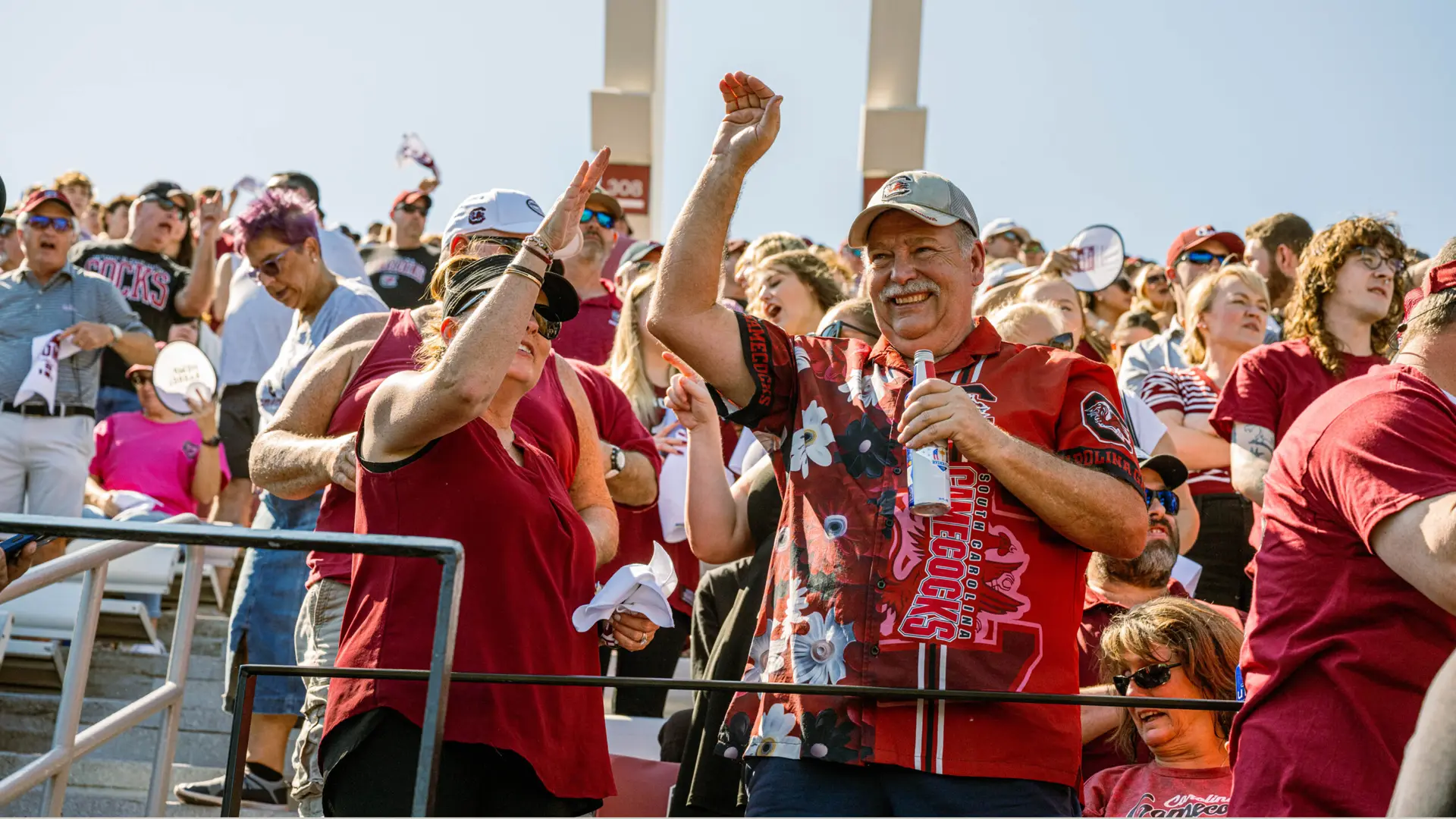
## Public Sector
This article delves into the intricacies of thumbnail optimization, providing in-depth insights and practical tips to enhance your content's visibility and effectiveness on various platforms.
## Why Thumbnails Matter for SEO
Thumbnails are a pivotal element in the visual representation of content, directly impacting media marketing consultation strategies. In search engine results, thumbnails act as a visual lure, increasing the likelihood of users clicking on a link. This phenomenon is particularly evident in image and video searches, where thumbnails serve as the primary gateway to content.
Google's algorithms prioritize user experience, and thumbnails play a significant role in this context. A well-optimized thumbnail not only attracts clicks but also sets user expectations, reducing bounce rates and increasing engagement. This behavior signals to search engines that the content is valuable and relevant, which can improve its ranking.
Moreover, [creative marketing](https://c-istudios.com/creative-marketing-services/) techniques leverage thumbnails to communicate brand aesthetics and messaging effectively. Consistent use of colors, fonts, and styles can reinforce brand identity and make content easily recognizable. This aspect is particularly vital for businesses involved in branding and graphic design, as it helps in creating a cohesive visual presence across platforms.
The importance of thumbnail optimization is further underscored by its impact on mobile search results. With an increasing number of users accessing content via mobile devices, thumbnails need to be clear and compelling on smaller screens. This visibility can significantly enhance mobile SEO, driving more traffic and engagement from mobile users.
The strategic use of thumbnails can enhance organic visibility, improve CTR, and contribute to better SEO outcomes. Incorporating CI Studios' Services into your strategy can provide the professional expertise needed to create impactful thumbnails that align with your brand's objectives.
## Design Principles for Effective Thumbnails
Creating effective thumbnails involves a deep understanding of [branding and graphic design](https://c-istudios.com/branding-and-graphic-design-services/) principles. The design elements of a thumbnail, such as color, contrast, text, and imagery, must be meticulously crafted to capture attention and convey the content's essence.
High contrast between the background and text/images can make a thumbnail stand out. For instance, using bold, bright colors like yellow or red against darker backgrounds can draw the eye. However, it's crucial to avoid overly complex designs that might distract or confuse viewers. The choice of color should align with the brand's identity, as consistent use of brand colors helps in building recognition and trust.
The text should be concise and legible, even on smaller screens. It should complement the visual elements without overwhelming them. For example, a thumbnail for a professional photography service could use the words "Capture Your Moments" alongside an image that evokes emotion and quality. The text should not duplicate the video title but rather provide additional context or a hook.
Human faces can significantly increase engagement. Thumbnails featuring expressive faces or clear emotions can evoke curiosity and prompt clicks. This technique is particularly effective for creative marketing content, as it adds a personal touch and enhances relatability. Additionally, incorporating logos or other brand elements can strengthen brand recall.
Consistency across thumbnails helps in creating a cohesive brand image. This consistency can be achieved through the repeated use of specific visual elements, such as borders, icons, or specific color schemes. For instance, a YouTube channel focusing on feature film mastering and delivery might consistently use a cinematic style in its thumbnails to attract viewers interested in high-quality film content.
In short, effective thumbnail design requires a balanced approach that considers aesthetics, functionality, and brand alignment. By following these design principles, you can create thumbnails that not only attract attention but also enhance your content's overall appeal and effectiveness.
## Best Practices for YouTube Thumbnails
YouTube, being a highly visual platform, places significant emphasis on thumbnail optimization. According to YouTube analytics, approximately 90% of the best-performing videos have custom thumbnails. This statistic underscores the importance of using well-designed thumbnails to enhance visibility and engagement.
YouTube recommends a resolution of 1280x720 pixels for thumbnails. This size ensures that the image appears clear and detailed across various devices, from desktop computers to smartphones. The aspect ratio should ideally be 16:9, as it matches the standard video player dimensions.
Including a text hook in the thumbnail can significantly increase CTR. This hook should be short, compelling, and relevant to the video's content. For example, a tutorial video might use a phrase like "Ultimate Guide" or "Pro Tips." The text should be large enough to be legible on small screens and should use a font that complements the video's tone and style.
Maintaining a consistent style across all thumbnails helps in establishing a brand identity. This consistency can include using similar fonts, color schemes, and layouts. Channels focused on [film and TV production](https://c-istudios.com/film-and-tv-production/) can benefit from a consistent cinematic look, using dramatic lighting and bold typography to attract viewers interested in high-quality production values.
While it may be tempting to use sensational or misleading images to attract clicks, this approach can backfire. Clickbait thumbnails can lead to high bounce rates and negative user experiences, ultimately harming the channel's reputation. The thumbnail should accurately represent the video's content, ensuring that viewers get what they expect.
Thumbnails featuring faces with clear, expressive emotions can create a connection with the viewer. This strategy is particularly effective in vlogs or content where the creator's personality is a significant draw. Faces can convey emotions such as excitement, curiosity, or surprise, encouraging viewers to click and see the context.
Incorporating these best practices can help in optimizing YouTube thumbnails for higher CTR, better engagement, and improved SEO. By aligning the thumbnail design with the video's content and branding, creators can attract more viewers and retain their interest.
## Psychology of Thumbnails. What Drives Clicks?
Understanding the psychological factors behind thumbnail effectiveness can provide valuable insights into designing compelling visuals. Thumbnails are not just about aesthetics; they tap into cognitive and emotional triggers that influence viewer behavior.
One of the most potent psychological triggers is curiosity. Thumbnails that hint at something intriguing or unexpected can prompt viewers to click to satisfy their curiosity. This is particularly relevant in [documentary film production](https://c-istudios.com/documentary-film-production/), where the thumbnail might suggest a surprising revelation or an untold story. The key is to strike a balance between curiosity and clarity, ensuring that the viewer has a sense of what to expect without revealing too much.
Thumbnails that evoke strong emotions, such as joy, surprise, or awe, are more likely to attract clicks. The use of vibrant colors, expressive faces, and dynamic compositions can amplify these emotional responses. For instance, a thumbnail featuring a joyful moment in a social media marketing campaign can convey a sense of happiness and positivity, encouraging viewers to engage with the content.
Another critical factor is the concept of social proof. Thumbnails that include endorsements, ratings, or a large number of views can signal to viewers that the content is popular and trustworthy. This is especially useful in the context of SEO copywriting, where showcasing positive reviews or high engagement can lend credibility and attract more clicks.
Familiarity also plays a crucial role in driving clicks. Thumbnails that feature recognizable faces, logos, or styles can create a sense of comfort and reliability. This is particularly important for brands or influencers who have built a strong visual identity. For example, a thumbnail featuring the logo of a well-known brand in political campaign content can immediately catch the eye of viewers familiar with that brand.
The layout and composition of a thumbnail can guide the viewer's eye and highlight the most critical elements. Using a clear visual hierarchy, where the most important elements are the most prominent, can help viewers quickly grasp the essence of the content. This technique is particularly effective in video audio live streaming, where a thumbnail might need to convey multiple pieces of information quickly.
By leveraging these psychological principles, content creators can design thumbnails that not only attract attention but also resonate with viewers on a deeper level, ultimately driving more engagement and improving SEO.
## Tools and Resources for Thumbnail Creation
Creating professional-quality thumbnails requires the right tools and resources. Several software applications and online platforms can assist in designing visually appealing and effective thumbnails.
Canva is a popular choice for [video production](https://c-istudios.com/video-production-services/) gear list creators due to its user-friendly interface and vast library of templates. It offers customizable elements such as fonts, icons, and images, making it easy to create thumbnails that align with your brand's aesthetic. Canva also provides pre-sized templates for various platforms, ensuring that your thumbnails meet the required specifications.
Adobe Spark is another excellent tool for creating stunning thumbnails. It offers a range of customization options, including advanced text effects, animations, and image filters. Adobe Spark is particularly useful for those involved in [web development](https://c-istudios.com/web-development-services/), as it allows for precise control over design elements, making it possible to create highly polished thumbnails.
TubeBuddy is a YouTube-certified browser extension that offers a variety of tools for optimizing YouTube channels. Its thumbnail generator is particularly useful for creating and testing different thumbnail designs. TubeBuddy also provides analytics and A/B testing features, allowing you to determine which thumbnails are most effective in evaluating their performance. TubeBuddy's integration with YouTube analytics helps in understanding which thumbnails drive more engagement, enabling continuous improvement.
For those looking for more advanced features, Adobe Photoshop offers extensive capabilities for branding and graphic design. Photoshop allows for intricate edits, layer management, and high-level customization, making it ideal for professional creators who need precise control over their thumbnail designs.
Fotor is another accessible tool that provides a range of templates and editing tools. It's particularly useful for those in web maintenance as it offers cloud storage and easy sharing options. Fotor's batch processing feature can save time when creating multiple thumbnails for a series of videos.
PicMonkey offers robust photo editing capabilities and is known for its ease of use. It includes features such as text overlays, filters, and effects, making it a versatile tool for creating engaging thumbnails. PicMonkey is ideal for creative marketing professionals who need to produce high-quality visuals quickly.
Several online resources can assist in thumbnail creation, such as free image libraries and design inspiration sites. Websites like Unsplash and Pexels offer high-quality, royalty-free images that can be used in thumbnails, while platforms like Dribbble and Behance provide design inspiration and showcase creative works from professionals in the industry.
## A/B Testing and Analytics
To maximize the effectiveness of thumbnails, continuous testing and analysis are crucial. A/B testing involves creating multiple versions of a thumbnail and comparing their performance to determine which one yields better results. This method allows content creators to make data-driven decisions and refine their thumbnail strategies over time.
YouTube Studio provides built-in analytics that can help track the performance of different thumbnails. Metrics such as click-through rate (CTR), watch time, and audience retention can provide insights into how well a thumbnail is engaging viewers. By analyzing these metrics, creators can identify which thumbnails are most effective and make necessary adjustments.
As mentioned earlier, TubeBuddy offers A/B testing features that allow creators to test different thumbnails against each other. This tool provides detailed analytics on CTR, views, and engagement, enabling a comprehensive understanding of thumbnail performance. By using TubeBuddy, creators can continuously optimize their thumbnails based on real-time data.
For websites and blogs, Google Analytics can track how thumbnails influence user behavior and engagement. By setting up goals and tracking user interactions, creators can assess the impact of thumbnails on metrics such as bounce rate, session duration, and conversions. This data can inform decisions on thumbnail design and placement across different platforms.
Social media platforms such as Facebook, Instagram, and Twitter provide insights into how thumbnails perform in terms of engagement and reach. These platforms offer analytics tools that track likes, shares, comments, and clicks, providing valuable feedback on thumbnail effectiveness. By leveraging these insights, creators can optimize their thumbnails for better performance across social media channels.
A/B testing and analytics should be part of an iterative design process. This means regularly updating and testing new thumbnail designs based on performance data. An iterative approach ensures that thumbnails remain relevant and effective in capturing viewer attention.
## Successful Thumbnail Optimization
Examining successful case studies can provide practical insights into effective thumbnail optimization strategies. These real-life examples demonstrate how different approaches can lead to increased engagement and improved SEO outcomes.
BuzzFeed is renowned for its engaging video content and highly effective thumbnails. For instance, their popular series "Worth It" consistently uses high-contrast colors, clear text hooks, and expressive faces to attract viewers. Each thumbnail gives a glimpse of the episode's theme, whether it's a culinary adventure or a travel experience. The consistency in design and branding has helped BuzzFeed maintain a high CTR and strong viewer retention.
Digital marketing expert Neil Patel utilizes thumbnails effectively in his YouTube videos. His thumbnails often feature his face with expressive emotions, bold text, and contrasting colors. This approach not only draws attention but also conveys credibility and expertise. By maintaining a consistent style and integrating key elements of [SEO copywriting](https://c-istudios.com/seo-copywriting-services/), Neil Patel has successfully increased his video engagement and improved his channel's visibility.
TED Talks employs a minimalist yet impactful approach to thumbnail design. Each thumbnail features a prominent speaker with a neutral background and minimal text. This simplicity ensures that the focus remains on the speaker, highlighting the content's educational value. The consistent use of this format has helped TED Talks build a strong brand identity and attract a global audience.
Tech reviewer Marques Brownlee, known as MKBHD, is another excellent example of successful thumbnail optimization. His thumbnails often feature high-quality images of the tech products he reviews, accompanied by his face and brief, bold text. The use of consistent design elements and professional photography techniques has helped MKBHD attract millions of viewers and establish a loyal following.
## Integrating Thumbnails into Broader Marketing Strategies
Thumbnails should not be considered in isolation but as part of a broader media marketing consultation strategy. Integrating optimized thumbnails across various platforms can enhance overall marketing efforts and drive better results.
Thumbnails play a crucial role in social media marketing. Platforms like Facebook, Twitter, and Instagram use thumbnails to preview video content. By ensuring that these thumbnails are engaging and optimized, creators can increase click-through rates and drive more traffic to their content. Social media platforms also provide analytics tools that can help track the performance of thumbnails and inform future design decisions.
Incorporating thumbnails into email marketing campaigns can boost engagement and click-through rates. For example, including a thumbnail of a video in an email can entice recipients to click and watch the video. This strategy is particularly effective for promoting political campaign content, where visual elements can significantly impact viewer engagement.
Thumbnails should be used strategically on websites and blogs to enhance user experience and improve SEO. For instance, placing optimized thumbnails alongside blog posts or articles can attract more clicks and keep visitors engaged. Ensuring that thumbnails are mobile-friendly and load quickly is essential for maintaining a positive user experience.
For creators producing content on multiple video platforms, maintaining a consistent thumbnail style can reinforce brand identity and attract a broader audience. Thumbnails should be optimized for each platform's specifications while retaining core design elements that make the content recognizable.
Collaborating with other creators or brands can provide opportunities to leverage each other's audiences. When featuring collaborative content, using thumbnails that highlight both parties can attract viewers from both audiences. This strategy is particularly useful for artist management and [media creation](https://c-istudios.com/artist-management-and-media-creation/), where partnerships can amplify reach and engagement.
Continuously monitoring the performance of thumbnails across different platforms and campaigns is vital. Analytics tools can provide insights into which thumbnails are driving the most engagement and conversions. By regularly updating and optimizing thumbnails based on these insights, creators can ensure that their marketing efforts remain effective.
## Work with C&I Studios
If you are planning a project like this, our team can take it from concept to final delivery. Explore our [video production services](https://c-istudios.com/video-production-services/), browse [our work](https://c-istudios.com/our-work/) to see how we tell brand stories, and [get in touch](https://c-istudios.com/contact/) when you are ready to start.
Originally published August 2, 2024
---
*This content is from [C&I Studios](https://c-istudios.com), a full-service production company.*
---
# Consistency is Key: Maintaining Brand Cohesion Across Platforms
> Published: July 31, 2024
> Categories: Commercial & Brand
> Source: https://c-istudios.com/consistency-is-key-maintaining-brand-cohesion-across-platforms/
---
.cib{--paper:#1b1d1f;--ink:#fff;--body:#d5d7d9;--muted:#8b9096;--line:rgba(255,255,255,.12);--thumb:#2b2e31;--card:#212426;--accent:#c02b0a;--blue:#5B8FA8;--serif:'Playfair Display',Georgia,serif;--sans:'Poppins',-apple-system,sans-serif;--measure:900px;background:var(--paper);color:var(--body);font-family:var(--sans);line-height:1.6;position:relative;left:50%;transform:translateX(-50%);width:90vw;max-width:1920px}
.cib *{box-sizing:border-box}
.cib .kicker{max-width:var(--measure);margin:58px auto 0;padding:0 22px;font-size:12.5px;font-weight:700;letter-spacing:2.5px;text-transform:uppercase;color:var(--blue)}
.cib h1.cibh1{text-wrap:balance;font-family:var(--serif);font-weight:500;font-size:clamp(46px,6vw,72px);line-height:1.08;color:var(--ink);max-width:var(--measure);margin:18px auto 0;padding:0 22px;letter-spacing:-.5px}
.cib .metarow{max-width:var(--measure);margin:20px auto 0;padding:0 22px;color:var(--muted);font-size:14px}
.cib .hero{position:relative;width:100%;height:0;padding-bottom:56.25%;overflow:hidden;margin:48px auto 0;border-top:1px solid var(--line);border-bottom:1px solid var(--line)}
.cib .hero .ph{width:100%;aspect-ratio:16/9;background:var(--thumb);border-top:1px solid var(--line);border-bottom:1px solid var(--line);display:flex;align-items:center;justify-content:center;color:#7d8288;font-size:13px;text-align:center;padding:0 20px}
.cib .body{max-width:var(--measure);margin:12px auto 0;padding:52px 22px 6px}
.cib .body.lead p:first-child{font-size:23px;line-height:1.62;color:var(--ink)}
.cib .body p{font-size:18.5px;line-height:1.85;margin:0 0 30px;color:var(--body)}
.cib .body h2{text-wrap:balance;font-family:var(--serif);font-weight:500;font-size:clamp(32px,4vw,48px);line-height:1.22;color:var(--ink);margin:70px 0 20px;letter-spacing:-.3px}
.cib .body h3{text-wrap:balance;font-family:var(--sans);font-weight:600;font-size:22px;color:var(--ink);margin:38px 0 8px}
.cib .body a{color:var(--ink);text-decoration:underline;text-decoration-color:rgba(255,255,255,.4);text-underline-offset:3px}
.cib .body a:hover{text-decoration-color:var(--ink)}
.cib .ctable{width:100%;border-collapse:collapse;margin:16px 0 30px;font-size:16px}
.cib .ctable th{background:#000;color:#fff;text-align:left;padding:10px 12px;font-family:var(--sans)}
.cib .ctable td{padding:10px 12px;border-bottom:1px solid var(--line);color:var(--body)}
.cib .inimg{position:relative;width:100%;height:0;padding-bottom:56.25%;overflow:hidden;margin:72px auto;border-top:1px solid var(--line);border-bottom:1px solid var(--line)}
.cib .inimg .ph{width:100%;aspect-ratio:16/9;background:var(--thumb);border-top:1px solid var(--line);border-bottom:1px solid var(--line);display:flex;align-items:center;justify-content:center;color:#7d8288;font-size:13px}
.cib .origpub{max-width:var(--measure);margin:60px auto 0;padding:26px 22px 0;border-top:1px solid var(--line);color:var(--muted);font-size:13.5px}
.cib .related{max-width:1200px;margin:64px auto 0;padding:34px 22px 76px}
.cib .related h3{font-family:var(--sans);font-size:12.5px;letter-spacing:2px;text-transform:uppercase;color:var(--ink);margin:0 0 24px}
.cib .grid{display:grid;grid-template-columns:repeat(3,1fr);gap:28px}
.cib .rc{background:var(--card);border:1px solid var(--line);display:block;text-decoration:none;color:inherit;transition:border-color .15s}
.cib a.rc:hover{border-color:rgba(255,255,255,.5)}
.cib .rc .thumb{position:relative;width:100%;height:0;padding-bottom:56.25%;background:var(--thumb);overflow:hidden}
.cib .rc .thumb img{position:absolute!important;top:0!important;left:0!important;width:100%!important;height:100%!important;object-fit:cover!important;margin:0!important}
.cib .rc .cc{padding:14px 15px 17px}
.cib .rc .rt{font-family:var(--serif);font-weight:500;font-size:16px;line-height:1.3;color:var(--ink);margin:0 0 6px}
.cib .rc .rm{font-size:11px;letter-spacing:1px;text-transform:uppercase;color:var(--muted)}
.cib img{margin:0!important;padding:0!important;display:block!important;vertical-align:top;max-width:100%}
.cib .hero img,.cib .inimg img{position:absolute!important;top:0!important;left:0!important;width:100%!important;height:100%!important;object-fit:cover!important;margin:0!important;padding:0!important;border:0!important;display:block!important;aspect-ratio:auto!important}
.cib .hero+.body{padding-top:36px}
@media(max-width:760px){.cib .grid{grid-template-columns:1fr}.cib .body h2{margin:52px 0 16px}.cib .body p{font-size:17.5px}.cib .inimg,.cib .hero{margin-top:44px}}
.cib .vembed{max-width:var(--measure);margin:44px auto;padding:0 22px}.cib .vembed .vwrap{position:relative;width:100%;height:0;padding-bottom:56.25%}.cib .vembed .vwrap iframe{position:absolute;top:0;left:0;width:100%;height:100%;border:0}
Commercial & Brand
# Consistency is Key. Maintaining Brand Cohesion Across Platforms
13 min read

Maintaining brand cohesion across multiple platforms is essential for businesses seeking to build a strong and recognizable identity. Brand cohesion refers to the consistent use of visual and verbal elements that create a unified brand experience for customers.
This article explores the importance of brand cohesion and offers strategies for ensuring consistency. By understanding and implementing these strategies, businesses can strengthen their brand identity and enhance customer trust and loyalty.
## Understanding Brand Cohesion
Brand cohesion is the practice of maintaining a unified and consistent brand image across all platforms and touchpoints. It involves using the same visual elements, messaging, and tone of voice to create a seamless brand experience. Consistent branding is crucial because it builds trust and loyalty among customers. When customers see the same branding elements repeatedly, they begin to associate those elements with the brand, making it more memorable and recognizable.
Consistent branding also reinforces the brand's values and promises, which helps build credibility. For instance, if a brand consistently uses high-quality visuals and professional [branding and graphic design](https://c-istudios.com/branding-and-graphic-design-services/), it conveys a message of quality and attention to detail. This consistency reassures customers that they can expect the same level of quality in the brand's products or services.
Brands like Apple and Nike exemplify strong brand cohesion. Apple's sleek and minimalist design is consistent across its products, packaging, advertising, and retail stores. This uniformity strengthens its brand identity and sets it apart from competitors. Similarly, Nike's use of bold colors, dynamic imagery, and motivational messaging is consistent across all its marketing channels, reinforcing its brand values of innovation and performance.
Achieving brand cohesion requires a strategic approach and a deep understanding of the brand's core values and identity. By consistently applying these principles across all platforms, businesses can create a cohesive brand experience that resonates with their audience and enhances their market presence.
## Developing a Strong Brand Identity
Developing a strong brand identity is fundamental to maintaining brand cohesion. A cohesive brand identity encompasses visual elements, tone of voice, and core messaging that reflect the brand's values and personality. The first step in creating a cohesive brand identity is to define the brand's mission, vision, and values. These elements serve as the guiding principles for all branding efforts and help ensure consistency across all platforms.
Once the core values are established, it's important to develop a unified brand voice. This voice should be consistent across all content, whether it's a social media post, a blog article, or an email newsletter. The tone and style of the brand voice should reflect the brand's personality and resonate with the target audience. For example, a luxury brand might use a sophisticated and elegant tone, while a casual lifestyle brand might adopt a more friendly and conversational style.
Visual elements are another crucial aspect of brand identity. This includes the logo, color palette, typography, and imagery. Consistency in these elements is vital for brand recognition. A well-designed logo and a cohesive color scheme can make a significant impact on how customers perceive the brand. It's important to create brand guidelines that outline the proper usage of these visual elements to ensure they are applied consistently across all platforms.
Brand guidelines play a pivotal role in maintaining brand cohesion. These guidelines should provide detailed instructions on how to use the brand's visual and verbal elements. They should cover everything from logo placement and color codes to tone of voice and messaging. By adhering to these guidelines, businesses can ensure that all content aligns with the brand's identity, regardless of who creates it or where it's published.
In short, developing a strong brand identity involves defining the brand's mission, vision, and values, creating a unified brand voice, and ensuring consistency in visual elements. By establishing clear brand guidelines, businesses can maintain a cohesive brand identity that resonates with their audience and strengthens their market presence.
## Consistent Visual Design Across Platforms
Ensuring consistent visual design across platforms is a critical aspect of brand cohesion. Visual elements such as color schemes, typography, and imagery must be consistent to create a unified brand experience. This consistency enhances brand recognition and helps establish a strong visual identity.
Color schemes play a crucial role in visual branding. A consistent color palette helps establish a strong brand identity and makes the brand easily recognizable. For example, Coca-Cola's iconic red and white colors are instantly identifiable, even without the brand name. Businesses should select a primary color palette that reflects their brand's personality and use it consistently across all marketing materials, including websites, [social media](https://c-istudios.com/social-media-marketing-services/) profiles, and print materials.
Typography is another important aspect of visual design. The choice of fonts should reflect the brand's identity and be used consistently across all platforms. For instance, a tech company might use clean, modern fonts to convey innovation, while a luxury brand might opt for elegant, serif fonts to evoke sophistication. Consistent typography helps create a cohesive look and feel, making the brand more memorable.
Imagery also plays a vital role in brand cohesion. The style of images, illustrations, and graphics should align with the brand's overall aesthetic. This includes the use of filters, lighting, and composition in photographs. For example, a travel brand might use vibrant, high-contrast images to convey excitement and adventure, while a wellness brand might use soft, muted tones to evoke calm and relaxation. Consistent imagery reinforces the brand's identity and enhances the overall visual appeal.
Tools and tips for maintaining visual consistency include creating a comprehensive brand style guide, using design software that allows for easy replication of visual elements, and conducting regular audits to ensure compliance with brand guidelines. Design software like Adobe Creative Cloud and Canva can help streamline the design process and ensure consistency in visual elements.
Maintaining consistent visual design across platforms involves using a cohesive color scheme, typography, and imagery. By adhering to these visual elements and utilizing design tools, businesses can create a unified brand experience that strengthens brand recognition and appeals to their target audience.
## Unified Brand Messaging
Unified brand messaging is essential for maintaining brand cohesion, as it ensures that all communications align with the brand's core values and identity. Consistent messaging helps build trust and credibility, as customers receive a coherent and reliable message regardless of the platform or channel.
To craft a consistent brand message, businesses must start by defining their key messages. These messages should encapsulate the brand's mission, vision, and values, and serve as the foundation for all communications. It's important to ensure that these messages are clear, concise, and easily understood by the target audience.
Aligning marketing campaigns with the core brand message is crucial for maintaining consistency. Every piece of content, from social media posts to email newsletters, should reflect the same messaging and tone. This alignment helps reinforce the brand's identity and ensures that customers receive a consistent message across all touchpoints.
Strategies for maintaining messaging consistency include using a content calendar to plan and organize communications, conducting regular audits to ensure alignment with the brand's key messages, and providing training for employees to ensure they understand and adhere to the brand's messaging guidelines. Tools such as [media marketing consultation](https://c-istudios.com/media-marketing-consultation-services/) can also provide valuable insights and guidance on crafting and maintaining consistent brand messaging.
In summary, unified brand messaging involves defining key messages, aligning marketing campaigns with these messages, and implementing strategies to ensure consistency across all communications. By maintaining a consistent brand message, businesses can build trust and credibility with their audience, ultimately strengthening their brand identity.
## Role of Content Creation in Brand Cohesion
Content creation plays a pivotal role in maintaining brand cohesion. Creating content that aligns with the brand's values and identity is essential for ensuring consistency across all platforms. This involves producing content that reflects the brand's voice, tone, and visual style, and is relevant to the target audience.
Ensuring content consistency across different formats and channels, such as blog posts, videos, and social media, is crucial. Each piece of content should reinforce the brand's identity and messaging, creating a cohesive experience for the audience. For example, a brand that values innovation might produce blog posts that highlight cutting-edge trends and technologies, while its social media content could showcase real-time updates and interactive features.
Using content calendars to plan and manage [content creation](https://c-istudios.com/content-creation-services/) is an effective strategy for maintaining consistency. Content calendars help organize the production and publication of content, ensuring that it aligns with the brand's messaging and goals. They also provide a clear overview of upcoming content, making it easier to maintain a consistent posting schedule.
In addition to content calendars, leveraging tools and platforms that facilitate content creation and management can enhance brand cohesion. Platforms like HubSpot, CoSchedule, and Trello can streamline the content creation process, ensuring that all content adheres to the brand's guidelines and standards.
Content creation is integral to maintaining brand cohesion. By producing content that aligns with the brand's values and identity, using content calendars to plan and manage content, and leveraging tools for content creation, businesses can ensure consistent and cohesive brand experiences across all platforms.
## Leveraging Technology for Consistency
Leveraging technology is essential for maintaining brand consistency in today's digital age. Various tools and software can help businesses manage and ensure cohesive branding across all platforms. One of the key technologies for maintaining brand consistency is digital asset management (DAM) systems. DAM systems allow businesses to organize, store, and distribute brand assets, such as logos, images, videos, and documents, ensuring that all content creators have access to the most up-to-date and approved assets.
In addition to DAM systems, content management systems (CMS) like WordPress and Drupal can help maintain consistency in web content. These platforms provide templates and plugins that ensure consistent formatting, layout, and design across all web pages. They also allow for easy updates and changes, ensuring that the website remains aligned with the brand's guidelines.
Project management tools like Asana, Trello, and Monday.com can facilitate collaboration and communication among team members, ensuring that everyone is on the same page and working towards the same goals. These tools help streamline workflows, track progress, and ensure that all tasks are completed in alignment with the brand's standards.
Best practices for using technology to ensure cohesive branding include regularly updating and auditing brand assets, providing training and support for employees on using the tools, and integrating technology into the overall brand strategy. By leveraging technology effectively, businesses can maintain a consistent brand image and ensure cohesive branding across all platforms.
In summary, leveraging technology is crucial for maintaining brand consistency. Digital asset management systems, content management systems, and project management tools can help organize, store, and distribute brand assets, facilitate collaboration, and ensure that all content adheres to the brand's guidelines. By incorporating technology into their branding strategy, businesses can create a cohesive and consistent brand experience.
## Monitoring and Measuring Brand Consistency
Monitoring and measuring brand consistency is essential for ensuring that all branding efforts are aligned with the brand's guidelines and standards. Regularly tracking and analyzing brand consistency helps identify areas for improvement and ensures that the brand remains cohesive across all platforms.
One of the key methods for tracking brand consistency is conducting regular brand audits. Brand audits involve reviewing all brand assets and communications to ensure they adhere to the brand's guidelines. This includes checking the consistency of visual elements, messaging, and tone of voice. Brand audits can be conducted internally or with the help of external consultants to provide an objective perspective.
In addition to brand audits, feedback from customers and employees can provide valuable insights into brand consistency. Surveys, focus groups, and social media monitoring can help gather feedback on how the brand is perceived and identify any inconsistencies. This feedback can be used to make necessary adjustments and ensure that the brand remains aligned with its guidelines.
Using tools such as [SEO copywriting](https://c-istudios.com/seo-copywriting-services/) analytics and brand monitoring software can also help track brand consistency. These tools provide data on how the brand is performing across different channels and identify any discrepancies. By analyzing this data, businesses can make informed decisions to improve brand consistency and maintain a cohesive brand image.
In short, monitoring and measuring brand consistency is crucial for ensuring that all branding efforts align with the brand's guidelines. Regular brand audits, feedback from customers and employees, and the use of analytics and monitoring tools can help track and improve brand consistency. By regularly monitoring and measuring brand consistency, businesses can ensure a cohesive and consistent brand experience for their audience.
## Training and Empowering Your Team
Training and empowering employees is essential for maintaining brand consistency. Employees play a crucial role in upholding the brand's standards and ensuring that all communications and interactions align with the brand's guidelines. Providing training on brand guidelines and consistency helps ensure that all team members understand the brand's values, identity, and standards.
Training programs should cover the brand's mission, vision, and values, as well as the specific guidelines for visual elements, messaging, and tone of voice. These programs can include workshops, online courses, and regular training sessions to keep employees updated on any changes or updates to the brand guidelines.
Empowering employees to uphold brand standards involves giving them the tools and resources they need to create consistent and cohesive brand experiences. This includes providing access to digital asset management systems, content management systems, and project management tools, as well as offering support and guidance when needed.
Internal communication is also crucial for maintaining brand consistency. Regular communication and updates on brand initiatives, goals, and guidelines help ensure that all team members are aligned and working towards the same objectives. This can be achieved through team meetings, newsletters, and internal communication platforms.
In summary, training and empowering employees is vital for maintaining brand consistency. Providing training on brand guidelines, offering the necessary tools and resources, and ensuring regular internal communication helps ensure that all team members understand and uphold the brand's standards. By empowering employees to create consistent and cohesive brand experiences, businesses can maintain a strong and unified brand identity.
## Overcoming Common Challenges in Brand Consistency
Maintaining brand consistency can be challenging, especially as businesses grow and expand their presence across multiple platforms. Common challenges include managing a large volume of content, ensuring alignment across different teams and departments, and adapting to changing market conditions and customer preferences.
One of the key challenges is managing a large volume of content. As businesses create more content across different platforms, it can be difficult to ensure that all content aligns with the brand's guidelines. Implementing a content [management](https://c-istudios.com/artist-management-and-media-creation/) system and using digital asset management tools can help organize and streamline the content creation process, ensuring consistency across all content.
Ensuring alignment across different teams and departments is another common challenge. Different teams may have different priorities and approaches, leading to inconsistencies in branding. Regular communication and collaboration among teams, as well as clear guidelines and standards, can help ensure alignment and consistency.
Adapting to changing market conditions and customer preferences while maintaining brand consistency can also be challenging. Businesses need to be flexible and adaptable while still upholding their core brand values and identity. This requires a strategic approach and a deep understanding of the brand's mission and vision.
In summary, overcoming challenges in brand consistency involves managing a large volume of content, ensuring alignment across teams, and adapting to changing market conditions. By implementing content management systems, fostering communication and collaboration, and maintaining a strategic approach, businesses can overcome these challenges and maintain a cohesive and consistent brand identity.
## Work with C&I Studios
If you are planning a project like this, our team can take it from concept to final delivery. Explore our [video production services](https://c-istudios.com/video-production-services/), browse [our work](https://c-istudios.com/our-work/) to see how we tell brand stories, and [get in touch](https://c-istudios.com/contact/) when you are ready to start.
Originally published July 31, 2024
---
*This content is from [C&I Studios](https://c-istudios.com), a full-service production company.*
---
# Capturing Location Sound: Tips for Recording Clean and Authentic Audio on Set
> Published: July 30, 2024
> Categories: Post & VFX
> Source: https://c-istudios.com/capturing-location-sound-tips-for-recording-clean-and-authentic-audio-on-set/
---
.cib{--paper:#1b1d1f;--ink:#fff;--body:#d5d7d9;--muted:#8b9096;--line:rgba(255,255,255,.12);--thumb:#2b2e31;--card:#212426;--accent:#c02b0a;--blue:#5B8FA8;--serif:'Playfair Display',Georgia,serif;--sans:'Poppins',-apple-system,sans-serif;--measure:900px;background:var(--paper);color:var(--body);font-family:var(--sans);line-height:1.6;position:relative;left:50%;transform:translateX(-50%);width:90vw;max-width:1920px}
.cib *{box-sizing:border-box}
.cib .kicker{max-width:var(--measure);margin:58px auto 0;padding:0 22px;font-size:12.5px;font-weight:700;letter-spacing:2.5px;text-transform:uppercase;color:var(--blue)}
.cib h1.cibh1{text-wrap:balance;font-family:var(--serif);font-weight:500;font-size:clamp(46px,6vw,72px);line-height:1.08;color:var(--ink);max-width:var(--measure);margin:18px auto 0;padding:0 22px;letter-spacing:-.5px}
.cib .metarow{max-width:var(--measure);margin:20px auto 0;padding:0 22px;color:var(--muted);font-size:14px}
.cib .hero{position:relative;width:100%;height:0;padding-bottom:56.25%;overflow:hidden;margin:48px auto 0;border-top:1px solid var(--line);border-bottom:1px solid var(--line)}
.cib .hero .ph{width:100%;aspect-ratio:16/9;background:var(--thumb);border-top:1px solid var(--line);border-bottom:1px solid var(--line);display:flex;align-items:center;justify-content:center;color:#7d8288;font-size:13px;text-align:center;padding:0 20px}
.cib .body{max-width:var(--measure);margin:12px auto 0;padding:52px 22px 6px}
.cib .body.lead p:first-child{font-size:23px;line-height:1.62;color:var(--ink)}
.cib .body p{font-size:18.5px;line-height:1.85;margin:0 0 30px;color:var(--body)}
.cib .body h2{text-wrap:balance;font-family:var(--serif);font-weight:500;font-size:clamp(32px,4vw,48px);line-height:1.22;color:var(--ink);margin:70px 0 20px;letter-spacing:-.3px}
.cib .body h3{text-wrap:balance;font-family:var(--sans);font-weight:600;font-size:22px;color:var(--ink);margin:38px 0 8px}
.cib .body a{color:var(--ink);text-decoration:underline;text-decoration-color:rgba(255,255,255,.4);text-underline-offset:3px}
.cib .body a:hover{text-decoration-color:var(--ink)}
.cib .ctable{width:100%;border-collapse:collapse;margin:16px 0 30px;font-size:16px}
.cib .ctable th{background:#000;color:#fff;text-align:left;padding:10px 12px;font-family:var(--sans)}
.cib .ctable td{padding:10px 12px;border-bottom:1px solid var(--line);color:var(--body)}
.cib .inimg{position:relative;width:100%;height:0;padding-bottom:56.25%;overflow:hidden;margin:72px auto;border-top:1px solid var(--line);border-bottom:1px solid var(--line)}
.cib .inimg .ph{width:100%;aspect-ratio:16/9;background:var(--thumb);border-top:1px solid var(--line);border-bottom:1px solid var(--line);display:flex;align-items:center;justify-content:center;color:#7d8288;font-size:13px}
.cib .origpub{max-width:var(--measure);margin:60px auto 0;padding:26px 22px 0;border-top:1px solid var(--line);color:var(--muted);font-size:13.5px}
.cib .related{max-width:1200px;margin:64px auto 0;padding:34px 22px 76px}
.cib .related h3{font-family:var(--sans);font-size:12.5px;letter-spacing:2px;text-transform:uppercase;color:var(--ink);margin:0 0 24px}
.cib .grid{display:grid;grid-template-columns:repeat(3,1fr);gap:28px}
.cib .rc{background:var(--card);border:1px solid var(--line);display:block;text-decoration:none;color:inherit;transition:border-color .15s}
.cib a.rc:hover{border-color:rgba(255,255,255,.5)}
.cib .rc .thumb{position:relative;width:100%;height:0;padding-bottom:56.25%;background:var(--thumb);overflow:hidden}
.cib .rc .thumb img{position:absolute!important;top:0!important;left:0!important;width:100%!important;height:100%!important;object-fit:cover!important;margin:0!important}
.cib .rc .cc{padding:14px 15px 17px}
.cib .rc .rt{font-family:var(--serif);font-weight:500;font-size:16px;line-height:1.3;color:var(--ink);margin:0 0 6px}
.cib .rc .rm{font-size:11px;letter-spacing:1px;text-transform:uppercase;color:var(--muted)}
.cib img{margin:0!important;padding:0!important;display:block!important;vertical-align:top;max-width:100%}
.cib .hero img,.cib .inimg img{position:absolute!important;top:0!important;left:0!important;width:100%!important;height:100%!important;object-fit:cover!important;margin:0!important;padding:0!important;border:0!important;display:block!important;aspect-ratio:auto!important}
.cib .hero+.body{padding-top:36px}
@media(max-width:760px){.cib .grid{grid-template-columns:1fr}.cib .body h2{margin:52px 0 16px}.cib .body p{font-size:17.5px}.cib .inimg,.cib .hero{margin-top:44px}}
.cib .vembed{max-width:var(--measure);margin:44px auto;padding:0 22px}.cib .vembed .vwrap{position:relative;width:100%;height:0;padding-bottom:56.25%}.cib .vembed .vwrap iframe{position:absolute;top:0;left:0;width:100%;height:100%;border:0}
Post & VFX
# Capturing Location Sound. Tips for Recording Clean and Authentic Audio on Set
8 min read
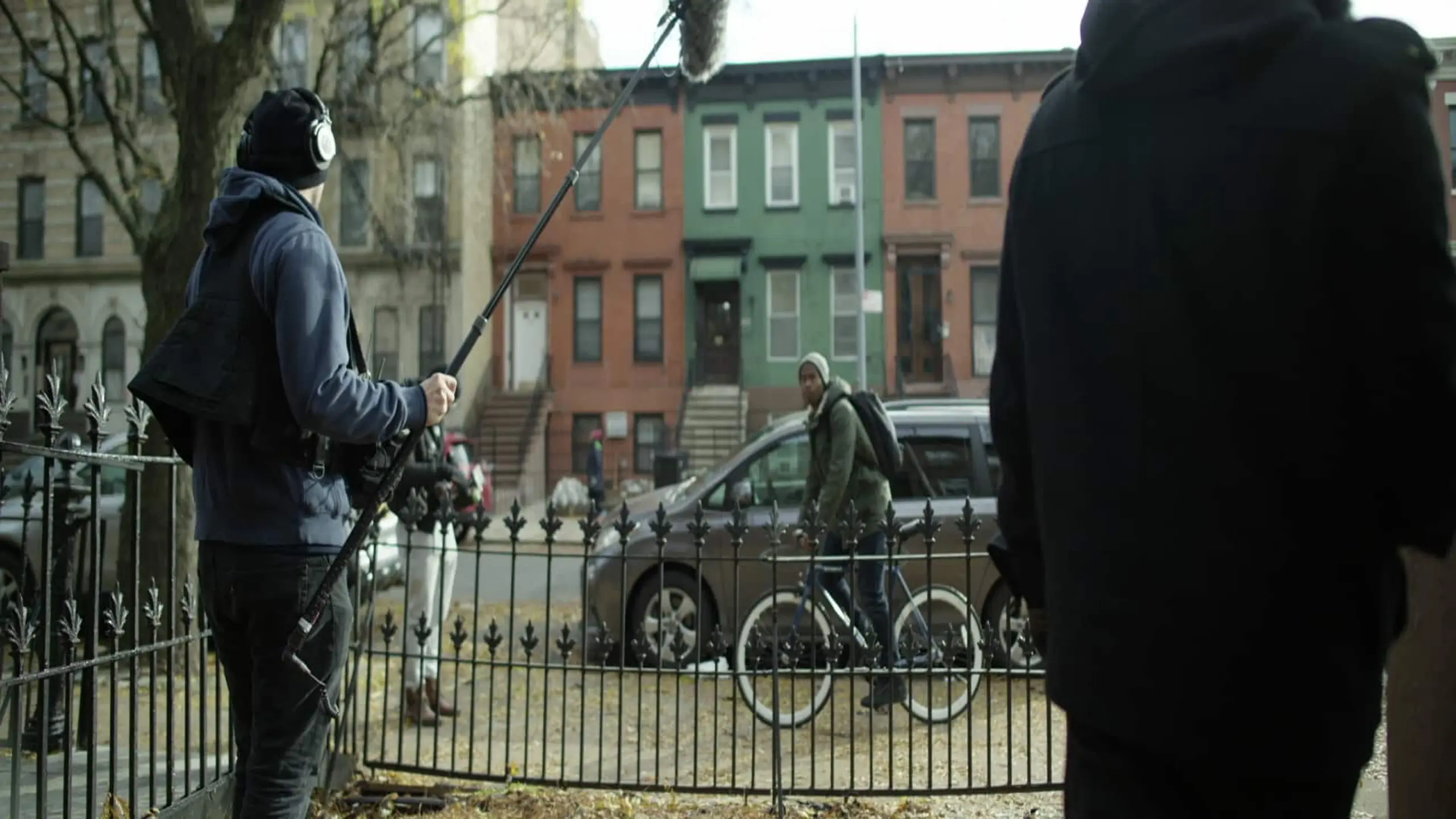
In the realm of [Film and TV Production](https://c-istudios.com/film-and-tv-production/), capturing high-quality location sound is crucial for creating an immersive and believable viewing experience. Unlike studio recordings, location sound involves capturing audio in various environments, which can pose unique challenges. Ensuring clean and authentic audio on set is vital to maintaining the production's overall quality and professionalism.
The evolution of technology has provided filmmakers with advanced tools and techniques to improve location sound. This article delves into the intricacies of location sound, offering practical tips and strategies for achieving the best possible audio recordings on set. From pre-production planning to post-production editing, we'll explore every aspect of sound recording to help you enhance your audio quality and create a more engaging experience for your audience.
## Understanding the Basics of Location Sound
Location sound refers to the audio captured on set during the filming of a scene. This sound includes dialogue, ambient noise, and any other audio elements present in the environment. In contrast to studio recordings, where sound is controlled and isolated, location sound recording deals with various external factors that can affect audio quality.
Capturing high-quality location sound is essential in Film and [TV production](https://c-istudios.com/film-and-tv-production/) as it adds authenticity and depth to the narrative. The primary goal is to record clear and intelligible dialogue while minimizing unwanted noise. This involves using specialized equipment and techniques to ensure the best possible sound quality.
Understanding the fundamental principles of sound recording on set is the first step toward achieving excellent audio. This includes knowing how sound travels, how different environments affect sound, and how to use various microphones and accessories to capture the desired audio. By mastering these basics, filmmakers can significantly improve the audio quality of their productions and create a more immersive experience for their audience.
## Pre-Production Planning for Location Sound
Effective pre-production planning is crucial for capturing high-quality location sound. This involves scouting locations to assess their sound quality and potential issues. Factors such as ambient noise, acoustics, and potential interruptions should be evaluated to determine the best recording strategy.
During the pre-production phase, conducting a sound check is essential. This involves testing the location's acoustics and identifying any potential sound issues that may arise during filming. By addressing these issues beforehand, filmmakers can avoid costly and time-consuming problems during production.
Identifying and mitigating potential sound issues before shooting can significantly enhance the quality of location sound. This may involve using soundproofing materials, choosing alternate locations, or adjusting the shooting schedule to avoid noisy times of day. By taking these steps, filmmakers can ensure a smoother production process and better audio quality.
Additionally, having backup gear available is advisable to address any unforeseen problems quickly. Collaboration between the sound department and other production teams, such as camera and lighting, is essential to ensure that all technical aspects are aligned and that sound capture is integrated seamlessly into the overall production plan. This coordination helps to avoid issues such as microphone shadows or interference from lighting equipment, ensuring that the sound quality remains uncompromised throughout the filming process.
## Essential Equipment for Recording Location Sound
The right equipment is essential for capturing high-quality location sound. This includes microphones, boom poles, windscreens, and other accessories. Each type of microphone has its specific use cases and advantages, making it crucial to choose the right one for the scene.
Microphones are the most critical component of any sound recording setup. Shotgun microphones, lavalier microphones, and handheld microphones each serve different purposes and are suited for various recording scenarios. Understanding the strengths and limitations of each type is essential for capturing the best possible audio.
Having a comprehensive [video production gear list](https://c-istudios.com/video-production-gear-list/) is vital for ensuring that all necessary equipment is available on set. This list should include microphones, boom poles, windscreens, headphones, and any other accessories needed for sound recording. Properly maintaining and organizing this equipment can prevent technical issues and ensure a smooth recording process.
## Techniques for Capturing Clean Audio
Capturing clean audio on set requires proper microphone placement and handling techniques. The goal is to record clear and intelligible dialogue while minimizing background noise and other unwanted sounds. This involves positioning microphones close to the sound source and using windscreens and shock mounts to reduce noise.
Microphone placement is crucial for capturing high-quality audio. Placing microphones too far from the sound source can result in low-quality audio with excessive background noise. On the other hand, placing microphones too close can cause distortion and other issues. Finding the right balance is key to capturing clean audio.
Using windscreens and shock mounts can significantly reduce noise caused by wind and handling. Windscreens protect microphones from wind noise, while shock mounts isolate microphones from handling noise and vibrations. These accessories are essential for achieving the best possible audio quality on set.
Another crucial technique is employing windshields and blimps to protect microphones from wind noise when filming outdoors. These accessories are designed to minimize the distortion caused by wind hitting the microphone, ensuring a cleaner audio capture. Additionally, using shock mounts can help isolate microphones from handling noise and vibrations, which can otherwise be picked up and cause unwanted audio artifacts.
Operating a boom mic requires skill and precision. The boom operator must keep the microphone close to the sound source while remaining out of the camera frame. This involves anticipating actors' movements and adjusting the microphone position accordingly. By mastering these techniques, filmmakers can capture clean and professional-quality audio on set.
## Managing Environmental Challenges
Recording on location often involves dealing with various environmental challenges. Wind, traffic, and crowds can introduce unwanted noise that affects the quality of the audio. Understanding how to manage these challenges is essential for capturing clean location sound.
Strategies for dealing with environmental noise include choosing locations with minimal background noise, using windscreens and soundproofing materials, and adjusting the shooting schedule to avoid noisy times of day. By addressing these issues proactively, filmmakers can minimize the impact of environmental noise on their recordings.
Another common environmental challenge is weather conditions. Wind, rain, and extreme temperatures can all affect recording quality and equipment functionality. To address wind noise, using high-quality windshields and blimps is crucial. These tools are designed to protect microphones from wind interference without muffling the sound. In cases of rain, waterproof covers and enclosures can safeguard equipment while maintaining sound clarity. It's also vital to have backup gear and protective measures in place for sudden weather changes.
Preparing for extreme temperatures includes ensuring that batteries and electronic components are shielded from heat and cold to prevent malfunctions. By proactively managing these environmental factors and being equipped with the right tools and strategies, sound professionals can ensure that they capture clean, high-quality audio regardless of the setting, contributing to the overall success of the production.
Recording in challenging locations, such as urban environments or nature settings, requires additional precautions. In urban settings, traffic and construction noise can be significant obstacles. Using directional microphones and sound barriers can help reduce these noises. In nature settings, wind and wildlife sounds can be problematic. Using windscreens and positioning microphones strategically can mitigate these issues.
In post-production, [VFX compositing and animation](https://c-istudios.com/vfx-compositing-and-animation-services/) can be used to address sound issues that couldn't be resolved during recording. This involves using software to clean up and enhance audio, removing unwanted noise and improving overall sound quality. By combining these techniques, fimmakers can achieve high-quality location sound despite environmental challenges.
## Post-Production Sound Editing
Post-production sound editing plays a crucial role in enhancing location sound. This process involves cleaning and enhancing audio recordings to ensure they meet the highest quality standards. Techniques such as noise reduction, equalization, and reverb adjustment are commonly used to improve sound quality.
Noise reduction involves removing unwanted background noise from audio recordings. This can be done using specialized software that identifies and eliminates noise while preserving the desired audio. Equalization adjusts the balance of frequencies in the audio, enhancing clarity and reducing muddiness. Reverb adjustment controls the amount of echo in the recording, creating a more natural and balanced sound.
Synchronization is another critical aspect of post-production sound editing. This involves aligning audio with visual elements to ensure they match perfectly. Proper synchronization enhances the overall viewing experience and ensures that dialogue and sound effects are in sync with the visuals. [Mastering and delivery](https://c-istudios.com/feature-film-mastering-and-delivery/) are the final steps in post-production sound editing.
This process involves fine-tuning the audio to meet industry standards and preparing it for distribution. By following these techniques, filmmakers can achieve professional-quality sound that enhances the overall production value of their projects.
Mastering ensures that the final audio output meets industry standards for distribution, maintaining consistency in loudness and dynamic range. By refining the audio to the highest quality, post-production sound editing ensures that the final product delivers a compelling and immersive auditory experience.
Finally, the mixing and mastering stages bring all the audio elements together into a cohesive whole. During mixing, the various audio tracks, dialogue, sound effects, Foley, and music, are balanced and adjusted for optimal playback across different sound systems. This stage involves fine-tuning volume levels, panning audio to create spatial effects, and applying additional processing such as reverb or delay to match the acoustic environment of the scenes.
## Professional Sound Recording Services
Hiring professional sound recording services can significantly enhance the quality of location sound. These services offer expertise and specialized equipment that can ensure the best possible audio recordings. Companies like [C-I Studios](https://c-istudios.com/) provide comprehensive sound recording solutions for film and TV production.
Professional sound recording services offer several benefits. They have access to high-quality equipment and experienced sound engineers who can capture clean and authentic audio. These services also provide post-production support, including sound editing and mastering, to ensure the highest quality audio for your project.
By leveraging the expertise of professional sound recording services, filmmakers can focus on other aspects of production, knowing that their audio is in capable hands. This can result in a smoother production process and a higher overall quality of the final product.
For those looking to enhance their location sound, offers a range of services to meet your needs. From pre-production planning to post-production editing, their team of experts can ensure that your audio recordings meet the highest standards of quality and professionalism.
## Work with C&I Studios
If you are planning a project like this, our team can take it from concept to final delivery. Explore our [post-production services](https://c-istudios.com/post-production-services/), browse [our work](https://c-istudios.com/our-work/) to see how we tell brand stories, and [get in touch](https://c-istudios.com/contact/) when you are ready to start.
Originally published July 30, 2024
---
*This content is from [C&I Studios](https://c-istudios.com), a full-service production company.*
---
# The Importance of Sound Editing: Cleaning and Enhancing Audio in Post-Production
> Published: July 28, 2024
> Categories: Film & TV
> Source: https://c-istudios.com/the-importance-of-sound-editing-cleaning-and-enhancing-audio-in-post-production/
---
.cib{--paper:#1b1d1f;--ink:#fff;--body:#d5d7d9;--muted:#8b9096;--line:rgba(255,255,255,.12);--thumb:#2b2e31;--card:#212426;--accent:#c02b0a;--blue:#5B8FA8;--serif:'Playfair Display',Georgia,serif;--sans:'Poppins',-apple-system,sans-serif;--measure:900px;background:var(--paper);color:var(--body);font-family:var(--sans);line-height:1.6;position:relative;left:50%;transform:translateX(-50%);width:90vw;max-width:1920px}
.cib *{box-sizing:border-box}
.cib .kicker{max-width:var(--measure);margin:58px auto 0;padding:0 22px;font-size:12.5px;font-weight:700;letter-spacing:2.5px;text-transform:uppercase;color:var(--blue)}
.cib h1.cibh1{text-wrap:balance;font-family:var(--serif);font-weight:500;font-size:clamp(46px,6vw,72px);line-height:1.08;color:var(--ink);max-width:var(--measure);margin:18px auto 0;padding:0 22px;letter-spacing:-.5px}
.cib .metarow{max-width:var(--measure);margin:20px auto 0;padding:0 22px;color:var(--muted);font-size:14px}
.cib .hero{position:relative;width:100%;height:0;padding-bottom:56.25%;overflow:hidden;margin:48px auto 0;border-top:1px solid var(--line);border-bottom:1px solid var(--line)}
.cib .hero .ph{width:100%;aspect-ratio:16/9;background:var(--thumb);border-top:1px solid var(--line);border-bottom:1px solid var(--line);display:flex;align-items:center;justify-content:center;color:#7d8288;font-size:13px;text-align:center;padding:0 20px}
.cib .body{max-width:var(--measure);margin:12px auto 0;padding:52px 22px 6px}
.cib .body.lead p:first-child{font-size:23px;line-height:1.62;color:var(--ink)}
.cib .body p{font-size:18.5px;line-height:1.85;margin:0 0 30px;color:var(--body)}
.cib .body h2{text-wrap:balance;font-family:var(--serif);font-weight:500;font-size:clamp(32px,4vw,48px);line-height:1.22;color:var(--ink);margin:70px 0 20px;letter-spacing:-.3px}
.cib .body h3{text-wrap:balance;font-family:var(--sans);font-weight:600;font-size:22px;color:var(--ink);margin:38px 0 8px}
.cib .body a{color:var(--ink);text-decoration:underline;text-decoration-color:rgba(255,255,255,.4);text-underline-offset:3px}
.cib .body a:hover{text-decoration-color:var(--ink)}
.cib .ctable{width:100%;border-collapse:collapse;margin:16px 0 30px;font-size:16px}
.cib .ctable th{background:#000;color:#fff;text-align:left;padding:10px 12px;font-family:var(--sans)}
.cib .ctable td{padding:10px 12px;border-bottom:1px solid var(--line);color:var(--body)}
.cib .inimg{position:relative;width:100%;height:0;padding-bottom:56.25%;overflow:hidden;margin:72px auto;border-top:1px solid var(--line);border-bottom:1px solid var(--line)}
.cib .inimg .ph{width:100%;aspect-ratio:16/9;background:var(--thumb);border-top:1px solid var(--line);border-bottom:1px solid var(--line);display:flex;align-items:center;justify-content:center;color:#7d8288;font-size:13px}
.cib .origpub{max-width:var(--measure);margin:60px auto 0;padding:26px 22px 0;border-top:1px solid var(--line);color:var(--muted);font-size:13.5px}
.cib .related{max-width:1200px;margin:64px auto 0;padding:34px 22px 76px}
.cib .related h3{font-family:var(--sans);font-size:12.5px;letter-spacing:2px;text-transform:uppercase;color:var(--ink);margin:0 0 24px}
.cib .grid{display:grid;grid-template-columns:repeat(3,1fr);gap:28px}
.cib .rc{background:var(--card);border:1px solid var(--line);display:block;text-decoration:none;color:inherit;transition:border-color .15s}
.cib a.rc:hover{border-color:rgba(255,255,255,.5)}
.cib .rc .thumb{position:relative;width:100%;height:0;padding-bottom:56.25%;background:var(--thumb);overflow:hidden}
.cib .rc .thumb img{position:absolute!important;top:0!important;left:0!important;width:100%!important;height:100%!important;object-fit:cover!important;margin:0!important}
.cib .rc .cc{padding:14px 15px 17px}
.cib .rc .rt{font-family:var(--serif);font-weight:500;font-size:16px;line-height:1.3;color:var(--ink);margin:0 0 6px}
.cib .rc .rm{font-size:11px;letter-spacing:1px;text-transform:uppercase;color:var(--muted)}
.cib img{margin:0!important;padding:0!important;display:block!important;vertical-align:top;max-width:100%}
.cib .hero img,.cib .inimg img{position:absolute!important;top:0!important;left:0!important;width:100%!important;height:100%!important;object-fit:cover!important;margin:0!important;padding:0!important;border:0!important;display:block!important;aspect-ratio:auto!important}
.cib .hero+.body{padding-top:36px}
@media(max-width:760px){.cib .grid{grid-template-columns:1fr}.cib .body h2{margin:52px 0 16px}.cib .body p{font-size:17.5px}.cib .inimg,.cib .hero{margin-top:44px}}
.cib .vembed{max-width:var(--measure);margin:44px auto;padding:0 22px}.cib .vembed .vwrap{position:relative;width:100%;height:0;padding-bottom:56.25%}.cib .vembed .vwrap iframe{position:absolute;top:0;left:0;width:100%;height:100%;border:0}
Film & TV
# The Importance of Sound Editing. Cleaning and Enhancing Audio in Post-Production
10 min read
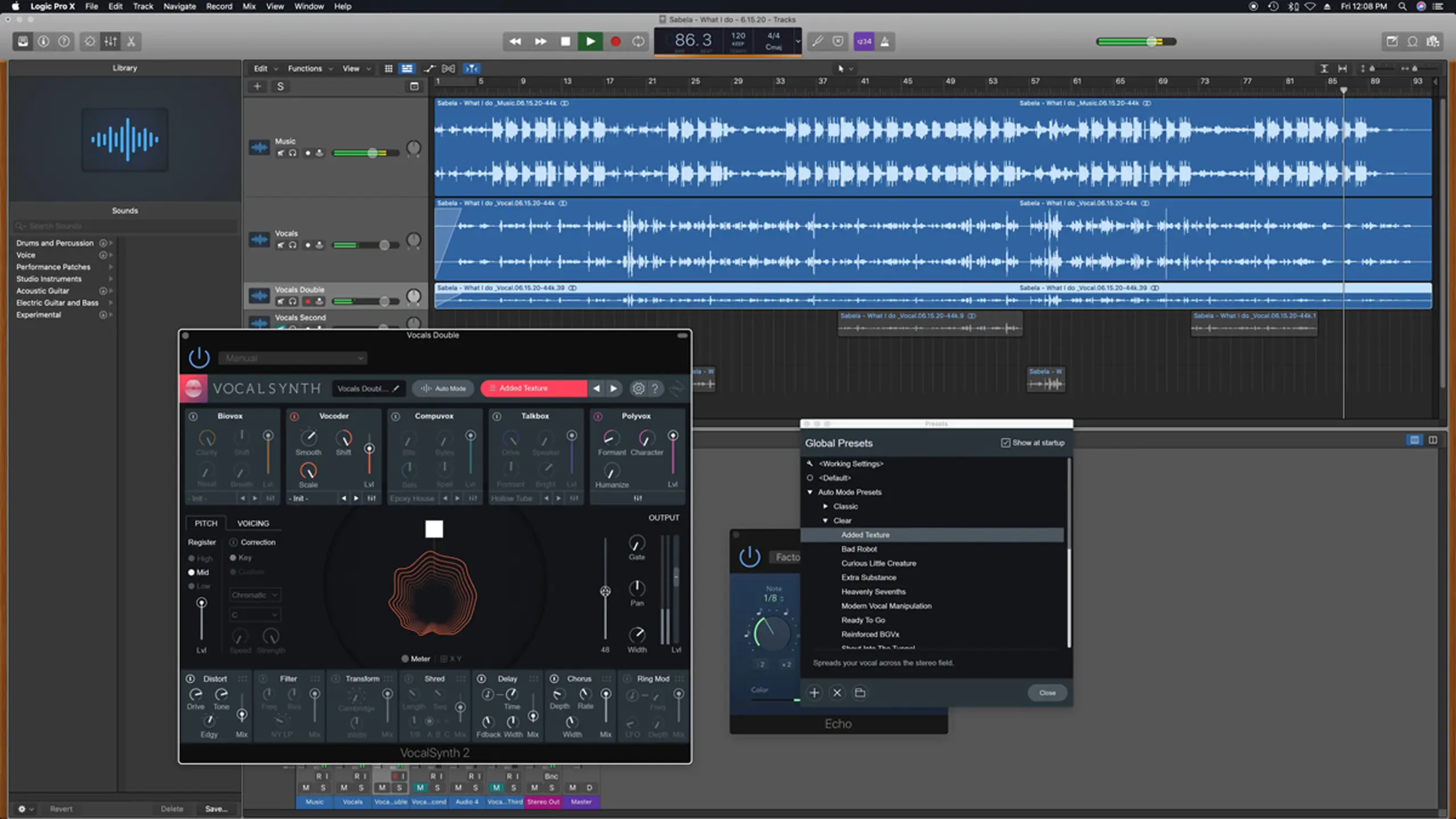
- 12/08/20
Sound editing is a pivotal aspect of [video production](https://c-istudios.com/video-production-services/) that significantly impacts the overall quality and effectiveness of a film, TV show, or any multimedia project. From reducing background noise to synchronizing audio with visuals, sound editing transforms raw audio recordings into polished, professional-grade soundscapes that captivate audiences. This article delves into the intricacies of sound editing, exploring various techniques and tools used to clean and enhance audio in post-production.
## The Basics of Sound Editing
Sound editing encompasses a wide range of tasks aimed at improving the clarity and quality of audio recordings. It involves processes such as cutting, arranging, and synchronizing audio clips to match the visuals. The primary goal is to ensure that the audio complements the video seamlessly, enhancing the viewer's experience. Sound editing is essential in various types of productions, including [video production](https://c-istudios.com/video-production-services/), [documentary film production](https://c-istudios.com/documentary-film-production/), and more.
The history of sound editing dates back to the early days of film, where editors manually spliced audio tapes to synchronize sound with visuals. Today, advanced digital tools have revolutionized the field, making it easier to achieve high-quality audio results. The evolution of sound editing has seen significant milestones, such as the introduction of multi-track recording, digital audio workstations (DAWs), and sophisticated noise reduction algorithms.
Effective sound editing can transform a mediocre production into an engaging masterpiece. By removing unwanted noise, adjusting audio levels, and ensuring clear dialogue, editors can create a polished final product that enhances storytelling and emotional impact.
## Tools and Software for Sound Editing
Modern sound editing relies heavily on specialized software that offers a plethora of features designed to improve audio quality. Popular tools like Adobe Audition, Pro Tools, and Audacity provide comprehensive solutions for [audio engineering](https://c-istudios.com/audio-engineering-services/) and [video production gear list](https://c-istudios.com/video-production-gear-list/) requirements.
Adobe Audition is renowned for its powerful noise reduction capabilities, intuitive interface, and extensive library of effects. Pro Tools is a favorite among professional sound editors for its advanced features, including multi-track editing, mixing, and mastering. Audacity, a free and open-source option, is widely used for basic editing tasks, offering features like cut, copy, and paste, as well as various effects and filters.
These software solutions offer various features that facilitate different aspects of sound editing. Noise reduction, equalization, reverb, and dynamic range compression are just a few of the tools available to sound editors. Additionally, many of these programs support VST plugins, which expand their capabilities even further.
Investing in high-quality sound editing software is crucial for achieving professional results. These tools streamline the editing process, allowing editors to focus on creativity and precision. By utilizing the right software, editors can ensure that their projects meet industry standards and captivate audiences with superior sound quality.
## Techniques for Cleaning Audio
One of the primary goals of sound editing is to clean audio recordings by removing unwanted noise and enhancing clarity. Noise reduction is a critical technique used to eliminate background noise, such as hums, hisses, and environmental sounds. This process involves identifying the noise profile and applying filters to reduce its presence without affecting the desired audio.
Equalization (EQ) and filtering are also essential techniques in sound editing. EQ allows editors to adjust the frequency balance of audio recordings, enhancing certain frequencies while reducing others. This can help improve the clarity of dialogue, enhance musical elements, and create a more balanced soundscape.
Dynamic range compression is another important technique used to balance audio levels. It reduces the volume of loud sounds and amplifies quieter ones, ensuring a consistent audio level throughout the recording. This process helps to manage the disparity between the softest and loudest parts of the audio, which is particularly useful in productions with varying sound levels, such as interviews or live recordings.
For instance, in an interview setting, one speaker might naturally project their voice more than the other, creating an imbalance. Compression can smooth out these differences, making both speakers' voices sound equally clear and present. Similarly, in live recordings, background noise or unexpected loud sounds can be tamed to maintain a uniform audio experience.
By controlling the dynamic range, compression ensures that the audio remains within an optimal listening range, avoiding the need for constant volume adjustments by the audience. This results in a more professional and polished final product, where every detail of the dialogue and sound effects is easily heard and appreciated.
By mastering these techniques, sound editors can significantly improve the quality of their audio recordings. Clean, clear audio enhances the overall production value and ensures that the audience can fully engage with the content. High-quality audio is critical because it prevents distractions that can pull viewers out of the experience.
For example, background hiss or uneven volume levels can be jarring and detract from the immersion of the story being told. Good sound editing also ensures that the narrative's emotional beats are fully realized, with the right sounds emphasized at the right moments to evoke the intended reactions from the audience.
Furthermore, clear audio supports accessibility, making content more understandable for those with hearing difficulties. Effective sound editing, therefore, not only elevates the aesthetic and emotional impact of a production but also broadens its accessibility and appeal. Through meticulous attention to detail and technical expertise, sound editors play a crucial role in bringing stories to life in the most engaging and inclusive way possible.
## Enhancing Audio Quality
Beyond cleaning audio, sound editing also involves enhancing the overall quality of the recordings. Reverb and echo are commonly used effects that add depth and space to audio, creating a sense of environment and atmosphere. By carefully applying these effects, editors can make the audio sound more natural and immersive.
Reverb simulates the sound reflections in a physical space, such as a room or hall. By adjusting parameters like decay time and room size, editors can create different acoustic environments that enhance the audio's realism. Echo, on the other hand, is used to create distinct reflections of the sound, adding a sense of distance or repetition.
Compression is another key technique in audio enhancement. It reduces the dynamic range of the audio, making quieter sounds more audible and controlling loud peaks. This results in a more balanced and polished sound, ensuring that all elements of the audio are clearly heard.
Enhancing audio quality requires a combination of technical skill and artistic intuition. Editors must carefully balance the use of effects to ensure that the audio enhances the production without overpowering the visuals. By applying these techniques, sound editors can create audio that not only sounds good but also enhances the storytelling and emotional impact of the production.
## Synchronizing Audio with Visuals
One of the most critical aspects of sound editing is synchronizing audio with visuals. This process ensures that dialogue, sound effects, and music align perfectly with the on-screen action, creating a cohesive and immersive experience for the audience.
Syncing dialogue involves matching the recorded audio with the lip movements of the actors. This requires precise timing and attention to detail to ensure that the dialogue feels natural and realistic. Foley and Automated Dialogue Replacement (ADR) are essential techniques in this process. Foley involves creating sound effects that match the actions on screen, such as footsteps, door creaks, and clothing rustles. ADR, on the other hand, involves re-recording dialogue in a studio setting to improve audio quality or replace unusable location sound.
These techniques are crucial in [film and TV production](https://c-istudios.com/film-and-tv-production/) and[VFX compositing and animation](https://c-istudios.com/vfx-compositing-and-animation-services/)[,](https://c-istudios.com/vfx-compositing-and-animation-services/) where accurate synchronization is essential for maintaining the illusion of reality. By mastering the art of syncing audio with visuals, sound editors can create a seamless and engaging experience for the audience.
## The Role of Sound Editing in Different Genres
Sound editing plays a vital role in various genres of film and television, each with its unique challenges and requirements. In [documentary film production](https://c-istudios.com/documentary-film-production/), for example, editors must work with a mix of interviews, narration, and ambient sounds to create a cohesive and engaging audio narrative. This requires careful balancing of different audio elements and the use of noise reduction techniques to ensure clear and intelligible speech.
In feature films and TV shows, sound editing is essential for enhancing storytelling and creating emotional impact. Editors use sound effects, music, and dialogue to build tension, convey emotions, and immerse the audience in the story. Different genres have specific sound editing requirements, such as the need for realistic sound effects in action films or the creation of a particular atmosphere in horror movies.
For example, in action films, precise sound effects like explosions, gunfire, and footsteps enhance the realism and excitement of the scenes. Meanwhile, in horror movies, sound editors might use eerie, unsettling noises and sudden crescendos to create suspense and fear, keeping viewers on the edge of their seats.
Additionally, in dramas, the subtleties of dialogue and ambient sound are crucial for conveying the nuanced emotions of the characters and the mood of the scenes. The integration of music also plays a significant role, with carefully chosen scores accentuating dramatic moments, escalating tension, or providing relief. Sound editing, therefore, is not just about technical precision but also about understanding and amplifying the emotional journey of the audience, ensuring that every auditory element supports the narrative and enhances the overall viewing experience.
By understanding the unique requirements of each genre, sound editors can tailor their techniques and approaches to achieve the desired audio effect. This enhances the overall quality of the production and ensures that the audio complements the visuals effectively.
## The Future of Sound Editing
The future of sound editing is being shaped by technological advancements that are revolutionizing the field. Emerging technologies such as artificial intelligence (AI) and machine learning are transforming the way sound editors work, offering new tools and capabilities for improving audio quality.
AI-powered tools can automate many of the time-consuming tasks involved in sound editing, such as noise reduction, equalization, and audio enhancement. These tools analyze audio data and apply precise adjustments to improve quality, saving editors significant time and effort. Machine learning algorithms can also learn from previous edits, continuously improving their performance and accuracy.
Another exciting development is the integration of immersive audio technologies, such as spatial audio and 3D sound. These technologies create a more immersive and realistic listening experience, enhancing the emotional impact of the audio. As these technologies continue to evolve, they will offer new possibilities for sound editors to create innovative and engaging audio experiences.
The future of sound editing holds immense potential for further advancements and innovations. By staying updated with the latest technologies and trends, sound editors can continue to push the boundaries of what is possible in audio production, creating high-quality and immersive audio experiences for audiences.
## Tips for Aspiring Sound Editors
For aspiring sound editors, there are several key tips and resources to help build a successful career in the field. First and foremost, it is essential to gain hands-on experience with sound editing software and tools. Many industry-standard software programs offer free trials or educational licenses, providing an opportunity to practice and develop skills.
Networking is also crucial in the sound editing industry. Building relationships with other professionals, attending industry events, and joining online communities can open doors to job opportunities and collaborations. Additionally, seeking feedback and learning from experienced sound editors can help improve skills and knowledge.
There are numerous online resources and tutorials available for learning sound editing techniques. Websites like YouTube, Lynda.com, and Coursera offer comprehensive courses and tutorials on various aspects of sound editing. By continuously learning and staying updated with the latest trends and technologies, aspiring sound editors can stay competitive in the industry.
Lastly, patience and persistence are essential qualities for success in sound editing. It takes time to develop the skills and knowledge required to excel in the field. By staying dedicated and continuously honing their craft, aspiring sound editors can build a successful and rewarding career in audio production.
## Work with C&I Studios
If you are planning a project like this, our team can take it from concept to final delivery. Explore our [film and TV production](https://c-istudios.com/film-and-tv-production/), browse [our work](https://c-istudios.com/our-work/) to see how we tell brand stories, and [get in touch](https://c-istudios.com/contact/) when you are ready to start.
Originally published July 28, 2024
---
*This content is from [C&I Studios](https://c-istudios.com), a full-service production company.*
---
# The Future of Email Marketing: Trends and Innovations to Watch in 2024
> Published: July 27, 2024
> Categories: Commercial & Brand
> Source: https://c-istudios.com/the-future-of-email-marketing-trends-and-innovations-to-watch-in-2024/
---
.cib{--paper:#1b1d1f;--ink:#fff;--body:#d5d7d9;--muted:#8b9096;--line:rgba(255,255,255,.12);--thumb:#2b2e31;--card:#212426;--accent:#c02b0a;--blue:#5B8FA8;--serif:'Playfair Display',Georgia,serif;--sans:'Poppins',-apple-system,sans-serif;--measure:900px;background:var(--paper);color:var(--body);font-family:var(--sans);line-height:1.6;position:relative;left:50%;transform:translateX(-50%);width:90vw;max-width:1920px}
.cib *{box-sizing:border-box}
.cib .kicker{max-width:var(--measure);margin:58px auto 0;padding:0 22px;font-size:12.5px;font-weight:700;letter-spacing:2.5px;text-transform:uppercase;color:var(--blue)}
.cib h1.cibh1{text-wrap:balance;font-family:var(--serif);font-weight:500;font-size:clamp(46px,6vw,72px);line-height:1.08;color:var(--ink);max-width:var(--measure);margin:18px auto 0;padding:0 22px;letter-spacing:-.5px}
.cib .metarow{max-width:var(--measure);margin:20px auto 0;padding:0 22px;color:var(--muted);font-size:14px}
.cib .hero{position:relative;width:100%;height:0;padding-bottom:56.25%;overflow:hidden;margin:48px auto 0;border-top:1px solid var(--line);border-bottom:1px solid var(--line)}
.cib .hero .ph{width:100%;aspect-ratio:16/9;background:var(--thumb);border-top:1px solid var(--line);border-bottom:1px solid var(--line);display:flex;align-items:center;justify-content:center;color:#7d8288;font-size:13px;text-align:center;padding:0 20px}
.cib .body{max-width:var(--measure);margin:12px auto 0;padding:52px 22px 6px}
.cib .body.lead p:first-child{font-size:23px;line-height:1.62;color:var(--ink)}
.cib .body p{font-size:18.5px;line-height:1.85;margin:0 0 30px;color:var(--body)}
.cib .body h2{text-wrap:balance;font-family:var(--serif);font-weight:500;font-size:clamp(32px,4vw,48px);line-height:1.22;color:var(--ink);margin:70px 0 20px;letter-spacing:-.3px}
.cib .body h3{text-wrap:balance;font-family:var(--sans);font-weight:600;font-size:22px;color:var(--ink);margin:38px 0 8px}
.cib .body a{color:var(--ink);text-decoration:underline;text-decoration-color:rgba(255,255,255,.4);text-underline-offset:3px}
.cib .body a:hover{text-decoration-color:var(--ink)}
.cib .ctable{width:100%;border-collapse:collapse;margin:16px 0 30px;font-size:16px}
.cib .ctable th{background:#000;color:#fff;text-align:left;padding:10px 12px;font-family:var(--sans)}
.cib .ctable td{padding:10px 12px;border-bottom:1px solid var(--line);color:var(--body)}
.cib .inimg{position:relative;width:100%;height:0;padding-bottom:56.25%;overflow:hidden;margin:72px auto;border-top:1px solid var(--line);border-bottom:1px solid var(--line)}
.cib .inimg .ph{width:100%;aspect-ratio:16/9;background:var(--thumb);border-top:1px solid var(--line);border-bottom:1px solid var(--line);display:flex;align-items:center;justify-content:center;color:#7d8288;font-size:13px}
.cib .origpub{max-width:var(--measure);margin:60px auto 0;padding:26px 22px 0;border-top:1px solid var(--line);color:var(--muted);font-size:13.5px}
.cib .related{max-width:1200px;margin:64px auto 0;padding:34px 22px 76px}
.cib .related h3{font-family:var(--sans);font-size:12.5px;letter-spacing:2px;text-transform:uppercase;color:var(--ink);margin:0 0 24px}
.cib .grid{display:grid;grid-template-columns:repeat(3,1fr);gap:28px}
.cib .rc{background:var(--card);border:1px solid var(--line);display:block;text-decoration:none;color:inherit;transition:border-color .15s}
.cib a.rc:hover{border-color:rgba(255,255,255,.5)}
.cib .rc .thumb{position:relative;width:100%;height:0;padding-bottom:56.25%;background:var(--thumb);overflow:hidden}
.cib .rc .thumb img{position:absolute!important;top:0!important;left:0!important;width:100%!important;height:100%!important;object-fit:cover!important;margin:0!important}
.cib .rc .cc{padding:14px 15px 17px}
.cib .rc .rt{font-family:var(--serif);font-weight:500;font-size:16px;line-height:1.3;color:var(--ink);margin:0 0 6px}
.cib .rc .rm{font-size:11px;letter-spacing:1px;text-transform:uppercase;color:var(--muted)}
.cib img{margin:0!important;padding:0!important;display:block!important;vertical-align:top;max-width:100%}
.cib .hero img,.cib .inimg img{position:absolute!important;top:0!important;left:0!important;width:100%!important;height:100%!important;object-fit:cover!important;margin:0!important;padding:0!important;border:0!important;display:block!important;aspect-ratio:auto!important}
.cib .hero+.body{padding-top:36px}
@media(max-width:760px){.cib .grid{grid-template-columns:1fr}.cib .body h2{margin:52px 0 16px}.cib .body p{font-size:17.5px}.cib .inimg,.cib .hero{margin-top:44px}}
.cib .vembed{max-width:var(--measure);margin:44px auto;padding:0 22px}.cib .vembed .vwrap{position:relative;width:100%;height:0;padding-bottom:56.25%}.cib .vembed .vwrap iframe{position:absolute;top:0;left:0;width:100%;height:100%;border:0}
Commercial & Brand
# The Future of Email Marketing. Trends and Innovations to Watch in 2024
9 min read
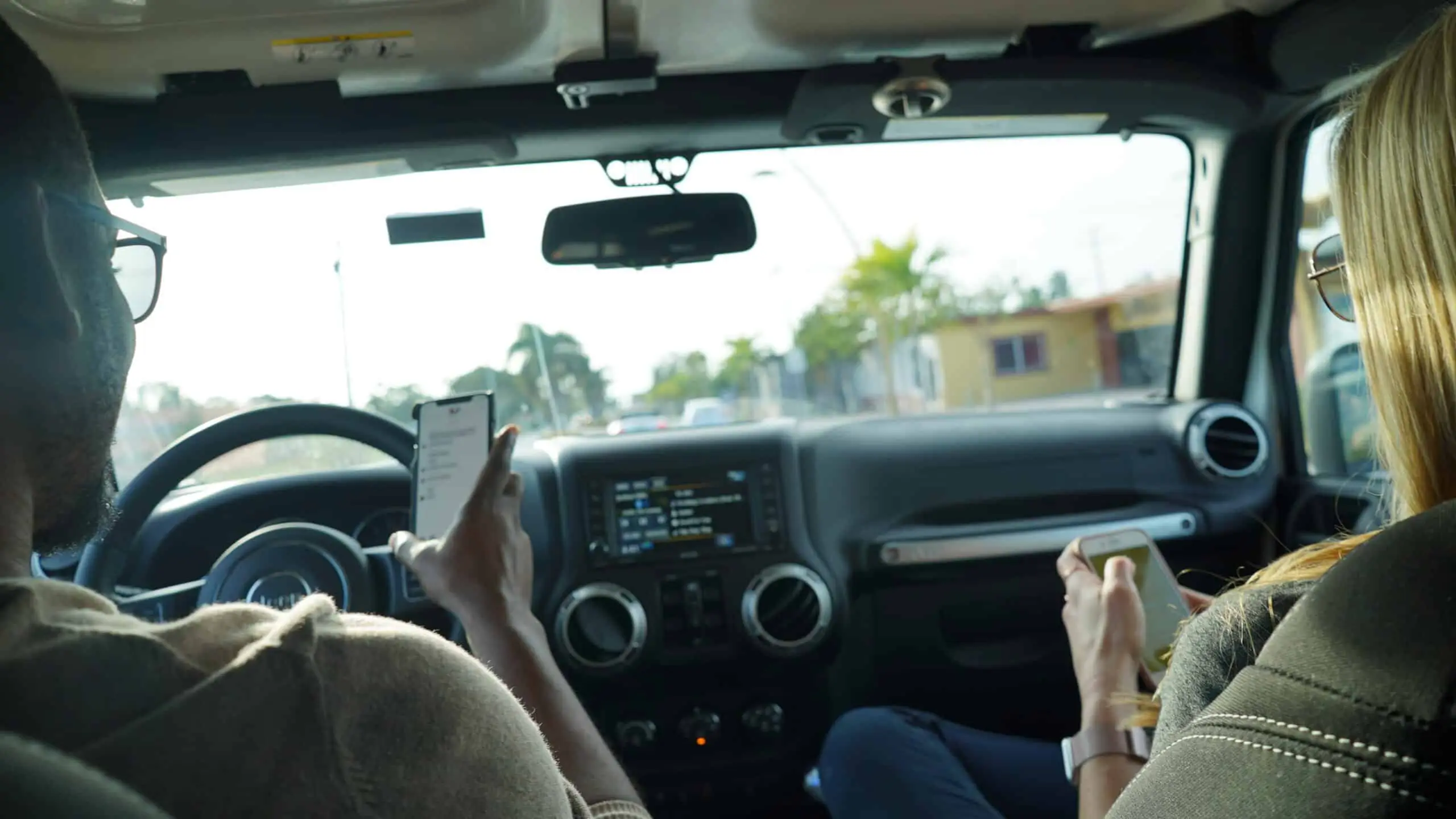
In the fast-evolving world of digital marketing, email marketing remains a powerful tool for businesses. With its ability to directly engage with audiences, it has stood the test of time. However, staying ahead in this space requires constant adaptation and understanding of emerging trends and innovations. In 2024, several new advancements are set to reshape the landscape of email marketing.
In this article we will discuss these exciting developments and explore how businesses can leverage them to enhance their email strategies. As the digital environment continues to shift, it is crucial for marketers to stay informed and innovative to maintain a competitive edge.
## Personalization and AI Integration
Artificial Intelligence (AI) is revolutionizing how businesses approach email marketing. The integration of AI into email marketing strategies has led to unprecedented levels of personalization. AI tools are now capable of analyzing customer behavior and preferences with remarkable accuracy, enabling businesses to create highly targeted and personalized email campaigns.
One of the most significant benefits of this AI-driven personalization is the ability to deliver content that resonates with each individual recipient. For instance, AI algorithms can predict the types of products or services a customer might be interested in based on their previous interactions. This results in emails that are not only more relevant but also more engaging. [Social media marketing](https://c-istudios.com/social-media-marketing-services/) services and media marketing consultation providers are increasingly leveraging AI to optimize email content and timing, ensuring that messages reach recipients when they are most likely to be receptive.
Moreover, AI-powered tools can automate the process of segmenting email lists and crafting personalized messages. This level of automation not only saves time but also enhances the effectiveness of email campaigns. By utilizing AI, businesses can ensure that their emails are tailored to meet the specific needs and preferences of their audience, leading to higher engagement rates and better overall performance.
## Advanced Segmentation Strategies
Effective email marketing relies heavily on understanding and targeting specific audience segments. Advanced segmentation strategies have emerged as a crucial trend in 2024. By leveraging data analytics, businesses can gain deep insights into customer behavior and preferences, allowing them to create highly targeted email campaigns.
One of the key components of advanced segmentation is the use of behavioral data. By analyzing how customers interact with emails and other marketing channels, businesses can segment their audience based on factors such as purchase history, browsing behavior, and engagement levels. This approach enables marketers to deliver more relevant content to each segment, improving the likelihood of conversion.
Additionally, the use of hyper-segmentation techniques allows for even finer granularity in targeting. For example, instead of grouping customers into broad categories, hyper-segmentation involves creating smaller, more specific segments based on detailed attributes and behaviors. This allows businesses to tailor their messaging with greater precision, resulting in more effective email campaigns.
Web Development and[web maintenance](https://c-istudios.com/web-maintenance/) services play a vital role in supporting these advanced segmentation strategies. By ensuring that email systems are robust and capable of handling complex data, businesses can maximize the benefits of advanced segmentation and achieve better results from their campaigns.
## Interactive and Dynamic Content
Interactive and dynamic content is becoming a significant trend in email marketing for 2024. Unlike traditional static emails, interactive content engages recipients by allowing them to interact directly with the email. This can include elements such as surveys, polls, quizzes, and interactive product showcases.
The benefits of incorporating dynamic content into email campaigns are manifold. Firstly, interactive emails tend to capture the recipient’s attention more effectively than static content. This increased engagement can lead to higher click-through rates and improved overall campaign performance. Additionally, dynamic content allows for a more personalized experience, as recipients can interact with elements tailored to their interests and preferences.
To create effective interactive emails, businesses can utilize tools and platforms that support the integration of interactive elements. [VFX compositing and animation](https://c-istudios.com/vfx-compositing-and-animation-services/) technologies, for instance, can be used to design visually appealing interactive content that enhances the user experience. Furthermore, feature film mastering and delivery techniques can ensure that interactive elements are optimized for different devices and email clients.
Successful examples of interactive email campaigns highlight the potential of this approach. By incorporating elements that encourage recipient interaction, businesses can drive greater engagement and achieve better results from their email marketing efforts.
## Privacy and Data Protection in Email Marketing
As data privacy concerns continue to grow, maintaining robust privacy and data protection practices is essential for email marketing in 2024. Adhering to current privacy regulations and ensuring compliance is critical for building trust with recipients and avoiding potential legal issues.
The impact of privacy regulations on email marketing strategies is significant. Regulations such as the General Data Protection Regulation (GDPR) and the California Consumer Privacy Act (CCPA) impose strict requirements on how businesses collect, store, and use personal data. To ensure compliance, businesses must implement practices that safeguard customer information and provide transparency regarding data usage.
Best practices for privacy and data protection include obtaining explicit consent from recipients before sending marketing emails and providing options for users to manage their preferences and opt-out if desired. Additionally, businesses should regularly review and update their data protection policies to reflect changes in regulations and industry standards.
Web hosting and [web maintenance](https://c-istudios.com/web-maintenance/) are critical aspects of data protection. By ensuring that email systems are secure and compliant with privacy regulations, businesses can protect their customers' information and maintain their trust.
## Integration with Other Marketing Channels
In 2024, the integration of email marketing with other marketing channels is a trend that is gaining traction. A seamless integration across various channels can enhance the effectiveness of marketing efforts and create a more cohesive experience for customers.
Email marketing works particularly well when complemented by other digital channels such as social media, content marketing, and paid advertising. For example, incorporating email marketing into a broader [creative marketing](https://c-istudios.com/creative-marketing-services/) strategy can help reinforce messaging and drive engagement across multiple touchpoints. By aligning email campaigns with social media promotions or content marketing efforts, businesses can create a unified message that resonates with their audience.
Cross-channel strategies also enable businesses to leverage data from different sources to inform their email marketing efforts. For instance, insights gained from social media interactions or website behavior can be used to refine email content and targeting, leading to more effective campaigns.
[Video production](https://c-istudios.com/video-production-services/) and social media marketing services play a crucial role in supporting these cross-channel strategies. By incorporating engaging video content into email campaigns, businesses can capture recipients' attention more effectively, making their emails stand out in crowded inboxes. Videos can demonstrate products, share compelling stories, or provide valuable insights, all of which can significantly boost engagement rates and click-throughs.
Additionally, using social media platforms to drive traffic to email sign-ups helps expand reach and attract new subscribers who are already interested in the brand’s content. This integrated approach not only enhances the overall marketing effectiveness but also fosters a more cohesive brand experience. By strategically blending video with social media efforts, businesses can create a unified marketing strategy that amplifies their reach and impact, ultimately leading to better results and stronger customer connections.
## Automation and Workflow Optimization
Automation and workflow optimization are transforming email marketing by streamlining processes and improving efficiency. In 2024, businesses are increasingly leveraging automation to enhance their email campaigns and achieve better results.
The evolution of email automation has led to more sophisticated tools and platforms that enable businesses to automate various aspects of their email marketing efforts. This includes automating tasks such as email scheduling, list management, and personalized content creation. By automating these processes, businesses can save time and reduce the risk of errors, allowing them to focus on strategic aspects of their campaigns.
Optimizing workflows for efficiency is another key trend in email marketing. This involves streamlining processes to ensure that emails are delivered at the right time and to the right audience. By implementing best practices for workflow optimization, businesses can enhance the performance of their email campaigns and achieve better results.
[Web development](https://c-istudios.com/web-development-services/) and web maintenance are essential for supporting automation and workflow optimization. By ensuring that email systems are robust and capable of handling complex workflows, businesses can maximize the benefits of automation and achieve greater efficiency in their email marketing efforts.
**Mobile Optimization and Responsive Design**
Mobile optimization is more important than ever in email marketing. With an increasing number of recipients accessing emails on mobile devices, ensuring that emails are mobile-friendly is crucial for achieving optimal results.
Mobile-friendly emails are designed to display correctly on various devices and screen sizes. This involves using responsive design techniques to ensure that emails adapt to different screen dimensions and provide a seamless user experience. By optimizing emails for mobile, businesses can improve engagement rates and ensure that their messages are effectively delivered.
Design best practices for mobile optimization include using a single-column layout, larger font sizes, and touch-friendly buttons. Additionally, testing emails across different devices and email clients can help identify and resolve any issues related to mobile compatibility.
SEO copywriting and[branding and graphic design](https://c-istudios.com/branding-and-graphic-design-services/) play a significant role in mobile optimization. By incorporating well-designed, responsive elements into email campaigns, businesses can enhance the overall user experience and achieve better results.
## Future Outlook and Emerging Technologies
Looking ahead, the future of email marketing is set to be shaped by emerging technologies and innovations. As the digital landscape continues to evolve, businesses must stay informed about the latest developments and prepare for upcoming changes.
Predictions for email marketing in the coming years include the increased use of AI and machine learning to further enhance personalization and automation. Additionally, the integration of augmented reality (AR) and virtual reality (VR) into email campaigns is expected to create new opportunities for interactive and immersive experiences.
To prepare for these changes, businesses should stay updated on the latest trends and innovations in email marketing and explore new technologies that can enhance their campaigns. By embracing emerging technologies and adapting their strategies, businesses can stay ahead of the curve and achieve continued success in their email marketing efforts.
Social media marketing services and [creative marketing](https://c-istudios.com/creative-marketing-services/) strategies will play a crucial role in integrating these emerging technologies into email campaigns. By leveraging new tools and techniques, businesses can enhance their marketing efforts and achieve better results.
## Conclusion
In summary, the future of email marketing in 2024 is poised to be marked by significant advancements and innovations. From the integration of AI for personalization to the adoption of interactive content and advanced segmentation strategies, businesses have a wealth of opportunities to enhance their email campaigns. By staying informed about the latest trends and embracing new technologies, marketers can drive greater engagement and achieve better results from their email marketing efforts.
Web hosting, web development, and social media marketing services will continue to play a vital role in supporting these advancements. As the digital landscape evolves, businesses must remain adaptable and innovative to stay ahead in the competitive world of email marketing. For more information on how to leverage these advancements, visit [C-I Studios](https://c-istudios.com/), get in touch through our [contact page](https://c-istudios.com/contact/), explore our services, or check out our [portfolio](https://c-istudios.com/our-work/).
## Work with C&I Studios
If you are planning a project like this, our team can take it from concept to final delivery. Explore our [video production services](https://c-istudios.com/video-production-services/), browse [our work](https://c-istudios.com/our-work/) to see how we tell brand stories, and [get in touch](https://c-istudios.com/contact/) when you are ready to start.
Originally published July 27, 2024
---
*This content is from [C&I Studios](https://c-istudios.com), a full-service production company.*
---
# The Role of Keywords in Video SEO: Best Practices and Strategies
> Published: July 26, 2024
> Categories: Web & Tech
> Source: https://c-istudios.com/the-role-of-keywords-in-video-seo-best-practices-and-strategies/
---
.cib{--paper:#1b1d1f;--ink:#fff;--body:#d5d7d9;--muted:#8b9096;--line:rgba(255,255,255,.12);--thumb:#2b2e31;--card:#212426;--accent:#c02b0a;--blue:#5B8FA8;--serif:'Playfair Display',Georgia,serif;--sans:'Poppins',-apple-system,sans-serif;--measure:900px;background:var(--paper);color:var(--body);font-family:var(--sans);line-height:1.6;position:relative;left:50%;transform:translateX(-50%);width:90vw;max-width:1920px}
.cib *{box-sizing:border-box}
.cib .kicker{max-width:var(--measure);margin:58px auto 0;padding:0 22px;font-size:12.5px;font-weight:700;letter-spacing:2.5px;text-transform:uppercase;color:var(--blue)}
.cib h1.cibh1{text-wrap:balance;font-family:var(--serif);font-weight:500;font-size:clamp(46px,6vw,72px);line-height:1.08;color:var(--ink);max-width:var(--measure);margin:18px auto 0;padding:0 22px;letter-spacing:-.5px}
.cib .metarow{max-width:var(--measure);margin:20px auto 0;padding:0 22px;color:var(--muted);font-size:14px}
.cib .hero{position:relative;width:100%;height:0;padding-bottom:56.25%;overflow:hidden;margin:48px auto 0;border-top:1px solid var(--line);border-bottom:1px solid var(--line)}
.cib .hero .ph{width:100%;aspect-ratio:16/9;background:var(--thumb);border-top:1px solid var(--line);border-bottom:1px solid var(--line);display:flex;align-items:center;justify-content:center;color:#7d8288;font-size:13px;text-align:center;padding:0 20px}
.cib .body{max-width:var(--measure);margin:12px auto 0;padding:52px 22px 6px}
.cib .body.lead p:first-child{font-size:23px;line-height:1.62;color:var(--ink)}
.cib .body p{font-size:18.5px;line-height:1.85;margin:0 0 30px;color:var(--body)}
.cib .body h2{text-wrap:balance;font-family:var(--serif);font-weight:500;font-size:clamp(32px,4vw,48px);line-height:1.22;color:var(--ink);margin:70px 0 20px;letter-spacing:-.3px}
.cib .body h3{text-wrap:balance;font-family:var(--sans);font-weight:600;font-size:22px;color:var(--ink);margin:38px 0 8px}
.cib .body a{color:var(--ink);text-decoration:underline;text-decoration-color:rgba(255,255,255,.4);text-underline-offset:3px}
.cib .body a:hover{text-decoration-color:var(--ink)}
.cib .ctable{width:100%;border-collapse:collapse;margin:16px 0 30px;font-size:16px}
.cib .ctable th{background:#000;color:#fff;text-align:left;padding:10px 12px;font-family:var(--sans)}
.cib .ctable td{padding:10px 12px;border-bottom:1px solid var(--line);color:var(--body)}
.cib .inimg{position:relative;width:100%;height:0;padding-bottom:56.25%;overflow:hidden;margin:72px auto;border-top:1px solid var(--line);border-bottom:1px solid var(--line)}
.cib .inimg .ph{width:100%;aspect-ratio:16/9;background:var(--thumb);border-top:1px solid var(--line);border-bottom:1px solid var(--line);display:flex;align-items:center;justify-content:center;color:#7d8288;font-size:13px}
.cib .origpub{max-width:var(--measure);margin:60px auto 0;padding:26px 22px 0;border-top:1px solid var(--line);color:var(--muted);font-size:13.5px}
.cib .related{max-width:1200px;margin:64px auto 0;padding:34px 22px 76px}
.cib .related h3{font-family:var(--sans);font-size:12.5px;letter-spacing:2px;text-transform:uppercase;color:var(--ink);margin:0 0 24px}
.cib .grid{display:grid;grid-template-columns:repeat(3,1fr);gap:28px}
.cib .rc{background:var(--card);border:1px solid var(--line);display:block;text-decoration:none;color:inherit;transition:border-color .15s}
.cib a.rc:hover{border-color:rgba(255,255,255,.5)}
.cib .rc .thumb{position:relative;width:100%;height:0;padding-bottom:56.25%;background:var(--thumb);overflow:hidden}
.cib .rc .thumb img{position:absolute!important;top:0!important;left:0!important;width:100%!important;height:100%!important;object-fit:cover!important;margin:0!important}
.cib .rc .cc{padding:14px 15px 17px}
.cib .rc .rt{font-family:var(--serif);font-weight:500;font-size:16px;line-height:1.3;color:var(--ink);margin:0 0 6px}
.cib .rc .rm{font-size:11px;letter-spacing:1px;text-transform:uppercase;color:var(--muted)}
.cib img{margin:0!important;padding:0!important;display:block!important;vertical-align:top;max-width:100%}
.cib .hero img,.cib .inimg img{position:absolute!important;top:0!important;left:0!important;width:100%!important;height:100%!important;object-fit:cover!important;margin:0!important;padding:0!important;border:0!important;display:block!important;aspect-ratio:auto!important}
.cib .hero+.body{padding-top:36px}
@media(max-width:760px){.cib .grid{grid-template-columns:1fr}.cib .body h2{margin:52px 0 16px}.cib .body p{font-size:17.5px}.cib .inimg,.cib .hero{margin-top:44px}}
.cib .vembed{max-width:var(--measure);margin:44px auto;padding:0 22px}.cib .vembed .vwrap{position:relative;width:100%;height:0;padding-bottom:56.25%}.cib .vembed .vwrap iframe{position:absolute;top:0;left:0;width:100%;height:100%;border:0}
Web & Tech
# The Role of Keywords in Video SEO. Best Practices and Strategies
7 min read


## Public Sector
The significance of keywords in video SEO cannot be overstated. They act as the bridge between your content and potential viewers, guiding search engines to understand what your video is about. This alignment not only increases your video's chances of appearing in relevant searches but also attracts a more targeted audience.
Whether it's through SEO copywriting or leveraging [video production](https://c-istudios.com/video-production-services/) gear lists understanding and applying the right keywords can significantly impact your video's performance. This article delves into the best practices and strategies for using keywords effectively in video SEO, ensuring that your content is both discoverable and engaging.
## Understanding Keyword Research for Videos
Effective keyword research is the cornerstone of successful video SEO. To begin, you need to identify the most relevant keywords for your content. This involves using various tools such as Google Keyword Planner, Ahrefs, or SEMrush to discover terms that potential viewers are searching for. These tools provide valuable insights into search volume, competition, and related queries, helping you choose the most effective keywords for your videos.
Analyzing competitor keywords is another essential strategy. By examining the keywords used by competitors, you can uncover new opportunities and gaps in the market. Look at the titles, descriptions, and tags of top-performing videos in your niche to gain insights into the keywords driving their success. This competitive analysis can help refine your keyword strategy and improve your own video SEO efforts.
Incorporating keywords into your videos starts with understanding their relevance to your content. Choose keywords that accurately represent the video's subject matter and match the search intent of your target audience. For instance, if your video focuses on content creation tips, incorporating keywords related to [media marketing](https://c-istudios.com/media-marketing-consultation-services/) can attract viewers interested in that specific topic. This targeted approach not only enhances your video's SEO but also ensures it reaches viewers who are genuinely interested in your content.
## Integrating Keywords into Video Titles
Crafting an engaging video title is crucial for drawing viewers and improving SEO. Titles should be both informative and compelling, incorporating relevant keywords to boost visibility in search results. Best practices for video titles include placing primary keywords near the beginning and ensuring they accurately reflect the video's content. A well-optimized title not only helps search engines understand your video but also entices viewers to click.
For example, if your video discusses the latest trends in [video production gear Lists](https://c-istudios.com/video-production-gear-list/), a title like Tools You Need in 2024 effectively incorporates relevant keywords while clearly indicating the video's content. This approach enhances the likelihood of your video appearing in searches related to video production equipment.
The impact of titles on search rankings cannot be underestimated. Search engines use titles to gauge the relevance of a video to specific queries. Therefore, incorporating social media marketing Services or similar keywords can improve the chances of your video appearing in searches related to social media strategies. Ensure that the keywords blend naturally into the title to maintain readability and engagement.
## Crafting Effective Video Descriptions
An optimized video description is essential for enhancing both user engagement and search engine ranking. A well-crafted description should provide a clear overview of the video's content while incorporating relevant keywords.This not only helps search engines understand the video's topic but also provides viewers with a concise summary of what to expect.
To effectively use keywords in video descriptions, start by including primary keywords early in the description. Avoid keyword stuffing, which can lead to a poor user experience and negatively impact SEO. Instead, focus on creating a natural flow that incorporates keywords in a meaningful way. For instance, if your video covers Web Development tips, your description might begin with, “In this video, we explore essential web development strategies for 2024.
Additionally, including secondary keywords related to [SEO copywriting](https://c-istudios.com/seo-copywriting-services/) or other relevant topics can further enhance the video's searchability. Be sure to provide additional information, such as links to related content or resources, to improve user engagement and offer more value to viewers.
Effective video descriptions also often include a call-to-action, encouraging viewers to like, share, and subscribe, which can further boost engagement and SEO. By strategically placing video production keywords throughout the description, you can attract a more targeted audience and improve the overall performance of your video.
## Leveraging Tags and Categories for Better SEO
Tags and categories are crucial elements in optimizing your video for search engines. Tags help YouTube and other video platforms understand the context of your content, while categories ensure your video is placed in the appropriate section of the platform.
When selecting tags, use a mix of broad and specific keywords to cover a range of search queries. For instance, if your video is about web hosting, include tags like web hosting tips,SEO copywriting techniques, and website optimization. This diverse tagging approach helps reach a broader audience and improves the video’s visibility in search results.
Choosing the right categories is also important for SEO. Categories help platforms categorize your video content, making it easier for users to find videos relevant to their interests. For example, if your video covers [creative marketing](https://c-istudios.com/creative-marketing-services/) strategies, selecting categories related to marketing or business can enhance its visibility to users interested in those topics.
Incorporating relevant tags and categories not only aids in video discoverability but also improves user experience by ensuring content is appropriately classified. This approach can lead to higher engagement rates and better overall performance in search results.
## The Role of Thumbnails and Keywords
Thumbnails serve as the first impression of your video, often determining whether viewers will click to watch. An optimized thumbnail can significantly impact your video's click-through rate (CTR) and overall performance. While thumbnails themselves do not directly influence search rankings, incorporating keywords into the thumbnail text or design can indirectly benefit your SEO efforts.
For instance, if your video focuses on [branding and graphic design](https://c-istudios.com/branding-and-graphic-design-services/), include relevant keywords in the thumbnail text, such as branding tips or graphic design essentials.This approach not only provides viewers with a clear idea of the video’s content but also reinforces the relevance of the keywords to search engines.
The visual appeal of the thumbnail is equally important. A high-quality, eye-catching thumbnail encourages viewers to click and watch your video, which can positively impact your video's ranking and visibility. Ensure that your thumbnail aligns with the video's content and keywords to maintain consistency and attract the right audience.
## Analyzing Video Performance and Keyword Effectiveness
Tracking and analyzing video performance is essential for optimizing your keyword strategy. Key performance indicators (KPIs) such as view count, watch time, and engagement rates provide insights into how well your video is performing. Use analytics tools to monitor these metrics and assess the effectiveness of your keyword strategy.
Regularly review the performance data to determine which keywords are driving the most traffic and engagement. Adjust your keyword strategy based on these insights to improve future video optimization. For example, if certain keywords related to [VFX compositing and animation](https://c-istudios.com/vfx-compositing-and-animation-services/) are generating more views, consider incorporating similar keywords into your future content.
Additionally, compare the performance of different videos to identify trends and patterns. This analysis can help refine your keyword strategy and enhance overall video SEO efforts. By continuously monitoring and adjusting based on performance data, you can ensure that your videos remain relevant and effective in reaching your target audience.
## Advanced Strategies for Video Keyword Optimization
For those looking to take their video SEO to the next level, advanced strategies for keyword optimization can provide significant benefits. One such strategy is utilizing long-tail keywords, which are more specific phrases that often have lower competition and higher intent. For example, instead of targeting broad terms like [video production](https://c-istudios.com/video-production-services/) consider using long-tail keywords such as best video production Techniques for Small Businesses
Another emerging trend is voice search optimization. With the rise of voice-activated devices, optimizing your videos for voice search queries can help capture this growing audience. Focus on natural language and question-based keywords, such as how to improve video production to align with common voice search queries.
Incorporating these advanced strategies into your video SEO efforts can provide a competitive edge and enhance the overall effectiveness of your keyword optimization. By leveraging long-tail keywords and voice search optimization, you can attract a more targeted audience and improve your video's performance in search results.
## Future Trends in Video SEO and Keywords
As video SEO continues to evolve, staying ahead of emerging trends is crucial for maintaining effective keyword strategies. One notable trend is the increased importance of AI and machine learning in search algorithms. These technologies are improving the accuracy of search results and enhancing the relevance of keyword targeting.
The rise of interactive and shoppable videos is transforming how keywords are used. Optimizing for these formats involves focusing on keywords related to interactive features or product recommendations. For instance, videos that showcase [political campaign](https://c-istudios.com/political-campaign-services/)video strategies may benefit from keywords related to engagement and interactivity.
To stay ahead, regularly update your keyword strategies and adapt to new developments in video SEO. By keeping abreast of trends and integrating them into your optimization efforts, you can ensure that your videos remain effective and relevant
in an ever-changing digital landscape.
## Work with C&I Studios
If you are planning a project like this, our team can take it from concept to final delivery. Explore our [AI video services](https://c-istudios.com/ai-video-services/), browse [our work](https://c-istudios.com/our-work/) to see how we tell brand stories, and [get in touch](https://c-istudios.com/contact/) when you are ready to start.
Originally published July 26, 2024
---
*This content is from [C&I Studios](https://c-istudios.com), a full-service production company.*
---
# Visual Hierarchy in Web Design: Guiding Users Through Your Website
> Published: July 25, 2024
> Categories: Web & Tech
> Source: https://c-istudios.com/visual-hierarchy-in-web-design-guiding-users-through-your-website/
---
.cib{--paper:#1b1d1f;--ink:#fff;--body:#d5d7d9;--muted:#8b9096;--line:rgba(255,255,255,.12);--thumb:#2b2e31;--card:#212426;--accent:#c02b0a;--blue:#5B8FA8;--serif:'Playfair Display',Georgia,serif;--sans:'Poppins',-apple-system,sans-serif;--measure:900px;background:var(--paper);color:var(--body);font-family:var(--sans);line-height:1.6;position:relative;left:50%;transform:translateX(-50%);width:90vw;max-width:1920px}
.cib *{box-sizing:border-box}
.cib .kicker{max-width:var(--measure);margin:58px auto 0;padding:0 22px;font-size:12.5px;font-weight:700;letter-spacing:2.5px;text-transform:uppercase;color:var(--blue)}
.cib h1.cibh1{text-wrap:balance;font-family:var(--serif);font-weight:500;font-size:clamp(46px,6vw,72px);line-height:1.08;color:var(--ink);max-width:var(--measure);margin:18px auto 0;padding:0 22px;letter-spacing:-.5px}
.cib .metarow{max-width:var(--measure);margin:20px auto 0;padding:0 22px;color:var(--muted);font-size:14px}
.cib .hero{position:relative;width:100%;height:0;padding-bottom:56.25%;overflow:hidden;margin:48px auto 0;border-top:1px solid var(--line);border-bottom:1px solid var(--line)}
.cib .hero .ph{width:100%;aspect-ratio:16/9;background:var(--thumb);border-top:1px solid var(--line);border-bottom:1px solid var(--line);display:flex;align-items:center;justify-content:center;color:#7d8288;font-size:13px;text-align:center;padding:0 20px}
.cib .body{max-width:var(--measure);margin:12px auto 0;padding:52px 22px 6px}
.cib .body.lead p:first-child{font-size:23px;line-height:1.62;color:var(--ink)}
.cib .body p{font-size:18.5px;line-height:1.85;margin:0 0 30px;color:var(--body)}
.cib .body h2{text-wrap:balance;font-family:var(--serif);font-weight:500;font-size:clamp(32px,4vw,48px);line-height:1.22;color:var(--ink);margin:70px 0 20px;letter-spacing:-.3px}
.cib .body h3{text-wrap:balance;font-family:var(--sans);font-weight:600;font-size:22px;color:var(--ink);margin:38px 0 8px}
.cib .body a{color:var(--ink);text-decoration:underline;text-decoration-color:rgba(255,255,255,.4);text-underline-offset:3px}
.cib .body a:hover{text-decoration-color:var(--ink)}
.cib .ctable{width:100%;border-collapse:collapse;margin:16px 0 30px;font-size:16px}
.cib .ctable th{background:#000;color:#fff;text-align:left;padding:10px 12px;font-family:var(--sans)}
.cib .ctable td{padding:10px 12px;border-bottom:1px solid var(--line);color:var(--body)}
.cib .inimg{position:relative;width:100%;height:0;padding-bottom:56.25%;overflow:hidden;margin:72px auto;border-top:1px solid var(--line);border-bottom:1px solid var(--line)}
.cib .inimg .ph{width:100%;aspect-ratio:16/9;background:var(--thumb);border-top:1px solid var(--line);border-bottom:1px solid var(--line);display:flex;align-items:center;justify-content:center;color:#7d8288;font-size:13px}
.cib .origpub{max-width:var(--measure);margin:60px auto 0;padding:26px 22px 0;border-top:1px solid var(--line);color:var(--muted);font-size:13.5px}
.cib .related{max-width:1200px;margin:64px auto 0;padding:34px 22px 76px}
.cib .related h3{font-family:var(--sans);font-size:12.5px;letter-spacing:2px;text-transform:uppercase;color:var(--ink);margin:0 0 24px}
.cib .grid{display:grid;grid-template-columns:repeat(3,1fr);gap:28px}
.cib .rc{background:var(--card);border:1px solid var(--line);display:block;text-decoration:none;color:inherit;transition:border-color .15s}
.cib a.rc:hover{border-color:rgba(255,255,255,.5)}
.cib .rc .thumb{position:relative;width:100%;height:0;padding-bottom:56.25%;background:var(--thumb);overflow:hidden}
.cib .rc .thumb img{position:absolute!important;top:0!important;left:0!important;width:100%!important;height:100%!important;object-fit:cover!important;margin:0!important}
.cib .rc .cc{padding:14px 15px 17px}
.cib .rc .rt{font-family:var(--serif);font-weight:500;font-size:16px;line-height:1.3;color:var(--ink);margin:0 0 6px}
.cib .rc .rm{font-size:11px;letter-spacing:1px;text-transform:uppercase;color:var(--muted)}
.cib img{margin:0!important;padding:0!important;display:block!important;vertical-align:top;max-width:100%}
.cib .hero img,.cib .inimg img{position:absolute!important;top:0!important;left:0!important;width:100%!important;height:100%!important;object-fit:cover!important;margin:0!important;padding:0!important;border:0!important;display:block!important;aspect-ratio:auto!important}
.cib .hero+.body{padding-top:36px}
@media(max-width:760px){.cib .grid{grid-template-columns:1fr}.cib .body h2{margin:52px 0 16px}.cib .body p{font-size:17.5px}.cib .inimg,.cib .hero{margin-top:44px}}
.cib .vembed{max-width:var(--measure);margin:44px auto;padding:0 22px}.cib .vembed .vwrap{position:relative;width:100%;height:0;padding-bottom:56.25%}.cib .vembed .vwrap iframe{position:absolute;top:0;left:0;width:100%;height:100%;border:0}
Web & Tech
# Visual Hierarchy in Web Design. Guiding Users Through Your Website
9 min read
Visual hierarchy is a fundamental aspect of web development, essential for creating intuitive and engaging user experiences. It refers to the arrangement of elements in a way that guides the user's eye across the page, prioritizing what they see first. By leveraging size, color, contrast, and positioning, designers can influence how visitors interact with a website. Effective visual hierarchy ensures that the most important information stands out, making it easier for users to navigate and understand the content.
In the digital age, where attention spans are short, having a well-structured visual hierarchy can make or break a website's success. It's not just about aesthetics; it's about functionality and user engagement. When done right, it can significantly enhance the overall user experience, leading to higher engagement rates and better conversion rates.
This article delves into the core principles of visual hierarchy, explores practical techniques for implementing it, and discusses common mistakes to avoid. By the end of this article, you will have a comprehensive understanding of how to guide users through your website using visual hierarchy.
## Principles of Visual Hierarchy (400 words)
At the heart of visual hierarchy lies the principle of contrast. Contrast in [web hosting](https://c-istudios.com/web-hosting/) involves the use of different colors, shapes, and sizes to draw attention to specific elements. By strategically placing contrasting elements, designers can create focal points that naturally guide the user's eye. For instance, a bold headline against a muted background will stand out, signaling its importance compared to other text.
Size and scale are also crucial components. Larger elements tend to attract more attention than smaller ones. This is why headings are usually larger than body text. It's not just about making things bigger; it's about creating a sense of proportion and order. Proper use of size helps establish a clear structure and flow, which is vital for effective [SEO copywriting](https://c-istudios.com/seo-copywriting-services/) and overall user experience.
Alignment and spacing play a significant role in creating a clean and organized layout. Elements that are well-aligned and evenly spaced are easier to follow and understand. This is particularly important in photography, where the composition must be visually appealing and cohesive. Proper alignment and spacing can significantly enhance the readability and aesthetic appeal of a website, making it more inviting and user-friendly.
By mastering these concepts, designers can create websites that are not only visually appealing but also functional and engaging.
## Techniques for Implementing Visual Hierarchy
Effective use of typography is one of the most powerful techniques for implementing visual hierarchy. Different font styles, sizes, and weights can signal varying levels of importance. For example, a bold, large headline can immediately draw attention, while smaller, lighter text can be used for secondary information. This technique is crucial in [branding and graphic design](https://c-istudios.com/branding-and-graphic-design-services/), where the goal is to communicate messages clearly and effectively.
Color and imagery are also essential tools in establishing visual hierarchy. Color can be used to highlight key areas and create visual interest. Imagery, when used correctly, can direct attention and convey messages more powerfully than text alone. The careful selection and placement of colors and images can greatly enhance the overall design and user experience.
Designing for both mobile and desktop platforms requires special consideration. The principles of visual hierarchy must be adapted to different screen sizes and resolutions. This involves creating flexible layouts that can adjust seamlessly across devices. For instance, elements that are prominent on a desktop version should remain accessible and clear on a mobile device.
These techniques are not just theoretical concepts; they are practical tools that can be applied to enhance any web design project. By effectively using typography, color, and responsive design, designers can create visually appealing and user-friendly websites that stand out in a crowded digital landscape.
## Enhancing User Experience Through Visual Hierarchy
Visual hierarchy is a powerful tool for guiding user actions and decisions. By strategically organizing elements, designers can influence where users look, what they click on, and how they navigate through a site. This is particularly important in media marketing, where the goal is to drive specific user behaviors. A well-designed visual hierarchy can lead users toward key actions, such as making a purchase or filling out a contact form, thereby increasing conversion rates.
Creating a seamless user journey is another critical aspect. A clear and intuitive visual hierarchy helps users understand the flow of information and navigate the site effortlessly.. By guiding users through a logical and coherent path, designers can ensure that they find the information they need quickly and easily, leading to a more satisfying experience.
The principles of visual hierarchy also play a crucial role in storytelling. In [film and TV production](https://c-istudios.com/film-and-tv-production/), visual hierarchy is used to guide viewers' attention and convey the narrative effectively. The same principles can be applied to web design, using visual cues to highlight important content and create a compelling story. By doing so, designers can create websites that are not only functional but also emotionally engaging, resonating with users on a deeper level.
Enhancing user experience through visual hierarchy is about more than just aesthetics; it's about creating a meaningful and engaging interaction. By understanding and applying these principles, designers can create websites that not only look good but also work effectively, providing users with a positive and memorable experience.
## Common Mistakes to Avoid in Visual Hierarchy
One of the most common mistakes in visual hierarchy is overloading a page with information. When there are too many elements competing for attention, it can overwhelm users and make it difficult for them to focus. This cluttered approach can dilute the effectiveness of the visual hierarchy, leading to a poor user experience. It's crucial to prioritize content and ensure that only the most important elements are highlighted.
Another common pitfall is neglecting responsive design. A visual hierarchy that works well on a desktop may not translate effectively to a mobile device. In today's multi-device world, it's essential to ensure that the visual hierarchy is consistent and effective across all platforms. This requires careful planning and testing to ensure that the design adapts seamlessly to different screen sizes. Web maintenance plays a critical role in this process, ensuring that the visual hierarchy remains intact and functional as the site evolves.
Ignoring accessibility considerations is another significant mistake. Visual hierarchy should be designed with all users in mind, including those with visual impairments. This means using sufficient contrast, clear fonts, and logical organization to make content accessible to everyone. SEO copywriting can also benefit from accessible design, as it ensures that content is easy to read and understand for all users. By prioritizing accessibility, designers can create a more inclusive and user-friendly website.
Avoiding these common mistakes is crucial for creating an effective visual hierarchy. By focusing on clarity, responsiveness, and accessibility, designers can ensure that their websites provide a positive and engaging user experience.
## Tools and Resources for Designing Visual Hierarchy
Design software and platforms are essential tools for creating effective visual hierarchy. Programs like Adobe XD, Figma, and Sketch offer powerful features for designing and prototyping web layouts. These tools allow designers to experiment with different visual elements and see how they interact in real time.
Educational resources and tutorials are also invaluable for mastering visual hierarchy. Online platforms like Coursera, Udemy, and LinkedIn Learning offer courses on web design principles, including visual hierarchy. These resources provide in-depth knowledge and practical tips that can help designers improve their skills and stay updated with the latest trends.
Utilizing these tools and resources can significantly enhance the design process. By leveraging advanced design software, designers can create more sophisticated and effective visual hierarchies. Educational resources, on the other hand, provide the knowledge and skills needed to implement these techniques successfully. Together, these tools and resources form the foundation for creating engaging and user-friendly web designs.
The availability of these tools and resources makes it easier than ever to design effective visual hierarchies. By taking advantage of these opportunities, designers can enhance their skills and create websites that stand out in a competitive digital landscape.
## Future Trends in Visual Hierarchy
Emerging design techniques are set to revolutionize visual hierarchy in web design. One such trend is the use of motion and animation to guide user attention. By incorporating subtle animations, designers can create dynamic and engaging visual hierarchies that lead users through the content naturally. This technique is gaining popularity in [social media marketing](https://c-istudios.com/social-media-marketing-services/), where captivating visuals are key to grabbing and retaining user interest.
The impact of AI and automation is also shaping the future of visual hierarchy. AI-driven design tools can analyze user behavior and optimize layouts in real time, ensuring that the most important elements are always highlighted. This technology is particularly beneficial for audio engineering and other fields that require precise and adaptive design solutions. By leveraging AI, designers can create more personalized and effective visual hierarchies that enhance the user experience.
Another trend to watch is the increasing use of immersive experiences in web design. With the rise of virtual and augmented reality, designers are finding new ways to create engaging and interactive websites. This involves integrating 3D elements and interactive features that respond to user actions, creating a more dynamic and immersive experience. In video and [documentary film production](https://c-istudios.com/documentary-film-production/), these technologies are already being used to create compelling narratives and experiences.
The use of immersive experiences in web design goes beyond simple animations or transitions. It includes creating environments that users can explore, with elements that change and respond in real-time.
Voice interfaces are also becoming more prevalent, changing how users interact with websites. As voice search and voice-activated assistants become more common, designers need to consider how to integrate voice commands into their designs. This involves ensuring that visual elements are complemented by voice interactions, providing a seamless experience for users. The trend towards voice interfaces is transforming [SEO copywriting](https://c-istudios.com/seo-copywriting-services/), as content must be optimized for both text and voice search.
Keeping up with these trends requires continuous learning and adaptation. As technology evolves, designers must stay informed about the latest developments and be willing to experiment with new techniques. This proactive approach ensures that designs remain fresh, engaging, and effective, meeting the ever-changing needs of users.
Staying ahead of these trends will be crucial for designers looking to create cutting-edge visual hierarchies. By embracing new technologies and techniques, designers can continue to innovate and deliver exceptional user experiences.
## Best Practices for Maintaining Visual Hierarchy
Consistency across pages is vital for maintaining visual hierarchy. A cohesive design ensures that users can easily navigate and understand the content, regardless of which page they are on. This consistency is crucial for web hosting, where a unified design approach can enhance the overall user experience and make the site more user-friendly.
Regular user testing and feedback are also essential for refining visual hierarchy. By gathering input from real users, designers can identify areas for improvement and make necessary adjustments. This iterative process helps ensure that the visual hierarchy remains effective and aligned with user needs. In [web maintenance](https://c-istudios.com/web-maintenance/), ongoing testing and feedback are critical for keeping the design relevant and engaging over time.
Implementing these best practices helps ensure that the visual hierarchy remains effective and user-centric. By focusing on consistency and continuous improvement, designers can create websites that provide a seamless and engaging user experience.
## Work with C&I Studios
If you are planning a project like this, our team can take it from concept to final delivery. Explore our [AI video services](https://c-istudios.com/ai-video-services/), browse [our work](https://c-istudios.com/our-work/) to see how we tell brand stories, and [get in touch](https://c-istudios.com/contact/) when you are ready to start.
Originally published July 25, 2024
---
*This content is from [C&I Studios](https://c-istudios.com), a full-service production company.*
---
# Distributing Feature Films in the Age of Streaming: Opportunities and Challenges
> Published: July 24, 2024
> Categories: Film & TV
> Source: https://c-istudios.com/distributing-feature-films-in-the-age-of-streaming-opportunities-and-challenges/
---
.cib{--paper:#1b1d1f;--ink:#fff;--body:#d5d7d9;--muted:#8b9096;--line:rgba(255,255,255,.12);--thumb:#2b2e31;--card:#212426;--accent:#c02b0a;--blue:#5B8FA8;--serif:'Playfair Display',Georgia,serif;--sans:'Poppins',-apple-system,sans-serif;--measure:900px;background:var(--paper);color:var(--body);font-family:var(--sans);line-height:1.6;position:relative;left:50%;transform:translateX(-50%);width:90vw;max-width:1920px}
.cib *{box-sizing:border-box}
.cib .kicker{max-width:var(--measure);margin:58px auto 0;padding:0 22px;font-size:12.5px;font-weight:700;letter-spacing:2.5px;text-transform:uppercase;color:var(--blue)}
.cib h1.cibh1{text-wrap:balance;font-family:var(--serif);font-weight:500;font-size:clamp(46px,6vw,72px);line-height:1.08;color:var(--ink);max-width:var(--measure);margin:18px auto 0;padding:0 22px;letter-spacing:-.5px}
.cib .metarow{max-width:var(--measure);margin:20px auto 0;padding:0 22px;color:var(--muted);font-size:14px}
.cib .hero{position:relative;width:100%;height:0;padding-bottom:56.25%;overflow:hidden;margin:48px auto 0;border-top:1px solid var(--line);border-bottom:1px solid var(--line)}
.cib .hero .ph{width:100%;aspect-ratio:16/9;background:var(--thumb);border-top:1px solid var(--line);border-bottom:1px solid var(--line);display:flex;align-items:center;justify-content:center;color:#7d8288;font-size:13px;text-align:center;padding:0 20px}
.cib .body{max-width:var(--measure);margin:12px auto 0;padding:52px 22px 6px}
.cib .body.lead p:first-child{font-size:23px;line-height:1.62;color:var(--ink)}
.cib .body p{font-size:18.5px;line-height:1.85;margin:0 0 30px;color:var(--body)}
.cib .body h2{text-wrap:balance;font-family:var(--serif);font-weight:500;font-size:clamp(32px,4vw,48px);line-height:1.22;color:var(--ink);margin:70px 0 20px;letter-spacing:-.3px}
.cib .body h3{text-wrap:balance;font-family:var(--sans);font-weight:600;font-size:22px;color:var(--ink);margin:38px 0 8px}
.cib .body a{color:var(--ink);text-decoration:underline;text-decoration-color:rgba(255,255,255,.4);text-underline-offset:3px}
.cib .body a:hover{text-decoration-color:var(--ink)}
.cib .ctable{width:100%;border-collapse:collapse;margin:16px 0 30px;font-size:16px}
.cib .ctable th{background:#000;color:#fff;text-align:left;padding:10px 12px;font-family:var(--sans)}
.cib .ctable td{padding:10px 12px;border-bottom:1px solid var(--line);color:var(--body)}
.cib .inimg{position:relative;width:100%;height:0;padding-bottom:56.25%;overflow:hidden;margin:72px auto;border-top:1px solid var(--line);border-bottom:1px solid var(--line)}
.cib .inimg .ph{width:100%;aspect-ratio:16/9;background:var(--thumb);border-top:1px solid var(--line);border-bottom:1px solid var(--line);display:flex;align-items:center;justify-content:center;color:#7d8288;font-size:13px}
.cib .origpub{max-width:var(--measure);margin:60px auto 0;padding:26px 22px 0;border-top:1px solid var(--line);color:var(--muted);font-size:13.5px}
.cib .related{max-width:1200px;margin:64px auto 0;padding:34px 22px 76px}
.cib .related h3{font-family:var(--sans);font-size:12.5px;letter-spacing:2px;text-transform:uppercase;color:var(--ink);margin:0 0 24px}
.cib .grid{display:grid;grid-template-columns:repeat(3,1fr);gap:28px}
.cib .rc{background:var(--card);border:1px solid var(--line);display:block;text-decoration:none;color:inherit;transition:border-color .15s}
.cib a.rc:hover{border-color:rgba(255,255,255,.5)}
.cib .rc .thumb{position:relative;width:100%;height:0;padding-bottom:56.25%;background:var(--thumb);overflow:hidden}
.cib .rc .thumb img{position:absolute!important;top:0!important;left:0!important;width:100%!important;height:100%!important;object-fit:cover!important;margin:0!important}
.cib .rc .cc{padding:14px 15px 17px}
.cib .rc .rt{font-family:var(--serif);font-weight:500;font-size:16px;line-height:1.3;color:var(--ink);margin:0 0 6px}
.cib .rc .rm{font-size:11px;letter-spacing:1px;text-transform:uppercase;color:var(--muted)}
.cib img{margin:0!important;padding:0!important;display:block!important;vertical-align:top;max-width:100%}
.cib .hero img,.cib .inimg img{position:absolute!important;top:0!important;left:0!important;width:100%!important;height:100%!important;object-fit:cover!important;margin:0!important;padding:0!important;border:0!important;display:block!important;aspect-ratio:auto!important}
.cib .hero+.body{padding-top:36px}
@media(max-width:760px){.cib .grid{grid-template-columns:1fr}.cib .body h2{margin:52px 0 16px}.cib .body p{font-size:17.5px}.cib .inimg,.cib .hero{margin-top:44px}}
.cib .vembed{max-width:var(--measure);margin:44px auto;padding:0 22px}.cib .vembed .vwrap{position:relative;width:100%;height:0;padding-bottom:56.25%}.cib .vembed .vwrap iframe{position:absolute;top:0;left:0;width:100%;height:100%;border:0}
Film & TV
# Distributing Feature Films in the Age of Streaming. Opportunities and Challenges
8 min read
The distribution of feature films has dramatically transformed with the rise of streaming platforms. Traditionally, [film and TV production](https://c-istudios.com/film-and-tv-production/) relied on theatrical releases, physical media, and network broadcasts, creating a linear path from creation to audience. Streaming services have disrupted this model, offering new distribution channels and altering how audiences access content. Today, with numerous on-demand platforms shaping viewer habits and expectations, filmmakers, especially independents, face both new opportunities and unique challenges.
This article explores the current landscape of feature film distribution, examining how filmmakers can adapt and thrive in the evolving world of digital content.
## The Rise of Streaming Platforms
The rise of streaming platforms represents a significant shift in the [video production](https://c-istudios.com/video-production-services/) landscape. Over the past decade, services like Netflix, Amazon Prime Video, and Disney have surged in popularity, fundamentally altering how films are distributed and consumed. This growth is evidenced by impressive statistics: streaming platforms now account for a substantial portion of global video consumption, with millions of subscribers tuning in daily for a diverse array of content.
One of the most profound impacts of this shift is on audience behavior. Streaming platforms have transformed viewing habits by offering viewers the convenience of on-demand access, which contrasts sharply with the scheduled programming of traditional networks. The ability to watch films anytime and anywhere has created a demand for a constant flow of new content, prompting platforms to invest heavily in acquiring and producing a vast array of films.
In comparison to traditional distribution models, streaming offers several advantages. It eliminates geographic limitations, enabling films to reach a global audience with a single upload. Additionally, the cost of distribution is significantly reduced as compared to physical media and theatrical releases. However, this model also has its limitations, including heightened competition and a potential dilution of content quality. Filmmakers must now navigate a crowded digital space, where standing out requires strategic marketing and exceptional content.
## Opportunities for Independent Filmmakers
The digital age has ushered in a golden era for independent filmmakers, presenting numerous [creative marketing](https://c-istudios.com/creative-marketing-services/) opportunities that were previously out of reach. Streaming platforms have democratized access to global audiences, allowing independent films to find their niche without the need for traditional distribution channels. This is particularly beneficial for filmmakers who lack the backing of major studios but possess compelling stories and innovative concepts.
One of the key advantages of streaming is cost-effectiveness. Traditional distribution methods often involve substantial expenses, including physical media production, shipping, and theater rental. In contrast, streaming platforms offer a more economical route to market. The ability to distribute a film digitally reduces overhead costs and allows filmmakers to allocate their budgets more effectively, focusing on production and promotion rather than logistics.
Moreover, streaming services provide valuable analytics and data that can inform marketing strategies. Filmmakers can access detailed viewer statistics, including demographic information and viewing habits, which can be used to tailor promotional efforts and optimize content delivery. This data-driven approach enables more precise targeting and enhances the potential for a film to gain traction in a competitive market.
Despite these opportunities, independent filmmakers must still overcome significant hurdles. The sheer volume of content available on streaming platforms means that achieving visibility can be challenging. Developing a robust marketing strategy and leveraging social media to build a following are essential for standing out in the crowded digital landscape.
## Challenges in the Streaming Era
While streaming platforms offer numerous benefits, they also introduce a range of challenges that filmmakers must address. One major challenge is the increased competition within the digital space. With thousands of films available on major streaming services, it can be difficult for any single film to gain attention. This saturation requires filmmakers to employ sophisticated marketing techniques to ensure their films reach their intended audience.
Monetization is another significant issue. Unlike traditional distribution models that offer straightforward revenue streams through box office sales and physical media, streaming platforms often operate on subscription-based or ad-supported models. These revenue structures can complicate financial projections and reduce per-view earnings compared to traditional methods. Filmmakers must navigate these complexities and find effective ways to maximize their return on investment.
Quality control is also a concern. The digital nature of streaming platforms means that films are subject to various compression and streaming standards that can affect their visual and audio quality. Ensuring that a film maintains its integrity across different devices and platforms requires attention to detail during the mastering and delivery process.
Despite these challenges, filmmakers who adapt to the streaming landscape and utilize innovative strategies can still find success. By understanding the dynamics of digital distribution and leveraging available tools, they can overcome obstacles and thrive in the evolving market.
## Strategies for Effective Film Distribution
To navigate the complexities of film distribution in the streaming age, filmmakers must develop effective strategies. Selecting the right platforms is crucial. Not all streaming services cater to the same audience or offer the same level of exposure. Filmmakers should carefully evaluate potential platforms based on their target demographic, distribution reach, and associated costs.
Building a strong online presence is also essential for successful distribution. [Branding and graphic design](https://c-istudios.com/creative-marketing-services/) play a vital role in creating a recognizable and appealing image for a film. A well-designed promotional campaign, including social media marketing and engaging visuals, can significantly enhance a film’s visibility and attractiveness to potential viewers.
Utilizing data from streaming platforms can further optimize distribution strategies. By analyzing viewer statistics, filmmakers can gain insights into audience preferences and behaviors. This information can guide decisions on promotional tactics, content adjustments, and distribution timing. Implementing data-driven strategies helps ensure that a film is effectively positioned to capture the interest of its target audience.
In addition to these strategies, fostering relationships with streaming platforms and industry professionals can provide valuable support and resources. Engaging with these networks can lead to additional promotional opportunities and collaborations that enhance a film’s reach and impact.
## The Role of VFX Compositing and Animation in Film Distribution
VFX compositing and animation have become integral to modern filmmaking, significantly impacting how films are distributed and received. High-quality visuals are a key factor in attracting audiences, and streaming platforms are equipped to support these advanced techniques. The integration of VFX and animation not only enhances a film’s visual appeal but also helps it stand out in a crowded digital marketplace.
Streaming services often support high-definition and ultra-high-definition content, allowing films to showcase intricate visual effects without compromising quality. This capability is crucial for films that rely heavily on [VFX and animation](https://c-istudios.com/vfx-compositing-and-animation-services/), as it ensures that the final product is presented to viewers as intended.
The future of film distribution is likely to be influenced by ongoing advancements in VFX and animation technologies. Emerging tools and techniques will continue to push the boundaries of what’s possible in film visuals, creating new opportunities for filmmakers to captivate audiences. By staying abreast of these developments and incorporating cutting-edge effects into their projects, filmmakers can enhance their competitive edge in the streaming era.
As technology evolves, streaming platforms will increasingly support more sophisticated visual content, further integrating VFX and animation into the distribution process. This trend will likely drive innovation and creativity in the industry, offering new possibilities for storytelling and audience engagement.
## Legal and Licensing Considerations
Navigating the legal and licensing landscape is a critical aspect of distributing films in the streaming age. Copyright and intellectual property laws play a significant role in ensuring that films are protected and that creators receive fair compensation for their work. Filmmakers must understand and adhere to these laws to avoid legal disputes and ensure proper rights management.
Licensing agreements are a key component of film distribution. These agreements outline the terms under which a film can be distributed and viewed on various platforms. Filmmakers need to carefully negotiate and review these contracts to ensure they align with their financial and creative goals. Understanding the intricacies of licensing is essential for maximizing revenue and protecting intellectual property. For example, ensuring that [web hostin](https://c-istudios.com/web-hosting/)[g](https://c-istudios.com/web-hosting/) services support the distribution needs and comply with licensing agreements can be crucial in maintaining seamless content delivery and legal compliance.
Navigating regional regulations can present challenges, as different territories have varying requirements and standards. Compliance with these regulations is crucial for ensuring that films are distributed legally and effectively in international markets. Filmmakers must stay informed about regional differences and adjust their distribution strategies accordingly.
By addressing these legal and licensing considerations, filmmakers can safeguard their work and navigate the complexities of digital distribution with confidence.
## The Future of Film Distribution
The future of film distribution is poised for continued evolution as new technologies and trends shape the landscape. Emerging technologies such as artificial intelligence and virtual reality are likely to play increasingly significant roles in [film production](https://c-istudios.com/documentary-film-production/) and distribution. These innovations have the potential to enhance storytelling and audience engagement in unprecedented ways.
Predicted trends include a growing emphasis on personalized content recommendations and interactive viewing experiences. Streaming platforms are likely to continue investing in algorithms that tailor content suggestions to individual preferences, improving the relevance and appeal of their offerings. Additionally, interactive elements such as choose-your-own-adventure formats and immersive experiences may become more prevalent, offering viewers new ways to engage with films.
Long-term implications of these developments include a more fragmented but highly customized viewing experience. Filmmakers will need to adapt to these changes by leveraging new technologies and strategies to reach and captivate their audiences. Staying ahead of industry trends and embracing innovative approaches will be key to thriving in the evolving landscape of film distribution.
As the industry continues to adapt and innovate, the future holds exciting possibilities for filmmakers and audiences alike. The ongoing advancements in technology and changes in consumer behavior will shape the way films are created, distributed, and experienced in the years to come.
## Work with C&I Studios
If you are planning a project like this, our team can take it from concept to final delivery. Explore our [film and TV production](https://c-istudios.com/film-and-tv-production/), browse [our work](https://c-istudios.com/our-work/) to see how we tell brand stories, and [get in touch](https://c-istudios.com/contact/) when you are ready to start.
Originally published July 24, 2024
---
*This content is from [C&I Studios](https://c-istudios.com), a full-service production company.*
---
# The Future of Audio Technology in Film: Trends and Innovations to Watch
> Published: July 23, 2024
> Categories: Film & TV
> Source: https://c-istudios.com/the-future-of-audio-technology-in-film-trends-and-innovations-to-watch/
---
.cib{--paper:#1b1d1f;--ink:#fff;--body:#d5d7d9;--muted:#8b9096;--line:rgba(255,255,255,.12);--thumb:#2b2e31;--card:#212426;--accent:#c02b0a;--blue:#5B8FA8;--serif:'Playfair Display',Georgia,serif;--sans:'Poppins',-apple-system,sans-serif;--measure:900px;background:var(--paper);color:var(--body);font-family:var(--sans);line-height:1.6;position:relative;left:50%;transform:translateX(-50%);width:90vw;max-width:1920px}
.cib *{box-sizing:border-box}
.cib .kicker{max-width:var(--measure);margin:58px auto 0;padding:0 22px;font-size:12.5px;font-weight:700;letter-spacing:2.5px;text-transform:uppercase;color:var(--blue)}
.cib h1.cibh1{text-wrap:balance;font-family:var(--serif);font-weight:500;font-size:clamp(46px,6vw,72px);line-height:1.08;color:var(--ink);max-width:var(--measure);margin:18px auto 0;padding:0 22px;letter-spacing:-.5px}
.cib .metarow{max-width:var(--measure);margin:20px auto 0;padding:0 22px;color:var(--muted);font-size:14px}
.cib .hero{position:relative;width:100%;height:0;padding-bottom:56.25%;overflow:hidden;margin:48px auto 0;border-top:1px solid var(--line);border-bottom:1px solid var(--line)}
.cib .hero .ph{width:100%;aspect-ratio:16/9;background:var(--thumb);border-top:1px solid var(--line);border-bottom:1px solid var(--line);display:flex;align-items:center;justify-content:center;color:#7d8288;font-size:13px;text-align:center;padding:0 20px}
.cib .body{max-width:var(--measure);margin:12px auto 0;padding:52px 22px 6px}
.cib .body.lead p:first-child{font-size:23px;line-height:1.62;color:var(--ink)}
.cib .body p{font-size:18.5px;line-height:1.85;margin:0 0 30px;color:var(--body)}
.cib .body h2{text-wrap:balance;font-family:var(--serif);font-weight:500;font-size:clamp(32px,4vw,48px);line-height:1.22;color:var(--ink);margin:70px 0 20px;letter-spacing:-.3px}
.cib .body h3{text-wrap:balance;font-family:var(--sans);font-weight:600;font-size:22px;color:var(--ink);margin:38px 0 8px}
.cib .body a{color:var(--ink);text-decoration:underline;text-decoration-color:rgba(255,255,255,.4);text-underline-offset:3px}
.cib .body a:hover{text-decoration-color:var(--ink)}
.cib .ctable{width:100%;border-collapse:collapse;margin:16px 0 30px;font-size:16px}
.cib .ctable th{background:#000;color:#fff;text-align:left;padding:10px 12px;font-family:var(--sans)}
.cib .ctable td{padding:10px 12px;border-bottom:1px solid var(--line);color:var(--body)}
.cib .inimg{position:relative;width:100%;height:0;padding-bottom:56.25%;overflow:hidden;margin:72px auto;border-top:1px solid var(--line);border-bottom:1px solid var(--line)}
.cib .inimg .ph{width:100%;aspect-ratio:16/9;background:var(--thumb);border-top:1px solid var(--line);border-bottom:1px solid var(--line);display:flex;align-items:center;justify-content:center;color:#7d8288;font-size:13px}
.cib .origpub{max-width:var(--measure);margin:60px auto 0;padding:26px 22px 0;border-top:1px solid var(--line);color:var(--muted);font-size:13.5px}
.cib .related{max-width:1200px;margin:64px auto 0;padding:34px 22px 76px}
.cib .related h3{font-family:var(--sans);font-size:12.5px;letter-spacing:2px;text-transform:uppercase;color:var(--ink);margin:0 0 24px}
.cib .grid{display:grid;grid-template-columns:repeat(3,1fr);gap:28px}
.cib .rc{background:var(--card);border:1px solid var(--line);display:block;text-decoration:none;color:inherit;transition:border-color .15s}
.cib a.rc:hover{border-color:rgba(255,255,255,.5)}
.cib .rc .thumb{position:relative;width:100%;height:0;padding-bottom:56.25%;background:var(--thumb);overflow:hidden}
.cib .rc .thumb img{position:absolute!important;top:0!important;left:0!important;width:100%!important;height:100%!important;object-fit:cover!important;margin:0!important}
.cib .rc .cc{padding:14px 15px 17px}
.cib .rc .rt{font-family:var(--serif);font-weight:500;font-size:16px;line-height:1.3;color:var(--ink);margin:0 0 6px}
.cib .rc .rm{font-size:11px;letter-spacing:1px;text-transform:uppercase;color:var(--muted)}
.cib img{margin:0!important;padding:0!important;display:block!important;vertical-align:top;max-width:100%}
.cib .hero img,.cib .inimg img{position:absolute!important;top:0!important;left:0!important;width:100%!important;height:100%!important;object-fit:cover!important;margin:0!important;padding:0!important;border:0!important;display:block!important;aspect-ratio:auto!important}
.cib .hero+.body{padding-top:36px}
@media(max-width:760px){.cib .grid{grid-template-columns:1fr}.cib .body h2{margin:52px 0 16px}.cib .body p{font-size:17.5px}.cib .inimg,.cib .hero{margin-top:44px}}
.cib .vembed{max-width:var(--measure);margin:44px auto;padding:0 22px}.cib .vembed .vwrap{position:relative;width:100%;height:0;padding-bottom:56.25%}.cib .vembed .vwrap iframe{position:absolute;top:0;left:0;width:100%;height:100%;border:0}
Film & TV
# The Future of Audio Technology in Film. Trends and Innovations to Watch
8 min read
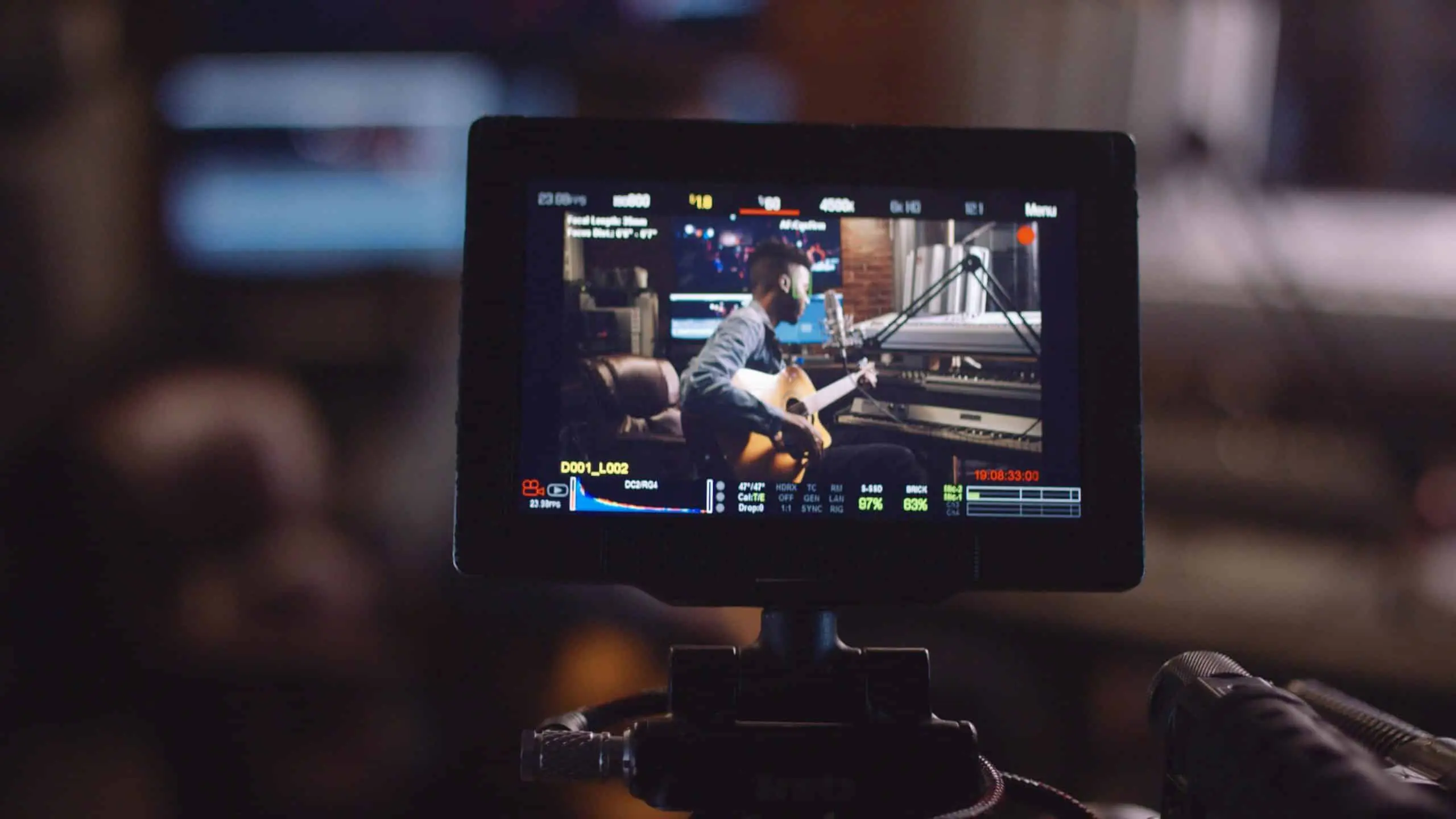
The evolution of audio technology has profoundly shaped the film industry, transforming how stories are told and experienced. From the early days of silent films to today’s high-definition soundscapes, advancements in audio technology have continually enhanced the cinematic experience. Historically, audio technology has progressed from basic sound recording to sophisticated systems that blend seamlessly with visual effects.
Today, we stand at the forefront of new innovations, including high-resolution audio capture, immersive soundscapes, and advanced editing tools. These emerging trends are set to redefine how filmmakers create and audiences experience sound, paving the way for a new era in [film production](https://c-istudios.com/film-and-tv-production/).
## Advances in Audio Capture Technology
The evolution of audio capture technology is perhaps the most impactful change in the filmmaking industry today. High-resolution audio recording has become a significant game-changer, allowing for an unparalleled level of detail and clarity in film soundtracks. Modern [video production](https://c-istudios.com/video-production-services/) gear lists now feature state-of-the-art microphones and recording equipment that can capture sound with breathtaking precision. This enhancement not only improves the overall auditory experience but also ensures that every subtle nuance is preserved, adding depth and realism to the film’s soundscape.
In parallel, the advent of binaural and 3D audio technologies is revolutionizing how audiences experience sound. Binaural audio creates a sense of spatial depth, making it feel as if sounds are emanating from specific locations around the listener. This technology is increasingly being utilized in conjunction with feature [film mastering and delivery](https://c-istudios.com/feature-film-mastering-and-delivery/) techniques to create immersive environments that draw viewers into the narrative. The result is a more engaging and lifelike auditory experience that enhances the storytelling process.
These advancements are not just technical improvements; they are fundamentally transforming how filmmakers approach audio. The ability to capture and deliver sound with such high fidelity opens up new creative possibilities, allowing for more sophisticated sound design and richer auditory experiences. As filmmakers continue to explore these technologies, we can expect to see even more innovative applications that push the boundaries of what’s possible in film sound.
## Innovations in Sound Design and Editing
The field of sound design and editing is undergoing a profound transformation, driven by the integration of artificial intelligence and advanced software tools. AI and machine learning are now being employed to streamline sound design processes, enabling faster and more efficient creation of complex audio elements. These technologies assist in everything from generating sound effects to automating the mixing and mastering processes, significantly reducing the time and effort required for sound design. The role of AI in [creative marketing](https://c-istudios.com/creative-marketing-services/) is expanding, offering new opportunities for innovation in film sound.
Enhanced audio editing software is also making a significant impact on the industry. Recent advancements in this field have led to the development of tools that offer greater precision and flexibility in audio editing. Features such as advanced noise reduction, spatial audio capabilities, and real-time collaboration are becoming standard in modern sound editing suites.
These tools are crucial for filmmakers and sound designers who strive to achieve the highest quality in their audio productions. The evolution of these tools reflects the growing importance of video production content creation and the need for sophisticated solutions in an increasingly competitive market.
As sound design and editing continue to advance, the potential for creating new and unique auditory experiences grows. Filmmakers can now explore a wider range of creative possibilities, pushing the boundaries of how sound can be used to enhance storytelling and engage audiences. The integration of these innovations is set to drive further advancements in film audio technology, paving the way for even more groundbreaking developments in the future.
## Integration of Audio and Visual Technologies
The seamless integration of audio and visual technologies is a hallmark of modern filmmaking, significantly enhancing the overall cinematic experience. One of the most notable developments in this area is the synchronization of audio with [VFX compositing and animation](https://c-istudios.com/vfx-compositing-and-animation-services/). Precise audio synchronization is essential for creating convincing visual effects, as it ensures that sound cues align perfectly with the on-screen action. This integration enhances the realism of visual effects and contributes to a more immersive viewing experience.
In addition to synchronization, audio-driven visual effects are emerging as a powerful tool in film production. These effects utilize audio cues to trigger and shape visual elements, creating a dynamic interplay between sound and imagery. For instance, the intensity of an explosion or the rhythm of a musical score can influence the visual effects in a scene, adding a new layer of interaction between audio and visuals. This approach is transforming how filmmakers craft their stories, offering new ways to captivate and engage audiences.
The evolution of audio and visual integration reflects a broader trend towards more immersive and interactive cinematic experiences. As technology continues to advance, we can expect to see even more innovative applications that push the boundaries of what’s possible in film. The ability to blend audio and visual elements seamlessly is becoming a crucial aspect of modern filmmaking, driving the industry towards new heights of creativity and engagement.
## The Rise of Interactive and Immersive Audio Experiences
The rise of interactive and immersive audio experiences represents a significant shift in how audiences engage with film content. Virtual reality (VR) and augmented reality (AR) technologies are at the forefront of this transformation, offering new possibilities for immersive audio experiences. In VR environments, audio plays a crucial role in creating a sense of presence and immersion. By leveraging spatial audio techniques, filmmakers can craft soundscapes that make viewers feel as if they are part of the virtual world. This approach is revolutionizing the way stories are told and experienced in VR, offering a more interactive and engaging experience.
Similarly, AR technology is enhancing how audio interacts with the real world. By overlaying digital audio elements onto the physical environment, AR creates new opportunities for interactive storytelling. This technology allows for the integration of sound with real-world visuals, adding a layer of depth and interactivity to the viewing experience. The application of audio [live streaming](https://c-istudios.com/video-audio-live-streaming/) and interactive audio elements in AR environments is expanding the possibilities for narrative experiences in film.
The impact of these technologies extends beyond traditional film formats, influencing how content is created and consumed across various platforms. The rise of interactive audio experiences is driving the industry towards more innovative and immersive storytelling techniques, opening up new avenues for creativity and audience engagement. As these technologies continue to evolve, they will play an increasingly important role in shaping the future of film and audio.
## The Impact of Streaming Platforms on Audio Technology
Streaming platforms have become a dominant force in the film industry, driving significant changes in audio technology. One of the major impacts of these platforms is the evolution of audio quality standards. As streaming services compete for viewers, they are continually raising the bar for audio quality, implementing advanced codecs and high-resolution audio formats. This push for superior audio quality is transforming how films are experienced, offering audiences a richer and more detailed auditory experience.
Adaptive streaming technologies are another key development influenced by the rise of streaming platforms. These technologies adjust audio quality based on the viewer’s internet connection, ensuring a smooth and uninterrupted experience regardless of bandwidth limitations. The integration of [web hosting](https://c-istudios.com/web-hosting/) technologies plays a crucial role in delivering high-quality audio content across various devices and platforms. By optimizing audio delivery for different network conditions, streaming platforms are enhancing the accessibility and reliability of film content.
The impact of streaming platforms on audio technology is shaping the future of how films are produced and consumed. As these platforms continue to evolve, they will drive further advancements in audio technology, pushing the boundaries of what is possible in film sound. The ongoing focus on audio quality and adaptive streaming technologies reflects the growing importance of delivering exceptional audio experiences in the competitive world of streaming media.
## Future Trends in Audio Technology for Filmmakers
Looking ahead, several emerging trends in audio technology are poised to shape the future of filmmaking. One of the most exciting areas of development is the emergence of new audio technologies that promise to push the boundaries of what’s possible. Innovations such as advanced spatial audio techniques, next-generation sound processing algorithms, and immersive audio formats are set to revolutionize how filmmakers create and deliver sound.
However, the adoption of these new technologies is not without its challenges. Filmmakers will need to navigate issues such as compatibility with existing systems, the integration of new tools into established workflows, and the potential for increased costs. Addressing these challenges will require ongoing research and development, as well as collaboration between technology providers and content creators.
The potential solutions to these challenges will likely involve advancements in technology infrastructure, improved training and support for filmmakers, and the development of more cost-effective solutions. By addressing these issues proactively, the industry can ensure that the benefits of new audio technologies are realized and that filmmakers are equipped to take full advantage of the latest innovations.
As we look towards the future, it is clear that audio technology will continue to play a pivotal role in the evolution of filmmaking. The ongoing advancements in this field will drive new creative possibilities, enhance storytelling, and offer audiences increasingly immersive and engaging experiences.
## Work with C&I Studios
If you are planning a project like this, our team can take it from concept to final delivery. Explore our [film and TV production](https://c-istudios.com/film-and-tv-production/), browse [our work](https://c-istudios.com/our-work/) to see how we tell brand stories, and [get in touch](https://c-istudios.com/contact/) when you are ready to start.
Originally published July 23, 2024
---
*This content is from [C&I Studios](https://c-istudios.com), a full-service production company.*
---
# Exploring Surround Sound: Enhancing the Viewer Experience with Immersive Audio
> Published: July 22, 2024
> Categories: Film & TV
> Source: https://c-istudios.com/exploring-surround-sound-enhancing-the-viewer-experience-with-immersive-audio/
---
.cib{--paper:#1b1d1f;--ink:#fff;--body:#d5d7d9;--muted:#8b9096;--line:rgba(255,255,255,.12);--thumb:#2b2e31;--card:#212426;--accent:#c02b0a;--blue:#5B8FA8;--serif:'Playfair Display',Georgia,serif;--sans:'Poppins',-apple-system,sans-serif;--measure:900px;background:var(--paper);color:var(--body);font-family:var(--sans);line-height:1.6;position:relative;left:50%;transform:translateX(-50%);width:90vw;max-width:1920px}
.cib *{box-sizing:border-box}
.cib .kicker{max-width:var(--measure);margin:58px auto 0;padding:0 22px;font-size:12.5px;font-weight:700;letter-spacing:2.5px;text-transform:uppercase;color:var(--blue)}
.cib h1.cibh1{text-wrap:balance;font-family:var(--serif);font-weight:500;font-size:clamp(46px,6vw,72px);line-height:1.08;color:var(--ink);max-width:var(--measure);margin:18px auto 0;padding:0 22px;letter-spacing:-.5px}
.cib .metarow{max-width:var(--measure);margin:20px auto 0;padding:0 22px;color:var(--muted);font-size:14px}
.cib .hero{position:relative;width:100%;height:0;padding-bottom:56.25%;overflow:hidden;margin:48px auto 0;border-top:1px solid var(--line);border-bottom:1px solid var(--line)}
.cib .hero .ph{width:100%;aspect-ratio:16/9;background:var(--thumb);border-top:1px solid var(--line);border-bottom:1px solid var(--line);display:flex;align-items:center;justify-content:center;color:#7d8288;font-size:13px;text-align:center;padding:0 20px}
.cib .body{max-width:var(--measure);margin:12px auto 0;padding:52px 22px 6px}
.cib .body.lead p:first-child{font-size:23px;line-height:1.62;color:var(--ink)}
.cib .body p{font-size:18.5px;line-height:1.85;margin:0 0 30px;color:var(--body)}
.cib .body h2{text-wrap:balance;font-family:var(--serif);font-weight:500;font-size:clamp(32px,4vw,48px);line-height:1.22;color:var(--ink);margin:70px 0 20px;letter-spacing:-.3px}
.cib .body h3{text-wrap:balance;font-family:var(--sans);font-weight:600;font-size:22px;color:var(--ink);margin:38px 0 8px}
.cib .body a{color:var(--ink);text-decoration:underline;text-decoration-color:rgba(255,255,255,.4);text-underline-offset:3px}
.cib .body a:hover{text-decoration-color:var(--ink)}
.cib .ctable{width:100%;border-collapse:collapse;margin:16px 0 30px;font-size:16px}
.cib .ctable th{background:#000;color:#fff;text-align:left;padding:10px 12px;font-family:var(--sans)}
.cib .ctable td{padding:10px 12px;border-bottom:1px solid var(--line);color:var(--body)}
.cib .inimg{position:relative;width:100%;height:0;padding-bottom:56.25%;overflow:hidden;margin:72px auto;border-top:1px solid var(--line);border-bottom:1px solid var(--line)}
.cib .inimg .ph{width:100%;aspect-ratio:16/9;background:var(--thumb);border-top:1px solid var(--line);border-bottom:1px solid var(--line);display:flex;align-items:center;justify-content:center;color:#7d8288;font-size:13px}
.cib .origpub{max-width:var(--measure);margin:60px auto 0;padding:26px 22px 0;border-top:1px solid var(--line);color:var(--muted);font-size:13.5px}
.cib .related{max-width:1200px;margin:64px auto 0;padding:34px 22px 76px}
.cib .related h3{font-family:var(--sans);font-size:12.5px;letter-spacing:2px;text-transform:uppercase;color:var(--ink);margin:0 0 24px}
.cib .grid{display:grid;grid-template-columns:repeat(3,1fr);gap:28px}
.cib .rc{background:var(--card);border:1px solid var(--line);display:block;text-decoration:none;color:inherit;transition:border-color .15s}
.cib a.rc:hover{border-color:rgba(255,255,255,.5)}
.cib .rc .thumb{position:relative;width:100%;height:0;padding-bottom:56.25%;background:var(--thumb);overflow:hidden}
.cib .rc .thumb img{position:absolute!important;top:0!important;left:0!important;width:100%!important;height:100%!important;object-fit:cover!important;margin:0!important}
.cib .rc .cc{padding:14px 15px 17px}
.cib .rc .rt{font-family:var(--serif);font-weight:500;font-size:16px;line-height:1.3;color:var(--ink);margin:0 0 6px}
.cib .rc .rm{font-size:11px;letter-spacing:1px;text-transform:uppercase;color:var(--muted)}
.cib img{margin:0!important;padding:0!important;display:block!important;vertical-align:top;max-width:100%}
.cib .hero img,.cib .inimg img{position:absolute!important;top:0!important;left:0!important;width:100%!important;height:100%!important;object-fit:cover!important;margin:0!important;padding:0!important;border:0!important;display:block!important;aspect-ratio:auto!important}
.cib .hero+.body{padding-top:36px}
@media(max-width:760px){.cib .grid{grid-template-columns:1fr}.cib .body h2{margin:52px 0 16px}.cib .body p{font-size:17.5px}.cib .inimg,.cib .hero{margin-top:44px}}
.cib .vembed{max-width:var(--measure);margin:44px auto;padding:0 22px}.cib .vembed .vwrap{position:relative;width:100%;height:0;padding-bottom:56.25%}.cib .vembed .vwrap iframe{position:absolute;top:0;left:0;width:100%;height:100%;border:0}
Film & TV
# Exploring Surround Sound. Enhancing the Viewer Experience with Immersive Audio
17 min read
Surround sound technology has revolutionized audio experiences, enhancing the way we consume media across various platforms. From the immersive soundscapes of blockbuster films to the spatial audio cues in virtual reality, surround sound plays a crucial role in creating engaging and realistic environments. This article delves into the evolution, benefits, and implementation of surround sound, highlighting its impact on modern entertainment and communication technologies.
Explore how this technology elevates storytelling and emotional engagement, offering insights into future advancements and practical applications for both consumers and professionals.
## The Basics of Surround Sound
At its core, surround sound is an audio system designed to envelop the listener in a three-dimensional sound field. Unlike traditional stereo systems that use two channels (left and right), surround sound utilizes multiple audio channels and speakers strategically placed around the listening area. This configuration allows for a more realistic and immersive audio experience, closely mimicking how we perceive sound in the real world.
The most common surround sound configurations include 5.1, 7.1, and more recently, object-based systems like Dolby Atmos. In a 5.1 system, for instance, there are five full-range channels (front left, center, front right, surround left, and surround right) and one low-frequency effects channel (the ".1" in 5.1). This setup enables sounds to be precisely placed and moved around the listener, creating a dynamic and engaging soundscape.
The magic behind surround sound lies in the intricate work of audio engineering. [Audio engineers](https://c-istudios.com/audio-engineering-services/) meticulously mix and position sound across the various channels, considering factors such as volume, timing, and frequency to create a cohesive and realistic audio environment. This process involves not only technical expertise but also a keen artistic sense to enhance the emotional impact of the content.
However, the effectiveness of surround sound is not solely dependent on audio quality. The visual component plays a crucial role in creating a truly immersive experience. This is where [video production](https://c-istudios.com/video-production-services/) comes into play. High-quality visuals that synchronize perfectly with the surround sound create a seamless audio-visual experience. The interplay between what we see and what we hear is carefully orchestrated to draw the viewer deeper into the content.
Understanding the basics of surround sound is essential for both content creators and consumers. For creators, it opens up new avenues for storytelling and audience engagement. For consumers, it provides a foundation for appreciating the intricacies of modern audio technology and making informed decisions when setting up their own audio systems.
As we continue to explore the world of surround sound, we'll see how these basic principles have evolved over time and how they're being applied in various media formats to create increasingly immersive and impactful experiences.
##
## Historical Development of Surround Sound
The journey of surround sound from a novel concept to an industry standard is a testament to human ingenuity and our constant quest for more immersive entertainment experiences. This evolution has had a profound impact on [film and TV production](https://c-istudios.com/film-and-tv-production/), transforming the way stories are told and experienced.
The roots of surround sound can be traced back to the 1940s when Walt Disney released "Fantasia," featuring an early form of surround sound called Fantasound. This system used multiple audio channels and speakers placed around the theater to create a more immersive experience. However, due to the complexity and cost of implementation, it didn't see widespread adoption at the time.
The 1950s and 1960s saw the introduction of stereo sound, which laid the groundwork for future surround sound systems. In 1975, Dolby Laboratories introduced Dolby Stereo, a four-channel analog surround sound format that became popular in cinema. This system included left, center, right, and surround channels, providing a more enveloping audio experience.
The advent of home theater systems in the 1980s and 1990s brought surround sound into people's living rooms. The introduction of Dolby Pro Logic allowed consumers to experience a form of surround sound using their existing stereo VCRs and televisions. This was followed by the development of digital surround sound formats like Dolby Digital and DTS, which offered improved audio quality and more discrete channels.
In the realm of documentary [film production](https://c-istudios.com/film-and-tv-production/), surround sound has opened up new possibilities for immersive storytelling. Nature documentaries, in particular, have benefited greatly from this technology. The ability to recreate the ambient sounds of a rainforest or the underwater world with startling realism has enhanced the educational and emotional impact of these productions.
The 21st century has seen further advancements with the introduction of object-based audio systems like Dolby Atmos and DTS: X. These technologies allow sound to be precisely placed and moved in three-dimensional space, including overhead, creating an even more realistic and immersive experience.
As we look at the historical development of surround sound, it's clear that each advancement has been driven by a desire to create more engaging and realistic audio experiences. From the early experiments in cinema to the sophisticated systems we have today, surround sound has continually pushed the boundaries of what's possible in audio technology.
This evolution has not only enhanced our entertainment experiences but has also influenced the way content is created. Filmmakers, television producers, and game developers now consider surround sound as an integral part of their creative process, using it to add depth, emotion, and impact to their work.
## Benefits of Surround Sound
The implementation of surround sound technology has revolutionized the way we experience media, offering a multitude of benefits that enhance viewer engagement and enjoyment. These advantages are particularly evident in feature films, where surround sound has become an indispensable tool for filmmakers to create immersive cinematic experiences.
One of the primary benefits of surround sound is the enhanced realism it brings to visual content. By distributing audio across multiple channels, surround sound systems can accurately recreate the spatial characteristics of sound in real-life environments. This level of audio fidelity allows viewers to feel as if they're truly present in the scene, whether it's the bustling streets of a city or the eerie silence of a haunted house. The ability to place sounds precisely in a three-dimensional space adds depth and dimension to the viewing experience, making it more engaging and memorable.
In the field of [audio live streaming](https://c-istudios.com/video-audio-live-streaming/), surround sound has opened up new possibilities for remote audiences to feel connected to live events. Concerts, sports events, and even theatrical performances can now be broadcast with immersive audio, allowing viewers at home to experience the event as if they were physically present. This technology has become particularly valuable in recent times, where remote participation in events has become more common.
Emotionally, surround sound has a profound impact on audience engagement. By enveloping the viewer in a cocoon of sound, it can evoke stronger emotional responses to the content. The subtle ambient sounds, the swelling of a musical score, or the directional cues of off-screen action all contribute to a more intense and involving experience. This emotional engagement is crucial in storytelling, helping to build tension, create atmosphere, and draw the audience deeper into the narrative.
When comparing viewer experiences with and without surround sound, the differences are stark. Standard stereo audio, while functional, often fails to capture the full depth and nuance of a scene's soundscape. Surround sound, on the other hand, provides a richer, more textured audio experience that complements and enhances the visual elements.
For content creators, surround sound offers greater creative freedom. It allows for more nuanced sound design, enabling subtle audio cues that can enhance storytelling without relying solely on visual elements. This can be particularly effective in creating atmosphere, building suspense, or guiding the viewer's attention to specific elements of the scene.
As technology continues to advance, the benefits of surround sound are likely to become even more pronounced. With the rise of object-based audio systems and increasingly sophisticated home theater setups, the line between the cinematic experience and home viewing is becoming increasingly blurred, offering viewers unprecedented levels of audio immersion in their own living rooms.
## Implementing Surround Sound in Home Theaters
Creating a home theater system with surround sound can transform an ordinary living room into an immersive entertainment hub. The key to a successful setup lies in understanding the components required and their optimal placement. A comprehensive video production gear list for a home theater typically includes a surround sound receiver, speakers (including a center channel, front left and right speakers, rear surround speakers, and a subwoofer), and high-quality cables.
The heart of any surround sound system is the AV receiver. This device acts as the central hub, processing audio signals and distributing them to the appropriate speakers. When selecting a receiver, consider factors such as the number of channels supported, power output, and compatibility with the latest audio formats like Dolby Atmos or DTS: X.
Speaker placement is crucial for achieving the best surround sound experience. The center channel speaker, responsible for dialogue and central sound effects, should be placed directly above or below the TV. The front left and right speakers should be positioned at ear level, forming an equilateral triangle with the main listening position. Surround speakers are typically placed to the sides or slightly behind the seating area, while height speakers (for Atmos setups) are mounted on the ceiling or use upward-firing drivers.
The subwoofer, which handles low-frequency effects, is more flexible in its positioning. Experiment with different locations in the room to find the spot that provides the most balanced bass response. Some enthusiasts even opt for multiple subwoofers to achieve more even bass distribution throughout the room.
Cable management is an often-overlooked aspect of home theater setup. High-quality cables are essential for maintaining signal integrity and minimizing interference. Consider using cable conduits or in-wall wiring for a cleaner, more professional look.
Acoustics plays a significant role in the overall sound quality of a home theater. Professional photography can be surprisingly useful in this context, not for capturing images, but for identifying potential acoustic issues in the room. By taking wide-angle shots of the space, you can more easily visualize the room's layout and identify areas that might benefit from acoustic treatment. This could include adding absorptive panels to reduce reflections or diffusers to improve sound dispersion.
Calibration is the final step in setting up a surround sound system. Many modern AV receivers come with automatic calibration systems that use a microphone to measure and adjust speaker levels and distances. However, manual fine-tuning can often yield even better results for those willing to invest the time.
It's worth noting that while a full surround sound setup offers the most immersive experience, even a more modest 3.1 system (left, right, center, and subwoofer) can significantly enhance audio quality compared to TV speakers. This scalability allows homeowners to start with a basic setup and gradually expand their system over time.
As home theater technology continues to evolve, we're seeing the emergence of wireless surround sound systems and soundbars with virtualized surround capabilities. While these solutions offer convenience and minimal clutter, they generally can't match the performance of a dedicated wired system with discrete speakers.
Ultimately, implementing surround sound in a home theater is about creating a personalized, immersive space for enjoying media. With careful planning and setup, it's possible to achieve a cinematic audio experience that rivals or even surpasses that of many commercial theaters.
## Surround Sound in Gaming and Virtual Reality
The gaming industry has been at the forefront of adopting and pushing the boundaries of surround sound technology. In the realm of interactive entertainment, immersive audio plays a crucial role in creating believable virtual worlds and enhancing player engagement. The importance of surround sound in gaming cannot be overstated, as it provides players with spatial awareness, emotional cues, and a deeper sense of immersion in the game environment.
Modern games utilize sophisticated audio engines that can dynamically adjust the soundscape based on the player's position and actions within the virtual world. This allows for incredibly realistic audio experiences, where sounds accurately reflect the game's environment, from the echo of footsteps in a cavernous space to the muffled explosions of a distant battlefield.
The integration of surround sound with [VFX compositing and animation](https://c-istudios.com/vfx-compositing-and-animation-services/) in gaming has led to unprecedented levels of realism. As visual effects and animations become more sophisticated, the audio must keep pace to maintain the illusion of a cohesive virtual world. For example, in a racing game, the sound of an opponent's car passing by is precisely synchronized with its visual representation, creating a seamless audio-visual experience that heightens the sense of speed and competition.
Virtual Reality (VR) takes the concept of immersive audio to new heights. In VR environments, accurate spatial audio is not just an enhancement but a necessity. The ability to pinpoint sound sources in a 360-degree space is crucial for creating a sense of presence in virtual worlds. Technologies like binaural audio and head-related transfer functions (HRTF) are used to simulate how sounds interact with the human head and ears, creating incredibly realistic 3D soundscapes even when using headphones.
The gaming industry has also been innovative in its creative marketing of products with immersive audio features. Marketing campaigns often highlight the surround sound capabilities of games, positioning them as key selling points. Trailers and demos frequently showcase the audio design, inviting potential players to "hear the difference" that surround sound can make in their gaming experience.
Game developers and publishers have recognized the value of high-quality audio and often partner with audio technology companies to implement cutting-edge surround sound solutions. These partnerships not only enhance the gaming experience but also serve as powerful marketing tools, associating the game with premium audio quality.
As we look to the future, the integration of surround sound in gaming and VR is likely to become even more sophisticated. Advancements in real-time audio processing, AI-driven sound design, and personalized audio profiles promise to deliver even more immersive and responsive audio experiences. The continued evolution of surround sound in these interactive mediums will undoubtedly play a significant role in shaping the future of entertainment and virtual experiences.
## Case Studies of Surround Sound in Media
The effective implementation of surround sound in various media forms has led to some truly remarkable experiences that have set new standards in the industry. By examining specific case studies, we can gain insights into how surround sound enhances storytelling and audience engagement across different platforms.
In the world of cinema, Christopher Nolan's "Dunkirk" stands out as a masterclass in immersive audio design. The film's sound team utilized a complex 5.1 surround sound mix to create a visceral experience of war. The constant, almost subliminal ticking sound that permeates the film creates a sense of urgency and tension, while the thunderous explosions and whizzing bullets make viewers feel as if they're on the beach alongside the soldiers. This meticulous sound design significantly contributed to the film's critical acclaim and audience appreciation.
Television has also embraced surround sound to enhance storytelling. The HBO series "Game of Thrones" is renowned for its immersive audio experience. The show's sound designers used surround sound to bring the fantastical world of Westeros to life, from the subtle ambiance of wind whistling through the castle corridors to the all-encompassing roar of dragon fire. This attention to audio detail helped create a rich, believable world that kept viewers engaged throughout the series' run.
In the realm of music, Björk's "Biophilia" album and accompanying app showcased innovative use of surround sound in a multimedia context. The project allowed listeners to explore the music in a 3D space, with different elements of the songs positioned around them. This unique approach to music presentation demonstrated how surround sound could be used creatively beyond traditional media formats.
The role of [branding and graphic design](https://c-istudios.com/branding-and-graphic-design-services/) in promoting surround sound experiences is evident in how products like Dolby Atmos are marketed. Dolby's visual branding, with its distinctive logo and sleek design aesthetics, has become synonymous with high-quality audio experiences. This branding extends to partner products, creating a visual language that consumers associate with premium surround sound.
Media marketing consultation strategies for showcasing surround sound features often focus on creating experiences that allow consumers to hear the difference for themselves. For instance, cinema chains have set up demo rooms where potential customers can experience the latest surround sound technologies. Similarly, audio equipment manufacturers often sponsor listening events or partner with content creators to showcase their technologies in real-world applications.
These case studies demonstrate that the successful implementation of surround sound goes beyond technical excellence. It requires a holistic approach that considers how audio enhances the overall narrative, engages the audience emotionally, and integrates with visual elements and marketing strategies. As surround sound technology continues to evolve, we can expect to see even more innovative applications that push the boundaries of immersive media experiences.
## Future Trends in Surround Sound Technology
As we look to the horizon of audio technology, several exciting trends are emerging that promise to further revolutionize our experience of surround sound. These advancements are not only enhancing the quality of audio but also making immersive sound more accessible and versatile across various platforms.
One of the most promising developments is the continued evolution of object-based audio systems. Technologies like Dolby Atmos and Sony's 360 Reality Audio are pushing the boundaries of what's possible in spatial audio. These systems allow sound engineers to place audio objects precisely in a three-dimensional space, creating a more realistic and enveloping soundscape. As this technology becomes more widespread, we can expect to see its implementation not just in high-end home theaters, but also in mainstream consumer devices like smartphones and smart speakers.
Artificial Intelligence (AI) is set to play a significant role in the future of surround sound. AI algorithms can analyze and optimize audio in real time, adjusting the sound based on the listener's environment and preferences. This could lead to personalized audio experiences that adapt to individual listening habits and room acoustics, ensuring optimal sound quality regardless of the setup.
The integration of surround sound with augmented reality (AR) and virtual reality (VR) technologies is another exciting frontier. As AR and VR become more prevalent in both entertainment and professional applications, the demand for highly accurate and responsive spatial audio will increase. This could lead to the development of more sophisticated binaural rendering techniques and head-tracking systems that provide ultra-realistic 3D audio experiences.
In the realm of web development, we're seeing a growing trend towards spatial audio for web-based applications. As browsers become more capable of handling complex audio processing, we may soon see immersive audio experiences delivered directly through web platforms. This could revolutionize online media consumption, from virtual concerts to interactive storytelling experiences.
The role of [web hosting](https://c-istudios.com/web-hosting/) in supporting advanced audio technologies is also evolving. As streaming becomes the primary method of media consumption, hosting platforms are adapting to handle the increased bandwidth and processing requirements of high-quality surround sound audio. We may see the emergence of specialized hosting solutions optimized for delivering immersive audio content efficiently.
Wireless technology is another area of rapid development. As Wi-Fi and Bluetooth standards continue to improve, we're moving closer to truly wireless surround sound systems that don't compromise on audio quality. This could make high-end surround sound setups more accessible to the average consumer by eliminating the need for complex wiring.
Looking further ahead, we might see the emergence of more exotic technologies like sound field synthesis, which aims to recreate the exact physical properties of sound waves in a given space. While currently limited to research environments, such technologies could eventually lead to surround sound experiences that are indistinguishable from reality.
As these technologies develop, we can expect to see surround sound become an even more integral part of our daily media consumption. From more immersive gaming experiences to virtual business meetings that feel like in-person interactions, the applications of advanced surround sound are vast and varied.
Despite these challenges, the future of surround sound looks bright and full of potential. As technology continues to evolve, we can look forward to audio experiences that are more immersive, more personalized, and more seamlessly integrated into our digital lives than ever before.
## Work with C&I Studios
If you are planning a project like this, our team can take it from concept to final delivery. Explore our [film and TV production](https://c-istudios.com/film-and-tv-production/), browse [our work](https://c-istudios.com/our-work/) to see how we tell brand stories, and [get in touch](https://c-istudios.com/contact/) when you are ready to start.
Originally published July 22, 2024
---
*This content is from [C&I Studios](https://c-istudios.com), a full-service production company.*
---
# The Role of Social Signals in Video SEO: Leveraging Social Media for Visibility
> Published: July 21, 2024
> Categories: Web & Tech
> Source: https://c-istudios.com/the-role-of-social-signals-in-video-seo-leveraging-social-media-for-visibility/
---
.cib{--paper:#1b1d1f;--ink:#fff;--body:#d5d7d9;--muted:#8b9096;--line:rgba(255,255,255,.12);--thumb:#2b2e31;--card:#212426;--accent:#c02b0a;--blue:#5B8FA8;--serif:'Playfair Display',Georgia,serif;--sans:'Poppins',-apple-system,sans-serif;--measure:900px;background:var(--paper);color:var(--body);font-family:var(--sans);line-height:1.6;position:relative;left:50%;transform:translateX(-50%);width:90vw;max-width:1920px}
.cib *{box-sizing:border-box}
.cib .kicker{max-width:var(--measure);margin:58px auto 0;padding:0 22px;font-size:12.5px;font-weight:700;letter-spacing:2.5px;text-transform:uppercase;color:var(--blue)}
.cib h1.cibh1{text-wrap:balance;font-family:var(--serif);font-weight:500;font-size:clamp(46px,6vw,72px);line-height:1.08;color:var(--ink);max-width:var(--measure);margin:18px auto 0;padding:0 22px;letter-spacing:-.5px}
.cib .metarow{max-width:var(--measure);margin:20px auto 0;padding:0 22px;color:var(--muted);font-size:14px}
.cib .hero{position:relative;width:100%;height:0;padding-bottom:56.25%;overflow:hidden;margin:48px auto 0;border-top:1px solid var(--line);border-bottom:1px solid var(--line)}
.cib .hero .ph{width:100%;aspect-ratio:16/9;background:var(--thumb);border-top:1px solid var(--line);border-bottom:1px solid var(--line);display:flex;align-items:center;justify-content:center;color:#7d8288;font-size:13px;text-align:center;padding:0 20px}
.cib .body{max-width:var(--measure);margin:12px auto 0;padding:52px 22px 6px}
.cib .body.lead p:first-child{font-size:23px;line-height:1.62;color:var(--ink)}
.cib .body p{font-size:18.5px;line-height:1.85;margin:0 0 30px;color:var(--body)}
.cib .body h2{text-wrap:balance;font-family:var(--serif);font-weight:500;font-size:clamp(32px,4vw,48px);line-height:1.22;color:var(--ink);margin:70px 0 20px;letter-spacing:-.3px}
.cib .body h3{text-wrap:balance;font-family:var(--sans);font-weight:600;font-size:22px;color:var(--ink);margin:38px 0 8px}
.cib .body a{color:var(--ink);text-decoration:underline;text-decoration-color:rgba(255,255,255,.4);text-underline-offset:3px}
.cib .body a:hover{text-decoration-color:var(--ink)}
.cib .ctable{width:100%;border-collapse:collapse;margin:16px 0 30px;font-size:16px}
.cib .ctable th{background:#000;color:#fff;text-align:left;padding:10px 12px;font-family:var(--sans)}
.cib .ctable td{padding:10px 12px;border-bottom:1px solid var(--line);color:var(--body)}
.cib .inimg{position:relative;width:100%;height:0;padding-bottom:56.25%;overflow:hidden;margin:72px auto;border-top:1px solid var(--line);border-bottom:1px solid var(--line)}
.cib .inimg .ph{width:100%;aspect-ratio:16/9;background:var(--thumb);border-top:1px solid var(--line);border-bottom:1px solid var(--line);display:flex;align-items:center;justify-content:center;color:#7d8288;font-size:13px}
.cib .origpub{max-width:var(--measure);margin:60px auto 0;padding:26px 22px 0;border-top:1px solid var(--line);color:var(--muted);font-size:13.5px}
.cib .related{max-width:1200px;margin:64px auto 0;padding:34px 22px 76px}
.cib .related h3{font-family:var(--sans);font-size:12.5px;letter-spacing:2px;text-transform:uppercase;color:var(--ink);margin:0 0 24px}
.cib .grid{display:grid;grid-template-columns:repeat(3,1fr);gap:28px}
.cib .rc{background:var(--card);border:1px solid var(--line);display:block;text-decoration:none;color:inherit;transition:border-color .15s}
.cib a.rc:hover{border-color:rgba(255,255,255,.5)}
.cib .rc .thumb{position:relative;width:100%;height:0;padding-bottom:56.25%;background:var(--thumb);overflow:hidden}
.cib .rc .thumb img{position:absolute!important;top:0!important;left:0!important;width:100%!important;height:100%!important;object-fit:cover!important;margin:0!important}
.cib .rc .cc{padding:14px 15px 17px}
.cib .rc .rt{font-family:var(--serif);font-weight:500;font-size:16px;line-height:1.3;color:var(--ink);margin:0 0 6px}
.cib .rc .rm{font-size:11px;letter-spacing:1px;text-transform:uppercase;color:var(--muted)}
.cib img{margin:0!important;padding:0!important;display:block!important;vertical-align:top;max-width:100%}
.cib .hero img,.cib .inimg img{position:absolute!important;top:0!important;left:0!important;width:100%!important;height:100%!important;object-fit:cover!important;margin:0!important;padding:0!important;border:0!important;display:block!important;aspect-ratio:auto!important}
.cib .hero+.body{padding-top:36px}
@media(max-width:760px){.cib .grid{grid-template-columns:1fr}.cib .body h2{margin:52px 0 16px}.cib .body p{font-size:17.5px}.cib .inimg,.cib .hero{margin-top:44px}}
.cib .vembed{max-width:var(--measure);margin:44px auto;padding:0 22px}.cib .vembed .vwrap{position:relative;width:100%;height:0;padding-bottom:56.25%}.cib .vembed .vwrap iframe{position:absolute;top:0;left:0;width:100%;height:100%;border:0}
Web & Tech
# The Role of Social Signals in Video SEO. Leveraging Social Media for Visibility
13 min read
In today’s digital landscape, video SEO has become a crucial element for online visibility and engagement. With the rise of social media, social signals have emerged as significant factors influencing video SEO. These signals, including likes, shares, comments, and overall interactions, can greatly enhance a video's visibility on search engines.
This article explores how leveraging social media for video SEO can boost your online presence and why professional services can optimize this process effectively.
## Understanding Social Signals
Social signals refer to the engagement metrics that videos receive on social media platforms. These include likes, shares, comments, retweets, and other forms of interaction. Search engines like Google consider these signals when determining the relevance and popularity of video content. The more engagement a video has, the higher it is likely to rank in search results.
The relationship between social signals and search engine algorithms is complex. While direct correlations can be challenging to pinpoint, there is a consensus that social signals contribute to a video’s overall SEO performance. High engagement rates suggest that content is valuable and relevant to users, which can lead to better rankings.
Content creation plays a pivotal role in generating social signals. Creating compelling, share-worthy content encourages users to interact with and distribute the video across their networks. [Social media marketing](https://c-istudios.com/social-media-marketing-services/) can amplify this effect by strategically promoting videos to reach a broader audience, thereby increasing the potential for higher engagement.
For instance, a well-crafted video that tells a compelling story or offers valuable information is more likely to be shared, liked, and commented on. This engagement sends positive signals to search engines, indicating that the content is worth promoting. In turn, this can lead to higher rankings and greater visibility.
To maximize the impact of social signals, it’s essential to understand the nuances of each platform. Different social media sites have varying user behaviors and preferences, which can influence how content is received. Tailoring content to suit these platforms can enhance engagement and boost SEO performance.
In short, social signals are a critical component of video SEO. They reflect user engagement and help search engines determine the value and relevance of video content. By focusing on content creation and leveraging social media marketing services, creators can boost their videos' visibility and ranking.
## The Importance of Social Media Platforms
Social media platforms are instrumental in distributing video content and generating social signals. Each platform offers unique opportunities to enhance video SEO and reach diverse audiences. Understanding the strengths and characteristics of major platforms such as Facebook, Twitter, Instagram, YouTube, and LinkedIn can help in strategically leveraging them for video SEO.
Facebook is a powerhouse for video content, offering features like autoplay and live streaming that encourage user engagement. Videos on Facebook can quickly go viral due to its extensive sharing capabilities and the platform’s algorithm that prioritizes video content. Engaging with users through comments and shares can significantly boost a video's reach and visibility.
Twitter’s real-time nature makes it ideal for sharing timely and relevant video content. Tweets with video content tend to receive more engagement compared to text-only tweets. Utilizing hashtags and engaging in trending topics can further amplify a video’s reach on Twitter.
Instagram, known for its visual focus, is perfect for short, visually appealing videos. Features like Stories, IGTV, and Reels provide multiple avenues for video content. Instagram’s algorithm favors high engagement rates, so videos that receive a lot of likes and comments are more likely to appear in users' feeds.
YouTube is the second-largest search engine globally and a crucial platform for video SEO. Properly optimizing video titles, descriptions, and tags can enhance visibility on YouTube. Encouraging viewers to like, comment, and subscribe can generate social signals that improve search rankings.
LinkedIn is increasingly becoming a vital platform for video content, especially for B2B marketing. Videos on LinkedIn can position brands as thought leaders and industry experts. Sharing informative and professional videos can generate significant engagement, enhancing SEO efforts.
[Video production](https://c-istudios.com/video-production-services/) quality is paramount across all these platforms. High-quality videos are more likely to be shared and engaged with, generating positive social signals. Investing in professional [video production](https://c-istudios.com/video-production-services/) ensures that content is visually appealing and meets the technical standards required by different platforms.
Creative marketing strategies are essential to maximize engagement. This includes creating eye-catching thumbnails, engaging titles, and interactive content that encourages viewers to participate. For instance, a creative campaign that integrates user-generated content can significantly boost social signals.
Each social media platform offers unique advantages for video SEO. By understanding and leveraging these platforms, and focusing on high-quality video production and creative marketing strategies, content creators can enhance their videos’ visibility and engagement.
## Strategies for Leveraging Social Media for Video SEO
Effective strategies for leveraging social media to enhance video SEO involve a combination of best practices in posting, optimizing content, and encouraging audience interaction. These strategies can significantly boost engagement and visibility, contributing to improved SEO performance.
Posting videos on social media requires a strategic approach. It’s important to post at times when your audience is most active. This varies across platforms and can be determined by analyzing engagement metrics. Consistency is also key; regularly posting high-quality content keeps your audience engaged and encourages frequent interaction.
Well-crafted descriptions with relevant keywords can improve a video's searchability. [SEO copywriting](https://c-istudios.com/seo-copywriting-services/) plays a crucial role in optimizing video descriptions and titles. Titles should be compelling and include primary keywords to attract viewers and enhance SEO. Additionally, including hashtags in descriptions can further increase visibility by categorizing content and making it discoverable in searches.
Professional photography is essential for creating attractive thumbnails. Thumbnails serve as the first impression of a video and can significantly influence click-through rates. High-quality, eye-catching thumbnails can draw viewers in, increasing the likelihood of engagement.
Encouraging audience interaction is another vital strategy. Calls-to-action (CTAs) at the end of videos can prompt viewers to like, comment, and share the content. Contests and giveaways can also boost engagement by incentivizing viewers to interact with the video. For example, a contest that requires viewers to share a video for a chance to win a prize can generate a lot of social signals.
Timing and frequency of posts are critical for maintaining audience interest and maximizing engagement. Posting too frequently can overwhelm your audience, while infrequent posting can lead to disengagement. Finding the right balance is key to keeping your audience engaged without appearing spammy.
Live streaming is an effective way to engage with audiences in real-time. Live videos often receive higher engagement rates as they create a sense of urgency and exclusivity. Viewers are more likely to comment, like, and share live content, which generates valuable social signals.
Collaborations with influencers and other brands can expand your reach and introduce your content to new audiences. Influencers can promote your videos to their followers, generating additional engagement and social signals.
Leveraging social media for video SEO requires a strategic approach to posting, optimizing content, and encouraging audience interaction. By focusing on SEO copywriting, high-quality professional photography for thumbnails, and engaging CTAs, content creators can significantly enhance their videos’ visibility and engagement.
## Measuring the Impact of Social Signals on Video SEO
Measuring the impact of social signals on video SEO involves tracking various engagement metrics and analyzing the data to refine strategies. Understanding these metrics can help you gauge the effectiveness of your social media efforts and make informed decisions to improve SEO performance.
Key metrics for evaluating social signals include engagement rates, reach, impressions, and the number of likes, shares, and comments. High engagement rates indicate that your content resonates with the audience, which can positively influence SEO. Reach and impressions provide insights into how many people have seen your content, while likes shares, and comments reflect direct interactions.
Tools and techniques for tracking social media performance are essential for gaining detailed insights. Platforms like Google Analytics, Facebook Insights, and Twitter Analytics offer comprehensive data on engagement metrics. These tools allow you to monitor trends, identify successful content, and understand audience behavior.
The role of web development and web hosting in supporting video SEO cannot be overstated. A well-developed website with fast loading times and a seamless user experience can improve engagement and retention rates. Reliable web hosting ensures that your videos are accessible and play smoothly, reducing bounce rates and enhancing user experience.
Analyzing data to refine [social media](https://c-istudios.com/social-media-marketing-services/) strategies involves looking at both quantitative and qualitative metrics. Quantitative metrics include numerical data such as likes, shares, and comments, while qualitative metrics involve sentiment analysis and audience feedback. Combining these insights can provide a holistic view of your social media performance.
For example, if you notice that videos with certain types of content or formats receive higher engagement, you can adjust your strategy to focus more on these successful elements. Similarly, if engagement drops during specific times or on certain platforms, you can investigate and adjust your posting schedule or content strategy accordingly.
Using social media analytics tools, you can also track the effectiveness of different campaigns and promotions. By comparing the performance of various strategies, you can identify which approaches generate the most social signals and optimize your efforts accordingly.
Regularly reviewing and updating your social media strategy is crucial for maintaining high engagement and improving SEO performance. Social media trends and algorithms are constantly evolving, so staying up-to-date and flexible in your approach can help you stay ahead of the competition.
Measuring the impact of social signals on video SEO involves tracking key metrics, using analytics tools, and refining strategies based on data insights. The support of web development and web hosting is essential for ensuring a seamless user experience and enhancing SEO performance. By continuously analyzing and optimizing your social media efforts, you can improve your videos’ visibility and engagement.
## Case Studies and Examples
Examining case studies and examples of successful video SEO campaigns can provide valuable insights into the effectiveness of leveraging social signals. These real-world examples illustrate how different strategies can generate significant social signals and improve SEO performance.
One notable case is a technology company that utilized [documentary film production](https://c-istudios.com/vfx-compositing-and-animation-services/) techniques to create engaging video content. The company produced a series of behind-the-scenes documentaries showcasing its product development process. These videos were shared across multiple social media platforms and received high engagement rates. The use of storytelling and high-quality production values captured viewers’ attention, leading to increased likes, shares, and comments. This positive engagement contributed to higher search engine rankings and greater visibility for their videos.
Another example involves a fashion brand that leveraged branding and graphic design to enhance its video content. The brand created visually stunning videos that highlighted their latest collections, incorporating vibrant graphics and compelling animations. These videos were promoted on social media channels, where they quickly gained traction. The high level of engagement generated by these visually appealing videos helped boost the brand’s SEO performance, resulting in increased organic traffic and improved search rankings.
A fitness influencer successfully used creative marketing strategies to engage their audience and enhance video SEO. By creating interactive workout videos and encouraging viewers to participate in challenges, the influencer generated significant social signals. Viewers were prompted to share their progress on social media, using a specific hashtag. This user-generated content not only increased engagement but also created a sense of community and brand loyalty.
The role of media marketing consultation is evident in a case where a non-profit organization partnered with a marketing agency to optimize its video SEO strategy. The agency conducted a thorough analysis of the organization’s target audience and social media performance. Based on these insights, they developed a tailored content strategy that included compelling storytelling, optimized video descriptions, and strategic posting schedules. The result was a substantial increase in social signals, higher engagement rates, and improved visibility for the organization’s videos.
Another case study involves a travel company that utilized a video production gear list to enhance the quality of its video content. By investing in high-quality cameras, microphones, and lighting equipment, the company produced professional-grade videos that captured the beauty of various travel destinations. These videos were shared on social media platforms, where they received high engagement rates. The superior production quality and visually appealing content helped boost the company’s SEO performance, leading to increased organic traffic and higher search rankings.
In summary, these case studies and examples demonstrate the effectiveness of leveraging social signals for video SEO. By utilizing techniques such as documentary [film production](https://c-istudios.com/film-and-tv-production/), branding and graphic design, and creative marketing, organizations can create engaging video content that generates significant social signals. Professional support, such as media marketing consultation, can further enhance these efforts, ensuring optimal SEO performance and visibility.
## Overcoming Challenges in Leveraging Social Signals
While leveraging social signals for video SEO offers numerous benefits, it also presents certain challenges. Understanding these challenges and developing strategies to overcome them is crucial for maximizing the impact of social signals on SEO performance.
One common challenge is the ever-changing nature of social media algorithms. Platforms like Facebook, Instagram, and YouTube frequently update their algorithms, affecting how content is displayed and prioritized. Staying informed about these changes and adapting your strategy accordingly is essential for maintaining high engagement rates and generating social signals.
Content saturation is another challenge, as the sheer volume of content on social media can make it difficult for your videos to stand out. To overcome this, focusing on [creative marketing](https://c-istudios.com/creative-marketing-services/) strategies that capture attention and resonate with your audience is vital. This includes creating unique, high-quality content that offers value and engages viewers.
Managing social media interactions can also be challenging, especially for larger organizations. Responding to comments, engaging with viewers, and monitoring social signals require time and resources. Utilizing social media management tools and delegating tasks to a dedicated team can help streamline this process and ensure consistent engagement.
The role of media marketing consultation is significant in addressing these challenges. Professional consultants can provide strategic insights and recommendations to optimize your social media efforts. They can help you understand platform-specific algorithms, develop effective content strategies, and identify opportunities for increasing engagement.
Ensuring the right equipment with a comprehensive video production gear list is crucial for maintaining high production quality. High-quality videos are more likely to generate social signals, as they offer a better viewing experience and are perceived as more professional. Investing in the right gear, such as cameras, microphones, and lighting, can enhance the visual and audio quality of your videos.
Another challenge is measuring the ROI of social media efforts. While social signals can significantly impact SEO, quantifying their direct contribution to business outcomes can be complex. Using advanced analytics tools and tracking specific metrics can provide a clearer picture of the ROI and help refine your strategy.
Maintaining a consistent posting schedule is essential for keeping your audience engaged and generating social signals. Irregular posting can lead to decreased engagement and visibility. Planning and scheduling content in advance can ensure a steady stream of high-quality videos that keep your audience interested.
Overcoming challenges in leveraging social signals for video SEO requires staying informed about algorithm changes, focusing on creative marketing, and utilizing professional support through media marketing consultation. Ensuring high production quality with a comprehensive video production gear list and maintaining a consistent posting schedule can further enhance your efforts. By addressing these challenges, you can maximize the impact of social signals on your video SEO performance.
## Work with C&I Studios
If you are planning a project like this, our team can take it from concept to final delivery. Explore our [AI video services](https://c-istudios.com/ai-video-services/), browse [our work](https://c-istudios.com/our-work/) to see how we tell brand stories, and [get in touch](https://c-istudios.com/contact/) when you are ready to start.
Originally published July 21, 2024
---
*This content is from [C&I Studios](https://c-istudios.com), a full-service production company.*
---
# Exploring Hybrid Event Solutions: Combining In-Person and Livestream Experiences
> Published: July 20, 2024
> Categories: Web & Tech
> Source: https://c-istudios.com/exploring-hybrid-event-solutions-combining-in-person-and-livestream-experiences/
---
.cib{--paper:#1b1d1f;--ink:#fff;--body:#d5d7d9;--muted:#8b9096;--line:rgba(255,255,255,.12);--thumb:#2b2e31;--card:#212426;--accent:#c02b0a;--blue:#5B8FA8;--serif:'Playfair Display',Georgia,serif;--sans:'Poppins',-apple-system,sans-serif;--measure:900px;background:var(--paper);color:var(--body);font-family:var(--sans);line-height:1.6;position:relative;left:50%;transform:translateX(-50%);width:90vw;max-width:1920px}
.cib *{box-sizing:border-box}
.cib .kicker{max-width:var(--measure);margin:58px auto 0;padding:0 22px;font-size:12.5px;font-weight:700;letter-spacing:2.5px;text-transform:uppercase;color:var(--blue)}
.cib h1.cibh1{text-wrap:balance;font-family:var(--serif);font-weight:500;font-size:clamp(46px,6vw,72px);line-height:1.08;color:var(--ink);max-width:var(--measure);margin:18px auto 0;padding:0 22px;letter-spacing:-.5px}
.cib .metarow{max-width:var(--measure);margin:20px auto 0;padding:0 22px;color:var(--muted);font-size:14px}
.cib .hero{position:relative;width:100%;height:0;padding-bottom:56.25%;overflow:hidden;margin:48px auto 0;border-top:1px solid var(--line);border-bottom:1px solid var(--line)}
.cib .hero .ph{width:100%;aspect-ratio:16/9;background:var(--thumb);border-top:1px solid var(--line);border-bottom:1px solid var(--line);display:flex;align-items:center;justify-content:center;color:#7d8288;font-size:13px;text-align:center;padding:0 20px}
.cib .body{max-width:var(--measure);margin:12px auto 0;padding:52px 22px 6px}
.cib .body.lead p:first-child{font-size:23px;line-height:1.62;color:var(--ink)}
.cib .body p{font-size:18.5px;line-height:1.85;margin:0 0 30px;color:var(--body)}
.cib .body h2{text-wrap:balance;font-family:var(--serif);font-weight:500;font-size:clamp(32px,4vw,48px);line-height:1.22;color:var(--ink);margin:70px 0 20px;letter-spacing:-.3px}
.cib .body h3{text-wrap:balance;font-family:var(--sans);font-weight:600;font-size:22px;color:var(--ink);margin:38px 0 8px}
.cib .body a{color:var(--ink);text-decoration:underline;text-decoration-color:rgba(255,255,255,.4);text-underline-offset:3px}
.cib .body a:hover{text-decoration-color:var(--ink)}
.cib .ctable{width:100%;border-collapse:collapse;margin:16px 0 30px;font-size:16px}
.cib .ctable th{background:#000;color:#fff;text-align:left;padding:10px 12px;font-family:var(--sans)}
.cib .ctable td{padding:10px 12px;border-bottom:1px solid var(--line);color:var(--body)}
.cib .inimg{position:relative;width:100%;height:0;padding-bottom:56.25%;overflow:hidden;margin:72px auto;border-top:1px solid var(--line);border-bottom:1px solid var(--line)}
.cib .inimg .ph{width:100%;aspect-ratio:16/9;background:var(--thumb);border-top:1px solid var(--line);border-bottom:1px solid var(--line);display:flex;align-items:center;justify-content:center;color:#7d8288;font-size:13px}
.cib .origpub{max-width:var(--measure);margin:60px auto 0;padding:26px 22px 0;border-top:1px solid var(--line);color:var(--muted);font-size:13.5px}
.cib .related{max-width:1200px;margin:64px auto 0;padding:34px 22px 76px}
.cib .related h3{font-family:var(--sans);font-size:12.5px;letter-spacing:2px;text-transform:uppercase;color:var(--ink);margin:0 0 24px}
.cib .grid{display:grid;grid-template-columns:repeat(3,1fr);gap:28px}
.cib .rc{background:var(--card);border:1px solid var(--line);display:block;text-decoration:none;color:inherit;transition:border-color .15s}
.cib a.rc:hover{border-color:rgba(255,255,255,.5)}
.cib .rc .thumb{position:relative;width:100%;height:0;padding-bottom:56.25%;background:var(--thumb);overflow:hidden}
.cib .rc .thumb img{position:absolute!important;top:0!important;left:0!important;width:100%!important;height:100%!important;object-fit:cover!important;margin:0!important}
.cib .rc .cc{padding:14px 15px 17px}
.cib .rc .rt{font-family:var(--serif);font-weight:500;font-size:16px;line-height:1.3;color:var(--ink);margin:0 0 6px}
.cib .rc .rm{font-size:11px;letter-spacing:1px;text-transform:uppercase;color:var(--muted)}
.cib img{margin:0!important;padding:0!important;display:block!important;vertical-align:top;max-width:100%}
.cib .hero img,.cib .inimg img{position:absolute!important;top:0!important;left:0!important;width:100%!important;height:100%!important;object-fit:cover!important;margin:0!important;padding:0!important;border:0!important;display:block!important;aspect-ratio:auto!important}
.cib .hero+.body{padding-top:36px}
@media(max-width:760px){.cib .grid{grid-template-columns:1fr}.cib .body h2{margin:52px 0 16px}.cib .body p{font-size:17.5px}.cib .inimg,.cib .hero{margin-top:44px}}
.cib .vembed{max-width:var(--measure);margin:44px auto;padding:0 22px}.cib .vembed .vwrap{position:relative;width:100%;height:0;padding-bottom:56.25%}.cib .vembed .vwrap iframe{position:absolute;top:0;left:0;width:100%;height:100%;border:0}
Web & Tech
# Exploring Hybrid Event Solutions. Combining In-Person and Livestream Experiences
16 min read
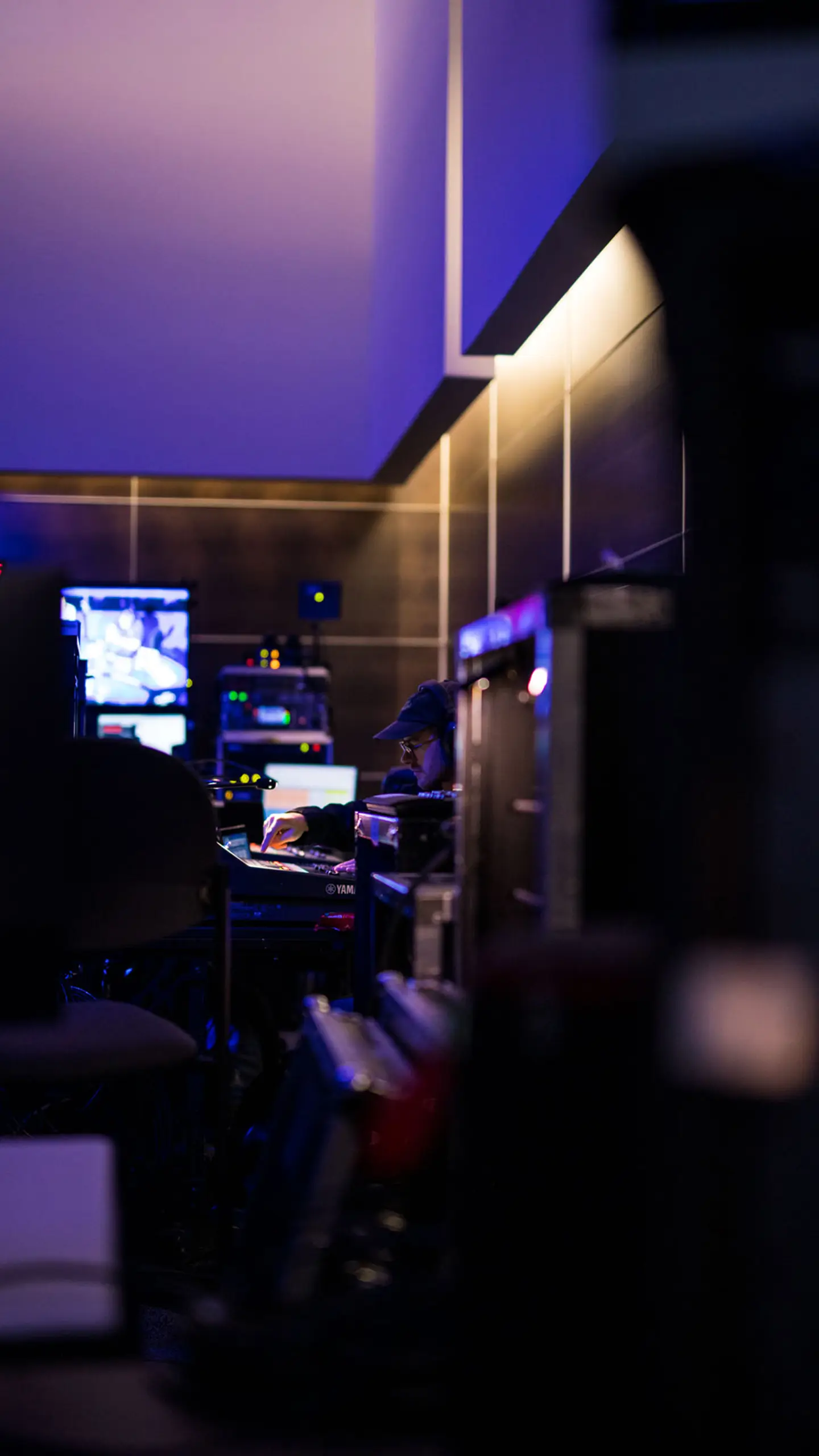
In today's rapidly evolving event landscape, hybrid events have emerged as a powerful solution, blending the best of both in-person and virtual experiences. These innovative gatherings offer unprecedented flexibility, allowing organizers to reach wider audiences while maintaining the irreplaceable energy of face-to-face interactions. As the world continues to adapt to changing circumstances, hybrid events have become not just a temporary fix, but a long-term strategy for maximizing engagement and impact.
This comprehensive guide will explore the intricacies of hybrid events, from their evolution and planning to the cutting-edge technologies that make them possible. We'll delve into strategies for engaging diverse audiences, creating compelling content, and measuring success.
## The Evolution of Hybrid Events
The concept of hybrid events has its roots in the early days of live-streaming technology. As internet speeds improved and video platforms became more sophisticated, event organizers began experimenting with ways to extend their reach beyond physical venues. However, it wasn't until the global pandemic of 2020 that hybrid events truly came into their own, revolutionizing the way we think about gatherings and conferences.
In the face of widespread travel restrictions and social distancing measures, the events industry was forced to adapt quickly. Many organizations pivoted to fully virtual events but soon realized the limitations of this approach. Attendees missed the networking opportunities and immersive experiences that in-person events provided. This realization led to the rapid development and refinement of hybrid event models, which aim to offer the best of both worlds.
The role of [content creation](https://c-istudios.com/content-creation-services/) in hybrid events cannot be overstated. With attendees participating both in-person and remotely, the need for engaging, high-quality content has never been greater. Event organizers must now think like media producers, crafting narratives and experiences that translate effectively across multiple platforms. This shift has led to increased collaboration with professional content creators who can help develop compelling stories and visuals that resonate with diverse audiences.
[Video production](https://c-istudios.com/video-production-services/) has become a cornerstone of successful hybrid events. No longer limited to simple live streams, today's hybrid events often feature multi-camera setups, professional lighting, and sophisticated graphics. This elevated production value helps bridge the gap between in-person and remote attendees, creating a more cohesive and engaging experience for all participants.
Successful hybrid events have demonstrated the potential of this format. For example, the Consumer Electronics Show (CES) in 2021 seamlessly blended virtual product demonstrations with limited in-person experiences, reaching a global audience while maintaining the excitement of new technology unveilings. Similarly, TED Conferences have embraced a hybrid model, allowing their thought-provoking talks to reach millions online while preserving the intimacy of their in-person events.
The benefits of hybrid events extend beyond increased reach. They offer greater flexibility for attendees, reduce travel costs and carbon footprints, and provide valuable data insights that can inform future event strategies. As technology continues to evolve and audience expectations shift, hybrid events are poised to become an integral part of the event industry landscape.
## Planning a Hybrid Event
The success of a hybrid event hinges on careful planning and strategic decision-making. Unlike traditional events, hybrid gatherings require organizers to consider the needs of two distinct audience segments simultaneously. This complexity demands a thoughtful approach to every aspect of event planning, from setting objectives to selecting the right venue and technology infrastructure.
The first step in planning a hybrid event is to clearly define your objectives. What do you hope to achieve? Are you looking to increase brand awareness, generate leads, or facilitate knowledge sharing? Understanding your goals will guide every subsequent decision and help you measure success after the event.
Equally important is defining your target audience. Who are you trying to reach, and what are their preferences and expectations? Consider conducting surveys or focus groups to gain insights into what potential attendees are looking for in a hybrid event experience. This information will be invaluable as you shape your event strategy.
Venue selection is of new importance in the context of hybrid events. In addition to considering factors like capacity and amenities, you'll need to ensure that your chosen venue has the technological infrastructure to support high-quality live-streaming. This may include robust internet connectivity, appropriate lighting, and space for production equipment.
Integrating [media marketing](https://c-istudios.com/media-marketing-consultation-services/) consultation can be a game-changer when planning a hybrid event. These professionals can provide valuable insights into audience behavior, help develop targeted marketing strategies, and ensure that your event messaging resonates across all platforms. Their expertise can be particularly useful in navigating the complexities of promoting an event to both in-person and virtual attendees.
Creative marketing techniques play a crucial role in building excitement and engagement for hybrid events. Consider developing a multi-channel marketing campaign that leverages social media, email marketing, and content marketing to reach your target audience. Use compelling visuals and interactive elements to give potential attendees a taste of what they can expect from your event.
Another key consideration in hybrid event planning is the balance between in-person and virtual components. How will you ensure that both audience segments feel equally valued and engaged? This might involve creating parallel experiences, such as virtual networking lounges that mirror in-person networking breaks, or designing interactive sessions that allow for seamless participation from both groups.
Timing and scheduling also require careful thought. Consider time zone differences for your virtual audience and plan your agenda to accommodate both live and on-demand viewing. It may be beneficial to offer certain sessions exclusively to one audience segment to create a sense of exclusivity and encourage participation across both formats.
Lastly, don't underestimate the importance of rehearsals and dry runs. The technical complexity of hybrid events means that there are more potential points of failure. Thorough testing of all systems, from audiovisual equipment to virtual platforms, is essential to ensure a smooth experience for all participants.
## Technology and Tools for Hybrid Events
The backbone of any successful hybrid event is its technological infrastructure. From high-quality audio and video equipment to robust live streaming platforms and interactive tools, the right technology can make the difference between a seamless, engaging experience and a frustrating one for attendees.
At the heart of hybrid event technology is audio live streaming. Clear, crisp audio is essential for remote attendees to feel connected to the in-person experience. This often involves using professional-grade microphones, audio mixers, and acoustic treatments to ensure optimal sound quality. Many organizers are also exploring spatial audio technologies to create a more immersive experience for virtual participants.
Video technology is equally critical. High-definition cameras, professional lighting setups, and video switchers allow for dynamic, multi-angle coverage of the event. Some organizations are even experimenting with 360-degree cameras and virtual reality technologies to give remote attendees a more immersive experience.
Choosing the right live streaming platform is another crucial decision. Factors to consider include the platform's reliability, scalability, and feature set. Look for platforms that offer interactive elements like live polling, Q&A functionality, and virtual networking capabilities. Some popular options include Hopin, Bizzabo, and Cvent, each offering unique features tailored to different types of events.
[Web development](https://c-istudios.com/web-development-services/) plays a vital role in creating a user-friendly event website and virtual event platform. A well-designed website should provide easy access to event information, registration, and the virtual event platform itself. It should be intuitive to navigate and optimized for both desktop and mobile devices. Consider incorporating features like personalized agendas, networking tools, and on-demand content libraries to enhance the attendee experience.
Integration is key when it comes to hybrid event technology. Look for solutions that can seamlessly connect various systems, from registration and ticketing to content management and analytics. This integration can help streamline operations and provide a more cohesive experience for attendees.
Security and privacy considerations are paramount, especially when dealing with sensitive information or high-profile events. Ensure that your chosen platforms and tools have robust security measures in place, including end-to-end encryption, secure authentication processes, and compliance with relevant data protection regulations.
Bandwidth is another critical factor. High-quality live streaming requires significant bandwidth, so it's essential to work with venues that can provide reliable, high-speed internet connections. Consider having backup internet options, such as 4G/5G hotspots, to ensure continuity in case of primary connection issues.
As technology continues to evolve, we're seeing exciting new tools emerge that can enhance the hybrid event experience. Artificial intelligence-powered matchmaking algorithms can facilitate more meaningful networking opportunities. Augmented reality applications can create interactive product demonstrations or virtual exhibition halls. The key is to balance innovation with reliability, ensuring that new technologies enhance rather than detract from the core event experience.
## Engaging Both In-Person and Remote Audiences
One of the biggest challenges in hosting a hybrid event is ensuring that both in-person and remote attendees feel equally engaged and valued. This requires a thoughtful approach to content delivery, interaction design, and audience participation strategies.
Interactive elements are crucial for keeping both audience segments involved. Live polling, Q&A sessions, and real-time chat features can help create a sense of shared experience. Consider using platforms that allow remote attendees to "raise their hand" virtually to ask questions during live sessions, putting them on equal footing with in-person participants.
Virtual networking is another key component of successful hybrid events. While in-person attendees can mingle during breaks, remote participants need dedicated spaces and tools for connection. Many platforms now offer virtual networking lounges or AI-powered matchmaking services that can facilitate meaningful connections between attendees, regardless of their physical location.
Leveraging [social media marketing](https://c-istudios.com/social-media-marketing-services/) can significantly boost engagement for hybrid events. Create event-specific hashtags and encourage attendees to share their experiences across social platforms. Consider partnering with influencers or industry experts to amplify your reach and generate buzz around the event. Live social media walls that display attendee posts and comments can help bridge the gap between in-person and virtual participants, creating a shared sense of community.
Professional photography plays a crucial role in capturing and sharing event highlights. High-quality images can help remote attendees feel more connected to the in-person experience and provide valuable content for post-event marketing. Consider setting up a photo booth or designated photo areas where in-person attendees can create shareable moments, and make these images available to virtual participants in real time.
Gamification can be an effective tool for driving engagement across both audience segments. Create challenges or competitions that both in-person and remote attendees can participate in, with leaderboards displayed prominently at the venue and on the virtual platform. This not only increases engagement but also fosters a sense of friendly competition and shared experience.
Consider offering exclusive experiences for each audience segment to create a sense of value and uniqueness. This might include VIP in-person networking sessions or exclusive virtual Q&A sessions with speakers. By providing special opportunities for both groups, you can ensure that all attendees feel they're getting a valuable, tailored experience.
Facilitating two-way communication is essential. Encourage speakers and presenters to acknowledge and interact with both in-person and virtual audiences. This might involve having a dedicated moderator who can relay questions and comments from remote attendees to the live stage.
Timing and pacing are crucial considerations when engaging dual audiences. Be mindful of potential lag in virtual streaming and build in buffer time for online participants to respond to questions or polls. Consider offering on-demand content for virtual attendees in different time zones, allowing them to engage with the event at their convenience.
## Content Creation and Distribution for Hybrid Events
Creating compelling content is at the heart of any successful event, but hybrid events present unique challenges and opportunities in this realm. The key is to develop content that is engaging, accessible, and valuable to both in-person and remote attendees while leveraging various formats and distribution channels to maximize impact.
[SEO copywriting](https://c-istudios.com/seo-copywriting-services/) plays a crucial role in optimizing event content for discoverability. This involves crafting descriptions, session titles, and promotional materials that incorporate relevant keywords and phrases. However, it's important to balance SEO considerations with readability and authenticity. The goal is to create content that not only ranks well in search engines but also resonates with your target audience and accurately represents your event's value proposition.
When developing content for hybrid events, consider how it will translate across different mediums. A presentation that works well on stage might need to be adapted for optimal viewing on a small screen. Visual aids, such as slides or demonstrations, should be designed with both in-person and remote viewers in mind. This might involve using larger fonts, high-contrast color schemes, and simplified graphics that remain clear even when viewed on mobile devices.
Interactive content can help bridge the gap between in-person and remote experiences.
This might include live polls, collaborative whiteboarding sessions, or virtual reality experiences in which both audience segments can participate. The key is to create shared experiences that foster a sense of community and active participation.
When it comes to content distribution, a multi-channel approach is essential. Live streaming is obviously crucial for remote attendees, but consider how you can leverage other platforms to extend your reach. This might include:
Social media platforms for real-time updates and highlights A dedicated event app for easy access to schedules, networking features, and exclusive content Podcast episodes featuring interviews with speakers or discussions of key topics Blog posts that dive deeper into event themes or provide recaps of key sessions
Consider creating content packages that cater to different learning styles and preferences. This might include written summaries, audio recordings, video highlights, and interactive infographics. By offering content in multiple formats, you can ensure that all attendees can engage with your event in the way that works best for them.
Post-event content distribution is equally important. Make session recordings available on-demand, but consider how you can add value beyond simply providing access to the raw footage. This might involve creating highlight reels, developing follow-up resources that build on session topics, or facilitating ongoing discussions through online forums or social media groups.
Ultimately, the goal of content creation and distribution for hybrid events is to create a cohesive, valuable experience that extends beyond the confines of time and place. By thoughtfully developing and disseminating your content, you can create lasting impact and foster ongoing engagement with your audience.
## Measuring Success and ROI of Hybrid Events
Evaluating the success of a hybrid event requires a comprehensive approach that takes into account both quantitative metrics and qualitative feedback. By establishing clear key performance indicators (KPIs) and utilizing the right tools and techniques, organizers can gain valuable insights into the effectiveness of their event and identify areas for improvement.
### Key metrics for evaluating hybrid event success often include
Attendance numbers (both in-person and virtual) Engagement rates (session attendance, interaction with polls, Q&A participation) Lead generation and conversion rates Social media mentions and sentiment Post-event survey responses Revenue generated (if applicable)
One of the advantages of hybrid events is the wealth of data they can provide. Virtual platforms often offer detailed analytics on attendee behavior, including which sessions were most popular, how long attendees engaged with different types of content and patterns of interaction. This data can offer valuable insights for future event planning and content development.
Tools for tracking performance range from built-in analytics provided by virtual event platforms to third-party solutions for more comprehensive data analysis. Many organizations are also leveraging customer relationship management (CRM) systems to track attendee interactions and measure long-term impact on business objectives.
Reliable web hosting is crucial for seamless event delivery and accurate data collection. Ensure that your hosting solution can handle peak traffic loads and provide consistent performance throughout the event. Poor website performance or streaming issues can significantly impact attendee experience and skew engagement metrics.
A comprehensive [video production gear list](https://c-istudios.com/video-production-gear-list/) is essential for capturing high-quality content that can be used for both live streaming and post-event distribution. This might include professional-grade cameras, lighting equipment, audio gear, and live-switching hardware. The quality of your video production can have a significant impact on engagement rates and overall attendee satisfaction.
When measuring ROI, it's important to consider both short-term and long-term impacts. While immediate metrics like attendance numbers and lead generation are important, also consider longer-term effects such as brand awareness, relationship building, and thought leadership positioning.
Qualitative feedback is equally important in assessing event success. Conduct post-event surveys for both in-person and virtual attendees to gather insights on their experience. Consider hosting focus groups or one-on-one interviews with key stakeholders to gain deeper insights into what worked well and what could be improved.
Remember that measuring success is not just about collecting data, but about using those insights to drive continuous improvement. Analyze your metrics in the context of your original event objectives and use the findings to inform future event strategies.
## Case Studies and Examples
Examining real-world examples of successful hybrid events can provide valuable insights and inspiration for your own event planning. Let's explore a few notable case studies that showcase innovative approaches to hybrid event execution.
The Adobe Summit 2021 stands out as an exemplary hybrid event that leveraged cutting-edge technology and creative content delivery. The event seamlessly blended in-person elements with a robust virtual experience, featuring over 400 sessions and workshops. Adobe's use of branding and graphic design created a cohesive visual identity that tied together the physical and virtual components of the event. The company also utilized its own Experience Cloud technology to deliver personalized content recommendations to attendees, enhancing engagement and relevance.
Another noteworthy example is the Salesforce Dreamforce 2021 event, which combined a small in-person gathering with a global virtual audience. Salesforce created "Dreamforce to You" branded viewing parties in various cities, allowing small groups to gather safely while participating in the larger virtual event. This approach demonstrated how hybrid events can create localized experiences within a global context.
The Consumer Electronics Show (CES) 2021 showcased how VFX compositing and animation can enhance the visual appeal of hybrid events. Despite being primarily virtual, CES created immersive digital environments that mimicked the excitement of their traditional in-person showcase. They used advanced 3D modeling and virtual reality techniques to create interactive product demonstrations, allowing remote attendees to experience new technologies in a highly engaging way.
The TED2020 conference provides another excellent example of hybrid event innovation. TED reimagined its iconic stage as a virtual space, using green screen technology to create a visually striking environment for speakers. This approach allowed them to maintain the familiar TED talk format while adding dynamic visual elements that enhanced the viewing experience for the online audience. They also incorporated interactive elements, such as live Q&A sessions and virtual networking spaces, to foster engagement among remote participants.
The Tomorrowland Around the World music festival in 2020 pushed the boundaries of what's possible in hybrid events. While primarily virtual, the festival created a stunning digital world called Pāpiliōnem, complete with stages, interactive islands, and even a virtual sunset. This immersive environment, created through advanced [VFX compositing and animation](https://c-istudios.com/vfx-compositing-and-animation-services/), allowed attendees to feel as if they were at a physical festival. The event also included some in-person elements, with DJs performing live from physical studios around the world.
**These case studies highlight several key lessons for successful hybrid events:**
1. Seamless integration of technology: All these events leveraged cutting-edge technology to create cohesive experiences for both in-person and virtual attendees.
1. Creative use of visual elements: Branding and graphic design played a crucial role in creating immersive and engaging environments, whether physical or virtual.
1. Personalization: Many of these events used data and AI to deliver personalized experiences, enhancing relevance and engagement for individual attendees.
1. Interactive elements: Successful hybrid events prioritize interactivity, finding creative ways to involve both in-person and remote participants in the event experience.
1. Reimagining traditional formats: These events didn't simply try to replicate physical events online but reimagined what an event could be in a hybrid format.
By studying these examples and applying the lessons learned, event organizers can push the boundaries of what's possible in hybrid events, creating experiences that are engaging, memorable, and impactful for all attendees, regardless of their mode of participation.
## Work with C&I Studios
If you are planning a project like this, our team can take it from concept to final delivery. Explore our [AI video services](https://c-istudios.com/ai-video-services/), browse [our work](https://c-istudios.com/our-work/) to see how we tell brand stories, and [get in touch](https://c-istudios.com/contact/) when you are ready to start.
Originally published July 20, 2024
---
*This content is from [C&I Studios](https://c-istudios.com), a full-service production company.*
---
# Content Creation for Events: Promoting and Documenting Your Live Experiences
> Published: July 19, 2024
> Categories: Web & Tech
> Source: https://c-istudios.com/content-creation-for-events-promoting-and-documenting-your-live-experiences/
---
.cib{--paper:#1b1d1f;--ink:#fff;--body:#d5d7d9;--muted:#8b9096;--line:rgba(255,255,255,.12);--thumb:#2b2e31;--card:#212426;--accent:#c02b0a;--blue:#5B8FA8;--serif:'Playfair Display',Georgia,serif;--sans:'Poppins',-apple-system,sans-serif;--measure:900px;background:var(--paper);color:var(--body);font-family:var(--sans);line-height:1.6;position:relative;left:50%;transform:translateX(-50%);width:90vw;max-width:1920px}
.cib *{box-sizing:border-box}
.cib .kicker{max-width:var(--measure);margin:58px auto 0;padding:0 22px;font-size:12.5px;font-weight:700;letter-spacing:2.5px;text-transform:uppercase;color:var(--blue)}
.cib h1.cibh1{text-wrap:balance;font-family:var(--serif);font-weight:500;font-size:clamp(46px,6vw,72px);line-height:1.08;color:var(--ink);max-width:var(--measure);margin:18px auto 0;padding:0 22px;letter-spacing:-.5px}
.cib .metarow{max-width:var(--measure);margin:20px auto 0;padding:0 22px;color:var(--muted);font-size:14px}
.cib .hero{position:relative;width:100%;height:0;padding-bottom:56.25%;overflow:hidden;margin:48px auto 0;border-top:1px solid var(--line);border-bottom:1px solid var(--line)}
.cib .hero .ph{width:100%;aspect-ratio:16/9;background:var(--thumb);border-top:1px solid var(--line);border-bottom:1px solid var(--line);display:flex;align-items:center;justify-content:center;color:#7d8288;font-size:13px;text-align:center;padding:0 20px}
.cib .body{max-width:var(--measure);margin:12px auto 0;padding:52px 22px 6px}
.cib .body.lead p:first-child{font-size:23px;line-height:1.62;color:var(--ink)}
.cib .body p{font-size:18.5px;line-height:1.85;margin:0 0 30px;color:var(--body)}
.cib .body h2{text-wrap:balance;font-family:var(--serif);font-weight:500;font-size:clamp(32px,4vw,48px);line-height:1.22;color:var(--ink);margin:70px 0 20px;letter-spacing:-.3px}
.cib .body h3{text-wrap:balance;font-family:var(--sans);font-weight:600;font-size:22px;color:var(--ink);margin:38px 0 8px}
.cib .body a{color:var(--ink);text-decoration:underline;text-decoration-color:rgba(255,255,255,.4);text-underline-offset:3px}
.cib .body a:hover{text-decoration-color:var(--ink)}
.cib .ctable{width:100%;border-collapse:collapse;margin:16px 0 30px;font-size:16px}
.cib .ctable th{background:#000;color:#fff;text-align:left;padding:10px 12px;font-family:var(--sans)}
.cib .ctable td{padding:10px 12px;border-bottom:1px solid var(--line);color:var(--body)}
.cib .inimg{position:relative;width:100%;height:0;padding-bottom:56.25%;overflow:hidden;margin:72px auto;border-top:1px solid var(--line);border-bottom:1px solid var(--line)}
.cib .inimg .ph{width:100%;aspect-ratio:16/9;background:var(--thumb);border-top:1px solid var(--line);border-bottom:1px solid var(--line);display:flex;align-items:center;justify-content:center;color:#7d8288;font-size:13px}
.cib .origpub{max-width:var(--measure);margin:60px auto 0;padding:26px 22px 0;border-top:1px solid var(--line);color:var(--muted);font-size:13.5px}
.cib .related{max-width:1200px;margin:64px auto 0;padding:34px 22px 76px}
.cib .related h3{font-family:var(--sans);font-size:12.5px;letter-spacing:2px;text-transform:uppercase;color:var(--ink);margin:0 0 24px}
.cib .grid{display:grid;grid-template-columns:repeat(3,1fr);gap:28px}
.cib .rc{background:var(--card);border:1px solid var(--line);display:block;text-decoration:none;color:inherit;transition:border-color .15s}
.cib a.rc:hover{border-color:rgba(255,255,255,.5)}
.cib .rc .thumb{position:relative;width:100%;height:0;padding-bottom:56.25%;background:var(--thumb);overflow:hidden}
.cib .rc .thumb img{position:absolute!important;top:0!important;left:0!important;width:100%!important;height:100%!important;object-fit:cover!important;margin:0!important}
.cib .rc .cc{padding:14px 15px 17px}
.cib .rc .rt{font-family:var(--serif);font-weight:500;font-size:16px;line-height:1.3;color:var(--ink);margin:0 0 6px}
.cib .rc .rm{font-size:11px;letter-spacing:1px;text-transform:uppercase;color:var(--muted)}
.cib img{margin:0!important;padding:0!important;display:block!important;vertical-align:top;max-width:100%}
.cib .hero img,.cib .inimg img{position:absolute!important;top:0!important;left:0!important;width:100%!important;height:100%!important;object-fit:cover!important;margin:0!important;padding:0!important;border:0!important;display:block!important;aspect-ratio:auto!important}
.cib .hero+.body{padding-top:36px}
@media(max-width:760px){.cib .grid{grid-template-columns:1fr}.cib .body h2{margin:52px 0 16px}.cib .body p{font-size:17.5px}.cib .inimg,.cib .hero{margin-top:44px}}
.cib .vembed{max-width:var(--measure);margin:44px auto;padding:0 22px}.cib .vembed .vwrap{position:relative;width:100%;height:0;padding-bottom:56.25%}.cib .vembed .vwrap iframe{position:absolute;top:0;left:0;width:100%;height:100%;border:0}
Web & Tech
# Content Creation for Events. Promoting and Documenting Your Live Experiences
11 min read

In today’s digital landscape, content creation has become an essential tool for promoting and documenting live events. From concerts and conferences to product launches and charity galas, the ability to capture and share high-quality content can significantly enhance audience engagement and broaden the reach of any event.
This article explores the critical aspects of content creation for events, including planning, pre-event promotion, capturing live experiences, and creating post-event content. We will also highlight the importance of professional services in ensuring the quality and impact of event content.
## Planning Your Event Content Strategy
A successful event begins with a well-thought-out content strategy. This involves setting clear goals, identifying the target audience, and choosing the right platforms for content distribution. The first step is to define the purpose of your event content. Are you looking to increase brand awareness, drive ticket sales, or engage with your community? Having a clear objective will guide your content creation efforts and help you measure success.
Understanding your audience is crucial. Different demographics consume content differently, so it's essential to tailor your strategy to the preferences and behaviors of your target audience. For instance, younger audiences might engage more with short, visually appealing content on platforms like Instagram and TikTok, while professionals may prefer detailed articles and LinkedIn posts.
Choosing the right platforms is another critical aspect of your content strategy. Each social media platform has its strengths, and selecting the right one can enhance your reach and engagement. Facebook is excellent for community building and event promotion, while YouTube is ideal for video content. Twitter can be used for real-time updates and engaging with attendees during the event.
Integrating [media marketing consultation](https://c-istudios.com/media-marketing-consultation-services/) can provide valuable insights and strategic advice. Professionals can help you refine your strategy, optimize content for different platforms, and ensure that your messaging aligns with your overall marketing goals. They can also assist in setting up tracking mechanisms to measure the effectiveness of your content.
A comprehensive content strategy also includes a detailed plan for content creation and distribution. This involves creating a content calendar, scheduling posts, and coordinating with different teams to ensure a smooth workflow. By planning ahead, you can ensure that all aspects of your event are covered and that your content is consistent and cohesive.
In summary, planning your event content strategy involves setting clear goals, understanding your audience, choosing the right platforms, and incorporating professional advice. A well-planned strategy will help you create engaging and effective content that enhances your event's success.
## Pre-Event Promotion
Creating buzz and anticipation before your event is crucial for its success. Pre-event promotion involves various strategies aimed at generating excitement and attracting attendees. One effective approach is to leverage social media platforms to reach a broader audience. Social media allows you to engage with potential attendees, share updates, and create a sense of community around your event.
One of the most effective pre-event promotional tactics is the use of teaser videos. These short, engaging clips can highlight key aspects of the event, such as guest speakers, performances, or unique features. Teaser videos should be visually appealing and shareable, encouraging viewers to spread the word among their networks.
Countdowns and behind-the-scenes content are also great ways to build anticipation. Sharing glimpses of the preparation process, interviews with organizers, or sneak peeks of the venue can create a sense of excitement and make potential attendees feel more connected to the event. This approach not only keeps the audience engaged but also provides valuable content that can be shared across various platforms.
Social media marketing plays a crucial role in pre-event promotion. These services can help you create targeted ads, manage your [social media](https://c-istudios.com/social-media-marketing-services/) accounts, and analyze engagement metrics. By leveraging their expertise, you can ensure that your promotional content reaches the right audience and generates maximum impact.
Collaborating with influencers and partners can further amplify your pre-event promotion. Influencers can share your event with their followers, providing a broader reach and lending credibility to your promotion. Partnering with related businesses or organizations can also help you tap into new audiences and increase your event's visibility.
Incorporating creative marketing techniques can make your pre-event promotion stand out. This might include interactive content such as polls, quizzes, or contests that encourage audience participation. Offering early bird discounts or exclusive content for those who engage with your promotional efforts can also drive excitement and increase ticket sales.
In short, pre-event promotion is essential for generating buzz and attracting attendees. By leveraging social media, creating engaging teaser content, and incorporating creative marketing techniques, you can build anticipation and ensure a successful event. Utilizing social media marketing can further enhance your efforts and help you reach a wider audience.
## Capturing the Event. Photography and Videography
Capturing high-quality photos and videos during your event is vital for documenting the experience and creating engaging post-event content. Effective [event photography](https://c-istudios.com/event-photography/) and videography require a blend of technical skills and creative vision.
Lighting is one of the most critical aspects of event photography. Natural light can create beautiful, dynamic images, but indoor events often require additional lighting to ensure clarity and detail. Photographers must be adept at adjusting their settings to capture well-exposed images in various lighting conditions. Composition is equally important. Framing shots to include context and emotion can turn simple photos into compelling narratives.
Candid shots are a staple of event photography. Capturing moments as they happen, without posing or directing the subjects, can convey the genuine atmosphere of the event. These images often resonate more with viewers because they capture real expressions and interactions.
Event videography requires a similar balance of technical proficiency and creativity. High-quality equipment, such as 4K cameras and stabilizers, is essential for capturing smooth, detailed footage. Planning is crucial; videographers should have a clear idea of the key moments to film, including speeches, performances, and audience reactions.
Incorporating [video production](https://c-istudios.com/video-production-services/) techniques can elevate the quality of event videos. This includes using multiple camera angles, integrating B-roll footage, and ensuring good audio quality. Interviews with attendees and organizers can add depth and context to the video, providing insights and personal stories that enhance the narrative.
Professional photography and videography services can ensure that your event is captured in the best possible way. These professionals bring expertise, high-quality equipment, and a creative eye to your event, ensuring that you have a rich collection of images and videos to use for marketing and documentation.
Live streaming is another powerful tool for capturing and sharing event content in real time. Platforms like Facebook Live, Instagram Live, and YouTube Live allow you to broadcast your event to a global audience, increasing its reach and engagement. Ensuring a high-quality live stream involves careful planning and the use of professional-grade equipment to capture clear audio and video.
Capturing high-quality photos and videos is essential for documenting your event and creating engaging post-event content. By leveraging professional photography and [video production services](https://c-istudios.com/video-production-services/), you can ensure that your event is documented effectively and beautifully. Live streaming further enhances your ability to reach a global audience and engage with viewers in real-time.
## Live Streaming and Real-Time Content Sharing
Live streaming has become a vital component of modern event marketing, allowing you to engage with remote audiences in real time. This approach not only expands your event's reach but also creates a sense of inclusivity and immediacy for viewers who cannot attend in person.
To ensure a successful live stream, it is crucial to choose the right platform. Facebook Live, Instagram Live, and YouTube Live are popular options, each offering unique features that cater to different audience segments. Selecting the right platform depends on your target audience and the type of content you plan to share.
High-quality audio and video are essential for a professional live stream. Investing in professional-grade microphones, cameras, and streaming software can significantly improve the quality of your broadcast. Clear audio is particularly important, as poor sound quality can quickly turn viewers away, even if the video quality is high.
Real-time engagement is one of the most significant advantages of live streaming. Interacting with viewers through comments, live polls, and Q&A sessions can make the experience more interactive and engaging. Responding to questions and comments in real-time helps build a connection with your audience and encourages further participation.
Ensuring that your live broadcasts are clear and professional involves using high-quality microphones and sound mixers to capture and balance audio levels. [Audio live-streaming](https://c-istudios.com/video-audio-live-streaming/) techniques are critical in minimizing background noise and making sure speakers are clearly heard, which ultimately makes your live stream more enjoyable for viewers.
In addition to live streaming, real-time content sharing on social media can enhance audience engagement. Sharing live updates, behind-the-scenes content, and short video clips on platforms like Twitter and Instagram can keep your audience engaged throughout the event. This approach not only increases the visibility of your event but also encourages social media interaction and sharing.
Social media marketing services can play a significant role in managing real-time content sharing. These services can help schedule posts, manage interactions, and analyze engagement metrics to ensure that your content reaches the widest possible audience. By leveraging their expertise, you can maximize the impact of your real-time content-sharing efforts.
Live streaming and real-time content sharing are powerful tools for enhancing audience engagement and expanding your event's reach. By investing in high-quality audio and video equipment, interacting with viewers in real-time, and leveraging audio live-streaming techniques, you can create a professional and engaging live broadcast. Social media marketing can further enhance your efforts, ensuring that your content reaches and resonates with your audience.
## Post-Event Content Creation
Creating engaging post-event content is crucial for maintaining the momentum and continuing to engage with your audience. This content serves multiple purposes, from highlighting the event's success to providing valuable takeaways for attendees and non-attendees alike.
One of the most effective forms of post-event content is the highlight reel. This short video captures the key moments of the event, showcasing speeches, performances, and audience reactions. Highlight reels should be dynamic and well-edited, providing a captivating summary that viewers will want to watch and share.
Photo galleries are another excellent way to document and share the event experience. High-quality images can be shared on social media, included in newsletters, or posted on your website. Photo galleries not only provide a visual record of the event but also offer a way for attendees to relive their experiences and share them with others.
Blog posts and articles can provide a more in-depth look at the event. These posts can include interviews with speakers and attendees, detailed recaps of sessions, and reflections on the event's impact. Including [SEO copywriting](https://c-istudios.com/seo-copywriting-services/) techniques can help ensure that these posts reach a broader audience. Using relevant keywords, creating engaging headlines, and optimizing content for search engines can drive traffic to your website and increase visibility.
Video production plays a crucial role in creating engaging post-event content. In addition to highlight reels, full-length recordings of sessions or keynotes can be valuable resources for those who could not attend the event. These videos can be shared on YouTube, embedded on your website, or offered as part of a follow-up email campaign.
Social media remains a powerful tool for post-event engagement. Sharing highlights, thanking attendees, and posting behind-the-scenes content can keep the conversation going. Encouraging attendees to share their own photos and experiences using a specific hashtag can create a sense of community and extend the event's reach.
Incorporating video production into your post-event strategy can significantly enhance the quality and impact of your content. Professional editing, sound design, and visual effects can turn raw footage into polished, engaging videos that reflect the event's atmosphere and significance.
## Integrating VFX and Animation in Event Content
Integrating VFX compositing and animation into event content can significantly enhance its visual appeal and engagement. These techniques allow for the creation of dynamic and visually striking content that can captivate and retain the audience's attention.
One of the primary applications of VFX in event content is the creation of immersive environments. By using VFX compositing techniques, content creators can integrate 3D models, special effects, and animated elements into live footage. This can be particularly useful for promotional videos, where adding a layer of visual effects can make the content more engaging and memorable.
Animation is another powerful tool for enhancing event content. Animated graphics can be used to highlight key information, create transitions between scenes, and add a layer of visual interest. Motion graphics can be particularly effective for explaining complex concepts or data, making the content more accessible and engaging for the audience.
By integrating interviews, narration, and real-world footage, filmmakers can create compelling documentaries that tell the story behind the event. [Documentary film production](https://c-istudios.com/documentary-film-production/) techniques can also be applied to event content. This approach can provide valuable context and insight, helping viewers understand the significance of the event and its impact.
The use of software and tools for creating VFX and animated content is crucial for achieving professional-quality results. Programs like Adobe After Effects, Blender, and Autodesk Maya offer a range of features for 3D modeling, animation, and compositing. These tools allow content creators to produce detailed and realistic visual effects that enhance the overall quality of the event content.
[Film and TV production](https://c-istudios.com/film-and-tv-production/) techniques can further elevate the quality of event content. This includes using cinematic techniques such as time-lapses, slow motion, and creative camera angles to create visually stunning presentations. By combining these techniques with high-quality production values, filmmakers can create content that not only documents the event but also tells a compelling story.
Integrating VFX compositing and animation into event content can significantly enhance its visual appeal and engagement. By using advanced software and techniques, content creators can produce dynamic and visually striking content that captures the audience's attention. Film and TV production techniques can further elevate the quality of the content, making it more engaging and memorable.
## Work with C&I Studios
If you are planning a project like this, our team can take it from concept to final delivery. Explore our [AI video services](https://c-istudios.com/ai-video-services/), browse [our work](https://c-istudios.com/our-work/) to see how we tell brand stories, and [get in touch](https://c-istudios.com/contact/) when you are ready to start.
Originally published July 19, 2024
---
*This content is from [C&I Studios](https://c-istudios.com), a full-service production company.*
---
# Showcasing Structures: Exploring Architectural Imagery
> Published: July 18, 2024
> Categories: Post & VFX
> Source: https://c-istudios.com/showcasing-structures-exploring-architectural-imagery/
---
.cib{--paper:#1b1d1f;--ink:#fff;--body:#d5d7d9;--muted:#8b9096;--line:rgba(255,255,255,.12);--thumb:#2b2e31;--card:#212426;--accent:#c02b0a;--blue:#5B8FA8;--serif:'Playfair Display',Georgia,serif;--sans:'Poppins',-apple-system,sans-serif;--measure:900px;background:var(--paper);color:var(--body);font-family:var(--sans);line-height:1.6;position:relative;left:50%;transform:translateX(-50%);width:90vw;max-width:1920px}
.cib *{box-sizing:border-box}
.cib .kicker{max-width:var(--measure);margin:58px auto 0;padding:0 22px;font-size:12.5px;font-weight:700;letter-spacing:2.5px;text-transform:uppercase;color:var(--blue)}
.cib h1.cibh1{text-wrap:balance;font-family:var(--serif);font-weight:500;font-size:clamp(46px,6vw,72px);line-height:1.08;color:var(--ink);max-width:var(--measure);margin:18px auto 0;padding:0 22px;letter-spacing:-.5px}
.cib .metarow{max-width:var(--measure);margin:20px auto 0;padding:0 22px;color:var(--muted);font-size:14px}
.cib .hero{position:relative;width:100%;height:0;padding-bottom:56.25%;overflow:hidden;margin:48px auto 0;border-top:1px solid var(--line);border-bottom:1px solid var(--line)}
.cib .hero .ph{width:100%;aspect-ratio:16/9;background:var(--thumb);border-top:1px solid var(--line);border-bottom:1px solid var(--line);display:flex;align-items:center;justify-content:center;color:#7d8288;font-size:13px;text-align:center;padding:0 20px}
.cib .body{max-width:var(--measure);margin:12px auto 0;padding:52px 22px 6px}
.cib .body.lead p:first-child{font-size:23px;line-height:1.62;color:var(--ink)}
.cib .body p{font-size:18.5px;line-height:1.85;margin:0 0 30px;color:var(--body)}
.cib .body h2{text-wrap:balance;font-family:var(--serif);font-weight:500;font-size:clamp(32px,4vw,48px);line-height:1.22;color:var(--ink);margin:70px 0 20px;letter-spacing:-.3px}
.cib .body h3{text-wrap:balance;font-family:var(--sans);font-weight:600;font-size:22px;color:var(--ink);margin:38px 0 8px}
.cib .body a{color:var(--ink);text-decoration:underline;text-decoration-color:rgba(255,255,255,.4);text-underline-offset:3px}
.cib .body a:hover{text-decoration-color:var(--ink)}
.cib .ctable{width:100%;border-collapse:collapse;margin:16px 0 30px;font-size:16px}
.cib .ctable th{background:#000;color:#fff;text-align:left;padding:10px 12px;font-family:var(--sans)}
.cib .ctable td{padding:10px 12px;border-bottom:1px solid var(--line);color:var(--body)}
.cib .inimg{position:relative;width:100%;height:0;padding-bottom:56.25%;overflow:hidden;margin:72px auto;border-top:1px solid var(--line);border-bottom:1px solid var(--line)}
.cib .inimg .ph{width:100%;aspect-ratio:16/9;background:var(--thumb);border-top:1px solid var(--line);border-bottom:1px solid var(--line);display:flex;align-items:center;justify-content:center;color:#7d8288;font-size:13px}
.cib .origpub{max-width:var(--measure);margin:60px auto 0;padding:26px 22px 0;border-top:1px solid var(--line);color:var(--muted);font-size:13.5px}
.cib .related{max-width:1200px;margin:64px auto 0;padding:34px 22px 76px}
.cib .related h3{font-family:var(--sans);font-size:12.5px;letter-spacing:2px;text-transform:uppercase;color:var(--ink);margin:0 0 24px}
.cib .grid{display:grid;grid-template-columns:repeat(3,1fr);gap:28px}
.cib .rc{background:var(--card);border:1px solid var(--line);display:block;text-decoration:none;color:inherit;transition:border-color .15s}
.cib a.rc:hover{border-color:rgba(255,255,255,.5)}
.cib .rc .thumb{position:relative;width:100%;height:0;padding-bottom:56.25%;background:var(--thumb);overflow:hidden}
.cib .rc .thumb img{position:absolute!important;top:0!important;left:0!important;width:100%!important;height:100%!important;object-fit:cover!important;margin:0!important}
.cib .rc .cc{padding:14px 15px 17px}
.cib .rc .rt{font-family:var(--serif);font-weight:500;font-size:16px;line-height:1.3;color:var(--ink);margin:0 0 6px}
.cib .rc .rm{font-size:11px;letter-spacing:1px;text-transform:uppercase;color:var(--muted)}
.cib img{margin:0!important;padding:0!important;display:block!important;vertical-align:top;max-width:100%}
.cib .hero img,.cib .inimg img{position:absolute!important;top:0!important;left:0!important;width:100%!important;height:100%!important;object-fit:cover!important;margin:0!important;padding:0!important;border:0!important;display:block!important;aspect-ratio:auto!important}
.cib .hero+.body{padding-top:36px}
@media(max-width:760px){.cib .grid{grid-template-columns:1fr}.cib .body h2{margin:52px 0 16px}.cib .body p{font-size:17.5px}.cib .inimg,.cib .hero{margin-top:44px}}
.cib .vembed{max-width:var(--measure);margin:44px auto;padding:0 22px}.cib .vembed .vwrap{position:relative;width:100%;height:0;padding-bottom:56.25%}.cib .vembed .vwrap iframe{position:absolute;top:0;left:0;width:100%;height:100%;border:0}
Post & VFX
# Showcasing Structures. Exploring Architectural Imagery
11 min read
In today’s visually driven world, architectural imagery has become an essential tool for architects, builders, and real estate professionals. High-quality images and videos are crucial for showcasing the beauty and intricacies of architectural designs, attracting potential clients, and effectively communicating design intent.
This article explores the importance of architectural imagery, the techniques used to capture stunning visuals, and the role of professional services in creating top-notch content. From [video production](https://c-istudios.com/video-production-services/) and professional photography to VFX compositing and animation, we delve into the various aspects of architectural imagery and how they can enhance your projects.
## The Importance of Architectural Imagery
Architectural imagery plays a pivotal role in the world of architecture and real estate. It serves as a powerful marketing tool, allowing professionals to highlight their work and attract potential clients. High-quality images can make a significant difference in how a project is perceived, often being the deciding factor for clients when choosing an architect or purchasing a property.
One of the primary benefits of [professional photography](https://c-istudios.com/professional-photography-services/) in architectural imagery is its ability to capture the essence of a design. Photographers use their expertise to highlight the unique features and aesthetic appeal of a structure, ensuring that every detail is showcased to its fullest potential. This not only enhances the visual appeal but also helps in communicating the design intent clearly to the audience.
Branding and graphic design also play a crucial role in architectural imagery. Consistent and well-designed visuals help create a strong brand identity, making it easier for clients to recognize and remember y[our work](https://c-istudios.com/our-work/). Incorporating graphic design elements such as logos, color schemes, and typography into your imagery can enhance the overall presentation and professionalism of your projects.
Moreover, architectural imagery is essential for creating marketing materials such as brochures, websites, and social media content. High-quality images and videos can significantly increase engagement and drive traffic to your online platforms. This, in turn, can lead to higher conversion rates and ultimately, more business opportunities.
The importance of architectural imagery cannot be overstated. It is a powerful tool that enhances marketing efforts, attracts potential clients, and effectively communicates design intent. By investing in professional photography and incorporating branding and graphic design elements, architects and real estate professionals can significantly elevate their projects and stand out in a competitive market.
## Techniques for Capturing Stunning Architectural Images
Capturing stunning architectural images requires a combination of technical skill and artistic vision. One of the most critical factors in architectural photography is lighting. Natural light can highlight the textures and materials used in a building, creating a sense of depth and dimension. Photographers often choose the golden hours, shortly after sunrise and before sunset, when the light is soft and diffused, casting long shadows that add interest to the images.
Angles and composition are equally important. Choosing the right angle can emphasize the scale and grandeur of a structure or highlight specific architectural details. Photographers often experiment with different perspectives, such as shooting from a low angle to make the building appear more imposing or using a drone to capture aerial views that showcase the layout and surroundings.
The use of advanced equipment, such as drones and wide-angle lenses, can provide unique perspectives that are otherwise difficult to achieve. Drones allow photographers to capture aerial shots that give a comprehensive view of the structure and its environment. Wide-angle lenses, on the other hand, enable the inclusion of more elements in a single frame, making them ideal for interior shots and cramped spaces.
Post-processing and editing are crucial for enhancing architectural images. Techniques such as HDR (High Dynamic Range) photography can be used to combine multiple exposures, resulting in images with greater detail and balanced lighting.
Editing software like Adobe Lightroom and Photoshop offer a range of tools for adjusting colors, correcting distortions, and enhancing details, ensuring that the final images are visually stunning and true to life. Using advanced editing techniques such as blending multiple exposures, focus stacking, and color grading can transform a good photo into a great one, making the architectural features stand out even more.
Incorporating [content creation](https://c-istudios.com/content-creation-services/) best practices is essential for achieving high-quality architectural imagery. This includes planning the shoot meticulously, understanding the project’s unique features, and using the right equipment and techniques. By following these practices, photographers can capture images that not only look beautiful but also effectively communicate the essence of the architectural design.
In summary, capturing stunning architectural images involves a combination of good lighting, the right angles and composition, advanced equipment, and meticulous post-processing. By mastering these techniques and incorporating content creation best practices, photographers can create compelling images that showcase the beauty and intricacy of architectural designs.
## The Role of Video in Architectural Showcasing
Video has become an increasingly popular medium for showcasing architectural designs, offering a dynamic and engaging way to present a project. Unlike still images, video can capture the movement and flow of space, providing a more immersive experience for viewers. This makes it an excellent tool for real estate marketing and architectural portfolios.
Creating engaging video tours and presentations involves several key techniques. Firstly, planning the video shoot is crucial. This includes scouting the location, deciding on the shots, and creating a storyboard to guide the filming process. Using professional-grade equipment, such as 4K cameras and stabilizers, ensures that the footage is high-quality and visually appealing.
Incorporating video production best practices is essential for creating professional-looking videos. This includes paying attention to lighting, composition, and camera movement. Smooth, steady shots and well-lit scenes make the video more enjoyable to watch and highlight the architectural features effectively. Adding music and voiceover can further enhance the viewing experience, providing context and additional information about the project.
Editing plays a crucial role in [video production](https://c-istudios.com/video-production-services/). Software like Adobe Premiere Pro and Final Cut Pro offers a range of tools for cutting and arranging footage, adding transitions, and enhancing colors. Editing allows filmmakers to create a cohesive and engaging narrative, ensuring that the video flows smoothly and keeps the viewer’s attention.
The benefits of using video for real estate marketing are numerous. Videos can showcase properties in a way that static images cannot, providing potential buyers with a virtual tour of the space. This can be particularly beneficial for remote clients who cannot visit the property in person. Videos also tend to generate more engagement on social media, increasing the visibility of the project and attracting a broader audience.
Incorporating [film and TV production](https://c-istudios.com/film-and-tv-production/) techniques can further elevate the quality of architectural videos. This includes using cinematic techniques such as dolly shots, time-lapses, and aerial footage to create visually stunning presentations. By combining these techniques with high-quality production values, filmmakers can create videos that not only showcase the architectural design but also tell a compelling story.
Video is a powerful tool for showcasing architectural designs, offering a dynamic and engaging way to present a project. By incorporating video production best practices and using advanced filming and editing techniques, filmmakers can create professional-looking videos that effectively highlight the beauty and intricacy of architectural designs.
## Integrating VFX and Animation in Architectural Imagery
Integrating VFX compositing and animation into architectural imagery can significantly enhance the presentation and impact of a project. These techniques allow architects and designers to create realistic and immersive visualizations that go beyond traditional photography and video.
One of the primary applications of VFX in architectural imagery is the creation of realistic environments. By using VFX compositing techniques, filmmakers can integrate 3D models of buildings into real-world footage, creating seamless and believable scenes. This is particularly useful for showcasing unbuilt projects, allowing clients to see how the finished structure will look in its intended environment.
Animation is another powerful tool for architectural visualization. Animated walkthroughs can take viewers on a virtual tour of a building, showcasing its layout and design in a dynamic and engaging way. By animating elements such as doors opening, lights turning on, and people moving through the space, designers can create a more immersive and realistic experience.
Documentary film production techniques can also be applied to architectural imagery. By incorporating interviews, narration, and real-world footage, filmmakers can create compelling documentaries that tell the story behind a project. This can provide valuable context and insight, helping clients understand the design process and the inspiration behind the architecture.
The use of software and tools for creating VFX and animated architectural content is crucial for achieving professional-quality results. Programs like Autodesk Maya, Blender, and After Effects offer a range of features for 3D modeling, animation, and compositing. These tools allow designers to create detailed and realistic visualizations that accurately represent their vision.
Integrating [VFX and animation](https://c-istudios.com/vfx-compositing-and-animation-services/) into architectural imagery not only enhances the visual appeal but also provides valuable insights into the design. By using these techniques, architects can create more engaging and informative presentations that effectively communicate their ideas to clients and stakeholders.
In short, integrating VFX compositing and animation into architectural imagery can significantly enhance the presentation and impact of a project. By using advanced software and techniques, designers can create realistic and immersive visualizations that provide valuable insights into the design. This approach not only enhances the visual appeal but also helps in effectively communicating the architectural vision to clients and stakeholders.
## Utilizing Audio in Architectural Videos
Audio plays a crucial role in architectural videos, enhancing the overall viewing experience and making the content more engaging. High-quality audio can complement the visual elements, providing additional context and information that can help viewers better understand the project.
Capturing and editing audio for architectural videos involves several key techniques. Firstly, ensuring that the audio is clear and free from background noise is essential. Using professional-grade microphones and recording equipment can help achieve high-quality sound. During the editing process, software like Adobe Audition and Pro Tools can be used to clean up and enhance the audio, ensuring that it complements the visual content effectively.
Adding music and narration to architectural videos can significantly enhance the viewing experience. Music can set the tone and mood, making the video more engaging and enjoyable to watch. Narration can provide additional information about the project, explaining the design concepts and highlighting key features. By combining these elements, filmmakers can create a more immersive and informative experience for viewers.
[Audio engineering](https://c-istudios.com/audio-engineering-services/) principles are essential for achieving high-quality sound in architectural videos. This involves using techniques such as equalization, compression, and reverb to ensure that the audio is balanced and clear. By applying these principles, sound designers can create a dynamic and immersive auditory experience that enhances the overall impact of the video.
Incorporating audio live streaming techniques can also enhance the reach and engagement of architectural videos. Live streaming allows architects and designers to present their projects in real-time, providing an interactive experience for viewers. This can be particularly useful for virtual open houses, webinars, and other promotional events. Ensuring high-quality audio during live streams requires careful planning and the use of professional-grade equipment.
Audio is a critical component of architectural videos that enhances the overall viewing experience and provides additional context and information. By using high-quality recording equipment, incorporating music and narration, and applying audio engineering principles, filmmakers can create engaging and immersive architectural videos. Additionally, using audio live streaming techniques can further enhance the reach and engagement of the content.
## Professional Services for Architectural Imagery
Professional services play a crucial role in creating high-quality architectural imagery. These services offer a range of specialized skills and expertise that can significantly enhance the quality and impact of the final product.
One of the primary benefits of using professional services is access to state-of-the-art equipment and software. Companies like C-I Studios offer a comprehensive range of services, including video editing, sound design, VFX compositing, and color grading. By leveraging these services, architects and designers can ensure that their imagery meets the highest standards of quality and professionalism.
Professional services also provide valuable expertise and experience. Experienced photographers, videographers, and VFX artists can bring a wealth of knowledge and creative insight to the project, ensuring that every aspect of the imagery is polished and perfected. This expertise is particularly valuable for complex and high-budget projects, where attention to detail and technical precision are critical.
Case studies of successful architectural imagery projects can provide valuable insights into the benefits of using professional services. For example, a project that achieved critical acclaim and commercial success might share their experiences with professional services, highlighting the specific techniques and strategies used to enhance the imagery's quality and impact.
Choosing the right professional service provider is essential for achieving the desired results. When selecting a company, architects and designers should consider factors such as the company’s portfolio, expertise, and reputation. Viewing the **portfolio** of potential partners can provide insights into their capabilities and the quality of their work. Additionally, seeking recommendations and reviews from other professionals can help identify reputable and reliable service providers.
Incorporating media marketing consultation services can further enhance the impact of architectural imagery. These services offer strategic advice and support for promoting the imagery, ensuring that it reaches the right audience and achieves maximum visibility. By leveraging the expertise of media marketing professionals, architects and designers can create effective marketing campaigns that drive engagement and boost their projects' success.
Social media marketing can also provide valuable support for promoting architectural imagery. By creating and managing [social media](https://c-istudios.com/social-media-marketing-services/) campaigns, these services can increase the visibility of the projects and reach a broader audience. This approach not only enhances the promotional efforts but also helps build a strong and engaged following.
## Work with C&I Studios
If you are planning a project like this, our team can take it from concept to final delivery. Explore our [post-production services](https://c-istudios.com/post-production-services/), browse [our work](https://c-istudios.com/our-work/) to see how we tell brand stories, and [get in touch](https://c-istudios.com/contact/) when you are ready to start.
Originally published July 18, 2024
---
*This content is from [C&I Studios](https://c-istudios.com), a full-service production company.*
---
# Understanding Your Audience: Targeting and Segmentation in Social Media Marketing
> Published: July 16, 2024
> Categories: Commercial & Brand
> Source: https://c-istudios.com/understanding-your-audience-targeting-and-segmentation-in-social-media-marketing/
---
.cib{--paper:#1b1d1f;--ink:#fff;--body:#d5d7d9;--muted:#8b9096;--line:rgba(255,255,255,.12);--thumb:#2b2e31;--card:#212426;--accent:#c02b0a;--blue:#5B8FA8;--serif:'Playfair Display',Georgia,serif;--sans:'Poppins',-apple-system,sans-serif;--measure:900px;background:var(--paper);color:var(--body);font-family:var(--sans);line-height:1.6;position:relative;left:50%;transform:translateX(-50%);width:90vw;max-width:1920px}
.cib *{box-sizing:border-box}
.cib .kicker{max-width:var(--measure);margin:58px auto 0;padding:0 22px;font-size:12.5px;font-weight:700;letter-spacing:2.5px;text-transform:uppercase;color:var(--blue)}
.cib h1.cibh1{text-wrap:balance;font-family:var(--serif);font-weight:500;font-size:clamp(46px,6vw,72px);line-height:1.08;color:var(--ink);max-width:var(--measure);margin:18px auto 0;padding:0 22px;letter-spacing:-.5px}
.cib .metarow{max-width:var(--measure);margin:20px auto 0;padding:0 22px;color:var(--muted);font-size:14px}
.cib .hero{position:relative;width:100%;height:0;padding-bottom:56.25%;overflow:hidden;margin:48px auto 0;border-top:1px solid var(--line);border-bottom:1px solid var(--line)}
.cib .hero .ph{width:100%;aspect-ratio:16/9;background:var(--thumb);border-top:1px solid var(--line);border-bottom:1px solid var(--line);display:flex;align-items:center;justify-content:center;color:#7d8288;font-size:13px;text-align:center;padding:0 20px}
.cib .body{max-width:var(--measure);margin:12px auto 0;padding:52px 22px 6px}
.cib .body.lead p:first-child{font-size:23px;line-height:1.62;color:var(--ink)}
.cib .body p{font-size:18.5px;line-height:1.85;margin:0 0 30px;color:var(--body)}
.cib .body h2{text-wrap:balance;font-family:var(--serif);font-weight:500;font-size:clamp(32px,4vw,48px);line-height:1.22;color:var(--ink);margin:70px 0 20px;letter-spacing:-.3px}
.cib .body h3{text-wrap:balance;font-family:var(--sans);font-weight:600;font-size:22px;color:var(--ink);margin:38px 0 8px}
.cib .body a{color:var(--ink);text-decoration:underline;text-decoration-color:rgba(255,255,255,.4);text-underline-offset:3px}
.cib .body a:hover{text-decoration-color:var(--ink)}
.cib .ctable{width:100%;border-collapse:collapse;margin:16px 0 30px;font-size:16px}
.cib .ctable th{background:#000;color:#fff;text-align:left;padding:10px 12px;font-family:var(--sans)}
.cib .ctable td{padding:10px 12px;border-bottom:1px solid var(--line);color:var(--body)}
.cib .inimg{position:relative;width:100%;height:0;padding-bottom:56.25%;overflow:hidden;margin:72px auto;border-top:1px solid var(--line);border-bottom:1px solid var(--line)}
.cib .inimg .ph{width:100%;aspect-ratio:16/9;background:var(--thumb);border-top:1px solid var(--line);border-bottom:1px solid var(--line);display:flex;align-items:center;justify-content:center;color:#7d8288;font-size:13px}
.cib .origpub{max-width:var(--measure);margin:60px auto 0;padding:26px 22px 0;border-top:1px solid var(--line);color:var(--muted);font-size:13.5px}
.cib .related{max-width:1200px;margin:64px auto 0;padding:34px 22px 76px}
.cib .related h3{font-family:var(--sans);font-size:12.5px;letter-spacing:2px;text-transform:uppercase;color:var(--ink);margin:0 0 24px}
.cib .grid{display:grid;grid-template-columns:repeat(3,1fr);gap:28px}
.cib .rc{background:var(--card);border:1px solid var(--line);display:block;text-decoration:none;color:inherit;transition:border-color .15s}
.cib a.rc:hover{border-color:rgba(255,255,255,.5)}
.cib .rc .thumb{position:relative;width:100%;height:0;padding-bottom:56.25%;background:var(--thumb);overflow:hidden}
.cib .rc .thumb img{position:absolute!important;top:0!important;left:0!important;width:100%!important;height:100%!important;object-fit:cover!important;margin:0!important}
.cib .rc .cc{padding:14px 15px 17px}
.cib .rc .rt{font-family:var(--serif);font-weight:500;font-size:16px;line-height:1.3;color:var(--ink);margin:0 0 6px}
.cib .rc .rm{font-size:11px;letter-spacing:1px;text-transform:uppercase;color:var(--muted)}
.cib img{margin:0!important;padding:0!important;display:block!important;vertical-align:top;max-width:100%}
.cib .hero img,.cib .inimg img{position:absolute!important;top:0!important;left:0!important;width:100%!important;height:100%!important;object-fit:cover!important;margin:0!important;padding:0!important;border:0!important;display:block!important;aspect-ratio:auto!important}
.cib .hero+.body{padding-top:36px}
@media(max-width:760px){.cib .grid{grid-template-columns:1fr}.cib .body h2{margin:52px 0 16px}.cib .body p{font-size:17.5px}.cib .inimg,.cib .hero{margin-top:44px}}
.cib .vembed{max-width:var(--measure);margin:44px auto;padding:0 22px}.cib .vembed .vwrap{position:relative;width:100%;height:0;padding-bottom:56.25%}.cib .vembed .vwrap iframe{position:absolute;top:0;left:0;width:100%;height:100%;border:0}
Commercial & Brand
# Understanding Your Audience. Targeting and Segmentation in Social Media Marketing
14 min read

In today’s digital landscape, social media marketing is a powerful tool for businesses seeking to reach and engage with their target audience. However, the effectiveness of these efforts hinges on the ability to accurately target and segment audiences. By understanding who your audience is and how to segment them effectively, you can tailor your marketing efforts to meet their specific needs and preferences, ultimately driving better engagement and higher conversion rates.
This article explores the importance of audience targeting and segmentation in social media marketing, providing insights into the tools and techniques necessary to implement these strategies successfully.
## The Importance of Audience Targeting and Segmentation
Targeting and segmentation are essential components of any successful social media marketing strategy. These practices allow businesses to focus their efforts on specific groups of people who are most likely to be interested in their products or services. By doing so, companies can maximize the efficiency and effectiveness of their marketing campaigns, ensuring that their messages reach the right people at the right time.
One of the primary benefits of precise targeting and segmentation is the ability to personalize marketing messages. Personalization has been shown to significantly increase engagement and conversion rates, as consumers are more likely to respond positively to content that is relevant to their interests and needs. Through the use of [social media marketing](https://c-istudios.com/social-media-marketing-services/), businesses can create tailored content that resonates with different audience segments, leading to higher levels of engagement and loyalty.
Furthermore, segmentation enables businesses to allocate their marketing resources more effectively. By identifying and focusing on the most profitable segments, companies can optimize their marketing spend and achieve a higher return on investment (ROI). This targeted approach not only improves the efficiency of marketing efforts but also enhances the overall customer experience.
The impact of targeting and segmentation on marketing effectiveness and ROI cannot be overstated. Studies have shown that segmented and targeted emails generate more than 58% of all revenue. Similarly, targeted advertising on social media platforms has been found to yield significantly higher click-through and conversion rates compared to non-targeted campaigns.
To achieve these benefits, it is crucial for businesses to conduct thorough **media marketing consultation**. This involves analyzing customer data, identifying key segments, and developing tailored strategies for each segment. By leveraging the expertise of marketing professionals, companies can ensure that their targeting and segmentation efforts are both effective and efficient.
In conclusion, audience targeting and segmentation are critical for maximizing the effectiveness of social media marketing. By personalizing marketing messages and optimizing resource allocation, businesses can achieve higher engagement rates, improved customer satisfaction, and greater ROI.
## Understanding Your Audience. Demographics, Psychographics, and Behavioral Data
To effectively target and segment your audience, it is essential to have a deep understanding of who they are. This involves analyzing demographic, psychographic, and behavioral data to gain insights into their characteristics, preferences, and behaviors.
Demographics refer to the statistical characteristics of a population, such as age, gender, income, education, and occupation. These factors are often the starting point for audience segmentation, as they provide a broad understanding of who your audience is. For example, a luxury brand might target high-income individuals, while a children’s clothing retailer might focus on parents with young children.
Psychographics delve deeper into the psychological attributes of your audience, including their interests, values, lifestyles, and attitudes. This type of data helps businesses understand why their audience behaves the way they do and what motivates their purchasing decisions. For instance, a brand that promotes eco-friendly products might target individuals who value sustainability and environmental responsibility.
Behavioral data provides insights into how your audience interacts with your brand and makes purchasing decisions. This includes data on purchase history, website activity, social media interactions, and other behaviors that indicate interest and engagement. By analyzing behavioral data, businesses can identify patterns and trends that reveal valuable information about their audience’s preferences and habits.
Combining these three types of data, demographics, psychographics, and behavioral data, provides a comprehensive understanding of your audience. This holistic view enables businesses to create more targeted and effective marketing strategies. For example, by combining demographic data with psychographic insights, a brand can identify high-income individuals who are also interested in luxury travel, allowing for highly targeted marketing campaigns.
Incorporating [branding and graphic design](https://c-istudios.com/branding-and-graphic-design-services/) into the analysis process can further enhance the effectiveness of audience segmentation. By visualizing data through charts, infographics, and other graphic elements, businesses can more easily identify key trends and insights. This visual approach not only aids in data interpretation but also helps communicate findings to stakeholders and team members.
In short, understanding your audience through the analysis of demographic, psychographic, and behavioral data is crucial for effective targeting and segmentation. By combining these insights with visual data representation and creative marketing techniques, businesses can develop highly targeted and impactful social media marketing strategies.
## Tools and Techniques for Audience Segmentation
Effective audience segmentation requires the use of various tools and techniques to gather, analyze, and apply data. These tools can help businesses create detailed customer profiles and identify key segments that can be targeted with tailored marketing messages.
One of the most widely used tools for audience segmentation is Google Analytics. This platform provides comprehensive data on website traffic, user behavior, and audience demographics. By analyzing this data, businesses can identify key segments based on factors such as age, gender, location, and interests. Google Analytics also offers advanced features such as cohort analysis and user flow reports, which provide deeper insights into audience behavior and segmentation opportunities.
Facebook Insights is another powerful tool for audience segmentation. This platform provides detailed data on how users interact with your content on Facebook, including metrics such as reach, engagement, and demographic information. By analyzing this data, businesses can identify key segments and tailor their content to better meet the needs and preferences of their audience. Additionally, Facebook’s advertising platform offers advanced targeting options that allow businesses to create highly specific audience segments for their ad campaigns.
Other tools, such as HubSpot and Hootsuite, offer integrated solutions for audience segmentation and social media management. These platforms provide data on audience engagement, social media performance, and customer interactions, enabling businesses to create detailed customer profiles and identify key segments. By integrating these tools with existing marketing platforms, businesses can streamline their segmentation efforts and ensure consistency across all marketing channels.
Customer journey mapping is another valuable technique for audience segmentation. This involves mapping out the various touchpoints and interactions that a customer has with your brand, from initial awareness to post-purchase. By understanding the customer journey, businesses can identify key segments and tailor their marketing efforts to meet the needs of each stage in the journey.
For integrating segmentation tools with existing marketing platforms, businesses can leverage APIs and third-party integrations. This allows for seamless data flow between different systems, ensuring that segmentation data is consistently applied across all marketing channels. For example, integrating Google Analytics with a CRM system can provide a unified view of customer data, enabling more effective segmentation and targeting.
Web development and [web hosting](https://c-istudios.com/web-hosting/) play a crucial role in supporting these segmentation efforts. A well-designed website with robust hosting capabilities can facilitate data collection and analysis, providing businesses with the insights they need to segment their audience effectively. Additionally, implementing tracking codes and cookies on your website can help gather valuable behavioral data that can be used for segmentation.
Effective audience segmentation requires the use of various tools and techniques to gather, analyze, and apply data. By leveraging platforms like Google Analytics, Facebook Insights, and HubSpot, businesses can create detailed customer profiles and identify key segments. Integrating these tools with existing marketing platforms and utilizing techniques such as persona development and customer journey mapping can further enhance segmentation efforts, leading to more targeted and impactful marketing strategies.
## Creating Targeted Content for Social Media
Creating targeted content that resonates with different audience segments is crucial for the success of social media marketing campaigns. By tailoring content to meet the specific needs and preferences of each segment, businesses can increase engagement, build stronger relationships, and drive higher conversion rates.
To begin with, it is essential to understand the preferences and behaviors of each audience segment. This involves analyzing data on what types of content they engage with most, what times they are most active, and what platforms they prefer. For instance, younger audiences might prefer short, visually engaging content on platforms like Instagram and TikTok, while older audiences might engage more with long-form content on Facebook and LinkedIn.
Once you have a clear understanding of your audience segments, you can create content that speaks directly to their interests and needs. This might involve developing different types of content for different segments, such as blog posts, videos, infographics, and social media posts. Each piece of content should be designed to address the specific pain points and preferences of the target segment.
For example, a company targeting fitness enthusiasts might create workout videos, nutrition tips, and motivational quotes to engage their audience. By contrast, a business targeting professionals might produce in-depth articles, industry reports, and case studies that provide valuable insights and information. The key is to create content that is relevant, engaging, and valuable to each audience segment.
Incorporating [content creation](https://c-istudios.com/content-creation-services/) best practices is essential for ensuring that your content is high-quality and effective. This includes using compelling headlines, engaging visuals, and clear calls to action. Additionally, optimizing content for each platform is crucial for maximizing reach and engagement.
By incorporating relevant keywords and phrases into your content, you can improve its visibility and ranking on search engines. This not only helps attract more organic traffic but also ensures that your content reaches the right audience. Conducting keyword research and using tools like Google Keyword Planner can help identify the most relevant and high-performing keywords for your content.
This might involve tailoring email newsletters, social media posts, and website content to reflect the interests and preferences of individual users. Personalized content has been shown to significantly increase engagement and conversion rates, as it makes the audience feel valued and understood.
In summary, creating targeted content for social media involves understanding the preferences and behaviors of each audience segment and tailoring content to meet their specific needs. By incorporating content creation best practices, optimizing for SEO, and personalizing content, businesses can create high-quality, engaging, and relevant content that drives higher levels of engagement and conversion.
## Implementing Targeted Advertising Campaigns
Targeted advertising campaigns are a powerful way to reach specific audience segments with tailored marketing messages. By leveraging advanced targeting options on social media platforms, businesses can create highly effective ad campaigns that drive engagement, conversions, and ROI.
To begin with, it is essential to set clear goals and objectives for your targeted advertising campaigns. This might involve increasing brand awareness, driving traffic to your website, generating leads, or boosting sales. By defining your goals, you can create a focused and strategic advertising campaign that meets your business objectives.
Social media platforms like Facebook, Instagram, and LinkedIn offer a wide range of targeting options that allow businesses to reach specific audience segments. These options include demographic targeting (e.g., age, gender, location), interest targeting (e.g., hobbies, activities), and behavioral targeting (e.g., purchase history, online activity). By using these targeting options, businesses can create highly specific audience segments and deliver tailored ads that resonate with each segment.
[Video production](https://c-istudios.com/video-production-services/) plays a crucial role in creating engaging and impactful ads. High-quality video content can capture attention, convey key messages, and drive engagement. For example, a video ad that tells a compelling brand story or showcases a product in action can be more effective than a static image or text ad. Additionally, videos can be easily adapted for different platforms and formats, making them a versatile tool for targeted advertising.
To optimize ad spend and maximize reach, it is important to continuously monitor and adjust your advertising campaigns. This involves tracking key performance metrics such as click-through rates (CTR), conversion rates, and cost per acquisition (CPA). By analyzing this data, businesses can identify what is working and what is not, and make data-driven decisions to improve campaign performance.
Case studies of successful targeted ad campaigns can provide inspiration and insights into best practices. For example, a company that successfully increased sales through targeted Facebook ads might share their strategies for audience targeting, ad creative, and budget allocation. By learning from these examples, businesses can apply similar tactics to their own campaigns and achieve better results.
Implementing targeted advertising campaigns involves setting clear goals, leveraging advanced targeting options, creating high-quality video content, and continuously monitoring and adjusting campaign performance. By using these strategies and leveraging professional social media marketing services, businesses can create effective and impactful ad campaigns that drive engagement, conversions, and ROI.
## Measuring and Analyzing Campaign Performance
Measuring and analyzing the performance of your social media marketing campaigns is essential for understanding their impact and effectiveness. By tracking key metrics and analyzing data, you can gain valuable insights into what is working and what needs improvement, enabling you to make data-driven decisions and optimize your marketing efforts.
One of the primary metrics to track is the engagement rate, which measures the level of interaction your content receives from your audience. This includes likes, comments, shares, and clicks. A high engagement rate indicates that your content is resonating with your audience and driving interaction. By analyzing engagement metrics, you can identify which types of content perform best and refine your content strategy accordingly.
Conversion rate is another critical metric to track. This measures the percentage of users who take a desired action after engaging with your content, such as making a purchase, signing up for a newsletter, or filling out a contact form. High conversion rates indicate that your content is effectively driving users to take action and achieve your marketing goals. By analyzing conversion data, you can identify which audience segments are most likely to convert and tailor your marketing efforts to target these segments more effectively.
Using [media marketing consultation](https://c-istudios.com/media-marketing-consultation-services/) can enhance your ability to track and analyze campaign performance. Marketing consultants can provide expertise in setting up tracking systems, interpreting data, and making strategic recommendations for improvement. By leveraging professional support, businesses can ensure that their performance analysis is accurate and actionable.
Video content is often a key component of social media marketing campaigns, and tracking the performance of video content requires specific metrics. These include views, watch time, and audience retention. By analyzing these metrics, businesses can understand how well their video content is capturing and maintaining the audience's attention.
Analyzing the performance of your social media marketing campaigns involves using various tools and platforms. Google Analytics, Facebook Insights, and social media management tools like Hootsuite and Buffer provide detailed data on audience engagement, traffic, and conversions.
Measuring and analyzing the performance of your social media marketing campaigns is essential for understanding their impact and effectiveness. By tracking key metrics such as engagement rates, conversion rates, and reach, and leveraging professional media marketing consultation and high-quality [video production](https://c-istudios.com/video-production-services/) gear, businesses can gain valuable insights and optimize their marketing strategies for better results.
## The Role of Continuous Optimization in Audience Targeting
Continuous optimization is a crucial aspect of effective audience targeting and segmentation in social media marketing. By regularly testing, analyzing, and refining your strategies, you can ensure that your marketing efforts remain relevant and impactful, leading to better engagement and higher conversion rates.
One of the key techniques for continuous optimization is A/B testing. This involves creating multiple versions of your content or ads and testing them with different audience segments to see which performs better. By comparing the results, you can identify which elements are most effective and make data-driven decisions to optimize your marketing efforts. For example, you might test different headlines, images, or calls to action to determine which combination drives the highest engagement and conversions.
Another important technique is ongoing performance analysis. This involves regularly reviewing the performance metrics of your social media marketing campaigns and making adjustments based on the data. By continuously monitoring metrics such as engagement rates, conversion rates, and reach, you can identify trends and patterns that indicate what is working and what needs improvement. This allows you to make informed decisions and optimize your strategies in real-time.
[Web maintenance](https://c-istudios.com/web-maintenance/) is also essential for continuous optimization. Ensuring that your website is up-to-date, functional, and optimized for performance can enhance the user experience and improve the effectiveness of your marketing efforts. Regularly updating content, fixing broken links, and optimizing load times can positively impact user engagement and conversion rates.
Using advanced web hosting services can further support your optimization efforts. High-quality hosting services provide faster load times, better security, and improved reliability, ensuring that your website performs well even under high traffic conditions. This can enhance the overall user experience and reduce the likelihood of visitors abandoning your site due to technical issues.
Examples of iterative improvements leading to better results can be seen in various successful marketing campaigns. For instance, a company that continuously tests and optimizes its Facebook ads might discover that certain ad formats or targeting options consistently yield higher click-through rates and conversions. By applying these insights, the company can refine its advertising strategy and achieve better results over time.
Continuous optimization is essential for effective audience targeting and segmentation in social media marketing. By regularly testing, analyzing, and refining your strategies, and leveraging web maintenance and advanced web hosting services, businesses can ensure that their marketing efforts remain relevant, impactful, and efficient. This ongoing process of optimization leads to better engagement, higher conversion rates, and ultimately, greater marketing success.
## Work with C&I Studios
If you are planning a project like this, our team can take it from concept to final delivery. Explore our [video production services](https://c-istudios.com/video-production-services/), browse [our work](https://c-istudios.com/our-work/) to see how we tell brand stories, and [get in touch](https://c-istudios.com/contact/) when you are ready to start.
Originally published July 16, 2024
---
*This content is from [C&I Studios](https://c-istudios.com), a full-service production company.*
---
# Exploring Illustration in Branding: Adding Visual Depth and Interest
> Published: July 15, 2024
> Categories: Commercial & Brand
> Source: https://c-istudios.com/exploring-illustration-in-branding-adding-visual-depth-and-interest/
---
.cib{--paper:#1b1d1f;--ink:#fff;--body:#d5d7d9;--muted:#8b9096;--line:rgba(255,255,255,.12);--thumb:#2b2e31;--card:#212426;--accent:#c02b0a;--blue:#5B8FA8;--serif:'Playfair Display',Georgia,serif;--sans:'Poppins',-apple-system,sans-serif;--measure:900px;background:var(--paper);color:var(--body);font-family:var(--sans);line-height:1.6;position:relative;left:50%;transform:translateX(-50%);width:90vw;max-width:1920px}
.cib *{box-sizing:border-box}
.cib .kicker{max-width:var(--measure);margin:58px auto 0;padding:0 22px;font-size:12.5px;font-weight:700;letter-spacing:2.5px;text-transform:uppercase;color:var(--blue)}
.cib h1.cibh1{text-wrap:balance;font-family:var(--serif);font-weight:500;font-size:clamp(46px,6vw,72px);line-height:1.08;color:var(--ink);max-width:var(--measure);margin:18px auto 0;padding:0 22px;letter-spacing:-.5px}
.cib .metarow{max-width:var(--measure);margin:20px auto 0;padding:0 22px;color:var(--muted);font-size:14px}
.cib .hero{position:relative;width:100%;height:0;padding-bottom:56.25%;overflow:hidden;margin:48px auto 0;border-top:1px solid var(--line);border-bottom:1px solid var(--line)}
.cib .hero .ph{width:100%;aspect-ratio:16/9;background:var(--thumb);border-top:1px solid var(--line);border-bottom:1px solid var(--line);display:flex;align-items:center;justify-content:center;color:#7d8288;font-size:13px;text-align:center;padding:0 20px}
.cib .body{max-width:var(--measure);margin:12px auto 0;padding:52px 22px 6px}
.cib .body.lead p:first-child{font-size:23px;line-height:1.62;color:var(--ink)}
.cib .body p{font-size:18.5px;line-height:1.85;margin:0 0 30px;color:var(--body)}
.cib .body h2{text-wrap:balance;font-family:var(--serif);font-weight:500;font-size:clamp(32px,4vw,48px);line-height:1.22;color:var(--ink);margin:70px 0 20px;letter-spacing:-.3px}
.cib .body h3{text-wrap:balance;font-family:var(--sans);font-weight:600;font-size:22px;color:var(--ink);margin:38px 0 8px}
.cib .body a{color:var(--ink);text-decoration:underline;text-decoration-color:rgba(255,255,255,.4);text-underline-offset:3px}
.cib .body a:hover{text-decoration-color:var(--ink)}
.cib .ctable{width:100%;border-collapse:collapse;margin:16px 0 30px;font-size:16px}
.cib .ctable th{background:#000;color:#fff;text-align:left;padding:10px 12px;font-family:var(--sans)}
.cib .ctable td{padding:10px 12px;border-bottom:1px solid var(--line);color:var(--body)}
.cib .inimg{position:relative;width:100%;height:0;padding-bottom:56.25%;overflow:hidden;margin:72px auto;border-top:1px solid var(--line);border-bottom:1px solid var(--line)}
.cib .inimg .ph{width:100%;aspect-ratio:16/9;background:var(--thumb);border-top:1px solid var(--line);border-bottom:1px solid var(--line);display:flex;align-items:center;justify-content:center;color:#7d8288;font-size:13px}
.cib .origpub{max-width:var(--measure);margin:60px auto 0;padding:26px 22px 0;border-top:1px solid var(--line);color:var(--muted);font-size:13.5px}
.cib .related{max-width:1200px;margin:64px auto 0;padding:34px 22px 76px}
.cib .related h3{font-family:var(--sans);font-size:12.5px;letter-spacing:2px;text-transform:uppercase;color:var(--ink);margin:0 0 24px}
.cib .grid{display:grid;grid-template-columns:repeat(3,1fr);gap:28px}
.cib .rc{background:var(--card);border:1px solid var(--line);display:block;text-decoration:none;color:inherit;transition:border-color .15s}
.cib a.rc:hover{border-color:rgba(255,255,255,.5)}
.cib .rc .thumb{position:relative;width:100%;height:0;padding-bottom:56.25%;background:var(--thumb);overflow:hidden}
.cib .rc .thumb img{position:absolute!important;top:0!important;left:0!important;width:100%!important;height:100%!important;object-fit:cover!important;margin:0!important}
.cib .rc .cc{padding:14px 15px 17px}
.cib .rc .rt{font-family:var(--serif);font-weight:500;font-size:16px;line-height:1.3;color:var(--ink);margin:0 0 6px}
.cib .rc .rm{font-size:11px;letter-spacing:1px;text-transform:uppercase;color:var(--muted)}
.cib img{margin:0!important;padding:0!important;display:block!important;vertical-align:top;max-width:100%}
.cib .hero img,.cib .inimg img{position:absolute!important;top:0!important;left:0!important;width:100%!important;height:100%!important;object-fit:cover!important;margin:0!important;padding:0!important;border:0!important;display:block!important;aspect-ratio:auto!important}
.cib .hero+.body{padding-top:36px}
@media(max-width:760px){.cib .grid{grid-template-columns:1fr}.cib .body h2{margin:52px 0 16px}.cib .body p{font-size:17.5px}.cib .inimg,.cib .hero{margin-top:44px}}
.cib .vembed{max-width:var(--measure);margin:44px auto;padding:0 22px}.cib .vembed .vwrap{position:relative;width:100%;height:0;padding-bottom:56.25%}.cib .vembed .vwrap iframe{position:absolute;top:0;left:0;width:100%;height:100%;border:0}
Commercial & Brand
# Exploring Illustration in Branding. Adding Visual Depth and Interest
15 min read

In the ever-evolving world of branding, visual elements play a crucial role in capturing attention and conveying messages. Among these elements, illustrations have emerged as a powerful tool to add depth and interest to brand identities. Unlike generic stock images, custom illustrations provide a unique and personalized touch that can significantly enhance a brand's appeal.
This article delves into the importance of illustrations in branding, exploring how they can differentiate brands, enhance storytelling, and create cohesive visual identities. By understanding the role of illustrations and how to effectively integrate them into branding strategies, businesses can create memorable and engaging brand experiences.
## The Role of Illustration in Modern Branding
Illustrations have become a vital component of modern branding due to their ability to communicate complex ideas in an engaging and visually appealing manner. In an era where visual content dominates, illustrations offer a unique way to stand out and make a lasting impression. One of the primary reasons illustrations are so effective in branding is their versatility. They can be tailored to fit any brand's aesthetic, whether it's whimsical, sophisticated, or minimalist.
Incorporating illustrations into [branding and graphic design](https://c-istudios.com/branding-and-graphic-design-services/) helps create a distinctive visual identity that sets a brand apart from its competitors. For instance, companies like Dropbox and Mailchimp have successfully used custom illustrations to build recognizable and relatable brand personas. These illustrations convey the brands' values and personality, making them more approachable and memorable to consumers.
Strategies that use creative marketing also leverage illustrations to evoke emotions and build deeper connections with audiences. By using illustrations that reflect the brand's tone and style, companies can create a cohesive and consistent visual language across all marketing channels. This consistency helps reinforce brand recognition and fosters trust among consumers.
The role of illustration in branding extends beyond mere aesthetics. It involves strategically using visual elements to communicate brand messages effectively. For example, an eco-friendly brand might use illustrations of nature and sustainability to emphasize its commitment to the environment. By aligning illustrations with the brand's core values, companies can create a powerful and authentic narrative that resonates with their target audience.
For instance, complex processes or abstract concepts can be simplified and made more accessible through visual representation. This is particularly valuable in industries such as technology and healthcare, where intricate details must be communicated clearly and concisely.
Illustrations also offer a timeless quality that can keep a brand relevant over the years. Unlike photographs, which can date quickly due to changes in fashion and technology, illustrations can remain fresh and impactful for a longer period. This longevity makes them a valuable asset in maintaining a consistent brand image over time.
Illustrations play a crucial role in modern branding by enhancing visual appeal, differentiating brands, and conveying complex messages in an engaging way. Their versatility and ability to evoke emotions make them an invaluable tool for creating memorable and impactful brand identities. By integrating illustrations strategically, brands can achieve a distinctive and lasting presence in the market.
## Types of Illustrations Used in Branding
Various types of illustrations can be used in branding, each offering unique characteristics and benefits. Understanding the different types can help brands choose the most suitable style for their identity and message.
Hand-drawn illustrations bring a personal and authentic touch to branding. They are often used to create a sense of craftsmanship and individuality. Brands that emphasize artisanal qualities or bespoke services can benefit from the unique charm of hand-drawn illustrations. These illustrations can range from detailed sketches to simple line drawings, providing flexibility in how they are applied.
Digital illustrations, created using graphic design software, offer precision and scalability. They can be easily modified and adapted for different purposes, making them ideal for brands that require consistency across various platforms. Digital illustrations can include vector graphics, which are particularly useful for logos and icons due to their scalability without loss of quality.
Vector illustrations are a popular choice for branding because of their clean lines and versatility. They are resolution-independent, meaning they can be scaled to any size without compromising quality. This makes them perfect for use in everything from business cards to large billboards. Vector illustrations are often used in content creation and [professional photography](https://c-istudios.com/professional-photography-services/), providing a cohesive and polished look to brand visuals.
Another type of illustration gaining popularity is the isometric illustration. These illustrations provide a 3D perspective in a 2D format, offering a unique and engaging way to present information. Isometric illustrations are particularly effective in technical and instructional content, as they can represent complex structures and processes in a clear and visually appealing manner.
Collage illustrations combine various visual elements, such as photographs, textures, and drawings, to create a rich and dynamic visual experience. This type of illustration is highly versatile and can be used to convey a wide range of emotions and messages. Collage illustrations are often used in fashion and lifestyle branding to create a vibrant and eclectic look.
Choosing the right type of illustration depends on the brand's personality and objectives. For instance, a playful and youthful brand might opt for whimsical, colorful illustrations, while a luxury brand might prefer elegant, minimalist designs. The key is to ensure that the chosen illustration style aligns with the brand's overall aesthetic and messaging.
In short, the different types of illustrations, hand-drawn, digital, vector, isometric, and collage, each offer unique advantages for branding. By selecting the right style, brands can enhance their visual identity and create a memorable and engaging presence in the market. The versatility of illustrations allows brands to communicate their values and personalities in a visually compelling way, making them an essential component of effective branding strategies.
## Creating a Cohesive Brand Identity with Illustrations
A cohesive brand identity is essential for building recognition and trust among consumers. Illustrations play a significant role in achieving this cohesion by providing consistent visual elements that can be used across all brand touchpoints.
Consistency in using illustrations helps create a unified and recognizable brand image. This involves applying the same illustration style, color palette, and design elements across all marketing materials, from websites and social media to packaging and print ads. Consistent use of illustrations reinforces the brand's visual identity and makes it easier for consumers to recognize and remember the brand.
Integrating illustrations into the overall brand strategy requires careful planning and execution. One effective approach is to develop a comprehensive brand guide that outlines the specific styles and uses of illustrations. This guide should include detailed instructions on how to apply illustrations in various contexts, ensuring that all brand communications are visually consistent.
Consultations in [media marketing](https://c-istudios.com/media-marketing-consultation-services/) can provide valuable insights into how to effectively integrate illustrations into your brand strategy. Experts can help identify the most impactful ways to use illustrations to communicate your brand message and enhance visual appeal. They can also offer guidance on selecting the right illustration style that aligns with your brand values and objectives.
Case studies of brands with cohesive illustrative identities can offer inspiration and practical examples. For instance, Airbnb's use of custom illustrations across its website, app, and marketing materials creates a warm and inviting user experience. The illustrations reflect the brand's focus on hospitality and community, reinforcing its core message.
Creating a cohesive brand identity with illustrations also involves ensuring that the illustrations are adaptable to various media. This means designing illustrations that can be easily resized and modified without losing quality or impact. For example, illustrations used in digital media should be optimized for different screen sizes and resolutions, while those used in print should maintain high quality across different print formats.
In addition to visual consistency, it is crucial to maintain thematic coherence in the illustrations. This involves using illustrations to tell a consistent brand story that aligns with the brand's mission, vision, and values. For instance, a brand focused on sustainability might use illustrations that depict natural elements and eco-friendly practices, creating a coherent and compelling narrative across all brand communications.
Creating a cohesive brand identity with illustrations involves consistent application of visual elements and strategic integration into the overall brand strategy. By doing so, brands can build a strong and recognizable presence that resonates with consumers and enhances brand loyalty. The versatility and adaptability of illustrations make them an invaluable tool for creating a unified and impactful brand identity.
## Enhancing Storytelling through Illustrations
Storytelling is a powerful tool in branding, and illustrations can significantly enhance the storytelling experience. By visually representing the brand's narrative, illustrations make stories more engaging and memorable.
Using illustrations to convey brand narratives involves creating visuals that complement and enhance the story. For instance, a brand story about sustainability might include illustrations of nature, recycling, and eco-friendly practices. These visuals help to reinforce the narrative and make it more relatable and impactful.
Illustrations can also be used to highlight key moments in the brand story. This might involve creating a series of illustrations that depict the brand's journey, from its inception to its current success. By visually representing these milestones, brands can create a compelling and cohesive narrative that captures the audience's attention.
[Creative marketing](https://c-istudios.com/creative-marketing-services/) techniques can further enhance storytelling through illustrations. This might involve using animations, interactive elements, or mixed media to create a dynamic and engaging visual experience. For example, incorporating animated illustrations into a promotional video can bring the story to life and make it more captivating.
Examples of effective storytelling through illustrations can be seen in brands like Google and Apple. Google's Doodles, for instance, uses illustrations to celebrate important events, people, and milestones, creating a sense of connection and engagement with users. Apple's product launches often feature beautifully crafted illustrations that highlight the design and functionality of their products, making the story of innovation and quality more compelling.
Illustrations also allow brands to convey complex information in an easily digestible format. Infographics, for example, use illustrations to present data and insights in a visually engaging way. This not only makes the information more accessible but also more memorable. Brands can use infographics to tell stories about their growth, achievements, or the impact of their products and services.
Custom illustrations that reflect the brand's unique voice and style can make the narrative more relatable and engaging. Whether it's through quirky characters, whimsical scenes, or detailed landscapes, illustrations can bring the brand story to life in a way that resonates with the audience.
Enhancing storytelling through illustrations involves creating visuals that complement the brand narrative, highlight key moments, and engage the audience. By leveraging creative marketing techniques, brands can create dynamic and memorable stories that resonate with consumers. Illustrations offer a versatile and powerful way to convey complex information, add personality, and create a lasting impression.
## Combining Illustrations with Other Visual Elements
Illustrations are powerful on their own, but when combined with other visual elements, they can create a richer and more engaging brand experience. Integrating illustrations with photos, videos, and other media can enhance the overall impact and appeal of your brand visuals.
One effective way to combine illustrations with photos is through overlay techniques. This involves adding illustrative elements on top of photographs to create a unique and eye-catching visual. For example, adding whimsical illustrations to product photos can make them more playful and engaging, while incorporating hand-drawn elements into lifestyle images can add a personal touch.
Techniques in [VFX compositing and animation](https://c-istudios.com/vfx-compositing-and-animation-services/) can also play a crucial role in combining illustrations with other visual elements. By using advanced compositing techniques, illustrators can seamlessly blend illustrations with live-action footage or 3D animations, creating visually stunning and cohesive visuals. This approach is often used in advertisements and promotional videos to create dynamic and immersive experiences.
Incorporating high-quality audio into illustrated content can further enhance the viewer's experience. Engineering in audio ensures that the sound complements the visuals, creating a cohesive and immersive experience. For example, adding sound effects to animated illustrations can make the visuals more dynamic and engaging, while background music can set the tone and mood for the entire piece.
Practical tips for seamless integration of illustrations include maintaining a consistent color palette, style, and theme across all visual elements. This ensures that the illustrations complement rather than clash with other visuals. Additionally, using storytelling techniques to guide the combination of different elements can create a more cohesive and engaging narrative.
Another effective approach is to use illustrations as part of a mixed media strategy. This involves combining illustrations with other forms of media, such as photography, video, and graphic design, to create a rich and layered visual experience. For instance, a brand might use illustrated characters to interact with real-life settings in a video, creating a unique and captivating narrative.
Combining illustrations with other visual elements can enhance the overall impact and appeal of brand visuals. By using overlay techniques, VFX compositing and animation, and high-quality audio, brands can create rich and engaging experiences that captivate their audience. The integration of illustrations with other media, including interactive elements, offers a versatile and powerful way to enhance brand storytelling and create a memorable visual identity.
## Leveraging Illustrations in Digital and Print Media
Illustrations are versatile and can be effectively used across both digital and print media to enhance brand presence and engagement. Understanding how to optimize illustrations for different platforms and formats is crucial for maximizing their impact.
In digital media, illustrations can be used on websites, social media, and email campaigns to create a visually appealing and engaging experience. For websites, using illustrations in headers, banners, and icons can add a unique and personalized touch. On social media, illustrations can be used to create eye-catching posts and stories that stand out in users' feeds. Email campaigns can benefit from illustrative elements that make the content more engaging and visually appealing.
Optimizing illustrations for different digital platforms involves ensuring that the images are appropriately sized and formatted for each platform. This includes using responsive design techniques to ensure that illustrations look good on all devices, from desktops to mobile phones. Additionally, using alt text and descriptive captions can improve the accessibility and SEO of illustrative content.
In print media, illustrations can enhance the visual appeal of brochures, flyers, posters, and packaging. High-quality illustrations can make print materials more attractive and engaging, encouraging consumers to interact with and remember the brand. Ensuring that illustrations are high-resolution and suitable for print is essential for maintaining quality and impact.
Utilizing [social media marketing](https://c-istudios.com/social-media-marketing-services/) can help amplify the reach and engagement of illustrative content. These services offer tools and strategies for promoting illustrative content, such as paid advertising, influencer partnerships, and social media contests. By leveraging these services, brands can increase the visibility and impact of their illustrations.
SEO copywriting also plays a crucial role in leveraging illustrations in digital media. Optimizing the text that accompanies illustrations with relevant keywords can improve search engine rankings and increase the visibility of the content. This involves writing engaging and descriptive captions, alt text, and metadata that enhance the discoverability of illustrations on search engines.
Measuring the impact of illustrative content in digital and print campaigns involves tracking key performance metrics such as engagement rates, click-through rates, and conversion rates. Analyzing this data can provide valuable insights into the effectiveness of the illustrations and help refine future strategies. For instance, tracking the performance of illustrated social media posts can reveal which styles and themes resonate most with the audience, informing future content creation.
Leveraging illustrations in both digital and print media can enhance brand presence and engagement. By optimizing illustrations for different platforms and formats and utilizing social media marketing services, brands can maximize the impact of their illustrative content and create memorable and engaging brand experiences.
## Future Trends in Illustrative Branding
The future of illustrative branding is poised to be shaped by emerging trends and technologies that will continue to push the boundaries of creativity and engagement. Staying ahead of these trends can help brands maintain a competitive edge and create innovative and impactful branding experiences.
One significant trend is the increasing use of augmented reality (AR) and virtual reality (VR) in branding. These technologies offer new ways to create immersive and interactive brand experiences, allowing consumers to engage with illustrations in a more dynamic and engaging manner. For example, AR can be used to bring print illustrations to life, creating interactive experiences that captivate and engage users.
Artificial intelligence (AI) is also making its mark on illustrative branding. AI-powered tools can automate various aspects of the illustration process, such as generating custom illustrations based on brand guidelines or personalizing illustrations for individual users. This can significantly enhance the efficiency and scalability of illustrative branding efforts.
Sustainable and eco-friendly illustrations are another emerging trend. As consumers become more environmentally conscious, brands are increasingly using illustrations to communicate their commitment to sustainability. This might involve using illustrations of natural elements, eco-friendly practices, or recycled materials to reinforce the brand's environmental values.
Personalization is set to become a key trend in illustrative branding. Advances in data analytics and AI will enable brands to create highly personalized illustrations tailored to individual user preferences and behaviors. This can enhance user engagement and create more meaningful connections with the audience. For example, e-commerce brands might use personalized illustrations in email campaigns to showcase products based on past purchases and browsing history.
Staying relevant in the rapidly evolving field of illustrative branding requires a commitment to continuous learning and professional development. Brands must stay updated with the latest tools, techniques, and industry trends to maintain their competitive edge. This may involve attending industry conferences, participating in workshops, and engaging with professional communities to share knowledge and best practices.
In short, the future of illustrative branding is bright, with emerging trends and technologies offering new opportunities for innovation and creativity. By embracing AR, VR, AI, and sustainable illustration practices, brands can continue to push the boundaries of visual branding and create captivating experiences that resonate with consumers. Personalization and continuous learning will be key to staying ahead in this dynamic field.
## Work with C&I Studios
If you are planning a project like this, our team can take it from concept to final delivery. Explore our [video production services](https://c-istudios.com/video-production-services/), browse [our work](https://c-istudios.com/our-work/) to see how we tell brand stories, and [get in touch](https://c-istudios.com/contact/) when you are ready to start.
Originally published July 15, 2024
---
*This content is from [C&I Studios](https://c-istudios.com), a full-service production company.*
---
# What are some ideas for a 3-5-minute promotional video?
> Published: July 14, 2024
> Categories: Commercial & Brand
> Source: https://c-istudios.com/what-are-some-ideas-for-a-3-5-minute-promotional-video/
---
.cib{--paper:#1b1d1f;--ink:#fff;--body:#d5d7d9;--muted:#8b9096;--line:rgba(255,255,255,.12);--thumb:#2b2e31;--card:#212426;--accent:#c02b0a;--blue:#5B8FA8;--serif:'Playfair Display',Georgia,serif;--sans:'Poppins',-apple-system,sans-serif;--measure:900px;background:var(--paper);color:var(--body);font-family:var(--sans);line-height:1.6;position:relative;left:50%;transform:translateX(-50%);width:90vw;max-width:1920px}
.cib *{box-sizing:border-box}
.cib .kicker{max-width:var(--measure);margin:58px auto 0;padding:0 22px;font-size:12.5px;font-weight:700;letter-spacing:2.5px;text-transform:uppercase;color:var(--blue)}
.cib h1.cibh1{text-wrap:balance;font-family:var(--serif);font-weight:500;font-size:clamp(46px,6vw,72px);line-height:1.08;color:var(--ink);max-width:var(--measure);margin:18px auto 0;padding:0 22px;letter-spacing:-.5px}
.cib .metarow{max-width:var(--measure);margin:20px auto 0;padding:0 22px;color:var(--muted);font-size:14px}
.cib .hero{position:relative;width:100%;height:0;padding-bottom:56.25%;overflow:hidden;margin:48px auto 0;border-top:1px solid var(--line);border-bottom:1px solid var(--line)}
.cib .hero .ph{width:100%;aspect-ratio:16/9;background:var(--thumb);border-top:1px solid var(--line);border-bottom:1px solid var(--line);display:flex;align-items:center;justify-content:center;color:#7d8288;font-size:13px;text-align:center;padding:0 20px}
.cib .body{max-width:var(--measure);margin:12px auto 0;padding:52px 22px 6px}
.cib .body.lead p:first-child{font-size:23px;line-height:1.62;color:var(--ink)}
.cib .body p{font-size:18.5px;line-height:1.85;margin:0 0 30px;color:var(--body)}
.cib .body h2{text-wrap:balance;font-family:var(--serif);font-weight:500;font-size:clamp(32px,4vw,48px);line-height:1.22;color:var(--ink);margin:70px 0 20px;letter-spacing:-.3px}
.cib .body h3{text-wrap:balance;font-family:var(--sans);font-weight:600;font-size:22px;color:var(--ink);margin:38px 0 8px}
.cib .body a{color:var(--ink);text-decoration:underline;text-decoration-color:rgba(255,255,255,.4);text-underline-offset:3px}
.cib .body a:hover{text-decoration-color:var(--ink)}
.cib .ctable{width:100%;border-collapse:collapse;margin:16px 0 30px;font-size:16px}
.cib .ctable th{background:#000;color:#fff;text-align:left;padding:10px 12px;font-family:var(--sans)}
.cib .ctable td{padding:10px 12px;border-bottom:1px solid var(--line);color:var(--body)}
.cib .inimg{position:relative;width:100%;height:0;padding-bottom:56.25%;overflow:hidden;margin:72px auto;border-top:1px solid var(--line);border-bottom:1px solid var(--line)}
.cib .inimg .ph{width:100%;aspect-ratio:16/9;background:var(--thumb);border-top:1px solid var(--line);border-bottom:1px solid var(--line);display:flex;align-items:center;justify-content:center;color:#7d8288;font-size:13px}
.cib .origpub{max-width:var(--measure);margin:60px auto 0;padding:26px 22px 0;border-top:1px solid var(--line);color:var(--muted);font-size:13.5px}
.cib .related{max-width:1200px;margin:64px auto 0;padding:34px 22px 76px}
.cib .related h3{font-family:var(--sans);font-size:12.5px;letter-spacing:2px;text-transform:uppercase;color:var(--ink);margin:0 0 24px}
.cib .grid{display:grid;grid-template-columns:repeat(3,1fr);gap:28px}
.cib .rc{background:var(--card);border:1px solid var(--line);display:block;text-decoration:none;color:inherit;transition:border-color .15s}
.cib a.rc:hover{border-color:rgba(255,255,255,.5)}
.cib .rc .thumb{position:relative;width:100%;height:0;padding-bottom:56.25%;background:var(--thumb);overflow:hidden}
.cib .rc .thumb img{position:absolute!important;top:0!important;left:0!important;width:100%!important;height:100%!important;object-fit:cover!important;margin:0!important}
.cib .rc .cc{padding:14px 15px 17px}
.cib .rc .rt{font-family:var(--serif);font-weight:500;font-size:16px;line-height:1.3;color:var(--ink);margin:0 0 6px}
.cib .rc .rm{font-size:11px;letter-spacing:1px;text-transform:uppercase;color:var(--muted)}
.cib img{margin:0!important;padding:0!important;display:block!important;vertical-align:top;max-width:100%}
.cib .hero img,.cib .inimg img{position:absolute!important;top:0!important;left:0!important;width:100%!important;height:100%!important;object-fit:cover!important;margin:0!important;padding:0!important;border:0!important;display:block!important;aspect-ratio:auto!important}
.cib .hero+.body{padding-top:36px}
@media(max-width:760px){.cib .grid{grid-template-columns:1fr}.cib .body h2{margin:52px 0 16px}.cib .body p{font-size:17.5px}.cib .inimg,.cib .hero{margin-top:44px}}
.cib .vembed{max-width:var(--measure);margin:44px auto;padding:0 22px}.cib .vembed .vwrap{position:relative;width:100%;height:0;padding-bottom:56.25%}.cib .vembed .vwrap iframe{position:absolute;top:0;left:0;width:100%;height:100%;border:0}
Commercial & Brand
# What are some ideas for a 3-5-minute promotional video?
11 min read


## Public Sector
We will delve into understanding the goals behind promotional videos, different types of videos, crafting compelling stories, incorporating visual and audio elements, utilizing social media for promotion, and measuring the success of your videos. By the end, you will be equipped with a comprehensive guide to producing high-quality promotional content.
## Understanding the Goals of Promotional Videos
Before embarking on the creation of a promotional video, it is essential to define your objectives clearly. Different goals require different approaches, and aligning your video content with your marketing goals is crucial for success. [Media marketing consultation](https://c-istudios.com/media-marketing-consultation-services/) can provide valuable insights into aligning your video with your brand strategy.
For instance, if the goal is to raise brand awareness, the video should focus on storytelling that highlights your brand's values and unique selling points. A brand awareness video aims to create a memorable impression and connect emotionally with the audience. Alternatively, if the goal is to promote a product launch, the video should showcase the product's features, benefits, and unique selling propositions. This type of video often includes demonstrations, customer testimonials, and detailed visuals to provide a comprehensive understanding of the product.
Using creative marketing strategies is pivotal in defining the video's purpose. Event promotion videos, for example, aim to generate excitement and encourage attendance. These videos often include event highlights, speaker introductions, and testimonials from past attendees to build anticipation. Understanding the specific goals of your promotional video will guide the entire production process, from scriptwriting to post-production, ensuring that the final product meets your marketing objectives.
Setting clear goals also helps in measuring the video's success. Key performance indicators (KPIs) such as view count, engagement rate, conversion rate, and social shares can be tracked to evaluate the effectiveness of the video. By defining and understanding your goals upfront, you can create targeted, impactful promotional videos that drive desired outcomes.
## Types of Promotional Videos
There are several types of promotional videos, each serving a unique purpose and offering distinct benefits. Understanding these different types will help you choose the best format for your marketing needs.
One popular type is the explainer video. These videos are designed to explain a product, service, or concept in a clear and concise manner. They often use a combination of live-action footage, animations, and voiceovers to break down complex information into easily digestible content. Explainer videos are particularly effective for introducing new products or services and educating the audience about their benefits.
Testimonial videos are another powerful promotional tool. These videos feature satisfied customers sharing their positive experiences with your product or service. Authentic testimonials can build trust and credibility, making potential customers more likely to choose your brand. For maximum impact, ensure that the testimonials are genuine and relatable, highlighting specific benefits and outcomes.
Brand story videos focus on telling the story behind your brand. They often highlight the company's history, mission, values, and vision. By sharing the journey and the people behind the brand, these videos create an emotional connection with the audience. Brand story videos are excellent for building a strong brand identity and fostering loyalty.
Product demonstration videos showcase the features and benefits of a product in action. These videos provide a detailed look at how the product works, its unique features, and how it can solve the audience's problems. High-quality visuals and clear explanations are key to making these videos effective.
Event promotion videos are used to generate interest and excitement for upcoming events. They often include highlights from past events, speaker introductions, and details about what attendees can expect. By creating a sense of anticipation, these videos can drive registrations and attendance.
Each type of promotional video offers unique advantages and can be tailored to meet specific marketing objectives. By understanding the different types of promotional videos, you can select the format that best aligns with your goals and resonates with your audience.
## Crafting a Compelling Story
At the heart of any successful promotional video is a compelling story. Storytelling is a powerful tool that can engage viewers, evoke emotions, and create a lasting impression. Crafting a narrative that resonates with your target audience is essential for making your promotional video memorable and impactful.
Start by understanding your audience and what appeals to them. Conducting audience research can provide valuable insights into their preferences, values, and pain points. This information will help you tailor your story to address their specific needs and interests. For instance, if your audience values sustainability, your story could highlight your brand's commitment to environmentally friendly practices.
Integrating branding and graphic design elements into your story can enhance its visual appeal and reinforce your brand identity. Consistent use of colors, fonts, and logos throughout the video helps create a cohesive and recognizable brand image. Visual storytelling techniques, such as dynamic animations, engaging transitions, and striking visuals, can capture the audience's attention and make the story more engaging.
Using [professional photography](https://c-istudios.com/professional-photography-services/) can also play a crucial role in crafting a compelling story. High-quality images can enhance the visual impact of your video, making it more appealing and professional. Whether it's product shots, behind-the-scenes footage, or customer testimonials, professional photography adds authenticity and credibility to your story.
The structure of your story is equally important. A well-crafted narrative typically follows a three-act structure: the beginning, the middle, and the end. The beginning should introduce the main characters or elements and set the stage for the story. The middle should build tension or present a problem that needs to be solved. The end should provide a resolution or call to action, leaving the audience with a clear understanding of what to do next.
Incorporating personal anecdotes, customer success stories, or real-life examples can make your story more relatable and impactful. These elements add a human touch to your video, making it more engaging and memorable. By crafting a compelling story that resonates with your audience, you can create a promotional video that not only informs but also inspires and motivates viewers.
## Incorporating Visual and Audio Elements
The visual and audio elements of your promotional video are critical to its overall impact and effectiveness. High-quality visuals and sound can enhance the viewer's experience, making the video more engaging and memorable.
Using visual effects (VFX) and animation can add a dynamic and visually appealing dimension to your promotional video. VFX compositing and animation techniques can be used to create stunning visuals, enhance storytelling, and highlight key features of your product or service. Whether it's adding special effects, creating motion graphics, or incorporating 3D animations, these elements can make your video stand out and capture the audience's attention.
Equally important is the audio component of your video. High-quality [audio engineering](https://c-istudios.com/audio-engineering-services/) ensures that the sound is clear, crisp, and free from distractions. This includes not only the voiceover and dialogue but also the background music and sound effects. Music can set the tone and mood of your video, while sound effects can enhance the realism and impact of the visuals. For instance, a promotional video for a new car might include the sound of the engine, the roar of the tires, and the music that evokes a sense of adventure and excitement.
Integrating audio and visual elements seamlessly is key to creating a cohesive and engaging video. The visuals and audio should complement each other, working together to convey the message and evoke the desired emotions. This requires careful planning and coordination during the production process. For example, the timing of the visuals should match the beats of the music, and the sound effects should synchronize with the actions on the screen.
Professional [video production services](https://c-istudios.com/video-production-services/) can provide the expertise and resources needed to achieve high-quality visuals and audio. These services include everything from concept development and scriptwriting to filming, editing, and post-production. By leveraging professional video production, you can ensure that your promotional video is polished, professional, and impactful.
Incorporating high-quality visual and audio elements is essential for creating an engaging and effective promotional video. VFX compositing and animation techniques can enhance the visual appeal, while professional audio engineering ensures that the sound is clear and impactful. By seamlessly integrating these elements, you can create a promotional video that captures the audience's attention and effectively conveys your message.
## Utilizing Social Media for Promotion
Social media platforms offer a powerful avenue for promoting your video and reaching a broader audience. By leveraging the unique features and audiences of each platform, you can maximize the impact and reach of your promotional video.
Identifying the social media platforms that align with your target audience is essential. Platforms like Facebook, Instagram, Twitter, LinkedIn, and YouTube each have distinct user bases and content preferences. For example, Instagram and TikTok are ideal for short, visually engaging videos, while LinkedIn is better suited for professional and informative content.
Once you have identified the appropriate platforms, you can optimize your video content to fit each one. This includes adjusting the video format, length, and style to match the platform's specifications and audience preferences. For instance, Instagram Stories and Reels require vertical video formats and are ideal for short, attention-grabbing content. In contrast, YouTube allows for longer videos and is suitable for in-depth tutorials or product demonstrations.
Using social media marketing can help amplify your video's reach and engagement. These services offer tools and strategies for promoting your videos, such as paid advertising, influencer partnerships, and social media contests. By leveraging these services, you can increase the visibility of your video and attract more viewers.
Incorporating [SEO copywriting](https://c-istudios.com/seo-copywriting-services/) also plays a crucial role in social media promotion. Optimizing your video title, description, and tags with relevant keywords can improve its discoverability on platforms like YouTube and Facebook. Additionally, engaging and shareable captions can encourage viewers to interact with and share your video, further extending its reach.
Engagement is key to the success of your social media promotion. Actively engaging with your audience by responding to comments, participating in discussions, and sharing user-generated content can build a sense of community and loyalty around your brand. Encouraging viewers to share their experiences, feedback, and stories related to your video can also create a buzz and drive organic reach.
Leveraging social media platforms effectively can significantly enhance the reach and impact of your promotional video. By optimizing your content for each platform, utilizing social media marketing, and employing SEO copywriting techniques, you can increase your video's visibility and engagement. Engaging with your audience and encouraging interaction will further amplify your video's success and build a loyal community around your brand.
## Measuring the Success of Your Promotional Video
Measuring the success of your promotional video is essential for understanding its impact and effectiveness. By tracking key metrics and analyzing data, you can gain valuable insights into your video's performance and make informed decisions for future video marketing efforts.
One of the primary metrics to track is view count, which indicates the number of times your video has been watched. While view count provides a basic measure of reach, it is also important to consider other engagement metrics, such as likes, shares, comments, and watch time. These metrics offer a deeper understanding of how viewers are interacting with your video and whether it resonates with them.
Conversion rate is another critical metric to track. This measures the percentage of viewers who take a desired action after watching your video, such as signing up for a newsletter, making a purchase, or filling out a contact form. High conversion rates indicate that your video effectively drives viewers to take action and achieve your marketing goals.
Using [web development](https://c-istudios.com/web-development-services/) tools can enhance your ability to track and analyze these metrics. Tools like Google Analytics, social media insights, and video hosting platform analytics provide detailed data on viewer behavior and engagement. By leveraging these tools, you can gain a comprehensive understanding of your video's performance and identify areas for improvement.
Monitoring website traffic is also important. Promotional videos often drive viewers to visit your website, and analyzing traffic patterns can reveal valuable insights. Look for increases in traffic, changes in bounce rate, and time spent on your site after the video is published. These metrics help determine whether your video is effectively driving engagement and interest in your brand.
Web hosting services play a role in ensuring that your video is accessible and performs well. A reliable hosting service can ensure fast load times and minimal downtime, providing a smooth viewing experience for your audience. This is especially important for maintaining viewer engagement and reducing the likelihood of viewers abandoning the video due to technical issues.
In short, measuring the success of your promotional video involves tracking a variety of metrics, including view count, engagement, conversion rates, and website traffic. Utilizing web development and web hosting tools can enhance your ability to collect and analyze data, providing valuable insights into your video's performance. By understanding these metrics and making data-driven decisions, you can continually improve your video marketing efforts and achieve better results.
## Work with C&I Studios
If you are planning a project like this, our team can take it from concept to final delivery. Explore our [video production services](https://c-istudios.com/video-production-services/), browse [our work](https://c-istudios.com/our-work/) to see how we tell brand stories, and [get in touch](https://c-istudios.com/contact/) when you are ready to start.
Originally published July 14, 2024
---
*This content is from [C&I Studios](https://c-istudios.com), a full-service production company.*
---
# Exploring the Role of VFX Compositors in Film and Animation Production
> Published: July 13, 2024
> Categories: Post & VFX
> Source: https://c-istudios.com/exploring-the-role-of-vfx-compositors-in-film-and-animation-production/
---
.cib{--paper:#1b1d1f;--ink:#fff;--body:#d5d7d9;--muted:#8b9096;--line:rgba(255,255,255,.12);--thumb:#2b2e31;--card:#212426;--accent:#c02b0a;--blue:#5B8FA8;--serif:'Playfair Display',Georgia,serif;--sans:'Poppins',-apple-system,sans-serif;--measure:900px;background:var(--paper);color:var(--body);font-family:var(--sans);line-height:1.6;position:relative;left:50%;transform:translateX(-50%);width:90vw;max-width:1920px}
.cib *{box-sizing:border-box}
.cib .kicker{max-width:var(--measure);margin:58px auto 0;padding:0 22px;font-size:12.5px;font-weight:700;letter-spacing:2.5px;text-transform:uppercase;color:var(--blue)}
.cib h1.cibh1{text-wrap:balance;font-family:var(--serif);font-weight:500;font-size:clamp(46px,6vw,72px);line-height:1.08;color:var(--ink);max-width:var(--measure);margin:18px auto 0;padding:0 22px;letter-spacing:-.5px}
.cib .metarow{max-width:var(--measure);margin:20px auto 0;padding:0 22px;color:var(--muted);font-size:14px}
.cib .hero{position:relative;width:100%;height:0;padding-bottom:56.25%;overflow:hidden;margin:48px auto 0;border-top:1px solid var(--line);border-bottom:1px solid var(--line)}
.cib .hero .ph{width:100%;aspect-ratio:16/9;background:var(--thumb);border-top:1px solid var(--line);border-bottom:1px solid var(--line);display:flex;align-items:center;justify-content:center;color:#7d8288;font-size:13px;text-align:center;padding:0 20px}
.cib .body{max-width:var(--measure);margin:12px auto 0;padding:52px 22px 6px}
.cib .body.lead p:first-child{font-size:23px;line-height:1.62;color:var(--ink)}
.cib .body p{font-size:18.5px;line-height:1.85;margin:0 0 30px;color:var(--body)}
.cib .body h2{text-wrap:balance;font-family:var(--serif);font-weight:500;font-size:clamp(32px,4vw,48px);line-height:1.22;color:var(--ink);margin:70px 0 20px;letter-spacing:-.3px}
.cib .body h3{text-wrap:balance;font-family:var(--sans);font-weight:600;font-size:22px;color:var(--ink);margin:38px 0 8px}
.cib .body a{color:var(--ink);text-decoration:underline;text-decoration-color:rgba(255,255,255,.4);text-underline-offset:3px}
.cib .body a:hover{text-decoration-color:var(--ink)}
.cib .ctable{width:100%;border-collapse:collapse;margin:16px 0 30px;font-size:16px}
.cib .ctable th{background:#000;color:#fff;text-align:left;padding:10px 12px;font-family:var(--sans)}
.cib .ctable td{padding:10px 12px;border-bottom:1px solid var(--line);color:var(--body)}
.cib .inimg{position:relative;width:100%;height:0;padding-bottom:56.25%;overflow:hidden;margin:72px auto;border-top:1px solid var(--line);border-bottom:1px solid var(--line)}
.cib .inimg .ph{width:100%;aspect-ratio:16/9;background:var(--thumb);border-top:1px solid var(--line);border-bottom:1px solid var(--line);display:flex;align-items:center;justify-content:center;color:#7d8288;font-size:13px}
.cib .origpub{max-width:var(--measure);margin:60px auto 0;padding:26px 22px 0;border-top:1px solid var(--line);color:var(--muted);font-size:13.5px}
.cib .related{max-width:1200px;margin:64px auto 0;padding:34px 22px 76px}
.cib .related h3{font-family:var(--sans);font-size:12.5px;letter-spacing:2px;text-transform:uppercase;color:var(--ink);margin:0 0 24px}
.cib .grid{display:grid;grid-template-columns:repeat(3,1fr);gap:28px}
.cib .rc{background:var(--card);border:1px solid var(--line);display:block;text-decoration:none;color:inherit;transition:border-color .15s}
.cib a.rc:hover{border-color:rgba(255,255,255,.5)}
.cib .rc .thumb{position:relative;width:100%;height:0;padding-bottom:56.25%;background:var(--thumb);overflow:hidden}
.cib .rc .thumb img{position:absolute!important;top:0!important;left:0!important;width:100%!important;height:100%!important;object-fit:cover!important;margin:0!important}
.cib .rc .cc{padding:14px 15px 17px}
.cib .rc .rt{font-family:var(--serif);font-weight:500;font-size:16px;line-height:1.3;color:var(--ink);margin:0 0 6px}
.cib .rc .rm{font-size:11px;letter-spacing:1px;text-transform:uppercase;color:var(--muted)}
.cib img{margin:0!important;padding:0!important;display:block!important;vertical-align:top;max-width:100%}
.cib .hero img,.cib .inimg img{position:absolute!important;top:0!important;left:0!important;width:100%!important;height:100%!important;object-fit:cover!important;margin:0!important;padding:0!important;border:0!important;display:block!important;aspect-ratio:auto!important}
.cib .hero+.body{padding-top:36px}
@media(max-width:760px){.cib .grid{grid-template-columns:1fr}.cib .body h2{margin:52px 0 16px}.cib .body p{font-size:17.5px}.cib .inimg,.cib .hero{margin-top:44px}}
.cib .vembed{max-width:var(--measure);margin:44px auto;padding:0 22px}.cib .vembed .vwrap{position:relative;width:100%;height:0;padding-bottom:56.25%}.cib .vembed .vwrap iframe{position:absolute;top:0;left:0;width:100%;height:100%;border:0}
Post & VFX
# Exploring the Role of VFX Compositors in Film and Animation Production
13 min read

In the dynamic world of film and animation production, visual effects (VFX) compositing stands out as a crucial component. The art of VFX compositing involves blending live-action footage with computer-generated imagery to create seamless visual sequences. This technique not only enhances the visual appeal of films and animations but also brings to life scenes that would otherwise be impossible or impractical to shoot. VFX compositors play an essential role in this process, combining technical skills with creative vision to produce stunning visuals that captivate audiences.
This article delves into the various aspects of VFX compositing, exploring the fundamental techniques, the responsibilities of VFX compositors in both film and animation, the tools they use, and the future of this exciting field.
## The Basics of VFX Compositing
VFX compositing is the process of merging multiple visual elements into a single, cohesive frame. These elements can include live-action footage, computer-generated images, matte paintings, and other visual effects. The goal is to create a seamless illusion that convinces the audience that all the elements naturally belong together. This process requires a deep understanding of various techniques and tools used in VFX compositing.
One of the fundamental techniques in VFX compositing is the use of green screens. This involves filming actors and objects against a green background, which can later be replaced with any desired backdrop during post-production. This technique is widely used in [film and TV production](https://c-istudios.com/film-and-tv-production/) to create realistic environments that would be difficult or impossible to capture on set. Other essential techniques include rotoscoping, which involves tracing over live-action footage frame by frame to create a matte or silhouette, and match moving, which aligns computer-generated objects with live-action footage to ensure they move seamlessly together.
VFX compositors must be proficient in various software tools that facilitate these techniques. Industry-standard software includes Adobe After Effects, Nuke, and Autodesk Flame, each offering unique features for different aspects of compositing. These tools enable VFX artists to manipulate and combine different visual elements with precision, enhancing the overall visual experience of the film or animation.
In both film and animation, VFX compositing is essential for creating believable and immersive worlds. While the basic principles remain the same, the approach can vary significantly between these two mediums. In film, compositors often work with live-action footage, requiring careful attention to lighting, shadows, and reflections to ensure that computer-generated elements blend seamlessly with real-world environments. In animation, compositors have more control over every aspect of the frame, allowing for greater creative freedom but also demanding a high level of technical expertise.
## The Role of VFX Compositors in Film Production
In the field of film production, VFX compositors are responsible for a wide range of tasks that are critical to the final visual outcome of a movie. Their work begins during the pre-production phase, where they collaborate with directors and producers to understand the visual requirements of the project. This collaboration continues throughout the production and post-production phases, ensuring that the VFX elements align with the director's vision and the overall narrative of the film.
One of the primary responsibilities of VFX compositors in film production is to integrate computer-generated imagery with live-action footage. This involves a meticulous process of matching the lighting, shadows, and colors of the CGI elements to those of the live-action footage. The goal is to create a seamless blend that makes it impossible for the audience to distinguish between the real and the virtual. This task requires a keen eye for detail and a thorough understanding of visual aesthetics.
Another crucial aspect of a VFX compositor's role is to clean up and enhance the footage. This can involve removing unwanted elements, such as wires or rigs used during filming, and enhancing visual details that may not have been captured perfectly on set. [VFX compositors](https://c-istudios.com/vfx-compositing-and-animation-services/) also work on adding special effects, such as explosions, smoke, and magical elements, which can significantly enhance the visual storytelling of the film.
Collaboration is a key component of a VFX compositor's job. They work closely with other departments, such as the art department, cinematographers, and editors, to ensure that all visual elements are cohesive and aligned with the director's vision. This collaborative effort is essential for achieving the desired visual outcome and ensuring that the VFX elements enhance the narrative rather than distract from it.
Notable films that have heavily relied on VFX compositing demonstrate the transformative power of this technique. Movies like "Avatar," "Inception," and the "Marvel Cinematic Universe" films have pushed the boundaries of what is possible with VFX, creating immersive and visually stunning experiences that captivate audiences worldwide. The success of these films highlights the critical role that VFX compositors play in modern film production.
## The Role of VFX Compositors in Animation Production
While the role of VFX compositors in film production is well-established, their contribution to animation production is equally significant. In animation, VFX compositors are responsible for integrating various visual elements to create cohesive and visually appealing scenes. This process involves unique challenges and requires a high level of technical expertise and creative vision.
In traditional 2D animation, VFX compositors work with hand-drawn or digitally created frames, adding depth and dimension through techniques such as layering and compositing. They enhance the visual storytelling by adding effects like lighting, shadows, and particle effects, which bring the scenes to life. [Content creation](https://c-istudios.com/content-creation-services/) in this context aims to create a seamless and immersive experience that draws the audience into the animated world
In 3D animation, VFX compositors face different challenges. They work with three-dimensional models and environments, integrating various visual elements to create realistic and visually striking scenes. This involves aligning the lighting, shadows, and reflections to ensure that all elements blend seamlessly. The compositing process in 3D animation also involves adding special effects, such as explosions, smoke, and magical elements, which enhance the visual impact of the scenes.
The comparison between traditional and 3D animation highlights the versatility and adaptability required of VFX compositors. While traditional animation relies heavily on artistic skills and creativity, 3D animation demands a strong understanding of technical aspects and software tools. VFX compositors must be proficient in software such as Maya, Blender, and Houdini, which are commonly used in the animation industry.
Case studies of notable animation projects provide insights into the significant contributions of VFX compositors. Animated films like "Toy Story," "Frozen," and "The Lion King" have set new standards for visual storytelling, showcasing the power of VFX compositing in creating visually stunning and emotionally engaging experiences. These projects highlight the importance of VFX compositors in pushing the boundaries of what is possible in animation production.
In short, the role of VFX compositors in animation production is crucial for creating visually appealing and immersive experiences. Their work involves integrating various visual elements, adding special effects, and ensuring that all elements blend seamlessly to create a cohesive and engaging narrative.
## Tools and Software Used by VFX Compositors
The tools and software used by VFX compositors are critical to their ability to create stunning visual effects. These tools provide the functionality and flexibility needed to manipulate and combine various visual elements with precision and creativity. Understanding the capabilities of these tools is essential for any aspiring VFX compositor.
One of the most commonly used software in the industry is Adobe After Effects. Known for its versatility and ease of use, After Effects allows compositors to create complex visual effects, motion graphics, and animations. Its extensive library of plugins and presets enables artists to achieve a wide range of effects, from simple color corrections to intricate particle simulations.
Nuke, developed by Foundry, is another industry-standard software widely used in VFX compositing. Renowned for its powerful node-based compositing workflow, Nuke offers advanced features for compositing, 3D tracking, and deep image compositing. Its robust toolset makes it a preferred choice for high-end visual effects work in both film and animation.
Autodesk Flame is a high-end compositing and finishing software used for [film and television production](https://c-istudios.com/film-and-tv-production/). It offers a comprehensive set of tools for visual effects, color grading, and editorial finishing. [Creative marketing](https://c-istudios.com/creative-marketing-services/) efforts often leverage Flame's real-time compositing capabilities and advanced 3D visual effects tools, making it a powerful choice for complex VFX projects.
Keeping up with technological advancements in VFX is crucial for compositors. The field is constantly evolving, with new tools and techniques emerging regularly. Staying updated with the latest software and technologies ensures that VFX compositors can leverage the best tools available to enhance their work. This continuous learning process is vital for maintaining a competitive edge in the industry.
The impact of these tools on the quality and efficiency of VFX work cannot be overstated. High-quality software enables compositors to achieve more realistic and visually stunning effects, while also streamlining the workflow and reducing production time. This combination of creativity and efficiency is essential for meeting the demanding requirements of modern film and animation production.
The tools and software used by VFX compositors are integral to their success. Mastery of industry-standard software such as Adobe After Effects, Nuke, and Autodesk Flame, combined with a commitment to staying updated with technological advancements, allows VFX compositors to create high-quality visual effects that captivate audiences.
## The Creative Process of VFX Compositing
The creative process of VFX compositing is a meticulous and collaborative effort that involves multiple stages, from initial concept to final render. This process requires a blend of technical skills and artistic vision to bring complex visual effects to life.
The first step in the VFX compositing process is pre-visualization. During this stage, VFX compositors work closely with directors and producers to develop a clear understanding of the visual requirements for the project. This involves creating concept art, storyboards, and animatics to visualize the final scenes. Pre-visualization helps establish the overall look and feel of the visual effects, ensuring that all stakeholders are aligned on the creative direction.
Once pre-visualization is complete, the next stage involves gathering all the necessary visual elements. This includes live-action footage, computer-generated imagery, matte paintings, and any other assets needed for the compositing process. VFX compositors meticulously organize these elements, ensuring that they are prepared for integration into the final scenes.
The core of the VFX compositing process is the actual integration of these elements. This involves aligning the visual elements with the live-action footage, ensuring that lighting, shadows, and colors match perfectly. Branding and graphic design principles often come into play here, as compositors use their artistic skills to create a cohesive and visually appealing composition. The goal is to create a seamless blend that convinces the audience that all the elements naturally belong together.
Throughout the compositing process, VFX compositors must continuously refine and adjust the visual elements to achieve the desired result. This involves iterative feedback loops, where compositors review their work with directors and other stakeholders, making necessary adjustments based on feedback. This collaborative approach ensures that the final visual effects align with the creative vision of the project.
The final stage of the VFX compositing process is rendering and post-production. During this stage, compositors use high-performance rendering software to generate the final images or sequences. This process can be computationally intensive, requiring powerful hardware and software to achieve high-quality results. Once rendering is complete, the visual effects undergo final adjustments and enhancements to ensure they meet the highest standards of quality.
In conclusion, the creative process of VFX compositing is a complex and collaborative effort that requires a blend of technical skills and artistic vision. From pre-visualization to final rendering, VFX compositors play a critical role in bringing visual effects to life, creating stunning visuals that enhance the storytelling and captivate audiences.
## Career Path and Skills for VFX Compositors
Pursuing a career as a VFX compositor requires a unique combination of skills, education, and experience. Aspiring compositors must develop a strong foundation in both the technical and artistic aspects of visual effects to succeed in this competitive field.
One of the essential skills for VFX compositors is a deep understanding of compositing software and tools. Mastery of industry-standard software such as Adobe After Effects, Nuke, and Autodesk Flame is crucial for creating high-quality visual effects. Additionally, compositors must stay updated with the latest technological advancements and continuously improve their skills to remain competitive in the industry.
Artistic skills are equally important for VFX compositors. A strong sense of visual aesthetics, attention to detail, and the ability to create realistic and visually appealing compositions are essential for success. [Professional photography](https://c-istudios.com/professional-photography-services/) and an understanding of branding and graphic design principles can enhance a compositor's ability to create compelling visual effects that align with the project's creative vision.
Education and training are critical components of a VFX compositor's career path. Many compositors pursue formal education in fields such as visual effects, animation, computer graphics, or related disciplines. Specialized programs and courses can provide valuable hands-on experience and help aspiring compositors build a strong [portfolio](https://c-istudios.com/our-work/) of work.
Internships and entry-level positions offer practical experience and opportunities to learn from experienced professionals in the industry. These roles provide valuable insights into the workflow and processes involved in VFX compositing, helping aspiring compositors develop their skills and gain industry knowledge.
Career opportunities for VFX compositors are diverse and can span various sectors, including film, television, animation, video games, and advertising. As compositors gain experience and build a strong portfolio, they can advance to senior roles, such as lead compositor, VFX supervisor, or even director of visual effects. These advanced roles involve greater responsibilities and the opportunity to lead and mentor junior compositors.
In summary, a career as a VFX compositor requires a combination of technical skills, artistic talent, education, and practical experience. By mastering industry-standard software, developing a strong sense of visual aesthetics, and pursuing formal education and training, aspiring compositors can build a successful career in the dynamic and exciting field of visual effects.
## The Future of VFX Compositing
The future of VFX compositing is poised to be shaped by emerging trends and technologies that will continue to push the boundaries of what is possible in visual effects. As the demand for high-quality and immersive visual experiences grows, VFX compositors must stay ahead of the curve and adapt to these advancements.
One of the most significant trends shaping the future of VFX compositing is the increasing use of virtual production techniques. Virtual production integrates real-time computer graphics with live-action footage, allowing filmmakers to visualize and manipulate complex scenes on set. This technology enables more seamless and efficient collaboration between VFX compositors, directors, and other departments, resulting in more dynamic and visually stunning productions.
Artificial intelligence (AI) and machine learning are also making their mark on the world of VFX compositing. These technologies can automate various aspects of the compositing process, such as rotoscoping, tracking, and match moving, significantly reducing the time and effort required for these tasks. AI-powered tools can also enhance the realism and quality of visual effects, allowing compositors to achieve more sophisticated results.
Another emerging trend is the use of augmented reality (AR) and virtual reality (VR) in visual effects. These technologies offer new ways to create immersive and interactive experiences, pushing the boundaries of traditional filmmaking and animation. [Web development](https://c-istudios.com/web-development-services/) skills will be increasingly important for VFX compositors as they develop new techniques to create compelling AR and VR content, opening up exciting possibilities for the future of visual storytelling.
Staying relevant in the rapidly evolving field of VFX compositing requires a commitment to continuous learning and professional development. VFX compositors must stay updated with the latest tools, techniques, and industry trends to maintain their competitive edge. This may involve attending industry conferences, participating in workshops, and engaging with professional communities to share knowledge and best practices.
The future of VFX compositing is bright, with emerging technologies and trends offering new opportunities for innovation and creativity. By embracing virtual production, AI, AR, and VR, VFX compositors can continue to push the boundaries of visual effects and create captivating experiences that captivate audiences.
## Work with C&I Studios
If you are planning a project like this, our team can take it from concept to final delivery. Explore our [post-production services](https://c-istudios.com/post-production-services/), browse [our work](https://c-istudios.com/our-work/) to see how we tell brand stories, and [get in touch](https://c-istudios.com/contact/) when you are ready to start.
Originally published July 13, 2024
---
*This content is from [C&I Studios](https://c-istudios.com), a full-service production company.*
---
# Infusing Personality into Branding: Tips for Creating Authentic Connections
> Published: July 12, 2024
> Categories: Commercial & Brand
> Source: https://c-istudios.com/infusing-personality-into-branding-tips-for-creating-authentic-connections/
---
.cib{--paper:#1b1d1f;--ink:#fff;--body:#d5d7d9;--muted:#8b9096;--line:rgba(255,255,255,.12);--thumb:#2b2e31;--card:#212426;--accent:#c02b0a;--blue:#5B8FA8;--serif:'Playfair Display',Georgia,serif;--sans:'Poppins',-apple-system,sans-serif;--measure:900px;background:var(--paper);color:var(--body);font-family:var(--sans);line-height:1.6;position:relative;left:50%;transform:translateX(-50%);width:90vw;max-width:1920px}
.cib *{box-sizing:border-box}
.cib .kicker{max-width:var(--measure);margin:58px auto 0;padding:0 22px;font-size:12.5px;font-weight:700;letter-spacing:2.5px;text-transform:uppercase;color:var(--blue)}
.cib h1.cibh1{text-wrap:balance;font-family:var(--serif);font-weight:500;font-size:clamp(46px,6vw,72px);line-height:1.08;color:var(--ink);max-width:var(--measure);margin:18px auto 0;padding:0 22px;letter-spacing:-.5px}
.cib .metarow{max-width:var(--measure);margin:20px auto 0;padding:0 22px;color:var(--muted);font-size:14px}
.cib .hero{position:relative;width:100%;height:0;padding-bottom:56.25%;overflow:hidden;margin:48px auto 0;border-top:1px solid var(--line);border-bottom:1px solid var(--line)}
.cib .hero .ph{width:100%;aspect-ratio:16/9;background:var(--thumb);border-top:1px solid var(--line);border-bottom:1px solid var(--line);display:flex;align-items:center;justify-content:center;color:#7d8288;font-size:13px;text-align:center;padding:0 20px}
.cib .body{max-width:var(--measure);margin:12px auto 0;padding:52px 22px 6px}
.cib .body.lead p:first-child{font-size:23px;line-height:1.62;color:var(--ink)}
.cib .body p{font-size:18.5px;line-height:1.85;margin:0 0 30px;color:var(--body)}
.cib .body h2{text-wrap:balance;font-family:var(--serif);font-weight:500;font-size:clamp(32px,4vw,48px);line-height:1.22;color:var(--ink);margin:70px 0 20px;letter-spacing:-.3px}
.cib .body h3{text-wrap:balance;font-family:var(--sans);font-weight:600;font-size:22px;color:var(--ink);margin:38px 0 8px}
.cib .body a{color:var(--ink);text-decoration:underline;text-decoration-color:rgba(255,255,255,.4);text-underline-offset:3px}
.cib .body a:hover{text-decoration-color:var(--ink)}
.cib .ctable{width:100%;border-collapse:collapse;margin:16px 0 30px;font-size:16px}
.cib .ctable th{background:#000;color:#fff;text-align:left;padding:10px 12px;font-family:var(--sans)}
.cib .ctable td{padding:10px 12px;border-bottom:1px solid var(--line);color:var(--body)}
.cib .inimg{position:relative;width:100%;height:0;padding-bottom:56.25%;overflow:hidden;margin:72px auto;border-top:1px solid var(--line);border-bottom:1px solid var(--line)}
.cib .inimg .ph{width:100%;aspect-ratio:16/9;background:var(--thumb);border-top:1px solid var(--line);border-bottom:1px solid var(--line);display:flex;align-items:center;justify-content:center;color:#7d8288;font-size:13px}
.cib .origpub{max-width:var(--measure);margin:60px auto 0;padding:26px 22px 0;border-top:1px solid var(--line);color:var(--muted);font-size:13.5px}
.cib .related{max-width:1200px;margin:64px auto 0;padding:34px 22px 76px}
.cib .related h3{font-family:var(--sans);font-size:12.5px;letter-spacing:2px;text-transform:uppercase;color:var(--ink);margin:0 0 24px}
.cib .grid{display:grid;grid-template-columns:repeat(3,1fr);gap:28px}
.cib .rc{background:var(--card);border:1px solid var(--line);display:block;text-decoration:none;color:inherit;transition:border-color .15s}
.cib a.rc:hover{border-color:rgba(255,255,255,.5)}
.cib .rc .thumb{position:relative;width:100%;height:0;padding-bottom:56.25%;background:var(--thumb);overflow:hidden}
.cib .rc .thumb img{position:absolute!important;top:0!important;left:0!important;width:100%!important;height:100%!important;object-fit:cover!important;margin:0!important}
.cib .rc .cc{padding:14px 15px 17px}
.cib .rc .rt{font-family:var(--serif);font-weight:500;font-size:16px;line-height:1.3;color:var(--ink);margin:0 0 6px}
.cib .rc .rm{font-size:11px;letter-spacing:1px;text-transform:uppercase;color:var(--muted)}
.cib img{margin:0!important;padding:0!important;display:block!important;vertical-align:top;max-width:100%}
.cib .hero img,.cib .inimg img{position:absolute!important;top:0!important;left:0!important;width:100%!important;height:100%!important;object-fit:cover!important;margin:0!important;padding:0!important;border:0!important;display:block!important;aspect-ratio:auto!important}
.cib .hero+.body{padding-top:36px}
@media(max-width:760px){.cib .grid{grid-template-columns:1fr}.cib .body h2{margin:52px 0 16px}.cib .body p{font-size:17.5px}.cib .inimg,.cib .hero{margin-top:44px}}
.cib .vembed{max-width:var(--measure);margin:44px auto;padding:0 22px}.cib .vembed .vwrap{position:relative;width:100%;height:0;padding-bottom:56.25%}.cib .vembed .vwrap iframe{position:absolute;top:0;left:0;width:100%;height:100%;border:0}
Commercial & Brand
# Infusing Personality into Branding. Tips for Creating Authentic Connections
14 min read

In today's competitive digital landscape, infusing personality into branding has become crucial for building authentic connections with customers. Brands are no longer just products or services; they are identities that resonate deeply with consumers. Creating a brand personality is not merely a marketing strategy but a way to forge genuine relationships with your audience. This approach involves incorporating unique elements that reflect your brand's core values and voice, establishing a lasting and memorable impression.
This article will delve into various aspects of developing a brand personality, including defining your brand's voice, leveraging storytelling and visual design, and ensuring consistent engagement across platforms.
## Understanding Brand Personality
A brand's personality is a set of human traits attributed to a brand, shaping how the audience perceives and interacts with it. Defining and understanding your brand personality is the first step toward creating an authentic connection with your audience. This personality differentiates your brand from competitors and fosters a deeper emotional bond with your customers.
Consider the core values and mission of your business to develop a strong brand personality. Reflect on what your brand stands for and the emotions you want to evoke in your customers. For instance, Nike embodies traits of determination, innovation, and athleticism, while Apple is synonymous with creativity, simplicity, and sophistication. These traits are consistently reflected in their marketing campaigns, product designs, and customer interactions.
Visual elements such as your logo, color scheme, typography, and overall design aesthetics should align with your brand's personality. [Branding and graphic design](https://c-istudios.com/branding-and-graphic-design-services/) play a vital role in conveying this personality. A playful and youthful brand might use bright colors and whimsical fonts, whereas a luxury brand might opt for a more refined and elegant design. The visual identity of your brand must reflect its personality to create a cohesive and recognizable image.
Creative marketing strategies can further enhance your brand personality. Engaging content, interactive social media campaigns, and personalized customer experiences are all ways to infuse personality into your brand. The key is to be consistent and authentic in your approach, ensuring that every touchpoint reflects your brand's unique traits. By understanding and defining your brand personality, you can create a strong foundation for building authentic connections with your audience. This foundation will guide your branding efforts, helping you craft a memorable and relatable identity that stands out in the market.
## Identifying Your Brand's Unique Voice
Identifying your brand's unique voice is crucial for maintaining consistency and authenticity across all marketing channels. Your brand voice is the distinct tone and style in which you communicate with your audience. It encompasses everything from the language and vocabulary you use to the overall attitude and personality conveyed through your messaging.
To discover your brand's voice, start by considering your target audience. Understand their preferences, values, and pain points to tailor your brand voice effectively. For example, a brand targeting young, tech-savvy consumers might adopt a casual, witty, and conversational tone, while a brand targeting professionals in the financial sector might use a more formal, authoritative, and informative tone.
Consistency is key in maintaining your brand voice across different platforms and marketing materials. Whether it's a blog post, social media update, email newsletter, or video script, your brand voice should remain consistent to build familiarity and trust with your audience. This consistency reinforces your brand identity and makes your communication more recognizable.
Content creation plays a significant role in showcasing your brand voice. Every piece of content you produce should reflect your brand's unique style and tone. For instance, if your brand voice is friendly and approachable, your blog posts should use conversational language, and your social media updates should be engaging and personable. [Media marketing consultation](https://c-istudios.com/media-marketing-consultation-services/) can be valuable in refining and perfecting your brand voice. Experts in this field can help you analyze your current communication style, identify areas for improvement, and develop a comprehensive strategy for maintaining a consistent and authentic brand voice.
Identifying and maintaining your brand's unique voice is essential for creating a cohesive and relatable brand identity. By understanding your audience and staying true to your brand's core values, you can craft a distinctive voice that resonates with your customers and strengthens your brand's presence in the market.
## Creating Authentic Content
Creating authentic content is a cornerstone of building genuine connections with your audience. Authenticity in content creation means being true to your brand's values, voice, and personality while providing value to your audience. Authentic content resonates more with readers, builds trust, and fosters long-term relationships. One of the first steps in creating authentic content is understanding your audience's needs, interests, and pain points.
By addressing these areas, you can create content that is not only relevant but also genuinely helpful and engaging. For instance, if your brand focuses on sustainable living, your content should reflect your commitment to environmental responsibility and provide practical tips for sustainable practices.
Authenticity also involves transparency and honesty in your messaging. Avoid making exaggerated claims or using misleading information. Instead, focus on providing accurate and valuable information that your audience can trust. Sharing behind-the-scenes insights, customer stories, and real-life experiences can enhance the authenticity of your content. [SEO copywriting](https://c-istudios.com/seo-copywriting-services/) is an essential aspect of creating authentic content.
By naturally integrating relevant keywords into your content, you can improve your search engine rankings without compromising the quality and authenticity of your message. The key is to use keywords in a way that feels organic and enhances the readability and relevance of your content.
Social media marketing can also help amplify your authentic content. Social media platforms provide a unique opportunity to engage with your audience in real-time, share authentic stories, and foster genuine interactions. By responding to comments, sharing user-generated content, and participating in conversations, you can build a more personal and authentic connection with your audience.
Creating authentic content is vital for building trust and fostering long-term relationships with your audience. By understanding your audience's needs, maintaining transparency, and using SEO copywriting techniques effectively, you can create content that resonates with readers and strengthens your brand's authenticity.
## Visual Branding. Reflecting Personality Through Design
Visual branding is a powerful tool for conveying your brand's personality and creating a lasting impression on your audience. The visual elements of your brand, including your logo, color scheme, typography, and overall design aesthetics, play a crucial role in reflecting your brand's personality and values. Effective visual branding ensures that your brand is easily recognizable and memorable, helping to establish a strong identity in the market.
Your logo is often the first visual element that customers associate with your brand. It should encapsulate your brand's personality and values in a simple yet impactful design. Consider the emotions and messages you want your logo to convey. For instance, a bold and dynamic logo might be suitable for a sports brand, while a minimalist and elegant logo could be ideal for a luxury brand.
Color schemes are another critical aspect of visual branding. Colors evoke emotions and can significantly influence how your brand is perceived. Choose a color palette that aligns with your brand personality and appeals to your target audience. For example, bright and vibrant colors may convey energy and excitement, while muted and neutral tones can evoke a sense of sophistication and calm. [Professional photography](https://c-istudios.com/professional-photography-services/) and [video production](https://c-istudios.com/video-production-services/) also play a significant role in visual branding.
High-quality images and videos can enhance the visual appeal of your content and help convey your brand's personality more effectively. Authentic and relatable visuals can create a stronger connection with your audience, making your brand more relatable and trustworthy.
Typography is another important element of visual branding. The fonts you choose should complement your overall design and reflect your brand personality. Playful and whimsical fonts might suit a children's brand, while clean and modern fonts could be more appropriate for a tech company. Consistency in typography helps create a cohesive visual identity across all your marketing materials. Visual branding is not limited to static images and designs.
Incorporating dynamic elements such as animations and interactive graphics can add an extra layer of engagement to your brand. VFX compositing and animation can be used to create visually stunning effects that capture your audience's attention and make your brand stand out.
Visual branding is a powerful way to reflect your brand's personality and create a lasting impression on your audience. By carefully considering elements such as logo design, color schemes, typography, and incorporating high-quality visuals, you can establish a strong and memorable brand identity.
## Leveraging Social Media for Authentic Connections
Social media platforms offer a unique opportunity to showcase your brand's personality and build authentic connections with your audience. These platforms allow you to engage with your audience in real-time, share your brand's story, and foster genuine interactions. Leveraging social media effectively requires a strategic approach that aligns with your brand's values and voice.
One of the key strategies for building authentic connections on social media is to engage with your audience in a genuine and meaningful way. Responding to comments, answering questions, and acknowledging user-generated content can help create a sense of community and trust. By showing that you value your audience's input and feedback, you can strengthen your relationship with them.
Sharing behind-the-scenes content is another effective way to showcase your brand's personality on social media. This could include photos and videos of your team at work, sneak peeks of upcoming products, or insights into your company's culture. By giving your audience a glimpse into the inner workings of your brand, you can create a more personal and relatable image. [Social media marketing](https://c-istudios.com/social-media-marketing-services/) can help you amplify your efforts and reach a broader audience.
These services can provide valuable insights into your audience's preferences and behaviors, helping you tailor your content to better resonate with them. Additionally, social media analytics tools can track engagement metrics such as likes, shares, and comments, allowing you to measure the impact of your social media campaigns.
Storytelling is a powerful tool for building authentic connections on social media. Sharing stories that reflect your brand's values and mission can create an emotional connection with your audience. Whether it's a story about how your brand was founded, a customer success story, or an initiative you're passionate about, storytelling can make your brand more relatable and memorable.
Consistency is crucial for maintaining your brand's personality on social media. Ensure that your tone, style, and messaging are consistent across all platforms. This consistency helps reinforce your brand identity and makes your communication more recognizable. Utilizing various formats such as posts, stories, reels, and live streams can add diversity to your content and keep your audience engaged. Each format offers unique opportunities to showcase different aspects of your brand personality.
In short, leveraging social media effectively can help you build authentic connections with your audience. By engaging with your audience genuinely, sharing behind-the-scenes content, utilizing social media marketing, and maintaining consistency in your messaging, you can showcase your brand's personality and create a lasting impression.
## Storytelling. Building Emotional Connections
Storytelling is a powerful technique for building emotional connections with your audience. By sharing compelling stories that reflect your brand's values and mission, you can create a deeper, more personal connection with your audience. Storytelling goes beyond just marketing; it's about creating an emotional bond that resonates with your audience and makes your brand more memorable.
One of the key elements of effective storytelling is authenticity. Authentic stories that reflect real experiences and genuine emotions are more likely to resonate with your audience. Whether it's a story about how your brand was founded, a customer success story, or an initiative you're passionate about, authenticity is crucial for creating a meaningful connection.
Documentary [film production](https://c-istudios.com/film-and-tv-production/) techniques can be particularly effective in storytelling. Documentaries are known for their authenticity and ability to convey real-life experiences compellingly. By using these techniques, you can create powerful stories that resonate with your audience. This could involve creating mini-documentaries about your brand's journey, showcasing customer testimonials, or highlighting the impact of your products or services.
Engaging storytelling also involves using a narrative structure that captures your audience's attention and keeps them engaged. This typically involves a beginning, middle, and end, with a clear storyline and character development. The beginning should introduce the story and capture the audience's attention, the middle should develop the narrative and build tension or interest, and the end should provide a resolution or call to action.
[Content creation](https://c-istudios.com/content-creation-services/) plays a vital role in storytelling. High-quality content that is well-crafted and engaging can make your stories more compelling and impactful. This includes using strong visuals, captivating writing, and multimedia elements to enhance your storytelling. For instance, using videos, images, and infographics can make your stories more engaging and memorable. Emotional connections are at the heart of effective storytelling.
By tapping into your audience's emotions, you can create a deeper and more meaningful connection with them. This involves understanding your audience's values, interests, and pain points and crafting stories that resonate with them on an emotional level. Whether it's through humor, inspiration, empathy, or passion, emotional connections can make your stories more impactful.
Case studies of brands that have successfully used storytelling can provide valuable insights into best practices. For example, brands like Coca-Cola, Nike, and Apple have used storytelling to create powerful and memorable campaigns that resonate with their audience. By analyzing these case studies, you can learn how to apply similar techniques to your brand's storytelling efforts.
Storytelling is a powerful technique for building emotional connections with your audience. By using authentic stories, employing documentary film production techniques, creating high-quality content, and tapping into your audience's emotions, you can create compelling stories that resonate with your audience and strengthen your brand's presence.
## Measuring the Impact of Brand Personality
Measuring the impact of your brand personality is crucial for understanding its effectiveness and making data-driven improvements. By tracking key metrics and using data to refine your brand strategy, you can ensure that your brand personality is resonating with your audience and driving desired outcomes. One of the primary metrics to track is brand awareness.
This involves measuring how well your target audience recognizes and recalls your brand. Surveys, social media analytics, and website traffic analysis can provide insights into your brand's visibility and reach. High brand awareness indicates that your brand personality is effectively capturing the audience's attention.
Customer engagement is another important metric for measuring the impact of your brand personality. This includes tracking interactions such as likes, shares, comments, and direct messages on social media, as well as email open rates, click-through rates, and website engagement metrics. High levels of engagement suggest that your brand personality is resonating with your audience and encouraging them to interact with your content. Brand sentiment analysis is a valuable tool for understanding how your audience feels about your brand. This involves analyzing customer reviews, social media mentions, and feedback to gauge the overall sentiment towards your brand. Positive sentiment indicates that your brand personality is well-received, while negative sentiment can highlight areas for improvement.
Media marketing consultation can provide valuable insights into measuring and analyzing these metrics. Experts in this field can help you develop a comprehensive measurement strategy, interpret data, and identify actionable insights to enhance your brand personality. Conversion rates are another crucial metric to track.
This involves measuring the percentage of visitors who complete a desired action, such as making a purchase, signing up for a newsletter, or downloading a resource. High conversion rates suggest that your brand personality is effectively driving desired behaviors and achieving business goals.
Web development plays a significant role in tracking and analyzing these metrics. By implementing analytics tools such as Google Analytics, you can gain detailed insights into user behavior and engagement on your website. These tools can help you track key metrics, identify trends, and make data-driven decisions to optimize your brand strategy.
Regularly reviewing and analyzing these metrics allows you to refine your brand personality and ensure that it continues to resonate with your audience. This involves making data-driven adjustments to your messaging, content, and overall brand strategy based on the insights gained from your analysis.
In summary, measuring the impact of your brand personality is essential for understanding its effectiveness and making data-driven improvements. By tracking key metrics such as brand awareness, customer engagement, brand sentiment, and conversion rates, and leveraging media marketing consultation and [web development](https://c-istudios.com/web-development-services/) tools, you can ensure that your brand personality resonates with your audience and drives desired outcomes.
## Work with C&I Studios
If you are planning a project like this, our team can take it from concept to final delivery. Explore our [video production services](https://c-istudios.com/video-production-services/), browse [our work](https://c-istudios.com/our-work/) to see how we tell brand stories, and [get in touch](https://c-istudios.com/contact/) when you are ready to start.
Originally published July 12, 2024
---
*This content is from [C&I Studios](https://c-istudios.com), a full-service production company.*
---
# Writing for the Web: Best Practices in SEO Copywriting
> Published: July 11, 2024
> Categories: Web & Tech
> Source: https://c-istudios.com/writing-for-the-web-best-practices-in-seo-copywriting/
---
.cib{--paper:#1b1d1f;--ink:#fff;--body:#d5d7d9;--muted:#8b9096;--line:rgba(255,255,255,.12);--thumb:#2b2e31;--card:#212426;--accent:#c02b0a;--blue:#5B8FA8;--serif:'Playfair Display',Georgia,serif;--sans:'Poppins',-apple-system,sans-serif;--measure:900px;background:var(--paper);color:var(--body);font-family:var(--sans);line-height:1.6;position:relative;left:50%;transform:translateX(-50%);width:90vw;max-width:1920px}
.cib *{box-sizing:border-box}
.cib .kicker{max-width:var(--measure);margin:58px auto 0;padding:0 22px;font-size:12.5px;font-weight:700;letter-spacing:2.5px;text-transform:uppercase;color:var(--blue)}
.cib h1.cibh1{text-wrap:balance;font-family:var(--serif);font-weight:500;font-size:clamp(46px,6vw,72px);line-height:1.08;color:var(--ink);max-width:var(--measure);margin:18px auto 0;padding:0 22px;letter-spacing:-.5px}
.cib .metarow{max-width:var(--measure);margin:20px auto 0;padding:0 22px;color:var(--muted);font-size:14px}
.cib .hero{position:relative;width:100%;height:0;padding-bottom:56.25%;overflow:hidden;margin:48px auto 0;border-top:1px solid var(--line);border-bottom:1px solid var(--line)}
.cib .hero .ph{width:100%;aspect-ratio:16/9;background:var(--thumb);border-top:1px solid var(--line);border-bottom:1px solid var(--line);display:flex;align-items:center;justify-content:center;color:#7d8288;font-size:13px;text-align:center;padding:0 20px}
.cib .body{max-width:var(--measure);margin:12px auto 0;padding:52px 22px 6px}
.cib .body.lead p:first-child{font-size:23px;line-height:1.62;color:var(--ink)}
.cib .body p{font-size:18.5px;line-height:1.85;margin:0 0 30px;color:var(--body)}
.cib .body h2{text-wrap:balance;font-family:var(--serif);font-weight:500;font-size:clamp(32px,4vw,48px);line-height:1.22;color:var(--ink);margin:70px 0 20px;letter-spacing:-.3px}
.cib .body h3{text-wrap:balance;font-family:var(--sans);font-weight:600;font-size:22px;color:var(--ink);margin:38px 0 8px}
.cib .body a{color:var(--ink);text-decoration:underline;text-decoration-color:rgba(255,255,255,.4);text-underline-offset:3px}
.cib .body a:hover{text-decoration-color:var(--ink)}
.cib .ctable{width:100%;border-collapse:collapse;margin:16px 0 30px;font-size:16px}
.cib .ctable th{background:#000;color:#fff;text-align:left;padding:10px 12px;font-family:var(--sans)}
.cib .ctable td{padding:10px 12px;border-bottom:1px solid var(--line);color:var(--body)}
.cib .inimg{position:relative;width:100%;height:0;padding-bottom:56.25%;overflow:hidden;margin:72px auto;border-top:1px solid var(--line);border-bottom:1px solid var(--line)}
.cib .inimg .ph{width:100%;aspect-ratio:16/9;background:var(--thumb);border-top:1px solid var(--line);border-bottom:1px solid var(--line);display:flex;align-items:center;justify-content:center;color:#7d8288;font-size:13px}
.cib .origpub{max-width:var(--measure);margin:60px auto 0;padding:26px 22px 0;border-top:1px solid var(--line);color:var(--muted);font-size:13.5px}
.cib .related{max-width:1200px;margin:64px auto 0;padding:34px 22px 76px}
.cib .related h3{font-family:var(--sans);font-size:12.5px;letter-spacing:2px;text-transform:uppercase;color:var(--ink);margin:0 0 24px}
.cib .grid{display:grid;grid-template-columns:repeat(3,1fr);gap:28px}
.cib .rc{background:var(--card);border:1px solid var(--line);display:block;text-decoration:none;color:inherit;transition:border-color .15s}
.cib a.rc:hover{border-color:rgba(255,255,255,.5)}
.cib .rc .thumb{position:relative;width:100%;height:0;padding-bottom:56.25%;background:var(--thumb);overflow:hidden}
.cib .rc .thumb img{position:absolute!important;top:0!important;left:0!important;width:100%!important;height:100%!important;object-fit:cover!important;margin:0!important}
.cib .rc .cc{padding:14px 15px 17px}
.cib .rc .rt{font-family:var(--serif);font-weight:500;font-size:16px;line-height:1.3;color:var(--ink);margin:0 0 6px}
.cib .rc .rm{font-size:11px;letter-spacing:1px;text-transform:uppercase;color:var(--muted)}
.cib img{margin:0!important;padding:0!important;display:block!important;vertical-align:top;max-width:100%}
.cib .hero img,.cib .inimg img{position:absolute!important;top:0!important;left:0!important;width:100%!important;height:100%!important;object-fit:cover!important;margin:0!important;padding:0!important;border:0!important;display:block!important;aspect-ratio:auto!important}
.cib .hero+.body{padding-top:36px}
@media(max-width:760px){.cib .grid{grid-template-columns:1fr}.cib .body h2{margin:52px 0 16px}.cib .body p{font-size:17.5px}.cib .inimg,.cib .hero{margin-top:44px}}
.cib .vembed{max-width:var(--measure);margin:44px auto;padding:0 22px}.cib .vembed .vwrap{position:relative;width:100%;height:0;padding-bottom:56.25%}.cib .vembed .vwrap iframe{position:absolute;top:0;left:0;width:100%;height:100%;border:0}
Web & Tech
# Writing for the Web. Best Practices in SEO Copywriting
12 min read

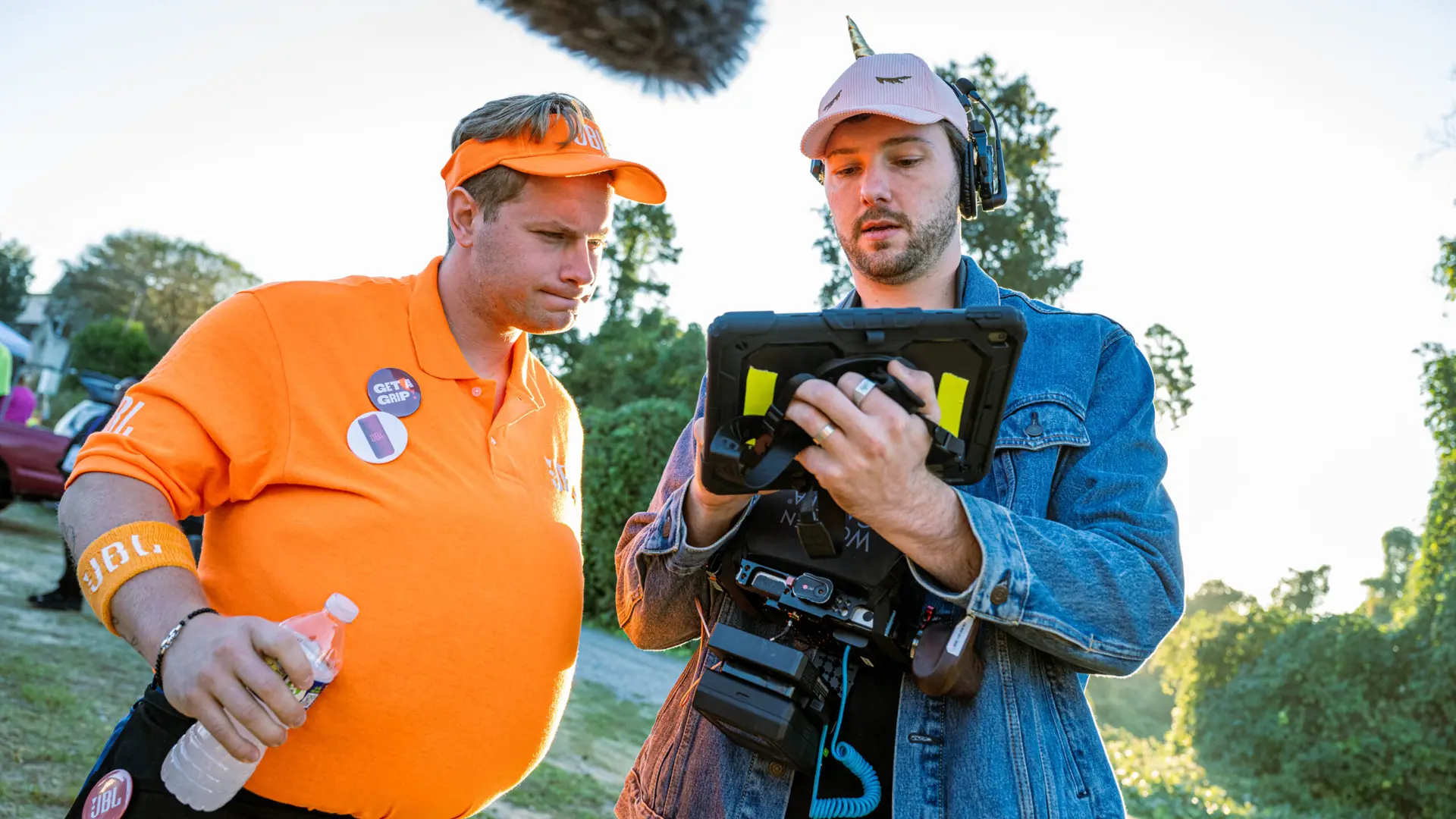
## Public Sector
Throughout this article, we will delve into various aspects of SEO copywriting, offering detailed insights and practical advice to help you craft content that stands out in the crowded digital space.
## Understanding SEO Copywriting
The art of writing optimized content involves creating text that ranks well on search engines while simultaneously appealing to human readers. Achieving this balance means integrating keywords seamlessly into engaging and informative text. The primary goal is to attract search engine bots that index and rank content based on relevance and quality.
Central to this practice is a solid understanding of SEO principles. SEO aims to enhance a website's visibility on search engines like Google, ensuring that it appears at the top of search results for relevant queries. This visibility is crucial because higher-ranking pages typically receive more traffic, leading to increased opportunities for engagement and conversion.
Effective [content creation](https://c-istudios.com/content-creation-services/) plays a vital role here, involving the production of material that is not only keyword-rich but also valuable, engaging, and relevant to the target audience. Achieving this requires thorough research, creativity, and a deep understanding of the audience's needs and preferences.
These are the terms and phrases users enter into search engines when looking for information, products, or services. Identifying and using the right keywords helps ensure your content aligns with what your target audience is searching for, thereby improving your chances of ranking higher in search results.
By mastering these principles, marketers and content creators can significantly enhance their digital presence, making their websites more visible and attractive to both search engines and potential customers.
## Keyword Research and Integration
Conducting keyword research is the first step in effective SEO copywriting. This process involves identifying the terms and phrases that your target audience uses to search for content related to your industry. Various tools can assist in this research, including Google Keyword Planner, Ahrefs, and SEMrush. These tools provide insights into search volume, competition, and related keywords, helping you choose the most effective terms to target.
Once you have identified your keywords, the next step is to integrate them naturally into your content. It's essential to avoid keyword stuffing, which can negatively impact your search rankings and deter readers. Instead, focus on incorporating keywords in a way that flows naturally within the context of your writing. This means placing keywords in strategic locations such as the title, headings, meta descriptions, and throughout the body of the text.
Effective keyword integration also involves varying the use of primary and secondary keywords. Primary keywords are the main terms you want to rank for, while secondary keywords are related terms that provide additional context. Using a mix of both helps create a more comprehensive and natural-sounding piece of content.
For example, if your primary keyword is "[SEO copywriting](https://c-istudios.com/seo-copywriting-services/)," you might also use secondary keywords such as “content creation," "search engine optimization," and "keyword research" throughout your article. This approach not only helps improve your search rankings but also enhances the readability and value of your content.
In addition to integrating keywords into the text, consider other on-page SEO elements such as meta tags, alt text for images, and internal linking. These elements help search engines understand the context and relevance of your content, further boosting your SEO efforts.
By mastering the art of keyword research and integration, you can create content that not only ranks well in search engines but also resonates with your target audience, driving traffic and engagement to your website.
## Crafting Engaging and SEO-Friendly Headlines
Headlines play a crucial role in attracting readers and improving SEO. An effective headline should be compelling, and informative, and include relevant keywords to enhance its searchability. Crafting such headlines requires a blend of creativity and strategic thinking.
To create engaging headlines, start by understanding your audience and what appeals to them. Think about the problems they face and how your content can provide solutions. Use this understanding and integrate [creative marketing](https://c-istudios.com/creative-marketing-services/) techniques to craft headlines that capture their attention and make them want to read more.
Including keywords in your headlines is essential for SEO. However, it’s important to ensure that the headline still reads naturally and doesn’t feel forced. For example, instead of a keyword-stuffed headline like "SEO Copywriting Best Practices for SEO Success," opt for something more fluid like "Mastering SEO Copywriting: Best Practices for Digital Success."
In addition to keywords, consider using powerful words and emotional triggers in your headlines. Words like "ultimate," "essential," "proven," and "effective" can add a sense of urgency and importance, making readers more likely to click on your content. Emotional triggers, such as addressing fears, desires, or curiosity, can also enhance the appeal of your headlines.
Case studies of successful headlines can provide valuable insights into what works. For instance, headlines that incorporate numbers and lists, such as "10 Tips for Effective SEO Copywriting," tend to perform well because they promise specific, actionable information.
Another effective strategy is to test different headlines using A/B testing. This involves creating multiple versions of a headline and seeing which one performs better in terms of click-through rates and engagement. By analyzing the results, you can identify the most effective headlines and refine your approach over time.
Ultimately, crafting engaging and SEO-friendly headlines is about balancing keyword usage with creativity and audience appeal. By focusing on these elements, you can create headlines that not only improve your search rankings but also attract and retain readers.
## Writing High-Quality Content
Creating high-quality content is the cornerstone of effective SEO copywriting. High-quality content not only attracts and retains readers but also signals to search engines that your website is a valuable resource. This, in turn, can improve your search rankings and drive more traffic to your site.
The characteristics of high-quality content include originality, relevance, and value. Original content is unique and not duplicated from other sources. It provides a fresh perspective or new information that adds value to the reader. Relevance ensures that the content is aligned with the interests and needs of your target audience. Value means that the content is useful, informative, and actionable, providing readers with the information they need to solve their problems or achieve their goals.
One of the key aspects of writing high-quality content is maintaining reader interest and engagement. This can be achieved through various techniques, such as using a conversational tone, incorporating storytelling elements, and breaking up the text with subheadings, bullet points, and images. A conversational tone makes the content more relatable and easier to read, while storytelling adds an emotional element that can captivate readers.
Content creation should also include multimedia elements, such as images, videos, and infographics. These elements can make the content more engaging and provide additional value to the reader. For example, including a video tutorial or infographic can help illustrate complex concepts and provide a more comprehensive understanding of the topic.
The role of [professional photography](https://c-istudios.com/professional-photography-services/) in content creation should not be underestimated. High-quality images can enhance the visual appeal of your content and make it more attractive to readers. They can also help to illustrate key points and provide visual breaks in the text, making the content easier to digest.
Writing high-quality content is essential for effective SEO copywriting. By focusing on originality, relevance, and value, and incorporating multimedia elements, you can create content that attracts and retains readers, improves your search rankings, and drives more traffic to your website.
## On-Page SEO Best Practices
On-page SEO refers to the practice of optimizing individual web pages to rank higher and earn more relevant traffic in search engines. This involves optimizing both the content and HTML source code of a page. By following on-page SE best practices, you can improve your website's visibility and search engine ranking.
One of the key elements of on-page SEO is the use of meta descriptions. These are short snippets of text that describe the content of a page and appear in search engine results. A well-crafted meta description can increase click-through rates by providing a compelling summary of the content and including relevant keywords.
Another important element is the use of alt tags for images. Alt tags provide a text description of an image, which helps search engines understand the content and context of the image. This can improve your search rankings and make your website more accessible to visually impaired users.
Internal linking is another crucial aspect of on-page SEO. Internal links connect different pages on your website, helping search engines understand the structure and hierarchy of your site. They also help to distribute link equity, which can improve the ranking of individual pages. By strategically placing internal links, you can guide users to related content and improve their overall experience on your website.
The use of header tags (H1, H2, H3, etc.) is also important for on-page SEO. Header tags help to structure your content and make it more readable for both users and search engines. They indicate the importance of different sections and can improve the overall organization and flow of your content.
Web maintenance and web hosting also play a role in on-page SEO. Regular maintenance ensures that your website is running smoothly and efficiently, which can improve user experience and search rankings. Choosing a reliable web hosting provider can also impact your website's performance and uptime, which are important factors for SEO.
In short, following on-page SEO best practices can significantly improve your website's visibility and search engine ranking. By optimizing meta descriptions, alt tags, internal links, and header tags, and ensuring regular [web maintenance](https://c-istudios.com/web-maintenance/), you can create a website that is both user-friendly and search engine-friendly.
## Utilizing Internal and External Links
Internal and external links play a crucial role in SEO copywriting. They help to improve the structure and authority of your content, making it more valuable to both users and search engines.
Internal links connect different pages on your website, helping search engines understand the structure and hierarchy of your site. They also help to distribute link equity, which can improve the ranking of individual pages. By strategically placing internal links, you can guide users to related content and improve their overall experience on your website.
External links, on the other hand, point to content on other websites. These links can provide additional value to your readers by directing them to reputable sources of information. They also help to establish the authority and credibility of your content, as linking to high-quality, authoritative sites can signal to search engines that your content is trustworthy and relevant.
When incorporating internal and external links, it's important to use descriptive anchor text that clearly indicates the content of the linked page. This not only improves the user experience but also helps search engines understand the context and relevance of the linked content.
[Media marketing consultation](https://c-istudios.com/media-marketing-consultation-services/) can provide valuable insights into effective link-building strategies. By working with professionals who specialize in SEO and digital marketing, you can develop a comprehensive plan for incorporating internal and external links into your content.
Internal and external links are essential components of effective SEO copywriting. By strategically placing these links and using descriptive anchor text, you can improve the structure and authority of your content, making it more valuable to both users and search engines.
## Mobile Optimization and Responsive Design
In today's mobile-first world, ensuring that your content is optimized for mobile devices is crucial for SEO. Mobile optimization involves making your website and content accessible and user-friendly on smartphones and tablets.
One of the key aspects of mobile optimization is responsive design. Responsive design ensures that your website adapts to different screen sizes and orientations, providing a seamless user experience across all devices. This is important for both user satisfaction and search engine rankings, as search engines like Google prioritize mobile-friendly websites.
To ensure that your content is mobile-friendly, start by testing your website on various devices and screen sizes. Tools like Google's Mobile-Friendly Test can provide insights into how your website performs on mobile devices and highlight areas for improvement.
Another important aspect of mobile optimization is page load speed. Mobile users expect fast-loading pages and slow load times can lead to higher bounce rates and lower search rankings. To improve page load speed, optimize images and other media files, minimize the use of large scripts, and leverage browser caching.
By working with skilled web developers, you can ensure that your website is built with responsive design principles and optimized for mobile performance. This includes using flexible grid layouts, scalable images, and media queries to create a website that looks and functions well on all devices.
Mobile optimization and responsive design are essential for effective SEO. High-quality videos can enhance the user experience, but they need to be optimized for mobile viewing. This includes using appropriate file formats, compressing video files to reduce load times, and ensuring that videos are accessible on all devices. A well-prepared [video production gear list](https://c-istudios.com/video-production-gear-list/) can also impact mobile optimization by ensuring the right equipment and settings are used to create mobile-friendly content.
Mobile optimization and responsive design are essential for effective SEO. By ensuring that your website is mobile-friendly and optimized for performance, you can improve user satisfaction and search engine rankings.
## Measuring and Analyzing Content Performance
Measuring and analyzing content performance is crucial for understanding the effectiveness of your SEO copywriting efforts. By tracking key metrics and using data-driven insights, you can refine your strategies and improve your content over time.
One of the key metrics to track is organic traffic. This refers to the number of visitors who find your website through search engine results. By monitoring organic traffic, you can gauge the impact of your SEO efforts and identify areas for improvement.
Another important metric is bounce rate, which measures the percentage of visitors who leave your website after viewing only one page. A high bounce rate can indicate that your content is not engaging or relevant to your audience. By analyzing bounce rates, you can identify which pages need improvement and make adjustments to enhance user engagement.
Conversion rate is another crucial metric to track. This measures the percentage of visitors who complete a desired action, such as making a purchase or filling out a contact form. By tracking conversion rates, you can evaluate the effectiveness of your content in driving desired outcomes and make data-driven decisions to optimize your content.
Monitoring content performance is crucial for understanding its effectiveness. [Social media marketing](https://c-istudios.com/social-media-marketing-services/) can provide valuable insights by tracking metrics such as likes, shares, and comments. By analyzing these metrics, you can gauge the impact of your content on social media platforms and identify opportunities for improvement.
Using tools like Google Analytics, you can track these metrics and gain a comprehensive understanding of your content performance. By analyzing the data, you can identify trends, patterns, and areas for improvement, allowing you to refine your SEO copywriting strategies and create more effective content.
By working with professionals who specialize in SEO and digital marketing, you can develop a comprehensive plan for tracking and analyzing key metrics, ensuring that your content is optimized for maximum impact.
## Work with C&I Studios
If you are planning a project like this, our team can take it from concept to final delivery. Explore our [AI video services](https://c-istudios.com/ai-video-services/), browse [our work](https://c-istudios.com/our-work/) to see how we tell brand stories, and [get in touch](https://c-istudios.com/contact/) when you are ready to start.
Originally published July 11, 2024
---
*This content is from [C&I Studios](https://c-istudios.com), a full-service production company.*
---
# A/B Testing Essentials: Experimenting with Different Elements for Better Results
> Published: July 10, 2024
> Categories: Commercial & Brand
> Source: https://c-istudios.com/a-b-testing-essentials-experimenting-with-different-elements-for-better-results/
---
.cib{--paper:#1b1d1f;--ink:#fff;--body:#d5d7d9;--muted:#8b9096;--line:rgba(255,255,255,.12);--thumb:#2b2e31;--card:#212426;--accent:#c02b0a;--blue:#5B8FA8;--serif:'Playfair Display',Georgia,serif;--sans:'Poppins',-apple-system,sans-serif;--measure:900px;background:var(--paper);color:var(--body);font-family:var(--sans);line-height:1.6;position:relative;left:50%;transform:translateX(-50%);width:90vw;max-width:1920px}
.cib *{box-sizing:border-box}
.cib .kicker{max-width:var(--measure);margin:58px auto 0;padding:0 22px;font-size:12.5px;font-weight:700;letter-spacing:2.5px;text-transform:uppercase;color:var(--blue)}
.cib h1.cibh1{text-wrap:balance;font-family:var(--serif);font-weight:500;font-size:clamp(46px,6vw,72px);line-height:1.08;color:var(--ink);max-width:var(--measure);margin:18px auto 0;padding:0 22px;letter-spacing:-.5px}
.cib .metarow{max-width:var(--measure);margin:20px auto 0;padding:0 22px;color:var(--muted);font-size:14px}
.cib .hero{position:relative;width:100%;height:0;padding-bottom:56.25%;overflow:hidden;margin:48px auto 0;border-top:1px solid var(--line);border-bottom:1px solid var(--line)}
.cib .hero .ph{width:100%;aspect-ratio:16/9;background:var(--thumb);border-top:1px solid var(--line);border-bottom:1px solid var(--line);display:flex;align-items:center;justify-content:center;color:#7d8288;font-size:13px;text-align:center;padding:0 20px}
.cib .body{max-width:var(--measure);margin:12px auto 0;padding:52px 22px 6px}
.cib .body.lead p:first-child{font-size:23px;line-height:1.62;color:var(--ink)}
.cib .body p{font-size:18.5px;line-height:1.85;margin:0 0 30px;color:var(--body)}
.cib .body h2{text-wrap:balance;font-family:var(--serif);font-weight:500;font-size:clamp(32px,4vw,48px);line-height:1.22;color:var(--ink);margin:70px 0 20px;letter-spacing:-.3px}
.cib .body h3{text-wrap:balance;font-family:var(--sans);font-weight:600;font-size:22px;color:var(--ink);margin:38px 0 8px}
.cib .body a{color:var(--ink);text-decoration:underline;text-decoration-color:rgba(255,255,255,.4);text-underline-offset:3px}
.cib .body a:hover{text-decoration-color:var(--ink)}
.cib .ctable{width:100%;border-collapse:collapse;margin:16px 0 30px;font-size:16px}
.cib .ctable th{background:#000;color:#fff;text-align:left;padding:10px 12px;font-family:var(--sans)}
.cib .ctable td{padding:10px 12px;border-bottom:1px solid var(--line);color:var(--body)}
.cib .inimg{position:relative;width:100%;height:0;padding-bottom:56.25%;overflow:hidden;margin:72px auto;border-top:1px solid var(--line);border-bottom:1px solid var(--line)}
.cib .inimg .ph{width:100%;aspect-ratio:16/9;background:var(--thumb);border-top:1px solid var(--line);border-bottom:1px solid var(--line);display:flex;align-items:center;justify-content:center;color:#7d8288;font-size:13px}
.cib .origpub{max-width:var(--measure);margin:60px auto 0;padding:26px 22px 0;border-top:1px solid var(--line);color:var(--muted);font-size:13.5px}
.cib .related{max-width:1200px;margin:64px auto 0;padding:34px 22px 76px}
.cib .related h3{font-family:var(--sans);font-size:12.5px;letter-spacing:2px;text-transform:uppercase;color:var(--ink);margin:0 0 24px}
.cib .grid{display:grid;grid-template-columns:repeat(3,1fr);gap:28px}
.cib .rc{background:var(--card);border:1px solid var(--line);display:block;text-decoration:none;color:inherit;transition:border-color .15s}
.cib a.rc:hover{border-color:rgba(255,255,255,.5)}
.cib .rc .thumb{position:relative;width:100%;height:0;padding-bottom:56.25%;background:var(--thumb);overflow:hidden}
.cib .rc .thumb img{position:absolute!important;top:0!important;left:0!important;width:100%!important;height:100%!important;object-fit:cover!important;margin:0!important}
.cib .rc .cc{padding:14px 15px 17px}
.cib .rc .rt{font-family:var(--serif);font-weight:500;font-size:16px;line-height:1.3;color:var(--ink);margin:0 0 6px}
.cib .rc .rm{font-size:11px;letter-spacing:1px;text-transform:uppercase;color:var(--muted)}
.cib img{margin:0!important;padding:0!important;display:block!important;vertical-align:top;max-width:100%}
.cib .hero img,.cib .inimg img{position:absolute!important;top:0!important;left:0!important;width:100%!important;height:100%!important;object-fit:cover!important;margin:0!important;padding:0!important;border:0!important;display:block!important;aspect-ratio:auto!important}
.cib .hero+.body{padding-top:36px}
@media(max-width:760px){.cib .grid{grid-template-columns:1fr}.cib .body h2{margin:52px 0 16px}.cib .body p{font-size:17.5px}.cib .inimg,.cib .hero{margin-top:44px}}
.cib .vembed{max-width:var(--measure);margin:44px auto;padding:0 22px}.cib .vembed .vwrap{position:relative;width:100%;height:0;padding-bottom:56.25%}.cib .vembed .vwrap iframe{position:absolute;top:0;left:0;width:100%;height:100%;border:0}
Commercial & Brand
# A/B Testing Essentials. Experimenting with Different Elements for Better Results
14 min read
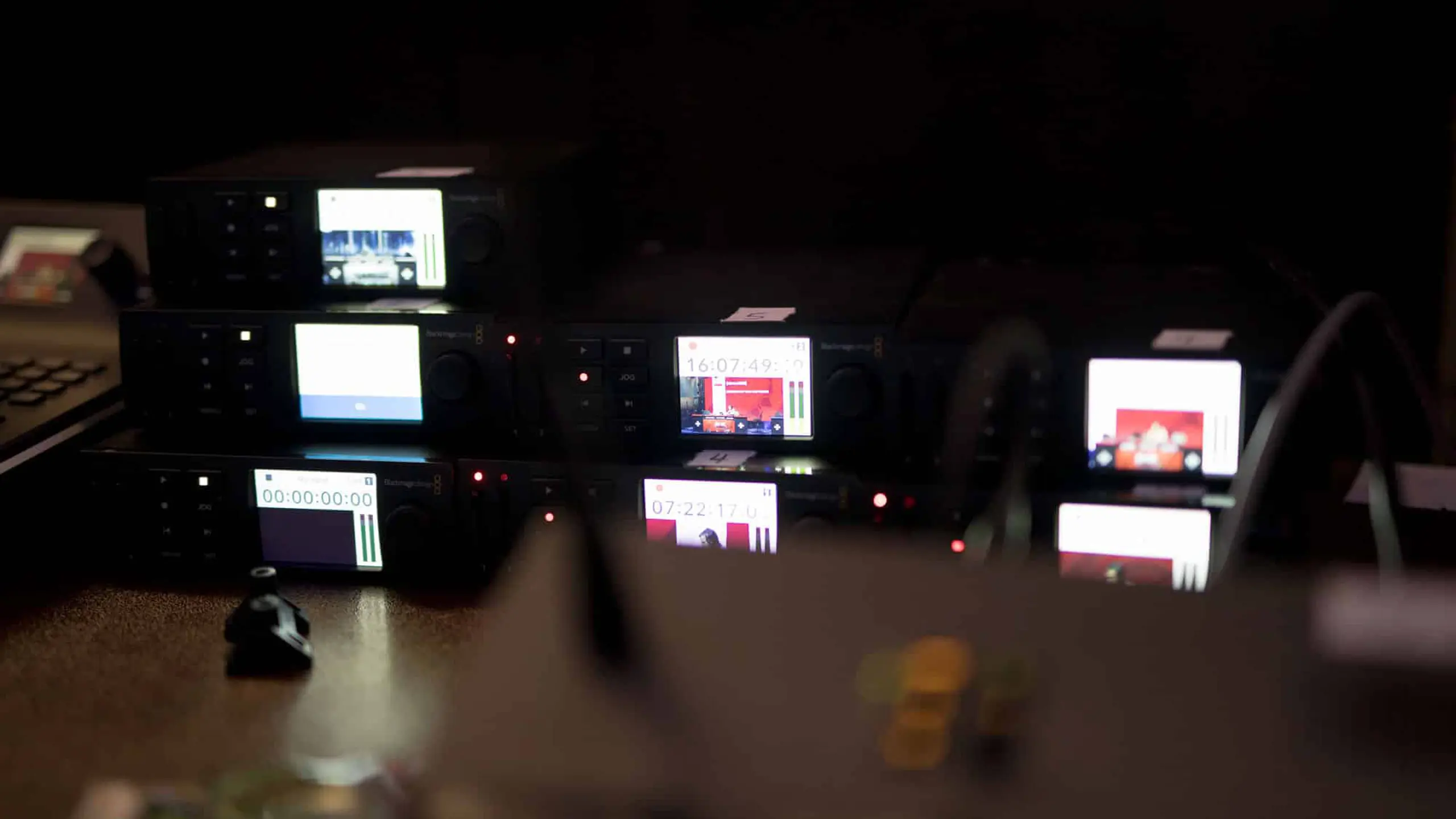
In the dynamic world of digital marketing, staying ahead is essential. A/B testing is a powerful tool that enables data-driven decisions and optimization. By comparing two versions of a webpage, email, or other marketing asset, businesses can refine strategies and improve outcomes. A/B testing involves creating two content versions, such as a landing page or email subject line, and determining which performs better.
This process enhances conversion rates, user engagement, and marketing effectiveness. This article explores A/B testing, from setup basics to advanced techniques, providing insights and tools to improve your digital marketing efforts.
## Understanding A/B Testing
A/B testing, also known as split testing, is a method of comparing two versions of a webpage or other marketing asset to determine which one performs better. At its most basic, it involves showing two variants (A and B) to similar visitors at the same time and measuring which variant drives more conversions.
The process works by randomly dividing your audience into two groups. One group (the control group) sees the original version, while the other (the test group) sees a modified version. By comparing how these two groups interact with the different versions, marketers can determine which elements are more effective at achieving their goals.
The key to understanding A/B testing is familiarity with some common terms and concepts. Conversion rate, for instance, refers to the percentage of visitors who complete a desired action, such as making a purchase or signing up for a newsletter. Statistical significance is another crucial concept, indicating whether the difference in performance between the two variants is due to the changes made or simply random chance.
Effective A/B testing requires more than just changing elements at random. It involves careful [content creation](https://c-istudios.com/content-creation-services/) and strategic thinking. You need to form hypotheses about what changes might improve performance and then test these hypotheses systematically. This might involve tweaking headlines, adjusting color schemes, or completely redesigning page layouts.
A/B testing is not a one-time effort but an ongoing process of refinement and optimization. By continuously testing and iterating, businesses can gradually improve their digital assets, leading to better user experiences and, ultimately, better business outcomes.
## Setting Up an A/B Test
Setting up an A/B test requires careful planning and execution. The process begins with identifying what you want to test and why. This could be anything from the color of a call-to-action button to the layout of an entire landing page. The key is to have a clear hypothesis about what change might lead to improvement.
Once you've identified what to test, the next step is choosing the right tools and platforms. There are numerous A/B testing tools available, ranging from simple, free options to sophisticated, enterprise-level solutions. Some popular choices include Google Optimize, Optimizely, and VWO. The right tool for you will depend on your specific needs, budget, and technical capabilities.
When it comes to [web development](https://c-istudios.com/web-development-services/), it's crucial to ensure that your website is set up to accommodate A/B testing. This might involve adding snippets of code to your site or integrating with your content management system. Many A/B testing tools offer plugins or integrations that can simplify this process.
Creating variations is where the creativity comes in. If you're testing visual elements, you might need to engage in some [video production](https://c-istudios.com/video-production-services/) or graphic design work to create compelling alternatives. Remember, the goal is to create variations that are different enough to potentially impact user behavior, but not so different that you can't isolate the effect of specific changes.
Some common elements to test include:
1. Headlines and copy: Test different wording, length, or tone.
2. Images and videos: Compare different visual content or formats.
3. Call-to-action buttons: Experiment with different colors, sizes, or text.
4. Layout and design: Try different arrangements of page elements.
5. Forms: Test the number of fields, their order, or the type of information requested.
When setting up your test, it's important to determine how long it should run. This will depend on factors like your website traffic and the expected effect size. Generally, you want to run the test until you've reached statistical significance, which typically requires at least a few hundred conversions per variation.
Remember, the goal of A/B testing is not just to find a "winner," but to gain insights that can inform your broader marketing strategy. Each test, regardless of its outcome, is an opportunity to learn more about your audience and what resonates with them.
## Designing Effective A/B Test Variations
The art of designing effective A/B test variations lies in striking a balance between creativity and the scientific method. Your variations should be different enough to potentially yield significant results, yet controlled enough to isolate the impact of specific changes. This is where [branding and graphic design](https://c-istudios.com/branding-and-graphic-design-services/) expertise becomes crucial.
When crafting variations, start by focusing on a single element or a small group of related elements. For instance, if you're testing a landing page, you might choose to focus on the headline. Create a variation that differs in tone, length, or messaging while keeping all other elements constant. This approach allows you to attribute any difference in performance directly to the change you've made.
Visual elements play a significant role in user engagement and conversion. Professional photography can make a substantial difference in how your audience perceives your brand and products. When testing images, consider factors like subject matter, composition, color palette, and style. For example, you might test a product image against a lifestyle image to see which resonates more with your audience.
Color psychology is another important aspect to consider. Different colors can evoke different emotions and associations. Test variations of your call-to-action buttons or background colors to see how they impact user behavior. Remember, what works for one brand might not work for another, so it's essential to test within your specific context.
Layout and user flow are also crucial elements to test. Consider how users navigate through your site or app. Are important elements above the fold? Is the path to conversion clear and intuitive? Create variations that alter the arrangement of page elements or simplify the user journey.
When designing variations, it's important to maintain consistency with your overall brand identity. While you want to test different approaches, drastic departures from your established brand might confuse or alienate your audience. The goal is to find optimizations within your brand framework, not to reinvent your identity with each test.
An online retailer tested two versions of their product pages: one with a traditional grid layout of product images, and another with a more immersive, lifestyle-focused design that showed products in use. The lifestyle-focused version saw a 40% increase in add-to-cart rates, highlighting the importance of context and storytelling in product presentation.
## Implementing A/B Tests on Different Platforms
Implementing A/B tests across various platforms requires a nuanced approach, as each medium has its unique characteristics and constraints. Whether you're testing on websites, email campaigns, or social media, understanding the specific considerations for each platform is crucial for successful implementation.
For website A/B testing, the process typically involves using JavaScript to serve different versions of your page to different visitors. Many A/B testing tools provide easy-to-use interfaces for setting up these tests, often requiring minimal coding knowledge..
Email A/B testing often focuses on elements like subject lines, sender names, content layout, and call-to-action buttons. Most email marketing platforms offer built-in A/B testing functionality, making it relatively straightforward to set up and run tests. When implementing email tests, pay attention to factors like send time and segmentation to ensure a fair comparison between variants.
Social media services often incorporate A/B testing as part of their strategy optimization. On platforms like Facebook and Instagram, you can test different ad creatives, copy, and targeting options. Many [social media marketing](https://c-istudios.com/media-marketing-consultation-services/) platforms provide native A/B testing tools that allow you to easily compare the performance of different ad variations.
You might test different stream titles, thumbnails, or even content formats to see what drives more engagement. While A/B testing in live environments can be challenging, tools like restream.io or StreamYard offer features that can facilitate this process.
When implementing A/B tests across different platforms, it's crucial to maintain consistency in your tracking and measurement. Use UTM parameters for your links to ensure accurate attribution, and consider using a central analytics platform to consolidate data from various sources.
Here's an example of a cross-platform A/B test: A B2B company wanted to optimize its lead generation funnel. They created two versions of a whitepaper landing page and tested them on their website. Simultaneously, they tested two versions of an email promoting the whitepaper. By coordinating these tests, they were able to optimize both their landing page and their email marketing, resulting in a 35% increase in overall lead generation.
## Analyzing A/B Test Results
The analysis phase is where the true value of A/B testing is realized. It's not just about determining a winner, but about extracting meaningful insights that can inform your broader marketing strategy. This is where media marketing expertise can be particularly valuable, helping to interpret results and translate them into actionable strategies.
The first step in analyzing your A/B test results is to ensure that your test has reached statistical significance. This means that the difference in performance between your variants is unlikely to be due to random chance. Most A/B testing tools will calculate this for you, typically aiming for a confidence level of 95% or higher.
Key metrics to focus on include conversion rate, click-through rate, bounce rate, and average time on page. However, the specific metrics that matter will depend on your test goals. For example, if you're testing an e-commerce product page, you might look at add-to-cart rate or average order value.
It's important to look beyond just the headline numbers. Dive into segmented data to see if the test had different impacts on different user groups. For instance, did the variation perform better with new visitors but worse with returning visitors? This kind of granular analysis can provide nuanced insights into user behavior.
Tools for data analysis range from the built-in analytics provided by A/B testing platforms to more advanced business intelligence tools. Google Analytics, when properly set up, can provide valuable additional context to your A/B test results. For more complex analysis, tools like Tableau or PowerBI can help you visualize and explore your data in depth.
Interpreting your results requires both analytical rigor and creative thinking. A statistically significant improvement in conversion rate is great, but what does it tell you about your users? What hypothesis does it confirm or refute? How might this insight apply to other areas of your marketing?
It's also crucial to consider the long-term impact of your changes. A variation that provides a short-term boost in conversions might have negative implications for customer lifetime value or brand perception. This is where ongoing [web maintenance](https://c-istudios.com/web-maintenance/) and monitoring become important, ensuring that the benefits of your optimizations persist over time.
By approaching A/B test analysis with a combination of statistical rigor and strategic thinking, you can turn raw data into valuable insights that drive continuous improvement in your digital marketing efforts.
## Making Data-Driven Decisions
The ultimate goal of A/B testing is to inform decision-making and drive improvements in your marketing strategy. This is where the art of [creative marketing](https://c-istudios.com/creative-marketing-services/) meets the science of data analysis, allowing you to make choices that are both innovative and grounded in empirical evidence.
When interpreting your A/B test results, it's important to consider them in the context of your broader marketing objectives. A statistically significant improvement in click-through rate is valuable, but how does it align with your overall goals? Does it translate into meaningful business outcomes like increased revenue or improved customer retention?
One powerful approach is to use A/B test results to inform your content creation strategy. For example, if a test shows that users respond better to emotional appeals in your copy, you might apply this insight across your marketing materials. However, be cautious about overgeneralizing. What works on a landing page might not necessarily work in an email campaign or social media post.
It's also important to balance data insights with creative intuition and brand consistency. While data should inform your decisions, it shouldn't completely dictate them. There may be times when maintaining brand voice or adhering to company values takes precedence over marginal gains in performance metrics.
Continuous optimization is key to long-term success. Rather than viewing A/B testing as a series of isolated experiments, think of it as an ongoing process of refinement. Each test should build on the insights from previous tests, gradually moving you toward your ideal user experience.
Here's an example of how data-driven decision-making can lead to significant improvements: An e-commerce company noticed that its product pages had a high bounce rate. They ran a series of A/B tests, experimenting with different layouts, image sizes, and product description formats. The tests revealed that users engaged more with pages that featured larger product images and concise, bullet-point descriptions. By implementing these changes across their site, they saw a 20% decrease in bounce rate and a 15% increase in conversion rate.
Remember, the goal of data-driven decision-making is not to remove human judgment from the equation but to enhance it. By combining empirical evidence with strategic thinking and creativity, you can make decisions that are both innovative and likely to succeed.
## Common Challenges and Pitfalls in A/B Testing
While A/B testing is a powerful tool for optimization, it's not without its challenges. Being aware of common pitfalls can help you avoid mistakes and ensure the validity of your results.
One frequent issue is ending tests too early. It's tempting to call a winner as soon as you see a positive trend, but doing so can lead to false positives. Ensure your test runs long enough to achieve statistical significance. The exact duration will depend on your traffic volume and the size of the effect you're trying to detect.
Another challenge is maintaining test integrity. External factors like seasonal trends, marketing campaigns, or even changes in your video production gear list can skew your results. Try to control for these variables as much as possible, and be cautious about running multiple tests simultaneously that could interact with each other.
Sample pollution is another potential pitfall. This occurs when the same users are exposed to multiple variations, which can happen if they visit your site from different devices or clear their cookies. Using tools that can identify unique users across sessions can help mitigate this issue.
Misinterpreting results is a common mistake, especially when it comes to [SEO copywriting](https://c-istudios.com/seo-copywriting-services/). A variation that improves short-term conversions might have negative SEO implications if it substantially reduces your content. Always consider the broader impact of your changes.
Here are some tips for avoiding these pitfalls:
- Plan your tests thoroughly, including determining your sample size and test duration in advance.
- Use A/A tests (where both variations are identical) to validate your testing setup.
- Be cautious about making radical changes that could alienate your existing audience.
- Consider the impact of your changes on all devices and browsers.
- Don't ignore small gains. Over time, multiple small improvements can add up to significant results.
Remember, not every test will be successful, and that's okay. Failed tests can provide valuable insights too. Perhaps your hypothesis was incorrect, or maybe your audience values different aspects of your offering than you anticipated. Use these insights to refine your understanding of your users and inform future tests.
Learning from unsuccessful tests is crucial for long-term success. For instance, a software company ran a test changing their pricing structure from monthly to annual plans, expecting to increase customer lifetime value. The test showed a significant decrease in conversions, but it revealed that their customers valued flexibility more than potential savings. This insight led them to develop a more flexible pricing model that ultimately improved both conversion rates and customer satisfaction.
By approaching A/B testing with a mindset of continuous learning and improvement, you can turn challenges into opportunities for growth and optimization. Remember that the goal is not just to find winning variations, but to gain deeper insights into your audience and how they interact with your digital assets.
## Advanced A/B Testing Techniques
As marketers become more sophisticated in their use of A/B testing, advanced techniques can provide even deeper insights and more nuanced optimization opportunities. One such technique is multivariate testing, which allows you to test multiple variables simultaneously. Unlike standard A/B testing, which compares two versions of a single element, multivariate testing can examine how different combinations of elements interact with each other.
Another advanced technique is split URL testing, also known as redirect testing. This method involves creating entirely separate web pages for each variation, rather than dynamically changing elements on a single page. Split URL testing is particularly useful when you want to test radically different designs or when your variations involve changes that can't be easily implemented through JavaScript.
Advanced A/B testing for video content can greatly benefit from incorporating various techniques, including creating multiple versions of video elements to see which impacts user engagement and conversion rates the most. By integrating [VFX compositing and animation](https://c-istudios.com/vfx-compositing-and-animation-services/), marketers can experiment with different visual effects or animations to determine their effectiveness.
One case study that illustrates the power of advanced A/B testing involves a large online retailer that implemented a sophisticated personalization strategy. They used machine learning algorithms to dynamically adjust product recommendations based on user behavior and preferences. By continuously testing and refining their recommendation engine, they were able to increase average order value by 23% over six months.
While these advanced techniques can provide powerful insights, it's important to approach them strategically. They often require more resources, both in terms of traffic and technical implementation. It's crucial to have a clear hypothesis and measurement plan in place before embarking on complex testing strategies.
Integrating advanced A/B testing into your overall marketing strategy requires a balance of technical skills, creative thinking, and strategic planning. By leveraging these sophisticated techniques, marketers can uncover deeper insights about user behavior and preferences, leading to more effective optimization and ultimately, better business outcomes.
## Work with C&I Studios
If you are planning a project like this, our team can take it from concept to final delivery. Explore our [video production services](https://c-istudios.com/video-production-services/), browse [our work](https://c-istudios.com/our-work/) to see how we tell brand stories, and [get in touch](https://c-istudios.com/contact/) when you are ready to start.
Originally published July 10, 2024
---
*This content is from [C&I Studios](https://c-istudios.com), a full-service production company.*
---
# Video Marketing for Legal Professionals: Building Trust and Authority
> Published: July 9, 2024
> Categories: Commercial & Brand
> Source: https://c-istudios.com/video-marketing-for-legal-professionals-building-trust-and-authority/
---
.cib{--paper:#1b1d1f;--ink:#fff;--body:#d5d7d9;--muted:#8b9096;--line:rgba(255,255,255,.12);--thumb:#2b2e31;--card:#212426;--accent:#c02b0a;--blue:#5B8FA8;--serif:'Playfair Display',Georgia,serif;--sans:'Poppins',-apple-system,sans-serif;--measure:900px;background:var(--paper);color:var(--body);font-family:var(--sans);line-height:1.6;position:relative;left:50%;transform:translateX(-50%);width:90vw;max-width:1920px}
.cib *{box-sizing:border-box}
.cib .kicker{max-width:var(--measure);margin:58px auto 0;padding:0 22px;font-size:12.5px;font-weight:700;letter-spacing:2.5px;text-transform:uppercase;color:var(--blue)}
.cib h1.cibh1{text-wrap:balance;font-family:var(--serif);font-weight:500;font-size:clamp(46px,6vw,72px);line-height:1.08;color:var(--ink);max-width:var(--measure);margin:18px auto 0;padding:0 22px;letter-spacing:-.5px}
.cib .metarow{max-width:var(--measure);margin:20px auto 0;padding:0 22px;color:var(--muted);font-size:14px}
.cib .hero{position:relative;width:100%;height:0;padding-bottom:56.25%;overflow:hidden;margin:48px auto 0;border-top:1px solid var(--line);border-bottom:1px solid var(--line)}
.cib .hero .ph{width:100%;aspect-ratio:16/9;background:var(--thumb);border-top:1px solid var(--line);border-bottom:1px solid var(--line);display:flex;align-items:center;justify-content:center;color:#7d8288;font-size:13px;text-align:center;padding:0 20px}
.cib .body{max-width:var(--measure);margin:12px auto 0;padding:52px 22px 6px}
.cib .body.lead p:first-child{font-size:23px;line-height:1.62;color:var(--ink)}
.cib .body p{font-size:18.5px;line-height:1.85;margin:0 0 30px;color:var(--body)}
.cib .body h2{text-wrap:balance;font-family:var(--serif);font-weight:500;font-size:clamp(32px,4vw,48px);line-height:1.22;color:var(--ink);margin:70px 0 20px;letter-spacing:-.3px}
.cib .body h3{text-wrap:balance;font-family:var(--sans);font-weight:600;font-size:22px;color:var(--ink);margin:38px 0 8px}
.cib .body a{color:var(--ink);text-decoration:underline;text-decoration-color:rgba(255,255,255,.4);text-underline-offset:3px}
.cib .body a:hover{text-decoration-color:var(--ink)}
.cib .ctable{width:100%;border-collapse:collapse;margin:16px 0 30px;font-size:16px}
.cib .ctable th{background:#000;color:#fff;text-align:left;padding:10px 12px;font-family:var(--sans)}
.cib .ctable td{padding:10px 12px;border-bottom:1px solid var(--line);color:var(--body)}
.cib .inimg{position:relative;width:100%;height:0;padding-bottom:56.25%;overflow:hidden;margin:72px auto;border-top:1px solid var(--line);border-bottom:1px solid var(--line)}
.cib .inimg .ph{width:100%;aspect-ratio:16/9;background:var(--thumb);border-top:1px solid var(--line);border-bottom:1px solid var(--line);display:flex;align-items:center;justify-content:center;color:#7d8288;font-size:13px}
.cib .origpub{max-width:var(--measure);margin:60px auto 0;padding:26px 22px 0;border-top:1px solid var(--line);color:var(--muted);font-size:13.5px}
.cib .related{max-width:1200px;margin:64px auto 0;padding:34px 22px 76px}
.cib .related h3{font-family:var(--sans);font-size:12.5px;letter-spacing:2px;text-transform:uppercase;color:var(--ink);margin:0 0 24px}
.cib .grid{display:grid;grid-template-columns:repeat(3,1fr);gap:28px}
.cib .rc{background:var(--card);border:1px solid var(--line);display:block;text-decoration:none;color:inherit;transition:border-color .15s}
.cib a.rc:hover{border-color:rgba(255,255,255,.5)}
.cib .rc .thumb{position:relative;width:100%;height:0;padding-bottom:56.25%;background:var(--thumb);overflow:hidden}
.cib .rc .thumb img{position:absolute!important;top:0!important;left:0!important;width:100%!important;height:100%!important;object-fit:cover!important;margin:0!important}
.cib .rc .cc{padding:14px 15px 17px}
.cib .rc .rt{font-family:var(--serif);font-weight:500;font-size:16px;line-height:1.3;color:var(--ink);margin:0 0 6px}
.cib .rc .rm{font-size:11px;letter-spacing:1px;text-transform:uppercase;color:var(--muted)}
.cib img{margin:0!important;padding:0!important;display:block!important;vertical-align:top;max-width:100%}
.cib .hero img,.cib .inimg img{position:absolute!important;top:0!important;left:0!important;width:100%!important;height:100%!important;object-fit:cover!important;margin:0!important;padding:0!important;border:0!important;display:block!important;aspect-ratio:auto!important}
.cib .hero+.body{padding-top:36px}
@media(max-width:760px){.cib .grid{grid-template-columns:1fr}.cib .body h2{margin:52px 0 16px}.cib .body p{font-size:17.5px}.cib .inimg,.cib .hero{margin-top:44px}}
.cib .vembed{max-width:var(--measure);margin:44px auto;padding:0 22px}.cib .vembed .vwrap{position:relative;width:100%;height:0;padding-bottom:56.25%}.cib .vembed .vwrap iframe{position:absolute;top:0;left:0;width:100%;height:100%;border:0}
Commercial & Brand
# Video Marketing for Legal Professionals. Building Trust and Authority
12 min read

In today's digital age, legal professionals face the challenge of standing out in a crowded marketplace while maintaining trust and authority. Video marketing offers a powerful solution, transforming how lawyers connect with their audience by showcasing expertise, building relationships, and establishing credibility beyond traditional marketing methods.
This article explores how legal professionals can leverage video marketing to enhance their online presence, build trust, and grow their practice.
## The Importance of Video Marketing for Legal Professionals
The digital landscape for legal professionals has evolved rapidly, with online presence becoming as crucial as courtroom prowess. Video marketing has emerged as a game-changer in this new frontier. Its effectiveness in the legal industry stems from its ability to humanize lawyers and demystify complex legal concepts.
Statistics paint a compelling picture. According to a recent study, law firms using video marketing saw a 41% increase in website traffic and a 31% boost in lead generation. One notable case study involves a small family law practice that implemented a weekly video series explaining common legal procedures. Within six months, they reported a 65% increase in consultations, directly attributing this growth to their video content strategy.
The power of video lies in its [content creation](https://c-istudios.com/content-creation-services/) potential. It allows lawyers to showcase their expertise, personality, and approachability in a format that's easily digestible for potential clients.
Whether it's explaining a new law, offering insights on a high-profile case, or simply introducing the firm's team, video provides a dynamic platform for engagement that text alone can't match.
## Types of Video Content for Legal Professionals
Legal professionals have a wealth of options when it comes to video content, each serving a unique purpose in building trust and authority. Explainer videos on legal topics are perhaps the most straightforward approach. These short, informative pieces can break down complex legal concepts into easily understandable segments, demonstrating expertise while providing value to viewers.
Client testimonials and success stories offer powerful social proof. When potential clients see and hear real people discussing their positive experiences, it builds trust in a way that written reviews simply can't match. These videos should be authentic and emotionally resonant, focusing on the client's journey and the positive impact the legal service had on their lives.
Behind-the-scenes looks at the firm humanize the practice. These can include office tours, day-in-the-life segments, or introductions to team members. Such content helps potential clients feel more comfortable with the idea of working with the firm, as they get a sense of the people behind the legal expertise.
Live Q&A sessions and webinars provide an interactive element that can be particularly effective in building authority. These allow lawyers to showcase their knowledge in real-time, addressing specific concerns and demonstrating their ability to think on their feet. The live format also adds an element of transparency and accessibility that can be particularly appealing to potential clients.
Educational series and legal updates position the firm as a thought leader in their area of practice. By consistently providing valuable, timely information, lawyers can establish themselves as go-to resources in their field. This type of [creative marketing](https://c-istudios.com/creative-marketing-services/) through education not only builds trust but also keeps the firm top-of-mind for when legal services are needed.
## Building Trust Through Authentic Content
In the legal profession, trust is paramount. Video content offers a unique opportunity to build that trust through authenticity. The key lies in creating genuine, relatable content that resonates with viewers on a personal level.
Authenticity in video content means being true to your firm's values and personality. It's about presenting yourself and your team as real people, not just legal experts. This can be achieved through candid interviews, casual office interactions, or even sharing personal stories related to why you chose your area of law.
When creating trustworthy videos, consider the following tips:
1. Be yourself. Viewers can spot insincerity a mile away. Speak naturally and let your personality shine through.
2. Address common concerns directly. Don't shy away from tough questions or controversial topics in your field.
3. Use real client stories (with permission) to illustrate your points. These narratives are powerful trust-builders.
4. Show, don't just tell. If you're discussing a legal process, consider using visual aids or demonstrations to make your point clearer.
5. Be consistent in your messaging across all videos. This helps reinforce your firm's brand and values.
Personal stories and real-life examples are particularly effective in building trust. For instance, a personal injury lawyer might share a story about how a car accident in their own family motivated them to specialize in this area of law. This type of storytelling creates an emotional connection with viewers, making the lawyer more relatable and trustworthy.
Remember, the goal is not to create perfectly polished productions. Sometimes, a bit of imperfection can actually enhance authenticity. What matters most is that your content is honest, helpful, and reflective of your true expertise and values.
## Establishing Authority with Educational Videos
In the legal profession, authority is currency. Educational videos offer a powerful way to establish and reinforce this authority. By creating content that informs and enlightens, lawyers can position themselves as experts in their field, building trust and credibility with potential clients.
The key to effective educational videos lies in striking the right balance between accessibility and expertise. Content should be informative enough to demonstrate deep knowledge, yet simple enough for a layperson to understand. This might involve creating how-to guides on navigating common legal procedures or offering advice on when to seek legal counsel.
To ensure these educational videos reach the right audience, [SEO copywriting](https://c-istudios.com/seo-copywriting-services/) techniques are crucial. This involves researching and incorporating relevant keywords into video titles, descriptions, and tags. However, it's important to use these keywords naturally, never sacrificing the quality or clarity of the content for the sake of SEO.
Social media platforms play a vital role in distributing educational content. Platforms like LinkedIn, Twitter, and even TikTok can be effective channels for sharing bite-sized legal insights. Each platform has its own best practices, so it's important to tailor content accordingly. For instance, LinkedIn might be ideal for longer, more in-depth discussions, while TikTok could be used for quick legal tips or myth-busting videos.
When creating educational content, consider developing a series of videos that build upon each other. This not only provides value to viewers but also encourages them to return for more content, further cementing your authority in their minds. For example, a series on "Understanding Your Rights in the Workplace" could cover topics from discrimination to wrongful termination over several videos.
Remember, the goal of these videos isn't just to showcase knowledge, but to provide genuine value to viewers. By consistently delivering helpful, accurate information, lawyers can build a reputation as trusted advisors, increasing the likelihood that viewers will turn to them when they need legal assistance.
## Enhancing Engagement with Live Streaming
Live streaming has revolutionized the way legal professionals can interact with their audience, offering unprecedented opportunities for real-time engagement. This dynamic format allows lawyers to connect directly with viewers, answering questions, addressing concerns, and showcasing their expertise in an immediate and personal way.
The benefits of live streaming for legal professionals are manifold. It creates a sense of accessibility and transparency that can be particularly appealing to potential clients. Live streams allow viewers to see the lawyer's ability to think on their feet, reinforcing their expertise and building trust. Moreover, the interactive nature of live streaming can help lawyers better understand their audience's needs and concerns, informing future content and services.
Setting up and promoting live Q&A sessions requires careful planning. Choose topics that are both relevant to your practice area and of current interest to your target audience. Promote these sessions across your social media platforms and email lists well in advance, providing clear instructions on how to join and participate. Consider partnering with other professionals or organizations to expand your reach.
To ensure high-quality live streams, invest in proper [audio live streaming](https://c-istudios.com/video-audio-live-streaming/) equipment. This includes a reliable microphone, good lighting, and a stable internet connection. Test your setup thoroughly before going live to avoid technical issues that could undermine your professional image.
Interaction is key during live sessions. Encourage viewers to ask questions and provide comments. Address participants by name when responding to their queries, creating a more personal connection. Be prepared to adapt your content based on the direction of the conversation, showing flexibility and deep knowledge of your subject matter.
Remember, live-streaming content can often be repurposed for future use. Consider recording your live sessions (with participants' permission) and editing them into shorter, topic-specific videos for your website or social media channels. This extends the value of your live content and provides material for those who couldn't attend the original session.
## The Role of Professional Production Services
While authenticity is crucial in legal video marketing, the quality of production can significantly impact the perception of your firm's professionalism and attention to detail. This is where professional [video production](https://c-istudios.com/video-production-services/) services come into play, offering expertise that can elevate your content from good to exceptional.
Professional production services bring a level of polish and sophistication to your videos that can be difficult to achieve in-house. They have the equipment, skills, and experience to create high-quality visuals and audio that reflect positively on your firm. This enhanced production value can significantly boost your credibility, especially when competing against other firms in a crowded digital landscape.
The advantages of using professional services extend beyond just technical quality. Production professionals understand the nuances of visual storytelling, helping to structure your content in ways that maximize engagement and impact. They can advise on everything from lighting and camera angles to pacing and graphics, ensuring that your message is conveyed as effectively as possible.
Many successful legal firms have leveraged professional production services to great effect. For instance, a prominent corporate law firm in New York created a series of sleek, professionally produced videos explaining complex regulatory changes. The polished presentation not only showcased their expertise but also reinforced their image as a cutting-edge, detail-oriented firm. The series led to a 30% increase in inquiries from potential corporate clients within three months of launch.
Another example is a small family law practice that invested in professional production for client testimonial videos. The high-quality, emotionally resonant pieces effectively communicated the firm's compassionate approach and attention to detail. These videos became the centerpieces of their marketing strategy, leading to a significant increase in consultations and a 25% growth in their client base over the following year.
While professional production services require an investment, the returns in terms of enhanced credibility, engagement, and ultimately, client acquisition, can be substantial. As with any marketing effort, it's important to carefully consider your goals and budget when deciding on the level of production support you need.
## Measuring the Success of Video Marketing Campaigns
In the realm of legal video marketing, what gets measured gets managed. Tracking the right metrics is crucial for understanding the effectiveness of your campaigns and refining your strategy over time. Key performance indicators (KPIs) for video marketing often include view count, watch time, engagement rate (likes, comments, shares), click-through rate, and conversion rate.
Several tools and techniques can help in measuring video performance. Platform-specific analytics tools like YouTube Analytics or Facebook Insights provide detailed data on viewer behavior. For a more comprehensive view, consider using third-party analytics tools that can aggregate data across platforms and provide more in-depth insights.
Analyzing this data is where the real value lies. Look for patterns in viewer behavior. Which topics generate the most engagement? At what point do viewers typically drop off? Are certain types of videos more likely to lead to conversions? This information can guide your content strategy, helping you create videos that resonate more effectively with your audience.
Case studies of successful legal video marketing campaigns offer valuable insights. For instance, a personal injury law firm in California implemented a video marketing strategy focused on educational content. They tracked not just views and engagement, but also how many viewers eventually reached out for consultations. Over six months, they found that viewers who watched at least three of their videos were 70% more likely to schedule a consultation compared to those who only visited their website.
Another example involves a corporate law firm that used A/B testing in their video campaigns. They created two versions of each video, with slight variations in content or style, and measured which performed better in terms of engagement and lead generation. This approach allowed them to continuously refine their content, resulting in a 45% increase in qualified leads over a year.
Remember, the goal of measurement isn't just to collect data, but to gain actionable insights. Regularly review your metrics, test new approaches, and be willing to adapt your strategy based on what the data tells you. With a data-driven approach, you can continually improve the effectiveness of your video marketing efforts, ensuring a strong return on your investment.
## Integrating Video into Your Overall Marketing Strategy
Video marketing shouldn't exist in isolation. To maximize its impact, it must be seamlessly integrated into your overall marketing strategy. This holistic approach ensures that your video content complements and enhances your other marketing efforts, creating a cohesive brand experience for potential clients.
Start by aligning your video content with your broader marketing goals. If your aim is to position your firm as thought leader in a particular area of law, your videos should reflect this, perhaps through a series of expert talks or analysis of recent legal developments. If you're focusing on client acquisition, testimonial videos and explainers about your services might take center stage.
Coordination between video content and other marketing efforts is crucial. Your videos should echo the messaging used in your print materials, website content, and social media posts. This consistency reinforces your brand identity and key messages across all touchpoints.
Consider how video can enhance other marketing initiatives. For example, embedding relevant videos in your email newsletters can significantly boost engagement rates. Similarly, using video content as part of your social media strategy can increase reach and interaction.
The benefits of this integrated approach are manifold. It creates a more immersive and engaging experience for potential clients, reinforcing your message through multiple channels. It also allows you to repurpose content efficiently, extracting maximum value from your [video production](https://c-istudios.com/video-production-services/) efforts.
In the legal field, integrated marketing strategies have proven highly effective. A mid-sized law firm specializing in estate planning created a comprehensive campaign around the concept of "Securing Your Legacy." This campaign included informative videos on estate planning basics, which were shared on social media and embedded in blog posts. These videos were also used in email marketing campaigns and as part of webinar presentations. The firm reported a 60% increase in inquiries and a 35% boost in new client acquisitions over the following year, attributing this success to their integrated approach.
By treating video as an integral part of your overall marketing strategy rather than a standalone effort, you can create a more powerful, cohesive brand presence that resonates with potential clients across all channels.
## Work with C&I Studios
If you are planning a project like this, our team can take it from concept to final delivery. Explore our [video production services](https://c-istudios.com/video-production-services/), browse [our work](https://c-istudios.com/our-work/) to see how we tell brand stories, and [get in touch](https://c-istudios.com/contact/) when you are ready to start.
Originally published July 9, 2024
---
*This content is from [C&I Studios](https://c-istudios.com), a full-service production company.*
---
# The Benefits of Professional Video Livestream Services for Events
> Published: July 8, 2024
> Categories: Web & Tech
> Source: https://c-istudios.com/the-benefits-of-professional-video-livestream-services-for-events/
---
.cib{--paper:#1b1d1f;--ink:#fff;--body:#d5d7d9;--muted:#8b9096;--line:rgba(255,255,255,.12);--thumb:#2b2e31;--card:#212426;--accent:#c02b0a;--blue:#5B8FA8;--serif:'Playfair Display',Georgia,serif;--sans:'Poppins',-apple-system,sans-serif;--measure:900px;background:var(--paper);color:var(--body);font-family:var(--sans);line-height:1.6;position:relative;left:50%;transform:translateX(-50%);width:90vw;max-width:1920px}
.cib *{box-sizing:border-box}
.cib .kicker{max-width:var(--measure);margin:58px auto 0;padding:0 22px;font-size:12.5px;font-weight:700;letter-spacing:2.5px;text-transform:uppercase;color:var(--blue)}
.cib h1.cibh1{text-wrap:balance;font-family:var(--serif);font-weight:500;font-size:clamp(46px,6vw,72px);line-height:1.08;color:var(--ink);max-width:var(--measure);margin:18px auto 0;padding:0 22px;letter-spacing:-.5px}
.cib .metarow{max-width:var(--measure);margin:20px auto 0;padding:0 22px;color:var(--muted);font-size:14px}
.cib .hero{position:relative;width:100%;height:0;padding-bottom:56.25%;overflow:hidden;margin:48px auto 0;border-top:1px solid var(--line);border-bottom:1px solid var(--line)}
.cib .hero .ph{width:100%;aspect-ratio:16/9;background:var(--thumb);border-top:1px solid var(--line);border-bottom:1px solid var(--line);display:flex;align-items:center;justify-content:center;color:#7d8288;font-size:13px;text-align:center;padding:0 20px}
.cib .body{max-width:var(--measure);margin:12px auto 0;padding:52px 22px 6px}
.cib .body.lead p:first-child{font-size:23px;line-height:1.62;color:var(--ink)}
.cib .body p{font-size:18.5px;line-height:1.85;margin:0 0 30px;color:var(--body)}
.cib .body h2{text-wrap:balance;font-family:var(--serif);font-weight:500;font-size:clamp(32px,4vw,48px);line-height:1.22;color:var(--ink);margin:70px 0 20px;letter-spacing:-.3px}
.cib .body h3{text-wrap:balance;font-family:var(--sans);font-weight:600;font-size:22px;color:var(--ink);margin:38px 0 8px}
.cib .body a{color:var(--ink);text-decoration:underline;text-decoration-color:rgba(255,255,255,.4);text-underline-offset:3px}
.cib .body a:hover{text-decoration-color:var(--ink)}
.cib .ctable{width:100%;border-collapse:collapse;margin:16px 0 30px;font-size:16px}
.cib .ctable th{background:#000;color:#fff;text-align:left;padding:10px 12px;font-family:var(--sans)}
.cib .ctable td{padding:10px 12px;border-bottom:1px solid var(--line);color:var(--body)}
.cib .inimg{position:relative;width:100%;height:0;padding-bottom:56.25%;overflow:hidden;margin:72px auto;border-top:1px solid var(--line);border-bottom:1px solid var(--line)}
.cib .inimg .ph{width:100%;aspect-ratio:16/9;background:var(--thumb);border-top:1px solid var(--line);border-bottom:1px solid var(--line);display:flex;align-items:center;justify-content:center;color:#7d8288;font-size:13px}
.cib .origpub{max-width:var(--measure);margin:60px auto 0;padding:26px 22px 0;border-top:1px solid var(--line);color:var(--muted);font-size:13.5px}
.cib .related{max-width:1200px;margin:64px auto 0;padding:34px 22px 76px}
.cib .related h3{font-family:var(--sans);font-size:12.5px;letter-spacing:2px;text-transform:uppercase;color:var(--ink);margin:0 0 24px}
.cib .grid{display:grid;grid-template-columns:repeat(3,1fr);gap:28px}
.cib .rc{background:var(--card);border:1px solid var(--line);display:block;text-decoration:none;color:inherit;transition:border-color .15s}
.cib a.rc:hover{border-color:rgba(255,255,255,.5)}
.cib .rc .thumb{position:relative;width:100%;height:0;padding-bottom:56.25%;background:var(--thumb);overflow:hidden}
.cib .rc .thumb img{position:absolute!important;top:0!important;left:0!important;width:100%!important;height:100%!important;object-fit:cover!important;margin:0!important}
.cib .rc .cc{padding:14px 15px 17px}
.cib .rc .rt{font-family:var(--serif);font-weight:500;font-size:16px;line-height:1.3;color:var(--ink);margin:0 0 6px}
.cib .rc .rm{font-size:11px;letter-spacing:1px;text-transform:uppercase;color:var(--muted)}
.cib img{margin:0!important;padding:0!important;display:block!important;vertical-align:top;max-width:100%}
.cib .hero img,.cib .inimg img{position:absolute!important;top:0!important;left:0!important;width:100%!important;height:100%!important;object-fit:cover!important;margin:0!important;padding:0!important;border:0!important;display:block!important;aspect-ratio:auto!important}
.cib .hero+.body{padding-top:36px}
@media(max-width:760px){.cib .grid{grid-template-columns:1fr}.cib .body h2{margin:52px 0 16px}.cib .body p{font-size:17.5px}.cib .inimg,.cib .hero{margin-top:44px}}
.cib .vembed{max-width:var(--measure);margin:44px auto;padding:0 22px}.cib .vembed .vwrap{position:relative;width:100%;height:0;padding-bottom:56.25%}.cib .vembed .vwrap iframe{position:absolute;top:0;left:0;width:100%;height:100%;border:0}
Web & Tech
# The Benefits of Professional Video Livestream Services for Events
12 min read
Livestreaming has revolutionized the way events are conducted, offering an unprecedented level of accessibility and engagement. As the popularity of livestreaming grows, the benefits of employing professional video livestream services become increasingly evident. From enhancing production quality to expanding audience reach, professional services ensure that events are not only successful but also memorable.
This article delves into the numerous advantages of professional video livestream services for events, providing insights into how these services can elevate the overall event experience.
## Enhanced Audience Reach and Engagement
One of the most significant benefits of audio live streaming is the ability to extend the audience beyond the physical attendees. Live streaming breaks geographical barriers, allowing people from around the world to participate in events they otherwise couldn't attend. This expanded reach is particularly beneficial for conferences, concerts, and other large-scale events where the audience can number in the thousands or even millions.
Real-time interaction features, such as live comments, Q&A sessions, and polls, enhance audience engagement. These features create a dynamic and interactive experience, allowing viewers to participate actively rather than being passive spectators. For instance, during a livestreamed conference, attendees can ask questions and receive immediate answers, making the event more interactive and engaging.
Social media platforms play a crucial role in boosting the reach of livestreamed events. Platforms like Facebook, YouTube, and Instagram enable live broadcasting to vast audiences and facilitate sharing, thus increasing visibility. Events like Apple's product launches or TED Talks have leveraged livestreaming to reach global audiences, resulting in significant engagement and buzz.
Case studies illustrate the effectiveness of livestreaming in enhancing audience reach. The 2020 Democratic National Convention, held virtually due to the COVID-19 pandemic, was livestreamed across various platforms, reaching millions of viewers worldwide. The real-time engagement features allowed viewers to interact with speakers and participate in discussions, making the event highly interactive and inclusive.
Live streaming significantly enhances audience reach and engagement by breaking geographical barriers and providing interactive features that keep viewers engaged. This makes live streaming an invaluable tool for events aiming to reach a broader audience and create a more dynamic experience.
## High-Quality Production Value
The importance of high-quality production value in [video production](https://c-istudios.com/video-production-services/) cannot be overstated. Professional live stream services bring advanced equipment and technical expertise to ensure that the broadcast is of the highest quality. This includes high-definition cameras, professional lighting, and superior audio engineering, all of which contribute to a polished and professional presentation.
High-quality production enhances the viewer’s experience by providing clear visuals and crisp audio, which are essential for maintaining audience attention. Poor production quality, on the other hand, can detract from the content and lead to viewer frustration and disengagement.
Professional livestream services also offer technical expertise to manage the various aspects of the production. This includes camera operation, audio mixing, and live switching between different video feeds. Such expertise ensures that the broadcast runs smoothly and can adapt to any technical challenges that may arise during the event.
Examples of high-quality live streams and their impact on audience perception abound. For instance, the live-streamed concerts by artists such as Billie Eilish and BTS during the pandemic showcased high production values, which significantly enhanced the viewer experience and maintained engagement despite the virtual format. The use of multiple camera angles, professional lighting, and high-quality audio made these livestreams comparable to in-person concerts, thereby retaining their entertainment value.
The high production value provided by professional livestream services is crucial for creating a seamless and engaging viewer experience. By leveraging advanced equipment and technical expertise, these services ensure that the broadcast is of the highest quality, enhancing audience perception and engagement.
## Cost-Effectiveness and Accessibility
[Professional video production](https://c-istudios.com/video-production-services/) and live stream services offer significant cost savings compared to traditional event setups. Physical events often involve high costs related to venue rental, travel, accommodation, and logistics. Livestreaming, on the other hand, can drastically reduce these expenses while still reaching a large audience.
Livestreaming also makes events more accessible to a wider audience, including international viewers who may not be able to attend in person due to travel restrictions or financial constraints. This increased accessibility can lead to higher attendance rates and greater overall impact.
Furthermore, livestreaming can reduce logistical challenges associated with organizing large events. There is no need to arrange for seating, catering, or on-site security, which simplifies the planning process and reduces costs. Additionally, livestreaming allows for greater flexibility in scheduling, as viewers can attend from the comfort of their homes, eliminating the need for travel arrangements.
An example of cost-effective livestreaming is the annual E3 gaming conference, which shifted to a virtual format in 2020. By livestreaming the event, organizers were able to reach a global audience without the need for a physical venue, significantly reducing costs. The event was accessible to gamers worldwide, resulting in high attendance and engagement.
The use of a [video production gear list](https://c-istudios.com/video-production-gear-list/) tailored to live streaming can further optimize cost-effectiveness. By selecting the right equipment and technology, organizers can ensure high-quality broadcasts without overspending on unnecessary gear. Professional livestream services can provide guidance on the best equipment to use, ensuring a balance between quality and cost.
Livestreaming also allows for hybrid events, where a smaller in-person audience is combined with a larger virtual audience. This approach can maximize attendance while keeping costs manageable. Hybrid events are particularly useful for conferences, where keynote speakers and panel discussions can be livestreamed to a broader audience while maintaining an intimate setting for in-person attendees.
Professional livestream services offer cost-effective solutions by reducing the need for physical infrastructure and logistics. They also make events more accessible to a global audience, enhancing reach and impact while maintaining cost-efficiency.
## Increased Marketing and Promotional Opportunities
Livestreaming provides numerous opportunities for [media marketing consultation](https://c-istudios.com/media-marketing-consultation-services/) and promotional activities. Livestreamed events can generate buzz and excitement, driving interest and engagement both before and after the event. This can be achieved through targeted marketing campaigns, social media promotion, and engaging content creation.
Social media plays a crucial role in promoting livestreamed events. By sharing teasers, trailers, and promotional posts on platforms like Facebook, Twitter, and Instagram, organizers can create anticipation and attract a larger audience. Additionally, social media platforms offer tools for live interaction, such as polls and Q&A sessions, which can be used to engage viewers during the livestream.
Livestreaming also offers long-term promotional benefits through recorded content. Events can be recorded and repurposed as highlights, promotional videos, or educational content, providing ongoing value. These recordings can be shared on social media, websites, and other platforms to reach a wider audience and maintain engagement long after the event has concluded.
Case studies demonstrate the effectiveness of livestreaming for marketing and promotion. The Coachella music festival, for example, livestreams performances on YouTube, allowing fans who cannot attend in person to experience the event. This not only increases reach but also promotes future festivals by showcasing the event's atmosphere and performances.
By creating compelling and visually engaging livestream content, organizers can build brand awareness and establish a strong online presence. For example, product launches, corporate announcements, and brand activations can be live-streamed to generate real-time buzz and engagement.
Custom graphics, overlays, and branded elements can be incorporated into the livestream to reinforce brand identity and create a cohesive visual experience. This level of customization enhances the professional appearance of the broadcast and makes it more memorable for viewers.
## Real-Time Analytics and Feedback
One of the advantages of video production and live streaming is the ability to gather real-time analytics and feedback. This data provides valuable insights into audience engagement, helping organizers understand how viewers interact with the content and identify areas for improvement.
Tools and techniques for gathering real-time data include built-in analytics features on platforms like YouTube, Facebook, and Twitch. These tools provide metrics such as viewer count, watch time, engagement rates, and audience demographics. By analyzing this data, organizers can gain a better understanding of their audience and tailor future events to meet their preferences.
Real-time feedback mechanisms, such as live polls and surveys, allow organizers to gauge audience reactions and make adjustments on the fly. For example, during a livestreamed conference, organizers can conduct polls to gather instant feedback on presentations or topics, helping to improve the event's flow and engagement.
Immediate feedback is particularly valuable for making real-time adjustments and enhancing the viewer experience. For example, if viewers indicate that the audio quality is poor, organizers can address the issue immediately to prevent further dissatisfaction.
Advanced analytics tools can also provide insights into viewer behavior, such as which segments of the live stream are most engaging and where viewers tend to drop off. This information can be used to refine content and improve future broadcasts. For example, if data shows that viewers are highly engaged during interactive segments, organizers can incorporate more of these elements in future events.
The use of [SEO copywriting](https://c-istudios.com/seo-copywriting-services/) can also enhance the visibility and reach of live-stream content. By optimizing titles, descriptions, and tags with relevant keywords, organizers can improve search engine rankings and attract more viewers. This approach not only increases the initial reach of the live stream but also enhances the discoverability of recorded content.
The ability to gather real-time analytics and feedback is a significant advantage of professional livestream services. By leveraging these tools, organizers can gain valuable insights into audience engagement and make data-driven decisions to improve future events.
## Flexibility and Customization
Professional livestream services offer a high degree of flexibility and customization, allowing events to be tailored to specific brand aesthetics and themes. This customization can enhance the overall viewer experience and reinforce brand identity.
Customization options include incorporating [branding and graphic design](https://c-istudios.com/branding-and-graphic-design-services/) elements such as logos, color schemes, and graphics into the livestream. These elements help create a cohesive and professional appearance that aligns with the event's branding. Additionally, interactive elements like on-screen graphics, animations, and overlays can be used to enhance the visual appeal and engagement of the live stream.
Professional services also offer the flexibility to adapt to different types of events, from corporate conferences to music festivals. This versatility ensures that the livestream meets the unique requirements of each event, whether it's a formal presentation or an interactive entertainment experience.
Examples of highly customized and branded livestream events include product launches by tech companies like Apple and Samsung. These events feature sleek, professional production with custom graphics and branding elements that enhance the presentation and reinforce the company's brand identity.
These techniques can be used to add dynamic graphics, special effects, and other visual elements that enhance the overall production value. For example, virtual sets and augmented reality elements can create immersive environments that captivate viewers.
Customization also extends to the format and structure of the live stream. Organizers can choose from various formats, such as panel discussions, keynote presentations, or interactive workshops, depending on the event's goals and audience preferences. This flexibility allows for a tailored approach that maximizes engagement and impact.
The flexibility and customization offered by professional livestream services allow events to be tailored to specific branding and aesthetic requirements. This enhances the viewer experience and reinforces brand identity, making live streaming a valuable tool for a wide range of events.
## Building a Global Community
Livestreaming has the unique ability to foster a sense of community among viewers, regardless of their geographical location. By connecting people from around the world, livestreaming creates a shared experience that can build a strong and engaged global community.
One of the ways livestreaming fosters community is through interactive features that allow viewers to engage with each other and the event organizers. Live chat, Q&A sessions, and [social media](https://c-istudios.com/social-media-marketing-services/) integration enable real-time interaction, creating a sense of participation and connection.
Building a global community through livestreaming also involves continuous content creation and interaction. By regularly hosting live-streamed events and engaging with the audience through social media and other platforms, organizers can maintain and grow their community over time.
Case studies of successful community building through live streaming include events like the annual BlizzCon by Blizzard Entertainment. The event, which is live-streamed to a global audience, features interactive elements such as live chat, virtual meetups, and exclusive content for viewers. This creates a sense of belonging and engagement among the global community of Blizzard fans.
Moreover, live streaming allows for the creation of exclusive content and experiences that can attract and retain viewers. For example, offering behind-the-scenes access, special interviews, and exclusive merchandise can incentivize viewers to join and stay engaged with the community.
Engaging with the community through social media and other platforms is also essential for building and maintaining a global audience. By responding to comments, sharing updates, and creating interactive content, organizers can foster a sense of connection and loyalty among viewers.
Live streaming fosters a sense of community by connecting viewers from around the world and providing interactive features that enhance engagement. Continuous content creation and interaction help build and maintain a strong global community, making live streaming a powerful tool for community building.
## Enhancing Post-Event Value
Professional livestream services provide significant post-event value by allowing content to be repurposed and used in various ways. Recorded live streams can be edited into highlight reels, promotional videos, or educational content, providing ongoing value long after the event has concluded.
Repurposing livestream content enhances the return on investment (ROI) by extending the lifespan of the content and reaching new audiences. For example, highlights from a conference can be used to promote future events or as educational material for training purposes.
Creating highlight reels and documentaries from recorded events can also serve as valuable promotional tools. These edited videos can capture the essence of the event and be shared on social media, websites, and other platforms to maintain engagement and attract future attendees.
Long-term benefits of having recorded event footage include the ability to create a comprehensive archive of past events. This archive can be used for reference, marketing, and historical documentation, providing valuable insights and material for future projects.
Professional livestream services can also enhance the post-event value through feature film mastering and delivery. High-quality editing and post-production services ensure that the recorded content is polished and professional, ready for distribution across various platforms.
Recorded live streams can be used to create [documentary film production](https://c-istudios.com/documentary-film-production/) that highlights the key moments and success stories of the event. These documentaries can serve as powerful promotional tools and provide valuable content for future marketing efforts.
Professional livestream services enhance post-event value by allowing content to be repurposed and used in various ways. This extends the lifespan of the content and provides ongoing value, making it a valuable investment for event organizers.
## Work with C&I Studios
If you are planning a project like this, our team can take it from concept to final delivery. Explore our [AI video services](https://c-istudios.com/ai-video-services/), browse [our work](https://c-istudios.com/our-work/) to see how we tell brand stories, and [get in touch](https://c-istudios.com/contact/) when you are ready to start.
Originally published July 8, 2024
---
*This content is from [C&I Studios](https://c-istudios.com), a full-service production company.*
---
# Entertainment Industry Insights: Trends in Video Marketing for Film and TV
> Published: July 7, 2024
> Categories: Commercial & Brand
> Source: https://c-istudios.com/entertainment-industry-insights-trends-in-video-marketing-for-film-and-tv/
---
.cib{--paper:#1b1d1f;--ink:#fff;--body:#d5d7d9;--muted:#8b9096;--line:rgba(255,255,255,.12);--thumb:#2b2e31;--card:#212426;--accent:#c02b0a;--blue:#5B8FA8;--serif:'Playfair Display',Georgia,serif;--sans:'Poppins',-apple-system,sans-serif;--measure:900px;background:var(--paper);color:var(--body);font-family:var(--sans);line-height:1.6;position:relative;left:50%;transform:translateX(-50%);width:90vw;max-width:1920px}
.cib *{box-sizing:border-box}
.cib .kicker{max-width:var(--measure);margin:58px auto 0;padding:0 22px;font-size:12.5px;font-weight:700;letter-spacing:2.5px;text-transform:uppercase;color:var(--blue)}
.cib h1.cibh1{text-wrap:balance;font-family:var(--serif);font-weight:500;font-size:clamp(46px,6vw,72px);line-height:1.08;color:var(--ink);max-width:var(--measure);margin:18px auto 0;padding:0 22px;letter-spacing:-.5px}
.cib .metarow{max-width:var(--measure);margin:20px auto 0;padding:0 22px;color:var(--muted);font-size:14px}
.cib .hero{position:relative;width:100%;height:0;padding-bottom:56.25%;overflow:hidden;margin:48px auto 0;border-top:1px solid var(--line);border-bottom:1px solid var(--line)}
.cib .hero .ph{width:100%;aspect-ratio:16/9;background:var(--thumb);border-top:1px solid var(--line);border-bottom:1px solid var(--line);display:flex;align-items:center;justify-content:center;color:#7d8288;font-size:13px;text-align:center;padding:0 20px}
.cib .body{max-width:var(--measure);margin:12px auto 0;padding:52px 22px 6px}
.cib .body.lead p:first-child{font-size:23px;line-height:1.62;color:var(--ink)}
.cib .body p{font-size:18.5px;line-height:1.85;margin:0 0 30px;color:var(--body)}
.cib .body h2{text-wrap:balance;font-family:var(--serif);font-weight:500;font-size:clamp(32px,4vw,48px);line-height:1.22;color:var(--ink);margin:70px 0 20px;letter-spacing:-.3px}
.cib .body h3{text-wrap:balance;font-family:var(--sans);font-weight:600;font-size:22px;color:var(--ink);margin:38px 0 8px}
.cib .body a{color:var(--ink);text-decoration:underline;text-decoration-color:rgba(255,255,255,.4);text-underline-offset:3px}
.cib .body a:hover{text-decoration-color:var(--ink)}
.cib .ctable{width:100%;border-collapse:collapse;margin:16px 0 30px;font-size:16px}
.cib .ctable th{background:#000;color:#fff;text-align:left;padding:10px 12px;font-family:var(--sans)}
.cib .ctable td{padding:10px 12px;border-bottom:1px solid var(--line);color:var(--body)}
.cib .inimg{position:relative;width:100%;height:0;padding-bottom:56.25%;overflow:hidden;margin:72px auto;border-top:1px solid var(--line);border-bottom:1px solid var(--line)}
.cib .inimg .ph{width:100%;aspect-ratio:16/9;background:var(--thumb);border-top:1px solid var(--line);border-bottom:1px solid var(--line);display:flex;align-items:center;justify-content:center;color:#7d8288;font-size:13px}
.cib .origpub{max-width:var(--measure);margin:60px auto 0;padding:26px 22px 0;border-top:1px solid var(--line);color:var(--muted);font-size:13.5px}
.cib .related{max-width:1200px;margin:64px auto 0;padding:34px 22px 76px}
.cib .related h3{font-family:var(--sans);font-size:12.5px;letter-spacing:2px;text-transform:uppercase;color:var(--ink);margin:0 0 24px}
.cib .grid{display:grid;grid-template-columns:repeat(3,1fr);gap:28px}
.cib .rc{background:var(--card);border:1px solid var(--line);display:block;text-decoration:none;color:inherit;transition:border-color .15s}
.cib a.rc:hover{border-color:rgba(255,255,255,.5)}
.cib .rc .thumb{position:relative;width:100%;height:0;padding-bottom:56.25%;background:var(--thumb);overflow:hidden}
.cib .rc .thumb img{position:absolute!important;top:0!important;left:0!important;width:100%!important;height:100%!important;object-fit:cover!important;margin:0!important}
.cib .rc .cc{padding:14px 15px 17px}
.cib .rc .rt{font-family:var(--serif);font-weight:500;font-size:16px;line-height:1.3;color:var(--ink);margin:0 0 6px}
.cib .rc .rm{font-size:11px;letter-spacing:1px;text-transform:uppercase;color:var(--muted)}
.cib img{margin:0!important;padding:0!important;display:block!important;vertical-align:top;max-width:100%}
.cib .hero img,.cib .inimg img{position:absolute!important;top:0!important;left:0!important;width:100%!important;height:100%!important;object-fit:cover!important;margin:0!important;padding:0!important;border:0!important;display:block!important;aspect-ratio:auto!important}
.cib .hero+.body{padding-top:36px}
@media(max-width:760px){.cib .grid{grid-template-columns:1fr}.cib .body h2{margin:52px 0 16px}.cib .body p{font-size:17.5px}.cib .inimg,.cib .hero{margin-top:44px}}
.cib .vembed{max-width:var(--measure);margin:44px auto;padding:0 22px}.cib .vembed .vwrap{position:relative;width:100%;height:0;padding-bottom:56.25%}.cib .vembed .vwrap iframe{position:absolute;top:0;left:0;width:100%;height:100%;border:0}
Commercial & Brand
# Entertainment Industry Insights. Trends in Video Marketing for Film and TV
13 min read
Video marketing has become an indispensable tool in the entertainment industry, especially for film and TV. As the digital landscape evolves, so do the strategies and technologies used to promote content.
This article explores the latest trends in video marketing, offering insights into how the industry leverages these innovations to captivate audiences and drive engagement. From the rise of social media to the impact of emerging technologies, we will delve into the key factors shaping video marketing today.
## The Evolution of Video Marketing in Film and TV
The journey of video marketing in the [film and TV production](https://c-istudios.com/film-and-tv-production/) industry has been transformative. Traditionally, marketing efforts relied heavily on television commercials, print ads, and billboards. However, the advent of digital technology has revolutionized these methods, giving rise to more dynamic and interactive marketing strategies.
In the early days, trailers and TV spots were the primary means of promoting films and TV shows. These methods were effective but limited in scope. The digital revolution, particularly the rise of the internet, expanded the reach of video marketing. Online platforms allow marketers to target audiences more precisely and engage with them in innovative ways.
The impact of technological advancements cannot be overstated. High-speed internet and mobile technology have made it possible to stream high-quality videos anywhere, anytime. This accessibility has transformed video marketing, enabling real-time engagement with audiences. The introduction of [video production](https://c-istudios.com/video-production-services/) tools and software has further enhanced the quality and creativity of marketing videos, making them more compelling and effective.
The shift from traditional to digital marketing has also brought about changes in audience behavior. Today’s consumers are more tech-savvy and expect more personalized and interactive content. This has pushed marketers to adopt more sophisticated strategies, leveraging data analytics and machine learning to deliver targeted content that resonates with viewers.
## The Role of Social Media in Video Marketing
Social media platforms have fundamentally transformed social media marketing services, becoming essential tools for promoting films and TV shows. Platforms like Facebook, Instagram, Twitter, and TikTok offer unique opportunities to reach and engage with audiences on a global scale.
One of the most significant benefits of social media is its ability to create buzz around new releases. Marketers can use these platforms to share trailers, behind-the-scenes footage, and exclusive content, building anticipation and excitement. Social media also allows for real-time interaction with fans, fostering a sense of community and loyalty.
Best practices for leveraging social media include understanding the unique strengths of each platform. For instance, Instagram is ideal for visual content and can be used to share high-quality images and short video clips. Twitter, with its real-time nature, is perfect for live updates and engaging in conversations around trending topics. TikTok’s short-form video format is excellent for creative and viral content, appealing to younger audiences.
Case studies of successful social media campaigns highlight the power of these platforms. For example, the marketing campaign for the movie "Black Panther" utilized social media to create a global phenomenon. By engaging with fans and encouraging user-generated content, the campaign generated immense buzz and contributed to the film’s record-breaking success.
Another example is the TV show "Stranger Things," which has consistently used social media to maintain high levels of engagement. From interactive posts and quizzes to behind-the-scenes videos, the show’s social media strategy has kept fans excited and engaged between seasons.
Social media plays a pivotal role in [content creation](https://c-istudios.com/content-creation-services/) and video marketing for film and TV. By understanding and leveraging the unique features of each platform, marketers can create compelling campaigns that drive engagement and build lasting connections with their audiences.
## Emerging Technologies in Video Marketing
The rapid advancement of technology has introduced new tools and techniques that are revolutionizing video marketing. Technologies like virtual reality (VR), augmented reality (AR), and artificial intelligence (AI) are enhancing the way films and TV shows are promoted, offering more immersive and interactive experiences.
These technologies allow for the creation of stunning visuals that can captivate audiences and convey complex stories in a visually engaging manner. For example, VR and AR enable marketers to create immersive experiences that allow viewers to step into the world of a film or TV show. This can be particularly effective for generating buzz and excitement around new releases.
AI is another technology that is transforming video marketing. AI-powered tools can analyze vast amounts of data to provide insights into audience preferences and behavior. This allows marketers to create highly targeted campaigns that resonate with specific segments of their audience. AI can also be used to personalize content, ensuring that each viewer receives a tailored experience that enhances engagement.
The use of [audio engineering](https://c-istudios.com/audio-engineering-services/) in video marketing is also evolving. High-quality sound design can significantly enhance the impact of a marketing video, making it more immersive and engaging. Technologies like spatial audio and binaural recording can create a sense of presence, making viewers feel like they are part of the action.
Innovative examples of technology use in video marketing include the promotion of the film "Ready Player One." The marketing campaign utilized VR to create an interactive experience that allowed fans to explore the world of the film. This not only generated excitement but also provided a unique and memorable experience that set the film apart from its competitors.
Another example is the use of AI in the marketing of the TV show "Westworld." The campaign used AI to create personalized trailers for fans, tailored to their preferences and viewing history. This level of personalization increased engagement and made fans feel more connected to the show.
Emerging technologies are playing a crucial role in shaping the future of video marketing. By embracing these innovations, marketers can create more engaging and immersive campaigns that captivate audiences and drive greater engagement.
## The Power of Trailers and Teasers
Trailers and teasers are among the most powerful tools in a marketer’s arsenal for generating buzz and excitement around a film or TV show. These short, engaging videos provide a glimpse into the content, sparking interest and anticipation among potential viewers.
The creation of compelling trailers and teasers is an art that combines storytelling, [creative marketing](https://c-istudios.com/creative-marketing-services/), and technical expertise. A well-crafted trailer should tell a story that captivates the audience while providing just enough information to pique their interest without giving away too much. This balance of intrigue and information is key to building anticipation and driving viewers to watch the full content.
Effective trailers often use a combination of strong visuals, engaging dialogue, and dynamic editing to create an emotional connection with the audience. The use of high-quality video production techniques is essential in achieving this. Elements such as pacing, music, and sound effects play a crucial role in creating a compelling and immersive experience.
The role of storytelling in trailer production cannot be overstated. A good trailer should have a clear narrative arc, with a beginning, middle, and end that guides the viewer through the content. This structure helps to build suspense and keep the viewer engaged from start to finish.
The impact of a well-produced trailer is evident in numerous successful marketing campaigns. For example, the trailer for the movie "Avengers: Endgame" set the internet abuzz with its emotional and action-packed scenes. The trailer effectively conveyed the stakes and drama of the film, generating massive interest and anticipation.
Similarly, the teaser for the TV show "Game of Thrones" utilized powerful imagery and music to evoke a sense of epic scale and impending conflict. This teaser successfully built excitement and anticipation for the upcoming season, keeping fans eagerly awaiting its release.
Trailers and teasers are powerful tools for generating buzz and anticipation. By combining strong storytelling, high-quality video production, and creative marketing techniques, marketers can create compelling trailers that captivate audiences and drive viewership.
## Influencer and Celebrity Collaborations
Collaborations with influencers and celebrities can significantly enhance video marketing efforts, providing credibility and amplifying reach. In the entertainment industry, leveraging the popularity and influence of well-known personalities can drive greater engagement and attract a broader audience.
Influencers and celebrities bring their established fan bases and credibility to marketing campaigns. When a well-known personality endorses a film or TV show, it can generate significant buzz and interest. This is particularly effective on [social media](https://c-istudios.com/social-media-marketing-services/) platforms, where influencers have direct access to their followers and can engage with them in real time.
Strategies for effective collaborations include choosing the right influencers or celebrities who align with the brand and target audience. It’s essential to ensure that the personality’s image and values match those of the film or TV show. This alignment helps create authentic and credible endorsements that resonate with the audience.
Engaging influencers in creative ways can also enhance the impact of collaborations. For instance, involving influencers in behind-the-scenes content, interviews, or live Q&A sessions can provide unique insights and generate additional interest. Encouraging influencers to create and share their own content related to the film or TV show can also drive engagement and reach.
Case studies of successful influencer marketing campaigns highlight the effectiveness of these strategies. For example, the marketing campaign for the movie "Deadpool" leveraged the personality of actor Ryan Reynolds, who engaged with fans on social media in character. This approach created a fun and interactive experience that resonated with fans and generated significant buzz.
Another example is the collaboration between the TV show "13 Reasons Why" and singer Selena Gomez, who served as an executive producer and promoted the show to her millions of followers. This collaboration helped raise awareness and drive viewership, particularly among younger audiences.
By strategically choosing and engaging personalities that align with the brand, marketers can create authentic and impactful campaigns that drive greater engagement and reach.
## Measuring the Success of Video Marketing Campaigns
Measuring the success of video marketing campaigns is crucial for understanding their impact and refining strategies for future efforts. Key metrics and tools can provide valuable insights into how well a campaign is performing and where improvements can be made.
Key metrics for evaluating video marketing success include views, engagement rates, click-through rates (CTR), conversion rates, and return on investment (ROI). Views indicate how many times a video has been watched, providing a basic measure of reach. Engagement rates, such as likes, comments, and shares, indicate how well the content resonates with the audience and encourages interaction.
CTR measures the percentage of viewers who click on a link or call to action (CTA) within the video, providing insights into how effectively the video drives traffic to a specific destination. Conversion rates indicate the percentage of viewers who take a desired action, such as signing up for a newsletter or purchasing a ticket, after watching the video. ROI measures the financial return on the investment made in the marketing campaign, helping assess its overall effectiveness.
Tools and techniques for tracking performance include Google Analytics, social media insights, and specialized video marketing platforms. Google Analytics can track traffic and conversions from video campaigns, providing detailed insights into user behavior. Social media platforms offer analytics tools that provide data on views, engagement, and demographics.
Specialized video marketing platforms, such as Wistia and Vidyard, offer advanced features for tracking and analyzing video performance. These platforms provide detailed metrics on viewer behavior, such as how long viewers watch the video and which parts they skip or rewatch. This data can help marketers understand which aspects of the video are most engaging and where improvements can be made.
Using data to refine and improve marketing strategies is essential for continuous success. Regularly reviewing and analyzing performance metrics can help identify trends and patterns, informing future content creation and promotional efforts. For example, if a particular type of content consistently performs well, marketers can focus more on creating similar videos. Conversely, if certain videos underperform, adjustments can be made to improve their effectiveness.
Measuring the success of [media marketing](https://c-istudios.com/media-marketing-consultation-services/)campaigns is crucial for understanding their impact and refining strategies. By tracking key metrics and using advanced analytics tools, marketers can gain valuable insights and make data-driven decisions to enhance the effectiveness of their video marketing efforts.
## Video Marketing for Streaming Services
The rise of streaming services has significantly impacted video marketing strategies for film and TV. As more consumers shift to online streaming platforms, marketers must adapt their strategies to effectively promote content in this new landscape.
Streaming services like Netflix, Amazon Prime, and Disney+ have become dominant players in the entertainment industry, offering a vast array of content to global audiences. Promoting content on these platforms requires a tailored approach that leverages their unique features and audience behaviors.
One effective strategy is to create exclusive content that is only available on the streaming service. This can generate excitement and drive subscriptions, as viewers are drawn to the platform to access the exclusive content. For example, Netflix often releases trailers and teasers for its original content, generating buzz and anticipation ahead of the release.
Leveraging the recommendation algorithms of streaming platforms is another key strategy. By optimizing metadata and using targeted keywords, marketers can improve the visibility of their content within the platform. This increases the chances of the content being recommended to viewers who are likely to be interested.
Social media marketing also plays a crucial role in promoting content on streaming services. Sharing trailers, teasers, and behind-the-scenes content on social media platforms can drive traffic and generate interest. Engaging with fans through interactive posts and live Q&A sessions can also build a sense of community and loyalty.
Case studies of successful streaming service marketing campaigns highlight the effectiveness of these strategies. For example, the marketing campaign for the Netflix series "Stranger Things" utilized a combination of exclusive content, social media engagement, and interactive experiences to create a global phenomenon. The show’s immersive marketing approach generated massive buzz and drove significant viewership.
Another example is the marketing campaign for Disney+’s "The Mandalorian." The campaign used exclusive content releases, social media engagement, and strategic partnerships to build excitement and drive subscriptions. The success of the campaign helped establish Disney+ as a major player in the streaming market.
Promoting content on streaming services requires a tailored approach that leverages the unique features and audience behaviors of these platforms. By creating exclusive content, optimizing metadata, and engaging with fans on social media, marketers can effectively promote their content and drive viewership on streaming services.
## Ethical Considerations in Video Marketing
As video marketing becomes increasingly sophisticated, ethical considerations play a crucial role in maintaining trust and credibility with audiences. Marketers must navigate various ethical issues to ensure their campaigns are responsible and respectful.
One primary ethical consideration is transparency. Marketers should be transparent about the nature of their content, especially when it involves paid endorsements or sponsored content. Disclosing these relationships helps maintain trust with the audience and ensures that viewers are aware of potential biases.
Another important aspect is respecting audience privacy. With the rise of data-driven marketing, it’s essential to handle user data responsibly. Marketers should ensure that data collection and usage comply with privacy regulations and are communicated clearly to the audience. Respecting privacy not only builds trust but also prevents potential legal issues.
The content itself should also adhere to ethical standards. This includes avoiding misleading or deceptive practices, such as clickbait headlines or manipulated footage. Content should be accurate, truthful, and provide genuine value to the audience. Misleading content can damage a brand’s reputation and erode audience trust.
Marketers should also consider the impact of their content on different audiences. For example, [documentary film production](https://c-istudios.com/documentary-film-production/) can have significant social and cultural implications. It’s important to be mindful of the messages conveyed and to avoid content that could be considered offensive or harmful.
Best practices for ethical marketing include obtaining explicit consent for data usage, providing clear and honest communication, and creating content that respects and values the audience. Marketers should also stay informed about the latest regulations and guidelines to ensure compliance with ethical standards.
The impact of ethical considerations on audience perception is profound. Ethical marketing practices build trust and credibility, fostering long-term relationships with the audience. In contrast, unethical practices can lead to backlash, negative publicity, and loss of trust.
Ethical considerations are a vital component of video marketing in the entertainment industry. By prioritizing transparency, privacy, and respectful content, marketers can maintain trust and credibility with their audiences, ensuring the long-term success of their campaigns.
## Work with C&I Studios
If you are planning a project like this, our team can take it from concept to final delivery. Explore our [video production services](https://c-istudios.com/video-production-services/), browse [our work](https://c-istudios.com/our-work/) to see how we tell brand stories, and [get in touch](https://c-istudios.com/contact/) when you are ready to start.
Originally published July 7, 2024
---
*This content is from [C&I Studios](https://c-istudios.com), a full-service production company.*
---
# Finding Your Perfect Photographer: Tips for Making the Right Choice
> Published: July 5, 2024
> Categories: Photography
> Source: https://c-istudios.com/finding-your-perfect-photographer-tips-for-making-the-right-choice/
---
.cib{--paper:#1b1d1f;--ink:#fff;--body:#d5d7d9;--muted:#8b9096;--line:rgba(255,255,255,.12);--thumb:#2b2e31;--card:#212426;--accent:#c02b0a;--blue:#5B8FA8;--serif:'Playfair Display',Georgia,serif;--sans:'Poppins',-apple-system,sans-serif;--measure:900px;background:var(--paper);color:var(--body);font-family:var(--sans);line-height:1.6;position:relative;left:50%;transform:translateX(-50%);width:90vw;max-width:1920px}
.cib *{box-sizing:border-box}
.cib .kicker{max-width:var(--measure);margin:58px auto 0;padding:0 22px;font-size:12.5px;font-weight:700;letter-spacing:2.5px;text-transform:uppercase;color:var(--blue)}
.cib h1.cibh1{text-wrap:balance;font-family:var(--serif);font-weight:500;font-size:clamp(46px,6vw,72px);line-height:1.08;color:var(--ink);max-width:var(--measure);margin:18px auto 0;padding:0 22px;letter-spacing:-.5px}
.cib .metarow{max-width:var(--measure);margin:20px auto 0;padding:0 22px;color:var(--muted);font-size:14px}
.cib .hero{position:relative;width:100%;height:0;padding-bottom:56.25%;overflow:hidden;margin:48px auto 0;border-top:1px solid var(--line);border-bottom:1px solid var(--line)}
.cib .hero .ph{width:100%;aspect-ratio:16/9;background:var(--thumb);border-top:1px solid var(--line);border-bottom:1px solid var(--line);display:flex;align-items:center;justify-content:center;color:#7d8288;font-size:13px;text-align:center;padding:0 20px}
.cib .body{max-width:var(--measure);margin:12px auto 0;padding:52px 22px 6px}
.cib .body.lead p:first-child{font-size:23px;line-height:1.62;color:var(--ink)}
.cib .body p{font-size:18.5px;line-height:1.85;margin:0 0 30px;color:var(--body)}
.cib .body h2{text-wrap:balance;font-family:var(--serif);font-weight:500;font-size:clamp(32px,4vw,48px);line-height:1.22;color:var(--ink);margin:70px 0 20px;letter-spacing:-.3px}
.cib .body h3{text-wrap:balance;font-family:var(--sans);font-weight:600;font-size:22px;color:var(--ink);margin:38px 0 8px}
.cib .body a{color:var(--ink);text-decoration:underline;text-decoration-color:rgba(255,255,255,.4);text-underline-offset:3px}
.cib .body a:hover{text-decoration-color:var(--ink)}
.cib .ctable{width:100%;border-collapse:collapse;margin:16px 0 30px;font-size:16px}
.cib .ctable th{background:#000;color:#fff;text-align:left;padding:10px 12px;font-family:var(--sans)}
.cib .ctable td{padding:10px 12px;border-bottom:1px solid var(--line);color:var(--body)}
.cib .inimg{position:relative;width:100%;height:0;padding-bottom:56.25%;overflow:hidden;margin:72px auto;border-top:1px solid var(--line);border-bottom:1px solid var(--line)}
.cib .inimg .ph{width:100%;aspect-ratio:16/9;background:var(--thumb);border-top:1px solid var(--line);border-bottom:1px solid var(--line);display:flex;align-items:center;justify-content:center;color:#7d8288;font-size:13px}
.cib .origpub{max-width:var(--measure);margin:60px auto 0;padding:26px 22px 0;border-top:1px solid var(--line);color:var(--muted);font-size:13.5px}
.cib .related{max-width:1200px;margin:64px auto 0;padding:34px 22px 76px}
.cib .related h3{font-family:var(--sans);font-size:12.5px;letter-spacing:2px;text-transform:uppercase;color:var(--ink);margin:0 0 24px}
.cib .grid{display:grid;grid-template-columns:repeat(3,1fr);gap:28px}
.cib .rc{background:var(--card);border:1px solid var(--line);display:block;text-decoration:none;color:inherit;transition:border-color .15s}
.cib a.rc:hover{border-color:rgba(255,255,255,.5)}
.cib .rc .thumb{position:relative;width:100%;height:0;padding-bottom:56.25%;background:var(--thumb);overflow:hidden}
.cib .rc .thumb img{position:absolute!important;top:0!important;left:0!important;width:100%!important;height:100%!important;object-fit:cover!important;margin:0!important}
.cib .rc .cc{padding:14px 15px 17px}
.cib .rc .rt{font-family:var(--serif);font-weight:500;font-size:16px;line-height:1.3;color:var(--ink);margin:0 0 6px}
.cib .rc .rm{font-size:11px;letter-spacing:1px;text-transform:uppercase;color:var(--muted)}
.cib img{margin:0!important;padding:0!important;display:block!important;vertical-align:top;max-width:100%}
.cib .hero img,.cib .inimg img{position:absolute!important;top:0!important;left:0!important;width:100%!important;height:100%!important;object-fit:cover!important;margin:0!important;padding:0!important;border:0!important;display:block!important;aspect-ratio:auto!important}
.cib .hero+.body{padding-top:36px}
@media(max-width:760px){.cib .grid{grid-template-columns:1fr}.cib .body h2{margin:52px 0 16px}.cib .body p{font-size:17.5px}.cib .inimg,.cib .hero{margin-top:44px}}
Photography
# Finding Your Perfect Photographer. Tips for Making the Right Choice
9 min read
The choice of a photographer can make or break your visual storytelling. Whether you're planning a wedding, launching a new product, or updating your professional headshots, the right photographer can capture the essence of your vision and bring it to life. This guide will walk you through the essential steps to find and select the perfect photographer for your needs.
We'll explore everything from understanding your photography requirements to finalizing agreements and leveraging post-production services.
## Understanding Your Photography Needs
Before you start your search for a photographer, take a moment to reflect on your specific needs. Photography is a diverse field, encompassing various specialties such as weddings, portraits, commercial work, and more. Each type of photography requires different skills and equipment. A wedding photographer, for instance, must excel at capturing candid moments and managing large groups, while a commercial photographer needs to understand product lighting and brand aesthetics.
Consider the style of photography that resonates with you. Do you prefer classic and timeless images, or are you drawn to more modern and edgy compositions? Look at various photography styles, documentary, fine art, lifestyle, or traditional, and identify what appeals to you most. This self-reflection will help you articulate your vision to potential photographers and ensure that their style aligns with your expectations.
Remember that [creative marketing](https://c-istudios.com/creative-marketing-services/) often plays a role in how photographers present themselves. Don't be swayed solely by flashy websites or catchy slogans. Instead, focus on the substance of their work and how it relates to your needs. A photographer who understands and can execute your vision will be invaluable in creating images that truly represent you or your brand.
## Researching Potential Photographers
Once you've clarified your needs, it's time to start your search for the right photographer. In today's digital age, there are numerous ways to find talented professionals. Start with online searches using specific keywords related to your project, such as "wedding photographer in " or "commercial product photographer." Social media platforms like Instagram and Pinterest can be excellent resources for discovering photographers whose style matches your preferences.
Don't underestimate the power of personal recommendations. Ask friends, family, or colleagues if they've worked with photographers they would recommend. These personal referrals often come with valuable insights into the photographer's work process and personality.
When evaluating potential photographers, pay close attention to their online presence. A well-designed website with an easy-to-navigate [portfolio](https://c-istudios.com/our-work/) is often a sign of [professional photography](https://c-istudios.com/professional-photography-services/) standards. Look for consistency in their work quality across different projects. Social media profiles can offer a more candid look at a photographer's style and recent work.
Reading reviews and testimonials is crucial in gauging a photographer's reputation and the quality of their service. Look for detailed feedback that goes beyond generic praise. Pay attention to comments about the photographer's communication skills, timeliness, and ability to deliver on promises.
Remember, a few negative reviews among many positive ones shouldn't necessarily be a deal-breaker, but take note of how the photographer responded to any criticism.
## Evaluating Portfolios
A photographer's portfolio is their visual resume, showcasing their best work and giving you a clear idea of their style and capabilities. When reviewing portfolios, look beyond the surface appeal of the images. Pay attention to the technical aspects such as composition, lighting, and color balance. These elements are crucial in determining the overall quality of the photographer's work.
Consider the storytelling aspect of the images. Do they convey emotion? Do they capture the essence of the subject? A skilled photographer should be able to tell a story or convey a message through their images, not just create pretty pictures.
Consistency is key when evaluating a portfolio. While it's great to see versatility, there should be a coherent style or approach that ties the photographer's work together. This consistency indicates that the photographer has developed a unique vision and can reliably produce high-quality results.
Look for diversity within the portfolio as well. A range of projects demonstrates the photographer's ability to adapt to different situations and subjects. This versatility can be particularly important if your project has varied requirements or if you're looking for someone who can handle multiple types of photography.
As you review portfolios, keep in mind the principles of [SEO copywriting](https://c-istudios.com/seo-copywriting-services/). Just as well-crafted content helps a website rank higher in search results, a well-curated portfolio helps a photographer stand out in a crowded market. Look for photographers who not only create beautiful images but also understand how to present their work effectively to potential clients.
## Meeting and Interviewing Photographers
Once you've narrowed down your list of potential photographers, it's time to meet them in person or via video call. This step is crucial in assessing their personality, communication style, and professionalism. Prepare a list of questions beforehand to ensure you cover all important aspects of your project.
During the interview, discuss your project in detail. A good photographer will ask questions to understand your vision and offer suggestions based on their experience. Pay attention to how well they listen and whether they seem genuinely interested in your project.
Assess the photographer's communication skills. Clear, prompt, and professional communication is essential for a smooth working relationship. A photographer who is responsive and articulate during the interview is likely to maintain good communication throughout your project.
Don't hesitate to ask about their experience with projects similar to yours. Inquire about their approach to problem-solving and how they handle unexpected situations. Their answers will give you insight into their adaptability and professionalism.
Consider discussing their equipment and backup plans. While you don't need to understand all the technical details, knowing that they have professional-grade equipment and contingency plans can give you peace of mind.
Just as a sound engineer balances different audio elements to create a harmonious whole, a skilled photographer should be able to balance various visual elements to create compelling images. Ask about their approach to composition and how they work with light and shadows to create mood and atmosphere in their photographs.
## Understanding Pricing and Packages
Pricing in photography can vary widely depending on the photographer's experience, the type of project, and the deliverables included. It's essential to understand the different pricing models and what's typically included in photography packages to make an informed decision.
Many photographers offer package deals that include a set number of hours, a certain number of edited images, and specific deliverables like prints or digital files. Others may charge an hourly rate plus additional fees for editing and deliverables. When comparing prices, make sure you're looking at comparable offerings.
Ask for a detailed breakdown of what's included in each package or pricing option.
Some key elements to consider are:
- Number of shooting hours
- Number of final edited images
- Rights to use the images (personal use vs. commercial use)
- Prints or digital files
- Additional editing or retouching services
- Travel expenses (if applicable)
Don't be afraid to discuss your budget openly with the photographer. Many are willing to create custom packages to meet your needs and budget. Remember that the cheapest option isn't always the best value. Consider the quality of work, the photographer's experience, and the level of service provided when evaluating prices.
High-quality [photography](https://c-istudios.com/professional-photography-services/) can significantly impact your brand's image and marketing efforts. Investing in a skilled photographer can yield returns far beyond the initial cost, especially for commercial or branding projects.
## Ensuring Compatibility and Comfort
The relationship between a photographer and their subject is crucial to achieving great results. You need to feel comfortable with your chosen photographer, as this comfort will translate into more natural and authentic photographs.
During your interactions, pay attention to the photographer's demeanor. Do they make you feel at ease? Are they patient in explaining their process and answering your questions? A good photographer should have the interpersonal skills to make their subjects feel relaxed and confident in front of the camera.
Consider how well the photographer listens to and understands your vision. They should be able to offer creative input while respecting your preferences. This balance is key to a successful collaboration.
For projects involving sensitive or personal subjects, such as boudoir photography or emotional events, the photographer's ability to create a safe and respectful environment is paramount. Don't hesitate to ask about their approach to handling delicate situations.
The ability to work well with diverse personalities is essential. A photographer who can adapt their communication style and approach to suit different clients will likely provide a more positive experience and better results.
## Finalizing the Agreement
Once you've chosen your photographer, it's time to finalize the agreement. This step is crucial in ensuring that both parties have a clear understanding of the project scope, deliverables, and terms.
Review the contract carefully. It should outline all the details discussed, including:
- Date, time, and location of the shoot
- Number of hours of coverage
- Number and type of final images to be delivered
- Timeline for delivery of images
- Usage rights and licensing terms
- Payment schedule and methods
- Cancellation and rescheduling policies
- Any additional services agreed upon (e.g., albums, prints)
Don't hesitate to ask for clarification on any terms you don't understand. A professional photographer should be willing to explain all aspects of the agreement and make any necessary adjustments before signing.
Pay particular attention to the usage rights. If you're planning to use the images for commercial purposes, ensure that the contract grants you the appropriate licenses. For personal projects, make sure you have the right to print and share the images as you wish.
Consider the payment terms carefully. Most photographers require a deposit to secure the booking, with the balance due either before or after the shoot. Make sure you're comfortable with the payment schedule and method.
## Leveraging Post-Production Services
The work of a photographer doesn't end when the shutter clicks. Post-production plays a crucial role in bringing out the best in your images. Understanding the post-production services offered by your photographer can help you make the most of your investment.
Basic post-production typically includes color correction, exposure adjustment, and minor retouching. More advanced services might include extensive retouching, compositing, or even [VFX compositing and animation](https://c-istudios.com/vfx-compositing-and-animation-services/) for commercial projects.
Discuss your photographer's post-production workflow and capabilities. Some questions to consider:
- What level of editing is included in your package?
- Can you request specific edits or retouching?
- How long does the post-production process typically take?
- Do they offer additional services like album design or large-format printing?
For commercial or branding projects, consistency in post-production is crucial. Ensure that your photographer can maintain a consistent look across all images, especially if they'll be used together in marketing materials or on your website.
If you have specific ideas about the final look of your images, communicate these during the planning stage. Providing reference images or discussing your preferences for things like color grading can help ensure the final product aligns with your vision.
Remember that while post-production can enhance images, it's not a substitute for good photography. The goal should be to complement and perfect the original capture, not to completely transform it.
Post-production often involves extensive editing and effects work. While photography post-production is generally less complex, understanding the process can help you appreciate the work that goes into creating your final images.
## Work with C&I Studios
If you are planning a project like this, our team can take it from concept to final delivery. Explore our [photography services](https://c-istudios.com/photography-services-fort-lauderdale/), browse [our work](https://c-istudios.com/our-work/) to see how we tell brand stories, and [get in touch](https://c-istudios.com/contact/) when you are ready to start.
Originally published July 5, 2024
---
*This content is from [C&I Studios](https://c-istudios.com), a full-service production company.*
---
# Creating Effective Call-to-Actions: Design Strategies for Higher Conversions
> Published: July 3, 2024
> Categories: Commercial & Brand
> Source: https://c-istudios.com/creating-effective-call-to-actions-design-strategies-for-higher-conversions/
---
.cib{--paper:#1b1d1f;--ink:#fff;--body:#d5d7d9;--muted:#8b9096;--line:rgba(255,255,255,.12);--thumb:#2b2e31;--card:#212426;--accent:#c02b0a;--blue:#5B8FA8;--serif:'Playfair Display',Georgia,serif;--sans:'Poppins',-apple-system,sans-serif;--measure:900px;background:var(--paper);color:var(--body);font-family:var(--sans);line-height:1.6;position:relative;left:50%;transform:translateX(-50%);width:90vw;max-width:1920px}
.cib *{box-sizing:border-box}
.cib .kicker{max-width:var(--measure);margin:58px auto 0;padding:0 22px;font-size:12.5px;font-weight:700;letter-spacing:2.5px;text-transform:uppercase;color:var(--blue)}
.cib h1.cibh1{text-wrap:balance;font-family:var(--serif);font-weight:500;font-size:clamp(46px,6vw,72px);line-height:1.08;color:var(--ink);max-width:var(--measure);margin:18px auto 0;padding:0 22px;letter-spacing:-.5px}
.cib .metarow{max-width:var(--measure);margin:20px auto 0;padding:0 22px;color:var(--muted);font-size:14px}
.cib .hero{position:relative;width:100%;height:0;padding-bottom:56.25%;overflow:hidden;margin:48px auto 0;border-top:1px solid var(--line);border-bottom:1px solid var(--line)}
.cib .hero .ph{width:100%;aspect-ratio:16/9;background:var(--thumb);border-top:1px solid var(--line);border-bottom:1px solid var(--line);display:flex;align-items:center;justify-content:center;color:#7d8288;font-size:13px;text-align:center;padding:0 20px}
.cib .body{max-width:var(--measure);margin:12px auto 0;padding:52px 22px 6px}
.cib .body.lead p:first-child{font-size:23px;line-height:1.62;color:var(--ink)}
.cib .body p{font-size:18.5px;line-height:1.85;margin:0 0 30px;color:var(--body)}
.cib .body h2{text-wrap:balance;font-family:var(--serif);font-weight:500;font-size:clamp(32px,4vw,48px);line-height:1.22;color:var(--ink);margin:70px 0 20px;letter-spacing:-.3px}
.cib .body h3{text-wrap:balance;font-family:var(--sans);font-weight:600;font-size:22px;color:var(--ink);margin:38px 0 8px}
.cib .body a{color:var(--ink);text-decoration:underline;text-decoration-color:rgba(255,255,255,.4);text-underline-offset:3px}
.cib .body a:hover{text-decoration-color:var(--ink)}
.cib .ctable{width:100%;border-collapse:collapse;margin:16px 0 30px;font-size:16px}
.cib .ctable th{background:#000;color:#fff;text-align:left;padding:10px 12px;font-family:var(--sans)}
.cib .ctable td{padding:10px 12px;border-bottom:1px solid var(--line);color:var(--body)}
.cib .inimg{position:relative;width:100%;height:0;padding-bottom:56.25%;overflow:hidden;margin:72px auto;border-top:1px solid var(--line);border-bottom:1px solid var(--line)}
.cib .inimg .ph{width:100%;aspect-ratio:16/9;background:var(--thumb);border-top:1px solid var(--line);border-bottom:1px solid var(--line);display:flex;align-items:center;justify-content:center;color:#7d8288;font-size:13px}
.cib .origpub{max-width:var(--measure);margin:60px auto 0;padding:26px 22px 0;border-top:1px solid var(--line);color:var(--muted);font-size:13.5px}
.cib .related{max-width:1200px;margin:64px auto 0;padding:34px 22px 76px}
.cib .related h3{font-family:var(--sans);font-size:12.5px;letter-spacing:2px;text-transform:uppercase;color:var(--ink);margin:0 0 24px}
.cib .grid{display:grid;grid-template-columns:repeat(3,1fr);gap:28px}
.cib .rc{background:var(--card);border:1px solid var(--line);display:block;text-decoration:none;color:inherit;transition:border-color .15s}
.cib a.rc:hover{border-color:rgba(255,255,255,.5)}
.cib .rc .thumb{position:relative;width:100%;height:0;padding-bottom:56.25%;background:var(--thumb);overflow:hidden}
.cib .rc .thumb img{position:absolute!important;top:0!important;left:0!important;width:100%!important;height:100%!important;object-fit:cover!important;margin:0!important}
.cib .rc .cc{padding:14px 15px 17px}
.cib .rc .rt{font-family:var(--serif);font-weight:500;font-size:16px;line-height:1.3;color:var(--ink);margin:0 0 6px}
.cib .rc .rm{font-size:11px;letter-spacing:1px;text-transform:uppercase;color:var(--muted)}
.cib img{margin:0!important;padding:0!important;display:block!important;vertical-align:top;max-width:100%}
.cib .hero img,.cib .inimg img{position:absolute!important;top:0!important;left:0!important;width:100%!important;height:100%!important;object-fit:cover!important;margin:0!important;padding:0!important;border:0!important;display:block!important;aspect-ratio:auto!important}
.cib .hero+.body{padding-top:36px}
@media(max-width:760px){.cib .grid{grid-template-columns:1fr}.cib .body h2{margin:52px 0 16px}.cib .body p{font-size:17.5px}.cib .inimg,.cib .hero{margin-top:44px}}
.cib .vembed{max-width:var(--measure);margin:44px auto;padding:0 22px}.cib .vembed .vwrap{position:relative;width:100%;height:0;padding-bottom:56.25%}.cib .vembed .vwrap iframe{position:absolute;top:0;left:0;width:100%;height:100%;border:0}
Commercial & Brand
# Creating Effective Call-to-Actions. Design Strategies for Higher Conversions
11 min read
Creating effective call-to-actions (CTAs) is crucial for driving higher conversions in digital marketing. CTAs serve as the bridge between the content you produce and the desired action you want your audience to take, such as making a purchase, signing up for a newsletter, or downloading a resource. This article delves into the strategies for designing CTAs that not only attract attention but also compel users to act.
By understanding the basics, crafting compelling copy, and optimizing design and placement, you can significantly boost your conversion rates.
## Understanding the Basics of CTAs
A call-to-action (CTA) is a prompt that encourages users to take a specific action. These prompts can take various forms, including buttons, links, forms, and even images. The primary purpose of a CTA is to guide user behavior towards a desired outcome, making it a vital component of [content creation](https://c-istudios.com/content-creation-services/) and copywriting.
Different types of CTAs serve different purposes. For instance, a button that says "Buy Now" is designed to drive immediate purchases, while a link that says "Learn More" aims to provide additional information before a commitment is made. Regardless of the form, an effective CTA must be clear, concise, and action-oriented. It should also align with the overall goals of your marketing campaign, whether that’s increasing sales, generating leads, or boosting engagement.
The role of CTAs in digital marketing cannot be overstated. They are essential for converting visitors into customers, followers, or leads. A well-designed CTA can improve the user experience by making it easy for users to know what step to take next.
Additionally, CTAs play a crucial role in tracking the effectiveness of marketing campaigns. By analyzing the performance of different CTAs, marketers can gain insights into what drives user actions and optimize their strategies accordingly.
## Key Elements of a High-Converting CTA
To design a high-converting CTA, several key elements must be considered. Firstly, the language used in the CTA should be clear and compelling. The message should be concise yet powerful enough to prompt immediate action. Using action-oriented verbs like "Buy," "Download," "Subscribe," and "Register" can significantly enhance the effectiveness of your CTA.
Visual elements also play a critical role in the success of a CTA. The color, size, shape, and placement of the CTA button can impact its visibility and attractiveness. For example, using contrasting colors can make the CTA stand out on the page, drawing the user’s eye towards it. The size of the button should be large enough to be noticeable but not so large that it overwhelms the content. Similarly, the shape of the button can influence its appeal, with rounded edges often perceived as more inviting.
Consistency with overall [branding](https://c-istudios.com/branding-and-graphic-design-services/) is another important factor. The CTA should align with your brand’s visual identity, ensuring a cohesive look and feel across all marketing materials. This not only helps in building brand recognition but also enhances the user experience by providing a seamless transition from content to action.
Finally, the placement of the CTA is crucial. It should be strategically positioned on the page where it is most likely to be seen and clicked. Common placements include above the fold, at the end of blog posts, in the middle of long-form content, and on landing pages. By optimizing these key elements, you can create CTAs that are not only visually appealing but also highly effective in driving conversions.
## Crafting Compelling CTA Copy
The copy of a CTA is just as important as its design. [SEO copywriting](https://c-istudios.com/seo-copywriting-services/) plays a significant role in crafting persuasive and concise CTA text that drives conversions. Effective CTA copy should clearly communicate the benefit of taking the desired action. Instead of using generic phrases like "Click Here," opt for more specific and value-driven messages such as "Get Your Free E-book" or "Start Your Free Trial."
Using words that create a sense of urgency and scarcity can also enhance the persuasiveness of your CTA. Phrases like "Limited Time Offer," "Only a Few Left," and "Act Now" prompt users to take immediate action to avoid missing out. However, it’s important to ensure that these messages are genuine and not misleading.
Another technique is to use personalized language that speaks directly to the user. For example, instead of "Sign Up for Our Newsletter," use "Join the Community" or "Get Updates Just for You." This creates a more personal connection and can make the CTA feel more relevant and appealing to the user.
Incorporating social proof in your CTA copy can also be effective. Mentioning the number of users who have already taken the action, such as "Join Over 10,000 Happy Customers," can build trust and encourage more users to follow suit.
Finally, it’s essential to test different variations of your CTA copy to determine what works best for your audience. A/B testing can provide valuable insights into which messages resonate most with users and drive the highest conversion rates.
## Design Strategies for CTA Buttons
Designing effective CTA buttons involves more than just making them look attractive. It requires a strategic approach that considers various design elements to maximize visibility and click-through rates.
Color psychology plays a vital role in CTA button design. Different colors evoke different emotions and responses. For instance, red is often associated with urgency and excitement, making it a popular choice for CTAs that prompt immediate action. Green is linked to safety and go-ahead signals, while blue conveys trust and reliability. It’s essential to choose a color that aligns with your brand identity and resonates with your target audience.
The size and shape of the CTA button also matter. A button that is too small may go unnoticed, while one that is too large can appear overwhelming. The ideal size should be easily noticeable without detracting from the overall content. The shape of the button, such as rounded corners versus sharp edges, can also influence user perception and clickability.
Ensuring that your CTAs are mobile-friendly is critical, given the increasing number of users accessing content via mobile devices. Mobile-friendly CTAs should be easily tappable, with enough space around them to prevent accidental clicks. They should also be responsive, adjusting seamlessly to different screen sizes and orientations.
Case studies of successful CTA designs can provide valuable insights and inspiration. For example, Amazon’s use of the "Add to Cart" button is a testament to the effectiveness of clear, prominent CTAs. By analyzing such examples, you can identify best practices and apply them to your own designs.
Incorporating these design strategies into your CTA buttons can significantly improve their performance, leading to higher click-through rates and conversions.
## Placement and Timing of CTAs
Strategic placement and timing of CTAs are crucial for maximizing their effectiveness. CTAs should be positioned where they are most likely to catch the user’s attention and encourage action. [Website maintenance](https://c-istudios.com/web-maintenance/) also plays a role in ensuring that CTAs are placed effectively and function correctly.
One common placement strategy is to position CTAs above the fold, where they are immediately visible without scrolling. This can be particularly effective for high-priority actions, such as signing up for a newsletter or downloading a free resource. Another effective placement is at the end of blog posts or articles, where users have consumed the content and are more likely to take the next step.
In the middle of long-form content, CTAs can serve as reminders or prompts to take action before reaching the end. These mid-content CTAs can break up the text and provide an opportunity for engagement at multiple points. On landing pages, CTAs should be prominently displayed and repeated throughout the page to capture the user's attention at various stages of their journey.
Timing is also crucial for CTA effectiveness. CTAs should appear at the right moment in the user’s journey to maximize their impact. For example, a CTA to sign up for a free trial might be most effective after a user has read a detailed product description or watched a demo video. Conversely, a CTA for a limited-time offer should create a sense of urgency and prompt immediate action.
Testing different placements and timings can help determine what works best for your audience. A/B testing can provide insights into which placements and timings yield the highest conversion rates, allowing you to optimize your strategy accordingly.
## Using A/B Testing to Optimize CTAs
A/B testing, also known as split testing, is a powerful method for optimizing CTAs. By comparing two versions of a CTA with slight variations, you can determine which one performs better and drives higher conversions.
To set up an A/B test, start by identifying the specific element you want to test. This could be the CTA text, color, size, placement, or any other variable. Create two versions of the CTA with only one variable changed. For example, you might test "Buy Now" against "Shop Now" to see which phrase is more compelling.
Next, randomly divide your audience into two groups and present each group with one version of the CTA. Ensure that the test runs for a sufficient period to gather meaningful data. The duration of the test will depend on the amount of traffic your site receives and the expected conversion rate.
Once the test is complete, analyze the results to determine which version performed better. Key metrics to consider include click-through rates, conversion rates, and overall engagement. If one version significantly outperforms the other, you can implement that version more broadly across your site or campaign.
A/B testing should be an ongoing process, with continuous iterations and refinements. By regularly testing different elements of your CTAs, you can identify what resonates best with your audience and make data-driven decisions to enhance your marketing efforts.
Examples of successful A/B testing include companies like Airbnb, which tested different CTA copy and placement to optimize bookings, and HubSpot, which used A/B testing to improve lead generation forms. These examples highlight the potential of A/B testing to drive significant improvements in conversion rates.
## Integrating CTAs with Video Content
Incorporating CTAs into video content can significantly enhance their effectiveness, as videos are highly engaging and can capture the viewer's attention more effectively than static content.
[Video production](https://c-istudios.com/video-production-services/) quality is crucial in ensuring that the CTAs are seamless and compelling. CTAs in videos can take various forms, such as clickable annotations, end screens, or verbal prompts. Annotations and end screens are particularly effective on platforms like YouTube, where viewers can interact with the video directly. These CTAs can prompt viewers to subscribe to a channel, watch another video, or visit a website.
Verbal prompts are another powerful tool. A clear and concise verbal CTA delivered by the video presenter can create a personal connection with the viewer and encourage action. For example, a fitness instructor might say, "Click the link below to download your free workout plan," providing a direct and compelling prompt for viewers to follow.
The placement and timing of CTAs in videos are critical for maximizing their impact. Placing a CTA at the beginning of the video can capture immediate interest, while a mid-roll CTA can re-engage viewers at a natural break in the content. End-roll CTAs are effective for summarizing the video's message and providing a final prompt to take action.
## Analyzing and Measuring CTA Performance
To ensure the effectiveness of your CTAs, it is essential to regularly analyze and measure their performance. Tracking key metrics allows you to understand what works, what doesn't, and how to improve your CTAs for better results. [SEO copywriting](https://c-istudios.com/seo-copywriting-services/) can aid in this analysis.
Key metrics to track include click-through rates (CTR), conversion rates, bounce rates, and time on page. CTR measures how often users click on the CTA compared to the total number of views. A high CTR indicates that the CTA is compelling and effectively prompts users to take action. Conversion rates measure the percentage of users who complete the desired action after clicking the CTA. This metric provides insights into the effectiveness of the CTA in achieving its goal.
Bounce rates and time on the page can also provide valuable insights. A high bounce rate or low time on the page may indicate that the CTA is not engaging enough or that the landing page is not effectively converting visitors. Analyzing these metrics can help identify areas for improvement.
Several tools can assist in measuring and analyzing CTA performance. Google Analytics provides comprehensive data on user behavior, including CTA interactions. Heatmap tools like Hotjar and Crazy Egg can show where users are clicking on your page, helping you understand the effectiveness of CTA placement.
Using the data collected, you can make informed decisions to optimize your CTAs. For example, if a CTA has a low CTR, consider testing different copies, colors, or placements to improve its performance. If the conversion rate is low, review the landing page to ensure it aligns with the CTA and provides a clear path to the desired action.
## Work with C&I Studios
If you are planning a project like this, our team can take it from concept to final delivery. Explore our [video production services](https://c-istudios.com/video-production-services/), browse [our work](https://c-istudios.com/our-work/) to see how we tell brand stories, and [get in touch](https://c-istudios.com/contact/) when you are ready to start.
Originally published July 3, 2024
---
*This content is from [C&I Studios](https://c-istudios.com), a full-service production company.*
---
# The Ultimate Guide to Social Media Marketing: Strategies for Success
> Published: July 2, 2024
> Categories: Commercial & Brand
> Source: https://c-istudios.com/the-ultimate-guide-to-social-media-marketing-strategies-for-success/
---
.cib{--paper:#1b1d1f;--ink:#fff;--body:#d5d7d9;--muted:#8b9096;--line:rgba(255,255,255,.12);--thumb:#2b2e31;--card:#212426;--accent:#c02b0a;--blue:#5B8FA8;--serif:'Playfair Display',Georgia,serif;--sans:'Poppins',-apple-system,sans-serif;--measure:900px;background:var(--paper);color:var(--body);font-family:var(--sans);line-height:1.6;position:relative;left:50%;transform:translateX(-50%);width:90vw;max-width:1920px}
.cib *{box-sizing:border-box}
.cib .kicker{max-width:var(--measure);margin:58px auto 0;padding:0 22px;font-size:12.5px;font-weight:700;letter-spacing:2.5px;text-transform:uppercase;color:var(--blue)}
.cib h1.cibh1{text-wrap:balance;font-family:var(--serif);font-weight:500;font-size:clamp(46px,6vw,72px);line-height:1.08;color:var(--ink);max-width:var(--measure);margin:18px auto 0;padding:0 22px;letter-spacing:-.5px}
.cib .metarow{max-width:var(--measure);margin:20px auto 0;padding:0 22px;color:var(--muted);font-size:14px}
.cib .hero{position:relative;width:100%;height:0;padding-bottom:56.25%;overflow:hidden;margin:48px auto 0;border-top:1px solid var(--line);border-bottom:1px solid var(--line)}
.cib .hero .ph{width:100%;aspect-ratio:16/9;background:var(--thumb);border-top:1px solid var(--line);border-bottom:1px solid var(--line);display:flex;align-items:center;justify-content:center;color:#7d8288;font-size:13px;text-align:center;padding:0 20px}
.cib .body{max-width:var(--measure);margin:12px auto 0;padding:52px 22px 6px}
.cib .body.lead p:first-child{font-size:23px;line-height:1.62;color:var(--ink)}
.cib .body p{font-size:18.5px;line-height:1.85;margin:0 0 30px;color:var(--body)}
.cib .body h2{text-wrap:balance;font-family:var(--serif);font-weight:500;font-size:clamp(32px,4vw,48px);line-height:1.22;color:var(--ink);margin:70px 0 20px;letter-spacing:-.3px}
.cib .body h3{text-wrap:balance;font-family:var(--sans);font-weight:600;font-size:22px;color:var(--ink);margin:38px 0 8px}
.cib .body a{color:var(--ink);text-decoration:underline;text-decoration-color:rgba(255,255,255,.4);text-underline-offset:3px}
.cib .body a:hover{text-decoration-color:var(--ink)}
.cib .ctable{width:100%;border-collapse:collapse;margin:16px 0 30px;font-size:16px}
.cib .ctable th{background:#000;color:#fff;text-align:left;padding:10px 12px;font-family:var(--sans)}
.cib .ctable td{padding:10px 12px;border-bottom:1px solid var(--line);color:var(--body)}
.cib .inimg{position:relative;width:100%;height:0;padding-bottom:56.25%;overflow:hidden;margin:72px auto;border-top:1px solid var(--line);border-bottom:1px solid var(--line)}
.cib .inimg .ph{width:100%;aspect-ratio:16/9;background:var(--thumb);border-top:1px solid var(--line);border-bottom:1px solid var(--line);display:flex;align-items:center;justify-content:center;color:#7d8288;font-size:13px}
.cib .origpub{max-width:var(--measure);margin:60px auto 0;padding:26px 22px 0;border-top:1px solid var(--line);color:var(--muted);font-size:13.5px}
.cib .related{max-width:1200px;margin:64px auto 0;padding:34px 22px 76px}
.cib .related h3{font-family:var(--sans);font-size:12.5px;letter-spacing:2px;text-transform:uppercase;color:var(--ink);margin:0 0 24px}
.cib .grid{display:grid;grid-template-columns:repeat(3,1fr);gap:28px}
.cib .rc{background:var(--card);border:1px solid var(--line);display:block;text-decoration:none;color:inherit;transition:border-color .15s}
.cib a.rc:hover{border-color:rgba(255,255,255,.5)}
.cib .rc .thumb{position:relative;width:100%;height:0;padding-bottom:56.25%;background:var(--thumb);overflow:hidden}
.cib .rc .thumb img{position:absolute!important;top:0!important;left:0!important;width:100%!important;height:100%!important;object-fit:cover!important;margin:0!important}
.cib .rc .cc{padding:14px 15px 17px}
.cib .rc .rt{font-family:var(--serif);font-weight:500;font-size:16px;line-height:1.3;color:var(--ink);margin:0 0 6px}
.cib .rc .rm{font-size:11px;letter-spacing:1px;text-transform:uppercase;color:var(--muted)}
.cib img{margin:0!important;padding:0!important;display:block!important;vertical-align:top;max-width:100%}
.cib .hero img,.cib .inimg img{position:absolute!important;top:0!important;left:0!important;width:100%!important;height:100%!important;object-fit:cover!important;margin:0!important;padding:0!important;border:0!important;display:block!important;aspect-ratio:auto!important}
.cib .hero+.body{padding-top:36px}
@media(max-width:760px){.cib .grid{grid-template-columns:1fr}.cib .body h2{margin:52px 0 16px}.cib .body p{font-size:17.5px}.cib .inimg,.cib .hero{margin-top:44px}}
.cib .vembed{max-width:var(--measure);margin:44px auto;padding:0 22px}.cib .vembed .vwrap{position:relative;width:100%;height:0;padding-bottom:56.25%}.cib .vembed .vwrap iframe{position:absolute;top:0;left:0;width:100%;height:100%;border:0}
Commercial & Brand
# The Ultimate Guide to Social Media Marketing. Strategies for Success
11 min read

In today's digital age, social media marketing has become an indispensable tool for businesses aiming to reach and engage with their audiences. The rise of platforms like Facebook, Instagram, Twitter, and TikTok has revolutionized the way brands interact with consumers, making it essential to develop effective strategies for success. This guide explores the key strategies needed to excel in social media marketing, from setting clear goals to analyzing and measuring success.
By following these steps, businesses can maximize their reach and engagement, ensuring they stay ahead in the competitive digital landscape.
## Understanding Social Media Marketing
[Social media marketing](https://c-istudios.com/social-media-marketing-services/) involves using social media platforms to connect with your audience to build your brand, increase sales, and drive website traffic. It encompasses publishing great content on your social media profiles, listening to and engaging your followers, analyzing your results, and running social media advertisements. Unlike traditional marketing, which often involves one-way communication, social media marketing facilitates two-way interactions, allowing businesses to engage directly with their audience.
Different platforms offer unique features tailored to various types of content and audiences. For example, Instagram is ideal for visual content like photos and short videos, while LinkedIn is more suited for professional networking and industry news. By understanding the strengths and demographics of each platform, businesses can tailor their strategies to leverage these features effectively.
The benefits of integrating social media into your marketing strategy are manifold. It allows for real-time interaction with customers, fosters community building, and provides valuable insights into consumer behavior through analytics. With a solid understanding of social media marketing, businesses can harness its full potential to achieve their goals.
## Setting Clear Goals and Objectives
Setting clear and actionable goals is a fundamental step in any successful social media marketing strategy. Goals should be specific, measurable, achievable, relevant, and time-bound (SMART) to ensure they are effective and attainable. For instance, instead of a vague goal like "increase social media presence," a SMART goal would be "increase Instagram followers by 20% over the next three months."
Common objectives in social media marketing include increasing brand awareness, driving traffic to a website, generating leads, and boosting sales. Each objective should be aligned with the overall business goals to ensure consistency and focus across all marketing efforts. For example, if the primary business goal is to enhance brand visibility, the social media objective might be to increase engagement rates on posts through [creative marketing](https://c-istudios.com/creative-marketing-services/) strategies.
To achieve these objectives, it is essential to develop a detailed plan that outlines the steps needed to reach each goal. This plan should include specific actions, such as creating high-quality content and utilizing [SEO copywriting](https://c-istudios.com/seo-copywriting-services/) techniques. Regularly tracking progress and adjusting strategies as needed will help ensure that goals are met efficiently and effectively.
By setting clear goals and aligning them with broader business objectives, businesses can create a cohesive and impactful social media marketing strategy.
## Identifying and Understanding Your Target Audience
Knowing your target audience is crucial for crafting effective social media marketing strategies. Identifying who your audience is, what they like, and how they interact with content allows you to tailor your messages and increase engagement. The first step in this process is conducting thorough audience research using tools like surveys, social media analytics, and market research reports.
Once you have gathered data, create detailed audience personas that represent different segments of your target market. These personas should include demographics such as age, gender, location, and interests, as well as psychographic information like values, attitudes, and behaviors. For example, a brand targeting young professionals might create a persona named "Urban Emma," a 28-year-old living in a metropolitan area, interested in fitness, travel, and tech gadgets.
Understanding your audience also involves monitoring their interactions with your content. Use social media analytics tools to track which types of posts receive the most engagement, which times of day yield the highest interaction rates, and what topics resonate most with your followers. This information will guide your [content creation](https://c-istudios.com/content-creation-services/) efforts, ensuring that you produce material that aligns with your audience's preferences.
Tailoring your social media strategy to your target audience involves more than just content creation; it also includes choosing the right platforms. For instance, if your audience consists mainly of younger demographics, platforms like Instagram and TikTok may be more effective than Facebook.
By identifying and understanding your target audience, you can create more personalized and engaging social media marketing campaigns that drive better results.
## Crafting a Content Strategy
A well-defined content strategy is essential for successful social media marketing. This strategy should outline the types of content you plan to create, the platforms you will use, and the frequency of your posts. The goal is to produce engaging, high-quality content that aligns with your brand's objectives and resonates with your target audience.
Begin by identifying the types of content that perform well on social media. [Video production](https://c-istudios.com/video-production-services/) is particularly powerful, as videos are highly engaging and shareable. Other effective content types include images, infographics, blog posts, and user-generated content. Each type of content serves a different purpose; for example, videos can demonstrate product features, while blog posts can provide in-depth information on industry topics.
Creating a content calendar is a practical step in organizing your social media activities. This calendar should include details on what content will be posted, on which platforms, and when. It helps ensure a consistent posting schedule, which is crucial for maintaining audience engagement. Additionally, it allows you to plan around important dates, such as holidays or industry events, to capitalize on relevant themes.
Another critical aspect of content strategy is SEO copywriting. Using relevant keywords and phrases in your posts can improve their visibility in search engine results and on social media platforms. This, combined with compelling headlines and engaging visuals, can significantly enhance the reach and impact of your content.
Finally, don't forget to incorporate storytelling into your content strategy. People connect with stories on an emotional level, making them more likely to engage with and share your posts.
Whether you're sharing customer testimonials, behind-the-scenes looks at your business, or case studies of your products in action, storytelling can make your content more relatable and memorable.
## Leveraging Video Content
Video content is one of the most powerful tools in social media marketing. It captures attention, conveys messages effectively, and drives higher engagement than other content types. To leverage video content successfully, it's important to understand what makes videos compelling and how to produce them efficiently.
High-quality [video production](https://c-istudios.com/video-production-services/) starts with a clear concept and script. Your videos should have a strong narrative that aligns with your brand message and resonates with your audience. Consider the goals of each video: Are you aiming to educate, entertain, or inspire your viewers? Having a clear objective will guide the content and structure of your video.
Technical aspects are equally important. Invest in good [video production](https://c-istudios.com/video-production-gear-list/) gear to ensure your videos are visually appealing. This includes cameras, lighting, and sound equipment. Even if you're working with a limited budget, focusing on these essentials can significantly enhance the quality of your videos.
Editing is a crucial phase of video production. Use software to cut unnecessary footage, add transitions, and incorporate music or voiceovers. Audio engineering plays a vital role here, ensuring that your sound quality matches the high visual standards of your videos. Clear, professional audio can make a big difference in how your videos are perceived.
Live streaming is another valuable tactic. Platforms like Facebook, Instagram, and YouTube offer live-streaming features that allow you to interact with your audience in real-time. This can be used for product launches, Q&A sessions, behind-the-scenes looks, and more. Live streaming adds an element of immediacy and authenticity to your social media presence, encouraging more engagement from your audience.
By leveraging high-quality video content and live streaming, you can create engaging social media posts that capture the interest of your audience and drive higher levels of interaction.
## Utilizing Paid Advertising
Paid advertising on social media platforms can significantly boost your reach and visibility. With the right strategy, it can complement your organic efforts and drive better results. To utilize paid advertising effectively, start by understanding the different options available on each platform.
Facebook offers various ad formats, including image ads, video ads, carousel ads, and more. Each format has its strengths and can be used to achieve different objectives, such as increasing brand awareness, driving traffic to your website, or generating leads. Similarly, Instagram, which is owned by Facebook, offers similar ad formats tailored for a visually-oriented audience.
LinkedIn is ideal for B2B marketing, offering ad options like sponsored content, InMail, and display ads. These can be used to target professionals based on industry, job titles, and other demographics. Twitter, on the other hand, provides promoted tweets and accounts, allowing you to reach a wider audience and increase engagement.
To create effective ad campaigns, it's essential to define your target audience accurately. Use the platform's targeting options to reach users based on demographics, interests, behaviors, and even previous interactions with your brand. This ensures that your ads are seen by people who are most likely to be interested in your products or services.
Budgeting is another critical aspect of paid advertising. Start with a clear budget and allocate it across different campaigns based on your priorities. Monitor the performance of your ads regularly and adjust your spending accordingly. Use analytics tools provided by the platforms to track key metrics such as click-through rates, conversion rates, and return on investment (ROI).
Finally, continually refine your ad strategies based on performance data. Test different ad creatives, headlines, and calls to action to see what resonates best with your audience. By utilizing paid advertising effectively, you can amplify your social media presence and achieve your marketing objectives.
## Engaging with Your Audience
Engaging with your audience on social media is crucial for building a loyal community and fostering long-term relationships. Engagement involves more than just posting content; it requires active participation and interaction with your followers.
Responding to comments and messages is a fundamental aspect of engagement. When followers take the time to comment on your posts or send you messages, responding promptly shows that you value their input and are committed to maintaining a dialogue. This can help build trust and loyalty among your audience.
Another effective engagement strategy is to ask questions and encourage discussions. Posting content that prompts your followers to share their opinions or experiences can lead to higher interaction rates. For example, you can ask for feedback on a new product, their thoughts on industry trends, or even fun, light-hearted questions related to your brand.
User-generated content (UGC) is also a powerful engagement tool. Encourage your followers to create and share content related to your brand, such as photos, videos, or testimonials. Sharing UGC on your social media profiles not only increases engagement but also provides authentic, relatable content that can attract new followers.
Hosting contests and giveaways is another way to boost engagement. Contests can be as simple as asking followers to like, share, or comment on a post to enter. Giveaways can incentivize followers to engage with your content and spread the word about your brand.
Live interactions, such as [live streaming](https://c-istudios.com/video-audio-live-streaming/), are particularly effective for engagement. Hosting live Q&A sessions, product demonstrations, or behind-the-scenes looks at your business allows you to interact with your audience in real-time. This immediacy fosters a sense of connection and can lead to more meaningful interactions.
By actively engaging with your audience and encouraging interaction, you can build a strong community around your brand, increase loyalty, and drive long-term success in your social media marketing efforts.
## Analyzing and Measuring Success
To ensure the effectiveness of your social media marketing efforts, it's crucial to regularly analyze and measure your performance. Tracking key metrics allows you to understand what works, what doesn't, and how you can improve your strategies.
Start by identifying the key performance indicators (KPIs) that align with your goals. Common KPIs include engagement rate, reach, impressions, click-through rate, conversion rate, and follower growth. Each KPI provides insights into different aspects of your social media performance. For example, engagement rate indicates how well your content resonates with your audience, while conversion rate measures how effectively your social media efforts drive desired actions, such as sales or sign-ups.
Use analytics tools provided by social media platforms to track these metrics. Facebook Insights, Instagram Analytics, Twitter Analytics, and LinkedIn Analytics offer comprehensive data on your performance. Additionally, third-party tools like Google Analytics and Hootsuite can provide more detailed insights and allow you to track performance across multiple platforms.
Regularly reviewing your analytics helps you identify trends and patterns. For example, you might notice that certain types of content generate higher engagement or that your audience is more active at specific times of the day. Use these insights to refine your content strategy and posting schedule.
Benchmarking is another important aspect of analysis. Compare your performance against industry standards or competitors to understand where you stand. This can help you set realistic goals and identify areas for improvement.
Finally, use the data you collect to make informed decisions and adjustments. If a particular type of content consistently underperforms, consider re-evaluating its format or message. Conversely, if you identify content that performs exceptionally well, explore ways to replicate its success.
By regularly analyzing and measuring your social media performance, you can make data-driven decisions, optimize your strategies, and achieve better results.
## Work with C&I Studios
If you are planning a project like this, our team can take it from concept to final delivery. Explore our [video production services](https://c-istudios.com/video-production-services/), browse [our work](https://c-istudios.com/our-work/) to see how we tell brand stories, and [get in touch](https://c-istudios.com/contact/) when you are ready to start.
Originally published July 2, 2024
---
*This content is from [C&I Studios](https://c-istudios.com), a full-service production company.*
---
# Food and Beverage Marketing: Making Mouthwatering Videos Across Platforms
> Published: June 30, 2024
> Categories: Commercial & Brand
> Source: https://c-istudios.com/food-and-beverage-marketing-making-mouthwatering-videos-across-platforms/
---
.cib{--paper:#1b1d1f;--ink:#fff;--body:#d5d7d9;--muted:#8b9096;--line:rgba(255,255,255,.12);--thumb:#2b2e31;--card:#212426;--accent:#c02b0a;--blue:#5B8FA8;--serif:'Playfair Display',Georgia,serif;--sans:'Poppins',-apple-system,sans-serif;--measure:900px;background:var(--paper);color:var(--body);font-family:var(--sans);line-height:1.6;position:relative;left:50%;transform:translateX(-50%);width:90vw;max-width:1920px}
.cib *{box-sizing:border-box}
.cib .kicker{max-width:var(--measure);margin:58px auto 0;padding:0 22px;font-size:12.5px;font-weight:700;letter-spacing:2.5px;text-transform:uppercase;color:var(--blue)}
.cib h1.cibh1{text-wrap:balance;font-family:var(--serif);font-weight:500;font-size:clamp(46px,6vw,72px);line-height:1.08;color:var(--ink);max-width:var(--measure);margin:18px auto 0;padding:0 22px;letter-spacing:-.5px}
.cib .metarow{max-width:var(--measure);margin:20px auto 0;padding:0 22px;color:var(--muted);font-size:14px}
.cib .hero{position:relative;width:100%;height:0;padding-bottom:56.25%;overflow:hidden;margin:48px auto 0;border-top:1px solid var(--line);border-bottom:1px solid var(--line)}
.cib .hero .ph{width:100%;aspect-ratio:16/9;background:var(--thumb);border-top:1px solid var(--line);border-bottom:1px solid var(--line);display:flex;align-items:center;justify-content:center;color:#7d8288;font-size:13px;text-align:center;padding:0 20px}
.cib .body{max-width:var(--measure);margin:12px auto 0;padding:52px 22px 6px}
.cib .body.lead p:first-child{font-size:23px;line-height:1.62;color:var(--ink)}
.cib .body p{font-size:18.5px;line-height:1.85;margin:0 0 30px;color:var(--body)}
.cib .body h2{text-wrap:balance;font-family:var(--serif);font-weight:500;font-size:clamp(32px,4vw,48px);line-height:1.22;color:var(--ink);margin:70px 0 20px;letter-spacing:-.3px}
.cib .body h3{text-wrap:balance;font-family:var(--sans);font-weight:600;font-size:22px;color:var(--ink);margin:38px 0 8px}
.cib .body a{color:var(--ink);text-decoration:underline;text-decoration-color:rgba(255,255,255,.4);text-underline-offset:3px}
.cib .body a:hover{text-decoration-color:var(--ink)}
.cib .ctable{width:100%;border-collapse:collapse;margin:16px 0 30px;font-size:16px}
.cib .ctable th{background:#000;color:#fff;text-align:left;padding:10px 12px;font-family:var(--sans)}
.cib .ctable td{padding:10px 12px;border-bottom:1px solid var(--line);color:var(--body)}
.cib .inimg{position:relative;width:100%;height:0;padding-bottom:56.25%;overflow:hidden;margin:72px auto;border-top:1px solid var(--line);border-bottom:1px solid var(--line)}
.cib .inimg .ph{width:100%;aspect-ratio:16/9;background:var(--thumb);border-top:1px solid var(--line);border-bottom:1px solid var(--line);display:flex;align-items:center;justify-content:center;color:#7d8288;font-size:13px}
.cib .origpub{max-width:var(--measure);margin:60px auto 0;padding:26px 22px 0;border-top:1px solid var(--line);color:var(--muted);font-size:13.5px}
.cib .related{max-width:1200px;margin:64px auto 0;padding:34px 22px 76px}
.cib .related h3{font-family:var(--sans);font-size:12.5px;letter-spacing:2px;text-transform:uppercase;color:var(--ink);margin:0 0 24px}
.cib .grid{display:grid;grid-template-columns:repeat(3,1fr);gap:28px}
.cib .rc{background:var(--card);border:1px solid var(--line);display:block;text-decoration:none;color:inherit;transition:border-color .15s}
.cib a.rc:hover{border-color:rgba(255,255,255,.5)}
.cib .rc .thumb{position:relative;width:100%;height:0;padding-bottom:56.25%;background:var(--thumb);overflow:hidden}
.cib .rc .thumb img{position:absolute!important;top:0!important;left:0!important;width:100%!important;height:100%!important;object-fit:cover!important;margin:0!important}
.cib .rc .cc{padding:14px 15px 17px}
.cib .rc .rt{font-family:var(--serif);font-weight:500;font-size:16px;line-height:1.3;color:var(--ink);margin:0 0 6px}
.cib .rc .rm{font-size:11px;letter-spacing:1px;text-transform:uppercase;color:var(--muted)}
.cib img{margin:0!important;padding:0!important;display:block!important;vertical-align:top;max-width:100%}
.cib .hero img,.cib .inimg img{position:absolute!important;top:0!important;left:0!important;width:100%!important;height:100%!important;object-fit:cover!important;margin:0!important;padding:0!important;border:0!important;display:block!important;aspect-ratio:auto!important}
.cib .hero+.body{padding-top:36px}
@media(max-width:760px){.cib .grid{grid-template-columns:1fr}.cib .body h2{margin:52px 0 16px}.cib .body p{font-size:17.5px}.cib .inimg,.cib .hero{margin-top:44px}}
.cib .vembed{max-width:var(--measure);margin:44px auto;padding:0 22px}.cib .vembed .vwrap{position:relative;width:100%;height:0;padding-bottom:56.25%}.cib .vembed .vwrap iframe{position:absolute;top:0;left:0;width:100%;height:100%;border:0}
Commercial & Brand
# Food and Beverage Marketing. Making Mouthwatering Videos Across Platforms
13 min read
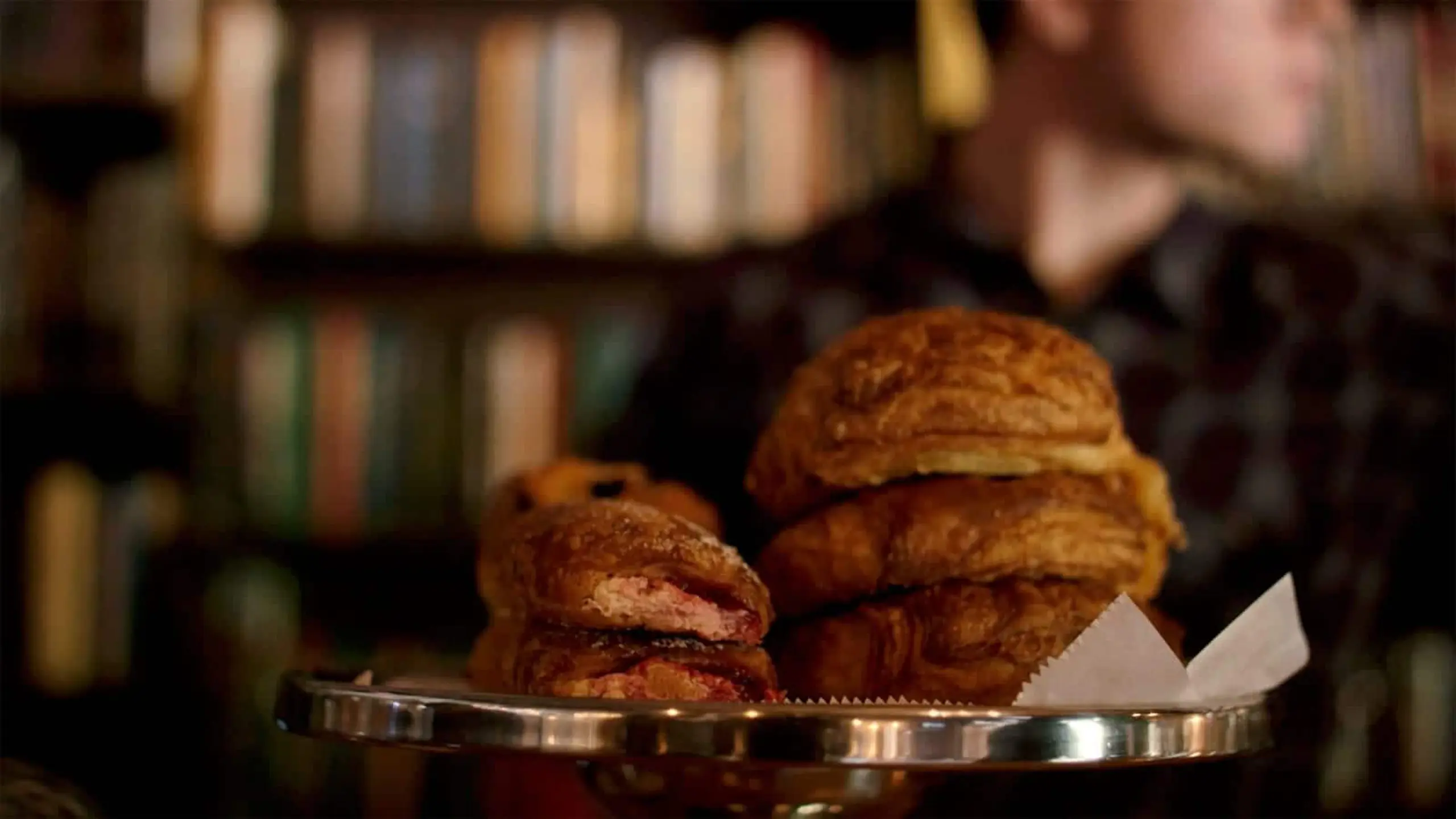
In the highly competitive food and beverage industry, video marketing has emerged as a powerful tool to captivate and engage consumers. High-quality videos not only showcase the sensory appeal of food but also tell compelling stories that resonate with audiences. Leveraging [professional video production](https://c-istudios.com/video-production-services/) techniques, brands can create visually stunning and emotionally engaging content that stands out on platforms like Instagram, YouTube, TikTok, and Facebook.
So, grab a snack, and let's explore how to create mouthwatering videos that'll have your audience coming back for seconds!
## The Power of Video in Food and Beverage Marketing
Let's face it: we eat with our eyes first. That's why video content has become the main course in the feast of food and beverage marketing. The numbers don't lie - studies show that consumers are 64% more likely to buy a product after watching a video about it. That's a pretty tasty statistic, right?
But it's not just about slapping any old video online and calling it a day. We're talking about creating content that makes mouths water and stomachs growl. Think about the last time you saw a video of melted cheese stretching between two halves of a burger, or a barista creating latte art in slow motion. Chances are, you felt a sudden urge to hit up your favorite restaurant or café.
Take Tasty, for example. Their top-down, quick-cut videos revolutionized how we consume food content online. They turned [social media marketing](https://c-istudios.com/social-media-marketing-services/) into a buffet of bite-sized, crave-inducing clips that spread faster than gossip at a dinner party.
But it's not just the big players who are winning this game. Local cafes, food trucks, and even home bakers are using video to showcase their creations and build a loyal following. The key is to create content that's not just visually appealing but also tells a story.
So, whether you're a multinational food corporation or a mom-and-pop bakery, video content is your ticket to your customers' hearts (and stomachs). But how do you create videos that stand out in a sea of content? That's what we're going to explore next.
## Planning and Pre-Production
Alright, let's roll up our sleeves and get into the nitty-gritty of creating mouthwatering food videos. Like any good recipe, the secret to a great food video lies in the prep work. Planning is your mise en place - get it right, and everything else will flow smoothly.
First things first: what's your story? Are you showcasing a new product, sharing a recipe, or giving a behind-the-scenes look at your restaurant? Your concept will guide everything from your script to your shot list. It's like deciding whether you're making a cozy comfort food or an elegant fine dining dish - the end goal shapes every decision.
Next up is storyboarding. Think of this as your visual recipe. Sketch out each shot, even if you're not the next Picasso. This helps you visualize the flow of your video and ensures you don't miss any crucial angles. Remember that mouthwatering cheese pull we talked about earlier? That doesn't happen by accident - it's carefully planned and executed.
Now, let's talk about your team. Just like in a professional kitchen, everyone has a role to play. You'll need a director (that's your head chef), a camera operator, a food stylist (yes, that's a real job and it's awesome), and maybe a sound technician. If you're a smaller operation, you might wear multiple hats, but the principle remains the same - know who's responsible for what.
Don't forget about props and setting. The right backdrop can make your food pop on the screen. Are you going for a rustic farmhouse vibe or a sleek, modern look? Your [branding](https://c-istudios.com/branding-and-graphic-design-services/) should inform these decisions. And props aren't just for looks - they can help tell your story. A well-placed vintage recipe book or a beautiful set of chef's knives can add depth to your video.
Remember, good planning doesn't mean being inflexible. Sometimes, the best shots happen spontaneously. But with a solid plan in place, you'll be ready to capture those magical moments when they arise.
## Production Techniques for Engaging Food Videos
Lights, camera, action! It's time to dive into the actual production of your food video. This is where the magic happens, where your carefully planned shots come to life and your food becomes the star of the show.
Let's start with the most important element: lighting. [Professional photography](https://c-istudios.com/professional-photography-services/) techniques apply here - natural light is often your best friend when it comes to food. It brings out the natural colors and textures of your dishes. But don't shy away from artificial lighting if you need more control. The goal is to make your food look as appetizing on screen as it does in real life.
Now, let's talk about camera work. Close-ups are your secret weapon in food videography. They allow viewers to see every juicy detail, from the crust on a perfectly seared steak to the crumb of a freshly baked loaf of bread. But don't forget about wider shots that set the scene and show the environment.
Movement is key in keeping your audience engaged. Consider using sliders or gimbals to create smooth, flowing shots. Slow motion can turn a simple action - like pouring maple syrup over pancakes - into a mesmerizing spectacle.
Audio is often overlooked in food videos, but it shouldn't be. The sizzle of a pan, the crunch of a crispy baguette, the pop of a champagne cork - these sounds can make your viewers' mouths water just as much as the visuals. Invest in good microphones and don't be afraid to amplify these appetizing sounds in post-production.
Remember, consistency is key. Your [video production gear lis](https://c-istudios.com/video-production-gear-list/)[t](https://c-istudios.com/video-production-gear-list/) should be tailored to your needs and budget, but once you find a setup that works, stick with it. This will help you develop a signature style that viewers will come to recognize and love.
Lastly, don't forget about the human element. While the food is the star, showing the people behind it - the chefs, the farmers, the servers - can add warmth and relatability to your videos. After all, food is as much about the people who make and enjoy it as it is about the ingredients.
## Post-Production and Editing
Alright, you've captured all your footage, and now it's time for the post-production feast. This is where your raw ingredients - your video clips - get transformed into a delectable final product.
First up: editing. This is like plating your dish. You want to arrange your shots in a way that tells a compelling story and keeps your viewers engaged. Pacing is crucial here. Too slow, and you might lose your audience's attention. Too fast, and they might miss important details. Find that sweet spot that keeps the energy up without being overwhelming.
Color grading is the seasoning of video editing. It can transform the mood of your footage, making your food look even more appetizing. A slight boost in saturation can make fresh produce pop, while a warmer color temperature can give baked goods that fresh-from-the-oven glow.
Now, let's talk about [VFX compositing and animation](https://c-istudios.com/vfx-compositing-and-animation-services/). While you don't want to go overboard (we're selling food, not special effects), a touch of animation can add a playful or informative element to your videos. Think animated steam rising from a hot dish, or graphics showing the nutritional information of a product.
Sound design is the unsung hero of food videos. Remember those appetizing sounds we captured during production? Now's the time to make them shine. Layer in some subtle background music to set the mood, but make sure it doesn't overpower the natural sounds of the food.
Transitions are the finishing touches of your video. Smooth transitions between shots can make your video feel polished and professional. But don't be afraid to get creative - a transition that mimics a knife cut or a pour of liquid can add a fun, thematic element to your video.
Finally, don't forget about text and graphics. These can be used to highlight key information, like ingredient lists or cooking times. Just make sure they're in line with your overall [branding and graphic design](https://c-istudios.com/branding-and-graphic-design-services/).
Remember, the goal of post-production is to enhance what you've already shot, not to completely change it. Your food should still look real and appetizing, not over-processed or artificial.
## Platform-Specific Strategies
Now that you've got your mouthwatering video ready, it's time to serve it up to your audience. But just like you wouldn't serve sushi on a burger bun, you need to tailor your content to fit each social media platform.
Let's start with Instagram. This visual paradise is perfect for food content but remember - you've got limited time to grab attention. Instagram Reels and Stories favor quick, punchy content. Think of 15-30 second clips that showcase a single dish or technique. Use bold text overlays and catchy music to stop scrollers in their tracks.
YouTube, on the other hand, is where you can really dig in. This is the place for longer-form content like full recipes, behind-the-scenes tours, or in-depth explanations of cooking techniques. Don't be afraid to show your personality here - YouTube viewers often connect with the person behind the food as much as the food itself.
TikTok is all about trends and challenges. Can you turn your signature dish into a viral sensation? This platform rewards creativity and humor, so don't be afraid to think outside the box. Remember, though, that authenticity is key on TikTok - users can spot an overly polished corporate video a mile away.
Facebook sits somewhere in the middle. It can handle longer videos than Instagram, but users are still scrolling through a feed. Engagement is the name of the game here. Use the first few seconds of your video to hook viewers, and consider using Facebook Live to interact directly with your audience.
Regardless of the platform, remember to optimize your videos for mobile viewing. Most people will be watching on their phones, often without sound, so make sure your visuals can stand alone.
Lastly, don't forget about SEO. Use relevant hashtags, write compelling descriptions, and include keywords that will help your target audience find your content. Each platform has its own quirks when it comes to searching, so do your homework.
Remember, [creative marketing](https://c-istudios.com/creative-marketing-services/) isn't about being everywhere - it's about being in the right places with the right content. Choose the platforms that best align with your brand and audience, and focus on creating quality content for those spaces.
## Case Studies. Successful Food and Beverage Video Campaigns
Let's take a moment to feast our eyes on some of the most successful food and beverage video campaigns out there. These brands have mastered the art of making us drool with just a few seconds of footage.
First up, let's talk about Tasty. This Buzzfeed offshoot turned food videos into an art form with their overhead, quick-cut style. Their videos are simple, satisfying, and eminently shareable. The key to their success? They understood that in the world of social media, sometimes less is more. Their videos rarely exceed a minute, but they pack in enough mouthwatering visuals to send viewers straight to the kitchen (or the nearest restaurant).
Next, consider Bon Appétit's wildly popular YouTube channel. They've taken a different approach, focusing on personality-driven content that goes beyond just the food. Their "Test Kitchen" series turned their chefs into culinary celebrities, proving that sometimes, the story behind the food is just as appetizing as the dish itself.
Starbucks, meanwhile, has mastered the art of seasonal marketing with its video campaigns. Their holiday cup reveals have become annual events, generating buzz and excitement that goes far beyond just coffee. They've tapped into the emotional connection people have with their products, using video to create a sense of warmth and nostalgia.
What do these success stories have in common? They all understand their audience, their platform, and their brand. They're not just selling food or drinks - they're selling experiences, lifestyles, and emotions. And they're doing it all through the power of video.
## Measuring Success and ROI
Alright, you've cooked up some amazing video content and served it to your audience. But how do you know if they're coming back for seconds? That's where measuring success and ROI comes in.
First things first: what does success look like for you? Is it views, engagement, conversions, or something else entirely? Just like a chef needs to know whether they're aiming for a Michelin star or a busy lunch rush, you need to define your goals before you can measure them.
Once you've set your goals, it's time to dig into the data. Each platform offers its own analytics tools, and it's worth getting familiar with them. On YouTube, for example, you'll want to look at watch time as well as views - it's not just about how many people clicked on your video, but how long they stuck around.
Engagement is another key metric. How many likes, comments, and shares is your content getting? These interactions are like the compliments a chef receives - they show that your audience isn't just consuming your content, they're savoring it.
But let's talk ROI. After all, video production can be expensive, and you need to know if it's worth the investment. Look at metrics like click-through rates and conversion rates. Are people watching your videos and then visiting your website? Are they making purchases? These are the numbers that will show whether your video marketing efforts are translating into real business results.
Don't forget about the less tangible benefits, too. Video content can boost your [SEO](https://c-istudios.com/seo-copywriting-services/), increase brand awareness, and help build a loyal community around your brand. These effects might not show up immediately in your sales figures, but they're crucial for long-term success.
Remember, data is like ingredients - it's what you do with it that counts. Use your analytics to inform your future content strategy. If you see that your audience loves behind-the-scenes content, make more of it. If your how-to videos aren't performing well, try a different approach.
And finally, don't be afraid to experiment. Sometimes, the most successful campaigns come from taking risks and trying something new. Just make sure you're measuring the results so you can learn from every video you create.
## Future Trends in Food and Beverage Video Marketing
As we wrap up our journey through the world of food and beverage video marketing, let's take a moment to peek into the future. What's cooking in the world of digital marketing strategies?
One trend that's already making waves is the use of augmented reality (AR) in food marketing. Imagine being able to see how a dish would look on your own dining table before you order it, or getting a virtual tour of a vineyard while you're shopping for wine. AR is turning passive viewers into active participants, and it's only going to get more immersive.
Virtual reality (VR) is not far behind. While it's still in its early stages for food marketing, the potential is enormous. Picture taking a VR tour of a chocolate factory, or attending a virtual cooking class with a celebrity chef. As VR technology becomes more accessible, we can expect to see more brands using it to create unforgettable experiences for their customers.
Another trend to watch is the rise of user-generated content. Brands are increasingly turning to their customers to create authentic, relatable videos. This not only provides a steady stream of content but also builds a sense of community around the brand.
Lastly, we're seeing a shift towards more conscious consumption. Videos that highlight sustainability, ethical sourcing, and health benefits are resonating with audiences. Brands that can tell these stories effectively through video will have a significant advantage in the coming years.
The future of food and beverage video marketing is looking mighty tasty, folks. It's all about creating immersive, authentic experiences that go beyond just showcasing the product. So, keep your eyes peeled and your cameras ready - the next big trend could be just around the corner!
## Work with C&I Studios
If you are planning a project like this, our team can take it from concept to final delivery. Explore our [video production services](https://c-istudios.com/video-production-services/), browse [our work](https://c-istudios.com/our-work/) to see how we tell brand stories, and [get in touch](https://c-istudios.com/contact/) when you are ready to start.
Originally published June 30, 2024
---
*This content is from [C&I Studios](https://c-istudios.com), a full-service production company.*
---
# Documentary Filmmaking Techniques Applied to Feature Films
> Published: June 29, 2024
> Categories: Film & TV
> Source: https://c-istudios.com/documentary-filmmaking-techniques-applied-to-feature-films/
---
.cib{--paper:#1b1d1f;--ink:#fff;--body:#d5d7d9;--muted:#8b9096;--line:rgba(255,255,255,.12);--thumb:#2b2e31;--card:#212426;--accent:#c02b0a;--blue:#5B8FA8;--serif:'Playfair Display',Georgia,serif;--sans:'Poppins',-apple-system,sans-serif;--measure:900px;background:var(--paper);color:var(--body);font-family:var(--sans);line-height:1.6;position:relative;left:50%;transform:translateX(-50%);width:90vw;max-width:1920px}
.cib *{box-sizing:border-box}
.cib .kicker{max-width:var(--measure);margin:58px auto 0;padding:0 22px;font-size:12.5px;font-weight:700;letter-spacing:2.5px;text-transform:uppercase;color:var(--blue)}
.cib h1.cibh1{text-wrap:balance;font-family:var(--serif);font-weight:500;font-size:clamp(46px,6vw,72px);line-height:1.08;color:var(--ink);max-width:var(--measure);margin:18px auto 0;padding:0 22px;letter-spacing:-.5px}
.cib .metarow{max-width:var(--measure);margin:20px auto 0;padding:0 22px;color:var(--muted);font-size:14px}
.cib .hero{position:relative;width:100%;height:0;padding-bottom:56.25%;overflow:hidden;margin:48px auto 0;border-top:1px solid var(--line);border-bottom:1px solid var(--line)}
.cib .hero .ph{width:100%;aspect-ratio:16/9;background:var(--thumb);border-top:1px solid var(--line);border-bottom:1px solid var(--line);display:flex;align-items:center;justify-content:center;color:#7d8288;font-size:13px;text-align:center;padding:0 20px}
.cib .body{max-width:var(--measure);margin:12px auto 0;padding:52px 22px 6px}
.cib .body.lead p:first-child{font-size:23px;line-height:1.62;color:var(--ink)}
.cib .body p{font-size:18.5px;line-height:1.85;margin:0 0 30px;color:var(--body)}
.cib .body h2{text-wrap:balance;font-family:var(--serif);font-weight:500;font-size:clamp(32px,4vw,48px);line-height:1.22;color:var(--ink);margin:70px 0 20px;letter-spacing:-.3px}
.cib .body h3{text-wrap:balance;font-family:var(--sans);font-weight:600;font-size:22px;color:var(--ink);margin:38px 0 8px}
.cib .body a{color:var(--ink);text-decoration:underline;text-decoration-color:rgba(255,255,255,.4);text-underline-offset:3px}
.cib .body a:hover{text-decoration-color:var(--ink)}
.cib .ctable{width:100%;border-collapse:collapse;margin:16px 0 30px;font-size:16px}
.cib .ctable th{background:#000;color:#fff;text-align:left;padding:10px 12px;font-family:var(--sans)}
.cib .ctable td{padding:10px 12px;border-bottom:1px solid var(--line);color:var(--body)}
.cib .inimg{position:relative;width:100%;height:0;padding-bottom:56.25%;overflow:hidden;margin:72px auto;border-top:1px solid var(--line);border-bottom:1px solid var(--line)}
.cib .inimg .ph{width:100%;aspect-ratio:16/9;background:var(--thumb);border-top:1px solid var(--line);border-bottom:1px solid var(--line);display:flex;align-items:center;justify-content:center;color:#7d8288;font-size:13px}
.cib .origpub{max-width:var(--measure);margin:60px auto 0;padding:26px 22px 0;border-top:1px solid var(--line);color:var(--muted);font-size:13.5px}
.cib .related{max-width:1200px;margin:64px auto 0;padding:34px 22px 76px}
.cib .related h3{font-family:var(--sans);font-size:12.5px;letter-spacing:2px;text-transform:uppercase;color:var(--ink);margin:0 0 24px}
.cib .grid{display:grid;grid-template-columns:repeat(3,1fr);gap:28px}
.cib .rc{background:var(--card);border:1px solid var(--line);display:block;text-decoration:none;color:inherit;transition:border-color .15s}
.cib a.rc:hover{border-color:rgba(255,255,255,.5)}
.cib .rc .thumb{position:relative;width:100%;height:0;padding-bottom:56.25%;background:var(--thumb);overflow:hidden}
.cib .rc .thumb img{position:absolute!important;top:0!important;left:0!important;width:100%!important;height:100%!important;object-fit:cover!important;margin:0!important}
.cib .rc .cc{padding:14px 15px 17px}
.cib .rc .rt{font-family:var(--serif);font-weight:500;font-size:16px;line-height:1.3;color:var(--ink);margin:0 0 6px}
.cib .rc .rm{font-size:11px;letter-spacing:1px;text-transform:uppercase;color:var(--muted)}
.cib img{margin:0!important;padding:0!important;display:block!important;vertical-align:top;max-width:100%}
.cib .hero img,.cib .inimg img{position:absolute!important;top:0!important;left:0!important;width:100%!important;height:100%!important;object-fit:cover!important;margin:0!important;padding:0!important;border:0!important;display:block!important;aspect-ratio:auto!important}
.cib .hero+.body{padding-top:36px}
@media(max-width:760px){.cib .grid{grid-template-columns:1fr}.cib .body h2{margin:52px 0 16px}.cib .body p{font-size:17.5px}.cib .inimg,.cib .hero{margin-top:44px}}
.cib .vembed{max-width:var(--measure);margin:44px auto;padding:0 22px}.cib .vembed .vwrap{position:relative;width:100%;height:0;padding-bottom:56.25%}.cib .vembed .vwrap iframe{position:absolute;top:0;left:0;width:100%;height:100%;border:0}
Film & TV
# Documentary Filmmaking Techniques Applied to Feature Films
11 min read
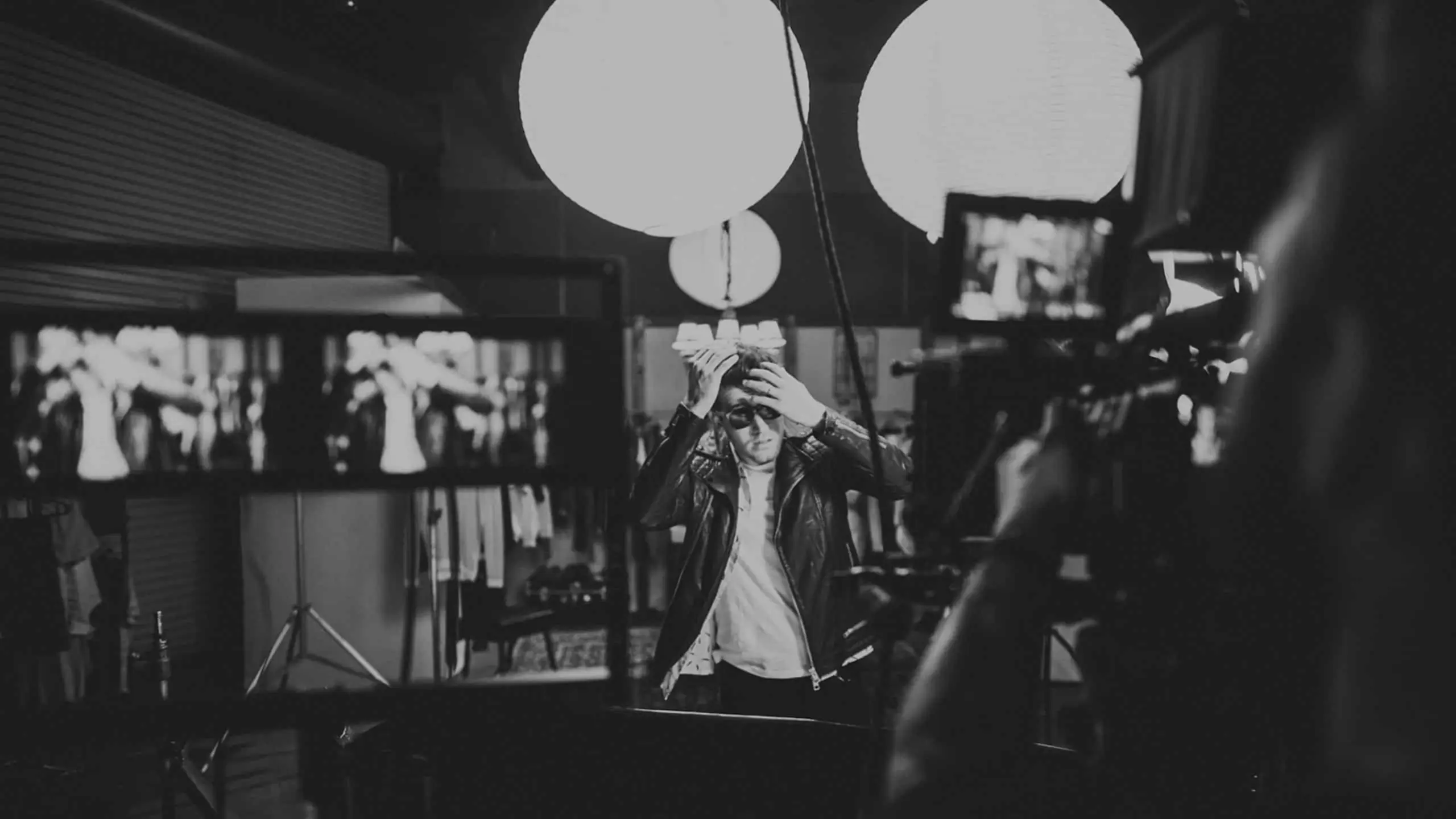
The world of cinema has always been a realm of innovation and creative expression. From the earliest days of silent films to the modern era of blockbusters, filmmakers have constantly pushed the boundaries of storytelling. One of the most intriguing developments in recent years has been the blending of documentary techniques with feature [film production](https://c-istudios.com/film-and-tv-production/). This fusion has created a new breed of movies that captivate audiences with their raw authenticity and emotional depth.
Let's dive into the fascinating world where reality meets fiction, and explore how documentary filmmaking techniques are revolutionizing the art of feature films.
## Historical Context
The roots of this cinematic evolution can be traced back to the early days of film. As [film and TV production](https://c-istudios.com/film-and-tv-production/) evolved, documentarians and feature filmmakers began to borrow from each other's toolkits. The line between fact and fiction started to blur, creating a new landscape of storytelling possibilities.
In the 1960s, the French New Wave movement embraced handheld cameras and natural lighting, bringing a sense of immediacy to their narratives. This approach, inspired by documentary filmmaking, breathed new life into fictional storytelling. Fast forward to the digital age, and we see how technological advancements have further bridged the gap between these two worlds.
Today, filmmakers can easily switch between high-end cinema cameras and consumer-grade equipment, allowing for a seamless blend of polished and raw footage. This flexibility has opened up new avenues for creative expression, enabling directors to capture authentic moments within the framework of a scripted narrative.
## Key Documentary Techniques
At the heart of this cinematic revolution lies a set of key documentary techniques that have found their way into feature filmmaking. These methods bring a sense of realism and immediacy to fictional stories, drawing viewers deeper into the narrative.
One of the most recognizable techniques is the use of handheld camera work. This approach creates a sense of intimacy and spontaneity, making the audience feel like they're right there in the action. It's a far cry from the smooth, steady shots we often associate with traditional Hollywood productions.
Realistic lighting and natural sound also play crucial roles in this hybrid approach. Instead of carefully controlled studio lighting, filmmakers often opt for available light sources, creating a more authentic ambiance. Similarly, embracing the natural sounds of a location rather than relying solely on post-production audio can lend a documentary-like feel to a scene.
On-location shooting is another hallmark of this style. By taking the production out of the controlled environment of a sound stage and into real-world settings, filmmakers can capture the genuine texture and atmosphere of a place. This approach often requires a more adaptable [video production gear list](https://c-istudios.com/video-production-gear-list/), focusing on equipment that's portable and versatile.
Interviews and voiceovers, staples of documentary filmmaking, have also found their way into feature films. These techniques can provide insight into characters' thoughts and motivations, or offer context to the unfolding events. When used skillfully, they can add layers of depth to the storytelling without breaking the film's immersion.
Lastly, the use of archival footage has become a powerful tool in this hybrid approach. By weaving real historical footage into a fictional narrative, filmmakers can ground their stories in reality and add a sense of authenticity that resonates with viewers.
## Case Studies. Successful Integrations
To truly understand the impact of these techniques, let's look at some successful integrations in popular films. These case studies showcase how documentary-style approaches can enhance storytelling and deepen audience engagement.
"The Blair Witch Project" stands as a pioneering example of this hybrid approach. Released in 1999, the film used handheld camera work and improvised performances to create a sense of authenticity that had audiences questioning whether they were watching real-found footage. This [creative marketing](https://c-istudios.com/creative-marketing-services/) approach extended beyond the film itself, with an innovative online campaign that blurred the lines between fiction and reality.
Another standout example is Neill Blomkamp's "District 9". The film seamlessly blends documentary-style interviews and news footage with a science fiction narrative. This approach grounded the fantastical elements of the story in a recognizable reality, making the film's social commentary all the more potent.
Steven Spielberg's "Saving Private Ryan" used documentary techniques to bring the horrors of war to life. The opening D-Day sequence, with its shaky camera work and visceral sound design, plunges viewers into the chaos of battle in a way that feels startlingly real.
These films demonstrate how documentary techniques can be used to create immersive experiences that resonate deeply with audiences. They show that when applied thoughtfully, these methods can elevate storytelling to new heights.
## Pre-Production Planning
The success of such films doesn't happen by accident. It requires meticulous planning and a unique approach to pre-production. When embarking on a documentary-style feature film, the process often begins with extensive research, much like a traditional documentary.
This research phase is crucial for [content creation](https://c-istudios.com/content-creation-services/). It involves delving deep into the subject matter and understanding the real-world contexts that will inform the fictional narrative. For historical pieces, this might involve studying archival materials and consulting with experts. For contemporary stories, it could mean immersing oneself in the relevant communities or environments.
The scripting process for these hybrid films often differs from traditional feature film writing. While there is still a structured narrative, the script might leave room for improvisation and unexpected moments. This flexibility allows the production to capture the spontaneity and authenticity that are hallmarks of documentary filmmaking.
Storyboarding takes on a different character as well. Instead of planning every shot meticulously, filmmakers might focus on key moments while leaving room for organic discovery during filming. This approach can be particularly effective for [political campaign videos](https://c-istudios.com/political-campaign-services/) or other projects that aim to capture real-world dynamics.
Collaboration with experienced documentary filmmakers during this phase can be invaluable. Their insights can help shape the approach to filming, ensuring that the documentary techniques are applied effectively and authentically.
## Production Techniques
When it comes to the actual production, implementing documentary techniques in a feature film setting requires a delicate balance. The key is to create an environment that fosters authenticity while still maintaining control over the narrative.
One of the primary challenges is adapting to real-world scenarios. Unlike traditional feature films shot on controlled sets, documentary-style productions often embrace the unpredictability of actual locations. This approach requires a flexible mindset from the entire crew, from the director to the [professional photography](https://c-istudios.com/professional-photography-services/) team.
Capturing spontaneous moments is crucial to achieving a documentary feel. This might involve allowing actors to improvise within the framework of a scene or being ready to film unexpected events that occur during shooting. The camera operators need to be particularly skilled, and able to react quickly to unfolding action while maintaining composition and focus.
Balancing scripted scenes with unscripted elements is another key aspect of this hybrid approach. Directors might shoot a scene as written, and then allow the actors to improvise variations. This technique can yield surprisingly authentic performances and dialogue.
The use of minimalistic gear and crew can also contribute to the documentary aesthetic. A smaller, more mobile team can move quickly and unobtrusively, capturing moments that might be lost with a larger production. This approach also allows for more intimate interactions between the subjects and the camera.
## Post-Production and Editing
The magic of blending documentary and feature film techniques often comes together in the post-production phase. This is where the raw footage is shaped into a cohesive narrative that maintains the authenticity of a documentary while delivering the emotional impact of a feature film.
Editing strategies for these hybrid films often reflect documentary storytelling techniques. This might involve a more fluid approach to chronology, weaving together different timeframes to build a compelling narrative. The goal is to maintain a sense of discovery for the audience as if they're uncovering the story alongside the filmmaker.
Incorporating real-time edits and maintaining continuity can be challenging when working with footage that has a documentary feel. Editors might choose to embrace some of the imperfections - jump cuts, slight mismatches in action - to reinforce the sense of authenticity.
The use of voiceovers, interviews, and archival footage in post-production can add layers of context and emotion to the story. These elements, when skillfully integrated, can provide insight into characters' thoughts or offer historical context without breaking the film's immersion.
[Audio live-streaming](https://c-istudios.com/video-audio-live-streaming/) techniques borrowed from documentary production can be applied in the sound mix to enhance the sense of realism. This might involve layering in ambient sounds captured on location or using minimal music to avoid overly manipulating the viewer's emotions.
The role of [copywriting](https://c-istudios.com/seo-copywriting-services/) comes into play when creating supplementary materials like synopses and promotional content. These elements need to accurately represent the film's unique approach while still appealing to audiences who might be unfamiliar with this hybrid style.
## Marketing and Distribution
Marketing and distributing a documentary-style feature film presents unique challenges and opportunities. These films often defy easy categorization, which can make traditional marketing approaches less effective.
One powerful strategy is to lean into the film's unique blend of fact and fiction. [Media marketing consultation](https://c-istudios.com/media-marketing-consultation-services/) can help craft campaigns that highlight the film's authenticity and immersive qualities. This might involve creating behind-the-scenes content that showcases the documentary techniques used in production.
Trailers for these films often adopt a documentary style themselves, blurring the line between promotion and the film itself. This approach can create intrigue and spark discussions among potential viewers.
Social media marketing can be particularly effective for these types of films. Platforms like Twitter and Instagram allow for the creation of multimedia campaigns that can extend the film's world beyond the screen. This might involve character accounts, faux-documentary clips, or interactive elements that engage audiences in the film's reality.
Film festivals play a crucial role in the distribution of documentary-style feature films. These events often appreciate innovative approaches to storytelling and can provide valuable exposure to audiences and critics alike. Early screenings at festivals can generate buzz and help position the film in the market.
## Challenges and Solutions
While the integration of documentary techniques into feature films offers exciting creative possibilities, it also comes with its own set of challenges. Understanding these hurdles and having strategies to overcome them is crucial for filmmakers venturing into this hybrid territory.
One common challenge is budget constraints. Documentary-style productions often require more flexibility, which can lead to longer shooting schedules and increased costs. Careful planning and resourceful problem-solving are essential. This might involve prioritizing which scenes require a more documentary approach and which can be shot more traditionally.
Logistical issues frequently arise when shooting in real locations with non-actors. Permissions, unpredictable weather, and the coordination of large groups of people can all pose challenges. Having a skilled location manager and a flexible production team is crucial.
Creative differences can emerge when blending documentary and feature film approaches. Some team members might be more comfortable with traditional filmmaking methods and may struggle with the improvisation required in documentary-style shooting. Clear communication and a shared vision among the key creative team members are essential to navigate these differences.
Industry professionals suggest several solutions to these challenges. Building a team that's experienced in both documentary and feature film production can help bridge the gap between these two worlds. Embracing new technologies, like lightweight cameras and [web development](https://c-istudios.com/web-development-services/) tools for organizing production data, can also streamline the process.
Ultimately, the key to success lies in thorough preparation combined with a willingness to adapt. By anticipating potential issues and remaining flexible, filmmakers can harness the power of documentary techniques while maintaining the structured storytelling of feature films.
## Future Trends
As we look to the future, the line between documentary and feature filmmaking is likely to blur even further. Emerging technologies are opening up new possibilities for storytelling that combines elements of both genres.
Virtual reality (VR) and augmented reality (AR) are poised to revolutionize the way we experience films. These technologies could allow viewers to step inside documentary-style environments within a fictional narrative, creating unprecedented levels of immersion.
Artificial intelligence is another frontier that could reshape this hybrid genre. AI could potentially be used to analyze vast amounts of archival footage, helping filmmakers discover relevant clips to weave into their narratives. It might also assist in the editing process, suggesting cuts that enhance the documentary feel of a scene.
The rise of streaming platforms has created new opportunities for experimental storytelling. We're likely to see more [TV show pitches](https://c-istudios.com/tv-show-pitch/) that blend documentary and fictional elements, perhaps even allowing viewers to switch between different perspectives or timelines within the same story.
As audiences become more sophisticated and crave authentic experiences, we can expect to see continued innovation in this space. The future of filmmaking may well lie in these hybrid approaches that challenge our perceptions of reality and fiction.
## Work with C&I Studios
If you are planning a project like this, our team can take it from concept to final delivery. Explore our [film and TV production](https://c-istudios.com/film-and-tv-production/), browse [our work](https://c-istudios.com/our-work/) to see how we tell brand stories, and [get in touch](https://c-istudios.com/contact/) when you are ready to start.
Originally published June 29, 2024
---
*This content is from [C&I Studios](https://c-istudios.com), a full-service production company.*
---
# The Evolution of Branding Trends: What's Hot in 2024 and Beyond
> Published: June 28, 2024
> Categories: Commercial & Brand
> Source: https://c-istudios.com/the-evolution-of-branding-trends-whats-hot-in-2024-and-beyond/
---
.cib{--paper:#1b1d1f;--ink:#fff;--body:#d5d7d9;--muted:#8b9096;--line:rgba(255,255,255,.12);--thumb:#2b2e31;--card:#212426;--accent:#c02b0a;--blue:#5B8FA8;--serif:'Playfair Display',Georgia,serif;--sans:'Poppins',-apple-system,sans-serif;--measure:900px;background:var(--paper);color:var(--body);font-family:var(--sans);line-height:1.6;position:relative;left:50%;transform:translateX(-50%);width:90vw;max-width:1920px}
.cib *{box-sizing:border-box}
.cib .kicker{max-width:var(--measure);margin:58px auto 0;padding:0 22px;font-size:12.5px;font-weight:700;letter-spacing:2.5px;text-transform:uppercase;color:var(--blue)}
.cib h1.cibh1{text-wrap:balance;font-family:var(--serif);font-weight:500;font-size:clamp(46px,6vw,72px);line-height:1.08;color:var(--ink);max-width:var(--measure);margin:18px auto 0;padding:0 22px;letter-spacing:-.5px}
.cib .metarow{max-width:var(--measure);margin:20px auto 0;padding:0 22px;color:var(--muted);font-size:14px}
.cib .hero{position:relative;width:100%;height:0;padding-bottom:56.25%;overflow:hidden;margin:48px auto 0;border-top:1px solid var(--line);border-bottom:1px solid var(--line)}
.cib .hero .ph{width:100%;aspect-ratio:16/9;background:var(--thumb);border-top:1px solid var(--line);border-bottom:1px solid var(--line);display:flex;align-items:center;justify-content:center;color:#7d8288;font-size:13px;text-align:center;padding:0 20px}
.cib .body{max-width:var(--measure);margin:12px auto 0;padding:52px 22px 6px}
.cib .body.lead p:first-child{font-size:23px;line-height:1.62;color:var(--ink)}
.cib .body p{font-size:18.5px;line-height:1.85;margin:0 0 30px;color:var(--body)}
.cib .body h2{text-wrap:balance;font-family:var(--serif);font-weight:500;font-size:clamp(32px,4vw,48px);line-height:1.22;color:var(--ink);margin:70px 0 20px;letter-spacing:-.3px}
.cib .body h3{text-wrap:balance;font-family:var(--sans);font-weight:600;font-size:22px;color:var(--ink);margin:38px 0 8px}
.cib .body a{color:var(--ink);text-decoration:underline;text-decoration-color:rgba(255,255,255,.4);text-underline-offset:3px}
.cib .body a:hover{text-decoration-color:var(--ink)}
.cib .ctable{width:100%;border-collapse:collapse;margin:16px 0 30px;font-size:16px}
.cib .ctable th{background:#000;color:#fff;text-align:left;padding:10px 12px;font-family:var(--sans)}
.cib .ctable td{padding:10px 12px;border-bottom:1px solid var(--line);color:var(--body)}
.cib .inimg{position:relative;width:100%;height:0;padding-bottom:56.25%;overflow:hidden;margin:72px auto;border-top:1px solid var(--line);border-bottom:1px solid var(--line)}
.cib .inimg .ph{width:100%;aspect-ratio:16/9;background:var(--thumb);border-top:1px solid var(--line);border-bottom:1px solid var(--line);display:flex;align-items:center;justify-content:center;color:#7d8288;font-size:13px}
.cib .origpub{max-width:var(--measure);margin:60px auto 0;padding:26px 22px 0;border-top:1px solid var(--line);color:var(--muted);font-size:13.5px}
.cib .related{max-width:1200px;margin:64px auto 0;padding:34px 22px 76px}
.cib .related h3{font-family:var(--sans);font-size:12.5px;letter-spacing:2px;text-transform:uppercase;color:var(--ink);margin:0 0 24px}
.cib .grid{display:grid;grid-template-columns:repeat(3,1fr);gap:28px}
.cib .rc{background:var(--card);border:1px solid var(--line);display:block;text-decoration:none;color:inherit;transition:border-color .15s}
.cib a.rc:hover{border-color:rgba(255,255,255,.5)}
.cib .rc .thumb{position:relative;width:100%;height:0;padding-bottom:56.25%;background:var(--thumb);overflow:hidden}
.cib .rc .thumb img{position:absolute!important;top:0!important;left:0!important;width:100%!important;height:100%!important;object-fit:cover!important;margin:0!important}
.cib .rc .cc{padding:14px 15px 17px}
.cib .rc .rt{font-family:var(--serif);font-weight:500;font-size:16px;line-height:1.3;color:var(--ink);margin:0 0 6px}
.cib .rc .rm{font-size:11px;letter-spacing:1px;text-transform:uppercase;color:var(--muted)}
.cib img{margin:0!important;padding:0!important;display:block!important;vertical-align:top;max-width:100%}
.cib .hero img,.cib .inimg img{position:absolute!important;top:0!important;left:0!important;width:100%!important;height:100%!important;object-fit:cover!important;margin:0!important;padding:0!important;border:0!important;display:block!important;aspect-ratio:auto!important}
.cib .hero+.body{padding-top:36px}
@media(max-width:760px){.cib .grid{grid-template-columns:1fr}.cib .body h2{margin:52px 0 16px}.cib .body p{font-size:17.5px}.cib .inimg,.cib .hero{margin-top:44px}}
.cib .vembed{max-width:var(--measure);margin:44px auto;padding:0 22px}.cib .vembed .vwrap{position:relative;width:100%;height:0;padding-bottom:56.25%}.cib .vembed .vwrap iframe{position:absolute;top:0;left:0;width:100%;height:100%;border:0}
Commercial & Brand
# The Evolution of Branding Trends. What's Hot in 2024 and Beyond
9 min read

In the dynamic world of marketing, branding continues to be the cornerstone of business success. As we navigate through 2024, the branding landscape is evolving at breakneck speed, driven by technological innovations, shifting consumer behaviors, and global changes in societal values. This article delves into the cutting-edge trends shaping the branding sphere, offering insights into what's hot now and what lies ahead.
From sustainability-driven approaches to AI-powered personalization, we'll uncover the strategies that are helping brands stand out in an increasingly crowded marketplace.
## The Shifting Landscape of Branding
The concept of branding has come a long way from its humble beginnings as a mere identifier of goods. Today, it's an intricate tapestry of visual elements, storytelling, and emotional connections. In 2024, we're witnessing a paradigm shift in how brands interact with their audiences. The traditional one-way communication model has given way to a more dynamic, two-way dialogue between brands and consumers.
This shift is largely driven by the digital revolution and the rise of social media. Brands are no longer just selling products or services; they're selling experiences, values, and lifestyles. The modern consumer doesn't just want to buy from a brand; they want to buy into a brand. This fundamental change has forced companies to rethink their branding strategies, focusing more on building relationships than simply pushing sales.
Moreover, the lines between different marketing channels are blurred. [Content creation](https://c-istudios.com/content-creation-services/) is no longer confined to traditional media; it's now an omnichannel effort that spans across digital platforms, physical spaces, and even virtual realms. Brands that can seamlessly integrate their message across these diverse touchpoints are the ones capturing consumer attention and loyalty.
## Sustainability-Driven Branding. More Than Just a Buzzword
One of the most significant trends shaping branding in 2024 is the emphasis on sustainability. This isn't just about slapping a "green" label on products; it's about fundamentally aligning brand values with environmental and social responsibility. Consumers, particularly younger generations, are increasingly making purchasing decisions based on a brand's commitment to sustainability.
Companies are responding by integrating sustainability into every aspect of their branding. This includes using eco-friendly packaging, adopting transparent supply chains, and actively participating in environmental and social causes. Some brands are going even further by adopting circular economy models, where products are designed to be reused, repaired, or recycled.
The challenge for brands lies in authentically communicating their sustainability efforts without falling into the trap of "greenwashing." Successful brands are those that can demonstrate tangible, measurable impacts of their sustainability initiatives. They're using [documentary film production](https://c-istudios.com/documentary-film-production/) techniques to showcase their efforts, creating compelling narratives that resonate with environmentally conscious consumers.
## AI-Powered Personalization. Tailoring Brand Experiences
Artificial Intelligence (AI) is revolutionizing the way brands interact with their audiences. In 2024, AI-powered personalization has become a key differentiator in branding strategies. This goes beyond simply addressing customers by name in emails; it's about creating highly tailored brand experiences across all touchpoints.
AI algorithms are analyzing vast amounts of consumer data to predict preferences, behaviors, and even emotional states. This allows brands to deliver personalized content, product recommendations, and advertisements that feel eerily relevant to individual consumers. The result is a more engaging and memorable brand experience that fosters loyalty and drives conversions.
For instance, [VFX compositing and animation](https://c-istudios.com/vfx-compositing-and-animation-services/) techniques powered by AI are being used to create personalized video content at scale. Imagine receiving a branded video that not only addresses you by name but also features scenes and storylines tailored to your specific interests and past interactions with the brand.
However, with great power comes great responsibility. Brands must walk a fine line between personalization and privacy concerns. Successful brands in 2024 are those that can leverage AI to enhance the customer experience while being transparent about data usage and respecting consumer privacy preferences.
## Immersive Brand Experiences. Blurring Reality and Virtual Worlds
The concept of brand experience has taken on new dimensions in 2024, quite literally. With the advancement of augmented reality (AR) and virtual reality (VR) technologies, brands are creating immersive experiences that blur the lines between the physical and digital worlds.
AR is being used to enhance real-world brand interactions. For example, furniture brands are allowing customers to visualize products in their homes before purchase, while beauty brands are offering virtual try-on experiences for makeup and skincare products. These AR applications not only provide practical value but also create memorable brand moments that stick with consumers.
VR, on the other hand, is enabling brands to transport consumers into fully realized brand worlds. Imagine being able to "walk" through a virtual store, interact with products, and even chat with AI-powered brand representatives, all from the comfort of your home.
The key to success in this realm is creating experiences that are not just technologically impressive but also genuinely useful and emotionally engaging. Brands that can strike this balance are seeing increased engagement, stronger emotional connections with consumers, and ultimately, higher brand loyalty.
## Purpose-Led Branding. Standing for Something More
In 2024, consumers are increasingly drawn to brands that stand for something beyond profit. Purpose-led branding has moved from being a nice-to-have to a must-have for companies looking to connect with modern consumers, especially younger generations.
This trend goes beyond simple corporate social responsibility initiatives. It's about weaving a brand's purpose into every aspect of its identity and operations. Successful purpose-led brands are those that can articulate a clear reason for existing beyond making money, and then demonstrate how this purpose informs their decisions and actions.
These brands are not shying away from taking stands on social and [political](https://c-istudios.com/political-campaign-services/) issues, recognizing that while this may alienate some consumers, it creates stronger connections with those who share their values.
However, authenticity is crucial. Consumers are quick to call out brands that pay lip service to a cause without backing it up with action. Brands that are succeeding in this space are those that can show consistent commitment to their stated purpose, even when it comes at a cost to their bottom line.
## Minimalist Design Aesthetics. Less is More
In a world of information overload, many brands are finding success by embracing minimalist design aesthetics. This trend is about more than just clean lines and simple color palettes; it's about distilling a brand's essence down to its most essential elements.
Minimalist branding is helping companies cut through the noise and make a lasting impression on consumers. By stripping away unnecessary clutter, brands can communicate their core values and unique selling propositions more effectively. This approach is particularly effective in digital spaces, where consumers are bombarded with countless messages and have increasingly short attention spans.
[Graphic design](https://c-istudios.com/branding-and-graphic-design-services/) experts are using principles of minimalism to create logos, websites, and packaging that are visually striking in their simplicity. The challenge lies in creating designs that are simple yet distinctive, conveying a brand's personality without relying on complex visual elements.
This trend towards minimalism extends beyond visual design to other aspects of branding, including messaging and product offerings. Brands are simplifying their product lines, focusing on core offerings, and communicating their value propositions in clear, concise language.
## The Role of Technology in Modern Branding
Technology continues to play a crucial role in shaping branding strategies in 2024. Beyond AI and immersive technologies, other technological advancements are opening up new possibilities for brand expression and consumer engagement.
Blockchain technology, for instance, is being used to enhance brand authenticity and transparency. Luxury brands are using blockchain to create verifiable records of a product's origin and journey through the supply chain, combating counterfeiting and building trust with consumers.
Voice technology is another area of innovation in branding. As smart speakers and voice assistants become more prevalent, brands are developing distinct voice identities and creating content optimized for voice search. This requires a shift in thinking about brand identity, extending it beyond visual elements to include sonic branding elements.
The Internet of Things (IoT) is also providing new opportunities for brand interactions. [Web development](https://c-istudios.com/web-development-services/) and web maintenance services are being leveraged to create connected brand ecosystems, where physical products can communicate with digital platforms, creating seamless, data-rich experiences for consumers.
## The Impact of Social Media on Brand Evolution
Social media continues to be a dominant force in shaping brand perceptions and interactions in 2024. However, the landscape has evolved significantly. While platforms like Facebook and Instagram remain important, newer platforms with different content formats are gaining prominence.
Short-form video content, popularized by platforms like TikTok, has become a key branding tool. Brands are creating bite-sized, highly engaging video content that can quickly go viral. This requires a different approach to storytelling, one that can capture attention and convey a message in a matter of seconds.
Social media marketing services are now focusing on creating authentic, user-generated content rather than polished, branded posts. Influencer partnerships have evolved into more long-term, strategic relationships, with brands seeking out influencers who genuinely align with their values and can serve as authentic brand ambassadors.
Moreover, social commerce has blurred the lines between social media engagement and e-commerce. Brands are creating seamless shopping experiences within social platforms, allowing consumers to discover, research, and purchase products without ever leaving their favorite social media app.
## Content Creation and Storytelling in Branding
In 2024, content remains king in the branding world, but the nature of that content has evolved. Brands are moving away from traditional advertising formats towards creating valuable, engaging content that tells a story and provides genuine value to consumers.
[Media marketing consultation](https://c-istudios.com/media-marketing-consultation-services/) helps brands develop comprehensive content strategies that span multiple formats and platforms. This might include long-form articles, podcasts, interactive web experiences, and even original entertainment content.
The key to success in content marketing is creating stories that resonate on an emotional level with target audiences. Brands are tapping into universal human emotions and experiences, crafting narratives that position their products or services as solutions to real human problems or aspirations.
User-generated content has also become a powerful tool in brand storytelling. By encouraging and showcasing content created by their customers, brands can build authenticity and foster a sense of community around their products or services.
## The Future of Branding. Predictions for 2025 and Beyond
As we look towards the future, several emerging trends are likely to shape the branding landscape in 2025 and beyond. One area to watch is the development of the metaverse and its implications for brand experiences. As virtual worlds become more sophisticated and widely adopted, brands will need to consider how they present themselves and interact with consumers in these new digital realms.
Another trend on the horizon is the increasing use of neuroscience in branding. Advanced brain imaging techniques are providing insights into how consumers respond to different brand stimuli on a neurological level. This could lead to more scientifically informed branding strategies that tap into subconscious consumer preferences and decision-making processes.
The concept of brand ownership may also evolve, with the rise of decentralized autonomous organizations (DAOs) and community-owned brands. This could lead to a new paradigm where consumers have a more direct stake in the brands they support.
## Work with C&I Studios
If you are planning a project like this, our team can take it from concept to final delivery. Explore our [video production services](https://c-istudios.com/video-production-services/), browse [our work](https://c-istudios.com/our-work/) to see how we tell brand stories, and [get in touch](https://c-istudios.com/contact/) when you are ready to start.
Originally published June 28, 2024
---
*This content is from [C&I Studios](https://c-istudios.com), a full-service production company.*
---
# The Impact of Video Length on SEO: Finding the Right Balance
> Published: June 27, 2024
> Categories: Web & Tech
> Source: https://c-istudios.com/the-impact-of-video-length-on-seo-finding-the-right-balance/
---
.cib{--paper:#1b1d1f;--ink:#fff;--body:#d5d7d9;--muted:#8b9096;--line:rgba(255,255,255,.12);--thumb:#2b2e31;--card:#212426;--accent:#c02b0a;--blue:#5B8FA8;--serif:'Playfair Display',Georgia,serif;--sans:'Poppins',-apple-system,sans-serif;--measure:900px;background:var(--paper);color:var(--body);font-family:var(--sans);line-height:1.6;position:relative;left:50%;transform:translateX(-50%);width:90vw;max-width:1920px}
.cib *{box-sizing:border-box}
.cib .kicker{max-width:var(--measure);margin:58px auto 0;padding:0 22px;font-size:12.5px;font-weight:700;letter-spacing:2.5px;text-transform:uppercase;color:var(--blue)}
.cib h1.cibh1{text-wrap:balance;font-family:var(--serif);font-weight:500;font-size:clamp(46px,6vw,72px);line-height:1.08;color:var(--ink);max-width:var(--measure);margin:18px auto 0;padding:0 22px;letter-spacing:-.5px}
.cib .metarow{max-width:var(--measure);margin:20px auto 0;padding:0 22px;color:var(--muted);font-size:14px}
.cib .hero{position:relative;width:100%;height:0;padding-bottom:56.25%;overflow:hidden;margin:48px auto 0;border-top:1px solid var(--line);border-bottom:1px solid var(--line)}
.cib .hero .ph{width:100%;aspect-ratio:16/9;background:var(--thumb);border-top:1px solid var(--line);border-bottom:1px solid var(--line);display:flex;align-items:center;justify-content:center;color:#7d8288;font-size:13px;text-align:center;padding:0 20px}
.cib .body{max-width:var(--measure);margin:12px auto 0;padding:52px 22px 6px}
.cib .body.lead p:first-child{font-size:23px;line-height:1.62;color:var(--ink)}
.cib .body p{font-size:18.5px;line-height:1.85;margin:0 0 30px;color:var(--body)}
.cib .body h2{text-wrap:balance;font-family:var(--serif);font-weight:500;font-size:clamp(32px,4vw,48px);line-height:1.22;color:var(--ink);margin:70px 0 20px;letter-spacing:-.3px}
.cib .body h3{text-wrap:balance;font-family:var(--sans);font-weight:600;font-size:22px;color:var(--ink);margin:38px 0 8px}
.cib .body a{color:var(--ink);text-decoration:underline;text-decoration-color:rgba(255,255,255,.4);text-underline-offset:3px}
.cib .body a:hover{text-decoration-color:var(--ink)}
.cib .ctable{width:100%;border-collapse:collapse;margin:16px 0 30px;font-size:16px}
.cib .ctable th{background:#000;color:#fff;text-align:left;padding:10px 12px;font-family:var(--sans)}
.cib .ctable td{padding:10px 12px;border-bottom:1px solid var(--line);color:var(--body)}
.cib .inimg{position:relative;width:100%;height:0;padding-bottom:56.25%;overflow:hidden;margin:72px auto;border-top:1px solid var(--line);border-bottom:1px solid var(--line)}
.cib .inimg .ph{width:100%;aspect-ratio:16/9;background:var(--thumb);border-top:1px solid var(--line);border-bottom:1px solid var(--line);display:flex;align-items:center;justify-content:center;color:#7d8288;font-size:13px}
.cib .origpub{max-width:var(--measure);margin:60px auto 0;padding:26px 22px 0;border-top:1px solid var(--line);color:var(--muted);font-size:13.5px}
.cib .related{max-width:1200px;margin:64px auto 0;padding:34px 22px 76px}
.cib .related h3{font-family:var(--sans);font-size:12.5px;letter-spacing:2px;text-transform:uppercase;color:var(--ink);margin:0 0 24px}
.cib .grid{display:grid;grid-template-columns:repeat(3,1fr);gap:28px}
.cib .rc{background:var(--card);border:1px solid var(--line);display:block;text-decoration:none;color:inherit;transition:border-color .15s}
.cib a.rc:hover{border-color:rgba(255,255,255,.5)}
.cib .rc .thumb{position:relative;width:100%;height:0;padding-bottom:56.25%;background:var(--thumb);overflow:hidden}
.cib .rc .thumb img{position:absolute!important;top:0!important;left:0!important;width:100%!important;height:100%!important;object-fit:cover!important;margin:0!important}
.cib .rc .cc{padding:14px 15px 17px}
.cib .rc .rt{font-family:var(--serif);font-weight:500;font-size:16px;line-height:1.3;color:var(--ink);margin:0 0 6px}
.cib .rc .rm{font-size:11px;letter-spacing:1px;text-transform:uppercase;color:var(--muted)}
.cib img{margin:0!important;padding:0!important;display:block!important;vertical-align:top;max-width:100%}
.cib .hero img,.cib .inimg img{position:absolute!important;top:0!important;left:0!important;width:100%!important;height:100%!important;object-fit:cover!important;margin:0!important;padding:0!important;border:0!important;display:block!important;aspect-ratio:auto!important}
.cib .hero+.body{padding-top:36px}
@media(max-width:760px){.cib .grid{grid-template-columns:1fr}.cib .body h2{margin:52px 0 16px}.cib .body p{font-size:17.5px}.cib .inimg,.cib .hero{margin-top:44px}}
.cib .vembed{max-width:var(--measure);margin:44px auto;padding:0 22px}.cib .vembed .vwrap{position:relative;width:100%;height:0;padding-bottom:56.25%}.cib .vembed .vwrap iframe{position:absolute;top:0;left:0;width:100%;height:100%;border:0}
Web & Tech
# The Impact of Video Length on SEO. Finding the Right Balance
10 min read

In today's digital landscape, video content plays a crucial role in SEO strategies. Videos can boost user engagement, reduce bounce rates, and improve dwell time on websites, all of which are important factors for search engine rankings. However, one key aspect that often goes overlooked is video length. How long should your videos be to maximize their SEO impact?
This article explores the relationship between video length and SEO, providing insights into finding the right balance to enhance your search engine performance.
## Step 1. Understanding Video SEO Fundamentals
Video SEO involves optimizing your video content to be indexed and ranked by search engines for relevant keyword searches. Key elements of video SEO include keywords, metadata, and engagement metrics. For instance, incorporating[SEO copywriting](https://c-istudios.com/seo-copywriting-services/) techniques can enhance your video's discoverability by ensuring that titles, descriptions, and tags are keyword-rich and relevant.
Effective video SEO starts with thorough keyword research to identify terms that your target audience is searching for. These keywords should be naturally integrated into your video's title, description, and tags. Additionally, providing a detailed and engaging video description helps search engines understand the content of your video, increasing its chances of ranking higher in search results.
Metadata also plays a critical role in video SEO. Metadata includes information like the video’s title, description, tags, and thumbnail. Ensuring that this information is accurate and optimized for search engines can significantly improve your video's visibility. For example, a compelling thumbnail can increase click-through rates, while a well-crafted title and description can help your video rank for relevant searches.
Engagement metrics, such as watch time, likes, shares, and comments, are also vital for video SEO. Search engines consider these metrics when determining the relevance and quality of your video. Higher engagement rates indicate that viewers find your content valuable, which can boost your video’s rankings.
## Step 2. The Role of Video Length in Engagement
One of the most debated topics in video SEO is the ideal length for maximizing viewer engagement. Engagement metrics, particularly viewer retention rates, significantly impact your video’s SEO performance. Viewer retention refers to the percentage of your video that viewers watch before clicking away. Higher retention rates indicate that your content is engaging and relevant, which can positively influence search engine rankings.
Analyzing data from various sources shows that the optimal video length can vary depending on the content type and platform. For instance, on platforms like YouTube, videos that are between 7-15 minutes long often achieve higher engagement rates. These videos are long enough to provide valuable information but short enough to maintain viewer interest.
Incorporating[video production](https://c-istudios.com/video-production-services/) best practices can enhance engagement regardless of video length. For example, starting your video with a strong hook can capture viewers’ attention from the outset, encouraging them to watch longer. Additionally, using visual and audio cues to maintain interest throughout the video can help improve retention rates.
Shorter videos, typically under two minutes, are particularly effective for quick, informative content such as tutorials, product demonstrations, and social media posts. These videos cater to viewers with limited time and are more likely to be fully watched, boosting retention rates and overall engagement.
Longer videos, exceeding ten minutes, are better suited for in-depth content such as webinars, interviews, and detailed tutorials. These videos can provide comprehensive information and build a deeper connection with the audience. However, maintaining viewer interest throughout a longer video requires a well-structured format and engaging content.
## Step 3. Short vs. Long Videos. Pros and Cons
Short-form videos, typically under two minutes, have several advantages. They are easy to consume, share, and engage with, making them ideal for social media platforms. These videos are perfect for delivering quick messages, teasers, or highlights. Their brevity encourages viewers to watch the entire video, resulting in higher retention rates. However, the downside is that they may not provide enough depth or detail for more complex topics.
For instance, in[content creation](https://c-istudios.com/content-creation-services/), short videos can be used to introduce a topic or product, with a call to action directing viewers to longer content for more information. This strategy can drive traffic to your website or YouTube channel, where viewers can find more detailed content.
Long-form videos, typically over ten minutes, allow for more in-depth exploration of a topic. These videos are ideal for educational content, tutorials, interviews, and webinars. They can provide comprehensive information, establish authority, and build a deeper connection with the audience. However, longer videos require careful planning and engaging content to maintain viewer interest. High drop-off rates can negatively impact SEO, as search engines may interpret low retention as a sign of low-quality content.
Balancing short and long-form content can help you reach a wider audience and cater to different preferences. For example, you can use short videos to attract viewers and introduce them to your brand, then provide longer videos for those interested in more detailed information. This approach can maximize engagement and enhance your overall video SEO strategy.
## Step 4. Optimizing Video Content for Search Engines
Optimizing your video content for search engines involves several best practices that enhance visibility and engagement. These practices include using relevant keywords, crafting compelling titles and descriptions, and optimizing video thumbnails. Incorporating[branding and graphic design](https://c-istudios.com/branding-and-graphic-design-services/) elements can also enhance the visual appeal of your videos, making them more likely to attract clicks and shares.
Keywords play a crucial role in video optimization. Conduct thorough keyword research to identify terms that your target audience is searching for. Integrate these keywords naturally into your video’s title, description, and tags. A well-optimized title should be concise, descriptive, and include primary keywords. The description should provide a detailed overview of the video’s content, incorporating secondary keywords to enhance search visibility.
Thumbnails are another critical element of video optimization. A compelling thumbnail can significantly increase click-through rates by capturing viewers’ attention. Use high-quality images, clear text, and branding elements to create visually appealing thumbnails. Consistent branding in thumbnails helps establish a recognizable visual identity, encouraging repeat views and subscriptions.
Metadata optimization is equally important. In addition to keywords, ensure that your video metadata accurately reflects the content. This includes providing a detailed description, using relevant tags, and selecting an appropriate category. Metadata helps search engines understand the context of your video, improving its chances of ranking for relevant searches.
Engagement signals, such as likes, shares, comments, and watch time, also influence video SEO. Encourage viewers to engage with your content by asking questions, prompting discussions, and including clear calls to action. Higher engagement rates indicate that your content is valuable and relevant, which can boost your video’s rankings.
## Step 5. Balancing Video Length for Different Platforms
Different social media platforms favor different video lengths, and understanding these preferences can help you tailor your content strategy for maximum engagement. For example, YouTube videos that are between 7-15 minutes long tend to perform well, while Instagram and TikTok favor shorter videos under one minute. Facebook and LinkedIn audiences often engage with videos that are 1-2 minutes long.
To effectively balance video length for different platforms, start by analyzing the specific characteristics and user behavior of each platform. On YouTube, longer videos can thrive due to the platform's algorithm favoring watch time and session duration. However, on Instagram and TikTok, shorter, more visually engaging videos are essential due to the fast-scrolling nature of these platforms.
Integrating insights from[social media marketing services](https://c-istudios.com/social-media-marketing-services/) can help you develop a platform-specific content strategy. These services often provide valuable data on the best times to post, optimal content formats, and engagement strategies for each platform. By leveraging these insights, you can create content that resonates with your audience and performs well across different social media channels.
Creating platform-specific content involves adjusting the format, tone, and style to match the expectations of each platform’s users. For example, while Instagram stories might require a more casual and spontaneous approach, LinkedIn posts should maintain a professional and informative tone. Adapting your content to fit these nuances ensures that it aligns with user expectations and maximizes engagement.
Additionally, utilizing platform-specific features can enhance your content’s reach and engagement. Features like Instagram Stories, Facebook Live, and Twitter polls offer unique opportunities to interact with your audience in real-time and create more dynamic and engaging content. Experimenting with these features can help you discover new ways to connect with your audience and keep your content fresh and exciting.
## Step 6. Tools and Techniques for Measuring Video Performance
To ensure the success of your video content strategy, it is essential to regularly analyze your video performance and refine your strategy based on the insights gained. Monitoring key metrics and using analytics tools can help you understand what works and what doesn’t, allowing you to make data-driven decisions to improve your strategy.
Using advanced[web development](https://c-istudios.com/web-development-services/) techniques, you can create custom dashboards and reports that track the most important metrics for your video campaigns. These metrics might include engagement rates, reach, impressions, click-through rates, and conversions. By regularly reviewing these metrics, you can identify trends and patterns that inform your content strategy.
Analyzing video performance involves looking at both quantitative and qualitative data. Quantitative data, such as engagement metrics and traffic sources, provides insights into how your audience interacts with your content. Qualitative data, such as comments and feedback, offers deeper insights into audience perceptions and preferences.
Based on your analysis, you can refine your content strategy to better meet the needs and preferences of your audience. This might involve adjusting your content types, posting schedule, or messaging to align more closely with what resonates with your audience. Continuous improvement and adaptation are key to maintaining an effective video strategy.
Regularly conducting A/B testing can also help optimize your content. By testing different variations of your videos, such as different titles, thumbnails, or calls to action, you can determine which elements are most effective in driving engagement and conversions. Applying the insights gained from these tests can help you create more impactful content.
Furthermore, staying updated with the latest trends and algorithm changes is essential for maintaining a successful video strategy. Social media platforms frequently update their algorithms, which can affect how content is displayed and engaged with. Keeping abreast of these changes ensures that your strategy remains relevant and effective in the ever-evolving digital landscape.
## Step 7. Creating a Balanced Video Strategy
Creating a balanced video strategy involves finding the right mix of short and long videos to maximize engagement and SEO performance. By understanding the unique strengths and weaknesses of different video lengths, you can create a content strategy that caters to a diverse audience and meets various marketing objectives.
One approach to achieving balance is to use short videos to capture attention and drive immediate engagement, while using longer videos to provide in-depth information and build a deeper connection with your audience. For example, short teaser videos can be used to promote longer, more detailed content, encouraging viewers to visit your website or YouTube channel for the full experience.
Incorporating[creative marketing](https://c-istudios.com/creative-marketing-services/) strategies can further enhance your video content. Creative marketing involves thinking outside the box and experimenting with different content formats, storytelling techniques, and promotional tactics to engage your audience. By combining creativity with data-driven insights, you can develop a video strategy that is both effective and innovative.
Another key aspect of creating a balanced video strategy is to consider the goals and objectives of each video. For instance, if the goal is to drive website traffic, shorter videos with strong calls to action may be more effective. On the other hand, if the goal is to educate or inform, longer videos that provide comprehensive information may be more suitable.
Integrating video length considerations into your overall SEO strategy is also crucial. By understanding how different video lengths impact viewer retention and engagement, you can optimize your content to maximize its SEO potential. This involves regularly reviewing and analyzing your video performance data to identify what works best for your audience and adjusting your strategy accordingly.
## Work with C&I Studios
If you are planning a project like this, our team can take it from concept to final delivery. Explore our [AI video services](https://c-istudios.com/ai-video-services/), browse [our work](https://c-istudios.com/our-work/) to see how we tell brand stories, and [get in touch](https://c-istudios.com/contact/) when you are ready to start.
Originally published June 27, 2024
---
*This content is from [C&I Studios](https://c-istudios.com), a full-service production company.*
---
# Typography Matters: Crafting a Unique Voice Through Fonts
> Published: June 26, 2024
> Categories: Commercial & Brand
> Source: https://c-istudios.com/typography-matters-crafting-a-unique-voice-through-fonts/
---
.cib{--paper:#1b1d1f;--ink:#fff;--body:#d5d7d9;--muted:#8b9096;--line:rgba(255,255,255,.12);--thumb:#2b2e31;--card:#212426;--accent:#c02b0a;--blue:#5B8FA8;--serif:'Playfair Display',Georgia,serif;--sans:'Poppins',-apple-system,sans-serif;--measure:900px;background:var(--paper);color:var(--body);font-family:var(--sans);line-height:1.6;position:relative;left:50%;transform:translateX(-50%);width:90vw;max-width:1920px}
.cib *{box-sizing:border-box}
.cib .kicker{max-width:var(--measure);margin:58px auto 0;padding:0 22px;font-size:12.5px;font-weight:700;letter-spacing:2.5px;text-transform:uppercase;color:var(--blue)}
.cib h1.cibh1{text-wrap:balance;font-family:var(--serif);font-weight:500;font-size:clamp(46px,6vw,72px);line-height:1.08;color:var(--ink);max-width:var(--measure);margin:18px auto 0;padding:0 22px;letter-spacing:-.5px}
.cib .metarow{max-width:var(--measure);margin:20px auto 0;padding:0 22px;color:var(--muted);font-size:14px}
.cib .hero{position:relative;width:100%;height:0;padding-bottom:56.25%;overflow:hidden;margin:48px auto 0;border-top:1px solid var(--line);border-bottom:1px solid var(--line)}
.cib .hero .ph{width:100%;aspect-ratio:16/9;background:var(--thumb);border-top:1px solid var(--line);border-bottom:1px solid var(--line);display:flex;align-items:center;justify-content:center;color:#7d8288;font-size:13px;text-align:center;padding:0 20px}
.cib .body{max-width:var(--measure);margin:12px auto 0;padding:52px 22px 6px}
.cib .body.lead p:first-child{font-size:23px;line-height:1.62;color:var(--ink)}
.cib .body p{font-size:18.5px;line-height:1.85;margin:0 0 30px;color:var(--body)}
.cib .body h2{text-wrap:balance;font-family:var(--serif);font-weight:500;font-size:clamp(32px,4vw,48px);line-height:1.22;color:var(--ink);margin:70px 0 20px;letter-spacing:-.3px}
.cib .body h3{text-wrap:balance;font-family:var(--sans);font-weight:600;font-size:22px;color:var(--ink);margin:38px 0 8px}
.cib .body a{color:var(--ink);text-decoration:underline;text-decoration-color:rgba(255,255,255,.4);text-underline-offset:3px}
.cib .body a:hover{text-decoration-color:var(--ink)}
.cib .ctable{width:100%;border-collapse:collapse;margin:16px 0 30px;font-size:16px}
.cib .ctable th{background:#000;color:#fff;text-align:left;padding:10px 12px;font-family:var(--sans)}
.cib .ctable td{padding:10px 12px;border-bottom:1px solid var(--line);color:var(--body)}
.cib .inimg{position:relative;width:100%;height:0;padding-bottom:56.25%;overflow:hidden;margin:72px auto;border-top:1px solid var(--line);border-bottom:1px solid var(--line)}
.cib .inimg .ph{width:100%;aspect-ratio:16/9;background:var(--thumb);border-top:1px solid var(--line);border-bottom:1px solid var(--line);display:flex;align-items:center;justify-content:center;color:#7d8288;font-size:13px}
.cib .origpub{max-width:var(--measure);margin:60px auto 0;padding:26px 22px 0;border-top:1px solid var(--line);color:var(--muted);font-size:13.5px}
.cib .related{max-width:1200px;margin:64px auto 0;padding:34px 22px 76px}
.cib .related h3{font-family:var(--sans);font-size:12.5px;letter-spacing:2px;text-transform:uppercase;color:var(--ink);margin:0 0 24px}
.cib .grid{display:grid;grid-template-columns:repeat(3,1fr);gap:28px}
.cib .rc{background:var(--card);border:1px solid var(--line);display:block;text-decoration:none;color:inherit;transition:border-color .15s}
.cib a.rc:hover{border-color:rgba(255,255,255,.5)}
.cib .rc .thumb{position:relative;width:100%;height:0;padding-bottom:56.25%;background:var(--thumb);overflow:hidden}
.cib .rc .thumb img{position:absolute!important;top:0!important;left:0!important;width:100%!important;height:100%!important;object-fit:cover!important;margin:0!important}
.cib .rc .cc{padding:14px 15px 17px}
.cib .rc .rt{font-family:var(--serif);font-weight:500;font-size:16px;line-height:1.3;color:var(--ink);margin:0 0 6px}
.cib .rc .rm{font-size:11px;letter-spacing:1px;text-transform:uppercase;color:var(--muted)}
.cib img{margin:0!important;padding:0!important;display:block!important;vertical-align:top;max-width:100%}
.cib .hero img,.cib .inimg img{position:absolute!important;top:0!important;left:0!important;width:100%!important;height:100%!important;object-fit:cover!important;margin:0!important;padding:0!important;border:0!important;display:block!important;aspect-ratio:auto!important}
.cib .hero+.body{padding-top:36px}
@media(max-width:760px){.cib .grid{grid-template-columns:1fr}.cib .body h2{margin:52px 0 16px}.cib .body p{font-size:17.5px}.cib .inimg,.cib .hero{margin-top:44px}}
.cib .vembed{max-width:var(--measure);margin:44px auto;padding:0 22px}.cib .vembed .vwrap{position:relative;width:100%;height:0;padding-bottom:56.25%}.cib .vembed .vwrap iframe{position:absolute;top:0;left:0;width:100%;height:100%;border:0}
Commercial & Brand
# Typography Matters. Crafting a Unique Voice Through Fonts
10 min read
Typography is more than just selecting a font; it's about creating a visual voice that communicates the essence of a brand. Fonts have the power to convey emotions, build recognition, and influence decisions. In a world where first impressions are often made through visuals, the right typography can set a brand apart.
This article delves deep into the importance of typography, exploring how fonts contribute to brand identity, evoke emotions, and enhance communication in both digital and print media.
## Understanding Typography
Typography, the art and technique of arranging type, has a rich history dating back to the invention of the printing press by Johannes Gutenberg in the 15th century. Initially, typography was confined to printed materials, but with the advent of digital media, its scope has expanded tremendously. Today, typography is a critical element in graphic design, advertising, and [content creation](https://c-istudios.com/content-creation-services/), playing a pivotal role in how information is perceived and processed.
Typography is not just about choosing a pretty font; it's about readability, legibility, and conveying the right tone. The choice of typeface can significantly impact the way a message is understood and the emotional response it elicits from the audience.
For instance, a formal document would typically use a serif font like Times New Roman, while a tech company might opt for a clean, sans-serif font like Helvetica to convey modernity and simplicity. The influence of typography in [video production](https://c-istudios.com/video-production-services/) is equally profound, where font choices can enhance the storytelling and visual appeal of the content.
## The Role of Fonts in Brand Identity
Fonts are fundamental to brand identity. They are often the first visual element that interacts with an audience, setting the tone for the entire brand experience. A well-chosen font can communicate a brand's values, personality, and style without a single word being spoken.
Consider brands like Coca-Cola and Google. Coca-Cola’s use of a flowing, cursive typeface evokes nostalgia and a sense of tradition, perfectly aligning with its long history. On the other hand, Google’s choice of the simple, clean sans-serif typeface, Product Sans, reflects its modern, innovative approach. These examples highlight how fonts are more than just decorative elements; they are integral to conveying a brand’s identity and are crucial in [media marketing consultation](https://c-istudios.com/media-marketing-consultation-services/).
In the realm of [film production](https://c-istudios.com/film-and-tv-production/), the choice of fonts can influence the audience's perception of the show's tone and style. For example, the serif fonts used in period dramas can evoke a sense of historical authenticity, while modern sans-serif fonts can give a contemporary show a sleek, cutting-edge feel.
## Different Types of Fonts and Their Uses
Fonts are broadly categorized into several families, each with its unique characteristics and appropriate uses. Understanding these categories is essential for making informed design decisions.
Serif Fonts have small lines or extensions at the ends of the letters. Examples include Times New Roman and Georgia. Serif fonts are often associated with tradition, authority, and reliability, making them suitable for formal documents and print media. The use of serif fonts in [documentary film production](https://c-istudios.com/documentary-film-production/) can add a layer of gravitas and seriousness to the subject matter being presented.
Sans-Serif Fonts lack the extensions found in serif fonts, giving them a clean and modern appearance. Helvetica and Arial are popular examples. These fonts are widely used in digital media due to their readability on screens and their contemporary feel. They are particularly effective in [social media marketing](https://c-istudios.com/social-media-marketing-services/), where clarity and modernity are paramount.
Script Fonts are inspired by handwriting and can add a touch of elegance and personalization. Examples include Brush Script and Lobster. These fonts are often used in invitations, logos, and branding to evoke a sense of creativity and uniqueness.
Decorative Fonts are highly stylized and often used sparingly for special effects. Examples include Comic Sans and Jokerman. While they can be eye-catching, their overuse can lead to readability issues, so they should be used with caution.
## How to Choose the Right Font for Your Brand
Choosing the right font for your brand involves more than just picking a visually appealing typeface. It requires a deep understanding of your brand's identity, target audience, and the message you want to convey.
Legibility is crucial. The font should be easily readable across different mediums and sizes to ensure that your message is clear and accessible.
The tone is equally important. The font should match the tone of your brand. A playful brand might use a whimsical script, while a professional brand might opt for a classic serif.
Versatility is another key factor. The chosen font should work well across various applications, from logos and business cards to websites and social media posts. It should maintain its integrity and readability in both large and small sizes.
To make an informed choice, create a shortlist of fonts and test them in different contexts. Consider getting feedback from stakeholders and potential customers to ensure that the font resonates with your audience. This approach is particularly important in [video production](https://c-istudios.com/video-production-services/), where font choice can influence the overall visual impact of the content.
In the context of political campaigns, choosing a font that resonates with the target demographic and conveys the right message is essential. Serif fonts might convey stability and trustworthiness, while sans-serif fonts can suggest modernity and progress.
## The Psychology of Fonts
Fonts have a profound impact on how messages are perceived and can evoke specific emotions and reactions. Understanding the psychology of fonts can help you choose typefaces that enhance your brand’s communication.
Serif fonts are perceived as traditional and trustworthy. They are often used by established brands and institutions to convey reliability and authority. For example, financial institutions and newspapers frequently use serif fonts to build trust and credibility.
Sans-serif fonts are modern and clean, associated with simplicity and efficiency. They are commonly used in technology and fashion industries to convey a sense of innovation and forward-thinking.
Script fonts evoke feelings of elegance, creativity, and a personal touch. They are often used in the beauty and wedding industries to create a sense of sophistication and exclusivity.
Decorative fonts can evoke a wide range of emotions, from fun and playful to bold and edgy. They are typically used in branding and advertising to capture attention and create a strong visual impact.
Understanding these psychological effects can be crucial in [political campaigns](https://c-istudios.com/political-campaign-services/), where the right font choice can significantly influence voter perception and engagement.
## Typography in Digital Media
In the digital age, responsive typography has become essential. With users accessing content on a variety of devices, from smartphones to large monitors, fonts must adapt seamlessly to different screen sizes and resolutions.
Ensuring that your typography is responsive means using scalable units like percentages or ems instead of fixed units like pixels. This allows the text to adjust fluidly to different screen sizes, maintaining readability and aesthetic appeal.
Using web-safe fonts ensures that your text displays correctly across different browsers and devices. Services like Google Fonts and Adobe Fonts offer a wide range of web-safe fonts that can be easily integrated into your website.
Stick to a limited number of fonts (two or three) to maintain a cohesive look. Ensure sufficient contrast between text and background to enhance readability. Use appropriate font sizes and line spacing to improve the user experience. These principles are essential in [web development](https://c-istudios.com/web-development-services/) to ensure that the site is both functional and visually appealing.
## Combining Fonts Effectively
Combining fonts can create visual interest and hierarchy, guiding the reader’s eye through the content. However, it requires a keen eye to ensure harmony and balance.
Choosing fonts that complement each other in style and tone is crucial. Pairing a serif font with a sans-serif font is a classic combination that can create a pleasing contrast. This technique is particularly effective in [live streaming](https://c-istudios.com/video-audio-live-streaming/), where the combination of fonts can enhance the viewer’s experience by making on-screen text both clear and engaging.
Use different fonts to establish a visual hierarchy. For example, a bold, distinctive font for headings and a simple, readable font for body text can help organize information and guide the reader through the content. This approach is vital in maintaining clarity and focus, especially in complex or lengthy documents.
Maintaining consistency in font usage across different materials reinforces brand identity. Avoid using too many fonts, as this can create visual clutter and confusion. Instead, stick to a few well-chosen fonts that work well together and reflect your brand’s style. This principle applies not only in print but also in digital media, ensuring a seamless and professional look across all platforms.
On-screen text must be clear and engaging, and the right combination of fonts can make a big difference. For instance, using a bold, sans-serif font for titles and a more detailed serif font for subtitles can create a visually appealing and easily readable hierarchy.
## Typography in Print vs. Digital
While the principles of good typography apply across both print and digital media, there are some key differences to consider.
In print, fonts need to be clear and readable in various sizes, from small footnotes to large headlines. Print also allows for more creative use of typography, as the designer has complete control over the final output. For example, in [documentary film production](https://c-istudios.com/documentary-film-production/), the choice of typography in both the film's promotional materials and the on-screen text can significantly impact the audience's perception and engagement.
In digital media, fonts must be optimized for screen readability. This includes considering factors like screen resolution, pixel density, and device compatibility. Digital typography also needs to be flexible to adapt to different screen sizes and orientations.
Ensuring that fonts look good and are readable on a variety of devices is crucial for a positive user experience. This adaptability is essential in [web maintenance](https://c-istudios.com/web-maintenance/), where ongoing adjustments might be needed to ensure optimal performance across different platforms.
Moreover, the interactive nature of digital media allows for dynamic typography, where text can change in response to user actions. This capability opens up new possibilities for engaging and immersive experiences that are not possible in print. For instance, hover effects, animations, and transitions can add layers of interaction and visual interest, making the content more engaging and memorable.
## Advanced Typography Techniques
For those looking to take their typography to the next level, advanced techniques can enhance readability and aesthetic appeal.
Kerning involves adjusting the space between individual characters to improve readability and visual appeal. Proper kerning can make text look more polished and professional, which is particularly important in high-quality [professional photography](https://c-istudios.com/professional-photography-services/) publications where every detail matters.
Leading, the space between lines of text, improves readability, especially for longer blocks of text, by preventing the lines from feeling cramped. This technique is essential for creating comfortable and inviting reading experiences in both print and digital media.
Tracking, adjusting the overall spacing between characters in a block of text, can change the density of the text, making it appear more open or compact. This technique is useful for achieving specific design goals, such as creating a sense of spaciousness or density in a layout.
These advanced techniques are essential, where the final product must meet high standards of readability and visual appeal. The precise control over typography ensures that every element of the film's presentation is perfect, from the opening credits to the closing titles.
## Tools and Resources for Typography
Numerous tools and resources are available to help designers choose and use fonts effectively.
Websites like Google Fonts and Adobe Fonts offer extensive libraries of web-safe fonts that can be easily integrated into digital projects. These platforms provide a wide range of fonts to suit various design needs and preferences, making it easy to find the perfect typeface for any project.
Tools like Font Squirrel and WhatFont can help designers identify and implement the perfect fonts for their projects. Font Squirrel offers a collection of high-quality free fonts, while WhatFont is a handy browser extension that identifies fonts used on any webpage. These tools are invaluable for designers looking to expand their font repertoire and experiment with new styles.
Online courses and tutorials on platforms like Coursera and Skillshare can provide valuable insights into advanced typography techniques and best practices. These educational resources cover a wide range of topics, from the basics of typography to advanced design principles, helping designers of all levels improve their skills and create more effective and visually appealing designs.
Incorporating these tools and resources can significantly improve the quality of [creative marketing](https://c-istudios.com/creative-marketing-services/) efforts by ensuring that the typography aligns with the overall design strategy.
By leveraging the power of well-chosen fonts and advanced typography techniques, designers can create compelling and memorable visuals that enhance their brand's message and appeal.
## Work with C&I Studios
If you are planning a project like this, our team can take it from concept to final delivery. Explore our [video production services](https://c-istudios.com/video-production-services/), browse [our work](https://c-istudios.com/our-work/) to see how we tell brand stories, and [get in touch](https://c-istudios.com/contact/) when you are ready to start.
Originally published June 26, 2024
---
*This content is from [C&I Studios](https://c-istudios.com), a full-service production company.*
---
# Measuring Content Performance: Key Metrics and Analytics to Track Success
> Published: June 24, 2024
> Categories: Commercial & Brand
> Source: https://c-istudios.com/measuring-content-performance-key-metrics-and-analytics-to-track-success/
---
.cib{--paper:#1b1d1f;--ink:#fff;--body:#d5d7d9;--muted:#8b9096;--line:rgba(255,255,255,.12);--thumb:#2b2e31;--card:#212426;--accent:#c02b0a;--blue:#5B8FA8;--serif:'Playfair Display',Georgia,serif;--sans:'Poppins',-apple-system,sans-serif;--measure:900px;background:var(--paper);color:var(--body);font-family:var(--sans);line-height:1.6;position:relative;left:50%;transform:translateX(-50%);width:90vw;max-width:1920px}
.cib *{box-sizing:border-box}
.cib .kicker{max-width:var(--measure);margin:58px auto 0;padding:0 22px;font-size:12.5px;font-weight:700;letter-spacing:2.5px;text-transform:uppercase;color:var(--blue)}
.cib h1.cibh1{text-wrap:balance;font-family:var(--serif);font-weight:500;font-size:clamp(46px,6vw,72px);line-height:1.08;color:var(--ink);max-width:var(--measure);margin:18px auto 0;padding:0 22px;letter-spacing:-.5px}
.cib .metarow{max-width:var(--measure);margin:20px auto 0;padding:0 22px;color:var(--muted);font-size:14px}
.cib .hero{position:relative;width:100%;height:0;padding-bottom:56.25%;overflow:hidden;margin:48px auto 0;border-top:1px solid var(--line);border-bottom:1px solid var(--line)}
.cib .hero .ph{width:100%;aspect-ratio:16/9;background:var(--thumb);border-top:1px solid var(--line);border-bottom:1px solid var(--line);display:flex;align-items:center;justify-content:center;color:#7d8288;font-size:13px;text-align:center;padding:0 20px}
.cib .body{max-width:var(--measure);margin:12px auto 0;padding:52px 22px 6px}
.cib .body.lead p:first-child{font-size:23px;line-height:1.62;color:var(--ink)}
.cib .body p{font-size:18.5px;line-height:1.85;margin:0 0 30px;color:var(--body)}
.cib .body h2{text-wrap:balance;font-family:var(--serif);font-weight:500;font-size:clamp(32px,4vw,48px);line-height:1.22;color:var(--ink);margin:70px 0 20px;letter-spacing:-.3px}
.cib .body h3{text-wrap:balance;font-family:var(--sans);font-weight:600;font-size:22px;color:var(--ink);margin:38px 0 8px}
.cib .body a{color:var(--ink);text-decoration:underline;text-decoration-color:rgba(255,255,255,.4);text-underline-offset:3px}
.cib .body a:hover{text-decoration-color:var(--ink)}
.cib .ctable{width:100%;border-collapse:collapse;margin:16px 0 30px;font-size:16px}
.cib .ctable th{background:#000;color:#fff;text-align:left;padding:10px 12px;font-family:var(--sans)}
.cib .ctable td{padding:10px 12px;border-bottom:1px solid var(--line);color:var(--body)}
.cib .inimg{position:relative;width:100%;height:0;padding-bottom:56.25%;overflow:hidden;margin:72px auto;border-top:1px solid var(--line);border-bottom:1px solid var(--line)}
.cib .inimg .ph{width:100%;aspect-ratio:16/9;background:var(--thumb);border-top:1px solid var(--line);border-bottom:1px solid var(--line);display:flex;align-items:center;justify-content:center;color:#7d8288;font-size:13px}
.cib .origpub{max-width:var(--measure);margin:60px auto 0;padding:26px 22px 0;border-top:1px solid var(--line);color:var(--muted);font-size:13.5px}
.cib .related{max-width:1200px;margin:64px auto 0;padding:34px 22px 76px}
.cib .related h3{font-family:var(--sans);font-size:12.5px;letter-spacing:2px;text-transform:uppercase;color:var(--ink);margin:0 0 24px}
.cib .grid{display:grid;grid-template-columns:repeat(3,1fr);gap:28px}
.cib .rc{background:var(--card);border:1px solid var(--line);display:block;text-decoration:none;color:inherit;transition:border-color .15s}
.cib a.rc:hover{border-color:rgba(255,255,255,.5)}
.cib .rc .thumb{position:relative;width:100%;height:0;padding-bottom:56.25%;background:var(--thumb);overflow:hidden}
.cib .rc .thumb img{position:absolute!important;top:0!important;left:0!important;width:100%!important;height:100%!important;object-fit:cover!important;margin:0!important}
.cib .rc .cc{padding:14px 15px 17px}
.cib .rc .rt{font-family:var(--serif);font-weight:500;font-size:16px;line-height:1.3;color:var(--ink);margin:0 0 6px}
.cib .rc .rm{font-size:11px;letter-spacing:1px;text-transform:uppercase;color:var(--muted)}
.cib img{margin:0!important;padding:0!important;display:block!important;vertical-align:top;max-width:100%}
.cib .hero img,.cib .inimg img{position:absolute!important;top:0!important;left:0!important;width:100%!important;height:100%!important;object-fit:cover!important;margin:0!important;padding:0!important;border:0!important;display:block!important;aspect-ratio:auto!important}
.cib .hero+.body{padding-top:36px}
@media(max-width:760px){.cib .grid{grid-template-columns:1fr}.cib .body h2{margin:52px 0 16px}.cib .body p{font-size:17.5px}.cib .inimg,.cib .hero{margin-top:44px}}
.cib .vembed{max-width:var(--measure);margin:44px auto;padding:0 22px}.cib .vembed .vwrap{position:relative;width:100%;height:0;padding-bottom:56.25%}.cib .vembed .vwrap iframe{position:absolute;top:0;left:0;width:100%;height:100%;border:0}
Commercial & Brand
# Measuring Content Performance. Key Metrics and Analytics to Track Success
10 min read
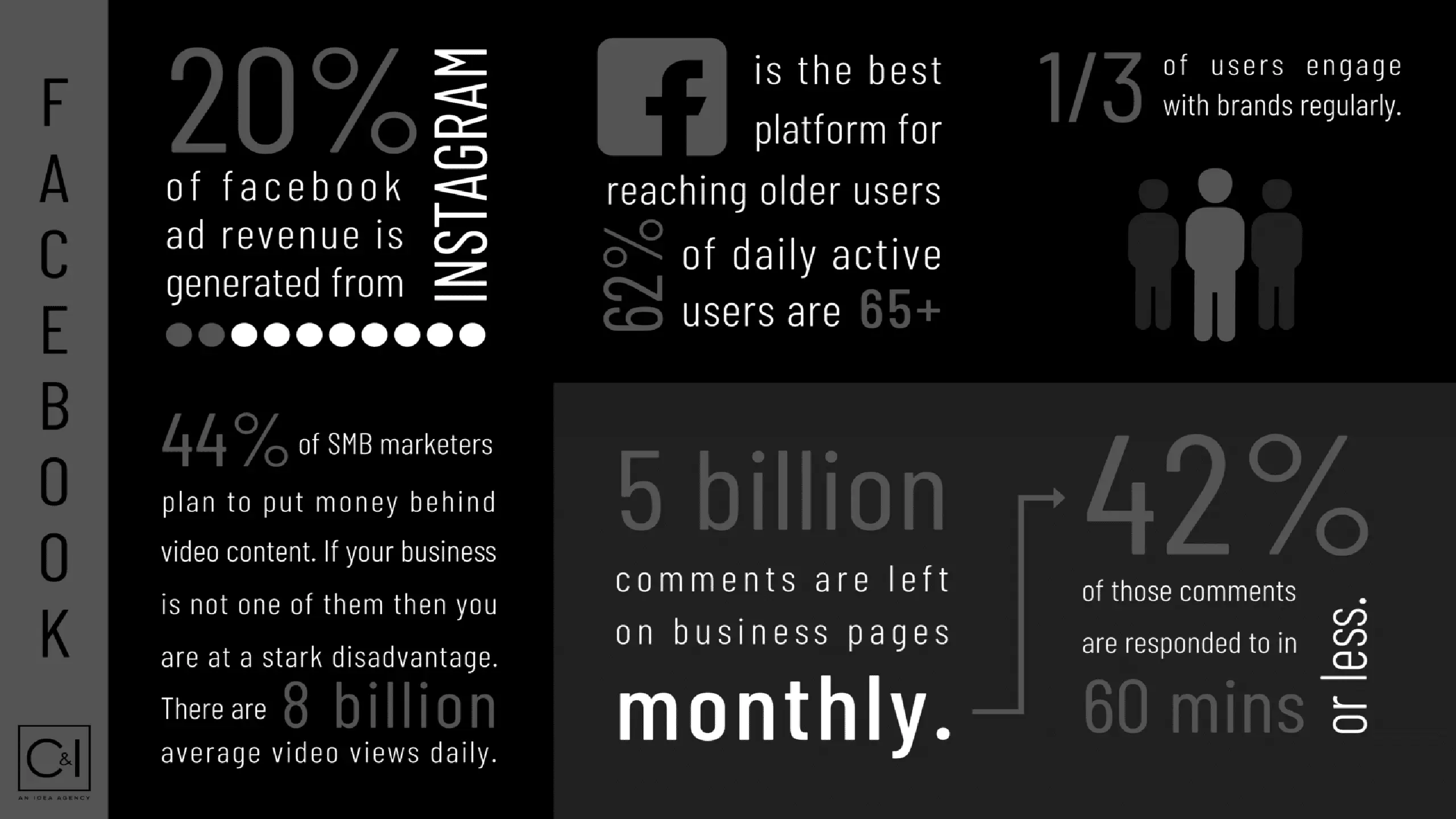
Measuring content performance is essential for any digital marketing strategy. It helps businesses understand how their content resonates with their audience and whether it achieves the desired objectives.
By tracking key metrics and using analytics, companies can make data-driven decisions to enhance their content strategy, boost engagement, and drive conversions. This article explores the crucial metrics and analytics needed to measure content performance effectively.
## Understanding the Basics of Content Metrics
Content metrics are vital for gauging the effectiveness of your digital efforts. These metrics offer insights into how users interact with your content, allowing you to identify strengths and areas for improvement. Commonly used content metrics include page views, time on page, and bounce rate.
Page views indicate the number of times a piece of content has been viewed, providing a basic measure of popularity. Time on the page reveals how long visitors stay on your content, reflecting engagement levels. Bounce rate measures the percentage of visitors who leave your site after viewing only one page, indicating potential issues with content relevance or site structure.
Integrating [content creation](https://c-istudios.com/content-creation-services/) strategies can significantly enhance these metrics. High-quality, relevant content tends to attract more page views and engage visitors longer, reducing bounce rates. Moreover, understanding these metrics in depth helps in tailoring content to meet audience preferences, thereby improving overall performance.
Furthermore, it’s important to distinguish between vanity metrics and actionable metrics. Vanity metrics, such as page views, can make your content look popular but don't necessarily provide insights into the effectiveness of your content strategy. Actionable metrics, such as conversion rates and engagement levels, offer more valuable insights as they reflect the actual impact of your content on business goals.
## Setting Clear Objectives and KPIs
To measure content performance effectively, it is crucial to set clear objectives and identify key performance indicators (KPIs). Objectives provide a direction for your content strategy, while KPIs are the specific metrics used to track progress towards these objectives. For instance, if your goal is to increase brand awareness, relevant KPIs might include social shares, reach, and impressions. If your objective is lead generation, KPIs might focus on conversion rates, form submissions, and downloads.
Aligning your KPIs with your business goals ensures that your content efforts contribute to overall organizational success. For example, integrating [SEO copywriting](https://c-istudios.com/seo-copywriting-services/) can boost your search engine rankings, thereby increasing organic traffic and achieving higher visibility. By setting clear KPIs related to organic search performance, such as keyword rankings and organic traffic growth, you can better measure the impact of your SEO efforts.
Moreover, setting SMART goals (Specific, Measurable, Achievable, Relevant, and Time-bound) can help in defining precise objectives and KPIs. This approach ensures that your goals are clear and attainable, making it easier to track progress and adjust strategies as needed. Regularly reviewing and updating these objectives and KPIs is also essential to adapt to changing market conditions and business priorities.
## Analyzing Audience Engagement
Audience engagement is a critical component of content performance. Metrics such as social shares, comments, likes, and overall interaction rates provide insights into how well your content resonates with your audience. High engagement levels indicate that your content is relevant and valuable to your audience, while low engagement suggests a need for improvement.
Using tools and techniques to analyze engagement can reveal patterns and trends. For example, tracking [social media marketing](https://c-istudios.com/social-media-marketing-services/) can help identify which platforms and types of content generate the most interaction. Analyzing these patterns allows you to optimize your content strategy for maximum engagement across different channels.
In addition to quantitative metrics, qualitative data, such as audience feedback and sentiment analysis, can provide deeper insights into engagement. Understanding the reasons behind high or low engagement levels can help refine your content strategy and improve its effectiveness. Engaging with your audience directly through comments and social media interactions can also provide valuable insights and foster a stronger connection with your brand.
Advanced engagement metrics, such as dwell time and scroll depth, offer more nuanced insights into how users interact with your content. Dwell time measures how long visitors stay on a page after clicking on a search result, indicating content relevance and user satisfaction. Scroll depth tracks how far users scroll down a page, revealing whether they consume the entire content or leave midway. These metrics can help identify specific areas for improvement and optimize content for better engagement.
## Tracking Conversion and ROI
Conversion metrics are essential for understanding how effectively your content drives desired actions, such as lead generation, sales, or sign-ups. Metrics like conversion rate, which measures the percentage of visitors who complete a specific action, provide direct insights into the effectiveness of your content in achieving business objectives. By tracking conversions, you can identify which pieces of content are most successful at driving actions and replicate their success.
Calculating return on investment (ROI) for content marketing efforts involves comparing the revenue generated by your content to the costs of producing and promoting it. This metric helps determine the financial effectiveness of your content strategy. For instance, a comprehensive [media marketing consultation](https://c-istudios.com/media-marketing-consultation-services/) can reveal which content types and distribution channels yield the highest ROI, allowing you to allocate resources more efficiently.
Additionally, understanding the customer journey and the role of content in each stage can enhance conversion tracking. By mapping content to different stages of the buyer's journey, you can identify which pieces are most effective at moving prospects from awareness to consideration to decision. This approach helps in creating targeted content that addresses the specific needs and pain points of your audience at each stage.
Multi-touch attribution models can also provide deeper insights into the impact of content on conversions. These models track and assign value to all touchpoints in the customer journey, revealing how different pieces of content contribute to the final conversion. This holistic view of content performance helps in understanding the cumulative effect of various content assets and optimizing the overall content strategy for better results.
## Utilizing Advanced Analytics Tools
Advanced analytics tools, such as Google Analytics, SEMrush, and HubSpot, offer powerful features for measuring content performance. These tools provide detailed insights into various metrics, helping you understand how your content is performing across different channels and platforms. For example, Google Analytics offers comprehensive data on traffic sources, user behavior, and conversion rates, allowing you to identify which content drives the most engagement and conversions.
Integrating [web development](https://c-istudios.com/web-development-services/) practices can enhance the use of these tools. Custom dashboards and reports can be created to track specific metrics and KPIs relevant to your content strategy. This customization allows you to focus on the most critical data points and gain actionable insights tailored to your business goals.
Moreover, advanced analytics tools offer features such as segmentation and cohort analysis, which enable a deeper understanding of audience behavior. Segmentation allows you to break down your audience into specific groups based on criteria such as demographics, behavior, and acquisition channels. This granular view helps in identifying patterns and trends within different segments, allowing for more targeted and effective content strategies.
Cohort analysis, on the other hand, tracks and compares the behavior of user groups over time. This analysis helps in understanding how different cohorts, such as new vs. returning visitors, engage with your content and progress through the customer journey. By leveraging these advanced features, you can gain a deeper understanding of your audience and optimize your content strategy for better performance.
## A/B Testing and Optimization
A/B testing is a valuable technique for optimizing content performance. By creating two versions of a piece of content and testing them with different segments of your audience, you can determine which version performs better. This approach allows you to make data-driven decisions and implement changes that enhance the effectiveness of your content.
For example, testing different headlines, images, or calls to action can reveal which elements resonate most with your audience. The insights gained from these tests can then be applied to optimize your content for better engagement and conversions. Incorporating [creative marketing](https://c-istudios.com/creative-marketing-services/) strategies can further enhance the impact of A/B testing by providing innovative ideas and approaches to test.
In addition to A/B testing, ongoing optimization is crucial for maintaining and improving content performance. Regularly reviewing and analyzing your content metrics helps identify areas for improvement and implement changes accordingly. This iterative approach ensures that your content remains relevant and effective, adapting to changes in audience preferences and market trends.
Furthermore, multivariate testing, which involves testing multiple variations of different elements simultaneously, can provide deeper insights into the combined effects of various changes. This approach allows for more comprehensive optimization and helps identify the most effective combinations of elements to maximize content performance.
## Reporting and Refining Content Strategy
Creating comprehensive reports is essential for communicating content performance to stakeholders and guiding strategic decisions. Reports should include key metrics, insights, and recommendations based on the data collected. Visualizing data through charts and graphs can make it easier to understand and interpret the results, highlighting trends and patterns.
Integrating [branding and graphic design](https://c-istudios.com/branding-and-graphic-design-services/) principles into your reports can enhance their clarity and impact. Clear, visually appealing reports help convey the significance of the data and support decision-making processes. By presenting data in a visually engaging way, you can ensure that stakeholders understand the performance of your content and the actions needed to improve it.
Using insights from your reports to refine and improve your content strategy is critical for ongoing success. Regularly reviewing your content performance and making data-driven adjustments ensures that your strategy remains effective and aligned with business goals. This continuous improvement process helps in adapting to changes in audience behavior, market trends, and competitive landscapes.
Additionally, incorporating feedback from stakeholders and team members can provide valuable perspectives and ideas for refining your content strategy. Collaborative efforts ensure that your strategy benefits from diverse insights and expertise, leading to more effective and innovative content.
Another aspect to consider is the integration of benchmarking in your reports. Comparing your content performance against industry standards or competitors can provide valuable context and help set realistic performance goals. Benchmarking can also highlight areas where you are excelling and those where there is room for improvement.
Finally, embracing a culture of experimentation and agility is essential for refining your content strategy. Encourage your team to test new ideas, formats, and distribution channels based on the insights from your reports. This iterative approach allows you to continuously evolve your content strategy, stay ahead of industry trends, and meet the changing needs of your audience.
By systematically reporting and refining your content strategy, you can ensure that your content efforts are not only effective but also aligned with your broader business objectives. This proactive approach enables you to respond swiftly to new opportunities and challenges, maintaining a dynamic and successful content marketing strategy.
## Case Studies and Examples
Real-life examples of successful content performance measurement provide valuable insights into best practices and effective strategies. Analyzing how industry leaders approach content measurement can offer inspiration and practical tips for your own efforts. For instance, companies that effectively use **[video production](https://c-istudios.com/video-production-services/)** in their content strategy often see higher engagement and conversion rates.
One notable example is a case study of a company that increased its blog traffic by 300% through targeted content creation and SEO optimization By identifying high-performing keywords and creating content around them, the company was able to attract more organic traffic and improve its search engine rankings. The use of analytics tools to track keyword performance and audience engagement was crucial to this success.
Another example involves a business that improved its lead generation by optimizing its landing pages through A/B testing. By testing different headlines, images, and calls to action, the company identified the most effective elements and applied them to all its landing pages. This resulted in a significant increase in conversion rates and a higher ROI for its content marketing efforts.
By leveraging advanced analytics tools and audience engagement metrics, a documentary filmmaker was able to refine their promotional strategy and increase viewership. Analyzing which promotional content resonated most with the audience helped in creating more effective marketing campaigns and driving higher engagement.
## Work with C&I Studios
If you are planning a project like this, our team can take it from concept to final delivery. Explore our [video production services](https://c-istudios.com/video-production-services/), browse [our work](https://c-istudios.com/our-work/) to see how we tell brand stories, and [get in touch](https://c-istudios.com/contact/) when you are ready to start.
Originally published June 24, 2024
---
*This content is from [C&I Studios](https://c-istudios.com), a full-service production company.*
---
# Mixing for Different Platforms: Tailoring Your Audio for Theatrical, Streaming, and TV Releases
> Published: June 23, 2024
> Categories: Film & TV
> Source: https://c-istudios.com/mixing-for-different-platforms-tailoring-your-audio-for-theatrical-streaming-and-tv-releases/
---
.cib{--paper:#1b1d1f;--ink:#fff;--body:#d5d7d9;--muted:#8b9096;--line:rgba(255,255,255,.12);--thumb:#2b2e31;--card:#212426;--accent:#c02b0a;--blue:#5B8FA8;--serif:'Playfair Display',Georgia,serif;--sans:'Poppins',-apple-system,sans-serif;--measure:900px;background:var(--paper);color:var(--body);font-family:var(--sans);line-height:1.6;position:relative;left:50%;transform:translateX(-50%);width:90vw;max-width:1920px}
.cib *{box-sizing:border-box}
.cib .kicker{max-width:var(--measure);margin:58px auto 0;padding:0 22px;font-size:12.5px;font-weight:700;letter-spacing:2.5px;text-transform:uppercase;color:var(--blue)}
.cib h1.cibh1{text-wrap:balance;font-family:var(--serif);font-weight:500;font-size:clamp(46px,6vw,72px);line-height:1.08;color:var(--ink);max-width:var(--measure);margin:18px auto 0;padding:0 22px;letter-spacing:-.5px}
.cib .metarow{max-width:var(--measure);margin:20px auto 0;padding:0 22px;color:var(--muted);font-size:14px}
.cib .hero{position:relative;width:100%;height:0;padding-bottom:56.25%;overflow:hidden;margin:48px auto 0;border-top:1px solid var(--line);border-bottom:1px solid var(--line)}
.cib .hero .ph{width:100%;aspect-ratio:16/9;background:var(--thumb);border-top:1px solid var(--line);border-bottom:1px solid var(--line);display:flex;align-items:center;justify-content:center;color:#7d8288;font-size:13px;text-align:center;padding:0 20px}
.cib .body{max-width:var(--measure);margin:12px auto 0;padding:52px 22px 6px}
.cib .body.lead p:first-child{font-size:23px;line-height:1.62;color:var(--ink)}
.cib .body p{font-size:18.5px;line-height:1.85;margin:0 0 30px;color:var(--body)}
.cib .body h2{text-wrap:balance;font-family:var(--serif);font-weight:500;font-size:clamp(32px,4vw,48px);line-height:1.22;color:var(--ink);margin:70px 0 20px;letter-spacing:-.3px}
.cib .body h3{text-wrap:balance;font-family:var(--sans);font-weight:600;font-size:22px;color:var(--ink);margin:38px 0 8px}
.cib .body a{color:var(--ink);text-decoration:underline;text-decoration-color:rgba(255,255,255,.4);text-underline-offset:3px}
.cib .body a:hover{text-decoration-color:var(--ink)}
.cib .ctable{width:100%;border-collapse:collapse;margin:16px 0 30px;font-size:16px}
.cib .ctable th{background:#000;color:#fff;text-align:left;padding:10px 12px;font-family:var(--sans)}
.cib .ctable td{padding:10px 12px;border-bottom:1px solid var(--line);color:var(--body)}
.cib .inimg{position:relative;width:100%;height:0;padding-bottom:56.25%;overflow:hidden;margin:72px auto;border-top:1px solid var(--line);border-bottom:1px solid var(--line)}
.cib .inimg .ph{width:100%;aspect-ratio:16/9;background:var(--thumb);border-top:1px solid var(--line);border-bottom:1px solid var(--line);display:flex;align-items:center;justify-content:center;color:#7d8288;font-size:13px}
.cib .origpub{max-width:var(--measure);margin:60px auto 0;padding:26px 22px 0;border-top:1px solid var(--line);color:var(--muted);font-size:13.5px}
.cib .related{max-width:1200px;margin:64px auto 0;padding:34px 22px 76px}
.cib .related h3{font-family:var(--sans);font-size:12.5px;letter-spacing:2px;text-transform:uppercase;color:var(--ink);margin:0 0 24px}
.cib .grid{display:grid;grid-template-columns:repeat(3,1fr);gap:28px}
.cib .rc{background:var(--card);border:1px solid var(--line);display:block;text-decoration:none;color:inherit;transition:border-color .15s}
.cib a.rc:hover{border-color:rgba(255,255,255,.5)}
.cib .rc .thumb{position:relative;width:100%;height:0;padding-bottom:56.25%;background:var(--thumb);overflow:hidden}
.cib .rc .thumb img{position:absolute!important;top:0!important;left:0!important;width:100%!important;height:100%!important;object-fit:cover!important;margin:0!important}
.cib .rc .cc{padding:14px 15px 17px}
.cib .rc .rt{font-family:var(--serif);font-weight:500;font-size:16px;line-height:1.3;color:var(--ink);margin:0 0 6px}
.cib .rc .rm{font-size:11px;letter-spacing:1px;text-transform:uppercase;color:var(--muted)}
.cib img{margin:0!important;padding:0!important;display:block!important;vertical-align:top;max-width:100%}
.cib .hero img,.cib .inimg img{position:absolute!important;top:0!important;left:0!important;width:100%!important;height:100%!important;object-fit:cover!important;margin:0!important;padding:0!important;border:0!important;display:block!important;aspect-ratio:auto!important}
.cib .hero+.body{padding-top:36px}
@media(max-width:760px){.cib .grid{grid-template-columns:1fr}.cib .body h2{margin:52px 0 16px}.cib .body p{font-size:17.5px}.cib .inimg,.cib .hero{margin-top:44px}}
.cib .vembed{max-width:var(--measure);margin:44px auto;padding:0 22px}.cib .vembed .vwrap{position:relative;width:100%;height:0;padding-bottom:56.25%}.cib .vembed .vwrap iframe{position:absolute;top:0;left:0;width:100%;height:100%;border:0}
Film & TV
# Mixing for Different Platforms. Tailoring Your Audio for Theatrical, Streaming, and TV Releases
11 min read

Audio mixing is a critical component in the production of films, television shows, and streaming content. The process involves balancing various sound elements, dialogue, music, and sound effects, to create a cohesive and immersive auditory experience. However, the requirements for audio mixing vary significantly across different platforms such as theatrical releases, streaming services, and broadcast television.
This article explores the unique audio mixing techniques needed to tailor your audio for these distinct platforms, ensuring optimal sound quality and audience engagement.
## Step 1. Understanding Platform-Specific Audio Requirements
Each platform, whether theatrical, streaming, or television, has unique audio requirements. These differences stem from varying playback environments, audience expectations, and technical standards. For example, theatrical releases typically enjoy the benefit of sophisticated surround sound systems in cinemas, which can handle a wide dynamic range and high-fidelity audio. In contrast, streaming platforms must accommodate a diverse array of devices, from high-end home theater systems to basic smartphone speakers, necessitating a different approach to audio engineering.
Understanding these platform-specific needs begins with familiarizing oneself with the standards and practices unique to each medium. Theatrical releases often adhere to standards set by organizations such as Dolby Laboratories, which mandate specific dynamic range and loudness levels. Streaming platforms like Netflix and Amazon Prime have their own specifications, focusing on consistency and versatility across various playback systems. Similarly, broadcast television has established guidelines that prioritize clarity and consistency, ensuring that audio is comprehensible across a wide range of home setups.
The field of [audio engineering](https://c-istudios.com/audio-engineering-services/) is crucial in adapting to these requirements. Engineers must balance technical constraints with creative goals, ensuring that the audio mix enhances the storytelling without being compromised by platform limitations. This balance often involves intricate adjustments to the frequency response and dynamic range, tailored to the expected playback conditions of each platform. By understanding and implementing these standards, audio engineers can create mixes that sound great whether played in a cinema, on a television, or through a mobile device.
## Step 2. Theatrical Audio Mixing
Theatrical audio mixing requires a deep understanding of the capabilities and expectations of cinema sound systems. These systems, often equipped with advanced surround sound technologies like Dolby Atmos, provide a rich, immersive audio experience that can greatly enhance the storytelling. For a theatrical mix, the dynamic range is crucial. This range, which is the difference between the softest and loudest sounds, can be much wider in a cinema than in other environments, allowing for more dramatic soundscapes.
In the context of [feature film mastering and delivery](https://c-istudios.com/feature-film-mastering-and-delivery/), it is essential to ensure that the audio mix meets the highest standards. This involves careful attention to the spatial placement of sounds, which can create a three-dimensional audio field that draws the audience into the film. Surround sound formats, such as 5.1 or 7.1 surround sound, are typically used in theaters, and each speaker must be calibrated to deliver precise audio cues that match the on-screen action. This spatial accuracy is a hallmark of high-quality theatrical audio mixing.
Additionally, the use of subwoofers to handle low-frequency effects (LFE) can add depth and impact to the audio experience. These low-frequency sounds, such as explosions or deep musical notes, can physically resonate with the audience, enhancing the emotional impact of the film. Achieving this requires meticulous balancing to ensure that the bass is powerful but not overwhelming, maintaining clarity across all frequencies.
Dialogue clarity is another critical aspect of theatrical mixing. In a large cinema, ensuring that dialogue is intelligible amidst background sounds and music requires precise equalization and dynamic processing. This often involves using techniques like side-chain compression, where the presence of dialogue can automatically lower the volume of other elements, making sure the spoken words are always clear.
## Step 3. Streaming Audio Mixing
Streaming platforms present a unique set of challenges for audio mixing. Unlike theatrical releases, where the playback environment is controlled and predictable, streaming content can be consumed on a wide variety of devices, each with different audio capabilities. This variability requires a flexible approach to audio mixing that ensures consistent quality across all potential playback systems.
One of the primary considerations in streaming audio mixing is compression. Streaming services often use data compression to reduce file sizes, which can affect audio quality. Engineers must therefore strike a balance between maintaining high audio fidelity and accommodating the limitations of compressed formats. This involves optimizing the mix for various bitrates and ensuring that the essential audio elements remain clear and impactful even at lower resolutions.
The inclusion of a [video production gear list](https://c-istudios.com/video-production-gear-list/) is critical when preparing audio for streaming. This list includes tools and software that can simulate different playback environments, allowing engineers to test and refine their mixes. For example, specialized plugins can emulate the sound of various devices, from high-end headphones to basic laptop speakers. By using these tools, engineers can identify potential issues and make adjustments to ensure that the mix translates well across all platforms.
Another important factor in streaming audio mixing is the normalization of loudness levels. Streaming platforms typically enforce specific loudness standards to provide a consistent listening experience. For instance, Netflix uses the LUFS (Loudness Units relative to Full Scale) standard, which ensures that all content is played back at a similar perceived loudness. Adhering to these standards helps prevent abrupt volume changes between different pieces of content, enhancing the viewer's experience.
Spatial audio techniques, such as stereo imaging and binaural mixing, can also enhance the streaming experience. While these techniques may not replicate the full surround sound experience of a cinema, they can create a sense of depth and space that enriches the audio. By carefully balancing and positioning audio elements, engineers can produce a mix that feels immersive even on simple stereo systems.
## Step 4. TV Audio Mixing
Broadcast television has its own set of audio mixing standards and practices, driven by the need for clarity and consistency. Unlike theatrical or streaming audio, TV audio must cater to a wide range of home environments, from high-end sound systems to basic built-in TV speakers. This diversity necessitates a focus on delivering clear and balanced audio that remains intelligible across all setups.
The primary goal of TV audio mixing is to ensure that dialogue is always clear and understandable. This involves careful equalization and dynamic processing to prevent background music and sound effects from overwhelming the spoken words. Techniques such as compression and limiting are often used to control the dynamic range, ensuring that quieter dialogue is audible without making louder sounds too overwhelming.
In [film and TV production](https://c-istudios.com/film-and-tv-production/), consistency is key. TV audio must adhere to specific loudness standards to avoid sudden volume changes between programs or commercial breaks. The ITU-R BS.1770 standard, commonly used in broadcast television, provides guidelines for measuring and normalizing audio loudness. By adhering to these standards, engineers ensure a consistent listening experience for viewers, reducing the need for frequent volume adjustments.
Surround sound can also be used in TV audio, though it is less common than in theatrical releases. Many modern televisions and home theater systems support formats like Dolby Digital, which allows for a more immersive audio experience. However, the primary focus remains on ensuring that the mix sounds good on standard stereo setups. This involves careful balancing of all audio elements and ensuring that essential sounds are not lost when downmixed to stereo.
Another consideration in TV audio mixing is the potential for over-the-air broadcast constraints. These constraints can include bandwidth limitations and the need for audio to remain clear even with potential signal interference. Engineers must take these factors into account when preparing the final mix, ensuring that the audio maintains its integrity regardless of the broadcast conditions.
## Step 5. Tools and Techniques for Effective Mixing
Achieving the best audio mix across different platforms requires a combination of specialized tools and techniques. Modern audio mixing relies heavily on digital audio workstations (DAWs), which provide a flexible and powerful environment for manipulating sound. Software such as Pro Tools, Logic Pro, and Ableton Live are commonly used in professional settings, offering a wide range of features for editing, mixing, and mastering audio.
The integration of [video production](https://c-istudios.com/video-production-services/) principles into audio mixing is essential for creating a cohesive audiovisual experience. This includes synchronizing audio with visual elements and ensuring that the sound design enhances the narrative. Tools such as visual meters and spectrum analyzers help engineers monitor the frequency balance and dynamic range, ensuring that the mix is both sonically pleasing and technically sound.
Advanced plugins and virtual instruments can further enhance the mixing process. Plugins such as equalizers, compressors, reverbs, and limiters allow for precise control over the audio elements. By using these tools, engineers can shape the sound to match the desired aesthetic and meet the technical requirements of each platform. For example, multiband compression can be used to manage different frequency ranges separately, ensuring a balanced mix across all frequencies.
Automation is another powerful technique in audio mixing. By automating volume levels, panning, and effects parameters, engineers can create dynamic and evolving mixes that respond to the changing needs of the narrative. Automation allows for precise adjustments that would be difficult to achieve manually, providing greater control over the final sound.
Spatial audio techniques, such as binaural mixing and ambisonics, are becoming increasingly important in modern audio production. These techniques allow for the creation of immersive 3D audio experiences, which can enhance the realism and impact of the mix. By using specialized software and hardware, engineers can place sounds in a virtual space, creating a more engaging and lifelike auditory environment.
## Step 6. Testing and Quality Assurance
Testing and quality assurance are critical steps in the audio mixing process. Ensuring that the final mix translates well across different playback systems and environments is essential for delivering a consistent and high-quality audio experience. This involves rigorous testing on various devices, from high-end home theater systems to basic mobile speakers, to identify and address any issues.
A comprehensive [content creation](https://c-istudios.com/content-creation-services/) strategy includes creating reference mixes and comparing them to industry standards. Reference mixes serve as benchmarks, allowing engineers to evaluate their work against professionally mixed content. This comparison helps identify any discrepancies and ensures that the final mix meets the expected quality levels.
Quality assurance also involves checking for compliance with platform-specific standards. Each platform has its own guidelines for loudness, dynamic range, and frequency response, and adhering to these standards is crucial for a successful release. Tools such as loudness meters and spectrum analyzers can help engineers monitor these parameters and make necessary adjustments.
Listening tests are an essential part of the quality assurance process. These tests involve playing the mix on various playback systems and environments to ensure that it sounds good everywhere. By testing the mix in different contexts, engineers can identify any issues that might arise and make adjustments to improve the overall sound quality. This might include tweaking the EQ, adjusting the dynamic range, or modifying the spatial placement of sounds.
Feedback from peers and industry professionals can also be invaluable during the testing phase. By sharing the mix with trusted colleagues, engineers can gain fresh perspectives and identify areas for improvement. Constructive feedback can help refine the mix and ensure that it meets the highest standards of quality and creativity.
## Step 7. Case Studies and Real-World Examples
Examining real-world examples of successful audio mixes tailored for different platforms can provide valuable insights and lessons. Analyzing how industry professionals approach the challenges of mixing for theatrical, streaming, and TV releases can highlight best practices and innovative techniques.
One notable example is the audio mix for the film "Mad Max: Fury Road," which was tailored specifically for theatrical release. The mix, created by a team of expert sound designers and engineers, utilized advanced surround sound techniques to create an immersive and dynamic audio experience. By carefully balancing the elements of the mix and leveraging the capabilities of Dolby Atmos, the team was able to deliver a powerful and engaging auditory experience that complemented the film's intense visuals.
Another example is the audio mixing approach used for the Netflix series "Stranger Things." The series, designed primarily for streaming, faced the challenge of ensuring consistent audio quality across a wide range of devices. The mixing team employed techniques such as dynamic range compression and loudness normalization to maintain clarity and impact, regardless of whether the content was played on a high-end home theater system or a smartphone. The result was an audio mix that enhanced the show's nostalgic atmosphere while meeting the technical requirements of the streaming platform.
In the field of broadcast television, the show "Game of Thrones" provides a compelling case study. The audio mix for the series had to cater to a diverse audience with varying playback systems. By prioritizing dialogue clarity and using surround sound techniques, the mixing team was able to create a rich and immersive audio experience.
The mix was carefully tested and adjusted to ensure that it met the stringent loudness and dynamic range standards of broadcast television, delivering consistent and high-quality sound across all episodes.
The documentary "Planet Earth II" serves as an excellent example of effective audio mixing in this genre. The mixing team employed spatial audio techniques to create an immersive soundscape that complemented the stunning visuals. By meticulously balancing the elements of the mix and ensuring that the audio was clear and engaging, the team enhanced the viewer's experience and brought the natural world to life.
## Work with C&I Studios
If you are planning a project like this, our team can take it from concept to final delivery. Explore our [film and TV production](https://c-istudios.com/film-and-tv-production/), browse [our work](https://c-istudios.com/our-work/) to see how we tell brand stories, and [get in touch](https://c-istudios.com/contact/) when you are ready to start.
Originally published June 23, 2024
---
*This content is from [C&I Studios](https://c-istudios.com), a full-service production company.*
---
# Email Automation Demystified: How to Streamline Your Campaigns for Efficiency
> Published: June 21, 2024
> Categories: Commercial & Brand
> Source: https://c-istudios.com/email-automation-demystified-how-to-streamline-your-campaigns-for-efficiency/
---
.cib{--paper:#1b1d1f;--ink:#fff;--body:#d5d7d9;--muted:#8b9096;--line:rgba(255,255,255,.12);--thumb:#2b2e31;--card:#212426;--accent:#c02b0a;--blue:#5B8FA8;--serif:'Playfair Display',Georgia,serif;--sans:'Poppins',-apple-system,sans-serif;--measure:900px;background:var(--paper);color:var(--body);font-family:var(--sans);line-height:1.6;position:relative;left:50%;transform:translateX(-50%);width:90vw;max-width:1920px}
.cib *{box-sizing:border-box}
.cib .kicker{max-width:var(--measure);margin:58px auto 0;padding:0 22px;font-size:12.5px;font-weight:700;letter-spacing:2.5px;text-transform:uppercase;color:var(--blue)}
.cib h1.cibh1{text-wrap:balance;font-family:var(--serif);font-weight:500;font-size:clamp(46px,6vw,72px);line-height:1.08;color:var(--ink);max-width:var(--measure);margin:18px auto 0;padding:0 22px;letter-spacing:-.5px}
.cib .metarow{max-width:var(--measure);margin:20px auto 0;padding:0 22px;color:var(--muted);font-size:14px}
.cib .hero{position:relative;width:100%;height:0;padding-bottom:56.25%;overflow:hidden;margin:48px auto 0;border-top:1px solid var(--line);border-bottom:1px solid var(--line)}
.cib .hero .ph{width:100%;aspect-ratio:16/9;background:var(--thumb);border-top:1px solid var(--line);border-bottom:1px solid var(--line);display:flex;align-items:center;justify-content:center;color:#7d8288;font-size:13px;text-align:center;padding:0 20px}
.cib .body{max-width:var(--measure);margin:12px auto 0;padding:52px 22px 6px}
.cib .body.lead p:first-child{font-size:23px;line-height:1.62;color:var(--ink)}
.cib .body p{font-size:18.5px;line-height:1.85;margin:0 0 30px;color:var(--body)}
.cib .body h2{text-wrap:balance;font-family:var(--serif);font-weight:500;font-size:clamp(32px,4vw,48px);line-height:1.22;color:var(--ink);margin:70px 0 20px;letter-spacing:-.3px}
.cib .body h3{text-wrap:balance;font-family:var(--sans);font-weight:600;font-size:22px;color:var(--ink);margin:38px 0 8px}
.cib .body a{color:var(--ink);text-decoration:underline;text-decoration-color:rgba(255,255,255,.4);text-underline-offset:3px}
.cib .body a:hover{text-decoration-color:var(--ink)}
.cib .ctable{width:100%;border-collapse:collapse;margin:16px 0 30px;font-size:16px}
.cib .ctable th{background:#000;color:#fff;text-align:left;padding:10px 12px;font-family:var(--sans)}
.cib .ctable td{padding:10px 12px;border-bottom:1px solid var(--line);color:var(--body)}
.cib .inimg{position:relative;width:100%;height:0;padding-bottom:56.25%;overflow:hidden;margin:72px auto;border-top:1px solid var(--line);border-bottom:1px solid var(--line)}
.cib .inimg .ph{width:100%;aspect-ratio:16/9;background:var(--thumb);border-top:1px solid var(--line);border-bottom:1px solid var(--line);display:flex;align-items:center;justify-content:center;color:#7d8288;font-size:13px}
.cib .origpub{max-width:var(--measure);margin:60px auto 0;padding:26px 22px 0;border-top:1px solid var(--line);color:var(--muted);font-size:13.5px}
.cib .related{max-width:1200px;margin:64px auto 0;padding:34px 22px 76px}
.cib .related h3{font-family:var(--sans);font-size:12.5px;letter-spacing:2px;text-transform:uppercase;color:var(--ink);margin:0 0 24px}
.cib .grid{display:grid;grid-template-columns:repeat(3,1fr);gap:28px}
.cib .rc{background:var(--card);border:1px solid var(--line);display:block;text-decoration:none;color:inherit;transition:border-color .15s}
.cib a.rc:hover{border-color:rgba(255,255,255,.5)}
.cib .rc .thumb{position:relative;width:100%;height:0;padding-bottom:56.25%;background:var(--thumb);overflow:hidden}
.cib .rc .thumb img{position:absolute!important;top:0!important;left:0!important;width:100%!important;height:100%!important;object-fit:cover!important;margin:0!important}
.cib .rc .cc{padding:14px 15px 17px}
.cib .rc .rt{font-family:var(--serif);font-weight:500;font-size:16px;line-height:1.3;color:var(--ink);margin:0 0 6px}
.cib .rc .rm{font-size:11px;letter-spacing:1px;text-transform:uppercase;color:var(--muted)}
.cib img{margin:0!important;padding:0!important;display:block!important;vertical-align:top;max-width:100%}
.cib .hero img,.cib .inimg img{position:absolute!important;top:0!important;left:0!important;width:100%!important;height:100%!important;object-fit:cover!important;margin:0!important;padding:0!important;border:0!important;display:block!important;aspect-ratio:auto!important}
.cib .hero+.body{padding-top:36px}
@media(max-width:760px){.cib .grid{grid-template-columns:1fr}.cib .body h2{margin:52px 0 16px}.cib .body p{font-size:17.5px}.cib .inimg,.cib .hero{margin-top:44px}}
.cib .vembed{max-width:var(--measure);margin:44px auto;padding:0 22px}.cib .vembed .vwrap{position:relative;width:100%;height:0;padding-bottom:56.25%}.cib .vembed .vwrap iframe{position:absolute;top:0;left:0;width:100%;height:100%;border:0}
Commercial & Brand
# Email Automation Demystified. How to Streamline Your Campaigns for Efficiency
13 min read

Email automation has become a cornerstone of modern marketing, allowing businesses to streamline their communication processes and engage with customers more efficiently. By automating repetitive tasks, marketers can focus on more strategic initiatives while ensuring that their audience receives timely, relevant content.
This article will guide you through the essential steps to demystify email automation and streamline your campaigns for maximum efficiency, leveraging insights from top industry practices and real-world examples.
## Step 1. Understanding Email Automation
To fully grasp the potential of email automation, it's essential to understand how it works and the various types of automated emails you can implement. Email automation involves using software to send pre-scheduled or trigger-based emails to your subscribers, based on specific actions or criteria. This process not only saves time but also ensures that your audience receives personalized and timely messages.
There are several types of automated emails that can enhance your marketing efforts. For example, a welcome series is triggered when a new subscriber joins your email list, providing them with an introduction to your brand and offerings. Cart abandonment emails are sent to remind customers who have left items in their online shopping cart to complete their purchases. Other common automated emails include birthday greetings, post-purchase follow-ups, and re-engagement campaigns.
Implementing strategies that incorporate [content creation](https://c-istudios.com/content-creation-services/) within your email automation can significantly enhance the relevance and effectiveness of your messages. By tailoring content to meet the specific needs and interests of your audience, you can create a more engaging and personalized experience. Understanding the different types of automated emails and how they can be used to achieve your marketing goals is the first step toward streamlining your email campaigns.
Additionally, the backbone of successful email automation lies in understanding your audience's journey and behaviors. By mapping out the customer journey, you can identify key touchpoints where automated emails can add the most value. For example, after a customer makes a purchase, sending a follow-up email with product recommendations based on their purchase history can drive repeat sales and enhance customer loyalty. By integrating behavioral data and purchase history into your automation strategy, you ensure that your emails are not only timely but also contextually relevant.
Furthermore, exploring advanced email automation features such as dynamic content and personalization tokens can elevate your email campaigns. Dynamic content allows you to customize different sections of your email based on the recipient's profile, behavior, or preferences.
## Step 2. Choosing the Right Email Automation Platform
Selecting the right email automation platform is crucial for the success of your campaigns. There are numerous platforms available, each offering a range of features and capabilities. To choose the best platform for your needs, consider factors such as ease of use, scalability, integration capabilities, and customer support.
Popular email automation platforms include Mailchimp, HubSpot, ActiveCampaign, and ConvertKit. Each platform has its strengths and weaknesses, so it's important to evaluate them based on your specific requirements. For instance, Mailchimp is known for its user-friendly interface and robust analytics, making it a great choice for beginners. HubSpot offers comprehensive marketing automation tools and CRM integration, ideal for businesses looking for an all-in-one solution.
Integrating [web development](https://c-istudios.com/web-development-services/) principles into your selection process can further enhance the functionality and security of your chosen platform. Ensure that the platform you select supports secure data transmission and adheres to industry best practices for data protection. Additionally, consider how the platform integrates with your existing tools and systems, such as your CRM, e-commerce platform, and social media channels.
By thoroughly evaluating and choosing the right email automation platform, you can ensure that your email campaigns are not only efficient but also effective in achieving your marketing objectives. The right platform will provide you with the tools and capabilities needed to automate your email marketing processes and deliver personalized, high-quality content to your audience.
Moreover, evaluating the level of customer support and training resources provided by the platform is essential. A platform with comprehensive support and educational resources can help you maximize its potential and address any challenges you may encounter. Many platforms offer onboarding sessions, webinars, and extensive knowledge bases to help users get the most out of their features. Taking advantage of these resources can significantly enhance your email automation strategy.
In addition to functionality and support, considering the platform's pricing structure is crucial. Different platforms offer various pricing tiers based on the number of subscribers, emails sent, and additional features. Assessing your budget and growth projections can help you choose a platform that aligns with your financial goals and scalability needs.
## Step 3. Building Your Email List
A high-quality email list is the foundation of successful email automation. To build an effective list, focus on strategies that attract and retain engaged subscribers. This involves using various techniques to grow your list organically and ensure that it is segmented and personalized for maximum impact.
List segmentation is a crucial aspect of building a high-quality email list. By dividing your list into smaller, targeted segments based on criteria such as demographics, purchase history, and engagement levels, you can create more personalized and relevant email campaigns. This segmentation allows you to tailor your messages to the specific needs and interests of each segment, increasing the likelihood of engagement and conversions.
Utilizing [social media marketing](https://c-istudios.com/social-media-marketing-services/) can significantly enhance your list-building efforts. Promoting your email sign-up forms on social media platforms, running targeted ad campaigns, and leveraging influencer partnerships can help you reach a broader audience and attract new subscribers.
Personalization is key to maintaining a high-quality email list. Ensure that you collect relevant data about your subscribers, such as their preferences, behaviors, and interactions with your brand. This information can be used to personalize your emails and deliver content that resonates with each subscriber. By focusing on personalization and segmentation, you can build an engaged and responsive email list that drives results.
Furthermore, leveraging content marketing strategies to drive email sign-ups can be highly effective. Creating valuable and informative content, such as blog posts, eBooks, and webinars, can attract potential subscribers who are interested in your industry or niche. By offering gated content that requires an email address for access, you can grow your email list with individuals who are genuinely interested in your offerings.
In addition to organic growth strategies, considering partnerships and collaborations can expand your reach. Partnering with complementary brands or influencers for joint campaigns can introduce your email list to new audiences.
## Step 4. Designing Effective Email Campaigns
The design and content of your email campaigns play a critical role in their success. Effective email design involves creating visually appealing and easy-to-read emails that capture your audience's attention and encourage them to take action. This includes using eye-catching visuals, clear and concise text, and a strong call to action.
[Branding and graphic design](https://c-istudios.com/branding-and-graphic-design-services/) are essential components of email design. Consistently incorporating your brand's colors, fonts, and imagery into your emails helps create a cohesive and recognizable look. This consistency reinforces your brand identity and makes your emails more memorable. Additionally, using high-quality images and graphics can enhance the visual appeal of your emails and make them more engaging.
Content creation is equally important in designing effective email campaigns. Crafting compelling and relevant content that speaks to your audience's needs and interests is key to driving engagement. This includes writing attention-grabbing subject lines, persuasive copy, and providing valuable information that adds value to your subscribers' lives.
Incorporating interactive elements such as videos, GIFs, and clickable buttons can also enhance the effectiveness of your email campaigns. These elements can capture your audience's attention and encourage them to engage with your content. Additionally, optimizing your emails for mobile devices is crucial, as a significant portion of email opens occur on mobile phones. Ensuring that your emails are mobile-friendly can improve the user experience and increase engagement.
Testing different design elements and content variations can help you identify what resonates best with your audience. A/B testing, also known as split testing, allows you to create multiple versions of an email and test them with different segments of your audience. By analyzing the performance of each version, you can determine which elements drive higher engagement and conversions, and apply those insights to future campaigns.
Personalization is another key aspect of designing effective email campaigns. Addressing recipients by their names and tailoring the content based on their preferences and behaviors can create a more personalized and relevant experience. Using dynamic content blocks that change based on the recipient's profile can enhance personalization and increase engagement.
## Step 5. Setting Up Automation Workflows
Automation workflows are the backbone of email automation, allowing you to set up a series of emails that are triggered by specific actions or events. These workflows ensure that your subscribers receive timely and relevant messages based on their interactions with your brand.
To create effective automation workflows, start by mapping out the customer journey and identifying key touchpoints where automated emails can add value. This includes stages such as the initial sign-up, browsing behavior, purchase activity, and post-purchase follow-up. By understanding the customer journey, you can design workflows that deliver the right message at the right time.
Implementing [SEO copywriting](https://c-istudios.com/seo-copywriting-services/) techniques within your automation workflows can enhance the effectiveness of your emails. This involves using targeted keywords and persuasive language to optimize your email content for search engines and improve its visibility. Additionally, crafting compelling subject lines and preview text can increase open rates and encourage subscribers to engage with your emails.
Examples of effective email automation workflows include welcome series, cart abandonment reminders, and re-engagement campaigns. A welcome series introduces new subscribers to your brand and sets the tone for future communications. Cart abandonment reminders encourage customers to complete their purchase by highlighting the benefits and urgency of their abandoned items.
By setting up and optimizing automation workflows, you can streamline your email campaigns and ensure that your subscribers receive relevant and timely messages that drive engagement and conversions. Additionally, monitoring and analyzing the performance of y[our work](https://c-istudios.com/our-work/)flows can help you identify areas for improvement and make data-driven adjustments to enhance their effectiveness.
Advanced automation features such as branching logic and conditional content can further enhance your workflows. Branching logic allows you to create different paths within a workflow based on the recipient's actions or behavior. For example, if a recipient clicks on a specific link in an email, they can be directed to a different series of emails tailored to their interests.
## Step 6. Monitoring and Analyzing Campaign Performance
Monitoring and analyzing the performance of your email campaigns is crucial for understanding their effectiveness and identifying areas for improvement. Key metrics to track include open rates, click-through rates, conversion rates, and unsubscribe rates. These metrics provide insights into how your audience is interacting with your emails and whether your campaigns are achieving their goals.
Using tools and techniques to analyze email performance can help you make data-driven decisions and optimize your campaigns. Email marketing platforms often provide built-in analytics and reporting features that allow you to track and measure key metrics. Additionally, integrating your email platform with other analytics tools, such as Google Analytics, can provide a more comprehensive view of your campaign performance.
Engaging in [media marketing consultation](https://c-istudios.com/media-marketing-consultation-services/) can further enhance your ability to monitor and analyze email campaigns. Consulting with marketing experts can provide valuable insights and recommendations for improving your email strategy. This includes identifying trends and patterns in your data, conducting A/B testing to optimize your emails, and implementing best practices for email marketing.
Regularly reviewing and analyzing your email performance helps you understand what is working and what needs improvement. This involves looking at individual email metrics as well as overall campaign performance. By identifying areas for improvement, you can make data-driven adjustments to your email content, design, and automation workflows.
Additionally, segmenting your performance data by different audience segments can provide deeper insights into how different groups are interacting with your emails. This segmentation allows you to tailor your campaigns more effectively and address the unique needs and preferences of each segment.
## Step 7. Optimizing and Scaling Your Email Campaigns
Optimizing your email campaigns involves making continuous improvements based on the insights gained from monitoring and analysis. This includes testing different elements of your emails, such as subject lines, copy, design, and send times, to determine what resonates best with your audience.
Strategies for optimizing email campaigns include A/B testing, where you create two versions of an email and test them with different segments of your audience to see which performs better. This allows you to make data-driven decisions and implement changes that enhance the effectiveness of your campaigns.
Scaling your email automation efforts involves expanding your campaigns to reach a larger audience and achieve greater impact. This includes growing your email list, increasing the frequency of your emails, and diversifying your content. By scaling your efforts, you can reach more subscribers and drive higher engagement and conversions.
Implementing [creative marketing](https://c-istudios.com/creative-marketing-services/) strategies can help you optimize and scale your email campaigns. This involves thinking outside the box and experimenting with new ideas and approaches. For example, incorporating personalized video content into your emails can create a more engaging and interactive experience.
Advanced segmentation and personalization techniques can also enhance the scalability of your email campaigns. By creating highly targeted segments and delivering personalized content to each segment, you can increase engagement and conversions. Additionally, using dynamic content and automation rules can streamline the process of creating and delivering personalized emails at scale.
Expanding your email campaigns to include new types of content and engagement strategies can also drive growth. For example, implementing loyalty programs, referral campaigns, and interactive content can enhance your email marketing efforts and provide new ways to engage your audience. By continuously innovating and experimenting with new ideas, you can keep your email campaigns fresh and relevant.
## Case Studies and Examples
Real-life examples of successful email automation campaigns provide valuable insights and inspiration for your own efforts. By examining what made these campaigns effective, you can identify best practices and apply them to your email strategy.
One notable example is a [political campaign](https://c-istudios.com/political-campaign-services/) that used email automation to engage supporters and drive voter turnout. The campaign implemented a series of automated emails that provided information about the candidate's platform, upcoming events, and ways to get involved. By segmenting their email list and personalizing their messages, they were able to create a more targeted and effective communication strategy.
Another example involves a retail brand that used email automation to recover abandoned carts and increase sales. The brand implemented a cart abandonment workflow that sent a series of reminder emails to customers who had left items in their shopping carts. By offering incentives, such as discounts and free shipping, they were able to encourage customers to complete their purchases and boost their revenue.
These case studies demonstrate the importance of a well-designed and executed email automation strategy. By leveraging automation workflows, personalized content, and targeted messaging, you can create more effective email campaigns that drive engagement and achieve your marketing goals.
Examining case studies from different industries can provide a broader perspective on how email automation can be applied in various contexts. For example, a nonprofit organization might use email automation to nurture donor relationships and drive fundraising efforts, while a SaaS company could use automated onboarding emails to guide new users through the setup process and increase product adoption.
## Work with C&I Studios
If you are planning a project like this, our team can take it from concept to final delivery. Explore our [video production services](https://c-istudios.com/video-production-services/), browse [our work](https://c-istudios.com/our-work/) to see how we tell brand stories, and [get in touch](https://c-istudios.com/contact/) when you are ready to start.
Originally published June 21, 2024
---
*This content is from [C&I Studios](https://c-istudios.com), a full-service production company.*
---
# A Look Behind the Scenes: How Audio Engineers Work with Directors and Producers
> Published: June 19, 2024
> Categories: Film & TV
> Source: https://c-istudios.com/a-look-behind-the-scenes-how-audio-engineers-work-with-directors-and-producers/
---
.cib{--paper:#1b1d1f;--ink:#fff;--body:#d5d7d9;--muted:#8b9096;--line:rgba(255,255,255,.12);--thumb:#2b2e31;--card:#212426;--accent:#c02b0a;--blue:#5B8FA8;--serif:'Playfair Display',Georgia,serif;--sans:'Poppins',-apple-system,sans-serif;--measure:900px;background:var(--paper);color:var(--body);font-family:var(--sans);line-height:1.6;position:relative;left:50%;transform:translateX(-50%);width:90vw;max-width:1920px}
.cib *{box-sizing:border-box}
.cib .kicker{max-width:var(--measure);margin:58px auto 0;padding:0 22px;font-size:12.5px;font-weight:700;letter-spacing:2.5px;text-transform:uppercase;color:var(--blue)}
.cib h1.cibh1{text-wrap:balance;font-family:var(--serif);font-weight:500;font-size:clamp(46px,6vw,72px);line-height:1.08;color:var(--ink);max-width:var(--measure);margin:18px auto 0;padding:0 22px;letter-spacing:-.5px}
.cib .metarow{max-width:var(--measure);margin:20px auto 0;padding:0 22px;color:var(--muted);font-size:14px}
.cib .hero{position:relative;width:100%;height:0;padding-bottom:56.25%;overflow:hidden;margin:48px auto 0;border-top:1px solid var(--line);border-bottom:1px solid var(--line)}
.cib .hero .ph{width:100%;aspect-ratio:16/9;background:var(--thumb);border-top:1px solid var(--line);border-bottom:1px solid var(--line);display:flex;align-items:center;justify-content:center;color:#7d8288;font-size:13px;text-align:center;padding:0 20px}
.cib .body{max-width:var(--measure);margin:12px auto 0;padding:52px 22px 6px}
.cib .body.lead p:first-child{font-size:23px;line-height:1.62;color:var(--ink)}
.cib .body p{font-size:18.5px;line-height:1.85;margin:0 0 30px;color:var(--body)}
.cib .body h2{text-wrap:balance;font-family:var(--serif);font-weight:500;font-size:clamp(32px,4vw,48px);line-height:1.22;color:var(--ink);margin:70px 0 20px;letter-spacing:-.3px}
.cib .body h3{text-wrap:balance;font-family:var(--sans);font-weight:600;font-size:22px;color:var(--ink);margin:38px 0 8px}
.cib .body a{color:var(--ink);text-decoration:underline;text-decoration-color:rgba(255,255,255,.4);text-underline-offset:3px}
.cib .body a:hover{text-decoration-color:var(--ink)}
.cib .ctable{width:100%;border-collapse:collapse;margin:16px 0 30px;font-size:16px}
.cib .ctable th{background:#000;color:#fff;text-align:left;padding:10px 12px;font-family:var(--sans)}
.cib .ctable td{padding:10px 12px;border-bottom:1px solid var(--line);color:var(--body)}
.cib .inimg{position:relative;width:100%;height:0;padding-bottom:56.25%;overflow:hidden;margin:72px auto;border-top:1px solid var(--line);border-bottom:1px solid var(--line)}
.cib .inimg .ph{width:100%;aspect-ratio:16/9;background:var(--thumb);border-top:1px solid var(--line);border-bottom:1px solid var(--line);display:flex;align-items:center;justify-content:center;color:#7d8288;font-size:13px}
.cib .origpub{max-width:var(--measure);margin:60px auto 0;padding:26px 22px 0;border-top:1px solid var(--line);color:var(--muted);font-size:13.5px}
.cib .related{max-width:1200px;margin:64px auto 0;padding:34px 22px 76px}
.cib .related h3{font-family:var(--sans);font-size:12.5px;letter-spacing:2px;text-transform:uppercase;color:var(--ink);margin:0 0 24px}
.cib .grid{display:grid;grid-template-columns:repeat(3,1fr);gap:28px}
.cib .rc{background:var(--card);border:1px solid var(--line);display:block;text-decoration:none;color:inherit;transition:border-color .15s}
.cib a.rc:hover{border-color:rgba(255,255,255,.5)}
.cib .rc .thumb{position:relative;width:100%;height:0;padding-bottom:56.25%;background:var(--thumb);overflow:hidden}
.cib .rc .thumb img{position:absolute!important;top:0!important;left:0!important;width:100%!important;height:100%!important;object-fit:cover!important;margin:0!important}
.cib .rc .cc{padding:14px 15px 17px}
.cib .rc .rt{font-family:var(--serif);font-weight:500;font-size:16px;line-height:1.3;color:var(--ink);margin:0 0 6px}
.cib .rc .rm{font-size:11px;letter-spacing:1px;text-transform:uppercase;color:var(--muted)}
.cib img{margin:0!important;padding:0!important;display:block!important;vertical-align:top;max-width:100%}
.cib .hero img,.cib .inimg img{position:absolute!important;top:0!important;left:0!important;width:100%!important;height:100%!important;object-fit:cover!important;margin:0!important;padding:0!important;border:0!important;display:block!important;aspect-ratio:auto!important}
.cib .hero+.body{padding-top:36px}
@media(max-width:760px){.cib .grid{grid-template-columns:1fr}.cib .body h2{margin:52px 0 16px}.cib .body p{font-size:17.5px}.cib .inimg,.cib .hero{margin-top:44px}}
.cib .vembed{max-width:var(--measure);margin:44px auto;padding:0 22px}.cib .vembed .vwrap{position:relative;width:100%;height:0;padding-bottom:56.25%}.cib .vembed .vwrap iframe{position:absolute;top:0;left:0;width:100%;height:100%;border:0}
Film & TV
# A Look Behind the Scenes. How Audio Engineers Work with Directors and Producers
11 min read
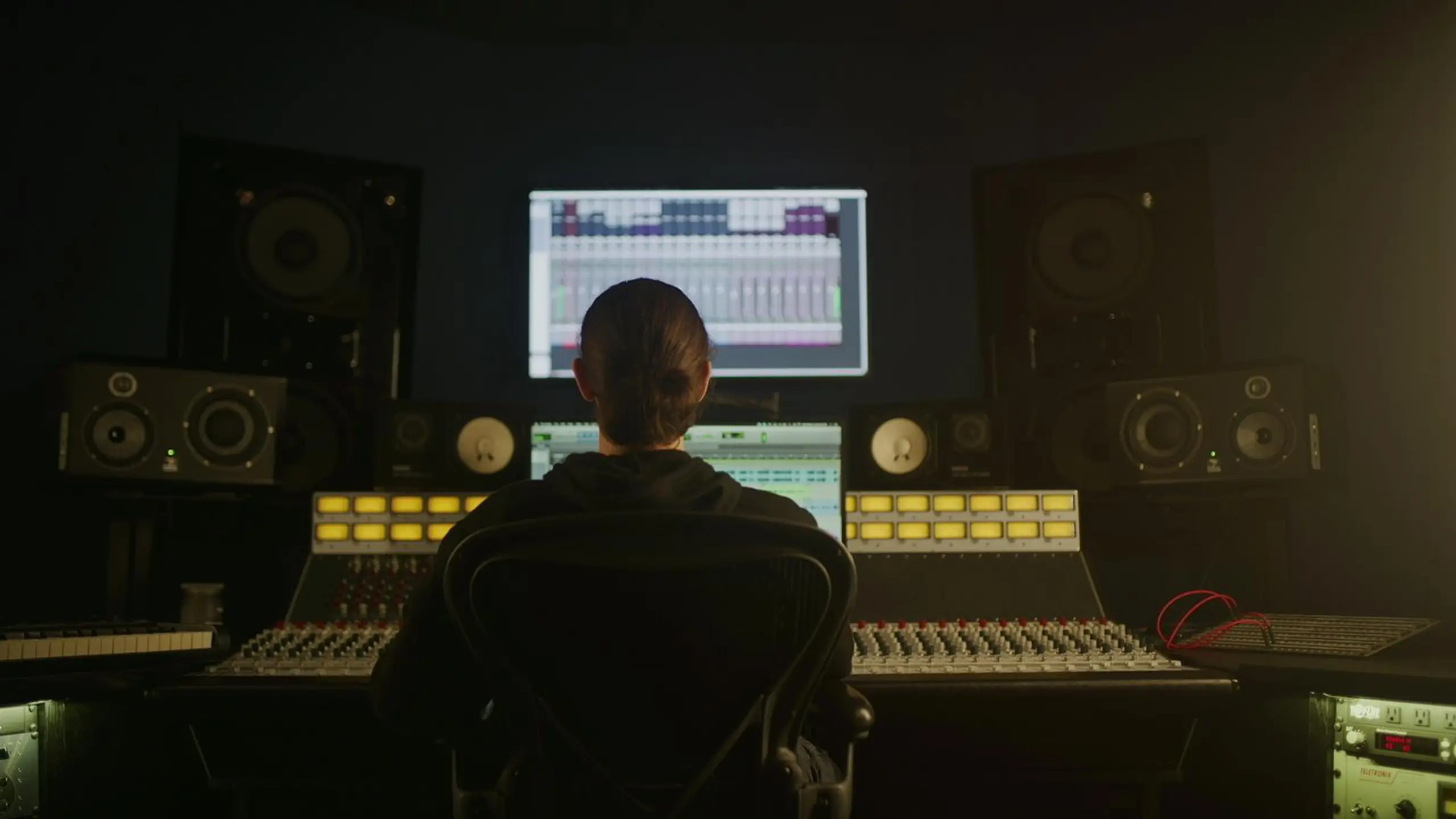
Audio engineers play a pivotal role in bringing stories to life. Their expertise ensures that the sound quality matches the visual brilliance, creating an immersive experience for the audience. Collaboration between audio engineers, directors, and producers is essential to achieve the desired outcome.
This article delves into the intricate processes and collaborative efforts involved in audio engineering, offering a behind-the-scenes look at how these professionals work together to create seamless and impactful productions.
## The Role of an Audio Engineer
Audio engineering is a specialized field that involves capturing, manipulating, and producing sound for various forms of media, including films, TV shows, and documentaries. Audio engineers are responsible for ensuring that all sound elements, dialogue, music, sound effects, and ambient noise, are clear, and balanced, and enhance the overall production quality.
In [film and TV production](https://c-istudios.com/film-and-tv-production/), audio engineers work on set during filming to capture live sound and in post-production to edit and mix the recorded audio. Their tasks include setting up microphones, monitoring audio levels, reducing background noise, and applying sound effects. They use a variety of tools and software to fine-tune the audio, ensuring it aligns with the director’s vision and the producer’s standards.
Effective audio engineering requires a deep understanding of acoustics, microphone placement, and audio processing techniques. It also demands creativity and technical expertise to solve problems that arise during production. By working closely with directors and producers, audio engineers help create a cohesive and compelling audio-visual experience.
## Pre-Production Planning
Involving audio engineers in the pre-production phase is crucial for a successful project. During pre-production, audio engineers collaborate with directors and producers to understand the project's audio requirements and develop a comprehensive sound plan. This early involvement ensures that potential audio challenges are identified and addressed before filming begins.
[Content creation](https://c-istudios.com/content-creation-services/) is a significant aspect of pre-production planning. Audio engineers contribute by suggesting ways to enhance the narrative through sound. They might propose specific soundscapes, music tracks, or sound effects that align with the project's theme and mood. This collaborative brainstorming helps in creating a detailed audio blueprint that guides the production process.
In addition, audio engineers participate in location scouting to assess the acoustic properties of potential filming sites. They evaluate factors such as ambient noise, echo, and sound isolation to determine the best locations for capturing high-quality sound. By addressing these factors early on, audio engineers help prevent audio issues that could disrupt filming and require costly fixes in post-production.
The pre-production phase also involves planning the technical aspects of the audio setup. Audio engineers decide on the types of microphones, recording devices, and audio interfaces needed for the project. They ensure that all equipment is available, properly calibrated, and ready for use. This meticulous preparation helps avoid technical glitches and ensures a smooth recording process.
## Collaboration with Directors
The relationship between audio engineers and directors is fundamental to achieving the desired sound for a project. Directors have a specific vision for how their project should sound, and audio engineers are responsible for bringing that vision to life. This collaboration involves constant communication and problem-solving.
[Creative marketing](https://c-istudios.com/creative-marketing-services/) plays a role in this collaborative process, as audio engineers and directors often brainstorm creative ways to use sound to enhance storytelling. For example, they might discuss how to use sound effects to create tension or how to layer ambient sounds to build a particular atmosphere. By aligning their creative efforts, they can produce a more immersive and engaging audio-visual experience.
During filming, audio engineers work closely with directors to capture the best possible sound. They monitor audio levels, adjust microphone placement, and provide feedback to the director on how to achieve the desired sound quality. This on-set collaboration ensures that the audio complements the visual elements and enhances the overall production.
In post-production, the collaboration continues as audio engineers edit and mix the recorded sound. Directors often provide input on the balance of dialogue, music, and sound effects, guiding the audio engineers in fine-tuning the mix. This iterative process ensures that the final audio track aligns with the director's vision and enhances the narrative impact.
## Working with Producers
Producers play a critical role in guiding audio engineers and ensuring that the audio meets the production's standards. They oversee the project's progress and make key decisions that impact the final product. The relationship between producers and audio engineers is built on mutual understanding and collaboration.
[Media marketing consultation](https://c-istudios.com/media-marketing-consultation-services/) is an essential part of this collaboration. Producers often work with marketing teams to understand the target audience and the project's branding requirements. They convey this information to audio engineers, who then tailor the sound design to align with the marketing strategy. For example, a documentary aimed at a younger audience might require a dynamic and modern soundscape, while a historical drama might need a more traditional and atmospheric audio design.
Producers also ensure that the audio engineering process stays on schedule and within budget. They coordinate with audio engineers to plan recording sessions, allocate resources, and address any issues that arise. By maintaining open communication and providing clear guidance, producers help audio engineers deliver high-quality sound that meets the project's objectives.
The collaboration between producers and audio engineers extends into post-production, where producers review and approve the final audio mix. They provide feedback on the sound quality, balance, and overall impact, ensuring that the audio enhances the storytelling and meets the production standards. This collaborative effort results in a polished and professional audio track that supports the project's success.
## The Technical Side. Equipment and Tools
The technical expertise of audio engineers is crucial in ensuring high-quality sound production. They use a wide range of equipment and tools to capture, manipulate, and enhance audio. Understanding the capabilities and limitations of these tools is essential for achieving the best possible results.
A comprehensive [video production gear list](https://c-istudios.com/video-production-gear-list/) includes various microphones, recording devices, audio interfaces, and software. Each piece of equipment serves a specific purpose and contributes to the overall sound quality. For example, shotgun microphones are often used to capture dialogue on set, while lavalier microphones are ideal for recording close-up sound in interviews or documentary settings.
Audio engineers must be proficient in using audio recording software and digital audio workstations (DAWs). These tools allow them to record, edit, and mix sound with precision and creativity. Popular DAWs like Pro Tools, Logic Pro, and Ableton Live offer a wide range of features and plugins that enable audio engineers to manipulate sound in countless ways.
This includes equalizers, compressors, reverb units, and noise-reduction tools. By applying these effects, audio engineers can enhance the clarity, depth, and texture of the sound, creating a more immersive audio experience.
In addition to traditional audio equipment, advancements in technology have introduced new tools and techniques for audio engineering. For example, immersive audio formats like Dolby Atmos and Ambisonics allow audio engineers to create three-dimensional soundscapes that enhance the viewer's sense of presence and immersion. These technologies require specialized equipment and expertise, highlighting the importance of ongoing learning and adaptation in the field of audio engineering.
## On-Set Challenges and Solutions
Working on set presents a unique set of challenges for audio engineers. Capturing high-quality sound in a dynamic and often unpredictable environment requires quick thinking and problem-solving skills. Audio engineers must be prepared to address various issues that can arise during filming.
One common challenge is dealing with background noise. On a busy set, there may be unwanted sounds from crew members, equipment, or the environment. Audio engineers use techniques such as close-miking and directional microphones to isolate the desired sound and minimize background noise. They also work with the director and crew to manage the set environment and reduce noise distractions.
Another challenge is ensuring consistent audio levels. Actors may move around or vary their vocal volume, making it difficult to capture even and clear dialogue. Audio engineers monitor audio levels in real time and make adjustments to microphone placement and settings to maintain consistency. They may also use wireless microphone systems to ensure that actors' movements do not affect the sound quality.
[Documentary film production](https://c-istudios.com/documentary-film-production/) presents additional challenges, as audio engineers often work in uncontrolled environments. Capturing authentic and high-quality sound in these settings requires flexibility and creativity. Audio engineers must be adept at using portable recording equipment and adapting to changing conditions. They also work closely with directors to ensure that the audio complements the visual storytelling and captures the essence of the documentary.
In some cases, technical issues such as equipment malfunctions or power outages can disrupt the recording process. Audio engineers must have backup plans and spare equipment to address these issues quickly and minimize downtime. Their ability to troubleshoot and resolve problems on the spot is crucial for maintaining the production schedule and ensuring high-quality sound.
## Post-Production. Fine-Tuning the Sound
Post-production is where the magic of audio engineering truly shines. This phase involves editing, mixing, and mastering the recorded sound to create a polished and professional audio track. The goal is to enhance the storytelling and ensure that the audio aligns with the visual elements of the production.
The editing process involves selecting the best audio takes, removing unwanted noise, and synchronizing the sound with the visuals. Audio engineers use digital audio workstations (DAWs) to perform these tasks with precision. They also apply effects such as equalization, compression, and reverb to enhance the clarity and quality of the sound.
Mixing is the process of balancing the various audio elements, dialogue, music, sound effects, and ambient noise, to create a cohesive and dynamic audio track. Audio engineers work closely with directors and producers to achieve the desired balance and impact. They make creative decisions about the placement and intensity of sounds, ensuring that the audio enhances the narrative and evokes the intended emotions.
[Feature film mastering and delivery](https://c-istudios.com/feature-film-mastering-and-delivery/) is the final step in the post-production process. This involves preparing the audio track for distribution and ensuring that it meets industry standards. Audio engineers apply final adjustments to the sound levels, dynamics, and frequency balance to create a polished and professional master. They also ensure that the audio is compatible with various playback systems and formats, such as cinema sound systems, home theaters, and streaming platforms.
Throughout the post production process, audio engineers collaborate with other members of the post-production team, including editors, sound designers, and Foley artists. This collaboration ensures that all audio elements are seamlessly integrated and that the final product meets the highest quality standards.
## Case Studies and Examples
Real-life examples of successful collaborations between audio engineers, directors, and producers provide valuable insights into the audio engineering process. These case studies highlight the importance of teamwork, communication, and creativity in achieving high-quality sound.
One notable example is the collaboration between audio engineers and the production team on the film "Gravity." The film's immersive sound design played a crucial role in creating the tension and realism of the space environment. Audio engineers worked closely with director Alfonso Cuarón to develop a unique soundscape that complemented the visual effects and enhanced the storytelling. The success of "Gravity" underscores the importance of the early involvement of audio engineers in the creative process and the value of innovative sound design.
In the field of [political campaigns](https://c-istudios.com/political-campaign-services/), audio engineering is equally important. High-quality sound is crucial for conveying the candidate's message clearly and persuasively. Audio engineers work with campaign directors and producers to ensure that speeches, advertisements, and promotional videos have clear and impactful audio. They address challenges such as background noise in public venues and ensure that the audio is optimized for various media platforms.
Another example is the production of the documentary "Free Solo." Capturing the sound of climber Alex Honnold as he ascended El Capitan required innovative audio solutions. Audio engineers used specialized microphones and recording techniques to capture the subtle sounds of climbing, such as the scraping of rock and the climber's breathing. This attention to detail added to the documentary's authenticity and emotional impact.
These case studies demonstrate the importance of collaboration, creativity, and technical expertise in audio engineering. By working closely with directors and producers, audio engineers can create soundscapes that elevate the overall production and enhance the audience's experience.
## The Future of Audio Engineering in Video Production
The field of audio engineering is constantly evolving, driven by advancements in technology and changes in the media landscape. Emerging trends and technologies are shaping the future of audio engineering, offering new opportunities and challenges for professionals in the field.
One significant trend is the rise of immersive audio formats, such as Dolby Atmos and Ambisonics. These technologies enable audio engineers to create three-dimensional soundscapes that provide a more immersive and realistic experience for the audience. By incorporating spatial audio into their projects, audio engineers can enhance the viewer's sense of presence and engagement.
Advancements in [VFX compositing and animation](https://c-istudios.com/vfx-compositing-and-animation-services/) are also influencing audio engineering. As visual effects become more sophisticated, audio engineers must develop soundscapes that match the complexity and realism of the visuals. This requires a deep understanding of both audio and visual elements and the ability to integrate them seamlessly.
The increasing use of artificial intelligence (AI) and machine learning in audio engineering is another exciting development. AI-powered tools can assist with tasks such as noise reduction, audio restoration, and sound design. These technologies can enhance the efficiency and creativity of audio engineers, allowing them to focus on higher-level creative decisions.
The future of audio engineering also involves greater collaboration with other creative disciplines, such as music production, game design, and virtual reality (VR). Audio engineers are expanding their skill sets to work on diverse projects, from interactive VR experiences to immersive gaming environments. This interdisciplinary approach is opening new avenues for innovation and creativity in audio engineering.
## Work with C&I Studios
If you are planning a project like this, our team can take it from concept to final delivery. Explore our [film and TV production](https://c-istudios.com/film-and-tv-production/), browse [our work](https://c-istudios.com/our-work/) to see how we tell brand stories, and [get in touch](https://c-istudios.com/contact/) when you are ready to start.
Originally published June 19, 2024
---
*This content is from [C&I Studios](https://c-istudios.com), a full-service production company.*
---
# Pre-Production Essentials: Planning and Preparation for a Smooth Shoot
> Published: June 18, 2024
> Categories: Film & TV
> Source: https://c-istudios.com/pre-production-essentials-planning-and-preparation-for-a-smooth-shoot/
---
.cib{--paper:#1b1d1f;--ink:#fff;--body:#d5d7d9;--muted:#8b9096;--line:rgba(255,255,255,.12);--thumb:#2b2e31;--card:#212426;--accent:#c02b0a;--blue:#5B8FA8;--serif:'Playfair Display',Georgia,serif;--sans:'Poppins',-apple-system,sans-serif;--measure:900px;background:var(--paper);color:var(--body);font-family:var(--sans);line-height:1.6;position:relative;left:50%;transform:translateX(-50%);width:90vw;max-width:1920px}
.cib *{box-sizing:border-box}
.cib .kicker{max-width:var(--measure);margin:58px auto 0;padding:0 22px;font-size:12.5px;font-weight:700;letter-spacing:2.5px;text-transform:uppercase;color:var(--blue)}
.cib h1.cibh1{text-wrap:balance;font-family:var(--serif);font-weight:500;font-size:clamp(46px,6vw,72px);line-height:1.08;color:var(--ink);max-width:var(--measure);margin:18px auto 0;padding:0 22px;letter-spacing:-.5px}
.cib .metarow{max-width:var(--measure);margin:20px auto 0;padding:0 22px;color:var(--muted);font-size:14px}
.cib .hero{position:relative;width:100%;height:0;padding-bottom:56.25%;overflow:hidden;margin:48px auto 0;border-top:1px solid var(--line);border-bottom:1px solid var(--line)}
.cib .hero .ph{width:100%;aspect-ratio:16/9;background:var(--thumb);border-top:1px solid var(--line);border-bottom:1px solid var(--line);display:flex;align-items:center;justify-content:center;color:#7d8288;font-size:13px;text-align:center;padding:0 20px}
.cib .body{max-width:var(--measure);margin:12px auto 0;padding:52px 22px 6px}
.cib .body.lead p:first-child{font-size:23px;line-height:1.62;color:var(--ink)}
.cib .body p{font-size:18.5px;line-height:1.85;margin:0 0 30px;color:var(--body)}
.cib .body h2{text-wrap:balance;font-family:var(--serif);font-weight:500;font-size:clamp(32px,4vw,48px);line-height:1.22;color:var(--ink);margin:70px 0 20px;letter-spacing:-.3px}
.cib .body h3{text-wrap:balance;font-family:var(--sans);font-weight:600;font-size:22px;color:var(--ink);margin:38px 0 8px}
.cib .body a{color:var(--ink);text-decoration:underline;text-decoration-color:rgba(255,255,255,.4);text-underline-offset:3px}
.cib .body a:hover{text-decoration-color:var(--ink)}
.cib .ctable{width:100%;border-collapse:collapse;margin:16px 0 30px;font-size:16px}
.cib .ctable th{background:#000;color:#fff;text-align:left;padding:10px 12px;font-family:var(--sans)}
.cib .ctable td{padding:10px 12px;border-bottom:1px solid var(--line);color:var(--body)}
.cib .inimg{position:relative;width:100%;height:0;padding-bottom:56.25%;overflow:hidden;margin:72px auto;border-top:1px solid var(--line);border-bottom:1px solid var(--line)}
.cib .inimg .ph{width:100%;aspect-ratio:16/9;background:var(--thumb);border-top:1px solid var(--line);border-bottom:1px solid var(--line);display:flex;align-items:center;justify-content:center;color:#7d8288;font-size:13px}
.cib .origpub{max-width:var(--measure);margin:60px auto 0;padding:26px 22px 0;border-top:1px solid var(--line);color:var(--muted);font-size:13.5px}
.cib .related{max-width:1200px;margin:64px auto 0;padding:34px 22px 76px}
.cib .related h3{font-family:var(--sans);font-size:12.5px;letter-spacing:2px;text-transform:uppercase;color:var(--ink);margin:0 0 24px}
.cib .grid{display:grid;grid-template-columns:repeat(3,1fr);gap:28px}
.cib .rc{background:var(--card);border:1px solid var(--line);display:block;text-decoration:none;color:inherit;transition:border-color .15s}
.cib a.rc:hover{border-color:rgba(255,255,255,.5)}
.cib .rc .thumb{position:relative;width:100%;height:0;padding-bottom:56.25%;background:var(--thumb);overflow:hidden}
.cib .rc .thumb img{position:absolute!important;top:0!important;left:0!important;width:100%!important;height:100%!important;object-fit:cover!important;margin:0!important}
.cib .rc .cc{padding:14px 15px 17px}
.cib .rc .rt{font-family:var(--serif);font-weight:500;font-size:16px;line-height:1.3;color:var(--ink);margin:0 0 6px}
.cib .rc .rm{font-size:11px;letter-spacing:1px;text-transform:uppercase;color:var(--muted)}
.cib img{margin:0!important;padding:0!important;display:block!important;vertical-align:top;max-width:100%}
.cib .hero img,.cib .inimg img{position:absolute!important;top:0!important;left:0!important;width:100%!important;height:100%!important;object-fit:cover!important;margin:0!important;padding:0!important;border:0!important;display:block!important;aspect-ratio:auto!important}
.cib .hero+.body{padding-top:36px}
@media(max-width:760px){.cib .grid{grid-template-columns:1fr}.cib .body h2{margin:52px 0 16px}.cib .body p{font-size:17.5px}.cib .inimg,.cib .hero{margin-top:44px}}
.cib .vembed{max-width:var(--measure);margin:44px auto;padding:0 22px}.cib .vembed .vwrap{position:relative;width:100%;height:0;padding-bottom:56.25%}.cib .vembed .vwrap iframe{position:absolute;top:0;left:0;width:100%;height:100%;border:0}
Film & TV
# Pre-Production Essentials. Planning and Preparation for a Smooth Shoot
12 min read
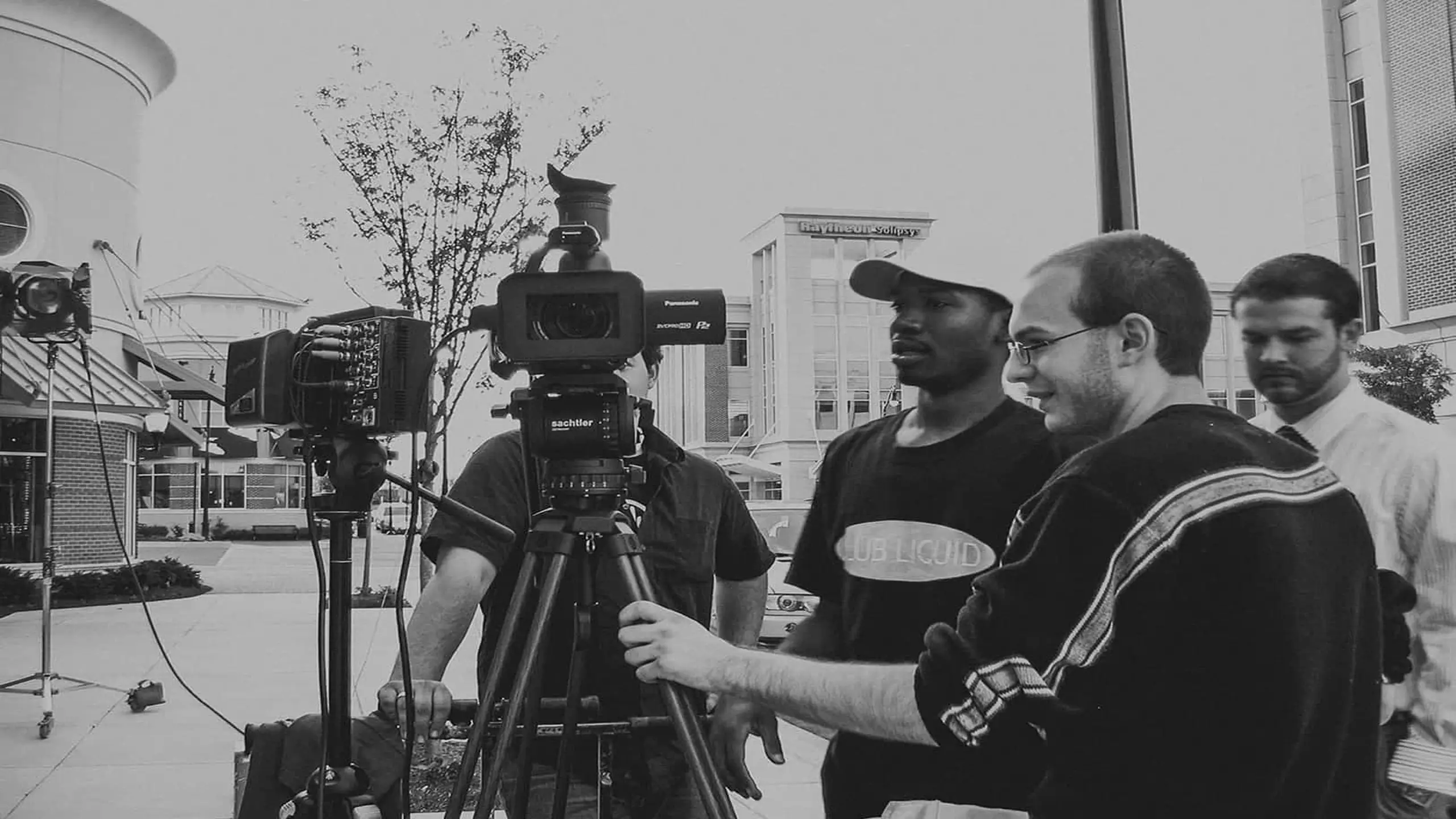
Pre-production is a critical phase in the [video production](https://c-istudios.com/video-production-services/) process that lays the foundation for a successful shoot. It involves meticulous planning and preparation to ensure that all aspects of the production are well-organized and executed smoothly.
By investing time and effort in pre-production, filmmakers can avoid potential pitfalls and create high-quality content that resonates with their audience. This phase is essential for identifying and solving potential problems before they become costly issues during filming, ultimately ensuring a smoother and more efficient production process.
## Understanding Pre-Production
The pre-production phase in [film and TV production](https://c-istudios.com/film-and-tv-production/) encompasses all the activities that occur before the actual filming begins. This stage is crucial as it sets the stage for the entire production process. Key components of pre-production include script development, budgeting, scheduling, location scouting, casting, and technical preparations. Each of these elements plays a vital role in ensuring that the production runs smoothly and efficiently.
During pre-production, filmmakers must develop a comprehensive plan that outlines the project's objectives, timeline, and resources. This plan serves as a roadmap that guides the production team through each step of the process, from initial concept to final execution. By carefully planning and coordinating all aspects of the production, filmmakers can minimize risks and maximize the chances of success.
Effective pre-production also involves assembling a talented and dedicated team. This team typically includes the director, producers, writers, cinematographers, production designers, and other key personnel. Each team member brings unique skills and expertise to the project, contributing to its overall success.
In addition to planning and coordination, pre-production also involves securing the necessary resources and equipment. This includes renting or purchasing cameras, lighting, sound equipment, and other technical gear. By ensuring that all equipment is available and in good working condition, filmmakers can avoid delays and technical issues during the shoot.
A crucial aspect of pre-production is engaging in **creative marketing**. This involves strategizing on how the film or show will be promoted, identifying the target audience, and planning the marketing campaigns that will support the project's release. By incorporating creative marketing strategies early on, filmmakers can ensure a cohesive approach that aligns with the project's overall vision and goals.
## Script Development and Storyboarding
A solid script and storyboard are essential components of the pre-production process. The script serves as the blueprint for the entire production, providing detailed instructions on the dialogue, actions, and settings for each scene. Effective scriptwriting involves creating engaging and compelling content that captures the audience's attention and conveys the intended message.
Storyboarding, on the other hand, involves creating visual representations of each scene. This process helps filmmakers visualize the flow of the story and plan the composition and framing of each shot. Storyboards serve as a visual guide that ensures consistency and coherence throughout the production.
During script development, it's important to consider the target audience and the objectives of the project. The script should be tailored to resonate with the audience and achieve the desired outcomes. This may involve conducting research and gathering insights to understand the audience's preferences and interests.
Once the script is finalized, the next step is to create the storyboard. This involves sketching out each scene and detailing the camera angles, movements, and transitions. Storyboards help filmmakers plan the visual aspects of the production and ensure that the final product aligns with the original vision.
Incorporating elements of [content creation](https://c-istudios.com/content-creation-services/) into the storyboard can enhance the visual appeal and effectiveness of the video. For example, using advanced camera techniques and creative lighting setups can add depth and dimension to the scenes, making them more engaging and visually appealing. Content creation also involves planning the overall aesthetic and tone of the project.
## Budgeting and Scheduling
Creating a realistic budget and detailed schedule is crucial for the success of any production. The budgeting process involves estimating the costs of all aspects of the production, including equipment, locations, talent, crew, and post-production. By developing a comprehensive budget, filmmakers can ensure that they have the necessary resources to complete the project.
Scheduling, on the other hand, involves planning the timeline for each phase of the production. This includes setting deadlines for script development, casting, location scouting, rehearsals, filming, and post-production. A well-structured schedule helps keep the production on track and ensures that all tasks are completed on time.
Effective budgeting and scheduling require careful planning and coordination. Filmmakers must consider various factors, such as the availability of locations and talent, weather conditions, and potential conflicts. By anticipating and addressing these challenges, filmmakers can create a realistic and achievable plan.
[SEO copywriting](https://c-istudios.com/seo-copywriting-services/) in the budgeting and scheduling process can enhance the overall efficiency and effectiveness of the production. For example, allocating resources for marketing and promotion can help increase the visibility and reach of the final product. SEO copywriting ensures that the content is optimized for search engines, making it easier for potential audiences to find and engage with the project.
This involves regularly reviewing the budget and schedule to ensure that the production stays on track and within budget. By closely monitoring and managing resources, filmmakers can avoid overspending and delays. This ongoing oversight is critical for making adjustments as needed and ensuring that the project remains financially viable.
## Location Scouting and Set Design
Choosing the right locations and designing the sets are critical aspects of the pre-production process. Location scouting involves identifying and selecting suitable locations for filming. This process requires careful consideration of various factors, such as accessibility, lighting, and logistics. The right location can add authenticity and depth to the narrative, enhancing the overall visual appeal of the production.
Once the locations are selected, the next step is to design and build the sets. Set design involves creating the physical environment where the scenes will be filmed. This may include constructing sets, arranging props, and decorating the spaces to create the desired atmosphere and aesthetic. Effective set design enhances the storytelling by providing a believable and immersive backdrop for the action.
Effective location scouting and set design require a keen eye for detail and a strong sense of creativity. Filmmakers must ensure that the locations and sets align with the script and enhance the overall visual appeal of the production. This involves visiting potential locations, assessing their suitability, and negotiating terms of use with property owners or managers.
Elements of [professional photography](https://c-istudios.com/professional-photography-services/) in the location scouting and set design process can enhance the visual quality and impact of the final product. For example, using advanced photography techniques and creative design elements can create visually stunning and memorable scenes. Professional photography can also be used to document the set design process.
## Casting and Talent Management
Casting the right talent and managing the actors and crew effectively are essential for the success of any production. The casting process involves selecting actors who best fit the roles and bring the characters to life. This requires a thorough understanding of the script and the vision for the project. Casting directors must evaluate actors' skills, chemistry with other cast members, and suitability for the roles.
Effective talent management involves coordinating and overseeing the actors and crew throughout the production. This includes scheduling rehearsals, providing direction and feedback, and ensuring that everyone is prepared and ready for filming. Talent management also involves addressing any issues that may arise, such as conflicts or performance concerns.
Casting and talent management require strong organizational and interpersonal skills. Filmmakers must build and maintain positive relationships with the actors and crew, creating a collaborative and supportive environment. This fosters a positive work atmosphere and enhances the overall quality of the production.
Combining elements of [artist management and media creation](https://c-istudios.com/artist-management-and-media-creation/) in the casting and talent management process can enhance the overall efficiency and effectiveness of the production. For example, using media creation tools can facilitate remote rehearsals and auditions, saving time and resources. Artist management involves ensuring that actors and crew members have the support and resources they need to perform at their best.
## Technical Preparations
Technical preparations are a crucial aspect of pre-production, involving the setup and testing of all technical equipment and systems. This includes cameras, lighting, sound equipment, and special effects. Ensuring that all technical aspects are ready and functioning properly is essential for a smooth and successful shoot.
Preparing the [video production gear list](https://c-istudios.com/video-production-gear-list/) involves selecting and assembling the necessary equipment for the production. This includes choosing the right cameras, lenses, lights, microphones, and other gear based on the specific requirements of the project. It's important to ensure that all equipment is in good working condition and meets the technical standards for production.
It's also important to conduct rehearsals and test shoots. This involves running through the scenes and testing the equipment in real-world conditions to identify and address any technical issues. By conducting thorough technical preparations, filmmakers can ensure that the production runs smoothly and efficiently. Test shoots allow the team to identify potential problems and make necessary adjustments before the actual filming begins.
Technical preparations also involve coordinating with the post-production team to ensure that all technical requirements are met. This includes discussing the visual and audio effects needed, planning the workflow, and ensuring that the necessary software and hardware are available. Early coordination with the post-production team helps streamline the editing process and ensures a seamless transition from production to post-production.
## Legal and Administrative Tasks
Legal and administrative tasks are an important aspect of pre-production that involves securing the necessary permits, contracts, and insurance for the production. This includes obtaining location permits, talent contracts, and production insurance to protect against potential risks and liabilities. Proper legal and administrative planning ensures that the production complies with all relevant laws and regulations.
Organizing and managing legal and administrative tasks require careful planning and attention to detail. Filmmakers must ensure that all necessary paperwork is completed and filed correctly to avoid any legal issues during production. This involves drafting and reviewing contracts, negotiating terms, and securing the necessary signatures.
Including elements of [web hosting](https://c-istudios.com/web-hosting/) into the legal and administrative process can enhance the overall efficiency and effectiveness of the production. For example, using online tools and platforms for contract management and document storage can streamline the process and provide easy access to important documents. Web hosting services can also support the production's online presence, providing a platform for sharing updates and promotional content.
In addition to securing the necessary permits and contracts, it's also important to ensure compliance with all relevant laws and regulations. This includes adhering to safety standards, labor laws, and copyright regulations to protect the production and avoid any legal issues. Compliance ensures that the production operates within the legal framework and minimizes the risk of legal disputes.
Legal and administrative tasks also involve coordinating with various stakeholders, such as property owners, government agencies, and unions. This involves negotiating terms, securing approvals, and ensuring that all parties are informed and aligned with the production plan. Effective coordination helps build positive relationships and ensures smooth collaboration throughout the production.
## Rehearsals and Test Shoots
Rehearsals and test shoots are essential components of the pre-production process that help ensure a smooth and successful shoot. Rehearsals involve practicing the scenes and coordinating the movements and actions of the actors and crew. This helps identify and address any potential issues before the actual filming begins.
Test shoots, on the other hand, involve running through the scenes with the actual equipment and settings to test the technical aspects of the production. This includes testing the cameras, lighting, sound, and special effects to ensure that everything is functioning properly. Test shoots help identify technical issues that may not be apparent during rehearsals and allow the team to make necessary adjustments.
Conducting thorough rehearsals and test shoots can help filmmakers identify and address any potential issues before the actual filming begins. This can save time and resources and ensure that the production runs smoothly and efficiently. Rehearsals and test shoots provide an opportunity to refine performances, adjust technical setups, and ensure that everyone is prepared for the actual shoot.
Integrating elements of [web maintenance](https://c-istudios.com/web-maintenance/) into the rehearsal and test shoot process can enhance the overall quality and effectiveness of the production. For example, using online tools for scheduling and coordination can streamline the process and ensure that everyone is on the same page. Web maintenance services can also support the production's online presence, providing a platform for sharing updates and coordinating logistics.
Rehearsals and test shoots also involve collaborating with the post-production team to ensure that all technical requirements are met. This includes discussing the visual and audio effects needed, planning the workflow, and ensuring that the necessary software and hardware are available. Early coordination with the post-production team helps streamline the editing process and ensures a seamless transition from production to post-production.
## Planning for Post-Production
Pre-production steps that facilitate a smoother post-production process include organizing and planning the workflow, coordinating with the post-production team, and ensuring that all necessary resources and equipment are available. Proper planning and coordination during pre-production can help minimize delays and ensure a smooth transition from production to post-production.
Utilizing elements of [web development](https://c-istudios.com/web-development-services/) in the pre-production process can enhance the overall efficiency and effectiveness of the production. For example, using online tools and platforms for project management and collaboration can streamline the workflow and ensure that everyone is on the same page.
Effective planning for post-production involves discussing the visual and audio effects needed, planning the workflow, and ensuring that the necessary software and hardware are available. This includes coordinating with the post-production team to ensure that all technical requirements are met and that the editing process runs smoothly.
## Case Studies and Examples
Real-life examples of successful pre-production processes can provide valuable insights and lessons for filmmakers. By analyzing what made these projects successful, filmmakers can identify best practices and apply them to their own productions. Case studies can highlight the importance of thorough planning, effective coordination, and attention to detail in achieving a smooth and successful production.
For example, a successful [political campaign](https://c-istudios.com/political-campaign-services/) video might involve extensive pre-production planning, including script development, location scouting, casting, and technical preparations. By analyzing the pre-production process of a successful campaign, filmmakers can identify key strategies and techniques that contributed to its success.
Another example might involve a major film or [TV production](https://c-istudios.com/film-and-tv-production/) that achieved critical and commercial success. By examining the pre-production process of such a project, filmmakers can gain insights into the importance of thorough planning, effective coordination, and attention to detail in achieving a high-quality production.
Case studies and examples also provide an opportunity to learn from the challenges and obstacles faced by other productions. By understanding how these challenges were addressed and overcome, filmmakers can better prepare for potential issues and develop strategies to mitigate risks.
## Work with C&I Studios
If you are planning a project like this, our team can take it from concept to final delivery. Explore our [film and TV production](https://c-istudios.com/film-and-tv-production/), browse [our work](https://c-istudios.com/our-work/) to see how we tell brand stories, and [get in touch](https://c-istudios.com/contact/) when you are ready to start.
Originally published June 18, 2024
---
*This content is from [C&I Studios](https://c-istudios.com), a full-service production company.*
---
# Automotive Industry Innovations: Leveraging Video in Sales and Marketing
> Published: June 17, 2024
> Categories: Commercial & Brand
> Source: https://c-istudios.com/automotive-industry-innovations-leveraging-video-in-sales-and-marketing/
---
.cib{--paper:#1b1d1f;--ink:#fff;--body:#d5d7d9;--muted:#8b9096;--line:rgba(255,255,255,.12);--thumb:#2b2e31;--card:#212426;--accent:#c02b0a;--blue:#5B8FA8;--serif:'Playfair Display',Georgia,serif;--sans:'Poppins',-apple-system,sans-serif;--measure:900px;background:var(--paper);color:var(--body);font-family:var(--sans);line-height:1.6;position:relative;left:50%;transform:translateX(-50%);width:90vw;max-width:1920px}
.cib *{box-sizing:border-box}
.cib .kicker{max-width:var(--measure);margin:58px auto 0;padding:0 22px;font-size:12.5px;font-weight:700;letter-spacing:2.5px;text-transform:uppercase;color:var(--blue)}
.cib h1.cibh1{text-wrap:balance;font-family:var(--serif);font-weight:500;font-size:clamp(46px,6vw,72px);line-height:1.08;color:var(--ink);max-width:var(--measure);margin:18px auto 0;padding:0 22px;letter-spacing:-.5px}
.cib .metarow{max-width:var(--measure);margin:20px auto 0;padding:0 22px;color:var(--muted);font-size:14px}
.cib .hero{position:relative;width:100%;height:0;padding-bottom:56.25%;overflow:hidden;margin:48px auto 0;border-top:1px solid var(--line);border-bottom:1px solid var(--line)}
.cib .hero .ph{width:100%;aspect-ratio:16/9;background:var(--thumb);border-top:1px solid var(--line);border-bottom:1px solid var(--line);display:flex;align-items:center;justify-content:center;color:#7d8288;font-size:13px;text-align:center;padding:0 20px}
.cib .body{max-width:var(--measure);margin:12px auto 0;padding:52px 22px 6px}
.cib .body.lead p:first-child{font-size:23px;line-height:1.62;color:var(--ink)}
.cib .body p{font-size:18.5px;line-height:1.85;margin:0 0 30px;color:var(--body)}
.cib .body h2{text-wrap:balance;font-family:var(--serif);font-weight:500;font-size:clamp(32px,4vw,48px);line-height:1.22;color:var(--ink);margin:70px 0 20px;letter-spacing:-.3px}
.cib .body h3{text-wrap:balance;font-family:var(--sans);font-weight:600;font-size:22px;color:var(--ink);margin:38px 0 8px}
.cib .body a{color:var(--ink);text-decoration:underline;text-decoration-color:rgba(255,255,255,.4);text-underline-offset:3px}
.cib .body a:hover{text-decoration-color:var(--ink)}
.cib .ctable{width:100%;border-collapse:collapse;margin:16px 0 30px;font-size:16px}
.cib .ctable th{background:#000;color:#fff;text-align:left;padding:10px 12px;font-family:var(--sans)}
.cib .ctable td{padding:10px 12px;border-bottom:1px solid var(--line);color:var(--body)}
.cib .inimg{position:relative;width:100%;height:0;padding-bottom:56.25%;overflow:hidden;margin:72px auto;border-top:1px solid var(--line);border-bottom:1px solid var(--line)}
.cib .inimg .ph{width:100%;aspect-ratio:16/9;background:var(--thumb);border-top:1px solid var(--line);border-bottom:1px solid var(--line);display:flex;align-items:center;justify-content:center;color:#7d8288;font-size:13px}
.cib .origpub{max-width:var(--measure);margin:60px auto 0;padding:26px 22px 0;border-top:1px solid var(--line);color:var(--muted);font-size:13.5px}
.cib .related{max-width:1200px;margin:64px auto 0;padding:34px 22px 76px}
.cib .related h3{font-family:var(--sans);font-size:12.5px;letter-spacing:2px;text-transform:uppercase;color:var(--ink);margin:0 0 24px}
.cib .grid{display:grid;grid-template-columns:repeat(3,1fr);gap:28px}
.cib .rc{background:var(--card);border:1px solid var(--line);display:block;text-decoration:none;color:inherit;transition:border-color .15s}
.cib a.rc:hover{border-color:rgba(255,255,255,.5)}
.cib .rc .thumb{position:relative;width:100%;height:0;padding-bottom:56.25%;background:var(--thumb);overflow:hidden}
.cib .rc .thumb img{position:absolute!important;top:0!important;left:0!important;width:100%!important;height:100%!important;object-fit:cover!important;margin:0!important}
.cib .rc .cc{padding:14px 15px 17px}
.cib .rc .rt{font-family:var(--serif);font-weight:500;font-size:16px;line-height:1.3;color:var(--ink);margin:0 0 6px}
.cib .rc .rm{font-size:11px;letter-spacing:1px;text-transform:uppercase;color:var(--muted)}
.cib img{margin:0!important;padding:0!important;display:block!important;vertical-align:top;max-width:100%}
.cib .hero img,.cib .inimg img{position:absolute!important;top:0!important;left:0!important;width:100%!important;height:100%!important;object-fit:cover!important;margin:0!important;padding:0!important;border:0!important;display:block!important;aspect-ratio:auto!important}
.cib .hero+.body{padding-top:36px}
@media(max-width:760px){.cib .grid{grid-template-columns:1fr}.cib .body h2{margin:52px 0 16px}.cib .body p{font-size:17.5px}.cib .inimg,.cib .hero{margin-top:44px}}
.cib .vembed{max-width:var(--measure);margin:44px auto;padding:0 22px}.cib .vembed .vwrap{position:relative;width:100%;height:0;padding-bottom:56.25%}.cib .vembed .vwrap iframe{position:absolute;top:0;left:0;width:100%;height:100%;border:0}
Commercial & Brand
# Automotive Industry Innovations. Leveraging Video in Sales and Marketing
12 min read

The automotive industry has increasingly embraced the power of [video production](https://c-istudios.com/video-production-services/) to enhance sales and marketing efforts. Video content has become a vital tool for car manufacturers and dealerships to engage potential customers, showcase their products, and drive sales. In a competitive market where consumer attention is a valuable commodity, the strategic use of video offers a dynamic and engaging way to communicate brand values and product benefits.
This article delves into how leveraging video can revolutionize sales and marketing in the automotive industry.
## Benefits of Video in Automotive Sales and Marketing
Incorporating video into automotive sales and marketing strategies offers numerous advantages. Firstly, videos provide a visually rich medium to showcase vehicles, highlighting features and performance in a way that static images or text cannot. This dynamic presentation can significantly enhance customer understanding and interest.
One key benefit is the ability to conduct virtual tours and test drives. With video, potential buyers can experience a car's features, interior, and performance without leaving their homes. This is particularly beneficial for luxury or specialty vehicles, where the driving experience is a crucial selling point. Virtual test drives can also be enhanced with interactive elements, allowing viewers to choose which parts of the car to explore in more detail.
Moreover, video content can help build trust and credibility. Testimonials from satisfied customers or endorsements from industry experts can be more compelling in video format. These [media marketing consultation](https://c-istudios.com/media-marketing-consultation-services/) videos offer authenticity and can positively influence potential buyers' perceptions. Videos featuring real customers sharing their experiences can make a brand seem more trustworthy and relatable.
Several automotive brands have successfully utilized video marketing campaigns. For example, BMW's "The Escape" series combines cinematic storytelling with product placement, captivating viewers while subtly showcasing their vehicles. The series not only entertains but also highlights BMW's innovative features and superior performance. Similarly, Tesla's use of video to live-stream product launches and updates creates anticipation and buzz, directly engaging with their tech-savvy audience. Tesla's videos often feature in-depth looks at their vehicles' technology and design, appealing to both existing customers and potential buyers.
Another successful example is Audi's "Audi Quattro Challenge" campaign, which used video to demonstrate the superior handling and performance of their quattro technology. By showcasing the vehicles in challenging driving conditions, Audi effectively communicated the reliability and capability of their cars.
## Understanding Consumer Psychology Through Video
Video is inherently persuasive due to its ability to combine visual and auditory stimuli, creating a multi-sensory experience. This sensory engagement can evoke emotions and create a stronger connection with the audience. The principles of [documentary film production](https://c-istudios.com/documentary-film-production/) are often employed in automotive videos to narrate compelling stories that resonate with viewers.
One psychological aspect that makes video so effective is the concept of social proof. Seeing others use and endorse a product can significantly influence consumer behavior. Videos that include customer testimonials or footage of real-life use cases provide this social proof, making the product seem more credible and desirable.
Furthermore, videos can address potential buyers' questions and concerns more comprehensively. Detailed demonstrations and explainer videos can help demystify complex features or technologies, reducing hesitation and fostering a sense of confidence in the product.
By creating a narrative around the product, marketers can make the vehicle memorable and relatable, thus enhancing its appeal. For instance, a video might tell the story of a family's road trip, highlighting the car's comfort, safety features, and fuel efficiency along the way.
Additionally, the use of visual effects and high-quality production values can enhance the appeal of the video. Techniques such as slow-motion shots, aerial views, and detailed close-ups can highlight specific features and create a visually stunning presentation. By combining creativity with technical expertise, automotive videos can capture the imagination of viewers and leave a lasting impression.
## Planning Your Automotive Video Marketing Strategy
Effective video marketing begins with thorough planning and strategy development. Identifying the right content and messaging is crucial. The content should align with the brand's identity and resonate with the target audience. For instance, a luxury car brand might focus on elegance and performance, while an eco-friendly vehicle could emphasize sustainability and innovation.
This could be an intriguing question, a bold statement, or an eye-catching visual. Follow this with a clear narrative that highlights the vehicle's key features and benefits. Incorporating elements of [VFX compositing and animation](https://c-istudios.com/vfx-compositing-and-animation-services/) can add a modern and engaging touch, making the video more visually appealing. Animation can be used to illustrate complex technologies or show the car in different environments, adding depth to the narrative.
It's also important to consider the video's length and format. Short, concise videos are often more effective on social media platforms, where viewers have shorter attention spans. These videos should deliver key messages quickly and effectively, using compelling visuals and succinct narration. On platforms like YouTube, longer, more detailed videos can provide in-depth information about the vehicle, catering to viewers who are further along in the buying process and seeking more comprehensive information.
Tailoring the content to the platform ensures it reaches and engages the intended audience effectively. For example, Instagram might be suited for short, visually striking videos, while Facebook could be ideal for slightly longer videos that allow for more storytelling. On the company's website, videos can be integrated into product pages to enhance the user experience and provide detailed insights.
In addition to platform-specific strategies, it's essential to align video content with broader marketing goals. Videos should complement other marketing efforts, such as blog posts, social media campaigns, and email marketing. By creating a cohesive marketing strategy, brands can ensure consistent messaging and reinforce their brand identity across multiple touchpoints.
## Filming and Production Tips for Automotive Videos
Producing high-quality automotive videos requires attention to detail and a commitment to excellence. Professionalism in filming is paramount. Using high-resolution cameras and employing skilled videographers ensures that the video quality meets industry standards. High-quality visuals are essential to showcase the car's design, features, and performance effectively.
Lighting is a critical component. Proper lighting can enhance the vehicle's appearance, highlighting its design and features. Natural lighting is often preferred, but controlled studio lighting can also be effective for highlighting specific details. For instance, outdoor shoots during the golden hour can create stunning visuals, while studio setups can ensure consistent lighting conditions.
Editing is where the magic happens. This process involves cutting unnecessary footage, adding transitions, and ensuring the video flows smoothly. The use of [professional photography](https://c-istudios.com/professional-photography-services/) techniques can add depth and dimension, making the video more visually engaging. Color grading, special effects, and sound design can also enhance the final product, making it more polished and professional.
Storyboarding is a useful tool in the planning phase. By mapping out each shot and sequence, filmmakers can ensure that the video follows a logical structure and covers all the necessary points. This can help avoid last-minute changes and ensure that the filming process runs smoothly.
When filming automotive videos, it's important to consider the location and setting. Different environments can highlight different aspects of the vehicle. For example, shooting a rugged SUV in off-road conditions can showcase its capabilities, while filming a luxury sedan in an urban setting can emphasize its elegance and sophistication. The setting should complement the vehicle and enhance the overall narrative.
Finally, it's essential to keep the target audience in mind throughout the production process. Understanding the preferences and interests of the audience can guide creative decisions and ensure that the video resonates with viewers. For instance, tech-savvy viewers might appreciate detailed demonstrations of advanced features, while family-oriented buyers might be more interested in safety and comfort.
## Showcasing Authenticity in Automotive Videos
Authenticity is key to creating relatable and trustworthy automotive videos. Viewers can easily detect insincerity, which can undermine the video's effectiveness. One strategy for ensuring authenticity is to use real customers and real testimonials. Genuine stories about real experiences are far more convincing than scripted endorsements. Featuring actual customers sharing their positive experiences with the vehicle can create a sense of trust and reliability.
Avoiding common pitfalls in video production is also crucial. Overly polished videos can sometimes appear staged and artificial. Instead, aim for a balance between professionalism and authenticity. Showing the vehicle in real-world scenarios, such as a family road trip or a city commute, can make the video more relatable. These scenarios should be realistic and depict the everyday use of the vehicle, highlighting its practical benefits.
[Audio engineering](https://c-istudios.com/audio-engineering-services/) plays a significant role in conveying authenticity. Natural sounds, like the engine's roar or the rustle of leaves as the car drives by, add to the realism of the video. Background music should complement the narrative without overpowering it. The choice of music can also influence the video's tone and mood, so it's important to select tracks that align with the brand's identity and the video's message.
Incorporating behind-the-scenes footage can also enhance authenticity. Showing the process of designing, manufacturing, or testing the vehicle can provide viewers with an inside look at the brand's operations. This transparency can build trust and demonstrate the brand's commitment to quality and innovation.
Another way to ensure authenticity is by highlighting the human element Featuring employees, engineers, or designers talking about their work and passion for the brand can create a more personal connection with the audience. These stories can humanize the brand and make it more relatable.
User-generated content is another powerful tool for showcasing authenticity. Encouraging customers to share their own videos and experiences with the vehicle can create a sense of community and provide diverse perspectives. This content can be curated and shared on the brand's social media channels, further enhancing the brand's authenticity and credibility.
## Leveraging Automotive Videos Across Platforms
Once the video is produced, it's essential to repurpose it for various marketing channels to maximize its reach and impact. Each platform has its own unique characteristics and audience preferences, so the content should be tailored accordingly.
For social media platforms like Facebook, Instagram, and Twitter, shorter, attention-grabbing videos perform best. These videos should be optimized for mobile viewing, with subtitles included, as many users watch videos without sound. On YouTube, longer, more detailed videos can be used to provide in-depth information about the vehicle.
Embedding videos on the company's website can enhance user engagement and improve SEO. For instance, a well-placed video on a product page can increase the time visitors spend on the page, potentially boosting conversion rates. Additionally, incorporating [web development](https://c-istudios.com/web-development-services/) techniques can ensure the video loads quickly and plays smoothly, providing a better user experience.
Email marketing is another effective channel for distributing video content. Including a video in an email can increase click-through rates and engagement. A short, compelling teaser with a link to the full video can entice recipients to learn more. Personalized video emails can also be used to nurture leads and build relationships with potential customers.
Social media advertising can further amplify the reach of video content. Platforms like Facebook and Instagram offer targeted advertising options that allow brands to reach specific demographics and interests. Promoted videos can increase visibility and drive traffic to the brand's website or YouTube channel.
Collaborations with influencers and brand ambassadors can also extend the reach of video content. Partnering with influencers who align with the brand's values and target audience can help create authentic and engaging content. Influencers can share the videos on their own channels, introducing the brand to new audiences and adding credibility to the message.
## Measuring the Success of Automotive Video Campaigns
Tracking the effectiveness of video campaigns is crucial for continuous improvement. Various metrics can be used to measure success, including views, engagement, and conversion rates. Analytics tools like Google Analytics and social media insights can provide valuable data on how the videos are performing.
One important metric is the view-through rate, which indicates how many viewers watched the video to completion. A high view-through rate suggests that the content is engaging and relevant. Engagement metrics, such as likes, shares, and comments, provide insights into how the audience is interacting with the video. High engagement levels can indicate that the content resonates with viewers and encourages interaction.
Conversion rates are perhaps the most critical metric. These rates indicate how many viewers took the desired action, such as visiting a dealership, scheduling a test drive, or making a purchase. By analyzing these metrics, marketers can determine the ROI of their video campaigns and make data-driven decisions to optimize their strategy.
Using [SEO copywriting](https://c-istudios.com/seo-copywriting-services/) techniques in video descriptions, titles, and tags can also enhance visibility and discoverability. Including relevant keywords and phrases helps the videos rank higher in search results, increasing the likelihood of reaching a broader audience. Optimized video content can attract organic traffic and improve the overall effectiveness of the marketing campaign.
A/B testing can be used to compare different versions of videos and identify which elements are most effective. This could involve testing different hooks, calls to action, or formats to see which resonates best with the audience. Continuous testing and iteration can help refine the video strategy and improve results over time.
Customer feedback is another valuable source of insights. Surveys and interviews with viewers can provide qualitative data on what they liked or disliked about the video. This feedback can inform future video production and help ensure that the content meets the audience's needs and expectations.
## Case Studies and Examples
Examining real-life examples of successful automotive video campaigns can provide valuable insights and inspiration. For instance, Mercedes-Benz's "Intelligent Drive" campaign effectively showcased the brand's innovative safety features. By combining engaging storytelling with impressive visuals, the campaign highlighted the brand's commitment to safety and technology.
Another notable example is Volvo's "Epic Split" video featuring Jean-Claude Van Damme. This viral video not only demonstrated the precision and stability of Volvo's trucks but also captivated audiences worldwide, generating millions of views and shares. The video showcased Van Damme performing a split between two moving trucks, highlighting the vehicles' stability and precision steering.
For example, a [political campaign](https://c-istudios.com/political-campaign-services/) video might tell the story of a candidate's journey and vision, using emotional appeals to connect with voters. Similarly, automotive videos can use storytelling to highlight the brand's heritage, values, and vision, creating an emotional connection with viewers.
Honda's "The Power of Dreams" campaign is another excellent example. The campaign featured a series of videos that highlighted Honda's history of innovation and its vision for the future. By showcasing the brand's commitment to innovation and its impact on people's lives, the campaign created a strong emotional connection with viewers. The videos featured a mix of real-life stories, historical footage, and futuristic concepts, demonstrating Honda's continuous pursuit of excellence.
## Work with C&I Studios
If you are planning a project like this, our team can take it from concept to final delivery. Explore our [video production services](https://c-istudios.com/video-production-services/), browse [our work](https://c-istudios.com/our-work/) to see how we tell brand stories, and [get in touch](https://c-istudios.com/contact/) when you are ready to start.
Originally published June 17, 2024
---
*This content is from [C&I Studios](https://c-istudios.com), a full-service production company.*
---
# Using LSI Keywords in Your Content: Enhancing Relevance and SEO Performance
> Published: June 16, 2024
> Categories: Web & Tech
> Source: https://c-istudios.com/using-lsi-keywords-in-your-content-enhancing-relevance-and-seo-performance/
---
.cib{--paper:#1b1d1f;--ink:#fff;--body:#d5d7d9;--muted:#8b9096;--line:rgba(255,255,255,.12);--thumb:#2b2e31;--card:#212426;--accent:#c02b0a;--blue:#5B8FA8;--serif:'Playfair Display',Georgia,serif;--sans:'Poppins',-apple-system,sans-serif;--measure:900px;background:var(--paper);color:var(--body);font-family:var(--sans);line-height:1.6;position:relative;left:50%;transform:translateX(-50%);width:90vw;max-width:1920px}
.cib *{box-sizing:border-box}
.cib .kicker{max-width:var(--measure);margin:58px auto 0;padding:0 22px;font-size:12.5px;font-weight:700;letter-spacing:2.5px;text-transform:uppercase;color:var(--blue)}
.cib h1.cibh1{text-wrap:balance;font-family:var(--serif);font-weight:500;font-size:clamp(46px,6vw,72px);line-height:1.08;color:var(--ink);max-width:var(--measure);margin:18px auto 0;padding:0 22px;letter-spacing:-.5px}
.cib .metarow{max-width:var(--measure);margin:20px auto 0;padding:0 22px;color:var(--muted);font-size:14px}
.cib .hero{position:relative;width:100%;height:0;padding-bottom:56.25%;overflow:hidden;margin:48px auto 0;border-top:1px solid var(--line);border-bottom:1px solid var(--line)}
.cib .hero .ph{width:100%;aspect-ratio:16/9;background:var(--thumb);border-top:1px solid var(--line);border-bottom:1px solid var(--line);display:flex;align-items:center;justify-content:center;color:#7d8288;font-size:13px;text-align:center;padding:0 20px}
.cib .body{max-width:var(--measure);margin:12px auto 0;padding:52px 22px 6px}
.cib .body.lead p:first-child{font-size:23px;line-height:1.62;color:var(--ink)}
.cib .body p{font-size:18.5px;line-height:1.85;margin:0 0 30px;color:var(--body)}
.cib .body h2{text-wrap:balance;font-family:var(--serif);font-weight:500;font-size:clamp(32px,4vw,48px);line-height:1.22;color:var(--ink);margin:70px 0 20px;letter-spacing:-.3px}
.cib .body h3{text-wrap:balance;font-family:var(--sans);font-weight:600;font-size:22px;color:var(--ink);margin:38px 0 8px}
.cib .body a{color:var(--ink);text-decoration:underline;text-decoration-color:rgba(255,255,255,.4);text-underline-offset:3px}
.cib .body a:hover{text-decoration-color:var(--ink)}
.cib .ctable{width:100%;border-collapse:collapse;margin:16px 0 30px;font-size:16px}
.cib .ctable th{background:#000;color:#fff;text-align:left;padding:10px 12px;font-family:var(--sans)}
.cib .ctable td{padding:10px 12px;border-bottom:1px solid var(--line);color:var(--body)}
.cib .inimg{position:relative;width:100%;height:0;padding-bottom:56.25%;overflow:hidden;margin:72px auto;border-top:1px solid var(--line);border-bottom:1px solid var(--line)}
.cib .inimg .ph{width:100%;aspect-ratio:16/9;background:var(--thumb);border-top:1px solid var(--line);border-bottom:1px solid var(--line);display:flex;align-items:center;justify-content:center;color:#7d8288;font-size:13px}
.cib .origpub{max-width:var(--measure);margin:60px auto 0;padding:26px 22px 0;border-top:1px solid var(--line);color:var(--muted);font-size:13.5px}
.cib .related{max-width:1200px;margin:64px auto 0;padding:34px 22px 76px}
.cib .related h3{font-family:var(--sans);font-size:12.5px;letter-spacing:2px;text-transform:uppercase;color:var(--ink);margin:0 0 24px}
.cib .grid{display:grid;grid-template-columns:repeat(3,1fr);gap:28px}
.cib .rc{background:var(--card);border:1px solid var(--line);display:block;text-decoration:none;color:inherit;transition:border-color .15s}
.cib a.rc:hover{border-color:rgba(255,255,255,.5)}
.cib .rc .thumb{position:relative;width:100%;height:0;padding-bottom:56.25%;background:var(--thumb);overflow:hidden}
.cib .rc .thumb img{position:absolute!important;top:0!important;left:0!important;width:100%!important;height:100%!important;object-fit:cover!important;margin:0!important}
.cib .rc .cc{padding:14px 15px 17px}
.cib .rc .rt{font-family:var(--serif);font-weight:500;font-size:16px;line-height:1.3;color:var(--ink);margin:0 0 6px}
.cib .rc .rm{font-size:11px;letter-spacing:1px;text-transform:uppercase;color:var(--muted)}
.cib img{margin:0!important;padding:0!important;display:block!important;vertical-align:top;max-width:100%}
.cib .hero img,.cib .inimg img{position:absolute!important;top:0!important;left:0!important;width:100%!important;height:100%!important;object-fit:cover!important;margin:0!important;padding:0!important;border:0!important;display:block!important;aspect-ratio:auto!important}
.cib .hero+.body{padding-top:36px}
@media(max-width:760px){.cib .grid{grid-template-columns:1fr}.cib .body h2{margin:52px 0 16px}.cib .body p{font-size:17.5px}.cib .inimg,.cib .hero{margin-top:44px}}
.cib .vembed{max-width:var(--measure);margin:44px auto;padding:0 22px}.cib .vembed .vwrap{position:relative;width:100%;height:0;padding-bottom:56.25%}.cib .vembed .vwrap iframe{position:absolute;top:0;left:0;width:100%;height:100%;border:0}
Web & Tech
# Using LSI Keywords in Your Content. Enhancing Relevance and SEO Performance
11 min read

Latent Semantic Indexing (LSI) keywords have become an integral part of modern SEO strategies. These keywords help search engines understand the context and relevance of your content, improving its visibility and ranking.
This article explores the concept of LSI keywords, their benefits, how to identify and incorporate them into your content, and the future of LSI in SEO. By understanding and leveraging LSI keywords, you can enhance the relevance and performance of your content, ultimately driving more traffic to your site.
## Understanding LSI Keywords
LSI keywords are terms and phrases that are semantically related to your main keyword. Unlike traditional keyword usage, which focuses on exact matches, LSI keywords help search engines understand the broader context of your content. This means that search engines can better grasp the overall topic and provide more accurate results to users.
[Content creation](https://c-istudios.com/content-creation-services/) with LSI keywords involves using related terms that naturally fit within your content. For example, if your main keyword is "digital marketing," LSI keywords might include "SEO," "social media," "content marketing," and "online advertising." These related terms help search engines understand that your content is about digital marketing and its various aspects.
The role of LSI keywords in improving search engine relevance is significant. Search engines like Google use advanced algorithms to analyze the content of a webpage and determine its relevance to a user's query. By incorporating LSI keywords, you provide additional context that helps search engines accurately match your content with user searches. This leads to improved rankings and increased visibility.
In addition to enhancing search engine relevance, LSI keywords also improve the user experience. When users find content that comprehensively covers a topic, they are more likely to stay on the page, reducing bounce rates and increasing engagement. This signals to search engines that your content is valuable and relevant, further boosting your rankings.
## Benefits of Using LSI Keywords
Using LSI keywords offers numerous benefits for both SEO and user experience. One of the primary advantages is enhanced content relevance. By incorporating related terms, your content becomes more comprehensive and informative. This not only helps search engines understand your content better but also provides more value to your readers.
From an [SEO copywriting](https://c-istudios.com/seo-copywriting-services/) perspective, LSI keywords help avoid keyword stuffing, which can negatively impact your rankings. Instead of repeating the same keyword multiple times, you can use LSI keywords to naturally reinforce your main topic. This makes your content more readable and engaging while still maintaining its SEO effectiveness.
The impact of LSI keywords on SEO performance and search engine rankings is profound. Search engines prioritize content that provides a rich and relevant user experience. By using LSI keywords, you create content that is both comprehensive and contextually accurate. This improves your chances of ranking higher in search results and attracting more organic traffic.
Another benefit of using LSI keywords is improved long-tail keyword targeting. Long-tail keywords are longer and more specific phrases that users often search for. By incorporating LSI keywords, you can naturally include long-tail variations of your main keyword. This helps capture a wider range of search queries and attracts more targeted traffic.
Media marketing experts often emphasize the importance of using LSI keywords to improve the overall quality of content. High-quality content that is relevant, informative, and engaging is more likely to attract backlinks, social shares, and other signals that positively influence SEO. By using LSI keywords, you can create content that meets these criteria and performs better in search engine rankings.
## Identifying LSI Keywords
Identifying LSI keywords involves using various tools and techniques to find related terms that enhance your content's relevance. There are several tools available that can help you discover effective LSI keywords for your topic.
Google Keyword Planner is a popular tool that provides keyword suggestions based on your main keyword. By entering your primary keyword, you can generate a list of related terms that users commonly search for. This tool also provides valuable data on search volume, competition, and trends, helping you identify the most relevant LSI keywords for your content.
LSI Graph is another useful tool specifically designed for finding LSI keywords. By entering your main keyword, LSI Graph generates a list of semantically related terms that you can incorporate into your content. This tool simplifies the process of finding LSI keywords and ensures that your content is contextually accurate.
Other tools like SEMrush, Ahrefs, and Moz also offer keyword research features that can help you identify LSI keywords. These tools provide comprehensive data on keyword performance, search volume, and competition, allowing you to make informed decisions about which LSI keywords to use.
When identifying LSI keywords, it's important to consider the context and relevance of each term. Look for keywords that naturally fit within your content and enhance its overall topic. For example, if your main keyword is "content marketing," LSI keywords might include "blogging," "SEO," "social media," and "email marketing." These related terms help provide a comprehensive view of content marketing and improve the relevance of your content.
[Web development](https://c-istudios.com/web-development-services/) tools and techniques can also assist in identifying LSI keywords. By analyzing the top-ranking pages for your main keyword, you can identify common terms and phrases that these pages use. This helps you understand the context and relevance of your keyword and identify additional LSI keywords to incorporate into your content.
## Incorporating LSI Keywords into Your Content
Incorporating LSI keywords into your content involves using best practices to naturally integrate related terms without compromising content quality. The goal is to enhance the relevance and comprehensiveness of your content while maintaining readability and engagement.
One of the best practices for using LSI keywords is to focus on context and flow. Instead of forcing LSI keywords into your content, look for natural opportunities to include them. For example, if you're writing an article about digital marketing, you can mention "SEO," "social media," and "content marketing" as part of your discussion. This ensures that your content remains relevant and informative without feeling forced.
Another important practice is to avoid keyword stuffing. While it's important to include LSI keywords, overusing them can make your content look spammy and reduce its quality. Aim for a balanced approach where LSI keywords are used naturally and sparingly. This improves the readability of your content and ensures that it provides value to your readers.
[Creative marketing](https://c-istudios.com/creative-marketing-services/) strategies can also help you effectively incorporate LSI keywords. For example, you can use LSI keywords in headings, subheadings, and bullet points to highlight key points and improve the structure of your content. This not only enhances the relevance of your content but also makes it easier for readers to navigate and understand.
Another effective strategy is to use LSI keywords in your meta tags, such as the title tag, meta description, and alt text for images. This helps search engines understand the context of your content and improves its visibility in search results. Additionally, using LSI keywords in your internal and external links can enhance the relevance of your content and improve its SEO performance.
## Optimizing Existing Content with LSI Keywords
Optimizing existing content with LSI keywords involves updating and enhancing older content to improve its relevance and performance. This can be done by identifying opportunities to incorporate LSI keywords and measuring the impact of these changes on content performance.
The first step is to conduct a content audit to identify older content that could benefit from optimization. Look for articles that are still relevant but may not be performing as well as they could. These articles can be updated with LSI keywords to enhance their relevance and improve their rankings.
Once you've identified content to optimize, the next step is to research and find relevant LSI keywords. Use tools like Google Keyword Planner, LSI Graph, and SEMrush to generate a list of related terms that can be incorporated into your content. Focus on keywords that naturally fit within the context of your article and enhance its overall topic.
When updating your content, look for natural opportunities to incorporate LSI keywords. This can include adding new sections, updating existing paragraphs, or revising headings and subheadings. The goal is to enhance the relevance and comprehensiveness of your content while maintaining readability and engagement.
[Web maintenance](https://c-istudios.com/web-maintenance/) is crucial for ensuring that your content remains relevant and up-to-date. Regularly reviewing and updating older content with LSI keywords can improve its performance and keep it competitive in search results. Additionally, monitoring the impact of these changes through analytics tools can help you understand the effectiveness of your optimization efforts.
Measuring the impact of LSI keyword optimization involves tracking key performance indicators (KPIs) such as search rankings, organic traffic, and engagement metrics. Use tools like Google Analytics, SEMrush, and Ahrefs to monitor these metrics and assess the effectiveness of your optimization efforts. By analyzing the data, you can identify areas for further improvement and refine your strategy for future content.
## Case Studies of Successful LSI Keyword Usage
Examining case studies of successful LSI keyword usage provides valuable insights into effective strategies and outcomes. These examples highlight the importance of using LSI keywords to enhance content relevance and improve SEO performance.
One example is a website in the [documentary film production](https://c-istudios.com/documentary-film-production/) industry. The site initially struggled with low search rankings and limited organic traffic. By incorporating LSI keywords related to documentary filmmaking, such as "cinematography," "film editing," and "storytelling," the website improved its relevance and search engine performance. As a result, the site experienced higher rankings, increased traffic, and greater engagement from its audience.
Another case study involves a blog focused on SEO writing. The blog initially relied heavily on a single keyword, resulting in keyword stuffing and poor readability. By incorporating LSI keywords such as "content marketing," "keyword research," and "on-page SEO," the blog enhanced its content and improved its search engine relevance. This led to higher rankings, increased organic traffic, and improved reader engagement.
A third example is an e-commerce website selling **professional photography** equipment. The site initially faced challenges with low visibility and limited sales. By incorporating LSI keywords related to photography, such as "camera gear," "lighting equipment," and "photo editing software," the website improved its relevance and attracted more targeted traffic. This resulted in higher search rankings, increased sales, and greater customer satisfaction.
These case studies illustrate the effectiveness of using LSI keywords to enhance content relevance and improve SEO performance. By incorporating related terms and providing comprehensive, high-quality content, these websites were able to achieve significant improvements in their search rankings and overall performance.
## Common Mistakes to Avoid with LSI Keywords
While using LSI keywords offers numerous benefits, there are common mistakes that can undermine their effectiveness. Avoiding these pitfalls ensures that your content remains high-quality and relevant.
One common mistake is overusing LSI keywords, leading to keyword stuffing. While it's important to incorporate related terms, excessive use can make your content look spammy and reduce its readability. Aim for a balanced approach where LSI keywords are used naturally and sparingly.
Another mistake is focusing solely on search engines and neglecting the user experience. While LSI keywords help improve search engine relevance, it's essential to prioritize the needs and interests of your readers. Create content that is informative, engaging, and valuable, and use LSI keywords to enhance its relevance.
[Social media marketing](https://c-istudios.com/social-media-marketing-services/) can help you avoid these pitfalls by providing insights and strategies for effective keyword usage. By understanding the nuances of LSI keywords and their impact on both SEO and user experience, you can create content that performs well in search engines and resonates with your audience.
Another mistake is neglecting to update and optimize existing content. Regularly reviewing and enhancing older content with LSI keywords can improve its relevance and performance. Conducting content audits and using tools like Google Analytics and SEMrush can help you identify opportunities for optimization and measure the impact of these changes.
Finally, it's important to avoid relying solely on automated tools for keyword research. While tools like Google Keyword Planner and LSI Graph provide valuable data, it's essential to use your judgment and consider the context and relevance of each keyword. By combining automated tools with human insight, you can create content that is both effective and authentic.
## The Future of LSI Keywords in SEO
The future of LSI keywords in SEO is promising, with emerging trends and technologies shaping the way we use and understand these keywords. Staying ahead of these trends ensures that your content remains relevant and competitive.
One emerging trend is the use of artificial intelligence (AI) and machine learning to enhance keyword research and optimization. AI-powered tools can analyze large datasets and identify patterns and trends that humans might miss. This allows for more accurate and efficient keyword research, helping you identify the most relevant LSI keywords for your content.
Voice search is another trend that is changing the way we use LSI keywords. As more users rely on voice-activated devices and smart speakers, the nature of search queries is evolving. Voice searches tend to be longer and more conversational, making LSI keywords even more important for capturing these queries. Optimizing your content for voice search involves using natural language and incorporating related terms that match the way people speak.
[Video production gear list](https://c-istudios.com/video-production-gear-list/) is becoming increasingly relevant as video content gains popularity. Video SEO involves optimizing video content with relevant keywords and metadata, including LSI keywords. This enhances the visibility and relevance of your video content, attracting more views and engagement.
Sustainability and ethical considerations are also influencing the future of LSI keywords. As consumers become more conscious of environmental and social issues, brands are aligning their content with these values. Using LSI keywords related to sustainability, social responsibility, and ethical practices can enhance the relevance and appeal of your content to conscious consumers.
## Work with C&I Studios
If you are planning a project like this, our team can take it from concept to final delivery. Explore our [AI video services](https://c-istudios.com/ai-video-services/), browse [our work](https://c-istudios.com/our-work/) to see how we tell brand stories, and [get in touch](https://c-istudios.com/contact/) when you are ready to start.
Originally published June 16, 2024
---
*This content is from [C&I Studios](https://c-istudios.com), a full-service production company.*
---
# The Art of Podcast Editing: Tips and Techniques for Polishing Your Audio
> Published: June 15, 2024
> Categories: Film & TV
> Source: https://c-istudios.com/the-art-of-podcast-editing-tips-and-techniques-for-polishing-your-audio/
---
.cib{--paper:#1b1d1f;--ink:#fff;--body:#d5d7d9;--muted:#8b9096;--line:rgba(255,255,255,.12);--thumb:#2b2e31;--card:#212426;--accent:#c02b0a;--blue:#5B8FA8;--serif:'Playfair Display',Georgia,serif;--sans:'Poppins',-apple-system,sans-serif;--measure:900px;background:var(--paper);color:var(--body);font-family:var(--sans);line-height:1.6;position:relative;left:50%;transform:translateX(-50%);width:90vw;max-width:1920px}
.cib *{box-sizing:border-box}
.cib .kicker{max-width:var(--measure);margin:58px auto 0;padding:0 22px;font-size:12.5px;font-weight:700;letter-spacing:2.5px;text-transform:uppercase;color:var(--blue)}
.cib h1.cibh1{text-wrap:balance;font-family:var(--serif);font-weight:500;font-size:clamp(46px,6vw,72px);line-height:1.08;color:var(--ink);max-width:var(--measure);margin:18px auto 0;padding:0 22px;letter-spacing:-.5px}
.cib .metarow{max-width:var(--measure);margin:20px auto 0;padding:0 22px;color:var(--muted);font-size:14px}
.cib .hero{position:relative;width:100%;height:0;padding-bottom:56.25%;overflow:hidden;margin:48px auto 0;border-top:1px solid var(--line);border-bottom:1px solid var(--line)}
.cib .hero .ph{width:100%;aspect-ratio:16/9;background:var(--thumb);border-top:1px solid var(--line);border-bottom:1px solid var(--line);display:flex;align-items:center;justify-content:center;color:#7d8288;font-size:13px;text-align:center;padding:0 20px}
.cib .body{max-width:var(--measure);margin:12px auto 0;padding:52px 22px 6px}
.cib .body.lead p:first-child{font-size:23px;line-height:1.62;color:var(--ink)}
.cib .body p{font-size:18.5px;line-height:1.85;margin:0 0 30px;color:var(--body)}
.cib .body h2{text-wrap:balance;font-family:var(--serif);font-weight:500;font-size:clamp(32px,4vw,48px);line-height:1.22;color:var(--ink);margin:70px 0 20px;letter-spacing:-.3px}
.cib .body h3{text-wrap:balance;font-family:var(--sans);font-weight:600;font-size:22px;color:var(--ink);margin:38px 0 8px}
.cib .body a{color:var(--ink);text-decoration:underline;text-decoration-color:rgba(255,255,255,.4);text-underline-offset:3px}
.cib .body a:hover{text-decoration-color:var(--ink)}
.cib .ctable{width:100%;border-collapse:collapse;margin:16px 0 30px;font-size:16px}
.cib .ctable th{background:#000;color:#fff;text-align:left;padding:10px 12px;font-family:var(--sans)}
.cib .ctable td{padding:10px 12px;border-bottom:1px solid var(--line);color:var(--body)}
.cib .inimg{position:relative;width:100%;height:0;padding-bottom:56.25%;overflow:hidden;margin:72px auto;border-top:1px solid var(--line);border-bottom:1px solid var(--line)}
.cib .inimg .ph{width:100%;aspect-ratio:16/9;background:var(--thumb);border-top:1px solid var(--line);border-bottom:1px solid var(--line);display:flex;align-items:center;justify-content:center;color:#7d8288;font-size:13px}
.cib .origpub{max-width:var(--measure);margin:60px auto 0;padding:26px 22px 0;border-top:1px solid var(--line);color:var(--muted);font-size:13.5px}
.cib .related{max-width:1200px;margin:64px auto 0;padding:34px 22px 76px}
.cib .related h3{font-family:var(--sans);font-size:12.5px;letter-spacing:2px;text-transform:uppercase;color:var(--ink);margin:0 0 24px}
.cib .grid{display:grid;grid-template-columns:repeat(3,1fr);gap:28px}
.cib .rc{background:var(--card);border:1px solid var(--line);display:block;text-decoration:none;color:inherit;transition:border-color .15s}
.cib a.rc:hover{border-color:rgba(255,255,255,.5)}
.cib .rc .thumb{position:relative;width:100%;height:0;padding-bottom:56.25%;background:var(--thumb);overflow:hidden}
.cib .rc .thumb img{position:absolute!important;top:0!important;left:0!important;width:100%!important;height:100%!important;object-fit:cover!important;margin:0!important}
.cib .rc .cc{padding:14px 15px 17px}
.cib .rc .rt{font-family:var(--serif);font-weight:500;font-size:16px;line-height:1.3;color:var(--ink);margin:0 0 6px}
.cib .rc .rm{font-size:11px;letter-spacing:1px;text-transform:uppercase;color:var(--muted)}
.cib img{margin:0!important;padding:0!important;display:block!important;vertical-align:top;max-width:100%}
.cib .hero img,.cib .inimg img{position:absolute!important;top:0!important;left:0!important;width:100%!important;height:100%!important;object-fit:cover!important;margin:0!important;padding:0!important;border:0!important;display:block!important;aspect-ratio:auto!important}
.cib .hero+.body{padding-top:36px}
@media(max-width:760px){.cib .grid{grid-template-columns:1fr}.cib .body h2{margin:52px 0 16px}.cib .body p{font-size:17.5px}.cib .inimg,.cib .hero{margin-top:44px}}
.cib .vembed{max-width:var(--measure);margin:44px auto;padding:0 22px}.cib .vembed .vwrap{position:relative;width:100%;height:0;padding-bottom:56.25%}.cib .vembed .vwrap iframe{position:absolute;top:0;left:0;width:100%;height:100%;border:0}
Film & TV
# The Art of Podcast Editing. Tips and Techniques for Polishing Your Audio
13 min read
Podcast editing is an essential skill for producing high-quality audio content that captivates listeners. As podcasts continue to grow in popularity, the importance of polished and professional-sounding audio cannot be overstated.
This comprehensive guide explores the intricacies of podcast editing, from basic techniques to advanced sound design. By mastering these skills, podcasters can create engaging and immersive content that stands out in a crowded market.
## Understanding the Basics of Podcast Editing
Podcast editing involves refining raw audio recordings to enhance their quality and ensure a smooth listening experience. This process includes removing background noise, correcting errors, and improving the overall sound. Editing is crucial for maintaining listener engagement and delivering a professional product. High-quality audio makes a podcast more enjoyable to listen to and helps build credibility with the audience.
The first step in podcast editing is understanding the different stages of the process. [Content creation](https://c-istudios.com/content-creation-services/) begins with recording the podcast, which sets the foundation for the editing work. Once the recording is complete, the raw audio is imported into editing software, where the real work begins. The editor listens to the entire recording, marking areas that need attention, such as long pauses, filler words, or technical glitches.
Cutting and trimming are fundamental editing tasks. This involves removing unnecessary sections of the audio, such as awkward silences, stutters, or irrelevant tangents. The goal is to create a concise and engaging narrative that keeps listeners interested. Splicing audio clips together ensures a seamless flow, making the podcast sound natural and well-paced.
Another critical aspect of editing is noise reduction. Background noise can be distracting and detract from the overall quality of the podcast. Using noise reduction tools, editors can eliminate unwanted sounds like hums, hisses, or clicks. This results in cleaner audio that is more pleasant to listen to. Additionally, adjusting the volume levels of different segments ensures a consistent sound throughout the episode.
## Essential Podcast Editing Tools and Software
Choosing the right editing software is crucial for achieving professional results. There are several popular options available, each with its own set of features and pricing. [Video production gear list](https://c-istudios.com/video-production-gear-list/) often includes these software tools as essential components for creating high-quality audio content.
Audacity is a free, open-source editing software that is widely used by beginners and professionals alike. It offers a range of features, including multi-track editing, noise reduction, and various audio effects. Audacity's user-friendly interface makes it an excellent choice for those new to podcast editing.
Adobe Audition is a professional-grade software used by many industry experts. It provides advanced editing tools, such as spectral frequency display, adaptive noise reduction, and powerful mixing capabilities. Adobe Audition's integration with other Adobe products, like Premiere Pro and After Effects, makes it a versatile choice for those involved in **[film and TV production](https://c-istudios.com/film-and-tv-production/)**.
Reaper is another popular option known for its flexibility and customization. It offers a comprehensive set of features, including multi-track editing, MIDI support, and a wide range of plugins. Reaper's affordable pricing and robust functionality make it a favorite among podcasters looking for a powerful yet cost-effective solution.
Hindenburg Journalist is designed specifically for audio storytelling, making it an ideal choice for podcasters. It features automatic levels, voice profiling, and a unique clipboard system for organizing audio clips. Hindenburg's intuitive interface and storytelling-focused tools help streamline the editing process and enhance the final product.
## Setting Up Your Editing Environment
Creating an optimal editing workspace is essential for producing high-quality podcasts. A well-organized and comfortable environment allows editors to focus on their work and achieve better results. [Professional photography](https://c-istudios.com/professional-photography-services/) principles can be applied to setting up an editing space, ensuring that it is both functional and aesthetically pleasing.
The first step is choosing the right location. Ideally, the editing workspace should be in a quiet area with minimal background noise and distractions. Soundproofing the room with acoustic panels, carpets, and heavy curtains can further reduce unwanted noise and improve audio quality.
Investing in a good computer and headphones is crucial for efficient editing. A powerful computer with ample processing power and storage ensures that the editing software runs smoothly, even with large audio files. High-quality headphones provide accurate sound reproduction, allowing editors to detect subtle nuances and make precise adjustments.
An ergonomic setup is important for maintaining comfort during long editing sessions. A comfortable chair, adjustable desk, and proper lighting can reduce strain and fatigue. Additionally, organizing the workspace with cable management solutions and storage for equipment and accessories helps keep the area tidy and efficient.
Using a dual-monitor setup can significantly enhance productivity. One monitor can be used for the editing software, while the other displays reference materials, scripts, or additional tools. This setup allows editors to work more efficiently and reduces the need to constantly switch between windows.
## Basic Editing Techniques
Basic editing techniques are the foundation of podcast editing. Mastering these skills ensures that the audio is clean, clear, and engaging. [SEO copywriting](https://c-istudios.com/seo-copywriting-services/) principles can also be applied to editing, as both involve refining content to improve its effectiveness and appeal.
Cutting and trimming are essential for removing unnecessary sections of the audio. This includes long pauses, filler words (such as "um" and "uh"), and irrelevant tangents. The goal is to create a concise and focused narrative that keeps listeners engaged. Splicing audio clips together ensures a smooth flow, making the podcast sound natural and well-paced.
Noise reduction is another critical task. Background noise can be distracting and detract from the overall quality of the podcast. Using noise reduction tools, editors can eliminate unwanted sounds like hums, hisses, or clicks. This results in cleaner audio that is more pleasant to listen to.
Volume normalization is important for maintaining consistent audio levels throughout the podcast. This involves adjusting the volume of different segments to ensure that they are at the same level. Consistent volume levels prevent listeners from having to constantly adjust their device's volume and create a more professional-sounding podcast.
Removing pops and clicks is another essential task. These unwanted sounds can occur during recording and can be distracting for listeners. Using editing software, editors can identify and remove these sounds, resulting in cleaner audio. Additionally, adding fades and crossfades between segments ensures smooth transitions and eliminates abrupt changes in audio.
## Advanced Editing Techniques
Advanced editing techniques take podcast production to the next level. These techniques involve using specialized tools and effects to enhance the audio quality and create a more immersive listening experience. [VFX compositing and animation](https://c-istudios.com/vfx-compositing-and-animation-services/) principles can be applied to audio editing, as both involve adding elements to enhance the final product.
Equalization (EQ) is a powerful tool for adjusting the frequency balance of the audio. EQ can be used to enhance specific frequencies, such as boosting the bass for a warmer sound or reducing the treble to eliminate harshness. Understanding the different frequency ranges and how they affect the sound is essential for using EQ effectively.
Compression is another advanced technique used to control the dynamic range of the audio. Compression reduces the volume of loud sounds and increases the volume of quiet sounds, resulting in a more balanced and consistent audio level. This technique helps prevent distortion and ensures that the podcast sounds clear and professional.
Normalization is the process of adjusting the overall volume of the audio to a standard level. This ensures that the podcast is loud enough to be heard clearly but not so loud that it distorts. Normalization can be applied to individual segments or the entire episode, depending on the needs of the project.
Adding music, sound effects, and other post-production elements can enhance the podcast's production value. Background music sets the tone and mood, making the podcast more enjoyable to listen to. Sound effects can be used to emphasize points or add creativity to the content. However, it's important to use these elements sparingly and ensure they don't overpower the main audio.
## The Role of Sound Design in Podcast Editing
Sound design plays a crucial role in creating an immersive listening experience. By incorporating sound effects and background music effectively, editors can enhance the storytelling and make the podcast more engaging. [Film and TV production](https://c-istudios.com/film-and-tv-production/) principles can be applied to sound design, as both involve creating a rich and dynamic audio landscape.
Sound effects can be used to enhance the narrative and add depth to the podcast. For example, ambient sounds like birds chirping, city traffic, or nature sounds can create a sense of place and transport listeners to a different environment. These effects should be used thoughtfully and blended seamlessly with the main audio.
Background music sets the tone and mood of the podcast. Music can be used to create excitement, build tension, or evoke emotions. Choosing the right music is essential for enhancing the listening experience. It's important to select music that complements the content and doesn't distract from the main audio.
Creating a soundscape involves layering multiple audio elements to create a rich and dynamic sound. This can include dialogue, sound effects, music, and ambient sounds. Balancing these elements ensures that they work together harmoniously and enhance the overall listening experience. Sound design adds depth and dimension to the podcast, making it more immersive and engaging.
## Editing for Storytelling and Flow
Editing is a critical component of storytelling in podcasts. By carefully arranging and refining the audio, editors can create a narrative that is compelling and engaging. [Documentary film production](https://c-istudios.com/documentary-film-production/) techniques can be applied to podcast editing, as both involve crafting a story through careful editing and arrangement of content.
Maintaining a natural and engaging flow is essential for keeping listeners interested. This involves cutting out unnecessary sections, arranging segments in a logical order, and ensuring smooth transitions between different parts of the podcast. A well-edited podcast flows seamlessly, making it easy for listeners to follow and understand the narrative.
Editing interviews requires special attention. It's important to remove filler words, long pauses, and irrelevant tangents to create a concise and focused conversation. Ensuring that the questions and answers flow naturally and are arranged in a logical order enhances the overall listening experience. Additionally, adding context and background information can help clarify the conversation and provide valuable insights to the listeners.
Narrative podcasts, such as true crime or storytelling podcasts, benefit from careful editing and arrangement of content. This involves structuring the story in a way that builds tension and keeps listeners engaged. Using techniques like foreshadowing, cliffhangers, and pacing can enhance the storytelling and create a more compelling narrative.
## Ensuring Consistency and Quality Control
Consistency and quality control are essential for maintaining a high standard of audio production. By implementing strategies to ensure consistency and performing thorough quality checks, editors can produce professional-sounding podcasts that meet the expectations of their audience. [Branding and graphic design](https://c-istudios.com/branding-and-graphic-design-services/) principles can be applied to audio production, as both involve maintaining a consistent and cohesive identity.
Maintaining audio consistency across episodes involves using the same recording equipment, settings, and techniques. This ensures that the audio quality remains consistent, creating a more professional and polished sound. Additionally, using a style guide for audio production can help maintain consistency in elements such as music, sound effects, and voiceover styles.
Quality control involves performing thorough checks before publishing the podcast. This includes listening to the entire episode to identify and correct any errors, such as audio glitches, volume inconsistencies, or background noise. Using a checklist for quality control ensures that no important steps are missed and that the final product meets the desired standards.
Regularly reviewing and updating the editing process helps maintain a high standard of quality. By continuously refining techniques and staying up-to-date with industry best practices, editors can produce podcasts that stand out in a competitive market. Seeking feedback from listeners and incorporating their suggestions can also help improve the overall quality of the podcast.
## Distribution and Promotion of Edited Podcasts
Once the podcast is edited and finalized, the next step is distribution and promotion. Ensuring that the podcast reaches a wide audience involves selecting the right platforms and implementing effective marketing strategies. **Social media marketing services** play a crucial role in promoting podcasts and reaching a broader audience.
Hosting platforms are essential for distributing podcasts. These platforms store the podcast files and generate RSS feeds, which are used by podcast directories and apps. Popular hosting platforms include Libsyn, Podbean, and Anchor. These services offer various features such as analytics, monetization options, and integration with social media.
Submitting the podcast to major directories such as Apple Podcasts, Spotify, Google Podcasts, and Stitcher is crucial for reaching a broad audience. Each platform has its submission process, but the general requirements include an RSS feed, podcast title, description, and cover art. Ensuring that the podcast meets the platform's guidelines increases the chances of approval.
[Social media marketing](https://c-istudios.com/social-media-marketing-services/) plays a significant role in promoting podcasts. Platforms like Facebook, Twitter, Instagram, and LinkedIn provide opportunities to share episodes, engage with listeners, and attract new followers. Creating visually appealing posts, using relevant hashtags, and engaging with the community can boost visibility and reach.
Email marketing is another effective promotional strategy. Building an email list of subscribers allows for direct communication with listeners. Sending out newsletters, episode announcements, and exclusive content keeps the audience engaged and informed. Email marketing tools such as Mailchimp and ConvertKit offer features for creating and managing email campaigns.
Collaborating with other podcasters, influencers, and guests can also enhance promotion. Cross-promotions, guest appearances, and shout-outs introduce the podcast to new audiences and build credibility. Networking within the podcasting community creates opportunities for collaboration and growth.
## Case Studies of Expertly Edited Podcasts
Examining successful podcasts provides valuable insights into effective production and marketing strategies. These case studies highlight the importance of quality content, audience engagement, and innovative approaches. [Media marketing consultation](https://c-istudios.com/media-marketing-consultation-services/) services can help podcasters develop effective strategies and achieve similar success.
"The Daily" by The New York Times is a prime example of a successful podcast. This news podcast delivers timely and in-depth stories, attracting millions of listeners. The professional production quality, compelling storytelling, and consistent release schedule contribute to its success. The New York Times leverages its brand reputation and journalistic expertise to create a highly engaging podcast.
Another successful podcast is "How I Built This" by NPR. This podcast features interviews with entrepreneurs and innovators, sharing their stories of success and failure. The high-quality audio production, insightful interviews, and inspiring content have made it a favorite among listeners. NPR's extensive network and promotion strategies have also contributed to its popularity.
"Serial" is a groundbreaking podcast that revolutionized the true-crime genre. The immersive storytelling, thorough research, and high production values captivated millions of listeners. "Serial" demonstrated the power of podcasts as a storytelling medium and set new standards for production quality.
These case studies illustrate the importance of investing in professional production services, understanding the target audience, and creating high-quality content. Successful podcasts often combine engaging storytelling, excellent audio quality, and effective marketing strategies.
## Future Trends in Podcast Editing
The podcasting landscape continues to evolve, with emerging trends and technologies shaping the future of production. Staying ahead of these trends ensures that podcasters remain competitive and innovative. [Creative marketing](https://c-istudios.com/creative-marketing-services/) strategies can help podcasters leverage these trends to enhance their content and reach a broader audience.
Interactive and immersive podcasts are gaining traction. These podcasts allow listeners to engage with the content in new ways, such as choosing the storyline or participating in real-time discussions. Interactive podcasts create a more engaging and personalized experience, enhancing listener loyalty.
Artificial intelligence (AI) and machine learning are transforming podcast production. AI-powered tools can automate tasks such as transcription, editing, and content recommendations. These technologies streamline the production process and improve efficiency. AI can also enhance audience engagement by personalizing content and providing insights into listener preferences.
Voice-activated devices and smart speakers are changing how listeners consume podcasts. Optimizing podcasts for voice search and smart speakers ensures that they are easily accessible to users. This trend highlights the importance of metadata, SEO, and clear branding in podcast production.
Sustainability and ethical considerations are also influencing podcast production. Listeners are increasingly conscious of environmental and social issues. Podcasters can align with these values by adopting sustainable practices, such as using eco-friendly merchandise and supporting social causes. Ethical storytelling and transparency build trust and credibility with the audience.
## Work with C&I Studios
If you are planning a project like this, our team can take it from concept to final delivery. Explore our [film and TV production](https://c-istudios.com/film-and-tv-production/), browse [our work](https://c-istudios.com/our-work/) to see how we tell brand stories, and [get in touch](https://c-istudios.com/contact/) when you are ready to start.
Originally published June 15, 2024
---
*This content is from [C&I Studios](https://c-istudios.com), a full-service production company.*
---
# Podcast Production Services: Elevating Your Audio Content
> Published: June 14, 2024
> Categories: Commercial & Brand
> Source: https://c-istudios.com/podcast-production-services-elevating-your-audio-content/
---
.cib{--paper:#1b1d1f;--ink:#fff;--body:#d5d7d9;--muted:#8b9096;--line:rgba(255,255,255,.12);--thumb:#2b2e31;--card:#212426;--accent:#c02b0a;--blue:#5B8FA8;--serif:'Playfair Display',Georgia,serif;--sans:'Poppins',-apple-system,sans-serif;--measure:900px;background:var(--paper);color:var(--body);font-family:var(--sans);line-height:1.6;position:relative;left:50%;transform:translateX(-50%);width:90vw;max-width:1920px}
.cib *{box-sizing:border-box}
.cib .kicker{max-width:var(--measure);margin:58px auto 0;padding:0 22px;font-size:12.5px;font-weight:700;letter-spacing:2.5px;text-transform:uppercase;color:var(--blue)}
.cib h1.cibh1{text-wrap:balance;font-family:var(--serif);font-weight:500;font-size:clamp(46px,6vw,72px);line-height:1.08;color:var(--ink);max-width:var(--measure);margin:18px auto 0;padding:0 22px;letter-spacing:-.5px}
.cib .metarow{max-width:var(--measure);margin:20px auto 0;padding:0 22px;color:var(--muted);font-size:14px}
.cib .hero{position:relative;width:100%;height:0;padding-bottom:56.25%;overflow:hidden;margin:48px auto 0;border-top:1px solid var(--line);border-bottom:1px solid var(--line)}
.cib .hero .ph{width:100%;aspect-ratio:16/9;background:var(--thumb);border-top:1px solid var(--line);border-bottom:1px solid var(--line);display:flex;align-items:center;justify-content:center;color:#7d8288;font-size:13px;text-align:center;padding:0 20px}
.cib .body{max-width:var(--measure);margin:12px auto 0;padding:52px 22px 6px}
.cib .body.lead p:first-child{font-size:23px;line-height:1.62;color:var(--ink)}
.cib .body p{font-size:18.5px;line-height:1.85;margin:0 0 30px;color:var(--body)}
.cib .body h2{text-wrap:balance;font-family:var(--serif);font-weight:500;font-size:clamp(32px,4vw,48px);line-height:1.22;color:var(--ink);margin:70px 0 20px;letter-spacing:-.3px}
.cib .body h3{text-wrap:balance;font-family:var(--sans);font-weight:600;font-size:22px;color:var(--ink);margin:38px 0 8px}
.cib .body a{color:var(--ink);text-decoration:underline;text-decoration-color:rgba(255,255,255,.4);text-underline-offset:3px}
.cib .body a:hover{text-decoration-color:var(--ink)}
.cib .ctable{width:100%;border-collapse:collapse;margin:16px 0 30px;font-size:16px}
.cib .ctable th{background:#000;color:#fff;text-align:left;padding:10px 12px;font-family:var(--sans)}
.cib .ctable td{padding:10px 12px;border-bottom:1px solid var(--line);color:var(--body)}
.cib .inimg{position:relative;width:100%;height:0;padding-bottom:56.25%;overflow:hidden;margin:72px auto;border-top:1px solid var(--line);border-bottom:1px solid var(--line)}
.cib .inimg .ph{width:100%;aspect-ratio:16/9;background:var(--thumb);border-top:1px solid var(--line);border-bottom:1px solid var(--line);display:flex;align-items:center;justify-content:center;color:#7d8288;font-size:13px}
.cib .origpub{max-width:var(--measure);margin:60px auto 0;padding:26px 22px 0;border-top:1px solid var(--line);color:var(--muted);font-size:13.5px}
.cib .related{max-width:1200px;margin:64px auto 0;padding:34px 22px 76px}
.cib .related h3{font-family:var(--sans);font-size:12.5px;letter-spacing:2px;text-transform:uppercase;color:var(--ink);margin:0 0 24px}
.cib .grid{display:grid;grid-template-columns:repeat(3,1fr);gap:28px}
.cib .rc{background:var(--card);border:1px solid var(--line);display:block;text-decoration:none;color:inherit;transition:border-color .15s}
.cib a.rc:hover{border-color:rgba(255,255,255,.5)}
.cib .rc .thumb{position:relative;width:100%;height:0;padding-bottom:56.25%;background:var(--thumb);overflow:hidden}
.cib .rc .thumb img{position:absolute!important;top:0!important;left:0!important;width:100%!important;height:100%!important;object-fit:cover!important;margin:0!important}
.cib .rc .cc{padding:14px 15px 17px}
.cib .rc .rt{font-family:var(--serif);font-weight:500;font-size:16px;line-height:1.3;color:var(--ink);margin:0 0 6px}
.cib .rc .rm{font-size:11px;letter-spacing:1px;text-transform:uppercase;color:var(--muted)}
.cib img{margin:0!important;padding:0!important;display:block!important;vertical-align:top;max-width:100%}
.cib .hero img,.cib .inimg img{position:absolute!important;top:0!important;left:0!important;width:100%!important;height:100%!important;object-fit:cover!important;margin:0!important;padding:0!important;border:0!important;display:block!important;aspect-ratio:auto!important}
.cib .hero+.body{padding-top:36px}
@media(max-width:760px){.cib .grid{grid-template-columns:1fr}.cib .body h2{margin:52px 0 16px}.cib .body p{font-size:17.5px}.cib .inimg,.cib .hero{margin-top:44px}}
.cib .vembed{max-width:var(--measure);margin:44px auto;padding:0 22px}.cib .vembed .vwrap{position:relative;width:100%;height:0;padding-bottom:56.25%}.cib .vembed .vwrap iframe{position:absolute;top:0;left:0;width:100%;height:100%;border:0}
Commercial & Brand
# Podcast Production Services. Elevating Your Audio Content
12 min read

Podcast production services have become essential for creators aiming to produce high-quality audio content that captivates audiences. In today's digital age, podcasts are a powerful medium for storytelling, education, and entertainment.
This comprehensive guide explores the rise of podcasts, the elements of professional podcast production, and how leveraging these services can elevate your audio content. From pre-production planning to distribution and [monetization](https://creators.spotify.com/resources/grow/how-do-podcasts-make-money), we'll cover everything you need to know to create a successful podcast.
## The Rise of Podcasts and Their Popularity
Podcasts have grown significantly in popularity over the past decade. Initially, podcasts were a niche form of media, primarily consumed by tech enthusiasts and hobbyists. However, the landscape has changed dramatically. Today, podcasts are mainstream, reaching millions of listeners worldwide. This growth can be attributed to several factors, including the widespread adoption of smartphones, the proliferation of streaming platforms, and the increasing demand for on-demand content.
The historical context of podcasting dates back to the early 2000s when the term "podcast" was coined from the words "iPod" and "broadcast." The format quickly gained traction, with early adopters recognizing the potential for creating diverse content that could be consumed anytime, anywhere. As the technology improved, so did the quality and variety of podcasts available.
Current trends and statistics highlight the continuing rise of podcast listenership. According to a recent report, over 50% of the U.S. population has listened to a podcast, and nearly one-third are regular listeners. This growth is not limited to the United States; global podcast consumption is on the rise as well. Podcasts appeal to a wide range of demographics, from young adults seeking entertainment to professionals looking for industry insights.
[Creative marketing](https://c-istudios.com/creative-marketing-services/) strategies have played a crucial role in this growth. Brands and individuals alike have leveraged podcasts to build audiences, engage with listeners, and promote products or services. The ability to reach a highly targeted audience has made podcasts an attractive medium for marketers. Additionally, the intimate nature of audio content creates a unique connection between the host and the listener, fostering loyalty and trust.
## Understanding Podcast Production Services
Podcast production services encompass a range of activities that contribute to the creation of high-quality audio content. These services typically include recording, editing, and distribution, but they can also extend to other aspects such as marketing, branding, and monetization.
Recording is the foundational step in podcast production. High-quality audio is crucial for maintaining listener engagement. Professional production services use state-of-the-art equipment and soundproof environments to ensure that the recordings are clear and free from background noise. [Content creation](https://c-istudios.com/content-creation-services/) during this phase involves scripting, hosting, and guest management.
Editing and post-production are where the raw audio is refined and polished. This includes removing unwanted noise, adding sound effects, and enhancing the overall audio quality. Professional editors use advanced software to cut, splice, and mix audio tracks, ensuring a seamless and enjoyable listening experience. Adding music, intros, and outros also falls under this category, enhancing the production value of the podcast.
Distribution is the final step, involving the upload and syndication of the podcast to various platforms. Professional services ensure that your podcast reaches a wide audience by distributing it to major platforms such as Apple Podcasts, Spotify, and Google Podcasts. They also handle the technical aspects of podcast hosting and RSS feed management.
The benefits of using professional production services are manifold. They save time and effort, allowing creators to focus on content rather than technical details. Additionally, professional services bring expertise and experience, resulting in a polished and high-quality final product. This can significantly enhance the podcast's appeal and reach.
## Pre-Production Planning
Pre-production planning is a crucial stage in the podcast production process. It involves everything from conceptualizing the podcast to creating a detailed plan for its execution. Effective planning sets the foundation for a successful podcast.
The first step in pre-production is defining the podcast's concept and goals. This involves identifying the target audience, determining the podcast's niche, and setting clear objectives. Whether the goal is to entertain, educate, or promote a brand, having a clear vision helps guide the content creation process.
Scripting is another essential aspect of pre-production. While some podcasts thrive on spontaneity, having a script or outline ensures that the content remains focused and coherent. Scripts can range from detailed word-for-word documents to simple bullet points highlighting key topics. The level of scripting depends on the podcast's format and the host's preference.
Selecting topics and guests is also part of the planning process. Topics should be relevant to the target audience and aligned with the podcast's goals. Guests can add value by providing expert insights or diverse perspectives. Scheduling and coordinating with guests require careful planning to ensure smooth recordings.
Creating a content calendar is an effective way to organize the production process. A content calendar outlines the schedule for recording, editing, and publishing episodes. It helps maintain consistency and ensures that the podcast remains on track. This is particularly important for podcasts that aim to build a loyal audience through regular releases.
[Branding and graphic design](https://c-istudios.com/branding-and-graphic-design-services/) play a vital role in the pre-production phase. A strong brand identity, including a compelling logo and cohesive visual elements, enhances the podcast's appeal and recognizability. Professional graphic design can create eye-catching cover art that attracts potential listeners and conveys the podcast's theme and tone.
## Recording Your Podcast
Recording high-quality audio is fundamental to a successful podcast. The recording environment and equipment significantly impact the final product's sound quality.
Creating an optimal recording environment involves minimizing background noise and echo. This can be achieved by using a dedicated recording space with soundproofing materials such as foam panels, carpets, and heavy curtains. Recording in a quiet room and turning off noisy appliances further reduce unwanted noise.
Investing in quality recording equipment is crucial. A good microphone is essential for capturing clear and professional-sounding audio. USB microphones are a popular choice for beginners, while XLR microphones offer higher quality and flexibility for more advanced setups. Additional equipment such as pop filters, shock mounts, and boom arms can further enhance audio quality.
[Audio engineering](https://c-istudios.com/audio-engineering-services/) plays a significant role in achieving high-quality recordings. Understanding microphone placement, levels, and gain settings ensures that the audio is recorded correctly. Monitoring the recording through headphones allows for real-time adjustments and ensures that any issues are detected early.
Recording software is another important consideration. There are various digital audio workstations (DAWs) available, ranging from free options like Audacity to professional-grade software like Adobe Audition. These tools provide the necessary features for recording, editing, and exporting audio files.
During the recording session, maintaining a natural and engaging tone is essential. Hosts should speak clearly and confidently, avoiding monotone delivery. Pausing and taking breaks as needed helps maintain energy levels and reduces the likelihood of mistakes. Recording multiple takes and segments allows for greater flexibility during the editing process.
## Editing and Post-Production
Editing and post-production are critical steps in transforming raw recordings into polished and professional-sounding podcasts. This phase involves refining the audio, adding enhancements, and preparing the final product for distribution.
The editing process begins with cleaning up the audio. This involves removing background noise, clicks, and other unwanted sounds. Noise reduction tools and equalizers help improve audio clarity and quality. Cutting out filler words, long pauses, and mistakes ensures a smooth and engaging flow.
Adding music, intros, and outros enhances the production value of the podcast. Music sets the tone and mood, making the podcast more enjoyable to listen to. Intros and outros provide a consistent structure and branding, creating a professional impression. Sound effects can be used to emphasize points or add humor and creativity.
Advanced editing techniques such as compression, normalization, and EQ (equalization) help balance the audio levels and ensure consistency. Compression reduces the dynamic range, making quiet sounds louder and loud sounds quieter, resulting in a more even listening experience. Normalization adjusts the overall volume to a standard level, while EQ enhances specific frequencies to improve sound quality.
Post-production also involves adding metadata to the audio files. Metadata includes information such as the podcast title, episode title, description, artwork, and tags. This information is essential for distribution platforms and helps listeners find and identify the podcast.
[Professional photography](https://c-istudios.com/professional-photography-services/) can enhance the visual elements of the podcast, such as cover art and promotional graphics. High-quality images create a strong first impression and attract potential listeners. Consistent branding across all visual elements reinforces the podcast's identity and credibility.
## Distribution and Promotion
Once the podcast is edited and finalized, the next step is distribution and promotion. Ensuring that the podcast reaches a wide audience involves selecting the right platforms and implementing effective marketing strategies.
Hosting platforms are essential for distributing podcasts. These platforms store the podcast files and generate RSS feeds, which are used by podcast directories and apps. Popular hosting platforms include Libsyn, Podbean, and Anchor. These services offer various features such as analytics, monetization options, and integration with social media.
Submitting the podcast to major directories such as Apple Podcasts, Spotify, Google Podcasts, and Stitcher is crucial for reaching a broad audience. Each platform has its submission process, but the general requirements include an RSS feed, podcast title, description, and cover art. Ensuring that the podcast meets the platform's guidelines increases the chances of approval.
[Social media marketing](https://c-istudios.com/social-media-marketing-services/) play a significant role in promoting podcasts. Platforms like Facebook, Twitter, Instagram, and LinkedIn provide opportunities to share episodes, engage with listeners, and attract new followers. Creating visually appealing posts, using relevant hashtags, and engaging with the community can boost visibility and reach.
Email marketing is another effective promotional strategy. Building an email list of subscribers allows for direct communication with listeners. Sending out newsletters, episode announcements, and exclusive content keeps the audience engaged and informed. Email marketing tools such as Mailchimp and ConvertKit offer features for creating and managing email campaigns.
Collaborating with other podcasters, influencers, and guests can also enhance promotion. Cross-promotions, guest appearances, and shout-outs introduce the podcast to new audiences and build credibility. Networking within the podcasting community creates opportunities for collaboration and growth.
## Monetizing Your Podcast
Monetizing a podcast involves various strategies to generate revenue and sustain the production process. While monetization may not be the primary goal for all podcasters, it provides financial support and rewards for the effort invested.
Sponsorships and advertisements are common monetization methods. Brands and companies pay podcasters to promote their products or services during episodes. Sponsorships can be integrated seamlessly into the content, while advertisements are typically placed at the beginning, middle, or end of the episode. Attracting sponsors requires a strong and engaged audience, as well as a professional and high-quality podcast.
Premium content and subscription models offer exclusive content to paying subscribers. Platforms like Patreon and Supercast allow podcasters to create membership tiers, providing benefits such as ad-free episodes, bonus content, and early access. This model creates a steady revenue stream and rewards loyal listeners.
Merchandising involves selling branded merchandise such as T-shirts, mugs, stickers, and other items. Creating a merchandise store and promoting it through the podcast and social media channels can generate additional income. Merchandise also helps build a sense of community and loyalty among listeners.
Crowdfunding campaigns can provide financial support for specific projects or ongoing production costs. Platforms like Kickstarter and Indiegogo allow podcasters to raise funds from their audience. Offering incentives such as exclusive content, personalized messages, and behind-the-scenes access encourages contributions.
[Media marketing consultation](https://c-istudios.com/media-marketing-consultation-services/) can help podcasters develop effective monetization strategies. These services provide expertise in identifying revenue opportunities, attracting sponsors, and creating premium content. Professional consultation ensures that monetization efforts align with the podcast's goals and values.
## Case Studies of Successful Podcasts
Examining successful podcasts provides valuable insights into effective production and marketing strategies. These case studies highlight the importance of quality content, audience engagement, and innovative approaches.
"The Daily" by The New York Times is a prime example of a successful podcast. This news podcast delivers timely and in-depth stories, attracting millions of listeners. The professional production quality, compelling storytelling, and consistent release schedule contribute to its success. The New York Times leverages its brand reputation and journalistic expertise to create a highly engaging podcast.
Another successful podcast is "How I Built This" by NPR. This podcast features interviews with entrepreneurs and innovators, sharing their stories of success and failure. The high-quality [video production](https://c-istudios.com/video-production-services/), insightful interviews, and inspiring content have made it a favorite among listeners. NPR's extensive network and promotion strategies have also contributed to its popularity.
"Serial" is a groundbreaking podcast that revolutionized the true-crime genre. The immersive storytelling, thorough research, and high production values captivated millions of listeners. "Serial" demonstrated the power of podcasts as a storytelling medium and set new standards for production quality.
These case studies illustrate the importance of investing in professional production services, understanding the target audience, and creating high-quality content. Successful podcasts often combine engaging storytelling, excellent audio quality, and effective marketing strategies.
## Future Trends in Podcast Production
The podcasting landscape continues to evolve, with emerging trends and technologies shaping the future of production. Staying ahead of these trends ensures that podcasters remain competitive and innovative.
Interactive and immersive podcasts are gaining traction. These podcasts allow listeners to engage with the content in new ways, such as choosing the storyline or participating in real-time discussions. Interactive podcasts create a more engaging and personalized experience, enhancing listener loyalty.
[Video production gear list](https://c-istudios.com/video-production-gear-list/) is becoming increasingly relevant as video podcasts gain popularity. Video podcasts combine audio and visual elements, providing a richer and more dynamic experience. Investing in quality cameras, lighting, and editing software is essential for creating professional video podcasts.
Artificial intelligence (AI) and machine learning are transforming podcast production. AI-powered tools can automate tasks such as transcription, editing, and content recommendations. These technologies streamline the production process and improve efficiency. AI can also enhance audience engagement by personalizing content and providing insights into listener preferences.
Voice-activated devices and smart speakers are changing how listeners consume podcasts. Optimizing podcasts for voice search and smart speakers ensures that they are easily accessible to users. This trend highlights the importance of metadata, SEO, and clear branding in podcast production.
Sustainability and ethical considerations are also influencing podcast production. Listeners are increasingly conscious of environmental and social issues. Podcasters can align with these values by adopting sustainable practices, such as using eco-friendly merchandise and supporting social causes. Ethical storytelling and transparency build trust and credibility with the audience.
## Work with C&I Studios
If you are planning a project like this, our team can take it from concept to final delivery. Explore our [video production services](https://c-istudios.com/video-production-services/), browse [our work](https://c-istudios.com/our-work/) to see how we tell brand stories, and [get in touch](https://c-istudios.com/contact/) when you are ready to start.
Originally published June 14, 2024
---
*This content is from [C&I Studios](https://c-istudios.com), a full-service production company.*
---
# Beauty and Wellness Brands Shine with Video Marketing Strategies
> Published: June 12, 2024
> Categories: Commercial & Brand
> Source: https://c-istudios.com/beauty-and-wellness-brands-shine-with-video-marketing-strategies/
---
.cib{--paper:#1b1d1f;--ink:#fff;--body:#d5d7d9;--muted:#8b9096;--line:rgba(255,255,255,.12);--thumb:#2b2e31;--card:#212426;--accent:#c02b0a;--blue:#5B8FA8;--serif:'Playfair Display',Georgia,serif;--sans:'Poppins',-apple-system,sans-serif;--measure:900px;background:var(--paper);color:var(--body);font-family:var(--sans);line-height:1.6;position:relative;left:50%;transform:translateX(-50%);width:90vw;max-width:1920px}
.cib *{box-sizing:border-box}
.cib .kicker{max-width:var(--measure);margin:58px auto 0;padding:0 22px;font-size:12.5px;font-weight:700;letter-spacing:2.5px;text-transform:uppercase;color:var(--blue)}
.cib h1.cibh1{text-wrap:balance;font-family:var(--serif);font-weight:500;font-size:clamp(46px,6vw,72px);line-height:1.08;color:var(--ink);max-width:var(--measure);margin:18px auto 0;padding:0 22px;letter-spacing:-.5px}
.cib .metarow{max-width:var(--measure);margin:20px auto 0;padding:0 22px;color:var(--muted);font-size:14px}
.cib .hero{position:relative;width:100%;height:0;padding-bottom:56.25%;overflow:hidden;margin:48px auto 0;border-top:1px solid var(--line);border-bottom:1px solid var(--line)}
.cib .hero .ph{width:100%;aspect-ratio:16/9;background:var(--thumb);border-top:1px solid var(--line);border-bottom:1px solid var(--line);display:flex;align-items:center;justify-content:center;color:#7d8288;font-size:13px;text-align:center;padding:0 20px}
.cib .body{max-width:var(--measure);margin:12px auto 0;padding:52px 22px 6px}
.cib .body.lead p:first-child{font-size:23px;line-height:1.62;color:var(--ink)}
.cib .body p{font-size:18.5px;line-height:1.85;margin:0 0 30px;color:var(--body)}
.cib .body h2{text-wrap:balance;font-family:var(--serif);font-weight:500;font-size:clamp(32px,4vw,48px);line-height:1.22;color:var(--ink);margin:70px 0 20px;letter-spacing:-.3px}
.cib .body h3{text-wrap:balance;font-family:var(--sans);font-weight:600;font-size:22px;color:var(--ink);margin:38px 0 8px}
.cib .body a{color:var(--ink);text-decoration:underline;text-decoration-color:rgba(255,255,255,.4);text-underline-offset:3px}
.cib .body a:hover{text-decoration-color:var(--ink)}
.cib .ctable{width:100%;border-collapse:collapse;margin:16px 0 30px;font-size:16px}
.cib .ctable th{background:#000;color:#fff;text-align:left;padding:10px 12px;font-family:var(--sans)}
.cib .ctable td{padding:10px 12px;border-bottom:1px solid var(--line);color:var(--body)}
.cib .inimg{position:relative;width:100%;height:0;padding-bottom:56.25%;overflow:hidden;margin:72px auto;border-top:1px solid var(--line);border-bottom:1px solid var(--line)}
.cib .inimg .ph{width:100%;aspect-ratio:16/9;background:var(--thumb);border-top:1px solid var(--line);border-bottom:1px solid var(--line);display:flex;align-items:center;justify-content:center;color:#7d8288;font-size:13px}
.cib .origpub{max-width:var(--measure);margin:60px auto 0;padding:26px 22px 0;border-top:1px solid var(--line);color:var(--muted);font-size:13.5px}
.cib .related{max-width:1200px;margin:64px auto 0;padding:34px 22px 76px}
.cib .related h3{font-family:var(--sans);font-size:12.5px;letter-spacing:2px;text-transform:uppercase;color:var(--ink);margin:0 0 24px}
.cib .grid{display:grid;grid-template-columns:repeat(3,1fr);gap:28px}
.cib .rc{background:var(--card);border:1px solid var(--line);display:block;text-decoration:none;color:inherit;transition:border-color .15s}
.cib a.rc:hover{border-color:rgba(255,255,255,.5)}
.cib .rc .thumb{position:relative;width:100%;height:0;padding-bottom:56.25%;background:var(--thumb);overflow:hidden}
.cib .rc .thumb img{position:absolute!important;top:0!important;left:0!important;width:100%!important;height:100%!important;object-fit:cover!important;margin:0!important}
.cib .rc .cc{padding:14px 15px 17px}
.cib .rc .rt{font-family:var(--serif);font-weight:500;font-size:16px;line-height:1.3;color:var(--ink);margin:0 0 6px}
.cib .rc .rm{font-size:11px;letter-spacing:1px;text-transform:uppercase;color:var(--muted)}
.cib img{margin:0!important;padding:0!important;display:block!important;vertical-align:top;max-width:100%}
.cib .hero img,.cib .inimg img{position:absolute!important;top:0!important;left:0!important;width:100%!important;height:100%!important;object-fit:cover!important;margin:0!important;padding:0!important;border:0!important;display:block!important;aspect-ratio:auto!important}
.cib .hero+.body{padding-top:36px}
@media(max-width:760px){.cib .grid{grid-template-columns:1fr}.cib .body h2{margin:52px 0 16px}.cib .body p{font-size:17.5px}.cib .inimg,.cib .hero{margin-top:44px}}
.cib .vembed{max-width:var(--measure);margin:44px auto;padding:0 22px}.cib .vembed .vwrap{position:relative;width:100%;height:0;padding-bottom:56.25%}.cib .vembed .vwrap iframe{position:absolute;top:0;left:0;width:100%;height:100%;border:0}
Commercial & Brand
# Beauty and Wellness Brands Shine with Video Marketing Strategies
12 min read
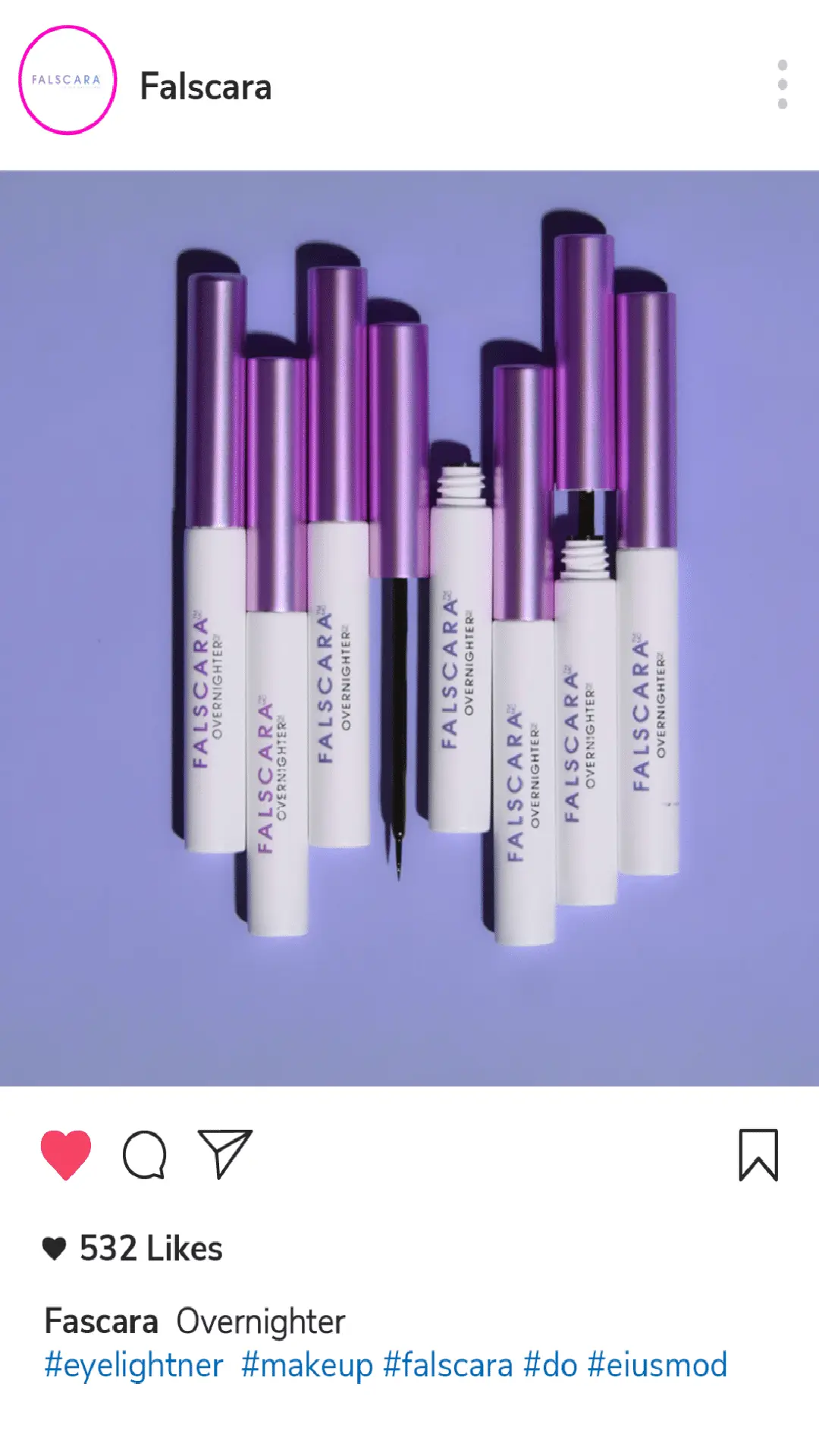
In today's digital age, video marketing has become an essential tool for beauty and wellness brands. The ability to convey messages visually and emotionally has transformed how these brands connect with their audiences, build trust, and drive sales. Video marketing's dynamic and engaging nature offers unparalleled opportunities for showcasing products, demonstrating their benefits, and creating a lasting impression on consumers.
This article explores the rise of video marketing in the beauty and wellness industry, the various types of video content that can be utilized, and the strategies to create and optimize these videos for maximum impact.
## The Rise of Video Marketing in Beauty and Wellness
The use of video marketing in the beauty and wellness industry has seen exponential growth over the past decade. Historically, marketing in this sector relied heavily on print media, television advertisements, and in-store promotions.
However, the advent of social media platforms like YouTube, Instagram, and TikTok has revolutionized how beauty and wellness brands reach and engage with their audiences. These platforms have provided brands with a direct and interactive way to showcase their products, share tutorials, and connect with consumers on a more personal level.
This shift towards [creative marketing](https://c-istudios.com/creative-marketing-services/) through video content has significantly changed consumer behavior. Consumers are now more likely to trust and purchase from brands that offer educational and visually appealing content. Video marketing allows brands to demonstrate product effectiveness in real time, showcase before-and-after results, and provide in-depth tutorials that help consumers make informed purchasing decisions.
Moreover, the interactive nature of video content encourages higher levels of engagement. Viewers are more likely to comment, share, and like videos compared to static images or text-based posts. This increased engagement not only boosts the brand's visibility but also creates a sense of community among consumers.
## Types of Video Content for Beauty and Wellness Brands
Beauty and wellness brands can leverage a variety of video content types to connect with their audiences and achieve their marketing goals. Some of the most popular and effective types include explainer videos, tutorials, product demos, customer testimonials, and influencer collaborations.
Explainer videos provide detailed information about a product or service, highlighting its features, benefits, and usage. These videos are particularly useful for introducing new products or explaining complex concepts in an easy-to-understand format. By using [content creation](https://c-istudios.com/content-creation-services/) techniques, brands can craft compelling explainer videos that captivate viewers and drive interest in their offerings.
Tutorials are another powerful video format for beauty and wellness brands. These videos offer step-by-step instructions on how to use a product or achieve a particular look or result. Tutorials not only educate consumers but also demonstrate the practical application and effectiveness of a product. This hands-on approach helps build consumer confidence and encourages trial and purchase.
Product demos showcase a product in action, highlighting its unique features and benefits. These videos provide a closer look at the product, allowing consumers to see its performance and results. Demos are especially effective for products that require visual proof of their efficacy, such as skin care treatments, makeup, or fitness equipment.
Customer testimonials add an element of authenticity and trust to a brand's video marketing strategy. Hearing real customers share their positive experiences and results can be highly persuasive for potential buyers. Testimonials humanize the brand and create a relatable connection with the audience, making them more likely to trust and invest in the products.
Influencer collaborations involve partnering with social media influencers who have a strong following in the beauty and wellness space. Influencers can create and share content that features the brand's products, providing an endorsement that resonates with their audience. This type of collaboration leverages the influencer's credibility and reach, driving awareness and sales for the brand.
## Creating Engaging Video Content
To maximize the impact of video marketing, beauty and wellness brands must focus on creating high-quality, engaging content that resonates with their target audience. One of the key elements of engaging video content is storytelling. By crafting a compelling narrative that connects with viewers on an emotional level, brands can capture attention and drive deeper engagement.
[Professional photography](https://c-istudios.com/professional-photography-services/) and videography play a crucial role in producing visually appealing videos. High-quality visuals are essential for showcasing the beauty and functionality of products, creating an aesthetic that attracts and retains viewers. Investing in professional equipment and skilled videographers ensures that the videos are polished and impactful.
Another important aspect of engaging video content is authenticity. Consumers are increasingly drawn to brands that appear genuine and transparent. Featuring real people, unscripted moments, and behind-the-scenes footage can create a sense of authenticity that resonates with viewers. This approach helps build trust and fosters a stronger connection between the brand and its audience.
Incorporating interactive elements into videos can enhance engagement. Features such as clickable links, polls, and Q&A sessions encourage viewers to actively participate in the content, making the experience more immersive and memorable. These interactive components can also provide valuable insights into consumer preferences and behaviors, allowing brands to tailor their marketing strategies accordingly.
To maintain viewer interest, it is essential to keep videos concise and focused. Attention spans are typically short, especially on social media platforms. By delivering key messages quickly and clearly, brands can ensure that their content is effective and impactful. Including a clear call-to-action at the end of each video guides viewers on the next steps, whether it's visiting the website, making a purchase, or sharing the video with others.
## Leveraging Social Media for Video Marketing
Social media platforms are pivotal for distributing video content and engaging with audiences in the beauty and wellness industry. Each platform offers unique features and advantages that brands can leverage to maximize their reach and impact.
Instagram, with its highly visual nature, is ideal for sharing short-form video content such as tutorials, product demos, and behind-the-scenes footage. Instagram Stories and IGTV provide additional avenues for more extended content, allowing brands to share in-depth tutorials, interviews, and customer testimonials. Utilizing [social media marketing](https://c-istudios.com/social-media-marketing-services/) can help brands optimize their Instagram presence and ensure that their content reaches the right audience.
YouTube's search functionality and recommendations algorithm can significantly boost a brand's visibility and attract a wider audience. By optimizing video titles, descriptions, and tags for SEO, brands can enhance their discoverability and drive more traffic to their YouTube channel and website.
TikTok has emerged as a major player in the social media landscape, particularly among younger audiences. The platform's short, engaging videos are perfect for showcasing beauty and wellness products in a fun and creative way. Brands can leverage TikTok trends, challenges, and hashtags to increase their reach and engagement. Collaborating with popular TikTok influencers can further amplify the brand's presence and attract new followers.
Facebook, with its vast user base and robust advertising platform, offers numerous opportunities for video marketing. Brands can use Facebook Live to host real-time product demos, Q&A sessions, and events, fostering direct interaction with their audience.
## Optimizing Videos for Search Engines
To maximize the reach and effectiveness of video content, beauty and wellness brands must focus on SEO-friendly practices. Optimizing videos for search engines involves several key techniques that can improve visibility and drive more organic traffic.
First, [SEO copywriting](https://c-istudios.com/seo-copywriting-services/) is essential for creating compelling video titles and descriptions. The title should be clear, and concise, and include relevant keywords that potential viewers might search for. Similarly, the description should provide a detailed overview of the video content, incorporating keywords naturally and providing additional context and information.
Using tags and categories effectively can also enhance video SEO. Tags help search engines understand the content and context of the video, making it easier to index and rank. Including a mix of broad and specific tags can increase the chances of the video appearing in relevant search results. Categorizing the video appropriately ensures that it reaches the right audience and aligns with related content.
Transcribing videos and including captions can further boost SEO and accessibility. Transcripts provide search engines with text-based content to crawl, improving the video's searchability. Captions enhance the viewing experience for hearing-impaired audiences and viewers who prefer watching videos without sound. Additionally, captions can increase engagement by making the content more accessible to a broader audience.
Embedding videos on the brand's website and blog can also drive traffic and improve SEO. By creating complementary written content that includes the video, brands can provide a richer user experience and keep visitors engaged for longer periods. Internal linking to related videos and content can further enhance site navigation and encourage viewers to explore more of the brand's offerings.
## Case Studies of Successful Video Marketing Campaigns
Analyzing successful video marketing campaigns can provide valuable insights and inspiration for beauty and wellness brands. Several well-known brands have excelled in their video marketing efforts, demonstrating the power of creative and strategic content.
For example, Glossier, a beauty brand known for its minimalist and inclusive approach, has effectively used video marketing to build a strong and loyal community. Glossier's videos often feature real customers and employees sharing their skincare routines and makeup tips, creating an authentic and relatable connection with viewers.
Another successful case is Fenty Beauty, founded by Rihanna. The brand's video marketing strategy focuses on diversity and inclusivity, showcasing a wide range of skin tones and product applications. Fenty Beauty's tutorials and product demos highlight the versatility and effectiveness of its products, attracting a diverse and enthusiastic customer base. This approach exemplifies effective [media marketing consultation](https://c-istudios.com/media-marketing-consultation-services/), leveraging inclusive content to reach and resonate with a broad audience.
In the wellness sector, Peloton has leveraged video marketing to create a sense of community and motivation among its users. The brand's workout videos feature charismatic instructors and dynamic classes, making viewers feel part of a supportive fitness community. Peloton's live and on-demand videos cater to different fitness levels and preferences, providing a personalized and engaging experience. This approach has helped Peloton build a dedicated following and achieve significant growth.
These case studies highlight the importance of understanding the target audience, crafting authentic and relatable content, and leveraging high-quality visuals and storytelling. By analyzing successful campaigns, brands can identify best practices and apply similar strategies to their own video marketing efforts.
## Using Influencers and Brand Ambassadors
Collaborating with influencers and brand ambassadors can significantly amplify the impact of video marketing for beauty and wellness brands. Influencers, with their large and engaged followings, can provide authentic endorsements and reach a broader audience.
When selecting influencers, brands should consider factors such as alignment with brand values, audience demographics, and engagement levels. Influencers who genuinely resonate with the brand's mission and products are more likely to create authentic and persuasive content. Tools and platforms that analyze influencer metrics and performance can help brands identify the right partners.
[Artist management and media creation](https://c-istudios.com/artist-management-and-media-creation/) play a crucial role in fostering successful collaborations. Clear communication and mutual understanding of goals and expectations are essential for effective partnerships. Brands should provide influencers with creative freedom while ensuring that the content aligns with the brand's messaging and guidelines.
Influencer collaborations can take various forms, including product reviews, tutorials, unboxing videos, and sponsored content. Each type of content offers unique benefits and can be tailored to the brand's objectives. For example, product reviews and tutorials provide in-depth insights and demonstrate product efficacy, while unboxing videos generate excitement and anticipation.
Engaging brand ambassadors, who are long-term advocates of the brand, can also enhance video marketing efforts. Ambassadors can create consistent and ongoing content that reinforces brand values and builds trust with the audience. Their deep connection with the brand allows for more authentic and impactful storytelling, further strengthening the brand's presence and reputation.
## Measuring the Success of Video Marketing Campaigns
To evaluate the effectiveness of video marketing campaigns, beauty and wellness brands must track and analyze key performance metrics. These metrics provide insights into the impact of the videos and help refine strategies for future campaigns.
Views and watch time are fundamental metrics that indicate the reach and engagement of the videos. High view counts and longer watch times suggest that the content is resonating with the audience. However, these metrics should be considered alongside other engagement indicators to get a comprehensive understanding of performance.
Engagement metrics, such as likes, comments, shares, and click-through rates, provide valuable insights into how viewers interact with the content. High levels of engagement indicate that the videos are compelling and encourage active participation from the audience. Monitoring these metrics helps brands identify which types of content drive the most engagement and tailor their strategies accordingly.
Conversion rates measure the effectiveness of the videos in driving desired actions, such as website visits, sign-ups, or purchases. Tracking conversions helps brands understand the direct impact of their video marketing efforts on their business goals. By analyzing conversion data, brands can identify areas for improvement and optimize their videos for better results.
[Web development](https://c-istudios.com/web-development-services/) tools and analytics platforms can streamline the tracking and analysis process. Platforms like Google Analytics, YouTube Analytics, and social media insights provide detailed data on video performance and audience behavior. By leveraging these tools, brands can gain a deeper understanding of their audience and make data-driven decisions to enhance their video marketing strategies.
## Future Trends in Video Marketing for Beauty and Wellness
As the digital landscape continues to evolve, several emerging trends and technologies are shaping the future of video marketing in the beauty and wellness industry. Staying ahead of these trends can help brands maintain a competitive edge and create innovative and engaging content.
One significant trend is the increasing use of interactive and shoppable videos. These videos allow viewers to engage with the content directly, click on products, and make purchases without leaving the video. This seamless integration of content and commerce enhances the shopping experience and drives higher conversion rates. Brands can leverage shoppable videos to showcase product features, provide real-time demonstrations, and offer exclusive deals.
Another emerging trend is the use of live streaming for real-time engagement. Platforms like Instagram Live, Facebook Live, and YouTube Live enable brands to connect with their audience in an authentic and immediate way. Live streaming can be used for product launches, Q&A sessions, behind-the-scenes tours, and virtual events.
[VFX compositing and animation](https://c-istudios.com/vfx-compositing-and-animation-services/) are also gaining prominence in video marketing. These technologies allow brands to create visually stunning and immersive content that captures viewers' attention. Animation can be used to explain complex concepts, highlight product features, and create memorable visual effects. By incorporating VFX and animation, brands can elevate their video content and stand out in a crowded market.
The rise of augmented reality (AR) and virtual reality (VR) is transforming the way brands engage with their audience. AR and VR technologies offer immersive experiences that allow viewers to interact with products in a virtual environment. For example, AR makeup try-ons enable consumers to visualize how products will look on their skin, enhancing the shopping experience. VR can be used for virtual store tours, product demonstrations, and immersive brand experiences.
Personalization is another key trend shaping the future of video marketing. Brands are increasingly using data and AI to create personalized video content tailored to individual preferences and behaviors. Personalized videos enhance the relevance and impact of the content, driving higher engagement and conversions.
## Work with C&I Studios
If you are planning a project like this, our team can take it from concept to final delivery. Explore our [video production services](https://c-istudios.com/video-production-services/), browse [our work](https://c-istudios.com/our-work/) to see how we tell brand stories, and [get in touch](https://c-istudios.com/contact/) when you are ready to start.
Originally published June 12, 2024
---
*This content is from [C&I Studios](https://c-istudios.com), a full-service production company.*
---
# The Role of Content Curation: Finding and Sharing Relevant Content for Your Audience
> Published: June 10, 2024
> Categories: Commercial & Brand
> Source: https://c-istudios.com/the-role-of-content-curation-finding-and-sharing-relevant-content-for-your-audience/
---
.cib{--paper:#1b1d1f;--ink:#fff;--body:#d5d7d9;--muted:#8b9096;--line:rgba(255,255,255,.12);--thumb:#2b2e31;--card:#212426;--accent:#c02b0a;--blue:#5B8FA8;--serif:'Playfair Display',Georgia,serif;--sans:'Poppins',-apple-system,sans-serif;--measure:900px;background:var(--paper);color:var(--body);font-family:var(--sans);line-height:1.6;position:relative;left:50%;transform:translateX(-50%);width:90vw;max-width:1920px}
.cib *{box-sizing:border-box}
.cib .kicker{max-width:var(--measure);margin:58px auto 0;padding:0 22px;font-size:12.5px;font-weight:700;letter-spacing:2.5px;text-transform:uppercase;color:var(--blue)}
.cib h1.cibh1{text-wrap:balance;font-family:var(--serif);font-weight:500;font-size:clamp(46px,6vw,72px);line-height:1.08;color:var(--ink);max-width:var(--measure);margin:18px auto 0;padding:0 22px;letter-spacing:-.5px}
.cib .metarow{max-width:var(--measure);margin:20px auto 0;padding:0 22px;color:var(--muted);font-size:14px}
.cib .hero{position:relative;width:100%;height:0;padding-bottom:56.25%;overflow:hidden;margin:48px auto 0;border-top:1px solid var(--line);border-bottom:1px solid var(--line)}
.cib .hero .ph{width:100%;aspect-ratio:16/9;background:var(--thumb);border-top:1px solid var(--line);border-bottom:1px solid var(--line);display:flex;align-items:center;justify-content:center;color:#7d8288;font-size:13px;text-align:center;padding:0 20px}
.cib .body{max-width:var(--measure);margin:12px auto 0;padding:52px 22px 6px}
.cib .body.lead p:first-child{font-size:23px;line-height:1.62;color:var(--ink)}
.cib .body p{font-size:18.5px;line-height:1.85;margin:0 0 30px;color:var(--body)}
.cib .body h2{text-wrap:balance;font-family:var(--serif);font-weight:500;font-size:clamp(32px,4vw,48px);line-height:1.22;color:var(--ink);margin:70px 0 20px;letter-spacing:-.3px}
.cib .body h3{text-wrap:balance;font-family:var(--sans);font-weight:600;font-size:22px;color:var(--ink);margin:38px 0 8px}
.cib .body a{color:var(--ink);text-decoration:underline;text-decoration-color:rgba(255,255,255,.4);text-underline-offset:3px}
.cib .body a:hover{text-decoration-color:var(--ink)}
.cib .ctable{width:100%;border-collapse:collapse;margin:16px 0 30px;font-size:16px}
.cib .ctable th{background:#000;color:#fff;text-align:left;padding:10px 12px;font-family:var(--sans)}
.cib .ctable td{padding:10px 12px;border-bottom:1px solid var(--line);color:var(--body)}
.cib .inimg{position:relative;width:100%;height:0;padding-bottom:56.25%;overflow:hidden;margin:72px auto;border-top:1px solid var(--line);border-bottom:1px solid var(--line)}
.cib .inimg .ph{width:100%;aspect-ratio:16/9;background:var(--thumb);border-top:1px solid var(--line);border-bottom:1px solid var(--line);display:flex;align-items:center;justify-content:center;color:#7d8288;font-size:13px}
.cib .origpub{max-width:var(--measure);margin:60px auto 0;padding:26px 22px 0;border-top:1px solid var(--line);color:var(--muted);font-size:13.5px}
.cib .related{max-width:1200px;margin:64px auto 0;padding:34px 22px 76px}
.cib .related h3{font-family:var(--sans);font-size:12.5px;letter-spacing:2px;text-transform:uppercase;color:var(--ink);margin:0 0 24px}
.cib .grid{display:grid;grid-template-columns:repeat(3,1fr);gap:28px}
.cib .rc{background:var(--card);border:1px solid var(--line);display:block;text-decoration:none;color:inherit;transition:border-color .15s}
.cib a.rc:hover{border-color:rgba(255,255,255,.5)}
.cib .rc .thumb{position:relative;width:100%;height:0;padding-bottom:56.25%;background:var(--thumb);overflow:hidden}
.cib .rc .thumb img{position:absolute!important;top:0!important;left:0!important;width:100%!important;height:100%!important;object-fit:cover!important;margin:0!important}
.cib .rc .cc{padding:14px 15px 17px}
.cib .rc .rt{font-family:var(--serif);font-weight:500;font-size:16px;line-height:1.3;color:var(--ink);margin:0 0 6px}
.cib .rc .rm{font-size:11px;letter-spacing:1px;text-transform:uppercase;color:var(--muted)}
.cib img{margin:0!important;padding:0!important;display:block!important;vertical-align:top;max-width:100%}
.cib .hero img,.cib .inimg img{position:absolute!important;top:0!important;left:0!important;width:100%!important;height:100%!important;object-fit:cover!important;margin:0!important;padding:0!important;border:0!important;display:block!important;aspect-ratio:auto!important}
.cib .hero+.body{padding-top:36px}
@media(max-width:760px){.cib .grid{grid-template-columns:1fr}.cib .body h2{margin:52px 0 16px}.cib .body p{font-size:17.5px}.cib .inimg,.cib .hero{margin-top:44px}}
.cib .vembed{max-width:var(--measure);margin:44px auto;padding:0 22px}.cib .vembed .vwrap{position:relative;width:100%;height:0;padding-bottom:56.25%}.cib .vembed .vwrap iframe{position:absolute;top:0;left:0;width:100%;height:100%;border:0}
Commercial & Brand
# The Role of Content Curation. Finding and Sharing Relevant Content for Your Audience
11 min read
In the vast landscape of digital marketing, content creation, and curation play pivotal roles in engaging audiences and building brand authority. While content creation involves producing original content, content curation focuses on discovering, organizing, and sharing existing content that resonates with your audience. This practice not only saves time but also positions your brand as a valuable resource for relevant information.
This article delves into the role of content curation, its benefits, tools, strategies, and its integration into a comprehensive marketing strategy.
## Understanding Content Curation
Content curation is the process of gathering, filtering, and sharing relevant content from various sources. Unlike content creation, which requires generating new material, content curation leverages existing content to provide value to your audience. This approach involves selecting high-quality content that aligns with your brand’s message and audience interests, thereby enhancing your brand’s credibility and reach.
One of the primary benefits of content curation is that it allows brands to maintain a consistent flow of content without the constant pressure of creating new material. This consistency is crucial for keeping audiences engaged and fostering a loyal following.
Additionally, by sharing diverse perspectives and insights, brands can offer a more comprehensive view of industry trends and developments, further establishing themselves as thought leaders.
From a [media marketing consultation](https://c-istudios.com/media-marketing-consultation-services/) perspective, content curation helps in building relationships with other content creators and influencers. By sharing their work, you acknowledge their expertise and potentially open doors for future collaborations. This reciprocal relationship can significantly enhance your brand’s visibility and credibility within the industry.
## The Importance of Content Curation for Your Audience
Curated content adds immense value to your audience by providing them with a curated selection of high-quality, relevant information. This not only saves them time but also enhances their overall experience with your brand. When done correctly, content curation can build trust and authority, positioning your brand as a go-to source for valuable insights and updates.
For instance, regularly sharing curated content through social media marketing services can help you stay top-of-mind with your audience. By consistently delivering content that addresses their needs and interests, you can foster deeper engagement and loyalty. Furthermore, curated content can help fill the gaps in your content calendar, ensuring that your social media channels remain active and vibrant.
[Content curation](https://c-istudios.com/content-creation-services/) also allows you to tap into trending topics and industry news, keeping your audience informed and engaged. By sharing timely and relevant content, you demonstrate that your brand is up-to-date with the latest developments, further reinforcing your authority in the field. This practice not only keeps your audience informed but also encourages them to look to your brand for ongoing updates and insights.
## Tools and Platforms for Content Curation
Effective content curation requires the right tools and platforms to discover, organize, and share content seamlessly. Numerous content curation tools are available, each offering unique features to suit different needs. Popular tools include Feedly, Pocket, and Scoop. it, which helps you aggregate content from various sources, categorize it, and share it with your audience.
Feedly is a powerful tool for aggregating content from blogs, news sites, and social media platforms. It allows you to create custom feeds based on your interests and industry, making it easier to discover relevant content. Pocket, on the other hand, lets you save articles, videos, and other content for later reading. This tool is particularly useful for content curators who want to build a repository of high-quality content to share over time.
Scoop.it is another excellent tool that combines content discovery and curation with publishing capabilities. It enables you to find and curate content, add your insights, and share it across your social media channels and blog. This comprehensive approach ensures that your curated content is not only relevant but also aligns with your brand’s voice and messaging.
From a [web development](https://c-istudios.com/web-development-services/) perspective, integrating these tools into y[our work](https://c-istudios.com/our-work/)flow can streamline the content curation process, making it more efficient and effective. By leveraging these platforms, you can stay organized and ensure that the content you share is always timely and relevant.
## Strategies for Effective Content Curation
Effective content curation involves more than just sharing links; it requires a strategic approach to ensure that the content aligns with your brand’s goals and resonates with your audience. One of the best practices for content curation is to focus on quality over quantity.
Curate content from reputable sources that provide valuable insights and information. This approach not only enhances your brand’s credibility but also ensures that your audience receives high-quality content.
Organizing and presenting curated content in a cohesive and engaging manner is also crucial. Create a consistent format for your curated content, whether it’s a weekly newsletter, a blog post, or a social media update. This consistency helps your audience know what to expect and makes it easier for them to engage with your content.
Incorporating your own insights and commentary into curated content adds value and differentiates your brand. Rather than simply sharing a link, provide your perspective on why the content is relevant and how it relates to your audience. This approach not only adds a personal touch but also positions your brand as an authority in your field.
[Creative marketing](https://c-istudios.com/creative-marketing-services/) strategies can further enhance your content curation efforts. For instance, using visuals, such as images and infographics, can make curated content more engaging and shareable. Additionally, leveraging multimedia content, such as videos and podcasts, can diversify your content mix and appeal to different segments of your audience.
## Integrating Content Curation into Your Marketing Strategy
Content curation should be an integral part of your overall marketing strategy. By aligning curated content with your brand’s goals and messaging, you can create a cohesive and comprehensive content plan. Start by identifying the key themes and topics that resonate with your audience and align with your brand’s mission. Use these themes as a guide for curating content that adds value and supports your marketing objectives.
Examples of successful content curation strategies include creating themed content hubs, where you aggregate and organize content around specific topics. This approach not only provides a valuable resource for your audience but also helps establish your brand as a thought leader in those areas.
Another effective strategy is to curate content as part of a broader content marketing campaign. For instance, if you’re launching a new product, curating content related to the product’s industry, use cases, and benefits can enhance your campaign and provide additional value to your audience.
From a [branding and graphic design](https://c-istudios.com/branding-and-graphic-design-services/) perspective, ensure that the curated content aligns with your brand’s visual identity and tone. Consistency in design and messaging reinforces your brand’s image and makes your content more recognizable and memorable.
## Leveraging Content Curation for SEO
Curated content can also play a significant role in your SEO efforts. By sharing high-quality content from reputable sources, you can improve your site’s authority and relevance in the eyes of search engines. Additionally, curated content can drive traffic to your site, increase engagement, and reduce bounce rates, all of which are positive signals for SEO.
To optimize curated content for search engines, focus on creating comprehensive and valuable content that addresses your audience’s needs. This includes adding your own commentary and insights, using relevant keywords, and ensuring that the content is well-organized and easy to navigate. [SEO copywriting](https://c-istudios.com/seo-copywriting-services/) techniques, such as using descriptive titles, meta descriptions, and internal links, can further enhance the SEO value of your curated content.
Another effective strategy is to create curated content roundups or lists, which aggregate the best content on a specific topic. These roundups can attract backlinks from other sites, further boosting your SEO efforts. Additionally, promoting curated content through your social media channels and email newsletters can drive traffic and engagement, amplifying the impact of your SEO efforts.
## The Role of Content Curation in Social Media
Social media is a powerful platform for sharing curated content and engaging with your audience. By regularly sharing curated content on your social media channels, you can keep your followers informed, entertained, and engaged. This approach not only enhances your social media presence but also helps build a loyal community around your brand.
To effectively use curated content on social media, focus on sharing content that is timely, relevant, and aligned with your audience’s interests. Use a mix of content formats, such as articles, videos, infographics, and podcasts, to keep your social media feed diverse and engaging. Additionally, use social media analytics to track the performance of your curated content and adjust your strategy based on what resonates most with your audience.
From a [video audio live streaming](https://c-istudios.com/video-audio-live-streaming/) perspective, incorporating live streams and video content into your curated content mix can further enhance engagement and reach. Live streams provide an opportunity to interact with your audience in real time, answer their questions, and provide additional insights into the curated content. This interactive approach can foster a deeper connection with your audience and drive higher engagement.
## Measuring the Success of Your Content Curation Efforts
To ensure that your content curation efforts are effective, it’s essential to measure their impact and make data-driven adjustments. Key metrics to track include engagement rates, such as likes, shares, comments, and click-through rates. These metrics provide insights into how your audience is interacting with the curated content and whether it’s resonating with them.
Additionally, track traffic and conversion metrics to understand how curated content is driving traffic to your site and contributing to your overall marketing goals. Use tools like Google Analytics and social media analytics platforms to gather data and analyze the performance of your curated content.
From a [web maintenance](https://c-istudios.com/web-maintenance/) perspective, regularly review and update your curated content to ensure it remains relevant and valuable to your audience. This includes checking for broken links, outdated information, and new developments in the topics you’re curating. By keeping your curated content fresh and up-to-date, you can maintain its effectiveness and continue to provide value to your audience.
## Challenges and Solutions in Content Curation
Content curation is not without its challenges. One common challenge is finding high-quality content that aligns with your brand’s goals and audience interests. To overcome this, use a combination of automated tools and manual research to discover relevant content from reputable sources. Additionally, establish a set of criteria for evaluating content quality, such as the credibility of the source, the relevance of the content, and its engagement potential.
Another challenge is ensuring that curated content stands out and adds value. To address this, focus on adding your own insights and commentary to the curated content. This approach not only differentiates your brand but also provides additional value to your audience.
From a [video production gear list](https://c-istudios.com/video-production-gear-list/) perspective, ensure that your curated content includes a mix of multimedia formats, such as videos, images, and infographics. This diversity keeps your content engaging and appealing to different segments of your audience. Additionally, leveraging tools like content calendars and scheduling platforms can help you stay organized and consistent in your content curation efforts.
## Case Studies of Successful Content Curation
Examining case studies of successful content curation can provide valuable insights and inspiration for your own efforts. One example is a tech company that created a weekly newsletter featuring curated content on industry trends, product updates and thought leadership articles. This newsletter not only kept their audience informed but also positioned the company as a valuable resource for industry insights.
Another example is a lifestyle brand that used Instagram to share curated content, including user-generated photos, influencer collaborations, and relevant articles. By leveraging [documentary film production](https://c-istudios.com/documentary-film-production/) techniques, they created visually appealing and engaging content that resonated with their audience and drove higher engagement on social media.
These case studies highlight the importance of understanding your audience, aligning curated content with your brand’s goals, and using a mix of content formats to keep your audience engaged. By learning from the successes and strategies of other brands, you can refine your own content curation approach and achieve better results.
## Future Trends in Content Curation
As content curation continues to evolve, several emerging trends and technologies are shaping its future. One such trend is the use of artificial intelligence (AI) and machine learning to automate content discovery and curation. AI-powered tools can analyze vast amounts of data to identify relevant content, predict audience preferences, and personalize content recommendations.
Another trend is the increasing use of interactive and immersive content formats, such as virtual reality (VR) and augmented reality (AR). These technologies provide new opportunities for engaging and captivating audiences through curated content. For example, using [VFX compositing and animation](https://c-istudios.com/vfx-compositing-and-animation-services/), brands can create interactive experiences that allow users to explore curated content in a more immersive and engaging way.
The rise of voice search and smart speakers is influencing how content is discovered and consumed. Brands need to optimize their curated content for voice search by using natural language and conversational keywords. This approach ensures that curated content remains accessible and relevant in the evolving landscape of digital marketing.
## Work with C&I Studios
If you are planning a project like this, our team can take it from concept to final delivery. Explore our [video production services](https://c-istudios.com/video-production-services/), browse [our work](https://c-istudios.com/our-work/) to see how we tell brand stories, and [get in touch](https://c-istudios.com/contact/) when you are ready to start.
Originally published June 10, 2024
---
*This content is from [C&I Studios](https://c-istudios.com), a full-service production company.*
---
# Maximizing Open Rates: Tips for Crafting Compelling Subject Lines
> Published: June 9, 2024
> Categories: Commercial & Brand
> Source: https://c-istudios.com/maximizing-open-rates-tips-for-crafting-compelling-subject-lines/
---
.cib{--paper:#1b1d1f;--ink:#fff;--body:#d5d7d9;--muted:#8b9096;--line:rgba(255,255,255,.12);--thumb:#2b2e31;--card:#212426;--accent:#c02b0a;--blue:#5B8FA8;--serif:'Playfair Display',Georgia,serif;--sans:'Poppins',-apple-system,sans-serif;--measure:900px;background:var(--paper);color:var(--body);font-family:var(--sans);line-height:1.6;position:relative;left:50%;transform:translateX(-50%);width:90vw;max-width:1920px}
.cib *{box-sizing:border-box}
.cib .kicker{max-width:var(--measure);margin:58px auto 0;padding:0 22px;font-size:12.5px;font-weight:700;letter-spacing:2.5px;text-transform:uppercase;color:var(--blue)}
.cib h1.cibh1{text-wrap:balance;font-family:var(--serif);font-weight:500;font-size:clamp(46px,6vw,72px);line-height:1.08;color:var(--ink);max-width:var(--measure);margin:18px auto 0;padding:0 22px;letter-spacing:-.5px}
.cib .metarow{max-width:var(--measure);margin:20px auto 0;padding:0 22px;color:var(--muted);font-size:14px}
.cib .hero{position:relative;width:100%;height:0;padding-bottom:56.25%;overflow:hidden;margin:48px auto 0;border-top:1px solid var(--line);border-bottom:1px solid var(--line)}
.cib .hero .ph{width:100%;aspect-ratio:16/9;background:var(--thumb);border-top:1px solid var(--line);border-bottom:1px solid var(--line);display:flex;align-items:center;justify-content:center;color:#7d8288;font-size:13px;text-align:center;padding:0 20px}
.cib .body{max-width:var(--measure);margin:12px auto 0;padding:52px 22px 6px}
.cib .body.lead p:first-child{font-size:23px;line-height:1.62;color:var(--ink)}
.cib .body p{font-size:18.5px;line-height:1.85;margin:0 0 30px;color:var(--body)}
.cib .body h2{text-wrap:balance;font-family:var(--serif);font-weight:500;font-size:clamp(32px,4vw,48px);line-height:1.22;color:var(--ink);margin:70px 0 20px;letter-spacing:-.3px}
.cib .body h3{text-wrap:balance;font-family:var(--sans);font-weight:600;font-size:22px;color:var(--ink);margin:38px 0 8px}
.cib .body a{color:var(--ink);text-decoration:underline;text-decoration-color:rgba(255,255,255,.4);text-underline-offset:3px}
.cib .body a:hover{text-decoration-color:var(--ink)}
.cib .ctable{width:100%;border-collapse:collapse;margin:16px 0 30px;font-size:16px}
.cib .ctable th{background:#000;color:#fff;text-align:left;padding:10px 12px;font-family:var(--sans)}
.cib .ctable td{padding:10px 12px;border-bottom:1px solid var(--line);color:var(--body)}
.cib .inimg{position:relative;width:100%;height:0;padding-bottom:56.25%;overflow:hidden;margin:72px auto;border-top:1px solid var(--line);border-bottom:1px solid var(--line)}
.cib .inimg .ph{width:100%;aspect-ratio:16/9;background:var(--thumb);border-top:1px solid var(--line);border-bottom:1px solid var(--line);display:flex;align-items:center;justify-content:center;color:#7d8288;font-size:13px}
.cib .origpub{max-width:var(--measure);margin:60px auto 0;padding:26px 22px 0;border-top:1px solid var(--line);color:var(--muted);font-size:13.5px}
.cib .related{max-width:1200px;margin:64px auto 0;padding:34px 22px 76px}
.cib .related h3{font-family:var(--sans);font-size:12.5px;letter-spacing:2px;text-transform:uppercase;color:var(--ink);margin:0 0 24px}
.cib .grid{display:grid;grid-template-columns:repeat(3,1fr);gap:28px}
.cib .rc{background:var(--card);border:1px solid var(--line);display:block;text-decoration:none;color:inherit;transition:border-color .15s}
.cib a.rc:hover{border-color:rgba(255,255,255,.5)}
.cib .rc .thumb{position:relative;width:100%;height:0;padding-bottom:56.25%;background:var(--thumb);overflow:hidden}
.cib .rc .thumb img{position:absolute!important;top:0!important;left:0!important;width:100%!important;height:100%!important;object-fit:cover!important;margin:0!important}
.cib .rc .cc{padding:14px 15px 17px}
.cib .rc .rt{font-family:var(--serif);font-weight:500;font-size:16px;line-height:1.3;color:var(--ink);margin:0 0 6px}
.cib .rc .rm{font-size:11px;letter-spacing:1px;text-transform:uppercase;color:var(--muted)}
.cib img{margin:0!important;padding:0!important;display:block!important;vertical-align:top;max-width:100%}
.cib .hero img,.cib .inimg img{position:absolute!important;top:0!important;left:0!important;width:100%!important;height:100%!important;object-fit:cover!important;margin:0!important;padding:0!important;border:0!important;display:block!important;aspect-ratio:auto!important}
.cib .hero+.body{padding-top:36px}
@media(max-width:760px){.cib .grid{grid-template-columns:1fr}.cib .body h2{margin:52px 0 16px}.cib .body p{font-size:17.5px}.cib .inimg,.cib .hero{margin-top:44px}}
.cib .vembed{max-width:var(--measure);margin:44px auto;padding:0 22px}.cib .vembed .vwrap{position:relative;width:100%;height:0;padding-bottom:56.25%}.cib .vembed .vwrap iframe{position:absolute;top:0;left:0;width:100%;height:100%;border:0}
Commercial & Brand
# Maximizing Open Rates. Tips for Crafting Compelling Subject Lines
10 min read
## Public Sector
This article delves into the importance of subject lines, the characteristics of effective subject lines, the role of personalization, the use of A/B testing, and other strategies to maximize email open rates. By understanding and applying these tips, businesses can significantly enhance their email marketing efforts.
## Understanding the Importance of Subject Lines
Subject lines are the gateway to your email content. They are the first impression a recipient gets and play a pivotal role in whether the email gets opened. Compelling subject lines capture attention, spark curiosity, and encourage recipients to engage with the content. The psychology behind subject lines involves understanding human behavior and motivation. For instance, subject lines that evoke curiosity or urgency are more likely to be opened.
From an [SEO copywriting](https://c-istudios.com/seo-copywriting-services/) perspective, crafting effective subject lines involves using powerful words, keeping them concise, and ensuring they are relevant to the audience. Subject lines should convey the value or benefit of opening the email, making it clear why the recipient should care. Personalization also plays a significant role, as personalized subject lines tend to perform better than generic ones. This is because personalization makes the email feel more relevant and tailored to the recipient’s needs and interests.
Moreover, the timing and context of when an email is sent can influence the effectiveness of a subject line. Sending emails at optimal times, such as mid-morning on weekdays, can improve open rates. Additionally, understanding the context of current events or the recipient’s recent interactions with the brand can help tailor subject lines that resonate more effectively.
## Characteristics of Effective Subject Lines
Effective subject lines share several key characteristics: brevity, relevance, urgency, and personalization. Brevity is important because many people check their emails on mobile devices where screen space is limited. Keeping subject lines short and to the point ensures that the main message is conveyed even on small screens.
Relevance is crucial for capturing the recipient’s interest. Subject lines should be aligned with the recipient’s interests, needs, or previous interactions with the brand. This requires understanding the target audience and segmenting the email list accordingly. For example, a subject line for a tech-savvy audience might highlight new product features, while one for a fashion-focused audience might emphasize a seasonal sale.
Urgency can drive immediate action. Phrases like “limited time offer” or “only a few spots left” create a sense of urgency that can compel recipients to open the email right away. However, it’s important to use urgency authentically and sparingly to avoid desensitizing the audience.
Personalization involves using the recipient’s name, location, or past behavior to make the subject line more relevant. For instance, “John, check out these new features tailored for you” feels more personal and engaging than a generic subject line.
[Creative marketing](https://c-istudios.com/creative-marketing-services/) strategies can also enhance subject lines. This includes using humor, puns, or intriguing questions to pique curiosity. For example, a subject line like “Do you know what your website is missing?” can prompt recipients to open the email to find out the answer.
In addition to these elements, using power words such as “exclusive,” “proven,” or “guaranteed” can add a persuasive element to subject lines. Powerful words are emotionally charged and can significantly increase the appeal and effectiveness of subject lines. Testing different combinations of these elements can help identify the most effective approaches for different audiences and campaign goals.
## Personalization and Its Impact on Open Rates
Personalization is a powerful tool in email marketing. Personalized subject lines can significantly increase open rates by making the email feel more relevant and tailored to the recipient. Techniques for personalizing subject lines include using the recipient’s name, referencing their previous interactions with the brand, or offering personalized recommendations based on their behavior.
From a [branding and graphic design](https://c-istudios.com/branding-and-graphic-design-services/) perspective, personalization helps reinforce the brand’s relationship with the recipient. It shows that the brand values the recipient’s preferences and is attentive to their needs. This not only increases the likelihood of the email being opened but also enhances the overall customer experience.
The benefits of personalization extend beyond open rates. Personalized emails tend to have higher engagement rates, including click-through rates and conversion rates. This is because personalized content is more relevant and engaging, making recipients more likely to take the desired action.
Incorporating dynamic content that changes based on the recipient’s data, such as location-based offers or product recommendations based on past purchases, can further enhance personalization. Additionally, using behavioral triggers to send emails at the right moment, such as after a recent purchase or website visit, can increase the effectiveness of personalized subject lines.
## The Role of A/B Testing in Crafting Subject Lines
A/B testing, or split testing, is a method of comparing two versions of a subject line to determine which one performs better. This involves sending the two versions to different segments of your email list and analyzing the open rates to see which subject line is more effective.
A/B testing is a crucial part of [web development](https://c-istudios.com/web-development-services/) in email marketing because it provides data-driven insights into what works and what doesn’t. By testing different elements of subject lines, such as word choice, length, and use of personalization, marketers can optimize their email campaigns for better performance.
Setting up an A/B test involves defining the variables to test, creating the different versions, and determining the sample size. Once the test is run, it’s important to analyze the results to understand why one subject line performed better than the other. This information can then be used to refine future subject lines and improve overall email performance.
Regularly conducting A/B tests can help identify trends and preferences specific to your audience, allowing for continuous improvement of email marketing strategies. Additionally, testing other elements such as sender names, preview text, and send times in conjunction with subject lines can provide a comprehensive understanding of what drives engagement.
## Using Emojis and Special Characters Effectively
Emojis and special characters can add a visual element to subject lines, making them stand out in crowded inboxes. However, they should be used strategically to enhance the message rather than distract from it.
Research shows that subject lines with emojis can increase open rates, as they catch the eye and convey emotion. For example, a smiley face can convey friendliness, while a clock emoji can emphasize urgency. However, it’s important to ensure that the emojis are relevant to the content and audience.
Using special characters, such as asterisks or arrows, can also draw attention to specific parts of the subject line. For instance, “Exclusive Offer → Limited Time Only!” uses an arrow to direct attention to the urgency of the offer.
[Social media marketing](https://c-istudios.com/social-media-marketing-services/) can also benefit from the strategic use of emojis and special characters. They add a playful and engaging element that resonates well with social media-savvy audiences.
It’s important to test the use of emojis and special characters to ensure they display correctly across different email clients and devices. Misuse or overuse can lead to emails being marked as spam or appearing unprofessional. Moderation and relevance are key to effectively leveraging these elements in subject lines.
## Creating a Sense of Urgency and Exclusivity
Creating a sense of urgency and exclusivity in subject lines can compel recipients to open the email immediately. Urgency can be conveyed through time-sensitive phrases like “ends tonight” or “last chance.” Exclusivity can be highlighted by using phrases like “for our VIP members” or “exclusive invite.”
These tactics work because they tap into the fear of missing out (FOMO), a powerful psychological trigger. When recipients feel that they might miss out on something valuable, they are more likely to open the email.
However, it’s important to use urgency and exclusivity genuinely and not overdo it. Overuse can lead to skepticism and reduced effectiveness. Instead, use these tactics strategically for high-priority or special campaigns.
[Media marketing consultation](https://c-istudios.com/media-marketing-consultation-services/) often involves crafting messages that resonate with specific audiences. Using urgency and exclusivity effectively can enhance these messages and drive higher engagement.
Additionally, combining urgency and exclusivity with a clear call-to-action (CTA) can increase the effectiveness of the subject line. For example, “Join our VIP Club Today - Limited Spots Available!” not only creates urgency but also highlights the exclusivity and immediate action required.
## Avoiding Spam Triggers in Subject Lines
To ensure that your emails reach the inbox and not the spam folder, it’s crucial to avoid common spam triggers in subject lines. These triggers include excessive use of capital letters, exclamation marks, and certain words like “free” or “urgent.”
Instead, focus on creating clear and honest subject lines that accurately represent the content of the email. Using [web maintenance](https://c-istudios.com/web-maintenance/) best practices can help ensure that your emails are compliant with spam regulations and maintain good deliverability.
It’s also helpful to regularly review and update your email list to remove inactive or unengaged subscribers. This can improve your sender's reputation and reduce the likelihood of your emails being marked as spam.
Additionally, monitoring email performance metrics and feedback from recipients can help identify potential issues and areas for improvement. Implementing authentication protocols such as SPF, DKIM, and DMARC can further enhance email deliverability and reduce the risk of emails being flagged as spam.
## Leveraging Trends and Seasonal Themes
Incorporating current trends and seasonal themes into your subject lines can make them more relevant and engaging. For example, during the holiday season, using festive language or referencing popular trends can capture the recipient’s attention.
This strategy works well because it taps into what’s currently on people’s minds. It shows that your brand is up-to-date and responsive to the latest trends. For instance, a subject line like “Get Your Summer Essentials Now!” during the summer season can be highly effective.
[Video production](https://c-istudios.com/video-production-services/) can also be integrated into seasonal campaigns. Creating video content that aligns with current trends and promoting it through email can enhance engagement and open rates.
Furthermore, leveraging major events, holidays, or cultural moments can create timely and compelling subject lines. By aligning your email content with these themes, you can increase relevance and resonate more deeply with your audience. For example, “Spring Cleaning Sale - Refresh Your Home Today!” ties into the seasonal theme and promotes immediate action.
## Case Studies of High-Performing Subject Lines
Analyzing case studies of high-performing subject lines can provide valuable insights into what works and why. For instance, examining campaigns from well-known brands can reveal effective strategies and tactics that can be adapted to your own campaigns.
One example is a campaign by a major retailer that used the subject line “Exclusive Offer Just for You, !” This personalized approach resulted in significantly higher open rates and engagement.
Another example is a tech company that used urgency in its subject line: “Don’t Miss Out on Our Biggest Sale of the Year!” This created a sense of urgency that drove immediate action.
[Feature film mastering and delivery](https://c-istudios.com/feature-film-mastering-and-delivery/) often involve attention to detail and timing, similar to crafting compelling subject lines. By studying successful examples, businesses can learn how to fine-tune their own subject lines for maximum impact.
These case studies highlight the importance of understanding your audience, testing different strategies, and continuously optimizing your approach. By learning from the successes and failures of others, you can refine your own subject lines to achieve better results.
## Future Trends in Email Subject Lines
As email marketing evolves, new trends and innovations continue to shape how subject lines are crafted. One emerging trend is the use of artificial intelligence (AI) to personalize and optimize subject lines. AI can analyze large datasets to identify patterns and suggest subject lines that are more likely to perform well.
Another trend is the increasing use of interactive elements, such as polls or questions, in subject lines. This can boost engagement by prompting recipients to interact with the email even before opening it.
[VFX compositing and animation](https://c-istudios.com/vfx-compositing-and-animation-services/) are also making their way into email marketing, with animated subject lines or preview text becoming more popular. These dynamic elements can capture attention and make emails stand out in crowded inboxes.
Additionally, the use of predictive analytics to determine the best times to send emails and the most effective subject line elements can enhance open rates. By staying informed about these trends and incorporating innovative strategies, businesses can maintain a competitive edge in email marketing.
## Work with C&I Studios
If you are planning a project like this, our team can take it from concept to final delivery. Explore our [video production services](https://c-istudios.com/video-production-services/), browse [our work](https://c-istudios.com/our-work/) to see how we tell brand stories, and [get in touch](https://c-istudios.com/contact/) when you are ready to start.
Originally published June 9, 2024
---
*This content is from [C&I Studios](https://c-istudios.com), a full-service production company.*
---
# Creating a Memorable Logo: The Foundation of Brand Identity
> Published: June 8, 2024
> Categories: Commercial & Brand
> Source: https://c-istudios.com/creating-a-memorable-logo-the-foundation-of-brand-identity/
---
.cib{--paper:#1b1d1f;--ink:#fff;--body:#d5d7d9;--muted:#8b9096;--line:rgba(255,255,255,.12);--thumb:#2b2e31;--card:#212426;--accent:#c02b0a;--blue:#5B8FA8;--serif:'Playfair Display',Georgia,serif;--sans:'Poppins',-apple-system,sans-serif;--measure:900px;background:var(--paper);color:var(--body);font-family:var(--sans);line-height:1.6;position:relative;left:50%;transform:translateX(-50%);width:90vw;max-width:1920px}
.cib *{box-sizing:border-box}
.cib .kicker{max-width:var(--measure);margin:58px auto 0;padding:0 22px;font-size:12.5px;font-weight:700;letter-spacing:2.5px;text-transform:uppercase;color:var(--blue)}
.cib h1.cibh1{text-wrap:balance;font-family:var(--serif);font-weight:500;font-size:clamp(46px,6vw,72px);line-height:1.08;color:var(--ink);max-width:var(--measure);margin:18px auto 0;padding:0 22px;letter-spacing:-.5px}
.cib .metarow{max-width:var(--measure);margin:20px auto 0;padding:0 22px;color:var(--muted);font-size:14px}
.cib .hero{position:relative;width:100%;height:0;padding-bottom:56.25%;overflow:hidden;margin:48px auto 0;border-top:1px solid var(--line);border-bottom:1px solid var(--line)}
.cib .hero .ph{width:100%;aspect-ratio:16/9;background:var(--thumb);border-top:1px solid var(--line);border-bottom:1px solid var(--line);display:flex;align-items:center;justify-content:center;color:#7d8288;font-size:13px;text-align:center;padding:0 20px}
.cib .body{max-width:var(--measure);margin:12px auto 0;padding:52px 22px 6px}
.cib .body.lead p:first-child{font-size:23px;line-height:1.62;color:var(--ink)}
.cib .body p{font-size:18.5px;line-height:1.85;margin:0 0 30px;color:var(--body)}
.cib .body h2{text-wrap:balance;font-family:var(--serif);font-weight:500;font-size:clamp(32px,4vw,48px);line-height:1.22;color:var(--ink);margin:70px 0 20px;letter-spacing:-.3px}
.cib .body h3{text-wrap:balance;font-family:var(--sans);font-weight:600;font-size:22px;color:var(--ink);margin:38px 0 8px}
.cib .body a{color:var(--ink);text-decoration:underline;text-decoration-color:rgba(255,255,255,.4);text-underline-offset:3px}
.cib .body a:hover{text-decoration-color:var(--ink)}
.cib .ctable{width:100%;border-collapse:collapse;margin:16px 0 30px;font-size:16px}
.cib .ctable th{background:#000;color:#fff;text-align:left;padding:10px 12px;font-family:var(--sans)}
.cib .ctable td{padding:10px 12px;border-bottom:1px solid var(--line);color:var(--body)}
.cib .inimg{position:relative;width:100%;height:0;padding-bottom:56.25%;overflow:hidden;margin:72px auto;border-top:1px solid var(--line);border-bottom:1px solid var(--line)}
.cib .inimg .ph{width:100%;aspect-ratio:16/9;background:var(--thumb);border-top:1px solid var(--line);border-bottom:1px solid var(--line);display:flex;align-items:center;justify-content:center;color:#7d8288;font-size:13px}
.cib .origpub{max-width:var(--measure);margin:60px auto 0;padding:26px 22px 0;border-top:1px solid var(--line);color:var(--muted);font-size:13.5px}
.cib .related{max-width:1200px;margin:64px auto 0;padding:34px 22px 76px}
.cib .related h3{font-family:var(--sans);font-size:12.5px;letter-spacing:2px;text-transform:uppercase;color:var(--ink);margin:0 0 24px}
.cib .grid{display:grid;grid-template-columns:repeat(3,1fr);gap:28px}
.cib .rc{background:var(--card);border:1px solid var(--line);display:block;text-decoration:none;color:inherit;transition:border-color .15s}
.cib a.rc:hover{border-color:rgba(255,255,255,.5)}
.cib .rc .thumb{position:relative;width:100%;height:0;padding-bottom:56.25%;background:var(--thumb);overflow:hidden}
.cib .rc .thumb img{position:absolute!important;top:0!important;left:0!important;width:100%!important;height:100%!important;object-fit:cover!important;margin:0!important}
.cib .rc .cc{padding:14px 15px 17px}
.cib .rc .rt{font-family:var(--serif);font-weight:500;font-size:16px;line-height:1.3;color:var(--ink);margin:0 0 6px}
.cib .rc .rm{font-size:11px;letter-spacing:1px;text-transform:uppercase;color:var(--muted)}
.cib img{margin:0!important;padding:0!important;display:block!important;vertical-align:top;max-width:100%}
.cib .hero img,.cib .inimg img{position:absolute!important;top:0!important;left:0!important;width:100%!important;height:100%!important;object-fit:cover!important;margin:0!important;padding:0!important;border:0!important;display:block!important;aspect-ratio:auto!important}
.cib .hero+.body{padding-top:36px}
@media(max-width:760px){.cib .grid{grid-template-columns:1fr}.cib .body h2{margin:52px 0 16px}.cib .body p{font-size:17.5px}.cib .inimg,.cib .hero{margin-top:44px}}
.cib .vembed{max-width:var(--measure);margin:44px auto;padding:0 22px}.cib .vembed .vwrap{position:relative;width:100%;height:0;padding-bottom:56.25%}.cib .vembed .vwrap iframe{position:absolute;top:0;left:0;width:100%;height:100%;border:0}
Commercial & Brand
# Creating a Memorable Logo. The Foundation of Brand Identity
11 min read

A memorable logo is a vital element in establishing and maintaining a strong brand identity. It acts as the visual cornerstone of a brand, encapsulating its essence in a single graphic. A well-designed logo is not only a symbol but also a powerful tool that fosters brand recognition and trust.
This article explores the significance of a memorable logo, the elements that make a logo effective, the design process, and how to use logos across various media. We will also examine case studies of iconic logos, common mistakes to avoid, the impact of logos on marketing strategies, and future trends in logo design.
## The Role of a Logo in Brand Identity
A logo serves as the visual representation of a brand, embodying its values, mission, and personality. It is often the first point of contact between a company and its potential customers, making it a critical component of [branding and graphic design](https://c-istudios.com/branding-and-graphic-design-services/). An effective logo creates a lasting impression and helps build brand recognition. For example, when people see the golden arches of McDonald’s or the swoosh of Nike, they immediately associate these symbols with the respective brands.
Brand recognition is crucial in a crowded marketplace. A unique and memorable logo distinguishes a brand from its competitors and makes it easier for consumers to identify and recall. This recognition builds trust and loyalty, as consumers are more likely to choose brands they recognize and feel familiar with. Moreover, a consistent and well-designed logo can convey professionalism and reliability, further enhancing a brand's credibility.
A logo also plays a significant role in creating a cohesive brand identity. It appears on all marketing materials, including websites, social media profiles, business cards, and advertisements. By maintaining consistency in logo usage, brands can reinforce their identity and ensure a unified visual presence across all platforms. This consistency is a key aspect of creative marketing, as it helps build a strong and recognizable brand image.
## Elements of a Memorable Logo
To create a memorable logo, several key characteristics must be considered. An effective logo is typically simple, scalable, relevant, and unique. Simplicity is essential because a simple logo is easier to recognize and remember. Overly complex designs can be confusing and difficult to reproduce across different media.
Scalability ensures that a logo looks good at any size, whether it’s on a business card or a billboard. A scalable logo retains its clarity and impact regardless of its dimensions. This is particularly important in today’s digital age, where logos need to be versatile enough to appear on various devices and screen sizes.
Relevance means that the logo should align with the brand's identity and industry. It should convey the right message and evoke the desired emotions. For example, a tech company might use sleek, modern lines and a blue color scheme to convey innovation and reliability, while a children’s toy brand might use playful shapes and bright colors to evoke fun and creativity.
Uniqueness is crucial for standing out in a crowded market. A unique logo differentiates a brand from its competitors and helps prevent confusion. It should be distinctive enough to be instantly recognizable and memorable.
The psychology of colors, shapes, and fonts in logo design also plays a significant role. Colors evoke specific emotions and associations. For example, blue is often associated with trust and professionalism, red with energy and excitement, and green with growth and sustainability. Shapes can convey different messages as well. Circles and ovals suggest community and unity, squares and rectangles convey stability and strength, and triangles can imply dynamism and innovation.
Fonts, or typography, add another layer of meaning. Serif fonts are often seen as traditional and trustworthy, while sans-serif fonts are perceived as modern and clean. The choice of font can greatly influence the overall impression of a logo and should align with the brand’s personality and values. [Professional photography](https://c-istudios.com/professional-photography-services/) can further enhance this process by providing high-quality visual elements that complement and elevate the overall design
## The Logo Design Process
Creating a memorable logo involves a detailed and iterative process. It begins with research, which is a fundamental part of [content creation](https://c-istudios.com/content-creation-services/). Understanding the brand’s values, mission, target audience, and industry trends is essential. This information guides the design process and ensures that the logo accurately represents the brand.
Brainstorming follows the research phase. This involves generating a wide range of ideas and concepts. Sketching out these ideas helps visualize different possibilities and explore various design directions. This phase is about quantity over quality, allowing creativity to flow without constraints.
Once several promising concepts are identified, the design phase begins. Digital tools and software are used to create more refined versions of the sketches. During this phase, designers experiment with different shapes, colors, and fonts to find the most effective combination. It’s important to consider how the logo will look in different contexts and sizes, ensuring it is versatile and scalable.
Feedback and iteration are crucial parts of the design process. Sharing the logo concepts with stakeholders and gathering their input helps identify strengths and areas for improvement. This feedback loop continues until a final design is agreed upon. Iteration ensures that the logo evolves and improves through multiple rounds of refinement.
Once the final logo design is selected, it’s important to create a style guide. This document outlines how the logo should be used across various platforms and materials. It includes specifications for color codes, typography, spacing, and any variations of the logo, such as black and white or simplified versions. A style guide ensures consistency in logo usage, maintaining a cohesive brand identity.
## Using Logos in Various Media
An effective logo must be adaptable to various media, including digital, print, and merchandise. This versatility is a key consideration in the [video production gear list](https://c-istudios.com/video-production-gear-list/) as logos often need to be integrated into videos and other multimedia content.
In digital media, logos appear on websites, social media profiles, email signatures, and digital ads. It’s essential to ensure that the logo looks good on different screen sizes and resolutions. This may involve creating different versions of the logo, such as a simplified icon for use as a social media avatar or a responsive logo that adjusts to different screen sizes.
In print media, logos are used on business cards, letterheads, brochures, and advertisements. High-resolution versions of the logo are necessary to maintain clarity and quality in print. The logo should also be scalable to fit various print formats without losing its impact.
Merchandise, such as promotional items, apparel, and packaging, also requires adaptable logos. Ensuring that the logo looks good on different materials and surfaces is important. This might involve creating monochrome or simplified versions of the logo for use on items like pens, mugs, or T-shirts.
Consistency is crucial across all media. The logo should always be used according to the guidelines outlined in the style guide, ensuring that it remains recognizable and maintains the brand’s identity. This consistency reinforces brand recognition and builds trust with the audience.
## Case Studies of Iconic Logos
Examining case studies of iconic logos provides valuable insights into what makes a logo memorable. Successful logos often share common characteristics, such as simplicity, relevance, and uniqueness.
The Nike swoosh is a prime example of a simple yet powerful logo. Designed by Carolyn Davidson in 1971, the swoosh represents motion and speed, perfectly aligning with Nike’s brand identity as a leading sportswear company. The simplicity of the design makes it instantly recognizable and versatile, allowing it to be used across a wide range of products and marketing materials.
Another iconic logo is Apple’s bitten apple. Designed by Rob Janoff in 1977, the logo has evolved over the years but has always retained its core design elements. The apple symbolizes knowledge and innovation, reflecting Apple’s mission to create cutting-edge technology. The clean, minimalist design is easily recognizable and works well in both digital and print media.
The Coca-Cola logo, with its distinctive script font, is another example of a timeless logo. Created in 1886, the logo has remained largely unchanged, demonstrating the power of consistency in branding. The logo’s flowing script conveys a sense of tradition and heritage, reinforcing Coca-Cola’s identity as a classic and enduring brand.
These case studies highlight [media marketing](https://c-istudios.com/media-marketing-consultation-services/) and the importance of aligning the logo design with the brand’s identity and values. They also demonstrate the value of simplicity, scalability, and consistency in creating a memorable logo.
## Common Mistakes to Avoid in Logo Design
Designing a logo involves several potential pitfalls. One common mistake is overcomplicating the design. While it might be tempting to include intricate details and multiple elements, a complex logo can be difficult to recognize and reproduce. Simplicity is key to ensuring that the logo is memorable and versatile.
Poor color choices can also undermine the effectiveness of a logo. Colors should be chosen carefully to reflect the brand’s personality and evoke the desired emotions. It’s important to consider color contrast and how the logo will appear in black and white or grayscale, ensuring it remains impactful in all formats.
Ignoring scalability is another common mistake. A logo must look good at any size, from a tiny social media icon to a large billboard. If a logo relies on fine details or intricate patterns, it may lose its impact when scaled down.
Ensuring that the logo is simple and scalable is essential for maintaining its effectiveness across different media. Effective [web development](https://c-istudios.com/web-development-services/) practices can help ensure that logos are implemented correctly and maintain their visual integrity across all digital platforms, contributing to a consistent and professional brand image.
Failing to consider the logo’s versatility can limit its usability. A good logo should work well in various contexts, including digital, print, and merchandise. This requires creating different versions of the logo, such as monochrome or simplified versions, to ensure it remains effective in all applications.
Lastly, neglecting to create a style guide can lead to inconsistent usage of the logo. A style guide provides clear guidelines on how the logo should be used, including color codes, typography, spacing, and acceptable variations. This ensures consistency in branding and reinforces the brand’s identity.
## The Impact of a Logo on Marketing Strategies
A strong logo enhances marketing campaigns and brand messaging. It serves as a visual anchor that ties together all marketing efforts, creating a cohesive and recognizable brand presence. This is particularly important in [social media marketing](https://c-istudios.com/social-media-marketing-services/), where visual content plays a crucial role in engaging audiences.
On social media, a recognizable logo helps build brand awareness and trust. Consistent use of the logo across profiles, posts, and advertisements reinforces brand recognition and makes it easier for followers to identify and engage with the brand. A well-designed logo can also enhance the visual appeal of social media content, making it more likely to be shared and liked.
In advertising, a strong logo reinforces brand messaging and creates a lasting impression. Whether it’s a digital ad, a print ad, or a TV commercial, the logo serves as a visual cue that helps consumers remember the brand. Incorporating the logo into advertisements ensures that the brand is associated with the message, increasing the effectiveness of the campaign.
Promotional materials, such as flyers, brochures, and merchandise, also benefit from a strong logo. The logo adds a professional touch and makes the materials more memorable. This is particularly important for trade shows, events, and other promotional activities where the goal is to attract attention and leave a lasting impression.
A strong logo also enhances brand storytelling. It can convey the brand’s values, mission, and personality in a single graphic, making it easier to communicate the brand’s story to consumers. This is particularly important in content marketing, where storytelling is a key component of engaging and retaining audiences.
## Future Trends in Logo Design
As design trends evolve, it’s important to stay current and relevant. [VFX compositing and animation](https://c-istudios.com/vfx-compositing-and-animation-services/) are emerging as influential factors in logo design. Animated logos add a dynamic element to branding, making them more engaging and memorable. Simple animations, such as a logo that morphs into a different shape or color, can create a lasting impression and set the brand apart from competitors.
Minimalism continues to be a strong trend in logo design. Clean, simple designs with minimal elements are easier to recognize and remember. This trend aligns with the broader movement towards simplicity and clarity in design, reflecting a desire for more straightforward and meaningful branding.
Another emerging trend is the use of responsive logos. These logos adapt to different screen sizes and contexts, ensuring they remain effective on all devices. Responsive logos might change shape, size, or complexity depending on where they are used, maintaining their impact and recognizability.
Sustainability is also influencing logo design. Brands are increasingly seeking to convey their commitment to environmental and social responsibility through their logos. This might involve using eco-friendly colors, natural shapes, and designs that reflect sustainability values.
Personalization is another trend to watch. Brands are exploring ways to make their logos more personal and relatable to individual consumers. This might involve creating variations of the logo that reflect different aspects of the brand’s identity or using data-driven design to create logos that adapt to different user preferences and contexts.
## Work with C&I Studios
If you are planning a project like this, our team can take it from concept to final delivery. Explore our [video production services](https://c-istudios.com/video-production-services/), browse [our work](https://c-istudios.com/our-work/) to see how we tell brand stories, and [get in touch](https://c-istudios.com/contact/) when you are ready to start.
Originally published June 8, 2024
---
*This content is from [C&I Studios](https://c-istudios.com), a full-service production company.*
---
# Accessibility in Web Design: Ensuring Inclusive and Usable Websites
> Published: June 7, 2024
> Categories: Web & Tech
> Source: https://c-istudios.com/accessibility-in-web-design-ensuring-inclusive-and-usable-websites/
---
.cib{--paper:#1b1d1f;--ink:#fff;--body:#d5d7d9;--muted:#8b9096;--line:rgba(255,255,255,.12);--thumb:#2b2e31;--card:#212426;--accent:#c02b0a;--blue:#5B8FA8;--serif:'Playfair Display',Georgia,serif;--sans:'Poppins',-apple-system,sans-serif;--measure:900px;background:var(--paper);color:var(--body);font-family:var(--sans);line-height:1.6;position:relative;left:50%;transform:translateX(-50%);width:90vw;max-width:1920px}
.cib *{box-sizing:border-box}
.cib .kicker{max-width:var(--measure);margin:58px auto 0;padding:0 22px;font-size:12.5px;font-weight:700;letter-spacing:2.5px;text-transform:uppercase;color:var(--blue)}
.cib h1.cibh1{text-wrap:balance;font-family:var(--serif);font-weight:500;font-size:clamp(46px,6vw,72px);line-height:1.08;color:var(--ink);max-width:var(--measure);margin:18px auto 0;padding:0 22px;letter-spacing:-.5px}
.cib .metarow{max-width:var(--measure);margin:20px auto 0;padding:0 22px;color:var(--muted);font-size:14px}
.cib .hero{position:relative;width:100%;height:0;padding-bottom:56.25%;overflow:hidden;margin:48px auto 0;border-top:1px solid var(--line);border-bottom:1px solid var(--line)}
.cib .hero .ph{width:100%;aspect-ratio:16/9;background:var(--thumb);border-top:1px solid var(--line);border-bottom:1px solid var(--line);display:flex;align-items:center;justify-content:center;color:#7d8288;font-size:13px;text-align:center;padding:0 20px}
.cib .body{max-width:var(--measure);margin:12px auto 0;padding:52px 22px 6px}
.cib .body.lead p:first-child{font-size:23px;line-height:1.62;color:var(--ink)}
.cib .body p{font-size:18.5px;line-height:1.85;margin:0 0 30px;color:var(--body)}
.cib .body h2{text-wrap:balance;font-family:var(--serif);font-weight:500;font-size:clamp(32px,4vw,48px);line-height:1.22;color:var(--ink);margin:70px 0 20px;letter-spacing:-.3px}
.cib .body h3{text-wrap:balance;font-family:var(--sans);font-weight:600;font-size:22px;color:var(--ink);margin:38px 0 8px}
.cib .body a{color:var(--ink);text-decoration:underline;text-decoration-color:rgba(255,255,255,.4);text-underline-offset:3px}
.cib .body a:hover{text-decoration-color:var(--ink)}
.cib .ctable{width:100%;border-collapse:collapse;margin:16px 0 30px;font-size:16px}
.cib .ctable th{background:#000;color:#fff;text-align:left;padding:10px 12px;font-family:var(--sans)}
.cib .ctable td{padding:10px 12px;border-bottom:1px solid var(--line);color:var(--body)}
.cib .inimg{position:relative;width:100%;height:0;padding-bottom:56.25%;overflow:hidden;margin:72px auto;border-top:1px solid var(--line);border-bottom:1px solid var(--line)}
.cib .inimg .ph{width:100%;aspect-ratio:16/9;background:var(--thumb);border-top:1px solid var(--line);border-bottom:1px solid var(--line);display:flex;align-items:center;justify-content:center;color:#7d8288;font-size:13px}
.cib .origpub{max-width:var(--measure);margin:60px auto 0;padding:26px 22px 0;border-top:1px solid var(--line);color:var(--muted);font-size:13.5px}
.cib .related{max-width:1200px;margin:64px auto 0;padding:34px 22px 76px}
.cib .related h3{font-family:var(--sans);font-size:12.5px;letter-spacing:2px;text-transform:uppercase;color:var(--ink);margin:0 0 24px}
.cib .grid{display:grid;grid-template-columns:repeat(3,1fr);gap:28px}
.cib .rc{background:var(--card);border:1px solid var(--line);display:block;text-decoration:none;color:inherit;transition:border-color .15s}
.cib a.rc:hover{border-color:rgba(255,255,255,.5)}
.cib .rc .thumb{position:relative;width:100%;height:0;padding-bottom:56.25%;background:var(--thumb);overflow:hidden}
.cib .rc .thumb img{position:absolute!important;top:0!important;left:0!important;width:100%!important;height:100%!important;object-fit:cover!important;margin:0!important}
.cib .rc .cc{padding:14px 15px 17px}
.cib .rc .rt{font-family:var(--serif);font-weight:500;font-size:16px;line-height:1.3;color:var(--ink);margin:0 0 6px}
.cib .rc .rm{font-size:11px;letter-spacing:1px;text-transform:uppercase;color:var(--muted)}
.cib img{margin:0!important;padding:0!important;display:block!important;vertical-align:top;max-width:100%}
.cib .hero img,.cib .inimg img{position:absolute!important;top:0!important;left:0!important;width:100%!important;height:100%!important;object-fit:cover!important;margin:0!important;padding:0!important;border:0!important;display:block!important;aspect-ratio:auto!important}
.cib .hero+.body{padding-top:36px}
@media(max-width:760px){.cib .grid{grid-template-columns:1fr}.cib .body h2{margin:52px 0 16px}.cib .body p{font-size:17.5px}.cib .inimg,.cib .hero{margin-top:44px}}
.cib .vembed{max-width:var(--measure);margin:44px auto;padding:0 22px}.cib .vembed .vwrap{position:relative;width:100%;height:0;padding-bottom:56.25%}.cib .vembed .vwrap iframe{position:absolute;top:0;left:0;width:100%;height:100%;border:0}
Web & Tech
# Accessibility in Web Design. Ensuring Inclusive and Usable Websites
11 min read
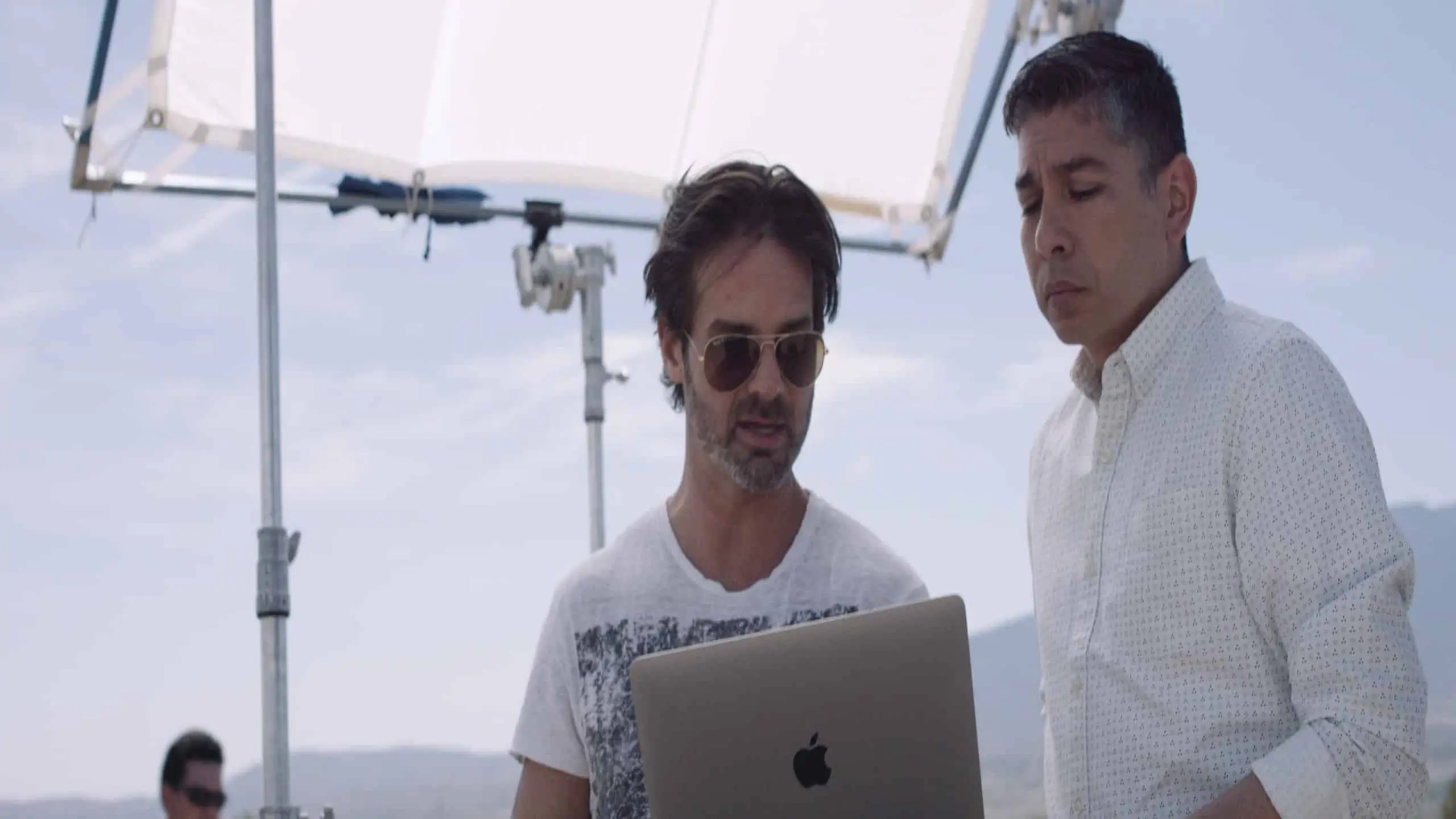
Regarding web development, accessibility is a cornerstone for creating inclusive and usable websites. It ensures that all users, regardless of their abilities, can access and interact with web content effectively. Accessibility is not only a legal requirement but also an ethical obligation that enhances the overall user experience.
This article delves into the principles and benefits of accessible web design, explores common barriers, and discusses tools and techniques for testing accessibility. It also highlights the importance of responsive design and future trends in web accessibility.
## Understanding Web Accessibility
Web accessibility refers to the practice of designing and developing websites so that people with disabilities can use them. This includes individuals with visual, auditory, motor, and cognitive impairments. The principles of web accessibility ensure that these users can perceive, understand, navigate, and interact with the web.
The legal and ethical considerations in [web maintenance](https://c-istudios.com/web-maintenance/) are significant. Regulations such as the Americans with Disabilities Act (ADA) and the Web Content Accessibility Guidelines (WCAG) mandate that websites be accessible to all users. Non-compliance can lead to legal repercussions and damage to a brand’s reputation. Ethically, making websites accessible reflects a commitment to inclusivity and social responsibility, fostering a broader and more diverse audience.
Ethically, making websites accessible reflects a commitment to inclusivity and social responsibility. It demonstrates a respect for diversity and an understanding that everyone deserves equal access to information and services. By prioritizing accessibility, businesses can foster a broader and more diverse audience, which can lead to increased engagement, customer satisfaction, and ultimately, business success.
Incorporating accessibility into web design is not just about meeting legal requirements; it is about creating a user-centric digital environment that values and respects all individuals. This approach aligns with the broader goals of universal design, which aims to make products and environments usable by all people, to the greatest extent possible, without the need for adaptation or specialized design.
## The Benefits of Accessible Web Design
Accessible web design offers numerous advantages, extending beyond compliance. It significantly enhances the user experience for everyone, not just those with disabilities. Features such as alt text for images, captions for videos, and easy-to-navigate interfaces improve usability for all users. This inclusivity ensures that no user is left behind, fostering a positive perception of the brand.
From an [SEO copywriting](https://c-istudios.com/seo-copywriting-services/) perspective, accessible websites tend to perform better in search engine rankings. Search engines prioritize sites that provide a good user experience, which includes accessibility. For example, alt text for images not only helps visually impaired users but also improves SEO by providing additional context to search engines. Similarly, clear headings and structured content enhance both accessibility and SEO, leading to better visibility and higher traffic.
From a legal standpoint, accessible web design helps businesses mitigate the risk of legal action. With increasing attention to digital accessibility and the enforcement of regulations such as the ADA and WCAG, non-compliant websites are at greater risk of lawsuits and fines. By adhering to accessibility standards, businesses can avoid these legal pitfalls and demonstrate their commitment to fair and equal access for all users.
The benefits of accessible web design are multifaceted, encompassing improved user experience, enhanced SEO performance, broader audience reach, positive brand perception, innovation, cost savings, and legal compliance. By prioritizing accessibility, businesses can create more inclusive, effective, and sustainable digital experiences that benefit both their users and their bottom line.
## Key Principles of Accessible Web Design
The [creative marketing](https://c-istudios.com/creative-marketing-services/) approach to web accessibility is anchored in the POUR principles: Perceivable, Operable, Understandable, and Robust. These principles provide a framework for creating accessible websites.
Perceivable means that users must be able to perceive the information being presented. This involves providing text alternatives for non-text content, such as images, videos, and audio. It also includes creating content that can be presented in different ways without losing meaning.
Operable ensures that users can interact with the website. This involves making all functionality available from a keyboard and providing sufficient time for users to read and interact with content. It also means avoiding design elements that can cause seizures, such as flashing lights.
Understandable requires that users can understand the information and how to use the website. This involves making text readable and understandable, and ensuring that web pages operate in predictable ways. Input assistance is also part of this principle, providing help and support for users when they encounter errors.
Robust means that content must be robust enough to be interpreted reliably by a wide variety of user agents, including assistive technologies. This involves using standard HTML and CSS practices to ensure compatibility with current and future technologies.
## Common Barriers to Web Accessibility
Identifying and addressing common accessibility barriers is crucial in [web hosting](https://c-istudios.com/web-hosting/) and design. These barriers can significantly hinder the user experience for individuals with disabilities.
One common barrier is visual impairments, which can make it difficult for users to read text, view images, or navigate a website. To overcome this, designers should ensure high contrast between text and background, provide scalable text, and include alt text for images.
Hearing impairments can prevent users from accessing audio content. Providing captions for videos and transcripts for audio content ensures that all users can access the information. This not only improves accessibility but also enhances SEO by providing additional content for search engines to index.
Motor impairments can make it challenging for users to navigate websites using a mouse. Ensuring that all functionalities are accessible via keyboard and providing ample time for interactions can help. This includes designing larger clickable areas and reducing the need for precise movements.
Cognitive impairments can make it difficult for users to understand complex navigation or content. Simplifying navigation, using clear and concise language, and providing instructions can make websites more accessible. Consistency in layout and design also helps users predict and understand website functionality.
## Tools and Techniques for Testing Accessibility
Testing web accessibility involves a combination of automated tools and manual techniques, similar to ensuring quality in a [video production gear list](https://c-istudios.com/video-production-gear-list/). Automated tools such as WAVE, Axe, and Lighthouse can quickly identify common accessibility issues. These tools scan web pages and highlight areas needing improvement, such as missing alt text, low contrast, and navigation issues.
Manual testing, however, is essential for a comprehensive assessment. This includes using screen readers like JAWS or NVDA to ensure all content is accessible and navigable. Keyboard-only navigation testing ensures users who cannot use a mouse can still interact with the website. Additionally, usability testing with people with disabilities provides valuable insights and can uncover issues that automated tools might miss.
Another important technique is conducting accessibility audits, which involve a detailed review of the website’s accessibility features and compliance with WCAG standards. Regular audits help maintain accessibility as the website evolves and content is updated.
By integrating both automated and manual testing methods, you can create a more inclusive and accessible website. This comprehensive approach helps identify and address a wide range of accessibility issues, ensuring that all users, regardless of their abilities, can navigate and interact with your site effectively. This commitment to accessibility not only enhances the user experience but also demonstrates your dedication to inclusivity and social responsibility, benefiting your brand and its audience.
## Creating Accessible Content
Effective [content creation](https://c-istudios.com/content-creation-services/) must prioritize accessibility to ensure all users can access and understand the information. This involves several best practices, starting with the use of alternative text. Alt text should be descriptive and provide meaningful context for images, helping visually impaired users understand the content.
Headings are crucial for structuring content and making it easier to navigate. Using proper heading structures (H1, H2, H3) helps screen readers and users identify the main topics and subtopics on a page. This improves both accessibility and SEO, as search engines use headings to understand the content structure.
Links should be descriptive and indicate the destination. Avoid using vague terms like "click here" or "read more." Instead, use specific descriptions that provide context, such as "learn more about our services."
Readable text is essential for accessibility. Write in clear, simple language and use short sentences and paragraphs. Avoid jargon and technical terms, or provide definitions if they must be used. This makes the content accessible to a wider audience, including those with cognitive impairments.
For multimedia content, provide captions for videos and transcripts for audio content. This ensures that users with hearing impairments can access the information. Additionally, avoid auto-playing multimedia, as this can be disorienting for some users.
## Designing for Visual and Auditory Disabilities
Designing for visual and auditory disabilities requires attention to detail in [professional photography](https://c-istudios.com/professional-photography-services/) and audio engineering. For visual disabilities, ensure images have high contrast and are not the sole method of conveying information. Use color thoughtfully and avoid relying on color alone to convey meaning. Interactive elements should be large enough to be easily clickable and distinguishable.
For auditory disabilities, provide captions and transcripts for all audio and video content. Captions should be synchronized with the audio and easy to read. Transcripts should include all spoken content and relevant non-speech information, such as sound effects and music.
Designing accessible visuals involves using clear and simple graphics that can be understood by users with various disabilities. Ensure that text is readable, with a sufficient contrast ratio and scalable fonts. Use icons and images that are intuitive and easy to understand, even for users with cognitive impairments.
Inclusive design also means creating content that is easy to understand and navigate. Use clear and simple language, break text into manageable chunks, and use headings to organize content logically. This benefits all users, including those with cognitive impairments who may struggle with complex language or dense information.
Incorporating these practices into your branding and graphic design ensures that your visual and auditory content is accessible and inclusive. This not only enhances the user experience for those with disabilities but also demonstrates a commitment to inclusivity and social responsibility, strengthening your brand’s reputation.
By prioritizing accessibility in your web design, you create a more inclusive digital environment that welcomes all users. This commitment to inclusivity can lead to increased engagement, broader audience reach, and improved user satisfaction, ultimately benefiting your business and its users alike.
## Responsive Design and Accessibility
Responsive design is crucial for [branding and graphic design](https://c-istudios.com/branding-and-graphic-design-services/) in web accessibility, as it ensures that websites function well on all devices and screen sizes. Responsive design adapts the layout based on the screen size, ensuring that content is readable and navigable on mobile devices, tablets, and desktops.
Use flexible grid layouts, scalable images, and CSS media queries to create responsive designs. This allows the website to adjust dynamically to different screen sizes, providing a consistent user experience. Ensure that touch targets (buttons, links) are large enough to be easily tapped on mobile devices. Provide adequate spacing between interactive elements to prevent accidental clicks.
Test the website on various devices and screen sizes to ensure it remains functional and accessible. This includes using emulators and physical devices to check for any issues in layout, navigation, and readability. Regular testing and optimization help maintain accessibility as technology and user expectations evolve.
By optimizing touch targets, providing adequate spacing between interactive elements, and ensuring keyboard accessibility, responsive design enhances usability for users with disabilities. This commitment to accessibility not only improves user experience but also aligns with best practices in branding and graphic design, creating a cohesive and inclusive online presence.
## Case Studies of Accessible Web Design
Examining case studies of accessible web design provides valuable insights into successful implementations. [Media marketing consultation](https://c-istudios.com/media-marketing-consultation-services/) often involves analyzing these examples to identify best practices and innovative strategies.
One notable example is the BBC, which has prioritized accessibility across its platforms. The BBC’s website includes features such as adjustable text size, screen reader compatibility, and keyboard navigation. Their commitment to accessibility ensures that content is accessible to all users, enhancing the user experience and fostering inclusivity.
Another example is the GOV.UK website, which is designed to be accessible and user-friendly. The website follows WCAG guidelines and includes features such as high contrast mode, simple language, and clear navigation. These practices make the website accessible to a diverse audience, including users with disabilities.
These case studies highlight the importance of prioritizing accessibility in web design. By following best practices and regularly testing for accessibility, these organizations ensure that their websites are inclusive and usable for all users.
## Future Trends in Web Accessibility
Staying ahead of emerging trends in web accessibility is essential for creating inclusive websites. Advances in [VFX compositing and animation](https://c-istudios.com/vfx-compositing-and-animation-services/) offer new opportunities for accessible design. One emerging trend is the use of AI and machine learning to enhance accessibility. AI can automatically generate alt text for images, transcribe audio content, and even predict and address accessibility issues. Machine learning algorithms can learn from user interactions to improve accessibility features over time.
Another trend is the increased focus on mobile accessibility. As mobile device usage continues to rise, ensuring that websites are fully accessible on mobile platforms is crucial. This includes optimizing touch interfaces, providing mobile-friendly navigation, and ensuring that content is easily readable on small screens.
Voice interfaces and virtual assistants are also becoming more prevalent. Designing websites that are compatible with voice commands and can be navigated using voice assistants can enhance accessibility for users with motor impairments. Voice interfaces provide an alternative method of interaction, making it easier for users to access information and perform tasks.
Finally, virtual reality (VR) and augmented reality (AR) are opening new possibilities for accessible web design. These technologies can create immersive and interactive experiences that are accessible to users with various disabilities. For example, VR can provide virtual tours with audio descriptions, while AR can overlay digital information onto the physical world in accessible ways.
## Work with C&I Studios
If you are planning a project like this, our team can take it from concept to final delivery. Explore our [AI video services](https://c-istudios.com/ai-video-services/), browse [our work](https://c-istudios.com/our-work/) to see how we tell brand stories, and [get in touch](https://c-istudios.com/contact/) when you are ready to start.
Originally published June 7, 2024
---
*This content is from [C&I Studios](https://c-istudios.com), a full-service production company.*
---
# Maximizing Engagement on Social Media: Tips and Techniques That Work
> Published: June 6, 2024
> Categories: Commercial & Brand
> Source: https://c-istudios.com/maximizing-engagement-on-social-media-tips-and-techniques-that-work/
---
.cib{--paper:#1b1d1f;--ink:#fff;--body:#d5d7d9;--muted:#8b9096;--line:rgba(255,255,255,.12);--thumb:#2b2e31;--card:#212426;--accent:#c02b0a;--blue:#5B8FA8;--serif:'Playfair Display',Georgia,serif;--sans:'Poppins',-apple-system,sans-serif;--measure:900px;background:var(--paper);color:var(--body);font-family:var(--sans);line-height:1.6;position:relative;left:50%;transform:translateX(-50%);width:90vw;max-width:1920px}
.cib *{box-sizing:border-box}
.cib .kicker{max-width:var(--measure);margin:58px auto 0;padding:0 22px;font-size:12.5px;font-weight:700;letter-spacing:2.5px;text-transform:uppercase;color:var(--blue)}
.cib h1.cibh1{text-wrap:balance;font-family:var(--serif);font-weight:500;font-size:clamp(46px,6vw,72px);line-height:1.08;color:var(--ink);max-width:var(--measure);margin:18px auto 0;padding:0 22px;letter-spacing:-.5px}
.cib .metarow{max-width:var(--measure);margin:20px auto 0;padding:0 22px;color:var(--muted);font-size:14px}
.cib .hero{position:relative;width:100%;height:0;padding-bottom:56.25%;overflow:hidden;margin:48px auto 0;border-top:1px solid var(--line);border-bottom:1px solid var(--line)}
.cib .hero .ph{width:100%;aspect-ratio:16/9;background:var(--thumb);border-top:1px solid var(--line);border-bottom:1px solid var(--line);display:flex;align-items:center;justify-content:center;color:#7d8288;font-size:13px;text-align:center;padding:0 20px}
.cib .body{max-width:var(--measure);margin:12px auto 0;padding:52px 22px 6px}
.cib .body.lead p:first-child{font-size:23px;line-height:1.62;color:var(--ink)}
.cib .body p{font-size:18.5px;line-height:1.85;margin:0 0 30px;color:var(--body)}
.cib .body h2{text-wrap:balance;font-family:var(--serif);font-weight:500;font-size:clamp(32px,4vw,48px);line-height:1.22;color:var(--ink);margin:70px 0 20px;letter-spacing:-.3px}
.cib .body h3{text-wrap:balance;font-family:var(--sans);font-weight:600;font-size:22px;color:var(--ink);margin:38px 0 8px}
.cib .body a{color:var(--ink);text-decoration:underline;text-decoration-color:rgba(255,255,255,.4);text-underline-offset:3px}
.cib .body a:hover{text-decoration-color:var(--ink)}
.cib .ctable{width:100%;border-collapse:collapse;margin:16px 0 30px;font-size:16px}
.cib .ctable th{background:#000;color:#fff;text-align:left;padding:10px 12px;font-family:var(--sans)}
.cib .ctable td{padding:10px 12px;border-bottom:1px solid var(--line);color:var(--body)}
.cib .inimg{position:relative;width:100%;height:0;padding-bottom:56.25%;overflow:hidden;margin:72px auto;border-top:1px solid var(--line);border-bottom:1px solid var(--line)}
.cib .inimg .ph{width:100%;aspect-ratio:16/9;background:var(--thumb);border-top:1px solid var(--line);border-bottom:1px solid var(--line);display:flex;align-items:center;justify-content:center;color:#7d8288;font-size:13px}
.cib .origpub{max-width:var(--measure);margin:60px auto 0;padding:26px 22px 0;border-top:1px solid var(--line);color:var(--muted);font-size:13.5px}
.cib .related{max-width:1200px;margin:64px auto 0;padding:34px 22px 76px}
.cib .related h3{font-family:var(--sans);font-size:12.5px;letter-spacing:2px;text-transform:uppercase;color:var(--ink);margin:0 0 24px}
.cib .grid{display:grid;grid-template-columns:repeat(3,1fr);gap:28px}
.cib .rc{background:var(--card);border:1px solid var(--line);display:block;text-decoration:none;color:inherit;transition:border-color .15s}
.cib a.rc:hover{border-color:rgba(255,255,255,.5)}
.cib .rc .thumb{position:relative;width:100%;height:0;padding-bottom:56.25%;background:var(--thumb);overflow:hidden}
.cib .rc .thumb img{position:absolute!important;top:0!important;left:0!important;width:100%!important;height:100%!important;object-fit:cover!important;margin:0!important}
.cib .rc .cc{padding:14px 15px 17px}
.cib .rc .rt{font-family:var(--serif);font-weight:500;font-size:16px;line-height:1.3;color:var(--ink);margin:0 0 6px}
.cib .rc .rm{font-size:11px;letter-spacing:1px;text-transform:uppercase;color:var(--muted)}
.cib img{margin:0!important;padding:0!important;display:block!important;vertical-align:top;max-width:100%}
.cib .hero img,.cib .inimg img{position:absolute!important;top:0!important;left:0!important;width:100%!important;height:100%!important;object-fit:cover!important;margin:0!important;padding:0!important;border:0!important;display:block!important;aspect-ratio:auto!important}
.cib .hero+.body{padding-top:36px}
@media(max-width:760px){.cib .grid{grid-template-columns:1fr}.cib .body h2{margin:52px 0 16px}.cib .body p{font-size:17.5px}.cib .inimg,.cib .hero{margin-top:44px}}
.cib .vembed{max-width:var(--measure);margin:44px auto;padding:0 22px}.cib .vembed .vwrap{position:relative;width:100%;height:0;padding-bottom:56.25%}.cib .vembed .vwrap iframe{position:absolute;top:0;left:0;width:100%;height:100%;border:0}
Commercial & Brand
# Maximizing Engagement on Social Media. Tips and Techniques That Work
12 min read

Social media engagement is a critical component of any successful digital marketing strategy. It involves interacting with your audience through likes, comments, shares, and other forms of participation. High engagement levels can help build brand loyalty, increase visibility, and drive conversions.
This article will explore various tips and techniques to maximize engagement on social media, covering everything from creating high-quality content to leveraging influencers and emerging trends.
## Understanding Social Media Engagement
Understanding social media engagement is essential for effective [creative marketing](https://c-istudios.com/creative-marketing-services/). Engagement on social media encompasses various interactions, including likes, comments, shares, retweets, and direct messages. These interactions signal to algorithms that your content is valuable, increasing its visibility and reach.
Engagement metrics such as engagement rate, click-through rate, and conversion rate are crucial indicators of how well your content resonates with your audience. The engagement rate is typically calculated by dividing the total engagement (likes, comments, shares) by the total number of followers, then multiplying by 100 to get a percentage. This metric helps gauge the effectiveness of your posts in fostering interaction.
Building brand presence through engagement involves consistently interacting with your audience and encouraging them to engage with your content. This can be achieved by posting regularly, responding to comments, and creating content that invites participation, such as polls, questions, and contests. Engaging content helps build a loyal community around your brand, increasing trust and brand loyalty.
Engagement also plays a significant role in algorithmic ranking on social media platforms. Content with high engagement is more likely to appear in users' feeds, further increasing visibility and reach. By focusing on engagement, you can enhance your brand's presence on social media and drive more organic traffic to your profile and website.
## Creating High-Quality Content
High-quality content is the cornerstone of successful content creation on social media. Relevant, valuable, and engaging content attracts and retains the attention of your audience, fostering higher engagement rates.
To produce engaging content, start by understanding your audience's preferences and interests. Conduct surveys, analyze past performance data, and monitor industry trends to identify the types of [content creation](https://c-istudios.com/content-creation-services/) that resonate most with your audience. This could include blog posts, infographics, videos, and interactive content like quizzes and polls.
Storytelling is a powerful technique for creating engaging content. Share stories that connect emotionally with your audience, highlighting your brand's values, mission, and impact. Authentic and relatable stories are more likely to be shared and commented on, increasing your content's reach and engagement.
Consistency in posting is also crucial. Develop a content calendar to plan and schedule your posts, ensuring a steady stream of content that keeps your audience engaged. Vary your content types to maintain interest and cater to different audience segments. For instance, you can mix educational posts with entertaining ones, or combine promotional content with user-generated content.
Additionally, use data and analytics to refine your content strategy. Track the performance of your posts to identify what works and what doesn't. Use this information to adjust your content strategy, focusing on the types of content that generate the most engagement. Regularly updating and optimizing your content ensures that it remains relevant and effective in driving engagement.
## Utilizing Visuals Effectively
The use of visuals is a critical aspect of [professional photography](https://c-istudios.com/professional-photography-services/) in social media marketing. Visual content, including images, videos, and graphics, significantly impacts engagement by making posts more attractive and shareable.
High-quality images capture attention and convey your brand message more effectively than text alone. Invest in professional photography to create visually appealing content that reflects your brand's identity and values. Use images to showcase your products, highlight customer testimonials, and share behind-the-scenes glimpses of your business.
Videos are particularly effective for driving engagement. They are more likely to be shared than other types of content and can convey complex messages quickly and engagingly. Create short, captivating videos that tell a story or provide valuable information. Use captions to make your videos accessible to a broader audience, including those who watch without sound.
Graphics and infographics are excellent for presenting data and information in a visually appealing format. They can simplify complex concepts and make your content more digestible. Use branding and graphic design to create consistent and recognizable graphics that align with your brand identity. Incorporate your logo, brand colors, and fonts to reinforce brand recognition.
Optimize your visuals for each social media platform. Different platforms have different requirements for image sizes and formats. Ensure that your visuals are appropriately sized and formatted for the platform you are using to maintain their quality and impact. Additionally, use descriptive alt text for images to improve accessibility and SEO.
## Leveraging Video Content
The rise of video content on social media has transformed the way brands engage with their audience. Incorporating video into your [video production gear list](https://c-istudios.com/video-production-gear-list/) is essential for creating and sharing engaging video content.
Video content is highly engaging and can significantly boost your social media presence. It allows you to convey your message in a dynamic and compelling way, capturing the attention of your audience more effectively than static images or text. Use videos to showcase your products, provide tutorials, share customer stories, and offer behind-the-scenes looks at your business.
Live streaming is a powerful tool for increasing engagement. Platforms like Facebook, Instagram, and YouTube offer live-streaming capabilities that allow you to interact with your audience in real-time. Use live streaming for product launches, Q&A sessions, and special events. Engage with viewers by responding to their comments and questions during the live stream, creating a more interactive and personal experience.
Storytelling is crucial in video content. Create videos that tell a story and connect with your audience emotionally. Authentic and relatable stories are more likely to be shared and commented on, increasing your video's reach and engagement. Use video editing tools to enhance the quality of your videos and add elements like music, captions, and graphics to make them more engaging.
Promote your videos across multiple platforms to maximize their reach. Share them on your social media profiles, embed them in blog posts, and include them in your email newsletters. Encourage your followers to share your videos and engage with the content by asking questions or prompting discussions in the comments.
## Engaging with Your Audience
Effective [artist management and media creation](https://c-istudios.com/artist-management-and-media-creation/) strategies emphasize the importance of engaging with your audience on social media. Building a community around your brand requires consistent interaction and active participation.
Responding to comments and messages promptly is crucial for building relationships with your audience. Acknowledge positive comments and address any concerns or questions raised by your followers. Personalized responses show that you value your audience and are attentive to their needs. This can increase customer loyalty and trust in your brand.
Encourage user-generated content by prompting your followers to share their experiences with your brand. Run contests and challenges that require participants to create and share content related to your products or services. Feature user-generated content on your social media profiles to show appreciation for your customers and foster a sense of community.
Create opportunities for interaction by posting content that invites participation. Ask questions, create polls, and prompt discussions on topics relevant to your audience. Interactive content not only boosts engagement but also provides valuable insights into your audience's preferences and opinions.
Monitor social media conversations about your brand and industry. Use social listening tools to track mentions and keywords related to your business. Engage in relevant conversations by commenting and sharing valuable insights. This positions your brand as an active participant in the industry and helps build relationships with potential customers and influencers.
## Utilizing Hashtags and Keywords
Effective [SEO copywriting](https://c-istudios.com/seo-copywriting-services/) is essential for utilizing hashtags and keywords to increase your reach on social media. Hashtags and keywords help categorize your content and make it discoverable to a broader audience.
Start by researching relevant hashtags and keywords for your industry. Use tools like Hashtagify, RiteTag, and Google Keyword Planner to identify popular and trending hashtags and keywords. Choose hashtags that are relevant to your content and have a high search volume but are not overly competitive.
Incorporate hashtags strategically into your posts. Use a mix of broad and specific hashtags to reach a wider audience while targeting niche segments. Avoid using too many hashtags, as this can make your posts look cluttered and spammy. Aim for a balance that enhances discoverability without compromising the quality of your content.
Place keywords naturally within your captions and descriptions. Avoid keyword stuffing, which can negatively impact readability and engagement. Instead, focus on creating compelling and informative content that incorporates keywords seamlessly. This improves the likelihood of your content appearing in search results and being discovered by potential followers.
Create branded hashtags to encourage user-generated content and build a community around your brand. Promote these hashtags in your posts, bio, and marketing materials to increase their usage. Branded hashtags help aggregate content related to your brand and make it easier for users to find and engage with your content.
## Analyzing Performance Metrics
Regular analysis of performance metrics is a fundamental aspect of [web development](https://c-istudios.com/web-development-services/) in social media marketing. Tracking and analyzing key metrics helps you understand the effectiveness of your engagement strategies and make data-driven decisions.
Key metrics to track include engagement rate, click-through rate, conversion rate, and reach. The engagement rate measures the level of interaction with your content relative to your follower count. The click-through rate indicates how many people clicked on links in your posts, while the conversion rate measures the percentage of users who took a desired action, such as making a purchase or signing up for a newsletter.
Use social media analytics tools like Facebook Insights, Twitter Analytics, and Instagram Insights to gather data on your performance metrics. These tools provide detailed reports on your audience demographics, engagement patterns, and post-performance. Analyzing this data helps you identify trends and adjust your strategies accordingly.
Conduct regular audits of your social media profiles to assess the overall performance and identify areas for improvement. Review your content strategy, posting frequency, and engagement tactics to ensure they align with your goals. Make data-driven adjustments to optimize your content and increase engagement.
Set clear goals and benchmarks for your social media campaigns. Define what success looks like for your brand and track progress towards these goals. Use performance metrics to measure the effectiveness of your strategies and make informed decisions about future campaigns.
## Running Social Media Campaigns
Planning and executing successful social media campaigns requires a strategic approach, similar to running a [political campaign](https://c-istudios.com/political-campaign-services/). Effective campaigns can significantly boost engagement and achieve specific marketing objectives.
Start by defining the goals and objectives of your campaign. Determine what you want to achieve, whether it's increasing brand awareness, driving website traffic, generating leads, or boosting sales. Clear goals help guide your strategy and measure the success of your campaign.
Develop a campaign theme and message that resonates with your audience. Create a content calendar that outlines the types of content you will post, the platforms you will use, and the timeline for your campaign. Ensure that your content is consistent with your brand identity and supports your campaign objectives.
Use a mix of content types to keep your audience engaged. Combine promotional posts with educational and entertaining content to maintain interest. Leverage different formats, such as images, videos, stories, and live streams, to reach a broader audience.
Promote your campaign across multiple channels to maximize its reach. Use email marketing, social media ads, and influencer partnerships to amplify your message. Monitor the performance of your campaign in real time and make adjustments as needed to optimize results.
Analyze the outcomes of your campaign to understand what worked and what didn't. Use this information to refine your strategies for future campaigns. Successful social media campaigns require continuous improvement and adaptation to changing trends and audience preferences.
## Collaborating with Influencers
Collaborating with influencers is a key strategy in [media marketing consultation](https://c-istudios.com/media-marketing-consultation-services/) for boosting social media engagement. Influencers have established audiences and can help amplify your brand's message, increasing visibility and credibility.
Start by identifying influencers who align with your brand values and have a relevant audience. Use tools like BuzzSumo, HypeAuditor, and Traackr to find influencers in your industry. Evaluate their engagement rates, content quality, and follower demographics to ensure they are a good fit for your brand.
Develop a clear collaboration plan that outlines the goals, deliverables, and compensation for the influencer. Define the type of content they will create, the platforms they will use, and the timeline for the collaboration. Provide guidelines to ensure that the content aligns with your brand identity and campaign objectives.
Encourage authentic and creative content from the influencer. Allow them to use their voice and style to connect with their audience genuinely. Authentic content is more likely to resonate with followers and drive higher engagement.
Measure the success of your influencer collaborations using performance metrics. Track engagement rates, reach, and conversions to assess the impact of the collaboration. Use this data to refine your influencer marketing strategy and build long-term relationships with effective influencers.
## Future Trends in Social Media Engagement
Staying ahead of emerging trends and technologies is essential for maximizing social media engagement, similar to advancements in [VFX compositing and animation](https://c-istudios.com/vfx-compositing-and-animation-services/). Understanding and leveraging these trends can help you maintain a competitive edge.
One emerging trend is the use of augmented reality (AR) and virtual reality (VR) in social media content. AR and VR offer immersive experiences that engage users in unique and interactive ways. Brands can use AR filters, VR tours, and interactive experiences to captivate their audience and increase engagement.
Another trend is the rise of ephemeral content, such as stories on Instagram, Facebook, and Snapchat. Ephemeral content creates a sense of urgency and exclusivity, encouraging users to engage quickly before the content disappears. Use stories to share behind-the-scenes glimpses, limited-time offers, and interactive polls.
The integration of social commerce is also transforming social media engagement. Platforms like Instagram and Facebook now offer shopping features that allow users to purchase products directly from the app. Leveraging social commerce can streamline the customer journey and drive higher conversions.
Personalization continues to be a significant trend in social media engagement. Use data and AI to create personalized content and recommendations for your audience. Personalized experiences increase relevance and engagement, making users more likely to interact with your content.
Finally, the growing importance of video content cannot be overstated. Live streaming, short-form videos, and user-generated video content are all gaining traction. Invest in [video production](https://c-istudios.com/video-production-services/) and editing tools to create high-quality videos that resonate with your audience.
## Work with C&I Studios
If you are planning a project like this, our team can take it from concept to final delivery. Explore our [video production services](https://c-istudios.com/video-production-services/), browse [our work](https://c-istudios.com/our-work/) to see how we tell brand stories, and [get in touch](https://c-istudios.com/contact/) when you are ready to start.
Originally published June 6, 2024
---
*This content is from [C&I Studios](https://c-istudios.com), a full-service production company.*
---
# The Dos and Don'ts of Email Frequency: Finding the Right Balance for Your Audience
> Published: June 5, 2024
> Categories: Commercial & Brand
> Source: https://c-istudios.com/the-dos-and-donts-of-email-frequency-finding-the-right-balance-for-your-audience/
---
.cib{--paper:#1b1d1f;--ink:#fff;--body:#d5d7d9;--muted:#8b9096;--line:rgba(255,255,255,.12);--thumb:#2b2e31;--card:#212426;--accent:#c02b0a;--blue:#5B8FA8;--serif:'Playfair Display',Georgia,serif;--sans:'Poppins',-apple-system,sans-serif;--measure:900px;background:var(--paper);color:var(--body);font-family:var(--sans);line-height:1.6;position:relative;left:50%;transform:translateX(-50%);width:90vw;max-width:1920px}
.cib *{box-sizing:border-box}
.cib .kicker{max-width:var(--measure);margin:58px auto 0;padding:0 22px;font-size:12.5px;font-weight:700;letter-spacing:2.5px;text-transform:uppercase;color:var(--blue)}
.cib h1.cibh1{text-wrap:balance;font-family:var(--serif);font-weight:500;font-size:clamp(46px,6vw,72px);line-height:1.08;color:var(--ink);max-width:var(--measure);margin:18px auto 0;padding:0 22px;letter-spacing:-.5px}
.cib .metarow{max-width:var(--measure);margin:20px auto 0;padding:0 22px;color:var(--muted);font-size:14px}
.cib .hero{position:relative;width:100%;height:0;padding-bottom:56.25%;overflow:hidden;margin:48px auto 0;border-top:1px solid var(--line);border-bottom:1px solid var(--line)}
.cib .hero .ph{width:100%;aspect-ratio:16/9;background:var(--thumb);border-top:1px solid var(--line);border-bottom:1px solid var(--line);display:flex;align-items:center;justify-content:center;color:#7d8288;font-size:13px;text-align:center;padding:0 20px}
.cib .body{max-width:var(--measure);margin:12px auto 0;padding:52px 22px 6px}
.cib .body.lead p:first-child{font-size:23px;line-height:1.62;color:var(--ink)}
.cib .body p{font-size:18.5px;line-height:1.85;margin:0 0 30px;color:var(--body)}
.cib .body h2{text-wrap:balance;font-family:var(--serif);font-weight:500;font-size:clamp(32px,4vw,48px);line-height:1.22;color:var(--ink);margin:70px 0 20px;letter-spacing:-.3px}
.cib .body h3{text-wrap:balance;font-family:var(--sans);font-weight:600;font-size:22px;color:var(--ink);margin:38px 0 8px}
.cib .body a{color:var(--ink);text-decoration:underline;text-decoration-color:rgba(255,255,255,.4);text-underline-offset:3px}
.cib .body a:hover{text-decoration-color:var(--ink)}
.cib .ctable{width:100%;border-collapse:collapse;margin:16px 0 30px;font-size:16px}
.cib .ctable th{background:#000;color:#fff;text-align:left;padding:10px 12px;font-family:var(--sans)}
.cib .ctable td{padding:10px 12px;border-bottom:1px solid var(--line);color:var(--body)}
.cib .inimg{position:relative;width:100%;height:0;padding-bottom:56.25%;overflow:hidden;margin:72px auto;border-top:1px solid var(--line);border-bottom:1px solid var(--line)}
.cib .inimg .ph{width:100%;aspect-ratio:16/9;background:var(--thumb);border-top:1px solid var(--line);border-bottom:1px solid var(--line);display:flex;align-items:center;justify-content:center;color:#7d8288;font-size:13px}
.cib .origpub{max-width:var(--measure);margin:60px auto 0;padding:26px 22px 0;border-top:1px solid var(--line);color:var(--muted);font-size:13.5px}
.cib .related{max-width:1200px;margin:64px auto 0;padding:34px 22px 76px}
.cib .related h3{font-family:var(--sans);font-size:12.5px;letter-spacing:2px;text-transform:uppercase;color:var(--ink);margin:0 0 24px}
.cib .grid{display:grid;grid-template-columns:repeat(3,1fr);gap:28px}
.cib .rc{background:var(--card);border:1px solid var(--line);display:block;text-decoration:none;color:inherit;transition:border-color .15s}
.cib a.rc:hover{border-color:rgba(255,255,255,.5)}
.cib .rc .thumb{position:relative;width:100%;height:0;padding-bottom:56.25%;background:var(--thumb);overflow:hidden}
.cib .rc .thumb img{position:absolute!important;top:0!important;left:0!important;width:100%!important;height:100%!important;object-fit:cover!important;margin:0!important}
.cib .rc .cc{padding:14px 15px 17px}
.cib .rc .rt{font-family:var(--serif);font-weight:500;font-size:16px;line-height:1.3;color:var(--ink);margin:0 0 6px}
.cib .rc .rm{font-size:11px;letter-spacing:1px;text-transform:uppercase;color:var(--muted)}
.cib img{margin:0!important;padding:0!important;display:block!important;vertical-align:top;max-width:100%}
.cib .hero img,.cib .inimg img{position:absolute!important;top:0!important;left:0!important;width:100%!important;height:100%!important;object-fit:cover!important;margin:0!important;padding:0!important;border:0!important;display:block!important;aspect-ratio:auto!important}
.cib .hero+.body{padding-top:36px}
@media(max-width:760px){.cib .grid{grid-template-columns:1fr}.cib .body h2{margin:52px 0 16px}.cib .body p{font-size:17.5px}.cib .inimg,.cib .hero{margin-top:44px}}
.cib .vembed{max-width:var(--measure);margin:44px auto;padding:0 22px}.cib .vembed .vwrap{position:relative;width:100%;height:0;padding-bottom:56.25%}.cib .vembed .vwrap iframe{position:absolute;top:0;left:0;width:100%;height:100%;border:0}
Commercial & Brand
# The Dos and Don'ts of Email Frequency. Finding the Right Balance for Your Audience
11 min read

Finding the right email frequency is a critical aspect of content creation in email marketing. Too many emails can overwhelm your audience, while too few can cause them to forget about your brand. Striking the right balance is essential for maintaining engagement and driving conversions.
This article will explore the dos and don'ts of email frequency, providing a comprehensive guide to help you find the optimal frequency for your audience. We will cover best practices, common mistakes, segmentation, personalization, testing, and future trends in email marketing.
## Understanding Email Frequency
Understanding the nuances of email frequency is vital for effective [media marketing consultation](https://c-istudios.com/media-marketing-consultation-services/). Email frequency refers to how often you send emails to your subscribers. It directly impacts your marketing effectiveness by influencing open rates, click-through rates, and overall engagement.
Finding the right balance between under-emailing and over-emailing is crucial. Under-emailing can lead to decreased brand awareness and missed opportunities for engagement. If your audience hears from you too infrequently, they may forget about your brand or lose interest. On the other hand, over-emailing can lead to email fatigue, where subscribers become annoyed by the constant bombardment of messages and may unsubscribe or mark their emails as spam.
The key is to maintain a frequency that keeps your brand top-of-mind without overwhelming your subscribers. This requires understanding your audience’s preferences and behaviors, which can be achieved through data analysis and regular feedback. An effective email frequency strategy considers the type of content being sent, the goals of the campaign, and the preferences of the audience.
## The Dos of Email Frequency
Determining the optimal email frequency involves several [SEO copywriting](https://c-istudios.com/seo-copywriting-services/) best practices. First and foremost, understand your audience. Use data and analytics to gain insights into their preferences, behaviors, and engagement patterns. This information will help you tailor your email frequency to meet their needs and expectations.
Segment your audience based on their behaviors and preferences. Different segments may have different preferences for email frequency. For example, highly engaged subscribers might appreciate more frequent updates, while less engaged subscribers might prefer fewer emails. Tailoring your frequency to each segment can improve engagement and reduce the risk of unsubscribes.
Another best practice is to test and optimize your email frequency. Use A/B testing to experiment with different frequencies and measure their impact on key metrics like open rates, click-through rates, and conversions. This data-driven approach allows you to identify the optimal frequency that maximizes engagement without causing email fatigue.
Communicate clearly with your subscribers about what they can expect in terms of email frequency. Setting clear expectations helps build trust and reduces the likelihood of subscribers feeling overwhelmed. Additionally, provides options for subscribers to adjust their email preferences. Allowing them to choose how often they hear from you can enhance their experience and improve retention.
## The Don’ts of Email Frequency
When it comes to [web development](https://c-istudios.com/web-development-services/) in email marketing, there are several common mistakes to avoid. One major mistake is sending too many emails in a short period. Over-emailing can lead to high unsubscribe rates and negative perceptions of your brand. Subscribers may feel overwhelmed and annoyed, leading them to disengage.
Conversely, sending too few emails can also be detrimental. If you under-email, your subscribers may forget about your brand, leading to decreased engagement and lower conversion rates. Finding the right balance is crucial for maintaining consistent communication and keeping your audience engaged.
Another common mistake is failing to segment your audience. Sending the same frequency of emails to all subscribers ignores their unique preferences and behaviors. Without segmentation, you risk alienating portions of your audience who may have different expectations for email frequency.
Ignoring data and analytics is another pitfall. Making decisions about email frequency without data-driven insights can lead to ineffective strategies. Regularly analyzing performance metrics and adjusting your frequency based on these insights is essential for optimizing your email campaigns.
## Segmenting Your Audience for Better Email Frequency
[Creative marketing](https://c-istudios.com/creative-marketing-services/) strategies emphasize the importance of audience segmentation in email marketing. Segmenting your audience allows you to tailor your email frequency to meet the unique needs and preferences of different subscriber groups.
Begin by collecting data on your subscribers’ behaviors, preferences, and engagement levels. Use this data to create segments based on factors such as purchase history, engagement with previous emails, and demographic information. For example, you might create segments for new subscribers, loyal customers, and inactive subscribers.
Tailor your email frequency to each segment. New subscribers may benefit from a welcome series with more frequent emails initially, while loyal customers might appreciate regular updates and exclusive offers. Inactive subscribers might need a re-engagement campaign with carefully timed emails to rekindle their interest.
Personalize the content and timing of your emails for each segment. By delivering relevant content at the right frequency, you can increase engagement and build stronger relationships with your subscribers. Segmentation allows you to send more targeted and effective emails, enhancing the overall performance of your email marketing efforts.
## Personalization and Email Frequency
The role of [branding and graphic design](https://c-istudios.com/branding-and-graphic-design-services/) in email marketing extends to the personalization of email frequency. Personalization involves tailoring your emails to meet the specific needs and preferences of individual subscribers. This can significantly impact the effectiveness of your email frequency strategy.
Start by collecting data on your subscribers’ preferences and behaviors. Use this data to create personalized email experiences, including the frequency of emails. For example, if a subscriber frequently opens and engages with your emails, you might increase the frequency of your communications. Conversely, if a subscriber rarely engages, you might reduce the frequency to avoid overwhelming them.
Personalize the content of your emails to match the preferences of each subscriber. Use dynamic content to deliver personalized messages, product recommendations, and offers. Personalized emails are more likely to resonate with recipients, leading to higher engagement and conversion rates.
Allow subscribers to manage their email preferences. Provide options for them to choose how often they receive emails and the types of content they are interested in. This empowers subscribers to control their email experience and can lead to higher satisfaction and retention rates.
## Testing and Optimizing Email Frequency
[Social media marketing](https://c-istudios.com/social-media-marketing-services/) emphasizes the importance of testing and optimizing email frequency. A/B testing is a powerful method for determining the optimal frequency for your email campaigns.
Start by creating different versions of your email campaigns with varying frequencies. For example, you might send one group of subscribers weekly emails, while another group receives bi-weekly emails. Measure the performance of each group in terms of open rates, click-through rates, and conversions.
Analyze the results of your tests to identify the frequency that yields the best results. Look for patterns and trends in the data to understand how different frequencies impact engagement and conversions. Use these insights to refine your email frequency strategy and optimize future campaigns.
Regularly review and update your email frequency based on performance data. As your audience’s preferences and behaviors change over time, your email frequency strategy should adapt accordingly. Continuous testing and optimization ensure that your email campaigns remain effective and relevant.
## Integrating Email Frequency with Other Marketing Channels
Aligning email frequency with [video audio live streaming](https://c-istudios.com/video-audio-live-streaming/) and other marketing efforts is essential for a cohesive multi-channel marketing strategy. Your email frequency should complement your activities on other channels, such as social media, content marketing, and paid advertising.
Start by creating a unified marketing calendar that outlines your email campaigns and other marketing activities. This helps ensure that your messaging is consistent and coordinated across all channels. For example, if you are launching a new product, your email campaigns, social media posts, and blog content should all align to promote the product effectively.
Consider the timing and frequency of your emails in relation to your other marketing efforts. For example, if you have a weekly live stream or a monthly webinar, your email frequency should support these events by providing timely reminders and follow-up content.
Use cross-channel analytics to measure the impact of your email frequency on other marketing efforts. Track metrics such as website traffic, social media engagement, and lead generation to understand how your email campaigns contribute to your overall marketing goals. This data can help you optimize your email frequency and ensure that it supports your broader marketing strategy.
## Analyzing the Results of Your Email Frequency Strategy
[Web maintenance](https://c-istudios.com/web-maintenance/) practices include regularly analyzing the results of your email frequency strategy. This involves using tools and metrics to measure the effectiveness of your email campaigns and making data-driven adjustments.
Start by tracking key performance metrics such as open rates, click-through rates, conversion rates, and unsubscribe rates. These metrics provide insights into how your audience is responding to your email frequency. High open and click-through rates indicate that your emails are engaging and relevant, while high unsubscribe rates may suggest that you are over-emailing or that your content is not resonating.
Use email analytics tools to gather detailed data on your campaigns. These tools can provide insights into subscriber behavior, such as the times of day they are most likely to open emails and the types of content they engage with the most. Use this data to refine your email frequency and content strategy.
Regularly review the performance of your email campaigns and make adjustments based on your findings. For example, if you notice a drop in engagement, consider experimenting with different frequencies or segmenting your audience further to provide more targeted content. Continuous analysis and optimization ensure that your email frequency strategy remains effective and aligned with your audience’s preferences.
## Case Studies of Successful Email Frequency Strategies
Examining real-world examples of successful email frequency strategies can provide valuable insights and inspiration. Brands that have effectively balanced email frequency often see improved engagement, higher conversions, and stronger customer relationships. [Professional photography](https://c-istudios.com/professional-photography-services/) in email marketing can help illustrate these successes through visually appealing case studies.
One notable example is a retail brand that used data-driven segmentation to tailor their email frequency. By analyzing purchase history and engagement metrics, they identified different customer segments and adjusted their email frequency accordingly. Highly engaged customers received more frequent updates and personalized offers, while less engaged customers received fewer, more targeted emails. This approach led to a significant increase in open rates and sales conversions.
Another example is a tech company that implemented A/B testing to determine the optimal email frequency for their product updates. They tested various frequencies with different segments of their audience and analyzed the results. The data revealed that a bi-weekly email cadence resulted in the highest engagement and lowest unsubscribe rates. By adopting this frequency, the company improved its email campaign performance and customer satisfaction.
A nonprofit organization successfully used personalized email frequency to enhance donor engagement. By allowing subscribers to choose their email preferences, the organization ensured that donors received updates and appeals at a frequency that suited them. This personalized approach led to higher donation rates and stronger supporter relationships.
These case studies highlight the importance of understanding your audience, using data to inform decisions, and continually testing and optimizing your email frequency strategy. By learning from these examples, you can develop an effective email frequency strategy that meets the needs of your audience and achieves your marketing goals.
## Future Trends in Email Frequency
Staying ahead of emerging trends and technologies in email marketing is crucial for maintaining a competitive edge. The future of email frequency will likely be shaped by advancements in automation, artificial intelligence, and [film and TV production](https://c-istudios.com/film-and-tv-production/) techniques.
One emerging trend is the use of AI-driven personalization to determine email frequency. AI algorithms can analyze vast amounts of data to predict the optimal frequency for each subscriber based on their behaviors and preferences. This level of personalization ensures that subscribers receive emails at the right time, enhancing engagement and reducing the risk of email fatigue.
Another trend is the integration of interactive elements in emails. Features such as polls, surveys, and interactive content can engage subscribers and provide valuable feedback on their preferences. This information can be used to refine email frequency and content strategies, ensuring that your emails remain relevant and engaging.
The rise of omnichannel marketing is also influencing email frequency strategies. As consumers interact with brands across multiple channels, maintaining a consistent and coordinated communication strategy is essential. Aligning email frequency with other marketing efforts, such as social media, content marketing, and video campaigns, can create a seamless and cohesive customer experience.
Advancements in automation tools are making it easier to manage and optimize email frequency. Automation platforms can track subscriber engagement, segment audiences, and adjust email frequency in real time based on performance data. These tools enable marketers to deliver personalized and timely emails at scale, improving overall campaign effectiveness.
Finally, the increasing importance of data privacy and compliance is shaping email frequency strategies. With regulations such as GDPR and CCPA, marketers must ensure that their email practices are compliant and respect subscribers’ preferences. Providing clear options for subscribers to manage their email frequency and content preferences is essential for building trust and maintaining compliance.
By embracing these trends and leveraging new technologies, marketers can develop innovative email frequency strategies that enhance engagement, drive conversions, and build stronger customer relationships.
## Work with C&I Studios
If you are planning a project like this, our team can take it from concept to final delivery. Explore our [video production services](https://c-istudios.com/video-production-services/), browse [our work](https://c-istudios.com/our-work/) to see how we tell brand stories, and [get in touch](https://c-istudios.com/contact/) when you are ready to start.
Originally published June 5, 2024
---
*This content is from [C&I Studios](https://c-istudios.com), a full-service production company.*
---
# Do YouTube links help SEO?
> Published: June 4, 2024
> Categories: Web & Tech
> Source: https://c-istudios.com/do-youtube-links-help-seo/
---
.cib{--paper:#1b1d1f;--ink:#fff;--body:#d5d7d9;--muted:#8b9096;--line:rgba(255,255,255,.12);--thumb:#2b2e31;--card:#212426;--accent:#c02b0a;--blue:#5B8FA8;--serif:'Playfair Display',Georgia,serif;--sans:'Poppins',-apple-system,sans-serif;--measure:900px;background:var(--paper);color:var(--body);font-family:var(--sans);line-height:1.6;position:relative;left:50%;transform:translateX(-50%);width:90vw;max-width:1920px}
.cib *{box-sizing:border-box}
.cib .kicker{max-width:var(--measure);margin:58px auto 0;padding:0 22px;font-size:12.5px;font-weight:700;letter-spacing:2.5px;text-transform:uppercase;color:var(--blue)}
.cib h1.cibh1{text-wrap:balance;font-family:var(--serif);font-weight:500;font-size:clamp(46px,6vw,72px);line-height:1.08;color:var(--ink);max-width:var(--measure);margin:18px auto 0;padding:0 22px;letter-spacing:-.5px}
.cib .metarow{max-width:var(--measure);margin:20px auto 0;padding:0 22px;color:var(--muted);font-size:14px}
.cib .hero{position:relative;width:100%;height:0;padding-bottom:56.25%;overflow:hidden;margin:48px auto 0;border-top:1px solid var(--line);border-bottom:1px solid var(--line)}
.cib .hero .ph{width:100%;aspect-ratio:16/9;background:var(--thumb);border-top:1px solid var(--line);border-bottom:1px solid var(--line);display:flex;align-items:center;justify-content:center;color:#7d8288;font-size:13px;text-align:center;padding:0 20px}
.cib .body{max-width:var(--measure);margin:12px auto 0;padding:52px 22px 6px}
.cib .body.lead p:first-child{font-size:23px;line-height:1.62;color:var(--ink)}
.cib .body p{font-size:18.5px;line-height:1.85;margin:0 0 30px;color:var(--body)}
.cib .body h2{text-wrap:balance;font-family:var(--serif);font-weight:500;font-size:clamp(32px,4vw,48px);line-height:1.22;color:var(--ink);margin:70px 0 20px;letter-spacing:-.3px}
.cib .body h3{text-wrap:balance;font-family:var(--sans);font-weight:600;font-size:22px;color:var(--ink);margin:38px 0 8px}
.cib .body a{color:var(--ink);text-decoration:underline;text-decoration-color:rgba(255,255,255,.4);text-underline-offset:3px}
.cib .body a:hover{text-decoration-color:var(--ink)}
.cib .ctable{width:100%;border-collapse:collapse;margin:16px 0 30px;font-size:16px}
.cib .ctable th{background:#000;color:#fff;text-align:left;padding:10px 12px;font-family:var(--sans)}
.cib .ctable td{padding:10px 12px;border-bottom:1px solid var(--line);color:var(--body)}
.cib .inimg{position:relative;width:100%;height:0;padding-bottom:56.25%;overflow:hidden;margin:72px auto;border-top:1px solid var(--line);border-bottom:1px solid var(--line)}
.cib .inimg .ph{width:100%;aspect-ratio:16/9;background:var(--thumb);border-top:1px solid var(--line);border-bottom:1px solid var(--line);display:flex;align-items:center;justify-content:center;color:#7d8288;font-size:13px}
.cib .origpub{max-width:var(--measure);margin:60px auto 0;padding:26px 22px 0;border-top:1px solid var(--line);color:var(--muted);font-size:13.5px}
.cib .related{max-width:1200px;margin:64px auto 0;padding:34px 22px 76px}
.cib .related h3{font-family:var(--sans);font-size:12.5px;letter-spacing:2px;text-transform:uppercase;color:var(--ink);margin:0 0 24px}
.cib .grid{display:grid;grid-template-columns:repeat(3,1fr);gap:28px}
.cib .rc{background:var(--card);border:1px solid var(--line);display:block;text-decoration:none;color:inherit;transition:border-color .15s}
.cib a.rc:hover{border-color:rgba(255,255,255,.5)}
.cib .rc .thumb{position:relative;width:100%;height:0;padding-bottom:56.25%;background:var(--thumb);overflow:hidden}
.cib .rc .thumb img{position:absolute!important;top:0!important;left:0!important;width:100%!important;height:100%!important;object-fit:cover!important;margin:0!important}
.cib .rc .cc{padding:14px 15px 17px}
.cib .rc .rt{font-family:var(--serif);font-weight:500;font-size:16px;line-height:1.3;color:var(--ink);margin:0 0 6px}
.cib .rc .rm{font-size:11px;letter-spacing:1px;text-transform:uppercase;color:var(--muted)}
.cib img{margin:0!important;padding:0!important;display:block!important;vertical-align:top;max-width:100%}
.cib .hero img,.cib .inimg img{position:absolute!important;top:0!important;left:0!important;width:100%!important;height:100%!important;object-fit:cover!important;margin:0!important;padding:0!important;border:0!important;display:block!important;aspect-ratio:auto!important}
.cib .hero+.body{padding-top:36px}
@media(max-width:760px){.cib .grid{grid-template-columns:1fr}.cib .body h2{margin:52px 0 16px}.cib .body p{font-size:17.5px}.cib .inimg,.cib .hero{margin-top:44px}}
.cib .vembed{max-width:var(--measure);margin:44px auto;padding:0 22px}.cib .vembed .vwrap{position:relative;width:100%;height:0;padding-bottom:56.25%}.cib .vembed .vwrap iframe{position:absolute;top:0;left:0;width:100%;height:100%;border:0}
Web & Tech
# Do YouTube links help SEO?
11 min read

The relationship between YouTube links and SEO is a crucial topic for content creators and marketers looking to enhance their online presence. YouTube, being the second largest search engine after Google, offers significant opportunities for improving search engine optimization (SEO) through strategic use of links.
This article delves into the intricacies of how YouTube links impact SEO, exploring various types of links, best practices, and future trends to provide a comprehensive guide for leveraging YouTube for better search rankings.
## Understanding YouTube Links and SEO
Understanding the significance of [SEO Copywriting](https://c-istudios.com/seo-copywriting-services/) in how YouTube links work is essential for maximizing their impact. YouTube links can be categorized into inbound, outbound, and internal links, each serving a unique purpose in the SEO ecosystem.
Inbound links, also known as backlinks, are links from other websites that point to your YouTube videos. These links are crucial for establishing authority and credibility, as search engines view them as endorsements from other sites. Outbound links, on the other hand, are links from your YouTube videos to external websites.
These links can drive traffic to your site and help search engines understand the context of your content. Internal links are links within your YouTube channel, connecting various videos and playlists. These links help improve user navigation and keep viewers engaged for longer periods.
YouTube’s role in search engine optimization involves multiple aspects that significantly boost visibility. When you upload a video, it has the potential to rank not only on YouTube but also on Google search results, enhancing your reach. YouTube videos can contribute to SEO by providing valuable content that encourages user engagement, such as likes, comments, and shares. These engagement metrics signal to search engines that your content is relevant and valuable, which can improve your rankings.
Moreover, using SEO Copywriting techniques to optimize keywords, tags, and descriptions in your YouTube videos ensures that your content appears in search results for relevant queries. YouTube’s algorithm considers factors such as watch time, click-through rate, and audience retention when ranking videos. Therefore, creating high-quality, engaging content is essential for improving your SEO performance.
## The Impact of YouTube Links on Search Rankings
Examining the influence of YouTube links on search engine rankings is a key aspect of [media marketing consultation](https://c-istudios.com/media-marketing-consultation-services/). YouTube links contribute to SEO by driving traffic, increasing engagement, and building authority. When other websites link to your YouTube videos, it signals to search engines that your content is valuable and trustworthy, which can boost your rankings.
Several case studies and examples illustrate the successful use of YouTube links for SEO improvements. For instance, a digital marketing agency incorporated YouTube videos into its blog posts and saw a significant increase in organic traffic. By embedding videos and providing valuable content, they enhanced user experience and improved their search rankings.
YouTube links also play a role in driving referral traffic. When viewers click on links within your videos or descriptions, they are directed to your website or other online platforms. This referral traffic not only increases your site’s visibility but also improves your engagement metrics, which are important factors for SEO.
Furthermore, YouTube links can enhance brand awareness and credibility. When reputable websites link to your YouTube content, it establishes your brand as an authority in your industry. This credibility can lead to more backlinks, social shares, and overall visibility, contributing to better search engine rankings.
## Types of YouTube Links and Their Effects
Incorporating [Web development](https://c-istudios.com/web-development-services/) practices, it's important to understand the different types of YouTube links and their specific impacts on SEO. Each type of link, inbound, outbound, and internal, affects SEO in unique ways.
Inbound links are among the most valuable for SEO, as they come from external websites that point to your YouTube videos. These links are considered votes of confidence, indicating that other sites find your content valuable. Search engines use these signals to rank your videos higher in search results. To maximize the benefits of inbound links, focus on creating high-quality, shareable content that other sites will want to link to.
Outbound links, while not as impactful as inbound links, still play a role in SEO. These links direct viewers from your YouTube videos to external websites. Outbound links can drive traffic to your site and help establish the context of your content. For example, if you link to a detailed blog post or product page, it can provide additional value to your viewers and encourage them to visit your website.
Internal links within your YouTube channel connect various videos and playlists, improving user navigation and keeping viewers engaged longer. These links help distribute link equity across your channel, boosting the overall SEO performance. By strategically using internal links, you can guide viewers to related content, increasing watch time and engagement, which are critical factors for YouTube’s algorithm.
## Best Practices for Using YouTube Links for SEO
Adopting [content creation](https://c-istudios.com/content-creation-services/) best practices is essential for optimizing YouTube links to enhance SEO. There are several strategies to effectively use YouTube links to improve search engine rankings.
First, always include relevant links in your video descriptions. These links can direct viewers to your website, social media profiles, or other related videos. Ensure that your descriptions are informative and include relevant keywords to improve searchability. Adding timestamps and detailed information can also enhance user experience and increase engagement.
Second, use annotations, cards, and end screens to add links directly within your videos. These tools allow you to provide viewers with clickable links without interrupting the viewing experience. Use them to promote related videos, encourage subscriptions, or direct traffic to your website. Annotations and cards can also include call-to-action prompts, guiding viewers to take specific actions that benefit your SEO strategy.
Avoid common mistakes such as overloading your video descriptions with links or using irrelevant links. Too many links can appear spammy and deter viewers, while irrelevant links can confuse users and reduce engagement. Focus on providing value with each link, ensuring it serves a purpose and enhances the viewer's experience.
Additionally, regularly update your links and descriptions to keep them relevant and accurate. Broken links or outdated information can negatively impact user experience and SEO. Regularly reviewing and updating your content ensures that it remains valuable and effective in driving traffic and engagement.
## Creating SEO-Optimized YouTube Content
[Creative marketing](https://c-istudios.com/creative-marketing-services/) strategies are crucial for producing YouTube videos that boost SEO. Creating high-quality, engaging content is the foundation of any successful YouTube SEO strategy.
Start by conducting keyword research to identify the terms and phrases your target audience is searching for. Use these keywords in your video titles, descriptions, and tags to improve discoverability. Tools like Google Keyword Planner and YouTube’s own search suggestion feature can help identify popular keywords and trends.
Focus on creating content that provides value to your audience. Informative, entertaining, and educational videos are more likely to be shared and linked to, increasing your reach and impact. Ensure that your videos are well-produced, with clear audio and high-quality visuals. Professional production values can enhance the perceived value of your content and encourage viewer engagement.
Incorporate calls to action within your videos to guide viewers on what to do next. Whether it’s subscribing to your channel, visiting your website, or sharing the video, clear and compelling calls to action can increase engagement and drive traffic. Use annotations, cards, and end screens to make these calls to action easily accessible and clickable.
Optimize your video thumbnails to attract clicks. Thumbnails are often the first thing viewers see, and a compelling thumbnail can significantly increase your video’s click-through rate. Use high-quality images, bold text, and clear visuals to make your thumbnails stand out.
## Integrating YouTube Links into Your Website
[Web hosting](https://c-istudios.com/web-hosting/) solutions play a role in effectively integrating YouTube links into your website. Embedding YouTube videos on your website can enhance user experience and improve SEO.
Start by embedding videos on relevant pages, such as blog posts, product pages, and landing pages. Ensure that the embedded videos are relevant to the content on the page and provide additional value to the viewer. This can increase time on site and reduce bounce rates, both of which are positive signals for SEO.
Use descriptive file names and alt tags for your embedded videos. This helps search engines understand the content of the videos and can improve their discoverability. Additionally, include a transcript of the video on the page. Transcripts not only make your content more accessible but also provide additional text for search engines to index, improving your SEO.
Integrating YouTube links into your website’s content can drive traffic to your YouTube channel and increase your video views. Encourage visitors to subscribe to your channel and engage with your videos by including clear calls to action. Use pop-ups or banners to promote your YouTube content and drive engagement.
Regularly update your website with new videos to keep the content fresh and engaging. This not only improves user experience but also encourages repeat visits and sustained engagement. By integrating YouTube links effectively, you can enhance your website’s SEO and drive more traffic to your content.
## Leveraging YouTube Analytics for SEO
Understanding the role of [Audio engineering](https://c-istudios.com/audio-engineering-services/) in optimizing video content, and leveraging YouTube Analytics is essential for tracking and improving SEO performance. YouTube Analytics provides valuable insights into how your videos are performing and what improvements can be made.
Start by monitoring key metrics such as views, watch time, and audience retention. These metrics provide insights into how well your videos are engaging viewers. High watch times and audience retention rates signal to YouTube that your content is valuable, which can improve your rankings.
Track the traffic sources for your videos to understand where your viewers are coming from. This can help identify which marketing channels are most effective in driving traffic and engagement. Use this information to refine your promotion strategies and focus on the most effective channels.
Analyze the demographics of your audience to understand who is watching your videos. This information can help tailor your content to better meet the needs and interests of your target audience. Use this data to create more relevant and engaging content that resonates with your viewers.
Monitor the performance of your keywords and tags to see which ones are driving the most traffic. Use this information to optimize your future videos and improve their discoverability. Regularly update your keywords and tags to keep them relevant and aligned with current trends.
## The Role of Social Media in Boosting YouTube SEO
The impact of [social media marketing](https://c-istudios.com/social-media-marketing-services/) on YouTube SEO cannot be understated. Sharing YouTube links on social media platforms can significantly enhance your SEO efforts by driving traffic and increasing engagement.
Start by promoting your YouTube videos across all your social media channels. Use compelling captions, hashtags, and visuals to attract attention and encourage clicks. Engage with your followers by responding to comments and encouraging shares. Social media engagement can drive traffic to your YouTube channel and improve your video’s rankings.
Create a content calendar to regularly share and promote your YouTube videos. Consistent promotion can increase your reach and visibility, driving sustained traffic to your content. Use platform-specific strategies to maximize engagement. For example, share short clips or teasers on Instagram and Facebook to entice viewers to watch the full video on YouTube.
Leverage influencer marketing to amplify your reach. Collaborate with influencers in your industry to promote your YouTube videos. Influencers can introduce your content to a broader audience and drive significant traffic and engagement. Ensure that the collaborations are authentic and align with your brand values.
Analyze the performance of your social media campaigns to understand what works best. Use social media analytics tools to track engagement, clicks, and conversions. Refine your strategies based on this data to improve the effectiveness of your social media promotion efforts.
## Future Trends in YouTube SEO
The field of [TV show pitch](https://c-istudios.com/tv-show-pitch/) techniques highlights emerging trends and technologies in YouTube SEO. Staying ahead with innovative strategies is essential for maintaining a competitive edge.
One emerging trend is the use of AI and machine learning in video optimization. These technologies can analyze vast amounts of data to identify patterns and trends, helping creators optimize their content for better performance. AI tools can suggest keywords, titles, and tags to improve discoverability and engagement.
Interactive videos are becoming increasingly popular, offering viewers a more engaging and immersive experience. Interactive elements such as quizzes, polls, and clickable links can increase viewer engagement and retention, boosting your SEO performance.
Live streaming is another growing trend that can enhance YouTube SEO. Live videos tend to generate higher engagement and can attract more views and comments. Use the live streaming to interact with your audience in real-time, answer questions, and provide valuable content.
Voice search optimization is becoming more important as the use of voice assistants continues to rise. Optimize your YouTube content for voice search by using natural language keywords and phrases. Ensure that your video titles and descriptions are conversational and match the way people speak.
Augmented reality (AR) and virtual reality (VR) are also set to revolutionize YouTube content. These technologies can create immersive experiences that engage viewers on a deeper level. For example, AR-enhanced videos can provide interactive elements that users can explore, while VR can offer virtual tours and simulations that bring content to life.
By staying up-to-date with these trends and continuously innovating your YouTube SEO strategy, you can ensure that your content remains relevant and competitive in the ever-evolving digital landscape.
## Work with C&I Studios
If you are planning a project like this, our team can take it from concept to final delivery. Explore our [AI video services](https://c-istudios.com/ai-video-services/), browse [our work](https://c-istudios.com/our-work/) to see how we tell brand stories, and [get in touch](https://c-istudios.com/contact/) when you are ready to start.
Originally published June 4, 2024
---
*This content is from [C&I Studios](https://c-istudios.com), a full-service production company.*
---
# Building Brand Identity: The Power of Corporate Photography
> Published: June 3, 2024
> Categories: Commercial & Brand
> Source: https://c-istudios.com/building-brand-identity-the-power-of-corporate-photography/
---
.cib{--paper:#1b1d1f;--ink:#fff;--body:#d5d7d9;--muted:#8b9096;--line:rgba(255,255,255,.12);--thumb:#2b2e31;--card:#212426;--accent:#c02b0a;--blue:#5B8FA8;--serif:'Playfair Display',Georgia,serif;--sans:'Poppins',-apple-system,sans-serif;--measure:900px;background:var(--paper);color:var(--body);font-family:var(--sans);line-height:1.6;position:relative;left:50%;transform:translateX(-50%);width:90vw;max-width:1920px}
.cib *{box-sizing:border-box}
.cib .kicker{max-width:var(--measure);margin:58px auto 0;padding:0 22px;font-size:12.5px;font-weight:700;letter-spacing:2.5px;text-transform:uppercase;color:var(--blue)}
.cib h1.cibh1{text-wrap:balance;font-family:var(--serif);font-weight:500;font-size:clamp(46px,6vw,72px);line-height:1.08;color:var(--ink);max-width:var(--measure);margin:18px auto 0;padding:0 22px;letter-spacing:-.5px}
.cib .metarow{max-width:var(--measure);margin:20px auto 0;padding:0 22px;color:var(--muted);font-size:14px}
.cib .hero{position:relative;width:100%;height:0;padding-bottom:56.25%;overflow:hidden;margin:48px auto 0;border-top:1px solid var(--line);border-bottom:1px solid var(--line)}
.cib .hero .ph{width:100%;aspect-ratio:16/9;background:var(--thumb);border-top:1px solid var(--line);border-bottom:1px solid var(--line);display:flex;align-items:center;justify-content:center;color:#7d8288;font-size:13px;text-align:center;padding:0 20px}
.cib .body{max-width:var(--measure);margin:12px auto 0;padding:52px 22px 6px}
.cib .body.lead p:first-child{font-size:23px;line-height:1.62;color:var(--ink)}
.cib .body p{font-size:18.5px;line-height:1.85;margin:0 0 30px;color:var(--body)}
.cib .body h2{text-wrap:balance;font-family:var(--serif);font-weight:500;font-size:clamp(32px,4vw,48px);line-height:1.22;color:var(--ink);margin:70px 0 20px;letter-spacing:-.3px}
.cib .body h3{text-wrap:balance;font-family:var(--sans);font-weight:600;font-size:22px;color:var(--ink);margin:38px 0 8px}
.cib .body a{color:var(--ink);text-decoration:underline;text-decoration-color:rgba(255,255,255,.4);text-underline-offset:3px}
.cib .body a:hover{text-decoration-color:var(--ink)}
.cib .ctable{width:100%;border-collapse:collapse;margin:16px 0 30px;font-size:16px}
.cib .ctable th{background:#000;color:#fff;text-align:left;padding:10px 12px;font-family:var(--sans)}
.cib .ctable td{padding:10px 12px;border-bottom:1px solid var(--line);color:var(--body)}
.cib .inimg{position:relative;width:100%;height:0;padding-bottom:56.25%;overflow:hidden;margin:72px auto;border-top:1px solid var(--line);border-bottom:1px solid var(--line)}
.cib .inimg .ph{width:100%;aspect-ratio:16/9;background:var(--thumb);border-top:1px solid var(--line);border-bottom:1px solid var(--line);display:flex;align-items:center;justify-content:center;color:#7d8288;font-size:13px}
.cib .origpub{max-width:var(--measure);margin:60px auto 0;padding:26px 22px 0;border-top:1px solid var(--line);color:var(--muted);font-size:13.5px}
.cib .related{max-width:1200px;margin:64px auto 0;padding:34px 22px 76px}
.cib .related h3{font-family:var(--sans);font-size:12.5px;letter-spacing:2px;text-transform:uppercase;color:var(--ink);margin:0 0 24px}
.cib .grid{display:grid;grid-template-columns:repeat(3,1fr);gap:28px}
.cib .rc{background:var(--card);border:1px solid var(--line);display:block;text-decoration:none;color:inherit;transition:border-color .15s}
.cib a.rc:hover{border-color:rgba(255,255,255,.5)}
.cib .rc .thumb{position:relative;width:100%;height:0;padding-bottom:56.25%;background:var(--thumb);overflow:hidden}
.cib .rc .thumb img{position:absolute!important;top:0!important;left:0!important;width:100%!important;height:100%!important;object-fit:cover!important;margin:0!important}
.cib .rc .cc{padding:14px 15px 17px}
.cib .rc .rt{font-family:var(--serif);font-weight:500;font-size:16px;line-height:1.3;color:var(--ink);margin:0 0 6px}
.cib .rc .rm{font-size:11px;letter-spacing:1px;text-transform:uppercase;color:var(--muted)}
.cib img{margin:0!important;padding:0!important;display:block!important;vertical-align:top;max-width:100%}
.cib .hero img,.cib .inimg img{position:absolute!important;top:0!important;left:0!important;width:100%!important;height:100%!important;object-fit:cover!important;margin:0!important;padding:0!important;border:0!important;display:block!important;aspect-ratio:auto!important}
.cib .hero+.body{padding-top:36px}
@media(max-width:760px){.cib .grid{grid-template-columns:1fr}.cib .body h2{margin:52px 0 16px}.cib .body p{font-size:17.5px}.cib .inimg,.cib .hero{margin-top:44px}}
.cib .vembed{max-width:var(--measure);margin:44px auto;padding:0 22px}.cib .vembed .vwrap{position:relative;width:100%;height:0;padding-bottom:56.25%}.cib .vembed .vwrap iframe{position:absolute;top:0;left:0;width:100%;height:100%;border:0}
Commercial & Brand
# Building Brand Identity. The Power of Corporate Photography
10 min read
In today's highly competitive business landscape, establishing a strong and recognizable brand identity is crucial for success. One powerful tool that can significantly contribute to this endeavor is corporate photography. Corporate photography refers to the strategic use of professional images that align with a company's brand values, vision, and mission. These images play a pivotal role in shaping perceptions, evoking emotions, and creating lasting impressions in the minds of customers, clients, and stakeholders.
This comprehensive article will delve into the significance of corporate photography in building a strong brand identity, exploring various aspects such as planning, execution, and effective implementation across multiple marketing channels.
## The Importance of Corporate Photography in Brand Identity
Corporate photography is a vital component of any successful branding strategy. In an age where visuals hold immense power, compelling and consistent imagery can shape perceptions of a brand in profound ways. High-quality corporate photos not only capture the essence of a company but also convey its values, culture, and personality. By using carefully curated images, businesses can establish a distinct visual identity that resonates with their target audience.
Consistency is key when it comes to [branding and graphic design](https://c-istudios.com/branding-and-graphic-design-services/). Corporate photography plays a crucial role in maintaining a cohesive and recognizable brand image across all marketing channels. From website design to social media platforms, print advertisements to product catalogs, consistent imagery reinforces brand recognition and builds trust among consumers.
Moreover, corporate photography can be a powerful tool for emotional branding. Well-crafted images have the ability to evoke specific emotions and create lasting impressions. By carefully selecting imagery that aligns with a brand's desired emotional positioning, businesses can forge deeper connections with their audience and differentiate themselves from competitors.
## Types of Corporate Photography
Corporate photography encompasses a wide range of styles and purposes, each contributing to the overall brand image in its unique way. Some of the most common types include:
**Headshots:** Professional headshots of executives, employees, and team members help put a face to the brand, fostering a sense of connection and approachability. These images can be used in various contexts, such as company websites, social media profiles, press releases, and marketing materials.
**Office Culture:** Candid shots of the workplace environment, team interactions, and company events provide a glimpse into the company's culture and values, portraying a vibrant and engaging atmosphere. These images can be particularly effective in attracting top talent, as they offer a glimpse into the company's work environment and culture.
**Product Shots:** High-quality product photography showcases a company's offerings in the best light, highlighting features, details, and use cases, ultimately driving consumer interest and sales. In today's e-commerce landscape, professional product photography is essential for creating compelling online product listings and catalogs.
By skillfully combining these various types of [content creation](https://c-istudios.com/content-creation-services/), businesses can craft a comprehensive visual narrative that accurately represents their brand identity and resonates with their target audiences.
## Planning and Executing a Corporate Photoshoot
Organizing a successful corporate photoshoot requires meticulous planning and execution. The first step involves defining the objectives and desired outcomes of the shoot, ensuring alignment with the brand's values and marketing goals. This may involve collaborating with various stakeholders, such as marketing, communications, and product teams, to ensure a cohesive vision and consistent messaging.
Next, it is crucial to select the right location, props, and styling elements that reflect the desired brand image. Carefully curated settings, backdrops, and props can help create a sense of authenticity and reinforce the brand's personality. For instance, a tech company might choose a sleek, modern office space with minimalist decor, while a sustainable fashion brand may opt for a natural, outdoor setting that aligns with its eco-friendly values.
Proper lighting, camera angles, and composition are essential for capturing high-quality images that resonate with the target audience. Professional photographers understand the intricacies of lighting setups, framing techniques, and post-production editing to create visually appealing and impactful images. They can also provide guidance on posing, facial expressions, and body language to ensure that the subjects appear natural and confident.
Attention to detail, such as wardrobe choices, set design, and props, can significantly impact the overall mood and message conveyed by the photos. Coordinating these elements with the brand's color palette, typography, and overall visual identity can help create a cohesive and memorable visual experience.
Collaborating with experienced [professional photography](https://c-istudios.com/professional-photography-services/) professionals can greatly enhance the quality and effectiveness of a corporate photoshoot. Their expertise in lighting, posing, and post-production techniques can elevate the images to a professional level, ensuring they meet industry standards and align with the brand's aesthetic.
## Choosing the Right Photographer
Selecting the right photographer is a critical step in the process of creating impactful corporate photography. When searching for a photographer, it is essential to review their [portfolio](https://c-istudios.com/our-work/) and assess their style, technical skills, and ability to capture the essence of a brand.
Experience in [media marketing consultation](https://c-istudios.com/media-marketing-consultation-services/) and corporate photography is a valuable asset, as it demonstrates an understanding of the specific requirements and challenges involved in creating imagery that effectively represents a brand. A seasoned corporate photographer will have a keen eye for detail, and composition, and the ability to capture candid moments that showcase a company's culture and values.
When reviewing portfolios, look for photographers who have a diverse range of corporate photography experience, including headshots, product shots, and lifestyle imagery. This versatility ensures that they can effectively capture various aspects of a brand's identity and meet different photography needs.
It is also important to consider the photographer's professionalism, communication skills, and ability to work well under pressure. Corporate photoshoots often involve coordinating multiple individuals, adhering to tight schedules, and navigating potential logistical challenges. A skilled photographer with excellent time management and people skills can help ensure a smooth and efficient process.
## Incorporating Corporate Photography into Marketing Materials
Once high-quality corporate photos have been captured, it is essential to strategically incorporate them into various marketing materials to maximize their impact. [Social media marketing](https://c-istudios.com/social-media-marketing-services/) can greatly benefit from the inclusion of professional corporate photography, as visually appealing content tends to generate higher engagement and interest from target audiences.
On platforms like Instagram, Facebook, and LinkedIn, corporate photos can be used to showcase company culture, behind-the-scenes glimpses, product highlights, and team member spotlights. These visuals not only help to humanize the brand but also provide valuable content for social media marketing campaigns, increasing brand awareness and driving audience engagement.
Print materials, such as brochures, catalogs, and advertisements, can be elevated with the strategic use of corporate photos that reinforce the brand's visual identity and messaging. High-quality imagery can make printed collateral more visually appealing, compelling, and memorable, helping to capture the attention of potential customers and communicate key brand messages effectively.
Corporate photography can be seamlessly integrated into digital marketing campaigns, email newsletters, and online advertising platforms, ensuring consistent brand representation across all touchpoints. By utilizing corporate photos in digital marketing efforts, businesses can enhance the overall user experience, improve click-through rates, and drive conversions.
## Enhancing Website Design with Corporate Photography
A company's website is often the first point of contact for potential customers, making it crucial to create a visually appealing and engaging experience. Incorporating high-quality corporate photography into website design can significantly enhance the overall aesthetics and user experience.
Professional images can be used as hero banners, background images, or to highlight specific products, services, or team members. By strategically placing corporate photos throughout the website, businesses can evoke emotions, convey brand values, and reinforce their unique selling propositions. This not only improves the visual appeal but also helps to create a cohesive and memorable brand experience for website visitors.
Engaging visuals have been proven to increase website engagement and conversions, as they help capture attention, communicate messages effectively, and build trust with visitors. High-quality corporate photography can enhance [web maintenance](https://c-istudios.com/web-maintenance/) and design by:
- **Improving User Experience**: Visually appealing websites with professional imagery tend to be more engaging and user-friendly. Images can break up text-heavy sections, making content easier to consume and more visually appealing.
- **Increasing Dwell Time**: Compelling visuals can captivate visitors and encourage them to spend more time exploring a website, leading to higher engagement and potentially increased conversions.
- **Building Trust and Credibility**: Professional corporate photography conveys a sense of professionalism and credibility, which can instill confidence in potential customers and partners.
- **Enhancing Brand Recall**: By consistently using branded corporate photography throughout a website, businesses can reinforce their visual identity and improve brand recall among visitors.
- **Optimizing for Search Engines**: Properly optimized images with relevant keywords and alt text can improve a website's search engine visibility and ranking, driving more organic traffic.
When integrating corporate photography into website design, it is essential to consider factors such as image quality, file size, and responsive design. High-resolution images with optimized file sizes can help maintain fast load times and ensure a seamless experience across various devices and screen sizes.
## Case Studies of Successful Corporate Photography
To illustrate the power of corporate photography in building brand identity, let's explore some success stories. Companies like Apple, Nike, and Airbnb have mastered the art of creative marketing through compelling visuals that resonate with their target audiences.
Apple's sleek and minimalist product photography perfectly aligns with its brand identity, conveying simplicity, sophistication, and attention to detail. The carefully curated images, often featuring their products against clean, white backdrops, create a sense of elegance and modernity. This visual approach reinforces Apple's positioning as a premium technology brand that values design and innovation.
Nike's imagery showcases athleticism, determination, and a celebration of human potential, reinforcing their brand values of inspiration and achievement. Their corporate photography often features professional athletes in action, capturing moments of triumph, perseverance, and the joy of pushing boundaries. These powerful visuals connect with Nike's target audience on an emotional level, motivating them to embrace an active and driven lifestyle.
Airbnb's visually stunning travel photography captures the essence of adventure, exploration, and unique experiences, resonating with its target audience's desire for authentic connections and extraordinary journeys. By showcasing breathtaking destinations, warm hospitality, and immersive cultural experiences, Airbnb's corporate photography invites viewers to imagine themselves as travelers, fostering a sense of wanderlust and creating an aspirational brand image.
These examples demonstrate how effective corporate photography can seamlessly integrate with overall branding efforts, creating a cohesive and memorable brand identity that resonates with consumers on an emotional level.
## The Role of Corporate Photography in Social Media
In the digital age, social media has become a powerful platform for brands to connect with their audiences and showcase their identity. Corporate photography plays a pivotal role in boosting social media presence and engagement by providing visually appealing content that resonates with followers.
Platforms like Instagram, Facebook, and LinkedIn offer opportunities to share behind-the-scenes glimpses, product teasers, and brand storytelling through captivating visuals. By consistently sharing high-quality corporate photos, businesses can establish a strong visual brand identity, increase brand recognition, and foster emotional connections with their audience.
One of the key benefits of corporate photography on social media is its ability to humanize a brand. By showcasing company culture, team members, and behind-the-scenes moments, businesses can create a more relatable and authentic brand persona. This transparency and vulnerability can help build trust and loyalty among followers, as they gain a deeper understanding and appreciation for the people and values behind the brand.
Best practices for sharing corporate photography on social media include utilizing relevant hashtags, crafting compelling captions, and engaging with the community through likes, comments, and shares. This two-way interaction not only increases visibility and reach but also fosters a sense of community and connection with the brand's audience.
Additionally, leveraging [SEO copywriting](https://c-istudios.com/seo-copywriting-services/) techniques can enhance the discoverability of corporate photo content, reaching a wider audience and driving potential customers to the brand's online presence. By incorporating relevant keywords and optimizing image metadata, businesses can improve their chances of being discovered through social media searches and algorithms.
## Future Trends in Corporate Photography
As technology continues to evolve, the world of corporate photography is poised to embrace new trends and innovations. Virtual and augmented reality (VR/AR) technologies are opening up exciting possibilities for immersive and interactive corporate photography experiences. Imagine being able to virtually step into a company's office or manufacturing facility, gaining a 360-degree view of the environment and operations.
This technology can be particularly powerful for showcasing products, manufacturing processes, or corporate events, allowing viewers to experience them in a fully immersive way. VR/AR corporate photography can also be leveraged for training purposes, providing employees with realistic simulations and interactive learning experiences.
For instance, AI-powered image recognition algorithms could analyze a brand's existing corporate photography and automatically suggest similar styles, compositions, and lighting setups for future shoots, ensuring consistent visual branding. Furthermore, AI-assisted photo editing tools could automate tedious tasks like color correction, background removal, and image enhancements, freeing up photographers to focus on their creative vision.
In the realm of [TV show pitch](https://c-istudios.com/tv-show-pitch/) development, corporate photography can play a crucial role in creating visually compelling sizzle reels and pitch decks. By showcasing a brand's visual identity and storytelling potential through captivating imagery, producers and executives can gain a deeper understanding of the brand's essence and potential for adaptation into engaging content.
To stay ahead of the curve, businesses must embrace innovative approaches to corporate photography, continuously seeking out new techniques, technologies, and creative strategies that can elevate their brand identity and resonate with their target audiences in meaningful ways.
## Work with C&I Studios
If you are planning a project like this, our team can take it from concept to final delivery. Explore our [video production services](https://c-istudios.com/video-production-services/), browse [our work](https://c-istudios.com/our-work/) to see how we tell brand stories, and [get in touch](https://c-istudios.com/contact/) when you are ready to start.
Originally published June 3, 2024
---
*This content is from [C&I Studios](https://c-istudios.com), a full-service production company.*
---
# Building Trust Through Email: Strategies for Establishing Credibility with Your Audience
> Published: June 2, 2024
> Categories: Commercial & Brand
> Source: https://c-istudios.com/building-trust-through-email-strategies-for-establishing-credibility-with-your-audience/
---
.cib{--paper:#1b1d1f;--ink:#fff;--body:#d5d7d9;--muted:#8b9096;--line:rgba(255,255,255,.12);--thumb:#2b2e31;--card:#212426;--accent:#c02b0a;--blue:#5B8FA8;--serif:'Playfair Display',Georgia,serif;--sans:'Poppins',-apple-system,sans-serif;--measure:900px;background:var(--paper);color:var(--body);font-family:var(--sans);line-height:1.6;position:relative;left:50%;transform:translateX(-50%);width:90vw;max-width:1920px}
.cib *{box-sizing:border-box}
.cib .kicker{max-width:var(--measure);margin:58px auto 0;padding:0 22px;font-size:12.5px;font-weight:700;letter-spacing:2.5px;text-transform:uppercase;color:var(--blue)}
.cib h1.cibh1{text-wrap:balance;font-family:var(--serif);font-weight:500;font-size:clamp(46px,6vw,72px);line-height:1.08;color:var(--ink);max-width:var(--measure);margin:18px auto 0;padding:0 22px;letter-spacing:-.5px}
.cib .metarow{max-width:var(--measure);margin:20px auto 0;padding:0 22px;color:var(--muted);font-size:14px}
.cib .hero{position:relative;width:100%;height:0;padding-bottom:56.25%;overflow:hidden;margin:48px auto 0;border-top:1px solid var(--line);border-bottom:1px solid var(--line)}
.cib .hero .ph{width:100%;aspect-ratio:16/9;background:var(--thumb);border-top:1px solid var(--line);border-bottom:1px solid var(--line);display:flex;align-items:center;justify-content:center;color:#7d8288;font-size:13px;text-align:center;padding:0 20px}
.cib .body{max-width:var(--measure);margin:12px auto 0;padding:52px 22px 6px}
.cib .body.lead p:first-child{font-size:23px;line-height:1.62;color:var(--ink)}
.cib .body p{font-size:18.5px;line-height:1.85;margin:0 0 30px;color:var(--body)}
.cib .body h2{text-wrap:balance;font-family:var(--serif);font-weight:500;font-size:clamp(32px,4vw,48px);line-height:1.22;color:var(--ink);margin:70px 0 20px;letter-spacing:-.3px}
.cib .body h3{text-wrap:balance;font-family:var(--sans);font-weight:600;font-size:22px;color:var(--ink);margin:38px 0 8px}
.cib .body a{color:var(--ink);text-decoration:underline;text-decoration-color:rgba(255,255,255,.4);text-underline-offset:3px}
.cib .body a:hover{text-decoration-color:var(--ink)}
.cib .ctable{width:100%;border-collapse:collapse;margin:16px 0 30px;font-size:16px}
.cib .ctable th{background:#000;color:#fff;text-align:left;padding:10px 12px;font-family:var(--sans)}
.cib .ctable td{padding:10px 12px;border-bottom:1px solid var(--line);color:var(--body)}
.cib .inimg{position:relative;width:100%;height:0;padding-bottom:56.25%;overflow:hidden;margin:72px auto;border-top:1px solid var(--line);border-bottom:1px solid var(--line)}
.cib .inimg .ph{width:100%;aspect-ratio:16/9;background:var(--thumb);border-top:1px solid var(--line);border-bottom:1px solid var(--line);display:flex;align-items:center;justify-content:center;color:#7d8288;font-size:13px}
.cib .origpub{max-width:var(--measure);margin:60px auto 0;padding:26px 22px 0;border-top:1px solid var(--line);color:var(--muted);font-size:13.5px}
.cib .related{max-width:1200px;margin:64px auto 0;padding:34px 22px 76px}
.cib .related h3{font-family:var(--sans);font-size:12.5px;letter-spacing:2px;text-transform:uppercase;color:var(--ink);margin:0 0 24px}
.cib .grid{display:grid;grid-template-columns:repeat(3,1fr);gap:28px}
.cib .rc{background:var(--card);border:1px solid var(--line);display:block;text-decoration:none;color:inherit;transition:border-color .15s}
.cib a.rc:hover{border-color:rgba(255,255,255,.5)}
.cib .rc .thumb{position:relative;width:100%;height:0;padding-bottom:56.25%;background:var(--thumb);overflow:hidden}
.cib .rc .thumb img{position:absolute!important;top:0!important;left:0!important;width:100%!important;height:100%!important;object-fit:cover!important;margin:0!important}
.cib .rc .cc{padding:14px 15px 17px}
.cib .rc .rt{font-family:var(--serif);font-weight:500;font-size:16px;line-height:1.3;color:var(--ink);margin:0 0 6px}
.cib .rc .rm{font-size:11px;letter-spacing:1px;text-transform:uppercase;color:var(--muted)}
.cib img{margin:0!important;padding:0!important;display:block!important;vertical-align:top;max-width:100%}
.cib .hero img,.cib .inimg img{position:absolute!important;top:0!important;left:0!important;width:100%!important;height:100%!important;object-fit:cover!important;margin:0!important;padding:0!important;border:0!important;display:block!important;aspect-ratio:auto!important}
.cib .hero+.body{padding-top:36px}
@media(max-width:760px){.cib .grid{grid-template-columns:1fr}.cib .body h2{margin:52px 0 16px}.cib .body p{font-size:17.5px}.cib .inimg,.cib .hero{margin-top:44px}}
.cib .vembed{max-width:var(--measure);margin:44px auto;padding:0 22px}.cib .vembed .vwrap{position:relative;width:100%;height:0;padding-bottom:56.25%}.cib .vembed .vwrap iframe{position:absolute;top:0;left:0;width:100%;height:100%;border:0}
Commercial & Brand
# Building Trust Through Email. Strategies for Establishing Credibility with Your Audience
12 min read

In the ever-evolving digital landscape, email marketing remains a powerful tool for businesses to connect with their audience. However, building trust through email is paramount to achieving long-term success.
This comprehensive guide delves into proven strategies for establishing credibility with your email subscribers, fostering lasting relationships, and driving tangible results. From crafting authentic and personalized messages to leveraging social proof and ensuring data security, this article equips you with actionable insights to elevate your email marketing game.
## Understanding the Importance of Trust in Email Marketing
Trust is the cornerstone of any successful email marketing campaign. In an era where inboxes are flooded with countless promotional messages, earning the trust of your subscribers is crucial for standing out and achieving meaningful engagement. [Media marketing](https://c-istudios.com/media-marketing-consultation-services/) consultation experts emphasize that trust directly impacts key performance metrics, including open rates, click-through rates, and ultimately, conversions.
When subscribers trust your brand, they are more likely to open and interact with your emails, perceiving them as valuable and relevant. A high level of trust fosters a positive brand perception, increasing the likelihood of subscribers taking desired actions, such as making purchases or engaging with your content. Conversely, a lack of trust can lead to subscribers ignoring or outright disregarding your emails, resulting in diminished engagement and missed opportunities.
Building trust through email marketing is a continuous process that requires a strategic and consistent approach. It involves delivering on promises, respecting subscriber preferences, and providing genuine value. By consistently meeting and exceeding subscriber expectations, you can establish a strong foundation of trust that translates into higher open rates, increased click-through rates, and ultimately, improved conversions and revenue.
Furthermore, trust plays a pivotal role in subscriber retention and loyalty. When subscribers perceive your brand as trustworthy and credible, they are more likely to remain engaged with your email communications over an extended period. This long-term loyalty not only ensures a stable audience for your marketing efforts but also creates opportunities for cross-selling and upselling, further driving revenue growth.
In today's competitive digital landscape, where attention spans are short and inboxes are crowded, building trust through email is no longer an option - it's an essential requirement for success.
## Crafting Authentic and Personal Emails
Regarding [creative marketing](https://c-istudios.com/creative-marketing-services/), crafting authentic and personal emails is a critical strategy for building trust with your audience. Subscribers are bombarded with generic, impersonal messages daily, making it increasingly challenging to capture their attention and establish a genuine connection. By embracing authenticity and personalization, you can cut through the noise, foster meaningful relationships, and ultimately, enhance the effectiveness of your email campaigns.
Authenticity is the foundation upon which trust is built. It involves communicating with your subscribers in a genuine, transparent, and relatable manner. Rather than relying on canned or overly promotional language, strive to adopt a conversational tone that resonates with your audience's values, interests, and pain points. Share genuine stories, insights, and experiences that humanize your brand and create a sense of familiarity and rapport.
Personalization takes authenticity a step further by tailoring your email content to the specific needs and preferences of individual subscribers. Leveraging data and segmentation techniques, you can dynamically populate emails with personalized greetings, relevant content recommendations, and customized offers based on subscriber behavior, demographics, or purchase history.
SEO writing techniques can also play a crucial role in crafting authentic and personal emails. By incorporating natural language patterns, conversational phrases, and relatable examples, you can create content that resonates with your audience on a deeper level, fostering a sense of familiarity and trust.
Moreover, authenticity and personalization should extend beyond the email content itself. Ensure that your email signature, sender name, and reply-to address reflect a real person within your organization. This personal touch adds an additional layer of credibility and approachability, encouraging subscribers to engage and respond to your messages.
## Providing Value with Every Email
In the pursuit of building trust through email, providing genuine value with every communication is paramount. Subscribers are inundated with countless promotional messages, making it essential to offer real, tangible value that transcends mere marketing pitches. By consistently delivering content that educates, entertains, or solves real-world problems, you can position your brand as a trusted authority and establish a lasting relationship with your audience.
The key to providing value through email lies in understanding your subscribers' needs, challenges, and interests. Conduct thorough market research, analyze customer data, and actively solicit feedback to gain insights into the topics, formats, and types of content that resonate most with your audience. This knowledge will inform the creation of highly relevant and valuable email content that directly addresses their pain points, aspirations, or areas of interest.
One effective way to provide value is through educational content, such as [SEO copywriting](https://c-istudios.com/seo-copywriting-services/) guides, industry insights, or in-depth tutorials. By sharing your expertise and knowledge, you establish your brand as a credible and trustworthy authority, fostering a sense of confidence and loyalty among your subscribers.
Exclusive offers, discounts, and early access to new products or services can also serve as valuable incentives for subscribers. However, it's essential to strike a balance between promotional content and genuinely helpful resources. Overwhelming subscribers with constant sales pitches can undermine trust and lead to disengagement.
Another valuable approach is to share curated content from reputable sources or industry influencers. By acting as a curator of high-quality, relevant information, you position your brand as a trusted resource, saving subscribers time and effort in finding valuable content themselves.
Consistency is also crucial when providing value through email. Establish a regular cadence for delivering valuable content, whether it's weekly tips, monthly newsletters, or quarterly industry reports. This predictability not only fosters trust but also helps subscribers anticipate and look forward to your emails, increasing engagement and retention.
By prioritizing value-driven email content, you demonstrate a genuine commitment to your subscribers' interests and needs, rather than solely promoting your products or services. This approach builds trust, establishes credibility, and ultimately, cultivates a loyal subscriber base that is more likely to engage with your brand and convert into customers.
## Consistency and Reliability in Email Communication
In the field of email marketing, consistency and reliability are fundamental pillars of building trust with your audience. Subscribers expect a predictable and dependable communication cadence, and failing to meet these expectations can quickly erode the credibility and trust you've worked so hard to establish.
The importance of maintaining a consistent email schedule cannot be overstated. Whether you choose to send weekly newsletters, monthly updates, or promotional emails based on specific campaigns, sticking to a regular schedule is crucial. By delivering emails at predictable intervals, you create a sense of familiarity and reliability that subscribers can count on.
When it comes to [web hosting](https://c-istudios.com/web-hosting/), consistency and reliability are equally vital. Subscribers expect emails to arrive in their inboxes without disruption or technical issues. Partnering with a reputable and reliable web hosting provider can ensure that your email campaigns are delivered smoothly and consistently, without any hiccups or delivery failures that could undermine subscriber trust.
Furthermore, promptly addressing any changes or disruptions to your email schedule is essential for maintaining trust. If circumstances require a temporary pause or adjustment to your regular cadence, communicate these changes transparently to your subscribers. Providing clear explanations and setting realistic expectations will help mitigate potential frustration or confusion, demonstrating your commitment to open and honest communication.
By consistently delivering emails as promised, adhering to a reliable schedule, and maintaining transparent and honest communication, you establish your brand as a trustworthy and dependable source of information or offers. This consistency and reliability not only foster subscriber trust but also contribute to higher open rates, increased engagement, and ultimately, stronger brand loyalty and advocacy.
## Utilizing Professional Design and Branding
A visually appealing and professionally designed email not only captures attention but also communicates a sense of professionalism, attention to detail, and brand consistency, all of which contribute to building trust with subscribers.
One of the primary goals of professional email design is to create a cohesive and recognizable brand experience. Consistent use of your brand's color palette, typography, and visual elements across all email communications helps reinforce brand recognition and familiarity. This familiarity breeds trust, as subscribers come to associate your brand's visual identity with the quality and reliability of your content.
Furthermore, a well-designed email layout that prioritizes readability and user experience can greatly enhance subscriber engagement and trust. Clean, organized layouts with thoughtful use of whitespace, clear hierarchies, and easy-to-scan content make it easier for subscribers to quickly grasp the purpose and value of your email. In contrast, cluttered or poorly designed emails can appear unprofessional and may undermine the credibility of your message.
Incorporating high-quality visuals, such as professional photography or illustrations, can also contribute to building trust. These visuals not only make your emails more visually appealing but also reinforce the professionalism and attention to detail you bring to your email marketing efforts.
By investing in professional [branding and graphic design](https://c-istudios.com/branding-and-graphic-design-services/) for your email campaigns, you elevate the perceived value and credibility of your communications. A visually appealing and well-designed email instantly conveys a sense of professionalism and attention to detail, setting the stage for building trust and fostering lasting relationships with your subscribers.
## Leveraging Social Proof and Testimonials
In the world of email marketing, leveraging [social media marketing](https://c-istudios.com/social-media-marketing-services/) and incorporating social proof and testimonials can be a powerful strategy for building trust and credibility with your audience. Social proof, which refers to the influence of others' actions and opinions, can significantly impact a subscriber's perception of your brand and their willingness to engage with your emails.
One effective way to leverage social proof is by showcasing customer testimonials and success stories within your email content. These testimonials serve as powerful endorsements from real customers, providing third-party validation of your products, services, or expertise. By sharing the experiences and positive outcomes of satisfied customers, you create a sense of trust and credibility that resonates with your subscribers.
Another powerful form of social proof is leveraging social media activity and engagement metrics. Highlighting the number of social media followers, shares, or likes your brand has garnered can demonstrate your brand's popularity and influence. This type of social proof can be particularly effective for businesses operating in highly competitive or crowded markets, as it helps differentiate your brand and establish trust through the endorsement of a large and engaged audience.
Incorporating user-generated content (UGC) from social media platforms can also be a valuable strategy for building trust through email marketing. UGC, such as customer photos, reviews, or social media posts featuring your products or services, provides authentic and unbiased endorsements from real customers. By curating and sharing this content within your emails, you tap into the power of social proof and create a sense of community and authenticity around your brand.
It's important to balance the use of social proof and testimonials with other engaging and valuable content within your emails. Overreliance on testimonials or social proof alone may come across as overly promotional or inauthentic. Instead, aim to seamlessly integrate these elements alongside educational content, exclusive offers, and other valuable resources to create a well-rounded and trustworthy email experience.
## Ensuring Privacy and Data Security
In the digital age, [web maintenance](https://c-istudios.com/web-maintenance/) and ensuring subscriber privacy and data security are paramount concerns for building trust in email marketing. Subscribers entrust brands with their personal information, and it's essential to handle this data responsibly and transparently to maintain credibility and foster lasting relationships.
One of the fundamental steps in ensuring privacy and data security is adhering to relevant data protection regulations, such as the General Data Protection Regulation (GDPR) or the California Consumer Privacy Act (CCPA). These regulations outline strict guidelines for collecting, storing, and processing personal data, including requirements for obtaining explicit consent from subscribers and providing clear options for data management and opt-out preferences.
Implementing robust data encryption and security measures is also crucial for protecting subscriber information from unauthorized access or breaches. This includes utilizing secure servers, implementing two-factor authentication, and regularly updating security protocols to stay ahead of emerging threats. By prioritizing data security, you demonstrate your commitment to safeguarding your subscribers' personal information, fostering trust and confidence in your brand.
Transparency is another key element in ensuring privacy and data security. Clearly communicate your data handling practices, privacy policies, and security measures to your subscribers. Provide easy-to-understand explanations of how their data is collected, used, and protected, and offer accessible options for managing their preferences or opting out of data collection altogether.
## Analyzing and Optimizing Email Performance
To truly maximize the impact of your trust-building email marketing strategies, it's essential to analyze and optimize email performance regularly. By leveraging data-driven insights and [audio engineering](https://c-istudios.com/audio-engineering-services/) tools, you can identify areas for improvement, fine-tune your approach, and continually enhance the effectiveness of your email campaigns.
The first step in optimizing email performance is to establish clear metrics and Key Performance Indicators (KPIs) that align with your overall email marketing goals. Common metrics to track include open rates, click-through rates, conversion rates, unsubscribe rates, and list growth rates. These metrics provide valuable insights into the engagement levels and overall performance of your email campaigns.
Utilizing advanced email marketing platforms and analytics tools can streamline the process of tracking and analyzing these metrics. Many of these tools offer comprehensive reporting dashboards, allowing you to visualize performance data and identify trends or patterns over time.
Beyond tracking traditional email metrics, it's also valuable to analyze subscriber behavior and engagement patterns. Heat mapping tools can reveal how subscribers interact with your emails, providing insights into which content elements are most engaging or which sections may be causing disengagement.
Once you have a solid understanding of your email performance data, it's time to optimize your strategy. This may involve refining your subject lines and preview text to improve open rates, optimizing the placement and formatting of calls-to-action to drive more clicks, or adjusting the frequency or timing of your email sends based on engagement patterns.
## Future Trends in Email Marketing and Trust Building
As the digital landscape continues to evolve, staying ahead of emerging trends in email marketing and trust-building strategies is crucial for maintaining a competitive edge. By anticipating and adapting to these trends, businesses can position themselves as industry leaders, fostering stronger connections with their audiences and driving sustained success.
One significant trend shaping the future of email marketing is the growing emphasis on interactive and immersive experiences. As attention spans continue to shrink and consumer expectations rise, static and one-dimensional email content may struggle to capture and retain interest.
To address this challenge, brands are exploring innovative ways to incorporate interactive elements, such as gamification, augmented reality (AR), or virtual reality (VR) experiences directly within their email campaigns. These immersive experiences not only captivate subscribers but also provide unique opportunities for storytelling, product demonstrations, and personalized interactions, ultimately enhancing trust and engagement.
The integration of [video content](https://c-istudios.com/video-production-services/) within email campaigns is poised to become more prevalent. As bandwidth and technology capabilities continue to improve, brands can leverage the power of video to deliver engaging storytelling, product demonstrations, and personalized messaging, enhancing the overall email experience and fostering a deeper connection with subscribers.
## Work with C&I Studios
If you are planning a project like this, our team can take it from concept to final delivery. Explore our [video production services](https://c-istudios.com/video-production-services/), browse [our work](https://c-istudios.com/our-work/) to see how we tell brand stories, and [get in touch](https://c-istudios.com/contact/) when you are ready to start.
Originally published June 2, 2024
---
*This content is from [C&I Studios](https://c-istudios.com), a full-service production company.*
---
# Writing Evergreen Content: Creating Timeless Posts that Continue to Drive Traffic
> Published: June 1, 2024
> Categories: Commercial & Brand
> Source: https://c-istudios.com/writing-evergreen-content-creating-timeless-posts-that-continue-to-drive-traffic/
---
.cib{--paper:#1b1d1f;--ink:#fff;--body:#d5d7d9;--muted:#8b9096;--line:rgba(255,255,255,.12);--thumb:#2b2e31;--card:#212426;--accent:#c02b0a;--blue:#5B8FA8;--serif:'Playfair Display',Georgia,serif;--sans:'Poppins',-apple-system,sans-serif;--measure:900px;background:var(--paper);color:var(--body);font-family:var(--sans);line-height:1.6;position:relative;left:50%;transform:translateX(-50%);width:90vw;max-width:1920px}
.cib *{box-sizing:border-box}
.cib .kicker{max-width:var(--measure);margin:58px auto 0;padding:0 22px;font-size:12.5px;font-weight:700;letter-spacing:2.5px;text-transform:uppercase;color:var(--blue)}
.cib h1.cibh1{text-wrap:balance;font-family:var(--serif);font-weight:500;font-size:clamp(46px,6vw,72px);line-height:1.08;color:var(--ink);max-width:var(--measure);margin:18px auto 0;padding:0 22px;letter-spacing:-.5px}
.cib .metarow{max-width:var(--measure);margin:20px auto 0;padding:0 22px;color:var(--muted);font-size:14px}
.cib .hero{position:relative;width:100%;height:0;padding-bottom:56.25%;overflow:hidden;margin:48px auto 0;border-top:1px solid var(--line);border-bottom:1px solid var(--line)}
.cib .hero .ph{width:100%;aspect-ratio:16/9;background:var(--thumb);border-top:1px solid var(--line);border-bottom:1px solid var(--line);display:flex;align-items:center;justify-content:center;color:#7d8288;font-size:13px;text-align:center;padding:0 20px}
.cib .body{max-width:var(--measure);margin:12px auto 0;padding:52px 22px 6px}
.cib .body.lead p:first-child{font-size:23px;line-height:1.62;color:var(--ink)}
.cib .body p{font-size:18.5px;line-height:1.85;margin:0 0 30px;color:var(--body)}
.cib .body h2{text-wrap:balance;font-family:var(--serif);font-weight:500;font-size:clamp(32px,4vw,48px);line-height:1.22;color:var(--ink);margin:70px 0 20px;letter-spacing:-.3px}
.cib .body h3{text-wrap:balance;font-family:var(--sans);font-weight:600;font-size:22px;color:var(--ink);margin:38px 0 8px}
.cib .body a{color:var(--ink);text-decoration:underline;text-decoration-color:rgba(255,255,255,.4);text-underline-offset:3px}
.cib .body a:hover{text-decoration-color:var(--ink)}
.cib .ctable{width:100%;border-collapse:collapse;margin:16px 0 30px;font-size:16px}
.cib .ctable th{background:#000;color:#fff;text-align:left;padding:10px 12px;font-family:var(--sans)}
.cib .ctable td{padding:10px 12px;border-bottom:1px solid var(--line);color:var(--body)}
.cib .inimg{position:relative;width:100%;height:0;padding-bottom:56.25%;overflow:hidden;margin:72px auto;border-top:1px solid var(--line);border-bottom:1px solid var(--line)}
.cib .inimg .ph{width:100%;aspect-ratio:16/9;background:var(--thumb);border-top:1px solid var(--line);border-bottom:1px solid var(--line);display:flex;align-items:center;justify-content:center;color:#7d8288;font-size:13px}
.cib .origpub{max-width:var(--measure);margin:60px auto 0;padding:26px 22px 0;border-top:1px solid var(--line);color:var(--muted);font-size:13.5px}
.cib .related{max-width:1200px;margin:64px auto 0;padding:34px 22px 76px}
.cib .related h3{font-family:var(--sans);font-size:12.5px;letter-spacing:2px;text-transform:uppercase;color:var(--ink);margin:0 0 24px}
.cib .grid{display:grid;grid-template-columns:repeat(3,1fr);gap:28px}
.cib .rc{background:var(--card);border:1px solid var(--line);display:block;text-decoration:none;color:inherit;transition:border-color .15s}
.cib a.rc:hover{border-color:rgba(255,255,255,.5)}
.cib .rc .thumb{position:relative;width:100%;height:0;padding-bottom:56.25%;background:var(--thumb);overflow:hidden}
.cib .rc .thumb img{position:absolute!important;top:0!important;left:0!important;width:100%!important;height:100%!important;object-fit:cover!important;margin:0!important}
.cib .rc .cc{padding:14px 15px 17px}
.cib .rc .rt{font-family:var(--serif);font-weight:500;font-size:16px;line-height:1.3;color:var(--ink);margin:0 0 6px}
.cib .rc .rm{font-size:11px;letter-spacing:1px;text-transform:uppercase;color:var(--muted)}
.cib img{margin:0!important;padding:0!important;display:block!important;vertical-align:top;max-width:100%}
.cib .hero img,.cib .inimg img{position:absolute!important;top:0!important;left:0!important;width:100%!important;height:100%!important;object-fit:cover!important;margin:0!important;padding:0!important;border:0!important;display:block!important;aspect-ratio:auto!important}
.cib .hero+.body{padding-top:36px}
@media(max-width:760px){.cib .grid{grid-template-columns:1fr}.cib .body h2{margin:52px 0 16px}.cib .body p{font-size:17.5px}.cib .inimg,.cib .hero{margin-top:44px}}
.cib .vembed{max-width:var(--measure);margin:44px auto;padding:0 22px}.cib .vembed .vwrap{position:relative;width:100%;height:0;padding-bottom:56.25%}.cib .vembed .vwrap iframe{position:absolute;top:0;left:0;width:100%;height:100%;border:0}
Commercial & Brand
# Writing Evergreen Content. Creating Timeless Posts that Continue to Drive Traffic
12 min read

Evergreen content is a cornerstone of successful content marketing strategies, providing lasting value that continues to drive traffic over time. Unlike time-sensitive posts, evergreen content remains relevant and useful for extended periods, making it a powerful tool for building sustained audience engagement and improving SEO performance.
This article explores the concept of evergreen content, its benefits, how to create and optimize it, and effective strategies for promotion and measurement.
## What is Evergreen Content?
Evergreen content refers to content that remains relevant, informative, and valuable over a long period. It doesn’t lose its significance with the passage of time, unlike news articles, trend-based posts, or seasonal content. [SEO copywriting](https://c-istudios.com/seo-copywriting-services/) is crucial for creating evergreen content, ensuring it stays relevant and discoverable.
Common examples of evergreen content include how-to guides, tutorials, product reviews, and resource lists. These types of content address perennial topics and questions that users frequently search for, ensuring ongoing relevance and traffic.
The characteristics of evergreen content include clarity, depth, and comprehensiveness. Written in a way that is easy to understand and accessible to a wide audience, the information provided is well-researched and thorough, ensuring that readers find it valuable and worth sharing. Additionally, evergreen content often includes timeless elements such as historical facts, basic principles, and foundational knowledge that do not change over time.
Evergreen content should also be versatile and adaptable. It can be updated with new information or perspectives without losing its original value. This adaptability ensures that the content remains fresh and relevant, even as new trends and information emerge. Moreover, evergreen content is not only limited to blog posts; it can also include videos, infographics, e-books, and other multimedia formats.
## Benefits of Evergreen Content
Evergreen content offers numerous benefits, particularly in terms of long-term traffic generation and sustained audience engagement. One of the primary advantages is that it continues to attract visitors long after it is published. This is because the content remains relevant and useful, leading to consistent organic traffic from search engines.
[Media marketing](https://c-istudios.com/media-marketing-consultation-services/) can benefit significantly from evergreen content, as it helps improve search engine rankings. Search engines prioritize content that provides value and remains relevant over time. By consistently producing high-quality evergreen content, you can improve your site's domain authority and overall search engine performance. This results in higher rankings, more visibility, and increased traffic.
Evergreen content also enhances brand authority and credibility. By consistently offering valuable and relevant information, you position your brand as an expert in your industry. This builds trust with your audience and encourages them to return to your site for more information. Over time, this can lead to increased customer loyalty and higher conversion rates.
Furthermore, evergreen content supports ongoing marketing efforts by providing a steady stream of content that can be repurposed and shared across various channels. This amplifies your reach and ensures that your marketing efforts are consistent and sustained. By incorporating evergreen content into your overall marketing strategy, you can achieve long-term growth and success.
## How to Identify Evergreen Topics
Identifying evergreen topics is crucial for creating content that remains relevant and valuable over time. Start by researching topics that have a lasting appeal and address fundamental questions or needs within your industry. Use tools like Google Trends, Answer the Public, and keyword research tools to identify topics that consistently attract interest.
[Web development](https://c-istudios.com/web-development-services/) practices play a vital role in optimizing your site structure and user experience to support evergreen content. Ensure that your site is easy to navigate and that users can easily find and access your evergreen posts. This enhances the overall user experience and encourages visitors to spend more time on your site.
Consider topics that are foundational to your industry. For example, if you run a fitness blog, topics like "beginner workout routines," "healthy eating tips," and "benefits of regular exercise" are likely to remain relevant for years. Similarly, if you operate a tech blog, topics like "how to troubleshoot common software issues" or "basic programming tutorials" will always have an audience.
Additionally, focus on creating content that answers common questions or solves persistent problems. This ensures that your content remains useful and continues to attract search traffic. By addressing evergreen topics, you can create a library of content that provides ongoing value to your audience.
## Creating High-Quality Evergreen Content
Creating high-quality evergreen content involves several key steps. First, ensure that your content is well-researched and comprehensive. This means providing in-depth information and covering the topic thoroughly. High-quality content is more likely to be shared and linked to, which enhances its longevity and reach.
Incorporating multimedia elements like videos and infographics can also enhance the quality and engagement of your evergreen content. [Video production](https://c-istudios.com/video-production-services/) is particularly effective, as it allows you to present information in a visually appealing and easily digestible format. Including videos in your evergreen posts can increase time spent on the page and improve overall user engagement.
[Professional photography](https://c-istudios.com/professional-photography-services/) can also elevate the visual appeal of your content. High-quality images can make your posts more attractive and engaging, encouraging readers to share your content. This not only improves the user experience but also increases the likelihood of your content being discovered and linked to by other sites.
Ensure that your writing is clear, concise, and easy to understand. Avoid jargon and complex language that might confuse readers. Instead, focus on delivering information in a straightforward and accessible manner. This makes your content more appealing to a broader audience and enhances its longevity.
Another important aspect of creating high-quality evergreen content is ensuring that it is actionable. Provide clear, step-by-step instructions or practical advice that readers can easily implement. This adds value to your content and increases the likelihood that readers will return to your site for more information.
## Optimizing Evergreen Content for SEO
Optimizing evergreen content for SEO is essential to ensure that it remains discoverable and relevant over time. Start by conducting thorough keyword research to identify terms and phrases that your target audience frequently searches for. Use these keywords naturally within your content to improve its visibility in search engine results.
Effective [web maintenance](https://c-istudios.com/web-maintenance/) practices are crucial for keeping your evergreen content updated and relevant. Periodically review and refresh your posts to ensure that the information remains accurate and up-to-date. This might involve updating statistics, adding new information, or revising outdated sections. Regular updates signal to search engines that your content is current and valuable.
On-page SEO techniques are also important for optimizing evergreen content. This includes using descriptive and keyword-rich titles, meta descriptions, and headers. Additionally, ensure that your content is well-structured with clear headings and subheadings, making it easy for search engines and users to navigate.
Including internal and external links within your content can also enhance its SEO performance. Internal links help search engines understand the structure of your site and can drive traffic to other relevant pages. External links to authoritative sources can improve the credibility and value of your content. By optimizing your evergreen content for SEO, you can ensure that it continues to attract traffic and provide value over the long term.
## Promoting Evergreen Content
Promoting evergreen content is essential to maximize its reach and impact. One effective strategy is to share and repurpose your content across various platforms. This includes social media, email marketing, and content syndication. By consistently promoting your evergreen content, you can drive ongoing traffic and engagement.
Utilizing social media marketing services can help you amplify your reach and promote your content to a wider audience. Utilize platforms like Facebook, Twitter, LinkedIn, and Instagram to share your evergreen posts regularly. Tailor your content to suit the preferences and behaviors of each platform's audience. For example, you might use visually appealing graphics on Instagram, while sharing in-depth articles on LinkedIn.
Leveraging [video audio live streaming](https://c-istudios.com/video-audio-live-streaming/) can also enhance your content promotion efforts. Hosting live Q&A sessions, webinars, or tutorials related to your evergreen content can attract a live audience and generate additional interest in your posts. Live streaming allows for real-time interaction and engagement, making it a powerful tool for promoting your content.
Repurposing evergreen content into different formats can also extend its reach. For example, you can turn a popular blog post into a video, infographic, or podcast episode. This allows you to reach different segments of your audience and keep your content fresh and engaging. By promoting and repurposing your evergreen content, you can maximize its impact and drive sustained traffic.
## Measuring the Success of Evergreen Content
Measuring the success of your evergreen content is crucial to understand its impact and making data-driven decisions. Start by tracking key performance metrics such as page views, time on page, bounce rate, and social shares. These metrics provide insights into how well your content is performing and how engaged your audience is.
Effective [web hosting](https://c-istudios.com/web-hosting/) practices ensure that your site can handle the traffic generated by your evergreen content. Reliable hosting ensures that your site remains fast and accessible, providing a positive user experience. If your content gains significant traction, it's important to ensure that your site can accommodate the increased traffic without performance issues.
Tools like Google Analytics and social media insights can provide detailed data on the performance of your evergreen content. Analyze this data to identify trends and patterns, such as which topics are most popular or which channels drive the most traffic. This information can help you refine your content strategy and focus on creating more of what works.
Regularly reviewing and analyzing performance data allows you to make informed adjustments to your content and promotion strategies. For example, if you notice that a particular post is consistently driving traffic, consider updating and promoting it more frequently. By measuring the success of your evergreen content, you can ensure that it continues to provide value and drive traffic over the long term.
## Case Studies of Successful Evergreen Content
Examining successful evergreen content can provide valuable insights and inspiration. One notable example is a brand that used evergreen content to establish authority and drive sustained traffic. By consistently producing high-quality, informative posts on topics relevant to their industry, they built a library of content that continued to attract visitors.
[Creative marketing](https://c-istudios.com/creative-marketing-services/) strategies played a key role in their success. They incorporated a mix of text, images, and videos to create engaging and visually appealing content. By integrating high-quality visuals and multimedia elements, they were able to capture the audience's attention and encourage longer engagement. This approach not only enhanced the user experience but also increased the likelihood of their content being shared across social media and other platforms.
Another example is a company that effectively utilized branding and graphic design to enhance the visual appeal and readability of their evergreen content. They designed custom graphics and infographics that complement the written content, making it easier for readers to digest complex information. This visually engaging content was more likely to be shared and linked to, significantly boosting its reach and impact.
A travel blog that focused on creating comprehensive destination guides is another successful case of evergreen content. By covering all aspects of a destination, from travel tips and local attractions to cultural insights and accommodation options, they provided valuable resources for travelers. These guides remained relevant year after year, driving consistent traffic to their site. The blog's success was further amplified by integrating video production to create travel vlogs and virtual tours, enhancing the overall user experience and engagement.
In the education sector, a site that created detailed tutorials and how-to guides on a variety of subjects saw significant success. By addressing common pain points and providing step-by-step instructions, they established themselves as a go-to resource for learners. Their evergreen content was frequently updated to ensure accuracy and relevance, and they utilized SEO copywriting to optimize their posts for search engines, resulting in sustained high rankings and traffic.
By studying these case studies, it becomes evident that a combination of high-quality content, effective use of multimedia, and strategic SEO practices are key to creating successful evergreen content. These examples demonstrate how diverse industries can leverage evergreen content to build authority, drive traffic, and achieve long-term success.
## Future Trends in Evergreen Content
Staying ahead of emerging trends and technologies in evergreen content creation is crucial for maintaining a competitive edge. One such trend is the increasing use of interactive content. Interactive elements such as quizzes, calculators, and interactive infographics can engage users more deeply and provide a personalized experience. These tools not only enhance user engagement but also encourage users to spend more time on your site.
Another emerging trend is the use of video production to create evergreen content. Videos are inherently engaging and can convey information more effectively than text alone. Creating evergreen video content, such as tutorials, product demos, and educational videos, can drive traffic and engagement for years. Additionally, videos are highly shareable, increasing the likelihood of your content reaching a wider audience.
The integration of artificial intelligence (AI) and machine learning into content creation is also on the rise. AI can help automate the process of content updates, ensuring that your evergreen posts remain current and accurate. Machine learning algorithms can analyze user behavior and preferences to tailor content recommendations, enhancing the user experience and driving engagement.
Personalization is becoming increasingly important in evergreen content. By using data and analytics to understand your audience's preferences and behaviors, you can create content that is highly relevant and engaging. Personalized content can address specific needs and interests, making it more likely to resonate with your audience and drive sustained traffic.
Incorporating [audio engineering](https://c-istudios.com/audio-engineering-services/) into evergreen content is another trend to watch. With the growing popularity of podcasts and voice search, creating audio versions of your evergreen content can reach a broader audience. This not only enhances accessibility but also caters to users who prefer consuming content in audio format.
Augmented reality (AR) and virtual reality (VR) are also set to revolutionize evergreen content. These technologies can create immersive experiences that engage users in new and exciting ways. For example, an AR-enhanced guide could provide interactive elements that users can explore, while VR can offer virtual tours and simulations that bring content to life.
By staying up-to-date with these trends and continuously innovating your content strategy, you can ensure that your evergreen content remains effective and relevant. Embracing new technologies and techniques can help you stay ahead of the competition and maintain a strong presence in the digital landscape.
## Work with C&I Studios
If you are planning a project like this, our team can take it from concept to final delivery. Explore our [video production services](https://c-istudios.com/video-production-services/), browse [our work](https://c-istudios.com/our-work/) to see how we tell brand stories, and [get in touch](https://c-istudios.com/contact/) when you are ready to start.
Originally published June 1, 2024
---
*This content is from [C&I Studios](https://c-istudios.com), a full-service production company.*
---
# How to Drive More Sales Through Video Marketing
> Published: May 31, 2024
> Categories: Commercial & Brand
> Source: https://c-istudios.com/how-to-drive-more-sales-through-video-marketing/
---
.cib{--paper:#1b1d1f;--ink:#fff;--body:#d5d7d9;--muted:#8b9096;--line:rgba(255,255,255,.12);--thumb:#2b2e31;--card:#212426;--accent:#c02b0a;--blue:#5B8FA8;--serif:'Playfair Display',Georgia,serif;--sans:'Poppins',-apple-system,sans-serif;--measure:900px;background:var(--paper);color:var(--body);font-family:var(--sans);line-height:1.6;position:relative;left:50%;transform:translateX(-50%);width:90vw;max-width:1920px}
.cib *{box-sizing:border-box}
.cib .kicker{max-width:var(--measure);margin:58px auto 0;padding:0 22px;font-size:12.5px;font-weight:700;letter-spacing:2.5px;text-transform:uppercase;color:var(--blue)}
.cib h1.cibh1{text-wrap:balance;font-family:var(--serif);font-weight:500;font-size:clamp(46px,6vw,72px);line-height:1.08;color:var(--ink);max-width:var(--measure);margin:18px auto 0;padding:0 22px;letter-spacing:-.5px}
.cib .metarow{max-width:var(--measure);margin:20px auto 0;padding:0 22px;color:var(--muted);font-size:14px}
.cib .hero{position:relative;width:100%;height:0;padding-bottom:56.25%;overflow:hidden;margin:48px auto 0;border-top:1px solid var(--line);border-bottom:1px solid var(--line)}
.cib .hero .ph{width:100%;aspect-ratio:16/9;background:var(--thumb);border-top:1px solid var(--line);border-bottom:1px solid var(--line);display:flex;align-items:center;justify-content:center;color:#7d8288;font-size:13px;text-align:center;padding:0 20px}
.cib .body{max-width:var(--measure);margin:12px auto 0;padding:52px 22px 6px}
.cib .body.lead p:first-child{font-size:23px;line-height:1.62;color:var(--ink)}
.cib .body p{font-size:18.5px;line-height:1.85;margin:0 0 30px;color:var(--body)}
.cib .body h2{text-wrap:balance;font-family:var(--serif);font-weight:500;font-size:clamp(32px,4vw,48px);line-height:1.22;color:var(--ink);margin:70px 0 20px;letter-spacing:-.3px}
.cib .body h3{text-wrap:balance;font-family:var(--sans);font-weight:600;font-size:22px;color:var(--ink);margin:38px 0 8px}
.cib .body a{color:var(--ink);text-decoration:underline;text-decoration-color:rgba(255,255,255,.4);text-underline-offset:3px}
.cib .body a:hover{text-decoration-color:var(--ink)}
.cib .ctable{width:100%;border-collapse:collapse;margin:16px 0 30px;font-size:16px}
.cib .ctable th{background:#000;color:#fff;text-align:left;padding:10px 12px;font-family:var(--sans)}
.cib .ctable td{padding:10px 12px;border-bottom:1px solid var(--line);color:var(--body)}
.cib .inimg{position:relative;width:100%;height:0;padding-bottom:56.25%;overflow:hidden;margin:72px auto;border-top:1px solid var(--line);border-bottom:1px solid var(--line)}
.cib .inimg .ph{width:100%;aspect-ratio:16/9;background:var(--thumb);border-top:1px solid var(--line);border-bottom:1px solid var(--line);display:flex;align-items:center;justify-content:center;color:#7d8288;font-size:13px}
.cib .origpub{max-width:var(--measure);margin:60px auto 0;padding:26px 22px 0;border-top:1px solid var(--line);color:var(--muted);font-size:13.5px}
.cib .related{max-width:1200px;margin:64px auto 0;padding:34px 22px 76px}
.cib .related h3{font-family:var(--sans);font-size:12.5px;letter-spacing:2px;text-transform:uppercase;color:var(--ink);margin:0 0 24px}
.cib .grid{display:grid;grid-template-columns:repeat(3,1fr);gap:28px}
.cib .rc{background:var(--card);border:1px solid var(--line);display:block;text-decoration:none;color:inherit;transition:border-color .15s}
.cib a.rc:hover{border-color:rgba(255,255,255,.5)}
.cib .rc .thumb{position:relative;width:100%;height:0;padding-bottom:56.25%;background:var(--thumb);overflow:hidden}
.cib .rc .thumb img{position:absolute!important;top:0!important;left:0!important;width:100%!important;height:100%!important;object-fit:cover!important;margin:0!important}
.cib .rc .cc{padding:14px 15px 17px}
.cib .rc .rt{font-family:var(--serif);font-weight:500;font-size:16px;line-height:1.3;color:var(--ink);margin:0 0 6px}
.cib .rc .rm{font-size:11px;letter-spacing:1px;text-transform:uppercase;color:var(--muted)}
.cib img{margin:0!important;padding:0!important;display:block!important;vertical-align:top;max-width:100%}
.cib .hero img,.cib .inimg img{position:absolute!important;top:0!important;left:0!important;width:100%!important;height:100%!important;object-fit:cover!important;margin:0!important;padding:0!important;border:0!important;display:block!important;aspect-ratio:auto!important}
.cib .hero+.body{padding-top:36px}
@media(max-width:760px){.cib .grid{grid-template-columns:1fr}.cib .body h2{margin:52px 0 16px}.cib .body p{font-size:17.5px}.cib .inimg,.cib .hero{margin-top:44px}}
.cib .vembed{max-width:var(--measure);margin:44px auto;padding:0 22px}.cib .vembed .vwrap{position:relative;width:100%;height:0;padding-bottom:56.25%}.cib .vembed .vwrap iframe{position:absolute;top:0;left:0;width:100%;height:100%;border:0}
Commercial & Brand
# How to Drive More Sales Through Video Marketing
13 min read
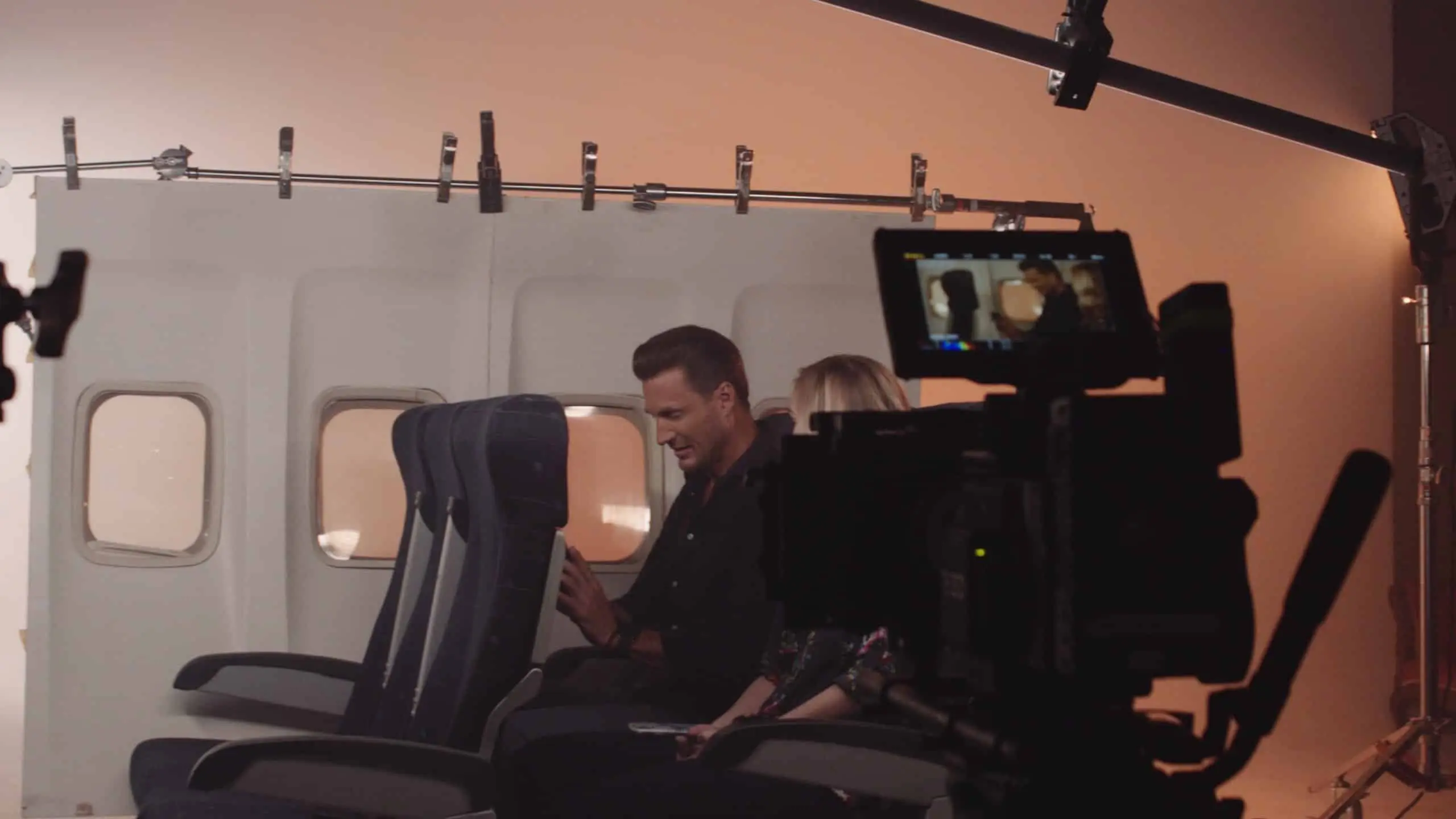
Video marketing has become an essential tool for businesses aiming to drive sales and engage their audience. By leveraging the power of [video production](https://c-istudios.com/video-production-services/), companies can connect with potential customers in a more dynamic and impactful way.
This article explores how video marketing can influence consumer behavior and boost sales, the types of video content that are most effective, tips for creating engaging videos, and strategies for optimizing and analyzing video marketing efforts. We'll also look at successful case studies and future trends to help you stay ahead in the competitive landscape of digital marketing.
## The Power of Video Marketing
Video marketing is a powerful medium that influences consumer behavior and significantly boosts sales. Videos capture attention more effectively than text or static images, making them a preferred format for consuming information. According to a study by HubSpot, 54% of consumers want to see more video content from brands they support. This preference translates into tangible results: businesses that use video marketing grow revenue 49% faster than those that don't.
In the field of [media marketing consultation](https://c-istudios.com/media-marketing-consultation-services/), video marketing's effectiveness lies in its ability to convey information quickly and memorably. A well-crafted video can explain complex concepts, showcase product features, and tell compelling stories that resonate with viewers. This emotional connection is crucial for building brand loyalty and driving purchase decisions.
Statistics further underscore the power of video marketing. For example, incorporating videos on landing pages can increase conversion rates by 80%. Email campaigns that include videos can see click-through rates increase by 200-300%. These figures highlight the potential of video marketing to drive more sales and enhance overall marketing effectiveness.
Moreover, video marketing helps businesses establish credibility and trust with their audience. Videos featuring customer testimonials, behind-the-scenes looks, and expert interviews can humanize a brand and make it more relatable. This authenticity is invaluable in building a loyal customer base that not only purchases but also advocates for your brand.
## Types of Video Content That Drive Sales
Different types of video content can be utilized to drive sales, each serving a unique purpose in the buyer's journey. Explainer videos are effective for introducing products or services, and breaking down complex information into easily digestible content. These videos often use animations and clear, concise language to explain how a product works or the benefits it offers, making them an excellent tool for educating potential customers.
Product demos showcase the functionality and benefits of a product, helping potential customers understand its value. By seeing the product in action, viewers can better envision how it fits into their lives, which can significantly boost their confidence in making a purchase. Detailed product demos that address common questions and concerns can also reduce hesitation and accelerate the decision-making process.
Incorporating [film and TV production](https://c-istudios.com/film-and-tv-production/) techniques into your video marketing can elevate the quality and professionalism of your content. High-quality production values, such as sharp visuals, clear audio, and professional editing, can make a significant difference in how your videos are perceived. Testimonials and customer reviews build trust by providing social proof and authentic experiences from satisfied customers. These videos can highlight real-world use cases and outcomes, making your product or service more tangible and credible.
Storytelling videos, which narrate a compelling story related to the brand or product, can engage viewers on an emotional level, increasing the likelihood of a purchase. These videos often focus on the brand’s mission, values, and impact, creating a deeper connection with the audience. Moreover, behind-the-scenes videos and company culture clips can give viewers an inside look at your business, fostering transparency and trust.
Moreover, live videos and webinars allow real-time interaction with the audience, answering questions, and addressing concerns directly. This interactive element can significantly boost engagement and conversion rates. Live videos create a sense of urgency and exclusivity, as they are often perceived as more authentic and spontaneous. Webinars can be particularly effective for B2B marketing, as they allow for in-depth discussions and demonstrations of complex products or services.
Each type of video content plays a vital role in driving sales by meeting the needs of consumers at different stages of the buying process. By strategically using a mix of these video types, you can create a comprehensive video marketing strategy that guides potential customers from awareness to decision.
## Creating Engaging Video Content
To produce high-quality, engaging videos, it's essential to focus on several key elements. High production values, clear audio, and visually appealing footage are fundamental. Utilizing professional equipment and software can enhance the overall quality of your videos, making them more likely to captivate and retain viewers.
[Creative marketing](https://c-istudios.com/creative-marketing-services/) strategies are crucial in making your videos stand out. Storytelling is one of the most effective techniques, as it creates an emotional connection with the audience. A compelling narrative can make your brand memorable and encourage viewers to take action. Additionally, integrating humor, surprise, or other emotional triggers can make your videos more engaging.
It's also important to consider the video's structure. Start with a hook to capture attention, followed by the main content, and end with a strong call to action. The first few seconds of your video are critical for grabbing attention, so make sure your hook is compelling and relevant. Keep the videos concise and to the point, as viewers are more likely to watch shorter videos to completion. However, don't sacrifice important information for brevity; ensure that your content is comprehensive and informative.
Ensuring your videos are accessible, with subtitles or transcripts, can also broaden your audience reach and improve engagement. Subtitles can make your content accessible to non-native speakers and those with hearing impairments, while transcripts can improve your SEO and provide an alternative way for users to consume your content.
Consider the visual and auditory elements of your videos. High-quality visuals, professional editing, and appropriate background music can enhance the overall viewer experience. Using animations and graphics can also help illustrate complex concepts and make your videos more engaging.
## Optimizing Videos for Sales Conversion
Optimizing your videos for conversion involves several techniques. Firstly, incorporate strong calls-to-action (CTAs) within the video. CTAs can be verbal prompts, clickable buttons, or text overlays that guide viewers on the next steps, such as visiting a website, signing up for a newsletter, or making a purchase. Clear and compelling CTAs are essential for turning viewers into customers.
Effective [SEO copywriting](https://c-istudios.com/seo-copywriting-services/) is essential for optimizing video titles, descriptions, and tags with relevant keywords. This helps improve the video’s visibility in search engine results and attracts more viewers. For instance, a video titled "How to Use Our Product to Solve X Problem" is likely to attract viewers searching for solutions to that specific problem. Including keywords naturally in your descriptions and tags can also improve your video’s discoverability on platforms like YouTube.
Interactive elements, such as polls, quizzes, and annotations, can also enhance viewer engagement and conversion rates. These elements can make your videos more engaging and provide valuable insights into your audience's preferences and behaviors. For example, a quiz at the end of a product demo video can help reinforce key points and keep viewers engaged until the end.
Including testimonials or customer success stories within your videos can build trust and credibility, further encouraging viewers to take action. Real-life examples of how your product or service has benefited others can be very persuasive. Additionally, ensure that your videos are mobile-friendly, as a significant portion of video consumption occurs on mobile devices. Fast loading times and responsive design can improve the user experience and drive higher conversion rates.
Another optimization technique is to use video analytics to track performance and make data-driven decisions. Analyzing metrics such as view count, watch time, engagement rate, and conversion rate can provide insights into what works and what doesn’t. This data can help you refine your video content and strategies to maximize conversions.
## Leveraging Social Media for Video Marketing
Social media platforms offer immense potential for promoting video content and driving sales. Each platform has unique features and audience demographics, so it's important to tailor your video marketing strategy accordingly. On YouTube, focus on creating high-quality, long-form content that provides value and encourages subscriptions. YouTube's algorithm favors videos with high watch time and engagement, so creating compelling content that keeps viewers engaged is crucial.
On platforms like Facebook and Instagram, shorter, engaging videos tend to perform better. Use features such as Stories and IGTV to reach a broader audience. Facebook's autoplay feature can capture attention quickly, so make sure the first few seconds of your video are visually compelling. Instagram Stories and IGTV allow for more personal and behind-the-scenes content, which can build a stronger connection with your audience.
Live streaming on social media can also boost engagement, allowing real-time interaction with your audience. Live videos create a sense of urgency and authenticity, as viewers can participate in real-time discussions, ask questions, and receive immediate responses. This interaction can build a sense of community and loyalty among your audience.
Utilizing [social media marketing](https://c-istudios.com/social-media-marketing-services/) can help you optimize your video content for each platform. This includes using platform-specific features, such as hashtags on Instagram or thumbnails on YouTube, to increase visibility and engagement. Consistently posting and promoting your videos across social media can drive traffic to your website and increase sales. Additionally, engaging with your audience through comments and messages can foster a loyal community and encourage word-of-mouth marketing.
Analyzing the performance of your videos on social media is also crucial. Each platform offers analytics tools that provide insights into how your videos are performing. By tracking metrics such as views, likes, shares, and comments, you can identify which videos resonate most with your audience and refine your strategy accordingly.
## Using Video in Email Marketing Campaigns
Incorporating videos into email marketing campaigns can significantly enhance their effectiveness. Videos can increase click-through rates, reduce unsubscribe rates, and boost overall engagement. Start by embedding videos directly into your emails or using video thumbnails linked to your website or YouTube channel.
Highlighting the benefits of your product or service through video can make your emails more persuasive. For example, product demonstration videos or customer testimonials can provide compelling reasons for recipients to consider making a purchase. A video showcasing a new product or a limited-time offer can create a sense of urgency and encourage immediate action.
Effective [web hosting](https://c-istudios.com/web-hosting/) ensures that your videos load quickly and play smoothly, providing a seamless user experience. By combining video content with personalized email marketing strategies, you can create highly targeted campaigns that drive conversions and sales. Personalizing your emails with the recipient's name and relevant content can make your videos more engaging and increase the likelihood of conversion.
Segmenting your email list based on customer behavior and preferences can also improve the effectiveness of your video marketing campaigns. By sending tailored videos to specific segments, you can address the unique needs and interests of each group, increasing the relevance and impact of your content.
Additionally, consider using A/B testing to determine the best video formats, lengths, and placements within your emails. Testing different elements can help you identify what resonates most with your audience and optimize your email campaigns for better performance.
## Analyzing Video Marketing Performance
To maximize the effectiveness of your video marketing efforts, it's crucial to analyze performance data and adjust your strategies accordingly. Key metrics to track include views, watch time, engagement, click-through rates, and conversion rates. Tools like Google Analytics and social media insights can provide valuable data on how your videos are performing.
Regarding [audio engineering](https://c-istudios.com/audio-engineering-services/), ensuring high-quality sound in your videos can significantly impact viewer retention and engagement. Poor audio quality can detract from the viewer experience, reducing the effectiveness of your video marketing efforts. Investing in good microphones and sound editing software can improve the audio quality of your videos, making them more professional and enjoyable to watch.
Regularly reviewing and analyzing performance data allows you to identify what works and what doesn't. By making data-driven adjustments, you can continuously improve your video marketing strategy and drive better results. Setting specific goals and key performance indicators (KPIs) can help you measure success and stay focused on your objectives.
Consider using advanced analytics tools that provide deeper insights into viewer behavior. For example, heatmaps can show you which parts of your video viewers are most engaged with, while drop-off points can indicate where viewers lose interest. This information can help you refine your content to keep viewers engaged and drive higher conversion rates.
## Case Studies of Successful Video Marketing Campaigns
Examining successful video marketing campaigns can provide valuable insights and inspiration. For instance, a company specializing in [documentary film production](https://c-istudios.com/documentary-film-production/) might use video marketing to tell compelling stories that resonate with its audience. By showcasing their expertise and the impact of their work, they can attract more clients and drive sales.
Another example is a brand that uses customer testimonials and success stories in its video marketing. By highlighting real experiences and results, they can build trust and credibility, encouraging potential customers to make a purchase. These videos can also address common objections and provide social proof, making them a powerful tool for driving sales.
Analyzing these case studies can reveal key strategies and techniques that contribute to success. Common elements often include high production values, strong storytelling, clear CTAs, and effective use of social media and email marketing. By applying these best practices, you can enhance your video marketing efforts and drive more sales.
For example, Dollar Shave Club's viral video campaign is a prime example of successful video marketing. Their humorous and engaging video not only introduced their product but also conveyed the brand's unique personality, leading to significant increases in sales and brand awareness. By studying such case studies, you can learn how to create impactful videos that resonate with your audience and drive sales.
## Future Trends in Video Marketing
Staying ahead of emerging trends and technologies in video marketing is crucial for maintaining a competitive edge. One such trend is the increasing use of interactive videos. These videos engage viewers by allowing them to make choices, answer questions, or explore different paths within the content. This level of interactivity can significantly boost engagement and conversion rates.
Another trend is the rise of personalized video content. By using data and analytics to tailor videos to individual viewer preferences, you can create more relevant and compelling content that resonates with your audience. Personalized videos can address specific needs and interests, making them more effective in driving sales.
In the context of a [TV show pitch](https://c-istudios.com/tv-show-pitch/), incorporating advanced video marketing techniques can help capture the attention of networks and investors. High-quality production, engaging content, and a clear value proposition are essential for standing out in a competitive market. Interactive elements and personalized content can also enhance the appeal of your pitch, making it more likely to succeed.
Virtual reality (VR) and augmented reality (AR) are also emerging as powerful tools in video marketing. These technologies can create immersive experiences that engage viewers on a deeper level. For example, a VR tour of a product or AR-enhanced video content can provide unique and memorable experiences that differentiate your brand from competitors.
By staying up-to-date with these trends and continuously innovating your video marketing strategy, you can drive more sales and achieve long-term success. Embracing new technologies and techniques can help you stay ahead of the curve and maintain a strong presence in the digital landscape.
## Work with C&I Studios
If you are planning a project like this, our team can take it from concept to final delivery. Explore our [video production services](https://c-istudios.com/video-production-services/), browse [our work](https://c-istudios.com/our-work/) to see how we tell brand stories, and [get in touch](https://c-istudios.com/contact/) when you are ready to start.
Originally published May 31, 2024
---
*This content is from [C&I Studios](https://c-istudios.com), a full-service production company.*
---
# Rokinon Xeen 24mm T1.5
> Published: May 30, 2024
> Categories: Film & TV
> Source: https://c-istudios.com/rokinon-xeen-24mm-t1-5/
---
[Rokinon Xeen 24mm T1.5 Lens](https://rokinon.com/products/24mm-t1-5-wide-angle-xeen-pro-cinema-lens) for Canon EF Mount is built specifically for use as a cinema lens. It features an internal focus design so that the lens does not change size while focusing, this minimizes the appearance of breathing when changing focus. Each lens in the set is multi-coated for good contrast, glare prevention, and are color matched to a factory standard, allowing you to assemble a set over time with minimal color shift. This 24mm lens provides what is considered a wide-angle of view on full-frame cameras, and a tighter angle of view on smaller formats.
The lens features dual-sided focus scales marked in feet, with dual-sided iris scales. The 11-bladed iris provides a rounded aperture for natural-looking highlights and Bokeh. The lens is a manual focus and iris lens and does not have autofocus or auto iris capability. It incorporates cinema-style focus and iris gears that share the same position across the lenses in the Xeen set. The common 114mm front diameter allows for quick lens changes when using a matte box and focus accessories. The focus ring rotates 200° from close focus to infinity; this gives you a high degree of precision when adjusting focus during [video production](https://c-istudios.com/video-production-services/).
**Related Services:** [Video Production](https://c-istudios.com/video-production-services/) | [Film & TV Production](https://c-istudios.com/film-and-tv-production/) | [Our Work](https://c-istudios.com/our-work/) | [Contact Us](https://c-istudios.com/contact/)
### Related Reading
---
*This content is from [C&I Studios](https://c-istudios.com), a full-service production company.*
---
# Utilizing Schema Markup for Enhanced Video SEO Results
> Published: May 30, 2024
> Categories: Web & Tech
> Source: https://c-istudios.com/utilizing-schema-markup-for-enhanced-video-seo-results/
---
.cib{--paper:#1b1d1f;--ink:#fff;--body:#d5d7d9;--muted:#8b9096;--line:rgba(255,255,255,.12);--thumb:#2b2e31;--card:#212426;--accent:#c02b0a;--blue:#5B8FA8;--serif:'Playfair Display',Georgia,serif;--sans:'Poppins',-apple-system,sans-serif;--measure:900px;background:var(--paper);color:var(--body);font-family:var(--sans);line-height:1.6;position:relative;left:50%;transform:translateX(-50%);width:90vw;max-width:1920px}
.cib *{box-sizing:border-box}
.cib .kicker{max-width:var(--measure);margin:58px auto 0;padding:0 22px;font-size:12.5px;font-weight:700;letter-spacing:2.5px;text-transform:uppercase;color:var(--blue)}
.cib h1.cibh1{text-wrap:balance;font-family:var(--serif);font-weight:500;font-size:clamp(46px,6vw,72px);line-height:1.08;color:var(--ink);max-width:var(--measure);margin:18px auto 0;padding:0 22px;letter-spacing:-.5px}
.cib .metarow{max-width:var(--measure);margin:20px auto 0;padding:0 22px;color:var(--muted);font-size:14px}
.cib .hero{position:relative;width:100%;height:0;padding-bottom:56.25%;overflow:hidden;margin:48px auto 0;border-top:1px solid var(--line);border-bottom:1px solid var(--line)}
.cib .hero .ph{width:100%;aspect-ratio:16/9;background:var(--thumb);border-top:1px solid var(--line);border-bottom:1px solid var(--line);display:flex;align-items:center;justify-content:center;color:#7d8288;font-size:13px;text-align:center;padding:0 20px}
.cib .body{max-width:var(--measure);margin:12px auto 0;padding:52px 22px 6px}
.cib .body.lead p:first-child{font-size:23px;line-height:1.62;color:var(--ink)}
.cib .body p{font-size:18.5px;line-height:1.85;margin:0 0 30px;color:var(--body)}
.cib .body h2{text-wrap:balance;font-family:var(--serif);font-weight:500;font-size:clamp(32px,4vw,48px);line-height:1.22;color:var(--ink);margin:70px 0 20px;letter-spacing:-.3px}
.cib .body h3{text-wrap:balance;font-family:var(--sans);font-weight:600;font-size:22px;color:var(--ink);margin:38px 0 8px}
.cib .body a{color:var(--ink);text-decoration:underline;text-decoration-color:rgba(255,255,255,.4);text-underline-offset:3px}
.cib .body a:hover{text-decoration-color:var(--ink)}
.cib .ctable{width:100%;border-collapse:collapse;margin:16px 0 30px;font-size:16px}
.cib .ctable th{background:#000;color:#fff;text-align:left;padding:10px 12px;font-family:var(--sans)}
.cib .ctable td{padding:10px 12px;border-bottom:1px solid var(--line);color:var(--body)}
.cib .inimg{position:relative;width:100%;height:0;padding-bottom:56.25%;overflow:hidden;margin:72px auto;border-top:1px solid var(--line);border-bottom:1px solid var(--line)}
.cib .inimg .ph{width:100%;aspect-ratio:16/9;background:var(--thumb);border-top:1px solid var(--line);border-bottom:1px solid var(--line);display:flex;align-items:center;justify-content:center;color:#7d8288;font-size:13px}
.cib .origpub{max-width:var(--measure);margin:60px auto 0;padding:26px 22px 0;border-top:1px solid var(--line);color:var(--muted);font-size:13.5px}
.cib .related{max-width:1200px;margin:64px auto 0;padding:34px 22px 76px}
.cib .related h3{font-family:var(--sans);font-size:12.5px;letter-spacing:2px;text-transform:uppercase;color:var(--ink);margin:0 0 24px}
.cib .grid{display:grid;grid-template-columns:repeat(3,1fr);gap:28px}
.cib .rc{background:var(--card);border:1px solid var(--line);display:block;text-decoration:none;color:inherit;transition:border-color .15s}
.cib a.rc:hover{border-color:rgba(255,255,255,.5)}
.cib .rc .thumb{position:relative;width:100%;height:0;padding-bottom:56.25%;background:var(--thumb);overflow:hidden}
.cib .rc .thumb img{position:absolute!important;top:0!important;left:0!important;width:100%!important;height:100%!important;object-fit:cover!important;margin:0!important}
.cib .rc .cc{padding:14px 15px 17px}
.cib .rc .rt{font-family:var(--serif);font-weight:500;font-size:16px;line-height:1.3;color:var(--ink);margin:0 0 6px}
.cib .rc .rm{font-size:11px;letter-spacing:1px;text-transform:uppercase;color:var(--muted)}
.cib img{margin:0!important;padding:0!important;display:block!important;vertical-align:top;max-width:100%}
.cib .hero img,.cib .inimg img{position:absolute!important;top:0!important;left:0!important;width:100%!important;height:100%!important;object-fit:cover!important;margin:0!important;padding:0!important;border:0!important;display:block!important;aspect-ratio:auto!important}
.cib .hero+.body{padding-top:36px}
@media(max-width:760px){.cib .grid{grid-template-columns:1fr}.cib .body h2{margin:52px 0 16px}.cib .body p{font-size:17.5px}.cib .inimg,.cib .hero{margin-top:44px}}
.cib .vembed{max-width:var(--measure);margin:44px auto;padding:0 22px}.cib .vembed .vwrap{position:relative;width:100%;height:0;padding-bottom:56.25%}.cib .vembed .vwrap iframe{position:absolute;top:0;left:0;width:100%;height:100%;border:0}
Web & Tech
# Utilizing Schema Markup for Enhanced Video SEO Results
12 min read
Schema markup, a form of microdata, is an essential tool for enhancing SEO performance. By embedding schema markup in your HTML, you enable search engines to better understand and display your content. This is particularly crucial for video content, as schema markup can significantly improve video search engine rankings, visibility, and engagement.
In this article, we will delve into the various aspects of schema markup, its benefits, implementation strategies, best practices, and future trends, providing a comprehensive guide for leveraging this powerful SEO tool.
## Understanding Schema Markup
Schema markup, often referred to as structured data, is a code that you put on your website to help search engines return more informative results for users. It is a collaboration between Google, Bing, Yahoo!, and Yandex to create a common set of schemas, allowing webmasters to mark up their pages in ways recognized by these major search providers.
In the context of SEO, schema markup plays a pivotal role by providing search engines with explicit clues about the meaning of your content. For videos, this means that schema markup can help search engines understand the video’s title, description, thumbnail URL, upload date, and other relevant details, which can then be displayed in rich snippets on the search engine results pages (SERPs). This visibility can significantly increase click-through rates, user engagement, and overall traffic to your site.
There are different types of schema markup relevant to video content, including VideoObject, which is the most commonly used for video SEO. The VideoObject schema allows you to specify details such as the video’s name, description, duration, thumbnail URL, upload date, and embed URL. Using this schema correctly can greatly enhance your video’s visibility and click-through rates. By providing search engines with comprehensive information about your video, you increase the chances of your content being displayed in an engaging and informative manner in search results.
Implementing schema markup requires a good understanding of [SEO copywriting](https://c-istudios.com/seo-copywriting-services/). It involves not only the technical aspect of embedding the code but also ensuring that the descriptions and keywords used are optimized for search engines. For example, a well-optimized VideoObject schema might include a compelling title and description that incorporate relevant keywords naturally, helping to attract both search engines and viewers. The detailed metadata provided by schema markup can also enhance the user experience by providing clear and concise information about the video content before users even click on it.
## Benefits of Schema Markup for Video SEO
Schema markup offers numerous benefits for video SEO, primarily by enhancing the way your video content appears in search results. One of the most significant advantages is the improvement in search engine rankings. Videos that include schema markup are more likely to appear in rich snippets, which are enhanced search results that often include images, ratings, and other visual elements. These rich snippets can make your content stand out from other results, increasing the likelihood of attracting clicks.
Another benefit of schema markup is the potential for increased video engagement. When users see a video thumbnail or rich snippet in search results, they are more likely to click on it compared to a plain text link. This can lead to higher click-through rates and more traffic to your website.
Furthermore, videos that are properly marked up are more likely to be indexed and understood by search engines, which can result in higher rankings and more visibility. This enhanced visibility can drive significant organic traffic to your site, contributing to higher engagement and conversions.
Successful implementations of schema markup can be seen in various industries. For example, a company specializing in [branding and graphic design](https://c-istudios.com/branding-and-graphic-design-services/) might use schema markup to enhance their video tutorials and case studies. By providing detailed information about each video, they can attract more viewers and potential clients.
Similarly, an e-commerce site could use schema markup to improve the visibility of its product demonstration videos, leading to higher sales and customer engagement. By leveraging the power of schema markup, these companies can create a more engaging and informative user experience, which translates into higher SEO performance and business growth.
## Implementing Schema Markup for Video Content
Adding schema markup to your video content involves a few key steps. First, you need to decide which type of schema markup is most appropriate for your content. For video content, the VideoObject schema is usually the best choice. Next, you will need to generate the schema markup code.
There are several tools available that can help with this, including Google’s Structured Data Markup Helper and various schema markup generators. These tools simplify the process by guiding you through the steps needed to create accurate and comprehensive schema markup for your videos.
Once you have generated the schema markup code, you need to embed it into the HTML of your web page. This typically involves placing the code within the <head> or <body> sections of your HTML. It is important to ensure that the code is correctly formatted and includes all necessary information, such as the video title, description, thumbnail URL, upload date, and duration. Proper formatting and placement of schema markup are crucial to ensure that search engines can easily read and interpret the information.
After embedding the schema markup, it is crucial to test it to ensure it is working correctly. Google’s Structured Data Testing Tool can be used to validate your markup and identify any errors. This tool will show you how your video content will appear in search results and highlight any issues that need to be fixed. Regular testing and validation help maintain the accuracy and effectiveness of your schema markup, ensuring that your video content remains optimized for search engines.
Implementing schema markup can be a part of your broader [web development](https://c-istudios.com/web-development-services/) strategy. It involves collaboration between SEO specialists, content creators, and developers to ensure that the schema markup is correctly implemented and optimized. Regular audits and updates to your schema markup can help maintain its effectiveness and keep up with changes in search engine algorithms. By integrating schema markup into your overall SEO strategy, you can enhance the visibility and performance of your video content across various platforms.
## Best Practices for Video Schema Markup
To optimize schema markup for maximum SEO impact, it is important to follow best practices. One key practice is to ensure that your schema markup is complete and accurate. This means including all relevant information about your video, such as the title, description, thumbnail URL, upload date, and duration. Providing detailed and accurate information helps search engines understand your content better and can improve your chances of appearing in rich snippets.
Another best practice is to use schema markup consistently across all your video content. This helps build a strong SEO foundation and ensures that all your videos are optimized for search engines. Consistency also makes it easier to manage and update your schema markup over time. By maintaining a uniform approach to schema markup, you can ensure that all your video content receives the same level of optimization and visibility.
It is also important to avoid common mistakes when implementing schema markup. One common mistake is using incorrect or incomplete markup. This can lead to errors in how your content is displayed in search results and may even result in your content being excluded from rich snippets.
Another mistake is failing to update your schema markup regularly. As search engine algorithms and best practices evolve, it is important to keep your schema markup up-to-date to maintain its effectiveness.
Incorporating [creative marketing](https://c-istudios.com/creative-marketing-services/) techniques into your schema markup strategy can also enhance its impact. For example, using compelling titles and descriptions that incorporate relevant keywords can help attract more viewers.
Additionally, using high-quality thumbnails and ensuring that your videos are mobile-friendly can improve user engagement and click-through rates. By combining schema markup with creative marketing strategies, you can create a more engaging and effective video SEO campaign.
## Case Studies of Video Schema Markup Success
Real-life examples of websites that have benefited from video schema markup can provide valuable insights and inspiration. One notable example is a company that specializes in [video audio live streaming](https://c-istudios.com/video-audio-live-streaming/). By implementing video schema markup, they were able to improve the visibility of their live-streaming events in search results.
This led to higher attendance and engagement, as more users were able to find and watch their streams. The use of schema markup helped their videos stand out in search results, attracting more viewers and increasing their overall reach.
Another example is a travel blog that used schema markup to enhance its video content. By providing detailed information about their travel videos, such as the destination, activities, and tips, they were able to attract more viewers and increase their website traffic.
The use of schema markup helped their videos stand out in search results, leading to higher click-through rates and more engagement. By leveraging schema markup, the travel blog was able to create a more informative and engaging user experience, which translated into higher SEO performance and business growth.
Analyzing these successful implementations can reveal key elements that contributed to their effectiveness. One common factor is the use of detailed and accurate schema markup that provides comprehensive information about the video content.
Another factor is the consistent use of schema markup across all video content, which helps build a strong SEO foundation. By studying these case studies, you can gain valuable insights into how schema markup can be used to enhance the visibility and performance of your video content.
## Leveraging Schema Markup Across Platforms
Schema markup can be used to enhance video content on various platforms, including YouTube, Vimeo, and your own website. Each platform has its own guidelines and best practices for implementing schema markup, so it is important to tailor your approach accordingly. By understanding the unique requirements and opportunities of each platform, you can maximize the impact of your schema markup and improve the visibility of your video content.
For YouTube, adding schema markup can help improve the visibility of your videos in Google search results. This can lead to higher click-through rates and more views. Vimeo also supports schema markup, allowing you to enhance the visibility of your videos on their platform. By using schema markup, you can ensure that your videos are displayed prominently in search results, attracting more viewers and increasing engagement.
Integrating schema markup with other SEO strategies can further enhance its impact. For example, combining schema markup with keyword optimization, link building, and social media marketing can create a comprehensive SEO strategy that drives more traffic and engagement. [Web maintenance](https://c-istudios.com/web-maintenance/) is also crucial to ensure that your schema markup remains effective and up-to-date. Regularly updating your schema markup and monitoring its performance can help maintain its effectiveness and ensure that your video content continues to perform well in search results.
By leveraging schema markup across multiple platforms, you can maximize the reach and impact of your video content. This involves a coordinated effort between your SEO team, content creators, and developers to ensure that schema markup is correctly implemented and optimized across all platforms. By taking a holistic approach to schema markup, you can enhance the visibility and performance of your video content, driving more traffic and engagement.
## Analyzing the Impact of Schema Markup
Measuring the effectiveness of schema markup on video SEO is essential to understanding its impact and making data-driven decisions. There are several methods for analyzing the performance of schema markup, including using analytics tools to track key metrics such as views, click-through rates, and engagement.
Google Analytics and Google Search Console are valuable tools for tracking the performance of your video content. These tools provide insights into how users are interacting with your videos, including how they found your content and how long they watched it.
By analyzing this data, you can identify trends and patterns that can inform your SEO strategy. For example, if you notice that videos with certain types of schema markup perform better than others, you can adjust your approach to focus on those elements.
[Professional photography](https://c-istudios.com/professional-photography-services/) businesses can also benefit from analyzing the impact of schema markup. By tracking how their video tutorials and behind-the-scenes content perform in search results, they can refine their strategy to attract more clients and showcase their expertise.
Regularly reviewing and analyzing your video performance allows you to make data-driven decisions and optimize your content strategy. Adjust your approach based on what works and what doesn't, and continuously strive to improve the quality and impact of your videos.
Consider setting specific goals and KPIs (Key Performance Indicators) for your video content to track progress and measure success. By setting clear objectives and monitoring your performance, you can ensure that your schema markup strategy remains effective and aligned with your business goals.
Use A/B testing to compare different versions of your videos. Test variables such as thumbnails, titles, descriptions, and calls to action to determine which elements perform best. This iterative approach can help you fine-tune your video content and maximize its effectiveness. By continuously experimenting and refining your strategy, you can stay ahead of the competition and maintain a strong presence in search results.
## Future Trends in Video Schema Markup
The field of schema markup is constantly evolving, with new trends and advancements emerging regularly. Staying ahead of these trends is crucial to maintaining a competitive edge and maximizing the impact of your video SEO strategy. By keeping up with the latest developments, you can ensure that your schema markup remains effective and aligned with current best practices.
One emerging trend is the use of artificial intelligence (AI) and machine learning to enhance schema markup. AI can help automate the process of generating and updating schema markup, making it more efficient and accurate. Machine learning algorithms can also analyze large amounts of data to identify patterns and optimize schema markup for better performance. By leveraging AI and machine learning, businesses can streamline their schema markup process and achieve better results with less effort.
Another trend is the increasing importance of mobile optimization. With more users accessing video content on mobile devices, it is essential to ensure that your schema markup is optimized for mobile search. This includes using responsive design, optimizing load times, and ensuring that video content is easily accessible on mobile devices. By prioritizing mobile optimization, you can improve the user experience and attract more mobile users to your content.
[Audio engineering](https://c-istudios.com/audio-engineering-services/) is also becoming an important consideration in video schema markup. As more users consume video content with audio, it is crucial to ensure that your schema markup includes relevant information about the audio components of your videos. This can enhance the overall user experience and improve engagement. By providing detailed information about the audio quality and features of your videos, you can attract users who value high-quality audio and differentiate your content from competitors.
By staying up-to-date with the latest trends and advancements in schema markup, you can ensure that your video SEO strategy remains effective and competitive. This involves continuous learning and experimentation to find the best approaches and techniques for your specific needs. By embracing new technologies and trends, you can stay ahead of the curve and maximize the impact of your video content.
## Work with C&I Studios
If you are planning a project like this, our team can take it from concept to final delivery. Explore our [AI video services](https://c-istudios.com/ai-video-services/), browse [our work](https://c-istudios.com/our-work/) to see how we tell brand stories, and [get in touch](https://c-istudios.com/contact/) when you are ready to start.
Originally published May 30, 2024
---
*This content is from [C&I Studios](https://c-istudios.com), a full-service production company.*
---
# Understanding Feature Film Mastering: A Comprehensive Guide
> Published: May 24, 2024
> Categories: Film & TV
> Source: https://c-istudios.com/understanding-feature-film-mastering-a-comprehensive-guide/
---
.cib{--paper:#1b1d1f;--ink:#fff;--body:#d5d7d9;--muted:#8b9096;--line:rgba(255,255,255,.12);--thumb:#2b2e31;--card:#212426;--accent:#c02b0a;--blue:#5B8FA8;--serif:'Playfair Display',Georgia,serif;--sans:'Poppins',-apple-system,sans-serif;--measure:900px;background:var(--paper);color:var(--body);font-family:var(--sans);line-height:1.6;position:relative;left:50%;transform:translateX(-50%);width:90vw;max-width:1920px}
.cib *{box-sizing:border-box}
.cib .kicker{max-width:var(--measure);margin:58px auto 0;padding:0 22px;font-size:12.5px;font-weight:700;letter-spacing:2.5px;text-transform:uppercase;color:var(--blue)}
.cib h1.cibh1{text-wrap:balance;font-family:var(--serif);font-weight:500;font-size:clamp(46px,6vw,72px);line-height:1.08;color:var(--ink);max-width:var(--measure);margin:18px auto 0;padding:0 22px;letter-spacing:-.5px}
.cib .metarow{max-width:var(--measure);margin:20px auto 0;padding:0 22px;color:var(--muted);font-size:14px}
.cib .hero{position:relative;width:100%;height:0;padding-bottom:56.25%;overflow:hidden;margin:48px auto 0;border-top:1px solid var(--line);border-bottom:1px solid var(--line)}
.cib .hero .ph{width:100%;aspect-ratio:16/9;background:var(--thumb);border-top:1px solid var(--line);border-bottom:1px solid var(--line);display:flex;align-items:center;justify-content:center;color:#7d8288;font-size:13px;text-align:center;padding:0 20px}
.cib .body{max-width:var(--measure);margin:12px auto 0;padding:52px 22px 6px}
.cib .body.lead p:first-child{font-size:23px;line-height:1.62;color:var(--ink)}
.cib .body p{font-size:18.5px;line-height:1.85;margin:0 0 30px;color:var(--body)}
.cib .body h2{text-wrap:balance;font-family:var(--serif);font-weight:500;font-size:clamp(32px,4vw,48px);line-height:1.22;color:var(--ink);margin:70px 0 20px;letter-spacing:-.3px}
.cib .body h3{text-wrap:balance;font-family:var(--sans);font-weight:600;font-size:22px;color:var(--ink);margin:38px 0 8px}
.cib .body a{color:var(--ink);text-decoration:underline;text-decoration-color:rgba(255,255,255,.4);text-underline-offset:3px}
.cib .body a:hover{text-decoration-color:var(--ink)}
.cib .ctable{width:100%;border-collapse:collapse;margin:16px 0 30px;font-size:16px}
.cib .ctable th{background:#000;color:#fff;text-align:left;padding:10px 12px;font-family:var(--sans)}
.cib .ctable td{padding:10px 12px;border-bottom:1px solid var(--line);color:var(--body)}
.cib .inimg{position:relative;width:100%;height:0;padding-bottom:56.25%;overflow:hidden;margin:72px auto;border-top:1px solid var(--line);border-bottom:1px solid var(--line)}
.cib .inimg .ph{width:100%;aspect-ratio:16/9;background:var(--thumb);border-top:1px solid var(--line);border-bottom:1px solid var(--line);display:flex;align-items:center;justify-content:center;color:#7d8288;font-size:13px}
.cib .origpub{max-width:var(--measure);margin:60px auto 0;padding:26px 22px 0;border-top:1px solid var(--line);color:var(--muted);font-size:13.5px}
.cib .related{max-width:1200px;margin:64px auto 0;padding:34px 22px 76px}
.cib .related h3{font-family:var(--sans);font-size:12.5px;letter-spacing:2px;text-transform:uppercase;color:var(--ink);margin:0 0 24px}
.cib .grid{display:grid;grid-template-columns:repeat(3,1fr);gap:28px}
.cib .rc{background:var(--card);border:1px solid var(--line);display:block;text-decoration:none;color:inherit;transition:border-color .15s}
.cib a.rc:hover{border-color:rgba(255,255,255,.5)}
.cib .rc .thumb{position:relative;width:100%;height:0;padding-bottom:56.25%;background:var(--thumb);overflow:hidden}
.cib .rc .thumb img{position:absolute!important;top:0!important;left:0!important;width:100%!important;height:100%!important;object-fit:cover!important;margin:0!important}
.cib .rc .cc{padding:14px 15px 17px}
.cib .rc .rt{font-family:var(--serif);font-weight:500;font-size:16px;line-height:1.3;color:var(--ink);margin:0 0 6px}
.cib .rc .rm{font-size:11px;letter-spacing:1px;text-transform:uppercase;color:var(--muted)}
.cib img{margin:0!important;padding:0!important;display:block!important;vertical-align:top;max-width:100%}
.cib .hero img,.cib .inimg img{position:absolute!important;top:0!important;left:0!important;width:100%!important;height:100%!important;object-fit:cover!important;margin:0!important;padding:0!important;border:0!important;display:block!important;aspect-ratio:auto!important}
.cib .hero+.body{padding-top:36px}
@media(max-width:760px){.cib .grid{grid-template-columns:1fr}.cib .body h2{margin:52px 0 16px}.cib .body p{font-size:17.5px}.cib .inimg,.cib .hero{margin-top:44px}}
.cib .vembed{max-width:var(--measure);margin:44px auto;padding:0 22px}.cib .vembed .vwrap{position:relative;width:100%;height:0;padding-bottom:56.25%}.cib .vembed .vwrap iframe{position:absolute;top:0;left:0;width:100%;height:100%;border:0}
Film & TV
# Understanding Feature Film Mastering. A Comprehensive Guide
10 min read
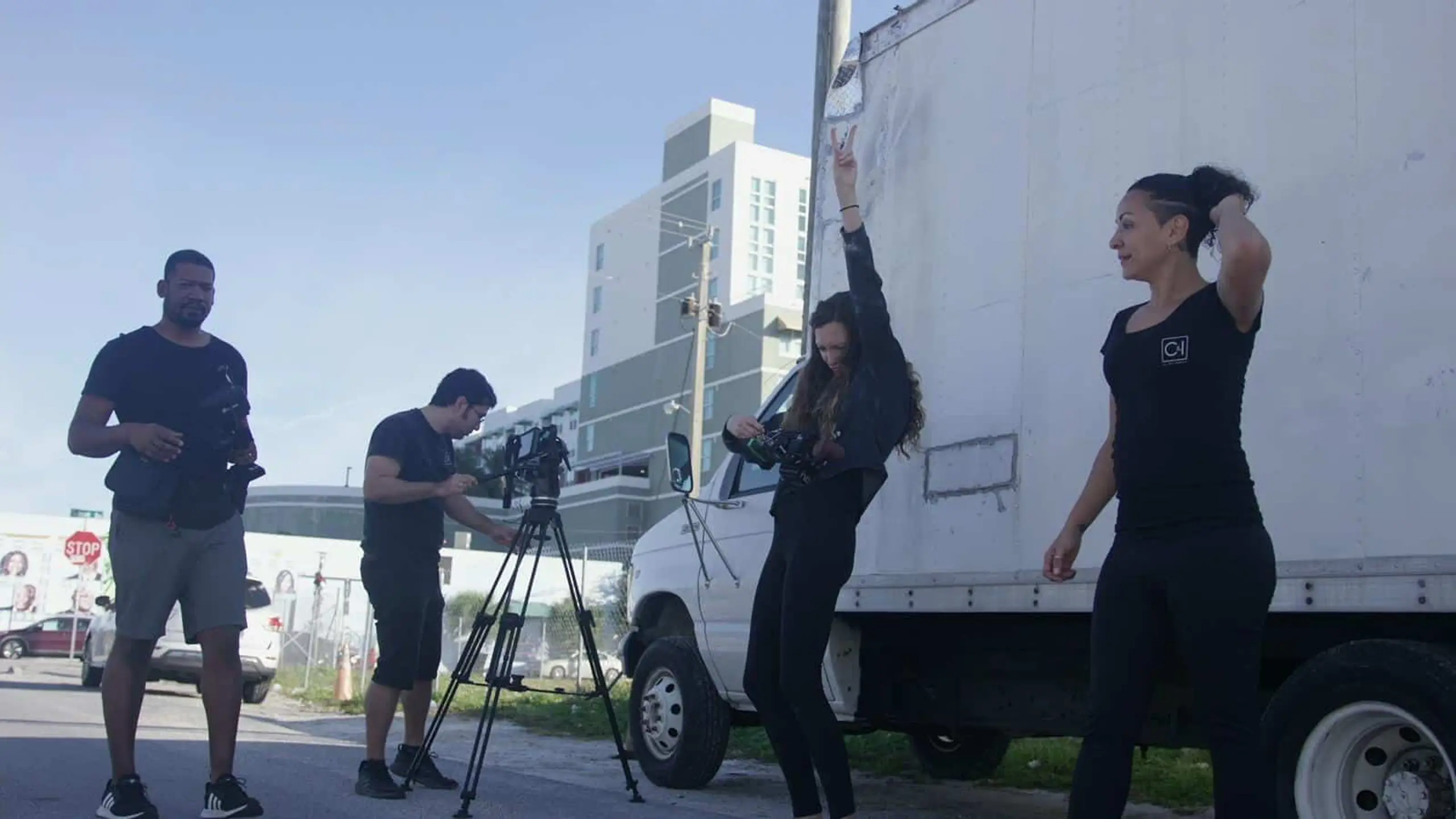
Feature film mastering is a critical phase in the [film and TV production](https://c-istudios.com/film-and-tv-production/) process. It involves fine-tuning the final product to ensure it meets the highest quality standards before distribution. This stage ensures that every visual and audio element is polished, providing an optimal viewing experience.
As the final step before a film reaches its audience, mastering is where the magic happens, transforming raw footage into a cohesive, polished masterpiece ready for theaters, streaming platforms, and home video.
## What is Feature Film Mastering
The final step in the post-production process is where the film undergoes meticulous adjustments to perfect its visual and auditory elements. This stage includes tasks like color correction, audio enhancement, and the integration of special effects. The primary goal is to create a cohesive and polished final product that is ready for distribution across various platforms, including theaters, streaming services, and home video.
During mastering, the film is prepared for different formats and resolutions, ensuring compatibility and high quality regardless of the viewing device. This process is crucial in [video production](https://c-istudios.com/video-production-services/) as it enhances the film's overall appeal and ensures that it meets industry standards.
[Feature film mastering](https://c-istudios.com/feature-film-mastering-and-delivery/) also involves ensuring that the final product is compliant with various technical specifications required by different distribution platforms. This includes conforming to color space standards, and audio loudness levels, and ensuring the file formats are suitable for streaming or broadcasting. The meticulous nature of mastering means that even the smallest imperfections are corrected, ensuring a flawless viewing experience for the audience.
Mastering plays a vital role in preparing a film for international distribution. This often involves creating different versions of the film with subtitles or dubbing in various languages, ensuring that the film can be enjoyed by audiences around the globe. The process also includes creating promotional materials such as trailers and clips that are optimized for different media formats and platforms, further highlighting the importance of a thorough mastering process.
The complexities involved in feature film mastering require a combination of artistic talent and technical expertise. Professionals in this field need to have a deep understanding of film aesthetics, audio engineering, and the technical requirements of various distribution channels. This combination ensures that the final product is not only visually and audibly stunning but also meets all the necessary standards for widespread distribution.
## The Importance of Feature Film Mastering
Mastering is a pivotal step in film production because it significantly impacts the final product's quality. Without proper mastering, a film can appear unpolished and fail to engage its audience effectively. Enhanced visual quality is one of the key benefits of mastering, as it ensures that the film's visuals are consistent and of the highest quality.
This includes adjustments in color grading, brightness, contrast, and the integration of visual effects. Proper mastering can transform raw footage into a visually stunning experience. Color grading is a particularly crucial aspect, as it sets the mood and tone of the film.
Improved audio quality is another critical aspect. Sound is a crucial element in filmmaking. Mastering involves balancing audio levels, enhancing sound effects, and ensuring clear dialogue. This results in an immersive audio experience that complements the visuals. [Audio engineering](https://c-istudios.com/audio-engineering-services/) techniques such as equalization, compression, and reverb ensure that the sound is clear and balanced, and enhance the overall impact of the film.
Good audio can make a significant difference in how the audience perceives the film, making it feel more immersive and engaging. The right audio mastering can turn a good film into a great one by ensuring that every whisper, explosion, and musical note is perfectly balanced and enhances the viewing experience.
Compatibility across platforms is also a significant advantage. Mastering prepares the film for various distribution formats, ensuring it looks and sounds great whether it's being watched in a theater or on a smartphone. This versatility is crucial in today's multi-platform media landscape. The mastering process involves creating different versions of the film for various platforms, ensuring that the quality is maintained across all devices. This includes adjusting the resolution, bitrate, and other technical specifications to optimize the film for each platform.
Professionalism is demonstrated through a well-mastered film, reflecting a high level of attention to detail and commitment to delivering a top-notch product. This can enhance the film's reputation and marketability. Incorporating creative marketing strategies during the mastering phase can also boost the film's promotional efforts. High-quality visuals and audio make for compelling trailers and promotional materials that attract audiences and generate buzz.
A professionally mastered film can stand out in a competitive market, making it more likely to be noticed and appreciated by audiences and critics alike. The reputation of a filmmaker or production company can be significantly enhanced by consistently delivering well-mastered, high-quality films.
Furthermore, ensures that a film adheres to the technical standards required for various forms of distribution, such as DCP (Digital Cinema Package) for theatrical releases, Blu-ray for home video, and various file formats for online streaming platforms. Meeting these standards is essential for ensuring that the film can be distributed widely and viewed in the best possible quality.
## The Mastering Process. Step-by-Step
The mastering process involves several key steps, each critical to achieving the final polished product.
### Pre-Mastering Preparation
Before the actual mastering begins, several preparatory steps are essential. These include reviewing the raw footage and audio tracks to identify areas that need improvement. Color correction is performed to ensure consistent hues and tones across all scenes, enhancing the film's visual coherence. Audio balancing is also crucial, ensuring that dialogue, music, and sound effects are harmoniously blended. This stage may also involve initial test screenings to gather feedback and identify any areas that need further improvement.
### Audio Mastering Techniques
Audio mastering focuses on refining the sound quality to ensure clarity and impact. This includes equalization, which adjusts the balance between different frequency components, and compression, which controls the dynamic range of the audio. Reverb and delay effects may be added to create a sense of space and depth. Proper audio mastering ensures that the sound is crisp and immersive, enhancing the overall viewing experience. By addressing these technical aspects, audio mastering ensures that the film's sound is of the highest quality and provides an immersive experience for the audience.
### Video Mastering Techniques
Video mastering involves a range of techniques to improve the visual quality of the film. Resolution adjustments are made to ensure the film looks sharp on all screens, from large theater displays to mobile devices. [VFX compositing and animation](https://c-istudios.com/vfx-compositing-and-animation-services/) are integrated seamlessly into the footage, enhancing the visual narrative. This involves adjusting the brightness, contrast, saturation, and hue of the footage to create a visually appealing and cohesive look.
## Tools and Software for Feature Film Mastering
The mastering process relies on advanced tools and software to achieve professional results. DaVinci Resolve is known for its powerful color correction capabilities and is a favorite among filmmakers for both editing and mastering. It offers a comprehensive suite of tools for color grading, audio post-production, and visual effects. Its intuitive interface and robust features make it ideal for creating professional-quality films.
Pro Tools is an industry-standard for audio post-production, offering advanced features for sound editing, mixing, and mastering. Its robust capabilities make it ideal for achieving professional-grade audio quality. Pro Tools is widely used in the film industry for its precision and reliability.
Final Cut Pro, a popular choice among filmmakers, provides powerful video editing and mastering tools. Its intuitive interface and advanced features make it suitable for both novice and experienced editors. Final Cut Pro's seamless integration with other Apple products and its powerful editing capabilities make it a top choice for many filmmakers.
Using these tools, professionals in [web development](https://c-istudios.com/web-development-services/) and film production can ensure that their projects meet the highest quality standards, ready for distribution and audience consumption. These tools offer a wide range of features that allow for precise adjustments and enhancements, ensuring that the final product is polished and professional.
Advanced software and tools play a critical role in the mastering process, providing filmmakers with the ability to make detailed adjustments to both audio and video elements. The use of these tools ensures that the final product is of the highest quality, meeting industry standards and audience expectations.
Similarly, dedicated color grading panels and monitors allow for precise adjustments to the visual elements, ensuring that the final product looks stunning on any screen. The combination of advanced software and specialized hardware provides filmmakers with the tools they need to achieve professional results in the mastering process.
## Common Challenges in Feature Film Mastering
Mastering a feature film can present several challenges that require careful management. Inconsistent Visual Quality is a common issue, especially when dealing with footage shot in different conditions. Color correction and grading are essential to address this issue. By using advanced color grading techniques, the mastering engineer can ensure that the visual quality is consistent and enhances the overall aesthetic of the film.
Audio Imbalances can be another challenge, requiring professional audio mastering techniques and tools to achieve a harmonious soundscape. Ensuring that dialogue, music, and sound effects are well-balanced can be difficult. Techniques such as equalization, compression, and reverb are essential for creating a balanced and immersive audio experience.
Time Constraints can add pressure, as mastering is a time-consuming process. Efficient project management and prioritization are key to meeting deadlines without compromising quality. By planning the mastering process carefully and using project management tools, filmmakers can ensure that the project stays on track and meets its deadlines.
Technical Issues with software or hardware can disrupt the mastering process. Regular maintenance and updates, along with having backup systems in place, can mitigate these risks. Ensuring that all software and hardware are up to date and functioning properly is essential for a smooth and efficient mastering process.
Incorporating [SEO copywriting](https://c-istudios.com/seo-copywriting-services/) principles into the film's online promotional materials can also help in overcoming marketing challenges by improving search engine visibility and attracting a larger audience. By optimizing the promotional content for search engines, filmmakers can reach a wider audience and increase the film's visibility and impact. This involves using relevant keywords and phrases in the promotional materials, creating engaging and informative content, and ensuring that the website is optimized for search engines. By addressing these marketing challenges, filmmakers can enhance the reach and impact of their films.
## Leveraging Mastered Films for Marketing
Once a film is mastered, it can be leveraged for various marketing campaigns. High-quality visuals and audio make for compelling promotional materials that can attract and engage audiences. Creating captivating trailers and teasers that highlight the film's best moments ensures that the visuals and audio are of the highest quality to generate excitement and anticipation.
High-quality trailers can capture the audience's attention and create buzz around the film's release. The use of advanced editing techniques allows filmmakers to create engaging and visually stunning promotional materials that resonate with viewers.
Social Media Campaigns can utilize snippets from the film to engage followers and build hype. High-quality clips can stand out in crowded social media feeds and attract more views and shares. By sharing engaging and visually stunning content, filmmakers can increase their film's reach and visibility.
Including creating short, attention-grabbing clips that highlight the film's best moments and sharing them on various social media platforms. The use of hashtags and targeted advertising can also help increase the film's visibility and reach a wider audience.
Behind-the-scenes content provides insights into the filmmaking process. Sharing behind-the-scenes footage and interviews with the cast and crew can humanize the production and foster a deeper connection with the audience. By sharing the story behind the film, filmmakers can create a more engaging and relatable experience for their audience.
[Creative marketing](https://c-istudios.com/creative-marketing-services/) strategies during the promotional phase can amplify the film's reach and impact, ensuring a successful release. By leveraging the high-quality visuals and audio of the mastered film, filmmakers can create compelling promotional materials that attract and engage audiences. This involves a comprehensive marketing plan that includes trailers, teasers, social media campaigns, and behind-the-scenes content, ensuring that the film is promoted effectively across various platforms.
Filmmakers can use advanced analytics and data-driven marketing strategies to optimize their promotional efforts. By tracking the performance of their marketing campaigns and making data-driven decisions, filmmakers can ensure that their promotional materials are reaching the right audience and generating the desired impact. This involves using tools such as Google Analytics, social media insights, and other analytics platforms to track the performance of their marketing campaigns and make informed decisions.
## Work with C&I Studios
If you are planning a project like this, our team can take it from concept to final delivery. Explore our [film and TV production](https://c-istudios.com/film-and-tv-production/), browse [our work](https://c-istudios.com/our-work/) to see how we tell brand stories, and [get in touch](https://c-istudios.com/contact/) when you are ready to start.
Originally published May 24, 2024
---
*This content is from [C&I Studios](https://c-istudios.com), a full-service production company.*
---
# Responsive Images: Techniques for Optimizing Image Performance on Websites
> Published: May 23, 2024
> Categories: Web & Tech
> Source: https://c-istudios.com/responsive-images-techniques-for-optimizing-image-performance-on-websites/
---
.cib{--paper:#1b1d1f;--ink:#fff;--body:#d5d7d9;--muted:#8b9096;--line:rgba(255,255,255,.12);--thumb:#2b2e31;--card:#212426;--accent:#c02b0a;--blue:#5B8FA8;--serif:'Playfair Display',Georgia,serif;--sans:'Poppins',-apple-system,sans-serif;--measure:900px;background:var(--paper);color:var(--body);font-family:var(--sans);line-height:1.6;position:relative;left:50%;transform:translateX(-50%);width:90vw;max-width:1920px}
.cib *{box-sizing:border-box}
.cib .kicker{max-width:var(--measure);margin:58px auto 0;padding:0 22px;font-size:12.5px;font-weight:700;letter-spacing:2.5px;text-transform:uppercase;color:var(--blue)}
.cib h1.cibh1{text-wrap:balance;font-family:var(--serif);font-weight:500;font-size:clamp(46px,6vw,72px);line-height:1.08;color:var(--ink);max-width:var(--measure);margin:18px auto 0;padding:0 22px;letter-spacing:-.5px}
.cib .metarow{max-width:var(--measure);margin:20px auto 0;padding:0 22px;color:var(--muted);font-size:14px}
.cib .hero{position:relative;width:100%;height:0;padding-bottom:56.25%;overflow:hidden;margin:48px auto 0;border-top:1px solid var(--line);border-bottom:1px solid var(--line)}
.cib .hero .ph{width:100%;aspect-ratio:16/9;background:var(--thumb);border-top:1px solid var(--line);border-bottom:1px solid var(--line);display:flex;align-items:center;justify-content:center;color:#7d8288;font-size:13px;text-align:center;padding:0 20px}
.cib .body{max-width:var(--measure);margin:12px auto 0;padding:52px 22px 6px}
.cib .body.lead p:first-child{font-size:23px;line-height:1.62;color:var(--ink)}
.cib .body p{font-size:18.5px;line-height:1.85;margin:0 0 30px;color:var(--body)}
.cib .body h2{text-wrap:balance;font-family:var(--serif);font-weight:500;font-size:clamp(32px,4vw,48px);line-height:1.22;color:var(--ink);margin:70px 0 20px;letter-spacing:-.3px}
.cib .body h3{text-wrap:balance;font-family:var(--sans);font-weight:600;font-size:22px;color:var(--ink);margin:38px 0 8px}
.cib .body a{color:var(--ink);text-decoration:underline;text-decoration-color:rgba(255,255,255,.4);text-underline-offset:3px}
.cib .body a:hover{text-decoration-color:var(--ink)}
.cib .ctable{width:100%;border-collapse:collapse;margin:16px 0 30px;font-size:16px}
.cib .ctable th{background:#000;color:#fff;text-align:left;padding:10px 12px;font-family:var(--sans)}
.cib .ctable td{padding:10px 12px;border-bottom:1px solid var(--line);color:var(--body)}
.cib .inimg{position:relative;width:100%;height:0;padding-bottom:56.25%;overflow:hidden;margin:72px auto;border-top:1px solid var(--line);border-bottom:1px solid var(--line)}
.cib .inimg .ph{width:100%;aspect-ratio:16/9;background:var(--thumb);border-top:1px solid var(--line);border-bottom:1px solid var(--line);display:flex;align-items:center;justify-content:center;color:#7d8288;font-size:13px}
.cib .origpub{max-width:var(--measure);margin:60px auto 0;padding:26px 22px 0;border-top:1px solid var(--line);color:var(--muted);font-size:13.5px}
.cib .related{max-width:1200px;margin:64px auto 0;padding:34px 22px 76px}
.cib .related h3{font-family:var(--sans);font-size:12.5px;letter-spacing:2px;text-transform:uppercase;color:var(--ink);margin:0 0 24px}
.cib .grid{display:grid;grid-template-columns:repeat(3,1fr);gap:28px}
.cib .rc{background:var(--card);border:1px solid var(--line);display:block;text-decoration:none;color:inherit;transition:border-color .15s}
.cib a.rc:hover{border-color:rgba(255,255,255,.5)}
.cib .rc .thumb{position:relative;width:100%;height:0;padding-bottom:56.25%;background:var(--thumb);overflow:hidden}
.cib .rc .thumb img{position:absolute!important;top:0!important;left:0!important;width:100%!important;height:100%!important;object-fit:cover!important;margin:0!important}
.cib .rc .cc{padding:14px 15px 17px}
.cib .rc .rt{font-family:var(--serif);font-weight:500;font-size:16px;line-height:1.3;color:var(--ink);margin:0 0 6px}
.cib .rc .rm{font-size:11px;letter-spacing:1px;text-transform:uppercase;color:var(--muted)}
.cib img{margin:0!important;padding:0!important;display:block!important;vertical-align:top;max-width:100%}
.cib .hero img,.cib .inimg img{position:absolute!important;top:0!important;left:0!important;width:100%!important;height:100%!important;object-fit:cover!important;margin:0!important;padding:0!important;border:0!important;display:block!important;aspect-ratio:auto!important}
.cib .hero+.body{padding-top:36px}
@media(max-width:760px){.cib .grid{grid-template-columns:1fr}.cib .body h2{margin:52px 0 16px}.cib .body p{font-size:17.5px}.cib .inimg,.cib .hero{margin-top:44px}}
.cib .vembed{max-width:var(--measure);margin:44px auto;padding:0 22px}.cib .vembed .vwrap{position:relative;width:100%;height:0;padding-bottom:56.25%}.cib .vembed .vwrap iframe{position:absolute;top:0;left:0;width:100%;height:100%;border:0}
Web & Tech
# Responsive Images. Techniques for Optimizing Image Performance on Websites
10 min read
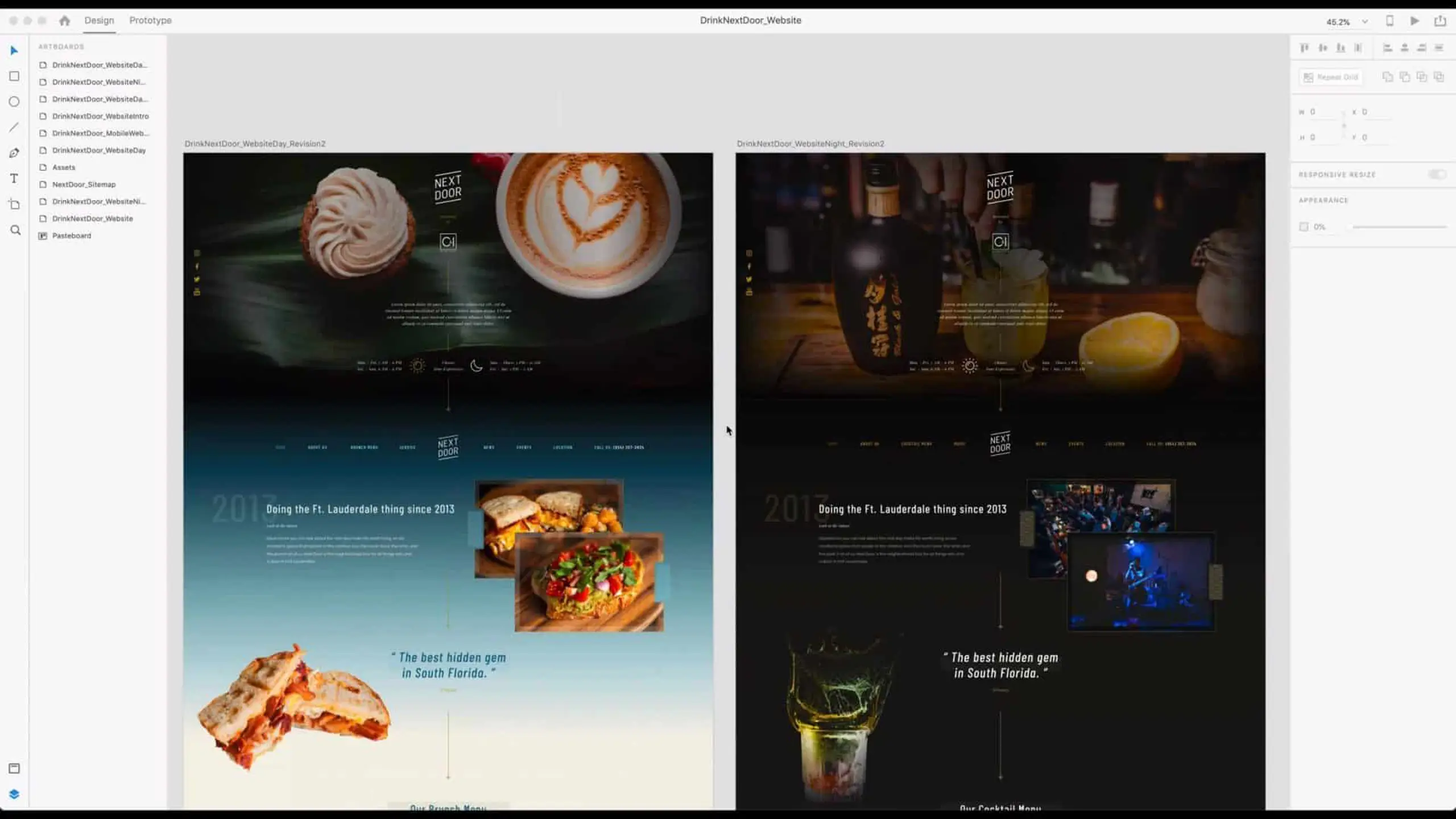
In the dynamic world of web development, responsive images have emerged as a game-changer, significantly impacting website performance and user experience. As the digital landscape continues to evolve, with users accessing websites from a myriad of devices, the importance of optimized and responsive visual content cannot be overstated.
This article delves into the intricacies of responsive images, exploring their significance, optimization techniques, and their far-reaching implications for website success.
## What are Responsive Images?
Responsive images are a crucial component of modern [web maintenance](https://c-istudios.com/web-maintenance/) practices, designed to seamlessly adapt visual content to various screen sizes and resolutions. Unlike traditional static images, responsive images are capable of dynamically adjusting their dimensions, quality, and file size to ensure optimal display across a wide range of devices, from desktop computers to smartphones and tablets.
The concept of responsive design emerged as a response to the proliferation of mobile devices, recognizing the need for websites to provide a consistent and user-friendly experience regardless of the device used. Responsive images play a pivotal role in this endeavor, ensuring that visual content remains crisp, legible, and appropriately sized, without compromising load times or data usage.
One of the key advantages of responsive images is their ability to serve different image versions based on the user's device and screen characteristics. This is achieved through various techniques, such as the use of responsive image markup (e.g., <picture> and srcset attributes) or server-side image resizing and optimization. By delivering the appropriate image version, responsive images eliminate the need for downloading unnecessarily large files, thereby improving page load times and reducing data consumption.
Moreover, responsive images contribute to an enhanced user experience by adapting visual content to the user's context. For instance, on smaller screens, images may be displayed at a lower resolution or cropped to focus on the most relevant portions, while larger screens can showcase high-resolution images in their full glory.
## Importance of Optimizing Image Performance
Optimizing image performance is a critical aspect of modern web development, as it directly impacts various aspects of a website's success. One of the primary reasons for image optimization is branding and graphic design considerations. High-quality, visually appealing images are essential for creating a memorable brand identity and enhancing the overall aesthetic appeal of a website.
However, large, unoptimized images can significantly slow down page load times, leading to a poor user experience and potentially deterring visitors from fully engaging with the site.
Page load speed is a crucial factor in website performance and search engine optimization (SEO). Studies have shown that even a one-second delay in page load times can result in a significant decrease in user satisfaction, higher bounce rates, and lower conversion rates. By optimizing image performance, website owners can ensure that their pages load quickly, providing a seamless user experience and improving their chances of ranking higher in search engine results.
Furthermore, optimized images can have a positive impact on Social Media Marketing Services. In today's visually driven social media landscape, engaging and shareable imagery is essential for capturing attention and driving engagement. By ensuring that images are optimized for various social media platforms, businesses can maximize the impact of their social media campaigns and increase their online visibility.
[Professional photography](https://c-istudios.com/professional-photography-services/) is another area where image optimization plays a vital role. High-resolution images are often necessary for showcasing products, services, or [portfolio](https://c-istudios.com/our-work/) work in their best light.
These large image files can significantly slow down website performance if not properly optimized. By leveraging image optimization techniques, photographers and businesses can strike a balance between high-quality visuals and optimal website performance, ensuring that their online presence remains engaging and responsive.
## Techniques for Optimizing Image Performance
There are several techniques available for optimizing image performance, and choosing the right approach depends on the specific requirements of a website or project. One common technique is image compression, which involves reducing the file size of an image without significantly compromising its visual quality. Popular image formats like JPEG, PNG, and WebP offer various compression options, allowing developers to strike a balance between file size and image quality.
Another technique is responsive image markup, which involves using HTML markup elements like <picture> and srcset to serve different image versions based on the user's device and screen characteristics. This approach ensures that users receive the most appropriate image version, optimizing both visual quality and performance.
[Content](https://c-istudios.com/content-creation-services/) Delivery Networks (CDNs) can also play a crucial role in optimizing image performance. By distributing image files across a network of servers located around the globe, CDNs can significantly reduce latency and improve load times, especially for users accessing websites from different geographic locations.
Progressive image rendering is another technique that can enhance the user experience while optimizing performance. This approach involves initially loading a low-resolution version of an image, which is then progressively replaced with a higher-quality version as more data becomes available. This technique provides users with quick visual feedback while ensuring that the final, high-quality image is displayed once fully loaded.
## Leveraging Responsive Images Across Platforms
Implementing responsive images effectively across various platforms is essential for maximizing reach and impact. With the rise of mobile devices and the increasing popularity of [web hosting](https://c-istudios.com/web-hosting/), ensuring that visual content is optimized for different screens and resolutions has become a critical requirement.
One of the primary considerations when leveraging responsive images across platforms is maintaining consistency in the user experience. Regardless of the device or platform, users should be able to seamlessly view and interact with visual content without encountering distorted or poorly rendered images. This necessitates careful planning and testing to ensure that responsive image techniques are implemented correctly and consistently across different environments.
Another crucial aspect is optimizing for performance across platforms. While responsive images aim to deliver the appropriate image version based on device characteristics, it is essential to consider factors such as network conditions and data usage. On mobile devices, for example, users may be accessing websites over slower or metered connections, making it crucial to prioritize image optimization and minimize data consumption.
Leveraging responsive images across platforms also involves considering the various image formats and markup techniques supported by different browsers and devices. While modern browsers support advanced features like the <picture> element and srcset attribute, older browsers may require fallback options or polyfills to ensure compatibility.
Furthermore, when deploying responsive images across platforms, it is essential to consider the caching mechanisms and strategies employed by different devices and browsers. Proper caching can significantly improve load times and reduce redundant data transfers, contributing to an overall better user experience.
Another crucial aspect is optimizing for performance across platforms. While responsive images aim to deliver the appropriate image version based on device characteristics, it is essential to consider factors such as network conditions and data usage. On mobile devices, for example, users may be accessing websites over slower or metered connections, making it crucial to prioritize image optimization and minimize data consumption. Techniques like lazy loading, which defers the loading of images until they are needed, can significantly improve performance on slower networks.
By addressing these considerations and implementing responsive images thoughtfully across platforms, businesses and organizations can ensure that their visual content remains engaging, accessible, and optimized for every user, regardless of their device or browsing environment.
## Measuring Success
To effectively assess the impact of responsive images and optimize image strategies, it is crucial to measure their success through various metrics and [SEO copywriting](https://c-istudios.com/seo-copywriting-services/) techniques. One of the primary methods for measuring success is through web analytics tools, which provide insights into user behavior, page load times, and other performance indicators.
By analyzing page load times and user engagement metrics, website owners can gauge the effectiveness of their responsive image implementation. Significant improvements in load times and reduced bounce rates can indicate a successful optimization strategy, while stagnant or declining performance may prompt a re-evaluation of the techniques used.
Another valuable metric to track is the overall size and weight of web pages, particularly the contribution of images to the total page weight. Monitoring image file sizes and comparing them across different versions or implementations can provide insights into the effectiveness of image optimization techniques.
Beyond performance metrics, measuring the impact of responsive images on search engine optimization (SEO) can also be valuable. Search engines like Google prioritize websites that offer a seamless and optimized user experience, and responsive images play a crucial role in this regard. By tracking organic search rankings, traffic sources, and engagement metrics, website owners can assess the potential SEO benefits of their responsive image strategies.
In addition to quantitative metrics, gathering qualitative feedback from users can provide valuable insights into the success of responsive image implementation. User surveys, feedback forms, and social media interactions can offer a deeper understanding of how users perceive the visual experience on different devices and platforms.
## Case Studies and Examples
Real-life examples and case studies can provide valuable insights into the successful implementation of responsive images and their impact on various aspects of website performance and user experience. One notable example is the [political campaign](https://c-istudios.com/political-campaign-services/) of a major political party, which leveraged responsive images to enhance its online presence and engagement.
During the campaign, the party's website experienced a significant influx of traffic from various devices and platforms. To ensure a consistent and optimized experience for all visitors, the campaign team implemented responsive image techniques, including the use of the <picture> element and srcset attribute.
By serving appropriately sized and optimized images based on the user's device and screen characteristics, the campaign website achieved faster load times and improved user engagement metrics. This not only enhanced the overall user experience but also contributed to the campaign's ability to effectively communicate its message and engage with a broader audience.
Another inspiring case study comes from a renowned e-commerce platform that prioritized responsive images as part of its mobile optimization strategy. With a growing number of users accessing their website from mobile devices, the company recognized the importance of optimizing visual content to ensure a seamless shopping experience.
By implementing responsive image techniques in combination with other performance optimization strategies, the e-commerce platform witnessed a significant reduction in page load times and an increase in mobile conversion rates. This success not only improved the user experience but also had a positive impact on the company's bottom line, demonstrating the tangible benefits of responsive images on revenue and profitability.
Another compelling case study involves a popular travel booking website that prioritized responsive images to cater to its global audience. With users accessing the site from various devices and network conditions worldwide, the website's developers recognized the importance of delivering optimized visual content tailored to each user's specific context.
By leveraging advanced image compression techniques and responsive image markup, the travel booking website ensured that users received high-quality images while minimizing data consumption and load times. This approach not only enhanced the overall browsing experience but also contributed to increased customer satisfaction and reduced bounce rates, particularly in regions with limited or slower internet connectivity.
The implementation of responsive images allowed the travel booking website to showcase destination imagery and hotel photographs effectively across different screen sizes and resolutions, providing users with a visually appealing and engaging experience regardless of their device.
These case studies highlight the diverse applications and benefits of responsive images, spanning industries such as e-commerce, travel, and political campaigns. By prioritizing visual optimization and implementing responsive image techniques, businesses and organizations can not only improve user experience and engagement but also drive tangible results in terms of conversions, revenue, and overall website performance.
## Work with C&I Studios
If you are planning a project like this, our team can take it from concept to final delivery. Explore our [AI video services](https://c-istudios.com/ai-video-services/), browse [our work](https://c-istudios.com/our-work/) to see how we tell brand stories, and [get in touch](https://c-istudios.com/contact/) when you are ready to start.
Originally published May 23, 2024
---
*This content is from [C&I Studios](https://c-istudios.com), a full-service production company.*
---
# The Role of Video in Government and Public Sector Communications
> Published: May 21, 2024
> Categories: Commercial & Brand
> Source: https://c-istudios.com/the-role-of-video-in-government-and-public-sector-communications/
---
.cib{--paper:#1b1d1f;--ink:#fff;--body:#d5d7d9;--muted:#8b9096;--line:rgba(255,255,255,.12);--thumb:#2b2e31;--card:#212426;--accent:#c02b0a;--blue:#5B8FA8;--serif:'Playfair Display',Georgia,serif;--sans:'Poppins',-apple-system,sans-serif;--measure:900px;background:var(--paper);color:var(--body);font-family:var(--sans);line-height:1.6;position:relative;left:50%;transform:translateX(-50%);width:90vw;max-width:1920px}
.cib *{box-sizing:border-box}
.cib .kicker{max-width:var(--measure);margin:58px auto 0;padding:0 22px;font-size:12.5px;font-weight:700;letter-spacing:2.5px;text-transform:uppercase;color:var(--blue)}
.cib h1.cibh1{text-wrap:balance;font-family:var(--serif);font-weight:500;font-size:clamp(46px,6vw,72px);line-height:1.08;color:var(--ink);max-width:var(--measure);margin:18px auto 0;padding:0 22px;letter-spacing:-.5px}
.cib .metarow{max-width:var(--measure);margin:20px auto 0;padding:0 22px;color:var(--muted);font-size:14px}
.cib .hero{position:relative;width:100%;height:0;padding-bottom:56.25%;overflow:hidden;margin:48px auto 0;border-top:1px solid var(--line);border-bottom:1px solid var(--line)}
.cib .hero .ph{width:100%;aspect-ratio:16/9;background:var(--thumb);border-top:1px solid var(--line);border-bottom:1px solid var(--line);display:flex;align-items:center;justify-content:center;color:#7d8288;font-size:13px;text-align:center;padding:0 20px}
.cib .body{max-width:var(--measure);margin:12px auto 0;padding:52px 22px 6px}
.cib .body.lead p:first-child{font-size:23px;line-height:1.62;color:var(--ink)}
.cib .body p{font-size:18.5px;line-height:1.85;margin:0 0 30px;color:var(--body)}
.cib .body h2{text-wrap:balance;font-family:var(--serif);font-weight:500;font-size:clamp(32px,4vw,48px);line-height:1.22;color:var(--ink);margin:70px 0 20px;letter-spacing:-.3px}
.cib .body h3{text-wrap:balance;font-family:var(--sans);font-weight:600;font-size:22px;color:var(--ink);margin:38px 0 8px}
.cib .body a{color:var(--ink);text-decoration:underline;text-decoration-color:rgba(255,255,255,.4);text-underline-offset:3px}
.cib .body a:hover{text-decoration-color:var(--ink)}
.cib .ctable{width:100%;border-collapse:collapse;margin:16px 0 30px;font-size:16px}
.cib .ctable th{background:#000;color:#fff;text-align:left;padding:10px 12px;font-family:var(--sans)}
.cib .ctable td{padding:10px 12px;border-bottom:1px solid var(--line);color:var(--body)}
.cib .inimg{position:relative;width:100%;height:0;padding-bottom:56.25%;overflow:hidden;margin:72px auto;border-top:1px solid var(--line);border-bottom:1px solid var(--line)}
.cib .inimg .ph{width:100%;aspect-ratio:16/9;background:var(--thumb);border-top:1px solid var(--line);border-bottom:1px solid var(--line);display:flex;align-items:center;justify-content:center;color:#7d8288;font-size:13px}
.cib .origpub{max-width:var(--measure);margin:60px auto 0;padding:26px 22px 0;border-top:1px solid var(--line);color:var(--muted);font-size:13.5px}
.cib .related{max-width:1200px;margin:64px auto 0;padding:34px 22px 76px}
.cib .related h3{font-family:var(--sans);font-size:12.5px;letter-spacing:2px;text-transform:uppercase;color:var(--ink);margin:0 0 24px}
.cib .grid{display:grid;grid-template-columns:repeat(3,1fr);gap:28px}
.cib .rc{background:var(--card);border:1px solid var(--line);display:block;text-decoration:none;color:inherit;transition:border-color .15s}
.cib a.rc:hover{border-color:rgba(255,255,255,.5)}
.cib .rc .thumb{position:relative;width:100%;height:0;padding-bottom:56.25%;background:var(--thumb);overflow:hidden}
.cib .rc .thumb img{position:absolute!important;top:0!important;left:0!important;width:100%!important;height:100%!important;object-fit:cover!important;margin:0!important}
.cib .rc .cc{padding:14px 15px 17px}
.cib .rc .rt{font-family:var(--serif);font-weight:500;font-size:16px;line-height:1.3;color:var(--ink);margin:0 0 6px}
.cib .rc .rm{font-size:11px;letter-spacing:1px;text-transform:uppercase;color:var(--muted)}
.cib img{margin:0!important;padding:0!important;display:block!important;vertical-align:top;max-width:100%}
.cib .hero img,.cib .inimg img{position:absolute!important;top:0!important;left:0!important;width:100%!important;height:100%!important;object-fit:cover!important;margin:0!important;padding:0!important;border:0!important;display:block!important;aspect-ratio:auto!important}
.cib .hero+.body{padding-top:36px}
@media(max-width:760px){.cib .grid{grid-template-columns:1fr}.cib .body h2{margin:52px 0 16px}.cib .body p{font-size:17.5px}.cib .inimg,.cib .hero{margin-top:44px}}
.cib .vembed{max-width:var(--measure);margin:44px auto;padding:0 22px}.cib .vembed .vwrap{position:relative;width:100%;height:0;padding-bottom:56.25%}.cib .vembed .vwrap iframe{position:absolute;top:0;left:0;width:100%;height:100%;border:0}
Commercial & Brand
# The Role of Video in Government and Public Sector Communications
9 min read
In today's digital age, video has become an essential tool for government and public sector communications. It plays a crucial role in engaging citizens, disseminating information, and fostering transparency. Videos can effectively convey complex messages in a visual and easily digestible format, making them accessible to a broad audience. The increasing importance of video in public outreach cannot be overstated, as it helps bridge the gap between government entities and the communities they serve.
## The Power of Video for Public Outreach
[Video production](https://c-istudios.com/video-production-services/) is a powerful medium for public outreach due to its ability to explain complex topics in a clear and visual manner. Governments can leverage videos to simplify intricate policies, procedures, and programs, making them understandable to all citizens. Educational and explainer videos are particularly effective in this regard, as they can break down complex subjects into easily comprehensible segments.
Popular video platforms like YouTube and social media channels provide an excellent opportunity for governments to reach a wide audience. By distributing videos on these platforms, governments can engage citizens where they are most active. For instance, YouTube's vast user base and the virality potential of social media videos enable public messages to spread quickly and widely.
Examples of effective government videos include the "Get Ready for Brexit" campaign by the UK government, which used short, informative videos to prepare citizens for the transition. Similarly, the Centers for Disease Control and Prevention (CDC) in the United States effectively utilized videos to educate the public about COVID-19 protocols and vaccination information.
The visual nature of video makes it an ideal medium for public outreach, ensuring that important information is not only heard but also seen and remembered. By incorporating [Video Production](https://c-istudios.com/video-production-services/) into their communication strategies, governments can enhance their ability to inform, educate, and engage their citizens effectively.
## Connecting with Citizens Through Storytelling
[Creative marketing](https://c-istudios.com/creative-marketing-services/) through storytelling is a powerful way for governments to connect with citizens on a personal level. By using videos to highlight the stories of individuals and communities impacted by government initiatives, public sector entities can build trust and foster a sense of transparency.
Authentic storytelling in videos can humanize government efforts, showcasing the real-world impact of policies and programs. For instance, a video highlighting the journey of a citizen who benefited from a government-funded healthcare program can evoke empathy and understanding among viewers. Such stories not only inform but also inspire, making citizens feel more connected to their government.
Case studies of impactful storytelling videos from governments include New Zealand's "Made with Care" campaign, which featured real-life stories of farmers and producers, highlighting the authenticity and quality of New Zealand's food products. Another example is the "We Are NYCHA" campaign by the New York City Housing Authority, which showcased the personal stories of residents, fostering a sense of community and trust.
## Live Videos for Real-Time Updates
Video audio live streaming is an invaluable tool for governments to provide real-time updates and engage with citizens interactively. Live streams can be used for press conferences, public events, town halls, and emergency updates, ensuring that citizens receive timely and accurate information directly from the source.
Live streaming press conferences and events allow for immediate dissemination of information, reducing the lag between announcement and public awareness. This is particularly crucial during emergencies or important policy announcements. For instance, during the COVID-19 pandemic, many governments used live streams to provide daily updates, keeping citizens informed about the latest developments and guidelines.
Interactive live videos can also increase civic engagement by allowing citizens to participate in real time. Features such as live Q&A sessions, polls, and comments enable viewers to interact with government officials, ask questions, and provide feedback. This two-way communication fosters transparency and trust, as citizens feel their voices are heard and valued.
Best practices for professional live streaming include ensuring high-quality audio and video, using stable internet connections, and incorporating engaging visuals. Governments should also prepare for live sessions by rehearsing key points and anticipating potential questions from the audience.
By leveraging [video audio live streaming](https://c-istudios.com/video-audio-live-streaming/), governments can enhance their communication strategies, providing timely updates and fostering a more engaged and informed citizenry.
## Video Production Tips for the Public Sector
Producing high-quality videos on a budget is a common challenge for many public sector entities. However, with careful planning and resource management, it is possible to create effective and impactful videos without significant financial investment.
Planning effective videos on a budget starts with identifying clear objectives and target audiences. By focusing on the key messages and desired outcomes, you can streamline the production process and avoid unnecessary expenses. Pre-production planning is crucial; it involves scripting, storyboarding, and scheduling to ensure efficient use of time and resources.
Key videography skills are essential for producing professional-looking videos. Lighting is critical to ensure that your subjects are well-lit and the footage is visually appealing. Natural light can be a cost-effective solution, but when shooting indoors or in low-light conditions, affordable lighting kits can make a significant difference.
Proper audio is equally important. Investing in an external microphone can vastly improve sound quality, making the content more accessible and engaging. Editing is the final step in production. Using basic editing software, you can trim footage, add transitions, and include text overlays, resulting in a polished final product.
[Film and TV production](https://c-istudios.com/film-and-tv-production/) techniques, such as using animations and graphics to visualize data, can enhance the clarity and appeal of your videos. Animations can simplify complex information, making it easier for viewers to understand. For example, animated charts or infographics can be used to explain statistical data or processes, adding a dynamic element to the content.
By focusing on fundamental videography skills and utilizing available resources, public sector entities can produce high-quality videos that effectively communicate their messages and engage their audience. This approach ensures that even with limited budgets, the power of video can be harnessed to its full potential.
## Repurposing Video Content
Repurposing video content is an efficient way to maximize the value of video production efforts. By optimizing videos for various platforms and creating different formats from a single video, public sector entities can extend the reach and impact of their content.
Optimizing videos for websites and social platforms involves tailoring the content to fit the specific requirements and audience preferences of each platform. For example, shorter videos with eye-catching thumbnails work well on social media, while longer, more detailed videos are suitable for websites and YouTube. Ensuring that videos are mobile-friendly is also crucial, as a significant portion of viewers access content via mobile devices.
Creating video snippets, summaries, and teasers can help capture attention and drive traffic to the full video. Short clips highlighting key points or intriguing moments can be shared on social media to entice viewers to watch the entire video. Teasers can also be used to build anticipation for upcoming content, keeping the audience engaged and interested.
Building a professional video content library involves organizing and categorizing videos for easy access and future use. This library can serve as a valuable resource for ongoing and future communications, allowing public sector entities to quickly find and repurpose relevant content. Incorporating [VFX compositing and animation](https://c-istudios.com/vfx-compositing-and-animation-services/) into repurposed videos can also add a fresh and engaging element, making the content more appealing to viewers. For instance, adding animated elements to an existing video can provide a new perspective and re-engage the audience.
By repurposing video content, public sector entities can maximize their investment in video production, ensuring that their messages reach a wider audience and have a lasting impact. This strategy not only enhances content efficiency but also broadens the scope and reach of communication efforts.
## Video Analytics and Performance Metrics
Tracking engagement metrics is essential for understanding the effectiveness of video content and optimizing future strategies. Key metrics include views, comments, shares, and watch time, which provide insights into how the audience interacts with the content.
Using video analytics tools such as YouTube Analytics or social media insights, public sector entities can track these metrics and identify trends. For example, analyzing which videos receive the most views and engagement can indicate what topics and formats resonate most with the audience. This data can inform content strategy, ensuring that future videos align with audience preferences.
[SEO copywriting](https://c-istudios.com/seo-copywriting-services/) plays a vital role in video optimization. By incorporating relevant keywords into video titles, descriptions, and tags, public sector entities can improve the searchability and discoverability of their videos. A/B testing different versions of video titles and descriptions can also help determine which combinations perform best, allowing for continuous improvement. For instance, comparing engagement metrics between different title formats can reveal which approach is more effective in attracting viewers.
A/B testing videos involve creating two versions of a video with slight variations and comparing their performance. This technique can be used to test different thumbnails, intros, or calls to action, providing insights into what elements drive higher engagement. Continuous testing and optimization ensure that video content remains effective and engaging. For example, testing two different opening scenes to see which one retains more viewers can provide valuable insights for future productions.
By leveraging video analytics and public sector entities can refine their video content strategies, optimizing for better performance and greater audience engagement. This data-driven approach enables continuous improvement and maximizes the impact of video communications.
## Building an Effective Video Strategy
Developing a consistent, cross-platform video content plan is crucial for maximizing the impact of video communications. This involves aligning video content with broader communication goals and ensuring that all videos contribute to the overall strategy.
A successful video strategy starts with identifying the key messages and objectives for the video content. These should align with the organization's broader communication goals, such as increasing public awareness, promoting specific initiatives, or enhancing transparency. Once the objectives are clear, a content calendar can be created to plan and schedule videos, ensuring a consistent and steady flow of content.
Cross-platform integration is essential for reaching a diverse audience. Videos should be optimized for various platforms, including websites, social media, and email newsletters. This ensures that the content reaches the audience through their preferred channels. For instance, a detailed explainer video might be shared on the organization's website and YouTube channel, while shorter clips and teasers are posted on social media to drive traffic.
Getting stakeholder buy-in is critical for the success of a video strategy. This involves demonstrating the value of video content and securing the necessary resources and budget. Presenting case studies and performance metrics can help illustrate the impact of video communications, making a compelling case for investment. Additionally, involving key stakeholders in the planning process can ensure their support and commitment.
[Web hosting](https://c-istudios.com/web-hosting/) solutions play a crucial role in the successful distribution and accessibility of video content. A reliable web hosting service ensures that videos are easily accessible, load quickly, and provide a seamless viewing experience. For example, using a high-quality hosting service can prevent buffering and downtime, ensuring that viewers have a positive experience.
By developing a consistent, cross-platform video content plan, aligning videos with broader communication goals, and securing stakeholder buy-in, public sector entities can build an effective video strategy that maximizes the impact of their communications. This approach ensures that video content is well-integrated into the overall communication strategy and effectively engages the target audience.
## Work with C&I Studios
If you are planning a project like this, our team can take it from concept to final delivery. Explore our [video production services](https://c-istudios.com/video-production-services/), browse [our work](https://c-istudios.com/our-work/) to see how we tell brand stories, and [get in touch](https://c-istudios.com/contact/) when you are ready to start.
Originally published May 21, 2024
---
*This content is from [C&I Studios](https://c-istudios.com), a full-service production company.*
---
# The Future of Podcast Production: Predictions and Innovations in the Industry
> Published: May 20, 2024
> Categories: Commercial & Brand
> Source: https://c-istudios.com/the-future-of-podcast-production-predictions-and-innovations-in-the-industry/
---
.cib{--paper:#1b1d1f;--ink:#fff;--body:#d5d7d9;--muted:#8b9096;--line:rgba(255,255,255,.12);--thumb:#2b2e31;--card:#212426;--accent:#c02b0a;--blue:#5B8FA8;--serif:'Playfair Display',Georgia,serif;--sans:'Poppins',-apple-system,sans-serif;--measure:900px;background:var(--paper);color:var(--body);font-family:var(--sans);line-height:1.6;position:relative;left:50%;transform:translateX(-50%);width:90vw;max-width:1920px}
.cib *{box-sizing:border-box}
.cib .kicker{max-width:var(--measure);margin:58px auto 0;padding:0 22px;font-size:12.5px;font-weight:700;letter-spacing:2.5px;text-transform:uppercase;color:var(--blue)}
.cib h1.cibh1{text-wrap:balance;font-family:var(--serif);font-weight:500;font-size:clamp(46px,6vw,72px);line-height:1.08;color:var(--ink);max-width:var(--measure);margin:18px auto 0;padding:0 22px;letter-spacing:-.5px}
.cib .metarow{max-width:var(--measure);margin:20px auto 0;padding:0 22px;color:var(--muted);font-size:14px}
.cib .hero{position:relative;width:100%;height:0;padding-bottom:56.25%;overflow:hidden;margin:48px auto 0;border-top:1px solid var(--line);border-bottom:1px solid var(--line)}
.cib .hero .ph{width:100%;aspect-ratio:16/9;background:var(--thumb);border-top:1px solid var(--line);border-bottom:1px solid var(--line);display:flex;align-items:center;justify-content:center;color:#7d8288;font-size:13px;text-align:center;padding:0 20px}
.cib .body{max-width:var(--measure);margin:12px auto 0;padding:52px 22px 6px}
.cib .body.lead p:first-child{font-size:23px;line-height:1.62;color:var(--ink)}
.cib .body p{font-size:18.5px;line-height:1.85;margin:0 0 30px;color:var(--body)}
.cib .body h2{text-wrap:balance;font-family:var(--serif);font-weight:500;font-size:clamp(32px,4vw,48px);line-height:1.22;color:var(--ink);margin:70px 0 20px;letter-spacing:-.3px}
.cib .body h3{text-wrap:balance;font-family:var(--sans);font-weight:600;font-size:22px;color:var(--ink);margin:38px 0 8px}
.cib .body a{color:var(--ink);text-decoration:underline;text-decoration-color:rgba(255,255,255,.4);text-underline-offset:3px}
.cib .body a:hover{text-decoration-color:var(--ink)}
.cib .ctable{width:100%;border-collapse:collapse;margin:16px 0 30px;font-size:16px}
.cib .ctable th{background:#000;color:#fff;text-align:left;padding:10px 12px;font-family:var(--sans)}
.cib .ctable td{padding:10px 12px;border-bottom:1px solid var(--line);color:var(--body)}
.cib .inimg{position:relative;width:100%;height:0;padding-bottom:56.25%;overflow:hidden;margin:72px auto;border-top:1px solid var(--line);border-bottom:1px solid var(--line)}
.cib .inimg .ph{width:100%;aspect-ratio:16/9;background:var(--thumb);border-top:1px solid var(--line);border-bottom:1px solid var(--line);display:flex;align-items:center;justify-content:center;color:#7d8288;font-size:13px}
.cib .origpub{max-width:var(--measure);margin:60px auto 0;padding:26px 22px 0;border-top:1px solid var(--line);color:var(--muted);font-size:13.5px}
.cib .related{max-width:1200px;margin:64px auto 0;padding:34px 22px 76px}
.cib .related h3{font-family:var(--sans);font-size:12.5px;letter-spacing:2px;text-transform:uppercase;color:var(--ink);margin:0 0 24px}
.cib .grid{display:grid;grid-template-columns:repeat(3,1fr);gap:28px}
.cib .rc{background:var(--card);border:1px solid var(--line);display:block;text-decoration:none;color:inherit;transition:border-color .15s}
.cib a.rc:hover{border-color:rgba(255,255,255,.5)}
.cib .rc .thumb{position:relative;width:100%;height:0;padding-bottom:56.25%;background:var(--thumb);overflow:hidden}
.cib .rc .thumb img{position:absolute!important;top:0!important;left:0!important;width:100%!important;height:100%!important;object-fit:cover!important;margin:0!important}
.cib .rc .cc{padding:14px 15px 17px}
.cib .rc .rt{font-family:var(--serif);font-weight:500;font-size:16px;line-height:1.3;color:var(--ink);margin:0 0 6px}
.cib .rc .rm{font-size:11px;letter-spacing:1px;text-transform:uppercase;color:var(--muted)}
.cib img{margin:0!important;padding:0!important;display:block!important;vertical-align:top;max-width:100%}
.cib .hero img,.cib .inimg img{position:absolute!important;top:0!important;left:0!important;width:100%!important;height:100%!important;object-fit:cover!important;margin:0!important;padding:0!important;border:0!important;display:block!important;aspect-ratio:auto!important}
.cib .hero+.body{padding-top:36px}
@media(max-width:760px){.cib .grid{grid-template-columns:1fr}.cib .body h2{margin:52px 0 16px}.cib .body p{font-size:17.5px}.cib .inimg,.cib .hero{margin-top:44px}}
.cib .vembed{max-width:var(--measure);margin:44px auto;padding:0 22px}.cib .vembed .vwrap{position:relative;width:100%;height:0;padding-bottom:56.25%}.cib .vembed .vwrap iframe{position:absolute;top:0;left:0;width:100%;height:100%;border:0}
Commercial & Brand
# The Future of Podcast Production. Predictions and Innovations in the Industry
12 min read
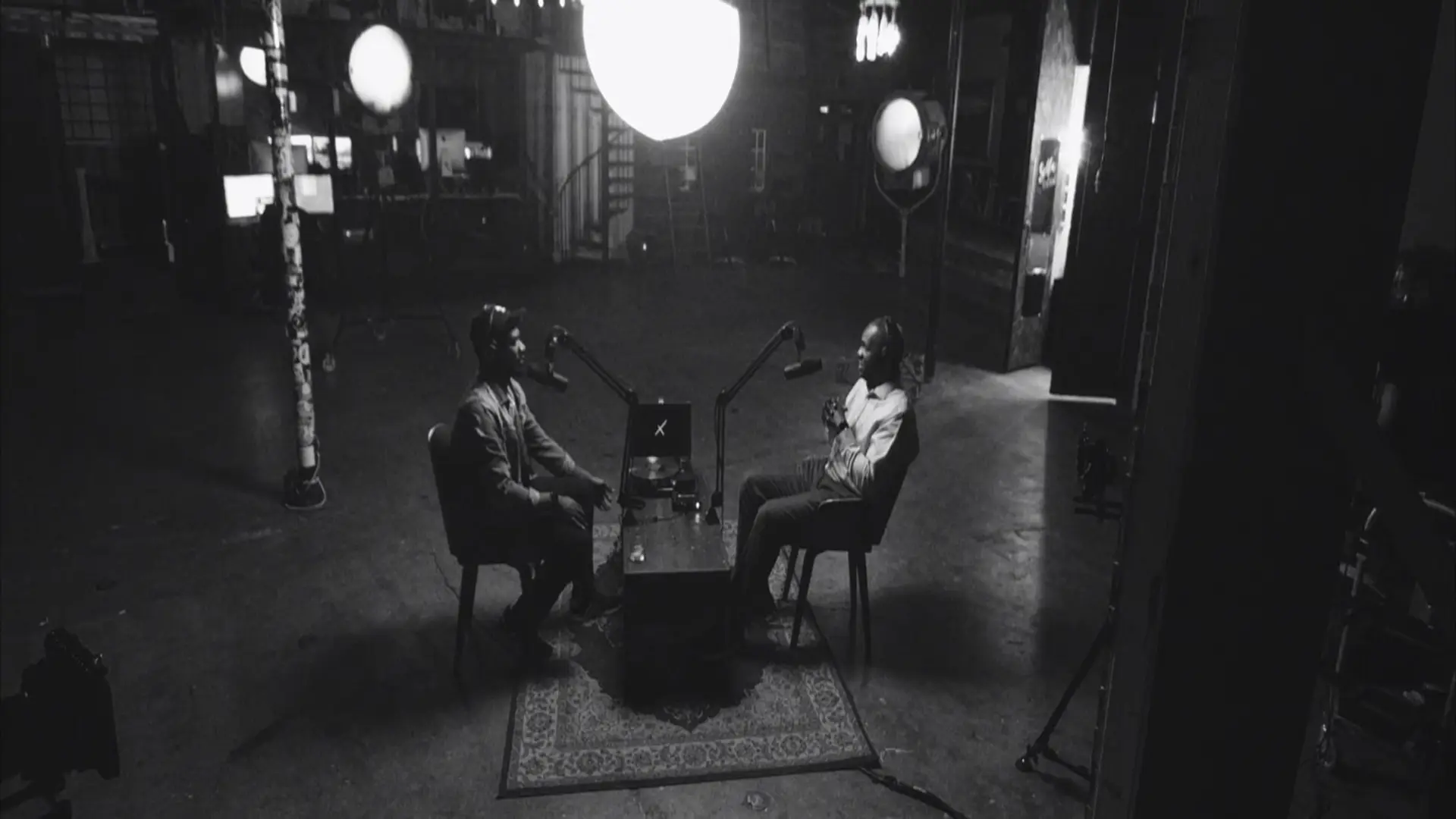
Podcast production has become a pivotal element in modern media, offering an accessible and engaging way for creators to share stories, information, and insights. The growth of podcasting has transformed how audiences consume content, providing a platform for diverse voices and topics. As the industry continues to evolve, it is essential to explore the future of podcast production, focusing on upcoming predictions and innovations that will shape its landscape.
This article delves into the current state of podcast production, emerging technologies, future predictions, innovative content creation approaches, the role of social media, and the challenges and opportunities that lie ahead.
## The Current State of Podcast Production
Podcast production has witnessed significant growth over the past decade, becoming a mainstream form of content consumption. The rise of podcasting can be attributed to its accessibility and the diversity of content available, catering to a wide range of interests and demographics. Today, podcasts cover nearly every topic imaginable, from true crime and business insights to health and wellness.
[Video Production](https://c-istudios.com/video-production-services/) plays an increasingly vital role in enhancing podcast content. Many podcasters are now incorporating video elements into their episodes to create a more engaging experience for their audience. This trend, known as "vodcasting," allows creators to reach a broader audience through platforms like YouTube and Facebook.
The format of podcasts has also evolved, with many shows adopting innovative structures to keep their audience engaged. Popular formats include interview-based shows, narrative storytelling, panel discussions, and solo commentary. This variety ensures that there is something for everyone, contributing to the widespread appeal of podcasts.
The podcast industry has seen substantial growth in terms of listenership and revenue. According to recent statistics, there are over 2 million active podcasts and more than 48 million episodes available globally. This surge in content has led to increased competition among podcasters, making quality production more crucial than ever.
Monetization opportunities have also expanded, with podcasters generating revenue through sponsorships, advertising, premium content subscriptions, and listener donations. Platforms like Patreon and Apple Podcasts' subscription service have enabled creators to monetize their content directly from their audience, providing a sustainable income stream.
As the industry continues to grow, podcast production companies and platforms are investing in advanced tools and resources to support creators. Services like [CI Studios](https://c-istudios.com/) offer comprehensive production solutions, including recording, editing, and distribution, helping podcasters produce high-quality content that stands out in a crowded market.
## Emerging Technologies in Podcast Production
The podcasting industry is continuously evolving, driven by advancements in technology that enhance the production process and listener experience. Emerging technologies such as artificial intelligence (AI), virtual reality (VR), and advanced audio tools are transforming podcast production in unprecedented ways.
[VFX compositing and animation](https://c-istudios.com/vfx-compositing-and-animation-services/) are becoming integral to podcast production, particularly in creating engaging promotional content and enhancing visual storytelling. These technologies enable podcasters to produce high-quality visuals that complement their audio content, making their podcasts more appealing and accessible to a broader audience. For instance, animated intros and outros, visual effects, and dynamic graphics can elevate the overall production value of a podcast.
Artificial intelligence is revolutionizing various aspects of podcast production, from content creation to editing. AI-powered tools can assist in generating scripts, identifying trends, and optimizing content for better engagement. For example, AI algorithms can analyze listener data to suggest topics that resonate with the audience, helping podcasters tailor their content more effectively.
Virtual reality and augmented reality (AR) are also making their way into the podcasting world, offering immersive experiences that go beyond traditional audio. VR and AR can create interactive environments where listeners can engage with the content in novel ways.
Advanced audio tools are continuously improving, providing podcasters with the means to produce studio-quality sound from virtually anywhere. Portable recording devices, high-quality microphones, and sophisticated editing software have made it easier for creators to produce professional-sounding podcasts without the need for expensive studio setups.
As these technologies continue to evolve, they will undoubtedly shape the future of podcast production, making it more efficient, creative, and immersive. Podcasters who embrace these innovations will be well-positioned to captivate their audiences and stay ahead in the ever-competitive industry.
## Predictions for the Future of Podcast Production
As the podcasting industry continues to grow and evolve, several trends and predictions are emerging that will shape its future. One of the most significant trends is the increasing focus on content personalization. With the help of AI and machine learning, podcasters can analyze listener data to create highly personalized content that caters to individual preferences. This level of customization can enhance listener engagement and loyalty, as audiences receive content that is directly relevant to their interests and needs.
Interactive podcasts are another exciting development on the horizon. These podcasts allow listeners to interact with the content in real time, creating a more engaging and immersive experience. For example, interactive features could include choosing the direction of a story, participating in polls and quizzes, or even communicating with the hosts during live episodes. This level of interactivity can deepen the connection between podcasters and their audience, fostering a sense of community and participation.
[Creative marketing](https://c-istudios.com/creative-marketing-services/) strategies will also play a crucial role in the future of podcast production. As the competition among podcasters intensifies, innovative marketing techniques will be essential for standing out and attracting listeners. This could involve leveraging advanced analytics to optimize marketing campaigns, utilizing social media platforms to reach new audiences, and creating compelling visual content to promote podcast episodes.
Monetization strategies are also expected to evolve, offering podcasters new ways to generate revenue. Subscription models, premium content, and exclusive access are becoming increasingly popular, allowing podcasters to monetize their content directly from their audience.
The future of podcast production also includes advancements in distribution platforms. Enhanced algorithms and recommendation systems will make it easier for listeners to discover new podcasts that align with their interests. This improved discoverability can help emerging podcasters reach a broader audience and grow their listener base.
## Innovations in Podcast Content Creation
Innovation in podcast content creation is essential for keeping audiences engaged and attracting new listeners. Podcasters are continually exploring new formats, storytelling techniques, and cross-media integration to differentiate their content and provide unique listening experiences.
One innovative approach to content creation is the development of unique formats that break away from traditional podcast structures. For example, some podcasters are experimenting with hybrid formats that combine elements of interviews, storytelling, and documentary-style reporting. This approach can create a more dynamic and engaging listening experience, keeping audiences intrigued and entertained.
Cross-media integration is another powerful strategy for enhancing podcast content. By combining audio with visual and interactive elements, podcasters can create a multi-sensory experience that appeals to a broader audience. A podcast about a historical event could include visual timelines, interactive maps, and related video content. This not only enriches the listening experience but also provides additional context and depth to the content.
[SEO copywriting](https://c-istudios.com/seo-copywriting-services/) plays a crucial role in ensuring that podcast content reaches its intended audience. By optimizing podcast titles, descriptions, and show notes with relevant keywords, podcasters can improve their search engine rankings and attract more listeners. For example, a podcast episode about digital marketing strategies could include keywords such as "SEO techniques," "content marketing," and "lead generation" in its description to enhance discoverability.
Storytelling techniques are also evolving in the podcasting world. Podcasters are using narrative-driven approaches to create compelling stories that captivate their audience. This involves developing well-defined characters, building suspense, and using sound effects and music to enhance the narrative. For instance, true crime podcasts often use these techniques to create an immersive and thrilling listening experience.
Collaborations and partnerships are becoming increasingly common in podcast content creation. By partnering with other creators, brands, or industry experts, podcasters can expand their reach and bring diverse perspectives to their content. For example, a podcast focused on entrepreneurship could collaborate with successful business owners to share their insights and experiences, providing valuable content for listeners.
## The Role of Social Media in Podcast Promotion
Social media platforms are invaluable tools for promoting podcasts and engaging with audiences. They offer a direct line of communication between podcasters and listeners, allowing for real-time interaction and feedback. Effective use of social media can significantly enhance a podcast's reach and visibility.
[Social media marketing](https://c-istudios.com/social-media-marketing-services/) provide podcasters with the tools and strategies needed to promote their content effectively. By leveraging these services, podcasters can create targeted campaigns that reach their ideal audience.
Engaging content is key to successful social media promotion. Podcasters can share a variety of content types, including episode teasers, behind-the-scenes footage, guest interviews, and highlights from previous episodes. Visual content, such as images and videos, tends to perform well on social media platforms, capturing attention and encouraging shares. For instance, creating short video clips with key moments from an episode can entice potential listeners to tune in.
Consistency is crucial in social media promotion. Regularly posting content and interacting with followers can help build a loyal audience. Podcasters should develop a content calendar to plan and schedule their posts, ensuring a steady stream of content that keeps their audience engaged.
Collaboration with influencers and other podcasters can also boost social media promotion efforts. By partnering with influencers who have a large and engaged following, podcasters can tap into new audiences and gain credibility.
User-generated content (UGC) is another effective strategy for promoting podcasts on social media. Encouraging listeners to share their experiences and thoughts about the podcast can create authentic and engaging content. Podcasters can run contests, ask for reviews, or create branded hashtags to encourage UGC.
Analyzing social media metrics is essential for optimizing promotion strategies. By tracking metrics such as engagement rates, click-through rates, and follower growth, podcasters can gain insights into what content resonates with their audience and adjust their strategies accordingly. Tools like Facebook Insights, Instagram Analytics, and Twitter Analytics provide valuable data that can inform future promotional efforts.
## Enhancing Listener Experience Through Technology
Technological advancements are continually improving the podcast listener experience, making it more interactive, engaging, and convenient. Innovations such as smart speakers, interactive apps, and enhanced audio quality are transforming how audiences consume podcast content.
Smart speakers like Amazon Echo and Google Home have revolutionized podcast consumption by making it easier for listeners to access their favorite shows. With simple voice commands, users can play, pause, and skip episodes without needing to interact with a screen. This hands-free convenience has contributed to the growing popularity of podcasts, allowing listeners to enjoy content while multitasking at home or work.
Interactive apps are also enhancing the podcast experience by providing additional features and functionalities. These apps allow listeners to interact with content in real time, participate in discussions, and access supplementary materials. For example, some podcast apps offer interactive transcripts that highlight text as the episode plays, making it easier for listeners to follow along and revisit specific sections. Other features may include in-app polls, quizzes, and social sharing options, fostering a more interactive and engaging experience.
Enhanced audio quality is another critical aspect of improving the listener experience. Advances in audio engineering and editing software have made it possible for podcasters to produce high-quality sound that rivals professional studios. This includes noise reduction, audio leveling, and spatial audio techniques that create a more immersive listening experience.
[Web maintenance](https://c-istudios.com/web-maintenance/) plays a crucial role in ensuring that podcast websites and platforms run smoothly and efficiently. Regular updates, security checks, and performance optimization are essential for providing a seamless user experience. A well-maintained website ensures that listeners can easily find and access episodes, read show notes, and interact with additional content.
Incorporating multimedia elements into podcast episodes is another way to enhance the listener experience. This can include video content, sound effects, and background music that complement the audio narrative.
Personalization is also becoming a significant trend in podcast consumption. AI-powered recommendation engines can analyze listener preferences and suggest new episodes and shows based on their interests. This level of personalization helps listeners discover content that aligns with their tastes, increasing engagement and satisfaction.
## Challenges and Opportunities in Podcast Production
The podcasting industry presents both challenges and opportunities for creators. Understanding these factors is essential for navigating the evolving landscape and achieving long-term success.
One of the primary challenges faced by podcasters is the increasing competition. With over 2 million active podcasts and more than 48 million episodes available, standing out in a crowded market can be daunting. To overcome this challenge, podcasters must focus on producing high-quality, unique content that resonates with their target audience. This involves investing in professional equipment, honing storytelling skills, and staying up-to-date with industry trends.
Another challenge is the need for consistent content creation. Maintaining a regular publishing schedule can be demanding, especially for independent podcasters who manage all aspects of production themselves. Time management and efficient workflow processes are crucial for meeting deadlines and ensuring that new episodes are released on time.
Monetization is also a significant challenge for many podcasters. While opportunities for revenue generation have expanded, finding sustainable income streams remains difficult for some creators. Building a loyal listener base and attracting sponsors requires time and effort. Podcasters must continuously engage with their audience, create valuable content, and explore various monetization strategies, such as premium subscriptions, merchandise sales, and crowdfunding.
Despite these challenges, the podcasting industry offers numerous opportunities for growth and innovation. The rising popularity of podcasts presents a growing audience for creators to tap into. By identifying niche markets and catering to specific interests, podcasters can attract dedicated listeners and build a strong community.
[Media marketing](https://c-istudios.com/media-marketing-consultation-services/) consultation can provide valuable insights and strategies for navigating the podcasting landscape. Working with marketing professionals can help podcasters develop effective promotional campaigns, optimize their content for discoverability, and identify new opportunities for growth.
Another opportunity lies in the potential for cross-industry collaborations. Partnering with brands, influencers, and other content creators can open new avenues for exposure and revenue. For instance, a podcast focused on health and wellness could collaborate with fitness brands for sponsorships and co-branded content. These partnerships can enhance the podcast's credibility and provide additional value to listeners.
The advancement of technology also presents opportunities for innovation in podcast production. Embracing new tools and platforms can streamline the production process and enhance the quality of content. For example, AI-powered editing software, VR and AR integration, and interactive features can set a podcast apart and create a more engaging listener experience.
## Work with C&I Studios
If you are planning a project like this, our team can take it from concept to final delivery. Explore our [video production services](https://c-istudios.com/video-production-services/), browse [our work](https://c-istudios.com/our-work/) to see how we tell brand stories, and [get in touch](https://c-istudios.com/contact/) when you are ready to start.
Originally published May 20, 2024
---
*This content is from [C&I Studios](https://c-istudios.com), a full-service production company.*
---
# Content Creation for Lead Generation: Strategies for Building Your Audience
> Published: May 19, 2024
> Categories: Commercial & Brand
> Source: https://c-istudios.com/content-creation-for-lead-generation-strategies-for-building-your-audience/
---
.cib{--paper:#1b1d1f;--ink:#fff;--body:#d5d7d9;--muted:#8b9096;--line:rgba(255,255,255,.12);--thumb:#2b2e31;--card:#212426;--accent:#c02b0a;--blue:#5B8FA8;--serif:'Playfair Display',Georgia,serif;--sans:'Poppins',-apple-system,sans-serif;--measure:900px;background:var(--paper);color:var(--body);font-family:var(--sans);line-height:1.6;position:relative;left:50%;transform:translateX(-50%);width:90vw;max-width:1920px}
.cib *{box-sizing:border-box}
.cib .kicker{max-width:var(--measure);margin:58px auto 0;padding:0 22px;font-size:12.5px;font-weight:700;letter-spacing:2.5px;text-transform:uppercase;color:var(--blue)}
.cib h1.cibh1{text-wrap:balance;font-family:var(--serif);font-weight:500;font-size:clamp(46px,6vw,72px);line-height:1.08;color:var(--ink);max-width:var(--measure);margin:18px auto 0;padding:0 22px;letter-spacing:-.5px}
.cib .metarow{max-width:var(--measure);margin:20px auto 0;padding:0 22px;color:var(--muted);font-size:14px}
.cib .hero{position:relative;width:100%;height:0;padding-bottom:56.25%;overflow:hidden;margin:48px auto 0;border-top:1px solid var(--line);border-bottom:1px solid var(--line)}
.cib .hero .ph{width:100%;aspect-ratio:16/9;background:var(--thumb);border-top:1px solid var(--line);border-bottom:1px solid var(--line);display:flex;align-items:center;justify-content:center;color:#7d8288;font-size:13px;text-align:center;padding:0 20px}
.cib .body{max-width:var(--measure);margin:12px auto 0;padding:52px 22px 6px}
.cib .body.lead p:first-child{font-size:23px;line-height:1.62;color:var(--ink)}
.cib .body p{font-size:18.5px;line-height:1.85;margin:0 0 30px;color:var(--body)}
.cib .body h2{text-wrap:balance;font-family:var(--serif);font-weight:500;font-size:clamp(32px,4vw,48px);line-height:1.22;color:var(--ink);margin:70px 0 20px;letter-spacing:-.3px}
.cib .body h3{text-wrap:balance;font-family:var(--sans);font-weight:600;font-size:22px;color:var(--ink);margin:38px 0 8px}
.cib .body a{color:var(--ink);text-decoration:underline;text-decoration-color:rgba(255,255,255,.4);text-underline-offset:3px}
.cib .body a:hover{text-decoration-color:var(--ink)}
.cib .ctable{width:100%;border-collapse:collapse;margin:16px 0 30px;font-size:16px}
.cib .ctable th{background:#000;color:#fff;text-align:left;padding:10px 12px;font-family:var(--sans)}
.cib .ctable td{padding:10px 12px;border-bottom:1px solid var(--line);color:var(--body)}
.cib .inimg{position:relative;width:100%;height:0;padding-bottom:56.25%;overflow:hidden;margin:72px auto;border-top:1px solid var(--line);border-bottom:1px solid var(--line)}
.cib .inimg .ph{width:100%;aspect-ratio:16/9;background:var(--thumb);border-top:1px solid var(--line);border-bottom:1px solid var(--line);display:flex;align-items:center;justify-content:center;color:#7d8288;font-size:13px}
.cib .origpub{max-width:var(--measure);margin:60px auto 0;padding:26px 22px 0;border-top:1px solid var(--line);color:var(--muted);font-size:13.5px}
.cib .related{max-width:1200px;margin:64px auto 0;padding:34px 22px 76px}
.cib .related h3{font-family:var(--sans);font-size:12.5px;letter-spacing:2px;text-transform:uppercase;color:var(--ink);margin:0 0 24px}
.cib .grid{display:grid;grid-template-columns:repeat(3,1fr);gap:28px}
.cib .rc{background:var(--card);border:1px solid var(--line);display:block;text-decoration:none;color:inherit;transition:border-color .15s}
.cib a.rc:hover{border-color:rgba(255,255,255,.5)}
.cib .rc .thumb{position:relative;width:100%;height:0;padding-bottom:56.25%;background:var(--thumb);overflow:hidden}
.cib .rc .thumb img{position:absolute!important;top:0!important;left:0!important;width:100%!important;height:100%!important;object-fit:cover!important;margin:0!important}
.cib .rc .cc{padding:14px 15px 17px}
.cib .rc .rt{font-family:var(--serif);font-weight:500;font-size:16px;line-height:1.3;color:var(--ink);margin:0 0 6px}
.cib .rc .rm{font-size:11px;letter-spacing:1px;text-transform:uppercase;color:var(--muted)}
.cib img{margin:0!important;padding:0!important;display:block!important;vertical-align:top;max-width:100%}
.cib .hero img,.cib .inimg img{position:absolute!important;top:0!important;left:0!important;width:100%!important;height:100%!important;object-fit:cover!important;margin:0!important;padding:0!important;border:0!important;display:block!important;aspect-ratio:auto!important}
.cib .hero+.body{padding-top:36px}
@media(max-width:760px){.cib .grid{grid-template-columns:1fr}.cib .body h2{margin:52px 0 16px}.cib .body p{font-size:17.5px}.cib .inimg,.cib .hero{margin-top:44px}}
.cib .vembed{max-width:var(--measure);margin:44px auto;padding:0 22px}.cib .vembed .vwrap{position:relative;width:100%;height:0;padding-bottom:56.25%}.cib .vembed .vwrap iframe{position:absolute;top:0;left:0;width:100%;height:100%;border:0}
Commercial & Brand
# Content Creation for Lead Generation. Strategies for Building Your Audience
12 min read

Content creation for lead generation involves developing and sharing valuable content that attracts and engages potential customers, encouraging them to take specific actions that move them closer to becoming leads. It's a crucial aspect of modern digital marketing, as it helps build an audience, establish authority, and ultimately drive sales.
This ongoing engagement builds trust and loyalty, ultimately driving sales and long-term customer relationships. High-quality content not only attracts leads but also guides them through the purchasing process, making it an essential component of any effective marketing strategy.
## The Role of Content in Lead Generation
Content is a powerful tool for generating leads. It provides value to your audience, addressing their needs, pain points, and interests. When done correctly, content can attract the right audience, engage them, and persuade them to take action, such as signing up for a newsletter, downloading a whitepaper, or requesting a demo.
One of the primary reasons content is crucial for lead generation is that it helps establish your brand as an authority in your industry. High-quality content demonstrates your expertise and builds trust with your audience. For instance, a company that consistently publishes informative and insightful articles on a particular topic can become a go-to resource for information, which increases its credibility and attracts more leads.
[Branding and graphic design](https://c-istudios.com/branding-and-graphic-design-services/) play significant roles in making your content visually appealing and consistent with your brand identity. A well-designed blog post, infographic, or video not only grabs attention but also reinforces your brand’s professionalism and reliability. For example, HubSpot, a leading marketing and sales software company, uses consistent branding and high-quality graphics across all their content, which helps establish them as an industry leader.
Another example of a successful content strategy is Coca-Cola’s “Share a Coke” campaign. This campaign leveraged user-generated content by encouraging customers to share photos of themselves with personalized Coke bottles on social media. This not only created a massive amount of content but also engaged customers on a personal level, generating leads and increasing brand loyalty.
Content also enables you to nurture leads through the sales funnel. By providing relevant and valuable information at each stage of the buyer’s journey, you can guide potential customers from awareness to consideration to decision. For example, offering a free eBook or a detailed case study can help move a lead closer to making a purchase decision.
Incorporating strong **Branding and Graphic Design** in your content ensures that it not only looks professional but also aligns with your overall marketing strategy, making it more effective in generating leads. Investing in high-quality visuals and a consistent brand message can significantly enhance the impact of your content.
## Identifying Your Target Audience
Identifying and understanding your target audience is a critical step in creating effective content for lead generation. Knowing who your audience is, what they need, and how they behave can help you tailor your content to attract and engage them.
The first step in identifying your target audience is to conduct thorough audience research. This involves gathering data on your current customers, analyzing market trends, and studying your competitors. Tools like Google Analytics, social media insights, and customer surveys can provide valuable information about your audience’s demographics, interests, and behaviors.
Creating detailed buyer personas can help you visualize and understand your target audience better. A buyer persona is a semi-fictional representation of your ideal customer, based on data and research. It includes information such as age, gender, job title, income level, pain points, and buying habits. By creating multiple personas, you can address the diverse needs and preferences of your audience.
Once you have a clear understanding of your audience, you can tailor your content to meet their needs and preferences. This involves choosing the right topics, tone, and format for your content. For instance, if your audience prefers visual content, you can create more videos, infographics, and images. If they prefer detailed, informative content, you can focus on in-depth blog posts, whitepapers, and case studies.
Audience research also helps you identify the best channels for distributing your content. Knowing where your audience spends their time online can help you reach them more effectively. For example, if your audience is active on LinkedIn, you can focus on publishing content on that platform and engaging with them through LinkedIn groups and discussions.
Incorporating insights from [professional photography](https://c-istudios.com/professional-photography-services/) into your content can also enhance its appeal and effectiveness. High-quality images that resonate with your audience can make your content more engaging and shareable, helping you attract more leads.
## Crafting Compelling Content
One of the best practices for creating engaging content is to focus on providing value. Your content should address the needs and interests of your audience, offering solutions to their problems and answers to their questions. For example, if your audience is interested in [video production](https://c-istudios.com/video-production-services/), you can create content that provides tips on creating high-quality videos, reviews of the best [video production](https://c-istudios.com/video-production-services/) tools, or case studies of successful video campaigns.
Storytelling is another powerful technique for crafting compelling content. By telling a story, you can make your content more relatable and memorable. Stories can help illustrate complex concepts, evoke emotions, and build a connection with your audience. For instance, sharing a success story of how a customer used your product to solve a problem can make your content more engaging and persuasive.
Creating high-quality written content is also essential for engaging your audience. This involves using clear and concise language, organizing your content logically, and incorporating relevant keywords to improve SEO. For example, if you are writing a blog post about lead generation, you can include keywords such as "lead generation strategies," "content marketing," and "audience building" to improve your search engine rankings.
Regularly updating and refreshing your content can also help keep your audience engaged. By providing new and relevant information, you can maintain the interest of your audience and attract new leads. For example, you can update old blog posts with new data, add new sections to existing content, or create follow-up posts that build on previous topics.
## Utilizing Various Content Formats
Exploring different content formats is essential for reaching a diverse audience and achieving your lead-generation goals. Different formats can appeal to different segments of your audience, providing multiple touchpoints for engagement.
Blogs are one of the most popular content formats for lead generation. They are versatile, easy to produce, and highly shareable. Blogging allows you to provide in-depth information on various topics, establish your expertise, and improve your SEO. For example, a blog post on "10 Tips for Successful [Feature Film Mastering and Delivery](https://c-istudios.com/feature-film-mastering-and-delivery/)" can attract readers interested in [film production](https://c-istudios.com/film-and-tv-production/) and convert them into leads.
Videos are another powerful content format for lead generation. They are engaging, easy to consume, and highly effective at conveying complex information. Videos can be used for tutorials, product demos, customer testimonials, and more. For instance, a video showcasing the behind-the-scenes process of **feature film mastering and delivery** can captivate your audience and drive engagement.
Podcasts are becoming increasingly popular as a content format. They provide a convenient way for your audience to consume content on the go, such as during their commute or while exercising. Podcasts can cover various topics, from industry news and expert interviews to in-depth discussions on specific subjects. For example, a podcast episode on the latest trends in **content creation** can attract listeners interested in learning more about the field.
Infographics are an excellent way to present data and information visually. They are easy to share on social media and can quickly convey complex information. Creating infographics on topics such as "The Benefits of **Professional Photography** in Marketing" can attract attention and drive traffic to your website.
Webinars are another effective content format for lead generation. They provide an opportunity to engage with your audience in real time, answer their questions, and provide valuable insights. Webinars can cover various topics, such as industry trends, product demonstrations, and expert panels. For example, a webinar on "Advanced Techniques in **Video Production**" can attract a targeted audience and generate high-quality leads.
E-books and whitepapers are long-form content formats that provide in-depth information on specific topics. They are excellent for lead generation because they require users to provide their contact information in exchange for the content. Creating an e-book on "Comprehensive Guide to **SEO Copywriting**" can attract leads interested in improving their search engine rankings.
## Leveraging Social Media for Lead Generation
One of the key strategies for using social media for lead generation is to create and share high-quality content that resonates with your audience. This involves understanding what type of content performs well on each platform and tailoring your content accordingly. For example, visual content such as images and videos perform well on platforms like Instagram and Facebook, while long-form content like articles and blog posts are better suited for LinkedIn.
[Creative marketing](https://c-istudios.com/creative-marketing-services/) strategies can help you stand out on social media and attract more leads. This includes using eye-catching visuals, engaging captions, and interactive elements such as polls and quizzes. For instance, creating a visually appealing infographic on "Top Creative Marketing Strategies for 2024" can attract attention and encourage users to share the content with their network.
Social media advertising is another effective way to generate leads. Platforms like Facebook, Instagram, and LinkedIn offer advanced targeting options that allow you to reach your ideal audience with precision. By creating targeted ads that promote your lead magnets, such as e-books, webinars, or free trials, you can attract high-quality leads.
Engaging with your audience on social media is also crucial for building relationships and generating leads. This involves responding to comments, participating in discussions, and sharing user-generated content. By actively engaging with your audience, you can build trust and establish your brand as a valuable resource. For instance, hosting a live Q&A session on Instagram or Facebook can provide an opportunity to connect with your audience in real time and answer their questions.
By leveraging social media platforms effectively, you can enhance your content distribution efforts, reach a wider audience, and generate more leads. Social media provides a dynamic and interactive environment for engaging with potential customers and driving conversions.
## Optimizing Content for Search Engines
Optimizing your content for search engines is essential for improving visibility and attracting leads. SEO best practices ensure that your content ranks higher in search engine results, making it easier for potential customers to find you.
One of the key aspects of SEO is keyword research. Identifying relevant keywords that your target audience is searching for can help you create content that meets their needs. For example, using tools like Google Keyword Planner, SEMrush, or Ahrefs, you can identify keywords related to "lead generation strategies," "content marketing," and "audience building." Incorporating these keywords into your content can improve its relevance and visibility.
[SEO copywriting](https://c-istudios.com/seo-copywriting-services/) involves strategically placing keywords throughout your content to enhance its search engine ranking. This includes using keywords in the title, headings, meta descriptions, and body text. However, it's important to avoid keyword stuffing, as this can negatively impact readability and search engine rankings.
Creating high-quality content that provides value to your audience is another crucial aspect of SEO. Search engines prioritize content that is informative, engaging, and relevant. By focusing on creating content that addresses the needs and interests of your audience, you can improve your search engine rankings and attract more leads.
Optimizing meta descriptions and title tags is also important for SEO. Meta descriptions provide a brief summary of your content and appear in search engine results. Writing compelling and keyword-rich meta descriptions can improve click-through rates and attract more traffic. Title tags should be concise, and descriptive, and include relevant keywords to improve search engine visibility.
Backlinks are another important factor in SEO. Backlinks are links from other websites to your content, and they signal to search engines that your content is valuable and credible. Building high-quality backlinks from reputable websites can improve your search engine rankings and drive more traffic. For example, collaborating with industry influencers or guest blogging on authoritative websites can help you build valuable backlinks.
Using tools like Google Analytics and Search Console can help you track the performance of your content and identify areas for improvement. By analyzing metrics such as organic traffic, bounce rates, and conversion rates, you can refine your SEO strategy and optimize your content for better results.
## Measuring and Analyzing Content Performance
Measuring and analyzing the performance of your content is essential for refining your lead generation strategy and improving results. By tracking key metrics, you can identify what works, what doesn't, and how to optimize your content for better performance.
One of the most important metrics to track is engagement. Engagement metrics, such as likes, shares, comments, and click-through rates, provide insights into how your audience interacts with your content. High engagement rates indicate that your content resonates with your audience and encourages them to take action.
Conversion rates are another critical metric to track. Conversion rates measure the percentage of visitors who take a desired action, such as signing up for a newsletter, downloading an e-book, or making a purchase. Tracking conversion rates can help you identify which pieces of content are most effective at generating leads and driving conversions.
Using analytics tools, such as Google Analytics, can help you track these metrics and gain insights into your content's performance. Google Analytics provides detailed data on website traffic, user behavior, and conversion rates, allowing you to analyze the effectiveness of your content and make data-driven decisions. For example, if you notice that blog posts on "Lead Generation Strategies" receive high organic traffic, you can create more content on similar topics to attract more leads.
Audience feedback is another valuable source of information for measuring content performance. Conducting surveys, reading comments, and engaging with your audience on social media can provide insights into their preferences and needs. By listening to your audience, you can create content that better meets their expectations and improves engagement.
Using A/B testing can also help you optimize your content. A/B testing involves creating two versions of a piece of content and comparing their performance to determine which one is more effective. For example, you can A/B test different headlines, images, or call-to-action buttons to see which version generates more leads. This iterative approach allows you to continually refine your content and improve results.
[Media marketing consultation](https://c-istudios.com/media-marketing-consultation-services/) can provide expert guidance on how to measure and analyze content performance. Working with a marketing consultant can help you develop a comprehensive content strategy, identify key metrics, and implement best practices for tracking and optimizing your content.
By measuring and analyzing the performance of your content, you can gain valuable insights into what works and what doesn't. This data-driven approach allows you to refine your content strategy, optimize your lead generation efforts, and achieve better results.
## Work with C&I Studios
If you are planning a project like this, our team can take it from concept to final delivery. Explore our [video production services](https://c-istudios.com/video-production-services/), browse [our work](https://c-istudios.com/our-work/) to see how we tell brand stories, and [get in touch](https://c-istudios.com/contact/) when you are ready to start.
Originally published May 19, 2024
---
*This content is from [C&I Studios](https://c-istudios.com), a full-service production company.*
---
# Product Spotlight: Elevating Your Merchandise Through Photography
> Published: May 18, 2024
> Categories: Photography
> Source: https://c-istudios.com/product-spotlight-elevating-your-merchandise-through-photography/
---
.cib{--paper:#1b1d1f;--ink:#fff;--body:#d5d7d9;--muted:#8b9096;--line:rgba(255,255,255,.12);--thumb:#2b2e31;--card:#212426;--accent:#c02b0a;--blue:#5B8FA8;--serif:'Playfair Display',Georgia,serif;--sans:'Poppins',-apple-system,sans-serif;--measure:900px;background:var(--paper);color:var(--body);font-family:var(--sans);line-height:1.6;position:relative;left:50%;transform:translateX(-50%);width:90vw;max-width:1920px}
.cib *{box-sizing:border-box}
.cib .kicker{max-width:var(--measure);margin:58px auto 0;padding:0 22px;font-size:12.5px;font-weight:700;letter-spacing:2.5px;text-transform:uppercase;color:var(--blue)}
.cib h1.cibh1{text-wrap:balance;font-family:var(--serif);font-weight:500;font-size:clamp(46px,6vw,72px);line-height:1.08;color:var(--ink);max-width:var(--measure);margin:18px auto 0;padding:0 22px;letter-spacing:-.5px}
.cib .metarow{max-width:var(--measure);margin:20px auto 0;padding:0 22px;color:var(--muted);font-size:14px}
.cib .hero{position:relative;width:100%;height:0;padding-bottom:56.25%;overflow:hidden;margin:48px auto 0;border-top:1px solid var(--line);border-bottom:1px solid var(--line)}
.cib .hero .ph{width:100%;aspect-ratio:16/9;background:var(--thumb);border-top:1px solid var(--line);border-bottom:1px solid var(--line);display:flex;align-items:center;justify-content:center;color:#7d8288;font-size:13px;text-align:center;padding:0 20px}
.cib .body{max-width:var(--measure);margin:12px auto 0;padding:52px 22px 6px}
.cib .body.lead p:first-child{font-size:23px;line-height:1.62;color:var(--ink)}
.cib .body p{font-size:18.5px;line-height:1.85;margin:0 0 30px;color:var(--body)}
.cib .body h2{text-wrap:balance;font-family:var(--serif);font-weight:500;font-size:clamp(32px,4vw,48px);line-height:1.22;color:var(--ink);margin:70px 0 20px;letter-spacing:-.3px}
.cib .body h3{text-wrap:balance;font-family:var(--sans);font-weight:600;font-size:22px;color:var(--ink);margin:38px 0 8px}
.cib .body a{color:var(--ink);text-decoration:underline;text-decoration-color:rgba(255,255,255,.4);text-underline-offset:3px}
.cib .body a:hover{text-decoration-color:var(--ink)}
.cib .ctable{width:100%;border-collapse:collapse;margin:16px 0 30px;font-size:16px}
.cib .ctable th{background:#000;color:#fff;text-align:left;padding:10px 12px;font-family:var(--sans)}
.cib .ctable td{padding:10px 12px;border-bottom:1px solid var(--line);color:var(--body)}
.cib .inimg{position:relative;width:100%;height:0;padding-bottom:56.25%;overflow:hidden;margin:72px auto;border-top:1px solid var(--line);border-bottom:1px solid var(--line)}
.cib .inimg .ph{width:100%;aspect-ratio:16/9;background:var(--thumb);border-top:1px solid var(--line);border-bottom:1px solid var(--line);display:flex;align-items:center;justify-content:center;color:#7d8288;font-size:13px}
.cib .origpub{max-width:var(--measure);margin:60px auto 0;padding:26px 22px 0;border-top:1px solid var(--line);color:var(--muted);font-size:13.5px}
.cib .related{max-width:1200px;margin:64px auto 0;padding:34px 22px 76px}
.cib .related h3{font-family:var(--sans);font-size:12.5px;letter-spacing:2px;text-transform:uppercase;color:var(--ink);margin:0 0 24px}
.cib .grid{display:grid;grid-template-columns:repeat(3,1fr);gap:28px}
.cib .rc{background:var(--card);border:1px solid var(--line);display:block;text-decoration:none;color:inherit;transition:border-color .15s}
.cib a.rc:hover{border-color:rgba(255,255,255,.5)}
.cib .rc .thumb{position:relative;width:100%;height:0;padding-bottom:56.25%;background:var(--thumb);overflow:hidden}
.cib .rc .thumb img{position:absolute!important;top:0!important;left:0!important;width:100%!important;height:100%!important;object-fit:cover!important;margin:0!important}
.cib .rc .cc{padding:14px 15px 17px}
.cib .rc .rt{font-family:var(--serif);font-weight:500;font-size:16px;line-height:1.3;color:var(--ink);margin:0 0 6px}
.cib .rc .rm{font-size:11px;letter-spacing:1px;text-transform:uppercase;color:var(--muted)}
.cib img{margin:0!important;padding:0!important;display:block!important;vertical-align:top;max-width:100%}
.cib .hero img,.cib .inimg img{position:absolute!important;top:0!important;left:0!important;width:100%!important;height:100%!important;object-fit:cover!important;margin:0!important;padding:0!important;border:0!important;display:block!important;aspect-ratio:auto!important}
.cib .hero+.body{padding-top:36px}
@media(max-width:760px){.cib .grid{grid-template-columns:1fr}.cib .body h2{margin:52px 0 16px}.cib .body p{font-size:17.5px}.cib .inimg,.cib .hero{margin-top:44px}}
.cib .vembed{max-width:var(--measure);margin:44px auto;padding:0 22px}.cib .vembed .vwrap{position:relative;width:100%;height:0;padding-bottom:56.25%}.cib .vembed .vwrap iframe{position:absolute;top:0;left:0;width:100%;height:100%;border:0}
Photography
# Product Spotlight. Elevating Your Merchandise Through Photography
11 min read
Product photography is the art of capturing high-quality images that showcase products in the best possible light to potential customers. In e-commerce and digital marketing, effective product photography is crucial as it highlights features and details while conveying the brand's story and values.
High-quality images significantly influence customer buying decisions, making them an essential component of merchandising strategies. By presenting products attractively and accurately, professional photography enhances the overall shopping experience, builds trust, and drives sales.
## The Importance of High-quality Product Photography
In the competitive landscape of online retail, high-quality product photography is essential for several reasons. Firstly, it provides a clear and accurate representation of the product, allowing customers to make informed purchasing decisions. Clear, detailed images can reduce the number of returns and increase customer satisfaction, as buyers receive exactly what they expect.
High-quality photography also plays a crucial role in establishing brand credibility and trust. When a brand consistently presents its products with professional, visually appealing images, it creates a perception of quality and reliability. This can be particularly impactful for new or lesser-known brands looking to build their reputation in the market.
Furthermore, professional product photography is a powerful tool in [media marketing consultation](https://c-istudios.com/media-marketing-consultation-services/). It helps in creating compelling visual content that can be used across various marketing channels, including websites, social media, and print materials. High-quality images are more likely to be shared and engaged with, increasing the reach and effectiveness of marketing campaigns.
Several brands have successfully leveraged professional photography to elevate their products. For instance, Apple's product photography is renowned for its simplicity and elegance, highlighting the sleek design and functionality of their devices. Similarly, luxury fashion brands like Gucci and Louis Vuitton use high-quality images to emphasize the intricate details and craftsmanship of their products, enhancing their appeal to discerning customers.
Photography also enables brands to showcase their products in a lifestyle context, helping customers visualize how the products can fit into their own lives. For example, IKEA's product images often feature well-styled rooms with their furniture, providing inspiration and ideas for potential buyers.
Incorporating high-quality product photography into your marketing strategy can have a significant impact on your brand's success. It enhances the overall customer experience, increases engagement, and drives conversions. Investing in professional photography services, such as those offered by [CI Studios](https://c-istudios.com/) can help you achieve these goals and elevate your merchandise to new heights.
## Understanding the Elements of Effective Product Photography
Effective product photography involves several key elements that work together to create compelling and attractive images. These elements include lighting, composition, and background, each of which plays a vital role in determining the overall quality and appeal of the photographs.
Lighting is perhaps the most crucial element in product photography. Proper lighting can highlight the product's features, textures, and colors, making it look more appealing and realistic. Natural light is often preferred for its soft and flattering effect, but artificial lighting can also be used to achieve consistent results. The key is to avoid harsh shadows and overexposure, which can distort the product's appearance.
Composition refers to the arrangement of the product within the frame. Effective composition ensures that the product is the focal point of the image and is presented in a way that is both visually pleasing and informative. Techniques such as the rule of thirds, leading lines, and symmetry can be used to create balanced and engaging compositions. Additionally, using props and models can add context and scale, helping customers better understand the product's use and size.
The background of the product image is also important. A clean, uncluttered background keeps the focus on the product and prevents distractions. White backgrounds are commonly used for their simplicity and versatility, but other backgrounds can be employed to create a specific mood or theme. For example, lifestyle shots often feature natural or themed backgrounds that complement the product and tell a story.
The impact of these elements on consumer perception and sales cannot be overstated. High-quality product images can enhance the perceived value of the product, making it more desirable to customers. They can also provide important information about the product's features and quality, reducing uncertainty and increasing the likelihood of purchase.
Incorporating these elements into your product photography is essential for creating images that not only attract attention but also drive conversions. Effective product photography is a cornerstone of [creative marketing](https://c-istudios.com/creative-marketing-services/), helping brands communicate their message and connect with their audience on a deeper level.
## Planning Your Product Photoshoot
Planning a successful product photoshoot involves several steps, from concept development to execution. Proper planning ensures that the photoshoot runs smoothly and that the final images meet your expectations and marketing goals.
The first step in planning a product photoshoot is to define the concept and objectives. Consider what you want to achieve with the photo shoot and how the images will be used. Are you aiming to create simple product shots for an online store, or are you looking to produce more elaborate lifestyle images for a marketing campaign? Defining the concept will help guide the rest of the planning process.
Once the concept is clear, it's time to gather the necessary equipment and resources. This includes selecting the right camera, lenses, and lighting equipment. While a high-end camera is beneficial, it's possible to achieve great results with a mid-range camera if you know how to use it effectively. Lighting equipment is also crucial, as good lighting can make a significant difference in the quality of the images.
Next, consider the props, models, and settings needed for the photoshoot. Props can add context and interest to the images, while models can help demonstrate the product's use and appeal. When selecting props and models, ensure they align with the concept and brand identity. For example, if you are photographing fitness equipment, using athletic models in a gym setting can enhance the overall impact of the images.
Choosing the right location is another important aspect of planning. Depending on the concept, you might choose to shoot in a studio, outdoors, or at a specific venue. Each location has its own set of advantages and challenges, so it's important to consider factors such as lighting, space, and accessibility.
Finally, plan the logistics of the photoshoot, including scheduling, transportation, and any necessary permits or permissions. Create a detailed shot list to ensure all necessary images are captured, and allocate enough time for setup, shooting, and post-production.
Incorporating elements of [VFX compositing and animation](https://c-istudios.com/vfx-compositing-and-animation-services/) can also add a unique and dynamic touch to your product photos. These techniques can enhance the visual appeal and create more engaging images that stand out in a crowded marketplace.
By carefully planning your product photoshoot and considering all these factors, you can create high-quality images that effectively showcase your merchandise and support your marketing efforts.
## Techniques for Capturing Stunning Product Photos
Capturing high-quality product photos requires a combination of technical skills and creative vision. Here are some essential tips and techniques for taking stunning product photos:
Firstly, setting up the camera correctly is crucial. Use a tripod to stabilize the camera and ensure sharp images. Select the appropriate camera settings, including aperture, shutter speed, and ISO. For product photography, a narrow aperture (high f-stop number) is recommended to achieve a greater depth of field, keeping the entire product in focus. Adjust the shutter speed and ISO to balance exposure without introducing noise or motion blur.
The angle at which you photograph the product can significantly impact its appearance. Experiment with different angles to find the most flattering perspective. Shooting from slightly above or below the product can create a more dynamic and interesting composition. Close-up shots can highlight intricate details, while wider shots can show the product in its entirety and provide context.
Lighting is another critical factor in capturing stunning product photos. Use soft, diffused lighting to avoid harsh shadows and create a natural look. This can be achieved with softboxes, reflectors, or natural light. Position the lights to illuminate the product evenly and highlight its key features. Backlighting can add depth and dimension, making the product stand out from the background.
Post-production editing and enhancement are also important steps in the process. Use photo editing software to adjust brightness, contrast, and color balance. Remove any imperfections or distractions from the image, and enhance the details to make the product look its best. Cropping the image to focus on the product and optimizing the file size for web use are also essential steps.
Incorporating elements of [professional photography](https://c-istudios.com/professional-photography-services/) can elevate the quality of your product images. Professional photographers have the skills and equipment to capture high-quality photos that showcase your products in the best possible light.
By following these techniques and paying attention to details, you can capture stunning product photos that attract attention and drive sales. High-quality product images are an investment in your brand's success, helping you stand out in a competitive market and connect with your customers.
## Showcasing Your Products Online
Once you have captured high-quality product photos, the next step is to showcase them effectively on your website and social media channels. Here are some best practices for displaying your product photos online:
On your website, ensure that the product images are prominently featured and easy to view. Use high-resolution images that allow customers to zoom in and see the details. Organize the images in a clean and visually appealing layout, with consistent sizing and spacing. Include multiple angles and close-up shots to provide a comprehensive view of the product.
The role of web development is crucial in optimizing the presentation of product photos. A well-designed website with fast loading times and responsive design ensures that the images look great on all devices. Regular maintenance and updates keep the website running smoothly and improve the overall user experience.
On social media, use product photos to create engaging and visually appealing content. Platforms like Instagram, Facebook, and Pinterest are ideal for showcasing product images and reaching a wider audience. Use high-quality images, creative captions, and relevant hashtags to attract attention and drive engagement. Consider using social media advertising to promote your product photos to a targeted audience.
Incorporate [web maintenance](https://c-istudios.com/web-maintenance/) practices to ensure that your online presence remains consistent and effective. Regularly update your website and social media profiles with fresh content and new product images. Monitor the performance of your images using analytics tools and make adjustments as needed to improve engagement and conversions.
By showcasing your products online with high-quality photos, you can create a strong visual presence that attracts customers and drives sales. Effective presentation of product images is essential for creating a positive impression and building trust with your audience.
## Leveraging Product Photography for Marketing Campaigns
Product photography is a powerful tool for marketing campaigns, helping to create visually compelling content that resonates with your audience. Here are some ways to leverage product photography in various marketing campaigns:
In social media marketing, high-quality product photos can capture attention and drive engagement. Use images to highlight new products, promotions, and special offers. Create visually appealing posts that encourage likes, shares, and comments. Use storytelling techniques to create a narrative around your products, making them more relatable and engaging.
In email marketing, product photos can enhance the visual appeal of your emails and increase click-through rates. Include images of featured products, bestsellers, and new arrivals in your email newsletters. Use images to create a visual hierarchy, guiding the reader's attention to the most important elements. Incorporate [SEO copywriting](https://c-istudios.com/seo-copywriting-services/) techniques to optimize the email content and improve its performance.
In advertising campaigns, product photos can make your ads more effective and appealing. Use high-quality images in display ads, social media ads, and print ads to attract attention and drive conversions. Create visually consistent ad creatives that align with your brand identity and messaging. Use compelling visuals to highlight the benefits and features of your products.
By leveraging product photography in your marketing campaigns, you can create compelling and effective content that drives engagement and conversions. High-quality images are essential for capturing attention and communicating the value of your products.
## Case Studies and Real-Life Examples
Real-life examples and case studies can provide valuable insights into the effectiveness of different product photography strategies. Here are some examples of brands that have successfully elevated their merchandise through photography:
One example is a [video audio live streaming](https://c-istudios.com/video-audio-live-streaming/) service that uses high-quality product photos to showcase its streaming equipment. By highlighting the features and benefits of the equipment with detailed images, the brand creates a strong visual presence that attracts customers and drives sales. The use of professional photography enhances the overall quality of the brand's marketing materials and establishes credibility.
Another example is a fashion brand that uses lifestyle photography to showcase its clothing line. By photographing the products in real-life settings with models, the brand creates a relatable and aspirational image that resonates with its target audience. The use of high-quality images in social media posts, email campaigns, and website galleries helps to create a cohesive and visually appealing brand presence.
A third example is an electronics brand that uses product photography to highlight the technical features and specifications of its products. By capturing detailed images of the products and their components, the brand provides valuable information to customers and helps them make informed purchasing decisions. The use of professional photography in product listings, ads, and marketing materials enhances the overall quality and effectiveness of the brand's marketing efforts.
These case studies demonstrate the importance of high-quality product photography in creating compelling and effective marketing content. By analyzing the strategies and techniques used by successful brands, you can gain valuable insights into how to elevate your own merchandise through photography.
## Work with C&I Studios
If you are planning a project like this, our team can take it from concept to final delivery. Explore our [photography services](https://c-istudios.com/photography-services-fort-lauderdale/), browse [our work](https://c-istudios.com/our-work/) to see how we tell brand stories, and [get in touch](https://c-istudios.com/contact/) when you are ready to start.
Originally published May 18, 2024
---
*This content is from [C&I Studios](https://c-istudios.com), a full-service production company.*
---
# Driving Conversions with Effective Call-to-Action Buttons in Your Emails
> Published: May 17, 2024
> Categories: Commercial & Brand
> Source: https://c-istudios.com/driving-conversions-with-effective-call-to-action-buttons-in-your-emails/
---
.cib{--paper:#1b1d1f;--ink:#fff;--body:#d5d7d9;--muted:#8b9096;--line:rgba(255,255,255,.12);--thumb:#2b2e31;--card:#212426;--accent:#c02b0a;--blue:#5B8FA8;--serif:'Playfair Display',Georgia,serif;--sans:'Poppins',-apple-system,sans-serif;--measure:900px;background:var(--paper);color:var(--body);font-family:var(--sans);line-height:1.6;position:relative;left:50%;transform:translateX(-50%);width:90vw;max-width:1920px}
.cib *{box-sizing:border-box}
.cib .kicker{max-width:var(--measure);margin:58px auto 0;padding:0 22px;font-size:12.5px;font-weight:700;letter-spacing:2.5px;text-transform:uppercase;color:var(--blue)}
.cib h1.cibh1{text-wrap:balance;font-family:var(--serif);font-weight:500;font-size:clamp(46px,6vw,72px);line-height:1.08;color:var(--ink);max-width:var(--measure);margin:18px auto 0;padding:0 22px;letter-spacing:-.5px}
.cib .metarow{max-width:var(--measure);margin:20px auto 0;padding:0 22px;color:var(--muted);font-size:14px}
.cib .hero{position:relative;width:100%;height:0;padding-bottom:56.25%;overflow:hidden;margin:48px auto 0;border-top:1px solid var(--line);border-bottom:1px solid var(--line)}
.cib .hero .ph{width:100%;aspect-ratio:16/9;background:var(--thumb);border-top:1px solid var(--line);border-bottom:1px solid var(--line);display:flex;align-items:center;justify-content:center;color:#7d8288;font-size:13px;text-align:center;padding:0 20px}
.cib .body{max-width:var(--measure);margin:12px auto 0;padding:52px 22px 6px}
.cib .body.lead p:first-child{font-size:23px;line-height:1.62;color:var(--ink)}
.cib .body p{font-size:18.5px;line-height:1.85;margin:0 0 30px;color:var(--body)}
.cib .body h2{text-wrap:balance;font-family:var(--serif);font-weight:500;font-size:clamp(32px,4vw,48px);line-height:1.22;color:var(--ink);margin:70px 0 20px;letter-spacing:-.3px}
.cib .body h3{text-wrap:balance;font-family:var(--sans);font-weight:600;font-size:22px;color:var(--ink);margin:38px 0 8px}
.cib .body a{color:var(--ink);text-decoration:underline;text-decoration-color:rgba(255,255,255,.4);text-underline-offset:3px}
.cib .body a:hover{text-decoration-color:var(--ink)}
.cib .ctable{width:100%;border-collapse:collapse;margin:16px 0 30px;font-size:16px}
.cib .ctable th{background:#000;color:#fff;text-align:left;padding:10px 12px;font-family:var(--sans)}
.cib .ctable td{padding:10px 12px;border-bottom:1px solid var(--line);color:var(--body)}
.cib .inimg{position:relative;width:100%;height:0;padding-bottom:56.25%;overflow:hidden;margin:72px auto;border-top:1px solid var(--line);border-bottom:1px solid var(--line)}
.cib .inimg .ph{width:100%;aspect-ratio:16/9;background:var(--thumb);border-top:1px solid var(--line);border-bottom:1px solid var(--line);display:flex;align-items:center;justify-content:center;color:#7d8288;font-size:13px}
.cib .origpub{max-width:var(--measure);margin:60px auto 0;padding:26px 22px 0;border-top:1px solid var(--line);color:var(--muted);font-size:13.5px}
.cib .related{max-width:1200px;margin:64px auto 0;padding:34px 22px 76px}
.cib .related h3{font-family:var(--sans);font-size:12.5px;letter-spacing:2px;text-transform:uppercase;color:var(--ink);margin:0 0 24px}
.cib .grid{display:grid;grid-template-columns:repeat(3,1fr);gap:28px}
.cib .rc{background:var(--card);border:1px solid var(--line);display:block;text-decoration:none;color:inherit;transition:border-color .15s}
.cib a.rc:hover{border-color:rgba(255,255,255,.5)}
.cib .rc .thumb{position:relative;width:100%;height:0;padding-bottom:56.25%;background:var(--thumb);overflow:hidden}
.cib .rc .thumb img{position:absolute!important;top:0!important;left:0!important;width:100%!important;height:100%!important;object-fit:cover!important;margin:0!important}
.cib .rc .cc{padding:14px 15px 17px}
.cib .rc .rt{font-family:var(--serif);font-weight:500;font-size:16px;line-height:1.3;color:var(--ink);margin:0 0 6px}
.cib .rc .rm{font-size:11px;letter-spacing:1px;text-transform:uppercase;color:var(--muted)}
.cib img{margin:0!important;padding:0!important;display:block!important;vertical-align:top;max-width:100%}
.cib .hero img,.cib .inimg img{position:absolute!important;top:0!important;left:0!important;width:100%!important;height:100%!important;object-fit:cover!important;margin:0!important;padding:0!important;border:0!important;display:block!important;aspect-ratio:auto!important}
.cib .hero+.body{padding-top:36px}
@media(max-width:760px){.cib .grid{grid-template-columns:1fr}.cib .body h2{margin:52px 0 16px}.cib .body p{font-size:17.5px}.cib .inimg,.cib .hero{margin-top:44px}}
.cib .vembed{max-width:var(--measure);margin:44px auto;padding:0 22px}.cib .vembed .vwrap{position:relative;width:100%;height:0;padding-bottom:56.25%}.cib .vembed .vwrap iframe{position:absolute;top:0;left:0;width:100%;height:100%;border:0}
Commercial & Brand
# Driving Conversions with Effective Call-to-Action Buttons in Your Emails
13 min read

Call-to-action (CTA) buttons are a crucial element in email marketing, serving as the catalyst that drives recipients to take desired actions. Whether it's subscribing to a newsletter, downloading a resource, or making a purchase, effective CTAs can significantly boost your email conversion rates.
This article will explore various strategies for designing, writing, and placing CTAs in your emails to maximize their effectiveness and drive conversions. By understanding the psychology behind CTAs and leveraging best practices, you can create compelling calls to action that resonate with your audience.
## The Importance of Effective CTAs in Emails
Call-to-action buttons play a vital role in guiding your email recipients toward taking the next step in their customer journey. Effective CTAs can dramatically increase engagement and conversion rates, making them indispensable in any email marketing strategy.
For instance, a well-designed CTA button can stand out in an email, catching the reader's eye and encouraging them to click. Successful email campaigns often attribute their high conversion rates to strategically placed and well-crafted CTAs. A good example of this can be seen in media marketing consultation, where personalized CTAs are tailored to the recipient’s needs and interests, leading to higher interaction rates.
Incorporating [branding and graphic design](https://c-istudios.com/branding-and-graphic-design-services/) into your CTAs also enhances their visual appeal, ensuring they align with your brand’s aesthetics and message. By maintaining a consistent look and feel, your CTAs will appear more professional and trustworthy, further encouraging recipients to act.
Well-designed CTAs are more than just functional elements; they are strategic tools that guide recipients through their journey. The importance of these elements cannot be overstated as they often determine whether an email will achieve its intended goal. In a cluttered inbox, an effective CTA can make all the difference between a recipient taking action or moving on to the next email.
The strategic importance of CTAs in emails stems from their ability to create a direct path to conversion. When a CTA is clear and compelling, it minimizes the effort required by the recipient to engage further. This is particularly important in a digital age where attention spans are short, and distractions are many. An effective CTA cuts through the noise and directs the recipient’s focus precisely where you want it.
Additionally, well-crafted CTAs help in creating a seamless user experience. They act as signposts, guiding recipients toward the desired action in a logical and intuitive manner. This reduces friction and enhances the overall effectiveness of your email campaigns. By strategically placing CTAs at key points within the email, you can increase the likelihood of engagement and drive better results.
## Understanding the Psychology Behind CTAs
To create effective CTAs, it’s essential to understand the psychological principles that make them persuasive. At their core, CTAs leverage the principles of urgency, exclusivity, and clarity to prompt immediate action.
Urgency is a powerful motivator. Phrases like "limited time offer" or "act now" create a sense of immediacy, compelling recipients to click before the opportunity passes. Additionally, using color psychology, such as red for urgency or green for positivity, can influence how recipients perceive and react to your CTAs.
Social proof, another key element, taps into the innate human desire to conform to others’ actions. Testimonials or mentions of how many people have already taken action can boost the credibility of your CTAs. [Creative marketing](https://c-istudios.com/creative-marketing-services/) strategies often employ these psychological triggers to enhance the effectiveness of CTAs in email campaigns.
The psychology behind CTAs is rooted in understanding human behavior and the factors that drive decision-making. One of the primary psychological principles at play is the concept of urgency. Creating a sense of urgency in your CTA can be highly effective in prompting immediate action. For example, phrases like "Limited Time Offer" or "Hurry, Sale Ends Soon" can trigger a fear of missing out (FOMO) in recipients, compelling them to act quickly.
Exclusivity is another powerful psychological trigger. People tend to value things more if they perceive them as exclusive or limited. CTAs that emphasize exclusivity, such as "Join Our Exclusive Membership" or "Get Early Access," can make recipients feel special and more inclined to take action.
Clarity is also crucial in making CTAs effective. Recipients need to understand exactly what they are expected to do and what they will get in return. Clear and concise language in your CTA eliminates any ambiguity, making it easier for recipients to make a decision. For instance, a CTA that says "Download Your Free Ebook" is clear and tells the recipient exactly what they will receive upon clicking.
Incorporating social proof in your CTAs can significantly enhance their effectiveness. Social proof refers to the influence that other people's actions have on our own behavior. Highlighting testimonials, reviews, or the number of people who have already taken action can boost the credibility of your CTA. For example, a CTA that says "Join 10,000+ Satisfied Customers" leverages social proof to build trust and encourage action.
## Designing Visually Appealing CTAs
Design plays a critical role in the effectiveness of CTAs. A visually appealing CTA button not only grabs attention but also encourages clicks through its aesthetic appeal.
Choose colors that stand out from the rest of your email content. Bright colors like red, orange, and green are commonly used for CTAs because they attract attention. Size and Shape: Ensure your CTA button is large enough to be noticed but not so large that it overwhelms the email. Rounded corners can make buttons look more clickable. Placement: Position your CTA in a prominent location, ideally above the fold, so it’s visible without scrolling.
The design of your CTA button is crucial in capturing the recipient’s attention. A visually appealing CTA button can stand out in the email, making it more likely to be noticed and clicked. When it comes to color, choosing a hue that contrasts with the rest of your email content is essential. Bright and bold colors such as red, orange, and green are commonly used because they attract attention. However, the choice of color should also align with your brand’s aesthetics to maintain a consistent look and feel.
Size and shape are also important considerations in CTA design. Your CTA button should be large enough to be noticed but not so large that it overwhelms the email content. Rounded corners can make buttons look more clickable, providing a softer and more inviting appearance. The text on the button should be legible, with a font size that is easy to read on both desktop and mobile devices.
The placement of your CTA can significantly impact its effectiveness. Ideally, the CTA should be positioned above the fold, meaning it is visible without the recipient having to scroll down. This ensures that the CTA is seen immediately upon opening the email. Additionally, placing CTAs at multiple strategic points within the email can increase the chances of engagement. For example, including a CTA after a compelling piece of content or a persuasive argument can prompt recipients to take action.
Incorporating visual elements such as arrows or icons can also enhance the appeal of your CTA button. These elements can guide the recipient’s eye toward the CTA, making it more likely to be noticed and clicked. In [film and TV production](https://c-istudios.com/film-and-tv-production/), for instance, dynamic CTA designs that utilize elements like [VFX compositing and animation](https://c-istudios.com/vfx-compositing-and-animation-services/) can captivate the audience and encourage engagement.
## Crafting Compelling CTA Copy
The text within your CTA button is just as important as its design. Effective CTA copy should be clear, concise, and action-oriented. Here are some best practices for writing CTA copy:
Be Direct: Use clear and straightforward language that tells the recipient exactly what to do. Phrases like "Buy Now," "Subscribe," or "Learn More" are direct and effective. Create Urgency: Words like "Now," "Today," or "Limited Time" can create a sense of urgency that prompts immediate action. Highlight Benefits: Emphasize the value the recipient will gain by clicking the CTA. For example, "Get Your Free Guide" or "Unlock Exclusive Access" highlight the benefits.
Incorporating elements of [SEO copywriting](https://c-istudios.com/seo-copywriting-services/) ensures that your CTA copy is optimized for search engines while remaining compelling to readers. Crafting compelling CTA copy requires a deep understanding of your audience and what motivates them to take action. The language you use in your CTA should be clear and direct, leaving no room for ambiguity. For example, phrases like "Buy Now," "Subscribe," or "Learn More" clearly tell the recipient what action they need to take.
Creating a sense of urgency in your CTA copy can be highly effective in prompting immediate action. Words like "Now," "Today," or "Limited Time" can create a sense of urgency that compels recipients to click. For instance, a CTA that says "Sign Up Now for a Limited Time Discount" communicates that the offer is only available for a short period, encouraging recipients to act quickly.
Highlighting the benefits of taking action can also enhance the effectiveness of your CTA copy. Emphasize the value that the recipient will gain by clicking the CTA. For example, "Get Your Free Guide" or "Unlock Exclusive Access" clearly convey the benefits of taking action. When recipients understand what they stand to gain, they are more likely to engage with the CTA.
Incorporating elements of SEO copywriting into your CTA copy can also enhance its effectiveness. By optimizing your CTA copy for relevant keywords, you can improve the visibility of your email content in search engines, driving more organic traffic and engagement. Ensure that your CTA copy is not only compelling to readers but also optimized for search engines to maximize its impact.
## Strategic Placement of CTAs in Emails
Placing your CTA near the top of your email ensures it’s seen immediately. Multiple Locations: Including CTAs in multiple locations within the email can increase the chances of engagement. Contextual Relevance: Ensure the CTA is placed where it makes the most sense contextually. For example, after a compelling piece of content or a persuasive argument.
[Audio engineering](https://c-istudios.com/audio-engineering-services/) techniques can be applied to email design by ensuring the CTAs are highlighted audibly in interactive emails, enhancing user engagement through multiple sensory inputs.
The placement of your CTA is crucial in determining its effectiveness. Placing your CTA above the fold, or near the top of your email, ensures that it is seen immediately upon opening the email. This placement is ideal for capturing the recipient’s attention right away and encouraging immediate action. Additionally, placing CTAs at multiple strategic points within the email can increase the chances of engagement. For instance, including a CTA after a compelling piece of content or a persuasive argument can prompt recipients to take action.
Contextual relevance is also important in CTA placement. Ensure that the CTA is placed where it makes the most sense within the email content. For example, placing a CTA after a section that highlights the benefits of your product or service can be highly effective. Recipients are more likely to engage with the CTA when it is contextually relevant and aligned with the content they have just read.
Incorporating audio engineering techniques into your email design can further enhance the effectiveness of your CTAs. Interactive emails that include audio elements can highlight the CTAs audibly, guiding recipients toward taking action. This multi-sensory approach can enhance user engagement and make the CTAs more compelling.
## A/B Testing and Optimizing CTAs
A/B testing is a powerful method for optimizing your CTAs and determining what resonates best with your audience. By testing different versions of your CTA buttons, you can gather valuable data on what works and what doesn’t. One of the key elements to test is the button color. Different colors can evoke different emotions and responses, so testing a variety of colors can help you determine which ones generate the most clicks.
The text on your CTA button is another crucial element to test. Experimenting with different phrases and wording can help you identify which language prompts the most action. For example, testing phrases like "Buy Now," "Shop Now," and "Get Started" can provide insights into which wording is most effective for your audience.
Placement is another important aspect to test. Trying different locations for your CTA within the email can help you determine where it is most likely to be seen and clicked. For instance, testing the CTA above the fold, in the middle of the email, and at the end of the email can provide valuable insights into the optimal placement for your audience.
Using tools for [web development](https://c-istudios.com/web-development-services/), you can set up and track these A/B tests, analyzing the results to optimize your CTA strategy. By continuously testing and refining your CTAs, you can ensure that they are as effective as possible in driving conversions.
## Leveraging CTAs Across Various Email Campaigns
CTAs can be used effectively across different types of email campaigns. Whether it’s a newsletter, a promotional email, or a transactional email, tailoring your CTAs to the specific type of email can enhance their effectiveness.
By leveraging social media marketing services, you can extend the reach of your CTAs beyond emails, using them in social media campaigns to drive further engagement.
CTAs can be highly effective across a variety of email campaigns, each with its own unique objectives and strategies. In newsletters, CTAs can encourage readers to read more articles, visit your website, or engage with additional content. For example, a CTA that says "Read More" can direct recipients to a full article on your website, driving traffic and engagement.
In promotional emails, CTAs can drive sales by highlighting limited-time offers and special promotions. Phrases like "Shop Now," "Get 20% Off," or "Limited Time Offer" can create a sense of urgency and encourage recipients to make a purchase. Tailoring your CTAs to the specific promotion can enhance their effectiveness and drive higher conversion rates.
Transactional emails, such as order confirmations and shipping notifications, provide an excellent opportunity to upsell or cross-sell related products. Including CTAs that prompt recipients to "Shop Related Items" or "Add Accessories" can drive additional sales and increase the average order value.
By leveraging [social media marketing](https://c-istudios.com/social-media-marketing-services/), you can extend the reach of your CTAs beyond emails. Using CTAs in social media campaigns can drive further engagement and direct traffic back to your email content. For example, a CTA that says "Sign Up for Our Newsletter" can encourage social media followers to subscribe to your email list, expanding your reach and audience.
## Case Studies and Real-Life Examples
Real-life examples and case studies can provide valuable insights into the effectiveness of different CTA strategies. Analyzing successful email campaigns with high-performing CTAs can help you understand what works.
For instance, a political campaign might use emotionally charged CTAs to drive donations, while a video audio live streaming service might use visually engaging CTAs to attract viewers to live events.
Case studies and real-life examples offer valuable insights into the effectiveness of different CTA strategies. Analyzing successful email campaigns with high-performing CTAs can provide a deeper understanding of what works and why. For instance, a political campaign might use emotionally charged CTAs to drive donations and support. Phrases like "Donate Now" or "Support Our Cause" can resonate with recipients on an emotional level, prompting immediate action.
In another example, a [video audio live streaming](https://c-istudios.com/video-audio-live-streaming/) service might use visually engaging CTAs to attract viewers to live events. Using dynamic and interactive elements in the CTA, such as countdown timers or animated buttons, can capture the recipient’s attention and encourage them to click. By studying these real-life examples, you can gain valuable insights into the strategies and techniques that drive high engagement and conversions.
## Work with C&I Studios
If you are planning a project like this, our team can take it from concept to final delivery. Explore our [video production services](https://c-istudios.com/video-production-services/), browse [our work](https://c-istudios.com/our-work/) to see how we tell brand stories, and [get in touch](https://c-istudios.com/contact/) when you are ready to start.
Originally published May 17, 2024
---
*This content is from [C&I Studios](https://c-istudios.com), a full-service production company.*
---
# Marketing Your Feature Film: Strategies for Building Buzz and Generating Interest
> Published: May 17, 2024
> Categories: Commercial & Brand
> Source: https://c-istudios.com/marketing-your-feature-film-strategies-for-building-buzz-and-generating-interest/
---
.cib{--paper:#1b1d1f;--ink:#fff;--body:#d5d7d9;--muted:#8b9096;--line:rgba(255,255,255,.12);--thumb:#2b2e31;--card:#212426;--accent:#c02b0a;--blue:#5B8FA8;--serif:'Playfair Display',Georgia,serif;--sans:'Poppins',-apple-system,sans-serif;--measure:900px;background:var(--paper);color:var(--body);font-family:var(--sans);line-height:1.6;position:relative;left:50%;transform:translateX(-50%);width:90vw;max-width:1920px}
.cib *{box-sizing:border-box}
.cib .kicker{max-width:var(--measure);margin:58px auto 0;padding:0 22px;font-size:12.5px;font-weight:700;letter-spacing:2.5px;text-transform:uppercase;color:var(--blue)}
.cib h1.cibh1{text-wrap:balance;font-family:var(--serif);font-weight:500;font-size:clamp(46px,6vw,72px);line-height:1.08;color:var(--ink);max-width:var(--measure);margin:18px auto 0;padding:0 22px;letter-spacing:-.5px}
.cib .metarow{max-width:var(--measure);margin:20px auto 0;padding:0 22px;color:var(--muted);font-size:14px}
.cib .hero{position:relative;width:100%;height:0;padding-bottom:56.25%;overflow:hidden;margin:48px auto 0;border-top:1px solid var(--line);border-bottom:1px solid var(--line)}
.cib .hero .ph{width:100%;aspect-ratio:16/9;background:var(--thumb);border-top:1px solid var(--line);border-bottom:1px solid var(--line);display:flex;align-items:center;justify-content:center;color:#7d8288;font-size:13px;text-align:center;padding:0 20px}
.cib .body{max-width:var(--measure);margin:12px auto 0;padding:52px 22px 6px}
.cib .body.lead p:first-child{font-size:23px;line-height:1.62;color:var(--ink)}
.cib .body p{font-size:18.5px;line-height:1.85;margin:0 0 30px;color:var(--body)}
.cib .body h2{text-wrap:balance;font-family:var(--serif);font-weight:500;font-size:clamp(32px,4vw,48px);line-height:1.22;color:var(--ink);margin:70px 0 20px;letter-spacing:-.3px}
.cib .body h3{text-wrap:balance;font-family:var(--sans);font-weight:600;font-size:22px;color:var(--ink);margin:38px 0 8px}
.cib .body a{color:var(--ink);text-decoration:underline;text-decoration-color:rgba(255,255,255,.4);text-underline-offset:3px}
.cib .body a:hover{text-decoration-color:var(--ink)}
.cib .ctable{width:100%;border-collapse:collapse;margin:16px 0 30px;font-size:16px}
.cib .ctable th{background:#000;color:#fff;text-align:left;padding:10px 12px;font-family:var(--sans)}
.cib .ctable td{padding:10px 12px;border-bottom:1px solid var(--line);color:var(--body)}
.cib .inimg{position:relative;width:100%;height:0;padding-bottom:56.25%;overflow:hidden;margin:72px auto;border-top:1px solid var(--line);border-bottom:1px solid var(--line)}
.cib .inimg .ph{width:100%;aspect-ratio:16/9;background:var(--thumb);border-top:1px solid var(--line);border-bottom:1px solid var(--line);display:flex;align-items:center;justify-content:center;color:#7d8288;font-size:13px}
.cib .origpub{max-width:var(--measure);margin:60px auto 0;padding:26px 22px 0;border-top:1px solid var(--line);color:var(--muted);font-size:13.5px}
.cib .related{max-width:1200px;margin:64px auto 0;padding:34px 22px 76px}
.cib .related h3{font-family:var(--sans);font-size:12.5px;letter-spacing:2px;text-transform:uppercase;color:var(--ink);margin:0 0 24px}
.cib .grid{display:grid;grid-template-columns:repeat(3,1fr);gap:28px}
.cib .rc{background:var(--card);border:1px solid var(--line);display:block;text-decoration:none;color:inherit;transition:border-color .15s}
.cib a.rc:hover{border-color:rgba(255,255,255,.5)}
.cib .rc .thumb{position:relative;width:100%;height:0;padding-bottom:56.25%;background:var(--thumb);overflow:hidden}
.cib .rc .thumb img{position:absolute!important;top:0!important;left:0!important;width:100%!important;height:100%!important;object-fit:cover!important;margin:0!important}
.cib .rc .cc{padding:14px 15px 17px}
.cib .rc .rt{font-family:var(--serif);font-weight:500;font-size:16px;line-height:1.3;color:var(--ink);margin:0 0 6px}
.cib .rc .rm{font-size:11px;letter-spacing:1px;text-transform:uppercase;color:var(--muted)}
.cib img{margin:0!important;padding:0!important;display:block!important;vertical-align:top;max-width:100%}
.cib .hero img,.cib .inimg img{position:absolute!important;top:0!important;left:0!important;width:100%!important;height:100%!important;object-fit:cover!important;margin:0!important;padding:0!important;border:0!important;display:block!important;aspect-ratio:auto!important}
.cib .hero+.body{padding-top:36px}
@media(max-width:760px){.cib .grid{grid-template-columns:1fr}.cib .body h2{margin:52px 0 16px}.cib .body p{font-size:17.5px}.cib .inimg,.cib .hero{margin-top:44px}}
.cib .vembed{max-width:var(--measure);margin:44px auto;padding:0 22px}.cib .vembed .vwrap{position:relative;width:100%;height:0;padding-bottom:56.25%}.cib .vembed .vwrap iframe{position:absolute;top:0;left:0;width:100%;height:100%;border:0}
Commercial & Brand
# Marketing Your Feature Film. Strategies for Building Buzz and Generating Interest
9 min read

In the dynamic film industry, effective marketing is crucial for a movie's success. Technological advances have transformed promotional strategies, requiring filmmakers to utilize digital platforms and innovative [Video Production](https://c-istudios.com/video-production-services/) techniques to engage audiences. Marketing campaigns play a pivotal role in generating buzz, building anticipation, and connecting emotionally with viewers, thus driving box office success.
High-quality video content, including trailers and behind-the-scenes featurettes, captures the essence of the film and sparks viewer interest, making it essential for showcasing a film's narrative and visual appeal.
## Identifying Your Audience
Before embarking on a comprehensive marketing campaign, it is crucial to identify and understand your target audience. Defining the demographics, interests, and preferences of your desired viewers is essential for crafting tailored strategies that resonate effectively. Without a clear understanding of who your audience is, even the most well-intentioned marketing efforts may fall flat, failing to capture the attention and interest of those most likely to appreciate your film.
Audience segmentation techniques, such as market research, data analysis, and social media monitoring, can provide invaluable insights into the preferences and behaviors of potential moviegoers. By leveraging these tools, marketers can gain a deeper understanding of the motivations, triggers, and emotional drivers that influence audience engagement and decision-making.
One powerful tool in this process is [SEO copywriting](https://c-istudios.com/seo-copywriting-services/). By analyzing search engine data and user queries related to your film's genre, themes, or cast members, marketers can gain a deeper understanding of the language and keywords used by their target audience. This knowledge can then be leveraged to optimize website content, social media posts, and other digital assets, ensuring maximum visibility and engagement with the right viewers.
Effective keyword research and implementation can significantly boost a film's online presence, making it more discoverable and accessible to potential audiences. Additionally, by aligning content with the language and terminology used by target demographics, marketers can create a more authentic and relatable connection, fostering a sense of familiarity and resonance.
## Creating Compelling Content
At the heart of any successful film marketing campaign lies the ability to create compelling and engaging content that captivates audiences. From jaw-dropping trailers and intriguing teasers to immersive behind-the-scenes glimpses and interactive social media experiences, Content Creation is key to building excitement and generating interest.
Trailers, in particular, have become a crucial component of film marketing, serving as the primary introduction to a movie's narrative, visuals, and tone. Crafting a captivating trailer that strikes the perfect balance between revealing enough to pique curiosity and leaving audiences craving more is an art form in itself. Effective trailers leverage the power of storytelling, using carefully curated scenes, music, and dialogue to evoke emotions and create a sense of anticipation.
Marketers must also consider the timing and release strategy for trailers, weighing factors such as audience anticipation, competition from other releases, and the overall marketing campaign timeline. A well-timed trailer can ignite a firestorm of excitement and generate significant buzz, while a poorly timed or executed trailer may fall flat, failing to capture the attention of audiences.
Social media has also emerged as a powerful platform for [content creation](https://c-istudios.com/content-creation-services/) in film marketing. From sharing exclusive clips and stills to engaging with fans through interactive campaigns and contests, social media allows marketers to build a direct connection with their audience. Creative marketing strategies, such as behind-the-scenes glimpses, cast interviews, and fan-generated content, can foster a sense of community and deepen the emotional investment of viewers.
Successful social media campaigns not only showcase the film's content but also create opportunities for audience participation and co-creation. By encouraging fans to share their own interpretations, reactions, and fan art, marketers can tap into the powerful influence of user-generated content, amplifying the reach and impact of their campaigns.
Moreover, the evolution of digital media has expanded the arsenal of content types at a filmmaker's disposal. Beyond traditional trailers, film marketers now leverage behind-the-scenes footage, interviews with the cast and crew, and interactive content to deepen audience engagement. Social media platforms are ideal for shorter, more dynamic content such as GIFs, clips, or live streams that maintain interest and interaction over time. This strategy helps build a community around a film, giving fans a sense of belonging and a closer connection to the narrative and characters, which can be crucial for word-of-mouth marketing.
The timing and distribution of this content are as crucial as the content itself. Marketers must strategically plan when to release different pieces of content to maximize impact. The initial trailer might come out months in advance, followed by a gradual release of additional videos, each designed to keep the conversation going and progressively reveal more about the film's plot and thematic elements.
This phased approach helps maintain the film's presence in potential viewers' minds leading up to its release, optimizing the build-up of anticipation and ensuring a strong turnout at the box office or on digital platforms. The ultimate goal is to create a seamless journey for the audience from the first trailer to the film's release, using each content piece to weave a richer narrative tapestry.
## Leveraging Digital Platforms
In today's digital age, the success of a film's marketing campaign heavily relies on leveraging various digital platforms effectively. Social media, streaming services, and targeted digital advertising have become essential tools for reaching and engaging with audiences on a global scale.
Social media platforms, such as Facebook, Twitter, Instagram, and TikTok, offer a direct line of communication with potential viewers. By creating engaging social media campaigns, sharing compelling Video Production and Content Creation, and fostering discussions around the film, marketers can build a strong online presence and cultivate a dedicated fan base.
Effective social media marketing for films requires a deep understanding of each platform's unique features, algorithms, and audience behaviors. Marketers must tailor their content and strategies to align with the nuances of each platform, leveraging features like live streaming, interactive polls, and influencer collaborations to maximize engagement and reach.
Streaming services, like Netflix, Hulu, and Amazon Prime Video, have also become powerful platforms for film promotion. By leveraging these platforms' vast user bases and personalized recommendation algorithms, marketers can target specific demographics and ensure their film reaches the right audiences.
Collaboration with streaming platforms can take various forms, from exclusive content releases to targeted advertising campaigns. By understanding the viewing habits and preferences of each platform's audience, marketers can craft tailored campaigns that resonate effectively, increasing the likelihood of capturing viewer interest and driving viewership.
Digital advertising, including targeted ads on search engines, social media platforms, and entertainment websites, allows for precise audience targeting and data-driven campaign optimization. By leveraging [web development](https://c-istudios.com/web-development-services/) and analytical tools, marketers can track the performance of their ads, adjust strategies in real time, and maximize the return on their advertising investments.
Effective digital advertising campaigns for films require a deep understanding of audience personas, behavioral data, and optimization strategies. Marketers must continually test and refine their ad creative, targeting parameters, and bidding strategies to ensure maximum impact and cost-effectiveness.
## Engaging Through Events and Partnerships
While digital platforms offer unparalleled reach and targeting capabilities, physical events and strategic partnerships remain invaluable components of a comprehensive film [marketing strategy](https://c-istudios.com/media-marketing-consultation-services/). These immersive experiences and collaborations can generate buzz, foster personal connections with audiences, and amplify the overall impact of a marketing campaign.
Premieres, press junkets, and Q&A sessions are classic examples of events that create a sense of excitement and exclusivity around a film. These gatherings not only provide opportunities for media coverage and word-of-mouth buzz but also allow audiences to connect with the filmmakers and cast on a more personal level.
Well-executed premieres and events can create a lasting impression and generate invaluable earned media coverage, amplifying the film's visibility and creating a sense of cultural relevance. By carefully curating the guest list, venue, and overall experience, marketers can craft an event that captures the essence of the film and leaves a lasting impression on attendees.
Partnering with influencers, media outlets, and other stakeholders can also significantly boost a film's visibility and credibility. Influencer marketing, in particular, has become a powerful tool, leveraging the authenticity and reach of social media personalities and content creators to promote films to targeted audiences.
Successful influencer partnerships require a strategic approach, carefully vetting and selecting influencers whose values, aesthetics, and audience align with the film's brand and message. By fostering genuine connections and collaborations, marketers can tap into the trust and loyalty that influencers have cultivated with their followers, increasing the credibility and impact of the marketing campaign.
Effective public relations strategies are essential for fostering these partnerships and ensuring successful event execution. Building relationships with key media outlets, coordinating interviews and press opportunities, and crafting compelling narratives around the film and its creators can significantly amplify the impact of marketing efforts.
Skilled PR professionals can leverage their industry connections and media relationships to secure valuable coverage, generate buzz, and position the film as a must-see cultural event. By crafting compelling narratives and leveraging the power of storytelling, they can create a sense of excitement and anticipation that transcends traditional marketing tactics.
## Monitoring and Adjusting Strategies
In the world of film marketing, it is crucial to monitor the effectiveness of campaigns and be prepared to adjust strategies as needed. By leveraging advanced analytics tools and data-driven insights, marketers can track the performance of their campaigns across various platforms, identify areas for optimization, and make informed decisions to maximize impact.
Social media analytics, website traffic data, and audience engagement metrics can provide valuable insights into the resonance of marketing content and the effectiveness of targeting efforts. By closely monitoring these metrics, marketers can identify trends, understand audience preferences, and adjust their strategies accordingly.
Actively seeking and analyzing audience feedback through surveys, social media interactions, and focus groups can provide a deeper understanding of viewer perceptions and preferences. This feedback can inform future content creation, messaging, and campaign adjustments, ensuring that marketing efforts remain relevant and impactful.
Embracing a data-driven approach and implementing regular [web maintenance](https://c-istudios.com/web-maintenance/) and optimization efforts can significantly enhance the overall effectiveness of a film marketing campaign. By continuously monitoring performance, adapting strategies, and leveraging the latest technologies and tools, marketers can stay ahead of the curve and maximize the impact of their efforts.
One key aspect of monitoring and adjusting strategies is the ability to pivot quickly in response to changing market conditions or audience reactions. The film industry is highly dynamic, with new releases, cultural trends, and audience preferences constantly evolving. Marketers must remain agile and adaptable, ready to adjust their tactics and messaging to align with these shifts.
For example, if a particular trailer or social media campaign fails to generate the desired level of engagement, marketers should be prepared to analyze the reasons behind this lack of resonance and make swift adjustments. This could involve tweaking the content, altering the targeting parameters, or exploring alternative platforms or formats.
Additionally, monitoring and adapting to real-time audience feedback and reactions can be crucial in mitigating potential negative impacts or capitalizing on unexpected opportunities. If a particular aspect of the marketing campaign sparks controversy or backlash, marketers must be prepared to address these concerns promptly and transparently, adjusting their messaging and strategies as needed to regain audience trust and goodwill.
Conversely, if a specific piece of content or marketing tactic unexpectedly resonates strongly with audiences, marketers should be ready to amplify and capitalize on that success, doubling down on the elements that are driving engagement and adjusting their overall strategy accordingly.
## Work with C&I Studios
If you are planning a project like this, our team can take it from concept to final delivery. Explore our [video production services](https://c-istudios.com/video-production-services/), browse [our work](https://c-istudios.com/our-work/) to see how we tell brand stories, and [get in touch](https://c-istudios.com/contact/) when you are ready to start.
Originally published May 17, 2024
---
*This content is from [C&I Studios](https://c-istudios.com), a full-service production company.*
---
# From Script to Screen: The Journey of Making a Feature Film
> Published: May 16, 2024
> Categories: Film & TV
> Source: https://c-istudios.com/from-script-to-screen-the-journey-of-making-a-feature-film/
---
.cib{--paper:#1b1d1f;--ink:#fff;--body:#d5d7d9;--muted:#8b9096;--line:rgba(255,255,255,.12);--thumb:#2b2e31;--card:#212426;--accent:#c02b0a;--blue:#5B8FA8;--serif:'Playfair Display',Georgia,serif;--sans:'Poppins',-apple-system,sans-serif;--measure:900px;background:var(--paper);color:var(--body);font-family:var(--sans);line-height:1.6;position:relative;left:50%;transform:translateX(-50%);width:90vw;max-width:1920px}
.cib *{box-sizing:border-box}
.cib .kicker{max-width:var(--measure);margin:58px auto 0;padding:0 22px;font-size:12.5px;font-weight:700;letter-spacing:2.5px;text-transform:uppercase;color:var(--blue)}
.cib h1.cibh1{text-wrap:balance;font-family:var(--serif);font-weight:500;font-size:clamp(46px,6vw,72px);line-height:1.08;color:var(--ink);max-width:var(--measure);margin:18px auto 0;padding:0 22px;letter-spacing:-.5px}
.cib .metarow{max-width:var(--measure);margin:20px auto 0;padding:0 22px;color:var(--muted);font-size:14px}
.cib .hero{position:relative;width:100%;height:0;padding-bottom:56.25%;overflow:hidden;margin:48px auto 0;border-top:1px solid var(--line);border-bottom:1px solid var(--line)}
.cib .hero .ph{width:100%;aspect-ratio:16/9;background:var(--thumb);border-top:1px solid var(--line);border-bottom:1px solid var(--line);display:flex;align-items:center;justify-content:center;color:#7d8288;font-size:13px;text-align:center;padding:0 20px}
.cib .body{max-width:var(--measure);margin:12px auto 0;padding:52px 22px 6px}
.cib .body.lead p:first-child{font-size:23px;line-height:1.62;color:var(--ink)}
.cib .body p{font-size:18.5px;line-height:1.85;margin:0 0 30px;color:var(--body)}
.cib .body h2{text-wrap:balance;font-family:var(--serif);font-weight:500;font-size:clamp(32px,4vw,48px);line-height:1.22;color:var(--ink);margin:70px 0 20px;letter-spacing:-.3px}
.cib .body h3{text-wrap:balance;font-family:var(--sans);font-weight:600;font-size:22px;color:var(--ink);margin:38px 0 8px}
.cib .body a{color:var(--ink);text-decoration:underline;text-decoration-color:rgba(255,255,255,.4);text-underline-offset:3px}
.cib .body a:hover{text-decoration-color:var(--ink)}
.cib .ctable{width:100%;border-collapse:collapse;margin:16px 0 30px;font-size:16px}
.cib .ctable th{background:#000;color:#fff;text-align:left;padding:10px 12px;font-family:var(--sans)}
.cib .ctable td{padding:10px 12px;border-bottom:1px solid var(--line);color:var(--body)}
.cib .inimg{position:relative;width:100%;height:0;padding-bottom:56.25%;overflow:hidden;margin:72px auto;border-top:1px solid var(--line);border-bottom:1px solid var(--line)}
.cib .inimg .ph{width:100%;aspect-ratio:16/9;background:var(--thumb);border-top:1px solid var(--line);border-bottom:1px solid var(--line);display:flex;align-items:center;justify-content:center;color:#7d8288;font-size:13px}
.cib .origpub{max-width:var(--measure);margin:60px auto 0;padding:26px 22px 0;border-top:1px solid var(--line);color:var(--muted);font-size:13.5px}
.cib .related{max-width:1200px;margin:64px auto 0;padding:34px 22px 76px}
.cib .related h3{font-family:var(--sans);font-size:12.5px;letter-spacing:2px;text-transform:uppercase;color:var(--ink);margin:0 0 24px}
.cib .grid{display:grid;grid-template-columns:repeat(3,1fr);gap:28px}
.cib .rc{background:var(--card);border:1px solid var(--line);display:block;text-decoration:none;color:inherit;transition:border-color .15s}
.cib a.rc:hover{border-color:rgba(255,255,255,.5)}
.cib .rc .thumb{position:relative;width:100%;height:0;padding-bottom:56.25%;background:var(--thumb);overflow:hidden}
.cib .rc .thumb img{position:absolute!important;top:0!important;left:0!important;width:100%!important;height:100%!important;object-fit:cover!important;margin:0!important}
.cib .rc .cc{padding:14px 15px 17px}
.cib .rc .rt{font-family:var(--serif);font-weight:500;font-size:16px;line-height:1.3;color:var(--ink);margin:0 0 6px}
.cib .rc .rm{font-size:11px;letter-spacing:1px;text-transform:uppercase;color:var(--muted)}
.cib img{margin:0!important;padding:0!important;display:block!important;vertical-align:top;max-width:100%}
.cib .hero img,.cib .inimg img{position:absolute!important;top:0!important;left:0!important;width:100%!important;height:100%!important;object-fit:cover!important;margin:0!important;padding:0!important;border:0!important;display:block!important;aspect-ratio:auto!important}
.cib .hero+.body{padding-top:36px}
@media(max-width:760px){.cib .grid{grid-template-columns:1fr}.cib .body h2{margin:52px 0 16px}.cib .body p{font-size:17.5px}.cib .inimg,.cib .hero{margin-top:44px}}
.cib .vembed{max-width:var(--measure);margin:44px auto;padding:0 22px}.cib .vembed .vwrap{position:relative;width:100%;height:0;padding-bottom:56.25%}.cib .vembed .vwrap iframe{position:absolute;top:0;left:0;width:100%;height:100%;border:0}
Film & TV
# From Script to Screen. The Journey of Making a Feature Film
12 min read
The filmmaking process, often referred to as "from script to screen," is a multifaceted journey that transforms a mere script into a compelling cinematic experience. This journey encompasses a range of creative and technical stages, starting with the initial scriptwriting, where ideas are conceived and narratives are crafted. It extends through rigorous planning, shooting, editing, and finally distribution.
Each phase is crucial, as it contributes uniquely to bringing the vision of writers, directors, and producers to life on screen, ensuring that the storytelling not only entertains but resonates deeply with its audience. This article explores each critical step of this creative expedition in detail.
## Concept Development and Scriptwriting
The inception of every great film starts with concept development, a phase where raw ideas are conceived and fleshed out into viable film projects. This early stage is typically marked by brainstorming sessions among writers, producers, and directors, who collaboratively refine the film idea to ensure it has a compelling narrative suitable for the targeted audience. The effectiveness of this collaborative effort is essential as it sets the foundation upon which all further development hinges.
Once a concept is solidified, the scriptwriting process begins. This phase is crucial in [film and TV production](https://c-istudios.com/film-and-tv-production/) as it translates abstract ideas into a structured format that guides the entire production. Scriptwriting involves meticulously crafting the storyline, setting out the scenes sequentially, and ensuring that the narrative flow maintains the viewer's interest from start to finish. A well-written script addresses several key elements:
**Structure:** Most scripts follow a three-act structure, introduction, confrontation, and resolution, which provides a proven framework for storytelling. This structure helps in pacing the story correctly and ensuring that the narrative builds towards a climax effectively.
**Character Development:** Characters are the heart of any story. In scriptwriting, significant emphasis is placed on creating multi-dimensional characters whose motivations, strengths, weaknesses, and arcs engage the audience emotionally. Effective character development often involves creating detailed backstories and personality traits that help actors better embody their roles.
**Dialogue:** Dialogue is a powerful tool in scriptwriting that delivers much more than mere information. It is the vehicle for character voice and style, and when executed well, it can significantly elevate the film’s quality. Good dialogue should sound natural and concise, reflecting the character's background and the film's setting while advancing the plot effectively.
The scriptwriting phase is iterative, with numerous drafts and revisions, often involving feedback from different stakeholders to refine dialogue, strengthen character arcs, or enhance the plot. This iterative process ensures that the script is not only a blueprint for the film but also a dynamic document that evolves to improve clarity, depth, and impact of the story being told.
## Pre-Production Planning
Pre-production is a critical phase in the filmmaking process where the preparation for shooting the film takes place. This stage ensures that every aspect of the film is meticulously planned to facilitate smooth operations during production. Key activities during pre-production include casting, location scouting, budgeting, and storyboarding, each contributing significantly to the film’s potential success.
Casting is one of the first steps in bringing the script to life. It involves selecting actors who can convincingly convey the characters' emotions and interactions as envisioned in the script. Casting decisions can greatly influence the film's appeal and are often critical to securing funding.
Location scouting follows, requiring the production team to find suitable places to film that match the script’s settings. This task can be complex, involving considerations of logistics, permission, and the visual impact of each location. Effective location scouting not only adds authenticity to the film but also optimizes the production schedule and budget.
Budgeting is another cornerstone of pre-production, defining how resources are allocated across the project. It involves estimating costs for all elements, from sets and costumes to special effects and post-production. A well-planned budget ensures that the film does not overspend while still maintaining the quality of production.
Beyond these logistical elements, storyboarding and planning visual aesthetics are essential for visualizing the final product before filming begins. Storyboarding involves creating visual representations of scenes, which help in planning the shots and understanding the cinematic flow of the film. This process is crucial for directors to communicate their vision to the crew, particularly in aligning the cinematography with the narrative's needs.
In terms of [branding and graphic design](https://c-istudios.com/branding-and-graphic-design-services/), pre-production also involves designing the visual themes and elements that will align the film’s aesthetic with its branding. This can include the creation of promotional materials, the design of unique film elements like titles and credits, and the overall color scheme that supports the tone and mood of the film. Effective branding and graphic design during pre-production help in creating a cohesive visual experience that enhances the film's marketability and audience engagement.
Overall, pre-production is about setting a clear roadmap for the production phase. It involves strategic planning and creative decision-making that underpin the film’s ability to tell a compelling story. This stage not only ensures that the production team is well-prepared but also that the film has all the necessary elements to resonate with its intended audience and succeed both critically and commercially.
## Principal Photography
Principal photography is the phase where the film comes to life through the actual recording of footage. It's a critical period that demands precise coordination, expert execution, and agile responses to daily challenges. This stage of [film production](https://c-istudios.com/film-and-tv-production/) highlights the importance of directorial choices, the talent of actors, and the seamless coordination of the entire crew.
During principal photography, directorial choices play a pivotal role in shaping the film's narrative and visual style. Directors work closely with actors and crew members to capture each scene as envisioned in the script, while also adapting to the dynamic nature of film sets. This can involve decisions about camera angles, movement, lighting, and the emotional tone of performances, all of which contribute to the storytelling.
Actor performances are crucial during this phase, as the actors bring the characters to life in front of the camera. The chemistry between actors, their ability to convey genuine emotion, and their consistency in performance across multiple takes are vital for the film’s authenticity and emotional impact. Directors often spend significant time with actors before and during takes to refine their performances and ensure they align with the character’s development and the story’s arc.
Crew coordination is another critical component during principal photography. This involves synchronized efforts between different departments such as lighting, sound, costume, and makeup, all managed under the direction of the first assistant director. The crew must work efficiently to set up each shot, manage the filming schedule, and handle any logistical issues that arise, ensuring that the production stays on track and within budget.
Capturing key scenes often presents specific challenges, such as dealing with unpredictable weather, coordinating complex action sequences, or managing special effects. Solutions may involve creative problem-solving from the director and key crew members, such as adjusting the shooting schedule, using digital effects to enhance or replace live elements, or redesigning scenes to fit changed circumstances.
The role of [professional photography](https://c-istudios.com/professional-photography-services/) is not limited to capturing the scenes accurately but also involves artistic input that significantly enhances the film's visual appeal. The director of photography and their team choose the right lenses, filters, and camera techniques to create the desired mood and tone, contributing profoundly to the film's storytelling by influencing how viewers perceive and feel about the narrative.
## Post-Production
Post-production is where the film is polished and refined into its final form. This critical phase involves various technical and creative processes that enhance and complete the film's narrative and aesthetic. Key aspects include editing, sound design, VFX compositing, and color grading, each managed by specialized professionals dedicated to transforming the raw footage into a coherent and impactful cinematic product.
Editing is the first step in post-production, where the film editor compiles and cuts the raw footage to create a structured narrative. The editor works closely with the director to determine the pacing, rhythm, and emotional progression of the film. This process is crucial as it shapes the storytelling, deciding which scenes make it to the final cut and how they are presented to engage the audience effectively.
Sound design is another essential aspect of post-production. Sound designers and audio engineers work to create the auditory environment of the film, which includes dialogue, background noise, sound effects, and the musical score. Good sound design enhances the visual images and can significantly affect the atmosphere and mood of the film. [Audio engineering](https://c-istudios.com/audio-engineering-services/) plays a pivotal role here, ensuring that all sound elements are harmoniously balanced and contribute to an immersive viewing experience.
VFX compositing involves the integration of visual effects into the live-action footage. This process is crucial for films that require fantastical elements that can't be captured through regular filming methods, such as sci-fi landscapes, supernatural effects, or large-scale action sequences. VFX artists use advanced software to create these effects, ensuring they look realistic and align seamlessly with the live-action footage.
Color grading is the final step in the post-production process. This technique adjusts the colors of the footage to create a visual tone that supports the film's storytelling. Color grading can enhance the atmosphere, define different moods for various parts of the film, and even guide the audience's emotional response to the narrative. It is a powerful tool that helps to unify the visual aesthetic of the entire film.
The post-production team's role is critical in shaping the final product. Their work ensures that the film not only tells a story but does so in a way that is visually and auditorily compelling. Through meticulous editing, sophisticated audio engineering, creative visual effects, and nuanced color grading, the post-production phase helps to realize the director's vision and bring the cinematic journey to its climax.
## Distribution and Marketing
Once a film is completed, the focus shifts to distribution and marketing, crucial steps that determine its accessibility and visibility to audiences. Effective strategies in these areas are vital for ensuring the film reaches its intended viewers and achieves commercial success.
The distribution strategy for a film involves deciding how it will be delivered to the audience. This includes theatrical releases, where films are shown in cinemas; digital platforms, such as streaming services and on-demand video; and physical media, like DVDs and Blu-ray discs. Each channel has its strengths and targets different audience segments, and often, a combination of these channels is used to maximize reach and revenue.
Marketing is essential to generate interest and drive audiences to watch the film. This includes traditional methods like trailers, posters, and media appearances, as well as digital marketing strategies. [social media marketing](https://c-istudios.com/social-media-marketing-services/) plays a pivotal role in contemporary film marketing, leveraging platforms like Facebook, Instagram, and Twitter to create buzz and engage with audiences directly. These platforms allow for targeted advertising, real-time engagement, and viral marketing campaigns that can significantly amplify the film's reach and appeal.
Film festivals are critical for marketing films, especially for independent filmmakers. Festivals not only provide a platform to showcase films to audiences that appreciate cinema but also to critics and distributors who can help propel a film to wider success. Winning awards at festivals can greatly enhance a film’s profile and increase its chances of securing distribution deals.
Despite the growth of digital platforms, theatrical releases still hold significant value. They offer a unique viewing experience that can be crucial for certain types of films, particularly big-budget blockbusters that benefit from advanced screen and sound technologies. Moreover, box office performance is often seen as a measure of a film's success, influencing its prospects in other markets and platforms.
The importance of digital platforms has surged, with more viewers opting for the convenience of streaming content at home. These platforms provide filmmakers with flexible release strategies, such as simultaneous streaming and theatrical releases, or exclusive digital premieres.
## Audience Reception and Critical Analysis
Understanding how a film is received by audiences and critics is crucial for gauging its success and learning lessons for future projects. This phase involves analyzing box office performance, reading through reviews, and gathering audience feedback, which collectively influence the future strategies of filmmakers and studios.
The financial success of a film, often measured by its box office revenue, is a key indicator of its popularity and market acceptance. High earnings not only reflect audience approval but also assure profitability for the producers and investors involved. Tracking weekend openings, total gross, and longevity in theaters helps filmmakers and distributors understand what resonates with audiences, guiding decisions for marketing spending and release strategies for similar future projects.
Critics play a pivotal role in shaping the public perception of a film. Their reviews can significantly impact a film's success, especially during the opening week. Positive reviews can enhance a film’s credibility and broaden its appeal, while negative reviews may deter potential viewers. Filmmakers often use these critiques as constructive feedback, which can inform both the artistic and operational aspects of subsequent productions.
In today's digital age, audience feedback extends beyond box office sales and critical reviews. Platforms such as social media, blogs, and online movie forums provide real-time reactions from viewers, offering a more direct and diverse range of opinions. This feedback is invaluable for understanding audience preferences, detecting patterns in viewer behavior, and identifying elements that worked well or fell short.
Audience reactions and reviews are increasingly analyzed through [SEO copywriting](https://c-istudios.com/seo-copywriting-services/) techniques to enhance discoverability and engagement online. By integrating SEO strategies with audience data, film marketers can better target their communications, tailor their content to viewer preferences, and improve search engine rankings for their promotional materials. This not only helps in refining marketing tactics but also in shaping the content and narrative style of future films based on what engages audiences most effectively.
The combined insights from box office trends, critical reviews, and direct audience feedback form a comprehensive understanding that can drive significant improvements in future projects. This data-driven approach allows filmmakers to adapt to changing viewer tastes and market dynamics, ensuring that their upcoming films are better positioned to succeed.
## Work with C&I Studios
If you are planning a project like this, our team can take it from concept to final delivery. Explore our [film and TV production](https://c-istudios.com/film-and-tv-production/), browse [our work](https://c-istudios.com/our-work/) to see how we tell brand stories, and [get in touch](https://c-istudios.com/contact/) when you are ready to start.
Originally published May 16, 2024
---
*This content is from [C&I Studios](https://c-istudios.com), a full-service production company.*
---
# Casting Call: Tips and Tricks for Finding the Perfect Cast for Your Film
> Published: May 15, 2024
> Categories: Film & TV
> Source: https://c-istudios.com/casting-call-tips-and-tricks-for-finding-the-perfect-cast-for-your-film/
---
.cib{--paper:#1b1d1f;--ink:#fff;--body:#d5d7d9;--muted:#8b9096;--line:rgba(255,255,255,.12);--thumb:#2b2e31;--card:#212426;--accent:#c02b0a;--blue:#5B8FA8;--serif:'Playfair Display',Georgia,serif;--sans:'Poppins',-apple-system,sans-serif;--measure:900px;background:var(--paper);color:var(--body);font-family:var(--sans);line-height:1.6;position:relative;left:50%;transform:translateX(-50%);width:90vw;max-width:1920px}
.cib *{box-sizing:border-box}
.cib .kicker{max-width:var(--measure);margin:58px auto 0;padding:0 22px;font-size:12.5px;font-weight:700;letter-spacing:2.5px;text-transform:uppercase;color:var(--blue)}
.cib h1.cibh1{text-wrap:balance;font-family:var(--serif);font-weight:500;font-size:clamp(46px,6vw,72px);line-height:1.08;color:var(--ink);max-width:var(--measure);margin:18px auto 0;padding:0 22px;letter-spacing:-.5px}
.cib .metarow{max-width:var(--measure);margin:20px auto 0;padding:0 22px;color:var(--muted);font-size:14px}
.cib .hero{position:relative;width:100%;height:0;padding-bottom:56.25%;overflow:hidden;margin:48px auto 0;border-top:1px solid var(--line);border-bottom:1px solid var(--line)}
.cib .hero .ph{width:100%;aspect-ratio:16/9;background:var(--thumb);border-top:1px solid var(--line);border-bottom:1px solid var(--line);display:flex;align-items:center;justify-content:center;color:#7d8288;font-size:13px;text-align:center;padding:0 20px}
.cib .body{max-width:var(--measure);margin:12px auto 0;padding:52px 22px 6px}
.cib .body.lead p:first-child{font-size:23px;line-height:1.62;color:var(--ink)}
.cib .body p{font-size:18.5px;line-height:1.85;margin:0 0 30px;color:var(--body)}
.cib .body h2{text-wrap:balance;font-family:var(--serif);font-weight:500;font-size:clamp(32px,4vw,48px);line-height:1.22;color:var(--ink);margin:70px 0 20px;letter-spacing:-.3px}
.cib .body h3{text-wrap:balance;font-family:var(--sans);font-weight:600;font-size:22px;color:var(--ink);margin:38px 0 8px}
.cib .body a{color:var(--ink);text-decoration:underline;text-decoration-color:rgba(255,255,255,.4);text-underline-offset:3px}
.cib .body a:hover{text-decoration-color:var(--ink)}
.cib .ctable{width:100%;border-collapse:collapse;margin:16px 0 30px;font-size:16px}
.cib .ctable th{background:#000;color:#fff;text-align:left;padding:10px 12px;font-family:var(--sans)}
.cib .ctable td{padding:10px 12px;border-bottom:1px solid var(--line);color:var(--body)}
.cib .inimg{position:relative;width:100%;height:0;padding-bottom:56.25%;overflow:hidden;margin:72px auto;border-top:1px solid var(--line);border-bottom:1px solid var(--line)}
.cib .inimg .ph{width:100%;aspect-ratio:16/9;background:var(--thumb);border-top:1px solid var(--line);border-bottom:1px solid var(--line);display:flex;align-items:center;justify-content:center;color:#7d8288;font-size:13px}
.cib .origpub{max-width:var(--measure);margin:60px auto 0;padding:26px 22px 0;border-top:1px solid var(--line);color:var(--muted);font-size:13.5px}
.cib .related{max-width:1200px;margin:64px auto 0;padding:34px 22px 76px}
.cib .related h3{font-family:var(--sans);font-size:12.5px;letter-spacing:2px;text-transform:uppercase;color:var(--ink);margin:0 0 24px}
.cib .grid{display:grid;grid-template-columns:repeat(3,1fr);gap:28px}
.cib .rc{background:var(--card);border:1px solid var(--line);display:block;text-decoration:none;color:inherit;transition:border-color .15s}
.cib a.rc:hover{border-color:rgba(255,255,255,.5)}
.cib .rc .thumb{position:relative;width:100%;height:0;padding-bottom:56.25%;background:var(--thumb);overflow:hidden}
.cib .rc .thumb img{position:absolute!important;top:0!important;left:0!important;width:100%!important;height:100%!important;object-fit:cover!important;margin:0!important}
.cib .rc .cc{padding:14px 15px 17px}
.cib .rc .rt{font-family:var(--serif);font-weight:500;font-size:16px;line-height:1.3;color:var(--ink);margin:0 0 6px}
.cib .rc .rm{font-size:11px;letter-spacing:1px;text-transform:uppercase;color:var(--muted)}
.cib img{margin:0!important;padding:0!important;display:block!important;vertical-align:top;max-width:100%}
.cib .hero img,.cib .inimg img{position:absolute!important;top:0!important;left:0!important;width:100%!important;height:100%!important;object-fit:cover!important;margin:0!important;padding:0!important;border:0!important;display:block!important;aspect-ratio:auto!important}
.cib .hero+.body{padding-top:36px}
@media(max-width:760px){.cib .grid{grid-template-columns:1fr}.cib .body h2{margin:52px 0 16px}.cib .body p{font-size:17.5px}.cib .inimg,.cib .hero{margin-top:44px}}
.cib .vembed{max-width:var(--measure);margin:44px auto;padding:0 22px}.cib .vembed .vwrap{position:relative;width:100%;height:0;padding-bottom:56.25%}.cib .vembed .vwrap iframe{position:absolute;top:0;left:0;width:100%;height:100%;border:0}
Film & TV
# Casting Call. Tips and Tricks for Finding the Perfect Cast for Your Film
10 min read

Casting the right actors is crucial for the success of a film, as it brings characters to life and sets the project's trajectory. The casting call, a key initial step, acts as a magnet for attracting suitable talent by highlighting the unique traits and requirements of each role.
With the digital revolution, the methods of issuing casting calls have evolved from traditional media to online platforms, broadening access to a diverse array of talent worldwide. This shift not only streamlines the process but also expands the potential for finding the perfect match for each character.
## Preparing for the Casting Call
Before embarking on the casting journey, it is crucial to lay a solid foundation by crafting detailed role descriptions and comprehensive character breakdowns. These documents serve as a blueprint, guiding actors in understanding the nuances of the characters they are auditioning for, and enabling them to deliver authentic and compelling performances.
Regarding [content creation](https://c-istudios.com/content-creation-services/), crafting effective casting calls is an art in itself. They should be concise yet captivating, providing a tantalizing glimpse into the project while also offering a clear outline of the roles available. Utilizing platforms like IMDb, which has become a hub for industry professionals, can significantly expand the reach of your casting call, increasing the chances of attracting top-tier talent.
When creating role descriptions and character breakdowns, it is essential to strike the right balance between providing enough information to pique the actors' interest and leaving room for their interpretations and creative input. A well-crafted breakdown should include details such as the character's age range, physical attributes, personality traits, and any specific skills or talents required for the role. It should also provide context about the story, the genre, and the overall tone of the project.
One of the most critical aspects of preparing for a casting call is determining the target audience and the appropriate channels for disseminating the information. While some projects may require a more traditional approach, such as advertising in industry publications or posting on casting websites, others may benefit from leveraging social media platforms or building a dedicated website to attract talent.
Additionally, it is crucial to consider the logistical aspects of the casting process, such as the location and timing of auditions, the submission requirements for actors (e.g., headshots, reels, or self-tape auditions), and any specific instructions or guidelines they need to follow. Providing clear and concise information upfront can streamline the process and ensure that both the filmmakers and the actors are on the same page from the outset.
## Conducting Auditions
The audition process is a delicate dance, requiring careful orchestration to ensure a seamless and efficient experience for both the actors and the casting team. Organizing the physical or virtual audition space is paramount, as it sets the tone and atmosphere for the performers. A welcoming and professional environment can help actors feel at ease, enabling them to showcase their full potential.
Pertaining to [professional photography](https://c-istudios.com/professional-photography-services/), first impressions are crucial during auditions, as they offer a glimpse into an actor's professionalism, preparation, and overall demeanor. Beyond their acting chops, it is essential to observe how they interact with the audition team, their ability to take direction, and their overall enthusiasm for the project. Additionally, consider the importance of chemistry between cast members, as this intangible factor can greatly impact the on-screen dynamics.
When conducting in-person auditions, it is essential to create a comfortable and inviting atmosphere for the actors. This can be achieved by ensuring the audition space is well-lit, free from distractions, and equipped with appropriate seating arrangements for both the actors and the audition team. Providing clear instructions and guidelines, such as the format of the audition (e.g., cold readings, monologue performances, or improvisational exercises), can help put the actors at ease and allow them to focus on delivering their best performances.
Virtual auditions have become increasingly prevalent, particularly in the wake of the COVID-19 pandemic, and they offer their own set of advantages and challenges. While they eliminate the need for actors to travel and provide greater flexibility, they also require a reliable and user-friendly platform for virtual meetings or video submissions. Ensuring that the technical aspects of the virtual audition process are seamless and that actors are provided with clear instructions on how to navigate the platform is crucial for a smooth and successful experience.
During the audition process, it is important for the casting team to remain objective and open-minded. While it is natural to have preconceived notions about how a character should be portrayed, it is essential to allow actors the freedom to bring their own unique interpretations to the role. Encouraging them to take risks and explore different facets of the character can often lead to unexpected and captivating performances.
It is crucial to pay attention to the chemistry between actors during callbacks or group auditions. While individual performances are important, the dynamic between cast members can make or break the on-screen relationships and the overall believability of the story. Observing how actors interact, collaborate, and feed off each other's energy can provide valuable insights into their potential to work together as an ensemble.
## Utilizing Technology in Casting
In the digital era, technology has become an invaluable ally in streamlining the casting process. From specialized casting software to online audition platforms, these tools have revolutionized the way filmmakers connect with talent. Leveraging these technologies can significantly reduce the logistical challenges associated with traditional casting methods, while also broadening the pool of potential candidates.
[VFX compositing and animation](https://c-istudios.com/vfx-compositing-and-animation-services/), online platforms offer the convenience of initial screenings and callbacks, allowing actors to self-tape their auditions from the comfort of their own environments. This not only saves time and resources but also provides a more inclusive opportunity for those who may not have the means to attend in-person auditions.
One of the most significant advantages of utilizing technology in casting is the ability to reach a global talent pool. With the rise of online casting platforms and video submission tools, actors from around the world can audition for projects without the need for physical relocation. This not only expands the range of talent available to filmmakers but also promotes greater diversity and inclusion in the industry.
Casting software and databases have also become indispensable tools for streamlining the management and organization of audition materials. These platforms allow casting directors and producers to easily search for and filter actors based on specific criteria, such as age, location, experience, and skills. This can significantly reduce the time and effort required to sift through thousands of submissions, enabling a more efficient and targeted approach to the casting process.
Furthermore, the integration of artificial intelligence (AI) and machine learning algorithms has the potential to revolutionize the casting process. These technologies can analyze audition tapes, headshots, and resumes, providing valuable insights and recommendations to casting teams. While human expertise and intuition will always be essential in the final decision-making process, AI can assist in identifying promising talent and highlighting potential matches based on predetermined criteria.
It is important to note that while technology can streamline and enhance the casting process, it should not be relied upon solely. There is an inherent human element to acting that cannot be fully captured or evaluated by algorithms alone. The art of casting requires a keen eye for talent, an understanding of character dynamics, and the ability to recognize the intangible qualities that make a performer truly compelling.
## Evaluating Talent and Making Decisions
Evaluating an actor's performance is a multifaceted process that requires both objective analysis and subjective intuition. While technical prowess and adherence to the character's traits are essential, it is equally important to consider the intangible qualities that an actor brings to the role - their ability to evoke emotions, their unique interpretation, and their capacity to breathe life into the written words.
When it comes to [creative marketing](https://c-istudios.com/creative-marketing-services/), ultimately, the decision-making process is a delicate balance between objective criteria and gut instinct. While chemistry tests and group auditions can provide valuable insights into how actors mesh together, there is an undeniable element of intuition that comes into play when making the final casting choices. Trust your instincts, but also remain open to perspectives from your trusted collaborators, as their fresh perspectives can offer invaluable insights
Evaluating talent and making casting decisions are critical phases in the filmmaking process, deeply influencing the eventual success of the project. When assessing actors' performances, directors and casting directors look for more than just the ability to deliver lines. They evaluate how actors interpret the character, their emotional authenticity, and their adaptability to direction. This process often involves multiple auditions where actors perform varied scenes to demonstrate their range.
The chemistry between potential cast members is crucial, especially for roles that require significant interaction. This chemistry can significantly affect the dynamic on screen, making it a key factor in casting decisions.
This is where intuition often plays a part. Casting directors and filmmakers sometimes rely on their gut feeling when deciding if an actor embodies the spirit of the character and the film. This intuition is informed by their experience and the subtle nuances they observe during auditions, which might not be immediately apparent but are crucial for the character's development.
The decision-making process is collaborative, involving discussions among directors, producers, and sometimes other key team members. This collaboration ensures that the cast not only possesses the required talent but also fits well within the team, contributing to a cohesive working environment.
After all, filmmaking is a highly collaborative art, and the collective harmony of the cast can greatly influence both the on-set atmosphere and the final quality of the film. Decisions are documented with detailed notes on each actor's strengths and potential fit, facilitating strategic selection that enhances the film's appeal and marketability.
## Post-Casting Processes
Once the casting decisions have been finalized, the post-casting process begins, which is crucial for ensuring a smooth transition into production. This phase involves several key steps, starting with communication. It's essential to promptly inform selected actors of their roles, providing them with details about their characters and the overall project.
This initial communication should be clear and celebratory, setting a positive tone for future interactions. It often includes formal notifications via email or calls, followed by a welcome package that may contain scripts, confidentiality agreements, and details about the next steps. This process not only confirms the roles but also begins to build a relationship with the cast.
Contract negotiations are another critical element of the post-casting process. These discussions will involve the actors' agents and the production's legal team to finalize terms that cover compensation, schedules, and obligations. It's important during this stage to be clear about expectations on both sides to avoid future disputes. Effective [Artist management and media creation](https://c-istudios.com/artist-management-and-media-creation/) practices play a crucial role here, ensuring that all contractual elements are addressed fairly and thoroughly, which helps in maintaining a professional atmosphere and securing the rights and responsibilities of both parties.
Handling rejections with professionalism is equally important. For those not selected, it's best practice to send courteous and encouraging rejection letters. These communications should thank the actors for their time and effort, potentially providing feedback if appropriate. Maintaining a professional network is vital in the film industry, where future opportunities may arise for collaboration.
Keeping a positive relationship with all auditionees can turn today's rejection into tomorrow's partnership. It’s beneficial to manage these relationships with care, as word of mouth in the industry can significantly impact future casting calls and your reputation as a filmmaker or casting director.
## Work with C&I Studios
If you are planning a project like this, our team can take it from concept to final delivery. Explore our [film and TV production](https://c-istudios.com/film-and-tv-production/), browse [our work](https://c-istudios.com/our-work/) to see how we tell brand stories, and [get in touch](https://c-istudios.com/contact/) when you are ready to start.
Originally published May 15, 2024
---
*This content is from [C&I Studios](https://c-istudios.com), a full-service production company.*
---
# Character Rigging and Animation: Bringing 3D Models to Life
> Published: May 12, 2024
> Categories: Web & Tech
> Source: https://c-istudios.com/character-rigging-and-animation-bringing-3d-models-to-life/
---
.cib{--paper:#1b1d1f;--ink:#fff;--body:#d5d7d9;--muted:#8b9096;--line:rgba(255,255,255,.12);--thumb:#2b2e31;--card:#212426;--accent:#c02b0a;--blue:#5B8FA8;--serif:'Playfair Display',Georgia,serif;--sans:'Poppins',-apple-system,sans-serif;--measure:900px;background:var(--paper);color:var(--body);font-family:var(--sans);line-height:1.6;position:relative;left:50%;transform:translateX(-50%);width:90vw;max-width:1920px}
.cib *{box-sizing:border-box}
.cib .kicker{max-width:var(--measure);margin:58px auto 0;padding:0 22px;font-size:12.5px;font-weight:700;letter-spacing:2.5px;text-transform:uppercase;color:var(--blue)}
.cib h1.cibh1{text-wrap:balance;font-family:var(--serif);font-weight:500;font-size:clamp(46px,6vw,72px);line-height:1.08;color:var(--ink);max-width:var(--measure);margin:18px auto 0;padding:0 22px;letter-spacing:-.5px}
.cib .metarow{max-width:var(--measure);margin:20px auto 0;padding:0 22px;color:var(--muted);font-size:14px}
.cib .hero{position:relative;width:100%;height:0;padding-bottom:56.25%;overflow:hidden;margin:48px auto 0;border-top:1px solid var(--line);border-bottom:1px solid var(--line)}
.cib .hero .ph{width:100%;aspect-ratio:16/9;background:var(--thumb);border-top:1px solid var(--line);border-bottom:1px solid var(--line);display:flex;align-items:center;justify-content:center;color:#7d8288;font-size:13px;text-align:center;padding:0 20px}
.cib .body{max-width:var(--measure);margin:12px auto 0;padding:52px 22px 6px}
.cib .body.lead p:first-child{font-size:23px;line-height:1.62;color:var(--ink)}
.cib .body p{font-size:18.5px;line-height:1.85;margin:0 0 30px;color:var(--body)}
.cib .body h2{text-wrap:balance;font-family:var(--serif);font-weight:500;font-size:clamp(32px,4vw,48px);line-height:1.22;color:var(--ink);margin:70px 0 20px;letter-spacing:-.3px}
.cib .body h3{text-wrap:balance;font-family:var(--sans);font-weight:600;font-size:22px;color:var(--ink);margin:38px 0 8px}
.cib .body a{color:var(--ink);text-decoration:underline;text-decoration-color:rgba(255,255,255,.4);text-underline-offset:3px}
.cib .body a:hover{text-decoration-color:var(--ink)}
.cib .ctable{width:100%;border-collapse:collapse;margin:16px 0 30px;font-size:16px}
.cib .ctable th{background:#000;color:#fff;text-align:left;padding:10px 12px;font-family:var(--sans)}
.cib .ctable td{padding:10px 12px;border-bottom:1px solid var(--line);color:var(--body)}
.cib .inimg{position:relative;width:100%;height:0;padding-bottom:56.25%;overflow:hidden;margin:72px auto;border-top:1px solid var(--line);border-bottom:1px solid var(--line)}
.cib .inimg .ph{width:100%;aspect-ratio:16/9;background:var(--thumb);border-top:1px solid var(--line);border-bottom:1px solid var(--line);display:flex;align-items:center;justify-content:center;color:#7d8288;font-size:13px}
.cib .origpub{max-width:var(--measure);margin:60px auto 0;padding:26px 22px 0;border-top:1px solid var(--line);color:var(--muted);font-size:13.5px}
.cib .related{max-width:1200px;margin:64px auto 0;padding:34px 22px 76px}
.cib .related h3{font-family:var(--sans);font-size:12.5px;letter-spacing:2px;text-transform:uppercase;color:var(--ink);margin:0 0 24px}
.cib .grid{display:grid;grid-template-columns:repeat(3,1fr);gap:28px}
.cib .rc{background:var(--card);border:1px solid var(--line);display:block;text-decoration:none;color:inherit;transition:border-color .15s}
.cib a.rc:hover{border-color:rgba(255,255,255,.5)}
.cib .rc .thumb{position:relative;width:100%;height:0;padding-bottom:56.25%;background:var(--thumb);overflow:hidden}
.cib .rc .thumb img{position:absolute!important;top:0!important;left:0!important;width:100%!important;height:100%!important;object-fit:cover!important;margin:0!important}
.cib .rc .cc{padding:14px 15px 17px}
.cib .rc .rt{font-family:var(--serif);font-weight:500;font-size:16px;line-height:1.3;color:var(--ink);margin:0 0 6px}
.cib .rc .rm{font-size:11px;letter-spacing:1px;text-transform:uppercase;color:var(--muted)}
.cib img{margin:0!important;padding:0!important;display:block!important;vertical-align:top;max-width:100%}
.cib .hero img,.cib .inimg img{position:absolute!important;top:0!important;left:0!important;width:100%!important;height:100%!important;object-fit:cover!important;margin:0!important;padding:0!important;border:0!important;display:block!important;aspect-ratio:auto!important}
.cib .hero+.body{padding-top:36px}
@media(max-width:760px){.cib .grid{grid-template-columns:1fr}.cib .body h2{margin:52px 0 16px}.cib .body p{font-size:17.5px}.cib .inimg,.cib .hero{margin-top:44px}}
.cib .vembed{max-width:var(--measure);margin:44px auto;padding:0 22px}.cib .vembed .vwrap{position:relative;width:100%;height:0;padding-bottom:56.25%}.cib .vembed .vwrap iframe{position:absolute;top:0;left:0;width:100%;height:100%;border:0}
Web & Tech
# Character Rigging and Animation. Bringing 3D Models to Life
11 min read

Character rigging and animation are integral components of 3D modeling, responsible for breathing life into digital characters and bringing them to life on screen. Rigging involves creating a virtual skeleton and control system for a 3D model, allowing animators to manipulate and articulate its movements. Animation, on the other hand, is the process of creating the illusion of motion by defining the character's poses and actions over time.
These processes play a crucial role in various industries, including [Video Production](https://c-istudios.com/video-production-services/), [Film and TV Production](https://c-istudios.com/film-and-tv-production/), and Video Games, enabling the creation of compelling and believable digital characters that captivate audiences.
## The Basics of Character Rigging
The rigging process begins with the creation of a digital skeleton, often referred to as a "rig," which serves as the internal structure that controls the movements of a 3D character model. This skeleton is composed of interconnected joints, similar to the bones and joints in a human or animal skeleton. The placement and hierarchy of these joints are crucial, as they determine the range of motion and flexibility of the character.
The first step in rigging is to identify the major joints and bone structures of the character. This includes joints such as the shoulders, elbows, wrists, hips, knees, and ankles for humanoid characters, or the corresponding joint locations for non-human characters. The rigger must carefully position these joints within the 3D model, ensuring accurate alignment and consideration of the character's proportions and anatomy.
Once the joints are in place, the rigger creates a hierarchical structure, known as a "joint chain," that defines the relationships and dependencies between the various joints. For example, the shoulder joint might be the parent of the elbow joint, which in turn is the parent of the wrist joint. This hierarchy ensures that the movements of one joint appropriately influence the connected joints, allowing for more natural and realistic animations.
During the rigging process, riggers also create control objects, which serve as user-friendly handles for animators to manipulate the character's movements. These control objects are typically more intuitive and easier to work with than directly manipulating the joints themselves. They can take various forms, such as circles, squares, or even custom shapes, and are often color-coded or labeled for ease of use.
An important aspect of rigging is the concept of a [video production gear list](https://c-istudios.com/video-production-gear-list/), which refers to the various tools and equipment required for effective video production. In the context of character rigging, this might include specialized software for 3D modeling and rigging, as well as hardware such as high-performance workstations and graphics processing units (GPUs) to handle the computational demands of complex character rigs.
## Advanced Rigging Techniques
While the basic principles of rigging involve creating a skeletal structure and control system, advanced techniques can greatly enhance the realism, flexibility, and quality of character animations. Two notable techniques are Inverse Kinematics (IK) and Forward Kinematics (FK).
Inverse Kinematics (IK) is a method used to calculate the rotations and positions of joints in a joint chain based on the desired end position or orientation. In simpler terms, IK allows animators to position the end of a limb (such as a hand or foot) and have the preceding joints automatically adjust to achieve that desired position. This technique is particularly useful for creating realistic poses and movements, such as reaching for an object or planting a foot during a walk cycle.
Forward Kinematics (FK), on the other hand, involves directly manipulating the individual joints in a joint chain, starting from the root joint and working outwards. This approach provides more precise control over each joint's rotation and position, making it well-suited for creating more stylized or exaggerated animations, as well as specific poses that might be difficult to achieve using IK alone.
The effective use of both IK and FK is crucial for creating high-quality character animations. Animators often combine these techniques, using IK for certain limbs or actions while relying on FK for others, to achieve the desired level of realism and artistic expression.
Another advanced technique in character rigging is the use of squash and stretch controls. A leading provider of motion capture solutions, squash, and stretch are fundamental principles of animation that simulate the deformation of organic forms in response to movement and forces. By incorporating squash and stretch controls into a character rig, animators can simulate the compression and elongation of body parts, adding a sense of weight, momentum, and exaggeration to their animations.
In the realm of [creative marketing](https://c-istudios.com/creative-marketing-services/), techniques like squash and stretch can be leveraged to create more engaging and visually appealing character animations that effectively communicate a brand's personality or message. By adding expressive and dynamic movements to a character, marketers can create a stronger emotional connection with their audience and leave a lasting impression.
## Animating 3D Characters
Once a character has been rigged, the process of animating it can begin. Animation involves defining the character's poses and movements over time, creating the illusion of life and motion. This can be achieved through several methods, including keyframing and motion capture.
Keyframing is the traditional method of animation, where animators manually set the positions, rotations, and other properties of the character's joints and controls at specific points in time, known as keyframes. These keyframes act as anchor points, and the animation software interpolates the movements between them, creating smooth transitions. Keyframing allows for precise control over every aspect of a character's movement, enabling animators to craft intricate and nuanced performances.
One of the key aspects of successful character animation is conveying emotions and actions in a believable and engaging manner. Effective character animation can enhance the storytelling aspect of a film by adding depth, personality, and emotional resonance to the characters, making them more relatable and memorable for the audience.
Animators employ a variety of techniques to achieve this, such as studying human and animal movements, exaggerating facial expressions and body language, and incorporating acting principles like timing, anticipation, and follow-through.
Additionally, they often collaborate with voice actors and motion capture performers to capture realistic and expressive performances that can be translated into digital characters.
Motion capture, also known as mocap, is another method used in character animation. This technique involves recording the movements of a live performer using specialized cameras or sensors, which are then applied to the 3D character model. Motion capture can greatly accelerate the animation process and provide a high degree of realism, as it captures the nuances and subtleties of human or animal motion.
The process of animating a rigged character typically involves a combination of keyframing and motion capture techniques. Animators may use motion capture data as a starting point, then refine and enhance the performance through keyframing, adding secondary motions, facial expressions, and other details to bring the character to life.
Regarding [audio engineering](https://c-istudios.com/audio-engineering-services/), character animation plays a crucial role in creating lip-syncing and facial animations that align with the recorded dialogue and sound effects. Animators must carefully synchronize the character's mouth and facial movements with the audio track, ensuring a seamless and believable performance.
## Tools and Software for Rigging and Animation
The world of character rigging and animation is supported by a wide range of specialized tools and software, each offering unique features and capabilities tailored to different project requirements and workflows.
One of the most popular and widely used software packages for rigging and animation is Autodesk Maya. Maya is a comprehensive 3D animation suite that provides advanced tools for modeling, rigging, animation, and visual effects. It is widely adopted in the film, television, and video game industries, and is known for its robust rigging tools, including advanced IK/FK solvers, deformation systems, and flexible node-based architecture.
Another widely used software is Blender, an open-source 3D creation suite that has gained significant traction in recent years. Blender offers a comprehensive set of tools for modeling, rigging, animation, and rendering, all within a single integrated package. Its user-friendly interface and active community make it an attractive choice for independent artists, small studios, and educational institutions.
Maxon's Cinema 4D is another popular choice, particularly for motion graphics and visual effects projects. Cinema 4D is renowned for its powerful modeling and animation tools, as well as its seamless integration with other creative applications like Adobe After Effects.
Unity and Unreal Engine, while primarily game engines, also offer comprehensive character rigging and animation tools. These engines are widely used in the video game industry and are increasingly being adopted for real-time rendering and animation in film, television, and virtual production pipelines.
When selecting the appropriate software for a project, it's essential to consider factors such as the complexity of the characters, the desired level of realism, the target platform or medium, and the overall production workflow. Some software packages may be better suited for large-scale film productions with complex character rigs, while others may be more suitable for smaller projects or specific animation styles.
Additionally, [web hosting](https://c-istudios.com/web-hosting/) play a crucial role in the distribution and sharing of character rigging and animation projects. Many studios and artists rely on cloud-based platforms or dedicated servers to collaborate, share files, and showcase their work to clients or audiences.
A comparison of features and suitability for different types of projects can help artists and studios make informed decisions. For instance, Maya and Blender excel in creating intricate character rigs for film and video game productions, while Cinema 4D's strengths lie in motion graphics and visual effects work.
## Challenges in Character Rigging and Solutions
While character rigging and animation have become increasingly accessible and powerful, they still present several challenges that artists and studios must navigate to achieve high-quality results.
One of the primary challenges in rigging is managing complex movements and maintaining performance. As characters become more detailed and their rigs more intricate, the computational demands can quickly increase, leading to potential performance issues and slow workflows.
One solution to this challenge is the use of modular rigging techniques. Modular rigging involves breaking down a character's rig into smaller, reusable components or modules, which can be combined and customized as needed. This approach not only improves performance by reducing redundancy and optimizing calculations but also allows for greater flexibility and ease of maintenance.
Another common challenge in rigging is maintaining the integrity of the character's mesh during deformation. As joints are rotated and limbs are moved, the character's skin or surface mesh can experience undesirable stretching, pinching, or other artifacts that break the illusion of realism. Riggers often employ techniques such as weight painting and deformation transfer to address these issues and ensure smooth, natural deformations.
Weight painting involves manually adjusting the influence of each joint on the surrounding vertices of the character mesh, allowing for precise control over how the skin deforms during animation. Deformation transfer, on the other hand, involves transferring the deformations from a lower-resolution proxy mesh to the high-resolution final mesh, ensuring that the detailed mesh maintains its shape and integrity.
As highlighted by cg-wire.com, a leading online resource for computer graphics professionals, the use of corrective controls is another effective solution for managing complex deformations. Corrective controls are additional weighted joints or deformers that can be used to fine-tune specific areas of the mesh, such as the shoulders, elbows, or facial features, to achieve the desired level of realism and avoid artifacts.
[SEO copywriting](https://c-istudios.com/seo-copywriting-services/), character rigging, and animation can present unique challenges when it comes to optimizing content for search engines. Animators and studios must carefully consider the use of relevant keywords, descriptive metadata, and accessibility features to ensure that their work is discoverable and engaging for both search engines and users.
Effective SEO practices for character rigging and animation projects might include creating informative blog posts or tutorials that incorporate relevant keywords, optimizing file names and alt text for search engines, and ensuring that animations are properly captioned or transcribed for accessibility purposes.
## Case Studies and Industry Examples
The impact of effective character rigging and animation can be seen in numerous successful projects and productions across various industries. Case studies and industry examples provide valuable insights into the techniques, workflows, and creativity involved in bringing 3D characters to life.
"Game of Thrones" stands out for its groundbreaking use of character animation and visual effects. The show's dragons, dire wolves, and other fantastical creatures were brought to life through a combination of advanced rigging techniques, motion capture, and meticulous animation work, creating a level of realism and immersion that was previously unattainable.
The field of [video audio live streaming](https://c-istudios.com/video-audio-live-streaming/) has also embraced character rigging and animation, with popular platforms like Twitch and YouTube incorporating animated avatars and emotes to enhance viewer engagement and create a more interactive experience. These animated characters often serve as virtual representations of the streamer or as expressive visual aids, adding personality and enhancing the overall entertainment value.
Character rigging and animation can play a pivotal role in creating engaging and memorable brand campaigns. Animated characters can serve as brand ambassadors, conveying a company's message and values in a visually appealing and relatable manner. Effective character animation can help forge emotional connections with consumers and leave a lasting impression, making it a powerful tool in the marketing and advertising industries.
Case studies from major studios and production houses often highlight the intricate processes and collaborative efforts involved in bringing compelling character animations to life. These case studies not only showcase the technical and artistic achievements but also provide valuable insights into the problem-solving approaches, workflow optimizations, and creative decision-making that contribute to the success of these projects.
## Work with C&I Studios
If you are planning a project like this, our team can take it from concept to final delivery. Explore our [AI video services](https://c-istudios.com/ai-video-services/), browse [our work](https://c-istudios.com/our-work/) to see how we tell brand stories, and [get in touch](https://c-istudios.com/contact/) when you are ready to start.
Originally published May 12, 2024
---
*This content is from [C&I Studios](https://c-istudios.com), a full-service production company.*
---
# Delivering High Dynamic Range (HDR) Content: Challenges and Solutions
> Published: May 11, 2024
> Categories: Post & VFX
> Source: https://c-istudios.com/delivering-high-dynamic-range-hdr-content-challenges-and-solutions/
---
.cib{--paper:#1b1d1f;--ink:#fff;--body:#d5d7d9;--muted:#8b9096;--line:rgba(255,255,255,.12);--thumb:#2b2e31;--card:#212426;--accent:#c02b0a;--blue:#5B8FA8;--serif:'Playfair Display',Georgia,serif;--sans:'Poppins',-apple-system,sans-serif;--measure:900px;background:var(--paper);color:var(--body);font-family:var(--sans);line-height:1.6;position:relative;left:50%;transform:translateX(-50%);width:90vw;max-width:1920px}
.cib *{box-sizing:border-box}
.cib .kicker{max-width:var(--measure);margin:58px auto 0;padding:0 22px;font-size:12.5px;font-weight:700;letter-spacing:2.5px;text-transform:uppercase;color:var(--blue)}
.cib h1.cibh1{text-wrap:balance;font-family:var(--serif);font-weight:500;font-size:clamp(46px,6vw,72px);line-height:1.08;color:var(--ink);max-width:var(--measure);margin:18px auto 0;padding:0 22px;letter-spacing:-.5px}
.cib .metarow{max-width:var(--measure);margin:20px auto 0;padding:0 22px;color:var(--muted);font-size:14px}
.cib .hero{position:relative;width:100%;height:0;padding-bottom:56.25%;overflow:hidden;margin:48px auto 0;border-top:1px solid var(--line);border-bottom:1px solid var(--line)}
.cib .hero .ph{width:100%;aspect-ratio:16/9;background:var(--thumb);border-top:1px solid var(--line);border-bottom:1px solid var(--line);display:flex;align-items:center;justify-content:center;color:#7d8288;font-size:13px;text-align:center;padding:0 20px}
.cib .body{max-width:var(--measure);margin:12px auto 0;padding:52px 22px 6px}
.cib .body.lead p:first-child{font-size:23px;line-height:1.62;color:var(--ink)}
.cib .body p{font-size:18.5px;line-height:1.85;margin:0 0 30px;color:var(--body)}
.cib .body h2{text-wrap:balance;font-family:var(--serif);font-weight:500;font-size:clamp(32px,4vw,48px);line-height:1.22;color:var(--ink);margin:70px 0 20px;letter-spacing:-.3px}
.cib .body h3{text-wrap:balance;font-family:var(--sans);font-weight:600;font-size:22px;color:var(--ink);margin:38px 0 8px}
.cib .body a{color:var(--ink);text-decoration:underline;text-decoration-color:rgba(255,255,255,.4);text-underline-offset:3px}
.cib .body a:hover{text-decoration-color:var(--ink)}
.cib .ctable{width:100%;border-collapse:collapse;margin:16px 0 30px;font-size:16px}
.cib .ctable th{background:#000;color:#fff;text-align:left;padding:10px 12px;font-family:var(--sans)}
.cib .ctable td{padding:10px 12px;border-bottom:1px solid var(--line);color:var(--body)}
.cib .inimg{position:relative;width:100%;height:0;padding-bottom:56.25%;overflow:hidden;margin:72px auto;border-top:1px solid var(--line);border-bottom:1px solid var(--line)}
.cib .inimg .ph{width:100%;aspect-ratio:16/9;background:var(--thumb);border-top:1px solid var(--line);border-bottom:1px solid var(--line);display:flex;align-items:center;justify-content:center;color:#7d8288;font-size:13px}
.cib .origpub{max-width:var(--measure);margin:60px auto 0;padding:26px 22px 0;border-top:1px solid var(--line);color:var(--muted);font-size:13.5px}
.cib .related{max-width:1200px;margin:64px auto 0;padding:34px 22px 76px}
.cib .related h3{font-family:var(--sans);font-size:12.5px;letter-spacing:2px;text-transform:uppercase;color:var(--ink);margin:0 0 24px}
.cib .grid{display:grid;grid-template-columns:repeat(3,1fr);gap:28px}
.cib .rc{background:var(--card);border:1px solid var(--line);display:block;text-decoration:none;color:inherit;transition:border-color .15s}
.cib a.rc:hover{border-color:rgba(255,255,255,.5)}
.cib .rc .thumb{position:relative;width:100%;height:0;padding-bottom:56.25%;background:var(--thumb);overflow:hidden}
.cib .rc .thumb img{position:absolute!important;top:0!important;left:0!important;width:100%!important;height:100%!important;object-fit:cover!important;margin:0!important}
.cib .rc .cc{padding:14px 15px 17px}
.cib .rc .rt{font-family:var(--serif);font-weight:500;font-size:16px;line-height:1.3;color:var(--ink);margin:0 0 6px}
.cib .rc .rm{font-size:11px;letter-spacing:1px;text-transform:uppercase;color:var(--muted)}
.cib img{margin:0!important;padding:0!important;display:block!important;vertical-align:top;max-width:100%}
.cib .hero img,.cib .inimg img{position:absolute!important;top:0!important;left:0!important;width:100%!important;height:100%!important;object-fit:cover!important;margin:0!important;padding:0!important;border:0!important;display:block!important;aspect-ratio:auto!important}
.cib .hero+.body{padding-top:36px}
@media(max-width:760px){.cib .grid{grid-template-columns:1fr}.cib .body h2{margin:52px 0 16px}.cib .body p{font-size:17.5px}.cib .inimg,.cib .hero{margin-top:44px}}
.cib .vembed{max-width:var(--measure);margin:44px auto;padding:0 22px}.cib .vembed .vwrap{position:relative;width:100%;height:0;padding-bottom:56.25%}.cib .vembed .vwrap iframe{position:absolute;top:0;left:0;width:100%;height:100%;border:0}
Post & VFX
# Delivering High Dynamic Range (HDR) Content. Challenges and Solutions
12 min read
High Dynamic Range (HDR) is a technology that allows displays to produce a wider range of brightness levels, deeper blacks, and more vivid colors, resulting in images and videos that appear more lifelike and closer to how the human eye perceives the real world. HDR represents a significant advancement over standard dynamic range (SDR), which has been the industry standard for decades.
The transition from SDR to HDR in consumer technology has been driven by advancements in display capabilities and the growing demand for more immersive and realistic visual experiences across various platforms, including televisions, smartphones, and digital cinema.
## Technical Challenges of HDR Delivery
One of the primary challenges in delivering HDR content is the wide variation in HDR display capabilities across different devices. While high-end professional monitors and reference displays can support the full range of HDR specifications, many consumer-grade televisions, smartphones, and tablets have varying levels of HDR support and capabilities. This variation makes it difficult to encode and deliver HDR content in a format that can be properly decoded and displayed on all devices with varying HDR capabilities.
Compatibility is another major issue in HDR delivery. HDR content must be encoded and delivered in a format that can be properly decoded and displayed on a wide range of devices with varying HDR capabilities. This often requires multiple versions of the same content to be created and distributed, increasing the complexity and cost of HDR content delivery.
Managing both HDR and SDR content simultaneously is also a significant challenge. While HDR offers a superior viewing experience, not all devices and platforms support HDR. Content creators and distributors must ensure that both HDR and SDR versions of their content are available to provide a seamless viewer experience across different devices and platforms.
In the context of [feature film mastering and delivery](https://c-istudios.com/feature-film-mastering-and-delivery/), the challenges of HDR are amplified. Maintaining consistent image quality and creative intent across different viewing environments is crucial for feature films. The wide range of display capabilities and viewing conditions makes it difficult to ensure that the director's vision is accurately represented on all devices and in all viewing scenarios.
## HDR Content Creation and Production
The production process for HDR content involves specialized filming techniques and equipment to capture the extended dynamic range and wider color gamut that HDR offers. Traditional SDR cameras and production workflows are not designed to handle the increased brightness levels and color volumes required for HDR content.
HDR filming often requires the use of specialized cameras and sensors that can capture a wider dynamic range and color gamut. These cameras are designed to capture a higher level of detail in both the highlights and shadows, allowing for greater flexibility in post-production and enabling the creation of HDR masters.
Lighting techniques for HDR content production also differ from traditional SDR workflows. Cinematographers and gaffers must carefully balance the lighting ratios and intensities to ensure that the highlights and shadows are captured within the dynamic range of the HDR camera sensor. This often involves the use of specialized lighting equipment and techniques, such as controlled light sources and carefully managed exposures.
HDR also affects the creative aspects of content production, such as color grading and post-production workflows. Traditional color grading techniques and tools may not be optimized for HDR content, requiring new approaches and software solutions. Post-production workflows must also accommodate the increased data volumes and color depth associated with HDR content.
[Professional photography](https://c-istudios.com/professional-photography-services/), HDR presents both opportunities and challenges. Photographers must navigate the challenges of capturing a wider dynamic range while maintaining artistic vision and creative control. Specialized techniques and equipment are often required to capture and process HDR images effectively.
HDR photography commonly involves bracketing exposures, where multiple images are captured at different exposure levels to capture the full dynamic range of a scene. These bracketed images are then merged and tone-mapped using specialized software to create a single HDR image that retains details in both the highlights and shadows.
HDR-capable cameras and sensors are also becoming increasingly available in the professional photography market. These cameras are designed to capture a wider dynamic range and color gamut, allowing photographers to capture more detail and reproduce a wider range of tones and colors in their images.
Post-processing techniques for HDR photography are also crucial. Tone-mapping algorithms are used to compress the wide dynamic range captured by the camera into a format that can be displayed on standard monitors or printed media. This process often involves careful adjustments to maintain a natural and realistic appearance while preserving the extended dynamic range.
## Standards and Regulations for HDR
As HDR technology continues to evolve, industry standards and regulations have become increasingly important to ensure interoperability and compatibility across different devices and platforms. Two of the most widely adopted HDR standards are HDR10 and Dolby Vision.
HDR10 is an open standard developed by the Consumer Technology Association (CTA) and is supported by a wide range of manufacturers and content creators. It defines a specific set of technical specifications for HDR content, including color gamut, bit depth, and brightness levels. HDR10 content can be played back on a variety of HDR-capable devices, including televisions, projectors, and streaming devices.
Dolby Vision, on the other hand, is a proprietary HDR format developed by Dolby Laboratories. It offers several advantages over HDR10, including dynamic metadata that allows for scene-by-scene optimization of HDR parameters, support for higher brightness levels, and improved color reproduction. However, Dolby Vision requires licensing fees and specific hardware and software implementations, which can be a barrier for some content creators and device manufacturers.
Industry bodies such as the Ultra HD Alliance and the Society of Motion Picture and Television Engineers (SMPTE) play a crucial role in establishing and maintaining HDR standards. These organizations work with manufacturers, content creators, and distributors to develop guidelines and best practices for HDR content creation, delivery, and playback.
For content creators and distributors, navigating the landscape of HDR standards and regulations can be a challenging task. They often need to produce multiple versions of their content to support different HDR formats, which increases production costs and complexity. [media marketing consultation](https://c-istudios.com/media-marketing-consultation-services/) can help these professionals understand the implications of different HDR standards and make informed decisions about which formats to support based on their target audiences and distribution channels.
## Solutions for Effective HDR Delivery
To address the challenges of HDR delivery, several technological solutions have emerged to simplify the process and improve compatibility across different devices and platforms.
One of the most promising solutions is single-layer technology, which allows for the efficient delivery of both HDR and SDR content in a single stream. This approach reduces the need for separate SDR and HDR encodes, streamlining the distribution process and reducing bandwidth requirements.
According to Technicolor, a leading provider of single-layer technology solutions, this approach involves encoding both HDR and SDR versions of the content into a single bitstream. The HDR version is encoded as a base layer, while the SDR version is encoded as an enhancement layer. Compatible HDR devices can decode and display the full HDR content, while SDR devices can decode and display the SDR enhancement layer.
Single-layer technology offers several benefits, including reduced storage and bandwidth requirements, simplified content management, and improved compatibility across a wider range of devices. It also enables a seamless transition between HDR and SDR content, ensuring a consistent viewing experience for users with varying display capabilities.
In addition to single-layer technology, there are other software and hardware tools that enhance the delivery and consumption of HDR content. Advanced tone-mapping algorithms, for example, can help optimize the mapping of HDR content to SDR displays, ensuring that the visual quality is preserved as much as possible.
Color volume transformation techniques are also being developed to enable more accurate color reproduction on HDR displays. These techniques involve mapping the wide color gamut of HDR content to the specific color capabilities of the target display, ensuring that colors are accurately represented and minimizing potential distortions.
Display calibration tools also play a crucial role in ensuring consistent HDR playback across different devices. These tools allow users to calibrate their displays to specific HDR standards, ensuring accurate color representation and maintaining the creative intent of the content creators.
Pertaining to [web development](https://c-istudios.com/web-development-services/), technologies such as HDR video support in modern web browsers and online streaming platforms are enabling the seamless delivery of HDR content across various platforms. Web developers can leverage these technologies to ensure that their HDR content is accessible and displayed correctly, regardless of the user's device or platform.
## Case Studies of Successful HDR Implementation
Several major companies have successfully implemented HDR technologies, demonstrating the potential of this technology and its impact on viewer experience and market reception.
One notable example is Dolby, a pioneer in HDR technology. Dolby's proprietary Dolby Vision HDR format has been widely adopted by major content creators, including streaming platforms like Netflix and Disney+, as well as consumer electronics manufacturers like LG, Sony, and Vizio.
Dolby Vision's dynamic metadata approach allows for scene-by-scene optimization of HDR parameters, resulting in improved image quality and more accurate color reproduction. This approach has been particularly effective in enhancing the viewing experience for movies and TV shows, where the dynamic range and color palette can vary significantly between scenes. By optimizing the HDR parameters for each scene, Dolby Vision ensures that the content is displayed with the highest possible quality, regardless of the viewing environment.
Dolby has worked closely with content creators, studios, and broadcasters to ensure that their HDR technology is integrated into the production and post-production workflows. This collaboration has resulted in a growing library of Dolby Vision-enabled content across various platforms, including streaming services and Ultra HD Blu-ray discs.
Another company that has successfully implemented HDR technology is Technicolor, a leader in media and entertainment services. Technicolor has developed its own HDR solution, called Technicolor HDR, which is based on single-layer technology.
Technicolor HDR allows for the efficient delivery of both HDR and SDR content in a single stream, reducing the need for separate encodes and streamlining the distribution process. This approach has been particularly beneficial for broadcasters and streaming platforms, as it enables them to deliver HDR content to a wide range of devices while minimizing bandwidth and storage requirements.
Technicolor has partnered with major broadcasters, studios, and content creators to implement its HDR solution. For example, the company has worked with leading Hollywood studios to create HDR masters for feature films, ensuring that the creative intent is preserved across different viewing environments.
Regarding [creative marketing](https://c-istudios.com/creative-marketing-services/), companies like Dolby and Technicolor have played a significant role in promoting and educating consumers about the benefits of HDR technology. They have launched educational campaigns and marketing initiatives to raise awareness about the superior viewing experience offered by HDR and to drive adoption across various platforms and devices.
For instance, Dolby has created a certification program for HDR-enabled devices, ensuring that they meet specific performance and quality standards. This certification program has helped consumers identify devices that are capable of delivering the full Dolby Vision experience, providing a level of assurance and trust in the technology.
Similarly, Technicolor has worked closely with its partners to develop marketing campaigns that highlight the benefits of its HDR solution. These campaigns often focus on improved image quality, enhanced color reproduction, and seamless viewing experience enabled by Technicolor HDR.
By leveraging Creative Marketing strategies, these companies have been able to effectively communicate the value proposition of HDR technology to consumers, driving increased adoption and creating a demand for HDR-enabled content and devices.
## Future Trends and Innovations in HDR
As HDR technology continues to evolve, several future trends and innovations are on the horizon, promising to further enhance the viewing experience and expand the applications of HDR beyond traditional media.
One area of ongoing research and development is the improvement of display technologies to support even higher brightness levels and wider color gamuts. Advancements in display technologies, such as micro-LED and OLED displays, could enable even more realistic and immersive HDR experiences by offering higher contrast ratios, deeper blacks, and more vivid colors.
Additionally, researchers are exploring more efficient encoding and compression techniques for HDR content. As HDR content typically requires higher bitrates and larger file sizes, new compression algorithms could help reduce the bandwidth and storage requirements for HDR delivery, making it more accessible and cost-effective for content creators and distributors.
Beyond traditional media, HDR technology is also expected to play a significant role in emerging areas such as virtual and augmented reality (VR/AR), gaming, and industrial applications. The ability to reproduce high dynamic range and accurate color representation is crucial for creating immersive and realistic experiences in these domains.
In the field of VR/AR, HDR technology could enable more lifelike and convincing virtual environments, enhancing the sense of presence and immersion for users. Similarly, in gaming, HDR could provide a competitive advantage by allowing players to perceive subtle details and visual cues more accurately, improving their overall gaming experience.
Industrial applications of HDR technology could include areas such as medical imaging, where accurate color reproduction and high dynamic range are essential for diagnosing and treating various conditions. HDR could also find applications in fields like automotive design, where realistic rendering of materials and lighting conditions is crucial.
As HDR technology continues to evolve and find new applications, [social media marketing](https://c-istudios.com/social-media-marketing-services/) will play a crucial role in promoting awareness and generating buzz around these emerging trends and innovations. Social media platforms provide an effective means for companies and researchers to share their latest developments, engage with consumers and industry professionals, and build excitement around the future potential of HDR.
Through targeted social media campaigns, companies can showcase the capabilities of their HDR solutions, share case studies and success stories, and engage with their audience to gather feedback and insights. This two-way communication can help shape the future direction of HDR technology, ensuring that it continues to meet the evolving needs and expectations of consumers and professionals across various industries.
## Work with C&I Studios
If you are planning a project like this, our team can take it from concept to final delivery. Explore our [post-production services](https://c-istudios.com/post-production-services/), browse [our work](https://c-istudios.com/our-work/) to see how we tell brand stories, and [get in touch](https://c-istudios.com/contact/) when you are ready to start.
Originally published May 11, 2024
---
*This content is from [C&I Studios](https://c-istudios.com), a full-service production company.*
---
# User-Generated Content: Harnessing the Power of Customer Stories and Testimonials
> Published: May 10, 2024
> Categories: Commercial & Brand
> Source: https://c-istudios.com/user-generated-content-harnessing-the-power-of-customer-stories-and-testimonials/
---
.cib{--paper:#1b1d1f;--ink:#fff;--body:#d5d7d9;--muted:#8b9096;--line:rgba(255,255,255,.12);--thumb:#2b2e31;--card:#212426;--accent:#c02b0a;--blue:#5B8FA8;--serif:'Playfair Display',Georgia,serif;--sans:'Poppins',-apple-system,sans-serif;--measure:900px;background:var(--paper);color:var(--body);font-family:var(--sans);line-height:1.6;position:relative;left:50%;transform:translateX(-50%);width:90vw;max-width:1920px}
.cib *{box-sizing:border-box}
.cib .kicker{max-width:var(--measure);margin:58px auto 0;padding:0 22px;font-size:12.5px;font-weight:700;letter-spacing:2.5px;text-transform:uppercase;color:var(--blue)}
.cib h1.cibh1{text-wrap:balance;font-family:var(--serif);font-weight:500;font-size:clamp(46px,6vw,72px);line-height:1.08;color:var(--ink);max-width:var(--measure);margin:18px auto 0;padding:0 22px;letter-spacing:-.5px}
.cib .metarow{max-width:var(--measure);margin:20px auto 0;padding:0 22px;color:var(--muted);font-size:14px}
.cib .hero{position:relative;width:100%;height:0;padding-bottom:56.25%;overflow:hidden;margin:48px auto 0;border-top:1px solid var(--line);border-bottom:1px solid var(--line)}
.cib .hero .ph{width:100%;aspect-ratio:16/9;background:var(--thumb);border-top:1px solid var(--line);border-bottom:1px solid var(--line);display:flex;align-items:center;justify-content:center;color:#7d8288;font-size:13px;text-align:center;padding:0 20px}
.cib .body{max-width:var(--measure);margin:12px auto 0;padding:52px 22px 6px}
.cib .body.lead p:first-child{font-size:23px;line-height:1.62;color:var(--ink)}
.cib .body p{font-size:18.5px;line-height:1.85;margin:0 0 30px;color:var(--body)}
.cib .body h2{text-wrap:balance;font-family:var(--serif);font-weight:500;font-size:clamp(32px,4vw,48px);line-height:1.22;color:var(--ink);margin:70px 0 20px;letter-spacing:-.3px}
.cib .body h3{text-wrap:balance;font-family:var(--sans);font-weight:600;font-size:22px;color:var(--ink);margin:38px 0 8px}
.cib .body a{color:var(--ink);text-decoration:underline;text-decoration-color:rgba(255,255,255,.4);text-underline-offset:3px}
.cib .body a:hover{text-decoration-color:var(--ink)}
.cib .ctable{width:100%;border-collapse:collapse;margin:16px 0 30px;font-size:16px}
.cib .ctable th{background:#000;color:#fff;text-align:left;padding:10px 12px;font-family:var(--sans)}
.cib .ctable td{padding:10px 12px;border-bottom:1px solid var(--line);color:var(--body)}
.cib .inimg{position:relative;width:100%;height:0;padding-bottom:56.25%;overflow:hidden;margin:72px auto;border-top:1px solid var(--line);border-bottom:1px solid var(--line)}
.cib .inimg .ph{width:100%;aspect-ratio:16/9;background:var(--thumb);border-top:1px solid var(--line);border-bottom:1px solid var(--line);display:flex;align-items:center;justify-content:center;color:#7d8288;font-size:13px}
.cib .origpub{max-width:var(--measure);margin:60px auto 0;padding:26px 22px 0;border-top:1px solid var(--line);color:var(--muted);font-size:13.5px}
.cib .related{max-width:1200px;margin:64px auto 0;padding:34px 22px 76px}
.cib .related h3{font-family:var(--sans);font-size:12.5px;letter-spacing:2px;text-transform:uppercase;color:var(--ink);margin:0 0 24px}
.cib .grid{display:grid;grid-template-columns:repeat(3,1fr);gap:28px}
.cib .rc{background:var(--card);border:1px solid var(--line);display:block;text-decoration:none;color:inherit;transition:border-color .15s}
.cib a.rc:hover{border-color:rgba(255,255,255,.5)}
.cib .rc .thumb{position:relative;width:100%;height:0;padding-bottom:56.25%;background:var(--thumb);overflow:hidden}
.cib .rc .thumb img{position:absolute!important;top:0!important;left:0!important;width:100%!important;height:100%!important;object-fit:cover!important;margin:0!important}
.cib .rc .cc{padding:14px 15px 17px}
.cib .rc .rt{font-family:var(--serif);font-weight:500;font-size:16px;line-height:1.3;color:var(--ink);margin:0 0 6px}
.cib .rc .rm{font-size:11px;letter-spacing:1px;text-transform:uppercase;color:var(--muted)}
.cib img{margin:0!important;padding:0!important;display:block!important;vertical-align:top;max-width:100%}
.cib .hero img,.cib .inimg img{position:absolute!important;top:0!important;left:0!important;width:100%!important;height:100%!important;object-fit:cover!important;margin:0!important;padding:0!important;border:0!important;display:block!important;aspect-ratio:auto!important}
.cib .hero+.body{padding-top:36px}
@media(max-width:760px){.cib .grid{grid-template-columns:1fr}.cib .body h2{margin:52px 0 16px}.cib .body p{font-size:17.5px}.cib .inimg,.cib .hero{margin-top:44px}}
.cib .vembed{max-width:var(--measure);margin:44px auto;padding:0 22px}.cib .vembed .vwrap{position:relative;width:100%;height:0;padding-bottom:56.25%}.cib .vembed .vwrap iframe{position:absolute;top:0;left:0;width:100%;height:100%;border:0}
Commercial & Brand
# User-Generated Content. Harnessing the Power of Customer Stories and Testimonials
10 min read
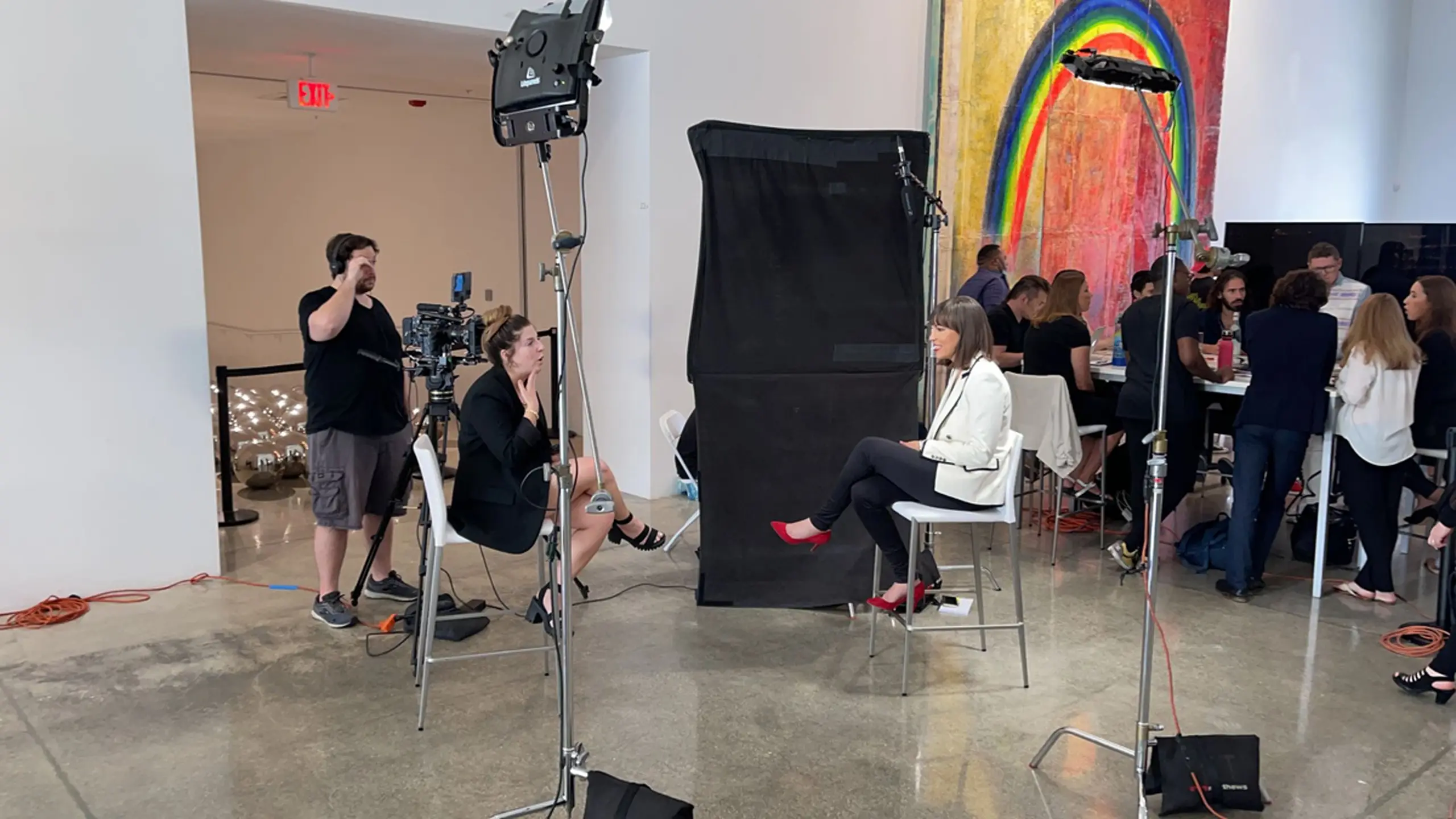
In the ever-evolving landscape of modern marketing, user-generated content (UGC) has emerged as a powerful tool for brands to connect with their audience authentically. By tapping into the genuine voices of customers, UGC in the form of reviews, testimonials, and stories builds trust, credibility, and engagement like no other marketing strategy can.
This article delves into the world of UGC, exploring its significance, benefits, and strategies for harnessing its full potential while providing actionable insights and real-world examples to inspire and guide brands on their journey to leveraging the power of customer voices.
## Understanding User-Generated Content
User-generated content (UGC) represents the authentic voices and experiences of customers, expressed through various forms such as reviews, testimonials, images, videos, blog comments, and social media posts (Source: winstonfrancois.com). Unlike traditional advertising, which can often be perceived as biased or inauthentic, UGC resonates more deeply with consumers because it reflects real-life experiences shared by their peers. This authenticity is the driving force behind the power of UGC, as it allows brands to showcase their products or services from the perspective of actual users, fostering a sense of transparency and trust.
When crafting compelling [SEO copywriting](https://c-istudios.com/seo-copywriting-services/), UGC can play a pivotal role in boosting search engine visibility and engaging potential customers. By incorporating customer reviews, testimonials, and stories into website content, brands can leverage the natural language and keywords used by their target audience, ultimately enhancing their search engine optimization efforts.
Beyond its authenticity and SEO benefits, user-generated content (UGC) significantly enhances brand engagement by allowing customers to share their personal narratives and showcase their loyalty to the brand. This interactive dynamic creates a sense of community, turning satisfied customers into advocates who actively promote the brand's values and offerings (Source: socialflyny.com). By nurturing this relationship, brands can strengthen their presence across platforms and inspire others to contribute their own stories.
UGC provides valuable insights into consumer preferences and behaviors, helping brands refine their marketing strategies. By analyzing common themes, phrases, and feedback within reviews and testimonials, businesses can tailor their products and messaging to meet customer expectations (Source: seeker.io). This customer-centric approach ensures that marketing campaigns address the actual needs and desires of the audience, ultimately leading to improved conversion rates and long-term loyalty.
## The Rise of User-Generated Content
The emergence of social media and online communities has fueled the growth of user-generated content, empowering customers to share their experiences and opinions with a global audience. As consumers became more skeptical of traditional advertising techniques, they turned to peer recommendations and reviews to inform their purchasing decisions. This shift has put the power of influence into the hands of customers, making UGC an invaluable asset for brands seeking to build trust and credibility.
Moreover, the proliferation of smartphones and social media platforms has made it easier than ever for customers to capture and share their experiences in real time, further amplifying the reach and impact of UGC. This constant stream of content not only provides brands with a wealth of authentic marketing material but also offers valuable insights into customer preferences, pain points, and trends.
In addition to changing the marketing landscape, user-generated content (UGC) has ushered in an era of consumer empowerment. Modern customers are no longer passive recipients of brand messages; instead, they are actively shaping the narrative through their content.
[Social media](https://c-istudios.com/social-media-marketing-services/) platforms like Instagram, Facebook, and TikTok have become essential channels where customers broadcast their experiences, opinions, and endorsements. As a result, potential buyers are more likely to rely on reviews, ratings, and testimonials from real customers rather than traditional marketing material, underscoring UGC's influential role in guiding consumer behavior.
This trend has pushed brands to adapt their strategies to accommodate and capitalize on this new reality. Companies are encouraging customers to share their experiences through branded hashtags, competitions, and content-sharing campaigns to increase engagement and amplify brand visibility (Source: productwind.com). By facilitating a constant flow of user-created content, brands build an ongoing conversation with their audience. This wealth of shared experiences serves not only as a marketing asset but also as an invaluable data source, helping brands refine their product development, customer service, and overall marketing strategies in response to evolving customer needs.
## Benefits of User-Generated Content
The advantages of user-generated content extend far beyond mere marketing tactics. UGC plays a crucial role in increasing brand credibility, fostering customer engagement, and enhancing SEO visibility (Source: swmarketingconsulting.com). When consumers encounter authentic reviews, testimonials, and stories from fellow customers, they are more likely to trust the brand and perceive it as transparent and trustworthy. This trust is invaluable in today's market, where consumers are bombarded with countless marketing messages and are increasingly skeptical of traditional advertising techniques.
Furthermore, UGC cultivates a sense of community among customers, allowing them to share their experiences, insights, and opinions. This interactive environment not only improves customer loyalty but also encourages prospective customers to engage with the brand. By actively participating in this community, brands can gather valuable feedback, gain insights into customer preferences, and tailor their products or services accordingly. This feedback loop can lead to improved customer satisfaction, increased brand advocacy, and ultimately, enhanced business performance.
[Branding and graphic design](https://c-istudios.com/branding-and-graphic-design-services/), UGC can serve as a powerful tool for creating authentic and relatable visuals. By showcasing customer-generated images and videos, brands can leverage the creativity and diverse perspectives of their audience, resulting in more engaging and compelling marketing materials. These visuals can be used across various channels, from social media campaigns to website design, creating a cohesive and visually appealing brand experience that resonates with customers.
Moreover, UGC can serve as a powerful source of inspiration for product development and innovation. By closely monitoring customer feedback, reviews, and suggestions, brands can identify areas for improvement, uncover unmet needs, and develop new products or features that directly address customer demands. This customer-centric approach not only enhances brand loyalty but also positions the company as a leader in its industry, fostering a competitive edge.
## Creating an Effective UGC Strategy
To fully harness the power of user-generated content, brands must adopt a strategic approach. Here are some actionable steps to encourage and leverage UGC effectively:
- **Offer incentives:** Motivate customers to share their stories, reviews, and experiences by offering incentives such as discounts, exclusive access, recognition, or even the opportunity to be featured on the brand's platforms. These incentives can be tailored to the brand's target audience and aligned with their preferences and values.
- **Curate the best content:** Establish a system for identifying and showcasing the most compelling UGC, aligning it with your brand's values and messaging. This can involve creating dedicated channels or platforms for customer content, as well as implementing a review and approval process to maintain quality control.
- **Showcase customer stories: **Dedicate sections on your website, social media channels, or marketing materials to highlight customer testimonials, reviews, and stories. This not only showcases the authentic experiences of real customers but also creates a sense of community and shared experiences among your audience.
- **Respond and engage:** Foster a two-way dialogue by actively responding to and engaging with customers who share their experiences. This can involve thanking them for their contributions, addressing any concerns or questions they may have, and encouraging further engagement through follow-up questions or prompts.
- **Leverage influencers:** Partner with influential customers or brand advocates to amplify the reach and impact of your UGC efforts. These influencers can share their authentic experiences and recommendations with their followers, lending credibility and social proof to your brand.
By implementing a well-rounded UGC strategy, brands can tap into the authentic voices of their customers and leverage Content Creation to drive engagement, build trust, and ultimately enhance their marketing efforts. Additionally, a strong UGC strategy can provide a wealth of customer insights, helping brands stay ahead of trends and continuously improve their products and services.
## Leveraging UGC Across Platforms
The impact of user-generated content extends beyond a single platform or channel. To maximize its effectiveness, brands should strategically showcase reviews, testimonials, and customer stories across various platforms. Here's how UGC can be leveraged across different touchpoints:
- **Website:** Integrate customer reviews, testimonials, and stories throughout your website, including product pages, landing pages, and dedicated sections for user-generated content. This not only adds credibility and social proof but also enhances the overall user experience by providing valuable insights and recommendations from real customers.
- **Social media:** Share customer-generated images, videos, and stories on social media platforms, encouraging engagement and fostering a sense of community. Social media platforms offer a powerful opportunity to amplify the reach of UGC and facilitate conversations between customers and the brand.
- **Review sites:** Actively monitor and respond to customer reviews on popular review sites, demonstrating your commitment to customer satisfaction and transparency. Positive reviews can be showcased on your website or social media channels, while negative feedback can be addressed professionally and transparently, fostering trust and credibility.
- **Email marketing:** Incorporate customer testimonials, reviews, and success stories into your email marketing campaigns. This not only adds authenticity to your messaging but also provides valuable social proof and insights for potential customers.
- **Offline marketing materials:** Repurpose user-generated content as marketing materials, such as case studies, brochures, or even promotional videos. By sharing these authentic customer stories across various channels, brands can create a more compelling and relatable narrative, ultimately driving customer acquisition and retention efforts.
Regarding [Web development](https://c-istudios.com/web-development-services/), incorporating user-generated content can enhance the overall user experience on your website. By seamlessly integrating customer reviews, testimonials, and stories, visitors can easily access and engage with this valuable content, fostering trust and confidence in your brand. Additionally, UGC can be leveraged to improve website functionality and navigation, as customer feedback can provide insights into areas for improvement or new features to implement.
## Maintaining Quality Control and Trust
While user-generated content offers numerous benefits, it's crucial for brands to maintain quality control and safeguard their reputation. Monitoring and moderating UGC is essential to ensure alignment with brand values and to address any potential issues or concerns.
To establish trust and transparency, brands should implement clear guidelines and policies for user-generated content. This includes addressing privacy concerns, handling negative feedback or inappropriate content, and ensuring that all content adheres to ethical and legal standards. Brands should also provide clear instructions and guidelines for customers on how to submit UGC, outlining the types of content that are acceptable and the criteria for inclusion.
Furthermore, brands should strive to maintain an open and honest dialogue with their customers, addressing any concerns or complaints promptly and professionally. By demonstrating a commitment to transparency and accountability, brands should strive to maintain an open and honest dialogue with their customers, addressing any concerns or complaints promptly and professionally. By demonstrating a commitment to transparency and accountability, brands can strengthen their relationship with their audience and foster trust in the long run.
While it may seem unrelated, maintaining quality control and trust in the realm of UGC can be likened to the principles of a successful Political Campaign. Just as political candidates must carefully curate their messaging and respond to criticisms with honesty and integrity, brands must navigate the world of user-generated content with a similar level of care and transparency. Failing to address negative feedback or inappropriate content can quickly erode public trust and damage a brand's reputation, much like a political candidate's missteps can derail their campaign.
Brands should also consider implementing moderation tools and processes to effectively manage and filter UGC. This can involve automated content moderation systems, as well as dedicated teams tasked with reviewing and approving submissions. By proactively addressing potential issues, brands can maintain a high-quality and trustworthy content ecosystem.
Ultimately, the key to maintaining quality control and trust lies in striking a balance between fostering an open and engaging community while also upholding brand values and protecting the integrity of the content shared. By establishing clear guidelines, responding transparently, and implementing effective moderation processes, brands can harness the power of UGC while safeguarding their reputation and fostering long-term customer trust.
## Innovative UGC Examples and Case Studies
Numerous brands have successfully harnessed the power of user-generated content, demonstrating its effectiveness and creativity. One notable example is Airbnb's #AirbnbDreams campaign, which encouraged users to share their dream travel destinations and experiences. This initiative not only fostered engagement but also provided valuable insights into customer preferences and aspirations, allowing Airbnb to tailor its offerings and marketing strategies accordingly.
Similarly, LEGO Ideas showcases the ingenuity of its user community, allowing fans to submit their own LEGO set ideas. The most popular and innovative designs are then reviewed and potentially produced, creating a unique and collaborative experience for LEGO enthusiasts worldwide. This approach not only generates a steady stream of fresh and engaging content but also fosters a sense of ownership and pride among the brand's loyal fan base.
In the realm of [film and TV production](https://c-istudios.com/film-and-tv-production/), user-generated content can serve as a powerful tool for engaging audiences and fostering a sense of community. For instance, television shows and movies can encourage fans to share their reactions, fan art, and creative interpretations, which can then be showcased across various platforms, further fueling the excitement and anticipation around the project. This approach not only generates buzz and engagement but also allows fans to feel like active participants in the creative process, strengthening their connection to the brand.
Evernote's blog provides an excellent example of how brands can repurpose user stories into effective marketing content (Source: neilpatel.com). By featuring customer testimonials and success stories, Evernote not only showcases the value of its product but also inspires and educates its audience, fostering a deeper connection with its user base. Additionally, these customer stories often highlight creative or innovative use cases, providing valuable insights for other users and potentially sparking new ideas for product development or marketing campaigns.
GoPro has also excelled in leveraging user-generated content, particularly through its impressive social media presence. By encouraging customers to share their extreme adventures and incredible footage captured with GoPro cameras, the brand has cultivated a vibrant and engaged community of thrill-seekers and content creators. This user-generated content not only showcases the product's capabilities but also serves as a powerful source of inspiration, fueling the aspirations of potential customers and strengthening GoPro's brand identity as a purveyor of adventure and excitement.
These examples demonstrate the versatility and impact of user-generated content across various industries and platforms. From fostering engagement and community-building to driving product innovation and marketing campaigns, UGC offers a wealth of opportunities for brands to connect with their audience authentically and leverage the power of customer voices.
## Work with C&I Studios
If you are planning a project like this, our team can take it from concept to final delivery. Explore our [video production services](https://c-istudios.com/video-production-services/), browse [our work](https://c-istudios.com/our-work/) to see how we tell brand stories, and [get in touch](https://c-istudios.com/contact/) when you are ready to start.
Originally published May 10, 2024
---
*This content is from [C&I Studios](https://c-istudios.com), a full-service production company.*
---
# Branding Beyond the Logo: Designing Memorable Brand Experiences
> Published: May 9, 2024
> Categories: Commercial & Brand
> Source: https://c-istudios.com/branding-beyond-the-logo-designing-memorable-brand-experiences/
---
.cib{--paper:#1b1d1f;--ink:#fff;--body:#d5d7d9;--muted:#8b9096;--line:rgba(255,255,255,.12);--thumb:#2b2e31;--card:#212426;--accent:#c02b0a;--blue:#5B8FA8;--serif:'Playfair Display',Georgia,serif;--sans:'Poppins',-apple-system,sans-serif;--measure:900px;background:var(--paper);color:var(--body);font-family:var(--sans);line-height:1.6;position:relative;left:50%;transform:translateX(-50%);width:90vw;max-width:1920px}
.cib *{box-sizing:border-box}
.cib .kicker{max-width:var(--measure);margin:58px auto 0;padding:0 22px;font-size:12.5px;font-weight:700;letter-spacing:2.5px;text-transform:uppercase;color:var(--blue)}
.cib h1.cibh1{text-wrap:balance;font-family:var(--serif);font-weight:500;font-size:clamp(46px,6vw,72px);line-height:1.08;color:var(--ink);max-width:var(--measure);margin:18px auto 0;padding:0 22px;letter-spacing:-.5px}
.cib .metarow{max-width:var(--measure);margin:20px auto 0;padding:0 22px;color:var(--muted);font-size:14px}
.cib .hero{position:relative;width:100%;height:0;padding-bottom:56.25%;overflow:hidden;margin:48px auto 0;border-top:1px solid var(--line);border-bottom:1px solid var(--line)}
.cib .hero .ph{width:100%;aspect-ratio:16/9;background:var(--thumb);border-top:1px solid var(--line);border-bottom:1px solid var(--line);display:flex;align-items:center;justify-content:center;color:#7d8288;font-size:13px;text-align:center;padding:0 20px}
.cib .body{max-width:var(--measure);margin:12px auto 0;padding:52px 22px 6px}
.cib .body.lead p:first-child{font-size:23px;line-height:1.62;color:var(--ink)}
.cib .body p{font-size:18.5px;line-height:1.85;margin:0 0 30px;color:var(--body)}
.cib .body h2{text-wrap:balance;font-family:var(--serif);font-weight:500;font-size:clamp(32px,4vw,48px);line-height:1.22;color:var(--ink);margin:70px 0 20px;letter-spacing:-.3px}
.cib .body h3{text-wrap:balance;font-family:var(--sans);font-weight:600;font-size:22px;color:var(--ink);margin:38px 0 8px}
.cib .body a{color:var(--ink);text-decoration:underline;text-decoration-color:rgba(255,255,255,.4);text-underline-offset:3px}
.cib .body a:hover{text-decoration-color:var(--ink)}
.cib .ctable{width:100%;border-collapse:collapse;margin:16px 0 30px;font-size:16px}
.cib .ctable th{background:#000;color:#fff;text-align:left;padding:10px 12px;font-family:var(--sans)}
.cib .ctable td{padding:10px 12px;border-bottom:1px solid var(--line);color:var(--body)}
.cib .inimg{position:relative;width:100%;height:0;padding-bottom:56.25%;overflow:hidden;margin:72px auto;border-top:1px solid var(--line);border-bottom:1px solid var(--line)}
.cib .inimg .ph{width:100%;aspect-ratio:16/9;background:var(--thumb);border-top:1px solid var(--line);border-bottom:1px solid var(--line);display:flex;align-items:center;justify-content:center;color:#7d8288;font-size:13px}
.cib .origpub{max-width:var(--measure);margin:60px auto 0;padding:26px 22px 0;border-top:1px solid var(--line);color:var(--muted);font-size:13.5px}
.cib .related{max-width:1200px;margin:64px auto 0;padding:34px 22px 76px}
.cib .related h3{font-family:var(--sans);font-size:12.5px;letter-spacing:2px;text-transform:uppercase;color:var(--ink);margin:0 0 24px}
.cib .grid{display:grid;grid-template-columns:repeat(3,1fr);gap:28px}
.cib .rc{background:var(--card);border:1px solid var(--line);display:block;text-decoration:none;color:inherit;transition:border-color .15s}
.cib a.rc:hover{border-color:rgba(255,255,255,.5)}
.cib .rc .thumb{position:relative;width:100%;height:0;padding-bottom:56.25%;background:var(--thumb);overflow:hidden}
.cib .rc .thumb img{position:absolute!important;top:0!important;left:0!important;width:100%!important;height:100%!important;object-fit:cover!important;margin:0!important}
.cib .rc .cc{padding:14px 15px 17px}
.cib .rc .rt{font-family:var(--serif);font-weight:500;font-size:16px;line-height:1.3;color:var(--ink);margin:0 0 6px}
.cib .rc .rm{font-size:11px;letter-spacing:1px;text-transform:uppercase;color:var(--muted)}
.cib img{margin:0!important;padding:0!important;display:block!important;vertical-align:top;max-width:100%}
.cib .hero img,.cib .inimg img{position:absolute!important;top:0!important;left:0!important;width:100%!important;height:100%!important;object-fit:cover!important;margin:0!important;padding:0!important;border:0!important;display:block!important;aspect-ratio:auto!important}
.cib .hero+.body{padding-top:36px}
@media(max-width:760px){.cib .grid{grid-template-columns:1fr}.cib .body h2{margin:52px 0 16px}.cib .body p{font-size:17.5px}.cib .inimg,.cib .hero{margin-top:44px}}
.cib .vembed{max-width:var(--measure);margin:44px auto;padding:0 22px}.cib .vembed .vwrap{position:relative;width:100%;height:0;padding-bottom:56.25%}.cib .vembed .vwrap iframe{position:absolute;top:0;left:0;width:100%;height:100%;border:0}
Commercial & Brand
# Branding Beyond the Logo. Designing Memorable Brand Experiences
10 min read
In today's crowded marketplace, a powerful brand identity goes far beyond just a visually appealing logo. Truly memorable brands are those that create holistic, multi-sensory experiences that resonate with their customers on a deeper, emotional level.
This article explores the art of designing brand experiences that transcend traditional branding elements, fostering stronger connections and leaving lasting impressions on consumers.
## Understanding Brand Experiences
A brand experience encompasses every interaction a customer has with a company, from the moment they encounter the brand's marketing materials to the post-purchase follow-up and support. This includes website navigation, retail environments, customer service interactions, product packaging, and even the little details like music playing in a store or the scent of a candle burning.
Successful brand experiences are built on a foundation of visual consistency, strong messaging, and positive emotional associations. A cohesive visual identity system, including elements like the logo, color palette, typography, and imagery, helps create instant brand recognition and reinforces the company's values and personality.
Strong messaging is also crucial in crafting memorable brand experiences. From the brand's tagline to the language used in marketing materials and customer interactions, the messaging should be clear, consistent, and aligned with the brand's core values and positioning. [Content creation](https://c-istudios.com/content-creation-services/) plays a pivotal role in shaping this messaging, ensuring that it resonates with the target audience and effectively communicates the brand's unique value proposition.
Ultimately, a successful brand experience is one that leaves a lasting impression on customers, fostering emotional connections and cultivating brand loyalty. By consistently delivering on the promise of a cohesive, engaging, and emotionally resonant experience, brands can differentiate themselves from competitors and establish a strong, enduring presence in the minds of their customers.
Truly exceptional brand experiences go beyond just visual and verbal cues - they tap into the emotional realm, creating positive associations and memories that foster deep connections with customers. This can be achieved through thoughtful design choices that evoke specific emotions, such as using warm, inviting colors and textures to create a sense of comfort and familiarity, or incorporating natural elements to convey a sense of tranquility and environmental consciousness.
## Building a Cohesive Visual Identity System
A cohesive visual identity system is the foundation upon which memorable brand experiences are built. This system encompasses a wide range of elements, including a carefully crafted brand strategy, a distinctive logo, a complementary color palette, consistent typography choices, and comprehensive brand guidelines.
The process of developing a cohesive visual identity system begins with a thorough brand strategy. This involves defining the brand's core values, target audience, unique selling proposition, and desired brand personality. With a clear understanding of these foundational elements, designers can then create a visual identity that accurately reflects and reinforces the brand's essence.
The logo is often the most recognizable component of a brand's visual identity, serving as the primary visual representation of the company's values and personality. Effective logos are simple, memorable, and versatile enough to be applied across various mediums and touchpoints.
Complementing the logo is a carefully curated color palette. Colors evoke specific emotions and associations, and the right color choices can significantly impact how a brand is perceived. For example, warm tones like red and orange can convey energy and excitement, while cooler shades like blue and green can create a sense of trust and tranquility.
Typography is another critical element of a cohesive visual identity system. The chosen typefaces should not only complement the logo and color palette but also reflect the brand's personality and tone. A modern, minimalist brand may opt for sleek, sans-serif fonts, while a more traditional or luxurious brand might gravitate towards serif typefaces with added flourishes.
Once these core elements are established, comprehensive brand guidelines are developed to ensure consistent implementation across all touchpoints. These guidelines cover everything from proper logo usage and color specifications to typography hierarchy and acceptable imagery styles.
Collaboration with [branding and graphic design](https://c-istudios.com/branding-and-graphic-design-services/) professionals is essential throughout this process, as they bring expertise in creating visually appealing and cohesive systems that effectively communicate a brand's essence. Additionally, it's important to regularly refine and evaluate the visual identity system, making adjustments as needed to ensure it remains relevant and resonant with the target audience.
## Creating Multi-Sensory Brand Experiences
While visual elements are crucial in branding, truly memorable brand experiences engage multiple senses, creating an immersive and emotionally resonant environment. This multi-sensory approach to branding incorporates elements that appeal to sight, sound, smell, and touch, creating a holistic experience that transcends traditional logos and visuals.
Visual elements, such as striking imagery, captivating video content, and interactive displays, can create a sense of wonder and intrigue, drawing customers into the brand's world. However, when combined with auditory elements like carefully curated music or ambient sounds, the experience becomes even more immersive and emotionally compelling.
The scent is another powerful tool in multi-sensory branding, as it has the ability to evoke strong emotional responses and create lasting memories. Brands like Starbucks and Apple have leveraged the power of scent by incorporating signature aromas into their retail environments, creating a multidimensional experience that enhances brand recognition and customer loyalty.
Tactile elements, such as the texture of product packaging or the feel of materials used in retail spaces, can also contribute to a memorable brand experience. For example, a luxury clothing brand may use high-quality, textured materials in their stores to convey a sense of opulence and attention to detail.
In the field of [film and TV production](https://c-istudios.com/film-and-tv-production/), multi-sensory branding techniques are often employed to create immersive and engaging experiences for audiences. From the use of surround sound and visual effects to the incorporation of scents and interactive elements, these techniques help transport viewers into the world of the film or TV show, fostering deeper emotional connections with the story and characters.
By leveraging multi-sensory branding techniques, filmmakers and content creators can tap into the power of emotional storytelling, creating experiences that resonate with audiences long after the credits roll. This approach not only fosters deeper connections with the content itself but also reinforces the overall brand identity, solidifying its place in the hearts and minds of viewers.
## The Role of Experiential Marketing
Experiential marketing is a powerful approach that allows brands to create meaningful, interactive experiences that resonate with customers on a deeper level. By leveraging this approach, brands can forge lasting emotional connections and foster brand loyalty in a way that traditional advertising cannot.
At its core, [creative marketing](https://c-istudios.com/creative-marketing-services/) through experiential strategies involves creating engaging, relevant, and shareable experiences that align with the brand's values and messaging. These experiences can take many forms, ranging from pop-up events and interactive installations to immersive virtual or augmented reality experiences.
One of the key benefits of experiential marketing is its ability to create highly personalized and memorable interactions with customers. By designing experiences that are tailored to specific target audiences and locations, brands can connect with consumers in a more authentic and meaningful way, leaving a lasting impression that goes beyond a simple logo or advertisement.
Effective experiential marketing campaigns often leverage technology to create engaging and innovative experiences. From interactive displays and augmented reality apps to virtual reality simulations, these technological tools can transport customers into the brand's world, allowing them to explore and interact with the brand in ways that were previously impossible.
Additionally, experiential marketing provides a unique opportunity for brands to generate buzz and social media engagement. By creating shareable moments and encouraging user-generated content, brands can amplify their reach and foster organic conversations and connections with their target audiences.
To ensure the success of experiential marketing campaigns, it's crucial to carefully plan and measure the results. This includes setting clear objectives, identifying key performance indicators (KPIs), and implementing data collection and analysis processes to track engagement, brand awareness, and overall return on investment (ROI).
## Integrating New Technologies
In the ever-evolving digital age, brands must continuously adapt and innovate to remain relevant and create memorable experiences for their customers. One way to achieve this is by embracing new technologies, such as augmented reality (AR), virtual reality (VR), and interactive displays, and seamlessly integrating them into the brand experience.
Augmented reality (AR) technology overlays digital information, such as images, text, or animations, onto the real world, creating an immersive and interactive experience for users. Brands can leverage AR to bring their products or services to life, allowing customers to virtually "try on" or interact with them before making a purchase decision.
For example, furniture retailers could offer AR apps that enable customers to visualize how a piece of furniture would look in their living space, while fashion brands could provide virtual fitting rooms that allow shoppers to see how clothing items would appear on their own bodies.
Virtual reality (VR), on the other hand, creates fully immersive digital environments that transport users into simulated worlds. This technology can be particularly effective for brands looking to showcase products or services in unique and memorable ways, or for creating engaging training or educational experiences.
In the realm of [VFX compositing and animation](https://c-istudios.com/vfx-compositing-and-animation-services/), VR has been used to create highly realistic and immersive environments, allowing viewers to step into fantastical worlds or experience events from unique perspectives. This technology can also be applied to brand experiences, enabling customers to virtually explore a product's features or visualize themselves using a service in a realistic setting.
Interactive displays, such as touchscreens, gesture-based interfaces, and projection mapping, offer another avenue for creating engaging and memorable brand experiences. These technologies can be used to create interactive installations, product demonstrations, or immersive retail environments that encourage customer engagement and exploration.
One example of a brand effectively utilizing these technologies is Lego. The company has embraced augmented reality to enhance the play experience for its customers. Through the Lego AR app, users can bring their physical Lego creations to life by scanning them with their mobile devices, unlocking interactive experiences, games, and animations that complement the physical models.
This integration of augmented reality not only creates a more immersive and engaging experience for Lego fans but also reinforces the brand's identity as a provider of creative and innovative play experiences. By seamlessly blending physical and digital elements, Lego has effectively adapted to the changing technological landscape while staying true to its core values and product offerings.
## Maintaining Brand Consistency
While embracing new technologies and innovative approaches to branding is essential, it is equally crucial to maintain brand consistency throughout the customer journey. Inconsistency in messaging, visuals, or experiences can undermine brand recognition and erode the trust and emotional connections established with customers.
Consistency in branding starts with a well-defined set of brand guidelines that outline the appropriate usage of visual elements, such as logos, color palettes, typography, and imagery, across all touchpoints. These guidelines should be comprehensive and easily accessible to all stakeholders involved in creating and maintaining the brand experience, including marketing teams, designers, developers, and customer service representatives.
In addition to visual consistency, it is essential to ensure that the brand's messaging and tone of voice remain consistent across all communication channels. This includes marketing materials, website content, social media posts, and customer interactions. A cohesive messaging strategy that aligns with the brand's values and personality can help reinforce brand recognition and create a seamless experience for customers.
Regular [web maintenance](https://c-istudios.com/web-maintenance/) and content updates are also critical for maintaining brand consistency in the digital realm. As websites and online platforms evolve, it is important to ensure that all visual elements, messaging, and functionality remain aligned with the brand's guidelines and standards. This may involve conducting periodic audits, implementing version control systems, and establishing workflows for reviewing and approving content and design changes.
Furthermore, brands should strive to create consistent and memorable experiences across all touchpoints, including physical spaces such as retail stores, events, or pop-up installations. This can be achieved by carefully designing and implementing brand standards for interior design, product displays, staff interactions, and overall ambiance.
To facilitate brand consistency, it is essential to foster cross-functional collaboration and open communication among all teams involved in shaping the brand experience. Regular meetings, training sessions, and feedback loops can help ensure that everyone is aligned on the brand's values, messaging, and visual identity, and can work together to maintain a cohesive and engaging experience for customers.
By prioritizing brand consistency across all touchpoints, businesses can reinforce brand recognition, build trust and loyalty with their customers, and create a seamless and memorable brand experience that sets them apart from competitors.
## Work with C&I Studios
If you are planning a project like this, our team can take it from concept to final delivery. Explore our [video production services](https://c-istudios.com/video-production-services/), browse [our work](https://c-istudios.com/our-work/) to see how we tell brand stories, and [get in touch](https://c-istudios.com/contact/) when you are ready to start.
Originally published May 9, 2024
---
*This content is from [C&I Studios](https://c-istudios.com), a full-service production company.*
---
# The Importance of Mobile Optimization: Ensuring Your Emails Look Great on Any Device
> Published: May 8, 2024
> Categories: Commercial & Brand
> Source: https://c-istudios.com/the-importance-of-mobile-optimization-ensuring-your-emails-look-great-on-any-device/
---
.cib{--paper:#1b1d1f;--ink:#fff;--body:#d5d7d9;--muted:#8b9096;--line:rgba(255,255,255,.12);--thumb:#2b2e31;--card:#212426;--accent:#c02b0a;--blue:#5B8FA8;--serif:'Playfair Display',Georgia,serif;--sans:'Poppins',-apple-system,sans-serif;--measure:900px;background:var(--paper);color:var(--body);font-family:var(--sans);line-height:1.6;position:relative;left:50%;transform:translateX(-50%);width:90vw;max-width:1920px}
.cib *{box-sizing:border-box}
.cib .kicker{max-width:var(--measure);margin:58px auto 0;padding:0 22px;font-size:12.5px;font-weight:700;letter-spacing:2.5px;text-transform:uppercase;color:var(--blue)}
.cib h1.cibh1{text-wrap:balance;font-family:var(--serif);font-weight:500;font-size:clamp(46px,6vw,72px);line-height:1.08;color:var(--ink);max-width:var(--measure);margin:18px auto 0;padding:0 22px;letter-spacing:-.5px}
.cib .metarow{max-width:var(--measure);margin:20px auto 0;padding:0 22px;color:var(--muted);font-size:14px}
.cib .hero{position:relative;width:100%;height:0;padding-bottom:56.25%;overflow:hidden;margin:48px auto 0;border-top:1px solid var(--line);border-bottom:1px solid var(--line)}
.cib .hero .ph{width:100%;aspect-ratio:16/9;background:var(--thumb);border-top:1px solid var(--line);border-bottom:1px solid var(--line);display:flex;align-items:center;justify-content:center;color:#7d8288;font-size:13px;text-align:center;padding:0 20px}
.cib .body{max-width:var(--measure);margin:12px auto 0;padding:52px 22px 6px}
.cib .body.lead p:first-child{font-size:23px;line-height:1.62;color:var(--ink)}
.cib .body p{font-size:18.5px;line-height:1.85;margin:0 0 30px;color:var(--body)}
.cib .body h2{text-wrap:balance;font-family:var(--serif);font-weight:500;font-size:clamp(32px,4vw,48px);line-height:1.22;color:var(--ink);margin:70px 0 20px;letter-spacing:-.3px}
.cib .body h3{text-wrap:balance;font-family:var(--sans);font-weight:600;font-size:22px;color:var(--ink);margin:38px 0 8px}
.cib .body a{color:var(--ink);text-decoration:underline;text-decoration-color:rgba(255,255,255,.4);text-underline-offset:3px}
.cib .body a:hover{text-decoration-color:var(--ink)}
.cib .ctable{width:100%;border-collapse:collapse;margin:16px 0 30px;font-size:16px}
.cib .ctable th{background:#000;color:#fff;text-align:left;padding:10px 12px;font-family:var(--sans)}
.cib .ctable td{padding:10px 12px;border-bottom:1px solid var(--line);color:var(--body)}
.cib .inimg{position:relative;width:100%;height:0;padding-bottom:56.25%;overflow:hidden;margin:72px auto;border-top:1px solid var(--line);border-bottom:1px solid var(--line)}
.cib .inimg .ph{width:100%;aspect-ratio:16/9;background:var(--thumb);border-top:1px solid var(--line);border-bottom:1px solid var(--line);display:flex;align-items:center;justify-content:center;color:#7d8288;font-size:13px}
.cib .origpub{max-width:var(--measure);margin:60px auto 0;padding:26px 22px 0;border-top:1px solid var(--line);color:var(--muted);font-size:13.5px}
.cib .related{max-width:1200px;margin:64px auto 0;padding:34px 22px 76px}
.cib .related h3{font-family:var(--sans);font-size:12.5px;letter-spacing:2px;text-transform:uppercase;color:var(--ink);margin:0 0 24px}
.cib .grid{display:grid;grid-template-columns:repeat(3,1fr);gap:28px}
.cib .rc{background:var(--card);border:1px solid var(--line);display:block;text-decoration:none;color:inherit;transition:border-color .15s}
.cib a.rc:hover{border-color:rgba(255,255,255,.5)}
.cib .rc .thumb{position:relative;width:100%;height:0;padding-bottom:56.25%;background:var(--thumb);overflow:hidden}
.cib .rc .thumb img{position:absolute!important;top:0!important;left:0!important;width:100%!important;height:100%!important;object-fit:cover!important;margin:0!important}
.cib .rc .cc{padding:14px 15px 17px}
.cib .rc .rt{font-family:var(--serif);font-weight:500;font-size:16px;line-height:1.3;color:var(--ink);margin:0 0 6px}
.cib .rc .rm{font-size:11px;letter-spacing:1px;text-transform:uppercase;color:var(--muted)}
.cib img{margin:0!important;padding:0!important;display:block!important;vertical-align:top;max-width:100%}
.cib .hero img,.cib .inimg img{position:absolute!important;top:0!important;left:0!important;width:100%!important;height:100%!important;object-fit:cover!important;margin:0!important;padding:0!important;border:0!important;display:block!important;aspect-ratio:auto!important}
.cib .hero+.body{padding-top:36px}
@media(max-width:760px){.cib .grid{grid-template-columns:1fr}.cib .body h2{margin:52px 0 16px}.cib .body p{font-size:17.5px}.cib .inimg,.cib .hero{margin-top:44px}}
.cib .vembed{max-width:var(--measure);margin:44px auto;padding:0 22px}.cib .vembed .vwrap{position:relative;width:100%;height:0;padding-bottom:56.25%}.cib .vembed .vwrap iframe{position:absolute;top:0;left:0;width:100%;height:100%;border:0}
Commercial & Brand
# The Importance of Mobile Optimization. Ensuring Your Emails Look Great on Any Device
11 min read

In today's digital landscape, mobile devices have become the primary way individuals access and engage with content, including emails. With the ever-increasing use of smartphones and tablets, mobile optimization has emerged as a critical component of successful email marketing campaigns.
This article delves into the significance of ensuring that emails are optimized for various devices, enabling businesses to deliver a seamless and engaging experience to their subscribers, regardless of the screen size or platform they are using.
## Step 1. Understanding Mobile Users' Behavior
To emphasize the importance of mobile optimization, it's crucial to understand the behavior and preferences of mobile email users. Statistics reveal that over 60% of emails are opened on mobile devices, underscoring the need for businesses to prioritize mobile-friendly design. When it comes to mobile email interactions, users expect a seamless and efficient experience.
They often have limited time and attention spans, making it essential for emails to be easily readable, navigable, and actionable on smaller screens. Responsive design, which adapts the layout and formatting of emails to different device sizes, plays a pivotal role in enhancing user engagement and preventing frustration caused by cluttered or illegible content.
Furthermore, mobile users tend to be more task-oriented and goal-driven when checking emails. They may be on the go, seeking quick access to essential information or taking immediate action, such as making a purchase or scheduling an appointment. By optimizing emails for mobile devices, businesses can cater to these specific user behaviors and increase the likelihood of conversions and customer satisfaction.
[Branding and graphic design](https://c-istudios.com/branding-and-graphic-design-services/) also play a crucial role in mobile email optimization. Consistent branding elements, such as logos, colors, and typography, help reinforce brand recognition and create a cohesive experience across devices. Additionally, thoughtful graphic design ensures that emails are visually appealing and easy to navigate on smaller screens, enhancing the overall user experience.
## Step 2. Benefits of Mobile Optimization for Email Marketing
Implementing mobile optimization in email marketing campaigns offers numerous advantages that can significantly impact business success. Improved click-through rates and conversions are among the key benefits. Mobile-optimized emails are more likely to be read and engaged with, increasing the chances of subscribers taking desired actions, such as clicking through to a website or making a purchase. By providing a seamless and user-friendly experience, optimized emails can drive higher conversion rates and ultimately boost sales and revenue.
Enhanced user experience and customer satisfaction are also critical outcomes of mobile optimization. Emails that are optimized for mobile devices ensure a positive user experience, reducing frustration and increasing satisfaction. When subscribers can easily read, navigate, and interact with emails on their preferred devices, they are more likely to perceive the brand favorably and remain engaged with future communications.
Mobile-friendly emails have a higher likelihood of being opened and interacted with, as they cater to the preferences and behaviors of mobile users. By delivering a visually appealing and easily consumable experience, businesses can improve their email open and engagement rates, leading to better overall campaign performance. Increased open and engagement rates are essential for maximizing the impact of email marketing efforts.
In today's crowded digital landscape, providing a seamless mobile experience can set a business apart from competitors. By prioritizing mobile optimization and [SEO copywriting](https://c-istudios.com/seo-copywriting-services/), companies can enhance their brand reputation and position themselves as customer-centric and technologically savvy, fostering trust and loyalty among subscribers. This competitive advantage and positive brand reputation can translate into long-term business success and customer retention.
## Step 3. Key Elements of Mobile-Optimized Emails
Crafting effective mobile-optimized emails requires careful consideration of several essential elements. In the mobile environment, where users are often inundated with notifications and emails, attention-grabbing and concise subject lines and pre-header text are crucial. These elements should be compelling, and informative, and encourage subscribers to open the email. Keeping subject lines under 50 characters and pre-header text under 100 characters can improve readability and engagement on smaller screens.
The content within the email should be concise, scannable, and easily digestible for mobile users who have limited time and attention spans. Use short paragraphs, bullet points, and clear headings to break up the text and make it easier to consume. Additionally, focus on creating engaging and valuable content that resonates with your target audience and encourages them to take action.
One of the primary goals of email marketing is to drive conversions, and mobile-optimized emails should have clear and prominent call-to-action (CTA) buttons. These buttons should be large enough to be easily tapped on smaller screens and positioned in a way that guides the user's attention. Additionally, the CTA text should be concise, compelling, and aligned with the overall message and objective of the email.
While functionality and usability are essential, incorporating [creative marketing](https://c-istudios.com/creative-marketing-services/) elements can enhance the visual appeal and engagement of mobile-optimized emails. This may include the use of eye-catching graphics, visually appealing layouts, and interactive elements that captivate the user's attention without compromising the overall usability and readability of the email.
## Step 4. Design Best Practices for Mobile Optimization
To ensure a seamless and engaging experience for mobile users, it's crucial to follow best practices in email design and optimization. One of the most important considerations is responsive design, which ensures that email templates adapt seamlessly to various screen sizes and devices. Responsive design utilizes flexible layouts, fluid grids, and media queries to dynamically adjust the email's layout, font sizes, and image dimensions based on the user's device.
When designing visually appealing emails for mobile devices, it's essential to strike a balance between aesthetics and functionality. While incorporating visuals and graphics can enhance the overall appeal, it's important not to overwhelm the user with excessive imagery or cluttered layouts, which can negatively impact load times and readability.
Font size is a critical aspect of mobile email optimization. Small text can be challenging to read on smaller screens, leading to user frustration and potential disengagement. It's recommended to use larger font sizes, typically between 14 and 16 pixels, to ensure optimal readability on mobile devices.
Images can be powerful visual elements in email design, but they must be optimized for mobile devices to prevent excessive load times and bandwidth consumption. This can be achieved through techniques such as compression, resizing, and lazy loading, where images are loaded on-demand as the user scrolls through the email.
The layout of mobile-optimized emails should be clean, organized, and easy to navigate. A single-column layout is often preferred for mobile devices, as it eliminates the need for excessive scrolling or zooming. Additionally, strategic use of whitespace and clear visual hierarchies can enhance readability and guide the user's attention to the most important elements.
[Content creation](https://c-istudios.com/content-creation-services/) also plays a crucial role in the design of mobile-optimized emails. The content should be optimized for scannable reading, with clear headings, concise paragraphs, and strategically placed calls to action. By prioritizing the user's needs and preferences, businesses can create a seamless and engaging email experience on mobile devices.
Testing and optimization are essential components of the design process. Regularly testing emails across various devices and screen sizes can help identify and address any usability issues or compatibility problems. Additionally, leveraging A/B testing and user feedback can provide valuable insights for refining and enhancing the mobile email experience over time.
## Step 5. Technical Considerations for Mobile Optimization
While design is a critical aspect of mobile email optimization, technical considerations are equally important to ensure a seamless user experience. One of the key technical factors is optimizing the email's HTML code for mobile devices. This includes using responsive email frameworks, such as Foundation for Emails or MJML, which provide pre-built templates and components optimized for mobile rendering.
Media queries and CSS play a crucial role in responsive design implementation. Media queries allow developers to apply different styles and layouts based on the user's device characteristics, such as screen size or orientation. By leveraging media queries, designers can create flexible email layouts that adapt to various devices while maintaining a consistent and visually appealing experience.
Optimizing images is another important technical consideration for mobile email optimization. Large, uncompressed images can significantly increase load times, leading to poor user experiences, especially on mobile devices with limited bandwidth or slower network connections. Techniques such as image compression, resizing, and lazy loading can help reduce file sizes and improve overall performance.
Reducing load times is essential for mobile email optimization, as users expect quick and responsive experiences. In addition to optimizing images, strategies like minifying HTML, CSS, and JavaScript code, as well as leveraging caching techniques, can contribute to faster load times and improved performance.
[Media marketing](https://c-istudios.com/media-marketing-consultation-services/) services can provide valuable insights and guidance on implementing technical solutions for mobile email optimization. These professionals have expertise in leveraging the latest technologies and best practices to ensure optimal performance and compatibility across various platforms and devices.
## Step 6. Testing and Analytics for Mobile Optimization
Ensuring that emails render correctly and provide an optimal user experience across various devices and platforms is crucial for successful mobile optimization. Testing emails across a range of mobile devices, operating systems, and email clients is essential to identify and address any rendering issues, layout inconsistencies, or compatibility problems that may arise.
A/B testing, also known as split testing, is a powerful technique for optimizing email performance on mobile devices. By creating two or more variations of an email campaign and sending them to different segments of the subscriber list, businesses can compare metrics such as open rates, click-through rates, and conversions. This data-driven approach allows marketers to identify which version performs better on mobile devices and refine their strategies accordingly.
In addition to testing, leveraging analytics is crucial for gaining insights into mobile user behavior and optimizing email campaigns. Analytics tools can provide valuable data on how mobile users interact with emails, including metrics such as device types, operating systems, email clients used, and engagement rates. By analyzing this data, businesses can better understand their mobile audience and tailor their email content, design, and overall strategy to meet their specific needs and preferences.
For example, if analytics data reveals that a significant portion of mobile users are opening emails on a particular email client or device, businesses can prioritize testing and optimization efforts for that specific platform. Similarly, if certain types of content or calls-to-action (CTAs) resonate better with mobile users, businesses can incorporate those elements more prominently in their email campaigns.
Beyond initial testing and analysis, it's essential to continuously monitor and optimize email performance based on analytics data. As user behavior and technology evolve, businesses must be agile and willing to adapt their strategies to ensure ongoing success in mobile email optimization.
[Social media marketing](https://c-istudios.com/social-media-marketing-services/) can also play a role in mobile email optimization. By analyzing engagement data from social media platforms, businesses can gain insights into the types of content and visual elements that resonate with their target audience on mobile devices. This information can then inform the design and content strategies for email campaigns, increasing the likelihood of capturing and retaining the attention of mobile users.
## Step 7. Implementing Mobile Optimization Strategies
To successfully implement mobile optimization strategies for email marketing, businesses should follow a structured approach that involves collaboration across different teams and leverages the expertise of specialized professionals or tools.
One of the first steps is to establish clear goals and objectives for mobile email optimization. This may include targets for increasing open rates, click-through rates, conversions, or overall engagement on mobile devices. Having well-defined goals will help guide the optimization process and provide a benchmark for measuring success.
Collaboration between marketing and design teams is essential for creating effective mobile-optimized emails. Marketing professionals can provide insights into the target audience, messaging, and desired outcomes, while designers can translate these requirements into visually appealing and user-friendly email templates optimized for mobile devices.
Email service providers (ESPs) often offer tools and resources specifically designed for mobile email optimization. These may include responsive email templates, testing and rendering tools, and analytics dashboards. Leveraging the capabilities of a reputable ESP can streamline the optimization process and ensure that emails are delivered reliably to subscribers across various platforms and devices.
[Professional photography](https://c-istudios.com/professional-photography-services/) and visual content play a crucial role in creating engaging and visually appealing mobile-optimized emails. Working with experienced photographers or designers can ensure that images and graphics are optimized for mobile devices, enhancing the overall user experience without compromising load times or readability.
Continuous testing, optimization, and refinement are key to maintaining successful mobile email campaigns. Businesses should establish processes for regularly reviewing analytics data, conducting A/B tests, and incorporating user feedback to identify areas for improvement. Additionally, staying up-to-date with the latest trends, best practices, and emerging technologies in mobile email optimization can help businesses stay ahead of the curve and deliver exceptional experiences to their subscribers.
There are numerous resources available for businesses looking to further their knowledge and skills in mobile email optimization. Industry blogs, webinars, and online courses can provide valuable insights and practical tips from experts in the field. Additionally, attending conferences or joining professional communities can facilitate knowledge-sharing and networking opportunities, fostering a deeper understanding of mobile optimization strategies and best practices.
## Work with C&I Studios
If you are planning a project like this, our team can take it from concept to final delivery. Explore our [video production services](https://c-istudios.com/video-production-services/), browse [our work](https://c-istudios.com/our-work/) to see how we tell brand stories, and [get in touch](https://c-istudios.com/contact/) when you are ready to start.
Originally published May 8, 2024
---
*This content is from [C&I Studios](https://c-istudios.com), a full-service production company.*
---
# Color Psychology in Web Design: How to Use Color to Influence User Behavior
> Published: May 7, 2024
> Categories: Commercial & Brand
> Source: https://c-istudios.com/color-psychology-in-web-design-how-to-use-color-to-influence-user-behavior/
---
.cib{--paper:#1b1d1f;--ink:#fff;--body:#d5d7d9;--muted:#8b9096;--line:rgba(255,255,255,.12);--thumb:#2b2e31;--card:#212426;--accent:#c02b0a;--blue:#5B8FA8;--serif:'Playfair Display',Georgia,serif;--sans:'Poppins',-apple-system,sans-serif;--measure:900px;background:var(--paper);color:var(--body);font-family:var(--sans);line-height:1.6;position:relative;left:50%;transform:translateX(-50%);width:90vw;max-width:1920px}
.cib *{box-sizing:border-box}
.cib .kicker{max-width:var(--measure);margin:58px auto 0;padding:0 22px;font-size:12.5px;font-weight:700;letter-spacing:2.5px;text-transform:uppercase;color:var(--blue)}
.cib h1.cibh1{text-wrap:balance;font-family:var(--serif);font-weight:500;font-size:clamp(46px,6vw,72px);line-height:1.08;color:var(--ink);max-width:var(--measure);margin:18px auto 0;padding:0 22px;letter-spacing:-.5px}
.cib .metarow{max-width:var(--measure);margin:20px auto 0;padding:0 22px;color:var(--muted);font-size:14px}
.cib .hero{position:relative;width:100%;height:0;padding-bottom:56.25%;overflow:hidden;margin:48px auto 0;border-top:1px solid var(--line);border-bottom:1px solid var(--line)}
.cib .hero .ph{width:100%;aspect-ratio:16/9;background:var(--thumb);border-top:1px solid var(--line);border-bottom:1px solid var(--line);display:flex;align-items:center;justify-content:center;color:#7d8288;font-size:13px;text-align:center;padding:0 20px}
.cib .body{max-width:var(--measure);margin:12px auto 0;padding:52px 22px 6px}
.cib .body.lead p:first-child{font-size:23px;line-height:1.62;color:var(--ink)}
.cib .body p{font-size:18.5px;line-height:1.85;margin:0 0 30px;color:var(--body)}
.cib .body h2{text-wrap:balance;font-family:var(--serif);font-weight:500;font-size:clamp(32px,4vw,48px);line-height:1.22;color:var(--ink);margin:70px 0 20px;letter-spacing:-.3px}
.cib .body h3{text-wrap:balance;font-family:var(--sans);font-weight:600;font-size:22px;color:var(--ink);margin:38px 0 8px}
.cib .body a{color:var(--ink);text-decoration:underline;text-decoration-color:rgba(255,255,255,.4);text-underline-offset:3px}
.cib .body a:hover{text-decoration-color:var(--ink)}
.cib .ctable{width:100%;border-collapse:collapse;margin:16px 0 30px;font-size:16px}
.cib .ctable th{background:#000;color:#fff;text-align:left;padding:10px 12px;font-family:var(--sans)}
.cib .ctable td{padding:10px 12px;border-bottom:1px solid var(--line);color:var(--body)}
.cib .inimg{position:relative;width:100%;height:0;padding-bottom:56.25%;overflow:hidden;margin:72px auto;border-top:1px solid var(--line);border-bottom:1px solid var(--line)}
.cib .inimg .ph{width:100%;aspect-ratio:16/9;background:var(--thumb);border-top:1px solid var(--line);border-bottom:1px solid var(--line);display:flex;align-items:center;justify-content:center;color:#7d8288;font-size:13px}
.cib .origpub{max-width:var(--measure);margin:60px auto 0;padding:26px 22px 0;border-top:1px solid var(--line);color:var(--muted);font-size:13.5px}
.cib .related{max-width:1200px;margin:64px auto 0;padding:34px 22px 76px}
.cib .related h3{font-family:var(--sans);font-size:12.5px;letter-spacing:2px;text-transform:uppercase;color:var(--ink);margin:0 0 24px}
.cib .grid{display:grid;grid-template-columns:repeat(3,1fr);gap:28px}
.cib .rc{background:var(--card);border:1px solid var(--line);display:block;text-decoration:none;color:inherit;transition:border-color .15s}
.cib a.rc:hover{border-color:rgba(255,255,255,.5)}
.cib .rc .thumb{position:relative;width:100%;height:0;padding-bottom:56.25%;background:var(--thumb);overflow:hidden}
.cib .rc .thumb img{position:absolute!important;top:0!important;left:0!important;width:100%!important;height:100%!important;object-fit:cover!important;margin:0!important}
.cib .rc .cc{padding:14px 15px 17px}
.cib .rc .rt{font-family:var(--serif);font-weight:500;font-size:16px;line-height:1.3;color:var(--ink);margin:0 0 6px}
.cib .rc .rm{font-size:11px;letter-spacing:1px;text-transform:uppercase;color:var(--muted)}
.cib img{margin:0!important;padding:0!important;display:block!important;vertical-align:top;max-width:100%}
.cib .hero img,.cib .inimg img{position:absolute!important;top:0!important;left:0!important;width:100%!important;height:100%!important;object-fit:cover!important;margin:0!important;padding:0!important;border:0!important;display:block!important;aspect-ratio:auto!important}
.cib .hero+.body{padding-top:36px}
@media(max-width:760px){.cib .grid{grid-template-columns:1fr}.cib .body h2{margin:52px 0 16px}.cib .body p{font-size:17.5px}.cib .inimg,.cib .hero{margin-top:44px}}
.cib .vembed{max-width:var(--measure);margin:44px auto;padding:0 22px}.cib .vembed .vwrap{position:relative;width:100%;height:0;padding-bottom:56.25%}.cib .vembed .vwrap iframe{position:absolute;top:0;left:0;width:100%;height:100%;border:0}
Commercial & Brand
# Color Psychology in Web Design. How to Use Color to Influence User Behavior
11 min read
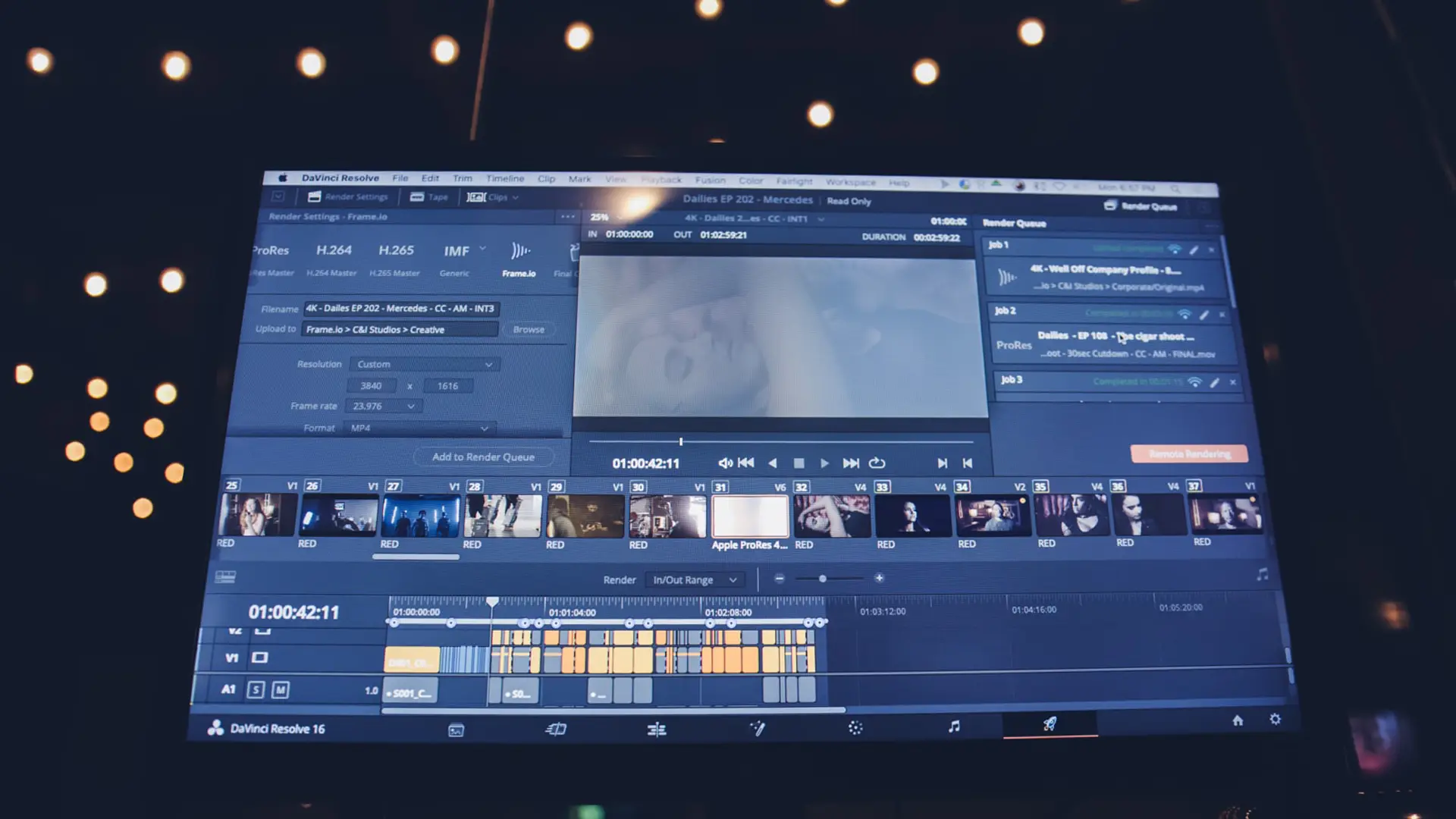
In the world of web design, color plays a pivotal role in shaping the user experience and influencing behavior. From evoking specific emotions to guiding user interactions, the strategic use of color can be a powerful tool for designers and marketers alike.
This article delves into the fascinating world of color psychology, exploring how colors can be harnessed to create captivating and persuasive websites that resonate with users on a deeper, psychological level.
## The Science of Color Psychology
Color psychology is the study of how different hues, tones, and shades influence human perception, emotions, and behavior. In the context of web development, understanding the psychological impact of color is crucial for creating user-friendly and engaging digital experiences. Color psychology is the ability to elicit specific emotional responses, memories, and associations, which can significantly influence how users interact with a website.
The impact of color on user perception and emotions has been extensively studied in various fields, including marketing, branding, and graphic design. Research has shown that colors can influence mood, cognitive performance, and even physiological responses. For example, warm colors like red and orange are often associated with excitement, energy, and urgency, while cool colors like blue and green tend to evoke feelings of calmness, trustworthiness, and stability.
[Creative marketing](https://c-istudios.com/creative-marketing-services/) strategies often leverage the power of color psychology to capture attention, convey brand messages, and influence consumer behavior. By carefully selecting and integrating colors that align with the desired emotional response, businesses can create a more impactful and memorable brand experience for their audiences.
For instance, a clothing brand targeting a youthful and energetic demographic might incorporate vibrant shades of red and orange into its website design and marketing materials to evoke a sense of excitement and vitality.
The scientific basis for color psychology lies in our evolutionary biology and cultural associations. Research suggests that our perception of color is deeply ingrained in our brain's processing of visual stimuli. Different wavelengths of light are processed by specialized receptors in our eyes, which then send signals to the brain for interpretation. This interpretation is influenced by both innate biological responses and learned cultural associations.
For example, the color red is often associated with danger or urgency because it is the color of blood, which can signal injury or threat in nature. Similarly, the color green is commonly linked to nature, growth, and fertility, as it is the dominant color in many natural environments. These innate associations are further reinforced and shaped by cultural and societal factors, such as symbolism, traditions, and collective experiences.
## Understanding Color and Emotion
To effectively harness the power of color psychology in web design, it is essential to understand the emotional associations and psychological effects of different hues. Each color carries its own unique set of connotations and can evoke specific emotional responses in users.
Red, for instance, is a powerful and attention-grabbing color that is often associated with energy, passion, and urgency. In web design, red can be used to highlight important calls to action, convey a sense of excitement, or create a sense of urgency that encourages users to take immediate action. However, it is important to use red judiciously, as overuse can be overwhelming or even perceived as aggressive.
Blue, on the other hand, is commonly associated with trust, reliability, and professionalism. This makes it an excellent choice for websites in the financial, healthcare, or legal industries, where building trust and credibility with users is paramount. In Content Creation and Social Media Marketing Services, blue can be used to create a sense of trustworthiness and reliability, which can be particularly beneficial for establishing brand loyalty.
Green is often linked to nature, growth, and harmony, making it an ideal choice for eco-friendly brands or websites related to health and wellness. Additionally, green can evoke feelings of relaxation and balance, which can be beneficial in creating a calming and soothing user experience. However, it is important to consider the specific shade of green, as darker shades can sometimes be associated with envy or greed.
Yellow is a cheerful and energetic color that can evoke feelings of happiness, optimism, and creativity. It is often used in websites targeting children or in industries related to education or creativity. However, too much yellow can be overwhelming or even perceived as aggressive, so it is important to use it in moderation and in combination with other colors.
Purple is commonly associated with luxury, royalty, and creativity. It can be an effective choice for high-end brands or websites targeting creative professionals. However, it is important to consider the specific shade of purple, as darker shades can be perceived as more luxurious, while lighter shades can be seen as more playful or whimsical.
[Media marketing](https://c-istudios.com/media-marketing-consultation-services/) professionals understand the importance of color associations and leverage this knowledge to create visually appealing and emotionally resonant campaigns that effectively connect with their target audiences. For example, a skincare brand promoting a new line of products with natural ingredients might incorporate earthy shades of green and brown to evoke a sense of nature and purity, while also using touches of vibrant colors like orange or yellow to convey energy and vitality.
## Strategic Application of Colors in Web Design
The strategic application of color psychology in web design goes beyond simply choosing aesthetically pleasing hues. Colors play a crucial role in enhancing the overall user experience (UX) and user interface (UI) design, guiding user interactions, and influencing behavior.
In the context of web development, color can be used to create visual hierarchies and draw attention to specific elements on a website. For example, using contrasting colors for calls-to-action or important links can make them stand out and encourage users to take the desired action. However, it is important to strike a balance and avoid using too many contrasting colors, as this can be visually overwhelming and confusing for users.
Color can also be employed to improve the overall usability of a website. By carefully considering color combinations and contrast ratios, designers can ensure that text and other elements are legible and accessible to users with varying visual abilities. This is particularly important for individuals with color vision deficiencies or other visual impairments. Adherence to established accessibility guidelines, such as those provided by the Web Content Accessibility Guidelines (WCAG), can help ensure that color choices do not create barriers for users with disabilities.
[SEO copywriting](https://c-istudios.com/seo-copywriting-services/) and content presentation can also benefit from the strategic use of color. By using colors that complement the tone and message of the content, designers can create a cohesive and engaging reading experience that resonates with the target audience. For example, a website providing financial advice might use shades of blue and gray to convey a sense of professionalism and trustworthiness, while also incorporating touches of green to suggest growth and prosperity.
Color consistency is essential for maintaining a professional and cohesive brand image across all digital touchpoints. Consistent use of brand colors can reinforce brand recognition and create a sense of familiarity and trust with users. This is particularly important for websites that have multiple pages or sections, as inconsistent color use can be disorienting and confusing for users.
## Colors and Brand Identity
Color psychology plays a vital role in establishing and reinforcing a brand's identity. By carefully selecting and consistently applying a unique color palette, businesses can create a strong visual association with their brand, making it instantly recognizable and memorable to consumers.
Successful brands understand the power of color psychology and strategically incorporate colors that align with their brand values, personality, and target audience. For example, a brand targeting eco-conscious consumers may choose shades of green to convey a sense of sustainability and environmental responsibility, while a luxury brand might incorporate rich, deep shades of purple or burgundy to evoke a sense of opulence and exclusivity.
A documentary film about the impact of climate change might use muted, desaturated colors to convey a sense of urgency and seriousness, while a travel documentary might incorporate vibrant, saturated colors to evoke a sense of adventure and excitement.
[Branding and graphic design](https://c-istudios.com/branding-and-graphic-design-services/) professionals understand the importance of color in creating a cohesive and memorable brand identity. They carefully consider the psychological associations and emotional responses evoked by different colors and select a palette that accurately represents the brand's values, personality, and target market.
By consistently applying this carefully curated color palette across all branding elements, including websites, marketing materials, product packaging, and physical spaces, businesses can reinforce their brand identity and create a strong emotional connection with their audience. This consistent use of color can also help to differentiate a brand from its competitors and make it more recognizable in a crowded marketplace.
Successful examples of brands that have effectively leveraged color psychology in their branding and web design include Coca-Cola, with its iconic successful examples of brands that have effectively leveraged color psychology in their branding and web design include Coca-Cola, with its iconic red and white color scheme that evokes a sense of energy and refreshment; Tiffany & Co., which uses a distinctive shade of blue to convey luxury and sophistication; and Whole Foods Market, which incorporates shades of green and earthy tones to reinforce its commitment to natural and organic products.
Another powerful example is the outdoor apparel brand Patagonia, which has consistently used shades of green and blue to evoke a sense of nature, adventure, and environmental consciousness. By aligning their color choices with their brand values and target audience, Patagonia has created a strong visual identity that resonates with their customer base and reinforces their commitment to sustainability.
## Accessibility and Inclusion in Design
While the strategic use of color can be a powerful tool in web design, it is crucial to consider accessibility and inclusion to ensure that websites are usable and enjoyable for all users, including those with visual impairments or color vision deficiencies.
[Web development](https://c-istudios.com/web-development-services/) best practices emphasize the importance of color contrast and legibility. Designers should carefully consider the contrast ratios between text and background colors to ensure that content is easily readable for users with varying visual abilities. The Web Content Accessibility Guidelines (WCAG) provide specific recommendations for minimum contrast ratios to meet accessibility standards.
Additionally, designers should be mindful of color combinations that may be problematic for individuals with color vision deficiencies, such as red-green color blindness. By incorporating alternative visual cues, like text labels or patterns, websites can remain accessible and inclusive while still leveraging the power of color psychology.
Inclusive design principles also encourage the use of color in a way that does not rely solely on color to convey important information or functionality. For example, instead of using color alone to indicate required form fields, designers can incorporate additional visual cues, such as asterisks or labels, to ensure that the information is accessible to all users.
By prioritizing accessibility and inclusion in web design, businesses can create digital experiences that are not only visually appealing and emotionally resonant but also inclusive and usable for a diverse range of users. This not only promotes inclusivity and equality but can also broaden a business's potential customer base and enhance its reputation for being socially responsible.
## Testing and Refining Color Choices
While understanding the psychological impact of color is essential, it is equally important to continuously test and refine color choices to ensure the most effective user experience and optimal results. Every target audience and industry may have unique preferences and associations with color, which makes ongoing testing and refinement a critical aspect of successful color strategy implementation.
A/B testing, also known as split testing, is a valuable tool for evaluating the effectiveness of different color schemes and design choices. By presenting two variations of a website or landing page to different user segments, businesses can gather data on user behavior, engagement, and conversion rates.
For example, a Web Hosting company could test two different color schemes for their pricing page - one using warm, attention-grabbing colors and another using cooler, more subdued tones. By analyzing the data from this A/B test, the company can determine which color scheme resonates better with their target audience and drives more conversions.
[Social media marketing](https://c-istudios.com/social-media-marketing-services/) agencies also leverage A/B testing to optimize their campaigns and content strategies. By testing different color combinations and visual elements across various social media platforms, they can identify the most effective approaches for capturing user attention and driving engagement.
In addition to A/B testing, collecting user feedback through surveys, focus groups, or other research methods can provide valuable insights into how users perceive and respond to different color choices. This feedback can then be used to refine and optimize color strategies, ensuring that they align with user preferences and expectations.
Web Development and Web Maintenance processes should also incorporate regular testing and refinement of color choices. As design trends and user preferences evolve, businesses need to be agile and willing to adapt their color strategies to remain relevant and engaging.
By embracing a data-driven approach and continuously testing and refining color choices, businesses can stay ahead of the curve, deliver exceptional user experiences, and maximize the impact of their web presence. It's important to note that color preferences can vary across different demographics, cultures, and geographic regions, further emphasizing the need for ongoing testing and refinement.
## Work with C&I Studios
If you are planning a project like this, our team can take it from concept to final delivery. Explore our [video production services](https://c-istudios.com/video-production-services/), browse [our work](https://c-istudios.com/our-work/) to see how we tell brand stories, and [get in touch](https://c-istudios.com/contact/) when you are ready to start.
Originally published May 7, 2024
---
*This content is from [C&I Studios](https://c-istudios.com), a full-service production company.*
---
# Video Transcription and Closed Captions: Impact on SEO and Accessibility
> Published: May 6, 2024
> Categories: Web & Tech
> Source: https://c-istudios.com/video-transcription-and-closed-captions-impact-on-seo-and-accessibility/
---
.cib{--paper:#1b1d1f;--ink:#fff;--body:#d5d7d9;--muted:#8b9096;--line:rgba(255,255,255,.12);--thumb:#2b2e31;--card:#212426;--accent:#c02b0a;--blue:#5B8FA8;--serif:'Playfair Display',Georgia,serif;--sans:'Poppins',-apple-system,sans-serif;--measure:900px;background:var(--paper);color:var(--body);font-family:var(--sans);line-height:1.6;position:relative;left:50%;transform:translateX(-50%);width:90vw;max-width:1920px}
.cib *{box-sizing:border-box}
.cib .kicker{max-width:var(--measure);margin:58px auto 0;padding:0 22px;font-size:12.5px;font-weight:700;letter-spacing:2.5px;text-transform:uppercase;color:var(--blue)}
.cib h1.cibh1{text-wrap:balance;font-family:var(--serif);font-weight:500;font-size:clamp(46px,6vw,72px);line-height:1.08;color:var(--ink);max-width:var(--measure);margin:18px auto 0;padding:0 22px;letter-spacing:-.5px}
.cib .metarow{max-width:var(--measure);margin:20px auto 0;padding:0 22px;color:var(--muted);font-size:14px}
.cib .hero{position:relative;width:100%;height:0;padding-bottom:56.25%;overflow:hidden;margin:48px auto 0;border-top:1px solid var(--line);border-bottom:1px solid var(--line)}
.cib .hero .ph{width:100%;aspect-ratio:16/9;background:var(--thumb);border-top:1px solid var(--line);border-bottom:1px solid var(--line);display:flex;align-items:center;justify-content:center;color:#7d8288;font-size:13px;text-align:center;padding:0 20px}
.cib .body{max-width:var(--measure);margin:12px auto 0;padding:52px 22px 6px}
.cib .body.lead p:first-child{font-size:23px;line-height:1.62;color:var(--ink)}
.cib .body p{font-size:18.5px;line-height:1.85;margin:0 0 30px;color:var(--body)}
.cib .body h2{text-wrap:balance;font-family:var(--serif);font-weight:500;font-size:clamp(32px,4vw,48px);line-height:1.22;color:var(--ink);margin:70px 0 20px;letter-spacing:-.3px}
.cib .body h3{text-wrap:balance;font-family:var(--sans);font-weight:600;font-size:22px;color:var(--ink);margin:38px 0 8px}
.cib .body a{color:var(--ink);text-decoration:underline;text-decoration-color:rgba(255,255,255,.4);text-underline-offset:3px}
.cib .body a:hover{text-decoration-color:var(--ink)}
.cib .ctable{width:100%;border-collapse:collapse;margin:16px 0 30px;font-size:16px}
.cib .ctable th{background:#000;color:#fff;text-align:left;padding:10px 12px;font-family:var(--sans)}
.cib .ctable td{padding:10px 12px;border-bottom:1px solid var(--line);color:var(--body)}
.cib .inimg{position:relative;width:100%;height:0;padding-bottom:56.25%;overflow:hidden;margin:72px auto;border-top:1px solid var(--line);border-bottom:1px solid var(--line)}
.cib .inimg .ph{width:100%;aspect-ratio:16/9;background:var(--thumb);border-top:1px solid var(--line);border-bottom:1px solid var(--line);display:flex;align-items:center;justify-content:center;color:#7d8288;font-size:13px}
.cib .origpub{max-width:var(--measure);margin:60px auto 0;padding:26px 22px 0;border-top:1px solid var(--line);color:var(--muted);font-size:13.5px}
.cib .related{max-width:1200px;margin:64px auto 0;padding:34px 22px 76px}
.cib .related h3{font-family:var(--sans);font-size:12.5px;letter-spacing:2px;text-transform:uppercase;color:var(--ink);margin:0 0 24px}
.cib .grid{display:grid;grid-template-columns:repeat(3,1fr);gap:28px}
.cib .rc{background:var(--card);border:1px solid var(--line);display:block;text-decoration:none;color:inherit;transition:border-color .15s}
.cib a.rc:hover{border-color:rgba(255,255,255,.5)}
.cib .rc .thumb{position:relative;width:100%;height:0;padding-bottom:56.25%;background:var(--thumb);overflow:hidden}
.cib .rc .thumb img{position:absolute!important;top:0!important;left:0!important;width:100%!important;height:100%!important;object-fit:cover!important;margin:0!important}
.cib .rc .cc{padding:14px 15px 17px}
.cib .rc .rt{font-family:var(--serif);font-weight:500;font-size:16px;line-height:1.3;color:var(--ink);margin:0 0 6px}
.cib .rc .rm{font-size:11px;letter-spacing:1px;text-transform:uppercase;color:var(--muted)}
.cib img{margin:0!important;padding:0!important;display:block!important;vertical-align:top;max-width:100%}
.cib .hero img,.cib .inimg img{position:absolute!important;top:0!important;left:0!important;width:100%!important;height:100%!important;object-fit:cover!important;margin:0!important;padding:0!important;border:0!important;display:block!important;aspect-ratio:auto!important}
.cib .hero+.body{padding-top:36px}
@media(max-width:760px){.cib .grid{grid-template-columns:1fr}.cib .body h2{margin:52px 0 16px}.cib .body p{font-size:17.5px}.cib .inimg,.cib .hero{margin-top:44px}}
.cib .vembed{max-width:var(--measure);margin:44px auto;padding:0 22px}.cib .vembed .vwrap{position:relative;width:100%;height:0;padding-bottom:56.25%}.cib .vembed .vwrap iframe{position:absolute;top:0;left:0;width:100%;height:100%;border:0}
Web & Tech
# Video Transcription and Closed Captions. Impact on SEO and Accessibility
11 min read

In today's digital landscape, video content has become a powerful medium for information dissemination and storytelling. However, to maximize its reach and impact, it is crucial to consider the significance of transcription and closed captions. These supportive elements not only enhance search engine optimization (SEO) but also ensure accessibility for individuals with varying abilities, ultimately expanding the potential audience for your video content.
Captions and transcripts enable equal access to information, catering to diverse audiences, including individuals with hearing impairments, language learners, and those in environments where audio playback is not feasible.
## The SEO Benefits of Transcriptions and Closed Captions
Search engine optimization is an ever-evolving field, and the integration of text-based content, such as transcriptions and closed captions, has become a crucial factor in improving online visibility and search engine rankings. By incorporating transcriptions and closed captions, you provide search engines with additional textual data, allowing them to better comprehend and index the content of your videos.
One of the primary advantages of [SEO copywriting](https://c-istudios.com/seo-copywriting-services/) involving transcriptions and closed captions is the enhancement of search engine indexing. Search engines rely heavily on textual content to understand the subject matter and relevance of web pages and multimedia files. Without transcriptions or closed captions, search engines may struggle to accurately interpret the audio and visual components of your videos, potentially hindering their discoverability. When you provide textual representations of your video content, search engines can effectively crawl, index, and rank your videos based on the text, improving their visibility in search results.
Moreover, transcriptions and closed captions contribute to improving search engine comprehension and relevance. By providing a textual representation of the audio content, search engines can better grasp the context, themes, and keywords discussed within the video. This increased understanding enables search engines to deliver more accurate and relevant search results to users seeking information related to the topics covered in your videos. As search engines better understand the content, they can match user queries more precisely, driving targeted traffic to your video content.
Transcriptions and closed captions can serve as a valuable source of keyword-rich content. By strategically incorporating relevant keywords and phrases within the transcriptions and captions, you can signal to search engines the topics and themes that your video content covers. This, in turn, can improve your website's or video platform's ranking for those specific keywords, driving more targeted traffic to your content.
However, it is important to strike a balance between keyword optimization and natural language, as stuffing transcripts and captions with excessive keywords can be detrimental to user experience and search engine rankings.
In addition to on-page optimization, transcriptions, and closed captions can also contribute to off-page SEO factors. For instance, by providing textual content, you create opportunities for others to quote, reference, or link to your video content, thereby building valuable backlinks and improving your overall link profile.
Social media platforms often favor content with captions, as they can be easily shared and consumed without sound, potentially leading to increased engagement and shares, which can positively impact your online visibility.
It is important to note that while transcriptions and closed captions offer SEO benefits, they should not be viewed as a substitute for well-crafted, high-quality content. Instead, they should be regarded as complementary elements that enhance the overall search engine optimization strategy for your video content. Combining engaging visuals, compelling narratives, and optimized textual data can create a powerful synergy, attracting and retaining viewers while improving your online presence.
## Enhancing User Experience Through Accessibility
Accessibility is a critical consideration in today's digital landscape, and the integration of closed captions plays a vital role in ensuring that video content is inclusive and accessible to a broader audience. Legal standards and compliance requirements for closed captions vary across different regions and industries, but the underlying principle remains the same: to provide equal access to information and entertainment for individuals with varying abilities.
In many countries, there are legal mandates that require certain types of video content, such as television broadcasts, online educational materials, and government-funded productions, to include closed captions. These regulations aim to ensure that individuals with hearing impairments or those who prefer visual reinforcement of audio content can fully engage with and comprehend the information being presented. Failure to comply with these accessibility requirements can result in legal consequences and potential lawsuits.
Beyond legal compliance, the provision of closed captions has far-reaching implications for expanding audience reach and fostering inclusivity. By offering closed captions, content creators and businesses can tap into a significant market segment that may have been previously underserved or excluded due to accessibility barriers. This not only demonstrates a commitment to diversity and inclusion but also opens up new opportunities for audience growth and engagement.
Closed captions not only benefit individuals with hearing impairments but also cater to a diverse range of viewers. For example, individuals learning a new language can leverage closed captions to enhance their comprehension and language acquisition. By providing visual reinforcement of the spoken content, language learners can improve their listening skills, vocabulary, and overall language proficiency.
In environments where audio playback may be disruptive or inappropriate, such as public spaces, shared workspaces, or noisy environments, closed captions enable viewers to consume video content without disturbing others or being disrupted themselves. This flexibility allows for a more seamless and enjoyable viewing experience, regardless of the surrounding conditions.
The integration of closed captions into [social media marketing](https://c-istudios.com/social-media-marketing-services/) can contribute to a more engaging and immersive user experience. Social media platforms have embraced video content as a powerful means of capturing audience attention and driving engagement.
By providing visual reinforcement of the audio content, viewers can better follow along and retain information, even in the distracting and fast-paced nature of social media feeds. Additionally, captions can make videos more shareable and accessible across different platforms and devices, further amplifying their reach and impact.
It is important to note that the implementation of closed captions should go beyond mere compliance and embrace a genuine commitment to accessibility and inclusivity. Content creators and businesses should strive to provide high-quality, accurate, and well-timed captions that enhance the overall viewing experience for all audiences. This may involve investing in professional captioning services, implementing robust quality assurance processes, and adhering to industry best practices for caption formatting, placement, and timing.
## Technological Innovations in Captioning and Transcription
The field of captioning and transcription has witnessed significant advancements driven by the rapid evolution of artificial intelligence (AI) and machine learning technologies. These cutting-edge technologies have not only streamlined the captioning and transcription processes but have also opened up new possibilities for enhanced accuracy, efficiency, and scalability.
One of the most prominent applications of AI and machine learning in captioning and transcription is the development of automated speech recognition (ASR) systems. These sophisticated algorithms analyze audio data and convert spoken words into text in real-time or near real-time. This automation has significantly reduced the time and effort required for manual transcription, enabling content creators and businesses to produce captions and transcripts more efficiently and cost-effectively.
However, the true power of AI and machine learning in captioning and transcription extends beyond mere automation. Advanced natural language processing (NLP) techniques are employed to improve the accuracy and contextual understanding of the transcribed text.
By leveraging vast language models and machine learning algorithms, these systems can better comprehend the nuances of speech, including accents, slang, and industry-specific terminology, resulting in more precise and meaningful transcriptions.
AI and machine learning technologies have enabled the development of advanced caption editing and quality assurance tools. These tools can automatically detect and correct common captioning errors, such as spelling mistakes, incorrect punctuation, or timing issues. These tools can significantly improve the overall quality and consistency of captioned content, reducing the need for extensive manual review and editing.
The integration of AI and machine learning has also paved the way for innovative solutions in the realm of [VFX compositing and animation](https://c-istudios.com/vfx-compositing-and-animation-services/). For instance, advanced computer vision algorithms can analyze video footage and automatically generate captions or descriptions based on the visual content, opening up new possibilities for accessibility and content discoverability. These AI-powered captioning systems can effectively describe scenes, objects, actions, and visual elements, enabling individuals with visual impairments to better understand and engage with video content.
As AI and machine learning technologies continue to evolve, we can anticipate even more groundbreaking advancements in captioning and transcription. For example, real-time translation capabilities could enable captions to be generated in multiple languages simultaneously, breaking down language barriers and fostering global accessibility. Imagine watching a video in your native language while captions seamlessly adjust to accommodate different linguistic preferences, creating a truly inclusive and borderless viewing experience.
Envision a scenario where captions are intelligently overlaid within a virtual environment, adapting to the viewer's perspective and positioning, creating a more natural and intuitive viewing experience.
Moreover, advancements in multimodal learning, which combines data from various sources like text, audio, and visuals, could pave the way for even more sophisticated captioning systems. These systems could potentially analyze not only the spoken content but also the visual cues, body language, and contextual information present in the video, resulting in captions that capture the full depth and nuance of the content.
While the adoption of AI and machine learning in captioning and transcription has already yielded significant benefits, it is crucial to acknowledge the potential challenges and limitations. Issues related to privacy, bias, and ethical considerations must be carefully addressed to ensure the responsible and transparent development and deployment of these technologies.
Privacy concerns arise as AI systems process and analyze large amounts of audio and video data, potentially containing sensitive or personal information. Robust data protection measures, such as anonymization and secure data handling protocols, must be implemented to safeguard individual privacy rights.
Ethical considerations surrounding the use of AI in captioning and transcription must also be carefully examined. Questions regarding the transparency and explainability of AI systems, the potential impact on human labor and job displacement, and the responsible governance of these technologies must be addressed through ongoing dialogue and collaboration among stakeholders, including researchers, developers, policymakers, and end-users.
## Integrating Captions and Transcripts into Marketing Strategies
In the realm of [creative marketing](https://c-istudios.com/creative-marketing-services/), the integration of captions and transcripts has emerged as a vital component in crafting effective content marketing strategies. As video content continues to dominate digital platforms and social media channels, leveraging captions and transcripts can unlock a multitude of benefits, ranging from improved search engine optimization to enhanced audience engagement and brand awareness.
One of the primary advantages of incorporating captions and transcripts into marketing efforts is the ability to optimize video content for search engines. As discussed earlier, search engines heavily rely on textual data to understand and index online content. By providing transcripts and closed captions, businesses can enhance the discoverability and visibility of their video marketing materials, ultimately driving more organic traffic to their websites and social media platforms.
Captions and transcripts play a crucial role in expanding the reach and accessibility of video marketing campaigns. By catering to viewers with varying abilities and preferences, such as individuals with hearing impairments or those in environments where audio playback is not feasible, businesses can effectively engage with a broader audience segment. This inclusive approach not only demonstrates a commitment to accessibility but also fosters brand loyalty and positive perception among consumers, who increasingly value socially responsible and inclusive practices.
Case studies and success stories from various industries have demonstrated the powerful impact of integrating captions and transcripts into marketing strategies. For instance, in the e-learning sector, educational institutions have leveraged captioned video content to enhance the learning experience for students, resulting in improved engagement, comprehension, and retention rates. By providing textual reinforcement of the audio content, students can better follow along and revisit complex concepts, leading to higher academic performance and satisfaction.
Similarly, in the entertainment industry, streaming platforms have embraced captions and transcripts to cater to global audiences, enabling viewers to enjoy content in their preferred language or with accessibility features. This approach has not only expanded their customer base but has also fostered a sense of inclusivity and brand loyalty among diverse viewer demographics.
By providing textual representations of video content, businesses can create compelling social media posts, captions, and descriptions, increasing the likelihood of audience engagement and content sharing. Social media platforms often prioritize content with captions, as they can be easily consumed on the go or in environments where audio playback is not convenient.
The integration of captions and transcripts can contribute to the overall branding and storytelling efforts of a business. By carefully crafting the language and tone used in captions and transcripts, brands can reinforce their unique voice and messaging, fostering stronger connections with their target audience. Captions and transcripts can also be utilized to convey brand values, such as inclusivity, transparency, and attention to detail, further strengthening the brand's identity and reputation.
However, it is important to note that the successful integration of captions and transcripts into marketing strategies requires careful planning and execution. Content creators and marketers should consider factors such as caption quality, timing, and placement to ensure a seamless and engaging viewing experience. Poorly executed captions or inaccurate transcripts can detract from the overall user experience and undermine the intended marketing efforts.
Accessibility guidelines and best practices should be adhered to, ensuring that captions and transcripts are not only present but also effective in serving their intended purpose. This may involve incorporating appropriate color contrasts, font sizes, and positioning to ensure readability and accessibility for individuals with varying abilities.
## Work with C&I Studios
If you are planning a project like this, our team can take it from concept to final delivery. Explore our [AI video services](https://c-istudios.com/ai-video-services/), browse [our work](https://c-istudios.com/our-work/) to see how we tell brand stories, and [get in touch](https://c-istudios.com/contact/) when you are ready to start.
Originally published May 6, 2024
---
*This content is from [C&I Studios](https://c-istudios.com), a full-service production company.*
---
# Analyzing and Optimizing Blog Performance: Using Data to Inform Your Content Strategy
> Published: May 5, 2024
> Categories: Web & Tech
> Source: https://c-istudios.com/analyzing-and-optimizing-blog-performance-using-data-to-inform-your-content-strategy/
---
.cib{--paper:#1b1d1f;--ink:#fff;--body:#d5d7d9;--muted:#8b9096;--line:rgba(255,255,255,.12);--thumb:#2b2e31;--card:#212426;--accent:#c02b0a;--blue:#5B8FA8;--serif:'Playfair Display',Georgia,serif;--sans:'Poppins',-apple-system,sans-serif;--measure:900px;background:var(--paper);color:var(--body);font-family:var(--sans);line-height:1.6;position:relative;left:50%;transform:translateX(-50%);width:90vw;max-width:1920px}
.cib *{box-sizing:border-box}
.cib .kicker{max-width:var(--measure);margin:58px auto 0;padding:0 22px;font-size:12.5px;font-weight:700;letter-spacing:2.5px;text-transform:uppercase;color:var(--blue)}
.cib h1.cibh1{text-wrap:balance;font-family:var(--serif);font-weight:500;font-size:clamp(46px,6vw,72px);line-height:1.08;color:var(--ink);max-width:var(--measure);margin:18px auto 0;padding:0 22px;letter-spacing:-.5px}
.cib .metarow{max-width:var(--measure);margin:20px auto 0;padding:0 22px;color:var(--muted);font-size:14px}
.cib .hero{position:relative;width:100%;height:0;padding-bottom:56.25%;overflow:hidden;margin:48px auto 0;border-top:1px solid var(--line);border-bottom:1px solid var(--line)}
.cib .hero .ph{width:100%;aspect-ratio:16/9;background:var(--thumb);border-top:1px solid var(--line);border-bottom:1px solid var(--line);display:flex;align-items:center;justify-content:center;color:#7d8288;font-size:13px;text-align:center;padding:0 20px}
.cib .body{max-width:var(--measure);margin:12px auto 0;padding:52px 22px 6px}
.cib .body.lead p:first-child{font-size:23px;line-height:1.62;color:var(--ink)}
.cib .body p{font-size:18.5px;line-height:1.85;margin:0 0 30px;color:var(--body)}
.cib .body h2{text-wrap:balance;font-family:var(--serif);font-weight:500;font-size:clamp(32px,4vw,48px);line-height:1.22;color:var(--ink);margin:70px 0 20px;letter-spacing:-.3px}
.cib .body h3{text-wrap:balance;font-family:var(--sans);font-weight:600;font-size:22px;color:var(--ink);margin:38px 0 8px}
.cib .body a{color:var(--ink);text-decoration:underline;text-decoration-color:rgba(255,255,255,.4);text-underline-offset:3px}
.cib .body a:hover{text-decoration-color:var(--ink)}
.cib .ctable{width:100%;border-collapse:collapse;margin:16px 0 30px;font-size:16px}
.cib .ctable th{background:#000;color:#fff;text-align:left;padding:10px 12px;font-family:var(--sans)}
.cib .ctable td{padding:10px 12px;border-bottom:1px solid var(--line);color:var(--body)}
.cib .inimg{position:relative;width:100%;height:0;padding-bottom:56.25%;overflow:hidden;margin:72px auto;border-top:1px solid var(--line);border-bottom:1px solid var(--line)}
.cib .inimg .ph{width:100%;aspect-ratio:16/9;background:var(--thumb);border-top:1px solid var(--line);border-bottom:1px solid var(--line);display:flex;align-items:center;justify-content:center;color:#7d8288;font-size:13px}
.cib .origpub{max-width:var(--measure);margin:60px auto 0;padding:26px 22px 0;border-top:1px solid var(--line);color:var(--muted);font-size:13.5px}
.cib .related{max-width:1200px;margin:64px auto 0;padding:34px 22px 76px}
.cib .related h3{font-family:var(--sans);font-size:12.5px;letter-spacing:2px;text-transform:uppercase;color:var(--ink);margin:0 0 24px}
.cib .grid{display:grid;grid-template-columns:repeat(3,1fr);gap:28px}
.cib .rc{background:var(--card);border:1px solid var(--line);display:block;text-decoration:none;color:inherit;transition:border-color .15s}
.cib a.rc:hover{border-color:rgba(255,255,255,.5)}
.cib .rc .thumb{position:relative;width:100%;height:0;padding-bottom:56.25%;background:var(--thumb);overflow:hidden}
.cib .rc .thumb img{position:absolute!important;top:0!important;left:0!important;width:100%!important;height:100%!important;object-fit:cover!important;margin:0!important}
.cib .rc .cc{padding:14px 15px 17px}
.cib .rc .rt{font-family:var(--serif);font-weight:500;font-size:16px;line-height:1.3;color:var(--ink);margin:0 0 6px}
.cib .rc .rm{font-size:11px;letter-spacing:1px;text-transform:uppercase;color:var(--muted)}
.cib img{margin:0!important;padding:0!important;display:block!important;vertical-align:top;max-width:100%}
.cib .hero img,.cib .inimg img{position:absolute!important;top:0!important;left:0!important;width:100%!important;height:100%!important;object-fit:cover!important;margin:0!important;padding:0!important;border:0!important;display:block!important;aspect-ratio:auto!important}
.cib .hero+.body{padding-top:36px}
@media(max-width:760px){.cib .grid{grid-template-columns:1fr}.cib .body h2{margin:52px 0 16px}.cib .body p{font-size:17.5px}.cib .inimg,.cib .hero{margin-top:44px}}
.cib .vembed{max-width:var(--measure);margin:44px auto;padding:0 22px}.cib .vembed .vwrap{position:relative;width:100%;height:0;padding-bottom:56.25%}.cib .vembed .vwrap iframe{position:absolute;top:0;left:0;width:100%;height:100%;border:0}
Web & Tech
# Analyzing and Optimizing Blog Performance. Using Data to Inform Your Content Strategy
11 min read
In today's crowded online landscape, optimizing your blog performance has become crucial for attracting and retaining readers. By analyzing and understanding the data behind your blog performance, you can make informed decisions to enhance your content strategy, increase engagement, and drive better results.
This article delves into the importance of a data-driven content strategy and provides a comprehensive guide on how to leverage data to optimize your blog's performance, ensuring your content resonates with your target audience and achieves your desired outcomes.
## Understanding Blog Performance Metrics
Measuring the success of your blog requires a thorough understanding of key performance metrics. These metrics provide valuable insights into how your content is performing and help you identify areas for improvement. Traffic represents the number of visitors to your blog within a specific time frame.
High traffic numbers are generally a positive indicator, but it's essential to analyze the quality of the traffic to ensure it aligns with your target audience. Engagement metrics, such as time on page, pages per session, and bounce rate, reveal how well your content resonates with your audience.
High engagement rates suggest that your content is valuable and captivating, while low engagement may indicate a need for improvement. The bounce rate measures the percentage of visitors who leave your blog after viewing only a single page. A high bounce rate can be a red flag, indicating that your content is not meeting the expectations of your visitors or that there are issues with your website's user experience.
Depending on your blog's objectives, conversion metrics can include email subscriptions, product purchases, or other desired actions. Tracking conversions helps you evaluate the effectiveness of your content in driving specific outcomes.
To effectively track and measure these metrics, you'll need to implement tools like Google Analytics or other web analytics platforms. These tools provide detailed data and insights into your blog performance, allowing you to make informed decisions about your content strategy.
Additionally, consider leveraging [social media marketing](https://c-istudios.com/social-media-marketing-services/)to amplify your content's reach and engage with your audience across various social platforms. By monitoring social media metrics, you can gain valuable insights into how your content is performing on these channels.
## Utilizing Analytics Tools for Blog Performance Analysis
Analyzing your blog performance requires the use of powerful analytics tools that provide comprehensive data and insights. Popular options include Google Analytics, SEMrush, and Moz, each offering unique features and capabilities. Google Analytics is a free and widely used web analytics platform that provides detailed information about your website's traffic, audience behavior, and conversion rates.
Setting up Google Analytics for your blog performance is straightforward: create a Google Analytics account and add your blog as a new property, copy the provided tracking code, and paste it into the header section of your blog's website, then once data starts accumulating, navigate to the Google Analytics dashboard to access various reports and insights.
SEMrush is a versatile digital marketing toolkit that offers a range of features, including keyword research, competitor analysis, and site auditing. Its content analytics tools allow you to track your blog's organic search visibility, identify top-performing content, and monitor backlinks. Moz is another popular tool for SEO and content optimization. Its suite of features includes keyword research, site auditing, and rank tracking. Moz also provides valuable insights into your website's authority, link profile, and technical SEO issues.
When exploring these analytics tools, familiarize yourself with their dashboard features and learn how to interpret the data they provide. Many offer customizable dashboards, allowing you to create personalized views tailored to your specific needs. As you delve into these analytics platforms, consider seeking guidance from a [media marketing consultation](https://c-istudios.com/media-marketing-consultation-services/) service. Professionals in this field can provide expert advice on setting up and interpreting analytics data, ensuring you maximize the value of these tools for optimizing your blog performance.
## Interpreting Blog Performance Data
Once you have the necessary analytics tools in place, it's essential to understand how to interpret the data they provide. By analyzing various aspects of your blog's performance, you can uncover valuable insights to inform your content strategy.
Understanding where your traffic is coming from can help you prioritize and optimize your content distribution channels. Analytics tools typically categorize traffic sources into organic search, referral, direct, and social. Knowing which sources drive the most relevant and engaged traffic can help you allocate resources effectively.
Analytics data provides insights into your audience's demographics, such as age, gender, location, and interests. It also reveals valuable information about their behavior on your blog, including pages visited, content consumed, and actions taken.
Leveraging this information allows you to create content that resonates with your target audience and meets their preferences. Identifying your most successful blog posts based on metrics like pageviews, engagement, and conversions can help you replicate the elements that make them successful. Analyze these top-performing pieces to understand the topics, formats, and styles that resonate best with your audience.
Pay close attention to engagement metrics like time on page, pages per session, and bounce rate. Low engagement rates may indicate that your content is not capturing your audience's interest or failing to provide value. In contrast, high engagement suggests that your content is engaging and relevant.
When analyzing your blog performance data, remember to consider the importance of [Content Creation](https://c-istudios.com/content-creation-services/). High-quality, engaging content is the foundation of a successful blog, and data insights can help you refine and optimize your content creation process to better align with your audience's preferences and needs.
## Identifying Strengths and Weaknesses of Your Blog
By analyzing your blog performance data, you can identify its strengths and weaknesses, enabling you to capitalize on what works well and address areas that need improvement. Examine the performance metrics of your blog posts to assess their quality and relevance to your target audience. High engagement rates, low bounce rates, and positive conversion metrics indicate that your content resonates well with your readers. Conversely, low engagement and high bounce rates may suggest a need to revisit your content strategy and focus on creating more valuable and relevant material.
Look for topics or areas that your blog has not adequately covered or where your audience's interest is high but your content offering is lacking. Analytics data can reveal these gaps by highlighting popular search queries, referral sources, or content categories that drive significant traffic but have limited coverage on your blog.
If specific blog posts or sections of your blog are experiencing low engagement and high bounce rates, it may be an indication that the content is not meeting your audience's expectations or is not providing sufficient value. Use this information to refine your content strategy, improve the user experience, or consider repurposing or updating the underperforming content.
Regularly review your audience demographics and behavior data to ensure that your content aligns with their interests, preferences, and needs. If you notice misalignments, consider refining your target audience personas and adjusting your content strategy accordingly.
By leveraging data insights to identify your blog's strengths and weaknesses, you can make informed decisions about where to focus your efforts and resources. Additionally, consider seeking the expertise of an [SEO copywriting](https://c-istudios.com/seo-copywriting-services/) professional who can help you optimize your content for better search visibility and engagement.
## Optimizing Content Strategy Based on Data Insights
Armed with a deep understanding of your blog performance data, you can now optimize your content strategy to better align with your audience's preferences and achieve your desired outcomes. Analyze your data to identify the content topics, formats (e.g., articles, videos, infographics), and distribution channels (e.g., social media, email, search) that resonate best with your audience. Prioritize creating more content that aligns with these preferences and allocate resources accordingly.
Optimize your content for better organic search visibility by incorporating relevant keywords, optimizing meta tags, and following SEO best practices. Tools like Google Search Console and SEMrush can provide valuable insights into your blog's search performance and identify opportunities for improvement. Use data insights to create a strategic content calendar that aligns with your audience's preferences and interests. Analyze performance metrics to determine the optimal publishing frequency that maximizes engagement and visibility.
Leverage your data to identify your most successful blog posts and allocate resources to promote and amplify their reach. This could involve repurposing the content into different formats, sharing it across social media channels, or featuring it prominently on your website. Identify influencers or industry experts whose audiences align with your target audience and explore collaborative opportunities. Guest posts, interviews, or co-created content can help you tap into new audiences and expand your reach.
As you optimize your content strategy based on data insights, consider incorporating [web development](https://c-istudios.com/web-development-services/) best practices to ensure a seamless and user-friendly experience for your audience. This may include optimizing your blog's mobile responsiveness, improving page load times, and enhancing site navigation to ensure visitors can easily find and consume your content.
## A/B Testing and Experimentation
A/B testing and experimentation are powerful techniques that can help you optimize your blog's performance by making data-driven decisions. A/B testing involves creating two or more variations of a specific element (such as a headline, call-to-action, or visual) and measuring the performance of each variation. By analyzing the results, you can determine which variation resonates better with your audience and implement the more effective version.
Conducting experiments with headlines can help you identify the most compelling and click-worthy titles for your blog posts. Test different headline variations to see which ones generate higher click-through rates and engagement. Similarly, experimenting with calls-to-action (CTAs) can provide insights into which prompts and placements are most effective in driving desired actions, such as email subscriptions or product purchases.
Visuals play a crucial role in capturing attention and enhancing engagement. Consider A/B testing different image styles, sizes, or placements within your blog posts to determine which approach resonates best with your audience. Additionally, you can experiment with content length, testing shorter versus longer-form content to understand your audience's preferences.
When conducting A/B tests, it's essential to follow best practices to ensure accurate and reliable results. Clearly define the goal of each test and the specific metrics you'll use to measure success. Ensure that you have a large enough sample size to detect statistically significant differences between the variations. Limit the number of variables you test simultaneously to isolate the impact of each change.
Analyze the results of your A/B tests objectively, using data to make informed decisions. If one variation significantly outperforms the other, implement the winning variation and consider conducting follow-up tests to further optimize the element. If the results are inconclusive or show no significant difference, consider testing new variations or focusing your efforts elsewhere.
Remember, A/B testing and experimentation are ongoing processes. Continuously test and refine various elements of your blog to ensure that your content strategy remains aligned with your audience's evolving preferences and behaviors. Consider seeking guidance from professionals specializing in [creative marketing](https://c-istudios.com/creative-marketing-services/) to develop effective A/B testing strategies and interpret results accurately.
## Incorporating Multimedia and Interactive Elements
In today's visually-driven online landscape, incorporating multimedia and interactive elements into your blog can significantly enhance user experience and engagement. Visual content, such as images, videos, and infographics, can make your blog posts more appealing, engaging, and easier to consume. Interactive tools, such as quizzes, calculators, or interactive maps, can further captivate your audience and provide value beyond static text.
The importance of visual content in blog posts cannot be overstated. High-quality images and videos can break up long blocks of text, making your content more digestible and visually appealing. Moreover, visuals can effectively convey complex ideas or data in a more engaging and memorable way. Infographics, for instance, are powerful tools for presenting information in a visually appealing and easily understandable format.
Interactive elements can take your blog performance to the next level by encouraging active participation from your audience. Quizzes and polls can be used to gauge your readers' interests, knowledge, or opinions on specific topics, while interactive calculators or tools can provide personalized and actionable insights based on user input.
When incorporating multimedia and interactive elements, it's essential to follow best practices to ensure they enhance rather than detract from the user experience. Optimize images and videos for fast loading times, and ensure they are relevant and add value to the content. Provide clear instructions and guidance for interactive elements, and ensure they are mobile-friendly and accessible to all users.
Consider partnering with a professional [video production](https://c-istudios.com/video-production-services/) service to create high-quality, engaging videos that align with your brand and content strategy. Expert videographers and editors can help you produce visually appealing and informative videos that capture your audience's attention and effectively communicate your message.
Multimedia and interactive elements can significantly boost engagement and create a more immersive and memorable experience for your audience. By leveraging these elements strategically and adhering to best practices, you can enhance the value and appeal of your blog, ultimately driving better performance and achieving your content goals.
## Work with C&I Studios
If you are planning a project like this, our team can take it from concept to final delivery. Explore our [AI video services](https://c-istudios.com/ai-video-services/), browse [our work](https://c-istudios.com/our-work/) to see how we tell brand stories, and [get in touch](https://c-istudios.com/contact/) when you are ready to start.
Originally published May 5, 2024
---
*This content is from [C&I Studios](https://c-istudios.com), a full-service production company.*
---
# What is corporate video marketing?
> Published: May 4, 2024
> Categories: Commercial & Brand
> Source: https://c-istudios.com/what-is-corporate-video-marketing/
---
.cib{--paper:#1b1d1f;--ink:#fff;--body:#d5d7d9;--muted:#8b9096;--line:rgba(255,255,255,.12);--thumb:#2b2e31;--card:#212426;--accent:#c02b0a;--blue:#5B8FA8;--serif:'Playfair Display',Georgia,serif;--sans:'Poppins',-apple-system,sans-serif;--measure:900px;background:var(--paper);color:var(--body);font-family:var(--sans);line-height:1.6;position:relative;left:50%;transform:translateX(-50%);width:90vw;max-width:1920px}
.cib *{box-sizing:border-box}
.cib .kicker{max-width:var(--measure);margin:58px auto 0;padding:0 22px;font-size:12.5px;font-weight:700;letter-spacing:2.5px;text-transform:uppercase;color:var(--blue)}
.cib h1.cibh1{text-wrap:balance;font-family:var(--serif);font-weight:500;font-size:clamp(46px,6vw,72px);line-height:1.08;color:var(--ink);max-width:var(--measure);margin:18px auto 0;padding:0 22px;letter-spacing:-.5px}
.cib .metarow{max-width:var(--measure);margin:20px auto 0;padding:0 22px;color:var(--muted);font-size:14px}
.cib .hero{position:relative;width:100%;height:0;padding-bottom:56.25%;overflow:hidden;margin:48px auto 0;border-top:1px solid var(--line);border-bottom:1px solid var(--line)}
.cib .hero .ph{width:100%;aspect-ratio:16/9;background:var(--thumb);border-top:1px solid var(--line);border-bottom:1px solid var(--line);display:flex;align-items:center;justify-content:center;color:#7d8288;font-size:13px;text-align:center;padding:0 20px}
.cib .body{max-width:var(--measure);margin:12px auto 0;padding:52px 22px 6px}
.cib .body.lead p:first-child{font-size:23px;line-height:1.62;color:var(--ink)}
.cib .body p{font-size:18.5px;line-height:1.85;margin:0 0 30px;color:var(--body)}
.cib .body h2{text-wrap:balance;font-family:var(--serif);font-weight:500;font-size:clamp(32px,4vw,48px);line-height:1.22;color:var(--ink);margin:70px 0 20px;letter-spacing:-.3px}
.cib .body h3{text-wrap:balance;font-family:var(--sans);font-weight:600;font-size:22px;color:var(--ink);margin:38px 0 8px}
.cib .body a{color:var(--ink);text-decoration:underline;text-decoration-color:rgba(255,255,255,.4);text-underline-offset:3px}
.cib .body a:hover{text-decoration-color:var(--ink)}
.cib .ctable{width:100%;border-collapse:collapse;margin:16px 0 30px;font-size:16px}
.cib .ctable th{background:#000;color:#fff;text-align:left;padding:10px 12px;font-family:var(--sans)}
.cib .ctable td{padding:10px 12px;border-bottom:1px solid var(--line);color:var(--body)}
.cib .inimg{position:relative;width:100%;height:0;padding-bottom:56.25%;overflow:hidden;margin:72px auto;border-top:1px solid var(--line);border-bottom:1px solid var(--line)}
.cib .inimg .ph{width:100%;aspect-ratio:16/9;background:var(--thumb);border-top:1px solid var(--line);border-bottom:1px solid var(--line);display:flex;align-items:center;justify-content:center;color:#7d8288;font-size:13px}
.cib .origpub{max-width:var(--measure);margin:60px auto 0;padding:26px 22px 0;border-top:1px solid var(--line);color:var(--muted);font-size:13.5px}
.cib .related{max-width:1200px;margin:64px auto 0;padding:34px 22px 76px}
.cib .related h3{font-family:var(--sans);font-size:12.5px;letter-spacing:2px;text-transform:uppercase;color:var(--ink);margin:0 0 24px}
.cib .grid{display:grid;grid-template-columns:repeat(3,1fr);gap:28px}
.cib .rc{background:var(--card);border:1px solid var(--line);display:block;text-decoration:none;color:inherit;transition:border-color .15s}
.cib a.rc:hover{border-color:rgba(255,255,255,.5)}
.cib .rc .thumb{position:relative;width:100%;height:0;padding-bottom:56.25%;background:var(--thumb);overflow:hidden}
.cib .rc .thumb img{position:absolute!important;top:0!important;left:0!important;width:100%!important;height:100%!important;object-fit:cover!important;margin:0!important}
.cib .rc .cc{padding:14px 15px 17px}
.cib .rc .rt{font-family:var(--serif);font-weight:500;font-size:16px;line-height:1.3;color:var(--ink);margin:0 0 6px}
.cib .rc .rm{font-size:11px;letter-spacing:1px;text-transform:uppercase;color:var(--muted)}
.cib img{margin:0!important;padding:0!important;display:block!important;vertical-align:top;max-width:100%}
.cib .hero img,.cib .inimg img{position:absolute!important;top:0!important;left:0!important;width:100%!important;height:100%!important;object-fit:cover!important;margin:0!important;padding:0!important;border:0!important;display:block!important;aspect-ratio:auto!important}
.cib .hero+.body{padding-top:36px}
@media(max-width:760px){.cib .grid{grid-template-columns:1fr}.cib .body h2{margin:52px 0 16px}.cib .body p{font-size:17.5px}.cib .inimg,.cib .hero{margin-top:44px}}
.cib .vembed{max-width:var(--measure);margin:44px auto;padding:0 22px}.cib .vembed .vwrap{position:relative;width:100%;height:0;padding-bottom:56.25%}.cib .vembed .vwrap iframe{position:absolute;top:0;left:0;width:100%;height:100%;border:0}
Commercial & Brand
# What is corporate video marketing?
13 min read

In the ever-evolving landscape of modern marketing, video content has emerged as a powerful tool for businesses to engage their audience and effectively communicate their brand message. Corporate video marketing, a strategic approach that harnesses the power of video to promote products, services, and brand identity, has become an integral part of successful marketing strategies.
This article delves into the intricate world of corporate video marketing, exploring its significance, evolution, and the immense potential it holds for businesses seeking to thrive in today's digital age.
## Understanding Corporate Video Marketing
Corporate video marketing can be defined as the strategic use of video content to promote a company's products, services, brand identity, and overall business objectives. It encompasses a wide range of video formats, from promotional videos and product demonstrations to behind-the-scenes glimpses and testimonials. At its core, corporate video marketing aims to establish a strong emotional connection with the audience, showcasing the brand's personality, values, and unique proposition.
The evolution of corporate video marketing can be traced back to the early days of television advertising, where businesses recognized the potential of visual storytelling. However, the advent of digital platforms and the proliferation of online video content have propelled corporate video marketing to new heights. Video production techniques have advanced significantly, enabling businesses to create high-quality, engaging content that resonates with their target audiences.
One of the key drivers behind the growth of corporate video marketing has been the increasing accessibility and affordability of video production equipment and software. With the rise of high-quality smartphone cameras and user-friendly editing tools, businesses of all sizes can now create professional-grade video content without breaking the bank. This democratization of [video production](https://c-istudios.com/video-production-services/) has opened up new opportunities for companies to experiment with different video formats and strategies, allowing them to stay ahead of the curve in a highly competitive market.
Moreover, the integration of video content into various digital marketing channels has further amplified its impact. Social media platforms, websites, email marketing campaigns, and even search engine optimization (SEO) strategies now heavily incorporate video content, making it an indispensable component of a well-rounded digital marketing strategy.
## Types of Corporate Video Content
Corporate video marketing encompasses a diverse array of video content types, each serving a specific purpose and catering to different stages of the customer journey. One of the most prevalent forms is explainer videos, which aim to simplify complex products or services, making them easily understandable for the audience. These videos are particularly effective in the awareness and consideration stages of the buyer's journey, helping to educate potential customers and address their pain points.
Testimonials and case studies, on the other hand, provide social proof and build trust by showcasing real-life experiences and success stories from satisfied customers. These types of videos can be powerful tools for overcoming objections and reinforcing the credibility of a brand, especially during the decision-making stage of the customer journey.
Behind-the-scenes videos offer a unique opportunity for businesses to showcase their company culture, values, and the people behind the brand, fostering a deeper connection with the audience. These videos can humanize the brand, establish transparency, and cultivate a sense of authenticity that resonates with modern consumers.
Event coverage and highlights are essential for maintaining brand visibility and keeping audiences engaged with the latest developments and milestones. Whether it's a product launch, industry conference, or community event, these videos can generate excitement, showcase thought leadership, and reinforce a brand's position within its respective industry.
Product demonstrations are a powerful tool for sales enablement, allowing businesses to showcase the features and benefits of their offerings in a visually compelling manner. These videos can significantly influence purchasing decisions and drive conversions by providing potential customers with a hands-on, immersive experience without the need for physical interaction.
[Content creation](https://c-istudios.com/content-creation-services/) is at the heart of corporate video marketing, and businesses must carefully craft their video content to align with their brand identity, messaging, and target audience preferences. Successful video content should strike a balance between informative and entertaining, leaving a lasting impression on viewers while effectively communicating the intended message.
## Key Components for Successful Corporate Video Marketing
Crafting a successful corporate video marketing strategy requires a combination of several key components. Firstly, businesses must develop compelling brand stories and messaging that resonate with their target audience. These narratives should be woven throughout the video content, consistently reinforcing the brand's values, personality, and unique selling proposition. Storytelling is a powerful tool in corporate video marketing, as it allows businesses to connect with their audience on an emotional level, fostering brand loyalty and advocacy.
Emphasizing high-quality video production is crucial for capturing and retaining the audience's attention. Professional lighting, cinematography, and post-production techniques can elevate the visual appeal and overall quality of the video content, ensuring a polished and engaging viewing experience. In today's saturated media landscape, high-quality production values can help a brand's video content stand out and leave a lasting impression on viewers.
Targeted audience segmentation and personalization are essential for maximizing the impact of corporate video marketing. By understanding the preferences, behaviors, and pain points of specific audience segments, businesses can tailor their video content to resonate more effectively with each group. This level of personalization can significantly increase engagement and conversion rates, as consumers are more likely to respond positively to content that speaks directly to their needs and interests.
Effective distribution channels and engagement strategies are paramount for ensuring that the video content reaches the intended audience. Leveraging social [media marketing](https://c-istudios.com/social-media-marketing-services/) platforms, optimizing for search engines, and implementing targeted advertising campaigns can significantly boost visibility and engagement. Additionally, businesses should consider incorporating interactive elements, such as calls-to-action and shareable links, to encourage audience participation and amplify the reach of their video content.
Strategic partnerships and influencer collaborations can also play a significant role in the success of corporate video marketing campaigns. By partnering with industry influencers, thought leaders, or complementary brands, businesses can tap into new audiences, leverage existing trust and credibility, and create unique content that resonates with their target markets.
## Benefits and Advantages of Corporate Video Marketing
Corporate video marketing offers numerous benefits and advantages for businesses seeking to stand out in a crowded marketplace. One of the most significant advantages is enhanced brand awareness and recognition. Video content has the power to create lasting impressions and emotionally connect with audiences, solidifying brand recall and loyalty.
By leveraging video content, businesses can improve customer engagement and build trust with their audience. Authentic and transparent storytelling, combined with visually compelling content, fosters a deeper connection between the brand and its customers, ultimately leading to increased loyalty and advocacy. Video content also allows businesses to showcase their expertise, thought leadership, and commitment to their industry, further reinforcing their credibility and trustworthiness.
Corporate video marketing has been proven to drive higher conversion rates and sales. Well-crafted video content can effectively guide viewers through the sales funnel, addressing their pain points, showcasing product benefits, and ultimately persuading them to take the desired action. Studies have shown that including video on landing pages can significantly increase conversion rates, as consumers are more likely to engage with and retain information presented in a visually compelling format.
Search engine optimization (SEO) and online visibility are also greatly enhanced through corporate video marketing. Videos can boost website rankings, increase dwell time, and improve overall engagement metrics, all of which contribute to improved search engine visibility. Furthermore, hosting videos on platforms like YouTube and optimizing them with relevant keywords can increase a brand's discoverability and drive additional traffic to its website.
Finally, corporate video marketing offers cost-effectiveness compared to traditional advertising methods. While high-quality video production can be an initial investment, the ability to repurpose and distribute video content across multiple platforms and channels maximizes the return on investment. Additionally, video content can have a longer lifespan than other forms of marketing collateral, providing a sustained impact over time.
[Branding and graphic design](https://c-istudios.com/branding-and-graphic-design-services/) play a pivotal role in corporate video marketing, ensuring consistent visual representation and reinforcing brand identity throughout the video content. Incorporating brand elements, such as logos, color schemes, and visual styles, can create a cohesive and recognizable brand experience for viewers, further solidifying brand recognition and recall.
## Best Practices in Corporate Video Production
Producing high-quality corporate videos requires a comprehensive approach that combines strategic planning, professional execution, and meticulous attention to detail. Pre-production planning and script development lay the foundation for successful video content. Businesses must clearly define their objectives, target audience, and key messaging, ensuring that the video aligns with their overall marketing strategy. Developing a detailed storyboard and shot list can streamline the production process and ensure a cohesive visual narrative.
[Professional video production](https://c-istudios.com/video-production-services/) techniques and equipment are essential for capturing visually stunning and engaging content. Skilled videographers, lighting experts, and sound technicians can elevate the quality of the video, ensuring a polished and professional result. Investing in high-quality cameras, lenses, lighting rigs, and audio equipment can make a significant difference in the overall production value.
Incorporating visual effects and animation, when appropriate, can add an extra layer of creativity and impact to the video content. These elements can help simplify complex concepts, enhance storytelling, and captivate the audience's attention. However, it's important to strike a balance and avoid overusing visual effects, as they should complement the overall message rather than overshadow it.
Post-production editing and optimization are crucial steps in the video production process. Professional editing software and techniques can refine the video, enhance its visual appeal, and ensure seamless transitions and pacing. Color grading, sound mixing, and the addition of music or voiceovers can further elevate the production quality. Optimizing the video for various platforms and devices is also essential for ensuring a consistent and high-quality viewing experience across different channels.
Collaboration with industry professionals is a key factor in achieving exceptional video production quality. Partnering with experienced videographers, directors, and post-production specialists can bring a wealth of expertise and creative perspectives to the project, ensuring that the final product meets the highest standards of quality and resonates with the intended audience.
[Creative marketing](https://c-istudios.com/creative-marketing-services/) strategies play a vital role in the success of corporate video marketing, ensuring that the video content reaches the intended audience and resonates effectively. Developing a comprehensive distribution plan that leverages multiple channels, such as social media, email marketing, and paid advertising, can maximize the reach and impact of the video content.
Businesses should consider incorporating interactive elements, such as calls-to-action, clickable links, and integrated forms, to encourage viewer engagement and drive desired actions. Leveraging data and analytics can also inform ongoing optimization and iteration of the video content, ensuring that it continues to perform effectively over time.
## Measuring Success and Performance in Corporate Video Marketing
To effectively measure the success and performance of corporate video marketing efforts, businesses must identify and track key performance indicators (KPIs). These metrics may include views, engagement rates, click-through rates, conversion rates, and overall return on investment (ROI). By closely monitoring these KPIs, businesses can gain valuable insights into the effectiveness of their video content and make data-driven decisions for optimization and improvement.
Utilizing analytics and tracking tools is essential for gathering comprehensive data and insights. Various platforms and software solutions offer robust analytics capabilities, enabling businesses to track viewer behavior, engagement patterns, and performance metrics across different channels and platforms. Tools like Google Analytics, YouTube Analytics, and social media analytics platforms can provide detailed data on video performance, audience demographics, and areas for improvement.
Iterative improvement strategies based on performance metrics are crucial for refining and enhancing corporate video marketing campaigns. By analyzing the data and identifying areas for improvement, businesses can make informed decisions about content creation, targeting, distribution, and overall strategy. A/B testing different video formats, messaging, and distribution strategies can help identify the most effective approaches for driving desired outcomes.
Incorporating professional photography into corporate video marketing can add an extra layer of visual appeal and storytelling potential. High-quality images and graphics can complement the video content, reinforcing the brand identity and creating a cohesive visual experience for the audience. [Professional photography](https://c-istudios.com/professional-photography-services/) can be used in various aspects of the video production process, such as creating visually striking thumbnails, incorporating still images into the video, or developing supporting marketing materials.
Furthermore, businesses should consider repurposing their video content into other formats, such as short clips, GIFs, or even written content, to maximize their reach and engagement across multiple platforms. By adapting the video content to different formats and channels, businesses can cater to diverse audience preferences and consumption habits, ensuring that their message resonates with a wider audience.
## Measuring Success and Performance in Corporate Video Marketing
Measuring the success and performance of corporate video marketing campaigns is essential for businesses to gauge the effectiveness of their efforts, optimize strategies, and drive continuous improvement. In this section, we will delve into the key components of measuring success in corporate video marketing, including identifying [key performance indicators (KPIs)](https://www.semrush.com/blog/kpi-marketing/?kw=&cmp=US_SRCH_DSA_Blog_EN&label=dsa_pagefeed&Network=g&Device=c&utm_content=683861103740&kwid=dsa-2263819779759&cmpid=18348486859&agpid=156312207533&BU=Core&extid=97592280487&adpos=&gad_source=1&gclid=Cj0KCQjwgJyyBhCGARIsAK8LVLOF4qxg1Yb4puxqJec20cSl2VgCG-SxtZFJDAOwFjLgLjxgMuL0Rt4aAl7WEALw_wcB), utilizing analytics and tracking tools, and implementing iterative improvement strategies based on performance metrics.
### Identifying Key Performance Indicators (KPIs) for Video Marketing
When it comes to measuring the success of corporate video marketing, it's crucial to identify the right KPIs that align with your business objectives and goals. While the specific KPIs may vary depending on the nature of your campaign and target audience, some common KPIs include:
- **View Count:** The number of times your video has been viewed by users. This metric provides insights into the reach and visibility of your video content.
- **Engagement Metrics:** Metrics such as likes, comments, shares, and click-through rates (CTRs) indicate how actively users are engaging with your video content. Higher engagement rates typically indicate that your content resonates with your audience.
- **Conversion Rate:** The percentage of viewers who take a desired action after watching your video, such as making a purchase, signing up for a newsletter, or filling out a form. A high conversion rate indicates that your video is effectively driving user action.
- **View Duration:** The average amount of time viewers spend watching your video. A longer view duration suggests that your content is engaging and holds the viewer's attention.
- **Social Media Metrics:** Metrics specific to social media platforms, such as shares, retweets, and mentions, can provide insights into the virality and social impact of your video content.
By tracking these KPIs, businesses can gain valuable insights into the performance of their video marketing campaigns and make data-driven decisions to optimize future strategies.
### Utilizing Analytics and Tracking Tools for Insights
To effectively measure the performance of corporate video marketing campaigns, businesses should leverage analytics and tracking tools that provide actionable insights into audience behavior and engagement. Popular analytics tools such as Google Analytics, YouTube Analytics, and [social media](https://c-istudios.com/social-media-marketing-services/) analytics platforms offer a wealth of data points that can help businesses understand how users interact with their video content.
These tools provide valuable metrics such as audience demographics, traffic sources, engagement metrics, and conversion data, allowing businesses to gain a deeper understanding of their target audience and tailor their video marketing strategies accordingly. By regularly analyzing these metrics, businesses can identify trends, track performance over time, and identify areas for improvement.
### Iterative Improvement Strategies Based on Performance Metrics
Once businesses have gathered insights from their video marketing analytics, it's essential to implement iterative improvement strategies based on performance metrics. This involves analyzing the data to identify areas of strength and weakness in your video marketing campaigns and making adjustments to optimize performance.
For example, if a particular video has a high view count but a low conversion rate, businesses can experiment with different calls-to-action (CTAs), optimize landing pages, or refine targeting criteria to improve conversion rates. Similarly, if engagement metrics are low, businesses can experiment with different content formats, messaging strategies, or distribution channels to increase audience engagement.
By adopting a data-driven approach to video marketing and continuously iterating and optimizing strategies based on performance metrics, businesses can maximize the effectiveness of their corporate video marketing campaigns and drive tangible results.
In summary, measuring the success and performance of corporate video marketing requires identifying key performance indicators (KPIs), utilizing analytics and tracking tools for insights, and implementing iterative improvement strategies based on performance metrics. By effectively measuring and analyzing video marketing metrics, businesses can gain valuable insights into audience behavior, optimize strategies, and drive continuous improvement in their video marketing efforts.
## Work with C&I Studios
If you are planning a project like this, our team can take it from concept to final delivery. Explore our [video production services](https://c-istudios.com/video-production-services/), browse [our work](https://c-istudios.com/our-work/) to see how we tell brand stories, and [get in touch](https://c-istudios.com/contact/) when you are ready to start.
Originally published May 4, 2024
---
*This content is from [C&I Studios](https://c-istudios.com), a full-service production company.*
---
# The Dos and Don'ts of Social Media Marketing: Best Practices for Success
> Published: May 3, 2024
> Categories: Commercial & Brand
> Source: https://c-istudios.com/the-dos-and-donts-of-social-media-marketing-best-practices-for-success/
---
.cib{--paper:#1b1d1f;--ink:#fff;--body:#d5d7d9;--muted:#8b9096;--line:rgba(255,255,255,.12);--thumb:#2b2e31;--card:#212426;--accent:#c02b0a;--blue:#5B8FA8;--serif:'Playfair Display',Georgia,serif;--sans:'Poppins',-apple-system,sans-serif;--measure:900px;background:var(--paper);color:var(--body);font-family:var(--sans);line-height:1.6;position:relative;left:50%;transform:translateX(-50%);width:90vw;max-width:1920px}
.cib *{box-sizing:border-box}
.cib .kicker{max-width:var(--measure);margin:58px auto 0;padding:0 22px;font-size:12.5px;font-weight:700;letter-spacing:2.5px;text-transform:uppercase;color:var(--blue)}
.cib h1.cibh1{text-wrap:balance;font-family:var(--serif);font-weight:500;font-size:clamp(46px,6vw,72px);line-height:1.08;color:var(--ink);max-width:var(--measure);margin:18px auto 0;padding:0 22px;letter-spacing:-.5px}
.cib .metarow{max-width:var(--measure);margin:20px auto 0;padding:0 22px;color:var(--muted);font-size:14px}
.cib .hero{position:relative;width:100%;height:0;padding-bottom:56.25%;overflow:hidden;margin:48px auto 0;border-top:1px solid var(--line);border-bottom:1px solid var(--line)}
.cib .hero .ph{width:100%;aspect-ratio:16/9;background:var(--thumb);border-top:1px solid var(--line);border-bottom:1px solid var(--line);display:flex;align-items:center;justify-content:center;color:#7d8288;font-size:13px;text-align:center;padding:0 20px}
.cib .body{max-width:var(--measure);margin:12px auto 0;padding:52px 22px 6px}
.cib .body.lead p:first-child{font-size:23px;line-height:1.62;color:var(--ink)}
.cib .body p{font-size:18.5px;line-height:1.85;margin:0 0 30px;color:var(--body)}
.cib .body h2{text-wrap:balance;font-family:var(--serif);font-weight:500;font-size:clamp(32px,4vw,48px);line-height:1.22;color:var(--ink);margin:70px 0 20px;letter-spacing:-.3px}
.cib .body h3{text-wrap:balance;font-family:var(--sans);font-weight:600;font-size:22px;color:var(--ink);margin:38px 0 8px}
.cib .body a{color:var(--ink);text-decoration:underline;text-decoration-color:rgba(255,255,255,.4);text-underline-offset:3px}
.cib .body a:hover{text-decoration-color:var(--ink)}
.cib .ctable{width:100%;border-collapse:collapse;margin:16px 0 30px;font-size:16px}
.cib .ctable th{background:#000;color:#fff;text-align:left;padding:10px 12px;font-family:var(--sans)}
.cib .ctable td{padding:10px 12px;border-bottom:1px solid var(--line);color:var(--body)}
.cib .inimg{position:relative;width:100%;height:0;padding-bottom:56.25%;overflow:hidden;margin:72px auto;border-top:1px solid var(--line);border-bottom:1px solid var(--line)}
.cib .inimg .ph{width:100%;aspect-ratio:16/9;background:var(--thumb);border-top:1px solid var(--line);border-bottom:1px solid var(--line);display:flex;align-items:center;justify-content:center;color:#7d8288;font-size:13px}
.cib .origpub{max-width:var(--measure);margin:60px auto 0;padding:26px 22px 0;border-top:1px solid var(--line);color:var(--muted);font-size:13.5px}
.cib .related{max-width:1200px;margin:64px auto 0;padding:34px 22px 76px}
.cib .related h3{font-family:var(--sans);font-size:12.5px;letter-spacing:2px;text-transform:uppercase;color:var(--ink);margin:0 0 24px}
.cib .grid{display:grid;grid-template-columns:repeat(3,1fr);gap:28px}
.cib .rc{background:var(--card);border:1px solid var(--line);display:block;text-decoration:none;color:inherit;transition:border-color .15s}
.cib a.rc:hover{border-color:rgba(255,255,255,.5)}
.cib .rc .thumb{position:relative;width:100%;height:0;padding-bottom:56.25%;background:var(--thumb);overflow:hidden}
.cib .rc .thumb img{position:absolute!important;top:0!important;left:0!important;width:100%!important;height:100%!important;object-fit:cover!important;margin:0!important}
.cib .rc .cc{padding:14px 15px 17px}
.cib .rc .rt{font-family:var(--serif);font-weight:500;font-size:16px;line-height:1.3;color:var(--ink);margin:0 0 6px}
.cib .rc .rm{font-size:11px;letter-spacing:1px;text-transform:uppercase;color:var(--muted)}
.cib img{margin:0!important;padding:0!important;display:block!important;vertical-align:top;max-width:100%}
.cib .hero img,.cib .inimg img{position:absolute!important;top:0!important;left:0!important;width:100%!important;height:100%!important;object-fit:cover!important;margin:0!important;padding:0!important;border:0!important;display:block!important;aspect-ratio:auto!important}
.cib .hero+.body{padding-top:36px}
@media(max-width:760px){.cib .grid{grid-template-columns:1fr}.cib .body h2{margin:52px 0 16px}.cib .body p{font-size:17.5px}.cib .inimg,.cib .hero{margin-top:44px}}
.cib .vembed{max-width:var(--measure);margin:44px auto;padding:0 22px}.cib .vembed .vwrap{position:relative;width:100%;height:0;padding-bottom:56.25%}.cib .vembed .vwrap iframe{position:absolute;top:0;left:0;width:100%;height:100%;border:0}
Commercial & Brand
# The Dos and Don'ts of Social Media Marketing. Best Practices for Success
9 min read

In the ever-evolving landscape of digital marketing, social media has emerged as a powerful and indispensable tool for businesses and brands to connect with their target audiences. However, navigating the intricate world of social media marketing can be a daunting task, fraught with potential pitfalls and missteps that can undermine even the most well-intentioned campaigns.
This comprehensive article delves into the dos and don'ts of social media marketing, providing an in-depth blueprint for success that encompasses best practices, strategies, and real-world examples from industry leaders. By mastering the nuances of this dynamic field, brands can cultivate meaningful relationships, drive engagement, and ultimately achieve their marketing objectives.
## The Dos of Social Media Marketing
### Engage Actively with Your Audience
One of the most crucial aspects of successful social media marketing is fostering genuine engagement with your audience. Social media platforms thrive on two-way communication, and brands that actively listen, respond, and interact with their followers are more likely to build lasting relationships and cultivate brand loyalty. Timely responses to comments, questions, and feedback not only demonstrate attentiveness but also provide opportunities for creative marketing initiatives that resonate with your audience's interests and pain points.
Effective audience engagement strategies can take many forms, such as hosting live Q&A sessions, running contests or giveaways, or simply acknowledging and responding to comments in a timely and personalized manner. By actively participating in the conversations surrounding your brand, you create a sense of community and foster a deeper connection with your followers.
### Create High-Quality, Relevant Content
In the crowded [social media](https://c-istudios.com/social-media-marketing-services/) landscape, high-quality, relevant content is the currency that captures attention and drives engagement. Producing content that resonates with your target demographic requires a deep understanding of their interests, pain points, and content consumption habits. From thought-provoking blog posts and informative videos to visually stunning graphics and infographics, the key is to deliver value while aligning with your brand's voice and messaging.
Successful content creation involves a strategic blend of research, creativity, and data-driven insights. Conduct market research to identify trending topics and pain points within your industry, and leverage tools like social media listening and sentiment analysis to gauge audience interests and preferences. Additionally, collaborate with subject matter experts, writers, and designers to ensure that your content is not only informative but also visually appealing and engaging.
The role of professional photography cannot be overstated in enhancing content quality and visual appeal. Investing in skilled photographers and videographers can elevate your content creation efforts, resulting in visually captivating assets that leave a lasting impression on your audience. High-quality visuals not only grab attention but also reinforce your brand's professionalism and attention to detail.
### Utilize Analytics and Feedback
In the data-driven world of social media marketing, analytics, and feedback are invaluable resources for refining strategies and improving engagement. By leveraging tools for tracking performance metrics, such as reach, impressions, click-through rates, and engagement rates, you can gain insights into what resonates with your audience and adjust your approach accordingly.
For example, if you notice that a particular type of content consistently generates higher engagement rates, you can prioritize creating more of that type of content. Conversely, if certain posts or campaigns underperform, you can analyze the data to identify potential areas for improvement or shifting tactics.
Additionally, actively soliciting and analyzing audience feedback can provide a wealth of information on their preferences, pain points, and areas for improvement. Encourage your followers to share their thoughts and opinions through surveys, polls, or direct interactions. This feedback can guide your content strategy, product development, and overall marketing approach, ensuring that you remain aligned with your audience's evolving needs.
Embracing SEO copywriting best practices can also enhance the discoverability of your content, ensuring that it reaches the right audience at the right time. Incorporate relevant keywords, optimize meta descriptions, and utilize internal linking strategies to improve your search engine visibility and drive more organic traffic to your social media platforms.
## The Don'ts of Social Media Marketing
### Avoid Over-Promotion
While social media platforms present an excellent opportunity for promotion, excessive self-promotion can quickly alienate your audience and undermine your efforts. Striking the right balance between promotional and informational content is crucial. Bombarding your followers with constant sales pitches or advertisements can lead to disengagement, a loss of trust, and potentially even unfollows or negative sentiment towards your brand.
Instead, focus on delivering value through creative marketing initiatives that resonate with your audience's interests and needs. Share educational resources, behind-the-scenes glimpses, or user-generated content that showcases your brand's personality and fosters a sense of community. When you do promote products or services, do so in a way that highlights the benefits and value proposition for your audience, rather than employing hard-sell tactics.
### Don't Ignore Negative Feedback
In the digital age, negative feedback is an inevitable reality that brands must be prepared to handle constructively. Ignoring criticism or negative comments can exacerbate the situation and damage your brand's reputation, potentially leading to a public relations crisis or loss of customer trust.
Instead, develop strategies for addressing negative feedback professionally and transparently. Respond promptly and acknowledge the concern or issue, even if you don't have an immediate resolution. Offer to take the conversation offline or into a private channel to address the matter more thoroughly. By demonstrating empathy and a willingness to listen and improve, you can often diffuse tense situations and potentially turn negative experiences into opportunities for building stronger relationships with your audience.
Case studies on successful crisis management on social media can provide valuable insights into how to navigate these situations effectively. For example, when a viral video of a passenger being forcibly removed from a United Airlines flight sparked outrage, the airline's initial response was widely criticized as tone-deaf and insufficient. However, by acknowledging the severity of the situation, issuing a sincere apology, and taking steps to address the underlying issues, United Airlines was eventually able to regain public trust and mitigate long-term damage to its brand.
### Don't Neglect Visual and Audio Quality
In a visually-driven social media landscape, the quality of your visual and audio elements can have a profound impact on your brand's perception and audience engagement. Poor-quality images, videos, or audio can undermine the credibility and professionalism of your content, deterring potential followers and customers.
Invest in high-quality equipment, such as professional cameras, lighting, and audio gear, to ensure that your visual and auditory assets are crisp, clear, and visually appealing. Additionally, consider partnering with experienced photographers, videographers, and [audio engineers](https://c-istudios.com/audio-engineering-services/) to elevate the production value of your content.
Maintaining high standards in these areas is essential for creating a consistent and engaging brand experience across all platforms. Poorly executed visuals or audio can be jarring and disruptive, detracting from the overall impact of your message and potentially damaging your brand's reputation.
## Building a Consistent Brand Voice
Developing and maintaining a consistent brand voice across all social media platforms is a critical component of successful marketing strategies. Your brand's voice should reflect its personality, values, and tone, resonating with your target audience and fostering a sense of familiarity and trust. Consistency in language, messaging, and visual elements not only strengthens brand recognition but also enhances the overall user experience.
To cultivate a strong brand voice, start by defining your brand's core values, personality traits, and desired tonality. Is your brand playful and witty, or more professional and authoritative? Do you aim to inspire and motivate, or educate and inform? Once you've established these foundational elements, develop a comprehensive brand style guide that outlines guidelines for language, tone, and visual assets. This guide should be shared and adhered to by all team members involved in your social media efforts, ensuring a cohesive and consistent brand experience across all platforms and campaigns.
Brands with strong, consistent voices that enhance their social media presence, such as Wendy's and Innocent Drinks, serve as inspiration for crafting a unique and engaging brand personality. Wendy's is known for its sassy, irreverent tone that resonates with a younger audience, while Innocent Drinks employs a quirky, playful voice that aligns with its brand values of sustainability and ethical sourcing.
By leveraging the power of [branding and graphic design](https://c-istudios.com/branding-and-graphic-design-services/), you can create a cohesive and visually appealing social media presence that reinforces your brand identity and resonates with your audience. Consistent use of colors, typography, and visual elements can help establish immediate brand recognition and foster a sense of familiarity and trust among your followers.
## Leveraging New Social Media Trends and Platforms
The landscape of social media is in a constant state of flux, characterized by the swift emergence of new platforms and the rollout of innovative features. For marketers and brands, maintaining an agile approach is crucial to capitalize on these developments effectively.
Embracing new trends swiftly and being open to experimentation can significantly benefit a brand. The risks associated with being an early adopter are overshadowed by numerous potential rewards such as enhanced visibility, a competitive edge, and the ability to influence and steer market trends and consumer conversations.
A prime illustration of successfully leveraging emerging trends is the integration of [VFX compositing and animation](https://c-istudios.com/vfx-compositing-and-animation-services/) in social media content. Brands that have proactively adopted these technologies have managed to produce exceptionally engaging and visually arresting content.
This strategic move not only distinguishes them from their competitors but also drives deeper engagement and fosters brand loyalty among their audiences. By pioneering in these areas, brands do not just follow trends, they set them, creating unique experiences that resonate with viewers and position the brand as an industry leader in innovative content creation.
Furthermore, the adoption of new social media platforms as they emerge can also provide strategic advantages. Early engagement with platforms like TikTok or Clubhouse has allowed businesses to establish a strong presence before these spaces become saturated with competitors. This proactive approach not only increases the likelihood of capturing a larger share of the audience but also allows businesses to refine their messaging and engagement strategies in real time.
Engaging with these new platforms early can lead to more organic growth, enhanced audience insights, and a stronger, more authentic connection with potential customers, all of which are crucial for long-term success in the digital arena.
## Advanced Strategies for Growth
As your social media presence grows and matures, exploring advanced strategies can propel your brand to new heights of success. Paid advertising, influencer collaborations, and cross-platform strategies are just a few examples of tactics that can amplify your reach and drive more targeted engagement.
Paid advertising on social media platforms allows you to precisely target specific demographics, interests, and behaviors, ensuring that your content reaches the right audience at the right time. Influencer collaborations leverage the credibility and following of influential personalities, providing access to new audiences and enhancing the authenticity of your messaging.
Cross-platform strategies involve integrating your social media efforts with other digital marketing channels, such as email marketing, content marketing, and search engine optimization (SEO). By aligning your [SEO copywriting](https://c-istudios.com/seo-copywriting-services/) efforts with your social media content, you can increase visibility and drive more traffic to your platforms.
Measuring return on investment (ROI) and scaling successful strategies based on performance data is crucial for sustained growth and optimization. Continuously analyzing metrics, testing new approaches, and refining your tactics will ensure that your social media marketing efforts remain effective and relevant in an ever-changing digital landscape.
## Work with C&I Studios
If you are planning a project like this, our team can take it from concept to final delivery. Explore our [video production services](https://c-istudios.com/video-production-services/), browse [our work](https://c-istudios.com/our-work/) to see how we tell brand stories, and [get in touch](https://c-istudios.com/contact/) when you are ready to start.
Originally published May 3, 2024
---
*This content is from [C&I Studios](https://c-istudios.com), a full-service production company.*
---
# Visual Storytelling: Using Graphic Design to Engage Audiences
> Published: May 2, 2024
> Categories: Film & TV
> Source: https://c-istudios.com/visual-storytelling-using-graphic-design-to-engage-audiences/
---
.cib{--paper:#1b1d1f;--ink:#fff;--body:#d5d7d9;--muted:#8b9096;--line:rgba(255,255,255,.12);--thumb:#2b2e31;--card:#212426;--accent:#c02b0a;--blue:#5B8FA8;--serif:'Playfair Display',Georgia,serif;--sans:'Poppins',-apple-system,sans-serif;--measure:900px;background:var(--paper);color:var(--body);font-family:var(--sans);line-height:1.6;position:relative;left:50%;transform:translateX(-50%);width:90vw;max-width:1920px}
.cib *{box-sizing:border-box}
.cib .kicker{max-width:var(--measure);margin:58px auto 0;padding:0 22px;font-size:12.5px;font-weight:700;letter-spacing:2.5px;text-transform:uppercase;color:var(--blue)}
.cib h1.cibh1{text-wrap:balance;font-family:var(--serif);font-weight:500;font-size:clamp(46px,6vw,72px);line-height:1.08;color:var(--ink);max-width:var(--measure);margin:18px auto 0;padding:0 22px;letter-spacing:-.5px}
.cib .metarow{max-width:var(--measure);margin:20px auto 0;padding:0 22px;color:var(--muted);font-size:14px}
.cib .hero{position:relative;width:100%;height:0;padding-bottom:56.25%;overflow:hidden;margin:48px auto 0;border-top:1px solid var(--line);border-bottom:1px solid var(--line)}
.cib .hero .ph{width:100%;aspect-ratio:16/9;background:var(--thumb);border-top:1px solid var(--line);border-bottom:1px solid var(--line);display:flex;align-items:center;justify-content:center;color:#7d8288;font-size:13px;text-align:center;padding:0 20px}
.cib .body{max-width:var(--measure);margin:12px auto 0;padding:52px 22px 6px}
.cib .body.lead p:first-child{font-size:23px;line-height:1.62;color:var(--ink)}
.cib .body p{font-size:18.5px;line-height:1.85;margin:0 0 30px;color:var(--body)}
.cib .body h2{text-wrap:balance;font-family:var(--serif);font-weight:500;font-size:clamp(32px,4vw,48px);line-height:1.22;color:var(--ink);margin:70px 0 20px;letter-spacing:-.3px}
.cib .body h3{text-wrap:balance;font-family:var(--sans);font-weight:600;font-size:22px;color:var(--ink);margin:38px 0 8px}
.cib .body a{color:var(--ink);text-decoration:underline;text-decoration-color:rgba(255,255,255,.4);text-underline-offset:3px}
.cib .body a:hover{text-decoration-color:var(--ink)}
.cib .ctable{width:100%;border-collapse:collapse;margin:16px 0 30px;font-size:16px}
.cib .ctable th{background:#000;color:#fff;text-align:left;padding:10px 12px;font-family:var(--sans)}
.cib .ctable td{padding:10px 12px;border-bottom:1px solid var(--line);color:var(--body)}
.cib .inimg{position:relative;width:100%;height:0;padding-bottom:56.25%;overflow:hidden;margin:72px auto;border-top:1px solid var(--line);border-bottom:1px solid var(--line)}
.cib .inimg .ph{width:100%;aspect-ratio:16/9;background:var(--thumb);border-top:1px solid var(--line);border-bottom:1px solid var(--line);display:flex;align-items:center;justify-content:center;color:#7d8288;font-size:13px}
.cib .origpub{max-width:var(--measure);margin:60px auto 0;padding:26px 22px 0;border-top:1px solid var(--line);color:var(--muted);font-size:13.5px}
.cib .related{max-width:1200px;margin:64px auto 0;padding:34px 22px 76px}
.cib .related h3{font-family:var(--sans);font-size:12.5px;letter-spacing:2px;text-transform:uppercase;color:var(--ink);margin:0 0 24px}
.cib .grid{display:grid;grid-template-columns:repeat(3,1fr);gap:28px}
.cib .rc{background:var(--card);border:1px solid var(--line);display:block;text-decoration:none;color:inherit;transition:border-color .15s}
.cib a.rc:hover{border-color:rgba(255,255,255,.5)}
.cib .rc .thumb{position:relative;width:100%;height:0;padding-bottom:56.25%;background:var(--thumb);overflow:hidden}
.cib .rc .thumb img{position:absolute!important;top:0!important;left:0!important;width:100%!important;height:100%!important;object-fit:cover!important;margin:0!important}
.cib .rc .cc{padding:14px 15px 17px}
.cib .rc .rt{font-family:var(--serif);font-weight:500;font-size:16px;line-height:1.3;color:var(--ink);margin:0 0 6px}
.cib .rc .rm{font-size:11px;letter-spacing:1px;text-transform:uppercase;color:var(--muted)}
.cib img{margin:0!important;padding:0!important;display:block!important;vertical-align:top;max-width:100%}
.cib .hero img,.cib .inimg img{position:absolute!important;top:0!important;left:0!important;width:100%!important;height:100%!important;object-fit:cover!important;margin:0!important;padding:0!important;border:0!important;display:block!important;aspect-ratio:auto!important}
.cib .hero+.body{padding-top:36px}
@media(max-width:760px){.cib .grid{grid-template-columns:1fr}.cib .body h2{margin:52px 0 16px}.cib .body p{font-size:17.5px}.cib .inimg,.cib .hero{margin-top:44px}}
.cib .vembed{max-width:var(--measure);margin:44px auto;padding:0 22px}.cib .vembed .vwrap{position:relative;width:100%;height:0;padding-bottom:56.25%}.cib .vembed .vwrap iframe{position:absolute;top:0;left:0;width:100%;height:100%;border:0}
Film & TV
# Visual Storytelling. Using Graphic Design to Engage Audiences
10 min read

In the fast-paced and visually saturated world we live in, the ability to convey messages effectively through compelling visuals has become increasingly crucial. Visual storytelling, the art of using imagery to communicate narratives, ideas, and emotions, has emerged as a powerful tool for engaging audiences across various platforms. At the heart of this art lies graphic design, a discipline that seamlessly blends aesthetics with functionality, creating visually stunning experiences that capture the essence of a story.
This comprehensive article delves into the intricate relationship between graphic design and visual storytelling, exploring the principles, techniques, and technologies that enable designers to craft captivating narratives that resonate with audiences on a profound level.
## The Principles of Visual Storytelling
Effective visual storytelling is built upon a foundation of fundamental design principles that govern the way our brains process and interpret visual information. These principles serve as the building blocks for creating compelling and coherent visual narratives that resonate with audiences.
Contrast, one of the key principles, is essential in drawing attention to specific elements and creating a visual hierarchy. By skillfully employing contrasting colors, textures, and shapes, designers can guide the viewer's eye through the narrative, emphasizing crucial moments and directing focus toward the intended message. For instance, a bold and vibrant color palette can be used to highlight a central character or plot point, while muted tones can create a sense of depth and dimension in the background.
Hierarchy plays a pivotal role in establishing a clear visual flow and organizing information in a logical and intuitive manner. Through the thoughtful use of size, placement, and emphasis, designers can create a sense of order and structure, ensuring that the story unfolds in a cohesive and comprehensible way. This can be achieved through techniques such as using varying font sizes, employing visual weight, and strategically positioning elements within the composition.
Alignment and balance are equally important in visual storytelling, as they contribute to a sense of harmony and aesthetic appeal. Aligning elements strategically and maintaining a balanced composition not only enhances the visual appeal but also facilitates seamless navigation through the narrative. This can involve adhering to grid systems, leveraging the rule of thirds, or employing symmetrical or asymmetrical layouts to create a sense of stability or tension, respectively.
By mastering these principles, graphic designers can effectively leverage the power of [creative marketing](https://c-istudios.com/creative-marketing-services/) strategies, crafting visually compelling narratives that capture attention, evoke emotions, and leave a lasting impact on audiences. Through careful consideration of contrast, hierarchy, alignment, and balance, designers can create visual stories that are not only aesthetically pleasing but also convey their intended messages with clarity and impact.
## Tools and Technologies in Graphic Design
The world of graphic design has witnessed remarkable advancements in tools and technologies, empowering designers to push the boundaries of visual storytelling. From industry-standard software like Adobe Creative Suite to cutting-edge digital platforms, the arsenal of tools at a designer's disposal has expanded exponentially.
One of the most significant developments in recent years has been the integration of [video production gear list](https://c-istudios.com/video-production-gear-list/) into graphic design workflows. High-quality cameras, lighting equipment, and editing software have made it possible for designers to incorporate dynamic visuals, animations, and motion graphics into their storytelling narratives, elevating the level of engagement and immersion for audiences. This has opened up new possibilities for creating captivating visual experiences that combine static graphics with moving elements, blurring the lines between traditional design and filmmaking.
Furthermore, the rise of cloud-based design platforms and collaborative tools has revolutionized the way designers work, enabling seamless collaboration, real-time feedback, and efficient project management, regardless of geographical boundaries. These tools not only streamline the creative process but also foster a more inclusive and collaborative environment, where designers can share ideas, iterate on concepts, and leverage diverse perspectives to create more impactful visual narratives.
As technology continues to evolve, designers have access to an ever-growing array of tools and resources that enhance their creative capabilities, allowing them to explore new frontiers in visual storytelling and push the limits of what's possible. From virtual reality (VR) and augmented reality (AR) applications to advanced 3D modeling and rendering software, the future of visual storytelling is poised to become increasingly immersive and dynamic.
## Case Studies. Successful Visual Storytelling Campaigns
To fully appreciate the power of visual storytelling through graphic design, it's essential to examine real-world examples of successful campaigns that have captivated audiences and left an indelible mark.
One remarkable campaign that exemplifies the art of visual storytelling is "Lifebuoy's 'Help a Child Reach 5' initiative." Through a series of poignant illustrations and animated videos, the campaign brought to light the heartbreaking reality of preventable childhood deaths caused by poor hygiene. By skillfully combining graphic design with powerful storytelling, the campaign not only raised awareness but also inspired action, leading to a significant increase in handwashing practices and a reduction in child mortality rates.
The use of emotive imagery, bold typography, and compelling animations created a powerful narrative that resonated with audiences on an emotional level, driving home the importance of the cause.
Another standout example is the "Dove Real Beauty" campaign, which challenged traditional beauty standards and celebrated the diversity of women's bodies and appearances. Through a compelling blend of photography, typography, and minimalist design, the campaign conveyed a powerful message of self-acceptance and body positivity, resonating with audiences worldwide and sparking conversations about the harmful effects of unrealistic beauty ideals.
The campaign's visual language was purposefully authentic and relatable, featuring real women of varying ages, sizes, and ethnicities, effectively challenging societal norms and promoting a more inclusive definition of beauty.
These campaigns, among others, demonstrate the profound impact that visual storytelling can have when coupled with effective [media marketing](https://c-istudios.com/media-marketing-consultation-services/) strategies. By leveraging the power of graphic design, brands, and organizations can create emotionally resonant narratives that transcend mere advertising and truly connect with their audiences on a deeper level.
Through strategic planning, creative execution, and a deep understanding of their target audiences, these campaigns were able to cut through the noise and leave a lasting impression, ultimately driving meaningful change and fostering stronger connections with consumers.
## Graphic Design Techniques for Different Media
While the principles of visual storytelling remain consistent across various media, the techniques and approaches employed by graphic designers must adapt to the unique characteristics and requirements of each platform.
In the realm of [film and TV production](https://c-istudios.com/film-and-tv-production/), graphic designers play a crucial role in creating captivating title sequences, motion graphics, and visual effects that enhance the overall storytelling experience. From crafting memorable opening credits to seamlessly blending live-action footage with computer-generated imagery, designers must master the art of motion design and animation to bring their visual narratives to life on the big screen. This often involves a deep understanding of timing, pacing, and the interplay between visuals and sound, as well as proficiency in software such as After Effects and Cinema 4D.
Web design, on the other hand, presents its own set of challenges and opportunities for visual storytelling. Designers must consider factors such as user experience, responsive design, and accessibility, while still creating visually compelling narratives that engage and guide users through digital interfaces. The use of interactive elements, parallax scrolling, and micro-animations can elevate the storytelling experience, transforming static websites into immersive journeys.
In the world of print media, graphic designers must navigate the constraints of physical spaces while maintaining the integrity and impact of their visual narratives. From book covers and magazine layouts to product packaging and advertising campaigns, designers must strategically employ typography, layout, and imagery to captivate audiences and convey messages effectively within the confines of printed materials. This often requires a keen understanding of printing techniques, paper stocks, and color management, as well as a deep appreciation for the tactile qualities of printed pieces.
Regardless of the medium, successful graphic designers are those who can adapt their techniques and approaches to the unique requirements of each platform, while staying true to the fundamental principles of visual storytelling. By leveraging the strengths and limitations of each medium, designers can create cohesive and impactful visual narratives that resonate with their intended audiences.
## Incorporating Interactivity in Visual Storytelling
In the digital age, audiences crave more than passive consumption of content; they seek immersive and engaging experiences. This is where interactive design elements come into play, allowing graphic designers to elevate their visual storytelling by incorporating elements of interactivity.
Clickable infographics, for instance, can transform static data visualizations into interactive narratives, where users can explore different layers of information and uncover hidden insights at their own pace. This not only enhances engagement but also facilitates a deeper understanding of complex topics. By allowing users to actively navigate and manipulate the visual elements, designers can create a more personalized and memorable learning experience.
Animated features, such as kinetic typography and motion graphics, can breathe life into text-based narratives, making them more captivating and memorable. By seamlessly blending visuals with audio elements, designers can create multisensory experiences that resonate with audiences on multiple levels. For example, an animated typographic video can convey a powerful message through the dynamic interplay of text, movement, and sound, effectively capturing the viewer's attention and leaving a lasting impression.
Furthermore, the integration of web maintenance practices ensures that these interactive elements function seamlessly across various devices and platforms, providing a consistent and enjoyable user experience, regardless of the viewer's technological setup. With responsive design and cross-browser compatibility in mind, designers can create visual narratives that adapt seamlessly to different screen sizes and resolutions, ensuring that the interactive elements remain intuitive and engaging across all digital touchpoints.
Interactive design elements not only add an extra layer of engagement but also cater to diverse learning styles and preferences, making visual narratives more accessible and inclusive for a wider range of audiences. By allowing users to actively participate and explore content at their own pace, designers can create more personalized and meaningful experiences that resonate on a deeper level.
However, it's important to strike a balance between interactivity and storytelling clarity. While interactive elements can enhance user engagement, they should not overshadow or detract from the core narrative. Designers must carefully consider the placement, timing, and relevance of interactive elements, ensuring that they complement and reinforce the overall visual story rather than distract from it.
## The Future of Visual Storytelling
As technology continues to evolve at an unprecedented pace, the future of visual storytelling promises to be even more immersive and captivating. Emerging technologies like augmented reality (AR) and virtual reality (VR) are poised to revolutionize the way we experience and interact with visual narratives.
Imagine being able to step inside a story, where the boundaries between the physical and digital worlds blur, and graphic design elements come to life all around you. AR and VR technologies open up new realms of storytelling possibilities, allowing designers to create fully immersive environments that transport audiences into visually stunning narratives. From educational experiences that bring historical events to life to interactive product demonstrations that allow users to virtually engage with products before making a purchase, the potential applications of these technologies are vast and exciting.
Moreover, advancements in artificial intelligence (AI) and machine learning are set to transform the way designers create and optimize visual narratives. AI-powered tools can analyze vast amounts of data, identify patterns, and provide insights that inform design decisions, leading to more personalized and relevant storytelling experiences. For example, AI algorithms could analyze user behavior and preferences to generate customized visual narratives that resonate with each individual's unique interests and learning styles.
In this ever-evolving landscape, the role of [SEO copywriting](https://c-istudios.com/seo-copywriting-services/) becomes increasingly crucial, as designers must adapt their visual narratives to be discoverable and optimized for various search engines and platforms. By incorporating relevant keywords, meta descriptions, and alt text, designers can ensure that their visual stories are easily found and indexed by search engines, increasing their reach and visibility to potential audiences.
As we embrace these technological advancements, the potential for visual storytelling is virtually limitless, with designers poised to push the boundaries of creativity and immersion, captivating audiences in ways we can only begin to imagine. However, it's essential to remain grounded in the fundamental principles of visual storytelling, ensuring that the integration of new technologies enhances the narrative experience rather than overshadowing it.
## Work with C&I Studios
If you are planning a project like this, our team can take it from concept to final delivery. Explore our [film and TV production](https://c-istudios.com/film-and-tv-production/), browse [our work](https://c-istudios.com/our-work/) to see how we tell brand stories, and [get in touch](https://c-istudios.com/contact/) when you are ready to start.
Originally published May 2, 2024
---
*This content is from [C&I Studios](https://c-istudios.com), a full-service production company.*
---
# The Importance of Content Quality: How to Write Valuable, Informative Posts
> Published: May 1, 2024
> Categories: Web & Tech
> Source: https://c-istudios.com/the-importance-of-content-quality-how-to-write-valuable-informative-posts/
---
.cib{--paper:#1b1d1f;--ink:#fff;--body:#d5d7d9;--muted:#8b9096;--line:rgba(255,255,255,.12);--thumb:#2b2e31;--card:#212426;--accent:#c02b0a;--blue:#5B8FA8;--serif:'Playfair Display',Georgia,serif;--sans:'Poppins',-apple-system,sans-serif;--measure:900px;background:var(--paper);color:var(--body);font-family:var(--sans);line-height:1.6;position:relative;left:50%;transform:translateX(-50%);width:90vw;max-width:1920px}
.cib *{box-sizing:border-box}
.cib .kicker{max-width:var(--measure);margin:58px auto 0;padding:0 22px;font-size:12.5px;font-weight:700;letter-spacing:2.5px;text-transform:uppercase;color:var(--blue)}
.cib h1.cibh1{text-wrap:balance;font-family:var(--serif);font-weight:500;font-size:clamp(46px,6vw,72px);line-height:1.08;color:var(--ink);max-width:var(--measure);margin:18px auto 0;padding:0 22px;letter-spacing:-.5px}
.cib .metarow{max-width:var(--measure);margin:20px auto 0;padding:0 22px;color:var(--muted);font-size:14px}
.cib .hero{position:relative;width:100%;height:0;padding-bottom:56.25%;overflow:hidden;margin:48px auto 0;border-top:1px solid var(--line);border-bottom:1px solid var(--line)}
.cib .hero .ph{width:100%;aspect-ratio:16/9;background:var(--thumb);border-top:1px solid var(--line);border-bottom:1px solid var(--line);display:flex;align-items:center;justify-content:center;color:#7d8288;font-size:13px;text-align:center;padding:0 20px}
.cib .body{max-width:var(--measure);margin:12px auto 0;padding:52px 22px 6px}
.cib .body.lead p:first-child{font-size:23px;line-height:1.62;color:var(--ink)}
.cib .body p{font-size:18.5px;line-height:1.85;margin:0 0 30px;color:var(--body)}
.cib .body h2{text-wrap:balance;font-family:var(--serif);font-weight:500;font-size:clamp(32px,4vw,48px);line-height:1.22;color:var(--ink);margin:70px 0 20px;letter-spacing:-.3px}
.cib .body h3{text-wrap:balance;font-family:var(--sans);font-weight:600;font-size:22px;color:var(--ink);margin:38px 0 8px}
.cib .body a{color:var(--ink);text-decoration:underline;text-decoration-color:rgba(255,255,255,.4);text-underline-offset:3px}
.cib .body a:hover{text-decoration-color:var(--ink)}
.cib .ctable{width:100%;border-collapse:collapse;margin:16px 0 30px;font-size:16px}
.cib .ctable th{background:#000;color:#fff;text-align:left;padding:10px 12px;font-family:var(--sans)}
.cib .ctable td{padding:10px 12px;border-bottom:1px solid var(--line);color:var(--body)}
.cib .inimg{position:relative;width:100%;height:0;padding-bottom:56.25%;overflow:hidden;margin:72px auto;border-top:1px solid var(--line);border-bottom:1px solid var(--line)}
.cib .inimg .ph{width:100%;aspect-ratio:16/9;background:var(--thumb);border-top:1px solid var(--line);border-bottom:1px solid var(--line);display:flex;align-items:center;justify-content:center;color:#7d8288;font-size:13px}
.cib .origpub{max-width:var(--measure);margin:60px auto 0;padding:26px 22px 0;border-top:1px solid var(--line);color:var(--muted);font-size:13.5px}
.cib .related{max-width:1200px;margin:64px auto 0;padding:34px 22px 76px}
.cib .related h3{font-family:var(--sans);font-size:12.5px;letter-spacing:2px;text-transform:uppercase;color:var(--ink);margin:0 0 24px}
.cib .grid{display:grid;grid-template-columns:repeat(3,1fr);gap:28px}
.cib .rc{background:var(--card);border:1px solid var(--line);display:block;text-decoration:none;color:inherit;transition:border-color .15s}
.cib a.rc:hover{border-color:rgba(255,255,255,.5)}
.cib .rc .thumb{position:relative;width:100%;height:0;padding-bottom:56.25%;background:var(--thumb);overflow:hidden}
.cib .rc .thumb img{position:absolute!important;top:0!important;left:0!important;width:100%!important;height:100%!important;object-fit:cover!important;margin:0!important}
.cib .rc .cc{padding:14px 15px 17px}
.cib .rc .rt{font-family:var(--serif);font-weight:500;font-size:16px;line-height:1.3;color:var(--ink);margin:0 0 6px}
.cib .rc .rm{font-size:11px;letter-spacing:1px;text-transform:uppercase;color:var(--muted)}
.cib img{margin:0!important;padding:0!important;display:block!important;vertical-align:top;max-width:100%}
.cib .hero img,.cib .inimg img{position:absolute!important;top:0!important;left:0!important;width:100%!important;height:100%!important;object-fit:cover!important;margin:0!important;padding:0!important;border:0!important;display:block!important;aspect-ratio:auto!important}
.cib .hero+.body{padding-top:36px}
@media(max-width:760px){.cib .grid{grid-template-columns:1fr}.cib .body h2{margin:52px 0 16px}.cib .body p{font-size:17.5px}.cib .inimg,.cib .hero{margin-top:44px}}
.cib .vembed{max-width:var(--measure);margin:44px auto;padding:0 22px}.cib .vembed .vwrap{position:relative;width:100%;height:0;padding-bottom:56.25%}.cib .vembed .vwrap iframe{position:absolute;top:0;left:0;width:100%;height:100%;border:0}
Web & Tech
# The Importance of Content Quality. How to Write Valuable, Informative Posts
11 min read

In today's digital landscape, where information flows incessantly, the quality of content has become a crucial differentiator. High-quality, informative posts not only captivate audiences but also build trust and credibility.
In this comprehensive article, we delve into the intricacies of crafting valuable, engaging content that resonates with your target audience. From understanding their preferences to leveraging creative techniques and optimizing for search engines, we explore in-depth strategies that elevate your content and solidify your position as an authoritative voice in your industry.
## Understanding Your Audience
Tailoring content that genuinely resonates with your audience hinges on a profound understanding of their interests, pain points, and preferences. Audience analysis and segmentation are indispensable tools for achieving this objective. By meticulously studying your audience's demographics, behaviors, and online interactions, you can uncover invaluable insights that inform the creation of content that speaks directly to their needs and concerns.
One effective approach is to leverage [social media marketing](https://c-istudios.com/social-media-marketing-services/) to gather data on your audience's engagement patterns, frequently asked questions, and areas of interest. These platforms offer a wealth of insights into the topics, formats, and tonalities that resonate most with your target demographic. By analyzing comments, shares, and reactions, you can identify the types of content that foster the most engagement and tailor your approach accordingly.
Additionally, implementing surveys, focus groups, or user interviews can provide qualitative insights that complement the quantitative data derived from social media analytics. These direct interactions allow you to delve deeper into your audience's motivations, aspirations, and content consumption habits, painting a more comprehensive picture of their preferences and needs.
By analyzing your audience's demographics, such as age, location, and profession, you can start to understand the broader context of their lives. However, this is just the beginning. Their online behaviors and interactions, which can be meticulously tracked through analytics platforms, offer deeper insights into their preferences. For instance, you can explore which web pages they visit most frequently, how long they engage with certain types of content, and what actions they take as a result of this engagement.
Social media platforms are particularly valuable for gathering data about your audience. By monitoring how your audience interacts with your posts, you can gain insights into their preferences for certain topics and content formats. Paying close attention to comments, shares, likes, and other reactions will help you understand what captures their attention and triggers engagement. This data is instrumental in refining your content strategy to emphasize the subjects and presentation styles that truly connect with your audience.
Beyond digital analytics, direct interactions through surveys, focus groups, and user interviews can yield rich qualitative data. These interactions are opportunities to ask specific questions that may not be answerable through behavioral data alone. For example, you might learn more about your audience's underlying motivations, unmet needs, or opinions on current industry trends. Such insights are invaluable for crafting content that speaks directly to the core of your audience’s interests and concerns.
Incorporating these strategies ensures that your content is not only based on empirical data but also enriched with direct feedback from your audience. This blend of quantitative and qualitative analysis makes it possible to create highly targeted and impactful content that effectively meets the needs of your audience, ensuring that every piece of content you produce is as engaging and relevant as possible.
## Crafting Informative Content
The cornerstone of valuable content lies in its ability to educate and inform. To achieve this, thorough research and fact-gathering are paramount. Explore authoritative sources, conduct interviews with subject matter experts, and immerse yourself in the topic at hand. This dedication to accuracy and depth will not only enrich your content but also establish you as a credible and trustworthy voice.
When conducting research, it's essential to prioritize reputable and well-established sources. Academic journals, industry publications, and government reports often provide a wealth of reliable information that can serve as the foundation for your content. Additionally, consulting with experts in the field can offer unique insights and perspectives that can further elevate the quality and credibility of y[our work](https://c-istudios.com/our-work/).
Once you have amassed the necessary information, the challenge becomes presenting it in a clear, engaging manner. Employ storytelling techniques, break down complex concepts into digestible chunks, and inject personality into your writing. By striking a balance between informative and captivating, your content will resonate with your audience and leave a lasting impression.
Incorporating elements of [creative marketing](https://c-istudios.com/creative-marketing-services/) can further elevate your informative posts. Consider incorporating visuals, infographics, or multimedia elements that complement and reinforce the information you're presenting. This multi-sensory approach not only enhances engagement but also caters to different learning styles, ensuring your message reaches a broader audience.
## The Role of Creativity in Content Creation
Creativity is not just a luxury; it's a necessity in the realm of content creation. In a sea of information, creative approaches can breathe new life into standard topics, captivating audiences and fostering a deeper connection with your brand.
One effective strategy is to explore unconventional angles or unique perspectives on familiar subjects. Instead of regurgitating the same information as your competitors, challenge yourself to present it in a fresh, innovative way. This could involve leveraging metaphors, incorporating humor, or even gamifying the learning experience.
For example, when discussing a complex financial concept, you could employ a relatable analogy or tell a fictional story that illustrates the principles in a more accessible manner. By tapping into emotions and creating a narrative arc, you not only capture your audience's attention but also facilitate better retention and understanding of the information.
Collaborating with professionals in [branding and graphic design](https://c-istudios.com/branding-and-graphic-design-services/) can further amplify the creative elements of your content. From visually stunning graphics to captivating animations, these elements can transform a mundane post into an immersive, memorable experience.
Consider commissioning custom illustrations, infographics, or video content that complements your written work. These visual assets not only enhance the overall aesthetic appeal but also provide alternative means of conveying information, catering to diverse learning preferences and attention spans.
Moreover, incorporating interactive elements, such as quizzes, polls, or gamified experiences, can actively engage your audience and reinforce the information you're presenting. By encouraging active participation and offering a sense of accomplishment, you create a more immersive and memorable learning experience.
## Optimizing Content for Search Engines
While crafting valuable, informative content is crucial, it's equally important to ensure that your target audience can easily find and access it. This is where search engine optimization (SEO) comes into play.
Implementing [SEO copywriting](https://c-istudios.com/seo-copywriting-services/) best practices can significantly enhance the discoverability of your content. This includes strategically incorporating relevant keywords, crafting compelling meta descriptions, and optimizing for readability. By conducting thorough keyword research and understanding the search intent behind various queries, you can tailor your content to align with what your audience is actively seeking.
However, it's important to strike a balance between optimizing for search engines and maintaining a natural, engaging writing style. Prioritize creating content that genuinely resonates with your audience, while subtly incorporating SEO techniques to boost its visibility. Avoid keyword stuffing or other manipulative tactics that can compromise the quality and flow of your writing.
Additionally, structuring your content with proper headings and subheadings can improve both user experience and search engine crawlability. This hierarchical organization not only makes your content more scannable and digestible but also signals to search engines the relative importance and relationship between different sections of your post.
Another crucial aspect of SEO is ensuring technical optimization. This includes factors such as site speed, mobile responsiveness, and ease of navigation. By optimizing the technical aspects of your website or platform, you ensure that your high-quality content is accessible and user-friendly across various devices and browsing conditions.
## Ensuring Content Credibility and Trustworthiness
In an era where misinformation and fake news proliferate, establishing credibility and trust is paramount. Your audience needs to perceive your content as reliable, accurate, and backed by authoritative sources.
Implementing rigorous fact-checking processes and verifying the accuracy of your information is crucial. This may involve cross-referencing multiple reputable sources, consulting subject matter experts, or even incorporating third-party certifications or endorsements.
When presenting statistics, data, or research findings, it's essential to provide clear citations and links to the original sources. This not only enhances transparency but also allows your audience to further explore the subject matter if desired, fostering a deeper level of understanding and trust.
Leveraging [professional photography](https://c-istudios.com/professional-photography-services/) or commissioning custom visuals can further enhance the credibility of your content. High-quality, visually appealing imagery not only captures attention but also conveys a sense of professionalism and attention to detail. Investing in professional photography or graphic design services can elevate the overall aesthetic appeal and perceived value of your content.
By consistently delivering reliable, trustworthy information, you'll cultivate a loyal following and establish your brand as a go-to resource in your industry. This, in turn, can lead to increased engagement, shares, and conversions, as your audience recognizes the value and authenticity of your content.
## Utilizing Multimedia Elements
In our visually-driven world, incorporating multimedia elements can significantly enhance the impact and engagement of your informative posts. From captivating videos to interactive infographics, these elements can break up text-heavy content and cater to diverse learning preferences.
[VFX compositing and animation](https://c-istudios.com/vfx-compositing-and-animation-services/) techniques can bring static information to life, making complex concepts more digestible and memorable. Animated explainer videos, for instance, can simplify intricate processes or abstract ideas, appealing to both visual and auditory learners. By combining engaging visuals with concise narration or on-screen text, you can effectively convey information in a way that resonates with a broader audience.
When integrating multimedia elements, it's crucial to maintain a cohesive narrative and ensure that they seamlessly complement the written content. Each element should serve a specific purpose, whether it's reinforcing a key point, providing a visual aid, or simply adding an engaging break from dense text.
For example, when discussing a complex manufacturing process, you could incorporate a brief video clip that visually demonstrates the various steps involved. This not only breaks up the written content but also provides a more immersive and memorable learning experience for your audience.
Consider incorporating interactive elements, such as clickable hotspots, scrolling parallax effects, or embedded quizzes or polls. These interactive components encourage active engagement and can reinforce the information presented, fostering better retention and understanding.
However, it's important to strike a balance and avoid overwhelming your audience with too many multimedia elements. Each element should serve a distinct purpose and contribute to the overall narrative and user experience. Overloading your content with excessive multimedia can detract from the core message and potentially overwhelm or distract your audience.
## Feedback and Continuous Improvement
Creating high-quality, informative content is not a one-time endeavor; it's an ongoing process that requires continuous refinement and adaptation. Actively seeking and leveraging audience feedback is instrumental in this pursuit.
Encourage your readers to share their thoughts, insights, and suggestions through comments, surveys, or social media interactions. Analyzing this feedback can reveal valuable insights into what resonates with your audience, areas that need improvement, and potential content gaps to address.
Implement mechanisms that make it easy for your audience to provide feedback, whether through comment sections, dedicated feedback forms, or social media polls. Actively engage with their responses, acknowledging their input and demonstrating a willingness to adapt and improve based on their perspectives.
Additionally, leveraging analytics tools can provide quantitative data on content performance, such as engagement metrics, bounce rates, and conversion rates. By combining qualitative feedback with data-driven insights, you can make informed decisions and consistently optimize your content strategy.
For example, if a particular post garners a high number of comments and shares but has a low conversion rate, you may need to reevaluate the call-to-action or the alignment between the content and your intended goal. Conversely, if a post receives a significant amount of positive feedback but has a high bounce rate, you may need to reassess the user experience and content flow.
Returning to the importance of [social media marketing](https://c-istudios.com/social-media-marketing-services/), these platforms offer a wealth of audience engagement data that can inform your content creation efforts. By analyzing comments, shares, and reactions, you can identify the types of content that resonate most with your target audience and adjust your approach accordingly.
Furthermore, monitoring industry trends, emerging technologies, and shifts in consumer behavior can help you stay ahead of the curve and adapt your content strategy accordingly. Regularly attend industry events, follow thought leaders, and immerse yourself in the broader conversation surrounding your niche to stay informed and inspired.
It's also crucial to foster a culture of continuous learning and experimentation within your content creation team. Encourage your writers, designers, and multimedia specialists to explore new techniques, tools, and approaches. Celebrate innovative ideas and embrace a willingness to take calculated risks, as this can lead to groundbreaking content that sets you apart from competitors.
By embracing a mindset of continuous improvement and actively seeking feedback from your audience, you can ensure that your content remains relevant, engaging, and aligned with the evolving needs and preferences of your target market.
## Work with C&I Studios
If you are planning a project like this, our team can take it from concept to final delivery. Explore our [AI video services](https://c-istudios.com/ai-video-services/), browse [our work](https://c-istudios.com/our-work/) to see how we tell brand stories, and [get in touch](https://c-istudios.com/contact/) when you are ready to start.
Originally published May 1, 2024
---
*This content is from [C&I Studios](https://c-istudios.com), a full-service production company.*
---
# How to Live Stream an Event: A Step-by-Step Guide (2024)
> Published: April 30, 2024
> Categories: Web & Tech
> Source: https://c-istudios.com/how-to-live-stream-an-event-a-step-by-step-guide-2024/
---
.cib{--paper:#1b1d1f;--ink:#fff;--body:#d5d7d9;--muted:#8b9096;--line:rgba(255,255,255,.12);--thumb:#2b2e31;--card:#212426;--accent:#c02b0a;--blue:#5B8FA8;--serif:'Playfair Display',Georgia,serif;--sans:'Poppins',-apple-system,sans-serif;--measure:900px;background:var(--paper);color:var(--body);font-family:var(--sans);line-height:1.6;position:relative;left:50%;transform:translateX(-50%);width:90vw;max-width:1920px}
.cib *{box-sizing:border-box}
.cib .kicker{max-width:var(--measure);margin:58px auto 0;padding:0 22px;font-size:12.5px;font-weight:700;letter-spacing:2.5px;text-transform:uppercase;color:var(--blue)}
.cib h1.cibh1{text-wrap:balance;font-family:var(--serif);font-weight:500;font-size:clamp(46px,6vw,72px);line-height:1.08;color:var(--ink);max-width:var(--measure);margin:18px auto 0;padding:0 22px;letter-spacing:-.5px}
.cib .metarow{max-width:var(--measure);margin:20px auto 0;padding:0 22px;color:var(--muted);font-size:14px}
.cib .hero{position:relative;width:100%;height:0;padding-bottom:56.25%;overflow:hidden;margin:48px auto 0;border-top:1px solid var(--line);border-bottom:1px solid var(--line)}
.cib .hero .ph{width:100%;aspect-ratio:16/9;background:var(--thumb);border-top:1px solid var(--line);border-bottom:1px solid var(--line);display:flex;align-items:center;justify-content:center;color:#7d8288;font-size:13px;text-align:center;padding:0 20px}
.cib .body{max-width:var(--measure);margin:12px auto 0;padding:52px 22px 6px}
.cib .body.lead p:first-child{font-size:23px;line-height:1.62;color:var(--ink)}
.cib .body p{font-size:18.5px;line-height:1.85;margin:0 0 30px;color:var(--body)}
.cib .body h2{text-wrap:balance;font-family:var(--serif);font-weight:500;font-size:clamp(32px,4vw,48px);line-height:1.22;color:var(--ink);margin:70px 0 20px;letter-spacing:-.3px}
.cib .body h3{text-wrap:balance;font-family:var(--sans);font-weight:600;font-size:22px;color:var(--ink);margin:38px 0 8px}
.cib .body a{color:var(--ink);text-decoration:underline;text-decoration-color:rgba(255,255,255,.4);text-underline-offset:3px}
.cib .body a:hover{text-decoration-color:var(--ink)}
.cib .ctable{width:100%;border-collapse:collapse;margin:16px 0 30px;font-size:16px}
.cib .ctable th{background:#000;color:#fff;text-align:left;padding:10px 12px;font-family:var(--sans)}
.cib .ctable td{padding:10px 12px;border-bottom:1px solid var(--line);color:var(--body)}
.cib .inimg{position:relative;width:100%;height:0;padding-bottom:56.25%;overflow:hidden;margin:72px auto;border-top:1px solid var(--line);border-bottom:1px solid var(--line)}
.cib .inimg .ph{width:100%;aspect-ratio:16/9;background:var(--thumb);border-top:1px solid var(--line);border-bottom:1px solid var(--line);display:flex;align-items:center;justify-content:center;color:#7d8288;font-size:13px}
.cib .origpub{max-width:var(--measure);margin:60px auto 0;padding:26px 22px 0;border-top:1px solid var(--line);color:var(--muted);font-size:13.5px}
.cib .related{max-width:1200px;margin:64px auto 0;padding:34px 22px 76px}
.cib .related h3{font-family:var(--sans);font-size:12.5px;letter-spacing:2px;text-transform:uppercase;color:var(--ink);margin:0 0 24px}
.cib .grid{display:grid;grid-template-columns:repeat(3,1fr);gap:28px}
.cib .rc{background:var(--card);border:1px solid var(--line);display:block;text-decoration:none;color:inherit;transition:border-color .15s}
.cib a.rc:hover{border-color:rgba(255,255,255,.5)}
.cib .rc .thumb{position:relative;width:100%;height:0;padding-bottom:56.25%;background:var(--thumb);overflow:hidden}
.cib .rc .thumb img{position:absolute!important;top:0!important;left:0!important;width:100%!important;height:100%!important;object-fit:cover!important;margin:0!important}
.cib .rc .cc{padding:14px 15px 17px}
.cib .rc .rt{font-family:var(--serif);font-weight:500;font-size:16px;line-height:1.3;color:var(--ink);margin:0 0 6px}
.cib .rc .rm{font-size:11px;letter-spacing:1px;text-transform:uppercase;color:var(--muted)}
.cib img{margin:0!important;padding:0!important;display:block!important;vertical-align:top;max-width:100%}
.cib .hero img,.cib .inimg img{position:absolute!important;top:0!important;left:0!important;width:100%!important;height:100%!important;object-fit:cover!important;margin:0!important;padding:0!important;border:0!important;display:block!important;aspect-ratio:auto!important}
.cib .hero+.body{padding-top:36px}
@media(max-width:760px){.cib .grid{grid-template-columns:1fr}.cib .body h2{margin:52px 0 16px}.cib .body p{font-size:17.5px}.cib .inimg,.cib .hero{margin-top:44px}}
.cib .vembed{max-width:var(--measure);margin:44px auto;padding:0 22px}.cib .vembed .vwrap{position:relative;width:100%;height:0;padding-bottom:56.25%}.cib .vembed .vwrap iframe{position:absolute;top:0;left:0;width:100%;height:100%;border:0}
Web & Tech
# How to Live Stream an Event. A Step-by-Step Guide (2024)
10 min read
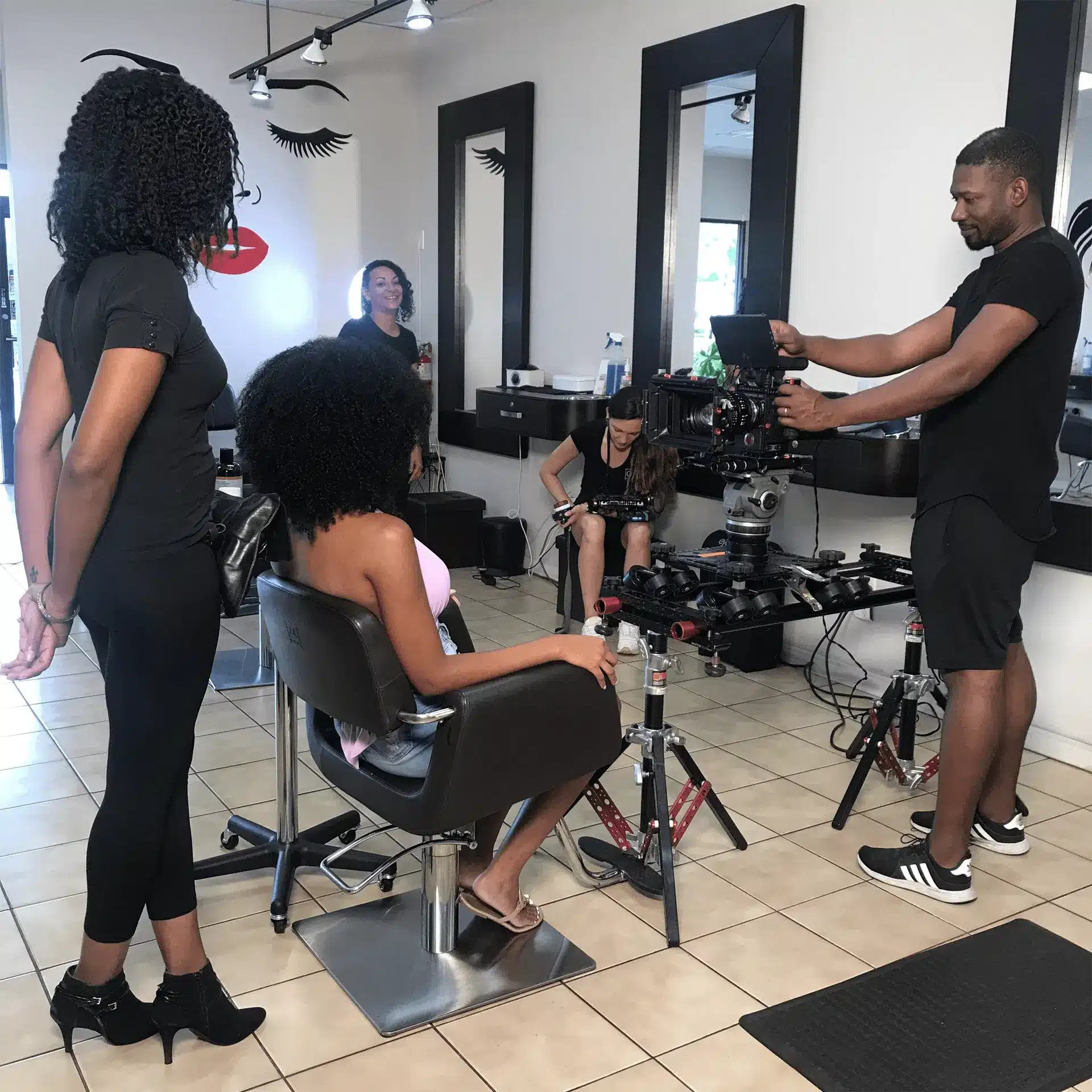
Live streaming has revolutionized the way we experience events, allowing real-time sharing of moments with a global audience. In today's digital landscape, live streaming has become a powerful tool for businesses, organizations, and individuals to connect with their audience, enhance brand visibility, and create immersive experiences. As the demand for live streaming continues to grow across various sectors, mastering the art of live streaming an event has become a crucial skill.
## Planning Your Live Stream
Successful live streaming begins with meticulous planning. The first step is to clearly define your goals and target audience. Are you aiming to showcase a product launch, host a virtual conference, or broadcast a live performance? Understanding your objectives will help you tailor your approach and ensure a seamless experience for your viewers.
Selecting the right platform is equally important. Platforms like YouTube, Facebook Live, and Twitch offer different features and cater to diverse audiences. Research your target audience's preferences and choose a platform that aligns with their behavior. For instance, if your event targets a younger, tech-savvy crowd, platforms like Twitch or YouTube might be more suitable. On the other hand, if you're targeting a more professional audience, consider platforms like LinkedIn Live or dedicated webinar software.
When planning your live stream, it's crucial to consider [social media marketing](https://c-istudios.com/social-media-marketing-services/) services. Leverage social media platforms to promote your event, engage with your audience, and build anticipation. Develop a comprehensive social media strategy that includes creating shareable content, running targeted ads, and collaborating with influencers or industry experts.
Another essential aspect of planning is content development. Craft a compelling narrative or agenda for your event, ensuring a smooth flow and engaging content. Consider incorporating interactive elements, such as Q&A sessions or live polls, to foster audience engagement.
## Equipment and Setup
A professional live stream requires the right equipment to ensure high-quality audio and video. While the specific equipment may vary depending on the scale and nature of your event, here are some essential components:
- **Camera:** Invest in a high-definition camera with a wide-angle lens to capture the entire event space. DSLR cameras or professional camcorders are popular choices for live streaming.
- **Microphones:** Clear audio is crucial for an engaging live stream. Consider using a combination of lapel mics for speakers and shotgun mics to capture ambient sound.
- **Encoder:** An encoder is a device that converts your audio and video signals into a streamable format. Hardware encoders, such as the Teradek VidiU Pro, offer superior quality and reliability compared to software-based encoders.
- **Lighting:** Proper lighting can significantly enhance the visual quality of your live stream. Invest in high-quality LED lights or soft boxes to illuminate your event space evenly.
In addition to these core components, you may need additional equipment such as tripods, capture cards, and audio mixers, depending on the complexity of your setup.
Setting up your equipment is a critical step that requires careful planning and execution. Start by creating a detailed equipment list and ensuring all necessary cables and adapters are readily available. Test each component individually to identify and resolve any issues before the event.
Once you have your equipment ready, it's time to set up your live-streaming workspace. Choose a location with minimal background noise and ample space for your camera, lighting, and other equipment. Arrange your setup in a way that allows for seamless movement and easy access to all components during the live stream.
[Audio engineering](https://c-istudios.com/audio-engineering-services/) is a crucial aspect of live streaming, as poor audio quality can significantly detract from the viewer experience. Invest in high-quality microphones and take the time to properly position them for optimal sound capture. Additionally, consider using an audio mixer to balance multiple audio sources and eliminate unwanted noise.
## Internet and Connectivity
A reliable internet connection is the backbone of a successful live stream. Even the best equipment and setup will be rendered useless if your internet connection is unstable or lacks sufficient bandwidth. To ensure a smooth live stream experience, it's essential to understand your bandwidth requirements and take proactive measures to optimize your internet connectivity.
Bandwidth requirements for live streaming can vary depending on the video resolution, bitrate, and the number of concurrent viewers. As a general rule, aim for an upload speed of at least 6 Mbps for a 1080p live stream and adjust accordingly for higher or lower resolutions. It's always better to have excess bandwidth than to struggle with buffering or dropping connections during your event.
Before the live stream, conduct a thorough internet speed test to evaluate your upload and download speeds. Online tools like Speedtest.net or Fast.com can provide accurate readings and help you identify potential bottlenecks in your network.
If your internet connection is not meeting the required bandwidth, consider exploring alternative solutions. For instance, you could temporarily upgrade your internet package or explore mobile hotspot options as a backup.
Another crucial aspect of [web development](https://c-istudios.com/web-development-services/) for live streaming is ensuring low latency. Latency refers to the delay between the live event and the viewer's experience. High latency can ruin the real-time experience for your audience, especially in interactive events like Q&A sessions or live performances.
To minimize latency, consider using a content delivery network (CDN) or a dedicated live streaming service that prioritizes low-latency streaming. Additionally, optimize your encoder settings by reducing the keyframe interval and adjusting the bitrate to strike a balance between video quality and latency.
## Rehearsal and Testing
A successful live stream requires thorough rehearsal and testing to identify and address potential issues before the event. Allocate ample time for rehearsals, as this will ensure a smooth and professional livestream experience.
Start by conducting a full technical run-through of your equipment setup. Test each component individually, ensuring that your camera, microphones, and encoder are functioning correctly. Pay close attention to audio levels, video quality, and connectivity during the rehearsal.
Once you've verified the individual components, conduct a complete end-to-end test of your live stream setup. This involves simulating the entire event from start to finish, including any transitions, presentations, or interactive elements you plan to incorporate.
During the rehearsal, make note of any technical issues, such as audio clipping, video lagging, or connectivity hiccups. Adjust your settings and troubleshoot any problems until you achieve a seamless live stream experience.
In addition to technical rehearsals, it's equally important to practice your on-camera presence and delivery. Encourage your speakers or hosts to rehearse their segments, ensuring they are comfortable with the equipment and the live stream environment.
[Professional photography](https://c-istudios.com/professional-photography-services/)can play a crucial role in enhancing the visual appeal of your livestream. Consider incorporating high-quality graphics, overlays, or lower-third banners to add professionalism and branding to your live stream.
Finally, conduct a final dress rehearsal with all components in place, including lighting, backdrops, and any physical set elements. This will help you identify any potential issues with camera angles, staging, or other logistical considerations.
By dedicating time and effort to rehearsals and testing, you can minimize the risk of technical glitches and ensure a polished, professional livestream experience for your audience.
## Running the Live Stream
The day of the live stream is the culmination of all your planning and preparation. To ensure a successful event, it's crucial to implement best practices for managing the live stream and engaging with your audience.
Arrive at the event venue well in advance to set up your equipment and conduct final checks. Ensure that all components are properly connected and functioning and that you have contingency plans in place for any potential issues.
During the live stream, it's important to maintain a calm and professional demeanor. Assign roles and responsibilities to your team members, such as a dedicated camera operator, audio technician, and social media manager. Clear communication and coordination among your team will ensure a smooth operation.
Engage with your audience throughout the livestream. Monitor the chat or comments section and respond to questions or feedback in real time. This interaction will foster a sense of community and encourage viewers to stay engaged.
If you encounter any technical difficulties during the live stream, remain composed and transparent with your audience. Provide updates on the situation and estimated resolution times. In some cases, it may be necessary to temporarily pause the live stream to resolve the issue before resuming.
[Creative marketing](https://c-istudios.com/creative-marketing-services/) strategies can also be employed during the live stream to enhance the viewer experience. Consider incorporating interactive elements, such as polls, Q&A sessions, or giveaways, to keep your audience engaged and encourage participation.
Lastly, remember to capture memorable moments and highlights from the livestream. These can be repurposed for future marketing and promotional efforts, extending the reach and impact of your event.
## Post-Event Management
Once your live stream event has concluded, it's essential to follow through with post-event management to maximize the impact and longevity of your content.
The first step is to archive and store your live-stream footage. Most live-streaming platforms provide options to save or download your stream once it has ended. Ensure that you have a secure and organized system for storing this content, as it can be a valuable asset for future use.
After archiving your live stream, consider repurposing the content into a variety of formats. For CopySplease start from where you left off: After archiving your live stream, consider repurposing the content into a variety of formats. After archiving your live stream, consider repurposing the content into a variety of formats. For instance, you could create highlight reels, compile Q&A segments, or extract valuable presentations or speeches into standalone videos. These repurposed materials can be used for marketing, training, or educational purposes, extending the reach and value of your live stream event.
Engaging with your audience after the livestream is also crucial. Encourage viewers to share their feedback, insights, and experiences through surveys or social media channels. This feedback can help you identify areas for improvement and gain valuable insights into your audience's preferences and expectations.
[SEO copywriting](https://c-istudios.com/seo-copywriting-services/) can play a significant role in maximizing the discoverability of your live-stream content. Optimize your video titles, descriptions, and tags with relevant keywords to increase visibility on search engines and video platforms. Additionally, consider transcribing your live stream content to create written materials, such as blog posts or articles, which can further enhance your SEO efforts and reach a wider audience.
If your live stream event was a paid or ticketed experience, consider offering a replay or on-demand access to the content for a limited period. This can provide an additional revenue stream and cater to those who were unable to attend the live event.
Finally, analyze the performance metrics of your live stream, such as viewership numbers, engagement rates, and audience demographics. These insights can inform your future live streaming strategies, helping you refine your approach and better understand your target audience's preferences.
## Promoting Your Live Stream
Promoting your livestream event is crucial for building awareness, attracting viewers, and ensuring a successful turnout. A comprehensive promotion strategy should encompass various channels and tactics to reach your target audience effectively.
Social media platforms are invaluable tools for promoting your live stream. Create a dedicated event page or utilize social media scheduling tools to share teasers, behind-the-scenes glimpses, and countdown posts leading up to the event. Leverage the power of [branding and graphic design](https://c-istudios.com/branding-and-graphic-design-services/) by creating eye-catching visuals, such as banners, thumbnails, and promotional videos, to capture your audience's attention.
Influencer marketing can also be an effective strategy for promoting your live stream. Identify influencers or industry leaders within your niche and collaborate with them to amplify your reach. Influencers can share your event details with their followers, increasing awareness and driving more potential viewers to your livestream.
Email marketing is another powerful tool for promoting your live-stream event. Develop an email campaign that includes save-the-date reminders, event details, and a clear call-to-action for registering or tuning in. Segment your email list based on interests and demographics to deliver targeted and relevant messaging.
In addition to digital promotion, consider leveraging traditional marketing channels, such as print advertisements, radio spots, or direct mail campaigns, depending on your target audience and industry.
Partnerships and cross-promotion can also be valuable strategies for increasing the visibility of your live-stream event. Collaborate with complementary businesses, organizations, or media outlets to co-promote the event and tap into new audience segments.
During the live stream itself, encourage your viewers to share the event on their social media channels. Provide easy-to-copy share links and relevant hashtags to facilitate the spread of your live stream through organic sharing.
Finally, don't forget to promote your live-stream content after the event. Share highlights, key moments, and valuable insights from the live stream on your various marketing channels. This can generate continued interest and drive viewers to watch the archived content, extending the reach and impact of your event.
## Work with C&I Studios
If you are planning a project like this, our team can take it from concept to final delivery. Explore our [AI video services](https://c-istudios.com/ai-video-services/), browse [our work](https://c-istudios.com/our-work/) to see how we tell brand stories, and [get in touch](https://c-istudios.com/contact/) when you are ready to start.
Originally published April 30, 2024
---
*This content is from [C&I Studios](https://c-istudios.com), a full-service production company.*
---
# Movie Sound Effects: How to Create, Mix, and Layer
> Published: April 29, 2024
> Categories: Film & TV
> Source: https://c-istudios.com/movie-sound-effects-how-to-create-mix-and-layer/
---
.cib{--paper:#1b1d1f;--ink:#fff;--body:#d5d7d9;--muted:#8b9096;--line:rgba(255,255,255,.12);--thumb:#2b2e31;--card:#212426;--accent:#c02b0a;--blue:#5B8FA8;--serif:'Playfair Display',Georgia,serif;--sans:'Poppins',-apple-system,sans-serif;--measure:900px;background:var(--paper);color:var(--body);font-family:var(--sans);line-height:1.6;position:relative;left:50%;transform:translateX(-50%);width:90vw;max-width:1920px}
.cib *{box-sizing:border-box}
.cib .kicker{max-width:var(--measure);margin:58px auto 0;padding:0 22px;font-size:12.5px;font-weight:700;letter-spacing:2.5px;text-transform:uppercase;color:var(--blue)}
.cib h1.cibh1{text-wrap:balance;font-family:var(--serif);font-weight:500;font-size:clamp(46px,6vw,72px);line-height:1.08;color:var(--ink);max-width:var(--measure);margin:18px auto 0;padding:0 22px;letter-spacing:-.5px}
.cib .metarow{max-width:var(--measure);margin:20px auto 0;padding:0 22px;color:var(--muted);font-size:14px}
.cib .hero{position:relative;width:100%;height:0;padding-bottom:56.25%;overflow:hidden;margin:48px auto 0;border-top:1px solid var(--line);border-bottom:1px solid var(--line)}
.cib .hero .ph{width:100%;aspect-ratio:16/9;background:var(--thumb);border-top:1px solid var(--line);border-bottom:1px solid var(--line);display:flex;align-items:center;justify-content:center;color:#7d8288;font-size:13px;text-align:center;padding:0 20px}
.cib .body{max-width:var(--measure);margin:12px auto 0;padding:52px 22px 6px}
.cib .body.lead p:first-child{font-size:23px;line-height:1.62;color:var(--ink)}
.cib .body p{font-size:18.5px;line-height:1.85;margin:0 0 30px;color:var(--body)}
.cib .body h2{text-wrap:balance;font-family:var(--serif);font-weight:500;font-size:clamp(32px,4vw,48px);line-height:1.22;color:var(--ink);margin:70px 0 20px;letter-spacing:-.3px}
.cib .body h3{text-wrap:balance;font-family:var(--sans);font-weight:600;font-size:22px;color:var(--ink);margin:38px 0 8px}
.cib .body a{color:var(--ink);text-decoration:underline;text-decoration-color:rgba(255,255,255,.4);text-underline-offset:3px}
.cib .body a:hover{text-decoration-color:var(--ink)}
.cib .ctable{width:100%;border-collapse:collapse;margin:16px 0 30px;font-size:16px}
.cib .ctable th{background:#000;color:#fff;text-align:left;padding:10px 12px;font-family:var(--sans)}
.cib .ctable td{padding:10px 12px;border-bottom:1px solid var(--line);color:var(--body)}
.cib .inimg{position:relative;width:100%;height:0;padding-bottom:56.25%;overflow:hidden;margin:72px auto;border-top:1px solid var(--line);border-bottom:1px solid var(--line)}
.cib .inimg .ph{width:100%;aspect-ratio:16/9;background:var(--thumb);border-top:1px solid var(--line);border-bottom:1px solid var(--line);display:flex;align-items:center;justify-content:center;color:#7d8288;font-size:13px}
.cib .origpub{max-width:var(--measure);margin:60px auto 0;padding:26px 22px 0;border-top:1px solid var(--line);color:var(--muted);font-size:13.5px}
.cib .related{max-width:1200px;margin:64px auto 0;padding:34px 22px 76px}
.cib .related h3{font-family:var(--sans);font-size:12.5px;letter-spacing:2px;text-transform:uppercase;color:var(--ink);margin:0 0 24px}
.cib .grid{display:grid;grid-template-columns:repeat(3,1fr);gap:28px}
.cib .rc{background:var(--card);border:1px solid var(--line);display:block;text-decoration:none;color:inherit;transition:border-color .15s}
.cib a.rc:hover{border-color:rgba(255,255,255,.5)}
.cib .rc .thumb{position:relative;width:100%;height:0;padding-bottom:56.25%;background:var(--thumb);overflow:hidden}
.cib .rc .thumb img{position:absolute!important;top:0!important;left:0!important;width:100%!important;height:100%!important;object-fit:cover!important;margin:0!important}
.cib .rc .cc{padding:14px 15px 17px}
.cib .rc .rt{font-family:var(--serif);font-weight:500;font-size:16px;line-height:1.3;color:var(--ink);margin:0 0 6px}
.cib .rc .rm{font-size:11px;letter-spacing:1px;text-transform:uppercase;color:var(--muted)}
.cib img{margin:0!important;padding:0!important;display:block!important;vertical-align:top;max-width:100%}
.cib .hero img,.cib .inimg img{position:absolute!important;top:0!important;left:0!important;width:100%!important;height:100%!important;object-fit:cover!important;margin:0!important;padding:0!important;border:0!important;display:block!important;aspect-ratio:auto!important}
.cib .hero+.body{padding-top:36px}
@media(max-width:760px){.cib .grid{grid-template-columns:1fr}.cib .body h2{margin:52px 0 16px}.cib .body p{font-size:17.5px}.cib .inimg,.cib .hero{margin-top:44px}}
.cib .vembed{max-width:var(--measure);margin:44px auto;padding:0 22px}.cib .vembed .vwrap{position:relative;width:100%;height:0;padding-bottom:56.25%}.cib .vembed .vwrap iframe{position:absolute;top:0;left:0;width:100%;height:100%;border:0}
Film & TV
# Movie Sound Effects. How to Create, Mix, and Layer
20 min read
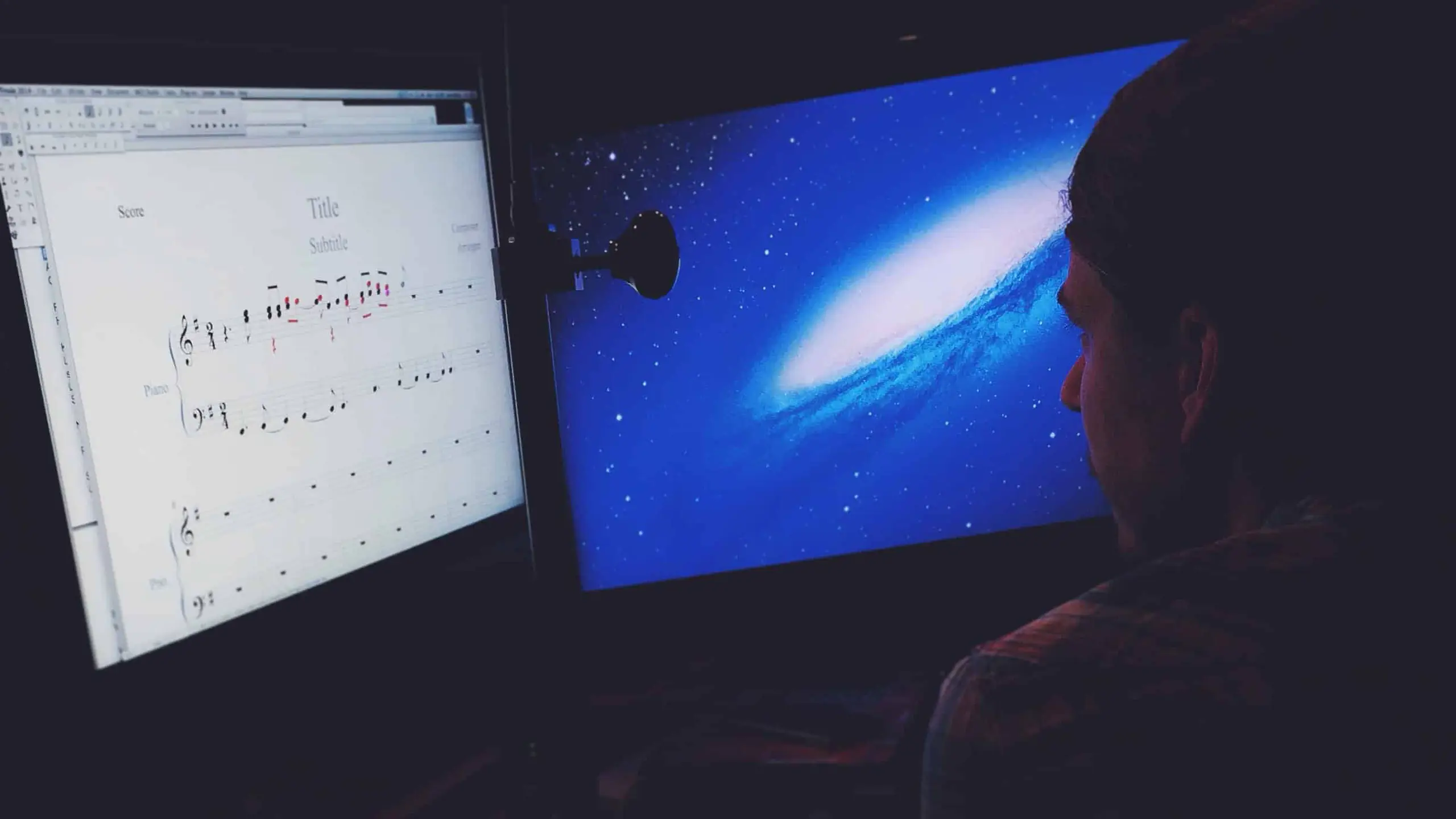
Sound effects are an integral part of the cinematic experience, transporting audiences into the world of the film and enhancing the emotional impact of every scene. From the subtle ambiance of a bustling city street to the earth-shattering roar of an otherworldly creature, sound effects breathe life into the visual storytelling, creating an immersive and believable environment.
This article delves into the art and craft of creating, mixing, and layering sound effects for movies, exploring the techniques and tools used by professional sound designers to elevate the auditory experience for viewers.
## Understanding Sound Effects in Film
Sound effects in films can be broadly categorized into three main types: ambient, foley, and special effects. Ambient sounds are the background noises that establish the environment and atmosphere of a scene, such as the rustle of leaves in a forest, the hum of traffic in a city, or the distant rumble of thunder during a storm. These subtle yet crucial elements help ground the audience in the film's world and create a sense of realism.
Foley effects, named after the pioneering sound artist Jack Foley, are the recreated sounds of everyday actions and movements, such as footsteps, doors opening and closing, or the clinking of glasses. These sounds are typically recorded in a specialized Foley studio, where artists use props and surfaces to mimic the actions depicted on screen, ensuring that the audio matches the visuals with precise synchronization.
Special effects sound, often referred to as "hard effects," encompass the larger-than-life, exaggerated, or otherworldly sounds that cannot be easily recreated through traditional means. These can include explosions, magical spells, futuristic technology, or the roars and vocalizations of fantastical creatures. Special effects sound often require a combination of creative sound design, synthesis, and digital manipulation to achieve the desired impact.
The art of sound design lies in the seamless integration of these various sound elements, creating a cohesive and immersive auditory environment that enhances the narrative and amplifies the emotional impact of the visuals. Skilled sound designers use a range of techniques, including layering multiple sound sources, manipulating frequency ranges, and carefully balancing levels, to craft believable and captivating sonic landscapes.
In the field of [VFX compositing and animation](https://c-istudios.com/vfx-compositing-and-animation-services/), sound effects play a crucial role in selling the realism and believability of visual effects sequences. From the thunderous footsteps of a towering giant to the otherworldly hum of a futuristic spacecraft, sound effects are the auditory counterpart that brings these fantastical elements to life, completing the illusion and transporting audiences into the imagined worlds.
## Creating Sound Effects
While many sound effects can be sourced from commercial libraries or stock audio collections, creating custom sound effects is often necessary to achieve a unique and tailored sonic experience for a film. This process involves a combination of field recordings, foley techniques, and digital manipulation.
Field recordings are the foundation of many sound effects, capturing real-world sounds in their natural environments. Sound designers may venture out with portable recording equipment to capture the ambiance of specific locations, such as a bustling city street, a serene forest, or the crashing waves of an ocean. These recordings serve as the building blocks for creating realistic and believable ambient soundscapes.
Foley techniques involve the recreation of everyday sounds in a controlled studio environment. Foley artists use a variety of props, surfaces, and materials to mimic the sounds of actions and movements depicted on screen. For example, walking sounds might be recreated by recording the footsteps of an artist wearing the appropriate shoes on different surfaces, while the sound of a door opening could be achieved by recording the actual opening and closing of a door in the studio.
Once the raw sound sources have been captured, the process of content creation begins. Sound designers use a combination of digital audio editing software and specialized plugins to manipulate, layer, and shape the recorded sounds into the desired effects. This may involve techniques such as pitch shifting, time-stretching, layering multiple sound sources, applying filters and equalizers, and adding artificial reverb or other effects to create a sense of depth and realism.
In some cases, sound designers may need to create entirely new and unique sounds from scratch. This can involve synthesizing sounds digitally, using specialized software or hardware synthesizers to generate and manipulate waveforms. Sound designers may also experiment with unconventional sound sources, such as striking objects together, running household appliances, or even using their own voices to produce unusual and creative sound effects.
## Techniques for Mixing Sound Effects
Once the individual sound elements have been created or sourced, the next step is to expertly mix them into the film's audio track. Mixing sound effects for film involves balancing levels, applying equalization (EQ), and integrating the effects seamlessly with the dialogue, music, and other audio components.
The first principle of sound mixing is to ensure that each audio element occupies its own distinct frequency range, avoiding masking or interference with other sounds. This is achieved through the careful application of EQ, which involves boosting or cutting specific frequency bands to create a balanced and clear mix.
Next, sound mixers must balance the levels of the various audio elements, ensuring that the sound effects are audible and impactful without overpowering the dialogue or music. This involves setting appropriate volume levels and using automation to dynamically adjust levels throughout the film, allowing certain sounds to take prominence during key moments while receding into the background during quieter scenes.
One of the most critical aspects of mixing sound effects is creating a sense of depth and spatial positioning. Through the skillful use of panning, reverb, and other spatial processing techniques, sound designers can place individual sound elements in specific locations within the audio field, creating a three-dimensional soundscape that matches the visual environment on screen.
Timing and synchronization are also crucial when mixing sound effects. Precise alignment of audio cues with corresponding visual elements is essential for maintaining the illusion of realism and cohesion. Sound mixers may need to adjust the timing of individual sound effects, either advancing or delaying them slightly, to achieve perfect synchronization with the visuals.
Throughout the mixing process, [audio engineering](https://c-istudios.com/audio-engineering-services/) professionals employ a range of specialized tools and techniques to sculpt and manipulate the sound effects. These may include dynamic processors like compressors and limiters to control transients and maintain consistent levels, as well as creative effects like flangers, phasers, and pitch-shifting to add unique textures and character to the sounds.
## Layering Sound Effects for Depth
One of the key techniques used by professional sound designers to create rich and immersive soundscapes is the layering of multiple sound elements. By combining and blending various sound sources, sound designers can achieve depth, texture, and realism that would be difficult to achieve with a single sound source alone.
Layering sound effects often begins with establishing a solid foundation or "bed" of ambient sounds. This bed can consist of environmental recordings, such as the gentle rustling of leaves, the distant hum of city traffic, or the low rumble of machinery. These sounds create a sense of place and set the stage for the more prominent sound effects to be layered on top.
Next, sound designers may add layers of specific sound effects that correspond to the on-screen action. For example, in a scene depicting a character walking through a forest, the sound designer might layer footstep sounds, the crunch of leaves underfoot, and the occasional snapping of twigs or rustling of bushes as the character moves through the environment.
The key to effective layering is to ensure that each sound element occupies its own distinct frequency range and spatial position within the audio field. This prevents masking or interference between the various sound layers, allowing each element to be clearly perceived while contributing to the overall sonic tapestry.
Timing and synchronization are crucial when layering sound effects, as the various audio elements must align precisely with the corresponding visual cues on screen. Sound designers may need to adjust the timing of individual sound layers, either advancing or delaying them slightly, to achieve perfect synchronization with the visuals.
Throughout the layering process, it's essential to seek guidance and input from [media marketing](https://c-istudios.com/media-marketing-consultation-services/). These experts can provide valuable insights into crafting soundscapes that effectively support the narrative, evoke the desired emotional responses, and resonate with the target audience. Their expertise can help ensure that the layered sound effects contribute to a cohesive and engaging cinematic experience.
## Tools and Software for Sound Effects
Creating and manipulating sound effects for film requires a range of specialized tools and software. While the specific setup may vary depending on the project's scale and budget, there are several industry-standard applications and hardware solutions that sound designers rely on.
One of the most widely used digital audio workstations (DAWs) in the film industry is Pro Tools. Developed by Avid Technology, Pro Tools is a comprehensive software solution that provides a powerful platform for recording, editing, mixing, and mastering audio. Its robust feature set, efficient workflow, and support for various plugins and third-party tools make it a popular choice among professional sound designers and post-production studios.
Another popular DAW in the film industry is Reaper, a highly customizable and affordable option that offers a flexible user interface and a wide range of built-in tools and effects. Its compatibility with various plugins and its ability to handle large, complex sessions make it a viable choice for sound effect production.
These applications offer advanced tools for manipulating and processing audio, including spectral editing, noise reduction, and batch processing capabilities, which can be invaluable when working with large sound effect libraries or complex sound design tasks.
Hardware solutions also play a crucial role in sound effects production. High-quality microphones and audio interfaces are essential for capturing field recordings and foley sounds with clarity and fidelity. Sound designers may also utilize outboard gear like hardware synthesizers, effects processors, and specialized sound manipulation devices to create unique and distinctive sound effects.
When it comes to a comprehensive [video production gear list](https://c-istudios.com/video-production-gear-list/), sound designers should consider including a variety of microphones (shotgun, lavalier, and condenser mics), portable audio recorders, boom poles, and dedicated audio monitoring equipment to ensure accurate sound reproduction and analysis during the editing and mixing process.
For those just starting out in sound effects production, there are several beginner-friendly options available. Entry-level DAWs like GarageBand (for Mac users) or Reaper (cross-platform) offer robust audio editing capabilities at an affordable price point.
Regardless of the specific tools and software used, the key to successful sound effect production lies in the creativity, technical expertise, and attention to detail of the sound designer. By mastering the art of sound manipulation and leveraging the power of modern audio technology, sound designers can transform ordinary sounds into extraordinary cinematic experiences.
## Practical Examples and Case Studies
To truly appreciate the impact and artistry of sound effects in film, it's instructive to examine notable examples and case studies from movies known for their innovative and impactful use of sound design. These real-world examples can provide valuable insights into the creative process behind iconic movie sounds and inspire aspiring sound designers to push the boundaries of their craft.
One of the most celebrated examples of groundbreaking sound design is the iconic "THX Deep Note" trailer, created by Dr. James A. Moorer for the Lucasfilm sound group in the early 1980s. This powerful, resonant sound effect, which has become synonymous with high-quality cinema audio, was meticulously crafted by layering and manipulating recordings of a vacuum cleaner, a helicopter, and other industrial sounds.
Another notable case study is the sound design for the "Jurassic Park" franchise. The incredibly realistic and bone-chilling roars and vocalizations of the dinosaurs were achieved through a combination of animal recordings, digital synthesis, and [creative marketing](https://c-istudios.com/creative-marketing-services/) techniques. Sound designer Gary Rydstrom and his team meticulously layered and processed various animal sounds, including elephants, alligators, and even a baby's cry, to create the distinct and terrifying roars that have become iconic in the films.
In science fiction, the "Star Wars" franchise is renowned for its innovative and imaginative sound effects. From the iconic hum and buzz of lightsabers to the distinctive engine whine of the TIE fighters, the sound design in these films has played a crucial role in bringing fantastical worlds and futuristic technology to life. Sound designer Ben Burtt and his team employed a range of creative techniques, including recording and manipulating the sounds of household objects and machinery.
These examples demonstrate the profound impact that sound effects can have on the cinematic experience, elevating visual storytelling and creating an immersive and emotionally engaging environment for the audience. By studying and analyzing the creative processes behind these iconic movie sounds, aspiring sound designers can gain valuable insights and inspiration to push the boundaries of their own craft.
## Challenges in Sound Effect Production
While the art of sound effect production is both rewarding and creatively fulfilling, it is not without its challenges. Sound designers often face a range of obstacles and hurdles throughout the production process, requiring them to employ creative problem-solving skills, technical expertise, and a deep understanding of the filmmaking process.
One of the most significant challenges in sound effect production is the need for precise synchronization with the visuals on screen. Even the slightest misalignment between sound and picture can break the illusion of realism and detract from the overall viewing experience. Sound designers must meticulously align and time each sound effect to match the corresponding action or movement, often working frame-by-frame to ensure perfect synchronization.
Another challenge lies in the need to create sounds for elements or events that have no real-world equivalent or reference point. In these instances, sound designers must rely on their creative instincts and imagination to craft unique and compelling sound effects that effectively convey the intended emotion or atmosphere.
From a technical standpoint, sound effect production can also present challenges in terms of managing large sound libraries, efficient file organization, and maintaining consistent workflows across multiple platforms and software applications. Sound designers must stay up-to-date with the latest tools and technologies, continually expanding their skills and adapting to new techniques and workflows.
One aspect that cannot be overlooked is the importance of effective [branding and graphic design](https://c-istudios.com/branding-and-graphic-design-services/) in the context of sound effect production. Sound designers must be mindful of how their work contributes to the overall brand identity and aesthetic of the film or project they are working on, ensuring that the sound effects align with the desired tone, style, and visual language.
By embracing these challenges and continuously honing their craft, sound designers can push the boundaries of what is possible in the realm of cinematic sound, creating truly immersive and unforgettable auditory experiences for audiences worldwide.
## The First Step in Crafting Resonant Stories
Crafting stories that resonate on social media begins with understanding your audience. Knowing their preferences, challenges, and values is crucial to creating narratives that capture attention and build connections. This is where branding and graphic design play a pivotal role, as these elements must reflect what appeals most to your audience.
To gather insights, various audience research techniques can be employed. Start by analyzing engagement metrics across your social media platforms, likes, comments, shares, and other forms of interaction provide clues about what content resonates most. You can also conduct surveys or use tools that offer demographic and psychographic data. By using [social media marketing services](https://c-istudios.com/social-media-marketing-services/)that provide in-depth analytics, you can paint a clearer picture of your audience's desires and pain points.
Once you've gathered this information, tailor your stories to meet the emotional and aspirational needs of your audience. For example, if your audience is primarily young professionals, they may respond more to stories of innovation and personal growth. Understanding these nuances enables you to craft stories that feel personal, relevant, and impactful, ensuring that your audience sees themselves reflected in your brand’s messaging.
## Crafting Authentic and Engaging Narratives
In the era of social media, authenticity is a cornerstone of successful storytelling. Audiences today can easily spot inauthentic content, making it more important than ever for brands to incorporate genuine values and experiences into their narratives. Authentic storytelling not only builds trust but also deepens emotional connections with your audience. Whether it’s through behind-the-scenes posts or sharing personal journeys, brands can use authenticity as a tool to engage meaningfully.
Professional photography can enhance the authenticity of your content by visually representing the real aspects of your brand, whether it’s unfiltered moments, candid shots, or realistic portrayals of your products and services. Paired with [SEO copywriting](https://c-istudios.com/seo-copywriting-services/), which ensures your message is both engaging and discoverable, your storytelling becomes even more effective.
Successful examples of authentic storytelling abound on platforms like Instagram and TikTok. Take brands like Patagonia, which highlights its commitment to environmental sustainability, or personal influencers who share daily life struggles. By staying true to their core values, these entities craft stories that resonate deeply with their audience, fostering loyalty and long-term engagement.
## The Visual Component. Using Images and Videos to Tell Stories
In the fast-paced world of social media, visual storytelling plays a pivotal role in capturing attention within seconds. High-quality images and videos not only grab the viewer's interest but also communicate messages faster and more effectively than text. This is where [video production](https://c-istudios.com/video-production-services/) becomes essential, allowing brands to present their stories in an engaging and dynamic way.
To ensure success, it’s crucial to follow best practices when using visuals in social media posts. High-resolution images and well-edited videos should be the foundation of your storytelling. Whether it's behind-the-scenes clips, product demonstrations, or customer testimonials, every piece of content should align with your brand’s identity. Additionally, incorporating vfx compositing and animation can bring an added layer of creativity, making your visuals stand out even more.
Platforms like Instagram Reels, TikTok, and YouTube offer prime opportunities for storytelling through video. Instagram Reels allows for short, impactful clips, while YouTube enables more in-depth narratives. TikTok, with its creative challenges and trends, gives brands a chance to connect with younger audiences through highly visual, engaging formats.
Finally, having the right tools for the job is key. A [video production](https://c-istudios.com/video-production-services/) gear list ensures your team is equipped to create top-tier content. From cameras to lighting and editing software, the right gear helps maintain a professional look that reflects positively on your brand. Visual storytelling done right can elevate your social media presence, making your brand more memorable and relatable.
## Emotional Connection. Crafting Stories That Stir Emotions
Stories that evoke strong emotions often leave a lasting impression, making emotional storytelling a powerful tool for social media. Whether it’s joy, nostalgia, or triumph, emotion-driven narratives can dramatically increase engagement and memorability. This is why brands often rely on emotion to create viral content, as emotionally resonant stories are more likely to be shared and remembered.
In the world of documentary [film production](https://c-istudios.com/film-and-tv-production/), emotions play a central role in connecting the audience to real-world issues or human experiences. Similarly, brands can use these techniques to tell stories that reflect their mission or values. For instance, campaigns like Nike’s "Just Do It" inspire through stories of perseverance and achievement, appealing to the audience's desire for personal success. The emotional arc of such stories makes them highly relatable and shareable.
Moreover, feature film mastering and delivery ensures that the technical quality of these emotionally charged stories is flawless, whether it’s in sound, color, or narrative flow. Brands that combine high-quality production with emotional storytelling can captivate their audience, encouraging both engagement and brand loyalty. By evoking feelings, your narrative not only drives action but also fosters a deeper, long-term connection with your audience.
## Building a Strong Story Arc. Structure Matters
At the heart of every compelling narrative lies a strong story arc. In social media storytelling, the arc, comprising an introduction, conflict, and resolution, plays a critical role in keeping the audience engaged. A well-structured story guides your followers through a journey, helping them connect more deeply with your message. [Creative marketing](https://c-istudios.com/creative-marketing-services/) often employs this structure to ensure that audiences feel emotionally invested, from the initial hook to the satisfying conclusion.
Brands like Dove and Apple have mastered the use of a strong story arc in their campaigns. Dove's "Real Beauty" campaign, for example, starts by introducing common insecurities, builds tension by exploring societal pressures, and resolves with messages of self-acceptance and empowerment. This type of structure creates a clear emotional trajectory, making the story relatable and memorable.
To maintain audience interest over time, consider using sequential posts or episodic content. Instagram Stories, Twitter threads, or YouTube series are excellent ways to break down a larger narrative into smaller, digestible pieces. This strategy not only builds anticipation but also allows you to maintain a consistent presence on social media. Incorporating web development tools to plan and execute your content calendar ensures a seamless delivery of your story, keeping followers engaged from start to finish.
## Leveraging Interactive Features for Immersive Storytelling
One of the most effective ways to elevate your storytelling on social media is through interactive features. Audio live streaming, polls, quizzes, and live sessions provide an opportunity for your audience to become active participants in your narrative, rather than passive viewers. By engaging followers in real-time, you foster a deeper connection and create a more immersive storytelling experience.
Platforms like Instagram Stories, Facebook Live, and Twitter polls allow for real-time interaction, making the audience feel more involved in the story. For instance, live Q&A sessions or behind-the-scenes tours via [audio live streaming](https://c-istudios.com/video-audio-live-streaming/) invite your followers to ask questions, offer feedback, or even influence the direction of your story. This level of engagement can create a sense of community, as audiences feel like they are part of the unfolding narrative.
Encouraging user-generated content is another powerful method of immersive storytelling. By asking your audience to share their own experiences or ideas related to your brand, you not only enrich your story but also demonstrate that you value their contributions. Brands like GoPro have effectively utilized this strategy by featuring user-generated videos in their marketing efforts, showcasing how real customers use their products. This form of media creation not only boosts engagement but also adds authenticity to your brand’s story, turning your audience into co-creators of your narrative.
## Measuring Success. Analytics and Feedback
To ensure your storytelling efforts are effective, it’s essential to use analytics tools to track performance. [Social media marketing services](https://c-istudios.com/social-media-marketing-services/) provide valuable insights that allow you to measure the impact of your stories across various platforms. By monitoring key metrics such as engagement rates, views, likes, shares, and conversion rates, you can determine which stories resonate most with your audience and adjust your strategy accordingly.
Engagement rates, in particular, reveal how well your audience is interacting with your content, while conversion rates show whether your storytelling is leading to desired actions, such as website visits or purchases. Using these insights, you can refine your storytelling approach to align with your audience’s preferences.
Additionally, web maintenance plays a crucial role in ensuring that your analytics tools and social media integrations are functioning smoothly. This allows you to gather accurate data consistently, making it easier to measure success over time. Feedback from comments, direct messages, and surveys also provides qualitative insights into how your audience perceives your stories, giving you further information to tailor your future narratives.
## Adaptation and Consistency. Evolving Your Narrative Across Platforms
As your brand’s presence grows across different platforms, it’s important to adapt your storytelling while maintaining consistency. Each social media platform, whether Instagram, Facebook, or TikTok, offers unique formats and audiences, requiring your brand to tailor its story accordingly. For example, while Instagram may focus on visually curated content, TikTok allows for more casual, short-form storytelling.
Artist management and brand identity play crucial roles in ensuring that the core elements of your narrative remain consistent, no matter the platform. A clear, unified story builds trust and recognition, helping your audience easily identify your brand’s message regardless of where they encounter it.
In the fast-paced world of social media, regular content updates are necessary to keep your audience engaged. Just like in a political campaign, consistency in posting and messaging can be the difference between retaining an audience and losing them. Planning content ahead of time, adapting it to different formats, and ensuring it aligns with your overall brand story helps keep your narrative cohesive while reaching diverse audiences across platforms.
## Work with C&I Studios
If you are planning a project like this, our team can take it from concept to final delivery. Explore our [film and TV production](https://c-istudios.com/film-and-tv-production/), browse [our work](https://c-istudios.com/our-work/) to see how we tell brand stories, and [get in touch](https://c-istudios.com/contact/) when you are ready to start.
Originally published April 29, 2024
---
*This content is from [C&I Studios](https://c-istudios.com), a full-service production company.*
---
# A Streamlined Video Production Process for YouTube
> Published: April 26, 2024
> Categories: Web & Tech
> Source: https://c-istudios.com/a-streamlined-video-production-process-for-youtube/
---
.cib{--paper:#1b1d1f;--ink:#fff;--body:#d5d7d9;--muted:#8b9096;--line:rgba(255,255,255,.12);--thumb:#2b2e31;--card:#212426;--accent:#c02b0a;--blue:#5B8FA8;--serif:'Playfair Display',Georgia,serif;--sans:'Poppins',-apple-system,sans-serif;--measure:900px;background:var(--paper);color:var(--body);font-family:var(--sans);line-height:1.6;position:relative;left:50%;transform:translateX(-50%);width:90vw;max-width:1920px}
.cib *{box-sizing:border-box}
.cib .kicker{max-width:var(--measure);margin:58px auto 0;padding:0 22px;font-size:12.5px;font-weight:700;letter-spacing:2.5px;text-transform:uppercase;color:var(--blue)}
.cib h1.cibh1{text-wrap:balance;font-family:var(--serif);font-weight:500;font-size:clamp(46px,6vw,72px);line-height:1.08;color:var(--ink);max-width:var(--measure);margin:18px auto 0;padding:0 22px;letter-spacing:-.5px}
.cib .metarow{max-width:var(--measure);margin:20px auto 0;padding:0 22px;color:var(--muted);font-size:14px}
.cib .hero{position:relative;width:100%;height:0;padding-bottom:56.25%;overflow:hidden;margin:48px auto 0;border-top:1px solid var(--line);border-bottom:1px solid var(--line)}
.cib .hero .ph{width:100%;aspect-ratio:16/9;background:var(--thumb);border-top:1px solid var(--line);border-bottom:1px solid var(--line);display:flex;align-items:center;justify-content:center;color:#7d8288;font-size:13px;text-align:center;padding:0 20px}
.cib .body{max-width:var(--measure);margin:12px auto 0;padding:52px 22px 6px}
.cib .body.lead p:first-child{font-size:23px;line-height:1.62;color:var(--ink)}
.cib .body p{font-size:18.5px;line-height:1.85;margin:0 0 30px;color:var(--body)}
.cib .body h2{text-wrap:balance;font-family:var(--serif);font-weight:500;font-size:clamp(32px,4vw,48px);line-height:1.22;color:var(--ink);margin:70px 0 20px;letter-spacing:-.3px}
.cib .body h3{text-wrap:balance;font-family:var(--sans);font-weight:600;font-size:22px;color:var(--ink);margin:38px 0 8px}
.cib .body a{color:var(--ink);text-decoration:underline;text-decoration-color:rgba(255,255,255,.4);text-underline-offset:3px}
.cib .body a:hover{text-decoration-color:var(--ink)}
.cib .ctable{width:100%;border-collapse:collapse;margin:16px 0 30px;font-size:16px}
.cib .ctable th{background:#000;color:#fff;text-align:left;padding:10px 12px;font-family:var(--sans)}
.cib .ctable td{padding:10px 12px;border-bottom:1px solid var(--line);color:var(--body)}
.cib .inimg{position:relative;width:100%;height:0;padding-bottom:56.25%;overflow:hidden;margin:72px auto;border-top:1px solid var(--line);border-bottom:1px solid var(--line)}
.cib .inimg .ph{width:100%;aspect-ratio:16/9;background:var(--thumb);border-top:1px solid var(--line);border-bottom:1px solid var(--line);display:flex;align-items:center;justify-content:center;color:#7d8288;font-size:13px}
.cib .origpub{max-width:var(--measure);margin:60px auto 0;padding:26px 22px 0;border-top:1px solid var(--line);color:var(--muted);font-size:13.5px}
.cib .related{max-width:1200px;margin:64px auto 0;padding:34px 22px 76px}
.cib .related h3{font-family:var(--sans);font-size:12.5px;letter-spacing:2px;text-transform:uppercase;color:var(--ink);margin:0 0 24px}
.cib .grid{display:grid;grid-template-columns:repeat(3,1fr);gap:28px}
.cib .rc{background:var(--card);border:1px solid var(--line);display:block;text-decoration:none;color:inherit;transition:border-color .15s}
.cib a.rc:hover{border-color:rgba(255,255,255,.5)}
.cib .rc .thumb{position:relative;width:100%;height:0;padding-bottom:56.25%;background:var(--thumb);overflow:hidden}
.cib .rc .thumb img{position:absolute!important;top:0!important;left:0!important;width:100%!important;height:100%!important;object-fit:cover!important;margin:0!important}
.cib .rc .cc{padding:14px 15px 17px}
.cib .rc .rt{font-family:var(--serif);font-weight:500;font-size:16px;line-height:1.3;color:var(--ink);margin:0 0 6px}
.cib .rc .rm{font-size:11px;letter-spacing:1px;text-transform:uppercase;color:var(--muted)}
.cib img{margin:0!important;padding:0!important;display:block!important;vertical-align:top;max-width:100%}
.cib .hero img,.cib .inimg img{position:absolute!important;top:0!important;left:0!important;width:100%!important;height:100%!important;object-fit:cover!important;margin:0!important;padding:0!important;border:0!important;display:block!important;aspect-ratio:auto!important}
.cib .hero+.body{padding-top:36px}
@media(max-width:760px){.cib .grid{grid-template-columns:1fr}.cib .body h2{margin:52px 0 16px}.cib .body p{font-size:17.5px}.cib .inimg,.cib .hero{margin-top:44px}}
.cib .vembed{max-width:var(--measure);margin:44px auto;padding:0 22px}.cib .vembed .vwrap{position:relative;width:100%;height:0;padding-bottom:56.25%}.cib .vembed .vwrap iframe{position:absolute;top:0;left:0;width:100%;height:100%;border:0}
Web & Tech
# A Streamlined Video Production Process for YouTube
14 min read
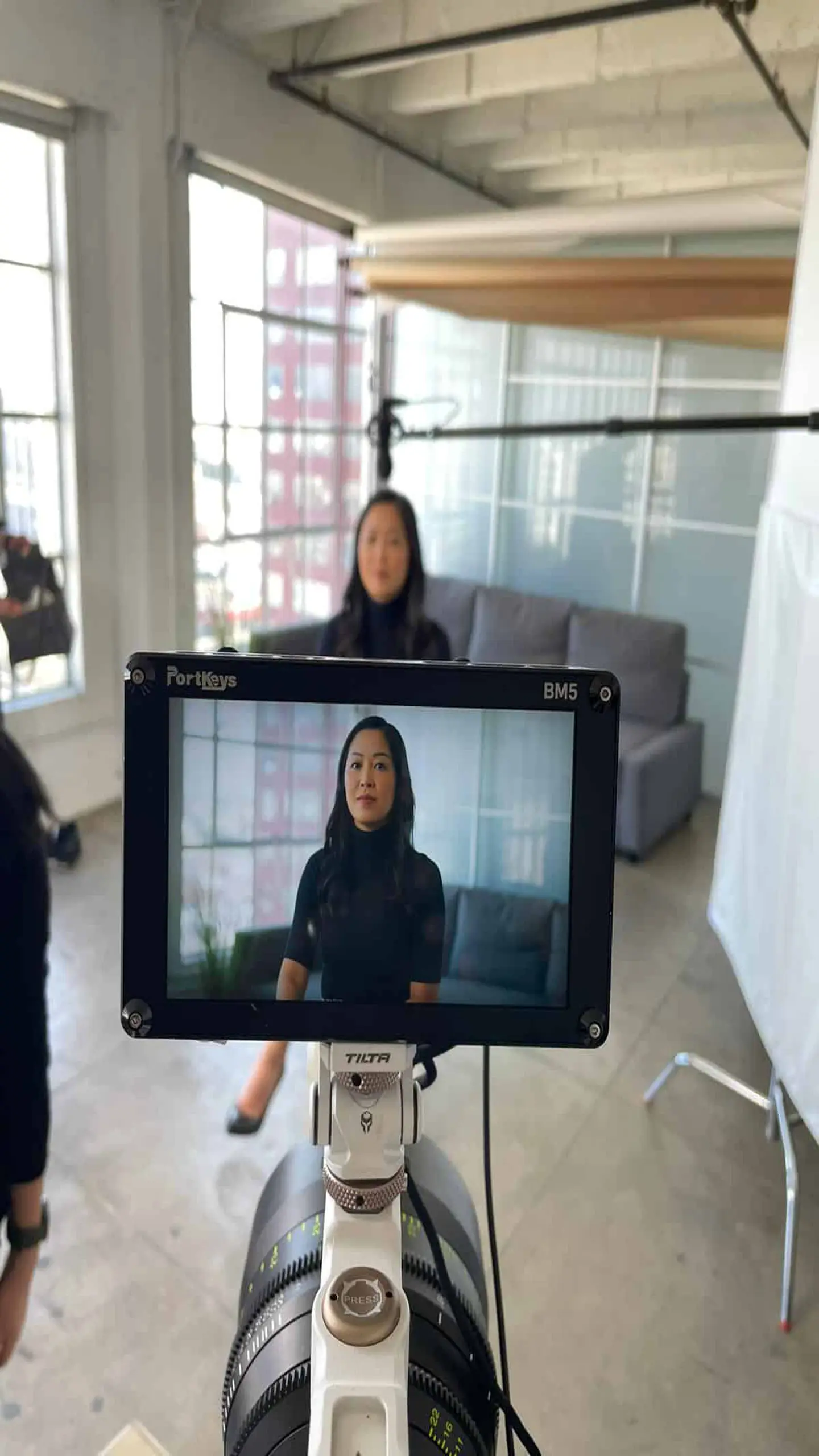
In today's digital age, YouTube has become a powerful platform for content creators to share their stories, showcase their talents, and build a loyal following. However, creating high-quality videos consistently can be a daunting task without a streamlined [video production](https://c-istudios.com/video-production-services/) process. An efficient workflow not only saves time and effort but also helps maintain a consistent brand image and engage your audience more effectively.
This comprehensive guide will walk you through the essential steps of a streamlined [video production](https://c-istudios.com/video-production-services/) process, from planning and scripting to editing, optimizing, and promoting your YouTube content.
## Planning Your YouTube Content
Before diving into the production process, it's crucial to have a clear understanding of your goals and objectives for your YouTube channel. What type of content do you want to create? Who is your target audience? What message do you want to convey? Answering these questions will help you develop a cohesive content strategy and ensure that your videos resonate with the right viewers.
Start by conducting thorough research on your target audience. Analyze their interests, preferences, and pain points. Use tools like Google Trends, social media analytics, and online forums to gather insights into what your audience is searching for and engaging with. This information will guide you in creating content that addresses their needs and keeps them engaged.
Once you have a solid understanding of your audience, set specific and measurable goals for your YouTube channel. Do you want to educate, entertain, or inspire your viewers? Are you aiming for a certain number of subscribers or views? Clearly defined goals will help you stay focused and measure your success.
Next, develop a content calendar to ensure a consistent flow of videos. Plan out the topics, formats, and publishing schedules in advance. This will not only streamline your production process but also help you stay organized and avoid last-minute scrambling for content ideas.
Incorporating [media marketing](https://c-istudios.com/media-marketing-consultation-services/) strategies into your planning can also be beneficial. Identify relevant hashtags, keywords, and trends that align with your content and target audience. This will help you optimize your videos for better visibility and discoverability on YouTube and other social media platforms.
## Scripting and Storyboarding
With a solid plan in place, it's time to bring your ideas to life through scripting and storyboarding. A well-crafted script not only ensures that your message is clear and concise but also helps you stay on track during the filming process.
Start by outlining the key points you want to cover in your video. Then, flesh out the script with engaging storytelling techniques, such as anecdotes, analogies, and humor. Remember to keep your language conversational and relatable to your target audience.
When writing your script, consider incorporating visual aids, such as graphics, animations, or b-roll footage, to enhance the viewer's understanding and keep them engaged. These elements can help break up long segments of talking head footage and add visual interest to your videos.
Once your script is complete, it's time to translate your ideas into a visual storyboard. A storyboard is a series of sketches or images that represent each scene or shot in your video. This process allows you to plan out the flow, transitions, and camera angles, ensuring a cohesive and visually appealing final product.
Storyboarding is especially important for [creative marketing](https://c-istudios.com/creative-marketing-services/) videos that involve complex shots, animations, or special effects. It helps you visualize the entire production process and make necessary adjustments before filming begins, saving time and resources.
When creating your storyboard, consider the pacing and rhythm of your video. Plan for strategic pauses, transitions, and cutaways to maintain viewer engagement and prevent monotony. Additionally, think about how you can incorporate branding elements, such as logos, color schemes, and graphics, to reinforce your brand identity throughout the video.
## Equipment and Setup
Having the right equipment and setup can significantly impact the quality of your YouTube videos. While professional-grade gear can be expensive, there are affordable options that can still produce high-quality content.
At a minimum, you'll need a good camera, a microphone, and lighting equipment. For cameras, consider a DSLR or mirrorless camera with manual controls and the ability to record in high definition. If you're on a tight budget, even a high-quality smartphone camera can produce decent results.
When it comes to audio, investing in a good microphone is essential. Poor audio quality can be a major turn-off for viewers, no matter how visually appealing your video is. Consider a shotgun microphone for capturing clear audio from a distance or a lavalier microphone for up-close interviews or vlogs.
Lighting is another crucial element of a professional-looking [video production gear list](https://c-istudios.com/video-production-gear-list/). Proper lighting can enhance the quality of your footage, create depth and dimension, and set the mood and atmosphere of your videos. Consider investing in a three-point lighting setup with key, fill, and backlight sources. Alternatively, you can use natural light from windows or shoot outdoors during golden hours for a warm, flattering glow.
In addition to the core equipment, there are various accessories and tools that can enhance your setup, such as tripods, sliders, gimbals, and editing software. While not essential, these tools can add production value and creative flair to your videos.
When setting up your filming environment, pay attention to factors like background, noise, and clutter. Choose a clean and visually appealing backdrop that complements your video's theme and doesn't distract from the main subject. Minimize ambient noise by turning off fans, air conditioners, or other potential sound sources. Finally, declutter the space to create a polished and professional-looking setting.
## Filming Techniques for YouTube
With your equipment and setup ready, it's time to start filming. Choosing the right filming techniques can elevate the quality and engagement of your YouTube videos, making them stand out from the competition.
One popular technique for YouTube videos is the "talking head" style, where the presenter or host directly addresses the camera. This style is commonly used for vlogs, tutorials, and educational content. To keep your viewers engaged, vary your camera angles, use close-ups and cutaways, and incorporate b-roll footage or graphics to break up the monotony.
For product reviews, unboxing videos, or demonstrations, consider using a combination of static shots and dynamic movements. Static shots, such as overhead or side-angle views, can provide clear and detailed visuals of the product or subject. Dynamic movements, like panning, tilting, or tracking shots, can add energy and visual interest to your footage.
If you're creating narrative or scripted videos, incorporate [professional photography](https://c-istudios.com/professional-photography-services/) techniques like cinematography, shot framing, and camera movements. Use techniques like the rule of thirds, leading lines, and depth of field to create visually appealing compositions. Experiment with camera angles, movements, and focal lengths to convey emotion, build suspense, or guide the viewer's attention.
For more advanced videography, consider incorporating [VFX composition and animation](https://c-istudios.com/vfx-compositing-and-animation-services/). This can include adding visual effects, motion graphics, or 3D animations to your footage. While these techniques require more advanced skills and software, they can take your videos to the next level and set you apart from other creators.
Regardless of the filming style you choose, remember to capture high-quality footage. Pay attention to details like focus, exposure, and white balance. Consider investing in external monitors or field recorders to ensure you're capturing the best possible footage during your shoots.
## Editing and Post-Production
Once you've captured your footage, it's time to bring your vision to life through the editing and post-production process. Effective editing can transform raw footage into a polished and engaging final product, enhancing the overall quality of your YouTube videos.
Start by organizing and reviewing your footage. Identify the best clips and sequences that support your story or message. Consider creating a rough cut or an assembly edit to get a sense of the overall flow and pacing of your video.
Next, dive into the actual editing process. There are various editing software options available, ranging from free and open-source programs like DaVinci Resolve and Shotcut to industry-standard tools like Adobe Premiere Pro and Final Cut Pro. Choose a software that suits your skill level, workflow, and budget.
During the editing process, focus on creating a seamless and cohesive narrative. Trim and arrange your clips in a logical sequence, ensuring smooth transitions between scenes. Incorporate techniques like cutaways, b-roll footage, and graphics to keep your viewers engaged and add visual interest.
Pay attention to the pacing and rhythm of your video. Use techniques like jump cuts, speed ramping, and time-remapping to control the flow and energy of your content. Strategically place pauses or moments of tension to maintain viewer engagement and prevent monotony.
[Audio engineering](https://c-istudios.com/audio-engineering-services/) is another crucial aspect of post-production. Clean up any unwanted background noise, adjust the audio levels, and consider adding music or sound effects to enhance the overall viewing experience. The right audio elements can set the tone, evoke emotions, and reinforce the visual storytelling.
Color grading and visual effects can also elevate the production value of your videos. Use color correction tools to adjust the exposure, contrast, and color balance of your footage, creating a consistent and visually appealing look. Additionally, consider incorporating visual effects like motion graphics, text overlays, or simple animations to enhance the overall aesthetic and engagement of your videos.
Once you've completed the editing and post-production process, it's essential to export your video in the appropriate format and settings for YouTube. Follow the platform's recommended specifications for resolution, bitrate, and aspect ratio to ensure optimal playback quality across different devices and internet connections.
## Optimizing for YouTube SEO
Creating high-quality content is just the first step in building a successful YouTube channel. To ensure your videos are discovered by your target audience, you need to optimize them for YouTube's search engine algorithm.
Start by conducting keyword research to identify the most relevant and popular search terms related to your video topics. Use tools like Google Keyword Planner, YouTube's auto-suggest feature, and competitor analysis to gather valuable keyword data.
Once you have a list of relevant keywords, strategically incorporate them into your video titles, descriptions, and tags. The title is the first thing viewers see, so make it attention-grabbing, and descriptive, and include your primary keyword. Use the first few lines to provide a concise summary of your video's content, including your target keywords.
Tags are essentially keywords that help YouTube understand the context and subject matter of your videos. Use a combination of broad and specific tags related to your content, but avoid keyword stuffing, as it can negatively impact your SEO performance.
In addition to optimizing your video metadata, consider creating transcripts or closed captions for your videos. Not only do these improve accessibility for viewers with hearing impairments, but they also provide additional context for YouTube's search algorithm to understand the content of your videos better.
Engaging with your audience and encouraging them to interact with your videos can also positively impact your YouTube SEO. Respond to comments, ask viewers to like and subscribe, and encourage them to share your content. These engagement signals can indicate to YouTube that your videos are valuable and relevant, potentially improving their ranking in search results.
## Uploading and Publishing
With your video optimized for YouTube SEO, it's time to upload and publish your content. The process of uploading a video to YouTube is relatively straightforward, but there are a few steps to ensure a successful and optimized upload.
First, create a compelling title and description for your video. The title should be attention-grabbing, accurate, and include relevant keywords. The description should provide a detailed overview of your video's content, including any necessary context or additional information.
Next, choose a suitable category and set the appropriate age restrictions, if necessary. This helps YouTube understand the type of content in your video and ensures it's surfaced to the appropriate audience.
When uploading your video file, make sure to select the highest quality option available. YouTube will automatically create different resolutions and formats for optimal playback on various devices, but starting with a high-quality source file is essential.
After uploading your video, you can further optimize its settings. Consider enabling closed captions, either by uploading a transcript file or using YouTube's automatic captioning tools. This improves accessibility and can also help with video discoverability.
Creating engaging thumbnails is another crucial step in the uploading process. Thumbnails are the first visual representation of your video that viewers see, so they should be eye-catching, visually appealing, and accurately represent the content. Consider using high-contrast images, text overlays, or screenshots from your video to create compelling thumbnails.
Finally, treat your YouTube channel as a [TV show pitch](https://c-istudios.com/tv-show-pitch/) by crafting a compelling channel trailer and populating your channel page with relevant information, playlists, and links. This helps viewers understand your channel's content and encourages them to subscribe and engage with your videos.
## Promoting Your YouTube Videos
Once your video is live on YouTube, it's time to promote it and drive traffic to your channel. Effective promotion can help you reach a wider audience, increase engagement, and ultimately grow your subscriber base.
One of the most effective ways to promote your YouTube videos is through [branding](https://c-istudios.com/branding-and-graphic-design-services/) on social media platforms like Facebook, Twitter, Instagram, and Reddit. Share your video links, along with eye-catching visuals and compelling captions, to pique the interest of your followers and encourage them to watch and share your content.
Collaborate with other creators or influencers in your niche by cross-promoting each other's content. This can introduce your videos to new audiences and potentially attract new subscribers to your channel.
Participate in online communities and forums related to your video topics. Share your videos in relevant discussions, offer helpful insights and advice, and engage with the community. This can establish you as a knowledgeable source and encourage viewers to check out your YouTube channel.
Consider running targeted advertising campaigns on social media platforms or YouTube itself. While this requires a budget, it can be an effective way to reach highly targeted audiences and drive traffic to your videos.
Encourage your existing viewers to engage with your content by asking them to like, comment, and subscribe. Respond to comments, address questions, and foster a sense of community around your channel. Engaged viewers are more likely to share your content with their friends and networks, expanding your reach organically.
Repurpose your video content into other formats, such as blog posts, podcasts, or social media snippets. This can attract viewers who prefer consuming content in different mediums and introduce your YouTube channel to new audiences.
## Monetization and Analytics
As your YouTube channel grows and attracts a dedicated audience, you may want to explore monetization options to turn your passion into a sustainable income stream. YouTube offers several monetization options for creators, including advertising revenue, channel memberships, and super chats.
To monetize your channel through advertising, you'll need to meet YouTube's Partner Program requirements, which include reaching a specific threshold of watch time hours and subscriber count. Once you're accepted into the program, you can enable ads on your videos and earn a share of the revenue generated from those ads.
Channel memberships and super chats are additional monetization features that allow your viewers to support your channel financially. Channel memberships provide exclusive perks and benefits to paying subscribers, while super chats allow viewers to highlight their comments during live streams for a fee.
While monetization can be lucrative, it's important to strike a balance between generating revenue and maintaining the quality and authenticity of your content. Prioritize creating valuable and engaging videos that resonate with your audience, and monetization opportunities will naturally follow.
To measure the success of your YouTube channel and optimize your content strategy, it's essential to analyze your video performance and audience engagement metrics. YouTube's built-in analytics tools provide valuable insights into your channel's performance, including views, watch time, audience retention, traffic sources, and demographics.
Regularly review your analytics data to identify which types of content perform best, when your audience is most active, and where they're discovering your videos. Use these insights to refine your content strategy, optimize your video titles and descriptions, and better understand your audience's preferences.
Pay attention to audience retention metrics, which show how long viewers watch your videos before dropping off. High drop-off rates may indicate that your content needs to be more engaging or that your video pacing needs adjustment.
Engage with your audience by responding to comments, addressing their questions and concerns, and soliciting feedback. This not only fosters a strong community but also provides valuable insights into what your viewers want to see more of.
In the rapidly evolving world of [political campaigns](https://c-istudios.com/political-campaign-services/), staying agile and adapting your content strategy based on data-driven insights is crucial for long-term success on YouTube.
## Work with C&I Studios
If you are planning a project like this, our team can take it from concept to final delivery. Explore our [AI video services](https://c-istudios.com/ai-video-services/), browse [our work](https://c-istudios.com/our-work/) to see how we tell brand stories, and [get in touch](https://c-istudios.com/contact/) when you are ready to start.
Originally published April 26, 2024
---
*This content is from [C&I Studios](https://c-istudios.com), a full-service production company.*
---
# Creative Documentary Filmmaking Techniques
> Published: April 26, 2024
> Categories: Film & TV
> Source: https://c-istudios.com/creative-documentary-filmmaking-techniques/
---
.cib{--paper:#1b1d1f;--ink:#fff;--body:#d5d7d9;--muted:#8b9096;--line:rgba(255,255,255,.12);--thumb:#2b2e31;--card:#212426;--accent:#c02b0a;--blue:#5B8FA8;--serif:'Playfair Display',Georgia,serif;--sans:'Poppins',-apple-system,sans-serif;--measure:900px;background:var(--paper);color:var(--body);font-family:var(--sans);line-height:1.6;position:relative;left:50%;transform:translateX(-50%);width:90vw;max-width:1920px}
.cib *{box-sizing:border-box}
.cib .kicker{max-width:var(--measure);margin:58px auto 0;padding:0 22px;font-size:12.5px;font-weight:700;letter-spacing:2.5px;text-transform:uppercase;color:var(--blue)}
.cib h1.cibh1{text-wrap:balance;font-family:var(--serif);font-weight:500;font-size:clamp(46px,6vw,72px);line-height:1.08;color:var(--ink);max-width:var(--measure);margin:18px auto 0;padding:0 22px;letter-spacing:-.5px}
.cib .metarow{max-width:var(--measure);margin:20px auto 0;padding:0 22px;color:var(--muted);font-size:14px}
.cib .hero{position:relative;width:100%;height:0;padding-bottom:56.25%;overflow:hidden;margin:48px auto 0;border-top:1px solid var(--line);border-bottom:1px solid var(--line)}
.cib .hero .ph{width:100%;aspect-ratio:16/9;background:var(--thumb);border-top:1px solid var(--line);border-bottom:1px solid var(--line);display:flex;align-items:center;justify-content:center;color:#7d8288;font-size:13px;text-align:center;padding:0 20px}
.cib .body{max-width:var(--measure);margin:12px auto 0;padding:52px 22px 6px}
.cib .body.lead p:first-child{font-size:23px;line-height:1.62;color:var(--ink)}
.cib .body p{font-size:18.5px;line-height:1.85;margin:0 0 30px;color:var(--body)}
.cib .body h2{text-wrap:balance;font-family:var(--serif);font-weight:500;font-size:clamp(32px,4vw,48px);line-height:1.22;color:var(--ink);margin:70px 0 20px;letter-spacing:-.3px}
.cib .body h3{text-wrap:balance;font-family:var(--sans);font-weight:600;font-size:22px;color:var(--ink);margin:38px 0 8px}
.cib .body a{color:var(--ink);text-decoration:underline;text-decoration-color:rgba(255,255,255,.4);text-underline-offset:3px}
.cib .body a:hover{text-decoration-color:var(--ink)}
.cib .ctable{width:100%;border-collapse:collapse;margin:16px 0 30px;font-size:16px}
.cib .ctable th{background:#000;color:#fff;text-align:left;padding:10px 12px;font-family:var(--sans)}
.cib .ctable td{padding:10px 12px;border-bottom:1px solid var(--line);color:var(--body)}
.cib .inimg{position:relative;width:100%;height:0;padding-bottom:56.25%;overflow:hidden;margin:72px auto;border-top:1px solid var(--line);border-bottom:1px solid var(--line)}
.cib .inimg .ph{width:100%;aspect-ratio:16/9;background:var(--thumb);border-top:1px solid var(--line);border-bottom:1px solid var(--line);display:flex;align-items:center;justify-content:center;color:#7d8288;font-size:13px}
.cib .origpub{max-width:var(--measure);margin:60px auto 0;padding:26px 22px 0;border-top:1px solid var(--line);color:var(--muted);font-size:13.5px}
.cib .related{max-width:1200px;margin:64px auto 0;padding:34px 22px 76px}
.cib .related h3{font-family:var(--sans);font-size:12.5px;letter-spacing:2px;text-transform:uppercase;color:var(--ink);margin:0 0 24px}
.cib .grid{display:grid;grid-template-columns:repeat(3,1fr);gap:28px}
.cib .rc{background:var(--card);border:1px solid var(--line);display:block;text-decoration:none;color:inherit;transition:border-color .15s}
.cib a.rc:hover{border-color:rgba(255,255,255,.5)}
.cib .rc .thumb{position:relative;width:100%;height:0;padding-bottom:56.25%;background:var(--thumb);overflow:hidden}
.cib .rc .thumb img{position:absolute!important;top:0!important;left:0!important;width:100%!important;height:100%!important;object-fit:cover!important;margin:0!important}
.cib .rc .cc{padding:14px 15px 17px}
.cib .rc .rt{font-family:var(--serif);font-weight:500;font-size:16px;line-height:1.3;color:var(--ink);margin:0 0 6px}
.cib .rc .rm{font-size:11px;letter-spacing:1px;text-transform:uppercase;color:var(--muted)}
.cib img{margin:0!important;padding:0!important;display:block!important;vertical-align:top;max-width:100%}
.cib .hero img,.cib .inimg img{position:absolute!important;top:0!important;left:0!important;width:100%!important;height:100%!important;object-fit:cover!important;margin:0!important;padding:0!important;border:0!important;display:block!important;aspect-ratio:auto!important}
.cib .hero+.body{padding-top:36px}
@media(max-width:760px){.cib .grid{grid-template-columns:1fr}.cib .body h2{margin:52px 0 16px}.cib .body p{font-size:17.5px}.cib .inimg,.cib .hero{margin-top:44px}}
.cib .vembed{max-width:var(--measure);margin:44px auto;padding:0 22px}.cib .vembed .vwrap{position:relative;width:100%;height:0;padding-bottom:56.25%}.cib .vembed .vwrap iframe{position:absolute;top:0;left:0;width:100%;height:100%;border:0}
Film & TV
# Creative Documentary Filmmaking Techniques
12 min read

Documentary films have long been a medium for exploring the human experience, shedding light on untold stories, and capturing pivotal moments in history. In recent years, however, [documentary film production](https://c-istudios.com/documentary-film-production/) has undergone a creative renaissance, with filmmakers pushing the boundaries of traditional techniques to craft immersive, visually stunning, and emotionally resonant stories. Creative documentary filmmaking embraces innovative approaches to storytelling, blending various media formats, and employing cutting-edge technologies to transport audiences into the heart of the narrative.
## The Art of Storytelling in Documentaries
At the core of every great documentary lies a compelling story, and creative filmmakers have developed a unique set of narrative techniques to captivate viewers. Unlike traditional documentaries, which often rely on a linear, fact-driven approach, creative documentaries embrace a more nuanced and subjective storytelling style. Filmmakers may employ non-linear narratives, blending multiple perspectives or timelines to create a more complex and layered viewing experience.
One of the hallmarks of [content creation](https://c-istudios.com/content-creation-services/) in creative documentaries is the emphasis on character development. Rather than merely presenting information, filmmakers delve into the lives and experiences of their subjects, allowing viewers to forge emotional connections and empathize with their journeys. This character-driven approach often involves intimate access to the subjects, resulting in raw and authentic moments that resonate with audiences.
Storytelling in creative documentaries also frequently incorporates elements of fiction, such as dramatized reenactments or stylized sequences. These techniques can add depth and dimension to the narrative, allowing filmmakers to explore subjective experiences or fill in gaps where footage may be lacking. However, it is crucial for filmmakers to strike a delicate balance between creative expression and factual accuracy, ensuring that the core truth of the story remains intact.
Another aspect of documentary storytelling is the use of symbolism and metaphor. By weaving in visual or auditory motifs, filmmakers can create deeper layers of meaning and encourage viewers to interpret and explore themes on a more profound level. This approach can transform a documentary from a mere recounting of events into a rich, multi-layered exploration of human experiences and universal truths.
## Utilizing Visual Techniques
In the realm of creative documentary filmmaking, visual techniques play a crucial role in shaping the mood, tone, and emotional resonance of the narrative. From the moment the camera starts rolling, every creative decision - from framing and composition to lighting and color grading - contributes to the overall visual language of the film.
Cinematography is a powerful tool in the hands of creative documentarians. By employing sophisticated camera techniques, such as dynamic camera movements, unique angles, and creative framing, filmmakers can heighten the visual impact of their stories. These techniques not only enhance the aesthetic appeal of the footage but also convey deeper layers of meaning and emotion.
Lighting is another essential element of [professional photography](https://c-istudios.com/professional-photography-services/) in creative documentaries. Beyond merely illuminating a scene, skilled lighting can create mood, emphasize specific elements, and even serve as a metaphorical representation of a character's emotional state. From the use of natural light to the careful placement of artificial sources, lighting can transform ordinary footage into a visually stunning work of art.
Color grading, a process that involves adjusting the color palette of a film, is also a critical component of creative documentary filmmaking. By manipulating colors, filmmakers can evoke specific emotions, establish a distinct visual style, or even convey symbolic meanings. For example, desaturated colors can create a sense of melancholy, while vibrant hues can infuse a scene with energy and vitality.
Beyond these core visual techniques, creative documentarians may also incorporate other elements, such as animation, visual effects, or stylized graphic overlays. These additions can enhance the storytelling experience, providing visual metaphors or adding layers of symbolism that complement the narrative.
It is important to note that while visual techniques can elevate a documentary's artistic expression, they should never overpower or distract from the core story. The most effective creative documentaries strike a balance between visual artistry and narrative integrity, ensuring that the visuals serve to enhance and deepen the viewer's understanding and emotional connection to the subject matter.
## The Role of Sound Design
Sound is a powerful and often underappreciated element in documentary filmmaking. While visuals may capture the viewer's attention, it is the strategic use of sound that can truly elevate a documentary to a higher level of emotional resonance and immersive storytelling. In creative documentary filmmaking, sound design plays a crucial role in shaping the overall experience and narrative impact.
One of the most fundamental aspects of sound design in documentaries is the use of natural sound, also known as location audio. These ambient sounds - whether it's the rustling of leaves, the hum of city traffic, or the echoes of a bustling marketplace - serve to transport viewers directly into the heart of the scene, creating a sense of authenticity and immediacy that is essential to the documentary experience.
Beyond location audio, creative documentarians also employ a range of techniques to shape and enhance the sonic landscape of their films. [Audio engineering](https://c-istudios.com/audio-engineering-services/) principles, such as careful microphone placement and mixing, can ensure that dialogue and narration are clear and intelligible, while also allowing for subtleties and nuances to come through.
The use of music and sound effects can also profoundly impact the emotional tenor of a documentary. Carefully curated scores or original compositions can underscore pivotal moments, heighten tension, or evoke specific emotional responses from the audience. Similarly, skillful sound design, incorporating elements like sound effects or atmospheric textures, can create a rich and immersive auditory environment that complements the visuals.
One particularly powerful technique in creative documentary filmmaking is the use of subjective sound design. By incorporating sounds that represent a character's internal experience, such as heartbeats, distorted voices, or exaggerated environmental sounds, filmmakers can provide audiences with a unique window into the psychological and emotional states of their subjects.
Another innovative approach is the use of spatialized sound, which involves strategically positioning audio elements within a three-dimensional sound field. This technique can create a heightened sense of presence and immersion, allowing viewers to feel as though they are physically present within the documentary's environments.
Ultimately, sound design in creative documentary filmmaking is not merely a supporting element but rather an integral part of the overall storytelling experience. By skillfully blending location audio, music, sound effects, and innovative sound techniques, documentarians can create a multi-sensory experience that resonates with audiences on a profound level, leaving a lasting emotional impact long after the final credits roll.
## Innovative Editing Techniques
In the world of creative documentary filmmaking, the editing process is not simply a means of assembling footage; it is an art form in itself. Innovative editing techniques have the power to transform raw footage into a compelling, emotionally resonant narrative that captivates audiences and challenges traditional storytelling conventions. [Film and TV production](https://c-istudios.com/film-and-tv-production/) professionals in this field are constantly pushing the boundaries of what is possible by editing, and crafting documentaries that are as much works of art as they are representations of reality.
One of the most impactful editing techniques in creative documentaries is the use of non-linear narratives. By breaking free from the constraints of chronological storytelling, filmmakers can weave together multiple timelines, perspectives, and storylines, creating a rich tapestry of experiences that defy traditional structures. This approach not only adds depth and complexity to the narrative but also encourages viewers to actively engage with the material, piecing together the puzzle and drawing their own conclusions.
Another innovative technique that has gained prominence in recent years is the use of juxtaposition and contrast. By skillfully interweaving seemingly disparate footage or contrasting vastly different visual elements, editors can create powerful metaphors, highlight thematic connections, or even challenge the viewer's perceptions.
One groundbreaking documentary that exemplifies innovative editing techniques is "Citizenfour," Laura Poitras's gripping account of Edward Snowden's NSA leaks. The film masterfully weaves together multiple storylines and perspectives, employing a non-linear narrative structure that builds tension and intrigue.
Additionally, Poitras's strategic use of juxtaposition and contrast, such as intercutting scenes of Snowden's revelations with mundane everyday moments, heightens the film's emotional impact and underscores the gravity of the subject matter. "Citizenfour" is just one example of how innovative editing techniques can elevate a documentary from a mere recounting of events to a visceral, immersive experience that challenges viewers' perceptions and leaves a lasting emotional imprint.
## Incorporating Mixed Media
In the realm of creative documentary filmmaking, the boundaries between traditional media formats are becoming increasingly blurred. Filmmakers are embracing a multidisciplinary approach, incorporating a diverse array of mixed media elements to create unique and compelling narratives. By blending techniques such as animation, archival footage, and still photography, documentarians can tap into a rich tapestry of visual and storytelling possibilities, offering audiences a dynamic and multifaceted viewing experience.
One of the most powerful mixed media techniques in creative documentaries is the integration of animation. Whether used sparingly or as a central component, animation can breathe life into stories that might otherwise feel static or limited by the constraints of live-action footage. From stylized reenactments to abstract representations of emotions or concepts, animation allows filmmakers to visualize the intangible and provide audiences with a visceral understanding of complex ideas.
The incorporation of archival footage is another mixed-media approach that has become increasingly prevalent in creative documentary filmmaking. By skillfully weaving together historical footage with contemporary narratives, filmmakers can create a rich tapestry of perspectives, highlighting the continuities and contrasts between past and present. This technique not only adds depth and context to the storytelling but also serves as a powerful reminder of the enduring impact of historical events on our modern world.
Still photography, too, can play a crucial role in mixed media documentaries. Whether used as a standalone element or integrated with live-action footage, still images can capture fleeting moments with a poignancy and intimacy that moving images sometimes struggle to achieve. Filmmakers can use still photography to evoke a sense of nostalgia, freeze significant moments in time, or simply provide a visual respite from the constant motion of a film.
Beyond these traditional mixed media formats, creative documentarians are also exploring new frontiers, incorporating elements such as data visualization, augmented reality, and interactive media into their projects. These cutting-edge techniques not only offer innovative ways of storytelling but also have the potential to create immersive and participatory experiences for audiences.
One of the greatest challenges of incorporating mixed media into documentaries is striking a balance between creativity and cohesion. While these techniques can add depth and dimension to a narrative, it is essential for filmmakers to ensure that the various elements harmonize seamlessly, creating a unified and coherent viewing experience.
## Interactive and Immersive Techniques
As technology continues to advance at a rapid pace, the realm of documentary filmmaking is undergoing a profound transformation. Innovative and immersive techniques, such as virtual reality (VR) and interactive video, are pushing the boundaries of traditional storytelling and creating new avenues for audiences to engage with narratives in unprecedented ways.
Virtual reality has emerged as one of the most exciting and revolutionary technologies in the world of creative documentary filmmaking. By leveraging sophisticated headsets and specialized cameras, filmmakers can transport viewers into hyper-realistic, three-dimensional environments, allowing them to experience stories from a first-person perspective. This level of immersion breaks down the traditional barriers between audience and subject, fostering a deeper sense of empathy and understanding.
One of the key advantages of VR documentaries is their ability to create a sense of presence - the feeling of being physically present within a scene or environment. This can be particularly powerful when exploring stories that revolve around specific locations or events, as viewers can virtually experience the sights, sounds, and even sensations of those moments in a profoundly visceral way.
Interactive video, another emerging technology in the documentary sphere, is redefining the way audiences engage with narratives. By incorporating branching storylines, interactive elements, and user-driven choices, filmmakers can create non-linear experiences that allow viewers to shape the narrative and explore different perspectives.
This interactive approach not only fosters active engagement but also challenges traditional notions of authorship and control. Rather than being passive observers, audiences become active participants in the storytelling process, making decisions that can impact the trajectory of the narrative and the ultimate message conveyed.
In the world of [social media marketing](https://c-istudios.com/social-media-marketing-services/), interactive and immersive techniques offer exciting opportunities for documentarians to connect with audiences in innovative ways. By leveraging platforms like social media and online communities, filmmakers can create interactive experiences that extend beyond the traditional viewing experience, fostering ongoing dialogue and engagement with their stories.
As with any emerging technology, there are challenges and considerations associated with incorporating interactive and immersive techniques into documentary filmmaking. Issues surrounding accessibility, ethical representation, and the preservation of artistic integrity must be carefully navigated.
Despite these challenges, the potential of interactive and immersive techniques to revolutionize the documentary medium is undeniable. As technology continues to evolve, it is likely that we will witness even more innovative approaches to storytelling, further blurring the lines between the real and the virtual, and creating new avenues for audiences to connect with narratives in profound and transformative ways.
## Ethical Considerations in Creative Documentary Filmmaking
As creative documentary filmmaking continues to push the boundaries of traditional storytelling, it is crucial to acknowledge the ethical considerations that accompany these innovative techniques. While creativity and artistic expression are essential to the medium, they must be balanced with a deep respect for factual accuracy, responsible representation, and the well-being of those involved in the filmmaking process.
One of the primary ethical concerns in creative documentary filmmaking is the potential for distortion or misrepresentation of reality. While techniques such as dramatization, reenactments, and creative editing can enhance the narrative and emotional impact of a film, they also carry the risk of compromising the integrity of the subject matter. It is essential for documentarians to maintain a clear distinction between creative embellishments and factual events, ensuring that audiences are not misled or presented with a skewed portrayal of reality.
Another ethical consideration revolves around the portrayal and representation of subjects. Creative documentaries often explore sensitive or marginalized communities, and filmmakers must approach these subjects with empathy, respect, and a commitment to accurate and nuanced representation. This involves carefully navigating issues of consent, privacy, and cultural sensitivity, as well as avoiding harmful stereotypes or exploitative depictions.
Additionally, the use of emerging technologies like virtual reality and interactive media raises unique ethical questions. Issues surrounding privacy, data collection, and the potential for psychological or physical harm must be carefully considered and addressed through robust ethical frameworks and guidelines.
Despite these challenges, it is possible for creative documentary filmmakers to navigate ethical boundaries while still pushing the boundaries of artistic expression. By maintaining a strong commitment to journalistic integrity, fostering open dialogues with subjects and communities, and adhering to established ethical principles, documentarians can create powerful and impactful works that resonate with audiences while upholding the highest standards of responsible storytelling.
## Work with C&I Studios
If you are planning a project like this, our team can take it from concept to final delivery. Explore our [film and TV production](https://c-istudios.com/film-and-tv-production/), browse [our work](https://c-istudios.com/our-work/) to see how we tell brand stories, and [get in touch](https://c-istudios.com/contact/) when you are ready to start.
Originally published April 26, 2024
---
*This content is from [C&I Studios](https://c-istudios.com), a full-service production company.*
---
# Step-by-Step Guide to the Pre-Production Process
> Published: April 24, 2024
> Categories: Film & TV
> Source: https://c-istudios.com/step-by-step-guide-to-the-pre-production-process/
---
.cib{--paper:#1b1d1f;--ink:#fff;--body:#d5d7d9;--muted:#8b9096;--line:rgba(255,255,255,.12);--thumb:#2b2e31;--card:#212426;--accent:#c02b0a;--blue:#5B8FA8;--serif:'Playfair Display',Georgia,serif;--sans:'Poppins',-apple-system,sans-serif;--measure:900px;background:var(--paper);color:var(--body);font-family:var(--sans);line-height:1.6;position:relative;left:50%;transform:translateX(-50%);width:90vw;max-width:1920px}
.cib *{box-sizing:border-box}
.cib .kicker{max-width:var(--measure);margin:58px auto 0;padding:0 22px;font-size:12.5px;font-weight:700;letter-spacing:2.5px;text-transform:uppercase;color:var(--blue)}
.cib h1.cibh1{text-wrap:balance;font-family:var(--serif);font-weight:500;font-size:clamp(46px,6vw,72px);line-height:1.08;color:var(--ink);max-width:var(--measure);margin:18px auto 0;padding:0 22px;letter-spacing:-.5px}
.cib .metarow{max-width:var(--measure);margin:20px auto 0;padding:0 22px;color:var(--muted);font-size:14px}
.cib .hero{position:relative;width:100%;height:0;padding-bottom:56.25%;overflow:hidden;margin:48px auto 0;border-top:1px solid var(--line);border-bottom:1px solid var(--line)}
.cib .hero .ph{width:100%;aspect-ratio:16/9;background:var(--thumb);border-top:1px solid var(--line);border-bottom:1px solid var(--line);display:flex;align-items:center;justify-content:center;color:#7d8288;font-size:13px;text-align:center;padding:0 20px}
.cib .body{max-width:var(--measure);margin:12px auto 0;padding:52px 22px 6px}
.cib .body.lead p:first-child{font-size:23px;line-height:1.62;color:var(--ink)}
.cib .body p{font-size:18.5px;line-height:1.85;margin:0 0 30px;color:var(--body)}
.cib .body h2{text-wrap:balance;font-family:var(--serif);font-weight:500;font-size:clamp(32px,4vw,48px);line-height:1.22;color:var(--ink);margin:70px 0 20px;letter-spacing:-.3px}
.cib .body h3{text-wrap:balance;font-family:var(--sans);font-weight:600;font-size:22px;color:var(--ink);margin:38px 0 8px}
.cib .body a{color:var(--ink);text-decoration:underline;text-decoration-color:rgba(255,255,255,.4);text-underline-offset:3px}
.cib .body a:hover{text-decoration-color:var(--ink)}
.cib .ctable{width:100%;border-collapse:collapse;margin:16px 0 30px;font-size:16px}
.cib .ctable th{background:#000;color:#fff;text-align:left;padding:10px 12px;font-family:var(--sans)}
.cib .ctable td{padding:10px 12px;border-bottom:1px solid var(--line);color:var(--body)}
.cib .inimg{position:relative;width:100%;height:0;padding-bottom:56.25%;overflow:hidden;margin:72px auto;border-top:1px solid var(--line);border-bottom:1px solid var(--line)}
.cib .inimg .ph{width:100%;aspect-ratio:16/9;background:var(--thumb);border-top:1px solid var(--line);border-bottom:1px solid var(--line);display:flex;align-items:center;justify-content:center;color:#7d8288;font-size:13px}
.cib .origpub{max-width:var(--measure);margin:60px auto 0;padding:26px 22px 0;border-top:1px solid var(--line);color:var(--muted);font-size:13.5px}
.cib .related{max-width:1200px;margin:64px auto 0;padding:34px 22px 76px}
.cib .related h3{font-family:var(--sans);font-size:12.5px;letter-spacing:2px;text-transform:uppercase;color:var(--ink);margin:0 0 24px}
.cib .grid{display:grid;grid-template-columns:repeat(3,1fr);gap:28px}
.cib .rc{background:var(--card);border:1px solid var(--line);display:block;text-decoration:none;color:inherit;transition:border-color .15s}
.cib a.rc:hover{border-color:rgba(255,255,255,.5)}
.cib .rc .thumb{position:relative;width:100%;height:0;padding-bottom:56.25%;background:var(--thumb);overflow:hidden}
.cib .rc .thumb img{position:absolute!important;top:0!important;left:0!important;width:100%!important;height:100%!important;object-fit:cover!important;margin:0!important}
.cib .rc .cc{padding:14px 15px 17px}
.cib .rc .rt{font-family:var(--serif);font-weight:500;font-size:16px;line-height:1.3;color:var(--ink);margin:0 0 6px}
.cib .rc .rm{font-size:11px;letter-spacing:1px;text-transform:uppercase;color:var(--muted)}
.cib img{margin:0!important;padding:0!important;display:block!important;vertical-align:top;max-width:100%}
.cib .hero img,.cib .inimg img{position:absolute!important;top:0!important;left:0!important;width:100%!important;height:100%!important;object-fit:cover!important;margin:0!important;padding:0!important;border:0!important;display:block!important;aspect-ratio:auto!important}
.cib .hero+.body{padding-top:36px}
@media(max-width:760px){.cib .grid{grid-template-columns:1fr}.cib .body h2{margin:52px 0 16px}.cib .body p{font-size:17.5px}.cib .inimg,.cib .hero{margin-top:44px}}
.cib .vembed{max-width:var(--measure);margin:44px auto;padding:0 22px}.cib .vembed .vwrap{position:relative;width:100%;height:0;padding-bottom:56.25%}.cib .vembed .vwrap iframe{position:absolute;top:0;left:0;width:100%;height:100%;border:0}
Film & TV
# Step-by-Step Guide to the Pre-Production Process
12 min read
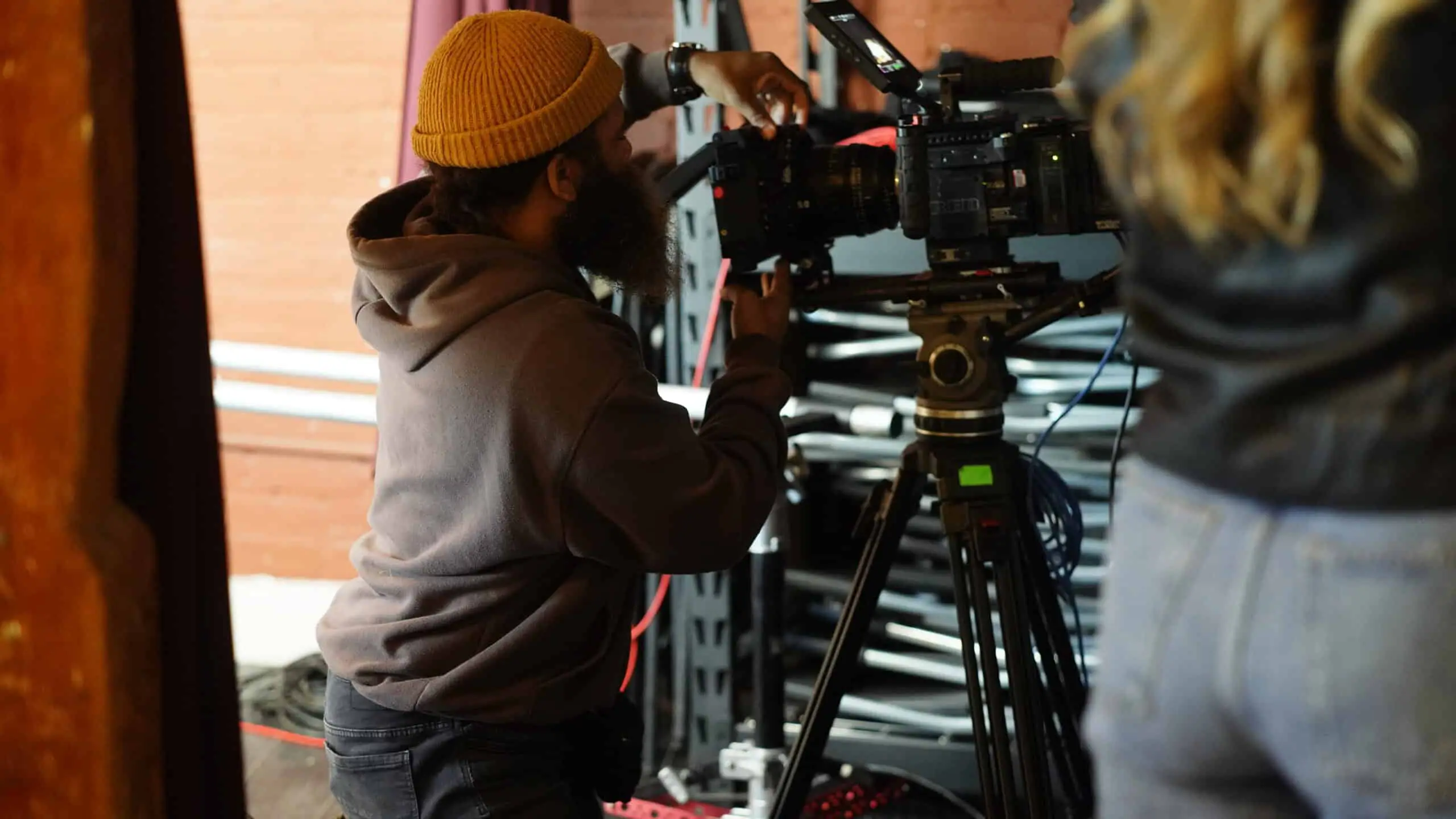
Pre-production is the backbone of any successful video production project. It's the critical planning phase that lays the groundwork for everything that follows. From conceptualizing the initial idea to securing locations, casting talent, and assembling the necessary equipment, a well-executed pre-production process is essential for ensuring a smooth and efficient production, as well as delivering a high-quality final product that meets the project's goals and resonates with the target audience.
This step-by-step guide will walk you through the key elements of the pre-production process, providing insights and best practices to help you navigate this crucial phase with confidence.
## Step 1. Concept Development
The pre-production process begins with the development of a solid concept. This initial stage involves brainstorming ideas, refining them, and ultimately crafting a clear vision for the video project. The concept should align with the project's goals, whether it's promoting a product or service, telling a brand's story, or creating engaging educational content. Start by conducting research to gain a deep understanding of your target audience and their preferences, interests, and pain points. This insight will inform the direction of your concept and help ensure that the final product resonates with your intended viewers.
Once you have a general idea or theme in mind, begin fleshing out the concept by asking yourself questions such as: What is the core message or story you want to convey? How can you present this message in a compelling and visually engaging way? What tone and style will best capture the essence of your brand or subject matter? As you refine the concept, consider incorporating elements that will make your video stand out, such as unique perspectives, creative storytelling techniques, or innovative visual approaches.
At this stage, it's also essential to align your concept with your project's goals and objectives. If your goal is to drive product sales, for example, your concept should focus on highlighting the features and benefits of your offering in an engaging and persuasive manner. Throughout the concept development process, seek feedback from key stakeholders, subject matter experts, and even members of your target audience. Their input can provide valuable insights and help you refine your concept to ensure it resonates effectively.
Once you have a solid concept in place, document it thoroughly, including a clear synopsis, creative direction, and any specific requirements or guidelines that should be followed during the subsequent stages of pre-production.
Engaging in a [media marketing](https://c-istudios.com/media-marketing-consultation-services/) service can be invaluable during the concept development stage. These professionals can provide expert guidance, market research, and strategic insights to help you craft a concept that resonates with your target audience and aligns with your marketing goals.
## Step 2. Scriptwriting and Storyboarding
With a well-defined concept in place, the next step is to translate your vision into a script and storyboard. These two elements will serve as the blueprint for your entire video production, guiding the creative direction, dialogue, and visual execution. The scriptwriting process involves crafting a compelling narrative or informative content that effectively conveys the core message and resonates with your target audience. Whether you're creating a fictional story, a product video, or an educational piece, the script should follow a clear structure with a beginning, middle, and end.
During the scriptwriting phase, consider developing well-rounded characters (if applicable) with distinct personalities, motivations, and arcs. Incorporate engaging dialogue that feels natural and authentic. Balance exposition with action and visual storytelling. Incorporate elements that align with your brand's voice and tone. Leave room for visual storytelling and creative interpretation in the storyboarding phase.
Once the script is complete, it's time to bring it to life visually through the storyboarding process. A storyboard is a sequential series of illustrations or sketches that depict the key scenes, camera angles, and shot compositions of your video. Creating a detailed storyboard serves several purposes: It allows you to visualize the flow and pacing of your video, ensuring a cohesive and engaging viewing experience.
It facilitates clear communication between you and your production team, ensuring everyone is on the same page regarding the creative vision. It helps identify potential logistical challenges or technical requirements early on, allowing for proper planning and preparation.
When storyboarding, consider camera angles and shot compositions that effectively convey the intended emotion or message. Plan transitions between scenes that create a natural flow. Look for opportunities to incorporate visual effects, graphics, or other post-production elements. Determine staging and blocking for actors or on-screen talent. Throughout the scriptwriting and storyboarding process, continuously refer back to your concept and project goals to ensure that your creative choices align with the overall vision and objectives.
Engaging experienced professionals in the [film and TV production](https://c-istudios.com/film-and-tv-production/) industry can be invaluable during the scriptwriting and storyboarding phase. Their expertise can help you craft a compelling narrative, develop engaging characters, and effectively translate your vision into a visually stunning and impactful storyboard.
## Step 3. Budgeting
Proper budgeting is a critical component of the pre-production process, as it ensures that you have the necessary resources to bring your video project to life while minimizing the risk of cost overruns or financial constraints hampering production. Begin by creating a comprehensive list of all the expenses associated with your video production.
This may include talent costs (actors, voiceover artists, etc.), production crew salaries (director, cinematographer, sound engineer, etc.), equipment rentals (cameras, lighting, audio gear, etc.), location fees (permits, rentals, etc.), post-production costs (editing, visual effects, color grading, etc.), and marketing and distribution expenses.
Once you have a complete list of anticipated expenses, assign realistic cost estimates to each item. Research industry rates, consult with professionals in the field, and obtain quotes from vendors and service providers to ensure accuracy. It's important to factor in contingency funds to account for unforeseen expenses or potential overages. A general rule of thumb is to allocate an additional 10-20% of your total budget as a contingency reserve.
When preparing your budget, consider cost-effective solutions and strategies to maximize your resources. For example, explore equipment rental options instead of purchasing expensive gear outright. Leverage existing resources or locations within your organization or network. Negotiate rates with vendors and service providers, especially if you can offer long-term or recurring work. Explore opportunities for product placement or sponsorships to offset costs.
Throughout the budgeting process, prioritize transparency and clear communication with all stakeholders involved. Establish a system for tracking and reporting expenses, and regularly review and adjust the budget as needed to ensure you stay on track. Consulting with a [media marketing consultation](https://c-istudios.com/media-marketing-consultation-services/) professional can be invaluable during the budgeting phase. These experts can provide insights into industry pricing standards, identify potential cost-saving opportunities, and help you develop a realistic and comprehensive budget that aligns with your project goals and resources.
## Step 4. Casting and Crew Selection
The success of your video production heavily relies on the talent and expertise of the individuals involved. From the on-screen talent to the behind-the-scenes crew, assembling the right team is crucial for bringing your vision to life. Casting is a critical component of the pre-production process, especially for projects involving actors or on-screen talent. Start by clearly defining the roles and character profiles you need to fill. Consider factors such as age, gender, physical attributes, and acting experience.
Once you have a clear idea of the roles you need to cast, you can begin the casting process through various channels, including talent agencies and casting directories, open casting calls, online casting platforms, and referrals from industry professionals. During the audition process, look for actors who not only match the physical requirements but also possess the acting skills, emotional range, and ability to embody the characters convincingly.
In addition to casting talent, you'll need to assemble a skilled production crew to handle the various technical and creative aspects of the project. Key roles to consider include the director, who is responsible for overseeing the creative vision and guiding the on-set action. The producer handles logistical and operational aspects, ensuring the project stays on schedule and within budget.
The cinematographer/director of photography is responsible for capturing visually stunning footage through skilled camera operation and lighting techniques. The sound engineer ensures high-quality audio capture and mixing. The editor assembles the raw footage into a cohesive final product during the post-production phase.
When selecting your crew, prioritize individuals with relevant experience and a proven track record in their respective fields. Review their [portfolio](https://c-istudios.com/our-work/)s, referrals, and testimonials to gauge their skills and professionalism. Conduct interviews to assess their communication abilities, creative vision, and ability to collaborate effectively as part of a team.
It's also important to consider the specific needs of your project and the expertise required. For example, if your video involves complex visual effects or animation, you may need to enlist the services of a skilled [professional photographer](https://c-istudios.com/professional-photography-services/) or audio engineer. If you're creating a product video that requires intricate set design or styling, you may benefit from a dedicated branding and graphic design specialist.
[CI Studios](https://c-istudios.com/) is a reputable [video production company](https://c-istudios.com/video-production-services/) that can assist businesses in assembling a skilled and experienced crew tailored to their project's specific requirements.
## Step 5. Location Scouting and Set Design
The locations and sets you choose for your video production can significantly impact the overall visual appeal and authenticity of the final product. Location scouting and set design are crucial steps in the pre-production process, as they help bring the creative vision to life and create an immersive environment for your story or message to unfold.
When scouting for locations, consider factors such as the overall aesthetic, lighting conditions, accessibility, and practical considerations like permits and legal compliance. Look for locations that not only align with the creative vision but also provide logistical convenience for your crew and equipment.
If you're filming on location, scout multiple options that fit your desired look and feel. Take into account factors like time of day, weather conditions, and potential sound or light interference. Obtain the necessary permits and permissions from property owners or local authorities.
For indoor sets or studio filming, you may need to design and construct custom sets that accurately represent the intended environment. This is where the expertise of a [branding and graphic design](https://c-istudios.com/branding-and-graphic-design-services/) specialist can be invaluable. They can help create visually striking and cohesive set designs that reinforce your brand's identity and complement the overall aesthetic of your video.
When designing sets, consider elements such as color schemes, textures, and lighting that will effectively convey the desired mood and atmosphere. Collaborate closely with your production designer and art department to ensure that every detail, from furniture placement to prop selection, aligns with the creative vision.
Regardless of whether you're filming on location or in a studio, it's essential to conduct thorough site visits and plan for any necessary modifications or accommodations. This may include arranging for temporary power sources, constructing temporary structures, or securing access to nearby facilities for your crew and talent.
Throughout the location scouting and set design process, keep a keen eye on potential logistical challenges or safety concerns. Identify potential risks and develop contingency plans to mitigate them. Ensure that all necessary permits and insurance requirements are in place to protect your production and comply with local regulations.
## Step 6. Scheduling and Logistics
Effective scheduling and logistical planning are critical components of a successful video production. A well-designed schedule ensures that all necessary elements - talent, crew, equipment, and locations - are coordinated and available at the right time and place, minimizing delays and maximizing efficiency.
Begin by creating a detailed shooting schedule that outlines the sequence of scenes or shots to be captured, along with their respective locations and requirements. Factor in setup and teardown times, as well as potential delays or contingencies. Collaborate closely with your director, cinematographer, and production team to ensure that the schedule is realistic and takes into account the creative and technical requirements of each scene.
When developing the schedule, consider the availability of your cast and crew members, as well as any potential conflicts or constraints. Account for travel time between locations, meal breaks, and any necessary setup or rehearsal periods.
Throughout the scheduling and logistical planning process, it's essential to maintain open communication with all stakeholders involved. Share the schedule and logistics plan with your team, and encourage feedback and input to identify potential conflicts or issues early on.
A crucial aspect of scheduling and logistics is flexibility and contingency planning. Despite meticulous planning, unexpected circumstances can arise, such as weather delays, equipment malfunctions, or talent availability issues. Build in buffer times and have backup plans in place to mitigate potential disruptions and keep your production running smoothly.
When planning your [video production gear list](https://c-istudios.com/video-production-gear-list/), consider not only the core equipment like cameras, lenses, and lighting but also ancillary items like batteries, memory cards, cables, and backup equipment. Ensure that all gear is properly maintained, tested, and ready for use during production.
By investing time and effort into comprehensive scheduling and logistical planning, you can minimize potential disruptions, maximize efficiency, and ensure that your video production runs smoothly from start to finish.
## Step 7. Equipment and Technical Setup
The quality of your video production heavily relies on the equipment and technical setup you employ. From cameras and lenses to lighting and audio gear, having the right tools and properly configuring them is essential for capturing high-quality footage and achieving your desired visual and auditory outcomes.
The specific equipment needs will vary depending on the type of production you're undertaking. For a narrative or corporate video, you may require a professional-grade camera system, a range of lenses, lighting kits, audio equipment (microphones, mixers, etc.), and grip equipment (tripods, dollies, etc.).
For live events or multi-camera productions, you'll need additional equipment such as video switchers, multiple camera setups, and a robust audio system capable of capturing sound from various sources.
When selecting your equipment, consider factors such as image quality, low-light performance, dynamic range, and ergonomics. Research the latest technologies and industry-leading brands, and invest in gear that will meet the demands of your production while providing room for future growth and versatility.
Once you've procured the necessary equipment, it's crucial to ensure proper setup and configuration. This may involve tasks such as:
- Calibrating cameras and lenses for optimal image quality and color accuracy.
- Configuring lighting setups to achieve the desired intensity, direction, and quality of illumination.
- Adjusting audio levels and implementing noise-reduction techniques for clear, crisp sound capture.
- Setting up monitors, video villages, and other on-set equipment for efficient monitoring and collaboration.
Throughout the setup process, pay close attention to details such as cable management, power distribution, and equipment protection. Ensure that all gear is properly secured and protected from potential hazards or environmental factors that could compromise its performance.
To streamline the technical setup and ensure consistency across multiple shooting locations or setups, consider developing detailed checklists and templates. These can include equipment lists, configuration settings, and step-by-step guides for setting up and breaking down your gear efficiently.
Engaging the services of experienced [SEO copywriting](https://c-istudios.com/seo-copywriting-services/) professionals can also be beneficial during this stage. They can help you optimize your video metadata, descriptions, and titles with relevant keywords and SEO best practices, ensuring that your content is easily discoverable and ranks well in search engine results.
By investing time and effort into proper equipment selection and technical setup, you'll be well-prepared to capture high-quality footage and audio, ultimately leading to a polished and visually stunning final product.
## Work with C&I Studios
If you are planning a project like this, our team can take it from concept to final delivery. Explore our [film and TV production](https://c-istudios.com/film-and-tv-production/), browse [our work](https://c-istudios.com/our-work/) to see how we tell brand stories, and [get in touch](https://c-istudios.com/contact/) when you are ready to start.
Originally published April 24, 2024
---
*This content is from [C&I Studios](https://c-istudios.com), a full-service production company.*
---
# Explainer Videos: A Comprehensive Guide to Captivating Your Audience
> Published: April 23, 2024
> Categories: Commercial & Brand
> Source: https://c-istudios.com/explainer-videos-a-comprehensive-guide-to-captivating-your-audience/
---
.cib{--paper:#1b1d1f;--ink:#fff;--body:#d5d7d9;--muted:#8b9096;--line:rgba(255,255,255,.12);--thumb:#2b2e31;--card:#212426;--accent:#c02b0a;--blue:#5B8FA8;--serif:'Playfair Display',Georgia,serif;--sans:'Poppins',-apple-system,sans-serif;--measure:900px;background:var(--paper);color:var(--body);font-family:var(--sans);line-height:1.6;position:relative;left:50%;transform:translateX(-50%);width:90vw;max-width:1920px}
.cib *{box-sizing:border-box}
.cib .kicker{max-width:var(--measure);margin:58px auto 0;padding:0 22px;font-size:12.5px;font-weight:700;letter-spacing:2.5px;text-transform:uppercase;color:var(--blue)}
.cib h1.cibh1{text-wrap:balance;font-family:var(--serif);font-weight:500;font-size:clamp(46px,6vw,72px);line-height:1.08;color:var(--ink);max-width:var(--measure);margin:18px auto 0;padding:0 22px;letter-spacing:-.5px}
.cib .metarow{max-width:var(--measure);margin:20px auto 0;padding:0 22px;color:var(--muted);font-size:14px}
.cib .hero{position:relative;width:100%;height:0;padding-bottom:56.25%;overflow:hidden;margin:48px auto 0;border-top:1px solid var(--line);border-bottom:1px solid var(--line)}
.cib .hero .ph{width:100%;aspect-ratio:16/9;background:var(--thumb);border-top:1px solid var(--line);border-bottom:1px solid var(--line);display:flex;align-items:center;justify-content:center;color:#7d8288;font-size:13px;text-align:center;padding:0 20px}
.cib .body{max-width:var(--measure);margin:12px auto 0;padding:52px 22px 6px}
.cib .body.lead p:first-child{font-size:23px;line-height:1.62;color:var(--ink)}
.cib .body p{font-size:18.5px;line-height:1.85;margin:0 0 30px;color:var(--body)}
.cib .body h2{text-wrap:balance;font-family:var(--serif);font-weight:500;font-size:clamp(32px,4vw,48px);line-height:1.22;color:var(--ink);margin:70px 0 20px;letter-spacing:-.3px}
.cib .body h3{text-wrap:balance;font-family:var(--sans);font-weight:600;font-size:22px;color:var(--ink);margin:38px 0 8px}
.cib .body a{color:var(--ink);text-decoration:underline;text-decoration-color:rgba(255,255,255,.4);text-underline-offset:3px}
.cib .body a:hover{text-decoration-color:var(--ink)}
.cib .ctable{width:100%;border-collapse:collapse;margin:16px 0 30px;font-size:16px}
.cib .ctable th{background:#000;color:#fff;text-align:left;padding:10px 12px;font-family:var(--sans)}
.cib .ctable td{padding:10px 12px;border-bottom:1px solid var(--line);color:var(--body)}
.cib .inimg{position:relative;width:100%;height:0;padding-bottom:56.25%;overflow:hidden;margin:72px auto;border-top:1px solid var(--line);border-bottom:1px solid var(--line)}
.cib .inimg .ph{width:100%;aspect-ratio:16/9;background:var(--thumb);border-top:1px solid var(--line);border-bottom:1px solid var(--line);display:flex;align-items:center;justify-content:center;color:#7d8288;font-size:13px}
.cib .origpub{max-width:var(--measure);margin:60px auto 0;padding:26px 22px 0;border-top:1px solid var(--line);color:var(--muted);font-size:13.5px}
.cib .related{max-width:1200px;margin:64px auto 0;padding:34px 22px 76px}
.cib .related h3{font-family:var(--sans);font-size:12.5px;letter-spacing:2px;text-transform:uppercase;color:var(--ink);margin:0 0 24px}
.cib .grid{display:grid;grid-template-columns:repeat(3,1fr);gap:28px}
.cib .rc{background:var(--card);border:1px solid var(--line);display:block;text-decoration:none;color:inherit;transition:border-color .15s}
.cib a.rc:hover{border-color:rgba(255,255,255,.5)}
.cib .rc .thumb{position:relative;width:100%;height:0;padding-bottom:56.25%;background:var(--thumb);overflow:hidden}
.cib .rc .thumb img{position:absolute!important;top:0!important;left:0!important;width:100%!important;height:100%!important;object-fit:cover!important;margin:0!important}
.cib .rc .cc{padding:14px 15px 17px}
.cib .rc .rt{font-family:var(--serif);font-weight:500;font-size:16px;line-height:1.3;color:var(--ink);margin:0 0 6px}
.cib .rc .rm{font-size:11px;letter-spacing:1px;text-transform:uppercase;color:var(--muted)}
.cib img{margin:0!important;padding:0!important;display:block!important;vertical-align:top;max-width:100%}
.cib .hero img,.cib .inimg img{position:absolute!important;top:0!important;left:0!important;width:100%!important;height:100%!important;object-fit:cover!important;margin:0!important;padding:0!important;border:0!important;display:block!important;aspect-ratio:auto!important}
.cib .hero+.body{padding-top:36px}
@media(max-width:760px){.cib .grid{grid-template-columns:1fr}.cib .body h2{margin:52px 0 16px}.cib .body p{font-size:17.5px}.cib .inimg,.cib .hero{margin-top:44px}}
.cib .vembed{max-width:var(--measure);margin:44px auto;padding:0 22px}.cib .vembed .vwrap{position:relative;width:100%;height:0;padding-bottom:56.25%}.cib .vembed .vwrap iframe{position:absolute;top:0;left:0;width:100%;height:100%;border:0}
Commercial & Brand
# Explainer Videos. A Comprehensive Guide to Captivating Your Audience
13 min read
In the digital age, where attention spans are shrinking and information overload is a constant challenge, explainer videos have emerged as a powerful tool for businesses and educators alike. These concise and visually captivating videos simplify complex concepts, products, or services, making them easily digestible for audiences.
Explainer videos have proven to be an effective way to capture attention, convey messaging, and leave a lasting impression, making them an invaluable asset in the world of digital marketing and education.
## The Importance of Explainer Videos
Explainer videos have become increasingly important in today's fast-paced world, where people seek quick and engaging ways to understand complex information. These videos offer numerous benefits for businesses and educators, making them a valuable addition to any communication strategy.
For businesses, explainer videos provide a powerful tool for [creative marketing](https://c-istudios.com/creative-marketing-services/) and product promotion. By breaking down intricate products or services into easily understandable visual narratives, explainer videos can effectively communicate unique value propositions and features to potential customers. This not only helps to educate audiences but also builds trust and credibility, ultimately driving conversions and sales.
Successful explainer video campaigns, such as those by companies like Dropbox and Dollar Shave Club, have demonstrated the ability to engage audiences, simplify complex offerings, and create a memorable brand experience. These campaigns have not only increased brand awareness but also generated significant buzz and customer acquisition.
In the field of education, explainer videos have revolutionized the way complex subjects and concepts are taught. By combining visual elements, animations, and concise narration, these videos can make seemingly daunting topics more accessible and engaging for learners of all ages. From scientific principles to historical events, explainer videos have the power to simplify and clarify information in a way that resonates with diverse audiences.
Beyond their practical applications, explainer videos also offer businesses and educators a creative canvas for storytelling. By crafting compelling narratives and incorporating relatable characters or analogies, these videos can create emotional connections with audiences, making the information more memorable and impactful.
With the increasing demand for engaging and informative content, explainer videos have become an essential component of successful communication strategies across various industries and sectors.
## Planning Your Explainer Video
Crafting an effective explainer video requires careful planning and a strategic approach to ensure that the final product resonates with your target audience and aligns with your overall communication objectives. The planning phase is crucial for establishing a solid foundation and laying the groundwork for a successful [video production](https://c-istudios.com/video-production-services/).
The first step in the planning process is to clearly define the purpose and goals of your explainer video. Are you aiming to introduce a new product or service, educate your audience about a complex concept, or showcase your brand's unique value proposition? Identifying your objectives from the outset will shape the content, tone, and overall direction of your video.
Once you have established your goals, conduct thorough research to understand your target audience. Gather insights into their demographics, interests, pain points, and preferred communication styles. This information will help you tailor the content, visuals, and messaging of your explainer video to effectively resonate with your intended viewers.
With a clear understanding of your objectives and audience, it's time to develop the concept and script for your explainer video. This is where you'll bring your ideas to life, crafting a compelling narrative that captures attention and effectively communicates your message. Consider incorporating storytelling elements, such as relatable characters, analogies, or humor, to make your content more engaging and memorable.
During the scripting process, pay close attention to the flow and structure of your content. A well-organized script with a clear beginning, middle, and end will ensure that your viewers can easily follow along and grasp the key points you're trying to convey.
When crafting your script, it's essential to incorporate [SEO copywriting](https://c-istudios.com/seo-copywriting-services/) best practices to ensure that your video's content is optimized for search engines and discoverability. This includes strategically using relevant keywords and phrases throughout your script while maintaining a natural and engaging tone.
Additionally, consider incorporating calls-to-action (CTAs) in your explainer video to encourage viewers to take the desired action, whether it's visiting your website, making a purchase, or signing up for a service.
Throughout the planning phase, ensure that your video's content aligns with your brand's messaging, values, and overall marketing strategy. Consistency in branding elements, such as color schemes, typography, and tone, will reinforce your brand's identity and create a cohesive experience for your audience.
By investing time and effort into the planning and conceptualization of your explainer video, you'll lay the foundation for a successful production that resonates with your target audience, effectively communicates your message, and ultimately achieves your desired objectives.
## Designing Visually Appealing Explainer Videos
While the content and messaging of an explainer video are undoubtedly crucial, the visual design plays an equally important role in capturing and retaining your audience's attention. Visually appealing explainer videos not only make complex information more digestible but also leave a lasting impression on viewers, helping to reinforce your brand and message.
One of the key elements in designing visually appealing explainer videos is the use of professional photography and graphic design. High-quality visuals, whether captured through stunning photography or created through skilled graphic design, can elevate the overall production value and create a polished, professional appearance.
At[CI Studios](https://www.c-istudios.com/), their team of experienced photographers and graphic designers specialize in creating visually captivating content that complements and enhances the messaging of explainer videos.
When it comes to the overall visual style of your explainer video, it's important to strike a balance between creativity and simplicity. While intricate animations and complex visuals can be engaging, they should not overwhelm or distract from the core message you're trying to convey. Instead, focus on creating a cohesive visual language that supports and reinforces your narrative.
One effective approach is to incorporate [VFX compositing and animation](https://c-istudios.com/vfx-compositing-and-animation-services/) techniques to bring abstract concepts or complex processes to life. These techniques can transform mundane or difficult-to-visualize ideas into dynamic and engaging visuals, making them more accessible and memorable for your audience.
Color psychology also plays a significant role in the visual design of explainer videos. Carefully selected color palettes can evoke specific emotions and reinforce your brand's identity, while also enhancing the overall aesthetic appeal of your visuals.
When it comes to character design and animations, it's essential to strike the right balance between relatable and engaging. Well-designed characters can help viewers connect with your content on a personal level, while dynamic animations can add energy and personality to your visuals.
Throughout the design process, it's crucial to ensure that your visuals align with and complement the content and messaging of your explainer video. Visuals should never overshadow or distract from the core message but rather serve as a supportive and engaging medium for communicating your ideas effectively.
By prioritizing visually appealing design elements and leveraging the expertise of professional photographers, graphic designers, and animators, you can create explainer videos that not only inform but also captivate and leave a lasting impression on your audience.
## Technical Aspects of Producing Explainer Videos
While the conceptual and creative aspects of explainer videos are essential, the technical aspects of production play a crucial role in ensuring a high-quality final product. From video production gear and audio engineering to animation techniques, a solid understanding of the technical components involved can elevate the overall quality and impact of your explainer videos.
One of the fundamental technical considerations is the [video production gear list](https://c-istudios.com/video-production-gear-list/). Investing in high-quality equipment, such as cameras, lenses, lighting rigs, and audio recording devices, can significantly enhance the visual and audio quality of your explainer videos. Professional-grade gear not only produces better image and sound quality but also offers greater flexibility and control during the production process.
Audio engineering is another critical aspect of explainer video production. Clear and well-mixed audio can greatly improve the overall viewing experience and ensure that your message is effectively conveyed. This may involve recording high-quality voiceovers, implementing sound design techniques, and mixing various audio elements, such as music and sound effects, to create a cohesive and engaging soundscape.
For explainer videos that rely heavily on animations, mastering animation techniques is essential. This may involve utilizing various software tools and techniques, such as 2D animation, 3D modeling, and motion graphics, to bring your visuals to life. Skilled animators can create dynamic and visually stunning sequences that effectively communicate complex ideas and concepts.
Color grading involves adjusting the colors, contrast, and tonal balance of your footage to achieve a specific look and feel that aligns with your brand or the desired mood of your explainer video. Skilled color grading can elevate the visual quality and create a cohesive, polished appearance across all visuals.
Video editing is a critical step in assembling all the individual components of your explainer video into a cohesive and engaging final product. This involves seamlessly combining live-action footage, animations, graphics, and audio elements while maintaining a smooth narrative flow and pacing. Effective editing techniques, such as precise timing, transitions, and cutting, can greatly impact the overall viewing experience and ensure that your message is conveyed clearly and concisely.
Visual effects compositing allows you to integrate various digital elements, such as 3D animations, motion graphics, or computer-generated imagery (CGI), into your live-action footage or animated sequences. This technique can create visually stunning and seamless blends of real and digital worlds, enabling you to bring abstract concepts or imaginative scenarios to life in a visually compelling manner.
Collaboration between the creative team, technical specialists, and post-production professionals is vital to ensure that the technical aspects of your explainer video production align with the overall creative vision and objectives. Clear communication and a shared understanding of the desired outcomes are essential for achieving a polished and impactful final product.
By prioritizing the technical aspects of explainer video production, from equipment and audio engineering to animation techniques and post-production processes, you can elevate the quality and effectiveness of your visual storytelling, ensuring that your message resonates with your audience in a captivating and memorable way.
## Marketing Your Explainer Videos
Creating a compelling explainer video is only the first step; the true success lies in effectively marketing and distributing your video to reach your target audience. In today's digital landscape, where content is abundant and competition for attention is fierce, a well-executed marketing strategy is crucial to ensuring your explainer video achieves maximum visibility and engagement.
One of the most powerful tools in your marketing arsenal is social media marketing. Platforms like YouTube, Instagram, Facebook, and LinkedIn offer vast opportunities to showcase your explainer videos and reach a broad audience. Develop a comprehensive social media strategy that includes optimizing your video for each platform, leveraging paid advertising campaigns, and engaging with your audience through interactive features like comments and sharing.
Another effective marketing channel is email marketing. Incorporate your explainer video into promotional email campaigns, newsletters, or targeted lead-nurturing efforts. Explainer videos can effectively communicate complex information in a digestible format, making them valuable assets for educating and engaging your email subscribers.
Search engine optimization (SEO) is also crucial for maximizing the reach and discoverability of your explainer videos. Optimize your video titles, descriptions, and tags with relevant keywords to improve search engine rankings. Additionally, consider embedding your explainer videos on your website and creating accompanying blog posts or content to further boost SEO and organic traffic.
To amplify your marketing efforts, consider collaborating with influencers or industry thought leaders who align with your brand and resonate with your target audience. These partnerships can provide valuable exposure and credibility, helping to increase the reach and engagement of your explainer videos.
When promoting your explainer videos, it's essential to leverage [social media marketing](https://c-istudios.com/social-media-marketing-services/) services and expertise. Professional agencies can provide valuable insights into platform-specific best practices, audience targeting strategies, and performance analytics, ensuring your marketing efforts are optimized for maximum impact.
As part of your marketing strategy, create a consistent content calendar and plan for regular promotion and repurposing of your explainer videos. This approach ensures that your content remains visible and engaging, even as new videos are created and released.
Remember, effective marketing is an ongoing process that requires continuous monitoring, analysis, and adaptation. Regularly assess the performance of your explainer video marketing campaigns, track key metrics such as views, engagement rates, and conversions, and use these insights to refine and optimize your strategies for future success.
By implementing a comprehensive and data-driven marketing approach, you can unlock the full potential of your explainer videos, effectively reaching and engaging your target audience while achieving your desired business or educational objectives.
## Measuring the Success of Your Explainer Videos
Creating a captivating explainer video is only the first step in the process. To truly understand the impact and effectiveness of your video, it's crucial to measure and analyze its performance using various metrics and analytics tools. By gathering and interpreting data, you can gain valuable insights into your audience's engagement, identify areas for improvement, and make data-driven decisions for future video projects.
One of the fundamental metrics to track is the number of views your explainer video receives across different platforms and channels. While views alone do not provide a complete picture of success, they offer an initial gauge of your video's reach and visibility. Analyze view counts over time to identify any trends or spikes in viewership, which can help you understand the effectiveness of your marketing and promotion efforts.
Engagement metrics, such as watch time, audience retention, and click-through rates, provide deeper insights into how well your explainer video resonates with your audience. These metrics can reveal crucial information about the video's ability to capture and hold attention, as well as its effectiveness in driving desired actions, such as website visits or conversions.
In addition to quantitative metrics, qualitative feedback from your audience can offer invaluable insights. Monitor comments, social media mentions, and user reviews to gauge sentiment and identify areas where your video excels or falls short. This feedback can inform future content decisions and help you better understand your audience's preferences and needs.
To streamline the process of data collection and analysis, consider leveraging [web maintenance](https://c-istudios.com/web-maintenance/) services or specialized analytics tools. These platforms can consolidate data from various sources, including video hosting platforms, social media channels, and website analytics, providing a comprehensive view of your video's performance.
Regularly reviewing and interpreting your analytics data is crucial for refining your explainer video strategy. Identify patterns and trends, and use this information to optimize your content, targeting, and marketing efforts. For example, if you notice a drop in audience retention at a particular point in your video, you may need to revisit that section and make adjustments to improve engagement.
Furthermore, benchmarking your performance against industry standards or competitors can provide valuable context and help you set realistic goals for future video projects. This comparative analysis can also reveal opportunities for differentiation and help you identify areas where you can stand out in a crowded market.
By effectively measuring the success of your explainer videos through comprehensive data analysis and audience feedback, you can continuously improve your video content, optimize your marketing efforts, and ultimately achieve better results in terms of engagement, brand awareness, and conversions.
## Work with C&I Studios
If you are planning a project like this, our team can take it from concept to final delivery. Explore our [video production services](https://c-istudios.com/video-production-services/), browse [our work](https://c-istudios.com/our-work/) to see how we tell brand stories, and [get in touch](https://c-istudios.com/contact/) when you are ready to start.
Originally published April 23, 2024
---
*This content is from [C&I Studios](https://c-istudios.com), a full-service production company.*
---
# Crafting Compelling Video Scripts: Tips and Techniques
> Published: April 22, 2024
> Categories: Commercial & Brand
> Source: https://c-istudios.com/crafting-compelling-video-scripts-tips-and-techniques/
---
.cib{--paper:#1b1d1f;--ink:#fff;--body:#d5d7d9;--muted:#8b9096;--line:rgba(255,255,255,.12);--thumb:#2b2e31;--card:#212426;--accent:#c02b0a;--blue:#5B8FA8;--serif:'Playfair Display',Georgia,serif;--sans:'Poppins',-apple-system,sans-serif;--measure:900px;background:var(--paper);color:var(--body);font-family:var(--sans);line-height:1.6;position:relative;left:50%;transform:translateX(-50%);width:90vw;max-width:1920px}
.cib *{box-sizing:border-box}
.cib .kicker{max-width:var(--measure);margin:58px auto 0;padding:0 22px;font-size:12.5px;font-weight:700;letter-spacing:2.5px;text-transform:uppercase;color:var(--blue)}
.cib h1.cibh1{text-wrap:balance;font-family:var(--serif);font-weight:500;font-size:clamp(46px,6vw,72px);line-height:1.08;color:var(--ink);max-width:var(--measure);margin:18px auto 0;padding:0 22px;letter-spacing:-.5px}
.cib .metarow{max-width:var(--measure);margin:20px auto 0;padding:0 22px;color:var(--muted);font-size:14px}
.cib .hero{position:relative;width:100%;height:0;padding-bottom:56.25%;overflow:hidden;margin:48px auto 0;border-top:1px solid var(--line);border-bottom:1px solid var(--line)}
.cib .hero .ph{width:100%;aspect-ratio:16/9;background:var(--thumb);border-top:1px solid var(--line);border-bottom:1px solid var(--line);display:flex;align-items:center;justify-content:center;color:#7d8288;font-size:13px;text-align:center;padding:0 20px}
.cib .body{max-width:var(--measure);margin:12px auto 0;padding:52px 22px 6px}
.cib .body.lead p:first-child{font-size:23px;line-height:1.62;color:var(--ink)}
.cib .body p{font-size:18.5px;line-height:1.85;margin:0 0 30px;color:var(--body)}
.cib .body h2{text-wrap:balance;font-family:var(--serif);font-weight:500;font-size:clamp(32px,4vw,48px);line-height:1.22;color:var(--ink);margin:70px 0 20px;letter-spacing:-.3px}
.cib .body h3{text-wrap:balance;font-family:var(--sans);font-weight:600;font-size:22px;color:var(--ink);margin:38px 0 8px}
.cib .body a{color:var(--ink);text-decoration:underline;text-decoration-color:rgba(255,255,255,.4);text-underline-offset:3px}
.cib .body a:hover{text-decoration-color:var(--ink)}
.cib .ctable{width:100%;border-collapse:collapse;margin:16px 0 30px;font-size:16px}
.cib .ctable th{background:#000;color:#fff;text-align:left;padding:10px 12px;font-family:var(--sans)}
.cib .ctable td{padding:10px 12px;border-bottom:1px solid var(--line);color:var(--body)}
.cib .inimg{position:relative;width:100%;height:0;padding-bottom:56.25%;overflow:hidden;margin:72px auto;border-top:1px solid var(--line);border-bottom:1px solid var(--line)}
.cib .inimg .ph{width:100%;aspect-ratio:16/9;background:var(--thumb);border-top:1px solid var(--line);border-bottom:1px solid var(--line);display:flex;align-items:center;justify-content:center;color:#7d8288;font-size:13px}
.cib .origpub{max-width:var(--measure);margin:60px auto 0;padding:26px 22px 0;border-top:1px solid var(--line);color:var(--muted);font-size:13.5px}
.cib .related{max-width:1200px;margin:64px auto 0;padding:34px 22px 76px}
.cib .related h3{font-family:var(--sans);font-size:12.5px;letter-spacing:2px;text-transform:uppercase;color:var(--ink);margin:0 0 24px}
.cib .grid{display:grid;grid-template-columns:repeat(3,1fr);gap:28px}
.cib .rc{background:var(--card);border:1px solid var(--line);display:block;text-decoration:none;color:inherit;transition:border-color .15s}
.cib a.rc:hover{border-color:rgba(255,255,255,.5)}
.cib .rc .thumb{position:relative;width:100%;height:0;padding-bottom:56.25%;background:var(--thumb);overflow:hidden}
.cib .rc .thumb img{position:absolute!important;top:0!important;left:0!important;width:100%!important;height:100%!important;object-fit:cover!important;margin:0!important}
.cib .rc .cc{padding:14px 15px 17px}
.cib .rc .rt{font-family:var(--serif);font-weight:500;font-size:16px;line-height:1.3;color:var(--ink);margin:0 0 6px}
.cib .rc .rm{font-size:11px;letter-spacing:1px;text-transform:uppercase;color:var(--muted)}
.cib img{margin:0!important;padding:0!important;display:block!important;vertical-align:top;max-width:100%}
.cib .hero img,.cib .inimg img{position:absolute!important;top:0!important;left:0!important;width:100%!important;height:100%!important;object-fit:cover!important;margin:0!important;padding:0!important;border:0!important;display:block!important;aspect-ratio:auto!important}
.cib .hero+.body{padding-top:36px}
@media(max-width:760px){.cib .grid{grid-template-columns:1fr}.cib .body h2{margin:52px 0 16px}.cib .body p{font-size:17.5px}.cib .inimg,.cib .hero{margin-top:44px}}
.cib .vembed{max-width:var(--measure);margin:44px auto;padding:0 22px}.cib .vembed .vwrap{position:relative;width:100%;height:0;padding-bottom:56.25%}.cib .vembed .vwrap iframe{position:absolute;top:0;left:0;width:100%;height:100%;border:0}
Commercial & Brand
# Crafting Compelling Video Scripts. Tips and Techniques
10 min read

In the realm of [video production](https://c-istudios.com/video-production-services/), a compelling script is the foundation upon which successful videos are built. Whether you're creating a corporate video, a documentary, or a marketing campaign, your script serves as the blueprint that guides the entire production process. Crafting a well-written script is crucial for engaging your audience, conveying your message effectively, and achieving your desired outcomes.
This article explores the art of video scriptwriting, offering tips and techniques to help you create scripts that captivate, inform, and inspire your viewers.
## Understanding Your Objective and Audience
Before you begin writing your script, it's essential to have a clear understanding of your objectives and target audience. What do you want to achieve with your video? Are you aiming to educate, entertain, or persuade? Defining your goals from the outset will shape the direction and tone of your script.
Spend time researching your target audience thoroughly. What are their interests, pain points, and preferences? Understanding their motivations, demographics, and behavior will help you tailor your content to resonate with them effectively. Use analytics, surveys, or focus groups to gather insights into your audience's needs and preferences.
Once you've identified your objectives and audience, you can begin crafting a script that aligns with their expectations and interests. For example, if you're creating a [creative marketing](https://c-istudios.com/creative-marketing-services/) video for a tech company targeting young professionals, your script should incorporate a modern, relatable tone and language that resonates with that demographic.
When developing your video script, consider the distribution channels you plan to use. Will your video be shared on social media, a website, or at a live event? Each platform has its own unique requirements and audience expectations, which should inform your scripting approach.
Additionally, think about the desired call-to-action for your viewers. Do you want them to make a purchase, sign up for a service, or simply share the video? Your script should guide the audience toward the desired action in a natural and compelling way.
Remember, your audience's attention span is limited, so it's crucial to grab their interest from the very beginning. Consider incorporating hooks, intriguing visuals, or thought-provoking questions in the opening lines of your script to captivate your viewers immediately.
## Structuring Your Video Script
A well-structured script is essential for ensuring clarity, flow, and engagement throughout your video. A commonly used structure for video scripts includes three main components: an introduction, a body, and a conclusion.
The introduction should grab the viewer's attention immediately and provide context for what's to come. Consider starting with a compelling statistic, a provocative question, or an intriguing anecdote related to your topic. This section should also clearly establish the purpose and key themes of your video.
The body of your script is where you delve into the main content and messaging. Break this section down into smaller, digestible segments or scenes, each with its own purpose and clear transitions between them. This not only helps to organize your content logically but also creates natural pauses and opportunities for visuals or graphics to reinforce your message.
When structuring the body, consider using a three-act structure common in [documentary film production](https://c-istudios.com/documentary-film-production/). The first act sets the stage, introduces the characters or subject matter, and establishes the conflict or challenge. The second act explores the journey, obstacles, and potential solutions. The third act resolves the conflict and provides a satisfying conclusion.
Regardless of the specific structure you choose, ensure that each scene or segment builds upon the previous one, maintaining a cohesive narrative flow. Use transitions effectively to guide the viewer smoothly from one point to the next.
The conclusion should summarize the key takeaways, reinforce the central message, and provide a clear call-to-action if applicable. This is your opportunity to leave a lasting impression on your audience and encourage them to take the desired next step, whether it's visiting a website, making a purchase, or simply sharing the video.
Throughout the script, incorporate visual cues and directions for elements such as graphics, animations, or on-screen text. These visual aids can enhance understanding, emphasize key points, and maintain viewer engagement.
## Writing Engaging Content
Crafting engaging content is crucial for captivating your audience and ensuring they stay invested in your video from start to finish. While the structure and visuals are important, the words you choose and how you present them can make or break the effectiveness of your script.
One key element of engaging content is storytelling. Even in videos that aren't necessarily narrative-driven, weaving a compelling story can help create an emotional connection with your audience. Incorporate elements like characters, conflict, and resolution to create a narrative arc that keeps viewers hooked.
Use descriptive language and vivid imagery to paint a picture in the minds of your viewers. Choose words that evoke emotions, stimulate the senses, and create a sense of immersion. Avoid dry, technical jargon unless it's necessary for your target audience.
Vary the tone and pacing of your script to maintain interest and prevent monotony. Incorporate humor, rhetorical questions, or surprising facts to keep your audience engaged and curious about what's coming next.
When it comes to [professional photography](https://c-istudios.com/professional-photography-services/) or video projects, show rather than tell whenever possible. Describe visuals and actions in detail, allowing the imagery to complement and reinforce your message.
Incorporate hooks and teasers throughout your script to pique curiosity and encourage viewers to keep watching. These can be tantalizing questions, cliffhangers, or hints at what's to come, strategically placed to maintain engagement.
Lastly, don't forget to include a clear and compelling call-to-action (CTA) at the end of your script. Whether you want viewers to visit a website, make a purchase, or share the video, your CTA should be concise, actionable, and aligned with the overall objectives of your video.
## Incorporating Visuals and Audio
While the written content of your script is crucial, it's equally important to consider how visuals and audio elements will complement and enhance your message. Effective integration of these components can elevate your video from merely informative to truly captivating and memorable.
Visuals play a vital role in storytelling and can convey emotions, ideas, and information in a powerful and immediate way. When writing your script, think about how each scene or segment can be brought to life through visuals such as live-action footage, animations, graphics, or on-screen text.
Describe the visuals in detail, specifying camera angles, shot types (e.g., close-ups, wide shots), and any special effects or transitions you envision. These visual cues will guide the production team in capturing or creating the desired visuals that align with your narrative.
In the world of [VFX compositing and animation](https://c-istudios.com/vfx-compositing-and-animation-services/), visuals can take your script to new heights, allowing you to explore fantastical worlds, abstract concepts, or complex processes in an engaging and visually stunning way. Collaborate with your VFX team to ensure your script effectively utilizes these techniques to enhance the viewer experience.
Sound design is another crucial element that can significantly impact the overall effectiveness of your video. Consider how audio elements such as music, sound effects, and voiceovers can complement and reinforce the visuals and narrative.
Specify in your script where music should be introduced, its tone and mood, and how it should transition or change throughout the video. Describe any sound effects that could enhance specific visuals or actions, such as the sound of a car engine revving or a door slamming shut.
If your script includes narration or dialogue, provide clear directions for voice actors, including tone, inflection, and emotion. Well-delivered voiceovers can greatly contribute to the overall atmosphere and emotional impact of your video.
Remember, visuals and audio should work in harmony with your script, rather than competing for attention. Strike a balance between these elements, ensuring they complement and elevate each other to create a cohesive and engaging viewing experience.
## Revising and Refining Your Video Script
Even the most seasoned writers understand the importance of revision and refinement in the scriptwriting process. A polished, engaging script rarely emerges in a single draft - it requires multiple iterations, feedback, and meticulous attention to detail.
Once you've completed your initial draft, take a step back and evaluate it objectively. Read through the script with fresh eyes, or better yet, have someone else read it aloud. This exercise can help you identify areas that may be unclear, redundant, or lacking in impact.
Solicit feedback from others, including members of your target audience if possible. Their perspectives can shed light on potential areas for improvement or elements that resonate particularly well. Be open to constructive criticism and use it to enhance your script.
During the revision process, pay close attention to the flow and pacing of your script. Ensure that each scene or segment transitions smoothly into the next, maintaining a consistent narrative thread. Identify any areas that feel disjointed or abrupt, and consider ways to smooth out these transitions through additional context, visuals, or audio cues.
Review your dialogue and narration for naturalness and authenticity. Stilted or overly formal language can distance your audience, while conversational and relatable dialogue can help them connect with your characters or subject matter.
As you revise, be mindful of opportunities for [SEO copywriting](https://c-istudios.com/seo-copywriting-services/) techniques that can help optimize your video's visibility and reach. Incorporate relevant keywords and phrases naturally throughout your script, without compromising the overall flow and quality of the content.
During the refinement stage, consider soliciting input from subject matter experts or industry professionals, if applicable. Their insights can help ensure the accuracy and credibility of your content, as well as identify potential areas for improvement or expansion.
Remember, the goal of revision is not just to correct errors but to elevate the overall quality and impact of your script. Be willing to make substantive changes, rearrange scenes, or even rewrite entire sections if necessary to achieve a more compelling and engaging final product.
## Legal Considerations and Copyright in Scriptwriting
While the creative process of scriptwriting can be exhilarating, it's essential to be mindful of legal considerations and copyright issues that may arise during the development and production of your video.
One crucial aspect to consider is the use of copyrighted material, such as music, images, or video footage that you did not create or have explicit permission to use. Incorporating these elements without proper licensing or attribution can lead to legal complications and potential copyright infringement claims.
If you plan to include copyrighted material in your video, research the necessary steps to obtain the appropriate licenses or permissions. This may involve contacting copyright holders, negotiating fees, and ensuring proper attribution is given in your script and final video.
When working with [web development](https://c-istudios.com/web-development-services/) agencies or multimedia production teams, clearly communicate any copyrighted material you intend to use and ensure they have the necessary licenses or permissions in place before proceeding with production.
Another legal consideration is the use of trademarks or branding elements, especially if your video involves promoting or featuring specific products or companies. Consult with legal counsel or brand representatives to ensure you have the necessary approvals and guidelines for using their trademarks or branding elements correctly.
If your script involves adapting or drawing inspiration from existing works, such as books, films, or plays, be cautious of potential copyright infringement issues. While inspiration and general ideas are permissible, directly copying or closely adapting copyrighted material without permission can lead to legal challenges.
In some cases, you may need to obtain specific rights or licenses to adapt copyrighted works, even if you plan to create a new, transformative work based on the original.
It's also important to consider privacy and publicity rights when including identifiable individuals in your video. Obtain appropriate releases or permissions from anyone who will be featured or mentioned, especially if your video will be distributed publicly or commercially.
Finally, be aware of any industry-specific regulations or guidelines that may apply to your video's content or distribution. For example, if you're creating a video for a regulated industry like healthcare or finance, there may be additional legal requirements or restrictions to consider.
By addressing legal considerations and copyright issues proactively during the scriptwriting process, you can avoid potential complications and ensure your video is compliant with relevant laws and regulations.
## Work with C&I Studios
If you are planning a project like this, our team can take it from concept to final delivery. Explore our [video production services](https://c-istudios.com/video-production-services/), browse [our work](https://c-istudios.com/our-work/) to see how we tell brand stories, and [get in touch](https://c-istudios.com/contact/) when you are ready to start.
Originally published April 22, 2024
---
*This content is from [C&I Studios](https://c-istudios.com), a full-service production company.*
---
# How to build a video-production strategy for your business
> Published: April 22, 2024
> Categories: Commercial & Brand
> Source: https://c-istudios.com/how-to-build-a-video-production-strategy-for-your-business/
---
.cib{--paper:#1b1d1f;--ink:#fff;--body:#d5d7d9;--muted:#8b9096;--line:rgba(255,255,255,.12);--thumb:#2b2e31;--card:#212426;--accent:#c02b0a;--blue:#5B8FA8;--serif:'Playfair Display',Georgia,serif;--sans:'Poppins',-apple-system,sans-serif;--measure:900px;background:var(--paper);color:var(--body);font-family:var(--sans);line-height:1.6;position:relative;left:50%;transform:translateX(-50%);width:90vw;max-width:1920px}
.cib *{box-sizing:border-box}
.cib .kicker{max-width:var(--measure);margin:58px auto 0;padding:0 22px;font-size:12.5px;font-weight:700;letter-spacing:2.5px;text-transform:uppercase;color:var(--blue)}
.cib h1.cibh1{text-wrap:balance;font-family:var(--serif);font-weight:500;font-size:clamp(46px,6vw,72px);line-height:1.08;color:var(--ink);max-width:var(--measure);margin:18px auto 0;padding:0 22px;letter-spacing:-.5px}
.cib .metarow{max-width:var(--measure);margin:20px auto 0;padding:0 22px;color:var(--muted);font-size:14px}
.cib .hero{position:relative;width:100%;height:0;padding-bottom:56.25%;overflow:hidden;margin:48px auto 0;border-top:1px solid var(--line);border-bottom:1px solid var(--line)}
.cib .hero .ph{width:100%;aspect-ratio:16/9;background:var(--thumb);border-top:1px solid var(--line);border-bottom:1px solid var(--line);display:flex;align-items:center;justify-content:center;color:#7d8288;font-size:13px;text-align:center;padding:0 20px}
.cib .body{max-width:var(--measure);margin:12px auto 0;padding:52px 22px 6px}
.cib .body.lead p:first-child{font-size:23px;line-height:1.62;color:var(--ink)}
.cib .body p{font-size:18.5px;line-height:1.85;margin:0 0 30px;color:var(--body)}
.cib .body h2{text-wrap:balance;font-family:var(--serif);font-weight:500;font-size:clamp(32px,4vw,48px);line-height:1.22;color:var(--ink);margin:70px 0 20px;letter-spacing:-.3px}
.cib .body h3{text-wrap:balance;font-family:var(--sans);font-weight:600;font-size:22px;color:var(--ink);margin:38px 0 8px}
.cib .body a{color:var(--ink);text-decoration:underline;text-decoration-color:rgba(255,255,255,.4);text-underline-offset:3px}
.cib .body a:hover{text-decoration-color:var(--ink)}
.cib .ctable{width:100%;border-collapse:collapse;margin:16px 0 30px;font-size:16px}
.cib .ctable th{background:#000;color:#fff;text-align:left;padding:10px 12px;font-family:var(--sans)}
.cib .ctable td{padding:10px 12px;border-bottom:1px solid var(--line);color:var(--body)}
.cib .inimg{position:relative;width:100%;height:0;padding-bottom:56.25%;overflow:hidden;margin:72px auto;border-top:1px solid var(--line);border-bottom:1px solid var(--line)}
.cib .inimg .ph{width:100%;aspect-ratio:16/9;background:var(--thumb);border-top:1px solid var(--line);border-bottom:1px solid var(--line);display:flex;align-items:center;justify-content:center;color:#7d8288;font-size:13px}
.cib .origpub{max-width:var(--measure);margin:60px auto 0;padding:26px 22px 0;border-top:1px solid var(--line);color:var(--muted);font-size:13.5px}
.cib .related{max-width:1200px;margin:64px auto 0;padding:34px 22px 76px}
.cib .related h3{font-family:var(--sans);font-size:12.5px;letter-spacing:2px;text-transform:uppercase;color:var(--ink);margin:0 0 24px}
.cib .grid{display:grid;grid-template-columns:repeat(3,1fr);gap:28px}
.cib .rc{background:var(--card);border:1px solid var(--line);display:block;text-decoration:none;color:inherit;transition:border-color .15s}
.cib a.rc:hover{border-color:rgba(255,255,255,.5)}
.cib .rc .thumb{position:relative;width:100%;height:0;padding-bottom:56.25%;background:var(--thumb);overflow:hidden}
.cib .rc .thumb img{position:absolute!important;top:0!important;left:0!important;width:100%!important;height:100%!important;object-fit:cover!important;margin:0!important}
.cib .rc .cc{padding:14px 15px 17px}
.cib .rc .rt{font-family:var(--serif);font-weight:500;font-size:16px;line-height:1.3;color:var(--ink);margin:0 0 6px}
.cib .rc .rm{font-size:11px;letter-spacing:1px;text-transform:uppercase;color:var(--muted)}
.cib img{margin:0!important;padding:0!important;display:block!important;vertical-align:top;max-width:100%}
.cib .hero img,.cib .inimg img{position:absolute!important;top:0!important;left:0!important;width:100%!important;height:100%!important;object-fit:cover!important;margin:0!important;padding:0!important;border:0!important;display:block!important;aspect-ratio:auto!important}
.cib .hero+.body{padding-top:36px}
@media(max-width:760px){.cib .grid{grid-template-columns:1fr}.cib .body h2{margin:52px 0 16px}.cib .body p{font-size:17.5px}.cib .inimg,.cib .hero{margin-top:44px}}
.cib .vembed{max-width:var(--measure);margin:44px auto;padding:0 22px}.cib .vembed .vwrap{position:relative;width:100%;height:0;padding-bottom:56.25%}.cib .vembed .vwrap iframe{position:absolute;top:0;left:0;width:100%;height:100%;border:0}
Commercial & Brand
# How to build a video-production strategy for your business
12 min read
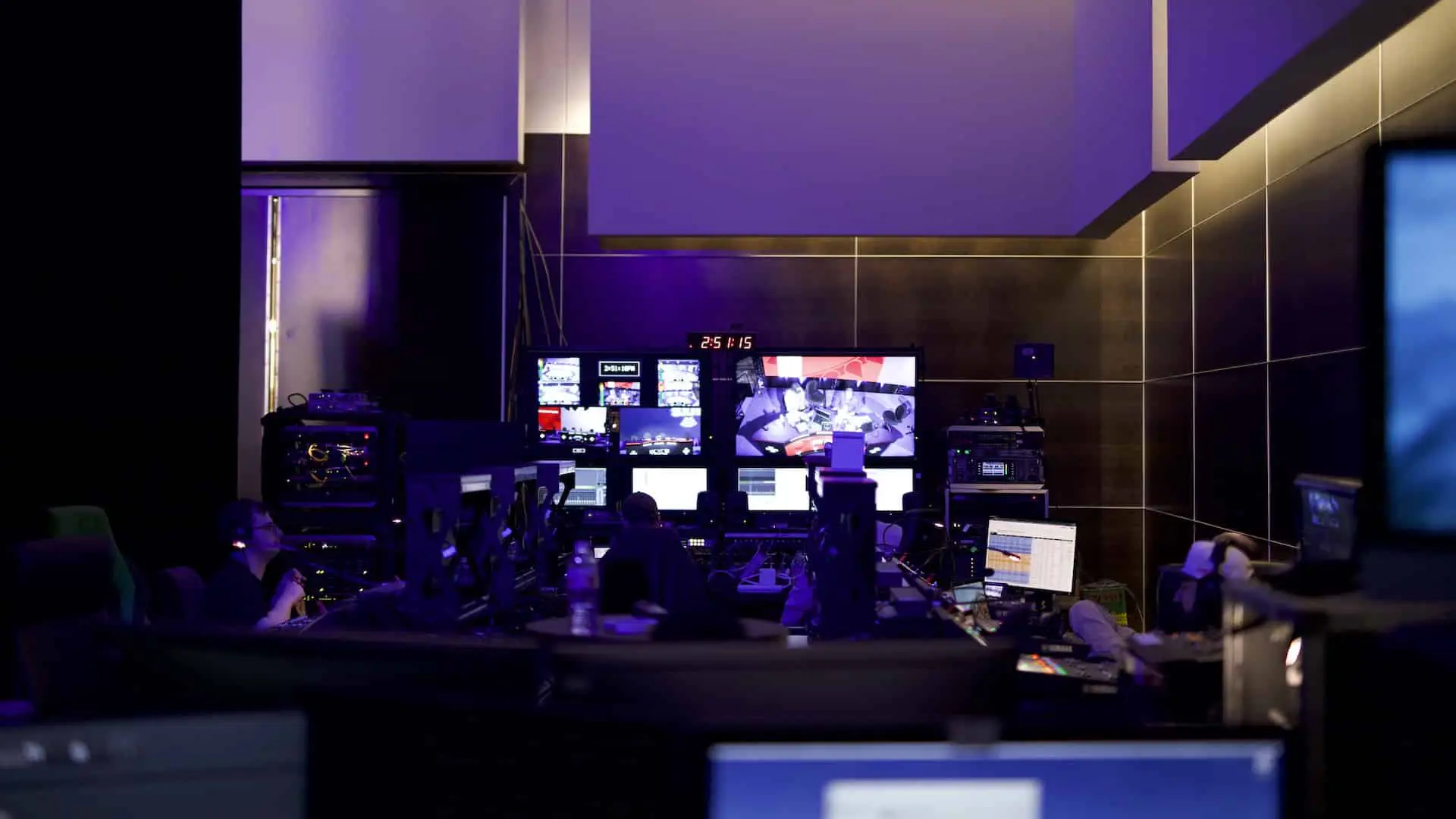
In today's digital age, video has become an indispensable tool for businesses to engage with their audience and promote their products or services effectively. A well-crafted video production strategy can help businesses achieve their marketing goals, increase brand awareness, and drive conversions.
By integrating high-quality video content into their marketing efforts, businesses can connect with their target audience on a deeper level, convey complex messages with clarity, and stand out in a crowded marketplace.
## Step 1. Define Your Objectives
Before embarking on any video production project, it is crucial to define clear and measurable objectives. These objectives will serve as a roadmap, guiding every aspect of the video production process, from ideation to execution. Without well-defined goals, businesses risk creating content that lacks direction and fails to resonate with their target audience.
When setting objectives for your video production strategy, consider the overarching business goals you aim to achieve. Are you seeking to increase brand awareness, drive website traffic, generate leads, or boost sales? Each objective will require a different approach to [content creation](https://c-istudios.com/content-creation-services/).
For instance, if your primary goal is to educate your audience about your products or services, your video content should focus on providing valuable information, demonstrating expertise, and addressing common pain points. On the other hand, if you aim to increase brand awareness, you may want to create more entertaining or emotionally engaging content that captures viewers' attention and leaves a lasting impression.
Once you have identified your objectives, it is essential to establish measurable Key Performance Indicators (KPIs) to track the success of your video campaigns. These KPIs could include metrics such as view count, engagement rate, click-through rate, or conversion rate, depending on your specific goals.
By setting clear objectives and KPIs, you can ensure that your video production efforts are aligned with your overall business strategy and that you can effectively measure the return on investment (ROI) of your video marketing campaigns.
## Step 2. Know Your Audience
To create compelling and effective video content, you must have a deep understanding of your target audience. Without this critical insight, your videos may fall flat, failing to resonate with the intended viewers and missing the mark in terms of messaging and tone.
Start by researching your target audience's demographics, such as age, gender, location, and income level. This information will help you tailor your video content to their specific interests and preferences. Additionally, consider their psychographics, including their values, attitudes, and lifestyles, as these factors can significantly influence their content consumption habits and purchasing decisions.
One effective way to gain audience insights is to analyze your existing customer data. Look for patterns in their behavior, such as the types of content they engage with most, the channels they prefer, and the times of day or week when they are most active online.
You can also gather valuable audience data through surveys, focus groups, or social media listening. These methods can provide direct feedback from your target audience, helping you understand their pain points, interests, and content preferences.
Once you have a solid understanding of your audience, you can tailor your video content to their specific needs and preferences. This includes everything from the tone and messaging to the visual style and production values.
For example, if your target audience is primarily young professionals, you may want to create videos with a more modern, sleek aesthetic and incorporate humor or relatable scenarios. On the other hand, if you're targeting older demographics, a more traditional, informative approach may be more appropriate.
Understanding your audience's content consumption habits can inform the type of videos you produce and the platforms you use for distribution. If your audience is highly active on social media, you may want to create shorter, more casual videos optimized for platforms like Instagram or TikTok. If they prefer longer-form content, YouTube or your website may be better suited.
By taking the time to truly know your audience, you can create video content that resonates on a deeper level, fostering a stronger connection with your target viewers and ultimately driving better results for your business.
## Step 3. Plan Your Content
With your objectives and audience insights in hand, the next step is to plan and develop a comprehensive content strategy for your video production efforts. This involves identifying relevant themes, establishing a consistent brand voice, and creating a content calendar to ensure a steady stream of high-quality video content.
Begin by brainstorming content themes that align with your business objectives and resonate with your target audience. These themes should be broad enough to allow for a variety of video topics while still maintaining a cohesive brand narrative. For example, if you're a fitness company, potential themes could include health and wellness, exercise routines, nutrition tips, or inspirational stories.
Once you've identified your content themes, it's time to develop specific video ideas within each theme. Conduct keyword research to identify popular topics and questions related to your industry, and use this information to generate a list of potential video topics that address your audience's interests and pain points.
As you flesh out your video ideas, consider incorporating a mix of content types, such as educational videos, product demonstrations, behind-the-scenes footage, interviews, or even entertaining skits or animations. This variety will keep your audience engaged and prevent your content from becoming stale or repetitive.
Throughout the content development process, it's essential to maintain a consistent brand voice that aligns with your company's values and personality. This includes the tone, language, and visual style used in your videos, as well as the overall messaging and storytelling approach.
To ensure a steady and organized flow of video content, create a content calendar that outlines the specific topics, formats, and release dates for your upcoming videos. This calendar should take into account important dates, events, or campaigns that may influence your content strategy.
When planning your [creative marketing](https://c-istudios.com/creative-marketing-services/) efforts, consider repurposing and cross-promoting your video content across multiple platforms. For example, you could create a longer, in-depth video for YouTube, and then repurpose snippets or highlights for social media platforms like Instagram or TikTok.
By taking a strategic and organized approach to content planning, you can ensure that your video production efforts are aligned with your business objectives, resonate with your target audience, and contribute to a cohesive brand narrative.
[CI Studios](https://c-istudios.com/) is a reputable [video production company](https://c-istudios.com/video-production-services/) that can assist businesses in developing and executing a comprehensive video production strategy.
## Step 4. Assemble the Right Team
A successful video production strategy relies heavily on the expertise and collaboration of a skilled team. Depending on the scope and complexity of your video projects, you may need to assemble an internal team or partner with external [film and TV production](https://c-istudios.com/film-and-tv-production/) professionals.
If you opt for an in-house video production team, it's essential to identify and assign specific roles and responsibilities. Key roles to consider include:
- **Director:** Responsible for overseeing the creative vision, directing on-camera talent, and ensuring the overall quality of the final product.
- **Videographer/Cinematographer:** Skilled in operating camera equipment, lighting, and capturing high-quality footage.
- **Editor:** Responsible for assembling raw footage into a polished final video, incorporating graphics, animations, and special effects as needed.
- **Sound Engineer:** Handles audio recording, mixing, and post-production sound editing to ensure optimal audio quality.
- **Script Writer:** Develop compelling stories, narratives, and dialogue for your video content.
- **Project Manager:** Oversees the entire video production process, manages timelines, and budgets, and ensures effective communication among team members.
Depending on the size and resources of your organization, you may need to fill multiple roles with a single individual or outsource certain specialties.
If you decide to partner with an external video production company or freelancers, thoroughly research and vet potential candidates. Look for portfolios that demonstrate high-quality work and experience in your industry or desired video styles. Additionally, consider factors such as communication, professionalism, and their ability to understand and align with your brand's vision.
Regardless of whether you build an internal team or work with external partners, it's crucial to establish clear lines of communication and collaboration from the outset. Regular meetings, feedback sessions, and open dialogue will ensure that everyone is aligned with the project goals and can contribute their expertise effectively.
By assembling a talented and collaborative team, you can ensure that your video production efforts are executed with professionalism, creativity, and attention to detail, ultimately leading to high-quality video content that resonates with your target audience.
## Step 5. Focus on High-Quality Production
In today's media-saturated landscape, high production values are essential for creating video content that stands out and captivates your audience. From lighting and cinematography to sound design and editing, every aspect of the production process plays a crucial role in delivering a polished, engaging, and professional final product.
To ensure high-quality production, it's essential to prioritize [professional photography](https://c-istudios.com/professional-photography-services/) and videography techniques. Invest in quality camera equipment that can capture sharp, high-resolution footage and adapt to various lighting conditions. Additionally, equip your team with the necessary accessories, such as tripods, stabilizers, and external microphones, to enhance the overall quality of your video content.
Lighting is a critical component of any video production, as it can significantly impact the mood, tone, and visual appeal of your content. Properly positioned and balanced lighting can add depth, dimension, and cinematic flair to your videos, while poor lighting can result in flat, dull, or unflattering footage. Consider investing in professional lighting equipment, such as LED panels, softboxes, and reflectors, and ensure your team is trained in proper lighting techniques for various shooting scenarios.
Sound quality is another crucial aspect of high-quality video production. Even the most visually stunning video can be undermined by poor audio. Invest in high-quality microphones and audio recording equipment, and consider hiring a professional sound engineer or audio specialist to ensure seamless sound capturing and mixing throughout the production process.
Post-production is another critical phase of the video production process that can significantly impact the overall quality of your content. Skilled video editors can transform raw footage into a cohesive, polished final product through techniques such as color grading, visual effects, motion graphics, and seamless transitions.
It's important to note that high-quality production does not necessarily equate to exorbitant costs. With careful planning, resource allocation, and strategic partnerships, businesses of all sizes can achieve professional-grade video content without breaking the bank.
Finally, continuously strive to stay up-to-date with the latest video production trends, techniques, and technologies. Regularly invest in training and skill development for your team, and be open to experimenting with new tools and approaches that can enhance the quality and impact of your video content.
By prioritizing high-quality production values throughout the video creation process, you can ensure that your video content resonates with your target audience, effectively communicates your brand message, and ultimately drives tangible results for your business.
## Step 6. Distribution Strategy
Once you've invested time and resources into producing high-quality video content, it's crucial to develop an effective distribution strategy to ensure maximum reach and engagement with your target audience. With the vast array of digital platforms and channels available, a well-planned distribution approach is essential for amplifying your video content's visibility and impact.
The first step in developing a robust distribution strategy is to identify the platforms and channels that align with your audience's online behavior and content consumption habits. If your target audience is primarily active on social media platforms like Facebook, Instagram, or TikTok, prioritize optimizing your video content for those channels. This may involve creating shorter, more engaging teasers or highlights tailored for each platform's unique format and algorithm.
For audiences that prefer longer-form content or are more likely to engage with your brand directly, focus on optimizing your videos for platforms like YouTube or your website. Ensure your videos are properly titled, tagged, and described with relevant keywords to improve discoverability through search engines and [web development](https://c-istudios.com/web-development-services/) best practices.
Leveraging influencer partnerships or collaborations can also be an effective distribution strategy, particularly for reaching niche or highly engaged audiences. Identify influential figures or creators within your industry or niche, and explore opportunities for cross-promotion, sponsored content, or co-created videos.
Regardless of the platforms and channels you choose, it's essential to optimize your video content for search engine visibility. Implement video SEO best practices, such as using descriptive titles, tags, and descriptions, and embedding relevant keywords throughout your video metadata. This will improve your chances of appearing in search results and reaching potential viewers actively seeking content related to your industry or topics.
Finally, promote your video content through various marketing channels, such as email newsletters, social media campaigns, and targeted advertising. Cross-promote your videos across multiple platforms and leverage influencer partnerships or sponsored content to amplify your reach and engagement further.
By developing a comprehensive distribution strategy that considers your audience's preferences, leverages various platforms and partnerships, and incorporates video SEO and promotional tactics, you can maximize the visibility and impact of your video content, driving more traffic, engagement, and conversions for your business.
## Step 7. Measure and Optimize
Creating high-quality video content and implementing an effective distribution strategy are essential components of a successful video production strategy. However, measuring and analyzing the performance of your video campaigns is equally crucial to ensure you're achieving your desired objectives and making data-driven decisions to optimize future efforts.
Start by defining clear metrics and Key Performance Indicators (KPIs) that align with your specific goals and objectives. For instance, if your primary objective is to increase brand awareness, you might track metrics such as view count, watch time, and audience engagement (likes, comments, shares). If your goal is lead generation or sales, you'll want to focus on metrics like click-through rates, conversion rates, and cost-per-acquisition.
Leverage the built-in analytics tools provided by the platforms you're using to distribute your video content. Platforms like YouTube, Facebook, and Instagram offer robust analytics dashboards that provide insights into audience demographics, viewing patterns, and engagement metrics. Additionally, consider integrating third-party analytics tools, such as Google Analytics or dedicated video analytics platforms, to gain a more comprehensive understanding of your video performance across multiple channels.
Once you've gathered the necessary data, analyze it to identify patterns, trends, and areas for improvement. Look for correlations between specific video formats, topics, or styles and their respective performance metrics. This analysis can help you refine your content strategy, optimizing for the types of videos that resonate best with your audience.
In the world of [VFX compositing and animation](https://c-istudios.com/vfx-compositing-and-animation-services/), where visual storytelling is paramount, performance data can be particularly valuable. Analyze metrics like viewer retention and audience drop-off rates to identify points in your videos where viewers may be losing interest or getting distracted. Use this information to refine your storytelling techniques, pacing, and visual effects to create more captivating and engaging content.
Don't be afraid to experiment and test different approaches. Try varying video lengths, formats, or messaging to see what resonates best with your audience. Conduct A/B tests or split tests to compare the performance of different video variants and make data-driven decisions about which strategies to prioritize.
Finally, regularly review and adjust your video production and distribution strategies based on your findings. A successful video marketing strategy is an iterative process that requires continuous optimization and adaptation to evolving audience preferences, industry trends, and platform algorithms.
## Work with C&I Studios
If you are planning a project like this, our team can take it from concept to final delivery. Explore our [video production services](https://c-istudios.com/video-production-services/), browse [our work](https://c-istudios.com/our-work/) to see how we tell brand stories, and [get in touch](https://c-istudios.com/contact/) when you are ready to start.
Originally published April 22, 2024
---
*This content is from [C&I Studios](https://c-istudios.com), a full-service production company.*
---
# What is Post Production — The Final Steps in the Process
> Published: April 19, 2024
> Categories: Post & VFX
> Source: https://c-istudios.com/what-is-post-production-the-final-steps-in-the-process/
---
.cib{--paper:#1b1d1f;--ink:#fff;--body:#d5d7d9;--muted:#8b9096;--line:rgba(255,255,255,.12);--thumb:#2b2e31;--card:#212426;--accent:#c02b0a;--blue:#5B8FA8;--serif:'Playfair Display',Georgia,serif;--sans:'Poppins',-apple-system,sans-serif;--measure:900px;background:var(--paper);color:var(--body);font-family:var(--sans);line-height:1.6;position:relative;left:50%;transform:translateX(-50%);width:90vw;max-width:1920px}
.cib *{box-sizing:border-box}
.cib .kicker{max-width:var(--measure);margin:58px auto 0;padding:0 22px;font-size:12.5px;font-weight:700;letter-spacing:2.5px;text-transform:uppercase;color:var(--blue)}
.cib h1.cibh1{text-wrap:balance;font-family:var(--serif);font-weight:500;font-size:clamp(46px,6vw,72px);line-height:1.08;color:var(--ink);max-width:var(--measure);margin:18px auto 0;padding:0 22px;letter-spacing:-.5px}
.cib .metarow{max-width:var(--measure);margin:20px auto 0;padding:0 22px;color:var(--muted);font-size:14px}
.cib .hero{position:relative;width:100%;height:0;padding-bottom:56.25%;overflow:hidden;margin:48px auto 0;border-top:1px solid var(--line);border-bottom:1px solid var(--line)}
.cib .hero .ph{width:100%;aspect-ratio:16/9;background:var(--thumb);border-top:1px solid var(--line);border-bottom:1px solid var(--line);display:flex;align-items:center;justify-content:center;color:#7d8288;font-size:13px;text-align:center;padding:0 20px}
.cib .body{max-width:var(--measure);margin:12px auto 0;padding:52px 22px 6px}
.cib .body.lead p:first-child{font-size:23px;line-height:1.62;color:var(--ink)}
.cib .body p{font-size:18.5px;line-height:1.85;margin:0 0 30px;color:var(--body)}
.cib .body h2{text-wrap:balance;font-family:var(--serif);font-weight:500;font-size:clamp(32px,4vw,48px);line-height:1.22;color:var(--ink);margin:70px 0 20px;letter-spacing:-.3px}
.cib .body h3{text-wrap:balance;font-family:var(--sans);font-weight:600;font-size:22px;color:var(--ink);margin:38px 0 8px}
.cib .body a{color:var(--ink);text-decoration:underline;text-decoration-color:rgba(255,255,255,.4);text-underline-offset:3px}
.cib .body a:hover{text-decoration-color:var(--ink)}
.cib .ctable{width:100%;border-collapse:collapse;margin:16px 0 30px;font-size:16px}
.cib .ctable th{background:#000;color:#fff;text-align:left;padding:10px 12px;font-family:var(--sans)}
.cib .ctable td{padding:10px 12px;border-bottom:1px solid var(--line);color:var(--body)}
.cib .inimg{position:relative;width:100%;height:0;padding-bottom:56.25%;overflow:hidden;margin:72px auto;border-top:1px solid var(--line);border-bottom:1px solid var(--line)}
.cib .inimg .ph{width:100%;aspect-ratio:16/9;background:var(--thumb);border-top:1px solid var(--line);border-bottom:1px solid var(--line);display:flex;align-items:center;justify-content:center;color:#7d8288;font-size:13px}
.cib .origpub{max-width:var(--measure);margin:60px auto 0;padding:26px 22px 0;border-top:1px solid var(--line);color:var(--muted);font-size:13.5px}
.cib .related{max-width:1200px;margin:64px auto 0;padding:34px 22px 76px}
.cib .related h3{font-family:var(--sans);font-size:12.5px;letter-spacing:2px;text-transform:uppercase;color:var(--ink);margin:0 0 24px}
.cib .grid{display:grid;grid-template-columns:repeat(3,1fr);gap:28px}
.cib .rc{background:var(--card);border:1px solid var(--line);display:block;text-decoration:none;color:inherit;transition:border-color .15s}
.cib a.rc:hover{border-color:rgba(255,255,255,.5)}
.cib .rc .thumb{position:relative;width:100%;height:0;padding-bottom:56.25%;background:var(--thumb);overflow:hidden}
.cib .rc .thumb img{position:absolute!important;top:0!important;left:0!important;width:100%!important;height:100%!important;object-fit:cover!important;margin:0!important}
.cib .rc .cc{padding:14px 15px 17px}
.cib .rc .rt{font-family:var(--serif);font-weight:500;font-size:16px;line-height:1.3;color:var(--ink);margin:0 0 6px}
.cib .rc .rm{font-size:11px;letter-spacing:1px;text-transform:uppercase;color:var(--muted)}
.cib img{margin:0!important;padding:0!important;display:block!important;vertical-align:top;max-width:100%}
.cib .hero img,.cib .inimg img{position:absolute!important;top:0!important;left:0!important;width:100%!important;height:100%!important;object-fit:cover!important;margin:0!important;padding:0!important;border:0!important;display:block!important;aspect-ratio:auto!important}
.cib .hero+.body{padding-top:36px}
@media(max-width:760px){.cib .grid{grid-template-columns:1fr}.cib .body h2{margin:52px 0 16px}.cib .body p{font-size:17.5px}.cib .inimg,.cib .hero{margin-top:44px}}
.cib .vembed{max-width:var(--measure);margin:44px auto;padding:0 22px}.cib .vembed .vwrap{position:relative;width:100%;height:0;padding-bottom:56.25%}.cib .vembed .vwrap iframe{position:absolute;top:0;left:0;width:100%;height:100%;border:0}
Post & VFX
# What is Post Production — The Final Steps in the Process
10 min read

In the world of video and [film production](https://c-istudios.com/film-and-tv-production/), the post production phase is often regarded as the final frontier, where the raw footage is meticulously crafted into a cohesive and polished final product. This intricate process involves a myriad of specialized techniques and artistic disciplines, each playing a crucial role in shaping the overall narrative and visual impact of the project.
From editing and visual effects to sound design and color grading, post production is the culmination of the filmmaking journey, where the scattered pieces are carefully assembled to create a captivating and immersive cinematic experience.
## The Role of Editing in Post Production
Editing is undoubtedly the cornerstone of the post production process, serving as the foundation upon which the entire film is built. It is through the art of editing that raw footage is transformed into a cohesive narrative, with each cut, transition, and pacing decision influencing the storytelling experience.
The editing process begins with the assembly of the footage, where the editor meticulously sifts through countless hours of captured material to identify the most compelling shots and sequences. This initial stage involves a critical eye for selecting the best takes, eliminating unnecessary footage, and establishing a rough structure for the film.
Once the assembly is complete, the editor embarks on the intricate task of crafting the narrative flow. This involves carefully arranging and sequencing the shots, adjusting the pacing, and introducing transitions that seamlessly guide the viewer through the story. Effective editing can heighten the emotional impact of a scene, build tension and suspense, or subtly convey underlying themes and messages.
Collaboration between the director and editor is essential during this stage, as they work together to refine the creative vision and ensure that the final product aligns with the intended artistic goals. Decisions such as timing, shot selection, and the inclusion of specific moments can dramatically influence the audience's emotional response and overall interpretation of the film.
At [CI Studios](https://c-istudios.com/), a team of highly skilled editors specializes in content creation for various media formats, including films, documentaries, and corporate videos. Their expertise in storytelling through editing allows them to elevate raw footage into captivating visual narratives that resonate with audiences.
## Visual Effects (VFX) and Their Impact
In today's cinematic landscape, visual effects (VFX) play an increasingly significant role in enhancing the visual storytelling of films and videos. From creating fantastical worlds and creatures to seamlessly integrating practical effects with computer-generated imagery (CGI), VFX in post production opens up a world of possibilities for filmmakers.
The process of integrating VFX begins with conceptualization and pre-visualization, where the creative team collaborates to develop a shared vision for the desired effects. This stage involves storyboarding, concept art, and even preliminary animation tests to explore the feasibility and aesthetic direction of the VFX sequences.
Once the concept is solidified, the VFX artists embark on the intricate process of creating the necessary digital assets. This can include 3D modeling, texturing, rigging, and animation for characters and environments, as well as simulations for complex phenomena like fluids, smoke, or destruction effects.
The true magic of VFX, however, lies in the art of compositing and integration. This is where the computer-generated elements are seamlessly blended with live-action footage, creating an illusion of reality that often defies the boundaries of what is physically possible. Through the skillful use of techniques such as rotoscoping, keying, and match moving, VFX artists ensure that the digital elements seamlessly interact with the live-action footage, adhering to the laws of physics and maintaining a consistent visual style.
One of the most remarkable examples of [VFX compositing and animation](https://c-istudios.com/vfx-compositing-and-animation-services/) in recent years is the Marvel Cinematic Universe, where entire cities, alien worlds, and cosmic battles are brought to life through the masterful integration of practical effects and cutting-edge VFX. These visually stunning sequences not only captivate audiences but also propel the storytelling forward, allowing filmmakers to explore narratives that would be impossible without the aid of modern VFX techniques.
## Sound Design and Audio Post Production
While visual elements often take center stage in filmmaking, the importance of sound design and audio post production cannot be overstated. Sound plays a crucial role in creating atmosphere, heightening emotional impact, and immersing audiences in the cinematic experience.
The process of audio post production begins with sound editing, where the captured production audio is meticulously cleaned, synchronized, and organized. This involves removing unwanted background noise, adjusting levels, and ensuring seamless transitions between different audio sources.
Once the production audio is in order, the sound designers and editors turn their attention to creating and integrating sound effects. These auditory elements can range from subtle ambient noises to powerful, attention-grabbing impacts, each carefully crafted to enhance the visual storytelling and add depth to the cinematic world.
The art of [audio engineering](https://c-istudios.com/audio-engineering-services/) lies in the ability to create a cohesive and immersive soundscape that engages the audience on a subconscious level. Skilled sound designers understand the power of subtle details, such as the crunch of footsteps on gravel or the distant echo of a train whistle, to transport viewers into the heart of the narrative.
Another critical aspect of audio post production is the mixing and balancing of all audio elements. This intricate process involves meticulously adjusting levels, panning, and applying advanced signal processing techniques to ensure that dialogue, music, and sound effects harmoniously coexist without overpowering or conflicting with one another.
The final step in the audio post production process is the mastering phase, where the mixed audio is optimized for various distribution formats and playback environments. This includes adjusting overall levels, applying compression and limiting, and ensuring compliance with industry standards for loudness and dynamic range.
The impact of exceptional sound design and audio post production cannot be understated. Films like "Inception" and "Gravity" have received critical acclaim for their impeccable use of sound to heighten the emotional intensity and immersive quality of the cinematic experience, demonstrating the profound influence that audio can have on the overall impact of a film.
## Color Grading and Its Significance
In the field of post production, color grading is a crucial step that plays a pivotal role in shaping the visual aesthetic and emotional resonance of a film. This intricate process involves meticulously adjusting and manipulating the color and tonal characteristics of the footage, allowing filmmakers to establish a distinct visual style and convey specific moods and narratives.
The color grading process begins with an analysis of the raw footage, where the colorist assesses the existing color palette, lighting conditions, and overall visual tone. This initial evaluation informs the creative direction and establishes a baseline for the desired color treatment.
One of the primary objectives of color grading is to achieve visual consistency across multiple shots and scenes. By carefully balancing colors, adjusting exposure levels, and applying color corrections, the colorist ensures that the film maintains a cohesive visual language, seamlessly transitioning from one location or lighting condition to another.
Beyond technical considerations, color grading is a powerful storytelling tool that can profoundly influence the emotional impact of a film. By manipulating the color palette and tonal values, colorists can evoke specific moods and atmospheres, guiding the audience's emotional response to pivotal moments in the narrative.
For instance, desaturating colors and emphasizing cool tones can convey a sense of bleakness or melancholy, while warm, vibrant hues can infuse a scene with energy and vitality. Similarly, the judicious use of contrast and highlight control can draw the viewer's attention to specific details or convey a sense of depth and dimensionality.
In the hands of skilled [professional photography](https://c-istudios.com/professional-photography-services/) artists and colorists, color grading becomes a transformative process that elevates visual storytelling to new heights. Companies like CI Studios, with their expertise in color grading and image manipulation, can breathe life into even the most ordinary footage, crafting a visually striking and emotionally resonant cinematic experience.
## The Importance of Music and Scoring
In the world of [film and video production](https://c-istudios.com/film-and-tv-production/), music and scoring play a pivotal role in shaping the emotional landscape and enhancing the overall viewing experience. The art of composing and integrating music into a visual narrative is a delicate dance, where the right musical elements can elevate the storytelling to new heights, while the wrong choices can disrupt the intended mood and impact.
The process of scoring a film begins with a deep understanding of the narrative arc, character development, and thematic undertones. Composers and music supervisors work closely with the director and creative team to identify key moments and emotional beats that could benefit from the addition of musical accompaniment.
One of the primary functions of film music is to accentuate and reinforce the emotional undercurrents of a scene. By carefully crafting melodies, harmonies, and instrumentation, composers can tap into the universal language of music to evoke specific feelings and visceral responses from the audience.
In addition to emotional resonance, music also serves a functional purpose in the film, guiding the audience's attention and shaping their perception of time and space. Carefully timed musical cues can heighten the tension and suspense of a pivotal moment, while subtle underscoring can lend a sense of continuity and flow during transitions or montages.
Effective film scoring requires a deep understanding of the intricate relationship between music and visual storytelling. Composers must possess the ability to interpret the director's vision and translate it into musical language, crafting themes and motifs that not only complement the visuals but also evolve and transform alongside the narrative journey.
In the world of [creative marketing](https://c-istudios.com/creative-marketing-services/), the power of music and scoring cannot be underestimated. Iconic film scores have become ingrained in popular culture, with their melodies and themes serving as indelible markers of the cinematic experiences they accompanied. From the sweeping grandeur of John Williams' "Star Wars" score to the haunting beauty of Jonny Greenwood's compositions for "There Will Be Blood," these musical works have transcended their original context and become cultural touchstones in their own right.
As the art of filmmaking continues to evolve, the role of music and scoring will undoubtedly remain an essential component of the post-production process. By harnessing the emotive power of sound and melody, filmmakers can elevate their visual narratives, forge deeper emotional connections with audiences, and create lasting cinematic experiences that resonate long after the final credits roll.
## Final Outputs and Delivery
After the intricate processes of editing, visual effects, sound design, color grading, and scoring, the post production journey reaches its final destination: preparing the completed film or video for delivery and distribution. This crucial stage involves a series of technical steps to ensure that the final product meets the necessary specifications for various distribution platforms and viewing environments.
One of the primary tasks in this phase is rendering and exporting the final master file. This process involves compiling all the individual elements - video, audio, graphics, and effects - into a single, high-quality digital file format. Choosing the appropriate codec and settings is essential to strike a balance between visual quality, file size, and compatibility with different playback systems.
Once the master file is rendered, the next step is to create the necessary distribution formats. Depending on the intended platforms and delivery methods, this may involve transcoding the master into various resolutions and file formats optimized for streaming, broadcast, or physical media distribution.
For web-based distribution, such as online streaming or video-on-demand platforms, the post production team must ensure that the video files are properly encoded and compressed for efficient delivery over the Internet. This often involves creating multiple renditions of the same content, each optimized for different connection speeds and device capabilities.
Regarding [social media marketing](https://c-istudios.com/social-media-marketing-services/), delivering content optimized for various platforms is crucial for maximizing reach and engagement. Social media platforms like YouTube, Instagram, and TikTok have specific requirements and best practices for video formats, aspect ratios, and codecs, which must be taken into consideration during the final output stage.
Additionally, the post production process may involve creating supplementary assets and materials for promotional or archival purposes. This can include generating closed captions or subtitles, creating trailer cuts or teasers, and assembling behind-the-scenes footage or bonus content for special edition releases.
Regardless of the chosen distribution channels, the final goal of this stage is to ensure that the completed film or video project is delivered in the highest possible quality while adhering to industry standards and platform-specific requirements. By meticulously managing the final outputs and delivery, post production teams ensure that the artistic vision and technical excellence achieved throughout the production process are preserved, allowing audiences to experience the full impact of the cinematic creation.
## Work with C&I Studios
If you are planning a project like this, our team can take it from concept to final delivery. Explore our [post-production services](https://c-istudios.com/post-production-services/), browse [our work](https://c-istudios.com/our-work/) to see how we tell brand stories, and [get in touch](https://c-istudios.com/contact/) when you are ready to start.
Originally published April 19, 2024
---
*This content is from [C&I Studios](https://c-istudios.com), a full-service production company.*
---
# The Six Primary Types of Documentaries
> Published: April 19, 2024
> Categories: Film & TV
> Source: https://c-istudios.com/the-six-primary-types-of-documentaries/
---
.cib{--paper:#1b1d1f;--ink:#fff;--body:#d5d7d9;--muted:#8b9096;--line:rgba(255,255,255,.12);--thumb:#2b2e31;--card:#212426;--accent:#c02b0a;--blue:#5B8FA8;--serif:'Playfair Display',Georgia,serif;--sans:'Poppins',-apple-system,sans-serif;--measure:900px;background:var(--paper);color:var(--body);font-family:var(--sans);line-height:1.6;position:relative;left:50%;transform:translateX(-50%);width:90vw;max-width:1920px}
.cib *{box-sizing:border-box}
.cib .kicker{max-width:var(--measure);margin:58px auto 0;padding:0 22px;font-size:12.5px;font-weight:700;letter-spacing:2.5px;text-transform:uppercase;color:var(--blue)}
.cib h1.cibh1{text-wrap:balance;font-family:var(--serif);font-weight:500;font-size:clamp(46px,6vw,72px);line-height:1.08;color:var(--ink);max-width:var(--measure);margin:18px auto 0;padding:0 22px;letter-spacing:-.5px}
.cib .metarow{max-width:var(--measure);margin:20px auto 0;padding:0 22px;color:var(--muted);font-size:14px}
.cib .hero{position:relative;width:100%;height:0;padding-bottom:56.25%;overflow:hidden;margin:48px auto 0;border-top:1px solid var(--line);border-bottom:1px solid var(--line)}
.cib .hero .ph{width:100%;aspect-ratio:16/9;background:var(--thumb);border-top:1px solid var(--line);border-bottom:1px solid var(--line);display:flex;align-items:center;justify-content:center;color:#7d8288;font-size:13px;text-align:center;padding:0 20px}
.cib .body{max-width:var(--measure);margin:12px auto 0;padding:52px 22px 6px}
.cib .body.lead p:first-child{font-size:23px;line-height:1.62;color:var(--ink)}
.cib .body p{font-size:18.5px;line-height:1.85;margin:0 0 30px;color:var(--body)}
.cib .body h2{text-wrap:balance;font-family:var(--serif);font-weight:500;font-size:clamp(32px,4vw,48px);line-height:1.22;color:var(--ink);margin:70px 0 20px;letter-spacing:-.3px}
.cib .body h3{text-wrap:balance;font-family:var(--sans);font-weight:600;font-size:22px;color:var(--ink);margin:38px 0 8px}
.cib .body a{color:var(--ink);text-decoration:underline;text-decoration-color:rgba(255,255,255,.4);text-underline-offset:3px}
.cib .body a:hover{text-decoration-color:var(--ink)}
.cib .ctable{width:100%;border-collapse:collapse;margin:16px 0 30px;font-size:16px}
.cib .ctable th{background:#000;color:#fff;text-align:left;padding:10px 12px;font-family:var(--sans)}
.cib .ctable td{padding:10px 12px;border-bottom:1px solid var(--line);color:var(--body)}
.cib .inimg{position:relative;width:100%;height:0;padding-bottom:56.25%;overflow:hidden;margin:72px auto;border-top:1px solid var(--line);border-bottom:1px solid var(--line)}
.cib .inimg .ph{width:100%;aspect-ratio:16/9;background:var(--thumb);border-top:1px solid var(--line);border-bottom:1px solid var(--line);display:flex;align-items:center;justify-content:center;color:#7d8288;font-size:13px}
.cib .origpub{max-width:var(--measure);margin:60px auto 0;padding:26px 22px 0;border-top:1px solid var(--line);color:var(--muted);font-size:13.5px}
.cib .related{max-width:1200px;margin:64px auto 0;padding:34px 22px 76px}
.cib .related h3{font-family:var(--sans);font-size:12.5px;letter-spacing:2px;text-transform:uppercase;color:var(--ink);margin:0 0 24px}
.cib .grid{display:grid;grid-template-columns:repeat(3,1fr);gap:28px}
.cib .rc{background:var(--card);border:1px solid var(--line);display:block;text-decoration:none;color:inherit;transition:border-color .15s}
.cib a.rc:hover{border-color:rgba(255,255,255,.5)}
.cib .rc .thumb{position:relative;width:100%;height:0;padding-bottom:56.25%;background:var(--thumb);overflow:hidden}
.cib .rc .thumb img{position:absolute!important;top:0!important;left:0!important;width:100%!important;height:100%!important;object-fit:cover!important;margin:0!important}
.cib .rc .cc{padding:14px 15px 17px}
.cib .rc .rt{font-family:var(--serif);font-weight:500;font-size:16px;line-height:1.3;color:var(--ink);margin:0 0 6px}
.cib .rc .rm{font-size:11px;letter-spacing:1px;text-transform:uppercase;color:var(--muted)}
.cib img{margin:0!important;padding:0!important;display:block!important;vertical-align:top;max-width:100%}
.cib .hero img,.cib .inimg img{position:absolute!important;top:0!important;left:0!important;width:100%!important;height:100%!important;object-fit:cover!important;margin:0!important;padding:0!important;border:0!important;display:block!important;aspect-ratio:auto!important}
.cib .hero+.body{padding-top:36px}
@media(max-width:760px){.cib .grid{grid-template-columns:1fr}.cib .body h2{margin:52px 0 16px}.cib .body p{font-size:17.5px}.cib .inimg,.cib .hero{margin-top:44px}}
.cib .vembed{max-width:var(--measure);margin:44px auto;padding:0 22px}.cib .vembed .vwrap{position:relative;width:100%;height:0;padding-bottom:56.25%}.cib .vembed .vwrap iframe{position:absolute;top:0;left:0;width:100%;height:100%;border:0}
Film & TV
# The Six Primary Types of Documentaries
10 min read

Documentary filmmaking is a powerful medium that captures and explores the depths of human experiences, societal issues, and the world around us. From intimate personal stories to thought-provoking explorations of global phenomena, documentaries have the ability to inform, educate, and inspire audiences. Within this diverse genre, there exist several distinct styles and approaches, each with its own unique characteristics and impact.
In this article, we will delve into the six primary types of documentaries: observational, expository, participatory, reflexive, performative, and poetic.
## Observational Documentaries
Observational documentaries, also known as direct cinema or cinema verité, are characterized by their unobtrusive and fly-on-the-wall approach. In this style, filmmakers aim to capture events as they unfold naturally, without interference or manipulation. The camera becomes an invisible observer, documenting the lives and experiences of the subjects in an unscripted and uncontrolled manner.
The power of observational documentaries lies in their ability to provide an authentic and unfiltered glimpse into the lives of their subjects. By refraining from staging or directing the action, these films offer a raw and intimate view of reality, allowing viewers to draw their own conclusions and interpretations from the events they witness. This approach often results in a heightened sense of realism and emotional resonance, as audiences are invited to experience the subject's world as it truly unfolds.
One notable example of an observational documentary is Frederick Wiseman's "[High School](https://www.kanopy.com/en/product/high-school)," which follows the daily activities and interactions within a Philadelphia high school without narration or interviews. The camera simply observes, capturing the nuances of student life, teacher dynamics, and administrative challenges, inviting viewers to immerse themselves in the authentic environment.
Another powerful example is the Maysles brothers' "Gimme Shelter," which documents the tragic events surrounding the 1969 Altamont Free Concert, featuring the Rolling Stones. Through their unobtrusive camerawork, the filmmakers captured the escalating violence and chaos in real time, providing a harrowing and visceral account of the concert's unraveling.
Observational documentaries often require exceptional Professional Photography and cinematography skills to capture compelling visuals and candid moments. Filmmakers must possess a keen eye for composition, lighting, and camera movement to effectively convey the essence of their subjects and environments. Companies like CI Studios specialize in providing [professional photography](https://c-istudios.com/professional-photography-services/) and videography services, enabling documentary filmmakers to capture high-quality visuals that elevate the impact of their observational works.
## Expository Documentaries
Expository documentaries, also known as essay films or didactic documentaries, are structured around a central thesis or argument. These films rely heavily on voiceover narration, archival footage, interviews, and other informative elements to convey their message and educate the audience on a specific topic or issue.
The primary objective of expository documentaries is to present factual information in a clear and compelling manner. The voiceover narration serves as a guiding force, providing context, analysis, and a coherent narrative structure. This approach allows filmmakers to effectively communicate complex ideas, historical events, or scientific concepts to a wide audience.
One notable example of an expository documentary is "An Inconvenient Truth" by Davis Guggenheim. In this film, former Vice President Al Gore uses a combination of [content creation](https://c-istudios.com/content-creation-services/) techniques, including narration, visual aids, and expert interviews, to educate viewers about the urgent threat of global warming and its potential consequences. Through a carefully constructed narrative and the presentation of scientific data, the film aims to raise awareness and inspire action on climate change.
Another influential expository documentary is "The Fog of War" by Errol Morris. In this film, Morris interviews former U.S. Secretary of Defense Robert McNamara, who reflects on his experiences and decision-making during the Vietnam War. Through a series of poignant interviews and archival footage, the film explores the complexities of war, leadership, and the human consequences of political decisions.
Expository documentaries often rely on extensive research and subject matter expertise to ensure the accuracy and credibility of the information presented. Filmmakers must carefully curate and synthesize data from various sources, presenting it in a compelling and accessible manner that resonates with audiences. The effective use of visuals, graphics, and other multimedia elements is crucial in enhancing the educational value and engagement of these films.
## Participatory Documentaries
Participatory documentaries, also known as interactive or collaborative documentaries, involve the filmmaker directly participating in and influencing the events being documented. Unlike observational documentaries, where the filmmaker remains an invisible observer, in participatory documentaries, the director becomes an active participant, interacting with the subjects and shaping the narrative through their involvement.
This approach allows filmmakers to delve deeper into the lives and experiences of their subjects, fostering a more intimate and collaborative relationship. By immersing themselves in the events they are documenting, directors can gain unique insights and perspectives that may not be accessible through traditional observational methods.
One powerful example of a participatory documentary is "The Act of Killing" by Joshua Oppenheimer. In this critically acclaimed film, the director engages former Indonesian death squad leaders in re-enacting their roles in the mass killings of the 1960s. Through this participatory process, the film explores the complex layers of the human psyche, memory, and the perpetuation of violence.
Another notable participatory documentary is "American Movie" by Chris Smith. In this film, Smith follows the eccentric filmmaker Mark Borchardt as he attempts to realize his dream of making a horror film. By becoming an active participant in Borchardt's journey, Smith captures the struggles, quirks, and perseverance of an aspiring filmmaker, offering a raw and intimate portrayal of the creative process.
Participatory documentaries often raise ethical considerations, as the filmmaker's involvement can potentially influence or alter the events being documented. [creative marketing](https://c-istudios.com/creative-marketing-services/) strategies must be employed to maintain an authentic and truthful representation while navigating the blurred lines between observation and participation.
## Reflexive Documentaries
Reflexive documentaries sometimes referred to as meta-documentaries or self-reflexive films, are a unique genre that explores the documentary-making process itself. These films deconstruct the traditional notions of objectivity and truth in documentary filmmaking, prompting audiences to question the nature of reality and representation.
In reflexive documentaries, the filmmaker turns the camera inward, exposing the behind-the-scenes aspects of production, crew dynamics, and the ethical dilemmas that arise during the filmmaking process. By shedding light on the choices and decisions that shape the final product, these films challenge the perception of documentaries as objective representations of reality.
One notable example of a reflexive documentary is "Man with a Movie Camera" by Dziga Vertov. This pioneering film from the 1920s embraces the concept of "life caught unawares" and explores the role of the camera in capturing and constructing reality. Through innovative [VFX compositing and animation](https://c-istudios.com/vfx-compositing-and-animation-services/) techniques, Vertov deconstructs the illusion of documentary objectivity, inviting viewers to question the very nature of cinematic representation.
Another influential reflexive documentary is "This is Not a Film" by Jafar Panahi. In this film, Panahi, who was under house arrest and a 20-year ban from filmmaking in Iran, explores the limitations and constraints imposed on him as a filmmaker. Through meta-narratives and self-reflexive elements, Panahi challenges the boundaries between fiction and non-fiction, blurring the lines between the act of filmmaking and the film itself.
Reflexive documentaries often employ experimental techniques and unconventional storytelling methods to disrupt traditional narrative structures. Filmmakers may incorporate meta-narratives, breaking the fourth wall, or incorporating self-referential elements to challenge the boundaries between fiction and non-fiction. These films invite viewers to question their own perceptions of reality and the role of the filmmaker in shaping that perception.
Additionally, reflexive documentaries can serve as a platform for filmmakers to explore the ethical considerations and power dynamics inherent in the documentary-making process. By exposing the behind-the-scenes negotiations, compromises, and decisions, these films shed light on the complexities and responsibilities of representing reality on screen.
## Performative Documentaries
Performative documentaries, also known as subjective or personal documentaries, prioritize the emotional and expressive aspects of storytelling over objective representation. These films embrace the filmmaker's personal perspective, emotions, and subjective experiences, blurring the lines between documentary and artistic expression.
In performative documentaries, the director becomes a central character, using their own lived experiences and emotional responses as the driving force behind the narrative. This approach allows for a more intimate and visceral exploration of themes, ideas, and personal journeys, inviting audiences to connect on a deeper emotional level.
One powerful example of a performative documentary is "Grizzly Man" by Werner Herzog. In this film, Herzog explores the life and tragic death of Timothy Treadwell, a man who devoted himself to living among grizzly bears in Alaska. Through his subjective lens and poetic narration, Herzog delves into the complex relationship between humans and nature, challenging traditional notions of documentary objectivity.
Performative documentaries often employ innovative storytelling techniques and unconventional editing styles to convey their emotional impact. Filmmakers may incorporate personal reflections, poetic voiceovers, or experimental visual elements to evoke specific emotions and create a heightened sense of intimacy with the audience.
To effectively engage audiences on an emotional level, performative documentaries often leverage [social media marketing](https://c-istudios.com/social-media-marketing-services/) to build anticipation, foster conversations, and create a sense of community around the film's themes and message. Social media platforms provide a powerful tool for filmmakers to connect directly with their audience, share behind-the-scenes glimpses, and cultivate a dedicated following.
## Poetic Documentaries
Poetic documentaries, also known as avant-garde or experimental documentaries, are a genre that pushes the boundaries of traditional documentary filmmaking. These films embrace a more abstract and impressionistic approach, using visual, auditory, and structural elements to convey deeper meanings and emotions beyond literal representation.
In poetic documentaries, the emphasis is not on factual information or linear narratives but rather on exploring universal themes, emotions, and sensory experiences through a poetic lens. Filmmakers employ techniques such as symbolic imagery, non-linear editing, and experimental soundscapes to create evocative and immersive experiences for the audience.
One notable example of a poetic documentary is "Koyaanisqatsi" by Godfrey Reggio. This groundbreaking film, which means "life out of balance" in the Hopi language, is a visual and auditory meditation on the collision between nature and modern civilization. Through stunning cinematography and a mesmerizing score by Philip Glass, the film creates a poetic exploration of the human condition and our relationship with the environment.
Another influential poetic documentary is "Baraka" by Ron Fricke. This visually stunning film captures breathtaking scenes from around the world, juxtaposing images of natural beauty with the harsh realities of industrialization and urban life. Through its non-narrative structure and immersive soundscapes, "Baraka" invites viewers to experience a poetic contemplation of the world's diversity and the interconnectedness of all life.
Poetic documentaries often require a high level of [audio engineering](https://c-istudios.com/audio-engineering-services/) and sound design to create rich and immersive auditory experiences. Filmmakers may incorporate ambient sounds, experimental music, or unconventional sound sources to evoke specific emotions or reinforce the film's themes and messages. The skillful blending of visual and auditory elements is crucial in transporting audiences into the poetic realms these films inhabit.
Additionally, poetic documentaries frequently challenge traditional notions of narrative structure and linearity. Filmmakers may employ non-chronological editing, symbolic imagery, and abstraction to convey deeper meanings and emotions beyond literal representation. This approach demands an open and receptive mindset from audiences, inviting them to engage with the film on a more intuitive and experiential level.
While poetic documentaries may seem inaccessible or esoteric to some viewers, their ability to evoke profound emotional responses and spark contemplation on universal themes makes them a powerful and influential genre within the documentary landscape. These films invite audiences to engage with the world in a more holistic and poetic manner, transcending the boundaries of traditional storytelling and representation.
## Work with C&I Studios
If you are planning a project like this, our team can take it from concept to final delivery. Explore our [film and TV production](https://c-istudios.com/film-and-tv-production/), browse [our work](https://c-istudios.com/our-work/) to see how we tell brand stories, and [get in touch](https://c-istudios.com/contact/) when you are ready to start.
Originally published April 19, 2024
---
*This content is from [C&I Studios](https://c-istudios.com), a full-service production company.*
---
# The Future of Livestreaming: Trends and Technologies to Watch
> Published: April 17, 2024
> Categories: Web & Tech
> Source: https://c-istudios.com/the-future-of-livestreaming-trends-and-technologies-to-watch/
---
.cib{--paper:#1b1d1f;--ink:#fff;--body:#d5d7d9;--muted:#8b9096;--line:rgba(255,255,255,.12);--thumb:#2b2e31;--card:#212426;--accent:#c02b0a;--blue:#5B8FA8;--serif:'Playfair Display',Georgia,serif;--sans:'Poppins',-apple-system,sans-serif;--measure:900px;background:var(--paper);color:var(--body);font-family:var(--sans);line-height:1.6;position:relative;left:50%;transform:translateX(-50%);width:90vw;max-width:1920px}
.cib *{box-sizing:border-box}
.cib .kicker{max-width:var(--measure);margin:58px auto 0;padding:0 22px;font-size:12.5px;font-weight:700;letter-spacing:2.5px;text-transform:uppercase;color:var(--blue)}
.cib h1.cibh1{text-wrap:balance;font-family:var(--serif);font-weight:500;font-size:clamp(46px,6vw,72px);line-height:1.08;color:var(--ink);max-width:var(--measure);margin:18px auto 0;padding:0 22px;letter-spacing:-.5px}
.cib .metarow{max-width:var(--measure);margin:20px auto 0;padding:0 22px;color:var(--muted);font-size:14px}
.cib .hero{position:relative;width:100%;height:0;padding-bottom:56.25%;overflow:hidden;margin:48px auto 0;border-top:1px solid var(--line);border-bottom:1px solid var(--line)}
.cib .hero .ph{width:100%;aspect-ratio:16/9;background:var(--thumb);border-top:1px solid var(--line);border-bottom:1px solid var(--line);display:flex;align-items:center;justify-content:center;color:#7d8288;font-size:13px;text-align:center;padding:0 20px}
.cib .body{max-width:var(--measure);margin:12px auto 0;padding:52px 22px 6px}
.cib .body.lead p:first-child{font-size:23px;line-height:1.62;color:var(--ink)}
.cib .body p{font-size:18.5px;line-height:1.85;margin:0 0 30px;color:var(--body)}
.cib .body h2{text-wrap:balance;font-family:var(--serif);font-weight:500;font-size:clamp(32px,4vw,48px);line-height:1.22;color:var(--ink);margin:70px 0 20px;letter-spacing:-.3px}
.cib .body h3{text-wrap:balance;font-family:var(--sans);font-weight:600;font-size:22px;color:var(--ink);margin:38px 0 8px}
.cib .body a{color:var(--ink);text-decoration:underline;text-decoration-color:rgba(255,255,255,.4);text-underline-offset:3px}
.cib .body a:hover{text-decoration-color:var(--ink)}
.cib .ctable{width:100%;border-collapse:collapse;margin:16px 0 30px;font-size:16px}
.cib .ctable th{background:#000;color:#fff;text-align:left;padding:10px 12px;font-family:var(--sans)}
.cib .ctable td{padding:10px 12px;border-bottom:1px solid var(--line);color:var(--body)}
.cib .inimg{position:relative;width:100%;height:0;padding-bottom:56.25%;overflow:hidden;margin:72px auto;border-top:1px solid var(--line);border-bottom:1px solid var(--line)}
.cib .inimg .ph{width:100%;aspect-ratio:16/9;background:var(--thumb);border-top:1px solid var(--line);border-bottom:1px solid var(--line);display:flex;align-items:center;justify-content:center;color:#7d8288;font-size:13px}
.cib .origpub{max-width:var(--measure);margin:60px auto 0;padding:26px 22px 0;border-top:1px solid var(--line);color:var(--muted);font-size:13.5px}
.cib .related{max-width:1200px;margin:64px auto 0;padding:34px 22px 76px}
.cib .related h3{font-family:var(--sans);font-size:12.5px;letter-spacing:2px;text-transform:uppercase;color:var(--ink);margin:0 0 24px}
.cib .grid{display:grid;grid-template-columns:repeat(3,1fr);gap:28px}
.cib .rc{background:var(--card);border:1px solid var(--line);display:block;text-decoration:none;color:inherit;transition:border-color .15s}
.cib a.rc:hover{border-color:rgba(255,255,255,.5)}
.cib .rc .thumb{position:relative;width:100%;height:0;padding-bottom:56.25%;background:var(--thumb);overflow:hidden}
.cib .rc .thumb img{position:absolute!important;top:0!important;left:0!important;width:100%!important;height:100%!important;object-fit:cover!important;margin:0!important}
.cib .rc .cc{padding:14px 15px 17px}
.cib .rc .rt{font-family:var(--serif);font-weight:500;font-size:16px;line-height:1.3;color:var(--ink);margin:0 0 6px}
.cib .rc .rm{font-size:11px;letter-spacing:1px;text-transform:uppercase;color:var(--muted)}
.cib img{margin:0!important;padding:0!important;display:block!important;vertical-align:top;max-width:100%}
.cib .hero img,.cib .inimg img{position:absolute!important;top:0!important;left:0!important;width:100%!important;height:100%!important;object-fit:cover!important;margin:0!important;padding:0!important;border:0!important;display:block!important;aspect-ratio:auto!important}
.cib .hero+.body{padding-top:36px}
@media(max-width:760px){.cib .grid{grid-template-columns:1fr}.cib .body h2{margin:52px 0 16px}.cib .body p{font-size:17.5px}.cib .inimg,.cib .hero{margin-top:44px}}
.cib .vembed{max-width:var(--measure);margin:44px auto;padding:0 22px}.cib .vembed .vwrap{position:relative;width:100%;height:0;padding-bottom:56.25%}.cib .vembed .vwrap iframe{position:absolute;top:0;left:0;width:100%;height:100%;border:0}
Web & Tech
# The Future of Livestreaming. Trends and Technologies to Watch
10 min read
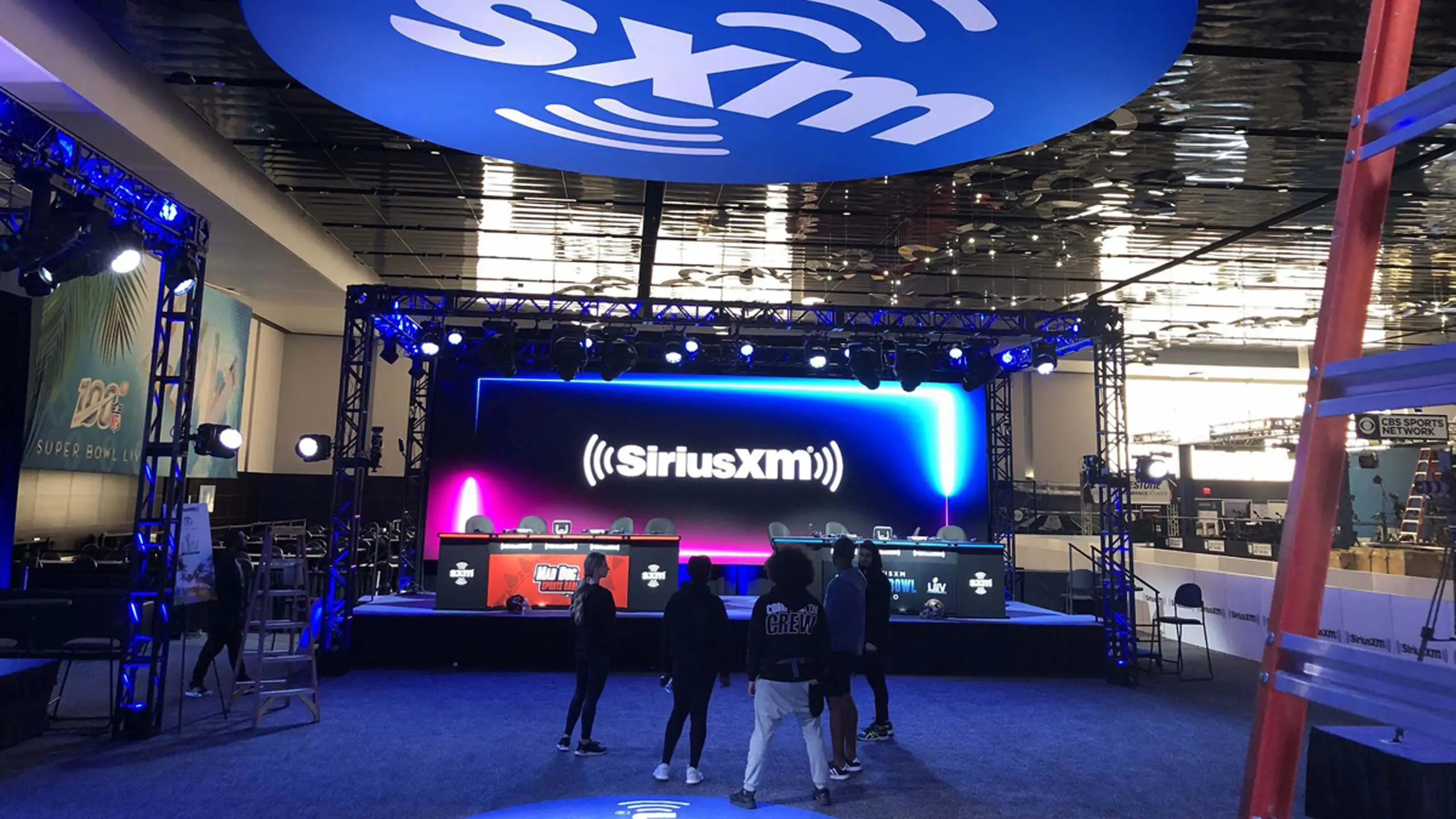
Live streaming has emerged as a powerful force in the digital age, revolutionizing the way we create, consume, and interact with content. From live events to gaming, from education to entertainment, live streaming has become a ubiquitous part of our online experiences. As technology continues to evolve, the future of live streaming promises exciting innovations and transformative experiences.
This article delves into the cutting-edge trends, technologies, and best practices shaping the future of this dynamic industry, providing insights into how livestreaming will continue to impact various sectors and our daily lives.
## Emerging Trends in Livestreaming
The future of livestreaming is being shaped by several innovative trends that are pushing the boundaries of what's possible in live video broadcasting. One of the most exciting developments is the integration of 360-degree video technology, which allows viewers to experience live events from a truly immersive perspective. By capturing footage from multiple angles simultaneously, 360-degree live streams enable viewers to explore the scene as if they were physically present, creating a sense of presence and engagement that traditional live streaming cannot match.
Interactive live streaming is another emerging trend that promises to revolutionize the way audiences engage with live content. Through the use of real-time polling, Q&A sessions, and other interactive features, viewers can actively participate and contribute to the livestream experience. This two-way communication opens up new avenues for audience engagement, fostering a sense of community and creating a more dynamic and engaging experience for all involved.
The rise of cloud-based live-streaming platforms is also shaping the future of this industry. These platforms offer scalable and cost-effective solutions for broadcasters of all sizes, enabling them to reach global audiences with ease. By leveraging cloud computing resources, live streamers can ensure seamless and high-quality broadcasts without the need for expensive on-premises infrastructure.
In the world of [creative marketing](https://c-istudios.com/creative-marketing-services/), live streaming is becoming an increasingly valuable tool for brands and businesses. Live product launches, behind-the-scenes tours, and interactive Q&A sessions allow companies to connect with their audience in real time, fostering trust and building stronger relationships with customers.
As these trends continue to evolve, they will undoubtedly shape the future of live streaming, opening up new opportunities for content creators, businesses, and audiences alike.
## Technology Advancements Driving Livestreaming
The future of live streaming is inextricably tied to the rapid advancements in various technologies that are enhancing the viewer experience and enabling new possibilities. One of the most significant technological developments driving live streaming is the rollout of 5G networks. With its ultra-fast speeds and low latency, 5G promises to revolutionize live streaming by enabling high-quality, low-latency broadcasts from virtually anywhere.
The integration of artificial intelligence (AI) is another technology that is set to shape the future of livestreaming. AI can be leveraged in various ways, from optimizing video encoding and delivery to enhancing viewer engagement through personalized recommendations and content curation. Additionally, AI-powered analytics can provide valuable insights into viewer behavior, helping livestreamers better understand their audience and tailor their content accordingly.
Augmented reality (AR) and virtual reality (VR) technologies are also poised to play a significant role in the future of live streaming. By combining live video with computer-generated overlays and environments, AR and VR can create immersive and interactive experiences that blur the lines between the physical and digital worlds. From virtual concerts and sports events to educational tours and gaming experiences, the integration of AR and VR promises to transform live streaming into a truly multidimensional experience.
Pertaining to [VFX compositing and animation](https://c-istudios.com/vfx-compositing-and-animation-services/), these technological advancements are opening up new frontiers for creative expression and storytelling. Livestreamers and content creators can now seamlessly blend live footage with computer-generated elements, creating visually stunning and captivating experiences that were once the realm of Hollywood blockbusters.
As these technologies continue to mature and become more accessible, they will undoubtedly reshape the live-streaming landscape, enabling new levels of engagement, immersion, and creativity that will redefine the boundaries of live video broadcasting.
## The Role of Livestreaming in Different Sectors
Livestreaming is rapidly becoming an integral part of various sectors, transforming the way we learn, entertain, and engage with content. In the field of education, live streaming has emerged as a powerful tool for remote learning and virtual classrooms. Educational institutions and online course providers are leveraging live streaming to deliver interactive lectures, workshops, and seminars to students around the globe. This not only expands access to high-quality education but also fosters a sense of community and collaboration among learners.
The entertainment industry has also embraced live streaming as a means to connect with audiences in real-time. Live concerts, theater performances, and comedy shows are now being broadcast to global audiences, allowing fans to experience the energy and atmosphere of live events from the comfort of their homes. [Film and TV production](https://c-istudios.com/film-and-tv-production/) companies are also leveraging live streaming for behind-the-scenes access, exclusive interviews, and interactive fan experiences, fostering deeper connections with their audiences.
Sports organizations have recognized the power of live streaming to engage fans and provide a more immersive viewing experience. From live game broadcasts to pre-game shows and post-game analysis, live streaming has become an essential component of the sports industry. Additionally, live streaming has enabled new forms of sports broadcasting, such as esports tournaments and extreme sports events, catering to niche audiences and expanding the reach of these activities.
In the corporate world, live streaming has emerged as a valuable tool for internal communication, training, and collaboration. Companies can leverage live streaming to host virtual town halls, deliver employee training sessions, and facilitate cross-functional collaboration, regardless of geographic location. This not only enhances productivity and knowledge sharing but also fosters a sense of community and engagement within the organization.
As live streaming continues to permeate various sectors, it will undoubtedly have a profound impact on how we learn, work, and engage with content. The ability to deliver real-time, interactive experiences will revolutionize the way we consume and interact with information, creating new opportunities for innovation and growth across industries.
## Best Practices for Livestreaming Setup
Setting up a professional livestream requires careful planning and consideration of various factors to ensure a seamless and high-quality viewing experience. One of the most essential components is choosing the right equipment, including a reliable camera, microphone, and lighting setup. High-quality [professional photography](https://c-istudios.com/professional-photography-services/) and Audio Engineering equipment can significantly enhance the visual and audio quality of your livestream, creating a more engaging and immersive experience for your audience.
Another crucial aspect is selecting the appropriate software for live streaming. There are various live-streaming software options available, each with its own set of features and capabilities. It's essential to choose a platform that meets your specific needs, whether it's for gaming, podcasting, or live events. Popular options include [Open Broadcaster Software](https://obsproject.com/) (OBS), Streamlabs, and vMix, among others.
Ensuring a stable and fast internet connection is paramount for successful livestreaming. Bandwidth and latency issues can significantly impact the quality of your stream, leading to buffering, stuttering, or even complete disconnections. It's recommended to have a dedicated internet connection for live streaming or to use a wired Ethernet connection for optimal performance.
Creating an optimal live-streaming environment is also crucial. This includes setting up proper lighting, sound treatment, and background elements to create a professional and visually appealing scene. Proper positioning of cameras, microphones, and lighting can greatly enhance the overall quality and immersion of your livestream.
To showcase some of the best practices in action, consider this example from the [CI Studios](https://c-istudios.com/). In their live stream setup for music performance, they utilized high-end cameras and microphones, ensuring pristine audio and visual quality. They also employed strategic lighting techniques to create a dynamic and visually captivating atmosphere, enhancing the overall viewing experience.
By following these best practices and investing in the right equipment and setup, you can create a professional livestreaming environment that engages and captivates your audience, elevating your content to new heights.
## Monetizing Livestreaming. Strategies and Tips
As the popularity of live streaming continues to grow, content creators and broadcasters are exploring various strategies to monetize their live streams and turn their passion into a sustainable revenue stream. One of the most common monetization models is through paid subscriptions or memberships. Platforms like Twitch, YouTube, and Facebook offer subscription-based models where viewers can pay a monthly fee to access exclusive content, perks, or ad-free viewing experiences.
Another effective monetization strategy is through sponsorships and brand partnerships. Brands are increasingly recognizing the power of live streaming to reach engaged audiences, and they are willing to sponsor popular live streamers or integrate their products and services into the content. This can take the form of sponsored segments, product placements, or branded content collaborations.
In-stream donations and tips are also a popular way for live streamers to generate revenue from their audience. Platforms like Twitch and YouTube allow viewers to donate or "tip" their favorite creators during livestreams, fostering a direct connection and support system between creators and their fans.
Additionally, livestreamers can leverage [social media marketing](https://c-istudios.com/social-media-marketing-services/) to promote their content and grow their audience, which in turn can lead to increased monetization opportunities. By building a strong social media presence and engaging with their followers across multiple platforms, livestreamers can attract new viewers, sponsors, and potential revenue streams.
Effective monetization strategies often involve a combination of these approaches, tailored to the specific niche, audience, and platform. For example, a gaming livestreamer might offer a paid subscription tier with exclusive access to behind-the-scenes content and early gameplay footage, while also accepting donations and pursuing brand sponsorships.
It's essential for livestreamers to understand their audience's preferences and interests, as well as to maintain authenticity and transparency in their monetization efforts. Building a loyal and engaged community is crucial for long-term success, as viewers are more likely to support creators they trust and feel a connection with.
Successful monetization also requires consistent effort, creativity, and adaptation to emerging trends and opportunities. As the live-streaming landscape continues to evolve, new monetization models may arise, and live streamers must be willing to explore and experiment with different strategies to maximize their revenue potential.
## Future Challenges and Opportunities in Livestreaming
While the future of livestreaming holds immense potential and opportunities, it is also accompanied by several challenges that must be addressed. One of the most significant challenges is bandwidth and connectivity limitations. As live streaming becomes more widespread and demands higher quality, the strain on network infrastructure and internet service providers will increase. Ensuring reliable and consistent live streaming experiences across different regions and networks will be crucial.
Another challenge is the issue of copyright and content ownership. With the rise of live content, there is a heightened risk of inadvertent copyright infringement, particularly in the realm of music and video content. Livestreamers and platforms will need to navigate complex legal landscapes and implement robust content moderation systems to protect intellectual property rights.
Despite these challenges, the future of live streaming also presents numerous opportunities for growth and innovation. As technology continues to advance, we can expect to see even more immersive and interactive live-streaming experiences. The integration of virtual and augmented reality, for example, could revolutionize the way we consume live content, allowing viewers to virtually attend events or participate in interactive simulations.
AI and machine learning technologies will also play a pivotal role in enhancing the livestreaming experience. From automated content moderation and personalized recommendations to real-time analytics and content optimization, AI has the potential to streamline and enhance various aspects of the live-streaming ecosystem.
Regarding [SEO copywriting](https://c-istudios.com/seo-copywriting-services/), live streaming presents a unique opportunity for content creators and marketers to leverage real-time engagement and captivate audiences with dynamic, interactive content. By optimizing livestream titles, descriptions, and metadata, creators can improve their discoverability and reach new audiences across various platforms.
To further illustrate the opportunities in live streaming, consider the CI Studios - Services offering. Their expertise in live event production, coupled with their understanding of emerging technologies like AR/VR integration, positions them to provide cutting-edge live streaming solutions that immerse viewers in unforgettable experiences.
As the live streaming industry continues to evolve, those who embrace innovation, adapt to emerging trends and prioritize viewer engagement will be well-positioned to capitalize on the vast opportunities this dynamic medium presents.
## Work with C&I Studios
If you are planning a project like this, our team can take it from concept to final delivery. Explore our [AI video services](https://c-istudios.com/ai-video-services/), browse [our work](https://c-istudios.com/our-work/) to see how we tell brand stories, and [get in touch](https://c-istudios.com/contact/) when you are ready to start.
Originally published April 17, 2024
---
*This content is from [C&I Studios](https://c-istudios.com), a full-service production company.*
---
# 360-Degree Video: Immersive Experiences and Virtual Reality
> Published: April 16, 2024
> Categories: Film & TV
> Source: https://c-istudios.com/360-degree-video-immersive-experiences-and-virtual-reality/
---
.cib{--paper:#1b1d1f;--ink:#fff;--body:#d5d7d9;--muted:#8b9096;--line:rgba(255,255,255,.12);--thumb:#2b2e31;--card:#212426;--accent:#c02b0a;--blue:#5B8FA8;--serif:'Playfair Display',Georgia,serif;--sans:'Poppins',-apple-system,sans-serif;--measure:900px;background:var(--paper);color:var(--body);font-family:var(--sans);line-height:1.6;position:relative;left:50%;transform:translateX(-50%);width:90vw;max-width:1920px}
.cib *{box-sizing:border-box}
.cib .kicker{max-width:var(--measure);margin:58px auto 0;padding:0 22px;font-size:12.5px;font-weight:700;letter-spacing:2.5px;text-transform:uppercase;color:var(--blue)}
.cib h1.cibh1{text-wrap:balance;font-family:var(--serif);font-weight:500;font-size:clamp(46px,6vw,72px);line-height:1.08;color:var(--ink);max-width:var(--measure);margin:18px auto 0;padding:0 22px;letter-spacing:-.5px}
.cib .metarow{max-width:var(--measure);margin:20px auto 0;padding:0 22px;color:var(--muted);font-size:14px}
.cib .hero{position:relative;width:100%;height:0;padding-bottom:56.25%;overflow:hidden;margin:48px auto 0;border-top:1px solid var(--line);border-bottom:1px solid var(--line)}
.cib .hero .ph{width:100%;aspect-ratio:16/9;background:var(--thumb);border-top:1px solid var(--line);border-bottom:1px solid var(--line);display:flex;align-items:center;justify-content:center;color:#7d8288;font-size:13px;text-align:center;padding:0 20px}
.cib .body{max-width:var(--measure);margin:12px auto 0;padding:52px 22px 6px}
.cib .body.lead p:first-child{font-size:23px;line-height:1.62;color:var(--ink)}
.cib .body p{font-size:18.5px;line-height:1.85;margin:0 0 30px;color:var(--body)}
.cib .body h2{text-wrap:balance;font-family:var(--serif);font-weight:500;font-size:clamp(32px,4vw,48px);line-height:1.22;color:var(--ink);margin:70px 0 20px;letter-spacing:-.3px}
.cib .body h3{text-wrap:balance;font-family:var(--sans);font-weight:600;font-size:22px;color:var(--ink);margin:38px 0 8px}
.cib .body a{color:var(--ink);text-decoration:underline;text-decoration-color:rgba(255,255,255,.4);text-underline-offset:3px}
.cib .body a:hover{text-decoration-color:var(--ink)}
.cib .ctable{width:100%;border-collapse:collapse;margin:16px 0 30px;font-size:16px}
.cib .ctable th{background:#000;color:#fff;text-align:left;padding:10px 12px;font-family:var(--sans)}
.cib .ctable td{padding:10px 12px;border-bottom:1px solid var(--line);color:var(--body)}
.cib .inimg{position:relative;width:100%;height:0;padding-bottom:56.25%;overflow:hidden;margin:72px auto;border-top:1px solid var(--line);border-bottom:1px solid var(--line)}
.cib .inimg .ph{width:100%;aspect-ratio:16/9;background:var(--thumb);border-top:1px solid var(--line);border-bottom:1px solid var(--line);display:flex;align-items:center;justify-content:center;color:#7d8288;font-size:13px}
.cib .origpub{max-width:var(--measure);margin:60px auto 0;padding:26px 22px 0;border-top:1px solid var(--line);color:var(--muted);font-size:13.5px}
.cib .related{max-width:1200px;margin:64px auto 0;padding:34px 22px 76px}
.cib .related h3{font-family:var(--sans);font-size:12.5px;letter-spacing:2px;text-transform:uppercase;color:var(--ink);margin:0 0 24px}
.cib .grid{display:grid;grid-template-columns:repeat(3,1fr);gap:28px}
.cib .rc{background:var(--card);border:1px solid var(--line);display:block;text-decoration:none;color:inherit;transition:border-color .15s}
.cib a.rc:hover{border-color:rgba(255,255,255,.5)}
.cib .rc .thumb{position:relative;width:100%;height:0;padding-bottom:56.25%;background:var(--thumb);overflow:hidden}
.cib .rc .thumb img{position:absolute!important;top:0!important;left:0!important;width:100%!important;height:100%!important;object-fit:cover!important;margin:0!important}
.cib .rc .cc{padding:14px 15px 17px}
.cib .rc .rt{font-family:var(--serif);font-weight:500;font-size:16px;line-height:1.3;color:var(--ink);margin:0 0 6px}
.cib .rc .rm{font-size:11px;letter-spacing:1px;text-transform:uppercase;color:var(--muted)}
.cib img{margin:0!important;padding:0!important;display:block!important;vertical-align:top;max-width:100%}
.cib .hero img,.cib .inimg img{position:absolute!important;top:0!important;left:0!important;width:100%!important;height:100%!important;object-fit:cover!important;margin:0!important;padding:0!important;border:0!important;display:block!important;aspect-ratio:auto!important}
.cib .hero+.body{padding-top:36px}
@media(max-width:760px){.cib .grid{grid-template-columns:1fr}.cib .body h2{margin:52px 0 16px}.cib .body p{font-size:17.5px}.cib .inimg,.cib .hero{margin-top:44px}}
.cib .vembed{max-width:var(--measure);margin:44px auto;padding:0 22px}.cib .vembed .vwrap{position:relative;width:100%;height:0;padding-bottom:56.25%}.cib .vembed .vwrap iframe{position:absolute;top:0;left:0;width:100%;height:100%;border:0}
Film & TV
# 360-Degree Video. Immersive Experiences and Virtual Reality
11 min read
*Update: explore our [360 video production services](https://c-istudios.com/360-video-production/) — including interactive 360 films you can step inside right on the page.*
360-degree video is a revolutionary technology that allows viewers to experience immersive and interactive content like never before. By capturing a complete 360-degree view of a scene, these videos transport audiences into a virtual environment, enabling them to explore and interact with the content in a truly engaging way.
In the field of virtual reality (VR), 360-degree video plays a pivotal role in creating realistic and captivating experiences, making it an essential tool for content creators and storytellers alike.
## Step 1. Understanding 360-Degree Video
360-degree video is a departure from traditional video, offering a fundamentally different viewing experience. Unlike conventional video, which presents a fixed perspective, 360-degree video captures the entire spherical environment around the camera. This allows viewers to explore the scene by panning and tilting their view, revealing previously unseen angles and details.
One of the key advantages of 360-degree video is its ability to create a sense of immersion and presence. By surrounding the viewer with a seamless, 360-degree view, these videos simulate the experience of being physically present in the captured environment. This immersive quality is particularly powerful in virtual reality applications, where viewers can use VR headsets to fully immerse themselves in the virtual world.
Beyond its immersive capabilities, 360-degree video also offers unique storytelling opportunities. Content creators can craft narratives that unfold in multiple directions, allowing viewers to choose their own perspective and explore the story from different vantages.
360-degree video has found applications in a wide range of industries, including entertainment, education, tourism, real estate, and more. For example, in the entertainment industry, 360-degree video can be used to create immersive music videos or behind-the-scenes experiences that transport viewers onto movie sets or concert stages. In education, 360-degree videos can provide virtual field trips or hands-on learning experiences, allowing students to explore historical sites or scientific environments from the comfort of their classrooms.
With its potential for immersive storytelling and innovative applications, 360-degree video is rapidly gaining momentum and transforming the way content is created and experienced across various industries.
## Step 2. Planning Your 360-Degree Video Project
Embarking on a 360-degree video project requires careful planning and preparation to ensure a successful outcome. Unlike traditional filmmaking, where the frame is confined to a specific perspective, 360-degree video presents unique challenges in terms of storytelling, shot composition, and viewer experience.
During the pre-production phase, it's crucial to define the project's goals and objectives. What is the purpose of your 360-degree video? Is it meant to be a standalone piece, or will it be integrated into a larger virtual reality experience? Understanding the intended use case will help shape the creative direction and production approach.
Storyboarding and scriptwriting are essential steps in planning a 360-degree video project. Unlike traditional filmmaking, where the viewer's perspective is fixed, 360-degree storytelling requires a more immersive and interactive approach.
Storyboards should depict the complete 360-degree environment, highlighting key points of interest and potential viewer perspectives. Scripts should be crafted with the understanding that viewers can explore the scene freely, allowing for multiple narrative paths or potential storylines.
In the world of [documentary film production](https://c-istudios.com/documentary-film-production/), where capturing authentic and engaging stories is paramount, 360-degree video can offer a powerful tool for immersive storytelling. Filmmakers can transport audiences directly into the heart of the action, providing a truly unique and captivating viewing experience.
Location scouting and logistics planning are also critical components of the pre-production process. 360-degree video requires careful consideration of the shooting environment, as the entire surroundings will be captured. Factors such as lighting, sound, and potential obstructions must be evaluated to ensure a seamless and engaging viewer experience.
Collaboration and communication are key throughout the planning phase, as 360-degree [video production](https://c-istudios.com/video-production-services/) often involves multiple crew members and specialized equipment. Clearly defining roles, responsibilities, and workflows can help streamline the production process and ensure a cohesive final product.
By investing time and effort into the planning stage, content creators can lay the foundation for a successful 360-degree video project, maximizing the impact and immersive potential of this innovative storytelling medium.
## Step 3. Choosing the Right Equipment
Capturing high-quality 360-degree video requires specialized equipment designed to capture the entire spherical environment around the camera. There are several types of cameras and rigs available in the market, each with its own advantages and limitations.
One of the most common setups for 360-degree video production is the use of multiple cameras mounted on a rig. These rigs typically consist of an array of cameras, carefully positioned and synchronized to capture a complete 360-degree view. Professional-grade rigs can feature anywhere from four to several dozen cameras, depending on the desired resolution and level of detail.
Another option is the use of dedicated 360-degree cameras, which are designed specifically for capturing immersive video content. These cameras often feature multiple lenses or a single fisheye lens that captures a 360-degree field of view. While not as versatile as a multi-camera rig, dedicated 360-degree cameras can offer a more compact and streamlined solution for certain applications.
When selecting equipment for a 360-degree video project, there are several factors to consider:
- **Resolution and Image Quality:** Higher resolutions and better image quality will result in a more immersive and detailed viewing experience. Professional-grade rigs and cameras can capture video at resolutions up to 8K or higher, ensuring stunning visual clarity.
- **Stitching Capabilities:** For multi-camera rigs, the captured footage must be stitched together to create a seamless 360-degree image. Choosing a rig with advanced stitching software or opting for cameras with built-in stitching capabilities can streamline the post-production process.
- **Portability and Ease of Use:** Depending on the project's requirements, portability and ease of use may be important factors. Some 360-degree camera setups are more portable and user-friendly than others, making them better suited for on-the-go or solo productions.
- **Budget:** Professional-grade 360-degree video equipment can be costly, ranging from a few thousand dollars to tens of thousands of dollars. It's essential to balance the desired quality and features with the project's budget constraints.
In the field of [video production gear](https://c-istudios.com/video-production-gear-list/), 360-degree cameras and rigs have become essential tools for capturing immersive content. With the increasing demand for virtual reality experiences and interactive media, having the right equipment can open up new creative possibilities and help content creators stay ahead of the curve.
By carefully evaluating the available options and considering factors such as resolution, stitching capabilities, portability, and budget, videographers and content creators can choose the equipment that best suits their specific project requirements and delivers the desired level of immersive quality.
## Step 4. Shooting Techniques for 360-Degree Video
Capturing compelling 360-degree video requires a unique set of shooting techniques and considerations. Unlike traditional filmmaking, where the camera crew has complete control over the viewer's perspective, 360-degree video presents a challenge in guiding the audience's attention while maintaining an immersive and seamless experience.
One of the most important aspects of 360-degree video production is camera placement and positioning. Since the entire spherical environment is captured, careful attention must be paid to the camera's location and height relative to the action or subject matter. Proper camera placement can help direct the viewer's gaze and create a natural flow of visual interest within the 360-degree space.
Another key consideration is the management of movement and transitions within the 360-degree environment. Abrupt or jarring camera movements can potentially cause disorientation or motion sickness for viewers, especially in virtual reality applications. Filmmakers should strive for smooth, deliberate camera movements and transitions, using techniques such as panning, tilting, and dollying to guide the viewer's experience.
As [professional photography](https://c-istudios.com/professional-photography-services/) aims to create stunning visuals, the advent of 360-degree video introduces innovative possibilities for creativity and poses new challenges. Photographers must adapt their compositional skills to an immersive, 360-degree canvas, considering elements such as depth, perspective, and visual flow in all directions.
Lighting is another crucial aspect of 360-degree video production. Since the entire environment is captured, lighting must be carefully planned and executed to ensure consistent and flattering illumination throughout the 360-degree space. Techniques such as using multiple light sources, bouncing light, and controlling spill can help achieve a well-lit and visually appealing 360-degree scene.
Sound is also an essential component of creating an immersive 360-degree experience. Ambient audio and directional sound cues can enhance the sense of presence and realism, contributing to the overall immersive quality of the video. Proper microphone placement and sound recording techniques are necessary to capture high-quality spatial audio that complements the visuals.
By mastering these shooting techniques and considerations, videographers and content creators can produce captivating and engaging 360-degree video content that transports viewers into fully immersive and interactive environments.
## Step 5. Post-Production Workflow
The post-production process for 360-degree video involves a unique set of challenges and workflows compared to traditional video editing. From stitching together multiple camera angles to adding interactive elements and navigational tools, the post-production stage is crucial in crafting a polished and engaging 360-degree viewing experience.
One of the first steps in the post-production workflow is stitching, which involves combining the individual camera feeds into a seamless, 360-degree spherical image or video. Depending on the camera setup used during filming, this process can be accomplished using specialized stitching software or the built-in stitching capabilities of certain 360-degree cameras.
Once the footage is stitched, the editing process begins. While many of the traditional video editing techniques still apply, such as trimming clips, adding transitions, and color grading, 360-degree video editing software often includes specialized tools and features to enhance the immersive experience.
One key aspect of 360-degree video editing is the ability to add interactive elements and navigational aids. These can include hotspots, which allow viewers to click or gaze at specific points of interest within the 360-degree environment, triggering additional content or information. Navigational tools, such as compass overlays or mini-maps, can help viewers orient themselves and navigate the 360-degree space more easily.
Another important consideration in 360-degree video post-production is the integration of spatial audio. By capturing and editing audio in a three-dimensional, 360-degree format, editors can create an immersive soundscape that enhances the viewer's sense of presence and realism within the virtual environment.
The post-production phase offers opportunities for collaboration and creative problem-solving. Editors, visual effects artists, and sound designers can work together to overcome technical challenges and push the boundaries of what's possible in 360-degree video storytelling.
## Step 6. Integrating Audio in 360-Degree Video
In the world of 360-degree video, audio plays a crucial role in creating a truly immersive and engaging experience for viewers. Just as the visuals transport audiences into a virtual environment, spatial audio enhances the sense of presence and realism, making the experience feel more natural and believable.
Spatial audio, also known as 3D audio or binaural audio, is a technique that simulates the way sound is perceived in the real world. By capturing and rendering audio in a three-dimensional format, spatial audio can accurately reproduce the direction, distance, and movement of sound sources within the 360-degree environment.
One of the key benefits of spatial audio in 360-degree video is its ability to guide the viewer's attention and enhance the storytelling experience. By strategically placing audio cues and sound effects within the 360-degree space, content creators can direct the viewer's gaze and create a more engaging and dynamic narrative.
Capturing spatial audio for 360-degree video requires specialized microphones and recording techniques. Ambisonic microphones, which capture sound in a full 360-degree spherical pattern, are commonly used in 360-degree audio production. These microphones can accurately capture the directional information of sound sources, allowing for precise spatial rendering during post-production.
In the post-production phase, spatial audio editing tools and plugins are used to position and manipulate audio elements within the 360-degree environment. This process involves mapping sound sources to specific locations and adjusting their perceived distance, direction, and movement, creating an immersive and realistic audio experience.
Integrating spatial audio into 360-degree video also presents unique challenges, such as synchronizing audio and visual elements, managing audio levels, and ensuring a seamless transition between different audio environments or scenes.
In the domain of [SEO copywriting](https://c-istudios.com/seo-copywriting-services/), where creating engaging and optimized content is essential, spatial audio can be a powerful tool for enhancing the user experience and improving search engine rankings. By offering a more immersive and captivating experience, 360-degree videos with spatial audio can potentially increase user engagement and dwell time, positively impacting search engine optimization metrics.
As virtual reality and 360-degree video continue to gain popularity, the integration of spatial audio will become increasingly important in delivering truly immersive and engaging experiences for audiences across various platforms and devices.
## Step 7. Distributing and Sharing Your 360-Degree Video
Once your 360-degree video project is complete, the next step is to share it with the world. With the growing popularity of virtual reality and immersive media, there are numerous platforms and channels available for distributing and promoting your 360-degree video content.
One of the most popular platforms for sharing 360-degree videos is [YouTube](https://www.youtube.com/). The video-sharing platform has supported 360-degree and VR content for several years, allowing viewers to experience immersive videos on desktop, mobile devices, and VR headsets. Uploading your 360-degree video to YouTube can provide exposure to a vast audience and leverage the platform's powerful search and recommendation algorithms.
Social media platforms like Facebook and Instagram have also embraced 360-degree video, offering native support for uploading and sharing immersive content. These platforms can be powerful tools for promoting your 360-degree videos, engaging with your audience, and leveraging the power of social sharing and viral content.
Virtual reality platforms and apps, such as the Oculus Store, Viveport, and SteamVR, are dedicated channels for distributing VR content, including 360-degree videos. These platforms cater specifically to users with VR headsets, providing an optimal viewing experience for fully immersive 360-degree content.
In addition to these popular platforms, there are also niche websites and communities dedicated to showcasing and sharing 360-degree videos and VR experiences. These can be valuable resources for connecting with enthusiasts, creators, and potential collaborators in the immersive media space.
When distributing and sharing your 360-degree video, it's essential to create engaging and informative descriptions, titles, and metadata. This not only helps viewers understand what to expect from your content but also improves discoverability and search engine optimization.
Promotion and marketing are equally important for the success of your 360-degree video project. Leveraging [social media marketing](https://c-istudios.com/social-media-marketing-services/) services can help you reach a wider audience and generate buzz around your content. Strategies such as influencer collaborations, targeted advertising campaigns, and engaging with relevant communities can all contribute to increased visibility and viewership for your 360-degree videos.
By leveraging the right platforms, optimizing your content for discoverability, and implementing effective promotion strategies, you can ensure that your 360-degree video project reaches its intended audience and maximizes its impact in the rapidly evolving world of immersive media.
## Work with C&I Studios
If you are planning a project like this, our team can take it from concept to final delivery. Explore our [film and TV production](https://c-istudios.com/film-and-tv-production/), browse [our work](https://c-istudios.com/our-work/) to see how we tell brand stories, and [get in touch](https://c-istudios.com/contact/) when you are ready to start.
Originally published April 16, 2024
---
*This content is from [C&I Studios](https://c-istudios.com), a full-service production company.*
---
# The Art of Mixing and Mastering Audio for Video
> Published: April 15, 2024
> Categories: Post & VFX
> Source: https://c-istudios.com/the-art-of-mixing-and-mastering-audio-for-video/
---
.cib{--paper:#1b1d1f;--ink:#fff;--body:#d5d7d9;--muted:#8b9096;--line:rgba(255,255,255,.12);--thumb:#2b2e31;--card:#212426;--accent:#c02b0a;--blue:#5B8FA8;--serif:'Playfair Display',Georgia,serif;--sans:'Poppins',-apple-system,sans-serif;--measure:900px;background:var(--paper);color:var(--body);font-family:var(--sans);line-height:1.6;position:relative;left:50%;transform:translateX(-50%);width:90vw;max-width:1920px}
.cib *{box-sizing:border-box}
.cib .kicker{max-width:var(--measure);margin:58px auto 0;padding:0 22px;font-size:12.5px;font-weight:700;letter-spacing:2.5px;text-transform:uppercase;color:var(--blue)}
.cib h1.cibh1{text-wrap:balance;font-family:var(--serif);font-weight:500;font-size:clamp(46px,6vw,72px);line-height:1.08;color:var(--ink);max-width:var(--measure);margin:18px auto 0;padding:0 22px;letter-spacing:-.5px}
.cib .metarow{max-width:var(--measure);margin:20px auto 0;padding:0 22px;color:var(--muted);font-size:14px}
.cib .hero{position:relative;width:100%;height:0;padding-bottom:56.25%;overflow:hidden;margin:48px auto 0;border-top:1px solid var(--line);border-bottom:1px solid var(--line)}
.cib .hero .ph{width:100%;aspect-ratio:16/9;background:var(--thumb);border-top:1px solid var(--line);border-bottom:1px solid var(--line);display:flex;align-items:center;justify-content:center;color:#7d8288;font-size:13px;text-align:center;padding:0 20px}
.cib .body{max-width:var(--measure);margin:12px auto 0;padding:52px 22px 6px}
.cib .body.lead p:first-child{font-size:23px;line-height:1.62;color:var(--ink)}
.cib .body p{font-size:18.5px;line-height:1.85;margin:0 0 30px;color:var(--body)}
.cib .body h2{text-wrap:balance;font-family:var(--serif);font-weight:500;font-size:clamp(32px,4vw,48px);line-height:1.22;color:var(--ink);margin:70px 0 20px;letter-spacing:-.3px}
.cib .body h3{text-wrap:balance;font-family:var(--sans);font-weight:600;font-size:22px;color:var(--ink);margin:38px 0 8px}
.cib .body a{color:var(--ink);text-decoration:underline;text-decoration-color:rgba(255,255,255,.4);text-underline-offset:3px}
.cib .body a:hover{text-decoration-color:var(--ink)}
.cib .ctable{width:100%;border-collapse:collapse;margin:16px 0 30px;font-size:16px}
.cib .ctable th{background:#000;color:#fff;text-align:left;padding:10px 12px;font-family:var(--sans)}
.cib .ctable td{padding:10px 12px;border-bottom:1px solid var(--line);color:var(--body)}
.cib .inimg{position:relative;width:100%;height:0;padding-bottom:56.25%;overflow:hidden;margin:72px auto;border-top:1px solid var(--line);border-bottom:1px solid var(--line)}
.cib .inimg .ph{width:100%;aspect-ratio:16/9;background:var(--thumb);border-top:1px solid var(--line);border-bottom:1px solid var(--line);display:flex;align-items:center;justify-content:center;color:#7d8288;font-size:13px}
.cib .origpub{max-width:var(--measure);margin:60px auto 0;padding:26px 22px 0;border-top:1px solid var(--line);color:var(--muted);font-size:13.5px}
.cib .related{max-width:1200px;margin:64px auto 0;padding:34px 22px 76px}
.cib .related h3{font-family:var(--sans);font-size:12.5px;letter-spacing:2px;text-transform:uppercase;color:var(--ink);margin:0 0 24px}
.cib .grid{display:grid;grid-template-columns:repeat(3,1fr);gap:28px}
.cib .rc{background:var(--card);border:1px solid var(--line);display:block;text-decoration:none;color:inherit;transition:border-color .15s}
.cib a.rc:hover{border-color:rgba(255,255,255,.5)}
.cib .rc .thumb{position:relative;width:100%;height:0;padding-bottom:56.25%;background:var(--thumb);overflow:hidden}
.cib .rc .thumb img{position:absolute!important;top:0!important;left:0!important;width:100%!important;height:100%!important;object-fit:cover!important;margin:0!important}
.cib .rc .cc{padding:14px 15px 17px}
.cib .rc .rt{font-family:var(--serif);font-weight:500;font-size:16px;line-height:1.3;color:var(--ink);margin:0 0 6px}
.cib .rc .rm{font-size:11px;letter-spacing:1px;text-transform:uppercase;color:var(--muted)}
.cib img{margin:0!important;padding:0!important;display:block!important;vertical-align:top;max-width:100%}
.cib .hero img,.cib .inimg img{position:absolute!important;top:0!important;left:0!important;width:100%!important;height:100%!important;object-fit:cover!important;margin:0!important;padding:0!important;border:0!important;display:block!important;aspect-ratio:auto!important}
.cib .hero+.body{padding-top:36px}
@media(max-width:760px){.cib .grid{grid-template-columns:1fr}.cib .body h2{margin:52px 0 16px}.cib .body p{font-size:17.5px}.cib .inimg,.cib .hero{margin-top:44px}}
.cib .vembed{max-width:var(--measure);margin:44px auto;padding:0 22px}.cib .vembed .vwrap{position:relative;width:100%;height:0;padding-bottom:56.25%}.cib .vembed .vwrap iframe{position:absolute;top:0;left:0;width:100%;height:100%;border:0}
Post & VFX
# The Art of Mixing and Mastering Audio for Video
12 min read
In the world of [video production](https://c-istudios.com/video-production-services/), the art of mixing and mastering audio plays a crucial role in delivering a polished and immersive experience for the audience. Mixing involves balancing and blending various audio elements, such as dialogue, music, and sound effects, into a cohesive whole.
Mastering, on the other hand, is the final stage where the mixed audio is optimized and enhanced for the best possible quality. High-quality audio is essential for creating engaging and professional video content, making it imperative for videographers and content creators to master these techniques.
## Step 1. Understanding the Basics
Mixing and mastering are distinct processes, each with its own set of techniques and goals. Mixing is the art of combining multiple audio tracks into a balanced and harmonious blend while mastering focuses on enhancing the overall quality of the mixed audio for optimal playback across various platforms and devices.
One of the fundamental concepts in audio mixing is equalization (EQ). EQ allows you to adjust the frequency balance of individual audio tracks or the entire mix, reducing or boosting specific frequency ranges to achieve the desired tonal characteristics. Compression is another essential tool that helps control the dynamic range of audio signals, preventing unwanted peaks and maintaining consistent volume levels.
Reverb is a critical effect that simulates the natural reflections of sound in a physical space, adding depth and dimension to audio elements. [film and TV production](https://c-istudios.com/film-and-tv-production/) heavily relies on these techniques to create immersive and engaging soundscapes that complement the visual elements.
Panning is the process of positioning audio elements in the stereo or surround field, allowing for a more spatial and realistic representation of sound sources. Automation is a powerful feature that enables precise control over various parameters, such as volume, panning, and effects, throughout the duration of a project.
Understanding these basic concepts and techniques is crucial for aspiring audio mixers and mastering engineers, as they form the foundation for creating professional-grade audio for video productions.
## Step 2. Setting Up Your Workspace
Creating an optimal audio mixing environment is essential for achieving high-quality results. While professional recording studios offer the ideal setup, it's possible to create an effective workspace even in a home or small studio setting.
Acoustic treatment is crucial for minimizing unwanted reflections and ensuring accurate sound monitoring. This can be achieved through the strategic placement of sound-absorbing materials, such as acoustic panels, bass traps, and diffusers. [professional photography](https://c-istudios.com/professional-photography-services/) often involves capturing audio in various environments, making it necessary to understand the importance of acoustic treatment for optimal sound quality.
Essential gear for audio mixing and mastering includes a powerful computer with ample processing power and storage capacity, high-quality studio monitors or reference speakers, and a reliable audio interface. Software is equally important, with digital audio workstations (DAWs) like Pro Tools, Logic Pro, Cubase, or Ableton Live being popular choices among professionals.
Additionally, a wide range of specialized audio plugins and virtual instruments can enhance your mixing and mastering capabilities. Equalizers, compressors, reverb, and other effects plugins offer a vast array of tools for sculpting and refining the audio.
Proper studio monitor placement and room positioning are crucial for accurate sound reproduction and stereo imaging. Ergonomics and comfort should also be considered, ensuring that y[our work](https://c-istudios.com/our-work/)space is designed for extended periods of focused work.
By investing in the right equipment and optimizing your workspace, you'll be better equipped to handle the demands of Content Creation and deliver professional-quality audio for your video projects.
## Step 3. Importing and Organizing Audio Files
Before diving into the mixing and mastering process, it's essential to import and organize your audio files in a structured and efficient manner. This step lays the foundation for a smooth and streamlined workflow, saving you time and reducing frustration down the line.
Most digital audio workstations (DAWs) support a wide range of audio file formats, including WAV, AIFF, and various compressed formats like MP3 and AAC. It's generally recommended to work with uncompressed formats like WAV or AIFF for the best possible audio quality during mixing and mastering.
Once your audio files are imported into your DAW, it's crucial to organize them in a logical and consistent manner. Creating dedicated folders or subfolders for different audio elements, such as dialogue, music, sound effects, and ambiance, can greatly enhance your workflow efficiency.
Naming and labeling your audio tracks is another critical aspect of the organization. Clear and descriptive track names not only make it easier to identify and locate specific elements but also aid in collaboration and communication with other team members or clients.
Color coding and grouping-related tracks can further enhance your organization and provide a visual representation of the various audio elements within your project. Many DAWs offer customizable track colors and grouping features, allowing you to tailor the interface to your preferences.
Proper organization not only streamlines the mixing and mastering process but also facilitates easier retrieval and modification of individual audio elements if needed. In the fast-paced world of [content creation](https://c-istudios.com/content-creation-services/), efficient organization can be the key to meeting tight deadlines and delivering high-quality work.
By establishing a well-structured and organized audio file management system, you'll be better equipped to tackle complex projects with confidence and maintain a professional level of organization throughout the mixing and mastering process.
## Step 4. Mixing Techniques
The art of mixing lies in balancing and blending various audio elements to create a cohesive and engaging listening experience. Effective mixing techniques can elevate your video projects and ensure that the audio complements the visual content seamlessly.
One fundamental aspect of mixing is level balancing, which involves adjusting the relative volumes of individual audio tracks to achieve a harmonious overall mix. This process requires careful listening and critical decision-making, as even subtle adjustments can significantly impact the overall sonic landscape.
Another crucial mixing technique is panning, which involves positioning audio elements in the stereo or surround field. Proper planning can create a sense of depth and space, enhancing the immersive quality of your audio mix. [media marketing](https://c-istudios.com/media-marketing-consultation-services/) often involves creating engaging content, and effective panning techniques can contribute to a more captivating experience for the audience.
Equalization (EQ) is a powerful tool for shaping the tonal characteristics of individual audio tracks or the entire mix. By boosting or cutting specific frequency ranges, you can achieve clarity, separation, and balance among the various audio elements, ensuring that each component occupies its own sonic space without competing or masking others.
Compression is another essential mixing technique that allows you to control the dynamic range of audio signals. By taming loud peaks and bringing up quieter passages, compression can create a more consistent and controlled audio mix, enhancing the overall perceived loudness and impact.
Reverb and delay effects can add depth, dimension, and a sense of space to your audio mix, emulating the natural reflections and echoes that occur in real-world environments. Careful application of these effects can contribute to a more immersive and realistic sonic experience.
Automation is a powerful feature in modern DAWs that enables precise control over various parameters, such as volume, panning, and effects, throughout the duration of your project. Automating certain elements can help create dynamic and engaging mixes that evolve over time.
Mixing is an art form that requires practice, patience, and a keen ear for detail. By mastering these techniques and developing a deep understanding of audio signal flow, you can create professional-quality mixes that enhance the overall impact of your video projects.
## Step 5. Mastering Techniques
Mastering is the final stage in the audio production process, where the mixed audio is optimized and polished for the best possible playback quality across various platforms and devices. Effective mastering techniques can elevate the overall sonic impact of your audio, ensuring a consistent and professional-sounding final product.
One of the primary goals of mastering is achieving optimal loudness and dynamic range. Mastering engineers often employ specialized tools like limiters and multiband compressors to control the overall loudness and dynamic range of the audio, ensuring that it maintains a consistent level without sacrificing clarity or introducing distortion.
Equalization (EQ) is another essential mastering technique that can help refine the tonal balance and clarity of the audio. Subtle EQ adjustments can enhance the overall sonic character, bringing out specific frequency ranges or taming unwanted resonances.
Stereo enhancement and widening techniques are commonly used in mastering to create a more immersive and spacious listening experience. By manipulating the stereo field, mastering engineers can add depth and dimensionality to the audio, enhancing the overall sonic presentation.
Depending on the target playback medium, mastering engineers may also employ specialized processing techniques to ensure compatibility and optimal translation across different systems. For example, when mastering vinyl, specific considerations like phase alignment and groove protection may be necessary.
In addition to technical processing, mastering also involves critical listening and decision-making. Experienced mastering engineers have a trained ear for identifying and addressing sonic issues, ensuring that the final product meets the highest standards of audio quality.
Effective mastering can greatly contribute to the overall impact and professional quality of your audio for video projects. In the realm of [creative marketing](https://c-istudios.com/creative-marketing-services/), where engaging content is paramount, mastering techniques can help elevate the perceived quality and emotional impact of your audio, making it more captivating and memorable for your audience.
Furthermore, mastering ensures that your audio is optimized for various distribution channels and playback environments, ensuring a consistent and high-quality experience across different platforms and devices. This is particularly crucial in today's multimedia landscape, where content is consumed on a wide range of devices, from smartphones and tablets to home theater systems.
## Step 6. Reviewing and Fine-Tuning Your Audio
Once you've completed the initial mixing and mastering process, it's essential to review and fine-tune your audio to ensure that it meets the highest standards of quality. This step involves critical listening, seeking feedback, and making necessary adjustments to refine and polish your audio mix.
The process of reviewing and fine-tuning your audio should begin with a fresh listening session in an optimal listening environment. It's crucial to approach this stage with a critical and objective ear, as familiarity with the material can sometimes lead to overlooking subtle issues or flaws.
During this review process, pay close attention to various aspects of your audio mix, such as balance, clarity, dynamics, and overall sonic cohesion. Listen for any elements that might be masking or interfering with others, or areas where additional adjustments could enhance the overall impact and emotional resonance of the mix.
Seeking feedback from others can be invaluable during this stage. Fresh ears can often identify issues or areas for improvement that you may have overlooked due to your familiarity with the material. Collaborate with industry professionals, colleagues, or trusted individuals with critical listening skills to gain valuable insights and perspectives.
When seeking feedback, provide context about your project and the intended goals for the audio mix. This will help your collaborators better understand your vision and provide more targeted feedback aligned with your objectives.
In addition to external feedback, it's also important to take breaks and revisit your audio mix with a fresh mindset. Prolonged listening sessions can lead to ear fatigue, potentially compromising your ability to make accurate judgments and decisions.
Once you've gathered feedback and identified areas for improvement, it's time to make the necessary adjustments. This may involve revisiting your mixing techniques, fine-tuning EQ and compression settings, or making subtle tweaks to the overall balance and dynamics of the mix.
Remember, the goal of [SEO copywriting](https://c-istudios.com/seo-copywriting-services/) is to create engaging and captivating content that resonates with your target audience. By meticulously reviewing and fine-tuning your audio, you can ensure that it not only meets technical standards but also delivers an emotionally impactful and immersive experience for your viewers.
## Step 7. Exporting Your Final Audio
After dedicating significant effort to mixing, mastering, and fine-tuning your audio, the final step is exporting it for use in your video projects. Proper exporting techniques are crucial to ensure compatibility with various video editing software and platforms, as well as maintaining the highest possible audio quality.
One of the most important considerations when exporting your final audio is the choice of file format. While there are numerous audio file formats available, the industry-standard formats for video production are typically WAV or AIFF for uncompressed audio, and MP3 or AAC for compressed audio.
When exporting for video projects, it's generally recommended to use uncompressed formats like WAV or AIFF to preserve the highest possible audio quality. However, if file size is a concern, you may need to export to a compressed format, such as MP3 or AAC, while ensuring that the bitrate and encoding settings are set to maintain optimal quality.
Another critical aspect to consider is sample rate and bit depth. Most professional video projects require a sample rate of 48kHz or higher and a bit depth of 24 bits or more. These settings ensure that your audio retains the necessary resolution and dynamic range for high-quality playback.
In addition to audio format and quality settings, it's essential to pay attention to metadata and organization. Proper labeling and naming conventions for your exported audio files can greatly facilitate integration with video editing software and streamline the overall workflow.
Many video editing applications also support the import of multi-channel audio files, such as 5.1 or 7.1 surround sound formats. If your project requires surround sound, ensure that your exported audio files are configured correctly for the desired channel configuration.
Once your audio files are exported, it's crucial to test them in the target video editing software or platform to ensure seamless integration and compatibility. This step can help identify any potential issues or discrepancies before finalizing your project.
In the world of [web development](https://c-istudios.com/web-development-services/), where multimedia content is becoming increasingly prevalent, having a solid understanding of audio exporting techniques can be a valuable asset. By following best practices and ensuring compatibility with various platforms, you can deliver high-quality audio that enhances the overall user experience and engagement with your web-based projects.
## Work with C&I Studios
If you are planning a project like this, our team can take it from concept to final delivery. Explore our [post-production services](https://c-istudios.com/post-production-services/), browse [our work](https://c-istudios.com/our-work/) to see how we tell brand stories, and [get in touch](https://c-istudios.com/contact/) when you are ready to start.
Originally published April 15, 2024
---
*This content is from [C&I Studios](https://c-istudios.com), a full-service production company.*
---
# The Art of Visual Storytelling: Creating Emotionally Engaging Videos
> Published: April 15, 2024
> Categories: Film & TV
> Source: https://c-istudios.com/the-art-of-visual-storytelling-creating-emotionally-engaging-videos/
---
.cib{--paper:#1b1d1f;--ink:#fff;--body:#d5d7d9;--muted:#8b9096;--line:rgba(255,255,255,.12);--thumb:#2b2e31;--card:#212426;--accent:#c02b0a;--blue:#5B8FA8;--serif:'Playfair Display',Georgia,serif;--sans:'Poppins',-apple-system,sans-serif;--measure:900px;background:var(--paper);color:var(--body);font-family:var(--sans);line-height:1.6;position:relative;left:50%;transform:translateX(-50%);width:90vw;max-width:1920px}
.cib *{box-sizing:border-box}
.cib .kicker{max-width:var(--measure);margin:58px auto 0;padding:0 22px;font-size:12.5px;font-weight:700;letter-spacing:2.5px;text-transform:uppercase;color:var(--blue)}
.cib h1.cibh1{text-wrap:balance;font-family:var(--serif);font-weight:500;font-size:clamp(46px,6vw,72px);line-height:1.08;color:var(--ink);max-width:var(--measure);margin:18px auto 0;padding:0 22px;letter-spacing:-.5px}
.cib .metarow{max-width:var(--measure);margin:20px auto 0;padding:0 22px;color:var(--muted);font-size:14px}
.cib .hero{position:relative;width:100%;height:0;padding-bottom:56.25%;overflow:hidden;margin:48px auto 0;border-top:1px solid var(--line);border-bottom:1px solid var(--line)}
.cib .hero .ph{width:100%;aspect-ratio:16/9;background:var(--thumb);border-top:1px solid var(--line);border-bottom:1px solid var(--line);display:flex;align-items:center;justify-content:center;color:#7d8288;font-size:13px;text-align:center;padding:0 20px}
.cib .body{max-width:var(--measure);margin:12px auto 0;padding:52px 22px 6px}
.cib .body.lead p:first-child{font-size:23px;line-height:1.62;color:var(--ink)}
.cib .body p{font-size:18.5px;line-height:1.85;margin:0 0 30px;color:var(--body)}
.cib .body h2{text-wrap:balance;font-family:var(--serif);font-weight:500;font-size:clamp(32px,4vw,48px);line-height:1.22;color:var(--ink);margin:70px 0 20px;letter-spacing:-.3px}
.cib .body h3{text-wrap:balance;font-family:var(--sans);font-weight:600;font-size:22px;color:var(--ink);margin:38px 0 8px}
.cib .body a{color:var(--ink);text-decoration:underline;text-decoration-color:rgba(255,255,255,.4);text-underline-offset:3px}
.cib .body a:hover{text-decoration-color:var(--ink)}
.cib .ctable{width:100%;border-collapse:collapse;margin:16px 0 30px;font-size:16px}
.cib .ctable th{background:#000;color:#fff;text-align:left;padding:10px 12px;font-family:var(--sans)}
.cib .ctable td{padding:10px 12px;border-bottom:1px solid var(--line);color:var(--body)}
.cib .inimg{position:relative;width:100%;height:0;padding-bottom:56.25%;overflow:hidden;margin:72px auto;border-top:1px solid var(--line);border-bottom:1px solid var(--line)}
.cib .inimg .ph{width:100%;aspect-ratio:16/9;background:var(--thumb);border-top:1px solid var(--line);border-bottom:1px solid var(--line);display:flex;align-items:center;justify-content:center;color:#7d8288;font-size:13px}
.cib .origpub{max-width:var(--measure);margin:60px auto 0;padding:26px 22px 0;border-top:1px solid var(--line);color:var(--muted);font-size:13.5px}
.cib .related{max-width:1200px;margin:64px auto 0;padding:34px 22px 76px}
.cib .related h3{font-family:var(--sans);font-size:12.5px;letter-spacing:2px;text-transform:uppercase;color:var(--ink);margin:0 0 24px}
.cib .grid{display:grid;grid-template-columns:repeat(3,1fr);gap:28px}
.cib .rc{background:var(--card);border:1px solid var(--line);display:block;text-decoration:none;color:inherit;transition:border-color .15s}
.cib a.rc:hover{border-color:rgba(255,255,255,.5)}
.cib .rc .thumb{position:relative;width:100%;height:0;padding-bottom:56.25%;background:var(--thumb);overflow:hidden}
.cib .rc .thumb img{position:absolute!important;top:0!important;left:0!important;width:100%!important;height:100%!important;object-fit:cover!important;margin:0!important}
.cib .rc .cc{padding:14px 15px 17px}
.cib .rc .rt{font-family:var(--serif);font-weight:500;font-size:16px;line-height:1.3;color:var(--ink);margin:0 0 6px}
.cib .rc .rm{font-size:11px;letter-spacing:1px;text-transform:uppercase;color:var(--muted)}
.cib img{margin:0!important;padding:0!important;display:block!important;vertical-align:top;max-width:100%}
.cib .hero img,.cib .inimg img{position:absolute!important;top:0!important;left:0!important;width:100%!important;height:100%!important;object-fit:cover!important;margin:0!important;padding:0!important;border:0!important;display:block!important;aspect-ratio:auto!important}
.cib .hero+.body{padding-top:36px}
@media(max-width:760px){.cib .grid{grid-template-columns:1fr}.cib .body h2{margin:52px 0 16px}.cib .body p{font-size:17.5px}.cib .inimg,.cib .hero{margin-top:44px}}
.cib .vembed{max-width:var(--measure);margin:44px auto;padding:0 22px}.cib .vembed .vwrap{position:relative;width:100%;height:0;padding-bottom:56.25%}.cib .vembed .vwrap iframe{position:absolute;top:0;left:0;width:100%;height:100%;border:0}
Film & TV
# The Art of Visual Storytelling. Creating Emotionally Engaging Videos
9 min read

In today's digital landscape, storytelling has evolved beyond traditional mediums, embracing the power of visual narratives. The art of Visual storytelling is the ability to convey emotions, ideas, and experiences through a carefully crafted sequence of visuals, captivating audiences, and forging indelible connections.
As video content continues to dominate the online space, mastering the art of creating emotionally engaging videos has become a paramount skill for brands, filmmakers, and content creators alike, enabling them to captivate their audiences and leave a lasting impact.
## Understanding Emotional Engagement
To truly grasp the essence of visual storytelling, it is crucial to delve into the psychology behind emotional engagement. Emotions play a pivotal role in shaping our perceptions, influencing our behavior, and forging indelible connections with narratives. When we experience a powerful emotional response to a story, it resonates within us on a deeper level, transcending mere entertainment and becoming a profoundly personal journey.
The human brain is hardwired to respond to emotional stimuli, and visual storytelling taps into this innate mechanism. Through carefully crafted visuals, narratives can evoke a wide range of emotions, from joy and inspiration to sadness and fear. These emotional responses are rooted in our shared human experiences, allowing stories to transcend cultural boundaries and resonate universally.
Effective [media marketing consultation](https://c-istudios.com/media-marketing-consultation-services/) strategies leverage the power of emotional engagement to create lasting impressions. By understanding the psychological underpinnings of emotional connections, brands, and storytellers can craft narratives that resonate deeply with their target audiences, fostering brand loyalty and driving desired actions.
Moreover, emotions play a crucial role in decision-making processes. When we experience strong emotional responses to a story, it can shape our attitudes, beliefs, and behaviors. This phenomenon is particularly relevant in the realm of marketing, where emotional engagement can influence purchasing decisions and brand preferences.
## Elements of Emotional Storytelling
To create emotionally engaging videos, it is essential to understand the key elements that contribute to a compelling emotional story. While the specific components may vary depending on the genre and medium, certain universal principles underlie effective [creative marketing](https://c-istudios.com/creative-marketing-services/) strategies through visual storytelling.
1. **Character Development:** Relatable and well-developed characters are the cornerstone of emotional storytelling. Audiences connect with characters they can empathize with, relate to, or aspire to be like. Crafting multidimensional characters with distinct personalities, motivations, and flaws can foster emotional investment and make the story resonate on a deeper level.
2. **Conflict and Tension:** Conflict is the driving force behind any compelling narrative, creating tension and emotional stakes for the characters and audience alike. Whether it's an external conflict with an antagonist or an internal struggle with personal demons, well-crafted conflict propels the story forward and heightens emotional engagement.
3. **Emotional Arcs:** Effective emotional storytelling involves taking the audience on a journey, with highs and lows that evoke a range of emotions. By carefully crafting emotional arcs for characters and plotlines, storytellers can create a roller coaster of emotions, leaving a lasting impact on the audience.
4. **Authenticity and Relatability:** For a story to truly resonate emotionally, it must feel authentic and relatable. By drawing from universal human experiences, personal struggles, and shared values, storytellers can create narratives that strike a chord with audiences, fostering emotional connections.
## Crafting Your Narrative
Developing a narrative that resonates emotionally is a delicate art, requiring a deep understanding of storytelling techniques and a keen ability to tap into the human psyche. Here are some strategies for crafting a compelling narrative that evokes emotions:
Before embarking on the storytelling journey, it is crucial to identify the core message or theme you wish to convey. This central idea will serve as the foundation upon which you build your narrative, ensuring that every element aligns with the desired emotional impact.
As mentioned earlier, relatable characters are the cornerstone of emotional storytelling. Invest time in crafting well-rounded, multidimensional characters with distinct personalities, motivations, and flaws. Explore their backstories, aspirations, and internal struggles to create authentic and nuanced individuals that audiences can connect with on a deep level.
A well-crafted plot is essential for driving the narrative forward and maintaining emotional engagement. Structure your story with a clear beginning, middle, and end, incorporating twists, turns, and climactic moments that evoke a range of emotions. [VFX compositing and animation](https://c-istudios.com/vfx-compositing-and-animation-services/) techniques can enhance the visual impact of pivotal moments, amplifying the emotional resonance.
Incorporate Emotional Hooks: Throughout your narrative, weave in emotional hooks that resonate with your audience. These can be specific moments, dialogue, or visual cues that tap into universal human experiences, such as love, loss, triumph, or struggle. By incorporating these emotional anchors, you create opportunities for your audience to connect with the story on a deeper level.
## Visual and Auditory Techniques
While the narrative serves as the foundation of emotional storytelling, visual and auditory techniques play a crucial role in enhancing the emotional impact of your video. By leveraging the power of visuals and sound, you can evoke specific emotions and create a multisensory experience that captivates your audience.
The visual aesthetics of your video can significantly influence the emotional tone and atmosphere. Elements such as color palettes, lighting, framing, and camera angles can be strategically employed to convey specific moods and emotions. For instance, warm, vibrant colors may evoke feelings of joy and energy, while muted, desaturated tones can create a sense of melancholy or introspection.
The art of cinematography is a powerful tool in emotional storytelling. Camera movements, shot compositions, and depth of field can be manipulated to guide the viewer's attention, create tension, or evoke specific emotional responses. Skilled [professional photography](https://c-istudios.com/professional-photography-services/) techniques can capture poignant moments and expressions, allowing the visuals to speak volumes without words.
Incorporating symbolic elements and visual metaphors into your storytelling can add depth and emotional resonance. These visual cues can represent deeper themes, emotions, or character arcs, allowing audiences to interpret and connect with the story on a subconscious level.
Sound plays a crucial role in shaping the emotional landscape of your video. From ambient sounds to foley effects, each auditory element contributes to the overall atmosphere and can evoke specific emotional responses. Skilled Audio Engineering techniques can enhance the emotional impact of pivotal moments, creating a fully immersive experience for the audience.
## Leveraging Music and Sound Effects
Among the various auditory elements, music and sound effects hold a particularly powerful influence over emotional engagement. These components can shape the emotional tone, heighten tension, and elicit specific emotional responses, making them essential tools in the art of visual storytelling.
**Music and its Emotional Impact:** Music has the ability to evoke a wide range of emotions, from joy and excitement to melancholy and fear. By carefully selecting the right musical score or soundtrack, you can establish the emotional foundation of your video and guide the audience's emotional journey. Different genres, instruments, and compositional techniques can elicit distinct emotional responses, allowing you to craft a tailored emotional experience.
**Diegetic and Non-Diegetic Music:** Diegetic music refers to sound that originates from within the story world, such as a character playing an instrument or a radio playing in the background. Non-diegetic music, on the other hand, is added externally to enhance the emotional impact of a scene. Both approaches can be leveraged effectively, depending on the desired emotional effect and narrative context.
**Sound Effects and Foley:** Sound effects and [Foley](https://en.wikipedia.org/wiki/Foley_(filmmaking)#:~:text=In%20filmmaking%2C%20Foley%20is%20the,auditory%20experience%20of%20a%20movie.) (the reproduction of everyday sounds) can add depth and realism to your visual storytelling, enhancing emotional engagement. From the subtle rustling of leaves to the thunderous roar of an explosion, well-crafted sound effects can immerse the audience in the story and heighten the emotional impact of pivotal moments.
**Emotional Resonance Through Audio:** Beyond music and sound effects, the effective use of dialogue, voice-overs, and ambient sounds can contribute to the emotional resonance of your video. The inflections, tones, and delivery of spoken words can convey a wide range of emotions, allowing you to create a deeper emotional connection with your audience.
## Editing for Emotional Impact
The art of editing plays a pivotal role in shaping the overall emotional impact of your video. Through thoughtful editing techniques, you can control the pacing, emphasize key moments, and create a seamless emotional journey for your audience.
- **Pacing and Rhythm:** The pacing and rhythm of your video can significantly influence the emotional engagement of your audience. Skilled editing can create a sense of tension, build anticipation, or provide moments of relief and respite. By strategically timing cuts, transitions, and scene lengths, you can manipulate the emotional flow, guiding viewers through the narrative's emotional highs and lows.
- **Emphasis and Emotional Beats:** Effective editing allows you to highlight the most emotionally significant moments in your story. Through techniques like extended shots, slow-motion, or strategic cutaways, you can draw attention to pivotal emotional beats, allowing the audience to fully experience and process the emotional weight of those moments.
- **Transitions and Visual Effects:** Transitions and visual effects can play a crucial role in enhancing emotional engagement. Smooth transitions can create a sense of continuity, while strategic cuts or visual effects can heighten the emotional impact of a scene. For instance, a jarring cut or a visual distortion effect can convey a character's emotional turmoil or disorientation.
- **Parallel Editing and Montages:** [web development](https://c-istudios.com/web-development-services/) techniques like parallel editing and montages can be powerful tools for evoking emotions. Parallel editing intercuts between two or more storylines, building tension and emotional investment. Montages, on the other hand, can convey the passage of time, emotional growth, or the intensity of a particular moment through a rapid succession of shots.
- **Color Grading and Visual Stylization:** Color grading and visual stylization can significantly influence the emotional tone of your video. By manipulating color palettes, contrast, and visual textures, you can create a specific mood or atmosphere that aligns with the desired emotional impact. For example, desaturated colors and high contrast can evoke a sense of melancholy or grit, while vibrant colors and soft lighting can convey warmth and positivity.
## Testing and Feedback
Creating an emotionally engaging video is a collaborative process that often involves seeking feedback and refining your approach. Testing your video with a focus group and gathering insights can provide valuable perspectives and help you fine-tune the emotional impact of your storytelling.
A focus group is a carefully curated group of individuals who represent your target audience. By presenting your video to a focus group and facilitating discussions, you can gain valuable insights into how your audience perceives and responds to the emotional elements of your story.
When conducting focus group sessions, it's essential to create a comfortable and open environment where participants feel free to share their honest reactions and feedback. Prepare a set of guiding questions that probe into their emotional experiences, such as how they felt at specific moments, which characters or scenes resonated most strongly, and what emotions they experienced throughout the narrative.
After gathering feedback from your focus group, it's crucial to analyze and interpret the data objectively. Look for patterns and recurring themes in the responses, paying particular attention to areas where participants expressed strong emotional reactions, both positive and negative.
Based on the feedback received, identify opportunities to refine your storytelling and enhance emotional engagement. This may involve adjusting character arcs, tweaking dialogue, restructuring scenes, or incorporating additional visual or auditory elements to amplify the emotional impact.
When incorporating feedback and making revisions, it's essential to consider the impact on your content's search engine optimization (SEO). Strategically incorporating relevant keywords and optimizing your content can improve its visibility and reach, ultimately increasing the potential for emotional engagement with a broader audience.
Crafting emotionally engaging videos is an iterative process. Be prepared to refine and fine-tune your storytelling based on feedback, continuously striving to create a more impactful and resonant emotional experience for your audience.
## Measuring Emotional Engagement
While qualitative feedback from focus groups provides valuable insights, it's also essential to quantify and measure the emotional impact of your video. By leveraging analytics and data-driven approaches, you can gain a deeper understanding of your audience's emotional responses and make informed decisions to improve engagement over time.
**Audience Sentiment Analysis:** Sentiment analysis is a powerful tool for measuring emotional engagement. By analyzing the language and sentiment expressed in comments, social media interactions, and online discussions surrounding your video, you can gauge the emotional reactions of your audience. Various sentiment analysis tools and techniques can help you identify positive, negative, and neutral sentiments, as well as specific emotions expressed by viewers.
**Biometric Measurements:** In controlled environments, biometric measurements can provide valuable insights into the physiological responses of your audience, which are directly linked to emotional engagement. Tools like eye-tracking, facial expression analysis, and galvanic skin response (GSR) sensors can measure emotional arousal, attention, and engagement levels during video playback.
[Video audio live streaming](https://c-istudios.com/video-audio-live-streaming/)** Analytics:** For live-streamed video content, analytics platforms can provide valuable data on audience engagement and emotional reactions. Metrics such as watch time, viewer retention, and real-time chat interactions can offer insights into how your audience responds to specific moments or narrative elements.
**Engagement Metrics:** Traditional engagement metrics like view counts, likes, shares, and comments can also provide indicators of emotional resonance. While these metrics may not directly measure emotional impact, they can serve as proxies for the level of emotional investment and connection your audience has with your video content.
**A/B Testing:** To further refine your understanding of emotional engagement, consider conducting A/B tests with different versions of your video. By presenting alternative versions to different audience segments and measuring engagement metrics, you can identify which elements resonate most strongly and optimize your storytelling accordingly.
**Longitudinal Analysis:** Emotional engagement is not a one-time event; it's an ongoing process. By tracking and analyzing engagement metrics over time, you can identify patterns, trends, and areas for improvement. This longitudinal analysis can help you understand how your audience's emotional connections evolve and guide your long-term storytelling strategies.
## Work with C&I Studios
If you are planning a project like this, our team can take it from concept to final delivery. Explore our [film and TV production](https://c-istudios.com/film-and-tv-production/), browse [our work](https://c-istudios.com/our-work/) to see how we tell brand stories, and [get in touch](https://c-istudios.com/contact/) when you are ready to start.
Originally published April 15, 2024
---
*This content is from [C&I Studios](https://c-istudios.com), a full-service production company.*
---
# How to Create Recruitment Videos That Attract Qualified Candidates
> Published: April 12, 2024
> Categories: Commercial & Brand
> Source: https://c-istudios.com/how-to-create-recruitment-videos-that-attract-qualified-candidates/
---
.cib{--paper:#1b1d1f;--ink:#fff;--body:#d5d7d9;--muted:#8b9096;--line:rgba(255,255,255,.12);--thumb:#2b2e31;--card:#212426;--accent:#c02b0a;--blue:#5B8FA8;--serif:'Playfair Display',Georgia,serif;--sans:'Poppins',-apple-system,sans-serif;--measure:900px;background:var(--paper);color:var(--body);font-family:var(--sans);line-height:1.6;position:relative;left:50%;transform:translateX(-50%);width:90vw;max-width:1920px}
.cib *{box-sizing:border-box}
.cib .kicker{max-width:var(--measure);margin:58px auto 0;padding:0 22px;font-size:12.5px;font-weight:700;letter-spacing:2.5px;text-transform:uppercase;color:var(--blue)}
.cib h1.cibh1{text-wrap:balance;font-family:var(--serif);font-weight:500;font-size:clamp(46px,6vw,72px);line-height:1.08;color:var(--ink);max-width:var(--measure);margin:18px auto 0;padding:0 22px;letter-spacing:-.5px}
.cib .metarow{max-width:var(--measure);margin:20px auto 0;padding:0 22px;color:var(--muted);font-size:14px}
.cib .hero{position:relative;width:100%;height:0;padding-bottom:56.25%;overflow:hidden;margin:48px auto 0;border-top:1px solid var(--line);border-bottom:1px solid var(--line)}
.cib .hero .ph{width:100%;aspect-ratio:16/9;background:var(--thumb);border-top:1px solid var(--line);border-bottom:1px solid var(--line);display:flex;align-items:center;justify-content:center;color:#7d8288;font-size:13px;text-align:center;padding:0 20px}
.cib .body{max-width:var(--measure);margin:12px auto 0;padding:52px 22px 6px}
.cib .body.lead p:first-child{font-size:23px;line-height:1.62;color:var(--ink)}
.cib .body p{font-size:18.5px;line-height:1.85;margin:0 0 30px;color:var(--body)}
.cib .body h2{text-wrap:balance;font-family:var(--serif);font-weight:500;font-size:clamp(32px,4vw,48px);line-height:1.22;color:var(--ink);margin:70px 0 20px;letter-spacing:-.3px}
.cib .body h3{text-wrap:balance;font-family:var(--sans);font-weight:600;font-size:22px;color:var(--ink);margin:38px 0 8px}
.cib .body a{color:var(--ink);text-decoration:underline;text-decoration-color:rgba(255,255,255,.4);text-underline-offset:3px}
.cib .body a:hover{text-decoration-color:var(--ink)}
.cib .ctable{width:100%;border-collapse:collapse;margin:16px 0 30px;font-size:16px}
.cib .ctable th{background:#000;color:#fff;text-align:left;padding:10px 12px;font-family:var(--sans)}
.cib .ctable td{padding:10px 12px;border-bottom:1px solid var(--line);color:var(--body)}
.cib .inimg{position:relative;width:100%;height:0;padding-bottom:56.25%;overflow:hidden;margin:72px auto;border-top:1px solid var(--line);border-bottom:1px solid var(--line)}
.cib .inimg .ph{width:100%;aspect-ratio:16/9;background:var(--thumb);border-top:1px solid var(--line);border-bottom:1px solid var(--line);display:flex;align-items:center;justify-content:center;color:#7d8288;font-size:13px}
.cib .origpub{max-width:var(--measure);margin:60px auto 0;padding:26px 22px 0;border-top:1px solid var(--line);color:var(--muted);font-size:13.5px}
.cib .related{max-width:1200px;margin:64px auto 0;padding:34px 22px 76px}
.cib .related h3{font-family:var(--sans);font-size:12.5px;letter-spacing:2px;text-transform:uppercase;color:var(--ink);margin:0 0 24px}
.cib .grid{display:grid;grid-template-columns:repeat(3,1fr);gap:28px}
.cib .rc{background:var(--card);border:1px solid var(--line);display:block;text-decoration:none;color:inherit;transition:border-color .15s}
.cib a.rc:hover{border-color:rgba(255,255,255,.5)}
.cib .rc .thumb{position:relative;width:100%;height:0;padding-bottom:56.25%;background:var(--thumb);overflow:hidden}
.cib .rc .thumb img{position:absolute!important;top:0!important;left:0!important;width:100%!important;height:100%!important;object-fit:cover!important;margin:0!important}
.cib .rc .cc{padding:14px 15px 17px}
.cib .rc .rt{font-family:var(--serif);font-weight:500;font-size:16px;line-height:1.3;color:var(--ink);margin:0 0 6px}
.cib .rc .rm{font-size:11px;letter-spacing:1px;text-transform:uppercase;color:var(--muted)}
.cib img{margin:0!important;padding:0!important;display:block!important;vertical-align:top;max-width:100%}
.cib .hero img,.cib .inimg img{position:absolute!important;top:0!important;left:0!important;width:100%!important;height:100%!important;object-fit:cover!important;margin:0!important;padding:0!important;border:0!important;display:block!important;aspect-ratio:auto!important}
.cib .hero+.body{padding-top:36px}
@media(max-width:760px){.cib .grid{grid-template-columns:1fr}.cib .body h2{margin:52px 0 16px}.cib .body p{font-size:17.5px}.cib .inimg,.cib .hero{margin-top:44px}}
.cib .vembed{max-width:var(--measure);margin:44px auto;padding:0 22px}.cib .vembed .vwrap{position:relative;width:100%;height:0;padding-bottom:56.25%}.cib .vembed .vwrap iframe{position:absolute;top:0;left:0;width:100%;height:100%;border:0}
Commercial & Brand
# How to Create Recruitment Videos That Attract Qualified Candidates
12 min read
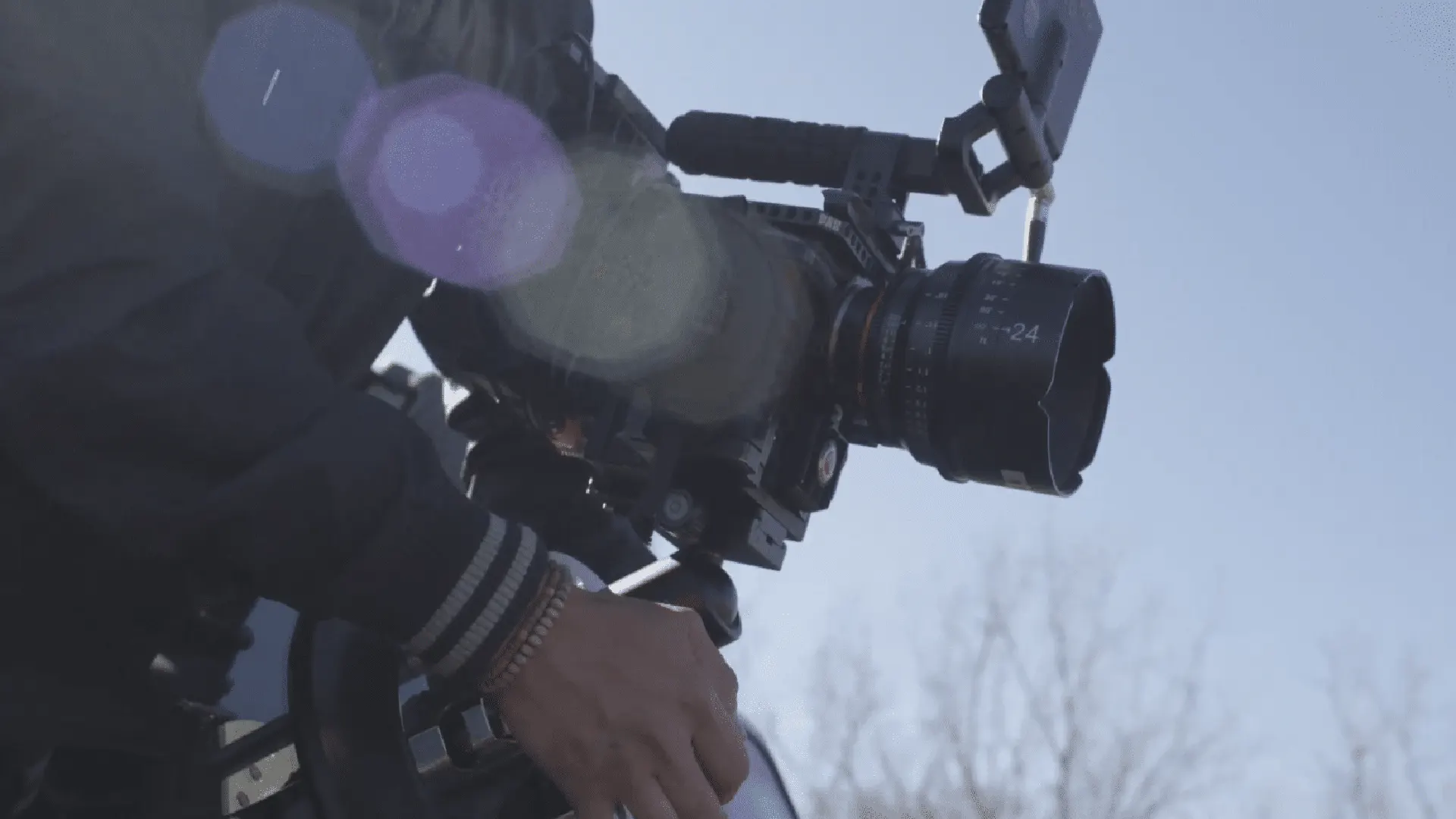
In today's competitive job market, recruitment videos have emerged as a powerful tool for attracting top talent. These visually engaging and immersive experiences allow companies to showcase their culture, values, and employee experiences in a way that resonates with potential candidates.
By creating compelling recruitment videos, organizations can differentiate themselves from competitors, build a strong employer brand, and connect with their ideal candidates on a deeper level. The benefits of using videos in recruitment are numerous, including increased engagement, better storytelling, and the ability to provide a realistic glimpse into the company's work environment and culture.
## Understanding Your Target Audience
Crafting effective recruitment videos starts with a deep understanding of your target audience - the ideal candidates you're aiming to attract. Knowing their preferences, motivations, and pain points is crucial to creating content that resonates and captures their attention. Conducting market research and gathering data on your target audience is an essential first step.
One effective approach is to analyze job seeker behavior and preferences, such as their social media usage patterns, content consumption habits, and engagement with different types of recruitment materials. This data can provide valuable insights into how your target audience consumes information and what types of content they find most engaging.
Monitoring industry trends and competitors' recruitment strategies is also important. This can help you identify gaps in the market, emerging best practices, and areas where you can differentiate your recruitment approach.
Based on your research findings, develop detailed candidate personas that represent your target audience segments. These personas should capture key demographic information, professional backgrounds, career aspirations, and pain points or challenges they face in their job search.
Once you have a deep understanding of your target audience, you can tailor your recruitment videos to their specific interests, values, and career aspirations. Utilizing [SEO copywriting](https://c-istudios.com/seo-copywriting-services/) techniques can also help optimize your videos for search engine visibility, ensuring they reach your target audience more effectively.
## Defining Your Employer Brand
In the highly competitive world of talent acquisition, a strong employer brand can be a game-changer. Your employer brand represents the unique value proposition and experience you offer as an employer, and it plays a crucial role in attracting and retaining top talent. In recruitment videos, effectively communicating your employer brand can differentiate your company from competitors and help candidates envision themselves as part of your organization.
To define and showcase your employer brand in recruitment videos, start by identifying your company's core values, mission, and unique selling points as an employer. What sets your organization apart from others in terms of culture, benefits, growth opportunities, or work-life balance? These differentiators should be woven into your employer's brand messaging and visuals.
Next, define your brand personality and tone. Will your recruitment videos have a professional, fun, innovative, or more casual tone? Consistency is key, so develop clear [Branding and graphic design](https://c-istudios.com/branding-and-graphic-design-services/) guidelines that outline your visual identity, color schemes, typography, and overall aesthetic.
Once you've established your employer brand elements, incorporate them throughout your recruitment videos. Highlight your company's culture, work environment, and employee experiences in a way that aligns with your brand values and messaging. Consider featuring testimonials from current employees who embody your brand values and can authentically share their experiences.
Consistent use of brand-aligned visuals, music, and messaging throughout the video is essential. From the opening shots to the closing call-to-action, every element should reinforce your employer's brand and create a cohesive, memorable experience for viewers.
By effectively defining and showcasing your employer brand in recruitment videos, you'll not only attract candidates who align with your values and culture but also reinforce your company's reputation as an employer of choice.
## Crafting Compelling Storylines
In today's content-saturated world, storytelling is a powerful tool for capturing attention and creating emotional connections with your audience. In the context of recruitment videos, compelling storytelling can be the key to engaging and inspiring potential candidates to pursue opportunities with your company.
At the heart of every great recruitment story should be relatable characters that viewers can connect with on a personal level. These characters could be current employees sharing their experiences or fictional job seekers representing your target audience's aspirations and challenges.
A compelling recruitment story should also have a clear conflict or challenge that resonates with your target audience. For example, the struggle to find the right career path, achieve work-life balance or overcome personal or professional obstacles. By presenting a relatable challenge, you create an opportunity for your company's culture, values, and employee experiences to provide a solution or inspiration.
As the story unfolds, incorporate memorable plot points and character development that keep viewers engaged and invested in the narrative. This could involve following an employee's journey from their initial hesitations about joining the company to finding fulfillment and growth in their role.
To craft a unique and memorable recruitment story, start by conducting interviews and gathering real employee stories and experiences. Identify common challenges and aspirations that resonate with your target audience, and weave these elements into a cohesive narrative.
[Creative marketing](https://c-istudios.com/creative-marketing-services/) techniques, such as incorporating humor, suspense, or unexpected plot twists, can help your recruitment story stand out and leave a lasting impression on viewers.
## Showcasing Your Company's Culture
One of the most powerful ways to attract qualified candidates through recruitment videos is by showcasing your company's unique culture, values, and work environment. Candidates today are looking for more than just a paycheck; they want to align themselves with organizations that share their values and provide a fulfilling work experience.
In your recruitment videos, highlight aspects of your company culture that set you apart from competitors. This could include showcasing y[our work](https://c-istudios.com/our-work/)-life balance initiatives, employee benefits, diversity and inclusion efforts, professional development opportunities, or community involvement and corporate social responsibility programs.
[Professional photography](https://c-istudios.com/professional-photography-services/) techniques can be instrumental in capturing authentic and engaging visuals of your workplace and employees. Utilize natural lighting and staging to create a realistic look and feel, and aim for candid shots that showcase employees in action and interacting with colleagues.
Focus on showcasing the physical work environment, from the office layout and design to amenities like break rooms, fitness centers, or outdoor spaces. These visual elements can provide candidates with a glimpse into the day-to-day experience of working at your company.
By effectively showcasing your company's culture in recruitment videos, you not only attract candidates who are a good fit for your organization but also reinforce your employer brand and reputation as a desirable place to work.
## Utilizing Visuals and Sound
In the world of recruitment videos, high-quality visuals, and sound are essential for creating a professional and engaging experience that resonates with potential candidates. From cinematography techniques to special effects and motion graphics, the visual elements you incorporate can make a significant impact on the overall effectiveness of your video.
One key aspect to consider is cinematography, which encompasses camera angles, shot composition, and lighting. Skilled cinematography can bring your recruitment story to life, creating visually stunning and emotionally engaging scenes that captivate viewers. Experiment with different angles and camera movements to add depth and dynamism to your shots, and pay close attention to lighting to ensure a polished, professional look.
[VFX compositing and animation](https://c-istudios.com/vfx-compositing-and-animation-services/) can also be powerful tools for enhancing your recruitment videos. These techniques can be used to create special effects, motion graphics, and animated elements that add visual interest and reinforce key messages or branding elements.
Sound plays an equally important role in creating an immersive and engaging recruitment video. Background music and sound effects can set the tone and mood, evoking specific emotions or enhancing key moments in the story. Voice-over narration or on-camera interviews can also be powerful storytelling tools, allowing employees or candidates to share their experiences and perspectives in an authentic and compelling way.
Ensuring clear and high-quality audio recording is crucial for maintaining professionalism and preventing distractions or technical issues that could detract from the overall viewing experience.
By combining visually stunning cinematography, effective use of special effects and motion graphics, thoughtful branding and graphic design, and high-quality sound, you can create recruitment videos that truly captivate and engage your target audience.
## Scriptwriting and Messaging
At the heart of every effective recruitment video is a compelling script that resonates with your target audience and delivers a clear and persuasive message. Crafting a well-written script is essential for ensuring your video captures attention, conveys key information, and ultimately inspires qualified candidates to pursue opportunities with your company.
A strong recruitment video script should incorporate the following key elements:
**Clear and Concise Messaging:** Ensure your script aligns with your employer's brand and conveys a clear, compelling message about what sets your company apart as an employer. Highlight your unique value proposition and key selling points in a way that resonates with your target audience.
**Engaging Storytelling:** Effective storytelling is crucial for capturing attention and creating an emotional connection with viewers. Weave a narrative that showcases your company culture, employee experiences, and the opportunities available, using relatable characters and compelling plot points.
**Authentic Language and Tone:** Craft a script that speaks directly to your target audience in a language and tone they can relate to. Avoid corporate jargon or overly formal language that could come across as inauthentic or disconnected from the experiences of job seekers.
When developing your script, it's essential to address common pain points and concerns that job seekers face. This could include challenges like finding work-life balance, navigating career transitions, or identifying companies that align with their values. By acknowledging and addressing these concerns, you demonstrate an understanding of your target audience's needs and position your company as a solution.
Incorporating persuasive language and clear calls-to-action (CTAs) is also crucial. Your script should inspire candidates to take the next step, whether that's applying for an open position, joining a talent community, or reaching out to a recruiter.
To boost the visibility and reach of your recruitment video, incorporate [video production](https://c-istudios.com/video-production-services/) services keywords into your script. By researching and using relevant terms your target audience is searching for, you'll ensure your video is easily found through search engines.
By crafting a compelling script that combines clear messaging, engaging storytelling, authentic language, and strategic optimization, you can create a recruitment video that truly resonates with your ideal candidates and inspires them to explore opportunities with your organization.
## Incorporating Testimonials and Interviews
Incorporating employee testimonials and interviews into your recruitment videos can be an incredibly powerful way to showcase the authentic experiences and perspectives of your workforce. These firsthand accounts add credibility and depth to your employer brand, providing candidates with a genuine glimpse into what it's truly like to work at your company.
There are numerous benefits to including employee testimonials and interviews in your recruitment videos:
1. **Authenticity and Credibility:** Hearing directly from current employees lends an air of authenticity and credibility to your employer's brand messaging. Candidates are more likely to trust and connect with real-life stories and experiences shared by those who have walked in their shoes.
2. **Insights into Company Culture:** Employee testimonials offer a window into your company's culture, values, and work environment. By sharing their personal experiences and perspectives, employees can convey the intangible aspects of your workplace that are difficult to capture through traditional recruitment materials.
3. **Relatable Role Models:** Featuring a diverse range of employees from different backgrounds, roles, and career stages can help candidates envision themselves as part of your organization. They may see themselves reflected in the experiences and aspirations of the employees featured, fostering a sense of connection and inspiration.
To effectively incorporate testimonials and interviews, start by preparing structured questions that will elicit genuine and insightful responses from your employees. Create a comfortable and relaxed environment for the interviews, ensuring that your employees feel at ease sharing their authentic experiences.
To ensure high-quality [video audio live streaming](https://c-istudios.com/video-audio-live-streaming/), adhere to best practices in video recording. Capture clear sound by minimizing distractions and ensuring every word is clearly audible. Additionally, using proper lighting and framing techniques can enhance the overall visual quality of the interviews.
When editing and incorporating the testimonials and interviews into your recruitment video, aim for a seamless integration into the overarching storyline. Use the employee voices to reinforce key messaging, provide real-life examples, or add emotional depth to the narrative.
By leveraging the power of employee testimonials and interviews, you can create recruitment videos that truly resonate with potential candidates, offering an authentic and compelling look at what it means to be part of your organization.
## Call to Action and Next Steps
After capturing the attention and interest of potential candidates with your compelling recruitment video, it's essential to provide a clear call to action (CTA) and outline the next steps they should take. A well-crafted CTA can be the catalyst that inspires qualified candidates to take action and pursue opportunities with your company.
When crafting your CTAs, it's essential to use persuasive language and create a sense of urgency or excitement. Highlight the unique benefits and opportunities your company offers, and clearly communicate the next steps candidates should take.
Ensure that your CTAs are prominently featured and visually appealing within the video. This could involve displaying a clickable button or URL or featuring a clear verbal prompt accompanied by visuals that reinforce the desired action.
After watching your recruitment video, provide candidates with additional resources and information about your company and job opportunities. This could include links to your career site, company culture pages, or employee testimonial videos. Offering a seamless application process or contact form for interested candidates can also help streamline the next steps.
To nurture and retain the interest of potential candidates, consider leveraging email campaigns and retargeting strategies. By staying top-of-mind and providing relevant content and updates, you can increase the likelihood of converting interested viewers into qualified applicants.
By including a clear and compelling call to action, along with well-defined next steps, you can maximize the impact of your recruitment videos and effectively guide qualified candidates through the hiring process.
## Measuring Success and Optimization
Creating compelling recruitment videos is just the first step in an effective talent acquisition strategy. To truly maximize the impact and return on investment (ROI) of your video efforts, it's crucial to measure their effectiveness and continuously optimize based on data-driven insights.
Key metrics to track and analyze include:
1. **Video Views, Engagement Rates, and Audience Retention:** Monitor how many times your videos are being watched, as well as engagement metrics like likes, comments, and shares. Additionally, track audience retention rates to gauge how well your content is holding viewers' attention throughout the duration of the video.
2. **Click-Through Rates (CTRs) and Conversions from CTAs:** Evaluate the performance of your calls-to-action by measuring click-through rates and the number of candidates who take the desired action, such as applying for a job or joining a talent community.
3. **Source of Traffic:** Understand where your video views and engagement are coming from, whether it's social media platforms, search engines, email campaigns, or other channels. This data can inform your distribution and promotion strategies.
4. **Candidate Quality and Hiring Success Rates:** Ultimately, the success of your recruitment videos should be measured by the quality of candidates they attract and the number of successful hires resulting from those candidates.
5. **Cost-Per-Hire and Return on Investment (ROI):** Calculate the cost-per-hire associated with your recruitment video campaigns, and evaluate the ROI by comparing the costs to the value of the hires made and the overall impact on your talent acquisition efforts.
To effectively track and analyze these metrics, leverage tools and platforms like video hosting platforms' analytics (e.g., [YouTube,](https://www.youtube.com/) Vimeo), [social media marketing](https://c-istudios.com/social-media-marketing-services/) services and ad platforms (e.g., Facebook, LinkedIn), and web analytics tools like Google Analytics.
Armed with data-driven insights, you can then implement strategies for optimizing and improving your future recruitment videos:
- **A/B Testing:** Experiment with different video formats, messaging, CTAs, and targeting strategies to determine what resonates best with your audience.
- **Refining Targeting and Distribution Channels:** Based on performance data, adjust your targeting parameters and distribution channels to reach the most engaged and qualified candidates more effectively.
- **Incorporating Feedback:** Seek feedback from candidates, hiring managers, and other stakeholders to identify areas for improvement and opportunities to better align your recruitment videos with their needs and expectations.
Continuously measuring, analyzing, and optimizing your recruitment video efforts is essential for ensuring their long-term success and maximizing the return on your investment. By leveraging data-driven insights and incorporating feedback from stakeholders, you can refine your approach, optimize your targeting and messaging, and create recruitment videos that consistently attract and engage the most qualified candidates.
This iterative process of measurement and optimization not only improves the effectiveness of your current recruitment videos but also informs future video strategies and content creation efforts. As you gather more data and insights, you'll develop a deeper understanding of what resonates with your target audience, enabling you to create more compelling and impactful videos that align with their preferences and career aspirations.
Embracing a data-driven mindset and committing to continuous improvement will position your organization as an industry leader in recruitment video marketing, consistently delivering high-quality content that attracts top talent and supports your overall talent acquisition goals.
## Work with C&I Studios
If you are planning a project like this, our team can take it from concept to final delivery. Explore our [video production services](https://c-istudios.com/video-production-services/), browse [our work](https://c-istudios.com/our-work/) to see how we tell brand stories, and [get in touch](https://c-istudios.com/contact/) when you are ready to start.
Originally published April 12, 2024
---
*This content is from [C&I Studios](https://c-istudios.com), a full-service production company.*
---
# Ultimate Guide to YouTube SEO: Boost Your Video Rankings
> Published: April 11, 2024
> Categories: Web & Tech
> Source: https://c-istudios.com/ultimate-guide-to-youtube-seo-boost-your-video-rankings/
---
.cib{--paper:#1b1d1f;--ink:#fff;--body:#d5d7d9;--muted:#8b9096;--line:rgba(255,255,255,.12);--thumb:#2b2e31;--card:#212426;--accent:#c02b0a;--blue:#5B8FA8;--serif:'Playfair Display',Georgia,serif;--sans:'Poppins',-apple-system,sans-serif;--measure:900px;background:var(--paper);color:var(--body);font-family:var(--sans);line-height:1.6;position:relative;left:50%;transform:translateX(-50%);width:90vw;max-width:1920px}
.cib *{box-sizing:border-box}
.cib .kicker{max-width:var(--measure);margin:58px auto 0;padding:0 22px;font-size:12.5px;font-weight:700;letter-spacing:2.5px;text-transform:uppercase;color:var(--blue)}
.cib h1.cibh1{text-wrap:balance;font-family:var(--serif);font-weight:500;font-size:clamp(46px,6vw,72px);line-height:1.08;color:var(--ink);max-width:var(--measure);margin:18px auto 0;padding:0 22px;letter-spacing:-.5px}
.cib .metarow{max-width:var(--measure);margin:20px auto 0;padding:0 22px;color:var(--muted);font-size:14px}
.cib .hero{position:relative;width:100%;height:0;padding-bottom:56.25%;overflow:hidden;margin:48px auto 0;border-top:1px solid var(--line);border-bottom:1px solid var(--line)}
.cib .hero .ph{width:100%;aspect-ratio:16/9;background:var(--thumb);border-top:1px solid var(--line);border-bottom:1px solid var(--line);display:flex;align-items:center;justify-content:center;color:#7d8288;font-size:13px;text-align:center;padding:0 20px}
.cib .body{max-width:var(--measure);margin:12px auto 0;padding:52px 22px 6px}
.cib .body.lead p:first-child{font-size:23px;line-height:1.62;color:var(--ink)}
.cib .body p{font-size:18.5px;line-height:1.85;margin:0 0 30px;color:var(--body)}
.cib .body h2{text-wrap:balance;font-family:var(--serif);font-weight:500;font-size:clamp(32px,4vw,48px);line-height:1.22;color:var(--ink);margin:70px 0 20px;letter-spacing:-.3px}
.cib .body h3{text-wrap:balance;font-family:var(--sans);font-weight:600;font-size:22px;color:var(--ink);margin:38px 0 8px}
.cib .body a{color:var(--ink);text-decoration:underline;text-decoration-color:rgba(255,255,255,.4);text-underline-offset:3px}
.cib .body a:hover{text-decoration-color:var(--ink)}
.cib .ctable{width:100%;border-collapse:collapse;margin:16px 0 30px;font-size:16px}
.cib .ctable th{background:#000;color:#fff;text-align:left;padding:10px 12px;font-family:var(--sans)}
.cib .ctable td{padding:10px 12px;border-bottom:1px solid var(--line);color:var(--body)}
.cib .inimg{position:relative;width:100%;height:0;padding-bottom:56.25%;overflow:hidden;margin:72px auto;border-top:1px solid var(--line);border-bottom:1px solid var(--line)}
.cib .inimg .ph{width:100%;aspect-ratio:16/9;background:var(--thumb);border-top:1px solid var(--line);border-bottom:1px solid var(--line);display:flex;align-items:center;justify-content:center;color:#7d8288;font-size:13px}
.cib .origpub{max-width:var(--measure);margin:60px auto 0;padding:26px 22px 0;border-top:1px solid var(--line);color:var(--muted);font-size:13.5px}
.cib .related{max-width:1200px;margin:64px auto 0;padding:34px 22px 76px}
.cib .related h3{font-family:var(--sans);font-size:12.5px;letter-spacing:2px;text-transform:uppercase;color:var(--ink);margin:0 0 24px}
.cib .grid{display:grid;grid-template-columns:repeat(3,1fr);gap:28px}
.cib .rc{background:var(--card);border:1px solid var(--line);display:block;text-decoration:none;color:inherit;transition:border-color .15s}
.cib a.rc:hover{border-color:rgba(255,255,255,.5)}
.cib .rc .thumb{position:relative;width:100%;height:0;padding-bottom:56.25%;background:var(--thumb);overflow:hidden}
.cib .rc .thumb img{position:absolute!important;top:0!important;left:0!important;width:100%!important;height:100%!important;object-fit:cover!important;margin:0!important}
.cib .rc .cc{padding:14px 15px 17px}
.cib .rc .rt{font-family:var(--serif);font-weight:500;font-size:16px;line-height:1.3;color:var(--ink);margin:0 0 6px}
.cib .rc .rm{font-size:11px;letter-spacing:1px;text-transform:uppercase;color:var(--muted)}
.cib img{margin:0!important;padding:0!important;display:block!important;vertical-align:top;max-width:100%}
.cib .hero img,.cib .inimg img{position:absolute!important;top:0!important;left:0!important;width:100%!important;height:100%!important;object-fit:cover!important;margin:0!important;padding:0!important;border:0!important;display:block!important;aspect-ratio:auto!important}
.cib .hero+.body{padding-top:36px}
@media(max-width:760px){.cib .grid{grid-template-columns:1fr}.cib .body h2{margin:52px 0 16px}.cib .body p{font-size:17.5px}.cib .inimg,.cib .hero{margin-top:44px}}
.cib .vembed{max-width:var(--measure);margin:44px auto;padding:0 22px}.cib .vembed .vwrap{position:relative;width:100%;height:0;padding-bottom:56.25%}.cib .vembed .vwrap iframe{position:absolute;top:0;left:0;width:100%;height:100%;border:0}
Web & Tech
# Ultimate Guide to YouTube SEO. Boost Your Video Rankings
11 min read

In the digital age, [YouTube](https://www.youtube.com/) has emerged as a powerful platform for video creators to share their content with a global audience. However, with millions of videos uploaded daily, standing out requires more than just great content. This is where YouTube SEO comes into play. By optimizing your videos for search engines, you can significantly boost your visibility and rankings on YouTube.
In this article, we'll delve into the key strategies and best practices for mastering YouTube SEO, from understanding the algorithm to optimizing your video metadata. Get ready to elevate your [video production](https://c-istudios.com/video-production-services/) and content creation to new heights.
## Understanding the YouTube Algorithm
To excel in video production and content creation on YouTube, it's crucial to grasp how its algorithm operates. This complex system determines which videos are promoted and recommended to viewers, significantly impacting your content's visibility and success.
At the heart of YouTube's algorithm is the goal to keep users engaged and on the platform for as long as possible. To achieve this, it evaluates a plethora of signals, with viewer engagement metrics playing a pivotal role. Metrics such as watch time, click-through rate, likes, comments, and shares are all taken into account. The more a video engages viewers, the more likely it is to be recommended to others.
Another critical aspect of the algorithm is relevance. When users search for content, YouTube aims to provide the most relevant results. This is where [SEO copywriting](https://c-istudios.com/seo-copywriting-services/) comes into play. By strategically incorporating keywords into your video titles, descriptions, and tags, you can enhance your video's relevance for specific search queries. However, it's essential to strike a balance.
Video metadata also plays a crucial role in how the algorithm perceives your content. Metadata includes your video's title, description, tags, and even the filename of the video you upload. These elements provide context to YouTube's algorithm, helping it understand the subject matter of your video and how it relates to user searches.
## Keyword Research for YouTube
In the realm of YouTube SEO, keyword research is a cornerstone for success. Just as a well-crafted script is essential for a captivating video, selecting the right keywords is crucial for ensuring that your content reaches its intended audience. This process involves identifying the terms and phrases that potential viewers are using to search for content similar to yours.
The importance of keyword research cannot be overstated. It not only helps you understand what your audience is looking for but also enables you to tailor your content to meet their needs. By integrating relevant keywords into your video titles, descriptions, and tags, you increase the chances of your content being discovered by users searching for those terms.
Several tools and strategies can aid in your keyword research journey. Google's Keyword Planner is a popular choice, offering insights into search volumes and competition levels for various keywords. However, it's essential to look beyond just Google. YouTube's own search feature can provide valuable clues about what people are searching for on the platform. Simply start typing a keyword into the YouTube search bar, and take note of the autocomplete suggestions that appear.
Another effective strategy is to analyze the keywords used by successful videos in your niche. By studying the titles, descriptions, and tags of these videos, you can identify common keywords that you might incorporate into your own content. This approach not only helps with keyword discovery but also provides insights into the language and terms that resonate with your target audience.
## Optimizing Video Titles and Descriptions
Crafting compelling titles and descriptions is a crucial aspect of [video production](https://c-istudios.com/video-production-services/), especially when it comes to documentary [film production](https://c-istudios.com/film-and-tv-production/) or any other genre on YouTube. These elements not only provide viewers with a snapshot of what your video is about but also play a significant role in your video's search engine optimization (SEO).
A well-optimized title should be attention-grabbing and informative, giving viewers a clear idea of what to expect from your video. It should ideally be under 60 characters to ensure that it's fully visible in search results. Incorporating relevant keywords into your title can significantly enhance its visibility. However, it's important to strike a balance between SEO and creativity. Your title should flow naturally and entice viewers to click on your video.
Similarly, your video description is an opportunity to provide more context and information about your content. The first few lines are especially crucial, as they appear in search results and above the "Show More" fold. Use this space to include a brief overview of your video, integrating keywords naturally. This not only aids in search visibility but also helps viewers decide whether your video is what they're looking for.
Beyond the introductory lines, use the rest of the description to delve deeper into the content of your video. You can include a more detailed summary, relevant links, and social media handles. Additionally, incorporating a call to action (CTA) is a best practice.
For those involved in documentary film production or any content creation, storytelling doesn't end with the video itself. Your title and description are extensions of your narrative, drawing viewers in and guiding them through your content. Ensure that they are aligned with the tone and style of your video, creating a cohesive viewing experience.
In summary, optimizing your video titles and descriptions is a critical step in enhancing your YouTube SEO. By crafting titles that are both compelling and keyword-rich, and descriptions that provide value and encourage engagement, you can improve your video's visibility and attract a larger audience to your channel.
## Creating Engaging Video Content
In the competitive landscape of YouTube, creating high-quality, engaging videos is essential for capturing and retaining viewer attention. Whether you're involved in [VFX compositing and animation](https://c-istudios.com/vfx-compositing-and-animation-services/) or any other genre, the key to success lies in producing content that resonates with your audience and keeps them watching.
One of the most crucial aspects of engaging video content is storytelling. A well-structured narrative can captivate viewers and take them on a journey, making your video memorable and shareable. Start with a strong hook to grab attention in the first few seconds, then build your story with a clear beginning, middle, and end. Use visuals, music, and pacing to enhance the emotional impact and keep viewers engaged.
Video quality also plays a significant role in viewer engagement. High-resolution footage, clear audio, and professional editing can make a significant difference in how your content is perceived.
The length of your video is another important factor to consider. While there's no one-size-fits-all answer, it's essential to strike a balance between providing enough value and maintaining viewer interest. Analyze your audience's watch time metrics to determine the optimal video length for your content. Keep in mind that longer videos can provide more value and boost watch time, but they need to be engaging enough to keep viewers watching.
Engagement is not just about what's on the screen; it's also about how you interact with your audience. Encourage viewers to like, comment, and share your videos. Respond to comments and foster a sense of community around your channel. This interaction can increase engagement metrics and signal to YouTube's algorithm that your content is worth promoting.
## Optimizing Video Tags and Metadata
In the intricate world of YouTube SEO, optimizing video tags and metadata is a crucial step in enhancing your video's visibility and reach. This process is akin to fine-tuning the settings on an audio engineering console, where each adjustment can significantly impact the final output.
Video tags are keywords that provide context about your video's content. They help YouTube's algorithm understand what your video is about and whom it should be shown to. When selecting tags, it's essential to choose keywords that are relevant to your video's content and are likely to be used by your target audience in their search queries.
The metadata of your video includes the title, description, and tags. Each of these elements should be optimized to improve your video's searchability and click-through rate. As discussed earlier, your title and description should be compelling and include your primary keywords.
However, it's equally important to ensure that your tags complement the title and description, creating a cohesive set of metadata that accurately represents your video.
To optimize your tags effectively, consider using tools like TubeBuddy or VidIQ, which can provide keyword suggestions and insights into the tags used by successful videos in your niche. These tools can also help you monitor the performance of your tags and adjust them as needed to improve your video's visibility.
When optimizing your metadata, it's crucial to strike a balance between SEO and viewer experience. While including relevant keywords is important, your metadata should also be clear, informative, and engaging to encourage clicks and views.
Optimizing your video tags and metadata is a vital component of a successful YouTube SEO strategy. By carefully selecting tags and crafting metadata that accurately represent your content, you can improve your video's visibility and attract more viewers.
## Building Backlinks and Social Signals
In the digital landscape, backlinks and social signals are akin to word-of-mouth recommendations, serving as powerful indicators of your video's relevance and popularity. For YouTube SEO, these elements are crucial in signaling to the algorithm that your content is valuable and worth ranking higher in search results.
Backlinks, or inbound links from other websites to your YouTube video, can significantly boost your video's authority and search visibility. They act as endorsements, telling search engines that your content is credible and useful. To build backlinks, consider collaborating with bloggers, influencers, or other content creators in your niche. Guest blogging or featuring in interviews can provide opportunities to link back to your videos.
Social signals, such as likes, shares, and comments on social media platforms, also play a vital role in your YouTube SEO strategy. They indicate to YouTube's algorithm that your content is engaging and resonates with your audience. To enhance your social signals, leverage social media marketing services to promote your videos across various platforms. Share your videos on Twitter, Facebook, Instagram, and LinkedIn, encouraging your followers to like, comment, and share. Engaging with your audience through polls, questions, or challenges can also boost interaction and increase your video's visibility.
Creating shareable content is key to generating backlinks and social signals. Focus on producing videos that provide value, entertain, or solve a problem for your audience. High-quality content is more likely to be shared and linked to, amplifying your reach and SEO efforts.
In addition to promoting your videos, engage with your audience on social media by responding to comments, participating in discussions, and sharing relevant content from other creators. Building a strong online community not only enhances your social signals but also fosters loyalty and repeat viewership.
By building backlinks through collaborations and online engagement, and by boosting social signals through effective social media marketing services and audience interaction, you can improve your video's ranking and visibility on YouTube. This, in turn, can lead to increased views, subscribers, and overall success for your channel.
## Engaging with Your Audience
In the dynamic world of YouTube, engaging with your audience is not just a courtesy, it's a crucial strategy for growth and sustainability. Much like regular web maintenance ensures a website's optimal performance, actively interacting with your viewers helps maintain and strengthen your channel's community.
The importance of audience engagement cannot be overstressed. It fosters a sense of community, loyalty, and trust between you and your viewers. When you respond to comments, address feedback, and engage in conversations, you're not just building relationships; you're also enhancing your channel's visibility. YouTube's algorithm favors videos and channels with high engagement rates, so your interactions can directly influence your content's reach and ranking.
To effectively engage with your audience, start by dedicating time to read and respond to comments on your videos. Acknowledge positive feedback, address questions or concerns, and even engage in light-hearted banter. This not only shows that you value your viewers' input but also encourages more comments, boosting your video's engagement metrics.
Another strategy is to actively involve your audience in your content creation process. Ask for their opinions, suggestions, or questions in your videos and incorporate their responses into future content. This creates a feedback loop that keeps viewers invested in your channel and eager to engage with your videos.
Social media platforms provide additional avenues for engagement. Share behind-the-scenes content, updates, and teasers on platforms like Instagram, Twitter, and Facebook to keep your audience interested and engaged between video uploads. Use these platforms to interact with your followers, answer questions, and share user-generated content related to your channel.
Building a community around your channel also involves acknowledging and celebrating your viewers' milestones and achievements. Highlighting viewer comments, featuring fan art, or shouting out active community members in your videos can make your audience feel valued and part of something larger.
Engaging with your audience is a vital aspect of YouTube's success, akin to regular [web maintenance](https://c-istudios.com/web-maintenance/) for optimal online presence. By responding to comments, involving viewers in your content, and utilizing social media for further interaction, you can build a strong, active community around your channel. This not only enhances your viewers' experience but also positively impacts your channel's growth and visibility on the platform.
## Work with C&I Studios
If you are planning a project like this, our team can take it from concept to final delivery. Explore our [AI video services](https://c-istudios.com/ai-video-services/), browse [our work](https://c-istudios.com/our-work/) to see how we tell brand stories, and [get in touch](https://c-istudios.com/contact/) when you are ready to start.
Originally published April 11, 2024
---
*This content is from [C&I Studios](https://c-istudios.com), a full-service production company.*
---
# Storyboarding Essentials: Planning Your Video Shot by Shot
> Published: April 11, 2024
> Categories: Film & TV
> Source: https://c-istudios.com/storyboarding-essentials-planning-your-video-shot-by-shot/
---
.cib{--paper:#1b1d1f;--ink:#fff;--body:#d5d7d9;--muted:#8b9096;--line:rgba(255,255,255,.12);--thumb:#2b2e31;--card:#212426;--accent:#c02b0a;--blue:#5B8FA8;--serif:'Playfair Display',Georgia,serif;--sans:'Poppins',-apple-system,sans-serif;--measure:900px;background:var(--paper);color:var(--body);font-family:var(--sans);line-height:1.6;position:relative;left:50%;transform:translateX(-50%);width:90vw;max-width:1920px}
.cib *{box-sizing:border-box}
.cib .kicker{max-width:var(--measure);margin:58px auto 0;padding:0 22px;font-size:12.5px;font-weight:700;letter-spacing:2.5px;text-transform:uppercase;color:var(--blue)}
.cib h1.cibh1{text-wrap:balance;font-family:var(--serif);font-weight:500;font-size:clamp(46px,6vw,72px);line-height:1.08;color:var(--ink);max-width:var(--measure);margin:18px auto 0;padding:0 22px;letter-spacing:-.5px}
.cib .metarow{max-width:var(--measure);margin:20px auto 0;padding:0 22px;color:var(--muted);font-size:14px}
.cib .hero{position:relative;width:100%;height:0;padding-bottom:56.25%;overflow:hidden;margin:48px auto 0;border-top:1px solid var(--line);border-bottom:1px solid var(--line)}
.cib .hero .ph{width:100%;aspect-ratio:16/9;background:var(--thumb);border-top:1px solid var(--line);border-bottom:1px solid var(--line);display:flex;align-items:center;justify-content:center;color:#7d8288;font-size:13px;text-align:center;padding:0 20px}
.cib .body{max-width:var(--measure);margin:12px auto 0;padding:52px 22px 6px}
.cib .body.lead p:first-child{font-size:23px;line-height:1.62;color:var(--ink)}
.cib .body p{font-size:18.5px;line-height:1.85;margin:0 0 30px;color:var(--body)}
.cib .body h2{text-wrap:balance;font-family:var(--serif);font-weight:500;font-size:clamp(32px,4vw,48px);line-height:1.22;color:var(--ink);margin:70px 0 20px;letter-spacing:-.3px}
.cib .body h3{text-wrap:balance;font-family:var(--sans);font-weight:600;font-size:22px;color:var(--ink);margin:38px 0 8px}
.cib .body a{color:var(--ink);text-decoration:underline;text-decoration-color:rgba(255,255,255,.4);text-underline-offset:3px}
.cib .body a:hover{text-decoration-color:var(--ink)}
.cib .ctable{width:100%;border-collapse:collapse;margin:16px 0 30px;font-size:16px}
.cib .ctable th{background:#000;color:#fff;text-align:left;padding:10px 12px;font-family:var(--sans)}
.cib .ctable td{padding:10px 12px;border-bottom:1px solid var(--line);color:var(--body)}
.cib .inimg{position:relative;width:100%;height:0;padding-bottom:56.25%;overflow:hidden;margin:72px auto;border-top:1px solid var(--line);border-bottom:1px solid var(--line)}
.cib .inimg .ph{width:100%;aspect-ratio:16/9;background:var(--thumb);border-top:1px solid var(--line);border-bottom:1px solid var(--line);display:flex;align-items:center;justify-content:center;color:#7d8288;font-size:13px}
.cib .origpub{max-width:var(--measure);margin:60px auto 0;padding:26px 22px 0;border-top:1px solid var(--line);color:var(--muted);font-size:13.5px}
.cib .related{max-width:1200px;margin:64px auto 0;padding:34px 22px 76px}
.cib .related h3{font-family:var(--sans);font-size:12.5px;letter-spacing:2px;text-transform:uppercase;color:var(--ink);margin:0 0 24px}
.cib .grid{display:grid;grid-template-columns:repeat(3,1fr);gap:28px}
.cib .rc{background:var(--card);border:1px solid var(--line);display:block;text-decoration:none;color:inherit;transition:border-color .15s}
.cib a.rc:hover{border-color:rgba(255,255,255,.5)}
.cib .rc .thumb{position:relative;width:100%;height:0;padding-bottom:56.25%;background:var(--thumb);overflow:hidden}
.cib .rc .thumb img{position:absolute!important;top:0!important;left:0!important;width:100%!important;height:100%!important;object-fit:cover!important;margin:0!important}
.cib .rc .cc{padding:14px 15px 17px}
.cib .rc .rt{font-family:var(--serif);font-weight:500;font-size:16px;line-height:1.3;color:var(--ink);margin:0 0 6px}
.cib .rc .rm{font-size:11px;letter-spacing:1px;text-transform:uppercase;color:var(--muted)}
.cib img{margin:0!important;padding:0!important;display:block!important;vertical-align:top;max-width:100%}
.cib .hero img,.cib .inimg img{position:absolute!important;top:0!important;left:0!important;width:100%!important;height:100%!important;object-fit:cover!important;margin:0!important;padding:0!important;border:0!important;display:block!important;aspect-ratio:auto!important}
.cib .hero+.body{padding-top:36px}
@media(max-width:760px){.cib .grid{grid-template-columns:1fr}.cib .body h2{margin:52px 0 16px}.cib .body p{font-size:17.5px}.cib .inimg,.cib .hero{margin-top:44px}}
.cib .vembed{max-width:var(--measure);margin:44px auto;padding:0 22px}.cib .vembed .vwrap{position:relative;width:100%;height:0;padding-bottom:56.25%}.cib .vembed .vwrap iframe{position:absolute;top:0;left:0;width:100%;height:100%;border:0}
Film & TV
# Storyboarding Essentials. Planning Your Video Shot by Shot
10 min read
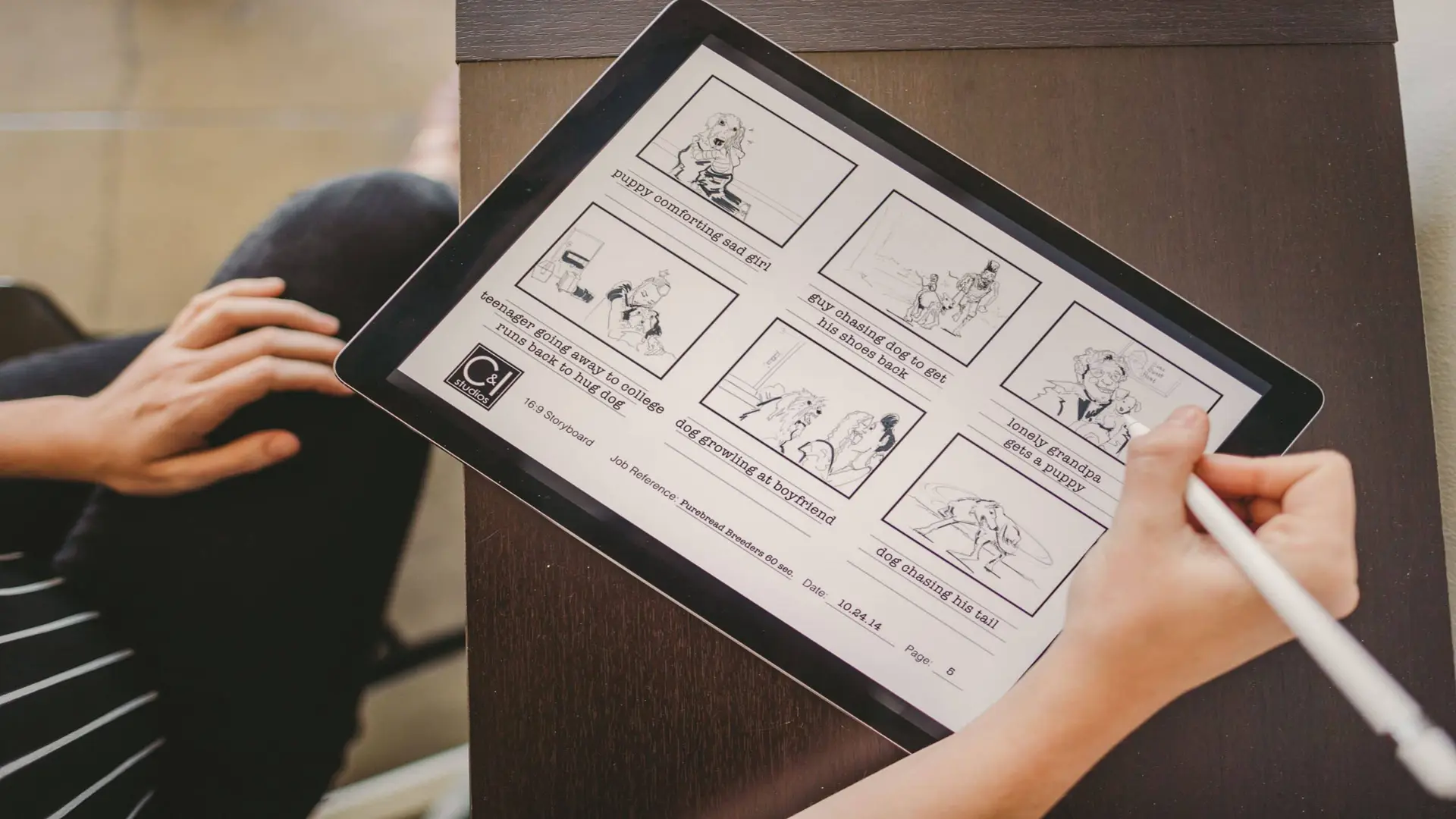
Storyboarding is a crucial step in the [video production](https://c-istudios.com/video-production-services/) process that allows filmmakers and content creators to visualize their ideas shot by shot. It serves as a visual blueprint, guiding the production team through the narrative, camera angles, and transitions. A well-crafted storyboard ensures that everyone involved in the project has a clear understanding of the vision, leading to a more efficient and cohesive final product.
In this article, we will explore the essentials of storyboarding and provide practical tips for planning your video effectively, ensuring that your creative vision comes to life on screen.
## Understanding Storyboarding
Storyboarding is a vital component of [video production](https://c-istudios.com/video-production-services/) that serves as a visual representation of how a film or video will unfold, shot by shot. It's essentially a series of illustrations or images displayed in sequence for the purpose of pre-visualizing a motion picture, animation, motion graphic, or interactive media sequence. The storyboard is the first opportunity to visually explore your story and offers a roadmap for the production team.
The purpose of storyboarding is manifold. It helps filmmakers and content creators organize their thoughts and ideas and provides a tangible outline of the video's narrative flow. By mapping out the sequence of events, camera angles, and transitions, the storyboard ensures that all team members have a clear understanding of the project's direction. This level of clarity is crucial for aligning the vision of directors, cinematographers, and other key stakeholders in the production process.
In pre-production planning, storyboards play a crucial role in communicating and refining the visual and narrative aspects of the project. They allow for the identification of potential issues or challenges that might arise during filming, such as complex camera movements or special effects. Addressing these concerns early on can save time and resources in the later stages of production.
Storyboarding also aids in determining the visual style and aesthetic of the video. It's an opportunity to experiment with different framing, composition, and pacing before committing to the final shots. This creative exploration can lead to more innovative and visually engaging content.
Moreover, storyboards are instrumental in planning the logistics of the shoot. They provide a clear guide for what needs to be filmed and can help in scheduling, location scouting, and budgeting. By having a detailed storyboard, the production team can ensure that all necessary shots are captured efficiently and effectively.
Storyboarding is an essential step in the video production process that helps bring clarity and direction to a project. It serves as a visual guide that ensures all team members are aligned with the creative vision, ultimately leading to a more streamlined and successful production.
## Key Elements of a Storyboard
A storyboard is a critical tool in [film and TV production](https://c-istudios.com/film-and-tv-production/), serving as a visual blueprint for the entire project. It's composed of several essential elements that help convey the story, emotions, and actions that will take place in each scene. Understanding these components is crucial for creating an effective storyboard that accurately represents your vision.
1. **Shot Images:** These are the individual panels or frames that make up the storyboard, each representing a different camera shot or angle. The images should be sketched or illustrated to give a clear idea of what the final shot will look like. They don't have to be highly detailed, but they should effectively convey the composition, framing, and key elements in the scene.
2. **Action:** This refers to the movement or activity that occurs within each shot. It could be anything from a character walking across the room to an explosion. Action should be clearly depicted in the shot images and accompanied by brief descriptions if necessary to clarify complex movements or sequences.
3. **Dialogue:** If there's dialogue in the scene, it should be included in the storyboard, usually written below the corresponding shot image. This helps in planning the timing of the dialogue with the visuals and ensures that the spoken words align with the character's actions and expressions.
4. **FX (Special Effects):** Any special effects, visual effects, or sound effects that are integral to the scene should be noted in the storyboard. This could include things like CGI elements, practical effects, or specific sound cues. Indicating these effects helps the production team plan and execute them effectively during filming.
5. **Shot Number:** Each shot in the storyboard should be numbered sequentially. This makes it easier to reference specific shots during discussions and ensures that everyone is on the same page during production.
For effective visual representation, it's important to keep the storyboard clear and concise. Use simple sketches or images that focus on the essential elements of each shot. Utilize arrows or annotations to indicate camera movements or changes in framing. Most importantly, ensure that the storyboard flows logically from one shot to the next, creating a coherent visual narrative.
By incorporating these key elements into your storyboard, you'll be able to communicate your vision effectively and streamline the production process.
## Creating a Storyboard. Step-by-Step Guide
Creating a storyboard is a vital step in pre-production, acting as a visual guide that maps out your video or film shot by shot. It starts with a deep dive into the script, parsing it to understand its nuances and key moments. This is where the vision begins to take shape, translating the written word into visual storytelling. As you break the script into scenes, it becomes clearer which moments are pivotal, requiring careful depiction on your storyboard.
The process of visualizing key moments for each scene involves a mix of creativity and strategic planning. You're not just drawing; you're imagining the flow of action, the exchange of dialogues, and how each scene transitions to the next. This step is where your [creative marketing](https://c-istudios.com/creative-marketing-services/) skills shine, as you determine the most impactful way to present each scene to engage your audience effectively.
Sequentially arranging these visualized moments into shots brings the storyboard to life, creating a narrative flow that's both logical and visually engaging. Each shot is carefully considered for its contribution to the story, ensuring that the storyboard not only represents the script accurately but enhances it, adding layers of visual storytelling that words alone cannot convey.
Accompanying each shot with captions adds context, specifying action, dialogue, camera angles, and any special effects. This attention to detail ensures that nothing is left to interpretation, providing a clear guide for directors, cinematographers, and the entire production team.
Reviewing the storyboard as a whole allows for adjustments and refinements, ensuring that the visual narrative is coherent and compelling. This step is crucial for identifying any gaps or inconsistencies in the storyline or visual sequence, allowing for corrections before production begins.
Different methods can be employed in creating a storyboard, from hand-drawn sketches to digital creations or even collages. Each method has its advantages, whether it's the tactile feel of hand-drawing that allows for immediate revisions or the precision and flexibility of digital tools. The choice often depends on personal preference, the complexity of the project, and the resources available.
The creation of a storyboard is not just a preparatory step but a creative journey in itself. It's a process that involves visualization, planning, and a deep understanding of storytelling. This journey from script to storyboard is a crucial phase in bringing a story to life, ensuring that the final video or film is a coherent, visually stunning piece that captures the essence of the original script and conveys the intended message to the audience.
## Adding Annotations and Details
Once the basic structure of your storyboard is in place, it's time to add annotations and details to each shot. This step is crucial for providing clarity and ensuring that every aspect of the scene is communicated effectively to the production team.
Start by adding action descriptions to each frame. These should be concise yet descriptive, outlining what is happening in the scene, the movement of characters or objects, and any significant changes in the environment. This helps the director and actors understand the dynamics of each shot and how it contributes to the overall narrative.
Next, include dialogue or any important sound cues. If a character is speaking or if there are critical sounds that need to be synchronized with the visuals, note these down. This ensures that the audio elements are well-integrated with the visual storytelling, enhancing the impact of the scene.
Camera movements and angles are another crucial aspect to annotate. Indicate whether the camera is static, panning, zooming, or using any other technique. This guides the cinematographer in capturing the scene as envisioned in the storyboard.
Transitions between shots are also important to note. Whether it's a cut, fade, dissolve, or any other type of transition, specifying this helps in editing the final video seamlessly.
Finally, add any special effects or visual effects that are planned for the scene. This could include anything from simple overlays to complex CGI. By annotating these effects in the storyboard, the post-production team can prepare accordingly and ensure that the effects align with the director's vision.
## Reviewing and Revising Your Storyboard
Once your storyboard is complete with all the necessary details and annotations, it's time to review and revise it to ensure that it effectively communicates your vision. This step is crucial for refining your storyboard and making it a valuable tool for your video production.
Begin by reviewing your storyboard as a whole. Look at the flow of the narrative and ensure that it is coherent and engaging. Each shot should seamlessly lead into the next, creating a smooth visual and narrative progression. Pay attention to the pacing of the scenes and make sure that it aligns with the tone and rhythm of your story.
Next, seek feedback from your team, including the director, cinematographer, and other key stakeholders. Their insights and perspectives can help identify areas for improvement that you might have overlooked. Constructive feedback is invaluable in refining your storyboard and ensuring that it meets the production team's needs and expectations.
Based on the feedback received, make the necessary revisions to your storyboard. This might involve adjusting camera angles, reordering shots, or adding more detail to certain scenes. The goal is to enhance the clarity and effectiveness of your storyboard, making it a more accurate representation of your final video.
It's important to be open to changes during this phase. A storyboard is not set in stone; it's a dynamic tool that evolves as your understanding of the story and its visual representation deepens. Embrace the revision process as an opportunity to fine-tune your storyboard and elevate the quality of your video production.
By dedicating time and effort to this step, you can create a storyboard that truly serves as the foundation for a successful video project.
## Utilizing Storyboarding Software
In the realm of video production, storyboarding software has revolutionized the way creators visualize and plan their projects. Among the various tools available, Boards stands out for its user-friendly features and collaborative capabilities.
The primary benefit of using software like Boards for video storyboarding is the streamlining of the creative process. Traditional hand-drawn storyboards can be time-consuming and less flexible when revisions are needed. With Boards, changes can be made quickly and efficiently, saving valuable time and resources.
One of the key features of Boords is its intuitive interface. Even those with limited technical skills can easily navigate the software and start creating storyboards right away. This accessibility ensures that the focus remains on the creative aspects of storyboarding rather than grappling with complex software.
Collaboration is another significant advantage of using Boards. Multiple team members can work on the same storyboard simultaneously, providing real-time feedback and suggestions. This collaborative environment fosters a more cohesive and well-thought-out final product.
Built-in drawing tools in Boards allow creators to sketch and visualize their shots directly within the software. For those who prefer using external images, the software also supports image upload, making it easy to integrate pre-existing visuals into the storyboard.
Timing indicators are a crucial feature for planning the pacing of the video. Boards provide tools to specify the duration of each shot, helping to create a balanced and well-timed narrative flow.
Animatic preview is another standout feature. It enables creators to view a rough [animation](https://c-istudios.com/vfx-compositing-and-animation-services/) of their storyboard, giving them a better sense of how the final video will look and feel. This preview can be instrumental in making necessary adjustments before moving into full production.
Lastly, Boards offers a variety of storyboard templates that cater to different video styles and genres. These templates serve as a starting point, helping creators to structure their storyboards effectively.
## Best Practices for Effective Storyboarding
Storyboarding is a crucial step in the video production process, and following best practices can ensure that your storyboard effectively communicates your vision.
Here are some techniques and tips for creating an impactful storyboard:
1. **Utilize Camera Angles and Movements:** Think about how different camera angles and movements can enhance your story. For example, a low-angle shot can make a character appear more powerful, while a high-angle shot can make them seem vulnerable. Consider using tracking shots, pans, or tilts to add dynamism to your scenes.
2. **Convey Character Expression and Movement:** Your storyboard should clearly depict the emotions and actions of your characters. Use facial expressions and body language to convey their feelings and intentions. This will help the director and actors understand how to bring the characters to life on screen.
3. **Collaborate with Directors and Animators:** Storyboarding is a collaborative process. Work closely with the director to ensure that your storyboard aligns with their vision for the film. If you're working on an animated project, involve the animators early on to discuss how the characters and scenes will be brought to life.
4. **Use Color and Lighting:** While storyboards are often created in black and white, adding color and lighting cues can provide additional information about the mood and atmosphere of each scene. This can be especially important for projects where visual aesthetics are a key element of the story.
5. **Incorporate Text and Annotations:** Use text and annotations to provide additional details about each shot, such as camera movements, sound effects, or special effects. This can help ensure that everyone involved in the production has a clear understanding of what each shot entails.
6. **Seek Feedback:** Once you've completed your storyboard, share it with other members of the production team for feedback. Be open to suggestions and willing to make revisions based on their input.
7. **Keep it Simple:** Remember that the purpose of a storyboard is to communicate your ideas clearly and efficiently. Avoid overcomplicating your drawings or adding unnecessary details that could distract from the main story.
By following these best practices, you can create a storyboard that effectively guides the production process and helps bring your creative vision to life. For more insights on effective storyboarding, explore resources like Boords' guide on best practices and techniques in storyboarding.
Incorporating [branding and graphic design](https://c-istudios.com/branding-and-graphic-design-services/) principles into your storyboard can enhance the visual appeal and coherence of your project.
## Work with C&I Studios
If you are planning a project like this, our team can take it from concept to final delivery. Explore our [film and TV production](https://c-istudios.com/film-and-tv-production/), browse [our work](https://c-istudios.com/our-work/) to see how we tell brand stories, and [get in touch](https://c-istudios.com/contact/) when you are ready to start.
Originally published April 11, 2024
---
*This content is from [C&I Studios](https://c-istudios.com), a full-service production company.*
---
# Building a #1 Brand Identity With Corporate Video Production
> Published: April 10, 2024
> Categories: Commercial & Brand
> Source: https://c-istudios.com/building-a-brand-identity-with-corporate-video-production/
---
.cib{--paper:#1b1d1f;--ink:#fff;--body:#d5d7d9;--muted:#8b9096;--line:rgba(255,255,255,.12);--thumb:#2b2e31;--card:#212426;--accent:#c02b0a;--blue:#5B8FA8;--serif:'Playfair Display',Georgia,serif;--sans:'Poppins',-apple-system,sans-serif;--measure:900px;background:var(--paper);color:var(--body);font-family:var(--sans);line-height:1.6;position:relative;left:50%;transform:translateX(-50%);width:90vw;max-width:1920px}
.cib *{box-sizing:border-box}
.cib .kicker{max-width:var(--measure);margin:58px auto 0;padding:0 22px;font-size:12.5px;font-weight:700;letter-spacing:2.5px;text-transform:uppercase;color:var(--blue)}
.cib h1.cibh1{text-wrap:balance;font-family:var(--serif);font-weight:500;font-size:clamp(46px,6vw,72px);line-height:1.08;color:var(--ink);max-width:var(--measure);margin:18px auto 0;padding:0 22px;letter-spacing:-.5px}
.cib .metarow{max-width:var(--measure);margin:20px auto 0;padding:0 22px;color:var(--muted);font-size:14px}
.cib .hero{position:relative;width:100%;height:0;padding-bottom:56.25%;overflow:hidden;margin:48px auto 0;border-top:1px solid var(--line);border-bottom:1px solid var(--line)}
.cib .hero .ph{width:100%;aspect-ratio:16/9;background:var(--thumb);border-top:1px solid var(--line);border-bottom:1px solid var(--line);display:flex;align-items:center;justify-content:center;color:#7d8288;font-size:13px;text-align:center;padding:0 20px}
.cib .body{max-width:var(--measure);margin:12px auto 0;padding:52px 22px 6px}
.cib .body.lead p:first-child{font-size:23px;line-height:1.62;color:var(--ink)}
.cib .body p{font-size:18.5px;line-height:1.85;margin:0 0 30px;color:var(--body)}
.cib .body h2{text-wrap:balance;font-family:var(--serif);font-weight:500;font-size:clamp(32px,4vw,48px);line-height:1.22;color:var(--ink);margin:70px 0 20px;letter-spacing:-.3px}
.cib .body h3{text-wrap:balance;font-family:var(--sans);font-weight:600;font-size:22px;color:var(--ink);margin:38px 0 8px}
.cib .body a{color:var(--ink);text-decoration:underline;text-decoration-color:rgba(255,255,255,.4);text-underline-offset:3px}
.cib .body a:hover{text-decoration-color:var(--ink)}
.cib .ctable{width:100%;border-collapse:collapse;margin:16px 0 30px;font-size:16px}
.cib .ctable th{background:#000;color:#fff;text-align:left;padding:10px 12px;font-family:var(--sans)}
.cib .ctable td{padding:10px 12px;border-bottom:1px solid var(--line);color:var(--body)}
.cib .inimg{position:relative;width:100%;height:0;padding-bottom:56.25%;overflow:hidden;margin:72px auto;border-top:1px solid var(--line);border-bottom:1px solid var(--line)}
.cib .inimg .ph{width:100%;aspect-ratio:16/9;background:var(--thumb);border-top:1px solid var(--line);border-bottom:1px solid var(--line);display:flex;align-items:center;justify-content:center;color:#7d8288;font-size:13px}
.cib .origpub{max-width:var(--measure);margin:60px auto 0;padding:26px 22px 0;border-top:1px solid var(--line);color:var(--muted);font-size:13.5px}
.cib .related{max-width:1200px;margin:64px auto 0;padding:34px 22px 76px}
.cib .related h3{font-family:var(--sans);font-size:12.5px;letter-spacing:2px;text-transform:uppercase;color:var(--ink);margin:0 0 24px}
.cib .grid{display:grid;grid-template-columns:repeat(3,1fr);gap:28px}
.cib .rc{background:var(--card);border:1px solid var(--line);display:block;text-decoration:none;color:inherit;transition:border-color .15s}
.cib a.rc:hover{border-color:rgba(255,255,255,.5)}
.cib .rc .thumb{position:relative;width:100%;height:0;padding-bottom:56.25%;background:var(--thumb);overflow:hidden}
.cib .rc .thumb img{position:absolute!important;top:0!important;left:0!important;width:100%!important;height:100%!important;object-fit:cover!important;margin:0!important}
.cib .rc .cc{padding:14px 15px 17px}
.cib .rc .rt{font-family:var(--serif);font-weight:500;font-size:16px;line-height:1.3;color:var(--ink);margin:0 0 6px}
.cib .rc .rm{font-size:11px;letter-spacing:1px;text-transform:uppercase;color:var(--muted)}
.cib img{margin:0!important;padding:0!important;display:block!important;vertical-align:top;max-width:100%}
.cib .hero img,.cib .inimg img{position:absolute!important;top:0!important;left:0!important;width:100%!important;height:100%!important;object-fit:cover!important;margin:0!important;padding:0!important;border:0!important;display:block!important;aspect-ratio:auto!important}
.cib .hero+.body{padding-top:36px}
@media(max-width:760px){.cib .grid{grid-template-columns:1fr}.cib .body h2{margin:52px 0 16px}.cib .body p{font-size:17.5px}.cib .inimg,.cib .hero{margin-top:44px}}
.cib .vembed{max-width:var(--measure);margin:44px auto;padding:0 22px}.cib .vembed .vwrap{position:relative;width:100%;height:0;padding-bottom:56.25%}.cib .vembed .vwrap iframe{position:absolute;top:0;left:0;width:100%;height:100%;border:0}
Commercial & Brand
# Building a #1 Brand Identity With Corporate Video Production
11 min read
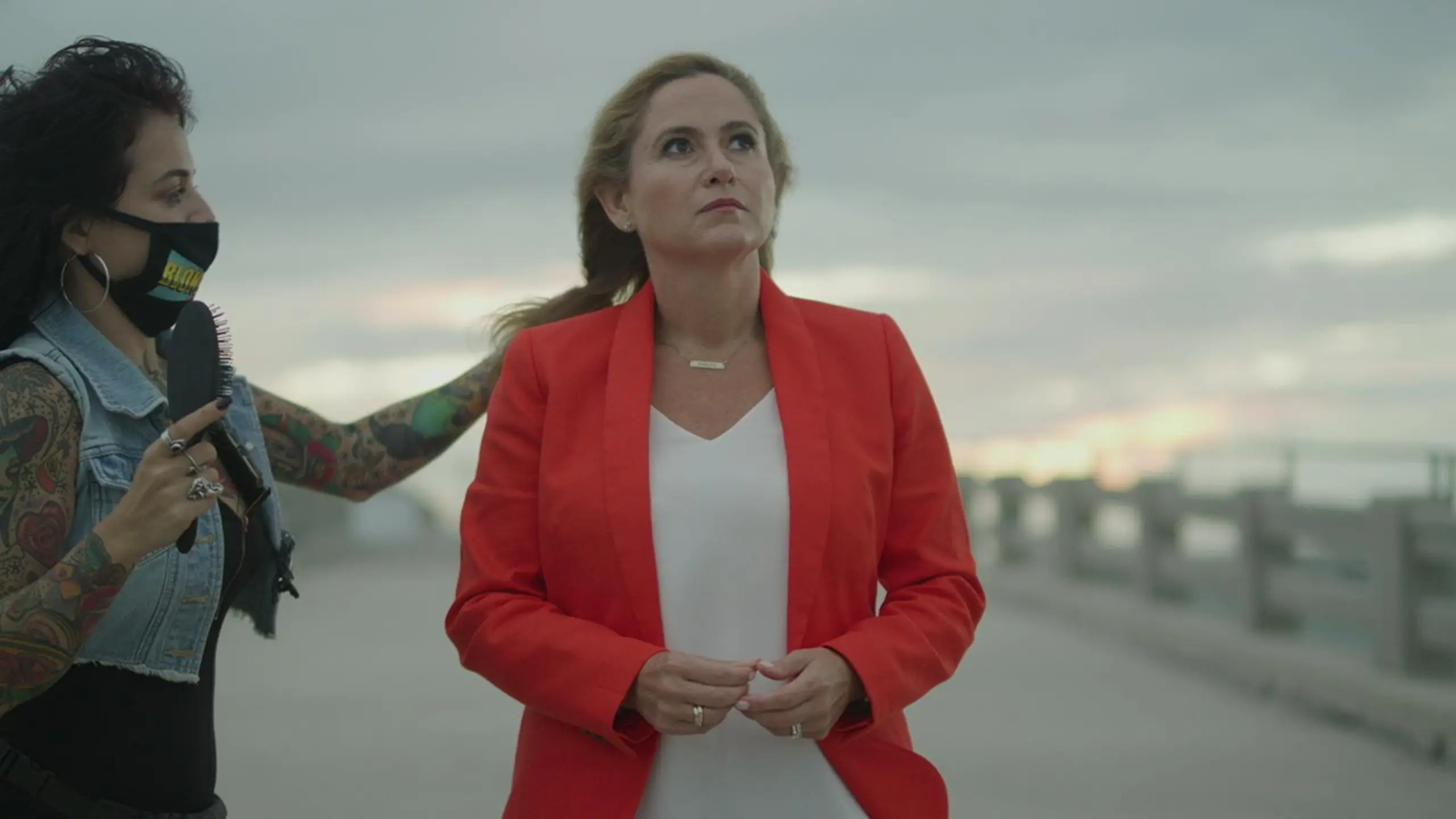
In today's highly competitive business landscape, building a strong brand identity is crucial for standing out and connecting with your target audience. Corporate video production has emerged as a powerful tool for businesses to convey their brand's values, personality, and unique selling propositions.
By crafting compelling visual narratives, companies can forge emotional connections with their audience, establish trust, and create a lasting impression that sets them apart from competitors.
## Understanding Brand Identity
Brand identity is the unique set of characteristics that define a company's essence, values, and personality. It encompasses a variety of elements, including the brand name, logo, color scheme, tagline, and overall visual identity. However, brand identity goes beyond these superficial aspects and encompasses the core values, mission, and vision that drive the brand's purpose.
Effective brand identity is essential for building brand recognition, establishing emotional connections with consumers, and fostering brand loyalty. A strong brand identity helps customers differentiate a company from its competitors and creates a sense of familiarity and trust.
Video plays a crucial role in conveying brand identity by allowing businesses to bring their brand to life through captivating visuals, compelling narratives, and emotional storytelling. Corporate videos have the power to showcase a brand's personality, values, and culture in a way that resonates with the target audience on a deeper level.
[Creative marketing](https://c-istudios.com/creative-marketing-services/) is essential in developing a brand identity that truly connects with consumers. By leveraging creativity and innovation, companies can craft unique brand experiences that stand out in a crowded marketplace. From visually stunning brand videos to immersive social media campaigns, creative marketing strategies can help businesses differentiate themselves and leave a lasting impression on their audience.
## Types of Corporate Videos for Branding
Corporate video production encompasses a wide range of video types, each serving a specific purpose in building and reinforcing a brand's identity.
1. **Brand Storytelling Videos:** These videos focus on sharing the brand's unique story, its origins, and the values that drive its mission. Through captivating narratives and emotionally resonant visuals, brand storytelling videos can forge deep emotional connections with the audience and establish a brand's authenticity and purpose.
2. **Company Culture Videos:** These videos showcase the company's workplace environment, team dynamics, and corporate culture. By providing a behind-the-scenes look at the people and values that shape the organization, company culture videos can attract top talent, build brand loyalty among employees, and convey the brand's commitment to its workforce.
3. **Product/Service Information Videos:** These informative videos highlight the features, benefits, and applications of a company's products or services. While educating the audience, these videos can also reinforce the brand's expertise, innovation, and commitment to delivering high-quality solutions.
4. **Customer Testimonial Videos:** Featuring real customers sharing their positive experiences with a brand's products or services can be a powerful way to build trust and credibility. These videos showcase the brand's ability to deliver on its promises and provide social proof that resonates with potential customers.
5. **Event Coverage Videos:** Corporate events, conferences, and tradeshows offer opportunities to capture engaging video content that showcases the brand's expertise, thought leadership, and industry presence. These videos can be repurposed for various marketing channels, extending the reach and impact of the event.
[Film and TV production](https://c-istudios.com/film-and-tv-production/) techniques are crucial in creating high-quality corporate videos that effectively convey a brand's identity. Professional cinematography, lighting, sound design, and editing can elevate the production value and visual impact of a video, ensuring that it captures and holds the audience's attention while accurately representing the brand's essence.
## Developing a Video Marketing Strategy
Developing a comprehensive video marketing strategy is essential for ensuring that corporate videos effectively support and reinforce a brand's identity. This strategy should align with the company's overall marketing goals and target audience.
The first step in creating a video marketing strategy is to clearly define the brand's identity and core messaging. This involves identifying the brand's values, personality, and unique selling propositions that differentiate it from competitors. By having a clear understanding of these elements, businesses can ensure that their video content accurately reflects and reinforces their brand identity.
Next, it's important to identify the target audience and their preferences, interests, and behavior patterns. Understanding the audience's needs, pain points, and consumption habits will help businesses tailor their video content to resonate with their desired demographic effectively.
Once the brand identity and target audience have been established, businesses can develop a content plan that outlines the types of videos to be produced, their themes, and their intended purposes (e.g., brand awareness, lead generation, customer education). This content plan should align with the brand's overall marketing objectives and ensure consistency in messaging and visuals across all video content.
[Social media marketing](https://c-istudios.com/social-media-marketing-services/) services play a crucial role in distributing and promoting corporate videos to reach the target audience effectively. By leveraging various social media platforms and their unique features, businesses can increase the visibility and engagement of their video content, fostering brand awareness and building relationships with their audience.
Consistency is key to maintaining a cohesive brand identity across all video content. This involves adhering to the brand's visual identity guidelines, including color schemes, typography, and overall aesthetic. Additionally, the tone, messaging, and storytelling approach should remain consistent, reinforcing the brand's personality and values in each video.
## Crafting an Effective Video Production Brief
Before embarking on a corporate video production project, it's essential to craft a detailed video production brief that clearly outlines the project's objectives, requirements, and expectations. This brief serves as a blueprint for the entire production process, ensuring that all stakeholders are aligned and that the final product accurately reflects the brand's identity.
An effective video production brief should include the following key elements:
**Project Overview:** This section should provide a high-level overview of the project, including the purpose and intended use of the video, the target audience, and any specific goals or objectives (e.g., increase brand awareness, generate leads, or educate customers).
**Brand Guidelines:** The brief should clearly outline the brand's visual identity guidelines, including color schemes, typography, logos, and any other brand assets that need to be incorporated into the video. This section should also define the brand's tone, personality, and messaging style to ensure consistency across all video content.
**Video Concept and Storyline:** This section should outline the overall concept, narrative, and key messaging points for the video. It should provide a clear direction for the creative team while allowing room for their artistic interpretation and creative input.
**Technical Requirements:** The brief should specify any technical requirements or specifications, such as desired video format, resolution, aspect ratio, and delivery formats (e.g., digital files, DVDs, or streaming platforms).
**Target Audience:** A detailed description of the target audience should be provided, including demographics, psychographics, and any specific preferences or behavior patterns that may influence the video's style and approach.
**Call to Action:** If the video is intended to drive a specific action (e.g., visit a website, make a purchase, or schedule a consultation), the desired call to action should be clearly defined in the brief.
**Timelines and Deadlines:** The brief should outline any relevant timelines, milestones, and deadlines for the project, including delivery dates for rough cuts, revisions, and final versions.
**Budget and Resources:** Information regarding the project's budget, any allocated resources (e.g., talent, locations, or equipment), and any specific constraints or limitations should be included in the brief.
By providing a comprehensive and well-crafted video production brief, businesses can ensure that the final video product accurately reflects their brand identity, meets their objectives, and resonates with their target audience.
[Professional photography](https://c-istudios.com/professional-photography-services/) is an integral part of corporate video production, as visually compelling imagery is essential for creating a lasting impression and effectively conveying a brand's identity. Professional photographers can capture high-quality still images and b-roll footage that complement the video's narrative and reinforce the brand's visual identity.
## Filming and Production Techniques (400 words)
Translating a brand's identity into a visually compelling corporate video requires a combination of creative storytelling techniques and professional production expertise. Effective filming and production techniques can elevate the video's impact, ensuring that it captures the essence of the brand while resonating with the target audience.
1. **Cinematography:** The art of cinematography plays a crucial role in setting the tone and mood of a corporate video. By carefully considering factors such as camera angles, shot composition, and lighting, videographers can create visually striking imagery that aligns with the brand's aesthetic and evokes the desired emotional response.
2. **Lighting:** Proper lighting is essential for creating a visually appealing and cohesive look in corporate videos. Strategic use of lighting techniques, such as three-point lighting, natural lighting, or stylized lighting setups, can enhance the video's mood, depth, and overall visual impact.
3. **Sound Design:** While visuals are crucial, sound design is equally important in creating an immersive and engaging experience for the audience. Professional audio recording and editing techniques, including ADR (Automated Dialogue Replacement), foley effects, and ambient sound design, can help reinforce the brand's identity and enhance the video's emotional impact.
4. **Storytelling:** Effective storytelling is at the heart of compelling corporate videos that resonate with audiences and accurately convey a brand's identity. Professional videographers and directors should craft narratives that align with the brand's core values, personality, and messaging. This may involve developing relatable characters, crafting emotional arcs, or incorporating symbolic visual metaphors that bring the brand's essence to life.
5. **Color Grading and Visual Effects:** Color grading is a crucial post-production technique that can help establish a consistent and cohesive visual aesthetic across a corporate video. By carefully adjusting color palettes, saturation, and contrast, editors can ensure that the visuals align with the brand's color scheme and overall visual identity. Additionally, selective use of visual effects, such as graphics overlays or motion graphics, can enhance the video's production value while reinforcing key branding elements.
6. **Talent and Casting:** For corporate videos featuring on-screen talent, the casting process is critical to accurately represent the brand's identity. Casting directors should seek out actors or spokespersons who embody the brand's personality, values, and target audience. Proper coaching and direction can help ensure that the talent's performances are authentic and engaging, effectively communicating the brand's message.
7. **Location Scouting:** The choice of filming locations can significantly impact the visual representation of a brand's identity. Location scouts should seek out settings that complement the brand's aesthetic, whether it's modern urban environments, natural outdoor landscapes, or specific architectural styles. The right location can serve as a powerful visual metaphor, reinforcing the brand's values and personality.
[Audio engineering](https://c-istudios.com/audio-engineering-services/) plays a crucial role in corporate video production, as high-quality sound is essential for creating an immersive and engaging viewing experience. Professional audio engineers can ensure that dialogue, narration, and sound effects are captured and mixed with precision, enhancing the overall production value and reinforcing the brand's identity.
By leveraging professional filming and production techniques, businesses can create corporate videos that not only inform and entertain but also effectively convey their brand's unique identity, fostering emotional connections with their audience and establishing a lasting impression.
## Distribution and Promotion
Once a high-quality corporate video has been produced, effective distribution and promotion strategies are essential to ensure maximum reach and engagement with the target audience. A well-planned distribution and promotion strategy can amplify the impact of the video, reinforcing the brand's identity and driving desired actions from viewers.
**Social Media Platforms:** Social media platforms, such as Facebook, Instagram, Twitter, and LinkedIn, offer powerful channels for distributing and promoting corporate videos. By leveraging these platforms' native video capabilities, businesses can share their videos with their existing followers and tap into targeted advertising opportunities to reach new audiences. Engaging with comments, sharing user-generated content, and running social media contests can further amplify the reach and engagement of corporate videos.
**Video Hosting Platforms:** Platforms like [YouTube](https://www.youtube.com/) and Vimeo provide dedicated spaces for hosting and sharing corporate videos. Optimizing video titles, descriptions, and tags with relevant keywords can improve discoverability and search engine rankings. Additionally, embedding videos on company websites and landing pages can enhance user experience and drive conversions.
**Email Marketing:** Email marketing campaigns can be an effective way to distribute corporate videos to existing customers, prospects, and subscribers. By incorporating video thumbnails or embedded players within email newsletters or targeted campaigns, businesses can drive traffic to their video content and encourage engagement.
**Content Syndication:** Partnering with industry-specific websites, blogs, or online publications can provide opportunities for content syndication, where corporate videos are featured or embedded on third-party platforms. This strategy can expose the brand's video content to new audiences and potentially drive inbound traffic and leads.
[SEO copywriting](https://c-istudios.com/seo-copywriting-services/) is also crucial for optimizing the discoverability and visibility of corporate videos online. By incorporating relevant keywords, meta descriptions, and alt text, businesses can improve their search engine rankings and increase the chances of their videos appearing in relevant search results.
**Influencer Marketing:** Collaborating with influential figures or industry experts can help amplify the reach of corporate videos. By leveraging the established audiences and credibility of influencers, businesses can tap into new networks and gain valuable endorsements for their brand and video content.
**Event and Conference Screenings:** Attending industry events, conferences, or trade shows can provide opportunities to showcase corporate videos to relevant audiences. By scheduling screenings or incorporating videos into presentations, businesses can directly engage with their target market and generate buzz around their brand.
**Cross-Promotion and Partnerships:** Exploring cross-promotional opportunities with complementary brands or forming strategic partnerships can open up new distribution channels for corporate videos. By leveraging each other's audiences and promotional resources, businesses can increase their overall reach and exposure.
Regardless of the distribution channels chosen, it's essential to track and analyze the performance of corporate videos using metrics such as view counts, engagement rates, and conversion data. This data can inform future video marketing strategies, enabling businesses to refine their approach and optimize their efforts for maximum impact.
By embedding videos on landing pages, product pages, or dedicated video hubs, businesses can enhance the user experience and encourage deeper engagement with their brand content.
## Measuring Success and Refining Strategy
After investing significant resources into corporate video production and distribution, it's essential to measure the success and impact of these efforts accurately. By tracking key performance indicators (KPIs) and analyzing relevant data, businesses can gain valuable insights into the effectiveness of their video marketing strategy and make informed decisions about future refinements and optimizations.
**View Count and Engagement Metrics:** One of the most straightforward ways to measure the success of corporate videos is by tracking view counts across various distribution channels. However, it's important to go beyond simple view counts and analyze engagement metrics such as average watch time, audience retention, and completion rates. These metrics can provide insights into how well the video content resonates with the target audience and identify potential areas for improvement.
**Conversion Tracking:** Depending on the objectives of the corporate video, businesses should track relevant conversion metrics. For example, if the video is designed to drive website traffic or generate leads, tracking clickthrough rates, form submissions, or sales conversions can help measure the video's direct impact on business goals.
**Social Media Analytics:** For videos distributed on social media platforms, businesses should leverage the built-in analytics tools provided by each platform. These tools can provide valuable data on audience demographics, engagement rates (likes, comments, shares), and reach, allowing businesses to optimize their social media video strategies and target their content more effectively.
**User Feedback and Sentiment Analysis:** Qualitative feedback from viewers can provide valuable insights beyond raw numbers and analytics. Businesses can gather feedback through surveys, social media comments, or direct customer interactions, allowing them to understand how their videos are perceived and what aspects resonate most with their audience. Additionally, sentiment analysis tools can help businesses gauge the overall sentiment and emotional responses to their video content.
**A/B Testing:** To continually optimize video content and distribution strategies, businesses can leverage A/B testing techniques. By creating variations of video content (e.g., different titles, thumbnails, or call-to-action placements) and distributing them to segmented audiences, businesses can identify which elements are most effective and make data-driven decisions for future video campaigns.
**Competitive Analysis:** Monitoring the video marketing efforts of competitors can provide valuable context and benchmarks for measuring success. By analyzing competitors' video content, distribution strategies, and engagement metrics, businesses can identify areas where they can differentiate themselves and uncover opportunities for improvement.
**Integration with Overall Marketing Efforts:** It's essential to analyze the performance of corporate videos in the context of the overall marketing strategy. By integrating video metrics with data from other marketing channels (e.g., email campaigns, social media efforts, or paid advertising), businesses can gain a holistic understanding of how their video content contributes to their broader marketing goals and refine their strategies accordingly.
## Work with C&I Studios
If you are planning a project like this, our team can take it from concept to final delivery. Explore our [video production services](https://c-istudios.com/video-production-services/), browse [our work](https://c-istudios.com/our-work/) to see how we tell brand stories, and [get in touch](https://c-istudios.com/contact/) when you are ready to start.
Originally published April 10, 2024
---
*This content is from [C&I Studios](https://c-istudios.com), a full-service production company.*
---
# How to Use Video to Make your Trade Show Booth Stand Out
> Published: April 8, 2024
> Categories: Commercial & Brand
> Source: https://c-istudios.com/how-to-use-video-to-make-your-trade-show-booth-stand-out/
---
.cib{--paper:#1b1d1f;--ink:#fff;--body:#d5d7d9;--muted:#8b9096;--line:rgba(255,255,255,.12);--thumb:#2b2e31;--card:#212426;--accent:#c02b0a;--blue:#5B8FA8;--serif:'Playfair Display',Georgia,serif;--sans:'Poppins',-apple-system,sans-serif;--measure:900px;background:var(--paper);color:var(--body);font-family:var(--sans);line-height:1.6;position:relative;left:50%;transform:translateX(-50%);width:90vw;max-width:1920px}
.cib *{box-sizing:border-box}
.cib .kicker{max-width:var(--measure);margin:58px auto 0;padding:0 22px;font-size:12.5px;font-weight:700;letter-spacing:2.5px;text-transform:uppercase;color:var(--blue)}
.cib h1.cibh1{text-wrap:balance;font-family:var(--serif);font-weight:500;font-size:clamp(46px,6vw,72px);line-height:1.08;color:var(--ink);max-width:var(--measure);margin:18px auto 0;padding:0 22px;letter-spacing:-.5px}
.cib .metarow{max-width:var(--measure);margin:20px auto 0;padding:0 22px;color:var(--muted);font-size:14px}
.cib .hero{position:relative;width:100%;height:0;padding-bottom:56.25%;overflow:hidden;margin:48px auto 0;border-top:1px solid var(--line);border-bottom:1px solid var(--line)}
.cib .hero .ph{width:100%;aspect-ratio:16/9;background:var(--thumb);border-top:1px solid var(--line);border-bottom:1px solid var(--line);display:flex;align-items:center;justify-content:center;color:#7d8288;font-size:13px;text-align:center;padding:0 20px}
.cib .body{max-width:var(--measure);margin:12px auto 0;padding:52px 22px 6px}
.cib .body.lead p:first-child{font-size:23px;line-height:1.62;color:var(--ink)}
.cib .body p{font-size:18.5px;line-height:1.85;margin:0 0 30px;color:var(--body)}
.cib .body h2{text-wrap:balance;font-family:var(--serif);font-weight:500;font-size:clamp(32px,4vw,48px);line-height:1.22;color:var(--ink);margin:70px 0 20px;letter-spacing:-.3px}
.cib .body h3{text-wrap:balance;font-family:var(--sans);font-weight:600;font-size:22px;color:var(--ink);margin:38px 0 8px}
.cib .body a{color:var(--ink);text-decoration:underline;text-decoration-color:rgba(255,255,255,.4);text-underline-offset:3px}
.cib .body a:hover{text-decoration-color:var(--ink)}
.cib .ctable{width:100%;border-collapse:collapse;margin:16px 0 30px;font-size:16px}
.cib .ctable th{background:#000;color:#fff;text-align:left;padding:10px 12px;font-family:var(--sans)}
.cib .ctable td{padding:10px 12px;border-bottom:1px solid var(--line);color:var(--body)}
.cib .inimg{position:relative;width:100%;height:0;padding-bottom:56.25%;overflow:hidden;margin:72px auto;border-top:1px solid var(--line);border-bottom:1px solid var(--line)}
.cib .inimg .ph{width:100%;aspect-ratio:16/9;background:var(--thumb);border-top:1px solid var(--line);border-bottom:1px solid var(--line);display:flex;align-items:center;justify-content:center;color:#7d8288;font-size:13px}
.cib .origpub{max-width:var(--measure);margin:60px auto 0;padding:26px 22px 0;border-top:1px solid var(--line);color:var(--muted);font-size:13.5px}
.cib .related{max-width:1200px;margin:64px auto 0;padding:34px 22px 76px}
.cib .related h3{font-family:var(--sans);font-size:12.5px;letter-spacing:2px;text-transform:uppercase;color:var(--ink);margin:0 0 24px}
.cib .grid{display:grid;grid-template-columns:repeat(3,1fr);gap:28px}
.cib .rc{background:var(--card);border:1px solid var(--line);display:block;text-decoration:none;color:inherit;transition:border-color .15s}
.cib a.rc:hover{border-color:rgba(255,255,255,.5)}
.cib .rc .thumb{position:relative;width:100%;height:0;padding-bottom:56.25%;background:var(--thumb);overflow:hidden}
.cib .rc .thumb img{position:absolute!important;top:0!important;left:0!important;width:100%!important;height:100%!important;object-fit:cover!important;margin:0!important}
.cib .rc .cc{padding:14px 15px 17px}
.cib .rc .rt{font-family:var(--serif);font-weight:500;font-size:16px;line-height:1.3;color:var(--ink);margin:0 0 6px}
.cib .rc .rm{font-size:11px;letter-spacing:1px;text-transform:uppercase;color:var(--muted)}
.cib img{margin:0!important;padding:0!important;display:block!important;vertical-align:top;max-width:100%}
.cib .hero img,.cib .inimg img{position:absolute!important;top:0!important;left:0!important;width:100%!important;height:100%!important;object-fit:cover!important;margin:0!important;padding:0!important;border:0!important;display:block!important;aspect-ratio:auto!important}
.cib .hero+.body{padding-top:36px}
@media(max-width:760px){.cib .grid{grid-template-columns:1fr}.cib .body h2{margin:52px 0 16px}.cib .body p{font-size:17.5px}.cib .inimg,.cib .hero{margin-top:44px}}
.cib .vembed{max-width:var(--measure);margin:44px auto;padding:0 22px}.cib .vembed .vwrap{position:relative;width:100%;height:0;padding-bottom:56.25%}.cib .vembed .vwrap iframe{position:absolute;top:0;left:0;width:100%;height:100%;border:0}
Commercial & Brand
# How to Use Video to Make your Trade Show Booth Stand Out
13 min read

In the crowded and competitive world of trade shows, standing out from the sea of exhibitors is paramount. With thousands of attendees and countless booths vying for attention, it's essential to employ innovative strategies that captivate your target audience and leave a lasting impression. One powerful tool that can elevate your trade show presence is video.
By leveraging the power of sight and sound, video can transform your booth from a static display into an immersive, engaging experience that resonates with attendees and drives meaningful connections with your brand.
## Step 1. Plan Your Video Content
Before diving into [video production](https://c-istudios.com/video-production-services/), it's crucial to establish a solid foundation by clearly defining your goals and understanding your target audience. This strategic planning phase will ensure that your video content aligns with your overall trade show objectives and resonates with the right attendees.
Start by identifying your primary goals for exhibiting at the trade show. Are you aiming to generate leads, showcase new products or services, or strengthen your brand's industry presence? Clearly articulating your objectives will help shape the tone, messaging, and call-to-action of your video content.
Next, conduct thorough research to gain a deep understanding of your target audience. Who are they, and what are their pain points, interests, and preferences? This insight will not only inform the content and style of your videos but also guide decisions regarding distribution channels and promotion strategies.
Engaging the expertise of a professional [media marketing consultation](https://c-istudios.com/media-marketing-consultation-services/) firm can be invaluable in this planning phase. Their experience and industry knowledge can help you refine your goals, identify your ideal target audience, and develop a comprehensive video content strategy tailored to your specific needs.
Once you've established your goals and audience insights, it's time to conceptualize your video content. Consider creating a range of videos that cater to different stages of the buyer's journey, from educational and informative pieces for top-of-funnel awareness to product demonstrations and customer testimonials for those further along in the decision-making process.
Remember, effective planning lays the foundation for a successful video marketing strategy at trade shows. By investing time and resources into defining your objectives, understanding your audience, and crafting a well-rounded content plan, you'll be better equipped to create videos that truly resonate and drive meaningful results.
## Step 2. Create Engaging and Relevant Videos
With your video content strategy in place, it's time to focus on producing high-quality, engaging videos that highlight your products, services, or brand story in a captivating manner. While production value is important, it's equally crucial to prioritize relevance, authenticity, and delivering tangible value to your target audience.
Start by crafting compelling scripts or storyboards that align with your defined goals and target audience preferences. Incorporate elements of storytelling, humor, or emotional appeals to capture and sustain viewer interest. Additionally, ensure that your videos showcase the unique value propositions and benefits of your offerings, addressing the specific pain points and needs of your target attendees.
When it comes to the actual production process, consider leveraging the expertise of [professional photography](https://c-istudios.com/professional-photography-services/) and videography professionals. Their skills and experience can elevate the quality and professionalism of your videos, ensuring a polished and visually appealing final product that accurately represents your brand's image.
Incorporate a variety of video formats and styles to cater to different preferences and attention spans. For example, shorter, snackable videos can be ideal for social media promotion and capturing the attention of attendees on the go, while longer, in-depth product demonstrations or case studies can provide more comprehensive information for those seeking deeper insights.
Authenticity and transparency are key in today's marketing landscape, so consider incorporating user-generated content, customer testimonials, or behind-the-scenes footage into your video arsenal. These authentic elements can help build trust and credibility with your audience, showcasing the real-world experiences and perspectives of your customers or employees.
Finally, ensure that your videos are optimized for various platforms and devices. Trade show attendees may be viewing your content on their smartphones, tablets, or even large displays within your booth. By optimizing for multiple formats and resolutions, you can ensure a consistent and high-quality viewing experience across all touchpoints.
## Step 3. Use Creative Displays and Immersive Experiences
To truly captivate attendees and create a lasting impression, consider incorporating creative displays and immersive experiences that leverage the power of video in innovative ways. By breaking free from traditional booth designs, you can transform your trade show presence into a multisensory journey that engages attendees on multiple levels.
One effective approach is to incorporate video walls or large-scale displays into your booth design. These eye-catching installations can showcase your brand's messaging, product demonstrations, or even live social media feeds in a bold and impactful manner.
Interactive touch screens and kiosks are another powerful tools for engaging attendees and delivering tailored content experiences. By allowing attendees to navigate through product information, interactive demos, or even virtual reality simulations, you can provide a personalized and hands-on experience that caters to individual interests and learning styles.
Augmented reality (AR) and mixed reality (MR) technologies can also be leveraged to create truly immersive experiences within your booth. By overlaying digital content onto the physical world, you can bring your products or services to life in a dynamic and engaging way. Imagine attendees being able to visualize your products in their own environments or interact with virtual representations of your offerings through their mobile devices.
In addition to these cutting-edge technologies, consider incorporating elements of [creative marketing](https://c-istudios.com/creative-marketing-services/) into your booth design. This could involve interactive installations, gamification elements, or even live performances or demonstrations that seamlessly integrate video content and engage attendees on an emotional level.
While implementing these creative displays and immersive experiences may require a larger investment, the impact and memorability they can create can be well worth the effort. By offering a truly unique and captivating experience, you can ensure that your trade show booth stands out from the competition and leaves a lasting impression on attendees.
## Step 4. Optimize Your Booth Design for Video
Once you've created your engaging video content and planned your immersive experiences, it's crucial to ensure that your booth design enhances and complements these elements. A thoughtfully designed booth layout can not only improve video visibility and engagement but also create a cohesive and visually appealing environment that reinforces your brand's image and messaging.
Start by considering the placement and positioning of your video displays. Ensure that they are strategically located in high-traffic areas and at eye level, maximizing visibility and accessibility for attendees. Additionally, consider the flow of foot traffic within your booth and design a layout that encourages attendees to naturally gravitate towards your video content and interactive displays.
Lighting plays a crucial role in creating an optimal viewing experience for your videos. Carefully plan your booth's lighting design, incorporating a combination of ambient and accent lighting to highlight your video displays and enhance the overall ambiance. Avoid harsh, direct lighting that can create glare or washout your video content.
Sound is another critical factor to consider when optimizing your booth for video. Ensure that your audio systems are powerful enough to deliver clear and immersive sound without disturbing neighboring exhibitors. Consider incorporating noise-canceling or sound-isolating materials to minimize external distractions and create a focused viewing environment for attendees.
In addition to optimizing for video, consider incorporating elements of [video audio live streaming](https://c-istudios.com/video-audio-live-streaming/) into your booth design. Live streaming can be a powerful tool for extending your reach beyond the trade show floor, allowing remote audiences to engage with your brand and experience your immersive displays in real time. This can be especially valuable for generating buzz and driving interest before and during the event.
Throughout the design process, prioritize accessibility and inclusivity. Ensure that your booth layout and video displays are accessible to attendees with varying abilities, adhering to relevant accessibility guidelines and best practices. This not only enhances the overall attendee experience but also demonstrates your brand's commitment to inclusivity.
By optimizing your booth design with video in mind, you can create a truly engaging and memorable experience that not only captivates attendees but also aligns with your brand's image and messaging.
## Step 5. Leverage Social Media and Live Streaming
In today's hyper-connected world, it's essential to extend the reach of your trade show presence beyond the physical event space. By leveraging social media and live-streaming platforms, you can amplify the impact of your video content, engage a broader audience, and generate buzz and excitement around your trade show presence.
Incorporating a strong [social media marketing](https://c-istudios.com/social-media-marketing-services/) services strategy into your trade show plan can be a game-changer. Start by identifying the platforms where your target audience is most active and create a content calendar that aligns with the trade show timeline. Tease upcoming product launches, share behind-the-scenes glimpses, or even run social media contests to build anticipation and engagement before the event.
During the trade show itself, leverage live streaming platforms like Instagram Live, Facebook Live, or even dedicated platforms like [Twitch](https://www.twitch.tv/) to offer real-time glimpses into your booth experience. Live stream product demos, interactive Q&A sessions, or even interviews with industry experts or influencers. This not only allows remote audiences to participate in the excitement but also provides valuable content that can be repurposed and shared across your various social media channels.
Encourage attendees to engage with your brand on social media by incorporating interactive elements like social media walls, hashtag campaigns, or photo opportunities within your booth. Incentivize participation by offering giveaways, exclusive discounts, or other rewards for those who share their experiences on social media, effectively turning your attendees into brand ambassadors and extending your reach organically.
In addition to live streaming, consider pre-recording segments or behind-the-scenes footage that can be strategically released during and after the trade show. This evergreen content can continue to drive engagement and generate interest long after the event has concluded, keeping your brand top-of-mind and nurturing potential leads through the sales cycle.
To maximize the impact of your social media and live-streaming efforts, collaborate with industry influencers, thought leaders, or even your own brand ambassadors. Leverage their established followings and credibility to amplify your messaging and reach new, targeted audiences that align with your brand.
Finally, ensure that your social media and live streaming efforts are integrated with your overall trade show marketing strategy. Promote your social channels and live streams through your booth signage, email campaigns, and other promotional materials, making it easy for attendees and remote audiences to connect with your brand's digital presence.
By effectively leveraging social media and live streaming platforms, you can extend the reach and impact of your trade show video content, fostering meaningful connections with attendees and potential customers both on-site and virtually.
## Step 6. Offer Unique and Memorable Giveaways
While video and immersive experiences are powerful tools for capturing attention at trade shows, offering unique and memorable giveaways can be an effective way to reinforce your brand's messaging and leave a lasting impression on attendees. By incorporating creative [branding and graphic design](https://c-istudios.com/branding-and-graphic-design-services/) elements into your giveaway items, you can not only generate buzz and excitement but also ensure that your brand stays top-of-mind long after the event has concluded.
Start by considering giveaways that align with your brand's identity, values, and the overall theme or message you want to convey. For example, if you're promoting eco-friendly products or services, consider offering reusable water bottles or tote bags made from sustainable materials. If your brand is focused on technology or innovation, consider branded tech accessories like wireless chargers or portable power banks.
Incorporate elements of surprise and delight into your giveaway items. Instead of offering run-of-the-mill promotional items, consider unique or unexpected items that will pique attendees' curiosity and create a sense of exclusivity. This could range from custom-designed apparel or accessories to quirky or humorous items that capture the essence of your brand's personality.
Consider leveraging the power of personalization by offering customizable or monogrammed giveaways. Not only does this add a touch of exclusivity, but it also creates a deeper emotional connection between attendees and your brand, increasing the likelihood that they'll cherish and use the item long after the trade show has ended.
When designing your giveaway items, prioritize quality over quantity. A well-crafted, high-quality item that accurately represents your brand's image and values will leave a more lasting impression than a multitude of cheap, disposable items.
Finally, make sure your giveaway strategy is a part of your overall plan for the trade show. Use your video content, social media, and other promotional materials to spread the word about your giveaways. This will create excitement and encourage people to visit your booth and interact with your brand.
By offering unique, memorable, and on-brand giveaways, you can not only generate excitement and buzz around your trade show presence but also ensure that your brand remains top-of-mind long after the event has concluded, fostering lasting connections and brand loyalty with your target audience.
## Step 7. Analyze and Adapt
In the fast-paced world of trade shows and marketing, continuous improvement and adaptation are essential for staying ahead of the curve. By analyzing the performance and impact of your video content and trade show strategies, you can identify areas for optimization and refine your approach for future events.
Start by setting clear, measurable goals and key performance indicators (KPIs) before the trade show. These could include metrics such as booth traffic, lead generation, social media engagement, or even direct sales or conversions. By establishing these metrics upfront, you'll have a benchmark against which to measure the success of your video and marketing efforts.
During and after the trade show, leverage various data sources and analytics tools to track your performance against these KPIs. This could include built-in analytics from social media platforms, video hosting platforms like YouTube or Vimeo, or even custom tracking mechanisms like lead capture forms or surveys.
In addition to quantitative data, consider collecting qualitative feedback from attendees through in-person surveys, focus groups, or even social media interactions. This direct feedback can provide valuable insights into attendees' perceptions, preferences, and areas for improvement that may not be immediately apparent from the raw data.
Once you have collected and analyzed your trade show data, it's time to identify patterns, trends, and areas for optimization. For example, if you notice that certain types of video content or interactive experiences generate significantly higher engagement or lead generation, you can prioritize those elements in future trade show strategies.
If certain social media platforms or live streaming channels proved more effective in driving booth traffic or engagement, adjust your future promotional efforts to focus more heavily on those channels.
Collaborating with experienced [web development](https://c-istudios.com/web-development-services/) professionals can be invaluable in this analysis and optimization phase. They can help you integrate advanced tracking mechanisms, leverage data visualization tools, and implement data-driven strategies to enhance the effectiveness of your video content and overall trade show presence.
Stay up-to-date with the latest trends and best practices in the trade show industry, as well as emerging technologies and marketing strategies. Continuously educating yourself and adapting your approach based on these insights can help ensure that your trade show strategies remain cutting-edge and effective.
Remember, the key to long-term success in the trade show circuit is a willingness to learn, adapt, and continuously refine your strategies based on data-driven insights and attendee feedback. By embracing this iterative approach, you can optimize your video content, immersive experiences, and overall trade show presence to deliver maximum impact and drive meaningful results for your business.
## Work with C&I Studios
If you are planning a project like this, our team can take it from concept to final delivery. Explore our [video production services](https://c-istudios.com/video-production-services/), browse [our work](https://c-istudios.com/our-work/) to see how we tell brand stories, and [get in touch](https://c-istudios.com/contact/) when you are ready to start.
Originally published April 8, 2024
---
*This content is from [C&I Studios](https://c-istudios.com), a full-service production company.*
---
# How to Make a YouTube Video: Step-by-Step Guide for 2024
> Published: April 8, 2024
> Categories: Commercial & Brand
> Source: https://c-istudios.com/how-to-make-a-youtube-video-step-by-step-guide-for-2024/
---
.cib{--paper:#1b1d1f;--ink:#fff;--body:#d5d7d9;--muted:#8b9096;--line:rgba(255,255,255,.12);--thumb:#2b2e31;--card:#212426;--accent:#c02b0a;--blue:#5B8FA8;--serif:'Playfair Display',Georgia,serif;--sans:'Poppins',-apple-system,sans-serif;--measure:900px;background:var(--paper);color:var(--body);font-family:var(--sans);line-height:1.6;position:relative;left:50%;transform:translateX(-50%);width:90vw;max-width:1920px}
.cib *{box-sizing:border-box}
.cib .kicker{max-width:var(--measure);margin:58px auto 0;padding:0 22px;font-size:12.5px;font-weight:700;letter-spacing:2.5px;text-transform:uppercase;color:var(--blue)}
.cib h1.cibh1{text-wrap:balance;font-family:var(--serif);font-weight:500;font-size:clamp(46px,6vw,72px);line-height:1.08;color:var(--ink);max-width:var(--measure);margin:18px auto 0;padding:0 22px;letter-spacing:-.5px}
.cib .metarow{max-width:var(--measure);margin:20px auto 0;padding:0 22px;color:var(--muted);font-size:14px}
.cib .hero{position:relative;width:100%;height:0;padding-bottom:56.25%;overflow:hidden;margin:48px auto 0;border-top:1px solid var(--line);border-bottom:1px solid var(--line)}
.cib .hero .ph{width:100%;aspect-ratio:16/9;background:var(--thumb);border-top:1px solid var(--line);border-bottom:1px solid var(--line);display:flex;align-items:center;justify-content:center;color:#7d8288;font-size:13px;text-align:center;padding:0 20px}
.cib .body{max-width:var(--measure);margin:12px auto 0;padding:52px 22px 6px}
.cib .body.lead p:first-child{font-size:23px;line-height:1.62;color:var(--ink)}
.cib .body p{font-size:18.5px;line-height:1.85;margin:0 0 30px;color:var(--body)}
.cib .body h2{text-wrap:balance;font-family:var(--serif);font-weight:500;font-size:clamp(32px,4vw,48px);line-height:1.22;color:var(--ink);margin:70px 0 20px;letter-spacing:-.3px}
.cib .body h3{text-wrap:balance;font-family:var(--sans);font-weight:600;font-size:22px;color:var(--ink);margin:38px 0 8px}
.cib .body a{color:var(--ink);text-decoration:underline;text-decoration-color:rgba(255,255,255,.4);text-underline-offset:3px}
.cib .body a:hover{text-decoration-color:var(--ink)}
.cib .ctable{width:100%;border-collapse:collapse;margin:16px 0 30px;font-size:16px}
.cib .ctable th{background:#000;color:#fff;text-align:left;padding:10px 12px;font-family:var(--sans)}
.cib .ctable td{padding:10px 12px;border-bottom:1px solid var(--line);color:var(--body)}
.cib .inimg{position:relative;width:100%;height:0;padding-bottom:56.25%;overflow:hidden;margin:72px auto;border-top:1px solid var(--line);border-bottom:1px solid var(--line)}
.cib .inimg .ph{width:100%;aspect-ratio:16/9;background:var(--thumb);border-top:1px solid var(--line);border-bottom:1px solid var(--line);display:flex;align-items:center;justify-content:center;color:#7d8288;font-size:13px}
.cib .origpub{max-width:var(--measure);margin:60px auto 0;padding:26px 22px 0;border-top:1px solid var(--line);color:var(--muted);font-size:13.5px}
.cib .related{max-width:1200px;margin:64px auto 0;padding:34px 22px 76px}
.cib .related h3{font-family:var(--sans);font-size:12.5px;letter-spacing:2px;text-transform:uppercase;color:var(--ink);margin:0 0 24px}
.cib .grid{display:grid;grid-template-columns:repeat(3,1fr);gap:28px}
.cib .rc{background:var(--card);border:1px solid var(--line);display:block;text-decoration:none;color:inherit;transition:border-color .15s}
.cib a.rc:hover{border-color:rgba(255,255,255,.5)}
.cib .rc .thumb{position:relative;width:100%;height:0;padding-bottom:56.25%;background:var(--thumb);overflow:hidden}
.cib .rc .thumb img{position:absolute!important;top:0!important;left:0!important;width:100%!important;height:100%!important;object-fit:cover!important;margin:0!important}
.cib .rc .cc{padding:14px 15px 17px}
.cib .rc .rt{font-family:var(--serif);font-weight:500;font-size:16px;line-height:1.3;color:var(--ink);margin:0 0 6px}
.cib .rc .rm{font-size:11px;letter-spacing:1px;text-transform:uppercase;color:var(--muted)}
.cib img{margin:0!important;padding:0!important;display:block!important;vertical-align:top;max-width:100%}
.cib .hero img,.cib .inimg img{position:absolute!important;top:0!important;left:0!important;width:100%!important;height:100%!important;object-fit:cover!important;margin:0!important;padding:0!important;border:0!important;display:block!important;aspect-ratio:auto!important}
.cib .hero+.body{padding-top:36px}
@media(max-width:760px){.cib .grid{grid-template-columns:1fr}.cib .body h2{margin:52px 0 16px}.cib .body p{font-size:17.5px}.cib .inimg,.cib .hero{margin-top:44px}}
.cib .vembed{max-width:var(--measure);margin:44px auto;padding:0 22px}.cib .vembed .vwrap{position:relative;width:100%;height:0;padding-bottom:56.25%}.cib .vembed .vwrap iframe{position:absolute;top:0;left:0;width:100%;height:100%;border:0}
Commercial & Brand
# How to Make a YouTube Video. Step-by-Step Guide for 2024
12 min read

In the ever-evolving digital landscape, YouTube remains a dominant force, with billions of users accessing the platform daily. Creating engaging and captivating videos has become a crucial skill for businesses, content creators, and individuals seeking to establish an online presence and connect with their target audience. As we approach 2024, the importance of mastering the art of YouTube video creation cannot be overstated.
This comprehensive guide will walk you through a step-by-step process, equipping you with the knowledge and strategies necessary to produce high-quality, impactful YouTube videos that resonate with your audience.
## Step 1. Planning and Conceptualization
Before you start filming, it's essential to have a clear vision for your video. This step involves developing a compelling video idea and creating a detailed storyboard or script. Begin by identifying your target audience and understanding their preferences, interests, and pain points. Use this information to craft a video concept that addresses their needs and captures their attention.
Conduct thorough research on your topic, gathering relevant information, statistics, and examples to incorporate into your video. This will not only make your content more informative and credible but also help you stand out in a crowded market.
Once you have a solid idea, it's time to create a storyboard or script. A storyboard is a visual representation of your video, breaking it down into individual scenes or shots. This will help you plan the flow, transitions, and visual elements of your video, ensuring a cohesive and engaging final product.
Alternatively, you can opt for a script, which outlines the dialogue, narration, and key points you want to cover in your video. A well-crafted script will help you stay on track during filming and ensure that your message is delivered clearly and effectively.
During the planning and conceptualization stage, consider incorporating elements of [creative marketing](https://c-istudios.com/creative-marketing-services/) to make your video more captivating and memorable. This could involve using storytelling techniques, incorporating humor or emotional appeals, or incorporating visually striking elements that align with your brand's aesthetic.
Remember, a well-planned and thought-out concept is the foundation for a successful YouTube video. Take the time to thoroughly plan and refine your idea before moving on to the next step.
## Step 2. Setting Up Your Equipment
Once you have a solid plan in place, it's time to ensure you have the right equipment to bring your vision to life. While professional-grade equipment can produce stunning results, it's not strictly necessary, especially if you're just starting out. With the right knowledge and techniques, you can create high-quality videos using basic gear.
One of the most important pieces of equipment is a camera. While smartphones can produce decent video quality, a dedicated camera will generally provide better image quality, more control over settings, and additional features like interchangeable lenses. Consider investing in a DSLR or mirrorless camera if your budget allows, as they offer superior video capabilities compared to point-and-shoot cameras.
Lighting is another crucial element in [video production](https://c-istudios.com/video-production-services/). Proper lighting can enhance the overall quality of your video, create the desired mood and atmosphere, and ensure that your subjects are well-lit and visible. Invest in a few affordable lighting solutions, such as LED panels or softboxes, and experiment with different lighting setups to find what works best for your video.
Audio quality is just as important as video quality, if not more so. A high-quality microphone can make a significant difference in how your video sounds. Consider using a dedicated microphone, such as a shotgun mic or a Lavalier mic, instead of relying solely on your camera's built-in microphone. This will help capture clear and crisp audio, minimizing distracting background noise.
When setting up your equipment, keep in mind the principles of [professional photography](https://c-istudios.com/professional-photography-services/). Pay attention to factors like framing, composition, and depth of field to create visually appealing shots. Additionally, consider investing in accessories like tripods, sliders, or gimbals to achieve smooth and stable camera movements, enhancing the overall production value of your video.
Remember, the quality of your equipment is important, but it's not the only factor that determines the success of your video. With careful planning, creativity, and a willingness to experiment, you can create compelling YouTube videos even with basic gear.
## Step 3. Recording Your Video
With your equipment set up and your concept finalized, it's time to start recording your video. This step requires a combination of technical skills and on-camera presence to ensure a smooth and engaging final product.
One of the most important aspects of recording your video is delivering your content in a clear and confident manner. Practice your script or talking points beforehand, and consider techniques like using cue cards or teleprompters to help you stay on track during filming. Speak slowly and clearly, and don't be afraid to pause or take breaks if you need to.
When setting up your shots, consider using a variety of angles and camera positions to keep your video visually interesting. Experiment with close-ups, medium shots, and wide shots to highlight different aspects of your content or create a sense of variety and dynamic movement.
If you're filming yourself or conducting interviews, pay attention to factors like eye contact, body language, and vocal inflection. These elements can significantly impact the overall quality and engagement of your video.
During the recording process, it's also essential to consider [audio engineering](https://c-istudios.com/audio-engineering-services/) principles. Ensure that your microphone is positioned correctly and that you're recording in an environment with minimal background noise. If necessary, use noise-canceling equipment or post-production techniques to improve audio quality.
To capture the best possible footage, it's often recommended to record multiple takes of each shot or scene. This will give you more options during the editing process and allow you to choose the best takes for your final video.
Remember, recording a high-quality YouTube video requires patience, attention to detail, and a willingness to experiment and learn from your mistakes. Don't be discouraged if your first few attempts aren't perfect - the more you practice, the better you'll become at capturing engaging and compelling footage.
## Step 4. Editing Your Video
Once you've captured all the necessary footage, it's time to bring your video to life through the editing process. This step involves selecting the right editing software, assembling your footage, and adding visual and audio elements to enhance the overall viewing experience.
There are numerous video editing software options available, ranging from free, entry-level programs to professional-grade suites. Popular choices include Adobe Premiere Pro, Final Cut Pro, and DaVinci Resolve. When selecting editing software, consider factors like your budget, the program's feature set, and your level of experience.
Before you begin editing, it's important to organize your footage and other assets, such as graphics, music, and sound effects. This will help streamline the editing process and ensure that you have everything you need at your fingertips.
Once you've familiarized yourself with your chosen editing software, you can begin assembling your video. This involves cutting and arranging your footage, adding transitions, and incorporating visual elements like titles, graphics, and special effects.
One of the most important aspects of video editing is pacing and flow. Pay attention to the rhythm and timing of your video, ensuring that it maintains a consistent and engaging pace. Use techniques like cutting on action, varying shot lengths, and incorporating music and sound effects to create a dynamic and visually appealing final product.
When editing your video, it's also important to consider the principles of [film and TV production](https://c-istudios.com/film-and-tv-production/). This includes understanding concepts like continuity, shot composition, and visual storytelling. By applying these principles, you can create a cohesive and immersive viewing experience that effectively communicates your message or story.
Finally, don't forget to add finishing touches like color correction, audio mixing, and optimizing your video for various platforms and devices. These final steps can greatly enhance the overall quality and professionalism of your YouTube video.
## Step 5. Uploading and Optimizing Your Video
With your video edited and polished, it's time to upload it to YouTube and optimize it for maximum visibility and engagement. This step is crucial for ensuring that your video reaches your target audience and performs well on the platform.
Before uploading your video, take the time to create an attention-grabbing thumbnail and title. The thumbnail is the first thing viewers will see when browsing YouTube, so make sure it's visually appealing and accurately represents the content of your video.
Similarly, craft a compelling and keyword-rich title that clearly communicates what your video is about. During the upload process, make sure to fill out all relevant details, including the video description, tags, and categories. The description should provide a clear and concise overview of your video's content, while also including relevant keywords and links to your website or other social media channels.
Tags are essential for helping YouTube's algorithm understand the content of your video and surface it to the right viewers. Use a combination of relevant keywords, phrases, and topics to ensure your video appears in relevant search results.
Once your video is uploaded, it's time to optimize it for search engines and maximize its visibility and reach. This is where [social media marketing](https://c-istudios.com/social-media-marketing-services/) Services come into play.
Start by crafting compelling video descriptions and tags that incorporate relevant keywords and phrases related to your topic or niche. YouTube's algorithm heavily relies on these elements to understand the content of your video and surface it in relevant search results.
Next, take advantage of YouTube's built-in tools for optimization. For example, the "Cards" feature allows you to add interactive elements, such as links, polls, or calls-to-action, directly within your video. These can help increase engagement, drive traffic to your website or other channels, and ultimately improve your video's performance.
Similarly, the "End Screen" feature enables you to promote other videos, playlists, or external links at the end of your video, encouraging viewers to continue engaging with your content or take desired actions.
Optimizing your video's metadata is also crucial for search engine visibility. Include relevant keywords in your video's title, description, and tags, and ensure that your video's file name and thumbnail are descriptive and relevant to the content.
Beyond on-platform optimization, consider leveraging other digital marketing channels to promote your YouTube video. Share it on social media platforms, embed it on your website or blog, and consider running targeted advertising campaigns to reach your desired audience.
Remember, optimizing your video for search engines and social media is an ongoing process. Regularly monitor your video's performance using YouTube's built-in analytics tools, and make adjustments to your optimization strategies as needed. Analyze metrics like view count, watch time, audience retention, and engagement rates to identify areas for improvement and refine your approach.
## Step 6. Promoting Your Video
Creating a high-quality YouTube video is only half the battle - the other half is effectively promoting and distributing your content to reach your target audience. In today's crowded digital landscape, strategic promotion is essential for standing out and maximizing the impact of your video.
One of the most effective ways to promote your YouTube video is through social media. Leverage platforms like Facebook, Twitter, Instagram, and LinkedIn to share your video and engage with your existing followers. Encourage them to like, comment, and share your content, as this can help increase their visibility and reach on these platforms.
Additionally, consider partnering with influencers or content creators in your niche who have established audiences that align with your target demographic. Collaborations, sponsored posts, or guest appearances can provide valuable exposure and help you tap into new audiences.
To maximize the reach of your video, it's important to implement a comprehensive [media marketing consultation](https://c-istudios.com/media-marketing-consultation-services/) strategy. This may involve tactics such as:
- Running targeted social media advertising campaigns to reach specific audiences based on interests, demographics, or behavior.
- Optimizing your video's metadata and descriptions for search engine visibility, ensuring that it appears in relevant search results.
- Embedding your video on your website or blog, and encouraging visitors to engage with and share the content.
- Reach out to relevant industry publications, blogs, or forums to pitch your video as a guest contribution or featured content.
- Repurposing your video content into different formats (e.g., blog posts, infographics, social media snippets) to reach a wider audience and drive traffic back to the original video.
Another effective promotion strategy is to encourage viewer engagement and interaction. Respond to comments, ask questions, and encourage viewers to subscribe to your channel or follow you on other platforms. Building a loyal and engaged community can help increase the visibility and reach of your content through word-of-mouth and social sharing.
Finally, consider implementing a content distribution strategy that leverages platforms like YouTube Shorts, Instagram Reels, or TikTok to create bite-sized, engaging content that drives viewers back to your main YouTube channel or website.
Promoting your YouTube video is an ongoing effort that requires consistent effort and adaptation. Monitor your video's performance, analyze the data, and continuously refine your promotion strategies to ensure maximum reach and engagement with your target audience.
## Step 7. Analyzing Performance
Once your video is live and your promotion efforts are in full swing, it's crucial to track and analyze its performance to gain valuable insights and make data-driven decisions for future content creation and optimization efforts.
YouTube's built-in analytics tool, YouTube Analytics, provides a wealth of data and metrics to help you understand how your video is performing. Some key metrics to monitor include:
**View count:** The total number of views your video has received, which can be broken down by traffic source (e.g., YouTube search, external websites, suggested videos).
**Watch time:** The total amount of time viewers have spent watching your video, which can indicate engagement and audience retention.
**Audience retention:** A graph that shows the points in your video where viewers are dropping off or rewatching, helping you identify areas for improvement or highlighting engaging sections.
**Traffic sources:** A breakdown of where your video views are coming from, such as YouTube search, embedded players, or external websites.
**Demographics:** Data on the age, gender, and location of your viewers, can help you better understand and target your audience.
In addition to YouTube Analytics, it's also important to monitor and analyze the performance of your video promotion efforts across various channels. This may involve tracking metrics such as:
**Social media engagement:** Likes, comments, shares, and click-through rates on social media platforms where you've promoted your video.
**Website traffic and conversions:** If your video is aimed at driving traffic to your website or generating leads/sales, track the relevant metrics using tools like Google Analytics or your website's built-in analytics.
**Email marketing performance:** If you've promoted your video through email campaigns, analyze open rates, click-through rates, and any resulting conversions or actions taken by your subscribers.
As you analyze your video's performance data, look for patterns, trends, and insights that can inform your future content and promotion strategies. For example, if you notice that your audience retention drops significantly at a particular point in your video, you may need to re-evaluate your content structure or pacing.
To ensure that your website and online presence are optimized for [web maintenance](https://c-istudios.com/web-maintenance/) and performance tracking, consider working with a professional web development agency or consultant. They can help you implement tracking codes, integrate analytics tools, and provide ongoing support to ensure that your website is functioning optimally and providing accurate data for analysis.
Remember, analyzing your video's performance is an ongoing process. Continuously monitor your metrics, make adjustments based on the data, and use the insights you gather to inform your future content creation and promotion efforts. By embracing a data-driven approach, you can continuously improve and refine your YouTube video strategy, maximizing your reach and engagement with your target audience.
## Work with C&I Studios
If you are planning a project like this, our team can take it from concept to final delivery. Explore our [video production services](https://c-istudios.com/video-production-services/), browse [our work](https://c-istudios.com/our-work/) to see how we tell brand stories, and [get in touch](https://c-istudios.com/contact/) when you are ready to start.
Originally published April 8, 2024
---
*This content is from [C&I Studios](https://c-istudios.com), a full-service production company.*
---
# Video Marketing for Small Businesses: Strategies for Success
> Published: April 8, 2024
> Categories: Commercial & Brand
> Source: https://c-istudios.com/video-marketing-for-small-businesses-strategies-for-success/
---
.cib{--paper:#1b1d1f;--ink:#fff;--body:#d5d7d9;--muted:#8b9096;--line:rgba(255,255,255,.12);--thumb:#2b2e31;--card:#212426;--accent:#c02b0a;--blue:#5B8FA8;--serif:'Playfair Display',Georgia,serif;--sans:'Poppins',-apple-system,sans-serif;--measure:900px;background:var(--paper);color:var(--body);font-family:var(--sans);line-height:1.6;position:relative;left:50%;transform:translateX(-50%);width:90vw;max-width:1920px}
.cib *{box-sizing:border-box}
.cib .kicker{max-width:var(--measure);margin:58px auto 0;padding:0 22px;font-size:12.5px;font-weight:700;letter-spacing:2.5px;text-transform:uppercase;color:var(--blue)}
.cib h1.cibh1{text-wrap:balance;font-family:var(--serif);font-weight:500;font-size:clamp(46px,6vw,72px);line-height:1.08;color:var(--ink);max-width:var(--measure);margin:18px auto 0;padding:0 22px;letter-spacing:-.5px}
.cib .metarow{max-width:var(--measure);margin:20px auto 0;padding:0 22px;color:var(--muted);font-size:14px}
.cib .hero{position:relative;width:100%;height:0;padding-bottom:56.25%;overflow:hidden;margin:48px auto 0;border-top:1px solid var(--line);border-bottom:1px solid var(--line)}
.cib .hero .ph{width:100%;aspect-ratio:16/9;background:var(--thumb);border-top:1px solid var(--line);border-bottom:1px solid var(--line);display:flex;align-items:center;justify-content:center;color:#7d8288;font-size:13px;text-align:center;padding:0 20px}
.cib .body{max-width:var(--measure);margin:12px auto 0;padding:52px 22px 6px}
.cib .body.lead p:first-child{font-size:23px;line-height:1.62;color:var(--ink)}
.cib .body p{font-size:18.5px;line-height:1.85;margin:0 0 30px;color:var(--body)}
.cib .body h2{text-wrap:balance;font-family:var(--serif);font-weight:500;font-size:clamp(32px,4vw,48px);line-height:1.22;color:var(--ink);margin:70px 0 20px;letter-spacing:-.3px}
.cib .body h3{text-wrap:balance;font-family:var(--sans);font-weight:600;font-size:22px;color:var(--ink);margin:38px 0 8px}
.cib .body a{color:var(--ink);text-decoration:underline;text-decoration-color:rgba(255,255,255,.4);text-underline-offset:3px}
.cib .body a:hover{text-decoration-color:var(--ink)}
.cib .ctable{width:100%;border-collapse:collapse;margin:16px 0 30px;font-size:16px}
.cib .ctable th{background:#000;color:#fff;text-align:left;padding:10px 12px;font-family:var(--sans)}
.cib .ctable td{padding:10px 12px;border-bottom:1px solid var(--line);color:var(--body)}
.cib .inimg{position:relative;width:100%;height:0;padding-bottom:56.25%;overflow:hidden;margin:72px auto;border-top:1px solid var(--line);border-bottom:1px solid var(--line)}
.cib .inimg .ph{width:100%;aspect-ratio:16/9;background:var(--thumb);border-top:1px solid var(--line);border-bottom:1px solid var(--line);display:flex;align-items:center;justify-content:center;color:#7d8288;font-size:13px}
.cib .origpub{max-width:var(--measure);margin:60px auto 0;padding:26px 22px 0;border-top:1px solid var(--line);color:var(--muted);font-size:13.5px}
.cib .related{max-width:1200px;margin:64px auto 0;padding:34px 22px 76px}
.cib .related h3{font-family:var(--sans);font-size:12.5px;letter-spacing:2px;text-transform:uppercase;color:var(--ink);margin:0 0 24px}
.cib .grid{display:grid;grid-template-columns:repeat(3,1fr);gap:28px}
.cib .rc{background:var(--card);border:1px solid var(--line);display:block;text-decoration:none;color:inherit;transition:border-color .15s}
.cib a.rc:hover{border-color:rgba(255,255,255,.5)}
.cib .rc .thumb{position:relative;width:100%;height:0;padding-bottom:56.25%;background:var(--thumb);overflow:hidden}
.cib .rc .thumb img{position:absolute!important;top:0!important;left:0!important;width:100%!important;height:100%!important;object-fit:cover!important;margin:0!important}
.cib .rc .cc{padding:14px 15px 17px}
.cib .rc .rt{font-family:var(--serif);font-weight:500;font-size:16px;line-height:1.3;color:var(--ink);margin:0 0 6px}
.cib .rc .rm{font-size:11px;letter-spacing:1px;text-transform:uppercase;color:var(--muted)}
.cib img{margin:0!important;padding:0!important;display:block!important;vertical-align:top;max-width:100%}
.cib .hero img,.cib .inimg img{position:absolute!important;top:0!important;left:0!important;width:100%!important;height:100%!important;object-fit:cover!important;margin:0!important;padding:0!important;border:0!important;display:block!important;aspect-ratio:auto!important}
.cib .hero+.body{padding-top:36px}
@media(max-width:760px){.cib .grid{grid-template-columns:1fr}.cib .body h2{margin:52px 0 16px}.cib .body p{font-size:17.5px}.cib .inimg,.cib .hero{margin-top:44px}}
.cib .vembed{max-width:var(--measure);margin:44px auto;padding:0 22px}.cib .vembed .vwrap{position:relative;width:100%;height:0;padding-bottom:56.25%}.cib .vembed .vwrap iframe{position:absolute;top:0;left:0;width:100%;height:100%;border:0}
Commercial & Brand
# Video Marketing for Small Businesses. Strategies for Success
11 min read
In today's digital age, where consumers are bombarded with an overwhelming amount of content, video marketing for small businesses has emerged as a powerful tool to stand out, engage their audience, and drive tangible results. From building brand awareness to boosting conversions, videos have the unique ability to capture attention, convey complex messages, and forge genuine connections with potential customers.
This comprehensive guide delves into the essential strategies and best practices for leveraging the power of video marketing, empowering small businesses to thrive in an increasingly competitive online landscape.
## Step 1. Define Your Goals
Before embarking on your video marketing journey, it's crucial to establish clear, measurable objectives that align with your overall business goals. Without a well-defined roadmap, your efforts may lack focus and direction, ultimately failing to deliver the desired impact. This is where a thorough [media marketing consultation](https://c-istudios.com/media-marketing-consultation-services/) can prove invaluable, helping you identify the most appropriate goals and strategies for your unique business needs.
Some common goals for small business video marketing campaigns include:
- **Brand Awareness:** Building recognition and establishing a distinctive brand identity through engaging and memorable video content.
- **Lead Generation:** Using videos to capture the attention of potential customers and encourage them to take specific actions, such as signing up for a newsletter or requesting more information.
- **Product/Service Promotion:** Showcasing the features, benefits, and unique value propositions of your offerings through compelling product videos or demonstrations.
- **Customer Education:** Creating informative and educational videos that address common pain points, provide expert advice, or teach valuable skills related to your industry.
- **Customer Retention and Loyalty:** Nurturing existing customer relationships by delivering personalized, valuable content that fosters trust and loyalty.
Once you've identified your primary goals, it's essential to establish measurable key performance indicators (KPIs) that will allow you to track and evaluate the success of your video marketing efforts. These KPIs may include metrics such as website traffic, lead generation, conversion rates, engagement rates (likes, comments, shares), and overall return on investment (ROI).
By clearly defining your goals and establishing relevant KPIs, you'll be better equipped to create a focused, data-driven video marketing strategy that delivers tangible results for your small business.
## Step 2. Know Your Audience
Effective video marketing hinges on a deep understanding of your target audience - their preferences, pain points, and content consumption habits. Without this crucial knowledge, your videos may fail to resonate, leading to wasted resources and missed opportunities.
To truly connect with your audience, start by developing detailed buyer personas that represent your ideal customers. These fictional profiles should encompass demographic information (age, gender, location, income level), psychographic traits (interests, values, lifestyle), and behavioral patterns (online habits, buying behaviors, content preferences).
Once you have a clear picture of your target audience, it's time to analyze their video consumption preferences. Which platforms do they frequent? What types of videos capture their attention? What content formats and styles resonate most strongly with them? By answering these questions, you can tailor your video content to align with their preferences, increasing the likelihood of engagement and conversion.
Leveraging Social Media Marketing Services can be invaluable in gaining insights into your audience's video preferences. Analyze the performance of your existing social media content, noting which video formats (e.g., live streams, short-form videos, product demos) generate the most engagement. Additionally, monitoring industry trends, competitor activity, and relevant online communities can provide further clues into the types of video content that appeal to your target audience.
Another effective approach is to directly engage with your audience through surveys, focus groups, or social media interactions. Encourage them to share their thoughts, preferences, and pain points related to video content in your industry. This direct feedback can be an invaluable source of inspiration and guidance for your video marketing strategy.
Remember, your audience's needs and preferences are not static - they evolve over time. Continuously monitor and adjust your understanding of your target audience to ensure that your video content remains relevant, engaging, and aligned with their ever-changing needs and expectations.
## Step 3. Plan Your Video Content
With a clear understanding of your goals and target audience, it's time to develop a comprehensive video content plan that aligns with both. A well-crafted content plan not only ensures a consistent and cohesive messaging strategy but also enables you to efficiently allocate resources and maximize the impact of your video marketing efforts.
Start by brainstorming a diverse range of video content ideas that address your audience's needs, interests, and pain points. These could include product demonstrations, behind-the-scenes glimpses, educational videos, customer testimonials, live streams, or even entertaining and shareable content that highlights your brand's personality.
Once you have a pool of ideas, prioritize them based on their potential impact, alignment with your goals, and relevance to your audience. Consider creating a content calendar that maps out the types of videos you'll produce, their topics, intended platforms, and release schedules.
As you plan your video content, it's essential to incorporate elements of [creative marketing](https://c-istudios.com/creative-marketing-services/) to ensure your videos stand out and captivate your audience. This may involve leveraging storytelling techniques, injecting humor or emotion, or incorporating visually striking elements that align with your brand's aesthetic.
Collaboration can also be a powerful tool in your video marketing strategy. Partner with industry influencers thought leaders, or complementary businesses to co-create video content that taps into their existing audiences and provides fresh perspectives and expertise.
Throughout the planning process, remember to keep your audience's preferences and consumption habits at the forefront. Tailor your content formats, lengths, and styles to align with their preferred methods of consuming video content, ensuring maximum engagement and resonance.
By developing a well-structured, audience-centric video content plan, you'll not only streamline your production process but also increase the likelihood of creating videos that truly resonate with your target audience and drive meaningful results for your small business.
## Step 4. Choose the Right Platform
With a solid video content plan in place, the next step is to select the most effective platforms for distributing your videos and reaching your target audience. In today's fragmented digital landscape, it's crucial to meet your audience where they naturally consume content, rather than expecting them to seek out your videos on unfamiliar platforms.
When choosing the right platforms for your video marketing efforts, consider the following factors:
1. **Audience Presence:** Where does your target audience spend the majority of their online time? Which platforms are they most active on? Prioritize the platforms that align with your audience's preferences and behaviors.
2. **Platform Capabilities:** Evaluate the features and capabilities of each platform to ensure they align with your video content formats and objectives. For example, if you plan to leverage Video Audio Live Streaming, platforms like [YouTube](https://www.youtube.com/channel/UCc4zBMumiMu4GOAQAqbmMgA), Facebook Live, and Twitch may be ideal choices.
3. **Content Discoverability:** Understand how each platform's algorithms and search functionalities work, and optimize your video content accordingly to improve discoverability and reach.
4. **Ad Targeting Capabilities:** If you plan to use paid advertising to amplify your video content, consider platforms that offer robust targeting options and ad formats tailored for video.
Some of the most popular platforms for small business video marketing include:
- **YouTube:** The world's second-largest search engine and a go-to destination for video content, YouTube offers extensive reach, robust analytics, and opportunities for monetization.
- **Social Media Platforms (Facebook, Instagram, Twitter, LinkedIn):** These platforms are ideal for sharing bite-sized, shareable video content and leveraging the power of social proof and word-of-mouth marketing.
- **Your Website or Blog:** Hosting video content on your owned platforms allows for greater control over branding, user experience, and data collection, while also driving website traffic and conversions.
- **Video Hosting and Sharing Platforms (Vimeo, Wistia, etc.):** These specialized platforms offer advanced video hosting, sharing, and analytics capabilities tailored for businesses and content creators.
Rather than spreading your resources too thin, focus your efforts on a select few platforms that align most closely with your target audience, content formats, and marketing goals. As your video marketing strategy evolves, you can always expand to additional platforms as needed.
Additionally, consider leveraging omnichannel distribution strategies, where you repurpose and share your video content across multiple platforms to maximize reach and exposure. This approach not only increases the chances of your audience discovering your content but also reinforces your brand's presence and messaging across various touchpoints.
## Step 5. Create Engaging Videos
With your goals, audience insights, content plan, and distribution platforms in place, it's time to focus on creating compelling, high-quality videos that captivate your audience and drive meaningful results for your small business.
While [video production](https://c-istudios.com/video-production-services/) can seem daunting, especially with limited resources, there are several strategies and best practices you can employ to produce engaging and professional-looking videos without breaking the bank.
First and foremost, prioritize storytelling and emotional connection over production value. A well-crafted narrative that resonates with your audience's needs, pain points, and aspirations can be far more impactful than a video with flashy visuals but little substance. Leverage storytelling techniques like character development, conflict and resolution, and emotional hooks to keep your viewers engaged and invested in your message.
Next, focus on delivering value to your audience. Whether it's through educational content, behind-the-scenes glimpses, or product demonstrations, ensure that your videos offer something worthwhile and relevant to your viewers. This not only builds trust and credibility but also increases the likelihood of your audience taking desired actions, such as making a purchase or subscribing to your mailing list.
When it comes to technical aspects, investing in quality [professional photography](https://c-istudios.com/professional-photography-services/) and videography equipment can make a significant difference in the production value of your videos. However, you don't necessarily need to break the bank. With the right techniques and creativity, even a smartphone camera can produce impressive results.
Pay attention to lighting, framing, and sound quality - these elements can significantly impact the overall professionalism and watchability of your videos. Consider investing in affordable lighting setups, external microphones, and basic editing software to elevate the quality of your productions.
Consistency is key when it comes to building a strong brand presence through video marketing. Establish a cohesive visual style, tone, and messaging that aligns with your brand's identity and resonates with your target audience. This consistency will help reinforce brand recognition and foster a sense of familiarity and trust with your viewers.
Finally, don't be afraid to experiment and iterate. Video marketing is an ongoing process, and as you gain more experience and insights, you'll be better equipped to refine your approach, test new formats, and continuously improve the quality and impact of your video content.
By prioritizing storytelling, delivering value, leveraging high-quality production techniques, and continuously refining your approach, you can create engaging and effective videos that not only captivate your audience but also drive tangible results for your small business.
## Step 6. Optimize for Search and Social
Creating compelling video content is only the first step in a successful video marketing strategy. To truly maximize the reach and impact of your videos, it's crucial to optimize them for visibility on search engines and social media platforms.
Start by incorporating [SEO copywriting](https://c-istudios.com/seo-copywriting-services/) best practices into your video titles, descriptions, and tags. Just like written content, your video metadata plays a significant role in how search engines understand and rank your content. Conduct keyword research to identify relevant, high-traffic search terms related to your industry or niche, and strategically incorporate these keywords into your video's metadata.
Additionally, optimize your video thumbnails and titles for both search engines and social media platforms. These elements serve as the "face" of your videos, enticing viewers to click and watch. Ensure that your thumbnails are visually appealing, accurately represent the content of your video, and incorporate relevant keywords or branding elements.
Once your videos are optimized for search, it's time to focus on social media promotion. Leverage the power of social media platforms to amplify the reach of your video content and tap into existing communities and interest groups.
Start by sharing your videos across your brand's social media channels, encouraging your followers to engage, share, and comment. Utilize platform-specific features like hashtags, mentions, and calls to action to increase visibility and drive engagement.
Consider running social media advertising campaigns to further boost the reach and visibility of your video content. Most major platforms offer robust targeting options, allowing you to serve your videos to highly specific audiences based on demographics, interests, behaviors, and even past interactions with your brand.
Influencer marketing can also be a powerful tool in your social media video promotion strategy. Collaborate with influencers or thought leaders in your industry who have established and engaged followings aligned with your target audience. By leveraging their credibility and reach, you can tap into new audiences and increase the shareability and impact of your video content.
Beyond search engines and social media, there are other channels and tactics to explore for optimizing your video's visibility and reach. For example, embedding your videos on your website or blog can drive additional traffic and improve your site's engagement metrics, potentially boosting your search engine rankings.
You can also explore video distribution platforms like YouTube, Vimeo, or industry-specific platforms, where your target audience may be actively seeking out relevant video content. Optimize your video metadata and descriptions for these platforms to improve discoverability and reach.
Remember, optimizing your videos for search and social is an ongoing process. Continuously monitor your performance metrics, analyze audience engagement patterns, and refine your optimization strategies accordingly. Stay up-to-date with the latest algorithm changes and platform updates to ensure that your video content remains visible and impactful.
## Step 7. Analyze and Adjust
In the fast-paced world of video marketing, data-driven decision-making is essential for achieving long-term success. By regularly analyzing the performance of your video content and adjusting your strategies accordingly, you can continually refine and optimize your efforts, maximizing the impact and return on investment (ROI) of your video marketing initiatives.
To effectively analyze and adjust your video marketing efforts, it's crucial to leverage robust analytics tools and platforms. Many video hosting and distribution platforms, such as YouTube and Vimeo, offer built-in analytics dashboards that provide valuable insights into your audience's viewing behavior, engagement metrics, and content performance.
As part of your [web maintenance](https://c-istudios.com/web-maintenance/) strategy, ensure that your analytics tools are properly configured and track the relevant data points for your video marketing efforts. This may include setting up event tracking, conversion tracking, and custom reports to gain a comprehensive understanding of your video content's impact across various touchpoints and channels.
Once you have access to the necessary data, analyze key metrics such as:
- **View Count and Watch Time:** These metrics provide insight into the overall reach and engagement of your videos, helping you identify which content resonates most strongly with your audience.
- **Audience Retention:** By examining how long viewers stay engaged with your videos and where they tend to drop off, you can pinpoint areas for improvement in content structure, pacing, or format.
- **Traffic Sources:** Understanding where your video views are coming from (search engines, social media, referrals, etc.) can inform your distribution and promotion strategies, allowing you to double down on the most effective channels.
- **Conversion Rates:** If your videos are designed to drive specific actions (e.g., purchases, sign-ups, downloads), track the conversion rates associated with each video to gauge their effectiveness in achieving your desired goals.
- **Engagement Metrics:** Pay attention to likes, comments, shares, and other engagement signals, as they can provide valuable insights into how your audience is responding to your video content and whether it resonates with their interests and needs.
As you analyze these metrics, look for patterns, trends, and correlations that can inform your video marketing strategy. For example, if you notice that shorter videos tend to perform better in terms of audience retention and engagement, you may want to adjust your content formats accordingly.
Remember, data-driven decision-making is an ongoing process. Continuously monitor, analyze, and adjust your video marketing strategies based on the insights gleaned from your analytics tools. Embrace an agile mindset, and don't be afraid to experiment and iterate - the key to long-term success lies in your ability to adapt and evolve with your audience's needs and preferences.
## Work with C&I Studios
If you are planning a project like this, our team can take it from concept to final delivery. Explore our [video production services](https://c-istudios.com/video-production-services/), browse [our work](https://c-istudios.com/our-work/) to see how we tell brand stories, and [get in touch](https://c-istudios.com/contact/) when you are ready to start.
Originally published April 8, 2024
---
*This content is from [C&I Studios](https://c-istudios.com), a full-service production company.*
---
# Harnessing the Power of Video Analytics for Audience Insights
> Published: April 5, 2024
> Categories: Commercial & Brand
> Source: https://c-istudios.com/harnessing-the-power-of-video-analytics-for-audience-insights/
---
.cib{--paper:#1b1d1f;--ink:#fff;--body:#d5d7d9;--muted:#8b9096;--line:rgba(255,255,255,.12);--thumb:#2b2e31;--card:#212426;--accent:#c02b0a;--blue:#5B8FA8;--serif:'Playfair Display',Georgia,serif;--sans:'Poppins',-apple-system,sans-serif;--measure:900px;background:var(--paper);color:var(--body);font-family:var(--sans);line-height:1.6;position:relative;left:50%;transform:translateX(-50%);width:90vw;max-width:1920px}
.cib *{box-sizing:border-box}
.cib .kicker{max-width:var(--measure);margin:58px auto 0;padding:0 22px;font-size:12.5px;font-weight:700;letter-spacing:2.5px;text-transform:uppercase;color:var(--blue)}
.cib h1.cibh1{text-wrap:balance;font-family:var(--serif);font-weight:500;font-size:clamp(46px,6vw,72px);line-height:1.08;color:var(--ink);max-width:var(--measure);margin:18px auto 0;padding:0 22px;letter-spacing:-.5px}
.cib .metarow{max-width:var(--measure);margin:20px auto 0;padding:0 22px;color:var(--muted);font-size:14px}
.cib .hero{position:relative;width:100%;height:0;padding-bottom:56.25%;overflow:hidden;margin:48px auto 0;border-top:1px solid var(--line);border-bottom:1px solid var(--line)}
.cib .hero .ph{width:100%;aspect-ratio:16/9;background:var(--thumb);border-top:1px solid var(--line);border-bottom:1px solid var(--line);display:flex;align-items:center;justify-content:center;color:#7d8288;font-size:13px;text-align:center;padding:0 20px}
.cib .body{max-width:var(--measure);margin:12px auto 0;padding:52px 22px 6px}
.cib .body.lead p:first-child{font-size:23px;line-height:1.62;color:var(--ink)}
.cib .body p{font-size:18.5px;line-height:1.85;margin:0 0 30px;color:var(--body)}
.cib .body h2{text-wrap:balance;font-family:var(--serif);font-weight:500;font-size:clamp(32px,4vw,48px);line-height:1.22;color:var(--ink);margin:70px 0 20px;letter-spacing:-.3px}
.cib .body h3{text-wrap:balance;font-family:var(--sans);font-weight:600;font-size:22px;color:var(--ink);margin:38px 0 8px}
.cib .body a{color:var(--ink);text-decoration:underline;text-decoration-color:rgba(255,255,255,.4);text-underline-offset:3px}
.cib .body a:hover{text-decoration-color:var(--ink)}
.cib .ctable{width:100%;border-collapse:collapse;margin:16px 0 30px;font-size:16px}
.cib .ctable th{background:#000;color:#fff;text-align:left;padding:10px 12px;font-family:var(--sans)}
.cib .ctable td{padding:10px 12px;border-bottom:1px solid var(--line);color:var(--body)}
.cib .inimg{position:relative;width:100%;height:0;padding-bottom:56.25%;overflow:hidden;margin:72px auto;border-top:1px solid var(--line);border-bottom:1px solid var(--line)}
.cib .inimg .ph{width:100%;aspect-ratio:16/9;background:var(--thumb);border-top:1px solid var(--line);border-bottom:1px solid var(--line);display:flex;align-items:center;justify-content:center;color:#7d8288;font-size:13px}
.cib .origpub{max-width:var(--measure);margin:60px auto 0;padding:26px 22px 0;border-top:1px solid var(--line);color:var(--muted);font-size:13.5px}
.cib .related{max-width:1200px;margin:64px auto 0;padding:34px 22px 76px}
.cib .related h3{font-family:var(--sans);font-size:12.5px;letter-spacing:2px;text-transform:uppercase;color:var(--ink);margin:0 0 24px}
.cib .grid{display:grid;grid-template-columns:repeat(3,1fr);gap:28px}
.cib .rc{background:var(--card);border:1px solid var(--line);display:block;text-decoration:none;color:inherit;transition:border-color .15s}
.cib a.rc:hover{border-color:rgba(255,255,255,.5)}
.cib .rc .thumb{position:relative;width:100%;height:0;padding-bottom:56.25%;background:var(--thumb);overflow:hidden}
.cib .rc .thumb img{position:absolute!important;top:0!important;left:0!important;width:100%!important;height:100%!important;object-fit:cover!important;margin:0!important}
.cib .rc .cc{padding:14px 15px 17px}
.cib .rc .rt{font-family:var(--serif);font-weight:500;font-size:16px;line-height:1.3;color:var(--ink);margin:0 0 6px}
.cib .rc .rm{font-size:11px;letter-spacing:1px;text-transform:uppercase;color:var(--muted)}
.cib img{margin:0!important;padding:0!important;display:block!important;vertical-align:top;max-width:100%}
.cib .hero img,.cib .inimg img{position:absolute!important;top:0!important;left:0!important;width:100%!important;height:100%!important;object-fit:cover!important;margin:0!important;padding:0!important;border:0!important;display:block!important;aspect-ratio:auto!important}
.cib .hero+.body{padding-top:36px}
@media(max-width:760px){.cib .grid{grid-template-columns:1fr}.cib .body h2{margin:52px 0 16px}.cib .body p{font-size:17.5px}.cib .inimg,.cib .hero{margin-top:44px}}
.cib .vembed{max-width:var(--measure);margin:44px auto;padding:0 22px}.cib .vembed .vwrap{position:relative;width:100%;height:0;padding-bottom:56.25%}.cib .vembed .vwrap iframe{position:absolute;top:0;left:0;width:100%;height:100%;border:0}
Commercial & Brand
# Harnessing the Power of Video Analytics for Audience Insights
12 min read
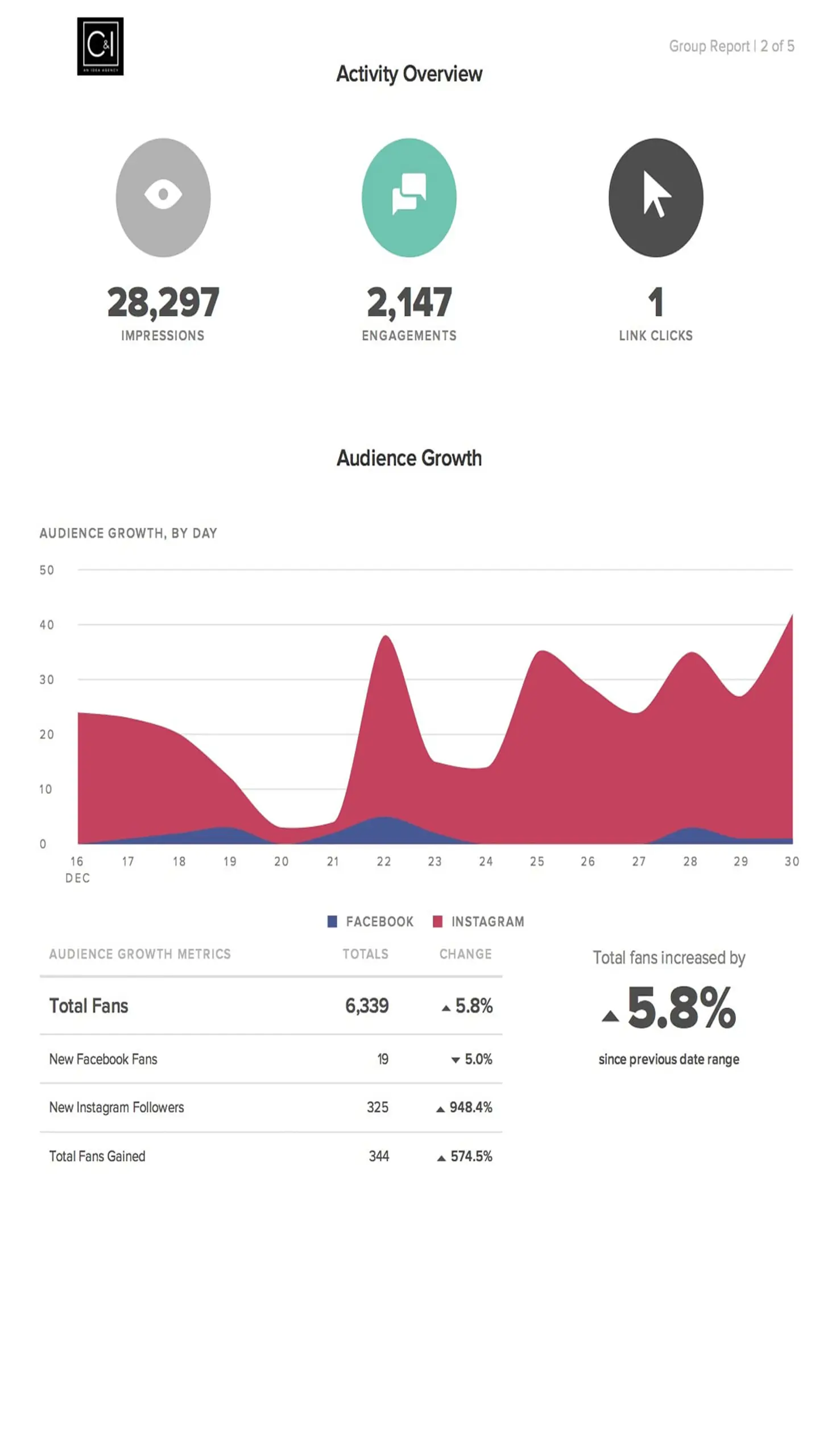
In the digital age, where content is king, understanding your audience's behavior and preferences is paramount to crafting effective and engaging video content. Video analytics has emerged as a powerful tool, providing creators and marketers with invaluable insights into how their audiences interact with and respond to their video offerings.
By harnessing the power of video analytics, businesses can unlock a wealth of data-driven insights, enabling them to refine their strategies, optimize their content, and ultimately forge deeper connections with their target audiences.
## The Role of Video Analytics in Social Media Strategy
As social media platforms continue to gain prominence as primary channels for video consumption, the importance of video analytics in [social media marketing](https://c-istudios.com/social-media-marketing-services/) Services cannot be overstated. By leveraging video analytics, businesses can gain a comprehensive understanding of how their target audiences engage with their content, informing content creation strategies and allowing for real-time adjustments based on audience feedback.
One of the key benefits of video analytics in social media is the ability to tailor content to specific target audiences. By analyzing viewer demographics, engagement rates, and behavioral patterns, businesses can identify the types of videos that resonate most strongly with different segments of their audience. This data-driven approach enables hyper-personalization, ensuring that each audience segment receives content tailored to their unique preferences and interests.
Furthermore, video analytics provides valuable insights into the effectiveness of social media campaigns, allowing businesses to measure success through key performance indicators (KPIs) such as view counts, watch time, engagement rates, and conversion metrics. By tracking these metrics, businesses can quickly identify which videos are driving the desired results and make data-informed decisions about resource allocation and content optimization.
Video analytics also plays a crucial role in understanding the customer journey and identifying potential friction points or drop-off points in the conversion funnel. By analyzing audience behavior and engagement patterns, businesses can pinpoint specific moments where viewers lose interest or disengage, enabling them to refine their content strategy and address any pain points in the user experience.
In addition to informing content creation and optimization, video analytics can also provide valuable insights into the performance of paid social media advertising campaigns. By tracking metrics such as click-through rates, cost per view, and return on ad spend, businesses can optimize their ad targeting, creative assets, and bidding strategies, ensuring they achieve maximum impact and return on investment.
## Key Metrics in Video Analytics
When it comes to leveraging video analytics for audience insights, understanding and tracking the right metrics is essential. While specific metrics may vary depending on the platform and business objectives, several key metrics are universally valuable for gauging audience engagement and content performance.
Engagement rates are among the most crucial metrics to monitor, as they provide a direct measure of how audiences are responding to and interacting with video content. This includes metrics such as likes, comments, shares, and overall view counts. By analyzing engagement rates across different videos and content types, businesses can identify the elements that resonate most strongly with their audiences, informing future [creative marketing](https://c-istudios.com/creative-marketing-services/) strategies.
Audience behavior metrics offer deep insights into how viewers consume and interact with video content. These metrics include watch time, audience retention rates, and drop-off points. By understanding when and why viewers are losing interest or exiting a video, businesses can optimize content length, pacing, and structure to improve engagement and retention.
Conversion tracking is particularly valuable for businesses leveraging video content for marketing and sales purposes. By tracking metrics such as click-through rates, lead generation, and sales conversions, businesses can directly attribute revenue and business impact to their video efforts, enabling data-driven optimization and resource allocation decisions.
Beyond these core metrics, video analytics can also provide insights into audience demographics, geographic locations, device usage, and content preferences. This granular data allows businesses to segment their audiences and tailor content strategies to specific target groups, ensuring maximum relevance and resonance.
It's important to note that while individual metrics offer valuable insights, true power lies in combining and analyzing multiple metrics to uncover deeper patterns and correlations. By taking a holistic approach and leveraging advanced analytical techniques, businesses can gain a comprehensive understanding of their audiences' behavior, preferences, and pain points, enabling them to create truly impactful and engaging video content.
## Case Studies. Success Stories with Video Analytics
The transformative power of video analytics is evident in numerous success stories from brands across various industries. One notable example is Glossier, the direct-to-consumer beauty brand that has leveraged video analytics to achieve viral success and cultivate a highly engaged community.
Glossier's approach to [branding and graphic design](https://c-istudios.com/branding-and-graphic-design-services/) has been heavily influenced by video analytics insights. By analyzing audience engagement and behavior data, the brand identified a strong preference among its target audience for authentic, relatable content that showcases real people and their experiences with Glossier products.
Armed with these insights, [Glossier](https://www.glossier.com/) shifted its video strategy to focus on user-generated content, featuring actual customers sharing their product stories and routines. This authentic, community-driven approach resonated deeply with Glossier's audience, driving massive engagement and fostering a sense of connection and loyalty among its followers.
Another success story can be found in the realm of e-commerce, where video analytics has played a pivotal role in improving product pages and increasing conversions. Companies like Zappos and ASOS have leveraged video analytics to understand how customers interact with product videos, including which sections they rewatch, where they pause or skip, and which features or angles generate the most engagement.
By analyzing this data, these companies have been able to optimize their product videos, highlighting the most compelling features and angles, and ensuring that critical information is presented in a clear and engaging manner. This data-driven approach has resulted in improved customer satisfaction, increased cart conversions, and reduced product returns - a testament to the power of video analytics in enhancing the customer experience.
The impact of video analytics extends beyond consumer-facing applications, as evidenced by its adoption in industries like healthcare and education. In the medical field, video analytics has been used to analyze patient interactions and behavior during telemedicine consultations, providing valuable insights for improving communication, rapport-building, and overall patient experiences.
Similarly, in the education sector, video analytics has been leveraged to study student engagement and learning patterns in online courses and virtual classrooms. By analyzing metrics such as attention span, content interaction, and knowledge retention, educators and course designers can refine their content delivery, assessment methods, and overall learning experiences to better cater to diverse student needs and learning styles.
These success stories highlight the versatility and impact of video analytics across various domains, underscoring the immense value it can bring to businesses and organizations seeking to better understand and serve their audiences.
## Video Surveillance Analytics for Businesses
While video analytics is often associated with digital content and social media, its applications extend far beyond the virtual realm. In the world of brick-and-mortar businesses, [professional photography](https://c-istudios.com/professional-photography-services/), and video surveillance analytics are becoming increasingly valuable tools for understanding customer behavior, optimizing operations, and enhancing the overall customer experience.
Video surveillance analytics leverages advanced computer vision and machine learning technologies to extract valuable insights from video footage captured by security cameras. By analyzing this data, businesses can gain a comprehensive understanding of customer traffic patterns, dwell times, and movement throughout their physical spaces.
One of the primary applications of video surveillance analytics is optimizing store layouts and product placements. By analyzing customer movement and behavior data, businesses can identify high-traffic areas, bottlenecks, and underutilized spaces within their stores. Armed with these insights, they can strategically rearrange products, displays, and signage to improve customer flow, increase visibility for high-demand items, and enhance the overall shopping experience.
Video surveillance analytics can also provide valuable insights into customer engagement and interaction with products and displays. By tracking how customers interact with specific items or promotional displays, businesses can identify opportunities for improvement, such as adjusting product placement, enhancing lighting or signage, or implementing interactive elements to drive engagement and interest.
Beyond in-store operations, video surveillance analytics can also be leveraged for queue management and staffing optimization. By analyzing customer traffic patterns and wait times, businesses can make data-driven decisions about staffing levels, queue configurations, and service areas, ensuring they have the right resources in place to meet customer demand and minimize wait times.
In the realm of retail analytics, video surveillance data can be combined with point-of-sale (POS) data and other customer data sources to uncover deeper insights and correlations. For example, businesses can analyze the relationship between customer traffic patterns, dwell times, and sales data, enabling them to identify high-value customer segments and tailor their marketing and merchandising strategies accordingly.
While video surveillance analytics offers a wealth of benefits, it is crucial for businesses to prioritize privacy and ethical considerations. Ensuring proper data security measures, obtaining appropriate consent, and adhering to relevant regulations and guidelines are paramount to maintaining customer trust and confidence.
Overall, Video monitoring analytics represents a powerful tool for businesses seeking to enhance their understanding of customer behavior, optimize their physical spaces, and deliver exceptional customer experiences
## Techniques for Data Cleansing and Transformation
Effective video analytics relies heavily on the quality and accuracy of the underlying data. In the realm of social media, where vast amounts of user-generated content and engagement data are constantly being produced, ensuring data integrity is paramount for deriving meaningful insights. This is where [web maintenance](https://c-istudios.com/web-maintenance/) techniques for data cleansing and transformation come into play.
One of the primary challenges in social media data analysis is dealing with inconsistencies, duplicates, and missing values. User-generated content often contains typographical errors, abbreviations, and slang, which can introduce noise and inaccuracies into the data. To address these issues, data cleansing techniques such as standardization, deduplication, and imputation are employed.
Standardization involves converting data into a consistent format, ensuring uniformity across various data sources. This might involve tasks like converting text to lowercase, expanding abbreviations, and correcting common misspellings. Deduplication, on the other hand, involves identifying and removing duplicate entries, which can skew analysis results if left unchecked.
Imputation is the process of filling in missing values with plausible estimates based on the available data. This can be achieved through techniques like mean substitution, regression imputation, or more advanced machine learning algorithms, depending on the complexity and volume of the data.
Data transformation is another critical step in preparing social media data for analysis. This involves restructuring and reshaping the data to fit the requirements of specific analytical models or techniques. Common transformation tasks include feature engineering, where new variables are created by combining or manipulating existing variables, and dimensionality reduction, which involves reducing the number of features or variables to simplify the analysis and improve computational efficiency.
In the context of video analytics, data transformation may involve tasks such as extracting metadata from video files, transcribing audio content, or extracting visual features like object detection and facial recognition. These transformed data elements can then be combined with engagement metrics, sentiment analysis, and other contextual data to facilitate a more comprehensive analysis.
Ensuring data quality and integrity is not a one-time process but rather an ongoing endeavor. As new data continues to flow in, regular data validation, monitoring, and cleansing routines must be established to maintain the reliability of the analysis.
By leveraging robust data cleansing and transformation techniques, businesses can ensure that their video analytics efforts are built on a solid foundation of high-quality, reliable data. This, in turn, enables more accurate and actionable insights, driving better decision-making and optimizing content strategies for maximum impact and audience resonance.
## Analytical Approaches in Social Analytics
Once the data has been cleansed, transformed, and prepared for analysis, a variety of analytical approaches can be employed to extract valuable insights from video and social media data. These approaches range from traditional statistical models to cutting-edge machine learning algorithms and natural language processing (NLP) techniques.
Statistical modeling plays a crucial role in [film and TV production](https://c-istudios.com/film-and-tv-production/) analytics, enabling businesses to identify patterns, correlations, and trends within their data. Regression analysis, for instance, can be used to understand the relationship between various factors, such as video content characteristics, audience demographics, and engagement metrics. This can inform decisions about content creation, targeting, and optimization strategies.
Time series analysis is another valuable statistical technique, particularly for understanding how audience engagement and behavior evolve over time. By analyzing historical data and identifying seasonal patterns or anomalies, businesses can anticipate future trends and make proactive adjustments to their video content strategies. Machine learning algorithms have revolutionized the field of social analytics, enabling more advanced and sophisticated analysis of video and user engagement data.
Unsupervised learning techniques, such as clustering algorithms, can be used to segment audiences based on their behavior, preferences, and engagement patterns, facilitating more targeted content creation and personalization efforts.
Supervised learning algorithms, like decision trees and neural networks, can be trained on historical data to predict audience engagement, sentiment, or conversion rates based on various input features. These predictive models can then be applied to new video content or campaigns, allowing businesses to make data-driven decisions about resource allocation and content optimization.
Natural language processing (NLP) techniques have become increasingly valuable in social analytics, particularly for analyzing user-generated content such as comments, reviews, and social media posts. Sentiment analysis, for instance, can be used to gauge audience sentiment towards specific video content or campaigns, providing valuable insights into emotional resonance and potential areas for improvement.
Topic modeling and text clustering can also be employed to identify common themes, trends, and pain points within user-generated content, enabling businesses to adapt their content strategies to better address audience needs and concerns.
Furthermore, the integration of NLP with computer vision and video analysis techniques opens up new possibilities for multimodal analysis. By combining textual, visual, and audio data, businesses can gain a more comprehensive understanding of audience engagement, enabling them to uncover insights that might be missed when analyzing these modalities in isolation.
As the field of social analytics continues to evolve, the adoption of emerging techniques like transfer learning, deep learning, and reinforcement learning is expected to unlock new frontiers in video content optimization and personalization. However, it's essential to strike a balance between leveraging advanced analytical techniques and maintaining transparency, interpretability, and ethical considerations, particularly when dealing with sensitive user data.
## Work with C&I Studios
If you are planning a project like this, our team can take it from concept to final delivery. Explore our [video production services](https://c-istudios.com/video-production-services/), browse [our work](https://c-istudios.com/our-work/) to see how we tell brand stories, and [get in touch](https://c-istudios.com/contact/) when you are ready to start.
Originally published April 5, 2024
---
*This content is from [C&I Studios](https://c-istudios.com), a full-service production company.*
---
# The Rise of Vertical Video: Optimizing for Mobile Viewing
> Published: April 4, 2024
> Categories: Commercial & Brand
> Source: https://c-istudios.com/the-rise-of-vertical-video-optimizing-for-mobile-viewing/
---
.cib{--paper:#1b1d1f;--ink:#fff;--body:#d5d7d9;--muted:#8b9096;--line:rgba(255,255,255,.12);--thumb:#2b2e31;--card:#212426;--accent:#c02b0a;--blue:#5B8FA8;--serif:'Playfair Display',Georgia,serif;--sans:'Poppins',-apple-system,sans-serif;--measure:900px;background:var(--paper);color:var(--body);font-family:var(--sans);line-height:1.6;position:relative;left:50%;transform:translateX(-50%);width:90vw;max-width:1920px}
.cib *{box-sizing:border-box}
.cib .kicker{max-width:var(--measure);margin:58px auto 0;padding:0 22px;font-size:12.5px;font-weight:700;letter-spacing:2.5px;text-transform:uppercase;color:var(--blue)}
.cib h1.cibh1{text-wrap:balance;font-family:var(--serif);font-weight:500;font-size:clamp(46px,6vw,72px);line-height:1.08;color:var(--ink);max-width:var(--measure);margin:18px auto 0;padding:0 22px;letter-spacing:-.5px}
.cib .metarow{max-width:var(--measure);margin:20px auto 0;padding:0 22px;color:var(--muted);font-size:14px}
.cib .hero{position:relative;width:100%;height:0;padding-bottom:56.25%;overflow:hidden;margin:48px auto 0;border-top:1px solid var(--line);border-bottom:1px solid var(--line)}
.cib .hero .ph{width:100%;aspect-ratio:16/9;background:var(--thumb);border-top:1px solid var(--line);border-bottom:1px solid var(--line);display:flex;align-items:center;justify-content:center;color:#7d8288;font-size:13px;text-align:center;padding:0 20px}
.cib .body{max-width:var(--measure);margin:12px auto 0;padding:52px 22px 6px}
.cib .body.lead p:first-child{font-size:23px;line-height:1.62;color:var(--ink)}
.cib .body p{font-size:18.5px;line-height:1.85;margin:0 0 30px;color:var(--body)}
.cib .body h2{text-wrap:balance;font-family:var(--serif);font-weight:500;font-size:clamp(32px,4vw,48px);line-height:1.22;color:var(--ink);margin:70px 0 20px;letter-spacing:-.3px}
.cib .body h3{text-wrap:balance;font-family:var(--sans);font-weight:600;font-size:22px;color:var(--ink);margin:38px 0 8px}
.cib .body a{color:var(--ink);text-decoration:underline;text-decoration-color:rgba(255,255,255,.4);text-underline-offset:3px}
.cib .body a:hover{text-decoration-color:var(--ink)}
.cib .ctable{width:100%;border-collapse:collapse;margin:16px 0 30px;font-size:16px}
.cib .ctable th{background:#000;color:#fff;text-align:left;padding:10px 12px;font-family:var(--sans)}
.cib .ctable td{padding:10px 12px;border-bottom:1px solid var(--line);color:var(--body)}
.cib .inimg{position:relative;width:100%;height:0;padding-bottom:56.25%;overflow:hidden;margin:72px auto;border-top:1px solid var(--line);border-bottom:1px solid var(--line)}
.cib .inimg .ph{width:100%;aspect-ratio:16/9;background:var(--thumb);border-top:1px solid var(--line);border-bottom:1px solid var(--line);display:flex;align-items:center;justify-content:center;color:#7d8288;font-size:13px}
.cib .origpub{max-width:var(--measure);margin:60px auto 0;padding:26px 22px 0;border-top:1px solid var(--line);color:var(--muted);font-size:13.5px}
.cib .related{max-width:1200px;margin:64px auto 0;padding:34px 22px 76px}
.cib .related h3{font-family:var(--sans);font-size:12.5px;letter-spacing:2px;text-transform:uppercase;color:var(--ink);margin:0 0 24px}
.cib .grid{display:grid;grid-template-columns:repeat(3,1fr);gap:28px}
.cib .rc{background:var(--card);border:1px solid var(--line);display:block;text-decoration:none;color:inherit;transition:border-color .15s}
.cib a.rc:hover{border-color:rgba(255,255,255,.5)}
.cib .rc .thumb{position:relative;width:100%;height:0;padding-bottom:56.25%;background:var(--thumb);overflow:hidden}
.cib .rc .thumb img{position:absolute!important;top:0!important;left:0!important;width:100%!important;height:100%!important;object-fit:cover!important;margin:0!important}
.cib .rc .cc{padding:14px 15px 17px}
.cib .rc .rt{font-family:var(--serif);font-weight:500;font-size:16px;line-height:1.3;color:var(--ink);margin:0 0 6px}
.cib .rc .rm{font-size:11px;letter-spacing:1px;text-transform:uppercase;color:var(--muted)}
.cib img{margin:0!important;padding:0!important;display:block!important;vertical-align:top;max-width:100%}
.cib .hero img,.cib .inimg img{position:absolute!important;top:0!important;left:0!important;width:100%!important;height:100%!important;object-fit:cover!important;margin:0!important;padding:0!important;border:0!important;display:block!important;aspect-ratio:auto!important}
.cib .hero+.body{padding-top:36px}
@media(max-width:760px){.cib .grid{grid-template-columns:1fr}.cib .body h2{margin:52px 0 16px}.cib .body p{font-size:17.5px}.cib .inimg,.cib .hero{margin-top:44px}}
.cib .vembed{max-width:var(--measure);margin:44px auto;padding:0 22px}.cib .vembed .vwrap{position:relative;width:100%;height:0;padding-bottom:56.25%}.cib .vembed .vwrap iframe{position:absolute;top:0;left:0;width:100%;height:100%;border:0}
Commercial & Brand
# The Rise of Vertical Video. Optimizing for Mobile Viewing
9 min read

In today's digital landscape, where mobile devices reign supreme, a new video format is rapidly gaining traction - vertical video. As consumers increasingly consume content on their smartphones and tablets, the traditional landscape orientation of videos has given way to a vertical, portrait-style presentation that seamlessly aligns with how people naturally hold their mobile devices.
This shift towards vertical video is transforming the way content creators, marketers, and brands approach [video production](https://c-istudios.com/video-production-services/) and distribution, ushering in a new era of mobile-first video content optimized for the small screen.
## The Shift to Vertical Video
The rise of vertical video can be attributed to several key factors. First and foremost, the ubiquity of mobile devices and the increasing time people spend consuming content on their smartphones and tablets have played a significant role in driving this trend. With users accustomed to holding their devices vertically, vertical live streaming and vertical video content offer a more immersive and intuitive viewing experience, eliminating the need to constantly rotate the device or contend with letterboxing.
Secondly, the popularity of social media platforms like Instagram, TikTok, and Snapchat, which have embraced and even championed vertical video dimensions, has contributed significantly to the normalization of this format. These platforms recognized early on that mobile video trends were shifting, and by optimizing their interfaces for vertical video, they provided a seamless and engaging experience for their predominantly mobile user base.
Moreover, the rise of [social media marketing](https://c-istudios.com/social-media-marketing-services/) strategies focused on capturing the attention of mobile users has further fueled the demand for vertical video content. Brands and businesses have realized the importance of meeting consumers where they are - on their mobile devices - and creating content tailored to their viewing preferences. This has led to an increased investment in vertical video production and distribution, as companies like[C&I Studios](https://www.c-istudios.com/) have emerged to cater to this growing demand.
## Design Considerations for Vertical Video
When it comes to creating effective vertical video content, understanding the unique design considerations is crucial. One of the primary elements to consider is the aspect ratio. While traditional landscape videos typically adhere to ratios like 16:9 or 4:3, vertical videos commonly employ ratios such as 9:16 or 4:5, which better suit mobile devices held in portrait orientation.
Another critical factor is resolution. With mobile devices boasting increasingly high-resolution displays, it's essential to produce vertical videos that maintain sharp and visually appealing quality. Failing to optimize for the appropriate resolution can result in pixelated or blurry content, detracting from the overall viewing experience.
Vertical video dimensions require a different approach to incorporating logos, text, and visual elements, as the limited vertical space can make it challenging to strike the right balance between content and branding. [Effective branding and graphic design](https://c-istudios.com/branding-and-graphic-design-services/) strategies for vertical videos involve careful placement, sizing, and integration of brand elements to ensure they complement the content without overwhelming or obscuring it.
Responsiveness is another key consideration when designing vertical videos. With a multitude of mobile devices available, each with varying screen sizes and resolutions, it's crucial to ensure that your vertical video content adapts seamlessly across different devices. Employing responsive design techniques, such as scalable graphics and dynamic layout adjustments, can help ensure a consistent and optimal viewing experience for your audience, regardless of the device they're using.
## Creating Engaging Vertical Video Content
While the technical aspects of vertical video production are important, the true key to success lies in creating engaging and captivating content tailored for the vertical format. Storytelling, framing, and composition play crucial roles in crafting compelling vertical video experiences.
When it comes to storytelling, [creative marketing](https://c-istudios.com/creative-marketing-services/) strategies for vertical videos often involve a more concise and focused approach. With limited-screen real estate, it's essential to convey your message efficiently while still maintaining a strong narrative flow. This may involve breaking down complex stories into bite-sized, easily digestible segments or leveraging techniques like visual metaphors and symbolism to communicate ideas more succinctly.
Framing and composition are also critical elements in [documentary film production](https://c-istudios.com/documentary-film-production/) for vertical video. The vertical orientation challenges traditional framing conventions, requiring a fresh perspective on how to capture and present subjects within the narrow frame. Techniques like negative space, rule of thirds, and leading lines can be adapted to the vertical format to create visually compelling compositions that guide the viewer's eye and maintain interest throughout the video.
Additionally, embracing the unique advantages of vertical video can open up new creative possibilities. For example, the vertical orientation lends itself well to showcasing tall or narrow subjects, such as architecture, fashion, or even portraits. By playing to the strengths of the format, content creators can develop innovative and engaging visual styles that set their vertical videos apart.
## Editing and Optimizing Vertical Videos
Once you've captured and created your vertical video content, the next step is editing and optimizing it for mobile viewing. This process involves several key considerations and best practices.
Firstly, it's essential to have the right [video production gear list](https://c-istudios.com/video-production-gear-list/) to ensure a smooth and efficient editing workflow. This may include a powerful video editing software suite capable of handling vertical video formats, as well as any necessary hardware, such as external storage devices or graphics processing units (GPUs) for accelerated rendering.
During the editing process, it's crucial to maintain the integrity of the vertical aspect ratio and resolution. Avoid cropping, stretching, or distorting the video, as this can negatively impact the viewing experience and compromise the visual quality of your content.
Color grading and visual effects can also play a significant role in enhancing the appeal of your vertical videos. Careful color correction can help establish a consistent and visually striking aesthetic, while thoughtful use of visual effects can add depth, texture, and dynamic elements to your content.
Pacing and rhythm are equally important when editing vertical videos. With a limited screen area, it's essential to maintain a brisk pace and keep the action moving to retain viewer engagement. This may involve tighter cuts, strategic use of transitions, and a keen eye for identifying and removing any unnecessary or repetitive footage.
Finally, optimizing your vertical videos for various platforms and devices is crucial for ensuring a seamless viewing experience for your audience. This may involve transcoding your videos into multiple formats and resolutions to accommodate different devices and bandwidth constraints. Additionally, leveraging adaptive streaming technologies can help ensure smooth playback and minimize buffering issues, further enhancing the overall viewing experience.
For those seeking professional assistance with video production and optimization, CI Studios - Services offers a comprehensive range of services tailored to meet the needs of businesses and content creators alike.
## Distributing Vertical Videos
Once your vertical videos are edited and optimized, the next step is to distribute them effectively across various platforms to maximize reach and engagement. This is where a comprehensive [media marketing consultation](https://c-istudios.com/media-marketing-consultation-services/) can prove invaluable, helping you develop a cohesive strategy for distributing your vertical video content.
One of the primary channels for distributing vertical videos is social media platforms. Platforms like Instagram, TikTok, and Snapchat have embraced vertical video formats, making them ideal destinations for sharing your content. However, it's important to tailor your approach for each platform, considering factors such as target demographics, content consumption habits, and platform-specific features and algorithms.
Video-sharing platforms like [YouTube](https://www.youtube.com/@cistudios) and Vimeo have also adapted to the vertical video trend, offering support for uploading and displaying vertical videos. While these platforms have traditionally been associated with landscape video content, their recognition of vertical video formats highlights the growing importance of catering to mobile viewers.
In addition to social media and video-sharing platforms, your own website or mobile app can serve as a valuable distribution channel for vertical videos. Embedding vertical videos directly into your website or app can provide a seamless and immersive experience for your audience, while also giving you greater control over branding, monetization, and audience engagement.
Another distribution strategy to consider is partnering with influencers or content creators who have established a strong following on platforms conducive to vertical video content. By leveraging their audiences and expertise, you can potentially gain exposure to new viewers and tap into engaged communities.
When distributing vertical videos, it's also important to consider [SEO copywriting](https://c-istudios.com/seo-copywriting-services/) best practices to ensure your content is easily discoverable through search engines. Optimizing your video titles, descriptions, and tags with relevant keywords can help improve visibility and drive organic traffic to your vertical video content.
Finally, paid advertising and sponsored content can be effective tools for amplifying the reach of your vertical videos. Platforms like Facebook, Instagram, and YouTube offer various advertising options tailored specifically for vertical video formats, allowing you to target your desired audience with precision and measure the effectiveness of your campaigns.
## Measuring Success and Optimizing Performance
As with any marketing or content strategy, measuring the success of your vertical video efforts and continuously optimizing your approach is essential for achieving optimal performance and maximizing the impact of your vertical video content.
One of the key metrics to track is user engagement, which can be measured through various indicators such as view counts, watch time, likes, comments, and shares. These metrics provide valuable insights into how your audience is responding to your vertical video content, allowing you to identify which videos resonate most strongly and adjust your content strategy accordingly.
Additionally, it's crucial to analyze audience retention and drop-off rates to understand where viewers are losing interest or exiting your videos. By identifying specific points within your videos where engagement dips, you can make informed decisions about adjusting factors like pacing, storytelling, or content structure to improve viewer retention.
Conversion rates and return on investment (ROI) are also critical metrics to monitor, especially for businesses and brands leveraging vertical videos for marketing and advertising purposes. By tracking metrics such as click-through rates, lead generation, and sales figures, you can gauge the effectiveness of your vertical video campaigns in driving desired actions and quantify the financial impact of your efforts.
Depending on your distribution channels and goals, there may be additional platform-specific metrics to consider. For instance, on social media platforms, metrics like reach, impressions, and engagement rates can provide valuable insights into the performance of your vertical video content within those specific ecosystems.
To effectively analyze and optimize your vertical video performance, it's essential to have robust data collection and analytics tools in place. Many video hosting and distribution platforms offer built-in analytics capabilities, while third-party tools like Google Analytics can provide deeper insights into audience behavior and content performance across various channels.
Beyond quantitative data, qualitative feedback from your audience can also be invaluable in optimizing your vertical video strategy. Actively soliciting feedback through surveys, social media interactions, or focus groups can provide deeper insights into audience preferences, pain points, and areas for improvement that may not be immediately apparent from the raw data.
Armed with these insights, you can continuously refine and optimize your vertical video content and distribution strategies. This may involve adjusting production techniques, experimenting with different storytelling approaches, testing new distribution channels, or tweaking your content format and length to better align with audience preferences and consumption habits.
It's also important to stay up-to-date with the latest trends and best practices in the rapidly evolving world of vertical video. Attending industry events, participating in online communities, and continuously educating yourself on emerging technologies, platforms, and consumer behaviors can help ensure that your vertical video strategy remains relevant and effective.
## Work with C&I Studios
If you are planning a project like this, our team can take it from concept to final delivery. Explore our [video production services](https://c-istudios.com/video-production-services/), browse [our work](https://c-istudios.com/our-work/) to see how we tell brand stories, and [get in touch](https://c-istudios.com/contact/) when you are ready to start.
Originally published April 4, 2024
---
*This content is from [C&I Studios](https://c-istudios.com), a full-service production company.*
---
# Video Content Strategy: Building a Sustainable Plan for Success
> Published: April 3, 2024
> Categories: Commercial & Brand
> Source: https://c-istudios.com/video-content-strategy-building-a-sustainable-plan-for-success/
---
.cib{--paper:#1b1d1f;--ink:#fff;--body:#d5d7d9;--muted:#8b9096;--line:rgba(255,255,255,.12);--thumb:#2b2e31;--card:#212426;--accent:#c02b0a;--blue:#5B8FA8;--serif:'Playfair Display',Georgia,serif;--sans:'Poppins',-apple-system,sans-serif;--measure:900px;background:var(--paper);color:var(--body);font-family:var(--sans);line-height:1.6;position:relative;left:50%;transform:translateX(-50%);width:90vw;max-width:1920px}
.cib *{box-sizing:border-box}
.cib .kicker{max-width:var(--measure);margin:58px auto 0;padding:0 22px;font-size:12.5px;font-weight:700;letter-spacing:2.5px;text-transform:uppercase;color:var(--blue)}
.cib h1.cibh1{text-wrap:balance;font-family:var(--serif);font-weight:500;font-size:clamp(46px,6vw,72px);line-height:1.08;color:var(--ink);max-width:var(--measure);margin:18px auto 0;padding:0 22px;letter-spacing:-.5px}
.cib .metarow{max-width:var(--measure);margin:20px auto 0;padding:0 22px;color:var(--muted);font-size:14px}
.cib .hero{position:relative;width:100%;height:0;padding-bottom:56.25%;overflow:hidden;margin:48px auto 0;border-top:1px solid var(--line);border-bottom:1px solid var(--line)}
.cib .hero .ph{width:100%;aspect-ratio:16/9;background:var(--thumb);border-top:1px solid var(--line);border-bottom:1px solid var(--line);display:flex;align-items:center;justify-content:center;color:#7d8288;font-size:13px;text-align:center;padding:0 20px}
.cib .body{max-width:var(--measure);margin:12px auto 0;padding:52px 22px 6px}
.cib .body.lead p:first-child{font-size:23px;line-height:1.62;color:var(--ink)}
.cib .body p{font-size:18.5px;line-height:1.85;margin:0 0 30px;color:var(--body)}
.cib .body h2{text-wrap:balance;font-family:var(--serif);font-weight:500;font-size:clamp(32px,4vw,48px);line-height:1.22;color:var(--ink);margin:70px 0 20px;letter-spacing:-.3px}
.cib .body h3{text-wrap:balance;font-family:var(--sans);font-weight:600;font-size:22px;color:var(--ink);margin:38px 0 8px}
.cib .body a{color:var(--ink);text-decoration:underline;text-decoration-color:rgba(255,255,255,.4);text-underline-offset:3px}
.cib .body a:hover{text-decoration-color:var(--ink)}
.cib .ctable{width:100%;border-collapse:collapse;margin:16px 0 30px;font-size:16px}
.cib .ctable th{background:#000;color:#fff;text-align:left;padding:10px 12px;font-family:var(--sans)}
.cib .ctable td{padding:10px 12px;border-bottom:1px solid var(--line);color:var(--body)}
.cib .inimg{position:relative;width:100%;height:0;padding-bottom:56.25%;overflow:hidden;margin:72px auto;border-top:1px solid var(--line);border-bottom:1px solid var(--line)}
.cib .inimg .ph{width:100%;aspect-ratio:16/9;background:var(--thumb);border-top:1px solid var(--line);border-bottom:1px solid var(--line);display:flex;align-items:center;justify-content:center;color:#7d8288;font-size:13px}
.cib .origpub{max-width:var(--measure);margin:60px auto 0;padding:26px 22px 0;border-top:1px solid var(--line);color:var(--muted);font-size:13.5px}
.cib .related{max-width:1200px;margin:64px auto 0;padding:34px 22px 76px}
.cib .related h3{font-family:var(--sans);font-size:12.5px;letter-spacing:2px;text-transform:uppercase;color:var(--ink);margin:0 0 24px}
.cib .grid{display:grid;grid-template-columns:repeat(3,1fr);gap:28px}
.cib .rc{background:var(--card);border:1px solid var(--line);display:block;text-decoration:none;color:inherit;transition:border-color .15s}
.cib a.rc:hover{border-color:rgba(255,255,255,.5)}
.cib .rc .thumb{position:relative;width:100%;height:0;padding-bottom:56.25%;background:var(--thumb);overflow:hidden}
.cib .rc .thumb img{position:absolute!important;top:0!important;left:0!important;width:100%!important;height:100%!important;object-fit:cover!important;margin:0!important}
.cib .rc .cc{padding:14px 15px 17px}
.cib .rc .rt{font-family:var(--serif);font-weight:500;font-size:16px;line-height:1.3;color:var(--ink);margin:0 0 6px}
.cib .rc .rm{font-size:11px;letter-spacing:1px;text-transform:uppercase;color:var(--muted)}
.cib img{margin:0!important;padding:0!important;display:block!important;vertical-align:top;max-width:100%}
.cib .hero img,.cib .inimg img{position:absolute!important;top:0!important;left:0!important;width:100%!important;height:100%!important;object-fit:cover!important;margin:0!important;padding:0!important;border:0!important;display:block!important;aspect-ratio:auto!important}
.cib .hero+.body{padding-top:36px}
@media(max-width:760px){.cib .grid{grid-template-columns:1fr}.cib .body h2{margin:52px 0 16px}.cib .body p{font-size:17.5px}.cib .inimg,.cib .hero{margin-top:44px}}
.cib .vembed{max-width:var(--measure);margin:44px auto;padding:0 22px}.cib .vembed .vwrap{position:relative;width:100%;height:0;padding-bottom:56.25%}.cib .vembed .vwrap iframe{position:absolute;top:0;left:0;width:100%;height:100%;border:0}
Commercial & Brand
# Video Content Strategy. Building a Sustainable Plan for Success
10 min read
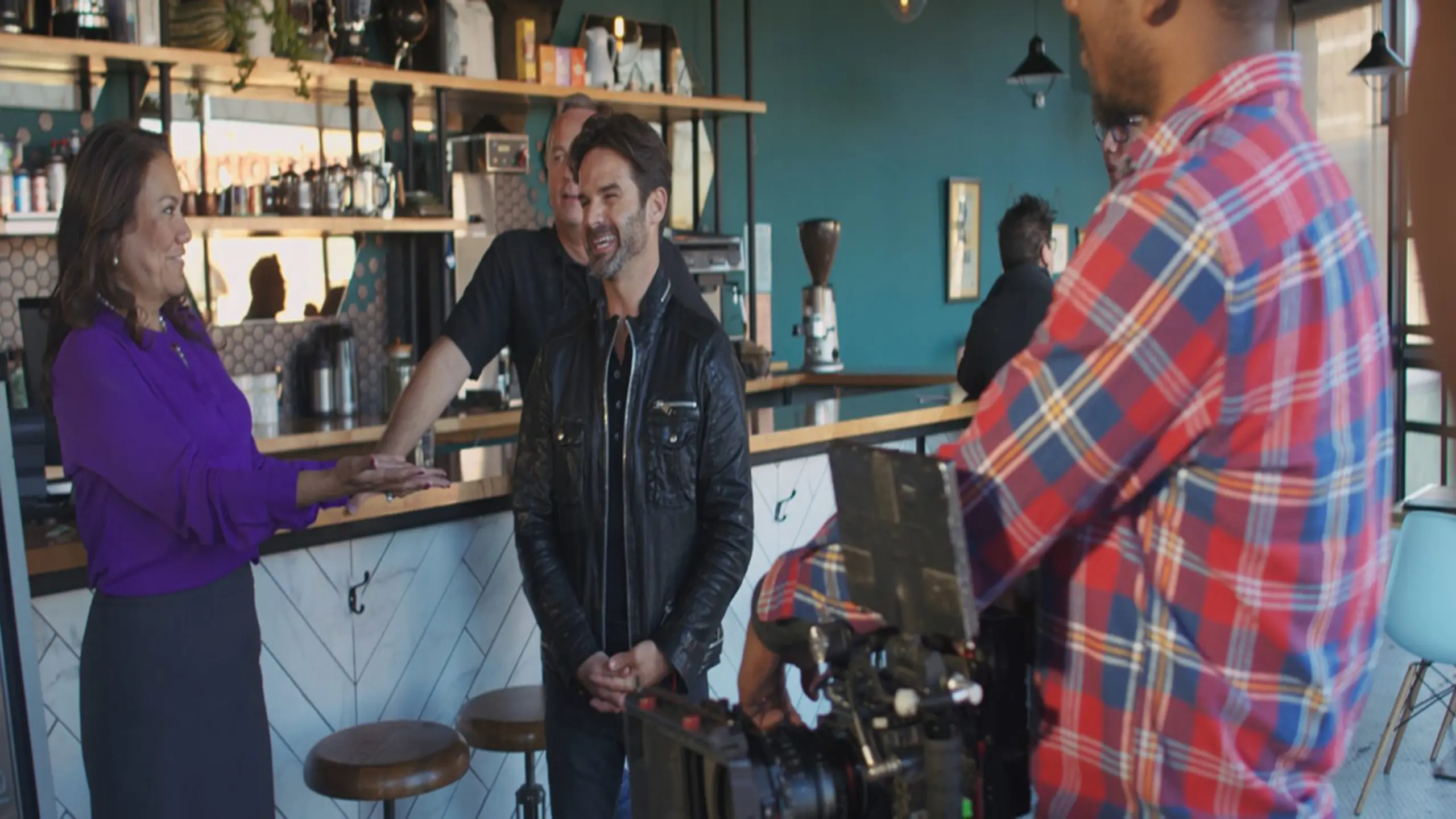
In the age of digital media consumption, video has emerged as a powerful tool for businesses to engage audiences, convey messages, and drive conversions. However, creating video content without a well-defined strategy can lead to wasted resources and ineffective campaigns.
This comprehensive guide delves into the essential steps for building a sustainable video content strategy, equipping you with the knowledge and tools to captivate your audience and achieve long-term success in the ever-evolving digital landscape.
## Step 1. Define Your Goals and Objectives
The foundation of any successful video content strategy lies in setting clear and measurable goals and objectives. These goals serve as guiding principles that shape every aspect of your strategy, from content creation to distribution and promotion.
Before embarking on your video content journey, it's crucial to define what you hope to achieve. Are you aiming to increase brand awareness, drive website traffic, generate leads, or foster customer loyalty? Each of these objectives requires a tailored approach and specific metrics to track progress.
Once you've identified your primary goals, break them down into specific, measurable objectives. For example, if your goal is to increase brand awareness, your objectives could include reaching a certain number of views, achieving a target engagement rate, or increasing social media mentions by a specific percentage.
Collaborating with a [media marketing consultation](https://c-istudios.com/media-marketing-consultation-services/) agency can provide valuable insights and expertise in setting realistic, achievable goals and objectives that align with your overall business strategy. These professionals can help you navigate the complexities of video content marketing, ensuring that your efforts are focused and purposeful.
Furthermore, clearly defined goals and objectives serve as a roadmap for your entire team, fostering alignment and ensuring that every member understands the desired outcomes and their role in achieving them.
## Step 2. Understand Your Audience
Crafting a compelling video content strategy hinges on a deep understanding of your target audience. Without this crucial knowledge, your efforts may fall flat, failing to resonate with the individuals you aim to engage.
The first step in understanding your audience is to identify the various segments that comprise your target market. These segments can be based on factors such as demographics, psychographics, behaviors, and interests. By segmenting your audience, you can tailor your content to specific groups, increasing the likelihood of resonating with their unique needs and preferences.
Once you've identified your audience segments, it's time to create detailed buyer personas. These fictional representations of your ideal customers should encompass their demographics, pain points, goals, challenges, and content consumption habits. By developing these personas, you can craft content that speaks directly to their needs and resonates on a deeper level.
Conducting market research, analyzing customer data, and engaging in social listening can provide valuable insights into your audience's preferences, behaviors, and interests. This information can inform the types of content you create, the tone and messaging you employ, and the channels you use for distribution.
## Step 3. Analyze the Market and Competitors
In today's crowded digital landscape, it's essential to understand the competitive landscape and identify opportunities for differentiation. By conducting a thorough market analysis and evaluating your competitors' video content strategies, you can uncover gaps, capitalize on trends, and position your brand as a leader in your industry.
Start by identifying your direct competitors, as well as any adjacent businesses that may be vying for the attention of your target audience. Analyze their video content offerings, studying the types of videos they produce, the topics they cover, and the platforms they utilize for distribution.
As you analyze your competitors' video content, take note of what works and what doesn't. Identify areas where they excel and areas where they fall short. This information can inform your own strategy, allowing you to capitalize on their weaknesses and differentiate your content by addressing unmet needs or underserved topics.
Additionally, consider leveraging [SEO copywriting](https://c-istudios.com/seo-copywriting-services/) techniques to analyze the keywords and search terms your competitors are targeting with their video content. This can help you identify opportunities to optimize your own content for better search visibility and rankings.
Beyond your direct competitors, it's also important to stay abreast of industry trends and consumer behavior shifts. Monitor social media conversations, read industry publications, and attend relevant events to gain insights into emerging trends and new content opportunities.
By conducting a comprehensive market analysis and competitor evaluation, you can position your video content strategy to stand out in a crowded market, resonate with your audience, and drive tangible results for your business.
## Step 4. Develop a Content Mix
Engaging your audience and guiding them through the customer journey requires a diverse mix of video content that serves different purposes and caters to various stages of the buyer's journey. One effective approach is to create a content mix that includes help content, hub content, and hero content:
1. **Help Content:** This type of content is designed to address specific pain points, answer common questions, or provide solutions to problems faced by your target audience. Examples include how-to videos, tutorials, product demonstrations, and educational content.
2. **Hub Content:** Hub content serves as a central resource for your audience, fostering brand loyalty and establishing your business as a trusted authority in your industry. This can include industry news, thought leadership pieces, interviews, and behind-the-scenes content.
3. **Hero Content:** Hero content is designed to captivate and inspire your audience, showcasing the best of your brand and its offerings. This can take the form of high-quality brand films, product launch videos, or event highlights.
By creating a balanced mix of these content types, you can engage your audience at every stage of the buyer's journey, nurturing them from initial awareness to consideration and ultimately conversion.
When developing your content mix, consider collaborating with experienced professionals in the [film and TV production](https://c-istudios.com/film-and-tv-production/) industry. These experts can provide guidance on crafting compelling narratives, leveraging cinematic techniques, and producing high-quality video content that resonates with your audience.
Additionally, it's essential to align your content mix with your overall business objectives and marketing funnel. Help content can be tailored to nurture top-of-funnel leads, while hub and hero content can target mid-funnel and bottom-funnel prospects, respectively.
## Step 5. Plan Your Production Process
With your content strategy defined and your content mix outlined, it's time to plan your production process. This involves deciding whether to produce videos in-house or outsource to a professional [video production company](https://c-istudios.com/video-production-services/), as well as establishing workflows and processes to ensure efficient and consistent content creation.
In-house video production can provide greater control over the creative process and potentially lower costs, especially if you have the necessary equipment and personnel. However, it also requires a significant investment in resources, including video cameras, lighting, sound equipment, editing software, and trained staff.
If you opt for in-house production, consider curating a comprehensive [video production gear list](https://c-istudios.com/video-production-gear-list/) that meets your needs and budget. Investing in high-quality equipment and tools can significantly impact the production value and overall quality of your videos.
Alternatively, outsourcing to a professional video production company can offer a range of benefits, including access to experienced crews, state-of-the-art equipment, and a wealth of creative expertise. While this option may be more expensive, it can often deliver superior results and free up your internal resources to focus on other aspects of your business.
When considering outsourcing, thoroughly vet potential partners and review their [portfolio](https://c-istudios.com/our-work/)s, paying particular attention to their experience in your industry and their ability to capture your brand's essence. Look for companies that specialize in Professional Photography and have a track record of delivering high-quality video content.
Regardless of whether you choose in-house or outsourced production, it's crucial to establish clear workflows and processes to streamline your video content creation. This may include developing content calendars, establishing review and approval processes, and implementing project management tools to ensure efficient collaboration and timely delivery.
By carefully planning your production process and leveraging the right resources, you can ensure that your video content meets the highest standards of quality while aligning with your overall business objectives and budget constraints.
## Step 6. Distribute and Promote Your Videos
Creating compelling video content is only half the battle - the true challenge lies in ensuring that your videos reach and engage your target audience. A well-planned distribution and promotion strategy is essential for maximizing the impact and ROI of your video content.
One of the primary considerations when distributing your videos is choosing the right platforms. While platforms like YouTube, Vimeo, and social media channels are obvious choices, it's important to understand the strengths and limitations of each platform, as well as the viewing preferences of your target audience.
For instance, if your audience primarily consumes content on social media, you may want to focus your efforts on platforms like Facebook, Instagram, and TikTok. On the other hand, if your content is more informative or educational, YouTube may be the ideal platform for reaching a broader audience.
Additionally, consider leveraging the power of [video audio live streaming](https://c-istudios.com/video-audio-live-streaming/) platforms like Twitch, Facebook Live, or YouTube Live. These platforms allow you to engage with your audience in real time, fostering a sense of community and enabling direct interactions that can deepen brand loyalty and trust.
Once you've identified the most suitable platforms for your video content, it's essential to optimize your videos for maximum visibility and engagement. This includes crafting compelling titles, descriptions, and thumbnails that accurately represent your content and entice viewers to click.
Search engine optimization (SEO) is another critical aspect of video distribution and promotion. By incorporating relevant keywords into your video titles, descriptions, and tags, you can improve your content's discoverability on search engines like Google and YouTube, increasing the likelihood of reaching new audiences organically.
Beyond organic distribution, consider implementing a paid promotion strategy to amplify your reach and drive targeted traffic to your videos. Platforms like YouTube, Facebook, and Instagram offer robust advertising tools that allow you to target specific demographics, interests, and behaviors, ensuring that your videos are served to the most relevant and engaged audiences.
Finally, encourage and incentivize your existing audience to share and promote your video content organically. This can be achieved through contests, giveaways, or by offering exclusive content or rewards to those who share your videos with their networks.
By leveraging a multi-faceted distribution and promotion strategy that combines organic and paid efforts, optimized content, and community engagement, you can ensure that your video content reaches and resonates with your target audience, driving tangible results for your business.
## Step 7. Measure and Optimize Performance
Measurement and optimization are critical components of a sustainable video content strategy. By tracking key metrics and analyzing performance data, you can refine your approach, make data-driven decisions, and continuously improve the effectiveness of your video content.
Start by identifying the most relevant metrics to track based on your specific goals and objectives. For example, if your primary goal is to increase brand awareness, you may want to focus on metrics such as view count, watch time, and audience retention. If you're aiming to drive conversions, metrics like click-through rates, lead generation, and sales figures become more crucial.
Leverage analytics tools provided by the platforms you're using (e.g., YouTube Analytics, Facebook Insights) to gather detailed performance data. Additionally, consider integrating your video content with your website analytics tools (e.g., [Google Analytics](https://marketingplatform.google.com/about/analytics/)) to track user behavior and conversions more comprehensively.
Once you've gathered sufficient data, analyze it to identify patterns, trends, and areas for improvement. Look for videos or content types that consistently outperform others and try to understand the factors contributing to their success. Conversely, identify underperforming content and explore potential reasons for its lack of engagement, such as poor targeting, irrelevant messaging, or suboptimal distribution channels.
Collaboration with [creative marketing](https://c-istudios.com/creative-marketing-services/) professionals can provide valuable insights and expertise in data analysis and optimization. These experts can help you interpret the data, identify areas for improvement, and develop strategies to enhance the effectiveness of your video content across all stages of the funnel.
Based on your data-driven insights, continuously refine and optimize your video content strategy. This may involve adjusting your content mix, experimenting with new formats or styles, targeting different audience segments, or tweaking your distribution and promotion tactics.
Remember, video content strategy is an iterative process, and the most successful brands are those that are willing to adapt and evolve based on audience feedback, performance data, and market trends.
## Work with C&I Studios
If you are planning a project like this, our team can take it from concept to final delivery. Explore our [video production services](https://c-istudios.com/video-production-services/), browse [our work](https://c-istudios.com/our-work/) to see how we tell brand stories, and [get in touch](https://c-istudios.com/contact/) when you are ready to start.
Originally published April 3, 2024
---
*This content is from [C&I Studios](https://c-istudios.com), a full-service production company.*
---
# Video Accessibility: Making Your Content Inclusive for All Audiences
> Published: April 2, 2024
> Categories: Commercial & Brand
> Source: https://c-istudios.com/video-accessibility-making-your-content-inclusive-for-all-audiences/
---
.cib{--paper:#1b1d1f;--ink:#fff;--body:#d5d7d9;--muted:#8b9096;--line:rgba(255,255,255,.12);--thumb:#2b2e31;--card:#212426;--accent:#c02b0a;--blue:#5B8FA8;--serif:'Playfair Display',Georgia,serif;--sans:'Poppins',-apple-system,sans-serif;--measure:900px;background:var(--paper);color:var(--body);font-family:var(--sans);line-height:1.6;position:relative;left:50%;transform:translateX(-50%);width:90vw;max-width:1920px}
.cib *{box-sizing:border-box}
.cib .kicker{max-width:var(--measure);margin:58px auto 0;padding:0 22px;font-size:12.5px;font-weight:700;letter-spacing:2.5px;text-transform:uppercase;color:var(--blue)}
.cib h1.cibh1{text-wrap:balance;font-family:var(--serif);font-weight:500;font-size:clamp(46px,6vw,72px);line-height:1.08;color:var(--ink);max-width:var(--measure);margin:18px auto 0;padding:0 22px;letter-spacing:-.5px}
.cib .metarow{max-width:var(--measure);margin:20px auto 0;padding:0 22px;color:var(--muted);font-size:14px}
.cib .hero{position:relative;width:100%;height:0;padding-bottom:56.25%;overflow:hidden;margin:48px auto 0;border-top:1px solid var(--line);border-bottom:1px solid var(--line)}
.cib .hero .ph{width:100%;aspect-ratio:16/9;background:var(--thumb);border-top:1px solid var(--line);border-bottom:1px solid var(--line);display:flex;align-items:center;justify-content:center;color:#7d8288;font-size:13px;text-align:center;padding:0 20px}
.cib .body{max-width:var(--measure);margin:12px auto 0;padding:52px 22px 6px}
.cib .body.lead p:first-child{font-size:23px;line-height:1.62;color:var(--ink)}
.cib .body p{font-size:18.5px;line-height:1.85;margin:0 0 30px;color:var(--body)}
.cib .body h2{text-wrap:balance;font-family:var(--serif);font-weight:500;font-size:clamp(32px,4vw,48px);line-height:1.22;color:var(--ink);margin:70px 0 20px;letter-spacing:-.3px}
.cib .body h3{text-wrap:balance;font-family:var(--sans);font-weight:600;font-size:22px;color:var(--ink);margin:38px 0 8px}
.cib .body a{color:var(--ink);text-decoration:underline;text-decoration-color:rgba(255,255,255,.4);text-underline-offset:3px}
.cib .body a:hover{text-decoration-color:var(--ink)}
.cib .ctable{width:100%;border-collapse:collapse;margin:16px 0 30px;font-size:16px}
.cib .ctable th{background:#000;color:#fff;text-align:left;padding:10px 12px;font-family:var(--sans)}
.cib .ctable td{padding:10px 12px;border-bottom:1px solid var(--line);color:var(--body)}
.cib .inimg{position:relative;width:100%;height:0;padding-bottom:56.25%;overflow:hidden;margin:72px auto;border-top:1px solid var(--line);border-bottom:1px solid var(--line)}
.cib .inimg .ph{width:100%;aspect-ratio:16/9;background:var(--thumb);border-top:1px solid var(--line);border-bottom:1px solid var(--line);display:flex;align-items:center;justify-content:center;color:#7d8288;font-size:13px}
.cib .origpub{max-width:var(--measure);margin:60px auto 0;padding:26px 22px 0;border-top:1px solid var(--line);color:var(--muted);font-size:13.5px}
.cib .related{max-width:1200px;margin:64px auto 0;padding:34px 22px 76px}
.cib .related h3{font-family:var(--sans);font-size:12.5px;letter-spacing:2px;text-transform:uppercase;color:var(--ink);margin:0 0 24px}
.cib .grid{display:grid;grid-template-columns:repeat(3,1fr);gap:28px}
.cib .rc{background:var(--card);border:1px solid var(--line);display:block;text-decoration:none;color:inherit;transition:border-color .15s}
.cib a.rc:hover{border-color:rgba(255,255,255,.5)}
.cib .rc .thumb{position:relative;width:100%;height:0;padding-bottom:56.25%;background:var(--thumb);overflow:hidden}
.cib .rc .thumb img{position:absolute!important;top:0!important;left:0!important;width:100%!important;height:100%!important;object-fit:cover!important;margin:0!important}
.cib .rc .cc{padding:14px 15px 17px}
.cib .rc .rt{font-family:var(--serif);font-weight:500;font-size:16px;line-height:1.3;color:var(--ink);margin:0 0 6px}
.cib .rc .rm{font-size:11px;letter-spacing:1px;text-transform:uppercase;color:var(--muted)}
.cib img{margin:0!important;padding:0!important;display:block!important;vertical-align:top;max-width:100%}
.cib .hero img,.cib .inimg img{position:absolute!important;top:0!important;left:0!important;width:100%!important;height:100%!important;object-fit:cover!important;margin:0!important;padding:0!important;border:0!important;display:block!important;aspect-ratio:auto!important}
.cib .hero+.body{padding-top:36px}
@media(max-width:760px){.cib .grid{grid-template-columns:1fr}.cib .body h2{margin:52px 0 16px}.cib .body p{font-size:17.5px}.cib .inimg,.cib .hero{margin-top:44px}}
.cib .vembed{max-width:var(--measure);margin:44px auto;padding:0 22px}.cib .vembed .vwrap{position:relative;width:100%;height:0;padding-bottom:56.25%}.cib .vembed .vwrap iframe{position:absolute;top:0;left:0;width:100%;height:100%;border:0}
Commercial & Brand
# Video Accessibility. Making Your Content Inclusive for All Audiences
9 min read

In today's digital age, video content has become an integral part of our daily lives, from entertainment to education and beyond. However, not everyone can access and enjoy this content equally. Making videos accessible is not just a legal requirement but also a moral obligation to ensure that individuals with disabilities can fully participate in our increasingly video-driven world.
This article will delve into the importance of video accessibility and provide a comprehensive guide on how to make your video content inclusive for all audiences.
## Step 1. Understand Accessibility Standards
Before embarking on the journey of creating accessible video content, it's crucial to understand the relevant accessibility standards and guidelines. The [Americans with Disabilities Act](https://www.dol.gov/agencies/odep/ada) (ADA) and the web content Accessibility Guidelines (WCAG) are two of the most widely recognized and adopted standards in this realm.
The ADA is a civil rights law that prohibits discrimination against individuals with disabilities in all areas of public life, including employment, transportation, and access to goods and services. It requires businesses and organizations to provide reasonable accommodations to ensure equal access for people with disabilities. In the context of [web development](https://c-istudios.com/web-development-services/), this means that video content must be made accessible to individuals with various disabilities, such as hearing or visual impairments.
The WCAG, on the other hand, is a set of technical guidelines developed by the World Wide Web Consortium (W3C) to make web content more accessible to users with disabilities. These guidelines cover a wide range of accessibility considerations, including perceivable, operable, understandable, and robust content. When it comes to video accessibility, the WCAG provides specific recommendations for captions, transcripts, audio descriptions, and other features that enhance the user experience for individuals with disabilities.
By understanding and adhering to these standards, organizations can ensure that their video content is not only compliant with legal requirements but also inclusive and user-friendly for all audiences. Failure to comply with accessibility standards can result in legal consequences, negative public perception, and alienation of a significant portion of potential viewers.
## Step 2. Provide Captions and Transcripts
One of the most critical aspects of video accessibility is providing captions and transcripts for individuals who are deaf or hard of hearing. Captions are synchronized text overlays that display the audio content of a video, while transcripts are written text documents that capture the entire dialogue and relevant audio cues.
The importance of captions and transcripts cannot be overstated. For many individuals in the deaf and hard-of-hearing community, they are the primary means of accessing and comprehending video content. Without them, a significant portion of the audience would be excluded from engaging with your videos.
When creating captions and transcripts, accuracy and timing are paramount. Captions should be perfectly synchronized with the audio, ensuring that viewers can follow the dialogue and action seamlessly. Transcripts should be thorough and capture every word spoken, as well as relevant non-speech audio cues, such as or .
To simplify the captioning process, consider investing in professional [video production gear](https://c-istudios.com/video-production-gear-list/) that includes captioning software or services. These tools can significantly streamline the captioning workflow and ensure high-quality, accurate results. Additionally, many video hosting platforms offer built-in captioning tools or integration with third-party captioning services, making it easier to incorporate captions into your videos.
Remember, captions and transcripts not only benefit individuals with hearing impairments but also enhance the viewing experience for everyone. They can be helpful in noisy environments, for language learners, and for viewers who prefer to follow along with written text.
## Step 3. Include Audio Descriptions
While captions and transcripts address the needs of individuals with hearing impairments, audio descriptions cater to the visually impaired community. Audio descriptions are additional narrations that describe the relevant visual elements of a video, such as scene changes, actions, facial expressions, and other visual cues that are essential for comprehending the content.
For individuals who are blind or have low vision, audio descriptions can be a game-changer, transforming a passive viewing experience into an immersive and engaging one. By providing a detailed auditory description of the visual elements, audio descriptions allow these viewers to follow the storyline, understand the context, and appreciate the visual aspects of the video.
When incorporating audio descriptions, it's crucial to strike a balance between providing enough information for comprehension and avoiding excessive detail that could become overwhelming or disruptive. The key is to describe only the essential visual elements that contribute to the overall understanding of the content.
Best practices for integrating audio descriptions include:
- Ensuring that the descriptions are clear, concise, and objective.
- Timing the descriptions to fit seamlessly into the natural pauses and breaks in the video's audio track.
- Use a separate audio track or channel for the descriptions to avoid interfering with the original audio.
- Considering the use of different voices or audio characteristics to distinguish the descriptions from the main audio.
By incorporating audio descriptions, you not only make your video content more accessible to individuals with visual impairments but also demonstrate a commitment to inclusivity and equal access for all audiences.
## Step 4. Ensure Keyboard and Screen Reader Accessibility
While captions, transcripts, and audio descriptions address the needs of individuals with hearing and visual impairments, it's equally important to consider the accessibility of your video player itself. Many users rely on keyboard navigation or screen readers to interact with digital content, including videos.
To ensure keyboard accessibility, your video player should be fully operable using only a keyboard. This means that all controls, such as play/pause, volume adjustment, and seek functions, should be accessible and responsive to keyboard commands. Additionally, the player should provide clear visual focus indicators to help users understand which control or element currently has focus.
Screen reader accessibility is another crucial aspect to consider. Screen readers are assistive technologies that convert on-screen text and elements into audible or tactile output, allowing users with visual impairments to navigate and interact with digital content.
To make your video player screen reader accessible, you should ensure that all relevant elements, such as controls, captions, and transcripts, are properly labeled and structured in a way that screen readers can interpret and convey to the user. This may involve implementing appropriate HTML markup, ARIA attributes, and other accessibility best practices.
Regular [web maintenance](https://c-istudios.com/web-maintenance/) and testing are essential to ensure that your video player remains accessible over time. As new technologies and updates are introduced, it's important to continuously validate and address any accessibility issues that may arise.
By prioritizing keyboard and screen reader accessibility, you not only comply with accessibility guidelines but also provide a more inclusive and user-friendly experience for all viewers, regardless of their abilities or assistive technology needs.
## Step 5. Optimize for Various Devices and Bandwidths
In today's digital landscape, video content is consumed on a wide range of devices, from desktop computers and laptops to smartphones and tablets. Additionally, users may have varying internet speeds and bandwidths, which can significantly impact the video playback experience.
To ensure that your video content is accessible to all audiences, it's crucial to optimize your videos for different devices and bandwidths. This involves implementing responsive design principles and leveraging adaptive bitrate streaming technologies.
Responsive design ensures that your video player and content adapt seamlessly to different screen sizes and resolutions, providing an optimal viewing experience across various devices. This may involve adjusting the player's layout, controls, and video dimensions to fit different form factors while maintaining usability and accessibility.
Adaptive bitrate streaming, on the other hand, allows your video to automatically adjust its quality and resolution based on the user's available bandwidth. This technology enables smooth playback and reduces buffering issues, even on slower internet connections or mobile networks.
When optimizing for different devices and bandwidths, it's important to consider the following factors:
1. **Video encoding and compression:** Use efficient codecs and compression techniques to reduce file sizes without compromising quality.
2. **Multiple bitrate streams:** Offer various bitrate streams to accommodate different bandwidth conditions and device capabilities.
3. **Responsive player design:** Implement responsive design principles to ensure the video player adapts to different screen sizes and orientations.
4. **User preference settings:** Allow users to customize settings such as video quality, captions, and audio descriptions based on their preferences and device capabilities.
By optimizing your video content for various devices and bandwidths, you not only enhance the overall user experience but also ensure that individuals with disabilities can access and enjoy your content seamlessly, regardless of their device or network conditions.
In the realm of [media marketing](https://c-istudios.com/media-marketing-consultation-services/), providing an accessible and consistent experience across different platforms is crucial for reaching and engaging with a wide audience. Consulting with accessibility experts and user experience professionals can help you navigate the complexities of optimizing your video content for diverse user needs and scenarios.
## Step 6. Use Alt Text on Thumbnails
While captions, transcripts, audio descriptions, and player accessibility are essential components of video accessibility, it's also important to consider the accessibility of related elements, such as video thumbnails. Thumbnails are the small preview images that represent your video content and often serve as the first point of interaction for users. Making these thumbnails accessible through the use of alternative (alt) text is crucial for individuals with visual impairments who rely on screen readers or other assistive technologies.
Alt text is a short description that provides a textual alternative to non-text content, such as images, in a way that conveys the same meaning and purpose. When it comes to video thumbnails, the alt text should concisely describe the visual elements and subject matter of the video, allowing users with visual impairments to understand the content and decide whether they want to watch the video.
Crafting effective alt text for video thumbnails requires striking a balance between brevity and descriptiveness. The description should be concise yet informative, capturing the essence of the video without being overly wordy or redundant.
Here are some best practices for using alt text on video thumbnails:
1. **Focus on the most relevant and important visual elements:** Describe the main subject, action, or context of the video.
2. **Use clear and descriptive language:** Avoid vague or ambiguous terms that could be misinterpreted.
3. **Provide context:** If the thumbnail includes text or icons, include that information in the alt text.
4. **Avoid redundancy:** Don't repeat information that is already conveyed in the video title or surrounding text.
5. **Be concise:** Aim for a length of around 100 characters or less, depending on the complexity of the visual content.
By incorporating alt text on your video thumbnails, you not only enhance the accessibility of your content but also demonstrate a commitment to inclusivity and equal access for all audiences.
Regularly testing and validating the alt text on your thumbnails is essential to maintaining a high level of accessibility. User feedback and accessibility audits can provide valuable insights into the effectiveness of your alt text and help identify areas for improvement.
## Step 7. Test and Validate Accessibility
Creating accessible video content is an ongoing process that requires continuous testing, validation, and improvement. Even with the best intentions and adherence to accessibility guidelines, issues can arise due to technological changes, updates, or unforeseen circumstances.
To ensure that your video content remains accessible over time, it's essential to implement a comprehensive testing and validation strategy. This can involve leveraging various tools and methods, as well as gathering feedback from users with disabilities.
Automated testing tools, such as accessibility checkers and validators, can help identify potential accessibility issues within your video content and player. These tools scan your web pages and video players for compliance with accessibility standards, such as WCAG guidelines, and provide detailed reports on any violations or areas that need improvement.
Manual testing is also crucial, as it allows you to experience your video content from the perspective of users with different disabilities. This can involve using assistive technologies like screen readers, speech recognition software, and alternative input devices to navigate and interact with your videos.
In addition to automated and manual testing, gathering direct feedback from users with disabilities is invaluable. User testing sessions, surveys, and focus groups can provide insights into the real-world experiences and challenges faced by your target audience. This feedback can help you identify areas for improvement and ensure that your video content meets the specific needs and preferences of different user groups.
When conducting accessibility testing and validation, it's important to consider the following aspects:
- **Player controls and navigation:** Ensure that all player controls are accessible via keyboard and assistive technologies.
- **Captions and transcripts:** Verify the accuracy, timing, and completeness of captions and transcripts.
- **Audio descriptions:** Test the quality, timing, and integration of audio descriptions with the video content.
- **Compatibility with assistive technologies:** Confirm that your video content and player work seamlessly with commonly used assistive technologies.
Cross-device and cross-browser testing: Test your video content across different devices, browsers, and platforms to ensure consistent accessibility.
By implementing a robust testing and validation strategy, you not only ensure compliance with accessibility standards but also demonstrate a commitment to continuous improvement and a better user experience for all audiences.
In the world of [social media marketing](https://c-istudios.com/social-media-marketing-services/), where video content plays a crucial role in engaging with audiences and promoting products or services, prioritizing accessibility can significantly expand your reach and foster a more inclusive online community.
## Work with C&I Studios
If you are planning a project like this, our team can take it from concept to final delivery. Explore our [video production services](https://c-istudios.com/video-production-services/), browse [our work](https://c-istudios.com/our-work/) to see how we tell brand stories, and [get in touch](https://c-istudios.com/contact/) when you are ready to start.
Originally published April 2, 2024
---
*This content is from [C&I Studios](https://c-istudios.com), a full-service production company.*
---
# Social Media Video Production: A 7-Step Guide to Success
> Published: April 1, 2024
> Categories: Commercial & Brand
> Source: https://c-istudios.com/social-media-video-production-a-7-step-guide-to-success/
---
.cib{--paper:#1b1d1f;--ink:#fff;--body:#d5d7d9;--muted:#8b9096;--line:rgba(255,255,255,.12);--thumb:#2b2e31;--card:#212426;--accent:#c02b0a;--blue:#5B8FA8;--serif:'Playfair Display',Georgia,serif;--sans:'Poppins',-apple-system,sans-serif;--measure:900px;background:var(--paper);color:var(--body);font-family:var(--sans);line-height:1.6;position:relative;left:50%;transform:translateX(-50%);width:90vw;max-width:1920px}
.cib *{box-sizing:border-box}
.cib .kicker{max-width:var(--measure);margin:58px auto 0;padding:0 22px;font-size:12.5px;font-weight:700;letter-spacing:2.5px;text-transform:uppercase;color:var(--blue)}
.cib h1.cibh1{text-wrap:balance;font-family:var(--serif);font-weight:500;font-size:clamp(46px,6vw,72px);line-height:1.08;color:var(--ink);max-width:var(--measure);margin:18px auto 0;padding:0 22px;letter-spacing:-.5px}
.cib .metarow{max-width:var(--measure);margin:20px auto 0;padding:0 22px;color:var(--muted);font-size:14px}
.cib .hero{position:relative;width:100%;height:0;padding-bottom:56.25%;overflow:hidden;margin:48px auto 0;border-top:1px solid var(--line);border-bottom:1px solid var(--line)}
.cib .hero .ph{width:100%;aspect-ratio:16/9;background:var(--thumb);border-top:1px solid var(--line);border-bottom:1px solid var(--line);display:flex;align-items:center;justify-content:center;color:#7d8288;font-size:13px;text-align:center;padding:0 20px}
.cib .body{max-width:var(--measure);margin:12px auto 0;padding:52px 22px 6px}
.cib .body.lead p:first-child{font-size:23px;line-height:1.62;color:var(--ink)}
.cib .body p{font-size:18.5px;line-height:1.85;margin:0 0 30px;color:var(--body)}
.cib .body h2{text-wrap:balance;font-family:var(--serif);font-weight:500;font-size:clamp(32px,4vw,48px);line-height:1.22;color:var(--ink);margin:70px 0 20px;letter-spacing:-.3px}
.cib .body h3{text-wrap:balance;font-family:var(--sans);font-weight:600;font-size:22px;color:var(--ink);margin:38px 0 8px}
.cib .body a{color:var(--ink);text-decoration:underline;text-decoration-color:rgba(255,255,255,.4);text-underline-offset:3px}
.cib .body a:hover{text-decoration-color:var(--ink)}
.cib .ctable{width:100%;border-collapse:collapse;margin:16px 0 30px;font-size:16px}
.cib .ctable th{background:#000;color:#fff;text-align:left;padding:10px 12px;font-family:var(--sans)}
.cib .ctable td{padding:10px 12px;border-bottom:1px solid var(--line);color:var(--body)}
.cib .inimg{position:relative;width:100%;height:0;padding-bottom:56.25%;overflow:hidden;margin:72px auto;border-top:1px solid var(--line);border-bottom:1px solid var(--line)}
.cib .inimg .ph{width:100%;aspect-ratio:16/9;background:var(--thumb);border-top:1px solid var(--line);border-bottom:1px solid var(--line);display:flex;align-items:center;justify-content:center;color:#7d8288;font-size:13px}
.cib .origpub{max-width:var(--measure);margin:60px auto 0;padding:26px 22px 0;border-top:1px solid var(--line);color:var(--muted);font-size:13.5px}
.cib .related{max-width:1200px;margin:64px auto 0;padding:34px 22px 76px}
.cib .related h3{font-family:var(--sans);font-size:12.5px;letter-spacing:2px;text-transform:uppercase;color:var(--ink);margin:0 0 24px}
.cib .grid{display:grid;grid-template-columns:repeat(3,1fr);gap:28px}
.cib .rc{background:var(--card);border:1px solid var(--line);display:block;text-decoration:none;color:inherit;transition:border-color .15s}
.cib a.rc:hover{border-color:rgba(255,255,255,.5)}
.cib .rc .thumb{position:relative;width:100%;height:0;padding-bottom:56.25%;background:var(--thumb);overflow:hidden}
.cib .rc .thumb img{position:absolute!important;top:0!important;left:0!important;width:100%!important;height:100%!important;object-fit:cover!important;margin:0!important}
.cib .rc .cc{padding:14px 15px 17px}
.cib .rc .rt{font-family:var(--serif);font-weight:500;font-size:16px;line-height:1.3;color:var(--ink);margin:0 0 6px}
.cib .rc .rm{font-size:11px;letter-spacing:1px;text-transform:uppercase;color:var(--muted)}
.cib img{margin:0!important;padding:0!important;display:block!important;vertical-align:top;max-width:100%}
.cib .hero img,.cib .inimg img{position:absolute!important;top:0!important;left:0!important;width:100%!important;height:100%!important;object-fit:cover!important;margin:0!important;padding:0!important;border:0!important;display:block!important;aspect-ratio:auto!important}
.cib .hero+.body{padding-top:36px}
@media(max-width:760px){.cib .grid{grid-template-columns:1fr}.cib .body h2{margin:52px 0 16px}.cib .body p{font-size:17.5px}.cib .inimg,.cib .hero{margin-top:44px}}
.cib .vembed{max-width:var(--measure);margin:44px auto;padding:0 22px}.cib .vembed .vwrap{position:relative;width:100%;height:0;padding-bottom:56.25%}.cib .vembed .vwrap iframe{position:absolute;top:0;left:0;width:100%;height:100%;border:0}
Commercial & Brand
# Social Media Video Production. A 7-Step Guide to Success
10 min read

In the digital age, social media has become a powerful platform for businesses to connect with their audience and showcase their products or services. Creating engaging and captivating videos for social media is an essential skill for any marketer looking to stand out in a crowded online space. This guide will provide a step-by-step approach to social media [video production](https://c-istudios.com/video-production-services/), ensuring that your content not only grabs attention but also drives engagement and achieves your marketing objectives.
From planning to post-production, we'll cover all the crucial elements you need to create videos that resonate with your audience and amplify your brand's presence online.
## Step 1. Set Clear Goals and Decide on a Budget
Before diving into the creative aspects of social media video production, it's crucial to start with a solid foundation. This begins with setting clear goals for your social media video content. Understanding what you want to achieve with your videos is the first step to success. Whether it's increasing brand awareness, driving traffic to your website, or boosting sales, having specific objectives will guide your content creation process and help measure the effectiveness of your videos.
For instance, if your goal is to increase brand awareness, your videos should focus on showcasing your brand's values, personality, and what sets you apart from competitors. On the other hand, if your aim is to drive sales, your videos should highlight your products' features, benefits, and customer testimonials to persuade viewers to make a purchase.
Once your goals are established, it's time to determine a budget for video production. Your budget will influence various aspects of the production process, including the quality of equipment you can afford, the complexity of your videos, and whether you can hire professionals to assist with filming and editing.
When deciding on a budget, consider the following factors:
- **Equipment Costs: **Do you need to purchase or rent a camera, lighting, and audio equipment? Quality equipment can significantly enhance the production value of your videos.
- **Production Costs:** Will you need to hire actors, models, or a film crew? Professional assistance can improve the quality of your videos but will increase production costs.
- **Editing Costs: **Will you edit the videos in-house, or will you outsource to a video editor? Editing is a crucial step in the production process and can be time-consuming.
- **Marketing Costs:** How will you promote your videos? Consider the costs of advertising on social media platforms to ensure your videos reach your target audience.
- **Miscellaneous Costs:** Don't forget to factor in any additional costs, such as location fees, props, and travel expenses.
By setting clear goals and establishing a realistic budget, you'll be well on your way to creating [social media marketing](https://c-istudios.com/social-media-marketing-services/) videos that not only resonate with your audience but also align with your business objectives and financial constraints.
## Step 2. Develop a Storyboard
Once you have set your goals and budget, the next step in creating effective social media videos is to develop a storyboard. A storyboard is a visual representation of your video, outlining each scene or shot. It serves as a blueprint for your production, helping you organize your ideas and ensuring that your video flows smoothly.
Creating a storyboard can be as simple as sketching out your ideas on paper or using digital tools like storyboard software. Each frame of the storyboard should represent a different shot or scene in your video, and you should include notes on what will happen in each scene, any dialogue or voiceover, and details about the visual style or camera angles.
Here are some tips for creating an effective storyboard:
- **Start with a Script:** Before you can visualize your video, you need to know what it's going to say. Write a script that outlines the key messages, dialogue, and voiceover you want to include in your video.
- **Visualize Each Scene:** Think about how you can visually represent the key points in your script. What kind of shots will best convey your message? Will you use close-ups, wide shots, or a combination of different angles?
- **Plan Transitions: **Consider how you will transition from one scene to the next. Will you use straight cuts, fades, or some other type of effect to move smoothly between shots?
- **Include Details:** Add notes to your storyboard about any important details, such as props, costumes, or special effects that will be needed for each scene.
- **Keep It Flexible: **Your storyboard is a guide, not a set-in-stone plan. Be prepared to make changes and adjustments as you move through the production process.
By taking the time to develop a detailed storyboard, you can ensure that your social media video production is well-planned and organized.
## Step 3. Choose Your Video Production Equipment
Selecting the right equipment is crucial for creating high-quality social media videos that capture your audience's attention. While you don't need to break the bank to get started, investing in some essential gear can significantly enhance the production value of your content.
### Camera
The most important piece of equipment for video production is the camera. For social media videos, you don't necessarily need a high-end professional camera. Many smartphones now come equipped with excellent cameras that can shoot in high definition or even 4K. However, if you're aiming for professional-grade videos, consider investing in a digital SLR or mirrorless camera that offers greater control over settings like exposure, focus, and frame rate.
### Lighting
Good lighting is key to achieving [professional photography](https://c-istudios.com/professional-photography-services/) quality in your videos. Natural light is a great option if you can control the environment, but it's often unpredictable. Investing in a basic lighting kit can help you maintain consistent lighting conditions. Softbox lights or LED panels are popular choices for video production, as they provide soft, even illumination that reduces harsh shadows.
### Audio Equipment
Clear, crisp audio is just as important as visual quality. Poor sound can distract viewers and detract from the overall impact of your video. Consider using an external microphone, such as a Lavalier mic for interviews or a shotgun mic for general use, to improve audio quality.
### Tripod and Stabilization
A stable shot is essential for a professional-looking video. A tripod is a must-have to keep your camera steady during static shots. For more dynamic shots or if you're shooting with a smartphone, consider using a gimbal or stabilizer to keep your footage smooth and shake-free.
### Editing Software
Once you've captured your footage, you'll need editing software to piece it together. There are several options available, ranging from free programs like iMovie or Shotcut to professional-grade software like Adobe Premiere Pro or Final Cut Pro. Choose software that fits your skill level and meets your editing needs.
Remember, the goal is to create content that resonates with your audience and effectively conveys your brand's message, so choose equipment that helps you achieve that objective.
## Step 4. Choose a Suitable Background
Selecting the right background is crucial in creating an impactful social media video. The background should complement your content and enhance the visual appeal of your video, while also aligning with your [branding and graphic design](https://c-istudios.com/branding-and-graphic-design-services/) strategy.
### Consider the Theme
Your background should match the theme of your video. For a professional or corporate video, a simple, uncluttered background works best. For more creative content, you might opt for a background that adds visual interest without distracting from the main subject.
### Use Color Wisely
The color of your background can evoke different emotions and set the tone for your video. Choose colors that complement your brand and the message you want to convey. If in doubt, neutral colors like gray, beige, or soft blue are safe choices that work well for various purposes.
### Keep It Uncluttered
A busy background can distract viewers from the main content of your video. Opt for a background that's clean and free of clutter. This doesn't mean it has to be plain, a textured wall or a background with subtle patterns can add depth to your video without being distracting.
### Use Props Purposefully
Props can help set the scene and add context to your video, but they should be used sparingly and purposefully. Choose props that support your message and are relevant to your content. Avoid using too many props, as they can clutter the frame and confuse the viewer.
### Consider Lighting
The lighting of your background is just as important as the background itself. Ensure that your background is well-lit and that there are no harsh shadows or bright spots that could detract from the overall quality of your video.
## Step 5. Set the Lights
Proper lighting is crucial for creating high-quality videos. It can enhance the overall look of your production and bring a professional touch to your social media content. Here are some tips for achieving proper lighting:
### Use Three-Point Lighting
Three-point lighting is a standard technique used in video production. It involves three light sources: the key light, the fill light, and the backlight. The key light is the main source of light and should be positioned to illuminate the subject. The fill light eliminates shadows caused by the key light and is placed on the opposite side of the camera. The backlight, or hair light, separates the subject from the background and provides depth to the shot.
### Soften the Light
Harsh, direct light can create unflattering shadows and highlights. To soften the light, use diffusers or bounce the light off a white surface, such as a wall or a reflector. This will create a more even and natural look.
### Consider the Color Temperature
Different light sources have different color temperatures, measured in Kelvins (K). For example, daylight is around 5600K, while tungsten lights are around 3200K. Be mindful of the color temperature of your lights and try to match them to create a consistent look.
### Avoid Mixed Lighting
Try to avoid mixing different types of light sources, as this can create inconsistent colors and make your video look unprofessional. If you're using natural light, try to complement it with artificial lights that have a similar color temperature.
### Experiment with Angles
Experiment with different lighting angles to find the most flattering setup for your subject. Moving the lights around can dramatically change the look of your video, so don't be afraid to try different positions.
By following these tips and paying attention to the quality of your lighting, you can greatly enhance the visual appeal of your social media videos. Proper lighting is especially important for [VFX compositing and animation](https://c-istudios.com/vfx-compositing-and-animation-services/), as it can affect the realism and effectiveness of visual effects.
## Step 6. Record Your Video
Recording high-quality social media videos is essential for engaging your audience and conveying your message effectively. Here are some tips to help you capture professional-looking footage:
### Plan Your Shots
Before you start recording, plan your shots. Decide on the angles, movements, and compositions that will best tell your story. This will help you stay organized and ensure that you capture all the necessary footage.
### Use a Tripod or Stabilizer
To ensure your video is stable and free of shaky camera movements, use a tripod or a stabilizer. This is especially important when shooting static shots or scenes with minimal movement. For dynamic shots, a handheld stabilizer or gimbal can help keep your footage smooth.
### Frame Your Shots
Proper framing is crucial for creating visually appealing videos. Follow the rule of thirds to compose your shots, placing your subject off-center for a more balanced and interesting frame. Also, make sure there is enough headroom and lead room in your shots.
### Focus on Audio Quality
Good audio quality is just as important as video quality. Use an external microphone to capture clear and crisp sound. If you're recording [video audio live streaming](https://c-istudios.com/video-audio-live-streaming/), ensure that your microphone is positioned correctly and that background noise is minimized.
### Pay Attention to Lighting
Natural light is often the best option for social media videos, but if you're shooting indoors or in low-light conditions, additional lighting may be necessary. Use softbox lights or LED panels to illuminate your subject evenly and avoid harsh shadows.
### Record in Short Takes
Instead of recording one long take, break your video into shorter segments. This makes it easier to manage your footage and edit your video later. It also allows you to retake any shots that didn't turn out as expected.
### Monitor Your Footage
While recording, periodically review your footage to ensure everything looks and sounds as intended. Check for proper exposure, focus, and audio levels, and make adjustments as needed.
By following these tips and paying attention to details like framing, camera stability, and audio quality, you can create high-quality social media videos that captivate your audience and enhance your online presence.
## Step 7. Edit and Finalize Your Video
Editing is a crucial step in the video production process. It's where you piece together your footage, add effects, and create a cohesive final product. Here are some tips to help you edit and finalize your social media videos:
### Use Editing Software
Choose an editing software that fits your needs and skill level. There are several options available, from beginner-friendly programs like iMovie or [Filmora](https://filmora.wondershare.net/?_gl=1*1q5ok23*_up*MQ..&gclid=CjwKCAjw9cCyBhBzEiwAJTUWNV5eTfCqhpieB-FhoUSuRUgf_ZJYLjHQV_Ku1WGRhMUfGk48BGvLdBoCIykQAvD_BwE) to professional-grade software like Adobe Premiere Pro or Final Cut Pro.
### Cut for Clarity
Keep your video concise and to the point. Trim any unnecessary footage and ensure that each scene contributes to your overall message. Shorter videos tend to perform better on social media, so aim for a length that keeps your audience engaged without losing their attention.
### Add Captions
Captions are essential for social media videos, as many users watch videos with the sound off. Adding captions ensures that your message gets across, even without audio. Captions also improve accessibility for viewers who are deaf or hard of hearing and can boost your video's [SEO copywriting](https://c-istudios.com/seo-copywriting-services/) by making it more searchable.
### Incorporate Branding Elements
Include your brand's logo, colors, and style in your video to maintain consistency across your social media content. This helps reinforce your brand identity and makes your video instantly recognizable to your audience.
### Use Transitions Wisely
Transitions can help your video flow smoothly from one scene to the next. Use them sparingly, though, as too many transitions can be distracting. Stick to simple cuts or fades for a clean and professional look.
### Add Music or Sound Effects
Background music or sound effects can enhance the mood and impact of your video. Choose tracks that complement your content and maintain an appropriate volume level so they don't overpower your voiceover or dialogue.
### Include a Call to Action
End your video with a clear call to action (CTA). Whether it's encouraging viewers to visit your website, follow your social media profiles, or purchase a product, make sure your CTA is direct and easy to understand.
### Review and Revise
Before finalizing your video, review it multiple times to catch any errors or areas for improvement. Consider getting feedback from others to gain different perspectives.
## Work with C&I Studios
If you are planning a project like this, our team can take it from concept to final delivery. Explore our [video production services](https://c-istudios.com/video-production-services/), browse [our work](https://c-istudios.com/our-work/) to see how we tell brand stories, and [get in touch](https://c-istudios.com/contact/) when you are ready to start.
Originally published April 1, 2024
---
*This content is from [C&I Studios](https://c-istudios.com), a full-service production company.*
---
# Traditional Photography vs 3D Product Rendering: Pros and Cons
> Published: April 1, 2024
> Categories: Photography
> Source: https://c-istudios.com/traditional-photography-vs-3d-product-rendering-pros-and-cons/
---
.cib{--paper:#1b1d1f;--ink:#fff;--body:#d5d7d9;--muted:#8b9096;--line:rgba(255,255,255,.12);--thumb:#2b2e31;--card:#212426;--accent:#c02b0a;--blue:#5B8FA8;--serif:'Playfair Display',Georgia,serif;--sans:'Poppins',-apple-system,sans-serif;--measure:900px;background:var(--paper);color:var(--body);font-family:var(--sans);line-height:1.6;position:relative;left:50%;transform:translateX(-50%);width:90vw;max-width:1920px}
.cib *{box-sizing:border-box}
.cib .kicker{max-width:var(--measure);margin:58px auto 0;padding:0 22px;font-size:12.5px;font-weight:700;letter-spacing:2.5px;text-transform:uppercase;color:var(--blue)}
.cib h1.cibh1{text-wrap:balance;font-family:var(--serif);font-weight:500;font-size:clamp(46px,6vw,72px);line-height:1.08;color:var(--ink);max-width:var(--measure);margin:18px auto 0;padding:0 22px;letter-spacing:-.5px}
.cib .metarow{max-width:var(--measure);margin:20px auto 0;padding:0 22px;color:var(--muted);font-size:14px}
.cib .hero{position:relative;width:100%;height:0;padding-bottom:56.25%;overflow:hidden;margin:48px auto 0;border-top:1px solid var(--line);border-bottom:1px solid var(--line)}
.cib .hero .ph{width:100%;aspect-ratio:16/9;background:var(--thumb);border-top:1px solid var(--line);border-bottom:1px solid var(--line);display:flex;align-items:center;justify-content:center;color:#7d8288;font-size:13px;text-align:center;padding:0 20px}
.cib .body{max-width:var(--measure);margin:12px auto 0;padding:52px 22px 6px}
.cib .body.lead p:first-child{font-size:23px;line-height:1.62;color:var(--ink)}
.cib .body p{font-size:18.5px;line-height:1.85;margin:0 0 30px;color:var(--body)}
.cib .body h2{text-wrap:balance;font-family:var(--serif);font-weight:500;font-size:clamp(32px,4vw,48px);line-height:1.22;color:var(--ink);margin:70px 0 20px;letter-spacing:-.3px}
.cib .body h3{text-wrap:balance;font-family:var(--sans);font-weight:600;font-size:22px;color:var(--ink);margin:38px 0 8px}
.cib .body a{color:var(--ink);text-decoration:underline;text-decoration-color:rgba(255,255,255,.4);text-underline-offset:3px}
.cib .body a:hover{text-decoration-color:var(--ink)}
.cib .ctable{width:100%;border-collapse:collapse;margin:16px 0 30px;font-size:16px}
.cib .ctable th{background:#000;color:#fff;text-align:left;padding:10px 12px;font-family:var(--sans)}
.cib .ctable td{padding:10px 12px;border-bottom:1px solid var(--line);color:var(--body)}
.cib .inimg{position:relative;width:100%;height:0;padding-bottom:56.25%;overflow:hidden;margin:72px auto;border-top:1px solid var(--line);border-bottom:1px solid var(--line)}
.cib .inimg .ph{width:100%;aspect-ratio:16/9;background:var(--thumb);border-top:1px solid var(--line);border-bottom:1px solid var(--line);display:flex;align-items:center;justify-content:center;color:#7d8288;font-size:13px}
.cib .origpub{max-width:var(--measure);margin:60px auto 0;padding:26px 22px 0;border-top:1px solid var(--line);color:var(--muted);font-size:13.5px}
.cib .related{max-width:1200px;margin:64px auto 0;padding:34px 22px 76px}
.cib .related h3{font-family:var(--sans);font-size:12.5px;letter-spacing:2px;text-transform:uppercase;color:var(--ink);margin:0 0 24px}
.cib .grid{display:grid;grid-template-columns:repeat(3,1fr);gap:28px}
.cib .rc{background:var(--card);border:1px solid var(--line);display:block;text-decoration:none;color:inherit;transition:border-color .15s}
.cib a.rc:hover{border-color:rgba(255,255,255,.5)}
.cib .rc .thumb{position:relative;width:100%;height:0;padding-bottom:56.25%;background:var(--thumb);overflow:hidden}
.cib .rc .thumb img{position:absolute!important;top:0!important;left:0!important;width:100%!important;height:100%!important;object-fit:cover!important;margin:0!important}
.cib .rc .cc{padding:14px 15px 17px}
.cib .rc .rt{font-family:var(--serif);font-weight:500;font-size:16px;line-height:1.3;color:var(--ink);margin:0 0 6px}
.cib .rc .rm{font-size:11px;letter-spacing:1px;text-transform:uppercase;color:var(--muted)}
.cib img{margin:0!important;padding:0!important;display:block!important;vertical-align:top;max-width:100%}
.cib .hero img,.cib .inimg img{position:absolute!important;top:0!important;left:0!important;width:100%!important;height:100%!important;object-fit:cover!important;margin:0!important;padding:0!important;border:0!important;display:block!important;aspect-ratio:auto!important}
.cib .hero+.body{padding-top:36px}
@media(max-width:760px){.cib .grid{grid-template-columns:1fr}.cib .body h2{margin:52px 0 16px}.cib .body p{font-size:17.5px}.cib .inimg,.cib .hero{margin-top:44px}}
.cib .vembed{max-width:var(--measure);margin:44px auto;padding:0 22px}.cib .vembed .vwrap{position:relative;width:100%;height:0;padding-bottom:56.25%}.cib .vembed .vwrap iframe{position:absolute;top:0;left:0;width:100%;height:100%;border:0}
Photography
# Traditional Photography vs 3D Product Rendering. Pros and Cons
9 min read

In today's visually-driven world, compelling imagery holds the power to captivate audiences, shape brand perceptions, and ultimately influence purchasing decisions. As businesses compete for consumer attention across various platforms, the art of visual representation has become a cornerstone of effective marketing and e-commerce strategies. Two prominent methods have emerged: traditional photography and 3D product rendering, each offering its unique advantages and trade-offs.
Traditional photography, with its ability to capture authentic textures and emotional resonance, has long been a trusted approach. However, the advent of 3D rendering has opened up a realm of boundless creative possibilities, enabling businesses to craft hyper-realistic visuals or push the boundaries of artistic expression.
As the lines between physical and digital experiences continue to blur, the debate surrounding these two visual representation techniques has intensified. This in-depth analysis delves into the pros and cons of traditional photography and 3D product rendering.
By understanding the strengths and limitations of each approach, businesses can make informed decisions to craft visuals that resonate with their target audiences and drive success in an increasingly competitive marketplace.
## Understanding Traditional Photography
Traditional product photography, a time-honored practice, has been the go-to method for capturing products in their tangible form. Rooted in the origins of photography itself, this technique has evolved over decades to meet the demands of modern marketing and advertising campaigns.
One of the primary advantages of traditional photography is its ability to capture authenticity. Through skilled lighting, staging, and composition, photographers can meticulously showcase the true textures, colors, and materials of a product. This level of realism can foster a sense of trust and emotional connection with consumers, as they perceive the visuals as an accurate representation of what they will receive.
Moreover, traditional photography allows for the incorporation of human elements, such as models or lifestyle scenarios, further enhancing the emotional appeal and storytelling aspect of visual marketing. Branding and [creative marketing](https://c-istudios.com/creative-marketing-services/) strategies often rely on these human connections to forge lasting relationships with target audiences.
However, traditional photography is not without its drawbacks. The process can be time-consuming and costly, requiring specialized equipment, studio rentals, and the services of professional photographers. Additionally, the inflexibility of making changes or updates to the visuals once captured can limit creative freedom and necessitate repetitive photoshoots, further escalating expenses.
## Exploring 3D Product Rendering
As technology advanced, 3D product rendering emerged as a powerful digital alternative to traditional photography. This technique involves creating highly detailed 3D models of products and rendering them in virtual environments, offering a realm of creative possibilities.
One of the primary advantages of 3D rendering is its flexibility. With the ability to manipulate every aspect of the visual, from product features to lighting and backgrounds, artists can unleash their creativity without physical constraints. This boundless freedom enables [VFX compositing and animation](https://c-istudios.com/vfx-compositing-and-animation-services/) techniques, resulting in visuals that transcend the limitations of traditional photography.
Cost-efficiency is another significant advantage of 3D rendering in the long run. While the initial investment in specialized software, hardware, and training may be substantial, the ability to create unlimited variations and updates without the need for additional photoshoots can lead to significant cost savings over time. Their are also freeware software available to the public most notably [blender](https://www.blender.org/) and some lesser known but still popular programs like tinkercad, sketchup free, Freecad, Wings 3D, Sculptris, Meshmixer, and so on. Which offer a wide range of tools and features for various levels of experience and types of 3D modeling projects.
Furthermore, 3D rendering offers unparalleled consistency across visuals. By maintaining a single digital product model, businesses can ensure a cohesive visual language across all marketing materials, from website product showcases to print catalogs and social media campaigns.
However, 3D rendering also presents its own set of challenges. The potential for visuals to appear unrealistic or artificial can be a concern, particularly if the rendering techniques are not executed with precision. Additionally, there is a learning curve associated with mastering 3D modeling and rendering software, which may require dedicated training or the hiring of specialized artists.
## Comparing Costs and Efficiency
When it comes to costs and efficiency, both traditional photography and 3D rendering have unique considerations. While traditional photography may initially seem more cost-effective, requiring only the acquisition of basic equipment and the hiring of a photographer, the long-term expenses can quickly accumulate.
Each photoshoot, including studio rentals, props, and post-production editing, adds to the overall cost. Furthermore, any significant changes or updates to the visuals may necessitate entirely new photoshoots, compounding the financial burden.
In contrast, 3D rendering involves a substantial upfront investment in software, hardware, and training. However, once the initial setup is complete, the ability to create unlimited variations and updates without the need for additional photoshoots can lead to substantial long-term cost savings.
For businesses, especially startups and small enterprises operating on tight budgets, these cost considerations can significantly impact their marketing strategies and resource allocation. [Media marketing consultation services](https://c-istudios.com/media-marketing-consultation-services/) can provide valuable insights and guidance in evaluating the most cost-effective approach based on specific needs and goals.
## Flexibility and Customization
In the realm of visual marketing, flexibility and customization are paramount for creating compelling and engaging visuals that resonate with target audiences. Traditional photography, while offering a degree of customization through lighting, staging, and post-production editing, is inherently limited by the physical constraints of the photoshoot setup.
On the other hand, 3D rendering unlocks a world of customization possibilities. With virtual environments and digital product models, artists can effortlessly change product features such as colors, materials, and finishes, as well as experiment with various backgrounds, lighting setups, and camera angles. This level of creative control empowers businesses to tailor their visuals to specific campaigns, target demographics, or seasonal trends with ease.
Moreover, 3D rendering streamlines the process of making edits and updates to visuals. Rather than organizing entirely new photoshoots, artists can simply make the desired changes to the digital model or scene, saving time and resources. This agility is particularly valuable in the fast-paced world of [web maintenance](https://c-istudios.com/web-maintenance/) and [video production](https://c-istudios.com/video-production-services/) gear list management, where visual assets need to be updated frequently to stay relevant and engaging.
## Realism and Aesthetics
When it comes to achieving realism and aesthetically pleasing visuals, both traditional photography and 3D rendering offer unique strengths and limitations.
Traditional photography excels in capturing the authentic textures, colors, and details of physical products. By leveraging skilled lighting techniques and natural materials, photographers can create visuals that exude a sense of tangibility and truthfulness. This level of realism can be particularly important for industries where consumers value the tactile experience of a product, such as fashion, jewelry, or fine art.
However, advancements in 3D rendering technology have allowed artists to achieve unprecedented levels of photorealism. Techniques like ray tracing, global illumination, and physically-based rendering enable the creation of hyper-realistic visuals that can rival or even surpass the realism of traditional photography in some cases.
Ultimately, the choice between realism and a more stylized, artistic approach will depend on the brand identity, target audience preferences, and the specific goals of the visual marketing campaign. [Professional photography](https://c-istudios.com/professional-photography-services/) may be favored for capturing the essence of luxury or high-end products, while 3D rendering could excel in creating visually striking, conceptual visuals for avant-garde or futuristic brands.
## Time Constraints and Production Speed
In the fast-paced world of marketing and advertising, time is of the essence. The ability to respond quickly to market trends, consumer demands, or unexpected changes can be a competitive advantage. In this regard, 3D rendering offers a significant advantage over traditional photography in terms of production speed and turnaround times.
With 3D rendering, once the initial digital product model and virtual environment are set up, iterations and adjustments can be made rapidly. Artists can experiment with different variations, make updates, or incorporate feedback with relative ease, enabling agile marketing campaigns that can adapt to ever-changing market dynamics.
In contrast, traditional photography is inherently more time-consuming. Each photoshoot requires extensive setup, including lighting, staging, and coordinating with models or props. Additionally, post-production editing and retouching can further prolong the process. If significant changes are required, an entirely new photoshoot may be necessary, further delaying the delivery of final visuals.
The ability to respond swiftly to trends and opportunities is particularly crucial in the realm of social media marketing, where content needs to be fresh, relevant, and timely to capture audience attention and engagement.
## Environmental Impact and Logistics
In an era of increasing environmental consciousness, businesses are under growing pressure to minimize their carbon footprint and adopt sustainable practices. Both traditional photography and 3D rendering have unique considerations when it comes to environmental impact and logistics.
One of the key advantages of 3D rendering is its reduced need for physical prototypes and photoshoots. By creating digital representations of products, businesses can significantly reduce the waste and environmental impact associated with manufacturing physical samples, transporting equipment and personnel, and disposing of props or sets after photoshoots.
However, it's important to note that the production of 3D rendering software and hardware also has an environmental footprint, primarily through the energy consumption and resource extraction required for manufacturing computer components and data centers.
Traditional photography, on the other hand, has a more direct environmental impact through the transportation of equipment, energy consumption in studio spaces, and the potential waste generated from disposable props or set materials. However, advancements in studio lighting technology and the adoption of sustainable practices, such as recycling and waste reduction initiatives, can help mitigate some of these concerns.
Environmental considerations are becoming increasingly important in industries such as [political campaigns](https://c-istudios.com/political-campaign-services/), where a candidate's environmental stance can significantly influence voter perceptions and support. Similarly, artist management and media creation companies may face growing pressure from clients to adopt sustainable practices in their visual marketing efforts.
## Industry-Specific Applications
While both traditional photography and 3D rendering have their respective strengths and limitations, certain industries may favor one approach over the other based on their specific needs and requirements.
In the architectural and real estate sectors, 3D rendering has become an indispensable tool for creating virtual tours, visualizations, and marketing materials. Architects and designers can showcase their concepts and designs in photorealistic detail, allowing clients to experience and explore virtual spaces before construction ever begins.
The entertainment industry, including movies, television, and video games, has long been a pioneer in the adoption of 3D modeling and rendering techniques. From creating fantastical worlds and character designs to simulating complex visual effects, 3D rendering has revolutionized storytelling and immersive experiences in these mediums.
On the other hand, traditional photography remains the preferred choice for industries such as e-commerce, product catalogs, and certain types of marketing materials. The ability to capture the true essence of physical products, from their textures to their intricate details, is often crucial for building consumer trust and confidence in online shopping experiences.
In the realm of [documentary film production](https://c-istudios.com/documentary-film-production/), a combination of both approaches may be employed. While traditional photography excels at capturing real-life events and candid moments, 3D rendering can enhance storytelling through animated sequences, visual effects, or recreating historical scenes or environments.
Ultimately, the choice between traditional photography and 3D rendering will depend on the specific industry, project goals, budget constraints, and the desired outcomes for the visual marketing campaign.
## Work with C&I Studios
If you are planning a project like this, our team can take it from concept to final delivery. Explore our [photography services](https://c-istudios.com/photography-services-fort-lauderdale/), browse [our work](https://c-istudios.com/our-work/) to see how we tell brand stories, and [get in touch](https://c-istudios.com/contact/) when you are ready to start.
Originally published April 1, 2024
---
*This content is from [C&I Studios](https://c-istudios.com), a full-service production company.*
---
# Explainer Video Best Practices
> Published: March 29, 2024
> Categories: Commercial & Brand
> Source: https://c-istudios.com/explainer-video-best-practices/
---
.cib{--paper:#1b1d1f;--ink:#fff;--body:#d5d7d9;--muted:#8b9096;--line:rgba(255,255,255,.12);--thumb:#2b2e31;--card:#212426;--accent:#c02b0a;--blue:#5B8FA8;--serif:'Playfair Display',Georgia,serif;--sans:'Poppins',-apple-system,sans-serif;--measure:900px;background:var(--paper);color:var(--body);font-family:var(--sans);line-height:1.6;position:relative;left:50%;transform:translateX(-50%);width:90vw;max-width:1920px}
.cib *{box-sizing:border-box}
.cib .kicker{max-width:var(--measure);margin:58px auto 0;padding:0 22px;font-size:12.5px;font-weight:700;letter-spacing:2.5px;text-transform:uppercase;color:var(--blue)}
.cib h1.cibh1{text-wrap:balance;font-family:var(--serif);font-weight:500;font-size:clamp(46px,6vw,72px);line-height:1.08;color:var(--ink);max-width:var(--measure);margin:18px auto 0;padding:0 22px;letter-spacing:-.5px}
.cib .metarow{max-width:var(--measure);margin:20px auto 0;padding:0 22px;color:var(--muted);font-size:14px}
.cib .hero{position:relative;width:100%;height:0;padding-bottom:56.25%;overflow:hidden;margin:48px auto 0;border-top:1px solid var(--line);border-bottom:1px solid var(--line)}
.cib .hero .ph{width:100%;aspect-ratio:16/9;background:var(--thumb);border-top:1px solid var(--line);border-bottom:1px solid var(--line);display:flex;align-items:center;justify-content:center;color:#7d8288;font-size:13px;text-align:center;padding:0 20px}
.cib .body{max-width:var(--measure);margin:12px auto 0;padding:52px 22px 6px}
.cib .body.lead p:first-child{font-size:23px;line-height:1.62;color:var(--ink)}
.cib .body p{font-size:18.5px;line-height:1.85;margin:0 0 30px;color:var(--body)}
.cib .body h2{text-wrap:balance;font-family:var(--serif);font-weight:500;font-size:clamp(32px,4vw,48px);line-height:1.22;color:var(--ink);margin:70px 0 20px;letter-spacing:-.3px}
.cib .body h3{text-wrap:balance;font-family:var(--sans);font-weight:600;font-size:22px;color:var(--ink);margin:38px 0 8px}
.cib .body a{color:var(--ink);text-decoration:underline;text-decoration-color:rgba(255,255,255,.4);text-underline-offset:3px}
.cib .body a:hover{text-decoration-color:var(--ink)}
.cib .ctable{width:100%;border-collapse:collapse;margin:16px 0 30px;font-size:16px}
.cib .ctable th{background:#000;color:#fff;text-align:left;padding:10px 12px;font-family:var(--sans)}
.cib .ctable td{padding:10px 12px;border-bottom:1px solid var(--line);color:var(--body)}
.cib .inimg{position:relative;width:100%;height:0;padding-bottom:56.25%;overflow:hidden;margin:72px auto;border-top:1px solid var(--line);border-bottom:1px solid var(--line)}
.cib .inimg .ph{width:100%;aspect-ratio:16/9;background:var(--thumb);border-top:1px solid var(--line);border-bottom:1px solid var(--line);display:flex;align-items:center;justify-content:center;color:#7d8288;font-size:13px}
.cib .origpub{max-width:var(--measure);margin:60px auto 0;padding:26px 22px 0;border-top:1px solid var(--line);color:var(--muted);font-size:13.5px}
.cib .related{max-width:1200px;margin:64px auto 0;padding:34px 22px 76px}
.cib .related h3{font-family:var(--sans);font-size:12.5px;letter-spacing:2px;text-transform:uppercase;color:var(--ink);margin:0 0 24px}
.cib .grid{display:grid;grid-template-columns:repeat(3,1fr);gap:28px}
.cib .rc{background:var(--card);border:1px solid var(--line);display:block;text-decoration:none;color:inherit;transition:border-color .15s}
.cib a.rc:hover{border-color:rgba(255,255,255,.5)}
.cib .rc .thumb{position:relative;width:100%;height:0;padding-bottom:56.25%;background:var(--thumb);overflow:hidden}
.cib .rc .thumb img{position:absolute!important;top:0!important;left:0!important;width:100%!important;height:100%!important;object-fit:cover!important;margin:0!important}
.cib .rc .cc{padding:14px 15px 17px}
.cib .rc .rt{font-family:var(--serif);font-weight:500;font-size:16px;line-height:1.3;color:var(--ink);margin:0 0 6px}
.cib .rc .rm{font-size:11px;letter-spacing:1px;text-transform:uppercase;color:var(--muted)}
.cib img{margin:0!important;padding:0!important;display:block!important;vertical-align:top;max-width:100%}
.cib .hero img,.cib .inimg img{position:absolute!important;top:0!important;left:0!important;width:100%!important;height:100%!important;object-fit:cover!important;margin:0!important;padding:0!important;border:0!important;display:block!important;aspect-ratio:auto!important}
.cib .hero+.body{padding-top:36px}
@media(max-width:760px){.cib .grid{grid-template-columns:1fr}.cib .body h2{margin:52px 0 16px}.cib .body p{font-size:17.5px}.cib .inimg,.cib .hero{margin-top:44px}}
.cib .vembed{max-width:var(--measure);margin:44px auto;padding:0 22px}.cib .vembed .vwrap{position:relative;width:100%;height:0;padding-bottom:56.25%}.cib .vembed .vwrap iframe{position:absolute;top:0;left:0;width:100%;height:100%;border:0}
Commercial & Brand
# Explainer Video Best Practices
10 min read

## Foley
This comprehensive guide delves into the best practices that can elevate your explainer video game, captivating viewers and driving tangible results for your brand.
## Understanding Your Audience
Before embarking on the journey of creating an explainer video, it's essential to develop a deep understanding of your target audience. Just as a skilled author crafts their narrative with a specific readership in mind, successful explainer videos are tailored to the unique preferences, pain points, and interests of the intended viewers.
Leveraging [social media marketing](https://c-istudios.com/social-media-marketing-services/) platforms and data analytics can provide valuable insights into your audience's demographics, psychographics, and content consumption habits. Social media analytics tools can reveal the types of content that resonate most with your followers, their engagement patterns, and the platforms they frequent most.
Additionally, conducting surveys, focus groups, and customer interviews can yield qualitative data that complements the quantitative insights gleaned from social media. These methods allow you to delve deeper into the minds of your target viewers, uncovering their emotional triggers, aspirations, and challenges - all of which can inform the narrative and visual elements of your explainer video.
By truly understanding your audience's needs, preferences, and behaviors, you can craft explainer videos that speak directly to them, fostering a sense of connection and increasing the likelihood of engagement and conversion.
## Crafting a Clear and Concise Message
In the realm of [creative marketing](https://c-istudios.com/creative-marketing-services/), explainer videos thrive on the principle of clarity and concision. Unlike traditional long-form content, these videos must convey complex ideas and value propositions in a condensed, easily digestible format. Mastering the art of crafting a clear and focused message is paramount to creating an effective explainer video.
One of the most common pitfalls in explainer video creation is lengthy introductions that fail to capture the viewer's attention from the outset. Skilled creators understand the importance of hooking their audience within the first few seconds, immediately establishing the video's purpose and relevance.
To achieve this, it's crucial to distill your message down to its core essence, identifying the key value propositions and features that truly resonate with your target audience. By focusing on these critical elements and eliminating unnecessary fluff, you can create a concise and impactful narrative that keeps viewers engaged from start to finish.
Additionally, it's essential to structure your message in a logical and intuitive flow, guiding the viewer through the narrative in a way that builds anticipation and facilitates understanding. This may involve breaking down complex concepts into bite-sized chunks, using analogies or metaphors to simplify abstract ideas, or leveraging storytelling techniques to weave your message into a compelling narrative.
Remember, the goal of an explainer video is not to overwhelm your audience with information but rather to pique their interest and leave them with a clear understanding of your product, service, or concept.
## Video Length and Pacing
In the fast-paced world of online content consumption, attention spans are fleeting, and viewers are quick to abandon videos that fail to captivate them. Determining the optimal length and pacing for your explainer video is crucial to maximizing viewer engagement and ensuring your message resonates effectively.
While there is no one-size-fits-all rule for explainer video length, industry best practices generally recommend keeping these videos between 60 and 120 seconds. This timeframe strikes a balance between conveying your message effectively and respecting the viewer's limited attention span.
However, it's important to note that the ideal length may vary depending on the complexity of your topic, the depth of information required, and the preferences of your target audience. For more intricate concepts or in-depth product demonstrations, a slightly longer video may be warranted, while simpler messaging may be better suited to a shorter format.
Regardless of the chosen length, the pacing of your explainer video is equally crucial. A well-paced video maintains a consistent flow, keeping the viewer engaged and preventing their attention from wandering. This involves strategically structuring your content, transitioning seamlessly between segments, and leveraging techniques such as visual cues, audio elements, and narrative devices to maintain momentum.
When creating your [video production gear list](https://c-istudios.com/video-production-gear-list/), consider incorporating tools and equipment that facilitate dynamic pacing, such as seamless transitions, motion graphics, and dynamic camera work. By maintaining a sense of movement and progression throughout your explainer video, you can keep your audience captivated and ensure that your message is effectively absorbed.
## Visuals and Animation
In the realm of explainer videos, visuals and animation play a pivotal role in capturing and retaining viewer attention. These elements not only enhance the aesthetic appeal of your content but also serve as powerful storytelling tools, helping to convey complex ideas and concepts in an engaging and memorable manner.
When it comes to visuals, the key is to strike a balance between simplicity and impact. While overly complex visuals can be distracting and detract from the core message, simplistic or uninspired visuals may fail to capture the viewer's interest. Skilled creators understand the art of [professional photography](https://c-istudios.com/professional-photography-services/) and visual composition, employing techniques such as color theory, framing, and lighting to create visually compelling and emotionally resonant imagery.
Animation, on the other hand, breathes life into your explainer video, transforming static visuals into dynamic and engaging narratives. From character animations that personify your brand to motion graphics that visualize abstract concepts, animation offers endless possibilities for storytelling and message delivery.
When incorporating animation into your explainer video, it's essential to align the visual style with your brand's aesthetic and the tone of your message. For instance, a playful and whimsical animation style may be well-suited for a product targeting a younger demographic, while a more minimalistic and sleek approach might be better suited for a corporate audience.
Additionally, consider leveraging the power of metaphors and analogies through animated visuals. By drawing parallels between complex concepts and relatable visuals, you can facilitate understanding and create lasting connections in the minds of your viewers.
Throughout the creative process, collaboration with experienced designers, animators, and professional photographers can elevate the quality and impact of your visuals, ensuring that they complement and enhance your message rather than detracting from it.
## Scriptwriting and Storytelling
While visuals and animation capture attention, it's the narrative and script that ultimately shape the viewer's understanding and emotional connection with your explainer video. Mastering the art of scriptwriting and storytelling is crucial to creating a truly engaging and memorable experience.
At its core, an effective explainer video script should strike a balance between concision and clarity, guiding the viewer through your message in a logical and compelling manner. This often involves distilling complex concepts into easily digestible narratives, leveraging storytelling techniques such as character development, conflict, and resolution to captivate the audience.
One powerful approach is to incorporate elements of [documentary film production](https://c-istudios.com/documentary-film-production/) into your explainer video. By weaving your message into a narrative that follows a relatable character or scenario, you can create an emotional connection with your viewers and foster a deeper understanding of your product or service.
For example, you could tell the story of a fictional customer who faces a specific challenge, and how your solution helped them overcome that obstacle. This narrative structure not only educates the viewer about your offering but also allows them to empathize with the character's journey, creating a more lasting impression.
When crafting your script, it's essential to consider the tone and language that will resonate most with your target audience. A formal, corporate tone may be appropriate for a B2B audience, while a more conversational and lighthearted approach could be better suited for consumer-facing products.
Additionally, incorporating elements of humor, metaphor, and suspense can elevate your script and make it more memorable. However, it's important to strike a balance and ensure that these elements serve to enhance your message rather than detract from it.
Collaboration with experienced scriptwriters and storytellers can be invaluable in refining your narrative and ensuring that your explainer video's script is both compelling and effective in conveying your message.
## Audio Elements. Music and Voiceover
While visuals and animation captivate the eye, the auditory elements of an explainer video play a crucial role in shaping the overall viewer experience. From the music and sound effects that set the tone to the voiceover that narrates the story, these audio components can make or break the impact of your video.
When selecting music for your explainer video, it's important to consider the emotional response you want to evoke in your viewers. Upbeat and energetic tracks may be well-suited for product launches or promotional videos, while more serene and calming melodies could be appropriate for educational or informative content.
Regardless of the chosen style, the music should complement the visuals and narrative without overwhelming or distracting from the core message. Collaboration with experienced [audio engineering](https://c-istudios.com/audio-engineering-services/) professionals can ensure that the music is properly mixed, balanced, and integrated seamlessly into your video.
The voiceover talent you choose can also have a profound impact on the effectiveness of your explainer video. A skilled voice artist can breathe life into your script, conveying the intended tone and emotion, and making complex concepts more accessible and relatable.
When selecting a voiceover artist, consider factors such as gender, age, and accent - all of which can shape the viewer's perception of your brand and message. For instance, a youthful and energetic voice may be ideal for a product targeting millennials, while a more mature and authoritative tone could be better suited for corporate or educational content.
By carefully curating the audio elements of your explainer video, you can create an immersive and engaging experience that resonates with your audience on multiple levels, enhancing the impact of your visuals and narrative.
## Call to Action
While crafting a compelling explainer video is crucial, it's important to remember that the ultimate goal is often to drive a specific action or conversion from your viewers. Incorporating a strong and effective call to action (CTA) can be the difference between a successful video and one that fails to deliver tangible results.
When developing your CTA, consider the specific goal you want your viewers to take after watching the video. Is it to make a purchase, sign up for a service, or simply learn more about your offering? Tailor your CTA accordingly, using clear and concise language that leaves no room for ambiguity.
In the context of a [TV show pitch](https://c-istudios.com/tv-show-pitch/), for example, your CTA could be a prompt for viewers to visit a website or submit their contact information to receive updates on the show's development or release.
Additionally, consider the placement and integration of your CTA within the video. A well-timed CTA that seamlessly flows from the narrative can be highly effective, while an abrupt or disruptive call to action may detract from the overall experience and undermine your message.
By incorporating a strong CTA into your explainer video, you can effectively guide your viewers toward the desired action, maximizing the impact of your content and driving tangible results for your business.
## Measuring Success and Optimization
Creating an engaging and effective explainer video is only the first step in the journey. To truly maximize the impact of your content, it's crucial to continuously measure its performance, gather feedback, and iterate based on the insights gained.
Leveraging analytics tools and [media marketing consultation services](https://c-istudios.com/media-marketing-consultation-services/) can provide valuable data on viewer engagement, retention rates, and conversion metrics. By analyzing this data, you can identify areas for improvement, such as points in the video where viewers tend to drop off or elements that may be confusing or ineffective.
Additionally, soliciting qualitative feedback from your audience can yield valuable insights that may not be captured by quantitative data alone. Encourage viewers to share their thoughts, reactions, and suggestions through various channels, such as social media, surveys, or direct communication.
Once you've gathered a substantial amount of data and feedback, it's time to optimize your explainer video content. This may involve tweaking the visuals, refining the script, adjusting the pacing, or even rethinking your overall messaging and approach.
Remember, the process of creating a truly effective explainer video is iterative, and continuous improvement should be a core principle. By embracing feedback, staying attuned to shifts in audience preferences, and leveraging data-driven insights, you can consistently refine your approach and create content that resonates deeply with your target viewers.
## Work with C&I Studios
If you are planning a project like this, our team can take it from concept to final delivery. Explore our [video production services](https://c-istudios.com/video-production-services/), browse [our work](https://c-istudios.com/our-work/) to see how we tell brand stories, and [get in touch](https://c-istudios.com/contact/) when you are ready to start.
Originally published March 29, 2024
---
*This content is from [C&I Studios](https://c-istudios.com), a full-service production company.*
---
# Corporate Video Scriptwriting: How to Engage Audiences
> Published: March 28, 2024
> Categories: Commercial & Brand
> Source: https://c-istudios.com/corporate-video-scriptwriting-how-to-engage-audiences/
---
.cib{--paper:#1b1d1f;--ink:#fff;--body:#d5d7d9;--muted:#8b9096;--line:rgba(255,255,255,.12);--thumb:#2b2e31;--card:#212426;--accent:#c02b0a;--blue:#5B8FA8;--serif:'Playfair Display',Georgia,serif;--sans:'Poppins',-apple-system,sans-serif;--measure:900px;background:var(--paper);color:var(--body);font-family:var(--sans);line-height:1.6;position:relative;left:50%;transform:translateX(-50%);width:90vw;max-width:1920px}
.cib *{box-sizing:border-box}
.cib .kicker{max-width:var(--measure);margin:58px auto 0;padding:0 22px;font-size:12.5px;font-weight:700;letter-spacing:2.5px;text-transform:uppercase;color:var(--blue)}
.cib h1.cibh1{text-wrap:balance;font-family:var(--serif);font-weight:500;font-size:clamp(46px,6vw,72px);line-height:1.08;color:var(--ink);max-width:var(--measure);margin:18px auto 0;padding:0 22px;letter-spacing:-.5px}
.cib .metarow{max-width:var(--measure);margin:20px auto 0;padding:0 22px;color:var(--muted);font-size:14px}
.cib .hero{position:relative;width:100%;height:0;padding-bottom:56.25%;overflow:hidden;margin:48px auto 0;border-top:1px solid var(--line);border-bottom:1px solid var(--line)}
.cib .hero .ph{width:100%;aspect-ratio:16/9;background:var(--thumb);border-top:1px solid var(--line);border-bottom:1px solid var(--line);display:flex;align-items:center;justify-content:center;color:#7d8288;font-size:13px;text-align:center;padding:0 20px}
.cib .body{max-width:var(--measure);margin:12px auto 0;padding:52px 22px 6px}
.cib .body.lead p:first-child{font-size:23px;line-height:1.62;color:var(--ink)}
.cib .body p{font-size:18.5px;line-height:1.85;margin:0 0 30px;color:var(--body)}
.cib .body h2{text-wrap:balance;font-family:var(--serif);font-weight:500;font-size:clamp(32px,4vw,48px);line-height:1.22;color:var(--ink);margin:70px 0 20px;letter-spacing:-.3px}
.cib .body h3{text-wrap:balance;font-family:var(--sans);font-weight:600;font-size:22px;color:var(--ink);margin:38px 0 8px}
.cib .body a{color:var(--ink);text-decoration:underline;text-decoration-color:rgba(255,255,255,.4);text-underline-offset:3px}
.cib .body a:hover{text-decoration-color:var(--ink)}
.cib .ctable{width:100%;border-collapse:collapse;margin:16px 0 30px;font-size:16px}
.cib .ctable th{background:#000;color:#fff;text-align:left;padding:10px 12px;font-family:var(--sans)}
.cib .ctable td{padding:10px 12px;border-bottom:1px solid var(--line);color:var(--body)}
.cib .inimg{position:relative;width:100%;height:0;padding-bottom:56.25%;overflow:hidden;margin:72px auto;border-top:1px solid var(--line);border-bottom:1px solid var(--line)}
.cib .inimg .ph{width:100%;aspect-ratio:16/9;background:var(--thumb);border-top:1px solid var(--line);border-bottom:1px solid var(--line);display:flex;align-items:center;justify-content:center;color:#7d8288;font-size:13px}
.cib .origpub{max-width:var(--measure);margin:60px auto 0;padding:26px 22px 0;border-top:1px solid var(--line);color:var(--muted);font-size:13.5px}
.cib .related{max-width:1200px;margin:64px auto 0;padding:34px 22px 76px}
.cib .related h3{font-family:var(--sans);font-size:12.5px;letter-spacing:2px;text-transform:uppercase;color:var(--ink);margin:0 0 24px}
.cib .grid{display:grid;grid-template-columns:repeat(3,1fr);gap:28px}
.cib .rc{background:var(--card);border:1px solid var(--line);display:block;text-decoration:none;color:inherit;transition:border-color .15s}
.cib a.rc:hover{border-color:rgba(255,255,255,.5)}
.cib .rc .thumb{position:relative;width:100%;height:0;padding-bottom:56.25%;background:var(--thumb);overflow:hidden}
.cib .rc .thumb img{position:absolute!important;top:0!important;left:0!important;width:100%!important;height:100%!important;object-fit:cover!important;margin:0!important}
.cib .rc .cc{padding:14px 15px 17px}
.cib .rc .rt{font-family:var(--serif);font-weight:500;font-size:16px;line-height:1.3;color:var(--ink);margin:0 0 6px}
.cib .rc .rm{font-size:11px;letter-spacing:1px;text-transform:uppercase;color:var(--muted)}
.cib img{margin:0!important;padding:0!important;display:block!important;vertical-align:top;max-width:100%}
.cib .hero img,.cib .inimg img{position:absolute!important;top:0!important;left:0!important;width:100%!important;height:100%!important;object-fit:cover!important;margin:0!important;padding:0!important;border:0!important;display:block!important;aspect-ratio:auto!important}
.cib .hero+.body{padding-top:36px}
@media(max-width:760px){.cib .grid{grid-template-columns:1fr}.cib .body h2{margin:52px 0 16px}.cib .body p{font-size:17.5px}.cib .inimg,.cib .hero{margin-top:44px}}
.cib .vembed{max-width:var(--measure);margin:44px auto;padding:0 22px}.cib .vembed .vwrap{position:relative;width:100%;height:0;padding-bottom:56.25%}.cib .vembed .vwrap iframe{position:absolute;top:0;left:0;width:100%;height:100%;border:0}
Commercial & Brand
# Corporate Video Scriptwriting. How to Engage Audiences
9 min read

In today's digital age, where attention spans are fleeting and competition for engagement is fierce, the art of corporate video scriptwriting has emerged as a powerful tool for businesses seeking to captivate their audiences and convey their messaging effectively. Expertly crafted video content transcends the boundaries of traditional marketing, transforming corporate narratives into immersive, emotionally resonant experiences that forge lasting connections with viewers.
As the world becomes increasingly saturated with visual media, the ability to craft compelling stories through video has become a vital skill for organizations across diverse industries. From product launches and brand campaigns to training modules and thought leadership content, engaging video scripts have the power to educate, inspire, and drive meaningful actions from audiences.
By mastering the art of corporate video scriptwriting, businesses can unlock new realms of audience engagement, fostering emotional bonds with their target demographic and positioning themselves as industry leaders in a visually-driven world.
This comprehensive guide delves into the nuances of this art form, equipping you with the tools and strategies to create videos that truly resonate and leave an indelible mark on your audience.
## Understanding Your Audience
Before embarking on the scriptwriting journey, it's crucial to understand your audience intimately. Just as a talented author crafts their stories with a specific readership in mind, a skilled corporate video scriptwriter must tailor their content to the unique preferences, interests, and pain points of their target demographic. By gaining insights into your audience's psychographics, behaviors, and content consumption habits, you can create scripts that truly resonate and leave a lasting impression.
One effective approach is to leverage [social media marketing services](https://c-istudios.com/social-media-marketing-services/) and SEO copywriting techniques to gather audience data. Social media platforms offer a wealth of information about your followers' interests, engagement patterns, and demographics. Additionally, keyword research and search engine optimization strategies can provide valuable insights into the topics and phrases that resonate with your audience.
Conducting surveys, focus groups, and customer interviews can also yield invaluable insights into your audience's preferences, challenges, and aspirations. These qualitative methods allow you to delve deeper into the minds of your target viewers, uncovering nuances and emotional triggers that can elevate your scriptwriting to new heights.
## Setting Clear Objectives
Before putting pen to paper (or fingers to keyboard), it's essential to establish clear, well-defined objectives for your corporate video. These objectives serve as the guiding principles that shape every aspect of the scriptwriting process, from the narrative arc to the visual elements and calls to action.
Are you aiming to educate your audience about a new product or service? Is your goal to humanize your brand and foster emotional connections? Or perhaps you're seeking to drive conversions and amplify lead generation efforts? Clearly defining your objectives upfront will ensure that your script remains focused, purposeful, and aligned with your overall [branding and graphic design strategy](https://c-istudios.com/branding-and-graphic-design-services/).
Furthermore, setting objectives enables you to measure the success of your video content accurately. By establishing key performance indicators (KPIs) tied to your objectives, you can evaluate the impact of your videos and make data-driven decisions about future content creation efforts.
## The Art of Storytelling in Corporate Videos
At the heart of every captivating corporate video lies the art of storytelling. Humans are hardwired to connect with narratives, and by weaving your brand messaging into a compelling story, you can forge lasting emotional bonds with your audience.
In the realm of [creative marketing](https://c-istudios.com/creative-marketing-services/), storytelling is the secret sauce that transforms corporate videos from mere promotional tools into authentic, engaging experiences. By crafting narratives that resonate with your audience's hopes, fears, and desires, you can tap into their psyche and build a deep sense of connection with your brand.
One effective approach is to identify relatable characters or personas that your audience can empathize with. These characters can serve as guides, taking viewers on a journey that mirrors their own challenges and aspirations. By weaving your brand's products, services, or values into this narrative, you create a seamless, immersive experience that captivates and inspires.
Furthermore, incorporating elements of tension, conflict, and resolution into your storyline can heighten the emotional impact and keep viewers engaged from start to finish. Skilled scriptwriters understand the power of cliffhangers, plot twists, and satisfying resolutions, leveraging these narrative tools to craft videos that leave a lasting impression.
## Scriptwriting Basics
While the art of storytelling is paramount in corporate video scriptwriting, it's essential to master the fundamental building blocks of scriptwriting. A well-crafted script serves as the blueprint for your entire video production, guiding every aspect from camera angles and shot sequences to dialogue and visual effects.
The scriptwriting process typically begins with outlining the narrative structure, identifying key plot points, and mapping out the overall flow of the story. This stage involves organizing your ideas, gathering research, and ensuring that your script aligns with your objectives and brand messaging.
Once the outline is in place, the actual scriptwriting can commence. This phase involves crafting compelling dialogue, describing visual elements, and ensuring a seamless transition between scenes. Attention to detail is paramount, as every word and visual cue contributes to the overall impact of your video.
Scriptwriters understand the importance of structure, tone, and clarity in their craft. A well-structured script with a consistent tone and clear direction facilitates a smooth production process and ensures that the final product resonates with its intended audience.
## Engaging Your Audience with Visuals and Sound
While the written word forms the foundation of a corporate video script, it's the visual and auditory elements that truly bring the story to life and captivate audiences. Skilled scriptwriters understand the power of sensory stimulation and incorporate vivid descriptions of visuals, sound effects, and music to create an immersive, multi-sensory experience.
Visual elements, such as stunning cinematography, graphic overlays, and dynamic animations, can elevate a corporate video from ordinary to extraordinary. [Feature film mastering and delivery services ](https://c-istudios.com/feature-film-mastering-and-delivery/)offered by [CI Studios](https://c-istudios.com/) showcase the level of polish and refinement that can be achieved through meticulous attention to visual details.
Similarly, the strategic use of sound effects, background music, and voiceovers can profoundly impact the emotional resonance of a video. A well-crafted script will provide guidance on the auditory landscape, ensuring that sound elements complement and enhance the narrative, rather than detracting from it.
Skilled photographers understand the power of composition, lighting, and framing to evoke specific emotions and convey complex narratives through a single image. By incorporating these visual storytelling techniques into your corporate video scripts, you can create truly captivating and memorable experiences for your audience.
## The Drafting Process
Crafting a compelling corporate video script is an iterative process that involves multiple drafts and revisions. The initial draft serves as the foundation, capturing the essence of your story and the core messaging you wish to convey.
During this stage, it's essential to embrace the freedom to explore various narrative paths, character arcs, and storytelling techniques. Resist the temptation to self-edit excessively, as the goal of the first draft is to capture your raw, unfiltered ideas and creative vision.
Once the initial draft is complete, it's time to seek feedback from relevant stakeholders, including artist management and media creation professionals, subject matter experts, and representatives from your target audience. This feedback loop is crucial in identifying areas for improvement, addressing potential gaps or inconsistencies, and ensuring that your script resonates with its intended audience.
As an [audio engineering](https://c-istudios.com/audio-engineering-services/) professional, one can understand the importance of capturing and refining raw audio recordings to create a polished, engaging final product. Similarly, the drafting process in scriptwriting allows you to capture your initial creative spark and then refine it through multiple iterations, ensuring that your final script is a masterpiece that captivates and inspires your audience.
## Refining Your Script
After receiving feedback on your initial draft, the refinement process begins. This stage involves carefully reviewing and integrating valuable insights, polishing the narrative flow, tightening the dialogue, and ensuring that your script aligns with your objectives and brand messaging.
Skilled scriptwriters understand the importance of ruthless self-editing, cutting away unnecessary fluff and ensuring that every word and visual element serves a purpose. This process may involve restructuring scenes, reworking character arcs, or even revisiting the overarching narrative to ensure maximum impact.
In the world of [web development](https://c-istudios.com/web-development-services/) and [web maintenance](https://c-istudios.com/web-maintenance/), iterative refinement is a core principle. Just as developers continuously update and enhance websites to improve user experience and functionality, scriptwriters must be willing to refine their scripts relentlessly, ensuring that their final product is a finely tuned, engaging experience for their audience.
## Implementing Calls to Action
In the realm of [corporate video production](https://c-istudios.com/video-production-services/), crafting compelling content is only half the battle. To truly leverage the power of your videos, it's essential to incorporate effective calls to action (CTAs) that drive desired audience behaviors and support your overall marketing objectives.
Whether you're aiming to drive website traffic, generate leads, or encourage event registrations, your script should seamlessly integrate CTAs that align with your goals. This integration should feel natural and organic, avoiding the pitfall of heavy-handed or disruptive promotional tactics that can undermine the viewer experience.
One effective approach is to identify key moments within your narrative where a CTA can be strategically placed without disrupting the flow. For instance, after highlighting a pain point or introducing a solution, you can subtly prompt viewers to visit a landing page or sign up for a free trial.
In the context of [political campaigns](https://c-istudios.com/political-campaign-services/) or live streaming events, CTAs can be tailored to encourage audience engagement, such as signing petitions, donating to causes, or participating in interactive discussions.
Regardless of the specific application, the key to successful CTA implementation lies in striking a balance between persuasion and engagement. By seamlessly weaving CTAs into your corporate video scripts, you can create a cohesive experience that not only captivates viewers but also drives them toward the desired actions.
## Measuring Success and Iteration
Once your corporate video has been produced and released, the true measure of its success lies in its ability to engage and resonate with your target audience. To gauge the impact of your efforts, it's crucial to establish clear performance metrics and consistently analyze engagement data.
Key metrics to consider include view counts, watch time, audience retention rates, and engagement metrics such as likes, comments, and shares. These quantitative measures provide valuable insights into how well your video is resonating with your audience and can inform future content creation strategies.
However, success cannot be solely measured by numbers alone. Qualitative feedback, such as audience testimonials, social media mentions, and sentiment analysis, can offer a deeper understanding of the emotional impact your video has had on viewers.
By leveraging [social media marketing services](https://c-istudios.com/social-media-marketing-services/) and SEO copywriting techniques, you can monitor online conversations, track brand mentions, and gather valuable insights into how your target audience perceives your video content.
Continuous iteration is the cornerstone of effective corporate video scriptwriting. Based on the performance metrics and audience feedback you gather, you can identify areas for improvement and refine your approach for future videos.
Perhaps your narrative structure needs to be adjusted to improve audience retention, or your visual elements require enhancement to better align with your brand's aesthetic. Alternatively, you may need to revisit your targeting strategies or refine your calls to action to drive better engagement and conversions.
## Work with C&I Studios
If you are planning a project like this, our team can take it from concept to final delivery. Explore our [video production services](https://c-istudios.com/video-production-services/), browse [our work](https://c-istudios.com/our-work/) to see how we tell brand stories, and [get in touch](https://c-istudios.com/contact/) when you are ready to start.
Originally published March 28, 2024
---
*This content is from [C&I Studios](https://c-istudios.com), a full-service production company.*
---
# What are Explainer Videos and Do they Work?
> Published: March 27, 2024
> Categories: Commercial & Brand
> Source: https://c-istudios.com/what-are-explainer-videos-and-do-they-work/
---
.cib{--paper:#1b1d1f;--ink:#fff;--body:#d5d7d9;--muted:#8b9096;--line:rgba(255,255,255,.12);--thumb:#2b2e31;--card:#212426;--accent:#c02b0a;--blue:#5B8FA8;--serif:'Playfair Display',Georgia,serif;--sans:'Poppins',-apple-system,sans-serif;--measure:900px;background:var(--paper);color:var(--body);font-family:var(--sans);line-height:1.6;position:relative;left:50%;transform:translateX(-50%);width:90vw;max-width:1920px}
.cib *{box-sizing:border-box}
.cib .kicker{max-width:var(--measure);margin:58px auto 0;padding:0 22px;font-size:12.5px;font-weight:700;letter-spacing:2.5px;text-transform:uppercase;color:var(--blue)}
.cib h1.cibh1{text-wrap:balance;font-family:var(--serif);font-weight:500;font-size:clamp(46px,6vw,72px);line-height:1.08;color:var(--ink);max-width:var(--measure);margin:18px auto 0;padding:0 22px;letter-spacing:-.5px}
.cib .metarow{max-width:var(--measure);margin:20px auto 0;padding:0 22px;color:var(--muted);font-size:14px}
.cib .hero{position:relative;width:100%;height:0;padding-bottom:56.25%;overflow:hidden;margin:48px auto 0;border-top:1px solid var(--line);border-bottom:1px solid var(--line)}
.cib .hero .ph{width:100%;aspect-ratio:16/9;background:var(--thumb);border-top:1px solid var(--line);border-bottom:1px solid var(--line);display:flex;align-items:center;justify-content:center;color:#7d8288;font-size:13px;text-align:center;padding:0 20px}
.cib .body{max-width:var(--measure);margin:12px auto 0;padding:52px 22px 6px}
.cib .body.lead p:first-child{font-size:23px;line-height:1.62;color:var(--ink)}
.cib .body p{font-size:18.5px;line-height:1.85;margin:0 0 30px;color:var(--body)}
.cib .body h2{text-wrap:balance;font-family:var(--serif);font-weight:500;font-size:clamp(32px,4vw,48px);line-height:1.22;color:var(--ink);margin:70px 0 20px;letter-spacing:-.3px}
.cib .body h3{text-wrap:balance;font-family:var(--sans);font-weight:600;font-size:22px;color:var(--ink);margin:38px 0 8px}
.cib .body a{color:var(--ink);text-decoration:underline;text-decoration-color:rgba(255,255,255,.4);text-underline-offset:3px}
.cib .body a:hover{text-decoration-color:var(--ink)}
.cib .ctable{width:100%;border-collapse:collapse;margin:16px 0 30px;font-size:16px}
.cib .ctable th{background:#000;color:#fff;text-align:left;padding:10px 12px;font-family:var(--sans)}
.cib .ctable td{padding:10px 12px;border-bottom:1px solid var(--line);color:var(--body)}
.cib .inimg{position:relative;width:100%;height:0;padding-bottom:56.25%;overflow:hidden;margin:72px auto;border-top:1px solid var(--line);border-bottom:1px solid var(--line)}
.cib .inimg .ph{width:100%;aspect-ratio:16/9;background:var(--thumb);border-top:1px solid var(--line);border-bottom:1px solid var(--line);display:flex;align-items:center;justify-content:center;color:#7d8288;font-size:13px}
.cib .origpub{max-width:var(--measure);margin:60px auto 0;padding:26px 22px 0;border-top:1px solid var(--line);color:var(--muted);font-size:13.5px}
.cib .related{max-width:1200px;margin:64px auto 0;padding:34px 22px 76px}
.cib .related h3{font-family:var(--sans);font-size:12.5px;letter-spacing:2px;text-transform:uppercase;color:var(--ink);margin:0 0 24px}
.cib .grid{display:grid;grid-template-columns:repeat(3,1fr);gap:28px}
.cib .rc{background:var(--card);border:1px solid var(--line);display:block;text-decoration:none;color:inherit;transition:border-color .15s}
.cib a.rc:hover{border-color:rgba(255,255,255,.5)}
.cib .rc .thumb{position:relative;width:100%;height:0;padding-bottom:56.25%;background:var(--thumb);overflow:hidden}
.cib .rc .thumb img{position:absolute!important;top:0!important;left:0!important;width:100%!important;height:100%!important;object-fit:cover!important;margin:0!important}
.cib .rc .cc{padding:14px 15px 17px}
.cib .rc .rt{font-family:var(--serif);font-weight:500;font-size:16px;line-height:1.3;color:var(--ink);margin:0 0 6px}
.cib .rc .rm{font-size:11px;letter-spacing:1px;text-transform:uppercase;color:var(--muted)}
.cib img{margin:0!important;padding:0!important;display:block!important;vertical-align:top;max-width:100%}
.cib .hero img,.cib .inimg img{position:absolute!important;top:0!important;left:0!important;width:100%!important;height:100%!important;object-fit:cover!important;margin:0!important;padding:0!important;border:0!important;display:block!important;aspect-ratio:auto!important}
.cib .hero+.body{padding-top:36px}
@media(max-width:760px){.cib .grid{grid-template-columns:1fr}.cib .body h2{margin:52px 0 16px}.cib .body p{font-size:17.5px}.cib .inimg,.cib .hero{margin-top:44px}}
.cib .vembed{max-width:var(--measure);margin:44px auto;padding:0 22px}.cib .vembed .vwrap{position:relative;width:100%;height:0;padding-bottom:56.25%}.cib .vembed .vwrap iframe{position:absolute;top:0;left:0;width:100%;height:100%;border:0}
Commercial & Brand
# What are Explainer Videos and Do they Work?
6 min read

In today's fast-paced digital landscape, capturing and retaining audience attention has become a significant challenge for businesses. Enter explainer videos, a powerful video marketing tool that combines visual communication, storytelling, and engaging narratives to simplify complex ideas and effectively convey a brand's message. These short, concise videos have proven to be an invaluable asset for companies seeking to enhance branding, increase engagement, and ultimately drive conversions.
## The Evolution of Explainer Videos
Explainer videos trace their origins back to the early days of animation when creative minds sought to bring static images to life through the art of animation. As technology advanced, so did the ability to convey ideas and narratives through moving visuals. However, it wasn't until the rise of digital marketing and the internet that explainer videos truly found their niche.
In the early 2000s, as businesses sought to establish an online presence, they faced the challenge of effectively communicating their products or services to a diverse audience. Traditional marketing methods often fell short, leading to a demand for more engaging and accessible content. Explainer videos emerged as a solution, leveraging the power of visual communication to break down complex concepts into digestible, easy-to-understand narratives.
The advent of broadband internet and the proliferation of social media further propelled the growth of explainer videos. Companies could now reach a global audience with their concise, shareable videos, fostering brand awareness and driving traffic to their websites. As consumer attention spans dwindled, explainer videos became a go-to tool for [content creation](https://c-istudios.com/content-creation-services/) and marketing strategy, capturing the essence of a brand or product in a matter of minutes.
## Types of Explainer Videos
Explainer videos come in various forms, each with its own unique strengths and applications:
1. **Animated Explainer Videos:** These videos utilize hand-drawn or computer-generated animations to visually represent concepts and ideas. Animated explainer videos are highly versatile and can range from simple 2D illustrations to complex 3D animations, allowing for endless creative possibilities.
2. **Live-Action Explainer Videos:** As the name implies, live-action explainer videos feature real people and environments. They often incorporate a combination of footage and graphics, lending a sense of authenticity and relatability to the content.
3. **Whiteboard Explainer Videos:** Whiteboard explainer videos employ a minimalistic approach, using hand-drawn illustrations on a whiteboard or digital canvas. This style is particularly effective for breaking down complex processes or conveying abstract ideas in a clear and concise manner.
4. **Motion Graphics Explainer Videos: **Motion graphics explainer videos blend text, graphics, and animation to create visually stunning and dynamic presentations. These videos are ideal for showcasing product features, conveying data-driven narratives, or highlighting key brand elements.
Each type of explainer video has its unique strengths and applications, catering to different audiences, industries, and messaging objectives. The choice ultimately depends on the desired tone, level of complexity, and overall brand identity.
## How Explainer Videos Work
The effectiveness of explainer videos lies in their ability to leverage principles of cognitive psychology and visual communication. By combining engaging visuals with concise narratives, these videos tap into the human brain's natural inclination towards storytelling and visual processing.
One of the key principles behind explainer videos is the simplification of complex information. Our brains are wired to process visual information more efficiently than text or auditory input alone. Explainer videos capitalize on this by presenting complex concepts through a series of simple, digestible visuals and narratives. This approach not only makes the information more accessible but also increases retention and recall.
Moreover, explainer videos are designed to engage the audience emotionally as well as intellectually. Through storytelling techniques and relatable characters or scenarios, these videos create a personal connection with the viewer, fostering a sense of trust and familiarity with the brand or product being presented.
The combination of visuals and narrative also taps into the brain's ability to process information through multiple channels simultaneously. While the visuals capture attention and convey key concepts, the accompanying voiceover or text reinforces the message, creating a multi-sensory experience that enhances comprehension and retention.
Explainer videos leverage various psychological principles, such as the picture superiority effect, which suggests that people are more likely to remember information presented visually than through text alone. Additionally, the von Restorff effect, which posits that distinct or novel stimuli are more likely to be remembered, contributes to the effectiveness of explainer videos by making them stand out from traditional marketing content.
By leveraging these psychological principles, explainer videos not only engage the audience but also increase the likelihood of retaining and acting upon the information presented.
## The Benefits of Explainer Videos
The impact of explainer videos on businesses and marketing efforts is far-reaching and well-documented. Here are some of the key benefits:
1. **Increasing Conversion Rates:** Explainer videos have consistently demonstrated their ability to boost conversion rates across various industries. By clearly communicating the value proposition and addressing potential objections, these videos can effectively guide viewers through the sales funnel, ultimately leading to higher conversion rates.
2. **Enhancing Brand Awareness:** In today's crowded digital landscape, standing out is crucial. Explainer videos offer a unique and memorable way to introduce a brand to potential customers. With their engaging narratives and visuals, these videos leave a lasting impression, fostering brand recognition and recall.
3. **Improving SEO Rankings:** Search engines prioritize high-quality, engaging content, and explainer videos fit the bill perfectly. By incorporating relevant keywords and optimizing video metadata, businesses can improve their search engine rankings, driving organic traffic to their websites.
4. **Educating and Informing Customers: **Explainer videos excel at breaking down complex topics and products into easily digestible information. This customer education approach not only increases understanding but also builds trust and credibility with the audience, positioning the brand as an authority in its respective field.
5. **Boosting Social Media Engagement: **Social media platforms have become prime real estate for video content. Explainer videos, with their shareable and engaging nature, can significantly boost [social media marketing](https://c-istudios.com/social-media-marketing-services/) efforts, increasing brand visibility and fostering a loyal online community.
6. **Providing a Competitive Advantage: **In industries where products or services may seem similar, explainer videos can be a powerful differentiator. By effectively communicating unique selling points and showcasing brand personality, businesses can gain a competitive edge and stand out from the crowd.
## Key Elements of an Effective Explainer Video
Creating an impactful explainer video requires a careful balance of several key elements:
1. **Scriptwriting and Storytelling:** At the heart of every successful explainer video lies a well-crafted script. The script should weave a compelling narrative that resonates with the target audience while effectively communicating the key messages and benefits. Effective storytelling techniques, such as character development, conflict resolution, and emotional hooks, can elevate the video's impact and memorability.
2. **Visual and Audio Elements: **The visual and audio components of an explainer video work in tandem to create an immersive and engaging experience. The visuals should be eye-catching, consistent with the brand's identity, and effectively convey the message. The audio, including voiceover and background music, should complement the visuals and enhance the overall emotional impact.
3. **Call to Action (CTA):** An effective explainer video should clearly define the desired action for the viewer, whether it's making a purchase, signing up for a service, or exploring additional resources. A well-crafted CTA, strategically placed within the video, can significantly improve conversion rates and drive desired actions.
4. **Length and Pacing:** Attention spans are shorter than ever, making brevity and pacing crucial elements of an effective explainer video. While the optimal length may vary depending on the complexity of the topic and the target audience, most successful explainer videos range from 60 to 120 seconds. Maintaining a brisk pace and keeping the content concise can help retain viewer engagement throughout the video.
5. **Branding and Consistency:** An explainer video should seamlessly integrate with the overall brand identity, ensuring a consistent and cohesive experience for the audience. From visual elements like colors and typography to tone and messaging, maintaining brand consistency reinforces recognition and builds trust with the viewer.
By carefully considering and executing these key elements, businesses can create explainer videos that not only capture attention but also effectively convey their message, resonate with their target audience, and drive desired actions.
## Best Practices for Creating Explainer Videos
To maximize the impact and effectiveness of explainer videos, it's essential to follow industry best practices:
1. **Understanding the Target Audience:** Before embarking on the [video production](https://c-istudios.com/video-production-services/)process, it's crucial to have a deep understanding of the target audience. This includes their demographics, interests, pain points, and preferred communication styles. Tailoring the video's content, tone, and visual style to resonate with the target audience can significantly improve its effectiveness.
2. **Keeping it Short and Simple: **Explainer videos thrive on simplicity and concision. While the temptation to cram in as much information as possible may be strong, it's essential to focus on the core message and key benefits.
3. **Focusing on the Benefits, Not Features:** Successful explainer videos highlight the tangible benefits and solutions offered by a product or service, rather than merely listing features. By showcasing how the offering can improve the viewer's life or solve their pain points, the video becomes more relatable and compelling.
4. **Incorporating Storytelling Techniques:** Effective storytelling is a powerful tool for captivating audiences and fostering emotional connections. Incorporating elements such as relatable characters, conflict resolution, and emotional hooks can make the video more engaging and memorable.
5. **Optimizing for Multiple Platforms:** In today's multi-device world, it's essential to ensure that explainer videos are optimized for various platforms and screen sizes. This includes considering aspect ratios, resolution, and file formats to ensure a seamless viewing experience across desktops, mobile devices, and social media platforms.
6. **Measuring and Analyzing Performance: **Like any marketing initiative, it's crucial to track and analyze the performance of explainer videos. Key metrics such as view counts, engagement rates, and conversion rates can provide valuable insights into the video's effectiveness and help inform future iterations or campaigns.
By following these best practices, businesses can create explainer videos that not only capture attention but also drive measurable results, contributing to overall marketing and business objectives.
## Case Studies. Successful Explainer Videos
To illustrate the power and impact of explainer videos, let's delve into a few notable case studies that exemplify their versatility and effectiveness across various industries and target audiences.
The iconic explainer video for Dropbox, launched in 2009, stands out as a prime example. With its straightforward narrative and charming animations, this video successfully conveyed the value proposition of Dropbox's cloud storage and file-sharing service in a relatable and engaging manner. The simplicity and charm of this explainer video proved to be a viral sensation, garnering millions of views and contributing significantly to the company's early growth and success.
Another standout example is the hilarious and irreverent explainer video for Dollar Shave Club, a subscription-based razor delivery service. Released in 2012, this video took the internet by storm, featuring the company's CEO delivering a humorous monologue that perfectly captured the brand's personality while effectively communicating its value proposition. The unprecedented success of this video, generating over 25 million views, contributed to a significant surge in customer acquisition for Dollar Shave Club.
Slack, the popular collaboration and messaging platform, also leveraged the power of explainer videos to introduce its product and showcase its features. Their initial explainer video, released in 2013, utilized a combination of animated visuals and relatable scenarios to clearly convey the benefits of Slack and how it could streamline team communication. The video's success played a crucial role in Slack's rapid growth and adoption, demonstrating the impact that a well-executed explainer video can have on a product's trajectory.
## The Future of Explainer Videos
As technology continues to evolve and consumer preferences shift, the landscape of explainer videos is poised for exciting developments and innovations that will shape the future of this medium. One such trend is the emergence of immersive and interactive experiences facilitated by virtual reality (VR) and augmented reality (AR) technologies.
Furthermore, advancements in data analytics and artificial intelligence (AI) could enable explainer videos to adapt and personalize their content based on individual viewer preferences, behaviors, and demographics. This level of personalization could significantly enhance the video's relevance and effectiveness, leading to higher engagement and conversion rates, further solidifying the importance of explainer videos in the marketing landscape.
As voice-enabled technologies like smart speakers and virtual assistants become increasingly prevalent, explainer videos may integrate with these platforms, enabling users to interact with videos using voice commands for a more seamless and accessible experience. This integration could open up new avenues for businesses to reach and engage with their audiences in innovative ways.
In the realm of e-commerce and product-based businesses, explainer videos could leverage augmented reality (AR) technology to provide virtual demonstrations and product visualizations. Customers could experience products in a realistic, immersive manner, enhancing their understanding and decision-making process, and ultimately driving conversions and customer satisfaction.
The future of explainer videos will likely involve a stronger emphasis on data-driven optimization, as businesses leverage advanced analytics and machine learning algorithms to gain deeper insights into viewer behavior, content preferences, and performance metrics. This data-driven approach will enable continuous improvement and refinement of video strategies, ensuring that explainer videos remain relevant and effective in an ever-evolving digital landscape.
While the core principles of explainer videos - simplifying complex ideas and engaging audiences - will remain constant, the future promises exciting innovations and developments that will continue to shape the way businesses communicate and connect with their customers.
## Work with C&I Studios
If you are planning a project like this, our team can take it from concept to final delivery. Explore our [video production services](https://c-istudios.com/video-production-services/), browse [our work](https://c-istudios.com/our-work/) to see how we tell brand stories, and [get in touch](https://c-istudios.com/contact/) when you are ready to start.
Originally published March 27, 2024
---
*This content is from [C&I Studios](https://c-istudios.com), a full-service production company.*
---
# Interactive Product Catalogs: How Video and 3D Renders Can Create a Unique Experience
> Published: March 26, 2024
> Categories: Commercial & Brand
> Source: https://c-istudios.com/interactive-product-catalogs-how-video-and-3d-renders-can-create-a-unique-experience/
---
.cib{--paper:#1b1d1f;--ink:#fff;--body:#d5d7d9;--muted:#8b9096;--line:rgba(255,255,255,.12);--thumb:#2b2e31;--card:#212426;--accent:#c02b0a;--blue:#5B8FA8;--serif:'Playfair Display',Georgia,serif;--sans:'Poppins',-apple-system,sans-serif;--measure:900px;background:var(--paper);color:var(--body);font-family:var(--sans);line-height:1.6;position:relative;left:50%;transform:translateX(-50%);width:90vw;max-width:1920px}
.cib *{box-sizing:border-box}
.cib .kicker{max-width:var(--measure);margin:58px auto 0;padding:0 22px;font-size:12.5px;font-weight:700;letter-spacing:2.5px;text-transform:uppercase;color:var(--blue)}
.cib h1.cibh1{text-wrap:balance;font-family:var(--serif);font-weight:500;font-size:clamp(46px,6vw,72px);line-height:1.08;color:var(--ink);max-width:var(--measure);margin:18px auto 0;padding:0 22px;letter-spacing:-.5px}
.cib .metarow{max-width:var(--measure);margin:20px auto 0;padding:0 22px;color:var(--muted);font-size:14px}
.cib .hero{position:relative;width:100%;height:0;padding-bottom:56.25%;overflow:hidden;margin:48px auto 0;border-top:1px solid var(--line);border-bottom:1px solid var(--line)}
.cib .hero .ph{width:100%;aspect-ratio:16/9;background:var(--thumb);border-top:1px solid var(--line);border-bottom:1px solid var(--line);display:flex;align-items:center;justify-content:center;color:#7d8288;font-size:13px;text-align:center;padding:0 20px}
.cib .body{max-width:var(--measure);margin:12px auto 0;padding:52px 22px 6px}
.cib .body.lead p:first-child{font-size:23px;line-height:1.62;color:var(--ink)}
.cib .body p{font-size:18.5px;line-height:1.85;margin:0 0 30px;color:var(--body)}
.cib .body h2{text-wrap:balance;font-family:var(--serif);font-weight:500;font-size:clamp(32px,4vw,48px);line-height:1.22;color:var(--ink);margin:70px 0 20px;letter-spacing:-.3px}
.cib .body h3{text-wrap:balance;font-family:var(--sans);font-weight:600;font-size:22px;color:var(--ink);margin:38px 0 8px}
.cib .body a{color:var(--ink);text-decoration:underline;text-decoration-color:rgba(255,255,255,.4);text-underline-offset:3px}
.cib .body a:hover{text-decoration-color:var(--ink)}
.cib .ctable{width:100%;border-collapse:collapse;margin:16px 0 30px;font-size:16px}
.cib .ctable th{background:#000;color:#fff;text-align:left;padding:10px 12px;font-family:var(--sans)}
.cib .ctable td{padding:10px 12px;border-bottom:1px solid var(--line);color:var(--body)}
.cib .inimg{position:relative;width:100%;height:0;padding-bottom:56.25%;overflow:hidden;margin:72px auto;border-top:1px solid var(--line);border-bottom:1px solid var(--line)}
.cib .inimg .ph{width:100%;aspect-ratio:16/9;background:var(--thumb);border-top:1px solid var(--line);border-bottom:1px solid var(--line);display:flex;align-items:center;justify-content:center;color:#7d8288;font-size:13px}
.cib .origpub{max-width:var(--measure);margin:60px auto 0;padding:26px 22px 0;border-top:1px solid var(--line);color:var(--muted);font-size:13.5px}
.cib .related{max-width:1200px;margin:64px auto 0;padding:34px 22px 76px}
.cib .related h3{font-family:var(--sans);font-size:12.5px;letter-spacing:2px;text-transform:uppercase;color:var(--ink);margin:0 0 24px}
.cib .grid{display:grid;grid-template-columns:repeat(3,1fr);gap:28px}
.cib .rc{background:var(--card);border:1px solid var(--line);display:block;text-decoration:none;color:inherit;transition:border-color .15s}
.cib a.rc:hover{border-color:rgba(255,255,255,.5)}
.cib .rc .thumb{position:relative;width:100%;height:0;padding-bottom:56.25%;background:var(--thumb);overflow:hidden}
.cib .rc .thumb img{position:absolute!important;top:0!important;left:0!important;width:100%!important;height:100%!important;object-fit:cover!important;margin:0!important}
.cib .rc .cc{padding:14px 15px 17px}
.cib .rc .rt{font-family:var(--serif);font-weight:500;font-size:16px;line-height:1.3;color:var(--ink);margin:0 0 6px}
.cib .rc .rm{font-size:11px;letter-spacing:1px;text-transform:uppercase;color:var(--muted)}
.cib img{margin:0!important;padding:0!important;display:block!important;vertical-align:top;max-width:100%}
.cib .hero img,.cib .inimg img{position:absolute!important;top:0!important;left:0!important;width:100%!important;height:100%!important;object-fit:cover!important;margin:0!important;padding:0!important;border:0!important;display:block!important;aspect-ratio:auto!important}
.cib .hero+.body{padding-top:36px}
@media(max-width:760px){.cib .grid{grid-template-columns:1fr}.cib .body h2{margin:52px 0 16px}.cib .body p{font-size:17.5px}.cib .inimg,.cib .hero{margin-top:44px}}
.cib .vembed{max-width:var(--measure);margin:44px auto;padding:0 22px}.cib .vembed .vwrap{position:relative;width:100%;height:0;padding-bottom:56.25%}.cib .vembed .vwrap iframe{position:absolute;top:0;left:0;width:100%;height:100%;border:0}
Commercial & Brand
# Interactive Product Catalogs. How Video and 3D Renders Can Create a Unique Experience
9 min read

In today's digital age, businesses are constantly seeking ways to engage customers and provide a unique shopping experience. One effective strategy is the use of interactive product catalogs that in[corporate video production](https://c-istudios.com/video-production-services/) and 3D renders. These multimedia elements not only enhance the visual appeal but also provide customers with a realistic and immersive experience, allowing them to better understand and appreciate the products.
As consumers increasingly demand more engaging and informative shopping experiences, the integration of video and 3D renders in product catalogs has become a crucial component of successful e-commerce strategies.
## The Role of 3D Renders in Product Catalogs
3D product renders have revolutionized the way businesses showcase their offerings in digital catalogs. These realistic, computer-generated images allow customers to visualize products from various angles, zoom in on intricate details, and even customize certain features, providing a truly interactive and personalized experience.
There are several types of 3D renders, each serving a specific purpose in enhancing the product showcase. Static 3D renders are high-quality, photorealistic images that provide a detailed representation of a product from a fixed angle. These are commonly used for showcasing products on e-commerce websites, digital catalogs, and marketing materials. 360-degree renders, also known as spin renders or product spinners, allow customers to rotate and view the product from multiple angles, providing a comprehensive understanding of its design and features.
Exploded view renders take the product showcase a step further by disassembling the product into its individual components, enabling customers to visualize how the different parts fit together. This type of render is particularly useful for complex products or those that require assembly. Additionally, with the rise of Augmented Reality (AR), businesses can integrate 3D models into AR experiences, allowing customers to virtually place and interact with products in their real-world environments, providing a unique and engaging shopping experience.
Creating life-like 3D models involves a meticulous process that combines artistic skills with technical expertise. The journey typically begins with conceptualization and sketching, followed by 3D modeling using specialized software like Autodesk Maya, 3ds Max, or Blender. Once the 3D model is complete, textures, materials, and lighting are applied to achieve a realistic appearance. Finally, the render is generated, often requiring powerful computing resources and rendering engines like V-Ray or Arnold.
When it comes to best practices for e-commerce 3D models, optimization is crucial. 3D models can be computationally intensive, so it's essential to optimize them for web delivery through techniques like polygon reduction, texture compression, and level-of-detail (LOD) management. This ensures smooth performance across various devices and internet speeds. Consistency in style and quality across all product renders is also essential for delivering a cohesive and professional brand experience.
By incorporating interactive features like zoom, rotate, and exploded views, businesses can significantly enhance the user experience and provide a more engaging product showcase.
## Incorporating Video into Product Catalogs
In addition to 3D renders, incorporating video into product catalogs has become a powerful way to engage customers and showcase products in action. Video offers several advantages over static images and text descriptions, making it an invaluable tool for businesses seeking to create a memorable shopping experience.
The significance of using video in catalogs lies in its ability to convey information more effectively and engagingly. [Video production](https://c-istudios.com/video-production-services/) allows customers to see products in use, understand their functionalities, and appreciate their features in a dynamic and visually compelling way. This can lead to increased customer understanding, reduced product returns, and ultimately, higher conversion rates.
To create impactful product videos, businesses can follow a straightforward process. First, develop a clear concept and outline for the video, highlighting the key features, benefits, and use cases of the product. This will help ensure a focused and engaging narrative. Next, decide on the appropriate video format based on the product and target audience. Options include product demos, testimonials, tutorials, lifestyle videos, or a combination of different styles.
With the concept and format defined, businesses can then set up video production. This involves assembling the necessary equipment, such as cameras, lighting, and audio gear. Once the production is set up, the filming and editing process begins. Capture high-quality footage and edit it to create a polished and cohesive video that effectively showcases the product.
Finally, optimize the video for web delivery by compressing the file size without sacrificing quality, and integrate it into the digital catalogs, product pages, and other relevant marketing channels.
Incorporating video production into interactive catalogs can significantly boost sales by providing a more engaging and informative shopping experience.
Strategies to consider include:
- **Product Demos:** Showcase the product in action, highlighting its features, functionalities, and use cases. This can help customers better understand the product and make more informed purchasing decisions.
- **Lifestyle Videos:** Create a video that showcases the product in real-life scenarios, appealing to the target audience's aspirations and lifestyles. This can help customers envision themselves using and benefiting from the product.
- **Testimonials and Reviews:** Include customer testimonials and product reviews in video format to build trust and credibility. Hearing from satisfied customers can be a powerful motivator for potential buyers.
- **Interactive Hotspots:** Integrate interactive hotspots within the **Video** that allow customers to click and access additional information, product specifications, or related content.
## Interactive Catalogs. Enhancing the Shopping Experience
Interactive product catalogs take the concept of traditional digital catalogs to the next level by incorporating interactive elements that enable customers to engage with products in a more dynamic and personalized way. By combining 3D renders, video production, and interactive features, businesses can create a unique and memorable shopping experience that sets them apart from competitors.
Planning and creating an interactive product catalog requires a strategic approach. The first step is to define the catalog's purpose and target audience. Is it aimed at generating leads, showcasing new product lines, or enhancing the overall shopping experience? Understanding the catalog's objectives will guide the design and interactive elements to be included.
Once the goals are established, businesses can begin incorporating interactive features that enhance the user experience. Popular options include clickable images and hotspots that allow customers to click on specific areas of product images or 3D renders to reveal additional information, such as product details, specifications, or related content. Guided selling tools, which implement interactive product recommenders, can be implemented to ask customers a series of questions about their preferences and needs, and then provide personalized product recommendations based on their responses.
Interactive videos can also be integrated, enabling customers to access additional information or navigate to related content by clicking on interactive hotspots. Leveraging AR technology, businesses can allow customers to virtually place and interact with 3D product models in their real-world environments, providing a unique and immersive shopping experience.
In addition to enhancing the user experience, interactive catalogs can also be leveraged as a lead generation tool. By gating certain content or interactive features behind a lead capture form, businesses can collect valuable contact information from interested customers. This data can then be integrated into a customer relationship management (CRM) system and used for targeted marketing and nurturing campaigns.
Aligning interactive catalogs with a multichannel marketing strategy is crucial for maximizing their impact. Businesses should ensure that the catalog experience is consistent across various touchpoints, such as websites, social media, and email campaigns.
Additionally, incorporating analytics and tracking tools can provide valuable insights into customer behavior, engagement metrics, and conversion rates, enabling data-driven optimization and improvements.
## Tools and Platforms for Creating Interactive Catalogs
Creating interactive product catalogs requires the right tools and platforms to bring your vision to life. While custom development is an option, many businesses opt for user-friendly online catalog generators that offer a range of features and functionalities. These platforms provide a streamlined solution for businesses looking to create engaging and visually appealing catalogs without the need for extensive coding or design skills.
One popular platform is Flip PDF Plus Pro, developed by A-PDF. This powerful [content creation](https://c-istudios.com/content-creation-services/) software allows businesses to convert static PDF files into interactive, page-flipping digital catalogs. With its intuitive interface and comprehensive feature set, Flip PDF Plus Pro empowers businesses to create immersive and engaging catalogs that captivate their audience.
Another option is FlipHTML5, a cloud-based platform that enables businesses to create engaging, interactive catalogs directly from their web browsers. This platform supports a variety of multimedia formats, including video, audio, and 3D models, making it an ideal choice for showcasing products in an immersive way. FlipHTML5's user-friendly interface and robust toolset allow for seamless integration of multimedia elements, ensuring a visually stunning and engaging catalog experience.
For businesses seeking a versatile digital publishing solution, AnyFlip is a compelling choice. This platform offers a range of tools for creating interactive catalogs, brochures, and magazines. It supports various multimedia formats, including 3D renders and [video production](https://c-istudios.com/video-production-services/), and offers features like page-turning effects, bookmarks, and social media integration. With AnyFlip, businesses can create captivating digital publications that seamlessly blend text, images, and multimedia elements.
Issuu, primarily known as a digital publishing platform, also offers tools for creating interactive catalogs. Users can upload PDF files and enhance them with multimedia elements, such as video, audio, and links, making their catalogs more engaging and informative. Issuu's user-friendly interface and integration capabilities make it a valuable option for businesses looking to streamline their catalog creation process.
Crozdesk, on the other hand, is a comprehensive digital catalog solution that focuses on creating interactive and shoppable catalogs. It offers features like 3D product viewers, Augmented Reality (AR) integration, and personalization capabilities, enabling businesses to deliver truly immersive and personalized shopping experiences. With its advanced functionality and seamless e-commerce integration, Crozdesk empowers businesses to create catalogs that drive customer engagement and sales.
When choosing a platform for creating interactive catalogs, it's essential to consider factors such as ease of use, multimedia support, mobile responsiveness, and integration capabilities with existing e-commerce platforms or marketing tools. Many of these platforms offer additional features that can enhance the overall catalog experience and streamline the content creation process.
For example, platforms like Flip PDF Plus Pro and AnyFlip allow users to integrate social media sharing buttons, enabling customers to share catalog pages or products directly on their social networks. This feature can help businesses expand their reach and leverage the power of [social media marketing](https://c-istudios.com/social-media-marketing-services/).
With an increasing number of customers accessing catalogs from mobile devices, platforms like FlipHTML5 and Issuu offer responsive designs that ensure optimal viewing experiences across various screen sizes. This mobile-friendliness is crucial in today's multi-device landscape, ensuring that customers can seamlessly engage with the catalog regardless of their device.
Many platforms also support a wide range of multimedia formats, including video, audio, 3D models, and interactive hotspots. This flexibility provides businesses with the ability to create truly engaging and immersive catalogs that cater to the diverse preferences and expectations of their audience.
Furthermore, platforms like Crozdesk and AnyFlip offer built-in analytics and tracking capabilities, allowing businesses to monitor catalog engagement, identify popular products or pages, and gain valuable insights for optimizing their catalogs and marketing strategies. These insights can inform data-driven decisions and help businesses continuously refine their approach to deliver even more effective and engaging catalog experiences.
By leveraging the right tools and platforms, companies can create interactive product catalogs that captivate customers, enhance the shopping experience, and ultimately drive sales and customer loyalty.
## Work with C&I Studios
If you are planning a project like this, our team can take it from concept to final delivery. Explore our [video production services](https://c-istudios.com/video-production-services/), browse [our work](https://c-istudios.com/our-work/) to see how we tell brand stories, and [get in touch](https://c-istudios.com/contact/) when you are ready to start.
Originally published March 26, 2024
---
*This content is from [C&I Studios](https://c-istudios.com), a full-service production company.*
---
# Elevating Kickstarter Campaigns with 3D Renders
> Published: March 25, 2024
> Categories: Commercial & Brand
> Source: https://c-istudios.com/elevating-kickstarter-campaigns-with-3d-renders/
---
.cib{--paper:#1b1d1f;--ink:#fff;--body:#d5d7d9;--muted:#8b9096;--line:rgba(255,255,255,.12);--thumb:#2b2e31;--card:#212426;--accent:#c02b0a;--blue:#5B8FA8;--serif:'Playfair Display',Georgia,serif;--sans:'Poppins',-apple-system,sans-serif;--measure:900px;background:var(--paper);color:var(--body);font-family:var(--sans);line-height:1.6;position:relative;left:50%;transform:translateX(-50%);width:90vw;max-width:1920px}
.cib *{box-sizing:border-box}
.cib .kicker{max-width:var(--measure);margin:58px auto 0;padding:0 22px;font-size:12.5px;font-weight:700;letter-spacing:2.5px;text-transform:uppercase;color:var(--blue)}
.cib h1.cibh1{text-wrap:balance;font-family:var(--serif);font-weight:500;font-size:clamp(46px,6vw,72px);line-height:1.08;color:var(--ink);max-width:var(--measure);margin:18px auto 0;padding:0 22px;letter-spacing:-.5px}
.cib .metarow{max-width:var(--measure);margin:20px auto 0;padding:0 22px;color:var(--muted);font-size:14px}
.cib .hero{position:relative;width:100%;height:0;padding-bottom:56.25%;overflow:hidden;margin:48px auto 0;border-top:1px solid var(--line);border-bottom:1px solid var(--line)}
.cib .hero .ph{width:100%;aspect-ratio:16/9;background:var(--thumb);border-top:1px solid var(--line);border-bottom:1px solid var(--line);display:flex;align-items:center;justify-content:center;color:#7d8288;font-size:13px;text-align:center;padding:0 20px}
.cib .body{max-width:var(--measure);margin:12px auto 0;padding:52px 22px 6px}
.cib .body.lead p:first-child{font-size:23px;line-height:1.62;color:var(--ink)}
.cib .body p{font-size:18.5px;line-height:1.85;margin:0 0 30px;color:var(--body)}
.cib .body h2{text-wrap:balance;font-family:var(--serif);font-weight:500;font-size:clamp(32px,4vw,48px);line-height:1.22;color:var(--ink);margin:70px 0 20px;letter-spacing:-.3px}
.cib .body h3{text-wrap:balance;font-family:var(--sans);font-weight:600;font-size:22px;color:var(--ink);margin:38px 0 8px}
.cib .body a{color:var(--ink);text-decoration:underline;text-decoration-color:rgba(255,255,255,.4);text-underline-offset:3px}
.cib .body a:hover{text-decoration-color:var(--ink)}
.cib .ctable{width:100%;border-collapse:collapse;margin:16px 0 30px;font-size:16px}
.cib .ctable th{background:#000;color:#fff;text-align:left;padding:10px 12px;font-family:var(--sans)}
.cib .ctable td{padding:10px 12px;border-bottom:1px solid var(--line);color:var(--body)}
.cib .inimg{position:relative;width:100%;height:0;padding-bottom:56.25%;overflow:hidden;margin:72px auto;border-top:1px solid var(--line);border-bottom:1px solid var(--line)}
.cib .inimg .ph{width:100%;aspect-ratio:16/9;background:var(--thumb);border-top:1px solid var(--line);border-bottom:1px solid var(--line);display:flex;align-items:center;justify-content:center;color:#7d8288;font-size:13px}
.cib .origpub{max-width:var(--measure);margin:60px auto 0;padding:26px 22px 0;border-top:1px solid var(--line);color:var(--muted);font-size:13.5px}
.cib .related{max-width:1200px;margin:64px auto 0;padding:34px 22px 76px}
.cib .related h3{font-family:var(--sans);font-size:12.5px;letter-spacing:2px;text-transform:uppercase;color:var(--ink);margin:0 0 24px}
.cib .grid{display:grid;grid-template-columns:repeat(3,1fr);gap:28px}
.cib .rc{background:var(--card);border:1px solid var(--line);display:block;text-decoration:none;color:inherit;transition:border-color .15s}
.cib a.rc:hover{border-color:rgba(255,255,255,.5)}
.cib .rc .thumb{position:relative;width:100%;height:0;padding-bottom:56.25%;background:var(--thumb);overflow:hidden}
.cib .rc .thumb img{position:absolute!important;top:0!important;left:0!important;width:100%!important;height:100%!important;object-fit:cover!important;margin:0!important}
.cib .rc .cc{padding:14px 15px 17px}
.cib .rc .rt{font-family:var(--serif);font-weight:500;font-size:16px;line-height:1.3;color:var(--ink);margin:0 0 6px}
.cib .rc .rm{font-size:11px;letter-spacing:1px;text-transform:uppercase;color:var(--muted)}
.cib img{margin:0!important;padding:0!important;display:block!important;vertical-align:top;max-width:100%}
.cib .hero img,.cib .inimg img{position:absolute!important;top:0!important;left:0!important;width:100%!important;height:100%!important;object-fit:cover!important;margin:0!important;padding:0!important;border:0!important;display:block!important;aspect-ratio:auto!important}
.cib .hero+.body{padding-top:36px}
@media(max-width:760px){.cib .grid{grid-template-columns:1fr}.cib .body h2{margin:52px 0 16px}.cib .body p{font-size:17.5px}.cib .inimg,.cib .hero{margin-top:44px}}
.cib .vembed{max-width:var(--measure);margin:44px auto;padding:0 22px}.cib .vembed .vwrap{position:relative;width:100%;height:0;padding-bottom:56.25%}.cib .vembed .vwrap iframe{position:absolute;top:0;left:0;width:100%;height:100%;border:0}
Commercial & Brand
# Elevating Kickstarter Campaigns with 3D Renders
11 min read

Kickstarter campaigns have become a game-changer for entrepreneurs, inventors, and creatives alike, providing a platform to bring innovative ideas to life through [Video Production](https://c-istudios.com/video-production-services/). However, in a crowded market, capturing the attention of potential backers is a daunting task. This is where the power of visual presentation comes into play, and 3D renders have emerged as a potent tool to elevate crowdfunding campaigns. By creating immersive and realistic visuals, 3D renders can effectively communicate product concepts, spark interest, and ultimately drive campaign success.
## The Power of Visuals in Crowdfunding
In the world of crowdfunding, visuals are the lifeblood of campaigns, and 3D renders have emerged as a potent tool for effective [content creation](https://c-istudios.com/content-creation-services/) that elevates crowdfunding campaigns. According to Kickstarter's own statistics, campaigns with visuals are 35% more likely to succeed than those without. This underscores the importance of showcasing your product or idea in the most compelling way possible. 3D renders offer a unique advantage in this regard, as they allow you to present detailed, photorealistic representations of your product before it's even manufactured.
The impact of visuals on crowdfunding success is undeniable. Backers are drawn to campaigns that paint a vivid picture of the product or idea they are supporting. Content creation through 3D renders can achieve this by showcasing the intricate details, materials, and finishes of a product in a way that static images or videos simply cannot match. This level of realism and immersion can captivate potential backers and inspire them to invest in the campaign.
Successful campaigns like the AVATAR electric vehicle, the Prynt smartphone case, and the Coolest Cooler have all leveraged the power of 3D renders to captivate backers and bring their visions to life. These campaigns not only met but exceeded their funding goals, thanks in part to the stunning visuals that effectively communicated the products' features and functionality.
## Understanding 3D Renders
3D rendering is the process of creating lifelike, three-dimensional images or [animations](https://c-istudios.com/vfx-compositing-and-animation-services/) from digital models. This process involves sophisticated software that calculates the behavior of light, shadows, and textures to produce highly detailed and realistic visuals. There are various types of 3D renders, ranging from conceptual sketches to photorealistic representations.
While conceptual renders allow you to showcase the overall design and aesthetic of your product, photorealistic renders offer an unparalleled level of detail and realism. These renders can accurately depict materials, finishes, and intricate details, making it easier for backers to visualize the finished product. The ability to showcase a product from multiple angles and in various environments is another advantage of 3D renders, allowing you to highlight specific features and demonstrate product use cases.
The process of creating 3D renders involves several stages, including modeling, texturing, lighting, and rendering. First, a 3D model of the product is created using specialized software, capturing every detail and dimension. Next, textures and materials are applied to the model, giving it a realistic appearance. Lighting is then carefully adjusted to mimic real-world conditions, ensuring that shadows, reflections, and highlights are accurately represented.
Once these elements are in place, the rendering process begins. [VFX compositing and animation](https://c-istudios.com/vfx-compositing-and-animation-services/) techniques are employed to calculate the behavior of light, shadows, and other visual elements, resulting in a highly detailed and photorealistic image or animation. This process can be computationally intensive, often requiring powerful hardware and software to achieve the desired level of realism.
Despite the technical complexity, the benefits of using 3D renders in crowdfunding campaigns are numerous. They allow you to showcase products in their final form, even before physical prototypes are available. This not only saves time and resources but also provides a level of flexibility that traditional photography or videography cannot match.
## Key Elements of a Successful Kickstarter Campaign
While visuals play a crucial role in capturing attention, a successful Kickstarter campaign requires a well-rounded approach, including media marketing consultation. Building a compelling story around your product or idea is essential to connect with backers emotionally. This could involve highlighting the inspiration behind your creation, the challenges you've overcome, or the impact your product could have on people's lives.
Storytelling is a powerful tool in crowdfunding, as it allows backers to form a personal connection with the campaign and its creators. A well-crafted narrative can evoke emotions, convey passion, and inspire people to support your cause. By weaving your story throughout your campaign materials, from the video to the written descriptions, you can create a cohesive and engaging experience that resonates with your target audience.
Establishing credibility and trust is another critical element of a successful campaign. Backers want to feel confident that the team behind the campaign has the expertise and resources to deliver on their promises. This can be achieved by providing detailed information about your team's background, manufacturing plans, and any prototypes or proof-of-concepts. Transparency is key, as backers appreciate honesty and openness about the challenges and risks involved in bringing a product to market.
[Media marketing consultation](https://c-istudios.com/media-marketing-consultation-services/) can be invaluable in crafting a compelling campaign story and building trust with potential backers. Professional marketers and consultants can offer guidance on messaging, branding, and positioning, ensuring that your campaign resonates with your target audience and stands out in a crowded market.
Setting realistic funding goals and offering enticing rewards is also crucial for campaign success. Backers are more likely to support campaigns that demonstrate a clear understanding of the resources required to bring the product to market and offer rewards that align with their level of contribution. Striking the right balance between ambitious and achievable goals is essential, as overreaching can undermine the campaign's credibility, while setting the bar too low may fail to generate sufficient interest.
## Integrating 3D Renders into Your Kickstarter Campaign
While 3D renders are undoubtedly powerful, their effectiveness lies in strategic integration throughout your campaign alongside [professional photography](https://c-istudios.com/professional-photography-services/). Choosing the right moments to showcase your renders is key. For instance, featuring detailed renders in your campaign video or as part of your hero images can immediately capture the attention of potential backers.
Your campaign video is often the first point of contact with potential backers, making it crucial to make a strong impression. Incorporating 3D renders into this video can help you showcase your product in its best light, highlighting its unique features and design elements. By combining renders with other visual elements, such as live-action footage or animation, you can create a dynamic and engaging experience that keeps viewers interested and invested in your campaign.
Similarly, using 3D renders as your hero images can be a powerful way to grab attention and convey the essence of your product. These images are often the first visual representation that potential backers encounter when browsing through Kickstarter campaigns, and a stunning 3D render can immediately set your campaign apart from the competition.
Creating a cohesive visual identity for your campaign is also important. Ensure that your 3D renders align with the overall branding and aesthetic of your product. This consistency will help reinforce your campaign's professional and polished appearance, instilling confidence in potential backers.
In addition to the campaign video and hero images, consider incorporating 3D renders into your campaign updates and social media posts. These visuals can help maintain interest and engagement throughout the duration of your campaign, giving backers a glimpse into your product's progress and keeping them excited about their investment.
## Case Studies. Successful Kickstarter Campaigns with 3D Renders
One of the most successful Kickstarter campaigns that leveraged 3D renders was the Prynt smartphone case. This innovative product allowed users to instantly print photos from their smartphones, and the campaign raised over $1.5 million, surpassing its initial goal by a staggering 1,500%, thanks in part to effective Branding and Graphic Design.
The Prynt campaign's success can be attributed to a combination of factors, including a compelling product concept, a well-executed marketing strategy, and, of course, the stunning 3D renders that showcased the product's sleek design and functionality from various angles. These visuals not only captured the attention of potential backers but also effectively communicated the product's value proposition and unique selling points.
From the very beginning, the Prynt campaign leveraged the power of 3D renders to create a cohesive and captivating visual identity. The campaign video, which garnered over 1.5 million views, featured beautifully rendered animations that brought the product to life, demonstrating how it worked and highlighting its seamless integration with smartphones.
The campaign's [branding and graphic design](https://c-istudios.com/branding-and-graphic-design-services/) efforts extended beyond the video, with 3D renders being prominently featured on the Kickstarter page, social media channels, and other marketing materials. This consistent use of high-quality visuals helped establish a strong brand identity and reinforced the campaign's professional and polished appearance.
Another notable example is the Coolest Cooler campaign, which raised over $13 million and became one of the most funded projects on Kickstarter at the time. The campaign's success was driven by a combination of factors, including a compelling story, realistic funding goals, and, of course, the stunning 3D renders that brought the product to life.
The Coolest Cooler campaign's visuals were a true standout, with the 3D renders showcasing the cooler's innovative features, such as a built-in blender, waterproof Bluetooth speaker, and integrated tie-down points for added portability. These renders not only highlighted the product's functionality but also captured its sleek and modern design, appealing to backers who valued both practicality and aesthetics.
By combining visually stunning renders with effective marketing strategies and a strong brand identity, these campaigns were able to capture the imagination of their target audience and turn their innovative ideas into fully-funded realities.
## Best Practices for Creating 3D Renders for Kickstarter
While 3D renders can be a game-changer for your Kickstarter campaign, it's essential to approach their creation with care and attention to detail. Working with professional 3D artists can ensure that your renders accurately represent your product and meet the highest standards of quality.
One of the most important considerations when creating 3D renders is ensuring that they accurately represent the final product. This includes capturing intricate details, materials and finishes to the best of your ability. Addressing technical challenges and limitations early on can help avoid potential setbacks and ensure a smooth rendering process.
Collaboration between the product design team and 3D artists is crucial to achieve this level of accuracy. Regular communication and feedback loops can help ensure that the renders faithfully depict the intended design, reducing the risk of misrepresentation or inaccuracies that could undermine the campaign's credibility.
In addition to accuracy, the overall aesthetic and visual appeal of the 3D renders is equally important. Professional 3D artists have the expertise to create visually stunning renders that capture the essence of your product and align with your brand's identity. They can expertly manipulate lighting, textures, and camera angles to showcase your product in the most flattering and engaging way possible.
[Creative marketing](https://c-istudios.com/creative-marketing-services/) techniques, such as incorporating dynamic camera movements, creating cinematic lighting setups, or using creative compositions, can elevate your renders and make them truly captivating. These artistic touches can help your renders stand out from the competition and leave a lasting impression on potential backers.
Furthermore, it's important to consider the context in which your 3D renders will be used. If they are intended for a campaign video, the renders may need to be animated or incorporated into motion graphics sequences. If they will be used for static images, attention to detail and composition becomes even more critical to ensure they are visually striking and convey the desired message.
Throughout the rendering process, it's essential to maintain open lines of communication with your 3D artists. Regular feedback and revisions can help refine the renders and ensure they meet your expectations.
## Maximizing Exposure and Engagement
Even with stunning 3D renders, the success of your Kickstarter campaign hinges on your ability to maximize exposure and engagement. Leveraging social media and influencers can be a powerful way to amplify your campaign's reach and connect with potential backers.
Social media platforms like Facebook, Instagram, and Twitter offer a vast audience and numerous opportunities for targeted promotion. By creating engaging social media content featuring your 3D renders, you can pique the interest of potential backers and encourage them to explore your campaign further. Sharing behind-the-scenes glimpses, product teasers, and updates on your campaign's progress can help build anticipation and foster a sense of community around your project.
Influencer marketing can also be a valuable tool in your promotional efforts. Identifying and collaborating with influencers who align with your product's niche or target audience can help you tap into their established following and credibility. By leveraging their reach and influence, you can increase brand awareness and drive traffic to your Kickstarter campaign.
Creating engaging video content featuring your 3D renders can also be a highly effective strategy. These videos can showcase your product from multiple angles, highlight key features, and provide a more immersive experience for viewers. Platforms like YouTube and Vimeo offer opportunities to host and promote your video content, potentially reaching a global audience.
Utilizing Kickstarter's platform features, such as project updates and comments, can also help keep backers engaged and informed throughout the campaign. Regularly sharing new 3D renders, progress updates, and behind-the-scenes insights can foster a sense of community and maintain momentum. Responding to comments and addressing concerns in a timely manner can further strengthen the relationship with your backers and build trust in your project.
Additionally, consider partnering with industry publications, blogs, or online communities related to your product's niche. Securing features, reviews, or mentions in these outlets can lend credibility to your campaign and introduce it to a highly targeted audience.
## Work with C&I Studios
If you are planning a project like this, our team can take it from concept to final delivery. Explore our [video production services](https://c-istudios.com/video-production-services/), browse [our work](https://c-istudios.com/our-work/) to see how we tell brand stories, and [get in touch](https://c-istudios.com/contact/) when you are ready to start.
Originally published March 25, 2024
---
*This content is from [C&I Studios](https://c-istudios.com), a full-service production company.*
---
# Product Launch Social Media Tips
> Published: March 25, 2024
> Categories: Commercial & Brand
> Source: https://c-istudios.com/product-launch-social-media-tips/
---
.cib{--paper:#1b1d1f;--ink:#fff;--body:#d5d7d9;--muted:#8b9096;--line:rgba(255,255,255,.12);--thumb:#2b2e31;--card:#212426;--accent:#c02b0a;--blue:#5B8FA8;--serif:'Playfair Display',Georgia,serif;--sans:'Poppins',-apple-system,sans-serif;--measure:900px;background:var(--paper);color:var(--body);font-family:var(--sans);line-height:1.6;position:relative;left:50%;transform:translateX(-50%);width:90vw;max-width:1920px}
.cib *{box-sizing:border-box}
.cib .kicker{max-width:var(--measure);margin:58px auto 0;padding:0 22px;font-size:12.5px;font-weight:700;letter-spacing:2.5px;text-transform:uppercase;color:var(--blue)}
.cib h1.cibh1{text-wrap:balance;font-family:var(--serif);font-weight:500;font-size:clamp(46px,6vw,72px);line-height:1.08;color:var(--ink);max-width:var(--measure);margin:18px auto 0;padding:0 22px;letter-spacing:-.5px}
.cib .metarow{max-width:var(--measure);margin:20px auto 0;padding:0 22px;color:var(--muted);font-size:14px}
.cib .hero{position:relative;width:100%;height:0;padding-bottom:56.25%;overflow:hidden;margin:48px auto 0;border-top:1px solid var(--line);border-bottom:1px solid var(--line)}
.cib .hero .ph{width:100%;aspect-ratio:16/9;background:var(--thumb);border-top:1px solid var(--line);border-bottom:1px solid var(--line);display:flex;align-items:center;justify-content:center;color:#7d8288;font-size:13px;text-align:center;padding:0 20px}
.cib .body{max-width:var(--measure);margin:12px auto 0;padding:52px 22px 6px}
.cib .body.lead p:first-child{font-size:23px;line-height:1.62;color:var(--ink)}
.cib .body p{font-size:18.5px;line-height:1.85;margin:0 0 30px;color:var(--body)}
.cib .body h2{text-wrap:balance;font-family:var(--serif);font-weight:500;font-size:clamp(32px,4vw,48px);line-height:1.22;color:var(--ink);margin:70px 0 20px;letter-spacing:-.3px}
.cib .body h3{text-wrap:balance;font-family:var(--sans);font-weight:600;font-size:22px;color:var(--ink);margin:38px 0 8px}
.cib .body a{color:var(--ink);text-decoration:underline;text-decoration-color:rgba(255,255,255,.4);text-underline-offset:3px}
.cib .body a:hover{text-decoration-color:var(--ink)}
.cib .ctable{width:100%;border-collapse:collapse;margin:16px 0 30px;font-size:16px}
.cib .ctable th{background:#000;color:#fff;text-align:left;padding:10px 12px;font-family:var(--sans)}
.cib .ctable td{padding:10px 12px;border-bottom:1px solid var(--line);color:var(--body)}
.cib .inimg{position:relative;width:100%;height:0;padding-bottom:56.25%;overflow:hidden;margin:72px auto;border-top:1px solid var(--line);border-bottom:1px solid var(--line)}
.cib .inimg .ph{width:100%;aspect-ratio:16/9;background:var(--thumb);border-top:1px solid var(--line);border-bottom:1px solid var(--line);display:flex;align-items:center;justify-content:center;color:#7d8288;font-size:13px}
.cib .origpub{max-width:var(--measure);margin:60px auto 0;padding:26px 22px 0;border-top:1px solid var(--line);color:var(--muted);font-size:13.5px}
.cib .related{max-width:1200px;margin:64px auto 0;padding:34px 22px 76px}
.cib .related h3{font-family:var(--sans);font-size:12.5px;letter-spacing:2px;text-transform:uppercase;color:var(--ink);margin:0 0 24px}
.cib .grid{display:grid;grid-template-columns:repeat(3,1fr);gap:28px}
.cib .rc{background:var(--card);border:1px solid var(--line);display:block;text-decoration:none;color:inherit;transition:border-color .15s}
.cib a.rc:hover{border-color:rgba(255,255,255,.5)}
.cib .rc .thumb{position:relative;width:100%;height:0;padding-bottom:56.25%;background:var(--thumb);overflow:hidden}
.cib .rc .thumb img{position:absolute!important;top:0!important;left:0!important;width:100%!important;height:100%!important;object-fit:cover!important;margin:0!important}
.cib .rc .cc{padding:14px 15px 17px}
.cib .rc .rt{font-family:var(--serif);font-weight:500;font-size:16px;line-height:1.3;color:var(--ink);margin:0 0 6px}
.cib .rc .rm{font-size:11px;letter-spacing:1px;text-transform:uppercase;color:var(--muted)}
.cib img{margin:0!important;padding:0!important;display:block!important;vertical-align:top;max-width:100%}
.cib .hero img,.cib .inimg img{position:absolute!important;top:0!important;left:0!important;width:100%!important;height:100%!important;object-fit:cover!important;margin:0!important;padding:0!important;border:0!important;display:block!important;aspect-ratio:auto!important}
.cib .hero+.body{padding-top:36px}
@media(max-width:760px){.cib .grid{grid-template-columns:1fr}.cib .body h2{margin:52px 0 16px}.cib .body p{font-size:17.5px}.cib .inimg,.cib .hero{margin-top:44px}}
.cib .vembed{max-width:var(--measure);margin:44px auto;padding:0 22px}.cib .vembed .vwrap{position:relative;width:100%;height:0;padding-bottom:56.25%}.cib .vembed .vwrap iframe{position:absolute;top:0;left:0;width:100%;height:100%;border:0}
Commercial & Brand
# Product Launch Social Media Tips
10 min read
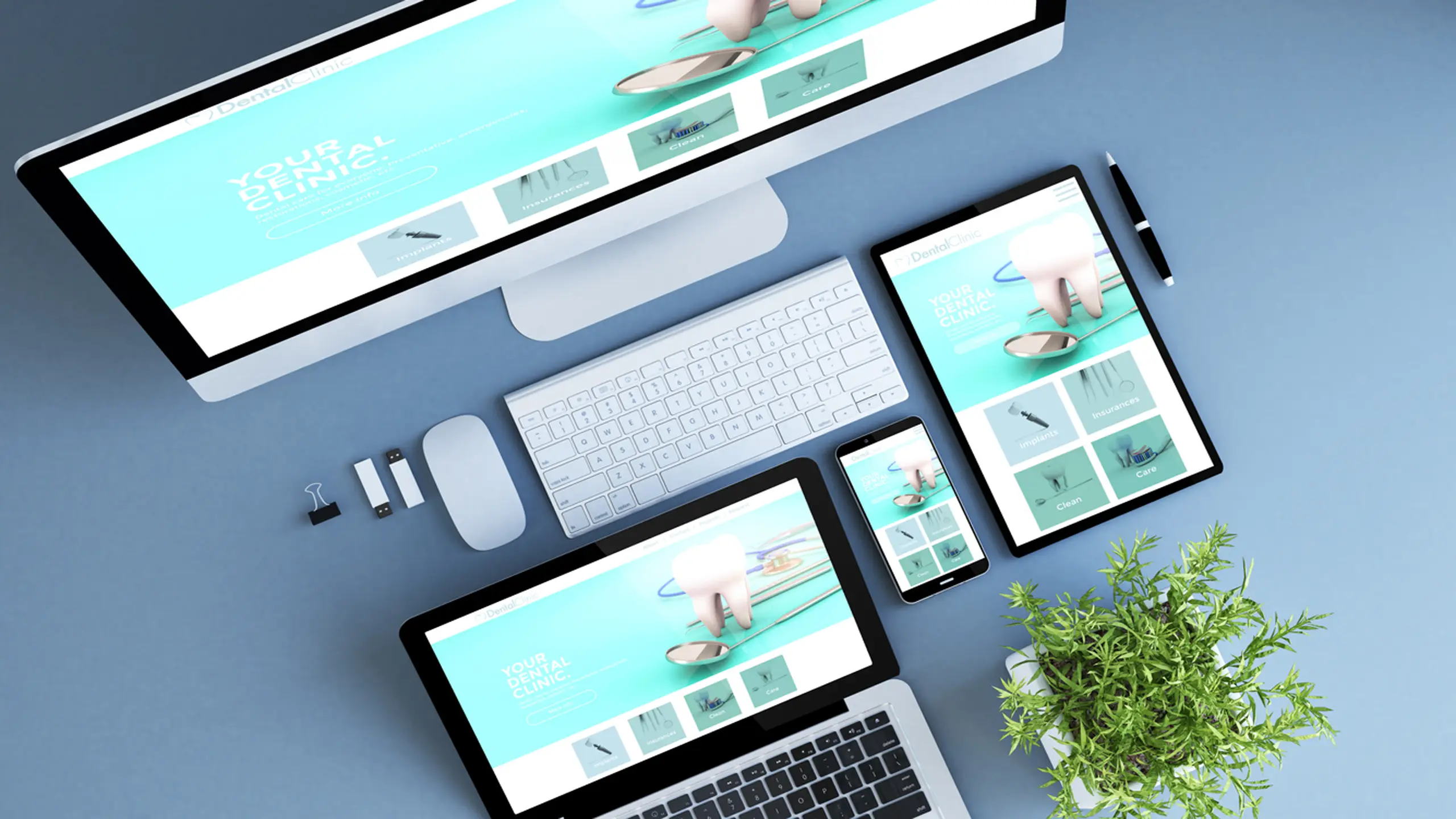
In today's digital age, social media has become an indispensable tool for businesses to connect with their target audience and drive successful product launches. With billions of users across various platforms, social media offers unparalleled reach and engagement opportunities. A well-executed social media strategy can build anticipation, generate buzz, and ultimately drive sales for a new product.
This article explores effective tips and strategies to leverage the power of social media for a successful product launch.
## Setting the Stage for Your Launch
Before diving into the execution, it's crucial to lay the groundwork for your product launch on social media. This involves defining clear goals and key performance indicators (KPIs) to measure success. As Sprinklr emphasizes, setting specific, measurable, achievable, relevant, and time-bound (SMART) goals is essential to track your progress and ROI effectively.
Next, you'll need to choose the right social media platforms based on your target audience and goals. Different platforms cater to various demographics and user behaviors, so it's important to understand where your potential customers are most active. For example, if you're targeting younger consumers, platforms like Instagram and TikTok may be more effective, while LinkedIn might be more suitable for B2B products and services.
Once you've identified your platforms, create a comprehensive content calendar for pre-launch hype, launch day, and post-launch follow-up, as recommended by Sketchbubble. This calendar should outline the types of content you'll share, the frequency of posting, and the specific dates and times for each piece of content. A well-planned content calendar ensures a consistent and cohesive social media presence throughout the launch period, helping you maintain a strategic cadence and avoid content gaps or overlaps.
During the pre-launch phase, focus on building excitement and anticipation. Share teasers, behind-the-scenes glimpses, and sneak peeks of the product to pique your audience's curiosity. You can also leverage [video production](https://c-istudios.com/video-production-services/) or content creation services to develop engaging trailers or promotional videos that showcase the product's key features and benefits. Consider incorporating interactive elements, such as polls or quizzes, to encourage audience participation and further build anticipation.
As you approach the launch date, ramp up the frequency of your posts and incorporate countdowns or giveaways to keep your audience engaged. Encourage your followers to share their excitement and speculation about the upcoming product using branded hashtags, further amplifying the buzz on social media. You can also collaborate with micro-influencers or brand ambassadors to extend your reach and create authentic buzz within niche communities.
## Creating Engaging Content
Compelling content is the cornerstone of a successful social media product launch. To capture your audience's attention and stand out in the crowded social media landscape, develop memorable content that includes a mix of text, images, videos, and graphics.
Utilize professional photography and [video production services](https://c-istudios.com/video-production-services/) to create visually stunning assets that showcase your product in the best possible light. High-quality visuals not only grab attention but also help convey the product's unique features and benefits. Consider incorporating lifestyle shots, product demonstrations, or behind-the-scenes footage to provide a more immersive and relatable experience for your audience.
In addition to static visuals, incorporate dynamic content such as [live streaming](https://c-istudios.com/video-audio-live-streaming/) or VFX compositing and animation to bring your product to life. Live streams or interactive 360-degree videos can provide an immersive experience, allowing potential customers to explore the product in detail from the comfort of their devices. These interactive formats also offer opportunities for real-time engagement, Q&A sessions, and audience feedback.
To build anticipation and keep your audience engaged, use anticipatory content like teasers, giveaways, and countdowns. Tease new product features or benefits in a series of posts, gradually revealing more information as the launch date approaches. Giveaways and contests can incentivize engagement and sharing, further amplifying your reach.
Incorporating user-generated content (UGC) is another powerful strategy for creating buzz and fostering a sense of community around your product launch. Encourage your audience to share their thoughts, excitement, or even their own creative content related to your product using branded hashtags. Resharing and highlighting UGC not only showcases your brand's authenticity but also creates a sense of ownership and connection with your audience, fostering long-term brand loyalty.
Additionally, consider repurposing your content across different social media platforms to maximize reach and engagement. For example, you could create short-form videos for Instagram Reels or TikTok, while also sharing longer, more in-depth content on YouTube or your brand's blog. By tailoring your content to suit the unique strengths and audience preferences of each platform, you can ensure a cohesive and effective social media presence.
## Leveraging Influencer Marketing
Influencer marketing has emerged as a highly effective strategy for product launches on social media. By collaborating with influencers who align with your brand and resonate with your target audience, you can extend your reach, build trust, and drive engagement.
Start by identifying influencers who are relevant to your industry or niche. Look for individuals with a genuine connection to your brand, a loyal following, and a track record of creating high-quality, authentic content. Tools like BuzzSumo, Upfluence, and Traackr can help you discover and evaluate potential influencers based on metrics such as engagement rates, audience demographics, and content themes.
When approaching influencers, be transparent about your objectives and expectations. Provide them with clear guidelines, product information, and creative freedom to ensure their content remains authentic and aligned with their personal brand. Consider offering influencers exclusive access to your product before the official launch, allowing them to create unique and engaging content that builds anticipation among their followers.
Encourage influencers to share behind-the-scenes glimpses, unboxing videos, product demos, or tutorials that showcase the product's features and benefits in an authentic way. These types of content not only provide valuable insights for potential customers but also help to build trust and credibility around your product.
In addition to digital collaborations, consider hosting offline activations or events in partnership with influencers. These in-person experiences can create buzz, generate content, and foster a sense of exclusivity around your product launch. Event production and [creative marketing services](https://c-istudios.com/creative-marketing-services/) can help you design and execute memorable experiences that leave a lasting impression on both influencers and their followers.
Throughout the influencer campaign, provide clear guidelines for using branded hashtags, tagging your brand, and cross-promoting content. This not only amplifies the reach of your product launch but also creates a cohesive narrative across multiple influencer channels. Encourage influencers to engage with their audience by responding to comments, hosting Q&A sessions, or even collaborating with other influencers in your niche for cross-promotional opportunities.
As your influencer campaign progresses, closely monitor and analyze the performance of your collaborations. Identify which influencers and content formats resonate best with your target audience, and use these insights to refine your strategy and optimize future collaborations.
Additionally, consider leveraging influencer marketing beyond the initial product launch. By maintaining ongoing relationships with influential creators, you can continue to benefit from their platform and audience, fostering long-term brand advocacy and customer loyalty.
## Launch Day Execution
On the day of your product launch, it's crucial to maintain a consistent and active presence on social media. Engage with your community, monitor excitement, and address any queries or concerns promptly.
Begin by updating your social media bios, cover photos, stories, and highlights to reflect the new product launch. This not only creates a cohesive brand experience but also signals to your audience that the highly anticipated launch has finally arrived. Consider creating a dedicated highlight reel or album on platforms like Instagram, where you can curate all launch-related content in one place for easy access.
Throughout the day, reshare posts from influencers, brand ambassadors, and followers who are engaging with your product. This not only amplifies the reach of your launch but also fosters a sense of community and appreciation for your audience's involvement. Encourage your followers to share their own unboxing experiences, product reviews, or creative content using branded hashtags, further fueling the social media buzz.
Consider hosting a live Q&A session or video audio live streaming event to connect with potential customers in real time. This interactive format allows you to address questions, provide demonstrations, and engage directly with your audience, fostering a sense of transparency and trust. You can also invite influencers or industry experts to join the livestream, adding credibility and diverse perspectives to the discussion.
During the launch day, it's also essential to monitor social media conversations and respond promptly to any inquiries or concerns. Assign dedicated team members or leverage [social media marketing services](https://c-istudios.com/social-media-marketing-services/) to monitor relevant hashtags, mentions, and comments, ensuring a timely and professional response to any feedback or issues that arise.
To further extend your reach and drive engagement, consider partnering with relevant brands or organizations for cross-promotional opportunities. For example, if your product is related to fitness or wellness, you could collaborate with local gyms or health food stores to co-host giveaways or share each other's content.
Throughout the launch day, continue to create and share fresh content that highlights the product's features, benefits, and potential use cases. This not only keeps the excitement and momentum going but also provides valuable information for potential customers who may be discovering your product for the first time. Consider incorporating user-generated content, behind-the-scenes footage, or live updates to keep your audience engaged and invested in the launch experience.
Additionally, leverage the power of social media advertising to amplify your reach and drive targeted traffic to your product pages or landing pages. By running strategic ad campaigns on platforms like Facebook, Instagram, or TikTok, you can increase visibility and encourage conversions from interested audiences.
## Post-Launch Strategies
While the launch day is the climax of your social media campaign, the efforts shouldn't stop there. Sustaining engagement and nurturing your community in the post-launch phase is crucial for long-term success and customer retention.
Start by tracking and assessing your ROI from social media using analytics tools like Sprout Social, Hootsuite, or Buffer. Analyze metrics such as reach, engagement rates, website traffic, and conversions to gauge the effectiveness of your campaign and identify areas for improvement. Pay close attention to which content formats, platforms, and influencer collaborations performed best, and use these insights to refine your future strategies.
Based on your findings, adjust your content strategy and continue to integrate the new product into your regular [content creation](https://c-istudios.com/content-creation-services/) and social media marketing services. Share customer testimonials, behind-the-scenes stories, or tips and tricks for using the product effectively. This not only keeps the product top-of-mind but also provides value to your audience and fosters a sense of community.
Continue to leverage influencers and user-generated content (UGC) for sustained engagement and brand advocacy. Encourage customers to share their experiences with your product using branded hashtags and reshare their content across your channels. This not only creates social proof but also builds a loyal fan base for your brand. Consider hosting periodic giveaways or contests that incentivize UGC creation and sharing, keeping your audience actively engaged with your product.
Consider running targeted social media advertising campaigns to reach new audiences and drive further awareness and sales for your product. Use insights from your launch campaign to refine your targeting and messaging, ensuring your ads resonate with the right audience segments. Experiment with different ad formats, such as carousel ads, video ads, or story ads, to capture attention and drive conversions.
Collaborate with your [SEO copywriting](https://c-istudios.com/seo-copywriting-services/) team to create blog content, product guides, or educational resources that align with your product and address common customer pain points or questions. By providing valuable information, you not only enhance the customer experience but also improve your brand's visibility and credibility in search engines. Optimize this content for relevant keywords and promote it across your social media channels to drive traffic and engagement.
As your product matures, continue to gather feedback from your customers and adapt your social media strategies accordingly. Engage in social listening to identify emerging trends, pain points, or areas for improvement, and use these insights to refine your product and marketing efforts. Consider hosting focus groups, surveys, or social media polls to gather direct feedback from your audience, fostering a sense of community and co-creation.
Additionally, explore opportunities for cross-channel integration and omnichannel marketing. By aligning your social media efforts with email campaigns, influencer collaborations, offline events, or even traditional advertising, you can create a cohesive and impactful brand experience that resonates with your audience across multiple touchpoints.
Finally, stay abreast of emerging social media trends, platforms, and technologies that could potentially enhance your product launch strategies. As consumer behaviors and preferences evolve, being adaptable and innovative in your approach can help you maintain a competitive edge and continue to captivate your audience.
## Work with C&I Studios
If you are planning a project like this, our team can take it from concept to final delivery. Explore our [video production services](https://c-istudios.com/video-production-services/), browse [our work](https://c-istudios.com/our-work/) to see how we tell brand stories, and [get in touch](https://c-istudios.com/contact/) when you are ready to start.
Originally published March 25, 2024
---
*This content is from [C&I Studios](https://c-istudios.com), a full-service production company.*
---
# The Impact of Photorealistic 3D Product Renders on E-Commerce Sales
> Published: March 25, 2024
> Categories: Commercial & Brand
> Source: https://c-istudios.com/the-impact-of-photorealistic-3d-product-renders-on-e-commerce-sales/
---
.cib{--paper:#1b1d1f;--ink:#fff;--body:#d5d7d9;--muted:#8b9096;--line:rgba(255,255,255,.12);--thumb:#2b2e31;--card:#212426;--accent:#c02b0a;--blue:#5B8FA8;--serif:'Playfair Display',Georgia,serif;--sans:'Poppins',-apple-system,sans-serif;--measure:900px;background:var(--paper);color:var(--body);font-family:var(--sans);line-height:1.6;position:relative;left:50%;transform:translateX(-50%);width:90vw;max-width:1920px}
.cib *{box-sizing:border-box}
.cib .kicker{max-width:var(--measure);margin:58px auto 0;padding:0 22px;font-size:12.5px;font-weight:700;letter-spacing:2.5px;text-transform:uppercase;color:var(--blue)}
.cib h1.cibh1{text-wrap:balance;font-family:var(--serif);font-weight:500;font-size:clamp(46px,6vw,72px);line-height:1.08;color:var(--ink);max-width:var(--measure);margin:18px auto 0;padding:0 22px;letter-spacing:-.5px}
.cib .metarow{max-width:var(--measure);margin:20px auto 0;padding:0 22px;color:var(--muted);font-size:14px}
.cib .hero{position:relative;width:100%;height:0;padding-bottom:56.25%;overflow:hidden;margin:48px auto 0;border-top:1px solid var(--line);border-bottom:1px solid var(--line)}
.cib .hero .ph{width:100%;aspect-ratio:16/9;background:var(--thumb);border-top:1px solid var(--line);border-bottom:1px solid var(--line);display:flex;align-items:center;justify-content:center;color:#7d8288;font-size:13px;text-align:center;padding:0 20px}
.cib .body{max-width:var(--measure);margin:12px auto 0;padding:52px 22px 6px}
.cib .body.lead p:first-child{font-size:23px;line-height:1.62;color:var(--ink)}
.cib .body p{font-size:18.5px;line-height:1.85;margin:0 0 30px;color:var(--body)}
.cib .body h2{text-wrap:balance;font-family:var(--serif);font-weight:500;font-size:clamp(32px,4vw,48px);line-height:1.22;color:var(--ink);margin:70px 0 20px;letter-spacing:-.3px}
.cib .body h3{text-wrap:balance;font-family:var(--sans);font-weight:600;font-size:22px;color:var(--ink);margin:38px 0 8px}
.cib .body a{color:var(--ink);text-decoration:underline;text-decoration-color:rgba(255,255,255,.4);text-underline-offset:3px}
.cib .body a:hover{text-decoration-color:var(--ink)}
.cib .ctable{width:100%;border-collapse:collapse;margin:16px 0 30px;font-size:16px}
.cib .ctable th{background:#000;color:#fff;text-align:left;padding:10px 12px;font-family:var(--sans)}
.cib .ctable td{padding:10px 12px;border-bottom:1px solid var(--line);color:var(--body)}
.cib .inimg{position:relative;width:100%;height:0;padding-bottom:56.25%;overflow:hidden;margin:72px auto;border-top:1px solid var(--line);border-bottom:1px solid var(--line)}
.cib .inimg .ph{width:100%;aspect-ratio:16/9;background:var(--thumb);border-top:1px solid var(--line);border-bottom:1px solid var(--line);display:flex;align-items:center;justify-content:center;color:#7d8288;font-size:13px}
.cib .origpub{max-width:var(--measure);margin:60px auto 0;padding:26px 22px 0;border-top:1px solid var(--line);color:var(--muted);font-size:13.5px}
.cib .related{max-width:1200px;margin:64px auto 0;padding:34px 22px 76px}
.cib .related h3{font-family:var(--sans);font-size:12.5px;letter-spacing:2px;text-transform:uppercase;color:var(--ink);margin:0 0 24px}
.cib .grid{display:grid;grid-template-columns:repeat(3,1fr);gap:28px}
.cib .rc{background:var(--card);border:1px solid var(--line);display:block;text-decoration:none;color:inherit;transition:border-color .15s}
.cib a.rc:hover{border-color:rgba(255,255,255,.5)}
.cib .rc .thumb{position:relative;width:100%;height:0;padding-bottom:56.25%;background:var(--thumb);overflow:hidden}
.cib .rc .thumb img{position:absolute!important;top:0!important;left:0!important;width:100%!important;height:100%!important;object-fit:cover!important;margin:0!important}
.cib .rc .cc{padding:14px 15px 17px}
.cib .rc .rt{font-family:var(--serif);font-weight:500;font-size:16px;line-height:1.3;color:var(--ink);margin:0 0 6px}
.cib .rc .rm{font-size:11px;letter-spacing:1px;text-transform:uppercase;color:var(--muted)}
.cib img{margin:0!important;padding:0!important;display:block!important;vertical-align:top;max-width:100%}
.cib .hero img,.cib .inimg img{position:absolute!important;top:0!important;left:0!important;width:100%!important;height:100%!important;object-fit:cover!important;margin:0!important;padding:0!important;border:0!important;display:block!important;aspect-ratio:auto!important}
.cib .hero+.body{padding-top:36px}
@media(max-width:760px){.cib .grid{grid-template-columns:1fr}.cib .body h2{margin:52px 0 16px}.cib .body p{font-size:17.5px}.cib .inimg,.cib .hero{margin-top:44px}}
.cib .vembed{max-width:var(--measure);margin:44px auto;padding:0 22px}.cib .vembed .vwrap{position:relative;width:100%;height:0;padding-bottom:56.25%}.cib .vembed .vwrap iframe{position:absolute;top:0;left:0;width:100%;height:100%;border:0}
Commercial & Brand
# The Impact of Photorealistic 3D Product Renders on E-Commerce Sales
11 min read

In the ever-evolving landscape of e-commerce, photorealistic 3D product renders have emerged as a game-changing technology, revolutionizing the way consumers interact with and visualize products online. These highly detailed, three-dimensional digital representations offer an immersive and lifelike experience, bridging the gap between virtual and physical shopping. As e-commerce continues to grow, the impact of 3D renders on sales and customer engagement has become increasingly significant, driving innovation and shaping the future of online retail.
## The Rise of 3D Rendering in E-Commerce
The integration of 3D rendering technology in e-commerce can be traced back to the early 2000s when advancements in computer graphics, [video production](https://c-istudios.com/video-production-services/) gear, and rendering software made it possible to create highly realistic digital representations of products. However, the widespread adoption of 3D renders in online retail has been a more recent phenomenon, fueled by technological advancements, changing consumer expectations, and the need for more engaging and informative product displays.
Traditional product photography, while still widely used, has its limitations. Static images can fail to capture the depth, texture, and intricate details of a product, leaving customers with an incomplete understanding of what they are purchasing. This uncertainty can lead to dissatisfaction, returns, and lost sales. In contrast, photorealistic 3D renders offer a level of detail and interactivity that was previously unattainable, allowing customers to explore products from every angle, zoom in on specific features, and even customize or personalize the product to their liking.
As e-commerce platforms and online retailers recognized the potential of 3D rendering, they began investing in the technology and incorporating it into their sales and marketing strategies. Major players like Amazon, IKEA, and Nike have embraced 3D renders, using them to showcase their products in innovative and engaging ways. Smaller retailers and niche e-commerce businesses have also adopted this technology, leveraging its ability to provide a more immersive and informative shopping experience.
The rise of 3D rendering in e-commerce has been facilitated by advancements in rendering software, increasing computing power, and the availability of skilled 3D artists and designers. Additionally, the growing demand for more engaging and interactive online experiences has driven the adoption of 3D renders, as consumers seek a shopping experience that more closely mimics the physical world. Businesses may also leverage [VFX compositing and animation](https://c-istudios.com/vfx-compositing-and-animation-services/) techniques to enhance their 3D product visualizations.
## Enhancing the Customer Experience
One of the primary drivers behind the adoption of photorealistic 3D product renders in e-commerce is their ability to enhance the customer experience. Traditional product images and videos can convey limited information, leaving customers with unanswered questions about a product's size, texture, and overall appearance. 3D renders address these concerns by providing interactive, 360-degree views that allow customers to explore products from every angle, zoom in on specific details, and visualize how the product would look in different settings.
Interactive 3D models enable customers to rotate, spin, and even explode or disassemble products, giving them a comprehensive understanding of the product's features and functionality. This level of interactivity helps to reduce uncertainty and increase confidence in purchasing decisions, as customers can make more informed choices based on a more complete understanding of the product.
Another significant advantage of 3D renders is their ability to offer customization and personalization options. Many e-commerce platforms now allow customers to customize products by selecting different colors, materials, or configurations, and then see a real-time, photorealistic rendering of their personalized product. This not only enhances the shopping experience but also fosters a sense of ownership and emotional connection with the product, which can lead to higher customer satisfaction and loyalty.
Augmented reality (AR) technology has further amplified the impact of 3D renders on the customer experience. By integrating 3D models into AR applications, customers can virtually place products in their own environments, visualizing how a piece of furniture would look in their living room or how a new appliance would fit into their kitchen.
This capability not only provides a more immersive shopping experience but also helps customers make more informed purchasing decisions, reducing the likelihood of returns or exchanges due to size or aesthetic concerns.
## Operational Advantages for Retailers
While the impact of 3D renders on the customer experience is significant, their adoption in e-commerce also offers substantial operational advantages for retailers. One of the key benefits is a faster time-to-market compared to traditional product photography. Creating high-quality, photorealistic 3D renders can be a more efficient and streamlined process, especially for products with complex geometries or intricate details.
Once a 3D model is created, it can be easily rendered from multiple angles, with different lighting conditions, and in various configurations, eliminating the need for extensive on-site photography sessions. This flexibility allows retailers to quickly generate a wide range of product visuals, enabling them to respond to market demands and launch new products or marketing campaigns more rapidly.
The use of 3D renders also presents cost-saving opportunities in product photography and inventory management. Instead of maintaining physical product samples for [photography](https://c-istudios.com/professional-photography-services/) purposes, retailers can leverage 3D models, reducing the need for extensive inventory and storage space. Additionally, the ability to create highly accurate and detailed product visuals through 3D rendering can potentially reduce the need for costly on-site photography sessions, further contributing to cost savings.
Another operational advantage of 3D renders is their scalability and flexibility in marketing campaigns. With traditional product photography, creating visuals for different marketing channels or customized product configurations can be time-consuming and resource-intensive. However, with 3D renders, retailers can easily generate customized visuals tailored to specific marketing channels, target audiences, or product variations, enabling more agile and effective marketing strategies.
Furthermore, the use of 3D renders can streamline the product development process by enabling virtual prototyping and design iterations. Designers and engineers can create and visualize 3D models of products before physical prototypes are produced, allowing for faster design iterations, better collaboration, and more efficient problem-solving.
Overall, the adoption of photorealistic 3D product renders in e-commerce offers retailers significant operational advantages, including faster time-to-market, cost savings, scalability, and enhanced product development processes. These benefits not only contribute to increased efficiency and profitability but also enable retailers to better adapt to changing market demands and consumer preferences.
## Impact on Sales and Conversions
The impact of photorealistic 3D product renders on e-commerce sales and conversions is substantial and well-documented. Numerous studies and case studies have demonstrated the effectiveness of this technology in driving increased sales, higher conversion rates, and reduced product returns and exchanges.
One of the primary reasons for the positive impact on sales is the ability of 3D renders to provide customers with a more comprehensive and accurate representation of products. By offering interactive, 360-degree views and the ability to visualize products in real-world settings, customers can make more informed purchasing decisions, reducing the likelihood of dissatisfaction or disappointment with their purchases.
According to a study by Product Visualization Report, e-commerce websites that incorporated interactive 3D product visuals experienced an average conversion rate increase of 40% compared to those using traditional product images. Furthermore, the same study found that the average order value for customers who engaged with 3D product visuals was 27% higher than those who did not.
Case studies from major e-commerce retailers further reinforce the positive impact of 3D renders on sales and conversions. IKEA, a pioneer in the use of 3D product visualization, reported a 14% increase in revenue for products showcased with 3D renders and augmented reality experiences. Similarly, Wayfair, an online home furnishings retailer, saw a 20% increase in conversion rates for products displayed with 3D models and customization options.
The reduction in product returns and exchanges is another significant benefit of using 3D renders in e-commerce. By providing customers with a more accurate and detailed representation of products, including size, color, and material information, customers are less likely to experience discrepancies between their expectations and the actual product received. This not only improves customer satisfaction but also reduces the operational costs associated with processing returns and exchanges.
A study by Visualization Technology company Cylindo found that e-commerce retailers experienced a 35% reduction in product returns after implementing 3D product visualization solutions. This reduction in returns translates to significant cost savings and improved operational efficiency for retailers.
By providing customers with a more immersive, informative, and engaging shopping experience, retailers are able to drive higher conversion rates, increase average order values, and reduce the costly issue of product returns and exchanges.
## Challenges and Considerations
While the benefits of adopting photorealistic 3D product rendering in e-commerce are substantial, there are also challenges and considerations that retailers must address. One of the primary challenges is the technical and resource requirements for creating high-quality 3D renders.
Developing accurate and visually appealing 3D models can be a time-consuming and resource-intensive process, often requiring specialized software, hardware, and skilled 3D artists or designers. Retailers must invest in the necessary tools, training, and personnel to ensure the effective implementation and maintenance of 3D rendering capabilities. They may also need to work with companies offering services like [video production](https://c-istudios.com/video-production-services/), content creation, and artist management to acquire the necessary skills and resources.
Additionally, the process of creating 3D models for complex or intricate products can be challenging, requiring attention to detail and a deep understanding of the product's features and characteristics. Ensuring consistency and accuracy across product lines is crucial, as discrepancies or inaccuracies in 3D renders can lead to customer dissatisfaction and erode trust in the brand.
Another consideration is the balance between realism and artistic representation in 3D renders. While photorealistic visuals are generally preferred, there may be instances where artistic interpretation or stylized representations are more appropriate, depending on the product, brand, or target audience. Retailers must carefully consider the appropriate level of realism and artistic expression to align with their branding and marketing strategies, potentially seeking guidance from creative agencies offering branding and graphic design services.
Furthermore, the integration of 3D renders into existing e-commerce platforms and workflows can present technical challenges. Ensuring seamless compatibility with content management systems, product information databases, and other existing systems is crucial for a smooth and efficient implementation. Retailers may need to work with web development and web maintenance professionals to ensure a seamless integration.
From a user experience perspective, retailers must also consider the potential impact of 3D renders on website performance and load times. High-resolution 3D models and interactive experiences can be resource-intensive, potentially slowing down website performance and negatively impacting the user experience, especially on mobile devices or slower internet connections. Optimizing website performance and leveraging web hosting solutions tailored for media-rich content may be necessary.
As with any new technology, there are also potential security and privacy concerns to consider. 3D models and product data can be valuable intellectual property, and measures must be taken to protect against unauthorized access or misuse. Retailers may need to consult with cybersecurity experts and implement robust data protection measures.
Despite these challenges, many e-commerce retailers have successfully navigated the implementation of 3D rendering technology by partnering with experienced 3D visualization service providers, investing in training and resources, and carefully planning their integration strategies.
## The Future of 3D Rendering in E-Commerce
As the adoption of photorealistic 3D product renders in e-commerce continues to grow, the future holds exciting possibilities for further integration with emerging technologies and innovative applications. One area of significant potential is the convergence of 3D rendering with virtual reality (VR) and augmented reality (AR) technologies.
VR environments can provide customers with an even more immersive shopping experience, allowing them to explore virtual showrooms or product displays in a simulated environment. By combining 3D product renders with VR technology, retailers can create highly realistic and interactive virtual spaces where customers can view, interact with, and even test products in a simulated setting.
This level of immersion can be particularly valuable for products that are difficult to visualize or experience through traditional e-commerce platforms, such as large appliances, vehicles, or complex machinery. VR experiences can help customers better understand the scale, functionality, and user experience of these products before making a purchase decision. Companies offering services like video production, [film and TV production](https://c-istudios.com/film-and-tv-production/), and VFX compositing and animation could play a crucial role in creating these immersive VR experiences.
Augmented reality (AR) technology has already begun to integrate with 3D product renders, enabling customers to visualize products in their own environments through their mobile devices or AR-enabled displays. However, the future holds even more advanced applications of AR in e-commerce, such as virtual try-on experiences for clothing and accessories, or the ability to visualize and customize entire room designs with virtual furniture and decor.
Another exciting development in 3D rendering is the potential for customer co-creation and customization. As 3D modeling and rendering technologies become more accessible and user-friendly, customers may have the opportunity to design and customize their own products, collaborating with retailers or designers to create truly unique and personalized items.
This level of customization could extend beyond just aesthetic choices, allowing customers to tailor products to their specific functional requirements, preferences, or even body measurements. The integration of 3D printing technology could further enable the on-demand production of these customized products, creating a seamless end-to-end experience for customers.
As artificial intelligence (AI) and machine learning technologies continue to advance, they may also play a role in enhancing 3D rendering capabilities in e-commerce. AI-powered algorithms could potentially automate certain aspects of the 3D modeling and rendering process, streamlining workflows and reducing the need for manual intervention.
However, as the integration of 3D rendering and emerging technologies continues to evolve, it is crucial to consider ethical implications and the role of digital authenticity. Retailers must strike a balance between leveraging advanced technologies to enhance the customer experience and maintaining transparency and trust with their customers.
Companies like C&I Studios, with expertise in areas such as video production, content creation, and [documentary film production](https://c-istudios.com/documentary-film-production/) can help businesses stay ahead of the curve and leverage these emerging technologies effectively.
## Work with C&I Studios
If you are planning a project like this, our team can take it from concept to final delivery. Explore our [video production services](https://c-istudios.com/video-production-services/), browse [our work](https://c-istudios.com/our-work/) to see how we tell brand stories, and [get in touch](https://c-istudios.com/contact/) when you are ready to start.
Originally published March 25, 2024
---
*This content is from [C&I Studios](https://c-istudios.com), a full-service production company.*
---
# A Step-by-Step Guide to Amazon Premium A+ Content Videos
> Published: March 25, 2024
> Categories: Commercial & Brand
> Source: https://c-istudios.com/a-step-by-step-guide-to-amazon-premium-a-content-videos/
---
.cib{--paper:#1b1d1f;--ink:#fff;--body:#d5d7d9;--muted:#8b9096;--line:rgba(255,255,255,.12);--thumb:#2b2e31;--card:#212426;--accent:#c02b0a;--blue:#5B8FA8;--serif:'Playfair Display',Georgia,serif;--sans:'Poppins',-apple-system,sans-serif;--measure:900px;background:var(--paper);color:var(--body);font-family:var(--sans);line-height:1.6;position:relative;left:50%;transform:translateX(-50%);width:90vw;max-width:1920px}
.cib *{box-sizing:border-box}
.cib .kicker{max-width:var(--measure);margin:58px auto 0;padding:0 22px;font-size:12.5px;font-weight:700;letter-spacing:2.5px;text-transform:uppercase;color:var(--blue)}
.cib h1.cibh1{text-wrap:balance;font-family:var(--serif);font-weight:500;font-size:clamp(46px,6vw,72px);line-height:1.08;color:var(--ink);max-width:var(--measure);margin:18px auto 0;padding:0 22px;letter-spacing:-.5px}
.cib .metarow{max-width:var(--measure);margin:20px auto 0;padding:0 22px;color:var(--muted);font-size:14px}
.cib .hero{position:relative;width:100%;height:0;padding-bottom:56.25%;overflow:hidden;margin:48px auto 0;border-top:1px solid var(--line);border-bottom:1px solid var(--line)}
.cib .hero .ph{width:100%;aspect-ratio:16/9;background:var(--thumb);border-top:1px solid var(--line);border-bottom:1px solid var(--line);display:flex;align-items:center;justify-content:center;color:#7d8288;font-size:13px;text-align:center;padding:0 20px}
.cib .body{max-width:var(--measure);margin:12px auto 0;padding:52px 22px 6px}
.cib .body.lead p:first-child{font-size:23px;line-height:1.62;color:var(--ink)}
.cib .body p{font-size:18.5px;line-height:1.85;margin:0 0 30px;color:var(--body)}
.cib .body h2{text-wrap:balance;font-family:var(--serif);font-weight:500;font-size:clamp(32px,4vw,48px);line-height:1.22;color:var(--ink);margin:70px 0 20px;letter-spacing:-.3px}
.cib .body h3{text-wrap:balance;font-family:var(--sans);font-weight:600;font-size:22px;color:var(--ink);margin:38px 0 8px}
.cib .body a{color:var(--ink);text-decoration:underline;text-decoration-color:rgba(255,255,255,.4);text-underline-offset:3px}
.cib .body a:hover{text-decoration-color:var(--ink)}
.cib .ctable{width:100%;border-collapse:collapse;margin:16px 0 30px;font-size:16px}
.cib .ctable th{background:#000;color:#fff;text-align:left;padding:10px 12px;font-family:var(--sans)}
.cib .ctable td{padding:10px 12px;border-bottom:1px solid var(--line);color:var(--body)}
.cib .inimg{position:relative;width:100%;height:0;padding-bottom:56.25%;overflow:hidden;margin:72px auto;border-top:1px solid var(--line);border-bottom:1px solid var(--line)}
.cib .inimg .ph{width:100%;aspect-ratio:16/9;background:var(--thumb);border-top:1px solid var(--line);border-bottom:1px solid var(--line);display:flex;align-items:center;justify-content:center;color:#7d8288;font-size:13px}
.cib .origpub{max-width:var(--measure);margin:60px auto 0;padding:26px 22px 0;border-top:1px solid var(--line);color:var(--muted);font-size:13.5px}
.cib .related{max-width:1200px;margin:64px auto 0;padding:34px 22px 76px}
.cib .related h3{font-family:var(--sans);font-size:12.5px;letter-spacing:2px;text-transform:uppercase;color:var(--ink);margin:0 0 24px}
.cib .grid{display:grid;grid-template-columns:repeat(3,1fr);gap:28px}
.cib .rc{background:var(--card);border:1px solid var(--line);display:block;text-decoration:none;color:inherit;transition:border-color .15s}
.cib a.rc:hover{border-color:rgba(255,255,255,.5)}
.cib .rc .thumb{position:relative;width:100%;height:0;padding-bottom:56.25%;background:var(--thumb);overflow:hidden}
.cib .rc .thumb img{position:absolute!important;top:0!important;left:0!important;width:100%!important;height:100%!important;object-fit:cover!important;margin:0!important}
.cib .rc .cc{padding:14px 15px 17px}
.cib .rc .rt{font-family:var(--serif);font-weight:500;font-size:16px;line-height:1.3;color:var(--ink);margin:0 0 6px}
.cib .rc .rm{font-size:11px;letter-spacing:1px;text-transform:uppercase;color:var(--muted)}
.cib img{margin:0!important;padding:0!important;display:block!important;vertical-align:top;max-width:100%}
.cib .hero img,.cib .inimg img{position:absolute!important;top:0!important;left:0!important;width:100%!important;height:100%!important;object-fit:cover!important;margin:0!important;padding:0!important;border:0!important;display:block!important;aspect-ratio:auto!important}
.cib .hero+.body{padding-top:36px}
@media(max-width:760px){.cib .grid{grid-template-columns:1fr}.cib .body h2{margin:52px 0 16px}.cib .body p{font-size:17.5px}.cib .inimg,.cib .hero{margin-top:44px}}
.cib .vembed{max-width:var(--measure);margin:44px auto;padding:0 22px}.cib .vembed .vwrap{position:relative;width:100%;height:0;padding-bottom:56.25%}.cib .vembed .vwrap iframe{position:absolute;top:0;left:0;width:100%;height:100%;border:0}
Commercial & Brand
# A Step-by-Step Guide to Amazon Premium A+ Content Videos
9 min read
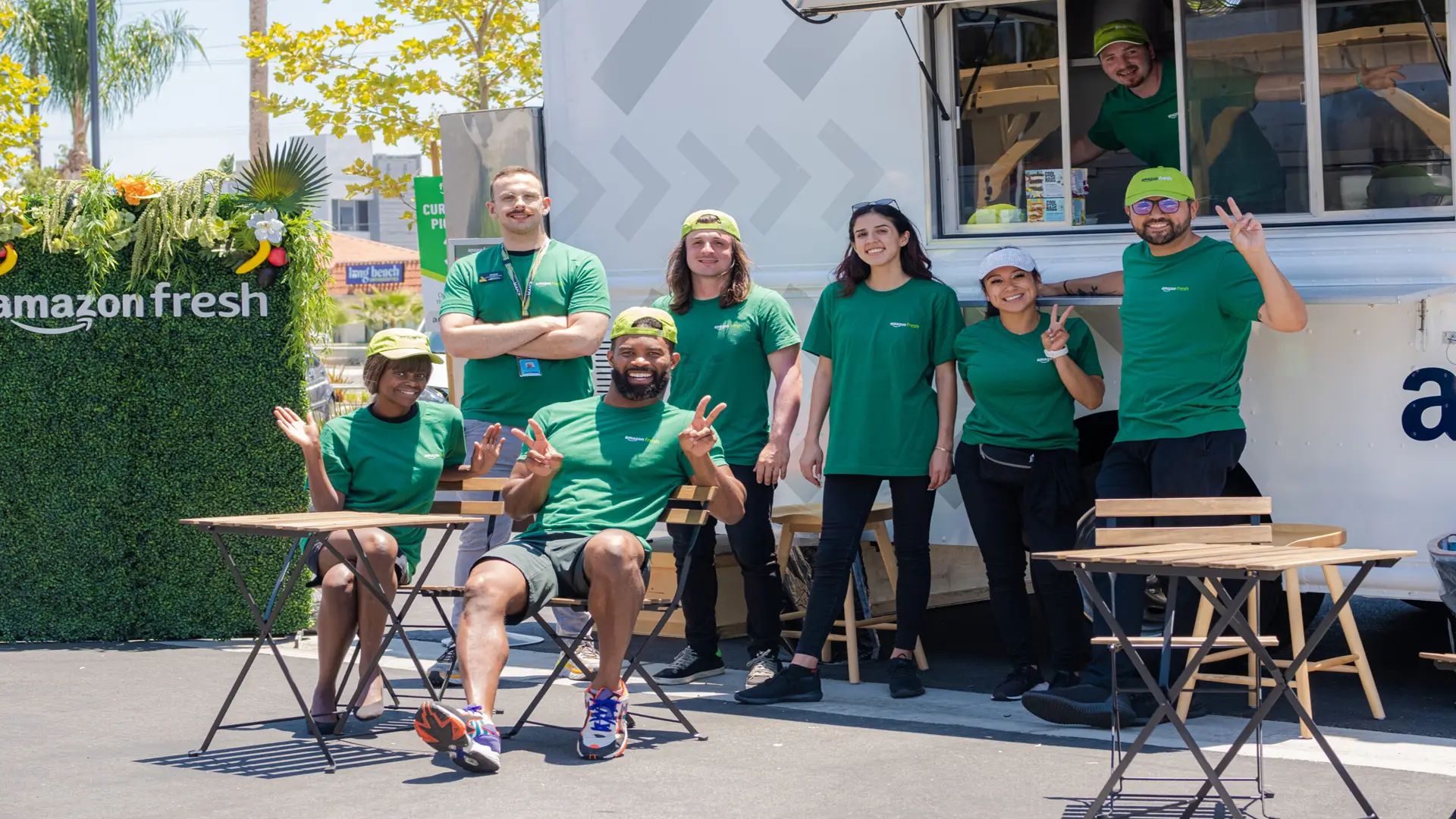
In today's digital marketplace, branding and content creation services have become more important than ever. One platform where this is especially true is Amazon, a giant in the e-commerce industry. To stand out among the vast array of products, Amazon Premium A+ Content Videos have emerged as a game-changer for sellers. These powerful video assets not only allow brands to showcase their offerings in a dynamic and engaging manner but also provide a competitive edge in the crowded online marketplace.
In this comprehensive guide, we'll delve into the world of Amazon Premium A+ Content Videos, exploring their benefits, how to create them, and tips for maximizing their impact across various industries.
## What is Amazon Premium A+ Content?
Amazon Premium A+ Content is an advanced [content creation service](https://c-istudios.com/content-creation-services/) offered to brand owners on Amazon, empowering them to elevate their product listings beyond the standard text and images. This premium offering allows sellers to enhance their listings with rich media content, including high-quality images, interactive features, and, most importantly, captivating videos.
The primary objective of Amazon Premium A+ Content is to provide a more immersive and informative shopping experience for potential customers. By presenting products in a visually stunning and dynamic format, sellers can better communicate the unique features, benefits, and value propositions of their offerings. This enhanced content aims to bridge the gap between online shopping and in-person experiences, helping customers make informed decisions with greater confidence.
The beauty of Amazon Premium A+ Content lies in its versatility. It can be leveraged across a wide range of industries, from consumer goods to professional services.
## The Importance of Videos in Premium A+ Content
While Amazon Premium A+ Content encompasses various rich media elements, videos have emerged as a crucial component and a true game-changer. In today's fast-paced digital world, where attention spans are increasingly fragmented, videos offer a dynamic and engaging way to showcase products, highlight key features, and demonstrate usage.
By incorporating high-quality videos into your Amazon listings, you can leverage the power of visual storytelling to captivate potential customers and convey information in a more memorable and impactful way. Videos have the ability to bring products to life, enabling customers to visualize how they work, how they can be used, and how they can solve their specific needs.
Moreover, video content has become a growing preference among consumers, making it an essential tool for branding and media marketing consultation services. Studies have shown that viewers retain information better when it is presented through video compared to text or static images alone. This increased engagement and retention can directly translate into higher conversion rates and better overall sales performance on Amazon.
## Step 1. Understanding Amazon's Video Requirements
Before embarking on the journey of creating a video for Amazon Premium A+ Content, it's crucial to familiarize yourself with Amazon's specific requirements. Adhering to these guidelines is essential to ensure your video meets the platform's standards and provides a seamless viewing experience for potential customers.
### Duration
Amazon recommends keeping videos concise and focused, typically between 30 seconds and 2 minutes in length. This timeframe allows sellers to effectively capture viewers' attention and convey key information without overwhelming or losing them.
### Resolution
High-definition (HD) quality is recommended for Amazon Premium A+ Content videos, with a minimum resolution of 1280x720 pixels. This ensures that your video displays with clarity and sharpness, enhancing the overall viewing experience for customers.
### Format
While Amazon accepts various video formats, MP4 is the most commonly used and recommended format for Premium A+ Content videos. This widely supported format ensures compatibility across different devices and platforms, ensuring a seamless viewing experience for customers.
### Content
When it comes to video content, Amazon has strict guidelines to maintain a consistent and high-quality experience for customers. Videos should focus solely on the product, highlighting its features, benefits, and usage scenarios. Any promotional content, pricing information, or extraneous elements are strictly prohibited.
By adhering to these requirements, you can ensure that your video meets the platform's standards and provides a professional and engaging experience for potential customers.
## Step 2. Planning Your Video
Effective planning is the foundation of a successful Amazon Premium A+ Content video. Before embarking on the production process, it's essential to take the time to carefully plan and strategize your video content.
This stage involves several key considerations:
### Objective
Clearly define the main goal or objective of your video. Is it to demonstrate the product's features in-depth, showcase it in action through real-world scenarios, or primarily highlight its benefits and value propositions? Having a well-defined objective will help shape the content and ensure a focused and cohesive video.
### Target Audience
Understand your target audience's preferences, pain points, and motivations. This insight will allow you to tailor your video content to resonate with their specific needs and interests, increasing the likelihood of capturing their attention and driving conversions.
### Storyboard
Create a comprehensive storyboard that outlines the sequence of scenes, camera angles, and visual elements you plan to incorporate into your video. A well-crafted storyboard serves as a blueprint, ensuring a smooth flow of information and a visually appealing presentation.
### Script
Develop a concise and engaging script that highlights the key points you want to convey in your video. This script should align with your defined objective and target audience, effectively communicating the product's unique selling points and value propositions.
## Step 3. Producing Your Video
Once you have a solid plan in place, it's time to move on to the production phase. This stage involves bringing your vision to life through high-quality visuals, sound, and storytelling techniques.
Here are some tips to ensure a successful production process:
### Quality
Invest in professional [video production services](https://c-istudios.com/video-production-services/) and professional photography services to ensure that your video meets the highest standards of quality. This includes utilizing high-end cameras, lighting equipment, and sound gear to capture stunning visuals and crisp audio.
### Focus
Throughout the production process, maintain a laser-sharp focus on the product itself. Utilize close-ups, different angles, and creative camera techniques to showcase the product's features in detail, ensuring viewers have a comprehensive understanding of its functionality and benefits.
### Branding
While the video's primary focus should be on the product, it's essential to incorporate your brand's logo, color scheme, and other visual elements subtly throughout the video. This reinforces brand recognition and creates a cohesive and memorable experience for viewers.
### Engagement
Employ engaging storytelling techniques, such as relatable scenarios, humor, or emotional appeals, to keep the viewer's attention throughout the video. This can be achieved through creative direction, skilled acting performances, and well-crafted scripts that resonate with your target audience.
By leveraging professional [video production services](https://c-istudios.com/video-production-services/) and adhering to best practices, you can create a visually stunning and engaging video that effectively showcases your product and captivates potential customers.
## Step 4. Editing and Optimizing Your Video
After the production phase, the next critical step is editing and optimizing your video for Amazon. This stage involves refining the raw footage, adding finishing touches, and ensuring your video is optimized for maximum visibility and engagement on the platform.
### Edit for Clarity
Utilize professional editing software and techniques to cut unnecessary footage, add transitions, and ensure a clear, concise, and visually appealing presentation. This process may involve trimming redundant scenes, adjusting pacing, and enhancing visual elements to create a polished and engaging final product.
### Add Captions
To make your video accessible to a wider audience, consider adding captions or subtitles. This not only caters to viewers who may be hearing impaired but also allows others to watch your video in scenarios where audio may be a challenge, such as in a crowded or noisy environment.
### Optimize for SEO
To ensure your Amazon Premium A+ Content video is easily discoverable by potential customers, it's crucial to optimize it for search engine optimization (SEO). This involves incorporating relevant keywords and specific product or industry terms into your video's title, description, and tags.
By leveraging professional editing and optimization techniques, you can ensure that your Amazon Premium A+ Content video is polished, engaging, and optimized for maximum visibility and impact on the platform.
## Step 5. Uploading and Publishing Your Video
Once your video is ready, it's time to upload and publish it on Amazon. This process involves navigating the Amazon Seller Central interface and following specific steps to ensure your video is properly integrated into your product listing.
Here's how to proceed:
### Log in to Amazon Seller Central
Access your Amazon seller account and navigate to the A+ Content Manager section. This is where you'll manage and upload your Premium A+ Content assets, including videos.
### Create a New A+ Content Module
Within the A+ Content Manager, select the option to add a new module or section to your product listing. This will typically be a video module specifically designed to showcase your Premium A+ Content video.
### Upload Your Video
Follow the prompts and instructions provided by Amazon to upload your video file. You'll also need to enter additional information, such as the video's title, description, and relevant keywords to aid in discoverability.
### Submit for Approval
Once you've completed all the required fields and provided the necessary information, submit your video for Amazon's review and approval process. This step ensures that your video meets Amazon's guidelines and quality standards before being published on your product listing.
Meticulously adhering to these guidelines and supplying all required details will enable you to effectively upload and showcase your Amazon Premium A+ Content video, ensuring it's accessible to prospective customers exploring your product listing.
## Maximizing the Impact of Your Amazon Premium A+ Content Videos
Creating a high-quality Amazon Premium A+ Content video is just the first step. To ensure your video has the desired impact and drives measurable results, it's essential to implement additional strategies and leverage various marketing channels.
Here are some tips to maximize the impact of your Amazon Premium A+ Content videos:
### Promote on Social Media
Leverage the power of [social media marketing services](https://c-istudios.com/social-media-marketing-services/) to amplify the reach of your Amazon product videos. Share your videos on popular platforms like Facebook, Instagram, YouTube, and industry-specific communities, driving traffic back to your Amazon listing and increasing brand awareness.
### Analyze Performance
Regularly monitor the performance of your Amazon Premium A+ Content videos using the platform's built-in analytics tools. Track metrics such as video views, engagement rates, and conversion rates to gain valuable insights into what resonates with your audience and make data-driven adjustments as needed.
### Gather Customer Feedback
Encourage reviews and feedback from customers who have watched your video. This valuable input can provide insights into areas for improvement, highlight what resonated well, and inform future video content strategies.
### Leverage Influencer Marketing
Collaborate with industry influencers or thought leaders to promote your Amazon Premium A+ Content videos. Influencer marketing can lend credibility, tap into established audiences, and drive targeted traffic to your product listings.
### Optimize Continuously
Treat your Amazon Premium A+ Content videos as living assets that require continuous optimization. Monitor changes in customer preferences, industry trends, and competitor activities to keep your videos fresh, relevant, and engaging.
By implementing these strategies and leveraging various marketing channels, you can maximize the impact of your Amazon Premium A+ Content videos, drive increased visibility, engagement, and ultimately, higher sales on the platform.
## Work with C&I Studios
If you are planning a project like this, our team can take it from concept to final delivery. Explore our [video production services](https://c-istudios.com/video-production-services/), browse [our work](https://c-istudios.com/our-work/) to see how we tell brand stories, and [get in touch](https://c-istudios.com/contact/) when you are ready to start.
Originally published March 25, 2024
---
*This content is from [C&I Studios](https://c-istudios.com), a full-service production company.*
---
# The Ultimate Film Production Checklist: Everything You Need to Create a Film
> Published: March 21, 2024
> Categories: Film & TV
> Source: https://c-istudios.com/the-ultimate-film-production-checklist-everything-you-need-to-create-a-film/
---
.cib{--paper:#1b1d1f;--ink:#fff;--body:#d5d7d9;--muted:#8b9096;--line:rgba(255,255,255,.12);--thumb:#2b2e31;--card:#212426;--accent:#c02b0a;--blue:#5B8FA8;--serif:'Playfair Display',Georgia,serif;--sans:'Poppins',-apple-system,sans-serif;--measure:900px;background:var(--paper);color:var(--body);font-family:var(--sans);line-height:1.6;position:relative;left:50%;transform:translateX(-50%);width:90vw;max-width:1920px}
.cib *{box-sizing:border-box}
.cib .kicker{max-width:var(--measure);margin:58px auto 0;padding:0 22px;font-size:12.5px;font-weight:700;letter-spacing:2.5px;text-transform:uppercase;color:var(--blue)}
.cib h1.cibh1{text-wrap:balance;font-family:var(--serif);font-weight:500;font-size:clamp(46px,6vw,72px);line-height:1.08;color:var(--ink);max-width:var(--measure);margin:18px auto 0;padding:0 22px;letter-spacing:-.5px}
.cib .metarow{max-width:var(--measure);margin:20px auto 0;padding:0 22px;color:var(--muted);font-size:14px}
.cib .hero{position:relative;width:100%;height:0;padding-bottom:56.25%;overflow:hidden;margin:48px auto 0;border-top:1px solid var(--line);border-bottom:1px solid var(--line)}
.cib .hero .ph{width:100%;aspect-ratio:16/9;background:var(--thumb);border-top:1px solid var(--line);border-bottom:1px solid var(--line);display:flex;align-items:center;justify-content:center;color:#7d8288;font-size:13px;text-align:center;padding:0 20px}
.cib .body{max-width:var(--measure);margin:12px auto 0;padding:52px 22px 6px}
.cib .body.lead p:first-child{font-size:23px;line-height:1.62;color:var(--ink)}
.cib .body p{font-size:18.5px;line-height:1.85;margin:0 0 30px;color:var(--body)}
.cib .body h2{text-wrap:balance;font-family:var(--serif);font-weight:500;font-size:clamp(32px,4vw,48px);line-height:1.22;color:var(--ink);margin:70px 0 20px;letter-spacing:-.3px}
.cib .body h3{text-wrap:balance;font-family:var(--sans);font-weight:600;font-size:22px;color:var(--ink);margin:38px 0 8px}
.cib .body a{color:var(--ink);text-decoration:underline;text-decoration-color:rgba(255,255,255,.4);text-underline-offset:3px}
.cib .body a:hover{text-decoration-color:var(--ink)}
.cib .ctable{width:100%;border-collapse:collapse;margin:16px 0 30px;font-size:16px}
.cib .ctable th{background:#000;color:#fff;text-align:left;padding:10px 12px;font-family:var(--sans)}
.cib .ctable td{padding:10px 12px;border-bottom:1px solid var(--line);color:var(--body)}
.cib .inimg{position:relative;width:100%;height:0;padding-bottom:56.25%;overflow:hidden;margin:72px auto;border-top:1px solid var(--line);border-bottom:1px solid var(--line)}
.cib .inimg .ph{width:100%;aspect-ratio:16/9;background:var(--thumb);border-top:1px solid var(--line);border-bottom:1px solid var(--line);display:flex;align-items:center;justify-content:center;color:#7d8288;font-size:13px}
.cib .origpub{max-width:var(--measure);margin:60px auto 0;padding:26px 22px 0;border-top:1px solid var(--line);color:var(--muted);font-size:13.5px}
.cib .related{max-width:1200px;margin:64px auto 0;padding:34px 22px 76px}
.cib .related h3{font-family:var(--sans);font-size:12.5px;letter-spacing:2px;text-transform:uppercase;color:var(--ink);margin:0 0 24px}
.cib .grid{display:grid;grid-template-columns:repeat(3,1fr);gap:28px}
.cib .rc{background:var(--card);border:1px solid var(--line);display:block;text-decoration:none;color:inherit;transition:border-color .15s}
.cib a.rc:hover{border-color:rgba(255,255,255,.5)}
.cib .rc .thumb{position:relative;width:100%;height:0;padding-bottom:56.25%;background:var(--thumb);overflow:hidden}
.cib .rc .thumb img{position:absolute!important;top:0!important;left:0!important;width:100%!important;height:100%!important;object-fit:cover!important;margin:0!important}
.cib .rc .cc{padding:14px 15px 17px}
.cib .rc .rt{font-family:var(--serif);font-weight:500;font-size:16px;line-height:1.3;color:var(--ink);margin:0 0 6px}
.cib .rc .rm{font-size:11px;letter-spacing:1px;text-transform:uppercase;color:var(--muted)}
.cib img{margin:0!important;padding:0!important;display:block!important;vertical-align:top;max-width:100%}
.cib .hero img,.cib .inimg img{position:absolute!important;top:0!important;left:0!important;width:100%!important;height:100%!important;object-fit:cover!important;margin:0!important;padding:0!important;border:0!important;display:block!important;aspect-ratio:auto!important}
.cib .hero+.body{padding-top:36px}
@media(max-width:760px){.cib .grid{grid-template-columns:1fr}.cib .body h2{margin:52px 0 16px}.cib .body p{font-size:17.5px}.cib .inimg,.cib .hero{margin-top:44px}}
.cib .vembed{max-width:var(--measure);margin:44px auto;padding:0 22px}.cib .vembed .vwrap{position:relative;width:100%;height:0;padding-bottom:56.25%}.cib .vembed .vwrap iframe{position:absolute;top:0;left:0;width:100%;height:100%;border:0}
Film & TV
# The Ultimate Film Production Checklist. Everything You Need to Create a Film
9 min read
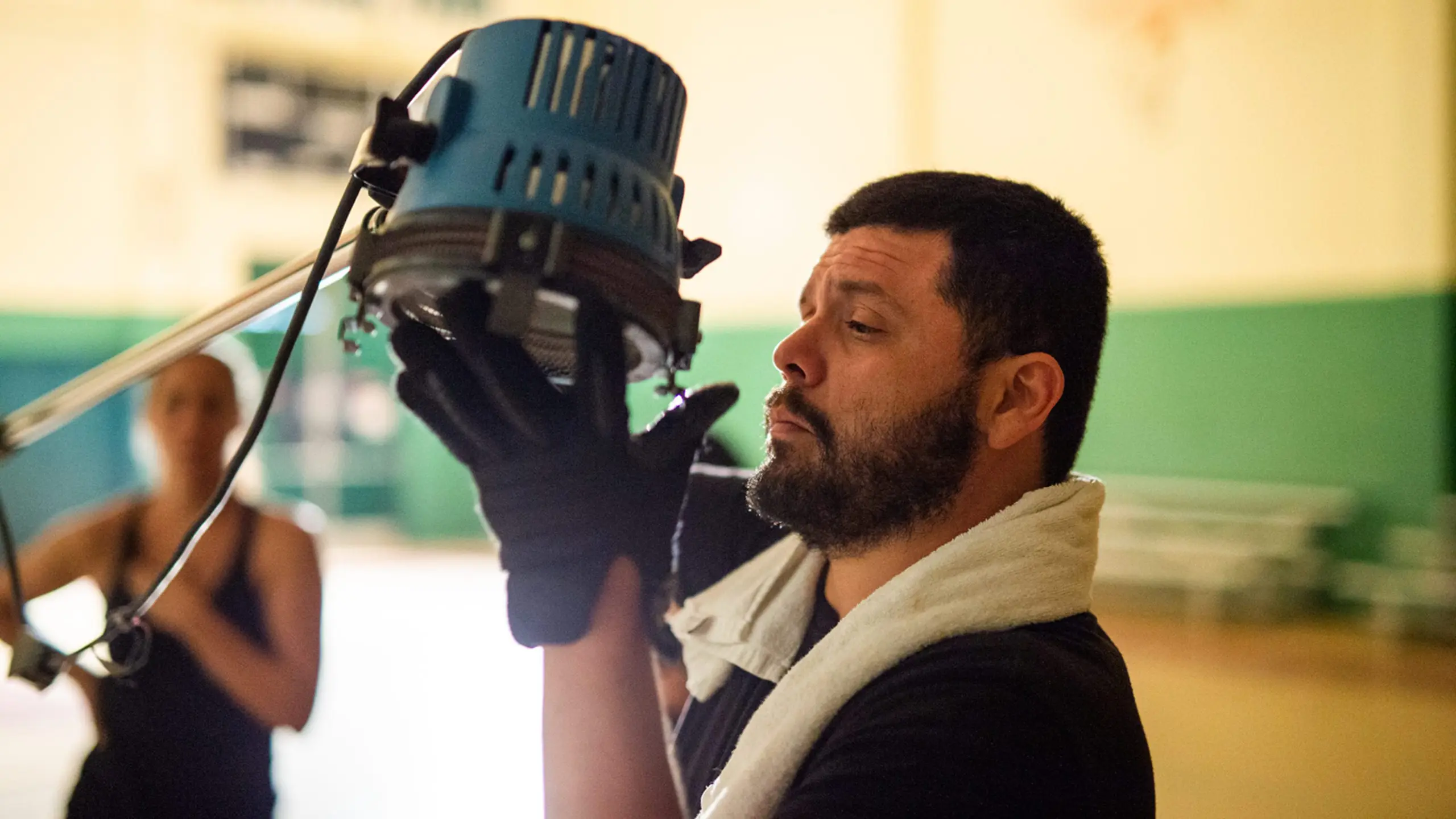
Creating a film is a complex and multi-faceted process that requires meticulous planning and execution across various stages. From developing the initial concept to delivering the final product to audiences, a comprehensive film production checklist is essential for ensuring a smooth and successful outcome. This ultimate guide explores the three key stages of film production: pre-production, production, and post-production, providing a detailed checklist for each phase to help you navigate the intricate world of video production and content creation.
## Pre-Production Checklist
The pre-production stage lays the foundation for a successful film project. It involves several critical tasks that must be carefully planned and executed to ensure a seamless transition into the production phase.
### Script Breakdown and Budgeting
The journey begins with a thorough script breakdown, a process that transforms the written pages into a comprehensive understanding of the project's logistical and financial requirements. This involves creating detailed lists and reports that outline the necessary elements for bringing the story to life, such as the number of cast members, locations, props, and special effects. Armed with this information, the production team can accurately estimate the budget needed to realize the film's vision, taking into account factors like equipment rental, crew salaries, and post-production costs.
### Hiring Key Production Heads
Assembling the right team is crucial for the success of any [film and TV production](https://c-istudios.com/film-and-tv-production/) endeavor. Key roles such as the director, cinematographer, and production designer must be filled with talented and experienced professionals who share the project's creative vision. The director, as the creative lead, will guide the artistic direction and ensure the film's narrative is faithfully captured. The cinematographer, a master of visual storytelling, will collaborate with the director to compose stunning shots and bring the script to life through their artistic lens. Meanwhile, the production designer is responsible for creating the visual world of the film, designing sets, and overseeing the overall aesthetic.
### Creative Planning. Storyboards and Shot Lists
Once the core team is in place, the pre-production phase shifts focus to creative planning. Storyboarding, a visual representation of the script, allows the director and cinematographer to map out each scene, shot by shot. This process not only ensures everyone is on the same page creatively but also helps identify potential challenges and opportunities for innovation. Shot lists, a detailed breakdown of every shot needed for the film, serve as a roadmap for the production crew, ensuring efficient and organized filming.
### Scheduling and Location Scouting
Parallel to creative planning, scheduling, and location scouting play pivotal roles in the pre-production stage. Developing a comprehensive shooting schedule is essential for managing time and resources effectively during production. This intricate process involves coordinating the availability of cast, crew, locations, and equipment while accounting for factors like weather conditions and potential delays.
Location scouting is equally crucial, as finding the perfect settings that align with the script's visual and logistical requirements can make or break a film. Skilled scouts must identify and secure locations that not only match the creative vision but also accommodate the practical needs of the production, such as accessibility, lighting, and sound control.
### Casting and Rehearsals
The casting process is a make-or-break moment for any film project. Selecting the right actors to breathe life into the characters is a delicate task that requires a keen eye for talent and chemistry. Once the cast is assembled, rehearsals become a vital component of the pre-production stage. These sessions allow the actors to explore their characters, develop relationships with their co-stars, and refine their performances under the director's guidance. Rehearsals also provide an opportunity to identify and address any potential issues with the script, blocking, or character development before the cameras start rolling.
For expert guidance on all aspects of [film and TV production](https://c-istudios.com/film-and-tv-production/), including pre-production planning, visit [C&I Studios](https://c-istudios.com/), a leading [video production company](https://c-istudios.com/video-production-services/) dedicated to delivering exceptional content creation services.
## Production Checklist
Once the groundwork has been laid during the pre-production stage, the production phase kicks into high gear, where the vision becomes a reality on set.
### Set Design and Costume Preparation
As the cameras prepare to roll, the physical elements that will bring the story to life must be meticulously crafted. Set designers and their teams work tirelessly to construct intricate sets that transport the audience into the film's world, whether it's a bustling city street, a cozy living room, or a fantastical realm. Every detail, from the furniture arrangements to the wallpaper patterns, is carefully considered to enhance the overall aesthetic and support the narrative.
Costume designers play an equally vital role in shaping the visual identity of the film. They collaborate closely with the director and production designer to create wardrobes that not only reflect the characters' personalities and backgrounds but also complement the overall visual tone of the production. From selecting fabrics and textures to ensuring historically accurate or stylized designs, costume preparation is a meticulous process that contributes significantly to the believability and immersion of the film.
### Technical Equipment and Crew Coordination
Behind the scenes, a well-oiled machine of technical expertise ensures that the production runs smoothly. Camera operators, gaffers, grips, and other crew members work in tandem to ensure that all equipment, from high-end cameras to intricate lighting setups, is properly configured and functioning at its peak. Coordinating the various departments and managing the flow of personnel, gear, and resources is a logistical feat that requires precise planning and clear communication.
### Filming and Directing
At the heart of the production stage lies the art of [filmmaking](https://c-istudios.com/documentary-film-production/) itself. The director, working closely with the cast and crew, orchestrates the intricate dance of capturing each scene according to their creative vision. Through meticulous blocking, shot compositions, and performance guidance, the director shapes the raw footage that will eventually become the final film.
Adhering to the shooting schedule while maintaining a high level of quality is a delicate balancing act. Unforeseen challenges, such as inclement weather, actor availability, or technical glitches, may arise, requiring the director and crew to adapt and problem-solve on the fly. Clear communication, flexibility, and a deep understanding of the creative vision are essential for navigating these obstacles and ensuring the production stays on track.
### Sound and Lighting
While the visuals captivate the audience, the auditory elements play an equally crucial role in creating an immersive and engaging experience. Sound technicians work diligently to capture high-quality audio recordings, ensuring that every line of dialogue, every footstep, and every ambient noise is faithfully captured. They also collaborate with the director to incorporate subtle sound effects that enhance the film's atmosphere and emotional impact.
Lighting is another key component that shapes the visual language of the film. Skilled gaffers and their teams meticulously design and execute lighting setups that not only illuminate the scenes but also create mood, depth, and visual interest. From dramatic shadows to warm, ambient glow, lighting can transform an ordinary space into a cinematic masterpiece, guiding the audience's focus and evoking specific emotions.
### Managing Challenges and Contingencies
Despite the best planning and preparation, unexpected challenges are an inevitable part of the film production process. Weather conditions, technical malfunctions, scheduling conflicts, and other unforeseen circumstances can arise, threatening to derail the entire production. It is during these moments that the true mettle of the crew is tested, and effective problem-solving and contingency planning becomes paramount.
Experienced production teams understand the importance of having backup plans and alternative solutions readily available. This may involve securing backup equipment, scouting alternate locations, or adjusting shooting schedules to accommodate delays. Clear communication channels and a collaborative mindset are essential for rapidly identifying and addressing issues as they arise, minimizing disruptions to the production flow.
## Post-Production Checklist
While the principal [photography](https://c-istudios.com/professional-photography-services/) wraps up the production stage, the journey is far from over. The post-production phase is where the raw footage is transformed into a polished, cohesive final product ready for distribution and exhibition.
### Editing and Visual Effects
The editing room is where the magic truly comes together. Skilled editors work tirelessly to assemble the various shots and footage into a seamless narrative, carefully pacing the story, adjusting the timing, and crafting the emotional beats that will captivate audiences. This intricate process involves selecting the best takes, trimming unnecessary footage, and finding creative solutions to any continuity issues or narrative gaps that may have arisen during filming.
In today's digital age, [visual effects](https://c-istudios.com/vfx-compositing-and-animation-services/) have become an integral part of many film productions, allowing filmmakers to push the boundaries of what is possible on screen. From creating breathtaking otherworldly environments to enhancing practical effects with digital enhancements, visual effects artists collaborate closely with the director and editor to seamlessly integrate these elements into the final product, ensuring a cohesive and believable visual experience.
### Sound Design and Music
While the visuals take center stage, the auditory landscape of a film plays a crucial role in shaping the overall experience. Sound designers meticulously craft the sonic tapestry that immerses audiences in the film's world, layering dialogue, sound effects, and atmospheric elements to create a rich and immersive soundscape.
Music, too, is a powerful storytelling tool that can evoke emotions, heighten tension, and underscore the film's themes and narrative arcs. Composers work closely with the director and sound designers to create original scores that complement the visuals, enhancing the emotional impact and leaving a lasting impression on the audience.
### Marketing and Distribution
Once the film is complete, the focus shifts to connecting with audiences and ensuring its success in the marketplace. A well-executed marketing and distribution strategy is essential for generating buzz, attracting viewers, and ultimately maximizing the film's reach and impact.
The marketing team develops a comprehensive plan that encompasses various channels, such as [social media](https://c-istudios.com/social-media-marketing-services/) [campaigns](https://c-istudios.com/social-media-marketing-services/), targeted advertising, and promotional events. They collaborate with the filmmakers to create compelling trailers, teasers, and other promotional materials that capture the essence of the film and pique audience interest.
Distribution, on the other hand, involves securing the right channels and platforms for the film to reach its intended audience. This may involve negotiations with theatrical distributors, streaming platforms, or festivals, depending on the project's goals and target demographics. Effective distribution strategies ensure that the film is readily available and easily accessible to its target audience, maximizing its potential for success.
### Final Review and Adjustments
Before the film is ready for release, a final review and adjustment phase is necessary to ensure that all elements are cohesive, polished, and aligned with the creative vision. This comprehensive process involves carefully scrutinizing every aspect of the film, from the visual effects and sound design to the color grading and overall pacing.
During this stage, the director, editors, and other key creative personnel meticulously review the film, identifying any areas that may require further refinement or adjustments. This could include tweaking visual effects shots, rebalancing audio levels, or even making minor edits to enhance the narrative flow or character arcs.
Color grading, a crucial aspect of the post-production process, is also finalized during this phase. Skilled colorists work closely with the director to establish the desired look and feel of the film, adjusting the color palette, contrast, and overall tone to create a cohesive and visually striking experience.
Throughout this final review process, attention to detail is paramount. Every frame, every sound effect, and every musical cue is scrutinized to ensure that the final product meets the highest standards of quality and effectively conveys the intended emotional impact.
As the film nears completion, the team may also conduct test screenings with select audiences to gather valuable feedback and make any necessary final adjustments. This collaborative process allows for fine-tuning and ensures that the film resonates with its intended audience before its official release.
## Work with C&I Studios
If you are planning a project like this, our team can take it from concept to final delivery. Explore our [film and TV production](https://c-istudios.com/film-and-tv-production/), browse [our work](https://c-istudios.com/our-work/) to see how we tell brand stories, and [get in touch](https://c-istudios.com/contact/) when you are ready to start.
Originally published March 21, 2024
---
*This content is from [C&I Studios](https://c-istudios.com), a full-service production company.*
---
# Why Documentary Film is Important
> Published: March 21, 2024
> Categories: Film & TV
> Source: https://c-istudios.com/why-documentary-film-is-important/
---
.cib{--paper:#1b1d1f;--ink:#fff;--body:#d5d7d9;--muted:#8b9096;--line:rgba(255,255,255,.12);--thumb:#2b2e31;--card:#212426;--accent:#c02b0a;--blue:#5B8FA8;--serif:'Playfair Display',Georgia,serif;--sans:'Poppins',-apple-system,sans-serif;--measure:900px;background:var(--paper);color:var(--body);font-family:var(--sans);line-height:1.6;position:relative;left:50%;transform:translateX(-50%);width:90vw;max-width:1920px}
.cib *{box-sizing:border-box}
.cib .kicker{max-width:var(--measure);margin:58px auto 0;padding:0 22px;font-size:12.5px;font-weight:700;letter-spacing:2.5px;text-transform:uppercase;color:var(--blue)}
.cib h1.cibh1{text-wrap:balance;font-family:var(--serif);font-weight:500;font-size:clamp(46px,6vw,72px);line-height:1.08;color:var(--ink);max-width:var(--measure);margin:18px auto 0;padding:0 22px;letter-spacing:-.5px}
.cib .metarow{max-width:var(--measure);margin:20px auto 0;padding:0 22px;color:var(--muted);font-size:14px}
.cib .hero{position:relative;width:100%;height:0;padding-bottom:56.25%;overflow:hidden;margin:48px auto 0;border-top:1px solid var(--line);border-bottom:1px solid var(--line)}
.cib .hero .ph{width:100%;aspect-ratio:16/9;background:var(--thumb);border-top:1px solid var(--line);border-bottom:1px solid var(--line);display:flex;align-items:center;justify-content:center;color:#7d8288;font-size:13px;text-align:center;padding:0 20px}
.cib .body{max-width:var(--measure);margin:12px auto 0;padding:52px 22px 6px}
.cib .body.lead p:first-child{font-size:23px;line-height:1.62;color:var(--ink)}
.cib .body p{font-size:18.5px;line-height:1.85;margin:0 0 30px;color:var(--body)}
.cib .body h2{text-wrap:balance;font-family:var(--serif);font-weight:500;font-size:clamp(32px,4vw,48px);line-height:1.22;color:var(--ink);margin:70px 0 20px;letter-spacing:-.3px}
.cib .body h3{text-wrap:balance;font-family:var(--sans);font-weight:600;font-size:22px;color:var(--ink);margin:38px 0 8px}
.cib .body a{color:var(--ink);text-decoration:underline;text-decoration-color:rgba(255,255,255,.4);text-underline-offset:3px}
.cib .body a:hover{text-decoration-color:var(--ink)}
.cib .ctable{width:100%;border-collapse:collapse;margin:16px 0 30px;font-size:16px}
.cib .ctable th{background:#000;color:#fff;text-align:left;padding:10px 12px;font-family:var(--sans)}
.cib .ctable td{padding:10px 12px;border-bottom:1px solid var(--line);color:var(--body)}
.cib .inimg{position:relative;width:100%;height:0;padding-bottom:56.25%;overflow:hidden;margin:72px auto;border-top:1px solid var(--line);border-bottom:1px solid var(--line)}
.cib .inimg .ph{width:100%;aspect-ratio:16/9;background:var(--thumb);border-top:1px solid var(--line);border-bottom:1px solid var(--line);display:flex;align-items:center;justify-content:center;color:#7d8288;font-size:13px}
.cib .origpub{max-width:var(--measure);margin:60px auto 0;padding:26px 22px 0;border-top:1px solid var(--line);color:var(--muted);font-size:13.5px}
.cib .related{max-width:1200px;margin:64px auto 0;padding:34px 22px 76px}
.cib .related h3{font-family:var(--sans);font-size:12.5px;letter-spacing:2px;text-transform:uppercase;color:var(--ink);margin:0 0 24px}
.cib .grid{display:grid;grid-template-columns:repeat(3,1fr);gap:28px}
.cib .rc{background:var(--card);border:1px solid var(--line);display:block;text-decoration:none;color:inherit;transition:border-color .15s}
.cib a.rc:hover{border-color:rgba(255,255,255,.5)}
.cib .rc .thumb{position:relative;width:100%;height:0;padding-bottom:56.25%;background:var(--thumb);overflow:hidden}
.cib .rc .thumb img{position:absolute!important;top:0!important;left:0!important;width:100%!important;height:100%!important;object-fit:cover!important;margin:0!important}
.cib .rc .cc{padding:14px 15px 17px}
.cib .rc .rt{font-family:var(--serif);font-weight:500;font-size:16px;line-height:1.3;color:var(--ink);margin:0 0 6px}
.cib .rc .rm{font-size:11px;letter-spacing:1px;text-transform:uppercase;color:var(--muted)}
.cib img{margin:0!important;padding:0!important;display:block!important;vertical-align:top;max-width:100%}
.cib .hero img,.cib .inimg img{position:absolute!important;top:0!important;left:0!important;width:100%!important;height:100%!important;object-fit:cover!important;margin:0!important;padding:0!important;border:0!important;display:block!important;aspect-ratio:auto!important}
.cib .hero+.body{padding-top:36px}
@media(max-width:760px){.cib .grid{grid-template-columns:1fr}.cib .body h2{margin:52px 0 16px}.cib .body p{font-size:17.5px}.cib .inimg,.cib .hero{margin-top:44px}}
.cib .vembed{max-width:var(--measure);margin:44px auto;padding:0 22px}.cib .vembed .vwrap{position:relative;width:100%;height:0;padding-bottom:56.25%}.cib .vembed .vwrap iframe{position:absolute;top:0;left:0;width:100%;height:100%;border:0}
Film & TV
# Why Documentary Film is Important
10 min read
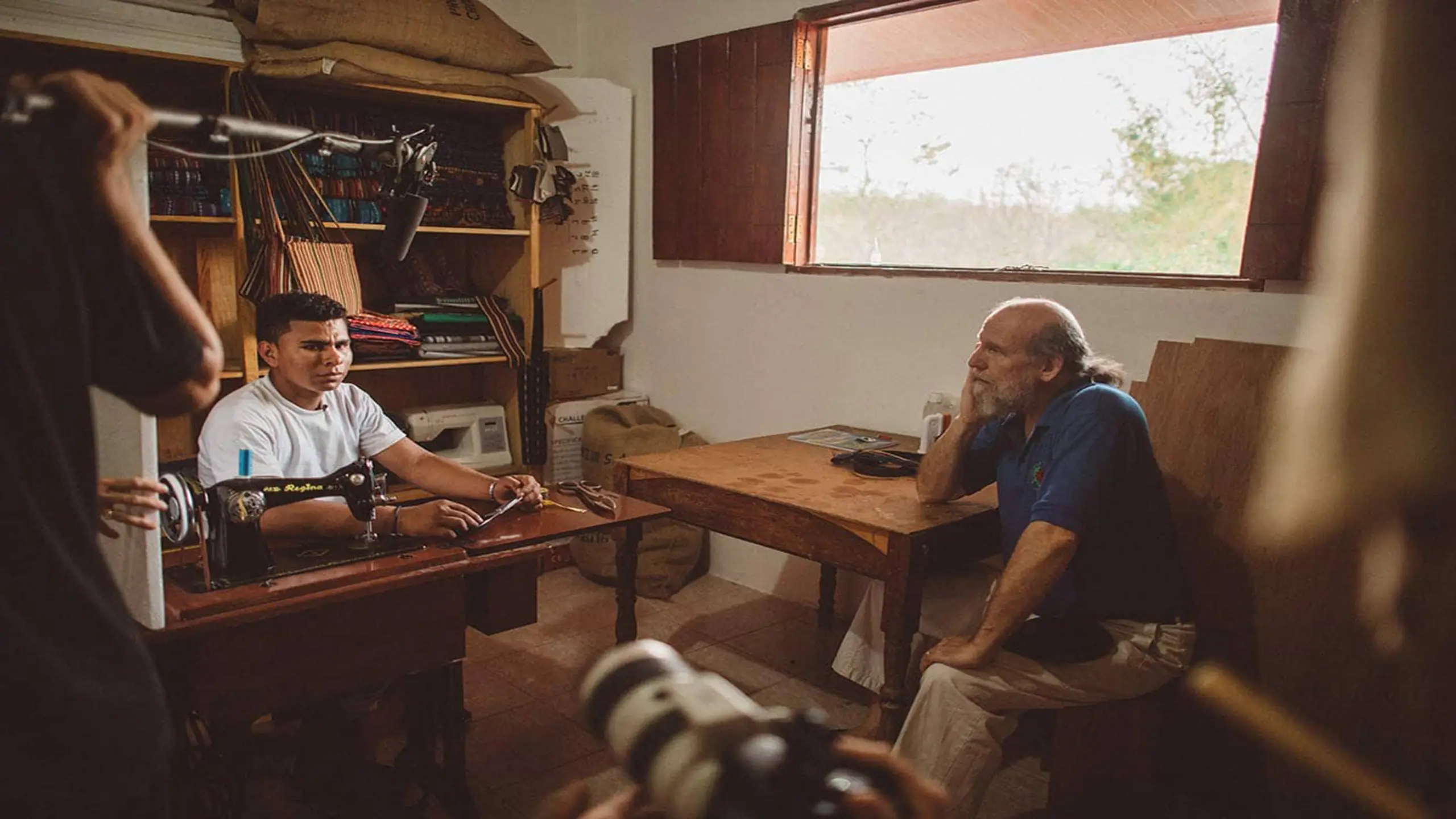
Documentary films are a powerful medium that captures real-life events, stories, and experiences through a non-fiction storytelling lens. They offer a unique opportunity to explore and understand the complexities of our world, shedding light on social, political, and cultural issues that might otherwise go unnoticed. From raising awareness to inspiring change, documentary films have proven to be an invaluable tool for education, advocacy, and artistic expression.
## Historical Evolution of Documentary Films
The roots of documentary filmmaking can be traced back to the early 20th century when pioneers like Robert Flaherty and Dziga Vertov began experimenting with capturing real-life events on film. Flaherty's "Nanook of the North" (1922) is often regarded as one of the first feature-length documentaries, offering a glimpse into the lives of the Inuit people in the Canadian Arctic.
As technology advanced, so did the techniques and styles of [documentary filmmaking](https://c-istudios.com/documentary-film-production/). The advent of portable cameras and synchronized sound recording equipment in the 1960s allowed for a more intimate and immersive approach, giving rise to the cinéma vérité and direct cinema movements. Filmmakers like D.A. Pennebaker and the Maysles brothers embraced this new era of documentary ethics, striving to capture events as they unfolded without interference or staging.
The 1980s and 1990s witnessed a surge in the popularity of documentary films, with the rise of cable television and the increasing demand for thought-provoking content. Filmmakers like Errol Morris, Michael Moore, and Barbara Kopple tackled complex social issues and used their documentaries as a platform for investigative journalism, shining a light on corporate corruption, political scandals, and human rights abuses.
In recent years, the advent of digital technology and online platforms has democratized documentary filmmaking, allowing independent filmmakers to reach global audiences and explore niche topics with greater ease. The rise of crowdfunding platforms and streaming services has further expanded the reach and accessibility of documentaries, contributing to their growing popularity and influence in the realm of [film and TV production](https://c-istudios.com/film-and-tv-production/).
## The Role of Documentaries in Educating and Informing
Documentary films have long served as powerful educational tools, providing audiences with in-depth insights and historical documentation on a wide range of subjects. From exploring scientific breakthroughs to delving into the intricacies of different cultures, documentaries offer a unique opportunity for cultural understanding and intellectual growth through [video production](https://c-istudios.com/video-production-services/) and content creation.
One of the key strengths of documentaries lies in their ability to present complex information in an engaging and accessible manner. By combining factual content with compelling narratives and visuals, documentaries can captivate audiences while imparting valuable knowledge. This makes them particularly effective in the classroom setting, where they can supplement traditional learning materials and stimulate critical thinking and discussion.
Moreover, documentaries play a crucial role in raising awareness about important social issues and global challenges. Films like "An Inconvenient Truth" (2006) and "Food, Inc." (2008) have been instrumental in educating the public about climate change and the problems within the industrial food system, respectively. By presenting hard-hitting facts and personal stories, these documentaries have sparked widespread conversations and encouraged individuals to take action through media marketing consultation.
Accuracy and truthfulness are paramount in documentary filmmaking, as audiences place their trust in these films to provide an unbiased representation of reality. Reputable documentarians adhere to strict ethical guidelines and conduct extensive research to ensure that the information presented is factual and well-supported. This commitment to truth and accuracy is what distinguishes documentaries from other forms of entertainment and ensures their credibility as educational resources in [content creation](https://c-istudios.com/content-creation-services/).
## Emotional Impact of Documentaries
Beyond their educational value, documentary films possess a unique ability to elicit powerful emotional responses from viewers. By offering an intimate window into the lives of real people and their struggles, documentaries can forge deep connections and foster empathy in a way that few other mediums can.
At the heart of many documentaries lies the art of storytelling. Skilled filmmakers weave together personal narratives, archival footage, and expert insights to create compelling narratives that resonate with audiences on an emotional level. These stories have the power to transcend cultural and geographic boundaries, allowing viewers to relate to experiences that may be vastly different from their own.
One of the most impactful examples of a documentary that has left an indelible emotional mark is "Dear Zachary" (2008). This gut-wrenching film follows the tragic story of a young man's murder and the subsequent custody battle over his infant son. Through its raw and honest portrayal of grief, love, and injustice, "Dear Zachary" has moved countless viewers to tears and sparked discussions about the flaws within the legal system through effective storytelling in [documentary film production](https://c-istudios.com/documentary-film-production/).
Similarly, documentaries like "The Act of Killing" (2012) and "Virunga" (2014) have used innovative storytelling techniques to provoke visceral reactions from audiences. Ultimately, the emotional power of documentary films lies in their ability to humanize complex issues and make them relatable on a personal level.
## Documentaries and Social Change
Throughout history, documentary films have played a pivotal role in raising awareness about pressing social and political issues, often serving as catalysts for significant change. By shining a light on injustice, corruption, and marginalized communities, these films have the power to inspire action and drive social movements through documentary [film production](https://c-istudios.com/film-and-tv-production/).
One of the most influential documentaries in modern times is "An Inconvenient Truth" (2006), which brought the issue of climate change to the forefront of public discourse. By presenting scientific evidence and personal anecdotes in a compelling manner, the film galvanized viewers to take action and demand policy changes to address environmental concerns. Its impact was far-reaching, with many crediting it as a major contributor to the growing awareness and activism surrounding climate change through effective [media marketing consultation](https://c-istudios.com/media-marketing-consultation-services/).
Another powerful example is "The Invisible War" (2012), which exposed the epidemic of sexual assault within the United States military. By giving a voice to survivors and exposing the systemic failures in addressing this issue, the documentary sparked outrage and prompted significant reforms within the military justice system.
Documentaries have also played a crucial role in highlighting the struggles and experiences of underrepresented communities. Films like "Paris Is Burning" (1990) and "The Times of Harvey Milk" (1984) shed light on the LGBTQ+ community and their fight for equality, while "13th" (2016) and "I Am Not Your Negro" (2016) explored the ongoing impact of systemic racism in America.
Beyond raising awareness, documentary films have also been instrumental in influencing policy and legal decisions. Films like "The Cove" (2009) and "Blackfish" (2013) exposed unethical practices in the captive dolphin and orca industries, respectively, leading to legislative changes and a shift in public perception.
## The Artistic Value of Documentaries
While documentary films are often celebrated for their educational and social impact, it is important to recognize their artistic value as well. Like any other art form, documentaries offer a unique canvas for creative expression, allowing filmmakers to explore innovative visual storytelling techniques and push the boundaries of the medium.
At its core, documentary filmmaking is an art form that combines elements of cinematography, editing, sound design, and narrative structure to create a cohesive and compelling experience for the viewer. Skilled documentarians approach their subjects with a keen eye for composition, lighting, and framing, capturing visually stunning moments that elevate the film's impact and emotional resonance through [video production](https://c-istudios.com/video-production-services/) and [professional photography](https://c-istudios.com/professional-photography-services/).
One of the hallmarks of great documentary films is their ability to employ visual storytelling techniques that transcend the limitations of traditional narrative structures. Films like "Koyaanisqatsi" (1982) and "Baraka" (1992) are celebrated for their mesmerizing visuals and use of non-verbal communication, conveying complex themes and emotions through breathtaking imagery and evocative soundscapes in documentary film production.
Many documentary films have pushed the boundaries of the genre itself, blurring the lines between fact and fiction and challenging traditional notions of what constitutes a documentary. Films like "Exit Through the Gift Shop" (2010) and "The Imposter" (2012) have played with the conventions of the genre, leaving audiences questioning the nature of truth and the ethics of deception in filmmaking through innovative video production techniques.
Perhaps one of the most artistically innovative and visually stunning documentary films in recent memory is "Leviathan" (2012). Through its experimental use of cameras mounted on fishing vessels and stunning underwater footage, the film offers a haunting and abstract meditation on the harsh realities of commercial fishing. Its avant-garde approach to filmmaking has been widely praised for pushing the boundaries of what a documentary can be, blending art and storytelling in a truly unique way.
## Ethical Considerations in Documentary Filmmaking
While documentary films have the power to educate, inspire, and challenge societal norms, their impact is intrinsically tied to the ethical principles and practices of the filmmakers behind them. As purveyors of truth and reality, documentarians bear a significant responsibility to maintain the integrity of their craft and adhere to rigorous ethical standards in film production.
One of the fundamental ethical dilemmas in documentary filmmaking revolves around the concept of objectivity and avoiding manipulation. While it is understood that documentaries inevitably involve a degree of subjective interpretation and creative choices, there is a fine line between artistic expression and distorting the truth.
Another ethical consideration in documentary filmmaking is the issue of informed consent and respect for privacy. When capturing real-life events and people's personal stories, filmmakers have a responsibility to ensure that their subjects fully understand the implications of their participation and consent to being filmed.
The ethical treatment of subjects extends beyond the filming process, as documentarians must also consider the potential impacts of their work on the lives of those depicted. In some cases, the exposure and attention generated by a documentary can have unintended consequences, ranging from public scrutiny to legal repercussions.
In recent years, the advent of new technologies like deepfakes and advanced editing software has further complicated the ethical landscape of documentary filmmaking. While these tools offer exciting creative possibilities, they also raise concerns about the potential for deception and the erosion of trust in the documentary genre. Responsible filmmakers must stay vigilant and adopt clear ethical guidelines to ensure that their work upholds the principles of truth and authenticity in documentary film production.
As the influence and reach of documentary films continue to grow, it is imperative that the industry upholds the highest ethical standards. By prioritizing transparency, accountability, and respect for their subjects, documentarians can ensure that their work remains a trusted and impactful force for education, awareness, and social change, enhanced by effective media marketing consultation and [creative marketing](https://c-istudios.com/creative-marketing-services/) strategies.
## The Future of Documentary Films
As technology continues to evolve at a rapid pace, the landscape of documentary filmmaking is poised for exciting transformations and new possibilities. From cutting-edge production techniques to innovative distribution models, the future of documentaries promises to be a dynamic and ever-changing frontier in video production and content creation.
One of the most significant technological advancements shaping the future of documentary films is the rise of virtual reality (VR) and augmented reality (AR) experiences. These immersive technologies have the potential to transport viewers into the heart of the stories being told, offering an unprecedented level of empathy and connection with the subject matter.
Moreover, the democratization of filmmaking tools and the proliferation of online platforms have opened up new avenues for independent documentarians to share their stories with global audiences. Crowdfunding platforms like Kickstarter and Indiegogo have empowered filmmakers to secure funding and creative freedom while streaming services like Netflix and Hulu have provided unprecedented access to diverse documentary content through web development, web maintenance, and web hosting.
As the demand for authentic and thought-provoking content continues to grow, the future of documentary films may also see a shift towards more interactive and immersive storytelling experiences. Interactive documentaries, which allow viewers to explore different narrative paths and engage with the content in a non-linear fashion, are already gaining traction and could become a prominent force in the years to come through video production and [creative marketing](https://c-istudios.com/creative-marketing-services/).
In the years ahead, the future of documentary filmmaking will undoubtedly be shaped by the convergence of technology, creativity, and a commitment to storytelling that resonates with audiences on a profound level. As long as there are stories waiting to be told and voices yearning to be heard, the documentary genre will continue to evolve and adapt, ensuring its ongoing relevance and impact in a rapidly changing media landscape through social media marketing services, [SEO copywriting](https://c-istudios.com/seo-copywriting-services/), and innovative [TV show pitch](https://c-istudios.com/tv-show-pitch/) strategies.
## Work with C&I Studios
If you are planning a project like this, our team can take it from concept to final delivery. Explore our [film and TV production](https://c-istudios.com/film-and-tv-production/), browse [our work](https://c-istudios.com/our-work/) to see how we tell brand stories, and [get in touch](https://c-istudios.com/contact/) when you are ready to start.
Originally published March 21, 2024
---
*This content is from [C&I Studios](https://c-istudios.com), a full-service production company.*
---
# Building a Successful Film Production Team: Roles and Responsibilities on a Film Set
> Published: March 21, 2024
> Categories: Film & TV
> Source: https://c-istudios.com/building-a-successful-film-production-team-roles-and-responsibilities-on-a-film-set/
---
.cib{--paper:#1b1d1f;--ink:#fff;--body:#d5d7d9;--muted:#8b9096;--line:rgba(255,255,255,.12);--thumb:#2b2e31;--card:#212426;--accent:#c02b0a;--blue:#5B8FA8;--serif:'Playfair Display',Georgia,serif;--sans:'Poppins',-apple-system,sans-serif;--measure:900px;background:var(--paper);color:var(--body);font-family:var(--sans);line-height:1.6;position:relative;left:50%;transform:translateX(-50%);width:90vw;max-width:1920px}
.cib *{box-sizing:border-box}
.cib .kicker{max-width:var(--measure);margin:58px auto 0;padding:0 22px;font-size:12.5px;font-weight:700;letter-spacing:2.5px;text-transform:uppercase;color:var(--blue)}
.cib h1.cibh1{text-wrap:balance;font-family:var(--serif);font-weight:500;font-size:clamp(46px,6vw,72px);line-height:1.08;color:var(--ink);max-width:var(--measure);margin:18px auto 0;padding:0 22px;letter-spacing:-.5px}
.cib .metarow{max-width:var(--measure);margin:20px auto 0;padding:0 22px;color:var(--muted);font-size:14px}
.cib .hero{position:relative;width:100%;height:0;padding-bottom:56.25%;overflow:hidden;margin:48px auto 0;border-top:1px solid var(--line);border-bottom:1px solid var(--line)}
.cib .hero .ph{width:100%;aspect-ratio:16/9;background:var(--thumb);border-top:1px solid var(--line);border-bottom:1px solid var(--line);display:flex;align-items:center;justify-content:center;color:#7d8288;font-size:13px;text-align:center;padding:0 20px}
.cib .body{max-width:var(--measure);margin:12px auto 0;padding:52px 22px 6px}
.cib .body.lead p:first-child{font-size:23px;line-height:1.62;color:var(--ink)}
.cib .body p{font-size:18.5px;line-height:1.85;margin:0 0 30px;color:var(--body)}
.cib .body h2{text-wrap:balance;font-family:var(--serif);font-weight:500;font-size:clamp(32px,4vw,48px);line-height:1.22;color:var(--ink);margin:70px 0 20px;letter-spacing:-.3px}
.cib .body h3{text-wrap:balance;font-family:var(--sans);font-weight:600;font-size:22px;color:var(--ink);margin:38px 0 8px}
.cib .body a{color:var(--ink);text-decoration:underline;text-decoration-color:rgba(255,255,255,.4);text-underline-offset:3px}
.cib .body a:hover{text-decoration-color:var(--ink)}
.cib .ctable{width:100%;border-collapse:collapse;margin:16px 0 30px;font-size:16px}
.cib .ctable th{background:#000;color:#fff;text-align:left;padding:10px 12px;font-family:var(--sans)}
.cib .ctable td{padding:10px 12px;border-bottom:1px solid var(--line);color:var(--body)}
.cib .inimg{position:relative;width:100%;height:0;padding-bottom:56.25%;overflow:hidden;margin:72px auto;border-top:1px solid var(--line);border-bottom:1px solid var(--line)}
.cib .inimg .ph{width:100%;aspect-ratio:16/9;background:var(--thumb);border-top:1px solid var(--line);border-bottom:1px solid var(--line);display:flex;align-items:center;justify-content:center;color:#7d8288;font-size:13px}
.cib .origpub{max-width:var(--measure);margin:60px auto 0;padding:26px 22px 0;border-top:1px solid var(--line);color:var(--muted);font-size:13.5px}
.cib .related{max-width:1200px;margin:64px auto 0;padding:34px 22px 76px}
.cib .related h3{font-family:var(--sans);font-size:12.5px;letter-spacing:2px;text-transform:uppercase;color:var(--ink);margin:0 0 24px}
.cib .grid{display:grid;grid-template-columns:repeat(3,1fr);gap:28px}
.cib .rc{background:var(--card);border:1px solid var(--line);display:block;text-decoration:none;color:inherit;transition:border-color .15s}
.cib a.rc:hover{border-color:rgba(255,255,255,.5)}
.cib .rc .thumb{position:relative;width:100%;height:0;padding-bottom:56.25%;background:var(--thumb);overflow:hidden}
.cib .rc .thumb img{position:absolute!important;top:0!important;left:0!important;width:100%!important;height:100%!important;object-fit:cover!important;margin:0!important}
.cib .rc .cc{padding:14px 15px 17px}
.cib .rc .rt{font-family:var(--serif);font-weight:500;font-size:16px;line-height:1.3;color:var(--ink);margin:0 0 6px}
.cib .rc .rm{font-size:11px;letter-spacing:1px;text-transform:uppercase;color:var(--muted)}
.cib img{margin:0!important;padding:0!important;display:block!important;vertical-align:top;max-width:100%}
.cib .hero img,.cib .inimg img{position:absolute!important;top:0!important;left:0!important;width:100%!important;height:100%!important;object-fit:cover!important;margin:0!important;padding:0!important;border:0!important;display:block!important;aspect-ratio:auto!important}
.cib .hero+.body{padding-top:36px}
@media(max-width:760px){.cib .grid{grid-template-columns:1fr}.cib .body h2{margin:52px 0 16px}.cib .body p{font-size:17.5px}.cib .inimg,.cib .hero{margin-top:44px}}
.cib .vembed{max-width:var(--measure);margin:44px auto;padding:0 22px}.cib .vembed .vwrap{position:relative;width:100%;height:0;padding-bottom:56.25%}.cib .vembed .vwrap iframe{position:absolute;top:0;left:0;width:100%;height:100%;border:0}
Film & TV
# Building a Successful Film Production Team. Roles and Responsibilities on a Film Set
10 min read
In the world of [filmmaking](https://c-istudios.com/film-and-tv-production/), the magic on screen is the result of meticulous planning and collaboration behind the scenes. A well-coordinated [film production](https://c-istudios.com/film-and-tv-production/) team is the backbone of any successful movie, ensuring that every aspect of the filmmaking process runs smoothly and efficiently. From pre-production to post-production, each team member plays a crucial role in bringing the director's vision to life.
At the heart of this collaborative effort is a diverse group of professionals, each with their own set of skills and responsibilities. The film set is a bustling environment where creativity meets technical expertise, and the synergy between various roles is essential for the seamless execution of a film. Understanding the roles and responsibilities on a film set is crucial for anyone aspiring to work in the film industry or looking to appreciate the complexity of movie-making.
In this blog, we will explore the key roles within a [film production](https://c-istudios.com/film-and-tv-production/) team and the responsibilities that come with each position. By delving into the various aspects of film production, we aim to shed light on the importance of each team member's contribution and the collaborative nature of creating a cinematic masterpiece.
1. The Pre-Production Team
The pre-production phase is the foundational stage of any film project, where the groundwork for the entire production is laid out. This phase involves meticulous planning, budgeting, and organizing, all of which are crucial for a smooth transition into the actual filming process. At the core of the pre-production team are the following key roles:
### Producer
The producer is often considered the backbone of the film production process. They are responsible for the overall project management, from securing financing to assembling the team and overseeing the budget. Producers work closely with the director and other team members to ensure that the project stays on track, both creatively and financially. They are the problem-solvers, making crucial decisions that impact every aspect of the production.
### Director
The director is the creative visionary behind the film. They are responsible for translating the script into a visual medium, guiding the artistic and technical aspects of the production. The director works closely with the actors, cinematographer, and other crew members to bring the story to life on screen. They make key decisions regarding the interpretation of the script, the visual style of the film, and the overall tone and pacing.
### Screenwriter
The screenwriter is the architect of the film's story. They craft the screenplay or script, which serves as the blueprint for the entire production. A well-written script includes dialogue, character development, and detailed descriptions of scenes and settings. The screenwriter collaborates with the director and producer to refine the script, ensuring that it aligns with the creative vision and budget constraints of the project.
### Casting Director
The casting director plays a crucial role in the pre-production phase by selecting the right actors for the roles in the film. They work closely with the director and producer to understand the characters' requirements and conduct auditions to find the best fit for each role. The casting director is responsible for negotiating contracts, coordinating callbacks, and ensuring that the chosen actors align with the director's vision and the film's overall tone.
### Location Manager
The location manager is responsible for finding and securing the filming locations that will bring the script to life. They scout for suitable locations that match the director's vision and the story's setting, negotiate permits and fees, and coordinate logistics for the film crew's access to these sites. The location manager must also consider factors such as lighting, sound, and accessibility to ensure that each location is practical for filming.
### Production Designer
The production designer is tasked with creating the visual look of the [film](https://c-istudios.com/film-and-tv-production/). They work closely with the director and cinematographer to design the sets, props, and overall aesthetic that will be used to tell the story. The production designer oversees a team of art directors, set decorators, and prop masters to ensure that every visual element aligns with the film's style and narrative. Their work is integral to establishing the film's atmosphere and transporting the audience into the world of the story.
1. The Production Team
Once pre-production is complete, the production phase begins. This is where the actual filming takes place, and the vision starts to come alive on screen. The production team is responsible for executing the plan laid out during pre-production and ensuring that everything runs smoothly on set. Key roles in the production team include:
### Director of Photography (DP)
Also known as the cinematographer, the DP is responsible for overseeing all aspects of the camera work and lighting. They work closely with the director to achieve the desired visual style of the film, making decisions about camera angles, shot composition, and lighting techniques. The DP is a crucial creative force behind the film, helping to create the mood and atmosphere through visual storytelling.
### Camera Operator
The camera operator is responsible for operating the camera under the guidance of the DP. They physically handle the camera, executing the shots as planned by the DP and director. The camera operator must have a steady hand and a keen eye for detail, ensuring that each shot is framed and focused correctly. They may also be responsible for moving the camera on dollies or cranes to achieve dynamic shots.
### Gaffer
The gaffer is the chief electrician on set, responsible for the design and execution of the lighting setup. Working under the direction of the DP, the gaffer ensures that each scene is lit according to the visual style of the film. They manage a team of electricians and lighting technicians to rig lights, control natural light, and create the desired lighting effects. The gaffer plays a crucial role in shaping the look and feel of the film through lighting.
### Sound Mixer
The sound mixer is responsible for capturing and managing all on-set audio. They oversee the recording of dialogue, sound effects, and ambient noise during filming. The sound mixer works with the boom operator and sound assistants to ensure that the audio is clear and free from unwanted background noise. They also monitor levels and make adjustments in real time to maintain consistent sound quality throughout the production.
### Boom Operator
The boom operator handles the boom microphone, which is used to record dialogue and other important sounds on set. They work under the direction of the sound mixer, positioning the boom pole and microphone to capture the best possible audio while staying out of the camera's frame. The boom operator must be attentive and agile, often moving the boom mic in coordination with the actors' movements and camera angles.
### Art Director
The art director manages set construction and design, working closely with the production designer to bring the visual elements of the film to life. They oversee the construction of sets, the selection of props, and the arrangement of scenery to ensure that each location looks authentic and aligns with the film's aesthetic. The art director coordinates with various departments, including construction, painting, and props, to create a cohesive visual environment for the story.
### Makeup and Wardrobe
The makeup and wardrobe departments are crucial for ensuring that the actors' appearance matches their characters. The makeup artists create the appropriate looks for each character, from naturalistic makeup to special effects prosthetics. The wardrobe team selects and maintains the costumes, ensuring that they are consistent with the characters' personalities and the film's setting. Both departments work closely with the director and actors to ensure that the visual portrayal of characters supports the overall narrative.
1. The Post-Production Team
After the production phase is complete, the post-production team takes over to shape the final product. This phase involves editing the footage, adding visual and sound effects, and finalizing the color and audio for the film. The post-production team is responsible for refining the raw material into a polished and cohesive film. Key roles in this team include:
### Editor
The editor is responsible for assembling and cutting the footage to create the final film. They work closely with the director to select the best takes, arrange scenes in the desired sequence, and ensure the film's pacing and rhythm are effective. The editor plays a crucial role in storytelling, using their skills to enhance the narrative and emotional impact of the film.
### Visual Effects (VFX) Artist
The [VFX](https://c-istudios.com/vfx-compositing-and-animation-services/) artist adds digital effects to enhance or create visuals that are not possible to capture during filming. This can include anything from creating realistic environments and characters to adding explosions or magical effects. The VFX artist works closely with the director and cinematographer to ensure that the effects seamlessly integrate with the live-action footage and support the film's visual style.
### Colorist
The colorist is responsible for adjusting the colors in the film to ensure visual consistency and enhance the overall aesthetic. They work with the director and director of photography to establish the color palette and tone of the film, using grading software to manipulate the color, contrast, and brightness of each shot. The colorist's work is crucial for creating the desired mood and atmosphere, as well as ensuring that the film has a cohesive visual look.
### Sound Designer
The sound designer is responsible for creating and editing the film's soundscapes and audio effects. They work closely with the director and editor to design the overall sound of the film, including background noises, sound effects, and ambient sounds that enhance the story and setting. The sound designer collaborates with the sound mixing team to ensure that the audio elements are seamlessly integrated with the visuals, contributing to the immersive experience of the film.
### Composer
The composer writes and arranges the film's score, which is the music that accompanies the visuals and helps convey the emotional tone of the story. The composer collaborates with the director to understand the film's themes and mood, creating music that supports and enhances the narrative. The score can range from subtle background music to powerful orchestral pieces, playing a crucial role in shaping the audience's emotional response to the film.
1. The Distribution and Marketing Team
Once a film is completed, the focus shifts to getting it in front of audiences. The distribution and marketing team plays a crucial role in ensuring the film's success beyond the production stage. They are responsible for promoting the film, securing distribution channels, and managing its public image. Key roles in this team include:
### Distribution Manager
The distribution manager is responsible for securing distribution channels for the film, ensuring that it reaches its intended audience. They negotiate deals with theaters, streaming platforms, and other distribution outlets, working to maximize the film's exposure and financial return. The distribution manager also coordinates the release strategy, including timing, format, and geographic markets.
### Marketing Manager
The marketing manager develops and executes marketing strategies to promote the [film](https://c-istudios.com/film-and-tv-production/). This includes creating promotional materials, such as trailers, posters, and social media content, as well as organizing marketing campaigns and events. The marketing manager works closely with the distribution team to align marketing efforts with the film's release strategy, aiming to generate buzz and attract audiences.
### Public Relations (PR) Specialist
The PR specialist manages media relations and the public image of the film. They handle press releases, arrange interviews and press events, and respond to media inquiries. The PR specialist works to maintain a positive image of the film, generating positive coverage and managing any potential crises that may arise.
**In conclusion**, the success of a film is not solely dependent on the story or the actors but is a testament to the collaboration and communication among all members of the production team. From pre-production planning to post-production refinement, each role is pivotal in transforming a script into a cinematic masterpiece. The synergy between the creative vision of the director, the technical expertise of the crew, and the strategic efforts of the marketing team ensures that the film not only reaches its audience but also leaves a lasting impact. Ultimately, it is the collective effort of the entire production team that brings the magic of cinema to life.
## Elevate Your Film Production with C&I Studios
At [C&I Studios](https://c-istudios.com/), we understand the complexities and intricacies of film production. Our experienced team covers all aspects of filmmaking, from pre-production planning to post-production editing and everything in between. We take pride in our ability to bring creative visions to life, offering a range of services that cater to every stage of the film production process. Whether you're looking for expert cinematography, innovative visual effects, or comprehensive marketing strategies, C&I Studios has the skills and resources to make your project a success. Explore our [portfolio](https://c-istudios.com/our-work/) to see [our work](https://c-istudios.com/our-work/) in action and [contact us](https://c-istudios.com/contact/) to discuss how we can collaborate on your next film project. Visit our website to learn more about our services.
## Work with C&I Studios
If you are planning a project like this, our team can take it from concept to final delivery. Explore our [film and TV production](https://c-istudios.com/film-and-tv-production/), browse [our work](https://c-istudios.com/our-work/) to see how we tell brand stories, and [get in touch](https://c-istudios.com/contact/) when you are ready to start.
Originally published March 21, 2024
---
*This content is from [C&I Studios](https://c-istudios.com), a full-service production company.*
---
# A Step-by-Step Guide to Green Screen and Chroma Keying
> Published: March 19, 2024
> Categories: Post & VFX
> Source: https://c-istudios.com/a-step-by-step-guide-to-green-screen-and-chroma-keying/
---
.cib{--paper:#1b1d1f;--ink:#fff;--body:#d5d7d9;--muted:#8b9096;--line:rgba(255,255,255,.12);--thumb:#2b2e31;--card:#212426;--accent:#c02b0a;--blue:#5B8FA8;--serif:'Playfair Display',Georgia,serif;--sans:'Poppins',-apple-system,sans-serif;--measure:900px;background:var(--paper);color:var(--body);font-family:var(--sans);line-height:1.6;position:relative;left:50%;transform:translateX(-50%);width:90vw;max-width:1920px}
.cib *{box-sizing:border-box}
.cib .kicker{max-width:var(--measure);margin:58px auto 0;padding:0 22px;font-size:12.5px;font-weight:700;letter-spacing:2.5px;text-transform:uppercase;color:var(--blue)}
.cib h1.cibh1{text-wrap:balance;font-family:var(--serif);font-weight:500;font-size:clamp(46px,6vw,72px);line-height:1.08;color:var(--ink);max-width:var(--measure);margin:18px auto 0;padding:0 22px;letter-spacing:-.5px}
.cib .metarow{max-width:var(--measure);margin:20px auto 0;padding:0 22px;color:var(--muted);font-size:14px}
.cib .hero{position:relative;width:100%;height:0;padding-bottom:56.25%;overflow:hidden;margin:48px auto 0;border-top:1px solid var(--line);border-bottom:1px solid var(--line)}
.cib .hero .ph{width:100%;aspect-ratio:16/9;background:var(--thumb);border-top:1px solid var(--line);border-bottom:1px solid var(--line);display:flex;align-items:center;justify-content:center;color:#7d8288;font-size:13px;text-align:center;padding:0 20px}
.cib .body{max-width:var(--measure);margin:12px auto 0;padding:52px 22px 6px}
.cib .body.lead p:first-child{font-size:23px;line-height:1.62;color:var(--ink)}
.cib .body p{font-size:18.5px;line-height:1.85;margin:0 0 30px;color:var(--body)}
.cib .body h2{text-wrap:balance;font-family:var(--serif);font-weight:500;font-size:clamp(32px,4vw,48px);line-height:1.22;color:var(--ink);margin:70px 0 20px;letter-spacing:-.3px}
.cib .body h3{text-wrap:balance;font-family:var(--sans);font-weight:600;font-size:22px;color:var(--ink);margin:38px 0 8px}
.cib .body a{color:var(--ink);text-decoration:underline;text-decoration-color:rgba(255,255,255,.4);text-underline-offset:3px}
.cib .body a:hover{text-decoration-color:var(--ink)}
.cib .ctable{width:100%;border-collapse:collapse;margin:16px 0 30px;font-size:16px}
.cib .ctable th{background:#000;color:#fff;text-align:left;padding:10px 12px;font-family:var(--sans)}
.cib .ctable td{padding:10px 12px;border-bottom:1px solid var(--line);color:var(--body)}
.cib .inimg{position:relative;width:100%;height:0;padding-bottom:56.25%;overflow:hidden;margin:72px auto;border-top:1px solid var(--line);border-bottom:1px solid var(--line)}
.cib .inimg .ph{width:100%;aspect-ratio:16/9;background:var(--thumb);border-top:1px solid var(--line);border-bottom:1px solid var(--line);display:flex;align-items:center;justify-content:center;color:#7d8288;font-size:13px}
.cib .origpub{max-width:var(--measure);margin:60px auto 0;padding:26px 22px 0;border-top:1px solid var(--line);color:var(--muted);font-size:13.5px}
.cib .related{max-width:1200px;margin:64px auto 0;padding:34px 22px 76px}
.cib .related h3{font-family:var(--sans);font-size:12.5px;letter-spacing:2px;text-transform:uppercase;color:var(--ink);margin:0 0 24px}
.cib .grid{display:grid;grid-template-columns:repeat(3,1fr);gap:28px}
.cib .rc{background:var(--card);border:1px solid var(--line);display:block;text-decoration:none;color:inherit;transition:border-color .15s}
.cib a.rc:hover{border-color:rgba(255,255,255,.5)}
.cib .rc .thumb{position:relative;width:100%;height:0;padding-bottom:56.25%;background:var(--thumb);overflow:hidden}
.cib .rc .thumb img{position:absolute!important;top:0!important;left:0!important;width:100%!important;height:100%!important;object-fit:cover!important;margin:0!important}
.cib .rc .cc{padding:14px 15px 17px}
.cib .rc .rt{font-family:var(--serif);font-weight:500;font-size:16px;line-height:1.3;color:var(--ink);margin:0 0 6px}
.cib .rc .rm{font-size:11px;letter-spacing:1px;text-transform:uppercase;color:var(--muted)}
.cib img{margin:0!important;padding:0!important;display:block!important;vertical-align:top;max-width:100%}
.cib .hero img,.cib .inimg img{position:absolute!important;top:0!important;left:0!important;width:100%!important;height:100%!important;object-fit:cover!important;margin:0!important;padding:0!important;border:0!important;display:block!important;aspect-ratio:auto!important}
.cib .hero+.body{padding-top:36px}
@media(max-width:760px){.cib .grid{grid-template-columns:1fr}.cib .body h2{margin:52px 0 16px}.cib .body p{font-size:17.5px}.cib .inimg,.cib .hero{margin-top:44px}}
.cib .vembed{max-width:var(--measure);margin:44px auto;padding:0 22px}.cib .vembed .vwrap{position:relative;width:100%;height:0;padding-bottom:56.25%}.cib .vembed .vwrap iframe{position:absolute;top:0;left:0;width:100%;height:100%;border:0}
Post & VFX
# A Step-by-Step Guide to Green Screen and Chroma Keying
9 min read
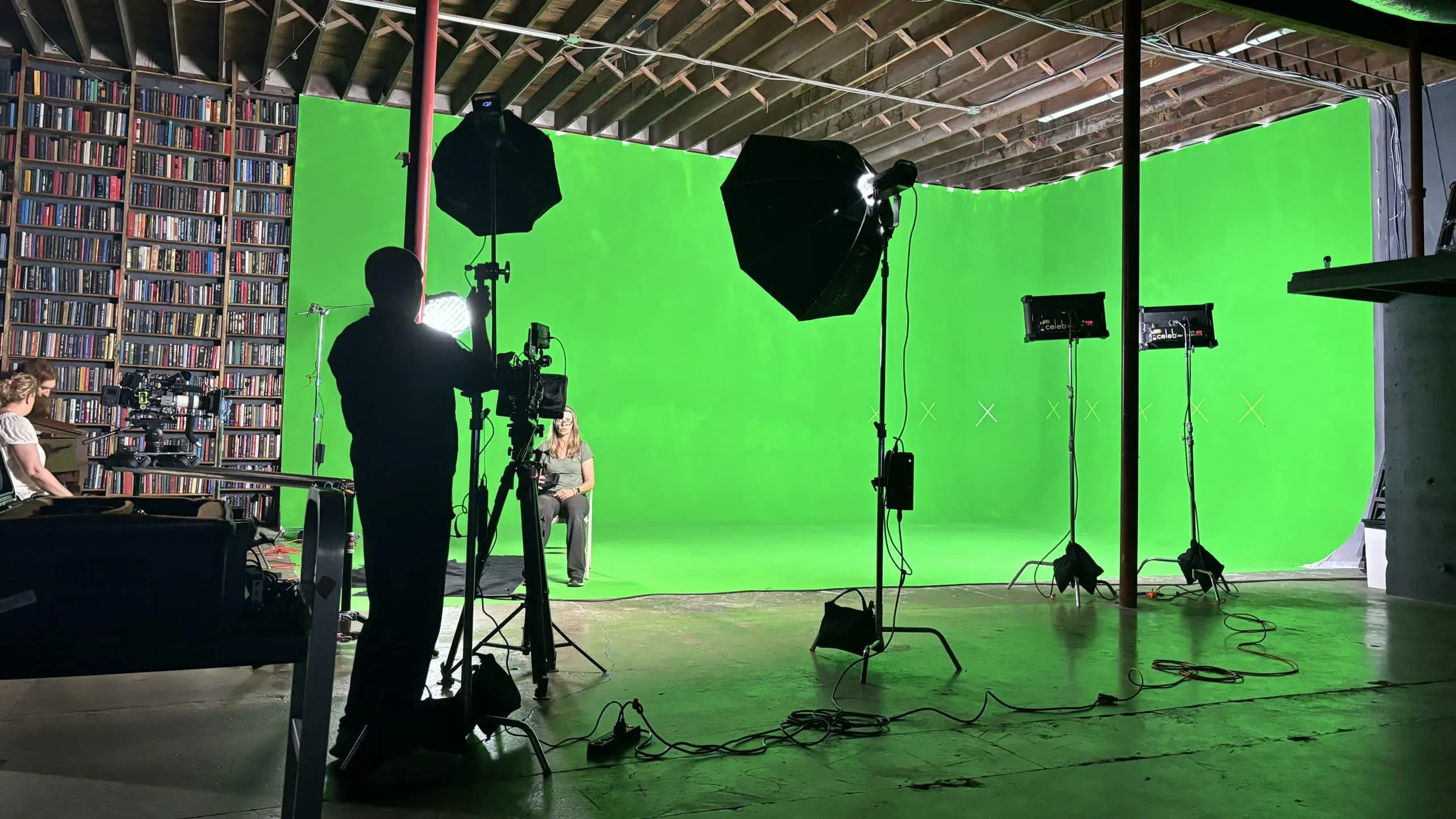
Green screen and chroma keying are essential techniques in [video production](https://c-istudios.com/video-production-services/) that allow filmmakers and video creators to superimpose subjects onto virtual backgrounds. By filming actors or objects in front of a solid green or blue background, editors can easily remove the background color in post-production, replacing it with any desired scene. This process opens up endless creative possibilities, from placing characters in fantastical landscapes to adding special effects. The use of green screens has become increasingly popular in various forms of media, including movies, television shows, and online content, due to its ability to create immersive and visually engaging experiences for viewers.
In this article, we're going to explore how green screen and chroma keying work, the essential components involved, and why these techniques are crucial in modern [video production](https://c-istudios.com/video-production-services/).
1. **Understanding Green Screen Technology**
Green screen technology, also known as chroma keying, is a technique used in video production to replace a specific color in an image or video with another image or video. This is commonly done by filming actors or objects in front of a solid green or blue background, which is then made transparent in post-production, allowing a different background to be added.
The choice between green and blue screens depends on the specific needs of the project. Green screens are more commonly used because digital cameras are more sensitive to green, resulting in cleaner keying with less noise. However, blue screens are used when the subject being filmed contains green elements, such as clothing or props, to avoid keying out those parts of the image.
Deciding when to use a green screen involves considering factors such as the lighting conditions, the presence of green elements in the scene, and the final desired effect. Green screens are ideal for situations where you need to add dynamic backgrounds or special effects that would be difficult or impossible to achieve in a real-world setting. They are widely used in [filmmaking](https://c-istudios.com/film-and-tv-production/), [television production](https://c-istudios.com/film-and-tv-production/), and even in [live broadcasting](https://c-istudios.com/video-audio-live-streaming/), such as weather forecasts, where the presenter appears in front of a dynamic map.
1. Setting Up Your Green Screen
**Choosing the right shade of green**
When setting up your green screen, choosing the right shade of green is crucial for effective chroma keying. The ideal green screen color is a bright, vivid green that stands out clearly from human skin tones and most clothing. This helps the editing software easily distinguish the background from the subject.
According to TechSmith, "bright green, specifically ‘digi green’ or ‘chroma key green’, is the go-to choice for most modern green screens" because these shades provide a high contrast with most subjects, making the keying process smoother. However, if your subject is wearing bright green clothing, you might consider using a blue screen instead to avoid any issues during the keying process.
### Types of green screens
Green screens come in various forms, each suited to different needs and environments. You can choose from fabric screens, which are portable and easy to set up, paper rolls that provide a seamless background, or even paint a wall with chroma key green paint for a more permanent solution. Each type has its advantages, with fabric screens being popular for their flexibility and ease of storage, while paper rolls and painted walls offer a smooth, wrinkle-free surface.
### Lighting your green screen evenly
Lighting your green screen evenly is crucial for achieving a clean key in post-production. The goal is to eliminate shadows and ensure a consistent color across the entire background. Soft, diffused lighting works best, using multiple light sources to cover the screen uniformly. The lights should be placed at a slight angle to avoid direct reflections and hotspots. Using a waveform monitor can help you verify that the background is evenly lit by displaying a tight, horizontal band at the correct brightness level for chroma keying. Proper lighting minimizes post-production work and results in a more professional-looking final product.
1. Preparing Your Subject
It's important to avoid clothing and props that are the same color as the green screen, as these will become transparent in the final video. CDS Visuals advises choosing wardrobe colors that contrast well with green, such as blues, reds, or yellows, and avoiding shiny or reflective materials that could cause unwanted reflections. Canva also recommends planning your video subject's wardrobe carefully and avoiding green-tinted makeup, which can lead to parts of them becoming invisible on screen once the chroma key editing is done.
Proper positioning of your subject is crucial to minimize shadows and unwanted light on the green screen. Vegas Creative Software suggests keeping your subjects away from the background to avoid casting shadows or unwanted light on it and to minimize the amount of green spill showing up on your subjects.
Lighting your subject correctly is essential for achieving a clean key. Videomaker recommends planning your subject lighting so that key and spot or hair lights do not fall onto the screen, throwing your screen lighting efforts out the window. This helps ensure that your subject is well-illuminated and stands out clearly from the green screen background.
1. Shooting Your Green Screen Footage
### Camera settings for optimal results
CDS Visuals recommends adjusting camera settings for optimal results, such as setting the white balance manually to prevent color shifts and maintain consistent lighting across the scene. Proper exposure is also important to avoid underexposed or overexposed areas on the green screen, which can affect the quality of the keying process. Matching your green screen footage's frame rate and shutter speed with the settings used for the final background footage is crucial to prevent motion blur discrepancies.
### Tips for a successful shoot
It's important to light your screen first, ensuring an even and consistent lighting free of patterns or shadows and wrinkles or creases before you start lighting your subject. This can be achieved through the use of multiple light sources and light modifiers like softboxes and reflectors. Planning your screen lighting so that your subject isn't closer than 7 feet or so in front and ensuring that your key and spot or hair lights do not fall onto the screen are also crucial steps to avoid throwing your screen lighting efforts out the window.
1. Editing Your Green Screen Footage
Editing your green screen footage involves several key steps to ensure a professional and seamless final video.
### Basic Edits Before Chroma Keying
Before you start the chroma keying process, it's important to perform basic edits on your footage. This includes removing any unwanted elements, trimming the footage to the desired length, and making any necessary color corrections. Riverside.fm suggests performing edits like removing filler words and background noise, and adding music, logos, and filters before chroma keying to ensure a smoother editing process.
## Chroma Keying in Different Software
Chroma keying can be done using various video editing software, each with its own set of tools and features. For example, Adobe After Effects offers the Keylight effect, an Academy Award-winning preset for professional-quality color keying. Filmora provides a range of chroma keying tools, including options for adjusting tolerance and edge settings to fine-tune the keying process. DaVinci Resolve allows you to use the Chroma Keyer in the Color tab to select the green screen color and adjust key settings for optimal results.
## Adjusting Clip Length and Adding Backgrounds
Once you have keyed out the green screen, you'll need to adjust the clip length of your foreground footage to match any background footage or images you plan to add. This ensures that the scene transitions smoothly and that the timing of the elements aligns correctly. After adjusting the clip length, you can add your chosen backgrounds to replace the keyed-out green screen. This could be a static image, a video clip, or even a CGI-generated background, depending on the desired effect.
1. Refining Your Green Screen Effect
### Spill Suppression and Color Correction
After keying out the green screen, you might notice some green spill on your subject, where the green color reflects onto their edges. This can be corrected using spill suppression techniques. CDS Visuals suggests using dedicated spill suppression tools or fine-tuning color correction settings to make the composite look more natural. Color correction is also crucial to ensure that the colors of your subject match the new background. Adjusting saturation, brightness, and contrast can help create a cohesive look between the foreground and background elements.
### Edge Blending and Refining Edges
To achieve a seamless integration of your subject with the new background, it's important to focus on edge blending and refining the edges of your keyed-out subject. Green Screen Stock recommends using tools like the Refine Edge tool in After Effects to smooth the edges and blend them more naturally with the background. Paying attention to details such as hair and other fine elements can make a big difference in the overall realism of the composite. With practice and attention to detail, you can achieve professional-looking results that make the green screen effect virtually undetectable.
1. Advanced Tips and Tricks
When advancing your green screen techniques, there are several tips and tricks that can help you overcome common challenges and achieve more professional results:
### Dealing with Common Challenges
One frequent issue in green screen compositing is uneven lighting, which can cause parts of the green screen to appear darker or lighter, making keying difficult. To address this, ensure that the green screen is well-lit with even, diffused lighting, using multiple light sources and light modifiers like softboxes.
Green spill, where the green color reflects onto the subject, can be tackled using spill suppression techniques in your editing software. Shadow inconsistencies, caused by shadows cast by the subject onto the green screen, can be minimized through careful lighting and positioning of the subject.
### Using Luma Keys for Transparency
In addition to chroma keying, you can use luma keys to create transparency based on the brightness level of the footage. This technique is useful when you want to key out either very bright or very dark areas in your footage. Filmora explains that luma keys allow you to designate which backgrounds will be transparent or opaque in your final image, offering more creative freedom in your shots. This can be particularly helpful in scenarios where the color of the background is not uniform or when dealing with complex lighting situations.
By mastering these advanced techniques, you can tackle a wide range of green screen challenges and achieve more seamless and professional-looking composites in your [video projects](https://c-istudios.com/video-production-services/).
### Alternatives to Traditional Green Screens
In addition to traditional green screens, there are innovative alternatives that leverage technology to change video backgrounds without the need for physical screens:
Artificial intelligence (AI) has revolutionized the way backgrounds can be changed in videos. AI algorithms can analyze video frames to distinguish between the subject and the background, allowing for background replacement without a green screen. This technology is especially useful for content creators who may not have access to a green screen setup or for quick edits on the go.
Zoom, a popular video conferencing platform, offers a feature that allows users to change their background without a green screen. Utilizing AI, Zoom's algorithm predicts which pixels belong to the human subject and which constitute the background, enabling users to replace their background with a virtual image or video. This feature has gained popularity for its ease of use and the ability to maintain professional appearances during virtual meetings.
## C&I Studios. Your Partner in Video Excellence
Looking to elevate your video production with professional green screen technology? [C&I Studios](https://c-istudios.com/), a full-service creative agency, offers cutting-edge services to bring your visual storytelling to life. From conceptualization to post-production, our team of experts ensures your projects stand out. Explore our diverse [portfolio](https://c-istudios.com/our-work/) to see [our work](https://c-istudios.com/our-work/) in action. Ready to start your next project? [Contact us](https://c-istudios.com/contact/) today and let's create something extraordinary together.
## Work with C&I Studios
If you are planning a project like this, our team can take it from concept to final delivery. Explore our [post-production services](https://c-istudios.com/post-production-services/), browse [our work](https://c-istudios.com/our-work/) to see how we tell brand stories, and [get in touch](https://c-istudios.com/contact/) when you are ready to start.
Originally published March 19, 2024
---
*This content is from [C&I Studios](https://c-istudios.com), a full-service production company.*
---
# The Art of Foley: Immersion through Creation
> Published: March 18, 2024
> Categories: Film & TV
> Source: https://c-istudios.com/the-art-of-foley-immersion-through-creation/
---
.cib{--paper:#1b1d1f;--ink:#fff;--body:#d5d7d9;--muted:#8b9096;--line:rgba(255,255,255,.12);--thumb:#2b2e31;--card:#212426;--accent:#c02b0a;--blue:#5B8FA8;--serif:'Playfair Display',Georgia,serif;--sans:'Poppins',-apple-system,sans-serif;--measure:900px;background:var(--paper);color:var(--body);font-family:var(--sans);line-height:1.6;position:relative;left:50%;transform:translateX(-50%);width:90vw;max-width:1920px}
.cib *{box-sizing:border-box}
.cib .kicker{max-width:var(--measure);margin:58px auto 0;padding:0 22px;font-size:12.5px;font-weight:700;letter-spacing:2.5px;text-transform:uppercase;color:var(--blue)}
.cib h1.cibh1{text-wrap:balance;font-family:var(--serif);font-weight:500;font-size:clamp(46px,6vw,72px);line-height:1.08;color:var(--ink);max-width:var(--measure);margin:18px auto 0;padding:0 22px;letter-spacing:-.5px}
.cib .metarow{max-width:var(--measure);margin:20px auto 0;padding:0 22px;color:var(--muted);font-size:14px}
.cib .hero{position:relative;width:100%;height:0;padding-bottom:56.25%;overflow:hidden;margin:48px auto 0;border-top:1px solid var(--line);border-bottom:1px solid var(--line)}
.cib .hero .ph{width:100%;aspect-ratio:16/9;background:var(--thumb);border-top:1px solid var(--line);border-bottom:1px solid var(--line);display:flex;align-items:center;justify-content:center;color:#7d8288;font-size:13px;text-align:center;padding:0 20px}
.cib .body{max-width:var(--measure);margin:12px auto 0;padding:52px 22px 6px}
.cib .body.lead p:first-child{font-size:23px;line-height:1.62;color:var(--ink)}
.cib .body p{font-size:18.5px;line-height:1.85;margin:0 0 30px;color:var(--body)}
.cib .body h2{text-wrap:balance;font-family:var(--serif);font-weight:500;font-size:clamp(32px,4vw,48px);line-height:1.22;color:var(--ink);margin:70px 0 20px;letter-spacing:-.3px}
.cib .body h3{text-wrap:balance;font-family:var(--sans);font-weight:600;font-size:22px;color:var(--ink);margin:38px 0 8px}
.cib .body a{color:var(--ink);text-decoration:underline;text-decoration-color:rgba(255,255,255,.4);text-underline-offset:3px}
.cib .body a:hover{text-decoration-color:var(--ink)}
.cib .ctable{width:100%;border-collapse:collapse;margin:16px 0 30px;font-size:16px}
.cib .ctable th{background:#000;color:#fff;text-align:left;padding:10px 12px;font-family:var(--sans)}
.cib .ctable td{padding:10px 12px;border-bottom:1px solid var(--line);color:var(--body)}
.cib .inimg{position:relative;width:100%;height:0;padding-bottom:56.25%;overflow:hidden;margin:72px auto;border-top:1px solid var(--line);border-bottom:1px solid var(--line)}
.cib .inimg .ph{width:100%;aspect-ratio:16/9;background:var(--thumb);border-top:1px solid var(--line);border-bottom:1px solid var(--line);display:flex;align-items:center;justify-content:center;color:#7d8288;font-size:13px}
.cib .origpub{max-width:var(--measure);margin:60px auto 0;padding:26px 22px 0;border-top:1px solid var(--line);color:var(--muted);font-size:13.5px}
.cib .related{max-width:1200px;margin:64px auto 0;padding:34px 22px 76px}
.cib .related h3{font-family:var(--sans);font-size:12.5px;letter-spacing:2px;text-transform:uppercase;color:var(--ink);margin:0 0 24px}
.cib .grid{display:grid;grid-template-columns:repeat(3,1fr);gap:28px}
.cib .rc{background:var(--card);border:1px solid var(--line);display:block;text-decoration:none;color:inherit;transition:border-color .15s}
.cib a.rc:hover{border-color:rgba(255,255,255,.5)}
.cib .rc .thumb{position:relative;width:100%;height:0;padding-bottom:56.25%;background:var(--thumb);overflow:hidden}
.cib .rc .thumb img{position:absolute!important;top:0!important;left:0!important;width:100%!important;height:100%!important;object-fit:cover!important;margin:0!important}
.cib .rc .cc{padding:14px 15px 17px}
.cib .rc .rt{font-family:var(--serif);font-weight:500;font-size:16px;line-height:1.3;color:var(--ink);margin:0 0 6px}
.cib .rc .rm{font-size:11px;letter-spacing:1px;text-transform:uppercase;color:var(--muted)}
.cib img{margin:0!important;padding:0!important;display:block!important;vertical-align:top;max-width:100%}
.cib .hero img,.cib .inimg img{position:absolute!important;top:0!important;left:0!important;width:100%!important;height:100%!important;object-fit:cover!important;margin:0!important;padding:0!important;border:0!important;display:block!important;aspect-ratio:auto!important}
.cib .hero+.body{padding-top:36px}
@media(max-width:760px){.cib .grid{grid-template-columns:1fr}.cib .body h2{margin:52px 0 16px}.cib .body p{font-size:17.5px}.cib .inimg,.cib .hero{margin-top:44px}}
.cib .vembed{max-width:var(--measure);margin:44px auto;padding:0 22px}.cib .vembed .vwrap{position:relative;width:100%;height:0;padding-bottom:56.25%}.cib .vembed .vwrap iframe{position:absolute;top:0;left:0;width:100%;height:100%;border:0}
Film & TV
# The Art of Foley. Immersion through Creation
7 min read
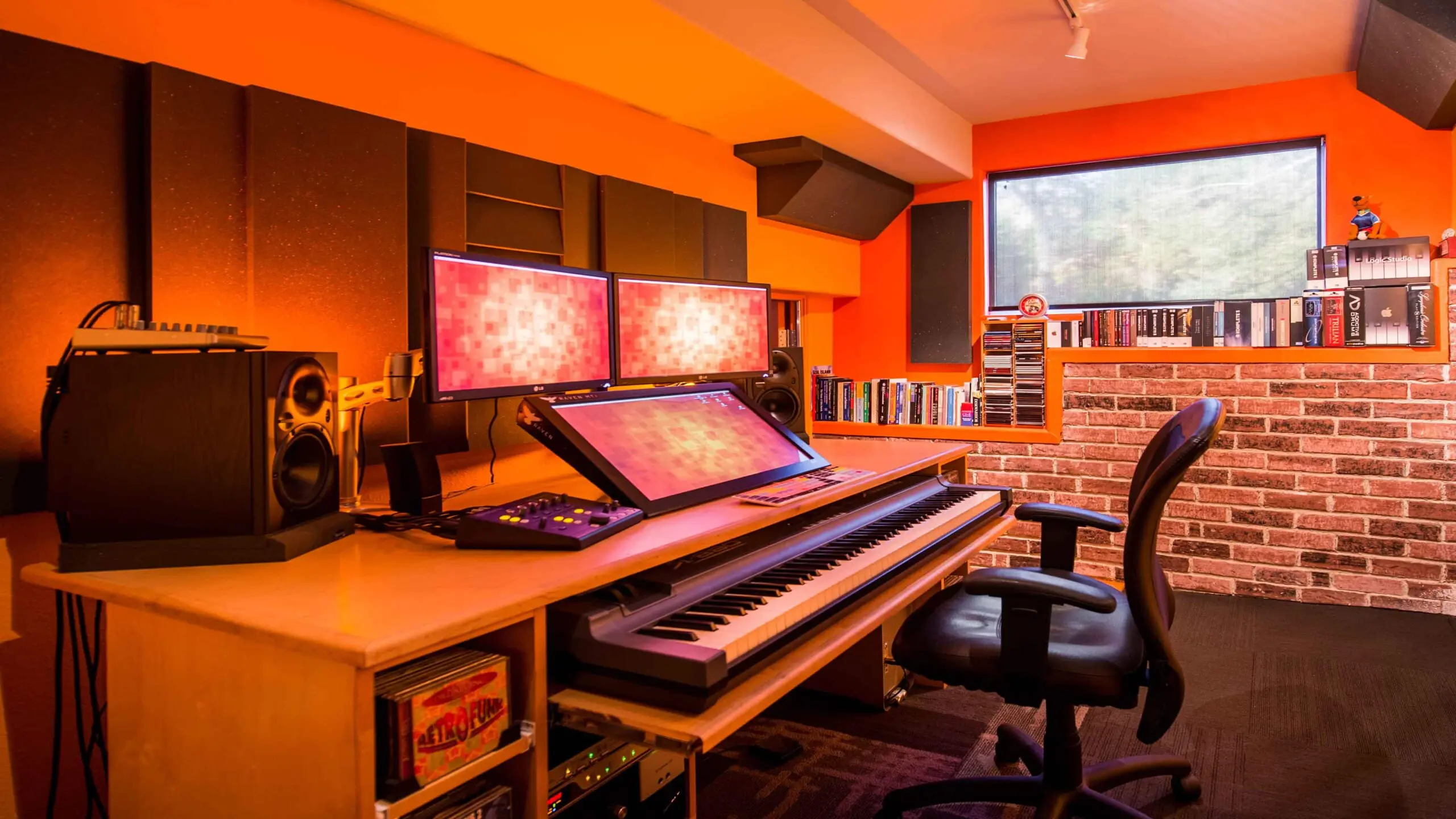
- 12/08/20
Foley is the art of creating and adding realistic sound effects to [films, videos](https://c-istudios.com/video-production-services/), and other media in post-production to enhance audio quality. Foley artists use a variety of props and recording equipment to reproduce everyday sounds, such as footsteps, clothing movements, and object interactions, which are synchronized to the visual elements of the film. This process allows for complete control over the quality and characteristics of the sounds, adding depth and realism to the audio. Foley complements or replaces sound recorded on set during filming and is essential for creating a consistent and coherent auditory experience for the audience.
Foley artists are highly skilled individuals who possess exceptional ears for detail and nuance, physical dexterity, coordination, and creativity. They often work intermittently and may supplement their income by working in other areas of post-production sound, such as effects or dialogue editing. Despite advancements in technology, the unique and creative work of Foley artists remains essential for producing [sound effects](https://c-istudios.com/audio-engineering-services/) that perfectly match the actions on screen.
The art of Foley is a manual and creative process that involves using a combination of physical movements and props to produce custom sound effects that enhance the overall audio-visual experience of a film or video.
## What is the history of Foley effects in movies?
The history of Foley effects in movies dates back to the early days of filmmaking. The term "Foley" originated from Jack Donovan Foley, who started working with Universal Studios in 1914 during the silent movie era. He revolutionized cinema by creating real-time sound effects, such as footsteps, rain, and clothing movements, to be introduced in the middle of a film shoot, which was revolutionary after the era of silent films.
The origins of Foley can be traced back to the live broadcast era of the 1920s, where sound artists were hired to create effects live on cue for radio dramas. Jack Foley was the first sound artist to break into the film industry and pioneer the techniques that Foley artists still use today.
While the art of Foley has evolved with technology and the creation of extensive sound effects libraries, it remains an appreciated and essential part of filmmaking, as it allows for the creation of custom, synchronized sound effects that enhance the auditory experience of movies.
## How do Foley effects contribute to the overall mood of a movie?
Foley effects contribute to the overall mood of a movie by establishing and enhancing the emotional tone of a scene. For example, the sound of a creaking door in a horror movie can create tension and apprehension, while the sound of rain and thunder in a drama can set a melancholy or introspective tone.
These effects are custom-made for each film and are synchronized to the characters' movements, contributing to the creation of a realistic and believable soundscape for the film's world.
Additionally, Foley effects can help to highlight certain aspects of a scene or character, giving them more depth and adding emotional weight, which allows audiences to immerse themselves in the story being told.
Therefore, Foley effects play a vital role in enhancing the overall atmosphere and emotional impact of a movie.
## What are common Foley effects used in movies?
Some common Foley effects used in movies include:
1. Footsteps: Foley artists use different surfaces and shoes to create realistic walking and running sounds.
2. Clothing movements: Sounds of rustling fabric, zipping, and unzipping are created to match the on-screen actions.
3. Doors: Foley artists replicate various door sounds such as creaking, slamming, and opening/closing.
4. Breaking glass: The sound of glass shattering is often created using various materials to match the visual effect.
5. Squeaky doors: Foley artists use props to produce the characteristic sound of a squeaky door.
6. Ambient sounds: Foley is also used to create ambient sounds like the rustling of leaves, the sound of wind, or the crunching of snow.
These are just a few examples of the extensive range of sounds that Foley artists create to enhance the auditory experience of movies and other media.
## Examples of famous Foley effects in movies
Some examples of famous Foley effects in movies include:
1. "Shine On You Crazy Diamond" (1975): In this song by Pink Floyd, the sound of playing wine glasses, known as the glass harp, was used to create a stirringly beautiful effect.
1. "Wall-E" (2008): In this animated film, the sound of the robot Wall-E's movements was created using a tree stump wrapped in leather dropped on different surfaces to achieve a specific and realistic sound.
These examples demonstrate the creative and essential role of Foley in enhancing the auditory experience of films and music.
## How do Foley artists work with directors to create specific sounds?
Foley artists work closely with directors to create specific sounds that enhance the audio quality of a film. They typically work on foley stages equipped with viewing screens, recording [equipment](https://c-istudios.com/video-production-gear-list/), and props for creating sounds. When collaborating with directors, foley artists carefully review the film to identify the necessary sound effects. They then use their creativity and expertise to produce custom sound effects that precisely match the actions on screen. This process involves using a variety of props, surfaces, and recording techniques to create realistic and synchronized sound effects for different types of environments and actions.
By working closely with directors, foley artists ensure that the sound effects align with the director's creative vision and contribute to the overall auditory experience of the film.
## What are techniques used to create realistic Foley effects?
Foley artists use various techniques to create realistic sound effects, including:
1. Footsteps and movement: Foley artists walk on different surfaces to replicate footsteps, while movements like clothing rustling are created using specific materials.
1. Props: They use a wide range of props creatively, such as using celery to mimic bone-breaking sounds, or coconut shells for horse footsteps.
1. Imagination and creativity: Foley artists often need to brainstorm and use their imagination to create the right sounds, such as using a staple gun for a gun noise or frying bacon to mimic the sound of rain.
1. Custom sound creation: Foley effects are custom-made for each film, synchronized to characters' movements, and are not direct reproductions of the sound they're meant to mimic. This allows for the creation of a sharper, more precise sound.
These techniques allow Foley artists to produce custom, synchronized sound effects that enhance the overall auditory experience of movies and other media.
## How do Foley artists create sound effects for different types of environments?
Foley artists use a variety of props, surfaces, and recording techniques to create custom sound effects for different types of environments. They may use different types of shoes, clothing, and props like keys, door handles, or cutlery to create specific object interactions. Additionally, they use surfaces such as gravel, sand, or wooden platforms to mimic different environmental textures. Specialist microphones, like shotgun or hypercardioid microphones, are also employed to capture the nuanced details of the sound effects. By employing these tools and techniques, Foley artists can create realistic and immersive soundscapes that enhance the overall audio quality.
Different types of shoes are collected, as well as using other surfaces to help create a particular sound environment. Movement involves much more subtle sounds. This could be from two people passing each other. This is all done through digital sound processing using a Digital Audio Workstation.
Foley artists might break plates, stomp around on newspaper, drop rocks over an umbrella, or even bawl uncontrollably to create the right sounds to add into a film scene. Foley sounds are usually not direct reproductions of the sound they’re meant to mimic; instead, they often use creative materials and movements to create a sharper, more precise sound.
## Challenges Foley artists face when creating sound effects for movies
Foley artists face several challenges when creating sound effects for movies, including:
1. Poor quality of on-set sound: Sound recorded on set is often of poor quality compared to sound recorded in a studio, being unclear or too quiet to sound realistic. This necessitates the creation of custom sound effects in post-production to enhance the audio quality.
1. Competition and intermittent work: There is relatively small demand for Foley artists, leading to fierce competition for work. Foley artists often have intermittent work, which may require them to seek additional employment in other areas of film sound production.
1. Creative demands: Foley work requires artists to be highly creative and innovative, often needing to reproduce sounds that were lost in the shooting of a scene or that were never recorded. This demands a high level of imagination and problem-solving skills.
1. Physical demands: Foley work is physically demanding, as it often requires matching the movements of on-screen actors and creating sounds that perfectly match the actions on screen. This demands physical dexterity, coordination, and fitness.
These challenges highlight the specialized and demanding nature of Foley work in the film industry.
## How has technology impacted the use of Foley effects in movies?
Technology has significantly impacted the use of Foley effects in movies. While Foley was initially created in real-time with everyday elements, the advent of extensive sound effects libraries has reduced its use. However, the art of creating Foley effects is still appreciated and valued.
Foley artists now use digital sound processing and recording techniques to create and enhance sound effects, allowing for greater precision and control over the audio quality. Despite the changes, Foley remains important for enhancing realism, establishing mood, and adding depth to the auditory experience of films.
## What is the difference between Foley and sound design?
Foley and sound design are two integral parts of filmmaking, each with distinct purposes. Foley is the replication of everyday sound effects that are added to films to make them more realistic, such as footsteps, clothing movements, and object interactions. On the other hand, sound design involves the use of creative sound effects to enhance a scene or create a particular mood. While Foley focuses on creating realistic, synchronized sounds associated with specific actions on screen, sound design encompasses a broader range of sounds, including those that are more abstract or surrealistic.
Both Foley and sound design are essential for enhancing the overall auditory experience of films, with Foley emphasizing realism and synchronization, and sound design focusing on creativity and mood enhancement.
## How do sound designers and Foley artists work together to create a cohesive sound design for a movie?
Sound designers and Foley artists work together to create a cohesive sound design for a movie by collaborating closely and complementing each other's work. Sound design involves the craft of combining every piece of audio in a film, including dialogue, sound effects, ambiance, score, and soundtrack, to enhance the overall auditory experience.
On the other hand, Foley is the replication of everyday sound effects that are added to films to make them more realistic.
During the [post-production](https://c-istudios.com/feature-film-mastering-and-delivery/) phase, sound designers and Foley artists collaborate to ensure that the sound effects and audio elements seamlessly integrate with the visual components of the film. Sound designers may lead a crew of audio professionals, including Foley artists, to bring together the various audio elements.
Foley artists focus on creating realistic, synchronized sounds associated with specific actions on screen, while sound designers use creative sound effects to enhance a scene or create a particular mood[.](https://www.beattankproductions.com/post/sound-design-and-foley-the-sounds-behind-filmmaking)
By working in tandem, they ensure that the auditory elements align with the director's creative vision and contribute to the overall immersive experience of the film.
## Examples of how sound design and Foley effects have been used to create a specific genre or style of movie
Sound design and Foley effects have been used to create specific genres or styles of movies in various ways. For example, in the film "Saving Private Ryan," sound designers recorded period artillery to maximize the authenticity of the battle scenes, contributing to the immersive and realistic portrayal of war.
Additionally, in "Jurassic Park," Foley artists used an ice cream cone to mimic the sound of a velociraptor hatching, showcasing the creative use of Foley techniques to enhance the auditory experience of the film.
These examples demonstrate how sound design and Foley effects have been employed to create specific moods and enhance the overall cinematic experience in different genres of movies.
## Work with C&I Studios
If you are planning a project like this, our team can take it from concept to final delivery. Explore our [film and TV production](https://c-istudios.com/film-and-tv-production/), browse [our work](https://c-istudios.com/our-work/) to see how we tell brand stories, and [get in touch](https://c-istudios.com/contact/) when you are ready to start.
Originally published March 18, 2024
---
*This content is from [C&I Studios](https://c-istudios.com), a full-service production company.*
---
# A Step-by-Step Guide to Color Grading
> Published: March 18, 2024
> Categories: Post & VFX
> Source: https://c-istudios.com/a-step-by-step-guide-to-color-grading/
---
.cib{--paper:#1b1d1f;--ink:#fff;--body:#d5d7d9;--muted:#8b9096;--line:rgba(255,255,255,.12);--thumb:#2b2e31;--card:#212426;--accent:#c02b0a;--blue:#5B8FA8;--serif:'Playfair Display',Georgia,serif;--sans:'Poppins',-apple-system,sans-serif;--measure:900px;background:var(--paper);color:var(--body);font-family:var(--sans);line-height:1.6;position:relative;left:50%;transform:translateX(-50%);width:90vw;max-width:1920px}
.cib *{box-sizing:border-box}
.cib .kicker{max-width:var(--measure);margin:58px auto 0;padding:0 22px;font-size:12.5px;font-weight:700;letter-spacing:2.5px;text-transform:uppercase;color:var(--blue)}
.cib h1.cibh1{text-wrap:balance;font-family:var(--serif);font-weight:500;font-size:clamp(46px,6vw,72px);line-height:1.08;color:var(--ink);max-width:var(--measure);margin:18px auto 0;padding:0 22px;letter-spacing:-.5px}
.cib .metarow{max-width:var(--measure);margin:20px auto 0;padding:0 22px;color:var(--muted);font-size:14px}
.cib .hero{position:relative;width:100%;height:0;padding-bottom:56.25%;overflow:hidden;margin:48px auto 0;border-top:1px solid var(--line);border-bottom:1px solid var(--line)}
.cib .hero .ph{width:100%;aspect-ratio:16/9;background:var(--thumb);border-top:1px solid var(--line);border-bottom:1px solid var(--line);display:flex;align-items:center;justify-content:center;color:#7d8288;font-size:13px;text-align:center;padding:0 20px}
.cib .body{max-width:var(--measure);margin:12px auto 0;padding:52px 22px 6px}
.cib .body.lead p:first-child{font-size:23px;line-height:1.62;color:var(--ink)}
.cib .body p{font-size:18.5px;line-height:1.85;margin:0 0 30px;color:var(--body)}
.cib .body h2{text-wrap:balance;font-family:var(--serif);font-weight:500;font-size:clamp(32px,4vw,48px);line-height:1.22;color:var(--ink);margin:70px 0 20px;letter-spacing:-.3px}
.cib .body h3{text-wrap:balance;font-family:var(--sans);font-weight:600;font-size:22px;color:var(--ink);margin:38px 0 8px}
.cib .body a{color:var(--ink);text-decoration:underline;text-decoration-color:rgba(255,255,255,.4);text-underline-offset:3px}
.cib .body a:hover{text-decoration-color:var(--ink)}
.cib .ctable{width:100%;border-collapse:collapse;margin:16px 0 30px;font-size:16px}
.cib .ctable th{background:#000;color:#fff;text-align:left;padding:10px 12px;font-family:var(--sans)}
.cib .ctable td{padding:10px 12px;border-bottom:1px solid var(--line);color:var(--body)}
.cib .inimg{position:relative;width:100%;height:0;padding-bottom:56.25%;overflow:hidden;margin:72px auto;border-top:1px solid var(--line);border-bottom:1px solid var(--line)}
.cib .inimg .ph{width:100%;aspect-ratio:16/9;background:var(--thumb);border-top:1px solid var(--line);border-bottom:1px solid var(--line);display:flex;align-items:center;justify-content:center;color:#7d8288;font-size:13px}
.cib .origpub{max-width:var(--measure);margin:60px auto 0;padding:26px 22px 0;border-top:1px solid var(--line);color:var(--muted);font-size:13.5px}
.cib .related{max-width:1200px;margin:64px auto 0;padding:34px 22px 76px}
.cib .related h3{font-family:var(--sans);font-size:12.5px;letter-spacing:2px;text-transform:uppercase;color:var(--ink);margin:0 0 24px}
.cib .grid{display:grid;grid-template-columns:repeat(3,1fr);gap:28px}
.cib .rc{background:var(--card);border:1px solid var(--line);display:block;text-decoration:none;color:inherit;transition:border-color .15s}
.cib a.rc:hover{border-color:rgba(255,255,255,.5)}
.cib .rc .thumb{position:relative;width:100%;height:0;padding-bottom:56.25%;background:var(--thumb);overflow:hidden}
.cib .rc .thumb img{position:absolute!important;top:0!important;left:0!important;width:100%!important;height:100%!important;object-fit:cover!important;margin:0!important}
.cib .rc .cc{padding:14px 15px 17px}
.cib .rc .rt{font-family:var(--serif);font-weight:500;font-size:16px;line-height:1.3;color:var(--ink);margin:0 0 6px}
.cib .rc .rm{font-size:11px;letter-spacing:1px;text-transform:uppercase;color:var(--muted)}
.cib img{margin:0!important;padding:0!important;display:block!important;vertical-align:top;max-width:100%}
.cib .hero img,.cib .inimg img{position:absolute!important;top:0!important;left:0!important;width:100%!important;height:100%!important;object-fit:cover!important;margin:0!important;padding:0!important;border:0!important;display:block!important;aspect-ratio:auto!important}
.cib .hero+.body{padding-top:36px}
@media(max-width:760px){.cib .grid{grid-template-columns:1fr}.cib .body h2{margin:52px 0 16px}.cib .body p{font-size:17.5px}.cib .inimg,.cib .hero{margin-top:44px}}
.cib .vembed{max-width:var(--measure);margin:44px auto;padding:0 22px}.cib .vembed .vwrap{position:relative;width:100%;height:0;padding-bottom:56.25%}.cib .vembed .vwrap iframe{position:absolute;top:0;left:0;width:100%;height:100%;border:0}
Post & VFX
# A Step-by-Step Guide to Color Grading
10 min read
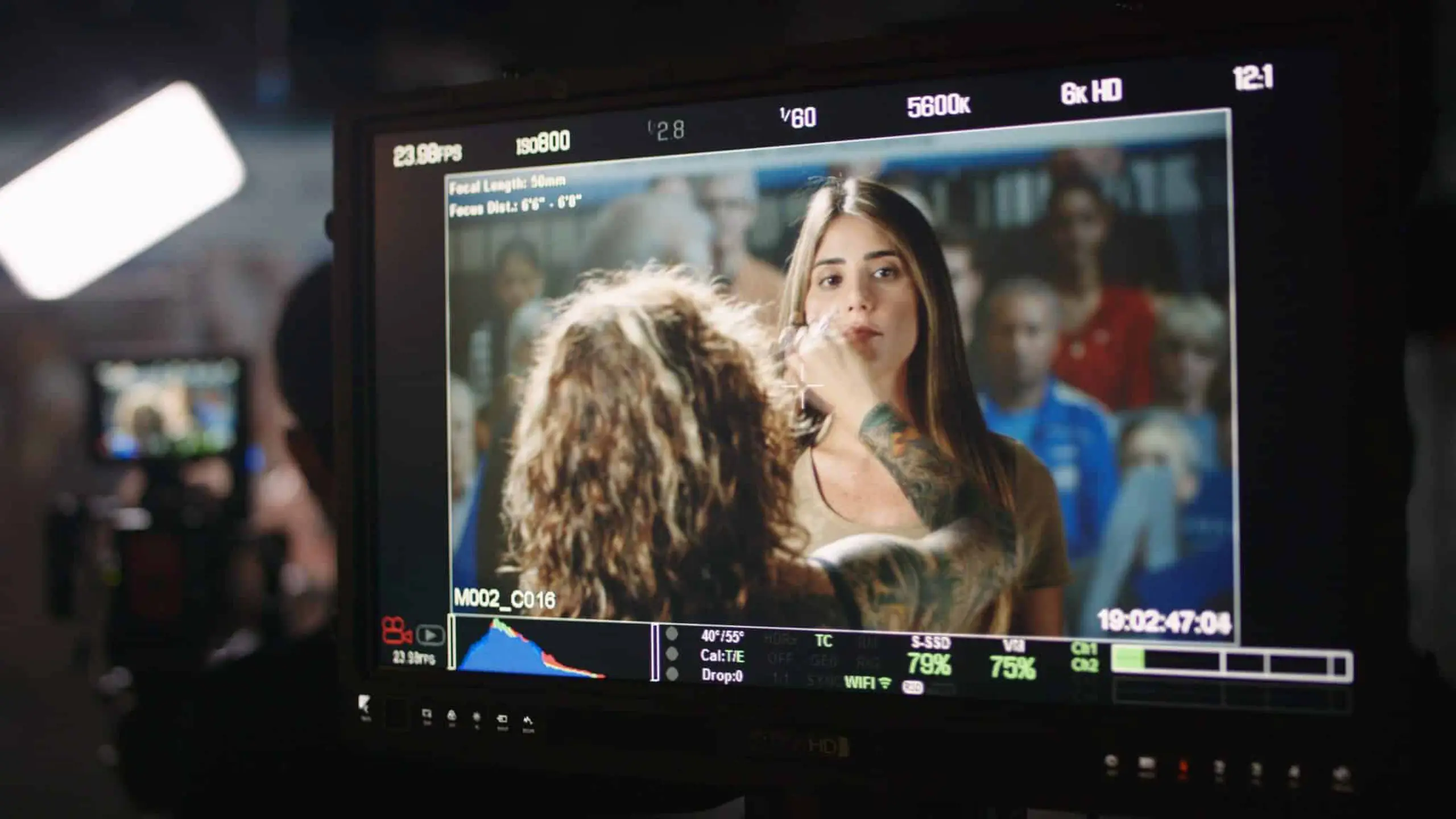
** **In the realms of [video production](https://c-istudios.com/video-production-services/) and professional photography, color grading stands as a powerful tool that breathes life into visuals, elevating them from mere images to captivating works of art. This intricate process plays a crucial role in shaping the narrative, evoking emotions, and leaving a lasting impression on audiences. This comprehensive guide aims to unravel the mysteries of color grading, providing a step-by-step approach that will empower you to harness its full potential and elevate your craft.
Whether you're a seasoned filmmaker, a passionate photographer, or a content creator exploring new avenues, mastering color grading will equip you with the skills to craft visuals that resonate deeply with your audience. From establishing a consistent look across a project to manipulating colors for specific emotional effects, color grading is a versatile technique that will unlock new dimensions of creativity and storytelling.
### Understanding Color Grading
Color grading is the art of purposefully altering and enhancing the color representation of an image or video footage after it has been recorded or edited. It is distinct from color correction, which aims to neutralize and balance the colors to match a specific reference or achieve a natural, true-to-life appearance. Color grading, on the other hand, involves the creative manipulation of colors to achieve a desired aesthetic or convey a particular mood or emotion.
The significance of color grading in [video production](https://c-istudios.com/video-production-services/) and [photography](https://c-istudios.com/professional-photography-services/) cannot be overstated. Beyond ensuring visual consistency across a project, color grading serves as a powerful storytelling tool. By skillfully adjusting colors, you can evoke specific emotions, set the tone, and guide the viewer's perception of a scene. Whether you're aiming for a warm, nostalgic feel, a gritty, desaturated look, or a vibrant, surreal aesthetic, color grading empowers you to craft a unique visual experience that resonates with your audience.
## The Basics of Color Grading
Before delving into the step-by-step process, it's essential to understand the key components that make up the color grading toolkit:
White Balance: Adjusting the color temperature to remove unwanted color casts and ensure accurate representation of whites.
Exposure/Contrast: Controlling the overall brightness and contrast levels to enhance detail and depth.
HSL Controls: Adjusting the Hue, Saturation, and Luminance values of specific colors or color ranges.
Color Wheels: Visual tools for selecting and adjusting colors across the entire color spectrum.
Curves: Precise control over tonal ranges, including highlights, midtones, and shadows.
LUTs (Look-Up Tables): Preset color grading configurations that can be applied to achieve a specific look or visual style.
It's crucial to start with a well-balanced and color-corrected image or footage before proceeding with color grading. This ensures that any creative adjustments you make are built upon a solid foundation, allowing your artistic vision to shine through.
## Step-by-Step Guide to Color Grading
1. **Color Correction**
Before discussing color grading, it's essential to establish a consistent visual baseline across your footage or image set. This process involves:
Adjusting Exposure: Ensure that the overall brightness and contrast levels are balanced, revealing details in both highlights and shadows. This step is crucial for achieving visual consistency and preventing any area from appearing too bright or too dark.
Setting White Balance: Neutralize any unwanted color casts by adjusting the white balance to match the intended color temperature. This step is particularly important when dealing with footage shot under mixed lighting conditions or when working with images captured in different environments.
Tint Correction: Fine-tune the overall color balance by adjusting the tint slider to remove any residual green or magenta hues. This step ensures that the colors in your footage or images appear natural and true-to-life, providing a solid foundation for your creative color grading work.
By starting with a well-color-corrected foundation, you'll have a clean slate upon which to apply your creative color grading techniques, allowing your artistic vision to shine through without any distracting or unintended color casts.
1. **Look Development**
With a balanced base established, it's time to delve into the creative process and define the desired visual aesthetic for your project. This stage, known as look development, involves several key elements:
The first step in look development is to determine the overall tone and color palette that best suits your project's mood and narrative. The choice of colors can have a profound impact on the emotional resonance of your visuals. Warm tones, such as oranges and reds, can evoke a sense of nostalgia, intimacy, or even passion, while cool tones like blues and greens can create a more clinical, detached, or serene feel. Consider the emotions and atmosphere you want to convey, and select a palette that aligns with your creative vision.
Once you've established the tone and palette, it's time to experiment with different color schemes and textures to achieve the desired look. Low contrast and desaturated colors can create a gritty, cinematic feel, perfect for gritty dramas or documentaries. On the other hand, high contrast and vibrant colors can yield a more stylized or surreal aesthetic, ideal for fantasy or sci-fi projects. Consider the genre, subject matter, and overall tone of your project to guide your texture and scheme choices.
The true magic of color grading begins to take shape when you manipulate the highlights, shadows, and midtones to shape the overall contrast and depth of your visuals. By carefully adjusting these tonal ranges, you can sculpt the image to create a specific mood or atmosphere. For instance, crushing the blacks and boosting the highlights can create a high-contrast, dramatic look, while expanding the midtones can result in a softer, more natural aesthetic.
During the look development stage, it's essential to explore and experiment with different combinations of colors, textures, and tonal ranges. This iterative process allows you to fine-tune the visual aesthetic until it perfectly captures the essence of your project, enhancing the storytelling and immersing your audience in the world you've created.
1. **Applying Color Grading**
With a clear visual direction in mind, it's time to dive into the heart of color grading:
Color Wheels: Use color wheels to selectively enhance or desaturate specific color ranges, creating a harmonious or contrasting color palette that aligns with your desired look. This tool allows you to fine-tune individual colors, shaping the overall color harmony and guiding the viewer's eye.
Working with LUTs: LUTs (Look-Up Tables) are pre-configured color grading settings that can instantly transform the look of your footage or images. Experiment with different LUTs to find one that complements your project, or use them as a starting point for further refinement. LUTs can save time and provide inspiration for your color grading process.
Enhancing Mood: Skillfully adjust colors to evoke specific emotions or moods. For example, desaturating blues and enhancing warm tones can create a nostalgic, vintage feel, while saturating greens and blues can convey a sense of tranquility or nature. Use color as a powerful tool to shape the overall atmosphere and emotional impact of your visuals.
1. **Refinement and Final Touches**
As you near the end of your color grading journey, it's crucial to take a step back and ensure that your visuals are cohesive, balanced, and aligned with your intended aesthetic. This refinement phase is where you'll put the finishing touches on y[our work](https://c-istudios.com/our-work/), ensuring that every detail is polished to perfection.
### Consistency and Balance
One of the key aspects of this stage is maintaining visual consistency across your footage or image set. Even the slightest inconsistencies in color, exposure, or contrast can disrupt the overall flow and cohesion of your project. Take the time to meticulously examine each frame, shot, or image, looking for any imbalances or discrepancies that may have crept in during the color grading process.
If you notice any shots or images that seem to deviate from the established look, don't hesitate to make the necessary adjustments. This could involve tweaking the color balance, adjusting exposure levels, or fine-tuning contrast to bring that particular element back in line with the rest of your visuals. Remember, consistency is key to creating a polished and professional look that will captivate your audience.
### Overall Aesthetic
As you refine your visuals, it's essential to step back and evaluate the overall aesthetic you've created. Does the color grading align with the intended mood and emotion you set out to convey? Does it effectively support the narrative or theme of your project? Take a holistic view of your work and consider how the various elements - color, contrast, texture, and tone - come together to create a cohesive visual experience.
If you feel that something is missing or that the overall aesthetic needs adjustment, don't be afraid to make the necessary changes. This could involve adjusting the color palette, enhancing or desaturating certain hues, or even revisiting the look development stage to refine your creative vision. The goal is to ensure that your visuals resonate with your audience and effectively communicate the intended message or emotion.
### Final Tweaks
Once you're satisfied with the overall aesthetic, it's time to dive into the finer details. This is where your attention to detail and commitment to perfection will truly shine. Take a close look at the shadows, highlights, and specific color ranges within your visuals, and make any final tweaks or adjustments necessary to achieve a polished and cohesive result.
Don't be afraid to zoom in and scrutinize every aspect of your visuals, as even the smallest adjustments can have a significant impact on the overall look and feel. This could involve subtly adjusting the brightness or saturation of a particular color range, fine-tuning the contrast in certain areas, or adding a touch of film grain or texture to enhance the cinematic quality of your work.
Throughout this refinement phase, keep in mind that the devil is in the details. Pay close attention to every nuance, ensuring that each element contributes to the overall visual harmony and emotional impact you're striving for. With patience and a keen eye for detail, you'll be able to elevate your visuals to new heights, creating a truly captivating and memorable experience for your audience.
### Advanced Techniques in Color Grading
As you gain experience and confidence in color grading, you may want to explore more advanced techniques to take your visuals to the next level:
Secondary Color Correction technique allows you to isolate and adjust specific color ranges or objects within your footage or image, enabling precise control over selective areas. This is particularly useful when working with complex scenes or when you need to make targeted adjustments.
Utilize the color balance tool to fine-tune the hues and saturation of specific color ranges, ensuring a harmonious and balanced color palette. This tool provides granular control over individual colors, allowing you to create unique and visually striking compositions.
Split toning involves applying different color tints to the highlights and shadows of your visuals, creating a unique and stylized look. This technique can add depth, dimension, and a distinctive aesthetic to your images or footage.
Experiment with adding film grain, vignetting, or other texture overlays to enhance the cinematic quality or overall mood of your visuals. These subtle touches can add character and depth, further immersing your audience in the visual experience.
### Conclusion
Color grading is an art form that transcends mere technical skill; it's a creative process that allows you to breathe life into your visuals and craft a unique storytelling experience. As you navigate this journey, remember to stay open to experimentation and trust your artistic instincts.
Practice is key to mastering color grading. Don't be afraid to explore different techniques, push boundaries, and develop your own signature style. With dedication and perseverance, you'll be able to elevate your video production, photography, and [content creation](https://c-istudios.com/content-creation-services/) to new heights, captivating audiences with visuals that resonate on an emotional level.
## Enhancing Your Vision. The Art of Color Grading with C&I Studios
For your color grading needs, [C&I Studios](https://c-istudios.com) is the perfect choice. Our team of professionals excels in [video production](https://c-istudios.com/video-production-services/) and [content creation](https://c-istudios.com/content-creation-services/), ensuring your project is not only visually stunning but also effectively communicates your message. We specialize in various aspects of production, including [film and TV production](https://c-istudios.com/documentary-film-production/), documentary filmmaking, and [professional photography](https://c-istudios.com/professional-photography-services/), making us a one-stop solution for all your creative needs.
At C&I Studios, we are dedicated to bringing your vision to life with creativity and precision. Whether you're looking to enhance your brand's image or create a captivating film, our expertise in video production and content creation will ensure your project stands out. Explore our services and [portfolio](https://c-istudios.com/our-work/) at [c-istudios.com](https://c-istudios.com/) and let us help you make a lasting impact with your content.
## Work with C&I Studios
If you are planning a project like this, our team can take it from concept to final delivery. Explore our [post-production services](https://c-istudios.com/post-production-services/), browse [our work](https://c-istudios.com/our-work/) to see how we tell brand stories, and [get in touch](https://c-istudios.com/contact/) when you are ready to start.
Originally published March 18, 2024
---
*This content is from [C&I Studios](https://c-istudios.com), a full-service production company.*
---
# Aerial Cinematography: The Role of Drones in Film Production
> Published: March 15, 2024
> Categories: Film & TV
> Source: https://c-istudios.com/aerial-cinematography-the-role-of-drones-in-film-production/
---
.cib{--paper:#1b1d1f;--ink:#fff;--body:#d5d7d9;--muted:#8b9096;--line:rgba(255,255,255,.12);--thumb:#2b2e31;--card:#212426;--accent:#c02b0a;--blue:#5B8FA8;--serif:'Playfair Display',Georgia,serif;--sans:'Poppins',-apple-system,sans-serif;--measure:900px;background:var(--paper);color:var(--body);font-family:var(--sans);line-height:1.6;position:relative;left:50%;transform:translateX(-50%);width:90vw;max-width:1920px}
.cib *{box-sizing:border-box}
.cib .kicker{max-width:var(--measure);margin:58px auto 0;padding:0 22px;font-size:12.5px;font-weight:700;letter-spacing:2.5px;text-transform:uppercase;color:var(--blue)}
.cib h1.cibh1{text-wrap:balance;font-family:var(--serif);font-weight:500;font-size:clamp(46px,6vw,72px);line-height:1.08;color:var(--ink);max-width:var(--measure);margin:18px auto 0;padding:0 22px;letter-spacing:-.5px}
.cib .metarow{max-width:var(--measure);margin:20px auto 0;padding:0 22px;color:var(--muted);font-size:14px}
.cib .hero{position:relative;width:100%;height:0;padding-bottom:56.25%;overflow:hidden;margin:48px auto 0;border-top:1px solid var(--line);border-bottom:1px solid var(--line)}
.cib .hero .ph{width:100%;aspect-ratio:16/9;background:var(--thumb);border-top:1px solid var(--line);border-bottom:1px solid var(--line);display:flex;align-items:center;justify-content:center;color:#7d8288;font-size:13px;text-align:center;padding:0 20px}
.cib .body{max-width:var(--measure);margin:12px auto 0;padding:52px 22px 6px}
.cib .body.lead p:first-child{font-size:23px;line-height:1.62;color:var(--ink)}
.cib .body p{font-size:18.5px;line-height:1.85;margin:0 0 30px;color:var(--body)}
.cib .body h2{text-wrap:balance;font-family:var(--serif);font-weight:500;font-size:clamp(32px,4vw,48px);line-height:1.22;color:var(--ink);margin:70px 0 20px;letter-spacing:-.3px}
.cib .body h3{text-wrap:balance;font-family:var(--sans);font-weight:600;font-size:22px;color:var(--ink);margin:38px 0 8px}
.cib .body a{color:var(--ink);text-decoration:underline;text-decoration-color:rgba(255,255,255,.4);text-underline-offset:3px}
.cib .body a:hover{text-decoration-color:var(--ink)}
.cib .ctable{width:100%;border-collapse:collapse;margin:16px 0 30px;font-size:16px}
.cib .ctable th{background:#000;color:#fff;text-align:left;padding:10px 12px;font-family:var(--sans)}
.cib .ctable td{padding:10px 12px;border-bottom:1px solid var(--line);color:var(--body)}
.cib .inimg{position:relative;width:100%;height:0;padding-bottom:56.25%;overflow:hidden;margin:72px auto;border-top:1px solid var(--line);border-bottom:1px solid var(--line)}
.cib .inimg .ph{width:100%;aspect-ratio:16/9;background:var(--thumb);border-top:1px solid var(--line);border-bottom:1px solid var(--line);display:flex;align-items:center;justify-content:center;color:#7d8288;font-size:13px}
.cib .origpub{max-width:var(--measure);margin:60px auto 0;padding:26px 22px 0;border-top:1px solid var(--line);color:var(--muted);font-size:13.5px}
.cib .related{max-width:1200px;margin:64px auto 0;padding:34px 22px 76px}
.cib .related h3{font-family:var(--sans);font-size:12.5px;letter-spacing:2px;text-transform:uppercase;color:var(--ink);margin:0 0 24px}
.cib .grid{display:grid;grid-template-columns:repeat(3,1fr);gap:28px}
.cib .rc{background:var(--card);border:1px solid var(--line);display:block;text-decoration:none;color:inherit;transition:border-color .15s}
.cib a.rc:hover{border-color:rgba(255,255,255,.5)}
.cib .rc .thumb{position:relative;width:100%;height:0;padding-bottom:56.25%;background:var(--thumb);overflow:hidden}
.cib .rc .thumb img{position:absolute!important;top:0!important;left:0!important;width:100%!important;height:100%!important;object-fit:cover!important;margin:0!important}
.cib .rc .cc{padding:14px 15px 17px}
.cib .rc .rt{font-family:var(--serif);font-weight:500;font-size:16px;line-height:1.3;color:var(--ink);margin:0 0 6px}
.cib .rc .rm{font-size:11px;letter-spacing:1px;text-transform:uppercase;color:var(--muted)}
.cib img{margin:0!important;padding:0!important;display:block!important;vertical-align:top;max-width:100%}
.cib .hero img,.cib .inimg img{position:absolute!important;top:0!important;left:0!important;width:100%!important;height:100%!important;object-fit:cover!important;margin:0!important;padding:0!important;border:0!important;display:block!important;aspect-ratio:auto!important}
.cib .hero+.body{padding-top:36px}
@media(max-width:760px){.cib .grid{grid-template-columns:1fr}.cib .body h2{margin:52px 0 16px}.cib .body p{font-size:17.5px}.cib .inimg,.cib .hero{margin-top:44px}}
.cib .vembed{max-width:var(--measure);margin:44px auto;padding:0 22px}.cib .vembed .vwrap{position:relative;width:100%;height:0;padding-bottom:56.25%}.cib .vembed .vwrap iframe{position:absolute;top:0;left:0;width:100%;height:100%;border:0}
Film & TV
# Aerial Cinematography. The Role of Drones in Film Production
10 min read

Aerial cinematography has revolutionized the art of filmmaking innovation, allowing for breathtaking aerial shots and unique perspectives. The evolution from traditional methods like helicopters and cranes to the use of drones has transformed cinematic storytelling. Drone footage has become an integral part of modern Video Production, opening up new creative possibilities for directors and cinematographers.
## The Dawn of Drone Cinematography
The incorporation of drones into [film and TV production](https://c-istudios.com/film-and-tv-production/) can be traced back to the early 2010s when advancements in drone technology and UAV cinematography began to gain traction. Visionary pioneers within the industry recognized the immense potential these unmanned aerial vehicles held for revolutionizing aerial photography and video production.
One of the earliest major films to embrace the power of drone footage was the 2012 James Bond installment, Skyfall. This cinematic masterpiece featured breathtaking aerial shots of Istanbul and the Scottish Highlands, showcasing the transformative impact drones could have on cinematic storytelling. As drones became more accessible and user-friendly, their popularity in the film industry skyrocketed.
Directors and cinematographers could now capture shots that were previously unattainable or prohibitively expensive using traditional methods. Aerial filming with drones enabled dynamic camera movements, unique angles, and a sense of scale that elevated the storytelling experience to new heights. The impact of drones on filmmaking cannot be overstated, as they revolutionized the way stories are told visually, transporting audiences to new realms and creating an unparalleled sense of immersion.
## Popular Drones for Cinematography
When it comes to drones for video production, DJI has emerged as the dominant industry leader. The DJI Inspire 2, renowned for its powerful camera system and robust flight performance, is a popular choice among professional filmmakers working on feature films, [documentary film productions](https://c-istudios.com/documentary-film-production/), and commercial projects.
The Mavic 2 Pro and Mavic Air 2 have also gained widespread popularity for their portability and exceptional image quality, making them versatile tools for aerial cinematography. Furthermore, the DJI Mavic 3 Cine, specifically designed for [film and TV production](https://c-istudios.com/film-and-tv-production/), boasts a cutting-edge camera system, intelligent flight modes, and advanced safety features tailored for [professional video production](https://c-istudios.com/video-production-services/).
While DJI dominates the market, other companies like Skydio have made significant strides in drone technology. The Skydio 2 is renowned for its advanced AI tracking capabilities, allowing it to autonomously follow and frame subjects with remarkable precision.
## Advantages of Using Drones in Film Production
One of the primary advantages of incorporating drones into film production is the cost-effectiveness they offer compared to traditional aerial cinematography methods. Hiring helicopters or cranes can be prohibitively expensive, often limiting the number of aerial shots a production can afford. Drones, on the other hand, provide a much more economical solution, making aerial filming accessible to a wider range of productions, from independent films to big-budget blockbusters.
Moreover, drones empower filmmakers with the ability to capture unique perspectives and angles that were previously unattainable. With their agility and maneuverability, drones can navigate through tight spaces, fly low to the ground, or soar high above landscapes, offering a diverse range of aerial shots that enhance cinematic storytelling.
In addition to their versatility, drones have streamlined the process of capturing aerial footage, minimizing setup times and reducing the need for large crews. This efficiency not only saves time and resources but also reduces the environmental impact of film productions, aligning with the industry's efforts towards sustainability.
## Techniques in Drone Cinematography
Drone footage has given rise to a new set of cinematographic techniques tailored specifically for aerial shots. One of the most compelling and visually striking techniques is the "orbit shot," where the drone gracefully circles around a subject or location, creating a dynamic and immersive viewing experience.
The "reveal shot" is another powerful technique in the realm of UAV cinematography. Here, the drone begins with a tight frame focused on a specific subject or detail, and then gradually pulls back to reveal a larger scene or context. This technique is particularly effective for establishing shots or creating a sense of grandeur and scale, captivating audiences with the unfolding visual narrative.
Tracking shots, where the drone seamlessly follows a moving subject or vehicle, have also become a staple in aerial cinematography. These shots add a sense of dynamism and energy to action sequences, character-driven moments, or [live-streaming](https://c-istudios.com/video-audio-live-streaming/) events, enhancing the overall viewing experience.
Another innovative technique is the "fly-through shot," where the drone navigates through tight spaces or intricate environments, creating a sense of immersion and exploration for the audience. This technique has been utilized to great effect in architectural and urban settings, as well as in fantasy or science-fiction films, transporting viewers into otherworldly realms.
Regardless of the specific technique employed, composition and motion are crucial elements in drone cinematography. Skilled drone operators and cinematographers must carefully consider framing, camera movements, and the interplay between the drone's flight path and the subject matter to create visually compelling and narratively meaningful shots that captivate audiences.
## Challenges and Limitations
While drones have opened up new creative possibilities in filmmaking and video production, they also present a unique set of challenges and limitations that must be navigated. One of the most significant challenges is the impact of weather conditions. Drones are sensitive to wind, rain, and other environmental factors, which can impact their flight performance and the quality of the drone footage captured.
Battery life is another crucial consideration in drone cinematography. Most professional-grade drones have a limited flight time of around 20-30 minutes, which can be a constraint for certain shooting scenarios or extended takes. Careful planning, efficient battery management, and the use of backup power sources are essential to ensure smooth and uninterrupted aerial filming operations.
Legal restrictions and regulations also play a vital role in the use of drones for film production and [content creation](https://c-istudios.com/content-creation-services/). In many countries and jurisdictions, there are strict rules governing where drones can fly, as well as requirements for pilot certification and permits. Filmmakers must thoroughly research and comply with these regulations to avoid legal issues, and potential fines, and ensure responsible drone operations.
Safety concerns are paramount when operating drones on film sets or during live-streaming events. These unmanned aerial vehicles can pose risks to crew members, actors, and bystanders if not operated properly. Comprehensive safety protocols, risk assessments, and experienced pilots are crucial to mitigating potential hazards and ensuring a safe working environment.
Technical limitations, such as range and interference, can also impact the effectiveness of drone cinematography. Certain environments or locations may have signal interference or obstructions that can disrupt the drone's performance, communication with the pilot, or the quality of the captured footage.
Furthermore, drones have limitations in their payload capacity and the types of cameras and equipment they can carry. While advances in drone technology are constantly expanding these capabilities, there may still be scenarios where traditional aerial cinematography methods are more suitable, such as for heavy camera setups or specialized equipment required for [VFX compositing and animation](https://c-istudios.com/vfx-compositing-and-animation-services/).
## Innovations and Future Trends
The future of drone cinematography holds exciting possibilities as technology continues to evolve and push boundaries. One of the most significant innovations on the horizon is the integration of autonomous drones and advanced artificial intelligence (AI) systems into video production workflows.
Companies like Skydio are already leading the way in AI-powered drones that can autonomously track and follow subjects, freeing up the pilot to focus on creative aspects of the shot. As AI technology advances, we can expect drones to become even more intelligent, capable of predicting and responding to complex shooting scenarios, optimizing camera movements, and even anticipating the director's vision.
Another area of innovation is the convergence of Virtual Reality (VR) and Augmented Reality (AR) with aerial cinematography. Drones equipped with 360-degree cameras can capture immersive footage for virtual reality experiences, transporting audiences to locations and perspectives that were previously unattainable. This technology holds immense potential for [documentary film productions](https://c-istudios.com/documentary-film-production/) and educational content.
Augmented Reality (AR) technology can also be combined with drone footage to create interactive and engaging experiences. For example, AR overlays can provide additional information, context, or visual enhancements to aerial shots, enriching the storytelling experience and creating new avenues for [creative marketing](https://c-istudios.com/creative-marketing-services/) campaigns.
Innovations in drone design are also on the horizon, with companies exploring new form factors, materials, and propulsion systems. Foldable drones, longer flight times, and improved payload capacity could open up new possibilities for filmmakers, allowing for more complex and ambitious aerial filming setups.
Additionally, advancements in camera technology, such as higher resolution sensors, improved dynamic range, and better low-light performance, will further enhance the quality of drone footage and expand its creative applications in film and TV production to professional photography.
## Legal and Safety Considerations
While the creative possibilities of drone cinematography are exhilarating, it is crucial for filmmakers and vdeo production teams to prioritize legal and safety considerations. Obtaining permits and adhering to local and national drone regulations is essential to avoid legal consequences and ensure responsible operations aligned with industry standards.
In many countries, commercial drone operations require specific licenses and certifications. Filmmakers must ensure that their drone pilots are properly certified and trained to operate drones safely and legally, mitigating potential risks.
Pre-flight checks and comprehensive risk assessments are critical components of safe drone cinematography. Pilots must thoroughly inspect their equipment, assess weather conditions, and identify potential hazards or obstacles in the filming location. Establishing appropriate safety protocols, such as designated flight zones and contingency plans, is crucial to mitigate risks to crew members, actors, and bystanders during live-streaming events or on-location shoots.
Furthermore, filmmakers must be aware of restrictions and regulations related to privacy, data protection, and airspace management. Flying drones in certain areas, such as near airports or sensitive locations, may be prohibited or require additional permissions from relevant authorities.
Insurance is another important consideration for [film productions](https://c-istudios.com/documentary-film-production/) and any other video production projects utilizing drones. Specialized drone insurance policies can protect against potential liabilities, damage, or accidents during filming operations, providing financial security and peace of mind.
By prioritizing legal compliance and implementing robust safety measures, filmmakers can leverage the power of drone cinematography while minimizing risks and ensuring responsible and ethical operations that align with industry best practices.
## Case Studies. Impactful Use of Drones in Films
Drones have been instrumental in creating some of the most iconic and impactful aerial shots in modern cinema, showcasing their transformative impact on cinematic storytelling. One notable example is the critically acclaimed Lord of the Rings trilogy, where drone footage was expertly utilized to capture sweeping landscapes and establish the epic scale of Middle-earth. These aerial shots played a crucial role in transporting audiences to the fantastical world created by Peter Jackson, immersing them in the rich tapestry of the narrative.
Another standout case is the James Bond film Skyfall, which pioneered the use of drones in the iconic spy franchise. The breathtaking aerial shots of Istanbul and the Scottish Highlands not only showcased the beauty of the locations but also added a sense of grandeur and spectacle to the high-octane action sequences, elevating the overall viewing experience.
In the acclaimed television series Game of Thrones, drone cinematography was instrumental in capturing the vast and diverse landscapes of Westeros. From the icy vistas of the North to the arid deserts of Dorne, aerial filming allowed the audience to fully immerse themselves in the richly detailed world of the show, enhancing the immersive storytelling experience.
These case studies exemplify the creative possibilities and narrative enhancement that drones can bring to [film and TV productions](https://c-istudios.com/film-and-tv-production/). By providing unique perspectives and enabling dynamic camera movements, drone footage has become an integral part of cinematic storytelling, elevating the visual experience for audiences worldwide and pushing the boundaries of what is possible in modern filmmaking.
## Work with C&I Studios
If you are planning a project like this, our team can take it from concept to final delivery. Explore our [film and TV production](https://c-istudios.com/film-and-tv-production/), browse [our work](https://c-istudios.com/our-work/) to see how we tell brand stories, and [get in touch](https://c-istudios.com/contact/) when you are ready to start.
Originally published March 15, 2024
---
*This content is from [C&I Studios](https://c-istudios.com), a full-service production company.*
---
# The Impact of 360-Degree Videos: Immersive Storytelling in the Digital Age
> Published: March 15, 2024
> Categories: Film & TV
> Source: https://c-istudios.com/the-impact-of-360-degree-videos-immersive-storytelling-in-the-digital-age/
---
.cib{--paper:#1b1d1f;--ink:#fff;--body:#d5d7d9;--muted:#8b9096;--line:rgba(255,255,255,.12);--thumb:#2b2e31;--card:#212426;--accent:#c02b0a;--blue:#5B8FA8;--serif:'Playfair Display',Georgia,serif;--sans:'Poppins',-apple-system,sans-serif;--measure:900px;background:var(--paper);color:var(--body);font-family:var(--sans);line-height:1.6;position:relative;left:50%;transform:translateX(-50%);width:90vw;max-width:1920px}
.cib *{box-sizing:border-box}
.cib .kicker{max-width:var(--measure);margin:58px auto 0;padding:0 22px;font-size:12.5px;font-weight:700;letter-spacing:2.5px;text-transform:uppercase;color:var(--blue)}
.cib h1.cibh1{text-wrap:balance;font-family:var(--serif);font-weight:500;font-size:clamp(46px,6vw,72px);line-height:1.08;color:var(--ink);max-width:var(--measure);margin:18px auto 0;padding:0 22px;letter-spacing:-.5px}
.cib .metarow{max-width:var(--measure);margin:20px auto 0;padding:0 22px;color:var(--muted);font-size:14px}
.cib .hero{position:relative;width:100%;height:0;padding-bottom:56.25%;overflow:hidden;margin:48px auto 0;border-top:1px solid var(--line);border-bottom:1px solid var(--line)}
.cib .hero .ph{width:100%;aspect-ratio:16/9;background:var(--thumb);border-top:1px solid var(--line);border-bottom:1px solid var(--line);display:flex;align-items:center;justify-content:center;color:#7d8288;font-size:13px;text-align:center;padding:0 20px}
.cib .body{max-width:var(--measure);margin:12px auto 0;padding:52px 22px 6px}
.cib .body.lead p:first-child{font-size:23px;line-height:1.62;color:var(--ink)}
.cib .body p{font-size:18.5px;line-height:1.85;margin:0 0 30px;color:var(--body)}
.cib .body h2{text-wrap:balance;font-family:var(--serif);font-weight:500;font-size:clamp(32px,4vw,48px);line-height:1.22;color:var(--ink);margin:70px 0 20px;letter-spacing:-.3px}
.cib .body h3{text-wrap:balance;font-family:var(--sans);font-weight:600;font-size:22px;color:var(--ink);margin:38px 0 8px}
.cib .body a{color:var(--ink);text-decoration:underline;text-decoration-color:rgba(255,255,255,.4);text-underline-offset:3px}
.cib .body a:hover{text-decoration-color:var(--ink)}
.cib .ctable{width:100%;border-collapse:collapse;margin:16px 0 30px;font-size:16px}
.cib .ctable th{background:#000;color:#fff;text-align:left;padding:10px 12px;font-family:var(--sans)}
.cib .ctable td{padding:10px 12px;border-bottom:1px solid var(--line);color:var(--body)}
.cib .inimg{position:relative;width:100%;height:0;padding-bottom:56.25%;overflow:hidden;margin:72px auto;border-top:1px solid var(--line);border-bottom:1px solid var(--line)}
.cib .inimg .ph{width:100%;aspect-ratio:16/9;background:var(--thumb);border-top:1px solid var(--line);border-bottom:1px solid var(--line);display:flex;align-items:center;justify-content:center;color:#7d8288;font-size:13px}
.cib .origpub{max-width:var(--measure);margin:60px auto 0;padding:26px 22px 0;border-top:1px solid var(--line);color:var(--muted);font-size:13.5px}
.cib .related{max-width:1200px;margin:64px auto 0;padding:34px 22px 76px}
.cib .related h3{font-family:var(--sans);font-size:12.5px;letter-spacing:2px;text-transform:uppercase;color:var(--ink);margin:0 0 24px}
.cib .grid{display:grid;grid-template-columns:repeat(3,1fr);gap:28px}
.cib .rc{background:var(--card);border:1px solid var(--line);display:block;text-decoration:none;color:inherit;transition:border-color .15s}
.cib a.rc:hover{border-color:rgba(255,255,255,.5)}
.cib .rc .thumb{position:relative;width:100%;height:0;padding-bottom:56.25%;background:var(--thumb);overflow:hidden}
.cib .rc .thumb img{position:absolute!important;top:0!important;left:0!important;width:100%!important;height:100%!important;object-fit:cover!important;margin:0!important}
.cib .rc .cc{padding:14px 15px 17px}
.cib .rc .rt{font-family:var(--serif);font-weight:500;font-size:16px;line-height:1.3;color:var(--ink);margin:0 0 6px}
.cib .rc .rm{font-size:11px;letter-spacing:1px;text-transform:uppercase;color:var(--muted)}
.cib img{margin:0!important;padding:0!important;display:block!important;vertical-align:top;max-width:100%}
.cib .hero img,.cib .inimg img{position:absolute!important;top:0!important;left:0!important;width:100%!important;height:100%!important;object-fit:cover!important;margin:0!important;padding:0!important;border:0!important;display:block!important;aspect-ratio:auto!important}
.cib .hero+.body{padding-top:36px}
@media(max-width:760px){.cib .grid{grid-template-columns:1fr}.cib .body h2{margin:52px 0 16px}.cib .body p{font-size:17.5px}.cib .inimg,.cib .hero{margin-top:44px}}
.cib .vembed{max-width:var(--measure);margin:44px auto;padding:0 22px}.cib .vembed .vwrap{position:relative;width:100%;height:0;padding-bottom:56.25%}.cib .vembed .vwrap iframe{position:absolute;top:0;left:0;width:100%;height:100%;border:0}
Film & TV
# The Impact of 360-Degree Videos. Immersive Storytelling in the Digital Age
9 min read
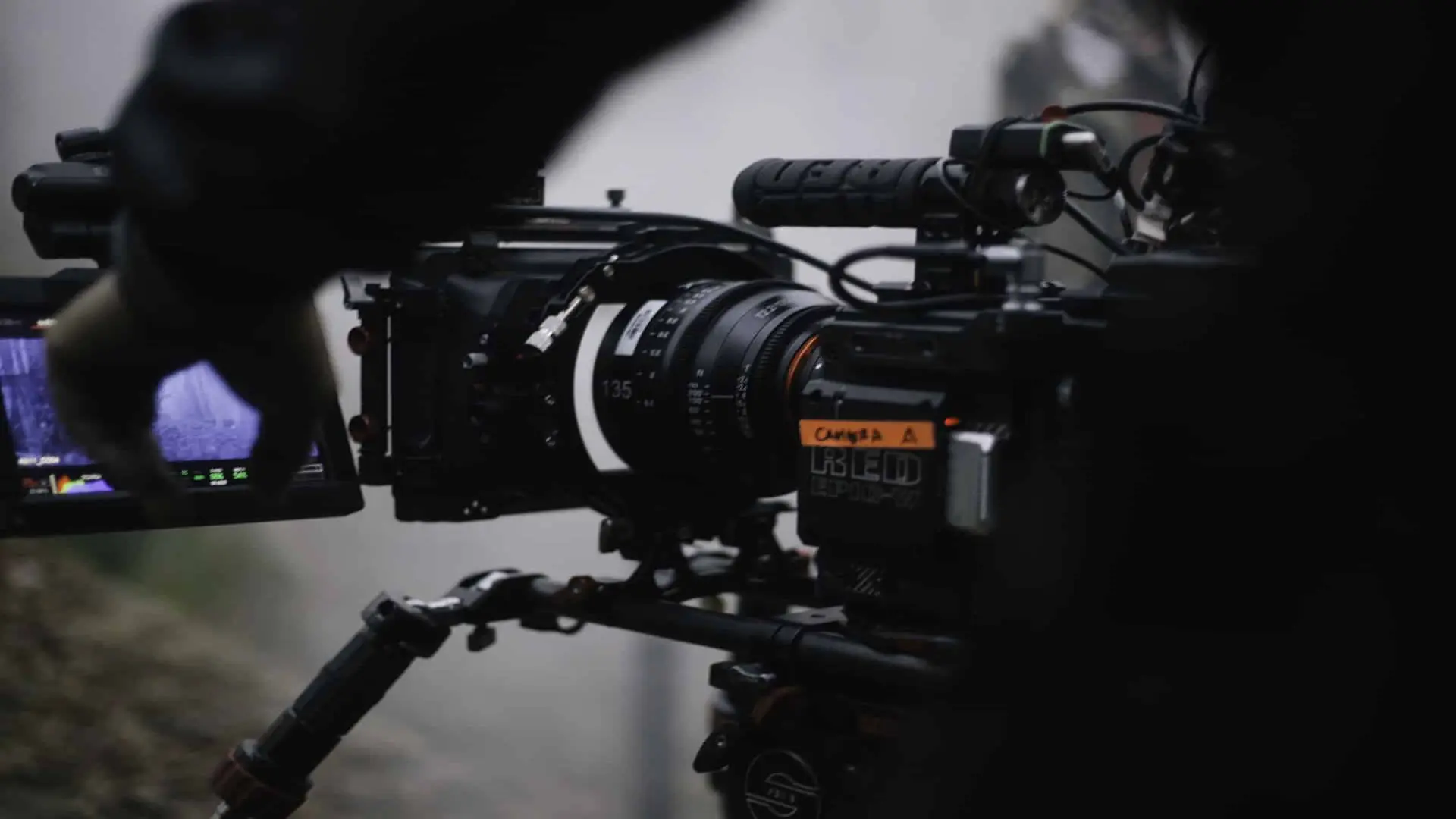
In the ever-evolving landscape of digital media, a new form of storytelling has emerged - 360-degree videos. These immersive experiences transport viewers into the heart of the narrative, allowing them to explore every angle and perspective. As technology continues to advance, 360-degree videos are reshaping the way we consume and engage with content, offering an unparalleled level of immersion that enhances the art of storytelling. This innovative approach to storytelling provides a unique opportunity for creators to connect with their audience on a deeper level, creating a more engaging and interactive experience that captivates the viewer's senses and imagination.
## The Evolution of Storytelling in the Digital Age
Storytelling has been an integral part of human culture since the dawn of civilization. From cave paintings and oral traditions to written literature and stage performances, the art of conveying narratives has evolved over time. With the advent of technology, storytelling transitioned into new realms, embracing mediums such as radio, film, and television.
The digital age ushered in a revolution, introducing interactive media and viewer interaction that allowed audiences to become more active participants in the storytelling process. Traditional linear narratives gave way to non-linear and interactive experiences, empowering viewers to explore stories from multiple perspectives.
In this constantly evolving landscape, 360-degree videos emerged as a powerful tool for immersive storytelling. By capturing scenes from every angle, these videos offer a fully omnidirectional experience, allowing viewers to immerse themselves in the narrative by simply moving their devices or donning a virtual reality (VR) headset.
The rise of 360-degree videos has been facilitated by advancements in camera technology, VR and AR (augmented reality), and [content creation](https://c-istudios.com/content-creation-services/) platforms. These innovations have made it possible to produce high-quality, immersive experiences that were once confined to the realms of science fiction.
## Technical Aspects of 360-Degree Videos
Creating a 360-degree video is a complex and intricate process that requires specialized equipment and technical expertise. These immersive videos are typically captured using an array of cameras strategically arranged in a spherical configuration, simultaneously recording the entire surrounding environment from multiple angles. The captured footage from these cameras is then meticulously stitched together using advanced [video production](https://c-istudios.com/video-production-services/) software, resulting in a seamless, omnidirectional experience that transports viewers into the heart of the scene.
Virtual reality (VR) and augmented reality (AR) technologies have revolutionized the viewing experience of 360-degree videos, playing a pivotal role in enhancing the level of immersion. By integrating VR headsets or AR-enabled devices, viewers can be fully immersed in the virtual environment, with the ability to look around and explore the scene from every perspective, creating a sense of presence as if they were physically present within the narrative.
However, producing high-quality, captivating 360-degree videos is not without its challenges and limitations. Capturing footage from multiple cameras simultaneously can lead to various technical issues, such as stitching errors, parallax inconsistencies, and lighting discrepancies, which can detract from the overall viewing experience and break the sense of immersion.
Moreover, the large file sizes associated with 360-degree videos can pose significant challenges in terms of [mastering and delivery](https://c-istudios.com/feature-film-mastering-and-delivery/), streaming, and distribution across various platforms and devices, requiring robust infrastructure and advanced compression techniques.
## Narrative Immersion in 360-Degree Videos
Narrative immersion refers to the ability of a story to captivate and transport viewers into its fictional world, fostering a deep emotional connection and suspension of disbelief. 360-degree videos have the unique ability to enhance narrative immersion by placing the viewer at the center of the storytelling experience.
Traditional storytelling mediums, such as films and television shows, present a curated perspective, with the camera directing the viewer's attention. In contrast, 360-degree videos offer a more exploratory and interactive experience, allowing viewers to actively engage with the narrative by choosing their own perspective and focus.
One of the key advantages of 360-degree videos is their ability to create a sense of presence and emotional engagement. By immersing viewers in the narrative environment, these videos can evoke stronger emotional responses and heighten the overall viewer experience. Filmmakers and content creators can leverage this unique storytelling format to craft narratives that resonate on a deeper level.
Examples of immersive storytelling in 360-degree videos can be found across various genres, from documentaries and feature films to scripted dramas and virtual reality experiences. For instance, documentaries like "The Displaced" by The New York Times Transport viewers into the lives of displaced individuals, fostering empathy and understanding through an immersive and visceral experience.
## Emotional Immersion and Viewer Engagement
Beyond narrative immersion, 360-degree videos have the power to enhance emotional immersion and viewer engagement. By allowing viewers to explore and interact with the virtual environment, these videos create a heightened sense of presence and connection to the narrative.
Traditional storytelling mediums often rely on cinematic techniques, such as camera angles and editing, to guide the viewer's emotions. However, 360-degree videos offer a more organic and interactive approach, enabling viewers to forge their own emotional connections by actively participating in the experience.
The level of interactivity in 360-degree videos can vary, ranging from simple head movements to more complex interactions, such as object manipulation or decision-making within the narrative. This interactivity fosters a sense of agency and emotional investment, as viewers feel more responsible for shaping their own experiences.
Filmmakers and content creators can leverage this emotional immersion to craft powerful and resonant stories. For example, 360-degree videos have been used in [marketing](https://c-istudios.com/social-media-marketing-services/) and advertising campaigns to create memorable and engaging brand experiences, fostering stronger connections between consumers and products or services. The ability to immerse viewers in a brand's narrative, allowing them to explore and interact with the virtual environment, can create a lasting emotional impact and drive consumer engagement and loyalty.
Moreover, the emotional impact of 360-degree videos extends beyond entertainment and marketing. In fields such as education, healthcare, and social advocacy, these immersive experiences can evoke empathy, foster understanding, and inspire action by allowing viewers to virtually step into the shoes of others and experience their perspectives firsthand. By harnessing the power of emotional immersion, 360-degree videos can become powerful tools for storytelling, education, and social change.
## Comparison with Traditional and VR Storytelling
While 360-degree videos offer a unique and immersive storytelling experience, it is essential to understand how they differ from traditional storytelling formats and virtual reality (VR) experiences.
Traditional storytelling mediums, such as films, [TV Shows](https://c-istudios.com/tv-show-pitch/), and books, typically present a linear narrative with a predetermined perspective. The audience is a passive observer, following the story as it unfolds. In contrast, 360-degree videos offer a more interactive and exploratory experience, allowing viewers to actively engage with the narrative by choosing their own viewpoints.
Virtual reality (VR) experiences, on the other hand, often involve fully computer-generated environments, where users can interact with virtual objects and characters in real-time. While VR offers a highly immersive experience, it can be resource-intensive and may require specialized hardware and software.
360-degree videos bridge the gap between traditional storytelling and VR by combining elements of both. Like traditional media, they capture real-world environments and scenarios, providing a sense of authenticity and realism. However, like VR, they offer an immersive and interactive experience, allowing viewers to explore and engage with the content from multiple perspectives.
One advantage of 360-degree videos over traditional storytelling is their ability to create a heightened sense of presence and emotional connection. By placing viewers at the center of the action, these videos can evoke stronger emotional responses and foster a deeper understanding of the narrative.
Compared to VR, 360-degree videos may be more accessible and less resource-intensive, as they can be viewed on a variety of devices, including smartphones, tablets, and dedicated VR headsets. However, VR experiences often offer a higher level of interactivity and immersion, as users can manipulate virtual objects and environments in real-time.
## Applications of 360-Degree Videos in Various Industries
The potential applications of 360-degree videos extend far beyond entertainment and storytelling. These immersive experiences have found their way into various industries, offering unique opportunities for education, journalism, healthcare, and tourism, among others.
In the field of journalism, 360-degree videos have revolutionized the way news is reported and consumed. Journalists can capture events and situations from all angles, allowing viewers to experience the story as if they were physically present. This immersive approach fosters a deeper understanding and empathy, making complex issues more accessible and relatable.
Education is another area where 360-degree videos have made a significant impact. These videos can transport students to remote locations, historical sites, or even virtual simulations, creating engaging and interactive learning experiences. From virtual field trips to VFX Compositing and Animation lessons, the possibilities for immersive education are vast.
The healthcare industry has also recognized the potential of 360-degree videos in areas such as medical training, patient education, and therapy. Medical students can gain hands-on experience through virtual simulations, while patients can better understand their conditions and treatments through immersive videos.
In the realm of tourism, 360-degree videos offer a unique way to showcase destinations and attractions, allowing potential travelers to virtually explore locations before booking their trips. This immersive approach can enhance marketing efforts and provide a more engaging and informative experience for consumers.
Beyond these industries, 360-degree videos have found applications in marketing and advertising, [documentary film production](https://c-istudios.com/documentary-film-production/), and even political campaigns. By creating immersive brand experiences, companies can forge deeper connections with their target audiences and leave lasting impressions.
As technology continues to evolve, the applications of 360-degree videos are likely to expand even further, opening up new possibilities for storytelling, education, and Content Creation across various sectors.
## Challenges and Future of 360-Degree Videos
Despite the immense potential of 360-degree videos, there are several challenges that need to be addressed for this technology to reach its full potential.
One of the primary technical challenges lies in the production and distribution of 360-degree videos. The large file sizes and bandwidth requirements can make streaming and delivering these immersive experiences a complex task, especially for viewers with limited internet connectivity. Additionally, ensuring a seamless and high-quality viewing experience across different devices and platforms remains an ongoing challenge.
Another consideration is the ethical implications of immersive storytelling. As 360-degree videos become more realistic and emotionally engaging, there is a risk of viewers becoming overly immersed and potentially experiencing negative psychological effects, such as desensitization or trauma. Content creators and platforms must exercise caution and implement appropriate safeguards to ensure responsible and ethical practices.
Looking towards the future, the development of 360-degree videos is expected to continue at a rapid pace, driven by advancements in camera technology, VR and AR hardware, and content creation software. Improved camera resolutions, higher frame rates, and more intuitive stitching algorithms will contribute to creating even more immersive and seamless experiences.
Furthermore, the integration of artificial intelligence (AI) and machine learning could revolutionize the way 360-degree videos are produced and consumed. AI-assisted [video production](https://c-istudios.com/video-production-services/) and editing could streamline the creation process, while personalized and adaptive experiences could be tailored to individual viewers based on their preferences and behavior.
As the demand for immersive storytelling continues to grow, companies like [C&I Studios](https://c-istudios.com/) will play a crucial role in shaping the future of this rapidly evolving medium.
## Work with C&I Studios
If you are planning a project like this, our team can take it from concept to final delivery. Explore our [film and TV production](https://c-istudios.com/film-and-tv-production/), browse [our work](https://c-istudios.com/our-work/) to see how we tell brand stories, and [get in touch](https://c-istudios.com/contact/) when you are ready to start.
Originally published March 15, 2024
---
*This content is from [C&I Studios](https://c-istudios.com), a full-service production company.*
---
# Crafting Compelling Pre-Production Pitches: Selling Your Creative Vision
> Published: March 14, 2024
> Categories: Film & TV
> Source: https://c-istudios.com/crafting-compelling-pre-production-pitches-selling-your-creative-vision/
---
.cib{--paper:#1b1d1f;--ink:#fff;--body:#d5d7d9;--muted:#8b9096;--line:rgba(255,255,255,.12);--thumb:#2b2e31;--card:#212426;--accent:#c02b0a;--blue:#5B8FA8;--serif:'Playfair Display',Georgia,serif;--sans:'Poppins',-apple-system,sans-serif;--measure:900px;background:var(--paper);color:var(--body);font-family:var(--sans);line-height:1.6;position:relative;left:50%;transform:translateX(-50%);width:90vw;max-width:1920px}
.cib *{box-sizing:border-box}
.cib .kicker{max-width:var(--measure);margin:58px auto 0;padding:0 22px;font-size:12.5px;font-weight:700;letter-spacing:2.5px;text-transform:uppercase;color:var(--blue)}
.cib h1.cibh1{text-wrap:balance;font-family:var(--serif);font-weight:500;font-size:clamp(46px,6vw,72px);line-height:1.08;color:var(--ink);max-width:var(--measure);margin:18px auto 0;padding:0 22px;letter-spacing:-.5px}
.cib .metarow{max-width:var(--measure);margin:20px auto 0;padding:0 22px;color:var(--muted);font-size:14px}
.cib .hero{position:relative;width:100%;height:0;padding-bottom:56.25%;overflow:hidden;margin:48px auto 0;border-top:1px solid var(--line);border-bottom:1px solid var(--line)}
.cib .hero .ph{width:100%;aspect-ratio:16/9;background:var(--thumb);border-top:1px solid var(--line);border-bottom:1px solid var(--line);display:flex;align-items:center;justify-content:center;color:#7d8288;font-size:13px;text-align:center;padding:0 20px}
.cib .body{max-width:var(--measure);margin:12px auto 0;padding:52px 22px 6px}
.cib .body.lead p:first-child{font-size:23px;line-height:1.62;color:var(--ink)}
.cib .body p{font-size:18.5px;line-height:1.85;margin:0 0 30px;color:var(--body)}
.cib .body h2{text-wrap:balance;font-family:var(--serif);font-weight:500;font-size:clamp(32px,4vw,48px);line-height:1.22;color:var(--ink);margin:70px 0 20px;letter-spacing:-.3px}
.cib .body h3{text-wrap:balance;font-family:var(--sans);font-weight:600;font-size:22px;color:var(--ink);margin:38px 0 8px}
.cib .body a{color:var(--ink);text-decoration:underline;text-decoration-color:rgba(255,255,255,.4);text-underline-offset:3px}
.cib .body a:hover{text-decoration-color:var(--ink)}
.cib .ctable{width:100%;border-collapse:collapse;margin:16px 0 30px;font-size:16px}
.cib .ctable th{background:#000;color:#fff;text-align:left;padding:10px 12px;font-family:var(--sans)}
.cib .ctable td{padding:10px 12px;border-bottom:1px solid var(--line);color:var(--body)}
.cib .inimg{position:relative;width:100%;height:0;padding-bottom:56.25%;overflow:hidden;margin:72px auto;border-top:1px solid var(--line);border-bottom:1px solid var(--line)}
.cib .inimg .ph{width:100%;aspect-ratio:16/9;background:var(--thumb);border-top:1px solid var(--line);border-bottom:1px solid var(--line);display:flex;align-items:center;justify-content:center;color:#7d8288;font-size:13px}
.cib .origpub{max-width:var(--measure);margin:60px auto 0;padding:26px 22px 0;border-top:1px solid var(--line);color:var(--muted);font-size:13.5px}
.cib .related{max-width:1200px;margin:64px auto 0;padding:34px 22px 76px}
.cib .related h3{font-family:var(--sans);font-size:12.5px;letter-spacing:2px;text-transform:uppercase;color:var(--ink);margin:0 0 24px}
.cib .grid{display:grid;grid-template-columns:repeat(3,1fr);gap:28px}
.cib .rc{background:var(--card);border:1px solid var(--line);display:block;text-decoration:none;color:inherit;transition:border-color .15s}
.cib a.rc:hover{border-color:rgba(255,255,255,.5)}
.cib .rc .thumb{position:relative;width:100%;height:0;padding-bottom:56.25%;background:var(--thumb);overflow:hidden}
.cib .rc .thumb img{position:absolute!important;top:0!important;left:0!important;width:100%!important;height:100%!important;object-fit:cover!important;margin:0!important}
.cib .rc .cc{padding:14px 15px 17px}
.cib .rc .rt{font-family:var(--serif);font-weight:500;font-size:16px;line-height:1.3;color:var(--ink);margin:0 0 6px}
.cib .rc .rm{font-size:11px;letter-spacing:1px;text-transform:uppercase;color:var(--muted)}
.cib img{margin:0!important;padding:0!important;display:block!important;vertical-align:top;max-width:100%}
.cib .hero img,.cib .inimg img{position:absolute!important;top:0!important;left:0!important;width:100%!important;height:100%!important;object-fit:cover!important;margin:0!important;padding:0!important;border:0!important;display:block!important;aspect-ratio:auto!important}
.cib .hero+.body{padding-top:36px}
@media(max-width:760px){.cib .grid{grid-template-columns:1fr}.cib .body h2{margin:52px 0 16px}.cib .body p{font-size:17.5px}.cib .inimg,.cib .hero{margin-top:44px}}
.cib .vembed{max-width:var(--measure);margin:44px auto;padding:0 22px}.cib .vembed .vwrap{position:relative;width:100%;height:0;padding-bottom:56.25%}.cib .vembed .vwrap iframe{position:absolute;top:0;left:0;width:100%;height:100%;border:0}
Film & TV
# Crafting Compelling Pre-Production Pitches. Selling Your Creative Vision
9 min read
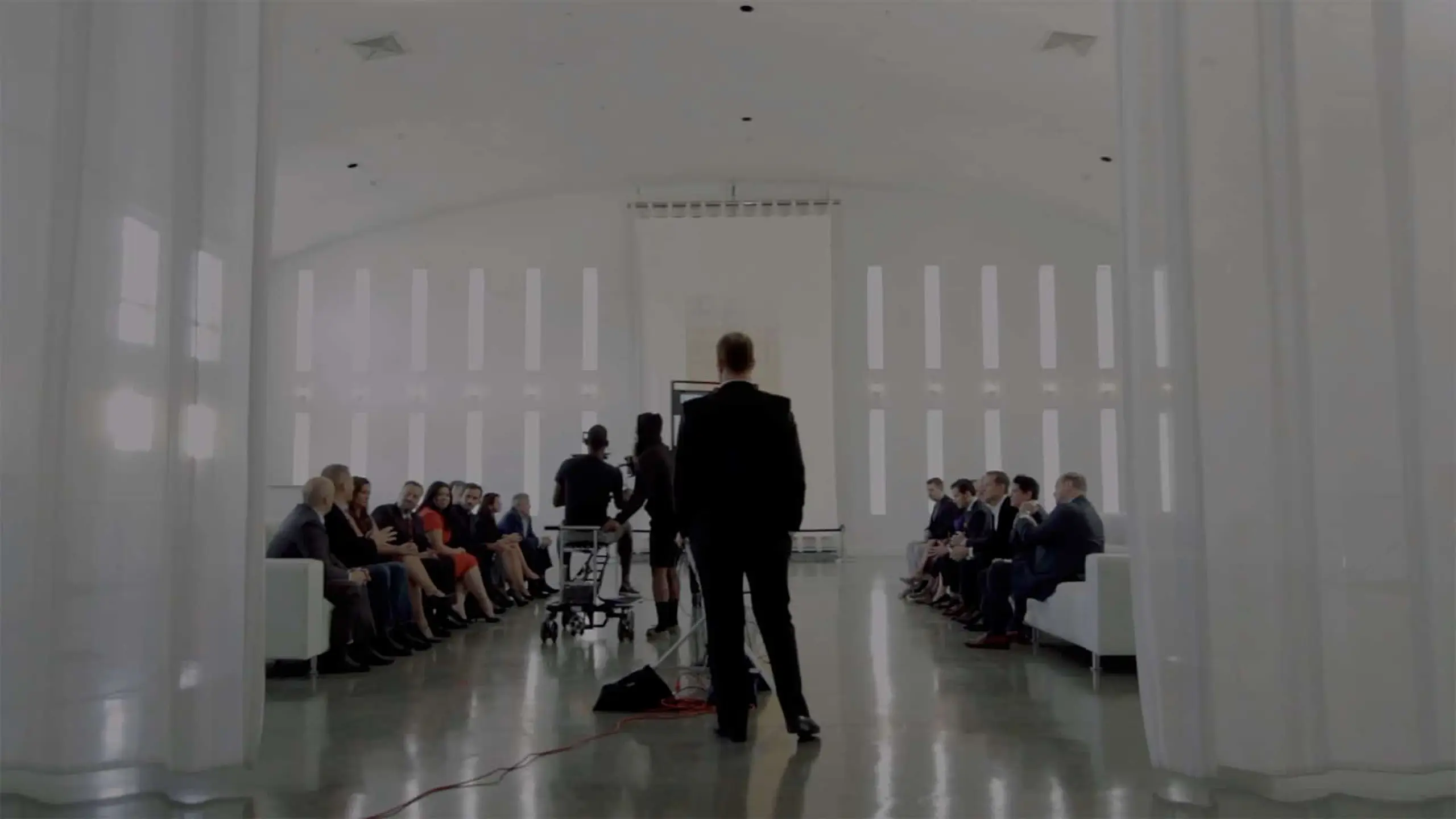
In the competitive world of filmmaking, a compelling pre-production pitch can make or break your project's chances of getting greenlit. It's your opportunity to sell your creative vision to producers, broadcasters, and potential investors, convincing them that your film is worth their time and resources. A well-crafted pitch showcases not only the strength of your concept but also your ability to communicate your ideas clearly and passionately.
By mastering the art of the pitch, you increase your chances of securing the necessary funding and support to bring your[video production](https://c-istudios.com/) vision to life.
## Identifying Your Audience and Setting Up Meetings
The first step in crafting a successful pitch is to identify your target audience. Research potential producers, broadcasters, or investors whose interests align with your project's goals and genre. Look for companies or individuals with a track record of supporting similar films or TV shows. Networking is crucial in this industry, so attend industry events, join relevant organizations, and leverage your existing connections to gain access to decision-makers.
Once you've identified your target audience, it's time to secure pitch meetings. Reach out to these individuals or companies through professional channels, such as email or LinkedIn. Clearly state your intention to pitch your project and provide a brief, enticing logline that captures the essence of your film. Personalize your outreach by referencing their previous work or shared interests to establish a connection.
When it comes to pitching, the right platform can make a significant difference. For example, if you're pitching a [TV Show](https://c-istudios.com/tv-show-pitch/), you may want to tailor your approach specifically to broadcasters or streaming services. On the other hand, if you're pitching a feature film, your target audience might include independent production companies or major studios.
When scheduling pitch meetings, be sure to respect the time constraints of busy industry professionals. Offer multiple date and time options to accommodate their schedules. Additionally, be prepared to pitch your project in various formats, such as in-person, via video conference, or even over the phone.
Proper preparation is key to making a strong first impression. Research the individuals or companies you'll be pitching to, familiarizing yourself with their interests, past projects, and company culture. This knowledge will help you tailor your pitch and emphasize the aspects of your project that are most likely to resonate with them.
## Crafting Your Pitch
At the heart of your pitch lies a compelling logline and synopsis. Your logline should be a concise, attention-grabbing summary that captures the core concept of your film in one or two sentences. It should pique the listener's interest and leave them wanting to know more.
The synopsis is where you delve deeper into the story, characters, and unique selling points of your project. Craft an engaging narrative that highlights the emotional hooks, core themes, and unique elements that set your film apart from others in its genre. Clearly define your target audience and demonstrate an understanding of their demographics and interests.
When crafting your pitch, it's essential to tailor your approach to the specific project you're presenting. For instance, if you're pitching a visually stunning VFX compositing and animation project, your synopsis should emphasize the groundbreaking techniques and breathtaking visuals that will captivate audiences. Conversely, if you're pitching a gritty [documentary film production](https://c-istudios.com/documentary-film-production/), your focus might be on the compelling subject matter, investigative journalism, and the potential for social impact.
When writing your synopsis, strike a balance between providing enough detail to convey the essence of your story and leaving room for intrigue. Avoid giving away too many plot points or spoilers, as you want to leave the listener eager to see the full film.
Remember, your pitch is not just about selling a story; it's also about showcasing your ability to execute your vision effectively.
## Creating an Engaging Pitch Deck
In addition to your verbal pitch, a visually appealing pitch deck can be a powerful tool to enhance your presentation. A well-designed pitch deck not only keeps your audience engaged but also reinforces the key points of your pitch through compelling visuals.
Your pitch deck should include elements such as storyboards, mood boards, and concept art that bring your creative vision to life. These visuals help the audience visualize the look and feel of your film, setting the tone and atmosphere you aim to capture. For projects that rely heavily on visuals, such as VFX compositing and animation or [branding](https://c-istudios.com/branding-and-graphic-design-services/), a pitch deck can be invaluable in showcasing your artistic direction.
Furthermore, your pitch deck should provide practical information such as a budget breakdown, a summary of your production team's credentials, revenue projections, and a marketing and distribution plan. This demonstrates that you've thoroughly considered the financial and logistical aspects of your project, increasing its credibility and appeal to potential investors or partners.
When creating your pitch deck, don't underestimate the power of effective [media marketing consultation](https://c-istudios.com/media-marketing-consultation-services/). Seek guidance from experienced professionals in the industry who can provide insights into crafting a visually compelling and persuasive pitch deck that resonates with your target audience.
When incorporating visuals into your pitch deck, choose them carefully and use them strategically. Each visual should serve a purpose, whether it's to illustrate a key plot point, convey a specific emotion, or reinforce a particular aspect of your film's unique selling proposition.
Remember, your pitch deck is a visual aid, not a replacement for your verbal pitch. Use it to complement and enhance your storytelling, but avoid relying too heavily on the visuals or reading directly from the slides.
## The Art of Storytelling in Your Pitch
Crafting a compelling pitch goes beyond simply presenting the facts about your project; it's an opportunity to tell a captivating story that draws in your audience and ignites their imagination. Effective storytelling techniques can transform a mundane pitch into an engaging, memorable experience.
Begin by establishing a clear narrative flow, introducing your characters, setting, and central conflict in a way that immediately hooks the listener's attention. Use descriptive language to paint vivid mental images, allowing your audience to envision the world you've created.
Highlight the emotional core of your story and the universal themes that will resonate with audiences. Connect with your listeners on a deeper level by tapping into shared human experiences and emotions, such as love, loss, redemption, or personal growth.
Storytelling is especially crucial when pitching projects that rely heavily on narrative, such as [feature films](https://c-istudios.com/tv-show-pitch/) or TV shows. Your ability to craft a compelling narrative arc and develop multi-dimensional characters can make or break your pitch's success.
Incorporate storytelling devices like tension, suspense, and dramatic reveals strategically throughout your pitch. These elements will keep your audience engaged and eager to learn more, simulating the experience of watching your film unfold.
Your pitch is not just a recitation of plot points; it's an opportunity to convey the heart and soul of your project. By weaving together narrative elements with genuine passion and enthusiasm, you'll not only showcase your creative vision but also your ability to captivate and inspire audiences.
## Practicing and Perfecting Your Pitch
Delivering a compelling pitch is both an art and a skill that requires practice and refinement. Even the most seasoned filmmakers and screenwriters rehearse their pitches extensively to ensure a polished and confident presentation.
Start by practicing your pitch in front of a mirror or recording yourself on video. This will help you identify areas for improvement, such as pacing, body language, or verbal tics that may distract from your message. Solicit feedback from trusted friends, colleagues, or industry professionals to gain valuable insights and suggestions.
As you rehearse, focus on building your confidence and public speaking skills. Maintain eye contact, speak clearly and at a measured pace, and project an air of enthusiasm and authority. Remember, your passion for the project should shine through in your delivery.
Anticipate potential questions or concerns that producers, broadcasters, or investors may raise. Prepare thoughtful responses that address these points while reinforcing the strengths of your project. Practice pivoting smoothly between your prepared pitch and impromptu discussions, demonstrating your ability to think on your feet and adapt to different scenarios.
Consider participating in pitch competitions or attending workshops specifically designed to help filmmakers and screenwriters hone their pitching skills. These experiences not only provide valuable practice but also expose you to feedback from industry professionals and potential networking opportunities.
## Navigating Contract Negotiations
If your pitch is successful, you'll enter the contract negotiation phase. This stage can be challenging, as you'll need to navigate complex legal and financial agreements while protecting your interests and those of your project.
Educate yourself on the common pitfalls and potential red flags to watch for in contract negotiations. Seek guidance from experienced entertainment lawyers or industry professionals who can advise you on standard practices and fair terms.
During negotiations, be prepared to advocate for your rights and ensure that the agreement is mutually beneficial. Don't be afraid to respectfully push back on clauses or terms that seem unfair or overly restrictive. At the same time, remain open to compromise and be willing to make reasonable concessions to reach an agreement that works for all parties involved.
Remember, securing funding or distribution is an important step, but it shouldn't come at the expense of sacrificing your creative vision or relinquishing control in a way that could compromise the integrity of your project. Approach negotiations with a clear understanding of your non-negotiable terms and be willing to walk away if an agreement cannot be reached that aligns with your core values and goals.
Contract negotiations are particularly crucial when dealing with high-budget projects like feature films or complex [animation productions](https://c-istudios.com/vfx-compositing-and-animation-services/). In these cases, ensuring clear ownership rights, revenue-sharing agreements, and realistic timelines is essential for protecting your investment and creative vision.
## Learning from Rejection and Moving Forward
Despite your best efforts, there may be times when your pitch is met with rejection. While disheartening, these setbacks should be viewed as learning opportunities rather than failures.
Seek feedback from the individuals or companies who turned down your project. Their insights can provide valuable perspectives on areas where your pitch or project concept may need improvement or refinement. Approach this feedback with an open mind and a willingness to adapt and grow as a filmmaker.
Reflect on the pitching process itself and identify areas where you can enhance your skills. Perhaps your delivery lacked confidence, or your pitch deck could be more visually compelling. Use these lessons to strengthen your approach for future opportunities.
It's also important to maintain a resilient mindset in the face of rejection. Remind yourself that even the most successful filmmakers and screenwriters have faced numerous rejections throughout their careers. Perseverance and a willingness to continue refining your craft are essential qualities for success in this competitive industry.
After taking the time to process the rejection and incorporate any valuable feedback, don't be discouraged from pitching your project again. Each pitch is an opportunity to improve and potentially connect with individuals or companies who are a better fit for your creative vision.
Rejection can be particularly tough when pitching ambitious projects like feature films or [documentary film productions](https://c-istudios.com/documentary-film-production/), where significant resources are required. However, don't let temporary setbacks deter you from pursuing your passion. Use the feedback to refine your approach and continue seeking out partners who share your vision.
## Work with C&I Studios
If you are planning a project like this, our team can take it from concept to final delivery. Explore our [film and TV production](https://c-istudios.com/film-and-tv-production/), browse [our work](https://c-istudios.com/our-work/) to see how we tell brand stories, and [get in touch](https://c-istudios.com/contact/) when you are ready to start.
Originally published March 14, 2024
---
*This content is from [C&I Studios](https://c-istudios.com), a full-service production company.*
---
# Emerging Trends in Live Streaming: Impact on Content Creation
> Published: March 14, 2024
> Categories: Commercial & Brand
> Source: https://c-istudios.com/emerging-trends-in-live-streaming-impact-on-content-creation/
---
.cib{--paper:#1b1d1f;--ink:#fff;--body:#d5d7d9;--muted:#8b9096;--line:rgba(255,255,255,.12);--thumb:#2b2e31;--card:#212426;--accent:#c02b0a;--blue:#5B8FA8;--serif:'Playfair Display',Georgia,serif;--sans:'Poppins',-apple-system,sans-serif;--measure:900px;background:var(--paper);color:var(--body);font-family:var(--sans);line-height:1.6;position:relative;left:50%;transform:translateX(-50%);width:90vw;max-width:1920px}
.cib *{box-sizing:border-box}
.cib .kicker{max-width:var(--measure);margin:58px auto 0;padding:0 22px;font-size:12.5px;font-weight:700;letter-spacing:2.5px;text-transform:uppercase;color:var(--blue)}
.cib h1.cibh1{text-wrap:balance;font-family:var(--serif);font-weight:500;font-size:clamp(46px,6vw,72px);line-height:1.08;color:var(--ink);max-width:var(--measure);margin:18px auto 0;padding:0 22px;letter-spacing:-.5px}
.cib .metarow{max-width:var(--measure);margin:20px auto 0;padding:0 22px;color:var(--muted);font-size:14px}
.cib .hero{position:relative;width:100%;height:0;padding-bottom:56.25%;overflow:hidden;margin:48px auto 0;border-top:1px solid var(--line);border-bottom:1px solid var(--line)}
.cib .hero .ph{width:100%;aspect-ratio:16/9;background:var(--thumb);border-top:1px solid var(--line);border-bottom:1px solid var(--line);display:flex;align-items:center;justify-content:center;color:#7d8288;font-size:13px;text-align:center;padding:0 20px}
.cib .body{max-width:var(--measure);margin:12px auto 0;padding:52px 22px 6px}
.cib .body.lead p:first-child{font-size:23px;line-height:1.62;color:var(--ink)}
.cib .body p{font-size:18.5px;line-height:1.85;margin:0 0 30px;color:var(--body)}
.cib .body h2{text-wrap:balance;font-family:var(--serif);font-weight:500;font-size:clamp(32px,4vw,48px);line-height:1.22;color:var(--ink);margin:70px 0 20px;letter-spacing:-.3px}
.cib .body h3{text-wrap:balance;font-family:var(--sans);font-weight:600;font-size:22px;color:var(--ink);margin:38px 0 8px}
.cib .body a{color:var(--ink);text-decoration:underline;text-decoration-color:rgba(255,255,255,.4);text-underline-offset:3px}
.cib .body a:hover{text-decoration-color:var(--ink)}
.cib .ctable{width:100%;border-collapse:collapse;margin:16px 0 30px;font-size:16px}
.cib .ctable th{background:#000;color:#fff;text-align:left;padding:10px 12px;font-family:var(--sans)}
.cib .ctable td{padding:10px 12px;border-bottom:1px solid var(--line);color:var(--body)}
.cib .inimg{position:relative;width:100%;height:0;padding-bottom:56.25%;overflow:hidden;margin:72px auto;border-top:1px solid var(--line);border-bottom:1px solid var(--line)}
.cib .inimg .ph{width:100%;aspect-ratio:16/9;background:var(--thumb);border-top:1px solid var(--line);border-bottom:1px solid var(--line);display:flex;align-items:center;justify-content:center;color:#7d8288;font-size:13px}
.cib .origpub{max-width:var(--measure);margin:60px auto 0;padding:26px 22px 0;border-top:1px solid var(--line);color:var(--muted);font-size:13.5px}
.cib .related{max-width:1200px;margin:64px auto 0;padding:34px 22px 76px}
.cib .related h3{font-family:var(--sans);font-size:12.5px;letter-spacing:2px;text-transform:uppercase;color:var(--ink);margin:0 0 24px}
.cib .grid{display:grid;grid-template-columns:repeat(3,1fr);gap:28px}
.cib .rc{background:var(--card);border:1px solid var(--line);display:block;text-decoration:none;color:inherit;transition:border-color .15s}
.cib a.rc:hover{border-color:rgba(255,255,255,.5)}
.cib .rc .thumb{position:relative;width:100%;height:0;padding-bottom:56.25%;background:var(--thumb);overflow:hidden}
.cib .rc .thumb img{position:absolute!important;top:0!important;left:0!important;width:100%!important;height:100%!important;object-fit:cover!important;margin:0!important}
.cib .rc .cc{padding:14px 15px 17px}
.cib .rc .rt{font-family:var(--serif);font-weight:500;font-size:16px;line-height:1.3;color:var(--ink);margin:0 0 6px}
.cib .rc .rm{font-size:11px;letter-spacing:1px;text-transform:uppercase;color:var(--muted)}
.cib img{margin:0!important;padding:0!important;display:block!important;vertical-align:top;max-width:100%}
.cib .hero img,.cib .inimg img{position:absolute!important;top:0!important;left:0!important;width:100%!important;height:100%!important;object-fit:cover!important;margin:0!important;padding:0!important;border:0!important;display:block!important;aspect-ratio:auto!important}
.cib .hero+.body{padding-top:36px}
@media(max-width:760px){.cib .grid{grid-template-columns:1fr}.cib .body h2{margin:52px 0 16px}.cib .body p{font-size:17.5px}.cib .inimg,.cib .hero{margin-top:44px}}
.cib .vembed{max-width:var(--measure);margin:44px auto;padding:0 22px}.cib .vembed .vwrap{position:relative;width:100%;height:0;padding-bottom:56.25%}.cib .vembed .vwrap iframe{position:absolute;top:0;left:0;width:100%;height:100%;border:0}
Commercial & Brand
# Emerging Trends in Live Streaming. Impact on Content Creation
11 min read

Live streaming has transformed the landscape of content creation, offering unprecedented opportunities for real-time engagement, interactivity, and audience reach. As technology continues to evolve rapidly, new trends are emerging that are reshaping the way we create, consume, and interact with live content.
This comprehensive article explores the most significant trends in live streaming and their profound impact on the world of content creation.
## The Rise of AI in Live Streaming
Artificial Intelligence (AI) is playing an increasingly pivotal role in enhancing the live streaming experience for both content creators and viewers. By leveraging advanced algorithms and machine learning techniques, AI is revolutionizing the way content is created, distributed, and personalized.
One of the most significant impacts of AI in live streaming is the ability to provide personalized recommendations and dynamic content creation. AI algorithms can analyze viewer preferences, behavior patterns, and real-time engagement data to generate tailored content recommendations that resonate with each individual viewer. This not only improves user experience but also increases viewer retention and engagement.
Additionally, AI is being utilized to automate various aspects of [live streaming](https://c-istudios.com/video-audio-live-streaming/) and [video production](https://c-istudios.com/video-production-services/), such as real-time video editing, graphics generation, and even automatic captioning and translation. This automation streamlines the content creation process, allowing creators to focus more on their craft and deliver higher-quality experiences.
AI-powered analytics tools are also becoming essential for content creators and streaming platforms. These tools provide valuable insights into viewer behavior, audience demographics, and engagement metrics, enabling data-driven decision-making and strategic [content creation](https://c-istudios.com/content-creation-services/).
Furthermore, AI is driving advancements in areas such as virtual production and augmented reality, opening up new realms of creative possibilities for live streaming. Content creators can now seamlessly integrate virtual environments, graphics, and interactive elements into their live streams, creating immersive and engaging experiences for their audiences.
## Livestream E-commerce
The integration of live streaming with e-commerce has given rise to a new phenomenon known as livestream e-commerce or live shopping." This trend is revolutionizing the way consumers shop online by combining the convenience of e-commerce with the engaging and interactive nature of live video.
Livestream e-commerce involves content creators or influencers showcasing and demonstrating products in real-time, allowing viewers to interact, ask questions, and make purchases directly during the live stream. This approach provides a more dynamic and personalized shopping experience, fostering a sense of community and trust between creators and their audiences.
Major e-commerce platforms and social media giants have recognized the potential of livestream e-commerce and have invested heavily in developing dedicated features and tools to support this trend. For example, platforms like Amazon Live and TikTok Shop allow creators and brands to host live shopping events, enabling viewers to seamlessly purchase products directly within the live stream.
Livestream e-commerce has also opened up new avenues for product demonstrations, tutorials, and influencer marketing. Creators can showcase products in real-time, providing detailed information, and demonstrations, and answering viewer questions, creating a more transparent and engaging shopping experience.
This trend has significant implications for brands and content creators alike. Brands can leverage livestream e-commerce to showcase their products in an authentic and engaging manner, fostering stronger connections with their target audiences. Content creators, on the other hand, can monetize their live streams by partnering with brands and earning commissions on product sales.
## Increased Interactivity and Gamification
One of the key advantages of live streaming is its ability to facilitate real-time interaction between content creators and their audiences. As a result, there has been a growing trend towards incorporating interactive features and gamification elements into live-streaming platforms and content.
Interactive features such as live polls, Q&A sessions, and real-time chat have become increasingly popular, allowing viewers to actively participate and shape the direction of the live stream. Creators can gather instant feedback, engage in discussions, and tailor their [content creation](https://c-istudios.com/content-creation-services/) based on audience preferences, fostering a more engaging and personalized experience.
Gamification, the integration of game-like elements into non-game contexts, has also gained traction in the live streaming space. Platforms like Twitch and YouTube Gaming have introduced features such as channel points, loyalty badges, and virtual rewards, incentivizing viewers to actively participate and support their favorite creators.
This trend towards increased interactivity and gamification has had a profound impact on content creation, particularly in the gaming and esports communities. Live streamers in these niches often incorporate interactive elements into their broadcasts, such as viewer-controlled games, real-time voting, and in-stream mini-games. These features not only enhance engagement but also foster a sense of community and loyalty among viewers.
Moreover, the integration of mixed media experiences, such as virtual reality (VR) and augmented reality (AR), has further expanded the possibilities for interactive and immersive live-streaming content. Creators can now incorporate interactive 3D environments, virtual avatars, and real-time data overlays, blurring the lines between the digital and physical worlds.
## Expansion of Live Sports Streaming
The live streaming of sports events has experienced a significant surge in popularity, driven by the increasing demand for convenient and accessible viewing experiences. As more viewers shift towards online platforms and cord-cutting becomes more prevalent, major sports leagues and organizations have recognized the need to adapt and embrace the [live-streaming](https://c-istudios.com/video-audio-live-streaming/) revolution.
One of the most notable trends in this space is the acquisition of sports streaming rights by major platforms like Amazon, Apple, and Disney. These tech giants have invested heavily in securing exclusive rights to stream popular sports events, such as the NFL's Thursday Night Football, Major League Soccer, and various international leagues and tournaments.
The impact of this trend extends beyond just increasing the accessibility of live sports content. It has also led to innovations in broadcasting and viewer experiences. For example, Amazon's Prime Video has introduced features like X-Ray, which provides real-time stats and player information during live games, enhancing the overall viewing experience.
Additionally, the expansion of live sports streaming has opened up new opportunities for niche sports and smaller leagues to gain increased visibility and reach global audiences. Streaming platforms have provided a platform for these events to be broadcast and consumed by fans around the world, fostering a more diverse and inclusive sports landscape.
Another aspect of this trend is the integration of interactive features and social elements into live sports broadcasts. Platforms like Twitch and YouTube have enabled viewers to engage with each other and the content creators during live sporting events, fostering a sense of community and shared experiences.
Furthermore, advancements in technology have enabled more immersive and innovative viewing experiences for live sports streaming. For instance, the adoption of virtual reality (VR) and augmented reality (AR) technologies has allowed viewers to experience sports events from unique perspectives, such as courtside or on-field views, enhancing the overall viewing experience.
## User-Generated Content and Short-Form Content
The rise of user-generated content (UGC) and the growing preference for short-form content have had a significant impact on the live-streaming landscape. With the democratization of content creation tools and platforms, anyone with a smartphone or webcam can now become a live streamer, sharing their experiences, perspectives, and creativity with global audiences.
User-generated live streams have become increasingly popular across various platforms, such as Instagram Live, TikTok, and Twitch. These streams often showcase authentic, unfiltered content ranging from personal vlogs and behind-the-scenes glimpses to live performances, tutorials, and gaming sessions.
The appeal of UGC lies in its raw, unpolished nature, which resonates with audiences seeking authentic and relatable content. Viewers feel a stronger connection with creators who share their genuine selves and experiences, fostering a sense of community and belonging.
Furthermore, the rise of short-form content has played a crucial role in shaping live-streaming trends. Platforms like TikTok and Instagram Reels have popularized the consumption of bite-sized, highly engaging content, catering to the decreasing attention spans and on-the-go lifestyles of modern audiences.
Live streamers have adapted to this trend by incorporating short, snackable segments into their broadcasts, interspersed with longer, more in-depth content. This approach not only caters to viewers' preferences but also increases engagement and retention rates, as shorter clips are more likely to be shared and consumed across various social media platforms.
The combination of user-generated content and short-form formats has also given rise to new content genres and trends, such as live reaction videos, unboxing streams, and real-time challenges or pranks. These types of content thrive on spontaneity, authenticity, and the ability to capture unscripted moments in real time.
Moreover, the rise of UGC and short-form content has democratized the content creation landscape, allowing individuals and small creators to build loyal followings and potentially monetize their content through platforms like Patreon, SuperChat, or brand partnerships.
## New Monetization Models
As the live-streaming industry continues to evolve, new monetization models are emerging to address the changing needs and preferences of content creators and viewers alike. Two notable trends in this space are the rise of AVOD (Advertising-based Video on Demand) and the exploration of alternative subscription models to combat subscription fatigue.
AVOD, or advertising-based video on demand, has gained traction as a viable monetization strategy for live-streaming platforms. Platforms like Twitch, YouTube, and Facebook have implemented various ad formats, such as pre-roll, mid-roll, and display ads, allowing content creators to earn revenue from their live streams.
This model not only provides a revenue stream for creators but also offers a free or low-cost viewing option for audiences, making live content more accessible. However, striking the right balance between ad placement and viewer experience remains a challenge, as excessive advertising can lead to viewer disengagement.
On the other hand, subscription fatigue has become a growing concern as consumers are inundated with multiple subscription services across various platforms. To combat this, live-streaming platforms and content creators are exploring alternative subscription models.
One approach is the implementation of tiered subscription levels, where viewers can access different levels of content and exclusive perks based on their subscription tier. This model allows creators to generate revenue from their most dedicated fans while still offering free or ad-supported content for casual viewers.
Additionally, platforms like Patreon and Twitch have introduced features that allow viewers to directly support their favorite creators through one-time or recurring payments, enabling a more direct and personalized monetization model.
These emerging monetization strategies aim to provide sustainable revenue streams for content creators while offering flexible options for viewers to access and support the content they enjoy.
## Platform Diversification and Audience Preferences
The live-streaming landscape is characterized by a diverse array of platforms, each catering to unique audience preferences and content niches. As platforms continue to evolve and new players enter the market, content creators and viewers alike are faced with a multitude of choices, shaping the trends in platform diversification and audience preferences.
Major platforms like YouTube, Facebook, and Twitch have established themselves as go-to destinations for [live streaming](https://c-istudios.com/video-audio-live-streaming/), attracting vast audiences across various content categories. However, niche platforms have also emerged, targeting specific communities and content types.
For instance, platforms like YouTube Gaming and Twitch have become hubs for gaming-related live streams, catering to the massive and engaged gaming community. These platforms offer tailored features, such as game-specific overlays, in-stream chat integration, and dedicated communities for different gaming genres.
Similarly, platforms like Instagram Live and TikTok have gained popularity among younger audiences, particularly for short-form content, lifestyle vlogs, and creative expressions. These platforms leverage the power of social media and mobile accessibility, enabling creators to connect with their audiences in real-time and on-the-go.
The diversification of platforms has also led to the emergence of audience preferences based on demographics, interests, and content consumption habits. For example, younger audiences tend to gravitate towards platforms like TikTok and Instagram, while older demographics may prefer more established platforms like YouTube and Facebook.
Content creators must navigate this landscape by strategically targeting the platforms that align with their content and audience preferences. Many successful creators adopt a multi-platform approach, leveraging different platforms to reach diverse audiences and maximize their reach and engagement.
Furthermore, platforms themselves are continuously evolving to cater to changing audience preferences and stay relevant in the competitive landscape. This includes introducing new features, improving content discovery algorithms, and investing in emerging technologies such as virtual reality (VR) and augmented reality (AR) to enhance the live streaming experience.
## Brand Building and Credibility in Live Streaming
In the ever-growing live-streaming landscape, building a strong personal brand and establishing credibility have become crucial for content creators seeking to stand out and cultivate a loyal audience. As more individuals and businesses embrace live streaming as a means of content creation and audience engagement, the need for differentiation and authenticity has never been greater.
[Brand building](https://c-istudios.com/branding-and-graphic-design-services/) in the live streaming space involves creating a distinct identity that resonates with the target audience. This includes developing a consistent visual style, tone, and messaging across all platforms and content. Successful live streamers often have a recognizable brand identity, from their channel artwork and logos to their on-stream personas and catchphrases.
Establishing credibility is equally important for live streamers, as viewers are more likely to engage with and trust creators who demonstrate expertise, authenticity, and transparency. This can be achieved through various strategies, such as:
- **Showcasing subject matter expertise:** Whether it's gaming, cooking, or creative arts, live streamers who position themselves as knowledgeable and skilled in their respective niches can build credibility and authority within their communities.
- **Engaging with the audience:** Live streaming offers a unique opportunity for two-way communication and interaction with viewers. Streamers who actively engage with their audiences, respond to comments and questions, and foster a sense of community tend to build stronger connections and credibility.
- **Consistency and reliability:** Maintaining a consistent streaming schedule, delivering high-quality content, and upholding promises made to viewers can go a long way in establishing credibility and building trust with the audience.
- **Transparency and authenticity:** Live streamers who are transparent about their processes, struggles, and successes, and who remain genuine and authentic in their interactions, often resonate more deeply with their audiences.
Brand Building and establishing credibility can also open doors to monetization opportunities and collaborations with brands and sponsors. As live streamers cultivate a loyal and engaged following, they become more attractive to companies seeking to reach targeted audiences through influencer marketing and sponsorships.
Successful live streamers understand the importance of continuously nurturing their brand and credibility, even as they navigate the rapidly evolving landscape of live streaming. By consistently delivering high-quality content, engaging with their audiences, and maintaining authenticity, they can build a profitable and sustainable brand in the live streaming space.
## Work with C&I Studios
If you are planning a project like this, our team can take it from concept to final delivery. Explore our [video production services](https://c-istudios.com/video-production-services/), browse [our work](https://c-istudios.com/our-work/) to see how we tell brand stories, and [get in touch](https://c-istudios.com/contact/) when you are ready to start.
Originally published March 14, 2024
---
*This content is from [C&I Studios](https://c-istudios.com), a full-service production company.*
---
# Stages of Documentary Production
> Published: March 12, 2024
> Categories: Film & TV
> Source: https://c-istudios.com/stages-of-documentary-production/
---
.cib{--paper:#1b1d1f;--ink:#fff;--body:#d5d7d9;--muted:#8b9096;--line:rgba(255,255,255,.12);--thumb:#2b2e31;--card:#212426;--accent:#c02b0a;--blue:#5B8FA8;--serif:'Playfair Display',Georgia,serif;--sans:'Poppins',-apple-system,sans-serif;--measure:900px;background:var(--paper);color:var(--body);font-family:var(--sans);line-height:1.6;position:relative;left:50%;transform:translateX(-50%);width:90vw;max-width:1920px}
.cib *{box-sizing:border-box}
.cib .kicker{max-width:var(--measure);margin:58px auto 0;padding:0 22px;font-size:12.5px;font-weight:700;letter-spacing:2.5px;text-transform:uppercase;color:var(--blue)}
.cib h1.cibh1{text-wrap:balance;font-family:var(--serif);font-weight:500;font-size:clamp(46px,6vw,72px);line-height:1.08;color:var(--ink);max-width:var(--measure);margin:18px auto 0;padding:0 22px;letter-spacing:-.5px}
.cib .metarow{max-width:var(--measure);margin:20px auto 0;padding:0 22px;color:var(--muted);font-size:14px}
.cib .hero{position:relative;width:100%;height:0;padding-bottom:56.25%;overflow:hidden;margin:48px auto 0;border-top:1px solid var(--line);border-bottom:1px solid var(--line)}
.cib .hero .ph{width:100%;aspect-ratio:16/9;background:var(--thumb);border-top:1px solid var(--line);border-bottom:1px solid var(--line);display:flex;align-items:center;justify-content:center;color:#7d8288;font-size:13px;text-align:center;padding:0 20px}
.cib .body{max-width:var(--measure);margin:12px auto 0;padding:52px 22px 6px}
.cib .body.lead p:first-child{font-size:23px;line-height:1.62;color:var(--ink)}
.cib .body p{font-size:18.5px;line-height:1.85;margin:0 0 30px;color:var(--body)}
.cib .body h2{text-wrap:balance;font-family:var(--serif);font-weight:500;font-size:clamp(32px,4vw,48px);line-height:1.22;color:var(--ink);margin:70px 0 20px;letter-spacing:-.3px}
.cib .body h3{text-wrap:balance;font-family:var(--sans);font-weight:600;font-size:22px;color:var(--ink);margin:38px 0 8px}
.cib .body a{color:var(--ink);text-decoration:underline;text-decoration-color:rgba(255,255,255,.4);text-underline-offset:3px}
.cib .body a:hover{text-decoration-color:var(--ink)}
.cib .ctable{width:100%;border-collapse:collapse;margin:16px 0 30px;font-size:16px}
.cib .ctable th{background:#000;color:#fff;text-align:left;padding:10px 12px;font-family:var(--sans)}
.cib .ctable td{padding:10px 12px;border-bottom:1px solid var(--line);color:var(--body)}
.cib .inimg{position:relative;width:100%;height:0;padding-bottom:56.25%;overflow:hidden;margin:72px auto;border-top:1px solid var(--line);border-bottom:1px solid var(--line)}
.cib .inimg .ph{width:100%;aspect-ratio:16/9;background:var(--thumb);border-top:1px solid var(--line);border-bottom:1px solid var(--line);display:flex;align-items:center;justify-content:center;color:#7d8288;font-size:13px}
.cib .origpub{max-width:var(--measure);margin:60px auto 0;padding:26px 22px 0;border-top:1px solid var(--line);color:var(--muted);font-size:13.5px}
.cib .related{max-width:1200px;margin:64px auto 0;padding:34px 22px 76px}
.cib .related h3{font-family:var(--sans);font-size:12.5px;letter-spacing:2px;text-transform:uppercase;color:var(--ink);margin:0 0 24px}
.cib .grid{display:grid;grid-template-columns:repeat(3,1fr);gap:28px}
.cib .rc{background:var(--card);border:1px solid var(--line);display:block;text-decoration:none;color:inherit;transition:border-color .15s}
.cib a.rc:hover{border-color:rgba(255,255,255,.5)}
.cib .rc .thumb{position:relative;width:100%;height:0;padding-bottom:56.25%;background:var(--thumb);overflow:hidden}
.cib .rc .thumb img{position:absolute!important;top:0!important;left:0!important;width:100%!important;height:100%!important;object-fit:cover!important;margin:0!important}
.cib .rc .cc{padding:14px 15px 17px}
.cib .rc .rt{font-family:var(--serif);font-weight:500;font-size:16px;line-height:1.3;color:var(--ink);margin:0 0 6px}
.cib .rc .rm{font-size:11px;letter-spacing:1px;text-transform:uppercase;color:var(--muted)}
.cib img{margin:0!important;padding:0!important;display:block!important;vertical-align:top;max-width:100%}
.cib .hero img,.cib .inimg img{position:absolute!important;top:0!important;left:0!important;width:100%!important;height:100%!important;object-fit:cover!important;margin:0!important;padding:0!important;border:0!important;display:block!important;aspect-ratio:auto!important}
.cib .hero+.body{padding-top:36px}
@media(max-width:760px){.cib .grid{grid-template-columns:1fr}.cib .body h2{margin:52px 0 16px}.cib .body p{font-size:17.5px}.cib .inimg,.cib .hero{margin-top:44px}}
.cib .vembed{max-width:var(--measure);margin:44px auto;padding:0 22px}.cib .vembed .vwrap{position:relative;width:100%;height:0;padding-bottom:56.25%}.cib .vembed .vwrap iframe{position:absolute;top:0;left:0;width:100%;height:100%;border:0}
Film & TV
# Stages of Documentary Production
10 min read

Documentary filmmaking is a powerful medium that brings real stories to life, engaging audiences and sparking important conversations. However, behind every compelling documentary lies a meticulous production process, carefully navigated through various stages. From concept development to distribution, each phase plays a crucial role in shaping the final product.
This comprehensive guide explores the essential stages of [documentary production](https://c-istudios.com/documentary-film-production/), providing insights and strategies for aspiring filmmakers to create impactful and visually captivating stories.
## Stage 1. Development
The development stage is the foundation upon which a successful documentary is built. It all begins with an idea - a burning curiosity, a powerful narrative, or a pressing issue that demands exploration. During this phase, filmmakers engage in a process of idea generation and concept development, refining their vision and determining the overall direction of the project.
Extensive research is a critical component of the development stage. Filmmakers must immerse themselves in their subject matter, gathering information from various sources, including books, articles, interviews, and first-hand accounts. This research not only informs the content of the documentary but also helps identify compelling characters, unique perspectives, and potential challenges that may arise during production.
As the research progresses, the scriptwriting process begins. Documentary scripts differ from traditional narrative scripts in that they often serve as a general outline or treatment, allowing for flexibility and improvisation during filming. However, a well-crafted script provides a solid foundation, guiding the filmmakers through the storytelling process and ensuring a cohesive narrative structure.
In addition to scriptwriting, the development stage involves creating a comprehensive production plan. This includes securing legal and copyright permissions, obtaining necessary permits and clearances, and establishing a timeline and budget for the project. Filmmakers may also need to secure funding through various channels, such as grants, crowdfunding campaigns, or partnerships with production companies or studios.
During the development stage, it's crucial to consider the ethical implications of the documentary's subject matter. Filmmakers must navigate sensitive topics with care, respect the privacy and dignity of their subjects, and strive for accurate and unbiased representation. Establishing clear communication and trust with the individuals or communities involved is essential for ensuring a successful and responsible production process.
## Stage 2. Pre-Production
Once the development stage is complete, the pre-production phase begins. This stage involves finalizing the script and creating a detailed storyboard, which serves as a visual roadmap for the filming process. Storyboards help filmmakers plan shots, visualize sequences, and ensure a consistent visual style throughout the documentary.
Assembling the right production team is crucial during pre-production. This includes hiring a skilled crew, such as cinematographers, sound engineers, and production assistants, who can bring the vision to life. For larger-scale projects or those requiring specialized expertise, filmmakers may collaborate with a [professional Video Production](https://c-istudios.com/video-production-services/) or [documentary Film Production](https://c-istudios.com/documentary-film-production/) company like [C&I Studios](https://c-istudios.com/).
Casting plays a significant role in documentary production, as the subjects and interviewees are often the driving force behind the narrative. Filmmakers must carefully select individuals who can contribute compelling stories, unique perspectives, and authentic emotions to the project. This process may involve extensive research, auditions, and negotiations.
Location scouting is another essential aspect of pre-production. Filmmakers must identify and secure locations that not only align with the documentary's narrative but also provide the necessary logistical support and visual aesthetic. This may involve scouting multiple locations, obtaining permits, and coordinating with local authorities or property owners.
During pre-production, filmmakers should also consider the technical requirements of their project. This includes selecting the appropriate cameras, lenses, and other equipment that will best capture the intended visual style and meet the specific needs of the documentary. Consultation with experienced cinematographers and equipment rental houses can help ensure the right gear is chosen for the job.
Finally, the pre-production stage involves meticulous scheduling and budgeting. Filmmakers must carefully plan shooting schedules, accounting for factors such as subject availability, weather conditions, and potential delays. They must also create a comprehensive budget that considers equipment rentals, travel expenses, crew salaries, and post-production costs. Effective planning and budgeting in this stage can help mitigate potential challenges and ensure a smooth production process.
## Stage 3. Production
The production stage is where the documentary comes to life through the lens of the camera. During this phase, filmmakers capture the raw footage that will ultimately shape the final product. One common technique used in documentary production is the "5-shot rule," which involves capturing a variety of shots for each scene, including wide shots, medium shots, close-ups, and cutaways.
Conducting interviews is a cornerstone of many documentaries. Filmmakers must create a comfortable and conducive environment for their subjects, ensuring they feel at ease and are willing to share their stories authentically. Skilled interviewers know how to ask open-ended questions, actively listen, and adapt their approach based on the subject's responses. Building rapport and establishing trust with interviewees is crucial for capturing genuine and compelling footage.
In addition to interviews, capturing B-roll footage is essential for providing visual context, establishing atmosphere, and enhancing the storytelling experience. B-rolls may include shots of locations, activities, or objects related to the documentary's subject matter. Filmmakers must be vigilant and creative in capturing these supplementary shots, as they can often make or break the final edit.
Throughout the production stage, attention to technical details is paramount. Ensuring high-quality sound and lighting is crucial for creating a polished and professional final product. Filmmakers must work closely with their crew to achieve optimal audio levels, appropriate lighting setups, and consistent visual styles across various shooting locations. Investing in professional [audio engineering services](https://c-istudios.com/audio-engineering-services/) can greatly enhance the overall production quality.
Adaptability is also a key trait required during the production process. Documentary filmmaking is inherently unpredictable, and unexpected challenges or opportunities may arise. Filmmakers must be prepared to think on their feet, adjust their plans, and embrace the organic nature of the medium. This flexibility can often lead to capturing unscripted moments that enhance the authenticity and impact of the final product.
During production, filmmakers should also be mindful of the ethical considerations involved in documentary filmmaking. This includes respecting the boundaries and privacy of their subjects, obtaining proper consent, and representing their stories accurately and without bias. Maintaining open communication and transparency with the individuals or communities involved is essential for building trust and ensuring a responsible production process.
## Stage 4. Post-Production
With the production complete, the post-production stage begins, where the raw footage is transformed into a cohesive and engaging documentary. The first step in this process is organizing and logging the footage, ensuring that every shot, interview, and B-roll clip is properly cataloged and easily accessible.
Once the footage is organized, the editing process commences. Editors work closely with the filmmakers to craft a compelling narrative structure, weaving together the various elements captured during production. This involves selecting the most impactful shots, trimming unnecessary footage, and establishing a natural flow between scenes.
During the editing phase, filmmakers may employ various storytelling techniques to enhance the documentary's impact. [Creative marketing](https://c-istudios.com/creative-marketing-services/) strategies, such as foreshadowing, parallel editing, and non-linear narratives, can add depth and complexity to the storytelling process, captivating audiences and keeping them engaged throughout the film.
Adding music and sound effects is a crucial aspect of post-production, as these elements can significantly enhance the emotional impact and overall viewing experience. Filmmakers may collaborate with composers or licensed music libraries to create an original score or select existing tracks that complement the documentary's tone and atmosphere.
For documentaries that require visual effects or animation, the post-production stage involves working with skilled artists and technicians. This may include creating motion graphics, incorporating archival footage or photographs, or employing visual effects techniques such as green screen compositing or color grading.
Color grading is another essential step in post-production, as it allows filmmakers to establish a consistent visual style and mood throughout the documentary. By adjusting color palettes, contrast, and saturation, color grading can enhance the storytelling experience and evoke specific emotions in the audience.
As the editing process progresses, filmmakers must continually review and refine the cut, ensuring that the narrative flows smoothly, the pacing is appropriate, and the overall message is effectively conveyed. This iterative process often involves multiple rounds of feedback and revisions until the final edit is achieved.
## Stage 5. Distribution and Promotion
With the documentary complete, the final stage is to share it with the world through effective distribution and promotion strategies. One common path for documentary filmmakers is to submit their work to film festivals, which can provide valuable exposure, recognition, and potential distribution opportunities.
Film festivals offer a platform for filmmakers to showcase their work to industry professionals, critics, and audiences alike. Submitting to festivals requires careful research and adherence to submission guidelines, as well as strategic planning to maximize the chances of acceptance and recognition. It's also important to consider the specific themes or focus areas of different festivals, as some may be a better fit for your documentary than others.
Once the documentary has secured festival screenings, filmmakers must engage in strategic marketing and promotion efforts to build buzz and attract audiences. This may involve creating a comprehensive [social media marketing](https://c-istudios.com/social-media-marketing-services/) campaign, developing promotional materials such as trailers and posters, and leveraging press and media outreach to generate interest and coverage. [SEO copywriting services](https://c-istudios.com/seo-copywriting-services/) can also be utilized to optimize the documentary's online presence and improve discoverability.
In today's digital age, distributing a documentary through streaming services and online platforms has become increasingly accessible. Filmmakers may explore partnerships with platforms like Netflix, Hulu, or Amazon Prime Video, or opt for self-distribution through platforms like Vimeo On Demand or their own website. Negotiating favorable distribution deals and ensuring proper compensation for the filmmakers and crew is a crucial aspect of this stage.
In addition to traditional distribution channels, filmmakers may also consider alternative distribution methods, such as hosting community screenings, partnering with educational institutions or advocacy groups, or leveraging crowdfunding platforms to reach niche audiences interested in the documentary's subject matter.
Regardless of the distribution method, effective marketing and audience engagement are crucial for a documentary's success. Filmmakers should leverage social media, email campaigns, and targeted advertising to reach their desired audiences and generate interest in the film. [Media marketing consultation services](https://c-istudios.com/media-marketing-consultation-services/) can provide valuable guidance on developing effective promotion strategies tailored to the documentary's unique content and target audience.
Hosting screenings and Q&A sessions can also be a powerful way to connect with audiences and promote the documentary. These events provide an opportunity for filmmakers to engage directly with viewers, share behind-the-scenes insights, and foster a deeper understanding and appreciation for the film's subject matter. Partnering with relevant organizations or influencers can help amplify the reach and impact of these events.
Throughout the distribution and promotion stage, filmmakers should be prepared to adapt their strategies based on audience feedback and market trends. Continuous engagement with the audience through social media, film festivals, and other events can help build a loyal following and create a lasting impact for the documentary.
## Conclusion
Embarking on a documentary production journey is a challenging yet rewarding endeavor. By understanding and navigating the various stages - from development to distribution - filmmakers can bring powerful stories to life and create lasting impact. Embrace the creative process, adapt to challenges, and remain dedicated to your vision. With meticulous planning, skilled execution, and a commitment to storytelling, you can craft a documentary that resonates with audiences, sparks important conversations, and leaves a lasting legacy in the world of visual storytelling.
Are you ready to embark on your own documentary filmmaking journey? If you need professional guidance and support, look no further than[C&I Studios](https://c-istudios.com/). Their expertise spans video Production, documentary [film production](https://c-istudios.com/film-and-tv-production/), and more. Browse their [portfolio](https://c-istudios.com/our-work/) to witness their exceptional work firsthand.
Why not[reach out](https://c-istudios.com/contact/) and discuss how they can help bring your unique story to life? With their experienced team by your side, you'll have the tools and resources to navigate every stage of the documentary production process with confidence.
## Work with C&I Studios
If you are planning a project like this, our team can take it from concept to final delivery. Explore our [film and TV production](https://c-istudios.com/film-and-tv-production/), browse [our work](https://c-istudios.com/our-work/) to see how we tell brand stories, and [get in touch](https://c-istudios.com/contact/) when you are ready to start.
Originally published March 12, 2024
---
*This content is from [C&I Studios](https://c-istudios.com), a full-service production company.*
---
# A Step-by-Step Guide to Creating a Corporate Video
> Published: March 12, 2024
> Categories: Commercial & Brand
> Source: https://c-istudios.com/a-step-by-step-guide-to-creating-a-corporate-video/
---
.cib{--paper:#1b1d1f;--ink:#fff;--body:#d5d7d9;--muted:#8b9096;--line:rgba(255,255,255,.12);--thumb:#2b2e31;--card:#212426;--accent:#c02b0a;--blue:#5B8FA8;--serif:'Playfair Display',Georgia,serif;--sans:'Poppins',-apple-system,sans-serif;--measure:900px;background:var(--paper);color:var(--body);font-family:var(--sans);line-height:1.6;position:relative;left:50%;transform:translateX(-50%);width:90vw;max-width:1920px}
.cib *{box-sizing:border-box}
.cib .kicker{max-width:var(--measure);margin:58px auto 0;padding:0 22px;font-size:12.5px;font-weight:700;letter-spacing:2.5px;text-transform:uppercase;color:var(--blue)}
.cib h1.cibh1{text-wrap:balance;font-family:var(--serif);font-weight:500;font-size:clamp(46px,6vw,72px);line-height:1.08;color:var(--ink);max-width:var(--measure);margin:18px auto 0;padding:0 22px;letter-spacing:-.5px}
.cib .metarow{max-width:var(--measure);margin:20px auto 0;padding:0 22px;color:var(--muted);font-size:14px}
.cib .hero{position:relative;width:100%;height:0;padding-bottom:56.25%;overflow:hidden;margin:48px auto 0;border-top:1px solid var(--line);border-bottom:1px solid var(--line)}
.cib .hero .ph{width:100%;aspect-ratio:16/9;background:var(--thumb);border-top:1px solid var(--line);border-bottom:1px solid var(--line);display:flex;align-items:center;justify-content:center;color:#7d8288;font-size:13px;text-align:center;padding:0 20px}
.cib .body{max-width:var(--measure);margin:12px auto 0;padding:52px 22px 6px}
.cib .body.lead p:first-child{font-size:23px;line-height:1.62;color:var(--ink)}
.cib .body p{font-size:18.5px;line-height:1.85;margin:0 0 30px;color:var(--body)}
.cib .body h2{text-wrap:balance;font-family:var(--serif);font-weight:500;font-size:clamp(32px,4vw,48px);line-height:1.22;color:var(--ink);margin:70px 0 20px;letter-spacing:-.3px}
.cib .body h3{text-wrap:balance;font-family:var(--sans);font-weight:600;font-size:22px;color:var(--ink);margin:38px 0 8px}
.cib .body a{color:var(--ink);text-decoration:underline;text-decoration-color:rgba(255,255,255,.4);text-underline-offset:3px}
.cib .body a:hover{text-decoration-color:var(--ink)}
.cib .ctable{width:100%;border-collapse:collapse;margin:16px 0 30px;font-size:16px}
.cib .ctable th{background:#000;color:#fff;text-align:left;padding:10px 12px;font-family:var(--sans)}
.cib .ctable td{padding:10px 12px;border-bottom:1px solid var(--line);color:var(--body)}
.cib .inimg{position:relative;width:100%;height:0;padding-bottom:56.25%;overflow:hidden;margin:72px auto;border-top:1px solid var(--line);border-bottom:1px solid var(--line)}
.cib .inimg .ph{width:100%;aspect-ratio:16/9;background:var(--thumb);border-top:1px solid var(--line);border-bottom:1px solid var(--line);display:flex;align-items:center;justify-content:center;color:#7d8288;font-size:13px}
.cib .origpub{max-width:var(--measure);margin:60px auto 0;padding:26px 22px 0;border-top:1px solid var(--line);color:var(--muted);font-size:13.5px}
.cib .related{max-width:1200px;margin:64px auto 0;padding:34px 22px 76px}
.cib .related h3{font-family:var(--sans);font-size:12.5px;letter-spacing:2px;text-transform:uppercase;color:var(--ink);margin:0 0 24px}
.cib .grid{display:grid;grid-template-columns:repeat(3,1fr);gap:28px}
.cib .rc{background:var(--card);border:1px solid var(--line);display:block;text-decoration:none;color:inherit;transition:border-color .15s}
.cib a.rc:hover{border-color:rgba(255,255,255,.5)}
.cib .rc .thumb{position:relative;width:100%;height:0;padding-bottom:56.25%;background:var(--thumb);overflow:hidden}
.cib .rc .thumb img{position:absolute!important;top:0!important;left:0!important;width:100%!important;height:100%!important;object-fit:cover!important;margin:0!important}
.cib .rc .cc{padding:14px 15px 17px}
.cib .rc .rt{font-family:var(--serif);font-weight:500;font-size:16px;line-height:1.3;color:var(--ink);margin:0 0 6px}
.cib .rc .rm{font-size:11px;letter-spacing:1px;text-transform:uppercase;color:var(--muted)}
.cib img{margin:0!important;padding:0!important;display:block!important;vertical-align:top;max-width:100%}
.cib .hero img,.cib .inimg img{position:absolute!important;top:0!important;left:0!important;width:100%!important;height:100%!important;object-fit:cover!important;margin:0!important;padding:0!important;border:0!important;display:block!important;aspect-ratio:auto!important}
.cib .hero+.body{padding-top:36px}
@media(max-width:760px){.cib .grid{grid-template-columns:1fr}.cib .body h2{margin:52px 0 16px}.cib .body p{font-size:17.5px}.cib .inimg,.cib .hero{margin-top:44px}}
.cib .vembed{max-width:var(--measure);margin:44px auto;padding:0 22px}.cib .vembed .vwrap{position:relative;width:100%;height:0;padding-bottom:56.25%}.cib .vembed .vwrap iframe{position:absolute;top:0;left:0;width:100%;height:100%;border:0}
Commercial & Brand
# A Step-by-Step Guide to Creating a Corporate Video
11 min read
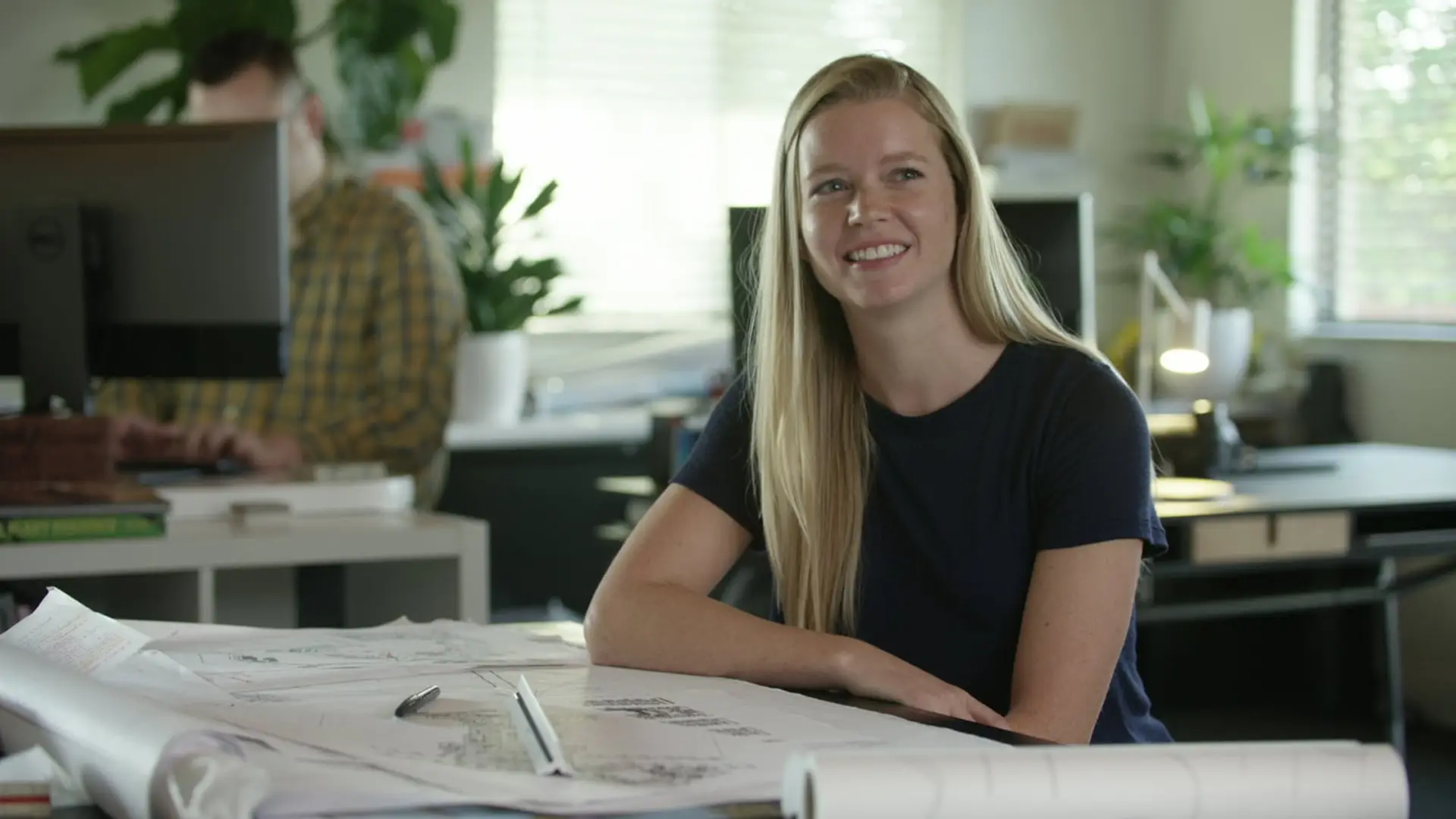
In today's digital age, corporate videos have become an essential tool for businesses to communicate their brand, products, and services effectively. From promotional videos to employee training materials, well-crafted corporate videos can captivate audiences and leave a lasting impression.
This comprehensive guide will walk you through the step-by-step process of creating a high-quality corporate video that aligns with your business objectives and resonates with your target audience.
## Step 1. Define Your Objectives
The first and arguably most crucial step in creating a successful corporate video is to clearly define your objectives. What is the purpose of the video? Are you aiming to promote a new product or service, highlight your company's culture, or provide educational content for your employees or customers? Identifying the primary goal will help shape the overall direction and tone of the video.
Next, consider your target audience. Who are you trying to reach with this video? Understanding their needs, pain points, and preferences will aid in tailoring the content and messaging to resonate with them effectively. For example, if you're creating a recruitment video, your target audience would be potential employees, and your objectives might include showcasing your company culture, employee benefits, and growth opportunities.
Once you've identified your objectives and target audience, establish specific desired outcomes. Do you want to increase brand awareness, drive website traffic, generate leads, or boost employee engagement? Setting measurable goals will help you evaluate the success of your video and make data-driven decisions for future video projects.
## Step 2. Develop a Concept and Script
With your objectives and target audience in mind, it's time to develop a compelling concept and script for your corporate video. Start by brainstorming ideas that align with your goals and resonate with your audience. Consider the overall tone, style, and message you want to convey.
During the brainstorming process, think about the emotional connection you want to create with your viewers. Will you take a more serious, informative approach or aim for a lighthearted, humorous tone? Determine the most effective way to capture and hold your audience's attention while delivering your message.
Once you have a solid concept, it's time to write the script. A well-crafted script is the foundation of a successful corporate video. Begin by outlining the key points you want to cover and the overall structure of the video. Organize your content in a logical and engaging manner, ensuring a smooth flow from one segment to the next.
As you write the script, keep your target audience in mind. Use language and terminology they can relate to and understand. Incorporate storytelling elements, such as relatable characters, conflicts, and resolutions, to make your video more engaging and memorable.
Remember to strike the right balance between information and entertainment. While you want to educate your audience, you also want to keep them engaged and interested throughout the video.
## Step 3. Plan Your Production
Once you have a solid concept and script in place, it's time to plan the production phase of your corporate video. This step involves several key considerations, including budgeting, scheduling, assembling the right team, securing locations, and organizing equipment.
Budgeting is a crucial aspect of the planning process. Determine how much you can allocate for the video production, factoring in costs such as equipment rental, location fees, talent (if using actors or voiceover artists), and post-production expenses like editing and graphics.
Next, create a detailed production schedule that outlines key milestones, shoot dates, and deadlines. This will help ensure that the project stays on track and that everyone involved is aligned.
Assembling the right team is essential for a successful corporate video production. Depending on the scale and complexity of your project, you may need to hire or collaborate with professionals such as directors, camera operators, lighting technicians, sound engineers, and makeup artists.
If you're working with an external video production company like[C.I. Studios](https://c-istudios.com/), they can provide a comprehensive team of experienced professionals to handle all aspects of the production process.
Location scouting is another critical step. Consider whether you'll be filming on-site at your company's premises or if you need to secure external locations. If shooting on-site, ensure you have the necessary permissions and accommodate any potential disruptions to regular business operations.
For external locations, conduct thorough scouting to find locations that align with your video's concept and provide the desired ambiance and aesthetics. Secure the necessary permits and ensure the locations are available on your scheduled shoot dates.
Finally, organize all the equipment needed for the shoot, including cameras, lighting, audio equipment, and any props or set pieces required. If you're working with a company providing professional [video production Services](https://c-istudios.com/video-production-services/), they will typically provide all the necessary equipment and handle the logistics.
## Step 4. Shoot the Video
With your planning and preparation complete, it's time to bring your corporate video to life during the actual shoot. This step involves setting up the shoot, directing the team, and capturing the footage according to the storyboard and script.
Before the shoot begins, ensure that all team members are briefed on their roles and responsibilities and that everyone understands the shooting schedule and script. Set up the equipment and lighting according to the desired shot compositions and ensure everything is functioning correctly.
During the shoot, the director will oversee the entire process, guiding the talent (actors or company representatives) through the scenes and ensuring that the footage aligns with the script and storyboard. Effective communication and collaboration between the director, camera operators, and other crew members are crucial for capturing high-quality footage efficiently.
Pay close attention to lighting and sound quality throughout the shoot. Optimal lighting can enhance the visual appeal of your video and create the desired mood and atmosphere, while proper sound capture ensures clear and crisp audio.
If you're filming interviews or scenes with talent, provide clear direction and guidance to ensure natural and engaging performances. Encourage them to be authentic and convey the desired emotions and messages effectively.
Depending on the complexity of your video, you may need to capture different types of shots, such as wide shots, close-ups, and cutaways. Follow the storyboard and script closely, but also be prepared to adapt and improvise when necessary to capture unexpected but compelling moments.
Throughout the shoot, continually review the footage to ensure it meets your expectations and requirements. If necessary, reshoot scenes or capture additional footage to ensure you have all the necessary elements for a successful edit.
## Step 5. Edit and Post-Production
With the shooting complete, the next step is to bring the footage together through the editing and post-production process. This phase involves reviewing and selecting the best shots, creating a cohesive narrative, adding graphics and special effects, and incorporating branding elements.
Begin by organizing and logging all the footage captured during the shoot. Review each clip and select the best takes and shots that align with your script and storyboard. This process will help you identify any gaps or additional footage needed to complete the video.
Once you have your selects, it's time to start the editing process. Use professional video editing software, such as Adobe Premiere Pro or Final Cut Pro, to assemble the clips into a cohesive sequence that tells your story effectively.
During the editing phase, you may need to make adjustments to the pacing, flow, and overall structure of the video. Cut out any unnecessary footage, tighten up the timing, and ensure a smooth transition between scenes and segments.
Incorporate graphics, titles, and visual effects to enhance the visual appeal and clarity of your video. This can include lower thirds (text overlays) for introductions, animated transitions, and motion graphics to illustrate key concepts or statistics.
I see, if you want to correct the phrase, you might consider:
If your video requires special effects, such as [VFX compositing and animation](https://c-istudios.com/vfx-compositing-and-animation-services/), collaborate with a skilled visual effects artist or team to integrate these elements seamlessly.
Branding is also an essential aspect of the post-production process. Incorporate your company's logo, color scheme, and other branding elements throughout the video to reinforce your brand identity and ensure consistency with your overall marketing efforts.
Finally, consider adding music or background scoring to set the tone and enhance the emotional impact of your video. Choose music that complements the visuals and messaging without being overpowering or distracting.
## Step 6. Voice-Over and Audio Mixing
While visuals are a crucial component of a corporate video, audio plays an equally important role in delivering your message effectively. This step involves recording and incorporating high-quality voice-overs and ensuring optimal audio mixing and mastering.
If your video includes narration or voiceover segments, you'll need to record these elements separately from the on-location audio captured during the shoot. Work with a professional voiceover artist or talent who can deliver the script with the right tone, inflection, and emotional resonance.
Provide the voiceover artist with clear direction and context, ensuring they understand the overall message and tone you're aiming for. Record in a professional studio or controlled environment to minimize background noise and ensure high audio quality.
Once you have the voiceover recordings, it's time to integrate them seamlessly with the video footage during the [audio engineering](https://c-istudios.com/audio-engineering-services/) process. This involves balancing the levels of the voiceover, on-location audio (dialogue, ambient sounds), and any background music or sound effects.
An experienced audio engineer or sound mixer will ensure that the different audio elements complement each other without competing for attention. They'll also apply audio processing techniques, such as equalization, compression, and noise reduction, to enhance clarity and overall sound quality.
If your video includes interviews or on-camera dialogue, the audio mixing process becomes even more critical. The mixer will need to carefully balance the levels and clarity of each speaker while minimizing any unwanted background noise or interference.
Finally, the audio mastering process ensures that the overall audio meets professional standards for loudness, dynamic range, and frequency balance. This step helps optimize the audio for various playback environments, such as web streaming, television broadcasts, or in-person presentations.
## Step 7. Finalize and Review
With the editing, graphics, and audio mixing complete, it's time to finalize and review your corporate video. This step involves carefully examining the final product to ensure it meets your objectives, adheres to your brand standards, and delivers a polished, professional result.
Begin by scheduling a dedicated review session with key stakeholders, such as your marketing team, executive leadership, or client representatives (if producing the video for a client). This collaborative review process allows for multiple perspectives and ensures that the video effectively communicates the intended message and aligns with your overall goals.
During the review, closely examine the video for any technical issues or areas that may require additional refinement. Look for any inconsistencies in branding, tone, or messaging, and address them accordingly.
Pay close attention to the pacing and flow of the video. Does the narrative progress smoothly, keeping the audience engaged throughout? Are there any abrupt transitions or segments that feel rushed or disjointed?
Evaluate the visual and audio quality to ensure they meet professional standards. Check for any issues with lighting, color grading, audio clarity, or overall production value.
If any revisions or additional tweaks are necessary, work closely with your video production team or agency to implement the requested changes. Effective communication and collaboration during this phase are crucial to ensuring the final product meets your expectations.
Once all necessary revisions have been made and approved, you can proceed to the final export and [delivery](https://c-istudios.com/feature-film-mastering-and-delivery/) of the video. Ensure that the video is exported in the appropriate format and resolution for its intended distribution channels, such as web streaming, broadcast, or physical media.
## Step 8. Distribution and Promotion
With your corporate video finalized, the next step is to distribute and promote it effectively to reach your target audience and achieve your desired outcomes.
First, determine the most suitable platforms and channels for sharing your video. This may include your company's website, social media channels (Facebook, LinkedIn, Twitter, YouTube), email marketing campaigns, or even physical events or trade shows.
Optimize your video for search engines by including relevant keywords in the title, description, and tags. This will help improve its visibility and discoverability online.
Develop a comprehensive promotion strategy that leverages various [marketing](https://c-istudios.com/media-marketing-consultation-services/) channels and tactics. Share the video across your social media platforms, encourage employees and partners to share it within their networks, and consider running targeted advertising campaigns to expand your reach.
Track and analyze the performance of your video using metrics such as views, engagement rates, click-through rates, and conversion rates. This data will provide valuable insights into the effectiveness of your video and inform future video marketing strategies.
Finally, consider repurposing and repacking your video content for different platforms and audiences. You can create shorter teasers or highlight reels for social media, or extract informative segments for use in blog posts or email newsletters.
## Work with C&I Studios
If you are planning a project like this, our team can take it from concept to final delivery. Explore our [video production services](https://c-istudios.com/video-production-services/), browse [our work](https://c-istudios.com/our-work/) to see how we tell brand stories, and [get in touch](https://c-istudios.com/contact/) when you are ready to start.
Originally published March 12, 2024
---
*This content is from [C&I Studios](https://c-istudios.com), a full-service production company.*
---
# A Step-by-Step Guide to Starting a Reality TV Show
> Published: March 11, 2024
> Categories: Film & TV
> Source: https://c-istudios.com/a-step-by-step-guide-to-starting-a-reality-tv-show/
---
.cib{--paper:#1b1d1f;--ink:#fff;--body:#d5d7d9;--muted:#8b9096;--line:rgba(255,255,255,.12);--thumb:#2b2e31;--card:#212426;--accent:#c02b0a;--blue:#5B8FA8;--serif:'Playfair Display',Georgia,serif;--sans:'Poppins',-apple-system,sans-serif;--measure:900px;background:var(--paper);color:var(--body);font-family:var(--sans);line-height:1.6;position:relative;left:50%;transform:translateX(-50%);width:90vw;max-width:1920px}
.cib *{box-sizing:border-box}
.cib .kicker{max-width:var(--measure);margin:58px auto 0;padding:0 22px;font-size:12.5px;font-weight:700;letter-spacing:2.5px;text-transform:uppercase;color:var(--blue)}
.cib h1.cibh1{text-wrap:balance;font-family:var(--serif);font-weight:500;font-size:clamp(46px,6vw,72px);line-height:1.08;color:var(--ink);max-width:var(--measure);margin:18px auto 0;padding:0 22px;letter-spacing:-.5px}
.cib .metarow{max-width:var(--measure);margin:20px auto 0;padding:0 22px;color:var(--muted);font-size:14px}
.cib .hero{position:relative;width:100%;height:0;padding-bottom:56.25%;overflow:hidden;margin:48px auto 0;border-top:1px solid var(--line);border-bottom:1px solid var(--line)}
.cib .hero .ph{width:100%;aspect-ratio:16/9;background:var(--thumb);border-top:1px solid var(--line);border-bottom:1px solid var(--line);display:flex;align-items:center;justify-content:center;color:#7d8288;font-size:13px;text-align:center;padding:0 20px}
.cib .body{max-width:var(--measure);margin:12px auto 0;padding:52px 22px 6px}
.cib .body.lead p:first-child{font-size:23px;line-height:1.62;color:var(--ink)}
.cib .body p{font-size:18.5px;line-height:1.85;margin:0 0 30px;color:var(--body)}
.cib .body h2{text-wrap:balance;font-family:var(--serif);font-weight:500;font-size:clamp(32px,4vw,48px);line-height:1.22;color:var(--ink);margin:70px 0 20px;letter-spacing:-.3px}
.cib .body h3{text-wrap:balance;font-family:var(--sans);font-weight:600;font-size:22px;color:var(--ink);margin:38px 0 8px}
.cib .body a{color:var(--ink);text-decoration:underline;text-decoration-color:rgba(255,255,255,.4);text-underline-offset:3px}
.cib .body a:hover{text-decoration-color:var(--ink)}
.cib .ctable{width:100%;border-collapse:collapse;margin:16px 0 30px;font-size:16px}
.cib .ctable th{background:#000;color:#fff;text-align:left;padding:10px 12px;font-family:var(--sans)}
.cib .ctable td{padding:10px 12px;border-bottom:1px solid var(--line);color:var(--body)}
.cib .inimg{position:relative;width:100%;height:0;padding-bottom:56.25%;overflow:hidden;margin:72px auto;border-top:1px solid var(--line);border-bottom:1px solid var(--line)}
.cib .inimg .ph{width:100%;aspect-ratio:16/9;background:var(--thumb);border-top:1px solid var(--line);border-bottom:1px solid var(--line);display:flex;align-items:center;justify-content:center;color:#7d8288;font-size:13px}
.cib .origpub{max-width:var(--measure);margin:60px auto 0;padding:26px 22px 0;border-top:1px solid var(--line);color:var(--muted);font-size:13.5px}
.cib .related{max-width:1200px;margin:64px auto 0;padding:34px 22px 76px}
.cib .related h3{font-family:var(--sans);font-size:12.5px;letter-spacing:2px;text-transform:uppercase;color:var(--ink);margin:0 0 24px}
.cib .grid{display:grid;grid-template-columns:repeat(3,1fr);gap:28px}
.cib .rc{background:var(--card);border:1px solid var(--line);display:block;text-decoration:none;color:inherit;transition:border-color .15s}
.cib a.rc:hover{border-color:rgba(255,255,255,.5)}
.cib .rc .thumb{position:relative;width:100%;height:0;padding-bottom:56.25%;background:var(--thumb);overflow:hidden}
.cib .rc .thumb img{position:absolute!important;top:0!important;left:0!important;width:100%!important;height:100%!important;object-fit:cover!important;margin:0!important}
.cib .rc .cc{padding:14px 15px 17px}
.cib .rc .rt{font-family:var(--serif);font-weight:500;font-size:16px;line-height:1.3;color:var(--ink);margin:0 0 6px}
.cib .rc .rm{font-size:11px;letter-spacing:1px;text-transform:uppercase;color:var(--muted)}
.cib img{margin:0!important;padding:0!important;display:block!important;vertical-align:top;max-width:100%}
.cib .hero img,.cib .inimg img{position:absolute!important;top:0!important;left:0!important;width:100%!important;height:100%!important;object-fit:cover!important;margin:0!important;padding:0!important;border:0!important;display:block!important;aspect-ratio:auto!important}
.cib .hero+.body{padding-top:36px}
@media(max-width:760px){.cib .grid{grid-template-columns:1fr}.cib .body h2{margin:52px 0 16px}.cib .body p{font-size:17.5px}.cib .inimg,.cib .hero{margin-top:44px}}
.cib .vembed{max-width:var(--measure);margin:44px auto;padding:0 22px}.cib .vembed .vwrap{position:relative;width:100%;height:0;padding-bottom:56.25%}.cib .vembed .vwrap iframe{position:absolute;top:0;left:0;width:100%;height:100%;border:0}
Film & TV
# A Step-by-Step Guide to Starting a Reality TV Show
12 min read
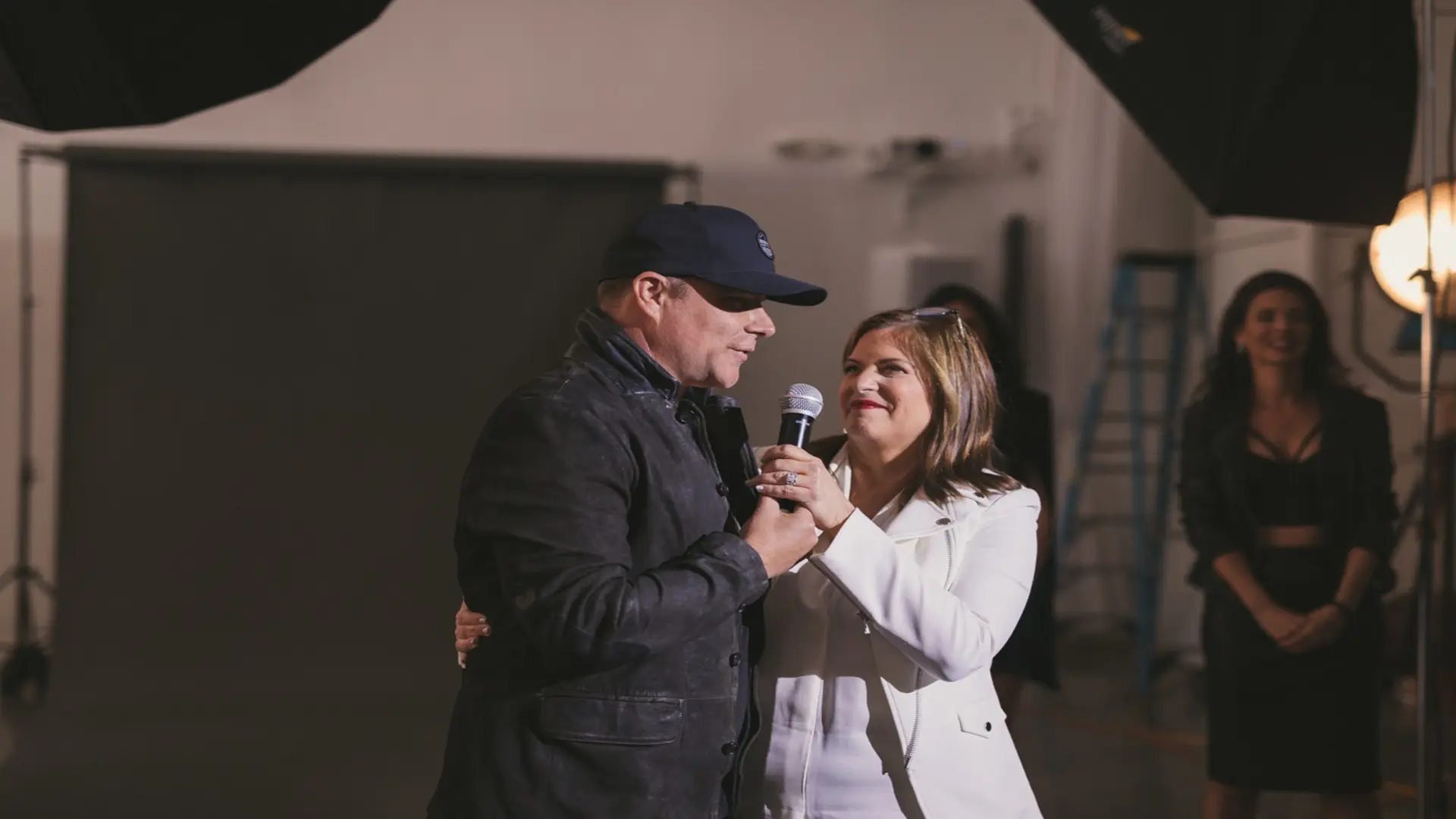
The world of reality TV is vast and diverse, captivating audiences with its raw emotion, unscripted drama, and real-life entertainment. If you've ever dreamed of creating your own reality TV show, knowing where to start can be daunting. This guide will walk you through the essential steps of developing your concept, pitching to networks, assembling a production team, and more.
With the right approach and a compelling idea, you can turn your reality TV dream into a broadcast-worthy show that captivates viewers and leaves a lasting impact.
Want a real number for your own show? Upload your script for an instant budget estimate ↓
## Concept Development
Developing a concept is the first and most crucial step in creating a reality TV show. It involves brainstorming a unique idea that stands out in the competitive entertainment landscape. Your concept should offer something fresh and engaging, whether it's a new twist on a familiar format or a completely original idea that captures the imagination of viewers.
Once you have a solid concept, it's essential to research your target audience. Understanding the demographics, interests, and viewing habits of your potential viewers will help you tailor your content to resonate with them. This knowledge ensures that your show appeals to the right audience, increasing its chances of success.
Creating a show format is the next step in concept development. This involves deciding on the structure of your show, such as the number of episodes, the length of each episode, and how the story will unfold. A clear format helps in planning the production and gives networks a better understanding of your vision.
Defining the rules and challenges is crucial if your show involves competition or tasks. These elements should be engaging, fair, and in line with the show's theme. They should also provide opportunities for drama, personal growth, and viewer engagement.
Crafting a compelling title and logline is essential for capturing attention. The title should be catchy and reflective of the show's concept, while the logline is a brief summary that highlights the essence of your show. It should be intriguing and concise, giving a snapshot of what viewers can expect.
As you develop your concept, consider incorporating professional expertise to ensure your idea is polished and market-ready.[Content creation services](https://c-istudios.com/content-creation-services/) can help refine your concept and prepare it for presentation to networks.
By carefully crafting your concept, researching your audience, and creating a solid format, you lay the groundwork for a reality TV show that has the potential to captivate viewers and make a lasting impact on the entertainment landscape.
## Crafting a Pitch
Once you have developed a solid concept, the next step is crafting a pitch that will convince networks or streaming platforms to invest in your reality TV show. A well-prepared pitch is your opportunity to showcase the potential of your show and persuade decision-makers that it is worth their time and resources.
Start by writing a compelling logline and synopsis that summarize your show's concept and highlight its unique selling points. The logline should be a concise statement that captures the essence of your show, while the synopsis provides a more detailed overview of the format, themes, and potential episodes.
Developing a pitch deck or sizzle reel is crucial for visualizing your concept. A pitch deck is a presentation that outlines your show's concept, target audience, format, and market potential. It should include visual elements such as images, graphics, and mood boards that convey the tone and style of your show. A sizzle reel, on the other hand, is a short video that combines footage, music, and narration to give a taste of what your show will look like.
When pitching to networks or streaming platforms, it's essential to tailor your presentation to their specific interests and content strategies. Research their current lineup of shows and identify how your concept fits into their brand and appeals to their audience.
Networking and building relationships in the entertainment industry can also increase your chances of success. Attend industry events, join professional organizations, and connect with executives and producers who can provide valuable insights and introductions.
To further strengthen your pitch, consider partnering with a production company, which specializes in developing and [pitching TV shows](https://c-istudios.com/tv-show-pitch). Their expertise can help refine your presentation and increase its appeal to potential backers.
By crafting a persuasive pitch that showcases the uniqueness and viability of your reality TV show concept, you can secure the support and funding needed to bring your vision to life.
## Assembling a Production Team
After successfully pitching your reality TV show, the next step is to acquire a [production service](https://c-istudios.com/film-and-tv-production/) that will bring your vision to life. This service will be responsible for the planning, filming, and post-production of your show, so it's crucial to choose a team that is experienced, talented, and aligned with your creative goals.
Start by hiring a producer who will oversee the entire production process, from budgeting and scheduling to managing the crew and post-production. The producer should have a strong track record in reality TV and a deep understanding of the genre's demands.
Next, you'll need a director who can execute your vision on screen. The director should be skilled in working with non-actors, creating engaging visual storytelling, and handling the fast-paced nature of reality [TV production](https://c-istudios.com/film-and-tv-production/).
Other key members of your production team include a cinematographer or director of photography, who will capture the visual style of your show, and a sound engineer, who will ensure high-quality audio recordings. Depending on the nature of your show, you may also need specialists in areas like lighting, makeup, and set design.
Casting is another critical aspect of assembling your production team. Whether you're looking for contestants, hosts, or experts, you'll need a casting director who can find individuals who are not only right for the roles but also compelling and authentic on screen.
For logistical support, you'll need a production manager or coordinator who can handle the day-to-day operations, including securing locations, obtaining permits, and managing the budget. They will ensure that the production runs smoothly and stays on track.
WORKING WITH A PRODUCTION COMPANY?
C&I Studios has produced reality TV shows, docuseries, and branded content for networks and brands worldwide. We handle everything from concept to delivery.
[See Our Film & TV Production Services →](https://c-istudios.com/film-and-tv-production/)
## Securing Funding
Securing funding is a critical step in bringing your reality TV show to life. Without the necessary financial resources, it can be challenging to cover the costs of production, marketing, and distribution. Therefore, it's essential to explore various financing options and create a budget that outlines your show's expenses.
One way to secure funding is through sponsorships and brand partnerships. Companies are often willing to invest in reality TV shows that align with their target audience and marketing goals. In return for funding, sponsors may receive product placement, branded content, or advertising opportunities within your show.
Another option is seeking investments from production companies, networks, or streaming platforms. These entities may provide funding in exchange for a stake in the show's profits or distribution rights. Pitching your show to investors requires a strong business plan that demonstrates the potential for return on investment.
Crowdfunding is also a viable option for independent producers. Platforms like Kickstarter or Indiegogo allow you to raise funds from the public by offering rewards or exclusive content in exchange for contributions.
When creating your budget, it's crucial to account for all production costs, including crew salaries, equipment rentals, location fees, post-production expenses, and marketing costs. Being transparent and realistic about your budget will increase your credibility with potential investors and sponsors.
For assistance in securing funding and creating a budget, consider consulting with a [media marketing consultation service](https://c-istudios.com/media-marketing-consultation-services/). They can provide guidance on marketing strategies, brand partnerships, and financial planning to ensure your show is financially viable.
## Casting and Location Scouting
Casting and location scouting are crucial elements in the production of a reality TV show. The right cast can bring your concept to life, while the perfect location sets the stage for compelling storytelling.
### Casting
The casting process involves finding individuals who are not only suitable for the roles but also bring authenticity and dynamic personalities to the screen. For reality TV, you want participants who are relatable, engaging, and able to connect with the audience. Conducting open auditions, utilizing social media, and working with casting agencies are effective ways to reach a diverse pool of candidates. It's important to have a clear idea of the characteristics and qualities you're looking for in your cast members, as they will be the driving force behind your show's success.
### Location Scouting
The choice of location can significantly impact the look and feel of your reality TV show. Whether it's a bustling city, a remote island, or a cozy studio, the location should align with the theme and format of your show. Scouting for the perfect location involves considering factors such as accessibility, logistics, and cost. It's also essential to obtain the necessary permits and permissions to film in your chosen location.
[Professional photography services](https://c-istudios.com/professional-photography-services) can play a vital role in both casting and location scouting. High-quality photos and videos of potential cast members and locations can help you visualize the final product and make informed decisions.
By carefully selecting your cast and scouting the ideal locations, you can create a reality TV show that resonates with viewers and provides a captivating backdrop for your storytelling.
## Filming and Production
The filming and production phase is where your reality TV show comes to life. This stage requires meticulous planning, coordination, and execution to ensure that everything runs smoothly and the final product meets your vision.
### Pre-production
Before filming begins, it's crucial to have a detailed production plan in place. This includes finalizing the shooting schedule, securing locations, and ensuring that all equipment and personnel are ready. Pre-production meetings with your production team will help align everyone's understanding of the goals and logistics of the shoot.
### Filming
During filming, the director and production team work together to capture the essence of your reality TV show. This involves directing cast members, managing technical aspects such as lighting and sound, and adapting to any unforeseen challenges that arise. Maintaining a positive and efficient working environment is key to keeping the production on track and ensuring that everyone delivers their best performance.
### Production Challenges
Reality TV production often involves dealing with unpredictable elements, whether it's weather conditions, participant behavior, or technical issues. Being prepared to handle these challenges and make quick decisions is crucial for keeping the production moving forward.
### Quality Control
Throughout the filming process, it's important to monitor the quality of the footage and ensure that it aligns with the show's concept and standards. Regular reviews and feedback sessions can help identify any areas that need improvement or adjustment.
## Post-Production
Once filming is complete, the post-production phase begins, where the raw footage is transformed into a polished final product. This stage involves a series of crucial steps to ensure that the reality TV show maintains a high standard of quality and engages the audience from start to finish.
Editing is the first and perhaps most critical step in post-production. Editors work meticulously to assemble the footage, cutting and rearranging scenes to create a coherent narrative that aligns with the show's concept. They must balance the storytelling with the pacing, ensuring that the show remains captivating and dynamic throughout each episode.
Adding special effects, music, and graphics is another important aspect of post-production. These elements enhance the visual and auditory appeal of the show, adding depth and emotion to the scenes. Music, in particular, plays a significant role in setting the tone and mood of the show, while graphics can provide additional information or visual interest.
The final stages of post-production include color correction and audio mixing. Color correction ensures that the visual aesthetics of the show are consistent and appealing, while audio mixing balances the sound levels for clarity and impact. These technical adjustments are crucial for delivering a high-quality viewing experience.
For a visually captivating reality TV show, incorporating[VFX, compositing, and animation services](https://c-istudios.com/content-creation-services/) into your post-production process can significantly enhance the viewer's experience.
## Marketing and Promotion
Marketing and promotion are crucial components in the success of a reality TV show. After the post-production phase, it's essential to develop a marketing strategy that effectively promotes the show to its target audience. The goal is to generate buzz and anticipation, ensuring that viewers are eager to tune in for the premiere and subsequent episodes.
Creating a compelling marketing campaign involves various elements, such as teasers, trailers, and promotional posters. These materials should highlight the unique aspects of the show, showcasing its most engaging and exciting moments to attract potential viewers.
Social media platforms play a vital role in marketing, providing a direct channel to reach and interact with the audience. Engaging content, such as behind-the-scenes glimpses and interactive posts, can help build a loyal fan base.
Public relations efforts, such as press releases and media interviews, can also boost visibility and generate interest in the show. Collaborating with influencers or celebrities who align with the show's theme can further amplify its reach and appeal.
For effective marketing and promotion, utilizing [social media marketing services](https://c-istudios.com/social-media-marketing-services/) can be highly beneficial. Expertly crafted and executed social media strategies can significantly boost your show's visibility and impact.
## Distribution and Launch
The final step in bringing your reality TV show to the audience is distribution and launch. This phase involves securing a platform for airing your show and planning the release strategy to maximize its impact.
Securing a distribution deal with networks or streaming platforms is crucial for reaching a wide audience. It's important to pitch your show to potential distributors, highlighting its unique selling points and audience appeal. The distribution deal should align with your show's target demographic and format, ensuring that it reaches the right viewers at the right time.
Once a distribution deal is in place, planning the premiere and release schedule is the next step. The timing of the launch is critical, as it should avoid major competing events or programs to ensure maximum viewership. Consider launching with a special premiere event or a marketing push to create excitement and anticipation among the audience.
Consistent communication with the distributor is essential to ensure that the show is promoted effectively across their channels. This includes advertising, social media promotion, and leveraging the platform's existing audience base.
## Work with C&I Studios
If you are planning a project like this, our team can take it from concept to final delivery. Explore our [film and TV production](https://c-istudios.com/film-and-tv-production/), browse [our work](https://c-istudios.com/our-work/) to see how we tell brand stories, and [get in touch](https://c-istudios.com/contact/) when you are ready to start.
Originally published March 11, 2024
---
*This content is from [C&I Studios](https://c-istudios.com), a full-service production company.*
---
# A Step-by-Step Guide to Developing a Documentary
> Published: March 11, 2024
> Categories: Film & TV
> Source: https://c-istudios.com/a-step-by-step-guide-to-developing-a-documentary/
---
.cib{--paper:#1b1d1f;--ink:#fff;--body:#d5d7d9;--muted:#8b9096;--line:rgba(255,255,255,.12);--thumb:#2b2e31;--card:#212426;--accent:#c02b0a;--blue:#5B8FA8;--serif:'Playfair Display',Georgia,serif;--sans:'Poppins',-apple-system,sans-serif;--measure:900px;background:var(--paper);color:var(--body);font-family:var(--sans);line-height:1.6;position:relative;left:50%;transform:translateX(-50%);width:90vw;max-width:1920px}
.cib *{box-sizing:border-box}
.cib .kicker{max-width:var(--measure);margin:58px auto 0;padding:0 22px;font-size:12.5px;font-weight:700;letter-spacing:2.5px;text-transform:uppercase;color:var(--blue)}
.cib h1.cibh1{text-wrap:balance;font-family:var(--serif);font-weight:500;font-size:clamp(46px,6vw,72px);line-height:1.08;color:var(--ink);max-width:var(--measure);margin:18px auto 0;padding:0 22px;letter-spacing:-.5px}
.cib .metarow{max-width:var(--measure);margin:20px auto 0;padding:0 22px;color:var(--muted);font-size:14px}
.cib .hero{position:relative;width:100%;height:0;padding-bottom:56.25%;overflow:hidden;margin:48px auto 0;border-top:1px solid var(--line);border-bottom:1px solid var(--line)}
.cib .hero .ph{width:100%;aspect-ratio:16/9;background:var(--thumb);border-top:1px solid var(--line);border-bottom:1px solid var(--line);display:flex;align-items:center;justify-content:center;color:#7d8288;font-size:13px;text-align:center;padding:0 20px}
.cib .body{max-width:var(--measure);margin:12px auto 0;padding:52px 22px 6px}
.cib .body.lead p:first-child{font-size:23px;line-height:1.62;color:var(--ink)}
.cib .body p{font-size:18.5px;line-height:1.85;margin:0 0 30px;color:var(--body)}
.cib .body h2{text-wrap:balance;font-family:var(--serif);font-weight:500;font-size:clamp(32px,4vw,48px);line-height:1.22;color:var(--ink);margin:70px 0 20px;letter-spacing:-.3px}
.cib .body h3{text-wrap:balance;font-family:var(--sans);font-weight:600;font-size:22px;color:var(--ink);margin:38px 0 8px}
.cib .body a{color:var(--ink);text-decoration:underline;text-decoration-color:rgba(255,255,255,.4);text-underline-offset:3px}
.cib .body a:hover{text-decoration-color:var(--ink)}
.cib .ctable{width:100%;border-collapse:collapse;margin:16px 0 30px;font-size:16px}
.cib .ctable th{background:#000;color:#fff;text-align:left;padding:10px 12px;font-family:var(--sans)}
.cib .ctable td{padding:10px 12px;border-bottom:1px solid var(--line);color:var(--body)}
.cib .inimg{position:relative;width:100%;height:0;padding-bottom:56.25%;overflow:hidden;margin:72px auto;border-top:1px solid var(--line);border-bottom:1px solid var(--line)}
.cib .inimg .ph{width:100%;aspect-ratio:16/9;background:var(--thumb);border-top:1px solid var(--line);border-bottom:1px solid var(--line);display:flex;align-items:center;justify-content:center;color:#7d8288;font-size:13px}
.cib .origpub{max-width:var(--measure);margin:60px auto 0;padding:26px 22px 0;border-top:1px solid var(--line);color:var(--muted);font-size:13.5px}
.cib .related{max-width:1200px;margin:64px auto 0;padding:34px 22px 76px}
.cib .related h3{font-family:var(--sans);font-size:12.5px;letter-spacing:2px;text-transform:uppercase;color:var(--ink);margin:0 0 24px}
.cib .grid{display:grid;grid-template-columns:repeat(3,1fr);gap:28px}
.cib .rc{background:var(--card);border:1px solid var(--line);display:block;text-decoration:none;color:inherit;transition:border-color .15s}
.cib a.rc:hover{border-color:rgba(255,255,255,.5)}
.cib .rc .thumb{position:relative;width:100%;height:0;padding-bottom:56.25%;background:var(--thumb);overflow:hidden}
.cib .rc .thumb img{position:absolute!important;top:0!important;left:0!important;width:100%!important;height:100%!important;object-fit:cover!important;margin:0!important}
.cib .rc .cc{padding:14px 15px 17px}
.cib .rc .rt{font-family:var(--serif);font-weight:500;font-size:16px;line-height:1.3;color:var(--ink);margin:0 0 6px}
.cib .rc .rm{font-size:11px;letter-spacing:1px;text-transform:uppercase;color:var(--muted)}
.cib img{margin:0!important;padding:0!important;display:block!important;vertical-align:top;max-width:100%}
.cib .hero img,.cib .inimg img{position:absolute!important;top:0!important;left:0!important;width:100%!important;height:100%!important;object-fit:cover!important;margin:0!important;padding:0!important;border:0!important;display:block!important;aspect-ratio:auto!important}
.cib .hero+.body{padding-top:36px}
@media(max-width:760px){.cib .grid{grid-template-columns:1fr}.cib .body h2{margin:52px 0 16px}.cib .body p{font-size:17.5px}.cib .inimg,.cib .hero{margin-top:44px}}
.cib .vembed{max-width:var(--measure);margin:44px auto;padding:0 22px}.cib .vembed .vwrap{position:relative;width:100%;height:0;padding-bottom:56.25%}.cib .vembed .vwrap iframe{position:absolute;top:0;left:0;width:100%;height:100%;border:0}
Film & TV
# A Step-by-Step Guide to Developing a Documentary
10 min read
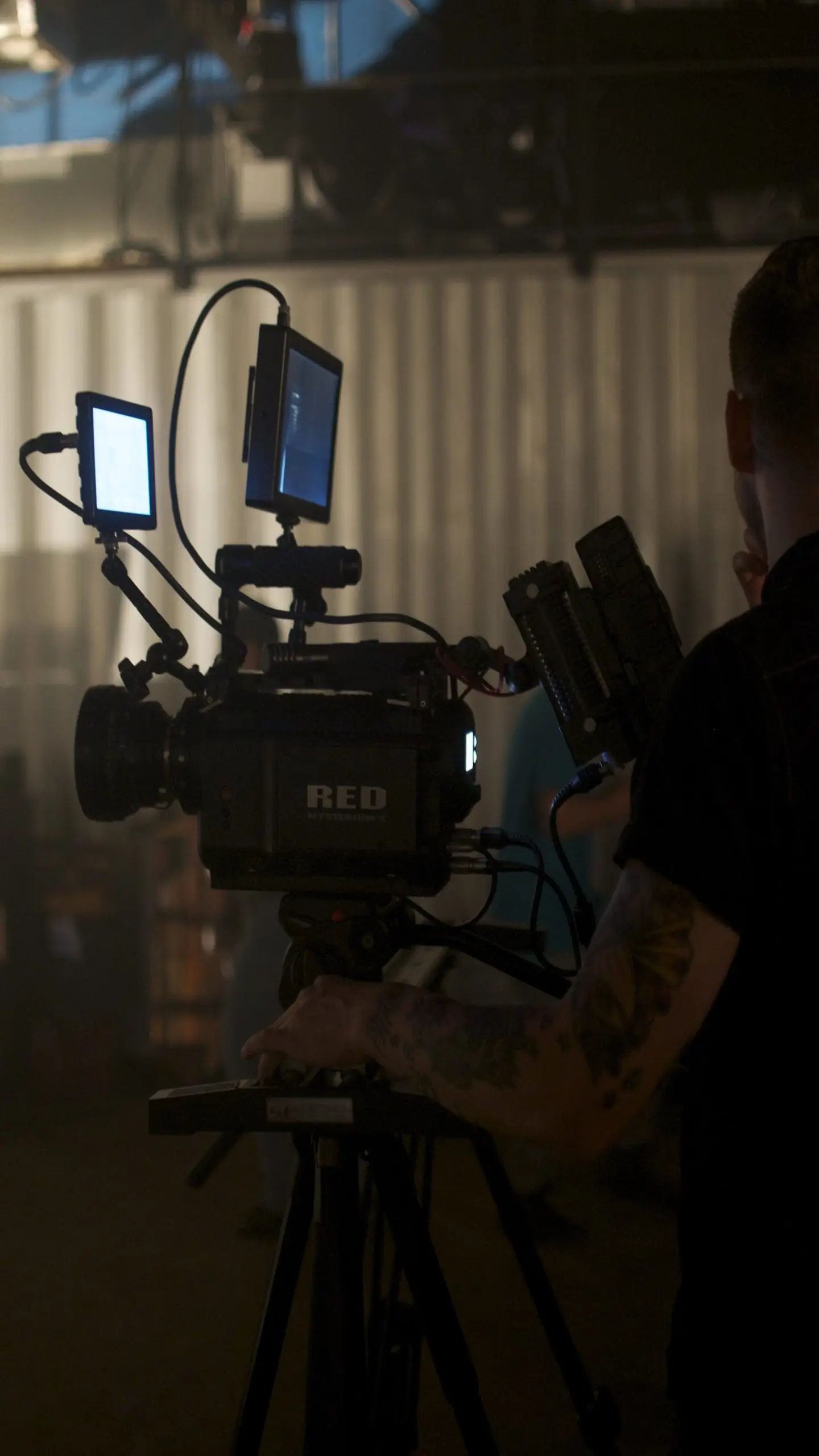
Have you ever been captivated by a documentary film that left a lasting impression on you? Documentary filmmaking is a powerful medium that allows storytellers to shed light on real-life stories, explore complex issues, and inspire change. It's a journey that requires passion, dedication, and a keen eye for compelling narratives. In this comprehensive guide, we'll take you through each step of developing a documentary, from conceptualization to distribution, empowering you to bring your vision to life.
Whether you're a seasoned filmmaker or just starting out, this guide will provide you with the tools and insights to navigate the world of[documentary film production](https://c-istudios.com/documentary-film-production/).
## Conceptualization and Research
The foundation of any great documentary lies in finding a subject matter that resonates with you and has the potential to captivate audiences. This stage is all about immersing yourself in research, uncovering stories worth telling and gathering the facts that will shape your narrative.
One approach is to start with a topic or issue that you're passionate about, whether it's environmental conservation, social justice, or a historical event. Dig deep into the subject, read extensively, and seek out experts or individuals directly involved in the matter. Their insights and personal experiences can add depth and authenticity to your storytelling.
Alternatively, you may stumble upon a compelling human story that deserves to be shared with the world. It could be the journey of an individual overcoming adversity, a community's fight for change, or a subculture that challenges societal norms. The key is to identify narratives that are not only engaging but also offer a unique perspective or shed light on underrepresented voices.
As you delve into your research, be mindful of legal and copyright issues. Many documentary filmmakers have faced legal battles over the use of copyrighted materials or invasion of privacy. Throughout this phase, keep an open mind and be ready to pivot your focus if a more captivating story emerges.
Remember, the best documentaries often stem from unexpected discoveries made during the research process. Immerse yourself in the subject matter, attend relevant events, and seek out unique perspectives that could add depth and nuance to your narrative. At[C&I Studios](https://c-istudios.com/), our experienced documentary team can assist you in conducting thorough research and identifying compelling stories that resonate with audiences.
## Pre-Production Planning
With your subject matter and narrative direction in place, it's time to dive into the pre-production phase. This stage involves meticulous planning and preparation to ensure a smooth and efficient production process.
One of the first steps is to develop a comprehensive production calendar. Websites like [StudioBinder](https://www.studiobinder.com/) offer tools and templates to help you map out your timeline, including key milestones, shooting schedules, and post-production deadlines. A well-crafted production calendar will keep you organized and on track throughout the project.
Next, you'll need to consider budgeting and financing. Documentary filmmaking can be a costly endeavor, with expenses ranging from equipment rentals to travel and crew salaries.
Assembling your team is crucial during this stage. A documentary crew often includes a director, cinematographer, sound recordist, and editor, among others. Collaborate with professionals who share your vision and have experience in [documentary filmmaking](https://c-istudios.com/documentary-film-production/).
Equally important is securing the necessary equipment. From high-quality cameras and lenses to audio recording gear and lighting setups, your equipment choices will significantly impact the production quality. Research the best options within your budget and consider renting or purchasing based on your long-term plans. At C&I Studios, we offer a wide range of[video production services](https://c-istudios.com/video-production-services/) and can assist you in selecting the right equipment for your documentary project.
Storyboarding and outlining your narrative arc is another essential step in pre-production. While documentaries often evolve organically during filming, having a clear vision and structure in mind can help you stay focused and capture the essential elements of your story. Consider creating mood boards, character profiles, and scene breakdowns to help you visualize your story before you start filming.
Throughout this phase, it's essential to remain flexible and open to adjustments. Documentary filmmaking is a fluid process, and unforeseen challenges or opportunities may arise, requiring you to adapt your plans accordingly. Regular communication with your team and collaborators can help identify potential roadblocks and develop contingency plans.
## Production Phase
With your pre-production planning complete, it's time to embark on the exciting production phase, where your vision starts to take shape through filming.
One of the first tasks in this stage is location scouting and obtaining permissions. Whether you're filming in a remote wilderness, a bustling city, or a private property, it's crucial to secure the necessary permits and approvals.
The heart of the production phase lies in conducting interviews and capturing B-roll footage. Interviews are the backbone of many documentaries, allowing you to capture firsthand accounts, perspectives, and emotions from your subjects.
Prepare thoughtful questions, create a comfortable environment for your interviewees, and be ready to adapt and follow compelling tangents as they arise. Remember, the best interviews often happen when your subjects feel at ease and can share their stories naturally.
B-roll footage, which consists of supplementary visuals and scenes, is essential for enhancing your storytelling and adding context to your narrative. Whether it's capturing scenic shots, observational footage of your subjects in action, or archival materials, B-roll can elevate your documentary's visual appeal and immerse viewers in the story.
As you delve into filming, it's crucial to employ effective techniques and shooting strategies. There are some websites that offer valuable insights into camera angles, shot compositions, and lighting setups that can enhance the cinematic quality of your footage. Experiment with different techniques and styles to find the one that best suits your documentary's narrative and tone.
Throughout the production phase, remain adaptable and open to serendipitous moments. Some of the most powerful documentary scenes often emerge from unplanned encounters or unexpected developments. Embrace the unpredictability of the process, and trust your instincts as a storyteller. Be prepared to adjust your shooting schedule and approach when compelling opportunities arise.
## Post-Production Process
In the realm of documentary filmmaking, the post-production process is where your project truly begins to take shape, transitioning from raw footage to a polished final product that's ready to captivate audiences. This phase is not just about piecing together the narrative but about enhancing the emotional and visual appeal of your documentary, ensuring that every frame contributes to a cohesive and impactful viewing experience.
The magic of post-production lies in its ability to refine and elevate your story through a combination of editing, sound design, color grading, and music. Each element plays a critical role in shaping the viewer's experience, making it essential to approach post-production with a clear vision and an open mind to creative possibilities.
During editing, for instance, the focus isn't just on selecting the most visually stunning shots but on how these shots contribute to the narrative arc of your documentary. It's about rhythm, pacing, and the seamless integration of visuals with dialogue and sound, creating a narrative flow that engages viewers from start to finish.
Sound design, too, is an art form in itself, with the power to transform the atmosphere of your film. The right sound effects, background scores, and voiceovers add depth and dimension to your story, often conveying emotions and themes more effectively than visuals alone.
Color grading, meanwhile, allows you to set the tone and mood of your documentary, aligning the visual aesthetic with your story's emotional core. Whether you're aiming for a warm, intimate feel or a stark, dramatic look, color grading is your tool for visual storytelling, enhancing the film's emotional impact.
The selection of music further underscores the emotions and themes of your documentary, weaving a sonic tapestry that complements your visual narrative. Whether through the suspenseful crescendo of a soundtrack or the subtle undertones of ambient music, the auditory experience is integral to the documentary's overall impact.
Incorporating visual effects, motion graphics, and animations can also add a layer of sophistication and engagement to your documentary, making complex ideas more accessible and visually stimulating for the audience. This is where services like[C&I Studios - VFX, Compositing, and Animation Services](https://c-istudios.com/vfx-compositing-and-animation-services/) can play a pivotal role, offering professional expertise to enhance your project's visual storytelling.
The iterative nature of post-production means revisiting and refining elements based on feedback, ensuring that each scene, transition, and audio cue aligns perfectly with your vision. It's a collaborative process, one that benefits from diverse perspectives and creative inputs, culminating in a documentary that not only tells a compelling story but also leaves a lasting impression on its viewers.
In essence, post-production is where your documentary's heart and soul are honed and polished. It's a phase that demands creativity, patience, and attention to detail, transforming your initial vision into a cinematic experience that resonates with audiences long after the credits roll.
## Distribution and Promotion
After pouring your heart and soul into creating your documentary, it's time to share y[our work](https://c-istudios.com/our-work/) with the world. The distribution and promotion phase is crucial for ensuring your documentary reaches its intended audience and makes the impact you envisioned.
Explore various distribution channels, each with its own advantages and target audiences. Film festivals offer prestigious platforms for showcasing your work and potentially securing distribution deals while streaming services like Netflix, Hulu, and Amazon Prime Video provide global reach and accessibility. Traditional theatrical distribution can be a powerful way to create a shared viewing experience and generate buzz around your documentary.
[Marketing](https://c-istudios.com/creative-marketing-services/) and promotion are essential components of this phase. Develop a comprehensive strategy that includes social media campaigns, press outreach, and targeted advertising to build anticipation and awareness among potential viewers. Engage with your audience by sharing behind-the-scenes glimpses, hosting Q&A sessions, and fostering discussions around the themes and issues explored in your documentary.
Consider entering prestigious contests and applying for awards, as these accolades can significantly boost your documentary's visibility and credibility. In today's digital age, embracing online platforms and leveraging influencer marketing can be powerful tools for promoting your documentary. Collaborate with relevant bloggers, social media influencers, and online communities to amplify your reach and engage with niche audiences that may resonate with your project.
Remember, distribution and promotion are ongoing processes that may require continuous effort even after your documentary's initial release. Stay engaged with your audience, respond to feedback, and explore new opportunities to share your work with wider audiences. Consider hosting screenings, panel discussions, or educational programs to foster deeper conversations and maximize the impact of your documentary.
Our team can assist you in developing a comprehensive distribution and promotion strategy, leveraging our industry connections and expertise to help your documentary reach its full potential. Visit our[portfolio](https://c-istudios.com/our-work/) to explore some of our successful documentary projects and the impact they have made.
## Conclusion
Developing a documentary is a journey filled with challenges, triumphs, and transformative experiences. From the initial spark of an idea to the final screening, the process demands unwavering passion, perseverance, and a commitment to storytelling that resonates with audiences.
As you reflect on your documentary filmmaking journey, celebrate the milestones and lessons learned along the way. Each stage, from conceptualization to distribution, has contributed to your growth as a storyteller and your ability to bring meaningful narratives to life.
For aspiring documentary filmmakers, this guide serves as a roadmap to navigate the intricate world of documentary development. Embrace the creative process, stay true to your vision, and let your passion for storytelling guide you every step of the way.
Remember, the power of documentaries lies in their ability to educate, inspire, and foster understanding. Your work has the potential to spark conversations, challenge perspectives, and ultimately, leave a lasting impact on the world around us. Embrace the responsibility that comes with this powerful medium and strive to create documentaries that not only entertain but also enlighten and empower.
So, take the leap, embrace the journey, and let your stories be heard. The world is waiting for the tales you have to share. If you're ready to embark on your documentary filmmaking journey,[contact C&I Studios](https://c-istudios.com/contact/) today. Our experienced team is dedicated to helping you bring your vision to life and navigating the complexities of documentary development.
## Work with C&I Studios
If you are planning a project like this, our team can take it from concept to final delivery. Explore our [film and TV production](https://c-istudios.com/film-and-tv-production/), browse [our work](https://c-istudios.com/our-work/) to see how we tell brand stories, and [get in touch](https://c-istudios.com/contact/) when you are ready to start.
Originally published March 11, 2024
---
*This content is from [C&I Studios](https://c-istudios.com), a full-service production company.*
---
# A Step-by-Step Guide to Creating Effective YouTube Ads
> Published: March 7, 2024
> Categories: Commercial & Brand
> Source: https://c-istudios.com/a-step-by-step-guide-to-creating-effective-youtube-ads/
---
.cib{--paper:#1b1d1f;--ink:#fff;--body:#d5d7d9;--muted:#8b9096;--line:rgba(255,255,255,.12);--thumb:#2b2e31;--card:#212426;--accent:#c02b0a;--blue:#5B8FA8;--serif:'Playfair Display',Georgia,serif;--sans:'Poppins',-apple-system,sans-serif;--measure:900px;background:var(--paper);color:var(--body);font-family:var(--sans);line-height:1.6;position:relative;left:50%;transform:translateX(-50%);width:90vw;max-width:1920px}
.cib *{box-sizing:border-box}
.cib .kicker{max-width:var(--measure);margin:58px auto 0;padding:0 22px;font-size:12.5px;font-weight:700;letter-spacing:2.5px;text-transform:uppercase;color:var(--blue)}
.cib h1.cibh1{text-wrap:balance;font-family:var(--serif);font-weight:500;font-size:clamp(46px,6vw,72px);line-height:1.08;color:var(--ink);max-width:var(--measure);margin:18px auto 0;padding:0 22px;letter-spacing:-.5px}
.cib .metarow{max-width:var(--measure);margin:20px auto 0;padding:0 22px;color:var(--muted);font-size:14px}
.cib .hero{position:relative;width:100%;height:0;padding-bottom:56.25%;overflow:hidden;margin:48px auto 0;border-top:1px solid var(--line);border-bottom:1px solid var(--line)}
.cib .hero .ph{width:100%;aspect-ratio:16/9;background:var(--thumb);border-top:1px solid var(--line);border-bottom:1px solid var(--line);display:flex;align-items:center;justify-content:center;color:#7d8288;font-size:13px;text-align:center;padding:0 20px}
.cib .body{max-width:var(--measure);margin:12px auto 0;padding:52px 22px 6px}
.cib .body.lead p:first-child{font-size:23px;line-height:1.62;color:var(--ink)}
.cib .body p{font-size:18.5px;line-height:1.85;margin:0 0 30px;color:var(--body)}
.cib .body h2{text-wrap:balance;font-family:var(--serif);font-weight:500;font-size:clamp(32px,4vw,48px);line-height:1.22;color:var(--ink);margin:70px 0 20px;letter-spacing:-.3px}
.cib .body h3{text-wrap:balance;font-family:var(--sans);font-weight:600;font-size:22px;color:var(--ink);margin:38px 0 8px}
.cib .body a{color:var(--ink);text-decoration:underline;text-decoration-color:rgba(255,255,255,.4);text-underline-offset:3px}
.cib .body a:hover{text-decoration-color:var(--ink)}
.cib .ctable{width:100%;border-collapse:collapse;margin:16px 0 30px;font-size:16px}
.cib .ctable th{background:#000;color:#fff;text-align:left;padding:10px 12px;font-family:var(--sans)}
.cib .ctable td{padding:10px 12px;border-bottom:1px solid var(--line);color:var(--body)}
.cib .inimg{position:relative;width:100%;height:0;padding-bottom:56.25%;overflow:hidden;margin:72px auto;border-top:1px solid var(--line);border-bottom:1px solid var(--line)}
.cib .inimg .ph{width:100%;aspect-ratio:16/9;background:var(--thumb);border-top:1px solid var(--line);border-bottom:1px solid var(--line);display:flex;align-items:center;justify-content:center;color:#7d8288;font-size:13px}
.cib .origpub{max-width:var(--measure);margin:60px auto 0;padding:26px 22px 0;border-top:1px solid var(--line);color:var(--muted);font-size:13.5px}
.cib .related{max-width:1200px;margin:64px auto 0;padding:34px 22px 76px}
.cib .related h3{font-family:var(--sans);font-size:12.5px;letter-spacing:2px;text-transform:uppercase;color:var(--ink);margin:0 0 24px}
.cib .grid{display:grid;grid-template-columns:repeat(3,1fr);gap:28px}
.cib .rc{background:var(--card);border:1px solid var(--line);display:block;text-decoration:none;color:inherit;transition:border-color .15s}
.cib a.rc:hover{border-color:rgba(255,255,255,.5)}
.cib .rc .thumb{position:relative;width:100%;height:0;padding-bottom:56.25%;background:var(--thumb);overflow:hidden}
.cib .rc .thumb img{position:absolute!important;top:0!important;left:0!important;width:100%!important;height:100%!important;object-fit:cover!important;margin:0!important}
.cib .rc .cc{padding:14px 15px 17px}
.cib .rc .rt{font-family:var(--serif);font-weight:500;font-size:16px;line-height:1.3;color:var(--ink);margin:0 0 6px}
.cib .rc .rm{font-size:11px;letter-spacing:1px;text-transform:uppercase;color:var(--muted)}
.cib img{margin:0!important;padding:0!important;display:block!important;vertical-align:top;max-width:100%}
.cib .hero img,.cib .inimg img{position:absolute!important;top:0!important;left:0!important;width:100%!important;height:100%!important;object-fit:cover!important;margin:0!important;padding:0!important;border:0!important;display:block!important;aspect-ratio:auto!important}
.cib .hero+.body{padding-top:36px}
@media(max-width:760px){.cib .grid{grid-template-columns:1fr}.cib .body h2{margin:52px 0 16px}.cib .body p{font-size:17.5px}.cib .inimg,.cib .hero{margin-top:44px}}
.cib .vembed{max-width:var(--measure);margin:44px auto;padding:0 22px}.cib .vembed .vwrap{position:relative;width:100%;height:0;padding-bottom:56.25%}.cib .vembed .vwrap iframe{position:absolute;top:0;left:0;width:100%;height:100%;border:0}
Commercial & Brand
# A Step-by-Step Guide to Creating Effective YouTube Ads
9 min read
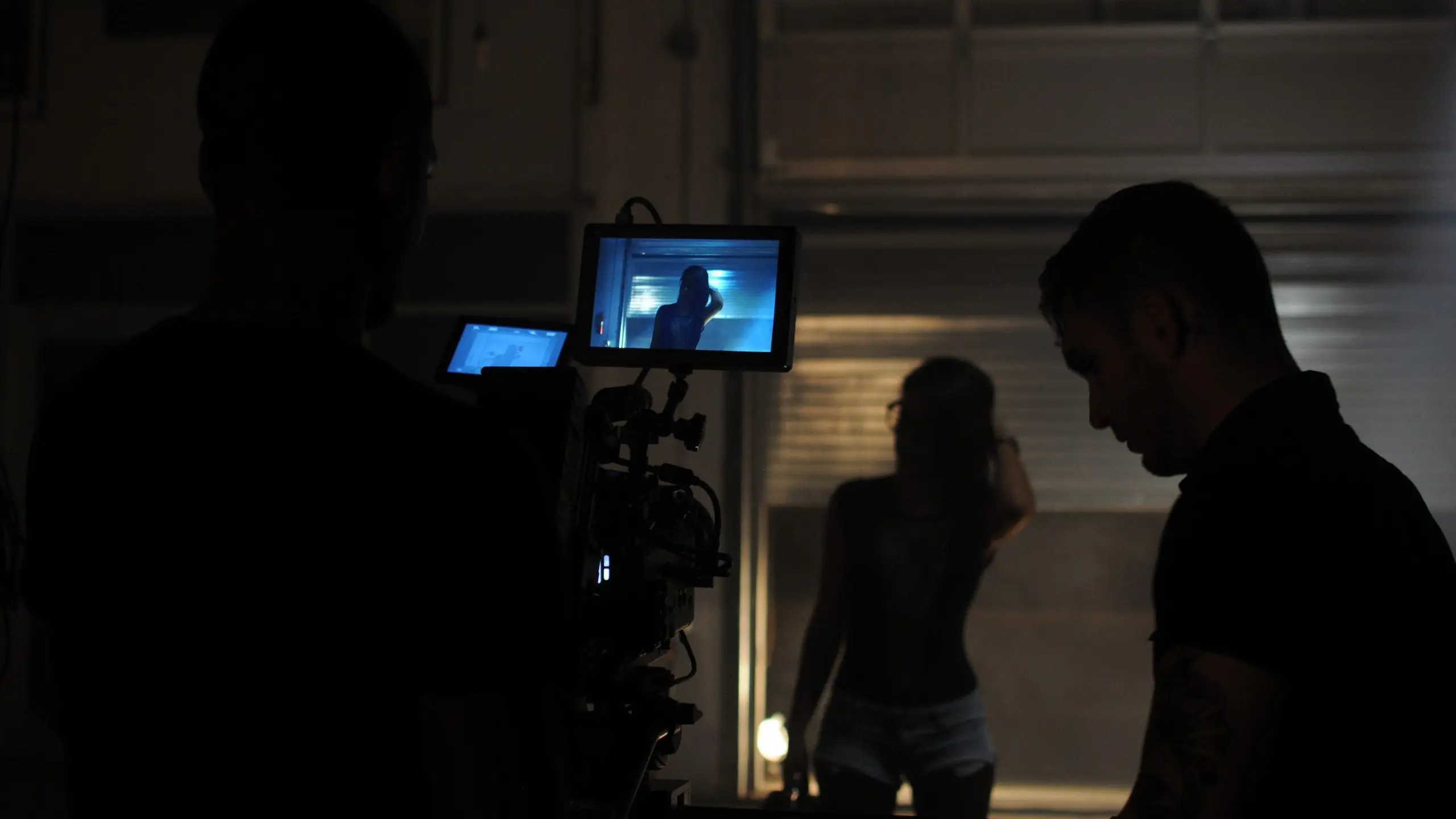
YouTube serves as a vast digital marketplace where businesses can showcase their products through videos, capturing the attention of its millions of users. By creating ads on this platform, companies have the opportunity to share their stories, highlight their products, and engage with potential customers. These ads can appear at various points during a video or even on the YouTube homepage, making them a potent tool for businesses to communicate their message and connect with their target audience.
In this article, we will explore the step-by-step process of creating effective [YouTube ads](https://c-istudios.com/content-creation-services/), covering everything from setting up your advertising account to optimizing your campaigns for the best results.
## I. Setting Up Your YouTube Advertising Account
To start advertising on [YouTube](https://www.youtube.com/), you need to link your YouTube channel to Google Ads. This might sound tricky, but it's actually pretty simple. Here's a step-by-step guide to get you started:
1. **Sign in to Google Ads**: First, you need to have a Google Ads account. If you don't have one, go to the Google Ads website and create one. Once you have an account, sign in.
2. **Navigate to Linked Accounts**: After signing in, look for the "Tools & Settings" icon at the top right corner of the page. Click on it, and a menu will appear. From that menu, select "Setup" and then choose "Linked accounts."
3. **Link Your YouTube Channel**: In the "Linked accounts" section, you'll see a list of different platforms that you can link to your Google Ads account. Find "YouTube" and click on the "Details" button next to it. Then, click on "Add Channel." You'll have two options: "Link a YouTube channel I own" or "Link someone else's YouTube channel." Choose the one that applies to you.
4. **Verify Ownership (If Needed)**: If you're linking a channel that you own, you'll need to verify that you're the owner. Google Ads will guide you through this process. You might need to sign in to your YouTube account to complete the verification.
5. **Set Permissions**: Once your channel is linked, you'll need to set permissions for what Google Ads can access. You can allow Google Ads to view and manage your YouTube videos, view YouTube analytics, and more. Choose the permissions that make sense for your advertising needs.
6. **Complete the Linking Process**: After setting the permissions, review everything to make sure it's correct. Then, click "Finish" or "Save" to complete the linking process.
II. Creating a New Video Ad Campaign
Now that your YouTube channel is linked with Google Ads, it's time to create a new video ad campaign. Here's a step-by-step guide to help you get started:
1. **Open Google Ads**: Sign in to your Google Ads account.
2. **Access the Campaigns Section**: On the left-hand side of the screen, you'll see a menu. Click on "Campaigns." This is where all your ad campaigns are managed.
3. **Start a New Campaign**: At the top of the "Campaigns" page, you'll find a blue plus button. Click on it and choose "New Campaign" from the dropdown menu.
4. **Choose Your Campaign Goal**: Google Ads will ask you to select a goal for your campaign. This could be anything from brand awareness, leads, to sales. Pick the one that aligns with what you want to achieve with your YouTube ads.
5. **Select the Campaign Type**: Since you're creating a YouTube ad, choose "Video" as your campaign type. This tells Google Ads that you want your ads to appear on YouTube.
6. **Choose a Campaign Subtype**: After selecting the video campaign type, you'll need to choose a subtype. This determines how your ad will be shown on YouTube. Some common subtypes include:
- **Custom Video Campaign**: Gives you more control over settings and targeting options.
- **Skippable In-stream**: Allows viewers to skip your ad after 5 seconds. You only pay if they watch for at least 30 seconds or interact with your ad.
- **Non-Skippable In-stream**: Your ad can't be skipped, and it's usually 15 seconds or shorter.
**
**7.** Set Up Your Campaign**: After choosing your subtype, you'll need to fill in details like your campaign name, budget, and targeting options. Make sure to set these according to your advertising goals and audience.
8.** Create Your Ad Group**: Within your campaign, you'll create ad groups. Each ad group can have its own set of targeting criteria and ads. This helps you organize your ads and target different audiences effectively.
9.** Upload Your Video Ad**: Choose the video you want to use for your ad from your YouTube channel. Make sure it's engaging and delivers your message clearly.
10.** Configure Your Ad Settings**: Add a headline, description, and call-to-action to your ad. These are important because they tell viewers what you're offering and what you want them to do after watching your ad.
11.** Review and Launch**: Before you launch your campaign, review all the settings to make sure everything is correct. Once you're satisfied, click the "Launch" button to start your YouTube ad campaign.
Creating a new video ad campaign in Google Ads is a straightforward process once you get the hang of it. By following these steps, you'll be able to set up your YouTube ads and reach your target audience effectively.
## III. Choosing Your Ad Format
When you create a YouTube ad campaign, you have several ad formats to choose from. Each format serves a different purpose and can help you achieve different goals. Here's a breakdown of the most common YouTube ad formats:
**TrueView Ads (Skippable and Non-Skippable)**
TrueView ads are the most popular type of YouTube ads. They come in two flavors: skippable and non-skippable. Skippable TrueView ads allow viewers to skip the ad after 5 seconds, while non-skippable TrueView ads must be watched in their entirety. TrueView ads are great for increasing brand awareness and engagement, as you only pay when viewers choose to watch your ad.
**Bumper Ads**
Bumper ads are short, non-skippable video ads that are up to 6 seconds long. They're designed to be quick and impactful, making them perfect for reaching a wide audience and increasing brand recall. Since they're short, they're less likely to annoy viewers, and they work well when paired with longer ad formats.
**Display Ads (Overlay and Image)**
Display ads appear on the YouTube platform in various forms. Overlay ads are semi-transparent banners that appear at the bottom of a video, while image display ads show up on the right side of the video player or below it on mobile devices. These ads are great for driving traffic to your website or product pages.
**Masthead Ads**
Masthead ads are large, prominent ads that appear at the top of the YouTube homepage. They're available on a reservation basis and are charged on a fixed cost per day or cost per thousand impressions (CPM) basis. Masthead ads are excellent for reaching a massive audience and creating a big impact in a short period.
**Shoppable Ads**
Shoppable ads are a relatively new format that allows viewers to shop for products directly from the ad. These ads include browsable images underneath the video ad, which can link to your product pages. Shoppable ads are perfect for driving sales and conversions, especially for e-commerce businesses.
IV. Setting Your Budget and Bidding Strategy
Deciding how much money to spend on your YouTube ads and how you'll bid for ad views or clicks is a crucial part of your campaign. Here's how to set your budget and bidding strategy:
**Define Your Campaign Goal and Duration**
Before setting a budget, be clear about what you want to achieve with your YouTube ads. Do you want more people to know about your brand (brand awareness), get more leads, or increase sales? Also, decide how long your campaign will run. Will it be a short-term push for a specific event or a long-term effort to grow your audience?
**Choose Your Bid Strategy**
Your bid strategy depends on your campaign goal. If your main aim is to get people to watch your ads (brand awareness), you might choose Maximum CPV (Cost Per View), where you pay each time someone watches your ad. If you want to make sure your ad is seen a lot (reach), you might go for Target CPM (Cost Per Thousand Impressions), where you pay for every thousand times your ad is shown.
For campaigns focused on getting people to take action, like visiting your website or buying a product (conversions), Target CPA (Cost Per Action) could be a better fit.
**Set a Daily or Total Campaign Budget**
Decide how much you're willing to spend on your YouTube ads each day (daily budget) or for the whole campaign (total budget). A daily budget helps spread your spending evenly over time, while a total budget sets a limit for the entire campaign. If you're just starting out, you might want to begin with a smaller budget and increase it as you see results.
VI. Targeting Your Audience
To make sure your YouTube ads reach the right people, you need to target your audience effectively. Here are some ways to do that:
**Demographics**: You can target your ads based on basic demographic information like age, gender, parental status, and household income. For example, if you're selling toys, you might target parents with young children.
**Affinity Audiences**: These are groups of people who have shown an interest in topics related to your business. For instance, if you're promoting a fitness app, you can target people who are interested in health and fitness.
**In-market Audiences**: This targets users who are actively researching or planning to buy products or services like yours. If you're selling kitchen appliances, you can target people who are looking to buy a new blender or oven.
**Custom Audiences**: You can create custom audiences based on people who have interacted with your business before. This includes remarketing to people who have visited your website, targeting similar audiences (people who resemble your existing customers), and combining different audience segments for more precise targeting.
**Geographic and Language Targeting**: You can choose to show your ads to people in specific countries, regions, or cities, and in specific languages. This is especially useful if your business serves a particular area or if your ads are in a non-English language.
**Content Exclusions**: You can also decide where your ads won't appear. For example, you might choose to exclude your ads from appearing on videos with sensitive content or on certain types of websites to ensure your brand is associated with appropriate content.
## VII. Creating Your Ad Creative
Keep your YouTube ads short (15-30 seconds) and start with something that grabs attention. Use storytelling to connect with your audience and clearly highlight what makes your offering unique. Include a clear call-to-action so viewers know what to do next. Invest in high-quality visuals and ensure your ad can be understood without sound. Finally, test different versions of your ad to see what works best with your audience.
When writing a headline and description for your video ad, it's important to keep them short and to the point, ensuring they are easily digestible for the viewer. Including relevant keywords can help improve the visibility and relevance of your ad. Focusing on the benefits of your product or service can entice viewers and create a compelling reason for them to learn more. Creating a sense of urgency with phrases like "Limited time offer" or "Act now" can encourage viewers to take immediate action. Lastly, making your headline and description relevant to your target audience and the content of your video ensures that your message resonates with the right people.
**Choosing a Focus Keyword and Adding Video Tags**
Selecting a focus keyword is a critical step in optimizing your YouTube video for search. This keyword should be a term that potential viewers are likely to use when searching for content related to your video. It should be relevant to the video's content and reflect the language your target audience uses. Once you've chosen a focus keyword, incorporate it naturally into your video's title, description, and tags.
**Designing an Engaging YouTube Thumbnail**
The thumbnail is often the first thing viewers notice about your video, so it's crucial to make it visually appealing and relevant to the video's content. Use high-resolution images with bright, contrasting colors to grab attention. Incorporating text into your thumbnail can also be effective, but keep it minimal and ensure it's readable even at a small size. The text should complement the video's title and highlight what viewers can expect from the video.
**VII. Launching Your Campaign**
Before launching your YouTube ad campaign, take a moment to review all your campaign settings. Make sure that your targeting options, budget, bidding strategy, ad format, and creative elements are all set according to your campaign goals. Double-check the details to ensure everything is correct and aligned with your objectives.
Once you're confident with your campaign settings, it's time to set your ad schedule. Decide when you want your ads to start and end, and consider if you want them to run continuously or only at specific times of the day or week. After setting your schedule, you can launch your campaign. Keep a close eye on its performance, tracking metrics like views, click-through rates, and conversions. Regularly monitor and adjust your campaign as needed to optimize its effectiveness and achieve your desired results.
**VIII. Optimizing Your YouTube Ads**
To optimize your YouTube ads, start by analyzing your campaign's performance data. Look at metrics such as view rate, click-through rate, and conversion rate to understand how your ads are resonating with your audience. Based on this analysis, adjust your targeting options to better reach your desired audience.
You might refine your demographic targeting, experiment with different affinity or in-market audiences, or adjust your geographic targeting to focus on areas where your ads perform best.
In addition to targeting, focus on refining your ad creatives and messaging. Test different versions of your ads to see which visuals, messages, and calls-to-action resonate most with your audience. Consider leveraging remarketing and custom audiences to re-engage viewers who have previously interacted with your brand.
## Unlock the Power of YouTube Advertising with C&I Studios
Looking to create effective YouTube ads that resonate with your audience and drive results? Look no further than [C&I Studios](https://c-istudios.com/), a full-service creative agency specializing in [video production](https://c-istudios.com/video-production-services/) and digital marketing. With a [portfolio](https://c-istudios.com/our-work/) showcasing a range of successful projects, C&I Studios has the expertise to bring your vision to life. From crafting compelling ad creatives to optimizing your campaigns for maximum impact, their team is dedicated to helping your brand stand out on YouTube.
Ready to take your YouTube advertising to the next level? [Contact](https://c-istudios.com/contact/) C&I Studios today and discover how their services can elevate your digital marketing strategy.
## Work with C&I Studios
If you are planning a project like this, our team can take it from concept to final delivery. Explore our [video production services](https://c-istudios.com/video-production-services/), browse [our work](https://c-istudios.com/our-work/) to see how we tell brand stories, and [get in touch](https://c-istudios.com/contact/) when you are ready to start.
Originally published March 7, 2024
---
*This content is from [C&I Studios](https://c-istudios.com), a full-service production company.*
---
# The Impact of COVID-19 on Media Production: Lessons Learned and Innovations
> Published: March 6, 2024
> Categories: Web & Tech
> Source: https://c-istudios.com/the-impact-of-covid-19-on-media-production-lessons-learned-and-innovations/
---
.cib{--paper:#1b1d1f;--ink:#fff;--body:#d5d7d9;--muted:#8b9096;--line:rgba(255,255,255,.12);--thumb:#2b2e31;--card:#212426;--accent:#c02b0a;--blue:#5B8FA8;--serif:'Playfair Display',Georgia,serif;--sans:'Poppins',-apple-system,sans-serif;--measure:900px;background:var(--paper);color:var(--body);font-family:var(--sans);line-height:1.6;position:relative;left:50%;transform:translateX(-50%);width:90vw;max-width:1920px}
.cib *{box-sizing:border-box}
.cib .kicker{max-width:var(--measure);margin:58px auto 0;padding:0 22px;font-size:12.5px;font-weight:700;letter-spacing:2.5px;text-transform:uppercase;color:var(--blue)}
.cib h1.cibh1{text-wrap:balance;font-family:var(--serif);font-weight:500;font-size:clamp(46px,6vw,72px);line-height:1.08;color:var(--ink);max-width:var(--measure);margin:18px auto 0;padding:0 22px;letter-spacing:-.5px}
.cib .metarow{max-width:var(--measure);margin:20px auto 0;padding:0 22px;color:var(--muted);font-size:14px}
.cib .hero{position:relative;width:100%;height:0;padding-bottom:56.25%;overflow:hidden;margin:48px auto 0;border-top:1px solid var(--line);border-bottom:1px solid var(--line)}
.cib .hero .ph{width:100%;aspect-ratio:16/9;background:var(--thumb);border-top:1px solid var(--line);border-bottom:1px solid var(--line);display:flex;align-items:center;justify-content:center;color:#7d8288;font-size:13px;text-align:center;padding:0 20px}
.cib .body{max-width:var(--measure);margin:12px auto 0;padding:52px 22px 6px}
.cib .body.lead p:first-child{font-size:23px;line-height:1.62;color:var(--ink)}
.cib .body p{font-size:18.5px;line-height:1.85;margin:0 0 30px;color:var(--body)}
.cib .body h2{text-wrap:balance;font-family:var(--serif);font-weight:500;font-size:clamp(32px,4vw,48px);line-height:1.22;color:var(--ink);margin:70px 0 20px;letter-spacing:-.3px}
.cib .body h3{text-wrap:balance;font-family:var(--sans);font-weight:600;font-size:22px;color:var(--ink);margin:38px 0 8px}
.cib .body a{color:var(--ink);text-decoration:underline;text-decoration-color:rgba(255,255,255,.4);text-underline-offset:3px}
.cib .body a:hover{text-decoration-color:var(--ink)}
.cib .ctable{width:100%;border-collapse:collapse;margin:16px 0 30px;font-size:16px}
.cib .ctable th{background:#000;color:#fff;text-align:left;padding:10px 12px;font-family:var(--sans)}
.cib .ctable td{padding:10px 12px;border-bottom:1px solid var(--line);color:var(--body)}
.cib .inimg{position:relative;width:100%;height:0;padding-bottom:56.25%;overflow:hidden;margin:72px auto;border-top:1px solid var(--line);border-bottom:1px solid var(--line)}
.cib .inimg .ph{width:100%;aspect-ratio:16/9;background:var(--thumb);border-top:1px solid var(--line);border-bottom:1px solid var(--line);display:flex;align-items:center;justify-content:center;color:#7d8288;font-size:13px}
.cib .origpub{max-width:var(--measure);margin:60px auto 0;padding:26px 22px 0;border-top:1px solid var(--line);color:var(--muted);font-size:13.5px}
.cib .related{max-width:1200px;margin:64px auto 0;padding:34px 22px 76px}
.cib .related h3{font-family:var(--sans);font-size:12.5px;letter-spacing:2px;text-transform:uppercase;color:var(--ink);margin:0 0 24px}
.cib .grid{display:grid;grid-template-columns:repeat(3,1fr);gap:28px}
.cib .rc{background:var(--card);border:1px solid var(--line);display:block;text-decoration:none;color:inherit;transition:border-color .15s}
.cib a.rc:hover{border-color:rgba(255,255,255,.5)}
.cib .rc .thumb{position:relative;width:100%;height:0;padding-bottom:56.25%;background:var(--thumb);overflow:hidden}
.cib .rc .thumb img{position:absolute!important;top:0!important;left:0!important;width:100%!important;height:100%!important;object-fit:cover!important;margin:0!important}
.cib .rc .cc{padding:14px 15px 17px}
.cib .rc .rt{font-family:var(--serif);font-weight:500;font-size:16px;line-height:1.3;color:var(--ink);margin:0 0 6px}
.cib .rc .rm{font-size:11px;letter-spacing:1px;text-transform:uppercase;color:var(--muted)}
.cib img{margin:0!important;padding:0!important;display:block!important;vertical-align:top;max-width:100%}
.cib .hero img,.cib .inimg img{position:absolute!important;top:0!important;left:0!important;width:100%!important;height:100%!important;object-fit:cover!important;margin:0!important;padding:0!important;border:0!important;display:block!important;aspect-ratio:auto!important}
.cib .hero+.body{padding-top:36px}
@media(max-width:760px){.cib .grid{grid-template-columns:1fr}.cib .body h2{margin:52px 0 16px}.cib .body p{font-size:17.5px}.cib .inimg,.cib .hero{margin-top:44px}}
.cib .vembed{max-width:var(--measure);margin:44px auto;padding:0 22px}.cib .vembed .vwrap{position:relative;width:100%;height:0;padding-bottom:56.25%}.cib .vembed .vwrap iframe{position:absolute;top:0;left:0;width:100%;height:100%;border:0}
Web & Tech
# The Impact of COVID-19 on Media Production. Lessons Learned and Innovations
11 min read

The COVID-19 pandemic, a global health crisis, has had a profound impact on various industries, including media production. Originating in late 2019, the virus quickly spread across the world, leading to lockdowns, social distancing measures, and significant disruptions to daily life and business operations.
In the realm of media production, the pandemic brought about immediate challenges. Film sets were shut down, release dates were postponed, and the industry faced an uncertain future. This article will explore the impact of COVID-19 on media production, highlighting the lessons learned and the innovations that emerged during this unprecedented time.
## Immediate Effects of COVID-19 on Media Production
- **Shutdowns and Delays in Production**
The immediate impact of COVID-19 on media production was significant. Governments around the world imposed lockdowns and social distancing measures to curb the spread of the virus. This led to the abrupt shutdown of film sets, television studios, and other production facilities. Major productions, from blockbuster movies to popular TV shows, were either postponed or halted indefinitely.
The delays in production had a ripple effect on release schedules, with many anticipated titles being pushed back by months or even years. This disruption not only affected the creators and cast members but also had financial implications for studios and production companies, which faced losses due to halted operations and uncertainty about future projects.
- **Financial Implications for Studios and Production Companies**
The financial impact of COVID-19 on media production was profound and far-reaching. Studios and production companies faced a myriad of financial challenges as the pandemic brought production activities to a standstill. The sudden halt in production meant a significant loss of revenue for these companies, which rely heavily on the continuous creation and distribution of content. The implications of these shutdowns were not limited to immediate revenue loss but also extended to the broader financial health of the industry.
The costs associated with shutting down production sites safely were substantial. Companies had to implement new health and safety protocols, which included regular testing, personal protective equipment, and other measures to protect cast and crew members. These added expenses further strained the already tight budgets of production companies.
Maintaining facilities during the shutdown period also contributed to the financial burden. Studios and production houses had to bear the costs of keeping their facilities in good condition, even though they were not in use. This included rent or mortgage payments, utilities, and security, among other expenses.
The pandemic also had a significant impact on the workforce within the media production industry. Many crew members, actors, and support staff found themselves out of work due to the halted productions. While some companies were able to provide financial support to their employees during this period, others had to resort to layoffs and furloughs to manage the financial strain.
The uncertainty brought about by the pandemic made it difficult for studios and production companies to plan for future projects. With no clear end in sight, companies were hesitant to commit to new productions, leading to a backlog of projects and further financial instability.
The cumulative effect of these challenges was a significant blow to the overall economic health of the media production industry. The financial implications of the pandemic extended beyond the immediate losses experienced during the shutdown period. Companies had to reassess their financial strategies, seek out new funding sources, and adapt to a rapidly changing landscape. The long-term effects of these financial challenges are still unfolding, as the industry continues to navigate the ongoing uncertainties of the pandemic.
- **Shift to Remote Work and Challenges Faced**
The COVID-19 pandemic forced many industries, including media production, to shift to remote work. This transition presented unique challenges for an industry that traditionally relies on in-person collaboration and physical sets.
### Technical Limitations
One of the main challenges was the technical limitations of remote work. Bandwidth issues, lack of access to high-quality equipment, and difficulties in remote editing and post-production processes posed significant hurdles. Teams had to quickly adapt to new software and workflows, often with limited training.
### Communication and Collaboration
Remote work also impacted communication and collaboration. The spontaneity of on-set problem-solving and creative brainstorming was harder to replicate online. Teams had to find new ways to maintain clear communication and ensure that everyone was aligned on project goals and deadlines.
### Security Concerns
Security became a major concern with the shift to remote work. The risk of data breaches and leaks increased as sensitive material was shared across potentially insecure home networks. Production companies had to strengthen their cybersecurity measures to protect intellectual property.
### Maintaining Creativity
Another challenge was maintaining creativity and inspiration in a remote setting. The energy and dynamics of a physical set can be crucial for creative processes, and replicating this atmosphere virtually proved to be difficult for some teams.
### Adapting to New Roles
The shift also required team members to adapt to new roles and responsibilities. With the lines between different stages of production blurring, individuals had to take on tasks outside their usual scope, requiring flexibility and a willingness to learn.
Overall, the transition to remote work in media production was a complex process, requiring quick adaptation and innovative solutions to overcome the challenges posed by the pandemic.
## Innovations in Media Production
- **Virtual Production**
Virtual production emerged as a groundbreaking innovation in media production during the pandemic. This technology utilizes advanced computer graphics and real-time rendering to create lifelike backgrounds and environments. By leveraging virtual production, filmmakers can shoot scenes in controlled studios while simulating various locations.
This approach significantly reduces the need for travel and large on-set crews, making it a safer and more efficient way to produce content during the pandemic. The technology has not only helped the industry adapt to the challenges of COVID-19 but also opened up new possibilities for creative storytelling and [production](https://c-istudios.com/video-production-services/) methods.
- **Remote Editing**
Remote editing has emerged as a widespread practice, particularly during the COVID-19 pandemic, transforming the way post-production work is carried out in the film and media industry. This approach involves editors working from their homes or other remote locations, utilizing cloud-based platforms and collaborative software to perform their tasks. This shift has not only ensured the continuity of post-production work despite lockdowns and restrictions but has also introduced a range of new efficiencies and advantages to the editing process.
One of the primary benefits of remote editing is its flexibility. Editors can work from anywhere, as long as they have access to the necessary software and files. This flexibility has allowed for a more diverse workforce, with editors from around the world able to collaborate on projects without the need for travel. It has also enabled editors to work outside of traditional office hours, accommodating different time zones and schedules.
Additionally, remote editing has streamlined the workflow in many ways. Cloud-based platforms allow editors to access files and collaborate in real-time, eliminating the need to transfer large files back and forth. This has reduced the risk of version control issues and has made the editing process more efficient and collaborative.
Furthermore, remote editing has had a positive impact on work-life balance for many editors. Working from home has eliminated the need for commuting, saving time and reducing stress. It has also allowed editors to create a more personalized and comfortable working environment, which can lead to increased productivity and creativity.
- **Live Streaming**
Live streaming has become a vital tool in media production, especially during the pandemic when in-person events were restricted. Platforms like Zoom, Twitch, and YouTube allowed creators to connect with audiences through live performances, interviews, and events. This shift not only provided a way to continue engagement but also introduced new possibilities for content distribution and creative storytelling. The technology enabled real-time interaction, broadening the reach of events and allowing for a more immersive experience for viewers.
The rise of [live streaming](https://c-istudios.com/video-audio-live-streaming/) during the pandemic has led to a significant shift in media production. Platforms like Zoom, Twitch, and YouTube have become essential tools for broadcasting live events, performances, and interviews. This technology has allowed creators to maintain engagement with their audiences, even when in-person events were not possible. Live streaming has also opened up new opportunities for creative storytelling and content distribution, enabling real-time interaction and broadening the reach of events.
The adoption of live streaming during the pandemic has reshaped media production, enabling creators to engage with audiences in new ways. Platforms like Zoom, Twitch, and YouTube facilitated real-time interaction, expanding the reach of events and allowing for immersive viewer experiences. This shift has not only helped the industry navigate the challenges of the pandemic but has also paved the way for innovative storytelling and content distribution methods.
1. **Changes in Content Creation and Distribution**
The pandemic has led to significant changes in [content creation](https://c-istudios.com/content-creation-services/) and distribution. With the shift to remote work, creators have had to adapt to new production methods and workflows. This has resulted in a greater emphasis on digital content, as traditional forms of media production were disrupted. Additionally, the need for content that resonates with audiences during these challenging times has led to changes in the themes and messages of the content being produced. Distribution channels have also evolved, with a greater reliance on online platforms to reach audiences.
- **Rise of Streaming Services and Impact on Traditional Media**
The rise of streaming services has been accelerated by the pandemic, as more people turned to these platforms for entertainment during lockdowns. This surge in demand has led to increased competition among streaming services, with platforms investing heavily in original content to attract subscribers. The popularity of streaming services has had a significant impact on traditional media, such as television and cinema, challenging their dominance and forcing them to adapt to the changing landscape.
The shift towards streaming has also raised questions about the future of media consumption and the sustainability of traditional business models in the face of digital transformation.
## Lessons Learned from the Pandemic
- **Importance of Flexibility and Adaptability in Production**
The pandemic highlighted the critical need for flexibility and adaptability in media production. With the sudden onset of lockdowns and restrictions, productions had to quickly pivot to new ways of working. This included embracing remote production, adapting to changing health guidelines, and being open to innovative solutions. The ability to adjust to these unforeseen circumstances has proven to be a valuable lesson for the industry, demonstrating the importance of being prepared to adapt to any situation.
- **Need for robust contingency planning**
The pandemic underscored the necessity for robust contingency planning in media production. It became evident that having a well-thought-out plan for unforeseen events is crucial to ensure the continuity of production and minimize disruptions.
One key aspect of effective contingency planning is the ability to quickly shift to alternative production methods, such as remote work or virtual sets, when traditional methods are not feasible. This requires not only technological preparedness but also a flexible mindset among the production team.
Moreover, contingency planning should also consider financial aspects, ensuring that there are resources available to cover unexpected costs and mitigate financial risks. This includes having insurance policies that cover pandemic-related disruptions and setting aside emergency funds for crisis situations.
- **The value of investing in technology and innovation**
The pandemic highlighted the value of investing in technology and innovation in media production. Companies that had already embraced digital technologies were better positioned to adapt to the challenges posed by the pandemic. This investment in technology enabled them to quickly transition to remote work, leverage virtual production techniques, and continue creating content despite restrictions.
Innovation became a key driver for resilience and sustainability, pushing the industry to explore new ways of working and storytelling. The experience underscored the importance of staying ahead in technological advancements to navigate future challenges and stay competitive in a rapidly evolving industry.
## The Future of Media Production Post-COVID-19
** ****Long-term changes in production processes and workflows**
The future of media production post-COVID-19 is expected to see long-term changes in production processes and workflows. The pandemic has accelerated the adoption of remote work and digital technologies, which are likely to continue influencing the way content is created and distributed.
Virtual production, remote editing, and live streaming are just a few examples of innovations that have proven effective during the pandemic and are expected to become more integrated into standard production practices.
These changes not only enhance efficiency and flexibility but also open up new creative possibilities for storytelling and audience engagement. As the industry adapts to these new norms, we can anticipate a more technologically advanced and resilient media landscape in the post-pandemic world.
**Potential for continued remote work and virtual collaboration**
The potential for continued remote work and virtual collaboration in media production is significant. The pandemic has demonstrated the feasibility and benefits of these approaches, such as cost savings, flexibility, and access to a global talent pool. As technologies advance, virtual collaboration tools are expected to become more sophisticated, further enhancing the efficiency and creativity of remote teams.
This shift could lead to a more distributed and diverse media industry, with opportunities for innovation and collaboration beyond traditional geographic boundaries.
**Outlook for the media industry and future challenges**
The outlook for the media industry post-pandemic is one of cautious optimism, with future challenges ahead. The industry is expected to continue evolving, with an increased focus on digital transformation, content personalization, and audience engagement.
However, challenges such as adapting to changing consumer behaviors, ensuring data privacy, and managing the financial implications of the pandemic will require strategic planning and innovation. The industry's ability to navigate these challenges will shape its future success and resilience.
## Elevating Media Production in a Post-Pandemic World with C&I Studios
[C&I Studios](https://c-istudios.com/) is a leading media production company that has expertly navigated the challenges and innovations of the pandemic era. With a focus on creativity and adaptability, we offer a range of services, including virtual production and remote editing, to meet the evolving needs of the media industry.
Explore our diverse [portfolio](https://c-istudios.com/our-work/) and discover how we can bring your vision to life. [Contact us](https://c-istudios.com/contact/) to discuss your next project and learn more about our services. Join us in shaping the future of media production in a post-pandemic world.
## Work with C&I Studios
If you are planning a project like this, our team can take it from concept to final delivery. Explore our [AI video services](https://c-istudios.com/ai-video-services/), browse [our work](https://c-istudios.com/our-work/) to see how we tell brand stories, and [get in touch](https://c-istudios.com/contact/) when you are ready to start.
Originally published March 6, 2024
---
*This content is from [C&I Studios](https://c-istudios.com), a full-service production company.*
---
# Effective Storyboarding for Digital Animation: From Concept to Creation
> Published: March 4, 2024
> Categories: Film & TV
> Source: https://c-istudios.com/effective-storyboarding-for-digital-animation-from-concept-to-creation/
---
.cib{--paper:#1b1d1f;--ink:#fff;--body:#d5d7d9;--muted:#8b9096;--line:rgba(255,255,255,.12);--thumb:#2b2e31;--card:#212426;--accent:#c02b0a;--blue:#5B8FA8;--serif:'Playfair Display',Georgia,serif;--sans:'Poppins',-apple-system,sans-serif;--measure:900px;background:var(--paper);color:var(--body);font-family:var(--sans);line-height:1.6;position:relative;left:50%;transform:translateX(-50%);width:90vw;max-width:1920px}
.cib *{box-sizing:border-box}
.cib .kicker{max-width:var(--measure);margin:58px auto 0;padding:0 22px;font-size:12.5px;font-weight:700;letter-spacing:2.5px;text-transform:uppercase;color:var(--blue)}
.cib h1.cibh1{text-wrap:balance;font-family:var(--serif);font-weight:500;font-size:clamp(46px,6vw,72px);line-height:1.08;color:var(--ink);max-width:var(--measure);margin:18px auto 0;padding:0 22px;letter-spacing:-.5px}
.cib .metarow{max-width:var(--measure);margin:20px auto 0;padding:0 22px;color:var(--muted);font-size:14px}
.cib .hero{position:relative;width:100%;height:0;padding-bottom:56.25%;overflow:hidden;margin:48px auto 0;border-top:1px solid var(--line);border-bottom:1px solid var(--line)}
.cib .hero .ph{width:100%;aspect-ratio:16/9;background:var(--thumb);border-top:1px solid var(--line);border-bottom:1px solid var(--line);display:flex;align-items:center;justify-content:center;color:#7d8288;font-size:13px;text-align:center;padding:0 20px}
.cib .body{max-width:var(--measure);margin:12px auto 0;padding:52px 22px 6px}
.cib .body.lead p:first-child{font-size:23px;line-height:1.62;color:var(--ink)}
.cib .body p{font-size:18.5px;line-height:1.85;margin:0 0 30px;color:var(--body)}
.cib .body h2{text-wrap:balance;font-family:var(--serif);font-weight:500;font-size:clamp(32px,4vw,48px);line-height:1.22;color:var(--ink);margin:70px 0 20px;letter-spacing:-.3px}
.cib .body h3{text-wrap:balance;font-family:var(--sans);font-weight:600;font-size:22px;color:var(--ink);margin:38px 0 8px}
.cib .body a{color:var(--ink);text-decoration:underline;text-decoration-color:rgba(255,255,255,.4);text-underline-offset:3px}
.cib .body a:hover{text-decoration-color:var(--ink)}
.cib .ctable{width:100%;border-collapse:collapse;margin:16px 0 30px;font-size:16px}
.cib .ctable th{background:#000;color:#fff;text-align:left;padding:10px 12px;font-family:var(--sans)}
.cib .ctable td{padding:10px 12px;border-bottom:1px solid var(--line);color:var(--body)}
.cib .inimg{position:relative;width:100%;height:0;padding-bottom:56.25%;overflow:hidden;margin:72px auto;border-top:1px solid var(--line);border-bottom:1px solid var(--line)}
.cib .inimg .ph{width:100%;aspect-ratio:16/9;background:var(--thumb);border-top:1px solid var(--line);border-bottom:1px solid var(--line);display:flex;align-items:center;justify-content:center;color:#7d8288;font-size:13px}
.cib .origpub{max-width:var(--measure);margin:60px auto 0;padding:26px 22px 0;border-top:1px solid var(--line);color:var(--muted);font-size:13.5px}
.cib .related{max-width:1200px;margin:64px auto 0;padding:34px 22px 76px}
.cib .related h3{font-family:var(--sans);font-size:12.5px;letter-spacing:2px;text-transform:uppercase;color:var(--ink);margin:0 0 24px}
.cib .grid{display:grid;grid-template-columns:repeat(3,1fr);gap:28px}
.cib .rc{background:var(--card);border:1px solid var(--line);display:block;text-decoration:none;color:inherit;transition:border-color .15s}
.cib a.rc:hover{border-color:rgba(255,255,255,.5)}
.cib .rc .thumb{position:relative;width:100%;height:0;padding-bottom:56.25%;background:var(--thumb);overflow:hidden}
.cib .rc .thumb img{position:absolute!important;top:0!important;left:0!important;width:100%!important;height:100%!important;object-fit:cover!important;margin:0!important}
.cib .rc .cc{padding:14px 15px 17px}
.cib .rc .rt{font-family:var(--serif);font-weight:500;font-size:16px;line-height:1.3;color:var(--ink);margin:0 0 6px}
.cib .rc .rm{font-size:11px;letter-spacing:1px;text-transform:uppercase;color:var(--muted)}
.cib img{margin:0!important;padding:0!important;display:block!important;vertical-align:top;max-width:100%}
.cib .hero img,.cib .inimg img{position:absolute!important;top:0!important;left:0!important;width:100%!important;height:100%!important;object-fit:cover!important;margin:0!important;padding:0!important;border:0!important;display:block!important;aspect-ratio:auto!important}
.cib .hero+.body{padding-top:36px}
@media(max-width:760px){.cib .grid{grid-template-columns:1fr}.cib .body h2{margin:52px 0 16px}.cib .body p{font-size:17.5px}.cib .inimg,.cib .hero{margin-top:44px}}
.cib .vembed{max-width:var(--measure);margin:44px auto;padding:0 22px}.cib .vembed .vwrap{position:relative;width:100%;height:0;padding-bottom:56.25%}.cib .vembed .vwrap iframe{position:absolute;top:0;left:0;width:100%;height:100%;border:0}
Film & TV
# Effective Storyboarding for Digital Animation. From Concept to Creation
9 min read

Storyboarding in digital animation is very important. It's like a visual story that helps the team see and improve the story from the start to the end. It helps everyone agree on the same idea. This step also helps save money by reducing the need for changes later on. By carefully planning each scene, animators can use digital tools better. So, storyboarding is a key step in turning creative ideas into exciting animated stories.
In this article, we will explore the fundamentals, processes, and best practices of effective storyboarding in the digital animation landscape.
## Understanding Storyboarding
Storyboarding is a visual representation of how a story will unfold, scene by scene. It's a crucial part of the pre-production process in [animation](https://c-istudios.com/vfx-compositing-and-animation-services/), serving as a bridge between initial concept and final animation. Storyboards outline the sequence of events, camera angles, transitions, and pacing, enabling animators and directors to visualize and refine the story before moving into more resource-intensive stages of production.
The history of storyboarding traces back to the early 20th century, with its roots often attributed to the Walt Disney studio during the 1930s. It was initially adopted as a tool to visualize animated sequences, but its utility soon made it a standard practice in [film production](https://c-istudios.com/film-and-tv-production/) as well. Over the decades, as animation evolved from traditional hand-drawn techniques to digital platforms, storyboarding adapted too. Digital tools and software have transformed storyboarding, making it more efficient and allowing for greater flexibility in editing and sharing.
A storyboard typically includes several key elements:
- **Panels**: These are individual frames that depict a specific moment in the animation. They are akin to a comic strip, illustrating key scenes and actions.
- **Descriptions**: Each panel comes with descriptive notes explaining what's happening in the scene, including character movements, expressions, and any important props.
- **Dialogue**: If the scene includes dialogue, it is often written below the panel. This helps in planning the timing and expression of the characters.
- **Camera Angles and Movement**: Notes on camera angles and movements are included to guide the filming process. This might include pans, zooms, and cuts between scenes.
- **Timing**: Indications of the timing for each scene help in planning the pace of the narrative and ensuring synchronization with the soundtrack or dialogue.
Understanding these elements is fundamental to creating an effective storyboard that serves as a blueprint for the animation process. By meticulously planning each scene, animators can ensure that their vision is clearly communicated and effectively realized in the final product.
## The Pre-Storyboarding Phase
Before a storyboard can take shape, the pre-storyboarding phase lays the groundwork for a project’s narrative and visual direction. This initial stage is critical, as it involves the development of the core idea that will drive the animation’s story, characters, and settings.
### Concept Development. Ideation and Theme Setting
The journey begins with concept development, where broad strokes of the story are painted through brainstorming sessions, discussions, and research. This is where the creative team, comprising writers, directors, and sometimes animators, come together to explore various ideas and themes.
The goal is to settle on a compelling concept that offers both originality and emotional resonance with the intended audience. Ideation involves generating a plethora of ideas without judgment, allowing creativity to flow freely.
Themes are then extracted from these ideas, providing a focused narrative direction that encapsulates the essence of the story. This theme will guide the project, influencing everything from character development to visual style, ensuring consistency and depth throughout the narrative.
### Scriptwriting. Translating the Concept into a Narrative
Once a concept and theme are established, [scriptwriting](https://c-istudios.com/content-creation-services/) begins. This process translates the abstract ideas into a concrete narrative, outlining the plot, character arcs, dialogues, and scene transitions.
The script serves as the backbone of the animation, detailing the sequence of events and how they unfold. Writing a script requires a deep understanding of storytelling principles, character development, and pacing.
The script must balance exposition, action, and character development to keep the audience engaged from beginning to end. It also needs to be flexible enough to allow for changes that might be necessitated by visual storytelling needs that emerge during the storyboarding process.
### Visual Research. Collecting References and Inspiration
Parallel to scriptwriting, visual research is conducted to gather references and inspiration that will influence the animation’s visual style. This can include studying other animations, films, artwork, photographs, and real-life observations to create a visual library that will inform the design of characters, settings, and atmospheres. Visual research helps in establishing a cohesive aesthetic for the animation, ensuring that every element from the colour palette to the lighting contributes to the overall mood and tone set by the concept and script.
It’s also a time for experimentation, where different visual styles can be explored to find the most effective way to bring the story to life. This phase is crucial for artists and animators, as it provides a solid foundation of visual references that guide their creative decisions throughout the production process.
The pre-storyboarding phase is a collaborative effort that requires creativity, research, and planning. It sets the stage for the storyboard to come to life, ensuring that the animation project has a strong narrative and visual foundation to build upon. By meticulously developing the concept, script, and visual style, the creative team ensures that the animation will not only be coherent and engaging but will also resonate with its intended audience.
## Creating the Storyboard
Transitioning from the conceptual phase to actual storyboard creation marks a pivotal moment in the animation process. This stage involves translating the script and visual concepts into a series of frames that depict the narrative flow. Let's delve into the tools, techniques, and steps involved in crafting your first storyboard.
### Tools and Software for Digital Storyboarding
The evolution of digital tools has revolutionized storyboarding, offering a range of software designed to streamline the process. Popular options include Adobe Storyboard, Toon Boom Storyboard Pro, and Storyboard That. These tools cater to different needs, from professional studio productions to individual creators. They offer features like drag-and-drop panels, extensive art libraries, and the ability to import scripts directly.
Choosing the right software depends on your project's complexity, budget, and personal preference. These digital tools not only enhance efficiency but also provide flexibility in editing and collaboration, essential in today’s fast-paced production environments.
### Step-by-Step Guide to Creating Your First Storyboard
1. **Sketching the Initial Panels**: Start with rough sketches that outline the key scenes of your narrative. Focus on framing and composition, capturing the essence of each scene without getting bogged down in details. Use basic shapes to represent characters and environments. At this stage, the goal is to get your ideas down visually, establishing the sequence of events.
2. **Adding Dialogue and Descriptions**: Once the basic panels are in place, add dialogue and brief descriptions. This includes character speech, important sound effects, and notes on movement or expressions not immediately apparent from the sketches alone. These annotations will guide animators and voice actors, providing context for each scene.
3. **Visual Storytelling Techniques**: Effective storyboarding employs visual storytelling techniques to convey emotion and narrative without relying solely on dialogue. This includes the use of perspective to create a sense of depth, contrasting scales to emphasize importance, and selective framing to direct the viewer's focus. Experiment with these techniques to find the most compelling way to tell your story visually.
4. **Tips for Effective Visual Communication**: **Camera Angles**: Use varied camera angles to add dynamism to your story. High angles can make characters appear vulnerable, while low angles can convey power.
5. **Motion**: Indicate motion through dynamic poses and lines of action. This helps convey the direction and nature of movement.
6. **Expressions**: Facial expressions and body language are powerful tools for showing a character's emotions and reactions. Even in rough sketches, aim to capture the essence of each character’s emotional state.
Remember, storyboarding is a fluid process that may require multiple iterations. Be open to revising your boards as the project evolves, ensuring your storyboard remains aligned with your vision and the needs of the production team.
## From Storyboard to Animation
Transitioning from storyboard to animation is a pivotal phase where the conceptual groundwork and visual planning begin to take tangible form. This process is iterative, collaborative, and involves several key steps to ensure the storyboard accurately translates into animated sequences.
### Storyboard Revisions. Incorporating Feedback and Refining the Storyboard
After the initial storyboard is created, it undergoes a series of revisions. This step is crucial for refining the story's flow, visual aesthetics, and narrative clarity. Feedback is solicited from various stakeholders, including directors, writers, and sometimes even focus groups, to identify areas for improvement.
Revisions might involve altering the pacing, sequencing scenes for better narrative flow, or adjusting visual elements that do not translate well into animation. This iterative process ensures that the storyboard is as polished and precise as possible before moving into the animation phase.
### Animatic Creation. Turning the Storyboard into a Preliminary Animation
The next step is the creation of an animatic, which is essentially a preliminary version of the animation. Animations are created by adding motion to the storyboard panels along with the preliminary sound track, including dialogue, music, and sound effects. This provides a rough but dynamic preview of how the final animation will look and feel.
Creating an animatic helps in identifying timing issues, ensuring that the narrative pacing matches the storyboard, and allows for adjustments in timing and motion before full-scale animation begins. It's a cost-effective way to test and refine the animation's flow, rhythm, and overall storytelling.
### Collaboration between Storyboard Artists and Animators
A key to successful animation is the collaboration between storyboard artists and animators. This partnership ensures that the vision outlined in the storyboard is faithfully translated into animation. Storyboard artists must communicate their vision clearly, often including notes on motion, timing, and camera angles, to guide animators.
Animators, in turn, provide feedback on the feasibility of certain scenes or suggest modifications that could enhance the animation. This collaborative effort is essential for resolving any discrepancies between the storyboard and the animation, ensuring that the final product is cohesive and aligns with the initial vision.
The transition from storyboard to animation is a complex process that requires attention to detail, collaboration, and flexibility. By carefully revising the storyboard, creating an animatic, and fostering a collaborative environment between storyboard artists and animators, teams can ensure that the final animation is engaging, visually appealing, and true to the original concept. This phase marks the culmination of planning and the beginning of bringing the story to life through animation.
## Advanced Storyboarding Techniques
Moving forward in storyboarding needs a mix of art skill, story knowledge, and tech know-how. By using advanced storyboard methods, creators can make their storytelling better, fill their panels with more emotion and tension, and use colour and light to make the story's impact stronger.
### Dynamic Storytelling through Advanced Storyboard Techniques
Dynamic storytelling in storyboards involves more than just illustrating scenes; it requires the storyboard artist to convey motion, emotion, and narrative progression through static images. Advanced techniques include the use of varying shot sizes to emphasize importance, the strategic placement of characters within frames to create visual tension, and the implementation of directional lines to guide the viewer's eye across the panels.
For instance, a close-up might be used to highlight a character's emotional reaction, while a wide shot could establish the scene's context. Incorporating dynamic elements such as action lines or exaggerated expressions can also help convey motion and intensity, making the story come alive even in its preliminary stages.
## Creating Emotion and Tension within Panels
Emotion and tension are the heartbeats of storytelling, crucial for engaging the audience and driving the narrative forward. In storyboarding, these elements can be crafted through the careful composition of panels, the expression and posture of characters, and the pacing of the narrative.
Techniques such as varying line weights to draw attention to specific elements, using shadows to create mood or foreshadowing, and manipulating the spacing between panels to control pacing are all effective ways to infuse emotion and tension into the storyboard.
Additionally, the facial expressions and body language of characters should be carefully considered to authentically portray their emotional states and reactions, further enhancing the story's emotional depth.
### Utilizing Colour and Lighting in Storyboards
While many storyboards are initially created in black and white, the strategic use of colour and lighting can significantly impact the storytelling process. Colour can be used to symbolize themes, indicate mood changes, or highlight key narrative elements, guiding the viewer's emotional response to the story. For instance, warm colours might be used to convey comfort or love, while cool colours could suggest detachment or sadness. Lighting, on the other hand, can establish the time of day, create atmosphere, and emphasize important aspects of a scene.
For example, harsh shadows might be used to create a sense of danger or mystery, while soft, diffused light could evoke a sense of calm or safety. Incorporating these elements into the storyboard can provide a more comprehensive guide for the animators, ensuring that the final animation reflects the intended mood and style.
## Work with C&I Studios
If you are planning a project like this, our team can take it from concept to final delivery. Explore our [film and TV production](https://c-istudios.com/film-and-tv-production/), browse [our work](https://c-istudios.com/our-work/) to see how we tell brand stories, and [get in touch](https://c-istudios.com/contact/) when you are ready to start.
Originally published March 4, 2024
---
*This content is from [C&I Studios](https://c-istudios.com), a full-service production company.*
---
# Innovative Lighting Techniques for DIY Filmmakers
> Published: March 4, 2024
> Categories: Film & TV
> Source: https://c-istudios.com/innovative-lighting-techniques-for-diy-filmmakers/
---
.cib{--paper:#1b1d1f;--ink:#fff;--body:#d5d7d9;--muted:#8b9096;--line:rgba(255,255,255,.12);--thumb:#2b2e31;--card:#212426;--accent:#c02b0a;--blue:#5B8FA8;--serif:'Playfair Display',Georgia,serif;--sans:'Poppins',-apple-system,sans-serif;--measure:900px;background:var(--paper);color:var(--body);font-family:var(--sans);line-height:1.6;position:relative;left:50%;transform:translateX(-50%);width:90vw;max-width:1920px}
.cib *{box-sizing:border-box}
.cib .kicker{max-width:var(--measure);margin:58px auto 0;padding:0 22px;font-size:12.5px;font-weight:700;letter-spacing:2.5px;text-transform:uppercase;color:var(--blue)}
.cib h1.cibh1{text-wrap:balance;font-family:var(--serif);font-weight:500;font-size:clamp(46px,6vw,72px);line-height:1.08;color:var(--ink);max-width:var(--measure);margin:18px auto 0;padding:0 22px;letter-spacing:-.5px}
.cib .metarow{max-width:var(--measure);margin:20px auto 0;padding:0 22px;color:var(--muted);font-size:14px}
.cib .hero{position:relative;width:100%;height:0;padding-bottom:56.25%;overflow:hidden;margin:48px auto 0;border-top:1px solid var(--line);border-bottom:1px solid var(--line)}
.cib .hero .ph{width:100%;aspect-ratio:16/9;background:var(--thumb);border-top:1px solid var(--line);border-bottom:1px solid var(--line);display:flex;align-items:center;justify-content:center;color:#7d8288;font-size:13px;text-align:center;padding:0 20px}
.cib .body{max-width:var(--measure);margin:12px auto 0;padding:52px 22px 6px}
.cib .body.lead p:first-child{font-size:23px;line-height:1.62;color:var(--ink)}
.cib .body p{font-size:18.5px;line-height:1.85;margin:0 0 30px;color:var(--body)}
.cib .body h2{text-wrap:balance;font-family:var(--serif);font-weight:500;font-size:clamp(32px,4vw,48px);line-height:1.22;color:var(--ink);margin:70px 0 20px;letter-spacing:-.3px}
.cib .body h3{text-wrap:balance;font-family:var(--sans);font-weight:600;font-size:22px;color:var(--ink);margin:38px 0 8px}
.cib .body a{color:var(--ink);text-decoration:underline;text-decoration-color:rgba(255,255,255,.4);text-underline-offset:3px}
.cib .body a:hover{text-decoration-color:var(--ink)}
.cib .ctable{width:100%;border-collapse:collapse;margin:16px 0 30px;font-size:16px}
.cib .ctable th{background:#000;color:#fff;text-align:left;padding:10px 12px;font-family:var(--sans)}
.cib .ctable td{padding:10px 12px;border-bottom:1px solid var(--line);color:var(--body)}
.cib .inimg{position:relative;width:100%;height:0;padding-bottom:56.25%;overflow:hidden;margin:72px auto;border-top:1px solid var(--line);border-bottom:1px solid var(--line)}
.cib .inimg .ph{width:100%;aspect-ratio:16/9;background:var(--thumb);border-top:1px solid var(--line);border-bottom:1px solid var(--line);display:flex;align-items:center;justify-content:center;color:#7d8288;font-size:13px}
.cib .origpub{max-width:var(--measure);margin:60px auto 0;padding:26px 22px 0;border-top:1px solid var(--line);color:var(--muted);font-size:13.5px}
.cib .related{max-width:1200px;margin:64px auto 0;padding:34px 22px 76px}
.cib .related h3{font-family:var(--sans);font-size:12.5px;letter-spacing:2px;text-transform:uppercase;color:var(--ink);margin:0 0 24px}
.cib .grid{display:grid;grid-template-columns:repeat(3,1fr);gap:28px}
.cib .rc{background:var(--card);border:1px solid var(--line);display:block;text-decoration:none;color:inherit;transition:border-color .15s}
.cib a.rc:hover{border-color:rgba(255,255,255,.5)}
.cib .rc .thumb{position:relative;width:100%;height:0;padding-bottom:56.25%;background:var(--thumb);overflow:hidden}
.cib .rc .thumb img{position:absolute!important;top:0!important;left:0!important;width:100%!important;height:100%!important;object-fit:cover!important;margin:0!important}
.cib .rc .cc{padding:14px 15px 17px}
.cib .rc .rt{font-family:var(--serif);font-weight:500;font-size:16px;line-height:1.3;color:var(--ink);margin:0 0 6px}
.cib .rc .rm{font-size:11px;letter-spacing:1px;text-transform:uppercase;color:var(--muted)}
.cib img{margin:0!important;padding:0!important;display:block!important;vertical-align:top;max-width:100%}
.cib .hero img,.cib .inimg img{position:absolute!important;top:0!important;left:0!important;width:100%!important;height:100%!important;object-fit:cover!important;margin:0!important;padding:0!important;border:0!important;display:block!important;aspect-ratio:auto!important}
.cib .hero+.body{padding-top:36px}
@media(max-width:760px){.cib .grid{grid-template-columns:1fr}.cib .body h2{margin:52px 0 16px}.cib .body p{font-size:17.5px}.cib .inimg,.cib .hero{margin-top:44px}}
.cib .vembed{max-width:var(--measure);margin:44px auto;padding:0 22px}.cib .vembed .vwrap{position:relative;width:100%;height:0;padding-bottom:56.25%}.cib .vembed .vwrap iframe{position:absolute;top:0;left:0;width:100%;height:100%;border:0}
Film & TV
# Innovative Lighting Techniques for DIY Filmmakers
8 min read

In the world of making movies, lighting is not just something you need to see; it's a special skill that makes every scene come alive. It helps set the mood, look, and feel of the story. For people who make [films](https://c-istudios.com/film-and-tv-production/) on their own, it's really important to know how to use lighting in creative ways. This doesn't just make the movie look better, but it also helps tell the story.
This article talks about smart and affordable ways to use lighting. It gives tips and ideas for people who make films on their own, so they can make scenes that look amazing and really get the audience's feelings involved. Whether you're filming a close-up with a lot of emotion or a big scene that shows a lot, knowing how to use these lighting tricks can make your movie stand out and be something people won't forget.Top of Form
## Understanding Lighting Basics
In the art of [filmmaking](https://c-istudios.com/film-and-tv-production/), lighting is much more than a technical necessity, it's a storytelling powerhouse. Proper lighting doesn't just illuminate the scene; it shapes the film's mood, highlights themes, and guides the audience's emotional journey. Let's delve into the foundational lighting techniques that every DIY filmmaker should master, focusing on the role of lighting in storytelling and the quintessential three-point lighting system.
### The Role of Lighting in Storytelling and Mood Setting
Lighting is a filmmaker's brush, painting emotions and thoughts directly onto the screen. It can whisper secrets about a character's intentions, scream of impending doom, or sing songs of a serene, peaceful dawn. The contrast between light and shadow, the softness or harshness of the light, and even its colour can tell a story without a single word being spoken.
- **Mood Setting**: Lighting sets the tone of each scene. Warm, soft light might suggest comfort and safety, while harsh, cold light can create feelings of isolation or danger. By manipulating lighting, filmmakers can evoke specific emotions from the audience, guiding their reactions and expectations.
- **Character Development**: Lighting can also reveal or conceal aspects of a character, both physically and metaphorically. Shadows can mask a character's face during moments of moral ambiguity or highlight their isolation. Conversely, a character bathed in soft light might be perceived as virtuous or innocent.
- **Symbolism**: Filmmakers often use lighting to symbolize ideas or themes. A sudden shift from darkness to light might represent hope, enlightenment, or a transition to a better state, while a descent into shadow could symbolize danger, ignorance, or despair.
### Overview of Key Lighting, Fill Lighting, and Back Lighting (Three-Point Lighting System)
The three-point lighting system is a staple in filmmaking, providing depth, dimension, and detail to the scene. This system includes key lighting, fill lighting, and back lighting, each serving a unique purpose:
- **Key Light**: This is the primary light source and is usually positioned to one side of the camera. It illuminates the subject and defines the scene's overall look. The key light's direction, intensity, and colour can dramatically affect the scene's mood and atmosphere.
- **Fill Light**: Placed on the opposite side of the key light, the fill light softens and reduces the shadows created by the key light, providing detail and visibility in the darker areas. By adjusting the fill light's intensity, filmmakers can control the contrast and depth of the scene.
- **Back Light**: Also known as a hair light or rim light, the back light is positioned behind the subject, often out of the camera's frame. It helps to separate the subject from the background, adding depth and dimension to the shot. The back light can also create a halo effect, highlighting the subject's outlines.
Understanding and mastering these lighting basics allows DIY filmmakers to create visually compelling stories that resonate with their audience. By thoughtfully applying the principles of the three-point lighting system, even low-budget films can achieve a professional and cinematic quality, proving that creativity and innovation can indeed triumph over financial constraints.
## Innovative DIY Lighting Techniques
### Soft and Diffused Lighting
Soft and diffused lighting is pivotal in achieving a gentle, flattering look on subjects, minimizing harsh shadows and creating a more evenly lit scene. This type of lighting is particularly useful in close-ups or scenes where a more intimate, softer mood is desired. DIY filmmakers can create soft and diffused lighting using everyday household items such as shower curtains or parchment paper placed in front of light sources. This method diffuses the light, spreading it out more evenly and softening the intensity.
### Hard Lighting for Drama
Hard lighting, characterized by its sharpness and the deep shadows it creates, is excellent for adding drama and tension to a scene. It accentuates textures and edges, and when used effectively, can significantly contribute to the storytelling, especially in genres like film noir or thriller. DIY filmmakers can create hard lighting effects by using direct light sources without any diffusion, such as a bare bulb. Manipulating the position and distance of the light source can intensify the effect, while homemade flags or gobos can help shape and direct the light precisely.
### Bounce Lighting
Bounce lighting is a technique used to create a soft, diffused light by reflecting the main light source off a surface or object, typically something white or neutral-coloured like a wall, ceiling, or a piece of foam board. This technique helps to illuminate the subject indirectly, reducing the intensity of shadows and creating a natural, flattering light. It's particularly useful in scenarios where the direct light is too harsh or when aiming to achieve a more ambient lighting setup.
### Practical Lighting
Practical lighting involves the use of light sources that are visible within the scene itself, such as lamps, candles, or even television screens. These sources not only contribute to the illumination of the scene but also add to its aesthetic and realism. By adjusting the intensity, colour, and positioning of practical lights, filmmakers can enhance the mood of the scene and add depth to their shots. This approach is cost-effective and can be manipulated to suit various narrative needs.
### Motivated Lighting
Motivated lighting seeks to justify the light within the scene, suggesting that it originates from a natural or practical source visible on screen, such as windows, lamps, or the sun. This technique is essential for maintaining the realism of the scene, as it considers how light naturally behaves and interacts with the environment. By simulating the direction, colour, and intensity of these light sources, filmmakers can create a more immersive and believable world for their story.
Each of these techniques offers DIY filmmakers the ability to experiment with and manipulate lighting to serve their narrative effectively. By understanding and applying these methods, filmmakers can elevate the visual quality of their projects, creating memorable and impactful scenes that resonate with their audience.
### DIY Lighting Gear and Setups
Creating an effective lighting setup is a pivotal aspect of [filmmaking](https://c-istudios.com/film-and-tv-production/) that can significantly impact the visual storytelling of your project. DIY filmmakers, in particular, must leverage creativity and resourcefulness to construct lighting setups that are both cost-effective and high-quality. This section delves into the essential components of a DIY lighting kit, showcases examples of homemade lights, and underscores the importance of safety precautions during the setup process.
### Building Your DIY Lighting Kit. Essential Components and Where to Find Them
A DIY lighting kit consists of several key components that can be sourced affordably without compromising on the quality of your production. Essential items include:
- **Light Sources:** LED panels, work lights, or even incandescent bulbs can serve as primary light sources. Consider visiting hardware stores or searching online marketplaces for budget-friendly options.
- **Diffusers:** To soften harsh lights, use materials like shower curtains, white bed sheets, or diffusion paper available at photography stores.
- **Reflectors:** Aluminum foil, white cardboard, or reflective fabric can be used to bounce light, filling in shadows and evening out the lighting on your subject.
- **Stands and Mounts:** Inexpensive tripods, clamps, and DIY stands can be constructed using PVC pipes or sourced from thrift stores.
### Cost-effective Lighting Solutions. Examples of Homemade Lights
Homemade lights can be as effective as professional gear if used creatively. Here are a few ideas:
- **Can Lights:** Transform metal cans into spotlight fixtures with a bulb and some wiring. They're perfect for creating focused light or dramatic effects.
- **LED Strip Lights:** Flexible and versatile, LED strip lights can be wrapped around objects or used to light up small spaces. They're excellent for creating ambiance or colour effects.
- **Bottle Lights:** Fill transparent bottles with string lights for a unique and soft light source, ideal for background lighting or practical lights within a scene.
### Safety Precautions
While DIY lighting offers a world of creative possibilities, it's crucial to prioritize safety to prevent accidents. Here are essential safety tips:
**Electrical Safety:** Always use insulated gloves when handling live wires and ensure all electrical connections are secure to prevent short circuits.
**Heat Management:** Certain lights, especially incandescent bulbs, can generate a lot of heat. Keep flammable materials away and allow lights to cool down before touching them.
**Secure Mounting:** Ensure all lights and modifiers are securely mounted to prevent them from falling and causing injury or damage.
**Regular Inspection:** Before each use, inspect your equipment for any signs of wear and tear, especially electrical cords and connections.
By adhering to these safety guidelines and utilizing cost-effective solutions, DIY filmmakers can achieve professional-looking lighting setups that enhance the visual appeal of their projects without breaking the bank.
## Advanced Lighting Techniques and Tips
### Using Colour Gels
Colour gels are a powerful tool in a filmmaker's arsenal, allowing for the modification of light colour to set the mood or enhance the visual storytelling of a scene. By placing these thin, transparent colour sheets in front of light sources, filmmakers can dramatically alter the scene's colour temperature and ambiance.
For example, blue gels can mimic the coolness of moonlight, while warm orange gels can simulate the golden hour of sunset, providing a warm, inviting glow.
This technique is invaluable for creating depth in scenes, signifying time of day, or even conveying a character's emotional state without a single word.
### Techniques for Using Shadows
Shadows are not merely the absence of light; they are a canvas for storytelling. Through deliberate shadow play, filmmakers can add mystery, tension, or depth to a scene.
Techniques such as Chiaroscuro, which involves using stark contrasts between light and dark, can highlight a subject's features or create a dramatic mood. By positioning light sources at specific angles, filmmakers can cast shadows in ways that suggest presence or absence, convey characters' emotions, or even foreshadow events.
This nuanced use of shadows can turn them into a dynamic element of the narrative, adding layers of meaning to the visual composition.
### Creative Use of Ambient Light
Ambient light, or the natural light present in a scene, is a resource that, when harnessed correctly, can offer breath-taking results for outdoor shoots. The key to using ambient light effectively lies in timing and positioning.
Shooting during the golden hour, the first hour after sunrise or the last hour before sunset, can provide soft, diffused light that enhances skin tones and landscapes. Conversely, overcast days offer even, shadow-less lighting, ideal for shooting without harsh contrasts. By understanding the qualities of ambient light throughout the day, filmmakers can plan their shoots to capture their subjects in the most flattering and dramatic lighting conditions possible.
These advanced techniques, when applied thoughtfully, can elevate the visual storytelling of a film, creating memorable scenes that resonate with audiences. Experimentation and practice are crucial, as is a deep understanding of the interplay between light, colour, and shadow.
## Illuminate Your Story. Discover the Art of Filmmaking with C & I STUDIOS
Dive into the world of cinematic brilliance with C & I STUDIOS, where innovative lighting techniques and storytelling converge to create unforgettable visual narratives. Whether you're an aspiring filmmaker or a seasoned professional, our comprehensive suite of services here is designed to elevate your projects to new heights. Explore our [portfolio](https://c-istudios.com/our-work/) to witness the power of creative lighting and dynamic storytelling in action. Ready to bring your vision to life? Connect with us [here](https://c-istudios.com/contact/) and let's illuminate the path to your film's success together. Discover more about our passion for filmmaking and how we can transform your ideas into cinematic masterpieces at [C & I STUDIOS](https://c-istudios.com/).
## Work with C&I Studios
If you are planning a project like this, our team can take it from concept to final delivery. Explore our [film and TV production](https://c-istudios.com/film-and-tv-production/), browse [our work](https://c-istudios.com/our-work/) to see how we tell brand stories, and [get in touch](https://c-istudios.com/contact/) when you are ready to start.
Originally published March 4, 2024
---
*This content is from [C&I Studios](https://c-istudios.com), a full-service production company.*
---
# Amazon Product Video Best Practices
> Published: March 1, 2024
> Categories: Commercial & Brand
> Source: https://c-istudios.com/amazon-product-video-best-practices/
---
.cib{--paper:#1b1d1f;--ink:#fff;--body:#d5d7d9;--muted:#8b9096;--line:rgba(255,255,255,.12);--thumb:#2b2e31;--card:#212426;--accent:#c02b0a;--blue:#5B8FA8;--serif:'Playfair Display',Georgia,serif;--sans:'Poppins',-apple-system,sans-serif;--measure:900px;background:var(--paper);color:var(--body);font-family:var(--sans);line-height:1.6;position:relative;left:50%;transform:translateX(-50%);width:90vw;max-width:1920px}
.cib *{box-sizing:border-box}
.cib .kicker{max-width:var(--measure);margin:58px auto 0;padding:0 22px;font-size:12.5px;font-weight:700;letter-spacing:2.5px;text-transform:uppercase;color:var(--blue)}
.cib h1.cibh1{text-wrap:balance;font-family:var(--serif);font-weight:500;font-size:clamp(46px,6vw,72px);line-height:1.08;color:var(--ink);max-width:var(--measure);margin:18px auto 0;padding:0 22px;letter-spacing:-.5px}
.cib .metarow{max-width:var(--measure);margin:20px auto 0;padding:0 22px;color:var(--muted);font-size:14px}
.cib .hero{position:relative;width:100%;height:0;padding-bottom:56.25%;overflow:hidden;margin:48px auto 0;border-top:1px solid var(--line);border-bottom:1px solid var(--line)}
.cib .hero .ph{width:100%;aspect-ratio:16/9;background:var(--thumb);border-top:1px solid var(--line);border-bottom:1px solid var(--line);display:flex;align-items:center;justify-content:center;color:#7d8288;font-size:13px;text-align:center;padding:0 20px}
.cib .body{max-width:var(--measure);margin:12px auto 0;padding:52px 22px 6px}
.cib .body.lead p:first-child{font-size:23px;line-height:1.62;color:var(--ink)}
.cib .body p{font-size:18.5px;line-height:1.85;margin:0 0 30px;color:var(--body)}
.cib .body h2{text-wrap:balance;font-family:var(--serif);font-weight:500;font-size:clamp(32px,4vw,48px);line-height:1.22;color:var(--ink);margin:70px 0 20px;letter-spacing:-.3px}
.cib .body h3{text-wrap:balance;font-family:var(--sans);font-weight:600;font-size:22px;color:var(--ink);margin:38px 0 8px}
.cib .body a{color:var(--ink);text-decoration:underline;text-decoration-color:rgba(255,255,255,.4);text-underline-offset:3px}
.cib .body a:hover{text-decoration-color:var(--ink)}
.cib .ctable{width:100%;border-collapse:collapse;margin:16px 0 30px;font-size:16px}
.cib .ctable th{background:#000;color:#fff;text-align:left;padding:10px 12px;font-family:var(--sans)}
.cib .ctable td{padding:10px 12px;border-bottom:1px solid var(--line);color:var(--body)}
.cib .inimg{position:relative;width:100%;height:0;padding-bottom:56.25%;overflow:hidden;margin:72px auto;border-top:1px solid var(--line);border-bottom:1px solid var(--line)}
.cib .inimg .ph{width:100%;aspect-ratio:16/9;background:var(--thumb);border-top:1px solid var(--line);border-bottom:1px solid var(--line);display:flex;align-items:center;justify-content:center;color:#7d8288;font-size:13px}
.cib .origpub{max-width:var(--measure);margin:60px auto 0;padding:26px 22px 0;border-top:1px solid var(--line);color:var(--muted);font-size:13.5px}
.cib .related{max-width:1200px;margin:64px auto 0;padding:34px 22px 76px}
.cib .related h3{font-family:var(--sans);font-size:12.5px;letter-spacing:2px;text-transform:uppercase;color:var(--ink);margin:0 0 24px}
.cib .grid{display:grid;grid-template-columns:repeat(3,1fr);gap:28px}
.cib .rc{background:var(--card);border:1px solid var(--line);display:block;text-decoration:none;color:inherit;transition:border-color .15s}
.cib a.rc:hover{border-color:rgba(255,255,255,.5)}
.cib .rc .thumb{position:relative;width:100%;height:0;padding-bottom:56.25%;background:var(--thumb);overflow:hidden}
.cib .rc .thumb img{position:absolute!important;top:0!important;left:0!important;width:100%!important;height:100%!important;object-fit:cover!important;margin:0!important}
.cib .rc .cc{padding:14px 15px 17px}
.cib .rc .rt{font-family:var(--serif);font-weight:500;font-size:16px;line-height:1.3;color:var(--ink);margin:0 0 6px}
.cib .rc .rm{font-size:11px;letter-spacing:1px;text-transform:uppercase;color:var(--muted)}
.cib img{margin:0!important;padding:0!important;display:block!important;vertical-align:top;max-width:100%}
.cib .hero img,.cib .inimg img{position:absolute!important;top:0!important;left:0!important;width:100%!important;height:100%!important;object-fit:cover!important;margin:0!important;padding:0!important;border:0!important;display:block!important;aspect-ratio:auto!important}
.cib .hero+.body{padding-top:36px}
@media(max-width:760px){.cib .grid{grid-template-columns:1fr}.cib .body h2{margin:52px 0 16px}.cib .body p{font-size:17.5px}.cib .inimg,.cib .hero{margin-top:44px}}
.cib .vembed{max-width:var(--measure);margin:44px auto;padding:0 22px}.cib .vembed .vwrap{position:relative;width:100%;height:0;padding-bottom:56.25%}.cib .vembed .vwrap iframe{position:absolute;top:0;left:0;width:100%;height:100%;border:0}
Commercial & Brand
# Amazon Product Video Best Practices
12 min read

## Product Line
Recognizing the challenge of creating such impactful content, [C & I Studios](https://c-istudios.com/) emerges as your creative ally, offering expert [video production services](https://c-istudios.com/video-production-services/) tailored to elevate your online presence.
This article delves into the best practices for creating compelling Amazon product videos, adhering to Amazon's strict guidelines, and leveraging [video content](https://c-istudios.com/video-production-services/) to enhance your product listings, improve [SEO](https://c-istudios.com/seo-copywriting-services/), and boost conversion rates.
## Understanding Amazon's Video Guidelines
Navigating Amazon's video guidelines is crucial for sellers aiming to leverage product videos effectively. Amazon has established a comprehensive set of rules to ensure content quality, relevance, and compliance across its platform. This section outlines key points sellers must understand and adhere to when creating and uploading videos to Amazon.
## Amazon Video Content Guidelines Overview
Amazon's video guidelines underscore the importance of creating [content](https://c-istudios.com/content-creation-services/) that is informative, engaging, and appropriate for a wide audience. Videos must be entirely in English and should focus on the product being sold. Any claims made within the video, including those about product efficacy or benefits, must be substantiated. Importantly, videos should not include any content that could be deemed offensive, misleading, or irrelevant to the product.
### Key Compliance Points
1. **Language and Substantiation**: Videos must be in English, and all claims need evidence to back them up.
2. **Ownership and Brand Representation**: You must own the brand or have permission to create content for the products featured in the video.
3. **Content Restrictions**: Avoid controversial, sensitive, or sexually suggestive content. Pricing information, discounts, or external links leading away from Amazon are prohibited.
### Video Approval Process
Before your video goes live, Amazon will review it to ensure compliance with its guidelines. This process can take up to seven working days, and if approved, your video will appear on the product listing within 48 hours. It's crucial to review Amazon's feedback if your video is rejected and make necessary adjustments to comply with their guidelines.
### Avoiding Common Pitfalls
To prevent video rejection or account issues, avoid making unsubstantiated claims, mentioning warranties not provided by the manufacturer, and comparing your product unfavourably against competitors. Furthermore, refrain from using temporary promotions or discounts in your videos, as this content can quickly become outdated.
## Types of Product Videos on Amazon
Amazon offers a platform where diversity in product videos can significantly impact a buyer's decision-making process. Understanding the types of product videos that perform well on Amazon can help sellers craft content that not only adheres to Amazon's guidelines but also resonates with their target audience, enhancing engagement and conversion rates.
### Explainer Videos
Explainer videos are succinct and designed to clarify the purpose and function of a product. These videos are particularly effective for products with unique features or those that solve specific problems. By utilizing a mix of animation, live-action footage, or a combination of both, sellers can effectively communicate their product's value proposition, making it easier for customers to understand why they need the product.
### Product Showcase Videos
Product showcase videos focus on highlighting the key features and benefits of a product. They are typically straightforward, featuring the product against a clean background to ensure the focus remains on the item. This format is ideal for visually appealing products or those whose features are best demonstrated visually, such as electronics, beauty products, or apparel.
### Lifestyle Videos
Lifestyle videos depict the product in real-life scenarios, showing potential customers how it fits into their daily lives. These videos aim to establish an emotional connection with the viewer by demonstrating the product's benefits in a relatable context. Lifestyle videos are powerful for products that enhance lifestyle or require demonstration in a natural setting, such as fitness equipment or home decor.
### Customer Testimonial Videos
Leveraging social proof, customer testimonial videos feature real users sharing their experiences with the product. These videos are highly effective in building trust and credibility, as prospective customers often value the opinions of others who have already purchased and used the product. It's crucial, however, to ensure these testimonials are genuine and comply with Amazon's guidelines regarding customer reviews.
### How-to Videos
How-to videos provide step-by-step instructions on how to use or assemble a product. They are particularly useful for products that require assembly or have multiple use cases. By clearly demonstrating how to maximize the product's utility, sellers can reduce customer confusion and potential returns, thereby enhancing customer satisfaction.
### Unboxing Videos
Unboxing videos capture the process of opening a product for the first time, highlighting what customers can expect to find inside. These videos tap into the excitement of receiving a new product and can showcase the quality and thoughtfulness of the packaging, which can influence purchasing decisions, especially for products where presentation is key, like gadgets and luxury items.
## Creating High-Quality Product Videos
Creating high-quality Amazon product videos is a multifaceted process that requires attention to detail, creativity, and a strategic approach to content creation. This journey from conceptualization to final production involves several key steps, each contributing to the video's overall effectiveness and its ability to engage and convert viewers.
### The Foundation of High-Quality Video Production
At the heart of a compelling Amazon product video is a clear understanding of what makes your product unique and how it solves a problem or enhances the lives of your customers. This understanding informs every aspect of the video production process, from scripting to filming and editing.
### Scripting with Purpose and Precision
The script is not just a blueprint for your video; it's the narrative that guides your audience through the story of your product. Crafting a script requires a delicate balance between informative content and engaging storytelling. Start by identifying the key features and benefits of your product, and then weave these into a narrative that speaks directly to your target audience's needs and desires. The goal is to create a script that is both concise and compelling, driving home the value of your product without overwhelming the viewer with information.
### Filming Techniques That Captivate
The quality of your footage can significantly impact the viewer's perception of your product. Investing in the right equipment, such as a good-quality camera, microphone, and lighting setup, is crucial for achieving professional-looking results. However, equally important is how you use this equipment. Employing various filming techniques, such as using different angles and shots to showcase the product's features, can add depth and dynamism to your video. Lighting plays a pivotal role in highlighting the product's details and creating the right mood, while clear, crisp audio ensures your message is heard loud and clear.
### Post-Production Magic
Editing is where your video truly comes to life. This stage of the process allows you to refine the footage, adjust pacing, and add elements like music, graphics, and text overlays that enhance the video's visual appeal and communicative power. The right background music can set the tone of the video, influencing how viewers feel about your product. Meanwhile, strategic use of text overlays and graphics can underscore key points, making them more memorable.
Colour correction and other post-production effects are essential for creating a visually cohesive and aesthetically pleasing final product. These subtle enhancements can make a significant difference in the video's quality, ensuring it looks polished and professional.
## Optimizing Videos for Better Conversion
Optimizing your Amazon product videos for better conversion is essential to capitalize on the potential of video content fully. By focusing on video length, thumbnail selection, and the effective use of call-to-actions (CTAs), you can significantly enhance the impact of your videos, encouraging viewers to engage more deeply with your content and, ultimately, make a purchase.
### Video Length. Finding the Sweet Spot
The length of your video is a critical factor in maintaining viewer engagement and ensuring your message is conveyed effectively. There is a delicate balance to be struck here; your video needs to be long enough to provide value and showcase your product's benefits but short enough to keep the viewer's attention until the end.
**Short and Sweet**: Generally, videos that are between 30 seconds to 2 minutes in length tend to perform best. This timeframe gives you enough space to communicate your key messages without risking viewer drop-off. The exact length can vary depending on the complexity of the product and the story you're telling, but the principle remains: convey your message concisely and compellingly.
### Thumbnail Selection. Making the First Impression Count
The thumbnail is often the first element of your video that potential viewers will see, making it an integral part of your video's appeal. A well-chosen thumbnail can significantly influence whether someone decides to click play.
**Visual Appeal**: Choose an image that is visually appealing and reflective of the video content. This could be a high-quality product shot, a key moment from the video, or an image designed to intrigue and pique curiosity.
**Clear and Informative**: Include text overlays or icons that convey key information about the video's content or the product. However, ensure that any text is readable across all device sizes.
### Utilizing Call-to-Actions Effectively
A call-to-action is your direct appeal to viewers, guiding them on what to do next. Whether it's to "Buy Now," "Learn More," or "Subscribe," a clear and compelling CTA within your video can transform passive viewers into active customers.
**Strategic Placement**: While the end of the video is a traditional spot for CTAs, consider incorporating them at points of peak engagement throughout the video. Analyze viewer drop-off rates to identify these moments.
**Clarity and Urgency**: Your CTA should be unmistakable and convey a sense of urgency or value. Use language that motivates immediate action and clearly states what viewers will gain by following through.
By focusing on these three key areas, you can optimize your Amazon product videos for better conversion, enhancing the viewer's journey from initial interest to final purchase. Remember, the goal of your video content is not just to inform and entertain but to convert viewers into customers, contributing to your overall sales and business growth on Amazon.
## Leveraging SEO for Your Amazon Product Videos
In the digital marketplace, visibility is paramount. Leveraging [Search Engine Optimization (SEO)](https://c-istudios.com/seo-copywriting-services/) for your Amazon product videos can significantly enhance their discoverability, drawing in a broader audience and potentially increasing sales. SEO for videos on Amazon isn't just about inserting keywords; it's a nuanced strategy that involves understanding Amazon's algorithm, the behaviour of your target audience, and the competitive landscape.
### Understanding Amazon’s Search Algorithm
Amazon's A9 algorithm, which powers the search results, prioritizes relevance and customer satisfaction. For videos, this means your content must be closely aligned with what potential customers are searching for. It's not just about the product itself but also how it's presented in the video. Amazon evaluates the performance of your video based on customer engagement metrics such as click-through rates (CTRs), watch time, and conversion rates. These metrics inform Amazon about the video’s relevance and quality, influencing its visibility in search results.
### Keyword Research. The Backbone of Video SEO
Keyword research for Amazon product videos involves identifying the terms and phrases your potential customers use when searching for products like yours. Tools like Amazon's own search bar suggestions, Google Keyword Planner, and specialized Amazon SEO tools can provide insights into popular and relevant keywords. Incorporating these keywords into your video title, description, and tags can help your video rank better in search results. However, it's crucial to balance keyword use with natural language to ensure your content remains engaging and informative.
### Optimizing Video Titles and Descriptions
Your video's title and description play critical roles in its SEO. The title should be concise, informative, and include the most important keyword. It needs to capture the essence of the video content while also enticing viewers to click. The description offers more space to expand on the video's content, incorporate additional keywords, and provide viewers with more context. This is also an excellent place to include a call to action, encouraging viewers to explore your product further.
### Engagement and Conversion. The Ultimate Goals
While SEO can help your video get discovered, the ultimate goal is to engage viewers and convert them into customers. High-quality, informative, and engaging videos are more likely to keep viewers watching, which in turn signals to Amazon that your content is valuable. Encouraging viewers to like, share, or comment on your video can also boost its visibility. Additionally, integrating clear, compelling calls to action can guide viewers towards making a purchase, further improving your video's conversion rate.
## Measuring the Impact of Your Product Videos
Measuring the impact of your Amazon product videos is essential for understanding how they contribute to your marketing goals and overall business success. By leveraging the right tools and metrics, you can gain insights into video performance, viewer engagement, and conversion rates. This data allows you to make informed decisions, helping you refine and adjust your video marketing strategy for better results.
### Tools and Metrics for Tracking Video Performance
To effectively measure the impact of your product videos, you'll need to utilize analytics tools that can provide detailed performance metrics. Amazon itself offers insights through its Seller Central platform, where you can track views, click-through rates, and other relevant data for videos uploaded directly to your product listings. Additionally, third-party tools designed for e-commerce analytics can offer deeper insights, including viewer demographics, engagement patterns, and more.
- **Views and Watch Time**: These basic metrics give you a direct indication of how many people are watching your videos and how long they're staying engaged. A high number of views and a longer average watch time suggest that your content is resonating with viewers.
- **Click-Through Rate (CTR)**: The CTR measures how often viewers who watch your video end up clicking on the link to your product listing. A higher CTR indicates that your video is effectively encouraging viewers to take the next step.
- **Conversion Rate**: Ultimately, the goal of your product videos is to convert viewers into customers. Tracking the conversion rate, how many video viewers go on to make a purchase, tells you how effective your videos are at driving sales.
**Analyzing Viewer Engagement and Conversion Rates**
Deep diving into engagement metrics can reveal how viewers interact with your videos. Are they watching the entire video, or do they drop off at a certain point? Identifying patterns in viewer behaviour can help you pinpoint what works and what doesn't in your video content.
- **Engagement Drop-off Points**: Analyzing at what moments viewers tend to stop watching can highlight areas for improvement. For example, a significant drop-off after the introduction suggests you need a stronger hook.
- **Feedback and Comments**: If your videos are shared on social platforms or within Amazon's Q&A sections, viewer feedback can provide qualitative insights into what viewers like and what they feel is missing.
### Adjusting Your Strategy Based on Performance Data
Armed with performance data and insights, you can begin to fine-tune your video marketing strategy. This might involve tweaking video content to better align with viewer preferences, adjusting the placement of CTAs, or experimenting with different video formats and lengths to see what yields the best engagement and conversion rates.
- **Content Optimization**: Use viewer feedback and engagement data to refine your video content. This could mean focusing on features that viewers are most interested in or addressing questions that frequently arise in comments.
- **A/B Testing**: Experiment with different versions of your videos to see which elements (such as video length, thumbnails, or CTAs) have the biggest impact on performance. A/B testing allows you to make data-driven decisions about video content and presentation.
Measuring the impact of your Amazon product videos is an ongoing process that requires regular review and adjustment. By staying attuned to performance metrics and viewer feedback, you can continuously improve your video content, enhancing its effectiveness in engaging viewers, driving conversions, and ultimately boosting sales.
## The Future of E-commerce and Video Content
The trajectory of e-commerce points towards an increasingly digital and visual future, where video content is poised to play an even more significant role. As consumers seek more immersive online shopping experiences, videos offer a way to bridge the gap between online and in-person shopping. They provide a dynamic preview of products, creating a sense of familiarity and trust that static images and text descriptions simply can't match.
**In conclusion,** Amazon product videos represent a potent tool in the e-commerce arsenal, capable of transforming passive browsers into engaged buyers. By adhering to best practices, continuously experimenting, and staying abreast of emerging trends and technologies, sellers can leverage video content to not only survive but thrive in the competitive online marketplace. The future of e-commerce is visual, and video content is at its forefront, offering endless opportunities for brands to connect with their customers in more meaningful and impactful ways.
## Maximize Your Market Impact with C & I Studios
Unlock the full potential of your Amazon product videos with [C & I Studios](https://c-istudios.com/), where creativity meets innovation. Our dedicated team specializes in crafting engaging, high-quality videos that not only tell your product's story but also drive conversions and sales. Explore our diverse [portfolio](https://c-istudios.com/our-work/) to see [our work](https://c-istudios.com/our-work/) in action, learn about our comprehensive services designed to elevate your brand, and get in touch to start your project. Choose C & I Studios to bring your vision to life and propel your e-commerce success to new heights.
For more information, please visit the official C & I Studios website and explore their services, [portfolio](https://c-istudios.com/our-work/), and [contact](https://c-istudios.com/contact/) details directly.
Top of Form
For more information on industry standards and best practices, visit the [American Marketing Association](https://www.ama.org/).
## Work with C&I Studios
If you are planning a project like this, our team can take it from concept to final delivery. Explore our [video production services](https://c-istudios.com/video-production-services/), browse [our work](https://c-istudios.com/our-work/) to see how we tell brand stories, and [get in touch](https://c-istudios.com/contact/) when you are ready to start.
Originally published March 1, 2024
---
*This content is from [C&I Studios](https://c-istudios.com), a full-service production company.*
---
# How to Make Amazon Product Videos that Boost Sales
> Published: February 29, 2024
> Categories: Commercial & Brand
> Source: https://c-istudios.com/how-to-make-amazon-product-videos-that-boost-sales/
---
.cib{--paper:#1b1d1f;--ink:#fff;--body:#d5d7d9;--muted:#8b9096;--line:rgba(255,255,255,.12);--thumb:#2b2e31;--card:#212426;--accent:#c02b0a;--blue:#5B8FA8;--serif:'Playfair Display',Georgia,serif;--sans:'Poppins',-apple-system,sans-serif;--measure:900px;background:var(--paper);color:var(--body);font-family:var(--sans);line-height:1.6;position:relative;left:50%;transform:translateX(-50%);width:90vw;max-width:1920px}
.cib *{box-sizing:border-box}
.cib .kicker{max-width:var(--measure);margin:58px auto 0;padding:0 22px;font-size:12.5px;font-weight:700;letter-spacing:2.5px;text-transform:uppercase;color:var(--blue)}
.cib h1.cibh1{text-wrap:balance;font-family:var(--serif);font-weight:500;font-size:clamp(46px,6vw,72px);line-height:1.08;color:var(--ink);max-width:var(--measure);margin:18px auto 0;padding:0 22px;letter-spacing:-.5px}
.cib .metarow{max-width:var(--measure);margin:20px auto 0;padding:0 22px;color:var(--muted);font-size:14px}
.cib .hero{position:relative;width:100%;height:0;padding-bottom:56.25%;overflow:hidden;margin:48px auto 0;border-top:1px solid var(--line);border-bottom:1px solid var(--line)}
.cib .hero .ph{width:100%;aspect-ratio:16/9;background:var(--thumb);border-top:1px solid var(--line);border-bottom:1px solid var(--line);display:flex;align-items:center;justify-content:center;color:#7d8288;font-size:13px;text-align:center;padding:0 20px}
.cib .body{max-width:var(--measure);margin:12px auto 0;padding:52px 22px 6px}
.cib .body.lead p:first-child{font-size:23px;line-height:1.62;color:var(--ink)}
.cib .body p{font-size:18.5px;line-height:1.85;margin:0 0 30px;color:var(--body)}
.cib .body h2{text-wrap:balance;font-family:var(--serif);font-weight:500;font-size:clamp(32px,4vw,48px);line-height:1.22;color:var(--ink);margin:70px 0 20px;letter-spacing:-.3px}
.cib .body h3{text-wrap:balance;font-family:var(--sans);font-weight:600;font-size:22px;color:var(--ink);margin:38px 0 8px}
.cib .body a{color:var(--ink);text-decoration:underline;text-decoration-color:rgba(255,255,255,.4);text-underline-offset:3px}
.cib .body a:hover{text-decoration-color:var(--ink)}
.cib .ctable{width:100%;border-collapse:collapse;margin:16px 0 30px;font-size:16px}
.cib .ctable th{background:#000;color:#fff;text-align:left;padding:10px 12px;font-family:var(--sans)}
.cib .ctable td{padding:10px 12px;border-bottom:1px solid var(--line);color:var(--body)}
.cib .inimg{position:relative;width:100%;height:0;padding-bottom:56.25%;overflow:hidden;margin:72px auto;border-top:1px solid var(--line);border-bottom:1px solid var(--line)}
.cib .inimg .ph{width:100%;aspect-ratio:16/9;background:var(--thumb);border-top:1px solid var(--line);border-bottom:1px solid var(--line);display:flex;align-items:center;justify-content:center;color:#7d8288;font-size:13px}
.cib .origpub{max-width:var(--measure);margin:60px auto 0;padding:26px 22px 0;border-top:1px solid var(--line);color:var(--muted);font-size:13.5px}
.cib .related{max-width:1200px;margin:64px auto 0;padding:34px 22px 76px}
.cib .related h3{font-family:var(--sans);font-size:12.5px;letter-spacing:2px;text-transform:uppercase;color:var(--ink);margin:0 0 24px}
.cib .grid{display:grid;grid-template-columns:repeat(3,1fr);gap:28px}
.cib .rc{background:var(--card);border:1px solid var(--line);display:block;text-decoration:none;color:inherit;transition:border-color .15s}
.cib a.rc:hover{border-color:rgba(255,255,255,.5)}
.cib .rc .thumb{position:relative;width:100%;height:0;padding-bottom:56.25%;background:var(--thumb);overflow:hidden}
.cib .rc .thumb img{position:absolute!important;top:0!important;left:0!important;width:100%!important;height:100%!important;object-fit:cover!important;margin:0!important}
.cib .rc .cc{padding:14px 15px 17px}
.cib .rc .rt{font-family:var(--serif);font-weight:500;font-size:16px;line-height:1.3;color:var(--ink);margin:0 0 6px}
.cib .rc .rm{font-size:11px;letter-spacing:1px;text-transform:uppercase;color:var(--muted)}
.cib img{margin:0!important;padding:0!important;display:block!important;vertical-align:top;max-width:100%}
.cib .hero img,.cib .inimg img{position:absolute!important;top:0!important;left:0!important;width:100%!important;height:100%!important;object-fit:cover!important;margin:0!important;padding:0!important;border:0!important;display:block!important;aspect-ratio:auto!important}
.cib .hero+.body{padding-top:36px}
@media(max-width:760px){.cib .grid{grid-template-columns:1fr}.cib .body h2{margin:52px 0 16px}.cib .body p{font-size:17.5px}.cib .inimg,.cib .hero{margin-top:44px}}
.cib .vembed{max-width:var(--measure);margin:44px auto;padding:0 22px}.cib .vembed .vwrap{position:relative;width:100%;height:0;padding-bottom:56.25%}.cib .vembed .vwrap iframe{position:absolute;top:0;left:0;width:100%;height:100%;border:0}
Commercial & Brand
# How to Make Amazon Product Videos that Boost Sales
9 min read

In today's digital age, Amazon product videos have become a crucial tool for boosting sales. As consumer behaviour shifts towards a preference for [video content](https://c-istudios.com/video-production-services/), sellers on Amazon are leveraging this trend to showcase their products more effectively. Product videos provide a dynamic and engaging way to highlight key features, demonstrate usage, and create an emotional connection with potential buyers. This visual format helps customers better understand the product, leading to increased confidence in their purchasing decisions.
By incorporating high-quality videos into their listings, Amazon sellers can stand out in a crowded marketplace, ultimately driving higher conversion rates and sales.
## The Power of Amazon Product Videos
The impact of Amazon product videos on sales is significant, as evidenced by statistics from Kaspien, Inc. Video [marketing](https://c-istudios.com/media-marketing-consultation-services/) accounts for 69% of all consumer traffic, and landing pages with videos can convert up to 800% better than those without. Furthermore, engagement rates with videos are 16.85%, compared to just 2.14% for standard banners. It's clear that customers are more likely to make a purchase after watching a product video, with 55% of people watching videos online every day.
The power of Amazon product videos extends beyond mere statistics; they also create an emotional connection with customers. Unlike text or images, videos can tell a story, evoke emotions, and bring a product to life. This emotional connection is crucial, as customers often make buying decisions based on emotions rather than logic.
By showcasing a product in action, highlighting its benefits, and creating a narrative around it, sellers can build trust and rapport with their audience. In turn, this emotional engagement can lead to higher conversion rates and increased sales on Amazon.
## Preparing for Your Amazon Product Video
Preparing for your Amazon product video is a critical step that can significantly impact its success. Pre-production planning is essential to ensure that your video effectively conveys your product's value and appeals to your target audience. According to Webretailer.com, this planning phase involves deciding how to present your brand and product, identifying the key features and benefits to highlight, and determining how to address common customer questions. Additionally, you should consider whether there are product variations that require separate videos or can be combined into one.
When it comes to production, you have two main options: do it yourself (DIY) or hire a [professional video production](https://c-istudios.com/video-production-services/) company. The choice between DIY and professional production depends on factors such as your budget, time constraints, and the expertise of your in-house team versus an agency. If you have a limited budget and basic video recording skills, you might opt for a DIY approach. However, for a polished and professional result, investing in a [video production company](https://c-istudios.com/video-production-services/) is often the best choice. Regardless of the route you choose, staying actively involved in the process is crucial to maintain your brand's integrity and ensure the highest quality video.
Ultimately, the preparation stage sets the foundation for a successful Amazon product video. By carefully planning and choosing the right production approach, you can create a compelling video that resonates with your audience and boosts your product's visibility and sales on Amazon.
## Key Elements of an Effective Amazon Product Video
Creating an effective Amazon product video involves several key elements that work together to showcase your product in the best possible light:
**Models: Featuring Your Target Demographic**
Incorporating models who represent your target demographic helps viewers relate to your product. For instance, if your product is designed for new moms, showing them using your product in the video can create a personal connection and demonstrate its relevance to their needs.
**Music: Selecting Appropriate Background Music**
The background music sets the tone of your video and should align with your product's image. For example, upbeat and energizing music would be suitable for a workout product. Choosing the right music can enhance the viewer's experience and reinforce the message you want to convey.
**Props & Locations: Enhancing Relatability and Attractiveness**
Using props and filming in locations that complement your product can make it more appealing. A well-chosen setting can help illustrate the product's use and make it more desirable. For example, a cooking apron might be showcased in a bright, inviting kitchen to emphasize its utility and style.
**Text Overlay and Motion Graphics: Simplifying Viewer Understanding**
Adding text overlays and motion graphics can help convey important information and guide the viewer's understanding. They can highlight key features, provide instructions, or emphasize benefits, making it easier for viewers to grasp the value of your product.
**Storyboard: Planning Out Each Scene for Coherence**
A well-thought-out storyboard ensures that each scene in your video flows logically and cohesively. It helps in planning the sequence of shots, the transitions, and the overall narrative. This planning stage is crucial for creating a video that effectively communicates your product's features and benefits.
By carefully considering these elements, you can create an Amazon product video that not only showcases your product effectively but also resonates with your target audience, ultimately leading to increased sales and customer engagement.
## Types of Amazon Product Videos
There are several types of Amazon product videos, each serving a unique purpose in showcasing your product:
### Product Highlights Video
This type of video focuses on the key features and benefits of your product. It's a straightforward way to communicate what your product does and why it's valuable. The video should be concise and highlight the most important aspects that set your product apart from the competition.
### Lifestyle Video
A lifestyle video showcases your product in real-life scenarios, helping potential customers visualize how they can use it in their daily lives. It highlights the product in action, demonstrating its practicality and appeal to your target audience. This type of video is particularly effective for products that enhance lifestyle or have a specific use case.
### Unboxing/Explainer Video
Unboxing videos provide a detailed overview of the product from the moment it's taken out of the box. They often include a step-by-step explanation of how to set up or use the product. Explainer videos go a step further by delving into the technical details, features, and functionality of the product. These videos are great for complex products that require some explanation to understand their full value.
Each type of video serves a different purpose and can be used at various stages of the customer journey. By understanding the strengths of each video type, you can create a more effective video marketing strategy for your Amazon product listings.
## Best Practices for Amazon Product Videos
To create successful Amazon product videos, it's important to adhere to best practices that ensure your content is engaging, compliant, and optimized for the platform:
### Keeping Videos Short and Engaging
With the average human attention span being quite short, it's crucial to keep your Amazon product videos concise, ideally between 15 to 30 seconds. The initial few seconds are particularly vital, as they determine whether viewers will continue watching. Use compelling visuals and a strong hook to grab attention and convey your message quickly.
### Incorporating Social Proof and Clear CTAs
Social proof, such as customer testimonials or positive reviews, can significantly enhance the credibility of your product. Including these elements in your video can help build trust with potential buyers. Additionally, a clear Call to Action (CTA) at the end of the video is essential to guide viewers on what to do next, whether it's making a purchase, exploring more products, or visiting your website.
### Optimizing for Search Engines and Mobile Devices
A large portion of Amazon users browse on mobile devices, so it's important to ensure your videos are mobile-friendly. This includes optimizing video resolution and loading times for smaller screens. Moreover, incorporating relevant keywords in your video title and description can improve its visibility in search engine results, making it easier for potential customers to find your product.
### Adhering to Amazon's Video Guidelines and Policies
Amazon has specific guidelines for video content, including restrictions on length, size, branding, and prohibited content. For example, videos must be under 60 seconds for certain uploads, with a minimum resolution of 1024x576 pixels. They should focus solely on the product, avoiding any mention of pricing, promotions, or third-party brands. Ensuring your video complies with these guidelines is crucial to avoid rejection and ensure it can be successfully uploaded to your product listing.
## Leveraging Amazon Product Videos for Maximum Impact
Leveraging Amazon product videos for maximum impact requires strategic placement and effective marketing techniques to drive engagement and boost sales. Here's a comprehensive guide to making the most of your Amazon product videos:
### Placement Options
1. ** Product Detail Pages:** The most common placement for product videos is on the product detail page, where they can be featured in the main image block or the video carousel section further down the listing. Videos on the product page are crucial for providing customers with a visual demonstration of the product, its features, and how to use it, enhancing their understanding and confidence in making a purchase.
2. ** Storefront:** Amazon Storefronts allow brands to create a dedicated landing page showcasing their products and brand story. Incorporating videos into your Storefront can increase engagement and provide a more immersive shopping experience. Use videos to highlight your company values, product range, and unique selling points.
3. ** Sponsored Brands Ads:** Video ads are a powerful tool for driving traffic to your product listings or Storefront. Sponsored Brands video ads appear in search results and can significantly improve visibility and click-through rates. Focus on creating compelling, short videos that capture attention and convey your product's benefits within the first few seconds.
### Driving More Reviews
Positive reviews are essential for building trust and credibility on Amazon. Encourage satisfied customers to leave reviews by following up with them via email or including a note in the product packaging. Personalized messages tend to be more effective than generic requests.
Additionally, leverage your social media channels to invite followers to review your products. The more positive reviews you have, the more likely potential customers are to trust and purchase your product.
### Engaging with Influencers
Collaborating with influencers in your industry can significantly boost your product's visibility and sales on Amazon. Influencers have a dedicated following that trusts their recommendations, making them valuable partners for promoting your products. Reach out to influencers through email, Amazon's Associate or Influencer Program, or influencer network tools like Grapevine or Frame bit. A well-executed influencer campaign can drive traffic to your Amazon listings and increase conversions.
### Optimizing Video Content
To maximize the impact of your Amazon product videos, ensure they are optimized for both search engines and Amazon's algorithm. Use relevant keywords in your video titles and descriptions to improve search visibility. Additionally, make sure your videos are high-quality, informative, and align with your brand's messaging.
### Leveraging Social Media and Email Marketing
Promote your Amazon product videos on your social media channels and through email marketing campaigns to drive traffic to your listings. Share snippets or teasers of your videos to pique interest and encourage followers to visit your Amazon page for the full experience.
### Monitoring and Analyzing Performance
Regularly monitor the performance of your Amazon product videos to understand their impact on sales and engagement. Use Amazon's analytics tools to track views, click-through rates, and conversion rates. Based on this data, refine your video content and marketing strategies to continuously improve results.
By strategically placing your [product videos](https://c-istudios.com/content-creation-services/), driving more reviews, engaging with influencers, and optimizing your content, you can significantly enhance your product's visibility and appeal, leading to increased sales and customer engagement on the platform.
**In conclusion,** Amazon product videos are a powerful tool for boosting sales and engaging customers. By showcasing key features, demonstrating usage, and creating an emotional connection, sellers can enhance their listings and stand out in a competitive marketplace. Adhering to best practices, leveraging different video types, and strategically placing videos can maximize their impact, driving higher conversion rates and sales on Amazon.
## Elevate Your Amazon Listings with C&I Studios
In the competitive landscape of Amazon, compelling product videos are crucial for grabbing attention. At [C&I Studios](https://c-istudios.com/), we specialize in crafting high-quality, engaging videos that showcase your product's unique selling points. [Our team](https://c-istudios.com/contact/) offers a range of services, from product highlights to informative explainer videos, all designed to enhance your Amazon presence. Explore our [portfolio](https://c-istudios.com/our-work/) to see how we've helped businesses succeed, and [contact us](https://c-istudios.com/contact/) today to elevate your Amazon listings with videos that drive sales and build trust.
## Work with C&I Studios
If you are planning a project like this, our team can take it from concept to final delivery. Explore our [video production services](https://c-istudios.com/video-production-services/), browse [our work](https://c-istudios.com/our-work/) to see how we tell brand stories, and [get in touch](https://c-istudios.com/contact/) when you are ready to start.
Originally published February 29, 2024
---
*This content is from [C&I Studios](https://c-istudios.com), a full-service production company.*
---
# YouTube Gold: Creating Business Videos that Go Viral
> Published: February 27, 2024
> Categories: Commercial & Brand
> Source: https://c-istudios.com/youtube-gold-creating-business-videos-that-go-viral/
---
.cib{--paper:#1b1d1f;--ink:#fff;--body:#d5d7d9;--muted:#8b9096;--line:rgba(255,255,255,.12);--thumb:#2b2e31;--card:#212426;--accent:#c02b0a;--blue:#5B8FA8;--serif:'Playfair Display',Georgia,serif;--sans:'Poppins',-apple-system,sans-serif;--measure:900px;background:var(--paper);color:var(--body);font-family:var(--sans);line-height:1.6;position:relative;left:50%;transform:translateX(-50%);width:90vw;max-width:1920px}
.cib *{box-sizing:border-box}
.cib .kicker{max-width:var(--measure);margin:58px auto 0;padding:0 22px;font-size:12.5px;font-weight:700;letter-spacing:2.5px;text-transform:uppercase;color:var(--blue)}
.cib h1.cibh1{text-wrap:balance;font-family:var(--serif);font-weight:500;font-size:clamp(46px,6vw,72px);line-height:1.08;color:var(--ink);max-width:var(--measure);margin:18px auto 0;padding:0 22px;letter-spacing:-.5px}
.cib .metarow{max-width:var(--measure);margin:20px auto 0;padding:0 22px;color:var(--muted);font-size:14px}
.cib .hero{position:relative;width:100%;height:0;padding-bottom:56.25%;overflow:hidden;margin:48px auto 0;border-top:1px solid var(--line);border-bottom:1px solid var(--line)}
.cib .hero .ph{width:100%;aspect-ratio:16/9;background:var(--thumb);border-top:1px solid var(--line);border-bottom:1px solid var(--line);display:flex;align-items:center;justify-content:center;color:#7d8288;font-size:13px;text-align:center;padding:0 20px}
.cib .body{max-width:var(--measure);margin:12px auto 0;padding:52px 22px 6px}
.cib .body.lead p:first-child{font-size:23px;line-height:1.62;color:var(--ink)}
.cib .body p{font-size:18.5px;line-height:1.85;margin:0 0 30px;color:var(--body)}
.cib .body h2{text-wrap:balance;font-family:var(--serif);font-weight:500;font-size:clamp(32px,4vw,48px);line-height:1.22;color:var(--ink);margin:70px 0 20px;letter-spacing:-.3px}
.cib .body h3{text-wrap:balance;font-family:var(--sans);font-weight:600;font-size:22px;color:var(--ink);margin:38px 0 8px}
.cib .body a{color:var(--ink);text-decoration:underline;text-decoration-color:rgba(255,255,255,.4);text-underline-offset:3px}
.cib .body a:hover{text-decoration-color:var(--ink)}
.cib .ctable{width:100%;border-collapse:collapse;margin:16px 0 30px;font-size:16px}
.cib .ctable th{background:#000;color:#fff;text-align:left;padding:10px 12px;font-family:var(--sans)}
.cib .ctable td{padding:10px 12px;border-bottom:1px solid var(--line);color:var(--body)}
.cib .inimg{position:relative;width:100%;height:0;padding-bottom:56.25%;overflow:hidden;margin:72px auto;border-top:1px solid var(--line);border-bottom:1px solid var(--line)}
.cib .inimg .ph{width:100%;aspect-ratio:16/9;background:var(--thumb);border-top:1px solid var(--line);border-bottom:1px solid var(--line);display:flex;align-items:center;justify-content:center;color:#7d8288;font-size:13px}
.cib .origpub{max-width:var(--measure);margin:60px auto 0;padding:26px 22px 0;border-top:1px solid var(--line);color:var(--muted);font-size:13.5px}
.cib .related{max-width:1200px;margin:64px auto 0;padding:34px 22px 76px}
.cib .related h3{font-family:var(--sans);font-size:12.5px;letter-spacing:2px;text-transform:uppercase;color:var(--ink);margin:0 0 24px}
.cib .grid{display:grid;grid-template-columns:repeat(3,1fr);gap:28px}
.cib .rc{background:var(--card);border:1px solid var(--line);display:block;text-decoration:none;color:inherit;transition:border-color .15s}
.cib a.rc:hover{border-color:rgba(255,255,255,.5)}
.cib .rc .thumb{position:relative;width:100%;height:0;padding-bottom:56.25%;background:var(--thumb);overflow:hidden}
.cib .rc .thumb img{position:absolute!important;top:0!important;left:0!important;width:100%!important;height:100%!important;object-fit:cover!important;margin:0!important}
.cib .rc .cc{padding:14px 15px 17px}
.cib .rc .rt{font-family:var(--serif);font-weight:500;font-size:16px;line-height:1.3;color:var(--ink);margin:0 0 6px}
.cib .rc .rm{font-size:11px;letter-spacing:1px;text-transform:uppercase;color:var(--muted)}
.cib img{margin:0!important;padding:0!important;display:block!important;vertical-align:top;max-width:100%}
.cib .hero img,.cib .inimg img{position:absolute!important;top:0!important;left:0!important;width:100%!important;height:100%!important;object-fit:cover!important;margin:0!important;padding:0!important;border:0!important;display:block!important;aspect-ratio:auto!important}
.cib .hero+.body{padding-top:36px}
@media(max-width:760px){.cib .grid{grid-template-columns:1fr}.cib .body h2{margin:52px 0 16px}.cib .body p{font-size:17.5px}.cib .inimg,.cib .hero{margin-top:44px}}
.cib .vembed{max-width:var(--measure);margin:44px auto;padding:0 22px}.cib .vembed .vwrap{position:relative;width:100%;height:0;padding-bottom:56.25%}.cib .vembed .vwrap iframe{position:absolute;top:0;left:0;width:100%;height:100%;border:0}
Commercial & Brand
# YouTube Gold. Creating Business Videos that Go Viral
9 min read
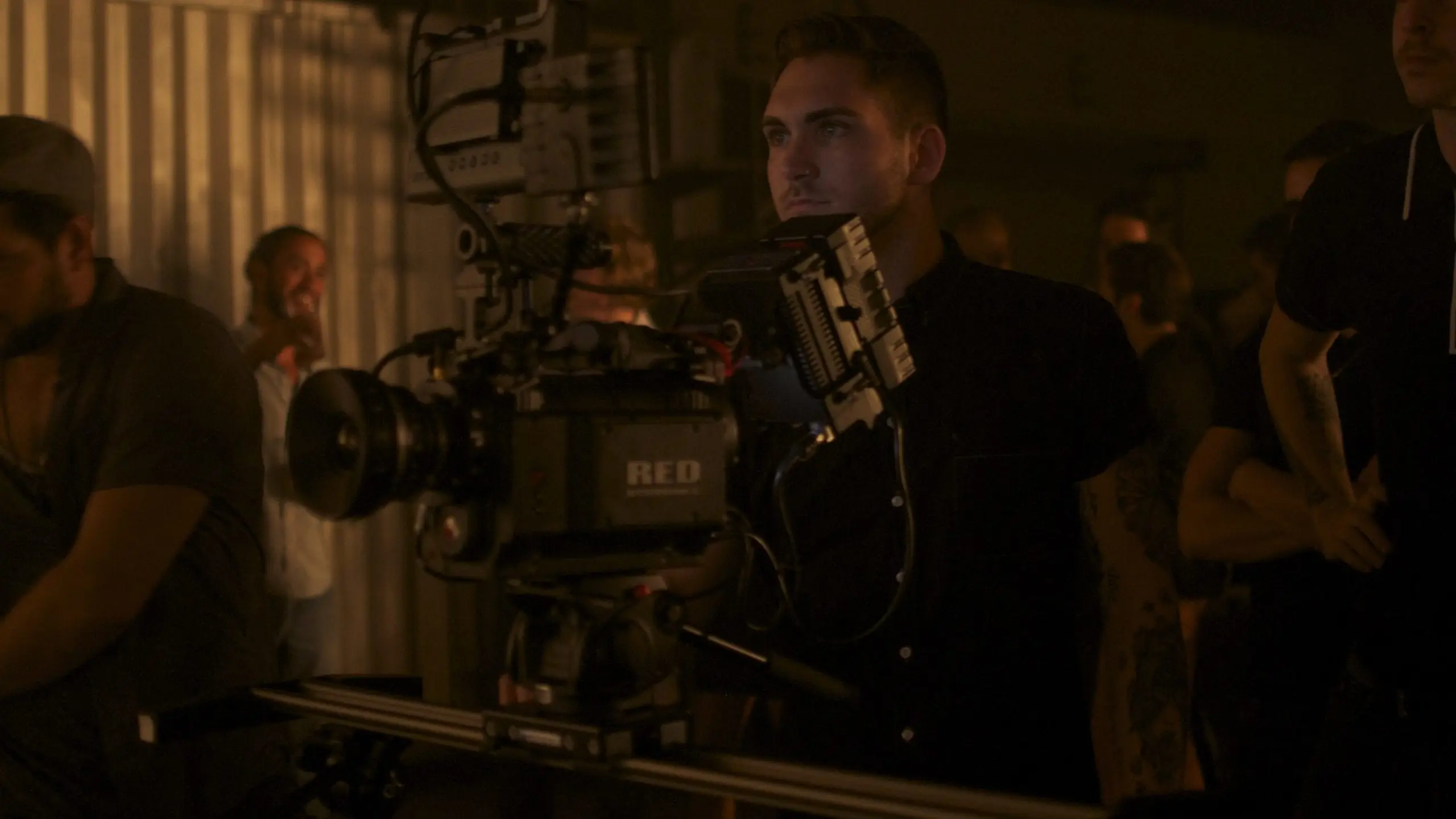
Viral videos are super important for businesses today. They can quickly become popular and be seen by millions of people. This helps businesses get their name out there, show off what they offer, and connect with more customers. When a video goes viral, it can make a business more well-known and trusted. Plus, it's a fun and creative way to share their message with the world.
In this article, we're going to explore how businesses can create videos that have the potential to go viral and make a big impact.
## The Viral Video Phenomenon
The phenomenon of viral videos has become a pivotal aspect of digital marketing, leveraging the power of [social media](https://c-istudios.com/media-marketing-consultation-services/) to amplify [brand visibility and engagement](https://c-istudios.com/branding-and-graphic-design-services/). A viral video is characterized by its rapid and widespread sharing across the internet, often garnering millions of views in a short span of time. These videos are usually engaging, entertaining, or emotionally resonant, making them highly shareable among viewers.
The impact of viral videos on brand visibility is profound. When a video goes viral, it transcends traditional advertising boundaries, reaching a global audience and creating a buzz that can significantly boost brand awareness. This heightened visibility can lead to increased website traffic, social media followers, and ultimately, sales. Furthermore, viral videos can enhance brand engagement by encouraging interaction and conversation among viewers, fostering a sense of community and loyalty around the brand.
Examples of successful viral business videos are numerous, with the "Ice Bucket Challenge" being a standout. This campaign, aimed at raising awareness for ALS (amyotrophic lateral sclerosis), went viral in 2014, with participants, including celebrities and CEOs, pouring ice-cold water over their heads and challenging others to do the same. The campaign not only raised significant funds for ALS research but also demonstrated the power of viral videos to drive social change and engage millions of people worldwide.
The role of social media platforms in video virality is crucial. Platforms like YouTube and TikTok serve as launch pads for viral content, utilizing algorithms that prioritize videos with high engagement, such as likes, shares, and comments. These platforms provide a space for videos to be easily shared and discovered, with features like trending hashtags, challenges, and the "For You Page" on TikTok, which tailor content to individual user preferences. As a result, a well-crafted and strategically promoted video can quickly gain traction, reaching a vast audience and achieving viral status.
## Key Elements of Viral Videos
Creating viral videos is both an art and a science. Here are some key elements that contribute to the success of viral videos:
**Content Quality:** High-quality, engaging content is crucial for a video to go viral. The video should be well-produced, with clear visuals and audio, and it should capture the viewer's attention within the first few seconds. The [content](https://c-istudios.com/content-creation-services/) should be relevant to the target audience and offer value, whether it's entertainment, information, or emotional resonance.
**Emotional Connection:** Videos that evoke strong emotions, such as humour, surprise, nostalgia, or even sadness, are more likely to be shared. Emotional content creates a deeper connection with the audience, making them more likely to engage with and spread the video. For example, the "Ice Bucket Challenge" became viral partly because it combined humour with a heartfelt cause, encouraging people to participate and share.
**Storytelling:** A compelling narrative is a powerful tool in creating memorable and shareable videos. Storytelling can draw viewers in, keep them engaged, and leave a lasting impression. A well-crafted story can also convey a brand's message more effectively and authentically, making it more likely for viewers to connect with the brand and share the video.
**Music and Sound:** The right music and sound effects can significantly enhance the appeal of a video. They can set the tone, evoke emotions, and create a more immersive viewing experience. Catchy music or unique sound effects can also make a video more memorable and shareable.
**Thumbnails and Titles:** The thumbnail and title are the first things viewers see and can determine whether they click on the video. An eye-catching thumbnail and a compelling title that piques curiosity can increase the click-through rate and attract more viewers. The title should also be optimized for search engines and social media to improve the video's discoverability.
**Strategies for Creating Viral Business Videos**
Leveraging social media platforms and [search engine optimization](https://c-istudios.com/seo-copywriting-services/) (SEO) are crucial strategies for increasing the visibility and shareability of viral videos.
**Social Media Platforms:** Utilizing platforms like Facebook, Instagram, and Twitter is essential for reaching a broader audience and encouraging shares. These platforms offer vast networks of users who can quickly spread a video through likes, comments, and shares. For instance, a video that gains traction on Facebook can be shared across various groups and pages, amplifying its reach. Similarly, Instagram and Twitter can help videos go viral through the use of stories, retweets, and hashtags.
**SEO Optimization:** Optimizing videos for search engines is critical for improving their discoverability. This involves using relevant keywords, tags, and descriptions that align with what potential viewers are searching for. By incorporating these elements, videos are more likely to appear in search results, both on search engines like Google and within platforms like YouTube. Additionally, providing detailed descriptions and using keywords in video titles can enhance [SEO](https://c-istudios.com/seo-copywriting-services/), making it easier for users to find the content they're interested in.
**Hashtags:** Hashtags are a powerful tool for increasing the reach of videos on social media platforms. By using popular and relevant hashtags, videos can be discovered by a wider audience searching for specific topics or trends. On platforms like YouTube and TikTok, hashtags can categorize content, making it more accessible to users interested in particular themes. For example, a video related to a trending challenge on TikTok can gain significant traction by using the associated hashtag, exposing it to a larger group of potential viewers.
By effectively leveraging social media platforms, optimizing videos for SEO, and using strategic hashtags, creators can significantly enhance the visibility and shareability of their videos, increasing the chances of achieving viral success.
## Engaging with Your Audience
Engaging with your audience is a crucial component in the success of viral videos. Here are some strategies to foster engagement:
Encouraging viewers to like, share, and comment on videos is essential for boosting algorithmic visibility. Social media algorithms prioritize content with high engagement, so prompting viewers to interact with your video can increase its reach. You can do this by asking questions, inviting opinions, or encouraging viewers to share their experiences related to the video's content. This not only increases engagement but also fosters a sense of community and connection with the audience.
Responding to comments and messages is key to building a loyal community around your brand. When viewers see that their feedback is valued and acknowledged, they are more likely to engage with future content and become brand advocates. This interaction can be as simple as liking comments, answering questions, or thanking viewers for their support. By actively participating in conversations, you create a positive and welcoming environment that encourages continued engagement.
Maintaining a regular posting schedule is crucial for retaining audience interest and building anticipation for new content. Consistency helps establish a routine for viewers, making them more likely to return to your channel or page for new videos. It also signals to algorithms that your channel is active and regularly producing content, which can improve your visibility in feeds and search results. Determine a posting frequency that works for your audience and stick to it, whether it's daily, weekly, or bi-weekly.
## Innovative Strategies for Virality
Innovative strategies are essential for achieving virality in the ever-evolving landscape of social media and online content. Here are some approaches to consider:
**Trending Topics:** Capitalizing on current trends and popular subjects can significantly increase the relevance and viewer interest of your videos. By creating content that aligns with what's currently popular or in the news, you can tap into the existing interest and curiosity of a larger audience.
This can be anything from participating in viral challenges, covering hot topics, or creating content around popular events or holidays. Staying updated with trending topics and quickly producing content around them can give your videos a timely boost.
**Collaborations:** Partnering with other creators or influencers is a powerful way to expand your reach and tap into new audiences. Collaborations can introduce your content to the followers of the influencer or creator you're partnering with, providing access to a wider pool of potential viewers.
Additionally, collaborations can bring fresh perspectives and creativity to your content, making it more appealing and shareable. Look for collaborators who align with your brand values and have an audience that would be interested in your content.
**Promotional Tactics:** Actively promoting your video across multiple channels and platforms is crucial for maximizing exposure. This can include sharing your video on social media, embedding it in blog posts or websites, and even using paid advertising to reach a broader audience. Additionally, leveraging email marketing or newsletters to share your video with subscribers can also drive views and engagement.
It's important to tailor your promotional strategy to the platforms where your target audience is most active.
**Experimentation and Adaptation:** The digital landscape is constantly changing, so it's important to continuously experiment with different content formats and styles to find what resonates best with your audience. This could mean trying out new video formats, experimenting with different lengths, or exploring new topics. Pay close attention to the performance of your videos and use analytics to guide your experimentation. Adapt your content strategy based on what works and what doesn't, and be open to pivoting your approach to stay relevant and engaging.
**Measuring Success and Iterating**
Measuring success and iterating on your video strategy is a continuous process that involves using analytics tools, learning from data, and making adjustments based on insights gained.
Using tools like YouTube Analytics, you can track various metrics such as views, engagement rates, audience demographics, watch time, and more. These metrics provide valuable information about how your videos are performing and how viewers are interacting with your content.
Learning from data involves analysing these performance metrics to identify what's working and what's not. For example, if you notice that videos on a particular topic have higher engagement rates, you might consider creating more content around that topic. Similarly, if you see that your videos have a high drop-off rate in the first 30 seconds, you might need to re-evaluate your intros to make them more engaging.
Iteration is about using the insights gained from your analysis to refine and evolve your video strategy. This could involve experimenting with different content formats, styles, or topics to see what resonates best with your audience. It might also mean adjusting your promotional tactics or optimizing your video titles and thumbnails for better click-through rates.
By continuously measuring success and iterating on your strategy, you can improve the performance of your videos and increase your chances of creating viral content.
**In conclusion,** creating viral business [videos](https://c-istudios.com/video-production-services/) requires a blend of high-quality content, emotional engagement, storytelling, and strategic promotion. By leveraging social media, SEO, and audience interaction, businesses can increase their videos' visibility and shareability. Continuously measuring success and iterating based on analytics ensures that the content remains relevant and resonates with the target audience, maximizing the potential for virality and [brand](https://c-istudios.com/branding-and-graphic-design-services/) growth.
## Work with C&I Studios
If you are planning a project like this, our team can take it from concept to final delivery. Explore our [video production services](https://c-istudios.com/video-production-services/), browse [our work](https://c-istudios.com/our-work/) to see how we tell brand stories, and [get in touch](https://c-istudios.com/contact/) when you are ready to start.
Originally published February 27, 2024
---
*This content is from [C&I Studios](https://c-istudios.com), a full-service production company.*
---
# YouTube Trends in 2024: What Businesses Need to Know
> Published: February 26, 2024
> Categories: Commercial & Brand
> Source: https://c-istudios.com/youtube-trends-in-2024-what-businesses-need-to-know/
---
.cib{--paper:#1b1d1f;--ink:#fff;--body:#d5d7d9;--muted:#8b9096;--line:rgba(255,255,255,.12);--thumb:#2b2e31;--card:#212426;--accent:#c02b0a;--blue:#5B8FA8;--serif:'Playfair Display',Georgia,serif;--sans:'Poppins',-apple-system,sans-serif;--measure:900px;background:var(--paper);color:var(--body);font-family:var(--sans);line-height:1.6;position:relative;left:50%;transform:translateX(-50%);width:90vw;max-width:1920px}
.cib *{box-sizing:border-box}
.cib .kicker{max-width:var(--measure);margin:58px auto 0;padding:0 22px;font-size:12.5px;font-weight:700;letter-spacing:2.5px;text-transform:uppercase;color:var(--blue)}
.cib h1.cibh1{text-wrap:balance;font-family:var(--serif);font-weight:500;font-size:clamp(46px,6vw,72px);line-height:1.08;color:var(--ink);max-width:var(--measure);margin:18px auto 0;padding:0 22px;letter-spacing:-.5px}
.cib .metarow{max-width:var(--measure);margin:20px auto 0;padding:0 22px;color:var(--muted);font-size:14px}
.cib .hero{position:relative;width:100%;height:0;padding-bottom:56.25%;overflow:hidden;margin:48px auto 0;border-top:1px solid var(--line);border-bottom:1px solid var(--line)}
.cib .hero .ph{width:100%;aspect-ratio:16/9;background:var(--thumb);border-top:1px solid var(--line);border-bottom:1px solid var(--line);display:flex;align-items:center;justify-content:center;color:#7d8288;font-size:13px;text-align:center;padding:0 20px}
.cib .body{max-width:var(--measure);margin:12px auto 0;padding:52px 22px 6px}
.cib .body.lead p:first-child{font-size:23px;line-height:1.62;color:var(--ink)}
.cib .body p{font-size:18.5px;line-height:1.85;margin:0 0 30px;color:var(--body)}
.cib .body h2{text-wrap:balance;font-family:var(--serif);font-weight:500;font-size:clamp(32px,4vw,48px);line-height:1.22;color:var(--ink);margin:70px 0 20px;letter-spacing:-.3px}
.cib .body h3{text-wrap:balance;font-family:var(--sans);font-weight:600;font-size:22px;color:var(--ink);margin:38px 0 8px}
.cib .body a{color:var(--ink);text-decoration:underline;text-decoration-color:rgba(255,255,255,.4);text-underline-offset:3px}
.cib .body a:hover{text-decoration-color:var(--ink)}
.cib .ctable{width:100%;border-collapse:collapse;margin:16px 0 30px;font-size:16px}
.cib .ctable th{background:#000;color:#fff;text-align:left;padding:10px 12px;font-family:var(--sans)}
.cib .ctable td{padding:10px 12px;border-bottom:1px solid var(--line);color:var(--body)}
.cib .inimg{position:relative;width:100%;height:0;padding-bottom:56.25%;overflow:hidden;margin:72px auto;border-top:1px solid var(--line);border-bottom:1px solid var(--line)}
.cib .inimg .ph{width:100%;aspect-ratio:16/9;background:var(--thumb);border-top:1px solid var(--line);border-bottom:1px solid var(--line);display:flex;align-items:center;justify-content:center;color:#7d8288;font-size:13px}
.cib .origpub{max-width:var(--measure);margin:60px auto 0;padding:26px 22px 0;border-top:1px solid var(--line);color:var(--muted);font-size:13.5px}
.cib .related{max-width:1200px;margin:64px auto 0;padding:34px 22px 76px}
.cib .related h3{font-family:var(--sans);font-size:12.5px;letter-spacing:2px;text-transform:uppercase;color:var(--ink);margin:0 0 24px}
.cib .grid{display:grid;grid-template-columns:repeat(3,1fr);gap:28px}
.cib .rc{background:var(--card);border:1px solid var(--line);display:block;text-decoration:none;color:inherit;transition:border-color .15s}
.cib a.rc:hover{border-color:rgba(255,255,255,.5)}
.cib .rc .thumb{position:relative;width:100%;height:0;padding-bottom:56.25%;background:var(--thumb);overflow:hidden}
.cib .rc .thumb img{position:absolute!important;top:0!important;left:0!important;width:100%!important;height:100%!important;object-fit:cover!important;margin:0!important}
.cib .rc .cc{padding:14px 15px 17px}
.cib .rc .rt{font-family:var(--serif);font-weight:500;font-size:16px;line-height:1.3;color:var(--ink);margin:0 0 6px}
.cib .rc .rm{font-size:11px;letter-spacing:1px;text-transform:uppercase;color:var(--muted)}
.cib img{margin:0!important;padding:0!important;display:block!important;vertical-align:top;max-width:100%}
.cib .hero img,.cib .inimg img{position:absolute!important;top:0!important;left:0!important;width:100%!important;height:100%!important;object-fit:cover!important;margin:0!important;padding:0!important;border:0!important;display:block!important;aspect-ratio:auto!important}
.cib .hero+.body{padding-top:36px}
@media(max-width:760px){.cib .grid{grid-template-columns:1fr}.cib .body h2{margin:52px 0 16px}.cib .body p{font-size:17.5px}.cib .inimg,.cib .hero{margin-top:44px}}
.cib .vembed{max-width:var(--measure);margin:44px auto;padding:0 22px}.cib .vembed .vwrap{position:relative;width:100%;height:0;padding-bottom:56.25%}.cib .vembed .vwrap iframe{position:absolute;top:0;left:0;width:100%;height:100%;border:0}
Commercial & Brand
# YouTube Trends in 2024. What Businesses Need to Know
9 min read

Stay ahead of the curve with this comprehensive guide to YouTube trends in 2024. Discover the latest strategies, analytics, and insights to help your business thrive on the world's largest video platform.
## Introduction
YouTube has established itself as a powerhouse in the digital landscape, transcending its origins as a platform for sharing personal videos. Today, it is a massive ecosystem where businesses of all sizes can reach and engage with their target audiences. As we move into 2024, the platform continues to evolve, presenting new opportunities and challenges for companies looking to leverage its immense potential.
This article delves into the most significant YouTube trends businesses need to be aware of in 2024. We'll explore the latest platform updates, user behaviour shifts, content formats, advertising strategies, and analytical tools to help you stay ahead of the curve and maximize your success on YouTube.
1. ** The Rise of Short-Form Video Content**
As attention spans continue to dwindle in our fast-paced, [digital world](https://c-istudios.com/content-creation-services/), users are gravitating toward bite-sized, easily consumable content that can capture their interest quickly. In response to this shift in user behaviour, YouTube has been actively promoting its Shorts feature, a direct competitor to the wildly popular TikTok platform for short-form videos.
YouTube Shorts allows creators to produce vertical, 60-second or less videos that cater to the modern audience's appetite for quick, snackable content. These short clips are designed to be easily digestible, with a focus on capturing the viewer's attention within the first few seconds and delivering a concise, engaging message or experience.
For businesses, embracing the rise of short-form [video content](https://c-istudios.com/video-production-services/) is crucial in 2024. By incorporating Shorts into their content strategy, companies can tap into a rapidly growing segment of YouTube's user base and increase their visibility on the platform.
One effective strategy is to repurpose longer-form videos into engaging, attention-grabbing Shorts. Businesses can identify key moments, highlight reels, or condensed versions of their existing content and repackage them into short, vertical clips. This approach not only maximizes the value of existing video assets but also introduces the brand to new audiences who may be drawn to the brevity and format of Shorts.
In addition to repurposing existing content, businesses should also explore creating original, native Shorts tailored specifically for the short-form format. These could include behind-the-scenes glimpses, product teasers, educational tips, or even entertaining skits that showcase the brand's personality and resonate with the target audience.
It's important to note that while Shorts should be concise, they should also maintain a consistent brand identity and style. Businesses can leverage features like captions, stickers, filters, and music to enhance the visual appeal and engagement of their Shorts while ensuring they align with their overall branding and messaging.
As the demand for short-form video content continues to grow, businesses that adapt to this trend early will have a significant advantage in capturing the attention of modern audiences and building a strong presence on YouTube in 2024 and beyond.
1. ** The Importance of Live Streaming**
In the ever-evolving digital landscape of 2024, [live streaming](https://c-istudios.com/video-audio-live-streaming/) has emerged as a ground-breaking trend, revolutionizing the way businesses interact with their audiences. This surge in popularity can be attributed largely to platforms like YouTube, which have made real-time engagement not just a possibility but a thriving aspect of digital marketing.
**The Rise of Live Streaming on YouTube: **The allure of live streaming has been on an upward trajectory, with platforms witnessing unprecedented levels of engagement. In the third quarter of 2023, a staggering 7.6 billion hours of live content were consumed across various platforms, highlighting the medium's growing appeal. YouTube, in particular, stands out as a frontrunner, with 52% of live stream viewers preferring it over other platforms. Its rivalry with platforms like Twitch showcases a dynamic and competitive landscape where YouTube has effectively positioned itself as a key player in the live streaming domain
**Benefits of Live Streaming for Businesses**: Live streaming on platforms like YouTube offers a plethora of benefits for businesses. It fosters real-time interaction, allowing companies to build a genuine sense of community and trust with their audience. This interactive platform opens doors to numerous opportunities, including increased audience reach and enhanced brand visibility. Furthermore, YouTube’s features like Super Chat present an innovative monetization avenue, enabling viewers to pay for highlighted comments during live streams, thereby creating an additional revenue stream for businesses.
1. ** The Rise of YouTube Creators as Influencers**
YouTube creators have evolved into influential voices with dedicated, highly engaged followings. These creators often command significant trust and loyalty from their audiences, making them valuable partners for businesses seeking to promote their products or services.
In 2024, businesses should focus on identifying and collaborating with relevant YouTube creators within their niche. By leveraging the credibility and reach of these influencers, brands can tap into new audiences, increase brand awareness, and drive conversions. Businesses can explore various collaboration formats, such as sponsored videos, product placements, or even co-creating content with creators.
1. ** The Importance of Accessibility and Inclusivity**
As YouTube's user base continues to grow, the platform has become more cognizant of the need for accessibility and inclusivity. In 2024, businesses should prioritize making their content accessible to all viewers, including those with disabilities or different language preferences.
Implementing closed captions, transcripts, and audio descriptions can significantly improve the viewing experience for users with hearing or visual impairments. Additionally, creating content in multiple languages or utilizing YouTube's automatic translation features can help businesses reach a global audience and foster a more inclusive environment.
1. ** The Dominance of Mobile Viewing**
Mobile devices have become the primary platform for consuming video content, with a significant portion of YouTube's traffic originating from smartphones and tablets. In 2024, businesses must optimize their content for mobile viewing to provide a seamless experience for their audience.
Ensuring that videos are properly formatted for vertical viewing, utilizing mobile-friendly thumbnails and titles, and incorporating mobile-responsive end screens and annotations can greatly enhance the user experience.
Additionally, businesses should consider investing in mobile advertising strategies, such as YouTube's TrueView ads, to reach users effectively across various devices.
1. ** The Rise of Interactive Content**
YouTube has been exploring ways to [make video content more interactive and engaging](https://c-istudios.com/video-production-services/). In 2024, businesses can leverage features like YouTube's interactive cards and end screens to encourage audience participation and drive desired actions.
Interactive cards allow viewers to browse related content, visit external websites, or even make purchases without leaving the video player. End screens, on the other hand, provide a canvas for businesses to promote related videos, encourage subscriptions, or include call-to-action elements.
By incorporating these interactive elements, businesses can increase viewer engagement, boost conversions, and foster a more immersive experience for their audience.
1. ** The Importance of Performance Analytics**
In an ever-evolving digital landscape, data-driven decision-making is paramount. YouTube offers a wealth of analytical tools to help businesses understand their content's performance, audience behaviour, and overall channel health.
In 2024, businesses should prioritize leveraging YouTube's built-in analytics, such as the YouTube Studio dashboard, to gain insights into key metrics like watch time, audience retention, traffic sources, and demographics. Additionally, integrating third-party analytical tools can provide even deeper insights into viewer behaviour, content performance, and channel optimization opportunities.
1. ** The Rise of YouTube Ads as a Powerful Marketing Tool**
YouTube's advertising platform has grown into a formidable marketing channel, offering businesses various options to reach their target audiences effectively. In 2024, companies should explore different ad formats, such as TrueView in-stream ads, bumper ads, and sponsored card ads, to achieve their specific marketing objectives.
By leveraging advanced targeting options, businesses can ensure their ads reach the right audience based on factors like demographics, interests, and viewing behaviour. Additionally, YouTube's integration with Google Ads enables businesses to create seamless video advertising campaigns across multiple platforms, maximizing their reach and impact.
1. ** The Importance of Optimizing for YouTube's Algorithm**
YouTube's algorithm plays a crucial role in determining which videos are recommended to users and how content is surfaced in search results. In 2024, businesses must understand and optimize their content strategy to align with YouTube's ever-evolving algorithm.
Factors like watch time, engagement metrics (likes, comments, shares), and video metadata (titles, descriptions, tags) will continue to influence a video's visibility and discoverability. Businesses should focus on creating compelling content that encourages viewers to watch longer, engage actively, and subscribe to their channel. Additionally, conducting keyword research and optimizing video metadata can significantly improve a video's chances of ranking well in YouTube's search results.
1. ** The Integration of Artificial Intelligence and Machine Learning**
YouTube has been actively exploring the use of artificial intelligence (AI) and machine learning to enhance various aspects of the platform. In 2024, businesses can expect to see AI-powered features that improve content recommendations, automated captions and transcriptions, and even content moderation.
As these AI-driven capabilities become more prevalent, businesses should adapt their strategies to leverage the advantages they offer. For instance, optimizing video metadata and captions with relevant keywords can improve the accuracy of AI-driven content recommendations, potentially increasing visibility and reach.
1. ** The Emergence of Augmented Reality (AR) and Virtual Reality (VR) Experiences**
YouTube has been exploring the integration of augmented reality (AR) and virtual reality (VR) technologies to offer immersive and interactive viewing experiences. In 2024, businesses should consider leveraging these cutting-edge technologies to create engaging content that captivates their audience.
AR experiences can be achieved through YouTube's support for 3D and 360-degree videos, allowing viewers to explore environments and objects from various angles by simply tilting their mobile devices. Businesses can take advantage of this technology to showcase product demos, virtual tours, or even create interactive educational content.
On the other hand, VR experiences on YouTube enable viewers to step into fully immersive environments, transporting them to different locations or simulated scenarios. Businesses can create VR videos to offer virtual product demonstrations, conduct virtual showroom tours, or even host virtual events or conferences, providing a unique and memorable experience for their audience.
By incorporating AR and VR elements into their content strategy, businesses can differentiate themselves from competitors, foster deeper engagement with their audience, and create lasting impressions that drive brand loyalty and conversions.
1. ** The Rise of Sustainable and Ethical Content**
As consumers become increasingly conscious of environmental and social issues, they are seeking out content that aligns with their values and promotes sustainable and ethical practices. In 2024, businesses should prioritize creating content that showcases their commitment to sustainability, social responsibility, and ethical business practices.
This trend can manifest in various ways, such as producing [videos](https://c-istudios.com/video-production-services/) that highlight a company's environmental initiatives, showcasing eco-friendly products or services, or even creating content that educates viewers on sustainable living practices.
Additionally, businesses should strive to incorporate ethical considerations into their [content creation](https://c-istudios.com/content-creation-services/) process. This could involve ensuring fair labour practices, promoting diversity and inclusion, or addressing social issues relevant to their audience.
By embracing sustainability and ethical practices in their content strategy, businesses can appeal to socially conscious consumers, build trust and credibility with their audience, and potentially attract new customers who value brands that align with their personal beliefs and values.
Showcasing a genuine commitment to sustainability and ethics can also differentiate a business from competitors and foster a strong brand identity that resonates with modern, values-driven consumers.
## Work with C&I Studios
If you are planning a project like this, our team can take it from concept to final delivery. Explore our [video production services](https://c-istudios.com/video-production-services/), browse [our work](https://c-istudios.com/our-work/) to see how we tell brand stories, and [get in touch](https://c-istudios.com/contact/) when you are ready to start.
Originally published February 26, 2024
---
*This content is from [C&I Studios](https://c-istudios.com), a full-service production company.*
---
# Optimizing Business Videos for YouTube SEO: A Complete Guide
> Published: February 26, 2024
> Categories: Web & Tech
> Source: https://c-istudios.com/optimizing-business-videos-for-youtube-seo-a-complete-guide/
---
.cib{--paper:#1b1d1f;--ink:#fff;--body:#d5d7d9;--muted:#8b9096;--line:rgba(255,255,255,.12);--thumb:#2b2e31;--card:#212426;--accent:#c02b0a;--blue:#5B8FA8;--serif:'Playfair Display',Georgia,serif;--sans:'Poppins',-apple-system,sans-serif;--measure:900px;background:var(--paper);color:var(--body);font-family:var(--sans);line-height:1.6;position:relative;left:50%;transform:translateX(-50%);width:90vw;max-width:1920px}
.cib *{box-sizing:border-box}
.cib .kicker{max-width:var(--measure);margin:58px auto 0;padding:0 22px;font-size:12.5px;font-weight:700;letter-spacing:2.5px;text-transform:uppercase;color:var(--blue)}
.cib h1.cibh1{text-wrap:balance;font-family:var(--serif);font-weight:500;font-size:clamp(46px,6vw,72px);line-height:1.08;color:var(--ink);max-width:var(--measure);margin:18px auto 0;padding:0 22px;letter-spacing:-.5px}
.cib .metarow{max-width:var(--measure);margin:20px auto 0;padding:0 22px;color:var(--muted);font-size:14px}
.cib .hero{position:relative;width:100%;height:0;padding-bottom:56.25%;overflow:hidden;margin:48px auto 0;border-top:1px solid var(--line);border-bottom:1px solid var(--line)}
.cib .hero .ph{width:100%;aspect-ratio:16/9;background:var(--thumb);border-top:1px solid var(--line);border-bottom:1px solid var(--line);display:flex;align-items:center;justify-content:center;color:#7d8288;font-size:13px;text-align:center;padding:0 20px}
.cib .body{max-width:var(--measure);margin:12px auto 0;padding:52px 22px 6px}
.cib .body.lead p:first-child{font-size:23px;line-height:1.62;color:var(--ink)}
.cib .body p{font-size:18.5px;line-height:1.85;margin:0 0 30px;color:var(--body)}
.cib .body h2{text-wrap:balance;font-family:var(--serif);font-weight:500;font-size:clamp(32px,4vw,48px);line-height:1.22;color:var(--ink);margin:70px 0 20px;letter-spacing:-.3px}
.cib .body h3{text-wrap:balance;font-family:var(--sans);font-weight:600;font-size:22px;color:var(--ink);margin:38px 0 8px}
.cib .body a{color:var(--ink);text-decoration:underline;text-decoration-color:rgba(255,255,255,.4);text-underline-offset:3px}
.cib .body a:hover{text-decoration-color:var(--ink)}
.cib .ctable{width:100%;border-collapse:collapse;margin:16px 0 30px;font-size:16px}
.cib .ctable th{background:#000;color:#fff;text-align:left;padding:10px 12px;font-family:var(--sans)}
.cib .ctable td{padding:10px 12px;border-bottom:1px solid var(--line);color:var(--body)}
.cib .inimg{position:relative;width:100%;height:0;padding-bottom:56.25%;overflow:hidden;margin:72px auto;border-top:1px solid var(--line);border-bottom:1px solid var(--line)}
.cib .inimg .ph{width:100%;aspect-ratio:16/9;background:var(--thumb);border-top:1px solid var(--line);border-bottom:1px solid var(--line);display:flex;align-items:center;justify-content:center;color:#7d8288;font-size:13px}
.cib .origpub{max-width:var(--measure);margin:60px auto 0;padding:26px 22px 0;border-top:1px solid var(--line);color:var(--muted);font-size:13.5px}
.cib .related{max-width:1200px;margin:64px auto 0;padding:34px 22px 76px}
.cib .related h3{font-family:var(--sans);font-size:12.5px;letter-spacing:2px;text-transform:uppercase;color:var(--ink);margin:0 0 24px}
.cib .grid{display:grid;grid-template-columns:repeat(3,1fr);gap:28px}
.cib .rc{background:var(--card);border:1px solid var(--line);display:block;text-decoration:none;color:inherit;transition:border-color .15s}
.cib a.rc:hover{border-color:rgba(255,255,255,.5)}
.cib .rc .thumb{position:relative;width:100%;height:0;padding-bottom:56.25%;background:var(--thumb);overflow:hidden}
.cib .rc .thumb img{position:absolute!important;top:0!important;left:0!important;width:100%!important;height:100%!important;object-fit:cover!important;margin:0!important}
.cib .rc .cc{padding:14px 15px 17px}
.cib .rc .rt{font-family:var(--serif);font-weight:500;font-size:16px;line-height:1.3;color:var(--ink);margin:0 0 6px}
.cib .rc .rm{font-size:11px;letter-spacing:1px;text-transform:uppercase;color:var(--muted)}
.cib img{margin:0!important;padding:0!important;display:block!important;vertical-align:top;max-width:100%}
.cib .hero img,.cib .inimg img{position:absolute!important;top:0!important;left:0!important;width:100%!important;height:100%!important;object-fit:cover!important;margin:0!important;padding:0!important;border:0!important;display:block!important;aspect-ratio:auto!important}
.cib .hero+.body{padding-top:36px}
@media(max-width:760px){.cib .grid{grid-template-columns:1fr}.cib .body h2{margin:52px 0 16px}.cib .body p{font-size:17.5px}.cib .inimg,.cib .hero{margin-top:44px}}
.cib .vembed{max-width:var(--measure);margin:44px auto;padding:0 22px}.cib .vembed .vwrap{position:relative;width:100%;height:0;padding-bottom:56.25%}.cib .vembed .vwrap iframe{position:absolute;top:0;left:0;width:100%;height:100%;border:0}
Web & Tech
# Optimizing Business Videos for YouTube SEO. A Complete Guide
12 min read

In today's digital age, YouTube has emerged as a vital platform for business growth and visibility. For businesses, optimizing videos for [YouTube SEO](https://c-istudios.com/seo-copywriting-services/) is not just a tactic, but a necessity to stand out in an increasingly crowded market. By leveraging YouTube SEO, companies can significantly enhance their online presence, attract a targeted audience, and increase engagement. This optimization involves strategically using keywords, crafting engaging titles and descriptions, and creating compelling content that resonates with viewers. As YouTube is the second largest search engine, mastering its SEO is crucial for any business looking to harness the power of video marketing.
This guide aims to provide a comprehensive understanding of YouTube SEO, equipping businesses with the tools needed to effectively optimize their videos and achieve greater reach and impact.
## Understanding YouTube SEO
Understanding YouTube SEO involves grasping the intricacies of its two primary algorithms: the recommendation algorithm and the search algorithm, as highlighted by the Search Engine Journal.
### YouTube's Recommendation Algorithm
This algorithm plays a pivotal role in what content appears on a user's home page and the suggested videos section. It's designed to provide users with content that they are likely to enjoy, based on their past viewing habits and preferences. The recommendation algorithm takes into account factors like what the user has watched before, for how long, and what they haven't watched. It's all about creating a personalized experience for each user.
### YouTube's Search Algorithm
On the other hand, the search algorithm dictates the ranking of videos in YouTube's search results. This is more akin to a traditional search engine, focusing on finding the most relevant content for a user's search query. While it shares some similarities with the recommendation algorithm, the search algorithm places a stronger emphasis on matching the query's keywords with video titles, descriptions, and content.
Both these algorithms consider several key ranking factors, primarily:
1. **Relevance:** This includes how well the video content, titles, descriptions, and hashtags match with the user's search queries. Relevance is crucial in ensuring that the content is directly related to what the user is searching for.
2. **Engagement:** YouTube values how users interact with videos. Factors like likes, comments, shares, subscribes, and the amount of time spent watching a video are crucial indicators of engagement. High engagement rates signal to YouTube that the content is valuable and interesting to viewers.
3. **Quality:** This factor relates to the overall production value of the content and its perceived expertise, authoritativeness, and trustworthiness, particularly for content related to news, politics, and science.
4. **Personalization:** YouTube tailors its search results based on individual user preferences, search history, and viewing habits. This means that what ranks highly for one user might not for another, as the platform strives to deliver the most personally relevant content.
Understanding these algorithms and ranking factors is key to optimizing business videos for YouTube SEO. By creating content that is relevant, engaging, high-quality, and tailored to your target audience, you can significantly improve your visibility and ranking on YouTube.
## Keyword Research and Optimization
Keyword research and optimization are foundational elements of YouTube SEO, playing a critical role in the visibility and success of your [business videos](https://c-istudios.com/video-production-services/).
### The Importance of Choosing the Right Target Keyword
Selecting the right target keyword is a pivotal step in YouTube SEO. This keyword should represent the core theme or topic of your video and align with what your target audience is searching for. HubSpot Blog emphasizes the need for this keyword to be relevant to your video content and appealing to your intended viewers. It should be specific enough to attract a targeted audience, yet broad enough to be searched frequently. The use of keyword research tools is recommended to find the right balance and ensure the chosen keyword has a reasonable search volume.
### Use of Alternative and Broad Keywords
In addition to the primary target keyword, incorporating alternative and broad keywords can further enhance your video's discoverability. Influencer Marketing Hub suggests using 2-3 alternative keywords related to your main keyword to cover various search queries. For instance, if your main keyword is "digital camera," alternatives could be "best digital cameras 2024" or "digital camera reviews." Broad keywords, on the other hand, relate to your industry or broader topic, giving additional context to your video. These broader terms help the YouTube algorithm understand and categorize your content more effectively.
### Tips for Including Keywords in Video File Names, Titles, and Descriptions
WordStream provides practical advice on incorporating keywords into various elements of your YouTube content. It's important to include your target keyword in the video file name before uploading, as YouTube uses this to assess the video's relevance. Similarly, integrating the keyword naturally into the video title can significantly impact search visibility.
The video description offers more space to utilize both your primary and secondary keywords. It's recommended to place the most important keywords in the first couple of sentences and ensure the description is informative, concise, and aligned with your content. This approach not only aids in search but also provides viewers with a clear understanding of what to expect from your video.
## Creating Compelling Video Titles and Descriptions
Creating compelling video titles and descriptions is a crucial aspect of YouTube SEO, as these elements greatly influence both click-through rates and search rankings. Incorporating target keywords into these components is vital, but it must be done in a way that appeals to both viewers and the YouTube algorithm.
### Crafting Engaging Titles
The title of your video is the first impression viewers have, so it needs to be catchy, clear, and reflective of the content. HubSpot Blog suggests that titles should include your target keyword in a natural, conversational manner. This not only aids in SEO but also ensures the title resonates with viewers. WordStream advises keeping the titles engaging and informative, creating curiosity or indicating a clear benefit to the viewer. It's important to balance SEO with creativity - a title that is stuffed with keywords but lacks appeal will not attract views.
### Effective Video Descriptions
Video descriptions offer more space to include keywords and provide context about the video. HubSpot Blog recommends including the target keyword in the first couple of sentences, as YouTube prioritizes the beginning of the description for SEO. It's also advised to use this space to expand on what's in the video, add links to social media or websites, and include any relevant hashtags or calls to action. WordStream notes that descriptions should be comprehensive and viewer-friendly, using natural language and avoiding keyword stuffing, which can be counterproductive.
### Character Limits and Keyword Placement
Understanding the character limits for YouTube titles and descriptions is important. According to Buffer, YouTube titles should be concise as they are truncated in search results. For descriptions, YouTube displays the first 100-150 characters in search results and under videos, so placing your main keywords and a compelling overview in this section is crucial. Beyond SEO, these constraints emphasize the need for clarity and conciseness in conveying the essence of your video to potential viewers.
## Designing Engaging Thumbnails
Designing engaging thumbnails is a crucial component of YouTube SEO, as they significantly influence a viewer's decision to click on a video. A well-crafted thumbnail acts as a visual invitation, enticing viewers to explore the content further.
### Importance of Custom Thumbnails
The thumbnail is often the first thing a viewer notices about a video. Hootsuite Blog emphasizes that custom thumbnails, as opposed to YouTube's auto-generated options, provide an opportunity to make a strong first impression. Custom thumbnails can convey the essence of the video content and are essential in making your videos stand out in a crowded space. Search Engine Land agrees, noting that thumbnails directly impact click-through rates, which in turn influence how a video is ranked by YouTube's algorithm.
### Using Faces, Colours, and Text in Faces
Influencer Marketing Hub highlights the effectiveness of using faces in thumbnails. Humans are naturally drawn to faces, especially those showing emotions. Thumbnails featuring close-ups of expressive faces can create an instant connection with potential viewers and convey the emotional tone of the video.
1. **Colours:** The choice of colours in a thumbnail is also critical. Contrasting and vibrant colours can make a thumbnail pop against YouTube's white background, drawing more attention. Influencer Marketing Hub advises using colour combinations that stand out but are also consistent with your brand’s identity. Search Engine Land adds that the colours should not be overwhelming but should complement the content and overall design of the thumbnail.
2. **Text:** Including text in thumbnails can provide context and tease the content of the video. However, both Influencer Marketing Hub and Search Engine Land caution against overcrowding the thumbnail with text. The text should be large enough to be readable, concise, and directly related to the video's content. It's about balancing visual appeal with informative value.
## Utilizing Tags, Categories, and Hashtags
Effectively utilizing tags, categories, and hashtags is a nuanced aspect of YouTube SEO that can significantly enhance the discoverability of your videos.
**Using Tags and Categories for Better Discoverability: **Tags play a subtle but important role in helping the YouTube algorithm understand and categorize your content. According to HubSpot Blog, tags should be used to include both specific and broad keywords related to your video. This helps YouTube associate your video with similar content, potentially increasing its appearance in related video suggestions. It's important not to overload on tags; a focused set of 5-8 relevant tags is typically more effective.
Categories are another tool for increasing discoverability. By selecting the appropriate category for your video, you are essentially telling YouTube which audience should see your video. Categories help in grouping your content into YouTube's broader topics, which can be beneficial in getting your videos recommended to viewers interested in those topics.
**The Role of Hashtags in YouTube SEO:** Hashtags offer a direct way to improve visibility and searchability of your videos on YouTube. Hootsuite Blog emphasizes that hashtags, used in video titles and descriptions, can significantly boost your video’s discoverability. They function similarly to tags but are more visible to the viewer. When selecting hashtags, it’s important to use relevant and specific keywords that align with your video content. However, overusing hashtags can be counterproductive, so it's advisable to limit their number to a few well-chosen ones. Hashtags can help your video appear in searches for those specific terms, providing an additional pathway for viewers to find your content.
## Enhancing Engagement with Subtitles, Cards, and End Screens
### Subtitles and Closed Captions
Subtitles and closed captions significantly impact SEO by making videos accessible to a broader audience, including those who are deaf or hard of hearing and non-native speakers. As Kinsta points out, subtitles provide a textual representation of your video content, which can be indexed by YouTube's search algorithms, thereby enhancing your video's SEO. Additionally, subtitles allow viewers to watch videos in sound-sensitive environments, potentially increasing view time and engagement.
### Using Cards and End Screens
Cards and end screens are powerful tools for increasing viewer engagement and directing them to other content. Cards can be used to promote other videos, playlists, or external links and can appear at any point in your video. End screens are displayed in the last 5-20 seconds and can be used to encourage viewers to subscribe to your channel or watch more videos, effectively increasing watch time and viewer retention. By strategically using these features, you can create a more interactive and engaging viewing experience, encouraging viewers to explore more of your content.
## Optimizing for Watch Time and Audience Retention
### Importance of Total Watch Time
Total Watch Time is a critical metric for YouTube SEO. According to Backlinko, it's likely the platform's most important ranking factor. The total amount of time viewers spend watching your videos influences how YouTube assesses the value and quality of your content. Longer watch times can signal to YouTube that your content is engaging and worth recommending to others.
### Techniques to Improve Audience Retention
Focusing on the first 15 seconds of your video is crucial for retaining your audience. Backlinko suggests that this initial segment should be engaging enough to hook the viewer's interest immediately. Strategies to improve audience retention include starting with a summary of what the video will cover, posing a compelling question, or presenting an intriguing fact or statement. Continuously engaging content throughout the video, along with effective use of pattern interrupts and visually appealing graphics, can keep viewers interested and reduce the likelihood of them clicking away. By optimizing these elements, you can enhance both watch time and audience retention, which are key to improving your YouTube SEO.
## Leveraging YouTube Analytics for Continuous Improvement
Leveraging YouTube Analytics is essential for continuous improvement and optimization of your videos. YouTube provides detailed analytics that can help you understand how your audience interacts with your content, which is crucial for making informed decisions to enhance your video strategy.
### Analyzing Audience Retention Graphs (Ahrefs)
One of the most informative tools in YouTube Analytics is the audience retention graph. As highlighted by [Ahrefs](https://ahrefs.com/), this graph provides insights into how long viewers watch your videos and at which points they might drop off. By studying these graphs, you can identify which parts of your videos are most engaging and which parts might be causing viewers to stop watching. This analysis is invaluable as it guides you to replicate successful elements in future videos and modify or eliminate parts that lead to viewer drop-off. For instance, if you notice a spike in viewership at a certain point, it might be due to a particularly engaging segment or key information being shared.
### Learning from Analytics to Optimize Future Videos
YouTube Analytics offers a wealth of data beyond just audience retention, including demographics, traffic sources, and engagement metrics like likes, comments, and shares. By delving into this data, you can gain a deeper understanding of who your audience is, how they find your videos, and what content resonates with them. This information allows you to tailor your future content to better suit your audience's preferences, potentially leading to increased engagement and a more substantial YouTube presence.
## Promoting Videos outside YouTube
Promoting your YouTube videos beyond the platform itself is a crucial step in maximizing reach and engagement. Utilizing social media and embedding videos in blogs are two effective strategies.
**Social Media Promotion:** Leveraging social media platforms like Facebook, Twitter, and Instagram can significantly boost the visibility of your YouTube videos. Each platform offers a unique audience and ways to share content, whether through posts, stories, or even paid promotions. Sharing snippets or teasers of your videos on these platforms with links back to the full YouTube video can attract a broader audience. Engaging with your followers through these snippets and encouraging them to watch the full video on YouTube can drive traffic and increase view counts.
**Embedding Videos in Blogs:** Another effective promotional strategy is embedding your YouTube videos in relevant blog posts. This not only increases the exposure of your videos but also enriches your blog content, making it more engaging and informative. Videos can provide a visual complement to your written content, keeping readers longer on your page, which can positively impact SEO for both your blog and YouTube channel. Hootsuite Blog emphasizes that embedded videos can also lead to increased shares and backlinks, further enhancing the reach and SEO of your content.
**Conclusion:** In this guide, we've explored various strategies to optimize business videos for YouTube SEO. From understanding YouTube's algorithms to keyword research, creating compelling titles and descriptions, and designing engaging thumbnails. We've also delved into the use of tags, categories, and hashtags, the impact of subtitles, cards, end screens, and the crucial role of YouTube Analytics. Lastly, we discussed the importance of promoting videos outside YouTube. By applying these strategies, you can significantly enhance the visibility and engagement of your YouTube videos, leveraging the power of the platform to reach and engage your target audience effectively.
**At **[C & I Studios](https://c-istudios.com/), we understand the power of YouTube in the digital marketing landscape. Leveraging the strategies outlined in this article, we focus on enhancing your YouTube SEO to maximize your business's online visibility and engagement. We specialize in creating visually stunning and captivating content that not only resonates with your target audience but also aligns perfectly with the latest [SEO](https://c-istudios.com/seo-copywriting-services/) strategies.
Our expertise in [video production](https://c-istudios.com/video-production-services/), coupled with our deep understanding of digital marketing, allows us to craft compelling video narratives that are not just engaging but also optimized for search engines. We ensure that every aspect of your video, from the title and description to the tags and thumbnails, is meticulously designed to improve your YouTube presence.
We at [C & I Studios](https://c-istudios.com/contact/) take pride in our ability to bring your vision to life. Our team works tirelessly to ensure your videos not only reach but also captivate and convert your target audience. By partnering with us, you're not just getting a [video production service](https://c-istudios.com/video-production-services/); you're getting a dedicated team that's committed to propelling your business to new heights.
Discover how we can amplify your YouTube strategy and help your business achieve its full potential. Visit us at [C & I Studios](https://c-istudios.com/our-work/) and let's create something extraordinary together.
## Work with C&I Studios
If you are planning a project like this, our team can take it from concept to final delivery. Explore our [AI video services](https://c-istudios.com/ai-video-services/), browse [our work](https://c-istudios.com/our-work/) to see how we tell brand stories, and [get in touch](https://c-istudios.com/contact/) when you are ready to start.
Originally published February 26, 2024
---
*This content is from [C&I Studios](https://c-istudios.com), a full-service production company.*
---
# Digital Marketing Mastery: Reaching American Consumers Effectively
> Published: February 23, 2024
> Categories: Commercial & Brand
> Source: https://c-istudios.com/digital-marketing-mastery-reaching-american-consumers-effectively/
---
[Digital marketing in the American market](https://c-istudios.com/video-production-partner-for-chinese-companies/) is a dynamic and multifaceted field, constantly evolving with technological advancements and changing consumer behaviors. It's more than just an online presence; it's about strategically connecting with American consumers, where they spend a considerable amount of their time: online. This realm involves understanding various digital channels, from social media to search engines, and using them to effectively communicate with a diverse and tech-savvy audience.
In this rapidly changing landscape, businesses must adapt and innovate to stay relevant and competitive. For an in-depth exploration of these digital nuances,[C&I Studios](https://c-istudios.com/) offers a wealth of resources and expertise, guiding businesses through the intricate world of digital marketing in the U.S.
## Understanding American Consumer Behavior Online
Grasping the digital behavior of American consumers is fundamental for effective digital marketing. The U.S. audience is diverse, tech-savvy, and highly engaged in the digital world, making it essential for marketers to understand their unique online habits and preferences.
Firstly, American consumers are known for their extensive use of mobile devices. With 5.44 billion mobile phone users globally, a significant portion of them are from the U.S.. This widespread mobile usage means that digital marketing strategies must be optimized for mobile platforms to effectively reach American audiences. Ensuring websites and ads are mobile-friendly is no longer optional but a necessity.
Social media also plays a pivotal role in American consumers' lives. Platforms like Facebook, with 2.96 billion monthly active users, and Instagram, known for its visual appeal, are key channels for engaging with American consumers. These platforms offer unique opportunities for brands to build communities, enhance brand visibility, and directly engage with their audience.
For instance, using C&I Studios - [Social Media Marketing Services](https://c-istudios.com/social-media-marketing-services/) can help businesses tap into these platforms' potential, ensuring their message resonates with the target audience.
Furthermore, American consumers value personalized and relevant content. They prefer brands that understand their individual needs and provide tailored experiences. This calls for the use of data analytics and customer insights to create personalized marketing campaigns that resonate with different segments of the American market.
Email marketing remains a powerful tool in the digital arsenal. It allows for direct communication with consumers, offering a platform for personalized messages and promotions. The key here is to build a robust email list and deliver content that adds value to the consumer’s life.
## Key Digital Marketing Channels for American Audiences
Selecting the right digital marketing channels is crucial for effectively reaching American consumers. The U.S. market is vast and diverse, requiring a strategic approach to channel selection that aligns with where the target audience is most active and engaged.
Social Media Marketing is a powerhouse in the digital realm. Platforms like Facebook, Instagram, and Twitter are not just social spaces; they are vibrant marketplaces where brands can engage with consumers directly. The key is to understand the unique culture and user behavior on each platform. For instance, Instagram's visually-driven platform is ideal for brands with strong visual content, while Twitter's real-time nature suits brands that engage in conversations and timely updates.
[Search Engine Optimization](https://c-istudios.com/seo-copywriting-services/) (SEO) and Content Marketing are inseparable in their importance. A strong SEO strategy ensures that a brand's online content ranks well in search engine results, crucial for visibility in a market where the majority of online experiences begin with a search engine. Content marketing, on the other hand, focuses on creating valuable, relevant content to attract and retain a clearly defined audience, ultimately driving profitable customer action.
Email Marketing, often underestimated, continues to be a vital tool for personalized communication. It allows brands to reach consumers directly in their inboxes with tailored messages, promotions, and updates. The effectiveness of email marketing lies in its ability to nurture leads and maintain customer relationships over time.
Incorporating these key channels into a digital marketing strategy requires expertise and creativity. C&I Studios - Services offer comprehensive solutions in these areas, helping businesses craft and execute effective digital marketing strategies tailored to the American market.
## Leveraging Video Marketing to Engage Consumers
Video marketing has emerged as a highly effective tool in the digital marketing arsenal, especially in the American market. The power of video lies in its ability to capture attention, evoke emotions, and convey messages in a dynamic and memorable way. In today's digital landscape, where consumer attention spans are short, video content can be the key to engaging an audience effectively.
The impact of video marketing is evident in its ability to boost brand recognition and build trust. Video testimonials, for instance, offer a genuine and persuasive form of social proof. When potential customers see real people sharing positive experiences with a product or service, it significantly enhances the brand's credibility and can influence purchasing decisions. For businesses looking to incorporate video marketing, C&I Studios - [Video Production Services](https://c-istudios.com/video-production-services/) provides the expertise needed to create impactful and engaging video content.
Moreover, video content is known for its high engagement and retention rates. Studies have shown that people retain significantly more information when presented in video format compared to text. This makes video an ideal medium for storytelling, brand messaging, and educational content. By creating captivating videos, businesses can maintain viewer interest and strengthen their connection with the audience.
Furthermore, with the rise of mobile internet usage, video content is more accessible than ever. Mobile-friendly video content ensures that businesses can reach consumers wherever they are, aligning with the growing trend of consuming content on the go.
In short, video marketing offers a multitude of benefits, from enhancing brand trust and recognition to improving engagement and information retention. For businesses targeting American consumers, investing in quality video content is a strategic move that can yield substantial returns.
## Mobile Marketing: Reaching Consumers on the Go
Mobile marketing is a critical component of digital marketing strategies, particularly in the American market where mobile usage is massive. The ubiquity of smartphones has transformed how consumers interact with brands, making mobile marketing an essential tool for reaching American consumers effectively.
The prevalence of mobile phones means that digital marketing strategies must be optimized for mobile platforms. With 5.44 billion mobile phone users worldwide, ensuring that websites, ads, and digital content are mobile-friendly is imperative. This involves designing responsive websites, creating mobile-optimized content, and utilizing mobile-specific advertising formats.
Social media platforms play a significant role in mobile marketing. Platforms like Facebook and Instagram are predominantly accessed via mobile devices, offering an ideal channel for engaging with consumers. Brands need to tailor their social media strategies to be effective on mobile, ensuring content is visually appealing and easily consumable on smaller screens.
Email marketing is also effective in a mobile-dominated landscape. With most consumers accessing their email through mobile devices, email campaigns must be designed for mobile readability and engagement. This includes using mobile-responsive email templates and concise, compelling content that is easy to read on the go.
Mobile marketing also allows for greater personalization and targeting. Location-based marketing, for instance, enables brands to reach consumers with contextually relevant messages based on their geographic location. This level of personalization enhances the relevance and effectiveness of marketing campaigns.
## The Power of Content Marketing and SEO
In the realm of digital marketing, Content Marketing and Search Engine Optimization (SEO) are two of the most potent tools for reaching and engaging American consumers. These strategies are deeply intertwined, with each amplifying the effectiveness of the other.
Content marketing revolves around creating and distributing valuable, relevant, and consistent content to attract and retain a clearly defined audience. The goal is to drive profitable customer action. In the American market, where consumers are inundated with a myriad of choices, content marketing helps brands stand out by providing meaningful information that resonates with their audience. This could be through informative blog posts, engaging videos, insightful info graphics, or interactive social media content.
SEO, on the other hand, enhances the visibility of this content on search engines. As most online experiences begin with a search engine, SEO ensures that a brand's content reaches its intended audience through higher search rankings. This involves optimizing website content, using relevant keywords, and building a network of backlinks. SEO strategies are pivotal in ensuring that content is discoverable and ranks well on search engines like Google, making it accessible to the vast American online audience.
Moreover, SEO and content marketing are continuously evolving. With regular updates to search engine algorithms, marketers must stay abreast of the latest trends and adjust their strategies accordingly. This might include focusing on local SEO strategies or optimizing for voice search, which are becoming increasingly important in the American market.
So, content marketing and SEO are indispensable elements of a successful digital marketing strategy, especially when targeting American consumers. They work synergistically to enhance online presence, build brand authority, and drive consumer engagement. Businesses looking to master these aspects can turn to C&I Studios - SEO [Copywriting Services](https://c-istudios.com/seo-copywriting-services/) for expert guidance and implementation, ensuring that their content not only engages but also reaches their target audience effectively.
## Utilizing Social Media for Brand Engagement
Social media is an indispensable tool in digital marketing, especially when engaging American consumers. Each platform offers unique opportunities to interact with a diverse audience, making it essential to develop a tailored social media strategy.
Facebook stands as a giant in the realm of social media, with billions of active users. It's a platform for building brand communities, offering both broad reach and targeted advertising capabilities. Facebook's sophisticated targeting options enable brands to reach specific segments of the American audience, from demographics to interests.
Instagram, known for its visually-driven content, is ideal for brands that communicate through compelling visuals. It's a powerful platform for storytelling, brand building, and direct consumer engagement. Instagram's features, like Stories and Reels, offer creative ways to showcase products, share behind-the-scenes content, and engage with users through interactive elements like polls and Q&As.
Twitter, while known as a "Micro-Blogging Site," serves as a platform for real-time interaction and brand growth. It's particularly effective for timely communication, customer service, and engaging in broader conversations relevant to the brand's industry.
YouTube and TikTok have emerged as key platforms for video content, catering to different demographics and content styles. YouTube's extensive user base makes it an excellent channel for long-form video content, while TikTok's rapid growth, particularly among younger audiences, offers immense potential for viral content and organic reach.
In leveraging these platforms, it's crucial to maintain a consistent brand voice, post regularly, and engage authentically with the audience. Analyzing performance metrics on these platforms helps in refining strategies and content for better engagement.
## Incorporating Analytics and Data-Driven Strategies
In the fast-paced world of digital marketing, the use of analytics and data-driven strategies is essential for understanding and effectively reaching American consumers. Analytics enable marketers to decipher consumer behavior, preferences, and trends, turning vast amounts of data into actionable insights.
The cornerstone of a data-driven approach is the ability to track and analyze consumer interactions across various digital platforms. Tools like Google Analytics offer a comprehensive view of website traffic, user engagement, and conversion metrics. This data is invaluable for understanding what resonates with the American audience and where improvements can be made,
Another crucial aspect is the measurement of marketing campaign performance. Digital marketing allows for real-time tracking of campaign results, from click-through rates to conversion rates. This immediate feedback loop enables marketers to quickly adapt and optimize their strategies for better performance. For instance, if an online ad isn't delivering as expected, adjustments can be made promptly to enhance its effectiveness.
Segmentation and personalization are also key components of a data-driven strategy. By analyzing consumer data, marketers can segment their audience into distinct groups based on shared characteristics or behaviors. This enables the creation of personalized marketing messages and offers that are more likely to resonate with each segment.
Furthermore, predictive analytics can be employed to forecast future consumer behaviors and market trends, allowing brands to stay ahead of the curve and tailor their strategies accordingly.
Incorporating analytics and data-driven strategies is crucial for mastering digital marketing in the American market. For businesses seeking to enhance their data-driven marketing strategies, C&I Studios - Data Analysis Services offers the expertise and tools needed to harness the power of analytics and drive successful marketing outcomes.
## Emerging Trends in Digital Marketing for the American Market
Keeping abreast of emerging trends is vital for digital marketing success, especially in the dynamic American market. As technology and consumer behaviors evolve, so must marketing strategies to remain effective and relevant.
One significant trend is the increasing importance of video marketing. With traditional television viewing declining, online video platforms like YouTube are seeing a surge in consumption. This shift presents a valuable opportunity for digital marketers to invest in video content, particularly in formats like skippable video ads and engaging display ads. Businesses can explore C&I Studios - Video Production Services for creating compelling video content that resonates with the modern consumer.
Another trend is the heightened focus on personalization and customer experience. As digital spaces become more crowded, personalized marketing efforts stand out. Utilizing data analytics and AI, marketers can tailor their messages and offers to individual preferences, enhancing the customer journey and increasing engagement and conversions.
Mobile marketing continues to grow in importance. With an increasing number of consumers using smartphones for shopping and browsing, optimizing marketing strategies for mobile is no longer optional but essential. This includes mobile-friendly website design, SMS marketing, and mobile-app-based marketing.
Social media marketing also remains a key trend. Platforms like Instagram and TikTok are especially influential among younger demographics. These platforms offer unique features for creative and viral marketing, making them indispensable tools for brand visibility and engagement.
Lastly, the integration of emerging technologies such as augmented reality (AR) and virtual reality (VR) in marketing campaigns is gaining traction. These technologies offer immersive and interactive experiences, setting new standards for customer engagement.
## Conclusion
In conclusion, mastering digital marketing in the American market requires a blend of understanding evolving consumer behaviors, leveraging key digital channels, and staying ahead of emerging trends. Embracing these strategies with agility and creativity is essential for effective engagement and business growth.
To explore and implement these dynamic marketing solutions, contact [C&I Studios,](https://c-istudios.com/contact/) where expertise meets innovation in the digital marketing sphere.
**Related Services:** [Creative Marketing](https://c-istudios.com/creative-marketing-services/) | [Media & Marketing Consultation](https://c-istudios.com/media-marketing-consultation-services/) | [Content Creation](https://c-istudios.com/content-creation-services/) | [Corporate Video Production](https://c-istudios.com/corporate-video-production/)
### Related Reading
---
*This content is from [C&I Studios](https://c-istudios.com), a full-service production company.*
---
# Exploring the World of Movie Production vs. Distribution
> Published: February 23, 2024
> Categories: Film & TV
> Source: https://c-istudios.com/exploring-the-world-of-movie-production-vs-distribution/
---
.cib{--paper:#1b1d1f;--ink:#fff;--body:#d5d7d9;--muted:#8b9096;--line:rgba(255,255,255,.12);--thumb:#2b2e31;--card:#212426;--accent:#c02b0a;--blue:#5B8FA8;--serif:'Playfair Display',Georgia,serif;--sans:'Poppins',-apple-system,sans-serif;--measure:900px;background:var(--paper);color:var(--body);font-family:var(--sans);line-height:1.6;position:relative;left:50%;transform:translateX(-50%);width:90vw;max-width:1920px}
.cib *{box-sizing:border-box}
.cib .kicker{max-width:var(--measure);margin:58px auto 0;padding:0 22px;font-size:12.5px;font-weight:700;letter-spacing:2.5px;text-transform:uppercase;color:var(--blue)}
.cib h1.cibh1{text-wrap:balance;font-family:var(--serif);font-weight:500;font-size:clamp(46px,6vw,72px);line-height:1.08;color:var(--ink);max-width:var(--measure);margin:18px auto 0;padding:0 22px;letter-spacing:-.5px}
.cib .metarow{max-width:var(--measure);margin:20px auto 0;padding:0 22px;color:var(--muted);font-size:14px}
.cib .hero{position:relative;width:100%;height:0;padding-bottom:56.25%;overflow:hidden;margin:48px auto 0;border-top:1px solid var(--line);border-bottom:1px solid var(--line)}
.cib .hero .ph{width:100%;aspect-ratio:16/9;background:var(--thumb);border-top:1px solid var(--line);border-bottom:1px solid var(--line);display:flex;align-items:center;justify-content:center;color:#7d8288;font-size:13px;text-align:center;padding:0 20px}
.cib .body{max-width:var(--measure);margin:12px auto 0;padding:52px 22px 6px}
.cib .body.lead p:first-child{font-size:23px;line-height:1.62;color:var(--ink)}
.cib .body p{font-size:18.5px;line-height:1.85;margin:0 0 30px;color:var(--body)}
.cib .body h2{text-wrap:balance;font-family:var(--serif);font-weight:500;font-size:clamp(32px,4vw,48px);line-height:1.22;color:var(--ink);margin:70px 0 20px;letter-spacing:-.3px}
.cib .body h3{text-wrap:balance;font-family:var(--sans);font-weight:600;font-size:22px;color:var(--ink);margin:38px 0 8px}
.cib .body a{color:var(--ink);text-decoration:underline;text-decoration-color:rgba(255,255,255,.4);text-underline-offset:3px}
.cib .body a:hover{text-decoration-color:var(--ink)}
.cib .ctable{width:100%;border-collapse:collapse;margin:16px 0 30px;font-size:16px}
.cib .ctable th{background:#000;color:#fff;text-align:left;padding:10px 12px;font-family:var(--sans)}
.cib .ctable td{padding:10px 12px;border-bottom:1px solid var(--line);color:var(--body)}
.cib .inimg{position:relative;width:100%;height:0;padding-bottom:56.25%;overflow:hidden;margin:72px auto;border-top:1px solid var(--line);border-bottom:1px solid var(--line)}
.cib .inimg .ph{width:100%;aspect-ratio:16/9;background:var(--thumb);border-top:1px solid var(--line);border-bottom:1px solid var(--line);display:flex;align-items:center;justify-content:center;color:#7d8288;font-size:13px}
.cib .origpub{max-width:var(--measure);margin:60px auto 0;padding:26px 22px 0;border-top:1px solid var(--line);color:var(--muted);font-size:13.5px}
.cib .related{max-width:1200px;margin:64px auto 0;padding:34px 22px 76px}
.cib .related h3{font-family:var(--sans);font-size:12.5px;letter-spacing:2px;text-transform:uppercase;color:var(--ink);margin:0 0 24px}
.cib .grid{display:grid;grid-template-columns:repeat(3,1fr);gap:28px}
.cib .rc{background:var(--card);border:1px solid var(--line);display:block;text-decoration:none;color:inherit;transition:border-color .15s}
.cib a.rc:hover{border-color:rgba(255,255,255,.5)}
.cib .rc .thumb{position:relative;width:100%;height:0;padding-bottom:56.25%;background:var(--thumb);overflow:hidden}
.cib .rc .thumb img{position:absolute!important;top:0!important;left:0!important;width:100%!important;height:100%!important;object-fit:cover!important;margin:0!important}
.cib .rc .cc{padding:14px 15px 17px}
.cib .rc .rt{font-family:var(--serif);font-weight:500;font-size:16px;line-height:1.3;color:var(--ink);margin:0 0 6px}
.cib .rc .rm{font-size:11px;letter-spacing:1px;text-transform:uppercase;color:var(--muted)}
.cib img{margin:0!important;padding:0!important;display:block!important;vertical-align:top;max-width:100%}
.cib .hero img,.cib .inimg img{position:absolute!important;top:0!important;left:0!important;width:100%!important;height:100%!important;object-fit:cover!important;margin:0!important;padding:0!important;border:0!important;display:block!important;aspect-ratio:auto!important}
.cib .hero+.body{padding-top:36px}
@media(max-width:760px){.cib .grid{grid-template-columns:1fr}.cib .body h2{margin:52px 0 16px}.cib .body p{font-size:17.5px}.cib .inimg,.cib .hero{margin-top:44px}}
.cib .vembed{max-width:var(--measure);margin:44px auto;padding:0 22px}.cib .vembed .vwrap{position:relative;width:100%;height:0;padding-bottom:56.25%}.cib .vembed .vwrap iframe{position:absolute;top:0;left:0;width:100%;height:100%;border:0}
Film & TV
# Exploring the World of Movie Production vs. Distribution
10 min read

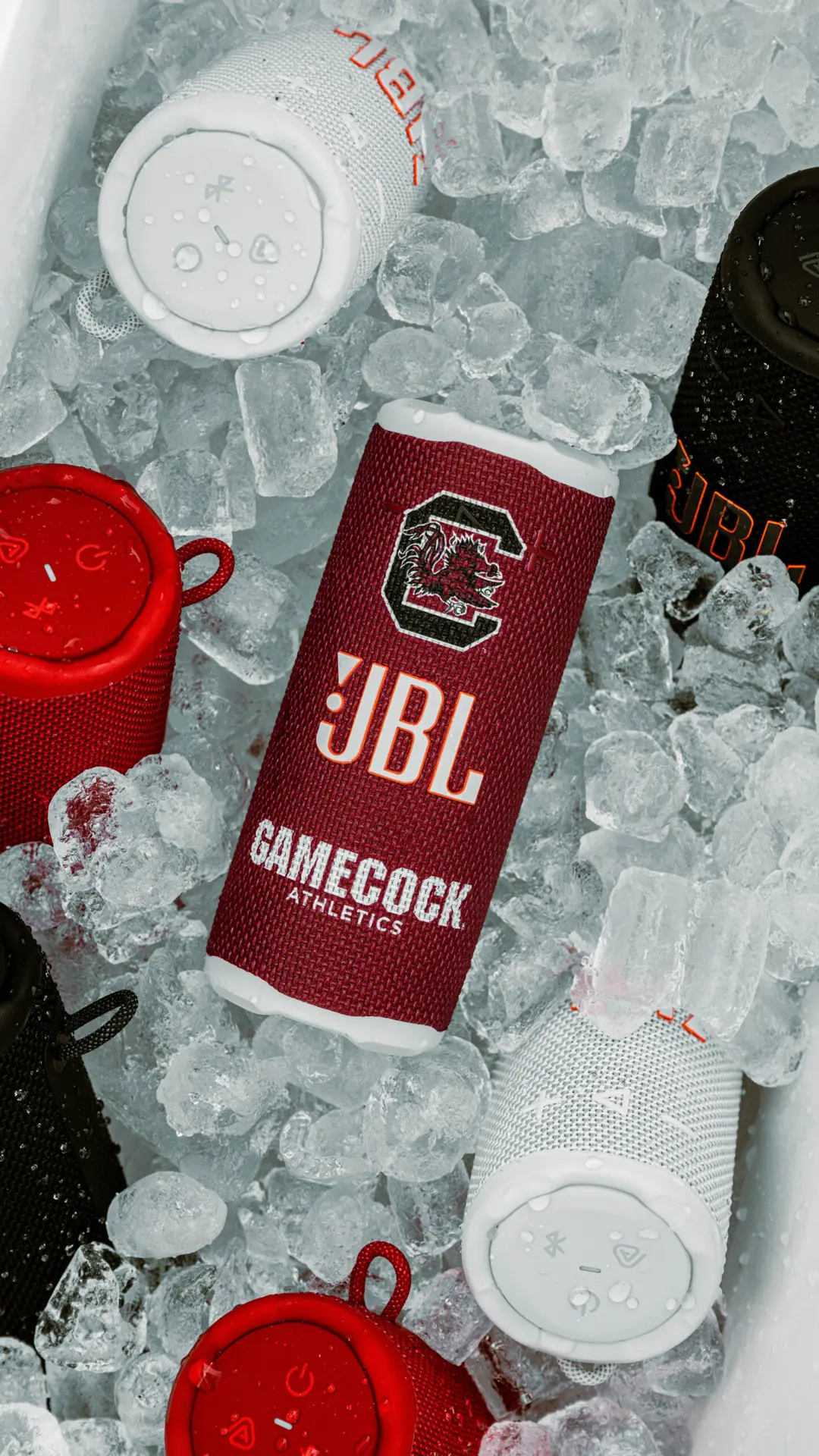
## Product Line
Distribution, on the other hand, is the strategic process of bringing the finished movie to the viewers, involving marketing tactics and channeling through various platforms. Recognizing their core differences and the critical interplay between them is essential for the success of any film project, shaping not only its artistic integrity but also its commercial viability.
In this dynamic landscape, C&I Studios stands as a beacon of creativity and expertise. Leveraging state-of-the-art technology and a team of seasoned professionals, we specialize in transforming narratives into compelling cinematic experiences.
Our approach to [film production](https://c-istudios.com/film-and-tv-production/) is holistic, ensuring that every story not only finds its voice but also reaches its intended audience with impact.
## Understanding Film Production
Film production is a complex process, requiring a blend of artistic vision, technical skills, and significant financial investment. The primary objective of [film production](https://c-istudios.com/film-and-tv-production/) is to create a compelling and engaging story that connects with the audience. This involves a meticulous process, starting from an idea's conception to the final product's screening.Top of Form
1. ** Conceptualization and Development:**
The process of conceptualization and development in film production is where everything begins, starting with an initial idea or a script. This stage is crucial as it lays the foundation for everything that follows in the filmmaking process.
- **Idea Generation**: Often, a film starts as a mere concept or an idea. This can stem from various sources, be it a novel, a real-life event, an original idea, or even a remake of an existing film.
- **Scriptwriting**: Once the idea is conceived, it's up to the writers to bring it to life through a script. Scriptwriters play a pivotal role in outlining the story, developing characters, and setting the tone of the film.
- **Collaboration with Directors**: Directors usually come on board once a draft of the script is ready. Their vision is key to transforming the written script into a visual medium. Directors work closely with the writers to refine the script, ensuring that it aligns with their creative vision and the film's overall goals.
- **Research and Development**: Depending on the genre and storyline, this phase may involve extensive research. For historical dramas, for instance, accuracy in depicting the era is crucial. Similarly, science fiction and fantasy genres might require a deep dive into world-building.
- **Creative Input**: This stage is not just limited to writers and directors. Producers, creative consultants, and sometimes even actors contribute their ideas and insights to enrich the storyline, characters, and themes.
- **Finalizing the Script**: The script may go through several revisions. Each revision refines the story, deepens character development, and ensures that the script is feasible for production both artistically and financially.
- **Preparing for Production**: Once the script is finalized, the pre-production process begins. This includes casting, scouting locations, planning the production schedule, and budgeting.
This conceptualization and development phase is foundational in the film production process, setting the tone for the entire project and ensuring that the production team has a clear roadmap to follow as they move forward into the actual production of the film.
1. ** Pre-Production**
This phase is where planning and preparation take place. Key roles include producers, who oversee the project from a financial and managerial perspective, and directors, who shape the artistic vision. Casting directors select actors suitable for each role. Location scouts, art directors, costume designers, and cinematographers come together to determine the film's visual style and settings.
1. ** Production**
The actual shooting of the film occurs during this stage. It involves a large crew, including camera operators, sound engineers, lighting technicians, and more. The director guides the actors and crew through each scene, ensuring that every element aligns with the envisioned narrative. This phase is intense and often the most expensive, with costs accruing from salaries, equipment rentals, set constructions, and location fees.
1. ** Post-Production**
After filming, the post-production team, including editors, sound designers, and visual effects artists, work to assemble and polish the final product. Editors play a crucial role in shaping the film's narrative flow, rhythm, and pace. Sound designers and composers enhance the film's emotional impact with sound effects and music.
1. ** Financial Aspects**
Film production requires a substantial financial investment. Budgets vary widely, depending on the film's scale and complexity. Funding can come from various sources, including studio financing, independent investors, grants, and crowd funding. The production budget covers all aspects, from pre-production expenses to post-production finishing touches.
1. ** Creative Aspects**
Creativity in film production is not confined to writing and directing. It encompasses a wide range of artistic disciplines, from the visual artistry of cinematography and production design to the creative decisions in casting, costume design, and music composition. Each professional involved contributes to the film's overall artistic expression, ensuring that the final product resonates both visually and emotionally with its audience.
## Exploring Film Distribution
Film distribution, a vital process in the movie industry, is the bridge that connects a completed film with its audience. The journey of film distribution begins once the movie is ready to leave the production phase and find its place in the public domain. The overarching goals of this phase are twofold: to ensure the film reaches its intended audience and to maximize its profitability through strategic release and promotion.
In the world of film distribution, a movie's success is intricately tied to how well it's marketed and promoted. [Marketing campaigns](https://c-istudios.com/media-marketing-consultation-services/) are tailored to create a buzz around a film, drawing attention and piquing interest among potential viewers. This involves developing a comprehensive marketing strategy, which includes crafting compelling promotional materials like trailers and posters, and implementing a robust advertising plan across various media platforms.
Public relations and media engagement also play a critical role. By securing media coverage, such as film reviews, interviews, and feature articles, distributors can significantly boost a movie's visibility and appeal. Film festivals and special screenings are other important avenues, often used to generate early interest, especially for independent films.
The logistical aspect of film distribution is equally critical. Decisions regarding distribution channels are key; these can range from theatrical releases to digital platforms, television broadcasts, or a combination of these. This stage involves negotiating terms and arrangements with cinema chains, streaming services, and TV networks to ensure the film reaches its audience effectively.
Geographical strategy is another consideration, determining whether to focus on domestic markets, international audiences, or both. The timing of the film's release is a crucial factor, influenced by market competition, seasonal trends, and audience availability.
Revenue generation in film distribution is multifaceted. Box office sales from theatrical releases often constitute a significant portion of a film's income. However, with the evolving landscape of the film industry, revenue streams have diversified to include digital and physical sales, such as through streaming services and DVDs, as well as broadcasting rights for television networks. Ancillary markets, including merchandise and licensing deals, also contribute to a film's overall financial success.
## The Interplay between Production and Distribution
The interplay between film production and distribution is a dance of mutual influence and dependency, where decisions in one realm often have significant impacts on the other. The success of a film is largely dependent on how well these two elements work together, each playing a critical role in bringing a story from script to screen and then to the audience.
**Impact of Production Decisions on Distribution**: The choices made during the production phase, such as the film's genre, cast, budget, and production quality, greatly influence its distribution strategy. A big-budget movie with A-list actors, for instance, is likely to attract major distributors and secure a wide release, while an indie film might target film festivals and smaller distribution channels. The production quality also dictates the distribution avenues; a visually stunning film is more likely to be picked up for theatrical release, whereas a lower-budget project might be more suited for digital platforms.
**Distribution Influencing Production**: Conversely, distribution needs can influence production decisions. Understanding the distribution landscape helps producers and directors shape their projects to better fit market demands. For example, if a streaming service is identified as the primary distribution channel early on, the film might be tailored to suit the binge-watching habits of digital audiences, potentially affecting its storytelling style, length, or even content.
**Importance of Both Elements**: Both production and distribution are crucial for a film’s success. A well-produced film might fail to reach its audience without an effective distribution strategy, while even the most strategically distributed film can falter if it lacks production quality or audience appeal. The production sets the stage for a film’s artistic merit and appeal, while distribution ensures that it finds the right audience at the right time, maximizing both viewership and profitability.
In essence, the relationship between film production and distribution is symbiotic. Each phase must be carefully considered and executed, with an understanding of how choices in one area will affect the other. Balancing the art of filmmaking with the business of film distribution is key to the success of any film project.
## The Role of Film Festivals and Sales Agents in Distribution
Film festivals play a crucial role in the movie distribution process, especially for independent and smaller-scale films. Festivals like Sundance, Tribeca, and Toronto are renowned for being platforms where filmmakers can showcase their work to a broader audience, including critics, industry professionals, and distributors. These events provide a unique opportunity for movies to gain attention, create buzz, and potentially attract distribution deals. A strong showing at a film festival can significantly enhance a film's prospects, making it more appealing to distributors. The festival circuit often serves as a Launchpad, where films can garner critical acclaim, awards, and media coverage, all of which are attractive to distributors looking to invest in promising content.
Sales agents also play a pivotal role in the distribution process. They act as intermediaries between filmmakers and distributors, leveraging their expertise and industry connections to find the right distribution channels for a film. Sales agents understand the market dynamics and can effectively pitch a film to distributors, negotiate deals, and navigate the complex distribution landscape. They help filmmakers navigate through different distribution options, including theatrical releases, streaming platforms, and television networks, ensuring that the film reaches its target audience effectively. In many cases, sales agents are instrumental in securing distribution deals, particularly for films that might not have the advantage of high visibility or significant marketing budgets.
## Modern Distribution Channels. Streaming and Self-Distribution
The distribution landscape of the film industry is rapidly evolving, driven by new technologies and changing viewer preferences. Streaming platforms have emerged as major players in the distribution arena, offering filmmakers an alternative to traditional theatrical releases. Platforms like Netflix, Amazon Prime, and Hulu provide a global audience and have increasingly become involved in financing and distributing original content. This shift towards digital platforms has opened new avenues for filmmakers, allowing them to reach a wider audience without the constraints of geographical boundaries and limited theatrical screens.
Self-distribution is another growing trend in the film industry. Advances in digital technology have empowered filmmakers to bypass traditional distribution channels and directly reach their audience. Platforms like Vimeo, VHX, and even social media channels enable filmmakers to distribute their films online, control the marketing and promotion, and engage directly with their audience. This method often requires a more hands-on approach to marketing and promotion but offers filmmakers greater control over their work and its distribution.
The democratization of distribution through streaming and self-distribution is changing the landscape of the film industry. Filmmakers now have more options than ever before to distribute their films and connect with audiences. This shift is encouraging innovation and creativity, allowing for a wider variety of content to be produced and shared with viewers around the world.
## Financial Aspects of Film Distribution
The financial aspects of film distribution are diverse and complex, encompassing various revenue models and necessitating strategic budget allocation. Key revenue streams in film distribution include:
- Box Office Sales
- Streaming Revenue
- Licensing
- Physical Sales
- Merchandising and Ancillary Markets
Strategic budget allocation for distribution is crucial. This includes marketing expenses, distribution fees, and costs specific to the chosen distribution channels. The allocation must be carefully balanced to ensure maximum profitability, considering the most effective marketing strategies and the most beneficial distribution channels for the specific film.
## Choosing the Right Distributor
Selecting the right distributor is critical for a film's success and involves several considerations:
1. **Track Record and Genre Experience**: It's essential to evaluate a distributor's history and success in distributing films of a similar genre or style. A distributor experienced in a particular genre is likely to have the right connections and strategies to effectively market the film.
2. **Distribution Strategy**: Understanding a distributor's approach to releasing films, including their preferred channels and marketing strategies, is important. The chosen strategy should align with the film's target audience and overall goals.
3. **Reputation and Financial Stability**: The distributor's reputation in the industry, their financial stability, and their history of fair dealings with filmmakers are crucial.
4. **Negotiation and Contract Terms**: Filmmakers should carefully review and negotiate the distribution contract terms, focusing on revenue sharing models, rights management, and the duration of the distribution agreement.
Selecting the right distributor is not just about their ability to distribute a film; it's about partnering with a company that aligns with the film's vision and can effectively reach its intended audience.
**In conclusion,** the success of a film is intricately tied to the effectiveness of both its production and distribution. From the initial conceptualization and development in the production phase to the strategic marketing and revenue models in distribution, each step is crucial. Film festivals and sales agents play a key role in securing distribution deals, while modern channels like streaming and self-distribution are reshaping the landscape. Understanding the financial aspects and choosing the right distributor are essential for maximizing a film's reach and profitability.
## Bringing Stories to Life with C&I Studios
At [C&I Studios](https://c-istudios.com/), we understand that film is the ultimate form of storytelling, a powerful medium that has evolved tremendously over the years. Our professional [film and TV production services](https://c-istudios.com/film-and-tv-production/) are rooted in a deep appreciation of this evolution. As digital cinema's sheer power stands unrivalled, we recognize that bringing a story to life on the big screen requires more than just a vision; it demands a mastery of various aspects of filmmaking.
With [our expertise](https://c-istudios.com/our-work/) in acting, stage design, direction, camera operations, lighting, and editing, we are not just creators but artisans of this digital art form. We provide the equipment, expertise, and manpower necessary to transform your vision, story, and screenplay into a cinematic masterpiece. Our commitment is to not just produce films but to craft experiences that captivate and resonate with modern audiences. [Let us bring your story to life](https://c-istudios.com/contact/), making it not just seen but felt on the big screen.
For more information on industry standards and best practices, visit the [American Marketing Association](https://www.ama.org/).
## Work with C&I Studios
If you are planning a project like this, our team can take it from concept to final delivery. Explore our [film and TV production](https://c-istudios.com/film-and-tv-production/), browse [our work](https://c-istudios.com/our-work/) to see how we tell brand stories, and [get in touch](https://c-istudios.com/contact/) when you are ready to start.
Originally published February 23, 2024
---
*This content is from [C&I Studios](https://c-istudios.com), a full-service production company.*
---
# Unlocking Google Verification Success: The Power of Business Videos
> Published: February 22, 2024
> Categories: Commercial & Brand
> Source: https://c-istudios.com/unlocking-google-verification-success-the-power-of-business-videos/
---
.cib{--paper:#1b1d1f;--ink:#fff;--body:#d5d7d9;--muted:#8b9096;--line:rgba(255,255,255,.12);--thumb:#2b2e31;--card:#212426;--accent:#c02b0a;--blue:#5B8FA8;--serif:'Playfair Display',Georgia,serif;--sans:'Poppins',-apple-system,sans-serif;--measure:900px;background:var(--paper);color:var(--body);font-family:var(--sans);line-height:1.6;position:relative;left:50%;transform:translateX(-50%);width:90vw;max-width:1920px}
.cib *{box-sizing:border-box}
.cib .kicker{max-width:var(--measure);margin:58px auto 0;padding:0 22px;font-size:12.5px;font-weight:700;letter-spacing:2.5px;text-transform:uppercase;color:var(--blue)}
.cib h1.cibh1{text-wrap:balance;font-family:var(--serif);font-weight:500;font-size:clamp(46px,6vw,72px);line-height:1.08;color:var(--ink);max-width:var(--measure);margin:18px auto 0;padding:0 22px;letter-spacing:-.5px}
.cib .metarow{max-width:var(--measure);margin:20px auto 0;padding:0 22px;color:var(--muted);font-size:14px}
.cib .hero{position:relative;width:100%;height:0;padding-bottom:56.25%;overflow:hidden;margin:48px auto 0;border-top:1px solid var(--line);border-bottom:1px solid var(--line)}
.cib .hero .ph{width:100%;aspect-ratio:16/9;background:var(--thumb);border-top:1px solid var(--line);border-bottom:1px solid var(--line);display:flex;align-items:center;justify-content:center;color:#7d8288;font-size:13px;text-align:center;padding:0 20px}
.cib .body{max-width:var(--measure);margin:12px auto 0;padding:52px 22px 6px}
.cib .body.lead p:first-child{font-size:23px;line-height:1.62;color:var(--ink)}
.cib .body p{font-size:18.5px;line-height:1.85;margin:0 0 30px;color:var(--body)}
.cib .body h2{text-wrap:balance;font-family:var(--serif);font-weight:500;font-size:clamp(32px,4vw,48px);line-height:1.22;color:var(--ink);margin:70px 0 20px;letter-spacing:-.3px}
.cib .body h3{text-wrap:balance;font-family:var(--sans);font-weight:600;font-size:22px;color:var(--ink);margin:38px 0 8px}
.cib .body a{color:var(--ink);text-decoration:underline;text-decoration-color:rgba(255,255,255,.4);text-underline-offset:3px}
.cib .body a:hover{text-decoration-color:var(--ink)}
.cib .ctable{width:100%;border-collapse:collapse;margin:16px 0 30px;font-size:16px}
.cib .ctable th{background:#000;color:#fff;text-align:left;padding:10px 12px;font-family:var(--sans)}
.cib .ctable td{padding:10px 12px;border-bottom:1px solid var(--line);color:var(--body)}
.cib .inimg{position:relative;width:100%;height:0;padding-bottom:56.25%;overflow:hidden;margin:72px auto;border-top:1px solid var(--line);border-bottom:1px solid var(--line)}
.cib .inimg .ph{width:100%;aspect-ratio:16/9;background:var(--thumb);border-top:1px solid var(--line);border-bottom:1px solid var(--line);display:flex;align-items:center;justify-content:center;color:#7d8288;font-size:13px}
.cib .origpub{max-width:var(--measure);margin:60px auto 0;padding:26px 22px 0;border-top:1px solid var(--line);color:var(--muted);font-size:13.5px}
.cib .related{max-width:1200px;margin:64px auto 0;padding:34px 22px 76px}
.cib .related h3{font-family:var(--sans);font-size:12.5px;letter-spacing:2px;text-transform:uppercase;color:var(--ink);margin:0 0 24px}
.cib .grid{display:grid;grid-template-columns:repeat(3,1fr);gap:28px}
.cib .rc{background:var(--card);border:1px solid var(--line);display:block;text-decoration:none;color:inherit;transition:border-color .15s}
.cib a.rc:hover{border-color:rgba(255,255,255,.5)}
.cib .rc .thumb{position:relative;width:100%;height:0;padding-bottom:56.25%;background:var(--thumb);overflow:hidden}
.cib .rc .thumb img{position:absolute!important;top:0!important;left:0!important;width:100%!important;height:100%!important;object-fit:cover!important;margin:0!important}
.cib .rc .cc{padding:14px 15px 17px}
.cib .rc .rt{font-family:var(--serif);font-weight:500;font-size:16px;line-height:1.3;color:var(--ink);margin:0 0 6px}
.cib .rc .rm{font-size:11px;letter-spacing:1px;text-transform:uppercase;color:var(--muted)}
.cib img{margin:0!important;padding:0!important;display:block!important;vertical-align:top;max-width:100%}
.cib .hero img,.cib .inimg img{position:absolute!important;top:0!important;left:0!important;width:100%!important;height:100%!important;object-fit:cover!important;margin:0!important;padding:0!important;border:0!important;display:block!important;aspect-ratio:auto!important}
.cib .hero+.body{padding-top:36px}
@media(max-width:760px){.cib .grid{grid-template-columns:1fr}.cib .body h2{margin:52px 0 16px}.cib .body p{font-size:17.5px}.cib .inimg,.cib .hero{margin-top:44px}}
.cib .vembed{max-width:var(--measure);margin:44px auto;padding:0 22px}.cib .vembed .vwrap{position:relative;width:100%;height:0;padding-bottom:56.25%}.cib .vembed .vwrap iframe{position:absolute;top:0;left:0;width:100%;height:100%;border:0}
Commercial & Brand
# Unlocking Google Verification Success. The Power of Business Videos
7 min read
## Introduction
In the rapidly evolving digital landscape, the importance of a robust online presence for businesses cannot be overstated. Central to this is the Google Business Profile, a powerful tool that allows companies to manage their online information as it appears in Google Search and Maps. The verification of a Google Business Profile is a critical step, ensuring that the information presented is accurate and that the business legitimately exists. This process not only bolsters the credibility of a business in the eyes of Google and potential customers but also plays a significant role in local [search engine optimization (SEO)](https://c-istudios.com/seo-copywriting-services/).
Recently, Google has introduced video verification as an alternative to the traditional postcard verification method. This shift reflects the growing emphasis on multimedia content and the need for more robust and reliable verification methods. Video verification, a process where businesses submit a short video to Google showcasing their physical location and operations, offers a more dynamic and comprehensive way to demonstrate the authenticity of a business.
## The Shift from Postcard to Video Verification
The transition from postcard to video verification for Google Business Profiles marks a significant shift in Google's approach to ensuring business authenticity and legitimacy. This change addresses several limitations inherent in the postcard verification process and capitalizes on the evolving digital landscape's capabilities.
Originally, postcard verification was Google's primary method for confirming the physical location of a business. In this process, a postcard containing a unique verification code would be mailed to the business's address as listed on their Google Business Profile. The recipient would then enter this code into their profile to complete the verification process. While simple, this method had notable vulnerabilities. It was susceptible to manipulation and fraud, as businesses could easily falsify addresses or misuse postcards to verify illegitimate locations. The reliance on physical mail also posed challenges, such as delays or loss in transit, and failed to provide comprehensive proof of a business's operations or physical presence.
Video verification emerged as a more dynamic and reliable alternative, allowing businesses to showcase their physical location and operations through a video submission. This method directly addresses the shortcomings of postcard verification. By requiring a visual representation of the business, video verification makes it more challenging for fraudulent or non-existent businesses to manipulate the system. It also provides Google with a more holistic view of the business, including its operations and the authenticity of its physical presence.
The shift to video verification is not only a response to the limitations of postcard verification but also aligns with the broader digital trend towards multimedia content. Videos offer a richer, more engaging format to convey information, reflecting the increasing importance of visual content in the digital marketing landscape.
## Showcasing Your Business. What to Include in Your Video
Creating an effective verification video for your Google Business Profile involves highlighting key aspects of your business that assure Google of its authenticity. This video is crucial not only for verification but also for portraying your business's legitimacy and operations. Here’s a detailed breakdown of what to include:
### Geographic Location
- **Exterior View**: Start by capturing the exterior of your business location. Include identifiable landmarks, street signs, and neighbouring businesses to establish the geographical context. This helps in correlating your business with its listed address on Google Maps.
- **Interior View**: For businesses with a physical location like stores or offices, showcasing the interior is essential. This includes areas where transactions occur or services are provided.
### Business Operations
- **Operational Evidence**: Display elements that are central to your business operations. For retail stores, this could be the display of products and for service-based businesses, relevant equipment or tools.
- **Branding**: Include shots of your business signage, logos, and any branded materials. This strengthens the association between the physical location and your [business identity](https://c-istudios.com/branding-and-graphic-design-services/).
- **Employee Interaction**: If possible, show employees engaging in business activities. This demonstrates the day-to-day operations and the human element of your business.
### Proof of Management
- **Access to Restricted Areas**: Show areas that are not accessible to the general public, like storage rooms, kitchens in restaurants, or back offices. This indicates control and management over the premises.
- **Administrative Evidence**: Display administrative aspects such as operating a POS system, managing the inventory, or other management-level activities.
- **Legal Documentation**: If applicable, include close-ups of business licenses, certifications, or other official documents that are displayed on-site, which tie your business to its physical location and operation.
### Authenticity and Details
- **Unique Aspects**: Showcase any unique aspects of your business that differentiate it from others, such as specialized machinery, unique products, or distinctive services.
- **Continuous Recording**: Ensure the video is a continuous recording without edits or cuts to maintain authenticity. Plan your route through the business to smoothly capture all necessary elements.
Remember, the goal of your video is to provide a comprehensive and authentic portrayal of your business. It should visually confirm what's stated in your Google Business Profile and enhance the trustworthiness of your listing.
## Best Practices for Recording and Uploading Your Video
Creating and uploading a verification video for your Google Business Profile is a crucial step in establishing your business's online presence. Here are some best practices for recording and uploading your video effectively:
1. Planning Your Video
- **Storyboarding**: Before recording, [plan the content](https://c-istudios.com/content-creation-services/) of your video. Outline the key elements you need to showcase, such as the exterior and interior of your business, operational aspects, and proof of management.
- **Scripting**: Prepare a script or a list of points to ensure you cover all the necessary details in a coherent manner.
1. Technical Aspects of Recording
- **Camera Quality**: Use a smartphone or a camera with good video quality. Ensure the video is clear and stable.
- **Lighting and Sound**: Record in a well-lit area to ensure clarity. Minimize background noise to improve audio quality.
- **Steady Shots**: Use a tripod or stabilize your device to avoid shaky footage.
1. Content of the Video
- **Showcasing the Location**: Start by capturing the exterior of your business, including any signage. Include nearby landmarks or street signs to verify the location.
- **Business Operations**: Demonstrate active business operations. Show products, services, or any operational processes that are key to your business.
- **Proof of Management**: Include footage that proves your authority over the business, such as unlocking the business doors or working in employee-only areas.
1. Uploading the Video
- **File Format and Size**: Check Google's requirements for video format and size limits. Ensure your video meets these specifications.
- **Uploading Process**: Follow Google's guidelines for uploading your video. You'll likely need to do this through the Google Business Profile interface or a linked mobile device.
- **Internet Connection**: Ensure a stable internet connection during the upload to avoid interruptions.
1. Post-Upload
- **Verification Wait Time**: After uploading, be prepared to wait for Google's review process, which can take several days.
- **Follow-Up**: If there are issues with your video or additional information is needed, Google will contact you. Be responsive to any follow-up requests.
1. Privacy and Security
**Confidential Information**: Avoid capturing sensitive or personal information in your video.
By adhering to these best practices, you can create a compelling and effective verification video that showcases your business accurately and enhances your chances of a smooth verification process.
## Challenges and Solutions in Video Verification
The implementation of video verification for Google Business Profiles, while innovative, comes with its set of challenges. Businesses often encounter obstacles that can hinder the verification process. However, by understanding these challenges and their solutions, businesses can navigate the process more effectively.
**Technical Difficulties**: One of the primary challenges is dealing with technical issues related to [video recording](https://c-istudios.com/video-production-services/) and uploading. This includes problems with camera quality, internet connectivity, and compatibility with Google's upload requirements. To overcome this, businesses should test their equipment beforehand, ensure a stable internet connection, and familiarize themselves with Google's video format and size requirements.
**Capturing Required Details**: Ensuring that the video includes all necessary details, such as the business location, signage, and operations, can be tricky. Some businesses may struggle to capture their operations comprehensively or might miss showcasing crucial elements like the business signage or the geographic location. Preparing a checklist of required elements and conducting a trial run before the final recording can help ensure all critical aspects are covered.
**Privacy Concerns**: [Filming](https://c-istudios.com/film-and-tv-production/) within a business environment can raise privacy issues, especially if employees or customers are present. It's essential to inform those present during the recording and obtain necessary consents if required. Additionally, care should be taken to avoid filming sensitive or personal information.
**Length and Clarity of Video**: Balancing the length and clarity of the video is another common challenge. While the video needs to be comprehensive, it should also be concise. Planning the video flow in advance and focusing on the most critical aspects of the business can help in maintaining this balance.
**Verification Delays**: Sometimes, even after submitting a well-prepared video, businesses might face delays in verification. This can be due to the high volume of verification requests Google receives. Patience is key in such situations, and if the delay is unusually long, reaching out to Google's support for an update is advisable.
**Adherence to Google’s Guidelines**: Staying within the bounds of Google's guidelines while showcasing the business authentically can be challenging. It's important to thoroughly understand Google's guidelines for video verification and ensure compliance to avoid rejection.
By anticipating these challenges and preparing accordingly, businesses can enhance their chances of a smooth and successful video verification process.
## The Power of Business Videos beyond Verification
The role of business videos extends far beyond just the realm of Google Business Profile verification. In the broader context of marketing and customer engagement, video content is a potent tool that offers numerous benefits.
**Enhanced Engagement and Retention**: Video content is inherently more engaging than static text or images. The dynamic nature of videos captures the attention of viewers more effectively, leading to higher engagement rates. Studies have shown that consumers are more likely to retain information presented in a video format compared to text. This enhanced engagement and retention are invaluable in marketing, where capturing and maintaining consumer attention is crucial.
**Improved SEO and Online Visibility**: Videos significantly boost a business's online visibility. Search engines, particularly Google, favour websites with video content, leading to better search rankings. Additionally, videos increase the time spent by visitors on a site, which is another factor that positively influences SEO rankings.
**Versatile Storytelling and Branding**: Videos offer a versatile medium for [storytelling and brand building](https://c-istudios.com/branding-and-graphic-design-services/). Through video, businesses can convey their brand narrative, values, and personality in a way that resonates with viewers. This storytelling aspect can forge a stronger emotional connection with the audience, enhancing brand loyalty.
**Increased Conversion Rates**: Videos have been shown to increase conversion rates. Including a video on a landing page can make a website more appealing and persuasive, leading to higher conversion rates. This is particularly beneficial for e-commerce businesses, where videos can showcase products in action, providing customers with a clearer, more engaging view of what they're purchasing.
**Boost in Social Media Engagement**: In the realm of social media, video content is king. Videos are more likely to be shared, liked, and commented on compared to other types of content. This increased engagement on social media not only enhances brand visibility but also drives traffic back to the business’s website.
**Facilitating Customer Trust and Education**: Videos can be used to educate customers about products or services, helping them make informed decisions. Explainer videos, tutorials, and customer testimonials build trust and credibility, which are fundamental in customer decision-making processes.
In conclusion, the integration of video verification into the Google Business Profile process and the broader application of video content in marketing and customer engagement strategies highlight the growing importance of multimedia in the digital age. This evolution reflects the need for more interactive and authentic forms of communication between businesses and their customers, positioning video content as a key player in the digital marketing arena.
## Work with C&I Studios
If you are planning a project like this, our team can take it from concept to final delivery. Explore our [video production services](https://c-istudios.com/video-production-services/), browse [our work](https://c-istudios.com/our-work/) to see how we tell brand stories, and [get in touch](https://c-istudios.com/contact/) when you are ready to start.
Originally published February 22, 2024
---
*This content is from [C&I Studios](https://c-istudios.com), a full-service production company.*
---
# YouTube Marketing Mastery: Leveraging Videos for Business Growth
> Published: February 22, 2024
> Categories: Commercial & Brand
> Source: https://c-istudios.com/youtube-marketing-mastery-leveraging-videos-for-business-growth/
---
.cib{--paper:#1b1d1f;--ink:#fff;--body:#d5d7d9;--muted:#8b9096;--line:rgba(255,255,255,.12);--thumb:#2b2e31;--card:#212426;--accent:#c02b0a;--blue:#5B8FA8;--serif:'Playfair Display',Georgia,serif;--sans:'Poppins',-apple-system,sans-serif;--measure:900px;background:var(--paper);color:var(--body);font-family:var(--sans);line-height:1.6;position:relative;left:50%;transform:translateX(-50%);width:90vw;max-width:1920px}
.cib *{box-sizing:border-box}
.cib .kicker{max-width:var(--measure);margin:58px auto 0;padding:0 22px;font-size:12.5px;font-weight:700;letter-spacing:2.5px;text-transform:uppercase;color:var(--blue)}
.cib h1.cibh1{text-wrap:balance;font-family:var(--serif);font-weight:500;font-size:clamp(46px,6vw,72px);line-height:1.08;color:var(--ink);max-width:var(--measure);margin:18px auto 0;padding:0 22px;letter-spacing:-.5px}
.cib .metarow{max-width:var(--measure);margin:20px auto 0;padding:0 22px;color:var(--muted);font-size:14px}
.cib .hero{position:relative;width:100%;height:0;padding-bottom:56.25%;overflow:hidden;margin:48px auto 0;border-top:1px solid var(--line);border-bottom:1px solid var(--line)}
.cib .hero .ph{width:100%;aspect-ratio:16/9;background:var(--thumb);border-top:1px solid var(--line);border-bottom:1px solid var(--line);display:flex;align-items:center;justify-content:center;color:#7d8288;font-size:13px;text-align:center;padding:0 20px}
.cib .body{max-width:var(--measure);margin:12px auto 0;padding:52px 22px 6px}
.cib .body.lead p:first-child{font-size:23px;line-height:1.62;color:var(--ink)}
.cib .body p{font-size:18.5px;line-height:1.85;margin:0 0 30px;color:var(--body)}
.cib .body h2{text-wrap:balance;font-family:var(--serif);font-weight:500;font-size:clamp(32px,4vw,48px);line-height:1.22;color:var(--ink);margin:70px 0 20px;letter-spacing:-.3px}
.cib .body h3{text-wrap:balance;font-family:var(--sans);font-weight:600;font-size:22px;color:var(--ink);margin:38px 0 8px}
.cib .body a{color:var(--ink);text-decoration:underline;text-decoration-color:rgba(255,255,255,.4);text-underline-offset:3px}
.cib .body a:hover{text-decoration-color:var(--ink)}
.cib .ctable{width:100%;border-collapse:collapse;margin:16px 0 30px;font-size:16px}
.cib .ctable th{background:#000;color:#fff;text-align:left;padding:10px 12px;font-family:var(--sans)}
.cib .ctable td{padding:10px 12px;border-bottom:1px solid var(--line);color:var(--body)}
.cib .inimg{position:relative;width:100%;height:0;padding-bottom:56.25%;overflow:hidden;margin:72px auto;border-top:1px solid var(--line);border-bottom:1px solid var(--line)}
.cib .inimg .ph{width:100%;aspect-ratio:16/9;background:var(--thumb);border-top:1px solid var(--line);border-bottom:1px solid var(--line);display:flex;align-items:center;justify-content:center;color:#7d8288;font-size:13px}
.cib .origpub{max-width:var(--measure);margin:60px auto 0;padding:26px 22px 0;border-top:1px solid var(--line);color:var(--muted);font-size:13.5px}
.cib .related{max-width:1200px;margin:64px auto 0;padding:34px 22px 76px}
.cib .related h3{font-family:var(--sans);font-size:12.5px;letter-spacing:2px;text-transform:uppercase;color:var(--ink);margin:0 0 24px}
.cib .grid{display:grid;grid-template-columns:repeat(3,1fr);gap:28px}
.cib .rc{background:var(--card);border:1px solid var(--line);display:block;text-decoration:none;color:inherit;transition:border-color .15s}
.cib a.rc:hover{border-color:rgba(255,255,255,.5)}
.cib .rc .thumb{position:relative;width:100%;height:0;padding-bottom:56.25%;background:var(--thumb);overflow:hidden}
.cib .rc .thumb img{position:absolute!important;top:0!important;left:0!important;width:100%!important;height:100%!important;object-fit:cover!important;margin:0!important}
.cib .rc .cc{padding:14px 15px 17px}
.cib .rc .rt{font-family:var(--serif);font-weight:500;font-size:16px;line-height:1.3;color:var(--ink);margin:0 0 6px}
.cib .rc .rm{font-size:11px;letter-spacing:1px;text-transform:uppercase;color:var(--muted)}
.cib img{margin:0!important;padding:0!important;display:block!important;vertical-align:top;max-width:100%}
.cib .hero img,.cib .inimg img{position:absolute!important;top:0!important;left:0!important;width:100%!important;height:100%!important;object-fit:cover!important;margin:0!important;padding:0!important;border:0!important;display:block!important;aspect-ratio:auto!important}
.cib .hero+.body{padding-top:36px}
@media(max-width:760px){.cib .grid{grid-template-columns:1fr}.cib .body h2{margin:52px 0 16px}.cib .body p{font-size:17.5px}.cib .inimg,.cib .hero{margin-top:44px}}
.cib .vembed{max-width:var(--measure);margin:44px auto;padding:0 22px}.cib .vembed .vwrap{position:relative;width:100%;height:0;padding-bottom:56.25%}.cib .vembed .vwrap iframe{position:absolute;top:0;left:0;width:100%;height:100%;border:0}
Commercial & Brand
# YouTube Marketing Mastery. Leveraging Videos for Business Growth
12 min read

## Introduction to YouTube Marketing
YouTube marketing, a key aspect of [digital marketing](https://c-istudios.com/social-media-marketing-services/), leverages the immense potential of the YouTube platform for promoting brands, products, or services. This approach involves creating engaging video content and utilizing YouTube’s vast advertising network to broaden audience reach. As the second most visited website worldwide, YouTube's appeal lies in its ability to connect over 2 billion monthly users through a medium that significantly boosts engagement and conversion rates.
It's vast user base and diverse content tools make YouTube essential for any digital marketing plan. From storytelling and tutorials to live streams, YouTube offers unique ways to engage audiences beyond traditional text-based content. This platform is vital for brands seeking to strengthen their online presence, increase brand awareness, and actively engage with consumers.
In this article, we're going to delve deeper into the nuances of [YouTube marketing](https://c-istudios.com/social-media-marketing-services/), exploring how it can transform the way businesses connect with audiences and amplify their online presence. Join us as we uncover the strategies and insights that make YouTube an indispensable tool for digital success.
## Understanding YouTube’s Platform
### Statistics on YouTube usage and its impact on purchasing decisions
YouTube's platform is a powerhouse in the digital marketing landscape. As the second most-visited website globally, it boasts a monthly user base of over 2 billion people. This vast audience pool is not just passively consuming content; they're actively influenced by it. In fact, according to Google, 68% of YouTube users utilize the platform to help make purchasing decisions. These numbers reflect the immense impact YouTube videos have on users' buying behaviours, from product reviews to how-to guides.
### The competitive nature of YouTube
The sheer volume of content uploaded to YouTube every minute creates a highly competitive environment. Standing out in this crowded space requires more than just creating videos; it demands a strategic approach. This includes understanding YouTube’s algorithms, optimizing content for [SEO](https://c-istudios.com/seo-copywriting-services/), and creating videos that genuinely resonate with your target audience. Success on YouTube is not just about reaching a broad audience; it's about reaching the right audience with engaging, relevant, and valuable content. In this competitive arena, quality, creativity, and strategic promotion are key to capturing and maintaining viewer attention.
## Setting Up Your YouTube Channel
Establishing a YouTube channel that effectively captures your brand identity and engages your audience involves several key steps.
### Choosing a Channel Name and Logo Design
Selecting the right channel name is crucial as it's often the first impression viewers have of your brand. Your channel name should be memorable, easy to spell, and reflect your [brand's identity](https://c-istudios.com/branding-and-graphic-design-services/) or the content you plan to share. For businesses, using the company name is a straightforward choice. However, for a more personal touch, consider a name that's unique yet relatable to your audience.
The logo, serving as a visual representation of your brand on YouTube, needs to be eye-catching and reflective of your brand's ethos. A well-designed logo helps in establishing credibility and recognition. It should be simple, scalable, and effective in both colour and black and white. Given its importance, investing in a professional designer or using a high-quality design tool is advisable.
### Crafting a Compelling Channel Description and ‘About’ Section
Your channel's description and 'About' section are vital for [SEO](https://c-istudios.com/seo-copywriting-services/) and engaging potential subscribers. This space should be used to concisely explain what your channel is about, what kind of content viewers can expect, and how often. Incorporate relevant keywords naturally to improve discoverability. Also, include a call to action, such as encouraging viewers to subscribe or visit your website.
This section is your opportunity to tell your story and connect with your audience. It’s beneficial to have this professionally written, but ensure it retains your voice and appeals to your target demographic.
### Setting Up a User-Friendly Channel Layout
A well-organized channel layout enhances user experience and can increase viewer retention. YouTube offers customizable channel layouts to showcase your most important content first. Utilize playlists to categorize your videos and guide viewers through your content. Make sure you’re most popular or recent videos are easily accessible. Use channel trailers and featured videos effectively to engage new visitors.
Remember, the layout should be intuitive and reflective of your brand style. Regular updates to your layout based on your content strategy and viewer preferences can keep your channel fresh and engaging.
## Creating Your First YouTube Video
Creating your first YouTube video is an exciting step in your content creation journey. It involves careful planning, execution, and an understanding of what makes content engaging on this platform.
### Planning and Outlining Your Video Content
Begin by defining the purpose of your video. Is it to inform, entertain, educate, or sell? Knowing your objective shapes the content and structure of your video. Next, conduct keyword research to understand what your target audience is searching for and tailor your content to meet those needs.
An effective outline is crucial. It should include a brief introduction, the main content, and a conclusion with a call to action. Be specific about the key points you want to cover, but also leave room for spontaneity to keep the video natural and engaging.
### Filming and Editing Best Practices
[Quality filming](https://c-istudios.com/film-and-tv-production/) and editing can significantly enhance your video's appeal. Use a decent camera and ensure good lighting to produce clear and visually appealing footage. Pay attention to the audio quality as poor sound can be a major turn-off for viewers.
Editing is where you bring your story to life. Use [editing software](https://c-istudios.com/vfx-compositing-and-animation-services/) to cut out unnecessary parts, add transitions, and include text or graphics to emphasize key points. Remember, a well-edited video is more likely to retain viewer attention.
### Importance of the First 15 Seconds (Hook)
The first 15 seconds of your video are critical. This is your chance to grab the viewer’s attention and convince them to watch the rest of the video. Start with a hook - an intriguing preview of what the video is about or an interesting fact or question that piques curiosity.
Your opening should be engaging and reflective of the video’s overall tone. Whether it’s a bold statement, a surprising fact, or a compelling question, make sure it aligns with the content that follows. This initial engagement can significantly impact your video’s retention rates and overall success.
## Optimizing Your Videos for SEO
Effective SEO is crucial for ensuring your YouTube videos are easily discoverable by your target audience. Here's how you can optimize your videos for better search engine visibility.
### Importance of Keyword Research and Using YouTube Autocomplete
Keyword research is the foundation of SEO. Identifying the right keywords helps you understand what your audience is searching for and how to tailor your content accordingly. Use tools like Google Keyword Planner or YouTube’s Autocomplete feature. Typing a topic into the YouTube search bar and observing the suggestions can provide insights into popular search queries related to your content.
### Tips for Writing Video Descriptions, Using Tags, and Choosing Categories
Your video description, tags, and categories play a significant role in how YouTube’s algorithm understands and ranks your content. Here are some tips:
- **Video Descriptions**: Write detailed, keyword-rich descriptions. Include your primary keyword in the first couple of sentences and sprinkle in relevant secondary keywords throughout. Also, add links to your website and social media profiles, and include a clear call to action.
- **Tags**: Use tags wisely. They should be relevant to your video content and include a mix of both broad and specific keywords. While tags are not as influential as they once were, they still help YouTube understand the context of your videos.
- **Categories**: Selecting the right category helps YouTube to group your video with similar content, increasing its chances of being discovered by interested viewers. Choose the category that best fits your video content.
### Creating Engaging Thumbnails and Using Custom Video Thumbnails
Thumbnails are the first thing viewers notice. A compelling thumbnail can significantly increase your click-through rate. Use [high-quality images](https://c-istudios.com/professional-photography-services/), bold text, and vibrant colours to grab attention. Custom thumbnails give you more control over how your content is presented. They should give a clear indication of what your video is about and be consistent with your brand style. Remember, the thumbnail, along with your video title, is often the deciding factor for a viewer when choosing what to watch.
By implementing these SEO practices, you can improve your video's visibility on YouTube, attracting more viewers and potentially increasing your channel's growth.
## Advanced Strategies and Analytics
### Leveraging YouTube's Features
**Exploring YouTube Shorts and Live Streaming Features**
YouTube offers a variety of features that can amplify your content's reach and engagement. YouTube Shorts, a tool for creating short, engaging videos, is excellent for capturing the growing audience that prefers quick, digestible content. These short-form videos, up to 60 seconds long, are perfect for highlighting key points, sharing updates, or creating teasers for longer content.
Live streaming on YouTube opens up opportunities for real-time interaction with your audience. It’s ideal for Q&A sessions, product launches, or behind-the-scenes glimpses. Live streams can significantly boost engagement and help in building a community around your brand.
**Using Cards, End Screens, and Playlists**
Cards and end screens are interactive elements that can direct viewers to other videos, playlists, or external links. They are useful for keeping viewers on your channel and directing them towards your call to action. Utilize these tools strategically at points in your video where viewers are most engaged.
Playlists are a great way to organize your content and guide viewers through your video library. By grouping related videos, you can increase watch time as viewers are more likely to continue watching content from a well-curated playlist.
## Advanced Video SEO Techniques
### Incorporating Subtitles and Closed Captions
Subtitles and closed captions can make your videos more accessible to a wider audience, including those who are deaf or hard of hearing and non-native speakers. They also provide additional text for YouTube’s algorithms to crawl, improving SEO.
**Advanced Keyword Strategies and Competitor Analysis**
Deep dive into keyword research by analysing competitors' videos to understand what keywords they are targeting. Tools like VidIQ or Tube Buddy can offer insights into the tags and descriptions used by successful videos in your niche. This can inform your keyword strategy, helping you target phrases that are popular yet not overly competitive.
**Utilizing Hashtags and Custom Thumbnails**
Hashtags help categorize your content and increase its discoverability. Use relevant hashtags in your video’s description to improve visibility in YouTube searches.
[Custom thumbnails](https://c-istudios.com/branding-and-graphic-design-services/) are crucial for attracting viewers' attention in a sea of search results. A compelling thumbnail should be visually appealing and reflective of the video’s content, often including text overlays or intriguing imagery to draw viewers in. This is your first impression, so make it count.
## Engagement and Collaboration
One of the keys to YouTube success is actively engaging with your audience and collaborating with others in the YouTube community.
### Engaging with Viewers through Comments and Feedback
Interaction with viewers is not just a courtesy; it's a strategy. Engaging with your audience through comments can significantly enhance viewer loyalty and increase the likelihood of your videos being shared. Responding to comments, addressing viewers' questions, and even incorporating viewer feedback into your content can foster a sense of community. This engagement shows that you value your audience's opinions, which can boost your channel's credibility and appeal. Additionally, engagement can indirectly influence your video's ranking on YouTube, as the platform favours content that generates discussion and interaction.
### Collaborating with Other You Tubers and Brands
Collaborations are a powerful way to expand your reach and tap into new audiences. Partnering with fellow You Tubers or brands that share a similar target audience can be mutually beneficial. Through collaborations, you can create content that combines different perspectives, expertise, and styles, offering fresh and diverse content to your viewers. This approach not only diversifies your content but also exposes your channel to the collaborator’s audience, potentially boosting your subscriber count and viewership.
Furthermore, collaborations can take various forms, from guest appearances and co-hosted videos to joint campaigns or challenges. The key is to ensure that the partnership aligns with your brand values and resonates with your audience. Strategic collaborations can lead to innovative content, cross-promotion opportunities, and a stronger presence in the YouTube community.
## Promotion and Cross-Platform Marketing
In today's interconnected digital landscape, promoting your YouTube content extends far beyond the platform itself. Utilizing other social media platforms and cross-promotion strategies is essential to maximize your video's reach and engagement.
### Promoting YouTube Content on Other Social Media Platforms
Leveraging social media platforms like Facebook, Instagram, Twitter, and LinkedIn allows you to reach a wider audience and direct traffic to your YouTube channel. Share snippets, highlights, or teasers of your YouTube content on these platforms with a link to the full video. This approach not only amplifies your content's reach but also engages audiences across different platforms. Tailoring the message and format to suit each platform's unique audience and style can further enhance engagement.
### Cross-Promotion Strategies and Social Listening
Cross-promotion involves partnering with other content creators or brands to promote each other's content. This strategy can take various forms, such as shootouts, featured videos, or joint social media posts. It's a mutually beneficial way to reach new audiences who have similar interests.
Social listening is another crucial element. It involves monitoring social media for mentions of your brand, competitors, or industry-related keywords. This practice provides insights into audience preferences, trending topics, and gaps in the market. Utilizing this information can help tailor your content to meet audience needs and stay ahead of the competition.
By combining social media promotion, strategic cross-promotion, and social listening, you can create a comprehensive [marketing](https://c-istudios.com/creative-marketing-services/) approach that extends your YouTube channel's reach and strengthens your online presence.
## Analysing and Leveraging YouTube Analytics
Understanding and effectively utilizing YouTube Analytics is essential for channel growth and refining your content strategy.
### Understanding YouTube Analytics for Growth
YouTube Analytics offers a wealth of data to help you understand your audience, measure video performance, and identify trends. Key metrics include watch time, view count, likes/dislikes, comment count, and subscriber growth. These metrics offer insights into what content resonates with your audience and drives engagement.
Demographic information, such as age, gender, and geographic location of your viewers, can help tailor your content to your audience's preferences. Audience retention graphs show at what points viewers are dropping off, indicating which parts of your videos maintain interest and which parts need improvement.
### Measuring Success and Refining Strategies
Measuring success on YouTube goes beyond just counting views. Engagement metrics like the average view duration and interaction rates (likes, comments, shares) are critical. High engagement rates often indicate content that genuinely interests and resonates with your audience.
Analysing traffic sources can help understand how viewers find your videos, whether through YouTube search, suggested videos, external websites, or other sources. This information can guide your [SEO and promotion strategies](https://c-istudios.com/seo-copywriting-services/).
Regularly reviewing your YouTube Analytics should be an integral part of your content strategy. It allows you to identify successful elements in your videos, understand viewer preferences, and uncover areas for improvement. Use these insights to refine your content, optimize your posting schedule, and develop more targeted marketing strategies.
Incorporating data-driven decisions based on YouTube Analytics can lead to more effective content strategies, improved viewer engagement, and ultimately, channel growth.
**In conclusion**, mastering YouTube marketing is a multifaceted endeavour that requires thoughtful planning, creativity, and strategic execution. From setting up an engaging YouTube channel with a compelling name, logo, and description, to creating your first video with an impactful hook and professional editing, each step is crucial in carving out your space on this dynamic platform. Optimizing your videos for SEO through keyword research, effective tagging, and crafting custom thumbnails are key to enhancing visibility and reach.
Moreover, leveraging YouTube's unique features like Shorts, live streaming, and interactive elements like cards and end screens, can significantly boost viewer engagement. The power of collaboration and community engagement should not be underestimated, as they build a loyal audience and expand your reach.
## Work with C&I Studios
If you are planning a project like this, our team can take it from concept to final delivery. Explore our [video production services](https://c-istudios.com/video-production-services/), browse [our work](https://c-istudios.com/our-work/) to see how we tell brand stories, and [get in touch](https://c-istudios.com/contact/) when you are ready to start.
Originally published February 22, 2024
---
*This content is from [C&I Studios](https://c-istudios.com), a full-service production company.*
---
# Decoding the Ideal Length: A Guide to Corporate Video Duration
> Published: February 22, 2024
> Categories: Film & TV
> Source: https://c-istudios.com/decoding-the-ideal-length-a-guide-to-corporate-video-duration/
---
.cib{--paper:#1b1d1f;--ink:#fff;--body:#d5d7d9;--muted:#8b9096;--line:rgba(255,255,255,.12);--thumb:#2b2e31;--card:#212426;--accent:#c02b0a;--blue:#5B8FA8;--serif:'Playfair Display',Georgia,serif;--sans:'Poppins',-apple-system,sans-serif;--measure:900px;background:var(--paper);color:var(--body);font-family:var(--sans);line-height:1.6;position:relative;left:50%;transform:translateX(-50%);width:90vw;max-width:1920px}
.cib *{box-sizing:border-box}
.cib .kicker{max-width:var(--measure);margin:58px auto 0;padding:0 22px;font-size:12.5px;font-weight:700;letter-spacing:2.5px;text-transform:uppercase;color:var(--blue)}
.cib h1.cibh1{text-wrap:balance;font-family:var(--serif);font-weight:500;font-size:clamp(46px,6vw,72px);line-height:1.08;color:var(--ink);max-width:var(--measure);margin:18px auto 0;padding:0 22px;letter-spacing:-.5px}
.cib .metarow{max-width:var(--measure);margin:20px auto 0;padding:0 22px;color:var(--muted);font-size:14px}
.cib .hero{position:relative;width:100%;height:0;padding-bottom:56.25%;overflow:hidden;margin:48px auto 0;border-top:1px solid var(--line);border-bottom:1px solid var(--line)}
.cib .hero .ph{width:100%;aspect-ratio:16/9;background:var(--thumb);border-top:1px solid var(--line);border-bottom:1px solid var(--line);display:flex;align-items:center;justify-content:center;color:#7d8288;font-size:13px;text-align:center;padding:0 20px}
.cib .body{max-width:var(--measure);margin:12px auto 0;padding:52px 22px 6px}
.cib .body.lead p:first-child{font-size:23px;line-height:1.62;color:var(--ink)}
.cib .body p{font-size:18.5px;line-height:1.85;margin:0 0 30px;color:var(--body)}
.cib .body h2{text-wrap:balance;font-family:var(--serif);font-weight:500;font-size:clamp(32px,4vw,48px);line-height:1.22;color:var(--ink);margin:70px 0 20px;letter-spacing:-.3px}
.cib .body h3{text-wrap:balance;font-family:var(--sans);font-weight:600;font-size:22px;color:var(--ink);margin:38px 0 8px}
.cib .body a{color:var(--ink);text-decoration:underline;text-decoration-color:rgba(255,255,255,.4);text-underline-offset:3px}
.cib .body a:hover{text-decoration-color:var(--ink)}
.cib .ctable{width:100%;border-collapse:collapse;margin:16px 0 30px;font-size:16px}
.cib .ctable th{background:#000;color:#fff;text-align:left;padding:10px 12px;font-family:var(--sans)}
.cib .ctable td{padding:10px 12px;border-bottom:1px solid var(--line);color:var(--body)}
.cib .inimg{position:relative;width:100%;height:0;padding-bottom:56.25%;overflow:hidden;margin:72px auto;border-top:1px solid var(--line);border-bottom:1px solid var(--line)}
.cib .inimg .ph{width:100%;aspect-ratio:16/9;background:var(--thumb);border-top:1px solid var(--line);border-bottom:1px solid var(--line);display:flex;align-items:center;justify-content:center;color:#7d8288;font-size:13px}
.cib .origpub{max-width:var(--measure);margin:60px auto 0;padding:26px 22px 0;border-top:1px solid var(--line);color:var(--muted);font-size:13.5px}
.cib .related{max-width:1200px;margin:64px auto 0;padding:34px 22px 76px}
.cib .related h3{font-family:var(--sans);font-size:12.5px;letter-spacing:2px;text-transform:uppercase;color:var(--ink);margin:0 0 24px}
.cib .grid{display:grid;grid-template-columns:repeat(3,1fr);gap:28px}
.cib .rc{background:var(--card);border:1px solid var(--line);display:block;text-decoration:none;color:inherit;transition:border-color .15s}
.cib a.rc:hover{border-color:rgba(255,255,255,.5)}
.cib .rc .thumb{position:relative;width:100%;height:0;padding-bottom:56.25%;background:var(--thumb);overflow:hidden}
.cib .rc .thumb img{position:absolute!important;top:0!important;left:0!important;width:100%!important;height:100%!important;object-fit:cover!important;margin:0!important}
.cib .rc .cc{padding:14px 15px 17px}
.cib .rc .rt{font-family:var(--serif);font-weight:500;font-size:16px;line-height:1.3;color:var(--ink);margin:0 0 6px}
.cib .rc .rm{font-size:11px;letter-spacing:1px;text-transform:uppercase;color:var(--muted)}
.cib img{margin:0!important;padding:0!important;display:block!important;vertical-align:top;max-width:100%}
.cib .hero img,.cib .inimg img{position:absolute!important;top:0!important;left:0!important;width:100%!important;height:100%!important;object-fit:cover!important;margin:0!important;padding:0!important;border:0!important;display:block!important;aspect-ratio:auto!important}
.cib .hero+.body{padding-top:36px}
@media(max-width:760px){.cib .grid{grid-template-columns:1fr}.cib .body h2{margin:52px 0 16px}.cib .body p{font-size:17.5px}.cib .inimg,.cib .hero{margin-top:44px}}
.cib .vembed{max-width:var(--measure);margin:44px auto;padding:0 22px}.cib .vembed .vwrap{position:relative;width:100%;height:0;padding-bottom:56.25%}.cib .vembed .vwrap iframe{position:absolute;top:0;left:0;width:100%;height:100%;border:0}
Film & TV
# Decoding the Ideal Length. A Guide to Corporate Video Duration
8 min read
## Introduction to Corporate Video Duration
In the realm of corporate communication, video has emerged as a crucial medium for conveying messages effectively. The duration of a corporate video plays a pivotal role in audience engagement and message delivery. Finding the ideal length is a balancing act; it must be long enough to cover essential content, yet concise enough to maintain viewer interest. The significance of video length is underscored by studies like those conducted by Wistia and PEW Research, which reveal how audience engagement varies with video duration.
Several key factors influence the optimal duration of a corporate video, including:
- The intended audience.
- The complexity of the message.
- The platform on which the video will be shared.
For instance, videos on platforms like TikTok and Twitter demand brevity, whereas YouTube or educational platforms may accommodate longer formats. Additionally, the nature of the content, whether it is a product demonstration, a brand story, or an instructional guide, also dictates the appropriate length.
A concise and well-scripted video can effectively convey complex messages, as seen in examples from Microsoft and other leading corporations. By carefully considering these factors, creators can craft videos that engage and inform their audience effectively, ensuring that the video’s duration is a key component of its success.
In this article we will discuss the secrets of [creating captivating stories](https://c-istudios.com/content-creation-services/) in corporate videos. This guide will help you make videos that not only engage your audience but also perfectly match what your brand wants to say.
## Insights from Industry Studies on Video Engagement
The duration of corporate videos is a critical factor in viewer engagement, as highlighted by insights from industry studies like Wistia and PEW Research. Wistia’s research offers an intriguing perspective on audience engagement relative to video length. They found that with longer videos, audience engagement initially drops off sharply, but then declines more gradually. This suggests that viewers often decide early whether they will watch a video to completion, emphasizing the importance of capturing attention from the beginning. For content creators, this means placing key messages at the start of the video can be crucial.
PEW Research provides additional insights, particularly in the context of YouTube videos. Their study indicates that the median length for the most popular YouTube videos was around 2 minutes. This suggests that while shorter videos tend to be more popular overall, slightly longer content can be beneficial for engagement and sharing, especially if it is compelling and well-produced.
These findings are supported by platform-specific preferences. For instance, on social media networks like TikTok and Twitter, brevity is key due to the fast-paced nature of these platforms. TikTok videos, for example, perform best at around 7-15 seconds, capitalizing on the platform's quick-scrolling user behaviour. In contrast, YouTube, known for a wide array of content, sees optimal engagement around the 2-minute mark, although this can vary depending on the content type and the goal of the video.
## Key Elements of Effective Corporate Videos
[Effective corporate videos](https://c-istudios.com/video-production-services/) hinge on several key elements, with the script, voiceover, storytelling, aesthetics, creativity, and technical aspects like music and subtitles playing pivotal roles.
### Script and Voiceover
The script is the backbone of any corporate video. It not only conveys the message but also sets the tone and pace. [A well-crafted script](https://c-istudios.com/seo-copywriting-services/) succinctly outlines the core message, addresses the target audience directly, and ensures that complex ideas are translated into easily digestible content. The script should align with the brand’s voice and objectives while being engaging and clear.
Voiceover complements the script by adding a layer of personality and emotion. It can give a friendly and approachable feel to the video, as seen in examples like Microsoft's corporate videos. The tone, pace, and style of the voiceover should match the script and the overall messaging of the video, enhancing the viewer’s understanding and engagement.
### Storytelling
Storytelling in corporate videos goes beyond mere information dissemination. It involves creating a narrative that resonates with the audience, often through a structured format comprising a beginning, build up, climax, and resolution. This narrative structure helps in maintaining viewer interest and making the message more memorable. Incorporating elements like conflict and resolution keeps viewers invested, while memorable characters and effective dialogue can significantly enhance engagement.
### Aesthetics and Creativity
The visual appeal of a video is crucial. This encompasses everything from the quality of the visuals to the use of illustrations, animations, and special effects. Dynamic transitions and creative concepts added to the message can significantly increase engagement. The choice of visuals should align with the story's tone and context, adding depth and meaning to the narrative.
### Technical Aspects. Music and Subtitles
Music in corporate videos plays a vital role in setting the tone and evoking emotions. Whether it's a background score or a jingle, the right music can reinforce the message and make the video more cohesive and engaging. Subtitles and text overlays are also crucial, especially in today's digital landscape where many videos are watched without sound. They ensure that the message is conveyed even in the absence of audio, making the video accessible to a broader audience.
## Case Studies of Successful Corporate Videos
### Microsoft's Growth Mindset Transformation
Under the leadership of CEO Satya Nadella, Microsoft underwent a significant cultural shift, emphasizing a 'growth mind-set' over its previous 'know-it-all' approach. This transformation was reflected in their corporate communications and videos, which moved away from individual competition towards collaboration and collective growth. This shift in narrative and focus in their videos demonstrated the company's commitment to fostering an inclusive and innovative environment, aligning with their broader corporate goals and ethos.
The change in Microsoft's approach to employee evaluation, moving from stack ranking to a more collaborative model, was a significant step in this cultural shift, which was effectively communicated through their corporate videos.
### VIDIZMO's Virtual Academy Using Microsoft Azure
VIDIZMO, a Microsoft partner, utilized Azure Cognitive Services to create a video training platform, Virtual Academy. This platform demonstrated how video content could be integrated seamlessly with Microsoft products to deliver efficient and effective training.
By leveraging technology for better management and searchability of training content, VIDIZMO provided a clear example of how corporate videos can be used for practical, educational purposes while also showcasing the potential of Microsoft's technological ecosystem.
### Microsoft Teams. Addressing Remote Work Challenges
Microsoft’s approach to adapting their corporate video strategy during the remote work era involved focusing on reducing meeting fatigue and enhancing remote collaboration. They introduced features like 'Together mode' in Microsoft Teams, which used AI to create a more natural and engaging meeting experience. This case shows how corporate videos can be used to address current work challenges and demonstrate a company's response to changing work environments.
In each of these cases, the companies effectively used corporate videos not just as a tool for communication, but as a strategic asset that aligned with and highlighted their broader corporate goals and values. From cultural transformation to technological innovation and addressing contemporary work challenges, these videos serve as excellent examples of how content, duration, and narrative techniques can be harmoniously combined to create impactful corporate video content.
## Crafting Engaging Narratives for Corporate Videos
### Techniques for Engaging Storytelling in Corporate Videos
Engaging [storytelling in corporate videos](https://c-istudios.com/documentary-film-production/) is achieved through a combination of various techniques, each contributing uniquely to the narrative.
1. ** Role of Visuals**: Visuals are a critical aspect of storytelling in corporate videos. They are not just about creating a pretty picture; they serve to enhance and support the narrative. High-quality images, whether through live-action shots, animations, or graphics, should be carefully chosen to align with the story being told. For example, visuals can be used to illustrate complex ideas in a more digestible manner or to add layers of meaning to the narrative. The choice of colour, lighting, and composition also plays a significant role in setting the tone and mood of the video, thereby influencing how the audience perceives and connects with the content.
2. ** Utilizing Humour**: Humour can be an effective tool in corporate storytelling, particularly when it comes to maintaining audience engagement. When used appropriately, it can lighten the tone of the video and make the content more relatable and memorable. However, it's crucial to tailor the humour to the audience and ensure it aligns with the brand's voice. Humour should be used strategically and not detract from the core message of the video.
3. ** Conflict and Resolution**: Incorporating elements of conflict and resolution can add depth to corporate videos. Conflict creates tension and interest, encouraging viewers to engage with the content to see how the conflict will be resolved. Resolution, on the other hand, provides closure and can be used to reinforce the key message or call to action. This narrative structure is effective in keeping the audience invested in the storyline.
4. ** Creating Memorable Characters and Effective Dialogue**: Characters are the heart of any story. In corporate videos, creating relatable and memorable characters can help the audience connect with the narrative on a personal level. These characters should embody traits or situations that reflect the target audience's experiences or aspirations. Dialogue is equally important in advancing the story and conveying key messages. Effective dialogue should be clear, concise, and reflect the characters' personalities, contributing to the overall narrative flow.
### Enhancing Engagement through Visuals and Emotions
Engaging audiences in corporate videos extends beyond mere content delivery; it involves creating an emotional connection with the viewer. This connection can be significantly enhanced through the strategic use of visual elements like colour, composition, and typography.
1. ** Utilizing Colour for Storytelling**: Colour is a powerful tool in visual storytelling, as different colours can evoke different emotions and set the tone for the video. For example, warm colours like red and orange can create feelings of excitement or urgency, while cool colours like blue and green are often associated with calmness and trust. Choosing the right colour palette can help in reinforcing the message of the video and influencing the viewer's emotional response. This approach is particularly effective in reinforcing brand identity and eliciting specific emotional responses that align with the video's message.
2. ** Composition in Visual Storytelling**: Composition refers to how [visual elements](https://c-istudios.com/vfx-compositing-and-animation-services/) are arranged within the frame. Good composition can guide the viewer's eye and emphasize important aspects of the video. Techniques such as the rule of thirds, leading lines, and framing can be used to create a visually appealing and engaging scene. Composition also plays a role in storytelling by creating a visual hierarchy, which helps in conveying the narrative in an organized and impactful manner.
3. ** Typography and Emotional Connection**: Typography in video content is not just about readability; it also contributes to the mood and tone of the content. The choice of font, size, colour, and placement can impact how the message is received. For instance, a bold, modern font may convey innovation and dynamism, while a more traditional serif font might be used to evoke trust and reliability. Animated text or kinetic typography can add an element of engagement, making the content more dynamic and interesting.
4. ** Creating Emotional Connections through Visual Elements**: Emotional connections are fostered by aligning visual elements with the narrative's emotional tone. This involves using visuals that resonate with the audience on a personal level. For example, close-up shots of people showing genuine emotions can foster empathy, while expansive landscapes might evoke feelings of awe or inspiration. The goal is to use visual storytelling elements in a way that compliments and enhances the narrative, making the video not only informative but also emotionally resonant.
Incorporating these elements thoughtfully can transform a corporate video from a simple communication tool into a powerful medium that resonates with viewers on a deeper, more emotional level.
## Practical Steps for Developing Compelling Video Narratives
Developing a compelling video narrative involves a series of structured steps, from initial concept to final production. Here's a guide to creating an engaging storytelling video:
1. ** Define Your Goals and Audience**: Begin by clearly identifying the purpose of your video and who your target audience is. This step will guide the tone, style, and content of your narrative.
2. ** Choose a Video Style**: Decide whether your video will be live-action, animated, or a combination. The style should reflect the story’s tone and the brand's identity.
3. ** Develop a Concept**: Brainstorm ideas for your video's main story. Think about the message you want to convey and how best to present it. This concept will form the backbone of your narrative.
4. ** Create a Storyboard**: Visualize your narrative by creating a storyboard. This involves sketching out scenes and determining the sequence of events. A storyboard helps in planning the visual elements and transitions in your video.
5. ** Write the Script**: [Craft a script that conveys your message clearly and engagingly](https://c-istudios.com/seo-copywriting-services/). Ensure it’s concise and aligns with your storyboard. The script should include dialogue, voice-over narration, and instructions for visual elements.
6. ** Plan Visual and Audio Elements**: Decide on the visual aspects like colour schemes, composition, and typography. For audio, consider the tone of the music, sound effects, and how they complement the visuals and narrative.
7. ** Employ Cinematic Techniques**: Use cinematic techniques like close-ups to capture emotions, wide shots for context, and cutaways for additional information. Transitions between scenes should be smooth to maintain narrative flow.
8. ** Record and Edit**: Capture your footage, ensuring it aligns with the storyboard and script. During editing, piece together the scenes, adjust the pacing, and incorporate sound design. This stage is crucial for bringing your narrative to life.
9. ** Review and Revise**: Watch the edited video, preferably with a test audience, and gather feedback. Make necessary revisions to ensure the final product effectively conveys your story.
10. ** Distribute**: Once finalized, distribute your video across the chosen platforms, ensuring it reaches your target audience effectively.
Each step in this process plays a critical role in ensuring that the final video not only tells a story but does so in a way that is engaging, coherent, and impactful.
## Balancing Duration with Storytelling for Impactful Corporate Videos
The crafting of corporate videos is a nuanced art that requires a delicate balance between duration and storytelling. The key takeaways for creating impactful videos revolve around understanding the ideal length for engagement and mastering the art of narrative crafting.
**Ideal Video Length**: Industry studies, such as those by Wistia and PEW Research, suggest that the optimal video length varies depending on the platform and the nature of the content. Shorter videos tend to be more engaging on fast-paced platforms like social media, whereas longer formats may be beneficial for detailed storytelling or educational content. The initial moments of a video are crucial for capturing audience attention, indicating the importance of placing key messages early in the narrative.
**Narrative Crafting**: The storytelling aspect involves several key elements: engaging visuals, appropriate use of humour, well-structured conflict and resolution, memorable characters, and effective dialogue. These elements should be harmoniously integrated to create a narrative that is not only informative but also resonates emotionally with the audience.
**Aligning with Corporate Objectives and Audience Expectations**: It's essential to [align the video content with the company's objectives](https://c-istudios.com/branding-and-graphic-design-services/) and the audience's expectations. This alignment ensures that the video not only serves its purpose in terms of messaging and [branding](https://c-istudios.com/branding-and-graphic-design-services/) but also connects with the audience on a deeper level. Understanding the audience, their preferences, and how they engage with video content is crucial in this regard.
**In conclusion**, the effectiveness of a corporate video lies in its ability to convey a message through a well-crafted narrative within an optimal timeframe. By striking a balance between these elements, corporations can create videos that are not just watched but remembered and acted upon. This balance ultimately leads to the success of the video in achieving its intended corporate goals and resonating with the intended audience.
## Work with C&I Studios
If you are planning a project like this, our team can take it from concept to final delivery. Explore our [film and TV production](https://c-istudios.com/film-and-tv-production/), browse [our work](https://c-istudios.com/our-work/) to see how we tell brand stories, and [get in touch](https://c-istudios.com/contact/) when you are ready to start.
Originally published February 22, 2024
---
*This content is from [C&I Studios](https://c-istudios.com), a full-service production company.*
---
# Choosing the Right Subject: Finding Compelling Stories for Documentaries
> Published: February 19, 2024
> Categories: Film & TV
> Source: https://c-istudios.com/choosing-the-right-subject-finding-compelling-stories-for-documentaries/
---
.cib{--paper:#1b1d1f;--ink:#fff;--body:#d5d7d9;--muted:#8b9096;--line:rgba(255,255,255,.12);--thumb:#2b2e31;--card:#212426;--accent:#c02b0a;--blue:#5B8FA8;--serif:'Playfair Display',Georgia,serif;--sans:'Poppins',-apple-system,sans-serif;--measure:900px;background:var(--paper);color:var(--body);font-family:var(--sans);line-height:1.6;position:relative;left:50%;transform:translateX(-50%);width:90vw;max-width:1920px}
.cib *{box-sizing:border-box}
.cib .kicker{max-width:var(--measure);margin:58px auto 0;padding:0 22px;font-size:12.5px;font-weight:700;letter-spacing:2.5px;text-transform:uppercase;color:var(--blue)}
.cib h1.cibh1{text-wrap:balance;font-family:var(--serif);font-weight:500;font-size:clamp(46px,6vw,72px);line-height:1.08;color:var(--ink);max-width:var(--measure);margin:18px auto 0;padding:0 22px;letter-spacing:-.5px}
.cib .metarow{max-width:var(--measure);margin:20px auto 0;padding:0 22px;color:var(--muted);font-size:14px}
.cib .hero{position:relative;width:100%;height:0;padding-bottom:56.25%;overflow:hidden;margin:48px auto 0;border-top:1px solid var(--line);border-bottom:1px solid var(--line)}
.cib .hero .ph{width:100%;aspect-ratio:16/9;background:var(--thumb);border-top:1px solid var(--line);border-bottom:1px solid var(--line);display:flex;align-items:center;justify-content:center;color:#7d8288;font-size:13px;text-align:center;padding:0 20px}
.cib .body{max-width:var(--measure);margin:12px auto 0;padding:52px 22px 6px}
.cib .body.lead p:first-child{font-size:23px;line-height:1.62;color:var(--ink)}
.cib .body p{font-size:18.5px;line-height:1.85;margin:0 0 30px;color:var(--body)}
.cib .body h2{text-wrap:balance;font-family:var(--serif);font-weight:500;font-size:clamp(32px,4vw,48px);line-height:1.22;color:var(--ink);margin:70px 0 20px;letter-spacing:-.3px}
.cib .body h3{text-wrap:balance;font-family:var(--sans);font-weight:600;font-size:22px;color:var(--ink);margin:38px 0 8px}
.cib .body a{color:var(--ink);text-decoration:underline;text-decoration-color:rgba(255,255,255,.4);text-underline-offset:3px}
.cib .body a:hover{text-decoration-color:var(--ink)}
.cib .ctable{width:100%;border-collapse:collapse;margin:16px 0 30px;font-size:16px}
.cib .ctable th{background:#000;color:#fff;text-align:left;padding:10px 12px;font-family:var(--sans)}
.cib .ctable td{padding:10px 12px;border-bottom:1px solid var(--line);color:var(--body)}
.cib .inimg{position:relative;width:100%;height:0;padding-bottom:56.25%;overflow:hidden;margin:72px auto;border-top:1px solid var(--line);border-bottom:1px solid var(--line)}
.cib .inimg .ph{width:100%;aspect-ratio:16/9;background:var(--thumb);border-top:1px solid var(--line);border-bottom:1px solid var(--line);display:flex;align-items:center;justify-content:center;color:#7d8288;font-size:13px}
.cib .origpub{max-width:var(--measure);margin:60px auto 0;padding:26px 22px 0;border-top:1px solid var(--line);color:var(--muted);font-size:13.5px}
.cib .related{max-width:1200px;margin:64px auto 0;padding:34px 22px 76px}
.cib .related h3{font-family:var(--sans);font-size:12.5px;letter-spacing:2px;text-transform:uppercase;color:var(--ink);margin:0 0 24px}
.cib .grid{display:grid;grid-template-columns:repeat(3,1fr);gap:28px}
.cib .rc{background:var(--card);border:1px solid var(--line);display:block;text-decoration:none;color:inherit;transition:border-color .15s}
.cib a.rc:hover{border-color:rgba(255,255,255,.5)}
.cib .rc .thumb{position:relative;width:100%;height:0;padding-bottom:56.25%;background:var(--thumb);overflow:hidden}
.cib .rc .thumb img{position:absolute!important;top:0!important;left:0!important;width:100%!important;height:100%!important;object-fit:cover!important;margin:0!important}
.cib .rc .cc{padding:14px 15px 17px}
.cib .rc .rt{font-family:var(--serif);font-weight:500;font-size:16px;line-height:1.3;color:var(--ink);margin:0 0 6px}
.cib .rc .rm{font-size:11px;letter-spacing:1px;text-transform:uppercase;color:var(--muted)}
.cib img{margin:0!important;padding:0!important;display:block!important;vertical-align:top;max-width:100%}
.cib .hero img,.cib .inimg img{position:absolute!important;top:0!important;left:0!important;width:100%!important;height:100%!important;object-fit:cover!important;margin:0!important;padding:0!important;border:0!important;display:block!important;aspect-ratio:auto!important}
.cib .hero+.body{padding-top:36px}
@media(max-width:760px){.cib .grid{grid-template-columns:1fr}.cib .body h2{margin:52px 0 16px}.cib .body p{font-size:17.5px}.cib .inimg,.cib .hero{margin-top:44px}}
.cib .vembed{max-width:var(--measure);margin:44px auto;padding:0 22px}.cib .vembed .vwrap{position:relative;width:100%;height:0;padding-bottom:56.25%}.cib .vembed .vwrap iframe{position:absolute;top:0;left:0;width:100%;height:100%;border:0}
Film & TV
# Choosing the Right Subject. Finding Compelling Stories for Documentaries
10 min read
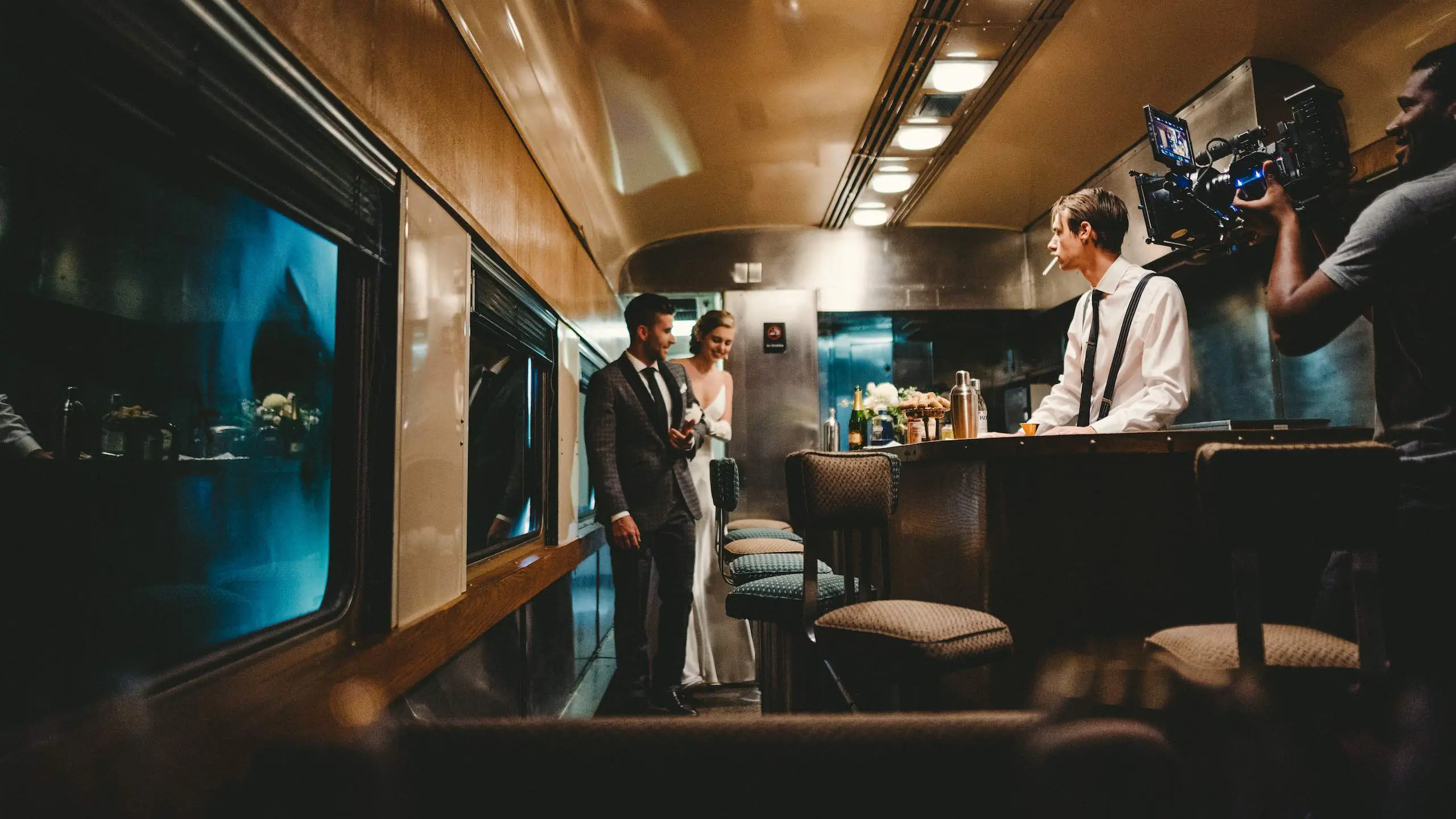
Crafting a compelling [documentary](https://c-istudios.com/documentary-film-production/) is an art form, that requires a deep understanding of storytelling and the ability to weave together captivating narratives. At its core, a successful documentary relies on finding the right subject matter - a topic or story that resonates with audiences and leaves a lasting impact.
One key aspect of documentary storytelling is identifying subjects that are not only interesting but also relatable. C&I Studios understands the importance of connecting with viewers on an emotional level, which is why they specialize in[documentary film production](https://c-istudios.com/documentary-film-production/) that explores the human experience.
By uncovering personal stories and highlighting universal themes, their documentaries have the power to educate, inspire, and provoke thought.
## Discovering Untold Stories
In a world saturated with media, it can be challenging to uncover fresh, untold stories. However, these hidden gems often hold the greatest potential for captivating audiences. By delving into lesser-known subjects or exploring unique perspectives, documentary filmmakers can unearth captivating narratives that have yet to be brought to light.
One approach to finding these untold stories is to immerse oneself in diverse communities and cultures. By spending time with people from different backgrounds and walks of life, filmmakers can gain valuable insights into their experiences and perspectives. C&I Studios encourages filmmakers to [connect](https://c-istudios.com/contact/) with them, as their team of experts can provide guidance on identifying and developing compelling stories that resonate with audiences.
Another avenue for discovering untold stories is to examine historical events or figures through a contemporary lens. By revisiting the past with fresh eyes and new information, documentarians can shed light on previously overlooked or misunderstood narratives. Additionally, exploring current issues or subcultures that have yet to receive mainstream attention can uncover rich, untapped stories.
## Finding the Human Element
While documentaries often focus on specific topics or events, it is the human element that truly captivates audiences. By finding subjects who can serve as relatable protagonists or narrators, filmmakers can create a personal connection between the viewer and the story being told.
When searching for the right subject, it's essential to identify individuals who can articulate their experiences in a compelling and authentic way. Charismatic, expressive, and honest subjects can draw viewers into their world and make complex or abstract topics more accessible.
At C&I Studios, they understand the importance of finding the right people to bring stories to life. Their team of experienced[video production](https://c-istudios.com/video-production-services/) professionals can help filmmakers connect with potential subjects and guide them in crafting narratives that showcase the human element.
It's also crucial to consider the overall narrative arc and how the subjects' stories will fit together. A well-crafted documentary should have a clear beginning, middle, and end, with each subject contributing to the larger story in a meaningful way. By carefully selecting subjects and weaving their stories together, filmmakers can create a cohesive and engaging narrative that resonates with audiences.
## Exploring Controversial or Thought-Provoking Themes
While not all documentaries need to tackle controversial or thought-provoking themes, such subject matter can often make for compelling storytelling. By shining a light on complex issues, challenging social norms, or exploring divisive topics, documentaries have the power to spark important conversations and inspire change.
When approaching controversial or thought-provoking themes, it's essential to maintain objectivity and present multiple perspectives. Filmmakers should strive to present a balanced view, allowing viewers to draw their own conclusions rather than pushing a specific agenda.
One area where C&I Studios excels is in creating[political campaign services](https://c-istudios.com/political-campaign-services/) that engage audiences on important issues. Their team of seasoned professionals can help craft narratives that explore complex political themes in a way that informs and encourages critical thinking.
When exploring controversial or thought-provoking subjects, it's also crucial to handle sensitive material with care and respect. Filmmakers should be mindful of the potential impact their work may have on individuals, communities, or marginalized groups. By approaching these topics with empathy and sensitivity, documentarians can create powerful stories that challenge viewers without causing undue harm.
## Capitalizing on Emerging Trends and Timely Topics
In the fast-paced world of media and entertainment, staying ahead of emerging trends and capitalizing on timely topics can be a powerful strategy for creating compelling documentaries. By identifying and exploring subjects that are currently capturing public attention or are likely to become relevant in the near future, filmmakers can tap into audiences' curiosity and create content that feels fresh and topical.
One way to identify emerging trends is to stay up-to-date with current events, social media conversations, and popular culture. By keeping a finger on the pulse of what's capturing people's attention, filmmakers can anticipate topics that may resonate with audiences in the coming months or years.
[C&I Studios' portfolio](https://c-istudios.com/our-work/) showcases their expertise in creating content that aligns with current trends and interests. Their[creative marketing services](https://c-istudios.com/creative-marketing-services/) can help filmmakers develop strategies for promoting and positioning their documentaries to capitalize on timely topics.
It's also important to consider the longevity of a subject matter. While some trends may be fleeting, others may have the potential to remain relevant for years to come. By carefully evaluating the staying power of a topic, filmmakers can create documentaries that not only capture immediate attention but also stand the test of time.
## Utilizing Research and Expert Insights
Choosing the right subject for a documentary often requires extensive research and the incorporation of expert insights. By immersing themselves in the topic at hand and consulting with knowledgeable sources, filmmakers can gain a deeper understanding of the subject matter and uncover angles or perspectives that may not be immediately apparent.
When embarking on a new documentary project, it's crucial to conduct thorough research to establish a solid foundation of knowledge. This may involve delving into academic literature, news articles, and other relevant sources to gather information and gain context on the chosen subject.
C&I Studio's[SEO copywriting services](https://c-istudios.com/seo-copywriting-services/) can assist filmmakers in conducting effective research and creating content that is both informative and engaging. Their team of skilled writers can help uncover valuable insights and present them in a compelling manner.
In addition to research, consulting with subject matter experts can provide invaluable guidance and insights. By interviewing individuals with specialized knowledge or first-hand experience related to the chosen topic, filmmakers can gain a deeper understanding of the nuances and complexities involved.
It's important to remember that experts can come from a variety of backgrounds and fields. They may be academics, professionals, or individuals with unique personal experiences related to the subject matter. By casting a wide net and seeking out diverse perspectives, filmmakers can create a more well-rounded and multifaceted exploration of their chosen topic.
## Balancing Accessibility and Depth
When crafting a compelling documentary, striking a balance between accessibility and depth is essential. On one hand, the subject matter should be presented in a way that is relatable and engaging for a wide audience. On the other hand, it's crucial to delve deep enough into the topic to provide a meaningful exploration and avoid superficial treatment.
One approach to achieving this balance is to identify a subject or theme that has both universal appeal and the potential for in-depth exploration. By selecting a topic that resonates with a broad audience while also offering layers of complexity and nuance, filmmakers can create documentaries that are both accessible and intellectually stimulating.
[Media marketing consultation services](https://c-istudios.com/media-marketing-consultation-services/) offered by C&I Studios can assist filmmakers in determining the right balance between accessibility and depth for their projects. Their team of experienced professionals can provide guidance on how to present complex material in a way that captivates audiences without oversimplifying or compromising the integrity of the subject matter.
It's also important to consider the target audience and tailor the storytelling approach accordingly. While some documentaries may be aimed at a niche or specialized audience, others may be intended for more general viewership. By understanding the needs and interests of the intended audience, filmmakers can strike the right balance between accessibility and depth.
## Leveraging Personal Connections and Unique Perspectives
In some cases, personal connections or unique perspectives can serve as a powerful starting point for documentary storytelling. By drawing upon their own experiences, relationships, or viewpoints, filmmakers can create narratives that feel authentic and deeply personal.
For example, a documentarian with a close connection to a specific community or subculture may be uniquely positioned to tell the stories of that group in a way that resonates deeply with viewers. By leveraging their insider knowledge and access, they can provide a level of insight and nuance that may be difficult for an outsider to achieve.
Similarly, individuals with unique life experiences or perspectives may have the ability to shed light on topics or issues in a way that challenges conventional thinking or brings new understanding to a subject. By embracing their personal narratives and viewpoints, these filmmakers can create documentaries that offer fresh and compelling angles on familiar or complex topics.
It's important to remember that while personal connections and unique perspectives can be powerful tools for documentary storytelling, it's crucial to maintain objectivity and avoid bias. By presenting a balanced view and allowing the audience to draw their own conclusions, filmmakers can create narratives that are both personal and universally resonant.
## Collaboration and Diverse Perspectives
The process of choosing the right subject for a documentary can be greatly enriched by collaboration and the integration of diverse perspectives. By working together with a team of individuals with varying backgrounds, experiences, and viewpoints, filmmakers can uncover new ideas, gain fresh insights, and create narratives that are more multifaceted and inclusive.
Collaboration can take many forms in the documentary filmmaking process. It may involve working closely with co-directors, producers, cinematographers, or other creative professionals to develop and refine the overall vision for the project. By bouncing ideas off one another and leveraging the collective expertise of the team, filmmakers can identify compelling subjects and narratives that resonate with a broader audience.
At[C&I Studios](https://c-istudios.com/), they understand the power of collaboration and diverse perspectives. Their team is comprised of professionals from various backgrounds, each bringing unique insights and expertise to the table. By fostering an environment of open communication and collaboration, they are able to create content that is both engaging and reflective of multiple viewpoints.
In addition to internal collaboration, it can be beneficial to seek out input and feedback from external sources as well. This may involve conducting focus groups, engaging with potential audience members, or consulting with subject matter experts from diverse backgrounds.
By incorporating these diverse perspectives into the development process, filmmakers can identify blind spots, challenge assumptions, and create narratives that are more inclusive and relatable to a broader audience.
## Intuition and Creative Vision
While research, collaboration, and objective analysis are crucial components of choosing the right subject for a documentary, there is also an element of intuition and creative vision that cannot be overlooked. Often, the most compelling stories are those that tap into a deeper, more instinctive understanding of what will resonate with audiences.
Experienced filmmakers often develop a keen sense of what makes a compelling story, and they rely on this intuition to guide them in selecting subjects and crafting narratives. By trusting their creative instincts and allowing themselves to be drawn to stories that feel inherently captivating or meaningful, they can create documentaries that transcend formulaic storytelling and tap into something more profound.
Of course, intuition and creative vision should be balanced with objective analysis and research. By combining these elements, filmmakers can create documentaries that are both artistically compelling and intellectually substantive.
It's also important to remember that creative vision can evolve and grow throughout the filmmaking process. As a project takes shape and new insights emerge, filmmakers may need to adjust their vision and adapt their storytelling approach to align with the evolving narrative. By remaining flexible and open to new ideas, they can create documentaries that are truly impactful and engaging.
In **conclusion**, choosing the right subject for a documentary is a delicate balance of art and science. By understanding the fundamentals of storytelling, conducting thorough research, collaborating with diverse perspectives, and trusting their creative instincts, filmmakers can identify compelling narratives that captivate audiences and leave a lasting impact.
With the guidance and expertise of professionals like those at[C&I Studios](https://c-istudios.com/), filmmakers can navigate the challenges of subject selection and create documentaries that are both informative and artistically compelling.
## Work with C&I Studios
If you are planning a project like this, our team can take it from concept to final delivery. Explore our [film and TV production](https://c-istudios.com/film-and-tv-production/), browse [our work](https://c-istudios.com/our-work/) to see how we tell brand stories, and [get in touch](https://c-istudios.com/contact/) when you are ready to start.
Originally published February 19, 2024
---
*This content is from [C&I Studios](https://c-istudios.com), a full-service production company.*
---
# Editing Techniques in Reality TV: Crafting Engaging Narratives
> Published: February 19, 2024
> Categories: Film & TV
> Source: https://c-istudios.com/editing-techniques-in-reality-tv-crafting-engaging-narratives/
---
.cib{--paper:#1b1d1f;--ink:#fff;--body:#d5d7d9;--muted:#8b9096;--line:rgba(255,255,255,.12);--thumb:#2b2e31;--card:#212426;--accent:#c02b0a;--blue:#5B8FA8;--serif:'Playfair Display',Georgia,serif;--sans:'Poppins',-apple-system,sans-serif;--measure:900px;background:var(--paper);color:var(--body);font-family:var(--sans);line-height:1.6;position:relative;left:50%;transform:translateX(-50%);width:90vw;max-width:1920px}
.cib *{box-sizing:border-box}
.cib .kicker{max-width:var(--measure);margin:58px auto 0;padding:0 22px;font-size:12.5px;font-weight:700;letter-spacing:2.5px;text-transform:uppercase;color:var(--blue)}
.cib h1.cibh1{text-wrap:balance;font-family:var(--serif);font-weight:500;font-size:clamp(46px,6vw,72px);line-height:1.08;color:var(--ink);max-width:var(--measure);margin:18px auto 0;padding:0 22px;letter-spacing:-.5px}
.cib .metarow{max-width:var(--measure);margin:20px auto 0;padding:0 22px;color:var(--muted);font-size:14px}
.cib .hero{position:relative;width:100%;height:0;padding-bottom:56.25%;overflow:hidden;margin:48px auto 0;border-top:1px solid var(--line);border-bottom:1px solid var(--line)}
.cib .hero .ph{width:100%;aspect-ratio:16/9;background:var(--thumb);border-top:1px solid var(--line);border-bottom:1px solid var(--line);display:flex;align-items:center;justify-content:center;color:#7d8288;font-size:13px;text-align:center;padding:0 20px}
.cib .body{max-width:var(--measure);margin:12px auto 0;padding:52px 22px 6px}
.cib .body.lead p:first-child{font-size:23px;line-height:1.62;color:var(--ink)}
.cib .body p{font-size:18.5px;line-height:1.85;margin:0 0 30px;color:var(--body)}
.cib .body h2{text-wrap:balance;font-family:var(--serif);font-weight:500;font-size:clamp(32px,4vw,48px);line-height:1.22;color:var(--ink);margin:70px 0 20px;letter-spacing:-.3px}
.cib .body h3{text-wrap:balance;font-family:var(--sans);font-weight:600;font-size:22px;color:var(--ink);margin:38px 0 8px}
.cib .body a{color:var(--ink);text-decoration:underline;text-decoration-color:rgba(255,255,255,.4);text-underline-offset:3px}
.cib .body a:hover{text-decoration-color:var(--ink)}
.cib .ctable{width:100%;border-collapse:collapse;margin:16px 0 30px;font-size:16px}
.cib .ctable th{background:#000;color:#fff;text-align:left;padding:10px 12px;font-family:var(--sans)}
.cib .ctable td{padding:10px 12px;border-bottom:1px solid var(--line);color:var(--body)}
.cib .inimg{position:relative;width:100%;height:0;padding-bottom:56.25%;overflow:hidden;margin:72px auto;border-top:1px solid var(--line);border-bottom:1px solid var(--line)}
.cib .inimg .ph{width:100%;aspect-ratio:16/9;background:var(--thumb);border-top:1px solid var(--line);border-bottom:1px solid var(--line);display:flex;align-items:center;justify-content:center;color:#7d8288;font-size:13px}
.cib .origpub{max-width:var(--measure);margin:60px auto 0;padding:26px 22px 0;border-top:1px solid var(--line);color:var(--muted);font-size:13.5px}
.cib .related{max-width:1200px;margin:64px auto 0;padding:34px 22px 76px}
.cib .related h3{font-family:var(--sans);font-size:12.5px;letter-spacing:2px;text-transform:uppercase;color:var(--ink);margin:0 0 24px}
.cib .grid{display:grid;grid-template-columns:repeat(3,1fr);gap:28px}
.cib .rc{background:var(--card);border:1px solid var(--line);display:block;text-decoration:none;color:inherit;transition:border-color .15s}
.cib a.rc:hover{border-color:rgba(255,255,255,.5)}
.cib .rc .thumb{position:relative;width:100%;height:0;padding-bottom:56.25%;background:var(--thumb);overflow:hidden}
.cib .rc .thumb img{position:absolute!important;top:0!important;left:0!important;width:100%!important;height:100%!important;object-fit:cover!important;margin:0!important}
.cib .rc .cc{padding:14px 15px 17px}
.cib .rc .rt{font-family:var(--serif);font-weight:500;font-size:16px;line-height:1.3;color:var(--ink);margin:0 0 6px}
.cib .rc .rm{font-size:11px;letter-spacing:1px;text-transform:uppercase;color:var(--muted)}
.cib img{margin:0!important;padding:0!important;display:block!important;vertical-align:top;max-width:100%}
.cib .hero img,.cib .inimg img{position:absolute!important;top:0!important;left:0!important;width:100%!important;height:100%!important;object-fit:cover!important;margin:0!important;padding:0!important;border:0!important;display:block!important;aspect-ratio:auto!important}
.cib .hero+.body{padding-top:36px}
@media(max-width:760px){.cib .grid{grid-template-columns:1fr}.cib .body h2{margin:52px 0 16px}.cib .body p{font-size:17.5px}.cib .inimg,.cib .hero{margin-top:44px}}
.cib .vembed{max-width:var(--measure);margin:44px auto;padding:0 22px}.cib .vembed .vwrap{position:relative;width:100%;height:0;padding-bottom:56.25%}.cib .vembed .vwrap iframe{position:absolute;top:0;left:0;width:100%;height:100%;border:0}
Film & TV
# Editing Techniques in Reality TV. Crafting Engaging Narratives
9 min read
Imagine stepping into a world where every second counts, where hours of unfiltered life are woven into stories that keep us glued to our screens. This is the realm of [reality TV](https://c-istudios.com/?s=Reality+TV), a world bursting with drama, laughter, and the unexpected. At the heart of this vibrant world is the art of editing - a craft both intricate and powerful. It's here where editors, the unsung heroes of reality TV, work their magic. With a keen eye and a steady hand, they transform countless hours of raw footage into engaging stories that captivate us. These editors are the backstage wizards, skillfully shaping the narratives that bring the essence of reality TV to life.
In this article, we will explore the captivating world of reality TV editing. We’ll dive into the techniques that editors use to craft those moments that keep us talking long after the show ends.
## Crafting Moments and Reactions
### Manipulating Shots for Dramatic Effect
In the dynamic landscape of reality TV, editors are instrumental in shaping memorable moments that resonate with audiences. This art of manipulation involves carefully selecting and editing reaction shots and cutaways to intensify the drama unfolding on screen. For example, as highlighted by [Frame.io](https://frame.io/), an editor might choose a subtle blink, a fold of hands, or a subtle lean forward to convey a powerful moment of 'shocked silence.' These seemingly minor actions are edited to become pivotal, heavily influencing the emotional tone of a scene.
The editor's toolkit for crafting such moments is extensive. They might extend a gaze for a fraction longer to imply a deepening conflict or cut quickly to a reaction shot to heighten surprise or shock. This approach is not just about the visuals; it's about timing. The precise moment when the shot changes can significantly alter the viewer's perception and emotional response.
### Balancing Authenticity and Drama
The essence of reality TV lies in its portrayal of authentic experiences, but the dramatic appeal often necessitates a degree of creative editing. The challenge for editors in this genre is to find a delicate balance between authenticity and the crafted drama essential for engaging [storytelling](https://c-istudios.com/creative-marketing-services/). Editing can significantly enhance a scene's impact, but there is a fine line to tread. Over-manipulation can strip a scene of its genuineness, making it feel staged or artificial.
For instance, using a reaction shot out of context might amplify the drama, creating a more compelling narrative. However, this runs the risk of the scene appearing contrived, breaking the viewer's immersion. The key lies in making subtle editorial decisions that maintain a sense of realism. Editors must judiciously choose which moments to emphasize and how to present them to preserve the authenticity of the participants' experiences while still delivering the dramatic punch that audiences expect.
This delicate balancing act is what makes reality TV editing a uniquely challenging and creative field. The editor, in essence, becomes a storyteller, weaving together disparate elements to create a narrative that is both truthful and theatrically engaging. By maintaining this balance, reality TV can deliver stories that are both relatable and captivating, drawing viewers into the world of the show and keeping them invested in the unfolding drama.
## The Role of Sound and Music
### Enhancing Emotions Through Music
** **The power of music and sound effects in reality TV editing cannot be overstated. These auditory elements are crucial in shaping how viewers perceive and emotionally connect with the show. Just as punctuation adds clarity and emphasis in written language, the strategic placement of sound in a reality TV scene can underscore and amplify key moments.
A prime example of this is the use of a well-timed music sting. This technique is akin to an exclamation point in writing. It delivers a sharp, sudden emphasis that can dramatically heighten the impact of a specific scene or moment. When a contestant reveals a shocking truth or a dramatic confrontation unfolds, the accompanying music sting intensifies the viewer's emotional response. It can transform a simple scene into a memorable, impactful moment.
### Strategic Use of Silence
** **On the flip side, the use of silence, in reality, TV editing is a powerful tool that is often underestimated. A sudden absence of sound following a crucial line of dialogue or a dramatic event can be incredibly effective. This silence creates a void, drawing viewers in as they anticipate what might come next. It allows the audience to absorb and reflect on what just happened, making the moment more profound and impactful.
Employing silence judiciously can significantly enhance the [storytelling](https://c-istudios.com/film-and-tv-production/) experience. It serves as a pause, giving weight to the preceding events and setting the stage for what's to come. This technique can be particularly effective in reality TV, where the raw, unscripted nature of the content often relies on genuine reactions and unspoken tensions.
## Assembly Editing. Building the Story
Assembly editing is the first step in bringing the narrative to life. It involves piecing together a chronological sequence of events, forming the backbone of the story. This initial edit is often rough and unpolished but serves as a crucial foundation for the narrative arc. According to Simon Says AI, this process also includes identifying key moments - the dramatic peaks that will engage and captivate the audience.
** **The process of assembly editing is iterative, with multiple revisions leading to the final cut. It's during these revisions that the story begins to take shape, with the editor playing a pivotal role in deciding what makes it to the final cut. The emphasis is on crafting a narrative that is both coherent and compelling, ensuring that each scene seamlessly contributes to the overarching story.
### Maintaining Continuity and Rhythm
** **Continuity is a fundamental aspect of reality TV editing. Editors meticulously ensure that despite the varied angles and times of shooting, each scene flows seamlessly into the next. This attention to continuity is crucial for maintaining the viewer's immersion in the story.
** **The rhythm of the show, dictated by the pace of [editing](https://c-istudios.com/the-art-of-editing-transforming-raw-footage-into-polished-television-content/), significantly influences viewer engagement. Quick cuts can instill a sense of urgency, keeping viewers on the edge of their seats, while longer takes can provide depth and contemplation. The editor’s skill in pacing can make the difference between a forgettable episode and a memorable one.
## Narrative Structure and Transitions
In reality TV, the narrative structure is the backbone of the storytelling process. Editors play a pivotal role in arranging scenes and plot points to develop characters and advance the storyline.
Various editing techniques are employed:
- **Montage Sequences:** Used to show time progression or character development, helping to convey the passage of time or growth in a visually compelling way.
- **Manipulating Sequence of Events:** Editors craft a narrative that balances intellectual engagement with emotional resonance, ensuring that the story remains both authentic and entertaining.
### Seamless and Creative Transitions
The art of transitioning between scenes is a subtle yet powerful tool in an editor's arsenal. Match cuts and cross-cutting techniques are used to create a sense of unity and coherence in the story. This involves:
- Match Cuts: These create a sense of unity, linking scenes through similar visual elements or actions.
- Cross-cutting: This technique alternates between different storylines or scenes, building tension and keeping viewers engaged.
Transitions are not limited to visual elements; they also involve sound editing. This aspect is critical in bridging scenes, as it:
**Enhances the Sensory Experience:** Sound editing complements visual transitions, creating a more immersive and cohesive viewing experience for the audience.
## Incorporating Visual Storytelling
### Impact of Visual Elements in Branding
In the world of reality TV, [visual storytelling](https://c-istudios.com/cinematic-techniques-in-documentary-elevating-visual-storytelling/) is a vital aspect that extends beyond the simple structuring of a narrative. It plays a crucial role in the realm of [branding and marketing](https://c-istudios.com/branding-and-graphic-design-services/). Reality TV shows leverage various visual elements, such as logos, color schemes, and consistent imagery, to forge a distinct brand identity that resonates deeply with viewers. These elements are far more than just aesthetic enhancements; they are integral to the storytelling process, contributing significantly to the show's overall appeal and memorability.
For instance, a show might use a specific color palette across its episodes and promotional materials, creating a visual signature that viewers immediately recognize. Logos and specific [graphical elements](https://c-istudios.com/branding-and-graphic-design-services/) also become synonymous with the show's brand, reinforcing its identity each time they appears on screen or in advertising.
### Creating Memorable Brand Campaigns
The effectiveness of visual storytelling in [branding](https://c-istudios.com/branding-and-graphic-design-services/) is further exemplified when looking at broader marketing campaigns. Case studies of major brands like Nike and Apple highlight the power of this approach. Nike's "Just Do It" campaign and Apple's "Think Different" campaign are prime examples. These campaigns utilized potent visuals combined with minimal text to communicate powerful messages.
In Nike's case, the striking images of athletes in action, coupled with the iconic "Just Do It" tagline, captured the essence of determination and achievement. This visual narrative was pivotal in defining Nike's brand identity as inspiring and motivational.
Similarly, Apple's "Think Different" ads used black-and-white portraits of influential figures to celebrate creativity and innovation. The campaign's graphic narrative effectively positioned Apple as a brand for creative thinkers and change-makers.
These examples demonstrate how a well-crafted visual narrative can evoke emotions and create lasting impressions in the minds of consumers. In reality TV, applying these principles means creating a visual language that not only supports the narrative but also builds a strong, recognizable brand identity that engages and endures.
## Cultural and Social Impact of Visual Narratives
Visual narratives in reality TV hold up a mirror to society, reflecting and often shaping cultural narratives. They capture the essence of a time, place, and people, often conveying deeper truths about societal norms and values. Through these narratives, reality TV can offer a unique perspective on the human condition, making cultural learning both engaging and impactful.
Moreover, [reality TV](https://c-istudios.com/tv-show-pitch/#1689959666649-87c64055-a812) can be a powerful platform for discussing social and political issues. By simplifying complex topics, these shows can make them more approachable and encourage dialogue and understanding among viewers. They can also be catalysts for social change, raising awareness about critical issues like human rights and environmental crises.
## Editing for Clarity and Pace
** **In the fast-paced world of reality TV, clarity in storytelling is paramount. The editor's role is to meticulously weave together scenes in a way that each one adds value to the overall narrative. It's about creating a coherent story that flows logically from one point to the next. This involves not only selecting the right scenes but also placing them in an order that makes sense to the viewer.
Every scene, every cut, contributes to the unfolding story, and it's essential that this progression feels natural. A jump in time or location, for instance, must be handled with care to avoid confusing the audience. The use of transitional elements, such as brief establishing shots or contextual voiceovers, can help bridge these jumps, ensuring the story remains clear and engaging.
## Pacing for Engagement
** **Pacing in reality TV editing is a delicate art. It's not just about the speed at which scenes change but also about the rhythm of the entire narrative. A well-paced show will engage the audience, holding their attention without overwhelming them with too much information or losing their interest with prolonged monotony.
Varying the length of shots is a key technique in pacing. Quick cuts can create a sense of urgency and excitement, suitable for high-stakes moments or dramatic revelations. Conversely, longer takes can offer depth and allow the audience to immerse themselves in more emotional or contemplative scenes.
Strategic pauses, such as a moment of silence after a significant event or revelation, can also be a powerful tool. These pauses give the audience time to process what they've seen and anticipate what might come next. They can heighten the impact of a scene, making it more memorable and emotionally resonant.
Overall, editing for clarity and pace is about finding the right balance. It's about guiding the audience through the story in a way that feels natural and engaging, ensuring that each scene, each cut, contributes meaningfully to the overall narrative. The ultimate goal is to create a [reality TV show](https://c-istudios.com/tv-show-pitch/#1689959666649-87c64055-a812) that captivates viewers from start to finish, keeping them hooked on every twist and turn of the story.
## Work with C&I Studios
If you are planning a project like this, our team can take it from concept to final delivery. Explore our [film and TV production](https://c-istudios.com/film-and-tv-production/), browse [our work](https://c-istudios.com/our-work/) to see how we tell brand stories, and [get in touch](https://c-istudios.com/contact/) when you are ready to start.
Originally published February 19, 2024
---
*This content is from [C&I Studios](https://c-istudios.com), a full-service production company.*
---
# The Role of User-Generated Content in Building Trust with U.S. Consumers
> Published: February 19, 2024
> Categories: Commercial & Brand
> Source: https://c-istudios.com/the-role-of-user-generated-content-in-building-trust-with-u-s-consumers/
---
.cib{--paper:#1b1d1f;--ink:#fff;--body:#d5d7d9;--muted:#8b9096;--line:rgba(255,255,255,.12);--thumb:#2b2e31;--card:#212426;--accent:#c02b0a;--blue:#5B8FA8;--serif:'Playfair Display',Georgia,serif;--sans:'Poppins',-apple-system,sans-serif;--measure:900px;background:var(--paper);color:var(--body);font-family:var(--sans);line-height:1.6;position:relative;left:50%;transform:translateX(-50%);width:90vw;max-width:1920px}
.cib *{box-sizing:border-box}
.cib .kicker{max-width:var(--measure);margin:58px auto 0;padding:0 22px;font-size:12.5px;font-weight:700;letter-spacing:2.5px;text-transform:uppercase;color:var(--blue)}
.cib h1.cibh1{text-wrap:balance;font-family:var(--serif);font-weight:500;font-size:clamp(46px,6vw,72px);line-height:1.08;color:var(--ink);max-width:var(--measure);margin:18px auto 0;padding:0 22px;letter-spacing:-.5px}
.cib .metarow{max-width:var(--measure);margin:20px auto 0;padding:0 22px;color:var(--muted);font-size:14px}
.cib .hero{position:relative;width:100%;height:0;padding-bottom:56.25%;overflow:hidden;margin:48px auto 0;border-top:1px solid var(--line);border-bottom:1px solid var(--line)}
.cib .hero .ph{width:100%;aspect-ratio:16/9;background:var(--thumb);border-top:1px solid var(--line);border-bottom:1px solid var(--line);display:flex;align-items:center;justify-content:center;color:#7d8288;font-size:13px;text-align:center;padding:0 20px}
.cib .body{max-width:var(--measure);margin:12px auto 0;padding:52px 22px 6px}
.cib .body.lead p:first-child{font-size:23px;line-height:1.62;color:var(--ink)}
.cib .body p{font-size:18.5px;line-height:1.85;margin:0 0 30px;color:var(--body)}
.cib .body h2{text-wrap:balance;font-family:var(--serif);font-weight:500;font-size:clamp(32px,4vw,48px);line-height:1.22;color:var(--ink);margin:70px 0 20px;letter-spacing:-.3px}
.cib .body h3{text-wrap:balance;font-family:var(--sans);font-weight:600;font-size:22px;color:var(--ink);margin:38px 0 8px}
.cib .body a{color:var(--ink);text-decoration:underline;text-decoration-color:rgba(255,255,255,.4);text-underline-offset:3px}
.cib .body a:hover{text-decoration-color:var(--ink)}
.cib .ctable{width:100%;border-collapse:collapse;margin:16px 0 30px;font-size:16px}
.cib .ctable th{background:#000;color:#fff;text-align:left;padding:10px 12px;font-family:var(--sans)}
.cib .ctable td{padding:10px 12px;border-bottom:1px solid var(--line);color:var(--body)}
.cib .inimg{position:relative;width:100%;height:0;padding-bottom:56.25%;overflow:hidden;margin:72px auto;border-top:1px solid var(--line);border-bottom:1px solid var(--line)}
.cib .inimg .ph{width:100%;aspect-ratio:16/9;background:var(--thumb);border-top:1px solid var(--line);border-bottom:1px solid var(--line);display:flex;align-items:center;justify-content:center;color:#7d8288;font-size:13px}
.cib .origpub{max-width:var(--measure);margin:60px auto 0;padding:26px 22px 0;border-top:1px solid var(--line);color:var(--muted);font-size:13.5px}
.cib .related{max-width:1200px;margin:64px auto 0;padding:34px 22px 76px}
.cib .related h3{font-family:var(--sans);font-size:12.5px;letter-spacing:2px;text-transform:uppercase;color:var(--ink);margin:0 0 24px}
.cib .grid{display:grid;grid-template-columns:repeat(3,1fr);gap:28px}
.cib .rc{background:var(--card);border:1px solid var(--line);display:block;text-decoration:none;color:inherit;transition:border-color .15s}
.cib a.rc:hover{border-color:rgba(255,255,255,.5)}
.cib .rc .thumb{position:relative;width:100%;height:0;padding-bottom:56.25%;background:var(--thumb);overflow:hidden}
.cib .rc .thumb img{position:absolute!important;top:0!important;left:0!important;width:100%!important;height:100%!important;object-fit:cover!important;margin:0!important}
.cib .rc .cc{padding:14px 15px 17px}
.cib .rc .rt{font-family:var(--serif);font-weight:500;font-size:16px;line-height:1.3;color:var(--ink);margin:0 0 6px}
.cib .rc .rm{font-size:11px;letter-spacing:1px;text-transform:uppercase;color:var(--muted)}
.cib img{margin:0!important;padding:0!important;display:block!important;vertical-align:top;max-width:100%}
.cib .hero img,.cib .inimg img{position:absolute!important;top:0!important;left:0!important;width:100%!important;height:100%!important;object-fit:cover!important;margin:0!important;padding:0!important;border:0!important;display:block!important;aspect-ratio:auto!important}
.cib .hero+.body{padding-top:36px}
@media(max-width:760px){.cib .grid{grid-template-columns:1fr}.cib .body h2{margin:52px 0 16px}.cib .body p{font-size:17.5px}.cib .inimg,.cib .hero{margin-top:44px}}
.cib .vembed{max-width:var(--measure);margin:44px auto;padding:0 22px}.cib .vembed .vwrap{position:relative;width:100%;height:0;padding-bottom:56.25%}.cib .vembed .vwrap iframe{position:absolute;top:0;left:0;width:100%;height:100%;border:0}
Commercial & Brand
# The Role of User-Generated Content in Building Trust with U.S. Consumers
10 min read

In today's digital age, user-generated content (UGC) has become a powerful force that businesses can leverage to build trust with consumers. UGC refers to any content - such as reviews, social media posts, videos, or images - created by customers or users rather than the brand itself. This authentic, first-hand account of a product or service can be incredibly influential in shaping consumer perceptions and driving purchasing decisions.
For[video production companies](https://c-istudios.com/video-production-services/) like those[offering services as a video production partner for Chinese companies](https://c-istudios.com/video-production-partner-for-chinese-companies/), UGC is crucial in fostering trust and credibility with their audience. They rely on UGC to showcase the quality of their work and the satisfaction of their clients.
UGC has the power to connect with consumers on a deeper level than traditional advertising or brand-generated content. When consumers see real people sharing genuine experiences and opinions, it creates authenticity and transparency that corporate messaging alone struggles to achieve.
## The Influence of Online Reviews
One of the most prevalent forms of UGC is online reviews. In the digital age, consumers have come to rely heavily on these peer-to-peer assessments when making purchasing decisions. A staggering 93% of consumers read online reviews before buying a product or service, according to a recent study.
The influence of online reviews extends beyond just making purchasing decisions. Positive reviews can also foster trust in a brand, enhance its reputation, and even drive customer loyalty. Conversely, negative reviews can have the opposite effect, deterring potential customers and damaging a brand's credibility.
Businesses recognize the importance of online reviews and actively encourage their clients to[share their experiences](https://c-istudios.com/our-work/). By showcasing not only their work but also the glowing reviews and testimonials from satisfied customers, they further reinforce their trustworthiness and expertise.
It's important for businesses to monitor and respond to online reviews, both positive and negative. By engaging with customers and addressing any concerns or complaints, brands can demonstrate their commitment to customer satisfaction and build stronger relationships with their audience.
## The Power of Social Proof
Social proof, a psychological phenomenon where people follow the actions of others to guide their own behavior, is a potent force in building trust with consumers. UGC plays a crucial role in providing this social proof, as it allows consumers to see how others are interacting with and experiencing a brand or product.
One example of social proof in action is the influence of social media. When consumers see their friends, family, or even influencers sharing positive experiences or endorsing a product on social platforms, it creates a sense of social validation and can encourage them to try that product or service themselves.
Businesses can leverage the power of social proof by encouraging and amplifying UGC on various[social channels](https://c-istudios.com/social-media-marketing-services/). By sharing customer testimonials, behind-the-scenes glimpses, and positive reviews, they can create a sense of community and credibility around their brand.
Another form of social proof is the use of customer-generated visuals, such as photos or videos. When consumers see real people using and enjoying a product or service, it can help them visualize themselves in that same scenario, making the purchase decision more relatable and trustworthy.
## The Role of Transparency and Authenticity
In a world where consumers are bombarded with marketing messages and advertising claims, transparency, and authenticity have become increasingly valuable in building trust. UGC can help businesses achieve this by providing a direct, unfiltered view of the real experiences of their customers.
When consumers see genuine, unedited content created by their peers, it removes the veil of corporate messaging and allows them to connect with the brand on a more personal level. This transparency can be particularly powerful in industries where consumers have traditionally been skeptical of brand claims, such as healthcare, finance, or even personal care products.
By utilizing user-generated content (UGC), companies showcase their transparency and authenticity by curating and amplifying customer stories, testimonials, and behind-the-scenes glimpses through their[content creation services](https://c-istudios.com/content-creation-services/). This provides a more relatable and trustworthy representation of their brand.
Additionally, businesses can foster authenticity by being open and responsive to both positive and negative feedback from their customers. By addressing concerns, acknowledging mistakes, and demonstrating a willingness to improve, brands can build stronger relationships with their audience and establish themselves as trustworthy and accountable.
## The Impact of User-Generated Content on Search Engine Optimization (SEO)
User-generated content can also play a significant role in a brand's search engine optimization (SEO) efforts, further enhancing its online visibility and credibility with consumers. UGC provides fresh, relevant content that search engines value, helping businesses rank higher in search results and increasing their chances of being discovered by potential customers.
When consumers leave reviews, create social media posts, or upload photos and videos related to a brand or product, they are essentially generating new content that search engines can index and associate with that business. This user-generated content often contains valuable keywords, phrases, and contextual information that can improve a brand's search engine rankings.
Companies have the ability to harness user-generated content (UGC) to boost their online visibility. By incorporating customer reviews, testimonials, and social media content into their websites and marketing materials, they can utilize [ SEO copywriting services](https://c-istudios.com/seo-copywriting-services/) to enhance their search engine rankings. This approach not only improves their visibility but also offers a more thorough and authentic depiction of their brand and what they offer.
Furthermore, positive reviews and social media mentions can serve as valuable backlinks, further boosting a brand's search engine rankings and establishing its online authority. These user-generated backlinks are particularly valuable, as they are seen as more trustworthy and credible by search engines than traditional, self-generated links.
## The Role of User-Generated Content in Crisis Management
While user-generated content can be a powerful tool for building trust and credibility under normal circumstances, it can also play a crucial role in crisis management situations. In the event of a product recall, service disruption, or other negative event, UGC can help businesses respond effectively and maintain consumer trust.
During a crisis, consumers often turn to social media and review platforms to share their experiences, concerns, and frustrations. By actively monitoring and engaging with this user-generated content, businesses can gain valuable insights into the specific issues at hand and the sentiments of their customers.
During times of crisis, businesses can turn user-generated content (UGC) into a strategic asset. By crafting effective communication strategies that focus on addressing customer concerns and upholding transparency, they can navigate through challenging situations. Their[media marketing consultation services](https://c-istudios.com/media-marketing-consultation-services/) can assist in this process, helping to mitigate damage to a brand's reputation.
By acknowledging and responding to negative UGC in a timely and empathetic manner, businesses can demonstrate their commitment to customer satisfaction and show that they take consumer feedback seriously. This proactive approach can help maintain trust with their audience.
Additionally, businesses can harness the power of positive UGC during a crisis to counterbalance negative sentiment. By amplifying positive customer experiences, testimonials, and social media posts, they can reinforce the overall trustworthiness of their brand and remind consumers of the value they provide.
## The Role of Influencers and Brand Advocates
Influencers and brand advocates play a unique role in the world of user-generated content, as their voices often carry significant weight and can shape consumer perceptions on a larger scale. Businesses that effectively collaborate with these influential individuals can leverage their trust and credibility to build stronger connections with their target audience.
Influencers, such as social media personalities, bloggers, or industry experts, have cultivated a loyal following and a high level of trust with their audience. When these influencers share positive experiences with a brand or product, it can act as a powerful form of social proof and endorsement, influencing the purchasing decisions of their followers.
Businesses can assist in identifying and collaborating with relevant influencers to amplify their brand message and generate trust-building UGC through their[artist management and media creation services](https://c-istudios.com/artist-management-and-media-creation/). Their team can guide businesses in developing mutually beneficial partnerships that feel authentic and resonate with the influencer's audience.
In addition to influencers, brand advocates - customers who are highly satisfied and loyal to a brand - can also play a crucial role in generating UGC. These passionate individuals often share their positive experiences voluntarily, acting as unofficial ambassadors for the brand and encouraging others to engage with it.
## The Role of User-Generated Content in Product Development
User-generated content can also provide businesses with valuable insights that can inform and guide their product development efforts. By actively listening to customer feedback, suggestions, and pain points expressed through UGC, businesses can gain a deeper understanding of consumer needs and preferences, allowing them to create products and services that better meet those demands.
Customer reviews, social media comments, and forum discussions can reveal common issues, feature requests, or unmet needs that businesses may have overlooked. By analyzing this UGC data, businesses can identify opportunities for improvement, innovation, or even the development of entirely new products or services.
Video production companies often rely on customer feedback and input to enhance their offerings. By closely monitoring the UGC surrounding their work, they can gain insights into what resonates with their audience and what areas may need improvement, allowing them to continuously refine and optimize their[video production services](https://c-istudios.com/video-production-services/).
Additionally, businesses can actively solicit feedback and ideas from their customers through surveys, focus groups, or dedicated feedback channels. By engaging with their audience and encouraging them to share their thoughts and experiences, businesses can foster a sense of collaboration and co-creation, further strengthening the bond between the brand and its customers.
## The Role of User-Generated Content in Customer Service
User-generated content can play a pivotal role in improving customer service and enhancing the overall customer experience. By monitoring and responding to UGC, businesses can identify and address customer concerns in real time, resolving issues before they escalate and demonstrating their commitment to customer satisfaction.
Social media platforms, review sites, and online forums have become powerful channels for customers to voice their concerns, ask questions, or seek support. By actively monitoring these channels, businesses can respond promptly to customer inquiries, complaints, or issues, providing timely assistance and potentially preventing negative experiences from being shared more widely.
Customer service teams understand the importance of being responsive and proactive in addressing customer concerns. By leveraging UGC as a feedback loop, they can identify areas for improvement and continuously refine their customer service strategies to better meet the needs of their audience.
In addition to addressing individual customer issues, businesses can use UGC to identify broader customer service trends and patterns. By analyzing the common themes and pain points expressed in reviews and social media posts, they can uncover systemic issues or areas for improvement, allowing them to make targeted changes to their[customer service policies and procedures](https://c-istudios.com/contact/).
## The Future of User-Generated Content and Its Impact on Consumer Trust
As technology continues to evolve and consumer behaviors shift, the role of user-generated content in building trust with U.S. consumers is likely to become even more significant. Businesses that stay ahead of these trends and embrace UGC as a tool for fostering transparency, authenticity, and customer engagement will be better positioned to thrive in an increasingly competitive marketplace.
One emerging trend is the rise of visual UGC, such as customer-generated photos and videos. With the proliferation of smartphones and social media platforms that prioritize visual content, businesses can expect to see an influx of this type of UGC. By harnessing the power of visual storytelling and encouraging customers to share their experiences visually through their[professional photography services](https://c-istudios.com/professional-photography-services/), businesses can create a more immersive and engaging brand experience that resonates with modern consumers.
Additionally, the integration of artificial intelligence (AI) and machine learning into UGC management and analysis will likely become more prevalent. These technologies can help businesses more efficiently identify, categorize, and respond to user-generated content, providing valuable insights and enabling real-time engagement with customers.
As consumer expectations for transparency and authenticity continue to rise, businesses will need to embrace a more open and collaborative approach to their marketing and communications strategies. User-generated content will play a crucial role in this shift, allowing brands to engage with their audience on a more personal level and foster a sense of trust and community.
In **conclusion**, user-generated content has become a powerful force in shaping consumer perceptions and building trust with U.S. consumers. By embracing UGC, businesses can leverage the voices of their customers to create more authentic, transparent, and engaging brand experiences. As the landscape of consumer behavior continues to evolve, those businesses that effectively harness the power of UGC will be better positioned to build lasting relationships with their audience and thrive in an increasingly competitive marketplace.
## Work with C&I Studios
If you are planning a project like this, our team can take it from concept to final delivery. Explore our [video production services](https://c-istudios.com/video-production-services/), browse [our work](https://c-istudios.com/our-work/) to see how we tell brand stories, and [get in touch](https://c-istudios.com/contact/) when you are ready to start.
Originally published February 19, 2024
---
*This content is from [C&I Studios](https://c-istudios.com), a full-service production company.*
---
# Environmental Documentaries: Inspiring Change Through Film
> Published: February 15, 2024
> Categories: Film & TV
> Source: https://c-istudios.com/environmental-documentaries-inspiring-change-through-film/
---
.cib{--paper:#1b1d1f;--ink:#fff;--body:#d5d7d9;--muted:#8b9096;--line:rgba(255,255,255,.12);--thumb:#2b2e31;--card:#212426;--accent:#c02b0a;--blue:#5B8FA8;--serif:'Playfair Display',Georgia,serif;--sans:'Poppins',-apple-system,sans-serif;--measure:900px;background:var(--paper);color:var(--body);font-family:var(--sans);line-height:1.6;position:relative;left:50%;transform:translateX(-50%);width:90vw;max-width:1920px}
.cib *{box-sizing:border-box}
.cib .kicker{max-width:var(--measure);margin:58px auto 0;padding:0 22px;font-size:12.5px;font-weight:700;letter-spacing:2.5px;text-transform:uppercase;color:var(--blue)}
.cib h1.cibh1{text-wrap:balance;font-family:var(--serif);font-weight:500;font-size:clamp(46px,6vw,72px);line-height:1.08;color:var(--ink);max-width:var(--measure);margin:18px auto 0;padding:0 22px;letter-spacing:-.5px}
.cib .metarow{max-width:var(--measure);margin:20px auto 0;padding:0 22px;color:var(--muted);font-size:14px}
.cib .hero{position:relative;width:100%;height:0;padding-bottom:56.25%;overflow:hidden;margin:48px auto 0;border-top:1px solid var(--line);border-bottom:1px solid var(--line)}
.cib .hero .ph{width:100%;aspect-ratio:16/9;background:var(--thumb);border-top:1px solid var(--line);border-bottom:1px solid var(--line);display:flex;align-items:center;justify-content:center;color:#7d8288;font-size:13px;text-align:center;padding:0 20px}
.cib .body{max-width:var(--measure);margin:12px auto 0;padding:52px 22px 6px}
.cib .body.lead p:first-child{font-size:23px;line-height:1.62;color:var(--ink)}
.cib .body p{font-size:18.5px;line-height:1.85;margin:0 0 30px;color:var(--body)}
.cib .body h2{text-wrap:balance;font-family:var(--serif);font-weight:500;font-size:clamp(32px,4vw,48px);line-height:1.22;color:var(--ink);margin:70px 0 20px;letter-spacing:-.3px}
.cib .body h3{text-wrap:balance;font-family:var(--sans);font-weight:600;font-size:22px;color:var(--ink);margin:38px 0 8px}
.cib .body a{color:var(--ink);text-decoration:underline;text-decoration-color:rgba(255,255,255,.4);text-underline-offset:3px}
.cib .body a:hover{text-decoration-color:var(--ink)}
.cib .ctable{width:100%;border-collapse:collapse;margin:16px 0 30px;font-size:16px}
.cib .ctable th{background:#000;color:#fff;text-align:left;padding:10px 12px;font-family:var(--sans)}
.cib .ctable td{padding:10px 12px;border-bottom:1px solid var(--line);color:var(--body)}
.cib .inimg{position:relative;width:100%;height:0;padding-bottom:56.25%;overflow:hidden;margin:72px auto;border-top:1px solid var(--line);border-bottom:1px solid var(--line)}
.cib .inimg .ph{width:100%;aspect-ratio:16/9;background:var(--thumb);border-top:1px solid var(--line);border-bottom:1px solid var(--line);display:flex;align-items:center;justify-content:center;color:#7d8288;font-size:13px}
.cib .origpub{max-width:var(--measure);margin:60px auto 0;padding:26px 22px 0;border-top:1px solid var(--line);color:var(--muted);font-size:13.5px}
.cib .related{max-width:1200px;margin:64px auto 0;padding:34px 22px 76px}
.cib .related h3{font-family:var(--sans);font-size:12.5px;letter-spacing:2px;text-transform:uppercase;color:var(--ink);margin:0 0 24px}
.cib .grid{display:grid;grid-template-columns:repeat(3,1fr);gap:28px}
.cib .rc{background:var(--card);border:1px solid var(--line);display:block;text-decoration:none;color:inherit;transition:border-color .15s}
.cib a.rc:hover{border-color:rgba(255,255,255,.5)}
.cib .rc .thumb{position:relative;width:100%;height:0;padding-bottom:56.25%;background:var(--thumb);overflow:hidden}
.cib .rc .thumb img{position:absolute!important;top:0!important;left:0!important;width:100%!important;height:100%!important;object-fit:cover!important;margin:0!important}
.cib .rc .cc{padding:14px 15px 17px}
.cib .rc .rt{font-family:var(--serif);font-weight:500;font-size:16px;line-height:1.3;color:var(--ink);margin:0 0 6px}
.cib .rc .rm{font-size:11px;letter-spacing:1px;text-transform:uppercase;color:var(--muted)}
.cib img{margin:0!important;padding:0!important;display:block!important;vertical-align:top;max-width:100%}
.cib .hero img,.cib .inimg img{position:absolute!important;top:0!important;left:0!important;width:100%!important;height:100%!important;object-fit:cover!important;margin:0!important;padding:0!important;border:0!important;display:block!important;aspect-ratio:auto!important}
.cib .hero+.body{padding-top:36px}
@media(max-width:760px){.cib .grid{grid-template-columns:1fr}.cib .body h2{margin:52px 0 16px}.cib .body p{font-size:17.5px}.cib .inimg,.cib .hero{margin-top:44px}}
.cib .vembed{max-width:var(--measure);margin:44px auto;padding:0 22px}.cib .vembed .vwrap{position:relative;width:100%;height:0;padding-bottom:56.25%}.cib .vembed .vwrap iframe{position:absolute;top:0;left:0;width:100%;height:100%;border:0}
Film & TV
# Environmental Documentaries. Inspiring Change Through Film
9 min read

Environmental documentaries have emerged as powerful tools in raising public awareness and inspiring action towards ecological preservation. These films, through compelling storytelling and stunning visuals, bring to the forefront the urgent environmental issues of our time. They not only educate viewers about the challenges facing our planet but also provoke thought and inspire change. By highlighting the delicate balance of our ecosystem, these documentaries serve as a call to action, encouraging individuals and communities to engage in sustainable practices and advocate for environmental conservation.
In a world where media plays a pivotal role in shaping public opinion, the impact of these documentaries is profound and far-reaching. For more insights into the intersection of film and environmental advocacy, visit[C&I Studios](https://c-istudios.com/).
## Highlighting Critical Issues. Notable Environmental Documentaries
Environmental documentaries have a profound impact by bringing to light critical issues that often remain hidden from public view. Films like "Racing Extinction" (2015) and "The Ivory Game" (2016) are prime examples, each exposing the harsh realities of wildlife poaching and trafficking.
"Racing Extinction" embarks on a daring mission to uncover the dark world of illegal wildlife trade, highlighting the catastrophic effects of human actions on species like sharks and manta rays. This documentary serves as an eye-opener to the man-made causes of mass extinction, stressing the urgency of action to preserve biodiversity.
"The Ivory Game," another groundbreaking film, dives deep into the multi-million-dollar ivory trade, revealing its complexities and dire consequences for elephant populations. This Netflix documentary employs undercover filmmaking to expose corruption fueling the trade, warning of the potential extinction of elephants if no action is taken. It's a powerful portrayal of the battle against unsustainable wildlife commerce, seeking to rally global support for the cause.
Similarly, "Cowspiracy: The Sustainability Secret" (2014) challenges the status quo by investigating the environmental impact of animal agriculture. This documentary uncovers the industry’s role in deforestation, water pollution, and greenhouse gas emissions, shedding light on the often overlooked yet destructive nature of animal farming. It also provocatively questions the reluctance of leading environmental organizations to confront this issue head-on.
"Virunga" (2014), an Oscar-nominated film, tells the harrowing tale of rangers risking their lives to protect Africa's Virunga National Park and its endangered gorillas. The documentary combines human drama with environmental activism, highlighting the threats posed by oil exploration to this precious ecosystem. The film's release led to significant changes, demonstrating the tangible impact such documentaries can have on real-world issues.
These documentaries underscore the pivotal role of film in environmental activism. By using the medium of cinema, filmmakers can engage, inform, and inspire audiences worldwide, turning abstract issues into tangible realities that demand attention and action. Their storytelling prowess, combined with compelling visuals, makes these documentaries potent tools for change.
For insights into creating impactful environmental documentaries, explore the services offered by[C&I Studios - Documentary Film Production](https://c-istudios.com/documentary-film-production/).
## Fashion and Environment. The Role of Documentaries
Documentaries focusing on the fashion industry play a pivotal role in unveiling its environmental impact, urging a shift toward sustainable practices. "Slow Down Fast Fashion" is a prime example, serving as a critical exposé on the fashion industry's detrimental effects on the environment.
This documentary sheds light on the staggering volume of clothing waste dumped into landfills each year, estimated to be around 1 million tons. It brings to the forefront the urgent need for systemic change within the industry and consumer habits.
Through conversations with activists, leading brands, and designers, "Slow Down Fast Fashion" effectively raises awareness about the hidden costs of clothing production. It emphasizes the environmental toll of fast fashion, from water pollution to excessive waste, and challenges the audience to rethink their purchasing decisions. The film's narrative is not just informative but also a call to action, placing responsibility on both consumers and producers to adopt more sustainable practices.
The documentary serves as a stark reminder of the fashion industry's role in environmental degradation, but also as a beacon of hope, showcasing how change is possible. By highlighting examples of brands prioritizing sustainability, it offers a vision of what the industry could look like if it embraced eco-friendly practices.
For those inspired to create content that can drive similar change, resources like[C&I Studios - Documentary Film Production](https://c-istudios.com/documentary-film-production/) provide the necessary tools and expertise. These platforms enable filmmakers and content creators to produce documentaries that not only inform but also inspire action towards a more sustainable fashion industry.
In essence, "Slow Down Fast Fashion" and similar documentaries serve as critical tools in the environmental movement. They not only reveal the harsh realities of the fashion industry's impact on the planet but also encourage a collective push towards sustainability, influencing consumer behavior and industry standards.
## Innovative Solutions for a Sustainable Future
Environmental documentaries have played a pivotal role in not only highlighting the issues but also in showcasing innovative solutions for a sustainable future. Films like "Seeding Change" and "The Promise of Biomimicry" are exemplary in this regard, offering insights into how businesses and individuals can adopt more sustainable practices.
"Seeding Change" is a remarkable documentary that focuses on the power of consumer choices in shaping a more sustainable world. It highlights the stories of brands across various sectors, including fashion, that have sustainability at their core. The film's central message is about the importance of supporting businesses that prioritize environmental responsibility, thereby contributing to a positive change. It encourages viewers to “vote with their dollar,” emphasizing that every purchase can be an act of environmental advocacy.
In a similar vein, "The Promise of Biomimicry" explores the concept of drawing inspiration from nature to develop sustainable technologies and products. Based on Janine Benyus's groundbreaking work, the film delves into how entrepreneurs and corporations can create solutions that mimic nature’s designs. This approach is presented as a transformative way to address environmental challenges, from product design to business strategies, offering a hopeful vision for the future.
These documentaries underscore the idea that sustainability is not just about reducing harm but also about creating innovative solutions that can lead to a regenerative and prosperous future. They show that sustainable practices are not only good for the environment but can also be viable and profitable business strategies.
For filmmakers and content creators looking to explore such themes,[C&I Studios - Content Creation Services](https://c-istudios.com/content-creation-services/) provides an ideal platform to develop and produce impactful environmental documentaries. Their expertise in storytelling and visual communication can help bring these crucial narratives to a wider audience.
In short, environmental documentaries focusing on innovative solutions play a critical role in shaping a sustainable future. They inspire action and demonstrate that with creativity, ingenuity, and a commitment to sustainability, it's possible to create a world that is not only environmentally sound but also economically viable.
## Personal Narratives Driving Change
Environmental documentaries often harness the power of personal narratives to drive change, making complex issues relatable and urgent. Films like "David Attenborough: A Life on Our Planet" and "I Am Greta" use compelling personal stories to connect with audiences on an emotional level, thereby inspiring action.
"David Attenborough: A Life on Our Planet" presents the esteemed naturalist's witness statement for the environment. Attenborough reflects on his extensive career and the drastic changes he has witnessed in the natural world, offering a poignant and deeply personal perspective on the environmental crises.
His narrative not only documents the alarming loss of biodiversity but also provides a hopeful vision for the future. This documentary serves as a powerful call to action, urging viewers to recognize the urgency of environmental conservation.
Similarly, "I Am Greta" focuses on the young climate activist Greta Thunberg. The documentary offers an intimate look into Thunberg's journey from a solitary school strike to becoming a global voice for climate action. It highlights her determination and the challenges she faces, portraying a deeply empathetic and human side of environmental activism. This film resonates particularly with younger audiences, inspiring a new generation of environmentalists.
These documentaries showcase how individual stories can catalyze broader environmental movements. They demonstrate that environmental issues are not distant or abstract concepts but are deeply personal and interconnected with our daily lives.
For content creators looking to craft similar impactful narratives, C&I Studios - Services offers the expertise needed to bring such powerful stories to the forefront.
## The Impact of Climate Change. A Global Perspective
Documentaries that offer a global perspective on climate change, such as "Thank You for the Rain" and "Ice and Sky," are crucial in showcasing the extensive impact of this phenomenon. These films not only document the effects of climate change in diverse locations but also provide insights into the actions being taken to address these issues worldwide.
"Thank You for the Rain," directed by Julia Dahr, follows Kisilu Musya, a Kenyan farmer, as he confronts the challenges posed by climate change in his community. Musya's journey from his farm to the 2015 UN climate conference in Paris highlights the interconnectedness of local and global environmental issues. This documentary serves as a powerful reminder of how climate change is not just an environmental issue, but also a social and economic one, affecting the lives of people across the globe.
"Ice and Sky," directed by Luc Jacquet, presents the work of Claude Lorius, a scientist who has spent his life studying the Antarctic ice. This documentary offers an intriguing perspective on how scientific research in remote parts of the world can provide valuable insights into global climate change. Lorius' discovery of how air bubbles in ice cores reveal Earth's ancient atmospheres is a testament to the importance of scientific research in understanding and combating climate change.
These documentaries are instrumental in broadening the viewer's understanding of climate change, highlighting its global nature and the need for a coordinated international response.
For filmmakers interested in capturing similar global environmental narratives,[C&I Studios - Video Production Services](https://c-istudios.com/video-production-services/) offers the necessary resources and expertise.
## Call to Action. How Documentaries Spur Environmental Activism
Environmental documentaries often serve as a catalyst for activism, inspiring viewers to take concrete actions towards environmental conservation. Films like "Gasland" and "If A Tree Falls" exemplify how documentaries can motivate and mobilize people towards environmental activism.
"Gasland," released in 2010, explores the impact of natural gas drilling and hydraulic fracturing (fracking) on the environment and communities. Director Josh Fox's personal journey, starting from receiving a drilling offer on his land, unfolds into a broader investigation of environmental repercussions.
The film showcases alarming scenes of contaminated water and raises awareness about the risks associated with fracking. It has been instrumental in sparking public debate and mobilizing grassroots movements against fracking in various regions.
"If A Tree Falls: A Story of the Earth Liberation Front" (2011) offers a unique perspective on environmental activism. It follows the story of Daniel McGowan, a former member of the Earth Liberation Front, who faces life imprisonment for his involvement in environmental terrorism.
The documentary delves into the radical side of environmental activism, exploring the fine line between activism and extremism. It prompts viewers to reflect on the lengths to which one might go for environmental causes and the ethical dilemmas involved.
These documentaries underscore the power of film in not just raising awareness but also in compelling viewers to act. They demonstrate that environmental issues are not distant concerns but immediate challenges that require active participation and response.
For those looking to create content that can drive environmental activism, C&I Studios - Services offers a range of resources and expertise to help bring such impactful stories to the screen.
## Work with C&I Studios
If you are planning a project like this, our team can take it from concept to final delivery. Explore our [film and TV production](https://c-istudios.com/film-and-tv-production/), browse [our work](https://c-istudios.com/our-work/) to see how we tell brand stories, and [get in touch](https://c-istudios.com/contact/) when you are ready to start.
Originally published February 15, 2024
---
*This content is from [C&I Studios](https://c-istudios.com), a full-service production company.*
---
# Decoding American Consumer Behavior: A Guide for Chinese Companies
> Published: February 15, 2024
> Categories: Commercial & Brand
> Source: https://c-istudios.com/decoding-american-consumer-behavior-a-guide-for-chinese-companies/
---
.cib{--paper:#1b1d1f;--ink:#fff;--body:#d5d7d9;--muted:#8b9096;--line:rgba(255,255,255,.12);--thumb:#2b2e31;--card:#212426;--accent:#c02b0a;--blue:#5B8FA8;--serif:'Playfair Display',Georgia,serif;--sans:'Poppins',-apple-system,sans-serif;--measure:900px;background:var(--paper);color:var(--body);font-family:var(--sans);line-height:1.6;position:relative;left:50%;transform:translateX(-50%);width:90vw;max-width:1920px}
.cib *{box-sizing:border-box}
.cib .kicker{max-width:var(--measure);margin:58px auto 0;padding:0 22px;font-size:12.5px;font-weight:700;letter-spacing:2.5px;text-transform:uppercase;color:var(--blue)}
.cib h1.cibh1{text-wrap:balance;font-family:var(--serif);font-weight:500;font-size:clamp(46px,6vw,72px);line-height:1.08;color:var(--ink);max-width:var(--measure);margin:18px auto 0;padding:0 22px;letter-spacing:-.5px}
.cib .metarow{max-width:var(--measure);margin:20px auto 0;padding:0 22px;color:var(--muted);font-size:14px}
.cib .hero{position:relative;width:100%;height:0;padding-bottom:56.25%;overflow:hidden;margin:48px auto 0;border-top:1px solid var(--line);border-bottom:1px solid var(--line)}
.cib .hero .ph{width:100%;aspect-ratio:16/9;background:var(--thumb);border-top:1px solid var(--line);border-bottom:1px solid var(--line);display:flex;align-items:center;justify-content:center;color:#7d8288;font-size:13px;text-align:center;padding:0 20px}
.cib .body{max-width:var(--measure);margin:12px auto 0;padding:52px 22px 6px}
.cib .body.lead p:first-child{font-size:23px;line-height:1.62;color:var(--ink)}
.cib .body p{font-size:18.5px;line-height:1.85;margin:0 0 30px;color:var(--body)}
.cib .body h2{text-wrap:balance;font-family:var(--serif);font-weight:500;font-size:clamp(32px,4vw,48px);line-height:1.22;color:var(--ink);margin:70px 0 20px;letter-spacing:-.3px}
.cib .body h3{text-wrap:balance;font-family:var(--sans);font-weight:600;font-size:22px;color:var(--ink);margin:38px 0 8px}
.cib .body a{color:var(--ink);text-decoration:underline;text-decoration-color:rgba(255,255,255,.4);text-underline-offset:3px}
.cib .body a:hover{text-decoration-color:var(--ink)}
.cib .ctable{width:100%;border-collapse:collapse;margin:16px 0 30px;font-size:16px}
.cib .ctable th{background:#000;color:#fff;text-align:left;padding:10px 12px;font-family:var(--sans)}
.cib .ctable td{padding:10px 12px;border-bottom:1px solid var(--line);color:var(--body)}
.cib .inimg{position:relative;width:100%;height:0;padding-bottom:56.25%;overflow:hidden;margin:72px auto;border-top:1px solid var(--line);border-bottom:1px solid var(--line)}
.cib .inimg .ph{width:100%;aspect-ratio:16/9;background:var(--thumb);border-top:1px solid var(--line);border-bottom:1px solid var(--line);display:flex;align-items:center;justify-content:center;color:#7d8288;font-size:13px}
.cib .origpub{max-width:var(--measure);margin:60px auto 0;padding:26px 22px 0;border-top:1px solid var(--line);color:var(--muted);font-size:13.5px}
.cib .related{max-width:1200px;margin:64px auto 0;padding:34px 22px 76px}
.cib .related h3{font-family:var(--sans);font-size:12.5px;letter-spacing:2px;text-transform:uppercase;color:var(--ink);margin:0 0 24px}
.cib .grid{display:grid;grid-template-columns:repeat(3,1fr);gap:28px}
.cib .rc{background:var(--card);border:1px solid var(--line);display:block;text-decoration:none;color:inherit;transition:border-color .15s}
.cib a.rc:hover{border-color:rgba(255,255,255,.5)}
.cib .rc .thumb{position:relative;width:100%;height:0;padding-bottom:56.25%;background:var(--thumb);overflow:hidden}
.cib .rc .thumb img{position:absolute!important;top:0!important;left:0!important;width:100%!important;height:100%!important;object-fit:cover!important;margin:0!important}
.cib .rc .cc{padding:14px 15px 17px}
.cib .rc .rt{font-family:var(--serif);font-weight:500;font-size:16px;line-height:1.3;color:var(--ink);margin:0 0 6px}
.cib .rc .rm{font-size:11px;letter-spacing:1px;text-transform:uppercase;color:var(--muted)}
.cib img{margin:0!important;padding:0!important;display:block!important;vertical-align:top;max-width:100%}
.cib .hero img,.cib .inimg img{position:absolute!important;top:0!important;left:0!important;width:100%!important;height:100%!important;object-fit:cover!important;margin:0!important;padding:0!important;border:0!important;display:block!important;aspect-ratio:auto!important}
.cib .hero+.body{padding-top:36px}
@media(max-width:760px){.cib .grid{grid-template-columns:1fr}.cib .body h2{margin:52px 0 16px}.cib .body p{font-size:17.5px}.cib .inimg,.cib .hero{margin-top:44px}}
.cib .vembed{max-width:var(--measure);margin:44px auto;padding:0 22px}.cib .vembed .vwrap{position:relative;width:100%;height:0;padding-bottom:56.25%}.cib .vembed .vwrap iframe{position:absolute;top:0;left:0;width:100%;height:100%;border:0}
Commercial & Brand
# Decoding American Consumer Behavior. A Guide for Chinese Companies
9 min read

As Chinese companies aim to enter or expand in the U.S. market, grasping American consumer behavior is essential. This diverse market is defined by unique cultural, social, and economic influences shaping purchasing decisions. The post-COVID era accelerated digital engagement and demand for sustainable offerings.
By leveraging insights across factors like generations, regions, values, and technology platforms, Chinese businesses can tailor strategies to effectively engage American consumers. Success requires understanding nuances and constantly adapting to this dynamic landscape.
## Sustainability and Environmental Concerns
The growing global emphasis on sustainability has significantly shaped American consumer behavior, presenting both a challenge and an opportunity for Chinese companies. A study by Bain & Company highlights that 79% of consumers in fast-growing markets like China are concerned about [environmental sustainability](https://www.snhu.edu/about-us/newsroom/stem/what-is-environmental-sustainability), compared to 55% in developed markets like the U.S. and Europe.
American consumers are increasingly aware of the environmental impact of their purchases. This awareness is not limited to a particular demographic but spans across different age groups, including both Gen Z and Baby Boomers.
In the U.S., a significant portion of consumers, regardless of political affiliation, acknowledge the reality of climate change, with varying degrees of concern about specific environmental issues like water scarcity, biodiversity loss, and air pollution.
This heightened environmental consciousness is translating into consumer spending. Americans are showing a willingness to pay more for sustainable products. However, there exists a gap between intention and action, partly due to misconceptions about what truly constitutes a sustainable product.
To successfully tap into this market, Chinese companies must understand the complex landscape of sustainability as perceived by American consumers. Integrating sustainability into product design, packaging, and marketing can be a differentiator.
C&I Studios, through their[Documentary Film Production](https://c-istudios.com/documentary-film-production/) services, offers an avenue for companies to communicate their commitment to sustainability effectively, leveraging storytelling to connect with environmentally conscious consumers.
## Impact of Economic Factors on Buying Decisions
The economic landscape in the United States has a profound impact on consumer behavior, with factors like inflation and financial security playing significant roles. The insights from NielsenIQ shed light on how these factors are shaping American buying behaviors in 2022.
Inflation has emerged as a key concern for American consumers, with the Consumer Price Index experiencing its largest hike in over four decades. This rise in prices, especially noticeable in everyday items like groceries, has led consumers to adjust their purchasing habits.
Many are switching to private-label brands or opting for the lowest-priced items in various categories. This trend towards more budget-conscious decisions underscores the importance for companies to balance quality and affordability in their offerings.
Financial security has also become a more prominent consideration in the wake of the pandemic. The varied financial and health impacts of COVID-19 on individuals have led to a divergence in spending behaviors.
Some consumers have become more insulated, focusing on essential purchases and value for money, while others remain constrained by tighter budgets. This division necessitates a nuanced approach from companies, where understanding and catering to these distinct consumer segments becomes crucial.
For Chinese companies, these economic factors present both challenges and opportunities. It is essential to understand the financial pressures facing American consumers and to adapt pricing strategies accordingly.
Furthermore, highlighting value and cost-effectiveness, without compromising on quality, can be a key strategy in attracting and retaining customers. Integrating insights from [C&I Studios - Contact](https://c-istudios.com/contact/) on understanding and connecting with diverse consumer segments can further enhance a company's market positioning in the U.S.
By understanding these economic influences and adapting their offerings, Chinese companies can better align with the evolving needs and preferences of American consumers, thereby establishing a stronger foothold in the market.
## Chinese Consumer Behavior. A Comparative Perspective
Understanding the nuances of Chinese consumer behavior is crucial for Chinese companies looking to adapt to the American market. The behaviors and preferences of consumers in China provide a contrasting backdrop to American consumer trends, offering valuable insights for market strategy development.
In China, generational differences significantly influence consumer behavior. The country’s vast population of over 1.4 billion people encompasses a diverse range of age groups, each with distinct preferences and needs.
For instance, the "post-80s" generation, comprising individuals in their late 20s and early 30s, is a vital consumer force. This demographic is known for higher spending on entertainment and a preference for online shopping, emphasizing value and quality over price.
Moreover, the rise of low-tier cities in China has marked a shift in consumer dynamics, with a significant division between urban and rural populations. This urban consumer class, with strong purchasing power, is central to China's retail market.
The digital landscape in China is also highly evolved, with a strong emphasis on social media and e-commerce. Chinese consumers are known for their positive attitude towards shopping, treating it as an enjoyable pastime rather than a chore.
This mindset has made them natural "omnichannel" shoppers, comfortable with both online and brick-and-mortar stores. The integration of social media in daily life plays a significant role in this, with consumers relying heavily on social media and referrals before purchasing products.
For Chinese companies venturing into the American market, these insights into Chinese consumer behavior can be instrumental. Strategies that work well in China, such as focusing on digital engagement and leveraging social media for marketing, can be adapted to the American context.
The use of[Brand and Graphic Design Services](https://c-istudios.com/branding-and-graphic-design-services/) can help in creating appealing content that resonates with American consumers, drawing on the successful practices of the Chinese market.
Understanding these differences and similarities can help in crafting strategies that are sensitive to the unique characteristics of each market. This approach requires not only a deep understanding of consumer behavior in both countries but also a flexible and innovative approach to marketing and product development.
## American Consumer Response to Market Changes
The responsiveness of American consumers to market changes, particularly in the wake of the COVID-19 pandemic, offers critical insights for Chinese companies. Adaptation to market disruptions, brand loyalty, and evolving shopping habits form the crux of this analysis.
One of the most significant shifts observed in the American market is the consumer's adaptation to new shopping modalities. The pandemic has accelerated the transition from traditional, in-person shopping experiences to online and digital platforms.
This shift has not been uniform across all sectors; while some industries like travel and hospitality have seen a slower recovery, others, particularly e-commerce, have witnessed substantial growth. This divergence in consumer behavior across sectors underscores the need for businesses to be agile and responsive to changing market conditions.
Brand loyalty has also evolved in this period. American consumers have shown a tendency to stick with trusted brands during uncertain times, but they are also open to trying new products, especially if they offer better value or meet emerging needs.
For Chinese companies, this presents an opportunity to introduce their brands and products to the American market, particularly if they can effectively communicate value and relevance to the consumer’s changing needs.
The evolving shopping habits of American consumers have significant implications for Chinese companies. A strategic focus on digital marketing and e-commerce can be crucial. Leveraging C&I Studios’ expertise in Services such as digital marketing and online content creation can aid in connecting with the American audience effectively.
By understanding and responding to the changing dynamics of brand loyalty and shopping habits, and by embracing digital transformation, Chinese businesses can position themselves effectively in the competitive American market.
## Leveraging Digital and Social Media in Consumer Engagement
In today’s digital age, leveraging digital and social media platforms for consumer engagement is no longer optional but essential. This is especially true in the American market, where digital and social media play a pivotal role in shaping consumer preferences and purchasing decisions.
The digital landscape in the U.S. is characterized by a diverse array of platforms, each catering to different segments of the population. Social media platforms like Instagram, Facebook, and Twitter are not just channels for social interaction but have evolved into significant marketplaces where brands can engage with consumers directly.
The popularity of video content and live streaming has opened new avenues for brand promotion and customer interaction. Companies that can create compelling, relatable, and engaging content are more likely to capture the attention of the American consumer.
Furthermore, the role of influencers and Key Opinion Leaders (KOLs) in shaping consumer opinions cannot be overstated. American consumers often look to these digital personalities for product recommendations and reviews. For Chinese companies, collaborating with the right influencers can provide a significant boost in brand visibility and credibility.
Implementing a robust digital marketing strategy is crucial. Services like[Social Media Marketing Services](https://c-istudios.com/social-media-marketing-services/) offered by C&I Studios can be instrumental in this regard. They provide the expertise to create and manage effective social media campaigns that resonate with American audiences.
Additionally, understanding the nuances of each platform and tailoring content accordingly is key to successful engagement.
## Strategies for Chinese Companies Entering the American Market
As Chinese companies venture into the American market, they face a unique set of challenges and opportunities. Crafting effective market entry strategies is crucial for success in a landscape that is markedly different from their home turf.
A critical first step is cultural adaptation. Understanding and respecting American cultural nuances can make a significant difference in how products and marketing campaigns are received. Tailoring products to meet American tastes and preferences, while also maintaining the unique aspects of the brand, is a delicate balance that requires deep market research and cultural sensitivity.
Marketing strategies need to be localized and adapted. Traditional advertising methods that work in China may not resonate with American consumers. Utilizing innovative marketing techniques, such as storytelling and emotional branding, can be more effective. Tools like[C&I Studios - Portfolio](https://c-istudios.com/our-work/) showcase how creative storytelling and engaging content can capture the attention of the American audience.
Another key aspect is consumer insights. Understanding the American consumer’s preferences, values, and purchasing habits is vital. This requires investing in market research to gather data on consumer behavior, preferences, and trends. The use of analytics and consumer feedback can provide valuable insights into how to position products and services effectively.
Lastly, partnership and collaboration can be beneficial. Forming alliances with local American companies or distributors can provide valuable local knowledge and establish distribution networks. These partnerships can also aid in navigating regulatory environments and understanding local business practices.
Through careful planning, cultural adaptation, and innovative marketing, Chinese companies can effectively engage with American consumers and establish a strong presence in the market.
In** conclusion**, understanding and adapting to American consumer behavior is crucial for Chinese companies entering the U.S. market. Success lies in recognizing cultural nuances, leveraging digital platforms, and aligning with evolving consumer preferences.
For more insights and tailored strategies, connect with C&I Studios. Explore our services and expertise at[C&I Studios - Contact](https://c-istudios.com/contact/) to navigate this dynamic landscape effectively.
## Work with C&I Studios
If you are planning a project like this, our team can take it from concept to final delivery. Explore our [video production services](https://c-istudios.com/video-production-services/), browse [our work](https://c-istudios.com/our-work/) to see how we tell brand stories, and [get in touch](https://c-istudios.com/contact/) when you are ready to start.
Originally published February 15, 2024
---
*This content is from [C&I Studios](https://c-istudios.com), a full-service production company.*
---
# The Psychology of Colors in Film: Influencing Mood and Perception
> Published: February 14, 2024
> Categories: Film & TV
> Source: https://c-istudios.com/the-psychology-of-colors-in-film-influencing-mood-and-perception/
---
.cib{--paper:#1b1d1f;--ink:#fff;--body:#d5d7d9;--muted:#8b9096;--line:rgba(255,255,255,.12);--thumb:#2b2e31;--card:#212426;--accent:#c02b0a;--blue:#5B8FA8;--serif:'Playfair Display',Georgia,serif;--sans:'Poppins',-apple-system,sans-serif;--measure:900px;background:var(--paper);color:var(--body);font-family:var(--sans);line-height:1.6;position:relative;left:50%;transform:translateX(-50%);width:90vw;max-width:1920px}
.cib *{box-sizing:border-box}
.cib .kicker{max-width:var(--measure);margin:58px auto 0;padding:0 22px;font-size:12.5px;font-weight:700;letter-spacing:2.5px;text-transform:uppercase;color:var(--blue)}
.cib h1.cibh1{text-wrap:balance;font-family:var(--serif);font-weight:500;font-size:clamp(46px,6vw,72px);line-height:1.08;color:var(--ink);max-width:var(--measure);margin:18px auto 0;padding:0 22px;letter-spacing:-.5px}
.cib .metarow{max-width:var(--measure);margin:20px auto 0;padding:0 22px;color:var(--muted);font-size:14px}
.cib .hero{position:relative;width:100%;height:0;padding-bottom:56.25%;overflow:hidden;margin:48px auto 0;border-top:1px solid var(--line);border-bottom:1px solid var(--line)}
.cib .hero .ph{width:100%;aspect-ratio:16/9;background:var(--thumb);border-top:1px solid var(--line);border-bottom:1px solid var(--line);display:flex;align-items:center;justify-content:center;color:#7d8288;font-size:13px;text-align:center;padding:0 20px}
.cib .body{max-width:var(--measure);margin:12px auto 0;padding:52px 22px 6px}
.cib .body.lead p:first-child{font-size:23px;line-height:1.62;color:var(--ink)}
.cib .body p{font-size:18.5px;line-height:1.85;margin:0 0 30px;color:var(--body)}
.cib .body h2{text-wrap:balance;font-family:var(--serif);font-weight:500;font-size:clamp(32px,4vw,48px);line-height:1.22;color:var(--ink);margin:70px 0 20px;letter-spacing:-.3px}
.cib .body h3{text-wrap:balance;font-family:var(--sans);font-weight:600;font-size:22px;color:var(--ink);margin:38px 0 8px}
.cib .body a{color:var(--ink);text-decoration:underline;text-decoration-color:rgba(255,255,255,.4);text-underline-offset:3px}
.cib .body a:hover{text-decoration-color:var(--ink)}
.cib .ctable{width:100%;border-collapse:collapse;margin:16px 0 30px;font-size:16px}
.cib .ctable th{background:#000;color:#fff;text-align:left;padding:10px 12px;font-family:var(--sans)}
.cib .ctable td{padding:10px 12px;border-bottom:1px solid var(--line);color:var(--body)}
.cib .inimg{position:relative;width:100%;height:0;padding-bottom:56.25%;overflow:hidden;margin:72px auto;border-top:1px solid var(--line);border-bottom:1px solid var(--line)}
.cib .inimg .ph{width:100%;aspect-ratio:16/9;background:var(--thumb);border-top:1px solid var(--line);border-bottom:1px solid var(--line);display:flex;align-items:center;justify-content:center;color:#7d8288;font-size:13px}
.cib .origpub{max-width:var(--measure);margin:60px auto 0;padding:26px 22px 0;border-top:1px solid var(--line);color:var(--muted);font-size:13.5px}
.cib .related{max-width:1200px;margin:64px auto 0;padding:34px 22px 76px}
.cib .related h3{font-family:var(--sans);font-size:12.5px;letter-spacing:2px;text-transform:uppercase;color:var(--ink);margin:0 0 24px}
.cib .grid{display:grid;grid-template-columns:repeat(3,1fr);gap:28px}
.cib .rc{background:var(--card);border:1px solid var(--line);display:block;text-decoration:none;color:inherit;transition:border-color .15s}
.cib a.rc:hover{border-color:rgba(255,255,255,.5)}
.cib .rc .thumb{position:relative;width:100%;height:0;padding-bottom:56.25%;background:var(--thumb);overflow:hidden}
.cib .rc .thumb img{position:absolute!important;top:0!important;left:0!important;width:100%!important;height:100%!important;object-fit:cover!important;margin:0!important}
.cib .rc .cc{padding:14px 15px 17px}
.cib .rc .rt{font-family:var(--serif);font-weight:500;font-size:16px;line-height:1.3;color:var(--ink);margin:0 0 6px}
.cib .rc .rm{font-size:11px;letter-spacing:1px;text-transform:uppercase;color:var(--muted)}
.cib img{margin:0!important;padding:0!important;display:block!important;vertical-align:top;max-width:100%}
.cib .hero img,.cib .inimg img{position:absolute!important;top:0!important;left:0!important;width:100%!important;height:100%!important;object-fit:cover!important;margin:0!important;padding:0!important;border:0!important;display:block!important;aspect-ratio:auto!important}
.cib .hero+.body{padding-top:36px}
@media(max-width:760px){.cib .grid{grid-template-columns:1fr}.cib .body h2{margin:52px 0 16px}.cib .body p{font-size:17.5px}.cib .inimg,.cib .hero{margin-top:44px}}
.cib .vembed{max-width:var(--measure);margin:44px auto;padding:0 22px}.cib .vembed .vwrap{position:relative;width:100%;height:0;padding-bottom:56.25%}.cib .vembed .vwrap iframe{position:absolute;top:0;left:0;width:100%;height:100%;border:0}
Film & TV
# The Psychology of Colors in Film. Influencing Mood and Perception
9 min read

Color is not just a mere aesthetic choice in film; it is a powerful storytelling tool. The hues that fill the screen do more than please the eye - they convey emotions, set the tone, and subtly influence the viewer's perception and understanding of the narrative. From the vibrant, whimsical colors of a fantasy world to the muted, somber tones of a drama, colors help tell a story beyond words and actions. They are the unsung heroes of cinematic language, often overlooked but always felt.
## Understanding the Basics of Color Psychology
At the heart of color psychology lies a simple truth: different colors evoke different feelings and responses. This concept isn’t just artistry; it's rooted in psychology and neurology. Warm colors like red and yellow can evoke feelings ranging from warmth and comfort to anger and hostility, while cool colors like blue and green are often associated with calmness and sadness. This understanding is crucial for filmmakers who aim to create a specific emotional response in their audience.
By mastering this, they can guide the viewer’s emotions, subtly leading them through the narrative journey. To see how professionals harness this power, explore[CI Studios' diverse and colorful portfolio](https://c-istudios.com/our-work/).
## Historical Perspective. The Evolution of Color in Film
### From Black and White to a World of Color
The journey of color in cinema is as dramatic and transformative as the medium itself. Initially, films were confined to black and white, but this limitation did not stop early filmmakers from experimenting with color. Hand coloring, toning, and stenciling were some of the methods used to infuse hues into film frames.
The advent of Technicolor in the 1920s marked a revolution, bringing vivid, consistent color to the big screen. This transition from monochrome to color was not just a technical upgrade; it represented a new canvas for storytelling. It allowed filmmakers to use colors to convey moods and themes more potently, adding depth and dimension to their narratives. A visit to CI Studios’ services page reveals how modern technology continues to evolve these storytelling tools.
### Milestones in Color Film Technology
As technology advanced, so did the use of color in film. The 1939 classics 'The Wizard of Oz' and 'Gone with the Wind' are often celebrated as iconic examples of early color films. These movies showcased how color could be used to enhance the narrative impact, such as the transition from the sepia tones of Kansas to the vibrant Technicolor world of Oz. The 60s and 70s saw a surge in more experimental and bold uses of color, reflecting the cultural and social changes of the era.
Fast forward to the digital age, where color grading in post-production has become an art form in itself. Films like 'Amélie' and 'The Grand Budapest Hotel' are testaments to how color can be used to create distinct visual styles and atmospheres. For an insight into the latest advancements in film technology, including color manipulation, explore[CI Studios' film and TV production expertise](https://c-istudios.com/film-and-tv-production/).
## Color and Its Emotional Impact on Films
### How Different Colors Convey Different Emotions
In the realm of cinema, colors are a language unto themselves, capable of expressing a spectrum of emotions without a single word. Red, for instance, can represent love, passion, or danger, while blue might evoke feelings of serenity, sadness, or isolation. Directors and cinematographers skillfully use these color cues to add a layer of emotional depth to their [storytelling](https://c-istudios.com/storytelling-across-platforms-adapting-your-narrative-for-different-media/).
In the film "Schindler's List," for example, the use of color is minimal but impactful; the red coat of a little girl stands out against the black and white backdrop, symbolizing innocence amidst the horrors of war. This strategic use of color amplifies the emotional resonance of the narrative. For an exploration of how color enhances emotional storytelling in [video production](https://c-istudios.com/video-production-services/),[CI Studios’ video production services](https://c-istudios.com/video-production-services/) offer a closer look.
### Case Studies of Color Use in Iconic Films
Analyzing color use in iconic films provides valuable insight into the emotional power of cinematic color. Take Wes Anderson's "The Grand Budapest Hotel," where a pastel color palette creates a distinct, whimsical world that complements the film's quirky, nostalgic narrative. In contrast, "The Matrix" employs a green-tinted color scheme, evoking a sense of unease and artificiality, perfectly aligning with its cyberpunk theme.
These examples illustrate how filmmakers do not merely choose colors for aesthetic appeal but for their ability to deepen the audience's emotional connection to the story.
For a deeper understanding of how these concepts are applied in professional settings, viewing[CI Studios’ portfolio](https://c-istudios.com/our-work/) can provide real-world examples.
## The Technical Side. Bringing Color to Life on Screen
### The Role of Cinematography in Color Manipulation
Cinematography is not just about capturing images; it's about painting with light and color. Cinematographers work closely with directors to choose a color palette that aligns with the film's theme and mood. They manipulate color through lighting, filters, and camera settings to create the desired visual impact. The choices made here can significantly affect how the audience perceives a scene.
For example, warm lighting can make a scene feel intimate and cozy, while a cooler color temperature can create a sense of detachment or alienation.
## Color Grading and Post-Production Techniques
The advent of digital color grading has opened up endless possibilities in film coloration. This post-production process allows filmmakers to adjust colors to achieve a specific look or mood, fix color issues, and ensure consistency throughout the film. Color grading can transform the visual tone of a film, as seen in "Mad Max: Fury Road," where the color grading created a vivid, almost surreal landscape that became integral to the film's visual identity.
This level of sophistication in color manipulation requires a deep understanding of both the technical and emotional aspects of color in film, a combination of skills that[CI Studios’ video production services](https://c-istudios.com/video-production-services/) demonstrate.
## The Influence of Color on Audience Perception
### Subconscious Effects of Color on Viewers
The impact of color on film audiences often operates at a subconscious level, subtly shaping their perceptions and emotional responses. Research in color psychology indicates that certain colors can trigger specific neurological responses, influencing how viewers feel and interpret scenes. For instance, the use of blue tones in a scene can create a calm, introspective atmosphere, leading viewers to a more reflective state of mind.
Conversely, an abundance of red can heighten feelings of tension or urgency. This psychological dimension of color in film is critical in creating an immersive cinematic experience. To see how professionals leverage these effects, check out[CI Studios’ content creation services](https://c-istudios.com/content-creation-services/), where color psychology is an integral part of the creative process.
### Color as a Tool for Storytelling and Character Development
Colors in film do more than set the mood; they also serve as narrative devices and aid in character development. Filmmakers often assign specific colors to characters or themes as a form of visual storytelling. For example, in "The Godfather," the use of dark, muted colors conveys the film's somber and clandestine mood, reflecting the inner world of its characters.
In "Amélie," vibrant greens and reds highlight the titular character's whimsical and imaginative nature. This intentional use of color adds layers of meaning to the narrative, enriching the viewer's understanding and engagement with the film. Insights into this aspect of filmmaking can be gained by exploring[CI Studios’ film and TV production](https://c-istudios.com/film-and-tv-production/) capabilities.
## The Future of Color in Film
### Innovations in Color Technology
The future of color in film is as vibrant and dynamic as the colors themselves. Emerging technologies in digital cinematography and post-production are continually expanding the ways colors can be used in film. High Dynamic Range (HDR) imaging, for instance, offers a greater range of luminance, allowing for richer, more vivid colors and deeper contrasts.
This technology not only enhances the visual appeal of films but also provides filmmakers with a broader palette to express their artistic vision. The potential of these advancements is immense, as they open new avenues for creative storytelling. Staying abreast of these innovations is crucial for any film professional, a principle that[CI Studios’ VFX, compositing, and animation services](https://c-istudios.com/vfx-compositing-and-animation-services/) embrace fully.
### Predictions for Color Use in Future Cinema
As we look to the future, we can expect filmmakers to continue pushing the boundaries of color use. Virtual Reality (VR) and Augmented Reality (AR) technologies, for example, could introduce new ways of experiencing color, offering more immersive and interactive cinematic experiences.
Additionally, the growing awareness of color's psychological impact might lead to more strategic and nuanced use of color palettes, tailored to evoke specific emotional responses or enhance storytelling. The integration of AI in color grading could also lead to more sophisticated and personalized color experiences in films.
For a glimpse into the future of [film production](https://c-istudios.com/film-and-tv-production/) and the role of color,[CI Studios’ film mastering and delivery services](https://c-istudios.com/feature-film-mastering-and-delivery/) provide a window into what’s next in the cinematic world.
## Color in Cinema. A Collaborative Journey
### Integrating Color Theory in Film Production
The magic of color in cinema is not solely the result of individual brilliance but a symphony of collaborative efforts. Integrating color theory into film production is a nuanced process that involves a deep understanding of how colors affect human psychology and emotion. This integration is pivotal in constructing a film's narrative and aesthetic. The process begins right from the script level, where writers might indicate specific color themes, and extends to the director's vision, which is further brought to life by the production designer and cinematographer.
For example, in a film where the narrative revolves around the themes of hope and despair, the color palette may shift subtly from monochromatic tones to vibrant hues, reflecting the protagonist’s journey. This careful orchestration of colors requires not just creative vision but also technical expertise.
Cinematographers work closely with lighting directors to ensure that the colors captured on camera effectively convey the intended mood and atmosphere. Colorists then fine-tune these hues in post-production to maintain consistency and enhance visual storytelling.
### Collaborative Efforts in Cinematic Color Design
The journey of cinematic color design is a testament to the power of collaboration in filmmaking. It’s a process that calls for the harmonious interaction of various departments. Production designers and costume designers contribute by selecting colors that will complement the film's overall visual tone. Make-up artists play a role in ensuring that the characters' appearances align with the color scheme, enhancing the authenticity and impact of their portrayal.
Furthermore, the advent of digital technology in color grading has transformed this collaborative process. It allows for greater manipulation of colors, enabling filmmakers to achieve a more precise mood or style. This technology empowers colorists to create richer, more dynamic visuals, often adjusting hues to a degree that significantly impacts the film's emotional tone.
The collaboration extends beyond the traditional film crew as well. Modern filmmakers often engage with color psychologists and consultants to understand the impact of their chosen palette on the audience's psyche. This interdisciplinary approach ensures that every color choice, whether it's the deep blue of a melancholic scene or the bright yellow of a joyful moment, is made with a purpose.
## Work with C&I Studios
If you are planning a project like this, our team can take it from concept to final delivery. Explore our [film and TV production](https://c-istudios.com/film-and-tv-production/), browse [our work](https://c-istudios.com/our-work/) to see how we tell brand stories, and [get in touch](https://c-istudios.com/contact/) when you are ready to start.
Originally published February 14, 2024
---
*This content is from [C&I Studios](https://c-istudios.com), a full-service production company.*
---
# The Role of Emotions in Marketing: Creating Connection with Your Audience
> Published: February 14, 2024
> Categories: Commercial & Brand
> Source: https://c-istudios.com/the-role-of-emotions-in-marketing-creating-connection-with-your-audience/
---
.cib{--paper:#1b1d1f;--ink:#fff;--body:#d5d7d9;--muted:#8b9096;--line:rgba(255,255,255,.12);--thumb:#2b2e31;--card:#212426;--accent:#c02b0a;--blue:#5B8FA8;--serif:'Playfair Display',Georgia,serif;--sans:'Poppins',-apple-system,sans-serif;--measure:900px;background:var(--paper);color:var(--body);font-family:var(--sans);line-height:1.6;position:relative;left:50%;transform:translateX(-50%);width:90vw;max-width:1920px}
.cib *{box-sizing:border-box}
.cib .kicker{max-width:var(--measure);margin:58px auto 0;padding:0 22px;font-size:12.5px;font-weight:700;letter-spacing:2.5px;text-transform:uppercase;color:var(--blue)}
.cib h1.cibh1{text-wrap:balance;font-family:var(--serif);font-weight:500;font-size:clamp(46px,6vw,72px);line-height:1.08;color:var(--ink);max-width:var(--measure);margin:18px auto 0;padding:0 22px;letter-spacing:-.5px}
.cib .metarow{max-width:var(--measure);margin:20px auto 0;padding:0 22px;color:var(--muted);font-size:14px}
.cib .hero{position:relative;width:100%;height:0;padding-bottom:56.25%;overflow:hidden;margin:48px auto 0;border-top:1px solid var(--line);border-bottom:1px solid var(--line)}
.cib .hero .ph{width:100%;aspect-ratio:16/9;background:var(--thumb);border-top:1px solid var(--line);border-bottom:1px solid var(--line);display:flex;align-items:center;justify-content:center;color:#7d8288;font-size:13px;text-align:center;padding:0 20px}
.cib .body{max-width:var(--measure);margin:12px auto 0;padding:52px 22px 6px}
.cib .body.lead p:first-child{font-size:23px;line-height:1.62;color:var(--ink)}
.cib .body p{font-size:18.5px;line-height:1.85;margin:0 0 30px;color:var(--body)}
.cib .body h2{text-wrap:balance;font-family:var(--serif);font-weight:500;font-size:clamp(32px,4vw,48px);line-height:1.22;color:var(--ink);margin:70px 0 20px;letter-spacing:-.3px}
.cib .body h3{text-wrap:balance;font-family:var(--sans);font-weight:600;font-size:22px;color:var(--ink);margin:38px 0 8px}
.cib .body a{color:var(--ink);text-decoration:underline;text-decoration-color:rgba(255,255,255,.4);text-underline-offset:3px}
.cib .body a:hover{text-decoration-color:var(--ink)}
.cib .ctable{width:100%;border-collapse:collapse;margin:16px 0 30px;font-size:16px}
.cib .ctable th{background:#000;color:#fff;text-align:left;padding:10px 12px;font-family:var(--sans)}
.cib .ctable td{padding:10px 12px;border-bottom:1px solid var(--line);color:var(--body)}
.cib .inimg{position:relative;width:100%;height:0;padding-bottom:56.25%;overflow:hidden;margin:72px auto;border-top:1px solid var(--line);border-bottom:1px solid var(--line)}
.cib .inimg .ph{width:100%;aspect-ratio:16/9;background:var(--thumb);border-top:1px solid var(--line);border-bottom:1px solid var(--line);display:flex;align-items:center;justify-content:center;color:#7d8288;font-size:13px}
.cib .origpub{max-width:var(--measure);margin:60px auto 0;padding:26px 22px 0;border-top:1px solid var(--line);color:var(--muted);font-size:13.5px}
.cib .related{max-width:1200px;margin:64px auto 0;padding:34px 22px 76px}
.cib .related h3{font-family:var(--sans);font-size:12.5px;letter-spacing:2px;text-transform:uppercase;color:var(--ink);margin:0 0 24px}
.cib .grid{display:grid;grid-template-columns:repeat(3,1fr);gap:28px}
.cib .rc{background:var(--card);border:1px solid var(--line);display:block;text-decoration:none;color:inherit;transition:border-color .15s}
.cib a.rc:hover{border-color:rgba(255,255,255,.5)}
.cib .rc .thumb{position:relative;width:100%;height:0;padding-bottom:56.25%;background:var(--thumb);overflow:hidden}
.cib .rc .thumb img{position:absolute!important;top:0!important;left:0!important;width:100%!important;height:100%!important;object-fit:cover!important;margin:0!important}
.cib .rc .cc{padding:14px 15px 17px}
.cib .rc .rt{font-family:var(--serif);font-weight:500;font-size:16px;line-height:1.3;color:var(--ink);margin:0 0 6px}
.cib .rc .rm{font-size:11px;letter-spacing:1px;text-transform:uppercase;color:var(--muted)}
.cib img{margin:0!important;padding:0!important;display:block!important;vertical-align:top;max-width:100%}
.cib .hero img,.cib .inimg img{position:absolute!important;top:0!important;left:0!important;width:100%!important;height:100%!important;object-fit:cover!important;margin:0!important;padding:0!important;border:0!important;display:block!important;aspect-ratio:auto!important}
.cib .hero+.body{padding-top:36px}
@media(max-width:760px){.cib .grid{grid-template-columns:1fr}.cib .body h2{margin:52px 0 16px}.cib .body p{font-size:17.5px}.cib .inimg,.cib .hero{margin-top:44px}}
.cib .vembed{max-width:var(--measure);margin:44px auto;padding:0 22px}.cib .vembed .vwrap{position:relative;width:100%;height:0;padding-bottom:56.25%}.cib .vembed .vwrap iframe{position:absolute;top:0;left:0;width:100%;height:100%;border:0}
Commercial & Brand
# The Role of Emotions in Marketing. Creating Connection with Your Audience
6 min read

Emotional marketing, at its core, is an approach that prioritizes connecting with the audience on a more personal, emotional level. It transcends the traditional boundaries of product-centric advertising, focusing instead on forging deeper bonds with the audience. This strategy recognizes that consumers are not just rational decision-makers; they are also emotional beings who are influenced by feelings just as much as by the features or benefits of a product.
In the realm of marketing, emotions can be a powerful tool. They have the ability to transform a casual viewer into a loyal customer. By tapping into the emotional psyche, marketers can create messages that resonate more profoundly with their audience. This emotional connection can be the key differentiator in a saturated market where consumers are bombarded with numerous choices.
For an insightful example of emotional marketing, [C&I Studios](https://c-istudios.com/) showcases an array of creative strategies designed to emotionally engage audiences.
## The Science Behind Emotional Responses
The efficacy of emotional marketing lies in its ability to leverage our intrinsic human psychology. Every day, our decisions, big or small, are influenced by our emotions. Understanding this psychological underpinning is crucial for marketers aiming to connect with their audience on a deeper level.
When we encounter any form of marketing material, be it an ad, a social media post, or a product packaging, our emotional response is triggered almost instantly. This response is rooted in the most basic and primal parts of our brain, which are responsible for processing emotions and forming memories. It's this instant emotional reaction that often precedes rational thought, guiding our subsequent decisions and actions.
The science behind this is fascinating. Studies have shown that certain colors, images, and narratives can evoke specific emotional responses. For example, warm colors like red and yellow can evoke feelings of warmth and comfort, while blue can induce calmness and trust. Similarly, storytelling in marketing leverages our natural tendency to empathize and connect with narratives, making brands more relatable and memorable.
One pivotal aspect of emotional responses is the release of neurotransmitters like oxytocin, often referred to as the 'bonding hormone.' This hormone plays a significant role in building trust and forming emotional connections, both of which are fundamental to a successful marketing strategy. By creating content that triggers the release of oxytocin, marketers can forge a stronger bond between the consumer and the brand.
This science-backed approach to marketing is not just about understanding how emotions work; it's about using this knowledge to create marketing strategies that are both empathetic and effective. To explore the depth of video marketing and its impact on emotional responses, C&I Studios offers comprehensive insights[here](https://c-istudios.com/video-production-services/).
## Key Emotions in Marketing and Their Impact
### Which Emotions Drive Engagement?
When it comes to emotional marketing, not all emotions are created equal in their ability to drive engagement. Research and analysis have consistently shown that certain emotions are particularly effective in attracting consumer attention and fostering engagement.
Let’s explore some of these key emotions and their impact on marketing.
- **Awe:** Capturing a sense of wonder and amazement in your marketing can lead to significant engagement. Awe-inspiring content often goes viral because it makes consumers feel connected to something larger than themselves. This can be achieved through stunning visuals, inspirational stories, or groundbreaking innovations.
- **Laughter and Amusement:** Humor is a universal language and a powerful tool in marketing. It breaks down barriers and builds a relatable and human connection with the audience. Funny and amusing content is not only more enjoyable but also more shareable, increasing a brand’s reach.
- **Joy:** Evoking happiness in marketing can have a profound impact on brand perception. Joyful content often includes bright colors, upbeat music, and positive messages. It creates a positive association with the brand, encouraging loyalty and repeat engagement.
Contrastingly, emotions like sadness, surprise, and anger, while less commonly used, can still play a role in certain contexts. Sadness can create empathy and a deeper emotional connection, especially in cause-related marketing. Surprise grabs attention and can make a campaign memorable. Anger, although tricky, can be effective in creating a sense of urgency or highlighting injustices that align with a brand’s values.
Incorporating these emotional elements in marketing strategies requires a deep understanding of the brand’s identity and its audience’s preferences. For an in-depth exploration of how to effectively harness these emotions in your marketing campaigns, C&I Studios offers a range of services, from [video production](https://c-istudios.com/video-production-services/) to content creation, tailored to evoke the right emotional response.
### Color Psychology in Marketing
The role of color in emotional marketing cannot be overstated. Colors have the unique ability to evoke specific emotional responses and can significantly influence consumer perceptions and behaviors.
Let's delve into how different colors can be used in marketing to evoke various emotions.
- **Red:** Often associated with energy, excitement, and passion, red can create a sense of urgency and increase heart rate, making it effective for clearance sales or impulse buying. Coca-Cola’s use of red is a classic example, symbolizing vitality and happiness.
- **Green:** Symbolizing nature, health, and tranquility, green is commonly used in brands that want to portray an eco-friendly or calming image. Starbucks’ use of green aligns with its commitment to sustainability and a calming customer experience.
- **Blue:** Known for evoking feelings of trust, security, and stability, blue is often used by financial institutions and tech companies. For instance, Facebook’s and Twitter’s use of blue reinforces their image as reliable platforms.
- **Yellow:** This color is often associated with optimism and attention-grabbing. It’s used to create a sense of cheerfulness and positivity. Brands like McDonald’s use yellow to create a welcoming and happy ambiance.
- **Purple:** Associated with luxury, wisdom, and creativity, purple is often used by brands that want to portray an image of elegance and exclusivity.
Understanding the psychology behind colors is crucial for marketers to effectively convey their intended message and emotionally connect with their audience. Each color can be strategically used in logos, websites, product packaging, and advertising campaigns to invoke the desired emotional response.
For those seeking to incorporate effective color psychology in their marketing strategies, C&I Studios provides expert [branding and graphic design services](https://c-istudios.com/branding-and-graphic-design-services/) that resonate with audiences on an emotional level.
## Implementing Emotional Marketing Strategies
### Storytelling and Emotional Connection
[Storytelling](https://c-istudios.com/storytelling-across-platforms-adapting-your-narrative-for-different-media/) in marketing is not just about narrating events; it's about connecting with audiences on an emotional level. A well-crafted story can transport the audience into a different world, allowing them to experience a range of emotions. This emotional journey is what makes storytelling a powerful tool in emotional marketing.
- **Crafting the Narrative:** The first step in storytelling is to create a narrative that resonates with the audience. This involves understanding their desires, fears, and aspirations. A compelling story often centers around a relatable character or situation, allowing the audience to see themselves in the story.
- **Emotional Triggers:** Effective storytelling utilizes emotional triggers such as joy, surprise, or nostalgia to create a bond between the audience and the brand. For instance, a story that evokes nostalgia can transport the audience back to a cherished time, creating a strong emotional attachment to the brand.
- **Brand Integration:** The challenge in storytelling is to integrate the brand seamlessly into the narrative. The story should not feel like an advertisement, but rather an authentic experience that the brand is facilitating. This requires a delicate balance of narrative and brand messaging.
- **Case Study:** A brilliant example of emotional storytelling is the “Thank You Mom” campaign by Procter & Gamble. The campaign told heartwarming stories of Olympic athletes and their mothers, aligning the brand with values of family and perseverance.
For businesses looking to leverage storytelling in their marketing, C&I Studios offers a comprehensive range of content creation services. Their expertise in crafting stories that resonate emotionally with audiences can be explored in their[portfolio](https://c-istudios.com/our-work/).
### Creating Movements and Communities
Beyond individual campaigns, emotional marketing can be used to create movements and build communities around a brand. This approach taps into the human desire for belonging and can foster a deep sense of loyalty and advocacy among consumers.
- **Building a Movement:** The key to building a movement is to align the brand with a cause or value that resonates with the target audience. This could be anything from environmental sustainability to social justice. The movement should represent something bigger than the brand itself, inviting consumers to be part of a community with shared values.
- **Fostering Community:** Creating a sense of community involves engaging with consumers on a personal level. This can be achieved through interactive campaigns, social media engagement, and events. The idea is to create a space where consumers feel heard, valued, and connected to each other.
- **Leveraging Social Proof: **User-generated content is a powerful tool in building communities. Encouraging consumers to share their experiences and stories creates social proof, further strengthening the community bond. This not only enhances brand loyalty but also attracts new consumers who see the genuine enthusiasm of existing customers.
- **Case Study:** TOMS Shoes is a prime example of a brand that successfully created a movement. Their “One for One” campaign, where they donate a pair of shoes for every pair purchased, has not only helped those in need but also built a loyal community around the brand's philanthropic mission.
To understand more about how emotional marketing can be used to create movements and foster community engagement, one can look at the diverse range of services offered by C&I Studios, from [film and TV production](https://c-istudios.com/film-and-tv-production/) to social media marketing.
## Best Practices and Ethical Considerations
### Authenticity in Emotional Marketing
In the landscape of emotional marketing, authenticity emerges as a cornerstone. It's not just about evoking emotions; it's about doing so in a way that is true to the brand's identity and values. Authenticity in emotional marketing means creating messages that are genuine and resonate with the brand’s ethos.
- **The Essence of Authenticity: **Authenticity is about being true to the brand's story, values, and audience. It involves honest representation without exaggeration or false promises. This genuine approach builds trust and credibility with the audience.
- **Consistency Across Channels:** To maintain authenticity, it's crucial to ensure that the emotional messaging is consistent across all marketing channels. Whether it's social media, advertising, or content marketing, the core message should remain uniform, reinforcing the brand's genuine identity.
- **Connecting with the Audience:** Authentic emotional marketing involves understanding and reflecting the audience's values and experiences. This connection is not just about selling a product; it's about creating a narrative that the audience can relate to and see themselves in.
- **Case Study in Authenticity:** Microsoft's mini-documentary about a patient, Anna Lisa, is an exemplary case of authentic emotional marketing. The documentary, focused on virtual care rooms, was not only about promoting a product but also about telling a genuine story that aligned with Microsoft’s values of innovation and empathy.
Exploring the intricacies of authentic emotional marketing and its implementation can be vital for businesses looking to make a real impact. C&I Studios offers insights and strategies on how to achieve this, providing a blend of creativity and authenticity in their [marketing consultation services](https://c-istudios.com/media-marketing-consultation-services/).
### Ethical Aspects of Emotional Marketing
While emotional marketing can be a powerful tool, it comes with the responsibility of ethical considerations. The ethical use of emotional marketing involves respecting the audience's intelligence and emotions, avoiding manipulation, and maintaining transparency.
- **Avoiding Manipulation:** The line between influencing and manipulating can be thin in emotional marketing. Ethical practices require marketers to avoid exploiting emotions in a way that misleads or deceives the audience. This includes refraining from creating false narratives or using fear tactics that can cause distress.
- **Transparency and Honesty:** Ethical emotional marketing is grounded in honesty. This means being upfront about the product or service and not exaggerating its benefits. Transparency about the brand’s motives and methods fosters trust and maintains a positive brand image.
- **Respecting the Audience:** Ethical marketing respects the audience's intelligence and emotional state. This involves understanding the impact of the content and ensuring it is appropriate and sensitive to the audience's diverse experiences and backgrounds.
- **Regulatory Compliance: **Marketers must also be aware of and comply with legal and industry standards that govern advertising and marketing practices. This includes respecting privacy laws and avoiding deceptive advertising practices.
Navigating the ethical landscape of emotional marketing can be complex. C&I Studios, with its comprehensive approach to marketing, understands these nuances. They offer a range of services that respect ethical standards while effectively engaging audiences, which can be seen in their[professional photography services](https://c-istudios.com/professional-photography-services/).
In conclusion, emotional marketing's power lies in its ability to connect deeply with audiences through genuine, ethical storytelling and strategic use of emotions. By embracing authenticity and respecting ethical boundaries, brands can forge lasting relationships with their consumers. For more insights and expert guidance on harnessing the potential of emotional marketing, visit C&I Studios' [contact page](https://c-istudios.com/contact/).
## Work with C&I Studios
If you are planning a project like this, our team can take it from concept to final delivery. Explore our [video production services](https://c-istudios.com/video-production-services/), browse [our work](https://c-istudios.com/our-work/) to see how we tell brand stories, and [get in touch](https://c-istudios.com/contact/) when you are ready to start.
Originally published February 14, 2024
---
*This content is from [C&I Studios](https://c-istudios.com), a full-service production company.*
---
# Crowdfunding for Documentaries: Tips for a Successful Campaign
> Published: February 13, 2024
> Categories: Film & TV
> Source: https://c-istudios.com/crowdfunding-for-documentaries-tips-for-a-successful-campaign/
---
.cib{--paper:#1b1d1f;--ink:#fff;--body:#d5d7d9;--muted:#8b9096;--line:rgba(255,255,255,.12);--thumb:#2b2e31;--card:#212426;--accent:#c02b0a;--blue:#5B8FA8;--serif:'Playfair Display',Georgia,serif;--sans:'Poppins',-apple-system,sans-serif;--measure:900px;background:var(--paper);color:var(--body);font-family:var(--sans);line-height:1.6;position:relative;left:50%;transform:translateX(-50%);width:90vw;max-width:1920px}
.cib *{box-sizing:border-box}
.cib .kicker{max-width:var(--measure);margin:58px auto 0;padding:0 22px;font-size:12.5px;font-weight:700;letter-spacing:2.5px;text-transform:uppercase;color:var(--blue)}
.cib h1.cibh1{text-wrap:balance;font-family:var(--serif);font-weight:500;font-size:clamp(46px,6vw,72px);line-height:1.08;color:var(--ink);max-width:var(--measure);margin:18px auto 0;padding:0 22px;letter-spacing:-.5px}
.cib .metarow{max-width:var(--measure);margin:20px auto 0;padding:0 22px;color:var(--muted);font-size:14px}
.cib .hero{position:relative;width:100%;height:0;padding-bottom:56.25%;overflow:hidden;margin:48px auto 0;border-top:1px solid var(--line);border-bottom:1px solid var(--line)}
.cib .hero .ph{width:100%;aspect-ratio:16/9;background:var(--thumb);border-top:1px solid var(--line);border-bottom:1px solid var(--line);display:flex;align-items:center;justify-content:center;color:#7d8288;font-size:13px;text-align:center;padding:0 20px}
.cib .body{max-width:var(--measure);margin:12px auto 0;padding:52px 22px 6px}
.cib .body.lead p:first-child{font-size:23px;line-height:1.62;color:var(--ink)}
.cib .body p{font-size:18.5px;line-height:1.85;margin:0 0 30px;color:var(--body)}
.cib .body h2{text-wrap:balance;font-family:var(--serif);font-weight:500;font-size:clamp(32px,4vw,48px);line-height:1.22;color:var(--ink);margin:70px 0 20px;letter-spacing:-.3px}
.cib .body h3{text-wrap:balance;font-family:var(--sans);font-weight:600;font-size:22px;color:var(--ink);margin:38px 0 8px}
.cib .body a{color:var(--ink);text-decoration:underline;text-decoration-color:rgba(255,255,255,.4);text-underline-offset:3px}
.cib .body a:hover{text-decoration-color:var(--ink)}
.cib .ctable{width:100%;border-collapse:collapse;margin:16px 0 30px;font-size:16px}
.cib .ctable th{background:#000;color:#fff;text-align:left;padding:10px 12px;font-family:var(--sans)}
.cib .ctable td{padding:10px 12px;border-bottom:1px solid var(--line);color:var(--body)}
.cib .inimg{position:relative;width:100%;height:0;padding-bottom:56.25%;overflow:hidden;margin:72px auto;border-top:1px solid var(--line);border-bottom:1px solid var(--line)}
.cib .inimg .ph{width:100%;aspect-ratio:16/9;background:var(--thumb);border-top:1px solid var(--line);border-bottom:1px solid var(--line);display:flex;align-items:center;justify-content:center;color:#7d8288;font-size:13px}
.cib .origpub{max-width:var(--measure);margin:60px auto 0;padding:26px 22px 0;border-top:1px solid var(--line);color:var(--muted);font-size:13.5px}
.cib .related{max-width:1200px;margin:64px auto 0;padding:34px 22px 76px}
.cib .related h3{font-family:var(--sans);font-size:12.5px;letter-spacing:2px;text-transform:uppercase;color:var(--ink);margin:0 0 24px}
.cib .grid{display:grid;grid-template-columns:repeat(3,1fr);gap:28px}
.cib .rc{background:var(--card);border:1px solid var(--line);display:block;text-decoration:none;color:inherit;transition:border-color .15s}
.cib a.rc:hover{border-color:rgba(255,255,255,.5)}
.cib .rc .thumb{position:relative;width:100%;height:0;padding-bottom:56.25%;background:var(--thumb);overflow:hidden}
.cib .rc .thumb img{position:absolute!important;top:0!important;left:0!important;width:100%!important;height:100%!important;object-fit:cover!important;margin:0!important}
.cib .rc .cc{padding:14px 15px 17px}
.cib .rc .rt{font-family:var(--serif);font-weight:500;font-size:16px;line-height:1.3;color:var(--ink);margin:0 0 6px}
.cib .rc .rm{font-size:11px;letter-spacing:1px;text-transform:uppercase;color:var(--muted)}
.cib img{margin:0!important;padding:0!important;display:block!important;vertical-align:top;max-width:100%}
.cib .hero img,.cib .inimg img{position:absolute!important;top:0!important;left:0!important;width:100%!important;height:100%!important;object-fit:cover!important;margin:0!important;padding:0!important;border:0!important;display:block!important;aspect-ratio:auto!important}
.cib .hero+.body{padding-top:36px}
@media(max-width:760px){.cib .grid{grid-template-columns:1fr}.cib .body h2{margin:52px 0 16px}.cib .body p{font-size:17.5px}.cib .inimg,.cib .hero{margin-top:44px}}
.cib .vembed{max-width:var(--measure);margin:44px auto;padding:0 22px}.cib .vembed .vwrap{position:relative;width:100%;height:0;padding-bottom:56.25%}.cib .vembed .vwrap iframe{position:absolute;top:0;left:0;width:100%;height:100%;border:0}
Film & TV
# Crowdfunding for Documentaries. Tips for a Successful Campaign
4 min read

In the dynamic world of [documentary filmmaking](https://c-istudios.com/documentary-film-production/), crowdfunding has emerged as a vital tool for bringing compelling stories to life. This method of funding, leveraging the collective power of a large number of individuals, offers filmmakers a unique opportunity to gain financial support and engage with an audience from the outset. As technology advances and consumer habits evolve, the integration of various platforms for crowdfunding becomes not just a possibility but a necessity for content creators and distributors.
This comprehensive guide dives deep into the nuances of setting up and running a successful crowdfunding campaign, offering vital tips and insights for aspiring documentary creators.
## Choosing the Right Platform
Selecting the right crowdfunding platform is a foundational step in launching a successful campaign. Each platform has its unique audience, fee structure, and funding model, making this choice a strategic decision.
### Factors to Consider
- **Target Audience:** Different platforms cater to varied audiences. For instance, Kickstarter is known for its strong community of film and arts supporters, making it an ideal choice for documentaries that aim to reach a creative and culturally-inclined audience.
- **Platform Fees and Policies:** Each platform charges different fees and has unique policies. It's crucial to compare these to ensure they align with your project’s financial goals and requirements.
- **Specialized Platforms:** Some platforms, like Seed&Spark, specifically cater to film and creative projects, offering a more targeted audience for documentary crowdfunding.
With the help of CI Studios' services, filmmakers can navigate the complexities of platform selection, ensuring their documentary finds the right online home.
## Creating a Compelling Story and Visual Identity
A successful crowdfunding campaign hinges on a compelling narrative and a strong visual identity. This combination not only attracts potential backers but also helps them connect with the essence of your documentary.
### Crafting Your Story
- **Emotional Connection:** Your story should evoke emotions and build a connection with potential backers. Share the inspiration behind your documentary, what makes it unique, and why it matters.
- **Clarity and Conciseness:** Your narrative should be clear, and concise, and effectively communicate the goals, vision, and impact of your documentary.
### Developing Visual Identity
- **Logo and Design Elements:** Create a distinctive logo and consistent design elements that reflect the tone and subject of your documentary. These elements are crucial in making your campaign visually appealing and memorable.
- **Professional Design Services: **For a polished look, consider professional design services. CI Studios’[Branding and Graphic Design Services](https://c-istudios.com/branding-and-graphic-design-services/) can help craft a visual identity that resonates with your documentary's theme and target audience.
## Developing High-Quality Multimedia Content
Incorporating multimedia content like videos, images, and infographics is crucial in engaging potential backers and conveying your campaign's message effectively.
### Importance of Quality Visuals
- **Video Content:** A well-produced video can give a sneak peek into your documentary, showcasing its theme, style, and potential impact. It's a powerful tool to introduce your project and team and express the passion behind your documentary.
- **Images and Infographics: **High-quality images and informative infographics are effective in breaking down complex ideas related to your documentary, making your campaign more engaging and shareable.
CI Studios’[Video Production Services](https://c-istudios.com/video-production-services/) can play a key role in creating captivating multimedia content that effectively communicates the essence of your documentary.
## Setting Up Campaign Page and Rewards
The campaign page serves as the virtual storefront for your documentary project, and the rewards offered are a critical aspect of motivating backers to contribute.
### Designing an Engaging Campaign Page
- **User-Friendly and Visually Appealing Layout:** Ensure your campaign page is visually appealing, easy to navigate, and effectively showcases your documentary's story and vision. It's essential to consider the user experience; a well-organized layout can significantly enhance backers' engagement with your content.
- **Detailed Information and Transparency: **Include comprehensive information about your documentary, the team behind it, the budget breakdown, and how the funds will be utilized. Transparency builds trust and credibility with potential backers. Make sure to answer potential questions backers might have about your project, leaving no room for ambiguity.
### Structuring Reward Tiers
- **Relevant and Appealing Rewards:** Rewards should be appealing, and relevant, and offer value to backers. They can range from digital downloads and exclusive updates to behind-the-scenes content and special credits in the documentary. Consider offering unique experiences related to your documentary, like virtual meet-and-greets with the film team or an invitation to the premiere.
- **Tiered Rewards System:** Implement a tiered reward system, where backers receive more exclusive or valuable rewards as their contribution levels increase. This structure can motivate backers to contribute more to reach higher reward tiers. Be creative with your rewards; they should not only be appealing but also cost-effective and feasible for you to fulfill.
Crafting a well-structured campaign page with enticing rewards is pivotal in creating an engaging experience for potential backers, encouraging them to invest in your documentary’s vision. The key is to strike a balance between attracting backers with attractive rewards and setting realistic goals and promises that you can deliver.
## Marketing and Promotion Strategies
In the realm of crowdfunding for documentaries, effective marketing, and promotion are crucial for reaching and exceeding your campaign goals. Here, we explore various strategies that can amplify your campaign’s visibility and appeal.
### Leveraging Social Media
- **Creating a Strong Social Media Presence:** Utilize platforms like Facebook, Twitter, Instagram, and LinkedIn to create awareness about your documentary project. Regular updates, engaging content, and behind-the-scenes glimpses can keep your audience engaged.
- **Utilizing Hashtags:** Use relevant hashtags to reach a broader audience beyond your immediate network. Research popular and trending hashtags related to documentaries, crowdfunding, and topics pertinent to your film.
- **Engagement and Interaction:** Actively engage with your audience by responding to comments, and messages, and sharing user-generated content related to your campaign.
For crafting a compelling social media strategy that amplifies your campaign's reach, consider CI Studio's[Social Media Marketing Services](https://c-istudios.com/social-media-marketing-services/). They specialize in creating strategies that effectively engage and expand your audience.
### Collaborating with Influencers and Bloggers
- **Identifying Influencers:** [Reach out](https://c-istudios.com/contact/) to influencers and bloggers who align with your documentary’s theme. Their endorsement can lend credibility and expand your reach.
- **Creating Partnerships:** Form partnerships for mutual promotion, where influencers can share your campaign with their followers in exchange for exclusive content or mention in your documentary.
### Email Marketing
- **Building an Email List:** Develop an email list of potential backers, including friends, family, professional contacts, and anyone who has expressed interest in your documentary.
- **Personalized Campaigns:** Use email campaigns to send personalized updates, sneak peeks, and calls to action. Email marketing can be a powerful tool to remind and encourage your audience to support your campaign.
### Hosting Virtual Events
- **Engaging with Backers:** Host Q&A sessions, live discussions, or virtual screenings to engage with your backers and build a community around your project.
- **Behind-the-Scenes Content:** Share exclusive behind-the-scenes content during these events to give backers a closer look at the making of your documentary.
## Engaging with the Community
Building a strong, supportive community is key to a successful crowdfunding campaign. Community engagement not only helps in raising funds but also in building a loyal audience for your documentary.
### Backer Interaction
- Keep your backers informed about the progress of your project. Regular updates help maintain interest and trust among your backers.
- Share specific milestones achieved and challenges faced. This level of detail shows backers the real impact of their contributions.
- Include photos or short video updates to make your progress reports more engaging and tangible.
- Conduct surveys to gather backers' opinions on various aspects of the documentary, such as topics to cover, title options, or promotional strategies.
### Reciprocity in Crowdfunding
- **Supporting Other Projects:** Show your support for other crowdfunding campaigns. This reciprocity can encourage others in the community to support your project as well.
- **Community Shoutouts:** Feature other projects in your updates or social media posts to highlight your involvement in the crowdfunding community.
- **Collaborative Initiatives:** Partner with other projects for joint promotional efforts, increasing visibility for both parties.
### Building a Sense of Belonging
- **Involving Backers in Decision-Making:** Offer backers the opportunity to provide input on certain aspects of the documentary. This inclusion can enhance their sense of belonging and investment in the success of the project.
- **Exclusive Voting Rights: **Give backers the chance to vote on key decisions like selecting promotional artwork or choosing film festival submissions.
- **Backer-Exclusive Events: **Organize online or in-person events exclusively for backers, such as early screenings or discussions with the film crew.
Fostering a vibrant, engaged community around your documentary crowdfunding campaign can significantly enhance the campaign's success and lay the foundation for a dedicated audience for your film. This community-driven approach not only assists in raising the necessary funds but also creates a group of supporters who are emotionally invested in the journey and success of your documentary project.
## Post-Campaign Follow-Up and Fulfillment
The end of your crowdfunding campaign marks the beginning of a new phase in your project. Proper follow-up and fulfillment are essential to maintain trust and lay the foundation for future support.
### Updating Backers Post-Campaign
- **Progress Reports:** Keep your backers updated about the progress of the documentary post-campaign. Regular communication about milestones, challenges, and successes keeps the backer community engaged and supportive.
- **Transparency:** Be transparent about any delays or changes in your project timeline. Honest communication helps in maintaining trust and understanding among your backers.
### Delivering on Promises
- **Fulfilling Rewards:** Ensure that all rewards promised to backers are delivered in a timely manner. This fulfillment is crucial in meeting backers’ expectations and building a positive reputation.
- **Acknowledging Contributions:** Recognize and appreciate your backers' contributions to your documentary and other related materials.
CI Studios offers[Feature Film Mastering and Delivery Services](https://c-istudios.com/feature-film-mastering-and-delivery/) that can assist in the final stages of your documentary production, ensuring a professional and polished final product.
## Budget Management and Contingency Planning
Effective budget management and contingency planning are critical for the smooth execution of your documentary project post-campaign. It ensures that resources are allocated efficiently and potential risks are mitigated.
### Managing the Crowdfunding Budget
- **Allocating Funds Wisely:** Distribute the funds raised through crowdfunding carefully across various aspects of your documentary. This includes production costs, reward fulfillment, and marketing expenses. Break down your budget into these key areas and allocate a percentage of the total funds to each, keeping in mind their importance and the costs involved.
- **Detailed Budgeting:** Create a detailed budget plan, itemizing all expected expenses. This should cover everything from equipment rental to post-production services. Being thorough and realistic with your budget helps in avoiding shortfalls.
- **Cost Creep Prevention: **Stay vigilant about 'cost creep' - the gradual escalation of project costs - and take proactive steps to mitigate it. Regularly review and adjust your budget to reflect actual expenses versus planned ones.
- **Utilizing Budgeting Tools:** Leverage budgeting tools or software for better financial management and tracking. This can help in keeping a clear record of expenses and income.
### Planning for Contingencies
- **Risk Assessment: **Conduct a comprehensive risk assessment to identify potential challenges that might impact your budget or project timeline. Consider factors like equipment failure, weather conditions affecting shooting schedules, or changes in post-production needs.
- **Backup Plans:** Develop alternative plans for key aspects of your project. This might include backup filming locations in case your primary choice becomes unavailable or identifying additional funding sources in case of a shortfall.
- **Emergency Fund:** Allocate a portion of your budget as an emergency fund. This fund is reserved for unexpected expenses that may arise during the project. A good practice is to set aside around 10-15% of your total budget for contingencies.
- I**nsurance for Risk Mitigation:** Consider investing in insurance to cover unforeseen events like equipment theft or damage, or liability issues during filming.
- **Flexibility in Planning: **Remain flexible and adaptable in your planning. Sometimes, unforeseen situations can lead to creative solutions that can benefit your project in unexpected ways.
By incorporating thorough budget management and contingency planning, you safeguard your project against potential financial pitfalls and ensure that your documentary can adapt to unforeseen challenges. This level of planning is crucial in transforming your vision into a successfully completed documentary.
CI Studios offers a range of services that can assist in various aspects of your project, from production to post-production, helping to ensure that your documentary meets its creative and financial goals.
In **conclusion**, a successful crowdfunding campaign for a documentary involves meticulous planning, strategic marketing, active community engagement, and effective post-campaign management. From selecting the right platform and crafting a compelling story to engaging with the community and managing your budget effectively, each aspect plays a crucial role in the success of your campaign.
Utilizing the services offered by CI Studios, such as[Documentary Film Production](https://c-istudios.com/documentary-film-production/) and [Professional Photography Services](https://c-istudios.com/professional-photography-services/), can provide invaluable support in bringing your documentary vision to fruition. With passion, planning, and the right strategies, your crowdfunding campaign can not only meet but exceed its goals, paving the way for your documentary's success.
## Work with C&I Studios
If you are planning a project like this, our team can take it from concept to final delivery. Explore our [film and TV production](https://c-istudios.com/film-and-tv-production/), browse [our work](https://c-istudios.com/our-work/) to see how we tell brand stories, and [get in touch](https://c-istudios.com/contact/) when you are ready to start.
Originally published February 13, 2024
---
*This content is from [C&I Studios](https://c-istudios.com), a full-service production company.*
---
# The Future of Cross-Platform Content: From TV to Gaming and Beyond
> Published: February 12, 2024
> Categories: Web & Tech
> Source: https://c-istudios.com/the-future-of-cross-platform-content-from-tv-to-gaming-and-beyond/
---
.cib{--paper:#1b1d1f;--ink:#fff;--body:#d5d7d9;--muted:#8b9096;--line:rgba(255,255,255,.12);--thumb:#2b2e31;--card:#212426;--accent:#c02b0a;--blue:#5B8FA8;--serif:'Playfair Display',Georgia,serif;--sans:'Poppins',-apple-system,sans-serif;--measure:900px;background:var(--paper);color:var(--body);font-family:var(--sans);line-height:1.6;position:relative;left:50%;transform:translateX(-50%);width:90vw;max-width:1920px}
.cib *{box-sizing:border-box}
.cib .kicker{max-width:var(--measure);margin:58px auto 0;padding:0 22px;font-size:12.5px;font-weight:700;letter-spacing:2.5px;text-transform:uppercase;color:var(--blue)}
.cib h1.cibh1{text-wrap:balance;font-family:var(--serif);font-weight:500;font-size:clamp(46px,6vw,72px);line-height:1.08;color:var(--ink);max-width:var(--measure);margin:18px auto 0;padding:0 22px;letter-spacing:-.5px}
.cib .metarow{max-width:var(--measure);margin:20px auto 0;padding:0 22px;color:var(--muted);font-size:14px}
.cib .hero{position:relative;width:100%;height:0;padding-bottom:56.25%;overflow:hidden;margin:48px auto 0;border-top:1px solid var(--line);border-bottom:1px solid var(--line)}
.cib .hero .ph{width:100%;aspect-ratio:16/9;background:var(--thumb);border-top:1px solid var(--line);border-bottom:1px solid var(--line);display:flex;align-items:center;justify-content:center;color:#7d8288;font-size:13px;text-align:center;padding:0 20px}
.cib .body{max-width:var(--measure);margin:12px auto 0;padding:52px 22px 6px}
.cib .body.lead p:first-child{font-size:23px;line-height:1.62;color:var(--ink)}
.cib .body p{font-size:18.5px;line-height:1.85;margin:0 0 30px;color:var(--body)}
.cib .body h2{text-wrap:balance;font-family:var(--serif);font-weight:500;font-size:clamp(32px,4vw,48px);line-height:1.22;color:var(--ink);margin:70px 0 20px;letter-spacing:-.3px}
.cib .body h3{text-wrap:balance;font-family:var(--sans);font-weight:600;font-size:22px;color:var(--ink);margin:38px 0 8px}
.cib .body a{color:var(--ink);text-decoration:underline;text-decoration-color:rgba(255,255,255,.4);text-underline-offset:3px}
.cib .body a:hover{text-decoration-color:var(--ink)}
.cib .ctable{width:100%;border-collapse:collapse;margin:16px 0 30px;font-size:16px}
.cib .ctable th{background:#000;color:#fff;text-align:left;padding:10px 12px;font-family:var(--sans)}
.cib .ctable td{padding:10px 12px;border-bottom:1px solid var(--line);color:var(--body)}
.cib .inimg{position:relative;width:100%;height:0;padding-bottom:56.25%;overflow:hidden;margin:72px auto;border-top:1px solid var(--line);border-bottom:1px solid var(--line)}
.cib .inimg .ph{width:100%;aspect-ratio:16/9;background:var(--thumb);border-top:1px solid var(--line);border-bottom:1px solid var(--line);display:flex;align-items:center;justify-content:center;color:#7d8288;font-size:13px}
.cib .origpub{max-width:var(--measure);margin:60px auto 0;padding:26px 22px 0;border-top:1px solid var(--line);color:var(--muted);font-size:13.5px}
.cib .related{max-width:1200px;margin:64px auto 0;padding:34px 22px 76px}
.cib .related h3{font-family:var(--sans);font-size:12.5px;letter-spacing:2px;text-transform:uppercase;color:var(--ink);margin:0 0 24px}
.cib .grid{display:grid;grid-template-columns:repeat(3,1fr);gap:28px}
.cib .rc{background:var(--card);border:1px solid var(--line);display:block;text-decoration:none;color:inherit;transition:border-color .15s}
.cib a.rc:hover{border-color:rgba(255,255,255,.5)}
.cib .rc .thumb{position:relative;width:100%;height:0;padding-bottom:56.25%;background:var(--thumb);overflow:hidden}
.cib .rc .thumb img{position:absolute!important;top:0!important;left:0!important;width:100%!important;height:100%!important;object-fit:cover!important;margin:0!important}
.cib .rc .cc{padding:14px 15px 17px}
.cib .rc .rt{font-family:var(--serif);font-weight:500;font-size:16px;line-height:1.3;color:var(--ink);margin:0 0 6px}
.cib .rc .rm{font-size:11px;letter-spacing:1px;text-transform:uppercase;color:var(--muted)}
.cib img{margin:0!important;padding:0!important;display:block!important;vertical-align:top;max-width:100%}
.cib .hero img,.cib .inimg img{position:absolute!important;top:0!important;left:0!important;width:100%!important;height:100%!important;object-fit:cover!important;margin:0!important;padding:0!important;border:0!important;display:block!important;aspect-ratio:auto!important}
.cib .hero+.body{padding-top:36px}
@media(max-width:760px){.cib .grid{grid-template-columns:1fr}.cib .body h2{margin:52px 0 16px}.cib .body p{font-size:17.5px}.cib .inimg,.cib .hero{margin-top:44px}}
.cib .vembed{max-width:var(--measure);margin:44px auto;padding:0 22px}.cib .vembed .vwrap{position:relative;width:100%;height:0;padding-bottom:56.25%}.cib .vembed .vwrap iframe{position:absolute;top:0;left:0;width:100%;height:100%;border:0}
Web & Tech
# The Future of Cross-Platform Content. From TV to Gaming and Beyond
7 min read
In an era where the boundaries between different media platforms are increasingly blurred, the evolution of cross-platform content from television to gaming and beyond represents a pivotal shift in the entertainment landscape. As technology advances and consumer habits evolve, the integration of various platforms has become not just a possibility but a necessity for content creators and distributors.
This integration is revolutionizing the way stories are told and experiences are shared, blurring the lines between reality and digital realms. The future of entertainment is now being written in a language of cross-platform innovation, where diverse content streams converge to create a rich tapestry of immersive experiences.
## Introduction to Cross-Platform Content
Cross-platform content refers to media that is accessible or integrated across multiple types of platforms, such as television, gaming consoles, mobile devices, and PCs. This concept is reshaping how content is created, distributed, and consumed, offering audiences a more seamless and immersive experience. CI Studios plays a significant role in this evolution, offering cutting-edge production services that cater to the growing demand for diverse and dynamic content.
In this multi-platform landscape, content not only reaches a wider audience but also engages them in new and innovative ways, transcending traditional media boundaries. This approach allows for greater creativity and interactivity, as creators can design experiences specifically tailored to the unique features of each platform.
By leveraging these diverse channels, CI Studios plays a significant role in this evolution, offering cutting-edge[production services](https://c-istudios.com/) that cater to the growing demand for diverse and dynamic content.
## The Rise of Cross-Platform Gaming
### Challenges and Potential
Despite its many benefits, cross-platform gaming faces several challenges. One of the main hurdles is ensuring a seamless gaming experience across different devices, each with its own hardware specifications and capabilities. This disparity can lead to performance issues like lag or lower graphics quality, negatively impacting the player experience. Furthermore, maintaining a balanced gameplay environment is crucial, especially when players from various devices compete against each other, potentially creating an imbalance in controls and input methods.
However, the potential of cross-platform gaming is immense. Advancements in technology, such as cloud gaming services like Google Stadia and Microsoft xCloud, are playing a crucial role in overcoming these challenges. They allow for streaming games directly to devices, eliminating the need for powerful hardware and opening up high-quality gaming to a broader range of devices. This democratization of gaming accessibility fosters a sense of community among players and presents exciting opportunities and challenges for developers.
### Impact on Esports and Social Connectivity
Cross-platform gaming also has a significant impact on the esports industry. By enabling players from different platforms to compete against each other, esports becomes more inclusive and competitive. This inclusivity could lead to the emergence of new esports stars and contribute to the industry's growth.
Moreover, cross-platform gaming enhances social connectivity among players. It allows friends and communities to connect regardless of the device they use, further promoting a sense of unity and shared experiences. This aspect is particularly important in today's gaming culture, where social interaction is a key component of the overall experience.
## Cross-Platform in TV and Film Industry
The TV and film industry is not immune to the cross-platform revolution. With the advent of streaming services and digital platforms, content creators are increasingly focusing on delivering experiences that transcend traditional media boundaries. CI Studios is at the forefront of this transition, offering[Film and TV Production services](https://c-istudios.com/film-and-tv-production/) that cater to the evolving demands of modern audiences.
### Integration with Digital Platforms
TV shows and movies are now commonly released on digital platforms alongside or instead of traditional broadcasting channels. This approach not only increases accessibility for viewers but also opens up new avenues for content creation and distribution. It allows producers to experiment with different formats and storytelling techniques that are better suited to digital consumption.
### The Role of Streaming Services
Streaming services have become central to the TV and film industry, offering a vast library of content that can be accessed on-demand across various devices. This shift has led to the rise of binge-watching culture and a more personalized viewing experience, where viewers can choose what, when, and how they watch content. Streaming platforms are also increasingly investing in original content, further blurring the lines between traditional TV, film, and digital media.
## Technological Advancements Driving Cross-Platform Experiences
The progression of technology plays a pivotal role in the development of cross-platform content. Innovations in AI, game engines like Unreal Engine 5, and cloud gaming are transforming how content is created and experienced.
### AI in Gaming and Content Creation
- **Enhanced Non-Player Characters (NPCs):** AI integration in NPCs elevates gaming experiences by enabling more realistic and dynamic interactions. As AI technology advances, NPCs are expected to adapt to players' behaviors, making gameplay more engaging and personalized.
- **Innovative Game Mechanics:** AI opens up new possibilities in game design, allowing for more complex and immersive game worlds. This technology is not only revolutionizing AAA titles but also offering new opportunities for indie studios.
### Unreal Engine 5. Revolutionizing Game Development
Unreal Engine 5 is a game-changer in the gaming industry, offering features that significantly enhance graphics, detail, and accessibility. Key advancements include:
- **Next-Generation Lighting:** Unreal Engine 5's cutting-edge lighting technology provides more realistic and immersive gaming environments. This advancement in lighting technology, known as Lumen, allows for dynamic light changes in real-time within the game environment, adding depth and realism to the gaming experience.
- **Improved Graphics and Detail: **The engine allows for higher levels of detail, bringing game worlds to life like never before. With the introduction of Nanite technology, developers can now create games with unprecedented levels of visual fidelity and detail, from intricate textures to complex geometries.
### The Impact of Cloud Gaming
Cloud gaming is arguably one of the most significant trends in the future of cross-platform content. By offloading the processing and rendering of games to remote servers, cloud gaming allows users to access graphically intensive games on a range of devices, from high-end PCs to smartphones. This technology not only breaks down hardware barriers but also democratizes gaming by making it accessible to a wider audience.
- **Accessibility Across Devices:** Cloud gaming enables players to enjoy high-quality games on less powerful devices, significantly expanding the player base. This accessibility means that high-end gaming experiences are no longer confined to those with expensive hardware, allowing a more diverse group of players to enjoy the latest games.
- **Seamless Multi-Device Experience:** It allows for a seamless transition between devices, maintaining game progress and quality across platforms. Players can start playing a game on their PC and seamlessly continue on their smartphone or tablet, providing flexibility and convenience in how they engage with games.
The landscape of cross-platform content is evolving at a rapid pace, driven by technological advancements and changing consumer habits. From gaming to TV and film, the integration of different media forms offers an exciting future for content creators and audiences alike.
Companies like CI Studios, with their diverse range of[services](https://c-istudios.com/), are instrumental in shaping this future, [providing innovative solutions](https://c-istudios.com/our-work/) that cater to this dynamic and ever-changing industry.
## The Role of Mobile in Cross-Platform Gaming
The integration of mobile in cross-platform gaming is not just an afterthought; it's a necessity in today’s digital ecosystem. The divide between mobile and console gaming has significantly blurred, thanks to advancements in mobile hardware and the increasing prevalence of mobile gaming globally.
- **Critical Role in Cross-Platform Success:** Mobile gaming's popularity makes it a crucial element for cross-platform experiences. The growth in mobile gaming as a default in key growth markets underscores its importance.
- **Bridging the Gap Between Platforms: **Mobile gaming serves as a vital bridge, connecting players across different platforms and enhancing the gaming experience.
CI Studios recognizes this trend and offers[Professional Photography Services](https://c-istudios.com/professional-photography-services/) that cater to the visually-rich content demanded by mobile platforms.
## Social Gaming and Community Building
The rise of cross-platform gaming has significantly contributed to the enhancement of social gaming experiences. By allowing players to connect across different devices, a stronger sense of community is fostered, enhancing the overall gaming experience.
- **Connecting Players Globally:** Cross-platform gaming allows players to compete and collaborate with friends and communities, regardless of their chosen device.
- **Role of Social Media Platforms:** Social media platforms play a significant role in cross-platform gaming by facilitating connections and fostering communities. Features like live streaming and gameplay sharing have become commonplace.
In light of this social aspect, CI Studios offers[Social Media Marketing Services](https://c-istudios.com/social-media-marketing-services/), helping brands to engage with the gaming community effectively.
## The Future of Virtual and Augmented Reality in Gaming
The gaming industry is on the cusp of a revolution with the integration of Virtual Reality (VR) and Augmented Reality (AR), offering players experiences that go beyond traditional gaming.
### VR Gaming
VR gaming is evolving rapidly, with developers pushing the boundaries in terms of graphical fidelity, interactivity, and storytelling. The immersion offered by VR creates an unparalleled sense of presence, making it a powerful tool for both entertainment and education.
Moreover, as VR hardware becomes more affordable and accessible, we are likely to see a surge in its adoption, further fueling its growth in the gaming industry.
### AR in Gaming
Unlike VR, AR blends the real and digital worlds, offering gamers a unique way to interact with their surroundings. This technology is particularly appealing in mobile gaming, where AR can turn everyday environments into exciting game spaces.
Games like Pokémon GO have already demonstrated the mass appeal of AR, and ongoing advancements are poised to expand its capabilities and applications.
The rise of VR and AR in gaming aligns perfectly with the services offered by CI Studios, particularly their[Branding and Graphic Design Services](https://c-istudios.com/branding-and-graphic-design-services/), which can enhance the visual appeal of these futuristic gaming experiences.
With the increasing demand for high-quality, visually engaging content in VR and AR, the expertise of CI Studios in graphic design and branding can play a crucial role in shaping the aesthetic and thematic elements of these games.
## Cross-Platform Content and the Metaverse
The concept of the metaverse is becoming increasingly relevant in the context of cross-platform content. This virtual shared space, created by the convergence of virtually enhanced physical and digital reality, is becoming a new frontier for gaming and entertainment.
- **Integration of VR and AR:** Cross-platform gaming, particularly with the use of VR and AR, is bringing the metaverse to the forefront, offering players a more holistic and immersive online space. The integration of VR and AR into cross-platform gaming is not just about adding new dimensions to gameplay; it's about creating a unified, interactive environment where physical and digital realities coalesce. This convergence paves the way for more engaging and socially connected gaming experiences, allowing players to interact in shared virtual spaces that transcend physical boundaries.
- **Building a Digital Universe: **The metaverse represents a significant step in the evolution of cross-platform content, where virtual worlds become more tangible and interactive. In this digital universe, players can traverse multiple platforms and experiences seamlessly, carrying their digital identities and assets with them. This interconnectedness offers a level of continuity and persistence that traditional gaming platforms cannot match, heralding a new era of digital interaction and community building.
[CI Studios](https://c-istudios.com/) supports this futuristic vision with its Creative Marketing Services, which can help brands navigate and establish a presence in the emerging metaverse. Their expertise in creative marketing is crucial for brands looking to make an impact in the metaverse, offering strategies to engage with audiences in this new, expansive digital realm.
By leveraging the potential of the metaverse, [CI Studios can assist](https://c-istudios.com/contact/) in crafting immersive brand experiences that resonate with users and enhance their engagement in these virtual worlds.
## Work with C&I Studios
If you are planning a project like this, our team can take it from concept to final delivery. Explore our [AI video services](https://c-istudios.com/ai-video-services/), browse [our work](https://c-istudios.com/our-work/) to see how we tell brand stories, and [get in touch](https://c-istudios.com/contact/) when you are ready to start.
Originally published February 12, 2024
---
*This content is from [C&I Studios](https://c-istudios.com), a full-service production company.*
---
# A Guide for Chinese Companies on How to Succeed in the United States
> Published: February 2, 2024
> Categories: Commercial & Brand
> Source: https://c-istudios.com/a-guide-for-chinese-companies-on-how-to-succeed-in-the-united-states/
---
.cib{--paper:#1b1d1f;--ink:#fff;--body:#d5d7d9;--muted:#8b9096;--line:rgba(255,255,255,.12);--thumb:#2b2e31;--card:#212426;--accent:#c02b0a;--blue:#5B8FA8;--serif:'Playfair Display',Georgia,serif;--sans:'Poppins',-apple-system,sans-serif;--measure:900px;background:var(--paper);color:var(--body);font-family:var(--sans);line-height:1.6;position:relative;left:50%;transform:translateX(-50%);width:90vw;max-width:1920px}
.cib *{box-sizing:border-box}
.cib .kicker{max-width:var(--measure);margin:58px auto 0;padding:0 22px;font-size:12.5px;font-weight:700;letter-spacing:2.5px;text-transform:uppercase;color:var(--blue)}
.cib h1.cibh1{text-wrap:balance;font-family:var(--serif);font-weight:500;font-size:clamp(46px,6vw,72px);line-height:1.08;color:var(--ink);max-width:var(--measure);margin:18px auto 0;padding:0 22px;letter-spacing:-.5px}
.cib .metarow{max-width:var(--measure);margin:20px auto 0;padding:0 22px;color:var(--muted);font-size:14px}
.cib .hero{position:relative;width:100%;height:0;padding-bottom:56.25%;overflow:hidden;margin:48px auto 0;border-top:1px solid var(--line);border-bottom:1px solid var(--line)}
.cib .hero .ph{width:100%;aspect-ratio:16/9;background:var(--thumb);border-top:1px solid var(--line);border-bottom:1px solid var(--line);display:flex;align-items:center;justify-content:center;color:#7d8288;font-size:13px;text-align:center;padding:0 20px}
.cib .body{max-width:var(--measure);margin:12px auto 0;padding:52px 22px 6px}
.cib .body.lead p:first-child{font-size:23px;line-height:1.62;color:var(--ink)}
.cib .body p{font-size:18.5px;line-height:1.85;margin:0 0 30px;color:var(--body)}
.cib .body h2{text-wrap:balance;font-family:var(--serif);font-weight:500;font-size:clamp(32px,4vw,48px);line-height:1.22;color:var(--ink);margin:70px 0 20px;letter-spacing:-.3px}
.cib .body h3{text-wrap:balance;font-family:var(--sans);font-weight:600;font-size:22px;color:var(--ink);margin:38px 0 8px}
.cib .body a{color:var(--ink);text-decoration:underline;text-decoration-color:rgba(255,255,255,.4);text-underline-offset:3px}
.cib .body a:hover{text-decoration-color:var(--ink)}
.cib .ctable{width:100%;border-collapse:collapse;margin:16px 0 30px;font-size:16px}
.cib .ctable th{background:#000;color:#fff;text-align:left;padding:10px 12px;font-family:var(--sans)}
.cib .ctable td{padding:10px 12px;border-bottom:1px solid var(--line);color:var(--body)}
.cib .inimg{position:relative;width:100%;height:0;padding-bottom:56.25%;overflow:hidden;margin:72px auto;border-top:1px solid var(--line);border-bottom:1px solid var(--line)}
.cib .inimg .ph{width:100%;aspect-ratio:16/9;background:var(--thumb);border-top:1px solid var(--line);border-bottom:1px solid var(--line);display:flex;align-items:center;justify-content:center;color:#7d8288;font-size:13px}
.cib .origpub{max-width:var(--measure);margin:60px auto 0;padding:26px 22px 0;border-top:1px solid var(--line);color:var(--muted);font-size:13.5px}
.cib .related{max-width:1200px;margin:64px auto 0;padding:34px 22px 76px}
.cib .related h3{font-family:var(--sans);font-size:12.5px;letter-spacing:2px;text-transform:uppercase;color:var(--ink);margin:0 0 24px}
.cib .grid{display:grid;grid-template-columns:repeat(3,1fr);gap:28px}
.cib .rc{background:var(--card);border:1px solid var(--line);display:block;text-decoration:none;color:inherit;transition:border-color .15s}
.cib a.rc:hover{border-color:rgba(255,255,255,.5)}
.cib .rc .thumb{position:relative;width:100%;height:0;padding-bottom:56.25%;background:var(--thumb);overflow:hidden}
.cib .rc .thumb img{position:absolute!important;top:0!important;left:0!important;width:100%!important;height:100%!important;object-fit:cover!important;margin:0!important}
.cib .rc .cc{padding:14px 15px 17px}
.cib .rc .rt{font-family:var(--serif);font-weight:500;font-size:16px;line-height:1.3;color:var(--ink);margin:0 0 6px}
.cib .rc .rm{font-size:11px;letter-spacing:1px;text-transform:uppercase;color:var(--muted)}
.cib img{margin:0!important;padding:0!important;display:block!important;vertical-align:top;max-width:100%}
.cib .hero img,.cib .inimg img{position:absolute!important;top:0!important;left:0!important;width:100%!important;height:100%!important;object-fit:cover!important;margin:0!important;padding:0!important;border:0!important;display:block!important;aspect-ratio:auto!important}
.cib .hero+.body{padding-top:36px}
@media(max-width:760px){.cib .grid{grid-template-columns:1fr}.cib .body h2{margin:52px 0 16px}.cib .body p{font-size:17.5px}.cib .inimg,.cib .hero{margin-top:44px}}
.cib .vembed{max-width:var(--measure);margin:44px auto;padding:0 22px}.cib .vembed .vwrap{position:relative;width:100%;height:0;padding-bottom:56.25%}.cib .vembed .vwrap iframe{position:absolute;top:0;left:0;width:100%;height:100%;border:0}
Commercial & Brand
# A Guide for Chinese Companies on How to Succeed in the United States
3 min read
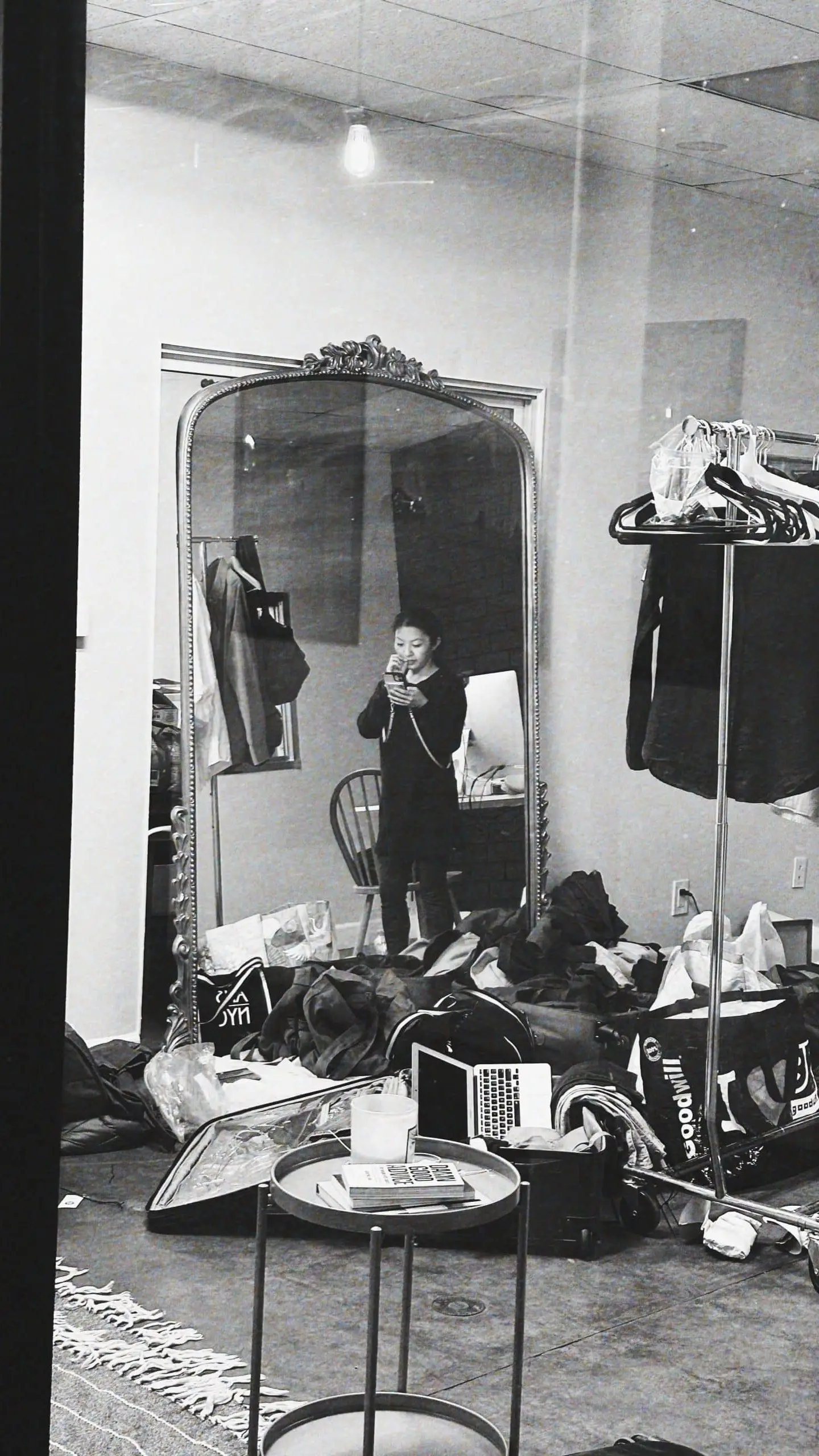
- 12/08/20
[Chinese companies](https://c-istudios.com/video-production-partner-for-chinese-companies/) aiming to succeed in the United States should consider several key factors. These include navigating challenges and embracing opportunities, establishing a strong U.S. presence, crafting a resonant brand identity, and adapting to the American market through localization or "Americanization" to address concerns about regulatory differences, consumer preferences, and business norms.
Additionally, Chinese companies can learn from the fast-paced and agile business environment in China, where quick decisions and the ability to seize opportunities are rewarded. Furthermore, Chinese companies can offer valuable management lessons in terms of responsiveness, improvisation, flexibility, and speed, which are imperative in today's business environment.
For a more in-depth understanding of the underlying assumptions, values, and beliefs in Chinese business culture, "Decoding China: Cross-cultural strategies for successful business" is a recommended resource.
## Examples of Chinese companies that have successfully expanded to the US
Some successful examples of Chinese companies that have expanded to the US include:
1. DJI Innovations: A leading company in the civilian-drone and aerial-imaging technology industry.
2. Haier: A major global brand in the home appliances industry.
3. Lenovo: A well-known computer and electronics company.
4. Huawei: A prominent global provider of information and communications technology (ICT) infrastructure and smart devices.
5. NIO: An innovative electric car-maker.
These companies have established a presence in the US market, demonstrating the potential for Chinese firms to succeed in the American business landscape.
## Strategies that Chinese companies have used to successfully expand to the US
Chinese companies have used various strategies to successfully expand to the US, including:
1. Localization or "Americanization": Adapting products and strategies to align with regulatory differences, diverse consumer preferences, and distinct business norms in the US market.
1. Establishing a Strong US Presence: This involves creating a local subsidiary and building a methodical approach to ensure immediate and consistent legitimacy and acceptance in the US market.
1. Quality Improvement and Innovation: Higher sales prices in the US can translate to increased profits, enabling Chinese companies to invest in quality improvement and innovation.
1. Partnerships and Customization: Companies like Haier have implemented strategies such as having an American business partner manage their US branch and customizing products specifically for the US market, which has contributed to their success.
These strategies have enabled Chinese companies to navigate the challenges and embrace the opportunities of the US market, leading to their successful expansion.
## Marketing strategies that Chinese companies have used to enter the US market
Chinese companies have employed various marketing strategies to enter the US market, including:
1. Localization and Adaptation: Adapting products and marketing strategies to align with US consumer preferences, regulatory requirements, and business practices.
1. Partnerships with Western Brands: Seeking partnerships through joint ventures, mergers, or acquisitions with Western companies to enhance their brand's appeal and tangible offerings.
1. Omni-Channel Marketing: Focusing on an omnichannel layout to increase product sales, as each additional sales channel can significantly boost overall sales.
1. Data-Backed Consumer Insights: Relying heavily on data and insights to inform marketing plans, demonstrating an insatiable appetite for data-backed consumer insights.
These strategies reflect the importance of understanding and adapting to the unique characteristics of the US market to effectively promote Chinese products and brands.
## How Chinese companies have used social media to market their products in the US
Chinese companies have utilized [social media](https://c-istudios.com/social-media-marketing-services/) platforms to market their products in the US through various strategies, including:
1. Leveraging Popular Platforms: Chinese companies have capitalized on the popularity of social media platforms like WeChat, TikTok, and Weibo in China, which have also gained significant traction among domestic and international users.
1. Influencer Marketing: They have made use of influencer marketing, as recommendations by influencers can be compelling and influential in shaping consumer perceptions and purchasing decisions.
1. E-commerce Integration: Some social media platforms in China offer e-commerce functions, allowing companies to expand their reach and directly sell products to consumers.
1. Adapting to Platform Preferences: Chinese companies have adapted their marketing strategies to align with the evolving user behaviors on social media, such as focusing on content seeding on platforms like Xiaohongshu (Red) to engage with young audiences.
These approaches demonstrate the flexibility and innovation of Chinese companies in utilizing social media as a powerful tool to promote their products in the US market.
## How Chinese companies use social media influencers to promote their products in the US
Chinese companies use social media influencers to promote their products in the US by:
1. Selecting Relevant Influencers: Ensuring that the influencers they partner with have followers in the correct niche that aligns with their product or brand, to maximize the impact of their marketing efforts.
1. Building Trust Through Recommendations: Utilizing the persuasive power of influencers, as consumers are more likely to consider buying a product if it is discussed positively by someone they follow and trust.
1. Creating Engaging Content: Collaborating with influencers to [create content](https://c-istudios.com/content-creation-services/) that is engaging and tailored to the preferences of their followers, which can help in driving sales and brand awareness.
1. Leveraging E-commerce Functions: Taking advantage of social media platforms that offer integrated e-commerce functions, allowing for seamless promotion and direct sales of products within the platform.
1. Utilizing Platform-Specific Strategies: Employing platform-specific advertising strategies, such as using TikTok native ads for selling popular products or Xiaohongshu for content seeding among young people.
By strategically partnering with influencers who resonate with their target audience and leveraging the unique features of social media platforms, Chinese companies can effectively promote their products to US consumers.
## How Chinese companies tailor their marketing messages to appeal to US consumers
Chinese companies tailor their marketing messages to appeal to US consumers in several ways:
1. Understanding Consumer Perceptions: Chinese companies need to understand that many American consumers perceive products from developing countries as inferior. Therefore, they need to focus on improving the perception of their brand and product quality.
1. Leveraging Brand Name, Spokesperson, and Country of Origin: The combination of brand name, spokesperson, and country of origin information can significantly impact the marketing of products from developing countries in the US.
1. Cultural Sensitivities: Chinese companies must consider cultural sensitivities and adapt their advertising strategies accordingly. This includes understanding the unique dynamics of the US market and tailoring their marketing messages to resonate with American consumers.
1. Value Proposition: Chinese consumers are brand conscious but focus intensely on value, often making brand loyalty secondary. When marketing to US consumers, Chinese companies need to emphasize the value and quality of their products.
1. Creating Shareable, Viral Content: Chinese marketers have developed a unique approach tailored to China's mobile-first consumer, which relies on the creation of shareable, [viral content](https://c-istudios.com/creative-marketing-services/). This approach can also be effective in the US market, where social media plays a significant role in consumer behavior.
## Common themes in marketing messages used by Chinese companies to appeal to US consumers
Some common themes in marketing messages used by Chinese companies to appeal to US consumers include:
1. Value and Quality Emphasis: Chinese companies often emphasize the value and quality of their products to resonate with US consumers, who are increasingly focused on better value and quality.
1. Cultural Sensitivity and Understanding: Cultural sensitivity is crucial in crafting marketing strategies for the US market. Chinese companies need to understand and respect cultural nuances to effectively appeal to US consumers.
1. Influencer Marketing and User-Generated Content: Leveraging influencer marketing and user-generated content to build brand appeal and trust among US consumers.
1. Adapting to Digital Advertising Landscape: Chinese companies need to adapt their marketing strategies to the digital advertising landscape in the US, including leveraging popular platforms, influencer marketing, and social media advertising.
These themes reflect the importance of understanding consumer preferences, cultural differences, and the digital advertising landscape in the US market to effectively tailor marketing messages.
## Challenges that Chinese companies face when translating their marketing messages to English for US consumers
When Chinese companies translate their marketing messages to English for US consumers, they face several challenges, including:
1. Cultural Relevance: It's not enough to simply translate marketing messages; they must also be culturally and contextually relevant to the US audience.
1. Language Complexity: The process of translating from Chinese to English presents challenges, such as the use of characters instead of letters, which can be difficult for untrained translators to navigate.
1. Brand Messaging: Translating brand messaging for new markets requires careful consideration of local variations in language and cultural nuances to avoid misinterpretation or embarrassment.
1. Regulatory and Consumer Perceptions: Chinese companies must address regulatory differences, diverse consumer preferences, and distinct business norms in the US market, as well as concerns about brand perception and quality.
1. Culturally Appropriate Content: Ensuring that the translated content is suitable for the target audience, particularly in terms of brand names, slogans, and images, to avoid cultural mishaps.
To overcome these challenges, Chinese companies need to go beyond literal translation and consider cultural context, language nuances, and consumer perceptions to ensure that their marketing messages effectively resonate with US consumers.
## Common mistakes that Chinese companies make when translating their marketing messages to English for US consumers
Some common mistakes that Chinese companies make when translating their marketing messages to English for US consumers include:
1. Literal Translation Errors: Translating directly from Chinese to English without considering cultural nuances and idiomatic expressions, leading to awkward or nonsensical marketing messages.
1. Cultural Insensitivity: Failing to account for cultural differences and references, which can result in marketing messages that are inappropriate or offensive to the US audience.
1. Lack of Contextual Relevance: Neglecting to ensure that the translated messages are contextually relevant and engaging for the US audience, as direct translations may not resonate effectively.
1. Inaccurate Brand Messaging: Misinterpreting brand messaging, slogans, or product names, which can lead to unintended meanings or misrepresentations of the brand.
To avoid these mistakes, Chinese companies should prioritize culturally sensitive and contextually relevant translations, and consider partnering with professional translators or language service providers with expertise in the US market.
## Examples of Chinese companies that have faced backlash for their translation mistakes in the US market
Some examples of Chinese companies that have faced backlash for their translation mistakes in the US market include:
1. Pepsi: The slogan "Come Alive With the Pepsi Generation" was mistranslated into "Pepsi Brings Your Ancestors Back from the Dead".
1. KFC: The slogan "Finger Lickin' Good" was translated into a not-so-appetizing phrase: "Eat your fingers off".
These examples highlight the importance of accurate and culturally sensitive translations to avoid negative repercussions and maintain brand reputation in the US market.
## How Chinese companies research and understand the US market before launching their marketing campaigns
Chinese companies research and understand the US market before launching their marketing campaigns through various methods and considerations. Some of these include:
1. Market Research and Consumer Perception: Conducting market research to understand consumer perceptions, preferences, and behavior in the US market. This may involve assessing the perception of product quality based on advertisements and understanding the factors that influence consumer purchasing decisions.
1. Cultural Sensitivity and Localization: Embracing cultural sensitivity and localization by assessing how different marketing techniques might impact the sale of products in the US market. This involves determining the most appropriate combination of brand name, spokesperson, and country of origin information for marketing products from developing countries in the US.
1. Adapting Marketing Strategies: Adapting marketing strategies to align with regulatory differences, diverse consumer preferences, and distinct business norms in the US market. This may involve embracing "Americanization" to address concerns about brand perception and quality.
1. Digital Advertising Landscape: Understanding the unique dynamics of the US digital advertising landscape, including leveraging popular platforms, influencer marketing, search engine optimization, and social media advertising.
By prioritizing market research, cultural sensitivity, and adaptation of marketing strategies, Chinese companies can effectively understand and navigate the US market before launching their marketing campaigns.
## Work with C&I Studios
If you are planning a project like this, our team can take it from concept to final delivery. Explore our [video production services](https://c-istudios.com/video-production-services/), browse [our work](https://c-istudios.com/our-work/) to see how we tell brand stories, and [get in touch](https://c-istudios.com/contact/) when you are ready to start.
Originally published February 2, 2024
---
*This content is from [C&I Studios](https://c-istudios.com), a full-service production company.*
---
# Creating a Digital Brand Voice: Consistency Across Platform
> Published: February 1, 2024
> Categories: Commercial & Brand
> Source: https://c-istudios.com/creating-a-digital-brand-voice-consistency-across-platform/
---
.cib{--paper:#1b1d1f;--ink:#fff;--body:#d5d7d9;--muted:#8b9096;--line:rgba(255,255,255,.12);--thumb:#2b2e31;--card:#212426;--accent:#c02b0a;--blue:#5B8FA8;--serif:'Playfair Display',Georgia,serif;--sans:'Poppins',-apple-system,sans-serif;--measure:900px;background:var(--paper);color:var(--body);font-family:var(--sans);line-height:1.6;position:relative;left:50%;transform:translateX(-50%);width:90vw;max-width:1920px}
.cib *{box-sizing:border-box}
.cib .kicker{max-width:var(--measure);margin:58px auto 0;padding:0 22px;font-size:12.5px;font-weight:700;letter-spacing:2.5px;text-transform:uppercase;color:var(--blue)}
.cib h1.cibh1{text-wrap:balance;font-family:var(--serif);font-weight:500;font-size:clamp(46px,6vw,72px);line-height:1.08;color:var(--ink);max-width:var(--measure);margin:18px auto 0;padding:0 22px;letter-spacing:-.5px}
.cib .metarow{max-width:var(--measure);margin:20px auto 0;padding:0 22px;color:var(--muted);font-size:14px}
.cib .hero{position:relative;width:100%;height:0;padding-bottom:56.25%;overflow:hidden;margin:48px auto 0;border-top:1px solid var(--line);border-bottom:1px solid var(--line)}
.cib .hero .ph{width:100%;aspect-ratio:16/9;background:var(--thumb);border-top:1px solid var(--line);border-bottom:1px solid var(--line);display:flex;align-items:center;justify-content:center;color:#7d8288;font-size:13px;text-align:center;padding:0 20px}
.cib .body{max-width:var(--measure);margin:12px auto 0;padding:52px 22px 6px}
.cib .body.lead p:first-child{font-size:23px;line-height:1.62;color:var(--ink)}
.cib .body p{font-size:18.5px;line-height:1.85;margin:0 0 30px;color:var(--body)}
.cib .body h2{text-wrap:balance;font-family:var(--serif);font-weight:500;font-size:clamp(32px,4vw,48px);line-height:1.22;color:var(--ink);margin:70px 0 20px;letter-spacing:-.3px}
.cib .body h3{text-wrap:balance;font-family:var(--sans);font-weight:600;font-size:22px;color:var(--ink);margin:38px 0 8px}
.cib .body a{color:var(--ink);text-decoration:underline;text-decoration-color:rgba(255,255,255,.4);text-underline-offset:3px}
.cib .body a:hover{text-decoration-color:var(--ink)}
.cib .ctable{width:100%;border-collapse:collapse;margin:16px 0 30px;font-size:16px}
.cib .ctable th{background:#000;color:#fff;text-align:left;padding:10px 12px;font-family:var(--sans)}
.cib .ctable td{padding:10px 12px;border-bottom:1px solid var(--line);color:var(--body)}
.cib .inimg{position:relative;width:100%;height:0;padding-bottom:56.25%;overflow:hidden;margin:72px auto;border-top:1px solid var(--line);border-bottom:1px solid var(--line)}
.cib .inimg .ph{width:100%;aspect-ratio:16/9;background:var(--thumb);border-top:1px solid var(--line);border-bottom:1px solid var(--line);display:flex;align-items:center;justify-content:center;color:#7d8288;font-size:13px}
.cib .origpub{max-width:var(--measure);margin:60px auto 0;padding:26px 22px 0;border-top:1px solid var(--line);color:var(--muted);font-size:13.5px}
.cib .related{max-width:1200px;margin:64px auto 0;padding:34px 22px 76px}
.cib .related h3{font-family:var(--sans);font-size:12.5px;letter-spacing:2px;text-transform:uppercase;color:var(--ink);margin:0 0 24px}
.cib .grid{display:grid;grid-template-columns:repeat(3,1fr);gap:28px}
.cib .rc{background:var(--card);border:1px solid var(--line);display:block;text-decoration:none;color:inherit;transition:border-color .15s}
.cib a.rc:hover{border-color:rgba(255,255,255,.5)}
.cib .rc .thumb{position:relative;width:100%;height:0;padding-bottom:56.25%;background:var(--thumb);overflow:hidden}
.cib .rc .thumb img{position:absolute!important;top:0!important;left:0!important;width:100%!important;height:100%!important;object-fit:cover!important;margin:0!important}
.cib .rc .cc{padding:14px 15px 17px}
.cib .rc .rt{font-family:var(--serif);font-weight:500;font-size:16px;line-height:1.3;color:var(--ink);margin:0 0 6px}
.cib .rc .rm{font-size:11px;letter-spacing:1px;text-transform:uppercase;color:var(--muted)}
.cib img{margin:0!important;padding:0!important;display:block!important;vertical-align:top;max-width:100%}
.cib .hero img,.cib .inimg img{position:absolute!important;top:0!important;left:0!important;width:100%!important;height:100%!important;object-fit:cover!important;margin:0!important;padding:0!important;border:0!important;display:block!important;aspect-ratio:auto!important}
.cib .hero+.body{padding-top:36px}
@media(max-width:760px){.cib .grid{grid-template-columns:1fr}.cib .body h2{margin:52px 0 16px}.cib .body p{font-size:17.5px}.cib .inimg,.cib .hero{margin-top:44px}}
.cib .vembed{max-width:var(--measure);margin:44px auto;padding:0 22px}.cib .vembed .vwrap{position:relative;width:100%;height:0;padding-bottom:56.25%}.cib .vembed .vwrap iframe{position:absolute;top:0;left:0;width:100%;height:100%;border:0}
Commercial & Brand
# Creating a Digital Brand Voice. Consistency Across Platform
4 min read

- 12/08/20
Creating a consistent [brand](https://c-istudios.com/branding-and-graphic-design-services/) voice across various digital platforms is essential for establishing a clear personality, tone, and brand recognition, as well as for connecting with the target audience on a deeper level. To maintain consistency, several key steps can be taken, including defining the brand voice, knowing the audience, auditing content, training the team, and testing and refining the brand voice across different platforms.
It is also important to plan ahead and determine the brand voice, and to be authentic and true to the brand's unique value proposition. Additionally, maintaining consistency with brand values and personality across channels, mirroring the language patterns of each platform community, and being authentic are considered best practices for developing an ownable [social media](https://c-istudios.com/social-media-marketing-services/) brand voice.
## How to define a brand voice
To define a brand voice, several key steps can be taken. First, it's important to align the brand voice with the company's mission statement and core values. This helps in defining the personality traits of the brand. It's also suggested to choose between 3 and 5 main characteristics that the brand voice should convey and describe them in detail, along with do's and don'ts and some best practice samples.
Additionally, creating a tone framework can help the brand voice come across consistently, regardless of the context, such as media communications or social media communications. Furthermore, identifying the target audience, auditing the current tone and voice, and tailoring the tone to different platforms are important steps in developing a brand voice.
Finally, it's essential to match the tone of voice with the content format being used to communicate and to create tone of voice guidelines to ensure consistency.
## Benefits of having a consistent brand voice
Having a consistent brand voice across various platforms offers several benefits. Firstly, it creates a seamless and coherent experience for the audience across different touchpoints, such as [websites](https://c-istudios.com/web-development-services/), social media, email, and ads, reinforcing brand identity, increasing brand recognition, and building trust and credibility.
Consistency in brand voice also helps the brand stand out from the competition, attract and retain ideal customers, and create a loyal fan base that advocates for the brand. Furthermore, a consistent brand voice enables the brand to connect with the audience on a deeper level by conveying its personality and values, thus influencing trust, loyalty, and engagement.
Additionally, maintaining a consistent brand voice can enhance customer experience and satisfaction by aligning with their needs, preferences, and expectations. Finally, it fosters confidence in the company and influences purchasing decisions, leading to increased revenue and improved brand visibility.
## Examples of successful brand voices in different industries
Some examples of successful brand voices in different industries include:
1. Adidas: Known for its energetic and empowering brand voice.
2. Budweiser: Embraces a patriotic and traditional brand voice.
3. Spotify: Exhibits an inclusive and trendy brand voice.
4. Patagonia: Recognized for its authentic and environmentally conscious brand voice.
5. Nintendo: Portrays a playful and imaginative brand voice.
6. Rare Beauty: Employs an empowering and inclusive brand voice.
7. Corkcicle: Showcases a cool and stylish brand voice.
These examples demonstrate how various brands have effectively established and maintained distinct brand voices to connect with their target audiences and differentiate themselves in the market.
## Key elements of a successful brand voice
Some key elements of a successful brand voice include:
1. Personality Traits: Align the brand voice with the company's mission statement and core values to define its personality traits.
1. Tone Framework: Create a tone framework to ensure the brand voice comes across consistently, regardless of the context, such as media communications or social media communications.
1. Audience Alignment: Identify the target audience and ensure that the brand voice resonates with their preferences and expectations.
1. Voice Attributes: Define the adjectives that describe how the brand sounds, such as friendly, professional, humorous, or authoritative.
1. Brand Examples: Showcase samples of communication that demonstrate how the brand voice and tone are applied in different channels and formats.
These elements contribute to the development of a distinct and effective brand voice that resonates with the target audience and reinforces the brand's identity and values.
## How to develop a brand voice that aligns with your company's culture
To develop a brand voice that aligns with your company's culture, several key components should be considered:
1. Brand Values: Align the brand voice with the company's core values and mission statement to define its personality traits.
1. Tone Definition: Define the appropriate tone for different situations, such as media communications or social media communications, to ensure the brand voice remains consistent.
1. Audience Alignment: Identify the target audience and ensure that the brand voice resonates with their preferences and expectations.
1. Consistency and Adaptability: Strive for consistency, authenticity, and adaptability to create a compelling and resonant brand voice that fosters a strong connection.
By incorporating these components, a brand can develop a voice that not only reflects its corporate identity but also resonates with its audience and differentiates it from competitors.
## How to measure the effectiveness of a brand voice
To measure the effectiveness of a brand voice, several methods and key performance indicators (KPIs) can be utilized:
1. Voice and Tone Analyzer: Use tools that evaluate content based on various dimensions, such as emotion, sentiment, personality, and values.
1. Brand Voice Alignment: Measure how well the brand's tone of voice matches its values, which can be done by hand-scoring a sample of brand writing and having different people audit the brand voice values.
1. Content Analysis Tools: Utilize tools such as Hemingway and Grammarly to assess the quality and effectiveness of the brand's written content.
1. KPIs for Brand Tone of Voice: Monitor KPIs such as brand voice alignment, time-to-publish, and cost-to-write to gauge the effectiveness of the brand voice.
1. Output KPIs: Measure brand voice awareness, perception of brand voice values, and thought leadership to assess the impact and effectiveness of the brand voice.
By employing these methods and KPIs, businesses can gain valuable insights into the impact and effectiveness of their brand voice, allowing for informed adjustments and improvements.
## Common mistakes to avoid when developing a brand voice
When developing a brand voice, it's important to avoid common mistakes that can undermine the effectiveness of the brand's tone and damage its reputation. Some of the most common mistakes to avoid include:
1. Not defining your tone clearly, which can lead to inconsistency and confusion across different channels and platforms.
1. Failing to align the tone with the brand's strategy, which can result in a disconnect between the brand's messaging and its objectives.
1. Neglecting to adapt the tone to the audience, which can lead to a lack of resonance and relevance with the target market.
1. Not testing and refining the tone, which is essential for ensuring that the brand voice remains effective and resonant over time.
Additionally, other pitfalls and challenges to avoid when developing a brand voice include lack of clarity and alignment, confusion and distraction, and offense and alienation.
By being mindful of these common mistakes and challenges, businesses can develop a brand voice that is clear, consistent, and resonant with their target audience, ultimately contributing to a strong and differentiated brand identity.
## How to test and refine a brand voice
To test and refine a brand voice, several methods and tools can be used, and the process should be ongoing. Some ways to test and refine a brand voice include:
1. Surveys, Feedback Forms, and Interviews: Gather feedback from the audience, stakeholders, and employees to assess the effectiveness and resonance of the brand voice.
1. Focus Groups: Conduct focus groups to obtain in-depth insights into how the brand voice is perceived and its impact on the audience.
1. Social Media Monitoring: Monitor social media interactions to gauge the audience's response to the brand voice and identify areas for improvement.
1. Voice and Tone Analyzer: Utilize tools that evaluate content based on various dimensions, such as emotion, sentiment, personality, and values, to measure the effectiveness of the brand voice.
1. Adaptation to Different Platforms and Audiences: Test how the brand voice performs across different platforms and adapt it to resonate with various audiences.
1. Regular Monitoring and Evolution: Continuously monitor the brand voice and its evolution over time to ensure it remains consistent, effective, and aligned with the brand's objectives.
By employing these methods, businesses can gain valuable insights into the impact and effectiveness of their brand voice, allowing for informed adjustments and refinements to maintain a strong and resonant brand identity.
## How to train employees to use the brand voice consistently
To train employees to use the brand voice consistently, the following methods can be employed:
1. Style Guide and Workshops: Provide employees with a comprehensive style guide that outlines the brand's tone, voice, and verbiage. Conduct presentations and workshops to train employees on how to apply the guide in practice.
1. Regular Training Sessions: Schedule regular training sessions and refreshers for the marketing, customer service, and design teams. Use examples and have experienced employees guide those who struggle to maintain the brand voice.
1. Practical Exercises and Feedback: Implement practical exercises, such as brand voice audits and content creation using the guidelines. Review the sample content created by the team and provide constructive feedback. Encourage open discussion and learning from each other's work.
1. Advanced Training: Once the team consistently applies the brand voice, introduce more advanced training exercises, such as adjusting the voice for different audiences and channels, or adapting the brand voice for specific marketing campaigns or initiatives.
1. Monitoring and Measurement: Monitor and measure how well employees are using the brand voice and how it affects brand performance and perception. Use metrics such as engagement, sentiment, conversion, retention, and loyalty.
By employing these methods, businesses can ensure that their employees are well-trained to consistently apply the brand voice across various channels and platforms.
## How to adapt a brand voice for different channels and platforms
To adapt a brand voice for different channels and platforms, the following steps can be taken:
1. Understand the Audience and Platform: Different channels have diverse demographics, preferences, and behaviors. For example, LinkedIn users may prefer professional and formal content, while Instagram users may favor casual and visual content. Research the audience's needs, interests, and pain points, and tailor the brand voice accordingly.
1. Define Brand Voice Attributes for Each Channel: Choose 3 to 5 main characteristics that the brand voice should convey for each channel. For example, the brand voice on social media communications may be playful, humorous, casual, and empathetic, while for media communications, it may be authoritative, concise, and clear.
1. Use Tools and Guidelines: Utilize tools and guidelines to help maintain and adapt the brand voice. For instance, a style guide can document brand voice attributes, examples, do's and don'ts, and best practices for each channel. Tools like Grammarly, Hemingway, or CoSchedule Headline Analyzer can also be used to ensure consistency and effectiveness across platforms.
1. Training and Regular Refreshers: Conduct regular training sessions and refreshers for the marketing, customer service, and design teams. Use examples and have experienced employees guide those who struggle to maintain the brand voice.
By following these steps, businesses can ensure that their brand voice is effectively adapted to different channels and platforms while maintaining consistency and resonance with their target audience.
## Tools and software that can help maintain brand voice consistency
Some tools and software that can help maintain brand voice consistency include:
1. BIGVU's Brand Voice Generator: This tool can be used to maintain a consistent voice across various platforms such as YouTube, TikTok, Instagram, LinkedIn, and more.
1. Grammarly: This platform can be used to ensure that the brand's written content is consistent with the established brand voice and tone.
1. Centralized Content Operations Platforms: Platforms like DivvyHQ can aid in collaboration and production workflows across multiple teams, ensuring that everyone has access to the most up-to-date brand voice guidelines.
These tools can be valuable in helping businesses maintain a consistent brand voice across different channels and platforms.
## Work with C&I Studios
If you are planning a project like this, our team can take it from concept to final delivery. Explore our [video production services](https://c-istudios.com/video-production-services/), browse [our work](https://c-istudios.com/our-work/) to see how we tell brand stories, and [get in touch](https://c-istudios.com/contact/) when you are ready to start.
Originally published February 1, 2024
---
*This content is from [C&I Studios](https://c-istudios.com), a full-service production company.*
---
# The Art of Interviewing: Drawing Out Authentic Stories in Documentaries
> Published: January 31, 2024
> Categories: Film & TV
> Source: https://c-istudios.com/the-art-of-interviewing-drawing-out-authentic-stories-in-documentaries/
---
.cib{--paper:#1b1d1f;--ink:#fff;--body:#d5d7d9;--muted:#8b9096;--line:rgba(255,255,255,.12);--thumb:#2b2e31;--card:#212426;--accent:#c02b0a;--blue:#5B8FA8;--serif:'Playfair Display',Georgia,serif;--sans:'Poppins',-apple-system,sans-serif;--measure:900px;background:var(--paper);color:var(--body);font-family:var(--sans);line-height:1.6;position:relative;left:50%;transform:translateX(-50%);width:90vw;max-width:1920px}
.cib *{box-sizing:border-box}
.cib .kicker{max-width:var(--measure);margin:58px auto 0;padding:0 22px;font-size:12.5px;font-weight:700;letter-spacing:2.5px;text-transform:uppercase;color:var(--blue)}
.cib h1.cibh1{text-wrap:balance;font-family:var(--serif);font-weight:500;font-size:clamp(46px,6vw,72px);line-height:1.08;color:var(--ink);max-width:var(--measure);margin:18px auto 0;padding:0 22px;letter-spacing:-.5px}
.cib .metarow{max-width:var(--measure);margin:20px auto 0;padding:0 22px;color:var(--muted);font-size:14px}
.cib .hero{position:relative;width:100%;height:0;padding-bottom:56.25%;overflow:hidden;margin:48px auto 0;border-top:1px solid var(--line);border-bottom:1px solid var(--line)}
.cib .hero .ph{width:100%;aspect-ratio:16/9;background:var(--thumb);border-top:1px solid var(--line);border-bottom:1px solid var(--line);display:flex;align-items:center;justify-content:center;color:#7d8288;font-size:13px;text-align:center;padding:0 20px}
.cib .body{max-width:var(--measure);margin:12px auto 0;padding:52px 22px 6px}
.cib .body.lead p:first-child{font-size:23px;line-height:1.62;color:var(--ink)}
.cib .body p{font-size:18.5px;line-height:1.85;margin:0 0 30px;color:var(--body)}
.cib .body h2{text-wrap:balance;font-family:var(--serif);font-weight:500;font-size:clamp(32px,4vw,48px);line-height:1.22;color:var(--ink);margin:70px 0 20px;letter-spacing:-.3px}
.cib .body h3{text-wrap:balance;font-family:var(--sans);font-weight:600;font-size:22px;color:var(--ink);margin:38px 0 8px}
.cib .body a{color:var(--ink);text-decoration:underline;text-decoration-color:rgba(255,255,255,.4);text-underline-offset:3px}
.cib .body a:hover{text-decoration-color:var(--ink)}
.cib .ctable{width:100%;border-collapse:collapse;margin:16px 0 30px;font-size:16px}
.cib .ctable th{background:#000;color:#fff;text-align:left;padding:10px 12px;font-family:var(--sans)}
.cib .ctable td{padding:10px 12px;border-bottom:1px solid var(--line);color:var(--body)}
.cib .inimg{position:relative;width:100%;height:0;padding-bottom:56.25%;overflow:hidden;margin:72px auto;border-top:1px solid var(--line);border-bottom:1px solid var(--line)}
.cib .inimg .ph{width:100%;aspect-ratio:16/9;background:var(--thumb);border-top:1px solid var(--line);border-bottom:1px solid var(--line);display:flex;align-items:center;justify-content:center;color:#7d8288;font-size:13px}
.cib .origpub{max-width:var(--measure);margin:60px auto 0;padding:26px 22px 0;border-top:1px solid var(--line);color:var(--muted);font-size:13.5px}
.cib .related{max-width:1200px;margin:64px auto 0;padding:34px 22px 76px}
.cib .related h3{font-family:var(--sans);font-size:12.5px;letter-spacing:2px;text-transform:uppercase;color:var(--ink);margin:0 0 24px}
.cib .grid{display:grid;grid-template-columns:repeat(3,1fr);gap:28px}
.cib .rc{background:var(--card);border:1px solid var(--line);display:block;text-decoration:none;color:inherit;transition:border-color .15s}
.cib a.rc:hover{border-color:rgba(255,255,255,.5)}
.cib .rc .thumb{position:relative;width:100%;height:0;padding-bottom:56.25%;background:var(--thumb);overflow:hidden}
.cib .rc .thumb img{position:absolute!important;top:0!important;left:0!important;width:100%!important;height:100%!important;object-fit:cover!important;margin:0!important}
.cib .rc .cc{padding:14px 15px 17px}
.cib .rc .rt{font-family:var(--serif);font-weight:500;font-size:16px;line-height:1.3;color:var(--ink);margin:0 0 6px}
.cib .rc .rm{font-size:11px;letter-spacing:1px;text-transform:uppercase;color:var(--muted)}
.cib img{margin:0!important;padding:0!important;display:block!important;vertical-align:top;max-width:100%}
.cib .hero img,.cib .inimg img{position:absolute!important;top:0!important;left:0!important;width:100%!important;height:100%!important;object-fit:cover!important;margin:0!important;padding:0!important;border:0!important;display:block!important;aspect-ratio:auto!important}
.cib .hero+.body{padding-top:36px}
@media(max-width:760px){.cib .grid{grid-template-columns:1fr}.cib .body h2{margin:52px 0 16px}.cib .body p{font-size:17.5px}.cib .inimg,.cib .hero{margin-top:44px}}
.cib .vembed{max-width:var(--measure);margin:44px auto;padding:0 22px}.cib .vembed .vwrap{position:relative;width:100%;height:0;padding-bottom:56.25%}.cib .vembed .vwrap iframe{position:absolute;top:0;left:0;width:100%;height:100%;border:0}
Film & TV
# The Art of Interviewing. Drawing Out Authentic Stories in Documentaries
3 min read

- 12/08/20
[Documentary](https://c-istudios.com/documentary-film-production/) interviewing is a process of gathering information and stories through conversations with sources, taking place in either an informal or formal setting, depending on the nature of the project. Filmmakers use techniques such as open-ended questions and visual cues to encourage candid responses. The art of documentary interviewing is an ever-evolving process that can take time to master, but it is an invaluable tool for filmmakers, enabling them to gain insight into stories and capture authentic footage.
In the realm of documentary filmmaking, journalist-driven interviews serve as the foundation for crafting cinematic masterpieces that illuminate the life and legacy of a single individual. It is important to pay attention to the aesthetics of interviews, including [lighting](https://c-istudios.com/video-production-gear-list/), composition, and background, as a well-framed shot can enhance the emotional impact of an interview.
The art of interviewing for documentaries is a subtle dance, a balance between pushing and pulling, giving and taking. It requires over-preparation, active listening, and empathy to capture authentic stories that will resonate with the audience.
## Common interview techniques used in documentary filmmaking
Common interview techniques used in documentary filmmaking include the following:
1. Open-Ended Questions: Filmmakers use open-ended questions to encourage candid and detailed responses from the interviewee.
1. Visual Cues: Visual cues are used to prompt authentic and emotional responses from the interviewee. These cues can include photos, video clips, or artwork that help to illustrate the subject's story.
1. Thorough Preparation: Conducting comprehensive research on the subject and interviewees before each interview is essential to ensure a successful documentary interview.
1. Aesthetics and Setting: Paying attention to the aesthetics of the interview, including lighting, composition, and background, can enhance the emotional impact of the interview.
1. Pre-Interview: Conducting a pre-interview to familiarize oneself with the interviewee and to prepare complex, open-ended questions can lead to more engaging and authentic responses.
1. Authentic Conversation: Creating an environment that feels like a real conversation, rather than a formal interview, can help the interviewee feel genuinely interested and offer reflective answers.
These techniques are vital for capturing authentic [stories](https://c-istudios.com/creative-marketing-services/) that resonate with the audience in documentary filmmaking.
## How documentary filmmakers prepare for interviews
Documentary filmmakers prepare for interviews through various techniques and strategies to ensure the capture of authentic and compelling stories. Some common methods include:
1. Conducting a Pre-Interview: Meeting with the interviewee beforehand to familiarize them with the process and make them comfortable with responding to questions.
1. Thorough Preparation: Comprehensive research on the subject and interviewees before each interview is essential to ensure a successful documentary interview.
1. Asking Open-Ended Questions: Using open-ended questions to encourage detailed and candid responses from the interviewee.
1. Visual Cues: Utilizing visual cues such as photos, video clips, or artwork to prompt authentic and emotional responses from the interviewee.
1. Creating an Authentic Environment: Building an environment that feels like a real conversation, rather than a formal interview, to help the interviewee feel genuinely interested and offer reflective answers.
1. Aesthetics and Setting: Paying attention to the aesthetics of the interview, including lighting, composition, and background, to enhance the emotional impact of the interview.
By following these strategies and techniques, filmmakers can set themselves up for success when it comes to documentary interviewing.
## How documentary filmmakers decide which questions to ask during an interview
Documentary filmmakers decide which questions to ask during an interview by employing several strategies. These include:
1. Thorough Research: Conducting thorough research on the interviewee's background, achievements, and any previous interviews they might have given to formulate insightful and relevant questions.
1. Pre-Interview Training: Training the interviewee to get comfortable with responding to questions before the official interview to help them feel at ease and open to sharing.
1. Asking Open-Ended Questions: Using open-ended questions to encourage the interviewee to share their feelings and experiences in a supportive and non-judgmental manner.
1. Establishing Informed Consent: Being honest with the interviewee about the interview process and obtaining their informed consent, while avoiding judgmental or blaming questions.
1. Creating a Comfortable Environment: Establishing a comfortable and welcoming interview environment to help the interviewee feel at ease and open to sharing.
By employing these strategies, filmmakers can ensure that the questions asked during the interview are relevant, respectful, and conducive to drawing out authentic and compelling stories.
## How documentary filmmakers build trust with interviewees
Documentary filmmakers build trust with interviewees through various strategies, including:
1. Developing Relationships: Building a relationship with someone respected in the world being documented, who can vouch for the filmmaker and introduce them to key individuals, thus establishing credibility and trust.
1. Being Visible and Available: Arriving early, making introductions, and getting personal buy-ins from those who will be on camera to earn credibility and strengthen relationships.
1. Showing Previous Work: Sharing previous work that demonstrates compassion and fair treatment of subjects to gain their trust, while being mindful not to seed doubt in their minds about being on screen.
1. Honesty and Active Listening: Being honest about the intentions and goals of the documentary, as well as actively listening to the interviewee, which can help build trust and rapport.
1. Transparency and Emotional Support: Maintaining transparency about intentions, avoiding manipulation or sensationalism, and providing emotional support, especially when delving into sensitive and emotional topics during the interview.
By following these strategies, filmmakers can establish trust with their interviewees, leading to more open and authentic interviews.
## Strategies for creating a comfortable and safe environment for interviewees
To create a comfortable and safe environment for interviewees, documentary filmmakers can employ the following strategies:
1. Conduct a Pre-Interview Risk Assessment: Prior to the interview, assess the physical risk and safety of the interview location to ensure a secure environment.
1. Establish Clear Expectations and Guidelines: Communicate clearly with the interviewee about the purpose and scope of the interview, as well as any guidelines or expectations, to create a sense of safety and transparency.
1. Choose a Safe and Secure Location: Select an interview location that ensures the safety and privacy of both the interviewer and the participant.
1. Respect Their Time and Opinions: Show respect for the interviewee's time and opinions to foster a comfortable environment.
1. Create a Warm and Friendly Atmosphere: Begin the interview by creating a warm and friendly atmosphere to help the interviewee feel at ease.
By implementing these strategies, filmmakers can establish a comfortable and safe environment for interviewees, encouraging open and authentic dialogue.
## Common reasons why interviewees may be hesitant to speak during an interview
Some common reasons why interviewees may be hesitant to speak during an interview include:
1. Shyness and Nervousness: Some individuals may be naturally shy or nervous, which can make them hesitant to speak during an interview.
1. Fear of Making Mistakes: The fear of making mistakes or saying the wrong thing can cause individuals to hang back, observe, and say nothing during an interview.
1. Unfamiliarity with the Environment: Being in a new and unfamiliar situation can trigger a physical response of shyness, causing individuals to feel hesitant to speak.
1. Lack of Confidence: Interviewees who lack confidence may feel hesitant to speak up during the interview process.
1. Emotional Stress: The emotional stress of the interview process can also lead to hesitancy in speaking, especially for individuals who are naturally shy or introverted.
By understanding these reasons, filmmakers can employ strategies to create a supportive and comfortable environment that encourages hesitant interviewees to open up during the interview.
## Ways to establish rapport with interviewees before an interview
To establish rapport with interviewees before an interview, documentary filmmakers can use the following strategies:
1. Smile, Shake Hands, and Maintain Eye Contact: Greeting the interviewee with a smile, a firm handshake, and maintaining eye contact can help create a positive and welcoming atmosphere.
1. Show Empathy and Understanding: Using phrases that show empathy and understanding, such as "I understand how you feel," can help build rapport and create a safe environment for the interviewee.
1. Respect Their Time and Opinions: Showing respect for the interviewee's time and opinions by creating a comfortable and private interview location, avoiding interruptions, and providing refreshments can help establish rapport.
1. Establish Common Ground: Look for common interests or experiences that you share with the interviewee and use them as a way to establish a connection and build rapport.
1. Mirroring Body Language: Subtly imitating the interviewer's body language to show alignment and create a sense of connection.
By employing these strategies, filmmakers can create a comfortable and trusting environment that encourages interviewees to open up during the documentary interview.
## Ways to show empathy towards interviewees during an interview
To show empathy towards interviewees during an interview, documentary filmmakers can employ the following strategies:
1. Active Listening: Actively listen to the interviewee, demonstrating genuine interest in their responses and validating their emotions.
1. Ask Open-Ended Questions: Use open-ended questions to encourage the interviewee to share their feelings and experiences in a supportive and non-judgmental manner.
1. Maintain Eye Contact and Positive Body Language: Use non-verbal cues such as maintaining eye contact, nodding to show understanding, and using positive body language to convey empathy and interest.
1. Create a Comfortable Environment: Establish a comfortable and welcoming interview environment to help the interviewee feel at ease and open to sharing.
1. Follow Up with a Thank-You Note or Email: After the interview, follow up with a thank-you note or email to express appreciation for the interviewee's time and contribution.
By implementing these strategies, filmmakers can demonstrate empathy during the interview process, fostering a positive and supportive atmosphere for the interviewee.
## How to handle sensitive topics during an interview
When handling sensitive topics during an interview, documentary filmmakers can employ several strategies to ensure a respectful and supportive environment for the interviewee. Some of these strategies include:
1. Conducting Test Interviews: Running test interviews before the official interview to identify any issues with the interview structure or questions, and to ensure that the interviewee is aware that they will be discussing a sensitive topic.
1. Using Open-Ended, Constructive Questions: Employing open-ended, constructive questions and ensuring that guests know they are not required to answer any questions they don't want to.
1. Establishing Informed Consent: Being honest with the interviewee about the interview process and obtaining their informed consent, while avoiding judgmental or blaming questions.
1. Creating a Safe and Supportive Environment: Anticipating the interviewee's needs by having items such as water and tissues ready, and maintaining a calm place for the interview to take place.
1. Pausing and Providing Support: Being prepared to pause the interview if the participant becomes emotional or upset, and approaching the situation with empathy and support.
By implementing these strategies, filmmakers can navigate sensitive topics during interviews with care and respect for the interviewee's well-being.
## Common mistakes to avoid when preparing for a documentary interview
When preparing for a documentary interview, filmmakers should avoid common mistakes to ensure a successful and productive process. Some of these mistakes and their solutions include:
1. Interrupting the Interviewee: Filmmakers should refrain from interrupting the interviewee, as it can disrupt the flow of the conversation and hinder the authenticity of the responses.
1. Asking Yes or No Questions: Avoid asking questions that can be answered with a simple "yes" or "no." Instead, ask open-ended questions that encourage the interviewee to elaborate and share their experiences in more detail.
1. Not Conducting Pre-Interviews: While some filmmakers prefer to avoid pre-interviews, conducting them can help the interviewee become more comfortable with responding to questions and familiarize them with the process.
1. Failing to Establish a Comfortable Environment: It's essential to create a comfortable and welcoming interview environment to help the interviewee feel at ease and open to sharing.
1. Lack of Preparation: Filmmakers should be prepared but adaptable, having a general concept for the interview while being open to the direction the conversation may take.
By avoiding these mistakes and following the suggested solutions, filmmakers can conduct more effective and successful documentary interviews.
## Work with C&I Studios
If you are planning a project like this, our team can take it from concept to final delivery. Explore our [film and TV production](https://c-istudios.com/film-and-tv-production/), browse [our work](https://c-istudios.com/our-work/) to see how we tell brand stories, and [get in touch](https://c-istudios.com/contact/) when you are ready to start.
Originally published January 31, 2024
---
*This content is from [C&I Studios](https://c-istudios.com), a full-service production company.*
---
# Livestreaming Beyond Events: Creative Uses for Real-Time Content
> Published: January 30, 2024
> Categories: Commercial & Brand
> Source: https://c-istudios.com/livestreaming-beyond-events-creative-uses-for-real-time-content/
---
.cib{--paper:#1b1d1f;--ink:#fff;--body:#d5d7d9;--muted:#8b9096;--line:rgba(255,255,255,.12);--thumb:#2b2e31;--card:#212426;--accent:#c02b0a;--blue:#5B8FA8;--serif:'Playfair Display',Georgia,serif;--sans:'Poppins',-apple-system,sans-serif;--measure:900px;background:var(--paper);color:var(--body);font-family:var(--sans);line-height:1.6;position:relative;left:50%;transform:translateX(-50%);width:90vw;max-width:1920px}
.cib *{box-sizing:border-box}
.cib .kicker{max-width:var(--measure);margin:58px auto 0;padding:0 22px;font-size:12.5px;font-weight:700;letter-spacing:2.5px;text-transform:uppercase;color:var(--blue)}
.cib h1.cibh1{text-wrap:balance;font-family:var(--serif);font-weight:500;font-size:clamp(46px,6vw,72px);line-height:1.08;color:var(--ink);max-width:var(--measure);margin:18px auto 0;padding:0 22px;letter-spacing:-.5px}
.cib .metarow{max-width:var(--measure);margin:20px auto 0;padding:0 22px;color:var(--muted);font-size:14px}
.cib .hero{position:relative;width:100%;height:0;padding-bottom:56.25%;overflow:hidden;margin:48px auto 0;border-top:1px solid var(--line);border-bottom:1px solid var(--line)}
.cib .hero .ph{width:100%;aspect-ratio:16/9;background:var(--thumb);border-top:1px solid var(--line);border-bottom:1px solid var(--line);display:flex;align-items:center;justify-content:center;color:#7d8288;font-size:13px;text-align:center;padding:0 20px}
.cib .body{max-width:var(--measure);margin:12px auto 0;padding:52px 22px 6px}
.cib .body.lead p:first-child{font-size:23px;line-height:1.62;color:var(--ink)}
.cib .body p{font-size:18.5px;line-height:1.85;margin:0 0 30px;color:var(--body)}
.cib .body h2{text-wrap:balance;font-family:var(--serif);font-weight:500;font-size:clamp(32px,4vw,48px);line-height:1.22;color:var(--ink);margin:70px 0 20px;letter-spacing:-.3px}
.cib .body h3{text-wrap:balance;font-family:var(--sans);font-weight:600;font-size:22px;color:var(--ink);margin:38px 0 8px}
.cib .body a{color:var(--ink);text-decoration:underline;text-decoration-color:rgba(255,255,255,.4);text-underline-offset:3px}
.cib .body a:hover{text-decoration-color:var(--ink)}
.cib .ctable{width:100%;border-collapse:collapse;margin:16px 0 30px;font-size:16px}
.cib .ctable th{background:#000;color:#fff;text-align:left;padding:10px 12px;font-family:var(--sans)}
.cib .ctable td{padding:10px 12px;border-bottom:1px solid var(--line);color:var(--body)}
.cib .inimg{position:relative;width:100%;height:0;padding-bottom:56.25%;overflow:hidden;margin:72px auto;border-top:1px solid var(--line);border-bottom:1px solid var(--line)}
.cib .inimg .ph{width:100%;aspect-ratio:16/9;background:var(--thumb);border-top:1px solid var(--line);border-bottom:1px solid var(--line);display:flex;align-items:center;justify-content:center;color:#7d8288;font-size:13px}
.cib .origpub{max-width:var(--measure);margin:60px auto 0;padding:26px 22px 0;border-top:1px solid var(--line);color:var(--muted);font-size:13.5px}
.cib .related{max-width:1200px;margin:64px auto 0;padding:34px 22px 76px}
.cib .related h3{font-family:var(--sans);font-size:12.5px;letter-spacing:2px;text-transform:uppercase;color:var(--ink);margin:0 0 24px}
.cib .grid{display:grid;grid-template-columns:repeat(3,1fr);gap:28px}
.cib .rc{background:var(--card);border:1px solid var(--line);display:block;text-decoration:none;color:inherit;transition:border-color .15s}
.cib a.rc:hover{border-color:rgba(255,255,255,.5)}
.cib .rc .thumb{position:relative;width:100%;height:0;padding-bottom:56.25%;background:var(--thumb);overflow:hidden}
.cib .rc .thumb img{position:absolute!important;top:0!important;left:0!important;width:100%!important;height:100%!important;object-fit:cover!important;margin:0!important}
.cib .rc .cc{padding:14px 15px 17px}
.cib .rc .rt{font-family:var(--serif);font-weight:500;font-size:16px;line-height:1.3;color:var(--ink);margin:0 0 6px}
.cib .rc .rm{font-size:11px;letter-spacing:1px;text-transform:uppercase;color:var(--muted)}
.cib img{margin:0!important;padding:0!important;display:block!important;vertical-align:top;max-width:100%}
.cib .hero img,.cib .inimg img{position:absolute!important;top:0!important;left:0!important;width:100%!important;height:100%!important;object-fit:cover!important;margin:0!important;padding:0!important;border:0!important;display:block!important;aspect-ratio:auto!important}
.cib .hero+.body{padding-top:36px}
@media(max-width:760px){.cib .grid{grid-template-columns:1fr}.cib .body h2{margin:52px 0 16px}.cib .body p{font-size:17.5px}.cib .inimg,.cib .hero{margin-top:44px}}
.cib .vembed{max-width:var(--measure);margin:44px auto;padding:0 22px}.cib .vembed .vwrap{position:relative;width:100%;height:0;padding-bottom:56.25%}.cib .vembed .vwrap iframe{position:absolute;top:0;left:0;width:100%;height:100%;border:0}
Commercial & Brand
# Livestreaming Beyond Events. Creative Uses for Real-Time Content
3 min read

- 12/08/20
The creative uses for real-time content, such as [livestreaming](https://c-istudios.com/video-audio-live-streaming/), have extended beyond traditional events. Livestreaming has transformed the music industry by offering virtual concerts that provide an intimate and interactive experience for fans, as well as a greener alternative to traditional gatherings. Additionally, platforms like InEvent offer features for collaborative video editing to customize the display layout and add various visual elements to the livestream.
Livestreaming is also a valuable tool for businesses and marketers to engage with customers, showcase products, provide customer service, and create a sense of community and connection with the audience. This demonstrates that livestreaming has evolved to offer a wide range of creative applications beyond just broadcasting events.
## How to monetize livestreaming beyond events
To monetize livestreaming beyond events, there are several strategies that can be employed:
1. Subscription-Based Models: Implementing subscription-based monetization, where viewers pay a recurring fee for access to exclusive content or features.
1. Advertisements: Monetizing through advertisements by incorporating ad breaks or sponsored content within the livestream.
1. Transactional Video On Demand (TVOD): Offering pay-per-view options for specific content, allowing users to pay for individual streams or access to exclusive events.
1. Partnerships and Collaborations: Forming strategic partnerships with content creators, production houses, and other streaming services to enrich content libraries and expand the viewer base, as well as integrating e-commerce functionalities and live events to create additional revenue streams.
1. Membership Access: Providing membership access to exclusive content or special features for a recurring fee.
1. Behind-the-Scenes Access: Offering behind-the-scenes access to popular shows or movies, which can attract a paying audience.
These strategies can help diversify revenue streams and create additional opportunities for generating income from livestreaming content.
## Common challenges in monetizing livestreaming beyond events
Some common challenges in monetizing livestreaming beyond events include:
1. Audience Engagement and Retention: Sustaining audience engagement and retention over an extended period, as well as encouraging viewers to return for future streams, can be challenging.
1. Technical Infrastructure: Ensuring a robust technical infrastructure to support high-quality, uninterrupted live streaming, especially for longer or more frequent broadcasts.
1. Monetization Models: Selecting the most suitable monetization model for the content and audience, as well as managing the transition from free to paid content without alienating the audience.
1. Competition and Market Saturation: Navigating a highly competitive market with a multitude of streaming platforms and content creators vying for viewers' attention and disposable income.
1. Post-Event Monetization: Effectively leveraging the content beyond the initial livestream to generate additional revenue through on-demand viewing, repurposing, or supplementary content.
Addressing these challenges requires a comprehensive approach that encompasses audience development, technical capabilities, and a deep understanding of the evolving landscape of live streaming and digital content monetization.
## Strategies for diversifying revenue streams in livestreaming
To diversify revenue streams in livestreaming, several strategies can be employed:
1. Create Your Own Website: Establishing a dedicated [website](https://c-istudios.com/web-development-services/) provides control over content and enhances searchability, reducing reliance on a single platform.
1. Utilize Multiple Platforms: Simultaneously streaming on or repurposing content for various platforms such as Twitch, YouTube, Facebook, or Instagram can expand the audience and revenue potential.
1. Seek Sponsorships and Partnerships: Collaborating with brands, companies, or organizations relevant to the content's niche or audience can lead to paid promotions and partnerships.
1. Elevate the Fan Experience: Offering premium experiences, creating a marketplace platform, or hosting shoppable livestreams can provide additional revenue opportunities.
1. Offer Membership Access: Providing exclusive [content](https://c-istudios.com/content-creation-services/) or features to members for a recurring fee can help diversify revenue streams.
By implementing these strategies, content creators and businesses can reduce reliance on a single source of income and tap into the boundless opportunities for monetization in the rapidly growing livestreaming market.
## Creative ways to use livestreaming for marketing
Some creative ways to use livestreaming for marketing include:
1. Q&A Sessions: Engage with your audience by allowing them to ask questions about your product or service over a live stream.
1. Product Introductions: Use live streaming to introduce new products, provide demonstrations, or give a behind-the-scenes look at how your product is made.
1. Webinars: Host live webinars to interact directly with your audience and provide them with valuable content and insights.
1. Behind-the-Scenes Content: Give your audience an exclusive look at what happens behind the scenes of your business, which can help them feel more connected to your brand.
1. Exclusive Chats and AMAs: Conduct exclusive chats or "Ask Me Anything" sessions with company experts to provide valuable information and build a personal connection with your audience.
Livestreaming can be a powerful tool for marketing, allowing businesses to connect with their audience in a genuine and personalized way, and providing an opportunity to showcase their brand in a more human and relatable light.
## Examples of successful livestreaming campaigns
Some examples of successful livestreaming campaigns include:
1. Spotify's Periscope Session: Spotify, a music streaming company, hosted a successful campaign on the day Periscope was launched. They had 380 live viewers and about 1,500 hearts on the stream, with an additional 200 viewers on the replay. Since then, they have continued to host various artists, providing their audience with exclusive content.
1. Buzzfeed's Watermelon Experiment: Buzzfeed's live streaming campaign involved exploding a watermelon one rubber band at a time. This campaign showcased the brand's ability to capture viewer attention with engaging and unpredictable content.
1. Royal Caribbean's #ComeSeekLive: Royal Caribbean organized an influencer takeover, allowing world-traveling live streamers to take over their content. This campaign leveraged the large following of the influencers to attract their fans to the Royal Caribbean brand.
These examples demonstrate the creative ways in which live streaming has been effectively utilized for marketing purposes.
## How to measure the success of livestreaming beyond events
To measure the success of livestreaming beyond events, several key metrics and strategies can be utilized:
1. Viewing Time and Engagement: Assessing the duration of viewing time and engagement metrics, such as comments, shares, and reactions, provides insights into audience behavior and content effectiveness.
1. Geographic Insights: Analyzing geographic hot spots and audience demographics can inform content localization and targeted marketing efforts.
1. Revenue Generation: Evaluating revenue from sources such as subscriptions, advertisements, and partnerships is a primary measure of streaming success.
1. Audience Retention and Engagement: Tracking metrics like average watch time, viewer count, and engagement rate can gauge the level of audience retention and the effectiveness of the content.
1. Post-Event Monetization and Long-Term Value: Considering the long-term value of the content beyond the initial livestream, including on-demand viewership, lead generation, and repurposing for continued revenue generation.
By leveraging these metrics and strategies, organizations can gain a comprehensive understanding of the success of their livestreaming initiatives and make informed decisions to optimize future content and monetization efforts.
## Some ways to measure the impact of livestreaming on brand awareness and loyalty
To measure the impact of livestreaming on brand awareness and loyalty, several strategies and metrics can be utilized:
1. Feedback from Viewers: Collecting feedback from viewers can provide valuable insights into the impact of livestreaming on brand awareness and loyalty.
1. Social Media Mentions and Follower Growth: Tracking social media mentions and the number of new followers gained during and after the livestream can help assess the impact on brand awareness.
1. Viewership Metrics: Monitoring viewership metrics, such as average live viewers, playbacks, and retention rate, can provide an understanding of how the livestream has affected brand visibility and audience engagement.
1. Exclusive Content and Behind-the-Scenes Access: Offering exclusive content or behind-the-scenes access through livestreaming can contribute to building brand loyalty, and measuring the engagement with such content can be indicative of its impact.
By paying attention to these metrics and gathering feedback, brands can effectively measure the impact of their livestreaming efforts on brand awareness and loyalty, allowing for informed decision-making and continuous improvement.
## Tips for creating engaging livestreaming content
To create engaging livestreaming content, consider the following tips:
1. Know Your Goals and Audience: Understand the purpose of your livestream and the preferences of your audience to tailor the content effectively.
1. Prepare and Test Your Setup: Ensure that your technical setup is reliable by testing it beforehand to avoid interruptions during the livestream.
1. Interact with Your Viewers: Encourage audience participation through live chat, Q&A sessions, and shoutouts to create an interactive experience.
1. Add Value and Variety: Provide valuable information and diverse content formats to keep the audience interested and engaged throughout the livestream.
1. Use Tools and Features: Incorporate overlays, graphics, transitions, and other interactive features to enhance the production quality and creativity of your livestream.
By implementing these tips, you can create compelling and interactive livestreaming content that resonates with your audience and keeps them engaged throughout the broadcast.
## Common mistakes to avoid when creating livestreaming content
Some common mistakes to avoid when creating live streaming content include:
1. Improper Planning: Failing to plan the live stream adequately, which can lead to unstructured content and technical issues.
1. Inadequate Testing of Setup: Not thoroughly testing the live streaming setup, which can result in unexpected technical problems during the broadcast.
1. Poor Quality Video and Audio: Neglecting the quality of video and audio, which can lead to viewer disengagement and a negative experience.
1. Limited Promotion: Failing to promote the live stream sufficiently, which can result in low viewership and impact the reach of the content.
1. Not Interacting with the Audience: Neglecting to engage with the audience during the live stream, missing out on valuable interaction and feedback.
By avoiding these common mistakes, content creators can enhance the quality and impact of their live streaming content, leading to a more engaging and successful broadcast.
## How to promote livestreaming content to increase viewership
To promote livestreaming content and increase viewership, consider the following strategies:
1. Research Your Audience: Understand your audience's preferences and behaviors to tailor your content effectively.
1. Promote the Broadcast: Utilize social media, email marketing, and other channels to promote the live stream and create anticipation.
1. Encourage Pre-Registrations: Prompt viewers to pre-register for the live stream to generate interest and commitment.
1. Collaborate With Others: Partner with industry experts and influencers who can help promote your live stream to their followers.
1. Use Compelling Titles and Descriptions: Craft attention-grabbing titles and detailed descriptions to entice viewers and optimize search visibility.
1. Leverage Facebook and Instagram Stories, YouTube Shorts: Take advantage of these features to promote your live stream and reach new viewers.
1. Maintain a Consistent Streaming Schedule: By going live at the same time each week, you can build anticipation and attract a regular audience.
By implementing these strategies, you can effectively promote your live streaming content and increase viewership.
## How to use social media to promote livestreaming content
To promote livestreaming content on [social media](https://c-istudios.com/social-media-marketing-services/) and increase viewership, consider the following strategies:
1. Utilize Multiple Platforms: Post graphics or teaser videos on various social media channels such as Instagram, Facebook, Twitter, and YouTube to reach a wider audience.
1. Engage with Your Audience Before Going Live: Interact with your audience before the live stream and ask them what they would like to see, which can help in tailoring the content to their preferences.
1. Choose the Right Platform: Select the most suitable social media platform for your live broadcast based on its features, audience, and advantages.
1. Promote the Broadcast: Announce the date and time of your live broadcast, share behind-the-scenes photos and videos, create teasers and trailers, and invite your fans to submit questions or requests to generate interest and anticipation.
1. Encourage Pre-Registrations: Prompt viewers to pre-register for the live stream to create anticipation and commitment.
By implementing these strategies, you can effectively leverage social media to promote your live streaming content and increase viewership.
## Work with C&I Studios
If you are planning a project like this, our team can take it from concept to final delivery. Explore our [video production services](https://c-istudios.com/video-production-services/), browse [our work](https://c-istudios.com/our-work/) to see how we tell brand stories, and [get in touch](https://c-istudios.com/contact/) when you are ready to start.
Originally published January 30, 2024
---
*This content is from [C&I Studios](https://c-istudios.com), a full-service production company.*
---
# What is Product Placement in TV Shows?
> Published: January 26, 2024
> Categories: Film & TV
> Source: https://c-istudios.com/what-is-product-placement-in-tv-shows/
---
.cib{--paper:#1b1d1f;--ink:#fff;--body:#d5d7d9;--muted:#8b9096;--line:rgba(255,255,255,.12);--thumb:#2b2e31;--card:#212426;--accent:#c02b0a;--blue:#5B8FA8;--serif:'Playfair Display',Georgia,serif;--sans:'Poppins',-apple-system,sans-serif;--measure:900px;background:var(--paper);color:var(--body);font-family:var(--sans);line-height:1.6;position:relative;left:50%;transform:translateX(-50%);width:90vw;max-width:1920px}
.cib *{box-sizing:border-box}
.cib .kicker{max-width:var(--measure);margin:58px auto 0;padding:0 22px;font-size:12.5px;font-weight:700;letter-spacing:2.5px;text-transform:uppercase;color:var(--blue)}
.cib h1.cibh1{text-wrap:balance;font-family:var(--serif);font-weight:500;font-size:clamp(46px,6vw,72px);line-height:1.08;color:var(--ink);max-width:var(--measure);margin:18px auto 0;padding:0 22px;letter-spacing:-.5px}
.cib .metarow{max-width:var(--measure);margin:20px auto 0;padding:0 22px;color:var(--muted);font-size:14px}
.cib .hero{position:relative;width:100%;height:0;padding-bottom:56.25%;overflow:hidden;margin:48px auto 0;border-top:1px solid var(--line);border-bottom:1px solid var(--line)}
.cib .hero .ph{width:100%;aspect-ratio:16/9;background:var(--thumb);border-top:1px solid var(--line);border-bottom:1px solid var(--line);display:flex;align-items:center;justify-content:center;color:#7d8288;font-size:13px;text-align:center;padding:0 20px}
.cib .body{max-width:var(--measure);margin:12px auto 0;padding:52px 22px 6px}
.cib .body.lead p:first-child{font-size:23px;line-height:1.62;color:var(--ink)}
.cib .body p{font-size:18.5px;line-height:1.85;margin:0 0 30px;color:var(--body)}
.cib .body h2{text-wrap:balance;font-family:var(--serif);font-weight:500;font-size:clamp(32px,4vw,48px);line-height:1.22;color:var(--ink);margin:70px 0 20px;letter-spacing:-.3px}
.cib .body h3{text-wrap:balance;font-family:var(--sans);font-weight:600;font-size:22px;color:var(--ink);margin:38px 0 8px}
.cib .body a{color:var(--ink);text-decoration:underline;text-decoration-color:rgba(255,255,255,.4);text-underline-offset:3px}
.cib .body a:hover{text-decoration-color:var(--ink)}
.cib .ctable{width:100%;border-collapse:collapse;margin:16px 0 30px;font-size:16px}
.cib .ctable th{background:#000;color:#fff;text-align:left;padding:10px 12px;font-family:var(--sans)}
.cib .ctable td{padding:10px 12px;border-bottom:1px solid var(--line);color:var(--body)}
.cib .inimg{position:relative;width:100%;height:0;padding-bottom:56.25%;overflow:hidden;margin:72px auto;border-top:1px solid var(--line);border-bottom:1px solid var(--line)}
.cib .inimg .ph{width:100%;aspect-ratio:16/9;background:var(--thumb);border-top:1px solid var(--line);border-bottom:1px solid var(--line);display:flex;align-items:center;justify-content:center;color:#7d8288;font-size:13px}
.cib .origpub{max-width:var(--measure);margin:60px auto 0;padding:26px 22px 0;border-top:1px solid var(--line);color:var(--muted);font-size:13.5px}
.cib .related{max-width:1200px;margin:64px auto 0;padding:34px 22px 76px}
.cib .related h3{font-family:var(--sans);font-size:12.5px;letter-spacing:2px;text-transform:uppercase;color:var(--ink);margin:0 0 24px}
.cib .grid{display:grid;grid-template-columns:repeat(3,1fr);gap:28px}
.cib .rc{background:var(--card);border:1px solid var(--line);display:block;text-decoration:none;color:inherit;transition:border-color .15s}
.cib a.rc:hover{border-color:rgba(255,255,255,.5)}
.cib .rc .thumb{position:relative;width:100%;height:0;padding-bottom:56.25%;background:var(--thumb);overflow:hidden}
.cib .rc .thumb img{position:absolute!important;top:0!important;left:0!important;width:100%!important;height:100%!important;object-fit:cover!important;margin:0!important}
.cib .rc .cc{padding:14px 15px 17px}
.cib .rc .rt{font-family:var(--serif);font-weight:500;font-size:16px;line-height:1.3;color:var(--ink);margin:0 0 6px}
.cib .rc .rm{font-size:11px;letter-spacing:1px;text-transform:uppercase;color:var(--muted)}
.cib img{margin:0!important;padding:0!important;display:block!important;vertical-align:top;max-width:100%}
.cib .hero img,.cib .inimg img{position:absolute!important;top:0!important;left:0!important;width:100%!important;height:100%!important;object-fit:cover!important;margin:0!important;padding:0!important;border:0!important;display:block!important;aspect-ratio:auto!important}
.cib .hero+.body{padding-top:36px}
@media(max-width:760px){.cib .grid{grid-template-columns:1fr}.cib .body h2{margin:52px 0 16px}.cib .body p{font-size:17.5px}.cib .inimg,.cib .hero{margin-top:44px}}
.cib .vembed{max-width:var(--measure);margin:44px auto;padding:0 22px}.cib .vembed .vwrap{position:relative;width:100%;height:0;padding-bottom:56.25%}.cib .vembed .vwrap iframe{position:absolute;top:0;left:0;width:100%;height:100%;border:0}
Film & TV
# What is Product Placement in TV Shows?
4 min read
- 12/08/20
Product placement in [TV shows](https://c-istudios.com/film-and-tv-production/), also known as embedded marketing, is a marketing technique where references to specific brands or products are incorporated into the show with specific promotional intent. This can include visual placement of products within the show. Product placement is used to combat the use of digital video recorders that can skip traditional commercials and to engage with younger demographics. It is a way for brands to reach specific target audiences within the commercial content, and the visual placement is intended to capture viewers' attention and influence their purchasing decisions
## How do TV shows benefit from product placement
TV shows benefit from product placement in several ways, including increased [brand](https://c-istudios.com/branding-and-graphic-design-services/) visibility, reaching a captive and attentive audience, and the potential for brand awareness in perpetuity. Product placement allows brands to integrate their products into the content, capturing the audience's attention without being as easily skipped as traditional commercials.
Additionally, product placements can generate water cooler talk and media attention, further amplifying the brand's exposure. Furthermore, integrating products into TV shows can also save on production costs for the creative teams, as brands often provide free products in exchange for placement.
Overall, product placement offers a unique opportunity for brands to enhance their visibility and create a lasting impression on consumers.
## Common types of product placement in TV shows
The common types of product placement in TV shows include:
1. Physical Placement: This involves the actual, physical placement of a product within the show, where the product is visible and can be interacted with by the characters.
2. Virtual Placement: Products can also be digitally placed into existing media, allowing for flexibility in brand association and the possibility of placement after production.
3. Mentioned but Not Seen: In this type of placement, a product is mentioned in the dialogue but is not physically shown on screen.
4. Aural Placement: This refers to the audio mention of a product without a visual representation.
5. Contextual or Unbranded Placement: Products can be placed in a contextual manner without overt branding, or unbranded products can be used as part of the show's set or storyline.
These various types of product placement offer flexibility in how brands can integrate their products into TV shows, allowing for different levels of visibility and engagement with the audience.
## Examples of product placement in TV shows
Some examples of product placement in TV shows include:
1. Apple in Modern Family: Apple products were prominently featured in the show, with characters often using iPhones, iPads, and MacBooks.
1. HP in The Office: The American sitcom "The Office" featured prominent product placement of HP computers.
1. Veet Men in TOWIE: The reality TV show "The Only Way is Essex" featured a notable product placement of Veet Men.
1. Kia in The Glades: The TV show "The Glades" prominently featured Kia cars as part of its product placement strategy.
1. Subway in Chuck: The restaurant chain Subway was prominently featured in the TV show "Chuck" as part of a product placement deal.
These examples demonstrate how brands integrate their products into TV shows as a form of marketing strategy.
## Regulations around product placement in TV shows
In the UK, product placement is allowed in films, TV series, entertainment shows, and sports programs, but it is not permitted in news, children's programs, religious programs, current affairs, and consumer advice programs. The product placement rules apply to all programs broadcast on channels licensed by Ofcom. Additionally, the FCC in the United States regulates product placement in broadcast television, cable, and satellite, requiring full disclosure if any money or compensation is provided for the airing of the program material.
In general, product placement in TV shows is subject to regulations that vary by country and platform. These regulations are designed to ensure transparency and protect consumers from undisclosed advertising.
## Common criticisms of product placement in TV shows
Some common criticisms of product placement in TV shows include:
1. Perceived Intrusiveness: Viewers may find product placement intrusive, especially if it disrupts the viewing experience or feels forced into the storyline.
1. Potential for Deception: Critics argue that product placement blurs the line between entertainment and advertising, potentially leading to deceptive practices if not clearly disclosed.
1. Artistic Integrity Concerns: Some argue that product placement can compromise the artistic integrity of TV shows, as the integration of brands and products may conflict with the creative vision of the content.
1. Distraction from the Storyline: Excessive or poorly integrated product placement can distract viewers from the storyline, taking away from their immersion in the show.
These criticisms highlight the importance of transparent and carefully integrated product placement to mitigate potential negative effects on the viewing experience and artistic integrity of TV shows.
## Best practices for TV shows to ensure effective product placement
Some best practices for TV shows to ensure effective product placement include:
1. Balancing Subtlety and Integration: It is crucial to ensure that product placement remains effective and well-received by balancing subtlety and integration. This involves seamlessly integrating the product into the storyline without being overly intrusive.
1. Understanding the Audience: Effective product placement requires a deep understanding of the audience, the product, and the context in which it will be placed. This understanding is critical to ensure that the placement adds value to the show and resonates with the viewers.
1. Preserving Artistic Integrity: TV shows should strive to maintain their artistic integrity while integrating product placements. The placements should add value to the show and make the product successful without compromising the creative vision.
By following these best practices, TV shows can ensure that product placements are seamlessly integrated and enhance the viewing experience without being disruptive or misleading.
## How TV shows balance product placement with storytelling
TV shows balance product placement with [storytelling](https://c-istudios.com/creative-marketing-services/) by integrating products in a way that seamlessly merges with the storyline, offering value to the viewer's experience. This involves striking a delicate equilibrium between product promotion and narrative, ensuring that the placement does not compromise the artistic integrity of the show. Successful integration requires the product to blend harmoniously into the storyline, characters, and overall aesthetic of the project.
Additionally, considerations such as budget limitations, legal constraints, and industry relationships further complicate the process. By prioritizing seamless alignment with the narrative and characters, TV shows can effectively integrate product placement without detracting from the storytelling.
## Common mistakes TV shows make when it comes to product placement
Some common mistakes TV shows make when it comes to product placement include:
1. Lack of Integration: Failing to integrate the product naturally into the storyline can make the placement feel forced and disrupt the viewing experience.
1. Overly Blatant Placement: When product placement is overly blatant, it can be off-putting to viewers and detract from the authenticity of the show.
1. Non-Disclosure: Failing to disclose product placements transparently can lead to criticism and erode trust with the audience.
1. Irrelevance to the Storyline: Placing products that are irrelevant to the storyline can make the integration feel out of place and inauthentic.
By avoiding these mistakes, TV shows can ensure that product placements are effectively integrated and enhance the viewing experience without being disruptive or misleading.
## Consequences of excessive product placement in TV shows
Some consequences of excessive product placement in TV shows include:
1. Viewer Distraction: Excessive product placement can distract viewers from the storyline, leading to a focus on the promoted products rather than the content itself. This can detract from the viewing experience and emotional engagement with the show.
1. Negative Audience Perception: Overly aggressive product placement can lead to a negative perception among audiences, as they may feel that the show prioritizes advertising over entertainment, potentially eroding trust and viewership.
1. Impact on Emotional Moments: In some cases, excessive product placement can impact the emotional resonance of scenes, as viewers may be more focused on the promoted products than the intended emotional content of the show, leading to a disconnect with the characters and storyline.
By being mindful of these potential consequences, TV shows can strive to integrate product placements in a balanced and unobtrusive manner, preserving the integrity of the viewing experience.
## Some ways TV shows can integrate product placement into the show's storyline
TV shows can integrate product placement into the show's storyline in several ways to ensure effectiveness. Some of the common approaches include:
1. Seamless Integration: Successful integration requires the product to blend harmoniously into the storyline, characters, and overall aesthetic of the project. This involves ensuring that the product placement feels natural and does not disrupt the viewing experience.
1. Enhanced Realism and Authenticity: By featuring real-life brands and products, television creators can create a more immersive experience for viewers. For example, in the hit series "Stranger Things," set in the 1980s, the show's creators incorporated numerous product placements from that era, such as Coca-Cola, Eggo waffles, and Dungeons & Dragons.
1. Targeted Advertising: Product placement in television shows provides a unique opportunity for brands to reach their target audience. By strategically placing their products in shows that have a similar demographic to their customer base, brands can effectively advertise their offerings without disrupting the viewer's experience.
By employing these strategies, TV shows can integrate product placements effectively, adding authenticity and enhancing the viewing experience without being disruptive or misleading.
## How do TV shows measure the effectiveness of product placement
TV shows measure the effectiveness of product placement through various methods, including explicit and implicit measures. Some common approaches to measure the effectiveness of product placement in TV shows include:
1. Recognition and Recall Tasks: This method involves using explicit measures to tap into memory directly, such as recognition and recall tasks, to assess viewers' memory of the placed products.
1. Implicit Processing Assessment: Implicit measures are used to gauge the impact of product placement on viewers' attitudes and behaviors. This can include assessing changes in brand awareness and purchase intention as a result of the product placement.
1. Consumer Memory and Brand Recognition: One of the most common measures of product placement effectiveness is consumer memory and brand recognition. Studies have been conducted to assess the impact of product placements on brand memory and recognition.
By employing these measures, TV shows can evaluate the impact of product placement on viewers and make informed decisions about the effectiveness of their placement strategies.
## Limitations of measuring the effectiveness of product placement in TV shows
Some limitations of measuring the effectiveness of product placement in TV shows include:
1. Inconclusive Evidence: The effectiveness of product placement is not always clearly defined, and the evidence regarding its impact on consumer behavior can be inconclusive.
1. Difficulty in Measurement: Measuring the impact of product placement on consumer behavior can be challenging, as it often involves implicit processing and may not be directly linked to explicit memory tasks.
1. Blurring Advertising and Programming: Product placement blurs the distinction between advertising and programming, which can raise concerns from a public policy standpoint, especially regarding its impact on vulnerable groups such as young children.
1. Limited Research on Certain Product Types: There is limited research on the effectiveness of certain product types in regard to product placement, which can hinder a comprehensive understanding of its impact.
These limitations highlight the complexity of measuring the effectiveness of product placement and the need for further research to fully understand its impact on consumer behavior.
## Work with C&I Studios
If you are planning a project like this, our team can take it from concept to final delivery. Explore our [film and TV production](https://c-istudios.com/film-and-tv-production/), browse [our work](https://c-istudios.com/our-work/) to see how we tell brand stories, and [get in touch](https://c-istudios.com/contact/) when you are ready to start.
Originally published January 26, 2024
---
*This content is from [C&I Studios](https://c-istudios.com), a full-service production company.*
---
# Is product placement in a movie/tv show a good marketing strategy?
> Published: January 26, 2024
> Categories: Commercial & Brand
> Source: https://c-istudios.com/is-product-placement-in-a-movie-tv-show-a-good-marketing-strategy/
---
.cib{--paper:#1b1d1f;--ink:#fff;--body:#d5d7d9;--muted:#8b9096;--line:rgba(255,255,255,.12);--thumb:#2b2e31;--card:#212426;--accent:#c02b0a;--blue:#5B8FA8;--serif:'Playfair Display',Georgia,serif;--sans:'Poppins',-apple-system,sans-serif;--measure:900px;background:var(--paper);color:var(--body);font-family:var(--sans);line-height:1.6;position:relative;left:50%;transform:translateX(-50%);width:90vw;max-width:1920px}
.cib *{box-sizing:border-box}
.cib .kicker{max-width:var(--measure);margin:58px auto 0;padding:0 22px;font-size:12.5px;font-weight:700;letter-spacing:2.5px;text-transform:uppercase;color:var(--blue)}
.cib h1.cibh1{text-wrap:balance;font-family:var(--serif);font-weight:500;font-size:clamp(46px,6vw,72px);line-height:1.08;color:var(--ink);max-width:var(--measure);margin:18px auto 0;padding:0 22px;letter-spacing:-.5px}
.cib .metarow{max-width:var(--measure);margin:20px auto 0;padding:0 22px;color:var(--muted);font-size:14px}
.cib .hero{position:relative;width:100%;height:0;padding-bottom:56.25%;overflow:hidden;margin:48px auto 0;border-top:1px solid var(--line);border-bottom:1px solid var(--line)}
.cib .hero .ph{width:100%;aspect-ratio:16/9;background:var(--thumb);border-top:1px solid var(--line);border-bottom:1px solid var(--line);display:flex;align-items:center;justify-content:center;color:#7d8288;font-size:13px;text-align:center;padding:0 20px}
.cib .body{max-width:var(--measure);margin:12px auto 0;padding:52px 22px 6px}
.cib .body.lead p:first-child{font-size:23px;line-height:1.62;color:var(--ink)}
.cib .body p{font-size:18.5px;line-height:1.85;margin:0 0 30px;color:var(--body)}
.cib .body h2{text-wrap:balance;font-family:var(--serif);font-weight:500;font-size:clamp(32px,4vw,48px);line-height:1.22;color:var(--ink);margin:70px 0 20px;letter-spacing:-.3px}
.cib .body h3{text-wrap:balance;font-family:var(--sans);font-weight:600;font-size:22px;color:var(--ink);margin:38px 0 8px}
.cib .body a{color:var(--ink);text-decoration:underline;text-decoration-color:rgba(255,255,255,.4);text-underline-offset:3px}
.cib .body a:hover{text-decoration-color:var(--ink)}
.cib .ctable{width:100%;border-collapse:collapse;margin:16px 0 30px;font-size:16px}
.cib .ctable th{background:#000;color:#fff;text-align:left;padding:10px 12px;font-family:var(--sans)}
.cib .ctable td{padding:10px 12px;border-bottom:1px solid var(--line);color:var(--body)}
.cib .inimg{position:relative;width:100%;height:0;padding-bottom:56.25%;overflow:hidden;margin:72px auto;border-top:1px solid var(--line);border-bottom:1px solid var(--line)}
.cib .inimg .ph{width:100%;aspect-ratio:16/9;background:var(--thumb);border-top:1px solid var(--line);border-bottom:1px solid var(--line);display:flex;align-items:center;justify-content:center;color:#7d8288;font-size:13px}
.cib .origpub{max-width:var(--measure);margin:60px auto 0;padding:26px 22px 0;border-top:1px solid var(--line);color:var(--muted);font-size:13.5px}
.cib .related{max-width:1200px;margin:64px auto 0;padding:34px 22px 76px}
.cib .related h3{font-family:var(--sans);font-size:12.5px;letter-spacing:2px;text-transform:uppercase;color:var(--ink);margin:0 0 24px}
.cib .grid{display:grid;grid-template-columns:repeat(3,1fr);gap:28px}
.cib .rc{background:var(--card);border:1px solid var(--line);display:block;text-decoration:none;color:inherit;transition:border-color .15s}
.cib a.rc:hover{border-color:rgba(255,255,255,.5)}
.cib .rc .thumb{position:relative;width:100%;height:0;padding-bottom:56.25%;background:var(--thumb);overflow:hidden}
.cib .rc .thumb img{position:absolute!important;top:0!important;left:0!important;width:100%!important;height:100%!important;object-fit:cover!important;margin:0!important}
.cib .rc .cc{padding:14px 15px 17px}
.cib .rc .rt{font-family:var(--serif);font-weight:500;font-size:16px;line-height:1.3;color:var(--ink);margin:0 0 6px}
.cib .rc .rm{font-size:11px;letter-spacing:1px;text-transform:uppercase;color:var(--muted)}
.cib img{margin:0!important;padding:0!important;display:block!important;vertical-align:top;max-width:100%}
.cib .hero img,.cib .inimg img{position:absolute!important;top:0!important;left:0!important;width:100%!important;height:100%!important;object-fit:cover!important;margin:0!important;padding:0!important;border:0!important;display:block!important;aspect-ratio:auto!important}
.cib .hero+.body{padding-top:36px}
@media(max-width:760px){.cib .grid{grid-template-columns:1fr}.cib .body h2{margin:52px 0 16px}.cib .body p{font-size:17.5px}.cib .inimg,.cib .hero{margin-top:44px}}
.cib .vembed{max-width:var(--measure);margin:44px auto;padding:0 22px}.cib .vembed .vwrap{position:relative;width:100%;height:0;padding-bottom:56.25%}.cib .vembed .vwrap iframe{position:absolute;top:0;left:0;width:100%;height:100%;border:0}
Commercial & Brand
# Is product placement in a movie/tv show a good marketing strategy?
4 min read

- 12/08/20
Product placement in [movies and TV shows](https://c-istudios.com/film-and-tv-production/) is considered a good marketing strategy for several reasons. It is a form of advertising that integrates seamlessly within a show, allowing brands to reach a large audience and generate positive feelings towards their products without overtly noticing the placement. Research has shown that product placements can increase brand awareness by up to 20% and even up to 43% when integrated into the storyline.
Additionally, product placement offers high audience engagement, authenticity, long-term brand recall, and cost-effectiveness, making it an imperative strategy for brands aiming for a deep and lasting impression. It is also a modern merchandising strategy for brands to reach their target audiences without using overt traditional advertising, and it can help boost sales, build brand awareness, and engender positive consumer perceptions. Therefore, product placement in movies and TV shows is widely regarded as an effective marketing technique.
## Examples of successful product placement in movies
Some examples of successful product placement in movies include:
1. Wayne's World: The movie featured prominent product placements for Pizza Hut, Doritos, Pepsi, Reebok, and other brands, adding to the comedic value of the film.
1. James Bond films: The iconic character has been associated with Aston Martin cars, showcasing a successful and long-standing product placement partnership.
1. Iron Man: The character is often seen driving Audi cars, demonstrating a successful product placement collaboration.
These examples illustrate how product placement has been effectively integrated into popular films, contributing to the success of both the brands and the productions.
## How brands decide which movies and TV shows to use for product placement
Brands decide which movies or TV shows to use for product placement through a process that involves thorough research, strategic targeting, and collaboration with various industry professionals. Factors such as the alignment of the brand's identity and target audience with the content of the production, seamless integration into the storyline, budget limitations, legal constraints, and industry relationships are carefully considered. Thorough research and strategic targeting are instrumental in identifying movies and TV shows that align with a brand's identity and target audience.
Additionally, product placement deals are more likely to be negotiated for movies than TV shows due to the larger budgets and the opportunity to negotiate such deals. Ultimately, the decision depends on the specific goals of the brand and the potential for a successful integration within the chosen entertainment content.
## Common criteria brands use to select movies and TV shows for product placement
Brands use several common criteria to select movies and TV shows for product placement, including:
1. Alignment with Brand Identity and Target Audience: Thorough research is conducted to identify productions that align with the [brand's identity](https://c-istudios.com/branding-and-graphic-design-services/) and target audience.
1. Seamless Integration into Storyline: The chosen content should allow for seamless integration of the product into the narrative, characters, and overall aesthetic of the project.
1. Budget Limitations and Legal Constraints: Considerations such as budget limitations, legal constraints, and contractual obligations are taken into account when selecting the right fit for product placement.
1. Industry Relationships: Collaboration with industry professionals such as producers, directors, prop masters, set directors, stylists, and make-up artists is essential for successful integration.
By considering these factors, brands can strategically select movies and TV shows for product placement to effectively reach their target audience and enhance brand awareness.
## How brands measure the effectiveness of product placement in movies and TV shows
Brands measure the effectiveness of product placement in movies and TV shows through various methods, including:
1. Brand Recall and Recognition: Assessing the audience's ability to recall and recognize the brand or product placed within the content.
1. Audience Engagement: Analyzing the level of audience engagement with the placed product, such as [social media](https://c-istudios.com/social-media-marketing-services/) mentions, online discussions, and overall buzz generated.
1. Sales Impact: Tracking the impact of product placement on sales and consumer behavior, such as purchase intent and actual sales figures.
1. Surveys and Focus Groups: Conducting surveys and focus groups to gather direct feedback from the audience about their perception of the product placement and its impact on their attitudes and behaviors.
By employing these methods, brands can effectively evaluate the success and impact of product placement in movies and TV shows, allowing them to make informed decisions for future placements.
## Potential drawbacks of product placement in movies and TV shows
The potential drawbacks of product placement in movies and TV shows include:
1. Compromising Artistic Integrity: Prominent product placement can compromise the artistic integrity of a film or show, potentially disrupting the viewing experience and taking away from the plot.
1. Audience Distraction: Poorly executed product placement can distract viewers from the storyline and emotional engagement, leading to a focus on the products rather than the content itself.
1. Transparency and Authenticity: Overly obvious or excessive product placement can reduce the authenticity of the production and lead to a lack of transparency, potentially impacting the audience's trust and overall viewing experience.
By being mindful of these potential drawbacks, brands and content creators can work to ensure that product placement is integrated in a way that enhances the viewing experience and aligns with the artistic and entertainment value of the content.
## How product placements affect the authenticity of a movie or TV show
Product placements can affect the authenticity of a movie or TV show in several ways. When product placements are seamlessly integrated into the storyline and feel natural, they can enhance the authenticity of the setting by featuring real-life products.
However, if product placements are forced, overly prominent, or irrelevant to the plot, they can compromise the artistic integrity of the production and create a sense of inauthenticity. This can lead to a negative impact on the audience's viewing experience and their perception of the authenticity of the content. Therefore, the effectiveness of product placements in maintaining the authenticity of a movie or TV show depends on their seamless integration and relevance to the storyline.
## How product placements affect the audience's perception of the brand
Product placements can significantly influence the audience's perception of a brand and impact their purchasing decisions. The subtlety of product integration can create a positive association between the audience and the product, leading to increased brand awareness and potential sales. For example, the placement of a specific car brand in a high-profile action movie can create a lasting impression, leading to increased interest and recognition for that brand.
Research has shown that product placements can significantly impact brand recall, purchase intentions, and overall brand attitudes. However, it is important to note that prominent product placement can damage the audience's attitude towards the brand, while subtle placement can increase brand loyalty. Therefore, the effectiveness of product placement in shaping the audience's perception of a brand depends on the integration and prominence of the placement.
## Factors that determine the effectiveness of product placement on brand perception
Some factors that determine the effectiveness of product placement on brand perception include:
1. Relevance to the Storyline: Product placements are more effective when the product is relevant to the storyline, as this can improve brand perception.
1. Subtlety and Integration: Subtle and well-integrated product placements are more effective in shaping brand perception, as they create a positive association between the audience and the product.
1. Audience Engagement: Product placements that create a sense of familiarity and make the audience feel more connected to the characters can positively impact brand perception.
1. Brand Image Enhancement: Product placement offers an opportunity to shape and enhance a brand's image, which can influence brand perception.
1. Cost-Effectiveness: Brands need to consider the cost-effectiveness of product placement, as it can be expensive, and they need to ensure that they are getting a return on their investment.
By considering these factors, brands can strategically plan and execute product placements to effectively influence brand perception and consumer behavior.
## Factors that can make a product placement less effective in certain contexts
Some factors that can make a product placement less effective in certain contexts include:
1. Forced or Distracting Placement: When the product placement feels forced or becomes a distraction, it can take away from the plot of the movie or show, leading to a negative impact on brand perception.
1. Lack of Integration with the Storyline: If the product placement is not seamlessly integrated into the storyline, it can feel out of place and inauthentic, diminishing its effectiveness.
1. Excessive Use of Product Placement: Overly excessive use of product placement, especially in a way that constantly reminds the audience of the commercial nature of the content, can lead to a reduction in effectiveness and can detract from the audience's experience.
By being mindful of these factors, brands and content creators can work to ensure that product placements are integrated in a way that enhances the viewing experience and positively impacts brand perception.
## Potential negative consequences of product placements in movies and TV shows
Some potential negative consequences of product placements in movies and TV shows include:
1. Interference with the Plot: Excessive or obvious product placements can interfere with the plot of the movie or show, distracting viewers and taking away from the entertainment experience.
1. Authenticity and Artistic Integrity: Product placements can compromise the authenticity and artistic integrity of the content, especially when they feel forced or out of place, leading to a negative impact on the audience's perception.
1. Cluttered Screen: Overuse of product placements can lead to a cluttered screen, diminishing the overall viewing experience and potentially affecting brand perception negatively.
1. Distracting from Emotional Scenes: In some cases, product placements have been criticized for being distracting during emotional scenes, preventing viewers from fully engaging with the content.
By being mindful of these potential consequences, brands and content creators can work to ensure that product placements are integrated in a way that enhances the viewing experience and positively impacts brand perception.
## Examples of product placements that backfired and had negative consequences for the brand
Some examples of product placements that backfired and had negative consequences for the brand include:
1. Reebok in "Jerry Maguire": Reebok paid $1.5 million to have a commercial included in the movie "Jerry Maguire," but the brand was insulted in the film, which led to negative consequences.
1. Coors in "E.T. the Extra-Terrestrial": Coors saw dismal sales after being featured in "E.T. the Extra-Terrestrial," possibly due to the film's audience being primarily children or not feeling the urge to buy the drink associated with the movie.
1. Pepsi in "The Italian Job": Pepsi's product placement in "The Italian Job" was seen as a distraction and took away from the viewing experience, reflecting badly on the brand.
These examples demonstrate how product placements can have negative repercussions for brands when not integrated effectively or when they detract from the audience's experience.
## Potential benefits of product placements in movies and TV shows
Some potential benefits of product placements in movies and TV shows include:
1. Enhanced Realism and Engagement: Subtle and realistic product placements within the context of the story can enhance the realism of the setting and make the content more engaging for the audience.
1. Increased Profit Margins for Film Companies: Product placements can reduce the expenses needed for filming, thereby increasing the profit margins for film companies.
1. Brand Personality Embodiment: The mood of the film can embody the brand’s personality, and viewers may transfer their positive attitude from the content to the advertised products, potentially increasing brand loyalty.
1. Long-Term Marketing Investment: Product placement is considered a long-term [marketing](https://c-istudios.com/creative-marketing-services/) investment, as content such as movies and TV shows can be watched repeatedly, increasing brand loyalty over time.
1. New Revenue Stream for Companies: Product placement can provide a new revenue stream for companies and help fund productions, providing more flexibility for filmmakers and reducing the risk of compromising the artistic integrity of a project.
By leveraging these benefits, product placements can be an effective marketing strategy for brands aiming to reach a large audience and enhance brand awareness.
## Work with C&I Studios
If you are planning a project like this, our team can take it from concept to final delivery. Explore our [video production services](https://c-istudios.com/video-production-services/), browse [our work](https://c-istudios.com/our-work/) to see how we tell brand stories, and [get in touch](https://c-istudios.com/contact/) when you are ready to start.
Originally published January 26, 2024
---
*This content is from [C&I Studios](https://c-istudios.com), a full-service production company.*
---
# How Much Does It Cost to Produce a TV Show in 2026?
> Published: January 25, 2024
> Categories: Film & TV
> Source: https://c-istudios.com/how-much-does-it-cost-to-produce-a-tv-show/
---
.cib{--paper:#1b1d1f;--ink:#fff;--body:#d5d7d9;--muted:#8b9096;--line:rgba(255,255,255,.12);--thumb:#2b2e31;--card:#212426;--accent:#c02b0a;--blue:#5B8FA8;--serif:'Playfair Display',Georgia,serif;--sans:'Poppins',-apple-system,sans-serif;--measure:900px;background:var(--paper);color:var(--body);font-family:var(--sans);line-height:1.6;position:relative;left:50%;transform:translateX(-50%);width:90vw;max-width:1920px}
.cib *{box-sizing:border-box}
.cib .kicker{max-width:var(--measure);margin:58px auto 0;padding:0 22px;font-size:12.5px;font-weight:700;letter-spacing:2.5px;text-transform:uppercase;color:var(--blue)}
.cib h1.cibh1{text-wrap:balance;font-family:var(--serif);font-weight:500;font-size:clamp(46px,6vw,72px);line-height:1.08;color:var(--ink);max-width:var(--measure);margin:18px auto 0;padding:0 22px;letter-spacing:-.5px}
.cib .metarow{max-width:var(--measure);margin:20px auto 0;padding:0 22px;color:var(--muted);font-size:14px}
.cib .hero{position:relative;width:100%;height:0;padding-bottom:56.25%;overflow:hidden;margin:48px auto 0;border-top:1px solid var(--line);border-bottom:1px solid var(--line)}
.cib .hero .ph{width:100%;aspect-ratio:16/9;background:var(--thumb);border-top:1px solid var(--line);border-bottom:1px solid var(--line);display:flex;align-items:center;justify-content:center;color:#7d8288;font-size:13px;text-align:center;padding:0 20px}
.cib .body{max-width:var(--measure);margin:12px auto 0;padding:52px 22px 6px}
.cib .body.lead p:first-child{font-size:23px;line-height:1.62;color:var(--ink)}
.cib .body p{font-size:18.5px;line-height:1.85;margin:0 0 30px;color:var(--body)}
.cib .body h2{text-wrap:balance;font-family:var(--serif);font-weight:500;font-size:clamp(32px,4vw,48px);line-height:1.22;color:var(--ink);margin:70px 0 20px;letter-spacing:-.3px}
.cib .body h3{text-wrap:balance;font-family:var(--sans);font-weight:600;font-size:22px;color:var(--ink);margin:38px 0 8px}
.cib .body a{color:var(--ink);text-decoration:underline;text-decoration-color:rgba(255,255,255,.4);text-underline-offset:3px}
.cib .body a:hover{text-decoration-color:var(--ink)}
.cib .ctable{width:100%;border-collapse:collapse;margin:16px 0 30px;font-size:16px}
.cib .ctable th{background:#000;color:#fff;text-align:left;padding:10px 12px;font-family:var(--sans)}
.cib .ctable td{padding:10px 12px;border-bottom:1px solid var(--line);color:var(--body)}
.cib .inimg{position:relative;width:100%;height:0;padding-bottom:56.25%;overflow:hidden;margin:72px auto;border-top:1px solid var(--line);border-bottom:1px solid var(--line)}
.cib .inimg .ph{width:100%;aspect-ratio:16/9;background:var(--thumb);border-top:1px solid var(--line);border-bottom:1px solid var(--line);display:flex;align-items:center;justify-content:center;color:#7d8288;font-size:13px}
.cib .origpub{max-width:var(--measure);margin:60px auto 0;padding:26px 22px 0;border-top:1px solid var(--line);color:var(--muted);font-size:13.5px}
.cib .related{max-width:1200px;margin:64px auto 0;padding:34px 22px 76px}
.cib .related h3{font-family:var(--sans);font-size:12.5px;letter-spacing:2px;text-transform:uppercase;color:var(--ink);margin:0 0 24px}
.cib .grid{display:grid;grid-template-columns:repeat(3,1fr);gap:28px}
.cib .rc{background:var(--card);border:1px solid var(--line);display:block;text-decoration:none;color:inherit;transition:border-color .15s}
.cib a.rc:hover{border-color:rgba(255,255,255,.5)}
.cib .rc .thumb{position:relative;width:100%;height:0;padding-bottom:56.25%;background:var(--thumb);overflow:hidden}
.cib .rc .thumb img{position:absolute!important;top:0!important;left:0!important;width:100%!important;height:100%!important;object-fit:cover!important;margin:0!important}
.cib .rc .cc{padding:14px 15px 17px}
.cib .rc .rt{font-family:var(--serif);font-weight:500;font-size:16px;line-height:1.3;color:var(--ink);margin:0 0 6px}
.cib .rc .rm{font-size:11px;letter-spacing:1px;text-transform:uppercase;color:var(--muted)}
.cib img{margin:0!important;padding:0!important;display:block!important;vertical-align:top;max-width:100%}
.cib .hero img,.cib .inimg img{position:absolute!important;top:0!important;left:0!important;width:100%!important;height:100%!important;object-fit:cover!important;margin:0!important;padding:0!important;border:0!important;display:block!important;aspect-ratio:auto!important}
.cib .hero+.body{padding-top:36px}
@media(max-width:760px){.cib .grid{grid-template-columns:1fr}.cib .body h2{margin:52px 0 16px}.cib .body p{font-size:17.5px}.cib .inimg,.cib .hero{margin-top:44px}}
.cib .vembed{max-width:var(--measure);margin:44px auto;padding:0 22px}.cib .vembed .vwrap{position:relative;width:100%;height:0;padding-bottom:56.25%}.cib .vembed .vwrap iframe{position:absolute;top:0;left:0;width:100%;height:100%;border:0}
Film & TV
# How Much Does It Cost to Produce a TV Show in 2026?
11 min read
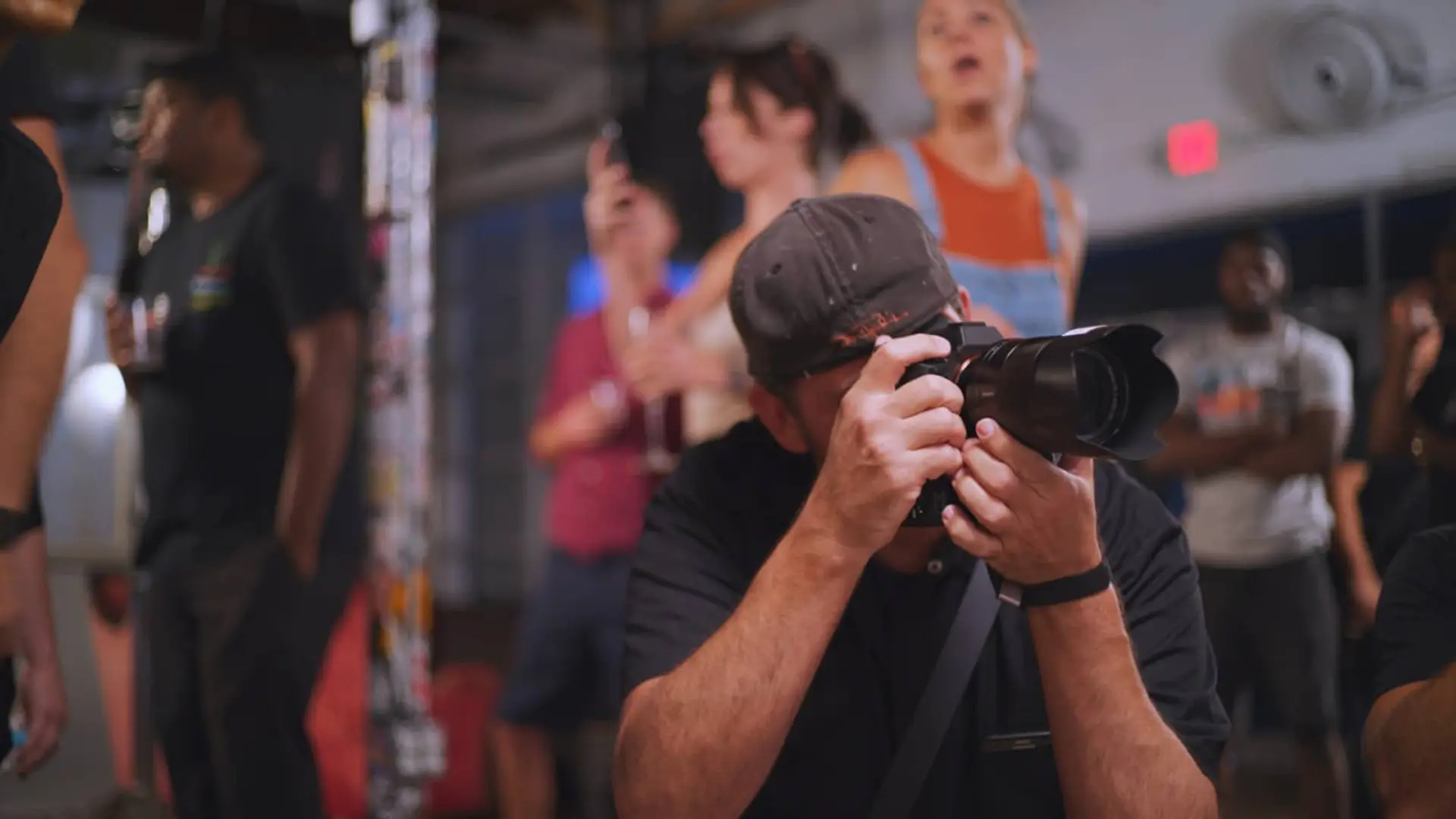
**How Much Does It Cost to Produce a TV Show in 2026?**
TV show production costs range from $100,000 per episode for a low-budget reality series to $30 million or more per episode for a premium scripted drama. Most reality shows budget between $100,000 and $500,000 per episode. Scripted network television averages $3 million to $10 million per episode. Prestige streaming series on platforms like Netflix and HBO can exceed $15 million per episode.
This guide breaks down what [TV production](https://c-istudios.com/film-and-tv-production/) actually costs across every format, what drives those budgets, and what it takes to get a show from concept to screen.
Want a real number for your own show? Upload your script for an instant budget estimate ↓
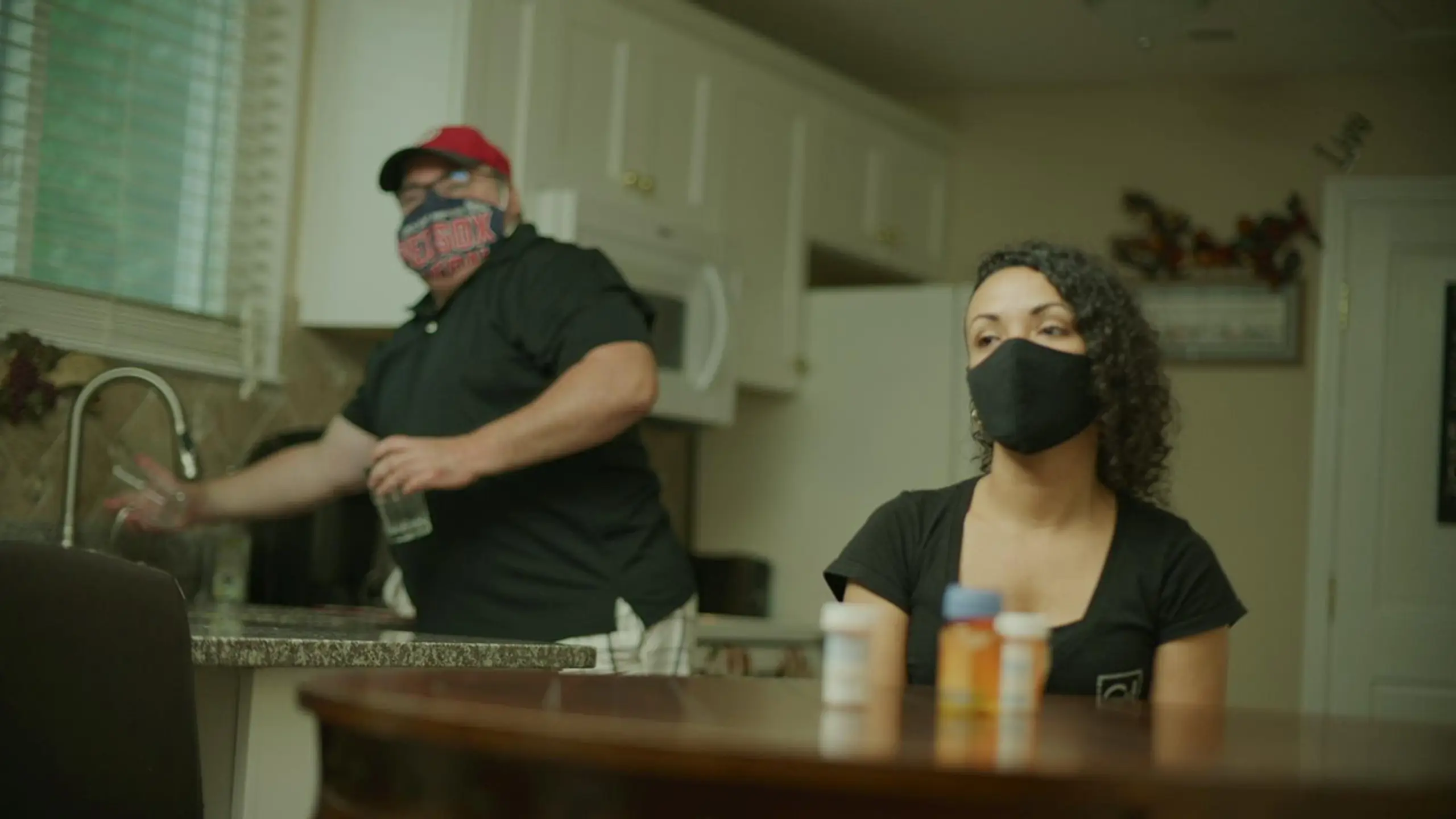
## TV Show Production Cost by Format
Show Format
Cost Per Episode
Season Budget (10 episodes)
Low-budget reality
$100,000 - $300,000
$1M - $3M
Mid-budget reality / competition
$300,000 - $1,000,000
$3M - $10M
High-budget reality (celebrity cast)
$1,000,000 - $3,000,000
$10M - $30M
Network scripted drama
$3,000,000 - $8,000,000
$30M - $80M
Premium streaming drama
$8,000,000 - $30,000,000+
$80M - $300M+
Documentary series
$50,000 - $500,000
$500K - $5M
Docuseries (premium)
$500,000 - $2,000,000
$5M - $20M
These ranges cover 2026 industry averages. Individual productions vary significantly based on the factors covered below.
## Reality TV Production Costs
Reality TV remains the most cost-effective format in television. Without scripted dialogue, union actors, or elaborate sets, reality shows operate at a fraction of scripted production budgets. According to industry data, unscripted shows range from under $100,000 per episode at the low end to around $500,000 at the higher end. Scripted shows, by comparison, average around $9 million per episode.
### Why Reality TV Costs Less
Several structural factors keep reality budgets lower than scripted programming. Smaller crews handle production with fewer specialized roles. Writers' rooms are either minimal or nonexistent. Talent costs are lower because reality casts are not SAG-AFTRA members in most cases. Sets are often real locations rather than custom builds. Many reality productions are nonunion, which further reduces labor costs.
These savings make reality TV attractive to networks as a lower-risk investment compared to scripted programming, where a single season can cost tens of millions before a single episode airs.
### What Drives Reality TV Budgets Up
Not all reality TV is inexpensive. The biggest cost variables include:
- **Scale of production.** A show filming in a single house with fixed cameras costs far less than one requiring travel to multiple countries with full mobile crews.
- **Celebrity talent.** Cast fees for established personalities can represent the single largest line item. Stars of established franchises now command fees that rival scripted talent.
- **Episode count.** A 24-episode season costs more than a 10-episode run, though per-episode costs may decrease with volume.
- **Location logistics.** Filming permits, travel, accommodation, and international production coordination all add cost quickly.
- **Post-production.** Reality shows generate enormous amounts of raw footage. Editing hundreds of hours down to 42-minute episodes requires large post-production teams working extended schedules.
### Real Examples. What Popular Reality Shows Cost
**Dancing with the Stars** reportedly costs upwards of $1 million per episode. The combination of celebrity talent fees, a live studio audience, elaborate set design, live music, professional choreographers, and multi-camera production drives costs well above typical reality budgets.
**The Bachelorette** budgets approximately $1 million to $2 million per episode for a full season, with travel and location costs representing a significant portion. A single season can run $8 million to $25 million depending on destinations and production scope.
**American Idol** at its peak cost approximately $2 million per episode, making it one of the most expensive reality shows in television history. Celebrity judge salaries alone accounted for a substantial portion of the budget.
**Low-budget reality** like "Intervention" and "Hoarders" operate in the $100,000 to $200,000 per episode range by using small documentary-style crews, real locations, and non-celebrity participants.
## Scripted Television Production Costs
Scripted TV operates on a fundamentally different budget scale. Writers' rooms, professional actors, custom sets, rehearsals, and complex post-production pipelines all contribute to per-episode costs that start in the millions.
### Network Television. $3 Million to $8 Million Per Episode
A standard network drama or comedy costs between $3 million and $8 million per episode to produce. This covers a writers' room of 8 to 15 writers, SAG-AFTRA cast including recurring and guest roles, multi-day shoots per episode with full union crews, standing sets plus periodic location shoots, and post-production including editing, sound mixing, color grading, and visual effects.
Network comedies typically land at the lower end of this range. Single-camera dramas with location shooting and effects work push toward the higher end.
### Premium Cable and Streaming. $8 Million to $30 Million+ Per Episode
The streaming wars have dramatically inflated production budgets for prestige television. Platforms like Netflix, HBO, Amazon, and Apple TV+ compete for audience attention with cinematic production values that rival feature films.
**Netflix** typically spends between $5 million and $15 million per episode for its marquee dramas. The final season of "Stranger Things" reportedly cost approximately $30 million per episode. "The Crown" averaged $13 million per episode across its run.
**HBO** spent approximately $20 million per episode on the later seasons of "Game of Thrones." "House of the Dragon" carries a similar per-episode budget.
**Amazon** invested approximately $58 million per episode for the first season of "The Rings of Power," making it one of the most expensive television productions in history.
These budgets include everything from location filming across multiple countries to extensive visual effects pipelines with hundreds of artists working for months in post-production.
## Documentary Production Costs
Documentary production spans one of the widest budget ranges in television. An independent documentary can be produced for $50,000 to $200,000, while a premium docuseries for a major streaming platform can exceed $1 million per episode.
### Independent Documentary. $50,000 to $200,000
A standard independent documentary typically involves a small crew of two to five people, location shooting over several weeks or months, interview-based storytelling, archival footage licensing, and a focused post-production process. This range covers most festival-circuit documentaries and many broadcast-ready projects.
### Broadcast Docuseries. $200,000 to $500,000 Per Episode
Network and cable docuseries require higher production values than independent projects. Expect professional cinematography, original music composition, graphics packages, and more polished post-production. Multi-episode series benefit from production efficiencies as the crew, style, and workflow are established early and maintained across the season.
### Premium Docuseries. $500,000 to $2 Million+ Per Episode
High-profile documentary series for streaming platforms command budgets that approach scripted television. Extensive archival research, international filming, celebrity narration, original scoring, and sophisticated visual effects all contribute to the higher cost. Series like Netflix's nature documentaries and HBO's investigative docuseries operate at this level.
## What Drives TV Production Budgets
Regardless of format, the same core factors determine where a production falls within its budget range.
### Talent and Cast
Talent fees represent the single most variable line item in any television budget. A reality show with unknown participants pays minimal cast fees. A late-night show with celebrity guests negotiates appearance fees. A scripted drama with A-list leads pays millions per episode in cast salaries alone. Union requirements (SAG-AFTRA, WGA, DGA) add mandatory minimums, residuals, and benefits contributions.
### Crew Size and Duration
A reality crew of 15 to 30 people filming over 4 to 8 weeks costs substantially less than a scripted crew of 100 to 200 people working 8 to 10 months. Overtime, weekend premiums, and location moves all multiply crew costs beyond base day rates.
### Locations and Sets
Studio-based shows benefit from predictable costs and controlled environments. Location-dependent shows face permits, travel, accommodation, security, and weather delays. Custom set construction for scripted shows can cost hundreds of thousands of dollars per standing set, with modification costs for each episode adding further expense.
### Post-Production
Post-production timelines vary dramatically by format. A reality episode with minimal effects might complete post in 2 to 3 weeks. A VFX-heavy scripted episode can require 4 to 6 months of post-production work across editing, visual effects, sound design, color grading, and scoring. The post-production budget for a single episode of a show like "The Mandalorian" can exceed the total production budget of an entire season of a reality show.
### Distribution and Platform
Where your show airs affects what it needs to cost. Broadcast networks require broadcast-standard technical specifications but have established advertising revenue models. Streaming platforms often demand higher production values because they compete on visual quality. Local and regional broadcasts operate at lower technical thresholds with correspondingly lower budgets.
## How Much Does It Cost to Make a Show on Netflix?
Netflix has become the benchmark for premium television production, and their budgets reflect that position. The platform's original programming spans an enormous range from reality formats costing a few hundred thousand per episode to prestige dramas exceeding $30 million per episode.
### Netflix Reality and Unscripted. $500,000 to $3 Million Per Episode
Netflix's reality slate includes competition shows, dating series, and lifestyle programming. Shows like "The Circle" and "Love Is Blind" operate at the lower end of this range with controlled environments and minimal location costs. More ambitious productions like "Squid Game: The Challenge" (the reality adaptation of the scripted hit) push into the multi-million dollar range with elaborate set builds, large contestant pools, and complex production logistics.
### Netflix Scripted Drama. $5 Million to $30 Million Per Episode
Netflix's scripted originals operate at feature-film budgets. A standard Netflix drama series runs $5 million to $10 million per episode for a first season, with budgets increasing in later seasons as cast salaries renegotiate upward. Breakout hits command premium budgets: "Stranger Things" reportedly reached $30 million per episode for its final season, driven by cast salaries, extensive VFX work, and multi-location international filming.
### Netflix Documentary. $200,000 to $2 Million Per Episode
Netflix's documentary programming ranges from investigative true crime series at the lower end to ambitious nature documentaries with multi-year filming schedules at the higher end. "Our Planet" and similar nature series require years of filming across dozens of countries with specialized camera equipment, resulting in per-episode costs that approach scripted television levels.
### Getting Your Show on Netflix
Netflix does not accept unsolicited pitches. The standard path is through a production company or agent with an existing relationship with the platform. A polished proof of concept, a clear audience thesis, and a production partner with a track record are the minimum requirements to get a pitch meeting. This is where working with an established production company provides a structural advantage over independent creators attempting to pitch directly.
## How Much Does It Cost to Produce a Commercial for TV?
Television commercials operate on a separate budget framework from episodic television, but the question frequently comes up alongside TV show production costs.
A regional TV commercial costs $12,000 to $35,000 to produce. A national broadcast commercial runs $50,000 to $500,000+ depending on talent, locations, and post-production complexity. Distribution costs (airtime) are separate: a single national spot averages approximately $115,000 to air, while a Super Bowl spot exceeds $7 million for 30 seconds.
For a detailed breakdown of commercial production costs across every budget tier, see our complete guide: [How Much Does Commercial Video Production Cost in 2026?](https://c-istudios.com/how-much-does-commercial-video-production-cost-in-2026/)
## How to Produce Your Own TV Show
Whether you are developing a reality concept, a docuseries, or a scripted pilot, every television project follows the same fundamental path from idea to screen.
### Start With a Strong Concept and Treatment
A TV show treatment is a written document that outlines your concept, target audience, format, episode structure, and unique angle. This is the document that networks, streaming platforms, and production partners use to evaluate whether your show is worth developing. A compelling treatment is specific, not generic. It answers why this show, why now, and why this audience.
### Develop a Proof of Concept or Pilot
Most buyers want to see footage before committing to a full season. A proof of concept (sometimes called a sizzle reel or presentation pilot) demonstrates the show's look, tone, and characters in 5 to 15 minutes. This is significantly less expensive than a full pilot episode and gives buyers enough to make a decision.
Proof of concept budgets typically range from $10,000 to $75,000 depending on production complexity. A reality sizzle reel with a small crew can be produced at the lower end. A scripted presentation pilot with actors, sets, and post-production pushes toward the higher end.
### Build the Right Production Team
Television production requires specialized expertise that differs from commercial or corporate video work. A showrunner manages the creative and logistical entirety of the production. Line producers manage day-to-day budgets and schedules. Experienced crew members who understand the pace and demands of episodic production keep shoots efficient and on budget.
### Secure Distribution
Distribution options have expanded beyond traditional broadcast networks. Streaming platforms, cable networks, digital-first channels, and even branded content series all represent viable paths to getting a show in front of audiences. The right distribution partner depends on your content, your audience, and your production budget.
## How C&I Studios Works With TV Production
C&I Studios has produced television content since 2006, including reality programming, documentary series, and branded television content for clients across every major industry. Our 30,000 square foot Los Angeles production facility provides the infrastructure for studio-based television production, and with offices in Fort Lauderdale and New York City, we facilitate productions in any location in the US and across the globe.
We work with creators and brands at every stage of the television development process. If you have a concept that needs a proof of concept or sizzle reel, we produce presentation materials designed to get buyers interested. If you have a green-lit series that needs production infrastructure, we bring the crew, equipment, and facilities to execute at the quality level your distribution partner expects.
Our client roster includes work for major networks and Fortune 500 brands including Nike, Coca-Cola, AT&T, NBC, and the NFL. That experience translates directly into television production: we understand broadcast standards, union requirements, multi-episode workflows, and the logistical demands of episodic content.
We scope every project individually based on creative objectives, format, episode count, and distribution goals. We are direct about budgets from the first conversation because television production is too expensive to build plans on unclear numbers.
## Start Your TV Project
Whether you are developing a reality concept, pitching a docuseries, or producing a branded television series, the first step is the same: a conversation about your concept, your audience, and your budget.
Reach out to the [C&I Studios production team](https://c-istudios.com/contact/) to start that conversation. We will give you an honest assessment of what your project needs, what it will cost, and the most efficient path from concept to screen.
Budgeting a production of your own? Our [video production services](https://c-istudios.com/video-production-services/) team scopes TV, commercial, and branded projects with flat per-project pricing — the fastest way to turn these numbers into a real plan.
## Work with C&I Studios
If you are planning a project like this, our team can take it from concept to final delivery. Explore our [film and TV production](https://c-istudios.com/film-and-tv-production/), browse [our work](https://c-istudios.com/our-work/) to see how we tell brand stories, and [get in touch](https://c-istudios.com/contact/) when you are ready to start.
Originally published January 25, 2024
---
*This content is from [C&I Studios](https://c-istudios.com), a full-service production company.*
---
# Analyzing the Success of Branded Content: Case Studies and Insights
> Published: January 24, 2024
> Categories: Commercial & Brand
> Source: https://c-istudios.com/analyzing-the-success-of-branded-content-case-studies-and-insights/
---
.cib{--paper:#1b1d1f;--ink:#fff;--body:#d5d7d9;--muted:#8b9096;--line:rgba(255,255,255,.12);--thumb:#2b2e31;--card:#212426;--accent:#c02b0a;--blue:#5B8FA8;--serif:'Playfair Display',Georgia,serif;--sans:'Poppins',-apple-system,sans-serif;--measure:900px;background:var(--paper);color:var(--body);font-family:var(--sans);line-height:1.6;position:relative;left:50%;transform:translateX(-50%);width:90vw;max-width:1920px}
.cib *{box-sizing:border-box}
.cib .kicker{max-width:var(--measure);margin:58px auto 0;padding:0 22px;font-size:12.5px;font-weight:700;letter-spacing:2.5px;text-transform:uppercase;color:var(--blue)}
.cib h1.cibh1{text-wrap:balance;font-family:var(--serif);font-weight:500;font-size:clamp(46px,6vw,72px);line-height:1.08;color:var(--ink);max-width:var(--measure);margin:18px auto 0;padding:0 22px;letter-spacing:-.5px}
.cib .metarow{max-width:var(--measure);margin:20px auto 0;padding:0 22px;color:var(--muted);font-size:14px}
.cib .hero{position:relative;width:100%;height:0;padding-bottom:56.25%;overflow:hidden;margin:48px auto 0;border-top:1px solid var(--line);border-bottom:1px solid var(--line)}
.cib .hero .ph{width:100%;aspect-ratio:16/9;background:var(--thumb);border-top:1px solid var(--line);border-bottom:1px solid var(--line);display:flex;align-items:center;justify-content:center;color:#7d8288;font-size:13px;text-align:center;padding:0 20px}
.cib .body{max-width:var(--measure);margin:12px auto 0;padding:52px 22px 6px}
.cib .body.lead p:first-child{font-size:23px;line-height:1.62;color:var(--ink)}
.cib .body p{font-size:18.5px;line-height:1.85;margin:0 0 30px;color:var(--body)}
.cib .body h2{text-wrap:balance;font-family:var(--serif);font-weight:500;font-size:clamp(32px,4vw,48px);line-height:1.22;color:var(--ink);margin:70px 0 20px;letter-spacing:-.3px}
.cib .body h3{text-wrap:balance;font-family:var(--sans);font-weight:600;font-size:22px;color:var(--ink);margin:38px 0 8px}
.cib .body a{color:var(--ink);text-decoration:underline;text-decoration-color:rgba(255,255,255,.4);text-underline-offset:3px}
.cib .body a:hover{text-decoration-color:var(--ink)}
.cib .ctable{width:100%;border-collapse:collapse;margin:16px 0 30px;font-size:16px}
.cib .ctable th{background:#000;color:#fff;text-align:left;padding:10px 12px;font-family:var(--sans)}
.cib .ctable td{padding:10px 12px;border-bottom:1px solid var(--line);color:var(--body)}
.cib .inimg{position:relative;width:100%;height:0;padding-bottom:56.25%;overflow:hidden;margin:72px auto;border-top:1px solid var(--line);border-bottom:1px solid var(--line)}
.cib .inimg .ph{width:100%;aspect-ratio:16/9;background:var(--thumb);border-top:1px solid var(--line);border-bottom:1px solid var(--line);display:flex;align-items:center;justify-content:center;color:#7d8288;font-size:13px}
.cib .origpub{max-width:var(--measure);margin:60px auto 0;padding:26px 22px 0;border-top:1px solid var(--line);color:var(--muted);font-size:13.5px}
.cib .related{max-width:1200px;margin:64px auto 0;padding:34px 22px 76px}
.cib .related h3{font-family:var(--sans);font-size:12.5px;letter-spacing:2px;text-transform:uppercase;color:var(--ink);margin:0 0 24px}
.cib .grid{display:grid;grid-template-columns:repeat(3,1fr);gap:28px}
.cib .rc{background:var(--card);border:1px solid var(--line);display:block;text-decoration:none;color:inherit;transition:border-color .15s}
.cib a.rc:hover{border-color:rgba(255,255,255,.5)}
.cib .rc .thumb{position:relative;width:100%;height:0;padding-bottom:56.25%;background:var(--thumb);overflow:hidden}
.cib .rc .thumb img{position:absolute!important;top:0!important;left:0!important;width:100%!important;height:100%!important;object-fit:cover!important;margin:0!important}
.cib .rc .cc{padding:14px 15px 17px}
.cib .rc .rt{font-family:var(--serif);font-weight:500;font-size:16px;line-height:1.3;color:var(--ink);margin:0 0 6px}
.cib .rc .rm{font-size:11px;letter-spacing:1px;text-transform:uppercase;color:var(--muted)}
.cib img{margin:0!important;padding:0!important;display:block!important;vertical-align:top;max-width:100%}
.cib .hero img,.cib .inimg img{position:absolute!important;top:0!important;left:0!important;width:100%!important;height:100%!important;object-fit:cover!important;margin:0!important;padding:0!important;border:0!important;display:block!important;aspect-ratio:auto!important}
.cib .hero+.body{padding-top:36px}
@media(max-width:760px){.cib .grid{grid-template-columns:1fr}.cib .body h2{margin:52px 0 16px}.cib .body p{font-size:17.5px}.cib .inimg,.cib .hero{margin-top:44px}}
.cib .vembed{max-width:var(--measure);margin:44px auto;padding:0 22px}.cib .vembed .vwrap{position:relative;width:100%;height:0;padding-bottom:56.25%}.cib .vembed .vwrap iframe{position:absolute;top:0;left:0;width:100%;height:100%;border:0}
Commercial & Brand
# Analyzing the Success of Branded Content. Case Studies and Insights
5 min read

- 12/08/20
The success of branded content can be analyzed through various case studies and insights. Several examples demonstrate the positive impact of branded [content strategies](https://c-istudios.com/creative-marketing-services/) on different businesses and industries. For instance, Dove's "Real Beauty" campaign, Apple TV+'s content marketing strategies, and Glossier's influencer marketing approach are all notable case studies that showcase the effectiveness of branded content.
These examples highlight the many ways in which branded content can drive brand awareness, engagement, sales, and even societal impact. By reviewing these case studies, one can gain valuable insights into the elements and strategies that contribute to the success of branded content campaigns.
## Branded content and how it's used in marketing
Branded content is a specific type of content marketing media created by a brand to promote its products or services. It differs from traditional advertising by focusing on conveying the company's values and ideas in a way that inspires emotion and avoids pushy sales tactics. Branded content aims to make consumers feel like they are not being sold to, leading to increased sharing and interaction with the content. It often takes the form of articles, videos, infographics, and social media posts, and can include product placements and storytelling to connect with consumers on an emotional level.
Unlike conventional advertising, branded content seeks to provide added value to the audience in the form of entertainment or useful information. It is an ongoing investment in a brand's visibility and can be distributed through various channels and mediums to reach a wider audience.
Branded content is used in marketing to build brand awareness, engage with consumers on a more intimate level, and ultimately drive sales. It is an effective way for brands to stand out in a saturated market and combat consumer ad fatigue. By creating content that users actually want to consume, branded content can earn the attention and trust of consumers, leading to a more positive brand perception and, ultimately, increased sales.
## Specific case studies and examples that illustrate the effectiveness of branded content strategies
Some specific case studies and [examples](https://c-istudios.com/our-work/) that illustrate the effectiveness of branded content strategies include:
1. Dove: Known for its "Real Beauty" campaign, which focused on promoting body positivity and self-esteem.
2. Red Bull: Notable for its extreme sports and adventure-related content, such as the "Stratos" skydiving project.
3. LEGO: The success of "The LEGO Movie" as a branded content initiative.
4. Coca-Cola: The #ShareaCoke campaign, which personalized the product and encouraged social sharing.
5. Glossier: Utilized influencer marketing to effectively promote its beauty products.
These examples demonstrate how branded content can drive engagement, brand awareness, and even societal impact.
## Key takeaways from the Dove branded content campaign
The Dove branded content campaign is a notable example of effective marketing strategy, with several key takeaways:
1. Emphasis on Real Beauty: Dove's "Real Beauty" campaign focused on promoting self-esteem and positive body image, aiming to challenge traditional beauty standards and empower women.
1. Long-Term Commitment: The campaign was not a short-term initiative but rather an ongoing journey that started in 2004, demonstrating Dove's dedication to promoting women's self-esteem and changing societal views on beauty.
1. Brand Identity and Emotional Connection: Dove's marketing efforts have helped the brand build a strong emotional connection with its target audience, establishing a positive brand image and appealing to a wider demographic.
1. Innovative and Courageous Digital Marketing: Dove's digital marketing campaigns have been clever, insightful, and ground-breaking, reflecting the brand's commitment to self-esteem and self-acceptance.
1. Value-Driven Content: The campaign provided added value to the audience by promoting self-esteem and reflecting on beauty standards, aligning with Dove's core brand values of self-love, empowerment, and beauty.
These takeaways highlight the success of Dove's branded content campaign in creating a positive brand identity, fostering emotional connections, and promoting societal values, ultimately contributing to the brand's long-term success.
## How Dove measured the success of their branded content campaign
Dove measured the success of their branded content campaign through various metrics and indicators, including:
1. Brand Recognition and Value: Dove built a brand valued at 5.1 billion USD, indicating the success of its branding efforts.
1. Word of Mouth and Buzz: The campaign generated significant word of mouth, with people discussing its campaigns everywhere, leading to free marketing coverage valued at 150 million USD and increased brand awareness.
1. Impact on Profits: The campaign's impact on Dove's profits was evaluated, with a focus on its believability in the cause and its effect on sales.
1. Sales Growth: Sales for Dove jumped from $2.5 to $4 billion in the first ten years of the Real Beauty campaign, indicating a significant increase in sales.
1. Emotional Connection and Customer Insights: Dove's campaigns helped the brand build a strong emotional connection with its target audience and demonstrated an acute understanding of customer insights.
These measures reflect the campaign's success in building brand recognition, driving sales, and fostering emotional connections with consumers.
## Examples of food and beverage brands that have successfully used branded content to promote their products
Some examples of food and beverage brands that have successfully used branded content to promote their products include:
1. Coca-Cola: The #ShareaCoke campaign, which personalized the product and encouraged social sharing.
1. Red Bull: Known for its extreme sports and adventure-related content, such as the "Stratos" skydiving project.
These examples demonstrate how branded content has been effectively used by various food and beverage brands to engage consumers and drive brand awareness and sales. Additionally, food brands have leveraged [social media](https://c-istudios.com/social-media-marketing-services/) video marketing to drive engagement and increase brand awareness, with strategies such as influencer partnerships, product demonstrations, and contests.
Furthermore, TikTok has emerged as a platform for food and beverage brands to go viral with creative campaigns and influencer strategies, allowing them to capitalize on surges of audience attention and foster real-time consumer interaction.
## How successful branded content campaigns in the food and beverage industry resonated with their audience
The successful branded content campaigns in the food and beverage industry resonated with their audience by engaging the senses through content, weaving narratives that brought to life the aromas, textures, and flavors, offering a virtual taste that led to real experiences.
These campaigns also focused on developing unique and engaging stories that resonated with the target audience, effectively capturing the heart and creating an unforgetting echo that called the consumer back, time and again. Additionally, the campaigns leveraged immersive storytelling, interactive social media techniques, and capitalized on annual trends, ultimately crafting experiences that went beyond simply selling products.
By understanding consumer preferences, employing innovative content creation, and showcasing products while telling stories, these campaigns successfully built a narrative that not only promoted a product but also weaved it into the consumer's identity.
## Examples of successful branded content campaigns in the fashion industry
Some specific examples of successful branded content campaigns in the fashion industry include:
1. ASOS Luxury Online Shopping Experience: ASOS promoted a luxury online shopping experience on all its platforms, impressing users on social media with its creative work and campaign execution.
1. L'Oréal's Makeup and Personal Care Videos: L'Oréal often shares videos about makeup or personal care looks with its clients, engaging its audience with valuable content.
1. Fashion Nova's Use of Influencers and Videos: Fashion Nova has effectively used influencer partnerships and videos to drive engagement and increase brand awareness, leading to viral success on social media.
These examples demonstrate how fashion brands have utilized various content marketing strategies, influencer collaborations, and user-generated content to create authentic and engaging branded content campaigns that resonate with their audience and drive brand awareness and sales.
## Examples of branded content campaigns in the fashion industry
Some specific examples of branded content campaigns in the fashion industry include:
1. Fashion Blogging and Social Media Posts: Many clothing brands have utilized fashion blogging, creating unique campaigns for new releases, and generating posts and/or videos for social media to engage their audience and promote their products.
1. Product-Centric Videos: In the fashion and beauty industry, more brands are creating videos with the use of products or pieces to showcase their offerings and create engaging content for their audience.
1. Influencer Collaborations and User-Generated Content: Clothing brands have leveraged influencer partnerships and user-generated content to create authentic and relatable content that resonates with their target audience.
1. Interactive Online Shopping Experiences: Brands are increasingly focusing on creating interactive online shopping experiences, going beyond traditional e-commerce to provide a more engaging and immersive journey for their customers.
1. Content Marketing Campaigns: Content marketing fashion campaigns focus on creating and distributing relevant and consistent content such as blog posts, videos, podcasts, whitepapers, and case studies, among others, to engage their audience and drive brand awareness.
These examples demonstrate the unique and innovative approaches that clothing brands have taken to create engaging branded content campaigns in the fashion industry.
## How Apple TV+ used branded content to promote their streaming service
Apple TV+ has utilized branded content and various marketing strategies to promote its streaming service. The company has created its own marketing machine by leveraging its streaming content with product placements and investing significant amounts of money in producing high-quality original shows.
Additionally, Apple has engaged in traditional advertising methods, such as placing ads for Apple TV+ on various websites and in prominent physical locations like Times Square. Furthermore, the Apple TV app has been used to promote the company's own paid content, particularly the Apple TV+ service, to its users.
These efforts demonstrate Apple's multifaceted approach to promoting its streaming service through a combination of branded content, traditional advertising, and in-app promotion.
## Common elements of successful branded content
Some common elements of successful branded content include:
1. Storytelling and Genuine Content: Successful branded content often involves storytelling and genuine content that resonates with the audience, establishing authenticity and building lasting relationships.
1. Influencer Collaborations and User-Generated Content: Leveraging influencer partnerships and user-generated content to create authentic and relatable content that resonates with the target audience.
1. Interactive Online Shopping Experiences: Creating interactive online shopping experiences to provide a more engaging and immersive journey for customers, going beyond traditional e-commerce.
1. Consistency: Focused, consistent branding makes it clear to customers what they can expect from a brand, which is essential for building trust and loyalty.
1. Community Engagement: Engaging with the community through various content formats such as how-to blogs, videos, webinars, infographics, and eBooks, which helps in building engagement with customers and framing how they can use what a brand offers to fulfill their needs.
1. Content is Consistency: Consistent content builds a reliable brand image, which is essential for building trust and loyalty.
These elements are crucial for creating successful branded content that engages the audience, drives brand awareness, and ultimately increases sales and revenue.
## Challenges businesses face when creating branded content
Some of the challenges businesses face when creating branded content include:
1. Producing High-Quality Content: Ensuring that the content is of high quality and engages the audience effectively.
1. Generating Content Consistently: Maintaining a consistent schedule for content creation, which can be a significant challenge for many businesses.
1. Maintaining Brand Voice and Identity: Consistently maintaining the brand's voice and identity, especially as brands expand their in-house teams and outsource.
1. Measuring Content ROI: Determining the return on investment for content marketing efforts can be a challenge for businesses.
1. Creating Relevant and Engaging Content: Developing content that is relevant and engaging for the target audience, particularly in the B2B context.
These challenges highlight the complexities involved in creating effective branded content, from maintaining consistency to measuring its impact on the business.
## Work with C&I Studios
If you are planning a project like this, our team can take it from concept to final delivery. Explore our [video production services](https://c-istudios.com/video-production-services/), browse [our work](https://c-istudios.com/our-work/) to see how we tell brand stories, and [get in touch](https://c-istudios.com/contact/) when you are ready to start.
Originally published January 24, 2024
---
*This content is from [C&I Studios](https://c-istudios.com), a full-service production company.*
---
# Exploring Virtual Reality Documentaries: Immersive Experiences for Audiences
> Published: January 23, 2024
> Categories: Film & TV
> Source: https://c-istudios.com/exploring-virtual-reality-documentaries-immersive-experiences-for-audiences/
---
.cib{--paper:#1b1d1f;--ink:#fff;--body:#d5d7d9;--muted:#8b9096;--line:rgba(255,255,255,.12);--thumb:#2b2e31;--card:#212426;--accent:#c02b0a;--blue:#5B8FA8;--serif:'Playfair Display',Georgia,serif;--sans:'Poppins',-apple-system,sans-serif;--measure:900px;background:var(--paper);color:var(--body);font-family:var(--sans);line-height:1.6;position:relative;left:50%;transform:translateX(-50%);width:90vw;max-width:1920px}
.cib *{box-sizing:border-box}
.cib .kicker{max-width:var(--measure);margin:58px auto 0;padding:0 22px;font-size:12.5px;font-weight:700;letter-spacing:2.5px;text-transform:uppercase;color:var(--blue)}
.cib h1.cibh1{text-wrap:balance;font-family:var(--serif);font-weight:500;font-size:clamp(46px,6vw,72px);line-height:1.08;color:var(--ink);max-width:var(--measure);margin:18px auto 0;padding:0 22px;letter-spacing:-.5px}
.cib .metarow{max-width:var(--measure);margin:20px auto 0;padding:0 22px;color:var(--muted);font-size:14px}
.cib .hero{position:relative;width:100%;height:0;padding-bottom:56.25%;overflow:hidden;margin:48px auto 0;border-top:1px solid var(--line);border-bottom:1px solid var(--line)}
.cib .hero .ph{width:100%;aspect-ratio:16/9;background:var(--thumb);border-top:1px solid var(--line);border-bottom:1px solid var(--line);display:flex;align-items:center;justify-content:center;color:#7d8288;font-size:13px;text-align:center;padding:0 20px}
.cib .body{max-width:var(--measure);margin:12px auto 0;padding:52px 22px 6px}
.cib .body.lead p:first-child{font-size:23px;line-height:1.62;color:var(--ink)}
.cib .body p{font-size:18.5px;line-height:1.85;margin:0 0 30px;color:var(--body)}
.cib .body h2{text-wrap:balance;font-family:var(--serif);font-weight:500;font-size:clamp(32px,4vw,48px);line-height:1.22;color:var(--ink);margin:70px 0 20px;letter-spacing:-.3px}
.cib .body h3{text-wrap:balance;font-family:var(--sans);font-weight:600;font-size:22px;color:var(--ink);margin:38px 0 8px}
.cib .body a{color:var(--ink);text-decoration:underline;text-decoration-color:rgba(255,255,255,.4);text-underline-offset:3px}
.cib .body a:hover{text-decoration-color:var(--ink)}
.cib .ctable{width:100%;border-collapse:collapse;margin:16px 0 30px;font-size:16px}
.cib .ctable th{background:#000;color:#fff;text-align:left;padding:10px 12px;font-family:var(--sans)}
.cib .ctable td{padding:10px 12px;border-bottom:1px solid var(--line);color:var(--body)}
.cib .inimg{position:relative;width:100%;height:0;padding-bottom:56.25%;overflow:hidden;margin:72px auto;border-top:1px solid var(--line);border-bottom:1px solid var(--line)}
.cib .inimg .ph{width:100%;aspect-ratio:16/9;background:var(--thumb);border-top:1px solid var(--line);border-bottom:1px solid var(--line);display:flex;align-items:center;justify-content:center;color:#7d8288;font-size:13px}
.cib .origpub{max-width:var(--measure);margin:60px auto 0;padding:26px 22px 0;border-top:1px solid var(--line);color:var(--muted);font-size:13.5px}
.cib .related{max-width:1200px;margin:64px auto 0;padding:34px 22px 76px}
.cib .related h3{font-family:var(--sans);font-size:12.5px;letter-spacing:2px;text-transform:uppercase;color:var(--ink);margin:0 0 24px}
.cib .grid{display:grid;grid-template-columns:repeat(3,1fr);gap:28px}
.cib .rc{background:var(--card);border:1px solid var(--line);display:block;text-decoration:none;color:inherit;transition:border-color .15s}
.cib a.rc:hover{border-color:rgba(255,255,255,.5)}
.cib .rc .thumb{position:relative;width:100%;height:0;padding-bottom:56.25%;background:var(--thumb);overflow:hidden}
.cib .rc .thumb img{position:absolute!important;top:0!important;left:0!important;width:100%!important;height:100%!important;object-fit:cover!important;margin:0!important}
.cib .rc .cc{padding:14px 15px 17px}
.cib .rc .rt{font-family:var(--serif);font-weight:500;font-size:16px;line-height:1.3;color:var(--ink);margin:0 0 6px}
.cib .rc .rm{font-size:11px;letter-spacing:1px;text-transform:uppercase;color:var(--muted)}
.cib img{margin:0!important;padding:0!important;display:block!important;vertical-align:top;max-width:100%}
.cib .hero img,.cib .inimg img{position:absolute!important;top:0!important;left:0!important;width:100%!important;height:100%!important;object-fit:cover!important;margin:0!important;padding:0!important;border:0!important;display:block!important;aspect-ratio:auto!important}
.cib .hero+.body{padding-top:36px}
@media(max-width:760px){.cib .grid{grid-template-columns:1fr}.cib .body h2{margin:52px 0 16px}.cib .body p{font-size:17.5px}.cib .inimg,.cib .hero{margin-top:44px}}
.cib .vembed{max-width:var(--measure);margin:44px auto;padding:0 22px}.cib .vembed .vwrap{position:relative;width:100%;height:0;padding-bottom:56.25%}.cib .vembed .vwrap iframe{position:absolute;top:0;left:0;width:100%;height:100%;border:0}
Film & TV
# Exploring Virtual Reality Documentaries. Immersive Experiences for Audiences
7 min read

- 12/08/20
Virtual reality (VR) [documentaries](https://c-istudios.com/documentary-film-production/) offer immersive experiences that allow audiences to explore extraordinary life stories, locations, and themes. These documentaries use innovative 3D filming techniques to provide a powerful and unique perspective, connecting viewers with the subject matter in a way that traditional 2D media cannot. VR documentaries are available on various platforms such as Meta Quest TV, Pico Video, and Apple Vision Pro, and they are designed to be viewed using immersive headsets like the Meta Quest 3, Pico G3 VR, and PSVR 2.
The development of VR documentaries is also the subject of research projects, such as "Virtual Realities - Immersive Documentary Encounters," which is funded by the UK EPSRC. These VR documentaries offer audiences a new way to engage with non-fiction storytelling, providing a truly immersive and captivating viewing experience.
## How virtual reality documentaries differ from traditional documentaries
From the perspective of content, virtual reality (VR) documentaries do not significantly differ from traditional documentaries. However, the way they are experienced and the techniques used to convey the narrative distinguish them from traditional documentaries.
VR documentaries offer an all-encompassing live reenactment of witnessing, providing a powerful sense of "being there" within a scene, which is not achievable through traditional documentaries. The 360-degree immersion in VR means the absence of certain cinematic techniques such as specific types of shots, camera movement, and montage, as the audience can "see it all" without the need for traditional scene transitions. This challenges the narrative coherence and spatial storytelling in VR documentaries.
Additionally, VR documentaries can incorporate interactive elements, 3D modeling, and game mechanics, blurring the lines between video games and film. Therefore, while the content may be similar, the way it is presented and experienced sets VR documentaries apart from traditional ones.
## Benefits of watching virtual reality documentaries
The benefits of watching virtual reality (VR) documentaries are significant. VR allows viewers to experience a situation from a first-person perspective, creating a powerful and emotional connection with the story. It also provides a level of immersion that is not possible with traditional media, making the experience more impactful and memorable.
Additionally, VR documentaries can transport viewers to real-world locations and events, providing a more visceral and impactful understanding of the subject. Furthermore, VR offers immersive learning experiences that enhance comprehension and retention, realistic simulations for skill development, and increased engagement, making it a valuable tool for education, training, and experiential learning in various fields.
Overall, the benefits of VR documentaries include creating emotional connections, promoting empathy, and providing a more engaging and immersive viewing experience compared to traditional media.
## Examples of successful virtual reality documentaries
Some successful examples of virtual reality (VR) documentaries include:
1. "Behind the Dish": This series follows female chefs revolutionizing the food industry and has been well-received for its immersive storytelling.
1. "Immersive.World": A 10-episode television series that explores interactive storytelling and experiential art, including virtual reality experiences.
1. BBC's Virtual Reality Documentary: The BBC announced its first major virtual reality project, demonstrating the growing interest in VR documentaries by established media organizations.
These examples showcase the diverse and engaging content available in the realm of VR documentaries, highlighting the potential of this medium for immersive storytelling and experiential learning.
## How virtual reality documentaries use immersion to enhance storytelling
Virtual reality (VR) documentaries use immersion to enhance [storytelling](https://c-istudios.com/creative-marketing-services/) by providing a powerful sense of "being there" within a scene, which is not achievable through traditional documentaries. The 360-degree immersion in VR eliminates certain cinematic techniques, such as specific types of shots, camera movement, and montage, as the audience can "see it all" without the need for traditional scene transitions. This immersive experience creates a powerful and emotional connection with the story, making the experience more impactful and memorable.
Additionally, VR documentaries can transport viewers to real-world locations and events, providing a more visceral and impactful understanding of the subject. The use of innovative interactive technologies in VR documentaries can revolutionize the viewing experience, making the audience feel perfectly synchronized with the cinematic space and forget the real world, thus creating an illusion that allows users to enter the space they used to watch on screen.
Therefore, the concept of reality in this space is subverted, offering a new generation of illusion - a powerful sense of being there within a scene. These elements collectively contribute to the unique and compelling nature of VR documentary storytelling.
## How virtual reality documentaries use storytelling to create a sense of presence
Virtual reality (VR) documentaries use storytelling to create a sense of presence by offering an all-encompassing live reenactment of witnessing, providing an immediate sense of presence when non-fictional stories unfold. The 360-degree immersion in VR eliminates traditional cinematic techniques, such as specific types of shots, camera movement, and montage, making it nearly impossible to transition to a new scene. This panoramic spatial switch and narrative coherence are central to making the audience believe that the events on screen are happening or have happened, projecting the lived world and binding the story to reality.
Therefore, VR documentaries leverage storytelling to immerse the audience in a way that traditional media cannot, creating a powerful and immediate sense of presence within the non-fictional space.
## Techniques used in virtual reality documentaries to enhance storytelling
Virtual reality (VR) documentaries use various techniques to enhance the storytelling experience, ultimately creating a powerful sense of presence for the audience. Some of these techniques include:
1. Spatial Storytelling: VR documentaries leverage spatial storytelling within virtual environments to contribute to the work of documentary for witnessing "the real" compared with traditional documentary forms.
1. Spatial Audio: The use of spatial [audio](https://c-istudios.com/audio-engineering-services/) and 3D sound technologies immerses viewers in real-world scenarios, enhancing the illusion of presence and spatial immersion.
1. 360-Degree Perspectives: By offering novel forms of witnessing enabled by 360-degree perspectives, VR documentaries provide a powerful sense of "being there" within a scene, contributing to the feeling of presence and immersion.
1. Dialogue and Voice: The use of dialogue and voice inside the VR environment creates an intimate approach, enhancing the sense of presence and immersion for the audience.
These techniques collectively contribute to the unique and impactful nature of storytelling in VR documentaries, allowing for a heightened sense of presence and immersion for the audience.
## How virtual reality documentaries use sound design to enhance the viewing experience
Virtual reality (VR) documentaries use sound design to enhance the viewing experience by creating aural authenticity and a sense of reality within the virtual environment. The use of 3D audio and spatial sound technologies can immerse users in real-world scenarios, enhancing the illusion of presence and spatial immersion.
Sound design in VR documentaries is essential for creating a seamless and immersive experience, as it helps in making the audience feel perfectly synchronized with the cinematic space and forget the real world, thus subverting the concept of reality in this space. Therefore, the careful integration of sound elements plays a crucial role in enhancing the overall immersive and impactful nature of VR documentary storytelling.
## Specific sound design techniques used in virtual reality documentaries
Virtual reality (VR) documentaries use various sound design techniques to enhance the viewing experience. Some specific techniques include:
1. 3D Audio and Spatial Sound: VR documentaries utilize 3D audio and spatial sound technologies to immerse users in real-world scenarios, enhancing the illusion of presence and spatial immersion.
1. Aural Authenticity: Researchers at the University of York have proposed a new sound strategy for VR environments based on how people receive images and sounds in the real world, aiming to create an authentic audio experience that mirrors everyday interactions.
1. Indirect Control and Storytelling: Sound is used to guide the audience to certain expected actions without direct instructions, enhancing the storytelling experience through indirect control.
1. Object-Based Sound Design: The audio environment in VR is built around objects that produce sound, mirroring how people experience sound in real time, thus creating a more unified, natural, and authentic experience.
These techniques collectively contribute to the immersive and impactful nature of sound design in VR documentaries, enhancing the overall viewing experience for audiences.
## How virtual reality documentaries use dialogue to enhance the storytelling experience
Virtual reality (VR) documentaries use dialogue to enhance the storytelling experience by leveraging the power of spoken words as an immersive storytelling tool. In VR documentaries, dialogue is used to create an intimate approach, known as "voice inside," where the words the audience hears are meant to sound like they are coming from within the virtual environment, thus enhancing the sense of presence and immersion.
Additionally, the use of dialogue in VR documentaries contributes to the creation of an illusion that allows users to feel perfectly synchronized with the cinematic space, thus subverting the concept of reality in this space.
Therefore, dialogue in VR documentaries plays a crucial role in creating a more intimate and immersive storytelling experience for the audience.
## How virtual reality documentaries use 360-degree video to enhance the storytelling experience
Virtual reality (VR) documentaries use 360-degree video to enhance the storytelling experience by providing an immersive "teleporter" that virtually transports viewers firsthand into new places and experiences. This form of video creates a fully immersive experience, allowing audiences to live rather than just see unique experiences, such as travel or product demonstrations. The lack of movement and editing between scenes in 360-degree video makes it harder to inject bias into the story, and it can be more engaging and memorable than regular video, inspiring empathy in viewers.
Additionally, 360-degree video and binaural sound create a sensory and emotional journey for viewers, contributing to a heightened sense of presence and immersion. Therefore, the use of 360-degree video in VR documentaries offers a unique and impactful way to engage audiences and create immersive storytelling experiences.
## Challenges of creating virtual reality documentaries
Creating virtual reality (VR) documentaries presents several challenges, including technical, creative, and experiential aspects. Some of the key challenges include:
1. Technical Complexity: Developing VR content involves technical challenges such as 3D scanning, photogrammetry, and interactive 3D, which require specialized skills and tools.
1. User Experience Design: Designing a viable VR user experience (UX) involves overcoming challenges related to comfort, minimizing VR sickness, and creating immersive experiences that reduce user discomfort.
1. Creative Blocks: VR content creators may encounter creative blocks that hinder the development of VR experiences, requiring innovative solutions to overcome these obstacles.
1. Illusion of Presence: VR documentaries aim to create a powerful sense of "being there" within a scene, requiring careful consideration of spatial storytelling and the feeling of presence to engage audiences effectively.
1. Ethical and Emotional Impact: The use of VR in documentary storytelling raises ethical concerns and requires a nuanced understanding of its potential impact on viewers' emotional responses and empathy.
Addressing these challenges is essential for the successful creation of compelling and ethically responsible VR documentaries that effectively engage and immerse audiences.
## How virtual reality documentaries impact viewers' emotional responses
The impact of virtual reality (VR) documentaries on viewers' emotional responses is a topic of ongoing research and discussion. While some proponents have suggested that VR can enhance empathy and emotional engagement through immersive experiences, there are also critical perspectives that highlight potential perils and ethical concerns associated with the use of VR in eliciting empathetic responses.
The use of VR in documentary storytelling has been associated with the potential to create emotionally immersive experiences, offering a three-dimensional and immersive approach to storytelling. However, it has also been noted that VR mechanisms may not universally enhance the understanding of another person's feelings and can be influenced by social, cultural, and physical biases, as well as technical configurations.
Therefore, the impact of VR documentaries on viewers' emotional responses is a complex and multifaceted subject that continues to be explored through interdisciplinary research and critical analysis.
## Work with C&I Studios
If you are planning a project like this, our team can take it from concept to final delivery. Explore our [film and TV production](https://c-istudios.com/film-and-tv-production/), browse [our work](https://c-istudios.com/our-work/) to see how we tell brand stories, and [get in touch](https://c-istudios.com/contact/) when you are ready to start.
Originally published January 23, 2024
---
*This content is from [C&I Studios](https://c-istudios.com), a full-service production company.*
---
# Sustainable Filmmaking Practices: Green Solutions for Production
> Published: January 23, 2024
> Categories: Film & TV
> Source: https://c-istudios.com/sustainable-filmmaking-practices-green-solutions-for-production/
---
.cib{--paper:#1b1d1f;--ink:#fff;--body:#d5d7d9;--muted:#8b9096;--line:rgba(255,255,255,.12);--thumb:#2b2e31;--card:#212426;--accent:#c02b0a;--blue:#5B8FA8;--serif:'Playfair Display',Georgia,serif;--sans:'Poppins',-apple-system,sans-serif;--measure:900px;background:var(--paper);color:var(--body);font-family:var(--sans);line-height:1.6;position:relative;left:50%;transform:translateX(-50%);width:90vw;max-width:1920px}
.cib *{box-sizing:border-box}
.cib .kicker{max-width:var(--measure);margin:58px auto 0;padding:0 22px;font-size:12.5px;font-weight:700;letter-spacing:2.5px;text-transform:uppercase;color:var(--blue)}
.cib h1.cibh1{text-wrap:balance;font-family:var(--serif);font-weight:500;font-size:clamp(46px,6vw,72px);line-height:1.08;color:var(--ink);max-width:var(--measure);margin:18px auto 0;padding:0 22px;letter-spacing:-.5px}
.cib .metarow{max-width:var(--measure);margin:20px auto 0;padding:0 22px;color:var(--muted);font-size:14px}
.cib .hero{position:relative;width:100%;height:0;padding-bottom:56.25%;overflow:hidden;margin:48px auto 0;border-top:1px solid var(--line);border-bottom:1px solid var(--line)}
.cib .hero .ph{width:100%;aspect-ratio:16/9;background:var(--thumb);border-top:1px solid var(--line);border-bottom:1px solid var(--line);display:flex;align-items:center;justify-content:center;color:#7d8288;font-size:13px;text-align:center;padding:0 20px}
.cib .body{max-width:var(--measure);margin:12px auto 0;padding:52px 22px 6px}
.cib .body.lead p:first-child{font-size:23px;line-height:1.62;color:var(--ink)}
.cib .body p{font-size:18.5px;line-height:1.85;margin:0 0 30px;color:var(--body)}
.cib .body h2{text-wrap:balance;font-family:var(--serif);font-weight:500;font-size:clamp(32px,4vw,48px);line-height:1.22;color:var(--ink);margin:70px 0 20px;letter-spacing:-.3px}
.cib .body h3{text-wrap:balance;font-family:var(--sans);font-weight:600;font-size:22px;color:var(--ink);margin:38px 0 8px}
.cib .body a{color:var(--ink);text-decoration:underline;text-decoration-color:rgba(255,255,255,.4);text-underline-offset:3px}
.cib .body a:hover{text-decoration-color:var(--ink)}
.cib .ctable{width:100%;border-collapse:collapse;margin:16px 0 30px;font-size:16px}
.cib .ctable th{background:#000;color:#fff;text-align:left;padding:10px 12px;font-family:var(--sans)}
.cib .ctable td{padding:10px 12px;border-bottom:1px solid var(--line);color:var(--body)}
.cib .inimg{position:relative;width:100%;height:0;padding-bottom:56.25%;overflow:hidden;margin:72px auto;border-top:1px solid var(--line);border-bottom:1px solid var(--line)}
.cib .inimg .ph{width:100%;aspect-ratio:16/9;background:var(--thumb);border-top:1px solid var(--line);border-bottom:1px solid var(--line);display:flex;align-items:center;justify-content:center;color:#7d8288;font-size:13px}
.cib .origpub{max-width:var(--measure);margin:60px auto 0;padding:26px 22px 0;border-top:1px solid var(--line);color:var(--muted);font-size:13.5px}
.cib .related{max-width:1200px;margin:64px auto 0;padding:34px 22px 76px}
.cib .related h3{font-family:var(--sans);font-size:12.5px;letter-spacing:2px;text-transform:uppercase;color:var(--ink);margin:0 0 24px}
.cib .grid{display:grid;grid-template-columns:repeat(3,1fr);gap:28px}
.cib .rc{background:var(--card);border:1px solid var(--line);display:block;text-decoration:none;color:inherit;transition:border-color .15s}
.cib a.rc:hover{border-color:rgba(255,255,255,.5)}
.cib .rc .thumb{position:relative;width:100%;height:0;padding-bottom:56.25%;background:var(--thumb);overflow:hidden}
.cib .rc .thumb img{position:absolute!important;top:0!important;left:0!important;width:100%!important;height:100%!important;object-fit:cover!important;margin:0!important}
.cib .rc .cc{padding:14px 15px 17px}
.cib .rc .rt{font-family:var(--serif);font-weight:500;font-size:16px;line-height:1.3;color:var(--ink);margin:0 0 6px}
.cib .rc .rm{font-size:11px;letter-spacing:1px;text-transform:uppercase;color:var(--muted)}
.cib img{margin:0!important;padding:0!important;display:block!important;vertical-align:top;max-width:100%}
.cib .hero img,.cib .inimg img{position:absolute!important;top:0!important;left:0!important;width:100%!important;height:100%!important;object-fit:cover!important;margin:0!important;padding:0!important;border:0!important;display:block!important;aspect-ratio:auto!important}
.cib .hero+.body{padding-top:36px}
@media(max-width:760px){.cib .grid{grid-template-columns:1fr}.cib .body h2{margin:52px 0 16px}.cib .body p{font-size:17.5px}.cib .inimg,.cib .hero{margin-top:44px}}
.cib .vembed{max-width:var(--measure);margin:44px auto;padding:0 22px}.cib .vembed .vwrap{position:relative;width:100%;height:0;padding-bottom:56.25%}.cib .vembed .vwrap iframe{position:absolute;top:0;left:0;width:100%;height:100%;border:0}
Film & TV
# Sustainable Filmmaking Practices. Green Solutions for Production
3 min read
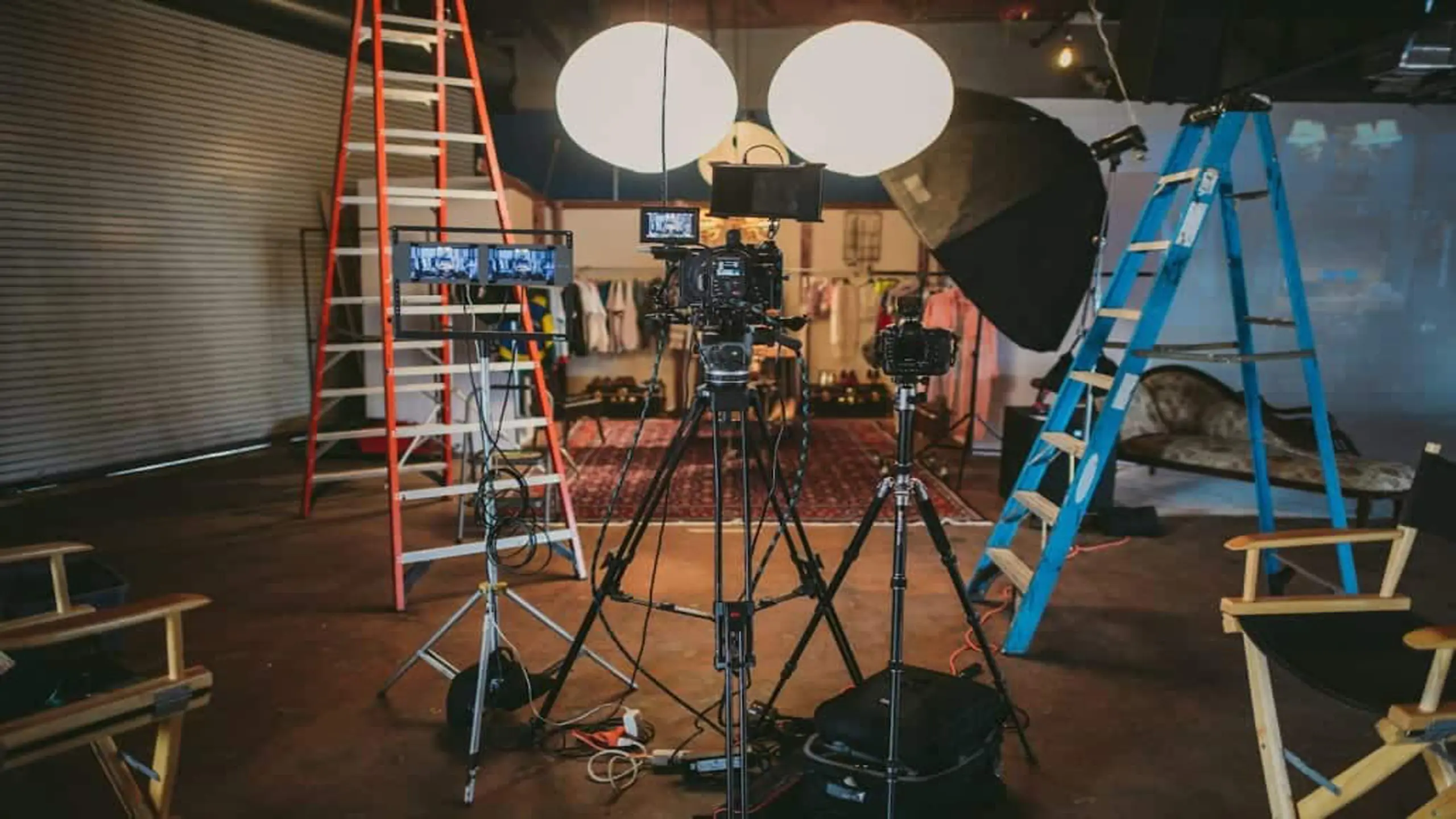
- 12/08/20
Sustainable filmmaking involves adopting practices that minimize the environmental impact of [film production](https://c-istudios.com/video-production-services/). This can include measures such as reducing carbon emissions, minimizing waste, and using eco-friendly resources. Some key practices for sustainable filmmaking include setting sustainability goals in pre-production, working with green vendors, hiring an eco-manager, and raising awareness about sustainability through marketing campaigns and partnerships with environmental organizations.
The Sustainable Production Alliance and the Green Production Guide are organizations that promote sustainable [film production](https://c-istudios.com/film-and-tv-production/), and there are tools such as the GREEN FILM rating system designed to guide producers in working in an environmentally sustainable manner.
By integrating sustainable practices, the film industry can significantly contribute to environmental conservation, and even save costs in the long run.
While sustainable filmmaking may require additional investments, it offers a multitude of benefits and is becoming an increasingly important aspect of responsible filmmaking.
## Examples of sustainable film production practices
Some examples of sustainable film production practices include:
1. Use of Sustainable Materials: This involves using sustainably sourced materials for set construction and props.
1. Responsible Waste Management: Implementing rules for recycling, reducing, and responsibly managing waste generated during production.
1. Transportation: Reducing travel arrangements by carpooling, or adopting more sustainable means of transport.
1. Community Engagement: Intentionally involving local communities in film activities by employing local residents, utilizing local props and catering, and minimizing the impact of filming schedules on the community.
1. Raising Awareness: Leveraging the reach of films to raise awareness about sustainability through marketing campaigns, interviews, and partnerships with environmental organizations.
By adopting these practices, the film industry can significantly contribute to environmental conservation while also potentially saving costs in the long run.
## Benefits of sustainable film production
The benefits of sustainable film production are multifaceted, encompassing environmental, economic, and social aspects. By integrating green and sustainable practices, the film industry can:
1. Minimize Environmental Impact: Sustainable film production helps reduce energy and resource consumption and waste generation, contributing to environmental conservation.
1. Cost Savings: While initial investments may be required, sustainable practices can lead to long-term cost savings through energy efficiency, waste reduction, and potential access to incentives for eco-friendly production.
1. Positive Social Impact: Engaging local communities, employing local residents, and using local resources can have a positive social impact, while also raising awareness about sustainability through film content and [marketing campaigns](https://c-istudios.com/creative-marketing-services/).
1. Industry Leadership: Embracing sustainable practices allows the film industry to set a positive example and contribute to efforts in addressing environmental sustainability.
By considering these benefits, sustainable film production is increasingly recognized as a necessary and advantageous approach for the industry.
## Challenges of implementing sustainable practices in film production
Some of the challenges of implementing sustainable practices in film production include:
1. Limited Awareness: Many individuals within the film industry are still unaware of sustainable practices and their benefits. Increasing awareness and providing education on eco-friendly techniques is crucial to drive adoption.
1. Budget Constraints: Integrating sustainable practices into film production can require additional investments. However, highlighting the long-term cost savings and financial incentives available can help convince stakeholders to allocate the necessary resources.
1. Logistical Complexities: Implementing sustainable practices may introduce logistical complexities, such as finding green vendors, managing waste responsibly, and coordinating eco-friendly transportation options.
By addressing these challenges through collaboration, innovation, and a commitment to change, the film industry can overcome barriers to sustainable production and contribute to environmental conservation and responsible filmmaking.
## How filmmakers can source sustainable materials for their productions
Filmmakers can source sustainable materials for their productions through various means, including:
1. Using Sustainable Materials: Materials such as bamboo, recycled materials, or natural fabrics like cotton or wool can be used for set design, costumes, and props to reduce the environmental impact of film production.
1. Working with Green Vendors: Collaborating with vendors that specialize in providing sustainable and eco-friendly materials for film production can ensure a consistent supply of environmentally responsible resources.
1. Research and Education: Engaging in research and education on sustainable material options and their availability in the market can help filmmakers make informed decisions when sourcing materials for their productions.
By incorporating these strategies, filmmakers can effectively integrate sustainable materials into their productions, contributing to environmentally responsible filmmaking practices.
## How filmmakers can ensure their sustainable materials are affordable
Filmmakers can ensure that their sustainable materials are affordable by considering the following strategies:
1. Cost-Effective Material Choices: Opt for sustainable materials that are cost-effective, such as recycled materials, natural fabrics like cotton or wool, or locally sourced resources.
1. Financial Incentives: Explore potential financial incentives for using sustainable materials in film production. Some sustainable practices may lead to long-term cost savings and even qualify for incentives, as demonstrated by a film that saved around $400,000 through sustainability efforts.
1. Waste Reduction: By reducing waste and reusing materials, filmmakers can save on production costs. For example, efforts to save materials for future productions or donation can contribute to cost savings.
1. Industry Knowledge and Research: Engage in research and education on affordable sustainable material options. By staying informed about cost-effective sustainable resources, filmmakers can make budget-friendly choices when sourcing materials.
By implementing these approaches, filmmakers can effectively integrate sustainable materials into their productions without compromising affordability.
## Examples of financial incentives for sustainable film production
Some examples of financial incentives for sustainable film production include:
1. Tax Rebates and Credits: Many countries offer tax rebates and credits for sustainable film production. For instance, Australia provides a 16.5% tax rebate for the production of large budget films and television, as well as a 30% tax rebate for post-production, digital, and visual effects.
1. Cash Rebates: Cash rebates are another form of incentive offered by various territories to attract film and audiovisual projects. These rebates can apply to a wide range of entertainment genres, including feature films, television series, animation, and documentaries.
1. Eco-Friendly Bonuses: Some countries are introducing eco-friendly bonuses as part of their production incentives. For example, Austria has implemented a 35% production incentive that includes a 5% eco-friendly bonus based on the implementation of sustainability criteria.
By taking advantage of these incentives, filmmakers can not only contribute to environmental sustainability but also benefit from financial support and cost savings in their productions.
## How filmmakers can reduce waste during production
Filmmakers can reduce waste during production by implementing the following strategies:
1. Use Sustainable Materials: Utilize sustainable materials for set design, costumes, and props, such as bamboo, recycled materials, or natural fabrics like cotton or wool, to minimize waste and environmental impact.
1. Reduce, Reuse, Recycle: Embrace the "reduce, reuse, recycle" approach to minimize waste generation. This includes using reusable items, repurposing materials, and implementing effective recycling programs on set.
1. Minimize Overstocking and Overproduction: Avoid overstocking and overproduction of materials, as these can lead to significant waste. By staying on top of inventory and setting waste management goals, filmmakers can reduce unnecessary waste in the production process.
1. Optimize Energy Use: Reducing energy consumption not only minimizes environmental impact but also contributes to overall waste reduction in the production process.
By integrating these practices, filmmakers can effectively minimize waste during production and contribute to more sustainable and environmentally friendly filmmaking.
## How filmmakers can ensure that their sustainable practices are cost-effective
Filmmakers can ensure that their sustainable practices are cost-effective by considering the following strategies:
1. Highlighting Long-Term Cost Savings: Emphasize the long-term cost savings and financial incentives available to convince stakeholders to allocate the necessary resources for sustainable practices.
1. Minimizing Waste and Reducing Costs: Implementing sustainable practices, such as waste reduction and energy efficiency, can lead to significant cost savings. For example, a production that saved materials for future use or donation, switched from single-use plastic to reusable water bottles, and donated meals to prevent food waste, saved around $400,000.
1. Taking Advantage of Financial Incentives: Explore potential financial incentives for sustainable film production, such as tax rebates, cash rebates, and eco-friendly bonuses, to offset costs and promote sustainability.
By integrating these approaches, filmmakers can effectively ensure that their sustainable practices are not only environmentally friendly but also cost-effective, contributing to more sustainable and economically viable filmmaking.
## How filmmakers can measure the environmental impact of their productions
Filmmakers can measure the environmental impact of their productions through various tools and practices, including:
1. Environmental Production Guides: There are environmental guides and tools, such as those provided by ALBERT, that offer helpful calculators, templates, and resources to assist productions in measuring and reducing their environmental impact.
1. Code of Best Practices for Sustainable Filmmaking: The Center for Media and Social Impact provides a code that offers tools for filmmakers to measure whether their practices are as sustainable as they can be throughout the production process. This includes online checklists, trackers, and web resources.
1. Sustainability & Film Relationship: The impact of emerging sustainable practices in the film industry is increasingly recognized, and filmmakers are adopting pro-environmental practices. Tools and resources are becoming more available to help measure and reduce the environmental impact of film productions.
1. Green Film Production Tips: Organizations like the Sustainable Production Alliance and Wrapbook offer tips and checklists for green filmmaking, providing easy-to-implement strategies to minimize a production's environmental footprint.
By utilizing these resources and integrating sustainable practices, filmmakers can effectively measure and reduce the environmental impact of their productions, contributing to more environmentally friendly and responsible filmmaking.
## How filmmakers can encourage sustainable practices among their crew and cast
Filmmakers can encourage sustainable practices among their crew and cast through the following methods:
1. Lead by Example: Filmmakers can lead by example by integrating sustainable practices into all aspects of the production, from set design to energy usage, and waste management. This sets a standard for the crew and cast to follow.
1. Education and Awareness: Providing educational resources and raising awareness about the importance of sustainable practices in film production can help engage the crew and cast. This can be done through workshops, informational materials, and open discussions about the environmental impact of the production.
1. Incorporate Sustainable Themes: Filmmakers can incorporate sustainable themes into the script and [storytelling](https://c-istudios.com/social-media-marketing-services/), which can inspire the cast and crew to embrace sustainable practices both on and off the set.
1. Utilize Sustainable Tools: Filmmakers can utilize tools such as the Code of Best Practices for Sustainable Filmmaking and the Green Film rating system to measure and promote sustainable practices, providing a framework for the crew and cast to follow.
By implementing these strategies, filmmakers can foster a culture of sustainability within their productions, encouraging the crew and cast to embrace eco-friendly habits and contribute to more sustainable filmmaking practices.
## Examples of successful sustainable film productions and how they encouraged sustainable practices among their crew and cast
Some examples of successful sustainable film productions and how they encouraged sustainable practices among their crew and cast include:
1. Unsustainable: The film "Unsustainable" implemented various sustainable practices, such as mandatory switches from single-use plastic to reusable water bottles for everyone on set, donation of meals to local shelters to prevent food waste, and saving materials for future productions or donation. These efforts saved the film's budget around $400,000, demonstrating that planning for sustainability is not costly and can lead to significant cost savings.
1. Use of Renewable Energy and Sustainable Materials: Some productions have successfully used renewable energy and sustainably sourced materials, such as solar power for remote locations, wind and solar power, and solar panels on set, to reduce their environmental impact.
1. Incorporating Sustainable Themes: Filmmakers have encouraged sustainable practices among their crew and cast by incorporating sustainable themes into the script and storytelling. This can inspire the cast and crew to embrace sustainable practices both on and off the set.
1. Lead by Example: Filmmakers have led by example by integrating sustainable practices into all aspects of the production, setting a standard for the crew and cast to follow.
These examples demonstrate that successful sustainable film productions have effectively encouraged sustainable practices among their crew and cast through a combination of lead by example, incorporating sustainable themes, and utilizing renewable energy and sustainable materials.
## Work with C&I Studios
If you are planning a project like this, our team can take it from concept to final delivery. Explore our [film and TV production](https://c-istudios.com/film-and-tv-production/), browse [our work](https://c-istudios.com/our-work/) to see how we tell brand stories, and [get in touch](https://c-istudios.com/contact/) when you are ready to start.
Originally published January 23, 2024
---
*This content is from [C&I Studios](https://c-istudios.com), a full-service production company.*
---
# Casting Secrets for Reality TV: Finding Compelling Personalities
> Published: January 19, 2024
> Categories: Film & TV
> Source: https://c-istudios.com/casting-secrets-for-reality-tv-finding-compelling-personalities/
---
.cib{--paper:#1b1d1f;--ink:#fff;--body:#d5d7d9;--muted:#8b9096;--line:rgba(255,255,255,.12);--thumb:#2b2e31;--card:#212426;--accent:#c02b0a;--blue:#5B8FA8;--serif:'Playfair Display',Georgia,serif;--sans:'Poppins',-apple-system,sans-serif;--measure:900px;background:var(--paper);color:var(--body);font-family:var(--sans);line-height:1.6;position:relative;left:50%;transform:translateX(-50%);width:90vw;max-width:1920px}
.cib *{box-sizing:border-box}
.cib .kicker{max-width:var(--measure);margin:58px auto 0;padding:0 22px;font-size:12.5px;font-weight:700;letter-spacing:2.5px;text-transform:uppercase;color:var(--blue)}
.cib h1.cibh1{text-wrap:balance;font-family:var(--serif);font-weight:500;font-size:clamp(46px,6vw,72px);line-height:1.08;color:var(--ink);max-width:var(--measure);margin:18px auto 0;padding:0 22px;letter-spacing:-.5px}
.cib .metarow{max-width:var(--measure);margin:20px auto 0;padding:0 22px;color:var(--muted);font-size:14px}
.cib .hero{position:relative;width:100%;height:0;padding-bottom:56.25%;overflow:hidden;margin:48px auto 0;border-top:1px solid var(--line);border-bottom:1px solid var(--line)}
.cib .hero .ph{width:100%;aspect-ratio:16/9;background:var(--thumb);border-top:1px solid var(--line);border-bottom:1px solid var(--line);display:flex;align-items:center;justify-content:center;color:#7d8288;font-size:13px;text-align:center;padding:0 20px}
.cib .body{max-width:var(--measure);margin:12px auto 0;padding:52px 22px 6px}
.cib .body.lead p:first-child{font-size:23px;line-height:1.62;color:var(--ink)}
.cib .body p{font-size:18.5px;line-height:1.85;margin:0 0 30px;color:var(--body)}
.cib .body h2{text-wrap:balance;font-family:var(--serif);font-weight:500;font-size:clamp(32px,4vw,48px);line-height:1.22;color:var(--ink);margin:70px 0 20px;letter-spacing:-.3px}
.cib .body h3{text-wrap:balance;font-family:var(--sans);font-weight:600;font-size:22px;color:var(--ink);margin:38px 0 8px}
.cib .body a{color:var(--ink);text-decoration:underline;text-decoration-color:rgba(255,255,255,.4);text-underline-offset:3px}
.cib .body a:hover{text-decoration-color:var(--ink)}
.cib .ctable{width:100%;border-collapse:collapse;margin:16px 0 30px;font-size:16px}
.cib .ctable th{background:#000;color:#fff;text-align:left;padding:10px 12px;font-family:var(--sans)}
.cib .ctable td{padding:10px 12px;border-bottom:1px solid var(--line);color:var(--body)}
.cib .inimg{position:relative;width:100%;height:0;padding-bottom:56.25%;overflow:hidden;margin:72px auto;border-top:1px solid var(--line);border-bottom:1px solid var(--line)}
.cib .inimg .ph{width:100%;aspect-ratio:16/9;background:var(--thumb);border-top:1px solid var(--line);border-bottom:1px solid var(--line);display:flex;align-items:center;justify-content:center;color:#7d8288;font-size:13px}
.cib .origpub{max-width:var(--measure);margin:60px auto 0;padding:26px 22px 0;border-top:1px solid var(--line);color:var(--muted);font-size:13.5px}
.cib .related{max-width:1200px;margin:64px auto 0;padding:34px 22px 76px}
.cib .related h3{font-family:var(--sans);font-size:12.5px;letter-spacing:2px;text-transform:uppercase;color:var(--ink);margin:0 0 24px}
.cib .grid{display:grid;grid-template-columns:repeat(3,1fr);gap:28px}
.cib .rc{background:var(--card);border:1px solid var(--line);display:block;text-decoration:none;color:inherit;transition:border-color .15s}
.cib a.rc:hover{border-color:rgba(255,255,255,.5)}
.cib .rc .thumb{position:relative;width:100%;height:0;padding-bottom:56.25%;background:var(--thumb);overflow:hidden}
.cib .rc .thumb img{position:absolute!important;top:0!important;left:0!important;width:100%!important;height:100%!important;object-fit:cover!important;margin:0!important}
.cib .rc .cc{padding:14px 15px 17px}
.cib .rc .rt{font-family:var(--serif);font-weight:500;font-size:16px;line-height:1.3;color:var(--ink);margin:0 0 6px}
.cib .rc .rm{font-size:11px;letter-spacing:1px;text-transform:uppercase;color:var(--muted)}
.cib img{margin:0!important;padding:0!important;display:block!important;vertical-align:top;max-width:100%}
.cib .hero img,.cib .inimg img{position:absolute!important;top:0!important;left:0!important;width:100%!important;height:100%!important;object-fit:cover!important;margin:0!important;padding:0!important;border:0!important;display:block!important;aspect-ratio:auto!important}
.cib .hero+.body{padding-top:36px}
@media(max-width:760px){.cib .grid{grid-template-columns:1fr}.cib .body h2{margin:52px 0 16px}.cib .body p{font-size:17.5px}.cib .inimg,.cib .hero{margin-top:44px}}
.cib .vembed{max-width:var(--measure);margin:44px auto;padding:0 22px}.cib .vembed .vwrap{position:relative;width:100%;height:0;padding-bottom:56.25%}.cib .vembed .vwrap iframe{position:absolute;top:0;left:0;width:100%;height:100%;border:0}
Film & TV
# Casting Secrets for Reality TV. Finding Compelling Personalities
6 min read

- 12/08/20
Reality TV shows often employ various strategies to find compelling [personalities](https://c-istudios.com/artist-management-and-media-creation/). These strategies can include the use of private investigators to vet potential cast members, last-minute bookings of reality stars, and the use of social media and online presence as a recruiting tool[.](https://www.netflix.com/tudum/articles/how-to-get-cast-reality-tv-we-have-the-receipts-episode-27)
Producers also categorize cast members into different "buckets" or types of roles, such as the "villain" or the "slacker," to ensure there is enough conflict in the show. Additionally, casting directors may look for individuals who are authentic and engaging, as being oneself is often more effective than trying to be overly creative or dramatic[.](https://www.netflix.com/tudum/articles/how-to-get-cast-reality-tv-we-have-the-receipts-episode-27)
These behind-the-scenes insights shed light on the careful and sometimes intricate process of finding the right personalities for reality TV.
## How reality TV producers find potential cast members
Reality TV producers find potential cast members through various methods, including:
1. Casting Directors and Auditions: Casting directors sift through audition tapes and conduct in-person interviews to find individuals who possess the necessary skills, on-screen presence, and authenticity for the show.
1. Self-Submission and Networking: Potential cast members can self-submit through individual shows' or networks' websites, and casting producers may also reach out to candidates directly, sometimes through social media platforms like Instagram.
1. Open Auditions and Casting Calls: Producers often hold open auditions and casting calls, which are advertised in trade magazines, on social media, and websites like Craigslist. These calls invite reality TV hopefuls to apply and are a way for producers to cast a wide net and attract unknowns who will captivate audiences.
1. Specialized Pools and Targeted Searches: Some reality shows, such as "Ice Road Truckers" and "Life Below Zero," look through more specialized pools of candidates to find individuals with specific skills or lifestyles.
These methods allow producers to identify individuals who can bring engaging and authentic personalities to the show, ensuring a high-quality production that resonates with audiences.
## Common ways reality TV producers advertise for potential cast members
Reality TV producers advertise for potential cast members through a variety of methods, including open auditions, casting calls, and online submissions. These methods allow producers to cast a wide net and attract individuals who possess the necessary skills, personalities, and lifestyles for their specific shows. Open auditions and casting calls are often advertised in trade magazines, on social media, and websites like Craigslist, inviting reality TV hopefuls to apply and be considered for cast membership.
Additionally, potential cast members can self-submit through individual shows' or networks' websites, and casting producers may also reach out to candidates directly, sometimes through social media platforms like Instagram. These strategies enable producers to identify individuals who can bring engaging and authentic personalities to their shows, ensuring a high-quality production that resonates with audiences.
## How reality TV producers use social media to find potential cast members
Reality TV producers use [social media](https://c-istudios.com/social-media-marketing-services/) to find potential cast members by leveraging platforms like YouTube, TikTok, and Instagram to identify individuals with significant followings and compelling life stories. Social media serves as a powerful filter based on the scale of the talent's followers and the appeal of their narratives. Additionally, [TV production](https://c-istudios.com/film-and-tv-production/) companies host open casting calls and use social media to reach out to aspiring reality TV candidates.
Casting directors and development executives often scour social media platforms to discover individuals who possess unique, impactful characters that align with the vision of the show. Furthermore, potential cast members may receive cold calls or messages on platforms like Instagram from casting producers, offering them opportunities to audition for specific projects. This approach allows producers to tap into a vast pool of potential reality TV candidates and identify individuals who can bring engaging and authentic personalities to their shows.
## Social media strategies that reality TV producers use to promote their shows and attract potential cast members
Reality TV producers use social media to promote their shows and attract potential cast members through various strategies, including:
1. Live Show Chats: Many shows encourage fans to chat live during the show, fostering real-time engagement on platforms like Twitter and Instagram.
1. Viewer Interaction: Social media platforms allow fans to connect, share opinions, and interact with contestants, providing a way for producers to gauge audience interest and potential cast members' appeal.
1. Onboarding Influencers: Producers may recruit social media influencers as cast members to tap into their existing fan base, attracting new viewers and creating a cross-platform advantage.
These strategies demonstrate how social media is integrated into the world of reality TV, enabling producers to engage with audiences and attract potential cast members with a large social media following.
## How reality TV producers handle potential cast members who have a large social media following
Reality TV producers handle potential cast members with large social media followings by considering the influence and impact they may bring to the show. Individuals with significant social media presence can attract a dedicated fan base, which can be beneficial for the program's promotion and audience engagement. However, producers also assess whether these candidates' online personas align with the show's themes and values.
While a large social media following can be advantageous, it's not the sole determining factor in the casting process. Producers prioritize authenticity, engaging storylines, and on-screen presence when evaluating potential cast members, ensuring that they are the right fit for the specific show.
## Common audition formats for reality TV shows
The audition process for reality TV shows can vary, but common formats include interviews conducted via platforms like Skype, Zoom, or Google Meet, as well as the submission of audition tapes or videos. These videos are often used to showcase unique aspects of the applicants and are a crucial part of the casting process.
Additionally, applications, written materials, and evidence of why an applicant is suitable for the show are also commonly used in the audition process. Whether through in-person interviews, video submissions, or written applications, the goal is to identify individuals who will bring engaging and authentic personalities to the show.
## How reality TV producers evaluate potential cast members during auditions
During reality TV auditions, casting producers evaluate potential cast members based on specific qualities and characteristics. These may include charisma, authenticity, unique personalities, and the ability to engage audiences. The casting team often envisions candidates for particular roles and seeks individuals who can bring an interesting and genuine presence to the show.
The evaluation process can involve in-depth interviews, the review of audition tapes, and the consideration of an applicant's on-screen presence and appearance. Additionally, the audition process may include multiple stages such as further interviews, contests, or background checks to ensure the selected candidates are well-suited for the show.
## Qualities reality TV producers look for in potential cast members
Reality TV producers look for specific qualities in potential cast members to ensure an engaging and dynamic show. These qualities include:
1. Personality and Authenticity: Producers seek individuals with a compelling and authentic personality. They look for candidates who can express themselves in a captivating manner and whose eccentricities make audiences want to see how they will react or what they will do next.
1. Unique Perspective: Cast members who bring an extraordinary perspective to ordinary situations are highly valued. They should be able to provide a fresh and interesting take on the events and interactions within the show.
1. Engaging Storylines: Producers seek individuals with interesting personal storylines that can captivate the audience and create compelling narratives within the show.
1. On-Screen Presence: Candidates with a strong on-screen presence and the ability to engage audiences are highly sought after. This includes being comfortable in front of the camera and having a natural charisma.
1. Not in it for the Money: Producers look for individuals who are not solely motivated by financial gain. They seek candidates who are genuinely interested in the experience and the opportunities that come with being on the show.
These qualities help ensure that the cast members are well-suited to create an entertaining and authentic reality TV experience.
## How reality TV producers determine if a potential cast member is a good fit for a specific show
Reality TV producers determine if a potential cast member is a good fit for a specific [show](https://c-istudios.com/) by evaluating their personality, authenticity, and ability to create an engaging storyline. They look for individuals who can be produced and whose unique perspectives and on-screen presence can contribute to the overall dynamic of the show.
Producers aim to identify candidates who can be compelling characters and contribute to the chemistry and narrative of the program. The casting process involves assessing these qualities through interviews, audition tapes, and in-person meetings to ensure that the selected candidates are well-suited for the particular show.
## Common interview questions reality TV producers ask potential cast members
Reality TV producers ask potential cast members a variety of questions to assess their suitability for a specific show. Some common interview questions include:
1. Why did you decide to audition for this particular reality TV show?
2. Who is your favorite reality TV contestant ever?
3. Do you have a favorite reality TV contestant on our show?
4. What will the audience be thinking about in the car as they drive home after this show?
5. How is this production bringing something new to this story?
6. What’s going to surprise people about this show?
These questions are designed to gauge the candidate's motivations, personality, and potential impact on the show's audience and narrative.
## Common mistakes that potential cast members make during a reality TV interview
Some common mistakes that potential cast members make during a reality TV interview include:
1. Lack of Authenticity: Failing to be genuine and instead presenting a manufactured or inauthentic persona.
1. Having an Agenda: Showing a clear agenda that isn't aligned with the goals of the producers, such as seeking publicity for personal brands rather than focusing on the show's objectives.
1. Pushing Too Hard: Overly pushing for attention or trying to force a particular narrative, which may not align with the overall vision of the show.
1. Forcing an Answer: Faking responses or providing insincere answers to interview questions, instead of being honest and genuine.
These mistakes can impact a candidate's suitability for a reality TV show and their ability to connect with both producers and audiences.
## Common challenges reality TV producers face when casting a show
Reality TV producers face several challenges when casting a show, including legal and ethical concerns, managing the logistics of filming, and ensuring participant safety. They must balance authenticity with entertainment and portray events in a compelling yet responsible manner.
Additionally, finding the perfect mix of personalities and creating engaging storylines while avoiding the manipulation of narratives are ongoing challenges. Producers also encounter difficulties in scheduling and booking participants, as well as in managing conflicts and maintaining the balance between drama and substance within the show.
## Common legal issues that reality TV producers face when casting a show
Reality TV producers face various legal issues when casting a show, including the drafting and negotiation of detailed contracts with participants. These contracts often control the behavior of the cast before, during, and after production, and they may include clauses related to privacy, intellectual property, and the right to portray participants' images.
Producers must also navigate issues related to the portrayal of individuals, potential physical and emotional risks, and the manipulation of storylines. Additionally, they need to ensure compliance with privacy laws and obtain necessary permits for filming in specific locations. Balancing the entertainment value of the show with legal and ethical considerations is a constant challenge for reality TV producers.
## Work with C&I Studios
If you are planning a project like this, our team can take it from concept to final delivery. Explore our [film and TV production](https://c-istudios.com/film-and-tv-production/), browse [our work](https://c-istudios.com/our-work/) to see how we tell brand stories, and [get in touch](https://c-istudios.com/contact/) when you are ready to start.
Originally published January 19, 2024
---
*This content is from [C&I Studios](https://c-istudios.com), a full-service production company.*
---
# Cinematic Techniques in Documentary: Elevating Visual Storytelling
> Published: January 17, 2024
> Categories: Film & TV
> Source: https://c-istudios.com/cinematic-techniques-in-documentary-elevating-visual-storytelling/
---
.cib{--paper:#1b1d1f;--ink:#fff;--body:#d5d7d9;--muted:#8b9096;--line:rgba(255,255,255,.12);--thumb:#2b2e31;--card:#212426;--accent:#c02b0a;--blue:#5B8FA8;--serif:'Playfair Display',Georgia,serif;--sans:'Poppins',-apple-system,sans-serif;--measure:900px;background:var(--paper);color:var(--body);font-family:var(--sans);line-height:1.6;position:relative;left:50%;transform:translateX(-50%);width:90vw;max-width:1920px}
.cib *{box-sizing:border-box}
.cib .kicker{max-width:var(--measure);margin:58px auto 0;padding:0 22px;font-size:12.5px;font-weight:700;letter-spacing:2.5px;text-transform:uppercase;color:var(--blue)}
.cib h1.cibh1{text-wrap:balance;font-family:var(--serif);font-weight:500;font-size:clamp(46px,6vw,72px);line-height:1.08;color:var(--ink);max-width:var(--measure);margin:18px auto 0;padding:0 22px;letter-spacing:-.5px}
.cib .metarow{max-width:var(--measure);margin:20px auto 0;padding:0 22px;color:var(--muted);font-size:14px}
.cib .hero{position:relative;width:100%;height:0;padding-bottom:56.25%;overflow:hidden;margin:48px auto 0;border-top:1px solid var(--line);border-bottom:1px solid var(--line)}
.cib .hero .ph{width:100%;aspect-ratio:16/9;background:var(--thumb);border-top:1px solid var(--line);border-bottom:1px solid var(--line);display:flex;align-items:center;justify-content:center;color:#7d8288;font-size:13px;text-align:center;padding:0 20px}
.cib .body{max-width:var(--measure);margin:12px auto 0;padding:52px 22px 6px}
.cib .body.lead p:first-child{font-size:23px;line-height:1.62;color:var(--ink)}
.cib .body p{font-size:18.5px;line-height:1.85;margin:0 0 30px;color:var(--body)}
.cib .body h2{text-wrap:balance;font-family:var(--serif);font-weight:500;font-size:clamp(32px,4vw,48px);line-height:1.22;color:var(--ink);margin:70px 0 20px;letter-spacing:-.3px}
.cib .body h3{text-wrap:balance;font-family:var(--sans);font-weight:600;font-size:22px;color:var(--ink);margin:38px 0 8px}
.cib .body a{color:var(--ink);text-decoration:underline;text-decoration-color:rgba(255,255,255,.4);text-underline-offset:3px}
.cib .body a:hover{text-decoration-color:var(--ink)}
.cib .ctable{width:100%;border-collapse:collapse;margin:16px 0 30px;font-size:16px}
.cib .ctable th{background:#000;color:#fff;text-align:left;padding:10px 12px;font-family:var(--sans)}
.cib .ctable td{padding:10px 12px;border-bottom:1px solid var(--line);color:var(--body)}
.cib .inimg{position:relative;width:100%;height:0;padding-bottom:56.25%;overflow:hidden;margin:72px auto;border-top:1px solid var(--line);border-bottom:1px solid var(--line)}
.cib .inimg .ph{width:100%;aspect-ratio:16/9;background:var(--thumb);border-top:1px solid var(--line);border-bottom:1px solid var(--line);display:flex;align-items:center;justify-content:center;color:#7d8288;font-size:13px}
.cib .origpub{max-width:var(--measure);margin:60px auto 0;padding:26px 22px 0;border-top:1px solid var(--line);color:var(--muted);font-size:13.5px}
.cib .related{max-width:1200px;margin:64px auto 0;padding:34px 22px 76px}
.cib .related h3{font-family:var(--sans);font-size:12.5px;letter-spacing:2px;text-transform:uppercase;color:var(--ink);margin:0 0 24px}
.cib .grid{display:grid;grid-template-columns:repeat(3,1fr);gap:28px}
.cib .rc{background:var(--card);border:1px solid var(--line);display:block;text-decoration:none;color:inherit;transition:border-color .15s}
.cib a.rc:hover{border-color:rgba(255,255,255,.5)}
.cib .rc .thumb{position:relative;width:100%;height:0;padding-bottom:56.25%;background:var(--thumb);overflow:hidden}
.cib .rc .thumb img{position:absolute!important;top:0!important;left:0!important;width:100%!important;height:100%!important;object-fit:cover!important;margin:0!important}
.cib .rc .cc{padding:14px 15px 17px}
.cib .rc .rt{font-family:var(--serif);font-weight:500;font-size:16px;line-height:1.3;color:var(--ink);margin:0 0 6px}
.cib .rc .rm{font-size:11px;letter-spacing:1px;text-transform:uppercase;color:var(--muted)}
.cib img{margin:0!important;padding:0!important;display:block!important;vertical-align:top;max-width:100%}
.cib .hero img,.cib .inimg img{position:absolute!important;top:0!important;left:0!important;width:100%!important;height:100%!important;object-fit:cover!important;margin:0!important;padding:0!important;border:0!important;display:block!important;aspect-ratio:auto!important}
.cib .hero+.body{padding-top:36px}
@media(max-width:760px){.cib .grid{grid-template-columns:1fr}.cib .body h2{margin:52px 0 16px}.cib .body p{font-size:17.5px}.cib .inimg,.cib .hero{margin-top:44px}}
.cib .vembed{max-width:var(--measure);margin:44px auto;padding:0 22px}.cib .vembed .vwrap{position:relative;width:100%;height:0;padding-bottom:56.25%}.cib .vembed .vwrap iframe{position:absolute;top:0;left:0;width:100%;height:100%;border:0}
Film & TV
# Cinematic Techniques in Documentary. Elevating Visual Storytelling
5 min read

- 12/08/20
Cinematic techniques play a crucial role in elevating visual storytelling in [documentaries](https://c-istudios.com/documentary-film-production/). Some of the key techniques include:
1. Camera Movements and Angles: Documentary filmmakers use various camera movements such as tracking shots and different angles like close-ups to effectively tell the story and capture the audience's attention.
1. Interviews and Archival Footage: Interviews and archival footage are important techniques for character introduction and showcasing historical events, respectively. The use of lighting, color scheme, and framing in interviews can impact the audience's perception of the person speaking.
1. Visual Storytelling Techniques: B-roll footage, stock footage, and archive footage are powerful visual storytelling techniques that make the documentary more engaging and emotionally gripping.
1. Montage and Narrative Techniques: Montage sequences and narrative techniques are used to convey ideas visually and indicate changes in time and place within the film. These techniques help in presenting the documentary's view more persuasively to the viewer.
1. Cinematography Basics: Basic cinematography techniques such as controlling what the viewer sees, camera movements, and shot types, like close-ups and extreme long shots, are also essential for better cinematic shots in documentaries.
These techniques, when used thoughtfully, contribute to the overall impact and effectiveness of documentary storytelling, making the narrative more engaging and compelling.
## Common cinematography techniques used in documentary films
Some common cinematography techniques used in documentary films include:
1. Establishing a Sense of Place: Showing the character interacting with the environment and using shots to establish a sense of location.
1. Framing and Shot Types: Considering the framing of shots, the type of shots used, and the frequency of close-ups and extreme close-ups to convey emotions and capture the audience's attention.
1. Camera Movement: Using techniques such as steady shots, tracking shots, and intentional camera movements to add dynamism to the visuals and guide the audience's focus.
1. Archival Footage: Effectively integrating archival footage to provide historical context and enhance the storytelling.
1. Color Matching and Visual Style: Employing color matching and choosing a [visual style](https://c-istudios.com/branding-and-graphic-design-services/) that aligns with the documentary's theme and content.
By utilizing these techniques, documentary filmmakers can create visually engaging and compelling narratives that effectively convey their stories to the audience.
## Best camera movements and angles to use in documentary films
Camera movements and angles play a crucial role in improving the visual quality of documentary films. Some of the key techniques that can enhance the storytelling in documentaries include:
1. Tracking Shots: These shots involve moving the camera alongside the subject, which can be used to show a subject's physical reaction or to create a sense of movement and dynamism within the frame.
1. Close-Ups: Capturing close-up shots of the subject's face can help convey emotions and create a more intimate connection with the audience.
1. Establishing Shots: These shots are used to set up the scene and provide context for the following footage, helping the audience understand the environment or the relationship between characters.
1. POV Shots: The Point of View (POV) shot allows the audience to see what a character is looking at, immersing them in the character's viewpoint and creating a personal connection with the narrative.
By using these and other camera movements and angles, documentary filmmakers can effectively convey the story, evoke emotions, and create a more engaging and authentic viewing experience for the audience.
## How documentary filmmakers use camera angles to convey emotions
Documentary filmmakers use various [camera](https://c-istudios.com/video-production-gear-list/) angles to convey emotions and create a deeper connection with the audience. Different camera angles can evoke specific emotional responses from viewers. For example, a high-angle shot can make a character appear vulnerable or powerless, while a low-angle shot can make the same character appear powerful or dominant. Close-up shots of a subject's face can help convey raw emotions and create an intimate connection with the audience.
Additionally, the use of camera movements, such as tracking shots, can capture a subject's physical reaction and create a sense of movement and dynamism within the frame, further enhancing the emotional impact of the footage.
By being intentional in their choice of camera angles and movements, filmmakers can effectively manipulate the emotions of the audience, creating a more immersive and engaging viewing experience. These techniques, when used thoughtfully, allow filmmakers to convey specific emotions and establish a deeper connection between the audience and the characters or subjects on screen.
## How camera movements affect the pacing of a documentary film
Camera movements can significantly affect the pacing of a documentary film. Movement, whether with the characters, subjects, or the camera itself, can create momentum from shot to shot and scene to scene, defining the overall pace of the project. For instance, camera movement following the action adds a sense of forward momentum, pace, and energy, allowing the viewer to participate in the action[.](https://www.premiumbeat.com/blog/5-film-pacing-secrets/)
Additionally, the speed and type of camera shots, along with the length of dialogue and movement, contribute to the pacing of the film. By using different camera movements, filmmakers can control the pacing of the story, ensuring that the film maintains the right tempo and keeps the audience focused and intrigued.
Therefore, intentional use of camera movements is essential in shaping the overall pacing and energy of a documentary film.
## How to use archival footage in documentary filmmaking
To use archival footage in documentary filmmaking, filmmakers can follow these useful tips and techniques:
1. Provide Historical Context: Archival footage can provide a historical context and bring a sense of authenticity to the film. It illustrates the events and circumstances that have shaped the world, especially when used in conjunction with personal stories and interviews.
1. Fill in Gaps Creatively: When using archival material, be prepared to fill in gaps creatively through animation, recreations, graphics, or other visuals to support the story.
1. Understand the Nature of the Archival Material: Incorporating amateur archival footage into a project creates a layer of subjectivity. It's important to carefully consider how the material is presented and to understand its nature.
1. Supplement with Digital Archives: Exploring digital film libraries and image archives is a great way to supplement historical footage and other archive material for the documentary.
1. Consider Public Domain Footage: Encourage students or filmmakers to search for public domain archival footage, such as that available from the Library of Congress, to complement their ideas and provide historical context.
By following these tips, filmmakers can effectively use archival footage to enhance the storytelling and historical context of their documentary films.
## How to find and obtain archival footage for documentary films
To find and obtain archival footage for documentary films, filmmakers can consider the following approaches and resources:
1. Stock Footage Libraries: There are numerous stock footage libraries around the world that provide access to a wide range of archival footage. Examples include Discovery Communications, ITN, and National Geographic, each of which has its own film archives.
1. Public Domain Footage: Public domain footage, which is free to use, can be obtained from sources such as the Library of Congress, the National Archives, and other national archives that provide access to a vast library of public domain material.
1. Local Media Outlets and Overlooked Sources: Filmmakers can approach local media outlets and conduct thorough research to obtain archival footage for their documentary films. It's also important to consider reaching out to overlooked sources, as they may have valuable archival material.
1. Online Resources: The internet is an invaluable tool for finding archival footage. Filmmakers can search for and upload archival material to searchable databases, and they can also explore online platforms that offer public domain footage.
1. Creative Gap Filling: When obtaining archival material, filmmakers should be prepared to fill in gaps creatively through animation, recreations, graphics, or other visuals, especially when dealing with living subjects or when the footage is incomplete.
By leveraging these approaches and resources, filmmakers can effectively find and obtain the archival footage needed to enhance the storytelling and historical context of their documentary films.
## Using B-roll footage in a documentary film
B-roll footage, also known as Broll or B roll, refers to supplemental video that is considered secondary to the primary footage in a film or [video production](https://c-istudios.com/video-production-services/). It is used to provide supporting imagery, establish context, hide cuts, add interest, and enhance the overall storytelling.
B-roll footage can include various types of shots such as atmospheric shots of locations, shots of inanimate objects, undirected footage of subjects/people, establishing shots, insert shots, and dramatic reenactments. It is often gathered with a separate unit, acquired from stock footage, or obtained from any source other than the principal photography. B-roll footage is crucial for providing visual context, supporting the narrative, and adding depth to the storytelling in film and video production.
In documentary filmmaking, B-roll footage is essential for providing visual context, supporting the narrative, and enhancing the overall storytelling. Here are some key tips for using B-roll footage effectively:
1. Support the Story: B-roll footage should complement the main narrative and help in conveying the story visually. It can include shots of the environment, details, and activities related to the main subject of the documentary.
1. Shot with Intention: It's important to shoot B-roll footage with intention, ensuring that each shot is composed to support the story being told. Viewers should easily understand the subject of each shot, and the footage should be shot in a way that allows for seamless integration with the main narrative.
1. Consistent Movement and Style: When shooting B-roll footage, maintain consistent movement and style to ensure a cohesive visual experience. This includes considering the movement of subjects or objects across different shots to avoid confusing the audience.
1. Creativity in Filming: B-roll footage provides an opportunity to be creative. Filmmakers can explore unique camera angles, time-lapse shots, drone footage, or point-of-view perspectives to add visual interest and depth to the storytelling.
By following these tips, filmmakers can effectively use B-roll footage to elevate the visual quality and storytelling of their documentary films.
## Examples of B-roll footage used in documentary films
Some examples of B-roll footage used in documentary films include:
1. Archival B-Roll Footage: Documentaries often use archival B-roll footage from a specific time period to help the audience engage with the historical context of the story.
1. Visual Detail B-Roll Footage: This type of B-roll footage provides close-up shots of specific details, such as a character's hands and expressions, or everyday activities, to add depth and context to the narrative.
1. Undirected B-Roll Footage: This includes shots of inanimate objects, atmospheric shots of locations, and undirected footage of subjects or people, which can be used to establish context and set the tone of the documentary.
1. Establishing Shots: These shots, such as images of iconic landmarks or cityscapes, are used to set the scene and provide context for the narrative.
1. Pick-Up Shots: These are additional shots captured after the main footage to fill in any gaps or enhance the storytelling.
By incorporating these types of B-roll footage, documentary filmmakers can effectively enhance the visual storytelling and provide a more immersive and engaging experience for the audience.
## Using montage and narrative techniques in a documentary film
Montage and narrative techniques are essential in documentary filmmaking. A montage sequence conveys ideas visually by arranging shots in a specific order, while narrative montages indicate changes in time and place within a film. Ideational montages link actions with words and are often used in documentaries to convey different ideas to the viewer. Montages are usually linked with words that characters say, helping to position the viewer in the story and convey the characters' thoughts. This visual representation of the characters' thoughts helps the viewer better understand the story. Montages are also used to convey a progression of ideas on screen and to position the viewer to believe a certain theme presented by the documentary, thus presenting the documentary's view more persuasively to the viewer.
Narrative techniques, such as the use of B-roll footage, interviews, and dramatic segments, are also crucial in documentary filmmaking. B-roll footage is used to provide visual context, support the narrative, and enhance storytelling. It includes shots of the environment, details, and activities related to the main subject of the documentary. Interviews are used to convey information and provide different perspectives on a topic. Dramatic segments of the documentary are specially chosen to grab the viewer's attention and position them to believe a certain theme presented by the documentary, thus presenting the documentary's view more persuasively.
## Work with C&I Studios
If you are planning a project like this, our team can take it from concept to final delivery. Explore our [film and TV production](https://c-istudios.com/film-and-tv-production/), browse [our work](https://c-istudios.com/our-work/) to see how we tell brand stories, and [get in touch](https://c-istudios.com/contact/) when you are ready to start.
Originally published January 17, 2024
---
*This content is from [C&I Studios](https://c-istudios.com), a full-service production company.*
---
# The Art of Foley: Creating Realistic Sound Effects in Post-Production
> Published: January 17, 2024
> Categories: Film & TV
> Source: https://c-istudios.com/the-art-of-foley-creating-realistic-sound-effects-in-post-production/
---
.cib{--paper:#1b1d1f;--ink:#fff;--body:#d5d7d9;--muted:#8b9096;--line:rgba(255,255,255,.12);--thumb:#2b2e31;--card:#212426;--accent:#c02b0a;--blue:#5B8FA8;--serif:'Playfair Display',Georgia,serif;--sans:'Poppins',-apple-system,sans-serif;--measure:900px;background:var(--paper);color:var(--body);font-family:var(--sans);line-height:1.6;position:relative;left:50%;transform:translateX(-50%);width:90vw;max-width:1920px}
.cib *{box-sizing:border-box}
.cib .kicker{max-width:var(--measure);margin:58px auto 0;padding:0 22px;font-size:12.5px;font-weight:700;letter-spacing:2.5px;text-transform:uppercase;color:var(--blue)}
.cib h1.cibh1{text-wrap:balance;font-family:var(--serif);font-weight:500;font-size:clamp(46px,6vw,72px);line-height:1.08;color:var(--ink);max-width:var(--measure);margin:18px auto 0;padding:0 22px;letter-spacing:-.5px}
.cib .metarow{max-width:var(--measure);margin:20px auto 0;padding:0 22px;color:var(--muted);font-size:14px}
.cib .hero{position:relative;width:100%;height:0;padding-bottom:56.25%;overflow:hidden;margin:48px auto 0;border-top:1px solid var(--line);border-bottom:1px solid var(--line)}
.cib .hero .ph{width:100%;aspect-ratio:16/9;background:var(--thumb);border-top:1px solid var(--line);border-bottom:1px solid var(--line);display:flex;align-items:center;justify-content:center;color:#7d8288;font-size:13px;text-align:center;padding:0 20px}
.cib .body{max-width:var(--measure);margin:12px auto 0;padding:52px 22px 6px}
.cib .body.lead p:first-child{font-size:23px;line-height:1.62;color:var(--ink)}
.cib .body p{font-size:18.5px;line-height:1.85;margin:0 0 30px;color:var(--body)}
.cib .body h2{text-wrap:balance;font-family:var(--serif);font-weight:500;font-size:clamp(32px,4vw,48px);line-height:1.22;color:var(--ink);margin:70px 0 20px;letter-spacing:-.3px}
.cib .body h3{text-wrap:balance;font-family:var(--sans);font-weight:600;font-size:22px;color:var(--ink);margin:38px 0 8px}
.cib .body a{color:var(--ink);text-decoration:underline;text-decoration-color:rgba(255,255,255,.4);text-underline-offset:3px}
.cib .body a:hover{text-decoration-color:var(--ink)}
.cib .ctable{width:100%;border-collapse:collapse;margin:16px 0 30px;font-size:16px}
.cib .ctable th{background:#000;color:#fff;text-align:left;padding:10px 12px;font-family:var(--sans)}
.cib .ctable td{padding:10px 12px;border-bottom:1px solid var(--line);color:var(--body)}
.cib .inimg{position:relative;width:100%;height:0;padding-bottom:56.25%;overflow:hidden;margin:72px auto;border-top:1px solid var(--line);border-bottom:1px solid var(--line)}
.cib .inimg .ph{width:100%;aspect-ratio:16/9;background:var(--thumb);border-top:1px solid var(--line);border-bottom:1px solid var(--line);display:flex;align-items:center;justify-content:center;color:#7d8288;font-size:13px}
.cib .origpub{max-width:var(--measure);margin:60px auto 0;padding:26px 22px 0;border-top:1px solid var(--line);color:var(--muted);font-size:13.5px}
.cib .related{max-width:1200px;margin:64px auto 0;padding:34px 22px 76px}
.cib .related h3{font-family:var(--sans);font-size:12.5px;letter-spacing:2px;text-transform:uppercase;color:var(--ink);margin:0 0 24px}
.cib .grid{display:grid;grid-template-columns:repeat(3,1fr);gap:28px}
.cib .rc{background:var(--card);border:1px solid var(--line);display:block;text-decoration:none;color:inherit;transition:border-color .15s}
.cib a.rc:hover{border-color:rgba(255,255,255,.5)}
.cib .rc .thumb{position:relative;width:100%;height:0;padding-bottom:56.25%;background:var(--thumb);overflow:hidden}
.cib .rc .thumb img{position:absolute!important;top:0!important;left:0!important;width:100%!important;height:100%!important;object-fit:cover!important;margin:0!important}
.cib .rc .cc{padding:14px 15px 17px}
.cib .rc .rt{font-family:var(--serif);font-weight:500;font-size:16px;line-height:1.3;color:var(--ink);margin:0 0 6px}
.cib .rc .rm{font-size:11px;letter-spacing:1px;text-transform:uppercase;color:var(--muted)}
.cib img{margin:0!important;padding:0!important;display:block!important;vertical-align:top;max-width:100%}
.cib .hero img,.cib .inimg img{position:absolute!important;top:0!important;left:0!important;width:100%!important;height:100%!important;object-fit:cover!important;margin:0!important;padding:0!important;border:0!important;display:block!important;aspect-ratio:auto!important}
.cib .hero+.body{padding-top:36px}
@media(max-width:760px){.cib .grid{grid-template-columns:1fr}.cib .body h2{margin:52px 0 16px}.cib .body p{font-size:17.5px}.cib .inimg,.cib .hero{margin-top:44px}}
.cib .vembed{max-width:var(--measure);margin:44px auto;padding:0 22px}.cib .vembed .vwrap{position:relative;width:100%;height:0;padding-bottom:56.25%}.cib .vembed .vwrap iframe{position:absolute;top:0;left:0;width:100%;height:100%;border:0}
Film & TV
# The Art of Foley. Creating Realistic Sound Effects in Post-Production
7 min read
- 12/08/20
Foley is the art of creating and adding realistic sound effects to [films, videos](https://c-istudios.com/), and other media in post-production to enhance audio quality. Foley artists use a variety of props and recording equipment to reproduce everyday sounds, such as footsteps, clothing movements, and object interactions, which are synchronized to the visual elements of the film. This process allows for complete control over the quality and characteristics of the sounds, adding depth and realism to the audio. Foley complements or replaces sound recorded on set during filming and is essential for creating a consistent and coherent auditory experience for the audience.
Foley artists are highly skilled individuals who possess exceptional ears for detail and nuance, physical dexterity, coordination, and creativity. They often work intermittently and may supplement their income by working in other areas of post-production sound, such as effects or dialogue editing. Despite advancements in technology, the unique and creative work of Foley artists remains essential for producing [sound effects](https://c-istudios.com/audio-engineering-services/) that perfectly match the actions on screen.
The art of Foley is a manual and creative process that involves using a combination of physical movements and props to produce custom sound effects that enhance the overall audio-visual experience of a film or video.
## History of Foley effects in movies
The history of Foley effects in movies dates back to the early days of filmmaking. The term "Foley" originated from Jack Donovan Foley, who started working with Universal Studios in 1914 during the silent movie era. He revolutionized cinema by creating real-time sound effects, such as footsteps, rain, and clothing movements, to be introduced in the middle of a film shoot, which was revolutionary after the era of silent films.
The origins of Foley can be traced back to the live broadcast era of the 1920s, where sound artists were hired to create effects live on cue for radio dramas. Jack Foley was the first sound artist to break into the film industry and pioneer the techniques that Foley artists still use today.
While the art of Foley has evolved with technology and the creation of extensive sound effects libraries, it remains an appreciated and essential part of filmmaking, as it allows for the creation of custom, synchronized sound effects that enhance the auditory experience of movies.
## How Foley effects contribute to the overall mood of a movie
Foley effects contribute to the overall mood of a movie by establishing and enhancing the emotional tone of a scene. For example, the sound of a creaking door in a horror movie can create tension and apprehension, while the sound of rain and thunder in a drama can set a melancholy or introspective tone.
These effects are custom-made for each film and are synchronized to the characters' movements, contributing to the creation of a realistic and believable soundscape for the film's world.
Additionally, Foley effects can help to highlight certain aspects of a scene or character, giving them more depth and adding emotional weight, which allows audiences to immerse themselves in the story being told.
Therefore, Foley effects play a vital role in enhancing the overall atmosphere and emotional impact of a movie.
## Common Foley effects used in movies
Some common Foley effects used in movies include:
1. Footsteps: Foley artists use different surfaces and shoes to create realistic walking and running sounds.
2. Clothing movements: Sounds of rustling fabric, zipping, and unzipping are created to match the on-screen actions.
3. Doors: Foley artists replicate various door sounds such as creaking, slamming, and opening/closing.
4. Breaking glass: The sound of glass shattering is often created using various materials to match the visual effect.
5. Squeaky doors: Foley artists use props to produce the characteristic sound of a squeaky door.
6. Ambient sounds: Foley is also used to create ambient sounds like the rustling of leaves, the sound of wind, or the crunching of snow.
These are just a few examples of the extensive range of sounds that Foley artists create to enhance the auditory experience of movies and other media.
## Examples of famous Foley effects in movies
Some examples of famous Foley effects in movies include:
1. "Shine On You Crazy Diamond" (1975): In this song by Pink Floyd, the sound of playing wine glasses, known as the glass harp, was used to create a stirringly beautiful effect.
1. "Wall-E" (2008): In this animated film, the sound of the robot Wall-E's movements was created using a tree stump wrapped in leather dropped on different surfaces to achieve a specific and realistic sound.
These examples demonstrate the creative and essential role of Foley in enhancing the auditory experience of films and music.
## How Foley artists work with directors to create specific sounds
Foley artists work closely with directors to create specific sounds that enhance the audio quality of a film. They typically work on foley stages equipped with viewing screens, recording [equipment](https://c-istudios.com/video-production-gear-list/), and props for creating sounds. When collaborating with directors, foley artists carefully review the film to identify the necessary sound effects. They then use their creativity and expertise to produce custom sound effects that precisely match the actions on screen. This process involves using a variety of props, surfaces, and recording techniques to create realistic and synchronized sound effects for different types of environments and actions.
By working closely with directors, foley artists ensure that the sound effects align with the director's creative vision and contribute to the overall auditory experience of the film.
## Techniques used to create realistic Foley effects
Foley artists use various techniques to create realistic sound effects, including:
1. Footsteps and movement: Foley artists walk on different surfaces to replicate footsteps, while movements like clothing rustling are created using specific materials.
1. Props: They use a wide range of props creatively, such as using celery to mimic bone-breaking sounds, or coconut shells for horse footsteps.
1. Imagination and creativity: Foley artists often need to brainstorm and use their imagination to create the right sounds, such as using a staple gun for a gun noise or frying bacon to mimic the sound of rain.
1. Custom sound creation: Foley effects are custom-made for each film, synchronized to characters' movements, and are not direct reproductions of the sound they're meant to mimic. This allows for the creation of a sharper, more precise sound.
These techniques allow Foley artists to produce custom, synchronized sound effects that enhance the overall auditory experience of movies and other media.
## How Foley artists create sound effects for different types of environments
Foley artists use a variety of props, surfaces, and recording techniques to create custom sound effects for different types of environments. They may use different types of shoes, clothing, and props like keys, door handles, or cutlery to create specific object interactions. Additionally, they use surfaces such as gravel, sand, or wooden platforms to mimic different environmental textures. Specialist microphones, like shotgun or hypercardioid microphones, are also employed to capture the nuanced details of the sound effects. By employing these tools and techniques, Foley artists can create realistic and immersive soundscapes that enhance the overall audio quality.
Different types of shoes are collected, as well as using other surfaces to help create a particular sound environment. Movement involves much more subtle sounds. This could be from two people passing each other. This is all done through digital sound processing using a Digital Audio Workstation.
Foley artists might break plates, stomp around on newspaper, drop rocks over an umbrella, or even bawl uncontrollably to create the right sounds to add into a film scene. Foley sounds are usually not direct reproductions of the sound they’re meant to mimic; instead, they often use creative materials and movements to create a sharper, more precise sound.
## Challenges Foley artists face when creating sound effects for movies
Foley artists face several challenges when creating sound effects for movies, including:
1. Poor quality of on-set sound: Sound recorded on set is often of poor quality compared to sound recorded in a studio, being unclear or too quiet to sound realistic. This necessitates the creation of custom sound effects in post-production to enhance the audio quality.
1. Competition and intermittent work: There is relatively small demand for Foley artists, leading to fierce competition for work. Foley artists often have intermittent work, which may require them to seek additional employment in other areas of film sound production.
1. Creative demands: Foley work requires artists to be highly creative and innovative, often needing to reproduce sounds that were lost in the shooting of a scene or that were never recorded. This demands a high level of imagination and problem-solving skills.
1. Physical demands: Foley work is physically demanding, as it often requires matching the movements of on-screen actors and creating sounds that perfectly match the actions on screen. This demands physical dexterity, coordination, and fitness.
These challenges highlight the specialized and demanding nature of Foley work in the film industry.
## How technology has impacted the use of Foley effects in movies
Technology has significantly impacted the use of Foley effects in movies. While Foley was initially created in real-time with everyday elements, the advent of extensive sound effects libraries has reduced its use. However, the art of creating Foley effects is still appreciated and valued.
Foley artists now use digital sound processing and recording techniques to create and enhance sound effects, allowing for greater precision and control over the audio quality. Despite the changes, Foley remains important for enhancing realism, establishing mood, and adding depth to the auditory experience of films.
## The difference between Foley and sound design
Foley and sound design are two integral parts of filmmaking, each with distinct purposes. Foley is the replication of everyday sound effects that are added to films to make them more realistic, such as footsteps, clothing movements, and object interactions. On the other hand, sound design involves the use of creative sound effects to enhance a scene or create a particular mood. While Foley focuses on creating realistic, synchronized sounds associated with specific actions on screen, sound design encompasses a broader range of sounds, including those that are more abstract or surrealistic.
Both Foley and sound design are essential for enhancing the overall auditory experience of films, with Foley emphasizing realism and synchronization, and sound design focusing on creativity and mood enhancement.
## How sound designers and Foley artists work together to create a cohesive sound design for a movie
Sound designers and Foley artists work together to create a cohesive sound design for a movie by collaborating closely and complementing each other's work. Sound design involves the craft of combining every piece of audio in a film, including dialogue, sound effects, ambiance, score, and soundtrack, to enhance the overall auditory experience.
On the other hand, Foley is the replication of everyday sound effects that are added to films to make them more realistic.
During the [post-production](https://c-istudios.com/feature-film-mastering-and-delivery/) phase, sound designers and Foley artists collaborate to ensure that the sound effects and audio elements seamlessly integrate with the visual components of the film. Sound designers may lead a crew of audio professionals, including Foley artists, to bring together the various audio elements.
Foley artists focus on creating realistic, synchronized sounds associated with specific actions on screen, while sound designers use creative sound effects to enhance a scene or create a particular mood[.](https://www.beattankproductions.com/post/sound-design-and-foley-the-sounds-behind-filmmaking)
By working in tandem, they ensure that the auditory elements align with the director's creative vision and contribute to the overall immersive experience of the film.
## Examples of how sound design and Foley effects have been used to create a specific genre or style of movie
Sound design and Foley effects have been used to create specific genres or styles of movies in various ways. For example, in the film "Saving Private Ryan," sound designers recorded period artillery to maximize the authenticity of the battle scenes, contributing to the immersive and realistic portrayal of war.
Additionally, in "Jurassic Park," Foley artists used an ice cream cone to mimic the sound of a velociraptor hatching, showcasing the creative use of Foley techniques to enhance the auditory experience of the film.
These examples demonstrate how sound design and Foley effects have been employed to create specific moods and enhance the overall cinematic experience in different genres of movies.
## Work with C&I Studios
If you are planning a project like this, our team can take it from concept to final delivery. Explore our [film and TV production](https://c-istudios.com/film-and-tv-production/), browse [our work](https://c-istudios.com/our-work/) to see how we tell brand stories, and [get in touch](https://c-istudios.com/contact/) when you are ready to start.
Originally published January 17, 2024
---
*This content is from [C&I Studios](https://c-istudios.com), a full-service production company.*
---
# Strategies for Marketing to Gen Z: Understanding and Engaging the Next Generation
> Published: January 15, 2024
> Categories: Commercial & Brand
> Source: https://c-istudios.com/strategies-for-marketing-to-gen-z-understanding-and-engaging-the-next-generation/
---
.cib{--paper:#1b1d1f;--ink:#fff;--body:#d5d7d9;--muted:#8b9096;--line:rgba(255,255,255,.12);--thumb:#2b2e31;--card:#212426;--accent:#c02b0a;--blue:#5B8FA8;--serif:'Playfair Display',Georgia,serif;--sans:'Poppins',-apple-system,sans-serif;--measure:900px;background:var(--paper);color:var(--body);font-family:var(--sans);line-height:1.6;position:relative;left:50%;transform:translateX(-50%);width:90vw;max-width:1920px}
.cib *{box-sizing:border-box}
.cib .kicker{max-width:var(--measure);margin:58px auto 0;padding:0 22px;font-size:12.5px;font-weight:700;letter-spacing:2.5px;text-transform:uppercase;color:var(--blue)}
.cib h1.cibh1{text-wrap:balance;font-family:var(--serif);font-weight:500;font-size:clamp(46px,6vw,72px);line-height:1.08;color:var(--ink);max-width:var(--measure);margin:18px auto 0;padding:0 22px;letter-spacing:-.5px}
.cib .metarow{max-width:var(--measure);margin:20px auto 0;padding:0 22px;color:var(--muted);font-size:14px}
.cib .hero{position:relative;width:100%;height:0;padding-bottom:56.25%;overflow:hidden;margin:48px auto 0;border-top:1px solid var(--line);border-bottom:1px solid var(--line)}
.cib .hero .ph{width:100%;aspect-ratio:16/9;background:var(--thumb);border-top:1px solid var(--line);border-bottom:1px solid var(--line);display:flex;align-items:center;justify-content:center;color:#7d8288;font-size:13px;text-align:center;padding:0 20px}
.cib .body{max-width:var(--measure);margin:12px auto 0;padding:52px 22px 6px}
.cib .body.lead p:first-child{font-size:23px;line-height:1.62;color:var(--ink)}
.cib .body p{font-size:18.5px;line-height:1.85;margin:0 0 30px;color:var(--body)}
.cib .body h2{text-wrap:balance;font-family:var(--serif);font-weight:500;font-size:clamp(32px,4vw,48px);line-height:1.22;color:var(--ink);margin:70px 0 20px;letter-spacing:-.3px}
.cib .body h3{text-wrap:balance;font-family:var(--sans);font-weight:600;font-size:22px;color:var(--ink);margin:38px 0 8px}
.cib .body a{color:var(--ink);text-decoration:underline;text-decoration-color:rgba(255,255,255,.4);text-underline-offset:3px}
.cib .body a:hover{text-decoration-color:var(--ink)}
.cib .ctable{width:100%;border-collapse:collapse;margin:16px 0 30px;font-size:16px}
.cib .ctable th{background:#000;color:#fff;text-align:left;padding:10px 12px;font-family:var(--sans)}
.cib .ctable td{padding:10px 12px;border-bottom:1px solid var(--line);color:var(--body)}
.cib .inimg{position:relative;width:100%;height:0;padding-bottom:56.25%;overflow:hidden;margin:72px auto;border-top:1px solid var(--line);border-bottom:1px solid var(--line)}
.cib .inimg .ph{width:100%;aspect-ratio:16/9;background:var(--thumb);border-top:1px solid var(--line);border-bottom:1px solid var(--line);display:flex;align-items:center;justify-content:center;color:#7d8288;font-size:13px}
.cib .origpub{max-width:var(--measure);margin:60px auto 0;padding:26px 22px 0;border-top:1px solid var(--line);color:var(--muted);font-size:13.5px}
.cib .related{max-width:1200px;margin:64px auto 0;padding:34px 22px 76px}
.cib .related h3{font-family:var(--sans);font-size:12.5px;letter-spacing:2px;text-transform:uppercase;color:var(--ink);margin:0 0 24px}
.cib .grid{display:grid;grid-template-columns:repeat(3,1fr);gap:28px}
.cib .rc{background:var(--card);border:1px solid var(--line);display:block;text-decoration:none;color:inherit;transition:border-color .15s}
.cib a.rc:hover{border-color:rgba(255,255,255,.5)}
.cib .rc .thumb{position:relative;width:100%;height:0;padding-bottom:56.25%;background:var(--thumb);overflow:hidden}
.cib .rc .thumb img{position:absolute!important;top:0!important;left:0!important;width:100%!important;height:100%!important;object-fit:cover!important;margin:0!important}
.cib .rc .cc{padding:14px 15px 17px}
.cib .rc .rt{font-family:var(--serif);font-weight:500;font-size:16px;line-height:1.3;color:var(--ink);margin:0 0 6px}
.cib .rc .rm{font-size:11px;letter-spacing:1px;text-transform:uppercase;color:var(--muted)}
.cib img{margin:0!important;padding:0!important;display:block!important;vertical-align:top;max-width:100%}
.cib .hero img,.cib .inimg img{position:absolute!important;top:0!important;left:0!important;width:100%!important;height:100%!important;object-fit:cover!important;margin:0!important;padding:0!important;border:0!important;display:block!important;aspect-ratio:auto!important}
.cib .hero+.body{padding-top:36px}
@media(max-width:760px){.cib .grid{grid-template-columns:1fr}.cib .body h2{margin:52px 0 16px}.cib .body p{font-size:17.5px}.cib .inimg,.cib .hero{margin-top:44px}}
.cib .vembed{max-width:var(--measure);margin:44px auto;padding:0 22px}.cib .vembed .vwrap{position:relative;width:100%;height:0;padding-bottom:56.25%}.cib .vembed .vwrap iframe{position:absolute;top:0;left:0;width:100%;height:100%;border:0}
Commercial & Brand
# Strategies for Marketing to Gen Z. Understanding and Engaging the Next Generation
3 min read

- 12/08/20
To effectively market to Generation Z, it is important to understand their preferences and behaviors. Here are some strategies:
**Strategies for Marketing to Gen Z**
1. **Create Channel-Specific Content: **Tailor content for different platforms like [social media](https://c-istudios.com/social-media-marketing-services/), keeping it short and using a lot of video.
2. **Champion Authenticity: **Gen Z values authentic brands, so it's important to communicate in an authentic, familiar way and live the values that matter to them.
3. **Use Social Media Wisely:** Engage with Gen Z on social media by creating content like a creator, avoiding a direct sales approach, and making use of the comment section.
4. **Establish Clear Values & Mission:** It's important to establish your brand's values and mission, as Gen Z is drawn to authentic brands with clear values.
5. **Build Community:** Engage with Gen Z's desire to support communities by building a community around your brand and leveraging influencer marketing.
These strategies emphasize the importance of authenticity, tailored content, and engaging with Gen Z on platforms where they are most active, such as social media. By understanding and implementing these strategies, businesses can better connect with and market to the next generation.
## Examples of successful marketing campaigns targeting Gen Z
Some successful marketing campaigns targeting Gen Z include:
1. Pepsi's "My Music My Way" Campaign: This campaign leveraged AI to inspire Gen Z and enable them to express themselves through music.
1. Coca-Cola's Campaign in Partnership with Grivy: Coca-Cola partnered with the tech platform Grivy to appeal to Gen Z during break moments, achieving a high conversion rate and driving millions of transactions through retail chains.
1. Spotify's "Me, Also Me" Campaign: This campaign targeted Gen Z's fun-loving side, resonating with their love for music and their social media presence.
1. Heineken's Digital-First Omnichannel Campaign: Heineken aimed to engage Vietnamese Gen Z consumers through a gamified digital experience, allowing them to collect 'eKoin' by engaging with the brand.
These campaigns effectively connected and engaged with Gen Z by leveraging technology, music, and digital experiences, aligning with the preferences and behaviors of this generation.
## Common misconceptions about marketing to Gen Z
Some common misconceptions about marketing to Gen Z include:
1. Low Attention Span: It is a myth that Gen Z has the lowest attention span of all generations. In reality, they can engage with longer content if it is compelling and relevant enough.
1. Lack of Clarity on What They Want: Another misconception is that Gen Z is a generation that doesn't know what they want. In truth, Gen Z cares a lot, and what inspires them is no secret.
1. Technology Use Only for Entertainment: It is a myth that Gen Z uses technology only for entertainment. They are the most tech-savvy generation and are revolutionizing technology in various aspects.
1. Obsession with Fast Fashion: Contrary to the belief that Gen Z is obsessed with fast fashion, they are influenced by retail resale sites and are mindful of the environmental impact of their consumption.
1. Marketing Intolerance: Gen Z is often perceived as marketing intolerant. While they are hyper-aware of being sold to, they can still be effectively engaged through authentic and non-intrusive marketing approaches.
By understanding and debunking these misconceptions, brands can tailor their marketing strategies more effectively to engage with Gen Z.
## How brands can build trust with Gen Z
To build trust with Gen Z, brands can employ the following strategies:
1. Lead with Brand Values: Earning long-lasting trust with Gen Z involves leading with brand values that resonate with this generation. They are drawn to authentic brands with clear values.
1. Transparency and Authenticity: Gen Z appreciates transparent and authentic storytelling. Brands should be open about their business practices, address concerns proactively, and respond to feedback openly.
1. Engage in Conversations: Actively engaging in conversations with the Gen Z audience, addressing their feedback openly, and incorporating their values into the brand's strategy can help establish trust and build an authentic brand identity.
By aligning with Gen Z's values, being transparent, and actively contributing to the greater good, brands can establish trust and build an authentic relationship with this generation.
## How brands can incorporate Gen Z's values into their marketing strategies
To incorporate Gen Z's values into their marketing strategies, brands can consider the following approaches:
1. Establish Clear Values & Mission: It's important for brands to clearly define and communicate their values and mission. This includes prioritizing social media and focusing on mobile optimization.
1. Be Transparent & Accountable: Gen Z values transparency and expects brands to be open about their business practices. Brands should be transparent and publicly take accountability for their actions.
1. Build a Community: Engaging with Gen Z's desire to support communities by building a community around the brand and leveraging influencer marketing can help establish a deeper connection with this generation.
1. Take a Stance: Gen Z values authenticity and social impact. Brands should take a stance on important issues and convey to Gen Z that they are not just talking about social impact, but are actively contributing to causes that matter to this generation.
By aligning with these strategies, brands can effectively incorporate Gen Z's values into their marketing approaches, thereby connecting with and engaging this generation more authentically.
## How to measure the impact of incorporating Gen Z's values into marketing strategies
Measuring the impact of incorporating Gen Z's values into marketing strategies can be achieved through various methods, including:
1. Social Media Engagement Metrics: Tracking metrics such as likes, shares, comments, and overall engagement on social media platforms can provide insights into how well the brand's messaging and values are resonating with Gen Z.
1. Brand Sentiment Analysis: Monitoring brand mentions and sentiment on social media and other online platforms can help gauge the public's perception of the [brand](https://c-istudios.com/branding-and-graphic-design-services/) and its alignment with Gen Z's values.
1. Customer Surveys and Feedback: Gathering direct feedback from Gen Z customers through surveys and feedback forms can provide valuable insights into their perception of the brand's values and its impact on their purchasing decisions.
1. Sales and Conversion Data: Analyzing sales and conversion data before and after incorporating Gen Z's values into marketing strategies can help assess the impact on purchasing behavior and customer loyalty.
By utilizing these methods, brands can effectively measure the impact of their efforts to align with Gen Z's values and make informed decisions to further enhance their marketing strategies.
## Popular social media platforms for targeting Gen Z
The most popular social media platforms for targeting Gen Z include YouTube, Instagram, TikTok, and Snapchat. According to a study by Statista, these platforms are widely used by Gen Z, with high engagement rates. For instance, the study found that almost 80% of Gen Zers and millennials have bought products after seeing them on social media.
Additionally, the highest percentage of Gen Z mobile internet users on a social app is on YouTube, with 84% visiting the app, followed by TikTok at 61%. These platforms provide significant opportunities for brands to engage with and target Gen Z effectively.
## How brands can use influencers to target Gen Z on social media
To target Gen Z on social media, brands can effectively use influencers by following these strategies:
1. Authenticity and Transparency: Gen Z values authenticity, so it's essential to collaborate with influencers who genuinely align with the brand and are transparent about their partnerships.
1. Long-Term Ambassador Programs: Ongoing ambassador-style influencer programs can be particularly effective with Gen Z, as they value authenticity and are less likely to follow big celebrities.
1. Engagement and Community Building: Influencers with a strong following among Gen Z can help build brand awareness and drive sales, as Gen Z is highly influenced by online content, including influencer marketing.
By leveraging influencers who resonate with Gen Z's values and preferences, brands can effectively connect with this audience on social media and drive business success.
## How brands can identify the right influencers for their target audience
To identify the right influencers for their target audience, brands can follow these steps:
1. Define Campaign Goals and Requirements: Create an outline of campaign goals and requirements, detailing desired outcomes and metrics to track progress.
1. Understand Target Audience: Analyze and understand the target audience to ensure the influencer is relevant to their characteristics and interests.
1. Evaluate Reach and Niche: Consider the influencer's reach (overall followers and engagement) and niche (specific area of expertise) to target a wide audience base and leverage subject-matter-related strategies.
1. Assess Content Alignment: Evaluate the influencer's content to ensure it aligns with the brand's values, message, and ethos.
1. Check Engagement Rates and Audience Sentiment: Research the influencer's engagement rates and audience sentiment to gauge the impact of their content and its alignment with the brand.
1. Long-Term Partnerships and Budget Consideration: Consider long-term ambassador-style influencer programs and assess whether the influencer's pricing aligns with the brand's budget and expected ROI.
By following these steps, brands can effectively identify influencers who resonate with their target audience and align with their marketing objectives.
## Tools and platforms that can help brands find the right influencers for their target audience
Some tools and platforms that can help brands find the right influencers for their target audience include:
1. Storyclash: This platform offers a free influencer search tool that allows brands to research Instagram influencers who are talking about their brand.
1. Influencer Marketing Hub: They provide a list of 14 free influencer marketing tools, including platforms for finding influencers across various social media channels.
1. Sprout Social: This platform offers insights on how to find the right influencers for a brand's marketing campaign, including leveraging social media monitoring and listening to narrow down influencer options.
These tools and platforms can assist brands in identifying influencers who align with their target audience and marketing objectives.
## Alternative ways to reach Gen Z beyond social media
In addition to social media, brands can reach Gen Z through the following alternative methods:
1. Experience Marketing: In-person events and branded experiences can be effective in reaching Gen Z, as they value real-life experiences and the ease of same-day pickup.
1. Video Marketing: Incorporating [video marketing](https://c-istudios.com/) into campaigns is crucial, as Gen Z is drawn to visual content. This can include short, visually appealing videos and interactive features.
1. Influencer Marketing: Leveraging influencer partnerships to build trust and boost awareness can be an effective way to reach Gen Z.
1. Personalized Experiences: Tailoring experiences and content through AI-driven personalization can captivate Gen Z's attention and encourage deeper engagement with brands.
By utilizing these alternative methods, brands can effectively reach and engage with Gen Z beyond traditional social media channels.
## Effective ways to engage Gen Z with longer content
To engage Gen Z with longer content, brands can employ the following effective strategies:
1. Create Platform-Specific Content: Tailor the message and format to fit each platform and the type of engagement it invites. For instance, longer-form content can be shared on platforms like YouTube, which is popular among Gen Z.
1. Tell Your Story: Gen Z wants to connect with a brand narrative, not just product features. Focus on telling your brand's story through longer-form content to build a deeper connection with this audience.
1. Experiment with Video Length: While Gen Z is known for having a short attention span, they have also proven to have the attention span for longer-form content. Therefore, brands should experiment with both short and long-form video content to see what resonates best.
By implementing these strategies, brands can effectively engage Gen Z with longer content, building a deeper connection and resonating with this audience.
## Work with C&I Studios
If you are planning a project like this, our team can take it from concept to final delivery. Explore our [video production services](https://c-istudios.com/video-production-services/), browse [our work](https://c-istudios.com/our-work/) to see how we tell brand stories, and [get in touch](https://c-istudios.com/contact/) when you are ready to start.
Originally published January 15, 2024
---
*This content is from [C&I Studios](https://c-istudios.com), a full-service production company.*
---
# Short-Form Content Strategies: Engaging Audiences in a Digital World
> Published: January 12, 2024
> Categories: Commercial & Brand
> Source: https://c-istudios.com/short-form-content-strategies-engaging-audiences-in-a-digital-world/
---
.cib{--paper:#1b1d1f;--ink:#fff;--body:#d5d7d9;--muted:#8b9096;--line:rgba(255,255,255,.12);--thumb:#2b2e31;--card:#212426;--accent:#c02b0a;--blue:#5B8FA8;--serif:'Playfair Display',Georgia,serif;--sans:'Poppins',-apple-system,sans-serif;--measure:900px;background:var(--paper);color:var(--body);font-family:var(--sans);line-height:1.6;position:relative;left:50%;transform:translateX(-50%);width:90vw;max-width:1920px}
.cib *{box-sizing:border-box}
.cib .kicker{max-width:var(--measure);margin:58px auto 0;padding:0 22px;font-size:12.5px;font-weight:700;letter-spacing:2.5px;text-transform:uppercase;color:var(--blue)}
.cib h1.cibh1{text-wrap:balance;font-family:var(--serif);font-weight:500;font-size:clamp(46px,6vw,72px);line-height:1.08;color:var(--ink);max-width:var(--measure);margin:18px auto 0;padding:0 22px;letter-spacing:-.5px}
.cib .metarow{max-width:var(--measure);margin:20px auto 0;padding:0 22px;color:var(--muted);font-size:14px}
.cib .hero{position:relative;width:100%;height:0;padding-bottom:56.25%;overflow:hidden;margin:48px auto 0;border-top:1px solid var(--line);border-bottom:1px solid var(--line)}
.cib .hero .ph{width:100%;aspect-ratio:16/9;background:var(--thumb);border-top:1px solid var(--line);border-bottom:1px solid var(--line);display:flex;align-items:center;justify-content:center;color:#7d8288;font-size:13px;text-align:center;padding:0 20px}
.cib .body{max-width:var(--measure);margin:12px auto 0;padding:52px 22px 6px}
.cib .body.lead p:first-child{font-size:23px;line-height:1.62;color:var(--ink)}
.cib .body p{font-size:18.5px;line-height:1.85;margin:0 0 30px;color:var(--body)}
.cib .body h2{text-wrap:balance;font-family:var(--serif);font-weight:500;font-size:clamp(32px,4vw,48px);line-height:1.22;color:var(--ink);margin:70px 0 20px;letter-spacing:-.3px}
.cib .body h3{text-wrap:balance;font-family:var(--sans);font-weight:600;font-size:22px;color:var(--ink);margin:38px 0 8px}
.cib .body a{color:var(--ink);text-decoration:underline;text-decoration-color:rgba(255,255,255,.4);text-underline-offset:3px}
.cib .body a:hover{text-decoration-color:var(--ink)}
.cib .ctable{width:100%;border-collapse:collapse;margin:16px 0 30px;font-size:16px}
.cib .ctable th{background:#000;color:#fff;text-align:left;padding:10px 12px;font-family:var(--sans)}
.cib .ctable td{padding:10px 12px;border-bottom:1px solid var(--line);color:var(--body)}
.cib .inimg{position:relative;width:100%;height:0;padding-bottom:56.25%;overflow:hidden;margin:72px auto;border-top:1px solid var(--line);border-bottom:1px solid var(--line)}
.cib .inimg .ph{width:100%;aspect-ratio:16/9;background:var(--thumb);border-top:1px solid var(--line);border-bottom:1px solid var(--line);display:flex;align-items:center;justify-content:center;color:#7d8288;font-size:13px}
.cib .origpub{max-width:var(--measure);margin:60px auto 0;padding:26px 22px 0;border-top:1px solid var(--line);color:var(--muted);font-size:13.5px}
.cib .related{max-width:1200px;margin:64px auto 0;padding:34px 22px 76px}
.cib .related h3{font-family:var(--sans);font-size:12.5px;letter-spacing:2px;text-transform:uppercase;color:var(--ink);margin:0 0 24px}
.cib .grid{display:grid;grid-template-columns:repeat(3,1fr);gap:28px}
.cib .rc{background:var(--card);border:1px solid var(--line);display:block;text-decoration:none;color:inherit;transition:border-color .15s}
.cib a.rc:hover{border-color:rgba(255,255,255,.5)}
.cib .rc .thumb{position:relative;width:100%;height:0;padding-bottom:56.25%;background:var(--thumb);overflow:hidden}
.cib .rc .thumb img{position:absolute!important;top:0!important;left:0!important;width:100%!important;height:100%!important;object-fit:cover!important;margin:0!important}
.cib .rc .cc{padding:14px 15px 17px}
.cib .rc .rt{font-family:var(--serif);font-weight:500;font-size:16px;line-height:1.3;color:var(--ink);margin:0 0 6px}
.cib .rc .rm{font-size:11px;letter-spacing:1px;text-transform:uppercase;color:var(--muted)}
.cib img{margin:0!important;padding:0!important;display:block!important;vertical-align:top;max-width:100%}
.cib .hero img,.cib .inimg img{position:absolute!important;top:0!important;left:0!important;width:100%!important;height:100%!important;object-fit:cover!important;margin:0!important;padding:0!important;border:0!important;display:block!important;aspect-ratio:auto!important}
.cib .hero+.body{padding-top:36px}
@media(max-width:760px){.cib .grid{grid-template-columns:1fr}.cib .body h2{margin:52px 0 16px}.cib .body p{font-size:17.5px}.cib .inimg,.cib .hero{margin-top:44px}}
.cib .vembed{max-width:var(--measure);margin:44px auto;padding:0 22px}.cib .vembed .vwrap{position:relative;width:100%;height:0;padding-bottom:56.25%}.cib .vembed .vwrap iframe{position:absolute;top:0;left:0;width:100%;height:100%;border:0}
Commercial & Brand
# Short-Form Content Strategies. Engaging Audiences in a Digital World
4 min read

- 12/08/20
Short-form content, particularly short-form video, has become increasingly important in digital marketing due to the rise of [social media](https://c-istudios.com/social-media-marketing-services/) platforms and the decreasing attention span of audiences. It has proven to be a highly effective and essential tool for engaging audiences in the fast-paced digital landscape. The emphasis on creativity, authenticity, and snappiness has encouraged content creators to think outside the box and experiment with new ways of storytelling.
Short-form video content, which typically refers to videos less than 3 minutes long, can include a variety of formats, from how-to tutorials and product demonstrations to comedic skits and entertaining clips. Platforms like TikTok and Instagram Reels have taken the digital landscape by storm, captivating audiences with bite-sized videos that pack a punch. Businesses can utilize short-form [video](https://c-istudios.com/) content to reach a larger audience, generate unique and interesting content, and increase audience engagement and conversion rates.
## Examples of successful short-form video campaigns
TikTok Campaigns: Many brands have successfully leveraged TikTok for engaging short-form video campaigns. For instance, Chipotle's #GuacDance challenge encouraged users to show off their dance moves for National Avocado Day, resulting in significant user engagement and brand exposure.
Instagram Reels: Various brands have effectively used Instagram Reels to create engaging short-form video content. For example, Sephora has utilized this format to showcase quick makeup tutorials and product demonstrations, effectively capturing audience attention and driving brand awareness.
YouTube Shorts: Some companies have found success with YouTube Shorts, creating brief and captivating content to connect with their audience. For instance, musical artists have used this format to tease new songs or engage with fans in innovative ways.
These examples demonstrate the diverse and creative ways in which brands have utilized short-form video content to engage audiences and achieve their marketing goals.
## Key elements of successful short-form video campaigns
Some key elements of successful short-form video campaigns include:
1. Platform Selection: Choosing the right platform for the target audience is crucial. Platforms like TikTok, Instagram Reels, and YouTube Shorts are popular for short-form video content.
1. Engaging Content: Short-form videos should capture attention, evoke emotions, elicit action, and inspire engagement. They should focus on creating an emotional narrative that resonates with viewers.
1. Branding: Incorporating [branding](https://c-istudios.com/branding-and-graphic-design-services/) elements such as logos, taglines, and consistent visual identity helps in increasing brand awareness and recognition.
1. Content Repurposing: Repurposing longer videos into short-form content can be a cost-effective and efficient way to create engaging videos for different platforms.
1. Clear Objectives: Defining specific goals and key performance indicators (KPIs) to measure the success of the video campaign is essential.
By considering these elements, businesses can create compelling short-form video campaigns that effectively engage their target audience and achieve their marketing objectives.
## How businesses can use short-form video content to drive sales
Businesses can use short-form video content to drive sales in several ways:
1. Product Demos: Creating short videos to demonstrate product features and benefits can help customers make more informed buying decisions. The brevity of short-form videos is ideal for highlighting key product attributes and engaging potential customers.
1. Brand Storytelling: Short-form videos can be used to tell the story of a brand, connecting with the target audience on a more personal level and building brand affinity. This can ultimately lead to increased sales as customers develop a stronger connection to the brand.
1. User-Generated Content: Encouraging user-generated short-form video content can build trust and authenticity, as it is more likely to be trusted than other forms of marketing. This can lead to increased sales as potential customers are influenced by the content created by their peers.
1. Social Media Advertising: Short-form videos, particularly on platforms like TikTok and Instagram, can be used for social media advertising to reach a wider audience and drive sales. These videos are easily shareable and can generate quick engagement, making them an effective tool for increasing brand visibility and driving conversions.
By leveraging the engaging and shareable nature of short-form video content, businesses can effectively capture the attention of their target audience, increase brand awareness, and ultimately drive sales.
## Examples of short-form video content that have successfully driven sales
Some examples of short-form video content that have successfully driven sales include:
1. User-Generated Content (UGC): UGC is more likely to be trusted than other forms of marketing. For example, businesses have leveraged UGC to showcase real customers using their products, which can influence potential customers and drive sales.
1. How-To Videos: How-to videos are an excellent way to demonstrate product usage and answer frequently asked questions, ultimately reducing customer service workload and driving sales.
1. Brand Storytelling: Short-form videos can be used to tell the story of a brand and connect with the target audience, leading to increased brand affinity and, ultimately, higher sales.
1. Product Demos in Social Media Advertising: Businesses have effectively used short-form video content in social media advertising to showcase product features and benefits, reaching a wider audience and driving sales.
These examples demonstrate the diverse ways in which short-form video content has been utilized to drive sales and achieve marketing objectives.
## Tips for creating short-form video content that resonates with a specific target audience
To create short-form video content that resonates with a specific target audience, consider the following tips:
1. Identify Your Target Audience: Understanding the demographics, interests, and pain points of your target audience is crucial for creating videos that resonate with them.
1. Keep It Short & Sweet: Short-form videos should be concise and to the point. Grab the audience's attention quickly and deliver a clear message.
1. Solve a Problem: Create content that addresses your audience's needs and solves their problems. This can help in capturing their attention and building a connection.
1. Authenticity: Share authentic content that resonates with your audience. Behind-the-scenes glimpses and genuine storytelling can help build trust and a genuine connection with viewers.
1. Use Powerful Headlines & Captions: Craft catchy and click-worthy titles and captions to draw viewers in and give them a sneak peek of what to anticipate. Understanding your target audience's demographics and interests can help in creating compelling headlines and captions.
By incorporating these tips, businesses can create short-form video content that effectively resonates with their specific target audience, ultimately driving engagement and potentially leading to increased sales.
## How businesses can measure the success of their short-form video content
Businesses can measure the success of their short-form video content through various metrics, including:
1. Views: The number of times the video has been viewed.
2. Likes, Shares, and Comments: Engagement metrics that indicate the level of audience interaction and interest in the content.
3. Watch Time and Completion Rate: These metrics provide insights into how much of the video the audience is watching, indicating the content's ability to retain viewers.
4. Conversion Rates: Tracking the number of viewers who take a desired action after watching the video, such as making a purchase or signing up for a service.
By analyzing these metrics, businesses can gain valuable insights into the performance of their short-form video content and make informed decisions to refine their content strategies and achieve their marketing objectives.
## How businesses can optimize their short-form video content for social media platforms
To optimize short-form video content for social media platforms, businesses can consider the following tips:
1. Platform-Specific Optimization: Tailor the video content for each platform, considering the unique audience and formatting requirements of platforms like TikTok, Instagram Reels, and YouTube Shorts.
1. Keep It Snappy and Entertaining: Short-form videos should be engaging and entertaining to quickly capture the audience's attention. This can be achieved through creative storytelling, humor, or visually appealing content.
1. Utilize Vertical Format: Most short-form video platforms are designed for vertical viewing on mobile devices. Creating content in a vertical format ensures that the video takes up the full width of a phone screen, providing a more immersive experience for the viewer.
1. Optimize for Mobile Viewing: Given that a large portion of social media users access platforms via mobile devices, it's essential to optimize videos for mobile viewing, ensuring that the content is clear and engaging on smaller screens.
By implementing these strategies, businesses can effectively tailor their short-form video content for social media platforms, increasing the likelihood of capturing and retaining the audience's attention.
## Common mistakes to avoid when creating short-form video content
Some common mistakes to avoid when creating short-form video content include:
1. Ignoring the Importance of Storytelling: Failing to focus on storytelling and trying to convey too much information in a single video can lead to disengagement. It's essential to keep the videos focused on one message or theme and create a series of videos that provide a comprehensive view of the brand or product.
1. Not Knowing Your Target Audience: Creating videos that do not resonate with the target audience due to a lack of understanding of their demographics, interests, and pain points can lead to ineffective content.
1. Lack of Planning: Creating videos without a clear plan can result in disorganized and ineffective content. It's important to have a well-thought-out plan for each video to ensure that it aligns with the overall content strategy.
1. Low Energy: Failing to maintain viewer engagement due to low energy in the videos. While high energy is not always necessary, it's important to avoid being boring and to maintain a level of energy that keeps the audience engaged.
1. Not Including Captions: Neglecting to include captions in the videos, which can limit accessibility and engagement, as many viewers prefer to watch content on mute. Captions are essential for making the content accessible to a wider audience and encouraging viewers to engage with the content.
By avoiding these common mistakes, businesses can create more effective and engaging short-form video content for their target audiences.
## How businesses use storytelling to make short-form video content more engaging
To make short-form video content more engaging, businesses can incorporate storytelling to create a personal connection with their audience. Storytelling humanizes the brand and captures the audience's attention, making the content more relatable and memorable. By crafting a narrative that engages and resonates with the viewers, businesses can create an emotional connection that drives growth and fosters a personal connection with the audience.
Additionally, storytelling can grab the audience's attention, help capture and retain their attention despite content overload, and humanize the brand, making it more relatable to the audience. Incorporating storytelling into short-form videos can also create a competitive advantage over promotional content on social media, as it provides depth and conveys the brand message in a more compelling way.
## Examples of successful short-form video content that use storytelling
Some examples of successful short-form video content that use storytelling include:
1. Customer Success Stories: Sharing customer success stories through short-form videos can create an emotional connection with the audience and demonstrate the real-world impact of a product or service.
1. Simple Narrative Structure: Creating a simple narrative or structure for short-form videos can captivate viewers by providing context, emotional engagement, and a logical development, making the content more memorable.
1. Character-Centric Content: Making characters lovable and relatable in short-form videos can help the audience see parts of themselves in the video's stars, enhancing the emotional connection and engagement.
By incorporating storytelling elements such as customer success stories, simple narrative structures, and relatable characters, businesses can create engaging short-form video content that resonates with their audience and drives meaningful connections.
## Work with C&I Studios
If you are planning a project like this, our team can take it from concept to final delivery. Explore our [video production services](https://c-istudios.com/video-production-services/), browse [our work](https://c-istudios.com/our-work/) to see how we tell brand stories, and [get in touch](https://c-istudios.com/contact/) when you are ready to start.
Originally published January 12, 2024
---
*This content is from [C&I Studios](https://c-istudios.com), a full-service production company.*
---
# Podcasting in a Visual World: Strategies for Video Podcasts
> Published: January 11, 2024
> Categories: Commercial & Brand
> Source: https://c-istudios.com/podcasting-in-a-visual-world-strategies-for-video-podcasts/
---
.cib{--paper:#1b1d1f;--ink:#fff;--body:#d5d7d9;--muted:#8b9096;--line:rgba(255,255,255,.12);--thumb:#2b2e31;--card:#212426;--accent:#c02b0a;--blue:#5B8FA8;--serif:'Playfair Display',Georgia,serif;--sans:'Poppins',-apple-system,sans-serif;--measure:900px;background:var(--paper);color:var(--body);font-family:var(--sans);line-height:1.6;position:relative;left:50%;transform:translateX(-50%);width:90vw;max-width:1920px}
.cib *{box-sizing:border-box}
.cib .kicker{max-width:var(--measure);margin:58px auto 0;padding:0 22px;font-size:12.5px;font-weight:700;letter-spacing:2.5px;text-transform:uppercase;color:var(--blue)}
.cib h1.cibh1{text-wrap:balance;font-family:var(--serif);font-weight:500;font-size:clamp(46px,6vw,72px);line-height:1.08;color:var(--ink);max-width:var(--measure);margin:18px auto 0;padding:0 22px;letter-spacing:-.5px}
.cib .metarow{max-width:var(--measure);margin:20px auto 0;padding:0 22px;color:var(--muted);font-size:14px}
.cib .hero{position:relative;width:100%;height:0;padding-bottom:56.25%;overflow:hidden;margin:48px auto 0;border-top:1px solid var(--line);border-bottom:1px solid var(--line)}
.cib .hero .ph{width:100%;aspect-ratio:16/9;background:var(--thumb);border-top:1px solid var(--line);border-bottom:1px solid var(--line);display:flex;align-items:center;justify-content:center;color:#7d8288;font-size:13px;text-align:center;padding:0 20px}
.cib .body{max-width:var(--measure);margin:12px auto 0;padding:52px 22px 6px}
.cib .body.lead p:first-child{font-size:23px;line-height:1.62;color:var(--ink)}
.cib .body p{font-size:18.5px;line-height:1.85;margin:0 0 30px;color:var(--body)}
.cib .body h2{text-wrap:balance;font-family:var(--serif);font-weight:500;font-size:clamp(32px,4vw,48px);line-height:1.22;color:var(--ink);margin:70px 0 20px;letter-spacing:-.3px}
.cib .body h3{text-wrap:balance;font-family:var(--sans);font-weight:600;font-size:22px;color:var(--ink);margin:38px 0 8px}
.cib .body a{color:var(--ink);text-decoration:underline;text-decoration-color:rgba(255,255,255,.4);text-underline-offset:3px}
.cib .body a:hover{text-decoration-color:var(--ink)}
.cib .ctable{width:100%;border-collapse:collapse;margin:16px 0 30px;font-size:16px}
.cib .ctable th{background:#000;color:#fff;text-align:left;padding:10px 12px;font-family:var(--sans)}
.cib .ctable td{padding:10px 12px;border-bottom:1px solid var(--line);color:var(--body)}
.cib .inimg{position:relative;width:100%;height:0;padding-bottom:56.25%;overflow:hidden;margin:72px auto;border-top:1px solid var(--line);border-bottom:1px solid var(--line)}
.cib .inimg .ph{width:100%;aspect-ratio:16/9;background:var(--thumb);border-top:1px solid var(--line);border-bottom:1px solid var(--line);display:flex;align-items:center;justify-content:center;color:#7d8288;font-size:13px}
.cib .origpub{max-width:var(--measure);margin:60px auto 0;padding:26px 22px 0;border-top:1px solid var(--line);color:var(--muted);font-size:13.5px}
.cib .related{max-width:1200px;margin:64px auto 0;padding:34px 22px 76px}
.cib .related h3{font-family:var(--sans);font-size:12.5px;letter-spacing:2px;text-transform:uppercase;color:var(--ink);margin:0 0 24px}
.cib .grid{display:grid;grid-template-columns:repeat(3,1fr);gap:28px}
.cib .rc{background:var(--card);border:1px solid var(--line);display:block;text-decoration:none;color:inherit;transition:border-color .15s}
.cib a.rc:hover{border-color:rgba(255,255,255,.5)}
.cib .rc .thumb{position:relative;width:100%;height:0;padding-bottom:56.25%;background:var(--thumb);overflow:hidden}
.cib .rc .thumb img{position:absolute!important;top:0!important;left:0!important;width:100%!important;height:100%!important;object-fit:cover!important;margin:0!important}
.cib .rc .cc{padding:14px 15px 17px}
.cib .rc .rt{font-family:var(--serif);font-weight:500;font-size:16px;line-height:1.3;color:var(--ink);margin:0 0 6px}
.cib .rc .rm{font-size:11px;letter-spacing:1px;text-transform:uppercase;color:var(--muted)}
.cib img{margin:0!important;padding:0!important;display:block!important;vertical-align:top;max-width:100%}
.cib .hero img,.cib .inimg img{position:absolute!important;top:0!important;left:0!important;width:100%!important;height:100%!important;object-fit:cover!important;margin:0!important;padding:0!important;border:0!important;display:block!important;aspect-ratio:auto!important}
.cib .hero+.body{padding-top:36px}
@media(max-width:760px){.cib .grid{grid-template-columns:1fr}.cib .body h2{margin:52px 0 16px}.cib .body p{font-size:17.5px}.cib .inimg,.cib .hero{margin-top:44px}}
.cib .vembed{max-width:var(--measure);margin:44px auto;padding:0 22px}.cib .vembed .vwrap{position:relative;width:100%;height:0;padding-bottom:56.25%}.cib .vembed .vwrap iframe{position:absolute;top:0;left:0;width:100%;height:100%;border:0}
Commercial & Brand
# Podcasting in a Visual World. Strategies for Video Podcasts
2 min read
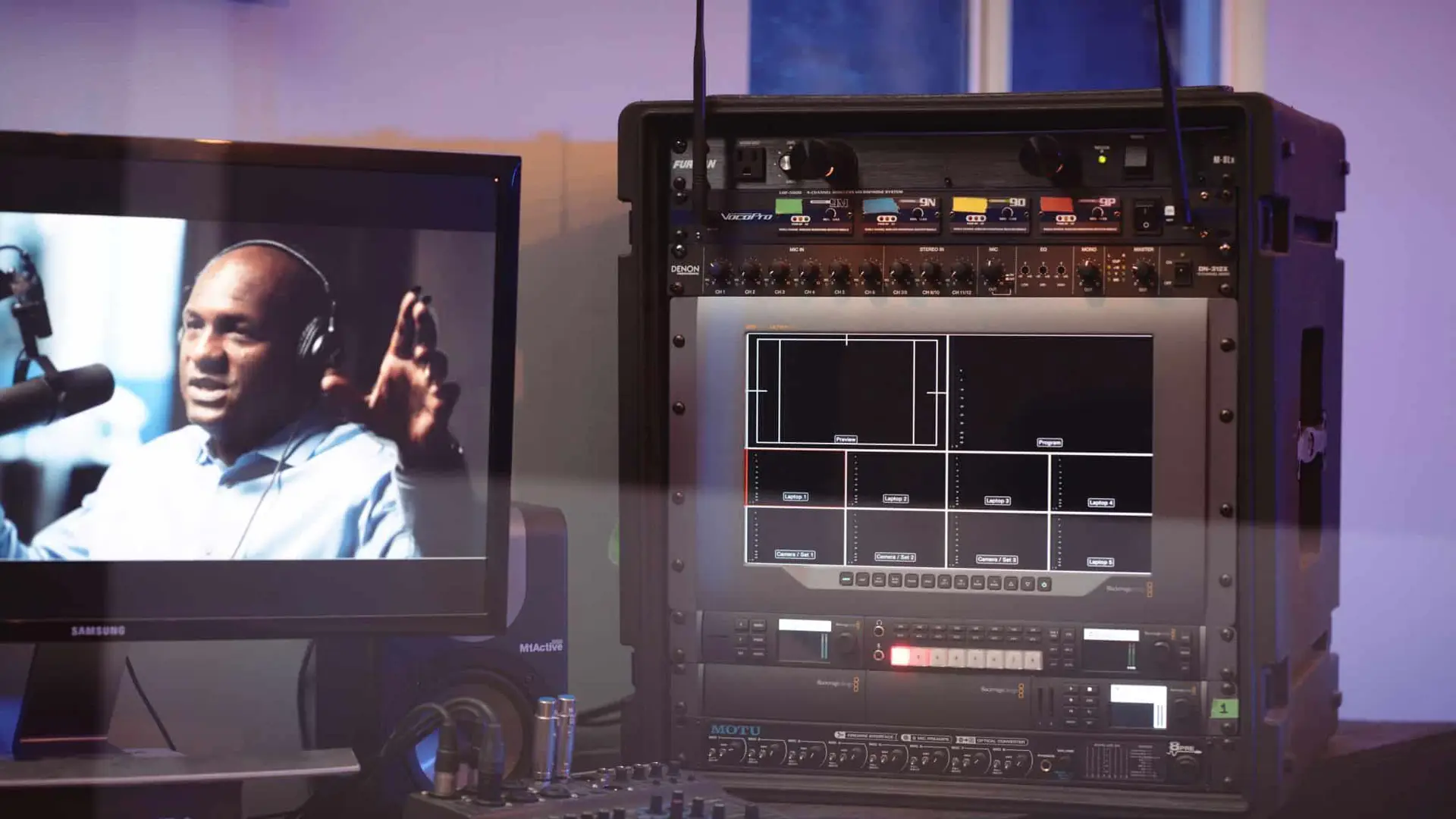
- 12/08/20
In a visual world, incorporating visual elements into [podcasts](https://c-istudios.com/creative-marketing-services/) can significantly enhance their reach and impact. Visual elements, such as video podcasts, audiograms, and visual descriptions, can help increase engagement and audience appeal. According to a joint study from SXM Media, GroupM, and Edison Research, 65% of podcast listeners say podcasts are replacing time with television, highlighting the growing importance of visual content in the podcasting landscape. Additionally, younger listeners are attracted to visual media, making it an untapped audience for advertisers.
Therefore, integrating visual elements into podcasts, such as creating video podcasts and using audiograms, can be a valuable strategy to enhance the content and reach a wider audience.
## Examples of visual podcasts
Some examples of visual podcasts include:
1. Video Podcasts: These are podcasts that incorporate video content alongside the audio. They can cover a wide range of subjects, including interviews, panel discussions, tutorials, and entertainment shows.
1. Audiograms: Audiograms are another form of visual content for podcasts. They are short audio clips, usually accompanied by a waveform and a relevant image, designed to be shared on social media platforms to engage and attract listeners.
1. Visual Descriptions: Providing visual descriptions in podcasts can make the content more accessible to listeners with visual impairments. This involves using audio and words to provide a vivid, sensory experience, enhancing the podcasting experience for those who are blind or partially sighted.
Incorporating these visual elements can significantly enhance the reach and impact of podcasts, increasing engagement and audience appeal.
## How visual podcasts can benefit podcasters and listeners
Visual podcasts can benefit both podcasters and listeners in several ways:
For Podcasters:
1. Enhanced Engagement: Video podcasts can engage viewers on multiple levels, as the human brain processes images much faster than text. Visual elements, such as facial expressions, gestures, and on-screen graphics, make the content more immersive and appealing.
1. Increased Monetization Opportunities: Video podcasts provide multiple avenues for generating income, such as ad placements, sponsored content, and merchandise sales. This can be a significant consideration for content creators looking to monetize their podcasts.
1. Networking Opportunities: Video podcasting provides an excellent opportunity to connect with industry experts, influencers, and like-minded individuals. Hosting guests on video podcasts helps in building valuable relationships and expanding the creator's network.
1. Creative Expression: Video podcasting allows creators to express their creativity in unique ways, offering endless possibilities to showcase their creative talents.
For Listeners:
1. Enhanced Content Experience: Visual podcasts offer a more immersive and appealing content experience by incorporating visual elements such as facial expressions, gestures, and on-screen graphics.
1. Accessibility: Providing visual descriptions in podcasts can make the content more accessible to listeners with visual impairments, enhancing the overall podcasting experience for a wider audience.
1. Varied Content: Video podcasts offer varying content styles, such as interviews, demonstrations, animations, and live streams, catering to a wide range of listener preferences.
In summary, visual podcasts can significantly enhance the content experience for both podcasters and listeners, offering increased engagement, monetization opportunities, networking prospects, and creative expression for creators, while providing a more immersive and varied content experience for listeners.
## Equipment needed to create a visual podcast
To create a visual podcast, the following [equipment](https://c-istudios.com/video-production-gear-list/) is typically needed:
1. Camera: A quality camera, such as a DSLR or mirrorless camera, is essential for capturing high-resolution video content.
1. Microphone: Good audio quality is crucial. Invest in a quality microphone, such as a lavalier mic, shotgun mic, or condenser mic, to capture clear and crisp sound.
1. Lighting: Proper lighting is important for creating a professional-looking video. Invest in lighting equipment to ensure the subjects are well-lit and the video quality is optimal.
1. Tripod: A stable tripod is necessary to keep the camera steady and ensure smooth and professional-looking footage.
1. Headphones: High-quality headphones are essential for monitoring audio quality during recording and editing.
1. Backdrop or Green Screen: A clean and visually appealing backdrop or a green screen can enhance the overall look of the video podcast.
1. Software and Editing Tools: Video recording, editing, and audio editing software are essential for producing polished and professional episodes.
By investing in the right equipment, podcasters can create visually appealing and high-quality video podcasts.
## Best practices for incorporating visual elements into podcasts
Some best practices for incorporating visual elements into podcasts include:
1. Podcast Artwork: Creating compelling and consistent artwork for the podcast can help it stand out and increase recognition. It's important to keep the artwork simple, clear, and bold to make an impact. Using templates and maintaining a visual system can help achieve consistency while avoiding monotony.
1. Audiograms: Audiograms are short video clips created from a static image layered with audio tracks, soundwaves, and text. They are a great way to bridge the gap between audio and visual content, making the podcast more engaging and shareable on social media platforms.
1. Video Quality: When creating video podcasts, pay attention to the overall quality of the video, ensuring that the images and videos are clear and well-lit. Interesting visual elements like faces, body language, and engaging graphics can significantly improve viewer attention.
1. Visual Identity: Utilize simple, high-resolution images for podcast cover art to ensure the best visual quality across all podcast listening platforms. Use high-contrast imagery and limit text to the podcast title to optimize the cover art for small screens.
By following these best practices, podcasters can effectively incorporate visual elements into their content, enhancing engagement and appeal for their audience.
## Popular platforms for hosting visual podcasts
Some popular platforms for hosting visual podcasts include:
1. Buzzsprout: Known for its ease of use, Buzzsprout is a popular choice for hosting podcasts, offering various features such as analytics and distribution tools.
1. Podbean: Podbean is recognized for its monetization features, making it an attractive option for podcasters looking to generate income from their content.
1. SoundCloud: While widely known for hosting music, SoundCloud is also a popular platform for hosting and sharing podcasts due to its large community of users and simple interface.
1. Spotify for Podcasters: Spotify offers a platform for hosting and distributing podcasts, leveraging its extensive reach and user base.
1. Libsyn: Regarded for its reliability, Libsyn is a trusted choice for podcast hosting, providing storage and distribution services for podcasters.
These platforms offer a range of features such as analytics, distribution, and monetization, catering to the diverse needs of visual podcasters.
## How visual podcasts can be monetized
Visual podcasts can be monetized through various strategies, including:
1. Advertising: Monetizing through ads is a common method. Podcasters can earn revenue by including advertisements in their visual podcasts. This can be through direct ad sales or by joining an advertising network.
1. Sponsorships: Partnering with sponsors can be lucrative. Sponsors pay to have their products or services promoted on the podcast, and this can be a significant source of revenue for podcasters.
1. Premium Content: Offering premium content to subscribers for a fee is another way to monetize visual podcasts. This can provide a steady revenue stream for podcasters.
1. Merchandise Sales: Selling branded merchandise related to the podcast, such as t-shirts, mugs, or other products, can be a fun way to bring a visual aspect to the podcast, get advertising, and make money.
1. Content Upgrades: Including downloadable resources with each podcast episode, known as content upgrades, can be a clever way to monetize a podcast.
1. Membership Programs: Creating membership programs that offer exclusive content or benefits to paying members can be a successful monetization strategy.
By implementing these strategies, podcasters can effectively monetize their visual podcasts and generate income from their content.
## Examples of successful visual podcasts that have been monetized
Some examples of successful visual podcasts that have been monetized include:
1. Psychobabble Korey Kuhl: This podcast has successfully utilized YouTube for monetization. The hosts release new episodes every week, discussing pop culture, current events, and common topics. The use of YouTube as a platform has been effective in reaching a wider audience and generating revenue through various monetization methods.
1. Tim Ferriss, Sam Harris, Rachel Hollis, Karen: These are examples of podcasts that primarily monetize through ads, donations, and sometimes merchandise or live events. They have successfully generated revenue through advertising and listener support.
These examples demonstrate the various ways in which visual podcasts can be monetized, including through platforms like YouTube and traditional methods such as advertising and merchandise sales.
## How visual podcasts can be promoted to attract new listeners
To promote visual podcasts and attract new listeners, podcasters can employ the following strategies:
1. Visual Branding: Develop a strong visual identity for the podcast, including a compelling logo and cover artwork. This can help the podcast stand out and attract potential listeners.
1. Audiograms: Create and share audiograms, which are short video clips featuring audio content, soundwaves, and text. These can be shared on social media platforms to attract new listeners and engage existing ones.
1. Utilize Visual Marketing: Incorporate visual marketing strategies to make the podcast more appealing and credible, ultimately attracting more listeners. This can include using skilled design to build credibility and grow the audience.
1. Podcast Website: Create a visually appealing website for the podcast, featuring carefully designed graphics, easy navigation, and visualized information. A well-designed website can attract and retain new listeners.
1. Transcribe Episodes: Transcribing podcast episodes and posting them in the episode notes can improve accessibility and help with keyword optimization, potentially attracting new listeners.
By implementing these strategies, podcasters can effectively promote their visual podcasts and attract new listeners.
## Effective social media strategies for promoting visual podcasts
Some effective social media strategies for promoting visual podcasts include:
1. Share Short Audio Clips: Share concise and engaging audio clips from podcast episodes on platforms like Twitter, LinkedIn, Instagram, and Facebook. These snippets should highlight exciting discussions, interesting insights, or humor to entice new listeners to check out the show.
1. Utilize Visual Content: Create and share various types of visual content, such as video teasers, quotes, infographics, polls, quizzes, behind-the-scenes, and testimonials. Visual content tends to attract more engagement and can effectively promote the podcast on social media platforms.
1. Audiograms and Rich Media: Create and share audiograms, rich media, soundbites, and video teasers to make the podcast more engaging and shareable on social networks.
1. Leverage Unique Features of Each Platform: Each social media platform has unique features that can be utilized to promote podcasts. For example, on TikTok, you can use features like Stitch and Duet to create engaging promotional content. On Twitter, pin tweets to keep important promotional tweets at the top of your profile.
1. Visual Branding: Develop a strong visual identity for the podcast, including compelling logo, cover artwork, and behind-the-scenes photos. Showcasing the human side of the podcast can help create a connection with the audience and build engagement.
By implementing these strategies, podcasters can effectively promote their visual podcasts on social media and attract new listeners.
## How to create eye-catching graphics for promoting visual podcasts on social media
To create eye-catching graphics for promoting visual podcasts on [social media](https://c-istudios.com/social-media-marketing-services/), podcasters can consider the following tips:
1. Utilize Templates: Use customizable templates specifically designed for promoting podcasts on social media. These templates can help in creating professional and engaging graphics that are tailored for various platforms.
1. Embody the Podcast Theme: Incorporate the theme of the podcast into the graphics to visually communicate the spirit of the show. This can be achieved through the use of relevant images, colors, and fonts that reflect the podcast's content and tone.
1. Visual Identity: Develop a visual identity for the podcast, including a compelling logo, cover artwork, and consistent graphics. This helps in creating a recognizable and professional look for the podcast across different social media platforms.
1. Share Behind-the-Scenes Content: Provide a glimpse into the making of the podcast by sharing behind-the-scenes photos and videos. This can help create a connection with the audience and build engagement.
By implementing these strategies, podcasters can create visually appealing graphics that effectively promote their visual podcasts on social media, ultimately attracting new listeners.
## Work with C&I Studios
If you are planning a project like this, our team can take it from concept to final delivery. Explore our [video production services](https://c-istudios.com/video-production-services/), browse [our work](https://c-istudios.com/our-work/) to see how we tell brand stories, and [get in touch](https://c-istudios.com/contact/) when you are ready to start.
Originally published January 11, 2024
---
*This content is from [C&I Studios](https://c-istudios.com), a full-service production company.*
---
# The Psychology of Color in Marketing: Choosing the Right Palette for Your Brand
> Published: January 9, 2024
> Categories: Commercial & Brand
> Source: https://c-istudios.com/the-psychology-of-color-in-marketing-choosing-the-right-palette-for-your-brand/
---
.cib{--paper:#1b1d1f;--ink:#fff;--body:#d5d7d9;--muted:#8b9096;--line:rgba(255,255,255,.12);--thumb:#2b2e31;--card:#212426;--accent:#c02b0a;--blue:#5B8FA8;--serif:'Playfair Display',Georgia,serif;--sans:'Poppins',-apple-system,sans-serif;--measure:900px;background:var(--paper);color:var(--body);font-family:var(--sans);line-height:1.6;position:relative;left:50%;transform:translateX(-50%);width:90vw;max-width:1920px}
.cib *{box-sizing:border-box}
.cib .kicker{max-width:var(--measure);margin:58px auto 0;padding:0 22px;font-size:12.5px;font-weight:700;letter-spacing:2.5px;text-transform:uppercase;color:var(--blue)}
.cib h1.cibh1{text-wrap:balance;font-family:var(--serif);font-weight:500;font-size:clamp(46px,6vw,72px);line-height:1.08;color:var(--ink);max-width:var(--measure);margin:18px auto 0;padding:0 22px;letter-spacing:-.5px}
.cib .metarow{max-width:var(--measure);margin:20px auto 0;padding:0 22px;color:var(--muted);font-size:14px}
.cib .hero{position:relative;width:100%;height:0;padding-bottom:56.25%;overflow:hidden;margin:48px auto 0;border-top:1px solid var(--line);border-bottom:1px solid var(--line)}
.cib .hero .ph{width:100%;aspect-ratio:16/9;background:var(--thumb);border-top:1px solid var(--line);border-bottom:1px solid var(--line);display:flex;align-items:center;justify-content:center;color:#7d8288;font-size:13px;text-align:center;padding:0 20px}
.cib .body{max-width:var(--measure);margin:12px auto 0;padding:52px 22px 6px}
.cib .body.lead p:first-child{font-size:23px;line-height:1.62;color:var(--ink)}
.cib .body p{font-size:18.5px;line-height:1.85;margin:0 0 30px;color:var(--body)}
.cib .body h2{text-wrap:balance;font-family:var(--serif);font-weight:500;font-size:clamp(32px,4vw,48px);line-height:1.22;color:var(--ink);margin:70px 0 20px;letter-spacing:-.3px}
.cib .body h3{text-wrap:balance;font-family:var(--sans);font-weight:600;font-size:22px;color:var(--ink);margin:38px 0 8px}
.cib .body a{color:var(--ink);text-decoration:underline;text-decoration-color:rgba(255,255,255,.4);text-underline-offset:3px}
.cib .body a:hover{text-decoration-color:var(--ink)}
.cib .ctable{width:100%;border-collapse:collapse;margin:16px 0 30px;font-size:16px}
.cib .ctable th{background:#000;color:#fff;text-align:left;padding:10px 12px;font-family:var(--sans)}
.cib .ctable td{padding:10px 12px;border-bottom:1px solid var(--line);color:var(--body)}
.cib .inimg{position:relative;width:100%;height:0;padding-bottom:56.25%;overflow:hidden;margin:72px auto;border-top:1px solid var(--line);border-bottom:1px solid var(--line)}
.cib .inimg .ph{width:100%;aspect-ratio:16/9;background:var(--thumb);border-top:1px solid var(--line);border-bottom:1px solid var(--line);display:flex;align-items:center;justify-content:center;color:#7d8288;font-size:13px}
.cib .origpub{max-width:var(--measure);margin:60px auto 0;padding:26px 22px 0;border-top:1px solid var(--line);color:var(--muted);font-size:13.5px}
.cib .related{max-width:1200px;margin:64px auto 0;padding:34px 22px 76px}
.cib .related h3{font-family:var(--sans);font-size:12.5px;letter-spacing:2px;text-transform:uppercase;color:var(--ink);margin:0 0 24px}
.cib .grid{display:grid;grid-template-columns:repeat(3,1fr);gap:28px}
.cib .rc{background:var(--card);border:1px solid var(--line);display:block;text-decoration:none;color:inherit;transition:border-color .15s}
.cib a.rc:hover{border-color:rgba(255,255,255,.5)}
.cib .rc .thumb{position:relative;width:100%;height:0;padding-bottom:56.25%;background:var(--thumb);overflow:hidden}
.cib .rc .thumb img{position:absolute!important;top:0!important;left:0!important;width:100%!important;height:100%!important;object-fit:cover!important;margin:0!important}
.cib .rc .cc{padding:14px 15px 17px}
.cib .rc .rt{font-family:var(--serif);font-weight:500;font-size:16px;line-height:1.3;color:var(--ink);margin:0 0 6px}
.cib .rc .rm{font-size:11px;letter-spacing:1px;text-transform:uppercase;color:var(--muted)}
.cib img{margin:0!important;padding:0!important;display:block!important;vertical-align:top;max-width:100%}
.cib .hero img,.cib .inimg img{position:absolute!important;top:0!important;left:0!important;width:100%!important;height:100%!important;object-fit:cover!important;margin:0!important;padding:0!important;border:0!important;display:block!important;aspect-ratio:auto!important}
.cib .hero+.body{padding-top:36px}
@media(max-width:760px){.cib .grid{grid-template-columns:1fr}.cib .body h2{margin:52px 0 16px}.cib .body p{font-size:17.5px}.cib .inimg,.cib .hero{margin-top:44px}}
.cib .vembed{max-width:var(--measure);margin:44px auto;padding:0 22px}.cib .vembed .vwrap{position:relative;width:100%;height:0;padding-bottom:56.25%}.cib .vembed .vwrap iframe{position:absolute;top:0;left:0;width:100%;height:100%;border:0}
Commercial & Brand
# The Psychology of Color in Marketing. Choosing the Right Palette for Your Brand
4 min read

- 12/08/20
Color psychology in marketing is the study of how colors affect perceptions and behaviors, and it plays a significant role in consumer decision-making. Different colors evoke distinct emotions and can influence consumers' perceptions of a brand or product. For example, red is associated with excitement and passion, blue with calmness, and yellow with optimism and joy.
Marketers use color psychology to create [brand identities](https://c-istudios.com/branding-and-graphic-design-services/) that resonate with their target audience and evoke specific emotions. Research has shown that up to 90% of snap judgments about products can be based on color alone, and 85% of consumers say that color is the primary influencer in their purchase decisions.
Therefore, understanding the psychology of color and its impact on consumer behavior is crucial for creating effective marketing strategies and building strong brand identities.
## How color psychology affects consumer behavior
Color psychology significantly affects consumer behavior in marketing. Research has shown that up to 90% of an initial impression about a product is based on color alone, and 85% of consumers say that color is the primary influencer in their purchase decisions.
Different colors evoke specific emotions and can influence consumers' perceptions of a brand or product. For example, red is associated with excitement and passion, blue with calmness, and yellow with optimism and joy.
Understanding the psychology of color is essential for developing [effective marketing campaigns](https://c-istudios.com/our-work/) and brand identities. Marketers can use this information to their advantage by leveraging colors to evoke specific emotions needed to influence purchasing decisions and brand perception.
## Examples of successful color psychology in marketing
Color psychology has been effectively used in marketing to influence consumer behavior and brand perception. Here are some examples of successful applications:
1. Red: Associated with excitement and passion, it has been used to trigger emotions needed to drive purchases.
1. Blue: Known for evoking calmness, it has been used to convey trust and serenity in branding.
1. Yellow: Associated with optimism and joy, it has been used to create a sense of warmth and positivity around a brand.
These examples demonstrate how different colors have been strategically employed to evoke specific emotions and influence consumer perceptions, ultimately impacting their purchasing decisions.
## How color psychology can be used to create a brand personality
Color psychology can be used to create a brand personality by strategically selecting colors that align with the brand's attributes, values, and the emotions it aims to evoke in its target audience. By understanding the emotional associations of different colors, brands can choose a color palette that communicates their desired personality and resonates with their audience. For example, red may be used to convey excitement and passion, while blue can represent trust and reliability. By matching the brand's attributes to relevant colors, a brand can [effectively communicate](https://c-istudios.com/creative-marketing-services/) its personality and create a strong and meaningful visual identity[.](https://www.ignytebrands.com/the-psychology-of-color-in-branding/)
This strategic use of color psychology in branding can lead to increased brand recognition, awareness, and loyalty, as colors have a powerful effect on consumer emotions and behavior.
## Examples of successful branding using color psychology
Several examples demonstrate the successful application of color psychology in branding:
1. McDonald's: The fast-food giant's use of striking red and yellow in its logo and branding is a well-known example. Red is associated with excitement and passion, while yellow represents optimism and energy, aligning with the brand's image of fun and vibrancy.
1. Coca-Cola: The brand's signature red is linked to feelings of positivity, fun, and energy, effectively communicating its brand personality.
1. IBM: The use of a timeless shade of blue evokes trust, security, and dependability, reinforcing the brand's identity as a B2B juggernaut.
These examples illustrate how brands have leveraged color psychology to reinforce their identities, evoke specific emotions, and influence consumer behavior, ultimately contributing to their success in the market.
## Examples of color psychology in branding for luxury brands
Luxury brands often use color psychology to convey sophistication, elegance, and exclusivity. Some examples of successful branding using color psychology for luxury brands include:
1. Tiffany & Co.: The brand's iconic use of robin's egg blue, known as "Tiffany Blue," is synonymous with luxury and exclusivity. The color evokes a sense of sophistication and timelessness, contributing to the brand's strong and recognizable identity.
1. Hermès: The use of rich, warm orange in the brand's logo and packaging conveys a sense of luxury and creativity. The color is associated with uniqueness and high quality, reflecting the brand's prestigious image.
1. Chanel: The classic combination of black and white in Chanel's branding represents elegance, simplicity, and timelessness. Black is often associated with luxury and sophistication, while white conveys purity and exclusivity, aligning with the brand's high-end positioning.
These examples demonstrate how luxury brands strategically use color psychology to communicate their brand's personality and influence consumer perceptions, ultimately contributing to their success in the market.
## Common color associations in marketing
Some common color associations in marketing, based on color psychology, include:
- Red: Associated with excitement, passion, urgency, and danger.
- Orange: Linked to warmth, energy, and creativity.
- Yellow: Evokes feelings of optimism, happiness, and caution.
- Green: Associated with nature, growth, and health.
- Blue: Linked to trust, security, and professionalism.
- Purple: Associated with luxury, sophistication, and creativity.
- Pink: Often associated with femininity, romance, and sensitivity.
- Black: Linked to sophistication, power, and mystery.
- White: Associated with purity, simplicity, and cleanliness.
These color associations are used in marketing to influence consumer behavior and perceptions, as each color can evoke specific emotions and impact consumer decision-making.
## How to choose the right color palette for a brand
To choose the right color palette for a brand, several steps can be followed:
1. Understand Your Brand: Consider the personality and values your brand represents. For instance, a fun brand may opt for warm colors like orange and yellow, while a wellness brand might choose calming colors like blue or green.
1. Consider Color Meanings: Explore color psychology and the meanings associated with different colors. For example, red can signify excitement, while blue can represent trustworthiness.
1. Research and Test: Look into your industry and competitors' color palettes to ensure distinctiveness. Test colors with your target audience to gauge their perception and ensure the colors align with your brand's message.
1. Create a Color Scheme: Once you have a clear understanding of your brand and the meanings behind different colors, you can create a color scheme that reflects your brand's identity and values.
By following these steps, a brand can choose a color palette that effectively communicates its personality and resonates with its target audience.
## Tools and resources to help in choosing a brand color palette
Several tools and resources can help in choosing a brand color palette. Here are some free online tools that can assist in this process:
1. Adobe Color CC: This web app allows you to generate and tweak color palettes based on various color rules, making it a valuable tool for building a cohesive color scheme.
2. Coolors: Coolors is a platform that enables you to generate color schemes and explore various color combinations. It also offers a paid Adobe plug-in for easy use in Adobe software.
3. Color Hunt: This platform provides a wide range of trendy and appealing color palettes, offering inspiration and options for creating your brand's color scheme.
4. Canva: Canva is a versatile design platform that includes features for creating and customizing color palettes, making it a useful resource for brand color selection.
5. Adobe Color CC: This tool, formerly known as Adobe Kuler, allows you to generate and tweak color palettes based on various color rules, making it a valuable resource for building a cohesive color scheme.
These tools can provide endless inspiration and help you refine your choice of brand colors, ultimately aiding in the selection of an iconic and effective brand color palette.
## How to ensure that brand colors are unique and not already used by other brands
To ensure that brand colors are unique and not already used by other brands, follow these steps:
1. Research Competitors: Investigate the color palettes of your direct competitors and major brands in your industry to avoid similarities.
2. Use Online Tools: Utilize online resources such as Adobe Color CC, Coolors, and Color Hunt to create and test unique color palettes.
3. Consider Cultural Meanings: Be mindful of cultural associations with colors to ensure that your chosen colors align with your target market's perceptions.
4. Limit Your Palette: Select a limited number of main colors, along with supporting neutrals, to maintain consistency and coherence across your brand's visual identity.
5. Test and Refine: Experiment with different color combinations and seek feedback to ensure that your brand colors are distinctive and effectively communicate your brand's identity.
By following these steps, you can increase the likelihood of creating a unique and recognizable brand color palette that sets your brand apart from others.
## How to ensure that brand colors are cohesive across different platforms
To ensure that brand colors are cohesive across different platforms, take the following steps:
1. Use a Style Guide: Create a style guide that outlines the specific colors, their values, and their application across various media. This ensures that your color choices blend smoothly and strengthens a coherent and easily recognizable brand presence.
1. Maintain Color Consistency: Use defined and unchanged color values and gradients to ensure uniformity in promoting the brand across different platforms, including print, digital, and online channels.
1. Tell a Story with Colors: Weave a story around the chosen color and associate it with the intended image or usage of the brand. This can help create a consistent and meaningful brand identity across different media forms.
1. Develop Brand Guidelines: Create brand guidelines that encompass your color palette, typography, and imagery, ensuring that they are consistent across all channels, including social media, website design, and corporate messaging.
By following these steps, you can maintain a consistent and cohesive brand identity across various platforms, ensuring that your brand colors are effectively represented and recognized.
## How to test the effectiveness of a brand color palette on different platforms
To test the effectiveness of a brand color palette on different platforms, consider the following methods and tools:
1. A/B Testing: Utilize A/B testing to compare how different color variations affect key metrics such as click-through rates, conversion rates, or user engagement. This can be done using online platforms like Google Optimize or Optimizely.
1. Multivariate Testing: Conduct multivariate testing to assess multiple combinations of color elements at once, helping identify the most effective color schemes.
1. Consistent and Relevant Segments Testing: Test with consistent and relevant segments of your audience, targeting the same group of visitors for each color variation and considering factors like location, device, and behavior that may affect their color preferences and responses.
1. Feedback Collection: Collect feedback from your existing or potential audience using surveys, interviews, focus groups, or online reviews to understand their preferences, opinions, and feelings about your color choices and how they relate to your brand values, personality, and message.
In addition to these methods, various online tools such as Adobe Color CC, Coolors, and Color Hunt can assist in creating and testing unique color palettes across different platforms.
## Common mistakes to avoid when choosing a brand color palette
When choosing a brand color palette, it's important to avoid common mistakes to ensure the effectiveness of your colors. Some common mistakes to avoid include:
1. Picking Too Many Colors: A broad color palette can dilute the strength of the brand and make it less memorable. Limiting the number of brand colors used can help maintain consistency and reinforce your brand's identity.
1. Choosing Colors Only Because You Like Them: Brand colors should be based on what resonates with your customers, not just personal preference. It's essential to consider what will appeal to your target audience and reflect your brand's values and personality.
1. Not Considering Where and How Colors Will Be Used: Different businesses use color in varying ways, and it's important to consider how your chosen colors will be used across different platforms. For example, a color that works well on a website may not translate effectively to print materials.
1. Neglecting Research and Color Psychology: It's crucial to conduct thorough research and consider the emotional and psychological effects of colors. Each color has its own associations and meanings, and it's important to choose colors that align with your brand's personality, values, and target audience.
1. Forgetting About Accessibility: Some colors may be difficult to see, read, or distinguish for people with visual impairments, color blindness, or low vision. It's important to ensure that your chosen colors are accessible to all users.
By avoiding these common mistakes, you can ensure that your brand color palette is effective, cohesive, and aligned with your brand's identity and values.
## Work with C&I Studios
If you are planning a project like this, our team can take it from concept to final delivery. Explore our [video production services](https://c-istudios.com/video-production-services/), browse [our work](https://c-istudios.com/our-work/) to see how we tell brand stories, and [get in touch](https://c-istudios.com/contact/) when you are ready to start.
Originally published January 9, 2024
---
*This content is from [C&I Studios](https://c-istudios.com), a full-service production company.*
---
# The Resurgence of Retro: Nostalgia Marketing in Film and TV
> Published: January 8, 2024
> Categories: Commercial & Brand
> Source: https://c-istudios.com/the-resurgence-of-retro-nostalgia-marketing-in-film-and-tv/
---
.cib{--paper:#1b1d1f;--ink:#fff;--body:#d5d7d9;--muted:#8b9096;--line:rgba(255,255,255,.12);--thumb:#2b2e31;--card:#212426;--accent:#c02b0a;--blue:#5B8FA8;--serif:'Playfair Display',Georgia,serif;--sans:'Poppins',-apple-system,sans-serif;--measure:900px;background:var(--paper);color:var(--body);font-family:var(--sans);line-height:1.6;position:relative;left:50%;transform:translateX(-50%);width:90vw;max-width:1920px}
.cib *{box-sizing:border-box}
.cib .kicker{max-width:var(--measure);margin:58px auto 0;padding:0 22px;font-size:12.5px;font-weight:700;letter-spacing:2.5px;text-transform:uppercase;color:var(--blue)}
.cib h1.cibh1{text-wrap:balance;font-family:var(--serif);font-weight:500;font-size:clamp(46px,6vw,72px);line-height:1.08;color:var(--ink);max-width:var(--measure);margin:18px auto 0;padding:0 22px;letter-spacing:-.5px}
.cib .metarow{max-width:var(--measure);margin:20px auto 0;padding:0 22px;color:var(--muted);font-size:14px}
.cib .hero{position:relative;width:100%;height:0;padding-bottom:56.25%;overflow:hidden;margin:48px auto 0;border-top:1px solid var(--line);border-bottom:1px solid var(--line)}
.cib .hero .ph{width:100%;aspect-ratio:16/9;background:var(--thumb);border-top:1px solid var(--line);border-bottom:1px solid var(--line);display:flex;align-items:center;justify-content:center;color:#7d8288;font-size:13px;text-align:center;padding:0 20px}
.cib .body{max-width:var(--measure);margin:12px auto 0;padding:52px 22px 6px}
.cib .body.lead p:first-child{font-size:23px;line-height:1.62;color:var(--ink)}
.cib .body p{font-size:18.5px;line-height:1.85;margin:0 0 30px;color:var(--body)}
.cib .body h2{text-wrap:balance;font-family:var(--serif);font-weight:500;font-size:clamp(32px,4vw,48px);line-height:1.22;color:var(--ink);margin:70px 0 20px;letter-spacing:-.3px}
.cib .body h3{text-wrap:balance;font-family:var(--sans);font-weight:600;font-size:22px;color:var(--ink);margin:38px 0 8px}
.cib .body a{color:var(--ink);text-decoration:underline;text-decoration-color:rgba(255,255,255,.4);text-underline-offset:3px}
.cib .body a:hover{text-decoration-color:var(--ink)}
.cib .ctable{width:100%;border-collapse:collapse;margin:16px 0 30px;font-size:16px}
.cib .ctable th{background:#000;color:#fff;text-align:left;padding:10px 12px;font-family:var(--sans)}
.cib .ctable td{padding:10px 12px;border-bottom:1px solid var(--line);color:var(--body)}
.cib .inimg{position:relative;width:100%;height:0;padding-bottom:56.25%;overflow:hidden;margin:72px auto;border-top:1px solid var(--line);border-bottom:1px solid var(--line)}
.cib .inimg .ph{width:100%;aspect-ratio:16/9;background:var(--thumb);border-top:1px solid var(--line);border-bottom:1px solid var(--line);display:flex;align-items:center;justify-content:center;color:#7d8288;font-size:13px}
.cib .origpub{max-width:var(--measure);margin:60px auto 0;padding:26px 22px 0;border-top:1px solid var(--line);color:var(--muted);font-size:13.5px}
.cib .related{max-width:1200px;margin:64px auto 0;padding:34px 22px 76px}
.cib .related h3{font-family:var(--sans);font-size:12.5px;letter-spacing:2px;text-transform:uppercase;color:var(--ink);margin:0 0 24px}
.cib .grid{display:grid;grid-template-columns:repeat(3,1fr);gap:28px}
.cib .rc{background:var(--card);border:1px solid var(--line);display:block;text-decoration:none;color:inherit;transition:border-color .15s}
.cib a.rc:hover{border-color:rgba(255,255,255,.5)}
.cib .rc .thumb{position:relative;width:100%;height:0;padding-bottom:56.25%;background:var(--thumb);overflow:hidden}
.cib .rc .thumb img{position:absolute!important;top:0!important;left:0!important;width:100%!important;height:100%!important;object-fit:cover!important;margin:0!important}
.cib .rc .cc{padding:14px 15px 17px}
.cib .rc .rt{font-family:var(--serif);font-weight:500;font-size:16px;line-height:1.3;color:var(--ink);margin:0 0 6px}
.cib .rc .rm{font-size:11px;letter-spacing:1px;text-transform:uppercase;color:var(--muted)}
.cib img{margin:0!important;padding:0!important;display:block!important;vertical-align:top;max-width:100%}
.cib .hero img,.cib .inimg img{position:absolute!important;top:0!important;left:0!important;width:100%!important;height:100%!important;object-fit:cover!important;margin:0!important;padding:0!important;border:0!important;display:block!important;aspect-ratio:auto!important}
.cib .hero+.body{padding-top:36px}
@media(max-width:760px){.cib .grid{grid-template-columns:1fr}.cib .body h2{margin:52px 0 16px}.cib .body p{font-size:17.5px}.cib .inimg,.cib .hero{margin-top:44px}}
.cib .vembed{max-width:var(--measure);margin:44px auto;padding:0 22px}.cib .vembed .vwrap{position:relative;width:100%;height:0;padding-bottom:56.25%}.cib .vembed .vwrap iframe{position:absolute;top:0;left:0;width:100%;height:100%;border:0}
Commercial & Brand
# The Resurgence of Retro. Nostalgia Marketing in Film and TV
3 min read

- 12/08/20
Nostalgia marketing, which leverages sentimental longing for the past, has seen a resurgence in [film and TV](https://c-istudios.com/). Marketers are tapping into this trend to connect with audiences and evoke positive emotions. This approach involves using retro and throwback designs, incorporating modern references, and utilizing social media to engage with the target audience.
Nostalgia marketing has proven effective not only with older generations but also with surprising audiences such as Gen Z. By understanding the motivations and interests of their target demographics, brands can effectively harness the power of nostalgia to create impactful marketing campaigns.
The resurgence of nostalgia marketing in film and TV is evident through the use of retro and throwback designs, modern references, and social media engagement to connect with audiences across different generations. This approach has proven effective in evoking positive emotions and fostering brand loyalty.
## Benefits of using nostalgia marketing in advertising
Nostalgia marketing in advertising offers several benefits, including the following:
1. Stirring Powerful Emotions: Nostalgia marketing evokes strong emotions and helps people of all ages deal with life transitions.
1. Increased Brand Loyalty, Engagement, and Sales: It can lead to increased brand loyalty, engagement, and sales, as it creates a positive, emotional connection with customers.
1. Revitalizing Old Brands: Nostalgia marketing can revitalize old brands by reintroducing them to a new target audience with a modern twist.
1. Broad Appeal: While feeling personal, nostalgia marketing has broad appeal, connecting people to a shared understanding of the past.
1. Fostering Positive Feelings and Personal Relationships: It helps foster positive feelings within the target audience and develop personal relationships with them.
By leveraging nostalgia, brands can create impactful marketing campaigns that resonate with their audience and lead to increased engagement and sales.
## Examples of retro marketing in film and TV
Some examples of retro marketing in film and TV include:
1. Star Wars: I - Phantom Menace: This film served as a brand revival from the famous trilogy of George Lucas in the 1970s and 1980s, tapping into retro-connected products and services for today's fun economy
1. Coca-Cola ads of the 1970s and the De Beers 'A Diamond is Forever' campaign: These are classic examples of nostalgia marketing that have successfully leveraged retro themes to connect with audiences.
1. Vintage Pepsi branding of the 70s and 80s: This is an example of nostalgia marketing that has effectively used retro themes to evoke positive emotions and foster brand loyalty.
These examples demonstrate how retro marketing has been utilized in film and TV to create powerful emotional connections with audiences and drive engagement.
## How has retro marketing evolved over time
Retro marketing has evolved over time, incorporating modern elements while maintaining a connection to the past. Some key aspects of this evolution include:
1. Breathing New Life into Historic Brands: Retro marketing now involves reviving historic brands or products with a modern twist, creating unique retro-themed products and concepts with ease due to technological advances.
1. Experiential and Social Media Integration: Successful retro marketing campaigns now often include experiential marketing, such as pop-up shops, and leverage [social media](https://c-istudios.com/social-media-marketing-services/) platforms to spread nostalgia marketing campaigns, allowing consumers to become part of the brand and play a pivotal role in the marketing strategy.
1. Appeal to Multiple Generations: Retro marketing is a concept that can appeal to several generations of consumers, as it taps into the emotional connection and memories associated with specific time periods, making it relevant across different age groups.
1. Nostalgia-Infused Product Lines: Brands are developing new items and updated versions of old products with a modern twist, such as retro-inspired apparel, music, and decor, to create a sense of connection with the past while staying current with pop culture trends.
1. Incorporating Modern References: Retro marketing campaigns now include modern references or touchpoints that renew the concept, idea, or product, ensuring that the campaign is not solely focused on the past but also incorporates contemporary elements.
By incorporating these elements, retro marketing has continued to be a powerful and relevant strategy for brands, allowing them to create a strong emotional connection with consumers across different generations.
## Common nostalgia marketing tactics used in advertising
Some common nostalgia marketing tactics used in advertising include:
1. Incorporating Familiar Elements: Nostalgia marketing incorporates familiar elements, ideas, concepts, songs, symbols, and products from previous years to create a positive, emotional connection with the audience.
1. Using Social Media: Brands often tap into consumers' longing for simpler times and the comforts of the past through social media advertising, using iconic imagery, music, and even retro video games to effectively transport their target audience down memory lane.
1. Creating a Sense of Comfort: Nostalgia marketing seeks to evoke positive emotions from consumers and create a sense of comfort, building a connection with the target audience through nostalgia.
1. Avoiding Overuse and Inauthenticity: It's important not to overuse nostalgia in advertising, as this can lead to audience fatigue, and it's crucial for brands to avoid using nostalgia in a way that feels forced or inauthentic, especially if the brand is very young.
By understanding what motivates their audiences and incorporating these tactics, brands can effectively harness the power of nostalgia to create impactful marketing campaigns.
## Examples of nostalgia marketing in social media ads
Some examples of nostalgia marketing in social media ads include:
1. Nintendo: Many children of the ‘80s and ‘90s remember playing Nintendo-based video games with their siblings. Nintendo has effectively used nostalgia marketing to connect with its audience through social media.
1. Coca-Cola: Coca-Cola has capitalized on nostalgia by bringing back the popular drink Surge, leveraging social media to reach out to its audience with nostalgia.
1. Heaven by Marc Jacobs: This brand tapped into the 90s edgy style, leveraging nostalgia marketing through social media to connect with its audience.
These examples demonstrate how brands have effectively used nostalgia marketing in social media ads to create a powerful emotional connection with their target audience.
## How retro marketing can be used to appeal to a specific age group
Retro marketing can be used to appeal to a specific age group by leveraging the following strategies:
1. Understanding the Target Audience: It's essential to understand the specific age group's cultural touchpoints and preferences. For instance, targeting Gen Z with 1970s style ads might miss the mark, so it's crucial to tailor the campaign to resonate with the intended audience.
1. Multigenerational Campaigns: While nostalgia marketing is often targeted at younger generations like Millennials and Gen Z, a multigenerational nostalgia campaign can still be effective when it appeals to each generation.
1. Social Media Integration: Leveraging social media platforms like Instagram and TikTok to spread nostalgia marketing campaigns can be particularly effective for targeting specific age groups, as these platforms allow consumers to become part of the brand and play a pivotal role in the marketing strategy.
1. Nostalgia-Infused Product Lines: Developing new items and updated versions of old products with a modern twist that are reminiscent of a simpler era can be tailored to appeal to specific age groups, such as retro-inspired apparel, music, or decor.
By understanding the target audience, tailoring the campaign to resonate with their preferences, and leveraging social media and nostalgia-infused product lines, retro marketing can effectively appeal to a specific age group.
## How nostalgia marketing can be used to appeal to a specific generation
Nostalgia marketing can be used to appeal to a specific generation by understanding the cultural references and preferences of that generation. For example, Gen Z may look to cultural references from the '90s or early 2000s, while Gen X or older millennials might feel nostalgic about the '80s and its cultural touchpoints.
To appeal to Gen Z, brands can use strategies such as creating a nostalgia-infused product line with a modern twist, using influencers to tap into nostalgia, and leveraging social media listening to understand what the target audience misses.
By tapping into the specific cultural touchpoints and preferences of each generation, brands can effectively use nostalgia marketing to create a sense of connection with their target audience and drive brand loyalty.
## Common cultural references used in nostalgia marketing for different generations
Nostalgia marketing taps into different cultural references to appeal to specific generations. Some common cultural references used in nostalgia markeing for different generations include:
1. Baby Boomers: Cultural references from the 1950s, 1960s, and 1970s, such as classic logos, packaging, and ads from that era, can evoke strong emotions and create a sense of connection with this generation.
1. Gen X: References to the 1980s and early 1990s, including iconic products, historical events, and popular culture from that time, can effectively resonate with Gen X.
1. Millennials: Cultural touchpoints from the 1990s and early 2000s, such as retro video games, music, and TV shows, can be used to create a powerful emotional connection with millennials.
By understanding these cultural references and leveraging them in marketing campaigns, brands can effectively appeal to specific generations and create a strong emotional connection with their target audience.
## Common elements of successful nostalgia marketing campaigns targeting Gen Z
Some common elements of successful nostalgia marketing campaigns targeting Gen Z include:
1. Experiential Marketing: Creating experiential marketing campaigns that allow Gen Z to relive their favorite childhood memories, such as pop-up shops or events that tap into nostalgic themes.
1. Nostalgia-Infused Product Line: Developing new items and updated versions of old products with a modern twist that are reminiscent of a simpler era, such as retro-inspired apparel, music, or decor.
1. Influencer Marketing: Collaborating with prominent Gen Z influencers who have a strong connection to a certain era or time and producing content that references that era, such as recreating a great movie or TV show scene with a modern-day twist.
1. Leveraging Pop-Culture Icons: Using pop-culture icons to transcend time and connect with Gen Z on a personal and emotional level.
1. Social Media Integration: Leveraging social media platforms like Instagram and TikTok to spread nostalgia marketing campaigns, as these platforms allow consumers to become a part of the brand and play a pivotal role in nostalgia marketing by creating an authentic connection.
By incorporating these elements, brands can effectively tap into the power of nostalgia to create a strong emotional connection with Gen Z and drive engagement with this audience.
## How brands can incorporate vintage imagery into retro marketing campaigns
Brands can incorporate vintage imagery into retro marketing campaigns through various strategies, including:
1. Retro Aesthetics: This involves incorporating vintage [designs and imagery](https://c-istudios.com/branding-and-graphic-design-services/) into product packaging, advertising, and campaign visuals to create a feeling of mysticism and rich storytelling.
1. Pop Culture Graphics: Using everyday pop culture images in products and campaigns can draw in more consumers, as it taps into the warm and wholesome tone of ads reminiscent of simpler times.
1. Vintage Filters and Designs: Adding vintage filters to images or using retro-style graphics can create a sense of nostalgia and familiarity, triggering happy memories and emotions in the audience.
1. Multigenerational Appeal: Retro marketing can incorporate vintage imagery that resonates with multiple generations, expanding a brand's reach and creating enduring value through cross-generational appeal.
By leveraging these strategies, brands can effectively incorporate vintage imagery into their retro marketing campaigns, evoking strong emotions and creating a sense of connection with their target audience.
## How nostalgia marketing can be used to create a sense of community
Nostalgia marketing can be used to create a sense of community by tapping into shared experiences and cultural touchpoints from the past, fostering trust, and bringing people together through shared experiences and memories. Some strategies to achieve this include:
1. Fostering Trust and Loyalty: By evoking a sense of familiarity and connecting with consumers on a personal level, brands can foster trust and loyalty, as consumers are more likely to feel comfortable with and loyal to a brand that understands and resonates with their past experiences.
1. Encouraging Conversation and Interaction: Creating campaigns that encourage conversation and interaction can bring people together through shared experiences and memories, strengthening the emotional ties that bind a community.
1. User-Generated Content (UGC): Nostalgia marketing can benefit from the power of UGC, as it encourages the audience to share their own stories and experiences. By fostering a supportive and enthusiastic community around nostalgia, brands can benefit from the extended reach and lasting impact of UGC, while also gaining valuable insights into the experiences of their audience.
1. Authenticity and Meaningful Connections: Building a community around nostalgia requires authenticity, a genuine understanding of the target audience, and a commitment to creating meaningful connections that go beyond simple marketing tactics. When executed effectively, nostalgia-based community building can lead to long-term brand loyalty and advocacy.
By incorporating these strategies, brands can effectively use nostalgia marketing to create a sense of community, deepen emotional connections, and foster long-term brand loyalty and advocacy.
## Work with C&I Studios
If you are planning a project like this, our team can take it from concept to final delivery. Explore our [video production services](https://c-istudios.com/video-production-services/), browse [our work](https://c-istudios.com/our-work/) to see how we tell brand stories, and [get in touch](https://c-istudios.com/contact/) when you are ready to start.
Originally published January 8, 2024
---
*This content is from [C&I Studios](https://c-istudios.com), a full-service production company.*
---
# Behind the Scenes of Reality TV: Understanding Production Challenges
> Published: January 8, 2024
> Categories: Film & TV
> Source: https://c-istudios.com/behind-the-scenes-of-reality-tv-understanding-production-challenges/
---
.cib{--paper:#1b1d1f;--ink:#fff;--body:#d5d7d9;--muted:#8b9096;--line:rgba(255,255,255,.12);--thumb:#2b2e31;--card:#212426;--accent:#c02b0a;--blue:#5B8FA8;--serif:'Playfair Display',Georgia,serif;--sans:'Poppins',-apple-system,sans-serif;--measure:900px;background:var(--paper);color:var(--body);font-family:var(--sans);line-height:1.6;position:relative;left:50%;transform:translateX(-50%);width:90vw;max-width:1920px}
.cib *{box-sizing:border-box}
.cib .kicker{max-width:var(--measure);margin:58px auto 0;padding:0 22px;font-size:12.5px;font-weight:700;letter-spacing:2.5px;text-transform:uppercase;color:var(--blue)}
.cib h1.cibh1{text-wrap:balance;font-family:var(--serif);font-weight:500;font-size:clamp(46px,6vw,72px);line-height:1.08;color:var(--ink);max-width:var(--measure);margin:18px auto 0;padding:0 22px;letter-spacing:-.5px}
.cib .metarow{max-width:var(--measure);margin:20px auto 0;padding:0 22px;color:var(--muted);font-size:14px}
.cib .hero{position:relative;width:100%;height:0;padding-bottom:56.25%;overflow:hidden;margin:48px auto 0;border-top:1px solid var(--line);border-bottom:1px solid var(--line)}
.cib .hero .ph{width:100%;aspect-ratio:16/9;background:var(--thumb);border-top:1px solid var(--line);border-bottom:1px solid var(--line);display:flex;align-items:center;justify-content:center;color:#7d8288;font-size:13px;text-align:center;padding:0 20px}
.cib .body{max-width:var(--measure);margin:12px auto 0;padding:52px 22px 6px}
.cib .body.lead p:first-child{font-size:23px;line-height:1.62;color:var(--ink)}
.cib .body p{font-size:18.5px;line-height:1.85;margin:0 0 30px;color:var(--body)}
.cib .body h2{text-wrap:balance;font-family:var(--serif);font-weight:500;font-size:clamp(32px,4vw,48px);line-height:1.22;color:var(--ink);margin:70px 0 20px;letter-spacing:-.3px}
.cib .body h3{text-wrap:balance;font-family:var(--sans);font-weight:600;font-size:22px;color:var(--ink);margin:38px 0 8px}
.cib .body a{color:var(--ink);text-decoration:underline;text-decoration-color:rgba(255,255,255,.4);text-underline-offset:3px}
.cib .body a:hover{text-decoration-color:var(--ink)}
.cib .ctable{width:100%;border-collapse:collapse;margin:16px 0 30px;font-size:16px}
.cib .ctable th{background:#000;color:#fff;text-align:left;padding:10px 12px;font-family:var(--sans)}
.cib .ctable td{padding:10px 12px;border-bottom:1px solid var(--line);color:var(--body)}
.cib .inimg{position:relative;width:100%;height:0;padding-bottom:56.25%;overflow:hidden;margin:72px auto;border-top:1px solid var(--line);border-bottom:1px solid var(--line)}
.cib .inimg .ph{width:100%;aspect-ratio:16/9;background:var(--thumb);border-top:1px solid var(--line);border-bottom:1px solid var(--line);display:flex;align-items:center;justify-content:center;color:#7d8288;font-size:13px}
.cib .origpub{max-width:var(--measure);margin:60px auto 0;padding:26px 22px 0;border-top:1px solid var(--line);color:var(--muted);font-size:13.5px}
.cib .related{max-width:1200px;margin:64px auto 0;padding:34px 22px 76px}
.cib .related h3{font-family:var(--sans);font-size:12.5px;letter-spacing:2px;text-transform:uppercase;color:var(--ink);margin:0 0 24px}
.cib .grid{display:grid;grid-template-columns:repeat(3,1fr);gap:28px}
.cib .rc{background:var(--card);border:1px solid var(--line);display:block;text-decoration:none;color:inherit;transition:border-color .15s}
.cib a.rc:hover{border-color:rgba(255,255,255,.5)}
.cib .rc .thumb{position:relative;width:100%;height:0;padding-bottom:56.25%;background:var(--thumb);overflow:hidden}
.cib .rc .thumb img{position:absolute!important;top:0!important;left:0!important;width:100%!important;height:100%!important;object-fit:cover!important;margin:0!important}
.cib .rc .cc{padding:14px 15px 17px}
.cib .rc .rt{font-family:var(--serif);font-weight:500;font-size:16px;line-height:1.3;color:var(--ink);margin:0 0 6px}
.cib .rc .rm{font-size:11px;letter-spacing:1px;text-transform:uppercase;color:var(--muted)}
.cib img{margin:0!important;padding:0!important;display:block!important;vertical-align:top;max-width:100%}
.cib .hero img,.cib .inimg img{position:absolute!important;top:0!important;left:0!important;width:100%!important;height:100%!important;object-fit:cover!important;margin:0!important;padding:0!important;border:0!important;display:block!important;aspect-ratio:auto!important}
.cib .hero+.body{padding-top:36px}
@media(max-width:760px){.cib .grid{grid-template-columns:1fr}.cib .body h2{margin:52px 0 16px}.cib .body p{font-size:17.5px}.cib .inimg,.cib .hero{margin-top:44px}}
.cib .vembed{max-width:var(--measure);margin:44px auto;padding:0 22px}.cib .vembed .vwrap{position:relative;width:100%;height:0;padding-bottom:56.25%}.cib .vembed .vwrap iframe{position:absolute;top:0;left:0;width:100%;height:100%;border:0}
Film & TV
# Behind the Scenes of Reality TV. Understanding Production Challenges
5 min read

- 12/08/20
[Reality TV production](https://c-istudios.com/) presents various challenges, including finding suitable locations, managing talent and crew, and capturing authentic stories. One of the biggest challenges is finding and securing locations that fit the format, budget, and story needs of the show. This involves considering factors such as accessibility, safety, permissions, costs, aesthetics, sound, lighting, and weather.
Additionally, a challenge producer in reality TV is responsible for creative development of challenges/games, pitching ideas to the executive producer, and liaising with venues to ensure suitability for the shoot[.](https://beyondrealityau.com/2023/03/08/what-is-a-challenge-producer-in-reality-tv/)
Despite the popularity and profitability of reality TV, producers face challenging conditions, such as the need to find a format that works and spend less money on producing it[.](https://deadline.com/2023/08/doom-gloom-in-unscripted-tv-producers-battle-challenging-conditions-as-mid-sized-firms-face-layoffs-1235458910/)
While reality TV can bring people together and spark interesting conversations, it also has negative effects, such as perpetuating problematic ideal body types and causing viewers to feel anxious about their appearance. Furthermore, reality show contestants often feel deceived and manipulated by producers, with little attention given to the effects of their participation.
## Common production challenges in reality TV
Some common production challenges faced by reality TV shows include:
1. Finding and Securing Suitable Locations: Scouting and securing locations that fit the format, budget, and story needs of the show, considering factors such as accessibility, safety, permissions, costs, aesthetics, sound, lighting, and weather.
1. Dynamic Shooting Schedules: Managing dynamic shooting schedules, which can be challenging due to the unpredictable nature of reality [TV production](https://c-istudios.com/film-and-tv-production/).
1. Legal and Ethical Concerns: Handling legal and ethical concerns, such as obtaining permissions, ensuring compliance with regulations, and addressing issues related to the portrayal of participants and events.
1. Post-Production Demands: [Post-production](https://c-istudios.com/studio-rentals/) is a critical part of reality TV production, requiring the coordination of editors, sound designers, and marketing teams to craft a polished final product within tight deadlines.
These challenges highlight the complexity of reality TV production and the need for careful planning, flexibility, and creativity to overcome them.
## How reality TV producers handle unexpected events during production
Reality TV producers handle unexpected events during production through various strategies and practices. These include maintaining open communication, planning for contingencies, and negotiating and resolving issues to ensure the successful execution of television productions.
Additionally, they manage talent and crew, foster a positive working environment, and monitor the health, safety, and well-being of the individuals involved in the production.
The core of reality show production lies in capturing authentic and compelling stories, and producers must be creative, innovative, and flexible to overcome unexpected challenges and ensure the success of the show.
## How reality TV producers handle conflicts between contestants during production
Reality TV producers handle conflicts between contestants during production by implementing various methods to manage conflicts, such as hiring therapists or counselors to help participants work through issues or implementing production teams to intervene when necessary to ensure participant safety and prevent conflicts.
Additionally, they carefully choreograph scenarios, setting the stage for drama, romance, and conflict to unfold, while striving to maintain the ethical boundaries of their craft.
Furthermore, producers may encourage contestants to engage in questionable behavior or push the limits of their interactions, which can generate controversy and boost ratings.
## Examples of reality TV shows that have been accused of staging events to create conflict
Some reality TV shows that have been accused of staging events to create conflict include:
1. The Osbournes: It was revealed that most of the show's events were actually scripted, with producers doing everything they could to make sure things stayed interesting.
2. The Apprentice: Many of the show’s firing scenes were highly exaggerated, and participants knew ahead of time that they were about to get fired.
3. Property Brothers: Many moments were heavily produced and heavily edited, although the show presented itself as a real-estate show.
These examples illustrate how reality TV shows have been accused of staging events to create conflict, leading to concerns about the authenticity of the genre.
## Common misconceptions that reality TV contestants have about producers
Reality TV contestants often have misconceptions about producers, feeling deceived and manipulated for the sake of ratings. Producers are seen as carefully choreographing scenarios to generate drama, romance, and conflict, which can raise questions about the ethics of using personal struggles for entertainment. Contestants may also believe that producers encourage questionable behavior to boost ratings, leading to concerns about the ethical boundaries of the production process.
These misconceptions contribute to the challenges of building and maintaining trust between reality TV producers and contestants.
## Examples of how reality TV producers manipulate contestants' behavior
Reality TV producers have been criticized for manipulating contestants' behavior in various ways. Some examples of this manipulation include:
1. Twisting the Truth: Producers can go too far to underline a certain point, make up an entire scene, and suggest that it really happened by getting editors to insert it, thus distorting reality.
1. Encouraging Questionable Behavior: Producers may encourage cast members to engage in arguments or act out certain scenes to create drama, which can lead to situations where cast members become overly aggressive or exhibit behavior that is not entirely genuine.
1. Editing Footage: Producers must take care when editing footage so as not to mislead viewers or exploit participants. However, there have been instances where editing has been used to portray events in a misleading or exploitative manner.
These examples illustrate how reality TV producers have been accused of manipulating the behavior of contestants, raising concerns about the authenticity and ethical boundaries of reality TV production.
## Examples of reality TV shows that have been criticized for exploiting contestants
Some examples of reality TV shows that have been criticized for exploiting contestants include:
1. The Bachelor Franchise: It has been criticized for the early elimination of non-white contestants, raising concerns about racial discrimination and exploitation.
1. Fear Factor: The show faced significant backlash after an episode where contestants were forced to consume donkey semen and urine, leading to accusations of humiliation and exploitation.
1. The Swan: This show, which aired in 2004, was criticized for its exploitative nature. It paraded hand-picked participants through extensive plastic surgery and intense physical makeovers, leading to concerns about the ethical treatment of the contestants.
These examples highlight the ethical concerns and criticisms surrounding the exploitation of contestants in reality TV shows.
## Strategies for maintaining a positive relationship with reality TV contestants
Some strategies for maintaining a [positive relationship](https://c-istudios.com/artist-management-and-media-creation/) with reality TV contestants include:
1. Mental Health Screening: Conducting mental health screenings to ensure the well-being of contestants.
1. Offering Therapy Support: Providing therapy support during and after the show to help contestants cope with the pressures and unexpected outcomes of the production.
1. Open Communication: Fostering open communication and addressing any concerns or conflicts that may arise during the production.
1. Ethical Treatment: Ensuring ethical treatment of contestants and being mindful of the potential impact of the show on their lives.
These strategies are aimed at supporting the well-being of contestants and maintaining a positive and respectful relationship throughout the production process.
## Common challenges reality TV producers face when trying to build trust with contestants
Reality TV producers face several challenges when trying to build trust with contestants. These challenges include the perception of being deceived and manipulated by producers, as contestants often feel that producers are primarily focused on ratings and may not have their best interests at heart.
Additionally, the overcommercialization of competitive reality shows and the pressure to balance authenticity with entertainment can strain the trust between producers and contestants.
Furthermore, the need to manage conflicts among cast members while ensuring participant safety and preventing exploitation poses a significant challenge to building and maintaining trust with contestants.
These challenges highlight the complex dynamics involved in fostering trust between reality TV producers and contestants.
## How do reality TV producers ensure that contestants feel comfortable and safe on set
Reality TV producers ensure that contestants feel comfortable and safe on set through various measures, including providing a safe and healthy environment, offering mental health support, and implementing monitoring and compliance mechanisms. These measures aim to balance the entertainment value of the show with the well-being of the contestants.
Additionally, producers conduct mental health screenings, provide on-set support and monitoring, and offer post-show support and aftercare to help ensure the safety and well-being of contestants.
Despite these efforts, some contestants have expressed feeling deceived and manipulated by producers, highlighting the ongoing challenges in maintaining a positive and trusting relationship with reality TV contestants.
## Common challenges faced by reality TV shows when filming in public places
When filming in public places, reality TV shows commonly face the following challenges:
1. Privacy and Consent: Obtaining consent and addressing privacy concerns when filming members of the public who are not part of the show.
1. Logistics and Crowd Control: Managing logistics and obtaining permits for filming in public areas, as well as controlling crowds and ensuring the safety of both participants and the public.
1. Unpredictable Environments: Dealing with unpredictable factors such as weather, noise, and unexpected events that are inherent to filming in public spaces.
These challenges require careful planning, adherence to legal and ethical standards, and effective communication with both participants and the public to ensure a smooth production process.
## Specific safety measures that reality TV producers take to protect contestants
Reality TV producers take several safety measures to protect contestants, including the following:
1. Liability Releases: Producers have participants/contestants sign liability releases, which hold them harmless in the event of injury to the participant while they are filming the show.
1. General Liability Policies: Production companies have a general liability policy to protect them from bodily injury claims in the event a contestant decides to file a suit.
1. On-Site Security: Many reality shows have on-site security to protect contestants from physical altercations and ensure their safety.
1. Mental Health Support: Producers provide mental health screenings, on-set support, and post-show support to ensure the safety and well-being of contestants.
Despite these measures, there are concerns about the potential exploitation and safety of contestants on reality TV shows, highlighting the ongoing challenges in this area.
## Common safety protocols reality TV producers follow when filming in remote locations
When filming in remote locations, reality TV producers follow common safety protocols to protect contestants. These protocols include:
1. Location Assessment: Experienced and qualified personnel assess potential locations to ensure they are safe for all aspects of filming, from set construction to the end of principal photography.
2. Risk Assessment: Producers, directors, heads of department, and stunts/safety personnel, if necessary, visit all locations to complete a risk assessment.
3. First Aid and Emergency Preparedness: First aid kits and/or qualified first aid personnel are required on set. Information on the nearest available emergency medical assistance and hospitals is made available on the daily call sheets. Additionally, plans for evacuation, fire hazard areas, and adequate ventilation are considered.
4. Filming on Roads: When filming on or near roads/highways, adequate traffic control must be established to ensure the safety of cast, crew, and the public if required. Safe thoroughfares for pedestrians should also be ensured.
These measures aim to create a safe and secure filming environment, particularly in remote locations, where access to immediate assistance may be limited.
## Work with C&I Studios
If you are planning a project like this, our team can take it from concept to final delivery. Explore our [film and TV production](https://c-istudios.com/film-and-tv-production/), browse [our work](https://c-istudios.com/our-work/) to see how we tell brand stories, and [get in touch](https://c-istudios.com/contact/) when you are ready to start.
Originally published January 8, 2024
---
*This content is from [C&I Studios](https://c-istudios.com), a full-service production company.*
---
# Documentary Filmmaking on a Budget: Tips for Cost-Effective Production
> Published: January 5, 2024
> Categories: Film & TV
> Source: https://c-istudios.com/documentary-filmmaking-on-a-budget-tips-for-cost-effective-production/
---
.cib{--paper:#1b1d1f;--ink:#fff;--body:#d5d7d9;--muted:#8b9096;--line:rgba(255,255,255,.12);--thumb:#2b2e31;--card:#212426;--accent:#c02b0a;--blue:#5B8FA8;--serif:'Playfair Display',Georgia,serif;--sans:'Poppins',-apple-system,sans-serif;--measure:900px;background:var(--paper);color:var(--body);font-family:var(--sans);line-height:1.6;position:relative;left:50%;transform:translateX(-50%);width:90vw;max-width:1920px}
.cib *{box-sizing:border-box}
.cib .kicker{max-width:var(--measure);margin:58px auto 0;padding:0 22px;font-size:12.5px;font-weight:700;letter-spacing:2.5px;text-transform:uppercase;color:var(--blue)}
.cib h1.cibh1{text-wrap:balance;font-family:var(--serif);font-weight:500;font-size:clamp(46px,6vw,72px);line-height:1.08;color:var(--ink);max-width:var(--measure);margin:18px auto 0;padding:0 22px;letter-spacing:-.5px}
.cib .metarow{max-width:var(--measure);margin:20px auto 0;padding:0 22px;color:var(--muted);font-size:14px}
.cib .hero{position:relative;width:100%;height:0;padding-bottom:56.25%;overflow:hidden;margin:48px auto 0;border-top:1px solid var(--line);border-bottom:1px solid var(--line)}
.cib .hero .ph{width:100%;aspect-ratio:16/9;background:var(--thumb);border-top:1px solid var(--line);border-bottom:1px solid var(--line);display:flex;align-items:center;justify-content:center;color:#7d8288;font-size:13px;text-align:center;padding:0 20px}
.cib .body{max-width:var(--measure);margin:12px auto 0;padding:52px 22px 6px}
.cib .body.lead p:first-child{font-size:23px;line-height:1.62;color:var(--ink)}
.cib .body p{font-size:18.5px;line-height:1.85;margin:0 0 30px;color:var(--body)}
.cib .body h2{text-wrap:balance;font-family:var(--serif);font-weight:500;font-size:clamp(32px,4vw,48px);line-height:1.22;color:var(--ink);margin:70px 0 20px;letter-spacing:-.3px}
.cib .body h3{text-wrap:balance;font-family:var(--sans);font-weight:600;font-size:22px;color:var(--ink);margin:38px 0 8px}
.cib .body a{color:var(--ink);text-decoration:underline;text-decoration-color:rgba(255,255,255,.4);text-underline-offset:3px}
.cib .body a:hover{text-decoration-color:var(--ink)}
.cib .ctable{width:100%;border-collapse:collapse;margin:16px 0 30px;font-size:16px}
.cib .ctable th{background:#000;color:#fff;text-align:left;padding:10px 12px;font-family:var(--sans)}
.cib .ctable td{padding:10px 12px;border-bottom:1px solid var(--line);color:var(--body)}
.cib .inimg{position:relative;width:100%;height:0;padding-bottom:56.25%;overflow:hidden;margin:72px auto;border-top:1px solid var(--line);border-bottom:1px solid var(--line)}
.cib .inimg .ph{width:100%;aspect-ratio:16/9;background:var(--thumb);border-top:1px solid var(--line);border-bottom:1px solid var(--line);display:flex;align-items:center;justify-content:center;color:#7d8288;font-size:13px}
.cib .origpub{max-width:var(--measure);margin:60px auto 0;padding:26px 22px 0;border-top:1px solid var(--line);color:var(--muted);font-size:13.5px}
.cib .related{max-width:1200px;margin:64px auto 0;padding:34px 22px 76px}
.cib .related h3{font-family:var(--sans);font-size:12.5px;letter-spacing:2px;text-transform:uppercase;color:var(--ink);margin:0 0 24px}
.cib .grid{display:grid;grid-template-columns:repeat(3,1fr);gap:28px}
.cib .rc{background:var(--card);border:1px solid var(--line);display:block;text-decoration:none;color:inherit;transition:border-color .15s}
.cib a.rc:hover{border-color:rgba(255,255,255,.5)}
.cib .rc .thumb{position:relative;width:100%;height:0;padding-bottom:56.25%;background:var(--thumb);overflow:hidden}
.cib .rc .thumb img{position:absolute!important;top:0!important;left:0!important;width:100%!important;height:100%!important;object-fit:cover!important;margin:0!important}
.cib .rc .cc{padding:14px 15px 17px}
.cib .rc .rt{font-family:var(--serif);font-weight:500;font-size:16px;line-height:1.3;color:var(--ink);margin:0 0 6px}
.cib .rc .rm{font-size:11px;letter-spacing:1px;text-transform:uppercase;color:var(--muted)}
.cib img{margin:0!important;padding:0!important;display:block!important;vertical-align:top;max-width:100%}
.cib .hero img,.cib .inimg img{position:absolute!important;top:0!important;left:0!important;width:100%!important;height:100%!important;object-fit:cover!important;margin:0!important;padding:0!important;border:0!important;display:block!important;aspect-ratio:auto!important}
.cib .hero+.body{padding-top:36px}
@media(max-width:760px){.cib .grid{grid-template-columns:1fr}.cib .body h2{margin:52px 0 16px}.cib .body p{font-size:17.5px}.cib .inimg,.cib .hero{margin-top:44px}}
.cib .vembed{max-width:var(--measure);margin:44px auto;padding:0 22px}.cib .vembed .vwrap{position:relative;width:100%;height:0;padding-bottom:56.25%}.cib .vembed .vwrap iframe{position:absolute;top:0;left:0;width:100%;height:100%;border:0}
Film & TV
# Documentary Filmmaking on a Budget. Tips for Cost-Effective Production
2 min read
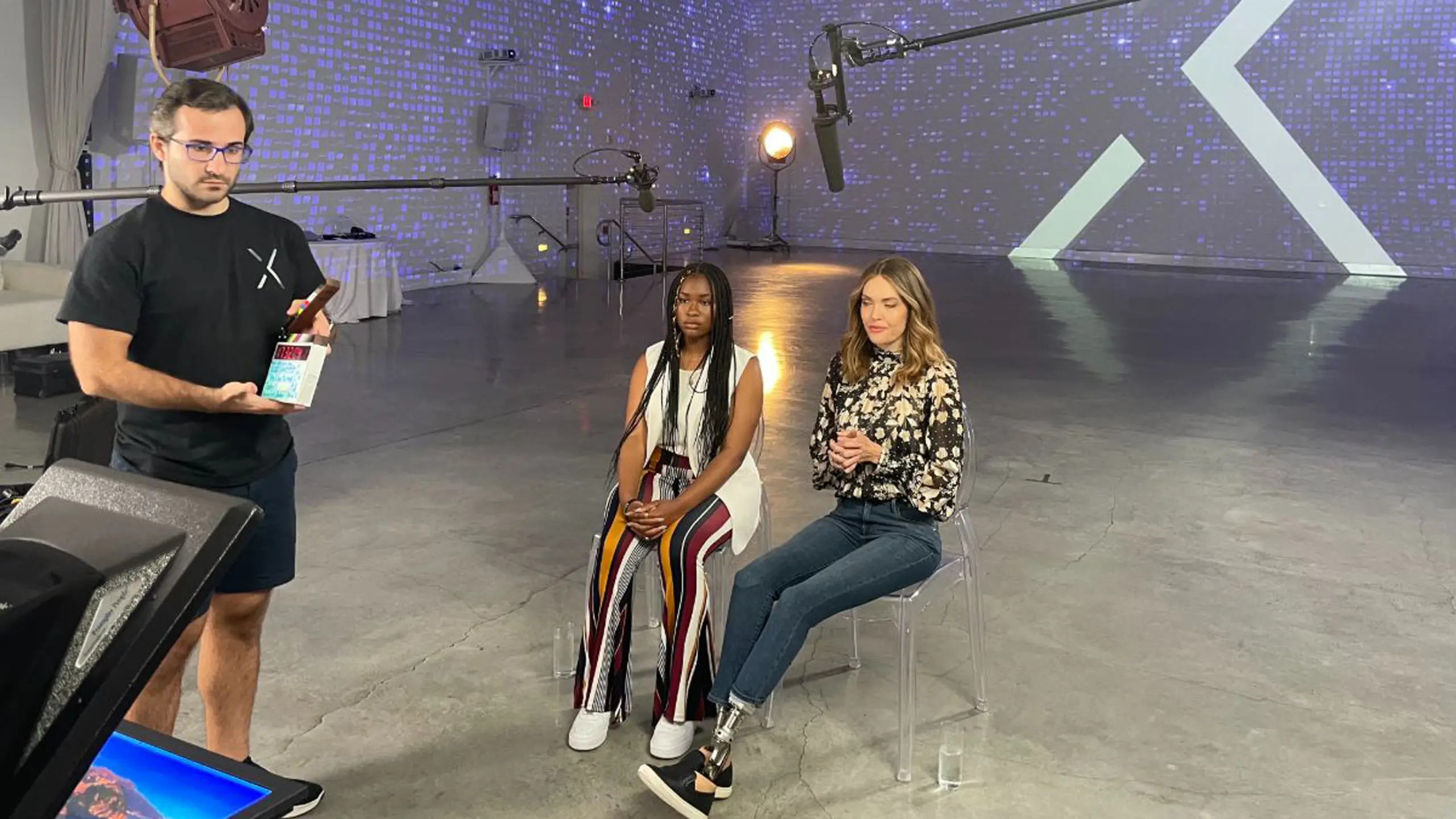

## Product Line
1. Know Your Story: Create a treatment for your film to summarize the story you wish to tell, including its assets, characters, scenes, and theme.
1. Budget in Sections: Establish ideal timelines and account for all expenses by budgeting in sections to ensure comprehensive financial planning.
1. Use a Budgeting Template: Utilize digital budgeting templates to keep track of your documentary's expenses and maintain cost predictions.
1. Create a Production and Post-Production Timeline: Develop a detailed timeline for both production and post-production phases to effectively plan and allocate resources.
1. Talk to Potential Crew Members and Vendors: Engage in discussions with potential crew members and vendors to understand the associated costs and make informed budgeting decisions.
1. Include Contingencies: Budget an additional percentage above your line-item costs for contingencies, typically 5-10% of the total budget, to account for unexpected expenses.
1. Keep Track of Expenses: Continuously update the budget and track expenses throughout the production process to ensure financial transparency and accountability.
By following these tips, filmmakers can effectively plan and execute a documentary project while keeping the production within budget and maintaining quality expectations.
For more details, a good place to start is the book "Film and Video Budgets," which provides sample documentary budgets and detailed explanations of the rationale behind them.
Additionally, it's important to include all costs, such as the filmmaker's rate, in the budget to ensure comprehensive financial planning.
## How to find affordable locations for documentary filming
When looking for affordable locations for documentary filming, consider the following tips:
1. Creative Scouting: Look for locations that resemble the setting you need, rather than exact matches. For example, educational institutions often have facilities that can double as other settings, such as hospitals.
1. Free Creator Spaces: Utilize free or low-cost creator spaces, as well as low-traffic areas, to film without incurring location fees.
1. Make a List and Get Creative: Compile a list of potential free locations, and think creatively about places where you might be able to film at no cost, such as local establishments where you're a regular.
1. Utilize Online Resources: Explore online platforms that offer filming locations at affordable rates, ranging from $60 to $500, and consider areas with the backdrops you need.
By employing these strategies, documentary filmmakers can find suitable locations for their projects without exceeding their budget.
## Tips for hiring crew members on a budget
When hiring crew members for a documentary on a budget, consider the following tips:
1. Prioritize Essential Roles: Identify the key positions that are crucial for your production, such as the director of photography, and focus your budget on securing talent for these roles.
1. Tap into Student Talent: Consider reaching out to film programs at local colleges or universities, as students may be willing to gain hands-on experience by working for a lower rate or even for free.
1. Utilize Online Platforms: Explore online platforms and [social media](https://c-istudios.com/social-media-marketing-services/) groups, such as Facebook and LinkedIn, to connect with freelancers and potential crew members who are open to working on projects with budget constraints.
1. Clearly Communicate Expectations: Clearly outline the responsibilities, experience, and compensation for each role when posting job opportunities to attract candidates who are willing to work within your budget.
1. Negotiate and Flexibility: Be open to negotiating rates and consider offering other benefits, such as flexible working hours, to make the opportunity more attractive to potential crew members.
By implementing these strategies, filmmakers can assemble a talented and dedicated crew for their documentary while staying within budget constraints.
## How to negotiate with crew members for lower rates
When negotiating with crew members for lower rates, consider the following tips:
1. Ask for What You Want: Instead of asking for the lowest rate, be clear about the rate you can offer and ask if they would be willing to work for that amount.
1. Bring in New Options: If the production can't pay the rate the crew member is looking for, consider other approaches to satisfy both parties' needs, such as offering overtime, meal penalties, travel reimbursement, or a particular credit.
1. Don't Be in a Hurry: During rate negotiations, avoid rushing the signing of the deal memo. Experienced crew members may see this as a red flag, so take the time to consider the whole picture.
1. Be Transparent and Respectful: Clearly communicate your budget constraints and be respectful of the crew members' expertise and experience when discussing rates.
1. Offer Other Benefits: If you can't meet their rate, consider offering other benefits such as flexible working hours, the opportunity to use the footage for their reel, or potential future collaboration.
By employing these strategies, you can negotiate effectively with crew members to secure their services at rates that align with your budget.
## Alternative compensation options for crew members besides cash
Some alternative compensation options for crew members besides cash include:
1. Bonuses and Incentives: Offer bonuses for exceptional performance or incentives tied to the success of the project.
1. Benefits and Perks: Provide benefits such as health insurance, meal discounts, or access to company resources.
1. Flexible Working Arrangements: Offer flexible working hours or the opportunity to use the footage for their reel.
1. Deferred Pay or Profit Sharing: Consider offering a percentage of the film's profits or deferred pay, although this should not be the sole form of compensation.
1. Non-Monetary Recognition: Show appreciation and respect for their work, and ensure they are treated as equals on the project.
By considering these options, filmmakers can provide attractive compensation packages to crew members, even when working with budget constraints.
## How to negotiate with vendors for documentary production
When negotiating with vendors for documentary production, several strategies can be employed to ensure cost-effectiveness and value. Some of the key tips include:
1. Set Clear Budget and Scope: Before approaching any vendor, have a clear idea of your production budget and scope. This will help set realistic expectations and avoid overspending or underdelivering.
1. Research Market Rates: Understand the average costs of the services or [equipment](https://c-istudios.com/video-production-gear-list/) you require, enabling you to compare different quotes and identify any hidden fees or charges.
1. Trade Value Instead of Money: Offer vendors something they value in exchange for their services, such as exposure, credit, or promotion for their business, access, network, or opportunity, and creative input, feedback, or collaboration.
1. Communicate Clearly and Respectfully: Clearly communicate your needs and show appreciation for the vendor's work and expertise. Be respectful and flexible, willing to compromise on aspects such as delivery dates, payment terms, or extras.
1. Negotiate Different Options or Packages: Ask vendors for various options or packages that suit your budget, and be open to discussing customized solutions that meet both your needs and their capabilities.
By applying these negotiation skills and strategies, filmmakers can save money and obtain the best value for their documentary production.
## How to determine the value of a vendor's services in documentary production
To determine the value of a vendor's services in documentary production, consider the following approaches:
1. Evaluate Sample Works: Review the vendor's sample works to gauge the production value and understand the types of videos or services they offer. This can provide a good impression of their capabilities and the quality of their work.
1. Research Market Rates: Understand the average costs of the services or equipment you require by researching market rates. This will help you compare different quotes and identify any hidden fees or charges.
1. Assess Production Budget: Calculate your production budget and analyze the costs of similar services or equipment to determine the value of the vendor's services in relation to your overall budget.
By employing these methods, you can effectively assess the value of a vendor's services and make informed decisions during the vendor selection process for your documentary production.
## How to save money on equipment rental for documentary filming
To save money on equipment rental for documentary filming, consider the following strategies:
1. Rent Instead of Buying: Renting equipment instead of purchasing it outright can be cost-effective, especially if the equipment is only needed for a short period of time.
1. Plan Your Shots: Thoroughly plan your shots ahead of time to avoid unnecessary reshoots, which can help save on rental costs by ensuring efficient use of the equipment.
1. Negotiate Rates: When renting equipment, try to negotiate favorable rates with the rental company, especially if you are renting multiple items or for an extended period.
1. Seek In-Kind Donations: Explore the possibility of receiving in-kind donations for equipment rental from companies or individuals who support your documentary project.
1. Borrow or Barter: Consider borrowing equipment from colleagues or friends, or explore bartering arrangements where you can offer your services in exchange for equipment use.
By implementing these strategies, filmmakers can effectively reduce equipment rental costs without compromising the quality of their documentary production.
## Tips for negotiating equipment rental prices for documentary filming
To negotiate equipment rental prices for documentary filming, consider the following tips:
1. Plan Ahead: Plan your equipment needs well in advance, allowing time to negotiate rates with the rental company. This can involve asking for discounts, bundles, or package deals.
1. Research Market Rates: Understand the average costs of the equipment you require by researching market rates. This will help you compare different quotes and identify any hidden fees or charges.
1. Negotiate Kit Fees: If you're bringing specialized equipment to the set, negotiate a kit fee with the production company to cover the use of your equipment.
1. Seek Sponsorship or Reduced Fees: In some cases, especially for low-budget projects, it's possible to approach rental houses for sponsorship or reduced kit fees. Clearly communicate your budget constraints and be flexible with the gear selection to potentially secure a discount.
By employing these strategies, you can effectively negotiate equipment rental prices for your documentary production, potentially saving costs without compromising on quality.
## Creating a storyboard for a documentary on a budget
To create a storyboard for a documentary on a budget, you can follow these tips:
1. Shot List: Make a shot list, which is a list of all the camera shots needed for a scene. This can serve as the basis for creating your storyboard, allowing you to make sketches from the shot list.
1. Use Free Tools: Utilize free tools and resources for creating storyboards, such as free storyboard template bundles available online. This can help you pre-visualize your documentary before the cameras roll.
1. Customize Your Storyboard: Customize your storyboard to fit your specific needs. You can use custom fields to add extra information and details to your storyboard, ensuring it effectively communicates the visual elements of your documentary.
1. Dedicate Each Panel to an Important Element: When creating the storyboard, dedicate each panel to an important element of your documentary outline. This will help ensure that each image contains enough information for people to understand the key details of the story.
By following these tips, you can create an effective storyboard for your documentary production, even when working with budget constraints.
## How to prioritize scenes when creating a storyboard for a documentary on a budget
When creating a storyboard for a documentary on a budget, it's important to prioritize key scenes to ensure efficient use of resources. Here are some tips for prioritizing scenes when creating a storyboard for a documentary on a budget:
1. Identify Key Moments: Focus on identifying the key moments and essential scenes that are integral to conveying the core message and narrative of your documentary.
1. Collaborate to Share Costs: Consider collaborating with others to share costs for scenes that require additional resources. This can help reduce individual budgetary burdens and make it more feasible to include important scenes.
1. Balance Quality and Cost: Plan wisely to balance quality and cost. Prioritize scenes that are essential to the story and can be captured within budget, while being mindful of the overall production quality.
By prioritizing key scenes and balancing quality with cost, you can create a storyboard that effectively communicates the core elements of your documentary while working within budget constraints.
## Free or low-cost tools for creating a storyboard for a documentary
Some free or low-cost tools for creating a storyboard for a documentary include:
1. Storyboarder by Wonder Unit: This open-source and free software provides a clean interface with all the necessary tools for creating storyboards. It allows you to draw shapes, characters, write dialogue, and enter timing information and shot type.
1. Blender's Storypencil Add-On: Blender offers a free Storypencil add-on for creating storyboards. It can be a cost-effective option for those already using Blender for VFX.
1. Procreate and Sketchbook: Procreate and Sketchbook are free tools that can be used for creating storyboards, especially if you prefer working in digital mediums.
1. StudioBinder's Free Storyboarding App: StudioBinder offers a free storyboarding app that can be used to create storyboards. It provides a simple and easy process for visualizing and refining the approach to shooting a documentary.
By utilizing these tools, filmmakers can create professional-looking storyboards for their documentaries without incurring high costs.
## Work with C&I Studios
If you are planning a project like this, our team can take it from concept to final delivery. Explore our [film and TV production](https://c-istudios.com/film-and-tv-production/), browse [our work](https://c-istudios.com/our-work/) to see how we tell brand stories, and [get in touch](https://c-istudios.com/contact/) when you are ready to start.
Originally published January 5, 2024
---
*This content is from [C&I Studios](https://c-istudios.com), a full-service production company.*
---
# Collaborative Content Creation Tools: Maximizing Team Efficiency
> Published: January 5, 2024
> Categories: Commercial & Brand
> Source: https://c-istudios.com/collaborative-content-creation-tools-maximizing-team-efficiency/
---
.cib{--paper:#1b1d1f;--ink:#fff;--body:#d5d7d9;--muted:#8b9096;--line:rgba(255,255,255,.12);--thumb:#2b2e31;--card:#212426;--accent:#c02b0a;--blue:#5B8FA8;--serif:'Playfair Display',Georgia,serif;--sans:'Poppins',-apple-system,sans-serif;--measure:900px;background:var(--paper);color:var(--body);font-family:var(--sans);line-height:1.6;position:relative;left:50%;transform:translateX(-50%);width:90vw;max-width:1920px}
.cib *{box-sizing:border-box}
.cib .kicker{max-width:var(--measure);margin:58px auto 0;padding:0 22px;font-size:12.5px;font-weight:700;letter-spacing:2.5px;text-transform:uppercase;color:var(--blue)}
.cib h1.cibh1{text-wrap:balance;font-family:var(--serif);font-weight:500;font-size:clamp(46px,6vw,72px);line-height:1.08;color:var(--ink);max-width:var(--measure);margin:18px auto 0;padding:0 22px;letter-spacing:-.5px}
.cib .metarow{max-width:var(--measure);margin:20px auto 0;padding:0 22px;color:var(--muted);font-size:14px}
.cib .hero{position:relative;width:100%;height:0;padding-bottom:56.25%;overflow:hidden;margin:48px auto 0;border-top:1px solid var(--line);border-bottom:1px solid var(--line)}
.cib .hero .ph{width:100%;aspect-ratio:16/9;background:var(--thumb);border-top:1px solid var(--line);border-bottom:1px solid var(--line);display:flex;align-items:center;justify-content:center;color:#7d8288;font-size:13px;text-align:center;padding:0 20px}
.cib .body{max-width:var(--measure);margin:12px auto 0;padding:52px 22px 6px}
.cib .body.lead p:first-child{font-size:23px;line-height:1.62;color:var(--ink)}
.cib .body p{font-size:18.5px;line-height:1.85;margin:0 0 30px;color:var(--body)}
.cib .body h2{text-wrap:balance;font-family:var(--serif);font-weight:500;font-size:clamp(32px,4vw,48px);line-height:1.22;color:var(--ink);margin:70px 0 20px;letter-spacing:-.3px}
.cib .body h3{text-wrap:balance;font-family:var(--sans);font-weight:600;font-size:22px;color:var(--ink);margin:38px 0 8px}
.cib .body a{color:var(--ink);text-decoration:underline;text-decoration-color:rgba(255,255,255,.4);text-underline-offset:3px}
.cib .body a:hover{text-decoration-color:var(--ink)}
.cib .ctable{width:100%;border-collapse:collapse;margin:16px 0 30px;font-size:16px}
.cib .ctable th{background:#000;color:#fff;text-align:left;padding:10px 12px;font-family:var(--sans)}
.cib .ctable td{padding:10px 12px;border-bottom:1px solid var(--line);color:var(--body)}
.cib .inimg{position:relative;width:100%;height:0;padding-bottom:56.25%;overflow:hidden;margin:72px auto;border-top:1px solid var(--line);border-bottom:1px solid var(--line)}
.cib .inimg .ph{width:100%;aspect-ratio:16/9;background:var(--thumb);border-top:1px solid var(--line);border-bottom:1px solid var(--line);display:flex;align-items:center;justify-content:center;color:#7d8288;font-size:13px}
.cib .origpub{max-width:var(--measure);margin:60px auto 0;padding:26px 22px 0;border-top:1px solid var(--line);color:var(--muted);font-size:13.5px}
.cib .related{max-width:1200px;margin:64px auto 0;padding:34px 22px 76px}
.cib .related h3{font-family:var(--sans);font-size:12.5px;letter-spacing:2px;text-transform:uppercase;color:var(--ink);margin:0 0 24px}
.cib .grid{display:grid;grid-template-columns:repeat(3,1fr);gap:28px}
.cib .rc{background:var(--card);border:1px solid var(--line);display:block;text-decoration:none;color:inherit;transition:border-color .15s}
.cib a.rc:hover{border-color:rgba(255,255,255,.5)}
.cib .rc .thumb{position:relative;width:100%;height:0;padding-bottom:56.25%;background:var(--thumb);overflow:hidden}
.cib .rc .thumb img{position:absolute!important;top:0!important;left:0!important;width:100%!important;height:100%!important;object-fit:cover!important;margin:0!important}
.cib .rc .cc{padding:14px 15px 17px}
.cib .rc .rt{font-family:var(--serif);font-weight:500;font-size:16px;line-height:1.3;color:var(--ink);margin:0 0 6px}
.cib .rc .rm{font-size:11px;letter-spacing:1px;text-transform:uppercase;color:var(--muted)}
.cib img{margin:0!important;padding:0!important;display:block!important;vertical-align:top;max-width:100%}
.cib .hero img,.cib .inimg img{position:absolute!important;top:0!important;left:0!important;width:100%!important;height:100%!important;object-fit:cover!important;margin:0!important;padding:0!important;border:0!important;display:block!important;aspect-ratio:auto!important}
.cib .hero+.body{padding-top:36px}
@media(max-width:760px){.cib .grid{grid-template-columns:1fr}.cib .body h2{margin:52px 0 16px}.cib .body p{font-size:17.5px}.cib .inimg,.cib .hero{margin-top:44px}}
.cib .vembed{max-width:var(--measure);margin:44px auto;padding:0 22px}.cib .vembed .vwrap{position:relative;width:100%;height:0;padding-bottom:56.25%}.cib .vembed .vwrap iframe{position:absolute;top:0;left:0;width:100%;height:100%;border:0}
Commercial & Brand
# Collaborative Content Creation Tools. Maximizing Team Efficiency
4 min read

Collaborative [content creation](https://c-istudios.com/creative-marketing-services/) tools are essential for maximizing team efficiency. These tools enhance communication, streamline workflows, and facilitate efficient feedback implementation, ultimately improving content quality. Some popular tools and platforms for collaborative content creation include Google Workspace, Trello, Miro, Asana, Airtable, Notion, Figma, and Clickup.
Collaborating effectively on content is crucial for businesses to stay competitive in today's fast-paced digital landscape. The benefits of using these tools include increased efficiency, real-time collaboration, improved content quality, and cost savings. By selecting the right tools and following best practices, teams can streamline their content creation process, produce high-quality content, and effectively reach their target audience.
When embarking on collaborative content creation, it is important to consider factors such as cost, functionality, compatibility, security, and usability when selecting the right tools and platforms.
Additionally, co-creation collaboration tools emphasize the collective creation of content by multiple individuals, encouraging innovation and leveraging the team's collective intelligence.
Collaborating with others on content creation can lead to enhanced productivity, efficiency, and the establishment of long-term partnerships and collaborations. Collaborative content creation tools play a vital role in maximizing team efficiency and improving the overall quality of content. By leveraging these tools and following best practices, teams can effectively streamline their content creation process and achieve their business objectives.
## How collaborative content creation tools improve team communication
Collaborative content creation tools improve team communication by facilitating efficient feedback loops, streamlining the review process, and enabling real-time collaboration. These tools enhance communication between team members and external stakeholders through features such as file sharing, group or private chats, in-context comments, and stakeholder approvals.
Additionally, co-creation collaboration tools provide platforms for collaborative brainstorming, content drafting, and iterative refinement, allowing different perspectives and expertise to contribute to the final product.
By using these tools, teams can work together seamlessly, share best practices, and exchange industry insights, leading to more streamlined collaboration and improved productivity.
## Examples of collaborative content creation tools
Some examples of collaborative content creation tools include:
1. Google Workspace: A platform for unified communications.
2. Trello: A Kanban-based collaboration tool.
3. Miro: A brainstorming content collaboration tool.
4. Asana: An enterprise content collaboration platform.
5. Airtable: A spreadsheet collaboration tool.
6. Notion: A project management and collaboration software.
7. Figma: A collaborative design tool.
8. Clickup: A resource management collaboration app.
Other notable tools and platforms for collaborative content creation are Canva, Dropbox Paper, ProofHub, CELUM, BoostHQ, Confluence, and GatherContent.
These tools enhance communication, streamline workflows, and facilitate efficient feedback implementation, ultimately improving content quality and team efficiency.
## Specific examples of successful team communication using Trello
Some specific examples of successful team communication using Trello include:
1. Creating Trello Boards with Purpose: Teams can set up Trello boards for collaboration success, allowing members to discuss and make decisions that affect them. The visual representation provided by Trello helps ensure that everyone is on the same page.
1. Managing Workloads with 'The Incoming List': Many teams at Trello use an "Incoming" list to submit feedback, requests, or questions, allowing for transparent and easy communication across the company. This practice helps in managing workloads and keeping communication transparent.
1. Using Trello for Internal Communication: Trello can be used for internal communication through comments and notifications. It allows teams to create boards for each project or team, organize work into lists and cards, and collaborate in real time, whether working remotely or in the office.
1. Improving Communication and Collaboration: The Trello team itself uses Trello for collaboration, planning, and communication. By using their own product, they increase transparency and ensure that everyone is on the same page, thus improving communication and collaboration within the team.
These examples demonstrate how Trello is effectively used to enhance team communication, streamline work processes, and ensure that all team members are well-informed and aligned.
## How collaborative content creation tools differ from traditional project management tools
Collaborative content creation tools differ from traditional project management tools in several ways. While traditional project management tools often place the project manager at the center of communications, collaborative content creation tools enable everyone on the team to immediately see the latest updates and contribute to the project plan in real-time[.](https://www.wrike.com/project-management-guide/faq/why-should-i-use-collaborative-editing-in-project-management-software/)
These tools simplify the process from idea to publication, allowing for the assignment of roles, coordination of efforts, and the creation of impactful content together.
Additionally, content collaboration tools emphasize the collective creation of content by multiple individuals, encouraging innovation, leveraging the team's collective intelligence, and improving the overall collaborative process.
Unlike traditional project management tools, some content collaboration tools also offer project management capabilities, such as workload management and automatic task assignment, to streamline workflows.
Overall, collaborative content creation tools focus on enhancing communication, streamlining workflows, and facilitating efficient feedback implementation to improve content quality and team efficiency.
### How collaborative content creation tools improve team collaboration
Collaborative content creation tools improve team collaboration by facilitating efficient feedback loops, streamlining the review process, and enabling real-time collaboration. These tools allow for the catching of errors or areas that need improvement early in the process, preventing mistakes from going unnoticed and potentially damaging the credibility of the content. They also ensure that the content is consistent in tone, [style](https://c-istudios.com/branding-and-graphic-design-services/), and messaging, which can improve the overall quality and effectiveness of the content.
Additionally, collaborative content creation tools lead to a shared workload, reduced stress, improved quality, and accuracy. They emphasize the collective creation of content by multiple individuals, encouraging innovation, leveraging the team's collective intelligence, and improving the overall collaborative process.
## Key features to look for in a collaborative content creation tool
The key features to look for in a collaborative content creation tool include:
1. Real-time Collaboration: The ability for team members to work on the same document simultaneously, providing instant feedback and updates.
2. Version History and Tracking: The tool should allow for tracking changes, managing versions, and providing a clear audit trail of edits and contributions.
3. Commenting and Feedback: Features that enable easy commenting, feedback, and annotation on content, streamlining the review and approval process.
4. File Management and Sharing: Centralized storage, easy access, and seamless sharing of files and documents to ensure all team members are working with the most current assets.
5. Integration Capabilities: The ability to integrate with other essential tools such as project management, communication, and design software to streamline workflows.
6. User Permissions and Access Control: The ability to control who can view, edit, and comment on specific content, ensuring data security and privacy.
7. Task Assignment and Workflows: Tools that allow for the assignment of tasks, setting deadlines, and creating workflows to manage the content creation process.
8. Ease of Use and Adoption: Intuitive interfaces and user-friendly features that encourage team members to embrace and use the tool effectively.
These features are essential for maximizing team efficiency and improving the overall quality of collaborative content creation.
### Best practices for using collaborative content creation tools effectively
Some best practices for using collaborative content creation tools effectively include:
1. Thorough Research and Clarity: Start by conducting thorough research to gather reliable information that supports your topic and addresses your audience's needs. Write with clarity and precision.
1. Define Content Workflow: Outline the roles, responsibilities, tasks, and deadlines for each stage of [content production](https://c-istudios.com/seo-copywriting-services/), from ideation to publishing. A clear and documented content workflow can help avoid confusion, duplication, or delays in content projects.
1. Choose the Right Tools and Platforms: Select tools and platforms that simplify the process from idea to publication, allowing for the assignment of roles, coordination of efforts, and the creation of impactful content together.
1. Encourage Knowledge Sharing Collaboration: Utilize knowledge-sharing collaboration tools to exchange and disseminate knowledge and expertise, fostering a culture of learning and continuous improvement within the team.
1. Implement Feedback Guidelines: Establish clear feedback guidelines to ensure effective and constructive feedback is provided and incorporated into the content creation process.
1. Utilize Version History and Tracking: Make use of tools that allow for tracking changes, managing versions, and providing a clear audit trail of edits and contributions.
By following these best practices, teams can streamline their content creation process, produce high-quality content, and effectively reach their target audience.
## Common challenges when using collaborative content creation tools
Some common challenges when using collaborative content creation tools include:
1. Version Control: Managing and keeping track of different versions of content can be challenging, leading to confusion and potential errors if not handled properly.
2. Feedback Management: Coordinating and consolidating feedback from multiple team members can be overwhelming, especially without a clear feedback management system in place.
3. Integration Complexity: Integrating various tools and platforms for content creation, project management, and communication can be complex and may lead to inefficiencies if not properly managed.
4. User Adoption and Training: Ensuring that all team members are proficient in using the collaborative tools and understanding their full capabilities can be a challenge, especially when new tools are introduced.
5. Security and Access Control: Managing user permissions, ensuring data security, and controlling access to sensitive content are critical challenges when using collaborative content creation tools.
By addressing these challenges through effective strategies and best practices, teams can maximize the benefits of collaborative content creation tools and improve overall productivity and content quality.
## Collaborative content creation tools that offer version control
Some examples of collaborative content creation tools that offer version control include:
1. Google Docs: Google Docs provides version history and tracking, allowing users to see the changes made to a document and revert to previous versions if needed.
1. Filestage: Filestage offers automatic backups and version control for added data security, enabling users to track changes made by collaborators.
1. Planable: Planable is a content collaboration platform that provides direct collaboration and feedback features, allowing teams to work on content together and track changes made during the collaboration process.
These tools are designed to enhance collaboration and ensure that teams can work together seamlessly while keeping track of changes and maintaining the integrity of their content.
## How to manage conflicts when using collaborative content creation tools
When managing conflicts during collaborative content creation, it's important to follow some effective strategies. Here are some tips to manage conflicts effectively:
1. Define Goals and Expectations: Clearly define the goals and expectations for the content collaboration to ensure that all team members are aligned.
2. Communicate Openly and Respectfully: Encourage open and respectful communication among team members to address any conflicts that may arise during the content creation process.
3. Embrace Differences and Creativity: Appreciate the different perspectives and creative inputs of team members, and be open to their suggestions and feedback.
4. Handle Disagreements Constructively: When conflicts arise, acknowledge the problem and express your feelings calmly and respectfully. Create a structured way for both parties to give and receive feedback.
5. Establish Clear Norms and Guidelines: Set clear norms and guidelines for using the collaborative content creation tools to avoid potential conflicts arising from different expectations or communication styles.
By following these tips, teams can effectively manage conflicts and ensure a smooth and successful collaborative content creation process.
## Work with C&I Studios
If you are planning a project like this, our team can take it from concept to final delivery. Explore our [video production services](https://c-istudios.com/video-production-services/), browse [our work](https://c-istudios.com/our-work/) to see how we tell brand stories, and [get in touch](https://c-istudios.com/contact/) when you are ready to start.
Originally published January 5, 2024
---
*This content is from [C&I Studios](https://c-istudios.com), a full-service production company.*
---
# The Convergence of Gaming and Entertainment: Opportunities for Cross-Platform Engagement
> Published: January 4, 2024
> Categories: Commercial & Brand
> Source: https://c-istudios.com/the-convergence-of-gaming-and-entertainment-opportunities-for-cross-platform-engagement/
---
.cib{--paper:#1b1d1f;--ink:#fff;--body:#d5d7d9;--muted:#8b9096;--line:rgba(255,255,255,.12);--thumb:#2b2e31;--card:#212426;--accent:#c02b0a;--blue:#5B8FA8;--serif:'Playfair Display',Georgia,serif;--sans:'Poppins',-apple-system,sans-serif;--measure:900px;background:var(--paper);color:var(--body);font-family:var(--sans);line-height:1.6;position:relative;left:50%;transform:translateX(-50%);width:90vw;max-width:1920px}
.cib *{box-sizing:border-box}
.cib .kicker{max-width:var(--measure);margin:58px auto 0;padding:0 22px;font-size:12.5px;font-weight:700;letter-spacing:2.5px;text-transform:uppercase;color:var(--blue)}
.cib h1.cibh1{text-wrap:balance;font-family:var(--serif);font-weight:500;font-size:clamp(46px,6vw,72px);line-height:1.08;color:var(--ink);max-width:var(--measure);margin:18px auto 0;padding:0 22px;letter-spacing:-.5px}
.cib .metarow{max-width:var(--measure);margin:20px auto 0;padding:0 22px;color:var(--muted);font-size:14px}
.cib .hero{position:relative;width:100%;height:0;padding-bottom:56.25%;overflow:hidden;margin:48px auto 0;border-top:1px solid var(--line);border-bottom:1px solid var(--line)}
.cib .hero .ph{width:100%;aspect-ratio:16/9;background:var(--thumb);border-top:1px solid var(--line);border-bottom:1px solid var(--line);display:flex;align-items:center;justify-content:center;color:#7d8288;font-size:13px;text-align:center;padding:0 20px}
.cib .body{max-width:var(--measure);margin:12px auto 0;padding:52px 22px 6px}
.cib .body.lead p:first-child{font-size:23px;line-height:1.62;color:var(--ink)}
.cib .body p{font-size:18.5px;line-height:1.85;margin:0 0 30px;color:var(--body)}
.cib .body h2{text-wrap:balance;font-family:var(--serif);font-weight:500;font-size:clamp(32px,4vw,48px);line-height:1.22;color:var(--ink);margin:70px 0 20px;letter-spacing:-.3px}
.cib .body h3{text-wrap:balance;font-family:var(--sans);font-weight:600;font-size:22px;color:var(--ink);margin:38px 0 8px}
.cib .body a{color:var(--ink);text-decoration:underline;text-decoration-color:rgba(255,255,255,.4);text-underline-offset:3px}
.cib .body a:hover{text-decoration-color:var(--ink)}
.cib .ctable{width:100%;border-collapse:collapse;margin:16px 0 30px;font-size:16px}
.cib .ctable th{background:#000;color:#fff;text-align:left;padding:10px 12px;font-family:var(--sans)}
.cib .ctable td{padding:10px 12px;border-bottom:1px solid var(--line);color:var(--body)}
.cib .inimg{position:relative;width:100%;height:0;padding-bottom:56.25%;overflow:hidden;margin:72px auto;border-top:1px solid var(--line);border-bottom:1px solid var(--line)}
.cib .inimg .ph{width:100%;aspect-ratio:16/9;background:var(--thumb);border-top:1px solid var(--line);border-bottom:1px solid var(--line);display:flex;align-items:center;justify-content:center;color:#7d8288;font-size:13px}
.cib .origpub{max-width:var(--measure);margin:60px auto 0;padding:26px 22px 0;border-top:1px solid var(--line);color:var(--muted);font-size:13.5px}
.cib .related{max-width:1200px;margin:64px auto 0;padding:34px 22px 76px}
.cib .related h3{font-family:var(--sans);font-size:12.5px;letter-spacing:2px;text-transform:uppercase;color:var(--ink);margin:0 0 24px}
.cib .grid{display:grid;grid-template-columns:repeat(3,1fr);gap:28px}
.cib .rc{background:var(--card);border:1px solid var(--line);display:block;text-decoration:none;color:inherit;transition:border-color .15s}
.cib a.rc:hover{border-color:rgba(255,255,255,.5)}
.cib .rc .thumb{position:relative;width:100%;height:0;padding-bottom:56.25%;background:var(--thumb);overflow:hidden}
.cib .rc .thumb img{position:absolute!important;top:0!important;left:0!important;width:100%!important;height:100%!important;object-fit:cover!important;margin:0!important}
.cib .rc .cc{padding:14px 15px 17px}
.cib .rc .rt{font-family:var(--serif);font-weight:500;font-size:16px;line-height:1.3;color:var(--ink);margin:0 0 6px}
.cib .rc .rm{font-size:11px;letter-spacing:1px;text-transform:uppercase;color:var(--muted)}
.cib img{margin:0!important;padding:0!important;display:block!important;vertical-align:top;max-width:100%}
.cib .hero img,.cib .inimg img{position:absolute!important;top:0!important;left:0!important;width:100%!important;height:100%!important;object-fit:cover!important;margin:0!important;padding:0!important;border:0!important;display:block!important;aspect-ratio:auto!important}
.cib .hero+.body{padding-top:36px}
@media(max-width:760px){.cib .grid{grid-template-columns:1fr}.cib .body h2{margin:52px 0 16px}.cib .body p{font-size:17.5px}.cib .inimg,.cib .hero{margin-top:44px}}
.cib .vembed{max-width:var(--measure);margin:44px auto;padding:0 22px}.cib .vembed .vwrap{position:relative;width:100%;height:0;padding-bottom:56.25%}.cib .vembed .vwrap iframe{position:absolute;top:0;left:0;width:100%;height:100%;border:0}
Commercial & Brand
# The Convergence of Gaming and Entertainment. Opportunities for Cross-Platform Engagement
5 min read

The convergence of gaming and entertainment, particularly through cross-platform engagement, is reshaping the entertainment landscape and creating exciting opportunities for gamers, developers, and advertisers. This trend is leading to more innovative and engaging gaming experiences, more communities, and new revenue streams. For instance, cross-platform collaboration is being leveraged by brands to promote user engagement across gaming platforms and [social media](https://c-istudios.com/social-media-marketing-services/) influencers.
The crossover of content and artists between Hollywood and video games is also accelerating, indicating the natural convergence between the two industries. Additionally, the convergence of gaming with other forms of entertainment, such as social media and music, is driving fan engagement and success through immersive and compelling experiences.
This convergence presents new business opportunities, including increased customer engagement and deeper social connection, while also requiring companies to understand and adapt to consumer preferences across these integrated platforms. Overall, the convergence of gaming and entertainment is creating a rich "convergence culture," where previously divided concepts, such as music, gaming, and film, are now intertwined, offering unique opportunities for brands and entertainment companies.
## Examples of successful cross-platform collaborations between gaming and traditional media
Some examples of successful cross-platform collaborations between gaming and traditional media include:
1. Fortnite: Released for various platforms including PC, PS4, Xbox One, Nintendo Switch, Android, and iOS, Fortnite is one of the most popular cross-platform games, allowing players from different devices to play together.
1. Among Us: This game has gained immense popularity as a cross-platform title, enabling players from different devices to connect and interact, particularly during the pandemic when people were looking for ways to stay connected.
1. Collaborations in Fortnite: The game has hosted virtual performances by well-known musicians, demonstrating the successful integration of music and gaming to create unique and engaging experiences.
These examples illustrate how cross-platform collaborations have led to the creation of different and engaging gaming experiences, bringing together players from different devices and integrating various forms of entertainment.
## How the convergence of gaming and entertainment can benefit the entertainment industry
The convergence of gaming and entertainment can benefit the entertainment industry in several ways. It opens up new avenues for revenue generation, as companies invest across the [entertainment media](https://c-istudios.com/) spectrum, successfully converging revenue sources. This convergence also has the potential to reach the widest audience demographic, speaking to a wide set of personal and collective fantasies, thereby diversifying target markets and attracting a new consumer base.
Additionally, the integration of gaming with other forms of entertainment, such as music and social media, can drive fan engagement and success through immersive and compelling experiences, creating a rich "convergence culture".
Furthermore, the convergence of gaming and traditional media can lead to increased M&A activity between large media conglomerates and gaming companies, as well as the creation of innovative and engaging gaming experiences, ultimately benefiting the entertainment industry as a whole.
## How the convergence of gaming and entertainment can benefit the gaming industry
The convergence of gaming and entertainment can benefit the gaming industry in several ways. It can lead to increased M&A activity between large media conglomerates and gaming companies, potentially increasing the value potential of gaming companies to large media companies. Additionally, the integration of gaming with other forms of entertainment, such as music and social media, can drive fan engagement and success through immersive and compelling experiences.
Furthermore, the convergence of gaming with traditional media can lead to the creation of innovative and engaging gaming experiences, ultimately benefiting the gaming industry as a whole.
## How the convergence of gaming and entertainment can help gaming companies expand their reach beyond traditional gaming audiences
The convergence of gaming and entertainment can help gaming companies expand their reach beyond traditional gaming audiences in several ways. The crossover of content and artists between Hollywood and video games demonstrates the natural convergence between the two industries, allowing gaming companies to tap into the growing viewership market for Esports and potentially increasing the value potential of gaming companies to large media conglomerates.
Additionally, the rise of digital technology, advancements in mobile technology, and the proliferation of high-speed internet have transformed the gaming landscape, making gaming an integral part of the media industry and creating a new frontier in entertainment known as media and gaming convergence.
Furthermore, the gaming industry has become an influential force, with an industry worth over $200 billion annually and an astonishing 3 billion players worldwide, transcending traditional boundaries and captivating individuals from different backgrounds, regions, and interests, presenting a significant opportunity for brands to connect with this rapidly growing gaming audience.
Therefore, the convergence of gaming and entertainment presents a unique opportunity for gaming companies to reach and engage new audiences beyond traditional gaming demographics.
## How the convergence of gaming and entertainment can help gaming companies reach new audiences
The convergence of gaming and entertainment can help gaming companies reach new audiences in several ways. By integrating with traditional media, gaming can speak to a wider set of personal and collective fantasies, diversifying target markets and attracting a more varied consumer base. This convergence also presents an opportunity for gaming companies to leverage the incredible engagement within the gaming community and demonstrate how brands can reach and convert new audiences, as gaming's influence has transcended traditional boundaries, captivating individuals from different backgrounds, regions, and interests.
Additionally, the integration of gaming with other forms of entertainment, such as music and social media, can drive fan engagement and success through immersive and compelling experiences, creating a rich "convergence culture," which can attract a broader audience. Therefore, the convergence of gaming and entertainment provides gaming companies with a unique opportunity to expand their reach and engage with new and different audiences.
Additionally, crossplay can bring friends and collaborators together, elevate social gaming experiences, and solve challenges related to audience fragmentation and content complexity.
## Strategies gaming companies can use to reach new audiences through the convergence of gaming and entertainment
Gaming companies can use several strategies to reach new audiences through the convergence of gaming and entertainment. Some of these strategies include:
1. Influencer Marketing: Collaborating with gaming influencers and content creators to reach and engage new audiences.
1. Creatively Designed Marketing: Developing [marketing strategies](https://c-istudios.com/creative-marketing-services/) that are tailored to reach the right audiences with the right kinds of messages, taking into account the preferences of gamers.
1. Integration with Traditional Media: Leveraging the crossover of content and artists between gaming and traditional media to capture the attention of new and different audiences.
1. Immersive Brand Experiences: Creating immersive and compelling [brand](https://c-istudios.com/branding-and-graphic-design-services/) experiences within the gaming space to connect with different gaming personas and capture the attention of new audiences.
By employing these strategies, gaming companies can effectively tap into the potential of the convergence of gaming and entertainment to expand their reach and engage with new and different audiences.
## How gaming companies can leverage social media to reach new audiences through the convergence of gaming and entertainment
Gaming companies can leverage social media to reach new audiences through the convergence of gaming and entertainment by employing the following strategies:
1. Influencer Marketing: Partnering with influencers to create sponsored content, such as gameplay videos or reviews, that can reach a wider audience and increase brand awareness.
1. Building a Social Media Strategy: Engaging with the audience, answering questions, and providing support to create a sense of community around a game or franchise, which can lead to increased brand loyalty.
1. Utilizing Social Media Channels: Using social media channels such as YouTube, Instagram, and Facebook to display game trailers, exclusive content, and information on game updates and new DLCs, and connecting with gaming influencers to collaborate on content creation.
1. Engaging with the Community: Actively participating in engaging discussions, live streams, and interactive feedback on social media to influence game development and build a deeper connection with the gaming community.
By implementing these strategies, gaming companies can effectively leverage social media to expand their reach and connect with new audiences through the convergence of gaming and entertainment.
## Examples of social media campaigns that have successfully increased brand awareness for gaming companies
Some successful social media campaigns that have increased brand awareness for gaming companies include:
1. Saints Row: This campaign demonstrated a unique approach to engage with gaming audiences, leveraging content creators, collaborations, and immersive experiences, which helped drive brand awareness, consideration, and ultimately, conversions.
1. Travis Scott x Fortnite: This collaboration provided a first look at new content in games, showcasing the effectiveness of connecting with consumers through video games.
1. Need For Speed: The campaign for this game effectively utilized social media channels to reach and engage gaming audiences, contributing to increased brand awareness.
These examples highlight the effectiveness of targeting gaming communities through platforms like TikTok, Instagram, and hosting real-life events to connect with different audiences, ultimately leading to increased brand awareness and engagement.
## Challenges of implementing cross-platform collaborations between gaming and entertainment
The challenges of implementing cross-platform collaborations between gaming and entertainment include:
1. Technical Hurdles: Ensuring compatibility and optimizing game performance across different platforms, each with its own hardware specifications, operating systems, and networking capabilities, can pose technical challenges for developers.
1. Balanced Gameplay: Maintaining a fair and balanced gameplay experience across different platforms can be a challenge, as each platform may have its own unique advantages and limitations.
1. Data Security: Ensuring data security and privacy across multiple platforms can be a concern, as cross-platform play involves the transfer of data between different systems.
1. Bandwidth Challenge: The increasing popularity of cross-platform gaming requires developers to future-proof their games by embracing cross-platform compatibility, which can pose bandwidth and connectivity challenges.
1. Fragmented Audiences: Fragmentation of audiences and complications in analytics can occur due to the need to manage different code bases and environments to reach new audiences across multiple device platforms.
While cross-platform collaborations offer numerous benefits, addressing these challenges is essential to ensure a seamless and inclusive gaming experience across different platforms.
## Strategies entertainment companies can use to overcome challenges when implementing cross-platform collaborations with gaming
To overcome challenges when implementing cross-platform collaborations with gaming, entertainment companies can employ the following strategies:
1. Prioritize Compatibility and Optimization: Developers should prioritize compatibility and optimization across different platforms, involving thorough testing and optimization processes to ensure a seamless gameplay experience, regardless of the platform.
1. Implement Scalable Solutions and Cross-Platform Development Frameworks: Utilize scalable solutions and cross-platform development frameworks to address technical limitations and ensure a consistent gaming experience across multiple platforms.
1. Collaborate Closely with Platform Holders: Engage in open communication with platform holders and seek to negotiate when navigating legal and contractual challenges, ensuring that all parties are aligned and supportive of the cross-platform collaboration.
1. Utilize Version Control Systems: Use version control systems to manage code changes and collaborate effectively, especially when working with a distributed team, to address version control and collaboration challenges.
By implementing these strategies, entertainment companies can effectively address the challenges associated with cross-platform collaborations and ensure a successful implementation.
## Work with C&I Studios
If you are planning a project like this, our team can take it from concept to final delivery. Explore our [video production services](https://c-istudios.com/video-production-services/), browse [our work](https://c-istudios.com/our-work/) to see how we tell brand stories, and [get in touch](https://c-istudios.com/contact/) when you are ready to start.
Originally published January 4, 2024
---
*This content is from [C&I Studios](https://c-istudios.com), a full-service production company.*
---
# Creating Drama Without Scripted Lines: The Art of Unscripted Storytelling
> Published: January 3, 2024
> Categories: Film & TV
> Source: https://c-istudios.com/creating-drama-without-scripted-lines-the-art-of-unscripted-storytelling/
---
.cib{--paper:#1b1d1f;--ink:#fff;--body:#d5d7d9;--muted:#8b9096;--line:rgba(255,255,255,.12);--thumb:#2b2e31;--card:#212426;--accent:#c02b0a;--blue:#5B8FA8;--serif:'Playfair Display',Georgia,serif;--sans:'Poppins',-apple-system,sans-serif;--measure:900px;background:var(--paper);color:var(--body);font-family:var(--sans);line-height:1.6;position:relative;left:50%;transform:translateX(-50%);width:90vw;max-width:1920px}
.cib *{box-sizing:border-box}
.cib .kicker{max-width:var(--measure);margin:58px auto 0;padding:0 22px;font-size:12.5px;font-weight:700;letter-spacing:2.5px;text-transform:uppercase;color:var(--blue)}
.cib h1.cibh1{text-wrap:balance;font-family:var(--serif);font-weight:500;font-size:clamp(46px,6vw,72px);line-height:1.08;color:var(--ink);max-width:var(--measure);margin:18px auto 0;padding:0 22px;letter-spacing:-.5px}
.cib .metarow{max-width:var(--measure);margin:20px auto 0;padding:0 22px;color:var(--muted);font-size:14px}
.cib .hero{position:relative;width:100%;height:0;padding-bottom:56.25%;overflow:hidden;margin:48px auto 0;border-top:1px solid var(--line);border-bottom:1px solid var(--line)}
.cib .hero .ph{width:100%;aspect-ratio:16/9;background:var(--thumb);border-top:1px solid var(--line);border-bottom:1px solid var(--line);display:flex;align-items:center;justify-content:center;color:#7d8288;font-size:13px;text-align:center;padding:0 20px}
.cib .body{max-width:var(--measure);margin:12px auto 0;padding:52px 22px 6px}
.cib .body.lead p:first-child{font-size:23px;line-height:1.62;color:var(--ink)}
.cib .body p{font-size:18.5px;line-height:1.85;margin:0 0 30px;color:var(--body)}
.cib .body h2{text-wrap:balance;font-family:var(--serif);font-weight:500;font-size:clamp(32px,4vw,48px);line-height:1.22;color:var(--ink);margin:70px 0 20px;letter-spacing:-.3px}
.cib .body h3{text-wrap:balance;font-family:var(--sans);font-weight:600;font-size:22px;color:var(--ink);margin:38px 0 8px}
.cib .body a{color:var(--ink);text-decoration:underline;text-decoration-color:rgba(255,255,255,.4);text-underline-offset:3px}
.cib .body a:hover{text-decoration-color:var(--ink)}
.cib .ctable{width:100%;border-collapse:collapse;margin:16px 0 30px;font-size:16px}
.cib .ctable th{background:#000;color:#fff;text-align:left;padding:10px 12px;font-family:var(--sans)}
.cib .ctable td{padding:10px 12px;border-bottom:1px solid var(--line);color:var(--body)}
.cib .inimg{position:relative;width:100%;height:0;padding-bottom:56.25%;overflow:hidden;margin:72px auto;border-top:1px solid var(--line);border-bottom:1px solid var(--line)}
.cib .inimg .ph{width:100%;aspect-ratio:16/9;background:var(--thumb);border-top:1px solid var(--line);border-bottom:1px solid var(--line);display:flex;align-items:center;justify-content:center;color:#7d8288;font-size:13px}
.cib .origpub{max-width:var(--measure);margin:60px auto 0;padding:26px 22px 0;border-top:1px solid var(--line);color:var(--muted);font-size:13.5px}
.cib .related{max-width:1200px;margin:64px auto 0;padding:34px 22px 76px}
.cib .related h3{font-family:var(--sans);font-size:12.5px;letter-spacing:2px;text-transform:uppercase;color:var(--ink);margin:0 0 24px}
.cib .grid{display:grid;grid-template-columns:repeat(3,1fr);gap:28px}
.cib .rc{background:var(--card);border:1px solid var(--line);display:block;text-decoration:none;color:inherit;transition:border-color .15s}
.cib a.rc:hover{border-color:rgba(255,255,255,.5)}
.cib .rc .thumb{position:relative;width:100%;height:0;padding-bottom:56.25%;background:var(--thumb);overflow:hidden}
.cib .rc .thumb img{position:absolute!important;top:0!important;left:0!important;width:100%!important;height:100%!important;object-fit:cover!important;margin:0!important}
.cib .rc .cc{padding:14px 15px 17px}
.cib .rc .rt{font-family:var(--serif);font-weight:500;font-size:16px;line-height:1.3;color:var(--ink);margin:0 0 6px}
.cib .rc .rm{font-size:11px;letter-spacing:1px;text-transform:uppercase;color:var(--muted)}
.cib img{margin:0!important;padding:0!important;display:block!important;vertical-align:top;max-width:100%}
.cib .hero img,.cib .inimg img{position:absolute!important;top:0!important;left:0!important;width:100%!important;height:100%!important;object-fit:cover!important;margin:0!important;padding:0!important;border:0!important;display:block!important;aspect-ratio:auto!important}
.cib .hero+.body{padding-top:36px}
@media(max-width:760px){.cib .grid{grid-template-columns:1fr}.cib .body h2{margin:52px 0 16px}.cib .body p{font-size:17.5px}.cib .inimg,.cib .hero{margin-top:44px}}
.cib .vembed{max-width:var(--measure);margin:44px auto;padding:0 22px}.cib .vembed .vwrap{position:relative;width:100%;height:0;padding-bottom:56.25%}.cib .vembed .vwrap iframe{position:absolute;top:0;left:0;width:100%;height:100%;border:0}
Film & TV
# Creating Drama Without Scripted Lines. The Art of Unscripted Storytelling
4 min read
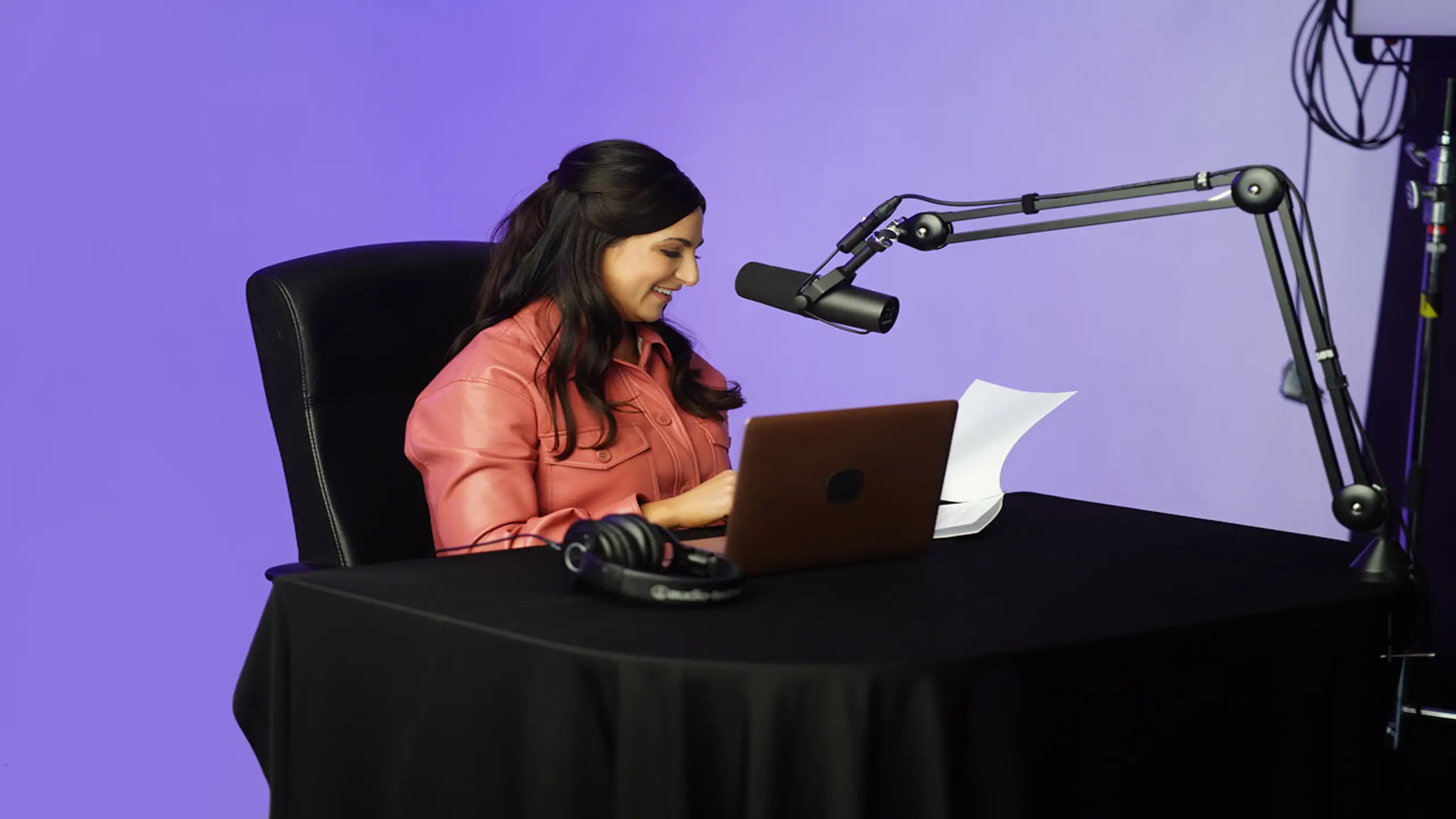
The art of unscripted storytelling can be found in various forms of performance, including improvisational theatre and drama without scripted lines. Improvisational theatre, such as Improv comedy, involves performances with no scripts and no preplanned ideas, creating full-length shows or shorter performances[.](https://en.wikipedia.org/wiki/Improvisational_theatre)
On the other hand, drama without a script, also known as improvisation, is an approach where actors perform without a written script, instead creating dialogue and actions spontaneously. This form of improvisation can be used in educational settings and theatrical performances, allowing for the creation of unique and unscripted storytelling experiences.
Both improvisational theatre and drama without scripted lines are examples of how storytelling can be achieved without a fixed, pre-written script.
## How unscripted performances differ from scripted performances
Unscripted performances differ from scripted performances in the following ways:
1. Spontaneity and Improvisation: Unscripted performances involve spontaneity, where dialogue and events occur naturally or are improvised. On the other hand, scripted performances follow carefully crafted scripts, with detailed pre-production and rehearsal processes.
1. Realism and Authenticity: Unscripted performances, such as unscripted [television](https://c-istudios.com/) and non-scripted [video production](https://c-istudios.com/video-production-services/), often capture real-life situations and events, featuring real people instead of actors, which adds a sense of realism and authenticity. In contrast, scripted performances involve actors following a predetermined script, portraying fictional or scripted scenarios.
1. Preparation and Rehearsal: In unscripted performances, there is minimal pre-production and a greater emphasis on improvisation, while scripted performances require thorough pre-production, script preparation, and rehearsal processes to bring the scripted content to life.
These differences highlight the unique characteristics of unscripted performances, which offer spontaneity and authenticity, compared to the carefully planned and rehearsed nature of scripted performances.
## Examples of successful unscripted performances
Some examples of successful unscripted performances include:
1. Unscripted TV Shows: Unscripted series such as "Making It," "The D’Amelio Show," and "Sasquatch" have been successful in the television industry.
1. Improvisational Theatre: Improv comedy and shows like "Who’s Line Is It Anyway?" showcase successful unscripted performances in the realm of theatre and entertainment.
1. Unscripted Producers: Producers like Fenton Bailey, Randy Barbato, RuPaul Charles, and Nicole Byer are known for their work in unscripted TV, demonstrating success in the unscripted genre.
1. Unscripted Movie Moments: Certain iconic movie moments, such as those in "This is Spinal Tap" and "The Fugitive," have been successful due to unscripted or improvised elements.
These examples illustrate the wide range of successful unscripted performances across various entertainment mediums.
## Examples of famous unscripted performances in film and television
Some examples of famous unscripted performances in film and television include:
1. This is Spinal Tap: The actors in this spoof rockumentary, including Christopher Guest, Michael McKean, Harry Shearer, and Rob Reiner, improvised most of the dialogue, showcasing the potential for unscripted creativity in film.
1. The Fugitive: The iconic line "I didn't kill my wife" followed by "I don't care" from the 1993 crime-thriller "The Fugitive" was unscripted, demonstrating the impact of spontaneous moments in film.
1. The Office: The kiss between Michael and Oscar in "The Office" and many other iconic TV moments, such as Schmidt's description of his dream girl in "New Girl," were improvised, showcasing the impact of unscripted performances in television.
1. Game of Thrones: Tormund's stare at Brienne in "Game of Thrones" was an unscripted moment that became iconic, highlighting the power of improvisation in television.
1. Napoleon Dynamite: The dance number by Napoleon in "Napoleon Dynamite" was completely improvised by Jon Heder, demonstrating the creativity that unscripted performances can bring to film.
These examples illustrate how unscripted performances have led to some of the most memorable and impactful moments in both film and television.
## Techniques for unscripted storytelling
Some techniques for unscripted storytelling include:
1. Character and Journey: Focus on the characters and their journey. Consider how they may change from the beginning to the end of the story.
1. Open-mindedness and Discovery Mode: Stay open to new ideas and remain in a constant state of discovery during shooting and editing. Keep track of all ideas, even if they don't seem good at first.
1. High Level of Planning: While a high level of planning isn't always possible in unscripted storytelling, it's important to have an understanding of the story behind the documentary.
1. Innovative Techniques: Consider breaking traditional rules of storytelling to create an [innovative story](https://c-istudios.com/creative-marketing-services/). Employ innovative techniques to inspire new reactions from audiences.
1. Genuine Moments: Create genuine moments within a crafted environment by allowing for unrehearsed camera movement and actions.
These techniques emphasize the importance of flexibility, open-mindedness, and genuine storytelling in the unscripted context.
## Tips for improvisation in unscripted storytelling
Some tips for improvisation in unscripted storytelling include:
1. Embrace Failure and Stay Focused: Embracing failure and staying focused can enhance the effectiveness and enjoyment of storytelling through improvisation.
1. Cooperate with Partners and Be Original: It's important to cooperate with your partners, be original, and not be afraid to take risks or make mistakes during improvisation.
1. Use and Reuse Ideas: In narrative improvisation, you can pick up any character, location, object, or idea that has already been mentioned and use it again to create a cohesive story.
1. Stay in Discovery Mode: Remain open to new ideas and stay in discovery mode during shooting and editing, keeping track of all ideas, even if they don't seem good at first.
1. Accept Offers and Support Choices: Work with your partners to accept their offers, support their choices, and build on their ideas during improvisation.
These tips can help enhance improvisation in unscripted storytelling, allowing for the creation of engaging and cohesive narratives.
## How to use active listening to enhance unscripted storytelling
Active listening can greatly enhance unscripted storytelling by fostering a deeper connection with the storyteller and uncovering hidden emotions and values. Some techniques for using active listening to enhance unscripted storytelling include:
- Focus and Non-Verbal Cues: Maintain focus on the speaker by making eye contact, nodding, and using non-verbal cues to show interest and engagement.
- Reflective Listening: Practice reflective listening by paraphrasing, asking questions, and reflecting the speaker's feelings to demonstrate understanding and encourage further storytelling.
- Authentic Engagement: Show authentic interest and engagement as a listener, which can lead to the discovery of genuine and impactful stories.
- Respect and Support: Be respectful, supportive, and non-judgmental as a listener, creating a safe space for the storyteller to share their experiences.
By employing these active listening techniques, storytellers can create a more profound and authentic connection with their audience, leading to more compelling and engaging unscripted storytelling experiences.
## How to use natural sound and ambient sound in unscripted storytelling
In unscripted storytelling, natural sound and ambient sound are essential for creating an immersive and compelling narrative. Natural sound, such as the sound of leaves crunching or water flowing, allows the audience to experience the environment, while ambient sound, including background noises like traffic or birds, adds texture to the storytelling. Here are some ways to use natural and ambient sound effectively:
1. Enhancing the Viewing Experience: Natural and ambient sounds bring the audience closer to the story by creating a more immersive viewing experience. They allow the audience to hear something other than narration or music, making the scene come alive.
1. Adding Detail and Texture: Good audio conveys information, while great audio relays facts and adds detail and texture. Natural and ambient sounds contribute to the overall atmosphere and help make a scene more vivid and realistic.
1. Balancing Audio Elements: The key to creating a compelling story is balancing music, narration, and natural sound. When used effectively, natural and ambient sounds can enhance the emotional impact of the storytelling.
1. Capturing Unscripted Moments: Natural and ambient sounds are particularly valuable in unscripted storytelling, as they help capture unscripted situations, events, and natural interactions, adding authenticity to the narrative.
By incorporating natural and ambient sounds, storytellers can elevate the quality of unscripted storytelling, creating a more engaging and authentic experience for the audience.
## Examples of natural sound in unscripted storytelling
Some examples of natural sound in unscripted storytelling include:
1. The sound of snow crushing underneath feet.
1. The sound of waves breaking on a beach.
1. The sound of a person crying or laughing.
1. The sound of a car horn beeping.
1. The sound of rain hitting the ground.
These examples demonstrate how natural sound, also known as "nat pops" (natural pops), can be used to enhance unscripted storytelling by creating a more immersive and vivid experience for the audience.
### Challenges of unscripted performances
The challenges of unscripted performances include:
1. Crew Shortages and Rising Production Costs: The scripted sector is facing crew shortages and rising [production](https://c-istudios.com/studio-rentals/) costs, which are also impacting the unscripted sector. However, those working in unscripted are finding plenty of opportunities due to the skyrocketing popularity of unscripted programming.
1. Skills Needs and Talent Pipeline: There is an acute absence of basic skills in the unscripted TV sector, leading to a talent pipeline issue. There are too few production coordinators entering the sector, and experienced production managers are being lost, creating a skills gap.
1. Training and Experience: Training for unscripted has been affected by a diminution of the BBC, making it increasingly difficult for individuals to gain a well-rounded range of experience in unscripted TV.
These challenges highlight the complexities and skill shortages within the unscripted sector, despite its growing popularity and demand.
### Benefits of unscripted performances
Some benefits of unscripted performances include:
1. Rising Popularity and Demand: The unscripted sector is experiencing a surge in popularity and demand, with increasing opportunities for those working in unscripted programming due to the skyrocketing demand for high-quality documentaries and factual formats.
1. Easier Planning and Flexibility: Unscripted shows are easier to plan for during times of uncertainty, and they offer more flexibility compared to scripted content, making them a favorable choice for commissioners and producers.
1. Authenticity and Genuine Storytelling: Unscripted performances, such as non-scripted videos, bring authenticity and genuine storytelling, allowing for the capture of natural, unscripted moments and conversations that unfold naturally.
1. Increased Commissions and Opportunities: Unscripted TV commissions are on the rise, while scripted ones are declining, providing increased opportunities for professionals in the unscripted sector.
These benefits underscore the growing demand, authenticity, and flexibility associated with unscripted performances, making them an attractive and viable option within the entertainment industry.
## Unscripted performances allow for more spontaneity and creativity
Unscripted performances allow for more spontaneity and creativity by encouraging performers to tap into their creativity, embrace their spontaneity, and create new and unique performances every time. Improvisation brings an element of unpredictability to a performance, keeping the audience on the edge of their seats and creating a sense of excitement and anticipation. It also adds authenticity to a performance, as actors draw from their own experiences and emotions, making the performance more genuine and unique.
Spontaneity and improvisation in unscripted performances offer a thrill of creating something new and original, as there is no fixed script to follow, allowing for the development of truly unique and innovative content.
## How unscripted performances affect the pacing of a film or TV show
Unscripted performances can significantly impact the pacing of a film or TV show. The spontaneity and improvisation inherent in unscripted performances can influence the rhythm and flow of a production. For instance, unscripted moments may add unpredictability and energy to a scene, affecting its overall pacing.
Additionally, the editing of unscripted performances plays a crucial role in shaping the pacing of a film or TV show. Editors must carefully manage unscripted material to ensure that the pacing aligns with the desired tone and narrative structure. Inconsistencies in pacing from scene to scene can arise from unscripted performances, requiring editors to maintain a balanced and cohesive rhythm throughout the production.
Therefore, while unscripted performances can introduce dynamism and authenticity, they also demand careful attention during the editing process to uphold the desired pacing of the final product.
## Work with C&I Studios
If you are planning a project like this, our team can take it from concept to final delivery. Explore our [film and TV production](https://c-istudios.com/film-and-tv-production/), browse [our work](https://c-istudios.com/our-work/) to see how we tell brand stories, and [get in touch](https://c-istudios.com/contact/) when you are ready to start.
Originally published January 3, 2024
---
*This content is from [C&I Studios](https://c-istudios.com), a full-service production company.*
---
# Beyond Facebook: Exploring Niche Social Media Platforms for Targeted Marketing
> Published: January 3, 2024
> Categories: Commercial & Brand
> Source: https://c-istudios.com/beyond-facebook-exploring-niche-social-media-platforms-for-targeted-marketing/
---
.cib{--paper:#1b1d1f;--ink:#fff;--body:#d5d7d9;--muted:#8b9096;--line:rgba(255,255,255,.12);--thumb:#2b2e31;--card:#212426;--accent:#c02b0a;--blue:#5B8FA8;--serif:'Playfair Display',Georgia,serif;--sans:'Poppins',-apple-system,sans-serif;--measure:900px;background:var(--paper);color:var(--body);font-family:var(--sans);line-height:1.6;position:relative;left:50%;transform:translateX(-50%);width:90vw;max-width:1920px}
.cib *{box-sizing:border-box}
.cib .kicker{max-width:var(--measure);margin:58px auto 0;padding:0 22px;font-size:12.5px;font-weight:700;letter-spacing:2.5px;text-transform:uppercase;color:var(--blue)}
.cib h1.cibh1{text-wrap:balance;font-family:var(--serif);font-weight:500;font-size:clamp(46px,6vw,72px);line-height:1.08;color:var(--ink);max-width:var(--measure);margin:18px auto 0;padding:0 22px;letter-spacing:-.5px}
.cib .metarow{max-width:var(--measure);margin:20px auto 0;padding:0 22px;color:var(--muted);font-size:14px}
.cib .hero{position:relative;width:100%;height:0;padding-bottom:56.25%;overflow:hidden;margin:48px auto 0;border-top:1px solid var(--line);border-bottom:1px solid var(--line)}
.cib .hero .ph{width:100%;aspect-ratio:16/9;background:var(--thumb);border-top:1px solid var(--line);border-bottom:1px solid var(--line);display:flex;align-items:center;justify-content:center;color:#7d8288;font-size:13px;text-align:center;padding:0 20px}
.cib .body{max-width:var(--measure);margin:12px auto 0;padding:52px 22px 6px}
.cib .body.lead p:first-child{font-size:23px;line-height:1.62;color:var(--ink)}
.cib .body p{font-size:18.5px;line-height:1.85;margin:0 0 30px;color:var(--body)}
.cib .body h2{text-wrap:balance;font-family:var(--serif);font-weight:500;font-size:clamp(32px,4vw,48px);line-height:1.22;color:var(--ink);margin:70px 0 20px;letter-spacing:-.3px}
.cib .body h3{text-wrap:balance;font-family:var(--sans);font-weight:600;font-size:22px;color:var(--ink);margin:38px 0 8px}
.cib .body a{color:var(--ink);text-decoration:underline;text-decoration-color:rgba(255,255,255,.4);text-underline-offset:3px}
.cib .body a:hover{text-decoration-color:var(--ink)}
.cib .ctable{width:100%;border-collapse:collapse;margin:16px 0 30px;font-size:16px}
.cib .ctable th{background:#000;color:#fff;text-align:left;padding:10px 12px;font-family:var(--sans)}
.cib .ctable td{padding:10px 12px;border-bottom:1px solid var(--line);color:var(--body)}
.cib .inimg{position:relative;width:100%;height:0;padding-bottom:56.25%;overflow:hidden;margin:72px auto;border-top:1px solid var(--line);border-bottom:1px solid var(--line)}
.cib .inimg .ph{width:100%;aspect-ratio:16/9;background:var(--thumb);border-top:1px solid var(--line);border-bottom:1px solid var(--line);display:flex;align-items:center;justify-content:center;color:#7d8288;font-size:13px}
.cib .origpub{max-width:var(--measure);margin:60px auto 0;padding:26px 22px 0;border-top:1px solid var(--line);color:var(--muted);font-size:13.5px}
.cib .related{max-width:1200px;margin:64px auto 0;padding:34px 22px 76px}
.cib .related h3{font-family:var(--sans);font-size:12.5px;letter-spacing:2px;text-transform:uppercase;color:var(--ink);margin:0 0 24px}
.cib .grid{display:grid;grid-template-columns:repeat(3,1fr);gap:28px}
.cib .rc{background:var(--card);border:1px solid var(--line);display:block;text-decoration:none;color:inherit;transition:border-color .15s}
.cib a.rc:hover{border-color:rgba(255,255,255,.5)}
.cib .rc .thumb{position:relative;width:100%;height:0;padding-bottom:56.25%;background:var(--thumb);overflow:hidden}
.cib .rc .thumb img{position:absolute!important;top:0!important;left:0!important;width:100%!important;height:100%!important;object-fit:cover!important;margin:0!important}
.cib .rc .cc{padding:14px 15px 17px}
.cib .rc .rt{font-family:var(--serif);font-weight:500;font-size:16px;line-height:1.3;color:var(--ink);margin:0 0 6px}
.cib .rc .rm{font-size:11px;letter-spacing:1px;text-transform:uppercase;color:var(--muted)}
.cib img{margin:0!important;padding:0!important;display:block!important;vertical-align:top;max-width:100%}
.cib .hero img,.cib .inimg img{position:absolute!important;top:0!important;left:0!important;width:100%!important;height:100%!important;object-fit:cover!important;margin:0!important;padding:0!important;border:0!important;display:block!important;aspect-ratio:auto!important}
.cib .hero+.body{padding-top:36px}
@media(max-width:760px){.cib .grid{grid-template-columns:1fr}.cib .body h2{margin:52px 0 16px}.cib .body p{font-size:17.5px}.cib .inimg,.cib .hero{margin-top:44px}}
.cib .vembed{max-width:var(--measure);margin:44px auto;padding:0 22px}.cib .vembed .vwrap{position:relative;width:100%;height:0;padding-bottom:56.25%}.cib .vembed .vwrap iframe{position:absolute;top:0;left:0;width:100%;height:100%;border:0}
Commercial & Brand
# Beyond Facebook. Exploring Niche Social Media Platforms for Targeted Marketing
3 min read
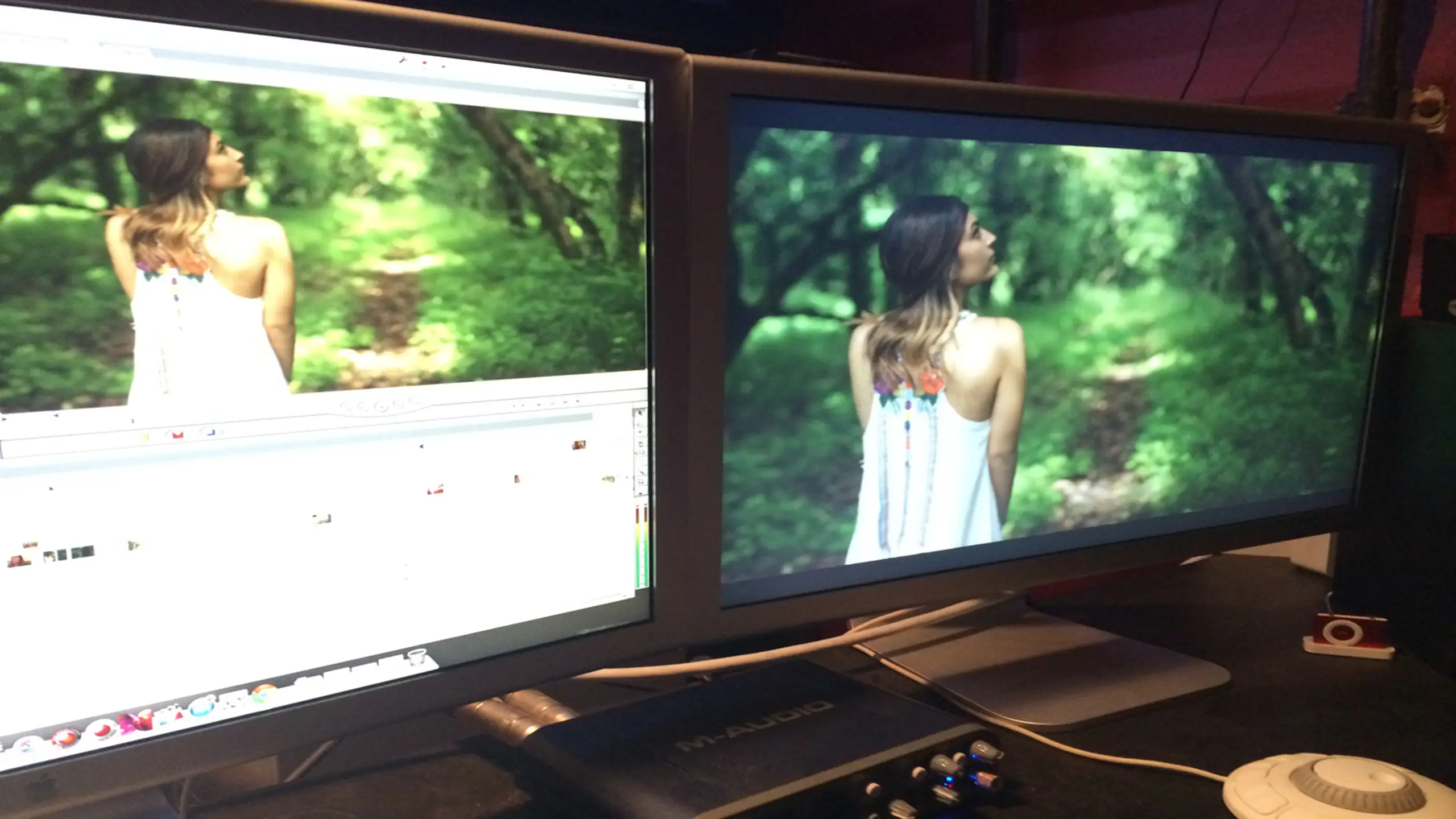
Niche [social media](https://c-istudios.com/social-media-marketing-services/) platforms offer valuable opportunities for targeted marketing. These platforms cater to specific communities, interests, or demographics, providing a supportive environment for individuals to connect, share their stories, and find solidarity. Engaging on these platforms enables businesses to communicate with highly engaged audiences, resulting in more meaningful and targeted interactions.
Some benefits of leveraging niche social media platforms for marketing include increased conversion rates, targeted interactions, and opportunities for tailored engagement, brand loyalty, and increased visibility. These platforms also provide options for customized engagement, brand loyalty, and increased conversion rates.
By targeting niche platforms, businesses can increase their chances of being discovered by potential customers and gain valuable customer insights. Overall, niche social media platforms present a unique opportunity for brands to connect with highly targeted audiences, build authentic connections, and create tailored marketing strategies.
## Benefits of using niche social media platforms for targeted marketing
Some benefits of using niche social media platforms for targeted marketing include:
1. Targeted Marketing Opportunities: Niche platforms allow businesses to connect with a highly targeted audience, enabling more effective and tailored marketing campaigns.
1. Building Brand Loyalty and Trust: By engaging with a specific community on a niche platform, businesses can build brand loyalty and trust, as well as create more meaningful and targeted interactions.
1. Increased Conversion Rates: Targeted interactions on niche platforms frequently result in higher conversion rates for businesses, as they can more effectively engage with individuals who are already interested in their products or services.
1. Customized Engagement: Niche platforms provide options for [customized engagement](https://c-istudios.com/creative-marketing-services/), allowing businesses to tailor their marketing efforts to the specific interests and needs of the platform's users.
1. Increased Visibility and Discoverability: Joining a platform that caters to a business's target audience can increase its chances of being discovered by potential customers, leading to increased visibility and potential customer acquisition.
In summary, niche social media platforms offer unique and tailored experiences for users with common interests, hobbies, or identities, and can serve as valuable marketing and networking tools for businesses. They provide opportunities for more effective and targeted marketing, increased brand loyalty, and higher conversion rates.
## How businesses can identify niche social media platforms that are relevant to their brand
Businesses can identify niche social media platforms relevant to their brand by following these steps:
1. Understand the Target Audience: Gain a deep understanding of the target audience, including their interests, behaviors, and the platforms they frequent.
2. Research Niche Platforms: Explore niche social media platforms that align with the brand's industry, products, or services. Look for platforms catering to specific hobbies, interests, or demographics.
3. Analyze Platform Relevance: Assess the relevance of each platform by considering the level of engagement, the presence of the target audience, and the potential for meaningful interactions.
4. Evaluate Competition: Research the brand's competitors to identify which platforms they are active on and where they have a strong presence.
5. Test and Measure: Experiment with a few selected platforms to test their effectiveness. Measure the engagement, conversion rates, and overall impact to determine the most suitable platforms for the brand.
By following these steps, businesses can effectively identify and leverage niche social media platforms that are relevant to their brand, allowing for more targeted and effective marketing efforts.
## How businesses can research and analyze the demographics of niche social media platforms
Businesses can research and analyze the demographics of niche social media platforms through various methods:
1. Third-Party Research and Reports: Utilize third-party research and reports from reputable sources such as Hootsuite, HubSpot, Pew Research Center, and Statista to access comprehensive data on the usage, behavior, and preferences of social media users across different platforms, regions, and segments.
1. Native Analytics Tools: Many social media platforms offer analytics or insights tools that provide demographic data such as age, gender, location, and interests. For example, Facebook has Audience Insights, Twitter has Analytics, and Instagram has Insights. These tools can help businesses understand who is already engaging with their brand and what kind of content resonates with their audience.
1. Online Surveys and Polls: Create and share online surveys or polls using tools like SurveyMonkey, Google Forms, or Typeform to collect demographic information about the audience.
1. Reputable Articles and Guides: Explore reputable articles and guides that provide insights into social media demographics and tips to utilize the data to grow.
1. Understand Your Audience: Identify your target audience's demographics, such as age, gender, location, and interests, and then match these with the demographics of the social media platforms to find the best fit.
By leveraging these methods, businesses can effectively research and analyze the demographics of niche social media platforms, allowing for more informed decisions when targeting their marketing efforts.
## Examples of niche social media platforms for targeted marketing
Some examples of niche social media platforms for targeted marketing include:
1. Clubhouse: A platform for audio-based social networking, allowing users to participate in conversations and discussions.
1. BeReal: A live streaming platform that focuses on real and unfiltered content, providing an authentic space for users to connect.
1. Twitch: Known for live streaming, particularly for gamers, but has expanded to include other types of content such as music, talk shows, and more.
1. life: A social networking platform for an older demographic, providing a space for meaningful conversations and connections.
1. Google MyBusiness: While not a traditional social media platform, it allows businesses to connect with their customers and is particularly useful for local businesses.
1. Untappd: A social discovery and check-in network for anyone that enjoys beer, allowing users to rate and review beers, and connect with other beer enthusiasts.
These platforms cater to specific interests, hobbies, or demographics, allowing businesses to target niche audiences with tailored content and messages, providing opportunities for more effective and targeted marketing campaigns.
## Factors to consider when choosing a niche social media platform for targeted marketing
When choosing a niche social media platform for targeted marketing, several factors should be considered:
1. Platform Demographics: The platform should align with the demographic profile of the target audience to ensure that the right users are being reached.
1. Native Audience Insights: Use native audience insights tools to understand the target audience's preferred platforms, helping to identify which platforms they most frequently use.
1. Available Resources: Consider the available resources, including budget, team size, and time and effort that can be allocated to social media marketing.
1. Business Goals: Evaluate the business goals and identify the target audience to align the platform selection with the goals and audience.
1. Competition and Engagement: Analyze the competition's engagement on various platforms and identify the platforms where the target audience is most active.
1. Content Relevance: Assess the relevance of the platform to the brand's content and messaging, ensuring that the platform is suitable for sharing the brand's message and engaging the target audience.
By considering these factors, businesses can make informed decisions when choosing niche social media platforms for targeted marketing, ensuring that their efforts are effectively directed towards the right audience.
## How to build a following on a niche social media platform
Here are some ways to build a following on a niche social media platform:
1. Use Relevant Hashtags: Research and include relevant hashtags in your posts to make your content more discoverable to users interested in your niche.
1. Collaborate with Influencers or Brands in Your Niche: Tap into their established audiences by cross-promoting each other's content, hosting joint events, or creating collaborative projects to expose your profile to new followers.
1. Run Contests and Giveaways: Organize contests or giveaways that require participants to follow your account, like, comment, or share your content. This incentivizes engagement and attracts new followers who are interested in winning the prize.
1. Utilize Paid Advertising: Allocate a budget for targeted advertising on social media platforms to reach a wider audience.
1. Interact with Your Audience: Engage with other people's content and respond to people who are interacting with your posts. Facilitating a correspondence will increase favorability with people, making them more inclined to follow you and become a part of your network.
1. Create a Memorable Brand Identity: Establish a unique and memorable [brand identity](https://c-istudios.com/branding-and-graphic-design-services/) to make your profile stand out and attract followers.
1. Stay Consistent: Make a publication calendar and be consistent with your posting schedule to keep your audience engaged and attract new followers.
By implementing these strategies, businesses can effectively build a following on niche social media platforms, increasing their reach and engagement within their target audience.
### Best practices for creating content that resonates with the demographics of niche social media platforms
To create content that resonates with the demographics of niche social media platforms, businesses can follow these best practices:
1. Understand Your Audience: Research and understand the demographics, interests, and behaviors of the target audience on the specific platform.
1. Create Tailored Content: Develop original content tailored to the specific needs and interests of the niche audience. This can involve addressing specific pain points and offering unique solutions.
1. Balance Curated and Created Content: Curate relevant industry news and user-generated content to position the brand as an industry leader, while also creating original content that resonates with the niche audience.
1. Personalize the Content Experience: Tailor the content to provide a personalized experience for the audience, addressing their specific interests and preferences.
1. Engage with the Community: Actively engage with the audience by responding to their comments, questions, and feedback. This interaction helps in understanding their pain points and preferences.
By implementing these best practices, businesses can create content that effectively resonates with the demographics of niche social media platforms, leading to more meaningful and targeted interactions with their audience.
## How to conduct surveys and interviews to gather insights on niche social media platforms
To conduct surveys and interviews to gather insights on niche social media platforms, businesses can follow these methods:
1. Surveys for Quantitative Data: Surveys allow businesses to gather quantitative data about the demographics, interests, and behaviors of their target audience on niche social media platforms. Tools like Google Forms, SurveyMonkey, or Typeform can be used to create and distribute surveys to existing or potential followers.
1. Interviews for Qualitative Insights: Interviews provide qualitative insights into the preferences, challenges, and content needs of the target audience. Businesses can conduct interviews via email, phone, or video calls to gain a deeper understanding of their audience's behaviors and interests.
1. Utilize Native Analytics Tools: Social media platforms offer native analytics tools that provide demographic data. Businesses can use these tools to gather insights into the specific needs and preferences of their niche audience.
1. Listen and Observe on Social Media: Businesses can use social media to listen and observe what their target audience is saying and doing. Tools like Hootsuite, Sprout, and native platform analytics can provide valuable insights into the behaviors and preferences of the target audience.
By leveraging these methods, businesses can effectively gather both quantitative and qualitative insights to understand the demographics and interests of their niche audience on social media platforms.
## Challenges businesses may face when using niche social media platforms for targeted marketing
Some challenges businesses may face when using niche social media platforms for targeted marketing include:
1. Limited Reach: Niche platforms may have a smaller user base, which can limit the overall reach of marketing efforts compared to larger, more mainstream platforms.
1. Competition and Saturation: Despite the benefits of lower competition, some niche platforms may become saturated with similar businesses, making it harder to stand out.
1. Resource Allocation: Managing multiple niche platforms can be resource-intensive, requiring businesses to allocate time and effort to each platform to effectively engage with their audience.
1. Limited Advertising Options: Niche platforms may have limited advertising options compared to larger platforms, which can restrict the variety of marketing strategies available to businesses.
1. Audience Adherence: Users on niche platforms may be more discerning and protective of their community, making it essential for businesses to authentically engage with the audience to avoid being perceived as intrusive or inauthentic.
By being aware of these challenges, businesses can develop strategies to effectively navigate and leverage niche social media platforms for targeted marketing.
## Work with C&I Studios
If you are planning a project like this, our team can take it from concept to final delivery. Explore our [video production services](https://c-istudios.com/video-production-services/), browse [our work](https://c-istudios.com/our-work/) to see how we tell brand stories, and [get in touch](https://c-istudios.com/contact/) when you are ready to start.
Originally published January 3, 2024
---
*This content is from [C&I Studios](https://c-istudios.com), a full-service production company.*
---
# Analyzing the Success of TikTok Ads: Lessons for Digital Marketers
> Published: January 3, 2024
> Categories: Commercial & Brand
> Source: https://c-istudios.com/analyzing-the-success-of-tiktok-ads-lessons-for-digital-marketers/
---
.cib{--paper:#1b1d1f;--ink:#fff;--body:#d5d7d9;--muted:#8b9096;--line:rgba(255,255,255,.12);--thumb:#2b2e31;--card:#212426;--accent:#c02b0a;--blue:#5B8FA8;--serif:'Playfair Display',Georgia,serif;--sans:'Poppins',-apple-system,sans-serif;--measure:900px;background:var(--paper);color:var(--body);font-family:var(--sans);line-height:1.6;position:relative;left:50%;transform:translateX(-50%);width:90vw;max-width:1920px}
.cib *{box-sizing:border-box}
.cib .kicker{max-width:var(--measure);margin:58px auto 0;padding:0 22px;font-size:12.5px;font-weight:700;letter-spacing:2.5px;text-transform:uppercase;color:var(--blue)}
.cib h1.cibh1{text-wrap:balance;font-family:var(--serif);font-weight:500;font-size:clamp(46px,6vw,72px);line-height:1.08;color:var(--ink);max-width:var(--measure);margin:18px auto 0;padding:0 22px;letter-spacing:-.5px}
.cib .metarow{max-width:var(--measure);margin:20px auto 0;padding:0 22px;color:var(--muted);font-size:14px}
.cib .hero{position:relative;width:100%;height:0;padding-bottom:56.25%;overflow:hidden;margin:48px auto 0;border-top:1px solid var(--line);border-bottom:1px solid var(--line)}
.cib .hero .ph{width:100%;aspect-ratio:16/9;background:var(--thumb);border-top:1px solid var(--line);border-bottom:1px solid var(--line);display:flex;align-items:center;justify-content:center;color:#7d8288;font-size:13px;text-align:center;padding:0 20px}
.cib .body{max-width:var(--measure);margin:12px auto 0;padding:52px 22px 6px}
.cib .body.lead p:first-child{font-size:23px;line-height:1.62;color:var(--ink)}
.cib .body p{font-size:18.5px;line-height:1.85;margin:0 0 30px;color:var(--body)}
.cib .body h2{text-wrap:balance;font-family:var(--serif);font-weight:500;font-size:clamp(32px,4vw,48px);line-height:1.22;color:var(--ink);margin:70px 0 20px;letter-spacing:-.3px}
.cib .body h3{text-wrap:balance;font-family:var(--sans);font-weight:600;font-size:22px;color:var(--ink);margin:38px 0 8px}
.cib .body a{color:var(--ink);text-decoration:underline;text-decoration-color:rgba(255,255,255,.4);text-underline-offset:3px}
.cib .body a:hover{text-decoration-color:var(--ink)}
.cib .ctable{width:100%;border-collapse:collapse;margin:16px 0 30px;font-size:16px}
.cib .ctable th{background:#000;color:#fff;text-align:left;padding:10px 12px;font-family:var(--sans)}
.cib .ctable td{padding:10px 12px;border-bottom:1px solid var(--line);color:var(--body)}
.cib .inimg{position:relative;width:100%;height:0;padding-bottom:56.25%;overflow:hidden;margin:72px auto;border-top:1px solid var(--line);border-bottom:1px solid var(--line)}
.cib .inimg .ph{width:100%;aspect-ratio:16/9;background:var(--thumb);border-top:1px solid var(--line);border-bottom:1px solid var(--line);display:flex;align-items:center;justify-content:center;color:#7d8288;font-size:13px}
.cib .origpub{max-width:var(--measure);margin:60px auto 0;padding:26px 22px 0;border-top:1px solid var(--line);color:var(--muted);font-size:13.5px}
.cib .related{max-width:1200px;margin:64px auto 0;padding:34px 22px 76px}
.cib .related h3{font-family:var(--sans);font-size:12.5px;letter-spacing:2px;text-transform:uppercase;color:var(--ink);margin:0 0 24px}
.cib .grid{display:grid;grid-template-columns:repeat(3,1fr);gap:28px}
.cib .rc{background:var(--card);border:1px solid var(--line);display:block;text-decoration:none;color:inherit;transition:border-color .15s}
.cib a.rc:hover{border-color:rgba(255,255,255,.5)}
.cib .rc .thumb{position:relative;width:100%;height:0;padding-bottom:56.25%;background:var(--thumb);overflow:hidden}
.cib .rc .thumb img{position:absolute!important;top:0!important;left:0!important;width:100%!important;height:100%!important;object-fit:cover!important;margin:0!important}
.cib .rc .cc{padding:14px 15px 17px}
.cib .rc .rt{font-family:var(--serif);font-weight:500;font-size:16px;line-height:1.3;color:var(--ink);margin:0 0 6px}
.cib .rc .rm{font-size:11px;letter-spacing:1px;text-transform:uppercase;color:var(--muted)}
.cib img{margin:0!important;padding:0!important;display:block!important;vertical-align:top;max-width:100%}
.cib .hero img,.cib .inimg img{position:absolute!important;top:0!important;left:0!important;width:100%!important;height:100%!important;object-fit:cover!important;margin:0!important;padding:0!important;border:0!important;display:block!important;aspect-ratio:auto!important}
.cib .hero+.body{padding-top:36px}
@media(max-width:760px){.cib .grid{grid-template-columns:1fr}.cib .body h2{margin:52px 0 16px}.cib .body p{font-size:17.5px}.cib .inimg,.cib .hero{margin-top:44px}}
.cib .vembed{max-width:var(--measure);margin:44px auto;padding:0 22px}.cib .vembed .vwrap{position:relative;width:100%;height:0;padding-bottom:56.25%}.cib .vembed .vwrap iframe{position:absolute;top:0;left:0;width:100%;height:100%;border:0}
Commercial & Brand
# Analyzing the Success of TikTok Ads. Lessons for Digital Marketers
4 min read
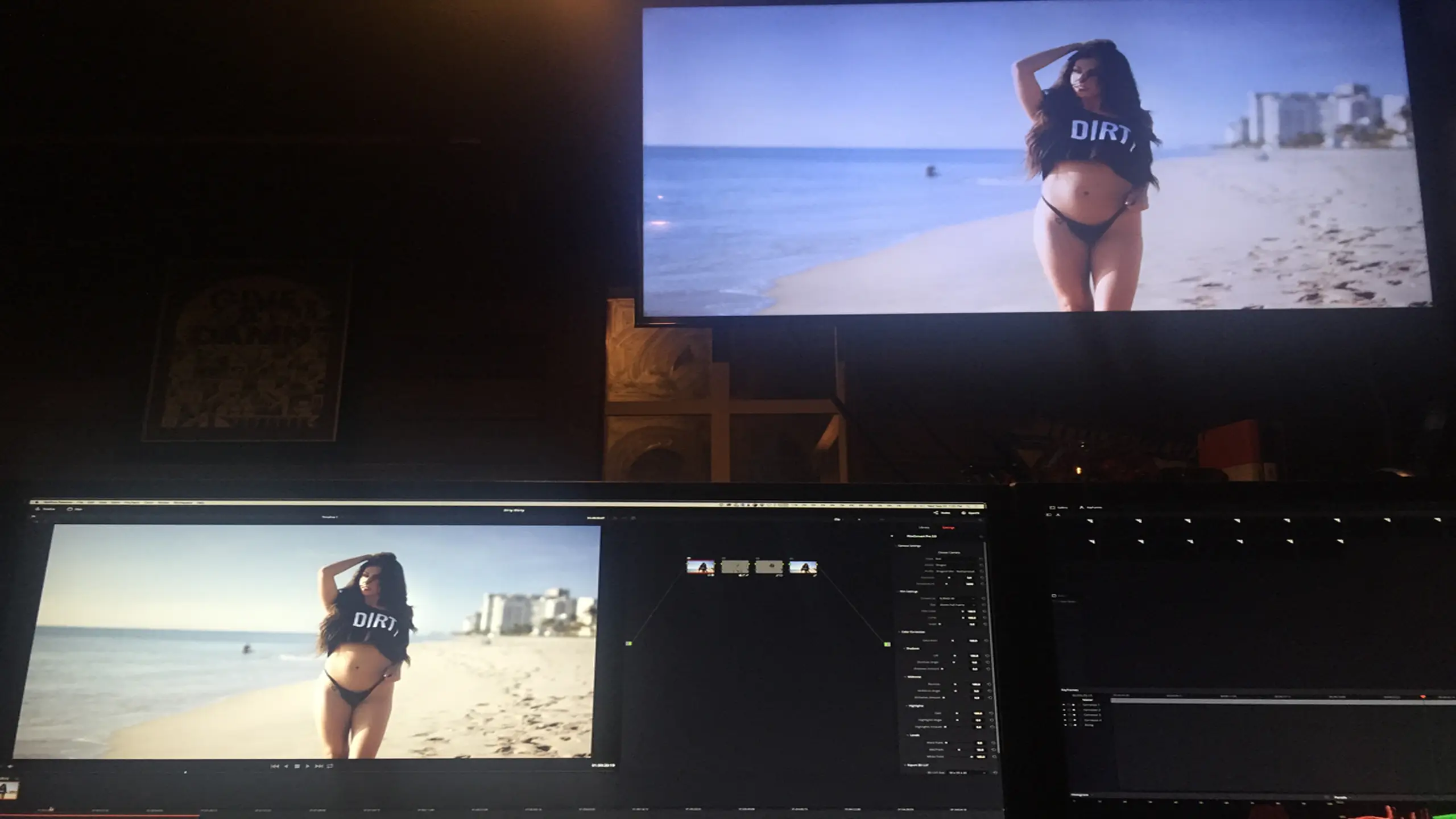
The success of TikTok ads has been significant, with a substantial increase in ad spend and positive outcomes for some advertisers. TikTok's rapid user growth and engaging platform have made it a must-have for brands, offering immense advertising potential. However, the platform presents unique challenges, such as the need for tailored ad strategies and understanding the target audience. Some advertisers have reported positive returns and success with TikTok ads, emphasizing the importance of testing and optimizing creatives.
Overall, TikTok advertising offers a valuable opportunity for digital marketers, but it requires a [customized approach](https://c-istudios.com/creative-marketing-services/) and ongoing refinement to achieve success. The success of TikTok ads is evident from the substantial increase in ad spend, the platform's rapid user growth, and the positive outcomes reported by some advertisers.
Advertisers have highlighted the need for tailored ad strategies, understanding the target audience, and ongoing testing and optimization to achieve success on the platform. While some have seen positive returns, others have emphasized the unique challenges and the importance of creating genuine and resonating content for effective advertising on TikTok.
## The most effective ad formats for TikTok
The most effective ad formats for TikTok include:
1. In-Feed Ads: These are short video ads or still images that appear in the 'For You' feed, seamlessly integrated with the native content. They allow users to like, comment, share, and follow, making them suitable for various campaign objectives.
1. TopView Ads: This format is prominently displayed at the top of the “For You” section, making it hard to miss. It is a video-first format that allows brands to showcase their creativity and can be up to 60 seconds in length.
1. Brand Takeover Ads: These are full-screen ads that appear when a user opens the app. They can be an image, GIF, or video and provide a strong visual impact, making them effective for brand awareness.
These ad formats offer different ways to engage with the audience and achieve various marketing objectives, such as brand awareness, user engagement, and driving app installs.
## Best practices for creating effective TikTok ads
To create effective [TikTok ads](https://c-istudios.com/social-media-marketing-services/), consider the following best practices:
1. Capture Attention Quickly: Since TikTok users have a short attention span, aim to grab their interest within the first 3 seconds of the ad.
1. Adhere to Image and Video Specifications: Ensure that your content meets TikTok's specifications to maintain a professional look and feel, as content that is blurry or doesn't fit the screen may deter users.
1. Be Short and Snappy: While ads can be up to 60 seconds long, the most impactful ones are brief, engaging, and emotive, with a focus on relatable and lighthearted content.
1. Utilize Vertical Format and Real-Life Situations: Format ads vertically to blend in with native content, and feature real-life situations to convey reasons why users should engage with your brand.
1. Incorporate Music and Stay Trendy: Use background music to make ads more enjoyable, and stay updated with the latest trends to create relevant and engaging content.
1. Set Measurable Performance Goals: Establish specific and measurable performance goals for your ads to track their effectiveness and make data-driven decisions.
By following these best practices, advertisers can create [compelling and engaging](https://c-istudios.com/our-work/) TikTok ads that resonate with the platform's audience and achieve their marketing objectives.
## How to target specific audiences with TikTok ads
To target specific audiences with TikTok ads, you can utilize the following techniques and options:
1. Leverage Existing Customer Data: Use your existing customer data to understand and target similar audiences on TikTok.
1. Utilize Interest and Behavior Targeting: TikTok allows you to target audiences based on their interests, behaviors, demographics (such as age, gender, location, and language), and even device types.
1. Hashtags and Creator Interactions: Target interactions, interests, consumer level, and B2B level using hashtags and creator interactions to reach specific audience segments.
1. A/B Testing: Utilize A/B testing to refine your targeting and identify the best-performing audiences for your ads.
1. Understand Your Audience and Their Interests: Identify who your audience is, what interests them, and the content they engage with to create targeted and relevant ads.
By implementing these techniques and options, you can effectively target specific audiences with your TikTok ads, increasing the likelihood of reaching and engaging with the right users.
## How to identify the interests and behaviors of a target audience on TikTok
To identify the interests and behaviors of a target audience on TikTok, you can use the following techniques and tools:
1. Interest Targeting: TikTok's interest targeting feature allows you to reach the appropriate audience based on their video interactions or hobbies. By selecting interest tags, you can directly reach the most relevant audience for your business.
1. Behavior Targeting: This option enables you to find people who have had specific interactions with your ad, allowing you to display your ad to individuals interested in products relevant to yours. It focuses on recent user interactions with organic and paid content, such as engagement on creators' following and profile visits.
1. Utilize Analytics: TikTok Analytics provides valuable insights into your target audience, including their interests, characteristics, and aesthetics. By analyzing this data, you can gain a better understanding of your existing target audience on TikTok.
1. A/B Testing and Custom Audiences: Utilize A/B testing to enhance your audience targeting and capitalize on custom audiences to retarget high-value prospects on TikTok.
By leveraging these techniques and tools, you can effectively identify the interests and behaviors of your target audience on TikTok, allowing for more precise and effective ad targeting. Sometimes, the easiest way to achieve this is by working with a [TikTok ads manager](https://c-istudios.com/creative-marketing-services/) to ensure your ads are performing effectively.
## Effective ways to engage with a target audience on TikTok
Some effective ways to engage with a target audience on TikTok include:
1. Identify Audience and Interests: Understand the demographics, interests, and content preferences of your target audience to create relevant and engaging content.
1. Utilize Hashtags: Explore and use relevant hashtags to increase the discoverability of your content and reach a wider audience.
1. Engage Through Comments: Actively engage with your audience through comments to build a community and foster interactions.
1. Partner with TikTok Creators: Collaborate with TikTok influencers or creators to leverage their following and reach a larger audience.
1. Leverage TikTok Ads: Utilize TikTok advertising to reach specific demographics and interests, and to increase your content's visibility.
By implementing these strategies, you can effectively engage with your target audience on TikTok, increase your content's reach, and foster a community around your brand or business.
## Common mistakes to avoid when engaging with a target audience on TikTok
Some common mistakes to avoid when engaging with a target audience on TikTok include:
1. Not Defining Your Audience: Failing to clearly define your target audience can lead to ineffective content and ad strategies.
1. Lack of Authenticity: Authenticity is key on TikTok, and brands that fail to be genuine and relatable may struggle to engage their audience.
1. Ignoring Trends: TikTok is driven by trends and challenges, so overlooking these can result in missed opportunities for visibility and engagement.
1. Not Engaging with Your Audience: Failing to respond to comments, questions, and messages, and not encouraging audience participation can hinder the development of a loyal and engaged following.
1. Not Measuring Your Results: Without tracking and analyzing metrics, it's challenging to understand the effectiveness of your content and make informed decisions for improvement.
1. Not Focusing Your Content Strategy: Confusing the algorithm by not focusing on a specific niche or content category can lead to low engagement.
By avoiding these mistakes and instead focusing on defining the target audience, being authentic, engaging with trends, and measuring results, brands can improve their success in engaging with their target audience on TikTok.
## How to collaborate with other TikTok creators to reach a target audience
To collaborate with other TikTok creators and reach a target audience, consider the following strategies:
1. Set Clear Goals: When collaborating with another creator, establish clear goals and create content that is timely and relevant to capture the attention of the target audience.
1. Identify the Right Creator: Prioritize finding a creator who is an ideal match for your brand, even if they are a smaller creator, as they can often prove to be a more beneficial fit.
1. Utilize TikTok's Creator Marketplace: Use TikTok's Creator Marketplace to set targeting parameters, view profiles of potential creators to collaborate with, and manage everything related to running a collaboration.
1. Promote the Collaboration: Once a partnership is established, promote the collaboration on both creators' channels to access a whole new audience and increase the chance of reaching the target audience.
1. Cross-Promotion and Content Sharing: Share the collaborative content on other platforms to increase its reach and engage with a broader audience.
By following these strategies, businesses can effectively collaborate with TikTok creators to reach a wider audience and engage with their target market.
## How to optimize TikTok ad campaigns for different budgets
To optimize TikTok ad campaigns for different budgets, consider the following strategies:
1. Utilize TikTok ABO, CBO, and VBO: TikTok offers features such as ABO (Ad Group Budget Optimization), CBO (Campaign Budget Optimization), and VBO (Value-Based Optimization) to help manage budgets, align campaign goals with desired outcomes, and fine-tune budget allocation at the ad group level.
1. Set Measurable Performance Goals: Define specific and measurable performance goals for your ad campaigns to track their effectiveness and make data-driven decisions.
1. Test Different Audiences: Experiment with various target audiences to find the most responsive ones. TikTok reports that advertisers who test different audience segments see a 43% increase in conversion.
1. Monitor and Adjust Ad Performance: Regularly monitor the performance of your ad campaigns and adjust budget allocation based on the ad sets targeting specific audience segments that yield the highest engagement and conversion rates.
By leveraging these strategies, advertisers can optimize their TikTok ad campaigns for different budgets, maximize their effectiveness, and drive better results.
## Differences between TikTok ABO, CBO, and VBO
The differences between TikTok ABO (Ad Group Budget Optimization), CBO (Campaign Budget Optimization), and VBO (Value-Based Optimization) are as follows:
1. ABO (Ad Group Budget Optimization): ABO allows you to take control of how much is being spent at the ad group level.
2. It provides complete control over budget allocation, making it suitable for rapid testing and when more control is needed.
3. It is better for control and rapid testing, especially with larger budgets.
1. CBO (Campaign Budget Optimization): With CBO, TikTok's algorithm determines which audience group is more engaged with the ads and allocates the budget accordingly.
2. It allows for budget optimization at the campaign level, and the algorithm constantly learns and optimizes in real time.
3. CBO is recommended for lower budgets, as it allows ads to exit the learning phase faster than ABO.
1. VBO (Value-Based Optimization): VBO is a feature that TikTok offers to simplify budget optimization.
2. It is designed to help you efficiently manage budgets, align campaign goals with desired outcomes, and fine-tune budget allocation at the ad group level.
In summary, ABO provides complete control over budget allocation and is suitable for rapid testing, especially with larger budgets. CBO allows TikTok's algorithm to determine budget allocation based on audience engagement and is recommended for lower budgets. VBO is designed to help manage budgets, align campaign goals with desired outcomes, and fine-tune budget allocation at the ad group level.
## Advantages and disadvantages of using ABO, CBO, or VBO for TikTok ad campaigns
The advantages and disadvantages of using ABO, CBO, and VBO for TikTok ad campaigns are as follows: ABO (Ad Group Budget Optimization)
- *Advantages*: Offers more control over budget management and allows advertisers to test different ad groups to identify the most successful ones.
- Provides flexibility in budget allocation, allowing advertisers to fine-tune budgets and ensure effective spending by pausing underperforming ad groups.
- *Disadvantages*: May require more manual oversight and management compared to CBO.
- Not as effective for rapid testing and learning as CBO, especially with lower budgets.
CBO (Campaign Budget Optimization)
- *Advantages*: Allows TikTok's algorithm to optimize budget allocation across different ad groups, enabling ads to exit the learning phase faster than ABO.
- Provides the potential for scaling campaigns and maximizing budget efficiency based on real-time learning and optimization.
- *Disadvantages*: Once the budget strategy is decided, it cannot be converted to the other mid-flight, requiring the launch of a new campaign to switch between ABO and CBO.
- May allocate the majority of the spend to a top performer, limiting control over budget allocation.
VBO (Value-Based Optimization)
- *Advantages*: Simplifies budget optimization and helps align campaign goals with desired outcomes.
- Fine-tunes budget allocation at the ad group level based on the value derived from the campaign.
- *Disadvantages*: Limited information available on specific disadvantages of VBO from the provided sources.
-
In summary, ABO offers more control over budget management and flexibility in budget allocation but may require more manual oversight. CBO allows for faster learning and optimization but limits mid-flight budget strategy changes. VBO simplifies budget optimization and aligns campaign goals with desired outcomes, but specific disadvantages are not clearly outlined in the provided sources. The choice between these options should be based on the specific campaign goals, target audience, and ad quality.
## Work with C&I Studios
If you are planning a project like this, our team can take it from concept to final delivery. Explore our [video production services](https://c-istudios.com/video-production-services/), browse [our work](https://c-istudios.com/our-work/) to see how we tell brand stories, and [get in touch](https://c-istudios.com/contact/) when you are ready to start.
Originally published January 3, 2024
---
*This content is from [C&I Studios](https://c-istudios.com), a full-service production company.*
---
# Storyboarding for Television: Bringing Scripts to Visual Life
> Published: January 2, 2024
> Categories: Film & TV
> Source: https://c-istudios.com/storyboarding-for-television-bringing-scripts-to-visual-life/
---
.cib{--paper:#1b1d1f;--ink:#fff;--body:#d5d7d9;--muted:#8b9096;--line:rgba(255,255,255,.12);--thumb:#2b2e31;--card:#212426;--accent:#c02b0a;--blue:#5B8FA8;--serif:'Playfair Display',Georgia,serif;--sans:'Poppins',-apple-system,sans-serif;--measure:900px;background:var(--paper);color:var(--body);font-family:var(--sans);line-height:1.6;position:relative;left:50%;transform:translateX(-50%);width:90vw;max-width:1920px}
.cib *{box-sizing:border-box}
.cib .kicker{max-width:var(--measure);margin:58px auto 0;padding:0 22px;font-size:12.5px;font-weight:700;letter-spacing:2.5px;text-transform:uppercase;color:var(--blue)}
.cib h1.cibh1{text-wrap:balance;font-family:var(--serif);font-weight:500;font-size:clamp(46px,6vw,72px);line-height:1.08;color:var(--ink);max-width:var(--measure);margin:18px auto 0;padding:0 22px;letter-spacing:-.5px}
.cib .metarow{max-width:var(--measure);margin:20px auto 0;padding:0 22px;color:var(--muted);font-size:14px}
.cib .hero{position:relative;width:100%;height:0;padding-bottom:56.25%;overflow:hidden;margin:48px auto 0;border-top:1px solid var(--line);border-bottom:1px solid var(--line)}
.cib .hero .ph{width:100%;aspect-ratio:16/9;background:var(--thumb);border-top:1px solid var(--line);border-bottom:1px solid var(--line);display:flex;align-items:center;justify-content:center;color:#7d8288;font-size:13px;text-align:center;padding:0 20px}
.cib .body{max-width:var(--measure);margin:12px auto 0;padding:52px 22px 6px}
.cib .body.lead p:first-child{font-size:23px;line-height:1.62;color:var(--ink)}
.cib .body p{font-size:18.5px;line-height:1.85;margin:0 0 30px;color:var(--body)}
.cib .body h2{text-wrap:balance;font-family:var(--serif);font-weight:500;font-size:clamp(32px,4vw,48px);line-height:1.22;color:var(--ink);margin:70px 0 20px;letter-spacing:-.3px}
.cib .body h3{text-wrap:balance;font-family:var(--sans);font-weight:600;font-size:22px;color:var(--ink);margin:38px 0 8px}
.cib .body a{color:var(--ink);text-decoration:underline;text-decoration-color:rgba(255,255,255,.4);text-underline-offset:3px}
.cib .body a:hover{text-decoration-color:var(--ink)}
.cib .ctable{width:100%;border-collapse:collapse;margin:16px 0 30px;font-size:16px}
.cib .ctable th{background:#000;color:#fff;text-align:left;padding:10px 12px;font-family:var(--sans)}
.cib .ctable td{padding:10px 12px;border-bottom:1px solid var(--line);color:var(--body)}
.cib .inimg{position:relative;width:100%;height:0;padding-bottom:56.25%;overflow:hidden;margin:72px auto;border-top:1px solid var(--line);border-bottom:1px solid var(--line)}
.cib .inimg .ph{width:100%;aspect-ratio:16/9;background:var(--thumb);border-top:1px solid var(--line);border-bottom:1px solid var(--line);display:flex;align-items:center;justify-content:center;color:#7d8288;font-size:13px}
.cib .origpub{max-width:var(--measure);margin:60px auto 0;padding:26px 22px 0;border-top:1px solid var(--line);color:var(--muted);font-size:13.5px}
.cib .related{max-width:1200px;margin:64px auto 0;padding:34px 22px 76px}
.cib .related h3{font-family:var(--sans);font-size:12.5px;letter-spacing:2px;text-transform:uppercase;color:var(--ink);margin:0 0 24px}
.cib .grid{display:grid;grid-template-columns:repeat(3,1fr);gap:28px}
.cib .rc{background:var(--card);border:1px solid var(--line);display:block;text-decoration:none;color:inherit;transition:border-color .15s}
.cib a.rc:hover{border-color:rgba(255,255,255,.5)}
.cib .rc .thumb{position:relative;width:100%;height:0;padding-bottom:56.25%;background:var(--thumb);overflow:hidden}
.cib .rc .thumb img{position:absolute!important;top:0!important;left:0!important;width:100%!important;height:100%!important;object-fit:cover!important;margin:0!important}
.cib .rc .cc{padding:14px 15px 17px}
.cib .rc .rt{font-family:var(--serif);font-weight:500;font-size:16px;line-height:1.3;color:var(--ink);margin:0 0 6px}
.cib .rc .rm{font-size:11px;letter-spacing:1px;text-transform:uppercase;color:var(--muted)}
.cib img{margin:0!important;padding:0!important;display:block!important;vertical-align:top;max-width:100%}
.cib .hero img,.cib .inimg img{position:absolute!important;top:0!important;left:0!important;width:100%!important;height:100%!important;object-fit:cover!important;margin:0!important;padding:0!important;border:0!important;display:block!important;aspect-ratio:auto!important}
.cib .hero+.body{padding-top:36px}
@media(max-width:760px){.cib .grid{grid-template-columns:1fr}.cib .body h2{margin:52px 0 16px}.cib .body p{font-size:17.5px}.cib .inimg,.cib .hero{margin-top:44px}}
.cib .vembed{max-width:var(--measure);margin:44px auto;padding:0 22px}.cib .vembed .vwrap{position:relative;width:100%;height:0;padding-bottom:56.25%}.cib .vembed .vwrap iframe{position:absolute;top:0;left:0;width:100%;height:100%;border:0}
Film & TV
# Storyboarding for Television. Bringing Scripts to Visual Life
3 min read
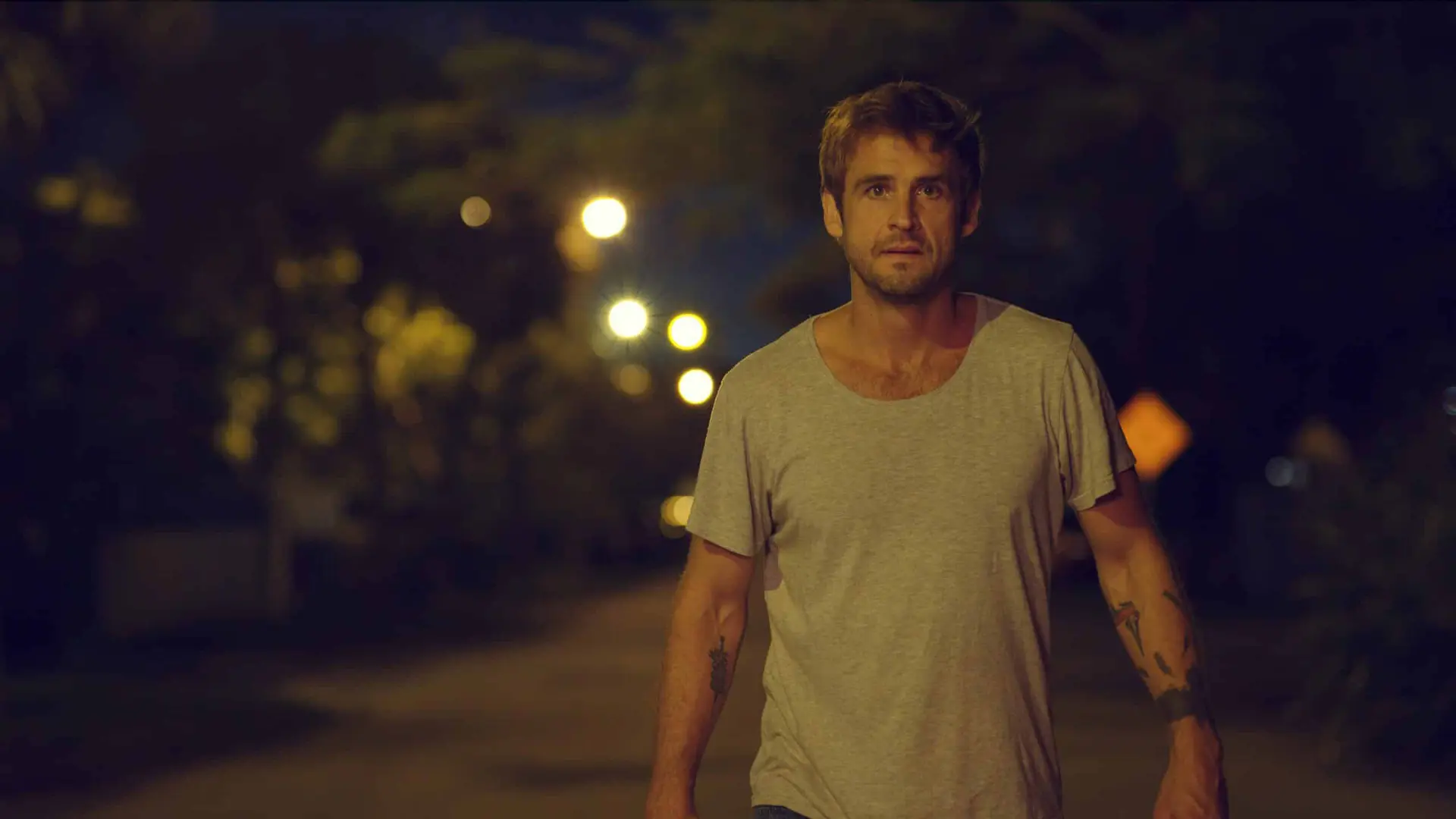
Storyboarding is a crucial step in bringing a script to visual life, whether for [television, film, or video production](https://c-istudios.com/). It allows the visualization of the script before the finished version is produced. Storyboarding helps in visualizing the scenes, organizing, sharing, and adjusting the sketches, and is an essential tool for filmmakers and media teams. There are traditional methods involving sketching with a pencil and paper, as well as modern digital tools and software for creating storyboards. These tools allow for easy visualization, sharing, and exporting of storyboards in various formats, such as PDFs, images, and animatics. Additionally, AI-powered storyboard generators are available, which can quickly turn a script into vibrant visual scenes and characters, making the process more efficient and accessible.
The process of creating a storyboard involves breaking down the script into visual frames that represent each scene, helping to guide the production process and communicate the creative vision effectively.
## How storyboarding helps in the pre-production process
Storyboarding helps in the pre-production process of a TV show by providing a visual roadmap that enhances efficiency and creativity. It allows filmmakers and production teams to map out the flow of the story, determine camera angles, and decide on the overall visual style. Storyboarding also serves as a blueprint, guiding the director, cinematographer, and other crew members during the shoot. Additionally, it enables filmmakers to communicate their vision to stakeholders and investors, showcasing the potential of the project and generating excitement around it.
Overall, storyboarding is an essential step in pre-production, allowing for the crafting of compelling and engaging visuals that pique the audience’s interest.
## Benefits of storyboarding for television
Storyboarding for television offers several benefits, including:
1. Efficiency and Planning: Storyboarding maximizes efficiency in creating new plots, aligns the creator's vision with the video, and provides a roadmap for the entire production process, allowing for the planning of shots, transitions, and pacing.
1. Visualization and Communication: It helps in visualizing each scene, ensuring effective communication of the creative vision with the production team, and keeping everyone aligned and working towards the same goal.
1. Budget and Resource Management: Storyboarding can help in estimating the cost of production, keeping the team on budget, and making the most efficient use of time and resources.
1. Early Buy-Ins and Flexibility: It encourages early buy-ins from key stakeholders and provides adaptability and flexibility in the production process.
In summary, storyboarding is a valuable tool that allows for efficient planning, effective communication, budget management, and early stakeholder involvement in [television production](https://c-istudios.com/film-and-tv-production/).
## Different types of storyboards used in television production
In television production, different types of storyboards are used, each offering unique advantages. The common types of storyboards include:
1. Traditional Storyboard: Hand-drawn conceptual sketches that help visualize initial ideas before filming or animating starts. They are still very common in the TV and movie industry.
1. Digital Storyboard: Perfect for animated videos, as they use exact graphics that will be in the final product. They allow everyone involved to preview the end-product.
1. Thumbnail Storyboard: Usually small and drawn quickly, using scribbles to outline the action. They are a rapid way to visualize the scenes.
These different types of storyboards, whether traditional, digital, or thumbnail, offer various levels of detail, time, and cost, catering to the specific needs of television production.
## Differences between a traditional storyboard and a digital storyboard
The difference between a traditional storyboard and a digital storyboard lies in the creation process, flexibility, sharing, collaboration, and accessibility:
- Creation Process: Traditional storyboards are hand-drawn using pencil and paper, while digital storyboards are created using software such as Adobe, allowing for more detailed and intricate visuals.
- Flexibility: Digital storyboards can be easily edited and updated, whereas traditional storyboards are more permanent and require redrawing if changes are needed.
- Sharing and Collaboration: Digital storyboards can be easily shared with the production team, clients, and stakeholders, allowing for real-time collaboration and remote working, whereas traditional storyboards may need to be scanned or photographed to be shared electronically. This makes digital storyboards more accessible and conducive to remote collaboration.
- Accessibility: Digital storyboards are more accessible and can be accessed from any device with internet access, whereas traditional storyboards are limited by their physical location.
In summary, while traditional storyboards have their own charm, digital storyboards offer greater flexibility, ease of sharing, collaboration, and accessibility, making them a popular tool among modern filmmakers.
## Examples of digital storyboarding software
Some examples of digital storyboarding [software](https://c-istudios.com/studio-rentals/) include:
1. Boards: An easy-to-use web-based storyboarding tool for planning creative projects.
1. Storyboarder by Wonder Unit: An open-source and free program with a clean interface and necessary tools for quick drawing of shapes and characters, as well as adding dialogue and timing information.
1. FrameForge: A digital storyboarding tool that allows for the creation of professional-looking storyboards, especially critical for pitching, and enables easier sharing and collaboration.
1. MakeStoryboard: A user-friendly and feature-packed cloud-based software for creating storyboards quickly.
Digital storyboarding software offers various features such as collaboration capabilities, drawing tools, and integration with other platforms, catering to the specific needs of filmmakers and creative teams.
## How to create a storyboard for a TV show
To create a storyboard for a TV show, you can follow these general steps:
1. Identify Key Scenes: Break down the script or narrative into key scenes, highlighting major beats such as actions, locations, wardrobe, staging, narrative arches, and major plot points.
1. Map Out the Key Scenes: Create a new board for your storyboard, either using specialized storyboarding software or traditional pen and paper.
1. Add Images or Sketches: For each scene, add images or sketches that represent the visual elements and actions taking place.
1. Describe Each Frame: Include accompanying notes or descriptions for each frame to provide context and details about the shots and visual elements.
1. Share It with Your Team: Once the storyboard is created, share it with your team for feedback and collaboration, allowing for early buy-ins and adjustments.
1. Reference It on the Day: Use the storyboard as a reference during the production of the TV show to ensure that the visual elements and shots align with the original creative vision.
These steps provide a structured approach to creating a storyboard for a TV show, enabling effective visualization and communication of the creative vision throughout the production process[.](https://milanote.com/guide/film-storyboards)
### Key elements to include in a storyboard for a TV show
The key elements to include in a storyboard for a TV show are:
1. Shot Images: Individual panels featuring 2D drawings to show actions, characters, and visual elements throughout the video.
1. Shot Number: The number indicating when a shot appears according to a video's shot list.
1. Action: The primary activity happening in a shot.
1. Scene Title and Number: Each scene in the production is given a title and a number on the storyboard, and each shot within that scene is also numbered.
1. Panel: Each drawing is in its own panel, representing a specific action or moment in the storyboard. The panel's shape also represents the aspect ratio that the production is being filmed in.
1. Sequence: Represents multiple shots that will be shot at the same time and/or together, where a sequence of shots comprises a scene.
1. Description: A caption on each panel where the storyboard artist or director can add dialogue, camera movement, and more.
1. Camera Movement: Panels may include directions for the camera operator, designating shots as close-ups, wide shots, dolly shots, etc. Arrows are often used to indicate which way the camera should move.
These elements help to effectively plan and visualize the scenes, actions, and camera movements in a TV show, ensuring a clear and comprehensive representation of the [creative vision](https://c-istudios.com/creative-marketing-services/).
### Tips for creating a visually appealing storyboard
To create a visually appealing storyboard for a TV show, consider the following tips:
1. Use Color Strategically: Incorporate color to add depth, emotion, and contrast to your storyboards. Choose specific colors to convey emotions and moods, enhancing the visual impact.
1. Vary Shots and Angles: Avoid monotony by varying the shots and angles according to the purpose and emotion of each scene. Use wide shots to establish the setting and context, and medium shots to focus on characters and actions.
1. Add Movement and Transitions: Incorporate movement and transitions to bring the storyboard to life. This can include indicating camera movements, character actions, and scene transitions.
1. Use Text and Sound Effects Sparingly: Limit the use of text and sound effects to avoid cluttering the storyboard. Use them strategically to enhance the storytelling experience.
1. Add Details and Effects: Incorporate details such as colors, shades, textures, patterns, lighting, and shadows to make the storyboard visually stunning and engaging.
1. Seek Feedback and Revise: Gather feedback to identify strengths and weaknesses, spot errors, and get new ideas. Revise the storyboard based on the feedback to improve its visual appeal and effectiveness.
By incorporating these tips, you can create a visually appealing and engaging storyboard that effectively communicates the creative vision for the TV show.
## How to decide on camera angles for each shot in a storyboard
When deciding on the camera angles for each shot in a storyboard, consider the following:
1. Shot Selection: Choose from a variety of basic shot choices such as wide, medium, and close-up to determine the placement of the audience and the emotional impact of the scene.
1. Camera Movement: Incorporate camera movements such as zoom, pan, tilt, dolly, tracking, or pedestal to add dynamism and visual interest to the shots.
1. Depth Cues and Perspective: Use drawing tools and techniques to create the illusion of depth, such as perspective, line weight, foreshortening, and tonal contrasts, to enhance the visual impact of the storyboard.
1. 180-Degree Rule: Adhere to the 180-degree rule to maintain visual continuity and prevent disorientation for the audience.
1. Storyboard Arrows: Use arrows to indicate the direction of camera movement, providing a visual representation of the camera's motion in the shot.
By considering these factors, you can effectively decide on the most suitable camera angles for each shot in the storyboard, ensuring that the visual representation aligns with the creative vision of the TV show.
## Common mistakes to avoid when creating a storyboard for a TV show
Some common mistakes to avoid when creating a storyboard for a TV show include:
1. Storyboarding Before Having a Script: Creating a storyboard before finalizing the script can lead to inconsistencies and rework. It's essential to have a finalized script to ensure that the visual representation aligns with the narrative.
1. Not Seeking Feedback: Failing to seek feedback on the storyboard can result in overlooked errors and missed opportunities for improvement. Feedback from various stakeholders can enhance the quality and effectiveness of the storyboard.
1. Including Too Much Text: Overloading the storyboard with excessive text can clutter the visual representation and detract from its primary purpose of conveying the story through visuals. Clear and concise visual elements should take precedence over text.
1. Not Following a Theme: Failing to maintain a consistent theme throughout the storyboard can lead to confusion and a lack of coherence in the visual narrative. It's important to ensure that the storyboard maintains a cohesive theme and storytelling approach.
1. Unnecessary Camera Movements: Incorporating unnecessary or excessive camera movements can detract from the storytelling and lead to a disjointed visual experience. Camera movements should be purposeful and aligned with the narrative and emotional context of the scenes.
By avoiding these common mistakes, creators can develop more effective and visually compelling storyboards for TV shows.
## Work with C&I Studios
If you are planning a project like this, our team can take it from concept to final delivery. Explore our [film and TV production](https://c-istudios.com/film-and-tv-production/), browse [our work](https://c-istudios.com/our-work/) to see how we tell brand stories, and [get in touch](https://c-istudios.com/contact/) when you are ready to start.
Originally published January 2, 2024
---
*This content is from [C&I Studios](https://c-istudios.com), a full-service production company.*
---
# Costume Design in Television: Crafting Characters Through Wardrobe Choices
> Published: January 2, 2024
> Categories: Film & TV
> Source: https://c-istudios.com/costume-design-in-television-crafting-characters-through-wardrobe-choices/
---
.cib{--paper:#1b1d1f;--ink:#fff;--body:#d5d7d9;--muted:#8b9096;--line:rgba(255,255,255,.12);--thumb:#2b2e31;--card:#212426;--accent:#c02b0a;--blue:#5B8FA8;--serif:'Playfair Display',Georgia,serif;--sans:'Poppins',-apple-system,sans-serif;--measure:900px;background:var(--paper);color:var(--body);font-family:var(--sans);line-height:1.6;position:relative;left:50%;transform:translateX(-50%);width:90vw;max-width:1920px}
.cib *{box-sizing:border-box}
.cib .kicker{max-width:var(--measure);margin:58px auto 0;padding:0 22px;font-size:12.5px;font-weight:700;letter-spacing:2.5px;text-transform:uppercase;color:var(--blue)}
.cib h1.cibh1{text-wrap:balance;font-family:var(--serif);font-weight:500;font-size:clamp(46px,6vw,72px);line-height:1.08;color:var(--ink);max-width:var(--measure);margin:18px auto 0;padding:0 22px;letter-spacing:-.5px}
.cib .metarow{max-width:var(--measure);margin:20px auto 0;padding:0 22px;color:var(--muted);font-size:14px}
.cib .hero{position:relative;width:100%;height:0;padding-bottom:56.25%;overflow:hidden;margin:48px auto 0;border-top:1px solid var(--line);border-bottom:1px solid var(--line)}
.cib .hero .ph{width:100%;aspect-ratio:16/9;background:var(--thumb);border-top:1px solid var(--line);border-bottom:1px solid var(--line);display:flex;align-items:center;justify-content:center;color:#7d8288;font-size:13px;text-align:center;padding:0 20px}
.cib .body{max-width:var(--measure);margin:12px auto 0;padding:52px 22px 6px}
.cib .body.lead p:first-child{font-size:23px;line-height:1.62;color:var(--ink)}
.cib .body p{font-size:18.5px;line-height:1.85;margin:0 0 30px;color:var(--body)}
.cib .body h2{text-wrap:balance;font-family:var(--serif);font-weight:500;font-size:clamp(32px,4vw,48px);line-height:1.22;color:var(--ink);margin:70px 0 20px;letter-spacing:-.3px}
.cib .body h3{text-wrap:balance;font-family:var(--sans);font-weight:600;font-size:22px;color:var(--ink);margin:38px 0 8px}
.cib .body a{color:var(--ink);text-decoration:underline;text-decoration-color:rgba(255,255,255,.4);text-underline-offset:3px}
.cib .body a:hover{text-decoration-color:var(--ink)}
.cib .ctable{width:100%;border-collapse:collapse;margin:16px 0 30px;font-size:16px}
.cib .ctable th{background:#000;color:#fff;text-align:left;padding:10px 12px;font-family:var(--sans)}
.cib .ctable td{padding:10px 12px;border-bottom:1px solid var(--line);color:var(--body)}
.cib .inimg{position:relative;width:100%;height:0;padding-bottom:56.25%;overflow:hidden;margin:72px auto;border-top:1px solid var(--line);border-bottom:1px solid var(--line)}
.cib .inimg .ph{width:100%;aspect-ratio:16/9;background:var(--thumb);border-top:1px solid var(--line);border-bottom:1px solid var(--line);display:flex;align-items:center;justify-content:center;color:#7d8288;font-size:13px}
.cib .origpub{max-width:var(--measure);margin:60px auto 0;padding:26px 22px 0;border-top:1px solid var(--line);color:var(--muted);font-size:13.5px}
.cib .related{max-width:1200px;margin:64px auto 0;padding:34px 22px 76px}
.cib .related h3{font-family:var(--sans);font-size:12.5px;letter-spacing:2px;text-transform:uppercase;color:var(--ink);margin:0 0 24px}
.cib .grid{display:grid;grid-template-columns:repeat(3,1fr);gap:28px}
.cib .rc{background:var(--card);border:1px solid var(--line);display:block;text-decoration:none;color:inherit;transition:border-color .15s}
.cib a.rc:hover{border-color:rgba(255,255,255,.5)}
.cib .rc .thumb{position:relative;width:100%;height:0;padding-bottom:56.25%;background:var(--thumb);overflow:hidden}
.cib .rc .thumb img{position:absolute!important;top:0!important;left:0!important;width:100%!important;height:100%!important;object-fit:cover!important;margin:0!important}
.cib .rc .cc{padding:14px 15px 17px}
.cib .rc .rt{font-family:var(--serif);font-weight:500;font-size:16px;line-height:1.3;color:var(--ink);margin:0 0 6px}
.cib .rc .rm{font-size:11px;letter-spacing:1px;text-transform:uppercase;color:var(--muted)}
.cib img{margin:0!important;padding:0!important;display:block!important;vertical-align:top;max-width:100%}
.cib .hero img,.cib .inimg img{position:absolute!important;top:0!important;left:0!important;width:100%!important;height:100%!important;object-fit:cover!important;margin:0!important;padding:0!important;border:0!important;display:block!important;aspect-ratio:auto!important}
.cib .hero+.body{padding-top:36px}
@media(max-width:760px){.cib .grid{grid-template-columns:1fr}.cib .body h2{margin:52px 0 16px}.cib .body p{font-size:17.5px}.cib .inimg,.cib .hero{margin-top:44px}}
.cib .vembed{max-width:var(--measure);margin:44px auto;padding:0 22px}.cib .vembed .vwrap{position:relative;width:100%;height:0;padding-bottom:56.25%}.cib .vembed .vwrap iframe{position:absolute;top:0;left:0;width:100%;height:100%;border:0}
Film & TV
# Costume Design in Television. Crafting Characters Through Wardrobe Choices
5 min read
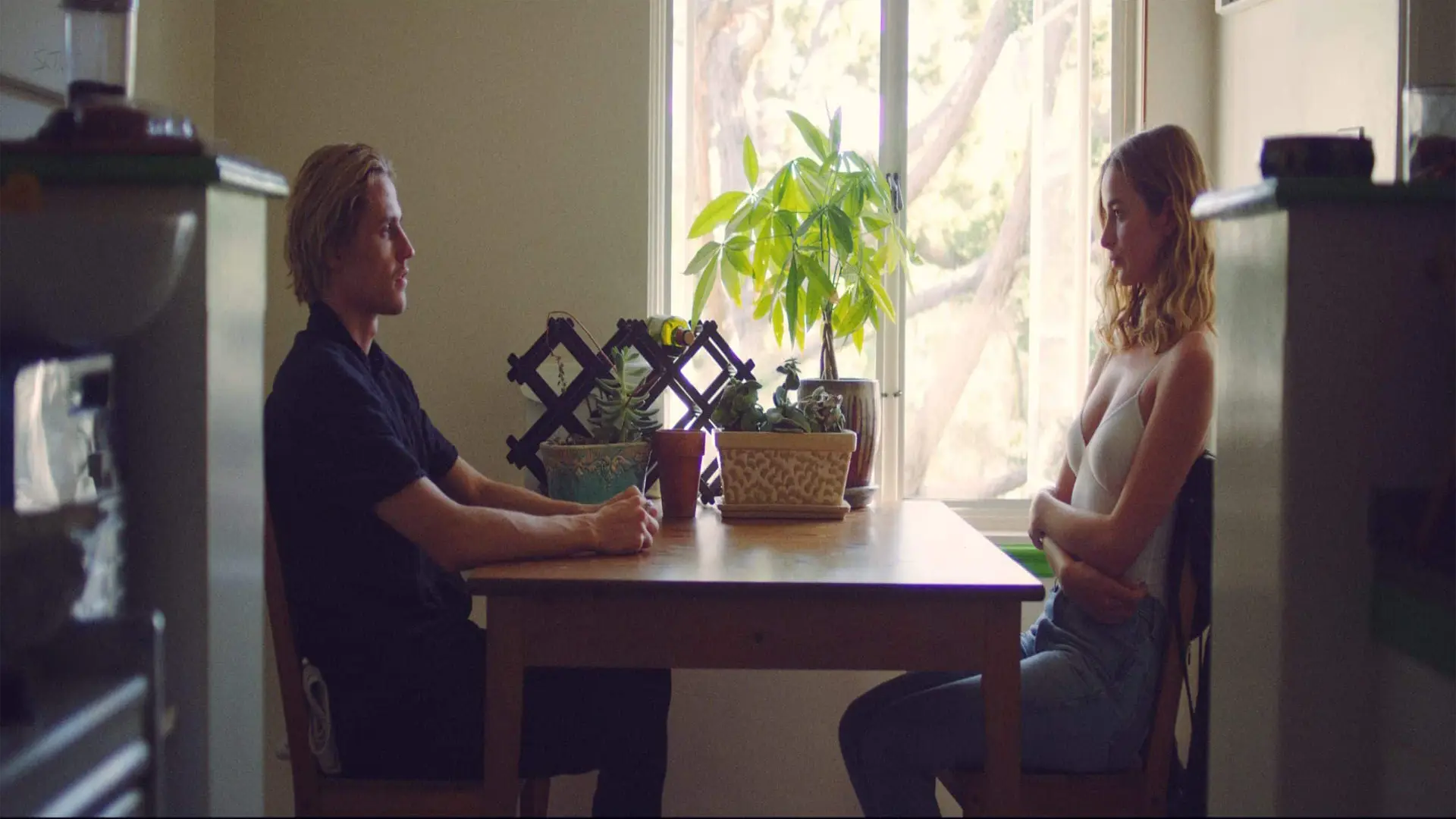

## Product Line
Costume designers aim to create clothes that reflect the ideas and goals of the show while also looking like the character chose the clothing. They consider factors such as color, materials, and styles to communicate story elements and make the characters stand out. The goal is to ensure that the costumes not only represent the character but also make them visually distinct and recognizable.
## How costume designers choose clothing for characters in TV shows
Costume designers choose clothing for characters in TV shows by considering various factors such as the character's personality, role, and the time period of the show. They typically perform extensive research, including reading the script and researching elements of the show to choose the right costumes, outfits, and accessories for all of the characters.
The goal is to ensure that the costumes not only represent the character but also make them [visually distinct](https://c-istudios.com/branding-and-graphic-design-services/) and recognizable. Additionally, costume designers aim to communicate story elements and make the characters stand out through their wardrobe choices.
Ultimately, the clothing chosen should align with the director's concept and work with other designers to create a cohesive visual experience.
## Common techniques costume designers use to create a character's wardrobe for a TV show
Some common techniques costume designers use to create a character's wardrobe for a TV show include:
1. Research and Visual Depiction: They start by conducting thorough research and then use a combination of sketches, photos, and digitally altered images to create a costume plot, which visually depicts each character's costume changes throughout the production.
1. Fabric Selection and Sourcing: They carefully select and source fabrics that align with the character and the production's vision.
1. Signifying Character's Social Class: Designers may use details like how costumes might signify a character's social class.
1. Collaboration and Feedback: The designs are refined through feedback and discussions to ensure they align with the character and the production's vision.
1. Storytelling Through Clothing: Costume designers tell a story through clothing, using the language of fashion to help express aspects of a show's setting, mood, and characters.
1. Creating a Visual Design: They use the elements of visual design such as line, mass, composition, space, color, and texture to create the overall look and style of the costumes.
These techniques are essential for bringing characters to life through their wardrobe choices and ensuring a cohesive visual and narrative experience.
## Common themes or motifs costume designers use to create a character's wardrobe in a TV show
Some common themes or motifs that costume designers use to create a character's wardrobe in a TV show include:
1. Symbolic Pieces: Incorporating clothing or accessories that symbolize or represent aspects of the character's personality, background, or journey.
1. Color Schemes: Utilizing specific colors to convey emotions, traits, or to symbolically convey a message related to the character.
1. Textile and Patterns: Choosing textiles and patterns that reflect the character's story, culture, or personal style.
1. Shapes, Forms, Silhouettes: Selecting specific shapes, forms, or silhouettes to express the character's identity or to convey a particular message.
1. Social Class Signifiers: Using details in the costumes to signify the character's social class or status.
These techniques help costume designers to tell a story through clothing, using the language of fashion to express aspects of a show's setting, mood, and characters, and to bring the characters and settings to life.
## Examples of TV shows with unique or unconventional character wardrobes
Some TV shows with unique or unconventional character wardrobes include:
- "Emily in Paris": The show features modern and fashionable wardrobe choices, with the main character, Emily, known for her fresh and fun outfits.
- "The Bold Type" and "Good Trouble": These shows are praised for their awesome modern and fashionable wardrobe choices, particularly in the CW network.
- "Only Murders in the Building": The character played by Selena Gomez is noted for her enviable outfits, particularly her coats.
- "Stranger Things": The character Nancy Wheeler is recognized for her great '80s-style wardrobe, contributing to the show's unique fashion sense.
These shows have gained attention for their distinctive and influential fashion choices, which have made a significant impact on their respective audiences.
## Examples of TV shows with characters who wear costumes or period clothing
Some TV shows with characters who wear costumes or period clothing include:
- "Stranger Things": The show features characters wearing period clothing from the 1980s, contributing to its unique fashion sense.
- "The Crown": The series showcases characters wearing complex and historically accurate outfits, particularly those of the British monarchy.
- "Mad Men" and "That '70s Show": These period shows present impressive new versions of older looks, reflecting the fashion of their respective eras.
- "Bridgerton": The characters in this show wear elaborate and era-appropriate costumes, reflecting the Regency era.
These shows are known for their attention to detail in portraying specific time periods and the unique fashion choices of their characters.
## How costume designers ensure clothing choices are historically accurate
Costume designers ensure historical accuracy in clothing choices through a multi-faceted approach. This involves extensive research, including the time period and geographical location of the show, to choose vintage costumes, outfits, and accessories relevant to that specific time period.
Additionally, they may use a process known as draping to perfect the measurements and make alterations to garments while placed on a mannequin, ensuring the perfect shape and size.
## Tips for costume designers when creating a character's wardrobe
Some tips for costume designers when creating a character's wardrobe include:
1. Start with a Mood Board: Begin with a mood board containing ideas, color palettes, and textures that inspire the design.
1. Understand the Character: Envision a wardrobe that best fits the character as if they exist in real life. This involves knowing who the characters are and what kind of person they are.
1. Blend Seamlessly with Production Values: The key element of a great costume is to blend seamlessly with all other [production values](https://c-istudios.com/studio-rentals/) of the scene, being part of the story so the viewer is focused on the experience as a whole.
1. Fabric Selection and Sourcing: Carefully select and source fabrics that align with the character and the production's vision.
1. Reflect the Character's Personality: The costume should reflect the character's personality, job, and societal context, and should not draw focus to a specific detail or role unless intended.
These tips emphasize the importance of research, understanding the character, and creating costumes that seamlessly integrate with the overall production.
## How costume designers choose the right colors for a character's wardrobe in a TV show
Costume designers choose the right colors for a character's wardrobe in a TV show by considering the character's personality, the period the show is set in, and the message they wish to convey. They meticulously plan out the color palette to express the character and the story. Colors can symbolize emotions, traits, or convey specific messages related to the character.
Additionally, they consider the set and background colors to ensure that the costumes complement the overall visual design. For instance, they may choose materials that make the actors stand out from the background rather than blend into it. This attention to color and its impact on the overall visual and emotional storytelling is a crucial aspect of costume design.
## How costume designers choose the right fabrics for a character's wardrobe in a TV show
Costume designers choose the right fabrics for a character's wardrobe in a TV show by considering various factors such as the character's personality, the specific requirements of the production, and the visual and tactile qualities of the fabric. They may use a combination of sketches, photos, and digitally altered images to create a costume plot, visually depicting each character's costume changes throughout the production.
Additionally, they carefully select and source fabrics that align with the character and the production's vision. For historical or period shows, costume designers must choose vintage costumes, outfits, and accessories that are relevant to that time period to ensure historical and cultural accuracy. The designs are refined through feedback and discussions to ensure they align with the character and the production's vision.
## How costume designers balance practicality and style when creating a character's wardrobe
Costume designers balance practicality and style when creating a character's wardrobe by considering the character's personality, the specific requirements of the production, and the need for the costumes to be visually appealing. They must ensure that the costumes not only reflect the character and the period the production is set in but also allow the actors to move freely and perform effectively. This involves careful consideration of the durability of the fabric, ease of movement, and the ability to withstand the demands of the [performance](https://c-istudios.com/our-work/).
Additionally, they work within budget and time constraints, often using practical tools and methods to put costumes together, such as sewing machines or hot glue guns. Ultimately, the goal is to create a cohesive visual experience that brings the characters to life through their wardrobe choices.
## Common mistakes costume designers make when creating a character's wardrobe
Some common mistakes costume designers make when creating a character's wardrobe include:
1. Lack of Research: Failing to thoroughly understand the script, the time period, and the character's personality can lead to inaccuracies and inconsistencies in the costume design.
1. Ignoring Practicality: Overemphasizing style at the expense of practicality can result in costumes that hinder the actors' movement or are not suitable for the demands of the production.
1. Inaccurate Silhouette and Seamlines: Neglecting the importance of silhouette and seamlines, especially in historical or period costumes, can lead to designs that are not authentic to the era.
1. Not Reflecting the Character's Personality: Failing to ensure that the costumes reflect the character's personality, job, and societal context can lead to a lack of authenticity and impact.
To avoid these mistakes, costume designers should prioritize thorough research, balance practicality and style, and ensure that the costumes authentically reflect the character and the production's vision.
## How costume designers collaborate with other departments on a TV show
Costume designers collaborate with various departments on a TV show to ensure a cohesive visual and narrative experience. They work closely with directors, producers, and production designers to collectively create the overall look and style of the show.
Additionally, they collaborate with the wardrobe department, including the wardrobe supervisor and set costumers, to ensure the seamless execution of the costume designs on set. Furthermore, costume designers work with costume design assistants to break down the script, assess costume needs, and manage the costume production, team, and budget.
This collaborative approach ensures that the costumes align with the creative vision of the show and are effectively integrated into the production.
## Other departments costume designers typically collaborate with on a TV show
Costume designers typically collaborate with several departments on a TV show, including:
1. Directors, Producers, and Production Designers: They work collectively to create the overall look and style of the show.
1. Wardrobe Department: This includes the wardrobe supervisor, set costumers, and costume design assistants, who ensure the seamless execution of the costume designs on set, manage the day-to-day wardrobe use, and assist in breaking down the script and assessing costume needs.
1. Hair and Makeup Department: Collaboration with hair stylists, wig masters, and makeup artists is essential to ensure a cohesive and harmonious overall appearance of the characters.
1. Assistant Directors: They provide information about the numbers and sizes of costumes needed for each scene, enabling the costume designers to plan and prepare accordingly.
By working closely with these departments, costume designers ensure that the costumes align with the creative vision of the show and are effectively integrated into the production.
### Working with C&I Studios for costume design in television
Hiring [C&I Studios](https://c-istudios.com/) for your production including costume design offers several benefits, including:
1. Expertise and Experience: C&I Studios have experienced costume designers who are skilled in creating, acquiring, and hiring costumes for actors and extras. They can bring a wealth of expertise to ensure that the costumes align with the creative vision of the show.
1. Resource Management: C&I Studios have the resources and networks to select and hire appropriate suppliers and costume makers, negotiate terms with them, and communicate design requirements. This can streamline the process and ensure access to a wide range of costume options.
1. Collaborative Environment: Working with C&I Studios allows for seamless collaboration with multiple departments, such as directors, producers, and production designers, to create a cohesive visual and narrative experience.
1. Budget and Time Management: C&I Studios are adept at managing budgets and production schedules, ensuring that the costume design process is efficient and cost-effective.
1. Overall Production Support: Costume designers at C&I Studios benefit from the support of our other creative and technical personnel, such as set designers, lighting experts, and makeup artists, to contribute to the overall look and style of the show.
By leveraging the expertise, resources, and collaborative environment of C&I Studios, costume designers can effectively contribute to the success of the show and ensure that the costumes enhance the visual and emotional storytelling.
[Contact C&I Studios](https://c-istudios.com/contact/) to get started today.
For more information on industry standards and best practices, visit the [American Marketing Association](https://www.ama.org/).
## Work with C&I Studios
If you are planning a project like this, our team can take it from concept to final delivery. Explore our [film and TV production](https://c-istudios.com/film-and-tv-production/), browse [our work](https://c-istudios.com/our-work/) to see how we tell brand stories, and [get in touch](https://c-istudios.com/contact/) when you are ready to start.
Originally published January 2, 2024
---
*This content is from [C&I Studios](https://c-istudios.com), a full-service production company.*
---
# Do The Impossible: EP. 11 | David and Goliath
> Published: December 29, 2023
> Categories: Commercial & Brand
> Tags: David and Goliath, Do The Impossible, Episode 11
> Source: https://c-istudios.com/do-the-impossible-david-and-goliath/
---
In the eleventh episode of our "Do The Impossible" series, we unveil C&I Studios' unique prowess in catering to the needs of both small businesses and corporate giants. Delve into our narrative showcasing adaptable strategies, proving our ability to deliver tailored, impactful solutions irrespective of the company's size. Our adaptable approach meets the distinct demands of many businesses, highlighting our capability to offer tailored, impactful solutions, regardless of the scale.
BACK TO ALL EPISODES
**Related:** [Video Production Services](https://c-istudios.com/video-production-services/) | [Video Production Los Angeles](https://c-istudios.com/video-production-los-angeles/) | [Advertising Services](https://c-istudios.com/advertising-services/) | [Social Media Marketing](https://c-istudios.com/social-media-marketing-services/) | [Post Production Services](https://c-istudios.com/post-production-services/)
### Related Reading
---
*This content is from [C&I Studios](https://c-istudios.com), a full-service production company.*
---
# Collaborative Storytelling: Fostering Creativity and Innovation in Television Production Teams
> Published: December 27, 2023
> Categories: Film & TV
> Source: https://c-istudios.com/collaborative-storytelling-fostering-creativity-and-innovation-in-television-production-teams/
---
.cib{--paper:#1b1d1f;--ink:#fff;--body:#d5d7d9;--muted:#8b9096;--line:rgba(255,255,255,.12);--thumb:#2b2e31;--card:#212426;--accent:#c02b0a;--blue:#5B8FA8;--serif:'Playfair Display',Georgia,serif;--sans:'Poppins',-apple-system,sans-serif;--measure:900px;background:var(--paper);color:var(--body);font-family:var(--sans);line-height:1.6;position:relative;left:50%;transform:translateX(-50%);width:90vw;max-width:1920px}
.cib *{box-sizing:border-box}
.cib .kicker{max-width:var(--measure);margin:58px auto 0;padding:0 22px;font-size:12.5px;font-weight:700;letter-spacing:2.5px;text-transform:uppercase;color:var(--blue)}
.cib h1.cibh1{text-wrap:balance;font-family:var(--serif);font-weight:500;font-size:clamp(46px,6vw,72px);line-height:1.08;color:var(--ink);max-width:var(--measure);margin:18px auto 0;padding:0 22px;letter-spacing:-.5px}
.cib .metarow{max-width:var(--measure);margin:20px auto 0;padding:0 22px;color:var(--muted);font-size:14px}
.cib .hero{position:relative;width:100%;height:0;padding-bottom:56.25%;overflow:hidden;margin:48px auto 0;border-top:1px solid var(--line);border-bottom:1px solid var(--line)}
.cib .hero .ph{width:100%;aspect-ratio:16/9;background:var(--thumb);border-top:1px solid var(--line);border-bottom:1px solid var(--line);display:flex;align-items:center;justify-content:center;color:#7d8288;font-size:13px;text-align:center;padding:0 20px}
.cib .body{max-width:var(--measure);margin:12px auto 0;padding:52px 22px 6px}
.cib .body.lead p:first-child{font-size:23px;line-height:1.62;color:var(--ink)}
.cib .body p{font-size:18.5px;line-height:1.85;margin:0 0 30px;color:var(--body)}
.cib .body h2{text-wrap:balance;font-family:var(--serif);font-weight:500;font-size:clamp(32px,4vw,48px);line-height:1.22;color:var(--ink);margin:70px 0 20px;letter-spacing:-.3px}
.cib .body h3{text-wrap:balance;font-family:var(--sans);font-weight:600;font-size:22px;color:var(--ink);margin:38px 0 8px}
.cib .body a{color:var(--ink);text-decoration:underline;text-decoration-color:rgba(255,255,255,.4);text-underline-offset:3px}
.cib .body a:hover{text-decoration-color:var(--ink)}
.cib .ctable{width:100%;border-collapse:collapse;margin:16px 0 30px;font-size:16px}
.cib .ctable th{background:#000;color:#fff;text-align:left;padding:10px 12px;font-family:var(--sans)}
.cib .ctable td{padding:10px 12px;border-bottom:1px solid var(--line);color:var(--body)}
.cib .inimg{position:relative;width:100%;height:0;padding-bottom:56.25%;overflow:hidden;margin:72px auto;border-top:1px solid var(--line);border-bottom:1px solid var(--line)}
.cib .inimg .ph{width:100%;aspect-ratio:16/9;background:var(--thumb);border-top:1px solid var(--line);border-bottom:1px solid var(--line);display:flex;align-items:center;justify-content:center;color:#7d8288;font-size:13px}
.cib .origpub{max-width:var(--measure);margin:60px auto 0;padding:26px 22px 0;border-top:1px solid var(--line);color:var(--muted);font-size:13.5px}
.cib .related{max-width:1200px;margin:64px auto 0;padding:34px 22px 76px}
.cib .related h3{font-family:var(--sans);font-size:12.5px;letter-spacing:2px;text-transform:uppercase;color:var(--ink);margin:0 0 24px}
.cib .grid{display:grid;grid-template-columns:repeat(3,1fr);gap:28px}
.cib .rc{background:var(--card);border:1px solid var(--line);display:block;text-decoration:none;color:inherit;transition:border-color .15s}
.cib a.rc:hover{border-color:rgba(255,255,255,.5)}
.cib .rc .thumb{position:relative;width:100%;height:0;padding-bottom:56.25%;background:var(--thumb);overflow:hidden}
.cib .rc .thumb img{position:absolute!important;top:0!important;left:0!important;width:100%!important;height:100%!important;object-fit:cover!important;margin:0!important}
.cib .rc .cc{padding:14px 15px 17px}
.cib .rc .rt{font-family:var(--serif);font-weight:500;font-size:16px;line-height:1.3;color:var(--ink);margin:0 0 6px}
.cib .rc .rm{font-size:11px;letter-spacing:1px;text-transform:uppercase;color:var(--muted)}
.cib img{margin:0!important;padding:0!important;display:block!important;vertical-align:top;max-width:100%}
.cib .hero img,.cib .inimg img{position:absolute!important;top:0!important;left:0!important;width:100%!important;height:100%!important;object-fit:cover!important;margin:0!important;padding:0!important;border:0!important;display:block!important;aspect-ratio:auto!important}
.cib .hero+.body{padding-top:36px}
@media(max-width:760px){.cib .grid{grid-template-columns:1fr}.cib .body h2{margin:52px 0 16px}.cib .body p{font-size:17.5px}.cib .inimg,.cib .hero{margin-top:44px}}
.cib .vembed{max-width:var(--measure);margin:44px auto;padding:0 22px}.cib .vembed .vwrap{position:relative;width:100%;height:0;padding-bottom:56.25%}.cib .vembed .vwrap iframe{position:absolute;top:0;left:0;width:100%;height:100%;border:0}
Film & TV
# Collaborative Storytelling. Fostering Creativity and Innovation in Television Production Teams
4 min read

The collaborative approach in [television production](https://c-istudios.com/) has become increasingly important, particularly in scripted television. This approach involves a team of writers working together to generate engaging stories, allowing for the integration of various perspectives and skills. The evolving landscape of television production has led to a more participatory and interactive storytelling experience, blurring the lines between producers and consumers.
Additionally, the integration of brands into content has become more seamless and meaningful, contributing to revenue generation. The use of technology, such as audiovisual (AV) technology and virtual reality (VR), has also played a significant role in enhancing the storytelling process.
By leveraging these collaborative and technological advancements, television production teams can create more engaging and innovative content, leading to higher audience engagement and loyalty.
## How collaborative storytelling can help to generate new ideas in television production
Collaborative storytelling in television production can help generate new ideas by fostering a culture of open communication, problem-sharing, and innovative idea generation within the production team. By involving the team in the planning and decision-making process, sharing the creative vision and values, and encouraging their input and feedback, a common identity and purpose for the project can be created, fostering a sense of community and culture among the team members.
Additionally, when creating a culture of compromise and collaboration within a [TV production](https://c-istudios.com/film-and-tv-production/) team, open communication and problem-sharing are essential to address issues as soon as they arise, preventing disconnects between different departments, which can lead to delays and additional expenses.
Furthermore, by co-creating stories with the audience, higher engagement, better ideas, and a better sense of what the audience likes and doesn't like can be achieved, leading to a more interactive and engaging [storytelling](https://c-istudios.com/creative-marketing-services/) experience.
## Examples of successful collaborative storytelling in television production
Some examples of successful collaborative storytelling in television production include the following:
1. Scripted Television: In the current "golden age" of scripted television, collaborative efforts in writing have become increasingly important. The traditional model of a single writer working alone has evolved into a more collaborative approach, where a group of writers work together to generate engaging stories.
1. Shared Story Worlds: The concept of shared story worlds has gained prominence, allowing for collaborative storytelling across different mediums and platforms. This approach is not limited by traditional boundaries and has been facilitated by the internet and the blurring of lines between producers and consumers.
1. Co-production and Concept Collaboration: Production companies are increasingly engaging in co-production and concept collaboration, where teams work together to develop narrative storytelling and concepts for various television programs.
These examples illustrate how collaborative storytelling in television production has evolved to involve unique creative inputs and cooperative efforts, leading to the development of engaging and innovative content.
## How collaborative storytelling has impacted the success of popular TV shows
Collaborative storytelling has significantly impacted the success of popular TV shows in the following ways:
1. **Engaging Stories:** The collaborative approach to TV show writing has led to the generation of more engaging and innovative stories. The traditional model of a single writer working alone has evolved into a more collaborative approach, where a group of writers work together to generate compelling narratives.
1. **Unique Perspectives**: Collaboration allows for the integration of unique perspectives and ideas, leading to more dynamic and multifaceted storytelling. This approach has contributed to the success of many TV shows by bringing together a range of creative inputs and experiences.
1. **Interactive Experiences:** Collaborative storytelling has made TV programming more participatory and interactive, thanks to second-screen experiences and interactive. This has enhanced audience engagement and contributed to the success of TV shows by creating a more immersive viewing experience.
1. **Higher Engagement:** When TV shows are created through collaborative storytelling, they often result in higher audience engagement. By involving the audience in the storytelling process, either directly or indirectly, TV shows can create a more loyal and dedicated fan base.
In summary, collaborative storytelling has had a profound impact on the success of popular TV shows by fostering more engaging, diverse, and interactive storytelling experiences, ultimately leading to higher audience engagement and loyalty.
## Benefits of collaborative storytelling in television production
Collaborative storytelling in television production offers several benefits, including:
1. Engaging Content: By bringing together various perspectives and skills, collaborative storytelling can lead to the creation of more engaging and innovative content.
1. Audience Engagement: Collaborative storytelling can make TV programming more participatory and interactive, leading to higher audience engagement.
1. Unique Narratives: It allows for different interpretations, unique narratives, and a broader range of voices, ensuring that the content connects with audiences on a deeper level.
1. Innovation and Creativity: Collaboration fosters a supportive environment for experimentation, problem-solving, and the generation of new ideas, leading to innovative and creative storytelling.
1. Integration of Brands: It enables the integration of brands into the content in a more seamless and meaningful way, which can be beneficial for revenue generation.
Overall, collaborative storytelling in television production not only enhances the quality of content but also contributes to audience engagement, innovation, and the integration of various perspectives.
## Techniques used in collaborative storytelling in television production
The techniques used in collaborative storytelling in television production include:
1. Group Writing: In the scripted television industry, group writing has become a common practice. This approach involves a team of writers working together to generate engaging stories, allowing for the integration of various perspectives and skills.
1. Shared Story Worlds: The concept of shared story worlds has gained prominence, enabling collaborative storytelling across different mediums and platforms. This approach is not limited by traditional boundaries and has been applied to various mediums, including television and video games.
1. Improvisation and Audience Involvement: Techniques such as improv-meets-narrative strategy and co-creation of stories with the audience are used to foster collaborative storytelling. This approach allows for more interactive experiences and higher audience engagement.
1. Integration of Brands: Collaborative storytelling also involves the integration of brands into the content in a more seamless and meaningful way, which can be beneficial for revenue generation.
These techniques demonstrate how collaborative storytelling in television production involves various creative inputs and cooperative efforts, leading to the development of engaging and innovative content.
## Challenges of collaborative storytelling in television production
Some of the challenges of collaborative storytelling in television production include:
1. Ethical Considerations: Collaborative storytelling can present ethical challenges, especially when it involves user-generated content and narratives. This can include issues related to privacy, consent, and the responsible use of the content.
1. Creative Differences: Collaborative storytelling may lead to creative differences among team members, clients, and stakeholders, which can result in disagreements and dissatisfaction.
1. Communication and Coordination: Effective communication, coordination, and feedback among team members are essential for successful collaborative storytelling. However, when working remotely, video producers face challenges related to technical issues, communication gaps, and the need for frequent and clear communication.
1. Integration of Brands: While the integration of brands into content can be beneficial for revenue generation, it also presents challenges in ensuring that the integration is seamless and meaningful, without compromising the integrity of the storytelling.
These challenges highlight the complex nature of collaborative storytelling in television production and the need to address ethical, creative, communication, and integration issues to ensure its success.
## How technical issues can be addressed in collaborative storytelling in television production
Addressing technical issues in collaborative storytelling in television production can be achieved through various means, including the use of [technology](https://c-istudios.com/video-production-gear-list/) and effective communication. Here are some approaches:
1. Technology Integration: Collaborating with technology design consultants and leveraging audiovisual (AV) technology can enhance the storytelling process. This includes using AV technology to create immersive story experiences and integrating virtual reality (VR) to enhance audience engagement.
1. Effective Communication: Ensuring clear and frequent communication among team members is essential to address technical issues. This can be achieved through the use of purpose-built technical features and specifically designed communication tools to facilitate collaboration and address any challenges that may arise.
By integrating technology and maintaining effective communication, television production teams can address technical issues and facilitate seamless collaborative storytelling.
## Best practices for addressing technical issues in collaborative storytelling in television production
Some best practices for addressing technical issues in collaborative storytelling in television production include:
1. Utilizing Purpose-Built Technical Features: Using purpose-built technical features and tools designed for collaborative storytelling can help address and mitigate technical issues that may arise during the production process.
1. Effective Communication and Coordination: Ensuring clear and frequent communication among team members is essential to address technical issues. This can be achieved through the use of specifically designed communication tools to facilitate collaboration and address any challenges that may arise.
1. Technology Integration: Collaborating with technology design consultants and leveraging audiovisual (AV) technology can enhance the storytelling process. This includes using AV technology to create immersive story experiences and integrating virtual reality (VR) to enhance audience engagement.
By integrating technology, maintaining effective communication, and utilizing purpose-built technical features, television production teams can address technical issues and facilitate seamless collaborative storytelling.
## How collaborative storytelling can help to overcome creative blocks in television production
Collaborative storytelling can help overcome creative blocks in television production by fostering a culture of open communication, problem-sharing, and innovative idea generation. By involving the team in the planning and decision-making process, sharing the creative vision and values, and encouraging their input and feedback, a common identity and purpose for the project can be created, fostering a sense of community and culture among the team members.
Additionally, when creating a culture of compromise and collaboration within a TV production team, open communication and problem-sharing are essential to address issues as soon as they arise, preventing disconnects between different departments, which can lead to delays and additional expenses.
Furthermore, by co-creating stories with the audience, higher engagement, better ideas, and a better sense of what the audience likes and doesn't like can be achieved, leading to a more interactive and engaging storytelling experience.
## Techniques for fostering collaboration in television production teams
Some techniques for fostering collaboration in television production teams include:
1. Create a Shared Vision and Culture: Involving the team in the planning and decision-making process, sharing the creative vision and values, and encouraging their input and feedback can help create a common identity and purpose for the project, fostering a sense of community and culture among the team members.
1. Encourage Open Communication and Problem-Sharing: Open communication and problem-sharing can help address issues as soon as they arise, preventing disconnects between different departments, which can lead to delays and additional expenses.
1. Build a Successful [Video Production](https://c-istudios.com/video-production-services/) Team: Encourage team members to share their ideas and perspectives, provide opportunities for constructive feedback and collaboration, celebrate successes, and acknowledge challenges as a team to build a sense of camaraderie and mutual support.
1. Define Your Vision and Goals: Clearly defining the vision and goals of the project, choosing team members wisely, and providing them with the tools, resources, and opportunities to express their talents and experiment with new techniques can foster a collaborative and creative culture within the team.
1. Promote a Community Working Environment: Promoting a community working environment, fostering honest and open communication, and highlighting individuals' strengths can contribute to a collaborative and innovative team.
By implementing these techniques, television production teams can foster a culture of collaboration, creativity, and innovation, leading to more cohesive and successful productions.
## Work with C&I Studios
If you are planning a project like this, our team can take it from concept to final delivery. Explore our [film and TV production](https://c-istudios.com/film-and-tv-production/), browse [our work](https://c-istudios.com/our-work/) to see how we tell brand stories, and [get in touch](https://c-istudios.com/contact/) when you are ready to start.
Originally published December 27, 2023
---
*This content is from [C&I Studios](https://c-istudios.com), a full-service production company.*
---
# Mastering the Art of Lighting in Television Production: Techniques for Cinematic Impact
> Published: December 27, 2023
> Categories: Film & TV
> Source: https://c-istudios.com/mastering-the-art-of-lighting-in-television-production-techniques-for-cinematic-impact/
---
.cib{--paper:#1b1d1f;--ink:#fff;--body:#d5d7d9;--muted:#8b9096;--line:rgba(255,255,255,.12);--thumb:#2b2e31;--card:#212426;--accent:#c02b0a;--blue:#5B8FA8;--serif:'Playfair Display',Georgia,serif;--sans:'Poppins',-apple-system,sans-serif;--measure:900px;background:var(--paper);color:var(--body);font-family:var(--sans);line-height:1.6;position:relative;left:50%;transform:translateX(-50%);width:90vw;max-width:1920px}
.cib *{box-sizing:border-box}
.cib .kicker{max-width:var(--measure);margin:58px auto 0;padding:0 22px;font-size:12.5px;font-weight:700;letter-spacing:2.5px;text-transform:uppercase;color:var(--blue)}
.cib h1.cibh1{text-wrap:balance;font-family:var(--serif);font-weight:500;font-size:clamp(46px,6vw,72px);line-height:1.08;color:var(--ink);max-width:var(--measure);margin:18px auto 0;padding:0 22px;letter-spacing:-.5px}
.cib .metarow{max-width:var(--measure);margin:20px auto 0;padding:0 22px;color:var(--muted);font-size:14px}
.cib .hero{position:relative;width:100%;height:0;padding-bottom:56.25%;overflow:hidden;margin:48px auto 0;border-top:1px solid var(--line);border-bottom:1px solid var(--line)}
.cib .hero .ph{width:100%;aspect-ratio:16/9;background:var(--thumb);border-top:1px solid var(--line);border-bottom:1px solid var(--line);display:flex;align-items:center;justify-content:center;color:#7d8288;font-size:13px;text-align:center;padding:0 20px}
.cib .body{max-width:var(--measure);margin:12px auto 0;padding:52px 22px 6px}
.cib .body.lead p:first-child{font-size:23px;line-height:1.62;color:var(--ink)}
.cib .body p{font-size:18.5px;line-height:1.85;margin:0 0 30px;color:var(--body)}
.cib .body h2{text-wrap:balance;font-family:var(--serif);font-weight:500;font-size:clamp(32px,4vw,48px);line-height:1.22;color:var(--ink);margin:70px 0 20px;letter-spacing:-.3px}
.cib .body h3{text-wrap:balance;font-family:var(--sans);font-weight:600;font-size:22px;color:var(--ink);margin:38px 0 8px}
.cib .body a{color:var(--ink);text-decoration:underline;text-decoration-color:rgba(255,255,255,.4);text-underline-offset:3px}
.cib .body a:hover{text-decoration-color:var(--ink)}
.cib .ctable{width:100%;border-collapse:collapse;margin:16px 0 30px;font-size:16px}
.cib .ctable th{background:#000;color:#fff;text-align:left;padding:10px 12px;font-family:var(--sans)}
.cib .ctable td{padding:10px 12px;border-bottom:1px solid var(--line);color:var(--body)}
.cib .inimg{position:relative;width:100%;height:0;padding-bottom:56.25%;overflow:hidden;margin:72px auto;border-top:1px solid var(--line);border-bottom:1px solid var(--line)}
.cib .inimg .ph{width:100%;aspect-ratio:16/9;background:var(--thumb);border-top:1px solid var(--line);border-bottom:1px solid var(--line);display:flex;align-items:center;justify-content:center;color:#7d8288;font-size:13px}
.cib .origpub{max-width:var(--measure);margin:60px auto 0;padding:26px 22px 0;border-top:1px solid var(--line);color:var(--muted);font-size:13.5px}
.cib .related{max-width:1200px;margin:64px auto 0;padding:34px 22px 76px}
.cib .related h3{font-family:var(--sans);font-size:12.5px;letter-spacing:2px;text-transform:uppercase;color:var(--ink);margin:0 0 24px}
.cib .grid{display:grid;grid-template-columns:repeat(3,1fr);gap:28px}
.cib .rc{background:var(--card);border:1px solid var(--line);display:block;text-decoration:none;color:inherit;transition:border-color .15s}
.cib a.rc:hover{border-color:rgba(255,255,255,.5)}
.cib .rc .thumb{position:relative;width:100%;height:0;padding-bottom:56.25%;background:var(--thumb);overflow:hidden}
.cib .rc .thumb img{position:absolute!important;top:0!important;left:0!important;width:100%!important;height:100%!important;object-fit:cover!important;margin:0!important}
.cib .rc .cc{padding:14px 15px 17px}
.cib .rc .rt{font-family:var(--serif);font-weight:500;font-size:16px;line-height:1.3;color:var(--ink);margin:0 0 6px}
.cib .rc .rm{font-size:11px;letter-spacing:1px;text-transform:uppercase;color:var(--muted)}
.cib img{margin:0!important;padding:0!important;display:block!important;vertical-align:top;max-width:100%}
.cib .hero img,.cib .inimg img{position:absolute!important;top:0!important;left:0!important;width:100%!important;height:100%!important;object-fit:cover!important;margin:0!important;padding:0!important;border:0!important;display:block!important;aspect-ratio:auto!important}
.cib .hero+.body{padding-top:36px}
@media(max-width:760px){.cib .grid{grid-template-columns:1fr}.cib .body h2{margin:52px 0 16px}.cib .body p{font-size:17.5px}.cib .inimg,.cib .hero{margin-top:44px}}
.cib .vembed{max-width:var(--measure);margin:44px auto;padding:0 22px}.cib .vembed .vwrap{position:relative;width:100%;height:0;padding-bottom:56.25%}.cib .vembed .vwrap iframe{position:absolute;top:0;left:0;width:100%;height:100%;border:0}
Film & TV
# Mastering the Art of Lighting in Television Production. Techniques for Cinematic Impact
4 min read
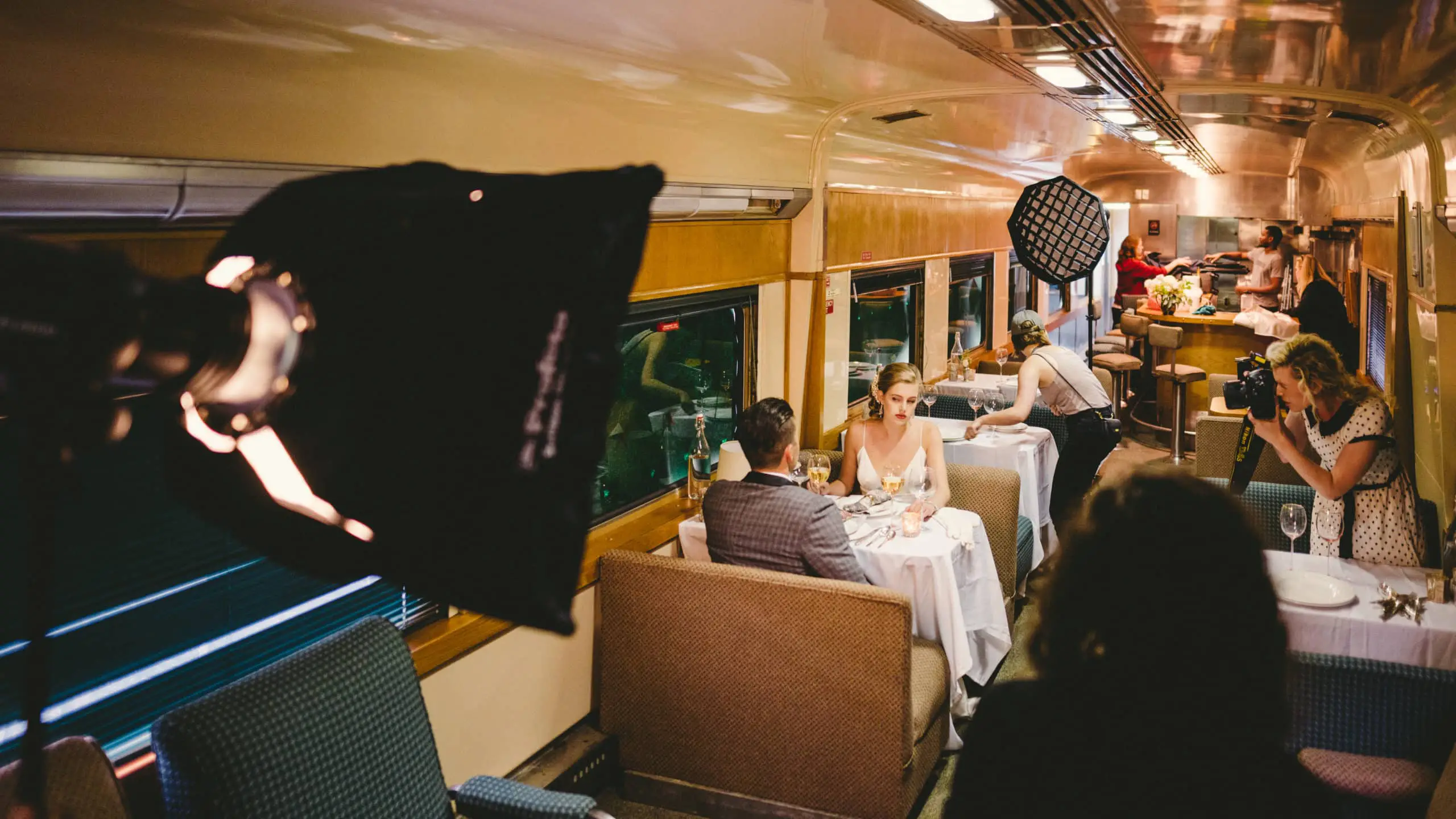
The art of lighting in [television production](https://c-istudios.com/) encompasses various techniques to achieve a cinematic impact. Two essential lighting categories are practical lighting and 3-point lighting. Practical lighting refers to visible light sources in a scene, such as candles, tungsten lights, and natural light, and can be used to add dimension and visual interest to a shot. On the other hand, 3-point lighting is a fundamental technique involving the use of a key light, fill light, and backlight to control lighting, enhance the mood, and elevate the overall cinematic experience[.](https://www.linkedin.com/pulse/mastering-art-3-point-lighting-illuminating-cinema-shibley)
Mastering these lighting techniques is crucial for filmmakers and television producers as it significantly contributes to a project's visual narrative. Good lighting is essential for enhancing images, creating depth, and supporting the story's mood and atmosphere in [film and television production](https://c-istudios.com/film-and-tv-production/).
## How lighting contributes to the overall mood of a scene
Lighting contributes to the overall mood of a scene through various techniques and elements. Light intensity, direction, color, and contrast play a significant role in influencing the emotional impact of a scene. For instance, hard light with harsh shadows can create a tense atmosphere, while soft or low-intensity lighting can signify a calm moment. The color of light can also affect the mood, such as using warm colors to create a cozy or romantic atmosphere, or cool colors to evoke a sense of mystery or unease.
Additionally, the quality and contrast of light, including low key and high key lighting, can convey different emotional messages and support the story's mood and atmosphere. Therefore, by manipulating these lighting elements, filmmakers can effectively communicate and evoke the intended emotions in the audience, ultimately enhancing the overall cinematic experience.
## How can lighting be used to create a specific atmosphere in a scene
Lighting can be used to create a specific atmosphere in a scene through various [techniques](https://c-istudios.com/video-production-gear-list/), including:
1. Controlling Lighting Levels: Adjusting the brightness of the lights to set the desired mood and atmosphere.
2. Color Control: Using different light colors to evoke specific emotions. Warm colors can create a cozy or romantic atmosphere, while cool colors can evoke a sense of mystery or unease.
3. Light Quality: The hardness or softness of light can dramatically affect the mood. Diffused light creates a softer and smoother look, while hard light with sharp shadows can create a tense atmosphere.
4. Light Placement: The direction and distribution of light can efficiently light the space from different regions, such as walls, ceilings, or specific objects, to create the intended atmosphere.
5. Dimmer Switches: Using dimmer switches to control the intensity of the light and create different lighting scenes, allowing for flexibility in setting the mood.
By considering these elements, lighting designers can effectively manipulate the lighting to create the desired atmosphere in a scene, contributing to the overall experience of the space both physically and psychologically.
## Examples of lighting techniques used to create a specific mood
Some examples of lighting techniques used to create a specific mood include:
1. Hard and Soft Lighting: Hard lighting with sharp shadows can create a tense atmosphere, while soft or low-intensity lighting can signify a calm moment.
1. Color of Light: Warm colors can create a cozy or romantic atmosphere, while cool colors can evoke a sense of mystery or unease.
1. Low-Key Lighting: This technique separates subjects from their surroundings to create a sense of isolation, vulnerability, or fear, often used in drama, horror, or intimate scenes.
1. High-Key Lighting: Casts few shadows and is commonly used in newsrooms, game shows, and sitcoms to create bright and happy moods.
1. Use of Fill and Backlight: Adjusting the relationship between key and fill lights can shift the mood of the scene, with the fill light providing an overall lift to the shadows.
1. Control of Light Intensity: Higher levels of lighting have a stimulating effect, while softer, low-level lighting encourages a sense of intimacy and restfulness.
These techniques, among others, are essential for filmmakers and lighting designers to effectively convey and enhance the intended emotions and moods in a scene.
## How lighting can be used to create depth in a scene
Lighting can be used to create depth in a scene through various techniques. Some of the common methods include:
1. Using Shadows: Shadows are a powerful tool for creating depth. A scene lit entirely from the front can appear flat and dull, while a masterfully shaded scene can be visually striking, implying a third dimension.
1. Layered Lighting: By using different hues for different layers, such as in a daylight interior scene, filmmakers can enhance depth and create a sense of dimension.
1. High Contrast Lighting: Sharper lighting with harsh shadows can add an illusion of depth. The higher the contrast between shadow and light, the stronger the depth in a shot.
1. Three-Point Lighting Technique: Mastering the three-point lighting technique, which involves the use of a key light, fill light, and backlight, is essential for creating depth and dimension in videos.
By employing these techniques, filmmakers can effectively use lighting to create a sense of depth in a scene, ultimately enhancing the visual impact and storytelling.
## Lighting techniques used to create a specific tone in a scene
Some lighting techniques used to create a specific tone in a scene include:
1. Soft Light vs. Hard Light: Soft light is often used for romantic or emotional scenes, while hard light can be used to create tension or drama. The choice of color temperature can also have a significant impact on the mood of the scene.
1. High-Key Lighting: This technique involves using bright, even lighting to create a light, airy look, often used in comedies or romantic comedies to create a cheerful, optimistic tone.
1. Low-Key Lighting: This technique uses a low-intensity key light to create a moody and dramatic effect, often used in horror and suspense movies.
1. Color Temperature: Warm or cool color temperatures can be used to convey specific emotions. For example, cool colors can evoke a sense of mystery or unease, while warm colors can create a cozy or romantic atmosphere.
1. Gobo Lighting: This technique is used to create patterns of light and shadow to emphasize specific elements in a scene and help tell the story visually.
By utilizing these techniques, filmmakers can effectively create the desired tone and mood in a scene, ultimately enhancing the overall cinematic impact.
## Common lighting mistakes to avoid in television production
Some common lighting mistakes to avoid in television production include:
1. Too Much Contrast: Creating overexposed highlights and underexposed shadows, which can reduce the detail, color, and texture of the image.
1. Unbalanced Lighting: Failing to achieve balanced lighting in the foreground and background, leading to issues with shadows and lack of depth.
1. Not Enough Light: Insufficient lighting in a shot, which can result in underexposed or poorly lit scenes.
1. Relying on Just One Light Source: Depending on a single light source, which can lead to harsh shadows and lack of depth. Using multiple light sources to achieve balanced and even lighting is recommended.
1. Unmotivated Lighting: Using lighting that does not have a logical or natural source, which can detract from the scene's authenticity and impact.
By being aware of these common mistakes, lighting professionals can enhance the quality of television production and avoid potential issues that may arise from improper lighting techniques.
## How lighting mistakes affect the overall look and feel of a television production
Lighting mistakes can significantly affect the overall look and feel of a television production. Poor lighting can lead to flat, lifeless images, detracting from the visual narrative and the audience's engagement with the story. Additionally, errors in lighting can be challenging and expensive to correct during post-production, impacting the project's budget and timeline.
Furthermore, lighting plays a vital role in communicating the mood, atmosphere, and emotions within a scene, and without well-thought-out lighting, the intended narrative and emotional impact may not be effectively conveyed. Therefore, avoiding lighting mistakes is crucial to ensuring that the visual elements effectively support the storytelling and overall quality of the television production.
## How to fix lighting mistakes in a television production
To fix lighting mistakes in television production, several post-production effects can be employed to address issues and enhance the visual quality. Some of these effects include:
1. Exposure Correction: Adjusting the brightness and contrast of the video to correct overexposure or underexposure issues.
1. Color Correction: Balancing and enhancing the color of the footage to ensure a consistent and natural look.
1. Noise Reduction: Minimizing or removing visual noise or graininess from the footage, which can result from low light or high ISO settings.
1. Flicker Removal: Addressing any unwanted flickering of light sources in the footage.
In addition to post-production effects, it's important to address lighting mistakes during the filming process to minimize the need for extensive post-production correction. This can involve techniques such as using reflectors to bounce light and even up the lighting on the subject's face, or ensuring the appropriate use of key, fill, and backlighting to achieve balanced and visually appealing lighting during the shoot.
By employing these techniques, lighting issues can be effectively addressed, and the overall look and feel of the television production can be significantly improved.
## Ways to improve lighting in a television production
To improve lighting in a television production, the following techniques and practices can be employed:
1. [Studio](https://c-istudios.com/studio-rentals/) Lighting Techniques: Utilize three-point lighting, a popular method that involves a key light, fill light, and backlight to create balanced and visually appealing lighting for the subject.
1. Practice Lighting Exercises: Engage in practical exercises to enhance lighting skills, such as experimenting with different light sources and maintaining a critical eye when watching movies and television to understand how lighting is used.
1. Post-Production Effects: Utilize exposure correction, color correction, noise reduction, and flicker removal during post-production to address and improve TV lighting issues.
1. Avoid Common Mistakes: Be mindful of common lighting mistakes, such as insufficient lighting, excessive contrast, and unbalanced lighting, and take steps to avoid these issues during production.
1. Understand the Impact of Lighting: Recognize that proper lighting enhances visibility, creates emotional impact, and conveys professionalism, ultimately influencing the audience's perception of the production.
By implementing these techniques and being mindful of common mistakes, the overall quality of lighting in television production can be significantly improved, leading to a more engaging and professional end product.
## Lighting techniques that can improve the overall look and feel of a television production
Some lighting techniques that can improve the overall look and feel of a television production include:
1. Three-Point Lighting: This classic technique involves using a key light, fill light, and backlight to create balanced and visually appealing lighting for the subject.
1. Natural Lighting: Leveraging natural light sources to create a realistic and visually engaging look.
1. Low-Key and High-Key Lighting: These techniques involve using low-key lighting for dramatic and moody scenes, and high-key lighting for bright and upbeat scenes.
1. Practical Lighting: Incorporating practical light sources, such as lamps or candles, to add authenticity and depth to the scene.
1. Studio Lighting Techniques: Utilizing various studio lighting setups to create the desired look and atmosphere for different types of productions.
By employing these techniques, television producers and filmmakers can enhance the visual quality and emotional impact of their productions, ultimately creating a more engaging and professional end product.
## Work with C&I Studios
If you are planning a project like this, our team can take it from concept to final delivery. Explore our [film and TV production](https://c-istudios.com/film-and-tv-production/), browse [our work](https://c-istudios.com/our-work/) to see how we tell brand stories, and [get in touch](https://c-istudios.com/contact/) when you are ready to start.
Originally published December 27, 2023
---
*This content is from [C&I Studios](https://c-istudios.com), a full-service production company.*
---
# Using Data Analytics in Content Creation: Tailoring Productions to Audience Insights
> Published: December 27, 2023
> Categories: Commercial & Brand
> Source: https://c-istudios.com/using-data-analytics-in-content-creation-tailoring-productions-to-audience-insights/
---
.cib{--paper:#1b1d1f;--ink:#fff;--body:#d5d7d9;--muted:#8b9096;--line:rgba(255,255,255,.12);--thumb:#2b2e31;--card:#212426;--accent:#c02b0a;--blue:#5B8FA8;--serif:'Playfair Display',Georgia,serif;--sans:'Poppins',-apple-system,sans-serif;--measure:900px;background:var(--paper);color:var(--body);font-family:var(--sans);line-height:1.6;position:relative;left:50%;transform:translateX(-50%);width:90vw;max-width:1920px}
.cib *{box-sizing:border-box}
.cib .kicker{max-width:var(--measure);margin:58px auto 0;padding:0 22px;font-size:12.5px;font-weight:700;letter-spacing:2.5px;text-transform:uppercase;color:var(--blue)}
.cib h1.cibh1{text-wrap:balance;font-family:var(--serif);font-weight:500;font-size:clamp(46px,6vw,72px);line-height:1.08;color:var(--ink);max-width:var(--measure);margin:18px auto 0;padding:0 22px;letter-spacing:-.5px}
.cib .metarow{max-width:var(--measure);margin:20px auto 0;padding:0 22px;color:var(--muted);font-size:14px}
.cib .hero{position:relative;width:100%;height:0;padding-bottom:56.25%;overflow:hidden;margin:48px auto 0;border-top:1px solid var(--line);border-bottom:1px solid var(--line)}
.cib .hero .ph{width:100%;aspect-ratio:16/9;background:var(--thumb);border-top:1px solid var(--line);border-bottom:1px solid var(--line);display:flex;align-items:center;justify-content:center;color:#7d8288;font-size:13px;text-align:center;padding:0 20px}
.cib .body{max-width:var(--measure);margin:12px auto 0;padding:52px 22px 6px}
.cib .body.lead p:first-child{font-size:23px;line-height:1.62;color:var(--ink)}
.cib .body p{font-size:18.5px;line-height:1.85;margin:0 0 30px;color:var(--body)}
.cib .body h2{text-wrap:balance;font-family:var(--serif);font-weight:500;font-size:clamp(32px,4vw,48px);line-height:1.22;color:var(--ink);margin:70px 0 20px;letter-spacing:-.3px}
.cib .body h3{text-wrap:balance;font-family:var(--sans);font-weight:600;font-size:22px;color:var(--ink);margin:38px 0 8px}
.cib .body a{color:var(--ink);text-decoration:underline;text-decoration-color:rgba(255,255,255,.4);text-underline-offset:3px}
.cib .body a:hover{text-decoration-color:var(--ink)}
.cib .ctable{width:100%;border-collapse:collapse;margin:16px 0 30px;font-size:16px}
.cib .ctable th{background:#000;color:#fff;text-align:left;padding:10px 12px;font-family:var(--sans)}
.cib .ctable td{padding:10px 12px;border-bottom:1px solid var(--line);color:var(--body)}
.cib .inimg{position:relative;width:100%;height:0;padding-bottom:56.25%;overflow:hidden;margin:72px auto;border-top:1px solid var(--line);border-bottom:1px solid var(--line)}
.cib .inimg .ph{width:100%;aspect-ratio:16/9;background:var(--thumb);border-top:1px solid var(--line);border-bottom:1px solid var(--line);display:flex;align-items:center;justify-content:center;color:#7d8288;font-size:13px}
.cib .origpub{max-width:var(--measure);margin:60px auto 0;padding:26px 22px 0;border-top:1px solid var(--line);color:var(--muted);font-size:13.5px}
.cib .related{max-width:1200px;margin:64px auto 0;padding:34px 22px 76px}
.cib .related h3{font-family:var(--sans);font-size:12.5px;letter-spacing:2px;text-transform:uppercase;color:var(--ink);margin:0 0 24px}
.cib .grid{display:grid;grid-template-columns:repeat(3,1fr);gap:28px}
.cib .rc{background:var(--card);border:1px solid var(--line);display:block;text-decoration:none;color:inherit;transition:border-color .15s}
.cib a.rc:hover{border-color:rgba(255,255,255,.5)}
.cib .rc .thumb{position:relative;width:100%;height:0;padding-bottom:56.25%;background:var(--thumb);overflow:hidden}
.cib .rc .thumb img{position:absolute!important;top:0!important;left:0!important;width:100%!important;height:100%!important;object-fit:cover!important;margin:0!important}
.cib .rc .cc{padding:14px 15px 17px}
.cib .rc .rt{font-family:var(--serif);font-weight:500;font-size:16px;line-height:1.3;color:var(--ink);margin:0 0 6px}
.cib .rc .rm{font-size:11px;letter-spacing:1px;text-transform:uppercase;color:var(--muted)}
.cib img{margin:0!important;padding:0!important;display:block!important;vertical-align:top;max-width:100%}
.cib .hero img,.cib .inimg img{position:absolute!important;top:0!important;left:0!important;width:100%!important;height:100%!important;object-fit:cover!important;margin:0!important;padding:0!important;border:0!important;display:block!important;aspect-ratio:auto!important}
.cib .hero+.body{padding-top:36px}
@media(max-width:760px){.cib .grid{grid-template-columns:1fr}.cib .body h2{margin:52px 0 16px}.cib .body p{font-size:17.5px}.cib .inimg,.cib .hero{margin-top:44px}}
.cib .vembed{max-width:var(--measure);margin:44px auto;padding:0 22px}.cib .vembed .vwrap{position:relative;width:100%;height:0;padding-bottom:56.25%}.cib .vembed .vwrap iframe{position:absolute;top:0;left:0;width:100%;height:100%;border:0}
Commercial & Brand
# Using Data Analytics in Content Creation. Tailoring Productions to Audience Insights
3 min read

Using data analytics in content creation is essential for understanding audience preferences, improving [content](https://c-istudios.com/creative-marketing-services/) performance, and driving engagement. Here are some effective ways to use data in content creation:
Before Content Creation
- Conduct Keyword Research: Before creating any piece of content, it's important to conduct keyword research to understand the topics and keywords to target.
During Content Creation
- Improve Current Content: Data analytics can help in understanding how current content performs, identify gaps, and improve content marketing strategy. Tools like Google Analytics can provide insights into audience behavior and preferences, helping to create new content ideas and improve existing content.
After Content Creation
- Analyze Content Performance: After creating content, it's crucial to analyze its performance using data analytics. This analysis can provide valuable insights into the effectiveness of the content and help in making informed decisions for future content creation.
Data analysis can also help in segmenting the audience into distinct groups based on their characteristics, needs, and preferences, enabling the creation of tailored content for each segment. Overall, data analytics plays a crucial role in guiding content creation strategies, understanding audience behavior, and improving content marketing efforts.
## How data analytics can help in identifying audience preferences
Data analytics can help in identifying audience preferences by providing insights into customer behavior, needs, and preferences. By analyzing customer data, businesses can identify customer segments based on buying patterns and preferences, allowing them to tailor marketing campaigns to be more relevant and successful.
Data analysis enables the collection and interpretation of information about audience demographics, behaviors, and feedback, which can be used to understand their needs and preferences.
Additionally, data analytics can help in segmenting the audience into distinct groups based on their characteristics, needs, and preferences, enabling the creation of tailored content for each segment[.](https://www.linkedin.com/advice/3/how-can-you-use-data-analysis-create-engaging-relevant)
Overall, data analytics plays a crucial role in understanding audience preferences and creating content that resonates with the target audience.
## Common methods for collecting data on audience preferences
Some common methods for collecting data on audience preferences include:
1. Market Research: Conducting surveys, interviews, and focus groups to gather insights into audience preferences and behavior.
1. Analytics Tools: Utilizing web analytics, social media analytics, and customer feedback to understand audience demographics, behaviors, and preferences.
1. User Communities: Engaging with audience members on platforms like Reddit or Quora to understand their challenges and preferences.
1. Tracking Customer Behavior: Analyzing customer interactions with a website, including clicks, time spent, and navigation paths, to gain insight into their preferences.
1. Sentiment Analysis: Analyzing sentiments from reviews and social mentions to gauge feelings towards products or services.
These methods provide valuable data that can be used to tailor content, products, and services to the preferences of the target audience.
## How social media can be used to collect data on audience preferences
[Social media](https://c-istudios.com/social-media-marketing-services/) can be used to collect data on audience preferences through various methods, including:
1. Social Listening: Monitoring conversations and mentions related to your brand on social media to understand customer intent and preferences.
1. Conducting Polls and Surveys: Using social media platforms to conduct polls and surveys to gather direct feedback on products, services, or content preferences.
1. Analyzing Audience Demographics: Utilizing social media analytics to determine key demographic information such as age, gender, location, and interests, which can help in understanding audience preferences.
1. Identifying Behavior Patterns: Analyzing social media data to identify behavior patterns of the target audience, such as the types of content they engage with the most and the time they are most active on social media.
1. Feedback Analysis: Analyzing feedback from the social media audience to identify areas for improvement in products, services, or content, which can help in understanding and addressing audience preferences.
These methods provide valuable insights into audience preferences, which can be used to tailor content, products, and services to better meet the needs of the target audience.
## Examples of audience insights that can be gained through data analytics
Some examples of audience insights that can be gained through data analytics include:
- Demographic Information: Data analytics can provide valuable insights into the characteristics of the target audience, such as age, gender, location, and interests.
- Behavioral Patterns: Analyzing data can help in identifying behavior patterns of the audience, such as the types of content they engage with the most and the time they are most active on social media.
- Sentiment Analysis: Data analytics can be used to gauge audience sentiments towards products or services through the analysis of reviews and social mentions.
- Customer Engagement: By analyzing customer data, businesses can gain insights into customer engagement with their brand, such as making purchases, unsubscribing, or interacting with campaigns.
These insights are invaluable for understanding audience preferences and can be used to inform content creation, marketing strategies, and customer acquisition efforts.
## Examples of successful content marketing campaigns that used data analytics
Some examples of successful content [marketing campaigns](https://c-istudios.com/our-work/) that used data analytics include:
1. Netflix - Personalization Par Excellence: Netflix has utilized data analytics to personalize recommendations for its users, leading to enhanced customer engagement and loyalty.
1. Amazon - The Art of Upselling and Cross-Selling: Amazon, the world's largest online retailer, has built its empire on data-driven strategies, using data analytics to effectively upsell and cross-sell products to its customers.
1. HubSpot - Data-Driven Inbound Marketing: HubSpot has leveraged data analytics to drive its inbound marketing strategies, generating high-quality leads and sustainable growth through personalized content and targeted campaigns.
These examples demonstrate the power of data-driven marketing campaigns in creating personalized, engaging content and driving business success.
## How the data analytics help to improve the effectiveness of the content marketing campaigns
Data analytics has significantly improved the effectiveness of content marketing campaigns in several ways:
1. Improved Targeting: Data analytics helps in understanding the audience's demographics, behaviors, and preferences, enabling content creators to tailor their content to specific audience segments.
1. Personalized Content: By analyzing data, content creators can personalize content recommendations, leading to enhanced customer engagement and loyalty.
1. Optimizing Content Performance: Data analytics allows content teams to understand how well content is performing and to pinpoint the most effective content, enabling them to inform future campaign strategies and identify the content campaigns that generate the highest return on investment (ROI).
1. Enhanced Customer Engagement: Data analytics can be used to review past performance and enhance campaign methods, leading to increased customer engagement and improved message and content optimization.
1. Informed Decision-Making: Data analytics provides insights into the effectiveness of current marketing efforts, the types of content that resonate most with the audience, and any gaps in the current content marketing strategy, enabling informed decision-making and strategy refinement.
In summary, data analytics has proven to be instrumental in improving the effectiveness of content marketing campaigns by enabling better targeting, personalized content, and informed decision-making.
## How data analytics can be used to identify the most effective content formats for different audiences
Data analytics can be used to identify the most effective content formats for different audiences through various methods, as outlined in the following sources:
1. By tracking metrics like time spent on page or click-through rates across different content formats and channels, a deeper understanding of what types of content are resonating with the audience can be gained, and the distribution strategy can be adjusted accordingly.
1. Data analysis can help in measuring and comparing the performance of different content pieces across various channels, thus identifying the most effective content types and formats.
1. By utilizing marketing data analysis, content teams can understand how well content is performing overall and pinpoint the most effective. This helps inform future campaign strategies and identify the content campaigns that generate the highest return on investment (ROI).
1. Content creators can analyze data on audience demographics, interests, and behavior to create content that is more tailored to their target audience, thus identifying the most effective content formats for different audiences.
These methods demonstrate how data analytics can be effectively used to identify the most effective content formats for different audiences, leading to more targeted and successful content marketing campaigns.
## How data analytics can be used to personalize content for different audiences
Data analytics can be used to personalize content for different audiences through the following steps:
1. Collecting Data from Multiple Sources: Gathering data from various sources such as website analytics, email marketing platforms, social media, customer relationship management systems, and surveys to gain valuable insights into audience preferences and behavior.
1. Analyzing Data to Identify Patterns and Trends: Utilizing data analysis to identify patterns and trends within the collected data, which can help in understanding audience preferences, goals, and challenges.
1. Segmenting Data to Create Personalized Content: Segmenting the data to create personalized content for different audience groups based on their characteristics, needs, and preferences.
1. Utilizing Audience Insights: Using audience insights to gain a deeper understanding of distinct user groups and learn how they interact with content, which can help in creating more personalized and engaging content.
By following these steps, content creators can leverage data analytics to tailor content to the specific preferences and needs of different audience segments, ultimately leading to more engaging and relevant content experiences.
## Challenges in implementing data analytics for content personalization
Implementing data analytics for content personalization can present several challenges, including:
1. Data Quality: Ensuring the accuracy, completeness, and reliability of the data being used for personalization.
1. Content Creation: Creating enough content that matches the needs, preferences, and behaviors of different audience segments can be time-consuming, resource-intensive, and complex.
1. Privacy and Consent: Adhering to privacy rules and regulations, and ensuring that data is gathered, managed, and stored responsibly.
1. Measurement and Optimization: Establishing the right technology stack and integrating different channels and systems to effectively measure and optimize personalized content.
1. Technology and Integration: Overcoming technological challenges, such as data management and integration, to translate customer data into actionable insights and deliver personalized content at scale.
To address these challenges, organizations can focus on improving data quality, leveraging content creation tools, prioritizing privacy and consent, investing in the right technology stack, and ensuring seamless integration across different channels and systems. Additionally, having a clear content strategy and technology roadmap aligned with personalization goals is essential for overcoming these challenges.
## Strategies to overcome data quality challenges in content personalization
Some strategies to overcome data quality challenges in content personalization include:
1. Implementing Data Governance: Establishing a data governance strategy that defines how data is collected, stored, updated, and used. This helps in ensuring data accuracy, completeness, and reliability.
1. Using Data Cleaning Tools: Leveraging tools and processes to clean, enrich, and segment data regularly, which can help in maintaining data quality.
1. Focusing on Valuable Information: Identifying and extracting the most valuable information from customer data, rather than using all available data, to ensure the most relevant and accurate data is utilized for personalization.
By implementing these strategies, organizations can address data quality challenges and improve the effectiveness of content personalization efforts.
## Tools and processes that can help clean and enrich data for content personalization
Some tools and processes that can help clean and enrich data for content personalization include:
1. io: This tool provides a complete profile filled with crucial details by harnessing a vast database covering over 2.5 billion unique individuals, and integrating seamlessly with popular CRMs and marketing automation tools. It enriches data with firmographics, social media profiles, and contact information, allowing for better audience understanding and personalized messaging.
1. Clearbit: Clearbit is a marketing data engine that helps identify prospects and personalize data. It offers customer profile analysis, contact and company details, and other relevant sources with valuable details about individuals and companies.
1. Data Enrichment Tools: These tools use techniques such as web scraping, data mining, machine learning, and natural language processing to enrich a wide variety of data types, including customer data, demographic data, location data, and social media data.
In addition to these tools, processes such as data validation and cleansing, data governance, and continuous data enrichment efforts are essential for maintaining data quality for content personalization.
## Work with C&I Studios
If you are planning a project like this, our team can take it from concept to final delivery. Explore our [video production services](https://c-istudios.com/video-production-services/), browse [our work](https://c-istudios.com/our-work/) to see how we tell brand stories, and [get in touch](https://c-istudios.com/contact/) when you are ready to start.
Originally published December 27, 2023
---
*This content is from [C&I Studios](https://c-istudios.com), a full-service production company.*
---
# The Art of Editing: Transforming Raw Footage into Polished Television Content
> Published: December 27, 2023
> Categories: Post & VFX
> Source: https://c-istudios.com/the-art-of-editing-transforming-raw-footage-into-polished-television-content/
---
.cib{--paper:#1b1d1f;--ink:#fff;--body:#d5d7d9;--muted:#8b9096;--line:rgba(255,255,255,.12);--thumb:#2b2e31;--card:#212426;--accent:#c02b0a;--blue:#5B8FA8;--serif:'Playfair Display',Georgia,serif;--sans:'Poppins',-apple-system,sans-serif;--measure:900px;background:var(--paper);color:var(--body);font-family:var(--sans);line-height:1.6;position:relative;left:50%;transform:translateX(-50%);width:90vw;max-width:1920px}
.cib *{box-sizing:border-box}
.cib .kicker{max-width:var(--measure);margin:58px auto 0;padding:0 22px;font-size:12.5px;font-weight:700;letter-spacing:2.5px;text-transform:uppercase;color:var(--blue)}
.cib h1.cibh1{text-wrap:balance;font-family:var(--serif);font-weight:500;font-size:clamp(46px,6vw,72px);line-height:1.08;color:var(--ink);max-width:var(--measure);margin:18px auto 0;padding:0 22px;letter-spacing:-.5px}
.cib .metarow{max-width:var(--measure);margin:20px auto 0;padding:0 22px;color:var(--muted);font-size:14px}
.cib .hero{position:relative;width:100%;height:0;padding-bottom:56.25%;overflow:hidden;margin:48px auto 0;border-top:1px solid var(--line);border-bottom:1px solid var(--line)}
.cib .hero .ph{width:100%;aspect-ratio:16/9;background:var(--thumb);border-top:1px solid var(--line);border-bottom:1px solid var(--line);display:flex;align-items:center;justify-content:center;color:#7d8288;font-size:13px;text-align:center;padding:0 20px}
.cib .body{max-width:var(--measure);margin:12px auto 0;padding:52px 22px 6px}
.cib .body.lead p:first-child{font-size:23px;line-height:1.62;color:var(--ink)}
.cib .body p{font-size:18.5px;line-height:1.85;margin:0 0 30px;color:var(--body)}
.cib .body h2{text-wrap:balance;font-family:var(--serif);font-weight:500;font-size:clamp(32px,4vw,48px);line-height:1.22;color:var(--ink);margin:70px 0 20px;letter-spacing:-.3px}
.cib .body h3{text-wrap:balance;font-family:var(--sans);font-weight:600;font-size:22px;color:var(--ink);margin:38px 0 8px}
.cib .body a{color:var(--ink);text-decoration:underline;text-decoration-color:rgba(255,255,255,.4);text-underline-offset:3px}
.cib .body a:hover{text-decoration-color:var(--ink)}
.cib .ctable{width:100%;border-collapse:collapse;margin:16px 0 30px;font-size:16px}
.cib .ctable th{background:#000;color:#fff;text-align:left;padding:10px 12px;font-family:var(--sans)}
.cib .ctable td{padding:10px 12px;border-bottom:1px solid var(--line);color:var(--body)}
.cib .inimg{position:relative;width:100%;height:0;padding-bottom:56.25%;overflow:hidden;margin:72px auto;border-top:1px solid var(--line);border-bottom:1px solid var(--line)}
.cib .inimg .ph{width:100%;aspect-ratio:16/9;background:var(--thumb);border-top:1px solid var(--line);border-bottom:1px solid var(--line);display:flex;align-items:center;justify-content:center;color:#7d8288;font-size:13px}
.cib .origpub{max-width:var(--measure);margin:60px auto 0;padding:26px 22px 0;border-top:1px solid var(--line);color:var(--muted);font-size:13.5px}
.cib .related{max-width:1200px;margin:64px auto 0;padding:34px 22px 76px}
.cib .related h3{font-family:var(--sans);font-size:12.5px;letter-spacing:2px;text-transform:uppercase;color:var(--ink);margin:0 0 24px}
.cib .grid{display:grid;grid-template-columns:repeat(3,1fr);gap:28px}
.cib .rc{background:var(--card);border:1px solid var(--line);display:block;text-decoration:none;color:inherit;transition:border-color .15s}
.cib a.rc:hover{border-color:rgba(255,255,255,.5)}
.cib .rc .thumb{position:relative;width:100%;height:0;padding-bottom:56.25%;background:var(--thumb);overflow:hidden}
.cib .rc .thumb img{position:absolute!important;top:0!important;left:0!important;width:100%!important;height:100%!important;object-fit:cover!important;margin:0!important}
.cib .rc .cc{padding:14px 15px 17px}
.cib .rc .rt{font-family:var(--serif);font-weight:500;font-size:16px;line-height:1.3;color:var(--ink);margin:0 0 6px}
.cib .rc .rm{font-size:11px;letter-spacing:1px;text-transform:uppercase;color:var(--muted)}
.cib img{margin:0!important;padding:0!important;display:block!important;vertical-align:top;max-width:100%}
.cib .hero img,.cib .inimg img{position:absolute!important;top:0!important;left:0!important;width:100%!important;height:100%!important;object-fit:cover!important;margin:0!important;padding:0!important;border:0!important;display:block!important;aspect-ratio:auto!important}
.cib .hero+.body{padding-top:36px}
@media(max-width:760px){.cib .grid{grid-template-columns:1fr}.cib .body h2{margin:52px 0 16px}.cib .body p{font-size:17.5px}.cib .inimg,.cib .hero{margin-top:44px}}
.cib .vembed{max-width:var(--measure);margin:44px auto;padding:0 22px}.cib .vembed .vwrap{position:relative;width:100%;height:0;padding-bottom:56.25%}.cib .vembed .vwrap iframe{position:absolute;top:0;left:0;width:100%;height:100%;border:0}
Post & VFX
# The Art of Editing. Transforming Raw Footage into Polished Television Content
3 min read
Editing and post-production are essential processes in videography, as they transform raw footage into a polished final product. These processes involve cutting, trimming, rearranging footage, adding special effects, color grading, sound mixing, and other adjustments to create a seamless and visually stunning [video](https://c-istudios.com/).
An experienced editor can enhance the visual appeal of the video by adjusting color balance, adding filters, and manipulating the exposure to create a particular mood or style. Furthermore, effective storytelling is achieved through clear narrative structure, which is facilitated by the editor through the removal of unnecessary footage and the rearrangement of clips to create a coherent narrative.
Additionally, video post-production includes color correction and grading, visual effects, sound mixing, and other technical aspects to ensure the video's quality and professionalism. Therefore, editing and post-production play a crucial role in elevating the quality and impact of video content.
## Essential skills for video editing
Some essential skills for video editing include:
1. Familiarity with Editing Software: Proficiency in using video editing software such as Adobe Premiere Pro, Final Cut Pro, DaVinci Resolve, or Avid Media Composer.
1. Attention to Detail: The ability to pay close attention to the details of the footage and the editing process to ensure a high-quality final product.
1. Communication: Good communication skills are essential for understanding the director's or client's vision and for collaborating effectively with other team members.
1. Adaptability and Flexibility: The capacity to adapt to different project requirements and work effectively under changing circumstances.
1. Problem-Solving: The ability to address and resolve various technical and creative challenges that may arise during the editing process.
1. Time Management: Efficiently managing time to meet project deadlines and deliver high-quality work.
1. Organizational Skills: Effectively organizing and managing large amounts of footage and project files.
1. Technical Knowledge: Understanding technical specifications of video, different settings, codecs, and other related technical aspects.
1. Creativity: Having a creative mindset to craft compelling and engaging visual stories.
These skills, both technical and interpersonal, are crucial for a successful career in video editing.
## Popular video editing software programs
Some popular video editing [software](https://c-istudios.com/video-production-gear-list/) programs include:
1. Adobe Premiere Pro: A professional video editing software with advanced features such as multitrack editing, motion tracking, and advanced color grading.
1. DaVinci Resolve: Known for its powerful color grading tools, it also offers features like multitrack editing, visual effects, and audio post-production.
1. Final Cut Pro: An industry-standard program ideal for Mac users, offering features like the Magnetic Timeline, HDR support, and advanced color correction.
1. Adobe Premiere Rush: Designed for fast edits on both mobile and desktop platforms, it is suitable for quick tweaks and edits while on the move.
1. Clipchamp: A web-based video editing tool that allows editing from anywhere, making it a convenient option for various users.
1. Luxea Pro: A feature-packed video editing software suitable for Windows users on a budget, offering a user-friendly interface and a comprehensive set of editing tools.
These software programs cater to a wide range of users, from professionals to hobbyists, and offer various features to meet different editing needs.
## Common techniques used in video editing
Some common techniques used in video editing include:
1. Standard Cut: This is one of the most commonly used editing techniques, involving a simple cut between two clips, either within the same scene or between scenes.
1. J-Cut and L-Cut: The J-cut keeps the visual from a scene but brings in the audio from the next scene, while the L-cut keeps the audio from a scene but brings in the visuals from the next.
1. Cutaway Shots: This technique involves cutting away from the primary film subject to another shot and then back.
1. Cutting on Action: It involves making a cut at the moment of an action to create a seamless transition.
1. Cross-Cutting or Parallel Editing: This technique is used to show two or more related actions happening at the same time.
1. Montage: Montage is a technique that involves the rapid succession of short shots to illustrate the passage of time or the development of a theme.
These techniques, among others, are used to create engaging and seamless visual storytelling in video editing.
## How storyboarding can be used to plan TV editing
Storyboarding is an essential pre-production process for TV editing, involving creating a series of images representing each shot in a scene, along with camera angles, movements, and other visual elements. It helps directors and cinematographers visualize their ideas, plan shots, and communicate with their crew.
Storyboarding allows for the exploration of fundamental techniques used in successful filmmaking and TV show creation, such as establishing shots, shot sizes, and the use of movement, sound, and composition to enhance visual style and narrative. By using storyboarding, TV editors can plan shot sequences, experiment with different visual and auditory elements, and refine their ideas before the actual editing process, ultimately contributing to the creation of a distinctive and well-planned [TV production](https://c-istudios.com/film-and-tv-production/).
## Common mistakes to avoid when editing raw footage
Some common mistakes to avoid when editing raw footage include:
1. Not organizing your files: Failing to organize your project files can lead to confusion and inefficiency.
1. Not making backups: Neglecting to create backups can result in the loss of valuable work in case of technical issues or accidents.
1. Not having a workflow: Working without a clear workflow can lead to disorganization and inefficiency in the editing process.
1. Unorganized raw footage: Poorly organized raw footage can make the editing process more challenging and time-consuming.
1. Using the wrong editing tools: Using editing tools that are not suitable for the project's needs or your skill level can hinder the editing process.
By avoiding these common mistakes and implementing best practices, video editors can enhance the efficiency and quality of their work.
## How to organize raw footage before editing
To organize raw footage before editing, you can use the following techniques:
1. Create Folders: Organize your raw footage into clearly labeled folders. You can create different folders for each video project or make folders based on dates.
1. Use Sub-folders: Within your main project folder, create sub-folders for different types of media, such as video, audio, and images, to keep your files well-organized.
1. Naming Convention: Use a consistent method to name your video files. Many professionals favor using a method like YRMODA (Year, Month, Day) to ensure a clear and consistent naming convention.
1. Backup and Storage: Store your files on an external hard drive and make sure to have up-to-date backups to prevent the loss of valuable footage.
1. Tagging and Metadata: Some professional video editing software allows you to tag your video files with relevant keywords, making it easier to find and manage your footage.
By following these practices, you can ensure that your raw footage is well-organized and easily accessible, which can significantly streamline the editing process.
## Tools or software programs that can help with organizing raw footage
Some tools and software programs that can help with organizing raw footage include:
1. MediaBeacon: A digital asset management (DAM) software that helps organize video files and is suitable for businesses and teams.
1. Canto: This tool allows you to filter files easily and organize your files with keywords, tags, and more, making it useful for managing digital files.
1. Adobe Premiere Pro: A professional video editing software that allows you to tag your video files with relevant keywords, making it easier to find and manage your footage.
1. Eagle: An easy-to-use organizer and asset management tool that can help with organizing and managing video files.
1. MediaValet: A cloud-based video organizer designed to help teams catalog, share, and collaborate on video assets.
These tools and software programs can significantly aid in the organization and management of raw footage, ultimately streamlining the editing process.
## Key elements to consider when editing for television
When editing for television, several key elements should be considered to enhance the quality of the production. These elements include:
1. Clear Idea and Purpose: It's important to have a clear idea of what you want to convey and how you will use the elements of editing to achieve it. Pacing, continuity, transitions, and sound are all crucial elements that can be used to enhance TV production.
1. Sound and Music: Sound and music are vital [components](https://c-istudios.com/studio-rentals/) of any [video production](https://c-istudios.com/video-production-services/). They play a significant role in enhancing the emotional impact and overall quality of the content.
1. Visual Effects and Color Grading: Techniques such as matte painting, green screen, motion tracking, rotoscoping, and color grading can significantly enhance the visual appeal of the content.
By carefully considering these elements, editors can effectively enhance the quality and impact of television productions.
## Common transitions used in TV editing
Some common transitions used in TV editing include:
1. Standard Cut: This is the most basic and common transition, where one shot is instantly replaced by another.
2. Fade In/Out: Fading the end of one shot into the beginning of the next, or vice versa, creates a smooth transition.
3. Cross Dissolve: This transition involves one shot fading out while the next fades in, creating a seamless blend between the two shots.
4. Wipe: A type of transition where one shot replaces another by moving from one side of the frame to reveal the next shot.
5. Cutaway Shot: This transition involves inserting a shot of another object or action into an ongoing action sequence.
These transitions are essential for maintaining the flow and coherence of the visual narrative in television editing.
## Common techniques for pacing in TV editing
Some common techniques for pacing in TV editing include:
1. Shot Selection: Choosing the best shots for the video based on the purpose, tone, and message of each scene. For a fast and dynamic pace, shorter shots and scenes with reduced gaps between them can be used. For a slow and calm pace, longer shots and scenes with increased gaps between them are more suitable.
1. Timing of Shots and Scenes: Paying attention to the timing of shots and scenes to ensure they match the audio, the action, and the emotion.
1. Audio Editing: Carefully editing the audio to maintain the pace and rhythm of the video, ensuring there are no noises or distortions that can affect the pacing.
1. Review and Refinement: Watching the video several times to evaluate and refine the pace and rhythm, as well as seeking feedback from others to identify any issues that may affect the pacing and rhythm of the video.
By implementing these techniques, editors can maintain consistent and engaging pacing and rhythm in TV production editing, ultimately enhancing the quality of the final product.
## Common mistakes to avoid when using pacing in TV editing
When using pacing in TV editing, some common mistakes to avoid include:
1. Bad Timing: Poor timing in cuts, transitions, music, and dialogue can make the production look awkward, choppy, or slow, affecting the pace, rhythm, and emotion of the story.
1. Inconsistent Style: Having an inconsistent style throughout the production can make it look chaotic, confusing, or amateurish, breaking the immersion and the flow of the story.
1. Missing Details: Overlooking important details such as spelling, grammar, captions, credits, logos, dates, facts, and sources can make the production look sloppy, unprofessional, or inaccurate.
By being mindful of these mistakes, editors can maintain a consistent and engaging pace and rhythm in TV editing, ultimately enhancing the quality of the final product.
## Work with C&I Studios
If you are planning a project like this, our team can take it from concept to final delivery. Explore our [post-production services](https://c-istudios.com/post-production-services/), browse [our work](https://c-istudios.com/our-work/) to see how we tell brand stories, and [get in touch](https://c-istudios.com/contact/) when you are ready to start.
Originally published December 27, 2023
---
*This content is from [C&I Studios](https://c-istudios.com), a full-service production company.*
---
# Sound Design Secrets: Enhancing the Auditory Experience in Your Productions
> Published: December 27, 2023
> Categories: Post & VFX
> Source: https://c-istudios.com/sound-design-secrets-enhancing-the-auditory-experience-in-your-productions/
---
.cib{--paper:#1b1d1f;--ink:#fff;--body:#d5d7d9;--muted:#8b9096;--line:rgba(255,255,255,.12);--thumb:#2b2e31;--card:#212426;--accent:#c02b0a;--blue:#5B8FA8;--serif:'Playfair Display',Georgia,serif;--sans:'Poppins',-apple-system,sans-serif;--measure:900px;background:var(--paper);color:var(--body);font-family:var(--sans);line-height:1.6;position:relative;left:50%;transform:translateX(-50%);width:90vw;max-width:1920px}
.cib *{box-sizing:border-box}
.cib .kicker{max-width:var(--measure);margin:58px auto 0;padding:0 22px;font-size:12.5px;font-weight:700;letter-spacing:2.5px;text-transform:uppercase;color:var(--blue)}
.cib h1.cibh1{text-wrap:balance;font-family:var(--serif);font-weight:500;font-size:clamp(46px,6vw,72px);line-height:1.08;color:var(--ink);max-width:var(--measure);margin:18px auto 0;padding:0 22px;letter-spacing:-.5px}
.cib .metarow{max-width:var(--measure);margin:20px auto 0;padding:0 22px;color:var(--muted);font-size:14px}
.cib .hero{position:relative;width:100%;height:0;padding-bottom:56.25%;overflow:hidden;margin:48px auto 0;border-top:1px solid var(--line);border-bottom:1px solid var(--line)}
.cib .hero .ph{width:100%;aspect-ratio:16/9;background:var(--thumb);border-top:1px solid var(--line);border-bottom:1px solid var(--line);display:flex;align-items:center;justify-content:center;color:#7d8288;font-size:13px;text-align:center;padding:0 20px}
.cib .body{max-width:var(--measure);margin:12px auto 0;padding:52px 22px 6px}
.cib .body.lead p:first-child{font-size:23px;line-height:1.62;color:var(--ink)}
.cib .body p{font-size:18.5px;line-height:1.85;margin:0 0 30px;color:var(--body)}
.cib .body h2{text-wrap:balance;font-family:var(--serif);font-weight:500;font-size:clamp(32px,4vw,48px);line-height:1.22;color:var(--ink);margin:70px 0 20px;letter-spacing:-.3px}
.cib .body h3{text-wrap:balance;font-family:var(--sans);font-weight:600;font-size:22px;color:var(--ink);margin:38px 0 8px}
.cib .body a{color:var(--ink);text-decoration:underline;text-decoration-color:rgba(255,255,255,.4);text-underline-offset:3px}
.cib .body a:hover{text-decoration-color:var(--ink)}
.cib .ctable{width:100%;border-collapse:collapse;margin:16px 0 30px;font-size:16px}
.cib .ctable th{background:#000;color:#fff;text-align:left;padding:10px 12px;font-family:var(--sans)}
.cib .ctable td{padding:10px 12px;border-bottom:1px solid var(--line);color:var(--body)}
.cib .inimg{position:relative;width:100%;height:0;padding-bottom:56.25%;overflow:hidden;margin:72px auto;border-top:1px solid var(--line);border-bottom:1px solid var(--line)}
.cib .inimg .ph{width:100%;aspect-ratio:16/9;background:var(--thumb);border-top:1px solid var(--line);border-bottom:1px solid var(--line);display:flex;align-items:center;justify-content:center;color:#7d8288;font-size:13px}
.cib .origpub{max-width:var(--measure);margin:60px auto 0;padding:26px 22px 0;border-top:1px solid var(--line);color:var(--muted);font-size:13.5px}
.cib .related{max-width:1200px;margin:64px auto 0;padding:34px 22px 76px}
.cib .related h3{font-family:var(--sans);font-size:12.5px;letter-spacing:2px;text-transform:uppercase;color:var(--ink);margin:0 0 24px}
.cib .grid{display:grid;grid-template-columns:repeat(3,1fr);gap:28px}
.cib .rc{background:var(--card);border:1px solid var(--line);display:block;text-decoration:none;color:inherit;transition:border-color .15s}
.cib a.rc:hover{border-color:rgba(255,255,255,.5)}
.cib .rc .thumb{position:relative;width:100%;height:0;padding-bottom:56.25%;background:var(--thumb);overflow:hidden}
.cib .rc .thumb img{position:absolute!important;top:0!important;left:0!important;width:100%!important;height:100%!important;object-fit:cover!important;margin:0!important}
.cib .rc .cc{padding:14px 15px 17px}
.cib .rc .rt{font-family:var(--serif);font-weight:500;font-size:16px;line-height:1.3;color:var(--ink);margin:0 0 6px}
.cib .rc .rm{font-size:11px;letter-spacing:1px;text-transform:uppercase;color:var(--muted)}
.cib img{margin:0!important;padding:0!important;display:block!important;vertical-align:top;max-width:100%}
.cib .hero img,.cib .inimg img{position:absolute!important;top:0!important;left:0!important;width:100%!important;height:100%!important;object-fit:cover!important;margin:0!important;padding:0!important;border:0!important;display:block!important;aspect-ratio:auto!important}
.cib .hero+.body{padding-top:36px}
@media(max-width:760px){.cib .grid{grid-template-columns:1fr}.cib .body h2{margin:52px 0 16px}.cib .body p{font-size:17.5px}.cib .inimg,.cib .hero{margin-top:44px}}
.cib .vembed{max-width:var(--measure);margin:44px auto;padding:0 22px}.cib .vembed .vwrap{position:relative;width:100%;height:0;padding-bottom:56.25%}.cib .vembed .vwrap iframe{position:absolute;top:0;left:0;width:100%;height:100%;border:0}
Post & VFX
# Sound Design Secrets. Enhancing the Auditory Experience in Your Productions
4 min read
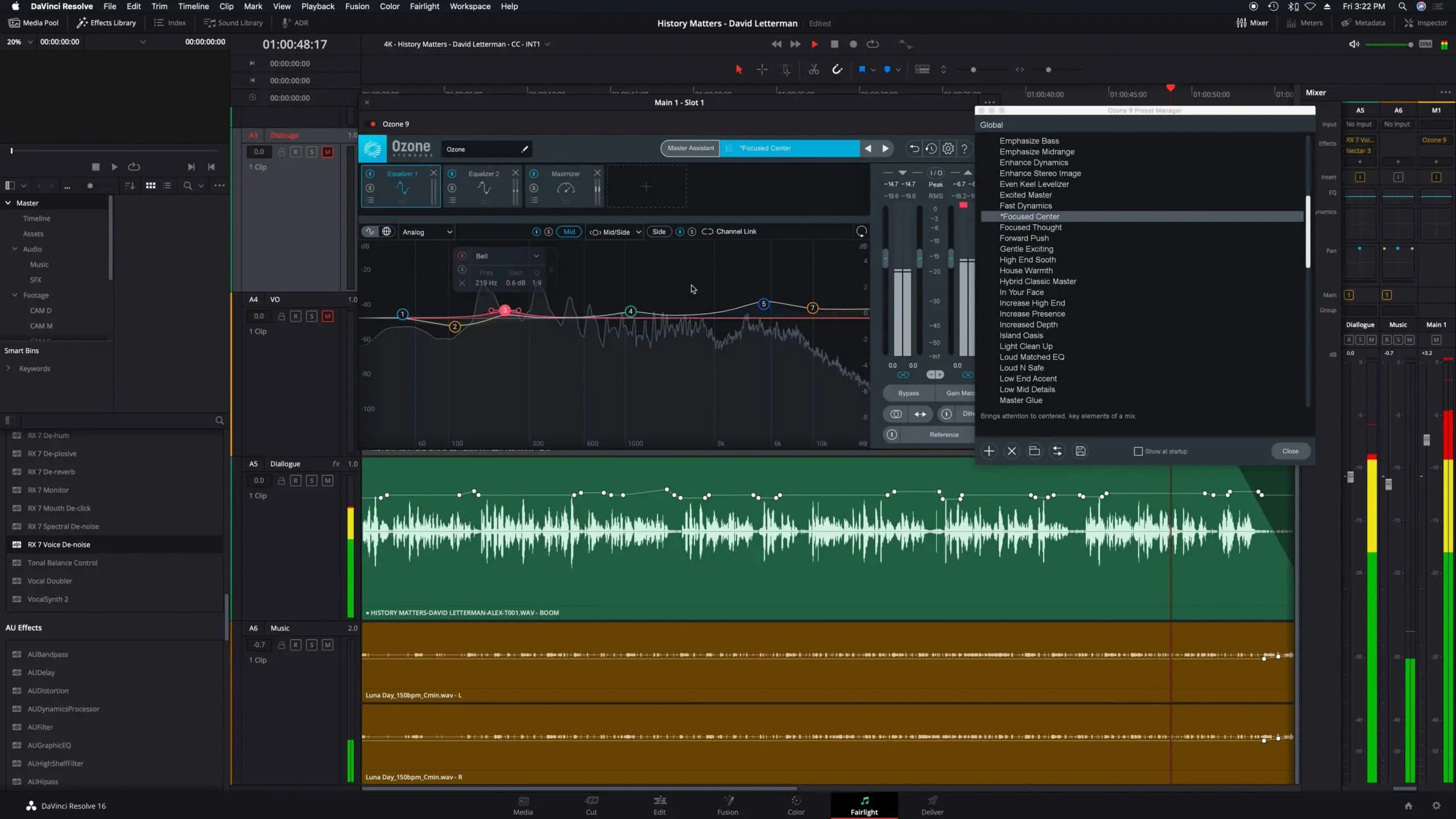
The art of sound design is essential for enhancing the auditory experience in various productions, including music, film, and theater. Sound design involves manipulating audio elements to create unique and immersive sounds. It plays a crucial role in music production by transforming ordinary samples into extraordinary and distinctive sounds.
In theatrical productions, mastering acoustic design is pivotal for creating immersive experiences, balancing soundscapes, and transporting audiences to extraordinary worlds through captivating soundscapes. Similarly, in [filmmaking](https://c-istudios.com/), sound mixing is a critical aspect that contributes to how audiences experience movies and TV shows, evoking emotions and ensuring that the audio tells the story as compellingly as the visuals.
These aspects highlight the significance of sound design in enhancing the auditory experience across various forms of entertainment.
## How sound design can be used to enhance the emotional impact of a film or TV show
[Sound design](https://c-istudios.com/studio-rentals/) can be a powerful tool for enhancing the emotional impact of a film or TV show. It involves the manipulation of audio elements to create mood, atmosphere, and convey emotion. Sound effects, dialogue, and music are the three major types of sound used to heighten emotion in visual media. For example, sound effects are used to elicit specific emotions or create a greater sense of realism, while music plays a defining role in influencing the emotional impact of a movie[.](https://www.nyfa.edu/student-resources/use-sound-heighten-emotions-film/)
Additionally, sound design can work wonders by heightening the drama, enhancing the mood, and creating an emotional connection with the audience, ultimately making them feel like they're right there in the scene with the characters.
Overall, sound design is an integral part of the filmmaking process, and when done right, it can significantly enhance the emotional impact of a film or TV show.
## How sound design can be used to create a specific mood or atmosphere in a film or TV show
Sound design can be used to create a specific mood or atmosphere in a film or TV show through various techniques. These include:
1. Background Atmosphere and Action Sounds: Breaking down sound design into background atmosphere and action sounds to accurately represent the scene's location and the actions of characters.
1. Use of Sound Effects: Incorporating sound effects to simulate reality and create illusions, such as using pouring rain and frightening thunder to evoke anxiety.
1. Dialogue and Music: While dialogue and music are essential, background and atmospheric noises are also crucial for constructing the world of the film and informing viewers where a scene is taking place and what is happening in it.
1. Unique Sonic Signatures for Characters: Establishing different characters by giving each a unique sonic signature, such as using the unique pitch, timber of character voices, and textural palette to set the stage for the soundscape of the show.
By employing these techniques, sound designers can effectively shape the mood and atmosphere of a film or TV show, ultimately enhancing the audience's emotional engagement and overall viewing experience.
## How sound design contributes to the character development in a film or TV show
Sound design contributes to character development in a film or TV show by creating environments that set the mood and tone for the characters. It involves the use of audio elements, such as recordings, sound effects, and music tracks, to build up and flesh out a film sequence, thereby providing additional information that complements the visuals and helps to establish the emotional and psychological aspects of the characters.
The unique pitch, timber of character voices, and the textural palette used by the composer can set the stage for the soundscape of a show, making each character sound distinct and special, thus contributing to their development.
Additionally, sound design can be used to establish different characters by giving each a unique sonic signature, which can be subtle and supportive of the story, rather than being overly conspicuous for the sake of it.
Therefore, sound design plays a crucial role in character development by creating an auditory environment that supports the emotional and psychological aspects of the characters, ultimately enhancing the storytelling.
## Techniques used in sound design to create a character's unique personality
Some techniques used in sound design to create a character's unique personality include:
1. Defining Character Essence: Breaking down the character into their essence to understand what makes them unique, such as their size, movement, and abilities.
1. Building a Sound Palette: Gathering sounds that work for the character's overall design to create a palette of sounds, providing continuity and making the character's sounds more believable.
1. Unique Sonic Signature: Using the unique pitch, timber of character voices, and textural palette to establish a character's sonic signature, making them sound distinct and special.
1. Foley for Character Building: Using foley, such as unique props and different performance techniques, to create distinctive characters through sound.
1. Layering and Processing Dialogue: In video games, a traditional technique involves layering the same line of dialogue multiple times and then using effects like pitch shifters, choruses, and filters to create dynamic and interesting character voices.
These techniques demonstrate the diverse methods sound designers use to create and enhance a character's unique personality through sound.
## Examples of sound design in famous films or TV shows
Some examples of sound design in famous films include:
- Star Wars: The iconic sound effects such as the lightsaber and blaster were created through innovative sound design, contributing to the unique auditory landscape of the franchise.
- Saving Private Ryan: Known for its raw and immersive sound design, the film effectively used sound to convey the intensity of battle and create a powerful emotional impact.
- Se7en: This film won an Oscar for its sound design, showcasing the importance of sound in enhancing the overall experience and emotional impact of the movie.
- Whiplash: The sound design in this film, particularly in its treatment of musical instruments, was instrumental in driving the narrative and creating a gripping emotional experience.
These examples demonstrate how sound design can significantly contribute to the emotional impact and overall success of a film.
## Tips for creating a cohesive sound design in a film or TV show
To create a cohesive sound design in a film or TV show, several techniques can be employed:
1. Clear Communication: It is essential to communicate clearly with the team and clients to establish a common understanding of the project's vision, style, technical specifications, and deadlines.
1. Use of Reference Tracks: Employing reference tracks as examples to illustrate the desired sound quality, style, or effect for the project can help guide the sound design and production process.
1. Testing and Adapting Sound: Sound should be tested and adapted to different platforms, formats, and contexts to ensure compatibility with various devices, speakers, headphones, streaming services, or broadcast standards.
1. Building a Sound Palette: Gathering and manipulating a canvas of noises to create a cohesive, effective whole, and using a variety of sound elements to build a comprehensive and unified soundscape.
1. Utilizing Foley and Sound Effects: Incorporating foley and sound effects to emphasize transitions, create ambiance, and develop a character's sonic signature.
By implementing these techniques, sound designers can achieve a cohesive sound that aligns with the overall vision and style of the production, ultimately enhancing the auditory experience for the audience.
## Software tools commonly used in sound design for film or TV shows
Some commonly used software [tools](https://c-istudios.com/video-production-gear-list/) in sound design for film or TV shows include:
1. Adobe Audition: This software offers a range of tools for recording, editing, mixing, and mastering audio, making it essential for sound designers looking to create professional-quality audio content.
1. Logic Pro X: Known for its built-in effects, loops, and sampling software, Logic Pro X is a popular choice for sound designers due to its comprehensive features for audio production.
1. Pro Tools: A widely used digital audio workstation (DAW) that can handle everything from music production to foley for film and TV, making it a staple in the industry.
1. Ableton Live: This software is favored for its unique features and capabilities, making it a popular choice for sound designers and composers.
1. Reaper: Another DAW that is widely used by professionals in the field, known for its flexibility and customization options.
These software tools provide sound designers with the necessary resources to record, edit, mix, and master audio, ultimately contributing to the creation of high-quality sound design for film and TV shows.
## How can sound design be used to create a sense of anticipation in a film or TV show
Sound design can be used to create a sense of anticipation in a film or TV show through various techniques. These include:
1. Use of Sound Effects: Incorporating specific sound effects, such as rising tones or intensifying ambient sounds, to build tension and anticipation.
1. Emphasizing Actions with Non-diegetic Sound: Using non-diegetic sound to emphasize actions and create a specific mood or atmosphere, which can contribute to building anticipation.
1. Gradually Layering Sounds: Building cinematic tension by gradually layering sounds, which is an effective way to create anticipation before a dramatic moment.
1. Creating Atmosphere with Ambient Recordings: Using ambient recordings and sound effects to establish an atmosphere that contributes to the overall sense of anticipation.
By employing these techniques, sound designers can effectively shape the sense of anticipation and emotional engagement in a film or TV show, ultimately enhancing the audience's overall viewing experience.
## Examples of sound effects that can be used to create a sense of anticipation in a film or TV show
Some examples of sound effects that can be used to create a sense of anticipation in a film or TV show include:
1. Rise or Riser: A key sound effect used to build suspense and anticipation, often employed in trailers to create a sense of rising tension.
1. Whooshes: These are used to transition between scenes or acts, and they can also be used to build anticipation and create a sense of movement or impending action.
1. Ambient Recordings: Certain ambient sounds, when manipulated, can be used to create an atmosphere that contributes to the overall sense of anticipation.
1. Specific Instrumentation: In music, the use of specific instruments or rising tones can be employed to build tension and anticipation, enhancing the emotional impact of a scene.
By utilizing these sound effects, sound designers can effectively shape the sense of anticipation and emotional engagement in a film or TV show, ultimately enhancing the audience's overall viewing experience.
## Common mistakes to avoid in sound design for film or TV shows
Some common mistakes to avoid in sound design for film or TV shows include:
1. Losing Sight of the Bigger Picture: Failing to consider the overall vision and style of the project.
2. Ignoring the Client's Brief: Not aligning the sound design with the client's expectations and vision.
3. Thinking Too Literally: Failing to explore creative and unconventional sound design options.
4. Poor Recording Quality: Not capturing high-quality audio during the production stage, leading to challenges in post-production.
5. Adding Too Much Sound: Overloading the audio with unnecessary or excessive elements, which can clutter the mix.
6. Relying Too Much on Post-Production: Assuming that all sound issues can be fixed in post-production, leading to potential limitations and challenges.
7. Not Listening to the Client: Failing to prioritize the client's needs and expectations, which are essential for a successful sound design project.
8. Going Over the Top (OTT): Overdoing the sound design, which can detract from the overall viewing experience.
9. Hogging the Frequencies: Not allowing space in the audio mix for other elements, such as dialogue.
10. Forgetting That the End User Can Just Turn It Down: Failing to consider the end user's control over the audio, leading to potential issues with dynamic range and balance.
By being mindful of these common mistakes, sound designers can enhance the quality and effectiveness of their sound design for film and TV shows.
## Work with C&I Studios
If you are planning a project like this, our team can take it from concept to final delivery. Explore our [post-production services](https://c-istudios.com/post-production-services/), browse [our work](https://c-istudios.com/our-work/) to see how we tell brand stories, and [get in touch](https://c-istudios.com/contact/) when you are ready to start.
Originally published December 27, 2023
---
*This content is from [C&I Studios](https://c-istudios.com), a full-service production company.*
---
# The Evolution of Film and TV Distribution: Navigating Changing Landscapes
> Published: December 22, 2023
> Categories: Commercial & Brand
> Source: https://c-istudios.com/the-evolution-of-film-and-tv-distribution-navigating-changing-landscapes/
---
.cib{--paper:#1b1d1f;--ink:#fff;--body:#d5d7d9;--muted:#8b9096;--line:rgba(255,255,255,.12);--thumb:#2b2e31;--card:#212426;--accent:#c02b0a;--blue:#5B8FA8;--serif:'Playfair Display',Georgia,serif;--sans:'Poppins',-apple-system,sans-serif;--measure:900px;background:var(--paper);color:var(--body);font-family:var(--sans);line-height:1.6;position:relative;left:50%;transform:translateX(-50%);width:90vw;max-width:1920px}
.cib *{box-sizing:border-box}
.cib .kicker{max-width:var(--measure);margin:58px auto 0;padding:0 22px;font-size:12.5px;font-weight:700;letter-spacing:2.5px;text-transform:uppercase;color:var(--blue)}
.cib h1.cibh1{text-wrap:balance;font-family:var(--serif);font-weight:500;font-size:clamp(46px,6vw,72px);line-height:1.08;color:var(--ink);max-width:var(--measure);margin:18px auto 0;padding:0 22px;letter-spacing:-.5px}
.cib .metarow{max-width:var(--measure);margin:20px auto 0;padding:0 22px;color:var(--muted);font-size:14px}
.cib .hero{position:relative;width:100%;height:0;padding-bottom:56.25%;overflow:hidden;margin:48px auto 0;border-top:1px solid var(--line);border-bottom:1px solid var(--line)}
.cib .hero .ph{width:100%;aspect-ratio:16/9;background:var(--thumb);border-top:1px solid var(--line);border-bottom:1px solid var(--line);display:flex;align-items:center;justify-content:center;color:#7d8288;font-size:13px;text-align:center;padding:0 20px}
.cib .body{max-width:var(--measure);margin:12px auto 0;padding:52px 22px 6px}
.cib .body.lead p:first-child{font-size:23px;line-height:1.62;color:var(--ink)}
.cib .body p{font-size:18.5px;line-height:1.85;margin:0 0 30px;color:var(--body)}
.cib .body h2{text-wrap:balance;font-family:var(--serif);font-weight:500;font-size:clamp(32px,4vw,48px);line-height:1.22;color:var(--ink);margin:70px 0 20px;letter-spacing:-.3px}
.cib .body h3{text-wrap:balance;font-family:var(--sans);font-weight:600;font-size:22px;color:var(--ink);margin:38px 0 8px}
.cib .body a{color:var(--ink);text-decoration:underline;text-decoration-color:rgba(255,255,255,.4);text-underline-offset:3px}
.cib .body a:hover{text-decoration-color:var(--ink)}
.cib .ctable{width:100%;border-collapse:collapse;margin:16px 0 30px;font-size:16px}
.cib .ctable th{background:#000;color:#fff;text-align:left;padding:10px 12px;font-family:var(--sans)}
.cib .ctable td{padding:10px 12px;border-bottom:1px solid var(--line);color:var(--body)}
.cib .inimg{position:relative;width:100%;height:0;padding-bottom:56.25%;overflow:hidden;margin:72px auto;border-top:1px solid var(--line);border-bottom:1px solid var(--line)}
.cib .inimg .ph{width:100%;aspect-ratio:16/9;background:var(--thumb);border-top:1px solid var(--line);border-bottom:1px solid var(--line);display:flex;align-items:center;justify-content:center;color:#7d8288;font-size:13px}
.cib .origpub{max-width:var(--measure);margin:60px auto 0;padding:26px 22px 0;border-top:1px solid var(--line);color:var(--muted);font-size:13.5px}
.cib .related{max-width:1200px;margin:64px auto 0;padding:34px 22px 76px}
.cib .related h3{font-family:var(--sans);font-size:12.5px;letter-spacing:2px;text-transform:uppercase;color:var(--ink);margin:0 0 24px}
.cib .grid{display:grid;grid-template-columns:repeat(3,1fr);gap:28px}
.cib .rc{background:var(--card);border:1px solid var(--line);display:block;text-decoration:none;color:inherit;transition:border-color .15s}
.cib a.rc:hover{border-color:rgba(255,255,255,.5)}
.cib .rc .thumb{position:relative;width:100%;height:0;padding-bottom:56.25%;background:var(--thumb);overflow:hidden}
.cib .rc .thumb img{position:absolute!important;top:0!important;left:0!important;width:100%!important;height:100%!important;object-fit:cover!important;margin:0!important}
.cib .rc .cc{padding:14px 15px 17px}
.cib .rc .rt{font-family:var(--serif);font-weight:500;font-size:16px;line-height:1.3;color:var(--ink);margin:0 0 6px}
.cib .rc .rm{font-size:11px;letter-spacing:1px;text-transform:uppercase;color:var(--muted)}
.cib img{margin:0!important;padding:0!important;display:block!important;vertical-align:top;max-width:100%}
.cib .hero img,.cib .inimg img{position:absolute!important;top:0!important;left:0!important;width:100%!important;height:100%!important;object-fit:cover!important;margin:0!important;padding:0!important;border:0!important;display:block!important;aspect-ratio:auto!important}
.cib .hero+.body{padding-top:36px}
@media(max-width:760px){.cib .grid{grid-template-columns:1fr}.cib .body h2{margin:52px 0 16px}.cib .body p{font-size:17.5px}.cib .inimg,.cib .hero{margin-top:44px}}
.cib .vembed{max-width:var(--measure);margin:44px auto;padding:0 22px}.cib .vembed .vwrap{position:relative;width:100%;height:0;padding-bottom:56.25%}.cib .vembed .vwrap iframe{position:absolute;top:0;left:0;width:100%;height:100%;border:0}
Commercial & Brand
# The Evolution of Film and TV Distribution. Navigating Changing Landscapes
3 min read
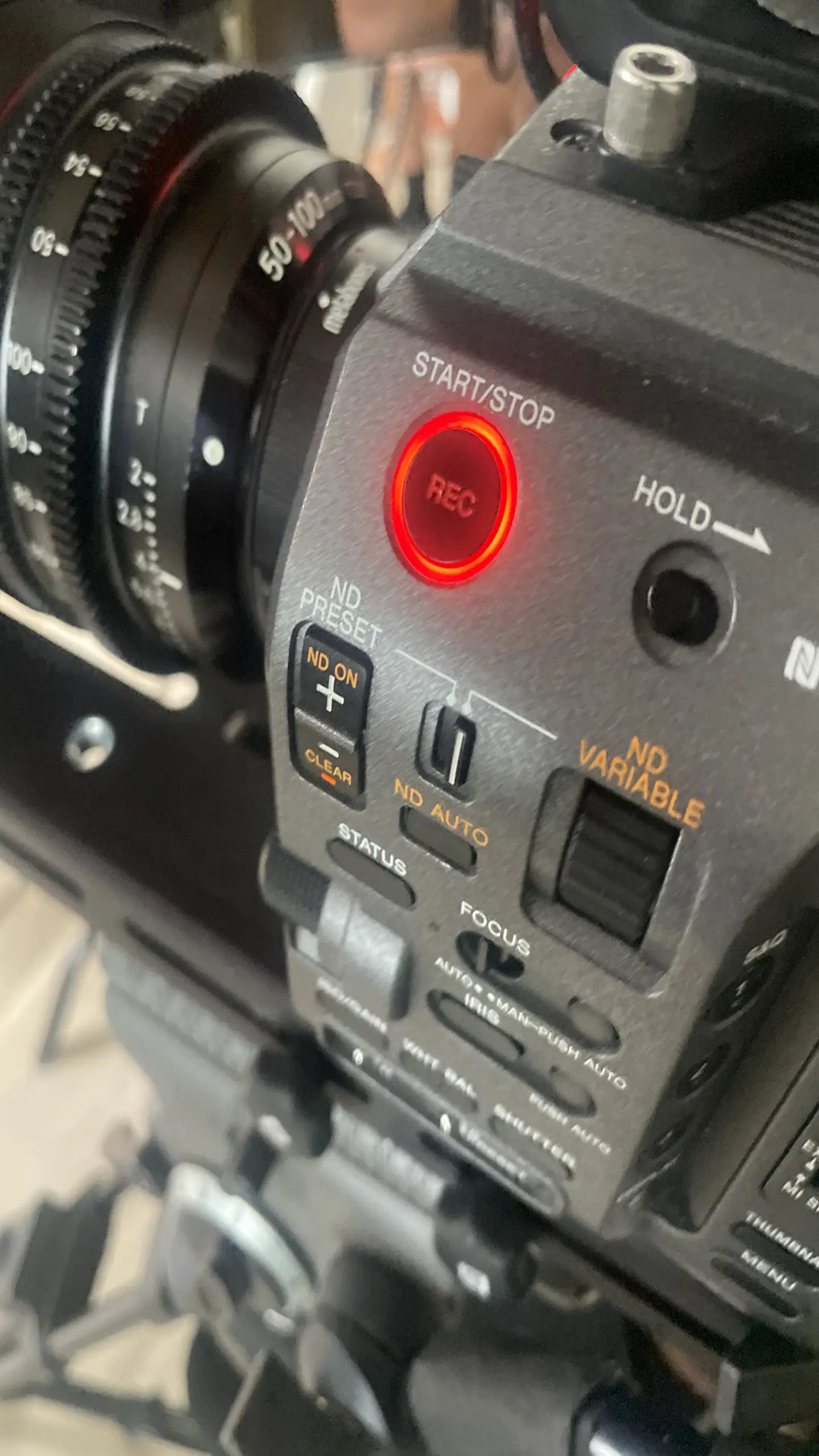
The evolution of [film and TV](https://c-istudios.com/) distribution has been significantly influenced by the rise of digital platforms, changing consumer behavior, and the strategic shift in film studios. This has led to a shrinking theatrical window, with many audiences now choosing to wait for a film's release on streaming platforms due to the desire for convenience and lower cost. The traditional distribution strategy has become less critical, and with the wider reach and easier access to online distribution channels, films produced years ago are easily found, re-promoted, and consumed by audiences.
The distribution market has undergone dramatic change in recent years, with trends such as opportunistic market growth, evolving distribution strategies, and the influence of mobile, AVOD, and live viewing impacting international distribution and licensing. The digitization of the film industry and the availability of content on multiple paid platforms have also played a significant role in the evolving distribution landscape.
## Emerging trends in film and TV distribution
The emerging trends in film and TV distribution include:
1. Uptick in New Streaming Platforms: The industry has witnessed a surge in the number of global online video subscriptions, which increased by 26% between 2019-2020, reaching 1.2 billion subscriptions. This growth is expected to continue in the coming years, indicating a significant shift towards streaming services.
1. Surge in Content Spending: Production spending has grown, and TV series budgets have reached all-time highs. This increase in content spending reflects the industry's rapid growth and the shift in consumer demand towards high-quality content.
1. Spending on Indie Content Rises: There has been a notable increase in spending on independent content, indicating a growing market for diverse and unique content outside of the traditional studio system.
1. Opportunistic Market Growth and Evolving Distribution Strategies: The digitization of the film industry, the availability of content on multiple paid platforms, and the influence of mobile, AVOD, and live viewing are driving significant changes in international distribution and licensing. These factors are reshaping the distribution landscape and creating new opportunities for content creators and distributors.
These trends reflect the ongoing transformation of the film and TV distribution landscape, with a strong emphasis on the growing influence of streaming platforms, increased content spending, and the evolution of distribution strategies to adapt to changing consumer behavior and technological advancements.
## How traditional film distribution methods are changing with the rise of streaming platforms
The rise of streaming platforms has brought about significant changes in traditional film distribution methods. The most notable changes include:
1. Shrinking Theatrical Windows: The traditional model of releasing films in cinemas first, followed by other channels, has been disrupted. Many audiences now choose to wait for a film's release on streaming platforms due to the desire for convenience and lower cost.
1. Disruption of Theatrical Release Model: Streaming platforms have disrupted the traditional theatrical release model, with many films now premiering exclusively on streaming platforms. This has given filmmakers more options for distribution and has opened up new audiences to films that might not have received a theatrical release.
1. Impact on Filmmakers and Content Creation: The rise of streaming services has affected the film industry and content creators in several ways, influencing production decisions, creative freedom, and financial stability. Streaming platforms often prioritize serialized content and binge-worthy series over standalone films, impacting the diversity and scope of movie production.
1. Direct-to-Streaming Releases: Streaming services have provided an alternative distribution channel for filmmakers. Independent and niche films can find a platform and audience through streaming services, resulting in greater diversity and access to a broader range of content.
These changes reflect the significant impact of streaming platforms on the traditional film distribution landscape, leading to shifts in consumer behavior, content creation, and the overall distribution strategy within the industry.
## Advantages of streaming platforms over traditional film distribution methods
The advantages of streaming platforms over traditional film distribution methods include:
1. Wider Distribution and Global Reach: Streaming platforms enable filmmakers to distribute their productions worldwide to a much larger and diverse audience, paving the way for increased options and more creative freedom and diversity in [film production](https://c-istudios.com/film-and-tv-production/).
1. Convenience and Affordability: Streaming films at home is more convenient and affordable than going to the movies, attracting viewers to opt for at-home viewing. This convenience has led to a shift in consumer behavior, with many audiences choosing to stream movies instead of going to theaters.
1. More Creative Freedom and Artistic Expression: Filmmakers can bypass the traditional gatekeepers of the industry, such as studios, agents, and festivals, and have more creative freedom and artistic expression. Streaming platforms also allow filmmakers to collect more data and feedback, which can help them improve their craft and tailor their content to niche markets.
2. Diverse and Niche Content: [Streaming services](https://c-istudios.com/video-audio-live-streaming/) facilitate the production and distribution of more diverse and niche content, as they are not as limited by the traditional Hollywood studio system. This allows for more opportunities for relatively unknown filmmakers and projects.
1. Revenue Opportunities and Business Models: Streaming platforms offer subscription-based revenue and revenue-sharing models, providing a steady revenue stream for content creators and enabling them to take creative risks. They have also provided an alternative distribution channel for independent and niche films, resulting in greater diversity and access to a broader range of content.
These advantages highlight the transformative impact of streaming platforms on the film distribution landscape, offering new opportunities for filmmakers, diverse content, and global reach, while also changing the traditional business models within the industry.
## Disadvantages of streaming platforms compared to traditional film distribution methods
The disadvantages of streaming platforms compared to traditional film distribution methods include:
1. Lack of Theatrical Releases and Lower Revenue: Streaming services often result in reduced revenue for filmmakers compared to traditional distribution methods. They typically pay less per view than a traditional theatrical release or DVD sale, leading to potential revenue challenges for content creators.
1. Impact on Theatrical Experience and Community: The shift towards streaming has led to a decline in the number of people going to movie theaters, impacting the sense of community that watching a film with others provides. The traditional experience of watching a movie on a big screen is becoming less common.
1. Oversaturation and Competition for Attention: One of the main challenges is the oversaturation of content and the competition for attention and visibility on streaming platforms. With thousands of films and shows available, it can be challenging for a single piece of content to stand out and attract an audience.
1. Changing Business Models and Revenue Predictability: The revenue-sharing model in streaming can be less predictable and potentially less lucrative for filmmakers compared to traditional models where studios received a significant share of box office revenue.
These disadvantages highlight the potential impact of streaming platforms on the traditional film distribution landscape, including revenue implications, changes in consumer behavior, and the evolving business models within the industry.
## How streaming platforms impact the marketing strategies for films
Streaming platforms have significantly impacted the marketing strategies for films in several ways. Here are some of the key impacts:
1. Global Audience Reach: Streaming platforms offer a vast audience base, making films available to viewers across the globe. This has transformed film marketing by allowing filmmakers to reach a global audience instantly, without being limited by geographical boundaries.
1. Diverse Marketing Channels: Digital marketing on streaming platforms allows for promotion across multiple channels simultaneously, including websites, social media, mobile apps, and more. This diversity increases the chances of reaching different segments of the target audience, providing a more comprehensive and tailored approach to marketing.
1. Immediate Feedback and Audience Engagement: Online platforms provide immediate feedback and responses from audiences, enabling real-time engagement. This allows filmmakers to gauge audience reactions and tailor their marketing strategies based on this feedback, leading to more dynamic and responsive marketing campaigns.
1. Disruption of Traditional Distribution Channels: Some streaming services have acquired or produced their own films, bypassing or disrupting the traditional distribution channels. This can affect the bargaining power and the sustainability of film festivals and distributors, as well as the artistic integrity and the cultural diversity of films.
These impacts highlight the transformative effect of streaming platforms on film marketing, offering new opportunities for global reach, diverse marketing channels, and real-time audience engagement, while also posing challenges to traditional distribution channels and the cultural diversity of films.
## Examples of successful film marketing campaigns on streaming platforms
Some examples of successful film marketing campaigns on streaming platforms include:
1. The Blair Witch Project: The marketing campaign for this film, which included a website and online mystery, generated massive buzz and made the film a huge success. It's considered one of the most memorable movie marketing campaigns.
1. Deadpool: The marketing campaign for Deadpool was highly effective, utilizing social media and engaging content to build excitement among fans. The campaign's innovative and engaging approach contributed to the film's success.
These examples demonstrate the impact of innovative and engaging marketing strategies on the success of films, particularly in the digital and streaming era.
## Examples of successful film marketing campaigns on social media platforms
Some examples of successful film marketing campaigns on [social media](https://c-istudios.com/social-media-marketing-services/) platforms include:
1. Star Wars: The Force Awakens: The marketing campaign for this film was one of the most successful of all time, thanks in part to a strong social media strategy. The film's teaser trailer generated over 100 million views in just a few days, showcasing the power of social media in building anticipation and engagement.
1. The Hunger Games: The social media campaign for The Hunger Games movie series was highly effective, leveraging platforms like Facebook and Twitter to create a thorough social marketing plan that funneled fans to a website where they could register as citizens of the fictional world. This approach generated significant engagement and excitement among fans.
1. Deadpool: The marketing campaign for Deadpool was known for its engaging and innovative social media presence, which contributed to the film's success. The campaign utilized platforms like Facebook, Twitter, and Instagram to release teasers, exclusive content, and engage with fans, showcasing the impact of social media on the film's overall success.
These examples demonstrate the significant impact of social media on the success of film marketing campaigns, showcasing the power of platforms like Facebook, Twitter, and Instagram in building anticipation, engagement, and excitement among fans.
## Common social media platforms used for film marketing campaigns
Some common social media platforms used for film marketing campaigns include:
1. Facebook: Facebook provides a vast user base and diverse advertising options, making it a key platform for film marketing. It allows for targeted advertising and the sharing of various content formats, including videos, images, and text.
1. Twitter: Twitter is popular for its real-time engagement and content sharing. It is commonly used for sharing teasers, trailers, and engaging with the audience, making it a valuable platform for building anticipation and buzz around a film.
1. Instagram: Instagram is known for its visual content and storytelling capabilities. It is widely used for sharing behind-the-scenes footage, exclusive content, and engaging visuals to generate buzz and pique audience interest.
1. YouTube: As a video-sharing platform, YouTube is essential for sharing trailers, interviews, and other video content related to the film. It offers a powerful way to engage audiences through visual storytelling.
These platforms provide unique avenues for promoting a movie and have evolved as a part of the broader marketing strategy, offering diverse formats, targeted advertising, and real-time engagement with the audience.
## Unique ways to promote a film on social media platforms
Some unique ways to promote a film on social media platforms include:
1. Consistent Branding Across Platforms: Maintain consistent branding across all social media platforms to make it easy for people to find and recognize the film.
1. Regular Engagement and Content Sharing: Engage with other accounts and share great content to drive organic traffic to your page. This includes sharing behind-the-scenes footage, interviews, or exclusive clips to generate buzz and pique audience interest.
1. Repurposing Content Across Platforms: Repurpose content across platforms for efficiency. For example, a teaser posted on TikTok can also be posted to YouTube Shorts or Instagram Reels.
1. User-Generated Content and Contests: Encourage fans to create their own posters, trailers, or hashtag campaigns to foster deeper engagement and free promotion. Conduct online contests or events where the audience can participate and engage with the film's content.
1. Exclusive Content and Interactive Experiences: Share exclusive content and create interactive experiences to engage with fans. This can include creating interactive experiences, such as scavenger hunts or virtual events, to build hype and engage the audience.
These strategies showcase the diverse and innovative approaches that filmmakers can take to promote their films on social media, leveraging the unique capabilities of each platform to engage with audiences and build excitement around their projects.
## Work with C&I Studios
If you are planning a project like this, our team can take it from concept to final delivery. Explore our [video production services](https://c-istudios.com/video-production-services/), browse [our work](https://c-istudios.com/our-work/) to see how we tell brand stories, and [get in touch](https://c-istudios.com/contact/) when you are ready to start.
Originally published December 22, 2023
---
*This content is from [C&I Studios](https://c-istudios.com), a full-service production company.*
---
# The Road Ahead: Future Trends for Minority-Owned Production Companies
> Published: December 21, 2023
> Categories: Commercial & Brand
> Source: https://c-istudios.com/the-road-ahead-future-trends-for-minority-owned-production-companies/
---
.cib{--paper:#1b1d1f;--ink:#fff;--body:#d5d7d9;--muted:#8b9096;--line:rgba(255,255,255,.12);--thumb:#2b2e31;--card:#212426;--accent:#c02b0a;--blue:#5B8FA8;--serif:'Playfair Display',Georgia,serif;--sans:'Poppins',-apple-system,sans-serif;--measure:900px;background:var(--paper);color:var(--body);font-family:var(--sans);line-height:1.6;position:relative;left:50%;transform:translateX(-50%);width:90vw;max-width:1920px}
.cib *{box-sizing:border-box}
.cib .kicker{max-width:var(--measure);margin:58px auto 0;padding:0 22px;font-size:12.5px;font-weight:700;letter-spacing:2.5px;text-transform:uppercase;color:var(--blue)}
.cib h1.cibh1{text-wrap:balance;font-family:var(--serif);font-weight:500;font-size:clamp(46px,6vw,72px);line-height:1.08;color:var(--ink);max-width:var(--measure);margin:18px auto 0;padding:0 22px;letter-spacing:-.5px}
.cib .metarow{max-width:var(--measure);margin:20px auto 0;padding:0 22px;color:var(--muted);font-size:14px}
.cib .hero{position:relative;width:100%;height:0;padding-bottom:56.25%;overflow:hidden;margin:48px auto 0;border-top:1px solid var(--line);border-bottom:1px solid var(--line)}
.cib .hero .ph{width:100%;aspect-ratio:16/9;background:var(--thumb);border-top:1px solid var(--line);border-bottom:1px solid var(--line);display:flex;align-items:center;justify-content:center;color:#7d8288;font-size:13px;text-align:center;padding:0 20px}
.cib .body{max-width:var(--measure);margin:12px auto 0;padding:52px 22px 6px}
.cib .body.lead p:first-child{font-size:23px;line-height:1.62;color:var(--ink)}
.cib .body p{font-size:18.5px;line-height:1.85;margin:0 0 30px;color:var(--body)}
.cib .body h2{text-wrap:balance;font-family:var(--serif);font-weight:500;font-size:clamp(32px,4vw,48px);line-height:1.22;color:var(--ink);margin:70px 0 20px;letter-spacing:-.3px}
.cib .body h3{text-wrap:balance;font-family:var(--sans);font-weight:600;font-size:22px;color:var(--ink);margin:38px 0 8px}
.cib .body a{color:var(--ink);text-decoration:underline;text-decoration-color:rgba(255,255,255,.4);text-underline-offset:3px}
.cib .body a:hover{text-decoration-color:var(--ink)}
.cib .ctable{width:100%;border-collapse:collapse;margin:16px 0 30px;font-size:16px}
.cib .ctable th{background:#000;color:#fff;text-align:left;padding:10px 12px;font-family:var(--sans)}
.cib .ctable td{padding:10px 12px;border-bottom:1px solid var(--line);color:var(--body)}
.cib .inimg{position:relative;width:100%;height:0;padding-bottom:56.25%;overflow:hidden;margin:72px auto;border-top:1px solid var(--line);border-bottom:1px solid var(--line)}
.cib .inimg .ph{width:100%;aspect-ratio:16/9;background:var(--thumb);border-top:1px solid var(--line);border-bottom:1px solid var(--line);display:flex;align-items:center;justify-content:center;color:#7d8288;font-size:13px}
.cib .origpub{max-width:var(--measure);margin:60px auto 0;padding:26px 22px 0;border-top:1px solid var(--line);color:var(--muted);font-size:13.5px}
.cib .related{max-width:1200px;margin:64px auto 0;padding:34px 22px 76px}
.cib .related h3{font-family:var(--sans);font-size:12.5px;letter-spacing:2px;text-transform:uppercase;color:var(--ink);margin:0 0 24px}
.cib .grid{display:grid;grid-template-columns:repeat(3,1fr);gap:28px}
.cib .rc{background:var(--card);border:1px solid var(--line);display:block;text-decoration:none;color:inherit;transition:border-color .15s}
.cib a.rc:hover{border-color:rgba(255,255,255,.5)}
.cib .rc .thumb{position:relative;width:100%;height:0;padding-bottom:56.25%;background:var(--thumb);overflow:hidden}
.cib .rc .thumb img{position:absolute!important;top:0!important;left:0!important;width:100%!important;height:100%!important;object-fit:cover!important;margin:0!important}
.cib .rc .cc{padding:14px 15px 17px}
.cib .rc .rt{font-family:var(--serif);font-weight:500;font-size:16px;line-height:1.3;color:var(--ink);margin:0 0 6px}
.cib .rc .rm{font-size:11px;letter-spacing:1px;text-transform:uppercase;color:var(--muted)}
.cib img{margin:0!important;padding:0!important;display:block!important;vertical-align:top;max-width:100%}
.cib .hero img,.cib .inimg img{position:absolute!important;top:0!important;left:0!important;width:100%!important;height:100%!important;object-fit:cover!important;margin:0!important;padding:0!important;border:0!important;display:block!important;aspect-ratio:auto!important}
.cib .hero+.body{padding-top:36px}
@media(max-width:760px){.cib .grid{grid-template-columns:1fr}.cib .body h2{margin:52px 0 16px}.cib .body p{font-size:17.5px}.cib .inimg,.cib .hero{margin-top:44px}}
.cib .vembed{max-width:var(--measure);margin:44px auto;padding:0 22px}.cib .vembed .vwrap{position:relative;width:100%;height:0;padding-bottom:56.25%}.cib .vembed .vwrap iframe{position:absolute;top:0;left:0;width:100%;height:100%;border:0}
Commercial & Brand
# The Road Ahead. Future Trends for Minority-Owned Production Companies
9 min read

The entertainment industry has always been a tough field to break into. But over the past few years, diversity and inclusion have become more of a priority for people who consume media and those who create it. With this shift towards representation and equity, it's important to consider what the future holds for minority-owned production companies. In this blog post, we'll explore the [upcoming trends](https://c-istudios.com/) that production companies owned by minorities should pay attention to and prepare for to stay ahead of the game.
1. ** Virtual Production**
With the pandemic, virtual production has become a more popular method in the entertainment industry. This technology allows filmmakers to create realistic and cost-effective environments for filming, enabling the creation of entire cities, otherworldly landscapes or even space settings.
Virtual production has allowed minority-owned production companies to compete with larger companies and take on projects that would have been impossible otherwise. With virtual production, they can create entire worlds without the need for physical sets, saving them time and money. This technology also enables them to pre-visualize a project before it even starts, giving them more control over the final product. Companies like The Third Floor are paving the way for minority-owned production companies to utilize virtual production techniques.
The future of virtual production is bright, and it is evolving rapidly. The technology is becoming more accessible, making it easier for small production companies to utilize it. With the rise of virtual reality, more people are demanding immersive experiences in their entertainment. Virtual sets and environments have become increasingly popular and have been utilized in big-budget films like The Mandalorian and Ready Player One. The potential for virtual production is limitless, and it provides a unique opportunity for minority-owned production companies to create innovative content.
Another trend that is emerging in the virtual production industry is the use of AI and machine learning. These technologies can help streamline the virtual production process and create more realistic environments. AI can also help with tasks like lighting and camera placement, allowing for more efficient use of resources. Minority-owned production companies can utilize AI and machine learning to give them an edge over the competition and produce high-quality content at a lower cost.
Using virtual production techniques also allows for a much smaller crew on set, which cuts down on the number of people needed to work on a production and can potentially save money, which can be a huge draw for smaller production companies. Companies need to get on board with this shift towards virtual production and incorporate it into their workflow.
1. ** More Opportunities for Diverse Storytelling**
As more people push for equitable representation in the entertainment industry, we should expect to see more opportunities for diverse storylines and voices. Movies and TV shows have the [power to influence our perceptions](https://c-istudios.com/creative-services/) of the world, spread ideas, and educate us on important issues. In recent years, we’ve seen a rise in representation and diversity in Hollywood, with more opportunities for those who have traditionally been underrepresented in the film industry. This means that minority-owned production companies will be able to pitch more projects that reflect their audience's perspectives. Companies need to focus on developing their unique brand identity and harnessing this newfound interest in representing diversity to build more opportunities.
1. ** Streaming Services**
The entertainment industry is increasingly shifting towards streaming services, which offer more opportunities for offbeat and unique content. These platforms aren't as limited as traditional broadcast media when it comes to the kind of content they can show, which is great news for production companies that might have struggled to find a home for their more out-of-the-box content. Now will explore the future trends for minority-owned production companies in the context of streaming services.
**Developing Niche Content for Streaming Services:** In the past, television and [film production](https://c-istudios.com/film-and-tv-production/) were dominated by a handful of major players. This changed with the advent of streaming services, which opened up various opportunities for niche content creation. Minority-owned production companies can participate in this trend by creating culturally specific content that appeals to their target audience. The key to developing niche content is to create a storyline that resonates with the target audience on an emotional level.
**Diversifying the Cast and Crew:** Diversity in casting and production is not a new concept. However, streaming services are placing greater importance on diverse representation. Inclusion in the entertainment industry can positively impact minority communities, and streaming services are leading the charge in this regard. Minority-owned production companies can establish partnerships with talent agencies, diversity-focused associations, and other groups to identify and hire cast and crew members who can bring unique perspectives and experiences to their productions.
**Production of Content in Multiple Languages: **Streaming services are more than just English language platforms. Many streaming services now offer multilingual content, and minority-owned production companies can take advantage of this trend. Creating content in languages other than English expands the reach of the production company, allowing them to reach wider audiences. Moreover, producing content that can be dubbed or subtitled can help increase accessibility for audiences.
Being able to get projects onto streaming services is crucial, therefore companies need to ensure their content is up to standard. With the ability to show more diverse narratives and stories, streaming platforms have created a bigger market for minority-owned production companies.
1. ** Demographic Shifts**
Demographic shifts are happening far and wide, which means that the audiences that production companies cater to are changing. Younger and more diverse audiences are becoming more prevalent, meaning that stories catering to and empowering them, driven by diverse filmmakers who can tell those stories in a more relatable way, will experience a surge in popularity.
The first demographic shift that is impacting the entertainment industry is the changing racial landscape of the United States. The population of people of color is expected to grow exponentially in the next few decades, leading to a more diverse society that has unique needs when it comes to entertainment. By [investing in diversity and inclusion](https://c-istudios.com/our-work/), minority-owned production companies can attract a more substantial audience that will help them cement their place in the industry. Whether it's producing shows that showcase underrepresented groups or casting actors of color in leading roles, these companies can increase their chances of success by catering to a growing audience.
Another shift that is impacting the success of minority-owned production companies is the changing age demographics of the world population. The current generation is favoring digital content, meaning that production companies need to adjust their strategies to keep up with emerging trends. This involves producing content that caters to younger audiences while still ensuring that it appeals to the older generations. By creating a balance between engaging storytelling, diverse characters, and relatable themes, these companies can remain relevant and attract loyal fans.
With the rise of social media and streaming platforms, audiences now have more power than ever before. People want to consume content that speaks to their interests, and they are not afraid to voice their opinions online. This provides minority-owned production companies with a unique opportunity to engage with their audience and create a more personal connection. By using social media platforms to interact with viewers, these companies can get direct feedback about their content and use it to tailor their message better. This can result in a more loyal fanbase and increased chances of success in the unpredictable entertainment industry.
Production companies should be keeping up with these shifts and ensure they are equipped with people who can tell these stories effectively, ultimately [contributing to the company's growth.](https://c-istudios.com/)
1. ** Digital Marketing**
Marketing is an essential component of media production, and there has been a shift towards digital marketing recently. Now we will explore the benefits of digital marketing for minority-owned production companies, and why it should be a priority for success.
**Increased Visibility -** Digital marketing allows minority-owned production companies to showcase their work to a global audience. With effective search engine optimization (SEO) techniques, these companies can rank higher on search engines, making it easier for them to attract new clients. Social media platforms, such as Facebook and Instagram, provide a cost-effective means to showcase the company's work, attract followers, and build relationships with customers. By utilizing digital marketing, it becomes easier for minority-owned production companies to reach out to a broader audience, establish brand recognition and increase visibility.
**Targeted Audience -** One of the most significant benefits of digital marketing for minority-owned production companies is the ability to target specific demographics. Digital marketing allows for targeted marketing campaigns, which are crucial for ensuring that resources are spent on reaching the right audience. With access to data analytics, these companies can analyze customer behavior, preferences, and demographics to better understand their audience's needs. This helps them to create content and marketing campaigns that resonate better with their customers.
**Cost-effective Marketing -** Traditional forms of marketing, such as television commercials and billboards, can be expensive and may not reach the desired audience. Digital marketing, on the other hand, provides a cost-effective means to reach a global audience. With a small budget, minority-owned production companies can create effective digital marketing campaigns that showcase their work and attract new customers. Social media platforms provide an excellent means to reach out to their followers, create engaging content, and build relationships to promote their brand.
Platforms such as social media and YouTube have become channels for indie filmmakers to promote their work, curate a fan base, and build communities. This shift to digital marketing should compel minority-owned production companies to equip themselves with tools and strategies to make better use of these platforms, to [gain more visibility,](https://c-istudios.com/about/) and to better connect with their audience.
## Future-Forward. C&I Studios Empowering Diversity in Production Trends
C&I Studios is at the forefront of anticipating and embracing future trends for minority-owned production companies. Our commitment to diversity and inclusion extends beyond a mere checkbox, actively promoting and supporting minority perspectives in every facet of production. We understand that authentic representation is paramount, and our team fosters an inclusive environment that reflects the richness of diverse storytelling.
Embracing cutting-edge technology, we integrate innovations such as virtual reality and interactive experiences, offering minority-owned production companies a competitive edge in delivering content that resonates with modern audiences. In addition, C&I Studios navigates the dynamic landscape of digital platforms and streaming services, helping minority-owned production companies optimize their content for online distribution. We recognize the power of storytelling to drive social change and actively support the crafting of narratives that contribute to meaningful conversations and positive impact.
Leveraging data-driven strategies, fostering strategic partnerships, and providing training and mentorship opportunities, C&I Studios is dedicated to empowering minority voices in the entertainment industry. As a forward-thinking partner, we pave the way for a future where diversity thrives, and minority-owned production companies lead in shaping the evolving landscape of the industry. [Contact us](https://c-istudios.com/contact/) today to explore collaborative opportunities that embrace the future of minority-owned production.
## Work with C&I Studios
If you are planning a project like this, our team can take it from concept to final delivery. Explore our [video production services](https://c-istudios.com/video-production-services/), browse [our work](https://c-istudios.com/our-work/) to see how we tell brand stories, and [get in touch](https://c-istudios.com/contact/) when you are ready to start.
Originally published December 21, 2023
---
*This content is from [C&I Studios](https://c-istudios.com), a full-service production company.*
---
# Television Production 101: A Comprehensive Guide for Beginners
> Published: December 21, 2023
> Categories: Film & TV
> Source: https://c-istudios.com/television-production-101-a-comprehensive-guide-for-beginners/
---
.cib{--paper:#1b1d1f;--ink:#fff;--body:#d5d7d9;--muted:#8b9096;--line:rgba(255,255,255,.12);--thumb:#2b2e31;--card:#212426;--accent:#c02b0a;--blue:#5B8FA8;--serif:'Playfair Display',Georgia,serif;--sans:'Poppins',-apple-system,sans-serif;--measure:900px;background:var(--paper);color:var(--body);font-family:var(--sans);line-height:1.6;position:relative;left:50%;transform:translateX(-50%);width:90vw;max-width:1920px}
.cib *{box-sizing:border-box}
.cib .kicker{max-width:var(--measure);margin:58px auto 0;padding:0 22px;font-size:12.5px;font-weight:700;letter-spacing:2.5px;text-transform:uppercase;color:var(--blue)}
.cib h1.cibh1{text-wrap:balance;font-family:var(--serif);font-weight:500;font-size:clamp(46px,6vw,72px);line-height:1.08;color:var(--ink);max-width:var(--measure);margin:18px auto 0;padding:0 22px;letter-spacing:-.5px}
.cib .metarow{max-width:var(--measure);margin:20px auto 0;padding:0 22px;color:var(--muted);font-size:14px}
.cib .hero{position:relative;width:100%;height:0;padding-bottom:56.25%;overflow:hidden;margin:48px auto 0;border-top:1px solid var(--line);border-bottom:1px solid var(--line)}
.cib .hero .ph{width:100%;aspect-ratio:16/9;background:var(--thumb);border-top:1px solid var(--line);border-bottom:1px solid var(--line);display:flex;align-items:center;justify-content:center;color:#7d8288;font-size:13px;text-align:center;padding:0 20px}
.cib .body{max-width:var(--measure);margin:12px auto 0;padding:52px 22px 6px}
.cib .body.lead p:first-child{font-size:23px;line-height:1.62;color:var(--ink)}
.cib .body p{font-size:18.5px;line-height:1.85;margin:0 0 30px;color:var(--body)}
.cib .body h2{text-wrap:balance;font-family:var(--serif);font-weight:500;font-size:clamp(32px,4vw,48px);line-height:1.22;color:var(--ink);margin:70px 0 20px;letter-spacing:-.3px}
.cib .body h3{text-wrap:balance;font-family:var(--sans);font-weight:600;font-size:22px;color:var(--ink);margin:38px 0 8px}
.cib .body a{color:var(--ink);text-decoration:underline;text-decoration-color:rgba(255,255,255,.4);text-underline-offset:3px}
.cib .body a:hover{text-decoration-color:var(--ink)}
.cib .ctable{width:100%;border-collapse:collapse;margin:16px 0 30px;font-size:16px}
.cib .ctable th{background:#000;color:#fff;text-align:left;padding:10px 12px;font-family:var(--sans)}
.cib .ctable td{padding:10px 12px;border-bottom:1px solid var(--line);color:var(--body)}
.cib .inimg{position:relative;width:100%;height:0;padding-bottom:56.25%;overflow:hidden;margin:72px auto;border-top:1px solid var(--line);border-bottom:1px solid var(--line)}
.cib .inimg .ph{width:100%;aspect-ratio:16/9;background:var(--thumb);border-top:1px solid var(--line);border-bottom:1px solid var(--line);display:flex;align-items:center;justify-content:center;color:#7d8288;font-size:13px}
.cib .origpub{max-width:var(--measure);margin:60px auto 0;padding:26px 22px 0;border-top:1px solid var(--line);color:var(--muted);font-size:13.5px}
.cib .related{max-width:1200px;margin:64px auto 0;padding:34px 22px 76px}
.cib .related h3{font-family:var(--sans);font-size:12.5px;letter-spacing:2px;text-transform:uppercase;color:var(--ink);margin:0 0 24px}
.cib .grid{display:grid;grid-template-columns:repeat(3,1fr);gap:28px}
.cib .rc{background:var(--card);border:1px solid var(--line);display:block;text-decoration:none;color:inherit;transition:border-color .15s}
.cib a.rc:hover{border-color:rgba(255,255,255,.5)}
.cib .rc .thumb{position:relative;width:100%;height:0;padding-bottom:56.25%;background:var(--thumb);overflow:hidden}
.cib .rc .thumb img{position:absolute!important;top:0!important;left:0!important;width:100%!important;height:100%!important;object-fit:cover!important;margin:0!important}
.cib .rc .cc{padding:14px 15px 17px}
.cib .rc .rt{font-family:var(--serif);font-weight:500;font-size:16px;line-height:1.3;color:var(--ink);margin:0 0 6px}
.cib .rc .rm{font-size:11px;letter-spacing:1px;text-transform:uppercase;color:var(--muted)}
.cib img{margin:0!important;padding:0!important;display:block!important;vertical-align:top;max-width:100%}
.cib .hero img,.cib .inimg img{position:absolute!important;top:0!important;left:0!important;width:100%!important;height:100%!important;object-fit:cover!important;margin:0!important;padding:0!important;border:0!important;display:block!important;aspect-ratio:auto!important}
.cib .hero+.body{padding-top:36px}
@media(max-width:760px){.cib .grid{grid-template-columns:1fr}.cib .body h2{margin:52px 0 16px}.cib .body p{font-size:17.5px}.cib .inimg,.cib .hero{margin-top:44px}}
.cib .vembed{max-width:var(--measure);margin:44px auto;padding:0 22px}.cib .vembed .vwrap{position:relative;width:100%;height:0;padding-bottom:56.25%}.cib .vembed .vwrap iframe{position:absolute;top:0;left:0;width:100%;height:100%;border:0}
Film & TV
# Television Production 101. A Comprehensive Guide for Beginners
8 min read

Television has come a long way since its inception in the early 1900s. From a handful of channels in the past, we now have a plethora of networks and streaming services providing access to your favorite shows. Producing TV shows has also changed. With technology advancements, anyone can [start creating their TV shows and films](https://c-istudios.com/). From choosing a compelling storyline to selecting the right crew and equipment, there are many aspects to consider in [TV production](https://c-istudios.com/film-and-tv-production/). If you're a newbie looking to shoot your show, this guide will cover everything you need to know about TV production 101.
1. ** Conceptualization**
Conceptualization is the first stage of TV production. he conceptualization phase is where the entire theme of the show is decided. This phase involves brainstorming sessions, where writers, producers, and directors come together to share their ideas and thoughts. The concept that is finalized sets the tone of the production process and determines what style or genre would be most fitting. It enables the team to create a roadmap that everyone is comfortable with, and that will guarantee the show's purpose, uniqueness, and sustainability.
Once the concept is finalized, the team moves on to creating the storyline. A strong storyline is crucial to keep the viewers engaged and maintain their interest. A well-sculpted storyline provides a guideline for the whole team to follow, which ensures continuity throughout the entire production. This also involves creating characters that are relatable and realistic, which the audience will be emotionally invested in and feel connected to.
Conceptualization not just involves creating themes and characters, it also entails setting a production budget. Having is a better understanding of what resources are available will allow the team to find ways to work with the resources available creatively. This helps in maintaining focus on the quality of the show, establishing parameters that everyone must work within, and ensuring that the production gets completed within its designated timeline.
You need to have a storyline, concept, or idea that you plan to turn into a television series. Decide what type of show you want to create, drama, reality, or comedy. Once you have chosen a genre, sketch the concept, devise the plot, screenplays, and work on the cast.
1. ** Budgeting**
Once you have your concept in place, it's time to work on the budget.
**Plan for Contingencies -** One of the reasons why budgeting is crucial in television production is that it helps plan for contingencies. There are a lot of unforeseeable costs when it comes to producing a television program. For instance, if you're shooting an outdoor scene and the weather suddenly changes, you might need to get additional equipment to keep the camera steady. Therefore, setting aside some contingency funds will help you absorb these unexpected costs without derailing your budget.
**Hire the Right People - **Budgeting helps you [hire the right people for your production](https://c-istudios.com/creative-services/). Since you will have an idea of how much money you have for each department, you can hire experienced professionals who can deliver quality work at the right time. This means that you won't have to deal with production delays due to unskilled workers who cannot perform their duties effectively, which can be very costly and time-consuming for TV production.
**Track Your Expenses -** Budgeting allows you to track your expenses and ensure that you're not overspending on a particular department. By keeping track of all production costs, you can see which areas are taking up a lot of your budget and adjust accordingly. This means cutting down expenses in areas that are not necessary and allocating more to those that require more resources.
Making an excellent television show requires a considerable amount of investment, and you need to ensure you can afford it. Set aside funds for all the necessary costs, including salaries for the crew members, equipment costs, location expenses, marketing expenses, and miscellaneous costs.
1. ** Casting & Crew**
In TV production, choosing the right cast and crew is vital. The casting process involves selecting the right actors for your roles, while the crew includes everyone from lighting to sound technicians, producers, directors, camera assistants, and more. Now we’ll provide some tips on how to choose the right cast and crew for your TV production.
**Know your project -** The first step in choosing the right cast and crew is to know your project. What kind of show are you producing? What is the style of the show? What is your budget? It’s important to have a clear understanding of your project before you start casting. This will help you identify the skill set that each crew member should possess.
For instance, if you’re producing a reality show, you might need a camera crew that can capture natural, unscripted moments. If you’re producing a drama series, you’ll want a director and a cinematographer who have experience creating dramatic visual effects. Knowing your project’s requirements will help you identify the [skills, experience, and qualifications](https://c-istudios.com/) necessary in your cast and crew.
**Consider diversity and inclusivity -** The entertainment industry has come a long way, and today, diversity and inclusivity are crucial considerations when choosing a cast and crew. Diversity in casting brings fresh ideas and perspectives to projects, making them more vibrant and appealing to wider audiences.
When choosing your cast and crew, consider factors like age, gender, ethnicity, and sexual orientation. Ensure that your team reflects the demographics of your intended audience and promotes inclusivity. This not only improves your production’s appeal but also sets a positive example in the industry.
Ensure that you have the right people on your team as they play a significant role in turning your vision into reality.
1. ** Pre-Production & Production**
Pre-production involves planning, scheduling, selecting film locations, costume design, scouting and obtaining permits. Production is where filming commences, followed by editing, sound, visual effects, scoring and colour grading, among other post-production processes. Pre-production, production, quality control, budgeting, and post-production are all necessary to come up with quality TV productions. Proper planning, organization, and budgeting during pre-production and sticking to the plan during production is vital to the success of a TV show. Therefore, quality must be continuously monitored and evaluated to adjust, staying on track towards the final product. Ensure that each step is well scheduled to avoid delays or budget overruns.
1. ** Marketing and Distribution**
Marketing and distribution is essential to [your show's success](https://c-istudios.com/our-work/). This entails publicity and promotions to the target audience, e.g., through social media, print media, and TV advertisements. Marketing for TV shows is much different than traditional marketing strategies. The strategy must be multifaceted and involve both digital and traditional marketing techniques. The traditional methods include interviews, television ads, and print media, while digital marketing strategies include social media promotions, video trailers, and online advertisements.
Social media is a crucial tool in marketing and distribution as it helps TV producers to reach and engage with fans. Social media allows TV show producers to share exclusive content, behind-the-scenes photos, and other content that can keep fans engaged with your show. Moreover, the use of hashtags and online promotions can be an effective way to grow your audience and make your show trend.
Distribution is another critical element that has a significant impact on a TV show’s success. In today's world, it’s essential to have your show accessible for fans to stream online. It’s crucial to negotiate distribution agreements in advance with relevant companies and seek the best deal. Apart from traditional distribution partners, today's producers also have access to newer distribution mechanisms such as streaming services and even social media platforms. It's essential to create a comprehensive marketing plan and distribution strategy before airing the show. This includes identifying the target audience and reaching them through various channels. Producers must also allocate resources and budget to market their show effectively. Additionally, it's necessary to monitor and track response to marketing strategies to understand what's working and what needs improvement.
Another key element of TV show marketing is getting influential entertainment critics and reviewers to watch and write about your show. Positive reviews can help generate significant buzz around the show, increase awareness for potential viewers, and grow the show's audience and fan base. A great example of this is the show “Breaking Bad.” Critics praised the show, which drove audiences to watch the show and gave it a solid cult following.
Distributing on streaming platforms is also crucial in the modern-day TV industry. Platforms like Netflix and Disney+ can give you the needed exposure required for your show to be a hit.
## C&I Studios Crafting Success in Television Production
Elevating the success of your television production is a seamless journey with C&I Studios as your trusted partner. Our expertise extends across various dimensions to ensure a comprehensive approach to achieving the full potential of your project.
At the core of our collaboration is meticulous strategic planning, where we work closely with you to align every aspect of your television production with strategic objectives. From conceptualization to execution, we prioritize a comprehensive plan that maximizes impact while respecting budget constraints.
Cost-effective solutions are a priority at C&I Studios, as we excel in finding practical approaches to manage production costs without compromising quality. We understand the delicate balance required to keep your television production within budget while maintaining the highest standards of excellence.
C&I Studios is dedicated to exceeding your expectations in every phase of television production. Our collaborative and results-driven approach positions us as the ideal partner to ensure the success of your television production[. Contact us today,](https://c-istudios.com/contact/) and let's embark on a journey to elevate your television project to new heights of success!
## Work with C&I Studios
If you are planning a project like this, our team can take it from concept to final delivery. Explore our [film and TV production](https://c-istudios.com/film-and-tv-production/), browse [our work](https://c-istudios.com/our-work/) to see how we tell brand stories, and [get in touch](https://c-istudios.com/contact/) when you are ready to start.
Originally published December 21, 2023
---
*This content is from [C&I Studios](https://c-istudios.com), a full-service production company.*
---
# Behind the Scenes: Unveiling the Process of NYC Corporate Video Production
> Published: December 21, 2023
> Categories: Commercial & Brand
> Source: https://c-istudios.com/behind-the-scenes-unveiling-the-process-of-nyc-corporate-video-production/
---
.cib{--paper:#1b1d1f;--ink:#fff;--body:#d5d7d9;--muted:#8b9096;--line:rgba(255,255,255,.12);--thumb:#2b2e31;--card:#212426;--accent:#c02b0a;--blue:#5B8FA8;--serif:'Playfair Display',Georgia,serif;--sans:'Poppins',-apple-system,sans-serif;--measure:900px;background:var(--paper);color:var(--body);font-family:var(--sans);line-height:1.6;position:relative;left:50%;transform:translateX(-50%);width:90vw;max-width:1920px}
.cib *{box-sizing:border-box}
.cib .kicker{max-width:var(--measure);margin:58px auto 0;padding:0 22px;font-size:12.5px;font-weight:700;letter-spacing:2.5px;text-transform:uppercase;color:var(--blue)}
.cib h1.cibh1{text-wrap:balance;font-family:var(--serif);font-weight:500;font-size:clamp(46px,6vw,72px);line-height:1.08;color:var(--ink);max-width:var(--measure);margin:18px auto 0;padding:0 22px;letter-spacing:-.5px}
.cib .metarow{max-width:var(--measure);margin:20px auto 0;padding:0 22px;color:var(--muted);font-size:14px}
.cib .hero{position:relative;width:100%;height:0;padding-bottom:56.25%;overflow:hidden;margin:48px auto 0;border-top:1px solid var(--line);border-bottom:1px solid var(--line)}
.cib .hero .ph{width:100%;aspect-ratio:16/9;background:var(--thumb);border-top:1px solid var(--line);border-bottom:1px solid var(--line);display:flex;align-items:center;justify-content:center;color:#7d8288;font-size:13px;text-align:center;padding:0 20px}
.cib .body{max-width:var(--measure);margin:12px auto 0;padding:52px 22px 6px}
.cib .body.lead p:first-child{font-size:23px;line-height:1.62;color:var(--ink)}
.cib .body p{font-size:18.5px;line-height:1.85;margin:0 0 30px;color:var(--body)}
.cib .body h2{text-wrap:balance;font-family:var(--serif);font-weight:500;font-size:clamp(32px,4vw,48px);line-height:1.22;color:var(--ink);margin:70px 0 20px;letter-spacing:-.3px}
.cib .body h3{text-wrap:balance;font-family:var(--sans);font-weight:600;font-size:22px;color:var(--ink);margin:38px 0 8px}
.cib .body a{color:var(--ink);text-decoration:underline;text-decoration-color:rgba(255,255,255,.4);text-underline-offset:3px}
.cib .body a:hover{text-decoration-color:var(--ink)}
.cib .ctable{width:100%;border-collapse:collapse;margin:16px 0 30px;font-size:16px}
.cib .ctable th{background:#000;color:#fff;text-align:left;padding:10px 12px;font-family:var(--sans)}
.cib .ctable td{padding:10px 12px;border-bottom:1px solid var(--line);color:var(--body)}
.cib .inimg{position:relative;width:100%;height:0;padding-bottom:56.25%;overflow:hidden;margin:72px auto;border-top:1px solid var(--line);border-bottom:1px solid var(--line)}
.cib .inimg .ph{width:100%;aspect-ratio:16/9;background:var(--thumb);border-top:1px solid var(--line);border-bottom:1px solid var(--line);display:flex;align-items:center;justify-content:center;color:#7d8288;font-size:13px}
.cib .origpub{max-width:var(--measure);margin:60px auto 0;padding:26px 22px 0;border-top:1px solid var(--line);color:var(--muted);font-size:13.5px}
.cib .related{max-width:1200px;margin:64px auto 0;padding:34px 22px 76px}
.cib .related h3{font-family:var(--sans);font-size:12.5px;letter-spacing:2px;text-transform:uppercase;color:var(--ink);margin:0 0 24px}
.cib .grid{display:grid;grid-template-columns:repeat(3,1fr);gap:28px}
.cib .rc{background:var(--card);border:1px solid var(--line);display:block;text-decoration:none;color:inherit;transition:border-color .15s}
.cib a.rc:hover{border-color:rgba(255,255,255,.5)}
.cib .rc .thumb{position:relative;width:100%;height:0;padding-bottom:56.25%;background:var(--thumb);overflow:hidden}
.cib .rc .thumb img{position:absolute!important;top:0!important;left:0!important;width:100%!important;height:100%!important;object-fit:cover!important;margin:0!important}
.cib .rc .cc{padding:14px 15px 17px}
.cib .rc .rt{font-family:var(--serif);font-weight:500;font-size:16px;line-height:1.3;color:var(--ink);margin:0 0 6px}
.cib .rc .rm{font-size:11px;letter-spacing:1px;text-transform:uppercase;color:var(--muted)}
.cib img{margin:0!important;padding:0!important;display:block!important;vertical-align:top;max-width:100%}
.cib .hero img,.cib .inimg img{position:absolute!important;top:0!important;left:0!important;width:100%!important;height:100%!important;object-fit:cover!important;margin:0!important;padding:0!important;border:0!important;display:block!important;aspect-ratio:auto!important}
.cib .hero+.body{padding-top:36px}
@media(max-width:760px){.cib .grid{grid-template-columns:1fr}.cib .body h2{margin:52px 0 16px}.cib .body p{font-size:17.5px}.cib .inimg,.cib .hero{margin-top:44px}}
.cib .vembed{max-width:var(--measure);margin:44px auto;padding:0 22px}.cib .vembed .vwrap{position:relative;width:100%;height:0;padding-bottom:56.25%}.cib .vembed .vwrap iframe{position:absolute;top:0;left:0;width:100%;height:100%;border:0}
Commercial & Brand
# Behind the Scenes. Unveiling the Process of NYC Corporate Video Production
6 min read
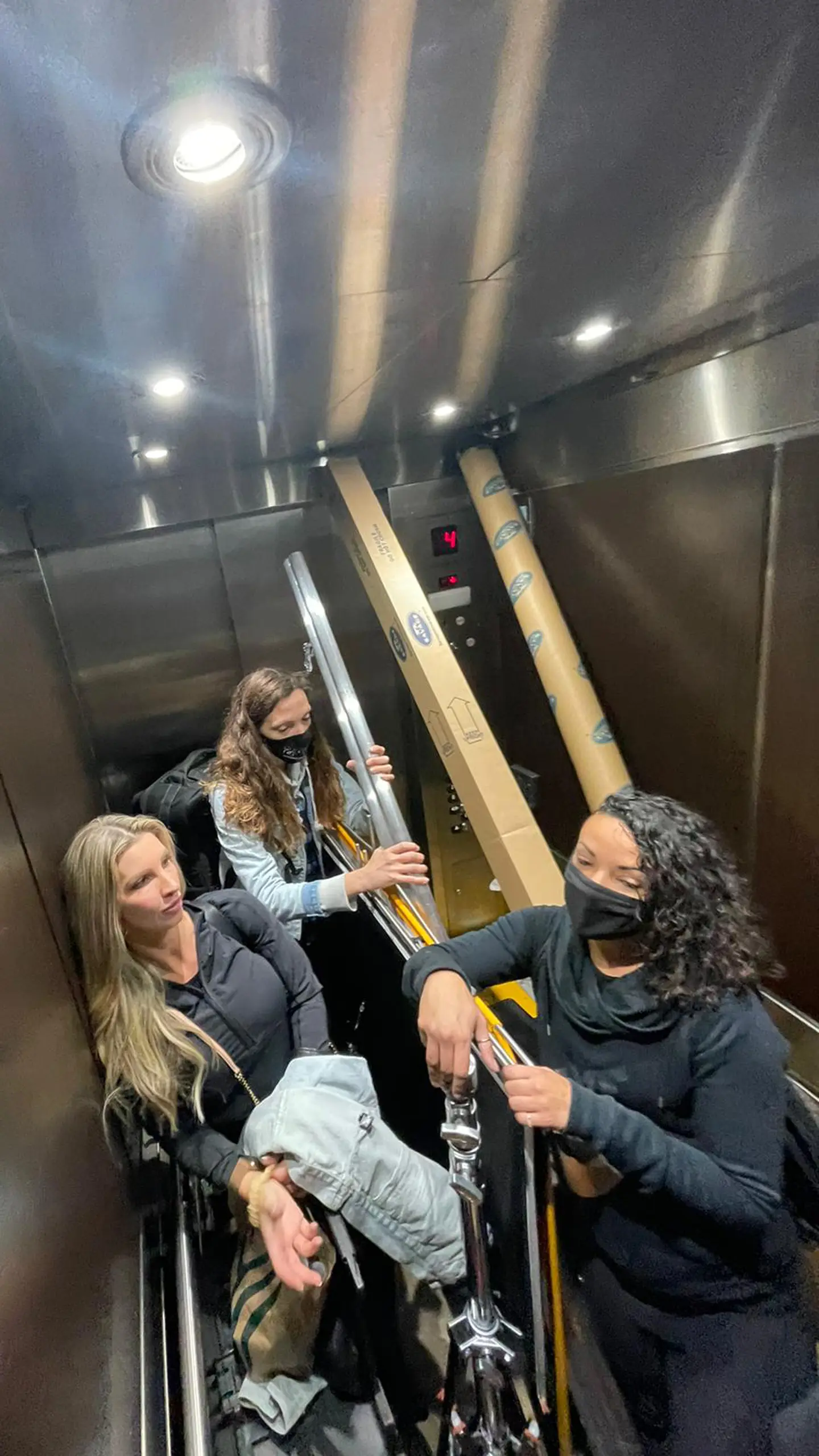
Have you ever watched a [corporate video](https://c-istudios.com/) and wondered how it was made? What goes on behind the scenes to create such a polished and professional final product? As one of the most globally renowned cities, New York is home to a plethora of businesses and organizations that take their image and branding seriously. As such, the market for NYC corporate video production is thriving. In this blog post, we will unveil the process behind creating a corporate video from start to finish, from pre-production to post-production.
- The Pre-Production Stage
In today's digital era, corporate videos are an effective tool to showcase your brand's personality, products, and services. A [well-planned corporate video](https://www.c-istudios.com/contact) can have a significant impact on your target audience and can boost your brand's image. However, it's crucial to understand that the success of a corporate video is largely dependent on the pre-production stage. The pre-production stage is the foundation of any corporate video. This is where the idea is developed, and the planning and organization of the video takes place. In this stage, the goal is to define the purpose of the video, create a script, and develop a storyboard. Additionally, pre-production involves choosing the locations, actors, and props required for the video.
1. ** Concept and Script:** The first step of the pre-production stage is to define your concept. You need to have a clear idea of what you want your corporate video to convey, the message you want to send, and the tone and style in which you want to communicate it. Once you have a clear concept, it's crucial to write a script for your video.
2. ** Planning and Scheduling:** Once the script is ready, the next step is to plan and schedule for the shoot. This involves determining the locations, actors or subjects that will be involved in the video, lighting and sound equipment, any props required, dates for the shoot, and the timeline for production. An experienced [video production company](https://c-istudios.com/video-production-services/) in NYC would spend the majority of their time in this stage, laying the groundwork to ensure a smooth production process.
3. ** Budgeting and Pre-Production Meeting:** Budgeting is a crucial aspect of the pre-production process and must be taken into account from the beginning. A pre-production meeting with the stakeholders is necessary to discuss the project's goals, objectives, ideas, and budget and ensure all parties are on the same page. A well-planned pre-production meeting can help avoid any misunderstandings, delays, or revisions down the line.
Each of these stages plays a critical role in ensuring your corporate video achieves the desired goals of reaching and engaging the target audience effectively. Skipping or rushing these pre-production stages can lead to a poorly executed video that misses the mark and fails to convert your target audience. A well-planned [pre-production meeting](https://www.c-istudios.com/contact) can help avoid any misunderstandings, delays, or revisions down the line. So, make sure to take the required time and effort in the pre-production stage to ensure the best possible final product for your corporate video.
- The Production Stage
The production stage is the heart of the process, and it's the stage where everything comes together. The quality of the production stage impacts the final product in terms of appearance, production values, and how the video's story is communicated. In this stage, the focus is on capturing the footage according to the script and storyboard that was developed in the pre-production stage. The production stage involves setting up the production location, lighting, and sound equipment, as well as direction and acting. The production team works with actors, camera operators, directors, and other crew members to make the script visually appealing. The quality of the video can be enhanced by the location, lighting, sound quality, and various other elements. The production team needs to ensure that they capture the video from different angles and with different distances so that they have multiple options available in the post-production stage.
- The Post-Production Stage
When it comes to creating a corporate video, the post-production stage is just as important as the filming stage. It's the stage where the raw footage is transformed into a compelling story that communicates your messages to your target audience. The post-production stage is also the most time-consuming stage of video production. This is where all the footage is reviewed, edited, and brought together to create the final product. After reviewing all the recorded material, the editor begins to go through the process of assembling the video. Raw footage shot during filming may not be the best representation of your business. There are many things that can go wrong during filming, such as poor lighting, camera shakes, and unnecessary footage. Editing the raw footage is essential to transform it into a cohesive narrative that communicates your business's strengths and values. They will choose the [best clips](https://c-istudios.com/) and discard the ones that aren’t needed. Additionally, they would add any special effects as needed, sound effects, and music.
Then, they will work on the overall flow of the video to ensure that everything is consistent with the storyboard and script. The use of visual effects can help improve a video's overall appeal and message. It can include anything from text overlays, animations, and color grading. The post-production stage is also a perfect time to include a call to action at the end of the video. A call to action can be anything from directing viewers to your website, social media pages, or encouraging them to make a purchase. A clear call to action can encourage viewers to take the action you want them to take. In short, the post-production stage of corporate video production is the most crucial because this is where all the puzzle pieces come together and ultimately create the final product. Hiring [a professional team](https://www.c-istudios.com/portfolio) to handle the post-production stage ensures a polished and professional final product that reflects your brand's personality and message.
- The Final Approval Stage
The final stage of production is often the last thing on the minds of businesses, but it is one of the most important. This is the stage when everything comes together, and the final product is prepared for release. However, many businesses mistakenly assume that this stage is just about quality control. While that is undoubtedly important, it is just one aspect of final production. Let’s look at the different elements involved in the final stage of production and why each one is essential.
1. **Quality Control:** Let's begin with the most obvious and important element, quality control. This aspect of final production involves ensuring that the product meets the standards set by the business and customers. This includes checking for defects, damage, and ensuring that the product is functional and safe for customers to use.
2. **Compression and Export:** Once the editing is completed, the video is compressed and exported into a usable format. This step is critical as it determines the final output quality and file size. Compression involves reducing the video size without losing quality or impacting the visuals. The export process involves saving the video in a format that is compatible with different platforms and devices. Choosing the right compression and export settings can impact your video's overall quality, ensuring it looks great and is accessible across different platforms.
3. ** Review and Feedback:** The final stage of corporate video production involves reviewing the final product and gathering feedback from stakeholders. At this stage, it is essential to ensure the video aligns with the initial project brief, that all elements are integrated, and the messaging reflects your brand's values and tone. Gathering feedback from stakeholders and target audience can help identify areas for improvement and ensure the final product resonates with your audience.
This is the time when feedback is given, and any final adjustments are made as needed. Once all the changes have been made, the video is ready to launch for the intended audience. By paying attention to these elements, you can [create a corporate video](https://c-istudios.com/) that stands out, resonates with your audience and drives your brand forward.
## Conclusion
Corporate [video production](https://c-istudios.com/) is a complex process with many moving parts. For businesses and organizations who want to showcase their products, services, or brand, an expert video production team well-versed in all aspects of the process is essential. Whether it's pre-production, production or post-production, everyone plays an essential role in creating a polished and professional product. As a viewer, it's easy to assume that corporate videos are simple, but the truth is that a lot of hard work goes into them. Each of these stages plays a critical role in ensuring your corporate video achieves the desired goals of reaching and engaging the target audience effectively. By following the process highlighted in this blog, businesses and organizations can ensure that they create a video that is polished, professional, and effective.
## C&I Studios. Elevating Your Corporate Narrative with Premier NYC Video Production
C&I Studios stands as the premier choice for NYC Corporate Video Production, bringing unparalleled expertise and innovation to meet the diverse needs of businesses in the bustling cityscape. As the best in the business, we offer a comprehensive suite of services tailored to elevate corporate messaging through visually compelling and professionally produced videos.
Our team of seasoned professionals, including videographers, editors, and producers, brings a wealth of experience to each project, ensuring that every corporate video reflects the unique identity and goals of our clients. Whether it's creating engaging promotional content, training videos, or executive interviews, we excel in capturing the essence of your corporate message with a cinematic touch.
Our commitment to client satisfaction is unwavering. From concept to final edit, we collaborate closely with our clients to ensure their vision is realized seamlessly. We understand that corporate videos play a pivotal role in brand representation, and our team is dedicated to delivering impactful content that resonates with the target audience.
In the competitive realm of corporate video production in NYC, C&I Studios stands out as the go-to partner for businesses seeking top-notch quality and innovation. [Contact us](https://c-istudios.com/contact/) today to experience the unparalleled excellence that sets us apart as the best NYC Corporate Video Production team, ready to bring your corporate narrative to life with cinematic flair.
## Work with C&I Studios
If you are planning a project like this, our team can take it from concept to final delivery. Explore our [video production services](https://c-istudios.com/video-production-services/), browse [our work](https://c-istudios.com/our-work/) to see how we tell brand stories, and [get in touch](https://c-istudios.com/contact/) when you are ready to start.
Originally published December 21, 2023
---
*This content is from [C&I Studios](https://c-istudios.com), a full-service production company.*
---
# Transmedia Storytelling: Extending Narratives Across Multiple Platforms
> Published: December 21, 2023
> Categories: Commercial & Brand
> Source: https://c-istudios.com/transmedia-storytelling-extending-narratives-across-multiple-platforms/
---
.cib{--paper:#1b1d1f;--ink:#fff;--body:#d5d7d9;--muted:#8b9096;--line:rgba(255,255,255,.12);--thumb:#2b2e31;--card:#212426;--accent:#c02b0a;--blue:#5B8FA8;--serif:'Playfair Display',Georgia,serif;--sans:'Poppins',-apple-system,sans-serif;--measure:900px;background:var(--paper);color:var(--body);font-family:var(--sans);line-height:1.6;position:relative;left:50%;transform:translateX(-50%);width:90vw;max-width:1920px}
.cib *{box-sizing:border-box}
.cib .kicker{max-width:var(--measure);margin:58px auto 0;padding:0 22px;font-size:12.5px;font-weight:700;letter-spacing:2.5px;text-transform:uppercase;color:var(--blue)}
.cib h1.cibh1{text-wrap:balance;font-family:var(--serif);font-weight:500;font-size:clamp(46px,6vw,72px);line-height:1.08;color:var(--ink);max-width:var(--measure);margin:18px auto 0;padding:0 22px;letter-spacing:-.5px}
.cib .metarow{max-width:var(--measure);margin:20px auto 0;padding:0 22px;color:var(--muted);font-size:14px}
.cib .hero{position:relative;width:100%;height:0;padding-bottom:56.25%;overflow:hidden;margin:48px auto 0;border-top:1px solid var(--line);border-bottom:1px solid var(--line)}
.cib .hero .ph{width:100%;aspect-ratio:16/9;background:var(--thumb);border-top:1px solid var(--line);border-bottom:1px solid var(--line);display:flex;align-items:center;justify-content:center;color:#7d8288;font-size:13px;text-align:center;padding:0 20px}
.cib .body{max-width:var(--measure);margin:12px auto 0;padding:52px 22px 6px}
.cib .body.lead p:first-child{font-size:23px;line-height:1.62;color:var(--ink)}
.cib .body p{font-size:18.5px;line-height:1.85;margin:0 0 30px;color:var(--body)}
.cib .body h2{text-wrap:balance;font-family:var(--serif);font-weight:500;font-size:clamp(32px,4vw,48px);line-height:1.22;color:var(--ink);margin:70px 0 20px;letter-spacing:-.3px}
.cib .body h3{text-wrap:balance;font-family:var(--sans);font-weight:600;font-size:22px;color:var(--ink);margin:38px 0 8px}
.cib .body a{color:var(--ink);text-decoration:underline;text-decoration-color:rgba(255,255,255,.4);text-underline-offset:3px}
.cib .body a:hover{text-decoration-color:var(--ink)}
.cib .ctable{width:100%;border-collapse:collapse;margin:16px 0 30px;font-size:16px}
.cib .ctable th{background:#000;color:#fff;text-align:left;padding:10px 12px;font-family:var(--sans)}
.cib .ctable td{padding:10px 12px;border-bottom:1px solid var(--line);color:var(--body)}
.cib .inimg{position:relative;width:100%;height:0;padding-bottom:56.25%;overflow:hidden;margin:72px auto;border-top:1px solid var(--line);border-bottom:1px solid var(--line)}
.cib .inimg .ph{width:100%;aspect-ratio:16/9;background:var(--thumb);border-top:1px solid var(--line);border-bottom:1px solid var(--line);display:flex;align-items:center;justify-content:center;color:#7d8288;font-size:13px}
.cib .origpub{max-width:var(--measure);margin:60px auto 0;padding:26px 22px 0;border-top:1px solid var(--line);color:var(--muted);font-size:13.5px}
.cib .related{max-width:1200px;margin:64px auto 0;padding:34px 22px 76px}
.cib .related h3{font-family:var(--sans);font-size:12.5px;letter-spacing:2px;text-transform:uppercase;color:var(--ink);margin:0 0 24px}
.cib .grid{display:grid;grid-template-columns:repeat(3,1fr);gap:28px}
.cib .rc{background:var(--card);border:1px solid var(--line);display:block;text-decoration:none;color:inherit;transition:border-color .15s}
.cib a.rc:hover{border-color:rgba(255,255,255,.5)}
.cib .rc .thumb{position:relative;width:100%;height:0;padding-bottom:56.25%;background:var(--thumb);overflow:hidden}
.cib .rc .thumb img{position:absolute!important;top:0!important;left:0!important;width:100%!important;height:100%!important;object-fit:cover!important;margin:0!important}
.cib .rc .cc{padding:14px 15px 17px}
.cib .rc .rt{font-family:var(--serif);font-weight:500;font-size:16px;line-height:1.3;color:var(--ink);margin:0 0 6px}
.cib .rc .rm{font-size:11px;letter-spacing:1px;text-transform:uppercase;color:var(--muted)}
.cib img{margin:0!important;padding:0!important;display:block!important;vertical-align:top;max-width:100%}
.cib .hero img,.cib .inimg img{position:absolute!important;top:0!important;left:0!important;width:100%!important;height:100%!important;object-fit:cover!important;margin:0!important;padding:0!important;border:0!important;display:block!important;aspect-ratio:auto!important}
.cib .hero+.body{padding-top:36px}
@media(max-width:760px){.cib .grid{grid-template-columns:1fr}.cib .body h2{margin:52px 0 16px}.cib .body p{font-size:17.5px}.cib .inimg,.cib .hero{margin-top:44px}}
.cib .vembed{max-width:var(--measure);margin:44px auto;padding:0 22px}.cib .vembed .vwrap{position:relative;width:100%;height:0;padding-bottom:56.25%}.cib .vembed .vwrap iframe{position:absolute;top:0;left:0;width:100%;height:100%;border:0}
Commercial & Brand
# Transmedia Storytelling. Extending Narratives Across Multiple Platforms
4 min read

Transmedia storytelling is the practice of telling stories across multiple media platforms, where each medium makes a unique contribution to the story world. This can include movies, TV, online video, web apps, video games, blog entries, radio, and advertisements. It is a technique of telling a single story or story experience across multiple platforms and formats using current digital technologies[.](https://en.wikipedia.org/wiki/Transmedia_storytelling)
Transmedia storytelling allows the same content or story to be presented in various [media formats](https://c-istudios.com/creative-marketing-services/), with each medium offering a unique and alternative view of the story. This technique is used to engage audiences by delivering a cohesive story across different forms of media, providing unique story components and engaging experiences.
## How transmedia storytelling can be used in marketing
Transmedia storytelling can be a powerful tool in marketing, allowing brands to engage with their audience across multiple platforms and formats. By creating a narrative that extends across various media, such as films, TV series, comic books, video games, and mobile apps, transmedia storytelling promotes interaction and communication with the audience wherever they are engaging.
This approach can lead to increased engagement, investment, and brand awareness, ultimately strengthening people's trust in the brand. It also has the potential to create hype and promotion through word of mouth, as the more compelling the story is, the more interest it generates. By telling a story across multiple media platforms, brands can reach niche audiences within each medium, thus expanding their reach even further[.](https://blog.hollywoodbranded.com/transmedia-storytelling-as-a-marketing-tactic)
To apply transmedia storytelling to marketing, brands should focus on creating a cohesive story that aligns with their values and resonates with their audience, and consider what makes their audience excited. This approach requires a significant commitment to the brand and audience, but it can be a game-changer for digital marketing, allowing brands to target users consuming content anywhere and on different devices.
## How transmedia storytelling can be used to create brand loyalty
Transmedia storytelling can be used to create [brand](https://c-istudios.com/branding-and-graphic-design-services/) loyalty by integrating the marketing message into a compelling story that resonates with audiences, leading to stronger brand engagement and loyalty, as well as increased sales and revenue. This approach fosters a sense of belonging among audiences, turning fans into advocates who share their discoveries and insights with others, thus strengthening brand loyalty and advocacy.
By tailoring content to different audiences, experimenting with different formats and storylines, and connecting branded content more meaningfully across channels, transmedia storytelling can create a sense of community among followers and drive engagement and loyalty. Additionally, by focusing on clarity, defining the brand's purpose and core attributes early in the narrative, and creating franchises, brands can use transmedia storytelling to enhance brand loyalty.
Therefore, transmedia storytelling offers an effective way to strengthen a brand's reach and create a sense of community among followers, ultimately driving engagement and loyalty.
## Examples of brands that have successfully used transmedia storytelling to create brand loyalty
Some examples of brands that have successfully used transmedia storytelling to create brand loyalty include:
1. Marvel Cinematic Universe (MCU): The MCU has effectively employed transmedia storytelling by integrating its narrative across films, TV series, comic books, and other media, contributing to its cultural impact and fan devotion.
1. Pokemon: Pokemon has drawn fans into its world through a combination of video games, card games, TV series, and movies, providing an engaging mix of passive and interactive experiences.
1. Star Sports: Star Sports used transmedia storytelling to create the "Mauka Mauka" ad during the 2015 Cricket World Cup, which caught the attention of many, even those not initially interested in cricket, showcasing the effectiveness of transmedia storytelling in engaging diverse audiences.
These examples demonstrate how transmedia storytelling has been effectively utilized by various brands to create immersive story worlds, drive engagement, and foster brand loyalty.
## How brands can measure the success of their transmedia storytelling campaigns in terms of brand loyalty
Brands have measured the success of their transmedia storytelling campaigns in terms of brand loyalty by analyzing key metrics such as consumer behavior, preferences, click-through rates, conversion rates, and social media metrics. These metrics provide valuable insights into the effectiveness of brand storytelling efforts, helping brands determine if their investments are generating a positive impact on brand loyalty and [advocacy](https://fastercapital.com/content/Brand-Storytelling-Metrics--Measuring-Success--Key-Metrics-for-Brand-Storytelling.html).
Additionally, the success of transmedia storytelling campaigns has been linked to increased brand engagement, sales, and revenue, as well as the creation of a sense of community among followers, ultimately driving brand loyalty.
Therefore, brands have used a combination of financial impact metrics and consumer engagement metrics to evaluate the success of their transmedia storytelling initiatives in terms of brand loyalty.
## Challenges brands face when implementing a transmedia storytelling campaign
Some challenges that brands face when implementing a transmedia storytelling campaign include:
1. Creating a Coherent Story: Developing a cohesive narrative that extends across multiple platforms and aligns with the brand's values and purpose can be challenging.
1. Overestimating Brand Equity: Overestimating the strength of the brand can lead to unfulfilling transmedia narratives that fail to resonate with the audience.
1. Understanding Audience Indifference: Underestimating the indifference that audiences may have towards the brand's story can impact the effectiveness of the transmedia campaign.
1. Resource Intensiveness: Implementing a transmedia storytelling campaign requires significant resources and a long-term commitment, which can be a challenge for some brands.
1. User-Centric Approach: It is important to think "user first" and consider the audience's receptivity to interact with transmedia storytelling, which requires a deep understanding of the target audience.
1. Measuring Success: Determining the impact of the transmedia storytelling campaign on brand loyalty and advocacy can be challenging, as it involves analyzing consumer behavior, preferences, and engagement across multiple platforms.
Addressing these challenges requires a strategic approach, a deep understanding of the target audience, and a commitment to creating a compelling and flexible narrative that resonates with the audience.
## How brands can ensure consistency across different platforms in a transmedia storytelling campaign
To ensure consistency across different platforms in a transmedia storytelling campaign, brands can take the following steps:
1. Deliberate Brand Building: Transmedia storytelling requires deliberate brand building, strategizing, and commitment to be active and present across multiple platforms.
1. Link and Synchronize Content: Brands must ensure that all content is linked and synchronized with one another subtly or explicitly to maintain a coherent narrative.
1. Establish Content Strategy as a Practice: It is important to establish content strategy as a practice and discipline in the organization to ensure consistent storytelling across platforms.
1. Connect Efforts to Brand Goals: Linking content efforts to existing brand and/or marketing goals helps in maintaining a consistent transmedia storytelling strategy.
1. Maintain Continuity and Depth: Ensuring continuity in the story across different media creates a coherent narrative that's easy for all to understand and offers deeper engagement.
By following these steps, brands can maintain a consistent and engaging transmedia storytelling campaign across various platforms.
## Tools and technologies that brands can use to ensure consistency across different platforms in a transmedia storytelling campaign
To ensure consistency across different platforms in a transmedia storytelling campaign, brands can utilize various tools and technologies. Some of these include:
1. Content Management Systems (CMS): CMS platforms allow brands to organize and distribute content across multiple channels, ensuring a consistent message and brand image.
1. Data Analytics and Monitoring Tools: Brands can use analytics tools to monitor audience engagement and feedback across different platforms, allowing them to adjust their transmedia storytelling strategy to maintain consistency and resonance with the audience.
1. Social Media Management Tools: These tools enable brands to schedule and publish content across various [social media](https://c-istudios.com/social-media-marketing-services/) platforms, ensuring a consistent and coordinated storytelling approach.
1. Customer Relationship Management (CRM) Systems: CRM systems help in understanding and managing customer interactions across multiple channels, ensuring a consistent brand experience.
1. Digital Asset Management (DAM) Systems: DAM systems help in organizing and sharing digital assets such as images, videos, and other content, ensuring that the right assets are used consistently across different platforms.
By leveraging these tools and technologies, brands can effectively maintain a consistent and engaging transmedia storytelling campaign across various platforms.
## Best practices for creating a consistent content strategy across different platforms in a transmedia storytelling campaign
Some best practices for creating a consistent content strategy across different platforms in a transmedia storytelling campaign include:
1. Establish Content Strategy as a Practice: Make content strategy a practice and discipline within the organization to ensure consistent storytelling across platforms.
1. Link and Synchronize Content: Ensure that all content is linked and synchronized with each other subtly or explicitly to maintain a coherent narrative.
1. Define Core Story and Target Audience: Carefully plan and coordinate transmedia projects by defining the core story or message and identifying the target audience.
1. Ensure Complementary Content: Ensure that the content on each platform complements the others, enhancing the overall narrative rather than duplicating it.
1. Utilize Social Media Platforms: Leverage effective social media platforms, such as YouTube, Tumblr, Instagram, Facebook, Twitter, forums, and fan sites, to engage audiences across different media platforms.
By following these best practices, brands can create a consistent and engaging content strategy across various platforms in a transmedia storytelling campaign.
## How brands can manage production and distribution of content across different platforms in a transmedia storytelling campaign
Brands can manage the production and distribution of content across different platforms in a transmedia storytelling campaign by following these strategies:
1. Deliberate Brand Building: Transmedia storytelling requires deliberate brand building, strategizing, and commitment to be active and present across multiple platforms.
1. Link and Synchronize Content: Ensure that all content is linked and synchronized with each other subtly or explicitly to maintain a coherent narrative.
1. Utilize Social Media Platforms: Leverage effective social media platforms, such as YouTube, Tumblr, Instagram, Facebook, Twitter, forums, and fan sites, to engage audiences across different media platforms.
1. Establish Content Strategy as a Practice: Make content strategy a practice and discipline within the organization to ensure consistent storytelling across platforms.
1. Data Analytics and Monitoring Tools: Use analytics tools to monitor audience engagement and feedback across different platforms, allowing adjustments to maintain consistency and resonance with the audience.
By implementing these strategies, brands can effectively manage the production and distribution of content across different platforms in a transmedia storytelling campaign.
## How brands can ensure their content is accessible to audiences across different platforms in a transmedia storytelling campaign
To ensure that their content is accessible to audiences across different platforms in a transmedia storytelling campaign, brands can employ the following strategies:
1. Clarify the Message for Different Platforms: By clarifying the brand's message for different platforms, transmedia storytelling allows for the development of a rich and integrated experience for audiences.
1. Utilize Social Media Platforms: Brands should engage audiences across different media platforms, such as YouTube, Tumblr, Instagram, Facebook, Twitter, forums, and fan sites, to ensure that their content is accessible to users consuming content anywhere and on different devices.
1. Link and Synchronize Content: It is essential to ensure that all content is linked and synchronized with one another subtly or explicitly to maintain a coherent narrative.
1. Establish a Consistent Transmedia Storytelling Strategy: Brands should develop a consistent transmedia storytelling strategy that anticipates and meets the audience's needs to engage, connect, and motivate them across multiple platforms.
By implementing these strategies, brands can effectively ensure that their content is accessible to audiences across different platforms in a transmedia storytelling campaign.
## Work with C&I Studios
If you are planning a project like this, our team can take it from concept to final delivery. Explore our [video production services](https://c-istudios.com/video-production-services/), browse [our work](https://c-istudios.com/our-work/) to see how we tell brand stories, and [get in touch](https://c-istudios.com/contact/) when you are ready to start.
Originally published December 21, 2023
---
*This content is from [C&I Studios](https://c-istudios.com), a full-service production company.*
---
# Collaborative Creativity: Navigating the Dynamics of a TV Production Team
> Published: December 20, 2023
> Categories: Commercial & Brand
> Source: https://c-istudios.com/collaborative-creativity-navigating-the-dynamics-of-a-tv-production-team/
---
.cib{--paper:#1b1d1f;--ink:#fff;--body:#d5d7d9;--muted:#8b9096;--line:rgba(255,255,255,.12);--thumb:#2b2e31;--card:#212426;--accent:#c02b0a;--blue:#5B8FA8;--serif:'Playfair Display',Georgia,serif;--sans:'Poppins',-apple-system,sans-serif;--measure:900px;background:var(--paper);color:var(--body);font-family:var(--sans);line-height:1.6;position:relative;left:50%;transform:translateX(-50%);width:90vw;max-width:1920px}
.cib *{box-sizing:border-box}
.cib .kicker{max-width:var(--measure);margin:58px auto 0;padding:0 22px;font-size:12.5px;font-weight:700;letter-spacing:2.5px;text-transform:uppercase;color:var(--blue)}
.cib h1.cibh1{text-wrap:balance;font-family:var(--serif);font-weight:500;font-size:clamp(46px,6vw,72px);line-height:1.08;color:var(--ink);max-width:var(--measure);margin:18px auto 0;padding:0 22px;letter-spacing:-.5px}
.cib .metarow{max-width:var(--measure);margin:20px auto 0;padding:0 22px;color:var(--muted);font-size:14px}
.cib .hero{position:relative;width:100%;height:0;padding-bottom:56.25%;overflow:hidden;margin:48px auto 0;border-top:1px solid var(--line);border-bottom:1px solid var(--line)}
.cib .hero .ph{width:100%;aspect-ratio:16/9;background:var(--thumb);border-top:1px solid var(--line);border-bottom:1px solid var(--line);display:flex;align-items:center;justify-content:center;color:#7d8288;font-size:13px;text-align:center;padding:0 20px}
.cib .body{max-width:var(--measure);margin:12px auto 0;padding:52px 22px 6px}
.cib .body.lead p:first-child{font-size:23px;line-height:1.62;color:var(--ink)}
.cib .body p{font-size:18.5px;line-height:1.85;margin:0 0 30px;color:var(--body)}
.cib .body h2{text-wrap:balance;font-family:var(--serif);font-weight:500;font-size:clamp(32px,4vw,48px);line-height:1.22;color:var(--ink);margin:70px 0 20px;letter-spacing:-.3px}
.cib .body h3{text-wrap:balance;font-family:var(--sans);font-weight:600;font-size:22px;color:var(--ink);margin:38px 0 8px}
.cib .body a{color:var(--ink);text-decoration:underline;text-decoration-color:rgba(255,255,255,.4);text-underline-offset:3px}
.cib .body a:hover{text-decoration-color:var(--ink)}
.cib .ctable{width:100%;border-collapse:collapse;margin:16px 0 30px;font-size:16px}
.cib .ctable th{background:#000;color:#fff;text-align:left;padding:10px 12px;font-family:var(--sans)}
.cib .ctable td{padding:10px 12px;border-bottom:1px solid var(--line);color:var(--body)}
.cib .inimg{position:relative;width:100%;height:0;padding-bottom:56.25%;overflow:hidden;margin:72px auto;border-top:1px solid var(--line);border-bottom:1px solid var(--line)}
.cib .inimg .ph{width:100%;aspect-ratio:16/9;background:var(--thumb);border-top:1px solid var(--line);border-bottom:1px solid var(--line);display:flex;align-items:center;justify-content:center;color:#7d8288;font-size:13px}
.cib .origpub{max-width:var(--measure);margin:60px auto 0;padding:26px 22px 0;border-top:1px solid var(--line);color:var(--muted);font-size:13.5px}
.cib .related{max-width:1200px;margin:64px auto 0;padding:34px 22px 76px}
.cib .related h3{font-family:var(--sans);font-size:12.5px;letter-spacing:2px;text-transform:uppercase;color:var(--ink);margin:0 0 24px}
.cib .grid{display:grid;grid-template-columns:repeat(3,1fr);gap:28px}
.cib .rc{background:var(--card);border:1px solid var(--line);display:block;text-decoration:none;color:inherit;transition:border-color .15s}
.cib a.rc:hover{border-color:rgba(255,255,255,.5)}
.cib .rc .thumb{position:relative;width:100%;height:0;padding-bottom:56.25%;background:var(--thumb);overflow:hidden}
.cib .rc .thumb img{position:absolute!important;top:0!important;left:0!important;width:100%!important;height:100%!important;object-fit:cover!important;margin:0!important}
.cib .rc .cc{padding:14px 15px 17px}
.cib .rc .rt{font-family:var(--serif);font-weight:500;font-size:16px;line-height:1.3;color:var(--ink);margin:0 0 6px}
.cib .rc .rm{font-size:11px;letter-spacing:1px;text-transform:uppercase;color:var(--muted)}
.cib img{margin:0!important;padding:0!important;display:block!important;vertical-align:top;max-width:100%}
.cib .hero img,.cib .inimg img{position:absolute!important;top:0!important;left:0!important;width:100%!important;height:100%!important;object-fit:cover!important;margin:0!important;padding:0!important;border:0!important;display:block!important;aspect-ratio:auto!important}
.cib .hero+.body{padding-top:36px}
@media(max-width:760px){.cib .grid{grid-template-columns:1fr}.cib .body h2{margin:52px 0 16px}.cib .body p{font-size:17.5px}.cib .inimg,.cib .hero{margin-top:44px}}
.cib .vembed{max-width:var(--measure);margin:44px auto;padding:0 22px}.cib .vembed .vwrap{position:relative;width:100%;height:0;padding-bottom:56.25%}.cib .vembed .vwrap iframe{position:absolute;top:0;left:0;width:100%;height:100%;border:0}
Commercial & Brand
# Collaborative Creativity. Navigating the Dynamics of a TV Production Team
3 min read

Collaborative creativity is essential for the success of a [TV production team](https://c-istudios.com/). It involves building a cohesive team, fostering a culture of creativity and innovation, and incentivizing the team to work within the production's budget. According to Videomaker, the most important step in creating a collaborative production is putting together the right team, which should be passionate and able to work together effectively.
Ziflow emphasizes the significance of dynamics and connections between team members in creative collaboration, as a cohesive team can integrate their ideas seamlessly, resulting in a harmonious interplay of creativity.
Additionally, in an article on LinkedIn, it is highlighted that fostering a collaborative and creative culture is essential for a [video production](https://c-istudios.com/video-production-services/) team to communicate, cooperate, and innovate effectively.
Furthermore, incentivizing the creative team to work within a TV production project budget involves involving them in the planning and decision-making process, providing necessary resources and support, and discussing budget limits and project goals to lead to creative, cost-effective solutions.
The University of Silicon Valley also emphasizes the importance and benefits of collaboration and teamwork in the creative industries, as it results in a more condensed production of ideas and knowledge.
## Steps to navigating a TV production team
When navigating the dynamics of a TV production team, it is essential to focus on building team dynamics, fostering creativity, and managing the production effectively. Here are some key insights:
1. Assembling the Right Team: The most important step in creating a collaborative production is putting together the right team. It is crucial to look for team players and establish a protocol for decision making.
1. Preparation and Collaboration: Understanding the dynamics of how to prep a film and collaborating with various departments, such as cinematography, production design, and editing, is vital for a successful production.
1. Managing the Team Effectively: Clear communication, open collaboration, and efficient management are essential for keeping the production on track and ensuring that everyone is working towards the same goals.
1. Incentivizing Creative Team Work: To encourage the creative team to work within a TV production project budget, it is important to involve them in the planning and decision-making process, provide necessary resources and support, and discuss budget limits and project goals to lead to [creative](https://c-istudios.com/creative-marketing-services/), cost-effective solutions.
By focusing on these aspects, a TV production team can effectively navigate the dynamics of collaboration, creativity, and management, leading to successful and innovative productions.
## How to foster a culture of creativity within a TV production team
To foster a culture of creativity within a TV production team, several strategies can be employed based on the search results:
1. Define Core Values: Clearly define the core values that promote creativity and innovation within the team.
1. Stop Micromanaging: Avoid micromanaging the team, as it can stifle creativity and innovation.
1. Provide Necessary Resources and Support: Ensure that the team has access to the [tools](https://c-istudios.com/studio-rentals/), resources, and opportunities to express their talents and experiment with new techniques.
1. Encourage Collaboration and Learning: Promote a culture that encourages brainstorming, collaboration, and learning from both successes and failures.
1. Celebrate Achievements: Recognize and appreciate the efforts and results of the team, and celebrate the milestones and achievements that are reached together.
By implementing these strategies, a TV production team can create an environment that nurtures creativity and innovation, leading to high-quality and original content.
## Examples of creative exercises to encourage team collaboration
Some examples of creative exercises to encourage team collaboration within a TV production team include:
1. Brainstorming: Encouraging the team to generate and share ideas freely without criticism.
1. Debate: Organizing a structured debate on a relevant topic to encourage critical thinking and effective communication.
1. Rolestorming: Having team members brainstorm while assuming the identity of a different person, which can lead to fresh perspectives and ideas.
1. News Reporting: Asking team members to report on a topic as if they were journalists, promoting research, creativity, and presentation skills.
1. Balloon Sculptures: Engaging in a fun, hands-on activity like creating balloon sculptures, which can promote teamwork and creativity.
These exercises can help foster a culture of creativity and collaboration within a TV production team, leading to innovative and high-quality content.
## Effective ways to handle disagreements within a TV production team
Effective ways to handle disagreements within a TV production team include:
1. Open Communication and Regular Gatherings: Regular gatherings with all members of the department can help keep concerns and misunderstandings to a minimum. Being open and honest with any issues from the start and addressing them promptly is crucial.
1. Encourage Healthy Debate: Create an environment that encourages healthy debate, as conflicts can ultimately enhance the overall quality of the production. Share the vision, goals, information, and resources with the team and involve them in decision-making and creative brainstorming.
1. Identify the Root Cause and Collaborate: When conflicts arise, it's important to identify the source and nature of the conflict, listen, empathize, and collaborate to find a compromise. Acknowledging emotions and perspectives, focusing on common goals, and developing a clear action plan are essential steps in resolving conflicts.
1. Avoid Pettiness and Remain Cool-Headed: It's important for those in charge to avoid being petty when conflicts arise. Remaining cool-headed, listening to concerns, and ultimately relying on a rational and respectful approach is crucial.
By implementing these strategies, TV production teams can effectively manage and resolve disagreements, leading to a more harmonious and productive work environment.
## How to create a culture of compromise and collaboration within a TV production team
To create a culture of compromise and collaboration within a TV production team, the following strategies can be employed:
1. Open Communication and Problem-Sharing: Encourage open communication and problem-sharing to address issues as soon as they arise. This helps in preventing a disconnect between different departments, which can lead to delays and additional expenses.
1. Assemble the Right Team: Focus on assembling the right team that is capable of collaborating effectively. Look for team players and establish a protocol for decision making. Encourage input and decision-making processes that involve gathering input and deciding, which can foster a culture of compromise and collaboration.
1. Establish Clear Communication Channels: When working remotely, establish clear and regular channels of communication using tools such as video calls, instant messaging, email, and cloud-based platforms. This helps in maintaining a sense of community and culture among remote team members.
1. Provide Support and Flexibility: Understand the challenges and opportunities of working remotely and provide support and flexibility to the team members as needed. This can include offering training, resources, feedback, or mentoring to foster a sense of community and culture among the remote TV production staff and partners.
By implementing these strategies, TV production teams can create a culture that promotes compromise and collaboration, leading to a more cohesive and productive work environment.
## Examples of successful TV production teams and their culture of compromise and collaboration
Some renowned TV production teams known for their culture of compromise and collaboration include:
1. The Team Behind "The Office" (U.S.): The production team of "The Office" is often cited for its exceptional collaboration, where actors and writers worked closely together to improvise and refine scenes, fostering a culture of compromise and creativity.
1. "Game of Thrones" Production Team: Despite the show's controversial ending, the "Game of Thrones" production team was known for its large-scale collaboration, involving various departments and talents to bring the complex world of Westeros to life.
1. "Friends" Production Team: The team behind "Friends" is recognized for its cohesive collaboration, with the cast and crew working in sync to deliver the iconic and long-lasting series.
While specific details about their internal dynamics are not readily available, these examples demonstrate the potential for successful compromise and collaboration within TV production teams.
## Effective ways to encourage open communication and feedback within a TV production team
To encourage open communication and feedback within a TV production team, the following strategies can be employed:
1. Encourage Collaboration and Feedback: Foster a culture of collaboration and feedback among team members. This involves working together to achieve common goals, such as brainstorming ideas, solving problems, and creating content, as well as giving and receiving constructive criticism, praise, or suggestions.
1. Establish Clear Communication Channels: Utilize various communication tools such as video calls, instant messaging, email, and cloud-based platforms to establish clear and regular channels of communication. This helps in ensuring that everyone is on the same page, motivated, and productive, especially in remote work settings.
1. Create a Shared Vision and Culture: Involve the team in the planning and decision-making process, share the creative vision and values, and encourage their input and feedback. This helps in creating a common identity and purpose for the project, fostering a sense of community and culture among the team members.
1. Encourage Open and Transparent Communication: Foster a culture of open and transparent communication where team members feel free to express opinions, ask questions, and provide feedback. This helps in building trust and improving communication processes.
By implementing these strategies, TV production teams can create an environment that promotes open communication, collaboration, and feedback, leading to a more cohesive and productive work environment.
## Effective ways to provide feedback to individual team members in a TV production team
To provide effective feedback to individual team members in a TV production team, the following strategies can be employed:
1. Praise in Public, Criticize in Private: When providing feedback, it's important to follow the management mantra of "praise in public, criticize in private." This approach ensures that constructive criticism is delivered in a manner that respects the individual's dignity and privacy.
1. Be Honest and Timely: Feedback should be honest and provided in a timely manner. It's essential to avoid holding back on feedback due to concerns about hurting feelings, as delayed feedback can be more challenging to address.
1. Create a Culture of Gratitude and Recognition: In addition to constructive feedback, it's important to recognize and reward team members' efforts and achievements. This can be done through praise, bonuses, incentives, or other forms of acknowledgment.
1. Listen and Acknowledge: When team members provide feedback, it's crucial to be an engaged and active listener. Making eye contact, nodding, and acknowledging the feedback received helps in creating a culture where team members feel heard and valued.
By implementing these strategies, TV production teams can provide feedback to individual team members in a manner that fosters a culture of open communication, respect, and continuous improvement.
## How to encourage team members to actively listen to feedback from others in a TV production team
To encourage team members to actively listen to feedback within a TV production team, the following strategies can be employed:
1. Model Active Listening: Leaders should model active listening by demonstrating genuine interest, maintaining eye contact, and acknowledging the feedback received. This sets a positive example for team members to follow.
1. Create a Culture of Openness: Foster a culture where all team members feel comfortable sharing their feedback and know that it will be actively listened to and considered. This can be achieved by creating an environment of trust and respect.
1. Acknowledge and Utilize Feedback: When team members provide feedback, it's important to acknowledge its value and demonstrate how it will be utilized. This encourages team members to continue sharing their insights and opinions.
1. Practice Active Listening Skills: Encourage team members to practice active listening skills, such as paying attention, showing empathy, asking relevant questions, and providing constructive feedback. This can lead to better outcomes, satisfaction, and enhanced collaboration.
By implementing these strategies, TV production teams can create an environment that promotes active listening, open communication, and constructive feedback, leading to a more cohesive and productive work environment.
## Working with the creative production team at C&I Studios
Hiring [C&I Studios'](https://c-istudios.com/) collaborative creative team can bring several benefits:
1. Access to Specialized Expertise: C&I Studios' specialized teams have expertise in various areas such as writing, animation, and editing. This allows us to handle diverse projects and deliver high-quality results, making us a good choice for projects that require specific skills.
1. Building a Collaborative Environment: By assembling the right team and fostering a culture of collaboration, C&I Studios has created an environment where team members work together to bring a creative vision to life. This collaborative approach leads to more innovative and successful productions.
1. Incentivizing Creative Team Work: C&I Studios incentivizes creative team work within a TV production project budget by involving the team in the planning and decision-making process, providing necessary resources and support, and discussing budget limits and project goals to lead to creative, cost-effective solutions.
1. Efficient Use of Resources: Collaborative teams within C&I Studios lead to a more condensed production of ideas and knowledge, resulting in efficient use of resources and a more streamlined production process.
By hiring the collaborative creative team at C&I Studios, organizations can benefit from a wealth of expertise, a collaborative environment, and the efficient use of resources, ultimately leading to the successful realization of their creative projects.
[Contact C&I Studios](https://c-istudios.com/contact/) to get started today.
## Work with C&I Studios
If you are planning a project like this, our team can take it from concept to final delivery. Explore our [video production services](https://c-istudios.com/video-production-services/), browse [our work](https://c-istudios.com/our-work/) to see how we tell brand stories, and [get in touch](https://c-istudios.com/contact/) when you are ready to start.
Originally published December 20, 2023
---
*This content is from [C&I Studios](https://c-istudios.com), a full-service production company.*
---
# Enhancing Product Visualization: The Power of 3D Animations
> Published: December 19, 2023
> Categories: Post & VFX
> Source: https://c-istudios.com/enhancing-product-visualization-the-power-of-3d-animations/
---
.cib{--paper:#1b1d1f;--ink:#fff;--body:#d5d7d9;--muted:#8b9096;--line:rgba(255,255,255,.12);--thumb:#2b2e31;--card:#212426;--accent:#c02b0a;--blue:#5B8FA8;--serif:'Playfair Display',Georgia,serif;--sans:'Poppins',-apple-system,sans-serif;--measure:900px;background:var(--paper);color:var(--body);font-family:var(--sans);line-height:1.6;position:relative;left:50%;transform:translateX(-50%);width:90vw;max-width:1920px}
.cib *{box-sizing:border-box}
.cib .kicker{max-width:var(--measure);margin:58px auto 0;padding:0 22px;font-size:12.5px;font-weight:700;letter-spacing:2.5px;text-transform:uppercase;color:var(--blue)}
.cib h1.cibh1{text-wrap:balance;font-family:var(--serif);font-weight:500;font-size:clamp(46px,6vw,72px);line-height:1.08;color:var(--ink);max-width:var(--measure);margin:18px auto 0;padding:0 22px;letter-spacing:-.5px}
.cib .metarow{max-width:var(--measure);margin:20px auto 0;padding:0 22px;color:var(--muted);font-size:14px}
.cib .hero{position:relative;width:100%;height:0;padding-bottom:56.25%;overflow:hidden;margin:48px auto 0;border-top:1px solid var(--line);border-bottom:1px solid var(--line)}
.cib .hero .ph{width:100%;aspect-ratio:16/9;background:var(--thumb);border-top:1px solid var(--line);border-bottom:1px solid var(--line);display:flex;align-items:center;justify-content:center;color:#7d8288;font-size:13px;text-align:center;padding:0 20px}
.cib .body{max-width:var(--measure);margin:12px auto 0;padding:52px 22px 6px}
.cib .body.lead p:first-child{font-size:23px;line-height:1.62;color:var(--ink)}
.cib .body p{font-size:18.5px;line-height:1.85;margin:0 0 30px;color:var(--body)}
.cib .body h2{text-wrap:balance;font-family:var(--serif);font-weight:500;font-size:clamp(32px,4vw,48px);line-height:1.22;color:var(--ink);margin:70px 0 20px;letter-spacing:-.3px}
.cib .body h3{text-wrap:balance;font-family:var(--sans);font-weight:600;font-size:22px;color:var(--ink);margin:38px 0 8px}
.cib .body a{color:var(--ink);text-decoration:underline;text-decoration-color:rgba(255,255,255,.4);text-underline-offset:3px}
.cib .body a:hover{text-decoration-color:var(--ink)}
.cib .ctable{width:100%;border-collapse:collapse;margin:16px 0 30px;font-size:16px}
.cib .ctable th{background:#000;color:#fff;text-align:left;padding:10px 12px;font-family:var(--sans)}
.cib .ctable td{padding:10px 12px;border-bottom:1px solid var(--line);color:var(--body)}
.cib .inimg{position:relative;width:100%;height:0;padding-bottom:56.25%;overflow:hidden;margin:72px auto;border-top:1px solid var(--line);border-bottom:1px solid var(--line)}
.cib .inimg .ph{width:100%;aspect-ratio:16/9;background:var(--thumb);border-top:1px solid var(--line);border-bottom:1px solid var(--line);display:flex;align-items:center;justify-content:center;color:#7d8288;font-size:13px}
.cib .origpub{max-width:var(--measure);margin:60px auto 0;padding:26px 22px 0;border-top:1px solid var(--line);color:var(--muted);font-size:13.5px}
.cib .related{max-width:1200px;margin:64px auto 0;padding:34px 22px 76px}
.cib .related h3{font-family:var(--sans);font-size:12.5px;letter-spacing:2px;text-transform:uppercase;color:var(--ink);margin:0 0 24px}
.cib .grid{display:grid;grid-template-columns:repeat(3,1fr);gap:28px}
.cib .rc{background:var(--card);border:1px solid var(--line);display:block;text-decoration:none;color:inherit;transition:border-color .15s}
.cib a.rc:hover{border-color:rgba(255,255,255,.5)}
.cib .rc .thumb{position:relative;width:100%;height:0;padding-bottom:56.25%;background:var(--thumb);overflow:hidden}
.cib .rc .thumb img{position:absolute!important;top:0!important;left:0!important;width:100%!important;height:100%!important;object-fit:cover!important;margin:0!important}
.cib .rc .cc{padding:14px 15px 17px}
.cib .rc .rt{font-family:var(--serif);font-weight:500;font-size:16px;line-height:1.3;color:var(--ink);margin:0 0 6px}
.cib .rc .rm{font-size:11px;letter-spacing:1px;text-transform:uppercase;color:var(--muted)}
.cib img{margin:0!important;padding:0!important;display:block!important;vertical-align:top;max-width:100%}
.cib .hero img,.cib .inimg img{position:absolute!important;top:0!important;left:0!important;width:100%!important;height:100%!important;object-fit:cover!important;margin:0!important;padding:0!important;border:0!important;display:block!important;aspect-ratio:auto!important}
.cib .hero+.body{padding-top:36px}
@media(max-width:760px){.cib .grid{grid-template-columns:1fr}.cib .body h2{margin:52px 0 16px}.cib .body p{font-size:17.5px}.cib .inimg,.cib .hero{margin-top:44px}}
.cib .vembed{max-width:var(--measure);margin:44px auto;padding:0 22px}.cib .vembed .vwrap{position:relative;width:100%;height:0;padding-bottom:56.25%}.cib .vembed .vwrap iframe{position:absolute;top:0;left:0;width:100%;height:100%;border:0}
Post & VFX
# Enhancing Product Visualization. The Power of 3D Animations
8 min read
3D animations can be a powerful tool for product visualization. They can help customers understand the design, features and benefits of your products better than static images or videos. 3D animations create an immersive experience that engages viewers and helps to convey complex information in an easy-to-understand way.
Using 3D animation to visualize products brings many advantages. It allows you to focus on the details of a product, show interactions between components in real time and create engaging experiences that can help boost sales. Animations can also be used to demonstrate how products work or how they fit together, as well as provide a realistic view of the product from different angles.
When creating 3D animations for product visualization, it's important to focus on the details. Making sure that the texture, shading and colors of the product are accurate can help customers get a better understanding of the product. Animations should also be designed with a specific purpose in mind and should contain enough information to engage viewers without overwhelming them.
Meanwhile, check out our [works](https://c-istudios.com/our-work/) to get some inspiration.
## Benefits of using 3D animation for product visualization
Benefits of using 3D animation for product visualization can also extend beyond just sales. It can provide customers with a better understanding of the product and help them make more informed decisions. For example, 3D animations can be used to explain how certain components work together or how they interact with each other in real life scenarios. This type of information is often difficult to convey through static images or videos, making 3D animation an invaluable tool for product visualization.
Additionally, 3D animations can be used to highlight the features and benefits of a product in an attractive way. Animations can be designed to emphasize certain aspects of the product and present them in a visually appealing manner. This helps customers get a better understanding of what the product has to offer and allows them to make more informed decisions.
Finally, 3D animations can be used to create experiences that are more engaging and memorable than traditional product visuals. Animations can help engage customers in the buying process by creating an immersive experience they won’t forget. This can lead to increased sales and customer loyalty.
Besides, benefits of using 3D animation for product visualization include:
- Adds a level of immersion and engagement for customers: 3D animations create an immersive experience that allows customers to gain a better understanding of the product.
- Allows for detailed visualizations: Animations can show interactions between components, demonstrate how products work and provide realistic views from different angles.
- Enhances marketing efforts: 3D animation can create engaging experiences that can help boost sales.
- Helps convey complex information in an easy to understand way: Animations are a great way to break down complicated concepts and provide clarity to viewers.
- Improves customer experience: By providing more information and engaging visuals, 3D animation can improve the overall customer experience.
- Easier to understand complex information: Animations allow you to convey complex information in an easy-to-understand way.
For businesses looking to increase sales and engagement, 3D animations can be a powerful tool for product visualization. If you’re interested in creating high quality 3D animation for your products, [get in touch](https://c-istudios.com/contact/) with us today to learn more. We’ll be happy to discuss the best approach for your specific needs and help bring your product visualization dreams to life.
The power of 3D animation can have a huge impact on how customers perceive products - it can make them look better, feel real and engage viewers in ways that static images or videos cannot. By leveraging this technology, businesses can create immersive experiences that help increase sales and customer loyalty. So if you’re looking to add a level of engagement to your product visuals, 3D animation is the way to go.
## Factors to consider when creating 3D animations
When creating 3D animations for product visualization, there are some important factors to consider. First, decide on the purpose of the animation and ensure that it contains enough information without overwhelming viewers. Focus on details like texture, shading and color accuracy so customers can get the most out of their experience. Additionally, make sure that the animation is engaging and memorable - this can help to draw customers in and increase sales.
Keep the animation simple but effective. Too much information can be overwhelming and cause viewers to lose interest. Aim for animations that are short and sweet but still provide valuable information about your product.
By taking these factors into consideration, businesses can create 3D animations that will have a lasting impact on their customers. It’s an effective way to create memorable experiences that will help boost sales and keep customers coming back for more.
## Tips for making the most of your 3D animations
***Have a purpose***: Make sure that the animation has a specific purpose and contains enough information to engage viewers without overwhelming them. Think about how you want to showcase your product and what information you want to communicate.
***Focus on details***: Be sure to focus on the details when creating 3D animations. Pay attention to texture, shading and color accuracy to ensure that customers get a realistic view of the product.
***Make it engaging***: Aim for animations that are engaging and memorable - this can help draw customers in and increase sales. Use interesting visuals and keep it simple but effective.
***Be creative:*** Try to come up with creative and unique ideas for showcasing your product. There are many ways to use 3D animation, so have fun and experiment!
The power of 3D animation is undeniable - it can create more engaging experiences that can have a lasting impact on customers. So if you’re looking to increase sales and engagement, 3D animation is the way to go. With the right approach, businesses can leverage this technology to create memorable experiences that will help them stand out from the competition.
So what are you waiting for? Invest in 3D animation today and take advantage of its powerful potential! With the right approach, businesses can create engaging experiences that will help them stand out from the competition and draw in more customers.
Ready to get started? C&I Studios is here to help! Our team of experienced professionals are ready to work with you to create a unique 3D animation that will make your product visuals come alive. [Contact us](https://c-istudios.com/contact/) today to learn more about our services and get started on creating a product visualization that will leave customers with an unforgettable experience. Let’s work together to make your product visuals stand out!
## How to choose the right software and tools for creating 3D animations
Choosing the right software or tools for creating 3D animations can be a daunting task. With so many options out there, it can be difficult to decide which ones are best suited for your needs. Here are some tips to help you make an informed decision:
- Consider the type of animation you’re wanting to create - this will help you narrow down the options.
- Look at user reviews and ratings - this will give you an idea of how other users have found the software or tools.
- Research tutorials and online resources - these can help you get a better understanding of the software or tools before making your decision.
- Test out demos and free versions - this is a great way to explore different features and get a feel for the software or tools before committing to it.
If you have done it all, but still cannot find the right software, here are our best recommendations:
- Blender: Open source 3D animation software with a wide range of features.
- Autodesk Maya: Comprehensive 3D modeling, animation and rendering package.
- Cinema 4D: Easy to use 3D graphics software for creating animations and visual effects.
- Houdini: Powerful 3D procedural software used for VFX workflows.
- Unity 3D: Popular game engine used to create visually stunning 3D animations.
By following these tips and researching the best options, you can choose the right software and tools for creating 3D animations. With the right approach, businesses can use this technology to create engaging experiences that help boost sales and customer loyalty. So if you’re looking to use 3D animation for product visualization, the above tips will help you make the most of this powerful tool.
## Integrating 3D animations into your marketing strategy
Integrating 3D animations into your marketing strategy is a great way to stand out from the competition and capture the attention of potential customers. Here are some tips to help you get started:
- Leverage video content - create videos with 3D animations that showcase your product in an engaging and memorable way.
- Use interactive experiences - use 3D animations to create an interactive experience that allows customers to explore your product in more depth.
- Showcase the features and benefits - use 3D animation to highlight key features of the product, such as design or functionality.
- Share on social media - post videos with 3D animations on popular platforms like YouTube or Facebook so they can reach a larger audience.
By following these tips, businesses can create effective 3D animations that will help them stand out from the competition and capture the attention of potential customers. So if you’re looking to boost sales and customer loyalty, try integrating 3D animation into your marketing strategy!
## Trends in product visualization with 3D animation
As 3D animation becomes more popular, businesses are exploring new ways to use it for product visualization. For example, many companies are using 3D animations for virtual product tours and interactive experiences. This gives customers a better understanding of the product and encourages them to make a purchase. Additionally, they’re also being used to create lifelike replicas of products to showcase the features and benefits.
3D animation is also being used to create product advertisements that are more engaging and memorable than traditional ads. By creating a unique, eye-catching experience, businesses can draw in customers and increase sales. Additionally, 3D animations can be used for product tutorials, which makes it easier for customers to understand how the product works and how to use it properly.
Overall, 3D animation is becoming an essential tool for product visualization. By using this powerful technology, businesses can create engaging experiences that will help them stand out from the competition. So if you’re looking for a way to make your products more visible and memorable, 3D animation is the way to go!
It is important to remember that creating 3D animations can be a time-consuming process, so it’s important to plan ahead and have realistic expectations about how long it will take. Also, be sure to budget accordingly - 3D animation software and tools can be quite expensive. But if done right, it will be well worth the effort and investment - 3D animations are becoming more popular every day, and have the potential to give businesses a competitive edge. So don’t hesitate to invest in this powerful tool!
When used correctly, 3D animation can be an invaluable asset to businesses. It can help create engaging experiences that draw customers in and increase sales. So if you’re looking to add a level of engagement to your product visuals, 3D animation is the way to go. With the right approach, businesses can leverage this technology to make their products stand out from the competition and give customers an unforgettable experience.
By the way, we make cool 3D animations! Check it out by clicking here.
## The importance of storytelling when creating 3D animations
Storytelling is an essential part of creating 3D animations - it helps to draw customers in and give them an emotional connection with the product. By crafting a compelling story about the product, businesses can create experiences that leave a lasting impression on customers. Here are some tips to help you craft an effective story:
- Focus on one key message- it should be something that resonates with your customers and conveys the features and benefits of the product.
- Use vivid imagery - include visuals that will help bring the story to life.
- Let your product speak for itself - use the 3D animation to showcase its features, rather than relying on text or dialogues.
- Create an emotional connection with customers - use the 3D animation to evoke certain feelings, such as awe or excitement.
By following these tips, businesses can create stories that will help them stand out from the competition and draw in more customers. So if you’re looking to make your product visuals more engaging and memorable, try telling a story!
## Examples of successful product visualization with 3D animation
To help give you an idea of what can be achieved with 3D animation, here are some examples of successful product visualization:
- Amazon’s Echo Show - this 3D animation was used to showcase the features of Amazon’s popular smart speaker. The video followed a storyline that focused on the convenience and ease-of-use of the product.
- Apple’s AirPods Pro - this 3D animation showcased the features of Apple’s wireless earbuds in an engaging and memorable way. The video focused on how easy it is to switch between active noise cancellation and transparency mode with just a few taps.
- Nike’s Space Hippie shoes - this 3D animation focused on the sustainability of Nike’s new shoe line. The video showcased how the company is using recycled materials to create a more eco-friendly product.
These examples showcase how powerful 3D animation can be for product visualization. By creating engaging and memorable experiences, businesses can draw in customers and increase sales. So if you’re looking to create an impactful product visualization, 3D animation is a great tool to have in your arsenal.
## Work with C&I Studios
If you are planning a project like this, our team can take it from concept to final delivery. Explore our [post-production services](https://c-istudios.com/post-production-services/), browse [our work](https://c-istudios.com/our-work/) to see how we tell brand stories, and [get in touch](https://c-istudios.com/contact/) when you are ready to start.
Originally published December 19, 2023
---
*This content is from [C&I Studios](https://c-istudios.com), a full-service production company.*
---
# Adapting to New Normals: Remote and Virtual Aspects of TV Production
> Published: December 19, 2023
> Categories: Film & TV
> Source: https://c-istudios.com/adapting-to-new-normals-remote-and-virtual-aspects-of-tv-production/
---
The COVID-19 pandemic upended traditional television production, forcing crews to abruptly shift to remote collaboration and virtual processes. What started as temporary measures to keep productions running has evolved into more lasting integrations of remote production. Even as on-set activities resume, many virtual aspects developed during shutdowns are becoming best practices for the industry. Adapting workflows to maximize remote contributions has enabled TV creators to work safer and smarter. Here are some of the key innovations in remote and virtual production being embraced in the new normal:
- Remote Writers Rooms
The traditional image of TV writers jammed around a table pitching stories and jokes has been swapped for fully remote writers rooms. Shows have transitioned writers rooms to video calls and virtual whiteboarding apps to break stories and develop scripts collaboratively. Writers can independently draft outlines and scripts remotely through shared document editors like Google Docs. Showrunners are also staggering writers room hours across time zones to accommodate team members in different locations. While in-person chemistry is irreplaceable, the remote setup provides more flexibility for scheduling and keeps productions running if writers fall ill.
Popular video chat apps like Zoom, Google Meet, Microsoft Teams, and WebEx provide easy to use video conferencing platforms for virtual writers rooms. By sharing screens and using whiteboard features, writers can visually brainstorm together. The chat function also enables writers to send quick jokes or ideas during the discussion. Shows are getting creative setting up remote writers rooms to maintain the camaraderie and banter of an in-person experience.
Some writers rooms are adopting a hybrid approach by bringing local writers together in physical conference rooms with proper social distancing while remote writers dial in. This allows for some in-person interaction while including writers unable to travel safely. The hybrid writers room maximizes flexibility depending on the comfort levels and locations of the staff.
Whether going fully remote or implementing a hybrid approach, the virtual writers room enables television writing teams to keep developing shows while avoiding transmission risks that come with prolonged close contact indoors. And it provides more family-friendly flexibility for writers juggling caretaking responsibilities at home. While the technology has some limitations, shows have proven effective writers rooms can be run remotely.
Check out our other blogs and articles [by clicking here](https://c-istudios.com/?s=production).
- Virtual Table Reads
Table reads where the cast gathers to bring the script to life for the first time is moving online. Production are getting creative adapting the communal experience to video conference platforms, having actors join a virtual table read from their individual remote locations. While digital table reads can't replicate being live together, they do allow productions to keep advancing while maintaining safety protocols. Cast members appreciate being able to participate from the comfort of home.
To recreate the energy and flow of an in-person table read, shows are using teleconferencing tools like Zoom built-in audio transcription features. This automatically labels each speaker so everyone knows who is reading which role. Directors also request actors use virtual backgrounds that put them in the same "room" together to increase cohesion. Productions are sending actors professional microphones to optimize audio quality from remote locations during the read through.
Some productions are taking advantage of the flexibility of virtual table reads to include special guests that may not be able to attend an in-person read. For animated projects or those casting A-list talent with busy schedules, virtual table reads make it easy to involve notable actors that help build buzz early for the project. The innovative adaptations of virtual table reads provide opportunities impossible with traditional in-person events.
While virtual coordination takes more advance planning, table reads are a creative element of development productions have been able to shift online. Allowing casts to stay safely distanced while still participating in the pivotal first reading is a major milestone toward resuming regular production activity. The industry has demonstrated virtual table reads as an effective interim workflow.
- Virtual Production Design
Much of the production design process of creating sets and locations has transitioned to virtual workflows. Digital 3D renderings and VR previsualization allow set designers, directors, and department heads to scout sets and make design tweaks remotely before physical construction. This virtual design process compress pre-production timelines substantially while enabling remote collaboration. Construction can begin sooner on fully vetted designs.
Advanced virtual production tools like Epic's Unreal Engine are gaining popularity by allowing for "virtual video scouting." Designers can create incredibly photo-real 3D environments that replicate the full-scale set. Directors and creatives can digitally walk through the set to evaluate lighting, camera angles, set decoration and blocking. Virtual scouting provides far more flexibility to assess options and make changes early when they are most cost-effective.
Some productions taking it a step further by using real-time rendering and LED walls to create "virtual sets" on soundstages. This allows productions to shoot against virtual backgrounds that look like realistic locations and sets but can adapt in real-time. It provides greater versatility as well as safety - actors can be blocked with proper spacing while still appearing in intricate settings. Virtual production design enables more creative possibilities while supporting remote collaboration during development.
- Remote Casting and Auditions
To select talent while maintaining social isolation, casting directors have nimbly pivoted to remote tools. Casting systems like EcoCast and Cast It Talent enable self-tape audition submissions and remote live auditions by video chat. Productions are increasingly relying on virtual first round auditions to narrow candidate pools before in-person callbacks. For small roles, remote auditions and callbacks are often sufficient to cast talent without any need to meet face-to-face. Casting processes are blending the best of in-person and remote.
Many actors have invested in professional grade lighting and sound equipment to optimize their home setups for high-quality virtual auditions. Casting platforms make it easy for talent to submit polished self-tapes on their own timetables. Productions can review a larger and more diverse talent pool through these digital casting workflows.
For remote live auditions and callbacks, productions utilize enterprise systems like Zoom Auditions and Casting Networks Virtual Studio to conduct sessions that mirror the structure of in-person auditions. Casting directors, producers, directors and other stakeholders can watch auditions together and provide real-time feedback. These virtual casting tools enable TV projects to keep moving through the critical casting phase and build acclaimed ensembles.
Blending virtual and limited in-person auditions gives productions more options to find the perfect talent while minimizing coronavirus exposure risks. Remote auditions are likely here to stay as productions have seen the benefits and flexibility provided by virtual casting workflows.
- Virtual RED Camera Workflow
While principal photography requires in-person camera crews, the RED cinema camera system has a built-in remote production workflow called REMO that productions are utilizing more. REMO enables designated crew to control settings, start/stop recording, and monitor footage from a RED camera remotely through a tablet app. This allows the director of photography more flexibility to visually check shots from any location.
Using REMO, DPs can adjust ISO, shutter speed, lens settings, and more without needing to physically touch the camera. They can also pull up live views, start and stop rolling, and mark takes for review. This virtual control of the sophisticated RED camera systems enables DPs and camera ops to work faster and safer.
The REMO workflow also reduces foot traffic to the camera area on set, minimizing potential coronavirus exposure. Fewer crew members need to congregate around the camera. The virtual monitoring and control benefit cast safety as well since camera adjustments don't disrupt the blocked scene as much.
While production still requires in-person camera crews, innovations like RED's REMO integration demonstrate how productions can incorporate remote collaboration even for specialized on-set tasks. Virtual camera control boosts productivity and safety. As crews return to set during COVID recovery, expect productions to maximize remote camera capabilities.
By the way, you can rent out our [equipment](https://c-istudios.com/video-production-gear-list/)! Check it out.
- Integrated Cloud Editing
A major pain point of shutdowns was remote editors lacking access to footage on local hard drives. New integrated cloud editing platforms like BeBop Technology's Cloud Editing solution allow remote editors to securely access media files on the cloud and collaborate on edits in real-time. Machine learning also auto-generates scripts and edit decision lists based on uploaded media. Cloud-based editing tools support the remote post-production process.
Other popular solutions like Frame.io also offer robust cloud editing features right within the video review and approval platform editors were already using. Built-in integration with NLE systems like Premiere Pro and Final Cut Pro allows editors to directly access shared cloud media and collaborate on timelines with real-time syncing.
For assistant editors, cloud-enabled media organization systems like shottracker provide powerful remote capabilities for metadata management, transcription, footage tagging and logging. Assistants can work more independently to prep and organize media for editors.
Network connectivity permitting, integrated cloud editing enables post-production to happen just as efficiently with editors working across any geography. It provides a seamless extension of existing creative tools into the cloud. Simple sharing of large media files is the biggest advantage over makeshift at-home configurations.
- Decentralized Assistant Editing
Typically assistant editors work closely with lead editors in centralized edit bays. But assistant editors are now performing media management, transcoding, timeline assembly and organizing remotely from their home setups. Lead editors can focus on the story cut while assistants handle technical preprocessing and organization. Productions are coordinating editing teams across locations.
To support these decentralized workflows, post facilities have configured remote access to media servers and asset management systems. This allows assistants to securely access footage and materials from anywhere with an internet connection. Shared cloud editing platforms also enable assistants to sync sequence revisions and organize bins accessible to lead editors.
For some productions, assistants are still working on-site at edit facilities while editors work from home. With remote access and cloud collaboration, they can work together smoothly. The decentralized assistant editing model maximizes productivity for the whole post team. While tight-knit in-person editing teams create special creative energy, the flexibility of dispersed support roles enables post-production to thrive even under social distancing constraints.
- Collaborative Music Supervision
Music supervisors traditionally worked in-person with composers, songwriters, and recording artists to create custom music or licensing existing songs. Remote collaboration tools are enabling music teams to virtually review and provide notes on music cues, participate in recording sessions, and clear licensing paperwork. Digital workflows like Aimir's Mirrativ facilitate real-time remote music reviews and approvals.
Music collaboration platforms like Stewart's X-Session enable artists to record music together online. Musicians can play live while hearing and seeing each other in sync, or record parts independently. This remote recording process lets music supervisors and creators have input in a virtual music session.
For licensing popular songs, tools like SongFinch simplify organzing references, sharing creative briefs, and managing approvals. Music supervisors can work closely with creatives to find the perfect songs then handle licensing logistics digitally.
Remote collaboration has opened new possibilities for music supervision. Productions save time and money on travel while gaining access to a global pool of composers and musicians. Maintaining creative alignment with productions while producing music is far more flexible in today's connected virtual landscape.
- Distributed Post Workflows
Specialized post-production work like visual effects, color grading, sound mixing and scoring is happening in distributed models. Media files are shared via the cloud and sessions are conducted by video chat with remote system control. Technicians can work from home systems mirroring the studio environment while collaborating live with creatives through virtual sessions. Disperse post teams stay efficient and connected.
For example, colorists use systems like Pomfort Livegrade Air to control the settings on in-house racks located in post facilities thousands of miles away. Sound mixers leverage Dolby.io's Scene application to remotely control on-site mixing consoles. And composers use SourceConnect to stream studio recording sessions with live musicians direct to anyone worldwide.
Distributed post creates ultimate flexibility for both creatives and technicians. It enables a wider pool of talent by removing geographic barriers. People can contribute their specialized skills from anywhere. And it adds capacity - multiple colorists can work in parallel on a large project with consistent results. Distributed workflows keep post productive and on schedule even under travel restrictions.
- Remote Multi-Cam Control Rooms
Live [TV production](https://c-istudios.com/film-and-tv-production/)s like news, sports and late night shows have configured at home control rooms for directors, technical directors and producers. They use broadcast systems like LiveX to remotely switch between cameras and graphics, cue audio, and manage the fast-paced live program action from safety. This allows critical control room members to participate without on-site exposure risks.
Systems like Singular provide specialized real-time graphics and channel playout capabilities for at-home control rooms. Directors can call shots and cut between cameras while seeing the full program feed with graphics integrated at home. Reliable, low-latency solutions give directors and TDs the capability to drive a full multi-cam production remotely.
While certain live events may require some control room staff on venue, productions are maximizing at home operations for all support roles. Only essential on-site personnel need to attend events. Keeping these critical creative decisions decentralized and remote allows live TV to resume safely and dependably.
- AR/VR Preproduction Exploration
Emerging augmented and virtual reality tools allow creators to visually immerse themselves in set designs, scout remote locations, and explore scenes virtually during pre-production. Instead of traditional tech scouts, VR tools like VRScout allow producers and directors to digitally walk through locations and sets long before physical builds. AR/VR empowers productions to evaluate creative options faster.
For previsualization, productions are leveraging VR animation tools like AnimVR and Storyboards VR. Creative teams can visualize camera angles and blocking by stepping into a VR scene with digital stand-ins. This enables iterations and adjustments early before costly set construction or on-location shoots. Imagine a director scouting sunset lighting in VR or determining scene coverage options.
In augmented reality, tools like Set Scouter overlay set designs in specific locations while creatives walk through the physical space. AR visualizations appear embedded in the real environment to assess fit. Set designers also use Microsoft Hololens to project holographic mockups that can be manipulated on the fly. Blending AR/VR with physical scouting enables innovative preproduction exploration.
The immersive quality of these emerging technologies provides invaluable perspective during creative development. Even as in-person collaboration resumes, AR/VR continues improving preproduction from any place. These virtualization tools save budgets and expand possibilities.
## Why work with C&I Studios?
[C&I Studios](https://c-istudios.com/) offers studios, production crews, post-production teams and other production services in the US and abroad. Our experienced professionals provide reliable solutions for media productions of any scale with safety as our highest priority. We are proud to be a leader in adapting remote and virtual aspects of TV production so that you can produce quality content without limitations. Our team is dedicated to your success and helping you produce content that stands out from the rest.
From concept through finish, C&I Studios is ready to help you create extraordinary stories with virtual production support. Contact us today to find out how we can make your next project a reality. Let us show you how our remote and virtual production capabilities can elevate your story’s potential!
[Contact us today](https://c-istudios.com/contact/) to explore the possibilities for your next production! You can find more information about our services and how we’re adapting to new normals on our website. We look forward to hearing from you soon!
**Related Services:** [Documentary Film Production](https://c-istudios.com/documentary-film-production/) | [Feature Film Mastering & Delivery](https://c-istudios.com/feature-film-mastering-and-delivery/)
### Related Reading
---
*This content is from [C&I Studios](https://c-istudios.com), a full-service production company.*
---
# From Script to Screen: How TV Production Brings Stories to Life
> Published: December 19, 2023
> Categories: Film & TV
> Source: https://c-istudios.com/from-script-to-screen-how-tv-production-brings-stories-to-life/
---
.cib{--paper:#1b1d1f;--ink:#fff;--body:#d5d7d9;--muted:#8b9096;--line:rgba(255,255,255,.12);--thumb:#2b2e31;--card:#212426;--accent:#c02b0a;--blue:#5B8FA8;--serif:'Playfair Display',Georgia,serif;--sans:'Poppins',-apple-system,sans-serif;--measure:900px;background:var(--paper);color:var(--body);font-family:var(--sans);line-height:1.6;position:relative;left:50%;transform:translateX(-50%);width:90vw;max-width:1920px}
.cib *{box-sizing:border-box}
.cib .kicker{max-width:var(--measure);margin:58px auto 0;padding:0 22px;font-size:12.5px;font-weight:700;letter-spacing:2.5px;text-transform:uppercase;color:var(--blue)}
.cib h1.cibh1{text-wrap:balance;font-family:var(--serif);font-weight:500;font-size:clamp(46px,6vw,72px);line-height:1.08;color:var(--ink);max-width:var(--measure);margin:18px auto 0;padding:0 22px;letter-spacing:-.5px}
.cib .metarow{max-width:var(--measure);margin:20px auto 0;padding:0 22px;color:var(--muted);font-size:14px}
.cib .hero{position:relative;width:100%;height:0;padding-bottom:56.25%;overflow:hidden;margin:48px auto 0;border-top:1px solid var(--line);border-bottom:1px solid var(--line)}
.cib .hero .ph{width:100%;aspect-ratio:16/9;background:var(--thumb);border-top:1px solid var(--line);border-bottom:1px solid var(--line);display:flex;align-items:center;justify-content:center;color:#7d8288;font-size:13px;text-align:center;padding:0 20px}
.cib .body{max-width:var(--measure);margin:12px auto 0;padding:52px 22px 6px}
.cib .body.lead p:first-child{font-size:23px;line-height:1.62;color:var(--ink)}
.cib .body p{font-size:18.5px;line-height:1.85;margin:0 0 30px;color:var(--body)}
.cib .body h2{text-wrap:balance;font-family:var(--serif);font-weight:500;font-size:clamp(32px,4vw,48px);line-height:1.22;color:var(--ink);margin:70px 0 20px;letter-spacing:-.3px}
.cib .body h3{text-wrap:balance;font-family:var(--sans);font-weight:600;font-size:22px;color:var(--ink);margin:38px 0 8px}
.cib .body a{color:var(--ink);text-decoration:underline;text-decoration-color:rgba(255,255,255,.4);text-underline-offset:3px}
.cib .body a:hover{text-decoration-color:var(--ink)}
.cib .ctable{width:100%;border-collapse:collapse;margin:16px 0 30px;font-size:16px}
.cib .ctable th{background:#000;color:#fff;text-align:left;padding:10px 12px;font-family:var(--sans)}
.cib .ctable td{padding:10px 12px;border-bottom:1px solid var(--line);color:var(--body)}
.cib .inimg{position:relative;width:100%;height:0;padding-bottom:56.25%;overflow:hidden;margin:72px auto;border-top:1px solid var(--line);border-bottom:1px solid var(--line)}
.cib .inimg .ph{width:100%;aspect-ratio:16/9;background:var(--thumb);border-top:1px solid var(--line);border-bottom:1px solid var(--line);display:flex;align-items:center;justify-content:center;color:#7d8288;font-size:13px}
.cib .origpub{max-width:var(--measure);margin:60px auto 0;padding:26px 22px 0;border-top:1px solid var(--line);color:var(--muted);font-size:13.5px}
.cib .related{max-width:1200px;margin:64px auto 0;padding:34px 22px 76px}
.cib .related h3{font-family:var(--sans);font-size:12.5px;letter-spacing:2px;text-transform:uppercase;color:var(--ink);margin:0 0 24px}
.cib .grid{display:grid;grid-template-columns:repeat(3,1fr);gap:28px}
.cib .rc{background:var(--card);border:1px solid var(--line);display:block;text-decoration:none;color:inherit;transition:border-color .15s}
.cib a.rc:hover{border-color:rgba(255,255,255,.5)}
.cib .rc .thumb{position:relative;width:100%;height:0;padding-bottom:56.25%;background:var(--thumb);overflow:hidden}
.cib .rc .thumb img{position:absolute!important;top:0!important;left:0!important;width:100%!important;height:100%!important;object-fit:cover!important;margin:0!important}
.cib .rc .cc{padding:14px 15px 17px}
.cib .rc .rt{font-family:var(--serif);font-weight:500;font-size:16px;line-height:1.3;color:var(--ink);margin:0 0 6px}
.cib .rc .rm{font-size:11px;letter-spacing:1px;text-transform:uppercase;color:var(--muted)}
.cib img{margin:0!important;padding:0!important;display:block!important;vertical-align:top;max-width:100%}
.cib .hero img,.cib .inimg img{position:absolute!important;top:0!important;left:0!important;width:100%!important;height:100%!important;object-fit:cover!important;margin:0!important;padding:0!important;border:0!important;display:block!important;aspect-ratio:auto!important}
.cib .hero+.body{padding-top:36px}
@media(max-width:760px){.cib .grid{grid-template-columns:1fr}.cib .body h2{margin:52px 0 16px}.cib .body p{font-size:17.5px}.cib .inimg,.cib .hero{margin-top:44px}}
.cib .vembed{max-width:var(--measure);margin:44px auto;padding:0 22px}.cib .vembed .vwrap{position:relative;width:100%;height:0;padding-bottom:56.25%}.cib .vembed .vwrap iframe{position:absolute;top:0;left:0;width:100%;height:100%;border:0}
Film & TV
# From Script to Screen. How TV Production Brings Stories to Life
11 min read

[TV production](https://c-istudios.com/film-and-tv-production/) is a complex and time-consuming process that combines many different elements to bring stories from the page to our screens. It starts with a script, which is used as the basis for everything else that follows in the production pipeline. From casting actors to building sets, and from shooting scenes to editing footage, TV production requires lots of planning and collaboration between artists, technical experts, and producers.
The process of moving a script from the page to the screen is called pre-production. This phase involves several steps, including casting actors and crew members, scheduling filming dates, and building sets. Once all these elements have been put into place, it's time for production to begin. During this phase, cameras start rolling and scenes are shot.
Once filming is completed, the entire project enters the post-production phase. This part of TV production includes editing footage and audio, adding special effects, and creating soundtracks. During this stage, producers can also decide to reshoot certain scenes or add new ones that weren't included in the original script.
When all production elements have been combined, the final product is ready for release. This could be a TV show, movie, or short-form video that will be distributed to viewers around the world.
A riveting television script is only the beginning. To transform imagined stories into compelling series, every step of the complex production process must fire on all cylinders. It takes an army of specialized talent and months of meticulous planning to manifest the creative vision fully from page to screen.
The journey from initial concept to final delivered episode involves intricate choreography, artistry and problem-solving across all production departments. Here's an inside look at how dedicated TV crews shape raw scripts into binge-worthy entertainment through the magic of production.
Meanwhile, check out our other blogs and articles [by clicking here](https://c-istudios.com/?s=script).
## Assembling the Creative Dream Team
Behind every successful TV production is a team of creative minds, each playing a key role in bringing the show to life. Writers and directors bring stories to life with engaging scripts; casting directors help find the right actors for the job; costume designers create costumes that capture characters' personalities; prop masters source items that build out sets; stunt coordinators choreograph complex stunts; and set designers craft realistic environments.
These experts bring their unique talents to the table, collaborating with producers and directors to ensure a vision becomes an engaging television show or movie. Assembling the right crew is essential in pushing the production forward.
In addition to hiring experienced professionals, recruiting talent from diverse backgrounds helps create an understanding of different audiences while also broadening production's creative vision. With a talented and dedicated team in place, the next phase of TV production can begin.
Great television starts with uniting the right team. The showrunner sets the overall vision while lead directors define visual style and tone. Writers flesh out the world and characters through scripts. Producers keep the entire endeavor on track and on budget. Once the creative foundation is solidified, department heads like production design, cinematography, editing, VFX and more fill key roles delivering the showrunner’s sensibility. Curating a leadership dream team gets all facets of production in sync.
## Building Immersive Worlds and Locations
From grassy meadows to alien planets, TV production relies heavily on creating immersive environments and believable locations. Production designers bring imagination to life by constructing detailed sets and evocative landscapes.
Set construction often begins after the script is completed, so designers can build out creative visions based on exact descriptions of characters’ surroundings. Set designers then work with other departments to construct elaborate sets that match the script.
The setting for any series provides endless storytelling possibilities. Production designers lead extensive concepting, mood boards and visual research to inspire fully realized environments. Locations scouts find stylized practical locations to ground the world while also constructing intricate custom sets on sound stages. Set decorators fill spaces with props, dressing and lived-in details that bring depth on camera. Worldbuilding crafts the backdrop for characters to inhabit believably each episode.
## Casting the Perfect Ensemble
Finding the right cast is a crucial part of realizing an entertaining series. Casting directors have to find actors who can bring characters to life and breathe emotional believability into the script.
The casting director works closely with producers, directors and writers throughout auditions and callbacks in order to find the perfect fit for each role. The casting team quickly scans through thousands of potential actors to find the best talent for each character.
Many casting directors use references and on-screen tests to accurately portray characters with real emotions. This allows them to explore different interpretations of characters, while also staying true to the script’s vision.
Casting directors pore through thousands of headshots and audition tapes searching for talent embodying each role. Through callbacks and chemistry reads, the perfect ensemble comes together. Casting also assigns supporting roles and day players that populate the production’s universe. When the cameras roll, the right mix of leads and supporting players turns scripts into a world viewers believe in. Casting finds the on-screen souls of every character.
To learn more about casting, [click here.](https://c-istudios.com/?s=casting)
## Developing the Look Through Cinematography
Cinematographers use their skills to bring scripts to life with captivating visuals. They collaborate closely with directors and production designers in order to create the desired look of a scene or shot. Cinematographers help shape the tone and story by specifying different types of lenses, light sources, shutter speed, camera movement and other elements.
The cinematography team is responsible for capturing a visually stunning image that captures the mood, genre and setting of the project. Every shot requires careful planning and creative execution to capture the necessary emotion or anecdote from the script. It takes a steady hand and an eye for composition to craft each scene’s look.
Directors and cinematographers define the visual language, color palettes, camera movement and lighting techniques that give the production its signature look and style. They determine how scenes will be covered shot-by-shot to maximize dramatic and emotional impact. All camera, grip and lighting decisions get made in service of crafting distinct visuals that immerse the audience in the story while elevating production value. The DP brings the medium to life.
## Wardrobe for Authentic Characterization
Costume designers are the unsung heroes of any production. They help bring characters to life with clothing that conveys personality and context.
Wardrobe reflects character’s emotions, storylines and motivations while also commanding attention from viewers. Costume designers continuously research trends, fabrics and colors in order to create costumes that speak to each character’s unique look.
Every wardrobe choice is a strategic decision that helps actors bring authenticity and depth to their roles. Costume designers work closely with production teams, actors and stylists to find the perfect look for each character.
Costume designers and wardrobe departments mindfully curate every outfit worn before the camera based on intense character research and cultural accuracy. Patched jeans convey a character’s economic struggles. A detective’s simple wardrobe reflects utilitarian grit. Even subtle color choices in wardrobe convey psychology. Costuming ensures characters appear genuine within their world. Wardrobe enables actors to fully inhabit roles.
## Prepping Rigorous Production Schedules
Scheduling production may be less glamorous than on-set roles but is equally critical. Skilled assistant directors meticulously blueprint shooting schedules choreographing all the cast, locations, props, and department logistics needed to execute each scene. Episodes shoot out of sequence so every intricate detail gets scheduled for maximum efficiency. ADs keep the entire company running like clockwork daily to make the production days.
## Refining Performances in Rehearsals
Rehearsals are a crucial part of the pre-production process. It’s the first opportunity for actors to collaborate with directors and refine performances on script material. Rehearsals allow actors to explore character motivations, emotional arcs and relationships in order to build out dynamic characters.
The rehearsal process is also a chance for writers, directors and actors to collaborate on fine-tuning the script. Through rehearsals, inventive new ideas, dialogue changes or even stunts can be hashed out until each scene is perfectly dialed in for production.
The rehearsal process allows actors to get comfortable with material before cameras roll while also helping directors ensure that each performance of the day is as strong as possible. Rehearsals ensure that each episode is a finely tuned piece of art.
For major scenes, rehearsals allow cast to calibrate nuanced acting choices and dynamics before rolling cameras. Directors block scenes with stand-ins first to map out optimal coverage. Casts then rehearse scenes repeatedly until performances feel refined but not over-rehearsed. Rehearsals build authenticity and chemistry in the moment between ensemble members. Actors can explore without pressure knowing cameras aren't capturing their initial attempts.
## Executing the Shoot Day Schedule
Shoot days are when the magic happens. After months of pre-production, cast and crew arrive on set ready to bring scenes to life.
The goal is to capture as much footage as possible while staying within budgetary constraints and managing time efficiently. Directors, actors, camera, lighting and sound crews collaborate together in order to reach that goal. Every team member is responsible for properly executing their job roles.
Shoot days can be long and grueling, but also exciting and energizing. It’s the moment when all cast and crew come together to make creative decisions in real time. Working as a cohesive unit, the production team captures each scene shot-by-shot with precision and grace.
On shooting days, ADs stagecraft the intricate choreography of each scheduled scene. They wrangle all cast and crew in position, providing direction so everyone remains actively productive. Their hyper-organization gets scenes covered efficiently while still allowing directors and actors creative freedom within structured days. ADs are the field generals making shoot days unfold seamlessly despite intense logistical complexities of production.
## Capturing Multiple Camera Angles and Takes
Cinematographers, camera operators and their teams capture scenes from a variety of angles. Every take is carefully composed to maximize production value while also ensuring actors can move freely within the frame. Each shot gets crafted to make the most of limited time while still creating compelling visuals that become integral pieces in the overall narrative.
The goal is to get as many angles and takes as possible within the allotted production days. Each scene gets multiple attempts to ensure that editors have options in the post-production suite to cut scenes together seamlessly.
Production crews use advanced equipment like cranes, dollies and Steadicams to execute complex camera choreography flawlessly and capture scenes from every necessary angle. Directors review multiple takes of each shot, giving actors adjustment and rolling additional versions until the perfect nuanced performance is immortalized. By capturing extensive coverage, editors have maximum flexibility assembling scenes later. Shooting provides options.
## Maintaining Continuity Across Coverage
Continuity is a critical part of the production process. It’s the glue that holds each scene together. Every frame must match-cut precisely from one angle to another in order for scenes to feel seamless and cohesive.
The continuity department maintains shot-to-shot consistency while filming coverage. Continuity personnel ensure minor details like characters' movements, hair styles, props and wardrobe all stay consistent from one take to the next. It’s a tedious yet crucial job to make sure productions feel detailed and authentic once edited together. When continuity is done right, viewers never even notice it's there; they simply get lost in stories on-screen.
Keeping continuity between varying shots is crucial so sequences cut together seamlessly later in post. Hair stylists watch for flyaways between takes. Wardrobe assistants spot wrinkles. Set dressers keep furniture positions and props precise. Stand-ins reenact blocking so cinematographers can plan shot sequences. Meticulous continuity ensures audiences stay immersed in scenes without visual discrepancies.
## Feeding Cast and Crew Throughout Long Days
Production days are long and grueling under the hot sun, so it's crucial to keep cast and crew well-fed. Craft services feed hungry personnel throughout production with meals, snacks and drinks to keep energy levels up.
Craft services provide fuel for busy crew members who need sustenance in order to stay focused when executing long shoot days. Delicious food options get served up to keep personnel fueled and energized.
Behind the scenes but equally important, craft service and catering departments keep everyone energized and focused through long shooting days. No matter how early the call time, fresh breakfast fuels early crews. Hot lunches between setups recharges teams. And snacks/drinks prevent lagging energy. Well-timed meals and craft service sustenance keeps everyone at peak performance all day to maximize productivity.
## Adjusting to Unpredictable Conditions
Film production is a highly complex process with many moving pieces. Despite best planning and preparation, unexpected issues can arise on set.
Weather delays, uncooperative animals or malfunctioning equipment can throw production plans off course. It’s important for everyone to remain flexible in order to adapt quickly when faced with unpredictable conditions that could otherwise derail the day.
Crews must stay focused and positive to adjust on the fly when faced with unexpected conditions. Producers, directors, writers and cast members all come together as a unit to find creative solutions that keep production schedules on track. When unpredictable conditions arise, everyone rolls with the punches in order to execute scenes under changing circumstances without getting sidetracked by small hiccups. With unified determination and creative problem-solving, the production team works together to make sure stories come to life on screen despite any roadblocks.
Despite extensive planning, production needs to adapt when unpredictable situations arise. Rain forces relocating a scene indoors. An actor gets injured mid-shoot. Props get misplaced. Unforeseen circumstances inevitably emerge that require creative problem solving on the fly without sacrificing quality. The show must go on so crews rapidly adjust while still delivering each day.
So through the alchemy of imagination, collaboration, creativity and production craft, television crews collectively transform initial ideas on a page into emotionally compelling series brought to life before our eyes. Every artistic and technical specialist plays a vital role shaping inspired concepts into memorable entertainment. Their unified skills, passion and dedication deliver stories to screens worldwide.
## Work with C&I Studios
If you are planning a project like this, our team can take it from concept to final delivery. Explore our [film and TV production](https://c-istudios.com/film-and-tv-production/), browse [our work](https://c-istudios.com/our-work/) to see how we tell brand stories, and [get in touch](https://c-istudios.com/contact/) when you are ready to start.
Originally published December 19, 2023
---
*This content is from [C&I Studios](https://c-istudios.com), a full-service production company.*
---
# Ephemeral Content: How to Use Temporary Posts for Long-Term Engagement
> Published: December 18, 2023
> Categories: Commercial & Brand
> Source: https://c-istudios.com/ephemeral-content-how-to-use-temporary-posts-for-long-term-engagement/
---
.cib{--paper:#1b1d1f;--ink:#fff;--body:#d5d7d9;--muted:#8b9096;--line:rgba(255,255,255,.12);--thumb:#2b2e31;--card:#212426;--accent:#c02b0a;--blue:#5B8FA8;--serif:'Playfair Display',Georgia,serif;--sans:'Poppins',-apple-system,sans-serif;--measure:900px;background:var(--paper);color:var(--body);font-family:var(--sans);line-height:1.6;position:relative;left:50%;transform:translateX(-50%);width:90vw;max-width:1920px}
.cib *{box-sizing:border-box}
.cib .kicker{max-width:var(--measure);margin:58px auto 0;padding:0 22px;font-size:12.5px;font-weight:700;letter-spacing:2.5px;text-transform:uppercase;color:var(--blue)}
.cib h1.cibh1{text-wrap:balance;font-family:var(--serif);font-weight:500;font-size:clamp(46px,6vw,72px);line-height:1.08;color:var(--ink);max-width:var(--measure);margin:18px auto 0;padding:0 22px;letter-spacing:-.5px}
.cib .metarow{max-width:var(--measure);margin:20px auto 0;padding:0 22px;color:var(--muted);font-size:14px}
.cib .hero{position:relative;width:100%;height:0;padding-bottom:56.25%;overflow:hidden;margin:48px auto 0;border-top:1px solid var(--line);border-bottom:1px solid var(--line)}
.cib .hero .ph{width:100%;aspect-ratio:16/9;background:var(--thumb);border-top:1px solid var(--line);border-bottom:1px solid var(--line);display:flex;align-items:center;justify-content:center;color:#7d8288;font-size:13px;text-align:center;padding:0 20px}
.cib .body{max-width:var(--measure);margin:12px auto 0;padding:52px 22px 6px}
.cib .body.lead p:first-child{font-size:23px;line-height:1.62;color:var(--ink)}
.cib .body p{font-size:18.5px;line-height:1.85;margin:0 0 30px;color:var(--body)}
.cib .body h2{text-wrap:balance;font-family:var(--serif);font-weight:500;font-size:clamp(32px,4vw,48px);line-height:1.22;color:var(--ink);margin:70px 0 20px;letter-spacing:-.3px}
.cib .body h3{text-wrap:balance;font-family:var(--sans);font-weight:600;font-size:22px;color:var(--ink);margin:38px 0 8px}
.cib .body a{color:var(--ink);text-decoration:underline;text-decoration-color:rgba(255,255,255,.4);text-underline-offset:3px}
.cib .body a:hover{text-decoration-color:var(--ink)}
.cib .ctable{width:100%;border-collapse:collapse;margin:16px 0 30px;font-size:16px}
.cib .ctable th{background:#000;color:#fff;text-align:left;padding:10px 12px;font-family:var(--sans)}
.cib .ctable td{padding:10px 12px;border-bottom:1px solid var(--line);color:var(--body)}
.cib .inimg{position:relative;width:100%;height:0;padding-bottom:56.25%;overflow:hidden;margin:72px auto;border-top:1px solid var(--line);border-bottom:1px solid var(--line)}
.cib .inimg .ph{width:100%;aspect-ratio:16/9;background:var(--thumb);border-top:1px solid var(--line);border-bottom:1px solid var(--line);display:flex;align-items:center;justify-content:center;color:#7d8288;font-size:13px}
.cib .origpub{max-width:var(--measure);margin:60px auto 0;padding:26px 22px 0;border-top:1px solid var(--line);color:var(--muted);font-size:13.5px}
.cib .related{max-width:1200px;margin:64px auto 0;padding:34px 22px 76px}
.cib .related h3{font-family:var(--sans);font-size:12.5px;letter-spacing:2px;text-transform:uppercase;color:var(--ink);margin:0 0 24px}
.cib .grid{display:grid;grid-template-columns:repeat(3,1fr);gap:28px}
.cib .rc{background:var(--card);border:1px solid var(--line);display:block;text-decoration:none;color:inherit;transition:border-color .15s}
.cib a.rc:hover{border-color:rgba(255,255,255,.5)}
.cib .rc .thumb{position:relative;width:100%;height:0;padding-bottom:56.25%;background:var(--thumb);overflow:hidden}
.cib .rc .thumb img{position:absolute!important;top:0!important;left:0!important;width:100%!important;height:100%!important;object-fit:cover!important;margin:0!important}
.cib .rc .cc{padding:14px 15px 17px}
.cib .rc .rt{font-family:var(--serif);font-weight:500;font-size:16px;line-height:1.3;color:var(--ink);margin:0 0 6px}
.cib .rc .rm{font-size:11px;letter-spacing:1px;text-transform:uppercase;color:var(--muted)}
.cib img{margin:0!important;padding:0!important;display:block!important;vertical-align:top;max-width:100%}
.cib .hero img,.cib .inimg img{position:absolute!important;top:0!important;left:0!important;width:100%!important;height:100%!important;object-fit:cover!important;margin:0!important;padding:0!important;border:0!important;display:block!important;aspect-ratio:auto!important}
.cib .hero+.body{padding-top:36px}
@media(max-width:760px){.cib .grid{grid-template-columns:1fr}.cib .body h2{margin:52px 0 16px}.cib .body p{font-size:17.5px}.cib .inimg,.cib .hero{margin-top:44px}}
.cib .vembed{max-width:var(--measure);margin:44px auto;padding:0 22px}.cib .vembed .vwrap{position:relative;width:100%;height:0;padding-bottom:56.25%}.cib .vembed .vwrap iframe{position:absolute;top:0;left:0;width:100%;height:100%;border:0}
Commercial & Brand
# Ephemeral Content. How to Use Temporary Posts for Long-Term Engagement
3 min read
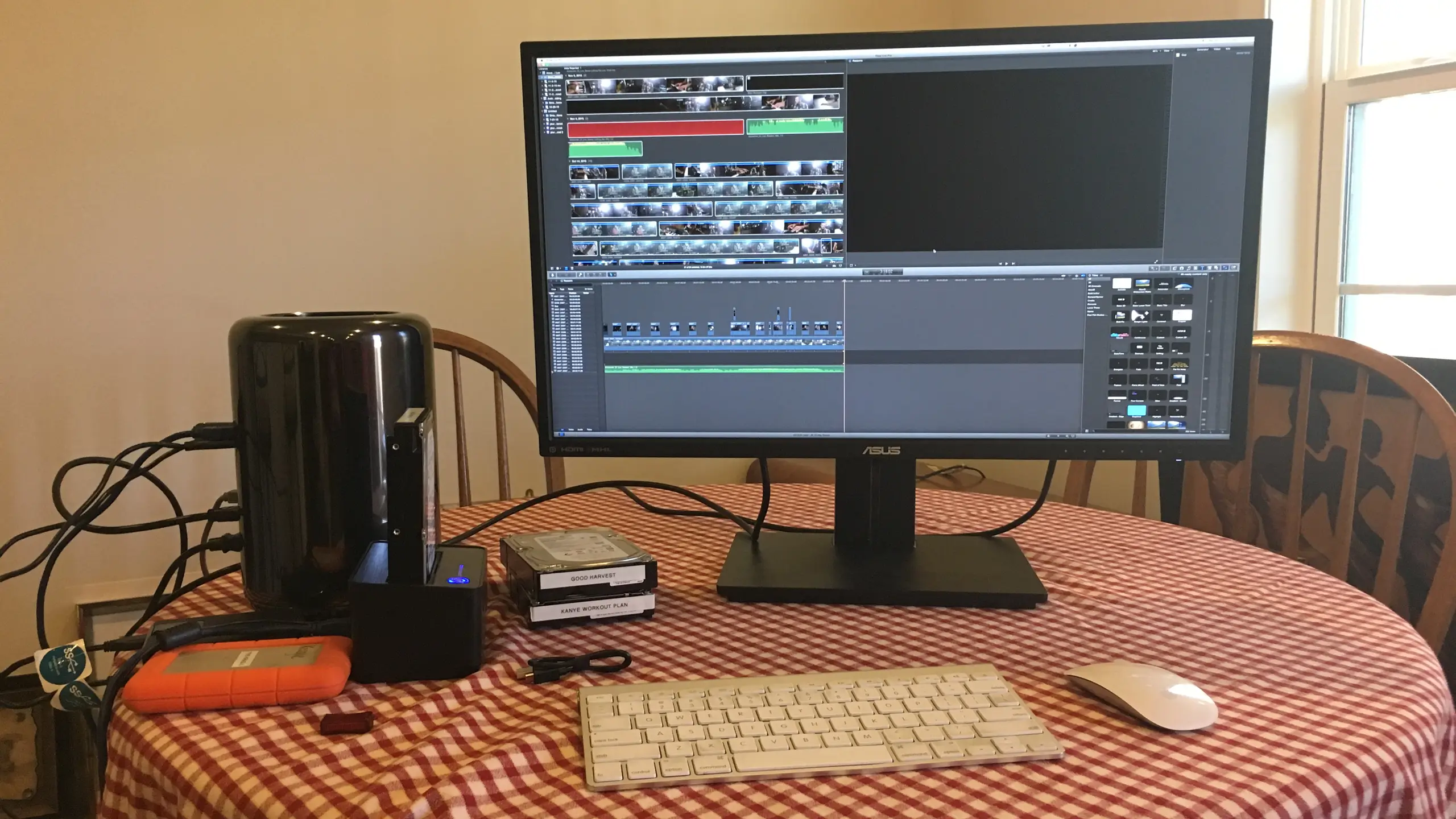
Ephemeral content, such as Instagram, Facebook, and TikTok stories, refers to any kind of [social media](https://c-istudios.com/social-media-marketing-services/) content that is visible for a short amount of time, typically for 24 hours. It allows brands to engage with their audience on a more human level through authentic, less produced content, and can lead to higher engagement and immediate responses. To use ephemeral content for long-term engagement, brands can consider strategies such as showing the human side of the brand, sharing behind-the-scenes or exclusive content, and running polls and Q&As to encourage user interaction.
This type of content is more interactive and allows brands to showcase authenticity, ultimately helping to build long-lasting relationships with their audience. By leveraging ephemeral content, brands can create a sense of urgency, prompt users to interact more, and ultimately boost engagement rates.
## Examples of ephemeral content
Some examples of ephemeral content include:
- Instagram Stories: These are posts that disappear after 24 hours, allowing users to share moments from their day in a less permanent way.
- Facebook Stories: Similar to Instagram Stories, these are short user-generated photo or video collections that can be viewed up to two times and disappear after 24 hours.
- TikTok: While not exactly ephemeral in the traditional sense, TikTok's short-form videos and the platform's emphasis on trending content make it an example of ephemeral-like content, as the lifespan of individual videos is relatively short.
- Snapchat: This platform was the pioneer of ephemeral content, allowing users to send photos and videos that disappear after a few seconds, and to post stories that disappear after 24 hours.
These examples demonstrate how ephemeral content is used across various social media platforms to create a sense of urgency and encourage immediate engagement.
## How ephemeral content differs from evergreen content
Ephemeral content differs from evergreen content in the following ways:
- Relevance Over Time: Evergreen content remains relevant to the audience for an extended period, such as "how-to" guides, and maintains its value over time. In contrast, ephemeral content has an expiration date and is often related to current trends or news, making it relevant for only a short period.
- Engagement and Urgency: Ephemeral content, such as Instagram or Facebook stories, is designed to create a sense of urgency and prompt immediate engagement, while evergreen content aims to provide lasting value and can be repurposed over time.
- Brand Loyalty and Authenticity: Ephemeral content can enhance brand loyalty by showing authenticity and the human side of a brand, as it often involves behind-the-scenes or exclusive content. Evergreen content, on the other hand, focuses on providing timeless and valuable information to the audience.
In summary, evergreen content is timeless and provides lasting value, while ephemeral content is temporary, creating urgency and immediate engagement, often related to current trends or news. Both types of content serve different purposes in a comprehensive [content strategy](https://c-istudios.com/creative-marketing-services/).
## Benefits of ephemeral content in marketing
The benefits of ephemeral content in marketing include:
1. Immediate Response and Engagement: Ephemeral content elicits an immediate response from viewers, leading to quick decisions and higher engagement.
1. Authenticity and Brand Loyalty: It allows brands to show authenticity and the human side of their business, which can enhance brand loyalty and build long-lasting relationships with the audience.
1. Urgency and FOMO: Ephemeral content creates a sense of urgency and fear of missing out (FOMO), compelling the audience to keep following and not miss out on unique posts.
1. Flexibility and Rawness: Viewers don't expect carefully curated and scripted social media stories, so ephemeral content can be more raw and flexible, allowing businesses to share moments in real-time and showcase authenticity.
1. Exclusivity and Intimacy: It provides an exclusive, behind-the-scenes experience, making the audience feel like insiders and enabling them to interact with businesses on an intimate level.
In summary, ephemeral content offers immediate engagement, authenticity, and a sense of urgency, making it a valuable tool for [brands](https://c-istudios.com/branding-and-graphic-design-services/) to connect with their audience and build long-term relationships.
## Potential drawbacks of using ephemeral content in marketing
Some potential drawbacks of using ephemeral content in marketing include:
1. Short Lifespan: Ephemeral content has a brief lifespan, and as a result, it can be forgotten quickly, leading to a short-term impact.
1. Resource Intensive: Creating engaging ephemeral content requires time and resources, as it often involves rich media such as videos, live streaming, and photo carousels.
1. Limited Evergreen Value: Unlike evergreen content, which provides lasting value, ephemeral content is not designed to be timeless and may not contribute to long-term SEO or content marketing goals.
2. Missed Opportunities: The temporary nature of ephemeral content can lead to missed opportunities, as some audience members may not see the content before it disappears, resulting in actually missing out (AMO) instead of fear of missing out (FOMO).
In summary, while ephemeral content can be a powerful tool for immediate engagement and authenticity, it also has limitations, including its short lifespan, resource-intensive nature, and limited evergreen value.
## How businesses can balance the use of ephemeral content with evergreen content in their marketing strategy
To balance the use of ephemeral content with evergreen content in their marketing strategy, businesses can consider the following approaches:
1. Complementarity: Ephemeral and evergreen content can complement each other. Evergreen content provides lasting value and can be repurposed, while ephemeral content creates urgency and immediate engagement.
1. Strategic Planning: Develop a long-term plan that integrates both types of content. Ephemeral content can be used for short-term promotions, behind-the-scenes glimpses, and real-time engagement, while evergreen content supports ongoing SEO, thought leadership, and educational efforts.
1. Audience Segmentation: Understand the preferences of different audience segments. Some may respond better to the urgency of ephemeral content, while others may prefer the enduring value of evergreen content.
1. Brand Awareness and Engagement: Ephemeral content can be used to raise brand awareness, make an authentic impression, and build long-lasting relationships with the target audience, while evergreen content contributes to a consistent online presence and thought leadership.
By strategically integrating both types of content, businesses can leverage the advantages of each to create a comprehensive and effective marketing strategy
## Best practices for creating ephemeral content
Some best practices for creating ephemeral content include:
1. Interactivity: Make the content interactive to engage users on a more personal level.
1. Platform Relevance: Ensure that the content is similar to other content on the platform where it is being shared, as ephemeral content works best when it's native to the platform.
1. Storytelling: Use ephemeral content to tell a story and take the user on a journey, encouraging them to interact with the brand.
1. Authenticity: Show the authentic and genuine side of the brand, as viewers expect less curated and more raw content from ephemeral posts.
1. Consistency and Planning: Develop a long-term strategy for creating and sharing ephemeral content, and be consistent about posting to maximize the impact.
By following these best practices, businesses can effectively leverage ephemeral content to engage their audience and promote their brand
## Examples of interactive ephemeral content
Some examples of interactive ephemeral content include:
- Polls and Quizzes: Ephemeral content allows for the creation of interactive polls and quizzes, which can engage the audience and provide immediate feedback.
- Augmented Reality (AR): Brands are integrating AR features into ephemeral content to create immersive experiences for users, allowing them to interact with the content in a more engaging way.
- Gamification: Some brands are using ephemeral content for gamification, creating interactive storytelling experiences that prompt users to engage with the content in a more playful and interactive manner.
These examples demonstrate how ephemeral content can be made more interactive to engage users on a more personal level and create immersive experiences.
## Examples of TikTok challenges that businesses can create to engage with their audience
Some examples of TikTok challenges that businesses can create to engage with their audience include:
1. Hashtag Challenges: Businesses can create branded hashtag challenges to encourage user-generated content that aligns with their brand. These challenges can be as simple as the #PhotoChallenge or more specific to the brand's products or services.
1. Interactive Storytelling Challenges: Businesses can use TikTok for interactive storytelling challenges, creating immersive experiences for users and prompting them to engage with the content in a more dynamic way.
1. Product-Related Challenges: Businesses can create challenges related to their products or services, encouraging users to showcase creative or funny ways of using the products. This can help increase brand awareness and create relatable content.
By leveraging these challenges, businesses can effectively engage with their audience and create a more interactive and playful experience on the TikTok platform.
## How can businesses measure the success of TikTok challenges they create
Businesses can measure the success of TikTok challenges they create by using various metrics and insights available on the platform. Some of the key metrics to consider include:
1. Followers: The number of followers gained during the challenge period can indicate the growth of the brand's TikTok audience.
1. Views: Tracking the number of views the challenge videos receive provides insight into the reach and engagement of the content.
1. User-generated Content: The volume and creativity of user-generated content related to the challenge can be a measure of its success in driving engagement and brand awareness.
1. Engagement Rate: Calculating the engagement rate, which includes likes, comments, and shares, can help assess the level of interaction and interest generated by the challenge.
1. Influencer Insights: If working with influencers, businesses can request internal insights on the performance and engagement of the challenge from influencers with TikTok Pro accounts.
By analyzing these metrics, businesses can evaluate the impact of their TikTok challenges and make informed decisions for future campaigns.
## How to measure the engagement of a TikTok challenge
To measure the engagement of a TikTok challenge, businesses can use the following methods:
1. Engagement Rate Calculation: Calculate the engagement rate by dividing the total number of engagements (likes, comments, shares, and follows) by the total number of views and multiplying by 100. This provides a percentage that indicates the level of interaction and interest generated by the challenge.
1. TikTok Analytics Tools: Utilize TikTok's analytics tools to monitor views, likes, comments, and shares. Third-party tools can also provide supplementary metrics such as website traffic and sales, offering a more comprehensive view of the challenge's performance.
1. User-Generated Content: Monitor the volume and creativity of user-generated content related to the challenge, as this can be a measure of its success in driving engagement and brand awareness.
By employing these methods, businesses can effectively gauge the engagement and impact of their TikTok challenges, allowing for informed decisions and future campaign improvements.
## Tips for increasing engagement on a TikTok challenge
Here are some tips for increasing engagement on a TikTok challenge:
1. TikTok Contests: Running TikTok contests can boost engagement by leveraging the excitement of participation and the addictive nature of short, entertaining videos. Unlike challenges, contests are controlled by the brand and typically offer a prize for the winning entry.
1. TikTok Trends: By monitoring TikTok's Discover page and following popular accounts, businesses can identify trending hashtags, challenges, and post styles to improve engagement levels. Staying current with TikTok trends is essential, as new viral dance challenges, video effects, or trending catchphrases can quickly gain popularity.
1. Collaborations with Creators: Teaming up with creators who have high levels of engagement can introduce content to a broader audience and add a fresh twist to usual content. Seek out creators whose content aligns with the brand's niche or style to resonate with the shared audience.
1. Calls-to-Action (CTAs): Including CTAs in posts can encourage users to engage with the content, such as asking them to like, comment, share, or follow. CTAs prompt users to take specific actions, increasing engagement.
1. Consistent Content Creation: Maintaining a good pace of content creation ensures that content is on multiple "For You" pages and helps increase reach, resulting in a higher TikTok engagement rate.
By implementing these tips, businesses can effectively increase engagement on their TikTok challenges and improve their overall performance on the platform.
## Work with C&I Studios
If you are planning a project like this, our team can take it from concept to final delivery. Explore our [video production services](https://c-istudios.com/video-production-services/), browse [our work](https://c-istudios.com/our-work/) to see how we tell brand stories, and [get in touch](https://c-istudios.com/contact/) when you are ready to start.
Originally published December 18, 2023
---
*This content is from [C&I Studios](https://c-istudios.com), a full-service production company.*
---
# The Role of Technology in Modern TV Production: Trends to Watch
> Published: December 18, 2023
> Categories: Post & VFX
> Source: https://c-istudios.com/the-role-of-technology-in-modern-tv-production-trends-to-watch/
---
.cib{--paper:#1b1d1f;--ink:#fff;--body:#d5d7d9;--muted:#8b9096;--line:rgba(255,255,255,.12);--thumb:#2b2e31;--card:#212426;--accent:#c02b0a;--blue:#5B8FA8;--serif:'Playfair Display',Georgia,serif;--sans:'Poppins',-apple-system,sans-serif;--measure:900px;background:var(--paper);color:var(--body);font-family:var(--sans);line-height:1.6;position:relative;left:50%;transform:translateX(-50%);width:90vw;max-width:1920px}
.cib *{box-sizing:border-box}
.cib .kicker{max-width:var(--measure);margin:58px auto 0;padding:0 22px;font-size:12.5px;font-weight:700;letter-spacing:2.5px;text-transform:uppercase;color:var(--blue)}
.cib h1.cibh1{text-wrap:balance;font-family:var(--serif);font-weight:500;font-size:clamp(46px,6vw,72px);line-height:1.08;color:var(--ink);max-width:var(--measure);margin:18px auto 0;padding:0 22px;letter-spacing:-.5px}
.cib .metarow{max-width:var(--measure);margin:20px auto 0;padding:0 22px;color:var(--muted);font-size:14px}
.cib .hero{position:relative;width:100%;height:0;padding-bottom:56.25%;overflow:hidden;margin:48px auto 0;border-top:1px solid var(--line);border-bottom:1px solid var(--line)}
.cib .hero .ph{width:100%;aspect-ratio:16/9;background:var(--thumb);border-top:1px solid var(--line);border-bottom:1px solid var(--line);display:flex;align-items:center;justify-content:center;color:#7d8288;font-size:13px;text-align:center;padding:0 20px}
.cib .body{max-width:var(--measure);margin:12px auto 0;padding:52px 22px 6px}
.cib .body.lead p:first-child{font-size:23px;line-height:1.62;color:var(--ink)}
.cib .body p{font-size:18.5px;line-height:1.85;margin:0 0 30px;color:var(--body)}
.cib .body h2{text-wrap:balance;font-family:var(--serif);font-weight:500;font-size:clamp(32px,4vw,48px);line-height:1.22;color:var(--ink);margin:70px 0 20px;letter-spacing:-.3px}
.cib .body h3{text-wrap:balance;font-family:var(--sans);font-weight:600;font-size:22px;color:var(--ink);margin:38px 0 8px}
.cib .body a{color:var(--ink);text-decoration:underline;text-decoration-color:rgba(255,255,255,.4);text-underline-offset:3px}
.cib .body a:hover{text-decoration-color:var(--ink)}
.cib .ctable{width:100%;border-collapse:collapse;margin:16px 0 30px;font-size:16px}
.cib .ctable th{background:#000;color:#fff;text-align:left;padding:10px 12px;font-family:var(--sans)}
.cib .ctable td{padding:10px 12px;border-bottom:1px solid var(--line);color:var(--body)}
.cib .inimg{position:relative;width:100%;height:0;padding-bottom:56.25%;overflow:hidden;margin:72px auto;border-top:1px solid var(--line);border-bottom:1px solid var(--line)}
.cib .inimg .ph{width:100%;aspect-ratio:16/9;background:var(--thumb);border-top:1px solid var(--line);border-bottom:1px solid var(--line);display:flex;align-items:center;justify-content:center;color:#7d8288;font-size:13px}
.cib .origpub{max-width:var(--measure);margin:60px auto 0;padding:26px 22px 0;border-top:1px solid var(--line);color:var(--muted);font-size:13.5px}
.cib .related{max-width:1200px;margin:64px auto 0;padding:34px 22px 76px}
.cib .related h3{font-family:var(--sans);font-size:12.5px;letter-spacing:2px;text-transform:uppercase;color:var(--ink);margin:0 0 24px}
.cib .grid{display:grid;grid-template-columns:repeat(3,1fr);gap:28px}
.cib .rc{background:var(--card);border:1px solid var(--line);display:block;text-decoration:none;color:inherit;transition:border-color .15s}
.cib a.rc:hover{border-color:rgba(255,255,255,.5)}
.cib .rc .thumb{position:relative;width:100%;height:0;padding-bottom:56.25%;background:var(--thumb);overflow:hidden}
.cib .rc .thumb img{position:absolute!important;top:0!important;left:0!important;width:100%!important;height:100%!important;object-fit:cover!important;margin:0!important}
.cib .rc .cc{padding:14px 15px 17px}
.cib .rc .rt{font-family:var(--serif);font-weight:500;font-size:16px;line-height:1.3;color:var(--ink);margin:0 0 6px}
.cib .rc .rm{font-size:11px;letter-spacing:1px;text-transform:uppercase;color:var(--muted)}
.cib img{margin:0!important;padding:0!important;display:block!important;vertical-align:top;max-width:100%}
.cib .hero img,.cib .inimg img{position:absolute!important;top:0!important;left:0!important;width:100%!important;height:100%!important;object-fit:cover!important;margin:0!important;padding:0!important;border:0!important;display:block!important;aspect-ratio:auto!important}
.cib .hero+.body{padding-top:36px}
@media(max-width:760px){.cib .grid{grid-template-columns:1fr}.cib .body h2{margin:52px 0 16px}.cib .body p{font-size:17.5px}.cib .inimg,.cib .hero{margin-top:44px}}
.cib .vembed{max-width:var(--measure);margin:44px auto;padding:0 22px}.cib .vembed .vwrap{position:relative;width:100%;height:0;padding-bottom:56.25%}.cib .vembed .vwrap iframe{position:absolute;top:0;left:0;width:100%;height:100%;border:0}
Post & VFX
# The Role of Technology in Modern TV Production. Trends to Watch
5 min read
The role of technology in [modern TV production](https://c-istudios.com/) is undergoing significant changes, driven by evolving consumer behavior and technological advancements. Several trends are shaping the broadcast media industry, including:
1. Cloud-Based Collaboration: Cloud-based tools are revolutionizing [TV production](https://c-istudios.com/film-and-tv-production/) workflows, enabling faster collaboration, lower costs, greater scalability, and improved security.
2. Remote Production: Remote production techniques, facilitated by remote desktop software and cloud platforms, have become a game-changer in TV broadcasting, offering flexibility, scalability, and seamless content delivery.
3. Immersive Experiences: Technologies such as virtual reality (VR), augmented reality (AR), and 3D previsualization are enhancing the TV production process, allowing for immersive storytelling and enhanced design precision.
4. Personalized and Adaptive Content: The use of data and algorithms to tailor content to the specific needs, interests, and goals of individual viewers is reshaping TV production workflows.
5. Algorithmic Video Editing: Algorithmic editing is streamlining [post-production](https://c-istudios.com/studio-rentals/) through computer programming, offering endless possibilities for precise editing.
These technologies are driving significant changes in TV production, offering new creative possibilities, efficiency gains, and enhanced viewer experiences.
## Immersive experiences and technologies in TV
The TV industry has seen a significant impact from immersive experiences and technologies, including virtual reality (VR) and augmented reality (AR). These technologies have revolutionized the way content is produced and consumed, offering highly immersive and interactive experiences for audiences.
VR and AR have been used in various ways in the TV and film industry, such as pre-visualization and planning, immersive storytelling, and creating interactive environments for audiences to experience the story from within. For example, VR technology has allowed filmmakers to create highly immersive experiences for audiences, enabling them to test and refine shots and concepts before filming begins. Additionally, the combination of VR and film is still in the exploration stage, with the potential to bring unprecedented breakthroughs in cinematic storytelling and take it to new heights beyond imagination.
These technologies are reshaping the entertainment industry and have the potential to offer groundbreaking, interactive experiences that blur the lines between fantasy and reality.
## Examples of immersive experiences in TV shows
Some examples of immersive experiences in TV shows include:
1. David Attenborough’s Great Barrier Reef Dive VR: This virtual reality experience allows audiences to explore the Great Barrier Reef in a highly immersive way, bringing the natural world to life through VR technology.
1. Disney Animation’s Immersive Experience: Disney has created an immersive experience that takes guests inside the world of Walt Disney Animation Studios, showcasing 100 years of iconic movies from Snow White to Encanto. This experience utilizes 60 projectors, bubble machines, and interactive animated floors to create a highly engaging and immersive environment.
These examples demonstrate how TV shows and entertainment companies are leveraging immersive technologies to create unique and engaging experiences for their audiences.
## Cloud-based collaboration tools and how they improve the quality of TV production
Cloud-based collaboration in TV production refers to the use of cloud technology to facilitate remote work, content creation, and collaboration among production teams. It allows team members to access and share files, tools, and projects online from anywhere and on any device.
Cloud-based collaboration tools improve the quality of TV production in several ways:
1. Enhanced Collaboration: These tools enable geographically dispersed teams to collaborate in real time, streamlining the production process and allowing for seamless communication and feedback.
1. Flexibility and Accessibility: Cloud-based collaboration removes the need for all team members to be in the same physical location, allowing for greater flexibility in team composition and easier access to talent, ultimately leading to more diverse and skilled teams.
1. Cost and Time Efficiency: By reducing the need for travel and physical infrastructure, cloud-based collaboration tools can lead to cost savings and increased efficiency in the production process.
1. Improved Productivity: These tools can enhance live production, make it less labor-intensive, and enable faster error correction and versioning, ultimately leading to greater productivity.
Additionally, these tools promote cross-channel [video production](https://c-istudios.com/video-production-services/) and make it easier for teams to collaborate across different stations within the same station group. Overall, cloud-based collaboration is transforming TV production workflows, making them more efficient, cost-effective, and adaptable to the evolving demands of the industry.
## Examples of cloud-based collaboration tools used in TV production
Some examples of cloud-based collaboration tools used in TV production include:
1. Filestage: This tool allows for faster review and approval processes, making it easy to share videos, collect feedback, and collaborate in the comments until a final version is approved.
1. Evercast: Evercast is a remote editing collaboration platform designed for professional video and audio editors. It offers features such as ultra-low latency HD video streaming, 4k screen sharing, and on-screen drawing for visual notations.
1. ShotGrid (formerly Shotgun): This platform is specifically designed for VFX and game creation studios, offering features such as team scheduling, visual timeline tracking, and shot comparison features.
These tools exemplify the shift towards cloud-based collaboration in TV production, enabling remote teams to work together efficiently and effectively.
## How cloud-based collaboration tools help TV production teams collaborate remotely
Cloud-based collaboration tools help TV production teams collaborate remotely by providing the following benefits:
1. Enhanced Flexibility and Accessibility: These tools enable team members to work from anywhere, allowing for greater flexibility in team composition and easier access to talent, ultimately leading to more diverse and skilled teams.
1. Cost and Time Efficiency: By reducing the need for travel and physical infrastructure, cloud-based collaboration tools can lead to cost savings and increased efficiency in the production process.
1. Improved Productivity: These tools can enhance live production, make it less labor-intensive, and enable faster error correction and versioning, ultimately leading to greater productivity.
1. Seamless Access and Collaboration: Cloud-based collaboration tools remove travel concerns and enable anyone with the right talent and a laptop to join a production on short notice, streamlining collaboration and reducing potential staffing headaches.
In summary, cloud-based collaboration tools facilitate remote collaboration by enhancing flexibility, reducing costs, improving productivity, and providing seamless access to talent and resources.
## How cloud-based collaboration tools affect the workflow of TV production teams
Cloud-based collaboration tools have a profound impact on the workflow of TV production teams, offering several benefits and changes to the traditional process. Some of the key ways in which these tools affect the workflow include:
1. Faster Workflows: Cloud-based collaboration tools enable faster and more efficient workflows, allowing team members to work on projects from anywhere and on any device, leading to increased productivity and reduced time-to-market.
1. Lower Costs: By removing the need for physical infrastructure and enabling remote work, cloud-based collaboration tools can lead to cost savings, making TV production more economical.
1. Greater Scalability: Cloud-based tools offer greater scalability, allowing production teams to adapt to changing project requirements and easily onboard additional team members as needed.
1. Improved Collaboration: These tools facilitate seamless collaboration, enabling team members to work together from different locations, ensuring smooth coordination and efficient project delivery.
1. Remote Production: Cloud-based collaboration tools enable remote production, reducing the need for large crews and [equipment](https://c-istudios.com/video-production-gear-list/) on location, and allowing for the capture and transmission of high-quality video and audio over the internet.
In summary, cloud-based collaboration tools significantly impact TV production workflows by enhancing speed, reducing costs, improving scalability, and enabling seamless collaboration, ultimately transforming the way TV content is created and delivered.
## Challenges of using cloud-based collaboration tools for TV production
The challenges of using cloud-based collaboration tools for TV production include:
1. Security Concerns: While cloud-based systems offer robust security measures, there are still concerns about the protection of valuable assets and sensitive data. Cinematographers must work closely with cloud service providers to ensure data integrity throughout the production process.
1. Dependency on Internet Connectivity: Cloud-based collaboration tools are heavily reliant on stable internet connectivity. In areas with poor connectivity, this dependency can lead to disruptions in the production process and hinder real-time collaboration.
1. Learning Curve and Adoption: The transition to cloud-based collaboration tools may require training and a learning curve for production teams, which can initially impact workflow efficiency.
1. Cost Considerations: While cloud-based production offers various benefits, there are associated costs, such as subscription fees and potential expenses for upgrading internet infrastructure to support the increased data transfer and storage requirements.
Despite these challenges, the benefits of cloud-based collaboration tools, such as enhanced collaboration, flexibility, and improved productivity, often outweigh the challenges, leading to their increasing adoption in the TV production industry.
## How cloud-based collaboration tools ensure data security in TV production
Cloud-based collaboration tools ensure data security in TV production through the implementation of robust security measures. These measures include:
1. Centralized Platform for Data Storage and Sharing: Cloud computing provides a centralized platform for data storage and sharing, ensuring that all data is stored in a secure and controlled environment.
1. Robust Security Protocols: Cloud-based systems require diligent security measures to protect valuable assets and sensitive data. Cinematographers must work closely with cloud service providers to implement robust security protocols and ensure data integrity throughout the production process.
1. Data Encryption and Access Control: Cloud-based collaboration tools typically employ data encryption and access control mechanisms to ensure that only authorized personnel can access and modify the data.
By leveraging these security measures, cloud-based collaboration tools help TV production teams safeguard their data and ensure that sensitive information remains protected throughout the production process.
## How AI-generated video editing tools affect the creative process in TV production
AI-generated video editing tools have a significant impact on the creative process in TV production. These tools enhance efficiency, streamline workflows, and offer new creative possibilities. By automating tasks such as shot selection, color correction, and special effects, AI allows creators to focus more on the artistic and narrative aspects of their work. This can lead to more experimentation and innovation in storytelling, as well as the ability to produce high-quality content within shorter timeframes and with limited resources.
Additionally, AI democratizes the video production landscape, making advanced editing and production tools accessible to creators and smaller teams, thus empowering creative minds with limited resources to produce professional-looking visuals without breaking the bank.
While AI does not replace human creativity, it complements and augments the creative process, offering new tools and efficiencies that can ultimately lead to more imaginative and impactful storytelling.
## Examples of automated editing tools used in TV production
Some examples of automated editing tools used in TV production include:
1. Adobe Premiere Pro: This industry-standard editing software incorporates an extensive library of special effects, an audio mixer, and plugin integration, offering various features to streamline the editing process.
1. Descript: Descript is an alternative to traditional video editing software that uses transcription editing. It allows users to upload their video, and a transcription is created, offering a unique approach to the editing process.
1. OpusClip: OpusClip is an AI video editing tool that provides features such as background removal, auto editing, and caption creation, offering automated controls to streamline the editing workflow.
These tools exemplify the use of automation and AI in the TV production editing process, offering a range of features to enhance efficiency and streamline the editing workflow.
## Limitations of using AI-generated video editing tools in TV production
The limitations of using AI-generated video editing tools in TV production include:
1. Lack of Human Creativity and Intuition: AI algorithms can analyze and produce language using patterns and data, but they lack human creativity and intuition. While AI may generate new concepts and ideas, it cannot produce fresh, distinctive stories.
1. Dependency on Human Fine-Tuning: While AI can automate time-consuming tasks, human intervention is necessary to fine-tune the work being produced. AI tools in TV and film production require human oversight to ensure the quality and creativity of the content.
1. Not Perfect: AI video editing tools are not perfect and may require human intervention to ensure accuracy and quality. While they offer benefits such as background removal, auto editing, and caption creation, it's important to check for accuracy and make necessary adjustments.
1. Limitations in Scriptwriting: AI writing tools can only be as good as the prompt provided. While they offer script generation, they may lack the ability to create truly unique and compelling stories without human input and creativity.
While AI-generated video editing tools offer significant advantages, it's important to consider these limitations and the need for human creativity and oversight in the TV production process.
## How human editors work with AI-generated video editing tools in TV production
AI-generated video editing tools have transformed the way human editors work in TV production. These tools automate time-consuming tasks such as selecting video highlights, enhancing CGI graphics, and analyzing content for improvements. Human editors work with AI-generated video editing tools by leveraging their capabilities to streamline the editing process, increase efficiency, and improve the overall quality of the content.
While AI can automate various tasks, human intervention is essential to fine-tune the work being produced. Human editors oversee the output of AI tools, ensuring that the content meets the desired creative and technical standards. AI's ability to analyze and process data rapidly has significantly reduced the time taken to create content, allowing human editors to focus on more creative and high-level tasks. Therefore, human editors collaborate with AI-generated video editing tools to enhance the overall quality and efficiency of the editing process in TV production.
## Work with C&I Studios
If you are planning a project like this, our team can take it from concept to final delivery. Explore our [post-production services](https://c-istudios.com/post-production-services/), browse [our work](https://c-istudios.com/our-work/) to see how we tell brand stories, and [get in touch](https://c-istudios.com/contact/) when you are ready to start.
Originally published December 18, 2023
---
*This content is from [C&I Studios](https://c-istudios.com), a full-service production company.*
---
# Producing Your TV Pilot on a Limited Budget
> Published: December 18, 2023
> Categories: Film & TV
> Source: https://c-istudios.com/producing-your-tv-pilot-on-a-limited-budget/
---
.cib{--paper:#1b1d1f;--ink:#fff;--body:#d5d7d9;--muted:#8b9096;--line:rgba(255,255,255,.12);--thumb:#2b2e31;--card:#212426;--accent:#c02b0a;--blue:#5B8FA8;--serif:'Playfair Display',Georgia,serif;--sans:'Poppins',-apple-system,sans-serif;--measure:900px;background:var(--paper);color:var(--body);font-family:var(--sans);line-height:1.6;position:relative;left:50%;transform:translateX(-50%);width:90vw;max-width:1920px}
.cib *{box-sizing:border-box}
.cib .kicker{max-width:var(--measure);margin:58px auto 0;padding:0 22px;font-size:12.5px;font-weight:700;letter-spacing:2.5px;text-transform:uppercase;color:var(--blue)}
.cib h1.cibh1{text-wrap:balance;font-family:var(--serif);font-weight:500;font-size:clamp(46px,6vw,72px);line-height:1.08;color:var(--ink);max-width:var(--measure);margin:18px auto 0;padding:0 22px;letter-spacing:-.5px}
.cib .metarow{max-width:var(--measure);margin:20px auto 0;padding:0 22px;color:var(--muted);font-size:14px}
.cib .hero{position:relative;width:100%;height:0;padding-bottom:56.25%;overflow:hidden;margin:48px auto 0;border-top:1px solid var(--line);border-bottom:1px solid var(--line)}
.cib .hero .ph{width:100%;aspect-ratio:16/9;background:var(--thumb);border-top:1px solid var(--line);border-bottom:1px solid var(--line);display:flex;align-items:center;justify-content:center;color:#7d8288;font-size:13px;text-align:center;padding:0 20px}
.cib .body{max-width:var(--measure);margin:12px auto 0;padding:52px 22px 6px}
.cib .body.lead p:first-child{font-size:23px;line-height:1.62;color:var(--ink)}
.cib .body p{font-size:18.5px;line-height:1.85;margin:0 0 30px;color:var(--body)}
.cib .body h2{text-wrap:balance;font-family:var(--serif);font-weight:500;font-size:clamp(32px,4vw,48px);line-height:1.22;color:var(--ink);margin:70px 0 20px;letter-spacing:-.3px}
.cib .body h3{text-wrap:balance;font-family:var(--sans);font-weight:600;font-size:22px;color:var(--ink);margin:38px 0 8px}
.cib .body a{color:var(--ink);text-decoration:underline;text-decoration-color:rgba(255,255,255,.4);text-underline-offset:3px}
.cib .body a:hover{text-decoration-color:var(--ink)}
.cib .ctable{width:100%;border-collapse:collapse;margin:16px 0 30px;font-size:16px}
.cib .ctable th{background:#000;color:#fff;text-align:left;padding:10px 12px;font-family:var(--sans)}
.cib .ctable td{padding:10px 12px;border-bottom:1px solid var(--line);color:var(--body)}
.cib .inimg{position:relative;width:100%;height:0;padding-bottom:56.25%;overflow:hidden;margin:72px auto;border-top:1px solid var(--line);border-bottom:1px solid var(--line)}
.cib .inimg .ph{width:100%;aspect-ratio:16/9;background:var(--thumb);border-top:1px solid var(--line);border-bottom:1px solid var(--line);display:flex;align-items:center;justify-content:center;color:#7d8288;font-size:13px}
.cib .origpub{max-width:var(--measure);margin:60px auto 0;padding:26px 22px 0;border-top:1px solid var(--line);color:var(--muted);font-size:13.5px}
.cib .related{max-width:1200px;margin:64px auto 0;padding:34px 22px 76px}
.cib .related h3{font-family:var(--sans);font-size:12.5px;letter-spacing:2px;text-transform:uppercase;color:var(--ink);margin:0 0 24px}
.cib .grid{display:grid;grid-template-columns:repeat(3,1fr);gap:28px}
.cib .rc{background:var(--card);border:1px solid var(--line);display:block;text-decoration:none;color:inherit;transition:border-color .15s}
.cib a.rc:hover{border-color:rgba(255,255,255,.5)}
.cib .rc .thumb{position:relative;width:100%;height:0;padding-bottom:56.25%;background:var(--thumb);overflow:hidden}
.cib .rc .thumb img{position:absolute!important;top:0!important;left:0!important;width:100%!important;height:100%!important;object-fit:cover!important;margin:0!important}
.cib .rc .cc{padding:14px 15px 17px}
.cib .rc .rt{font-family:var(--serif);font-weight:500;font-size:16px;line-height:1.3;color:var(--ink);margin:0 0 6px}
.cib .rc .rm{font-size:11px;letter-spacing:1px;text-transform:uppercase;color:var(--muted)}
.cib img{margin:0!important;padding:0!important;display:block!important;vertical-align:top;max-width:100%}
.cib .hero img,.cib .inimg img{position:absolute!important;top:0!important;left:0!important;width:100%!important;height:100%!important;object-fit:cover!important;margin:0!important;padding:0!important;border:0!important;display:block!important;aspect-ratio:auto!important}
.cib .hero+.body{padding-top:36px}
@media(max-width:760px){.cib .grid{grid-template-columns:1fr}.cib .body h2{margin:52px 0 16px}.cib .body p{font-size:17.5px}.cib .inimg,.cib .hero{margin-top:44px}}
.cib .vembed{max-width:var(--measure);margin:44px auto;padding:0 22px}.cib .vembed .vwrap{position:relative;width:100%;height:0;padding-bottom:56.25%}.cib .vembed .vwrap iframe{position:absolute;top:0;left:0;width:100%;height:100%;border:0}
Film & TV
# Producing Your TV Pilot on a Limited Budget
9 min read


## Product Line
1. Script:
Your script is the backbone of the TV pilot, so it's important to invest time and effort into creating a compelling story. Instead of hiring a professional screenwriter, you may want to consider writing the script yourself. Now, we will provide you with tips and tricks to help you craft the perfect script for your TV pilot.
**Develop Your Characters -** The characters in the TV pilot set the tone for the rest of the series. You need to create dynamic and well-rounded characters that the audience can connect with and care about. When writing a script, make sure each character has a distinct personality, motivation, and backstory. Consider their quirks, passions, and struggles- all of which can add depth and interest to the story. Take the time to flesh out your characters, and the audience will care more about what happens to them throughout the show.
**Focus on the Structure -** The structure of the script is essential to the success of your TV pilot. You need to make sure your script has a clear beginning, middle, and end. Introduce your characters and the world they live in within the first few pages. Establish an exciting conflict or crisis that demands attention in the middle of the script, leaving the audience engaged and curious about what happens next. Conclude the script with a satisfying resolution that leaves the audience with a sense of closure but also intrigued to learn more.
**Utilizing Dialogue Effectively -** The dialogue in your script should be [natural, engaging, and unique](https://c-istudios.com/about/) to each character. Each character should have a distinctive voice that conveys their personality and motivations. Make sure the dialogue moves the story forward, revealing information or building tension. You also need to focus on subtext- what the characters are not saying but are conveyed through their behavior and attitude. Dialogue needs to be meaningful, not just filler.
By doing so, you’ll have complete control over the direction of the story, which can save you a significant amount of money. Also, use feedback from peers, industry professionals, and script coverage services to help refine your script.
1. Location:
Scouting for the perfect location can be costly, especially if you plan on shooting in various locations. Instead, consider choosing a single location and use it to capture different perspectives throughout the series. Here, we’ll show you how to scout for the perfect location without breaking the bank.
**Determine your budget:** Before you start scouting for locations, it’s important to know your budget. Not only will this help you narrow down your search, but it will also help you negotiate with potential locations. Knowing your budget will also help you decide if you need to shoot in different locations or if you can use one location as a home base.
**Use online resources:** There are many [online resources that can help](https://c-istudios.com/our-work/) you scout for locations for your TV pilot. Websites like Peerspace, Giggster, and ThisOpenSpace offer unique locations that are perfect for filming. These websites allow you to search for locations that match your criteria, such as size, location, and price. You can also read reviews of previous productions that have used the location to get an idea of what to expect.
**Explore your community:** Your own community can be a great source of potential locations. Scout for locations in your own backyard, such as libraries, parks, and community centers. Reach out to local businesses and property owners to see if they would be willing to let you film on their property. Most people are excited to be a part of a TV pilot and may offer their location for free or for a reduced price.
Negotiating can also come in handy, especially when asking for locations for free or at a discounted price. You can approach local businesses, restaurants, and hotels to use their location.
1. Equipment:
It's important to invest in good equipment but that doesn’t mean you should break the bank doing so. Luckily, with a little research and some bartering skills, it's possible to get the equipment you need to produce an excellent pilot without breaking the bank.
**Camera:** The camera is the most important item on your equipment list. It's essential to get a camera with excellent video quality to capture the essence of your story. There are numerous camera options out there ranging from less expensive DSLRs to more expensive professional-grade camcorders. While it's tempting to get the expensive gear, it's also essential to remember that the key to outstanding video quality lies in your camera's lenses. Consider investing in an excellent quality lens, even if it means getting a cheaper camera body.
**Lighting:** The lighting on set is a crucial aspect, as it defines the mood, atmosphere, and tone of your pilot. To get the perfect lighting on a budget, consider using natural light instead of purchasing expensive lighting kits. However, if natural light is not available, look into purchasing affordable LED light panels, which range from $50 to $100.
**Audio:** Poor audio quality can make or break your TV pilot. Ensure that you invest in a good microphone and a compatible audio recorder. If you're on a budget, consider getting a handheld microphone and attaching it to a good-quality recorder that's easy on the pocket. Post-recording sound editing software such as Adobe Audition, Audacity, or Garageband can help enhance the recorded sound.
Instead of purchasing expensive equipment, consider renting or borrowing from other filmmakers. Equipment rental stores afford affordable solutions for renting cameras, lights, sound systems, and grip gear. You can also borrow or rent from friends, especially if they are in similar industries.
1. Actors:
Finding actors can be a challenge, especially if you are not offering monetary benefits. But there are still ways to find good actors on a budget. Reach out to local acting schools or post casting notices on online forums. Networking events can also be a good source of searching. Casting the perfect TV pilot actors is crucial to the success of your project. The key is to identify the right candidates, be specific in your search, and make sure your casting area is comfortable and professional. Also, consider using non-professional actors, such as friends and family. These actors can bring authenticity to the TV pilot, as well as provide a comfortable atmosphere on set.
1. Post-production:
Once filming is complete, it's crucial to [invest in post-production](https://c-istudios.com/creative-services/), such as editing, color correction, and sound design. Here we'll discuss why post-production is so crucial when it comes to creating an exceptional pilot.
**Editing -** Editing is a crucial phase in post-production. A well-edited TV pilot can grab the viewer's attention and keep them engaged from start to finish. A talented editor will know how to arrange footage in a compelling way, cut out any unnecessary scenes, and emphasize significant moments to create a cohesive and impactful story. They can also assist in selecting appropriate background music and sound effects to add to the impact of the scenes.
**Color correction -** Color correction is an essential part of post-production, especially if your TV pilot has been shot in different locations and conditions. This process involves adjusting color, contrast, and overall image quality to create consistency throughout the pilot. Color correction can ensure that the colors enhance the story's mood and tone.
**Sound design -** Sound design is also an essential aspect of post-production. The sound design can enhance the viewer's experience and help convey emotions and key moments. Sound design includes the addition of background music, sound effects, and dialogue. Adding the appropriate background music can elevate the film's impact and emotional depth and help the viewer connect with the characters. Dialogue normalization is the process of equalizing the sound levels with the surrounding environmental sounds to avoid any sound inconsistencies.
Again, buying software can be expensive, but there are affordable options available, such as free ware or subscription-based services. Alternatively, you can reach out to students in film schools or post-production companies to ask for their services in exchange for credit.
## Budget Brilliance. Crafting Compelling TV Pilots with C&I Studios
Crafting the perfect TV pilot on a limited budget becomes a seamless and successful experience with C&I Studios as your collaborative partner. Our team excels in maximizing production value while remaining cost-effective, ensuring that your budget constraints do not compromise the quality of visuals or storytelling. With a dedicated group of experienced professionals, we bring creative expertise to the forefront, ensuring that every scene in your TV pilot is not only impactful but also [aligns with your overarching narrative.](https://c-istudios.com/)
Efficient planning and execution are at the core of our approach. From pre-production to post-production, C&I Studios strategically manages resources, demonstrating an ability to navigate tight budgets without sacrificing excellence. Our team is known for finding innovative solutions to production challenges, be it through creative camera work, cost-effective set design, or leveraging cutting-edge technology to enhance the overall production value.
Embracing a collaborative approach, we work closely with clients to understand their vision and objectives. This collaboration ensures flexibility and adaptability throughout the production process, allowing us to tailor our services to meet your specific needs. Despite budget constraints, our commitment to attention to detail remains unwavering. From casting and set design to post-production editing, we maintain a meticulous focus on every aspect of your TV pilot, resulting in a polished and professional final product that captures the audience's attention.
C&I Studios boasts a proven track record of successfully producing content within tight budgets. Our portfolio showcases projects that exemplify our ability to deliver exceptional results while working within financial constraints. Choosing C&I Studios for your TV pilot guarantees that you not only stay within budget but also receive a high-quality production that has the potential to attract viewers and investors. Let us be your partner in bringing your vision to life without breaking the bank, [contact us today](https://c-istudios.com/contact/) to embark on the journey of creating an outstanding TV pilot on a limited budget!
The world of television has rapidly evolved over the last decade, and now it's easier than ever to produce your own TV pilot. However, creating a TV pilot can be costly and requires a lot of resources. But don't let that discourage you because with a limited budget, you can still create a quality TV pilot that will [capture the attention of viewers](https://c-istudios.com/). In this blog post, we'll explore the various ways to produce your TV pilot on a limited budget.
The world of television has rapidly evolved over the last decade, and now it's easier than ever to produce your own TV pilot. However, creating a TV pilot can be costly and requires a lot of resources. But don't let that discourage you because with a limited budget, you can still create a quality TV pilot that will [capture the attention of viewers](https://c-istudios.com/). In this blog post, we'll explore the various ways to produce your TV pilot on a limited budget.
For more information on industry standards and best practices, visit the [American Marketing Association](https://www.ama.org/).
## Work with C&I Studios
If you are planning a project like this, our team can take it from concept to final delivery. Explore our [film and TV production](https://c-istudios.com/film-and-tv-production/), browse [our work](https://c-istudios.com/our-work/) to see how we tell brand stories, and [get in touch](https://c-istudios.com/contact/) when you are ready to start.
Originally published December 18, 2023
---
*This content is from [C&I Studios](https://c-istudios.com), a full-service production company.*
---
# Beyond Streaming: Distributing and Promoting Your Docuseries
> Published: December 18, 2023
> Categories: Film & TV
> Source: https://c-istudios.com/beyond-streaming-distributing-and-promoting-your-docuseries/
---
.cib{--paper:#1b1d1f;--ink:#fff;--body:#d5d7d9;--muted:#8b9096;--line:rgba(255,255,255,.12);--thumb:#2b2e31;--card:#212426;--accent:#c02b0a;--blue:#5B8FA8;--serif:'Playfair Display',Georgia,serif;--sans:'Poppins',-apple-system,sans-serif;--measure:900px;background:var(--paper);color:var(--body);font-family:var(--sans);line-height:1.6;position:relative;left:50%;transform:translateX(-50%);width:90vw;max-width:1920px}
.cib *{box-sizing:border-box}
.cib .kicker{max-width:var(--measure);margin:58px auto 0;padding:0 22px;font-size:12.5px;font-weight:700;letter-spacing:2.5px;text-transform:uppercase;color:var(--blue)}
.cib h1.cibh1{text-wrap:balance;font-family:var(--serif);font-weight:500;font-size:clamp(46px,6vw,72px);line-height:1.08;color:var(--ink);max-width:var(--measure);margin:18px auto 0;padding:0 22px;letter-spacing:-.5px}
.cib .metarow{max-width:var(--measure);margin:20px auto 0;padding:0 22px;color:var(--muted);font-size:14px}
.cib .hero{position:relative;width:100%;height:0;padding-bottom:56.25%;overflow:hidden;margin:48px auto 0;border-top:1px solid var(--line);border-bottom:1px solid var(--line)}
.cib .hero .ph{width:100%;aspect-ratio:16/9;background:var(--thumb);border-top:1px solid var(--line);border-bottom:1px solid var(--line);display:flex;align-items:center;justify-content:center;color:#7d8288;font-size:13px;text-align:center;padding:0 20px}
.cib .body{max-width:var(--measure);margin:12px auto 0;padding:52px 22px 6px}
.cib .body.lead p:first-child{font-size:23px;line-height:1.62;color:var(--ink)}
.cib .body p{font-size:18.5px;line-height:1.85;margin:0 0 30px;color:var(--body)}
.cib .body h2{text-wrap:balance;font-family:var(--serif);font-weight:500;font-size:clamp(32px,4vw,48px);line-height:1.22;color:var(--ink);margin:70px 0 20px;letter-spacing:-.3px}
.cib .body h3{text-wrap:balance;font-family:var(--sans);font-weight:600;font-size:22px;color:var(--ink);margin:38px 0 8px}
.cib .body a{color:var(--ink);text-decoration:underline;text-decoration-color:rgba(255,255,255,.4);text-underline-offset:3px}
.cib .body a:hover{text-decoration-color:var(--ink)}
.cib .ctable{width:100%;border-collapse:collapse;margin:16px 0 30px;font-size:16px}
.cib .ctable th{background:#000;color:#fff;text-align:left;padding:10px 12px;font-family:var(--sans)}
.cib .ctable td{padding:10px 12px;border-bottom:1px solid var(--line);color:var(--body)}
.cib .inimg{position:relative;width:100%;height:0;padding-bottom:56.25%;overflow:hidden;margin:72px auto;border-top:1px solid var(--line);border-bottom:1px solid var(--line)}
.cib .inimg .ph{width:100%;aspect-ratio:16/9;background:var(--thumb);border-top:1px solid var(--line);border-bottom:1px solid var(--line);display:flex;align-items:center;justify-content:center;color:#7d8288;font-size:13px}
.cib .origpub{max-width:var(--measure);margin:60px auto 0;padding:26px 22px 0;border-top:1px solid var(--line);color:var(--muted);font-size:13.5px}
.cib .related{max-width:1200px;margin:64px auto 0;padding:34px 22px 76px}
.cib .related h3{font-family:var(--sans);font-size:12.5px;letter-spacing:2px;text-transform:uppercase;color:var(--ink);margin:0 0 24px}
.cib .grid{display:grid;grid-template-columns:repeat(3,1fr);gap:28px}
.cib .rc{background:var(--card);border:1px solid var(--line);display:block;text-decoration:none;color:inherit;transition:border-color .15s}
.cib a.rc:hover{border-color:rgba(255,255,255,.5)}
.cib .rc .thumb{position:relative;width:100%;height:0;padding-bottom:56.25%;background:var(--thumb);overflow:hidden}
.cib .rc .thumb img{position:absolute!important;top:0!important;left:0!important;width:100%!important;height:100%!important;object-fit:cover!important;margin:0!important}
.cib .rc .cc{padding:14px 15px 17px}
.cib .rc .rt{font-family:var(--serif);font-weight:500;font-size:16px;line-height:1.3;color:var(--ink);margin:0 0 6px}
.cib .rc .rm{font-size:11px;letter-spacing:1px;text-transform:uppercase;color:var(--muted)}
.cib img{margin:0!important;padding:0!important;display:block!important;vertical-align:top;max-width:100%}
.cib .hero img,.cib .inimg img{position:absolute!important;top:0!important;left:0!important;width:100%!important;height:100%!important;object-fit:cover!important;margin:0!important;padding:0!important;border:0!important;display:block!important;aspect-ratio:auto!important}
.cib .hero+.body{padding-top:36px}
@media(max-width:760px){.cib .grid{grid-template-columns:1fr}.cib .body h2{margin:52px 0 16px}.cib .body p{font-size:17.5px}.cib .inimg,.cib .hero{margin-top:44px}}
.cib .vembed{max-width:var(--measure);margin:44px auto;padding:0 22px}.cib .vembed .vwrap{position:relative;width:100%;height:0;padding-bottom:56.25%}.cib .vembed .vwrap iframe{position:absolute;top:0;left:0;width:100%;height:100%;border:0}
Film & TV
# Beyond Streaming. Distributing and Promoting Your Docuseries
8 min read
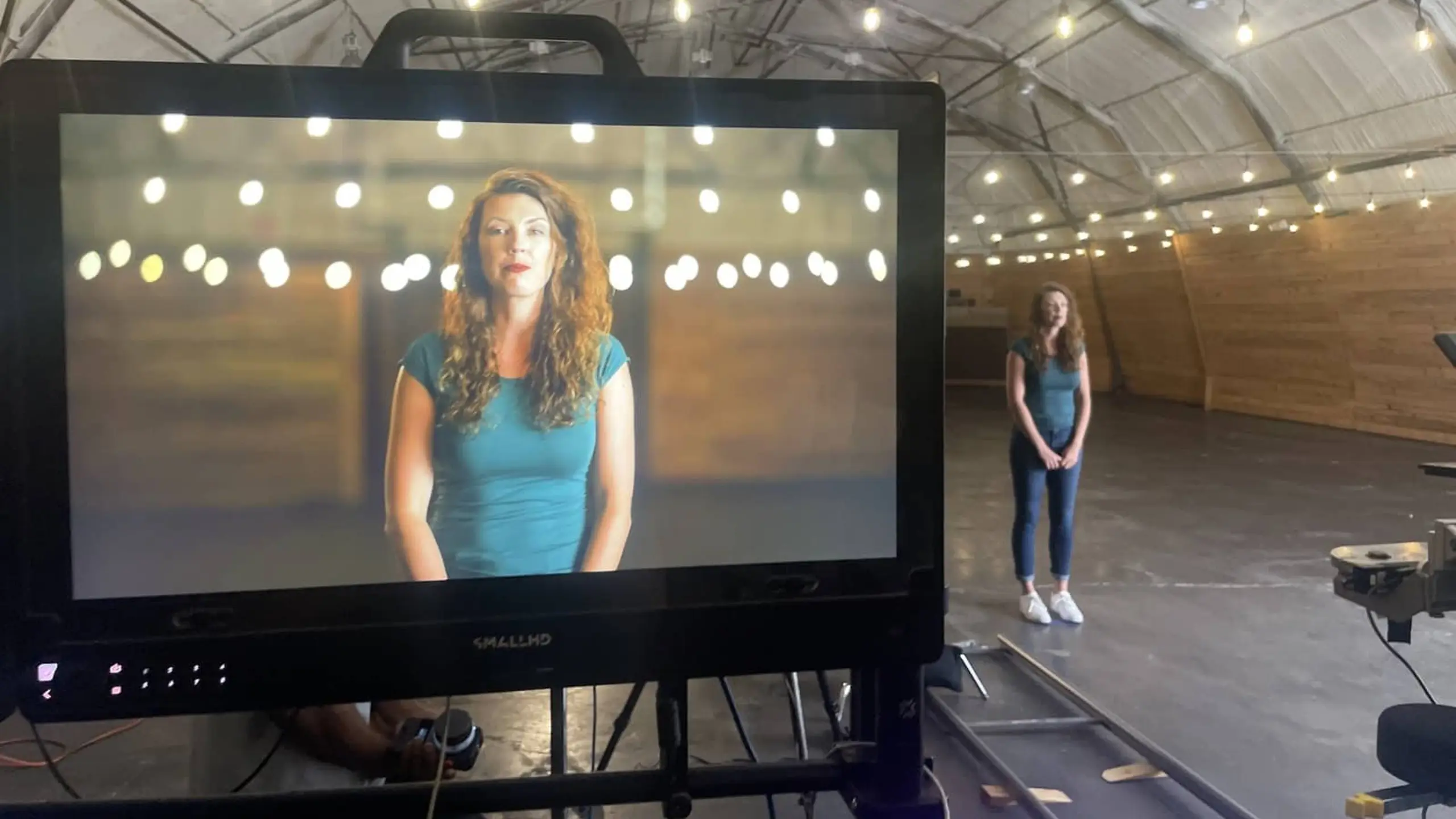
Filmmakers understand the struggle of promoting and distributing their films to a wider audience. It is a daunting task, and if you are a documentary filmmaker, the process is even more challenging, especially when you want to promote a docuseries. Docuseries are becoming increasingly popular, and you want your project to stand out and reach a wider audience. In this blog post, we will explore how to [distribute and promote](https://c-istudios.com/) your docuseries beyond streaming platforms.
1. Film Festivals:
Film festivals are one of the best places to get exposure for your docuseries. Now, we'll provide tips on how to distribute and promote your docuseries at film festivals.
**Choose the Right Film Festivals -** The first step is to do extensive research and identify the film festivals that best suit your docuseries. Some festivals are specific to certain genres or themes, while others focus on the length of the series. Identify festivals that have a reputation for showcasing documentaries and make a list of those that you feel would be the best fit for your docuseries. Consider the audience, the type of films being shown, and the reputation of the festival. Once you have a list of festivals, submit your docuseries entries.
**Create an eye-catching trailer -** An outstanding trailer is a must-have for your docuseries. It is essential to create a trailer that captures the essence of your series and leaves a lasting impression on the audience. The trailer needs to be concise and engaging to get the attention of the festival selection committee, as well as potential distributors. It should showcase the most captivating moments of the docuseries, giving the audience a sneak peek and the desire to watch the entire series.
**Prepare your marketing materials -** Your marketing materials should include posters, flyers, and business cards that showcase your docuseries. You need to have a unique and professional design that catches the eye at festivals. You can distribute them to festival attendees, including other filmmakers, industry professionals, and potential distributors. Make sure to have a clear and concise pitch that outlines what your docuseries is about, helping to promote interest.
You can submit your work to documentary film festivals, such as Sundance, SXSW, and Tribeca. These festivals are a great way to meet other filmmakers and industry professionals, and get your work seen by a wide audience. Winning a festival award can help your docuseries get more recognition and exposure.
1. Social Media:
Social media is another great way to [promote your docuseries](https://c-istudios.com/about/). Here we will share some tips on how to use social media effectively to distribute and promote your docuseries.
**Identify the right social media platform:** Before you start promoting your docuseries, make sure to identify the right platform. Different social media platforms attract different demographics, so it's essential to understand your target audience and choose the platform where they are most active. For example, if your docuseries is targeting younger audiences, you might want to focus on platforms like Instagram or Tiktok. In contrast, if your docuseries is targeting professionals, LinkedIn might be a better option. Once you have identified the right platform, optimize your profile, and post content regularly to grow your followers.
**Create visually appealing promotional content:** Social media prioritizes visually engaging content that can capture people's attention. Create promotional content that stands out and aligns with your docuseries's theme and tone. You can create eye-catching graphics, short video clips, and behind-the-scenes content to promote your docuseries. Use captions to add context to your post and include relevant hashtags to improve discoverability.
You can create a social media page for your docuseries and post regular updates, trailer teasers, and behind-the-scenes footage. You can also collaborate with influencers to help promote your project. Creating a buzz on social media can help your docuseries gain traction and get noticed by a wider audience.
** **
1. Educational Institutions:
Docuseries can be a great resource for educational institutions such as universities, libraries, and museums. we will explore everything you need to know about distributing and promoting your docuseries for educational institutions.
**Choose the right distribution channels -** To promote your docuseries, you first need to identify the channels where your target audience is most active. For educational institutions, the most effective distribution channels include YouTube, Vimeo, educational websites, and social media platforms such as Facebook, Twitter, and LinkedIn. When choosing a platform for distribution, ensure that it has features that can help you target your audience effectively. For instance, YouTube allows you to add hashtags, descriptions, and captions to your videos to make them more searchable.
**Optimize your content for search engines -** Search engine optimization (SEO) techniques can help you increase organic traffic to your website or video content. Implementing basic optimization techniques like including keywords in your title, descriptions, and tags can go a long way in improving your content visibility on search engines. Metadata is critical for your docuseries or series, make sure you include proper meta-descriptions, tags, and labels on your content. Incorporate interactive tools such as clickable links, quizzes, and assessments within your series for viewer engagement.
You can contact these institutions and offer them a screening of your docuseries. This can [help your docuseries reach a wider audience](https://c-istudios.com/our-work/) and also provide educational opportunities.
1. Podcasts:
Podcasts are a great way to reach a specific audience and promote your docuseries. Now we will discuss the effective ways to distribute and promote your docuseries through podcasts.
**Use established podcast platforms -** Utilizing established podcast platforms is a crucial step in distributing and promoting your docuseries' episodes. There are several podcast hosting platforms available online, including Spotify, Stitcher, Soundcloud, Apple Podcasts, and more. By doing this, you can ensure that your docuseries is easily accessible on multiple platforms. You also get the advantage of being placed in front of an established audience.
**Guesting on other podcasts -** Another effective way is to become a guest on other podcasts. This may include shows that are similar to your docuseries or those that cover the same topics. This approach helps you to reach a broader audience and establish yourself as an expert in your niche. It also helps you to gain new followers and boost your podcast's visibility.
You can find podcasts related to your docuseries and guest host or be interviewed. This can help create buzz for your docuseries and also help you connect with your target audience.
1. Community Screenings:
Community screenings can be a great way to [get your docuseries seen](https://c-istudios.com/creative-services/) by a wider audience. Now we will be discussing the benefits of community screenings and how you can organize them to promote your docuseries.
**Connecting with Local Communities -** Community screenings are an excellent way to connect with local communities and get them excited about your docuseries. Reach out to community centers, libraries, and local nonprofits to see if they would be interested in hosting a screening. This could be a great way to get your docuseries seen by a new audience who may not have heard of your show before.
**Word-of-Mouth Promotion -** Community screenings can help create buzz around your docuseries by generating word-of-mouth promotion. Encourage attendees to invite their friends and family to the screenings, and ask them to share their thoughts and opinions about the show on social media. This can help spread the word about your docuseries and generate a grassroots following.
**Feedback and Criticism -** Another benefit of community screenings is the feedback and criticism you can get from attendees. Use the screenings to gauge the audience's reactions to your show, and take notes on what works and what doesn't. This can help you improve your docuseries and make it more appealing to a wider audience.
You can organize a screening event in your community, and invite people to attend. This can help your docuseries gain exposure and also provide an opportunity for a Q&A session with the audience.
## Showcase Success. C&I Studios Elevating Your Docuseries to New Heights!
Choosing C&I Studios for distributing and promoting your docuseries means teaming up with experts who know how to make your show a success. We're really good at figuring out the best ways to get your docuseries in front of the right people. Whether it's on TV, streaming services, or online, we'll make sure lots of folks see it.
Our team also knows how to talk about your docuseries in a way that gets people excited. We'll create special ads and posts on social media to make sure everyone knows about your show. We're like your show's biggest cheerleaders, making sure it gets the attention it deserves.
Getting your docuseries in the news is important too. We'll write interesting stories about it, set up interviews, and make sure newspapers and websites talk about how cool your show is. We also look for cool partnerships and collaborations that can help your show grow even more.
We want people to really get into your docuseries, so we come up with fun stuff like online events, question-and-answer sessions, and behind-the-scenes looks. It's like building a little community around your show, so people stay interested and connected.
We're not just guessing what works, we use data to see what people like and what they don't. Then, we tell you how your docuseries is doing with regular reports. This way, you can see how well it's going and we can make changes if needed.
At C&I Studios, we're all about making sure your docuseries not only gets seen by a lot of people but also becomes a big hit. Our team knows how to get the word out and make your show stand out. [Contact us,](https://c-istudios.com/contact/) and let's make your docuseries a success!
## Work with C&I Studios
If you are planning a project like this, our team can take it from concept to final delivery. Explore our [film and TV production](https://c-istudios.com/film-and-tv-production/), browse [our work](https://c-istudios.com/our-work/) to see how we tell brand stories, and [get in touch](https://c-istudios.com/contact/) when you are ready to start.
Originally published December 18, 2023
---
*This content is from [C&I Studios](https://c-istudios.com), a full-service production company.*
---
# The Impact of Artificial Intelligence on Digital Content Creation
> Published: December 18, 2023
> Categories: Web & Tech
> Source: https://c-istudios.com/the-impact-of-artificial-intelligence-on-digital-content-creation/
---
.cib{--paper:#1b1d1f;--ink:#fff;--body:#d5d7d9;--muted:#8b9096;--line:rgba(255,255,255,.12);--thumb:#2b2e31;--card:#212426;--accent:#c02b0a;--blue:#5B8FA8;--serif:'Playfair Display',Georgia,serif;--sans:'Poppins',-apple-system,sans-serif;--measure:900px;background:var(--paper);color:var(--body);font-family:var(--sans);line-height:1.6;position:relative;left:50%;transform:translateX(-50%);width:90vw;max-width:1920px}
.cib *{box-sizing:border-box}
.cib .kicker{max-width:var(--measure);margin:58px auto 0;padding:0 22px;font-size:12.5px;font-weight:700;letter-spacing:2.5px;text-transform:uppercase;color:var(--blue)}
.cib h1.cibh1{text-wrap:balance;font-family:var(--serif);font-weight:500;font-size:clamp(46px,6vw,72px);line-height:1.08;color:var(--ink);max-width:var(--measure);margin:18px auto 0;padding:0 22px;letter-spacing:-.5px}
.cib .metarow{max-width:var(--measure);margin:20px auto 0;padding:0 22px;color:var(--muted);font-size:14px}
.cib .hero{position:relative;width:100%;height:0;padding-bottom:56.25%;overflow:hidden;margin:48px auto 0;border-top:1px solid var(--line);border-bottom:1px solid var(--line)}
.cib .hero .ph{width:100%;aspect-ratio:16/9;background:var(--thumb);border-top:1px solid var(--line);border-bottom:1px solid var(--line);display:flex;align-items:center;justify-content:center;color:#7d8288;font-size:13px;text-align:center;padding:0 20px}
.cib .body{max-width:var(--measure);margin:12px auto 0;padding:52px 22px 6px}
.cib .body.lead p:first-child{font-size:23px;line-height:1.62;color:var(--ink)}
.cib .body p{font-size:18.5px;line-height:1.85;margin:0 0 30px;color:var(--body)}
.cib .body h2{text-wrap:balance;font-family:var(--serif);font-weight:500;font-size:clamp(32px,4vw,48px);line-height:1.22;color:var(--ink);margin:70px 0 20px;letter-spacing:-.3px}
.cib .body h3{text-wrap:balance;font-family:var(--sans);font-weight:600;font-size:22px;color:var(--ink);margin:38px 0 8px}
.cib .body a{color:var(--ink);text-decoration:underline;text-decoration-color:rgba(255,255,255,.4);text-underline-offset:3px}
.cib .body a:hover{text-decoration-color:var(--ink)}
.cib .ctable{width:100%;border-collapse:collapse;margin:16px 0 30px;font-size:16px}
.cib .ctable th{background:#000;color:#fff;text-align:left;padding:10px 12px;font-family:var(--sans)}
.cib .ctable td{padding:10px 12px;border-bottom:1px solid var(--line);color:var(--body)}
.cib .inimg{position:relative;width:100%;height:0;padding-bottom:56.25%;overflow:hidden;margin:72px auto;border-top:1px solid var(--line);border-bottom:1px solid var(--line)}
.cib .inimg .ph{width:100%;aspect-ratio:16/9;background:var(--thumb);border-top:1px solid var(--line);border-bottom:1px solid var(--line);display:flex;align-items:center;justify-content:center;color:#7d8288;font-size:13px}
.cib .origpub{max-width:var(--measure);margin:60px auto 0;padding:26px 22px 0;border-top:1px solid var(--line);color:var(--muted);font-size:13.5px}
.cib .related{max-width:1200px;margin:64px auto 0;padding:34px 22px 76px}
.cib .related h3{font-family:var(--sans);font-size:12.5px;letter-spacing:2px;text-transform:uppercase;color:var(--ink);margin:0 0 24px}
.cib .grid{display:grid;grid-template-columns:repeat(3,1fr);gap:28px}
.cib .rc{background:var(--card);border:1px solid var(--line);display:block;text-decoration:none;color:inherit;transition:border-color .15s}
.cib a.rc:hover{border-color:rgba(255,255,255,.5)}
.cib .rc .thumb{position:relative;width:100%;height:0;padding-bottom:56.25%;background:var(--thumb);overflow:hidden}
.cib .rc .thumb img{position:absolute!important;top:0!important;left:0!important;width:100%!important;height:100%!important;object-fit:cover!important;margin:0!important}
.cib .rc .cc{padding:14px 15px 17px}
.cib .rc .rt{font-family:var(--serif);font-weight:500;font-size:16px;line-height:1.3;color:var(--ink);margin:0 0 6px}
.cib .rc .rm{font-size:11px;letter-spacing:1px;text-transform:uppercase;color:var(--muted)}
.cib img{margin:0!important;padding:0!important;display:block!important;vertical-align:top;max-width:100%}
.cib .hero img,.cib .inimg img{position:absolute!important;top:0!important;left:0!important;width:100%!important;height:100%!important;object-fit:cover!important;margin:0!important;padding:0!important;border:0!important;display:block!important;aspect-ratio:auto!important}
.cib .hero+.body{padding-top:36px}
@media(max-width:760px){.cib .grid{grid-template-columns:1fr}.cib .body h2{margin:52px 0 16px}.cib .body p{font-size:17.5px}.cib .inimg,.cib .hero{margin-top:44px}}
.cib .vembed{max-width:var(--measure);margin:44px auto;padding:0 22px}.cib .vembed .vwrap{position:relative;width:100%;height:0;padding-bottom:56.25%}.cib .vembed .vwrap iframe{position:absolute;top:0;left:0;width:100%;height:100%;border:0}
Web & Tech
# The Impact of Artificial Intelligence on Digital Content Creation
4 min read
Artificial Intelligence (AI) has significantly impacted digital content creation, leading to increased speed, efficiency, and scalability. AI-powered tools enable content creators to produce a higher volume of content in less time, automate repetitive tasks, generate content quickly, personalize content, and ensure consistency. This has revolutionized the [content creation](https://c-istudios.com/seo-copywriting-services/) industry, allowing creators to stay ahead of the competition and succeed in the digital world.
However, there are potential downsides to consider, such as the risk of over-reliance on AI and the potential impact on human employment in the industry.
AI can help with idea generation, content creation, and data-driven insights, but it may lack the emotional resonance and creativity that humans bring to the table. Therefore, striking the right balance between AI-generated content and human creativity is crucial to maintain authenticity and connect with audiences on a deeper level.
Overall, AI presents various opportunities for content creation, but it is important to carefully consider and mitigate the associated risks.
## How AI can be used to improve the quality of digital content
AI can be used to improve the quality of digital content in several ways:
1. Content Creation and Enhancement: AI-powered tools can automate routine tasks such as editing, formatting, and even generating content, allowing creators to focus on more creative aspects of content creation. This results in higher quality, engaging, and unique content.
1. Audience Research and Personalization: AI can analyze user data and behavior to provide personalized content recommendations, identify emerging patterns, and help in selecting the best topics, keywords, and formats based on the audience's interests and intent.
1. Editing and Proofreading: AI can assist in detecting and fixing errors, inconsistencies, and redundancies, enhancing the accuracy, clarity, and overall quality of the content.
1. Idea Generation and Optimization: AI can suggest new topics, provide insights on optimizing content for specific audiences, and offer valuable recommendations to improve content strategy, leading to more engaging, informative, and valuable content.
Overall, AI's impact on content creation is significant, as it enables creators to produce more content in less time, with greater accuracy, consistency, and personalization. However, it's important to note that while AI can significantly improve content quality, it is unlikely to replace human creativity entirely and is best used as a tool to assist human [content creators](https://c-istudios.com/creative-marketing-services/).
## Best practices for using AI in content creation
Some best practices for using AI in content creation include:
1. Define the Purpose of the Content: Clearly define the purpose of the content, including the target audience, tone, and overall objective. This ensures that the AI-produced content aligns with brand goals and is relevant and effective.
1. Provide a Clear and Concise Prompt: Furnish the AI tool with a detailed and specific prompt, including the topic, tone, style, and length of the content. A well-crafted prompt helps the AI tool understand the task and generate more accurate results.
1. Review and Edit the Content: Even though AI tools can generate content, it's essential to review and edit the output to ensure it aligns with the brand's voice, is accurate, and resonates with the target audience.
1. Avoid Plagiarism: Ensure that the AI-generated content is original and does not infringe on copyright or plagiarize existing material.
1. Customize the Content: Consider AI-generated content as a starting point and then personalize it to reflect the brand's voice and style. This ensures that the content remains unique and aligned with the brand's identity.
1. Choose the Right AI Tool for the Job: Select an AI tool that is specifically designed for the type of content you want to create. Different tools have varying strengths and weaknesses, so choosing the right tool is crucial.
1. Use AI Tools Responsibly: Avoid using AI tools to create misleading, deceptive, or harmful content. It's important to use AI tools responsibly and ensure that the generated content is informative, engaging, and of high quality.
By following these best practices, content creators can harness the power of AI to improve the quality and efficiency of their content creation process while ensuring that the content remains authentic, relevant, and aligned with their [brand goals](https://c-istudios.com/branding-and-graphic-design-services/).
## How AI can be used to optimize content for search engines
AI can be used to optimize content for search engines in several ways, including identifying and targeting relevant keywords, optimizing on-page elements, and creating personalized content that resonates with the target audience.
AI-powered tools can automate data analysis, provide high-level views, and assist in content planning, analysis, and the creation of local knowledge graphs, leading to substantial growth in organic traffic for content creators.
Additionally, AI can help in understanding user data, tailoring content accordingly, and improving search engine rankings through advanced data analysis, predictive analytics, automated content creation, and real-time optimization.
Some best practices for using AI to optimize content for search engines include improving page speed, leveraging structured data, designing original and valuable content, prioritizing mobile compatibility, optimizing for semantic search, voice search, and sharing expertise, publishing multimedia content, and engaging on social media.
By leveraging AI technologies, businesses can stay at the forefront of content optimization and achieve sustainable SEO success.
## Common AI-powered tools for content optimization
Some common AI-powered tools for content optimization include:
1. SEMrush: An all-in-one SEO platform that offers features for keyword research, on-page optimization, and content performance analysis.
1. ai: Known for writing optimized SEO blogs and other marketing copies. It provides real-time semantic SEO scoring and automated keyword discovery and clustering.
1. NeuralText: This tool is suitable for SEO content writers and offers automated keyword discovery, clustering, and an actionable editorial plan based on a seed keyword.
1. ai: A well-rounded tool that provides various features to guide content teams through the process of creating blog posts, landing pages, PPC ad copy, social media posts, and more.
These tools utilize AI to enhance content for search engines, improve keyword targeting, and provide data-driven insights for content optimization. Each tool has its unique features and benefits, so it's essential to evaluate them based on specific needs and goals.
## Common mistakes to avoid when using AI for content creation
When using AI for content creation, it's important to avoid common mistakes to ensure the quality and effectiveness of the content. Some common mistakes to avoid include:
1. Over-reliance on AI-generated content: Relying too much on AI-generated content without recognizing its limitations can lead to publishing content with errors, awkward phrasing, or inaccuracies.
1. Ignoring audience targeting and brand voice: Neglecting to tailor AI-generated content to suit the target audience and maintain consistency in brand voice can result in irrelevant and inconsistent content.
1. Over-optimizing for search engines: While AI can optimize content for SEO, overdoing it can lead to keyword stuffing and compromise the quality and readability of the content.
1. Neglecting legal and ethical considerations: Failing to consider legal issues such as plagiarism and copyright infringement, as well as ethical considerations, can lead to negative consequences.
1. Not properly evaluating the quality of AI-generated content: Failing to review and edit AI-generated content can result in the publication of low-quality or irrelevant material.
By being aware of these common mistakes and taking steps to avoid them, content creators can effectively leverage AI for content creation while maintaining quality, relevance, and ethical standards.
## Challenges of using AI-generated content in content creation
Some of the challenges of using AI-generated content in content creation include:
1. Quality Concerns and Possible Plagiarism: AI-generated content may raise quality concerns and be at risk of plagiarism, as AI tools rely on data and algorithms, which can lead to the loss of the intended tone and the inability to cover subjective or gray areas of a topic.
1. Lack of Creativity and Originality: AI-generated content is often formulaic and lacks the creativity and nuance of human-created content, limiting its ability to be truly creative and innovative.
1. Limited Language Capabilities and Emotional Intelligence: AI-generated content can struggle with complex language, nuances, and emotional intelligence, particularly in fields that require specialized knowledge or technical language.
1. Ethical Considerations and Bias: There are ethical considerations to be aware of, such as the potential for AI-generated content to perpetuate bias, as well as the need to address issues related to bias in the training data used by AI models.
1. Job Displacement and Responsibility: The use of AI-generated content can lead to job displacement and raise questions about the responsibility for AI decisions, as well as the potential lack of nuanced understanding, creativity, and context that human creators bring.
While AI-generated content offers various benefits, it is important to be mindful of these challenges and limitations to ensure that the technology is used with caution and consideration for its potential drawbacks.
## Examples of AI-generated content that have been successful in content creation
Some successful examples of AI-generated content in content creation include:
1. Influencer Campaigns: AI-generated content has been used in influencer campaigns to create personalized videos for users, driving engagement and brand awareness. This approach has allowed marketers to quickly create a large volume of customized content without extensive human input.
1. Improved Content Quality: AI-generated content has been found to be of higher quality than content created by humans in some cases, due to the capabilities of AI models in analyzing data and generating content.
1. Engagement and Click-Through Rates: The use of AI-generated headlines has led to a notable increase in click-through rates, indicating that AI can effectively engage readers. Human-AI collaboration, where human editors refine AI-generated content, has also shown promising results.
These examples demonstrate the effectiveness of AI-generated content in various content creation contexts, including influencer campaigns, content quality improvement, and engagement optimization. They highlight the potential of AI to streamline content creation processes, enhance content quality, and improve audience engagement.
## How AI-generated content can be used effectively in content creation
AI-generated content can be used effectively in content creation in several ways, as highlighted in the following sources:
1. Idea Generation: AI can assist in generating new and creative ideas for content by analyzing audience interests and suggesting relevant topics, helping content creators to overcome creative blocks and develop interesting ideas.
1. Efficiency and Time Savings: AI algorithms can produce large volumes of content quickly and efficiently, saving time and effort for content creators. This allows businesses to meet their audience's demands without spending excessive time or resources.
1. Content Outlines and First Drafts: AI can be used to create content outlines, write first drafts, and fast-track content research, providing a starting point for content creation that can be refined and personalized by human creators.
1. Enhancing Existing Content: AI can be used to enhance existing content by automating various aspects of content creation, saving time and resources for faster time-to-market. AI models can produce draft content that human marketers can refine and personalize, helping to overcome content creation challenges.
By leveraging AI for idea generation, efficiency, and enhancing existing content, content creators can effectively use AI-generated content to improve the quality and relevance of their content, while also saving time and resources. It's important to note that while AI can significantly improve content creation, it is unlikely to replace human creativity entirely and is best used as a tool to assist human content creators.
## Hiring C&I Studios for AI-powered digital content creation
Hiring [C&I Studios](https://c-istudios.com/) for digital content creation offers several benefits:
1. Expertise and Experience: C&I Studios provide access to a team of content marketing experts with the knowledge and experience to create effective AI-powered content marketing strategies tailored to a business's resources, budget, and goals.
1. Understanding of Niche and Customer Personas: C&I Studios understands the nuances of different industries and can create content that resonates with the target audience. We also have a deep understanding of customer personas, which is crucial for effective content creation.
1. Scalable Growth and Sustainable Results: C&I Studios has a solid track record delivering scalable growth and sustainable results through the content we create, leading to a significant return on investment.
1. Access to Tools and Resources: C&I Studios have access to various tools and resources that can streamline content creation, including AI-powered content generation tools, enabling us to fast-track content research and ideation.
1. Compliance and Ethical Considerations: C&I Studios can ensure that the content created complies with legal and ethical standards, such as obtaining consent for data usage and respecting copyright laws.
By leveraging the expertise, experience, and resources of C&I Studios, businesses can benefit from effective, targeted, and compliant digital content creation that resonates with their audience and drives results.
[Contact C&I Studios](https://c-istudios.com/contact/) to get started today.
## Work with C&I Studios
If you are planning a project like this, our team can take it from concept to final delivery. Explore our [AI video services](https://c-istudios.com/ai-video-services/), browse [our work](https://c-istudios.com/our-work/) to see how we tell brand stories, and [get in touch](https://c-istudios.com/contact/) when you are ready to start.
Originally published December 18, 2023
---
*This content is from [C&I Studios](https://c-istudios.com), a full-service production company.*
---
# Budgeting for Television Production: Tips for Efficient Resource Allocation
> Published: December 15, 2023
> Categories: Post & VFX
> Source: https://c-istudios.com/budgeting-for-television-production-tips-for-efficient-resource-allocation/
---
.cib{--paper:#1b1d1f;--ink:#fff;--body:#d5d7d9;--muted:#8b9096;--line:rgba(255,255,255,.12);--thumb:#2b2e31;--card:#212426;--accent:#c02b0a;--blue:#5B8FA8;--serif:'Playfair Display',Georgia,serif;--sans:'Poppins',-apple-system,sans-serif;--measure:900px;background:var(--paper);color:var(--body);font-family:var(--sans);line-height:1.6;position:relative;left:50%;transform:translateX(-50%);width:90vw;max-width:1920px}
.cib *{box-sizing:border-box}
.cib .kicker{max-width:var(--measure);margin:58px auto 0;padding:0 22px;font-size:12.5px;font-weight:700;letter-spacing:2.5px;text-transform:uppercase;color:var(--blue)}
.cib h1.cibh1{text-wrap:balance;font-family:var(--serif);font-weight:500;font-size:clamp(46px,6vw,72px);line-height:1.08;color:var(--ink);max-width:var(--measure);margin:18px auto 0;padding:0 22px;letter-spacing:-.5px}
.cib .metarow{max-width:var(--measure);margin:20px auto 0;padding:0 22px;color:var(--muted);font-size:14px}
.cib .hero{position:relative;width:100%;height:0;padding-bottom:56.25%;overflow:hidden;margin:48px auto 0;border-top:1px solid var(--line);border-bottom:1px solid var(--line)}
.cib .hero .ph{width:100%;aspect-ratio:16/9;background:var(--thumb);border-top:1px solid var(--line);border-bottom:1px solid var(--line);display:flex;align-items:center;justify-content:center;color:#7d8288;font-size:13px;text-align:center;padding:0 20px}
.cib .body{max-width:var(--measure);margin:12px auto 0;padding:52px 22px 6px}
.cib .body.lead p:first-child{font-size:23px;line-height:1.62;color:var(--ink)}
.cib .body p{font-size:18.5px;line-height:1.85;margin:0 0 30px;color:var(--body)}
.cib .body h2{text-wrap:balance;font-family:var(--serif);font-weight:500;font-size:clamp(32px,4vw,48px);line-height:1.22;color:var(--ink);margin:70px 0 20px;letter-spacing:-.3px}
.cib .body h3{text-wrap:balance;font-family:var(--sans);font-weight:600;font-size:22px;color:var(--ink);margin:38px 0 8px}
.cib .body a{color:var(--ink);text-decoration:underline;text-decoration-color:rgba(255,255,255,.4);text-underline-offset:3px}
.cib .body a:hover{text-decoration-color:var(--ink)}
.cib .ctable{width:100%;border-collapse:collapse;margin:16px 0 30px;font-size:16px}
.cib .ctable th{background:#000;color:#fff;text-align:left;padding:10px 12px;font-family:var(--sans)}
.cib .ctable td{padding:10px 12px;border-bottom:1px solid var(--line);color:var(--body)}
.cib .inimg{position:relative;width:100%;height:0;padding-bottom:56.25%;overflow:hidden;margin:72px auto;border-top:1px solid var(--line);border-bottom:1px solid var(--line)}
.cib .inimg .ph{width:100%;aspect-ratio:16/9;background:var(--thumb);border-top:1px solid var(--line);border-bottom:1px solid var(--line);display:flex;align-items:center;justify-content:center;color:#7d8288;font-size:13px}
.cib .origpub{max-width:var(--measure);margin:60px auto 0;padding:26px 22px 0;border-top:1px solid var(--line);color:var(--muted);font-size:13.5px}
.cib .related{max-width:1200px;margin:64px auto 0;padding:34px 22px 76px}
.cib .related h3{font-family:var(--sans);font-size:12.5px;letter-spacing:2px;text-transform:uppercase;color:var(--ink);margin:0 0 24px}
.cib .grid{display:grid;grid-template-columns:repeat(3,1fr);gap:28px}
.cib .rc{background:var(--card);border:1px solid var(--line);display:block;text-decoration:none;color:inherit;transition:border-color .15s}
.cib a.rc:hover{border-color:rgba(255,255,255,.5)}
.cib .rc .thumb{position:relative;width:100%;height:0;padding-bottom:56.25%;background:var(--thumb);overflow:hidden}
.cib .rc .thumb img{position:absolute!important;top:0!important;left:0!important;width:100%!important;height:100%!important;object-fit:cover!important;margin:0!important}
.cib .rc .cc{padding:14px 15px 17px}
.cib .rc .rt{font-family:var(--serif);font-weight:500;font-size:16px;line-height:1.3;color:var(--ink);margin:0 0 6px}
.cib .rc .rm{font-size:11px;letter-spacing:1px;text-transform:uppercase;color:var(--muted)}
.cib img{margin:0!important;padding:0!important;display:block!important;vertical-align:top;max-width:100%}
.cib .hero img,.cib .inimg img{position:absolute!important;top:0!important;left:0!important;width:100%!important;height:100%!important;object-fit:cover!important;margin:0!important;padding:0!important;border:0!important;display:block!important;aspect-ratio:auto!important}
.cib .hero+.body{padding-top:36px}
@media(max-width:760px){.cib .grid{grid-template-columns:1fr}.cib .body h2{margin:52px 0 16px}.cib .body p{font-size:17.5px}.cib .inimg,.cib .hero{margin-top:44px}}
.cib .vembed{max-width:var(--measure);margin:44px auto;padding:0 22px}.cib .vembed .vwrap{position:relative;width:100%;height:0;padding-bottom:56.25%}.cib .vembed .vwrap iframe{position:absolute;top:0;left:0;width:100%;height:100%;border:0}
Post & VFX
# Budgeting for Television Production. Tips for Efficient Resource Allocation
2 min read


## Product Line
**Tips for Efficient Resource Allocation**
1. Break Down the Program: Divide the project into smaller parts and create a budget for each type of program, along with central costs and assumptions about the number of each type of program that will appear in the series.
1. Amort and Pattern Budgeting: For multi-episodic commissions, US TV studios require Amort and Pattern budgeting and costing. A Pattern budget is produced for the cost of one episode/block and is repeated for the number of episodes/blocks commissioned.
1. Scripted Programs: Analyze each scene in the script to note the location, artists required, set requirements, and any cost implications. Make decisions to minimize the cost of production based on the complete script.
1. Define Scope and Goals: Have a clear idea of the project's scope, goals, constraints, and risks to align expectations, which forms the basis of the budget and schedule.
1. Select the Right Production Budget Template: Choose a suitable production budget template for the project, as it will help in breaking down the script and determining the number of production days needed in each location.
By following these tips, production teams can effectively manage their [TV production](https://c-istudios.com/) budget and schedule, leading to successful and cost-effective outcomes.
## How to create a realistic budget for a TV production
To create a realistic budget for a [TV production](https://c-istudios.com/film-and-tv-production/), consider the following:
1. Select the Right Production Budget Template: Choose a suitable production budget template for the project, as it will help in breaking down the script and determining the number of production days needed in each location.
1. Define Scope and Goals: Have a clear idea of the project's scope, goals, constraints, and risks to align expectations, which forms the basis of the budget and schedule.
1. Break Down the Program: Divide the project into smaller parts and create a budget for each type of program, along with central costs and assumptions about the number of each type of program that will appear in the series.
1. Amort and Pattern Budgeting: For multi-episodic commissions, consider Amort and Pattern budgeting and costing. A Pattern budget is produced for the cost of one episode/block and is repeated for the number of episodes/blocks commissioned.
1. Research and Gather Cost Estimates: Research prevailing industry rates for equipment, crew, locations, and talent. Consult with experienced production professionals and review previous budgets of similar projects to gather accurate pricing information.
By following these tips, producers and content creators can develop a comprehensive and realistic budget that reflects the costs and resources needed for the TV production.
## Key components of a TV production budget
The key components of a TV production budget typically include:
1. Pre-Production, Production, and Post-Production Expenses: The budget should encompass all expenses related to pre-production, production, and post-production, such as [equipment](https://c-istudios.com/video-production-gear-list/), personnel, locations, travel, permits, insurance, music, graphics, editing, and distribution.
1. Contingency Funds: Allocate contingency funds for unexpected changes or issues to account for unforeseen expenses.
1. Amort and Pattern Budgeting (for multi-episodic commissions): This involves preparing a Pattern budget for the cost of one episode/block, which is then repeated for the number of episodes/blocks commissioned. Amort costs, not specifically related to the length of shooting, should also be considered.
1. Detailed Script Analysis: Analyze the script to identify the resources and costs associated with each scene, including location, artists, and set requirements.
1. Research and Cost Estimates: Gather cost estimates by researching prevailing industry rates for equipment, crew, locations, and talent. This helps in creating a realistic budget foundation and prevents surprises during production.
By incorporating these components, a comprehensive TV production budget can be developed, ensuring that all necessary resources and costs are accounted for.
## Common challenges in managing a TV production budget
The common challenges in managing a TV production budget include:
1. Scope Creep: This occurs when the initial expectations and requirements of a project change or expand over time, leading to more work, time, and resources than originally planned. To address this, clear project scope definition, regular communication, and setting boundaries on revisions and changes are essential.
1. Unexpected Expenses and Delays: Unforeseen problems or delays, such as bad weather, equipment failure, or talent issues, can affect the budget and schedule. Allocating a contingency fund (usually 10-20% of the total budget) can help cover unforeseen costs or emergencies without compromising the project.
1. Post-Production Costs: It's important to account for post-production costs, such as editing, color grading, sound mixing, graphics, subtitles, and distribution, as these can require additional time, effort, and potential revisions.
By being aware of these challenges and implementing strategies to address them, such as clear communication, contingency planning, and comprehensive budgeting, TV production teams can better manage their budgets and mitigate potential issues.
## Common mistakes to avoid when creating a TV production budget
When creating a TV production budget, it's important to avoid common mistakes to ensure its accuracy and effectiveness. Some of the common mistakes to avoid include:
1. Overestimating Income: Media producers often overestimate the income potential of a project, leading to overspending, underfunding, or cash flow problems. It's essential to conduct thorough research on the target audience, competitors, and industry trends to make realistic income projections.
1. Underestimating Costs: Failing to account for all expenses involved in the production, distribution, or marketing can result in budget overruns, debt, or compromises in quality. Creating a detailed and itemized budget that covers every aspect of the project, including a contingency fund for unexpected costs, is crucial to avoid this mistake.
1. Not Defining the Scope: Failing to clearly define the project's objectives, expectations, deliverables, and deadlines can lead to wasted time and money on unnecessary tasks or missing important details and requirements. It's important to communicate and document the scope in a written agreement or contract to avoid this error.
1. Not Tracking Expenses and Cash Flow: Without proper tracking, overspending, fund shortages, or cash flow issues can arise. Using reliable accounting software or tools and regularly reviewing the budget for any changes or discrepancies can help avoid this mistake.
By being mindful of these common mistakes and taking proactive measures to address them, producers can create more accurate and reliable TV production budgets.
## Common expenses that are often overlooked when creating a TV production budget
When creating a TV production budget, some common expenses are often overlooked. These may include:
1. General Expenses: Overhead costs such as production office rental, shipping, office supplies, and postage.
1. Development Costs: This includes expenses for the development of the production, such as travel, office expenses, and legal costs.
1. Insurance: The cost of insurance for the entire production should be included in the budget. Specific insurances for elements like special effects are budgeted separately.
1. Post-Production Costs: Expenses related to editing, color grading, sound mixing, graphics, subtitles, and distribution should be carefully considered and budgeted for.
By ensuring that these commonly overlooked expenses are included in the budget, producers can create a more comprehensive and accurate financial plan for their TV production.
## How to estimate the cost of post-production work in a TV production budget
Estimating the cost of post-production work in a TV production budget involves several steps:
1. Identify Post-Production Needs: Thoroughly analyze the script and understand the scope of post-production requirements, including editing, color grading, sound mixing, graphics, subtitles, and distribution.
1. Research Cost Estimates: Gather information on prevailing industry rates for post-production services, such as editing, visual effects, sound design, and color correction. Consult with experienced post-production professionals and review previous budgets of similar projects to gather accurate pricing information.
1. Break Down Post-Production Elements: Create a detailed breakdown of post-production elements that require budget allocation. Categorize each element, such as editing, sound design, visual effects, and distribution, and assign costs based on research and estimated quantities or duration for each.
By following these steps, producers can more accurately estimate the cost of post-production work and ensure that the budget adequately covers all the necessary elements for a successful TV production.
## How to adjust a TV production budget when unexpected expenses arise
When unexpected expenses arise in a TV production budget, it's important to adjust the budget effectively. Here are some strategies based on the search results:
1. Review and Prioritize: Review the budget and prioritize the essential elements. Consider areas where costs can be reduced without compromising the quality or integrity of the production.
1. Communicate and Negotiate: Engage in discussions with the relevant stakeholders, including the producer, funder, and director, to negotiate and make decisions on where adjustments can be made to accommodate the unexpected expenses.
1. Reallocate Funds: If possible, reallocate funds from other areas of the budget where there may be flexibility. This could involve reducing expenses in one area to cover the unexpected costs in another.
1. Update the Budget: Make necessary revisions to the budget to reflect the changes and ensure that all adjustments are accurately documented and accounted for.
By following these strategies, TV production teams can effectively manage unexpected expenses and make the required adjustments to the budget.
## How to prioritize expenses when adjusting a TV production budget
When adjusting a TV production budget, it's important to prioritize expenses effectively. Here are some strategies based on the provided search results:
1. Review and Prioritize: Look at the budget for each area and consider whether it feels right. Review the budget and prioritize essential elements. Consider areas where costs can be reduced without compromising the quality or integrity of the production.
1. Communicate and Negotiate: Engage in discussions with relevant stakeholders to negotiate and make decisions on where adjustments can be made to accommodate the unexpected expenses. This may involve prioritizing certain aspects of the production over others.
1. Reallocate Funds: If possible, reallocate funds from other areas of the budget where there may be flexibility. This could involve reducing expenses in one area to cover the unexpected costs in another. By reallocating funds, essential elements of the production can be prioritized while still accommodating the unexpected expenses.
By following these strategies, TV production teams can effectively prioritize expenses when adjusting the budget to manage unexpected costs.
## How to determine which expenses are essential and which are optional in a TV production budget
When determining which expenses are essential and which are optional in a TV production budget, the following strategies can be employed:
1. Thorough Script Analysis: Analyze the script in detail to identify essential elements such as locations, artists required, and set requirements. This will help in understanding the core elements that are indispensable for bringing the story to life.
1. Research Cost Estimates: Gather information on prevailing industry rates for equipment, crew, locations, and talent. This will provide a realistic foundation for the budget and help in differentiating essential costs from optional ones.
1. Break Down the Script: Once the necessary information and cost estimates are available, break down the script into elements that require budget allocation. Categorize each element into line items, such as talent, crew, equipment, locations, art department, visual effects, post-production, and contingency funds. This will help in clearly identifying essential expenses.
By employing these strategies, producers can effectively differentiate between essential and optional expenses in a TV production budget, ensuring that essential elements are prioritized while maintaining cost efficiency.
## Strategies for reducing costs in a TV production budget without sacrificing quality
To reduce costs in a TV production budget without sacrificing quality, consider the following strategies:
1. Set a Realistic Budget: Create a budget that accurately reflects the costs and resources needed for the production, including all expenses related to pre-production, production, and post-production. Allocate contingency funds for unexpected changes or issues.
1. Thorough Script Analysis: Analyze the script to identify essential elements and avoid wasting resources on unnecessary or unplanned scenes, locations, equipment, or crew.
1. Choose Equipment Wisely: Use equipment that suits your needs and budget, such as renting or borrowing instead of buying, or using cost-effective alternatives like smartphones or DSLR cameras.
1. Hire the **Right People**: Find talented, reliable, and passionate individuals who are a good fit for the project, considering local or amateur professionals as well as leveraging personal networks.
1. Be Flexible and Creative: Remain open to changes and opportunities during the production process, allowing for creative solutions that may lead to cost savings without compromising the quality of the production.
By implementing these strategies, it's possible to reduce costs in a TV production budget while maintaining the quality of the final product.
## Work with C&I Studios
If you are planning a project like this, our team can take it from concept to final delivery. Explore our [post-production services](https://c-istudios.com/post-production-services/), browse [our work](https://c-istudios.com/our-work/) to see how we tell brand stories, and [get in touch](https://c-istudios.com/contact/) when you are ready to start.
Originally published December 15, 2023
---
*This content is from [C&I Studios](https://c-istudios.com), a full-service production company.*
---
# Creating Viral Content: Analyzing the Elements of Shareable Digital Media
> Published: December 15, 2023
> Categories: Commercial & Brand
> Source: https://c-istudios.com/creating-viral-content-analyzing-the-elements-of-shareable-digital-media/
---
.cib{--paper:#1b1d1f;--ink:#fff;--body:#d5d7d9;--muted:#8b9096;--line:rgba(255,255,255,.12);--thumb:#2b2e31;--card:#212426;--accent:#c02b0a;--blue:#5B8FA8;--serif:'Playfair Display',Georgia,serif;--sans:'Poppins',-apple-system,sans-serif;--measure:900px;background:var(--paper);color:var(--body);font-family:var(--sans);line-height:1.6;position:relative;left:50%;transform:translateX(-50%);width:90vw;max-width:1920px}
.cib *{box-sizing:border-box}
.cib .kicker{max-width:var(--measure);margin:58px auto 0;padding:0 22px;font-size:12.5px;font-weight:700;letter-spacing:2.5px;text-transform:uppercase;color:var(--blue)}
.cib h1.cibh1{text-wrap:balance;font-family:var(--serif);font-weight:500;font-size:clamp(46px,6vw,72px);line-height:1.08;color:var(--ink);max-width:var(--measure);margin:18px auto 0;padding:0 22px;letter-spacing:-.5px}
.cib .metarow{max-width:var(--measure);margin:20px auto 0;padding:0 22px;color:var(--muted);font-size:14px}
.cib .hero{position:relative;width:100%;height:0;padding-bottom:56.25%;overflow:hidden;margin:48px auto 0;border-top:1px solid var(--line);border-bottom:1px solid var(--line)}
.cib .hero .ph{width:100%;aspect-ratio:16/9;background:var(--thumb);border-top:1px solid var(--line);border-bottom:1px solid var(--line);display:flex;align-items:center;justify-content:center;color:#7d8288;font-size:13px;text-align:center;padding:0 20px}
.cib .body{max-width:var(--measure);margin:12px auto 0;padding:52px 22px 6px}
.cib .body.lead p:first-child{font-size:23px;line-height:1.62;color:var(--ink)}
.cib .body p{font-size:18.5px;line-height:1.85;margin:0 0 30px;color:var(--body)}
.cib .body h2{text-wrap:balance;font-family:var(--serif);font-weight:500;font-size:clamp(32px,4vw,48px);line-height:1.22;color:var(--ink);margin:70px 0 20px;letter-spacing:-.3px}
.cib .body h3{text-wrap:balance;font-family:var(--sans);font-weight:600;font-size:22px;color:var(--ink);margin:38px 0 8px}
.cib .body a{color:var(--ink);text-decoration:underline;text-decoration-color:rgba(255,255,255,.4);text-underline-offset:3px}
.cib .body a:hover{text-decoration-color:var(--ink)}
.cib .ctable{width:100%;border-collapse:collapse;margin:16px 0 30px;font-size:16px}
.cib .ctable th{background:#000;color:#fff;text-align:left;padding:10px 12px;font-family:var(--sans)}
.cib .ctable td{padding:10px 12px;border-bottom:1px solid var(--line);color:var(--body)}
.cib .inimg{position:relative;width:100%;height:0;padding-bottom:56.25%;overflow:hidden;margin:72px auto;border-top:1px solid var(--line);border-bottom:1px solid var(--line)}
.cib .inimg .ph{width:100%;aspect-ratio:16/9;background:var(--thumb);border-top:1px solid var(--line);border-bottom:1px solid var(--line);display:flex;align-items:center;justify-content:center;color:#7d8288;font-size:13px}
.cib .origpub{max-width:var(--measure);margin:60px auto 0;padding:26px 22px 0;border-top:1px solid var(--line);color:var(--muted);font-size:13.5px}
.cib .related{max-width:1200px;margin:64px auto 0;padding:34px 22px 76px}
.cib .related h3{font-family:var(--sans);font-size:12.5px;letter-spacing:2px;text-transform:uppercase;color:var(--ink);margin:0 0 24px}
.cib .grid{display:grid;grid-template-columns:repeat(3,1fr);gap:28px}
.cib .rc{background:var(--card);border:1px solid var(--line);display:block;text-decoration:none;color:inherit;transition:border-color .15s}
.cib a.rc:hover{border-color:rgba(255,255,255,.5)}
.cib .rc .thumb{position:relative;width:100%;height:0;padding-bottom:56.25%;background:var(--thumb);overflow:hidden}
.cib .rc .thumb img{position:absolute!important;top:0!important;left:0!important;width:100%!important;height:100%!important;object-fit:cover!important;margin:0!important}
.cib .rc .cc{padding:14px 15px 17px}
.cib .rc .rt{font-family:var(--serif);font-weight:500;font-size:16px;line-height:1.3;color:var(--ink);margin:0 0 6px}
.cib .rc .rm{font-size:11px;letter-spacing:1px;text-transform:uppercase;color:var(--muted)}
.cib img{margin:0!important;padding:0!important;display:block!important;vertical-align:top;max-width:100%}
.cib .hero img,.cib .inimg img{position:absolute!important;top:0!important;left:0!important;width:100%!important;height:100%!important;object-fit:cover!important;margin:0!important;padding:0!important;border:0!important;display:block!important;aspect-ratio:auto!important}
.cib .hero+.body{padding-top:36px}
@media(max-width:760px){.cib .grid{grid-template-columns:1fr}.cib .body h2{margin:52px 0 16px}.cib .body p{font-size:17.5px}.cib .inimg,.cib .hero{margin-top:44px}}
.cib .vembed{max-width:var(--measure);margin:44px auto;padding:0 22px}.cib .vembed .vwrap{position:relative;width:100%;height:0;padding-bottom:56.25%}.cib .vembed .vwrap iframe{position:absolute;top:0;left:0;width:100%;height:100%;border:0}
Commercial & Brand
# Creating Viral Content. Analyzing the Elements of Shareable Digital Media
3 min read
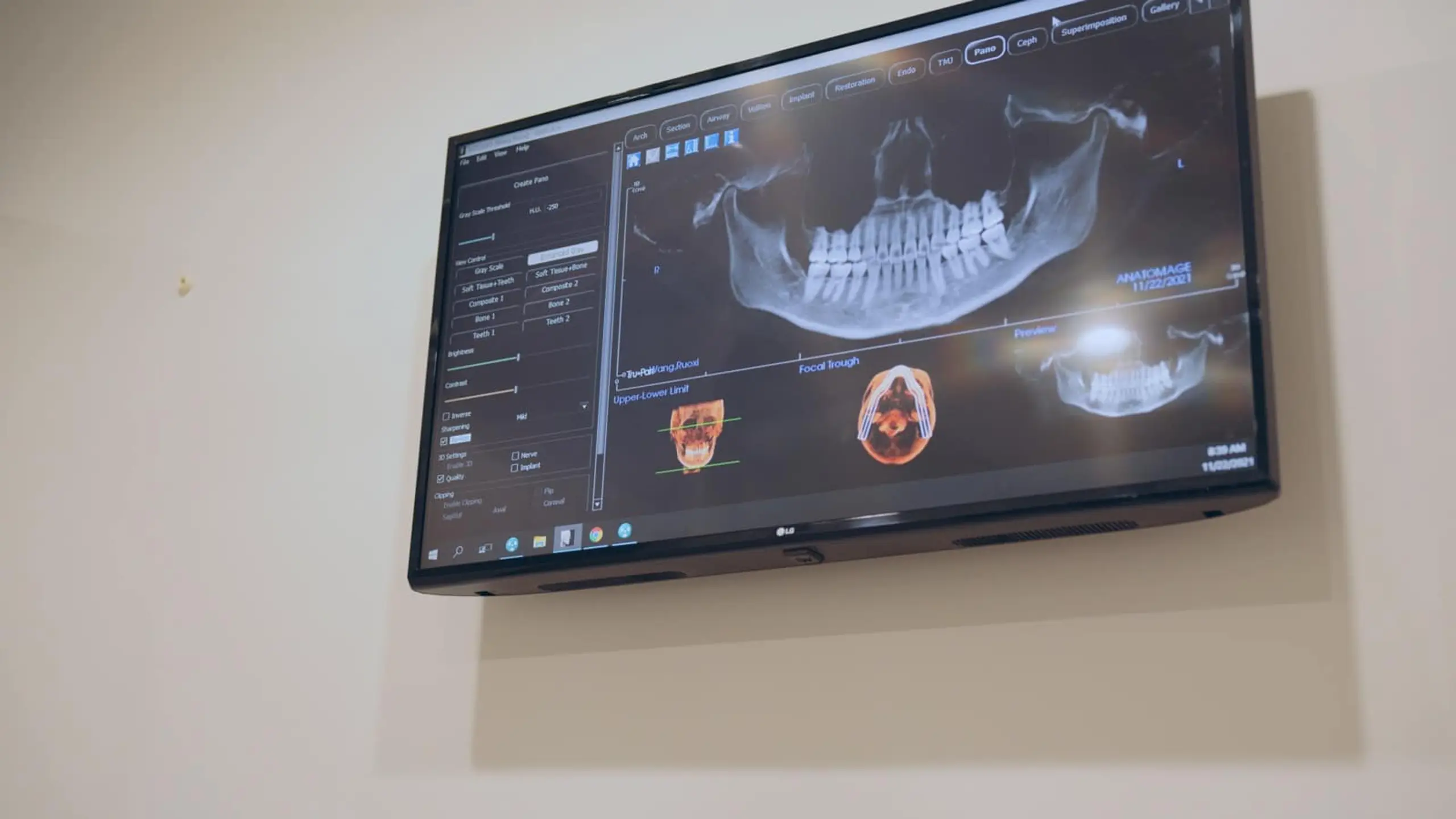
Viral content is characterized by several key elements that contribute to its shareability and widespread dissemination. These elements include emotional resonance, immediate engagement, concise and accessible messaging, platform-specific adaptation, and the role of [social media](https://c-istudios.com/social-media-marketing-services/) algorithms. Additionally, factors such as the content's ability to evoke strong emotions, its timing, and the size of the following also play a significant role in its potential to go viral.
Furthermore, the packaging of the content, including attention-grabbing headlines and compelling calls to action, is essential for its shareability. While there is no guaranteed formula for creating viral content, understanding these underlying factors can significantly increase the chances of a piece of content going viral.
## Common elements of viral content
The common elements of viral content include:
1. Emotional Resonance: Content that evokes strong emotions such as laughter, awe, or outrage is more likely to be shared and go viral.
1. Engaging Packaging: Attention-grabbing headlines, concise and intriguing descriptions, and compelling calls to action encourage users to click, consume, and share.
1. Platform-Specific Adaptation: Different platforms have their own algorithms and features that can help content go viral. Adapting the content to the specific platform is important.
1. Immediate Engagement: Viral content is easily digestible and shareable. It conveys its message concisely and doesn't require extensive analysis or interpretation.
1. Timing: Content is more likely to go viral if it is shared at the right time, when there is a lot of online activity and people are looking for new content to consume.
1. Following: Having a substantial following online often accelerates the chances of going viral.
1. Sharing: For content to go viral, it needs to be shared by a large number of people through social media, email, messaging apps, or other forms of online communication.
While there is no guaranteed formula for creating viral content, understanding these underlying factors can significantly increase the chances of a piece of content going viral.
## Examples of viral content in different industries
Some [examples](https://c-istudios.com/our-work/) of viral content in different industries include:
1. Dove: The brand's "Real Beauty" campaign, which focused on redefining beauty standards, went viral and sparked widespread discussions.
1. Old Spice: The "The Man Your Man Could Smell Like" ad campaign featuring a humorous and engaging character became a viral sensation.
1. Volvo: The "Epic Split" commercial, featuring Jean-Claude Van Damme performing a split between two reversing trucks, garnered millions of views and shares.
1. Heineken: The brand's "World's Apart" ad, which brought together people with differing views for a social experiment, was widely shared and discussed.
1. Red Bull: The "Stratos" campaign, which involved Felix Baumgartner's record-breaking freefall from the stratosphere, generated significant viral buzz.
1. Nike: Various Nike campaigns, such as the "Dream Crazy" ad featuring Colin Kaepernick, have gone viral due to their powerful messaging and social impact.
These examples demonstrate that viral content can be found across a range of industries, from consumer goods to sports and beverages, and can take the form of advertising campaigns, social experiments, or impactful messaging.
## How to create viral content for a small business
To create viral content for a small business, several strategies can be employed to increase the likelihood of the content being widely shared and engaged with. Some of these strategies include:
1. How-To Videos: Creating informative and engaging how-to videos related to your products or services can attract and engage audiences.
1. Giveaways: Hosting giveaways or contests can encourage audience participation and sharing, leading to increased visibility and engagement.
1. User-Generated Content: Encouraging your customers to create and share content related to your business can help increase brand awareness and engagement.
1. Emotional Resonance: Developing content that evokes strong emotions and is relatable to your target audience can increase its shareability.
1. Engaging Packaging: Attention-grabbing headlines, concise descriptions, and compelling calls to action can encourage users to click, consume, and share the content.
1. Platform-Specific Adaptation: Adapting the content to the specific platform it will be shared on is important for increasing its potential to go viral.
1. Timing: Sharing content at the right time, when there is a lot of online activity and people are looking for new content to consume, can increase its chances of going viral.
By implementing these strategies, small businesses can increase the likelihood of creating viral content that resonates with their audience and is widely shared across various platforms.
## How to leverage influencers to promote viral content for a small business
Leveraging influencers to promote viral content for a small business can be a powerful strategy. Here are some steps to achieve this:
1. Identify Relevant Influencers: Look for influencers whose audience aligns with your target market. This can include macro-influencers with large followings or micro-influencers with a more niche audience.
1. Build Authentic Relationships: Engage with influencers authentically. Comment on their posts, share their content, and build a genuine relationship before reaching out for collaboration.
1. Create Valuable Partnerships: Offer influencers something of value, such as exclusive access to new products or behind-the-scenes content. This can help in building a mutually beneficial partnership.
1. Co-Create Content: Work with influencers to co-create content that is authentic to their style and resonates with their audience. This can include product reviews, tutorials, or engaging challenges.
1. Track and Measure: Use tracking links and unique discount codes to measure the success of the influencer partnerships. This will help in understanding the impact of the collaboration on the viral content.
By following these steps, small businesses can effectively leverage influencers to promote their content and increase its potential for virality.
## How to optimize viral content for different social media platforms
To optimize viral content for different social media platforms, it is essential to understand the unique features, limitations, and audience preferences of each platform. Here are some [best practices](https://c-istudios.com/creative-marketing-services/) for optimizing content for different social media platforms:
1. Know your goals and metrics: Define your goals and metrics for each platform. Understand what you are trying to achieve, who you are trying to reach, and how you will measure success.
1. Understand the algorithm: Familiarize yourself with the algorithms of each platform to tailor your content accordingly.
1. Adapt your format and style: Customize your messaging to fit character limits and preferred content lengths. Create visually appealing content that aligns with each platform's aesthetics.
1. Use hashtags and keywords: Utilize relevant hashtags and keywords to increase the discoverability of your content.
1. Engage with your audience: Encourage engagement by responding to comments, asking questions, and creating interactive content.
By following these best practices, content creators can tailor their content to maximize engagement and ensure that their message reaches the most receptive audience on each social media platform[.](https://www.linkedin.com/advice/0/what-some-best-practices-optimizing-your-content)
## Common mistakes to avoid when optimizing viral content for different social media platforms
When optimizing viral content for different social media platforms, it's important to avoid common mistakes such as:
1. Not Tailoring Content to Each Platform: Failing to customize content for each platform's unique features, limitations, and audience preferences can hinder engagement and reach.
1. Ignoring Algorithm Understanding: Not taking the time to understand the algorithms of each platform can lead to content that is not optimized for maximum visibility and engagement.
1. Lack of Adaptation to Audience Demographics: Not tailoring content to match the audience demographic of each platform can result in content that does not resonate with the specific user base.
By avoiding these mistakes and following best practices, content creators can increase the likelihood of their content being widely shared and engaged with on various social media platforms.
## Common misconceptions about creating viral content
Some common misconceptions about creating viral content include:
1. Viral Content is the Sole Goal: One of the biggest misconceptions is that content creation is solely about going viral. While viral content can be beneficial, the primary goal of content creation should be to provide valuable and relevant content to the audience consistently, rather than focusing solely on creating viral content.
1. Viral Means Organic Growth: There is a misconception that viral content grows organically. In reality, viral content often starts with a dedicated group of early adopters who share the content, and influencers can amplify its reach.
1. Viral Content is Just Luck: Another misconception is that creating viral content is purely based on luck. In reality, viral content is often a result of understanding the factors that contribute to its success, such as emotional resonance, simplicity, and share-worthy packaging.
By understanding these misconceptions, content creators can develop a more realistic and effective approach to creating and promoting content.
## How to identify the target audience for viral content
To identify the target audience for viral content, it is essential to understand the demographic, interests, values, and needs of the ideal audience. This can be achieved through the following steps:
1. Define Your Target Audience: Understand who your target audience is by identifying their preferences, habits, and pain points. This involves creating audience personas and conducting market research to gain insights into the specific demographic and psychographic characteristics of your audience.
1. Analyze Existing Audience: Take a closer look at your existing audience to understand who is already following you or engaging with your content. This can provide valuable information about the demographics and behaviors of your current audience.
1. Utilize Social Media Insights: Social media platforms provide insights and analytics that can help identify the demographics and behaviors of your audience. Utilize these tools to understand the characteristics of your current followers and engage with them effectively.
By following these steps, content creators can effectively identify their target audience and create content that resonates with their interests, values, and needs, increasing the potential for the content to go viral.
### How to measure the success of viral content
To measure the success of viral content, several effective methods can be employed:
1. Track Engagement Metrics: Monitor likes, shares, comments, and other forms of engagement to gauge the audience's response to the content.
1. Monitor Reach and Impressions: Keep an eye on the number of people who have seen the content and the frequency of its appearance on their screens.
1. Observe Social Sharing Frequency: Analyze how often the content is being shared on various social media platforms.
1. Analyze Referral Traffic: Evaluate the amount of traffic being directed to your site from the viral content.
1. Evaluate Conversion Rates: Measure the impact of the content on conversion rates.
1. Conduct Sentiment Analysis: Understand the audience's reactions to the content by analyzing the sentiment expressed in comments and shares.
1. Use Tools: Utilize tools like BuzzSumo, SocialBlade, Google Analytics, or SimilarWeb to track social media and website metrics.
Measuring the success of viral content is not an exact science, but by employing these methods, content creators and marketers can gain valuable insights to improve their content strategies and understand the impact of their viral content
## Work with C&I Studios
If you are planning a project like this, our team can take it from concept to final delivery. Explore our [video production services](https://c-istudios.com/video-production-services/), browse [our work](https://c-istudios.com/our-work/) to see how we tell brand stories, and [get in touch](https://c-istudios.com/contact/) when you are ready to start.
Originally published December 15, 2023
---
*This content is from [C&I Studios](https://c-istudios.com), a full-service production company.*
---
# Podcasting Beyond Audio: Incorporating Visual Elements for Impact
> Published: December 14, 2023
> Categories: Commercial & Brand
> Source: https://c-istudios.com/podcasting-beyond-audio-incorporating-visual-elements-for-impact/
---
.cib{--paper:#1b1d1f;--ink:#fff;--body:#d5d7d9;--muted:#8b9096;--line:rgba(255,255,255,.12);--thumb:#2b2e31;--card:#212426;--accent:#c02b0a;--blue:#5B8FA8;--serif:'Playfair Display',Georgia,serif;--sans:'Poppins',-apple-system,sans-serif;--measure:900px;background:var(--paper);color:var(--body);font-family:var(--sans);line-height:1.6;position:relative;left:50%;transform:translateX(-50%);width:90vw;max-width:1920px}
.cib *{box-sizing:border-box}
.cib .kicker{max-width:var(--measure);margin:58px auto 0;padding:0 22px;font-size:12.5px;font-weight:700;letter-spacing:2.5px;text-transform:uppercase;color:var(--blue)}
.cib h1.cibh1{text-wrap:balance;font-family:var(--serif);font-weight:500;font-size:clamp(46px,6vw,72px);line-height:1.08;color:var(--ink);max-width:var(--measure);margin:18px auto 0;padding:0 22px;letter-spacing:-.5px}
.cib .metarow{max-width:var(--measure);margin:20px auto 0;padding:0 22px;color:var(--muted);font-size:14px}
.cib .hero{position:relative;width:100%;height:0;padding-bottom:56.25%;overflow:hidden;margin:48px auto 0;border-top:1px solid var(--line);border-bottom:1px solid var(--line)}
.cib .hero .ph{width:100%;aspect-ratio:16/9;background:var(--thumb);border-top:1px solid var(--line);border-bottom:1px solid var(--line);display:flex;align-items:center;justify-content:center;color:#7d8288;font-size:13px;text-align:center;padding:0 20px}
.cib .body{max-width:var(--measure);margin:12px auto 0;padding:52px 22px 6px}
.cib .body.lead p:first-child{font-size:23px;line-height:1.62;color:var(--ink)}
.cib .body p{font-size:18.5px;line-height:1.85;margin:0 0 30px;color:var(--body)}
.cib .body h2{text-wrap:balance;font-family:var(--serif);font-weight:500;font-size:clamp(32px,4vw,48px);line-height:1.22;color:var(--ink);margin:70px 0 20px;letter-spacing:-.3px}
.cib .body h3{text-wrap:balance;font-family:var(--sans);font-weight:600;font-size:22px;color:var(--ink);margin:38px 0 8px}
.cib .body a{color:var(--ink);text-decoration:underline;text-decoration-color:rgba(255,255,255,.4);text-underline-offset:3px}
.cib .body a:hover{text-decoration-color:var(--ink)}
.cib .ctable{width:100%;border-collapse:collapse;margin:16px 0 30px;font-size:16px}
.cib .ctable th{background:#000;color:#fff;text-align:left;padding:10px 12px;font-family:var(--sans)}
.cib .ctable td{padding:10px 12px;border-bottom:1px solid var(--line);color:var(--body)}
.cib .inimg{position:relative;width:100%;height:0;padding-bottom:56.25%;overflow:hidden;margin:72px auto;border-top:1px solid var(--line);border-bottom:1px solid var(--line)}
.cib .inimg .ph{width:100%;aspect-ratio:16/9;background:var(--thumb);border-top:1px solid var(--line);border-bottom:1px solid var(--line);display:flex;align-items:center;justify-content:center;color:#7d8288;font-size:13px}
.cib .origpub{max-width:var(--measure);margin:60px auto 0;padding:26px 22px 0;border-top:1px solid var(--line);color:var(--muted);font-size:13.5px}
.cib .related{max-width:1200px;margin:64px auto 0;padding:34px 22px 76px}
.cib .related h3{font-family:var(--sans);font-size:12.5px;letter-spacing:2px;text-transform:uppercase;color:var(--ink);margin:0 0 24px}
.cib .grid{display:grid;grid-template-columns:repeat(3,1fr);gap:28px}
.cib .rc{background:var(--card);border:1px solid var(--line);display:block;text-decoration:none;color:inherit;transition:border-color .15s}
.cib a.rc:hover{border-color:rgba(255,255,255,.5)}
.cib .rc .thumb{position:relative;width:100%;height:0;padding-bottom:56.25%;background:var(--thumb);overflow:hidden}
.cib .rc .thumb img{position:absolute!important;top:0!important;left:0!important;width:100%!important;height:100%!important;object-fit:cover!important;margin:0!important}
.cib .rc .cc{padding:14px 15px 17px}
.cib .rc .rt{font-family:var(--serif);font-weight:500;font-size:16px;line-height:1.3;color:var(--ink);margin:0 0 6px}
.cib .rc .rm{font-size:11px;letter-spacing:1px;text-transform:uppercase;color:var(--muted)}
.cib img{margin:0!important;padding:0!important;display:block!important;vertical-align:top;max-width:100%}
.cib .hero img,.cib .inimg img{position:absolute!important;top:0!important;left:0!important;width:100%!important;height:100%!important;object-fit:cover!important;margin:0!important;padding:0!important;border:0!important;display:block!important;aspect-ratio:auto!important}
.cib .hero+.body{padding-top:36px}
@media(max-width:760px){.cib .grid{grid-template-columns:1fr}.cib .body h2{margin:52px 0 16px}.cib .body p{font-size:17.5px}.cib .inimg,.cib .hero{margin-top:44px}}
.cib .vembed{max-width:var(--measure);margin:44px auto;padding:0 22px}.cib .vembed .vwrap{position:relative;width:100%;height:0;padding-bottom:56.25%}.cib .vembed .vwrap iframe{position:absolute;top:0;left:0;width:100%;height:100%;border:0}
Commercial & Brand
# Podcasting Beyond Audio. Incorporating Visual Elements for Impact
3 min read
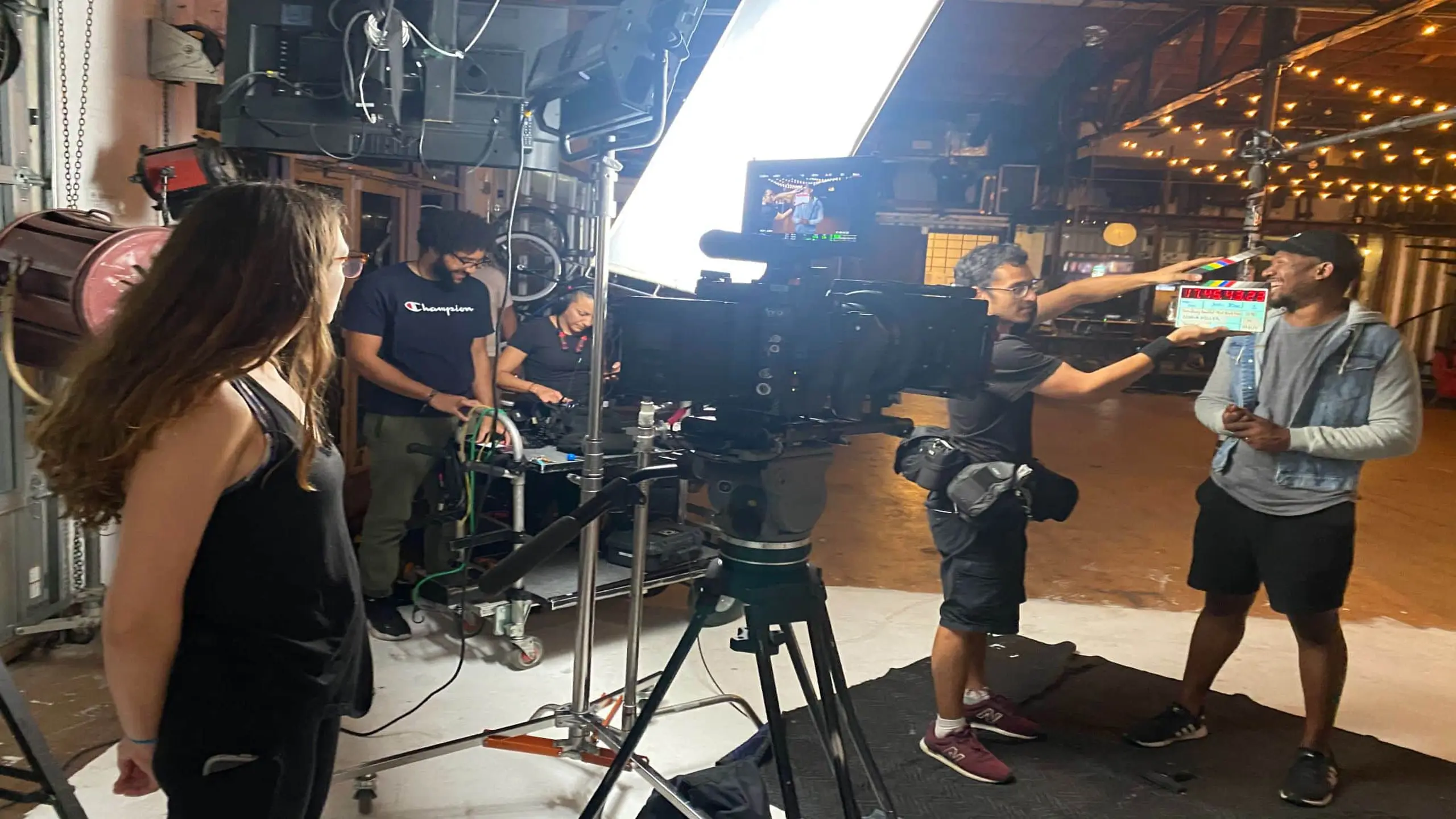
Podcasting has traditionally been an audio-only medium, but there is a growing trend toward incorporating visual elements to enhance the content and reach a wider audience. This can be achieved through various means, such as creating [video podcasts](https://c-istudios.com/video-audio-live-streaming/) on platforms like YouTube, using audiograms to create engaging visual assets from audio content, and providing visual descriptions to make podcasts more accessible to the visually impaired. Incorporating visual elements from the beginning, developing a visual framework, and using dynamic audio clips with visual descriptions can make podcasts more engaging and help creators stand out in the crowded podcasting world.
Audiograms, in particular, are a popular way to bridge the gap between audio and visual content. They are short video clips created from a static image layered with audio tracks, soundwaves, and text, making them easily shareable and engaging for different marketing platforms. By incorporating podcast artwork, audio snippets, and sound waves or subtitles, audiograms create an intriguing visual representation of the audio content, helping to capture the attention of desired audiences.
In addition, providing visual descriptions in podcasts can make the content more accessible to listeners with vision impairment. Visual descriptions use audio and words to provide a vivid, sensory experience, enhancing the podcasting experience for those who are blind or partially sighted. By describing elements such as colors, objects, body language, and facial expressions, hosts and voice actors can make the content more engaging and enjoyable for all listeners.
Overall, the incorporation of visual elements in podcasting, such as video podcasts, audiograms, and visual descriptions, can significantly enhance the listening experience, improve accessibility, and help podcasts stand out in the competitive landscape.
## Benefits of using visuals in a podcast
The benefits of using visuals in a podcast include:
1. Increased Engagement: Visual elements such as faces, body language, and engaging graphics play a crucial role in engaging the audience, significantly improving viewer attention.
1. Recognition and Community Building: Strong visual presence allows the podcast to stand out and increase recognition. When listeners can identify and connect with the podcast visually, it helps build a sense of community.
1. Wider Audience Appeal: Video podcasts benefit from an increased level of interest and engagement, attracting a wider audience drawn to a mix of presentation styles. People are inherently visual creatures, and video adds visual complexity and emotional depth that audio alone may not.
1. Accessibility: Visual descriptions make podcasts more accessible to listeners with vision impairment, providing a vivid, sensory experience that enhances the podcasting experience for those with sight loss.
1. Multimedia Content: Video podcasts can be repurposed into a series of content for promotion, offering behind-the-scenes footage and creating a more intimate and relatable experience for the audience.
In summary, incorporating visual elements in a podcast can lead to increased engagement, wider audience appeal, improved accessibility, and the creation of multimedia content for promotion.
## Examples of visual elements that can be incorporated into a podcast
Some examples of visual elements that can be incorporated into a podcast include:
1. Podcast Artwork: Creating compelling artwork for your podcast can help it stand out and increase recognition. It's important to keep the artwork simple, clear, and bold to make an impact. Additionally, creating a visual system and using templates can help maintain consistency and make the visual experience more engaging.
1. Audiograms: Audiograms are short video clips created from a static image layered with audio tracks, soundwaves, and text. They are a great way to bridge the gap between audio and visual content, making the podcast more shareable and engaging. Incorporating podcast logos, colors, and design elements creates a visual signature, fostering recognition among the audience.
1. Visual Descriptions: Visual descriptions are an important tool for making podcasts more accessible to listeners with vision impairment. They provide a vivid, sensory experience through the use of audio and words, enhancing the podcasting experience for those with sight loss. Visual descriptions should be detailed enough to provide a full understanding of the content without detracting from the flow of storytelling.
1. Video Podcasts: Video podcasts combine the audio storytelling of traditional podcasts with visual elements, such as faces, body language, and engaging graphics. They benefit from increased interest and engagement, attracting a wider audience drawn to a mix of presentation styles.
1. Podcast Graphics: In addition to podcast artwork and audiograms, other visual elements such as thumbnails for podcast episodes and branded colors can be used to create a visual identity for the podcast across different platforms, including social media.
These visual elements can enhance the podcasting experience, improve accessibility, and help creators attract and retain a larger audience.
## Examples of podcast audiograms
Here are some examples of successful podcast audiograms:
1. The Donut Shop Online Marketing Podcast: This podcast uses audiograms to promote its content. The audiograms are short clips of audio that can be used to share episodes on social media and are designed in a way that suits the style and theme of the podcast.
2. McKinsey & Company: This organization uses audiograms to promote its podcast. The audiograms use captivating images and post copy, some of which include waveforms and transcriptions.
1. Offshore Gamescast and Smartless: These are examples of podcasts that have used audiograms to promote their episodes on social media platforms such as Twitter and Instagram.
These examples demonstrate how podcasters are using audiograms to create engaging and shareable content for their marketing platforms, effectively promoting their podcast episodes.
## Tools or software that can be used to create visually appealing podcasts
Some tools and software that can be used to create visually appealing podcasts include:
1. Canva: Canva is a design tool that makes it easy to create engaging podcast artwork or promotional materials. It offers a user-friendly interface and a wide range of templates and design elements.
1. Headliner: Headliner is a tool that allows you to create audiograms, which are visual representations of short audio clips from podcast episodes. It enables the incorporation of podcast logos, colors, and design elements to create a visual signature, fostering recognition.
1. Audacity: Audacity is a free tool for recording and editing audio, suitable for beginners. It provides basic functions for recording and editing audio tracks, making it a good option for those starting out in podcasting.
These tools can help podcasters create visually appealing content, including artwork, audiograms, and other promotional materials, to enhance the overall podcasting experience for their audience.
## Best practices for designing podcast artwork
Some best practices for designing podcast artwork include:
1. Reflect Your Show's Story and Theme: The artwork should give a decent idea of the podcast's tone, subject, and genre at a glance. It should be a visual representation of the show's [story and theme](https://c-istudios.com/creative-marketing-services/), reflecting what's unique about the podcast.
1. Use Clear and Bold Visuals: Clear and bold visuals are more effective, as they help break through the clutter and make the artwork more engaging.
1. Maintain Readability: When designing cover art, it's best to err on the side of readability. Avoid overly distracting and flashy fonts, and ensure that the text is easy to read, especially when the artwork is scaled down.
1. Create a Visual System: In most cases, you need to create art beyond your Show Cover. As you create accompanying pieces of imagery, ask questions such as what the key elements to your visual system are, what story you want to tell to the listener, and how you can maintain consistency from one piece to the next.
1. Use High-Contrast Imagery: Simple, high-contrast imagery is recommended for the best podcast aesthetic. Avoid using too much text, different colors, and fonts that may clutter the artwork.
By following these best practices, podcasters can create artwork that effectively represents their show's story and theme, engages the audience, and maintains readability across different platforms.
## Examples of podcast artwork that effectively convey the show's content or theme
Some examples of podcast artwork that effectively convey the show's content or theme include:
1. The Book Review: The New York Times' "The Book Review" podcast artwork is a perfect example of using colors to create a balanced and eye-catching design with various focal points and the correct combination of colors. This artwork effectively communicates the essence of the podcast, making it visually appealing and engaging.
1. Book and Album Covers: The world of book and album cover design offers a wealth of inspiration for podcasters. Analyzing cover designs in different genres can spark ideas for creating compelling and visually striking cover art. Podcasters can gather inspiration from diverse art styles, techniques, and concepts, which can be translated into effective podcast artwork.
These examples demonstrate how podcast artwork can effectively convey the content and genre of a podcast, making it instantly understandable and visually appealing. By using colors, balanced designs, and the correct combination of visual elements, podcasters can create artwork that effectively represents their show's story and theme.
## How to incorporate the show's branding into podcast artwork
To incorporate the show's [branding](https://c-istudios.com/branding-and-graphic-design-services/) into podcast artwork, consider the following strategies:
1. Use Consistent Branding Elements: Apply consistent branding elements, such as color schemes, fonts, and logo usage, across all episodes and promotional materials to establish a strong and cohesive brand identity.
1. Incorporate the Podcast Logo: If available, incorporate the podcast logo or brand elements into the cover art to reinforce the podcast's identity and make it more recognizable.
1. Reflect the Larger Brand: If the podcast is part of a larger brand, ensure that the artwork is in line with the overall branding of the organization. This involves using the same imagery, typefaces, colors, or the inclusion of a familiar logo to maintain consistency and make the show clearly identifiable.
By incorporating these strategies, podcasters can create artwork that effectively reflects the show's branding, making it more recognizable and memorable for the audience.
## Common mistakes to avoid when creating visuals for podcasts
When creating visuals for podcasts, it's important to avoid common mistakes to ensure the content is engaging and effective. Some common mistakes to avoid include:
1. Overloading Visual Elements: Avoid cramming too much information into a small space, as this can overwhelm the viewer. Clear and bold visuals are more effective, and reducing the amount of visual elements can help break through the clutter.
1. Lack of Consistency: While it's important to balance elements of consistency with variation, creating a monotonous visual experience should be avoided. Maintaining a visual system and using templates can help achieve consistency while avoiding monotony.
1. Ignoring Video and Visuals: In a world where humans are inherently visual creatures, ignoring the potential of video and visuals can be a mistake. Adding video and visuals to a podcast can significantly increase engagement and audience appeal.
1. Underestimating the Power of Audiograms: Audiograms are a powerful tool for promoting podcast episodes, and underestimating their potential can be a mistake. Incorporating podcast branding elements and encouraging sharing can significantly enhance the reach and impact of the content.
1. Lack of Visual Identity: Failing to create a visual identity for the podcast, including consistent podcast graphics and artwork, can make it harder for the audience to identify and connect with the content. Developing a visual identity and using podcast graphics effectively can help build recognition and community.
By avoiding these common mistakes and following best practices, podcasters can create visually appealing content that effectively engages their audience and enhances the overall podcasting experience.
## Work with C&I Studios
If you are planning a project like this, our team can take it from concept to final delivery. Explore our [video production services](https://c-istudios.com/video-production-services/), browse [our work](https://c-istudios.com/our-work/) to see how we tell brand stories, and [get in touch](https://c-istudios.com/contact/) when you are ready to start.
Originally published December 14, 2023
---
*This content is from [C&I Studios](https://c-istudios.com), a full-service production company.*
---
# Location Scouting: Choosing the Perfect Settings for Your TV Production
> Published: December 13, 2023
> Categories: Film & TV
> Source: https://c-istudios.com/location-scouting-choosing-the-perfect-settings-for-your-tv-production/
---
.cib{--paper:#1b1d1f;--ink:#fff;--body:#d5d7d9;--muted:#8b9096;--line:rgba(255,255,255,.12);--thumb:#2b2e31;--card:#212426;--accent:#c02b0a;--blue:#5B8FA8;--serif:'Playfair Display',Georgia,serif;--sans:'Poppins',-apple-system,sans-serif;--measure:900px;background:var(--paper);color:var(--body);font-family:var(--sans);line-height:1.6;position:relative;left:50%;transform:translateX(-50%);width:90vw;max-width:1920px}
.cib *{box-sizing:border-box}
.cib .kicker{max-width:var(--measure);margin:58px auto 0;padding:0 22px;font-size:12.5px;font-weight:700;letter-spacing:2.5px;text-transform:uppercase;color:var(--blue)}
.cib h1.cibh1{text-wrap:balance;font-family:var(--serif);font-weight:500;font-size:clamp(46px,6vw,72px);line-height:1.08;color:var(--ink);max-width:var(--measure);margin:18px auto 0;padding:0 22px;letter-spacing:-.5px}
.cib .metarow{max-width:var(--measure);margin:20px auto 0;padding:0 22px;color:var(--muted);font-size:14px}
.cib .hero{position:relative;width:100%;height:0;padding-bottom:56.25%;overflow:hidden;margin:48px auto 0;border-top:1px solid var(--line);border-bottom:1px solid var(--line)}
.cib .hero .ph{width:100%;aspect-ratio:16/9;background:var(--thumb);border-top:1px solid var(--line);border-bottom:1px solid var(--line);display:flex;align-items:center;justify-content:center;color:#7d8288;font-size:13px;text-align:center;padding:0 20px}
.cib .body{max-width:var(--measure);margin:12px auto 0;padding:52px 22px 6px}
.cib .body.lead p:first-child{font-size:23px;line-height:1.62;color:var(--ink)}
.cib .body p{font-size:18.5px;line-height:1.85;margin:0 0 30px;color:var(--body)}
.cib .body h2{text-wrap:balance;font-family:var(--serif);font-weight:500;font-size:clamp(32px,4vw,48px);line-height:1.22;color:var(--ink);margin:70px 0 20px;letter-spacing:-.3px}
.cib .body h3{text-wrap:balance;font-family:var(--sans);font-weight:600;font-size:22px;color:var(--ink);margin:38px 0 8px}
.cib .body a{color:var(--ink);text-decoration:underline;text-decoration-color:rgba(255,255,255,.4);text-underline-offset:3px}
.cib .body a:hover{text-decoration-color:var(--ink)}
.cib .ctable{width:100%;border-collapse:collapse;margin:16px 0 30px;font-size:16px}
.cib .ctable th{background:#000;color:#fff;text-align:left;padding:10px 12px;font-family:var(--sans)}
.cib .ctable td{padding:10px 12px;border-bottom:1px solid var(--line);color:var(--body)}
.cib .inimg{position:relative;width:100%;height:0;padding-bottom:56.25%;overflow:hidden;margin:72px auto;border-top:1px solid var(--line);border-bottom:1px solid var(--line)}
.cib .inimg .ph{width:100%;aspect-ratio:16/9;background:var(--thumb);border-top:1px solid var(--line);border-bottom:1px solid var(--line);display:flex;align-items:center;justify-content:center;color:#7d8288;font-size:13px}
.cib .origpub{max-width:var(--measure);margin:60px auto 0;padding:26px 22px 0;border-top:1px solid var(--line);color:var(--muted);font-size:13.5px}
.cib .related{max-width:1200px;margin:64px auto 0;padding:34px 22px 76px}
.cib .related h3{font-family:var(--sans);font-size:12.5px;letter-spacing:2px;text-transform:uppercase;color:var(--ink);margin:0 0 24px}
.cib .grid{display:grid;grid-template-columns:repeat(3,1fr);gap:28px}
.cib .rc{background:var(--card);border:1px solid var(--line);display:block;text-decoration:none;color:inherit;transition:border-color .15s}
.cib a.rc:hover{border-color:rgba(255,255,255,.5)}
.cib .rc .thumb{position:relative;width:100%;height:0;padding-bottom:56.25%;background:var(--thumb);overflow:hidden}
.cib .rc .thumb img{position:absolute!important;top:0!important;left:0!important;width:100%!important;height:100%!important;object-fit:cover!important;margin:0!important}
.cib .rc .cc{padding:14px 15px 17px}
.cib .rc .rt{font-family:var(--serif);font-weight:500;font-size:16px;line-height:1.3;color:var(--ink);margin:0 0 6px}
.cib .rc .rm{font-size:11px;letter-spacing:1px;text-transform:uppercase;color:var(--muted)}
.cib img{margin:0!important;padding:0!important;display:block!important;vertical-align:top;max-width:100%}
.cib .hero img,.cib .inimg img{position:absolute!important;top:0!important;left:0!important;width:100%!important;height:100%!important;object-fit:cover!important;margin:0!important;padding:0!important;border:0!important;display:block!important;aspect-ratio:auto!important}
.cib .hero+.body{padding-top:36px}
@media(max-width:760px){.cib .grid{grid-template-columns:1fr}.cib .body h2{margin:52px 0 16px}.cib .body p{font-size:17.5px}.cib .inimg,.cib .hero{margin-top:44px}}
.cib .vembed{max-width:var(--measure);margin:44px auto;padding:0 22px}.cib .vembed .vwrap{position:relative;width:100%;height:0;padding-bottom:56.25%}.cib .vembed .vwrap iframe{position:absolute;top:0;left:0;width:100%;height:100%;border:0}
Film & TV
# Location Scouting. Choosing the Perfect Settings for Your TV Production
3 min read
Location scouting is a crucial aspect of [TV and film production](https://c-istudios.com/), as it involves finding real places to serve as the fictional locations described in a screenplay. The right location supports the narrative and helps to create a believable world.
A location scout's primary job is to find settings best suited for a particular scene or production by breaking down the script and consulting with the production manager, director, and/or writer to ensure the locations fulfill their vision for the project. When scouting for locations, it's essential to consider factors such as the script, budget, aesthetic appeal, accessibility, safety, lighting conditions, noise levels, permits and permissions, availability for shooting dates, and cost.
By following a step-by-step process, filmmakers can ensure they find the perfect locations to bring their creative vision to life.
## Factors to consider when scouting locations for TV production
When scouting locations for [TV production](https://c-istudios.com/film-and-tv-production/), several factors should be considered to ensure the suitability of the chosen settings. These factors include:
1. Script and Creative Vision: The locations should align with the script and the creative vision of the production. It's essential to consider the genre, tone, and themes of the TV show to ensure the locations convey the intended message.
1. Budget and Schedule: Establishing a clear budget for location scouting is vital. It's important to prioritize locations that align with the creative vision while staying within budget. The constraints of the project's budget and shooting schedule heavily influence the feasibility of potential locations.
1. Aesthetic Appeal and Safety: The locations should have the desired visual appeal and should be safe for the cast and crew. Factors such as lighting conditions, noise levels, and overall aesthetic quality are crucial considerations.
1. Accessibility and Permissions: The accessibility of the locations for the cast, crew, and equipment is an important factor. Additionally, obtaining the necessary permits and permissions for filming at the chosen locations is essential.
1. Availability and Cost: The availability of the locations for the required shooting dates and the overall cost, including any location fees, should be carefully evaluated.
By considering these factors, the production team can ensure that the chosen locations are well-suited for the TV production, align with the creative vision, and are feasible within the allocated budget and schedule.
## How to determine the suitability of a location for TV production
To determine the suitability of a location for TV production, several factors should be evaluated. These factors include:
1. Purpose and Style: The location should match the genre, theme, and atmosphere of the production. For example, a horror film may require a dark and isolated setting, while a comedy may need a bright and lively location.
1. Practicality and Accessibility: Consider the practicality and accessibility of the location, including how easy it is to get there, the space and [equipment](https://c-istudios.com/video-production-gear-list/) needed, and any logistical challenges such as remote access and availability of power.
1. Aesthetic Appeal and Safety: Evaluate the visual appeal, lighting conditions, noise levels, and the safety and security of the location. It's important to ensure that the location aligns with the creative vision and is safe for the cast and crew.
1. Permissions and Cost: Obtain the necessary permits and permissions for the location and consider the overall cost, including any location fees. It's essential to prioritize locations that align with the creative vision while staying within budget.
By carefully considering these factors, the production team can effectively evaluate the suitability of potential locations for TV production, ensuring that they align with the creative vision, are feasible within the allocated budget, and contribute to the overall quality of the production.
## Common mistakes to avoid when scouting locations for TV production
When scouting locations for TV production, it's important to avoid common mistakes that can impact the quality and efficiency of the production. Some of these mistakes include:
1. Insufficient Research: Failing to conduct thorough research on the locations being considered. This includes understanding the history, culture, geography, climate, and architecture of the place, and how it relates to the story, characters, and themes of the film.
1. Ignoring Noise Levels: Overlooking potential noise issues at a location, such as being in the flight path of an airport or near a noisy highway. It's essential to consider potential noise disturbances that could affect the quality of the audio in the production.
1. Lack of Budget and Schedule Consideration: Not adequately considering the budget and schedule of the production. Location scouting can be costly and time-consuming, so it's important to align potential locations with the available resources and shooting timeline.
1. Inadequate Permissions and Documentation: Failing to obtain the necessary permits and permissions for the chosen locations. It's crucial to ensure that all legal and logistical requirements are met to avoid issues during the production.
By being mindful of these common mistakes, the location scouting process can be more effective, leading to the selection of suitable and practical locations for TV production.
## How to research a location before scouting it for TV production
Before scouting a location for TV production, it's essential to conduct thorough research to ensure the suitability of the potential settings. Here are the steps to research a location before scouting:
1. Define Your Vision: Have a clear vision of your TV production, including the genre, tone, and themes you want to convey. This will serve as a foundation for your location scouting process.
1. Determine Your Budget: Establish a budget for location scouting, considering expenses such as travel costs, permits, and location fees. Prioritize locations that align with your vision while staying within budget.
1. Research and Brainstorm: Watch films, TV shows, or commercials with a similar look and feel to your project. Make note of the locations used and any details that stand out. Additionally, brainstorm with your team and seek their input on possible locations.
1. Create a Location Checklist: Develop a checklist of essential criteria for your locations, including factors such as aesthetic appeal, accessibility, safety, and lighting conditions.
1. Document Everything: Keep detailed records of your location research, including photos, notes, and any relevant details about the potential locations. This documentation will be valuable when making decisions about which locations to scout in person.
By following these steps, you can conduct comprehensive research to identify potential locations that align with your creative vision and production requirements.
## Online resources for researching a location for TV production
When researching locations for TV production, several [online resources](https://c-istudios.com/studio-rentals/) can be valuable for finding and evaluating potential settings. Some of these resources include:
1. Location-Specific Platforms: Online platforms such as Location Hub, Peerspace, and Wrapal allow users to browse and book locations that match their criteria. These platforms can provide a wide range of options for different types of productions.
1. Google Maps, Street View, and Google Earth: These tools can be used to explore different areas, understand the geography, assess traffic and landmarks, and plan routes and schedules. They provide a convenient way to virtually visit and assess potential locations.
1. Social Media, Blogs, and Forums: These platforms can be sources of photos, videos, reviews, and recommendations of potential locations from other filmmakers and locals. They can offer valuable insights and perspectives on various settings.
1. Online Articles and Guides: Websites such as StudioBinder and Wrapbook offer articles and guides on location scouting, providing essential tips and resources for researching and evaluating potential locations.
By utilizing these online resources, location scouts and production teams can effectively research and identify suitable locations for TV production, ultimately contributing to the success of the project.
## Helpful blogs for researching a location for TV production
When researching locations for TV production, several online resources can be valuable for finding and evaluating potential settings. Some of these resources include:
1. Wrapbook: The Wrapbook blog provides a comprehensive guide to location scouting for film and television, including the importance of considering each location from multiple angles and the influence of a project's budget and shooting schedule on the feasibility of potential locations.
1. Evercast Blog: The Evercast Blog offers 10 tips for finding the perfect location for a TV production, emphasizing the importance of using the script as a guideline, accounting for weather and seasons, and taking detailed notes during location scouts.
1. StudioBinder: StudioBinder's blog presents 11 essential location scouting tips, covering the importance of location scouting in [video production](https://c-istudios.com/video-production-services/), the impact of the filming region on the scouting process, and the need to consider permits, fees, and logistics when finalizing locations for a shoot.
1. The Michael Group: The Michael Group's article highlights the importance of location scouting in finding the perfect spot for a production, emphasizing the need for location scouts to stick to the script and understand the motives behind various scenes to choose settings that emphasize the story's setting.
1. Yamdu: Yamdu's blog provides a guide to successful location scouting, offering insights into factors to consider, such as cost, proximity, and suitability, and the technical, logistical, and artistic preparation of filming locations for shooting.
By utilizing these online resources, location scouts and production teams can effectively research and identify suitable locations for TV production, ultimately contributing to the success of the project.
## How to prepare for a location scout
To prepare for a location scout for a TV production, consider the following tips:
1. Use the Script as a Guideline: Carefully review the script to understand the specific requirements for each scene you plan to shoot. This will help you have a clear picture of the kind of location you'll need for each scene[.](https://www.evercast.us/blog/location-scouting)
1. Account for Weather and Seasons: Factor in the weather and seasons when scouting locations. Take detailed notes about the location and its features, as you may only have one visit to the site before the day of the shoot.
1. Time Your Visit Properly: Ideally, scout the location at the time you will be shooting, and take photos. Let the production team know what the ideal shooting times would be.
1. Take Notes and Photos: During the scout, take detailed notes and capture photos and videos of the locations. This will help in the decision-making process and serve as a reference when discussing the options with the production team.
1. Factor in Cost, Proximity, and Suitability: Prepare the locations technically, logistically, and artistically for shooting. Consider the cost, proximity, and suitability of the locations to ensure they meet the demands of the script.
By following these steps, you can effectively prepare for a location scout, ultimately contributing to the success of the TV production.
### Tips for scouting locations that are outdoors
When scouting outdoor locations for a TV production, consider the following tips:
1. Capture Quick Shots and Take Detailed Notes: Use a digital camera or smartphone to take quick shots at each potential location and maintain a notebook listing each spot visited. This will help you remember what worked and share ideas with others back at the office.
1. Listen Carefully and Evaluate Logistics: Stand still at the location and listen for ambient and artificial noise. Additionally, evaluate the load-in and load-out logistics to ensure a smooth and successful shoot.
1. Document Natural Lighting: Take photos to document how various areas are naturally lit while scouting. This will help in predicting how the light will change and in creating a schedule of shots.
1. Factor in Cost, Proximity, and Suitability: Prepare the locations technically, logistically, and artistically for shooting. Consider the cost, proximity, and suitability of the locations to ensure they meet the demands of the script.
1. Scout at the Right Time and Follow the Sun: Be aware that outdoor lighting conditions can change. It's wise to check the spot on the day of the week and the time of day that you'll be shooting. Additionally, consider the changes in exterior illumination throughout the day.
By following these tips, you can effectively scout outdoor locations for a TV production, ultimately contributing to the success of the project.
## More Tips for scouting locations that are indoors
When scouting indoor locations for a TV production, consider the following tips:
1. Understand the Script: Carefully review the script to understand the specific requirements for each scene you plan to shoot. This will help you have a clear picture of the kind of location you'll need for each scene.
1. Check for Power Sources and Wattage Limits: Assess the availability of power sources and any wattage limits at the indoor locations. This is essential to ensure that the locations can support the technical needs of the production, such as lighting and equipment.
1. Take Detailed Notes and Photos: During the scout, take detailed notes and capture photos and videos of the indoor locations. This will help in the decision-making process and serve as a reference when discussing the options with the production team.
1. Factor in Cost, Proximity, and Suitability: Prepare the indoor locations technically, logistically, and artistically for shooting. Consider the cost, proximity, and suitability of the locations to ensure they meet the demands of the script.
1. Scout at the Right Time: Be aware that indoor lighting conditions can change based on the time of day. If possible, scout the locations at the same time of day you plan to shoot to understand how the light will interact with the space.
By following these tips, you can effectively scout indoor locations for a TV production, ultimately contributing to the success of the project.
## Work with C&I Studios
If you are planning a project like this, our team can take it from concept to final delivery. Explore our [film and TV production](https://c-istudios.com/film-and-tv-production/), browse [our work](https://c-istudios.com/our-work/) to see how we tell brand stories, and [get in touch](https://c-istudios.com/contact/) when you are ready to start.
Originally published December 13, 2023
---
*This content is from [C&I Studios](https://c-istudios.com), a full-service production company.*
---
# The Evolution of Television Formats: From Traditional to Streaming
> Published: December 13, 2023
> Categories: Film & TV
> Source: https://c-istudios.com/the-evolution-of-television-formats-from-traditional-to-streaming/
---
.cib{--paper:#1b1d1f;--ink:#fff;--body:#d5d7d9;--muted:#8b9096;--line:rgba(255,255,255,.12);--thumb:#2b2e31;--card:#212426;--accent:#c02b0a;--blue:#5B8FA8;--serif:'Playfair Display',Georgia,serif;--sans:'Poppins',-apple-system,sans-serif;--measure:900px;background:var(--paper);color:var(--body);font-family:var(--sans);line-height:1.6;position:relative;left:50%;transform:translateX(-50%);width:90vw;max-width:1920px}
.cib *{box-sizing:border-box}
.cib .kicker{max-width:var(--measure);margin:58px auto 0;padding:0 22px;font-size:12.5px;font-weight:700;letter-spacing:2.5px;text-transform:uppercase;color:var(--blue)}
.cib h1.cibh1{text-wrap:balance;font-family:var(--serif);font-weight:500;font-size:clamp(46px,6vw,72px);line-height:1.08;color:var(--ink);max-width:var(--measure);margin:18px auto 0;padding:0 22px;letter-spacing:-.5px}
.cib .metarow{max-width:var(--measure);margin:20px auto 0;padding:0 22px;color:var(--muted);font-size:14px}
.cib .hero{position:relative;width:100%;height:0;padding-bottom:56.25%;overflow:hidden;margin:48px auto 0;border-top:1px solid var(--line);border-bottom:1px solid var(--line)}
.cib .hero .ph{width:100%;aspect-ratio:16/9;background:var(--thumb);border-top:1px solid var(--line);border-bottom:1px solid var(--line);display:flex;align-items:center;justify-content:center;color:#7d8288;font-size:13px;text-align:center;padding:0 20px}
.cib .body{max-width:var(--measure);margin:12px auto 0;padding:52px 22px 6px}
.cib .body.lead p:first-child{font-size:23px;line-height:1.62;color:var(--ink)}
.cib .body p{font-size:18.5px;line-height:1.85;margin:0 0 30px;color:var(--body)}
.cib .body h2{text-wrap:balance;font-family:var(--serif);font-weight:500;font-size:clamp(32px,4vw,48px);line-height:1.22;color:var(--ink);margin:70px 0 20px;letter-spacing:-.3px}
.cib .body h3{text-wrap:balance;font-family:var(--sans);font-weight:600;font-size:22px;color:var(--ink);margin:38px 0 8px}
.cib .body a{color:var(--ink);text-decoration:underline;text-decoration-color:rgba(255,255,255,.4);text-underline-offset:3px}
.cib .body a:hover{text-decoration-color:var(--ink)}
.cib .ctable{width:100%;border-collapse:collapse;margin:16px 0 30px;font-size:16px}
.cib .ctable th{background:#000;color:#fff;text-align:left;padding:10px 12px;font-family:var(--sans)}
.cib .ctable td{padding:10px 12px;border-bottom:1px solid var(--line);color:var(--body)}
.cib .inimg{position:relative;width:100%;height:0;padding-bottom:56.25%;overflow:hidden;margin:72px auto;border-top:1px solid var(--line);border-bottom:1px solid var(--line)}
.cib .inimg .ph{width:100%;aspect-ratio:16/9;background:var(--thumb);border-top:1px solid var(--line);border-bottom:1px solid var(--line);display:flex;align-items:center;justify-content:center;color:#7d8288;font-size:13px}
.cib .origpub{max-width:var(--measure);margin:60px auto 0;padding:26px 22px 0;border-top:1px solid var(--line);color:var(--muted);font-size:13.5px}
.cib .related{max-width:1200px;margin:64px auto 0;padding:34px 22px 76px}
.cib .related h3{font-family:var(--sans);font-size:12.5px;letter-spacing:2px;text-transform:uppercase;color:var(--ink);margin:0 0 24px}
.cib .grid{display:grid;grid-template-columns:repeat(3,1fr);gap:28px}
.cib .rc{background:var(--card);border:1px solid var(--line);display:block;text-decoration:none;color:inherit;transition:border-color .15s}
.cib a.rc:hover{border-color:rgba(255,255,255,.5)}
.cib .rc .thumb{position:relative;width:100%;height:0;padding-bottom:56.25%;background:var(--thumb);overflow:hidden}
.cib .rc .thumb img{position:absolute!important;top:0!important;left:0!important;width:100%!important;height:100%!important;object-fit:cover!important;margin:0!important}
.cib .rc .cc{padding:14px 15px 17px}
.cib .rc .rt{font-family:var(--serif);font-weight:500;font-size:16px;line-height:1.3;color:var(--ink);margin:0 0 6px}
.cib .rc .rm{font-size:11px;letter-spacing:1px;text-transform:uppercase;color:var(--muted)}
.cib img{margin:0!important;padding:0!important;display:block!important;vertical-align:top;max-width:100%}
.cib .hero img,.cib .inimg img{position:absolute!important;top:0!important;left:0!important;width:100%!important;height:100%!important;object-fit:cover!important;margin:0!important;padding:0!important;border:0!important;display:block!important;aspect-ratio:auto!important}
.cib .hero+.body{padding-top:36px}
@media(max-width:760px){.cib .grid{grid-template-columns:1fr}.cib .body h2{margin:52px 0 16px}.cib .body p{font-size:17.5px}.cib .inimg,.cib .hero{margin-top:44px}}
.cib .vembed{max-width:var(--measure);margin:44px auto;padding:0 22px}.cib .vembed .vwrap{position:relative;width:100%;height:0;padding-bottom:56.25%}.cib .vembed .vwrap iframe{position:absolute;top:0;left:0;width:100%;height:100%;border:0}
Film & TV
# The Evolution of Television Formats. From Traditional to Streaming
7 min read
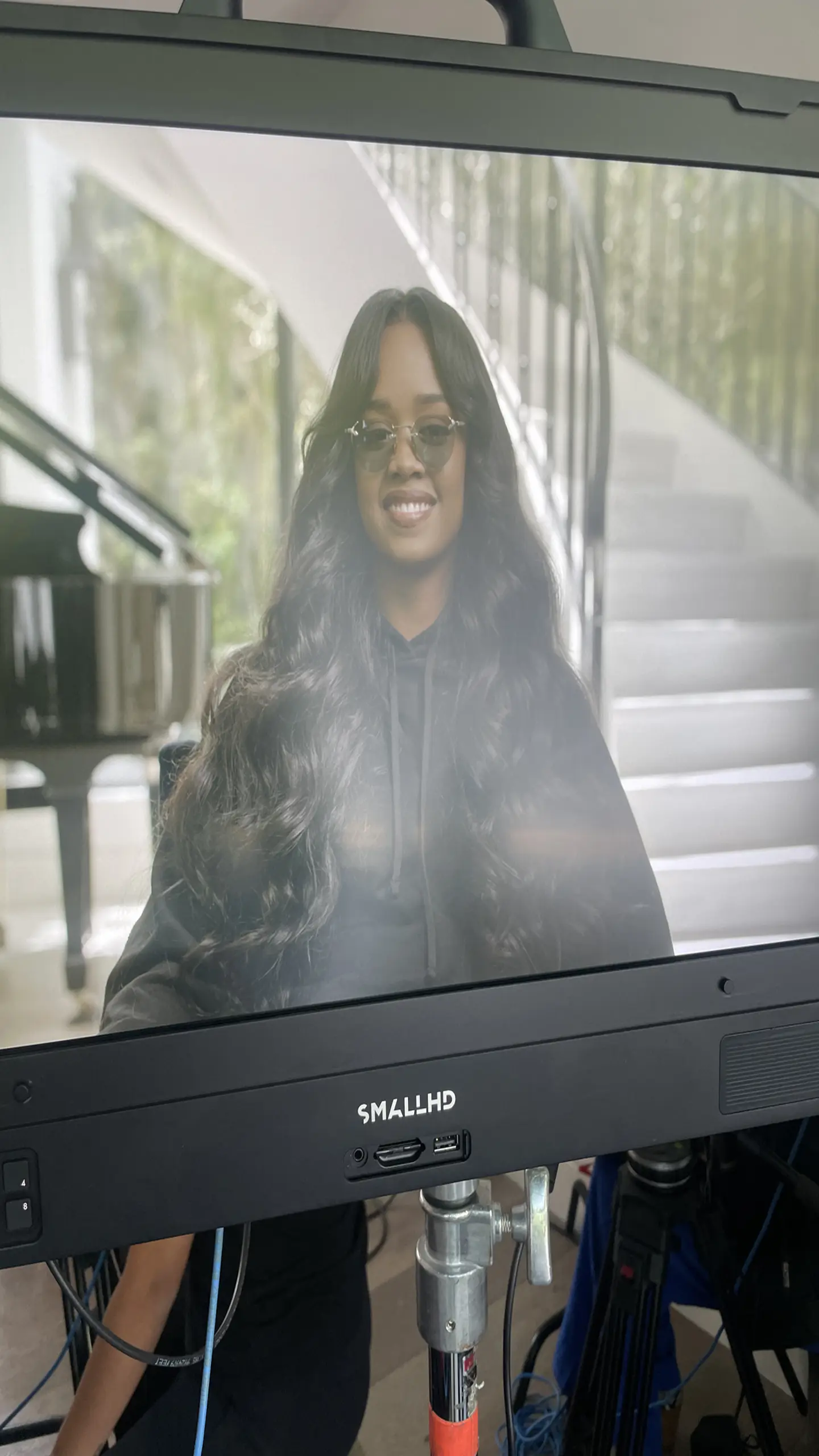
The evolution of television formats has been influenced by the rise of streaming platforms and changes in viewing habits. Traditional episodic television, where each episode is self-contained, has given way to more serialized storytelling, popularized by streaming services that release entire seasons at once. This shift has led to the development of [innovative TV formats](https://www.radiantvisionsystems.com/blog/high-resolution-tv-display-evolution-hd-8k-and-beyond), such as interactive formats, virtual reality experiences, and immersive storytelling, to cater to niche audiences and explore unconventional techniques.
Additionally, the evolution of television technology, from standard definition to high definition, 4K, and 8K, has played a significant role in shaping the TV viewing experience[.](https://www.radiantvisionsystems.com/blog/high-resolution-tv-display-evolution-hd-8k-and-beyond)
As a result, the future of TV formats holds exciting possibilities, with a focus on compelling storytelling, relatable characters, and audience engagement, as well as the potential for continued advancements in display technology and viewing experiences.
## Key milestones in the evolution of television technology
The evolution of television technology has been marked by several key milestones:
1. Introduction of Color Television (1950s): The introduction of color television sets marked a significant milestone in the evolution of television, leading to a shift in the way people consumed media.
1. Advent of Cable and Satellite TV (1980s-1990s): The advent of cable and satellite TV brought about a substantial change in the television industry, expanding the range of channels and programming available to viewers.
1. Transition to High-Definition TV (HDTV): The transition from analog to digital TV broadcasting led to the availability of high-definition TV, offering significantly improved picture quality and resolution.
1. Introduction of Remote Control: The introduction of the wireless TV remote control in 1956, known as the Space Command, revolutionized the way viewers interacted with their televisions, allowing them to change channels and control the TV from a distance.
1. Global Transition to Digital TV: The global transition from analog to digital TV broadcasting, which began in the late 1990s, was a significant breakthrough that paved the way for the availability of high-definition TV and improved picture and sound quality.
These milestones have played a vital role in shaping the evolution of television technology, from the early days of black and white sets to the high-definition, digital, and interactive TV experiences available today.
## Differences between traditional TV formats and streaming TV formats
Traditional TV formats and streaming TV formats differ in several key aspects:
1. Content Release: Traditional TV follows a scheduled programming model, releasing episodes at specific times, while streaming services often release entire seasons at once, allowing for on-demand viewing.
1. Advertising Revenue: Traditional TV networks primarily generate revenue through advertising, which is influenced by ratings and demographics, while streaming services rely on subscription fees and may have no or limited advertising.
1. Viewer Engagement: The shift to on-demand viewing has challenged the traditional scheduled programming model, forcing networks to find new ways to engage audiences and remain relevant in the digital age.
1. Content Variety: Streaming services offer a wide range of niche content that may not be available on traditional TV channels, allowing viewers to explore new interests and discover unique forms of entertainment.
1. Convenience and Flexibility: Streaming services provide convenience, interactivity, and niche content options, allowing viewers to watch content whenever they want, while traditional TV offers curated programming schedules and high-quality broadcasts.
In summary, the differences between traditional TV formats and streaming TV formats encompass content release models, revenue sources, viewer engagement strategies, content variety, and viewing convenience and flexibility.
## Most popular TV formats in the streaming era
The most popular TV formats in the streaming era include a wide range of content, from on-demand shows and movies to [live TV streaming](https://c-istudios.com/video-audio-live-streaming/). According to a study by Magnite, streaming TV is the most-watched form of TV across the EU5, with the majority of viewers preferring ad-supported options and 82% watching some form of ad-supported content[.](https://www.magnite.com/press/magnite-unveils-research-on-streaming-tvs-new-era/)
The study also found that ad-supported streaming TV viewers are watching just as many hours of programming as ad-free viewers, indicating that ads don't negatively impact engagement with streaming content.
Additionally, the availability of streaming platforms such as Netflix, Amazon Prime Video, Hulu, Disney+, and others has expanded the range of content available to viewers, offering a wide selection of shows and movies in an accessible and user-friendly manner.
The streaming era has also opened up new avenues for innovative TV formats that cater to niche audiences and explore unconventional storytelling techniques, such as interactive formats, virtual reality experiences, and immersive storytelling.
Therefore, the most popular TV formats in the streaming era encompass a diverse array of content, from on-demand and live TV streaming to ad-supported options and innovative storytelling techniques.
## Most popular streaming TV services
The most popular streaming TV services include:
1. Netflix: Despite a slight decrease in usage, Netflix remains the preferred streaming platform for most Americans, boasting about 238 million paid subscribers globally.
1. Amazon Prime Video: Amazon Prime Video has seen a similar, albeit less drastic, decrease in usage compared to Netflix.
1. Disney+: Disney+ has gained significant popularity, offering a wide range of content, including exclusive shows and movies from the Disney, Pixar, Marvel, Star Wars, and National Geographic brands.
1. Hulu: Hulu, which offers a variety of on-demand and live TV streaming options, has continued to be a popular choice, with 48.2 million paid subscribers as of the second quarter of 2023.
1. HBO Max: HBO Max, known for its extensive library of content, including original programming, movies, and classic TV shows, has also gained a substantial user base.
1. Paramount+: Formerly known as CBS All Access, Paramount+ offers a broad library of content, including exclusive shows in the Star Trek universe, and has seen increased traction since its rebranding.
These services offer a wide selection of content, including on-demand and live TV streaming, and have significantly influenced the way people consume television and movies in the streaming era.
## How the rise of streaming services has impacted traditional TV formats
The rise of streaming services has significantly impacted traditional TV formats in several ways. Firstly, it has led to a decline in traditional TV viewership as consumers shift towards the convenience and flexibility of streaming services, allowing them to watch their favorite shows whenever and wherever they want.
This has resulted in a decrease in the number of people watching traditional TV channels, leading to a decline in advertising revenue for these channels[.](https://timesofindia.indiatimes.com/blogs/voices/the-impact-of-streaming-services-on-traditional-tv-and-the-future-of-the-industry/?frmapp=yes&source=app)
Secondly, streaming services have caused a shift in the way content is produced and distributed, with more companies investing in creating original content and bypassing traditional TV networks to distribute their shows directly to consumers through streaming services.
Additionally, the availability of streaming services has led to a decline in theater attendance, partly due to the availability of films on streaming platforms, challenging the traditional distribution model of movies and altering the way films reach audiences.
Despite these changes, traditional TV broadcasting is still alive and well, with many people still enjoying the experience of watching live TV broadcasts.
## How the rise of streaming TV impacted traditional TV advertising
The rise of streaming TV has significantly impacted traditional TV advertising in several ways. Firstly, it has led to a decline in traditional TV viewership as consumers shift to streaming services for the convenience and flexibility they offer, resulting in a decrease in advertising revenue for traditional TV channels.
Secondly, the popularity of streaming-first networks has disrupted the traditional TV model, leading to a shift in advertising spend from linear TV to connected TV, with connected TV ad spend projected to increase as linear TV ad spend decreases.
Additionally, the coexistence of linear and streaming TV platforms has created new opportunities for advertisers to reach and engage audiences across different platforms, leading to a rewriting of the advertising playbook.
As a result, advertisers are having to adapt to the new landscape and find ways to reach their audiences through streaming platforms,
Overall, the impact of streaming TV on traditional TV advertising has been substantial, leading to changes in viewership patterns, advertising spend, and the way advertisers reach their audiences.
## How traditional TV networks have adapted to the rise of streaming services
The rise of streaming services has compelled traditional TV networks to adapt in order to remain relevant in the evolving media landscape. To address the increased competition and declining viewership, broadcasters have embraced streaming services and digital platforms. This adaptation has taken various forms, including providing content on their own streaming sites and creating partnerships with established streaming companies to reach a broader audience.
Additionally, traditional TV networks are experimenting with subscription-based models, offering premium content to subscribers for a monthly fee, and embracing the use of artificial intelligence and machine learning to analyze audience data and make programming decisions.
Furthermore, the convergence of digital platforms and television is expected to create a more integrated and seamless viewing experience, blurring the lines between streaming and traditional broadcasting services.
Overall, the impact of streaming services has been transformative, prompting traditional TV networks to explore alternative revenue models and integrate with streaming platforms to remain relevant[.](https://www.spoilertv.com/2023/10/the-true-impact-of-streaming-services.html?m=1)
## Challenges traditional TV networks face in adapting to streaming services
Traditional TV networks face several challenges in adapting to the rise of streaming services. The cord-cutting trend, where viewers cancel their cable or satellite subscriptions in favor of streaming services, has disrupted the traditional TV business model, leading to a decline in advertising revenue and a fragmented audience.
The exclusive content offered by streaming services has increased competition for original programming, putting pressure on traditional networks to produce compelling and innovative content. Additionally, the shift to on-demand viewing has challenged the traditional scheduled programming model, forcing networks to find new ways to engage audiences and [remain relevant in the digital age](https://c-istudios.com/creative-marketing-services/).
Furthermore, the convergence of digital platforms and television has blurred the lines between streaming and traditional broadcasting services, intensifying the battle for viewers' attention.
Despite these challenges, traditional TV networks are embracing streaming themselves or partnering with existing platforms to extend their reach and capture the growing segment of viewers who prefer on-demand content.
## How traditional TV networks and streaming services decide which content to invest in
Traditional TV networks and streaming services decide which content to invest in through different processes. The impact of streaming services on traditional television has been significant, leading to increased competition and changes in revenue sources. Streaming services have invested heavily in original content, with budgets for individual shows often exceeding those of traditional TV networks[.](https://www.centralcasting.com/difference-between-network-tv-cable-streaming/)
This has put pressure on traditional networks to allocate more resources to content creation in order to compete with the quality and variety of programming offered by streaming services.
Additionally, the shift to on-demand viewing has challenged the traditional scheduled programming model, requiring networks to adapt their content creation and distribution strategies to remain relevant in the digital age.
Overall, the rise of streaming services has led to a transformation in the television industry, with significant implications for the budget and approach to content creation by both traditional TV networks and streaming services.
## How traditional TV networks and streaming services measure the success of their content investments
Traditional TV networks and streaming services measure the success of their content investments through different methods. Traditional TV networks traditionally rely on ratings and viewership data to assess the performance of their shows, which directly impacts advertising revenue. Nielsen ratings have been a standard measurement for traditional TV networks, providing insights into the number of viewers and their demographics.
On the other hand, streaming services use a combination of metrics, including the number of subscribers, viewer engagement, and retention rates, to evaluate the success of their content investments. They also analyze data on how viewers interact with the platform, such as which shows they watch, how long they watch, and what prompts them to stop watching. This data is crucial for making decisions about which shows to renew, cancel, or invest in further.
Additionally, streaming services have the advantage of accessing real-time data, allowing them to make quick adjustments based on viewer behavior and preferences.
Overall, while traditional TV networks focus on ratings and advertising revenue, streaming services take a more comprehensive and data-driven approach to measure the success of their content investments.
## Work with C&I Studios
If you are planning a project like this, our team can take it from concept to final delivery. Explore our [film and TV production](https://c-istudios.com/film-and-tv-production/), browse [our work](https://c-istudios.com/our-work/) to see how we tell brand stories, and [get in touch](https://c-istudios.com/contact/) when you are ready to start.
Originally published December 13, 2023
---
*This content is from [C&I Studios](https://c-istudios.com), a full-service production company.*
---
# Post-Production Techniques: Enhancing Visuals and Sound for Impactful TV Shows
> Published: December 13, 2023
> Categories: Film & TV
> Source: https://c-istudios.com/post-production-techniques-enhancing-visuals-and-sound-for-impactful-tv-shows/
---
.cib{--paper:#1b1d1f;--ink:#fff;--body:#d5d7d9;--muted:#8b9096;--line:rgba(255,255,255,.12);--thumb:#2b2e31;--card:#212426;--accent:#c02b0a;--blue:#5B8FA8;--serif:'Playfair Display',Georgia,serif;--sans:'Poppins',-apple-system,sans-serif;--measure:900px;background:var(--paper);color:var(--body);font-family:var(--sans);line-height:1.6;position:relative;left:50%;transform:translateX(-50%);width:90vw;max-width:1920px}
.cib *{box-sizing:border-box}
.cib .kicker{max-width:var(--measure);margin:58px auto 0;padding:0 22px;font-size:12.5px;font-weight:700;letter-spacing:2.5px;text-transform:uppercase;color:var(--blue)}
.cib h1.cibh1{text-wrap:balance;font-family:var(--serif);font-weight:500;font-size:clamp(46px,6vw,72px);line-height:1.08;color:var(--ink);max-width:var(--measure);margin:18px auto 0;padding:0 22px;letter-spacing:-.5px}
.cib .metarow{max-width:var(--measure);margin:20px auto 0;padding:0 22px;color:var(--muted);font-size:14px}
.cib .hero{position:relative;width:100%;height:0;padding-bottom:56.25%;overflow:hidden;margin:48px auto 0;border-top:1px solid var(--line);border-bottom:1px solid var(--line)}
.cib .hero .ph{width:100%;aspect-ratio:16/9;background:var(--thumb);border-top:1px solid var(--line);border-bottom:1px solid var(--line);display:flex;align-items:center;justify-content:center;color:#7d8288;font-size:13px;text-align:center;padding:0 20px}
.cib .body{max-width:var(--measure);margin:12px auto 0;padding:52px 22px 6px}
.cib .body.lead p:first-child{font-size:23px;line-height:1.62;color:var(--ink)}
.cib .body p{font-size:18.5px;line-height:1.85;margin:0 0 30px;color:var(--body)}
.cib .body h2{text-wrap:balance;font-family:var(--serif);font-weight:500;font-size:clamp(32px,4vw,48px);line-height:1.22;color:var(--ink);margin:70px 0 20px;letter-spacing:-.3px}
.cib .body h3{text-wrap:balance;font-family:var(--sans);font-weight:600;font-size:22px;color:var(--ink);margin:38px 0 8px}
.cib .body a{color:var(--ink);text-decoration:underline;text-decoration-color:rgba(255,255,255,.4);text-underline-offset:3px}
.cib .body a:hover{text-decoration-color:var(--ink)}
.cib .ctable{width:100%;border-collapse:collapse;margin:16px 0 30px;font-size:16px}
.cib .ctable th{background:#000;color:#fff;text-align:left;padding:10px 12px;font-family:var(--sans)}
.cib .ctable td{padding:10px 12px;border-bottom:1px solid var(--line);color:var(--body)}
.cib .inimg{position:relative;width:100%;height:0;padding-bottom:56.25%;overflow:hidden;margin:72px auto;border-top:1px solid var(--line);border-bottom:1px solid var(--line)}
.cib .inimg .ph{width:100%;aspect-ratio:16/9;background:var(--thumb);border-top:1px solid var(--line);border-bottom:1px solid var(--line);display:flex;align-items:center;justify-content:center;color:#7d8288;font-size:13px}
.cib .origpub{max-width:var(--measure);margin:60px auto 0;padding:26px 22px 0;border-top:1px solid var(--line);color:var(--muted);font-size:13.5px}
.cib .related{max-width:1200px;margin:64px auto 0;padding:34px 22px 76px}
.cib .related h3{font-family:var(--sans);font-size:12.5px;letter-spacing:2px;text-transform:uppercase;color:var(--ink);margin:0 0 24px}
.cib .grid{display:grid;grid-template-columns:repeat(3,1fr);gap:28px}
.cib .rc{background:var(--card);border:1px solid var(--line);display:block;text-decoration:none;color:inherit;transition:border-color .15s}
.cib a.rc:hover{border-color:rgba(255,255,255,.5)}
.cib .rc .thumb{position:relative;width:100%;height:0;padding-bottom:56.25%;background:var(--thumb);overflow:hidden}
.cib .rc .thumb img{position:absolute!important;top:0!important;left:0!important;width:100%!important;height:100%!important;object-fit:cover!important;margin:0!important}
.cib .rc .cc{padding:14px 15px 17px}
.cib .rc .rt{font-family:var(--serif);font-weight:500;font-size:16px;line-height:1.3;color:var(--ink);margin:0 0 6px}
.cib .rc .rm{font-size:11px;letter-spacing:1px;text-transform:uppercase;color:var(--muted)}
.cib img{margin:0!important;padding:0!important;display:block!important;vertical-align:top;max-width:100%}
.cib .hero img,.cib .inimg img{position:absolute!important;top:0!important;left:0!important;width:100%!important;height:100%!important;object-fit:cover!important;margin:0!important;padding:0!important;border:0!important;display:block!important;aspect-ratio:auto!important}
.cib .hero+.body{padding-top:36px}
@media(max-width:760px){.cib .grid{grid-template-columns:1fr}.cib .body h2{margin:52px 0 16px}.cib .body p{font-size:17.5px}.cib .inimg,.cib .hero{margin-top:44px}}
.cib .vembed{max-width:var(--measure);margin:44px auto;padding:0 22px}.cib .vembed .vwrap{position:relative;width:100%;height:0;padding-bottom:56.25%}.cib .vembed .vwrap iframe{position:absolute;top:0;left:0;width:100%;height:100%;border:0}
Film & TV
# Post-Production Techniques. Enhancing Visuals and Sound for Impactful TV Shows
5 min read

Post-production is a crucial phase in the [creation of TV shows](https://c-istudios.com/), involving the enhancement of visuals and sound to create a polished final product. Here are some techniques used to enhance visuals and sound in post-production:
## Visual Enhancement
- Picture Editing: Involves cutting the image to create a seamless and engaging visual story.
- Visual Effects: Visual-effects artists work frame by frame to ensure that what viewers see on screen matches what they hear.
- Color Correction and Grading: This process ensures that the colors in the final product are visually consistent and aesthetically pleasing.
## Sound Enhancement
- Audio Editing: Involves balancing dialogue, foley, and other sound elements in the final mix.
- Sound Design: Shapes the sonic environment of a film or TV show through the combination of sound effects, foley, ADR, and digital manipulation.
- Music Editing: The composer builds a musical score to accompany the project.
These techniques, among others, are used to ensure that the visual and auditory elements of a TV show are of the [highest quality](https://c-istudios.com/studio-rentals/), ultimately enhancing the impact on the audience.
## Common visual effects used in post-production for TV shows
Some common visual effects used in post-production for TV shows include:
1. Computer Generated Imagery (CGI): This involves creating entirely digital worlds and characters or adding CG elements into live-action scenes.
1. Digital Effects: These can be live-action VFX elements, such as rain, fire, smoke, and explosions, that were captured separately from the background plate, or they could be computer-generated effects created with software such as Houdini.
1. Chroma Key: Also known as green screen, this technique is used to place actors in a variety of different locations without actually traveling to those places.
These visual effects techniques are commonly used in TV show post-production to create engaging and immersive visual experiences for the audience.
## How visual effects help to create a specific mood or atmosphere in TV shows
Visual effects help create a specific mood or atmosphere in TV shows by affecting the viewer's perception and emotion. They can be used to evoke a sense of wonder, mystery, or suspense by adding elements that are not normally seen or expected. Additionally, visual effects can change the color, lighting, or texture of a scene to create a specific mood, tone, or theme, thus influencing the audience's emotional response and overall experience
For example, different colors tend to incite different emotions, where blue can make a scene feel sad, and warm or cool lighting can give the audience a sense of calm or enhance the drama of a scene
Therefore, visual effects play a significant role in shaping the emotional and atmospheric impact of TV shows.
## How can picture editing be used to enhance the storytelling in TV shows
Picture editing in TV shows can be used to enhance storytelling by manipulating the lighting, color, and contrast to create the right mood and message for the audience. Video editors are conscious of how color and contrast can work together to achieve the desired mood and message. They can alter the scene's mood by manipulating highlights, shadows, and mid-tones, creating a sense of realism, mystery, or amplifying a certain mood by focusing on specific colors.
Additionally, picture editing can be used to motivate focus, and alter the pacing to craft a compelling narrative from the visuals
## Examples of TV shows that use visual effects to create a specific mood or atmosphere
It is well known that TV shows such as "Stranger Things," "Game of Thrones," and "Breaking Bad" use visual effects to create specific moods and atmospheres. For example, "Stranger Things" uses visual effects to create an eerie and otherworldly atmosphere, while "Game of Thrones" utilizes visual effects to enhance battle scenes and create immersive environments. Similarly, "Breaking Bad" employs visual effects to emphasize tension and drama in key moments, contributing to the overall storytelling and character development.
These [examples](https://c-istudios.com/our-work/) demonstrate how visual effects are effectively used to create specific moods and atmospheres in TV shows.
## How color correction can be used to enhance the visuals in TV shows
Color correction is a crucial process in TV show post-production that involves adjusting the colors to enhance storytelling and create a specific mood or atmosphere. It can be used to tweak existing colors, create new color palettes for each scene, and correct any problems with lighting or exposure. Color correction can also be employed to control the tonal range of an image, make colors stand out for dramatic effect, and create a feeling of warmth or coldness through different shades. Additionally, it has practical applications such as creating the illusion of day or night, setting a scene in a certain time period, hinting at symbolism, and conveying character arcs and relationships within a story.
By using color correction, TV show creators can enhance the overall aesthetics and storytelling, and create a specific atmosphere, mood, or emotion for the audience.
## Examples of TV shows that use color correction to create a specific mood or atmosphere
Color correction is a powerful tool used in TV shows to create specific moods and atmospheres. Here are some examples of TV shows that use color correction to achieve this:
1. The Matrix (1999): This film uses a distinct color palette dominated by green hues to create an otherworldly and futuristic atmosphere, symbolizing the virtual reality of the Matrix itself.
1. The Handmaid's Tale (TV series): The show utilizes color correction to create a dystopian and oppressive atmosphere, with a desaturated and muted color palette that reflects the story's themes and setting.
These examples demonstrate how color correction is effectively used to create specific moods and atmospheres in TV shows, influencing the audience's perception and emotional response.
## How sound effects contribute to the storytelling in TV shows
Sound effects contribute to the storytelling in TV shows in several ways. They play a crucial role in enhancing storytelling by adding depth and immersion to audiovisual content, evoking emotions, clarifying context, and capturing the audience's attention.
Sound effects can also help in representing the scene's location, actions of characters, and conveying emotions, making the scenes more realistic and believable.
Additionally, sound effects are essential for creating a convincing atmosphere and making the scenes feel more realistic by adding action sounds, such as footsteps, object interactions, and other subtle details.
Overall, sound effects are a powerful tool for enhancing the storytelling process in TV shows, as they help in conveying emotions, clarifying context, and making the scenes more immersive and realistic.
## Examples of tv shows that use sound effects to enhance storytelling
Some examples of TV shows that use sound effects to enhance storytelling include:
1. Stranger Things: This show uses sound effects to create a sense of unease and suspense, contributing to its eerie and otherworldly atmosphere.
1. Game of Thrones: Sound effects in this show are used to enhance battle scenes, create immersive environments, and evoke emotional responses from the audience.
1. Breaking Bad: Sound effects are utilized to emphasize the tension and drama in key moments, contributing to the overall storytelling and character development.
These TV shows demonstrate how sound effects are effectively used to enhance storytelling, evoke emotions, and create immersive experiences for the audience.
## How can music be used to enhance the mood or atmosphere of a scene in TV shows
Music can be used to enhance the mood or atmosphere of a scene in TV shows in several ways. It can be matched to the visual tone, reflecting the intended mood of the visuals. For example, a slow, atmospheric song can be used to create a calm or reflective mood, while a more upbeat song can enhance a scene's energy. Music can also be used to highlight the personality or mood of a character, and to create depth or perspective in a scene.
Additionally, the use of diegetic and non-diegetic music can influence the mood of a scene, with diegetic music being audible to the characters within the film and non-diegetic music being used to manipulate the mood of the film for the audience
## How TV shows choose which songs to use for a specific mood or atmosphere
TV shows choose songs to use for a specific mood or atmosphere based on various factors. Music supervisors often work closely with the show's creators to select songs that fit the emotion and arc of a scene. They consider the visual tone, character arcs, and major plotlines of the show to find songs that align with the intended mood and atmosphere.
Additionally, the budget can also influence the selection of music, as licensing fees for popular songs can be high, leading to the preference for up-and-coming bands, indie singer-songwriters, and unsigned acts. Ultimately, the goal is to find songs that enhance the storytelling and create the desired emotional impact for the audience.
## Examples of TV shows that use music to create a specific mood or atmosphere
Some TV shows that use music to create a specific mood or atmosphere include:
1. Stranger Things: The show uses a synth-heavy score to create a nostalgic and eerie atmosphere, reminiscent of 1980s sci-fi and horror films.
1. Our Flag Means Death: This show uses "The Chain" by Fleetwood Mac to enhance the mood of a scene, demonstrating the effective use of popular music to create a specific atmosphere.
1. Terminator: The Sarah Connor Chronicles: The use of "When the Man Comes Around" by Johnny Cash in a scene adds to the ominous and dark atmosphere, showcasing the power of music to enhance the mood of the scene.
These examples demonstrate how music is effectively used to create specific moods and atmospheres in TV shows, influencing the audience's emotional response and overall experience.
## Common audio post-production techniques used in TV
Some common audio post-production techniques used in TV shows include:
1. Dialogue Editing: This involves cleaning up and editing the production dialogue to ensure clarity and consistency.
2. Sound Effects: Adding and editing sound effects to enhance the auditory experience and create a specific mood or atmosphere.
3. Foley Artistry: Creating and editing Foley sounds to add realism and depth to the audio.
4. Music Editing and Mixing: Incorporating and mixing the musical score to complement the visuals and enhance the emotional impact of the show.
5. Sound Mixing and Mastering: Balancing and mastering all audio elements to create a cohesive and balanced audio experience for the audience.
## Professional tools used to enhance sound design
Some specific tools that a post-production company may use to enhance sound design include:
1. Digital Audio Workstations (DAWs): Industry-standard software such as Avid Pro Tools, Logic Pro, Adobe Audition, and others are essential for recording, editing, and mixing audio.
1. Sound Effects Libraries: Access to a comprehensive library of high-quality sound effects to enrich the auditory experience and create immersive soundscapes.
1. Microphones and Recorders: High-quality microphones and recorders are essential for capturing sound material used in sound design, including Foley and ambient sounds.
1. Studio Monitors and Headphones: These are crucial for accurate and detailed listening during the sound design process, ensuring the quality and balance of the audio.
1. Props and Sound Toys: Various objects and musical instruments are used to create unique and custom sounds, contributing to the creativity and originality of the sound design.
By utilizing these tools, a post-production company can achieve professional and immersive sound design, enhancing the overall quality of the audio in a video.
## Work with C&I Studios
If you are planning a project like this, our team can take it from concept to final delivery. Explore our [film and TV production](https://c-istudios.com/film-and-tv-production/), browse [our work](https://c-istudios.com/our-work/) to see how we tell brand stories, and [get in touch](https://c-istudios.com/contact/) when you are ready to start.
Originally published December 13, 2023
---
*This content is from [C&I Studios](https://c-istudios.com), a full-service production company.*
---
# Storytelling Across Platforms: Adapting Your Narrative for Different Media
> Published: December 11, 2023
> Categories: Film & TV
> Source: https://c-istudios.com/storytelling-across-platforms-adapting-your-narrative-for-different-media/
---
.cib{--paper:#1b1d1f;--ink:#fff;--body:#d5d7d9;--muted:#8b9096;--line:rgba(255,255,255,.12);--thumb:#2b2e31;--card:#212426;--accent:#c02b0a;--blue:#5B8FA8;--serif:'Playfair Display',Georgia,serif;--sans:'Poppins',-apple-system,sans-serif;--measure:900px;background:var(--paper);color:var(--body);font-family:var(--sans);line-height:1.6;position:relative;left:50%;transform:translateX(-50%);width:90vw;max-width:1920px}
.cib *{box-sizing:border-box}
.cib .kicker{max-width:var(--measure);margin:58px auto 0;padding:0 22px;font-size:12.5px;font-weight:700;letter-spacing:2.5px;text-transform:uppercase;color:var(--blue)}
.cib h1.cibh1{text-wrap:balance;font-family:var(--serif);font-weight:500;font-size:clamp(46px,6vw,72px);line-height:1.08;color:var(--ink);max-width:var(--measure);margin:18px auto 0;padding:0 22px;letter-spacing:-.5px}
.cib .metarow{max-width:var(--measure);margin:20px auto 0;padding:0 22px;color:var(--muted);font-size:14px}
.cib .hero{position:relative;width:100%;height:0;padding-bottom:56.25%;overflow:hidden;margin:48px auto 0;border-top:1px solid var(--line);border-bottom:1px solid var(--line)}
.cib .hero .ph{width:100%;aspect-ratio:16/9;background:var(--thumb);border-top:1px solid var(--line);border-bottom:1px solid var(--line);display:flex;align-items:center;justify-content:center;color:#7d8288;font-size:13px;text-align:center;padding:0 20px}
.cib .body{max-width:var(--measure);margin:12px auto 0;padding:52px 22px 6px}
.cib .body.lead p:first-child{font-size:23px;line-height:1.62;color:var(--ink)}
.cib .body p{font-size:18.5px;line-height:1.85;margin:0 0 30px;color:var(--body)}
.cib .body h2{text-wrap:balance;font-family:var(--serif);font-weight:500;font-size:clamp(32px,4vw,48px);line-height:1.22;color:var(--ink);margin:70px 0 20px;letter-spacing:-.3px}
.cib .body h3{text-wrap:balance;font-family:var(--sans);font-weight:600;font-size:22px;color:var(--ink);margin:38px 0 8px}
.cib .body a{color:var(--ink);text-decoration:underline;text-decoration-color:rgba(255,255,255,.4);text-underline-offset:3px}
.cib .body a:hover{text-decoration-color:var(--ink)}
.cib .ctable{width:100%;border-collapse:collapse;margin:16px 0 30px;font-size:16px}
.cib .ctable th{background:#000;color:#fff;text-align:left;padding:10px 12px;font-family:var(--sans)}
.cib .ctable td{padding:10px 12px;border-bottom:1px solid var(--line);color:var(--body)}
.cib .inimg{position:relative;width:100%;height:0;padding-bottom:56.25%;overflow:hidden;margin:72px auto;border-top:1px solid var(--line);border-bottom:1px solid var(--line)}
.cib .inimg .ph{width:100%;aspect-ratio:16/9;background:var(--thumb);border-top:1px solid var(--line);border-bottom:1px solid var(--line);display:flex;align-items:center;justify-content:center;color:#7d8288;font-size:13px}
.cib .origpub{max-width:var(--measure);margin:60px auto 0;padding:26px 22px 0;border-top:1px solid var(--line);color:var(--muted);font-size:13.5px}
.cib .related{max-width:1200px;margin:64px auto 0;padding:34px 22px 76px}
.cib .related h3{font-family:var(--sans);font-size:12.5px;letter-spacing:2px;text-transform:uppercase;color:var(--ink);margin:0 0 24px}
.cib .grid{display:grid;grid-template-columns:repeat(3,1fr);gap:28px}
.cib .rc{background:var(--card);border:1px solid var(--line);display:block;text-decoration:none;color:inherit;transition:border-color .15s}
.cib a.rc:hover{border-color:rgba(255,255,255,.5)}
.cib .rc .thumb{position:relative;width:100%;height:0;padding-bottom:56.25%;background:var(--thumb);overflow:hidden}
.cib .rc .thumb img{position:absolute!important;top:0!important;left:0!important;width:100%!important;height:100%!important;object-fit:cover!important;margin:0!important}
.cib .rc .cc{padding:14px 15px 17px}
.cib .rc .rt{font-family:var(--serif);font-weight:500;font-size:16px;line-height:1.3;color:var(--ink);margin:0 0 6px}
.cib .rc .rm{font-size:11px;letter-spacing:1px;text-transform:uppercase;color:var(--muted)}
.cib img{margin:0!important;padding:0!important;display:block!important;vertical-align:top;max-width:100%}
.cib .hero img,.cib .inimg img{position:absolute!important;top:0!important;left:0!important;width:100%!important;height:100%!important;object-fit:cover!important;margin:0!important;padding:0!important;border:0!important;display:block!important;aspect-ratio:auto!important}
.cib .hero+.body{padding-top:36px}
@media(max-width:760px){.cib .grid{grid-template-columns:1fr}.cib .body h2{margin:52px 0 16px}.cib .body p{font-size:17.5px}.cib .inimg,.cib .hero{margin-top:44px}}
.cib .vembed{max-width:var(--measure);margin:44px auto;padding:0 22px}.cib .vembed .vwrap{position:relative;width:100%;height:0;padding-bottom:56.25%}.cib .vembed .vwrap iframe{position:absolute;top:0;left:0;width:100%;height:100%;border:0}
Film & TV
# Storytelling Across Platforms. Adapting Your Narrative for Different Media
5 min read
Storytelling across different platforms and media, also known as transmedia and crossmedia storytelling, involves using multiple media platforms to tell a story or convey a message. Transmedia refers to the creation of a single story world that expands across different media forms, such as books, films, games, podcasts, comics, and social media, with each platform contributing to the overall narrative. On the other hand, crossmedia involves the adaptation or repurposing of a single story or content across different media forms, offering a similar or complementary experience for the audience[.](https://www.linkedin.com/advice/1/how-do-you-engage-retain-your-audience-across)
To adapt storytelling to different platforms and formats, it is essential to understand the unique strengths and limitations of each platform and tailor the storytelling accordingly. For example, on LinkedIn, storytelling can be used to share industry expertise and thought leadership, while on other platforms, the approach may be different. By adapting storytelling to different platforms and formats, a wider audience can be reached, stronger connections with followers can be built, and a more powerful impact with the message can be created[.](https://www.linkedin.com/advice/3/how-can-you-adapt-your-storytelling-different-platforms)
Transmedia storytelling is a more challenging form of storytelling that allows the audience to connect with the story in various ways, using multiple media and platforms such as books, films, TV shows, animations, video games, and social media. While it can be an expensive way of storytelling, it provides unique story components and engaging experiences. Transmedia storytelling can include campaigns shared on several social media platforms, the use of famous influencers or celebrities to promote stories, and the encouragement of audiences to share their own stories.
Storytelling across different platforms and media, whether through transmedia or crossmedia, offers a powerful way to engage and retain audiences by creating immersive and interactive experiences that transcend traditional media formats. Understanding the unique strengths and limitations of each platform and tailoring the storytelling accordingly is key to capturing the attention, emotions, and trust of the audience.
## Benefits of using multiple platforms for storytelling
Storytelling across multiple platforms offers several benefits, including reaching a wider audience, engaging audiences in a more immersive manner, and providing a deeper understanding of the story world. By utilizing various media platforms, storytellers can cater to different preferences and consumption habits, thus increasing accessibility and engagement.
Adapting storytelling to different platforms and formats allows for the creation of a more powerful impact with the message, reaching a wider audience, and building stronger connections with followers. Additionally, using cross-platform strategies that link and leverage content across different channels can enhance the overall impact of the storytelling. Therefore, the benefits of using multiple platforms for storytelling include reaching a wider audience, engaging audiences more deeply, and creating a more immersive and interactive experience.
## Best practices for creating engaging stories across multiple platforms
To create engaging stories across multiple platforms, several [best practices](https://c-istudios.com/creative-marketing-services/) can be followed. These include:
1. Understand the Audience: Tailor the story to the demographics, preferences, and behaviors of the audience on each platform. For example, use more visuals, hashtags, and emojis on Instagram, and more sound effects, anecdotes, and questions on a podcast[.](https://www.linkedin.com/advice/0/how-do-you-make-your-stories-work-all-platforms-skills-storytelling)
1. Adapt to Platform Strengths and Limitations: Understand the unique strengths and limitations of each platform and tailor the storytelling accordingly. For instance, on LinkedIn, use storytelling to share industry expertise and thought leadership.
1. Consistency in Brand Story: Define the brand story as the foundation of messaging across all platforms to maintain consistency.
1. Utilize Cross-Platform Strategies: Link and leverage content across different channels to enhance the overall impact of the storytelling.
Transmedia storytelling, which involves telling a single story across multiple platforms, offers the benefit of reaching a wider audience and catering to different preferences and consumption habits, thus increasing accessibility and engagement.
## Examples of transmedia storytelling campaigns
Some examples of transmedia storytelling campaigns include:
1. Marvel Cinematic Universe: This is a well-known example of transmedia storytelling, where the story unfolds across movies, TV shows, digital and traditional ads, and other touchpoints, creating an immersive story world that captivates the audience.
1. Star Wars: The Star Wars franchise has used a combination of films, screenplays, radio dramas, novelizations, and video games to build a vast 'canon' story world for fans to explore, engaging them across multiple media platforms.
1. Harry Potter: The Harry Potter series has been told across books, films, video games, and various other media, allowing fans to engage with the story world in different ways, contributing to the overall narrative experience.
These examples demonstrate how transmedia storytelling has been effectively utilized in entertainment and marketing contexts to create immersive and engaging narrative experiences across multiple platforms and formats.
## Benefits of using transmedia storytelling for marketing campaigns
Some benefits of using transmedia storytelling for marketing campaigns include:
1. Reaching a Wider Audience: By utilizing various media platforms, transmedia storytelling can cater to different preferences and consumption habits, allowing the story to be experienced in a multi-dimensional manner, thus reaching a wider audience.
1. Deeper Understanding of the Story World: Transmedia storytelling enables a deeper exploration of the story world, offering diverse perspectives and expanding the narrative, which can lead to a more profound understanding of the brand or product being marketed.
1. Fostering Audience Participation and Engagement: Transmedia narratives encourage audience participation and engagement, making the audience feel like an integral part of the story, thus fostering a sense of community and ownership.
1. Longevity and Brand Loyalty: A well-executed transmedia narrative has the potential for longevity, and the immersive nature of transmedia storytelling fosters a sense of belonging among audiences, leading to increased brand loyalty and advocacy.
1. Interactivity and Emotional Connection: Transmedia storytelling allows for interactivity with the audience, connecting with them in a more direct, personal, and emotional way, thus strengthening the bond between the audience and the brand or product.
Overall, transmedia storytelling offers several advantages for marketing campaigns, including reaching a wider audience, providing a deeper understanding of the story world, fostering audience participation and engagement, and strengthening brand loyalty and advocacy.
## How transmedia storytelling can help to engage with different target audiences
Transmedia storytelling can help engage with different target audiences in several ways:
1. Making Consumers Part of the Story: By involving consumers in the storytelling process, transmedia narratives foster a sense of community and ownership, making the audience feel like an integral part of the story, thus ensuring greater depth, perspective, and resonance with the audience.
1. Encouraging Audience Engagement and Discussion: Transmedia storytelling encourages the audience to engage with the content provided and discuss it in communities, which can be hugely beneficial for turning customers into fans. This approach can lead to more engagement, investment, and brand awareness, aiming to strengthen people's trust in the brand.
1. Reaching a Wider Audience with Diverse Preferences: Transmedia storytelling reaches a wider audience by catering to different preferences and consumption habits, allowing audiences to choose how they want to engage with the story. For instance, some individuals may prefer watching a film adaptation, while others may enjoy reading a novel or playing a video game set in the same story universe.
1. Fostering Audience Participation and Community: Transmedia and crossmedia can enhance the enjoyment and involvement of the audience with the story or content, as they can choose how and where to access it, and discover new aspects and perspectives. They can also foster a sense of community and participation, as they can share their opinions and experiences with other fans and creators.
In summary, transmedia storytelling can help engage with different target audiences by making consumers part of the story, encouraging audience engagement and discussion, reaching a wider audience with diverse preferences, and fostering audience participation and community.
## Common mistakes to avoid when creating a transmedia storytelling campaign
When creating a transmedia storytelling campaign, it's important to avoid common mistakes to ensure its effectiveness. Some common mistakes to avoid include:
1. Not Defining Objectives: Failing to set clear objectives for the campaign, including the target audience, desired outcomes, and how to measure success, can lead to an ineffective campaign.
1. Not Telling a Unified Story: Each platform should contribute to the overall narrative. If the narrative is fragmented or inconsistent across platforms, it will be difficult for audiences to engage with the story.
1. Ignoring Platform Constraints: Each platform has its own set of constraints, such as character count, image size, or video length. Ignoring these constraints can lead to an ineffective campaign.
1. Not Considering the Audience: It's important to understand who the audience is and what they're looking for when creating transmedia campaigns. This includes knowing what platforms they use, what kind of content appeals to them, and what their interests are.
1. Not Optimizing for Mobile: With more people using mobile devices to consume content, it's important to optimize transmedia campaigns for mobile, ensuring that content is easy to navigate on smaller devices.
By avoiding these common mistakes, advertisers and content creators can ensure that their transmedia storytelling campaigns are engaging, effective, and well-received by their target audiences.
## How to avoid overloading your audience with too much content in a transmedia storytelling campaign
To avoid overloading your audience with too much content in a transmedia storytelling campaign, consider the following strategies:
1. Make Consumers Part of the Story: Engage the audience by involving them in the storytelling process. This creates greater depth, perspective, and resonance with the audience, ensuring that they are an integral part of the story.
1. Think About What Will Resonate with the Audience: Consider the context in which the audience consumes, engages with, and shares the message. Tailor the content to resonate with the audience, taking into account their preferences and interests.
1. Keep Content Unique Across Platforms: Instead of repeating the same information on different platforms, use different parts of the story to match each platform's strengths. This ensures that the content remains engaging and valuable, without overwhelming the audience with redundant information.
With these strategies, you can avoid overloading your audience with excessive content and ensure that the transmedia storytelling campaign remains engaging and resonant across all platforms.
## How to determine which platforms are best suited for different types of content in a transmedia storytelling campaign
To determine which platforms are best suited for different types of content in a transmedia storytelling campaign, consider the following strategies:
1. Understand Platform Constraints: Each platform has its own set of constraints, such as character count, image size, or video length. It's important to consider these constraints when creating content for each channel.
1. Tailor Content to Platform Strengths: Instead of repeating the same information on different platforms, use different parts of the story to match each platform's strengths. For example, use more visuals, hashtags, and emojis on Instagram, and more sound effects, anecdotes, and questions on a podcast.
1. Consider Audience Preferences: Understand what platforms your target audience uses and what kind of content appeals to them. For example, if your audience frequents certain social media platforms like Twitter or Reddit, focus more on such platforms when distributing your content.
With these strategies, you can effectively determine which platforms are best suited for different types of content in a transmedia storytelling campaign, ensuring that the narrative remains engaging and resonant across all platforms.
## Platforms best suited for visual content in a transmedia storytelling campaign
Some examples of [platforms](https://c-istudios.com/social-media-marketing-services/) that are best suited for visual content in a transmedia storytelling campaign include:
1. Instagram: Known for its visual nature, Instagram is an ideal platform for sharing images and short videos that can be used to complement the overall transmedia narrative.
1. YouTube: As a video-centric platform, YouTube is well-suited for hosting longer-form visual content, such as web series, vlogs, and behind-the-scenes footage, which can contribute to the transmedia storytelling experience.
1. TikTok: This platform is ideal for sharing short, engaging visual content that can be used to provide quick glimpses into the transmedia narrative, or to create buzz and interest around the campaign.
2. Pinterest: Pinterest is a visual discovery platform, making it suitable for sharing visual content such as infographics, illustrations, and other visually appealing materials that can contribute to the transmedia storytelling experience.
By leveraging these platforms, content creators can effectively share visual content as part of a transmedia storytelling campaign, engaging audiences across various channels.
## How to ensure visual content is cohesive across different platforms in a transmedia storytelling campaign
To ensure that visual content is cohesive across different platforms in a transmedia storytelling campaign, consider the following strategies:
1. Define Core Story and Message: Begin by defining the core story or message and the target audience. Select the appropriate platforms and formats that best suit the story or message.
1. Design Content and Narrative for Each Platform: Tailor the content and narrative for each platform to ensure consistency and coherence across them. Consider the context in which the audience consumes, engages with, and shares the content, and tailor it to their preferences and interests.
1. Use a Common Style Guide and Canon: Ensure that your stories are consistent and coherent across different media platforms by using a common [style guide](https://c-istudios.com/branding-and-graphic-design-services/), timeline, and canon. This helps maintain a unified visual and narrative identity across all platforms.
1. Create Complementary and Additive Content: Ensure that your stories are complementary and additive, not redundant or contradictory, by using different perspectives, subplots, and genres. This allows the visual content to enhance and expand the overall narrative, providing unique and valuable experiences on each platform.
1. Tailor Content to Resonate with Each Platform's Audience: Instead of rehashing the same content over and over again in different formats, ensure that the visual content is unique and resonates with the audience on each platform. This can be achieved by considering the context in which the audience consumes, engages with, and shares the content, and tailoring it to their preferences and interests.
With these strategies, you can ensure that visual content remains cohesive across different platforms in a transmedia storytelling campaign, providing a unified and engaging narrative experience for the audience.
## Hiring C&I Studios to manage your multimedia storytelling compaign
Hiring [C&I Studios](https://c-istudios.com/), a film and marketing production company, to manage your crossmedia or transmedia storytelling campaign can be beneficial for several reasons:
1. Expertise in Storytelling Across Platforms: C&I Studios has experience in crafting narratives that unfold seamlessly across various media platforms, ensuring that the story remains engaging and coherent.
1. Utilization of Unique Strengths of Each Platform: C&I Studios can tailor content to resonate with the audience on each platform, considering the context in which the audience consumes, engages with, and shares the content, and tailoring it to their preferences and interests.
1. Creation of Complementary and Additive Content: C&I Studios can ensure that the stories are complementary and additive, not redundant or contradictory, by using different perspectives, subplots, and genres. This allows the content to enhance and expand the overall narrative, providing unique and valuable experiences on each platform.
1. Management of Production Across Platforms: C&I Studios can effectively manage production across different platforms, ensuring a cohesive and engaging narrative experience for the audience.
By leveraging the expertise of C&I Studios, brands can effectively execute crossmedia storytelling campaigns, reaching and engaging audiences in a more immersive and interactive manner.
[Contact C&I Studios](https://c-istudios.com/contact/) for a free consultation to get started today.
## Work with C&I Studios
If you are planning a project like this, our team can take it from concept to final delivery. Explore our [film and TV production](https://c-istudios.com/film-and-tv-production/), browse [our work](https://c-istudios.com/our-work/) to see how we tell brand stories, and [get in touch](https://c-istudios.com/contact/) when you are ready to start.
Originally published December 11, 2023
---
*This content is from [C&I Studios](https://c-istudios.com), a full-service production company.*
---
# The Impact of Augmented Reality on Advertising: Opportunities for Brands
> Published: December 11, 2023
> Categories: Commercial & Brand
> Source: https://c-istudios.com/the-impact-of-augmented-reality-on-advertising-opportunities-for-brands/
---
.cib{--paper:#1b1d1f;--ink:#fff;--body:#d5d7d9;--muted:#8b9096;--line:rgba(255,255,255,.12);--thumb:#2b2e31;--card:#212426;--accent:#c02b0a;--blue:#5B8FA8;--serif:'Playfair Display',Georgia,serif;--sans:'Poppins',-apple-system,sans-serif;--measure:900px;background:var(--paper);color:var(--body);font-family:var(--sans);line-height:1.6;position:relative;left:50%;transform:translateX(-50%);width:90vw;max-width:1920px}
.cib *{box-sizing:border-box}
.cib .kicker{max-width:var(--measure);margin:58px auto 0;padding:0 22px;font-size:12.5px;font-weight:700;letter-spacing:2.5px;text-transform:uppercase;color:var(--blue)}
.cib h1.cibh1{text-wrap:balance;font-family:var(--serif);font-weight:500;font-size:clamp(46px,6vw,72px);line-height:1.08;color:var(--ink);max-width:var(--measure);margin:18px auto 0;padding:0 22px;letter-spacing:-.5px}
.cib .metarow{max-width:var(--measure);margin:20px auto 0;padding:0 22px;color:var(--muted);font-size:14px}
.cib .hero{position:relative;width:100%;height:0;padding-bottom:56.25%;overflow:hidden;margin:48px auto 0;border-top:1px solid var(--line);border-bottom:1px solid var(--line)}
.cib .hero .ph{width:100%;aspect-ratio:16/9;background:var(--thumb);border-top:1px solid var(--line);border-bottom:1px solid var(--line);display:flex;align-items:center;justify-content:center;color:#7d8288;font-size:13px;text-align:center;padding:0 20px}
.cib .body{max-width:var(--measure);margin:12px auto 0;padding:52px 22px 6px}
.cib .body.lead p:first-child{font-size:23px;line-height:1.62;color:var(--ink)}
.cib .body p{font-size:18.5px;line-height:1.85;margin:0 0 30px;color:var(--body)}
.cib .body h2{text-wrap:balance;font-family:var(--serif);font-weight:500;font-size:clamp(32px,4vw,48px);line-height:1.22;color:var(--ink);margin:70px 0 20px;letter-spacing:-.3px}
.cib .body h3{text-wrap:balance;font-family:var(--sans);font-weight:600;font-size:22px;color:var(--ink);margin:38px 0 8px}
.cib .body a{color:var(--ink);text-decoration:underline;text-decoration-color:rgba(255,255,255,.4);text-underline-offset:3px}
.cib .body a:hover{text-decoration-color:var(--ink)}
.cib .ctable{width:100%;border-collapse:collapse;margin:16px 0 30px;font-size:16px}
.cib .ctable th{background:#000;color:#fff;text-align:left;padding:10px 12px;font-family:var(--sans)}
.cib .ctable td{padding:10px 12px;border-bottom:1px solid var(--line);color:var(--body)}
.cib .inimg{position:relative;width:100%;height:0;padding-bottom:56.25%;overflow:hidden;margin:72px auto;border-top:1px solid var(--line);border-bottom:1px solid var(--line)}
.cib .inimg .ph{width:100%;aspect-ratio:16/9;background:var(--thumb);border-top:1px solid var(--line);border-bottom:1px solid var(--line);display:flex;align-items:center;justify-content:center;color:#7d8288;font-size:13px}
.cib .origpub{max-width:var(--measure);margin:60px auto 0;padding:26px 22px 0;border-top:1px solid var(--line);color:var(--muted);font-size:13.5px}
.cib .related{max-width:1200px;margin:64px auto 0;padding:34px 22px 76px}
.cib .related h3{font-family:var(--sans);font-size:12.5px;letter-spacing:2px;text-transform:uppercase;color:var(--ink);margin:0 0 24px}
.cib .grid{display:grid;grid-template-columns:repeat(3,1fr);gap:28px}
.cib .rc{background:var(--card);border:1px solid var(--line);display:block;text-decoration:none;color:inherit;transition:border-color .15s}
.cib a.rc:hover{border-color:rgba(255,255,255,.5)}
.cib .rc .thumb{position:relative;width:100%;height:0;padding-bottom:56.25%;background:var(--thumb);overflow:hidden}
.cib .rc .thumb img{position:absolute!important;top:0!important;left:0!important;width:100%!important;height:100%!important;object-fit:cover!important;margin:0!important}
.cib .rc .cc{padding:14px 15px 17px}
.cib .rc .rt{font-family:var(--serif);font-weight:500;font-size:16px;line-height:1.3;color:var(--ink);margin:0 0 6px}
.cib .rc .rm{font-size:11px;letter-spacing:1px;text-transform:uppercase;color:var(--muted)}
.cib img{margin:0!important;padding:0!important;display:block!important;vertical-align:top;max-width:100%}
.cib .hero img,.cib .inimg img{position:absolute!important;top:0!important;left:0!important;width:100%!important;height:100%!important;object-fit:cover!important;margin:0!important;padding:0!important;border:0!important;display:block!important;aspect-ratio:auto!important}
.cib .hero+.body{padding-top:36px}
@media(max-width:760px){.cib .grid{grid-template-columns:1fr}.cib .body h2{margin:52px 0 16px}.cib .body p{font-size:17.5px}.cib .inimg,.cib .hero{margin-top:44px}}
.cib .vembed{max-width:var(--measure);margin:44px auto;padding:0 22px}.cib .vembed .vwrap{position:relative;width:100%;height:0;padding-bottom:56.25%}.cib .vembed .vwrap iframe{position:absolute;top:0;left:0;width:100%;height:100%;border:0}
Commercial & Brand
# The Impact of Augmented Reality on Advertising. Opportunities for Brands
3 min read

Augmented reality (AR) is an interactive experience that combines the real world with computer-generated content, enhancing the user's perception of the real world by overlaying digital information onto it. This digital information can include [visual elements, sound, and other sensory stimuli](https://c-istudios.com/our-work/), and is delivered through devices such as smartphones, tablets, and glasses.
AR alters the user's ongoing perception of a real-world environment, providing an immersive and interactive experience that can be used for a variety of purposes, from entertainment to decision-making and industrial applications. Unlike virtual reality, which creates a totally artificial environment, AR users experience a real-world environment with generated perceptual information overlaid on top of it. AR can be delivered in various formats, and its technology requires hardware components such as processors, sensors, displays, and input devices.
The primary benefit of AR is its ability to blend digital and 3D components with an individual's perception of the real world, offering a seamless integration of digital information with the user's environment in real time.
## The impact of augmented reality on advertising
Augmented reality (AR) is poised to have a significant impact on advertising, offering several benefits and opportunities for brands and marketers. Some of the key points include:
1. Enhanced Marketing Efforts: AR can be used to enhance marketing efforts by providing interactive advertising experiences that connect with customers on an emotional level. It allows for the delivery of interactive advertising experiences and the visualization of products in real-life, enabling customers to craft their experience around the products they are interested in.
1. Consumer Engagement and Information: AR advertising provides richer consumer experiences and more information about a brand, leading to positive consumer responses and helping advertising campaigns. It can be used to directly connect and interact with audiences like never before through digital marketing campaigns.
1. Impact on Consumer Choices: Studies have shown that AR advertising may have a significant impact on consumer choices, particularly for less well-known brands. When customers use AR to try products, they are more likely to make a purchase.
1. Immersive and Memorable Experiences: AR in advertising can lead to more leads, better conversion rates, and a higher return on investment (ROI) for the advertising campaign. It provides users and potential customers with an immersive, fun, informative, and memorable experience, allowing for new and exciting ways to interact with customers[.](https://audiencex.com/insights/the-power-of-ar-in-advertising/)
The impact of augmented reality on advertising is significant, offering benefits such as enhanced marketing efforts, richer consumer experiences, and the potential to influence consumer choices and lead to better conversion rates. As AR technology continues to evolve and become more widely adopted, it is expected to play a key role in the future of advertising.
## Benefits of using augmented reality in advertising
The benefits of using augmented reality in advertising are numerous and impactful. Some of the key benefits include:
1. Increased Engagement: AR allows for the creation of interactive experiences that are more engaging than traditional advertising methods. This increased engagement can lead to more leads, better conversion rates, and a higher return on investment for advertising campaigns.
1. Improved Customer Experience: AR technology enables marketers to provide customers with a unique and personalized experience. By using AR to create product demos, customers can try out products virtually before making a purchase, leading to improved customer experience and reduced likelihood of returns.
1. Enhanced Brand Awareness: AR can be used to create unique and memorable experiences that help build [brand awareness](https://c-istudios.com/branding-and-graphic-design-services/). AR campaigns can be shared on social media, creating a buzz around the brand and increasing its reach.
1. Increased Sales: Studies have shown that AR advertising may have a significant impact on consumer choices, leading to increased sales, particularly for less well-known brands.
1. Cost-Effectiveness: AR can reduce the need for physical product demos and store displays, which can be costly to produce and maintain. By using AR, marketers can create virtual demos and displays, reducing the need for physical inventory.
The benefits of using augmented reality in advertising include increased engagement, improved customer experience, enhanced brand awareness, increased sales, and cost-effectiveness. As AR technology continues to evolve and become more widely adopted, it is expected to play a key role in the future of advertising.
## How AR advertising campaigns can improve customer engagement
Augmented reality advertising campaigns can be used to improve customer engagement in several ways:
1. Higher Brand Recall: AR experiences can make the advertising content more memorable, leading to increased brand recall. When consumers are attracted by AR advertising, they are more likely to remember the ad and the product, leading to higher engagement and brand recall.
1. Interactive Ads: AR enables the creation of interactive ads that provide a more engaging experience for users. The interactive nature of AR ads can lead to higher engagement rates, as users actively participate in the experience[.](https://poplar.studio/blog/augmented-reality-advertising/)
1. Unique and Memorable Experiences: AR advertising provides unique and memorable experiences for customers, which can lead to higher engagement and a more positive perception of the brand[.](https://www.superside.com/blog/ar-advertising)
By leveraging AR technology, advertisers can create more engaging and memorable experiences for their target audience, leading to higher engagement and brand recall.
## How AR advertising campaigns be used to personalize the customer experience
Augmented reality (AR) advertising campaigns can be used to personalize the customer experience in several ways, as evidenced by the following sources:
1. Selective Marketing: AR can be used to deliver selective marketing experiences, tailoring the content to the specific needs and preferences of individual customers.
1. Virtual Try-Ons: By allowing customers to virtually try on products, AR can provide a personalized and interactive experience, enabling customers to visualize products in real time before making a purchase.
1. Interactive Ads: AR enables the creation of interactive ads that provide a more engaging and personalized experience for users, allowing them to actively participate in the advertising content[.](https://poplar.studio/blog/augmented-reality-advertising/)
By leveraging these AR technologies, advertisers can create more personalized and engaging experiences for their target audience, leading to higher customer engagement and satisfaction.
### Examples of successful AR advertising campaigns
Some successful examples of AR advertising campaigns include:
1. Verizon | 5G built right for Snapchat: Verizon's collaboration with the band The Black Pumas and Snapchat on the '5G Built Right for Snapchat' campaign, which allowed Verizon customers with 5G smartphones to attend an AR concert on location by scanning the building through Snapchat's landmark filter.
1. Malibu | AR Game for Abri Ads: Malibu's AR game for abri ads, which allowed users to play a game when scanning the ads, making waiting for the bus a more engaging experience.
1. Nike | AR Product Promotion: Nike has used AR for product promotion, providing customers with unique and interactive experiences that have contributed to increased brand loyalty.
These examples demonstrate how AR advertising campaigns have been successful by providing engaging and memorable experiences for the audience.
## Specific AR technologies used in successful AR advertising campaigns
Some specific AR technologies used in successful AR advertising campaigns include:
1. AR Games: Creating interactive and engaging games that users can play through AR, such as the game for abri ads by Malibu, which allowed users to play a game when scanning the ads, making waiting for the bus a more engaging experience.
1. Virtual Try-Ons: Allowing users to virtually try on products, such as in the case of Nike's AR product promotion, providing customers with unique and interactive experiences that have contributed to increased brand loyalty.
1. AR Video Ads: Utilizing AR in video ads to provide immersive and memorable experiences, as seen in the Verizon's '5G Built Right for Snapchat' campaign, which allowed Verizon customers with 5G smartphones to attend an AR concert on location by scanning the building through Snapchat's landmark filter.
These technologies have been instrumental in creating engaging and memorable experiences for users, contributing to the success of AR advertising campaigns.
## Best practices for implementing AR advertising in a marketing campaign
Some [best practices](https://c-istudios.com/creative-marketing-services/) for implementing AR advertising in a marketing campaign include:
1. Have a Clear Goal in Mind: Define the specific goals and outcomes you aim to achieve with the AR advertising campaign. This could include increasing brand awareness, driving sales, or providing a unique customer experience.
1. Utilize Interactive Ads: Leverage the interactive nature of AR to create engaging and interactive ads that allow users to actively participate in the experience. This can lead to higher engagement and better retention of the ad content.
1. Enhance Customer Experience: Use AR to provide a unique and personalized experience for customers. This could involve virtual product try-ons, immersive storytelling, or providing additional product information in a visually engaging way[.](https://audiencex.com/insights/the-power-of-ar-in-advertising/)
1. Ensure Brand Recall and Stand Out: AR advertising can lead to higher brand recall and help your brand stand out from the competition. The immersive and memorable experiences created through AR can make your brand more memorable to consumers.
1. Measure and Analyze Results: Implement tracking and analytics to measure the effectiveness of the AR advertising campaign. This will help in understanding the impact of the campaign and making informed decisions for future initiatives.
By following these best practices, marketers can effectively leverage AR in their advertising campaigns to create engaging, memorable, and effective experiences for their target audience.
## Challenges of implementing AR advertising campaigns
Some challenges of implementing AR advertising campaigns include:
1. Lack of User Engagement: One of the significant challenges is the lack of user engagement. Capturing the audience’s attention and commitment has become an increasingly difficult goal to achieve.
1. Market Fragmentation: The market has fragmented into a multitude of channels and devices, making it challenging to reach a broad audience with a cohesive message.
1. Complexity and Deployment: Implementing AR advertising campaigns can be complex and challenging, requiring the deployment of new technologies and the management of fragmented channels and devices.
1. Cost and Resources: Developing AR advertising campaigns can require significant investment in terms of cost and resources, including the creation of interactive and engaging content.
By addressing these challenges, businesses can effectively leverage AR in their advertising campaigns to create engaging and memorable experiences for their target audience.
## Common mistakes to avoid when implementing AR advertising campaigns
Common mistakes to avoid when implementing AR advertising campaigns include:
1. Overcomplicating the Experience: Overcomplicating AR effects can be a mistake. AR effects don't need to be too elaborate to be effective.
1. Not Testing Before Launching: Failing to test the augmented reality experience before launching the campaign is a significant mistake. It's essential to ensure that the AR elements function as intended and provide a seamless user experience.
1. Poor Integration in the Communication Plan: Poorly integrating AR experiences in the overarching communication plan can lead to budget drain and a lack of meaningful interaction and connection between the brand and the campaign's target audience.
1. Lack of Clear Goal and Brand Identity Alignment: Implementing AR without a clear goal in mind and without aligning it with the brand's identity can lead to ineffective and disconnected experiences for the audience.
By avoiding these common mistakes, businesses can ensure that their AR advertising campaigns are effective, engaging, and aligned with their overall marketing and brand strategies.
## Hiring C&I Studios to manage your AR advertising campaign
Hiring C&I Studios, a [film production](https://c-istudios.com/film-and-tv-production/) and marketing company, to manage your AR advertising campaign can be beneficial for several reasons:
1. Expertise and Creativity: AR advertising requires a high level of creativity and technical expertise. C&I Studios can provide the necessary skills to create compelling AR content that resonates with the target audience.
1. Immersive and Interactive Experiences: C&I Studios can help create immersive and interactive AR experiences that engage customers in a unique way, leading to increased brand awareness, customer engagement, and potentially, increased sales.
1. Data Collection and Analysis: AR advertising campaigns can be used to gather customer data and preferences. C&I Studios can help in collecting and analyzing data on customers' behavior, preferences, and feedback, providing valuable insights for the marketing campaign.
By leveraging the expertise of C&I Studios, brands can effectively execute AR advertising campaigns, reaching and engaging audiences in a more immersive and interactive manner, and gathering valuable data to inform future marketing strategies.
[Contact C&I Studios](https://c-istudios.com/contact/) for a free consultation to get started today.
## Work with C&I Studios
If you are planning a project like this, our team can take it from concept to final delivery. Explore our [video production services](https://c-istudios.com/video-production-services/), browse [our work](https://c-istudios.com/our-work/) to see how we tell brand stories, and [get in touch](https://c-istudios.com/contact/) when you are ready to start.
Originally published December 11, 2023
---
*This content is from [C&I Studios](https://c-istudios.com), a full-service production company.*
---
# Behind the Scenes: A Day in the Life of a TV Producer
> Published: December 11, 2023
> Categories: Film & TV
> Source: https://c-istudios.com/behind-the-scenes-a-day-in-the-life-of-a-tv-producer/
---
.cib{--paper:#1b1d1f;--ink:#fff;--body:#d5d7d9;--muted:#8b9096;--line:rgba(255,255,255,.12);--thumb:#2b2e31;--card:#212426;--accent:#c02b0a;--blue:#5B8FA8;--serif:'Playfair Display',Georgia,serif;--sans:'Poppins',-apple-system,sans-serif;--measure:900px;background:var(--paper);color:var(--body);font-family:var(--sans);line-height:1.6;position:relative;left:50%;transform:translateX(-50%);width:90vw;max-width:1920px}
.cib *{box-sizing:border-box}
.cib .kicker{max-width:var(--measure);margin:58px auto 0;padding:0 22px;font-size:12.5px;font-weight:700;letter-spacing:2.5px;text-transform:uppercase;color:var(--blue)}
.cib h1.cibh1{text-wrap:balance;font-family:var(--serif);font-weight:500;font-size:clamp(46px,6vw,72px);line-height:1.08;color:var(--ink);max-width:var(--measure);margin:18px auto 0;padding:0 22px;letter-spacing:-.5px}
.cib .metarow{max-width:var(--measure);margin:20px auto 0;padding:0 22px;color:var(--muted);font-size:14px}
.cib .hero{position:relative;width:100%;height:0;padding-bottom:56.25%;overflow:hidden;margin:48px auto 0;border-top:1px solid var(--line);border-bottom:1px solid var(--line)}
.cib .hero .ph{width:100%;aspect-ratio:16/9;background:var(--thumb);border-top:1px solid var(--line);border-bottom:1px solid var(--line);display:flex;align-items:center;justify-content:center;color:#7d8288;font-size:13px;text-align:center;padding:0 20px}
.cib .body{max-width:var(--measure);margin:12px auto 0;padding:52px 22px 6px}
.cib .body.lead p:first-child{font-size:23px;line-height:1.62;color:var(--ink)}
.cib .body p{font-size:18.5px;line-height:1.85;margin:0 0 30px;color:var(--body)}
.cib .body h2{text-wrap:balance;font-family:var(--serif);font-weight:500;font-size:clamp(32px,4vw,48px);line-height:1.22;color:var(--ink);margin:70px 0 20px;letter-spacing:-.3px}
.cib .body h3{text-wrap:balance;font-family:var(--sans);font-weight:600;font-size:22px;color:var(--ink);margin:38px 0 8px}
.cib .body a{color:var(--ink);text-decoration:underline;text-decoration-color:rgba(255,255,255,.4);text-underline-offset:3px}
.cib .body a:hover{text-decoration-color:var(--ink)}
.cib .ctable{width:100%;border-collapse:collapse;margin:16px 0 30px;font-size:16px}
.cib .ctable th{background:#000;color:#fff;text-align:left;padding:10px 12px;font-family:var(--sans)}
.cib .ctable td{padding:10px 12px;border-bottom:1px solid var(--line);color:var(--body)}
.cib .inimg{position:relative;width:100%;height:0;padding-bottom:56.25%;overflow:hidden;margin:72px auto;border-top:1px solid var(--line);border-bottom:1px solid var(--line)}
.cib .inimg .ph{width:100%;aspect-ratio:16/9;background:var(--thumb);border-top:1px solid var(--line);border-bottom:1px solid var(--line);display:flex;align-items:center;justify-content:center;color:#7d8288;font-size:13px}
.cib .origpub{max-width:var(--measure);margin:60px auto 0;padding:26px 22px 0;border-top:1px solid var(--line);color:var(--muted);font-size:13.5px}
.cib .related{max-width:1200px;margin:64px auto 0;padding:34px 22px 76px}
.cib .related h3{font-family:var(--sans);font-size:12.5px;letter-spacing:2px;text-transform:uppercase;color:var(--ink);margin:0 0 24px}
.cib .grid{display:grid;grid-template-columns:repeat(3,1fr);gap:28px}
.cib .rc{background:var(--card);border:1px solid var(--line);display:block;text-decoration:none;color:inherit;transition:border-color .15s}
.cib a.rc:hover{border-color:rgba(255,255,255,.5)}
.cib .rc .thumb{position:relative;width:100%;height:0;padding-bottom:56.25%;background:var(--thumb);overflow:hidden}
.cib .rc .thumb img{position:absolute!important;top:0!important;left:0!important;width:100%!important;height:100%!important;object-fit:cover!important;margin:0!important}
.cib .rc .cc{padding:14px 15px 17px}
.cib .rc .rt{font-family:var(--serif);font-weight:500;font-size:16px;line-height:1.3;color:var(--ink);margin:0 0 6px}
.cib .rc .rm{font-size:11px;letter-spacing:1px;text-transform:uppercase;color:var(--muted)}
.cib img{margin:0!important;padding:0!important;display:block!important;vertical-align:top;max-width:100%}
.cib .hero img,.cib .inimg img{position:absolute!important;top:0!important;left:0!important;width:100%!important;height:100%!important;object-fit:cover!important;margin:0!important;padding:0!important;border:0!important;display:block!important;aspect-ratio:auto!important}
.cib .hero+.body{padding-top:36px}
@media(max-width:760px){.cib .grid{grid-template-columns:1fr}.cib .body h2{margin:52px 0 16px}.cib .body p{font-size:17.5px}.cib .inimg,.cib .hero{margin-top:44px}}
.cib .vembed{max-width:var(--measure);margin:44px auto;padding:0 22px}.cib .vembed .vwrap{position:relative;width:100%;height:0;padding-bottom:56.25%}.cib .vembed .vwrap iframe{position:absolute;top:0;left:0;width:100%;height:100%;border:0}
Film & TV
# Behind the Scenes. A Day in the Life of a TV Producer
4 min read
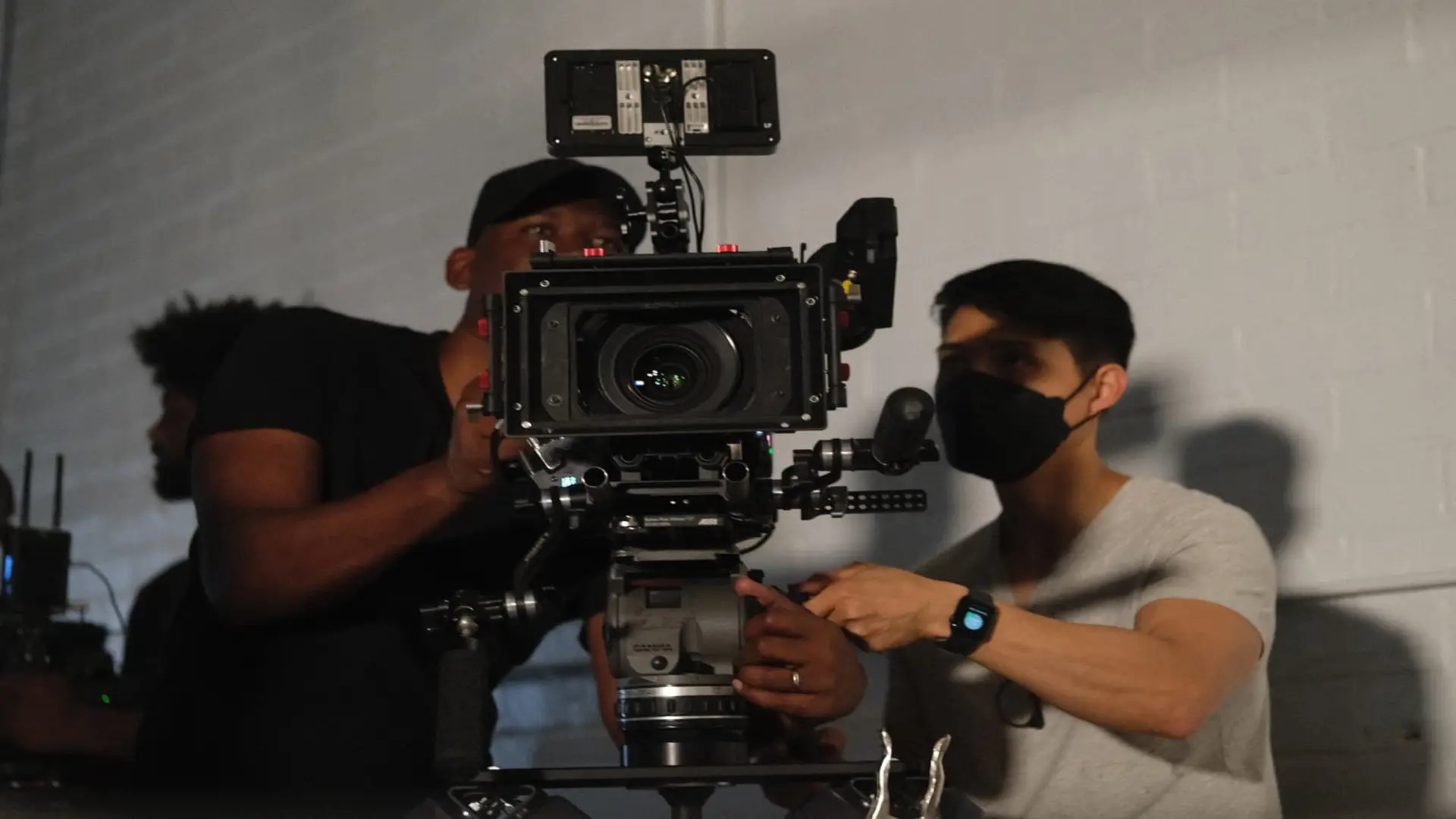
Television producers have dynamic and multifaceted roles, and their daily activities can vary significantly. A typical day for a TV producer may involve tasks such as managing logistics, coordinating with team members, overseeing budgets, ensuring quality control, and handling various production aspects. They are often involved in writing scripts, finding actors and locations, and conducting meetings to discuss production progress and objectives.
The work of a TV producer is fast-paced and can involve handling both large-scale and last-minute issues, requiring strong multitasking and problem-solving skills. The specific responsibilities of a TV producer can depend on the type of production, such as news, reality TV, or scripted content. The role is known for being deadline-driven and constantly evolving, with each day presenting new challenges and rewards. The work hours for TV producers can be long, often exceeding 40 hours per week.
Overall, a day in the life of a TV producer is characterized by its complexity and the need to adapt to a wide range of tasks and situations.
## Responsibilities of a TV producer
Television producers have diverse responsibilities, which can include both creative and business aspects of production. A TV producer's responsibilities may involve:
1. Business Aspects: Overseeing budgets and contracts.
2. Securing funding and managing the budget.
3. Handling contracts for the show's cast and crew.
4. Securing financing for the project.
1. Creative Aspects: Determining which scripts or ideas to produce.
2. Writing and editing scripts or news stories.
3. Auditioning actors or on-air talent.
4. Hiring directors and crew.
5. Overseeing all aspects of production, such as set design, choreography, lighting, performances, cinematography, and sound.
1. Other Responsibilities: Managing advertising efforts.
2. Reviewing rehearsals or recordings to ensure compliance standards are met.
3. Ensuring the program stays on schedule and deadlines are met.
TV producers are involved in various stages of production, from the creative development of a show to the management of its financial and operational aspects. Their role requires a combination of creative, managerial, and communication skills to ensure the success of a television program.
## Some common tasks a TV producer performs during production
The common tasks that a TV producer performs during production include:
1. Securing Funding and Managing Budgets: Producers are responsible for securing funding, setting the budget, and monitoring schedules.
1. Creative Decision-Making: Determining which scripts or ideas to produce, writing and editing scripts or news stories, and auditioning actors or on-air talent.
1. Hiring and Overseeing Production: Hiring directors and crew, overseeing all aspects of production such as set design, choreography, lighting, performances, cinematography, and sound.
1. Managing Advertising Efforts: Producers may also be involved in managing advertising efforts for the show.
1. Coordinating Activities and Reviewing Progress: Coordinating the activities of writers, directors, managers, and other personnel throughout the production process, and conducting meetings with staff to discuss production progress and ensure production objectives are attained.
1. Negotiating and Resolving Issues: Negotiating contracts with artistic personnel, resolving personnel problems that arise during the production process, and ensuring the program stays on schedule and deadlines are met.
To sum it up, TV producers are involved in a wide range of tasks, from financial and logistical management to creative decision-making and personnel coordination, to ensure the successful execution of television productions.
## Challenges faced by TV producers
The challenges faced by TV producers can be diverse and demanding. Some of the common challenges include:
1. Finding Compelling Material: One of the daily challenges for TV producers is to find compelling material for their shows[.](http://writersupercenter.com/studionotes/columns/article2078.htm)
1. Discovering New Talent: TV producers often face the challenge of discovering new actors and directors to bring fresh talent to their productions[.](http://writersupercenter.com/studionotes/columns/article2078.htm)
1. Competition from Cable and Streaming Services: The rapid growth of cable and streaming services has posed a significant challenge to network television, impacting the landscape in which TV producers operate[.](https://courses.lumenlearning.com/suny-massmedia/chapter/9-3-issues-and-trends-in-the-television-industry/)
1. Budget Management: Overseeing budgets and securing funding can be a persistent challenge for TV producers, requiring them to balance creative ambitions with financial constraints[.](https://www.princetonreview.com/careers/156/television-producer)
1. Creative and Managerial Balance: Balancing creative responsibilities, such as scriptwriting and talent management, with managerial tasks adds complexity to the role of TV producers[.](https://en.wikipedia.org/wiki/Television_producer)
TV producers face a range of challenges, from sourcing quality content and talent to navigating the evolving television industry landscape and managing the business aspects of production.
## Challenges of working with actors and directors
Working with actors and directors can present several challenges:
1. Getting the Best Performance: Directors often face the challenge of working with actors to elicit the best performance from them.
2. This can involve issues such as helping actors tone down or amplify their performances, addressing communication barriers, and managing last-minute creative changes.
1. Communication and Rehearsal: Some directors may struggle with effectively communicating their vision to actors and finding the right approach to bring out the desired performances.
2. Limited rehearsal time and the need to make quick decisions during filming can also impact the quality and consistency of actors' performances[.](https://www.studentfilmmakersforums.com/threads/problems-with-working-with-actors.6758/)
1. Managing Continuity and Emotional Arcs: Ensuring continuity between scenes and guiding actors through their emotional arcs can be a challenge, especially when scenes are shot out of order[.](https://www.studentfilmmakersforums.com/threads/problems-with-working-with-actors.6758/)
1. Balancing Creative and Managerial Duties: Directors must balance their creative responsibilities with the need to manage the production team and ensure the film is completed on time and within budget[.](https://www.jobzmall.com/careers/film-director/faqs/what-are-the-most-common-challenges-faced-by-film-directors)
The challenges of working with actors and directors can range from fostering effective communication and eliciting the best performances to managing the creative and logistical aspects of production. These challenges require strong interpersonal skills, adaptability, and a deep understanding of the creative process.
## How a TV producer manages a team of writers and directors
TV producers manage a team of writers and directors by overseeing the creative aspects of the TV program, hiring qualified writers and directors, and coordinating their activities throughout the production process. They are responsible for ensuring that the creative vision is realized and that the overall quality and progress of the TV program are maintained.
Producers are also involved in tasks such as screenwriting, set design, casting, and directing. Additionally, they may delegate tasks to specialized production team members, including executive producers, line producers, field producers, coordinating producers, and supervising producers, to ensure that the project stays on schedule and on budget. T
he producer's role involves top-to-bottom oversight and management, requiring strong leadership, communication, and organizational skills to ensure the successful execution of television productions.
## How TV producers manage budgets and schedules
TV producers manage budgets and schedules through a combination of planning, organization, and communication. Some of the best ways to manage [TV production](https://c-istudios.com/film-and-tv-production/) budgets and schedules include:
1. Defining Scope and Goals: Before starting any TV production, it is important to have a clear idea of the project's scope, goals, constraints, and risks, as these form the basis of the budget and schedule[.](https://www.linkedin.com/advice/3/what-best-ways-manage-your-tv-production-budget)
1. Creating Realistic Budgets: TV producers need to develop realistic budgets that reflect the costs and resources needed for pre-production, production, and post-production, including contingency funds for unexpected changes or issues[.](https://www.linkedin.com/advice/3/what-best-ways-manage-your-tv-production-budget)
1. Developing Detailed Schedules: Detailed schedules that include all activities and tasks for each phase of the project, along with responsibilities, deadlines, and dependencies, are essential for effective schedule management[.](https://www.linkedin.com/advice/3/what-best-ways-manage-your-tv-production-budget)
1. Regular and Clear Communication: Communicating regularly and clearly with the team and stakeholders is crucial for managing both the budget and the schedule[.](https://www.linkedin.com/advice/3/what-best-ways-manage-your-tv-production-budget)
In addition, the accurate way to budget is to analyze each scene in the script, noting the location, artists required, set requirements, and any costs involved. TV producers also negotiate contracts with artistic personnel, establish production details, and resolve personnel problems that arise during the production process.
By following these practices and leveraging their communication and negotiation skills, TV producers can effectively manage the financial and temporal aspects of television production.
## How TV producers handle unexpected delays or budget overruns
TV producers handle unexpected delays or budget overruns through various strategies and practices. Some of the approaches include:
1. Regular Communication: Communicating regularly and clearly with the team and stakeholders is crucial for managing both the budget and the schedule.
1. Contingency Planning: Developing a realistic budget that includes contingency funds for unexpected changes or issues is essential to handle budget overruns[.](https://www.linkedin.com/advice/3/what-best-ways-manage-your-tv-production-budget)
1. Detailed Schedules: Developing detailed schedules that include all activities and tasks for each phase of the project, along with responsibilities, deadlines, and dependencies, can help in identifying and addressing unexpected delays.
1. Analyzing Reserves for Risks: Analyzing reserves for both identified and unidentified risks can improve project budget estimation accuracy and help in managing unexpected delays and cost overruns.
In summary, TV producers manage unexpected delays or budget overruns by maintaining open communication, planning for contingencies, and analyzing reserves for risks to ensure that the production stays on track and within budget.
## Skills required for a TV producer to be successful
The skills required for a TV producer to be successful include a combination of creative, managerial, and interpersonal abilities. Some of the essential skills for TV producers are:
1. Team Building and Leadership: TV producers need to be effective team builders and leaders, involving their staff in the production process and encouraging collaboration and decision-making.
1. Communication: Strong written and verbal communication skills are essential for TV producers to effectively convey their vision, coordinate with the team, and connect with diverse audiences.
1. Big-Picture Planning: The ability to think strategically and plan for the overall success of the production is crucial for TV producers.
1. Multitasking: TV producers must be adept at handling multiple tasks and responsibilities simultaneously, especially in the fast-paced environment of television production.
1. Time Management: Effective time management skills are vital for meeting deadlines and ensuring that the production stays on schedule and within budget.
1. Creative Decision-Making: Producers need to have a creative vision and the ability to make decisions that contribute to the overall quality and success of the production.
Successful TV producers possess a diverse skill set that encompasses leadership, communication, strategic planning, and creative decision-making, allowing them to navigate the complexities of television production and ensure the delivery of high-quality content.
### Technical skills required for a TV producer to be successful
The technical skills required for a TV producer to be successful include:
1. [Video Production](https://c-istudios.com/video-production-services/): Proficiency in video production is a fundamental technical skill for TV producers, involving knowledge of camera operation, lighting, sound, and editing.
1. Television Production: Understanding the technical aspects of [television production](https://c-istudios.com/), such as studio operations, equipment, and workflows, is essential for effective decision-making and problem-solving during production.
1. Software Proficiency: Familiarity with software tools such as Adobe Premiere, Avid, Final Cut Pro, or other editing and post-production software is crucial for overseeing the technical aspects of content creation.
In summary, TV producers require a strong foundation in video and television production, as well as proficiency in relevant software tools, to effectively manage the technical aspects of television production and ensure the delivery of high-quality content.
## Work with C&I Studios
If you are planning a project like this, our team can take it from concept to final delivery. Explore our [film and TV production](https://c-istudios.com/film-and-tv-production/), browse [our work](https://c-istudios.com/our-work/) to see how we tell brand stories, and [get in touch](https://c-istudios.com/contact/) when you are ready to start.
Originally published December 11, 2023
---
*This content is from [C&I Studios](https://c-istudios.com), a full-service production company.*
---
# Green Screen Magic: Tips for Effective Chroma Keying in Television Production
> Published: December 11, 2023
> Categories: Post & VFX
> Source: https://c-istudios.com/green-screen-magic-tips-for-effective-chroma-keying-in-television-production/
---
.cib{--paper:#1b1d1f;--ink:#fff;--body:#d5d7d9;--muted:#8b9096;--line:rgba(255,255,255,.12);--thumb:#2b2e31;--card:#212426;--accent:#c02b0a;--blue:#5B8FA8;--serif:'Playfair Display',Georgia,serif;--sans:'Poppins',-apple-system,sans-serif;--measure:900px;background:var(--paper);color:var(--body);font-family:var(--sans);line-height:1.6;position:relative;left:50%;transform:translateX(-50%);width:90vw;max-width:1920px}
.cib *{box-sizing:border-box}
.cib .kicker{max-width:var(--measure);margin:58px auto 0;padding:0 22px;font-size:12.5px;font-weight:700;letter-spacing:2.5px;text-transform:uppercase;color:var(--blue)}
.cib h1.cibh1{text-wrap:balance;font-family:var(--serif);font-weight:500;font-size:clamp(46px,6vw,72px);line-height:1.08;color:var(--ink);max-width:var(--measure);margin:18px auto 0;padding:0 22px;letter-spacing:-.5px}
.cib .metarow{max-width:var(--measure);margin:20px auto 0;padding:0 22px;color:var(--muted);font-size:14px}
.cib .hero{position:relative;width:100%;height:0;padding-bottom:56.25%;overflow:hidden;margin:48px auto 0;border-top:1px solid var(--line);border-bottom:1px solid var(--line)}
.cib .hero .ph{width:100%;aspect-ratio:16/9;background:var(--thumb);border-top:1px solid var(--line);border-bottom:1px solid var(--line);display:flex;align-items:center;justify-content:center;color:#7d8288;font-size:13px;text-align:center;padding:0 20px}
.cib .body{max-width:var(--measure);margin:12px auto 0;padding:52px 22px 6px}
.cib .body.lead p:first-child{font-size:23px;line-height:1.62;color:var(--ink)}
.cib .body p{font-size:18.5px;line-height:1.85;margin:0 0 30px;color:var(--body)}
.cib .body h2{text-wrap:balance;font-family:var(--serif);font-weight:500;font-size:clamp(32px,4vw,48px);line-height:1.22;color:var(--ink);margin:70px 0 20px;letter-spacing:-.3px}
.cib .body h3{text-wrap:balance;font-family:var(--sans);font-weight:600;font-size:22px;color:var(--ink);margin:38px 0 8px}
.cib .body a{color:var(--ink);text-decoration:underline;text-decoration-color:rgba(255,255,255,.4);text-underline-offset:3px}
.cib .body a:hover{text-decoration-color:var(--ink)}
.cib .ctable{width:100%;border-collapse:collapse;margin:16px 0 30px;font-size:16px}
.cib .ctable th{background:#000;color:#fff;text-align:left;padding:10px 12px;font-family:var(--sans)}
.cib .ctable td{padding:10px 12px;border-bottom:1px solid var(--line);color:var(--body)}
.cib .inimg{position:relative;width:100%;height:0;padding-bottom:56.25%;overflow:hidden;margin:72px auto;border-top:1px solid var(--line);border-bottom:1px solid var(--line)}
.cib .inimg .ph{width:100%;aspect-ratio:16/9;background:var(--thumb);border-top:1px solid var(--line);border-bottom:1px solid var(--line);display:flex;align-items:center;justify-content:center;color:#7d8288;font-size:13px}
.cib .origpub{max-width:var(--measure);margin:60px auto 0;padding:26px 22px 0;border-top:1px solid var(--line);color:var(--muted);font-size:13.5px}
.cib .related{max-width:1200px;margin:64px auto 0;padding:34px 22px 76px}
.cib .related h3{font-family:var(--sans);font-size:12.5px;letter-spacing:2px;text-transform:uppercase;color:var(--ink);margin:0 0 24px}
.cib .grid{display:grid;grid-template-columns:repeat(3,1fr);gap:28px}
.cib .rc{background:var(--card);border:1px solid var(--line);display:block;text-decoration:none;color:inherit;transition:border-color .15s}
.cib a.rc:hover{border-color:rgba(255,255,255,.5)}
.cib .rc .thumb{position:relative;width:100%;height:0;padding-bottom:56.25%;background:var(--thumb);overflow:hidden}
.cib .rc .thumb img{position:absolute!important;top:0!important;left:0!important;width:100%!important;height:100%!important;object-fit:cover!important;margin:0!important}
.cib .rc .cc{padding:14px 15px 17px}
.cib .rc .rt{font-family:var(--serif);font-weight:500;font-size:16px;line-height:1.3;color:var(--ink);margin:0 0 6px}
.cib .rc .rm{font-size:11px;letter-spacing:1px;text-transform:uppercase;color:var(--muted)}
.cib img{margin:0!important;padding:0!important;display:block!important;vertical-align:top;max-width:100%}
.cib .hero img,.cib .inimg img{position:absolute!important;top:0!important;left:0!important;width:100%!important;height:100%!important;object-fit:cover!important;margin:0!important;padding:0!important;border:0!important;display:block!important;aspect-ratio:auto!important}
.cib .hero+.body{padding-top:36px}
@media(max-width:760px){.cib .grid{grid-template-columns:1fr}.cib .body h2{margin:52px 0 16px}.cib .body p{font-size:17.5px}.cib .inimg,.cib .hero{margin-top:44px}}
.cib .vembed{max-width:var(--measure);margin:44px auto;padding:0 22px}.cib .vembed .vwrap{position:relative;width:100%;height:0;padding-bottom:56.25%}.cib .vembed .vwrap iframe{position:absolute;top:0;left:0;width:100%;height:100%;border:0}
Post & VFX
# Green Screen Magic. Tips for Effective Chroma Keying in Television Production
4 min read

Green screen, also known as chroma key, is a powerful technique used in the film and video industry to create stunning visual effects. Whether you're a seasoned professional or just starting, mastering the art of chroma keying can take your productions to the next level. Here are some essential tips to help you achieve seamless and professional-looking chroma key effects.
1. Proper Lighting
Lighting is key to a successful chroma key setup. Ensure that the green screen is evenly lit without any hotspots or shadows. Additionally, light your subject separately to avoid any color spill or uneven lighting on the green screen.
** **
1. Color Selection
When choosing between a green or blue screen, consider the colors present in your scene and the wardrobe of your talent. Select the color that provides the most contrast to the elements in your shot to achieve the best key.
1. Wrinkle-Free Screen
A smooth and wrinkle-free green screen is essential to ensure a clean key. Any imperfections on the screen can cause unwanted shadows and color variations, making the keying process more challenging.
1. Avoid Green Clothing
Instruct your talent to avoid wearing green clothing, as it can interfere with the keying process. Encourage them to wear contrasting colors to the green screen to achieve the best results.
1. Quality Camera and Recording
To achieve the best quality key, use a high-quality camera and record in the highest resolution possible. This provides more detail for the keying software to work with, resulting in a cleaner and more accurate key.
1. Post-Production Software
Invest in professional post-production software that offers robust keying tools. Software like Adobe After Effects and DaVinci Resolve provide advanced keying features to help you achieve the best results.
By following these tips, you can elevate your chroma keying skills and create seamless and professional-looking visual effects for your productions.
## Creating a seamless transition between the real world and the green screen
Here are some tips for creating a seamless transition between the real world and the green screen:
1. Proper Lighting: Ensure the green screen is evenly lit to avoid hotspots or shadows, which can cause challenges during the keying process.
1. Color Selection: Choose the appropriate color for the background based on the luminance properties of the scene and the wardrobe of the talent. This can help in achieving a seamless transition between the real world and the green screen.
1. Camera Movement: Incorporate camera movement to match the motion in the real-world footage, which can help in creating a more seamless transition between the green screen footage and the final background.
1. Avoiding Shadows: Prevent shadows on the green screen, as they can make the chroma key process difficult in post-production. Shadows often occur when the subject is too close to the green screen or due to very strong lighting, especially strong frontal lighting.
1. Motion Blur: To avoid motion blur in front of the green screen, ensure that the subject moves slowly. Motion blur can make it challenging to achieve a clean chroma key effect.
By following these tips, you can improve the quality of your chroma key effects and create seamless transitions between the real world and the green screen.
## Choosing the right color for a green screen
When choosing the right color for a green screen, consider the following tips:
1. Luminance Properties: Green is suitable for bright scenes, while blue is better for darker scenes due to the luminance properties of both colors.
1. Wardrobe and Color Selection: When talent is involved, consider the colors they are wearing. Green screens are often preferred as people typically wear more blue than green, making green the most obvious choice for a chroma key.
1. Avoid Green Spill: Be mindful of potential green spill on black clothing, as it can cause challenges during the keying process. Additionally, avoid anything shiny or hanging loose, as it can complicate the keying process.
By considering these tips, you can choose the right color for your green screen based on the specific needs of your production.
## Common mistakes to avoid when using a green screen
When using a green screen, it's important to avoid common mistakes that can compromise the quality of the chroma key effect. Here are some common mistakes to avoid when using a green screen:
1. Uneven Lighting: Ensure that the green screen is evenly lit without any hotspots or shadows. Any variation in lighting can cause parts of the background to appear in the final output, making the keying process more challenging.
1. Shadows on the Green Screen: Shadows can make the chroma key process difficult, especially when they are too similar to the dark areas on your subject. Avoid shadows by maintaining consistent and uniform lighting on the green screen.
1. Color Spill: Color spill occurs when the green from the screen is reflected onto the subject. This can be caused by excessive lighting or the subject being too close to the screen. To avoid color spill, ensure the right balance of light and maintain an appropriate distance between the subject and the green screen.
1. Green Clothing or Reflective Jewelry: Instruct talent to avoid wearing green or colors similar to the green screen, as these colors can be inadvertently removed during the keying process.
1. Motion Blur: Motion blur in front of the green screen can make it challenging to achieve a clean chroma key. To avoid this, ensure that the subject moves slowly, or use a higher shutter speed to minimize motion blur.
By being mindful of these common mistakes and taking the necessary precautions, you can achieve a clean and effective chroma key effect when using a green screen.
## How to ensure the green screen is not too bright or too dark
To ensure that the green screen is not too bright or too dark, consider the following tips:
1. Distance from the Screen: Stand eight to ten feet in front of the green screen to reduce the chance of shadows and avoid being too close, which can affect the lighting.
1. Lighting Setup: Reduce the wattage of the lights closest to the screen, add additional lights further from the screen, and use a backlight to create an even and balanced lighting setup.
1. Optimal Brightness Level: Match the brightness of the green screen as close as possible to what your background will be to make the post-production process trouble-free.
1. Avoid Excessive Lighting: Too much light aimed at the green screen can cause spill and make the footage look less professional. Find the right balance of light to avoid shadows and spill.
By following these tips, you can ensure that the green screen is appropriately lit, avoiding issues related to brightness and achieving a seamless transition between the real world and the green screen.
## Common lighting setups for a green screen
Common lighting setups for a green screen typically involve the following:
1. Three-Point Lighting: This traditional lighting setup includes a key light, a fill light, and a backlight. The key light is the primary light source, the fill light softens the shadows created by the key light, and the backlight separates the subject from the background, which is essential for green screen lighting.
1. Even Lighting: Ensure the green screen is evenly lit to avoid hotspots or shadows, which can cause challenges during the keying process. This can be achieved by using multiple lights to create a consistent and uniform lighting environment.
1. Avoiding Shadows: It's important to avoid casting shadows on the green screen, as they can make the chroma key process difficult in post-production. This can be achieved by positioning the lights to minimize shadows and create an even lighting environment.
By following these general lighting setups, you can ensure that the green screen is properly lit, which is essential for achieving a seamless transition between the real world and the green screen.
## How to avoid shadows on a green screen
To avoid shadows on a green screen, consider the following tips:
1. Proper Distance: Stand eight to ten feet in front of the green screen to reduce the chance of shadows, instead of standing two or three feet away, which can increase the likelihood of shadows.
1. Lighting Setup: Use a lighting setup that ensures the green screen is evenly lit without any hotspots or dark areas. This can be achieved by using soft lights, such as fluorescent tubes or LED panels, and placing them on both sides of the screen at a 45-degree angle.
1. Separate Lighting for Subject and Screen: Light the screen and the subject separately using different sets of lights to create a uniform and even illumination on the screen, without any hotspots or dark areas.
1. Use Flags and Reflectors: Use flags and reflectors to block or bounce the light where needed, preventing light from spilling onto the screen or the subject and creating a clear separation to avoid any cross-contamination.
By following these tips, you can avoid shadows on a green screen and achieve a clean and convincing green screen effect.
## Using a backlight to improve chroma key results
To improve chroma key results using a backlight, consider the following tips:
1. Separate Lighting for Subject and Screen: Light the green screen and the subject separately to create a clear separation, making it easier for post-production staff to key out the background[.](https://www.studiobinder.com/blog/green-screen-lighting-setup-techniques/)
1. Even and Soft Lighting: Use a backlight to create even and soft lighting on the green screen, which can help in achieving a clean and consistent key during post-production.
1. Avoid Excessive Lighting: Be mindful not to hit the green screen with too much light, as this can cause overexposure and make it challenging to achieve a clean key.
By following these tips, you can effectively use a backlight to improve chroma key results and create seamless green screen effects.
## How to ensure the green screen is in focus
To ensure that the green screen is in focus, consider the following tips:
1. Use Low Aperture: Opening up the aperture of the camera lens translates to a lower F-stop number. The lower the F-stop of your camera, the shallower the depth of field. With several feet of separation between your subject and the green screen, if your subject is sharp in focus, then the green screen appears softer in the background. Soft focus smooths out the green screen to blend it into a more uniform color.
1. Apply a High Shutter Speed: Setting your camera to a higher shutter speed will help in achieving a clean and consistent key during post-production.
1. Use a Tripod and Keep it Stable: To make your green screen work, your camera must remain stable and at the same focus. A vibrating or shaky camera can make it challenging to achieve a clean chroma key effect.
By following these tips, you can ensure that the green screen is in focus, which is essential for achieving a seamless and professional-looking chroma key effect.
## How to use a green screen to create a virtual set for a TV show
To create a virtual set for a TV show using a green screen, follow these steps:
1. Set up the Green Screen: Position the green screen behind the actors or presenters. Ensure it is smooth and evenly lit to avoid shadows and inconsistencies in color.
1. Use a High-Quality Camera: Employ a high-quality camera to capture the footage in front of the green screen. This will ensure that the details are well-captured for later editing and compositing.
1. Lighting: Use proper lighting to ensure that the green screen is evenly lit without any hotspots or shadows. This will make it easier to key out the green color during post-production.
1. Camera Tracking: Consider using camera tracking technology to create a live stream of data describing the exact perspective of the camera. This will allow for the seamless integration of the virtual set with the live-action footage.
1. Real-Time Rendering Software: Utilize real-time rendering software to generate a synthetic image of the virtual set. This software uses the camera tracking data to render the virtual set from the same perspective as the live-action footage.
By following these steps, you can effectively use a green screen to create a virtual set for a TV show, allowing for the seamless integration of live-action footage with virtual environments.
## Working with the green screen at C&I Studios
Working with the [green screen at C&I studios](https://c-istudios.com/studio-rentals/) offers several benefits:
1. Flexibility and Cost-Effectiveness: [C&I Studios](https://c-istudios.com/)' green screen studio provides a versatile and cost-effective environment for various projects. It allows for the creation of different backgrounds, virtual sets, and special effects, making it suitable for projects such as special effects, corporate explainer videos, and virtual events. This flexibility can be a cost-effective solution, as it eliminates the need for traditional location scouting, set construction, and travel expenses.
1. Time-Saving and Containment: Using C&I Studios' green screen studio can save time by eliminating the need to find and set up different locations. It also allows for easy adaptation and reshoots. Additionally, the green screen studio contains the production within a controlled environment, avoiding external noises and disturbances, which can make filming more complicated.
1. Community-Focused and Affordable Options: C&I Studios offers a community-focused and affordable environment for creatives. We provide a range of services, including equipment rental and professional support, making us an attractive option for freelancers and digital media professionals.
1. Convenience and Accessibility: It's easy to book C&I Studios' green screen studio for various activities, including photo shoots, film shoots, meetings, and events. Our spaces are well-suited for accommodating different types of [productions](https://c-istudios.com/).
In summary, hiring the green screen studio at C&I Studios provides a flexible, cost-effective, and time-saving solution for [various projects](https://c-istudios.com/our-work/), making it an attractive option for filmmakers, content creators, and digital media professionals.
[Contact C&I Studios](https://c-istudios.com/contact/) to get started today.
## Work with C&I Studios
If you are planning a project like this, our team can take it from concept to final delivery. Explore our [post-production services](https://c-istudios.com/post-production-services/), browse [our work](https://c-istudios.com/our-work/) to see how we tell brand stories, and [get in touch](https://c-istudios.com/contact/) when you are ready to start.
Originally published December 11, 2023
---
*This content is from [C&I Studios](https://c-istudios.com), a full-service production company.*
---
# Scriptwriting 101: Crafting Compelling Narratives for Television
> Published: December 11, 2023
> Categories: Film & TV
> Source: https://c-istudios.com/scriptwriting-101-crafting-compelling-narratives-for-television/
---
.cib{--paper:#1b1d1f;--ink:#fff;--body:#d5d7d9;--muted:#8b9096;--line:rgba(255,255,255,.12);--thumb:#2b2e31;--card:#212426;--accent:#c02b0a;--blue:#5B8FA8;--serif:'Playfair Display',Georgia,serif;--sans:'Poppins',-apple-system,sans-serif;--measure:900px;background:var(--paper);color:var(--body);font-family:var(--sans);line-height:1.6;position:relative;left:50%;transform:translateX(-50%);width:90vw;max-width:1920px}
.cib *{box-sizing:border-box}
.cib .kicker{max-width:var(--measure);margin:58px auto 0;padding:0 22px;font-size:12.5px;font-weight:700;letter-spacing:2.5px;text-transform:uppercase;color:var(--blue)}
.cib h1.cibh1{text-wrap:balance;font-family:var(--serif);font-weight:500;font-size:clamp(46px,6vw,72px);line-height:1.08;color:var(--ink);max-width:var(--measure);margin:18px auto 0;padding:0 22px;letter-spacing:-.5px}
.cib .metarow{max-width:var(--measure);margin:20px auto 0;padding:0 22px;color:var(--muted);font-size:14px}
.cib .hero{position:relative;width:100%;height:0;padding-bottom:56.25%;overflow:hidden;margin:48px auto 0;border-top:1px solid var(--line);border-bottom:1px solid var(--line)}
.cib .hero .ph{width:100%;aspect-ratio:16/9;background:var(--thumb);border-top:1px solid var(--line);border-bottom:1px solid var(--line);display:flex;align-items:center;justify-content:center;color:#7d8288;font-size:13px;text-align:center;padding:0 20px}
.cib .body{max-width:var(--measure);margin:12px auto 0;padding:52px 22px 6px}
.cib .body.lead p:first-child{font-size:23px;line-height:1.62;color:var(--ink)}
.cib .body p{font-size:18.5px;line-height:1.85;margin:0 0 30px;color:var(--body)}
.cib .body h2{text-wrap:balance;font-family:var(--serif);font-weight:500;font-size:clamp(32px,4vw,48px);line-height:1.22;color:var(--ink);margin:70px 0 20px;letter-spacing:-.3px}
.cib .body h3{text-wrap:balance;font-family:var(--sans);font-weight:600;font-size:22px;color:var(--ink);margin:38px 0 8px}
.cib .body a{color:var(--ink);text-decoration:underline;text-decoration-color:rgba(255,255,255,.4);text-underline-offset:3px}
.cib .body a:hover{text-decoration-color:var(--ink)}
.cib .ctable{width:100%;border-collapse:collapse;margin:16px 0 30px;font-size:16px}
.cib .ctable th{background:#000;color:#fff;text-align:left;padding:10px 12px;font-family:var(--sans)}
.cib .ctable td{padding:10px 12px;border-bottom:1px solid var(--line);color:var(--body)}
.cib .inimg{position:relative;width:100%;height:0;padding-bottom:56.25%;overflow:hidden;margin:72px auto;border-top:1px solid var(--line);border-bottom:1px solid var(--line)}
.cib .inimg .ph{width:100%;aspect-ratio:16/9;background:var(--thumb);border-top:1px solid var(--line);border-bottom:1px solid var(--line);display:flex;align-items:center;justify-content:center;color:#7d8288;font-size:13px}
.cib .origpub{max-width:var(--measure);margin:60px auto 0;padding:26px 22px 0;border-top:1px solid var(--line);color:var(--muted);font-size:13.5px}
.cib .related{max-width:1200px;margin:64px auto 0;padding:34px 22px 76px}
.cib .related h3{font-family:var(--sans);font-size:12.5px;letter-spacing:2px;text-transform:uppercase;color:var(--ink);margin:0 0 24px}
.cib .grid{display:grid;grid-template-columns:repeat(3,1fr);gap:28px}
.cib .rc{background:var(--card);border:1px solid var(--line);display:block;text-decoration:none;color:inherit;transition:border-color .15s}
.cib a.rc:hover{border-color:rgba(255,255,255,.5)}
.cib .rc .thumb{position:relative;width:100%;height:0;padding-bottom:56.25%;background:var(--thumb);overflow:hidden}
.cib .rc .thumb img{position:absolute!important;top:0!important;left:0!important;width:100%!important;height:100%!important;object-fit:cover!important;margin:0!important}
.cib .rc .cc{padding:14px 15px 17px}
.cib .rc .rt{font-family:var(--serif);font-weight:500;font-size:16px;line-height:1.3;color:var(--ink);margin:0 0 6px}
.cib .rc .rm{font-size:11px;letter-spacing:1px;text-transform:uppercase;color:var(--muted)}
.cib img{margin:0!important;padding:0!important;display:block!important;vertical-align:top;max-width:100%}
.cib .hero img,.cib .inimg img{position:absolute!important;top:0!important;left:0!important;width:100%!important;height:100%!important;object-fit:cover!important;margin:0!important;padding:0!important;border:0!important;display:block!important;aspect-ratio:auto!important}
.cib .hero+.body{padding-top:36px}
@media(max-width:760px){.cib .grid{grid-template-columns:1fr}.cib .body h2{margin:52px 0 16px}.cib .body p{font-size:17.5px}.cib .inimg,.cib .hero{margin-top:44px}}
.cib .vembed{max-width:var(--measure);margin:44px auto;padding:0 22px}.cib .vembed .vwrap{position:relative;width:100%;height:0;padding-bottom:56.25%}.cib .vembed .vwrap iframe{position:absolute;top:0;left:0;width:100%;height:100%;border:0}
Film & TV
# Scriptwriting 101. Crafting Compelling Narratives for Television
2 min read

To create a compelling plot for a TV show, writers can consider the following strategies:
1. Create Larger Than Life Characters: Develop characters that are larger than life and the most interesting individuals in their world. These characters should be compelling, active, and have strong motivations that drive the plot forward.
1. Let Character Wants Drive the Plot: The desires and goals of the characters should be the driving force behind the plot. The characters' motivations and actions should propel the story and create meaningful conflicts and developments.
1. Craft Well-Structured Plots: Develop a clear beginning, middle, and end for the story. Establish an intriguing hook to draw in the audience, escalate tension throughout the narrative, and provide satisfying resolutions.
1. Use Visual Storytelling: Employ visual storytelling techniques to engage the audience and create an immersive experience. Descriptive settings and well-crafted scenes can enhance the impact of the plot.
1. Brainstorm and Collaborate: Engage in a collaborative and iterative process to develop episode plots. Utilize visual reference tools, such as index cards or whiteboards, to track the breaking of episodes and explore various story ideas.
1. Character Development: Focus on creating relatable, multidimensional characters with distinct personalities, motivations, and flaws. Character development and growth throughout the story are essential for engaging the audience.
By incorporating these strategies, writers can craft compelling plots for TV shows that resonate with audiences and keep them invested in the narrative.
## How a writer can balance character development and plot in a TV show
Balancing character development and plot in a TV show is a crucial aspect of effective storytelling. Here are some insights:
1. Character-Driven vs. Plot-Driven Stories: Writers should consider whether their story is character-driven or plot-driven. In character-driven stories, the characters' internal conflicts and motivations propel the narrative, while in plot-driven stories, external events and conflicts are the primary drivers.
1. Larger-Than-Life Characters: Creating larger-than-life characters who are compelling, active, and have strong motivations can help drive the plot forward and keep the audience engaged.
1. Character Wants Driving the Plot: The desires and goals of the characters should drive the plot. By establishing what the characters want and allowing this to propel the story, a balance between character development and plot can be achieved.
1. Visual Storytelling: Using visual storytelling techniques can help balance character development and plot. Descriptive settings and well-crafted scenes can enhance the impact of the plot while also allowing for character development.
1. Character Authenticity: It's important to ensure that characters' actions and reactions are authentic to their personalities and motivations. Characters must follow the rules of their own souls, and their behavior should align with their established traits.
By considering these strategies, writers can effectively balance character development and plot, creating engaging and impactful TV shows.
## Examples of TV shows that successfully balance character development and plot
Some TV shows that are known for successfully balancing character development and plot include:
1. Stranger Things: The show is praised for its character development, with multiple characters undergoing significant growth throughout the series, such as Bodie and Ellis Carver.
1. Buffy the Vampire Slayer: Known for its strong character development, the show features significant transformations in characters like Angel, Willow, and Xander, as noted by Reddit users.
1. The Office: This series is recognized for the growth of its characters, showcasing their development over the course of the show.
1. Parks and Recreation: The show is highlighted for the personal growth of its characters, reflecting the balance between character development and plot.
These TV shows are cited as examples of successful character development and balanced plot progression, demonstrating the effective integration of compelling narratives and well-developed characters.
## How a writer can create a compelling character arc in a TV show
To create a compelling character arc in a TV show, writers can follow several strategies:
1. Character Wants and Needs: Establish what the lead character wants or needs, and why. This forms the basis of their arc and the driving force behind their development.
1. Tie the Arc to the Theme: Connect the character's arc to the overarching theme of the TV show. As the character learns more about the world and the theme is explored, their growth and reactions can be tied to the central theme.
1. Larger-Than-Life Characters: Create characters that are larger than life and the most interesting individuals in their world. These characters should be compelling, active, and have strong motivations that drive the plot forward.
1. Character Driven Story: Let the character's wants drive the plot. The desires and goals of the characters should be the driving force behind the plot, which in turn propels the character's development.
1. Use Visual Storytelling: Employ visual storytelling techniques to enhance the character arc. Descriptive settings and well-crafted scenes can contribute to the character's growth and the overall arc.
By incorporating these strategies, writers can craft compelling character arcs that resonate with audiences and contribute to the overall success of the TV show.
## How a writer can create a character arc consistent with the show's tone and style
To create a character arc that is consistent with a TV show's tone and style, a writer can consider the following strategies:
1. Tie the Arc to the Show's Theme: Connect the character's arc to the overarching theme of the TV show. As the character learns more about the world and the theme is explored, their growth and reactions can be tied to the central theme.
1. Choose the Right Arc Type: Select a character arc type that aligns with the show's tone, message, and genre. Whether it's a positive, negative, or flat arc, the character's development should resonate with the overall feel of the show.
1. Test the Arc for Consistency: Evaluate the character's arc to ensure it fits the show's genre, theme, and plot. The arc should have a clear beginning, middle, and end, and show a consistent and logical development or change that resonates with the show's tone and style.
By integrating these strategies, writers can develop character arcs that harmonize with the TV show's tone and style, contributing to a cohesive and engaging narrative.
## How a writer can develop a unique voice for their script
To develop a unique voice for their script, a writer can consider the following strategies:
1. Write Letters and Practice Free Writing: Engage in exercises such as writing letters, even if they are not sent, and practicing free writing. Voice is the strong sense of the way one person would talk to another person, so these exercises can help in developing a natural writing voice.
1. Establish a Distinct Voice: Focus on developing a distinct voice that builds rapport and offers value to the audience. This can be achieved by working on elements such as vocabulary, tone, and point of view, which contribute to the unique stylistic mix that makes words flow in a particular way.
1. Be Authentic and Pay Attention: Developing a unique voice requires authenticity and paying attention to one's own experiences and way of noticing the world. Writers should avoid imitating others and instead focus on revealing their own opinions, stories, and experiences.
1. Determine Point of View and Consistent Voice: Writers should determine their point of view and pick a consistent voice for their narrators. This helps in establishing a strong and recognizable voice in their writing.
By incorporating these strategies, writers can work towards developing a unique and compelling voice for their scripts.
## How a writer can develop a compelling plot for their script
To develop a compelling plot for a script, a writer can consider the following strategies:
1. Character-First Approach: Build a character that the writer finds interesting and then assemble the plot around that character. For example, a character struggling to overcome a phobia might come into contact with the thing they fear, with success meaning they don't let the fear overcome them.
1. Plot-First Approach: Define the major conflicts the writer wants to include in the script and then build a character who will be motivated by those conflicts. For instance, if the writer wants to explore the effect of a catastrophic storm on a city, they can create a character with a connection to the city or someone living in the city.
1. Well-Structured Plot: Craft a clear beginning, middle, and end. Establish an intriguing hook to draw in the audience, escalate tension throughout the middle, and provide satisfying resolutions.
1. Engaging Characters: Develop relatable and multidimensional characters with distinct personalities, motivations, and flaws. Readers should connect emotionally and invest in their journeys.
1. Strong Conflict: Introduce conflicts that challenge the characters physically, emotionally, or morally. The struggle should be meaningful and force the characters to learn and grow.
By incorporating these strategies, a writer can develop a plot that is engaging, well-structured, and driven by compelling characters and conflicts.
## How to make a plot more engaging
To make a plot more engaging, writers can consider the following strategies:
1. Integrate the Plot: Ensure that the plot is integrated with the characters, setting, and theme of the story. A well-integrated plot contributes to the overall cohesiveness of the narrative[.](https://thisiswriting.com/7-ways-make-plot-interesting-readers/)
1. Create Larger-Than-Life Characters: Develop compelling and active characters who are the most interesting individuals in their world. Characters should have strong motivations and be driven by their desires, which in turn propels the plot.
1. Establish Well-Structured Plot: Craft a clear beginning, middle, and end. Establish an intriguing hook to draw in the audience, escalate tension throughout the narrative, and provide satisfying resolutions.
1. Use Visual Storytelling: Employ visual storytelling techniques to enhance the plot. Descriptive settings and well-crafted scenes can contribute to the overall engagement of the narrative.
1. Create Physical Danger and Introduce New Problems: Incorporate elements such as physical danger, new problems, and secondary characters who bring tensions to the story. These elements can add depth and complexity to the plot, keeping the readers engaged.
By incorporating these strategies, writers can develop plots that are more integrated, character-driven, and engaging, ultimately capturing and maintaining the interest of their audience.
## How a writer can use visual storytelling to enhance their plot
Visual storytelling can be a powerful tool for enhancing a plot. Here are some techniques that writers can use to incorporate visual storytelling into their scripts:
1. Think Like A Screenwriter: Writers can adopt a visual mindset similar to that of a screenwriter. This involves creating scenes and sequences that can be vividly imagined by the audience, allowing the story to come alive in the reader's mind.
1. Use of Images and Graphics: Incorporating images, graphics, and other visual elements can help to immerse the audience in the story and convey messages effectively. This can be particularly useful in mediums such as presentations and digital content.
1. Color and Contrast: Visual storytelling can make use of color and contrast to influence the mood, atmosphere, and emotion of the story. By strategically employing these elements, writers can create different effects and set the tone for their narrative.
1. Show, Don't Tell: Instead of explicitly stating information, writers can use visual storytelling to show it through the actions, expressions, and interactions of the characters. This can make the story more engaging and allow the audience to draw their own conclusions.
By leveraging these visual storytelling techniques, writers can enhance their plots and create more immersive and impactful narratives.
## Common mistakes to avoid when writing a script
Some common mistakes to avoid when writing a script include:
1. Incorrect Format: Not adhering to the standard screenplay format can be a significant mistake, as it may lead to the script being disregarded.
1. Lack of Motivation: Characters should have clear motivations that drive the plot. A lack of motivation can lead to weak character development and an unengaging story.
1. Too Many Characters: Having an excessive number of characters can make the story confusing and dilute the impact of the main characters.
1. Overusing Parentheticals: Using too many parentheticals to direct actors on how to deliver lines can be distracting and disrupt the flow of the read.
1. Incorrect Information or Research: Failing to conduct thorough research and including inaccurate information can undermine the credibility of the story.
1. Weak Conflict: A lack of compelling conflict can result in a story that fails to captivate the audience.
1. Using Clichés and Tropes: Relying on overused clichés and tropes can make the story predictable and unoriginal.
1. Neglecting Spelling and Grammar: Poor grammar and spelling can detract from the professionalism of the script and create a negative first impression.
1. Drawing From Tropes: Overreliance on familiar tropes can lead to a lack of originality and innovation in the story.
1. Forgetting the Plot (or, Skipping the Outline): Failing to establish a clear and coherent plot can result in a meandering and unfocused narrative.
By being mindful of these common mistakes, writers can enhance the quality and impact of their scripts.
## Work with C&I Studios
If you are planning a project like this, our team can take it from concept to final delivery. Explore our [film and TV production](https://c-istudios.com/film-and-tv-production/), browse [our work](https://c-istudios.com/our-work/) to see how we tell brand stories, and [get in touch](https://c-istudios.com/contact/) when you are ready to start.
Originally published December 11, 2023
---
*This content is from [C&I Studios](https://c-istudios.com), a full-service production company.*
---
# Live Streaming Strategies for Brands: Connecting with Audiences in Real-Time
> Published: December 11, 2023
> Categories: Commercial & Brand
> Source: https://c-istudios.com/live-streaming-strategies-for-brands-connecting-with-audiences-in-real-time/
---
.cib{--paper:#1b1d1f;--ink:#fff;--body:#d5d7d9;--muted:#8b9096;--line:rgba(255,255,255,.12);--thumb:#2b2e31;--card:#212426;--accent:#c02b0a;--blue:#5B8FA8;--serif:'Playfair Display',Georgia,serif;--sans:'Poppins',-apple-system,sans-serif;--measure:900px;background:var(--paper);color:var(--body);font-family:var(--sans);line-height:1.6;position:relative;left:50%;transform:translateX(-50%);width:90vw;max-width:1920px}
.cib *{box-sizing:border-box}
.cib .kicker{max-width:var(--measure);margin:58px auto 0;padding:0 22px;font-size:12.5px;font-weight:700;letter-spacing:2.5px;text-transform:uppercase;color:var(--blue)}
.cib h1.cibh1{text-wrap:balance;font-family:var(--serif);font-weight:500;font-size:clamp(46px,6vw,72px);line-height:1.08;color:var(--ink);max-width:var(--measure);margin:18px auto 0;padding:0 22px;letter-spacing:-.5px}
.cib .metarow{max-width:var(--measure);margin:20px auto 0;padding:0 22px;color:var(--muted);font-size:14px}
.cib .hero{position:relative;width:100%;height:0;padding-bottom:56.25%;overflow:hidden;margin:48px auto 0;border-top:1px solid var(--line);border-bottom:1px solid var(--line)}
.cib .hero .ph{width:100%;aspect-ratio:16/9;background:var(--thumb);border-top:1px solid var(--line);border-bottom:1px solid var(--line);display:flex;align-items:center;justify-content:center;color:#7d8288;font-size:13px;text-align:center;padding:0 20px}
.cib .body{max-width:var(--measure);margin:12px auto 0;padding:52px 22px 6px}
.cib .body.lead p:first-child{font-size:23px;line-height:1.62;color:var(--ink)}
.cib .body p{font-size:18.5px;line-height:1.85;margin:0 0 30px;color:var(--body)}
.cib .body h2{text-wrap:balance;font-family:var(--serif);font-weight:500;font-size:clamp(32px,4vw,48px);line-height:1.22;color:var(--ink);margin:70px 0 20px;letter-spacing:-.3px}
.cib .body h3{text-wrap:balance;font-family:var(--sans);font-weight:600;font-size:22px;color:var(--ink);margin:38px 0 8px}
.cib .body a{color:var(--ink);text-decoration:underline;text-decoration-color:rgba(255,255,255,.4);text-underline-offset:3px}
.cib .body a:hover{text-decoration-color:var(--ink)}
.cib .ctable{width:100%;border-collapse:collapse;margin:16px 0 30px;font-size:16px}
.cib .ctable th{background:#000;color:#fff;text-align:left;padding:10px 12px;font-family:var(--sans)}
.cib .ctable td{padding:10px 12px;border-bottom:1px solid var(--line);color:var(--body)}
.cib .inimg{position:relative;width:100%;height:0;padding-bottom:56.25%;overflow:hidden;margin:72px auto;border-top:1px solid var(--line);border-bottom:1px solid var(--line)}
.cib .inimg .ph{width:100%;aspect-ratio:16/9;background:var(--thumb);border-top:1px solid var(--line);border-bottom:1px solid var(--line);display:flex;align-items:center;justify-content:center;color:#7d8288;font-size:13px}
.cib .origpub{max-width:var(--measure);margin:60px auto 0;padding:26px 22px 0;border-top:1px solid var(--line);color:var(--muted);font-size:13.5px}
.cib .related{max-width:1200px;margin:64px auto 0;padding:34px 22px 76px}
.cib .related h3{font-family:var(--sans);font-size:12.5px;letter-spacing:2px;text-transform:uppercase;color:var(--ink);margin:0 0 24px}
.cib .grid{display:grid;grid-template-columns:repeat(3,1fr);gap:28px}
.cib .rc{background:var(--card);border:1px solid var(--line);display:block;text-decoration:none;color:inherit;transition:border-color .15s}
.cib a.rc:hover{border-color:rgba(255,255,255,.5)}
.cib .rc .thumb{position:relative;width:100%;height:0;padding-bottom:56.25%;background:var(--thumb);overflow:hidden}
.cib .rc .thumb img{position:absolute!important;top:0!important;left:0!important;width:100%!important;height:100%!important;object-fit:cover!important;margin:0!important}
.cib .rc .cc{padding:14px 15px 17px}
.cib .rc .rt{font-family:var(--serif);font-weight:500;font-size:16px;line-height:1.3;color:var(--ink);margin:0 0 6px}
.cib .rc .rm{font-size:11px;letter-spacing:1px;text-transform:uppercase;color:var(--muted)}
.cib img{margin:0!important;padding:0!important;display:block!important;vertical-align:top;max-width:100%}
.cib .hero img,.cib .inimg img{position:absolute!important;top:0!important;left:0!important;width:100%!important;height:100%!important;object-fit:cover!important;margin:0!important;padding:0!important;border:0!important;display:block!important;aspect-ratio:auto!important}
.cib .hero+.body{padding-top:36px}
@media(max-width:760px){.cib .grid{grid-template-columns:1fr}.cib .body h2{margin:52px 0 16px}.cib .body p{font-size:17.5px}.cib .inimg,.cib .hero{margin-top:44px}}
.cib .vembed{max-width:var(--measure);margin:44px auto;padding:0 22px}.cib .vembed .vwrap{position:relative;width:100%;height:0;padding-bottom:56.25%}.cib .vembed .vwrap iframe{position:absolute;top:0;left:0;width:100%;height:100%;border:0}
Commercial & Brand
# Live Streaming Strategies for Brands. Connecting with Audiences in Real-Time
3 min read
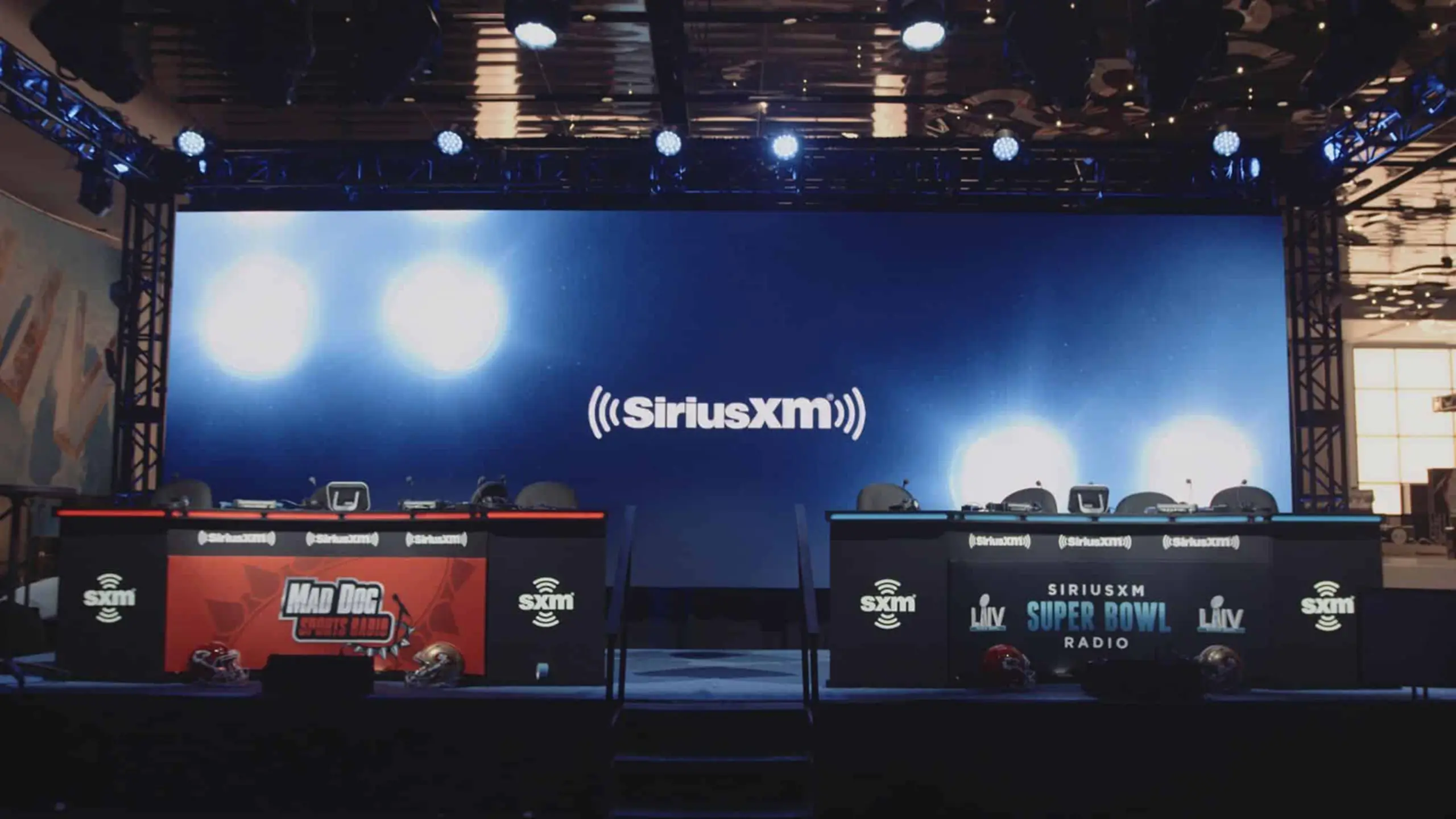
Live streaming has become a popular and effective marketing tool for brands. Here are some strategies and best practices for brands to consider when using live streaming as part of their marketing efforts:
## Choose the Right Platform
- Select a live-streaming platform that has the tools you need for your specific goals.
- Consider platforms like YouTube Live, Facebook, Instagram, and Twitch, which are popular for live streaming.
## Content Focus
- Ensure that your live stream aligns with your marketing goals, whether it's promoting a product, building brand image, or engaging with customers.
- Consider live streaming for product releases, customer service, live interviews with industry professionals, and live tutorials that highlight the brand.
## Quality and Consistency
- Your live streams represent your brand, so it's important to stay on message and be consistent in the way you approach content creation.
- Plan and prepare for your live streams to ensure they are high quality and align with your brand's image and message.
## Audience Engagement
- Interact with your audience in real-time to build a stronger connection with your brand.
- Consider incorporating audience engagement tactics such as Q&A sessions, giveaways, and responding to comments during the live stream[.](https://www.unboxsocial.com/blog/live-streaming-for-brand-marketing/)
## Promotion and Planning
- Generate curiosity and promote your live stream in advance through social media posts, stories, and countdowns to attract viewers.
- Develop a well-planned live streaming strategy that aligns with your brand's goals and audience interests[.](https://streamyard.com/blog/live-streaming-strategy/live-streaming-strategy)
By following these strategies and best practices, brands can effectively use live streaming to engage with their audience, promote their products, and build a stronger connection with their customers.
## Examples of successful live streaming campaigns by brands
Some successful live streaming campaigns by brands include:
1. Spotify: The music streaming company hosted a successful campaign on the day Periscope was launched, demonstrating the potential of live streaming for brand promotion.
1. DKNY and Adidas: These brands used live video to host behind-the-scenes events, with DKNY providing a tour through their closet and Adidas streaming the contract signing of a football player, James Rodriguez, on Periscope.
1. JCPenney: The retail brand effectively used livestream shopping by theming their event and carefully choosing their host to engage viewers and promote products[.](https://blog.socialmediastrategiessummit.com/brands-using-livestream-shopping/)
These examples demonstrate the diverse ways in which brands have leveraged live streaming to engage with their audience, promote products, and enhance their brand image.
## Creative ways to use live streaming for brand marketing
Some creative ways to use live streaming for brand marketing include:
1. Live Tutorials and Demonstrations: Brands can hire influencers in their niche to create live tutorials that highlight their products, which works well for makeup and fitness brands.
1. Livestream Shopping: E-commerce brands can leverage [livestream shopping](https://blog.socialmediastrategiessummit.com/brands-using-livestream-shopping/), where a host promotes products via a live video stream, creating opportunities for interaction and engagement.
1. Product Showcases and Unveilings: Live streaming can be used to showcase products, demonstrate their use, answer questions, and even unveil new product lines, as demonstrated by brands like Estee Lauder.
1. Live Interviews and Behind-the-Scenes Events: Hosting live interviews with industry professionals or providing behind-the-scenes tours can help build brand identity and engage with the audience.
By incorporating these creative approaches, brands can effectively use live streaming to engage with their audience, promote products, and build a stronger connection with their customers.
## How to engage viewers during a live streaming event
To engage viewers during a live streaming event, brands can employ several strategies to create an interactive and compelling experience. Some of these strategies include:
1. Interact with the Audience: Engage with the audience in real-time by responding to their comments, questions, and feedback. This helps in building a stronger connection with the viewers and makes the live stream more interactive.
1. Keep the Audience Hooked: Offer something to pique the audience's curiosity, such as announcing a guest star, providing special discounts for viewers, or teasing about upcoming surprises. Keeping the audience intrigued can help maintain their attention throughout the live stream.
1. Bring in Relevant and Knowledgeable Speakers: When hosting events or discussions, it's important to choose speakers who can provide valuable insights and experiences, keeping the content informative and engaging.
1. Allow Access to Chat Boxes: Enable chat boxes during the live stream to allow viewers to interact with each other, ask questions, and share their expertise. This fosters a sense of community and keeps the audience actively involved.
1. Set Time Aside for Q&A: Allocating time for a question-and-answer session allows the audience to participate actively and feel that their input is valued. This can be an effective way to maintain engagement throughout the live stream.
By implementing these strategies, brands can create live streaming events that are more engaging, interactive, and memorable for their audience.
## Best practices for planning a live streaming event for a brand
Some best practices for planning a live streaming event for a brand include:
1. Test Functionality: Ensure the image transmission, video quality, and sound quality are tested before the event to avoid technical issues during the live stream.
1. Plan and Promote in Advance: Plan the live stream in advance, including the content focus and promotional activities to build excitement. Promote the event through social media posts, stories, and countdowns to attract viewers.
1. Engage with the Audience: During the live stream, engage with the audience by answering questions, encouraging feedback, and prompting them to connect with each other through the live chat.
1. Capture and Repurpose Content: Record the live stream and repurpose the content across social media platforms to make it accessible to those who couldn't attend the live event.
1. Choose the Right Platform: Select the most suitable live streaming platform based on the event's goals and the target audience. Different platforms can achieve different engagement levels and outcomes.
By following these best practices, brands can effectively plan and execute live streaming events that engage their audience, promote their products, and enhance their brand image.
## How to measure the success of a live streaming campaign for a brand
To measure the success of a live streaming campaign for a brand, several key metrics can be tracked, including:
1. Viewership Metrics: This includes the number of people who tuned in to watch the live stream and how long they stayed engaged. Platforms like Facebook, YouTube, and Twitch offer analytics to track this data.
1. Engagement Metrics: Tracking comments, likes, shares, and reactions is crucial. Higher engagement during a live stream indicates that the audience is interested in the content.
1. Conversion Metrics: If live streaming is part of a marketing or sales strategy, tracking conversion metrics such as click-through rates on shared links or direct sales resulting from the live stream is important.
1. Brand Awareness Metrics: Monitoring brand awareness metrics, such as social media mentions and new followers gained during and after the live stream, can help assess the impact on brand awareness.
In addition to these metrics, collecting feedback from viewers, defining specific goals, and comparing the results with industry standards can also help measure the impact of live streaming on brand awareness and loyalty.
By paying attention to these metrics and making adjustments as needed, brands can effectively measure the success of their live streaming campaigns and make improvements for future broadcasts.
## How to choose the right equipment for a live streaming event
When choosing the right equipment for a live streaming event, it's important to consider the specific needs of the event and the level of professionalism desired. Here are some best practices and considerations based on the search results:
1. Assess Your Needs: Determine the type of event and the level of professionalism required. For simple live streams, a basic setup with a PC, webcam, and microphone may suffice. However, for more professional streams, consider investing in higher-quality equipment such as professional cameras, microphones, and lighting.
1. Budget and Quality: Balance your budget with the quality of the equipment needed. While it's important to invest in key items like a good camera and microphone, there are options available for every budget.
1. Essential Equipment: Some essential equipment for live streaming includes a camera, microphone, computer, and a reliable internet connection. Additional equipment such as lighting, tripods, and audio mixers may be necessary for higher production value.
1. Test Functionality: Ensure that the chosen equipment is tested and functions properly before the event to avoid technical issues during the live stream.
1. Scalability: Consider the scalability of the equipment based on the size and complexity of the event. For larger events, multiple cameras, video switchers, and mixing equipment may be necessary.
By considering these best practices and the specific requirements of the live streaming event, brands can choose the right equipment to ensure a successful and professional live stream.
## Common mistakes to avoid when planning a live streaming event for a brand
When planning a live streaming event for a brand, it's important to avoid common mistakes to ensure a successful and engaging experience. Some common mistakes to avoid include:
1. Not Prioritizing the Audience Experience: Failing to prioritize the audience experience can lead to disengagement. It's essential to have an audience engagement plan, know when and how to incorporate feedback and Q&As, and communicate this information to attendees to encourage engagement.
1. Being Too Ambitious, Too Fast: Avoid biting off more than you can chew, especially if you're new to live streaming. Start with a focus on delivering your message effectively, and as you gain experience, you can add more complex elements to your live streams.
1. Choosing the Wrong Technology: Many live streams fail due to organizers choosing the wrong technology. It's important to select the appropriate technology, including cameras, audio equipment, and streaming platforms, to ensure a smooth live stream.
1. Failure to Test Equipment and Internet: Not testing the equipment, audio, and internet connection can lead to technical issues during the live stream. It's crucial to test the functionality of these basic but necessary elements before the event.
By avoiding these common mistakes and following best practices, brands can plan and execute live streaming events that effectively engage their audience and achieve their marketing goals.
## How to promote a live streaming event to a wider audience
To promote a live streaming event to a wider audience, several effective tactics can be employed:
1. Time Your Announcement: Timing is crucial. Starting to promote an event too early or too late can impact the audience's engagement. For regular streams, promoting a day or two beforehand may be sufficient, while for special events, a longer lead time may be necessary.
1. Create a Mailing List: Building a mailing list and sending out announcements can help reach a wider audience and keep them informed about upcoming live streams.
1. Take Advantage of Live Video SEO: Optimizing live video for search engines can help new viewers discover the stream. This involves using relevant keywords, creating compelling titles, and writing detailed descriptions.
1. Paid Promotion: If budget allows, consider using paid promotion through platforms like Google Ads or Facebook Ads to amplify the reach of the live streams. However, it's important to create engaging and relevant content to complement the promotional efforts.
1. Engage with the Audience: Interacting with the audience before, during, and after the live stream can help build excitement and keep them engaged. This can include responding to comments, answering questions, and leveraging overlays and visual elements to enhance the experience.
1. Utilize Social Media and Website Integration: Sharing the streaming link, creating highlight clips, and embedding the URL on the website can help attract a larger audience. Additionally, integrating the live stream with social media accounts and blogs can increase visibility.
By implementing these tactics, brands can effectively promote their live streaming events and reach a wider audience, ultimately increasing engagement and viewership.
## How to choose the right platform for a live streaming event
When choosing the right platform for a live streaming event, consider the following steps and factors:
1. Purpose of the Live Stream: Consider the purpose of your live stream, whether it's a webinar, product promotion, or personal event. Different platforms cater to different types of content, so it's important to choose one that aligns with your specific purpose.
1. Audience Reach and Demographics: Evaluate the audience reach and viewer demographics of the platforms. Choose a platform that aligns with where your target audience is reached online and provides the best engagement for you.
1. Event Type and Content: Select a platform based on your event type and content. Different platforms offer various features and reach, so it's essential to study your options carefully and choose one that aligns with your event's specific requirements.
1. Budget and Monetization: Consider your budget, intended return on investment, and whether you plan to monetize the event. Some platforms offer monetization opportunities, so this should be a factor in your decision-making process.
1. Analytics and Data: Look for a platform that provides real-time viewer data and analytics. The ability to track and access a wide range of analytics and data from your attendees is crucial for demonstrating ROI and improving the event experience.
By considering these steps and factors, you can choose the right platform for your live streaming event, ensuring that it aligns with your goals, reaches your target audience, and provides the necessary features for a successful event.
## Hiring C&I Studios to manage your live stream event
Working with [C&I Studios](https://c-istudios.com/) to manage your [live stream event](https://c-istudios.com/video-audio-live-streaming/) and campaigns offers several benefits, including:
1. Professional Expertise: Media production companies have the [expertise](https://c-istudios.com/our-work/) to ensure high-quality audio, video, and overall production value, enhancing the audience's experience.
1. Technical Support: These companies can provide technical support, ensuring that the live stream runs smoothly without any glitches or interruptions.
1. Audience Engagement: They can help facilitate audience engagement by managing interactive elements such as Q&A sessions, polls, and chat moderation, enhancing the overall experience for viewers.
1. Logistical Support: Media production companies can handle the [logistical](https://c-istudios.com/studio-rentals/) aspects of the live stream, including equipment setup, testing, and troubleshooting, allowing the brand to focus on the content and presentation.
1. Audience Experience: They can ensure that the event is visually appealing and sounds great, providing a professional and engaging experience for both in-person and online audiences.
By leveraging the expertise and support of a media production company, brands can ensure [a successful and professional live stream event](https://blog.socialmediastrategiessummit.com/brands-using-livestream-shopping/) that effectively engages their audience and enhances their brand image.
[Contact C&I Studios](https://c-istudios.com/contact/) to get started today.
## Work with C&I Studios
If you are planning a project like this, our team can take it from concept to final delivery. Explore our [video production services](https://c-istudios.com/video-production-services/), browse [our work](https://c-istudios.com/our-work/) to see how we tell brand stories, and [get in touch](https://c-istudios.com/contact/) when you are ready to start.
Originally published December 11, 2023
---
*This content is from [C&I Studios](https://c-istudios.com), a full-service production company.*
---
# Exploring 360-Degree Video: Immersive Experiences in the Digital Age
> Published: December 11, 2023
> Categories: Commercial & Brand
> Source: https://c-istudios.com/exploring-360-degree-video-immersive-experiences-in-the-digital-age/
---
.cib{--paper:#1b1d1f;--ink:#fff;--body:#d5d7d9;--muted:#8b9096;--line:rgba(255,255,255,.12);--thumb:#2b2e31;--card:#212426;--accent:#c02b0a;--blue:#5B8FA8;--serif:'Playfair Display',Georgia,serif;--sans:'Poppins',-apple-system,sans-serif;--measure:900px;background:var(--paper);color:var(--body);font-family:var(--sans);line-height:1.6;position:relative;left:50%;transform:translateX(-50%);width:90vw;max-width:1920px}
.cib *{box-sizing:border-box}
.cib .kicker{max-width:var(--measure);margin:58px auto 0;padding:0 22px;font-size:12.5px;font-weight:700;letter-spacing:2.5px;text-transform:uppercase;color:var(--blue)}
.cib h1.cibh1{text-wrap:balance;font-family:var(--serif);font-weight:500;font-size:clamp(46px,6vw,72px);line-height:1.08;color:var(--ink);max-width:var(--measure);margin:18px auto 0;padding:0 22px;letter-spacing:-.5px}
.cib .metarow{max-width:var(--measure);margin:20px auto 0;padding:0 22px;color:var(--muted);font-size:14px}
.cib .hero{position:relative;width:100%;height:0;padding-bottom:56.25%;overflow:hidden;margin:48px auto 0;border-top:1px solid var(--line);border-bottom:1px solid var(--line)}
.cib .hero .ph{width:100%;aspect-ratio:16/9;background:var(--thumb);border-top:1px solid var(--line);border-bottom:1px solid var(--line);display:flex;align-items:center;justify-content:center;color:#7d8288;font-size:13px;text-align:center;padding:0 20px}
.cib .body{max-width:var(--measure);margin:12px auto 0;padding:52px 22px 6px}
.cib .body.lead p:first-child{font-size:23px;line-height:1.62;color:var(--ink)}
.cib .body p{font-size:18.5px;line-height:1.85;margin:0 0 30px;color:var(--body)}
.cib .body h2{text-wrap:balance;font-family:var(--serif);font-weight:500;font-size:clamp(32px,4vw,48px);line-height:1.22;color:var(--ink);margin:70px 0 20px;letter-spacing:-.3px}
.cib .body h3{text-wrap:balance;font-family:var(--sans);font-weight:600;font-size:22px;color:var(--ink);margin:38px 0 8px}
.cib .body a{color:var(--ink);text-decoration:underline;text-decoration-color:rgba(255,255,255,.4);text-underline-offset:3px}
.cib .body a:hover{text-decoration-color:var(--ink)}
.cib .ctable{width:100%;border-collapse:collapse;margin:16px 0 30px;font-size:16px}
.cib .ctable th{background:#000;color:#fff;text-align:left;padding:10px 12px;font-family:var(--sans)}
.cib .ctable td{padding:10px 12px;border-bottom:1px solid var(--line);color:var(--body)}
.cib .inimg{position:relative;width:100%;height:0;padding-bottom:56.25%;overflow:hidden;margin:72px auto;border-top:1px solid var(--line);border-bottom:1px solid var(--line)}
.cib .inimg .ph{width:100%;aspect-ratio:16/9;background:var(--thumb);border-top:1px solid var(--line);border-bottom:1px solid var(--line);display:flex;align-items:center;justify-content:center;color:#7d8288;font-size:13px}
.cib .origpub{max-width:var(--measure);margin:60px auto 0;padding:26px 22px 0;border-top:1px solid var(--line);color:var(--muted);font-size:13.5px}
.cib .related{max-width:1200px;margin:64px auto 0;padding:34px 22px 76px}
.cib .related h3{font-family:var(--sans);font-size:12.5px;letter-spacing:2px;text-transform:uppercase;color:var(--ink);margin:0 0 24px}
.cib .grid{display:grid;grid-template-columns:repeat(3,1fr);gap:28px}
.cib .rc{background:var(--card);border:1px solid var(--line);display:block;text-decoration:none;color:inherit;transition:border-color .15s}
.cib a.rc:hover{border-color:rgba(255,255,255,.5)}
.cib .rc .thumb{position:relative;width:100%;height:0;padding-bottom:56.25%;background:var(--thumb);overflow:hidden}
.cib .rc .thumb img{position:absolute!important;top:0!important;left:0!important;width:100%!important;height:100%!important;object-fit:cover!important;margin:0!important}
.cib .rc .cc{padding:14px 15px 17px}
.cib .rc .rt{font-family:var(--serif);font-weight:500;font-size:16px;line-height:1.3;color:var(--ink);margin:0 0 6px}
.cib .rc .rm{font-size:11px;letter-spacing:1px;text-transform:uppercase;color:var(--muted)}
.cib img{margin:0!important;padding:0!important;display:block!important;vertical-align:top;max-width:100%}
.cib .hero img,.cib .inimg img{position:absolute!important;top:0!important;left:0!important;width:100%!important;height:100%!important;object-fit:cover!important;margin:0!important;padding:0!important;border:0!important;display:block!important;aspect-ratio:auto!important}
.cib .hero+.body{padding-top:36px}
@media(max-width:760px){.cib .grid{grid-template-columns:1fr}.cib .body h2{margin:52px 0 16px}.cib .body p{font-size:17.5px}.cib .inimg,.cib .hero{margin-top:44px}}
.cib .vembed{max-width:var(--measure);margin:44px auto;padding:0 22px}.cib .vembed .vwrap{position:relative;width:100%;height:0;padding-bottom:56.25%}.cib .vembed .vwrap iframe{position:absolute;top:0;left:0;width:100%;height:100%;border:0}
Commercial & Brand
# Exploring 360-Degree Video. Immersive Experiences in the Digital Age
4 min read

Immersive video, particularly 360-degree video, provides viewers with a comprehensive, panoramic view of a scene, allowing them to navigate within the virtual environment to get a 360-degree view, including what is above, below, and all around them. This technology is often associated with virtual reality (VR) and is used to create engaging and interactive experiences for various purposes, such as entertainment, education, and marketing.
360-degree videos are typically made for VR devices, enabling the viewer to explore the entire environment surrounding them. The videos are created using special rigs of several cameras or one camera with multiple lenses, and the footage is merged into a spherical video through a process called "stitching." Adobe Premiere Pro is one of the software programs that can be used to edit 360-degree experience videos.
The rise of 360-degree videos has led to their use in various fields, including immersive learning, entertainment, and marketing. These videos offer a more comprehensive viewing experience than standard videos, making them a powerful tool for audience retention. Businesses have started using 360-degree videos to deliver immersive experiences to smartphone users as well as those with VR headsets. Additionally, 360-degree videos have been used to create immersive digital experiences via VR parks and remote virtual visionscapes, as well as to showcase unexplored territories and educate people about the world[.](https://www.contentfries.com/blog/the-rise-of-360-degree-videos)
In summary, 360-degree videos, as a form of immersive video, have the potential to revolutionize many industries and provide users with engaging and interactive experiences, making them increasingly valuable for businesses and organizations.
## Examples of 360-degree video experiences
Some examples of 360-degree video experiences include:
1. National Geographic's coverage of the trash cleanup of Mount Everest, highlighting the need for environmental responsibility.
1. 360-degree virtual experiences of live musical performances, allowing viewers to be on stage with their favorite band.
1. Virtual tours of hotels, landmarks, and restaurants in the travel industry, providing a clearer idea of potential destinations.
1. 360 video hotel tours, such as the Scuba Spa Floating Resort in the Maldives, offering immersive experiences of hotel facilities and locations.
1. Various 360-degree experiences available on platforms like YouTube, including skydiving, snowmobiling, and hot air balloon rides.
These examples demonstrate the diverse applications of 360-degree videos, ranging from environmental documentaries to immersive travel experiences and thrilling adventures.
## Best practices for creating 360-degree video content
Some best practices for creating 360-degree video content include:
1. Limit movement of the camera to allow the viewer to be in charge of where they go within the experience.
1. Use hotspots to allow for "teleporting" around an area.
1. Have a good reason to shoot the 360-degree video and set measurable goals for it.
1. Get the right camera for the specific purpose of the video.
1. Use specialized software for editing 360-degree videos, such as Adobe Premiere Pro.
These practices are essential for creating high-quality and engaging 360-degree video content.
## Common mistakes to avoid when creating 360-degree video content
When creating 360-degree video content, it's important to avoid common mistakes to ensure a high-quality and engaging experience. Some common mistakes to avoid include:
1. Excessive camera movement, which can cause disorientation and discomfort for the viewer.
1. Unlevel horizon lines, which can be visually distracting and disrupt the immersive experience.
1. Panning and tilting, as rapid or frequent movements can disorient the viewer.
1. Poor pacing, as 360-degree videos require a slower pace to allow viewers enough time to explore each scene.
1. Lack of directional cues, which are important for guiding the viewer's attention within the 360-degree environment.
By being mindful of these common mistakes, content creators can ensure that their 360-degree videos are compelling and effectively engage their audience.
## How to balance camera movement with storytelling in 360-degree video content
When creating 360-degree video content, it's important to balance camera movement with storytelling to ensure an engaging and coherent experience for the viewer. Here are some ways to achieve this balance:
1. Limit Camera Movement: Avoid excessive camera movement, as it can cause disorientation and discomfort for the viewer. Instead, allow the person viewing the experience to be in charge of where they go within the 360-degree environment.
1. Use Hotspots: Incorporate hotspots to allow for "teleporting" around an area. This gives the viewer control over their exploration while maintaining a cohesive storytelling experience.
1. Consider the Story as an Experience: When planning the 360-degree video, think of the story as an experience rather than a traditional linear narrative. Teleport viewers to compelling places or experiences and allow them to explore independently. Ensure that there is a strong story to accompany the visual elements of the video.
1. Utilize Directional Cues: To guide the viewer's attention within the 360-degree environment, use subtle directional cues such as motion graphics, moving focal points, or text to attract their attention and direct their gaze.
By implementing these practices, content creators can strike a balance between camera movement and storytelling, resulting in a compelling and immersive 360-degree video experience.
## How camera movement can be used to create a sense of immersion in 360-degree video content
Camera movement can be used to create a sense of immersion in 360-degree video content by enhancing the viewer's feeling of being present within the scene. The ability to glimpse the action from all angles and directions provides a real sense of immersion, allowing the viewer to experience the story from a first-person perspective as if they were really there.
Additionally, subtle and purposeful camera movements can guide the viewer's attention and enhance the overall storytelling experience, making the content more engaging and compelling.
By using camera movement strategically, content creators can effectively transport viewers into new places and experiences, ultimately enhancing the immersive and experiential quality of 360-degree video content.
## How camera movement can be used to create a sense of depth in 360-degree video content
Camera movement can be used to create a sense of depth in 360-degree video content by strategically positioning the camera to capture the scene in a way that conveys a three-dimensional space. Additionally, 3D-360 video, shot with stereoscopic video techniques, can provide a sense of depth to the scene, enhancing the immersive experience for the viewer.
By utilizing camera movement to capture the environment from different angles and perspectives, content creators can enhance the perception of depth within the 360-degree video, ultimately contributing to a more immersive and realistic viewing experience.
## How to use camera movement to create a sense of scale in 360-degree video content
Some ways to use camera movement to create a sense of scale in 360-degree video content include:
1. Strategic Camera Placement: Placing the camera at different heights can affect the viewer's perception of scale. For instance, positioning the camera low can make viewers feel like they are two feet shorter, while placing it high can make them feel like they are 10 feet tall, especially when viewed with a VR headset.
1. Showcasing Unique Perspectives: Utilizing camera movement to showcase unique perspectives can help communicate a new worldview or feeling in the 360-degree video. For example, capturing the environment from a low angle can showcase what it's like to view the world from a different, lower perspective, enhancing the sense of scale.
By employing these techniques, content creators can effectively use camera movement to convey a compelling sense of scale in 360-degree video content.
## How businesses can use 360-degree video to enhance their marketing strategies
Businesses can use 360-degree video to enhance their marketing strategies in several ways:
1. Creating Engaging Media Strategies: 360-degree video offers a unique and interactive experience for the audience, allowing businesses to showcase their products, locations, and behind-the-scenes operations. This immersive content can be used to inform, entertain, educate, or persuade, catering to the diverse needs and preferences of the target audience.
1. Enhancing Emotional Connections: 360-degree videos can be used to host immersive virtual events, allowing attendees to navigate through virtual environments and engage with content in a way that simulates an in-person experience. This level of interactivity fosters a stronger sense of community and excitement around the brand, enhancing emotional connections with the audience.
1. Showcasing Products and Locations: B2B companies can use 360-degree videos to showcase their products, locations, and behind-the-scenes operations, building trust and transparency with potential clients. For B2C brands, 360-degree videos are effective at pushing consumers through the customer journey, offering virtual test-drives for cars, virtual tours for resorts or travel experiences, and virtual product walkthroughs for various products.
1. Increasing Customer Engagement: The interactive elements of 360-degree videos enhance customer engagement, reduce uncertainty in the purchase process, and lead to more informed purchase decisions, benefiting both B2B and B2C sales models.
By leveraging the immersive and interactive nature of 360-degree videos, businesses can create compelling and engaging marketing content that resonates with their target audience, ultimately driving brand awareness, customer engagement, and sales.
## Best practices for creating 360-degree video content for marketing purposes
Some best practices for creating 360-degree video content for marketing purposes include:
1. Set Clear Goals: Before creating a 360-degree video, it's important to define the purpose and goals of the video. Whether it's to inform, entertain, educate, or persuade, having clear objectives will shape the content and allow for the gathering of tangible metrics to measure its success.
1. Tell a Compelling Story: 360-degree videos work best when they tell a compelling story that invites viewers to explore and discover. They can be used to showcase a location, a product, a service, or a behind-the-scenes look at a brand. The format of the video should match the story being told and the level of interactivity offered.
1. Plan and Shoot Carefully: The process of creating a 360-degree video can be a significant undertaking, so it's important to plan and shoot the video carefully to ensure a strong return on investment. This includes making the setting highly interesting with a defined story to provide a unique and valuable experience.
1. Promote and Distribute Effectively: Once the 360-degree video is created, it's essential to promote and distribute it effectively to reach and attract the target audience. This can be done through various channels and formats, such as websites, social media pages, email newsletters, online ads, teaser videos, thumbnails, captions, hashtags, and keywords.
By following these best practices, businesses can create compelling and engaging 360-degree video content that effectively supports their marketing strategies.
## Examples of successful 360-degree video marketing campaigns
Some examples of successful 360-degree video marketing campaigns include:
1. Nike Hypervenom 2 - The Neymar Jr. Effect: This 360-degree video allowed users to step into the shoes of Brazilian soccer star Neymar Jr., playing a match from his point of view, effectively promoting The Hypervenom 2 football boots.
1. Terminator Genisys - The YouTube Chronicles in 360: Released in four episodes to promote the fifth installment in The Terminator franchise, this campaign allowed users to play a resistance fighter trying to stop a Terminator sent back in time, offering an immersive and interactive experience.
1. Hollywood Rip Ride Rockit - Universal 360°Attractions: Created with a rig of six GoPro cameras, this video allowed viewers to experience the attraction in a 360-degree format, effectively promoting the theme park ride.
1. Virtual Tours for Resorts and Travel Experiences: 360-degree videos have been effectively used to offer virtual tours for resorts and travel experiences, allowing potential customers to explore and experience the destination in an immersive and interactive manner, ultimately driving engagement and bookings.
1. Immersive Virtual Events: Brands have successfully used 360-degree videos to host immersive virtual events, allowing attendees to navigate through virtual environments and engage with content in a way that simulates an in-person experience, fostering a stronger sense of community and excitement around the brand.
These examples demonstrate the diverse applications and success of 360-degree video marketing campaigns, ranging from product promotions to immersive virtual experiences, ultimately driving engagement and creating lasting impressions.
## Key elements of successful 360-degree video marketing campaigns
Some key elements of successful 360-degree video marketing campaigns include:
1. Immersive Storytelling: Creating a compelling and immersive story that takes full advantage of the 360-degree format to engage and captivate the audience.
1. Interactive Experiences: Incorporating interactive elements that allow viewers to engage with the content, such as making choices or exploring different aspects of the environment.
1. Strategic Distribution: Effectively promoting and distributing the 360-degree video content across various platforms and channels to reach the target audience.
1. Clear Brand Integration: Seamlessly integrating the brand or product into the narrative of the 360-degree video without being overly promotional, ensuring a natural and engaging experience for the viewer.
1. Effective Website Integration: Integrating the 360-degree video content into the brand's website to provide a seamless and immersive experience for visitors.
By incorporating these elements, businesses can create successful 360-degree video marketing campaigns that effectively engage their audience and drive their marketing objectives.
## Hiring C&I Studios to produce your 360-degree video
Hiring [C&I Studios](https://c-istudios.com/) to produce 360-degree video can be beneficial for businesses for the following reasons:
1. Expertise and Experience: C&I Studios have the expertise and experience in creating high-quality 360-degree video content. We are familiar with the technical requirements and creative aspects of producing immersive videos, ensuring a professional outcome.
1. Specialized Equipment and Technology: C&I Studios have access to [specialized camera rigs and post-production tools](https://c-istudios.com/studio-rentals/) specifically designed for 360-degree [video production](https://c-istudios.com/video-production-services/). This allows us to capture and process the content effectively, resulting in a seamless and immersive viewing experience.
1. Creative Storytelling: C&I Studios can assist in developing a compelling narrative and creative concepts that are tailored to the 360-degree format. Their experience in [storytelling](https://c-istudios.com/creative-marketing-services/) can help businesses effectively engage their audience and achieve their marketing goals.
1. Efficient Production Process: By outsourcing the production to C&I Studios, businesses can streamline the production process and ensure that the video is delivered within the desired timeframe and budget.
Working with C&I Studios for 360-degree video production provides access to expertise, specialized equipment, creative storytelling, and an efficient production process, ultimately leading to high-quality and effective marketing content.
[Contact C&I Studios](https://c-istudios.com/contact/) to get started today.
## Work with C&I Studios
If you are planning a project like this, our team can take it from concept to final delivery. Explore our [video production services](https://c-istudios.com/video-production-services/), browse [our work](https://c-istudios.com/our-work/) to see how we tell brand stories, and [get in touch](https://c-istudios.com/contact/) when you are ready to start.
Originally published December 11, 2023
---
*This content is from [C&I Studios](https://c-istudios.com), a full-service production company.*
---
# The Art of Casting: Finding the Right Talent for Your TV Show
> Published: December 11, 2023
> Categories: Film & TV
> Source: https://c-istudios.com/the-art-of-casting-finding-the-right-talent-for-your-tv-show/
---
.cib{--paper:#1b1d1f;--ink:#fff;--body:#d5d7d9;--muted:#8b9096;--line:rgba(255,255,255,.12);--thumb:#2b2e31;--card:#212426;--accent:#c02b0a;--blue:#5B8FA8;--serif:'Playfair Display',Georgia,serif;--sans:'Poppins',-apple-system,sans-serif;--measure:900px;background:var(--paper);color:var(--body);font-family:var(--sans);line-height:1.6;position:relative;left:50%;transform:translateX(-50%);width:90vw;max-width:1920px}
.cib *{box-sizing:border-box}
.cib .kicker{max-width:var(--measure);margin:58px auto 0;padding:0 22px;font-size:12.5px;font-weight:700;letter-spacing:2.5px;text-transform:uppercase;color:var(--blue)}
.cib h1.cibh1{text-wrap:balance;font-family:var(--serif);font-weight:500;font-size:clamp(46px,6vw,72px);line-height:1.08;color:var(--ink);max-width:var(--measure);margin:18px auto 0;padding:0 22px;letter-spacing:-.5px}
.cib .metarow{max-width:var(--measure);margin:20px auto 0;padding:0 22px;color:var(--muted);font-size:14px}
.cib .hero{position:relative;width:100%;height:0;padding-bottom:56.25%;overflow:hidden;margin:48px auto 0;border-top:1px solid var(--line);border-bottom:1px solid var(--line)}
.cib .hero .ph{width:100%;aspect-ratio:16/9;background:var(--thumb);border-top:1px solid var(--line);border-bottom:1px solid var(--line);display:flex;align-items:center;justify-content:center;color:#7d8288;font-size:13px;text-align:center;padding:0 20px}
.cib .body{max-width:var(--measure);margin:12px auto 0;padding:52px 22px 6px}
.cib .body.lead p:first-child{font-size:23px;line-height:1.62;color:var(--ink)}
.cib .body p{font-size:18.5px;line-height:1.85;margin:0 0 30px;color:var(--body)}
.cib .body h2{text-wrap:balance;font-family:var(--serif);font-weight:500;font-size:clamp(32px,4vw,48px);line-height:1.22;color:var(--ink);margin:70px 0 20px;letter-spacing:-.3px}
.cib .body h3{text-wrap:balance;font-family:var(--sans);font-weight:600;font-size:22px;color:var(--ink);margin:38px 0 8px}
.cib .body a{color:var(--ink);text-decoration:underline;text-decoration-color:rgba(255,255,255,.4);text-underline-offset:3px}
.cib .body a:hover{text-decoration-color:var(--ink)}
.cib .ctable{width:100%;border-collapse:collapse;margin:16px 0 30px;font-size:16px}
.cib .ctable th{background:#000;color:#fff;text-align:left;padding:10px 12px;font-family:var(--sans)}
.cib .ctable td{padding:10px 12px;border-bottom:1px solid var(--line);color:var(--body)}
.cib .inimg{position:relative;width:100%;height:0;padding-bottom:56.25%;overflow:hidden;margin:72px auto;border-top:1px solid var(--line);border-bottom:1px solid var(--line)}
.cib .inimg .ph{width:100%;aspect-ratio:16/9;background:var(--thumb);border-top:1px solid var(--line);border-bottom:1px solid var(--line);display:flex;align-items:center;justify-content:center;color:#7d8288;font-size:13px}
.cib .origpub{max-width:var(--measure);margin:60px auto 0;padding:26px 22px 0;border-top:1px solid var(--line);color:var(--muted);font-size:13.5px}
.cib .related{max-width:1200px;margin:64px auto 0;padding:34px 22px 76px}
.cib .related h3{font-family:var(--sans);font-size:12.5px;letter-spacing:2px;text-transform:uppercase;color:var(--ink);margin:0 0 24px}
.cib .grid{display:grid;grid-template-columns:repeat(3,1fr);gap:28px}
.cib .rc{background:var(--card);border:1px solid var(--line);display:block;text-decoration:none;color:inherit;transition:border-color .15s}
.cib a.rc:hover{border-color:rgba(255,255,255,.5)}
.cib .rc .thumb{position:relative;width:100%;height:0;padding-bottom:56.25%;background:var(--thumb);overflow:hidden}
.cib .rc .thumb img{position:absolute!important;top:0!important;left:0!important;width:100%!important;height:100%!important;object-fit:cover!important;margin:0!important}
.cib .rc .cc{padding:14px 15px 17px}
.cib .rc .rt{font-family:var(--serif);font-weight:500;font-size:16px;line-height:1.3;color:var(--ink);margin:0 0 6px}
.cib .rc .rm{font-size:11px;letter-spacing:1px;text-transform:uppercase;color:var(--muted)}
.cib img{margin:0!important;padding:0!important;display:block!important;vertical-align:top;max-width:100%}
.cib .hero img,.cib .inimg img{position:absolute!important;top:0!important;left:0!important;width:100%!important;height:100%!important;object-fit:cover!important;margin:0!important;padding:0!important;border:0!important;display:block!important;aspect-ratio:auto!important}
.cib .hero+.body{padding-top:36px}
@media(max-width:760px){.cib .grid{grid-template-columns:1fr}.cib .body h2{margin:52px 0 16px}.cib .body p{font-size:17.5px}.cib .inimg,.cib .hero{margin-top:44px}}
.cib .vembed{max-width:var(--measure);margin:44px auto;padding:0 22px}.cib .vembed .vwrap{position:relative;width:100%;height:0;padding-bottom:56.25%}.cib .vembed .vwrap iframe{position:absolute;top:0;left:0;width:100%;height:100%;border:0}
Film & TV
# The Art of Casting. Finding the Right Talent for Your TV Show
6 min read

Casting directors find talent for TV shows through a multi-faceted process that involves assessing actors based on their talent, experience, look, and suitability for the role. The decision of selecting an actor for a role typically rests with the production team, which includes the director, casting director, producers, and executive producers. The casting process can be complex and involve multiple rounds of auditions, negotiations, and considerations.
Casting directors initiate the casting process by making a list for producers in the studio and then proceed with auditions, screen tests, and chemistry reads to assess the actors' suitability for the characters. The aim is to find an actor who not only meets the artistic requirements of the role but also aligns with the overall vision of the production.
Additionally, casting directors attend theatre productions and graduation shows to spot potential actors, organize auditions, and present a selection of candidates to the producer and director for the final decision. The process can be fast-paced, especially for TV projects, and requires coordination among various stakeholders to ensure a successful and efficient casting.
To find the right talent for casting TV shows, several techniques and resources can be utilized. The casting process involves casting calls, auditions, and the use of platforms such as Backstage, which provide listings actively looking for talent. Additionally, casting directors play a crucial role in understanding the requirements of the production, organizing auditions, and presenting a selection of candidates to the producer and director for the final decision. They also work with actors, their agents, and other industry professionals to ensure the right fit for each role.
Furthermore, individuals aspiring to become casting directors can benefit from having a wide knowledge of film or [TV production](https://c-istudios.com/film-and-tv-production/)s, being well-informed about new and existing actors, and gaining experience working with actors
## Common casting techniques used in TV shows
The casting process for TV shows typically involves several common techniques, including the following:
1. Casting Calls and Auditions: Casting directors hold auditions to select actors for specific roles. This process may involve multiple rounds of auditions to narrow down the choices.
2. Casting Panels: A casting panel, which can include the casting director, producer, director, and sometimes the choreographer, is involved in the audition process and the final selection of actors.
3. Casting Types or Roles: Actors are selected to play various types of roles, such as main cast (starring roles), leading roles, ensemble cast, and supporting roles.
4. Casting Directors and Agencies: Casting directors and agencies maintain a list of actors, assess their skills, and select a group of performers to present to the producer for consideration.
5. Agent Involvement: Talent agents compare the needs of the casting director with their roster of performers and select the best candidates for auditions.
6. Background Casting: In addition to principal casting for speaking roles, there is also background casting for non-speaking and 'movie extra' roles.
These techniques are essential in the process of finding the right talent for TV shows, ensuring that the selected actors are well-suited for their respective roles.
## The role of a casting director in TV shows
A casting director in TV shows is responsible for finding the right talent to bring the characters to life. They read scripts, meet with producers and directors to understand the requirements for each role, and then search for actors who not only look right for the part but also have the necessary acting skills.
Additionally, casting directors consider factors such as the actor's availability, fees, and their potential impact on the show's success. They organize auditions, review headshots and demos, and present a selection of candidates to the producer and director for the final decision.
Furthermore, casting directors work with producers, directors, actors, and their agents, and they are also involved in negotiating contracts and managing the casting process to ensure a safe and professional atmosphere for all involved.
## How casting directors find actors for specific roles
Casting directors find actors for specific roles by employing various techniques and considerations. They aim to find actors who can effectively encapsulate the character in a particular genre, considering factors such as the actor's appearance, acting skills, and ability to portray the character effectively. When considering experienced actors, casting directors evaluate the quality and diversity of their previous roles. They also assess an actor's ability to play the role and look for certain personality traits, such as active facial expressions, expressive body language skills, and articulate speech.
Additionally, casting directors attend theatre productions and graduation shows to spot potential actors, organize auditions, and review headshots, demos, and reels. They work closely with producers, directors, and actors, and also collaborate with talent agents to select the best candidates for auditions. Overall, casting directors play a crucial role in identifying and selecting the right talent to bring characters in a film or TV drama to life.
## Common methods casting directors use to find actors
Casting directors use various methods to find actors for TV shows, including the following:
1. Reading Scripts and Researching Filmmakers: Casting directors read scripts, research the filmmakers, and come up with lists of casting ideas to give them a concept of how they would cast the project.
1. Casting Calls and Auditions: They initiate the casting process by making a list for producers in the studio and then proceed with auditions, screen tests, and chemistry reads to assess the actors' suitability for the characters.
1. Database and Talent Search: They go through their database and come up with a list of possibilities, wish lists, reality lists, and thinking-outside-the-box lists. They also conduct talent searches for roles and can have multiple casting directors working in various locations and reporting to them.
1. Collaboration with Producers and Directors: They meet with the filmmakers to assess their needs and wants, and for larger, "star" roles, they make lists of suggestions and edit them down based on availability, cost, and interest.
1. Utilizing Casting Calls and Notices: Casting directors use casting calls and notices to find talent. These notices include the job description, the type of talent the production is looking for, where and when the project is filming, and payment. Sites such as Backstage offer actors go-to resources for finding and applying to casting calls.
1. Assessing Talent and Experience: They assess actors based on their talent, experience, look, and suitability for the role. When considering experienced actors, casting directors evaluate the quality and diversity of their previous roles.
These methods, along with the ability to spot potential in people and bring it out, help casting directors find the right talent for TV shows.
## Factors that casting directors consider when selecting actors
Casting directors consider several factors when selecting actors for roles, including:
1. Talent and Experience: They assess actors based on their talent, experience, and suitability for the role. This involves evaluating an actor's previous work, training, and the skills they bring to the role.
1. Physical Type and Look: Casting directors consider an actor's physical type and look in relation to the character they are casting for. This includes factors such as age, gender, ethnicity, and overall appearance.
1. Acting Style and Versatility: They evaluate an actor's acting style, versatility, and the range of roles they can effectively portray. This involves assessing whether an actor's approach to acting aligns with the requirements of the role.
1. Creativity and Originality: Casting directors look for actors who bring creativity, originality, and a unique perspective to their performances. This can involve assessing an actor's ability to bring something fresh and distinctive to the role.
1. Listening Skills and Ability to Take Direction: They consider an actor's listening skills and their ability to take direction. This involves assessing whether an actor can effectively interpret and respond to the director's guidance.
1. Marketability and Unique Qualities: Casting directors may also consider an actor's marketability and any unique qualities that make them an asset to the project. This can involve assessing an actor's overall appeal and the specific qualities that set them apart.
By considering these factors, casting directors aim to find the right talent to bring the characters in a TV show to life, aligning with the overall vision of the production.
## Common challenges casting directors face when finding actors for roles
Some common challenges that casting directors face when finding actors for roles include:
1. Stereotypical Casting: Historically, actors have been faced with challenges brought along by casting directors and their sometimes unconventional or unfair decisions. Traditional casting mechanisms have been put to the test to overcome stereotypical casting by ignoring characteristics such as age, sex, or race, which can be a tough task for casting directors.
1. Type Casting: Actors are often assigned roles based solely on their physical appearance, which can put them into a mold that is challenging to break out of. This can limit opportunities for actors and perpetuate stereotypes.
1. Limited Talent Pools: When the talent pool is limited, finding an actor who perfectly embodies a character's essence becomes an uphill battle. The scarcity of options may force casting directors to compromise on certain aspects of the character's profile.
1. Limited Experience and Skill Set: In a constrained talent environment, the available artists might not possess the required experience or skill set for the role, leading to a potential mismatch in expectations and performance.
1. Authentic Representation: Finding actors who authentically represent a character's background and experiences can be a challenge.
To address these challenges, casting directors may need to broaden their search by looking into unconventional platforms.
## How casting directors use social media to find actors
Casting directors use social media as a tool to find actors by looking for specific elements on actors' profiles. They search for a strong acting brand, which makes actors look professional and showcases their talent. Additionally, they seek a professional presentation on social media, as they want to see content that reflects positively on the actor.
Furthermore, casting directors use social media to find actors by connecting with them and getting to know their personalities and interests. They also use social media to post casting notices and to share information about their projects.
Finally, they use social media to determine an actor's castability, as having a large, engaged following can occasionally help an actor get cast. Therefore, actors can use social media to their advantage by presenting themselves professionally and showcasing their talent, personality, and interests.
## Social media platforms casting directors use to find actors
Casting directors use various social media platforms to find actors, including Twitter, Instagram, Facebook, LinkedIn, Pinterest, and TikTok. These platforms allow casting directors to connect with actors, post casting notices, and share information about their projects. Additionally, social media provides casting directors with the opportunity to research actors, determine their castability, and assess their suitability for specific roles.
Furthermore, having a strong and professional presence on social media can help actors get noticed by casting directors and increase their chances of being considered for roles. Therefore, actors can use social media to their advantage by presenting themselves professionally, showcasing their talent, and connecting with casting directors.
## Hiring C&I Studios to cast your TV show
Hiring [C&I Studios](https://c-istudios.com/) to cast your TV show is ideal due to the complexities and challenges involved in the casting process. The casting process for a TV show is a multifaceted task that involves numerous decision-makers and moving factors. It requires a deep understanding of the project's needs and the ability to find the [right actors](https://c-istudios.com/artist-management-and-media-creation/) to bring the characters to life.
[Casting a production properly](https://c-istudios.com/our-work/) is essential, as the quality of the cast significantly impacts the success of the project. The process involves collaborating with executives, producers, and directors to identify the ideal ensemble of actors for the production. Additionally, casting directors handle the day-to-day duties of the casting process, which includes organizing auditions, assessing talent, and making casting decisions. Hiring C&I Studios and benefiting from our expertise in casting can ensure that the right talent is found to [create a successful TV show.](https://c-istudios.com/)
[Contact C&I Studios](https://c-istudios.com/contact/) to get started today.
## Work with C&I Studios
If you are planning a project like this, our team can take it from concept to final delivery. Explore our [film and TV production](https://c-istudios.com/film-and-tv-production/), browse [our work](https://c-istudios.com/our-work/) to see how we tell brand stories, and [get in touch](https://c-istudios.com/contact/) when you are ready to start.
Originally published December 11, 2023
---
*This content is from [C&I Studios](https://c-istudios.com), a full-service production company.*
---
# Finding Your Niche: Tailoring Your TV Show Idea to Target Audiences
> Published: December 11, 2023
> Categories: Film & TV
> Source: https://c-istudios.com/finding-your-niche-tailoring-your-tv-show-idea-to-target-audiences/
---
.cib{--paper:#1b1d1f;--ink:#fff;--body:#d5d7d9;--muted:#8b9096;--line:rgba(255,255,255,.12);--thumb:#2b2e31;--card:#212426;--accent:#c02b0a;--blue:#5B8FA8;--serif:'Playfair Display',Georgia,serif;--sans:'Poppins',-apple-system,sans-serif;--measure:900px;background:var(--paper);color:var(--body);font-family:var(--sans);line-height:1.6;position:relative;left:50%;transform:translateX(-50%);width:90vw;max-width:1920px}
.cib *{box-sizing:border-box}
.cib .kicker{max-width:var(--measure);margin:58px auto 0;padding:0 22px;font-size:12.5px;font-weight:700;letter-spacing:2.5px;text-transform:uppercase;color:var(--blue)}
.cib h1.cibh1{text-wrap:balance;font-family:var(--serif);font-weight:500;font-size:clamp(46px,6vw,72px);line-height:1.08;color:var(--ink);max-width:var(--measure);margin:18px auto 0;padding:0 22px;letter-spacing:-.5px}
.cib .metarow{max-width:var(--measure);margin:20px auto 0;padding:0 22px;color:var(--muted);font-size:14px}
.cib .hero{position:relative;width:100%;height:0;padding-bottom:56.25%;overflow:hidden;margin:48px auto 0;border-top:1px solid var(--line);border-bottom:1px solid var(--line)}
.cib .hero .ph{width:100%;aspect-ratio:16/9;background:var(--thumb);border-top:1px solid var(--line);border-bottom:1px solid var(--line);display:flex;align-items:center;justify-content:center;color:#7d8288;font-size:13px;text-align:center;padding:0 20px}
.cib .body{max-width:var(--measure);margin:12px auto 0;padding:52px 22px 6px}
.cib .body.lead p:first-child{font-size:23px;line-height:1.62;color:var(--ink)}
.cib .body p{font-size:18.5px;line-height:1.85;margin:0 0 30px;color:var(--body)}
.cib .body h2{text-wrap:balance;font-family:var(--serif);font-weight:500;font-size:clamp(32px,4vw,48px);line-height:1.22;color:var(--ink);margin:70px 0 20px;letter-spacing:-.3px}
.cib .body h3{text-wrap:balance;font-family:var(--sans);font-weight:600;font-size:22px;color:var(--ink);margin:38px 0 8px}
.cib .body a{color:var(--ink);text-decoration:underline;text-decoration-color:rgba(255,255,255,.4);text-underline-offset:3px}
.cib .body a:hover{text-decoration-color:var(--ink)}
.cib .ctable{width:100%;border-collapse:collapse;margin:16px 0 30px;font-size:16px}
.cib .ctable th{background:#000;color:#fff;text-align:left;padding:10px 12px;font-family:var(--sans)}
.cib .ctable td{padding:10px 12px;border-bottom:1px solid var(--line);color:var(--body)}
.cib .inimg{position:relative;width:100%;height:0;padding-bottom:56.25%;overflow:hidden;margin:72px auto;border-top:1px solid var(--line);border-bottom:1px solid var(--line)}
.cib .inimg .ph{width:100%;aspect-ratio:16/9;background:var(--thumb);border-top:1px solid var(--line);border-bottom:1px solid var(--line);display:flex;align-items:center;justify-content:center;color:#7d8288;font-size:13px}
.cib .origpub{max-width:var(--measure);margin:60px auto 0;padding:26px 22px 0;border-top:1px solid var(--line);color:var(--muted);font-size:13.5px}
.cib .related{max-width:1200px;margin:64px auto 0;padding:34px 22px 76px}
.cib .related h3{font-family:var(--sans);font-size:12.5px;letter-spacing:2px;text-transform:uppercase;color:var(--ink);margin:0 0 24px}
.cib .grid{display:grid;grid-template-columns:repeat(3,1fr);gap:28px}
.cib .rc{background:var(--card);border:1px solid var(--line);display:block;text-decoration:none;color:inherit;transition:border-color .15s}
.cib a.rc:hover{border-color:rgba(255,255,255,.5)}
.cib .rc .thumb{position:relative;width:100%;height:0;padding-bottom:56.25%;background:var(--thumb);overflow:hidden}
.cib .rc .thumb img{position:absolute!important;top:0!important;left:0!important;width:100%!important;height:100%!important;object-fit:cover!important;margin:0!important}
.cib .rc .cc{padding:14px 15px 17px}
.cib .rc .rt{font-family:var(--serif);font-weight:500;font-size:16px;line-height:1.3;color:var(--ink);margin:0 0 6px}
.cib .rc .rm{font-size:11px;letter-spacing:1px;text-transform:uppercase;color:var(--muted)}
.cib img{margin:0!important;padding:0!important;display:block!important;vertical-align:top;max-width:100%}
.cib .hero img,.cib .inimg img{position:absolute!important;top:0!important;left:0!important;width:100%!important;height:100%!important;object-fit:cover!important;margin:0!important;padding:0!important;border:0!important;display:block!important;aspect-ratio:auto!important}
.cib .hero+.body{padding-top:36px}
@media(max-width:760px){.cib .grid{grid-template-columns:1fr}.cib .body h2{margin:52px 0 16px}.cib .body p{font-size:17.5px}.cib .inimg,.cib .hero{margin-top:44px}}
.cib .vembed{max-width:var(--measure);margin:44px auto;padding:0 22px}.cib .vembed .vwrap{position:relative;width:100%;height:0;padding-bottom:56.25%}.cib .vembed .vwrap iframe{position:absolute;top:0;left:0;width:100%;height:100%;border:0}
Film & TV
# Finding Your Niche. Tailoring Your TV Show Idea to Target Audiences
8 min read
Creating a TV show can be a thrilling and rewarding experience, but you can only achieve success if your show is tailored to the right audience. It’s essential to find your niche, which refers to a specific group of people who have similar interests or needs. Once you identify your niche, you need to develop your show’s concept, storyline, characters, and other aspects to cater to your target audience. In this blog post, we’ll be discussing some tips on how [to find your niche and tailor your TV show](https://c-istudios.com/) idea for your target audience.
1. Determine Your Target Audience
The first step in finding your niche is to determine your target audience. This refers to the specific group of people whom you want your TV show to appeal to. Now, we’ll discuss the importance of identifying your target audience and how to go about it.
**Demographics -** Understanding your potential viewers' demographics is essential in creating content. Demographics include age, gender, ethnicity, education, income, and marital status. Knowing your audience's demographics can help you tailor your content, knowing the kind of people who will be interested in your tv show. For example, if you determine that your audience is young adults, you can create content that caters to their interests, such as music festivals, new technologies, and gaming. If you determine your audience is middle-aged adults, you can create content that appeals to their interests such as gardening, cooking, and home renovation.
**Psychographics -** Psychographics includes values, interests, and priorities. Understanding your target audience's psychographics is essential in determining the type of content they will appreciate. For example, if your target audience values health and wellness, you can create content around eating well, exercising, and mindfulness. An audience that values adventure and travel will appreciate content that includes road trips, exotic destinations, and adventure sports.
**Analyze Competitors -** Analyzing your competitors provides an insight into the type of audience they cater to and the content that they create. Research your competitors' audience, study their audience's demographics, interests, and values. You can also gauge from the audience's response to your competitor's content and understand what works and what doesn't work. However, creating content that is different and niche compared to your competitors is essential to curate a loyal audience.
You can do this by conducting market research, analyzing your competitors, and identifying the gaps in the market. Some factors you may want to consider when defining your target audience include age, gender, location, income, education level, interests, and lifestyle choices.
1. Understand Your Niche
Once you’ve identified your target audience, the next step is to understand your niche. This means having a deep understanding of your audience’s needs, pain points, goals, and aspirations. Now, we’ll discuss why it is important to understand your niche.
**Build stronger relationships with your customers -** When you understand your niche, you have a better understanding of what your customers want and need. You can [tailor your marketing messages](https://c-istudios.com/about/) and offerings to speak directly to them. You’ll also be able to connect with them on a more personal level. Building a relationship with your customers is crucial for your business’s success. When you present your solutions to their problems, you become the go-to resource and the first brand they think about when they face a new challenge.
**Stand out from your competition -** Identifying your niche helps you differentiate yourself from your competitors. When you understand your target audience and offer them something different from your competitors, you'll stand out in their eyes. It's about carving out a unique space in the market and showing your customers why they should choose your business over others. If you don’t take the time to define your niche, you run the risk of blending in with all the other companies that offer the same thing.
Understanding your niche helps you to develop a unique selling point and create content that resonates with your audience. You can research your niche by reading industry reports, conducting surveys, and analyzing social media trends.
1. Develop a Strong Concept
A strong concept is the foundation of any great TV show. Your concept should be unique, relevant, and interesting to your target audience. So, how do you go about developing a strong concept? One key factor is to make it unique and original. The TV market is crowded, and viewers are savvier than ever before. If your concept feels too familiar or derivative, they'll quickly lose interest. Instead, take inspiration from your own life, experiences, and passions. What stories do you have to tell that are different from what's already out there? What themes do you feel passionately about? By tapping into your personal well of creativity, you'll be able to come up with a concept that feels fresh and exciting.
Another factor to consider is the scope of your concept. A [strong concept](https://c-istudios.com/our-work/) should feel expansive, with plenty of room for growth and development over multiple seasons. At the same time, it should also be focused enough to give the show a clear sense of direction and purpose. Ideally, your concept should be broad enough to allow you to explore a range of themes and ideas, but specific enough to give each episode a clear through line. Finding the right balance of scope and specificity can be tough, but it's essential for a strong concept.
It’s important to research your competitors and avoid creating a show that’s too similar to what’s already out there. Once you have a strong concept, you can develop your storyline, characters, and other aspects of your show.
1. Create Characters Your Audience Will Love
Characters are a crucial component of any TV show. Your characters should be relatable, likable, and memorable.
**Personality Traits -** The first step in creating characters your audience will love is to give them personality traits that they can relate to. Try to make your characters interesting and unique by giving them [a mix of strengths](https://c-istudios.com/) and weaknesses. Your characters don't have to be perfect, and in fact, it's often their flaws that make them lovable.
**Backstory -** A character's backstory can shape who they are and help the audience understand why they behave the way they do. Creating a rich backstory for your characters can help make them more relatable and interesting. It's important to remember that not all backstory has to be revealed to the audience, but knowing it can make the characters feel more authentic.
**Goals and Motivations -** What do your characters want? What drives them to act? Goals and motivations are essential to creating characters that your audience will love. When your characters have clear goals and motivations, their actions make more sense and feel more meaningful. It's also a great way to create tension and conflict within the story.
It’s important to create characters that your audience will empathize with and connect to emotionally. You can achieve this by giving your characters an interesting backstory, personality traits, and flaws.
1. Test Your Show with Your Target Audience
Before launching your TV show, it’s essential to test it with your target audience. This gives you valuable feedback that can help you make changes and improvements before you launch. Firstly, testing your show with your target audience gives you insights into their preferences and expectations. While you might have a general idea of what your audience wants, testing the show allows you to obtain data-driven feedback from real people who fit your show's demographics. Knowing your audience better allows you to fine-tune your creative decisions and make better informed decisions to ensure maximum appeal.
Additionally, testing your show with your target audience allows you to determine whether your show resonates with them emotionally. Your audience participants get to experience the characters, plot, and underlying messages of your show in real-time. You get to witness their reactions, emotions, and genuine responses to your storytelling. These insights provide invaluable information that can enhance your creative direction and its impact.
You can test your show with focus groups, surveys, or by posting your content online and measuring engagement metrics.
## Conclusion
Creating a TV show takes hard work, passion, and dedication, but it all starts with finding your niche and tailoring your show to your target audience. By determining your target audience, understanding your niche, developing a strong concept, creating memorable characters, and testing your show with your audience, you can increase your chances of success. Keep in mind that finding your niche takes time and effort, but with [persistence and creativity,](https://c-istudios.com/creative-services/) you can create a show that resonates with your audience and stands out from the crowd.
## Tailoring TV Show Ideas with Precision at C&I Studios
Discover the expertise of C&I Studios in refining your TV show idea, helping you find your niche, and tailoring content for your [specific target audience](https://www.masterclass.com/articles/how-to-pitch-a-television-show). In the ever-evolving landscape of television, identifying and catering to a niche audience is crucial for success. C&I Studios brings a wealth of experience in honing TV show concepts, aligning them with the unique tastes and preferences of your target demographic.
Our collaborative approach involves working closely with you to understand the nuances of your TV show idea. We delve into market research, analyzing trends and audience behaviors to pinpoint the ideal niche for your content. Whether it's a drama series, reality show, or documentary, we assist in tailoring your concept to resonate with your specific audience segment.
C&I Studios understands the importance of storytelling that connects on a personal level. We help craft narratives that not only capture attention but also evoke a genuine response from your target audience. From character development to thematic elements, our team ensures that every aspect of your TV show idea is carefully curated for maximum impact.
In a saturated entertainment landscape, finding your niche and tailoring your TV show idea is a strategic advantage. C&I Studios provides the creative insights and industry know-how to guide you in shaping content that stands out and builds a dedicated viewership. Choose us as your partner in defining and refining your TV show concept for a successful journey into the hearts and minds of your target audience. [Contact C&I Studios](https://c-istudios.com/contact/) today and let's turn your TV show idea into a compelling, niche-focused reality.
## Work with C&I Studios
If you are planning a project like this, our team can take it from concept to final delivery. Explore our [film and TV production](https://c-istudios.com/film-and-tv-production/), browse [our work](https://c-istudios.com/our-work/) to see how we tell brand stories, and [get in touch](https://c-istudios.com/contact/) when you are ready to start.
Originally published December 11, 2023
---
*This content is from [C&I Studios](https://c-istudios.com), a full-service production company.*
---
# Do The Impossible: EP. 9 | Diversity and Inclusion
> Published: December 8, 2023
> Categories: Commercial & Brand
> Tags: Diversity and Inclusion, Do The Impossible, Episode 9
> Source: https://c-istudios.com/do-the-impossible-diversity-and-inclusion/
---
In the ninth episode of 'Do The Impossible,' we explore the authentic nature of diversity and inclusion within our company. As a black-owned enterprise, our commitment to excellence in our field naturally fosters a diverse and inclusive team. We don't approach diversity as an intentional quota but rather value it as a natural outcome of seeking and hiring the most talented individuals. Our focus remains steadfast on delivering unparalleled expertise and creativity to our clients, ensuring they choose to work with us simply because we are the best at what we do.
BACK TO ALL EPISODES
**Related Services:** [Creative Marketing](https://c-istudios.com/creative-marketing-services/) | [Media & Marketing Consultation](https://c-istudios.com/media-marketing-consultation-services/) | [Content Creation](https://c-istudios.com/content-creation-services/)
### Related Reading
---
*This content is from [C&I Studios](https://c-istudios.com), a full-service production company.*
---
# Do The Impossible: EP. 8 | Video and Film
> Published: December 7, 2023
> Categories: Commercial & Brand
> Tags: Do The Impossible, Episode 8, Video and Film
> Source: https://c-istudios.com/do-the-impossible-video-and-film/
---
Visual storytelling is eternal. In our eighth episode of 'Do The Impossible,' we highlight the enduring relationship of video and film within advertising. This episode underscores the influential role of visual storytelling and its impact on advertising strategies. Through captivating narratives, we explore how video and film elevate brand messages, connect with audiences on a deeper level, and ultimately drive engagement and conversions in the competitive marketing landscape.
BACK TO ALL EPISODES
**Related:** [Video Production Services](https://c-istudios.com/video-production-services/) | [Advertising Services](https://c-istudios.com/advertising-services/) | [Film Production Services](https://c-istudios.com/film-production-services/) | [Video Production Los Angeles](https://c-istudios.com/video-production-los-angeles/) | [Social Media Marketing](https://c-istudios.com/social-media-marketing-services/)
### Related Reading
---
*This content is from [C&I Studios](https://c-istudios.com), a full-service production company.*
---
# Do The Impossible: EP 6. | Large and Small
> Published: December 7, 2023
> Categories: Commercial & Brand
> Tags: Do The Impossible, Episode 6, Large and Small
> Source: https://c-istudios.com/do-the-impossible-large-and-small/
---
In our sixth episode of 'Do The Impossible,' we explore the versatility and adaptability that define our company's approach to projects across varied budgets. From executing grand-scale productions to efficiently managing smaller-scale projects, we showcase our ability to deliver exceptional results regardless of budget constraints. This episode unveils how our team's creativity, resourcefulness, and strategic planning enable us to maximize value and impact, ensuring that every client's vision is brought to life regardless of the budget size.
BACK TO ALL EPISODES
**Related:** [Video Production Services](https://c-istudios.com/video-production-services/) | [Video Production Los Angeles](https://c-istudios.com/video-production-los-angeles/) | [Advertising Services](https://c-istudios.com/advertising-services/) | [Social Media Marketing](https://c-istudios.com/social-media-marketing-services/) | [Post Production Services](https://c-istudios.com/post-production-services/)
### Related Reading
---
*This content is from [C&I Studios](https://c-istudios.com), a full-service production company.*
---
# Do The Impossible: EP. 5 | Going Global
> Published: December 7, 2023
> Categories: Web & Tech
> Tags: Do The Impossible, Episode 5, Going Global
> Source: https://c-istudios.com/do-the-impossible-going-global/
---
In our fifth episode of 'Do The Impossible,' we uncover our company's global footprint and how we seamlessly navigate the demands of a worldwide industry. From our headquarters in Los Angeles and offices in New York to our strategic presence across international hubs, we showcase our commitment to meeting and exceeding the global demands of the industry. See how our diverse team and extensive reach enable us to tackle challenges worldwide, demonstrating our capability to deliver top-notch solutions across borders.
BACK TO ALL EPISODES
**Related:** [Video Production Services](https://c-istudios.com/video-production-services/) | [Video Production Los Angeles](https://c-istudios.com/video-production-los-angeles/) | [Video Production New York](https://c-istudios.com/video-production-new-york/) | [Advertising Services](https://c-istudios.com/advertising-services/) | [Social Media Marketing](https://c-istudios.com/social-media-marketing-services/) | [Video Production NYC](https://c-istudios.com/video-production-new-york/)
### Related Reading
---
*This content is from [C&I Studios](https://c-istudios.com), a full-service production company.*
---
# From Concept to Screen: The Journey of Producing a Short Film
> Published: December 5, 2023
> Categories: Film & TV
> Source: https://c-istudios.com/from-concept-to-screen-the-journey-of-producing-a-short-film/
---
.cib{--paper:#1b1d1f;--ink:#fff;--body:#d5d7d9;--muted:#8b9096;--line:rgba(255,255,255,.12);--thumb:#2b2e31;--card:#212426;--accent:#c02b0a;--blue:#5B8FA8;--serif:'Playfair Display',Georgia,serif;--sans:'Poppins',-apple-system,sans-serif;--measure:900px;background:var(--paper);color:var(--body);font-family:var(--sans);line-height:1.6;position:relative;left:50%;transform:translateX(-50%);width:90vw;max-width:1920px}
.cib *{box-sizing:border-box}
.cib .kicker{max-width:var(--measure);margin:58px auto 0;padding:0 22px;font-size:12.5px;font-weight:700;letter-spacing:2.5px;text-transform:uppercase;color:var(--blue)}
.cib h1.cibh1{text-wrap:balance;font-family:var(--serif);font-weight:500;font-size:clamp(46px,6vw,72px);line-height:1.08;color:var(--ink);max-width:var(--measure);margin:18px auto 0;padding:0 22px;letter-spacing:-.5px}
.cib .metarow{max-width:var(--measure);margin:20px auto 0;padding:0 22px;color:var(--muted);font-size:14px}
.cib .hero{position:relative;width:100%;height:0;padding-bottom:56.25%;overflow:hidden;margin:48px auto 0;border-top:1px solid var(--line);border-bottom:1px solid var(--line)}
.cib .hero .ph{width:100%;aspect-ratio:16/9;background:var(--thumb);border-top:1px solid var(--line);border-bottom:1px solid var(--line);display:flex;align-items:center;justify-content:center;color:#7d8288;font-size:13px;text-align:center;padding:0 20px}
.cib .body{max-width:var(--measure);margin:12px auto 0;padding:52px 22px 6px}
.cib .body.lead p:first-child{font-size:23px;line-height:1.62;color:var(--ink)}
.cib .body p{font-size:18.5px;line-height:1.85;margin:0 0 30px;color:var(--body)}
.cib .body h2{text-wrap:balance;font-family:var(--serif);font-weight:500;font-size:clamp(32px,4vw,48px);line-height:1.22;color:var(--ink);margin:70px 0 20px;letter-spacing:-.3px}
.cib .body h3{text-wrap:balance;font-family:var(--sans);font-weight:600;font-size:22px;color:var(--ink);margin:38px 0 8px}
.cib .body a{color:var(--ink);text-decoration:underline;text-decoration-color:rgba(255,255,255,.4);text-underline-offset:3px}
.cib .body a:hover{text-decoration-color:var(--ink)}
.cib .ctable{width:100%;border-collapse:collapse;margin:16px 0 30px;font-size:16px}
.cib .ctable th{background:#000;color:#fff;text-align:left;padding:10px 12px;font-family:var(--sans)}
.cib .ctable td{padding:10px 12px;border-bottom:1px solid var(--line);color:var(--body)}
.cib .inimg{position:relative;width:100%;height:0;padding-bottom:56.25%;overflow:hidden;margin:72px auto;border-top:1px solid var(--line);border-bottom:1px solid var(--line)}
.cib .inimg .ph{width:100%;aspect-ratio:16/9;background:var(--thumb);border-top:1px solid var(--line);border-bottom:1px solid var(--line);display:flex;align-items:center;justify-content:center;color:#7d8288;font-size:13px}
.cib .origpub{max-width:var(--measure);margin:60px auto 0;padding:26px 22px 0;border-top:1px solid var(--line);color:var(--muted);font-size:13.5px}
.cib .related{max-width:1200px;margin:64px auto 0;padding:34px 22px 76px}
.cib .related h3{font-family:var(--sans);font-size:12.5px;letter-spacing:2px;text-transform:uppercase;color:var(--ink);margin:0 0 24px}
.cib .grid{display:grid;grid-template-columns:repeat(3,1fr);gap:28px}
.cib .rc{background:var(--card);border:1px solid var(--line);display:block;text-decoration:none;color:inherit;transition:border-color .15s}
.cib a.rc:hover{border-color:rgba(255,255,255,.5)}
.cib .rc .thumb{position:relative;width:100%;height:0;padding-bottom:56.25%;background:var(--thumb);overflow:hidden}
.cib .rc .thumb img{position:absolute!important;top:0!important;left:0!important;width:100%!important;height:100%!important;object-fit:cover!important;margin:0!important}
.cib .rc .cc{padding:14px 15px 17px}
.cib .rc .rt{font-family:var(--serif);font-weight:500;font-size:16px;line-height:1.3;color:var(--ink);margin:0 0 6px}
.cib .rc .rm{font-size:11px;letter-spacing:1px;text-transform:uppercase;color:var(--muted)}
.cib img{margin:0!important;padding:0!important;display:block!important;vertical-align:top;max-width:100%}
.cib .hero img,.cib .inimg img{position:absolute!important;top:0!important;left:0!important;width:100%!important;height:100%!important;object-fit:cover!important;margin:0!important;padding:0!important;border:0!important;display:block!important;aspect-ratio:auto!important}
.cib .hero+.body{padding-top:36px}
@media(max-width:760px){.cib .grid{grid-template-columns:1fr}.cib .body h2{margin:52px 0 16px}.cib .body p{font-size:17.5px}.cib .inimg,.cib .hero{margin-top:44px}}
.cib .vembed{max-width:var(--measure);margin:44px auto;padding:0 22px}.cib .vembed .vwrap{position:relative;width:100%;height:0;padding-bottom:56.25%}.cib .vembed .vwrap iframe{position:absolute;top:0;left:0;width:100%;height:100%;border:0}
Film & TV
# From Concept to Screen. The Journey of Producing a Short Film
9 min read
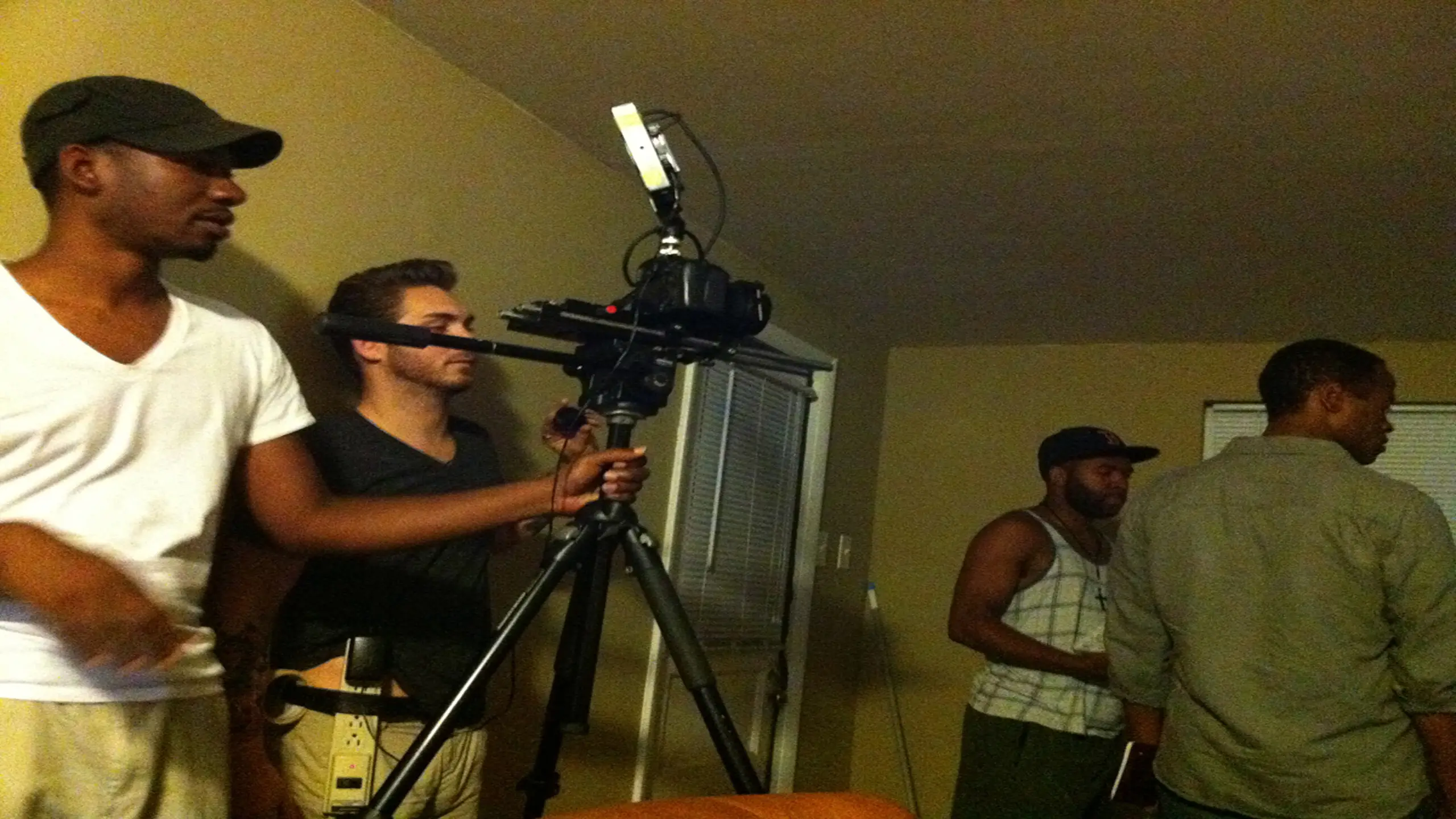
[Film production](https://c-istudios.com/film-and-tv-production/) can often seem like a daunting and complicated process. From script development and casting to shooting and post-production, there are many stages that go into creating a successful film. In this blog post, we will explore the journey of producing a short film from concept to screen. Whether you are a [seasoned filmmaker](https://c-istudios.com/) or a beginner, you will learn about the key steps involved in bringing your film to life, and the challenges that you may encounter along the way.
1. Conceptualization and Research
Every successful film starts with a concept, an idea that forms the foundation of the story. In this initial stage of the process, filmmakers spend time researching and developing their ideas, brainstorming new concepts, and pinning down the core storylines they want to explore. Let’s explore the art of developing film concepts and discuss how to create a compelling idea that will captivate audiences.
**Choose a Genre:** The first step in developing a film concept is to choose a genre. The genre will not only guide the overall tone and style of the film but also influence the target audience. There are various genres to choose from, including drama, comedy, horror, action, and romance. Each genre has its own unique set of storytelling conventions and expectations. Therefore, it is important to research and understand the different types of genres and their audiences. This will help you choose the best genre for your film concept.
**Create a Memorable Character:** The protagonist of a film is the engine that drives the story forward. A well-developed character can make the difference between a forgettable film and a memorable one. Therefore, it is important to create a strong and relatable character that the audience can connect with. Think about the character's backstory, motivations, and flaws. Make sure they have a clear goal and face obstacles that challenge them. This will create conflict and drama, making the film more engaging.
**Craft a Compelling Plot:** A film's plot is the backbone of the story. It must be well-structured, with a clear beginning, middle, and end. The plot should [keep the audience engaged](https://c-istudios.com/about/) and invested in the story. It should have a clear conflict and resolution that satisfies the audience. When crafting the plot, ask yourself what the story is about, what the character wants, and what obstacles they face. This will help you create a compelling and coherent plot that resonates with audiences.
Often, filmmakers draw on their own personal experiences, interests, and passions to develop their storyline. In addition, they research the themes and motifs that they wish to integrate into the graphic elements of the film.
1. Writing the Script
Once filmmakers have settled on a storyline, the next step is to write a script. The script serves as a guide for the entire production process, outlining the entire story from start to finish. Now we will be diving into the essential elements to consider when creating a script that will keep viewers on the edge of their seats.
**Creating Memorable Characters:** The first step towards writing a great script is to create memorable characters. Building characters that the audience can connect with is the key to a successful screenplay. Develop characters that are well-rounded, complex, and possess their unique set of traits and personalities. Make them appealing and identifiable, allowing the viewers to connect with them on an emotional level. Add a backstory that gives depth and purpose to their actions, and allow them to evolve as the movie progresses.
**Building a Strong Plot:** Developing a strong and compelling plot is vital to the success of your screenplay. Begin by defining the conflict, the protagonist’s goals, and what obstacles or antagonists stand in their way. Sketch out the story arc and ensure that each scene contributes to the progression of the plot. Introduce twists and turns, and keep the audience guessing about what will happen next.
**Writing Compelling Dialogue:** Dialogue is a critical element of any screenplay. It is how the characters interact and communicate, and has the potential to make or break your screenplay. Avoid writing obvious or unrealistic dialogue. Make it engaging and authentic, utilizing verbal cues, subtext, and nonverbal communication to make it more interesting.
Filmmakers must work hard to ensure the script is well-written and polished before moving onto the next stage of production. It’s vital to [get constructive feedback](https://c-istudios.com/) from other writers, editors, and potential viewers to improve the quality of the script.
1. Pre-production Planning
Pre-production planning involves developing the vision for the film and organizing all of the resources needed for the shoot. This includes casting actors, scouting locations, organizing the shooting schedule and logistics, negotiating with vendors and securing the necessary permits, etc. The pre-production stage involves a lot of work, including rehearsals, dress tests, and camera tests. Here we will delve into the importance of pre-production planning in filmmaking.
**Clarifying the Vision:** Pre-production planning enables filmmakers to crystalize their vision for the film. The process allows filmmakers to think through the story they want to tell, the style of the film, and the intended audience. This clear vision will serve as a guiding light for the entire production process, from pre-production to post-production. The more defined the vision, the better the chances of delivering a quality film that resonates with the intended audience.
**Organizing Resources:** Filmmaking requires a team effort, and pre-production planning helps to organize resources needed for the shoot. This includes hiring cast and crew, securing locations, and sourcing equipment. By doing so, filmmakers can minimize any last-minute surprises, which can often lead to significant delays and additional costs. A well-organized pre-production stage provides a solid framework for the rest of the production process.
**Budgeting:** Pre-production planning allows filmmakers to identify what they will need to spend to bring the film to life. With a well-planned and realistic budget, one can avoid overspending or underbudgeting, which can be damaging to the production process. Pre-production is an excellent time to evaluate the cost of each item and prioritize the essentials. By doing so, filmmakers can allocate the necessary resources to bring their vision to life and ensure that the final product meets their expectations.
It's critical to have a clear vision and plan to ensure that the film looks [professional](https://c-istudios.com/our-work/), is cost-efficient, and meets the production's requirements.
1. Filming and Post-Production
The filming stage is usually the most involved, with many crew members and actors involved in making the magic happen. Lighting, camera angles, sound recording, and other technical aspects of production come into play.
**The Art of Filming:** The filming stage is usually the most involved, with many crew members and actors involved in making the magic happen. It starts with pre-production planning, where the team decides on the location, casting, storyboard, and overall aesthetic of the film. Once the planning is complete, the actual filming begins. It involves setting up the camera, sound, props, and lights while directing the actors. The goal is to capture the perfect shot that would fit the scene, convey the emotion and bring the script to life.
Sometimes, this can take several takes to perfect, which is why the filming stage can take weeks or months, depending on the scope of the project. After all the shots are taken, the director, cinematographer, and editor will go through the footage and select the best shots to be used in the film. This process is called "dailies", and it’s a crucial step in shaping the final product.
**The Art of Post-Production:** Post-production is where all the footage captured during filming is put together to create the final product. This process includes video editing, sound design, visual effects, color grading, and more. It’s where the film comes to life and takes its final shape. Many people consider post-production to be even more critical than the actual filming process since it’s where everything comes together.
First, the editor will go through all the dailies and trim the shots to fit the script and pacing. Then, they’ll add music and sound effects to enhance the viewing experience. Once the cut is complete, it goes through color grading, which adjusts the colors and contrast levels to fit the project's aesthetic. Finally, the project is mixed and mastered to ensure the sound is consistent across all devices and environments.
The footage is then sorted, reviewed, and edited during post-production. The editing stage can take some time, with many hours spent reviewing and refining the footage. The editor cuts and edits the scenes, special fx, sound mixing, and color grading is added to provide that cinematic feel.
1. Release and Promotion
The final and often the most nerve-wracking stage is the release and promotion of the finished film. Some filmmakers opt to enter their film into festivals or submit it for distribution. Now we will be discussing two effective strategies to promote your film and make the most of its release.
**Know your audience:** Understanding your target audience is [key to promoting your film effectively](https://c-istudios.com/creative-services/). Identify who your film will appeal to and tailor your marketing strategies to reach that demographic. Consider the age, gender, and interests of your target audience and utilize social media platforms that they are most active on to promote your film.
**Utilize film festivals:** Film festivals are a great way to showcase your work and gain exposure. Submit your film to festivals that align with your film's genre and message. Winning or being selected as an Official Selection at a film festival can significantly increase your film's visibility and create buzz.
In addition, it is common to create a promotion strategy to attract audiences and increase recognition. Filmmakers can build a supporting team of reviewers, social media influencers, and other marketing professionals to build awareness and promote the film through various mediums.
## C&I Studios. Crafting Cinematic Tales - Your Journey to Short Film Excellence
Embarking on a short film production journey with C&I Studios ensures an enriching experience marked by creativity and excellence. From collaborative conceptualization to precision cinematography using cutting-edge equipment, our team ensures every frame contributes seamlessly to the narrative. Meticulous planning in storyboarding and scripting is followed by post-production expertise, including advanced editing and visual effects, resulting in a polished final product.
Our adaptive and collaborative approach values your input throughout the process, from decision-making to attention to detail in set design and costume choices. C&I Studios thrives in dynamic filmmaking, ensuring your creative vision remains intact even amid unforeseen challenges. Ultimately, our emphasis on storytelling guarantees a short film that not only looks visually appealing but also leaves a lasting impact on viewers. Embark on a cinematic journey with us - [contact C&I Studios](https://c-istudios.com/contact/) today to bring your short film vision to life!
## Work with C&I Studios
If you are planning a project like this, our team can take it from concept to final delivery. Explore our [film and TV production](https://c-istudios.com/film-and-tv-production/), browse [our work](https://c-istudios.com/our-work/) to see how we tell brand stories, and [get in touch](https://c-istudios.com/contact/) when you are ready to start.
Originally published December 5, 2023
---
*This content is from [C&I Studios](https://c-istudios.com), a full-service production company.*
---
# The Importance of Communication: How a Strong DP, Gaffer, and Crew Ensure a Smooth Workflow
> Published: December 5, 2023
> Categories: Behind the Scenes
> Source: https://c-istudios.com/the-importance-of-communication-how-a-strong-dp-gaffer-and-crew-ensure-a-smooth-workflow/
---
.cib{--paper:#1b1d1f;--ink:#fff;--body:#d5d7d9;--muted:#8b9096;--line:rgba(255,255,255,.12);--thumb:#2b2e31;--card:#212426;--accent:#c02b0a;--blue:#5B8FA8;--serif:'Playfair Display',Georgia,serif;--sans:'Poppins',-apple-system,sans-serif;--measure:900px;background:var(--paper);color:var(--body);font-family:var(--sans);line-height:1.6;position:relative;left:50%;transform:translateX(-50%);width:90vw;max-width:1920px}
.cib *{box-sizing:border-box}
.cib .kicker{max-width:var(--measure);margin:58px auto 0;padding:0 22px;font-size:12.5px;font-weight:700;letter-spacing:2.5px;text-transform:uppercase;color:var(--blue)}
.cib h1.cibh1{text-wrap:balance;font-family:var(--serif);font-weight:500;font-size:clamp(46px,6vw,72px);line-height:1.08;color:var(--ink);max-width:var(--measure);margin:18px auto 0;padding:0 22px;letter-spacing:-.5px}
.cib .metarow{max-width:var(--measure);margin:20px auto 0;padding:0 22px;color:var(--muted);font-size:14px}
.cib .hero{position:relative;width:100%;height:0;padding-bottom:56.25%;overflow:hidden;margin:48px auto 0;border-top:1px solid var(--line);border-bottom:1px solid var(--line)}
.cib .hero .ph{width:100%;aspect-ratio:16/9;background:var(--thumb);border-top:1px solid var(--line);border-bottom:1px solid var(--line);display:flex;align-items:center;justify-content:center;color:#7d8288;font-size:13px;text-align:center;padding:0 20px}
.cib .body{max-width:var(--measure);margin:12px auto 0;padding:52px 22px 6px}
.cib .body.lead p:first-child{font-size:23px;line-height:1.62;color:var(--ink)}
.cib .body p{font-size:18.5px;line-height:1.85;margin:0 0 30px;color:var(--body)}
.cib .body h2{text-wrap:balance;font-family:var(--serif);font-weight:500;font-size:clamp(32px,4vw,48px);line-height:1.22;color:var(--ink);margin:70px 0 20px;letter-spacing:-.3px}
.cib .body h3{text-wrap:balance;font-family:var(--sans);font-weight:600;font-size:22px;color:var(--ink);margin:38px 0 8px}
.cib .body a{color:var(--ink);text-decoration:underline;text-decoration-color:rgba(255,255,255,.4);text-underline-offset:3px}
.cib .body a:hover{text-decoration-color:var(--ink)}
.cib .ctable{width:100%;border-collapse:collapse;margin:16px 0 30px;font-size:16px}
.cib .ctable th{background:#000;color:#fff;text-align:left;padding:10px 12px;font-family:var(--sans)}
.cib .ctable td{padding:10px 12px;border-bottom:1px solid var(--line);color:var(--body)}
.cib .inimg{position:relative;width:100%;height:0;padding-bottom:56.25%;overflow:hidden;margin:72px auto;border-top:1px solid var(--line);border-bottom:1px solid var(--line)}
.cib .inimg .ph{width:100%;aspect-ratio:16/9;background:var(--thumb);border-top:1px solid var(--line);border-bottom:1px solid var(--line);display:flex;align-items:center;justify-content:center;color:#7d8288;font-size:13px}
.cib .origpub{max-width:var(--measure);margin:60px auto 0;padding:26px 22px 0;border-top:1px solid var(--line);color:var(--muted);font-size:13.5px}
.cib .related{max-width:1200px;margin:64px auto 0;padding:34px 22px 76px}
.cib .related h3{font-family:var(--sans);font-size:12.5px;letter-spacing:2px;text-transform:uppercase;color:var(--ink);margin:0 0 24px}
.cib .grid{display:grid;grid-template-columns:repeat(3,1fr);gap:28px}
.cib .rc{background:var(--card);border:1px solid var(--line);display:block;text-decoration:none;color:inherit;transition:border-color .15s}
.cib a.rc:hover{border-color:rgba(255,255,255,.5)}
.cib .rc .thumb{position:relative;width:100%;height:0;padding-bottom:56.25%;background:var(--thumb);overflow:hidden}
.cib .rc .thumb img{position:absolute!important;top:0!important;left:0!important;width:100%!important;height:100%!important;object-fit:cover!important;margin:0!important}
.cib .rc .cc{padding:14px 15px 17px}
.cib .rc .rt{font-family:var(--serif);font-weight:500;font-size:16px;line-height:1.3;color:var(--ink);margin:0 0 6px}
.cib .rc .rm{font-size:11px;letter-spacing:1px;text-transform:uppercase;color:var(--muted)}
.cib img{margin:0!important;padding:0!important;display:block!important;vertical-align:top;max-width:100%}
.cib .hero img,.cib .inimg img{position:absolute!important;top:0!important;left:0!important;width:100%!important;height:100%!important;object-fit:cover!important;margin:0!important;padding:0!important;border:0!important;display:block!important;aspect-ratio:auto!important}
.cib .hero+.body{padding-top:36px}
@media(max-width:760px){.cib .grid{grid-template-columns:1fr}.cib .body h2{margin:52px 0 16px}.cib .body p{font-size:17.5px}.cib .inimg,.cib .hero{margin-top:44px}}
.cib .vembed{max-width:var(--measure);margin:44px auto;padding:0 22px}.cib .vembed .vwrap{position:relative;width:100%;height:0;padding-bottom:56.25%}.cib .vembed .vwrap iframe{position:absolute;top:0;left:0;width:100%;height:100%;border:0}
Behind the Scenes
# The Importance of Communication. How a Strong DP, Gaffer, and Crew Ensure a Smooth Workflow
6 min read
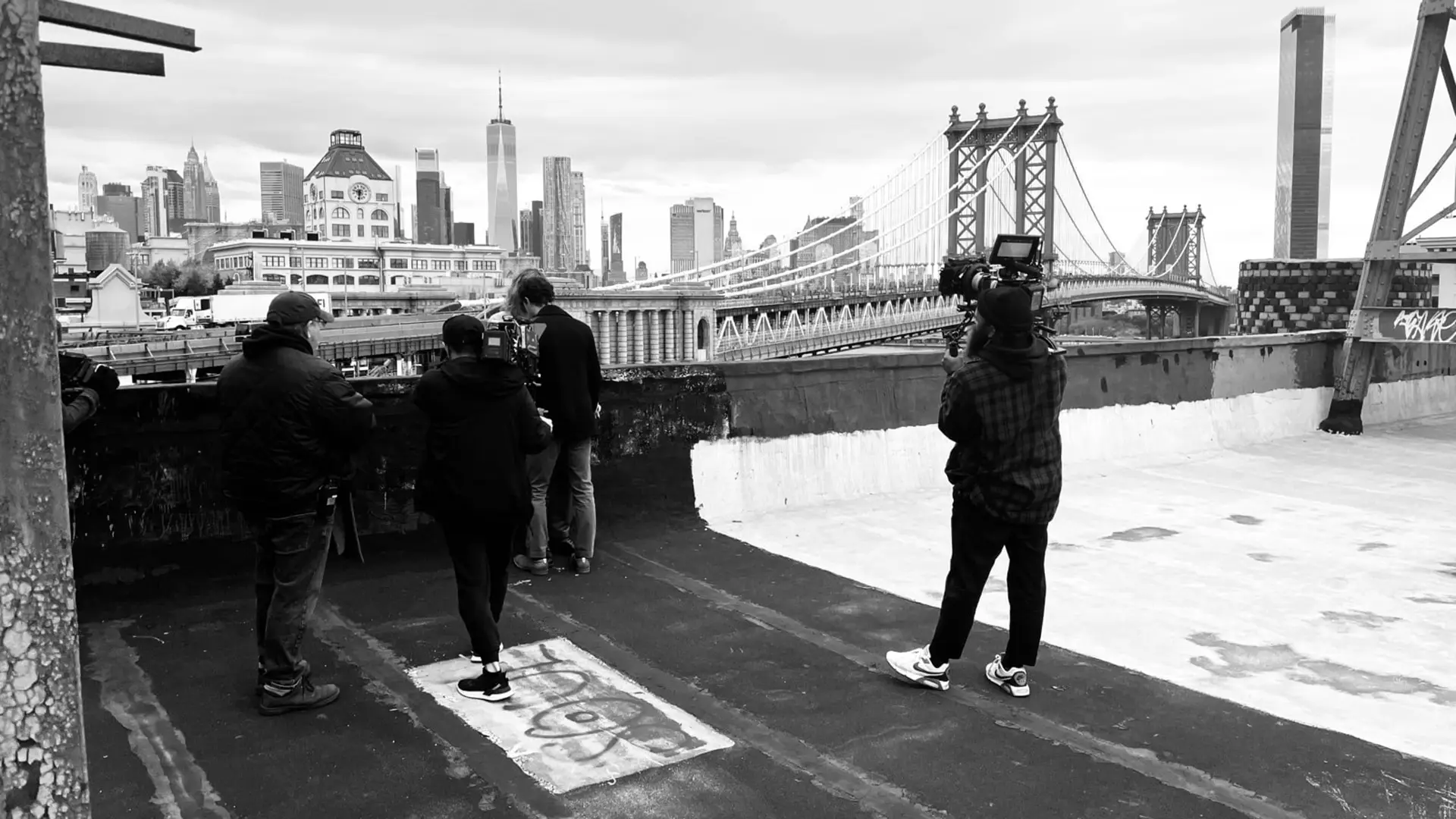
Filmmaking is all about collaboration and teamwork, and effective communication is the key to achieving a [smooth workflow](https://c-istudios.com/). A film set can be chaotic and stressful if there is a lack of communication, leading to delays, mistakes, and poor quality work. It is crucial for filmmakers to establish a clear communication network to ensure that everyone is on the same page and working towards the same goal. In this blog post, we will discuss the importance of communication among the DP, gaffer, and crew and how they can work together to create a successful film project.
- The Role of the DP:
The Director of Photography (DP) is responsible for translating the director's vision onto the screen. The DP captures the story's mood and tone through lighting, camera angles, and lenses. Let’s explore how a strong DP system ensures a smooth workflow in communication between businesses, employees, and clients.
- **Ensuring Security -** A strong DP system guarantees the secure transmission and storage of sensitive data, such as personal information, financial records, and confidential business plans. This helps prevent data breaches and cyber-attacks, which can be damaging to your company's reputation and overall business operations. By prioritizing a secure DP system, you can rest assured that all your communication is safe and sound.
- **Enhancing Collaboration -** Effective collaboration is essential for completing business tasks and delivering results. Inefficient communication, however, can hinder collaboration and lead to miscommunication, errors, and delays. With a strong DP system, you can ensure that all parties have access to the same information, documents, and updates in real-time, regardless of their location or device. This promotes transparency, eliminates confusion, and fosters teamwork.
- **Streamlining Workflow -** A strong DP system can improve your workflow by reducing the time and effort needed to complete communication tasks. With an organized and easily searchable system, you can quickly find and share information with colleagues, stakeholders, and clients. This minimizes the need for lengthy email exchanges, follow-up phone calls, and meetings. As a result, you and your team can devote more time to core business tasks and goals.
Communication between the DP and the director is essential in discussing the film's visual style and mood. DP must communicate effectively with the gaffer to achieve the desired lighting setup. Open communication between the DP and the gaffer will help them in establishing the lighting mood, its direction and strength, and how they would want the scene to look.
- The Role of the Gaffer:
The Gaffer oversees the lighting department on set. This person is responsible for designing the lighting setup according to the DP's specifications and works with the crew to set up the lighting equipment. Let's dive into the role of the Gaffer and how they ensure a smooth workflow in communication.
- **The Gaffer and Communication - **The gaffer must work with other departments on the film, including the director, cinematographer, production designer, and the art department. The Gaffer has significant input into the look and feel of the film, and their communication skills are an essential element of ensuring that everything works smoothly. The gaffer needs to [communicate effectively](https://c-istudios.com/our-work/) to ensure that everyone is on the same page and that the workflow is streamlined.
- **Technical Knowledge and Support - **The Gaffer is equipped with technical know-how about lighting and can solve technical problems and answer questions on set. This knowledge is essential as they are in charge of lighting for the entire film, from setting up the lights to configuring them to get the correct brightness and color balance. The Gaffer also works closely with the cinematographer, who is responsible for showing the right angles and camera movements, to ensure that everyone works together for a flawless production.
- **Managing the Lighting Department - **The Gaffer must ensure that their team is up and running at all times. From the first day of production to the last day, the Gaffer is responsible for hiring the right people and ensuring that the department remains well-stocked with the necessary equipment. They should also know how to manage their team members, delegate tasks, and maintain their team's morale through teamwork and excellent communication. All these tasks are crucial to ensuring that a film is finished on time and to [the right quality](https://c-istudios.com/about/).
So, to ensure a smooth workflow, the gaffer must have proper communication with their team, especially the key grip, which ensures the proper placement of the lighting equipment. Good communication between the gaffer and the crew is essential in setting up the lights on time and avoiding delays.
- The Role of the Crew:
The Crew members work under the DP, gaffer, and other department heads, such as sound, art, and costume. Each crew member has a specific role to play in ensuring the film's success. Let’s discuss the importance of the crew in communication and share tips for better communication to guarantee a seamless workflow.
- **Communication as a Two-Way Street**
Effective communication not only involves giving or receiving instructions but also providing feedback. The crew needs to communicate their ideas, questions, and concerns related to the production process. Such feedback provides valuable insights that help the leadership team make informed decisions that benefit everyone involved.
- **Clear Communication of Roles and Expectations**
Each member of the crew should understand their individual roles and responsibilities, and the expectations set out by the leadership team. When communication regarding individual responsibilities is unclear, it can create confusion and misunderstandings, leading to a breakdown in the workflow.
- **Open Communication Environment**
The working environment should be conducive to open and clear communication. Crew members should be comfortable enough to express their ideas, ask questions, and clarify instructions. This open communication environment facilitates smoother problem-solving and encourages crew members to share any concerns that might affect the quality of the production.
In short, the key to a cohesive crew is effective communication. It is essential to make sure that everyone on the crew understands their roles and is aware of what is expected of them. Once everyone understands the overall vision and what each member is supposed to do, the process of the production will flow smoothly. When the crew [communicates well](https://c-istudios.com/contact/), the chances of getting the shot right the first time is high.
- How Communication Evolves as the Production Continues:
In the world of filmmaking and [video production](https://c-istudios.com/video-production-services/), communication is key to producing a quality output. The director, producer, and other key people in the production team rely heavily on effective communication to ensure that everything falls into place. However, communication is not just the responsibility of the leadership; the film crew also has a vital role to play in maintaining effective communication and ensuring a smooth workflow.
As the production continues, communication evolves, and more departments come into play, such as editing and post-production. A strong communication network established by the DP, gaffer, and crew will allow the whole team to work cohesively, even when different departments are brought in. The entire team must stay connected to ensure that the vision of the film remains consistent, and the continuity of the project is achieved from the beginning to the end. So, by following our tips, every member of the crew can play their part in maintaining open communication, coordination, and teamwork and produce a quality output that meets the [production objectives](https://c-istudios.com/creative-services/).
## Wrapping Up
Effective communication is crucial for the success of a [film production](https://c-istudios.com/film-and-tv-production/). The DP, gaffer, and crew must work together to ensure that they are on the same page, have a clear understanding of the production goal and the vision of the project. Establishing clear communication and maintaining it throughout the production process will help avoid delays and mistakes and ensure a smooth workflow. As filmmakers, we can all agree that the ultimate goal is to make the best film possible, and communication is the key to achieving that. By working together and communicating effectively, filmmakers can create successful film projects that achieve their creative goals.
## The Importance of Communication. Why should I work with C&I Studios Crew to Ensure a Smooth Workflow
Collaborating with the C&I Studios crew is crucial for ensuring a smooth workflow in your project, particularly when it comes to effective communication.
- **Professionalism in Communication**
C&I Studios prides itself on maintaining a high level of professionalism in communication. Clear and concise communication is essential for understanding your vision and goals. Our team is dedicated to keeping you informed at every stage of the production process, ensuring transparency and clarity.
- **Collaborative Approach**
A key aspect of C&I Studios' ethos is fostering a collaborative environment. Effective communication is at the heart of collaboration, and our crew is skilled in working closely with clients to understand their needs, address concerns, and implement feedback. This collaborative approach ensures that your vision is not only understood but also enhanced through our expertise.
- **Timely Updates and Progress Reports**
Communication is not just about conveying information; it's also about providing timely updates. C&I Studios understands the importance of keeping you in the loop regarding the progress of your project. Regular updates and progress reports will be shared to ensure that you are aware of the developments and can provide input as needed.
- **Adaptability to Your Communication Preferences**
Everyone has different communication preferences. Whether you prefer email, phone calls, or in-person meetings, C&I Studios adapts to your preferred mode of communication. This flexibility ensures that you are comfortable and engaged throughout the production process.
Our commitment to professionalism, collaboration, timely updates, adaptability, problem-solving, and a client-centric focus makes us the ideal partner for ensuring effective communication in every stage of your project. [Contact us](https://c-istudios.com/contact/) today, and let's create a project where communication is as exceptional as the final product!
## Work with C&I Studios
If you are planning a project like this, our team can take it from concept to final delivery. Explore our [video production services](https://c-istudios.com/video-production-services/), browse [our work](https://c-istudios.com/our-work/) to see how we tell brand stories, and [get in touch](https://c-istudios.com/contact/) when you are ready to start.
Originally published December 5, 2023
---
*This content is from [C&I Studios](https://c-istudios.com), a full-service production company.*
---
# The Quality vs. Quantity Dilemma: Assessing Crew Talent on ProductionHUB
> Published: December 5, 2023
> Categories: Film & TV
> Source: https://c-istudios.com/the-quality-vs-quantity-dilemma-assessing-crew-talent-on-productionhub/
---
.cib{--paper:#1b1d1f;--ink:#fff;--body:#d5d7d9;--muted:#8b9096;--line:rgba(255,255,255,.12);--thumb:#2b2e31;--card:#212426;--accent:#c02b0a;--blue:#5B8FA8;--serif:'Playfair Display',Georgia,serif;--sans:'Poppins',-apple-system,sans-serif;--measure:900px;background:var(--paper);color:var(--body);font-family:var(--sans);line-height:1.6;position:relative;left:50%;transform:translateX(-50%);width:90vw;max-width:1920px}
.cib *{box-sizing:border-box}
.cib .kicker{max-width:var(--measure);margin:58px auto 0;padding:0 22px;font-size:12.5px;font-weight:700;letter-spacing:2.5px;text-transform:uppercase;color:var(--blue)}
.cib h1.cibh1{text-wrap:balance;font-family:var(--serif);font-weight:500;font-size:clamp(46px,6vw,72px);line-height:1.08;color:var(--ink);max-width:var(--measure);margin:18px auto 0;padding:0 22px;letter-spacing:-.5px}
.cib .metarow{max-width:var(--measure);margin:20px auto 0;padding:0 22px;color:var(--muted);font-size:14px}
.cib .hero{position:relative;width:100%;height:0;padding-bottom:56.25%;overflow:hidden;margin:48px auto 0;border-top:1px solid var(--line);border-bottom:1px solid var(--line)}
.cib .hero .ph{width:100%;aspect-ratio:16/9;background:var(--thumb);border-top:1px solid var(--line);border-bottom:1px solid var(--line);display:flex;align-items:center;justify-content:center;color:#7d8288;font-size:13px;text-align:center;padding:0 20px}
.cib .body{max-width:var(--measure);margin:12px auto 0;padding:52px 22px 6px}
.cib .body.lead p:first-child{font-size:23px;line-height:1.62;color:var(--ink)}
.cib .body p{font-size:18.5px;line-height:1.85;margin:0 0 30px;color:var(--body)}
.cib .body h2{text-wrap:balance;font-family:var(--serif);font-weight:500;font-size:clamp(32px,4vw,48px);line-height:1.22;color:var(--ink);margin:70px 0 20px;letter-spacing:-.3px}
.cib .body h3{text-wrap:balance;font-family:var(--sans);font-weight:600;font-size:22px;color:var(--ink);margin:38px 0 8px}
.cib .body a{color:var(--ink);text-decoration:underline;text-decoration-color:rgba(255,255,255,.4);text-underline-offset:3px}
.cib .body a:hover{text-decoration-color:var(--ink)}
.cib .ctable{width:100%;border-collapse:collapse;margin:16px 0 30px;font-size:16px}
.cib .ctable th{background:#000;color:#fff;text-align:left;padding:10px 12px;font-family:var(--sans)}
.cib .ctable td{padding:10px 12px;border-bottom:1px solid var(--line);color:var(--body)}
.cib .inimg{position:relative;width:100%;height:0;padding-bottom:56.25%;overflow:hidden;margin:72px auto;border-top:1px solid var(--line);border-bottom:1px solid var(--line)}
.cib .inimg .ph{width:100%;aspect-ratio:16/9;background:var(--thumb);border-top:1px solid var(--line);border-bottom:1px solid var(--line);display:flex;align-items:center;justify-content:center;color:#7d8288;font-size:13px}
.cib .origpub{max-width:var(--measure);margin:60px auto 0;padding:26px 22px 0;border-top:1px solid var(--line);color:var(--muted);font-size:13.5px}
.cib .related{max-width:1200px;margin:64px auto 0;padding:34px 22px 76px}
.cib .related h3{font-family:var(--sans);font-size:12.5px;letter-spacing:2px;text-transform:uppercase;color:var(--ink);margin:0 0 24px}
.cib .grid{display:grid;grid-template-columns:repeat(3,1fr);gap:28px}
.cib .rc{background:var(--card);border:1px solid var(--line);display:block;text-decoration:none;color:inherit;transition:border-color .15s}
.cib a.rc:hover{border-color:rgba(255,255,255,.5)}
.cib .rc .thumb{position:relative;width:100%;height:0;padding-bottom:56.25%;background:var(--thumb);overflow:hidden}
.cib .rc .thumb img{position:absolute!important;top:0!important;left:0!important;width:100%!important;height:100%!important;object-fit:cover!important;margin:0!important}
.cib .rc .cc{padding:14px 15px 17px}
.cib .rc .rt{font-family:var(--serif);font-weight:500;font-size:16px;line-height:1.3;color:var(--ink);margin:0 0 6px}
.cib .rc .rm{font-size:11px;letter-spacing:1px;text-transform:uppercase;color:var(--muted)}
.cib img{margin:0!important;padding:0!important;display:block!important;vertical-align:top;max-width:100%}
.cib .hero img,.cib .inimg img{position:absolute!important;top:0!important;left:0!important;width:100%!important;height:100%!important;object-fit:cover!important;margin:0!important;padding:0!important;border:0!important;display:block!important;aspect-ratio:auto!important}
.cib .hero+.body{padding-top:36px}
@media(max-width:760px){.cib .grid{grid-template-columns:1fr}.cib .body h2{margin:52px 0 16px}.cib .body p{font-size:17.5px}.cib .inimg,.cib .hero{margin-top:44px}}
.cib .vembed{max-width:var(--measure);margin:44px auto;padding:0 22px}.cib .vembed .vwrap{position:relative;width:100%;height:0;padding-bottom:56.25%}.cib .vembed .vwrap iframe{position:absolute;top:0;left:0;width:100%;height:100%;border:0}
Film & TV
# The Quality vs. Quantity Dilemma. Assessing Crew Talent on ProductionHUB
4 min read
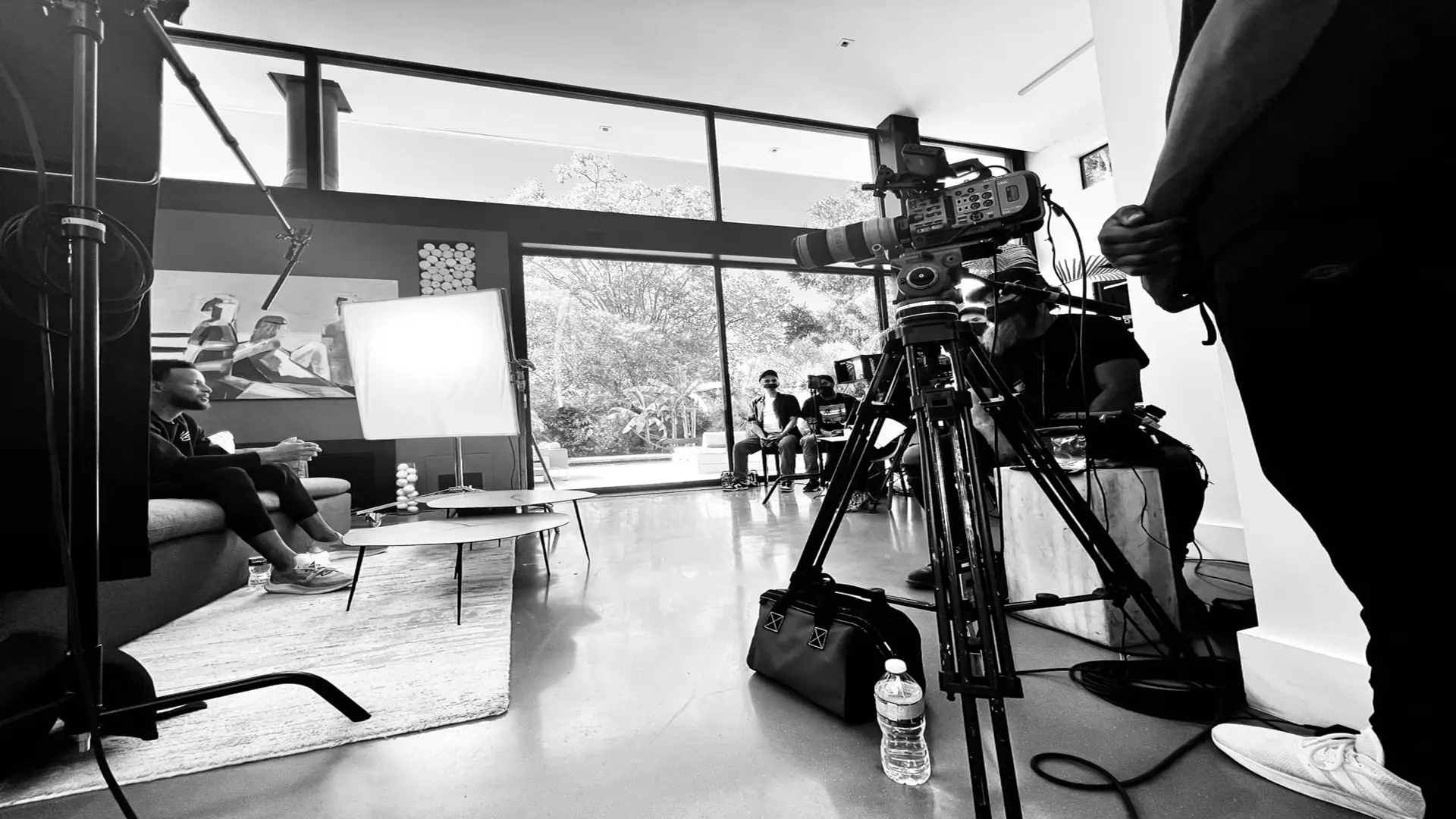

## Product Line
## Navigating Quality and Quantity. The ProductionHUB Advantage in Building Your Dream Team
The primary goal of ProductionHUB is to offer clients access to a vast list of highly talented and skilled professionals whose expertise range across various fields of content creation. ProductionHUB works in a way that allows clients to browse specific company profiles to identify an individual or team with the minimum qualifications that are needed for a particular production scale. However, clients must also understand that a significant challenge in choosing what crew to hire for their project is weighing the importance of quality versus quantity in a team. By finding this balance through ProductionHUB, clients can find the most suitable team for their project.
## How ProductionHUB Helps Clients Find Top-Notch Creative Professionals?
When it comes to content creation, clients need access to top-notch creative professionals to ensure that their projects are successful. This is where ProductionHUB comes in - this platform is committed to offering clients access to a vast list of highly talented and skilled professionals whose expertise range across various fields of content creation. Whether you're looking for production crews, videographers, or sound engineers, ProductionHUB has you covered. In this blog post, we'll delve deeper into how ProductionHUB helps clients find the right professionals for their projects.
1. ** The Power of a Vast Network: **ProductionHUB is a powerful platform that has a vast network of professionals across various fields of content creation. This network includes over 150,000 creative professionals, which means that clients have the advantage of choosing from a wide range of talented and skilled individuals. With such a vast network, clients can easily find the right professional or team that matches their project needs.
2. ** Search Filters:** ProductionHUB offers clients the ability to use search filters to narrow down their search results and easily find the right professionals for their projects. These search filters include location, expertise, rates, and even specific equipment. This way, clients can easily [find professionals](https://c-istudios.com/about/) who match their project needs while also considering factors such as budget and location.
3. ** Verified Professionals:** ProductionHUB understands the importance of finding reliable and trustworthy professionals for a client's project. That's why they have a strict verification process for all professionals listed on their platform. Only industry professionals who have a proven track record of success are able to list their services on the platform. This gives clients peace of mind knowing that they are working with professionals who have the experience and expertise needed to get the job done right.
4. ** Powerful Reviews:** One of the best things about ProductionHUB is that clients have the ability to read reviews from other clients who have worked with a professional before. These reviews are powerful because they provide clients with an inside look into a professional's work style, communication, and overall performance. This makes it easier for clients to choose the right professional for their project.
5. ** Collaboration Made Easy**: ProductionHUB is committed to making collaboration easy for clients and professionals. The platform provides tools that allow clients and professionals to collaborate, communicate, and track progress on a project. This helps to ensure that the final product meets or exceeds the client's expectations.
One of the advantages of ProductionHUB is that clients can take a step back and assess the quality of the team's work through the company portfolio. It enables clients to evaluate the team's work quality based on their previous projects, the complexity of the work performed, and how well it turned out. The portfolio can tell the client a lot about their team's ability to deliver the type of project they envision. This is critical, mainly where the work done "behind the scenes" on the set or other locations, is significant in the project's success.
## Decoding Success. ProductionHUB's Role in Balancing Productivity for Your Project Team
On the other hand, clients can choose to assess a team's productivity or output and determine whether this plays a critical role in [selecting the right crew](https://c-istudios.com/). Here, ProductionHUB can again be useful, as clients can see firsthand testimonials/reviews from previous clients. Being able to make the right decisions when faced with these two dilemmas is what separates a great film and video production project from a mediocre one.
Another factor that ProductionHUB provides to help clients decide on the right team for their project is the ability to delve into the backgrounds of different individuals. Here, we'll take a closer look at how ProductionHUB helps clients choose the perfect team for their next project.
1. ** Extensive Profile Information: **The first way that ProductionHUB helps clients make informed choices is by providing extensive information about each potential team member. This includes their background, experience, skills, and other relevant details. This allows clients to get a sense of who each person is and how they might be able to contribute to the project.
2. ** Access to Reviews and Ratings:** Another key benefit of using ProductionHUB to find a team is that clients can access reviews and ratings from other clients who have worked with them in the past. This provides valuable insight into each person's work ethic, reliability, and overall quality of work. By taking advantage of this information, clients can make more informed decisions about who to hire.
3. ** Compare and Contrast Different Team Members:** One of the biggest challenges when choosing a team is trying to compare and contrast different candidates. With ProductionHUB, this becomes much easier. Clients can view all the potential team members side-by-side, allowing them to easily compare their backgrounds, skills, and other relevant details. This can be very useful when trying to make a difficult decision.
4. ** Collaborate with Others on the Project:** Finally, ProductionHUB allows clients to collaborate with others on the project to get their input on different team members. This can be incredibly valuable, as it allows clients to get feedback from individuals who may have experience working with certain people or who have connections to the industry. By taking advantage of these collaborative features, clients can make better-informed decisions about who to bring onto their project.
Knowing the specific areas of expertise, education, certifications, and training of the team they're looking to hire is invaluable. ProductionHUB provides an extensive list of experts that can best match the specific job [requirements needed in a team](https://c-istudios.com/creative-services/). This means that the likelihood of attracting a competent individual to manage a project or perform certain tasks is high.
## Unlocking Excellence. Elevate Your Next Documentary or Docuseries with C&I Studios
Elevate your next documentary or docuseries by collaborating with C&I Studios - where excellence meets creativity. Our seasoned professionals bring a wealth of knowledge and expertise to the table, ensuring your project benefits from top-tier production quality and captivating storytelling.
Our dynamic team, comprised of skilled videographers, editors, and producers, understands the pivotal role visuals and narration play in crafting a compelling narrative. Beyond merely documenting, we immerse ourselves in the essence of your story, ensuring it not only looks impressive but resonates with your audience.
At C&I Studios, we go the extra mile by assisting you with meticulous research, guaranteeing the accuracy of every fact presented. We don't just stop at information; our team generates innovative ideas for visuals that promise to captivate and retain your audience's attention. Expect quality interviews from key sources, injecting depth and authenticity into your documentary or docuseries.
Recognizing the core elements of a successful project, we at C&I Studios are committed to ensuring your documentary or docuseries follows the essential storytelling principles. We believe in the power of a well-told story and are dedicated to helping you convey your narrative in a way that is both engaging and authentic.
Don't postpone the journey to making your documentary or docuseries a triumph. Reach out to us at [C&I Studios today](https://c-istudios.com/contact/), and let's collaborate to turn your vision into a compelling and successful reality.
For more information on industry standards and best practices, visit the [American Marketing Association](https://www.ama.org/).
## Work with C&I Studios
If you are planning a project like this, our team can take it from concept to final delivery. Explore our [film and TV production](https://c-istudios.com/film-and-tv-production/), browse [our work](https://c-istudios.com/our-work/) to see how we tell brand stories, and [get in touch](https://c-istudios.com/contact/) when you are ready to start.
Originally published December 5, 2023
---
*This content is from [C&I Studios](https://c-istudios.com), a full-service production company.*
---
# From Concept to Screen: Developing and Pitching Your TV Pilot
> Published: December 5, 2023
> Categories: Film & TV
> Source: https://c-istudios.com/from-concept-to-screen-developing-and-pitching-your-tv-pilot/
---
.cib{--paper:#1b1d1f;--ink:#fff;--body:#d5d7d9;--muted:#8b9096;--line:rgba(255,255,255,.12);--thumb:#2b2e31;--card:#212426;--accent:#c02b0a;--blue:#5B8FA8;--serif:'Playfair Display',Georgia,serif;--sans:'Poppins',-apple-system,sans-serif;--measure:900px;background:var(--paper);color:var(--body);font-family:var(--sans);line-height:1.6;position:relative;left:50%;transform:translateX(-50%);width:90vw;max-width:1920px}
.cib *{box-sizing:border-box}
.cib .kicker{max-width:var(--measure);margin:58px auto 0;padding:0 22px;font-size:12.5px;font-weight:700;letter-spacing:2.5px;text-transform:uppercase;color:var(--blue)}
.cib h1.cibh1{text-wrap:balance;font-family:var(--serif);font-weight:500;font-size:clamp(46px,6vw,72px);line-height:1.08;color:var(--ink);max-width:var(--measure);margin:18px auto 0;padding:0 22px;letter-spacing:-.5px}
.cib .metarow{max-width:var(--measure);margin:20px auto 0;padding:0 22px;color:var(--muted);font-size:14px}
.cib .hero{position:relative;width:100%;height:0;padding-bottom:56.25%;overflow:hidden;margin:48px auto 0;border-top:1px solid var(--line);border-bottom:1px solid var(--line)}
.cib .hero .ph{width:100%;aspect-ratio:16/9;background:var(--thumb);border-top:1px solid var(--line);border-bottom:1px solid var(--line);display:flex;align-items:center;justify-content:center;color:#7d8288;font-size:13px;text-align:center;padding:0 20px}
.cib .body{max-width:var(--measure);margin:12px auto 0;padding:52px 22px 6px}
.cib .body.lead p:first-child{font-size:23px;line-height:1.62;color:var(--ink)}
.cib .body p{font-size:18.5px;line-height:1.85;margin:0 0 30px;color:var(--body)}
.cib .body h2{text-wrap:balance;font-family:var(--serif);font-weight:500;font-size:clamp(32px,4vw,48px);line-height:1.22;color:var(--ink);margin:70px 0 20px;letter-spacing:-.3px}
.cib .body h3{text-wrap:balance;font-family:var(--sans);font-weight:600;font-size:22px;color:var(--ink);margin:38px 0 8px}
.cib .body a{color:var(--ink);text-decoration:underline;text-decoration-color:rgba(255,255,255,.4);text-underline-offset:3px}
.cib .body a:hover{text-decoration-color:var(--ink)}
.cib .ctable{width:100%;border-collapse:collapse;margin:16px 0 30px;font-size:16px}
.cib .ctable th{background:#000;color:#fff;text-align:left;padding:10px 12px;font-family:var(--sans)}
.cib .ctable td{padding:10px 12px;border-bottom:1px solid var(--line);color:var(--body)}
.cib .inimg{position:relative;width:100%;height:0;padding-bottom:56.25%;overflow:hidden;margin:72px auto;border-top:1px solid var(--line);border-bottom:1px solid var(--line)}
.cib .inimg .ph{width:100%;aspect-ratio:16/9;background:var(--thumb);border-top:1px solid var(--line);border-bottom:1px solid var(--line);display:flex;align-items:center;justify-content:center;color:#7d8288;font-size:13px}
.cib .origpub{max-width:var(--measure);margin:60px auto 0;padding:26px 22px 0;border-top:1px solid var(--line);color:var(--muted);font-size:13.5px}
.cib .related{max-width:1200px;margin:64px auto 0;padding:34px 22px 76px}
.cib .related h3{font-family:var(--sans);font-size:12.5px;letter-spacing:2px;text-transform:uppercase;color:var(--ink);margin:0 0 24px}
.cib .grid{display:grid;grid-template-columns:repeat(3,1fr);gap:28px}
.cib .rc{background:var(--card);border:1px solid var(--line);display:block;text-decoration:none;color:inherit;transition:border-color .15s}
.cib a.rc:hover{border-color:rgba(255,255,255,.5)}
.cib .rc .thumb{position:relative;width:100%;height:0;padding-bottom:56.25%;background:var(--thumb);overflow:hidden}
.cib .rc .thumb img{position:absolute!important;top:0!important;left:0!important;width:100%!important;height:100%!important;object-fit:cover!important;margin:0!important}
.cib .rc .cc{padding:14px 15px 17px}
.cib .rc .rt{font-family:var(--serif);font-weight:500;font-size:16px;line-height:1.3;color:var(--ink);margin:0 0 6px}
.cib .rc .rm{font-size:11px;letter-spacing:1px;text-transform:uppercase;color:var(--muted)}
.cib img{margin:0!important;padding:0!important;display:block!important;vertical-align:top;max-width:100%}
.cib .hero img,.cib .inimg img{position:absolute!important;top:0!important;left:0!important;width:100%!important;height:100%!important;object-fit:cover!important;margin:0!important;padding:0!important;border:0!important;display:block!important;aspect-ratio:auto!important}
.cib .hero+.body{padding-top:36px}
@media(max-width:760px){.cib .grid{grid-template-columns:1fr}.cib .body h2{margin:52px 0 16px}.cib .body p{font-size:17.5px}.cib .inimg,.cib .hero{margin-top:44px}}
.cib .vembed{max-width:var(--measure);margin:44px auto;padding:0 22px}.cib .vembed .vwrap{position:relative;width:100%;height:0;padding-bottom:56.25%}.cib .vembed .vwrap iframe{position:absolute;top:0;left:0;width:100%;height:100%;border:0}
Film & TV
# From Concept to Screen. Developing and Pitching Your TV Pilot
8 min read

Television has never been more exciting. With streaming platforms like Netflix, Amazon Prime, Hulu, and Disney+, there is a high demand for original content. Developing and [pitching a successful TV pilot](https://c-istudios.com/) is no easy feat, but it can be done. In this article, we will walk you through the process of turning your concept into a screen-worthy pilot.
## Step 1. Developing your concept
The first step to developing a successful TV pilot is to come up with a concept that is fresh, relatable, and leaves room for story development in multiple episodes. It's essential to think about what makes your series unique, and what sets it apart from other shows on the market.
**Identify Your Genre:** The first step is to identify the genre you would like to explore. Genres can range from drama to comedy, horror to action, or a combination of multiple categories. Once you have a genre in mind, research the latest trends and patterns within that genre. Identifying the latest trends can be useful in helping you brainstorm a concept that feels current and relatable.
**Brainstorm Ideas:** With your genre in mind, brainstorming ideas can help you pinpoint a concept that meets your storytelling goals. Consider what message you want to convey to your audience, what experiences you want to explore, and what unique elements your show can offer compared to other shows in the same genre.
**Evaluate Your Concept:** Once you have a few ideas, assess them based on their potential to resonate with viewers. A good pilot concept should have a strong hook that instantly captures the audience's attention. Ask yourself if the concept provides a fresh take on the genre or if it falls within the same narrative patterns as other shows. A unique idea will make your pilot stand out and generate buzz.
Your idea should be uncomplicated, but at the same time, intriguing enough to captivate your audience.
## Step 2. Writing your pilot
Once you have your concept, it's time to write your pilot script. When writing your script, make sure that you have a clear outline of the story's progression and character development.
**Defines the concept of outlining in scriptwriting:** Outlining is the process of planning out the key elements of your story, including character arcs, plot points, and key themes before you start writing. The primary objective of outlining is to create a roadmap you can use to guide you through the scriptwriting process. A strong outline can help you establish the key themes you want to explore, identify the main characters' growth, and ensure a well-structured sequence of events that will contribute to the story's progression.
**Helps to discover flaws in the storyline: **As you outline the story, you can spot flaws in your narrative, including issues with pacing, character development inconsistencies, and plot issues. By addressing these issues, you can make the necessary changes before you start writing the script. This approach can save you time and ensure that your script is well-structured and cohesive throughout.
**Provides a clear structure for the story:** One of the most significant benefits of outlining is that it provides a [coherent narrative structure](https://c-istudios.com/about/) for the story. Highlighting the story's main events and character development in an outline can help you write the script more efficiently. This process ensures that the progression of the story makes sense and is consistent with the character arc you have created. By using an outline, you can be confident that your script's main message is conveyed throughout effectively.
Ensure that your main storyline is engaging enough to intrigue viewers, and that your subplots will help keep the audience hooked. Make your characters stand out and be relatable, giving them depth to create lasting connections with audiences.
## Step 3. Feedback and revisions
An important part of the writing process is to get regular feedback on your script. Share your script with your peers, writers' group, or take help from professionals in the industry. Let’s discuss why regular feedback is so essential for improving your writing.
**Seeing Your Blind Spots:** One of the biggest benefits of receiving regular feedback is that it helps you see your blind spots. We all have them, whether it’s a common grammatical error or a tendency to overuse a certain word or phrase. By getting feedback from others, you can identify these blind spots and work to correct them in your writing. This makes your writing stronger and more polished.
**Getting an Outside Perspective:** Another important reason to seek out regular feedback is to get an outside perspective on your writing. When you’ve been working on a piece of writing for a while, it can be difficult to see it objectively. Feedback from others, whether it’s your writing group or a professional editor, can provide fresh insights and ideas you may not have considered before.
**Learning and Growing as a Writer:** Regular feedback also helps you learn and grow as a writer. When you receive feedback, you’ll often be given suggestions for improvement or areas to focus on in future writing. By taking these critiques to heart and working to improve in these areas, you’re constantly evolving as a writer and becoming better at your craft.
**Building Confidence:** Receiving regular feedback can also help [build your confidence](https://c-istudios.com/creative-services/) as a writer. When you receive positive feedback on your writing, it can be a huge confidence boost and encourage you to keep writing. On the flip side, receiving constructive criticism can also be helpful, as it can help you turn your weaknesses into strengths. By building your confidence in this way, you’ll be more likely to take risks and try new things in your writing.
Be open to constructive criticism and make appropriate revisions to strengthen your work, which will make a difference when it comes to pitching.
## Step 4. Pitching your pilot
The final step is to pitch your TV pilot to potential buyers.
**Know Your Audience**: Before you start pitching your show, it's essential to research the company or network you're approaching. Find out their brand values, previous shows they've produced, and the audience they target. This information is critical when trying to tailor your idea to their specific needs and tastes. Knowing your audience will make your pitch more effective and increase the chances of your pilot getting picked up.
**Elevator Pitch:** Picture yourself in an elevator ride with some of the network executives you hope to pitch your show to and have to get their attention in 30 seconds or less. That's what an elevator pitch is all about, a brief, concise, and intriguing overview of your show that can pique someone's interest in a short amount of time. Prepare your elevator pitch and hone it until it's perfect. If you nail your pitch, you might land an opportunity to pitch your pilot to the decision-makers.
**Show and Tell:** When pitching your pilot, it's crucial to come prepared with visual aids like concept art, storyboards, or clips from the show. This approach will give investors a better idea of what your show is about and what they can expect from it. Make sure your visuals are polished and represent your show's vision and style. A professional-looking presentation can make your pitch stand out and grab the investor's attention.
In today's market, there are many platforms that you can approach to pitch your show. Before pitching, make sure that you have researched the network or production company to understand what kind of programming they're interested in. In your pitch, focus on your show's unique aspects, compelling characters, and [captivating storyline](https://c-istudios.com/). It's crucial that you're confident in your pitch and passionate about your show.
## Navigating TV Pilot Development with C&I Studios
Embark on the journey of bringing your TV pilot from concept to screen with the unparalleled expertise of C&I Studios. Our professional team excels in every stage of the creative process, ensuring that your vision is not only realized but elevated to its maximum potential.
In the initial stages of concept development, our experienced professionals will collaborate with you to refine your ideas and craft a compelling narrative. Whether you have a seed of an idea or a detailed concept, our team of videographers, editors, and producers will bring their expertise to the table, shaping your vision into a captivating TV pilot.
C&I Studios understands the significance of visuals and narration in the success of a TV pilot. Our creative team is dedicated to delivering production quality that exceeds industry standards, guaranteeing that your pilot stands out with visually stunning and engaging content.
Moreover, our ability to secure quality interviews from key sources enhances the depth and authenticity of your TV pilot. C&I Studios is not just a production team; we are partners in ensuring that your documentary or docuseries is not only informative but also interesting and impactful.
In the competitive landscape of TV pilot development, C&I Studios stands out as a reliable collaborator, dedicated to guiding you through the essential elements of creating a successful pilot. Don't wait to turn your TV pilot dreams into reality, [reach out to us](https://c-istudios.com/contact/) today, and let's navigate the exciting journey from concept to screen together. Your success story starts with C&I Studios.
## Work with C&I Studios
If you are planning a project like this, our team can take it from concept to final delivery. Explore our [film and TV production](https://c-istudios.com/film-and-tv-production/), browse [our work](https://c-istudios.com/our-work/) to see how we tell brand stories, and [get in touch](https://c-istudios.com/contact/) when you are ready to start.
Originally published December 5, 2023
---
*This content is from [C&I Studios](https://c-istudios.com), a full-service production company.*
---
# The Role of Music in Audio Mixing: Enhancing the Narrative and Setting the Mood
> Published: December 5, 2023
> Categories: Film & TV
> Source: https://c-istudios.com/the-role-of-music-in-audio-mixing/
---
.cib{--paper:#1b1d1f;--ink:#fff;--body:#d5d7d9;--muted:#8b9096;--line:rgba(255,255,255,.12);--thumb:#2b2e31;--card:#212426;--accent:#c02b0a;--blue:#5B8FA8;--serif:'Playfair Display',Georgia,serif;--sans:'Poppins',-apple-system,sans-serif;--measure:900px;background:var(--paper);color:var(--body);font-family:var(--sans);line-height:1.6;position:relative;left:50%;transform:translateX(-50%);width:90vw;max-width:1920px}
.cib *{box-sizing:border-box}
.cib .kicker{max-width:var(--measure);margin:58px auto 0;padding:0 22px;font-size:12.5px;font-weight:700;letter-spacing:2.5px;text-transform:uppercase;color:var(--blue)}
.cib h1.cibh1{text-wrap:balance;font-family:var(--serif);font-weight:500;font-size:clamp(46px,6vw,72px);line-height:1.08;color:var(--ink);max-width:var(--measure);margin:18px auto 0;padding:0 22px;letter-spacing:-.5px}
.cib .metarow{max-width:var(--measure);margin:20px auto 0;padding:0 22px;color:var(--muted);font-size:14px}
.cib .hero{position:relative;width:100%;height:0;padding-bottom:56.25%;overflow:hidden;margin:48px auto 0;border-top:1px solid var(--line);border-bottom:1px solid var(--line)}
.cib .hero .ph{width:100%;aspect-ratio:16/9;background:var(--thumb);border-top:1px solid var(--line);border-bottom:1px solid var(--line);display:flex;align-items:center;justify-content:center;color:#7d8288;font-size:13px;text-align:center;padding:0 20px}
.cib .body{max-width:var(--measure);margin:12px auto 0;padding:52px 22px 6px}
.cib .body.lead p:first-child{font-size:23px;line-height:1.62;color:var(--ink)}
.cib .body p{font-size:18.5px;line-height:1.85;margin:0 0 30px;color:var(--body)}
.cib .body h2{text-wrap:balance;font-family:var(--serif);font-weight:500;font-size:clamp(32px,4vw,48px);line-height:1.22;color:var(--ink);margin:70px 0 20px;letter-spacing:-.3px}
.cib .body h3{text-wrap:balance;font-family:var(--sans);font-weight:600;font-size:22px;color:var(--ink);margin:38px 0 8px}
.cib .body a{color:var(--ink);text-decoration:underline;text-decoration-color:rgba(255,255,255,.4);text-underline-offset:3px}
.cib .body a:hover{text-decoration-color:var(--ink)}
.cib .ctable{width:100%;border-collapse:collapse;margin:16px 0 30px;font-size:16px}
.cib .ctable th{background:#000;color:#fff;text-align:left;padding:10px 12px;font-family:var(--sans)}
.cib .ctable td{padding:10px 12px;border-bottom:1px solid var(--line);color:var(--body)}
.cib .inimg{position:relative;width:100%;height:0;padding-bottom:56.25%;overflow:hidden;margin:72px auto;border-top:1px solid var(--line);border-bottom:1px solid var(--line)}
.cib .inimg .ph{width:100%;aspect-ratio:16/9;background:var(--thumb);border-top:1px solid var(--line);border-bottom:1px solid var(--line);display:flex;align-items:center;justify-content:center;color:#7d8288;font-size:13px}
.cib .origpub{max-width:var(--measure);margin:60px auto 0;padding:26px 22px 0;border-top:1px solid var(--line);color:var(--muted);font-size:13.5px}
.cib .related{max-width:1200px;margin:64px auto 0;padding:34px 22px 76px}
.cib .related h3{font-family:var(--sans);font-size:12.5px;letter-spacing:2px;text-transform:uppercase;color:var(--ink);margin:0 0 24px}
.cib .grid{display:grid;grid-template-columns:repeat(3,1fr);gap:28px}
.cib .rc{background:var(--card);border:1px solid var(--line);display:block;text-decoration:none;color:inherit;transition:border-color .15s}
.cib a.rc:hover{border-color:rgba(255,255,255,.5)}
.cib .rc .thumb{position:relative;width:100%;height:0;padding-bottom:56.25%;background:var(--thumb);overflow:hidden}
.cib .rc .thumb img{position:absolute!important;top:0!important;left:0!important;width:100%!important;height:100%!important;object-fit:cover!important;margin:0!important}
.cib .rc .cc{padding:14px 15px 17px}
.cib .rc .rt{font-family:var(--serif);font-weight:500;font-size:16px;line-height:1.3;color:var(--ink);margin:0 0 6px}
.cib .rc .rm{font-size:11px;letter-spacing:1px;text-transform:uppercase;color:var(--muted)}
.cib img{margin:0!important;padding:0!important;display:block!important;vertical-align:top;max-width:100%}
.cib .hero img,.cib .inimg img{position:absolute!important;top:0!important;left:0!important;width:100%!important;height:100%!important;object-fit:cover!important;margin:0!important;padding:0!important;border:0!important;display:block!important;aspect-ratio:auto!important}
.cib .hero+.body{padding-top:36px}
@media(max-width:760px){.cib .grid{grid-template-columns:1fr}.cib .body h2{margin:52px 0 16px}.cib .body p{font-size:17.5px}.cib .inimg,.cib .hero{margin-top:44px}}
.cib .vembed{max-width:var(--measure);margin:44px auto;padding:0 22px}.cib .vembed .vwrap{position:relative;width:100%;height:0;padding-bottom:56.25%}.cib .vembed .vwrap iframe{position:absolute;top:0;left:0;width:100%;height:100%;border:0}
Film & TV
# The Role of Music in Audio Mixing. Enhancing the Narrative and Setting the Mood
8 min read

Blog Introduction: Audio mixing is the art of blending different elements like sound effects, dialogue, and music to create a cohesive and engaging audio experience. One crucial element that audio mixers cannot afford to ignore is music. Music plays a significant role in [enhancing the narrative](https://c-istudios.com/) and setting the mood for any audio production, be it a podcast, radio drama, or a film. In this post, we highlight the importance of music in audio mixing and how it can make or break your production.
1. Music heightens the emotion and tone of the production
When chosen and mixed correctly, music can convey a range of emotions like joy, excitement, suspense, and even sadness. Music evokes emotions and sets the tone for your scene or story, creating a much more immersive experience for your audience.
**Sets the tone of your scene:** When you're writing a story, you're trying to create a world that readers can immerse themselves in. Music can help set the tone of your scene and create the right ambiance for your story. For example, if you're writing a horror story, you may want to use music that's creepy or dark to set the mood. If you're writing a romantic scene, you may want to use a soft and gentle melody that will tug at the heartstrings of your readers.
**Evokes emotions:** [Music is a powerful medium that can evoke emotions](https://pmc.ncbi.nlm.nih.gov/articles/PMC6397525/) in ways that words alone can't. It can create a sense of tension, fear, excitement, or joy, depending on the scene you're writing. By adding music to your story, you can take your readers on an emotional journey that will keep them engaged from beginning to end.
**A sense of place:** In some cases, music in audio mixing can help create a sense of place and immerse readers in a specific location. For instance, if you're writing a story set in a particular time period or culture, you can use music that's typical of that era or place. This can help transport readers to another time and place and enhance their reading experience.
Whether it's a fast-paced action scene or an emotional tearjerker, the right music can make all the difference in creating that emotional impact.
1. Music provides a sense of continuity
Audio mixing is an important part of post-production that helps unify the various elements of a production. Music can provide a sense of continuity by acting as a thread that weaves through the different scenes and segments. Let’s dive in and discover the power of music!
**Creating Timeless Memories:** One of the most profound ways music creates a sense of continuity is by [creating timeless memories](https://c-istudios.com/about/). Think back to a moment in your life when a specific song played in the background. Does that memory still evoke an emotional response? Even if it happened years ago. This is the magic of music.
Whether it’s dancing to your favorite song at your best friend's wedding or belting out the lyrics to your favorite tune in the car with your family, music has the power to create lasting memories that stay with us forever. It’s a thread woven through our lives, creating a connection between the past, present, and future.
**Enhancing Movie and TV Scenes:** Another way music creates continuity is through its use in movies and TV shows. It acts as a thread that connects different scenes and enhances the emotional impact of those moments. Can you imagine watching a movie without its soundtrack? We would miss out on so much emotion and storytelling.
For example, think about the Star Wars franchise. The iconic theme song is recognizable to millions of people around the world, and it immediately transports us to a galaxy far, far away. It’s a prime example of how music can provide continuity and a powerful emotional connection throughout a series of films.
It can also provide a sense of time and place, transporting your audience to a specific location or era.
1. Music can reveal character and mood
The right music can convey a character's personality, mood, or motivation effectively. For instance, if your character is optimistic and driven, upbeat music can reflect that. Conversely, if your character is moody and introspective, you may choose a brooding instrumental piece to reflect that. Let’s dive into how music can [reveal character and mood.](https://c-istudios.com/)
**Music and Personality:** Music can reflect a person's personality traits. For instance, if you are attracted to soothing and calm music, it could mean that you are a calm and composed person. On the other hand, if you find yourself drawn towards fast-paced music, then it indicates that you are an energetic person. People who enjoy classic rock or heavy metal often have a rock-n-roll personality. So, the type of music you listen to can reveal a lot about your character.
**Music and Mood:** Music is an extremely powerful medium when it comes to affecting our mood. Listening to melancholic songs when you are sad can be therapeutic, whereas listening to upbeat music can boost your mood. Music has the power to transport you to a different world, so when you listen to music, you tap into diverse emotions that can alter your mood. If you need to uplift your spirits, you can create a playlist that fills you with energy. Alternatively, if you need some quiet time, you can listen to calming music that can soothe you.
**Music as an Expression:** Music is a form of self-expression, and often, the music we listen to can reveal what is going on in our personal lives. Music enables us to express our feelings that we cannot put into words. The music we listen to often reflects our current state of mind. If we are going through a tough time, we may gravitate towards sad songs. Similarly, if we are in a good mood, we may listen to happy music. In this way, music becomes a tool to express ourselves.
Music gives the audience crucial insights into the characters' thoughts and feelings without having to spell it out.
1. ** Music can lead the audience's attention**
An audio mixer's job is to guide the audience's attention to specific elements of the production. First, let’s take a look at what happens in our brains when we hear music. According to researchers, music activates multiple regions in the brain, including the prefrontal cortex, amygdala, and hippocampus. These areas are associated with a variety of cognitive processes such as memory, emotions, and attention. When we listen to music, our brains undergo changes in neural connectivity, making it easier to concentrate and recall information.
Moreover, music has been found to enhance our mood, which in turn, can improve our ability to focus. Studies have shown that upbeat music can stimulate the production of dopamine, a neurotransmitter that's involved in reward and pleasure centers of the brain. This chemical reaction makes us feel more positive, which in turn, can boost our [energy, productivity and attention](https://c-istudios.com/creative-services/).
Musical fit, or the match between a musical piece and the content being presented, is also crucial to capturing attention effectively. Research has shown that matching the tempo, instrumentation, and style of music to the message being conveyed can enhance retention and comprehension. For instance, a slow, melodic tune can be best suited for a sentimental message, while a fast-paced beat is suitable for an energetic message.
Music can help achieve that by leading the audience's attention or punctuating critical moments in the story. For instance, music can build anticipation as two characters’ approach each other, or accentuate a punchline in a comedy show.
1. Music helps establish the brand identity
Lastly, music in audio mixing plays a vital role in creating and establishing a brand identity for audio productions. When music is used consistently throughout the production, it acts as a signature or calling card, identifying the production with a particular sound or style.
**Reinforces Brand Personality:** Every brand has a [unique personality](https://c-istudios.com/our-work/), and music in audio mixing can help reinforce that personality. For example, if a brand is edgy and youthful, they can use contemporary and upbeat music in their promotions. Alternatively, if a brand is sophisticated and classic, they can use elegant and classical music to complement their message. This reinforces the brand’s personality and helps establish its identity.
**Helps Break the Language Barrier:** With the growth of globalization, companies are expanding their businesses into different countries and cultures. Music can help companies break the language barrier and connect with consumers globally. For instance, the brand Coca-Cola uses music in its advertising campaigns in different countries and languages to connect with consumers who are not familiar with the brand’s language. This approach has helped Coca-Cola establish a global brand identity across cultures.
Over time, this can help build brand recognition and loyalty.
## Elevating Narratives through Music with C&I Studios
Collaborate with C&I Studios to elevate the auditory experience of your documentary or docuseries by understanding the crucial role of music in audio mixing. Our team of seasoned professionals specializes in harnessing the power of music in audio mixing to not only enhance the narrative but also set the mood, creating a profound impact on your audience.
C&I Studios goes beyond conventional audio mixing, recognizing the nuanced interplay between visuals, narration, and music. By choosing us, you gain access to a comprehensive approach that ensures the music not only complements the visuals but becomes an integral part of the storytelling process.
Discover the transformative impact of music in audio mixing with C&I Studios. Contact us today to explore how our expertise can enhance the narrative and set the mood, making your documentary or docuseries an unforgettable auditory experience. Don't just tell a story, immerse your audience in it with the artful integration of music by [C&I Studios.](https://c-istudios.com/contact/)
## Work with C&I Studios
If you are planning a project like this, our team can take it from concept to final delivery. Explore our [film and TV production](https://c-istudios.com/film-and-tv-production/), browse [our work](https://c-istudios.com/our-work/) to see how we tell brand stories, and [get in touch](https://c-istudios.com/contact/) when you are ready to start.
Originally published December 5, 2023
---
*This content is from [C&I Studios](https://c-istudios.com), a full-service production company.*
---
# Choosing the Right Production Company for Your NYC Corporate Video
> Published: December 5, 2023
> Categories: Commercial & Brand
> Source: https://c-istudios.com/choosing-the-right-production-company-for-your-nyc-corporate-video/
---
.cib{--paper:#1b1d1f;--ink:#fff;--body:#d5d7d9;--muted:#8b9096;--line:rgba(255,255,255,.12);--thumb:#2b2e31;--card:#212426;--accent:#c02b0a;--blue:#5B8FA8;--serif:'Playfair Display',Georgia,serif;--sans:'Poppins',-apple-system,sans-serif;--measure:900px;background:var(--paper);color:var(--body);font-family:var(--sans);line-height:1.6;position:relative;left:50%;transform:translateX(-50%);width:90vw;max-width:1920px}
.cib *{box-sizing:border-box}
.cib .kicker{max-width:var(--measure);margin:58px auto 0;padding:0 22px;font-size:12.5px;font-weight:700;letter-spacing:2.5px;text-transform:uppercase;color:var(--blue)}
.cib h1.cibh1{text-wrap:balance;font-family:var(--serif);font-weight:500;font-size:clamp(46px,6vw,72px);line-height:1.08;color:var(--ink);max-width:var(--measure);margin:18px auto 0;padding:0 22px;letter-spacing:-.5px}
.cib .metarow{max-width:var(--measure);margin:20px auto 0;padding:0 22px;color:var(--muted);font-size:14px}
.cib .hero{position:relative;width:100%;height:0;padding-bottom:56.25%;overflow:hidden;margin:48px auto 0;border-top:1px solid var(--line);border-bottom:1px solid var(--line)}
.cib .hero .ph{width:100%;aspect-ratio:16/9;background:var(--thumb);border-top:1px solid var(--line);border-bottom:1px solid var(--line);display:flex;align-items:center;justify-content:center;color:#7d8288;font-size:13px;text-align:center;padding:0 20px}
.cib .body{max-width:var(--measure);margin:12px auto 0;padding:52px 22px 6px}
.cib .body.lead p:first-child{font-size:23px;line-height:1.62;color:var(--ink)}
.cib .body p{font-size:18.5px;line-height:1.85;margin:0 0 30px;color:var(--body)}
.cib .body h2{text-wrap:balance;font-family:var(--serif);font-weight:500;font-size:clamp(32px,4vw,48px);line-height:1.22;color:var(--ink);margin:70px 0 20px;letter-spacing:-.3px}
.cib .body h3{text-wrap:balance;font-family:var(--sans);font-weight:600;font-size:22px;color:var(--ink);margin:38px 0 8px}
.cib .body a{color:var(--ink);text-decoration:underline;text-decoration-color:rgba(255,255,255,.4);text-underline-offset:3px}
.cib .body a:hover{text-decoration-color:var(--ink)}
.cib .ctable{width:100%;border-collapse:collapse;margin:16px 0 30px;font-size:16px}
.cib .ctable th{background:#000;color:#fff;text-align:left;padding:10px 12px;font-family:var(--sans)}
.cib .ctable td{padding:10px 12px;border-bottom:1px solid var(--line);color:var(--body)}
.cib .inimg{position:relative;width:100%;height:0;padding-bottom:56.25%;overflow:hidden;margin:72px auto;border-top:1px solid var(--line);border-bottom:1px solid var(--line)}
.cib .inimg .ph{width:100%;aspect-ratio:16/9;background:var(--thumb);border-top:1px solid var(--line);border-bottom:1px solid var(--line);display:flex;align-items:center;justify-content:center;color:#7d8288;font-size:13px}
.cib .origpub{max-width:var(--measure);margin:60px auto 0;padding:26px 22px 0;border-top:1px solid var(--line);color:var(--muted);font-size:13.5px}
.cib .related{max-width:1200px;margin:64px auto 0;padding:34px 22px 76px}
.cib .related h3{font-family:var(--sans);font-size:12.5px;letter-spacing:2px;text-transform:uppercase;color:var(--ink);margin:0 0 24px}
.cib .grid{display:grid;grid-template-columns:repeat(3,1fr);gap:28px}
.cib .rc{background:var(--card);border:1px solid var(--line);display:block;text-decoration:none;color:inherit;transition:border-color .15s}
.cib a.rc:hover{border-color:rgba(255,255,255,.5)}
.cib .rc .thumb{position:relative;width:100%;height:0;padding-bottom:56.25%;background:var(--thumb);overflow:hidden}
.cib .rc .thumb img{position:absolute!important;top:0!important;left:0!important;width:100%!important;height:100%!important;object-fit:cover!important;margin:0!important}
.cib .rc .cc{padding:14px 15px 17px}
.cib .rc .rt{font-family:var(--serif);font-weight:500;font-size:16px;line-height:1.3;color:var(--ink);margin:0 0 6px}
.cib .rc .rm{font-size:11px;letter-spacing:1px;text-transform:uppercase;color:var(--muted)}
.cib img{margin:0!important;padding:0!important;display:block!important;vertical-align:top;max-width:100%}
.cib .hero img,.cib .inimg img{position:absolute!important;top:0!important;left:0!important;width:100%!important;height:100%!important;object-fit:cover!important;margin:0!important;padding:0!important;border:0!important;display:block!important;aspect-ratio:auto!important}
.cib .hero+.body{padding-top:36px}
@media(max-width:760px){.cib .grid{grid-template-columns:1fr}.cib .body h2{margin:52px 0 16px}.cib .body p{font-size:17.5px}.cib .inimg,.cib .hero{margin-top:44px}}
.cib .vembed{max-width:var(--measure);margin:44px auto;padding:0 22px}.cib .vembed .vwrap{position:relative;width:100%;height:0;padding-bottom:56.25%}.cib .vembed .vwrap iframe{position:absolute;top:0;left:0;width:100%;height:100%;border:0}
Commercial & Brand
# Choosing the Right Production Company for Your NYC Corporate Video
8 min read

Corporate videos are an impressive tool for brands to tell their story and showcase their products or services. A well-produced corporate video has the potential to engage a larger audience and [promote your brand](https://c-istudios.com/) in a unique way. In the world of corporate video production, there are tons of production companies out there, which can make the selection process overwhelming. For this reason, we've prepared some tips for selecting the perfect production company for your NYC corporate video.
1. Reputation and Experience
The first thing to consider when choosing a production company for your corporate video in NYC is to check their reputation and experience.
**Reputation:** Your production company's reputation matters because it reflects the quality of their work. A reputable production company has a reputation for delivering exceptional quality videos to their clients. You can check the reputation of a production company by looking at their reviews, ratings, and recommendations. You can also ask for references from their previous clients, and contact them to request their honest opinions of the production company's work. A production company with a reputation for excellence is more likely to deliver a high-quality corporate video that meets your expectations.
**Experience:** Experience matters in the production of corporate videos because experienced producers have the skills and knowledge needed to create a successful corporate video. An experienced production company has a deep understanding of the technical aspects of video production, including lighting, sound, and camera techniques. They can also provide valuable advice on script writing, content creation, as well as video marketing strategies. An experienced production company can help you create a corporate video with the highest production values that will impress your audience and help you achieve your goals.
Look for feedback and reviews and ask for references from previous clients. This will give you an insight into the company's ability to deliver high-quality work and meet deadlines.
1. ** Quality of their Previous Projects**
In corporate video production, quality is everything. You want to make sure your video looks professional and high-quality. Therefore, it's essential to check out the quality of the production company's previous projects. Now will be discussing the importance of considering the quality of their previous projects when selecting a corporate [video production company](https://c-istudios.com/video-production-services/) for your organization.
**Demonstrates Their Expertise:** The quality of previous projects produced by a corporate video production company showcases their level of expertise. High-quality production requires a thorough understanding of video creation, and an experienced production team is sure to deliver high-quality projects consistently. High expertise is what sets professionals apart from amateurs. In addition, their expertise will be reflected in their portfolio, as they will have executed several projects across various industries and niches, showcasing their versatility.
**Shows Creativity and Originality:** Creative direction is one of the most important aspects of corporate video production. The ability to showcase a company or product through creative visuals, sounds, and storytelling is crucial in the success of a corporate video. A company with a rich portfolio can demonstrate their creativity and originality, providing new and fresh ideas, approaches, and styles. The quality of previous projects is essential in determining how creative and original a production company can be.
Look for visual effects, lighting, audio quality, camera work, and overall editing techniques. Make sure that the production company has the [necessary equipment](https://c-istudios.com/our-work/) and technical expertise to produce outstanding videos.
1. Flexibility and Collaboration
One of the keys to creating an outstanding corporate video is strong collaboration between [the production company and your brand](https://c-istudios.com/). Let’s explore why collaboration is vital to creating a successful corporate video.
**Shared Vision -** Collaboration between the production company and the brand means aligning themselves on the vision and objectives of the corporate video. At an early stage of the project, both parties must discuss their ideas and how to incorporate them into the video. The idea is to create a shared vision that the team can use as a blueprint for the entire production process. By having a shared vision, it is easier to achieve the desired outcome in the end product.
**Leverage Expertise -** The production company's responsibility is to encapsulate the brand's vision into an excellent corporate video. Therefore, collaboration gives the brand access to the production company's expertise, more so in video creation. The production company can advise on how to bring the brand's message to the target audience, considering factors such as the video concept, script, lighting, sound, and camera angles. Taking into account expert advice can help the brand deliver a compelling story in the video.
**Effective Communication -** Communication is critical in ensuring a high level of collaboration between the production company and the brand. Effective communication means keeping each party up-to-date with the progress, challenges, and achievements throughout the project. It's essential to create an open line of communication multiple times throughout the project to ensure transparency. Another critical communication aspect is that both parties must communicate each other's expectations clearly. This way, there are no surprises as the project moves along.
**Flexibility -** Collaborative efforts are susceptible to changes that may occur throughout the production process. Therefore, both parties must be flexible to accommodate them without losing sight of the shared vision. Anything from script changes, location changes, to wardrobe changes may crop up, and once decided, handle these changes efficiently and adequately.
It's essential to choose a company that actively listens to your ideas, provides valuable input, and is flexible to your needs. You should choose a production company that encourages collaboration, values your input, and has well-established communication channels.
1. Pricing
Budget is an essential factor when choosing a [corporate video production company](https://c-istudios.com/creative-services/). Look for a company that can produce your video within your budget without sacrificing quality.
**Be upfront about your budget -** When reaching out to corporate video production companies, be upfront about your budget constraints. This will help the company tailor their services and come up with the right solution for your needs. An experienced video production company will work with you to find creative solutions that fit within your budget without compromising the quality of the final product.
**Discuss the scope of the project** - Before finalizing a corporate video production company, have a detailed discussion about the scope of the project, timelines, and deliverables. Communicate your expectations clearly to avoid any misunderstandings or scope creep in the future. A good video production company will provide you with a detailed proposal that outlines all costs associated with the project, including pre-production, filming, editing, and post-production.
**Compare quotes and services - **Once you have received proposals from shortlisted companies, compare their quotes, services, and deliverables. Do not just compare prices but also the quality of services offered and deliverables provided. Make sure you read the fine print and understand what is included in the proposal. A company that offers the lowest price may not always be the best option. Consider all factors and choose the company that provides the best value for your money.
Some production companies may offer a low price, but they may not be able to deliver high-quality work that meets your expectations, so be cautious.
1. Project Management and Deadlines
A dependable production company is one that has the necessary systems and processes to manage projects efficiently, from planning to post-production. Project management is a vital aspect of any project, big or small. It involves organizing, planning, and controlling resources to [successfully achieve specific goals](https://c-istudios.com/about/) and meet deadlines. The majority of organizations attribute their lack of successful project completion to poor project management skills. Keeping track of deadlines, goals, and resources is a demanding task, but it's crucial. Ultimately, project management guarantees timely delivery of projects, vital in maximizing productivity and revenue. Check the company's production process and management to ensure that they meet the agreed-upon deadlines.
## Conclusion
In conclusion, creating a corporate video can be a challenging task, but choosing a reliable, experienced, and innovative production company is the key to achieving successful results. If you take time to research and vet potential production companies, ask questions, and check references, you can find the right team that can work collaboratively with you to create a stunning corporate video that tells your brand's unique story.
## Elevating Corporate Narratives with C&I Studios, Your NYC Production Experts
Elevate your corporate storytelling with C&I Studios, the perfect NYC production company for your next video venture. As experts in the art of visual communication, we bring a unique blend of creativity, professionalism, and technical prowess to the table. Our seasoned team of filmmakers, videographers, and editors understand the nuances of corporate video production, ensuring that your message is not only visually compelling but also effectively conveys your brand narrative.
At C&I Studios, we take a tailored approach to each corporate project. From the initial concept to the final edit, our team collaborates closely with you to understand your goals and deliver a video that aligns seamlessly with your brand identity. Our commitment to excellence is reflected in our state-of-the-art facilities and cutting-edge technology, ensuring that your corporate video stands out with high production values.
What sets C&I Studios apart is our ability to transform complex ideas into engaging visual stories. Whether it's a promotional video, training content, or a corporate documentary, we have the expertise to craft videos that captivate your audience and leave a lasting impression.
Choose C&I Studios as your NYC production partner, and let us turn your corporate vision into a cinematic reality. [Contact us today](https://c-istudios.com/contact/), and together, we'll create a corporate video that not only meets but exceeds your expectations.
## Work with C&I Studios
If you are planning a project like this, our team can take it from concept to final delivery. Explore our [video production services](https://c-istudios.com/video-production-services/), browse [our work](https://c-istudios.com/our-work/) to see how we tell brand stories, and [get in touch](https://c-istudios.com/contact/) when you are ready to start.
Originally published December 5, 2023
---
*This content is from [C&I Studios](https://c-istudios.com), a full-service production company.*
---
# Navigating the Permits and Regulations: Filming in NYC for Video, Film, and TV
> Published: December 5, 2023
> Categories: Film & TV
> Source: https://c-istudios.com/filming-in-nyc-permits/
---
.cib{--paper:#1b1d1f;--ink:#fff;--body:#d5d7d9;--muted:#8b9096;--line:rgba(255,255,255,.12);--thumb:#2b2e31;--card:#212426;--accent:#c02b0a;--blue:#5B8FA8;--serif:'Playfair Display',Georgia,serif;--sans:'Poppins',-apple-system,sans-serif;--measure:900px;background:var(--paper);color:var(--body);font-family:var(--sans);line-height:1.6;position:relative;left:50%;transform:translateX(-50%);width:90vw;max-width:1920px}
.cib *{box-sizing:border-box}
.cib .kicker{max-width:var(--measure);margin:58px auto 0;padding:0 22px;font-size:12.5px;font-weight:700;letter-spacing:2.5px;text-transform:uppercase;color:var(--blue)}
.cib h1.cibh1{text-wrap:balance;font-family:var(--serif);font-weight:500;font-size:clamp(46px,6vw,72px);line-height:1.08;color:var(--ink);max-width:var(--measure);margin:18px auto 0;padding:0 22px;letter-spacing:-.5px}
.cib .metarow{max-width:var(--measure);margin:20px auto 0;padding:0 22px;color:var(--muted);font-size:14px}
.cib .hero{position:relative;width:100%;height:0;padding-bottom:56.25%;overflow:hidden;margin:48px auto 0;border-top:1px solid var(--line);border-bottom:1px solid var(--line)}
.cib .hero .ph{width:100%;aspect-ratio:16/9;background:var(--thumb);border-top:1px solid var(--line);border-bottom:1px solid var(--line);display:flex;align-items:center;justify-content:center;color:#7d8288;font-size:13px;text-align:center;padding:0 20px}
.cib .body{max-width:var(--measure);margin:12px auto 0;padding:52px 22px 6px}
.cib .body.lead p:first-child{font-size:23px;line-height:1.62;color:var(--ink)}
.cib .body p{font-size:18.5px;line-height:1.85;margin:0 0 30px;color:var(--body)}
.cib .body h2{text-wrap:balance;font-family:var(--serif);font-weight:500;font-size:clamp(32px,4vw,48px);line-height:1.22;color:var(--ink);margin:70px 0 20px;letter-spacing:-.3px}
.cib .body h3{text-wrap:balance;font-family:var(--sans);font-weight:600;font-size:22px;color:var(--ink);margin:38px 0 8px}
.cib .body a{color:var(--ink);text-decoration:underline;text-decoration-color:rgba(255,255,255,.4);text-underline-offset:3px}
.cib .body a:hover{text-decoration-color:var(--ink)}
.cib .ctable{width:100%;border-collapse:collapse;margin:16px 0 30px;font-size:16px}
.cib .ctable th{background:#000;color:#fff;text-align:left;padding:10px 12px;font-family:var(--sans)}
.cib .ctable td{padding:10px 12px;border-bottom:1px solid var(--line);color:var(--body)}
.cib .inimg{position:relative;width:100%;height:0;padding-bottom:56.25%;overflow:hidden;margin:72px auto;border-top:1px solid var(--line);border-bottom:1px solid var(--line)}
.cib .inimg .ph{width:100%;aspect-ratio:16/9;background:var(--thumb);border-top:1px solid var(--line);border-bottom:1px solid var(--line);display:flex;align-items:center;justify-content:center;color:#7d8288;font-size:13px}
.cib .origpub{max-width:var(--measure);margin:60px auto 0;padding:26px 22px 0;border-top:1px solid var(--line);color:var(--muted);font-size:13.5px}
.cib .related{max-width:1200px;margin:64px auto 0;padding:34px 22px 76px}
.cib .related h3{font-family:var(--sans);font-size:12.5px;letter-spacing:2px;text-transform:uppercase;color:var(--ink);margin:0 0 24px}
.cib .grid{display:grid;grid-template-columns:repeat(3,1fr);gap:28px}
.cib .rc{background:var(--card);border:1px solid var(--line);display:block;text-decoration:none;color:inherit;transition:border-color .15s}
.cib a.rc:hover{border-color:rgba(255,255,255,.5)}
.cib .rc .thumb{position:relative;width:100%;height:0;padding-bottom:56.25%;background:var(--thumb);overflow:hidden}
.cib .rc .thumb img{position:absolute!important;top:0!important;left:0!important;width:100%!important;height:100%!important;object-fit:cover!important;margin:0!important}
.cib .rc .cc{padding:14px 15px 17px}
.cib .rc .rt{font-family:var(--serif);font-weight:500;font-size:16px;line-height:1.3;color:var(--ink);margin:0 0 6px}
.cib .rc .rm{font-size:11px;letter-spacing:1px;text-transform:uppercase;color:var(--muted)}
.cib img{margin:0!important;padding:0!important;display:block!important;vertical-align:top;max-width:100%}
.cib .hero img,.cib .inimg img{position:absolute!important;top:0!important;left:0!important;width:100%!important;height:100%!important;object-fit:cover!important;margin:0!important;padding:0!important;border:0!important;display:block!important;aspect-ratio:auto!important}
.cib .hero+.body{padding-top:36px}
@media(max-width:760px){.cib .grid{grid-template-columns:1fr}.cib .body h2{margin:52px 0 16px}.cib .body p{font-size:17.5px}.cib .inimg,.cib .hero{margin-top:44px}}
.cib .vembed{max-width:var(--measure);margin:44px auto;padding:0 22px}.cib .vembed .vwrap{position:relative;width:100%;height:0;padding-bottom:56.25%}.cib .vembed .vwrap iframe{position:absolute;top:0;left:0;width:100%;height:100%;border:0}
Film & TV
# Navigating the Permits and Regulations. Filming in NYC for Video, Film, and TV
8 min read

Filming in New York City (NYC) can be an exciting experience, but navigating the permits and regulations can quickly turn things sour. With so many rules and restrictions, it's essential to have a plan before shooting in the city. The good news is that with proper preparation and knowledge, the process can be a breeze. In this blog post, we'll go over the essential information you need to know when [filming in NYC](https://c-istudios.com/) for video, film, or TV.
1. Permits and Locations
Before filming in NYC, you need to obtain permits from various agencies, including the Mayor's Office of Media and Entertainment, the NYC Department of Parks and Recreation, and the [NYC Department of Transportation](https://www.nyc.gov/html/dot/html/home/home.shtml). We will give you a detailed breakdown of obtaining permits and the best locations for video, film, and TV.
**1)** The first step in securing a filming location is to determine the type of permit you will need. In most cases, you will need a commercial film permit, which gives you the rights to film in public locations. Do your research on the filming laws in the state or country you wish to shoot in, as laws will vary from one place to another. In the United States, for example, you may require a separate permit to film in national parks or government buildings.
**2)** Once you have determined the type of permit you need, it's time to apply for it. Keep in mind that you will require a lead time of a few weeks to obtain your permit and to rectify any delays that may come up during the approval process. Some states and countries have an online application process, while some may require a physical application submission.
**3)** You cannot film at any location without obtaining permission from the property owner or authority. Reach out to the respective individuals or institutions to obtain permission to film on their property and negotiate a location fee if required. Ensure that you have written permission to film in the location before you go ahead with the filming process.
Depending on your filming location, you may require additional permits. For instance, filming inside a building or on private property may require written permission from the property owner.
1. Restrictions
While filming in NYC, you must adhere to various restrictions. These include noise restrictions, parking restrictions, and building access restrictions.
**Timing restrictions:** In addition to requiring a permit, certain locations in NYC have time restrictions that you must follow. For example, you may be prohibited from filming during rush hour or on weekends to reduce gridlock and keep the streets safe. You need to be aware of the timing restrictions in the areas you plan to shoot in and plan accordingly.
**Street closures:** If you plan on [filming on a public street](https://c-istudios.com/about/), you will need to apply to have the street closed off during your shoot. Street closures come with additional fees and may require additional permits, so it’s important to plan for these costs and lead times in your production budget.
**Noise restrictions:** NYC has strict noise restrictions in place, particularly if you’re filming in residential areas. You need to make sure that any noise generated during your shoot does not exceed the legal decibel limit. If your shoot will involve loud noises such as explosions or gunfire, you’ll need to obtain permission from the city and give notice to the residents around the filming site.
In some cases, you may only be allowed to film during certain hours or on specific days. For instance, you may not be able to film during rush hour or in areas with heavy pedestrian traffic.
1. Insurance
When filming in NYC, you must have insurance coverage for general liability and property damage. Let’s take a deep dive into the importance of insurance coverage when filming in NYC, what you need to know about it, and why it shouldn't be overlooked.
**General Liability Insurance:** One of the most important types of insurance coverage is general liability insurance. This coverage protects you from accidental bodily injury or property damage claims that may arise during the course of filming. For example, if a passerby gets hurt during filming, you could be held responsible for their medical bills, lost wages, and pain and suffering. If you have general liability insurance, it will cover these costs and any legal fees if a lawsuit is filed against you.
**Property Damage Insurance:** Another crucial coverage option when filming in NYC is property damage insurance. With so many different locations throughout NYC used for filming, it is essential to have coverage for any damage that may occur to the property during filming. For instance, if you accidentally damage a storefront window, a park bench, or any other property while filming, the property damage insurance policy will cover the costs of repairs or replacement.
**Worker's Compensation Insurance:** Another type of insurance coverage to consider when filming in NYC is worker's compensation insurance. This coverage is crucial if you have crew members and staff working on your production. It provides coverage for medical expenses and lost wages if a crew member is injured or gets ill during filming.
Obtaining proper insurance coverage is essential because you could be held liable for any accidents or incidents that occur during filming.
1. Safety
Safety is of utmost importance when [filming in NYC](https://c-istudios.com/). You must ensure that your cast and crew are safe at all times.
One of the most significant safety concerns when filming in NYC is the busy, crowded streets. With pedestrians, cyclists, and cars constantly streaming through the city, it's important to set up proper traffic and pedestrian control to keep everyone safe. Be sure to obtain proper permits and create a clear plan for traffic flow, blocking off streets to ensure the safety of your cast and crew.
Another common safety issue in NYC is crime. While the city has made great strides in reducing crime rates over the years, it's still important to take precautions to protect your gear and your crew. Be sure to secure your equipment when not in use, and hire security personnel as needed to ensure the safety of your cast and crew.
Filming in tall buildings and on rooftops can also pose safety risks in NYC. Be sure to secure any equipment and ensure that all cast and crew members are properly trained and equipped with necessary safety gear, such as harnesses and helmets. Additionally, it's important to work with reputable contractors who are experienced in rooftop filming, and obtain appropriate permits from the city.
Additionally, you must ensure that any equipment used does not pose a risk to the public. For instance, if you're using drones, you must ensure that they're operated by a licensed drone pilot and that they comply with FAA regulations.
1. Resources
Luckily, the Mayor's Office of Media and Entertainment is there to help you navigate the complicated world of filming in NYC. They offer various resources to filmmakers, including a comprehensive filmmaking guide, online seminars, and [a New York City Film Locations Database.](https://c-istudios.com/our-work/)
**Marketing Incubator Program: **The recipient of this program receives mentoring in marketing, advertising, digital technology, public relations, with even more outreach assistance and advertising for their series’ pilot. The standard selected independently by MOME has the capability to receive secondary funds of up to $50,000 for production or project expenses.
**Post-Production Incentives: **MOME provides fantastic incentives for businesses and individuals who are committed to doing their post-production in the City. The Post-Master Film and TV Incentive Program will give you a 30% tax credit for any net eligible post-production expense incurred in NYC. Additionally, the Post-Production Credit Program is available to contractors and subcontractors: 35% credit on qualified labor expenses for taxable years beginning from 2019 through 2024
Thankfully, Mayor's Office of Media and Entertainment has various options in place to help individuals in the creative industry [successfully navigate filming](https://c-istudios.com/creative-services/) in the city that never sleeps. From their Production Assistants Program to the Post-Master Film and TV Incentive Program, MOME is committed to helping individuals achieve their goals and making it a smoother process for everyone in the industry. Using these resources can help ensure a smooth filming experience in the city.
## Crafting Impactful Stories with C&I Studios
When it comes to capturing compelling visuals and telling stories that resonate, working with C&I Studios for your [video production](https://c-istudios.com/video-production-services/) needs ensures excellence and innovation. The team at C&I Studios comprises seasoned videographers and editors who excel in the art of visual storytelling, ensuring that every frame of your video is a masterpiece. Creativity is at the core of our approach, injecting fresh ideas into every project to ensure that your videos not only look visually stunning but also stand out conceptually.
We provide comprehensive production services, from conceptualization to execution, handling diverse projects with finesse, be it promotional videos, corporate content, or event coverage. Staying ahead in the fast-evolving world of video production, C&I Studios invests in cutting-edge technology, ensuring that your videos are produced with the highest quality standards.
Our collaborative approach places your vision and goals at the forefront of the creative process, ensuring that the final product aligns seamlessly with your expectations. With a proven track record of delivering successful video projects across various industries, our portfolio showcases the versatility and excellence that define our work. At C&I Studios, we understand that every project is unique, and we tailor our approach to suit the specific needs of your video, reflecting your brand identity and messaging.
Embark on a journey of visual excellence with C&I Studios. [Contact us today](https://c-istudios.com/contact/), and let's bring your ideas to life through the power of impactful and memorable videos!
## Work with C&I Studios
If you are planning a project like this, our team can take it from concept to final delivery. Explore our [film and TV production](https://c-istudios.com/film-and-tv-production/), browse [our work](https://c-istudios.com/our-work/) to see how we tell brand stories, and [get in touch](https://c-istudios.com/contact/) when you are ready to start.
Originally published December 5, 2023
---
*This content is from [C&I Studios](https://c-istudios.com), a full-service production company.*
---
# Demystifying the Audio Mastering Process: What You Need to Know
> Published: December 5, 2023
> Categories: Post & VFX
> Source: https://c-istudios.com/demystifying-the-audio-mastering-process-what-you-need-to-know/
---
.cib{--paper:#1b1d1f;--ink:#fff;--body:#d5d7d9;--muted:#8b9096;--line:rgba(255,255,255,.12);--thumb:#2b2e31;--card:#212426;--accent:#c02b0a;--blue:#5B8FA8;--serif:'Playfair Display',Georgia,serif;--sans:'Poppins',-apple-system,sans-serif;--measure:900px;background:var(--paper);color:var(--body);font-family:var(--sans);line-height:1.6;position:relative;left:50%;transform:translateX(-50%);width:90vw;max-width:1920px}
.cib *{box-sizing:border-box}
.cib .kicker{max-width:var(--measure);margin:58px auto 0;padding:0 22px;font-size:12.5px;font-weight:700;letter-spacing:2.5px;text-transform:uppercase;color:var(--blue)}
.cib h1.cibh1{text-wrap:balance;font-family:var(--serif);font-weight:500;font-size:clamp(46px,6vw,72px);line-height:1.08;color:var(--ink);max-width:var(--measure);margin:18px auto 0;padding:0 22px;letter-spacing:-.5px}
.cib .metarow{max-width:var(--measure);margin:20px auto 0;padding:0 22px;color:var(--muted);font-size:14px}
.cib .hero{position:relative;width:100%;height:0;padding-bottom:56.25%;overflow:hidden;margin:48px auto 0;border-top:1px solid var(--line);border-bottom:1px solid var(--line)}
.cib .hero .ph{width:100%;aspect-ratio:16/9;background:var(--thumb);border-top:1px solid var(--line);border-bottom:1px solid var(--line);display:flex;align-items:center;justify-content:center;color:#7d8288;font-size:13px;text-align:center;padding:0 20px}
.cib .body{max-width:var(--measure);margin:12px auto 0;padding:52px 22px 6px}
.cib .body.lead p:first-child{font-size:23px;line-height:1.62;color:var(--ink)}
.cib .body p{font-size:18.5px;line-height:1.85;margin:0 0 30px;color:var(--body)}
.cib .body h2{text-wrap:balance;font-family:var(--serif);font-weight:500;font-size:clamp(32px,4vw,48px);line-height:1.22;color:var(--ink);margin:70px 0 20px;letter-spacing:-.3px}
.cib .body h3{text-wrap:balance;font-family:var(--sans);font-weight:600;font-size:22px;color:var(--ink);margin:38px 0 8px}
.cib .body a{color:var(--ink);text-decoration:underline;text-decoration-color:rgba(255,255,255,.4);text-underline-offset:3px}
.cib .body a:hover{text-decoration-color:var(--ink)}
.cib .ctable{width:100%;border-collapse:collapse;margin:16px 0 30px;font-size:16px}
.cib .ctable th{background:#000;color:#fff;text-align:left;padding:10px 12px;font-family:var(--sans)}
.cib .ctable td{padding:10px 12px;border-bottom:1px solid var(--line);color:var(--body)}
.cib .inimg{position:relative;width:100%;height:0;padding-bottom:56.25%;overflow:hidden;margin:72px auto;border-top:1px solid var(--line);border-bottom:1px solid var(--line)}
.cib .inimg .ph{width:100%;aspect-ratio:16/9;background:var(--thumb);border-top:1px solid var(--line);border-bottom:1px solid var(--line);display:flex;align-items:center;justify-content:center;color:#7d8288;font-size:13px}
.cib .origpub{max-width:var(--measure);margin:60px auto 0;padding:26px 22px 0;border-top:1px solid var(--line);color:var(--muted);font-size:13.5px}
.cib .related{max-width:1200px;margin:64px auto 0;padding:34px 22px 76px}
.cib .related h3{font-family:var(--sans);font-size:12.5px;letter-spacing:2px;text-transform:uppercase;color:var(--ink);margin:0 0 24px}
.cib .grid{display:grid;grid-template-columns:repeat(3,1fr);gap:28px}
.cib .rc{background:var(--card);border:1px solid var(--line);display:block;text-decoration:none;color:inherit;transition:border-color .15s}
.cib a.rc:hover{border-color:rgba(255,255,255,.5)}
.cib .rc .thumb{position:relative;width:100%;height:0;padding-bottom:56.25%;background:var(--thumb);overflow:hidden}
.cib .rc .thumb img{position:absolute!important;top:0!important;left:0!important;width:100%!important;height:100%!important;object-fit:cover!important;margin:0!important}
.cib .rc .cc{padding:14px 15px 17px}
.cib .rc .rt{font-family:var(--serif);font-weight:500;font-size:16px;line-height:1.3;color:var(--ink);margin:0 0 6px}
.cib .rc .rm{font-size:11px;letter-spacing:1px;text-transform:uppercase;color:var(--muted)}
.cib img{margin:0!important;padding:0!important;display:block!important;vertical-align:top;max-width:100%}
.cib .hero img,.cib .inimg img{position:absolute!important;top:0!important;left:0!important;width:100%!important;height:100%!important;object-fit:cover!important;margin:0!important;padding:0!important;border:0!important;display:block!important;aspect-ratio:auto!important}
.cib .hero+.body{padding-top:36px}
@media(max-width:760px){.cib .grid{grid-template-columns:1fr}.cib .body h2{margin:52px 0 16px}.cib .body p{font-size:17.5px}.cib .inimg,.cib .hero{margin-top:44px}}
.cib .vembed{max-width:var(--measure);margin:44px auto;padding:0 22px}.cib .vembed .vwrap{position:relative;width:100%;height:0;padding-bottom:56.25%}.cib .vembed .vwrap iframe{position:absolute;top:0;left:0;width:100%;height:100%;border:0}
Post & VFX
# Demystifying the Audio Mastering Process. What You Need to Know
6 min read
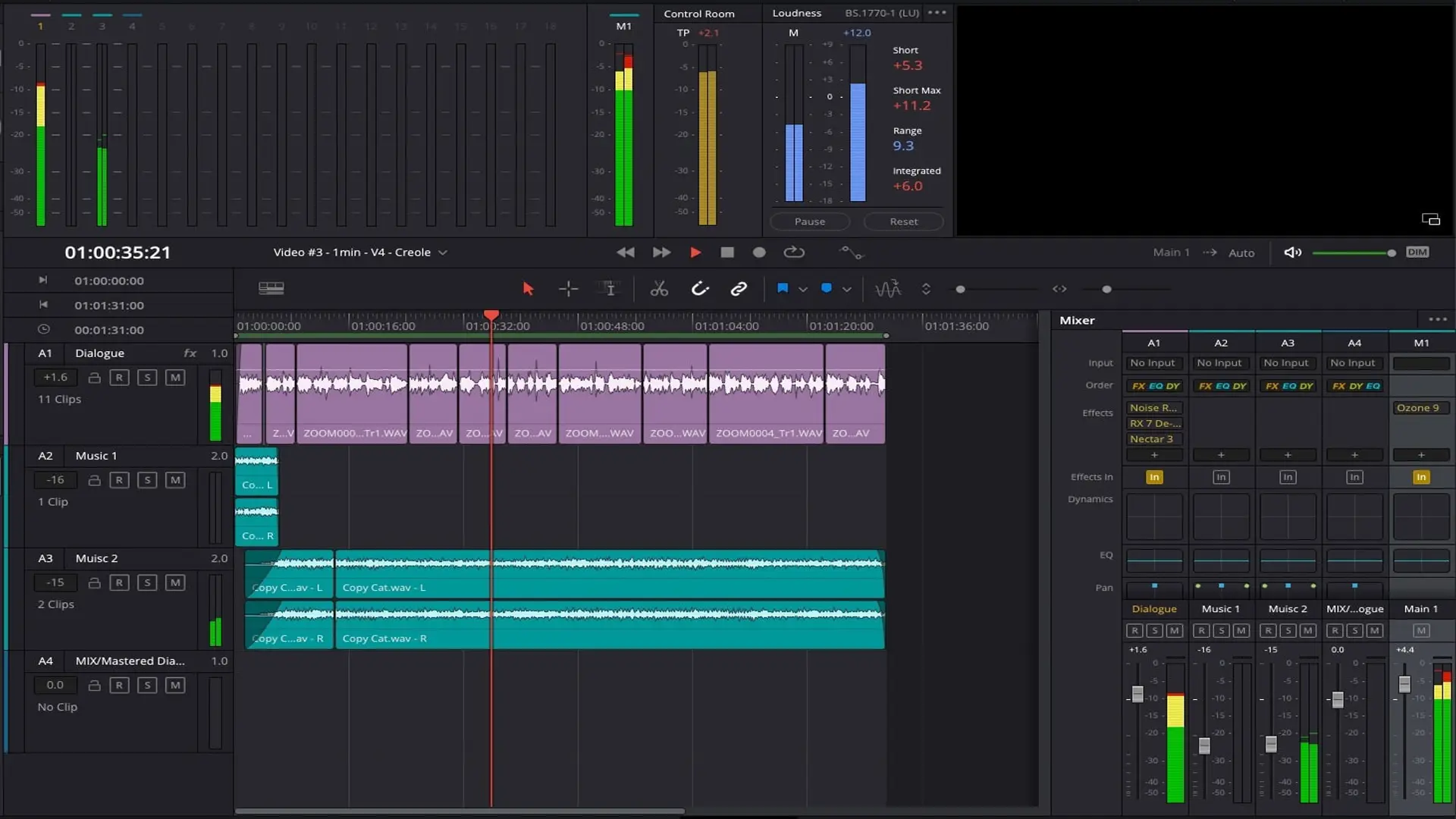
Audio mastering is an essential aspect of the music production process that is often misunderstood or overlooked by many people. However, it is one of the most critical steps in producing a professional-sounding track or album. If you are a musician, producer, or [sound engineer](https://mastering.com/the-future-of-audio-engineering/), it is essential to have a solid understanding of the [audio mastering](https://c-istudios.com/) process. In this blog post, we will demystify the audio mastering process and provide you with the information you need to know to create high-quality audio.
1. What is Audio Mastering?
Audio mastering is the process of preparing and finalizing a mix for distribution. To put it simply, audio mastering is a crucial step in enhancing the overall sound quality of a recorded song or album. It involves various techniques such as equalization, compression, stereo enhancement, and limiting to balance and optimize the levels and frequencies of a mix. It ensures that the final product is consistent and compatible with the various platforms it will be distributed on.
One of the primary reasons why mastering is important is that it helps to correct problems that may have occurred during the initial recording and mixing phases. For instance, it helps to fix inconsistencies in audio levels, removes unwanted noise and enhances clarity, which ultimately results in a cleaner, more polished sound. Additionally, mastering ensures that your music sounds great regardless of the type of speakers or headphones it is played through.
Mastering is also vital in ensuring that your music is competitive. The music industry is constantly evolving, and advancements in technology mean that the quality of music production is improving every day. Having crystal-clear sound, well-balanced levels, and appropriate dynamics will give your music an added advantage in a crowded market. The goal of audio mastering is to ensure that a track or album sounds cohesive, balanced, and sonically pleasing when played on any playback system. An audio mastering engineer will balance the frequency spectrum, adjust the dynamics, apply equalization, add stereo width, and apply limiting or compression to ensure that the mix is optimized for various listening scenarios.
1. The Importance of Audio Mastering
Having a professional master can make a massive difference in the final quality of your music. A professional mastering engineer has the knowledge, experience and equipment necessary to turn your raw mix into a polished and finished product. It plays a crucial role in enhancing the overall sound quality of recordings and ensuring consistency across all tracks. By correcting any issues or inconsistencies, mastering can take your music from good to great while adding [an element of professionalism](https://c-istudios.com/about/). Therefore, whether you are a musician, producer, or simply an avid music lover, audio mastering is something you should not overlook. Remember, it’s the final polish that makes the difference between a great and mediocre production. A properly mastered track or album will sound punchier, clear, and have a tonal balance that makes it stand out from all the other tracks in your genre.
1. The Mastering Process: The Key Steps
The typical audio mastering process begins with a client consultation and assessment of the mix. Let’s take a closer look at the key steps involved in the mastering process.
**Step 1: Reviewing and Editing -** The first step in the mastering process involves listening to the track and checking for any issues or concerns like unwanted noise, distortion, or frequency issues. Once the issues are detected, editing or fixing the problems can take place. Equalization (EQ) is also a key tool used to balance the tracks' frequency ranges with each other (bass, mid, and treble). This process adds clarity, depth and ensures balance across the entire song, a vital step in the mastering process.
**Step 2: Compression -** Dynamic range compression is the next critical step in the mastering process. Compression helps to even out the volume levels and make them consistent throughout the track. It ensures that softer parts of a song are audible while the louder parts retain a pleasant and natural feeling. The mastering engineer applies compression using the right settings to keep the music from distorting and increasing the loudness to make the track sound punchy and powerful.
**Step 3: Stereo Enhancement -** Mixing engineers work on the stereo image to create a spacious and immersive sound that's pleasant to the listener. Stereo enhancement changes the perception of the music's width and dimension by manipulating the stereo-mix's panning and its frequency response. This process's primary aim is to achieve a sound that sounds fuller, wider, and more immersive to the listener.
**Step 4: Limiting -** The final step in the mastering process is limiting. Limiting is all about squeezing out the maximum volume without causing any clip or distortion issues during playback. This process ensures that the track's sound stays consistent and uniform and can be adjusted to sound great on multiple devices using different formats that support the content.
The engineer will check the mix for issues like clipping, EQ imbalance, and poor dynamic range. They will then [perform corrective EQ](https://c-istudios.com/), compression, and other processing to improve the mix. The engineer will then apply stereo widening techniques, adjust the fades, and add spacing or noise reduction as necessary. Finally, they will apply limiting or clipping to ensure that the track has a consistent loudness level.
1. Who Should You Choose for Audio Mastering?
While automated online mastering services can be useful, they can’t replace the value of having a professional mastering engineer. Human intervention is required to ensure the mix is done in a personal and tailored way, rather than an algorithmic fix. Some online mastering services may offer a cheap and quick way of mastering, but they cannot replace [the experience and skill](https://c-istudios.com/creative-services/) that a professional mastering engineer brings. Let’s take a look at what to look for when choosing an audio mastering engineer?
1. ** Experience -** Look for audio masters who have vast experience in the music industry. Experienced mastering engineers have likely worked on several projects that have a wide range of genres and styles. The level of expertise will help in achieving the right sound and clarity for your tracks. Additionally, they may have knowledge of the latest trends that can be useful in enhancing your music.
2. ** Specialization -** Another important factor to look for in audio mastering is the engineer's specialty. Although audio mastering is a standalone service, different mastering engineers often specialize in certain music genres, such as hip-hop, rock, or classical. Selecting an engineer with expertise in the genre of your music ensures that they have an understanding of what techniques should be applied to achieve the desired sound.
3. ** Equipment -** The right equipment is essential for mastering quality audio. Therefore, it's essential to consider the mastering engineer's studio amenities. Over the last few years, technology has made it easier to have a quality sound recording on a smaller budget. Still, for audio mastering, the capacity and technical capability of studio amenities are vital when searching for an audio engineer.
4. ** Communication -** Audio mastering is a collaborative process, so it's essential to choose someone with effective communication skills. The mastering engineer should be responsive to your requests and feedback, asking questions the right questions when needed to meet your expectations. Communication should never be one-sided.
5. ** Reviews -** Online reviews are also an excellent way to evaluate the expertise of an audio mastering engineer. Check around, combing through the artist's past projects to check if they sound clear and up to standard. The past clients' experiences should also give you an insight into the engineer's work ethic and reliability.
An experienced audio mastering engineer will have [technical expertise](https://c-istudios.com/our-work/) that allows them to optimize your mix for all genres and listening environments.
## Elevate Your Project with C&I Studios, Your Ultimate Audio Masters
Embark on a transformative audio journey with C&I Studios, your unrivaled choice for audio mastery. Our reputation as industry leaders is built upon a steadfast commitment to audio excellence and a proven track record in delivering unparalleled sonic quality. Within our state-of-the-art facilities, a team of seasoned audio professionals stands ready, equipped with cutting-edge technology to capture and refine sound with precision and clarity. Recognizing the uniqueness of each project, we tailor our audio solutions to meet specific requirements, adapting our approach seamlessly for documentaries, docuseries, or any audio-intensive endeavor.
Our innovative sound design techniques go beyond convention, creating an immersive auditory experience that resonates with your audience. C&I Studios fosters a collaborative partnership, actively involving you in decisions to ensure that the audio elements align seamlessly with your creative direction. Beyond recording and mixing, our comprehensive audio services encompass Foley artistry, sound effects, and mastering, guaranteeing that every aspect of your audio is finely tuned for optimal impact.
Committed to meeting deadlines without compromising quality, C&I Studios invites you to experience the pinnacle of audio mastery, transforming your project into an auditory masterpiece. Choose us as your audio partner, and let's explore the possibilities of superior audio craftsmanship together. [Contact us today](https://c-istudios.com/contact/) and immerse yourself in the world of sonic excellence!
## Work with C&I Studios
If you are planning a project like this, our team can take it from concept to final delivery. Explore our [post-production services](https://c-istudios.com/post-production-services/), browse [our work](https://c-istudios.com/our-work/) to see how we tell brand stories, and [get in touch](https://c-istudios.com/contact/) when you are ready to start.
Originally published December 5, 2023
---
*This content is from [C&I Studios](https://c-istudios.com), a full-service production company.*
---
# The Magic of Foley: Incorporating Realistic Sound Effects in TV and Film Mixing
> Published: December 5, 2023
> Categories: Film & TV
> Source: https://c-istudios.com/the-magic-of-foley-incorporating-realistic-sound-effects-in-tv-and-film-mixing/
---
.cib{--paper:#1b1d1f;--ink:#fff;--body:#d5d7d9;--muted:#8b9096;--line:rgba(255,255,255,.12);--thumb:#2b2e31;--card:#212426;--accent:#c02b0a;--blue:#5B8FA8;--serif:'Playfair Display',Georgia,serif;--sans:'Poppins',-apple-system,sans-serif;--measure:900px;background:var(--paper);color:var(--body);font-family:var(--sans);line-height:1.6;position:relative;left:50%;transform:translateX(-50%);width:90vw;max-width:1920px}
.cib *{box-sizing:border-box}
.cib .kicker{max-width:var(--measure);margin:58px auto 0;padding:0 22px;font-size:12.5px;font-weight:700;letter-spacing:2.5px;text-transform:uppercase;color:var(--blue)}
.cib h1.cibh1{text-wrap:balance;font-family:var(--serif);font-weight:500;font-size:clamp(46px,6vw,72px);line-height:1.08;color:var(--ink);max-width:var(--measure);margin:18px auto 0;padding:0 22px;letter-spacing:-.5px}
.cib .metarow{max-width:var(--measure);margin:20px auto 0;padding:0 22px;color:var(--muted);font-size:14px}
.cib .hero{position:relative;width:100%;height:0;padding-bottom:56.25%;overflow:hidden;margin:48px auto 0;border-top:1px solid var(--line);border-bottom:1px solid var(--line)}
.cib .hero .ph{width:100%;aspect-ratio:16/9;background:var(--thumb);border-top:1px solid var(--line);border-bottom:1px solid var(--line);display:flex;align-items:center;justify-content:center;color:#7d8288;font-size:13px;text-align:center;padding:0 20px}
.cib .body{max-width:var(--measure);margin:12px auto 0;padding:52px 22px 6px}
.cib .body.lead p:first-child{font-size:23px;line-height:1.62;color:var(--ink)}
.cib .body p{font-size:18.5px;line-height:1.85;margin:0 0 30px;color:var(--body)}
.cib .body h2{text-wrap:balance;font-family:var(--serif);font-weight:500;font-size:clamp(32px,4vw,48px);line-height:1.22;color:var(--ink);margin:70px 0 20px;letter-spacing:-.3px}
.cib .body h3{text-wrap:balance;font-family:var(--sans);font-weight:600;font-size:22px;color:var(--ink);margin:38px 0 8px}
.cib .body a{color:var(--ink);text-decoration:underline;text-decoration-color:rgba(255,255,255,.4);text-underline-offset:3px}
.cib .body a:hover{text-decoration-color:var(--ink)}
.cib .ctable{width:100%;border-collapse:collapse;margin:16px 0 30px;font-size:16px}
.cib .ctable th{background:#000;color:#fff;text-align:left;padding:10px 12px;font-family:var(--sans)}
.cib .ctable td{padding:10px 12px;border-bottom:1px solid var(--line);color:var(--body)}
.cib .inimg{position:relative;width:100%;height:0;padding-bottom:56.25%;overflow:hidden;margin:72px auto;border-top:1px solid var(--line);border-bottom:1px solid var(--line)}
.cib .inimg .ph{width:100%;aspect-ratio:16/9;background:var(--thumb);border-top:1px solid var(--line);border-bottom:1px solid var(--line);display:flex;align-items:center;justify-content:center;color:#7d8288;font-size:13px}
.cib .origpub{max-width:var(--measure);margin:60px auto 0;padding:26px 22px 0;border-top:1px solid var(--line);color:var(--muted);font-size:13.5px}
.cib .related{max-width:1200px;margin:64px auto 0;padding:34px 22px 76px}
.cib .related h3{font-family:var(--sans);font-size:12.5px;letter-spacing:2px;text-transform:uppercase;color:var(--ink);margin:0 0 24px}
.cib .grid{display:grid;grid-template-columns:repeat(3,1fr);gap:28px}
.cib .rc{background:var(--card);border:1px solid var(--line);display:block;text-decoration:none;color:inherit;transition:border-color .15s}
.cib a.rc:hover{border-color:rgba(255,255,255,.5)}
.cib .rc .thumb{position:relative;width:100%;height:0;padding-bottom:56.25%;background:var(--thumb);overflow:hidden}
.cib .rc .thumb img{position:absolute!important;top:0!important;left:0!important;width:100%!important;height:100%!important;object-fit:cover!important;margin:0!important}
.cib .rc .cc{padding:14px 15px 17px}
.cib .rc .rt{font-family:var(--serif);font-weight:500;font-size:16px;line-height:1.3;color:var(--ink);margin:0 0 6px}
.cib .rc .rm{font-size:11px;letter-spacing:1px;text-transform:uppercase;color:var(--muted)}
.cib img{margin:0!important;padding:0!important;display:block!important;vertical-align:top;max-width:100%}
.cib .hero img,.cib .inimg img{position:absolute!important;top:0!important;left:0!important;width:100%!important;height:100%!important;object-fit:cover!important;margin:0!important;padding:0!important;border:0!important;display:block!important;aspect-ratio:auto!important}
.cib .hero+.body{padding-top:36px}
@media(max-width:760px){.cib .grid{grid-template-columns:1fr}.cib .body h2{margin:52px 0 16px}.cib .body p{font-size:17.5px}.cib .inimg,.cib .hero{margin-top:44px}}
.cib .vembed{max-width:var(--measure);margin:44px auto;padding:0 22px}.cib .vembed .vwrap{position:relative;width:100%;height:0;padding-bottom:56.25%}.cib .vembed .vwrap iframe{position:absolute;top:0;left:0;width:100%;height:100%;border:0}
Film & TV
# The Magic of Foley. Incorporating Realistic Sound Effects in TV and Film Mixing
8 min read

When you watch a movie or a TV show, have you ever stopped to think about how the sounds you hear were created? From the rustle of a character's clothing to the sound of thunder in the distance, many of the sounds we hear in a production are created using a technique known as Foley. Foley is the art of creating sound effects to be synchronized with on-screen action in post-production. Understanding how to incorporate realistic Foley sounds in TV and film mixing can [take your production to the next level](https://c-istudios.com/).
1. The Basics of Foley:
Foley is derived from the name of Jack Foley, a sound pioneers, who began the technique as a way to replicate the sound of footsteps in films way back in the 1920s. It involves creating custom sound effects that are added to a production in post-production.
The basics of Foley production involve a soundproof recording studio and various props. These props may range from floor surfaces such as gravel or tile, items such as keys, and even shoes. Artists use different microphones to capture each sound. An essential piece of equipment in Foley art is the pop screen, which fits over the microphone to capture the sound while reducing unwanted noises, such as breathing.
Foley artists often involve themselves in the creative process, working closely with the sound designers and editors to ensure that the sounds they create are in sync with the movie's visuals. Performing sounds accurately and believable is the primary goal rather than recording factual sound. Foley artists don't just record audio when someone walks - they also have to consider their interpretation of that sound, such as; the gait must match the character's state of mind or the room's environment. During post-production, the sound designers add Foley work to the soundtrack to create the final sound mix.
Foley artists use a variety of props and microphones to create and record sounds, which are then mixed into the final product. These sound effects can range from simple footfalls to the sound of a bullet whizzing past, and everything in between.
1. The Importance of Foley:
Foley is an essential part of [film and TV production](https://c-istudios.com/film-and-tv-production/). It adds an incredible level of realism to a production, which can help audiences immerse themselves in the story being told. Let’s talk about why Foley is so important and how it contributes to the overall cinematic experience.
**Enhancing realism:** Foley is used to add sound effects that were not captured during filming or were not loud enough to be picked up by the microphones. This can include footsteps, clothing rustling, and object handling, which can make a scene feel more authentic. Without Foley, these sounds would be noticeably absent, and the scene might feel hollow or lacking in detail.
**Creating Atmosphere:** Foley is also used to establish and enhance the mood of a scene. For example, the sound of a creaking door in a horror movie can create tension and apprehension. The sound of rain and thunder in a drama can set a melancholy or introspective tone. Foley can make the difference between a flat and uninspired scene and one that is full of life and emotion.
**Post-Production Creativity:** When filming a movie or TV show, the sound that is captured on the set is not always the final product. Foley artists have the opportunity to add in creative sound effects that amplify the scene's impact. For example, a fight scene can benefit from bone-crunching sound effects, while a fantasy film can use unique sounds to create creatures and otherworldly environments.
In some cases, Foley is so well done that it goes unnoticed by viewers, which means that it successfully blends in with the surrounding audio, contributing to the overall naturalness of the soundtrack. Foley effects can also help to highlight certain aspects of a scene or character, giving them [more depth and adding emotional weight](https://c-istudios.com/about/).
1. The Process of Creating Foley:
Creating Foley sound effects is a detailed and intricate process that requires a great deal of skill and attention to detail. It involves artists carefully following specialized guides to gameplay-by-play capture every sound required for the production.
The first step in creating foley is the prep work, which involves watching the scene or footage and identifying the sound effects that are required. Foley artists then gather their props, materials, and equipment, which may include shoes, clothes, glass, metal, and other items depending on the scene. Each prop is chosen for its unique sound quality to evoke the desired emotion or feeling. For example, a heavy metal object might be used for the sound of a robot or machinery, while a lighter plastic object might be used for a toy or a computer keyboard.
Once the props and materials are ready, the foley session begins. This is where the foley artist uses these props to create sound effects in real-time while watching the scene on screen. They perform the actions using the props to match what's happening on screen, and the sound is recorded simultaneously using a microphone. Foley artists work in pairs, where one person performs the actions, and the other handles the recording and monitoring of audio levels.
After the foley session is completed, the recorded sounds are edited, cleaned, and synchronized with the film or show. This involves selecting the best takes, removing unwanted noise, and adjusting the volume and timing of the sounds to match the visual cues. Foley artists also add layers of sound to create depth and realism, such as adding background noise or subtle sounds to add atmosphere and texture.
The foley process requires exceptional attention to detail, creativity, and a deep understanding of the desired emotional impact of each sound effect. It's about creating a soundscape that immerses the viewer in the narrative, enhances the visual experience, and brings the story to life. Foley artists work closely with sound designers and editors to ensure that the sounds are integrated seamlessly into the final product, and that they complement and amplify the visual elements.
This could include recording the sound of footsteps on different surfaces, the rustle of clothing, or even the sounds made by animals or machines. [A well-trained Foley artist](https://c-istudios.com/creative-services/) knows how to manipulate props and instruments to achieve the right sound required for the scene and record it effectively.
1. Mixing Foley with the Rest of the Soundtrack:
The Foley sound effects created during post-production must be carefully mixed with the rest of the production's audio to create a seamless final product. This requires a significant amount of skill, creativity, and collaboration with other members of the sound team. The sounds recorded by the Foley artist must be matched precisely to what's on the screen, and the levels must be adjusted to account for any dialogue or music that is being played concurrently. Let’s discuss the art of mixing Foley with the rest of the soundtrack and provide some tips to achieve a balanced and cohesive sound mix.
**Use a sound library -** A sound library is an essential tool in creating realistic sound effects. A sound library provides a vast selection of sound effects that you can use to create Foley sounds. A quality sound library will provide sounds that are of high quality and that can be easily modified to [match your production's needs](https://c-istudios.com/). Use the sound library to pick the right sounds that work with your scene and then work from there to create the best Foley sound you can get.
**Follow the rhythm -** When mixing Foley with the rest of the soundtrack, you must ensure that the sound effects match the visual aspects of the scene. Pay close attention to the rhythm, pace, and timing of the visuals. The Foley sounds must match the pace and rhythm of the scene to create a natural flow and keep the audience engaged.
**Layer the sounds -** Layering is an essential technique that involves combining different sound effects to create a single sound. Layering is helpful when creating Foley sounds as it allows you to create a more complex and realistic sound effect. However, you must avoid adding too many layers as it can become overwhelming and detract from the rest of the soundtrack.
The end result is a seamless and dynamic audio track that draws viewers further into the story.
1. Mastering Foley Skills:
Like any other profession in film production, mastering the art of Foley requires quality training and rigorous practice. To master Foley skills, one can start by learning the basics, practicing regularly, investing in quality equipment, experimenting with everyday objects, and networking with industry professionals. By committing to this craft, an individual can develop their unique style and assist in creating a more comprehensive sensory experience for the film’s audience.
If you're interested in pursuing this exciting field, extensive training in sound recording and editing software is required, but the core talent most essential to a successful career in Foley is the ability to listen and think creatively to imagine what sounds could [bring each scene to life better](https://c-istudios.com/our-work/).
## Foley Mastery Unleashed. Crafting Sonic Realities with C&I Studios
Unlock the artistry of Foley and elevate your audio production to new heights by choosing C&I Studios as your trusted partner in mastering Foley skills. Renowned for our commitment to audio excellence, C&I Studios boasts a team of seasoned Foley artists equipped with the expertise to breathe life into your project's soundscapes. Within our state-of-the-art facilities, we offer a dynamic and immersive learning environment tailored for those seeking to master the intricate art of Foley.
Our team's wealth of experience, coupled with cutting-edge technology, ensures a hands-on and transformative experience in crafting realistic and evocative sound effects. Working with C&I Studios means immersing yourself in a collaborative learning journey where your creative vision takes center stage.
Whether you're delving into filmmaking, animation, or any audio-centric project, our Foley mastery program is designed to refine your skills and amplify the impact of your storytelling. Choose C&I Studios to embark on a Foley adventure, where your sonic aspirations become a reality. [Contact us today](https://c-istudios.com/contact/) and let's shape unforgettable auditory experiences together.
## Work with C&I Studios
If you are planning a project like this, our team can take it from concept to final delivery. Explore our [film and TV production](https://c-istudios.com/film-and-tv-production/), browse [our work](https://c-istudios.com/our-work/) to see how we tell brand stories, and [get in touch](https://c-istudios.com/contact/) when you are ready to start.
Originally published December 5, 2023
---
*This content is from [C&I Studios](https://c-istudios.com), a full-service production company.*
---
# Understanding the Role of Audio Mixing in TV and Film Production
> Published: December 5, 2023
> Categories: Film & TV
> Source: https://c-istudios.com/understanding-the-role-of-audio-mixing-in-tv-and-film-production/
---
.cib{--paper:#1b1d1f;--ink:#fff;--body:#d5d7d9;--muted:#8b9096;--line:rgba(255,255,255,.12);--thumb:#2b2e31;--card:#212426;--accent:#c02b0a;--blue:#5B8FA8;--serif:'Playfair Display',Georgia,serif;--sans:'Poppins',-apple-system,sans-serif;--measure:900px;background:var(--paper);color:var(--body);font-family:var(--sans);line-height:1.6;position:relative;left:50%;transform:translateX(-50%);width:90vw;max-width:1920px}
.cib *{box-sizing:border-box}
.cib .kicker{max-width:var(--measure);margin:58px auto 0;padding:0 22px;font-size:12.5px;font-weight:700;letter-spacing:2.5px;text-transform:uppercase;color:var(--blue)}
.cib h1.cibh1{text-wrap:balance;font-family:var(--serif);font-weight:500;font-size:clamp(46px,6vw,72px);line-height:1.08;color:var(--ink);max-width:var(--measure);margin:18px auto 0;padding:0 22px;letter-spacing:-.5px}
.cib .metarow{max-width:var(--measure);margin:20px auto 0;padding:0 22px;color:var(--muted);font-size:14px}
.cib .hero{position:relative;width:100%;height:0;padding-bottom:56.25%;overflow:hidden;margin:48px auto 0;border-top:1px solid var(--line);border-bottom:1px solid var(--line)}
.cib .hero .ph{width:100%;aspect-ratio:16/9;background:var(--thumb);border-top:1px solid var(--line);border-bottom:1px solid var(--line);display:flex;align-items:center;justify-content:center;color:#7d8288;font-size:13px;text-align:center;padding:0 20px}
.cib .body{max-width:var(--measure);margin:12px auto 0;padding:52px 22px 6px}
.cib .body.lead p:first-child{font-size:23px;line-height:1.62;color:var(--ink)}
.cib .body p{font-size:18.5px;line-height:1.85;margin:0 0 30px;color:var(--body)}
.cib .body h2{text-wrap:balance;font-family:var(--serif);font-weight:500;font-size:clamp(32px,4vw,48px);line-height:1.22;color:var(--ink);margin:70px 0 20px;letter-spacing:-.3px}
.cib .body h3{text-wrap:balance;font-family:var(--sans);font-weight:600;font-size:22px;color:var(--ink);margin:38px 0 8px}
.cib .body a{color:var(--ink);text-decoration:underline;text-decoration-color:rgba(255,255,255,.4);text-underline-offset:3px}
.cib .body a:hover{text-decoration-color:var(--ink)}
.cib .ctable{width:100%;border-collapse:collapse;margin:16px 0 30px;font-size:16px}
.cib .ctable th{background:#000;color:#fff;text-align:left;padding:10px 12px;font-family:var(--sans)}
.cib .ctable td{padding:10px 12px;border-bottom:1px solid var(--line);color:var(--body)}
.cib .inimg{position:relative;width:100%;height:0;padding-bottom:56.25%;overflow:hidden;margin:72px auto;border-top:1px solid var(--line);border-bottom:1px solid var(--line)}
.cib .inimg .ph{width:100%;aspect-ratio:16/9;background:var(--thumb);border-top:1px solid var(--line);border-bottom:1px solid var(--line);display:flex;align-items:center;justify-content:center;color:#7d8288;font-size:13px}
.cib .origpub{max-width:var(--measure);margin:60px auto 0;padding:26px 22px 0;border-top:1px solid var(--line);color:var(--muted);font-size:13.5px}
.cib .related{max-width:1200px;margin:64px auto 0;padding:34px 22px 76px}
.cib .related h3{font-family:var(--sans);font-size:12.5px;letter-spacing:2px;text-transform:uppercase;color:var(--ink);margin:0 0 24px}
.cib .grid{display:grid;grid-template-columns:repeat(3,1fr);gap:28px}
.cib .rc{background:var(--card);border:1px solid var(--line);display:block;text-decoration:none;color:inherit;transition:border-color .15s}
.cib a.rc:hover{border-color:rgba(255,255,255,.5)}
.cib .rc .thumb{position:relative;width:100%;height:0;padding-bottom:56.25%;background:var(--thumb);overflow:hidden}
.cib .rc .thumb img{position:absolute!important;top:0!important;left:0!important;width:100%!important;height:100%!important;object-fit:cover!important;margin:0!important}
.cib .rc .cc{padding:14px 15px 17px}
.cib .rc .rt{font-family:var(--serif);font-weight:500;font-size:16px;line-height:1.3;color:var(--ink);margin:0 0 6px}
.cib .rc .rm{font-size:11px;letter-spacing:1px;text-transform:uppercase;color:var(--muted)}
.cib img{margin:0!important;padding:0!important;display:block!important;vertical-align:top;max-width:100%}
.cib .hero img,.cib .inimg img{position:absolute!important;top:0!important;left:0!important;width:100%!important;height:100%!important;object-fit:cover!important;margin:0!important;padding:0!important;border:0!important;display:block!important;aspect-ratio:auto!important}
.cib .hero+.body{padding-top:36px}
@media(max-width:760px){.cib .grid{grid-template-columns:1fr}.cib .body h2{margin:52px 0 16px}.cib .body p{font-size:17.5px}.cib .inimg,.cib .hero{margin-top:44px}}
.cib .vembed{max-width:var(--measure);margin:44px auto;padding:0 22px}.cib .vembed .vwrap{position:relative;width:100%;height:0;padding-bottom:56.25%}.cib .vembed .vwrap iframe{position:absolute;top:0;left:0;width:100%;height:100%;border:0}
Film & TV
# Understanding the Role of Audio Mixing in TV and Film Production
9 min read
Audio mixing is an integral part of [TV and film production](https://c-istudios.com/). It is the process of combining different audio tracks to create a soundtrack that matches the visuals on the screen. Without audio mixing, TV shows and movies would lack the immersive and realistic effect that it achieves when audio is [combined with visuals](https://thecollectivepitch.com/blog/cinematographer-masterminds-behind-captivating-visuals/). In this blog post, we will delve deeper into the role of audio mixing in TV and [film production](https://c-istudios.com/film-and-tv-production/). Read on to learn more about this fascinating aspect of content creation.
1. Enhancing Dialogue:
One of the primary functions of audio mixing in TV and film production is to enhance dialogue. Audio mixing helps to balance the dialogue with the sound effects and music, making it easier for the audience to follow the story. This is especially important when you have multiple characters speaking or when there is a lot of background noise.
**The impact of audio mixing on the creative process: **The right audio mix can greatly impact the creative process of TV and film production. It establishes the mood, tone, and atmosphere of every scene, allowing the viewers to connect emotionally with what they are watching. If audio quality is poor, there's a good chance viewer will lose interest and disengage from the production. Thus, it's essential to strike the right balance between all the elements of the audio and visual elements in each screen to derive the best creative output.
**The value of collaboration between audio mixing and visual production teams: **Communication and collaboration between the audio mixing and visual production teams are essential to producing a high-quality final product. Audio mixing affects the overall quality of the sound, which impacts how the audience perceives the production. Dialogue clarity, ambient noise, and audio effects must be consistent with the visual element in all scenes. Keeping these elements balanced is only possible through proper communication between the production teams.
Audio mixing ensures that the dialogue remains clear and audible and that the audience doesn't miss a thing.
1. Creating Atmosphere:
Another important role of audio mixing is to [create atmosphere and mood](https://c-istudios.com/creative-services/). This is achieved by adding different sounds and music to the soundtrack. For example, in a horror movie, eerie sound effects are added to create a sense of suspense and tension.
**Sets the mood:** The right audio can set the mood for a particular scene or episode. For example, a suspenseful scene in a horror movie may have eerie music and silence for emphasis, while a romantic scene might have a swelling, romantic soundtrack. Audio mixing can make or break the mood of a scene, so it's important for the audio engineer to take into account the tone and mood of each scene and make sure all elements complement each other.
**Consistent volume:** It's crucial for the volume levels to be consistent throughout the entire project. If the volume changes dramatically from scene to scene, it can be jarring for the viewer and disrupt the immersion in the story. Audio mixing ensures that everything, from dialogue to sound effects to music, is at a consistent volume.
**Enhances story-telling:** Audio mixing has the ability to enhance the story-telling of a scene. The dialogue is the backbone of the story and it's the audio engineer's responsibility to make sure it's clear, crisp and understandable. On top of that, sound effects can add depth, realism and context to a scene, while music can emphasize emotional cues and punctuate important plot points.
Similarly, in an action movie, fast-paced music is often used to enhance the adrenaline rush. With the right mix of sounds, audio mixing can help transport the audience to different places and times, making the viewing experience all the more convincing.
1. Creating Depth and Space:
Audio mixing also plays a crucial role in creating depth and space. It is not enough to just [capture good quality sound](https://c-istudios.com/about/). The sound has to be mixed in a way that gives it a sense of space and environment. This is done by manipulating the different frequencies and the panning of the sound.
**Audio mixing creates a sense of space:** The perception of space is a crucial element in music. Without a sense of space, music can sound flat, lifeless, and one-dimensional. Audio mixing plays a vital role in creating space by manipulating various elements of the audio. Mixing engineers can achieve this through techniques such as panning, reverb, delay, and compression. Panning can help distribute different audio elements across the stereo field, creating a sense of width and depth. Reverb and delay effects can give the illusion of distance, adding to the perception of space.
**Audio mixing makes instruments and vocals stand out:** Have you ever wondered why certain instruments or vocals stand out in a track? The answer is usually in the mix. Audio mixing allows engineers to balance and separate individual elements of a track, making them more present and distinguishable. You can use EQ to shape the sound of an instrument or vocal, making it stand out or blend in more with the mix. Compression can help control the dynamics of a track, ensuring that every element has its rightful place in the mix.
**Audio mixing is essential for creative expression:** Music is an art, and every artist wants their work to sound unique and captivating. Audio mixing is an essential tool for creative expression in music. Mixing engineers can use various techniques to manipulate and shape sound creatively. For instance, a mix engineer can create a specific sound texture by blending specific instruments using a technique commonly referred to as blending. By blending, the mixing engineer aims to make the mix sound unified, coherent, and unique.
The end result is that the sounds appear to be coming from different directions, giving the film or TV show a more immersive feel.
1. Achieving Emphasis:
Audio mixing is also used to achieve emphasis on certain sounds or dialogue. This is important in conveying a particular message or emotion. For example, in a dramatic scene, the music is often lowered to bring the dialogue to the forefront, creating a [more emotional impact.](https://c-istudios.com/our-work/)
**Volume Control:** Controlling the volume is one of the most fundamental techniques when it comes to audio mixing, but it's still an effective one. You can increase or decrease the level of a sound or dialogue to emphasize or de-emphasize it. Suppose a sound effect is crucial to a scene, but you want it to be even more noticeable, increase its volume. Alternatively, if there is some background noise that's interfering with dialogue, you can reduce its volume to make it less distracting.
**Panning:** Panning refers to the process of placing a sound in the stereo field. By panning sounds to different channels, you can make the audio feel more immersive for the listener. For example, if a character is speaking from the left side of the screen, you can pan their dialogue more towards the left, so it sounds like it's emanating from that direction. This technique can make scenes feel more realistic and create a better audio experience for the listener.
**Compression**: Compression is used to regulate the dynamic range of an audio signal. Essentially, it limits the volume of a sound's loudest parts while boosting its softer moments. By doing this, you can create a more consistent sound that is easier to hear, especially when there are sudden spikes and drops in the volume. This technique is particularly helpful when recording dialogue or voiceovers, as it can help keep the speaker's voice at a consistent level throughout the entire recording.
Similarly, in an action scene, the sound effects are heightened to make everything seem more intense.
1. Delivering Consistency:
Finally, audio mixing is crucial in [delivering consistency](https://c-istudios.com/) in the audio quality throughout the film or TV show.
**Audio mixing ensures each track is heard clearly:** When you listen to a song or podcast, there are multiple elements at play. The vocals, instruments, and background noises all need to be balanced properly to create a clear and cohesive mix. Without proper mixing, certain elements may be drowned out or buried in the mix, making it difficult to hear and understand the content.
**Mixing helps control dynamics:** Dynamics refer to the variations in volume levels throughout a piece of audio. These variations are important for creating interest and emotion, but they need to be controlled to prevent clipping or distortion. Audio mixing allows for fine control over the dynamic range, ensuring that the listener can hear every nuance of the content without any unwanted distortion.
**Mixing provides an even tonal balance:** Even if each element of a song or podcast is recorded at the same volume level, they may have different tonal characteristics that affect the overall sound. Audio mixing allows for adjustments to be made to the frequency balance of each track, creating an even tonal balance that is pleasing to the ear.
**Mixing adds depth and dimension:** Audio mixing can add depth and dimension to a piece of audio by creating a sense of space and ambiance. By adjusting the reverb and delay settings, for example, the listener can feel as though they are in a concert hall or small room. This adds richness and interest to the content and can help keep the listener engaged.
The aim is to ensure that the sound is balanced and consistent, despite changes in scenes or environments. Audio mixing helps to achieve this by ensuring that the sound levels remain constant and that there are no sudden fluctuations in sound quality that could ruin the viewing experience.
## Elevating TV and Film Narratives with C&I Studios
Engage with C&I Studios for your next documentary or docuseries, and experience a level of audio mixing expertise that sets us apart in TV and film production. Our team of seasoned sound engineers brings a wealth of experience to the table, ensuring that every aspect of audio, from dialogue clarity to ambient soundscapes, is meticulously crafted to enhance the overall viewer experience. Our state-of-the-art facilities, equipped with advanced technology and acoustically optimized environments, provide the ideal setting for achieving pristine sound quality.
At C&I Studios, we understand the importance of customization, working closely with you to tailor the sound design to match the unique tone and narrative of your project. Through a collaborative approach, we maintain open communication channels to align our work seamlessly with your vision. Our comprehensive post-production services, including sound editing, Foley work, and mastering, guarantee a polished final product that not only looks impressive but also sounds extraordinary.
Choose C&I Studios for audio mixing that goes beyond industry standards, elevating your documentary or docuseries to new heights of storytelling brilliance. [Contact us](https://c-istudios.com/contact/) today to embark on a journey of sonic excellence in your TV and film production.
## Work with C&I Studios
If you are planning a project like this, our team can take it from concept to final delivery. Explore our [film and TV production](https://c-istudios.com/film-and-tv-production/), browse [our work](https://c-istudios.com/our-work/) to see how we tell brand stories, and [get in touch](https://c-istudios.com/contact/) when you are ready to start.
Originally published December 5, 2023
---
*This content is from [C&I Studios](https://c-istudios.com), a full-service production company.*
---
# From Raw Footage to Finished Film: Understanding the Film Mastering Process
> Published: November 28, 2023
> Categories: Post &